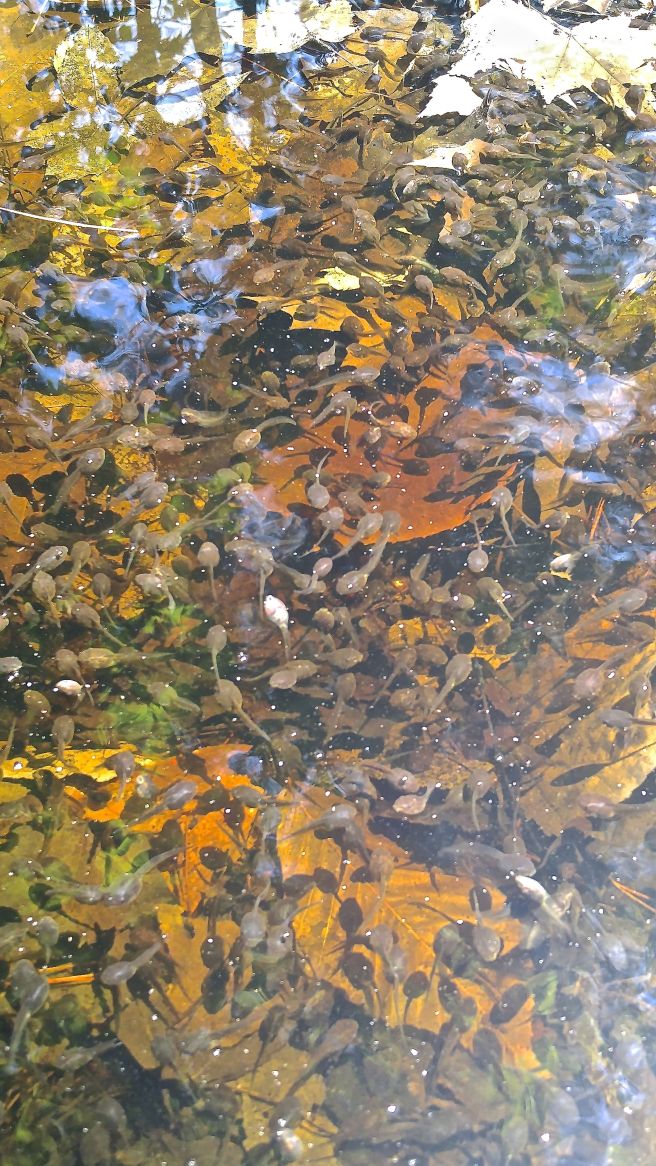
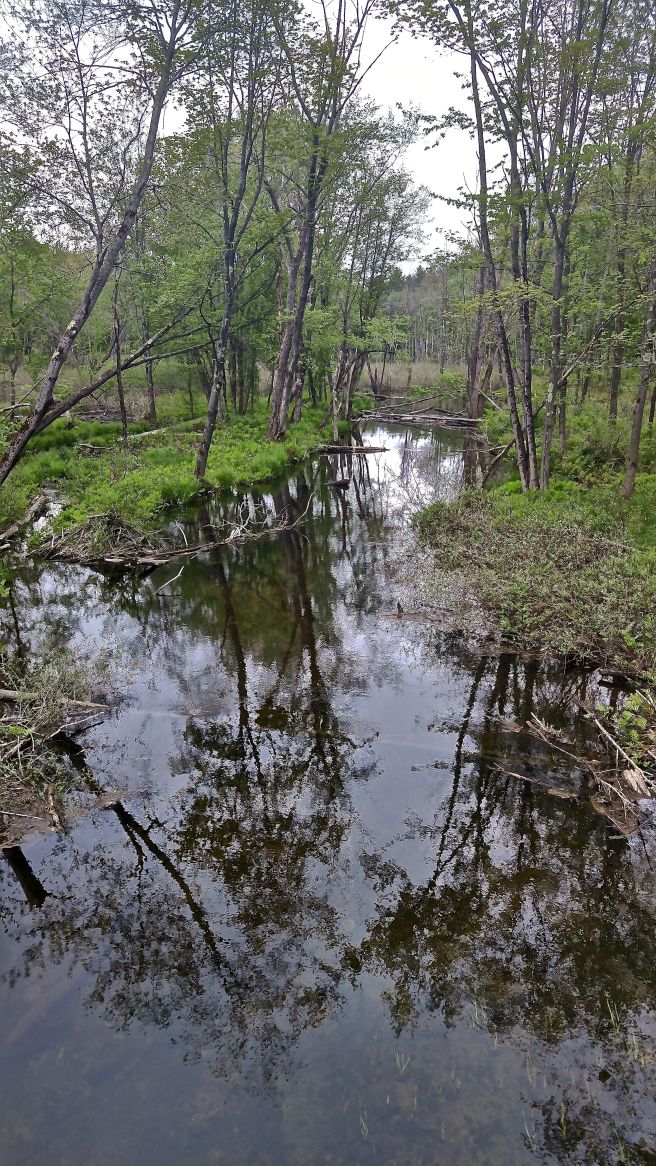
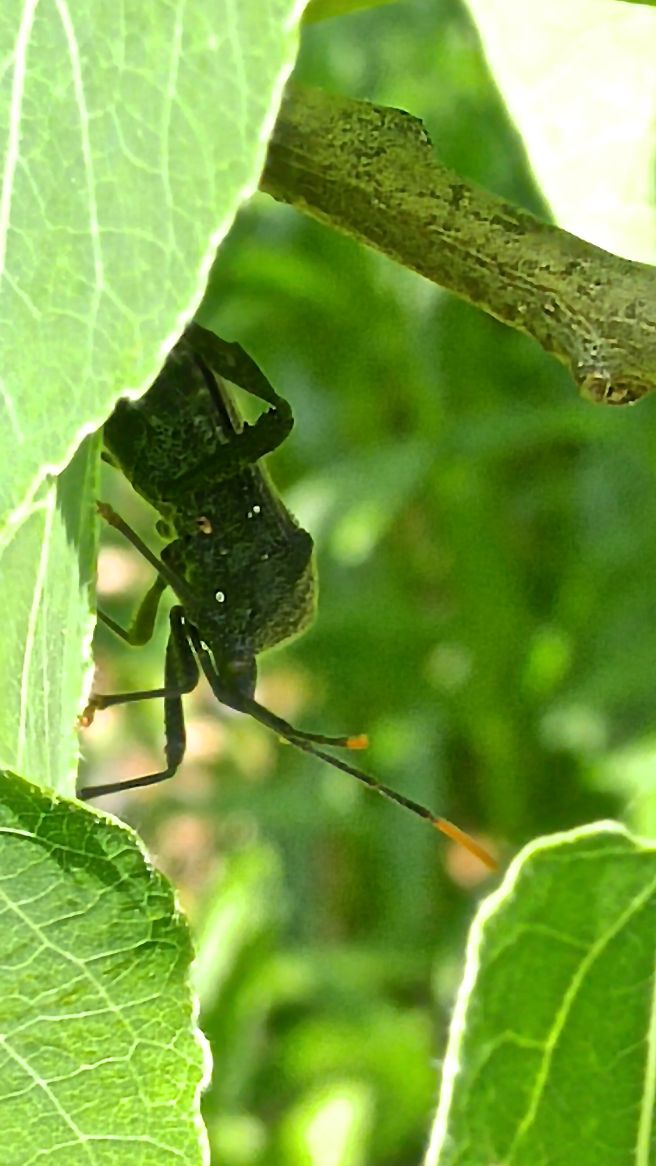
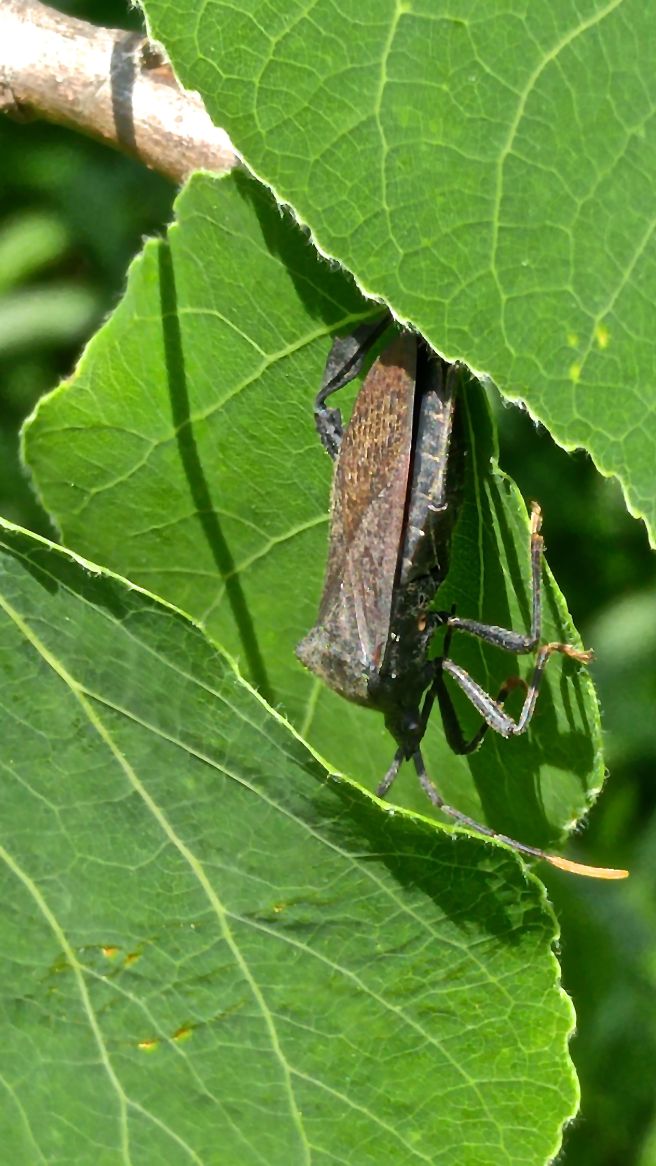
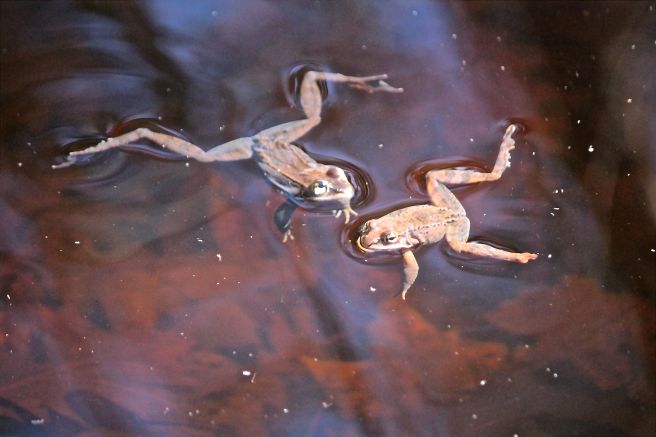
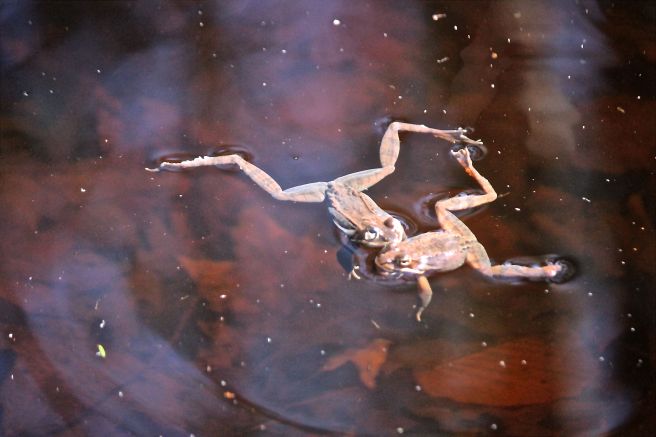
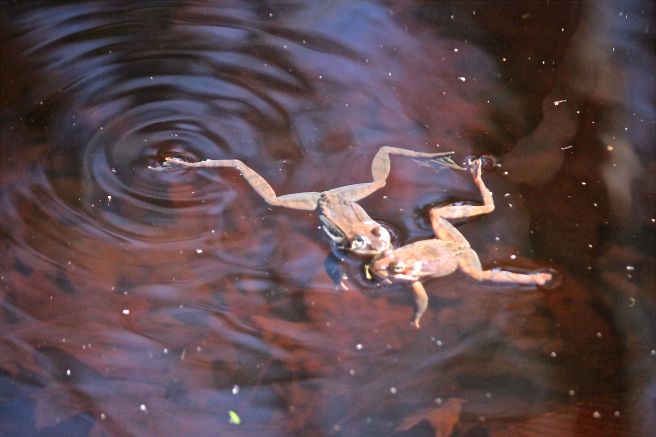
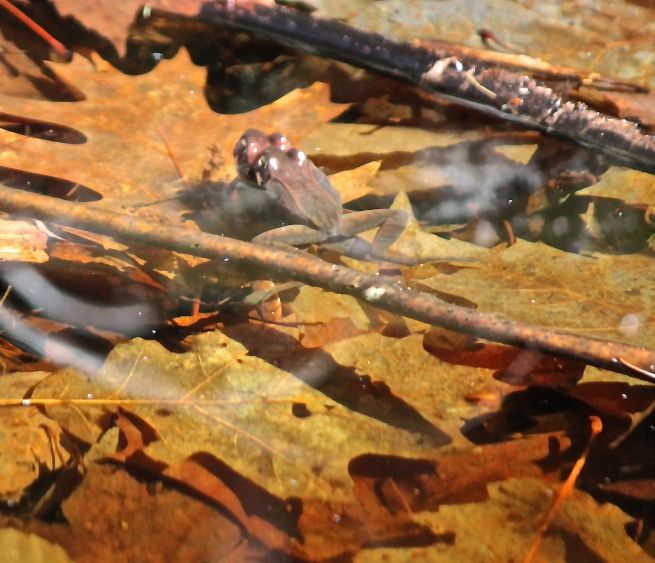
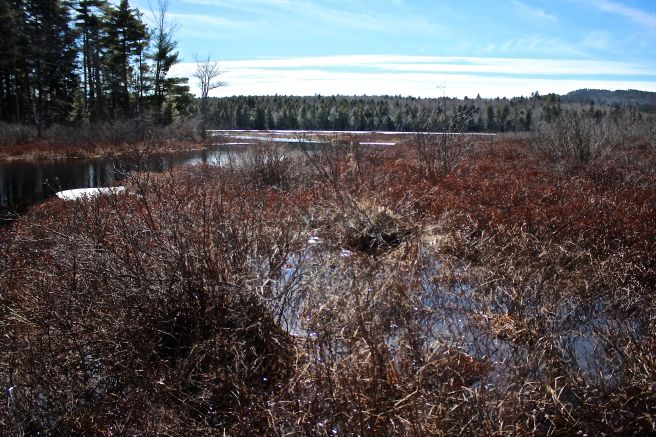
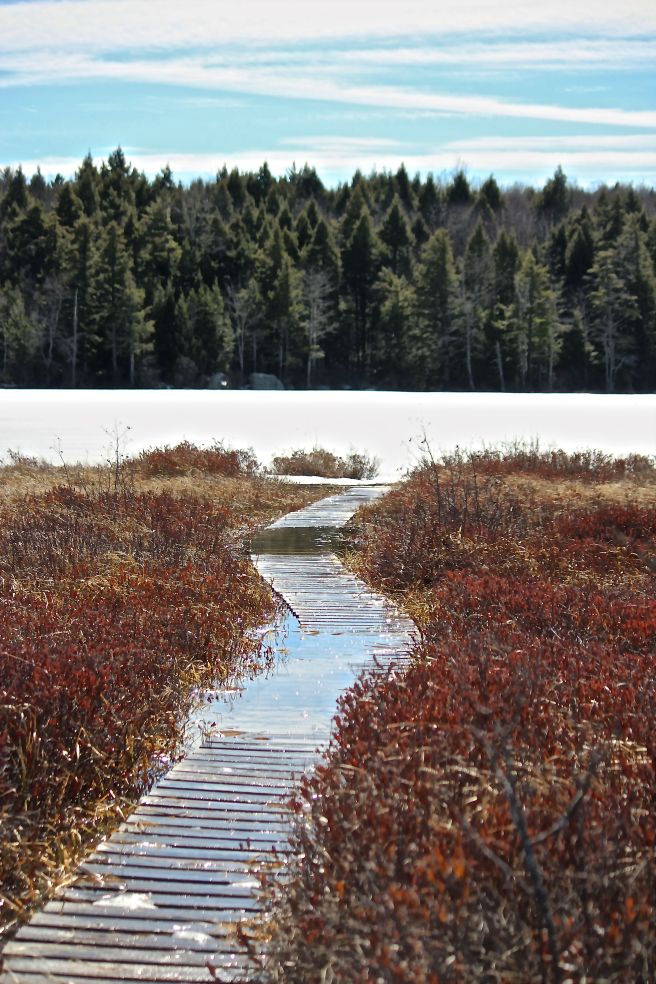
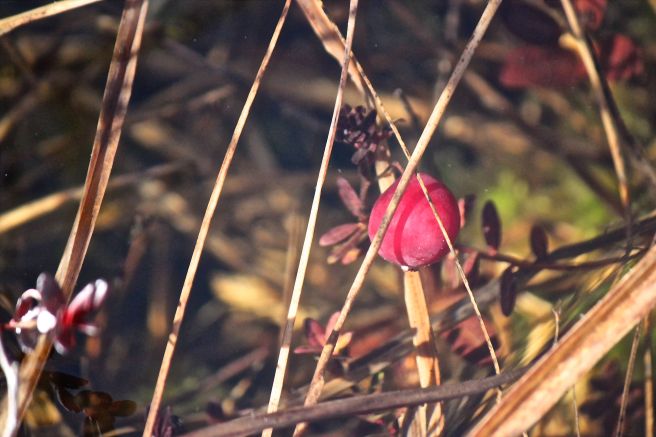
The Main(e) Exotics

If you’ve traveled with me before, you know that I often frequent the same trails. And so it was today. Oh, there was a change-up in the early morning hours when I joined a couple of members of the Lakes Environmental staff to oversee a volunteer project by the Rotary Club. Rotary members from around the state and beyond (think Argentina) spent four hours clearing a new trail we’d laid out at LEA’s Maine Lake Science Center. They provided humor and hardwork hand-in-hand.

And then a friend and I drove to LEA’s Holt Pond Preserve where everything was in exotic mode.

oak g 3

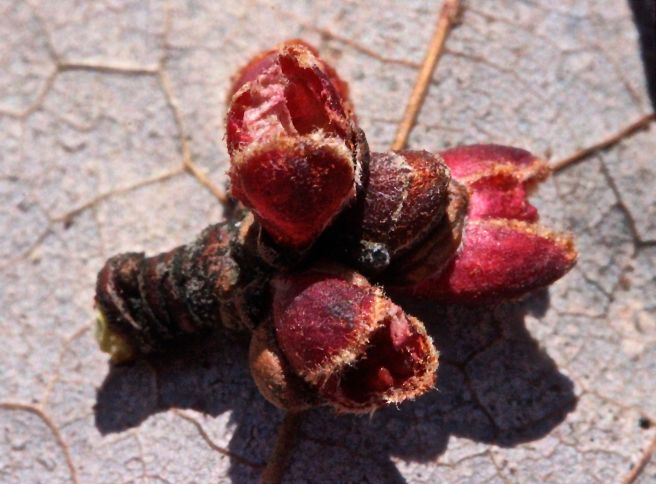
One of our first finds was an apple oak gall about the size of a golf ball. So, the apple oak gall female wasp (yes, there is such a species) crawled up the tree trunk of a Northern red oak in early spring and injected an egg into the center vein of a newly emerged leaf. As the larvae grew, it caused a chemical reaction and mutated the leaf to form a gall around it that provided sustenance.

oak g 5

Recently, the wasp drilled its way out and probably found a mate.

oak gall 1

All that remained–wispy fibers.

blue 3

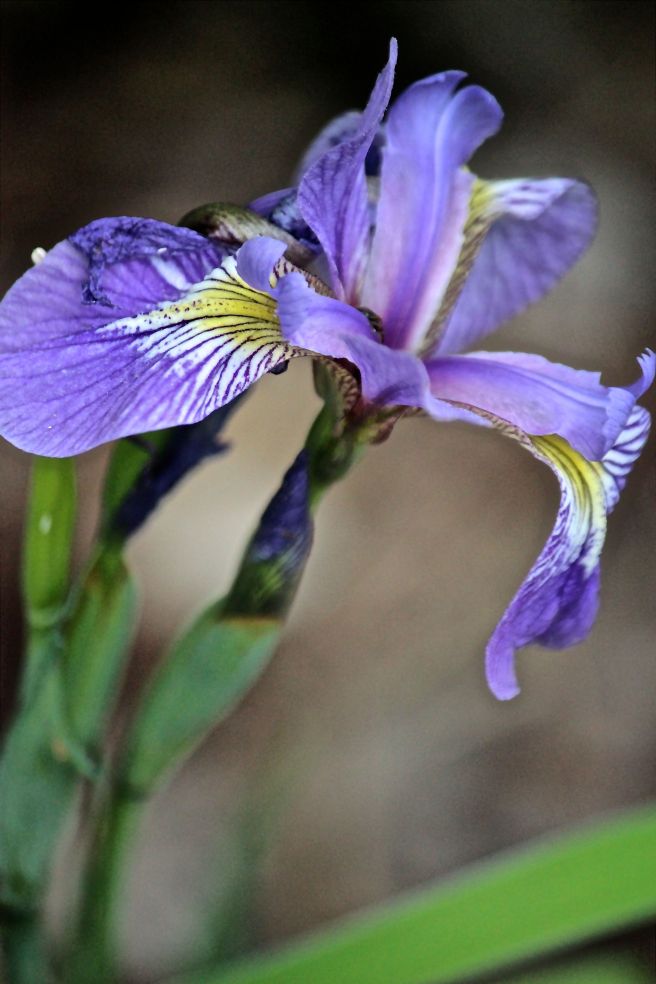
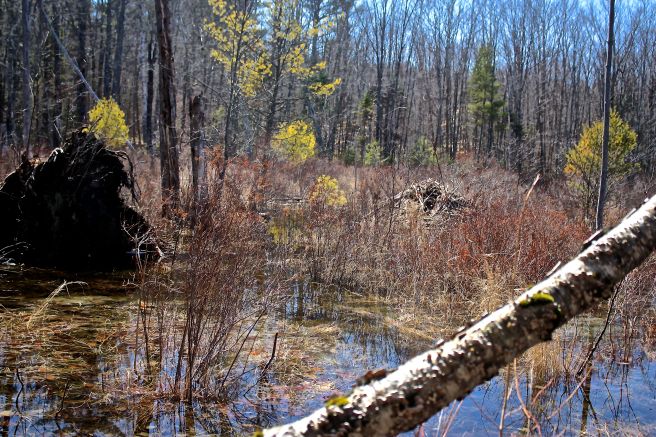
Along the first boardwalk in the red maple swamp we found Northern blue flag iris in bloom. Flag irises are wild irises that tend to grow in boggy areas. Unlike the irises that grow in our gardens, they don’t have beards. The venation of the gracefully downturned sepals was intense–the better to attract pollinators.

snake2

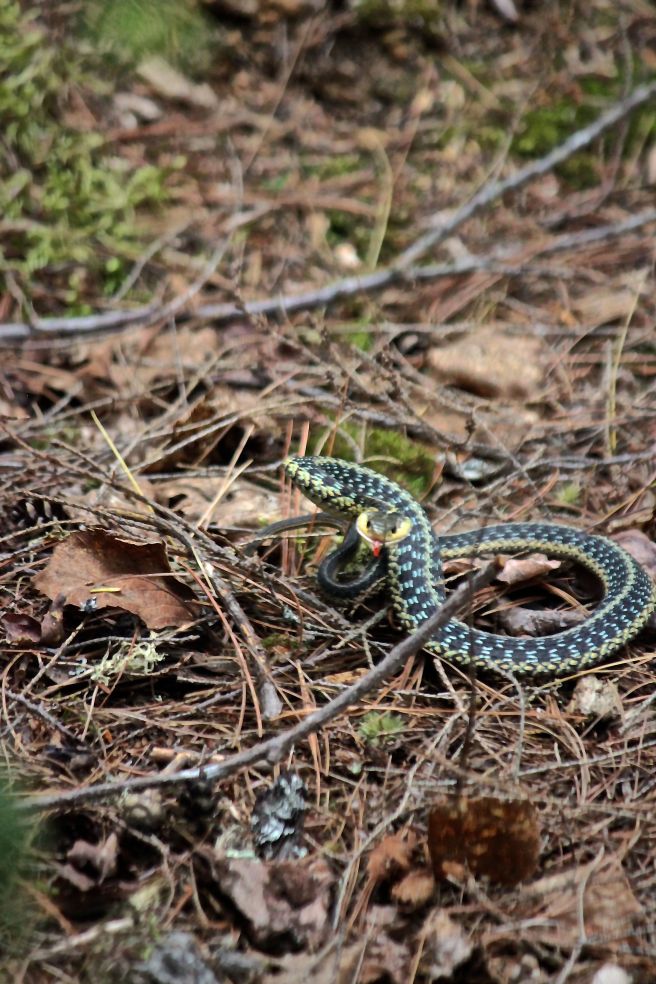
We moved from the swamp to the first hemlock hummock and chatted about natural communities when suddenly we realize we were being hissed at.
snake 10

Its coloration threw us off and beautiful though it was, the hairs on the back of our necks stood on end. Apparently we made it feel likewise. And so we retreated. We retraced our steps and decided to complete the same loop in the opposite direction. When I got home, I looked it up and realized that it was a common garter, but really, there didn’t seem anything common about it in the moment.

hemlock v

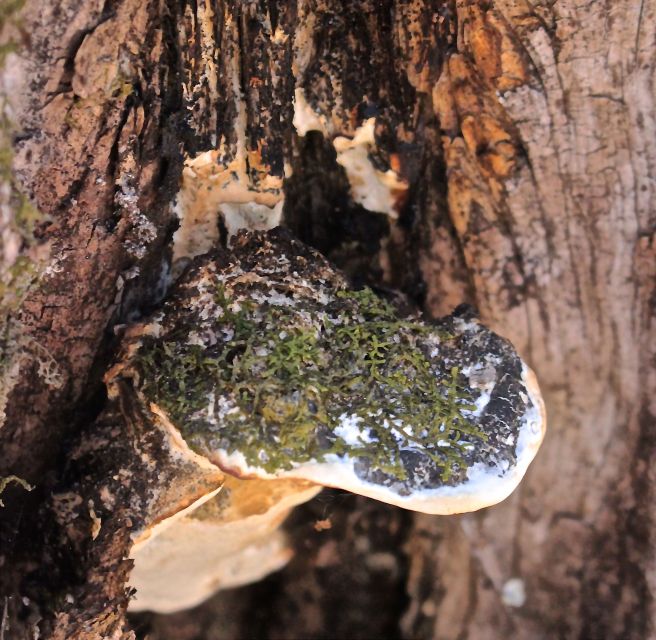
Because we backtracked, we were treated to fresh and older hemlock varnish shelf fungi that  we may not have seen otherwise.

hemlock v 6

We know where they’re located. F0r big $$ we might (MIGHT) show you.

park 1

Later on, as we left, we recognized a friend’s vehicle in the parking lot. Our question–did he see what we saw?
pitcher 9

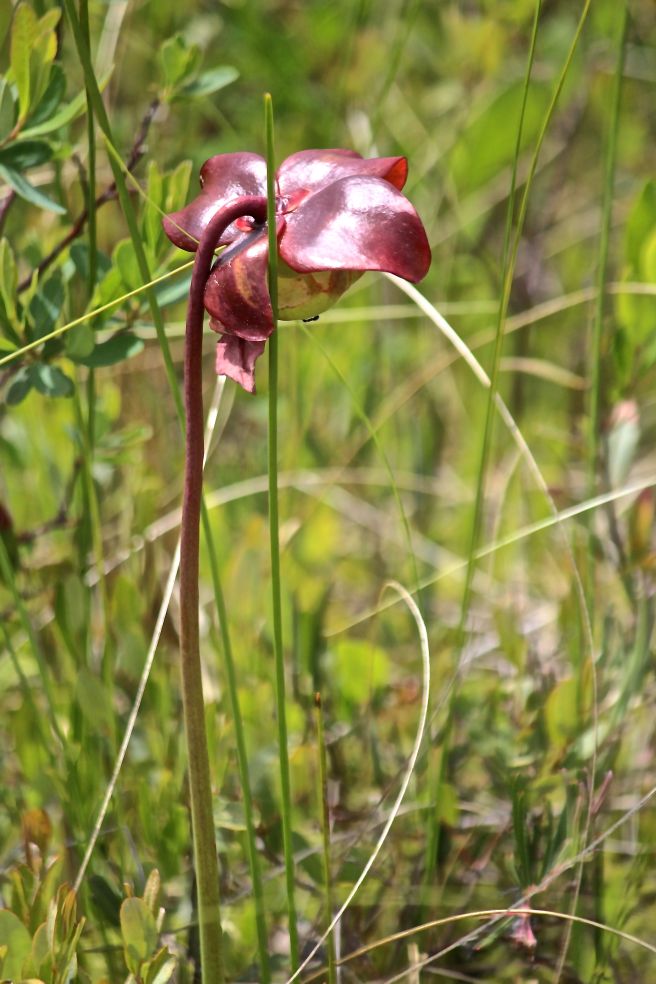
Throughout the preserve we found one of our favorite plants that in my book is the most exotic of them all.

pitcher 3

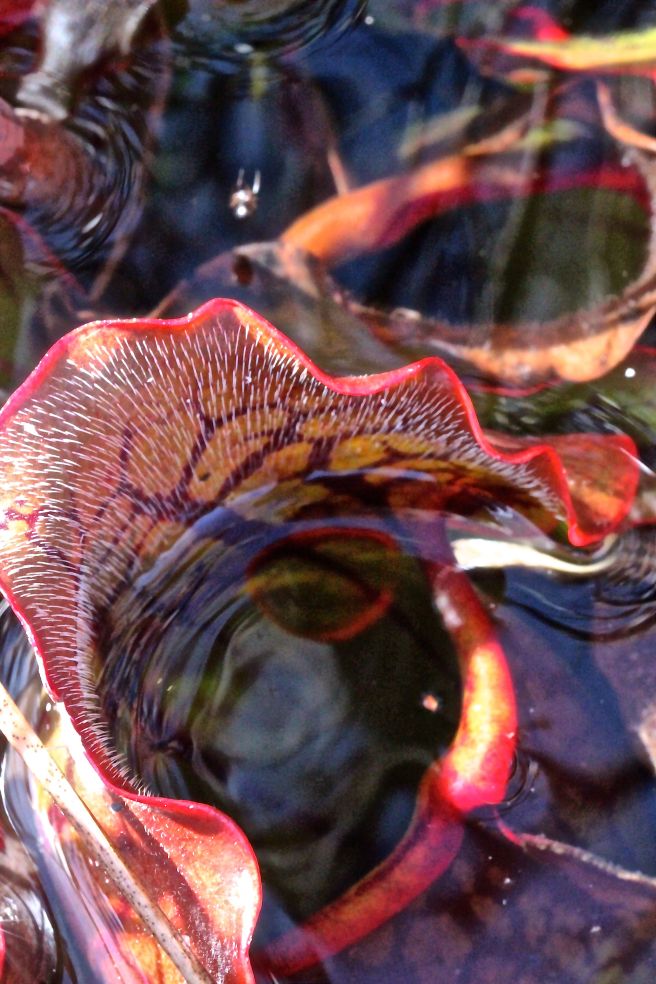
The carnivorous pitcher plant obtains nitrogen and phosphorus by eating insects. Its oddly shaped leaf forms a unique pitcher partly filled with water and digestive enzymes. The spout is a hairy landing platform for insects attracted by its red venation and nectar glands. Imagine this: An insect crawls to the edge of the leaf, aka pitcher, slips on the downward-sloping hairs and plunges into the liquid below where enzymes and bacteria break it down. Any chance for escape are zapped by those stiff hairs. Oh my.

pitcher & sundew1

The pitcher plant isn’t the only carnivorous plant that thrives here. Check out the glistening tentacles of the sundew intended to capture small insects like a mosquito. Should one land on the tiny leaf, its feet become ensnared in the sticky secretion and the end is eminent. YES! Within mere minutes the tentacles curl around the victim and suck the nutrients out of it. Go sundews. Go pitcher plants.

sheep 4

Only beginning to bloom was sheep laurel with its deep crimson-pink flowers. Located below the newly emerged leaves, each flower has five sepals, with a corolla of five fused petals and ten stamens fused to the corolla. Beauty and danger are also encompassed here–it contains a chemical that is poisonous to wild animals, thus one of its common names is lamb kill.

exo 1

Because we were beside the pond, we thought to look for dragonfly exoskeletons and weren’t disappointed.
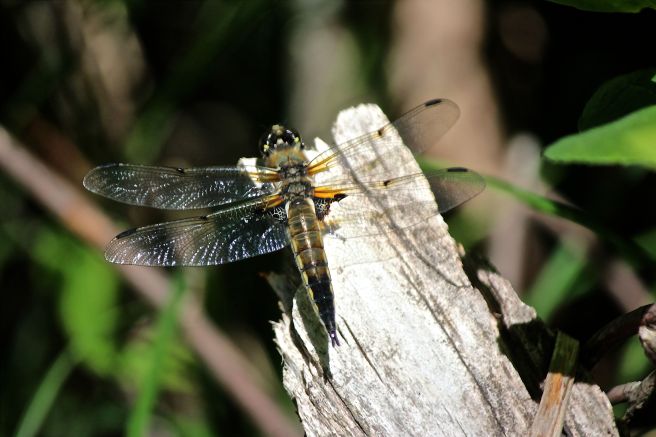
broad-tailed shadow dragonfly

And the dragonflies themselves were worth our attention. I’m not sure my ID is correct, so help me out if you know better, but I think this is a broad-tailed shadowdragon and if that’s true it is one that Maine is paying attention to because it only occurs in one or two states.
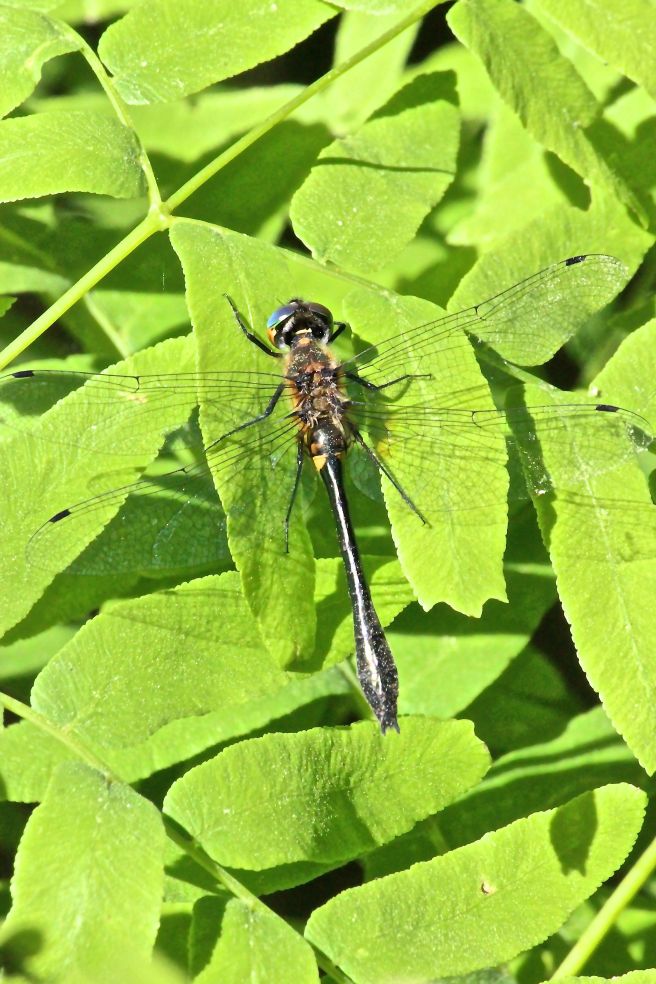
beaverpond clubtail dragonfly

Another that I name without certainty–beaverpond club tail.
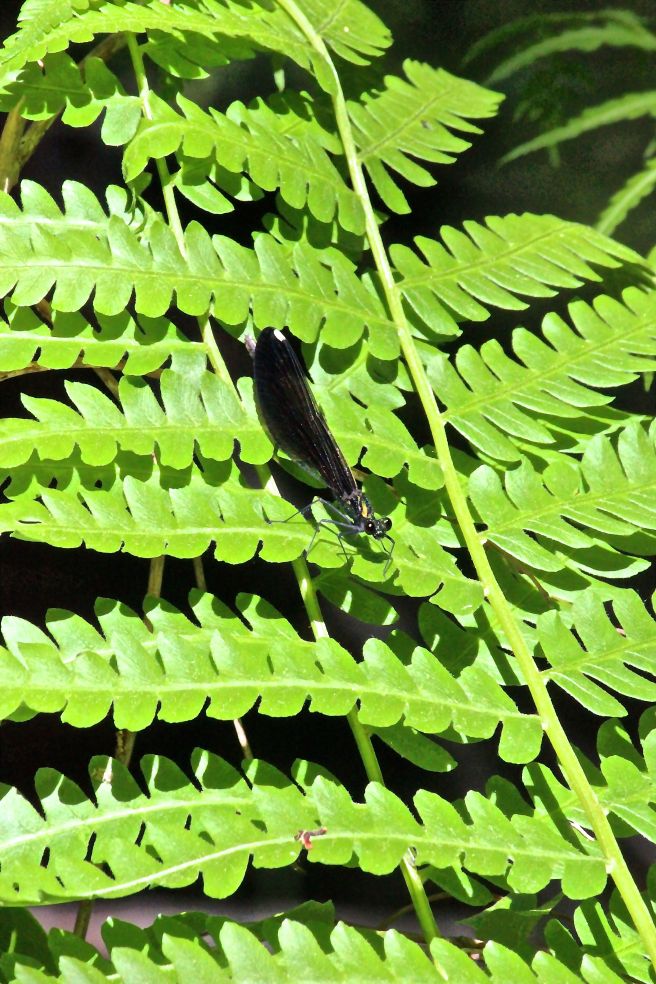
ebony 2

I’m much more confident about my ID of this ebony jewelwing damselfly.

cuke 7

We found a double-decker Indian cucumber root that displayed flowers in varying stages. The yellow or green-yellow flowers drooped below the upper leaf whorl and as is their custom, were slightly hidden. Each flower had three long, brown styles in the center that curved outward and the stamens were magenta.

LEA boats

Among the unnatural offerings, a few boats to explore the river and pond. Though we noted a couple of paddles and one pfd, we highly recommend you bring your own.
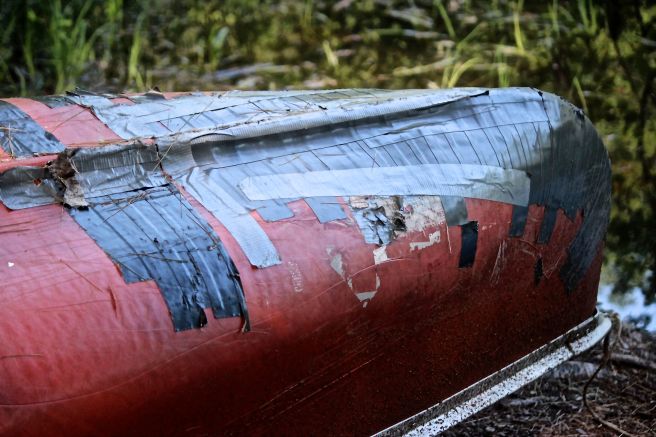
LEA 2

Some extra duck tape is also a good choice just in case. ;-)
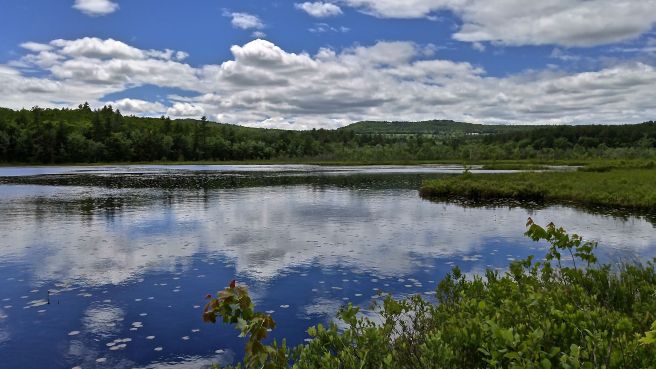
HP view1

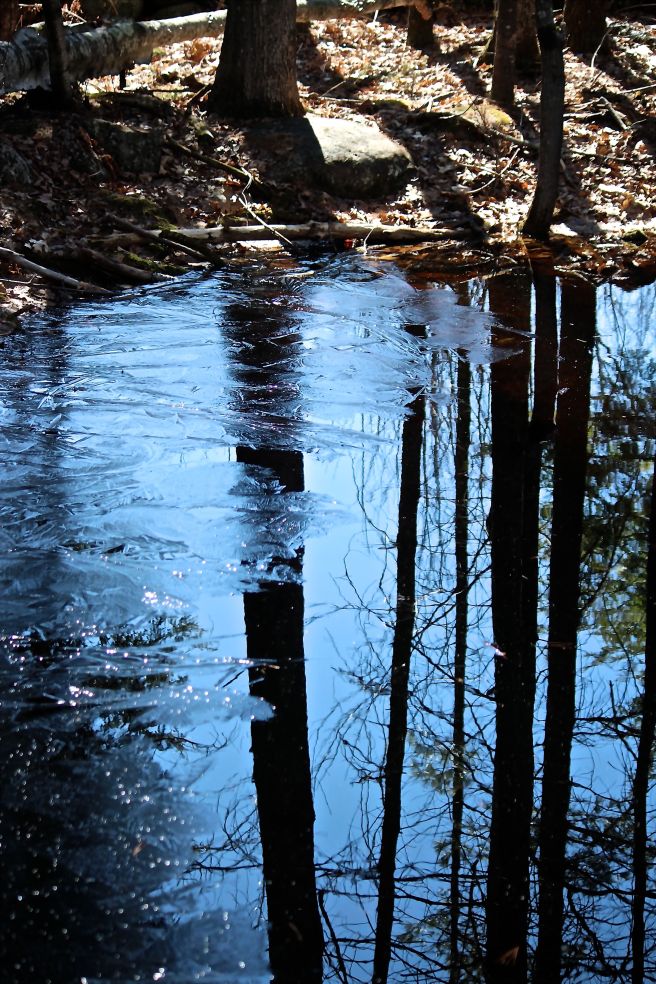
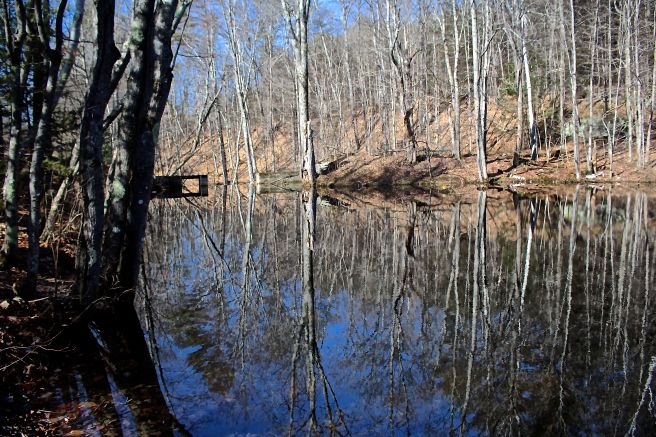
Like the ever-changing reflection, life changes constantly at Holt Pond. The more I look, the more I realize how exotic life is in Maine. Who knew?
Be Together Mondate

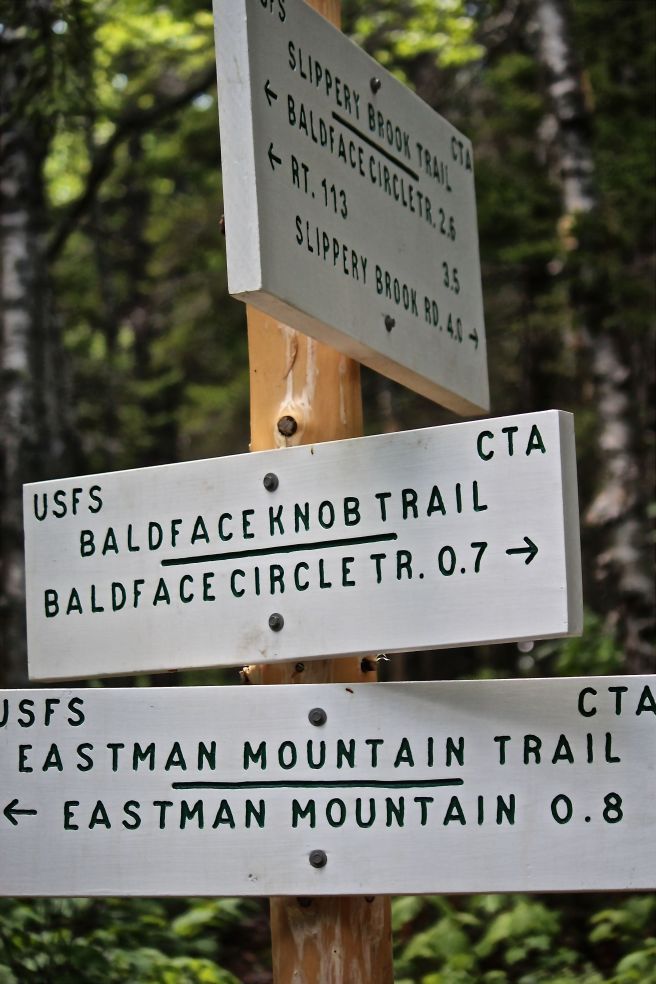
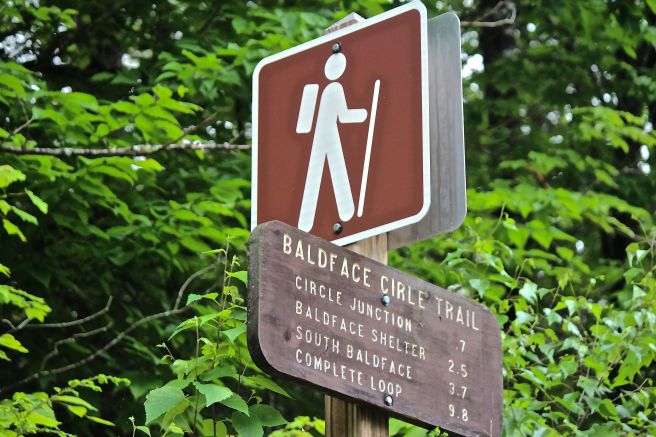
It took us a while to get our act together this morning, but by 10:30 we were finally at the trailhead for the Baldface trails off Route 113 in Evans Notch. Okay, so true confession, I did not want to hike these trails. For thirty years I’ve managed to avoid them, but my guy promised me this morning that if I wasn’t comfortable we could turn back at any point.

b-start sign

And so our Mondate began.

b-ph emerald 3

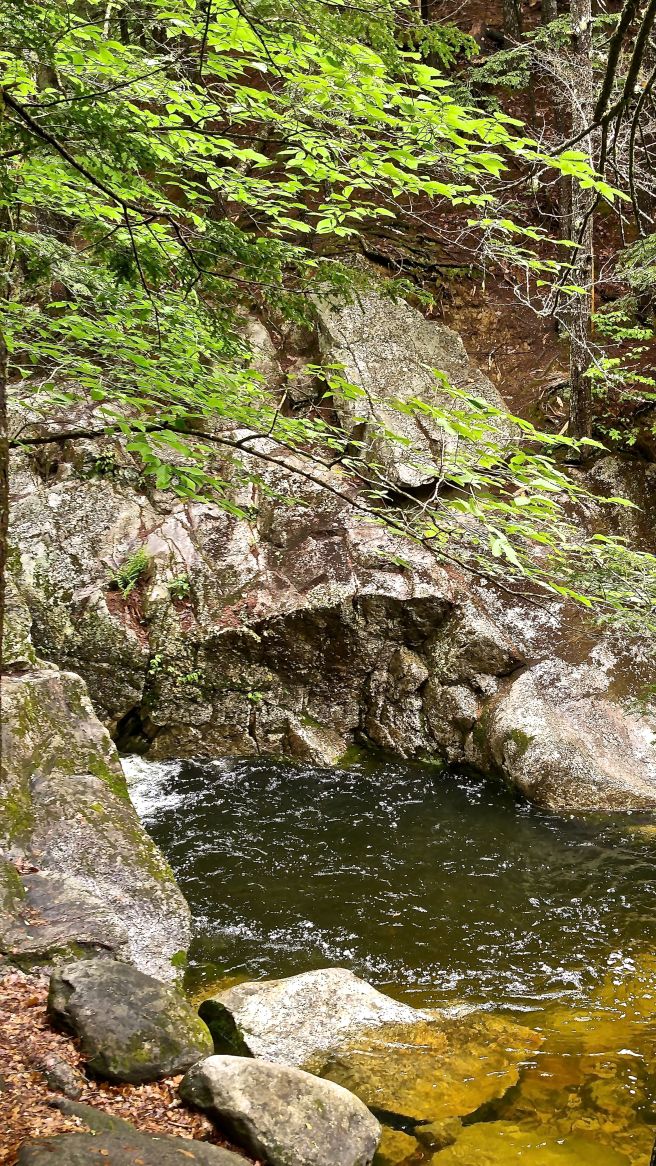
The first .7 miles were familiar to us as we’d passed this way many times in the past, often with friends or family in tow. The destination, Emerald Pool. A forever nippy Emerald Pool.

b-ph emerald 2

We stood above the pool today and shared memories of past visits. And the people that made those visits memorable.

b-ph emerald above

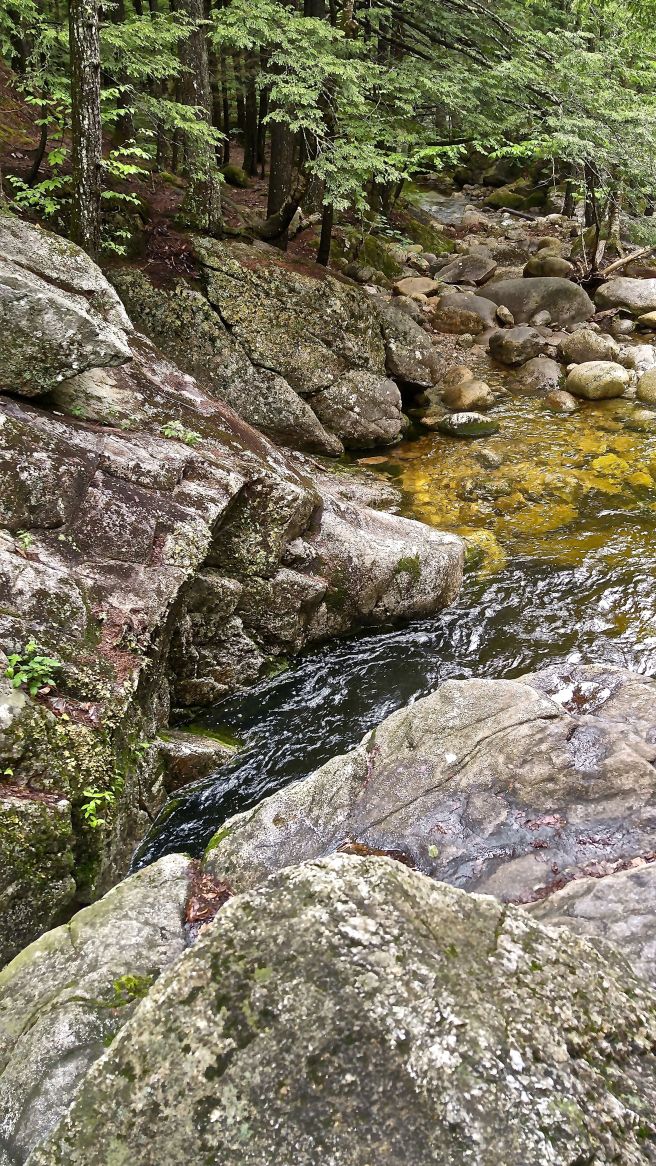
Even the water above the pool provided hours of entertainment in days gone by.

b-ph emerald above 2

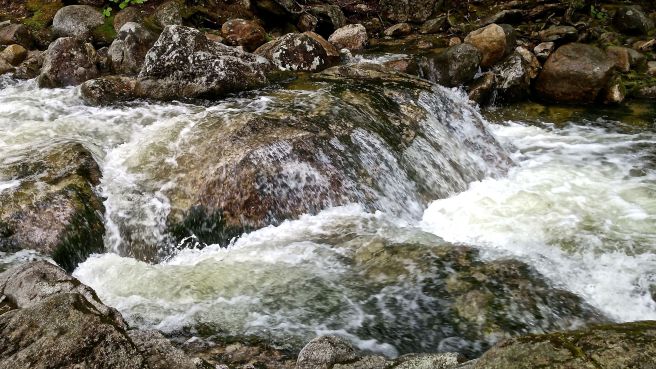
Today, it was the water’s force and volume, increased since last night’s rain, that gave us pause.

But we couldn’t pause for long. We had a mountain to conquer. And so, we headed back to the main trail and at the junction followed the Baldface Circle Trail . . . until it disappeared before our eyes. We backtracked but couldn’t figure out what we’d done wrong, except that we couldn’t see trail blazes anywhere. And so we retraced our footsteps until the trail petered out again. And then we decided to bushwhack and climb uphill because it only made sense that we’d find our way. At last, success–we found yellow blazes and an obvious trail. But . . . we didn’t know if we were on the Circle Trail or Slippery Brook Trail.

Our plan had been to hike up the first and down the latter. Out came the map and compass and we were fairly sure we were on the latter trail. To be certain, we hiked a wee bit, until we came to the brook. Yup. So, decision time. Turn around and head back to the other trail or continue on because we’d already come so far. We continued on. Plan B when we didn’t even know we had a Plan B.

b-ph brook 3

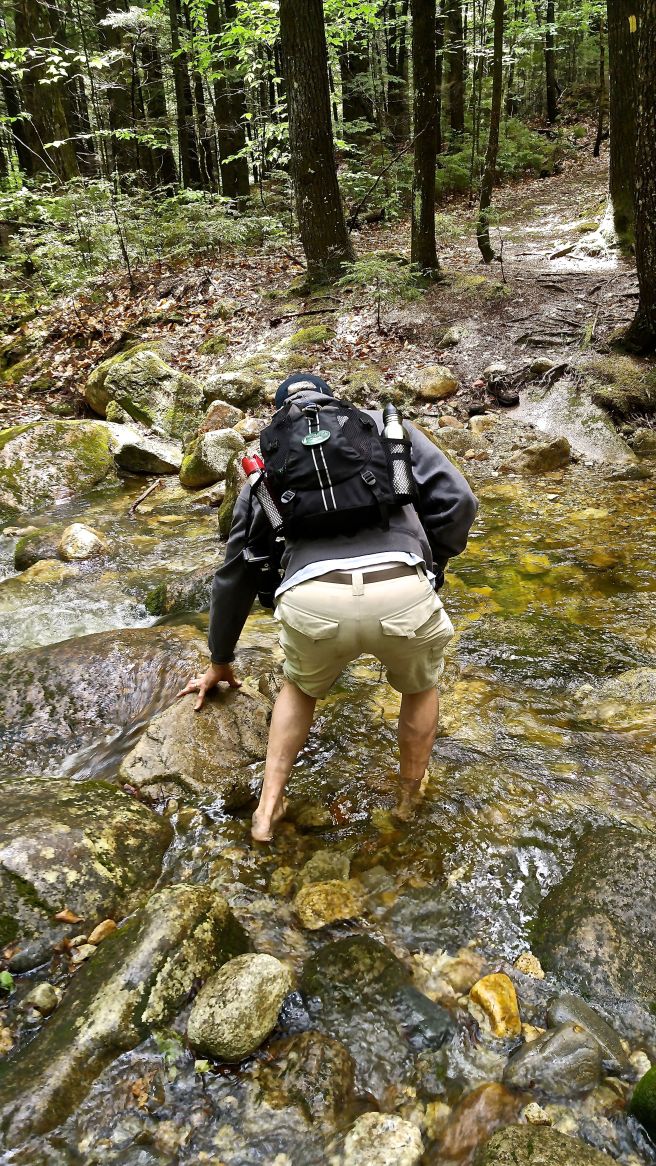
And Slippery Brook held its own tribulations. The water–oh how it flowed. It didn’t bother my guy and within seconds he stood on the other side grinning back at me. Meanwhile, I hemmed and hawed. And hawed and hemmed. How in the world? I thought perhaps I should return to Emerald Pool and wait for my guy to complete the round trip. He wasn’t buying that. Neither was I, truth be told. But sometimes my head gets the better of me. He knew that. And so he dropped his pack, took off his boots and sloshed through the cold water to grab my pack.

b-ph brook crossing 2

I didn’t have a choice. I had to follow him. And so I did. Of course, this guy knows I’ll follow him anywhere.

b-lunch rock

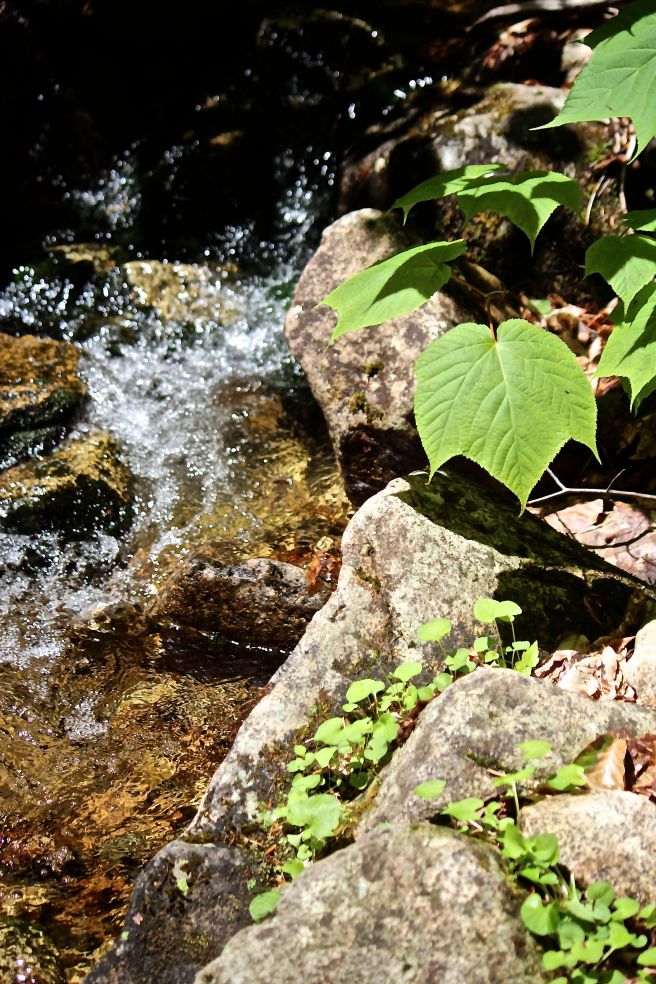
We continued on the Slippery Brook Trail and a delightful trail it was. I kept waiting for the bald face to show, but it wasn’t to be. The worst part, if there was one, would be the mosquitoes. It poured last night and the trail was rather wet, but still, it provided a pleasant climb. We paused for lunch beside a stream where the mosquitoes abated.

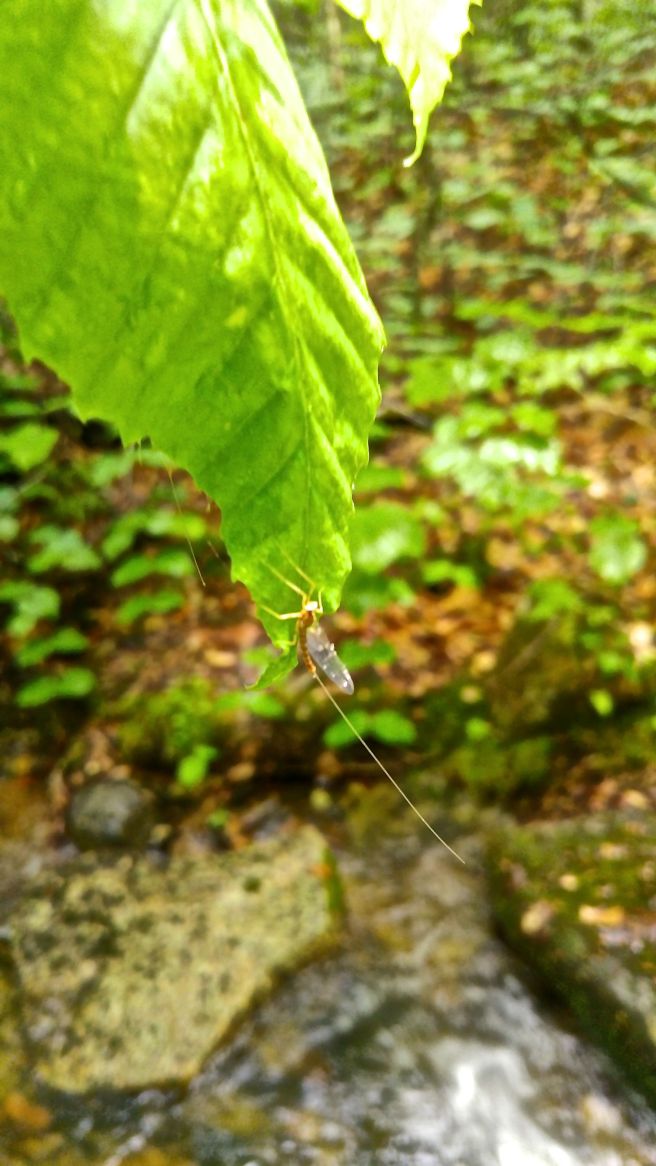
b-ph mayfly1

One of the things I like about stopping for lunch, besides eating because I’m always hungry, is taking time to notice. Mayflies.

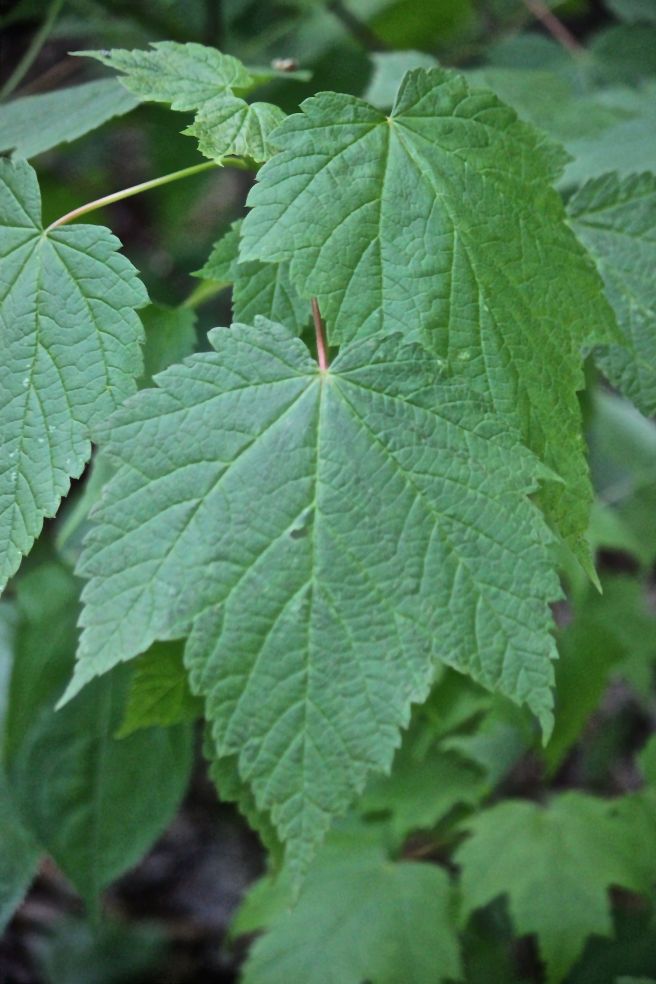
b-mtn maple1

The deeply impressed veins of mountain maple leaves.

b-sugar maple

And u-shaped lobes of sugar maples.

b-dogwood

Dogwood.

b-beech fern1

And beech fern.

b-bunch:hobble

Following lunch, we continued to climb and noticed things like the great pretender–a bunchberry posing as a hobblebush flower.

b-ph moose works

And moose works carving the greenery.

b-halfway sign.jpg

At last we reached our halfway point at 3.5 miles. I kept wondering–where is the bald face that I’ve been dreading? The Slippery Brook Trail was a delight, be it long, with no bald rocks in sight.

While we climbed, I’d not only noticed my surroundings but also planned my funeral. I know who I want to conduct the service and he’s out of town this week. I figured that was OK. My guy would just have to delay it for a bit. And I thought about who might come and how the different folks would interact with each other. It’ll be a celebration of life, of course. And people should be encouraged to get outside and notice. Maybe they could go on a group walk.

b-yellow clintonia.jpg

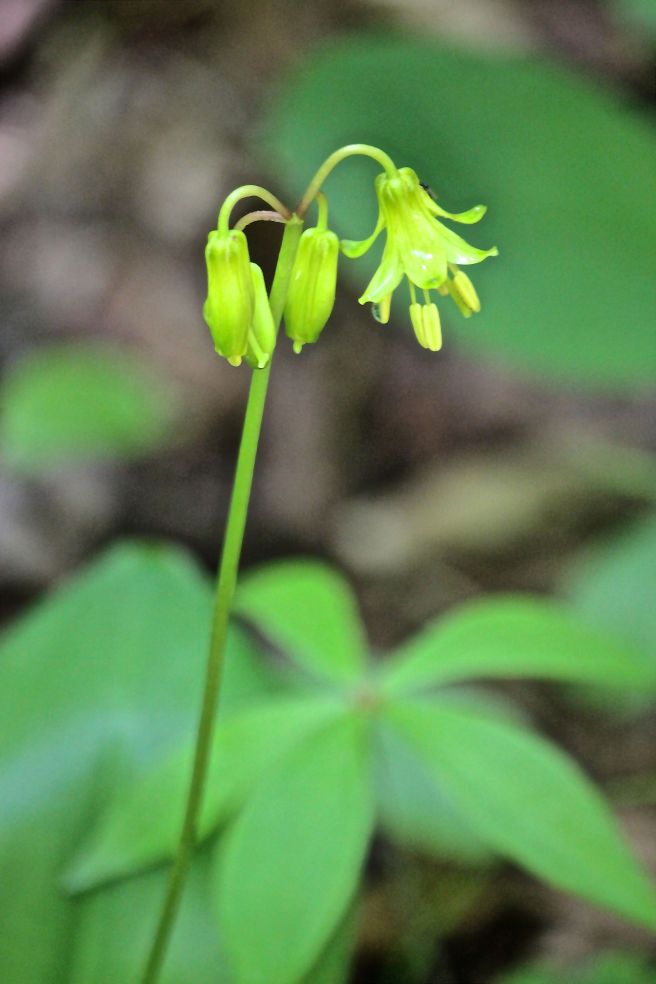
And then we followed the Baldface Knob Trail where the yellow clintonia grew in such abundance that my guy actually started to ID it. I’ll make him a naturalist yet. ;-)

b-lady's x2

Equally abundant were the lady’s slippers.

b-ph trail up

And then we met my nemesis. But really, it wasn’t so bad. All that worry for naught. I could do this. If we decided to hike down this way, I would survive.

b-ph first view

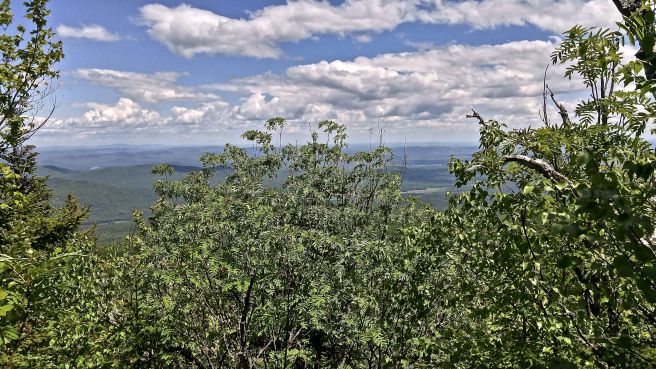
At last we reached our first vantage point with the world we normally inhabit spread out beyond.

b-ph hiking up

It just kept getting better, and cooler and windier–a relief for our sweaty bodies. But . . . the black flies increased significantly. I swallowed a few. All that swarmed must have been males because they didn’t bite. But they certainly were annoying.

b-ph Pleasant Mtn

As we approached the top of the Baldface Knob we recognized our neighborhood with Pleasant Mountain in the backdrop.

b-ph panoramic

A 180˚ panoramic provided half of the picture. I thought I caught the other half, but it’s not to be. South Baldface was behind us and completely doable. We decided to save it for another day because it was getting late and we weren’t certain about the trail before us.

b-ph chokeberry

Among the selections at our feet, chokeberry

b-summit mtn ash

and mountain ash.

b-hummer 3

At eye level–a hummingbird moth who moved in supersonic speed.

b-hiking down 1

And then we followed the path down.

b-ph forever view

The world stretched before us

b-ph hiking down 3

to infinity and beyond. My guy insisted that parachutes were available at this spot, but they must have been previously claimed because I couldn’t find one . . . anywhere. And believe me, I looked.

b-ph heading down

It all seemed so innocent from the top, but really, it was a scramble. A major scramble that lasted a long time until we got back into the hardwood forest. Our footing–precarious and often wet. We both have a fear of heights in open spaces. My guy has forever had such a fear–my own is newly developed and I know not its source. Oy vey. We were in over our heads, but had no choice. I kept thinking about a rescue mission, but I don’t think they show up for those who whine. We practiced our crab walks, slid and skidded and hugged rocks and trees as we made our way down this precarious trail.

b-ph lichens1

The lichens were beautiful and we got to see them up close and personal. We also practiced our trust jumps. Yup, several times my guy positioned himself to catch me as I jumped. Remember my funeral plans on the way up. I was preparing as we climbed and facing the inevitable as we descended.

b-ph lady 2

Finally, we were rewarded with a more even trail–sort of–and lady’s slippers.

b-ph chandler 5

About a mile before the trailhead, we followed a spur to Chandler’s Gorge.

b-phdirty lady

On the way out, I realized I wasn’t the only dirty lady.

Oh, and we found where we zigged rather than zagged at the start of the trail. Honestly though, we both realized that if we’d hiked up the Baldface Circle Trail, we probably would have turned back. So as luck would have it, we went the right way.

Since we were on stable ground, I mentioned my fears to my guy. He admitted he’d had the same. And when I said I was sure we’d both fall when I jumped down and he caught me several times, he said at least we’d be together.

Be together on a Mondate. That’s what it’s all about.


The Big and the Small of the Hundred Acre Wood

As my friends know, I’m not one to say no to an invite to explore their land. And so this afternoon’s adventure found me spending time with Beth on the 100 plus-acre property she, her husband and parents call home in Oxford County.

b-view 2

Their sense of place begins with a field of wildflowers yet to come, the entry to their wood lot and a view of Ragged Jack Mountain. My sense of excitement to explore their place was heightened by this jumping off point.

b-Maine trail

Trails loop throughout the property and the family has taken the time to name and label all of them.

b-pine 4

We wandered along and suddenly Beth noted that we’d reached their champion pine. I looked at a small spruce before us and wondered what all the fuss was about. Then she pointed to my left.

b-pine 2

One massive Eastern white pine gallantly towered over us. At some point in its early life the terminal leader was injured–perhaps by a weevil or weather. But . . . this tree carried on and continues to do so. I felt like we were standing below a giant in the woods.

b-pine bark

It’s characterized by layers upon layers of bark.

b-pine 3

And it’s wider than any tree I’ve ever seen. Here are the stats on this champion: According to Beth, it towers 108 feet tall, is 256 inches in circumference (21.3 feet) and has a crown of 15.75.

b-pine 1

Yup. It’s big. Or rather, BIG!

b-dam:lodge2

We weaved our way along the trails and Beth shared favorite spots with me as she told tales of her experiences with this land and water.

b-mora 1

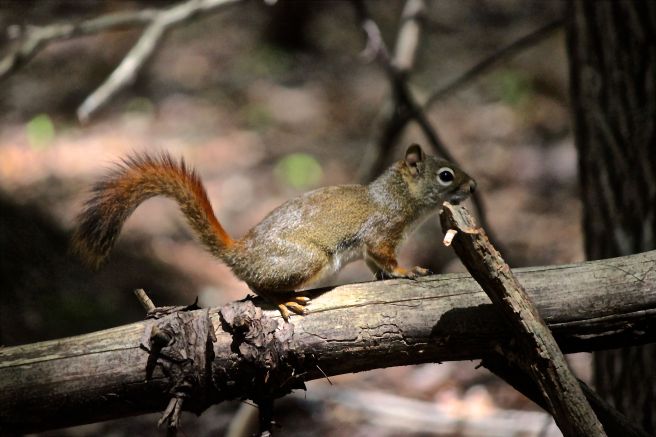
Mara, Beth’s springer spaniel, shared her own tail. She was happiest when mud and water provided opportunities to play. We had to wonder other times when she cowered behind us or tried to hide between Beth’s legs. What did she sense that we weren’t aware of? We did hear a few critters, including baby grouse that Mara visited, and saw the tracks of moose and deer, plus coyote and fox scat, and maybe even bobcat scat, but our only official mammal sightings were red squirrels.

b-pond

Among Beth’s sharings was this spot she refers to as the Accidental Pond. Accident or not–it’s enchanted.

b-split granite

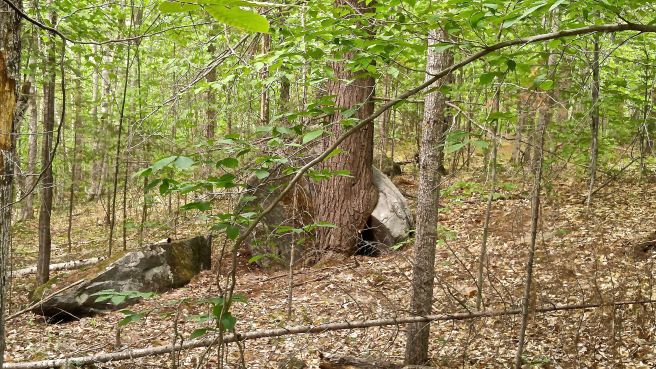
Here and there throughout the woods, she pointed out glacial erratics. This one we particularly wondered about. What came first? The rock split on its own or the hemlock caused the split?

b-bracken 1

Those were the big things, but we were equally wowed by all the small stuff we saw along the way, like this bracken fern just beginning to unfurl.

b-cinnamon ferns

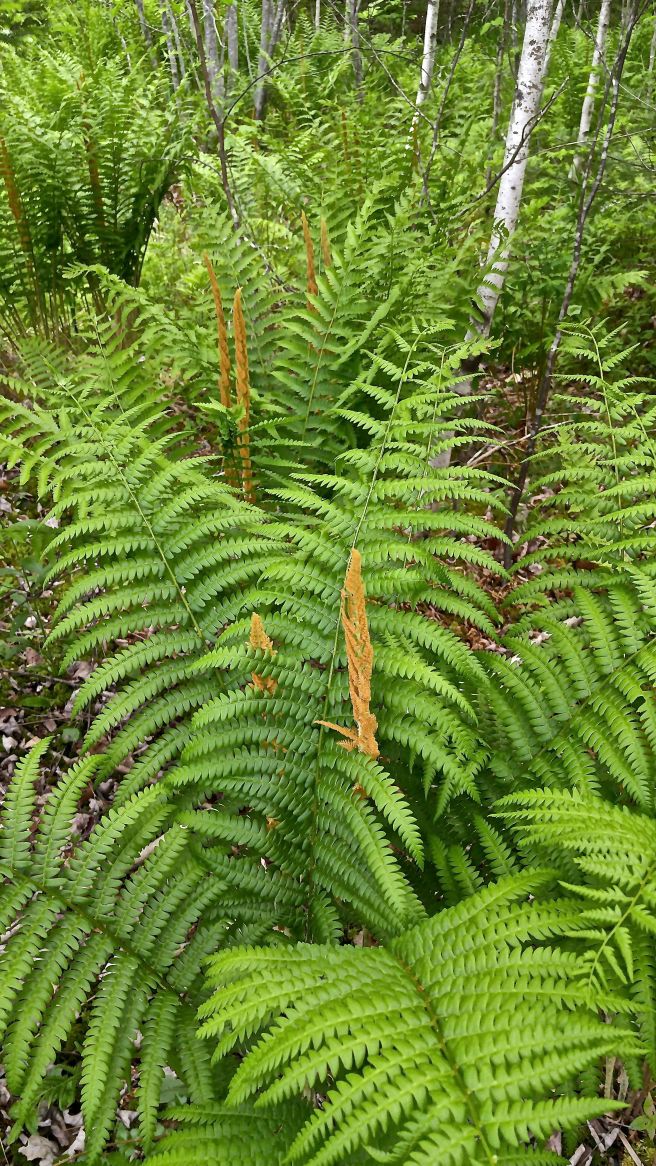
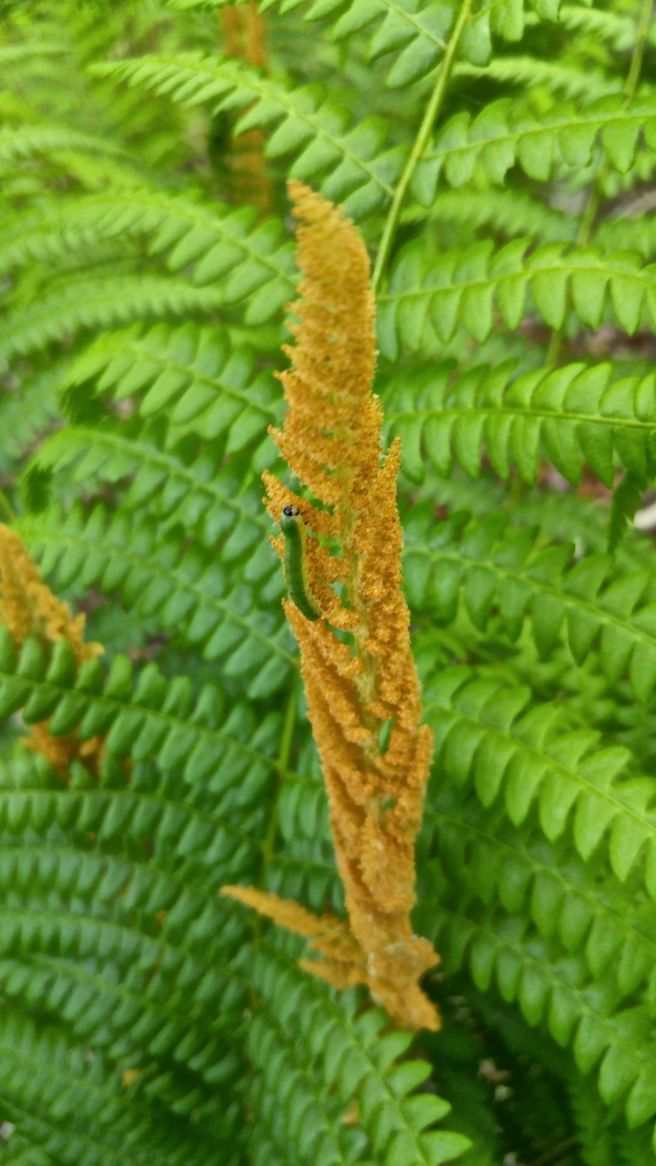
Several times we wandered in the land of the cinnamon fern, where the separate fertile fronds sport the cinnamon color for which they are named. It won’t be long before those fertile fronds bow down to the earth and the large, arching sterile fronds are all that will remain.

b-caterpillar 2

And then something else caught our attention–a green caterpillar on the fertile frond.

b-caterpillar 1

We weren’t sure who it was, but we saw it on several stalks. Always something to wonder about.

b-royal

Royal fern also offered a display, especially beside the brook. Look closely and you might find the fertile frond “crown” on this one. It’s a rather “Where’s Waldo” presentation, but it’s there.

b-gilled 1

We found some gilled mushrooms we also couldn’t identify, but appreciated their existence.

b-lady 3

The lady’s were in bloom.

b-lady's slipper

Take a look at those hairs.

b-web 3

And it’s spider web season so we paused and admired the work of an orb weaver who built a spiral wheel-shaped web.

b-spider web

Also among our sightings, a well-built high-rise structure woven among the remains of winter weeds.

b-toad 3

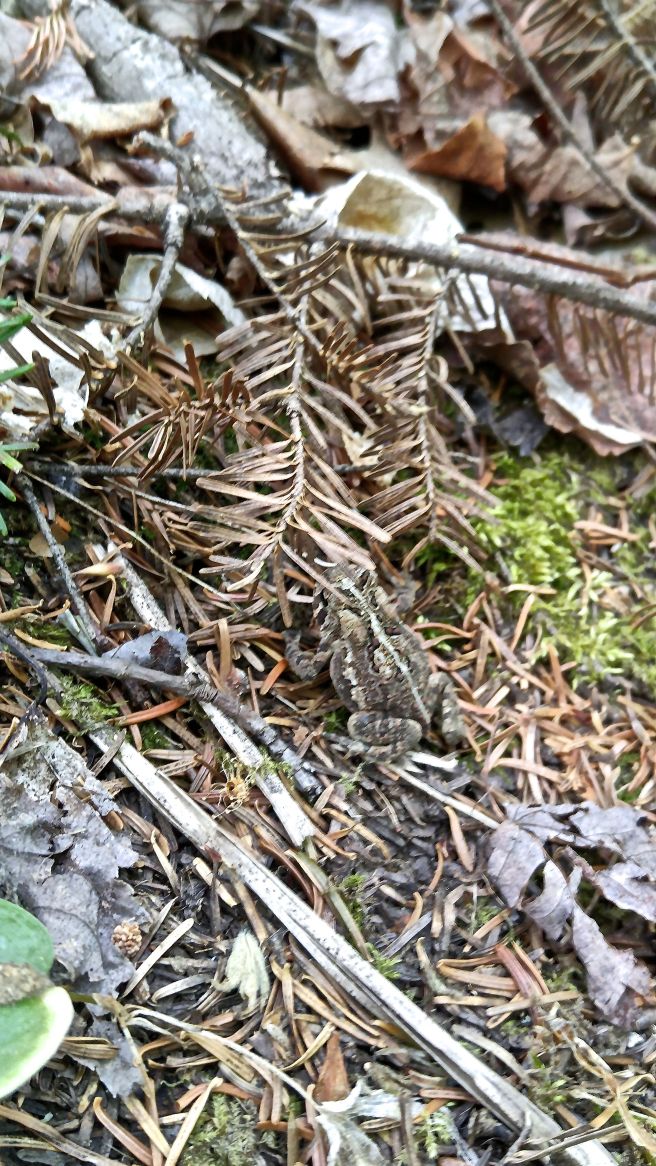
Camouflage is everything. Just ask the American toad.

b-wood frog 1

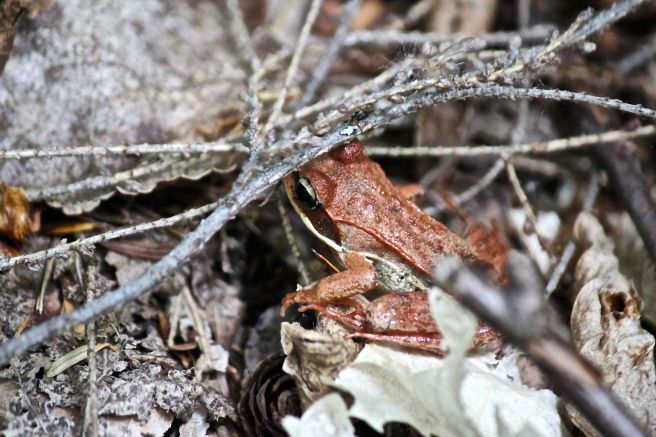
We found the wood frog easier to spot.

b-blue-eyed grass1

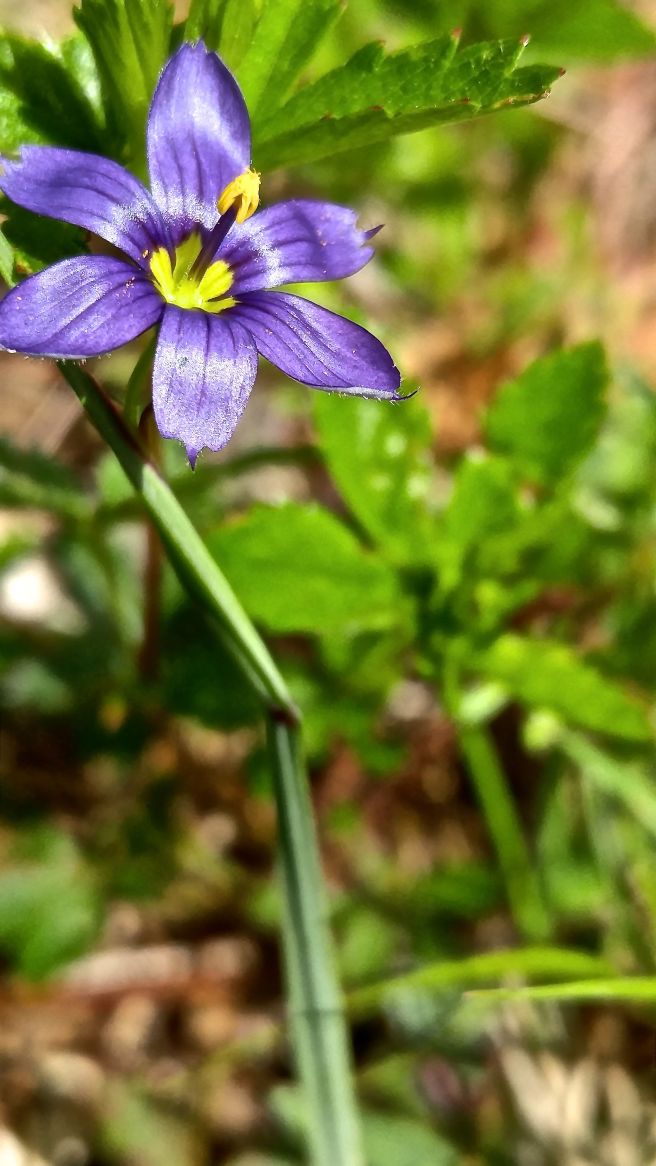
But I had my eye on the blue-eyed grass.

b-blue 5

These are the shy ones. They only keep their eyes open if the sun is shining. On a cloudy day it’s almost impossible to recognize them.  And they love damp open woods, slopes and stream banks so it’s no wonder we found them today.

The big and the small . . . Beth’s property has it all. And this was only a sampling from her hundred acre wood. Winnie the Pooh and his friends–they too, would love this place.


Book of June: Insects, A Golden Guide

So, yeah, insects. They aren’t my thing. And yet . . . they are fascinating. I only know this because my eyes were opened when I took the Maine Master Naturalist course. And this year, we’ve added a new title to the course: Insects from the Golden Guide series.

i-2 books

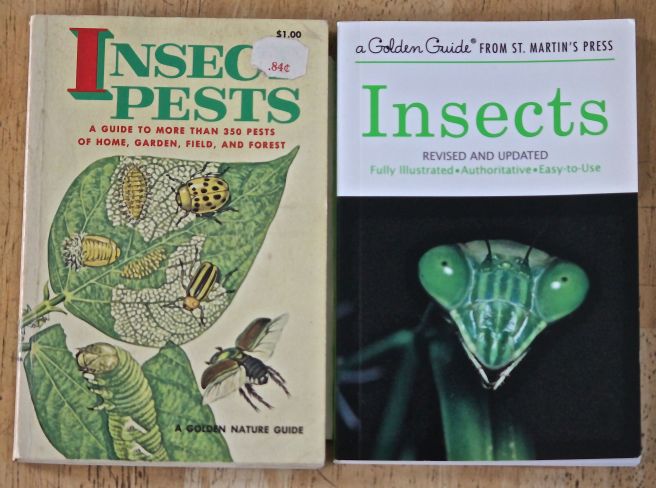
Our students received the 2002 edition, which is on the right. I also have the 1966 edition. Notice the price–$1.00 marked down to $.84. The newer edition: $6.95.

i-development

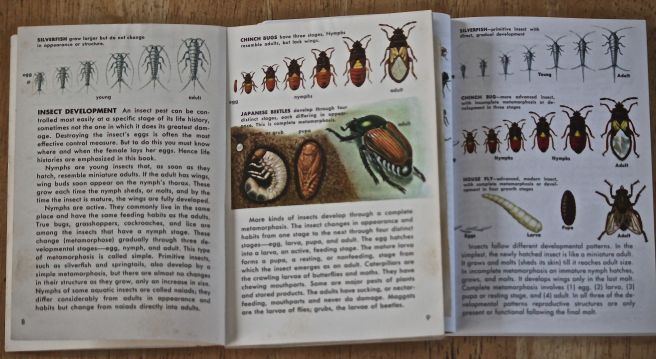
Price is not the only change. Though some things have stayed the same, the presentation has been reformatted and updated.

One of my favorite differences–attitude.

In the 1966 edition, “the battle to control insects is a never-ending necessity.” The purpose of the book–to help identify those bothersome pests. Insecticides were highly recommended, though precaution mentioned.

Fast forward to 2002: The foreword ends with a statement encouraging all to use the guide as an aid to “recognize and appreciate” insects that are part of our daily world.

i-31

For someone like me, it’s a great jumping-off point. I have a key and I have Peterson’s Guide and I have used bug guide.net, but this little book (6″x4″) offers a quick, easy-to-read glance and sometimes that’s all I need.

It’s certainly insect season (she wrote as she swatted a mosquito) and I encourage you to take a closer look. Like everything in the natural world, once you open your eyes to something, you’ll be amazed at what you find.

i-11

As a kid, I always thought this was snake spit. Huh? Do snakes climb flower stalks? Do they spit?

i-10

No, but spittlebugs (page 41) whip up some slimy froth to cover their eggs in late summer and the nymphs cover themselves while feeding in the spring.

i-27

I’m not sure if I’m seeing the nymph in the bubble house, but what I did notice as I looked at various masses this morning is the pattern or Fibonacci sequence. Cool stuff.

Meet my other friends:

i-bee 4

Some do good works.

i-20

Others–not so good.

i-spider on daisy

I’m amazed by color

i-5

and camouflage,

i-7

short antennae

i-1

and long,

i-2

bulging eyes,

i-3

veined wings and

i-26

jointed legs.

i-33

Last year, I spent hours stalking the parents or relatives of this little one because the body structure amazed me so. I suspect I’ll do the same this year. Be forewarned.

Notice I didn’t ID any bugs–that’s for you to do if you choose. But even if you don’t, I do hope you’ll take a closer look.

And if you are looking for a great introductory guide, I highly recommend Golden Guides Insects. My copy was a gift, but I’m sure your local, independent book store (aka Bridgton Books–always like to give them a plug) can locate a copy for you.

Slippers fit for a Princess–including Cinderella

My day was bookmarked by slippers so beautiful that I think Cinderella would trade in her glass shoes for one of these. The question is–which one?

p-ph lady y 14

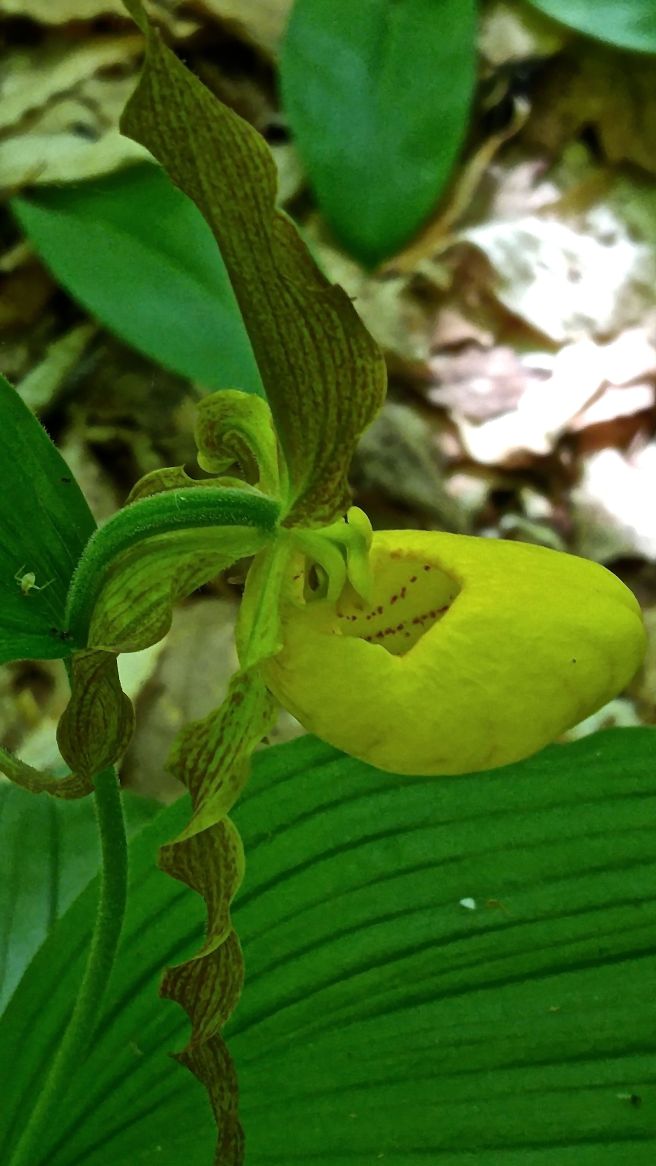
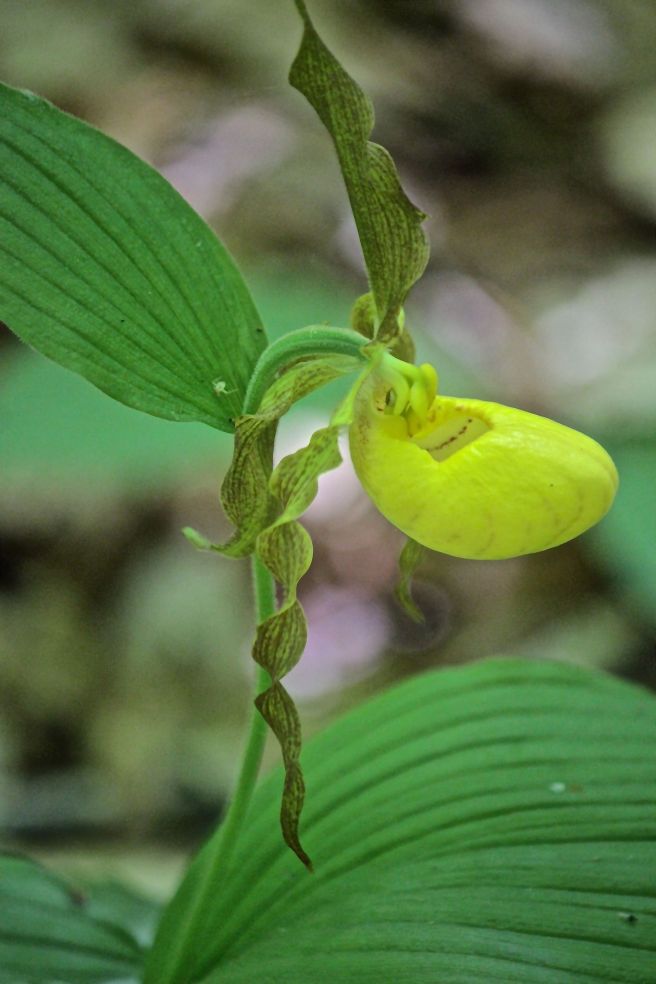
A young friend who has made it his career to search the woods for orchids and fungi introduced a small group of us to these this morning. I’d met this variety previously, but not in this particular location. We oohed and aahed as we encircled the plant–paying reverence. Though we didn’t curtsy, our respect was tinged with awe.

Members of the Orchid family, lady’s slippers feature the typical three petals in an atypical fashion. The pouch (or slipper or moccasin), called the labellum, is actually one petal–inflated and veined.

p-ph lady y 3

With a purplish tint, the petals and sepals twist and turn offering their own take on a ballroom dance. From every angle, it’s simply elegant.

p-ph lady y 7

Peeking inside, we noticed the runway–meant to attract pollinators.

p-lady 2

Bees follow the runway into the inflated lip, where they quickly discover that nectar is not available. Because of the one-way opening, their exit is not easy.

p-lady 4

In order to escape, they must depart through the back of the lip, where they brush against the stigma and deposit pollen from a nearby flower visited previously.  Simultaneously, as is the way with flowers, the bee picks up a new pollen packet from the anthers to share with other flowers. Due to the lack of nectar, however, bees don’t frequent the species and few lady’s slippers produce fruit. I didn’t see a single bee near this beauty.

p-ph lady 6

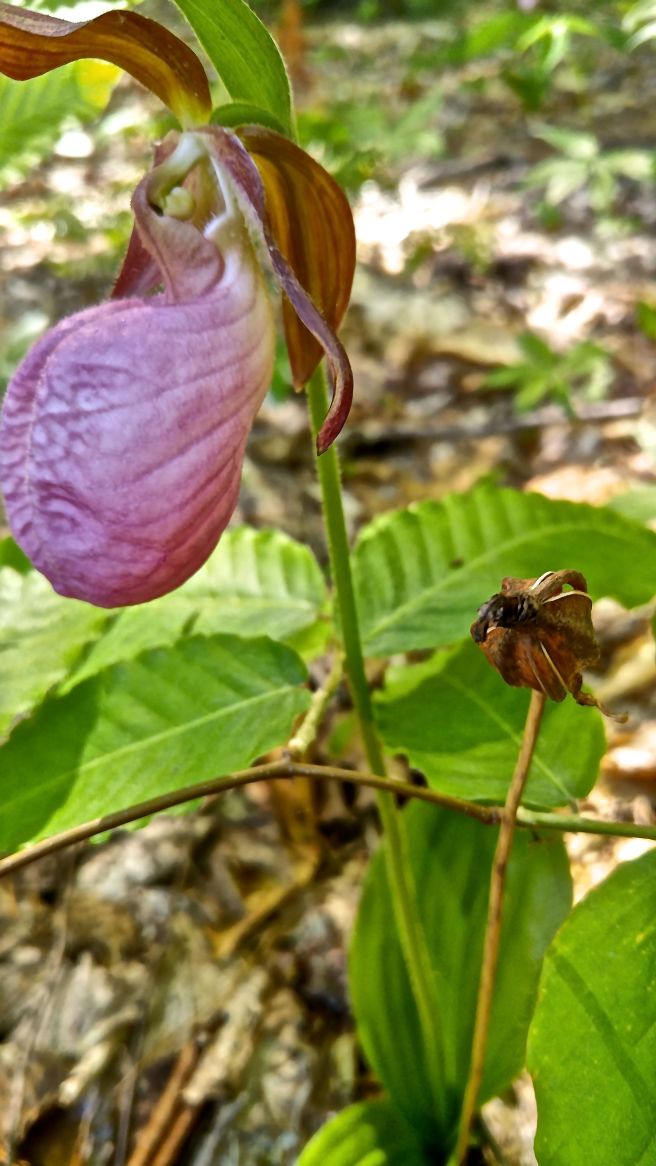
This afternoon I was invited to spend some time visiting friends and exploring their property where pink lady’s slippers bloom prolifically. While the yellow shoe is situated parallel to the ground, the pink shoe dangles downward. Overall, it reminds me of a lady holding out her skirt as she bows before the queen.

p-ph lady 7

It’s a symbiotic relationship with a fungi that helps the lady’s slipper germinate. And then, it still takes a few years for the germinated seed to produce leaves and about 3-5 years before it produces a flower. Once established, however, it may live for 20-30 years or more.

And do you see what I see? To the right of this particular flower? A woody pod. A seed pod, indeed. And a rare find.

p-ph lady 3

Despite the lack of pollinators and fruits, a single capsule contains thousands of seeds. The presence of lady’s slippers indicates rich soil.

p-lady 1

So which slipper do you think Cinderella would choose? Though I’ll never consider the pink as ordinary,  I’ve a feeling the golden slipper would be the one that fits her best.

America the Beautiful

This morning’s rain and overcast sky embraced the melancholy emotions of this day as we remembered  family, friends, acquaintances and strangers who have served our country, especially those who died during times of conflict.

And then the sun shone.  It didn’t mean that we stopped remembering. But it did shine a light on the beauty that surrounds us and that we have the opportunity to observe if we so choose. Because of the service of others, we’re fortunate in that regard–we get to choose.

ph droplet on lupine leaf

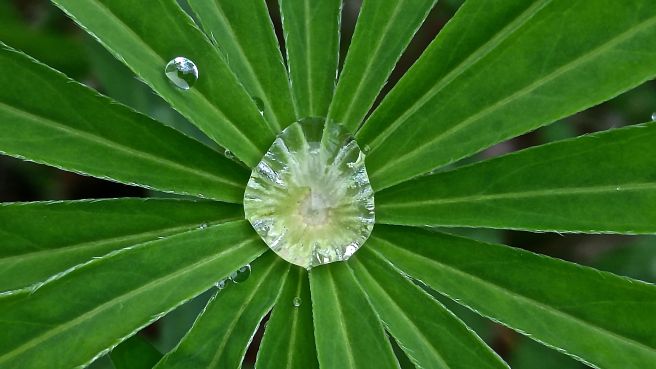
I chose to step out the back door and notice.

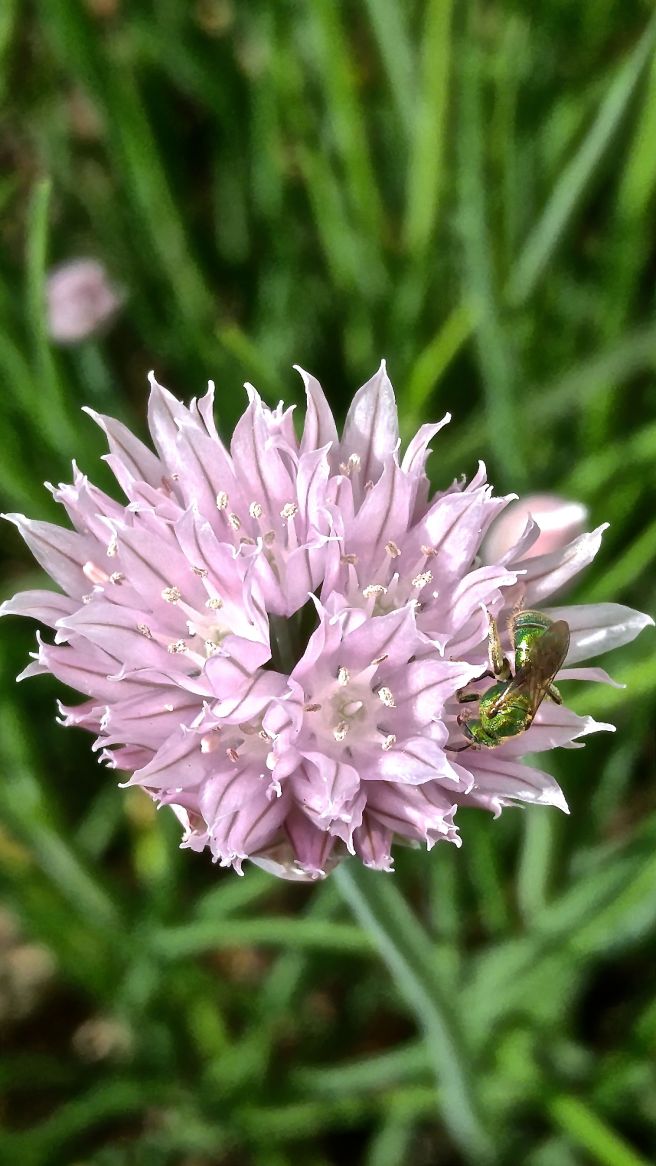
ph-chives 2

Visitors upon chive florets.

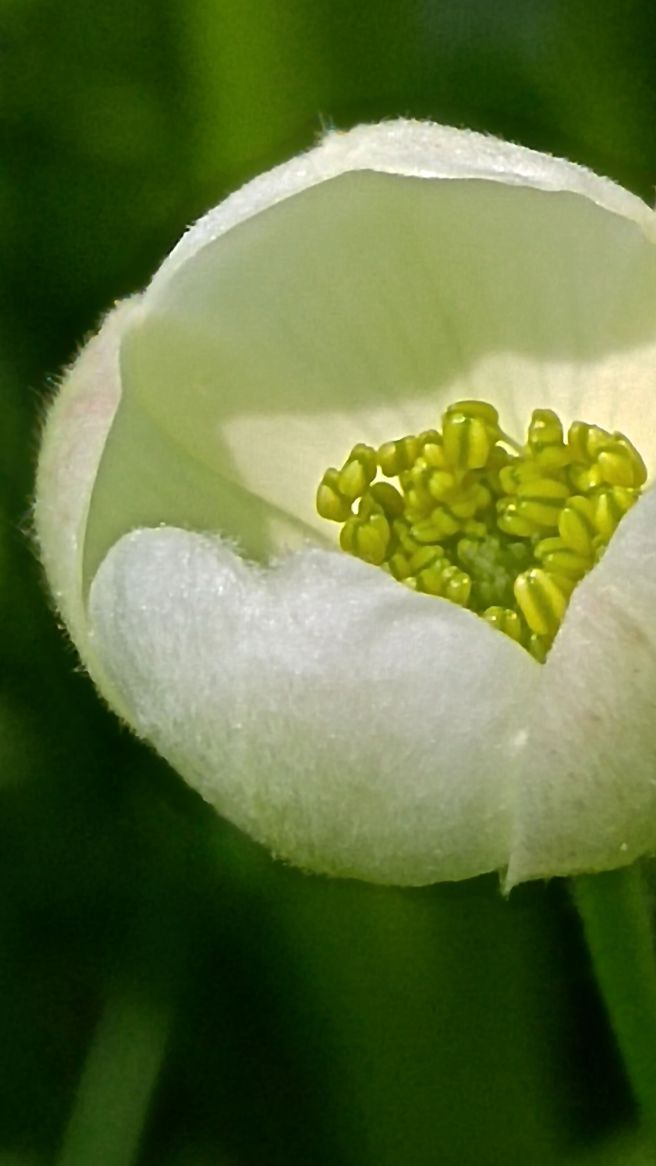
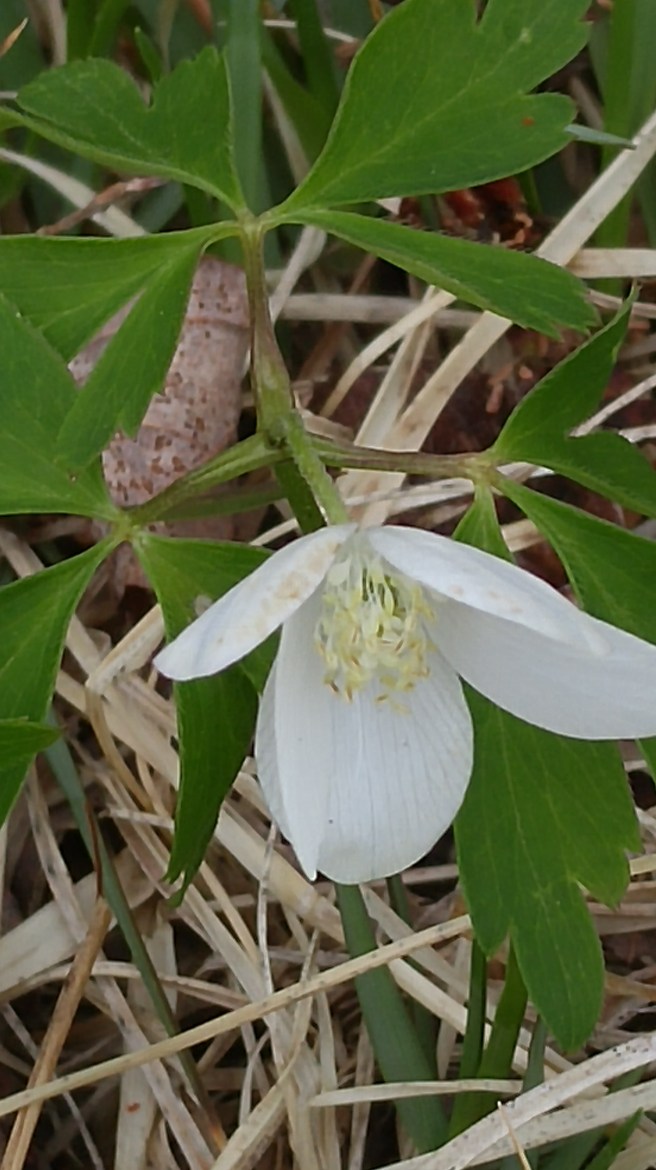
ph-anem2

Unfolding Canada anemone.

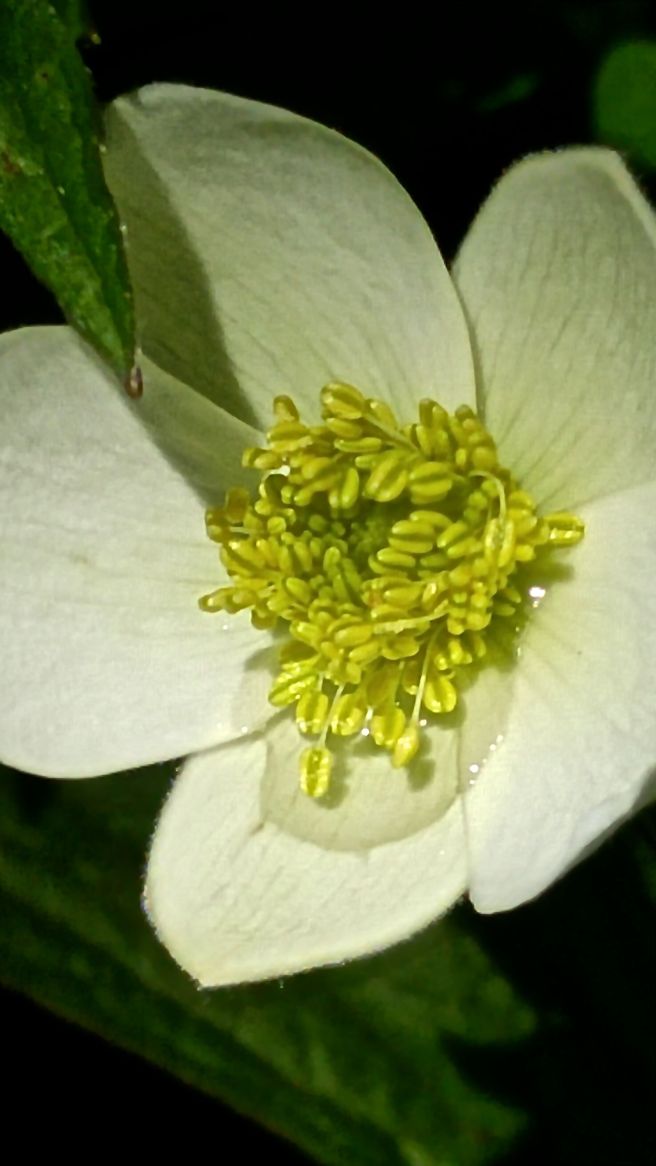
ph-anem3

And the first to open.

ph-cherry

Black cherry blossoms all in a column.

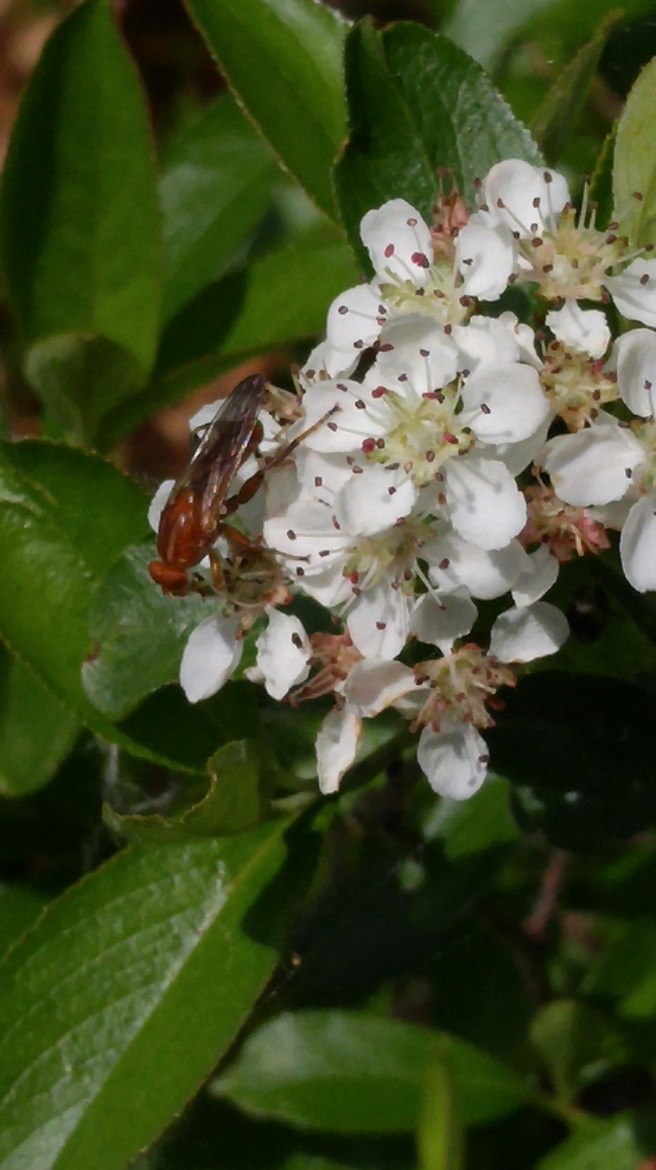
ph-chokec2

And chokecherry blooms in terminal clusters.

ph-hemlock cone1

Blue-green baby hemlock cones.

ph tad 6

And life teeming in the vernal pool.

I’m thankful for the freedom of choice. America is beautiful.


Searching for The Beautiful

Here is the world. Beautiful and terrible things will happen. Don’t be afraid.” -Frederick Buechner

My lovely neighbor posted this on her Facebook page last night in reaction to the sudden turn her family’s journey has taken. And so, while she went in search of the beautiful this morning, and found it in a few surprising places, I did the same. Of course, the terrible also presented itself.

This one is for you, Binaca–and your amazing ability to always put a positive spin on life.

ph-Stevens Brook

While muted colors reflected in the calm water,

p-yellow warbler 1

a yellow warbler foraged on a nearby willow.

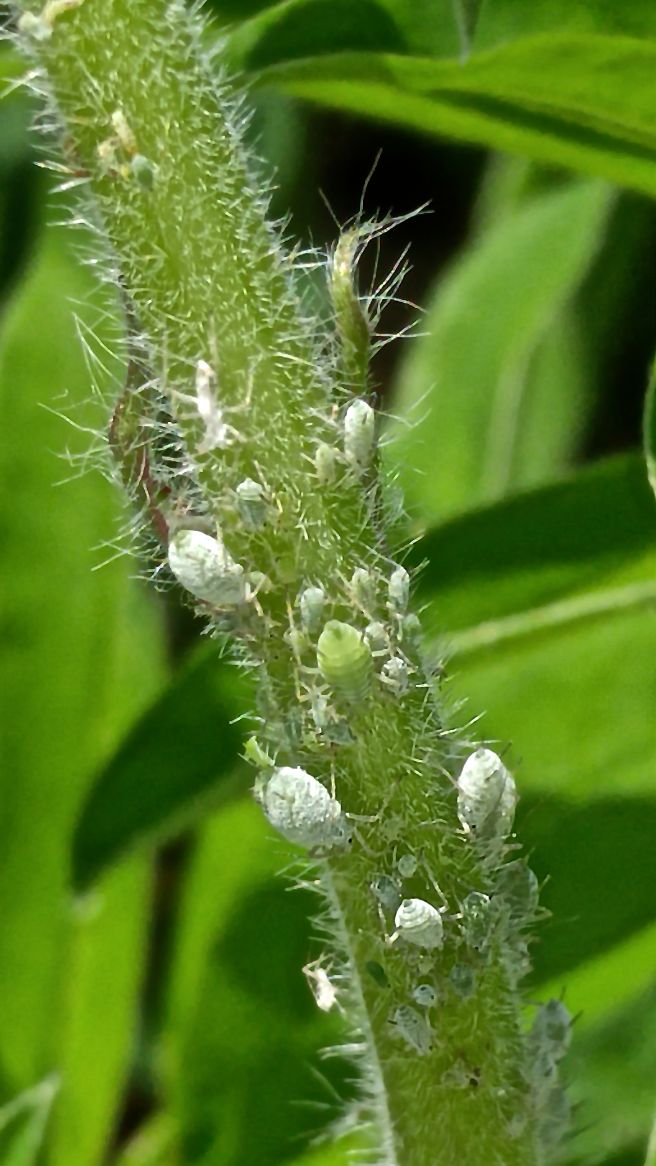
ph-aphids1

I trust he found plenty to eat because food seemed plentiful everywhere I turned, from teeny tiny to . . .

ph-stinkbug horns1

super-sized!

ph-stinkbug

(I hope this is a predator species of stink bug and not a plant eater.)

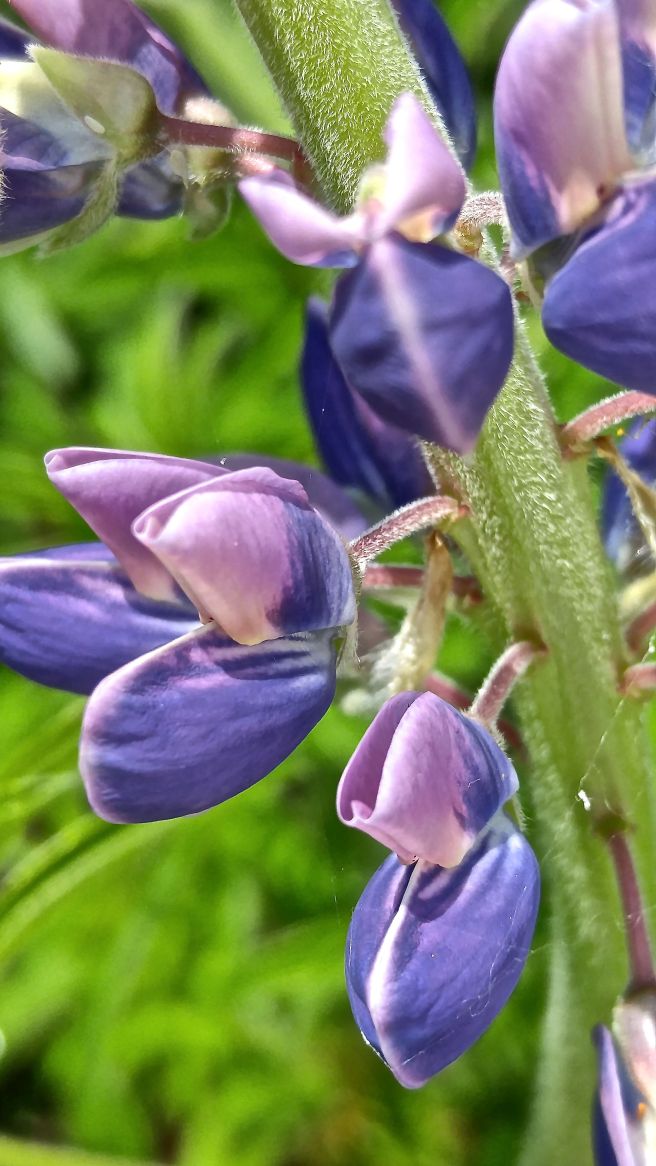
ph-lupine 4

Hairy coverings didn’t necessarily mean the aliens wouldn’t invade.

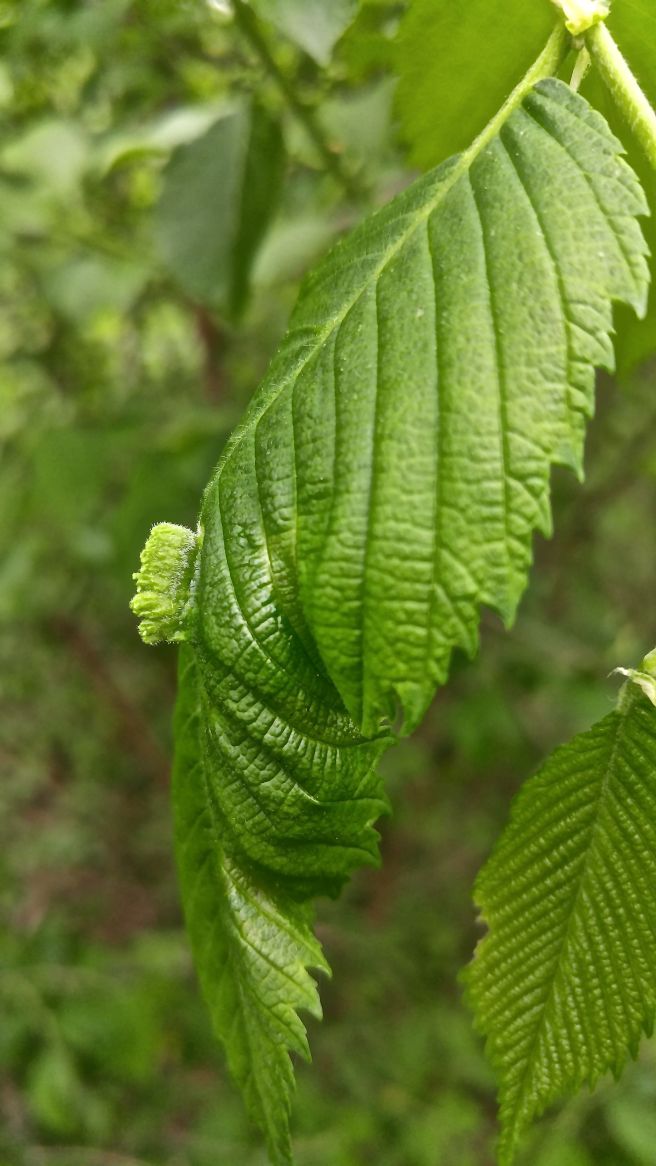
ph-elm growth

And despite not always seeing the muncher, I was amazed by the patterns created, including this rooster’s comb.

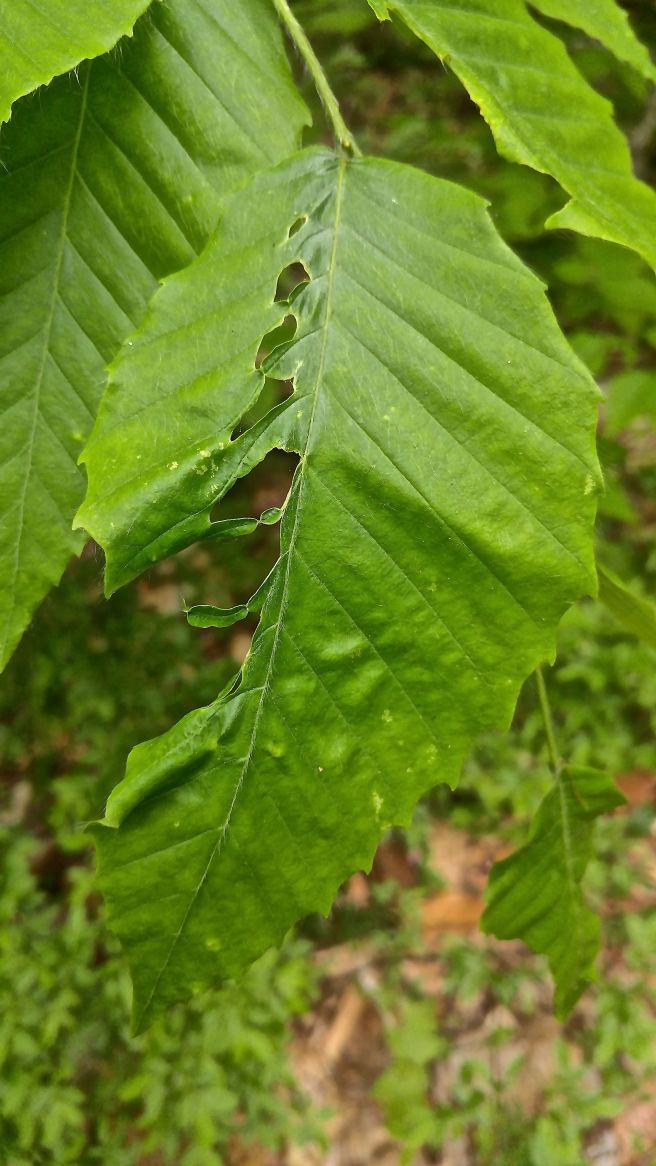
ph-leaf munch1

And then there were diminishing holes to admire and wonder about–reminiscent of skipping stones jumping across the water’s surface.

p-dandy bee

Some visitors were most welcome.

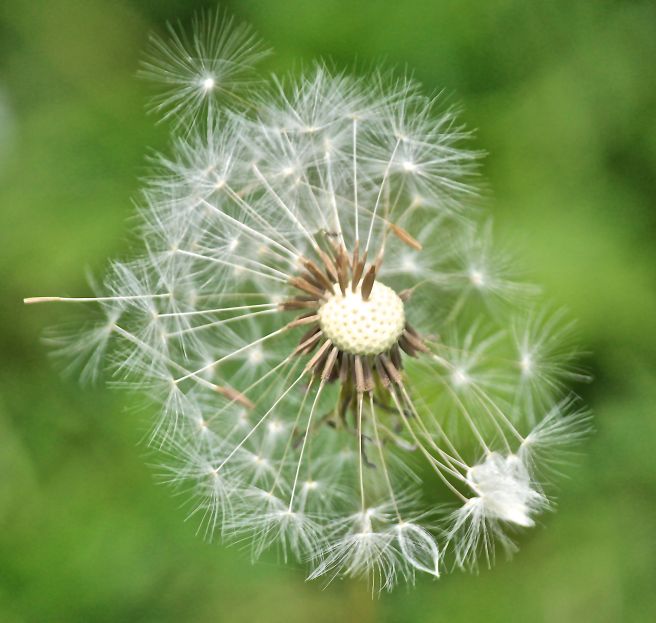
p-dandy seeds

And because of them, I could see the future blowing in the breeze,

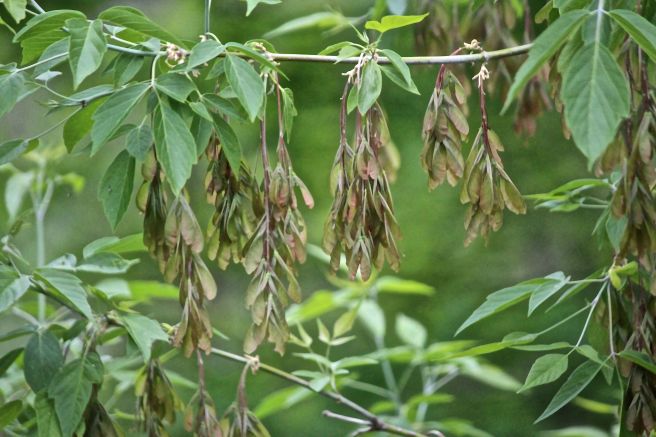
p-box elder

and pouring forth with seeds of hope.

ph-balsam growth1

New opportunities graced the tips of twigs.

ph-phlox2

And the beautiful was visible in buds and blossoms.

ph-lupine1

Stop your searching, Binaca, for you are the beautiful.


Hawk-eye Mondate

Some Mondates are shorter than others and such was the case today. But . . . we made the most of it as we walked up the trail to Hawk Mountain in Waterford.

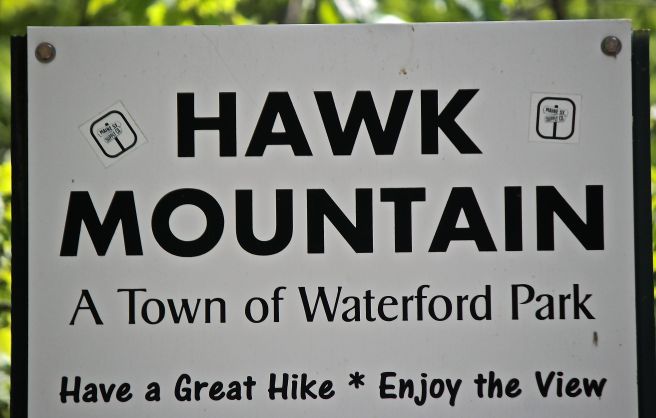
hm-sign

It’s a half mile trek up a dirt and gravel road–just right when you want a great view and time is short. Of course, you could spend hours at the summit, but we weren’t there long.

hm-interrupted1

On the way up, I noticed interrupted fern in its interrupted form. Fertile leaves toward the middle are densely covered with sporangia (spore-bearing structures). I’m fascinated by their contorted, yet beautiful structures.

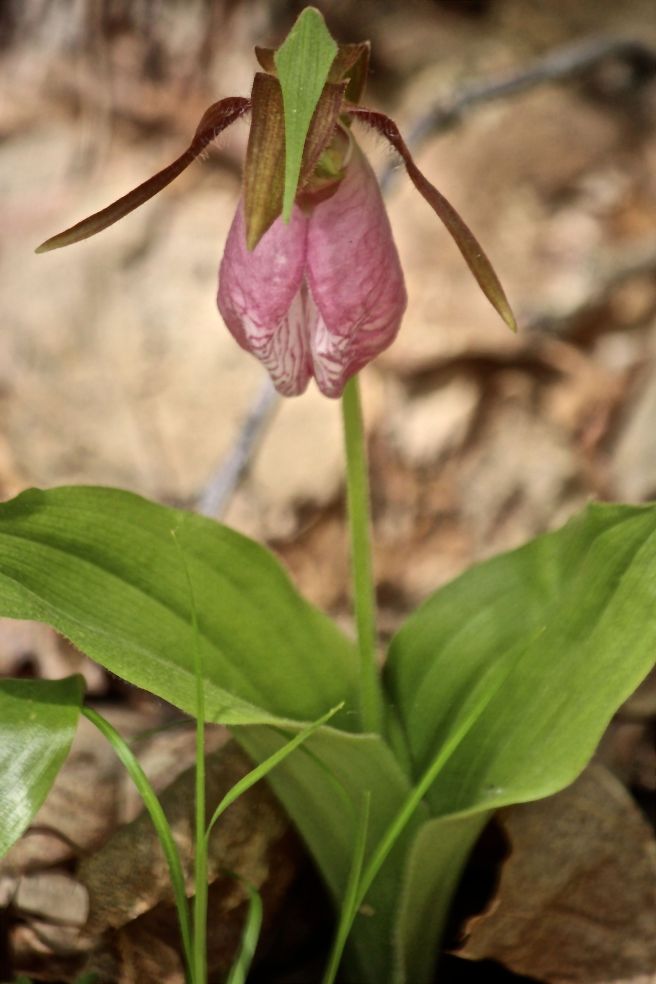
hm-lady1

Another favorite–lady’s slippers. Again, its structure is beyond my understanding.

hm-cyrstal and long2, ph

At the summit, we paused briefly and gazed toward Crystal and Long Lakes.

hm-white oak 4, ph

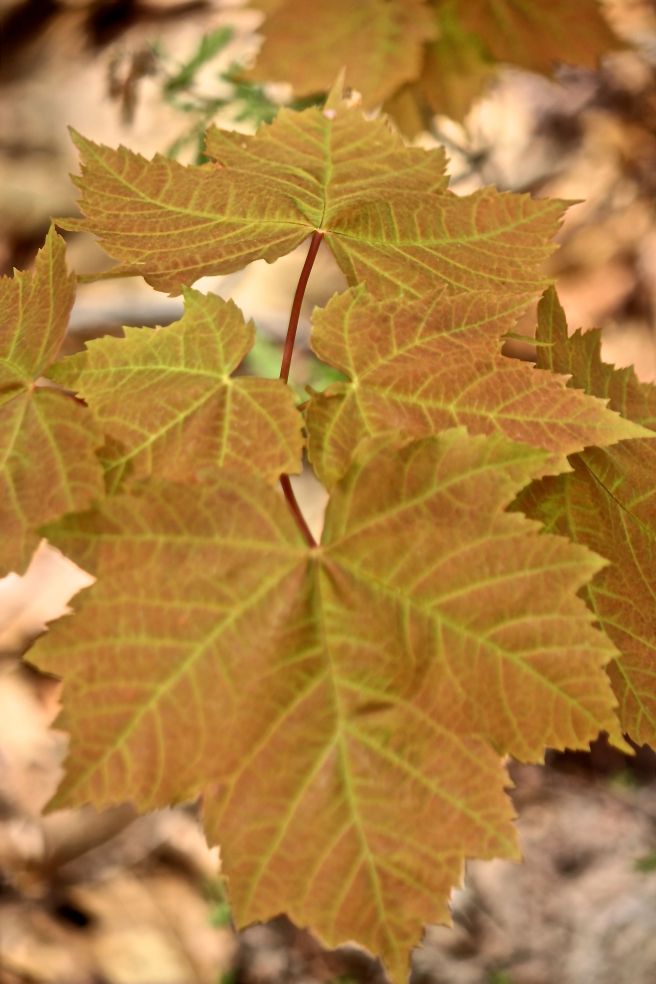
While my guy moved on to the better vantage point, I stopped several times. First, it was the color of these leaves that slowed me down. Have you noticed how spring foliage provides a subtle play on fall foliage? A few friends and I have been thinking about this lately, and this morning I had the opportunity to pick the brain of Dr. Rick Van de Poll, a well-known mycologist/naturalist/educator.

hm-red maple 1

He reminded me that the various hues of color in leaves is caused by the presence of pigments called anthocyanins or carbohydrates that are dissolved in the cell sap and mask the chlorophyll. As our spring temperatures rise and light intensity increases, red pigment forms on a leaf and acts as a sunscreen to protect the plant from an increase in ultraviolet rays.

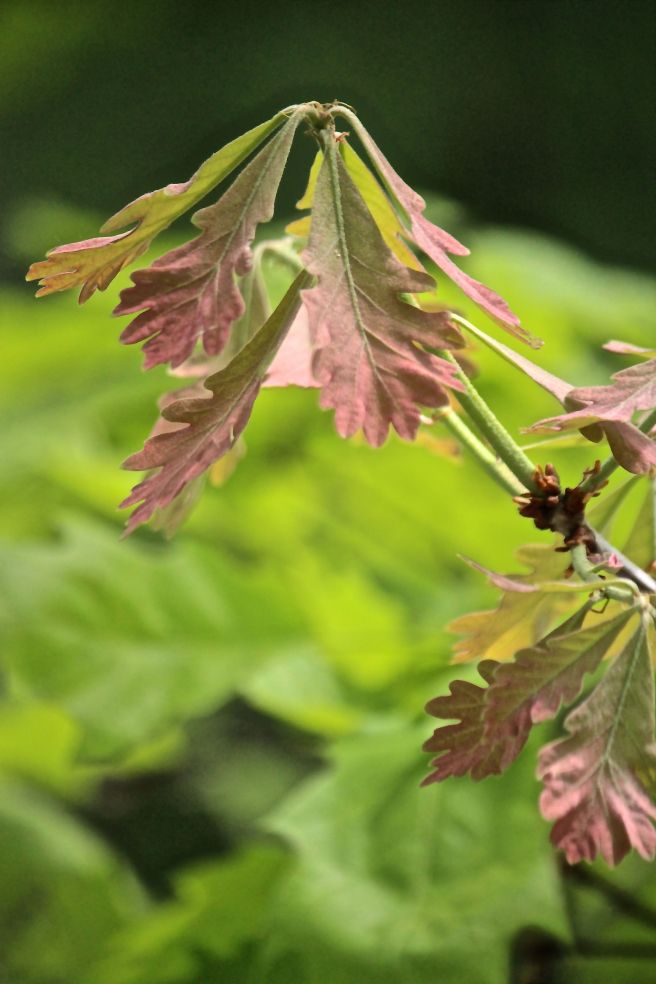
hm-white oak1

It wasn’t only the color that caught my eye. Take a look at the lobe shape of the reddish leaves and that of the green in the background. In my continuing personal citizen science project to informally connect the dots of where white oaks meet red oaks, I added another pin on the map. Rounded lobes=white oak in the foreground. Pointed lobes=Northern red oak in the background.

hm-bee1

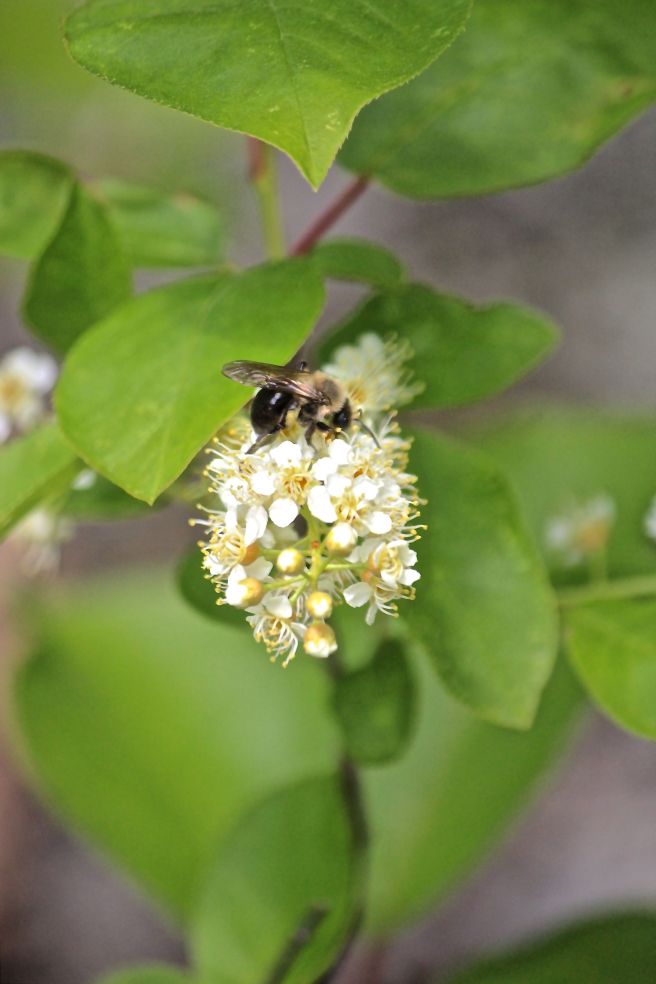
As I headed toward my guy, I noted that the cherry trees were abuzz.

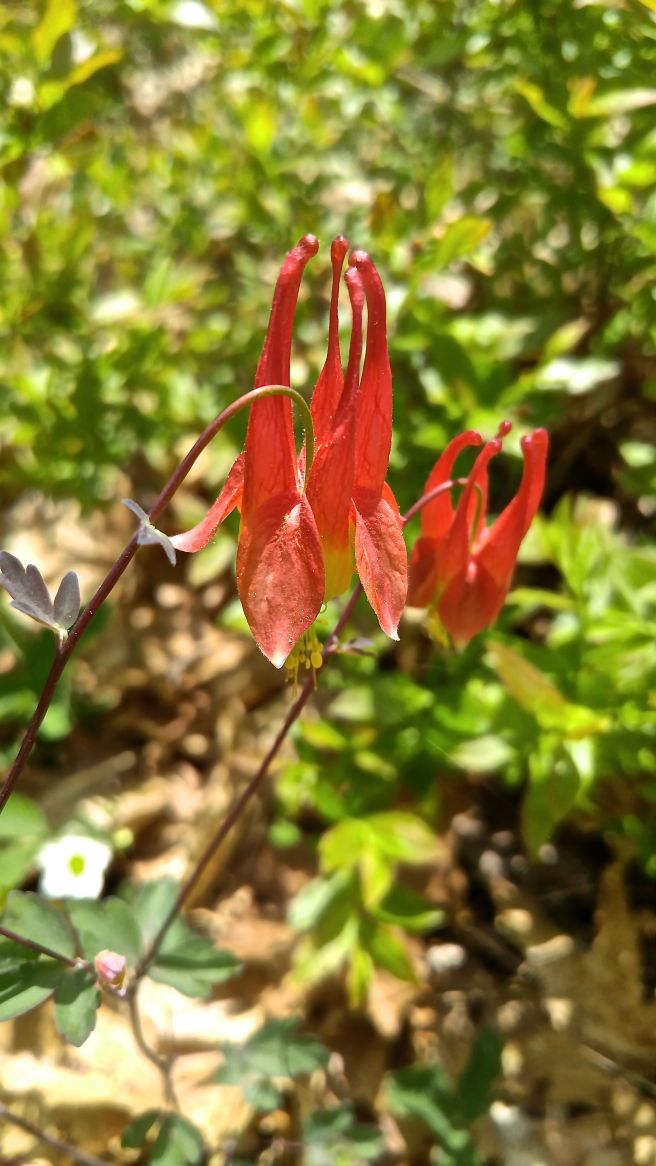
hm-wild columbine1, ph

And hiding among the rocks at the base of a tree–another treat for the eyes. Wild columbine. Splendid indeed.

hm, cyrstal and long, ph

Equally splendid–the view from the ledges. Crystal and Long Lakes again.

hm-bear river

Bear River below. I always expect to see a moose here. Or maybe a bear. One of these days.

hm-pm1, ph

Pleasant Mountain and my guy.

hm-dragon5

As we walked back down the trail and concluded our Mondate, we celebrated the fact that dragonfly season has begun. With their hawk eyes, may they capture and consume a kazillion black flies and mosquitoes.


Wallowing in Wonder

We knew what flowers we’d show off and had a general idea of what birds we’d see when we headed down the trail from the Flat Hill parking lot at the Greater Lovell Land Trust’s Heald and Bradley Ponds Reserve in Lovell early this morning. But from the get-go this turned into one very special hike that filled us all with the wonder of life.

p-silent march

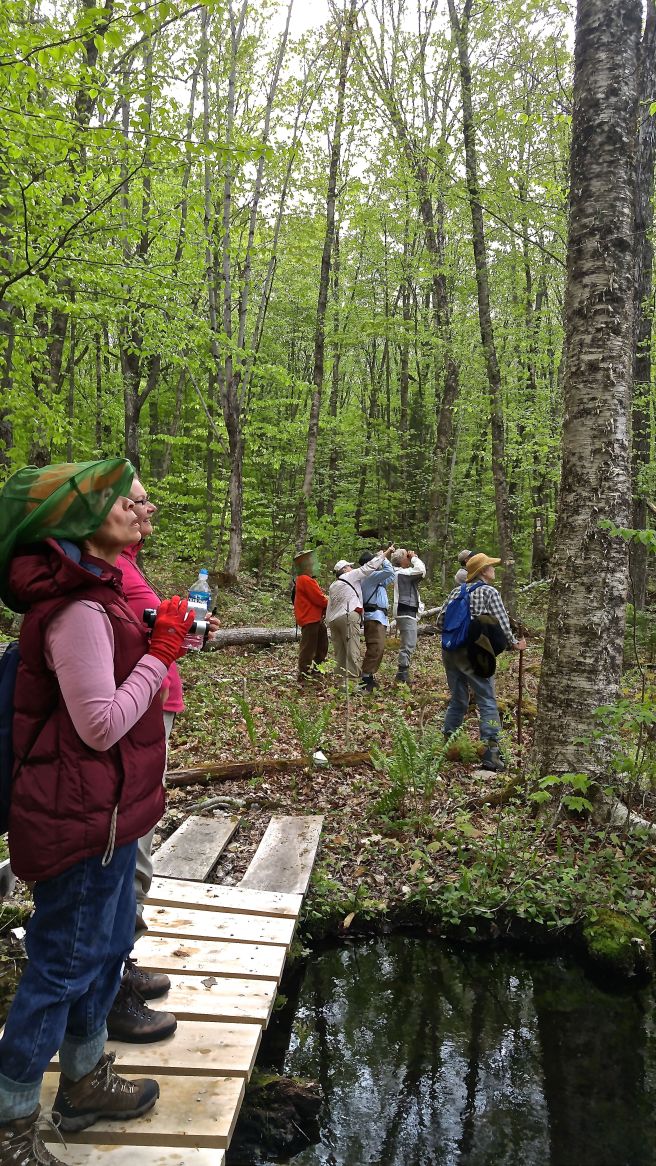
Maybe it was because we headed off on a silent march, the better to take in the cacophony of bird songs. With Linda and Heinrich in the lead, our intention was to make a bee-line to the viewing platform. Linda encouraged everyone to note the flowers along the way–with a promise to stop and celebrate them on the return trip. We’d decided during a pre-hike that we wouldn’t follow the loop trail around Perky’s Path. We wanted this to be a different experience.

p-ph view from bench

The view from the bench was beautiful, but the birding there was only so-so, much to our dismay.

p-ph birding 2

On to the bridge we moseyed. Our one disappointment, we didn’t hear the American bittern that had entertained us with its toilet plunger call during the pre-hike.

p-ph birding1

But that didn’t stop us from raising our binoculars frequently–for red-winged blackbirds, Canada geese, blue jays, several species of woodpeckers, sparrows, warblers, wood ducks, chickadees, a wood thrush and more. We heard the ovenbird and vireos, but never caught sight of them.

p-ph rosy 2

While Heinrich was our birding guide, Linda used the area just beyond the bridge to begin our examination of flowers.

p-ph rosy 1

It was while we were moving in for a closer look at the rosy twisted-stalk, that someone spied what became the center of our attention for the next hour.

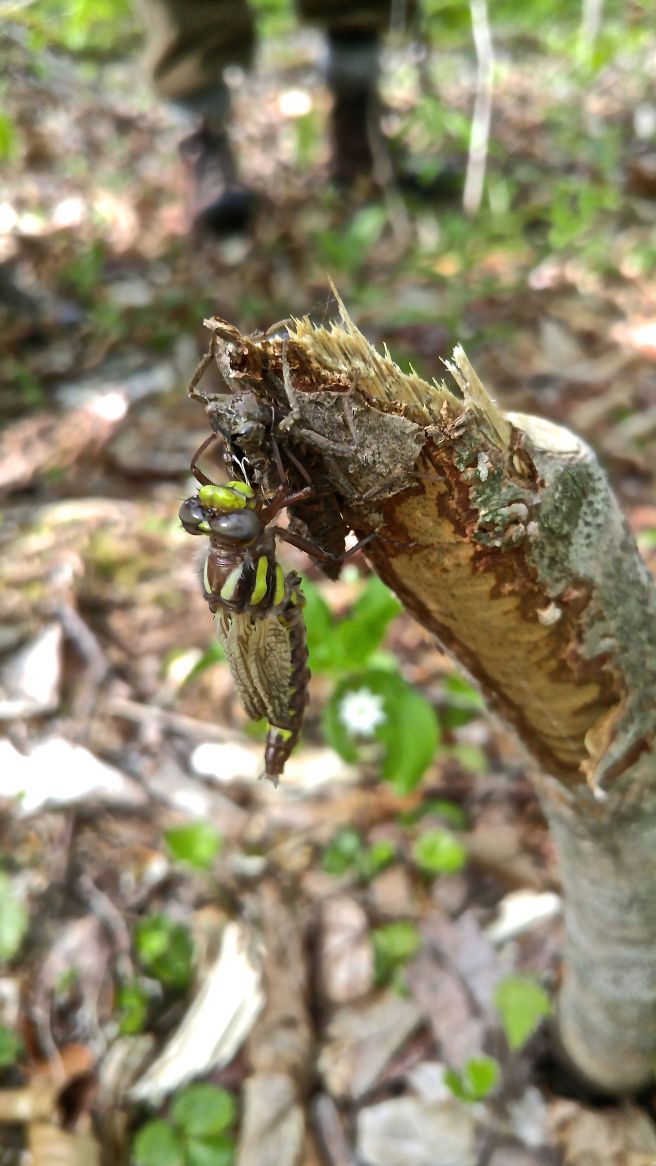
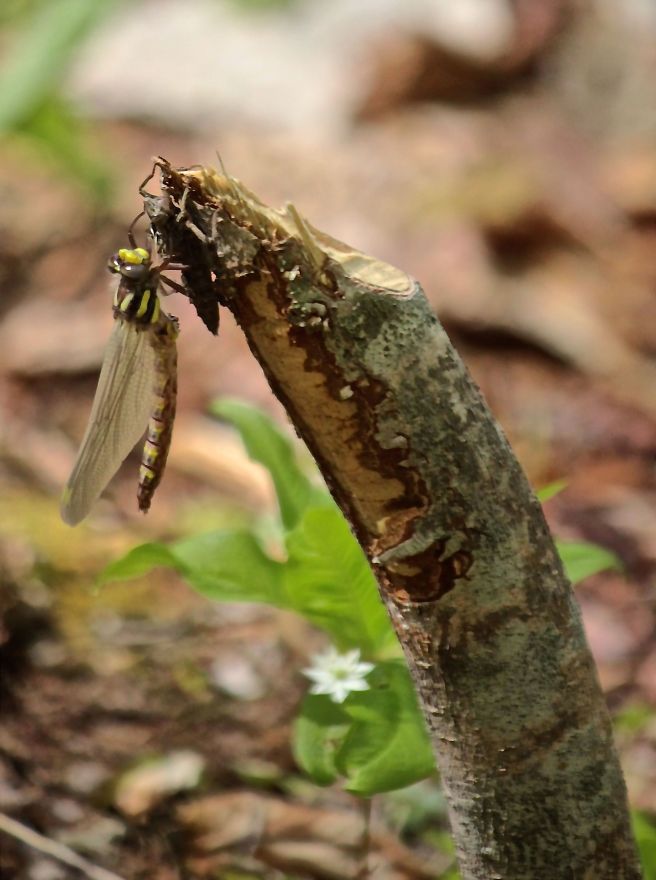
p-dragon begin1

A dragonfly had just split open its exoskeleton and emerged from the nymph stage. Of course, we were standing by a beaver pond, and so it seemed only appropriate that it would use the top of a sapling cut by a beaver.

p-ph dragon middle 4

By pumping air into its body, the adult slowly grew larger.

p-dragon end 1a

As it inflated the wings with blood pressure, they began to extend.

p-ph dragon end7

The veinous wings remained folded over its back as we continued to watch.

p-ph early coralroot orchid 2

We were in that one spot for a long time, but when Linda inquired if anyone wanted to start back, all were silent. We did, however, take our eyes off the dragonfly for brief moments. And because of it, we got to know a small area rather well. A few of our discoveries included  the yellow-green, early coral-root orchid, which has no leaves,

p-ph starflower 7

star flowers with their seven petals, seven stamens and sometimes seven leaves, though the latter wasn’t consistent,

p-ph yellow clintonia

and yellow clintonia, aka bluebead lily.

p-ph springtails 1

We also saw hot chili pepper on the leaf litter and . . .

p-spring tails 1

in the water. Springtails galore. Yes, aka snow fleas, but obviously we can see them even when there isn’t snow on the ground.

p-dragon end 1b

As we explored, we continued to keep a watchful eye on our friend. In fact, he became “our” dragonfly. An hour later, the melodic song of a Baltimore oriole pulled us away and we finally started back along the path.

p-cloak 5

We paused frequently to admire the flowers and leaves, but then another flyer slowed us down and became “our” mourning cloak as it settled on a fallen tree and then fluttered amongst us. Happy were we to have shared such moments of awe.

p-ph pack on Amos

Though our walk had lasted longer than intended, I wasn’t ready to head home, so once everyone left, I turned back and climbed Amos Mountain using the Saddle Trail. It was hot and buggy, but I went for a reason and wasn’t disappointed.

p-amos 1

Among the grasses and violets,

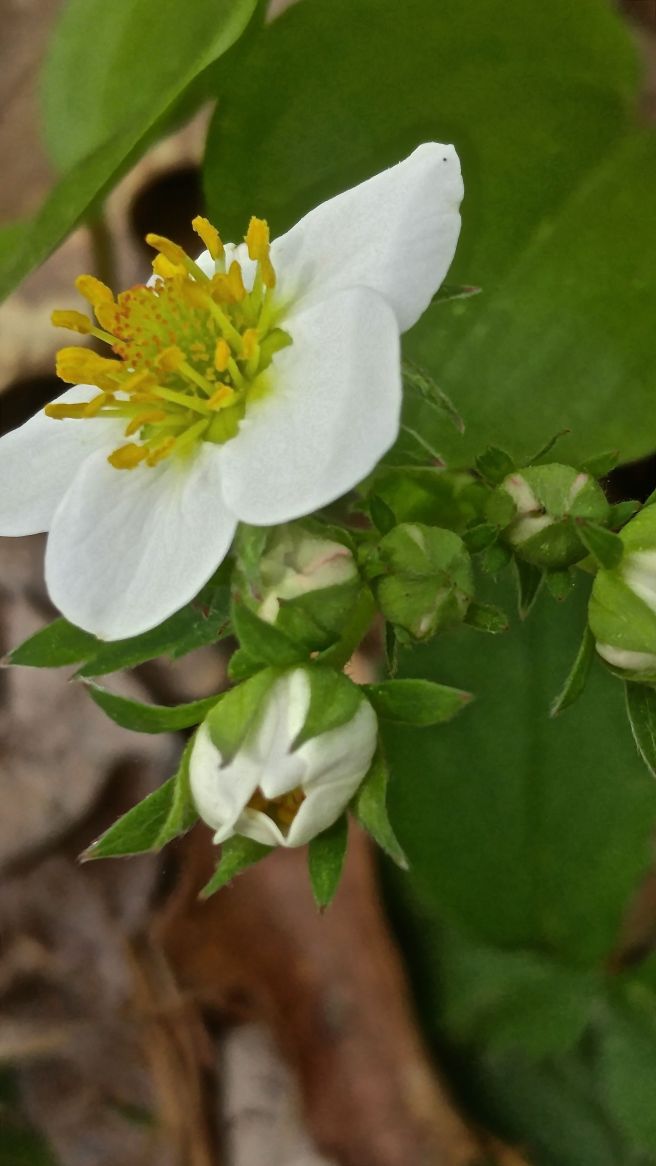
p-ph wild strawberry

the wild strawberries grow. But that’s not all.

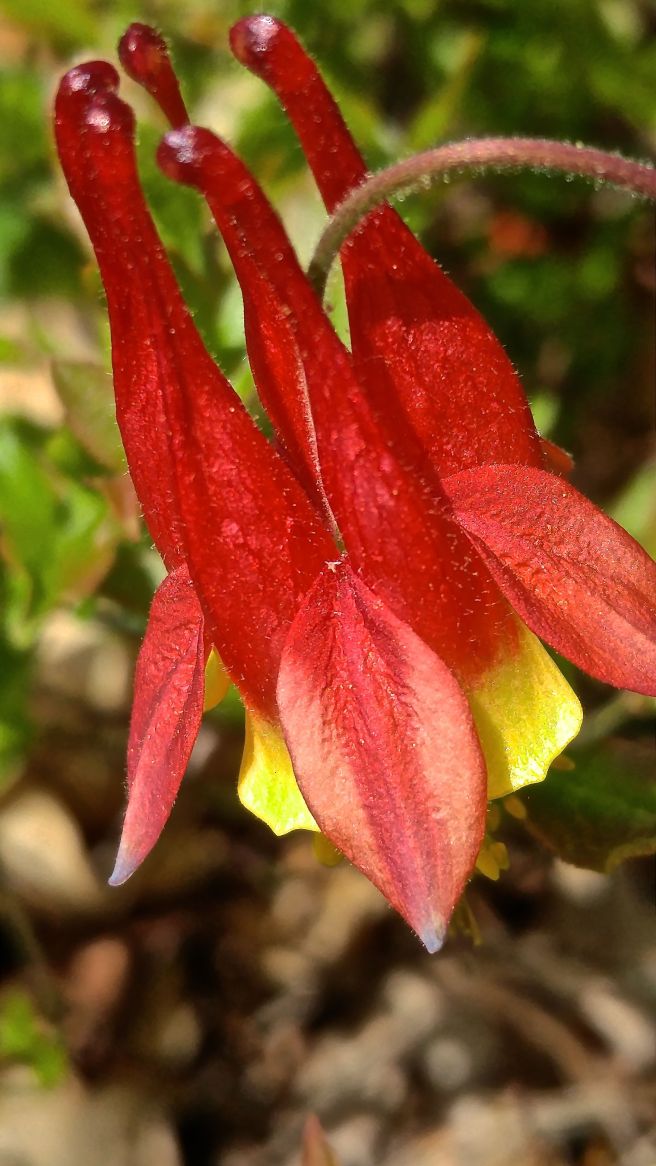
p-ph colum 5

It was the spurred red and yellow flowers of wild columbine that I wanted to see.

p-ph colum 4

Their heads drooped dramatically.

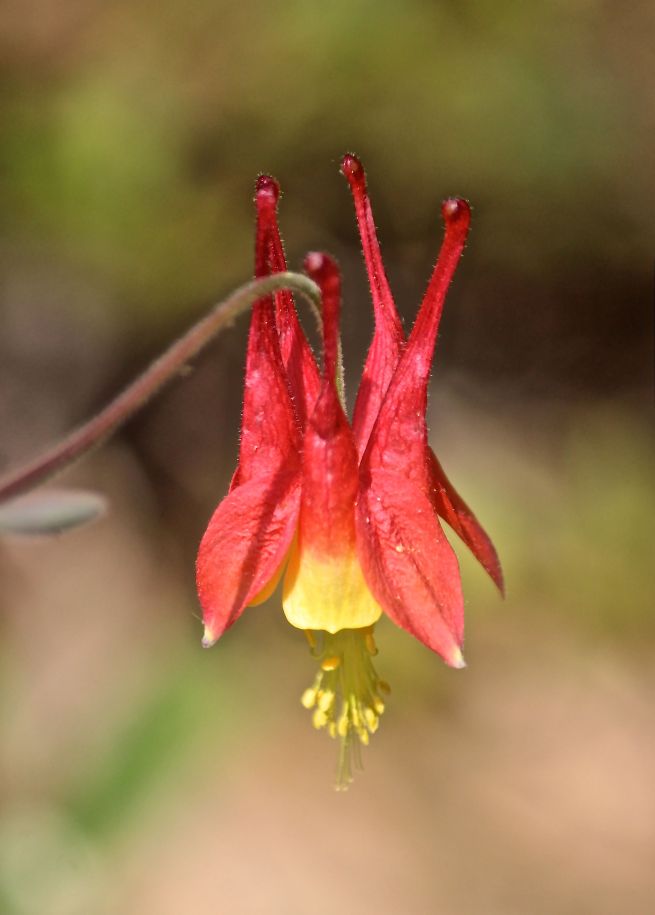
p-columbine 1

Numerous yellow stamens projected downward and surrounded the green pistils with their long, thin styles, creating the look of an ornate lantern dangling from a post–thus its other common name, little lantern. I really don’t care what it’s called. Spending time in its presence was all that mattered.

The same was true for our dragonfly experience. We wallowed in wonder today and let nature reveal its glory.

Three Times A Charm

One might think that following the same loop through the woods in slow motion three times in one day would be boring. One would be wrong. My friend Joan and I can certainly attest this fact.

Round One: 9 am, Wildflower and Bird Walk with Lakes Environmental Association co-led by birder/naturalist Mary Jewett of LEA and the ever delightful botanist Ursula Duve.

h-hobblebush

In abundance here, the hobblebush bouquet–a snowy-white flower that is actually an inflorescence, or lacy cluster of tiny fertile flowers surrounded by a halo of showy, yet sterile bracts. Yeah, so I’ve showed you this before. And I’ll probably show it again. Each presentation is a wee bit different.

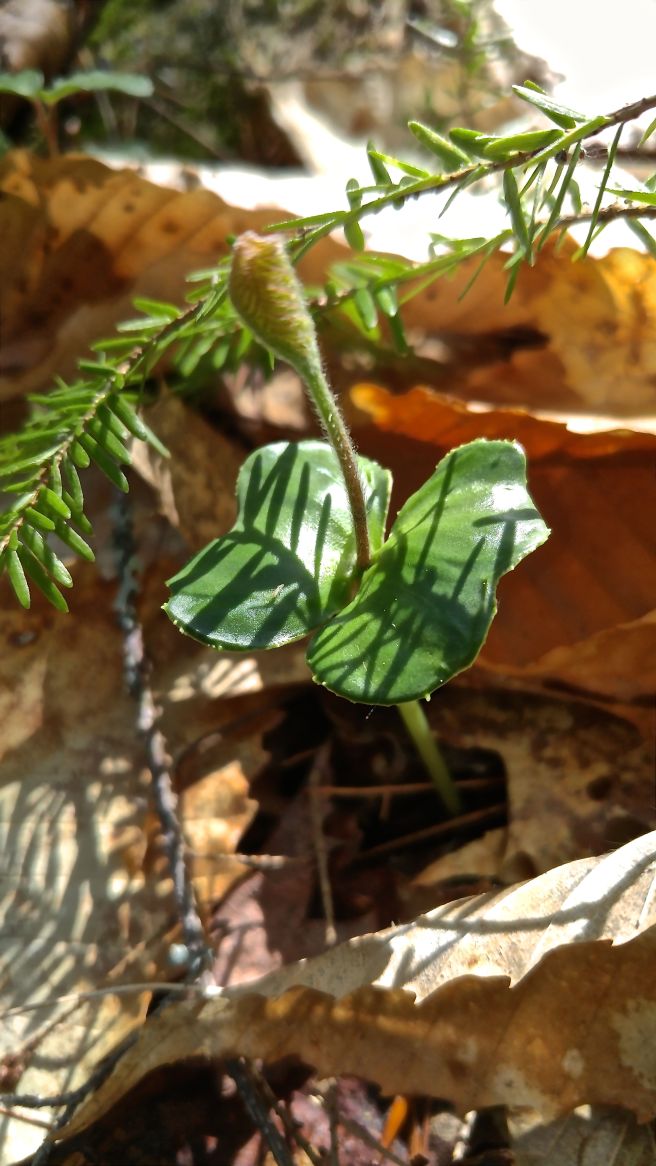
h-beech cotyledon1ph

And then we spied something that I’ve suddenly seen almost every day this week.

h-beech coty 4ph

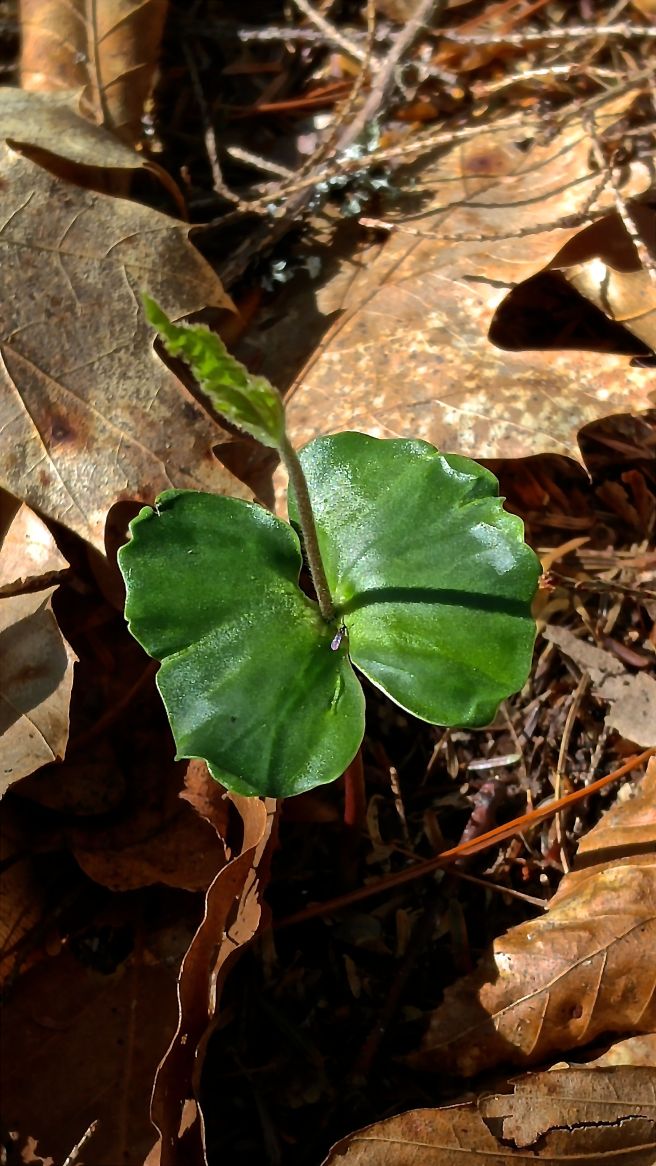
The cotyledon or seed leaf of an American beech. Prior to Monday, I don’t know that I’ve ever seen this and yet, since then I’ve continued to discover them almost every day. Worth a wonder.

h-beech coty 3ph

Think about it. The journey from seed to tree can be a dangerous one as the root is sent down through the leaf litter in search of moisture. Since the root system is shallow, lack of moisture can mean its demise. When conditions are right, a new seedling with a rather strange, yet beautiful appearance surfaces. The seed leaves of the beech, aka cotyledons, are leathery and wavy-margined. They contain stored food and will photosynthesize until the true leaves develop, providing a head start for the tree. I realize now that I’ve seen them all my life in other forms, including maple trees, oak trees and vegetables. But . . . the beech cotyledon captures my sense of wonder right now, especially as it reminds me of a luna moth, which I have yet to see this year.

h-green frog 2

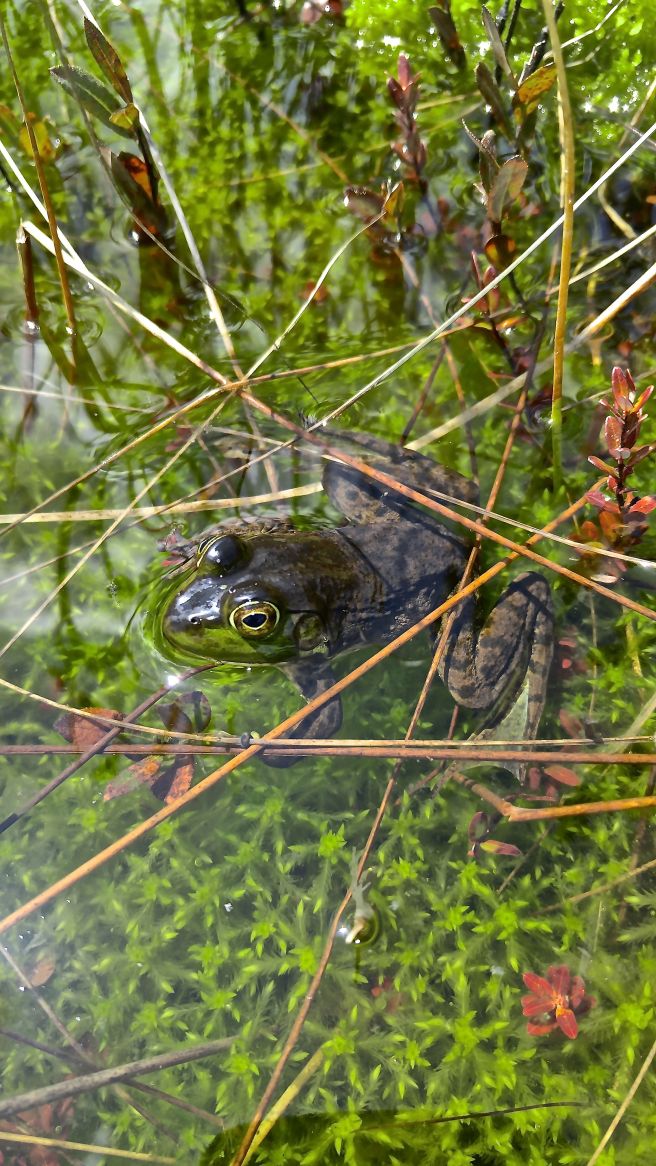
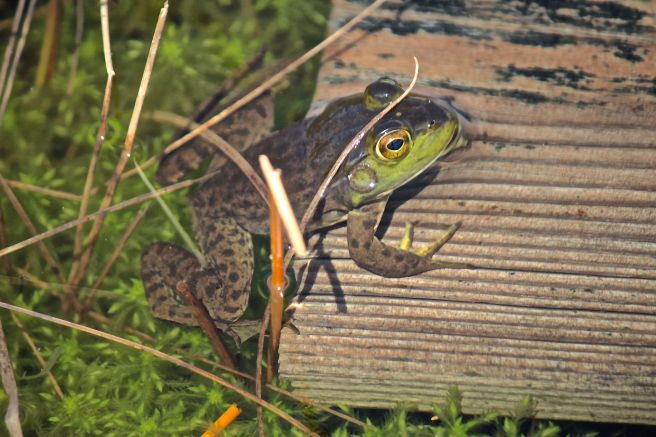
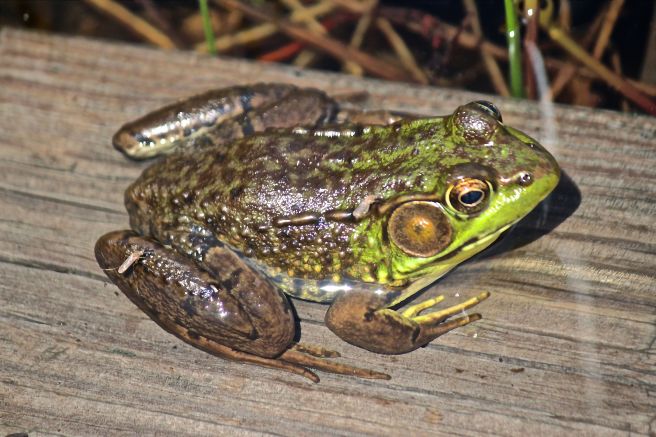
Crossing the first boardwalk through the red maple swamp, a large male green frog tried to hide below us. Notice the large circular formation behind his eye. That’s the tympanum, his visible external ear. A male’s tympanum is much larger than his eye.

h-rhodora ph1

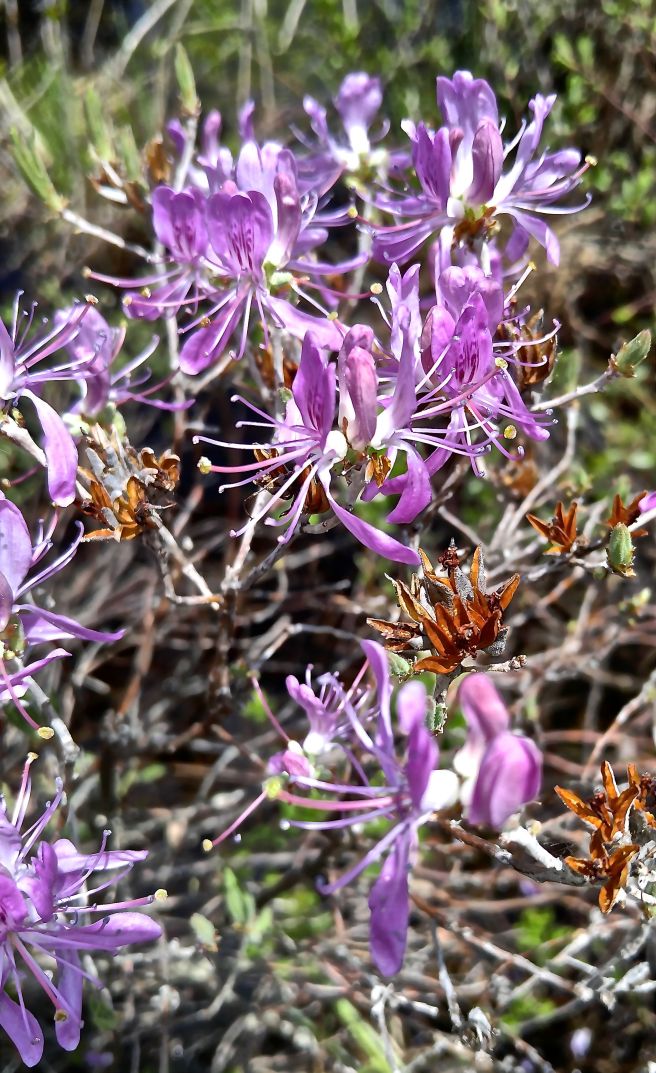
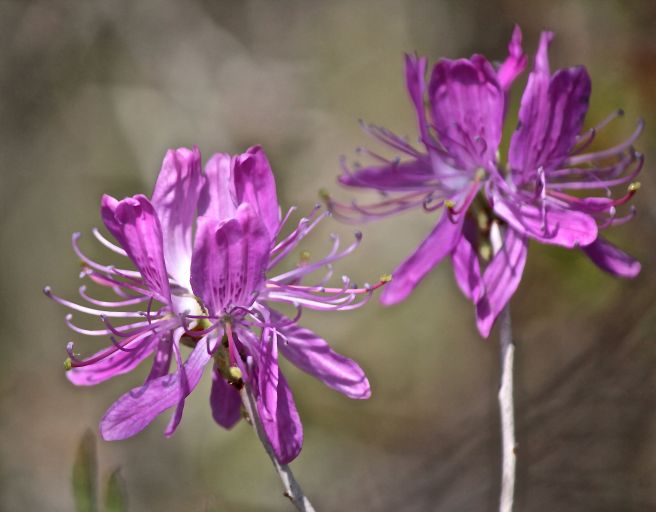
Other red maple swamp displays included the showy flowers of rhodora and their woody capsules.

h-rhodora1

Ralph Waldo Emerson knew the charm of this spring splendor:

The Rhodora

On being asked, whence is the flower.
In May, when sea-winds pierced our solitudes,
I found the fresh Rhodora in the woods,
Spreading its leafless blooms in a damp nook,
To please the desert and the sluggish brook.
The purple petals fallen in the pool
Made the black water with their beauty gay;
Here might the red-bird come his plumes to cool,
And court the flower that cheapens his array.
Rhodora! if the sages ask thee why
This charm is wasted on the earth and sky,
Tell them, dear, that, if eyes were made for seeing,
Then beauty is its own excuse for Being;
Why thou wert there, O rival of the rose!
I never thought to ask; I never knew;
But in my simple ignorance suppose
The self-same power that brought me there, brought you.

h-LEA group

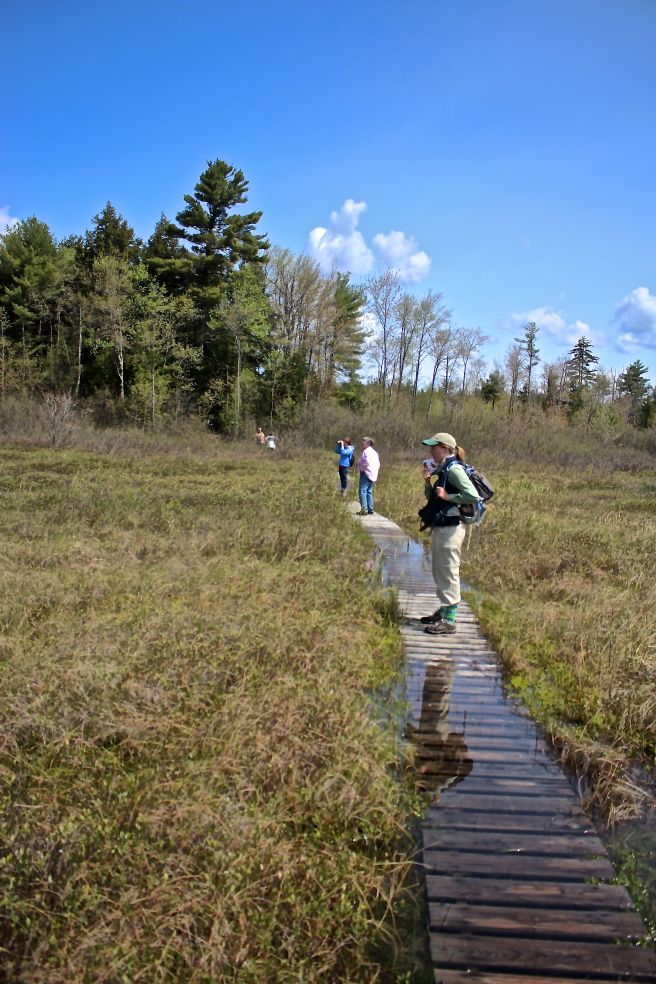
To avoid getting our feet too wet, we spread out as we walked on the boardwalk through the quaking bog.

h-five morning

Morning light highlighted the layers from the pond and sphagnum pond up to Five Fields Farm and Bear Trap above.

h-trill 1

And because it was ever present, I couldn’t resist pausing to admire the painted trillium once again (don’t tell my guy).

h-dwarf ginseng1ph

One plant that I will always associate with this place and Ursula, who first introduced me to it years ago, is the dwarf ginseng. I love its global spray of flowers and compound leaves. But maybe what I love most is its beauty in diminutive form–just like Ursula.

Round Two: Noon, Lunch and a walk with my dear friend Joan.

h-bigtooth aspen

After returning to our vehicles following the morning walk, Joan and I grabbed our lunches. And I paused in the parking lot to enjoy the silvery fuzziness of big tooth aspen leaves. The quaking aspen in our yard leafed out a couple of weeks ago, but big tooth aspen leaves are just emerging. Like others, they begin life with a hairy approach–perhaps as a protective coating while they get a start on life?

h-muddy riverlunch

We ate lunch beside Muddy River where the spring colors were reflected in the water.

h-blueberries 1ph

And then we heard something jump in the water, so we moved silently like foxes as we tried to position ourselves and gain a better view. In the back of our minds, or perhaps the front, we wanted to see a turtle, beaver or especially an otter. Not to be. But we did see highbush blueberries in flower.

h-bee 1

And the bees that pollinate them.

h-pitcher 5ph

In their out-of-this universe form, we knelt down to honor the pitcher plant blossoms that grow along a couple of boardwalks.

h-red maple samaras

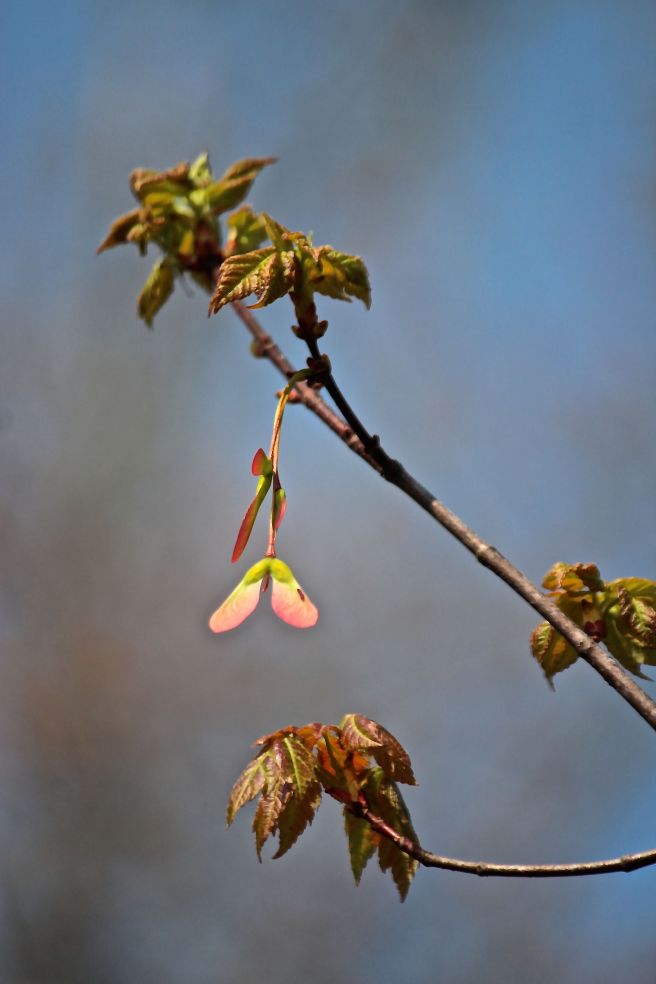
We were wowed by the color of the red maple samaras,

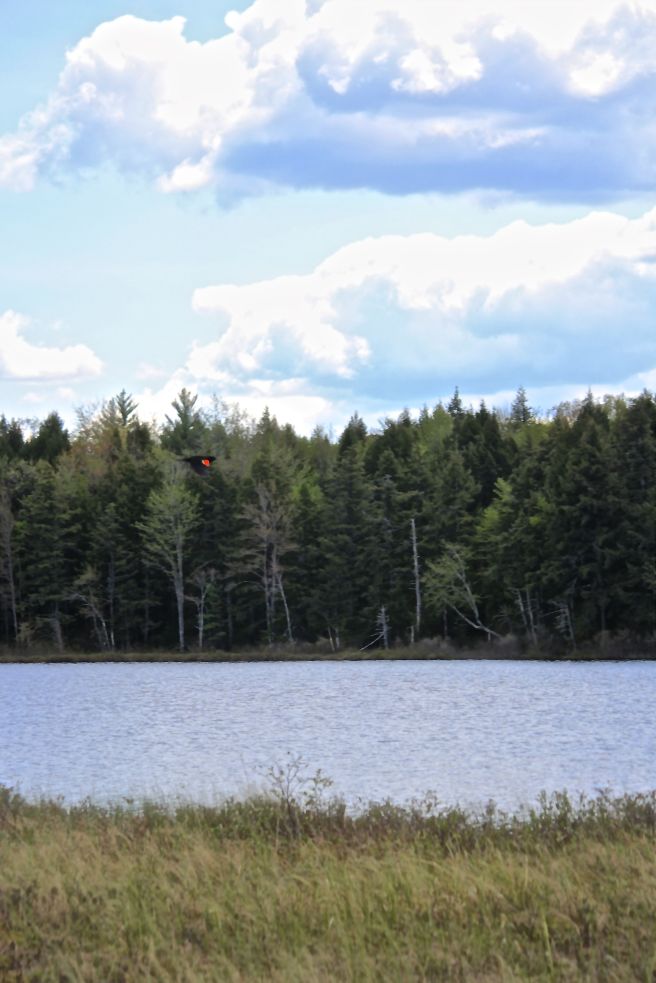
h-red winged

prominent shoulder patch of the red-winged blackbird,

h-cranberries

and cranberries floating on the quaking bog.

h-lone larch

And then our eyes were drawn to the green–of the lone larch or tamarack tree

h-green 9ph

and the green frogs.

h-green 8ph

I spent some time getting to know one better.

h-green 3

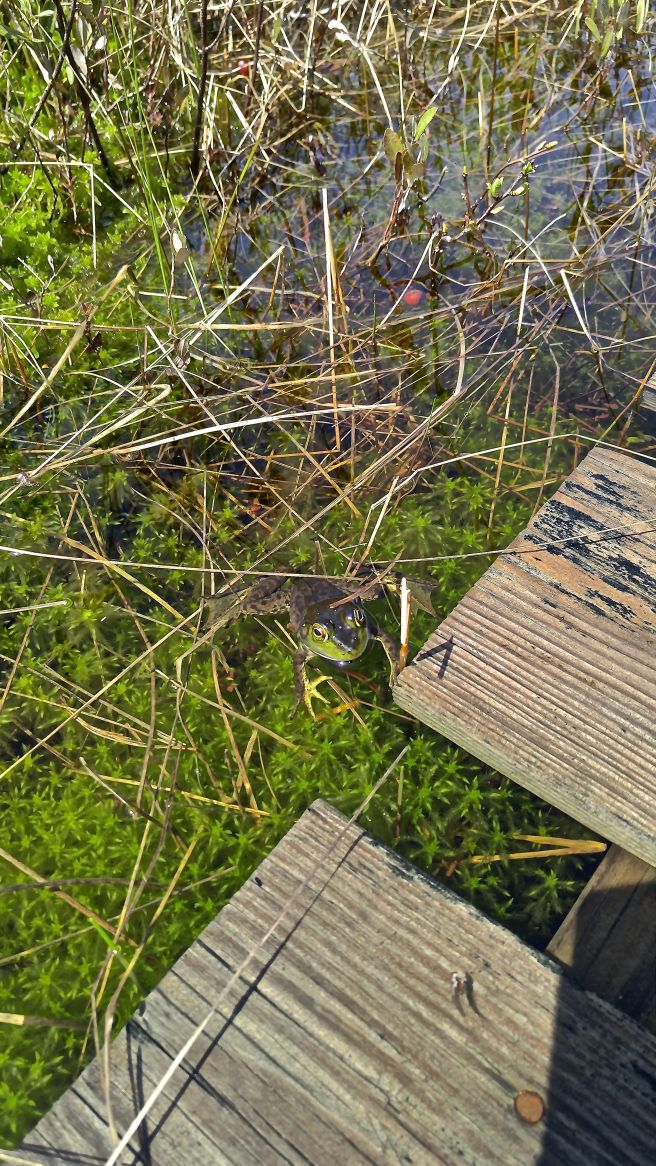
She even climbed out to accommodate me–I’m sure that’s why she climbed up onto the boardwalk.

h-green 6

Or maybe she knew he was nearby. What a handsome prince.

Round Three: 2:30pm, Joan and I (co-coordinators of the Maine Master Naturalist Bridgton 2016 class) were joined by another MMNP grad, Pam Davis Green, who will lead our June field trip to explore natural communities at Holt Pond.

h-striped maple flower

h-spriped flowers 2

Cascading down from the striped maple leaves, we saw their flowers, which had alluded us on our first two passages.

h-speckled 2

The cottony white masses of wooly alder aphids decorated many of the speckled alders in the preserve. In a symbiotic relationship, ants stroke the aphid with their antennae, while  the aphid releases a drop of honeydew, much like a cow being milked. It’s actually rather creepy.

h-duck

Two Canada Geese squawked from another part of the pond, but Mrs. Mallard stood silently by.

h-tree pants

Our final sight brought a smile to our faces–someone put his or her pants on upside down!

We hope that charms your fancy. Joan and I were certainly charmed by our three loops around and those we got to share the trail with today.

We also want to thank Ursula, Mary and Pam for their sharings. And we send good vibes and lots of prayers to my neighbor, Ky, and Pam’s brother-in-law.       

 

 

Bright Eyed and Bushy Tailed

That’s how I’m feeling these days–bright eyed and bushy tailed as I soak in the sights and sounds of spring.

p-maple flower1

I love the glow of new life

p-white ash

in the morning light.

p-gold2

I love the explosion of floral sunshine

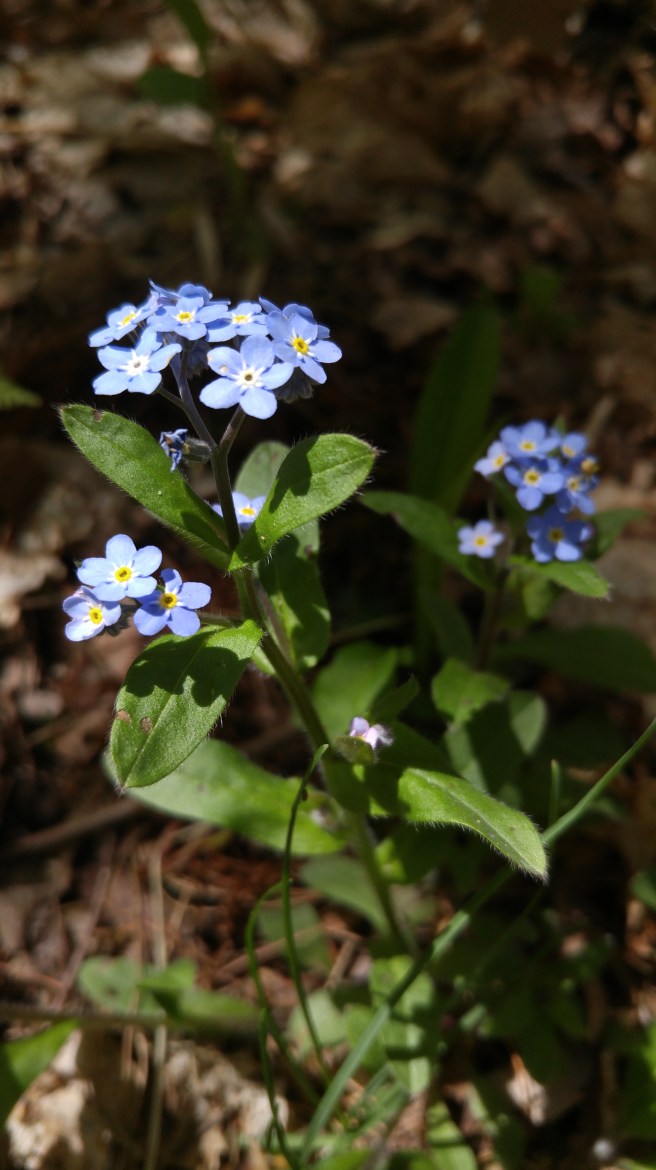
p-forget

in a variety of manners.

p-crosiers

I love the spirals of protection

p-crosiers royal1

in unison of unraveling.

p-bee3

I love the quest of seekers

p-cherry2

in search of sweetness.

p-vp10

I love the transformation of life

p-vp2

in stages of development.

p-red squirrel

I love being bright eyed and bushy tailed

p-squirrel 2

in my continuous quest.


Beulah’s Mystery

One of the fun happenings in my life is that friends send me nature photos and ask me to help them ID a species. Sometimes I know immediately what it is and can ask them questions to help them get to the answer. Other times I’m as stumped as they are. Thus was the case today, when I drove to Brownfield to look at a tree growing in the field beside an old farmhouse.

t-beulahs 2

Beulah’s farmhouse, to be exact. My friend’s brother recently purchased it and the adjacent barn. Though the farmhouse is a fixer-upper, Beulah’s sign looks as if it was created yesterday.

t-tree1

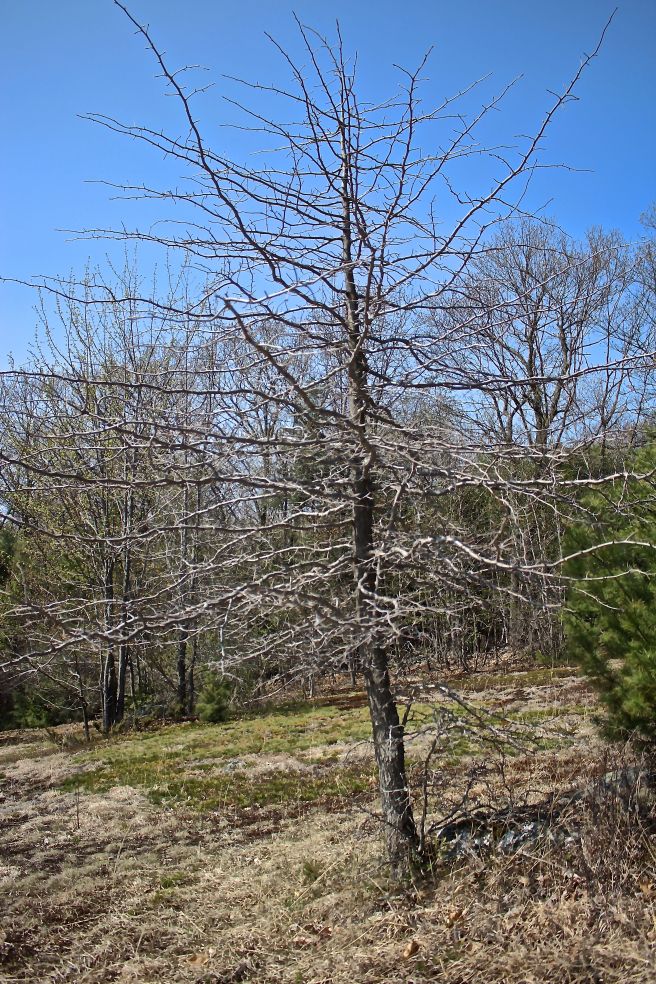
This is the tree. If you know it right off, my hat goes off to you. I was in my Forest Trees of Maine mode and kept looking at it from that perspective. It’s overall appearance didn’t match what I know. We began with the key and slowly (painfully slowly as the black flies swarmed us–mind over matter, mind over matter), worked our way through the choices, two by two.

t-dwarf shoots

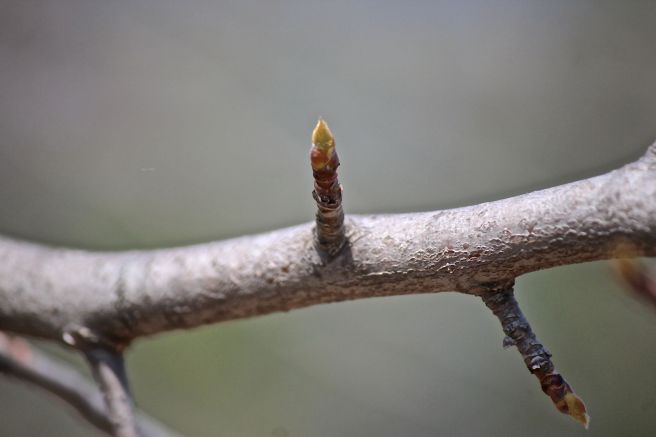
Because it’s not in leaf yet, we used the Winter Key. With each question, we paused to examine the tree–looking at the alternate leaf shoots, hairy scaled buds, pith, bark–every detail. We considered its location in the middle of a farm field, where the land sloped slightly and was rather dry. We also looked at the ground and found decaying leaves as well as deer scat. As I suspected, it wasn’t in the key. So I came home and scoured other books. I think I reached the answer and that the deer scat is actually a clue. Do you know? Now you may say so.
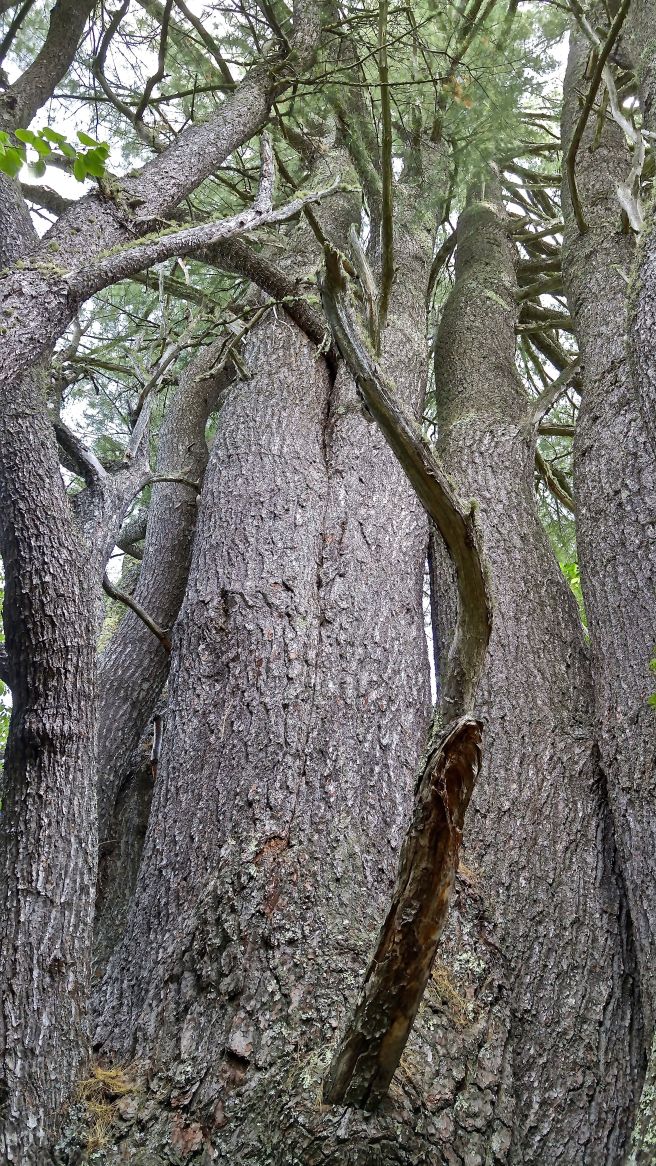
t-porky den

On our way to see one more cool thing, we paused to look at a den located beside the old foundation. Though much of the scat has since been removed, plenty of it and numerous quills painted the picture of who’d created this pigpen.

t-critter 2

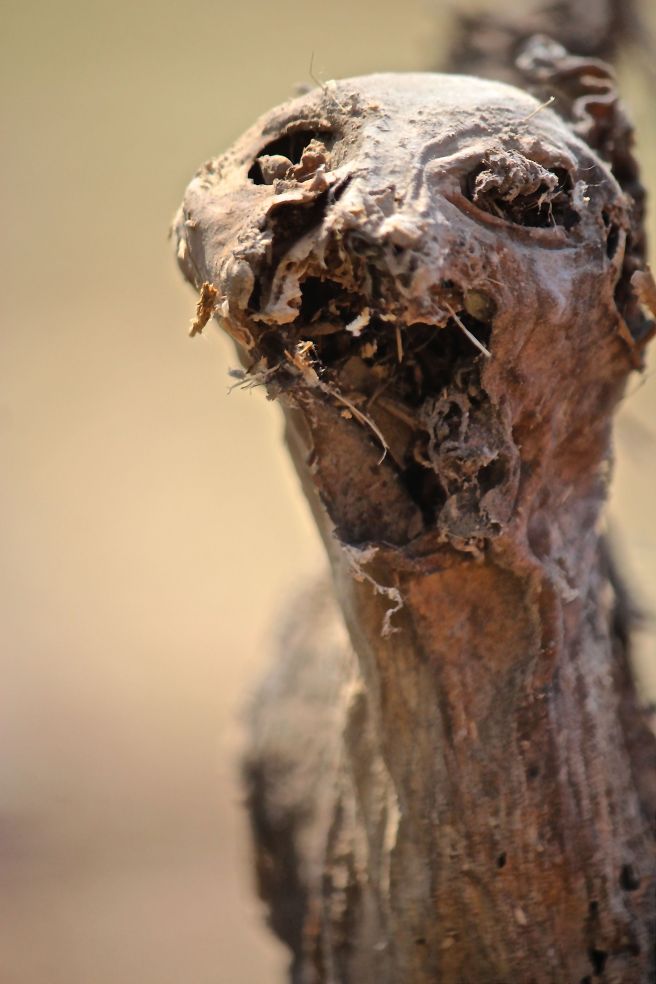
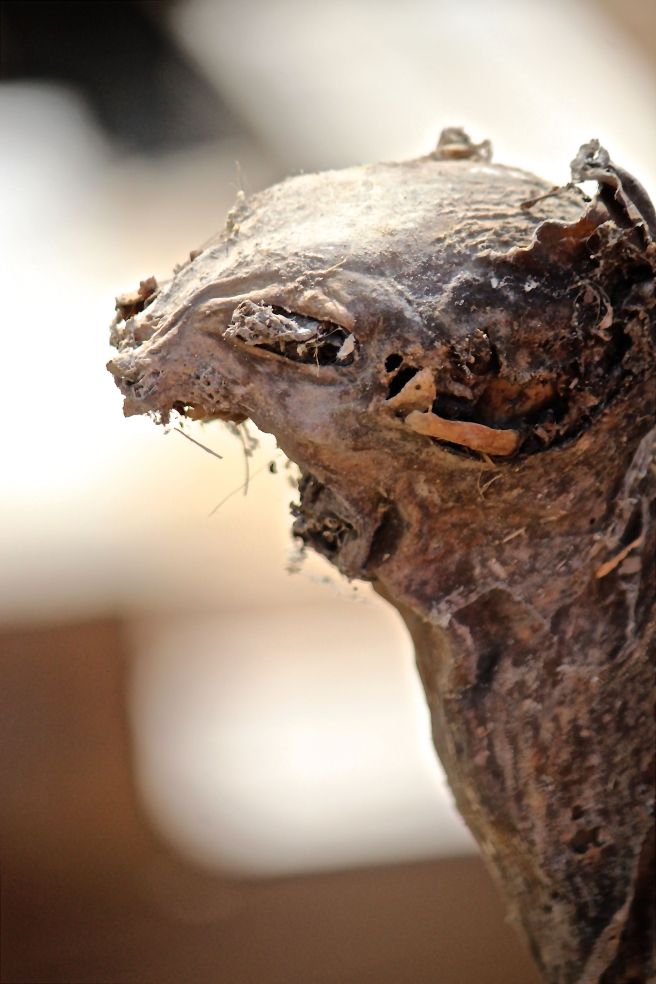
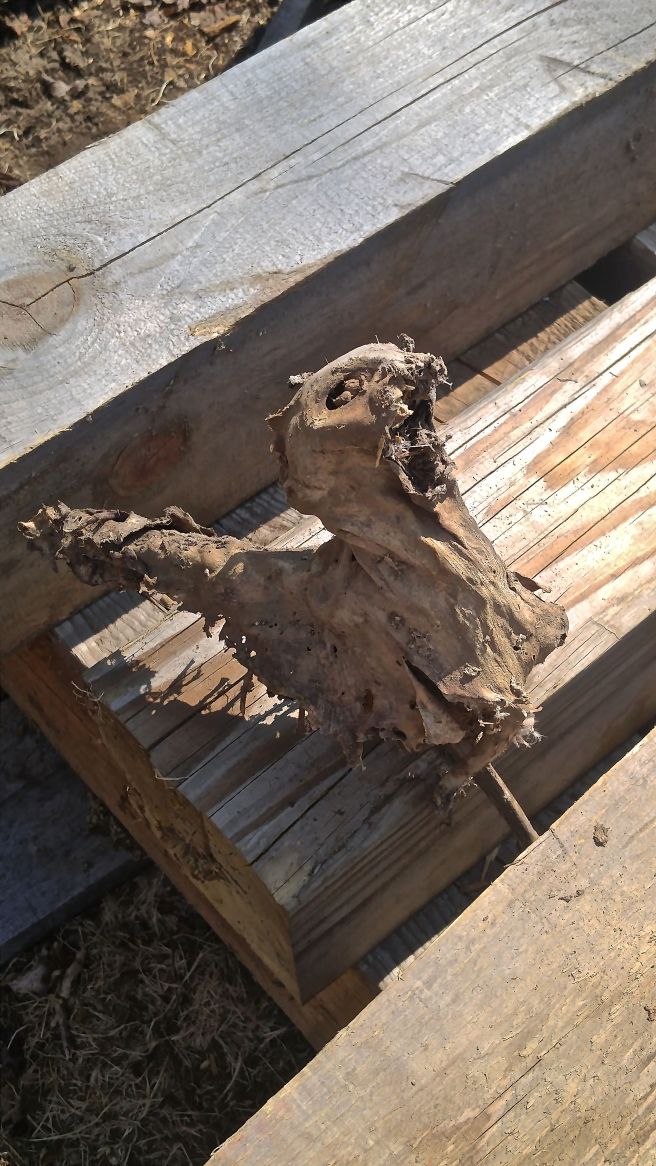
And then they had one more mystery item to show me. I hope this doesn’t freak you out. It’s part of many renovations in old farmhouses–a dried-up animal carcass. The front of the face was missing, but as we say, eyes in the front, born to hunt.

t-critter 1

A side view of this handsome critter. Can you see the ears?
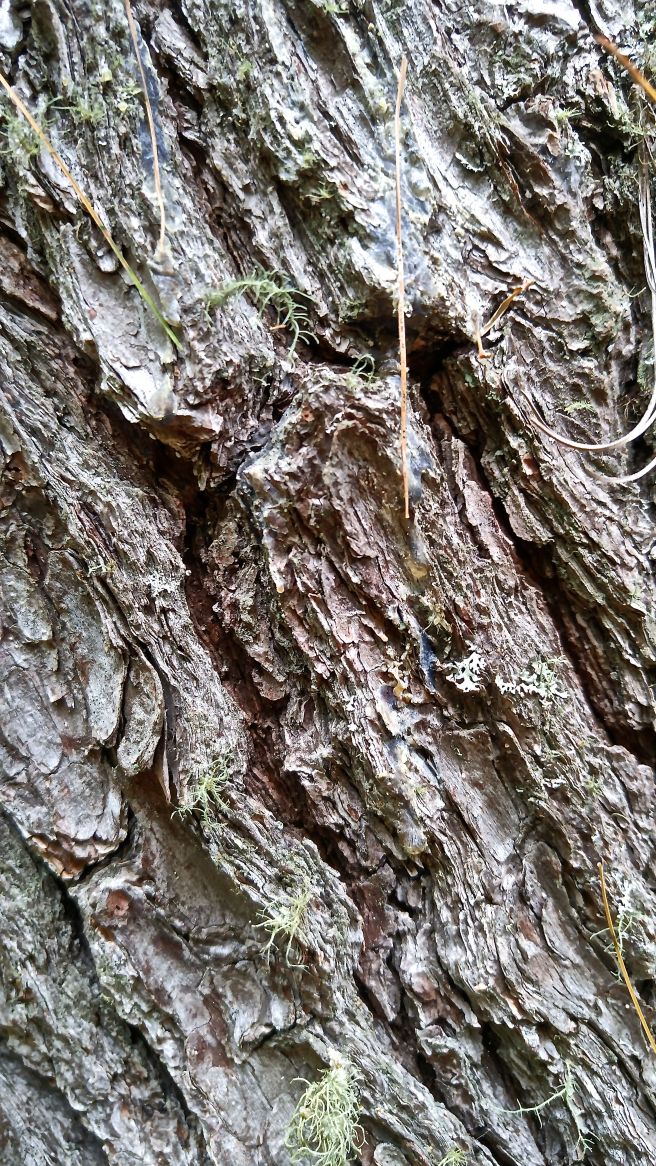
t-critter 4

Talk about all skin and bones.

t-critter pads

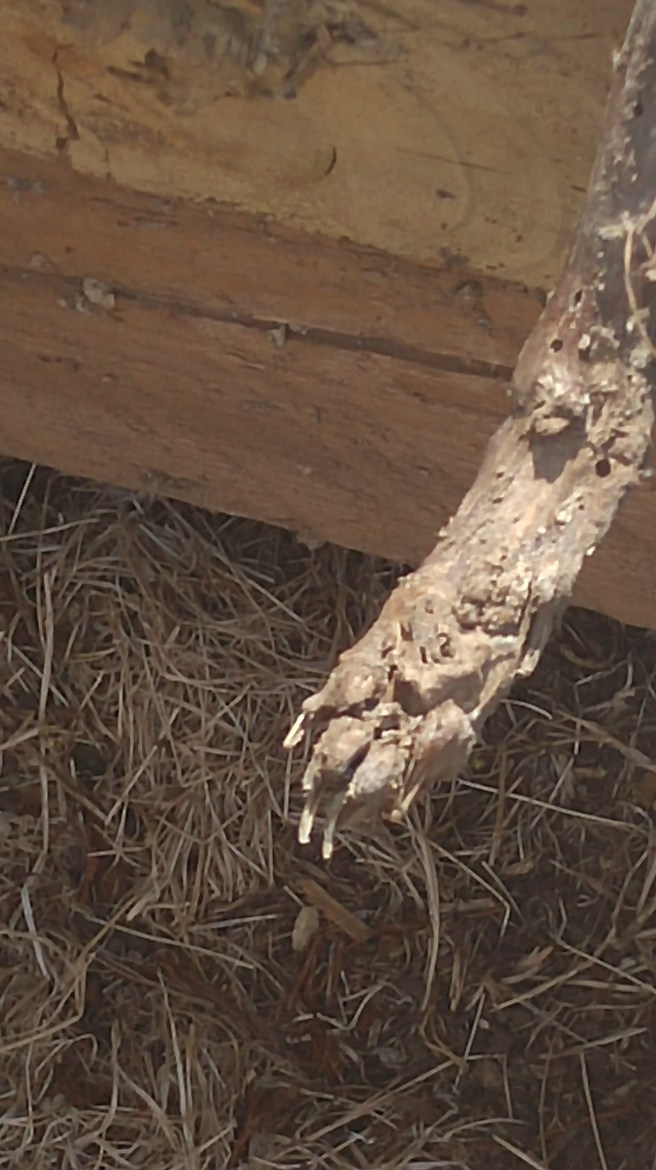
And then the foot pads and nails. Four toes, nails, about the size of a nickel. Do you know?
t-bog sign

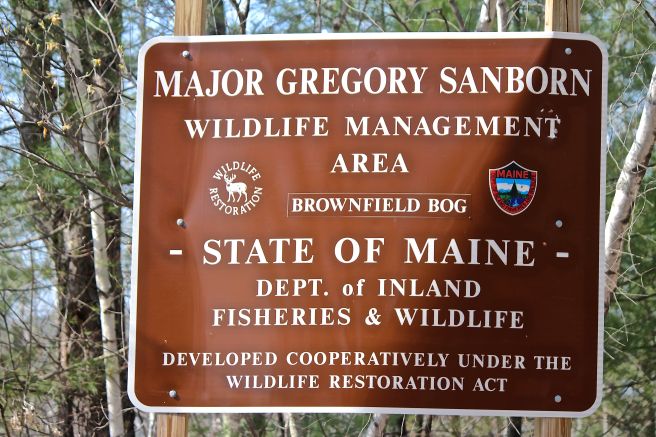
Because I was in the neighborhood, I visited Brownfield Bog and continued my afternoon exploration. (Yeah, I had work to do, but playing hooky for a couple of hours is allowed once in a while if I don’t abuse the privilege–ah, the life of a freelancer.)

t-red oak emerging

I remember suddenly becoming aware of spring colors about thirty-five years ago, when I taught  school in New Hampshire by the convergence of the Pemigewasset and Merrimack Rivers. Until then, I’d never realized that tree leaves emerge in a variety of colors–they all weren’t suddenly green. (BTW– do you see the spittlebug? )
t-red oak mini leaves

In a quickness equal to fall foliage, spring colors may not be as flashy, but their subtle beauty deserves notice.

t-gray birch 2

And those leaves that are green offered their own reasons to stop me in my tracks as I took in the details–in this case the double-toothed elephant’s trunk. What? Notice the shape and outer margin of the leaf.

t-gray birch 4

The lovely elongated catkins demanded a glance that lasted more than a second.

t-willows cat1

Adding a festive fuzziness to the celebration of spring was another set of catkins.

t-willow gall

Unwittingly, this shrub also played host to a gall gnat midge that overwintered in a structure created by the reaction to a chemical released by the larva–what would have been leaves were forced to harden into a pine cone look alike.

t-bog colors 2

The subtle colors graced the meadow,

t-pleasant

were reflected in the bog,

t-river

and blessed the Saco River.

t-baltimore 2

There were bits of flashy color–do you see who was feeding on the upper branches?

t-rhodora 1

And this spring beauty exploded with love and life.

At the end of my journey, I was grateful to P&K for an excuse to step away from my desk and check out the mystery standing in Beulah’s field. Especially as it led me further afield.

Spring In Slo-Mo

Spring is so fleeting in Maine. Oh, I know, it lasts the usual three months and the beginning and ending overlap with its seasonal partners, but really . . . one must take time to pause and watch or you’ll miss the most amazing action that occurs in slow motion right outside the window–and beyond.

s-red trill 1

Jinny Mae and I drove beyond today to catch a glimpse of this most splendid season.

s-red trill 10

Among the offerings, red trillium also known as stinking Benjamin. The Benjamin part is from benzoin, a mid-16th century word derived from the French benjoin, that refers to “a fragrant gum resin obtained from a tropical tree of eastern Asia, used in medicines, perfumes, and incense.”  It’s been tagged “stinking”  because its nodding flower has an unpleasant odor. We didn’t bother to sniff. We were too busy being wowed by the fact that it surrounded us in great number.

s-red trill 2

That smell, however, is of extreme importance. Along with the flashy coloration, the odor helps to attract pollinators–green flesh-flies that prefer to lay their eggs on rotting meat. Though this isn’t the perfect nursery, the flies assist the plant on the procreative end. And in this spot, stinking Benjamin rules, but I prefer to think of it as red trillium.

s-red trill back

Even from the backside, its design is one to behold.

s-false 1

Equally abundant were the leafy structures of false hellebore.

s-fals3e4

I was mesmerized by its pattern.

s-wood 2

Unlike the trillium, wood anemones have little scent.

s-wood 1

Their graceful heads drooped, perhaps because the day threatened rain.

s-bellwort 3

The offerings included sessile-leaved bellwort (aka wild oats),

s-dutchmen1

Dutchman’s breeches with leaves as interesting as their flowers,

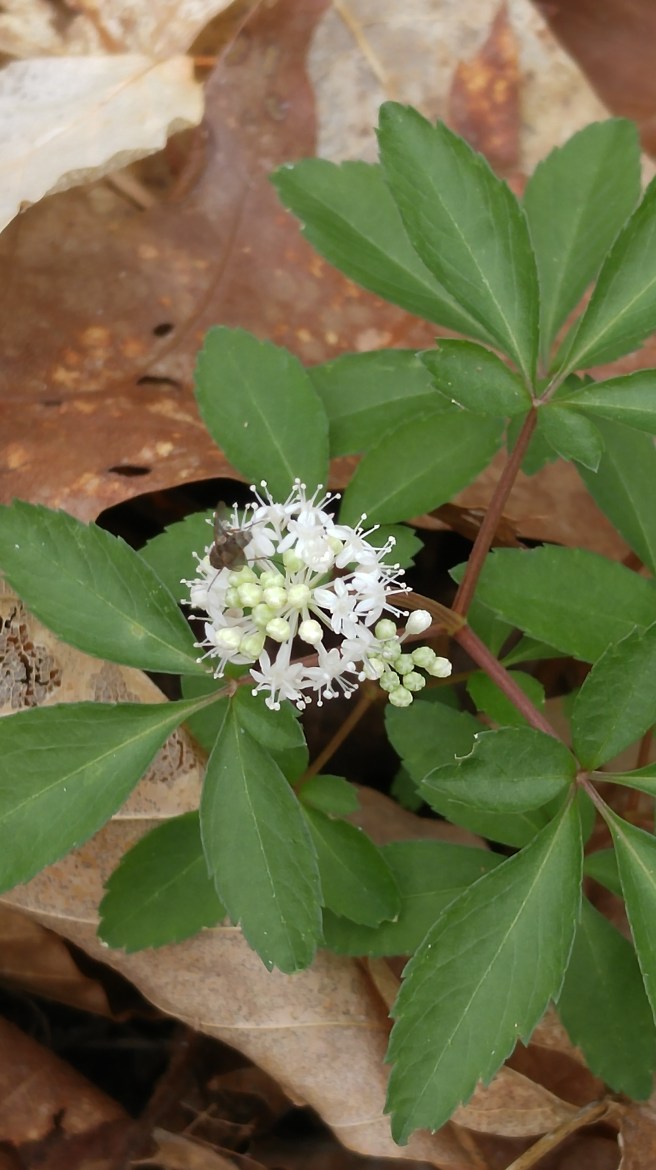
s-ginseng 2

the delicate white flowers of dwarf ginseng,

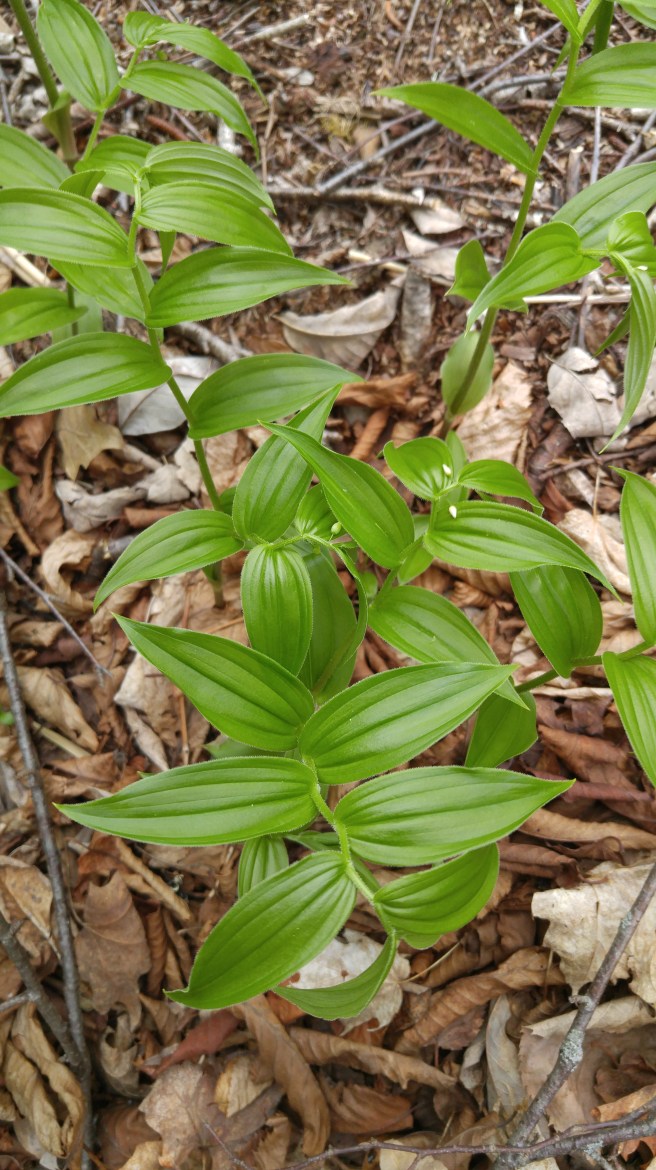
s-twisted 4

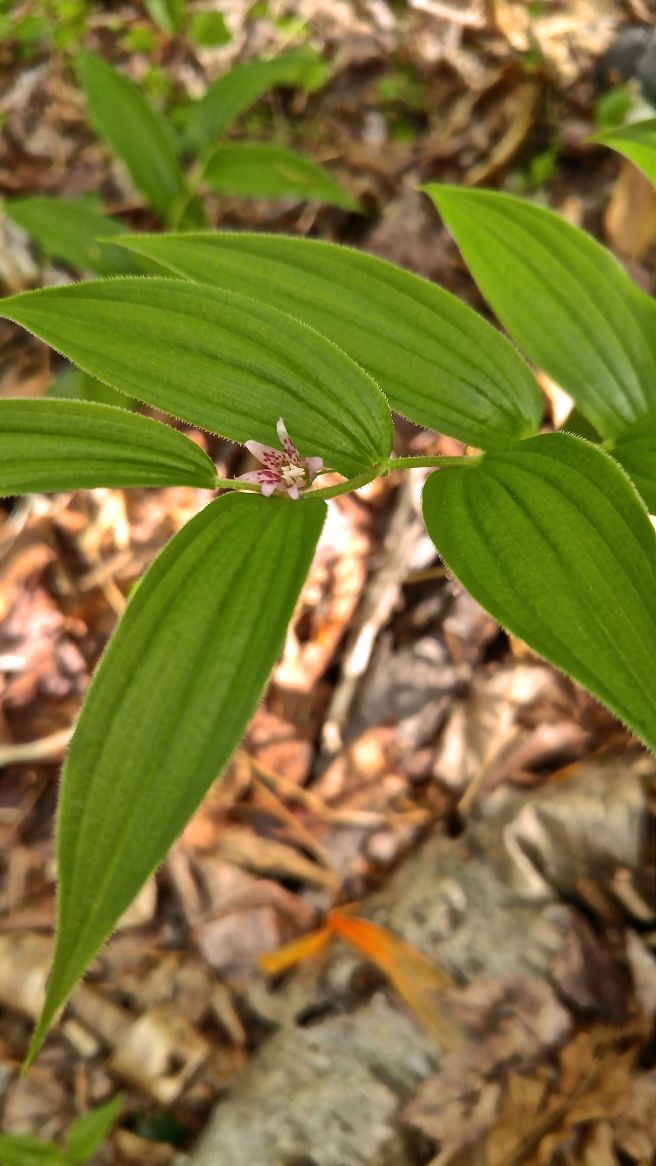
and  zigzag pattern of clasping twisted stalk.

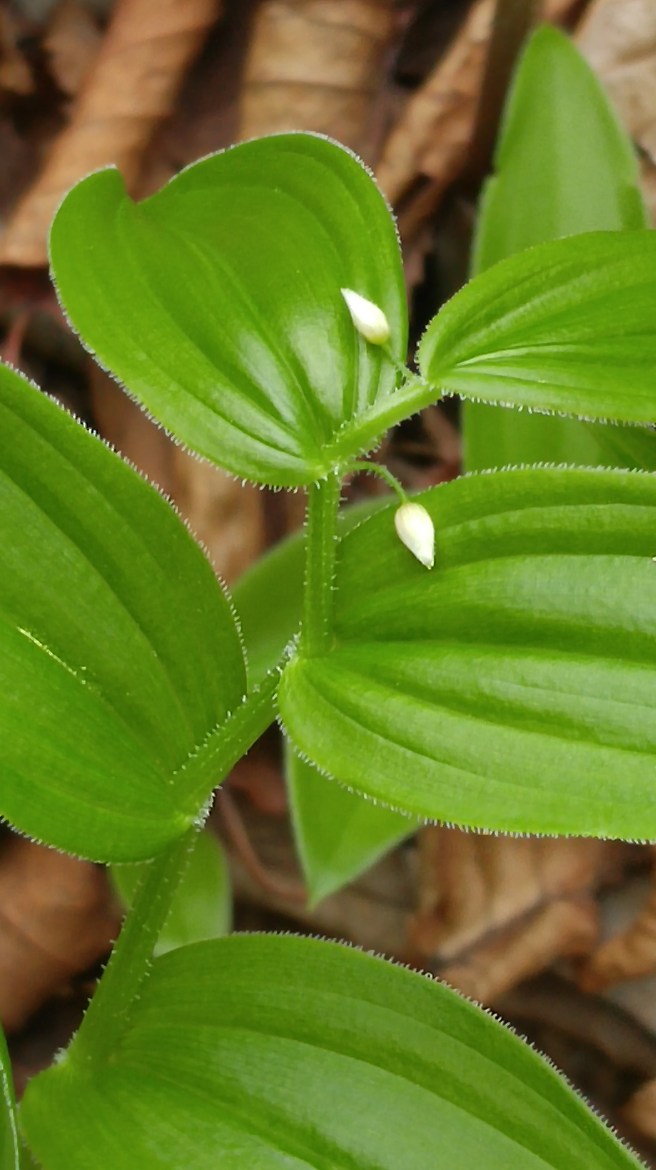
s-twisted1

Its key features are minutely-toothed leaf margins, stalkless leaves that clasp the stem, and flowers dangling below.

s-twisted 3

The flowers hadn’t opened, but the closer we got, the more we appreciated its finer details.

s-hobblle 1

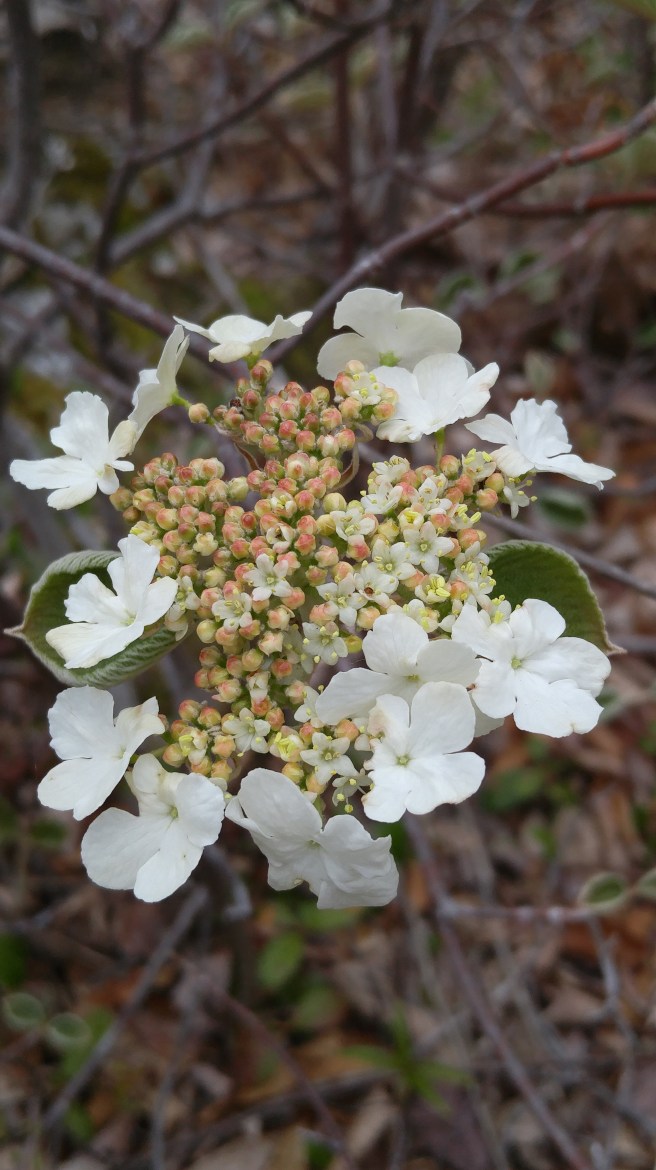
Ever so slowly, as is the case in all things, hobblebush flowers began to bloom.

s-hobble2

Outer sterile flowers form a ring around the delicate inner flowers that are fertile. Nature has a way of protecting its own.

s-colts 2

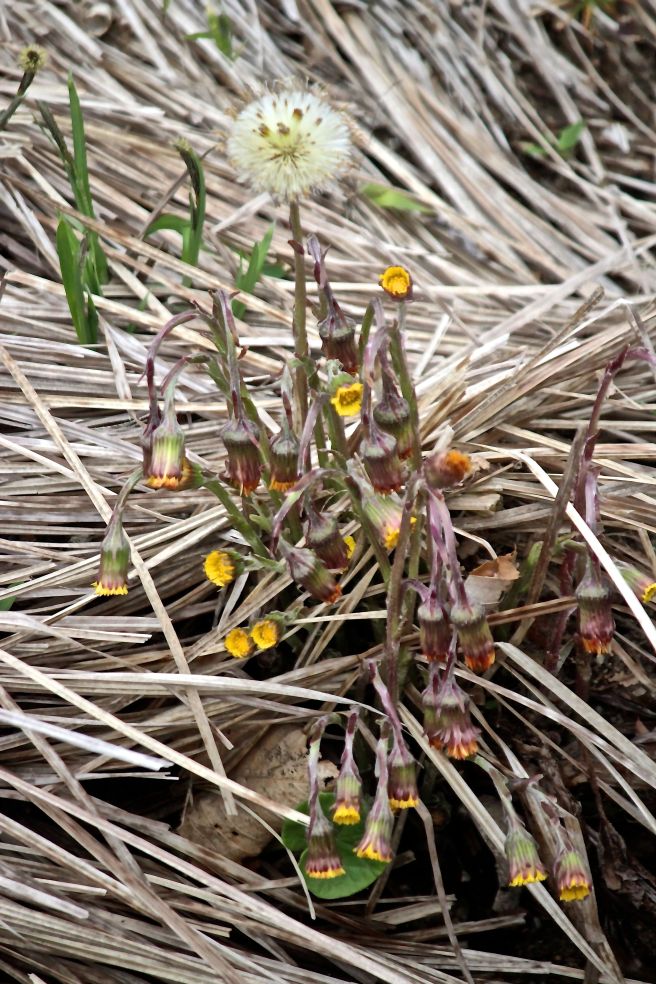
When we first spotted the fluff ball of seeds across the brook, we thought we were looking at dandelions. And then we saw the scaled stalks and lack of leaves. Coltsfoot it is.

s-cinnamon 3

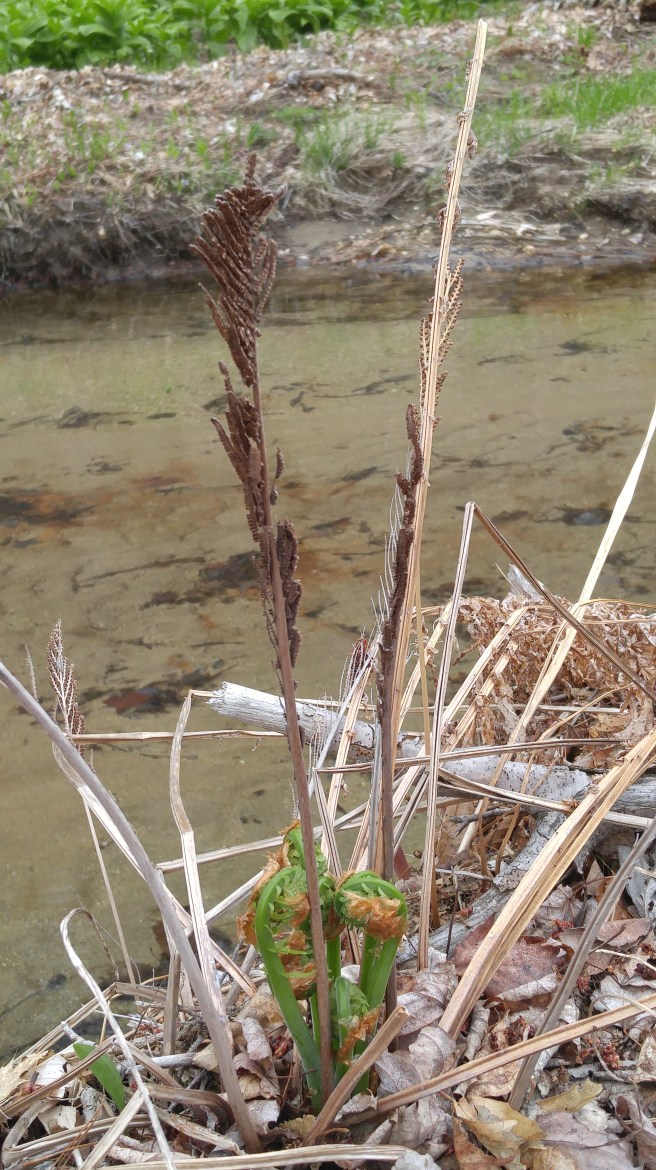
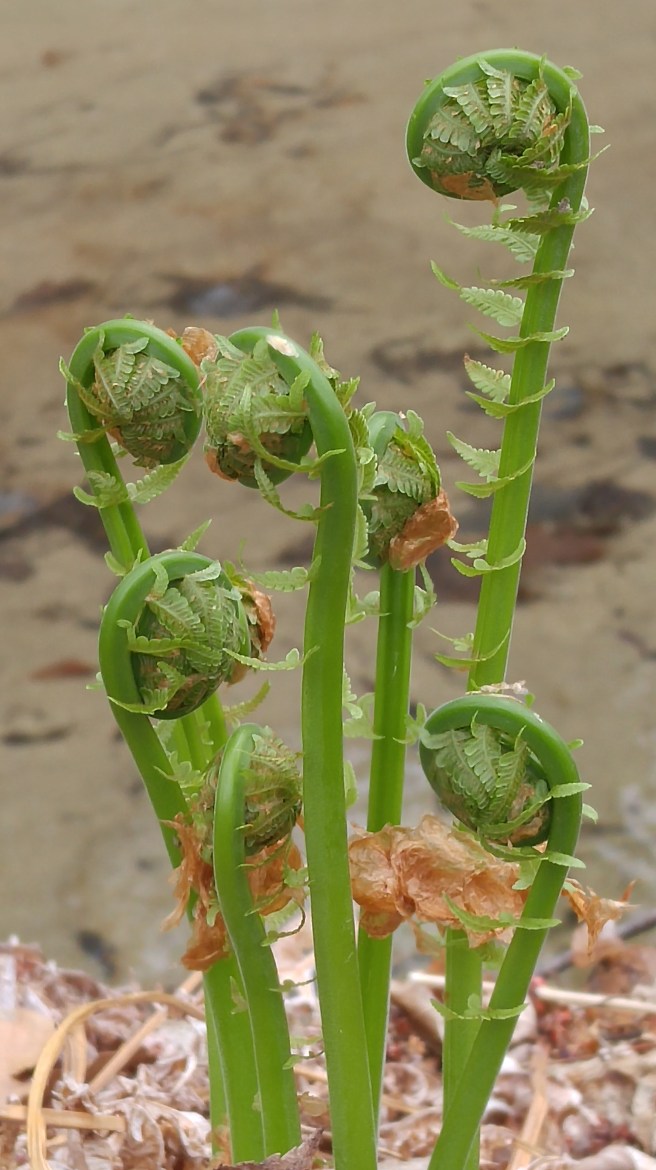
It wasn’t just the flowers that had us getting down on our hands and knees. There was the brownish wool covering of the cinnamon fern.

s-ostrich 1

And the hairless ostrich fern

s-ostrich 2

with its crook-shaped crosier, reminiscent of a bishop’s staff.

s-christmas 2

But my favorite today was one I’d never noticed before.

s-Christmas 4

Oh, I know it’s a Christmas fern, but the tightly-wound, silvery-scaled crosiers were new to me. It was yet another chance for us to wonder how we could have missed something that’s been here all along.

s-striped maple 1

And then we looked up. Well, sort of up. Striped maple leaves slowly opened in the understory.

s-red maple 1

And have you ever noticed that young red maples are a tad hairy along the margin?

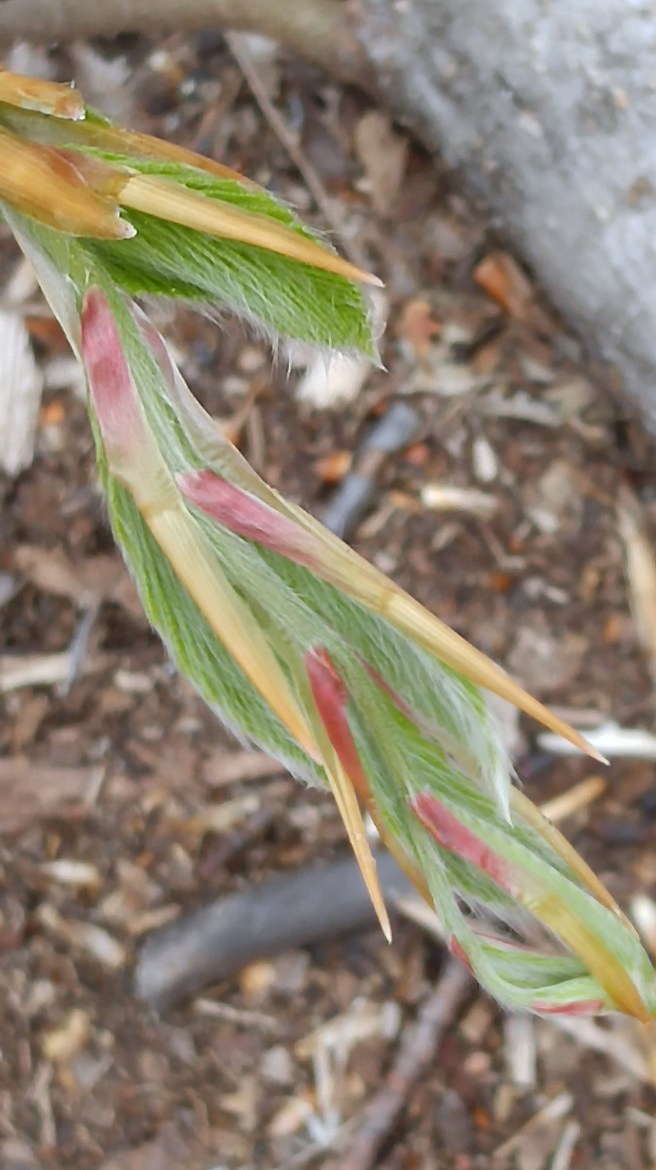
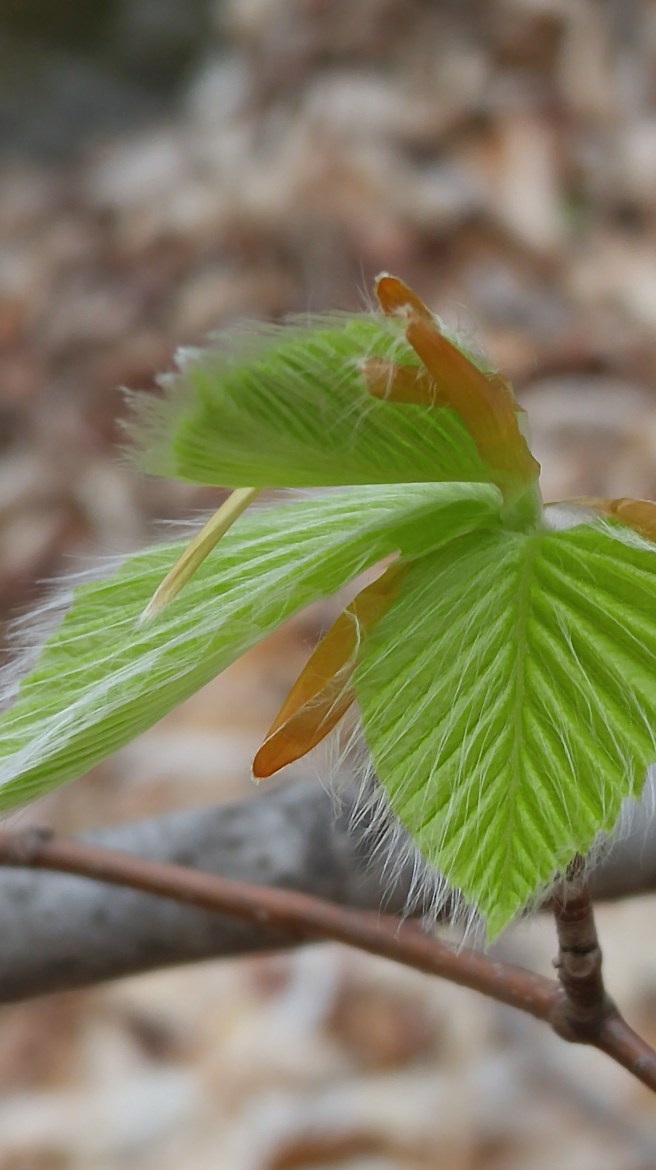
s-beech 6

Even hairer, beech leaves.

s-beech 7

All winter long, bud scales enclosed leaves that are now slowly emerging.

s-beech 8

They’re absolutely beautiful in their plaited and hairy state.

s-beech 2

What leaves me wondering (ah, a pun), is the fact that these leaves are so hairy. It seems the hairs are intended to keep insects and others at bay.

s-beech 1

And yet, it won’t be long before the insects discover that beech leaves make a good meal and home.

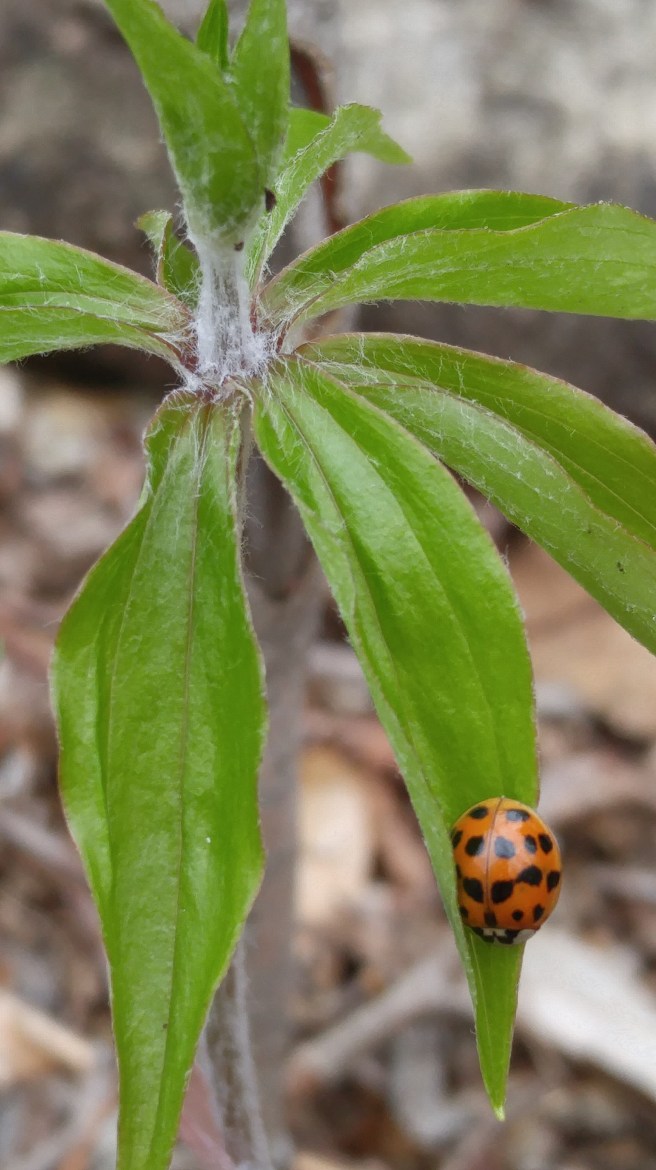
s-ladybug

Speaking of insects, we found a ladybug presumably feeding on aphids–already. So why do ladybugs sport  bright orange or red color and distinctive spots? To make them unappealing to predators. They can secrete a foul-tasting fluid from their leg joints–the coloring is therefore intended to shout out,  “I taste awful.”

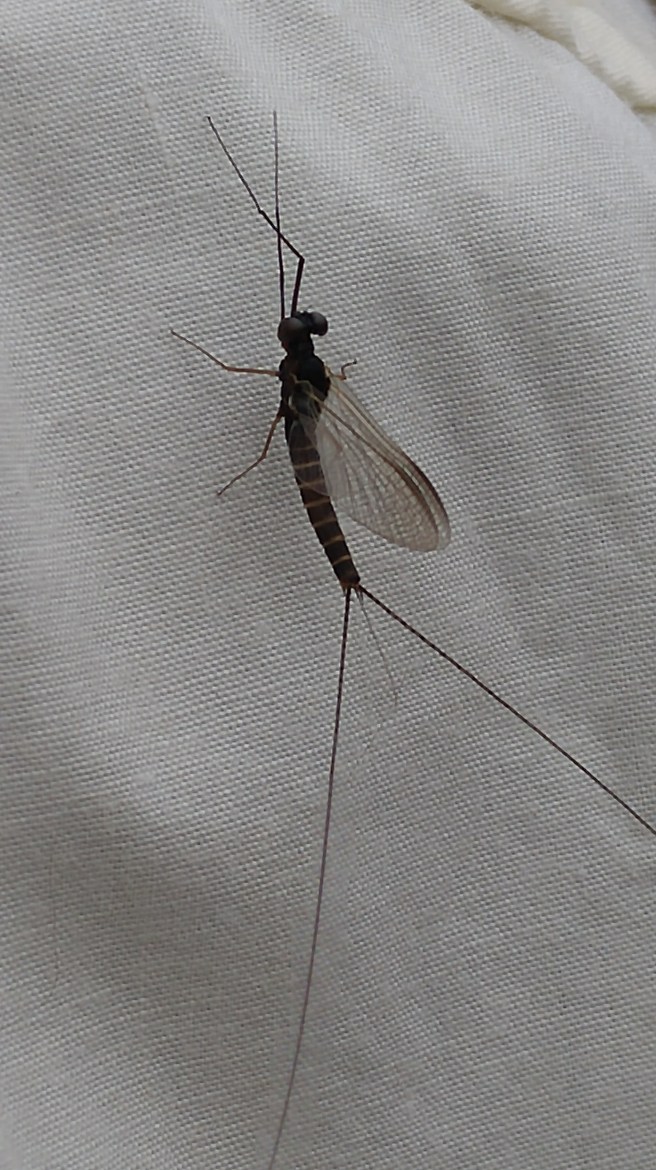
s-Mayfly 1

And Jinny Mae sported her own insect–a Mayfly, known to be more fleeting than spring, landed on her jacket. Oh, and did I mention the black flies? They swarmed our faces, but we practiced mind over matter.

s-brook

We were in one of the most beautiful places on Earth,

s-shell1

as evidenced by brook,  pond and mountains beyond.

s-gorge 4

And then there was the gorge.

As we watched the water rush through, we gave thanks for a day spent moving in slo-mo to take in all that this fleeting season has to offer in its spring ephemerals.

Every Day is a Gift

It’s Earth Day and yet, I wanted to hibernate. That didn’t go so well. First, I looked out the living room window this morning and noticed a skunk staggering as it walked in circles–like a dog chasing its tail–only the skunk kept falling to the ground and then getting up and continuing in the same fashion. So I called the game warden. A neighbor did the same and a short time later an animal control officer put the skunk out of its rabid misery.

a-blues1

And then I was supposed to co-lead a hike in Pondicherry Park, but still in hibernate-mode, I managed to get out of it. My excuse–work load. Which was true, but staying focused wasn’t happening. So, I headed out the back door and decided to change my point of view. The high bush blueberry leaf buds began to do the trick as they offered their gift of quiet beauty.

a-red map2

a-red maple 1

Nearby, red maples practically screamed for attention. Male flowers have long, extended stamens that are coated in dusty yellow-green pollen. The females have a well developed ovary with two long stigmas but the stamens are reduced in size and non-functional. Just seeing them lifted my mood.

a-ta1

As I made my way to the vernal pool, I stopped to smell the trailing arbutus, aka Mayflower. But sniff as I did while squatting on all fours, I couldn’t smell the soft scent people rave about. And I have a good sniffer. For me, the gift of this wildflower is all in the joy it brings as one of our first to bloom.

a-tad 4

My next stop, was of course, the vernal pool that I frequent on a regular basis. While something has been disturbing some of the egg masses, others continue to develop.

a-tadpole 1

Each little tadpole swims about in its jelly-covered egg, offering a gift of hope.

a-sally3

Salamander eggs also are enjoying the warmth of being encased in jelly–especially where the sun shines upon them. It’s most helpful for development when the egg masses can float to the top of the pond and take advantage of the sun’s heat.

a-sally 1

For now, each little pod within the orb reminds me of coffee beans.

a-water st2

While standing silently beside the pool, I began to notice other forms of life, including the water striders. Do you see the two mating? These wonders of the natural world appear to skate on water, but really its the water-repellant hairs on their hind and middle legs that allow them to glide nimbly across the surface. They offer a gift of amazement.

a-mosquito1

Their favorite food happens to be abundant in this pool–mosquito larvae. I have to say it’s a food offering, but also a gift to all of us–we should celebrate the water striders as much as we do the dragonflies.

a-tom 2

I left the pool and realized I was among the turkeys. Tom was ready to offer his gift to his harem. Such a handsome dude.

a-grady 4

And with that, I realized that I was ready to join the world again so I drove to the trailhead for Bald Pate to join Loon Echo Land Trust for an Earth Day hike. The leader of the gang was this precocious tyke. At three years old, I kept insisting he’s 33. He kept telling me he’s only three. It can’t be. Though this was his first mountain to climb, I suspect there are many more in his future. He offered just the right tonic today and I fell in love.

a-view

As we climbed, we paused to look west and admire the view. Though the sun wasn’t truly shining, the day was getting brighter, literally and figuratively.

a-pitch cone

At the summit, we took time to examine the pitch pine cones with their prickly scales. Sometimes beauty has an edge.

a-grady and carrie mean pose

Before we descended, our little hiking buddy posed with his mom, the outgoing executive director of Loon Echo. Carrie will be missed and we wish her and her family well as they prepare for their move to Wisconsin in a couple of months. Her dedication to land conservation is to be admired. And that mean-looking grin–oh my.

a-adam 1

Also to be admired and the reason our local community and those beyond have been dealing with extreme shock these past couple of days–Adam Perron, who’s life was snuffed out two days ago in a tragic accident. Adam was the milfoil dude and a naturalist/educator at Lakes Environmental Association in Bridgton, where I serve on the board (and chair the ed cmt). He was also a student in the Maine Master Naturalist Program (Falmouth 2014) when I served in my first year as a mentor, so we spent many hours carpooling to classes and field trips and solving all kinds of environmental problems–in our opinions at least.

a-adam2

He was most at home in places like Holt Pond, where he loved to share his knowledge with others. R.I.P. Adam. I’m grateful for the gift of time spent in your presence. It strikes us all that your candle was snuffed out way too early, but as a friend reminded me today, we never know when it is our turn. Here’s to you, Beth and Abby.

And to everyone else, hug the ones you love and don’t forget to wonder. Every day is a gift.


So Many Quacks

Stepping as quietly as possible through the woodland, my heart quickened when I heard a particular chorus vibrating from the vernal pool.

v-ice 2

Three days ago a thin layer of ice still covered half of it.

v-ice 3

But I was happy to note that despite last week’s frigid nighttime temperatures, the wood frogs had been active.

v-many heads

While I stood and waited on Sunday, there’d been no movement or sound and I thought that the frogs had already moved on–mission accomplished. My ears and then my eyes knew differently today. I heard the quack of the males and then saw a number of heads on the water’s surface. Quickly, I snapped a photo–the little balls of light represent those precious heads.

v-ripples

They sensed my approach and began to make waves. Water rippled as they dove under the leaf cover below. And all was silent.

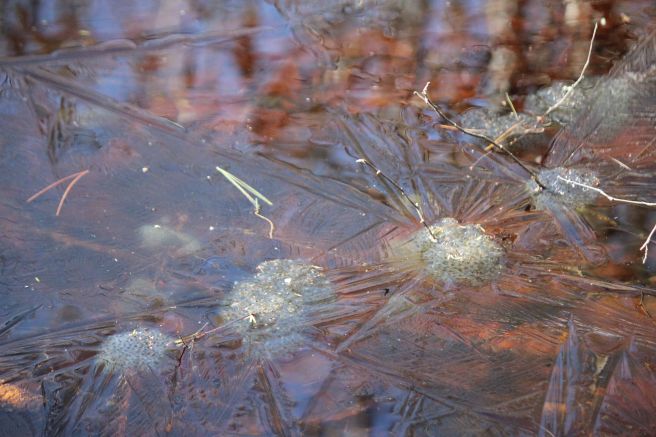
v-eggs 3

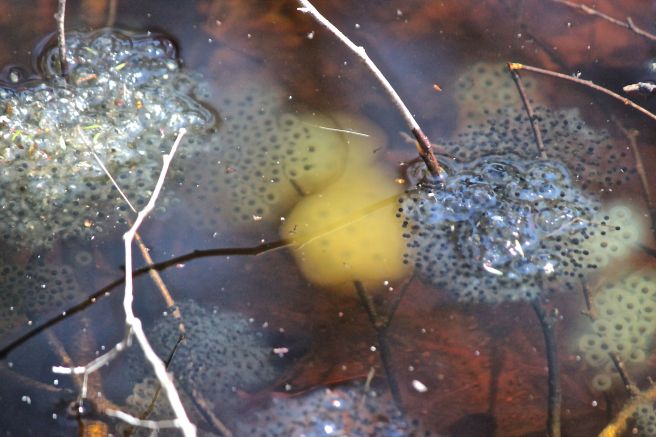
The community of egg masses, however, showed that their efforts continued to be fruitful.

v-egg masses 2

In general, each mass laid by different females is attached to a twig or branch. They tend to take advantage of the same site for attachment and usually in a sunny, warm spot. Already, some floated to the surface. Eventually, they’ll gain a greenish tinge from algae, which actually helps to camouflage them. One of the many wonders is that any given mass may contain up to 1,000 eggs–from a two-to-three-inch frog.

v-egg mass 1

A couple of masses were positioned independent of the rest, like this one–embraced in oak and maple leaves. It’s almost out of the water, though yesterday’s rain helped, but I questioned whether or not it will be viable.

v-frog and sally eggs

Then again, will any of them? Last year, the pool dried up before the tadpoles reached maturity. And it isn’t just tadpoles that begin life in this pond. Notice the white, gelatinous masses below those of the wood frogs? Spotted salamanders had also returned to this small body of water.

v-sally 3

They, too, attached clusters to vegetation. Smaller in number of individual eggs, salamanders lay 30-250 within each clear or opaque white mass. As they absorb water, the masses enlarge.

I walked around the pool looking for spermatophores produced by males and left on the leafy bottom, but saw none. Earlier today, my friend, JVP, and I walked along the Narrow Gauge trail and saw them in several pools. Unfortunately, though I had my camera in tow, I’d left the battery at home–still sitting on the charger. Oy vey!

v-beech leaves

As beech leaves continued to cling and blow in the slight breeze over the pool, I finally settled down at the edge and waited for action.

v-diving beetle

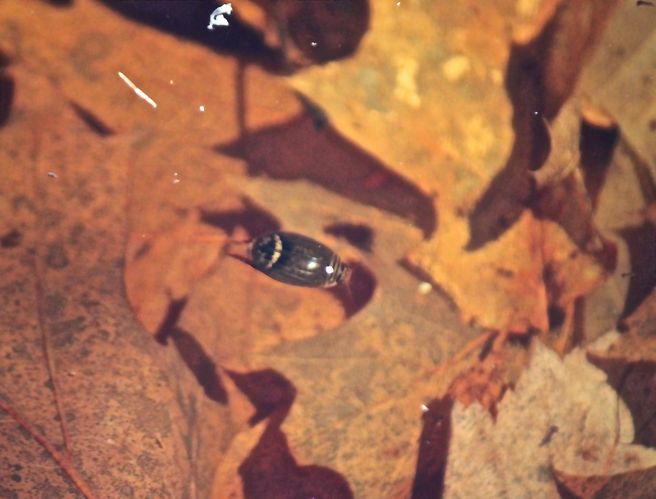
Moving with aquatic beetle speed, predaceous diving bugs swam about in constant motion.

v-water boatman

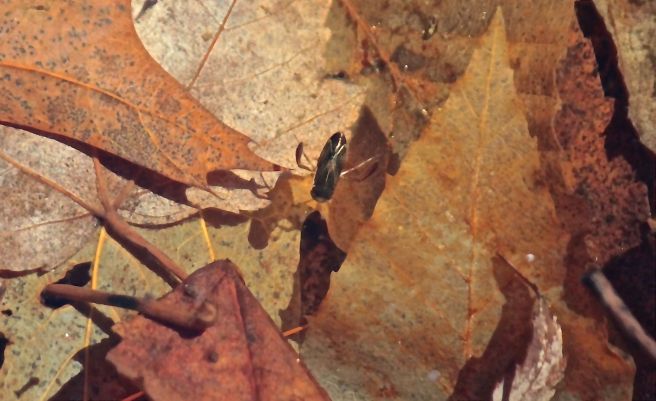
Also calling this small pool home were numerous water boatmen.

v-peaking out:blending in

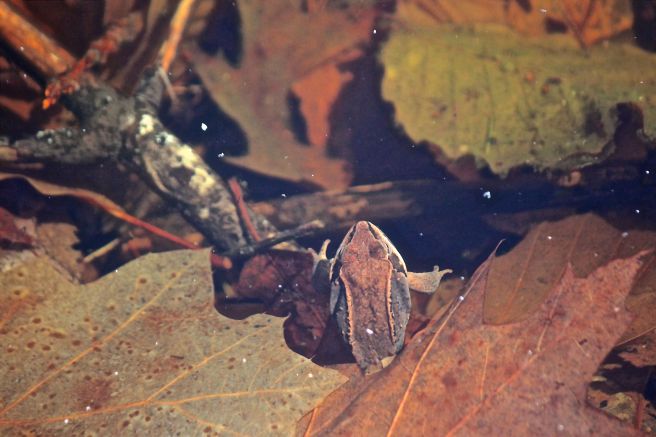
But what I most wanted to see–the wood frogs themselves. Ever so slowly, they began to emerge from the leaf cover.

v-frog 1

Once by the surface, they floated.

v-frog 5

As long as I didn’t make any sudden moves, they stayed–showing off the dorsolateral ridges that run from the back of their eyes toward their hind legs.

v-frog 4

Color variation was evident–from rusty browns to gray and tan.

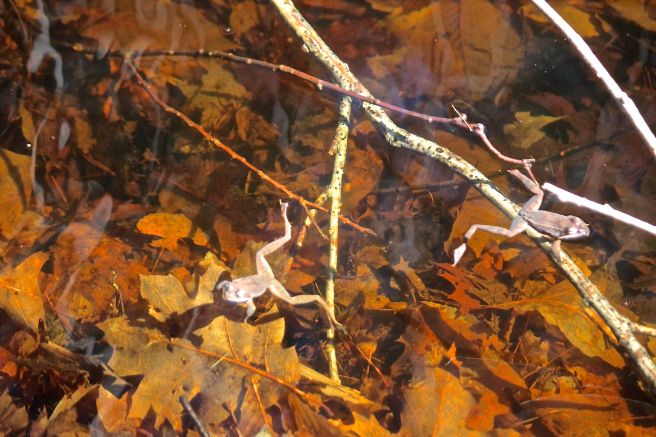
v-frogs hanging

Sometimes, several floated near each other–probably wishing I would leave so they could continue their serenade.

v-2 frogs

And then there were two that seemed intent upon one another.

v-2 frogs 3

I’m sure they spoke–probably cursing my presence.

v-2 frogs 1

With the flick of a frog leg . . .

v-2 frogs depart

they suddenly went their separate ways.

v-love 1

One couple, however, did hug. So that brings up another curious thing about wood frogs. Males cannot identify females by sight or sound, so he has to clasp the other frog. If the frog is thin, it’s either  another male or a female that has already released her eggs–thus he’ll release it quickly. Yup–females are generally fatter because they carry eggs.

My eyes were as wide as the frogs I watched–I’ve never had the pleasure of seeing so many in this particular pool. And I was sure that due to the ice, all the action was completed a few days ago. But the multiple chortles I heard upon my initial approach created a racket today–and sounded, of course, like a bunch of mallards. I rejoiced over the sound of so many quacks.


Book of the Month: TREES and SHRUBS of NORTHERN NEW ENGLAND

Sometimes the biggest gems arrive in the smallest packages. Such is the case with this month’s book–and this isn’t an April Fools’ Day joke, though I did briefly consider posting an upside-down photo of the cover.

t-book

I picked up this copy of  TREES and SHRUBS of NORTHERN NEW ENGLAND at a book swap during the Maine Master Naturalist Program’s first conference this past year. This third edition was compiled by Frederic L. Steele, Chairman of the Science Department, St. Mary’s-in-the-Mountains, Littleton, NH, and Albion R. Hodgdon, Professor of Botany, University of New Hampshire, Durham, NH, and published in 1975 by the Society for the Protection of New Hampshire Forests.

One of the things I like about it is that it measures 4.5 x 7 inches and fits easily into my pack. Plus, it includes more shrubs than many of my current books.

t-leaves

And check this out from the introduction: “In the preparation of this guide, the authors have received help and encouragement from a number of people. The following, in particular, should be mentioned . . . Mrs. Priscilla Kunhardt and Miss Pamela Bruns have done the illustrations . . . ” Mrs. and Miss! Ah, what happened to those days?

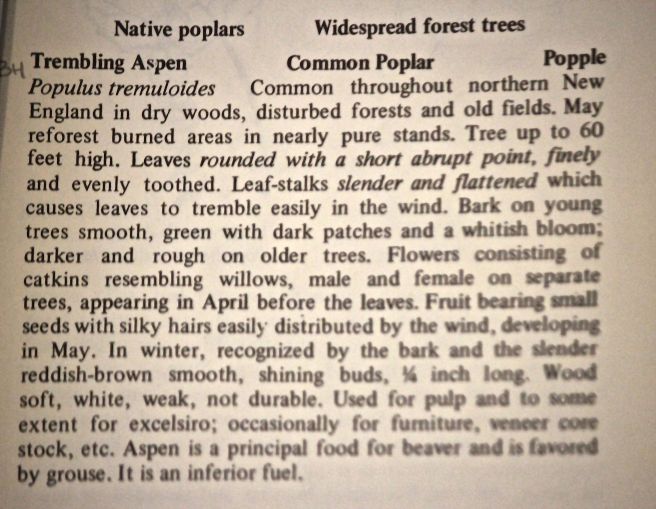
t-quaking description

The descriptions are not lengthy, but enough for a quick reference. I choose the Trembling Aspen, which I’ve learned as Quaking Aspen (I know–that’s the problem with common names say my Latin-oriented friends) because two are located right out the back door. They are the trees of life in our yard.

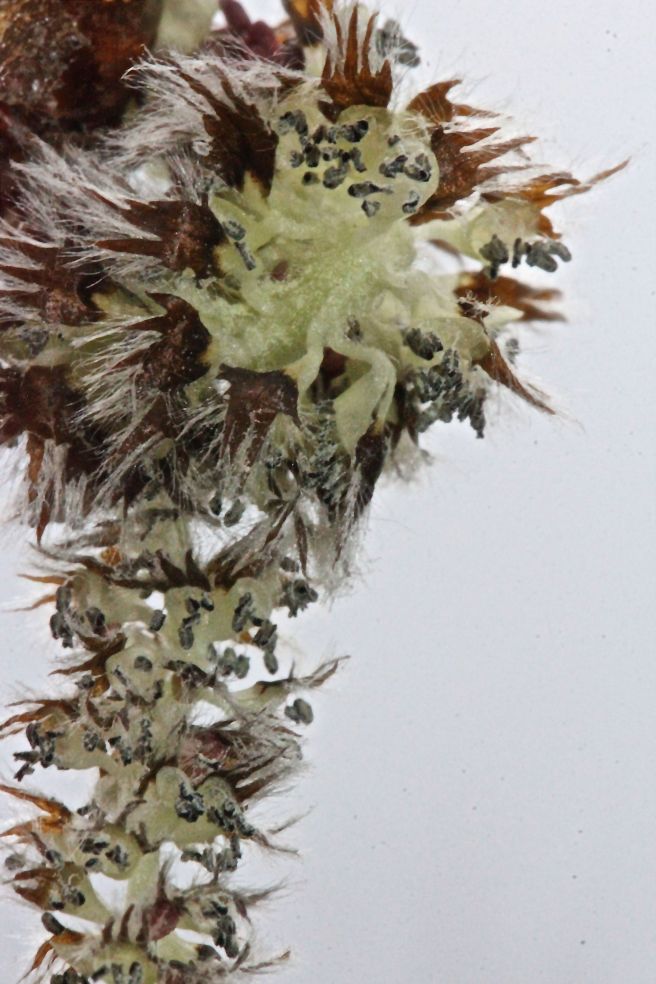
t-catkins forming

Catkins slowly emerge from waxy-coated buds

qa 1

and grow longer with lengthening days.

qa 5

Tufts of hair adorn tiny seeds.

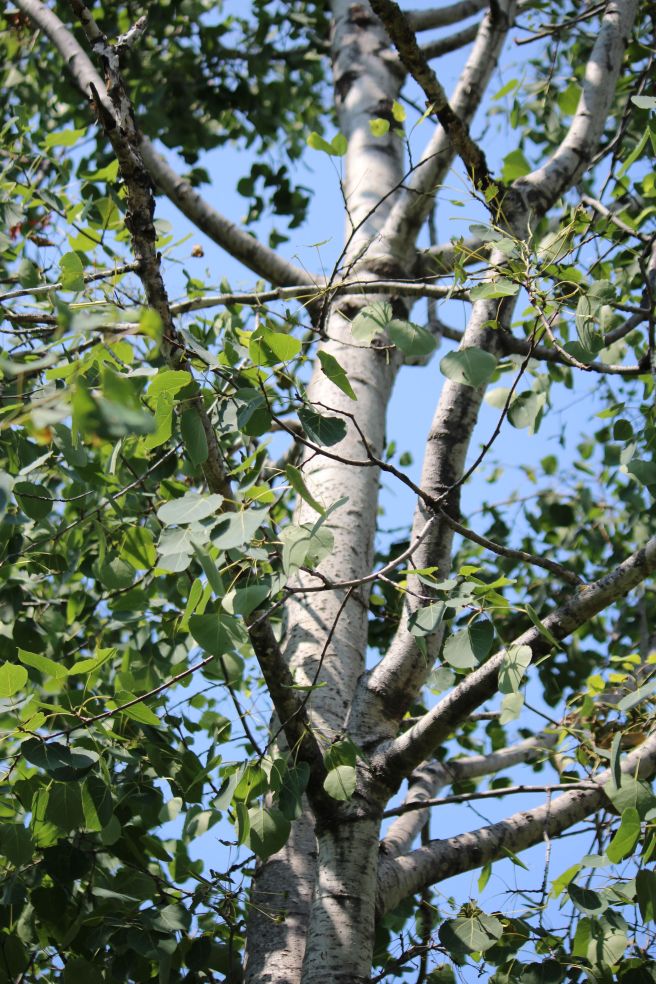
T-summer

Soon, leaves on flat stems quake in the breeze,

t-caterpillars

until visitors arrive.

t-leaf eaters

Very hungry caterpillars.

t-porky

They aren’t the only ones. Porcupines nip off branches.

t-leaf

Eventually, leaves that survive fall to the ground.

t-hairy woodpeckers

All year long, birds visit to dine

t-cardinal

and view the world.

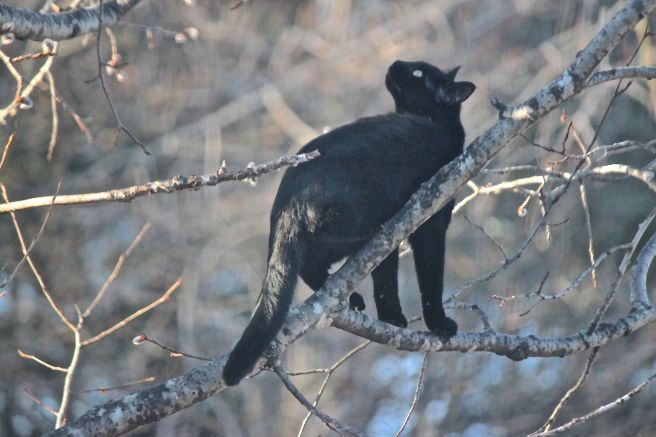
t-cat

The world looks back.

t-ice

Ice slowly melts

qa 2

and life continues.

TREES and SHRUBS of NORTHERN NEW ENGLAND doesn’t include photos, but that’s OK because I have my own. Instead, as any good guide, it’s a jumping off place. So many books, so much different information–and sometimes guides contradict each other. Just the same, I love to read them and then to pay attention. For me, it’s all about forever learning. And wondering.

TREES and SHRUBS of NORTHERN NEW ENGLAND, by Frederic L. Steel and Albion R. Hodgdon, Society for the Protection on Northern Forests, 1975.

Summit of Three

It was the perfect day for an exploration of the scenic vistas at the Greater Lovell Land Trust’s Heald and Bradley Ponds Reserve.

h-mill pond

My journey began with time for reflection at the mill pond, a crystal clear reflection–if only life were so.

h-mill dam

It was here that “shook” and cooper mills were located. Reportedly, the men created barrels to hold Caribbean rum and molasses.

h-whiting snow

At the beginning of the journey, a bit of ice and snow covered the trail indicating that others had passed previously.

h-whiting vp

Ascending Whiting Hill (801 feet), I paused at the vernal pool–frozen in time.

h-whiting summit 1

And then the first summit overlooking Kezar Lake–glory in the making.

h-whiting, columbine

When I’d mentioned my hiking plans to a friend this morning, he’d encouraged me to see well–and so it began with the leaves of wild columbine.

h-whiting to heald

On the back side of the summit, a view of Heald Pond.

h-whiting wintergreen

Wintergreen showed off an Easter display of color against a swatch of snow.

h-whiting bear tree

I spied . . . bear trees,

h-whiting cache

a squirrel cache of pinecones,

h-whiting gnome

and a gnome home. Well, I’m not so sure that the squirrel cache was just that. Though red squirrels do cache pinecones, the gnome home was on the other side of the tree trunk. Just goes to show that things aren’t always as they seem.

h-amos cache

Hiking up Amos Mountain, I did find many squirrel tables and this sign–an acorn cache.

h-amos, owlet moth

Sitting still on a rock along the trail, a furry moth from head to toe to antennae, possibly an owlet–capturing the warmth of the sun.

h-amos

After lunch, I poked about the summit of Amos Mountain (955 feet) looking for more wild columbine leaves because I know they grow here. Maybe next time, offering a reason to visit again–as if I need a reason.

h-candy 1

Traveling down the old road behind Amos, I suddenly found myself admiring the miniature  world of candy lichen, its pink disks rising from a pale green surface.

I also noticed a variety of scat from weasel to coyote and realized the importance of this reserve as a corridor for the many mammals who travel here.

h-red maple 1

And then I saw red maple buds decorating the forest floor. Seems to me a red squirrel nipped the buds in hope of future food. Maybe the squirrel will return or maybe it became food itself.

h-amos hophornbeam

Though trail signs shouldn’t be nailed all the way in, I chuckled when I saw this one along the saddle trail–not easy to drive nails into a hophornbeam, the hardest of all woods in our forest.

h-amos, many fruited pelt lichen

I’m not sure that my ID is correct, but along the way, I found what I think is multi-fruited pelt lichen.

h-perky's fen

And then on to Flat Hill via Perky’s Path.

h-flat hill mossy maple

Among other fungi, mossy maple grows here.

h-flat, beaver works

Beaver works are evident all the way around.

h-flat, lodge

And in the pond, the lodge. Below my feet, otter scat. Lots of otter scat. I have to wonder about the action that passes this way.

f-flat hill

The name Flat Hill (891 feet) has always amused me–an oxymoron at best. But really, all three summits are flat.

h-MT W from Flat Hill

In the distance, Mount Washington was the only snow-covered summit.

h-porky first

And right before my eyes–evidence of a visitor who frequents this spot.

h-flat hill porky

While we often think of them as only eating hemlock bark in winter, porcupines dine on other species including spruce and beech.

h-flat hill, porky 2

h-flat hill, porky 3

Despite the damage they do, I’m intrigued by the pattern of their works.

h-flat, walkers

Oh yes, and a treat that appeared in my Christmas stocking made for just the right snack.

h-basswood

At the base of Flat Hill, I paused to admire the basswood buds and leaf scars–offering a smile on this day. Another reason to smile, two barred owls calling to each other. I didn’t see them, but loved listening to their “Who cooks for you? Who cooks for you all?” call. I contributed my own, but they seemed to prefer each other. Can’t imagine why.

h-otter point grape fern

A side trip as I looped back took me to Otter Point. Grape Fern’s winter complexion is so easy to overlook as it blends into the forest floor, but I’m glad I paid attention.

h-otter point view

Though a friend informed me this morning that the loons have returned to an open area of Kezar Lake, Heald Pond is still completely coated in ice.

h-vireo nest

Delicate offerings like this vireo’s nest are delightful surprises.

h-seeing well

I’d been encouraged to see well and trust that I kept my focus. It was a solo hike for me and I met no one along all the trails I traversed over the course of six hours–an offering of peace and solitude that I wish everyone could experience.

h-amos heart

On this Saturday before Easter, the universe spoke a language of love and hope along the three summits and I had the honor of listening.


The Borrowing

My friend, Dick, sent me the following message yesterday: “from a novel, Northwest Angle by Krueger … who has a series which relates to the Objidwa (sp) of the upper parts of Michigan …

‘What’s a Mide?” — ‘A member of the Grand Medicine Society,’ Stephen explained. ‘A healer. Somebody who understands the harmony of life and how to use nature to restore harmony when it’s been lost.” p246

“Belongs.” Meloux (a very senior shaman type of the Native American ‘Mide’ of the Objidwe) seemed to consider the word. “I believe no one belongs to anyone else. You, me Waaboozoons, we are all dust borrowed for a little while from Grandmother Earth. And even that dust does not belong to her. She has borrowed it from all creation, which is the Great Mystery, which is Kitchimanidoo. And if you ask this old man, I would say that another way to think about Kitchiimanidoo is as a great gift. Kitchimanidoo is not about keeping. Nothing belongs to anyone. All of creation is meant as a giving.” p 269

While I haven’t read the book or any of Krueger’s works, these words resonated with me as I moved about this morning.

m-vp

My first stop was a visit to the vernal pool, where the ice is beginning to melt.

m-vp, birch seeds

I looked for insects and found instead birch seeds and scales–meant as a giving.

m-berries

Wintergreen berries remained prolific below the power lines. While this fruit is traditionally browsed by a variety of mammals, I had to wonder if its location is the reason it was left untouched–poisoned by the herbicides Central Maine Power uses to keep the land clear. What was meant as a giving revoked.

m-leaves thru ice

Not all was bad as I followed the trail for a distance and enjoyed the beauty that has begun to emerge.

m-sphagnum color

The pompom heads of sphagnum moss contrasted brilliantly beside the running clubmoss.

m-trail light

Looking back, I noticed that today’s sunlight was captured in yesterday’s raindrops–certainly a reason for thanks-giving.

m-mount 1

And before me–man and nature in the eternal struggle for harmony. An example of borrowing.

m-pollen?1

Before I turned onto a logging road, a puddle caught my attention.

m-pollen?2

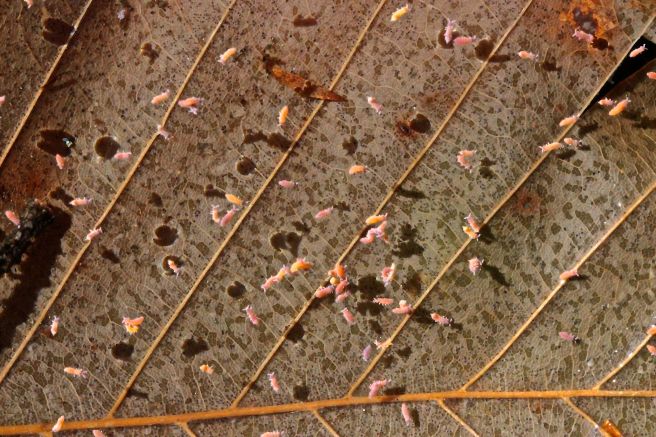
My first thought was pollen, but as I approached, I realized the little dots were moving about much like spring tails because .  . . they were spring tails. So my learning increased as I noted their color and the fact that there are aquatic members of this family. Another giving received.

m-pin cherry warts 2

On recent treks, my bark eyes have been confused about two trees–black birch (aka sweet or cherry birch) and pin cherry. As youngsters, both feature reddish-brown bark. What has thrown me off is the association with other birch trees, including the yellow birch that grows behind this specimen. Today, I made a point of noticing–the warty orange lenticels, lack of catkins and no wintergreen scent. These are three features that helped point me toward pin cherry. Black birch bark features long, thin lenticels, catkins common to birch trees and when scraped, that delightful wintergreen smell.

m-pin cherry:birch1

Despite the fact that they are not of the same family, certainly they’ve found a way to give to each other and live in harmony. A lesson.

m-porky

Just beyond the birches, in one of many stump dumps along this logging road, something caught my eye.

m-porky 1

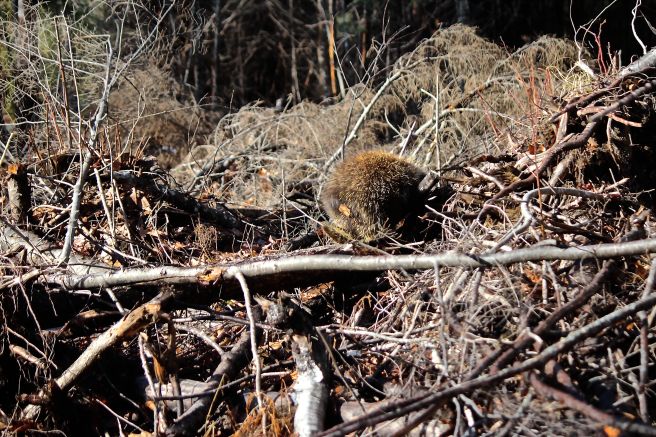
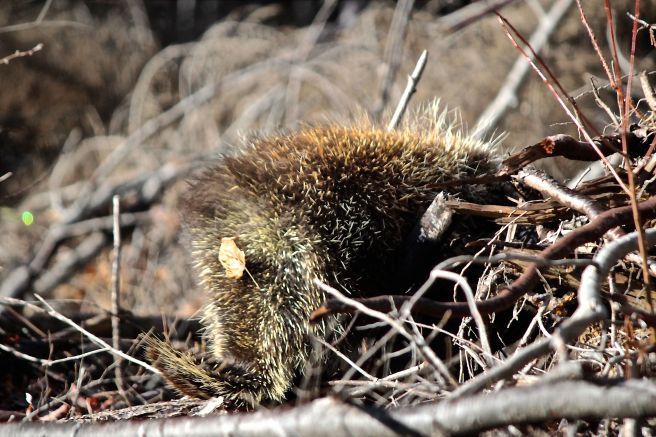
A porcupine worked over the bark of a fallen hemlock tree. I stood for several minutes and watched. Either it wasn’t aware of me or I didn’t pose enough of a threat.

m-porky again

The leaf caught on its backside made me chuckle and wonder why we don’t see more of that.

m-porky like

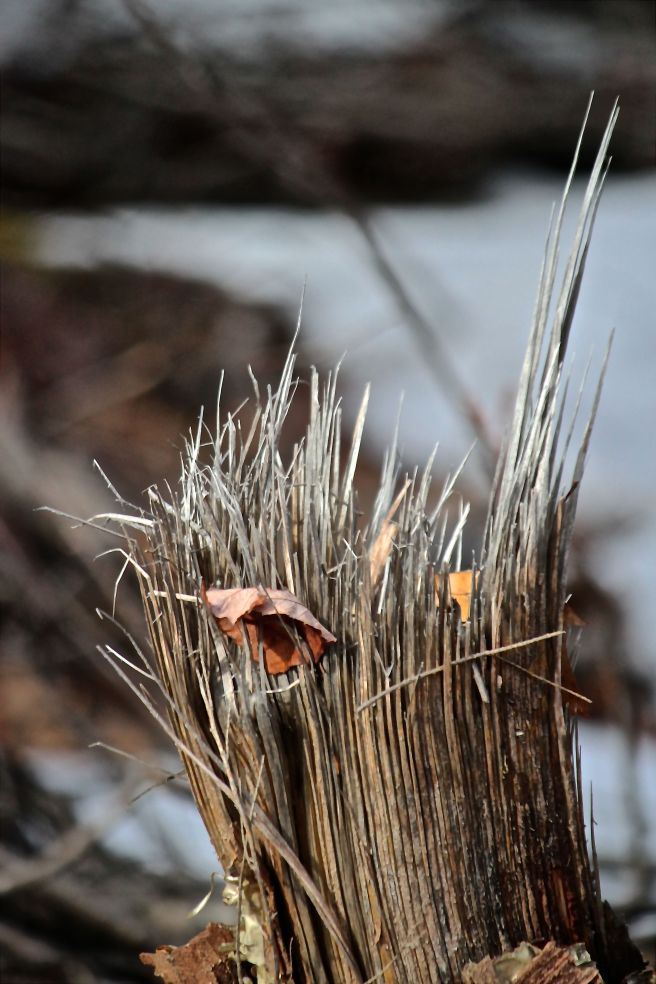
I’m amazed that I saw it at all in this land that has been chopped up over the course of the last three years. Notice how leaves are similarly stuck to this shredded tree stump.

m-porky tree 3

m-porky tree 2

m-porky tree

Behind were the trees that have received the porcupine’s recent attention. While the logging is destructive, it helps heat homes, provides income to at least several people including the logger and landowner, and creates new habitat and food opportunities for wildlife. Change is difficult and I’d grown to love these woods the way they were, but they were that way because of prior cuttings. A borrowing.

m-bubbles

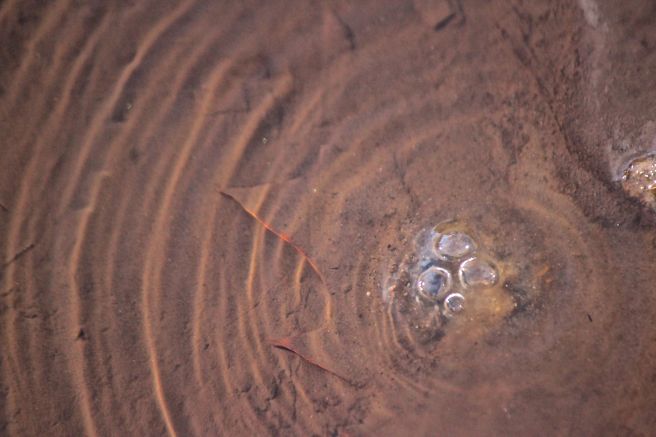
Most of the logging road was a combination of puddles and mud. At times, air bubbles rippled as I moved through and I was reminded of my youth years spent feeling for clams in the mudflats of Clinton Harbor on Long Island Sound. The memory itself was a giving.

m-deer 2

Like the deer that frequent this land, my boots got stuck in the muck. Sometimes, it seemed like I was being sucked in and told to stand still. But my mind wandered on and I followed it.

m-trail conditions

Going forward in time, I’ll be curious to watch the reflections in the puddles change as the pioneer species move back in and regenerate this land. The harmony.

m-spirit

In the end, as always seems the case, I was on the receiving end of the giving and grateful for the borrowing as the spirit of Grandmother Earth shared a few tidbits of the Great Mystery.


Silence IS Golden

Some days are golden–in light and experience. Such was today.

A friend and I intended to walk one local trail but changed our minds and headed to Holt Pond Preserve. A wise decision. A fabulous afternoon.

I wish I could recreate the sounds and smells, but am limited to sights. And so, I invite you to scroll below and take it all in for yourself. Slowly.

For once, I’ll be quiet. Enjoy. And please take time to wonder.

h1-emerald field

h2-pussy willow

h3-willow gall

h5-qa2

h5a-milkweed

h6-rhodora 2

h7-Muddy River 1

h8-muddy river to pond

h10-fresh beaver cuts

h9-beaver treat

h11-pitcher plant2

h12-pitcher 1

h13-quaking bog1

h14-cranberry

h15-sawyer brook

h15a-water strider

h16-violet polypore1

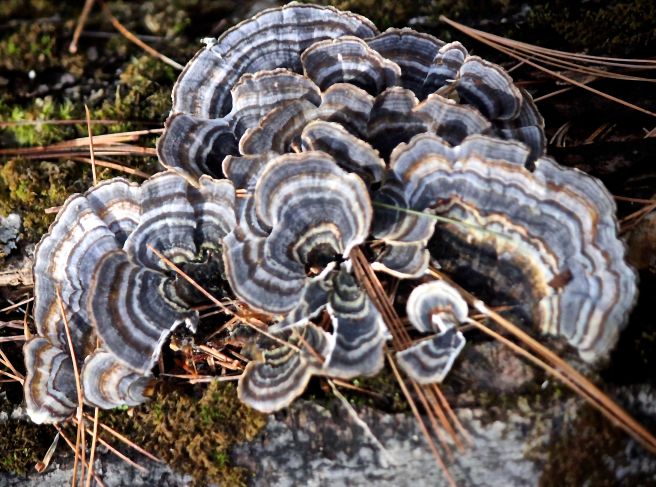
h17-turkey tail1

h18-hemlock root

Silence truly IS golden. Thanks for stopping by for this wonder-filled wander.


Leaping Mondate

My guy happens to be Irish so it seemed only appropriate that I propose to him today following the example that St. Brigid set when she struck a deal with St. Patrick. Yes, we’ve been married for 25+ years, but I proposed anyway.

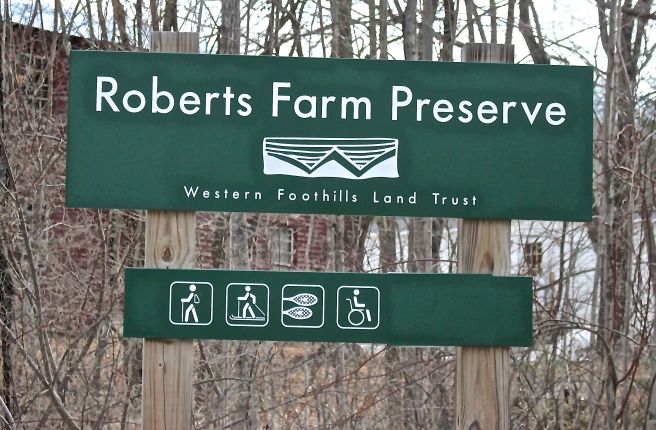
And he accepted. So today’s Mondate found us at Roberts Farm Preserve in Norway. Norway, Maine, that is.

R-sign

In her book, Hikes and Woodland Walks in and around Maine’s LAKES REGION, my friend Marita Wiser states that the preserve was “farmed by the Pike and Roberts family for 200 years.” She adds, “The property was purchased by the Western Foothills Land Trust in 2007.”

r-parking

Though the trails are mostly maintained for Nordic skiers, we didn’t see any today.

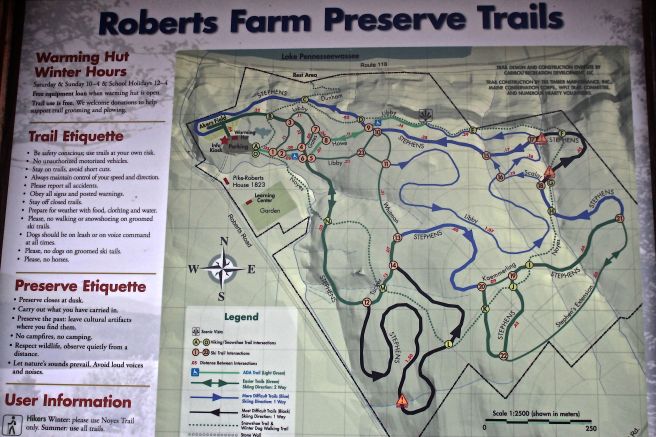
r-trail map

Had it been open to skiers, we wouldn’t have been able to do what we did–follow the network of trails around the perimeter of the property.

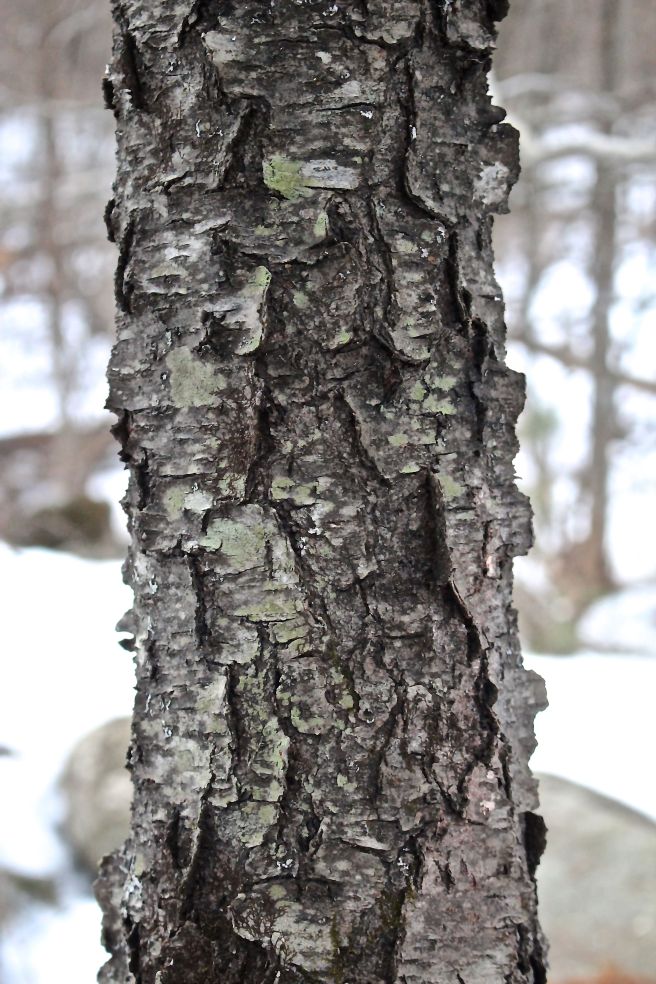
r-cherry bark

We’d only walked a few feet when I had to pause–the burnt cornflake look of black cherry bark insisted upon being noticed.

R-Northern White Cedar

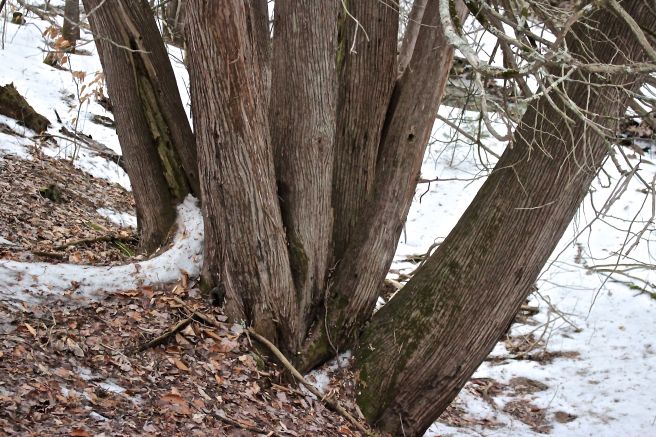
Visiting here a couple of times previously, one of the things I’d come to like about it is the opportunity to gush over Northern white cedar bark.

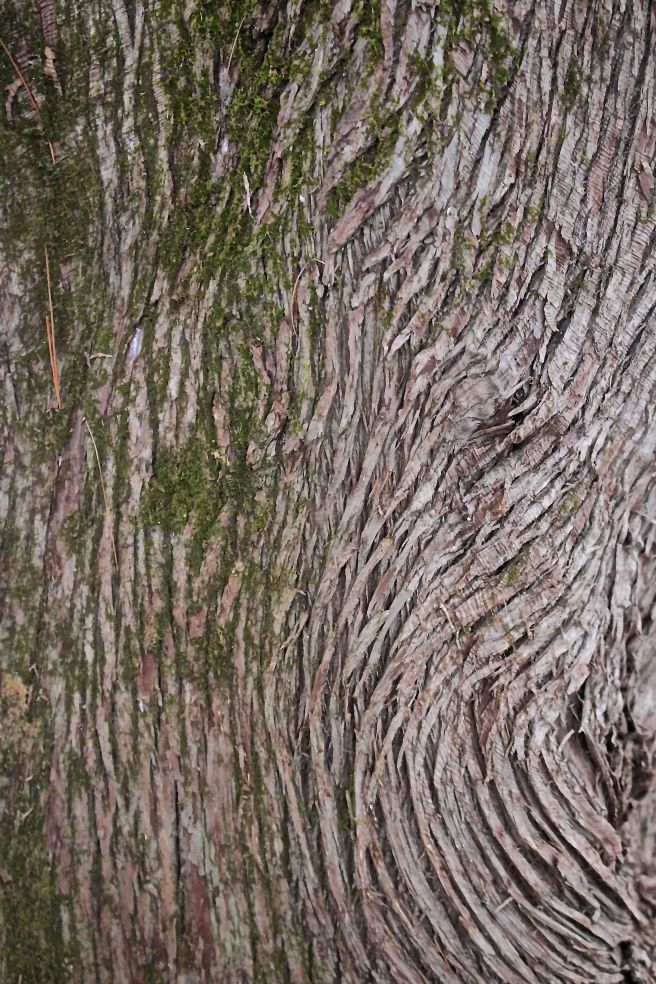
r-northern white bark2

I love its red-brown color, sheddy strips that intersect in diamond formations and habit of spiraling left and then right with age. In his book BARK, Michael Wojtech states of the cedar: “In the 1500s, the native Iroquois showed French explorers how to prevent scurvy using a tea made from the bark, which contains vitamin C. The name arborvitae means ‘tree of life.'”

r-northern white leaves

Equally beautiful are its flat sprays of braided, scale-like leaves.

Since I’m on the topic of tree bark, I have two others to share, including this one–the red inner bark of Northern Red Oak made a stunning statement.

r-hop hornbeam bark

Displaying its shaggy presentation was the hop hornbeam.

My heart leaped (appropriate movement for today) when I saw these papery fruits on the ground–hop hornbeam is named for its fruiting structures that resemble hops.

r-stone wall

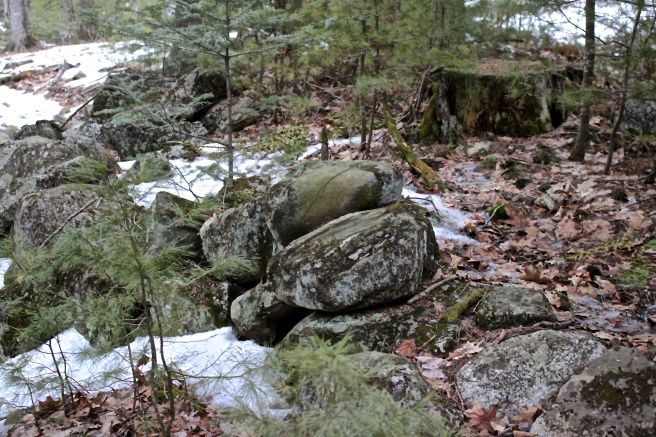
Stone walls crisscross the preserve and provide evidence of its former use as a dairy farm.

r-barbed wire

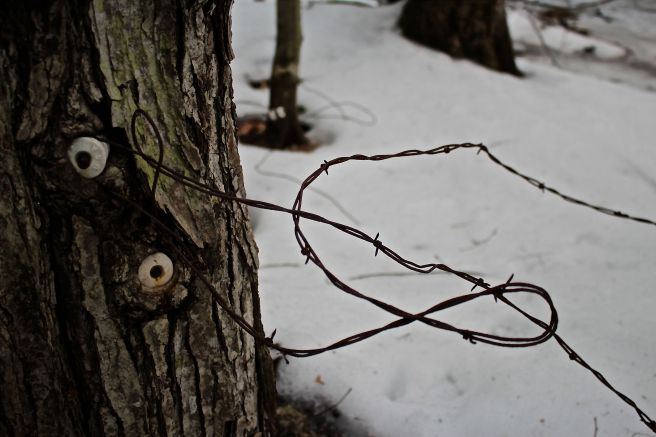
Barbed wire adds to the story.

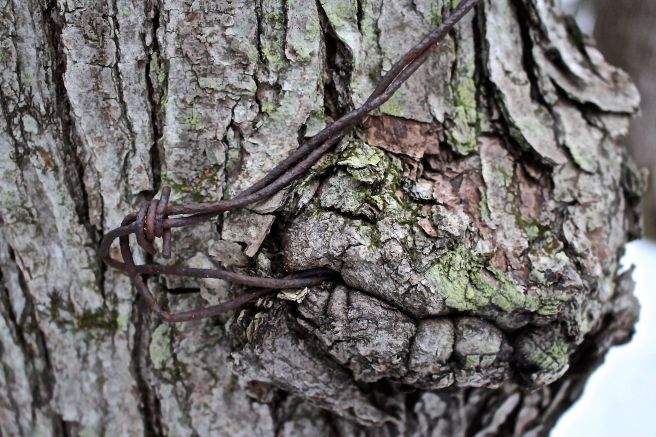
r-barbed wire grimace

Installed long ago, this tree formed a grimace in response.

r-large pine

Along the edge of some walls stand much happier trees–those that were allowed to grow tall and wide in the sun, like this Eastern white pine. Perhaps it provided a bit of shade for Roberts’ Jerseys.

r-generation gap

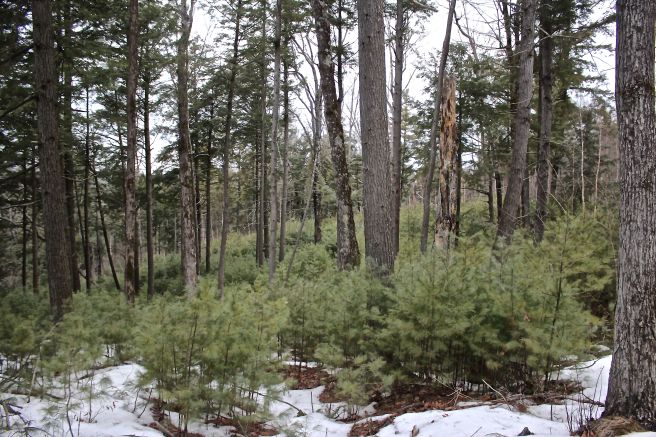
The land was farmed until 1968. Since then, it returned to woodland, was sold and logged and sold another time–finally to the land trust. Generational gaps are visible throughout. This is the perfect place to take some youngsters and ask them to locate a white pine that matches their age.

r-brook 2

We cross several streams that I’m sure sustained the farm and its inhabitants. Today, they sustain the wildlife that wanders here, including deer.

r-turkey trot

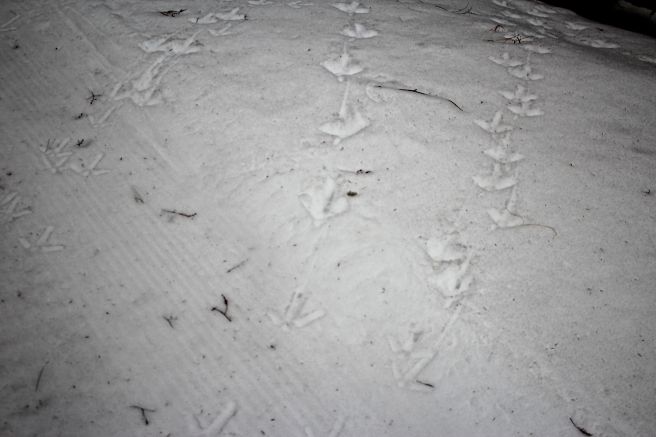
We realized there had been a recent turkey trot and

r-voles 1

vole convention.

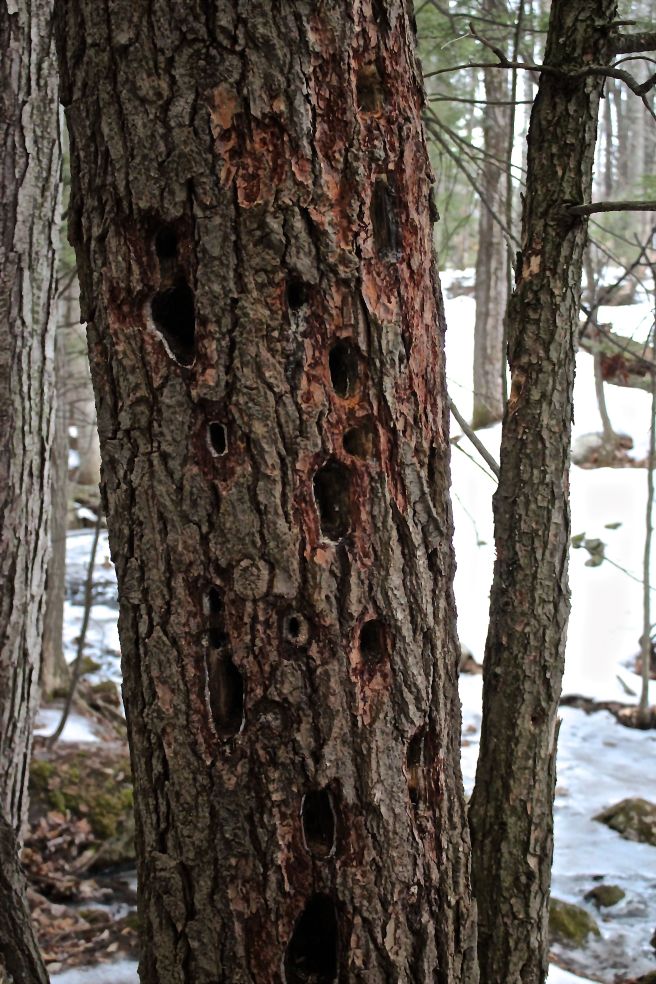
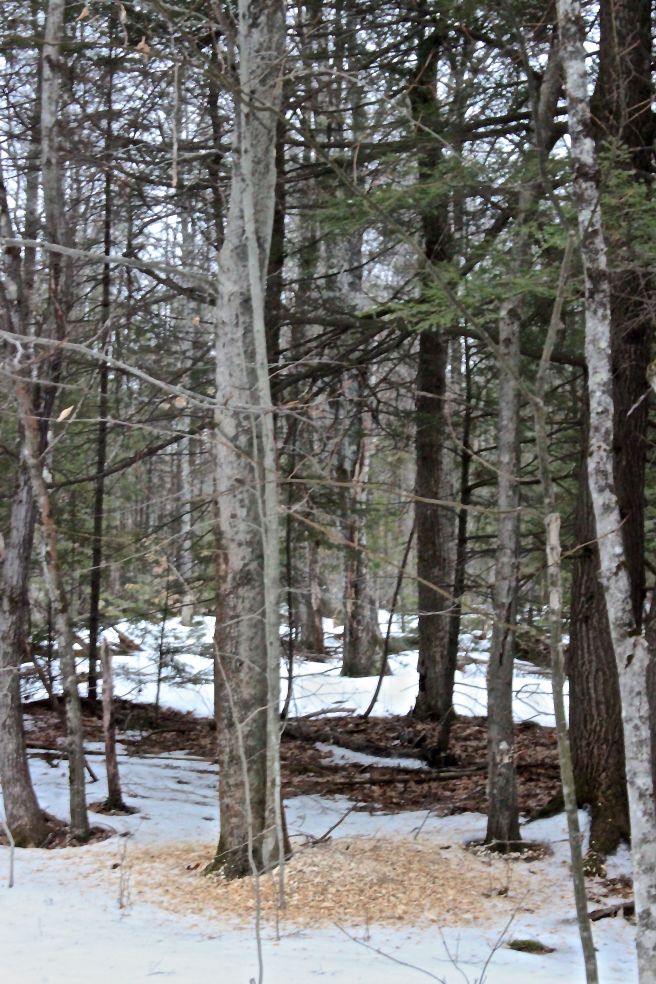
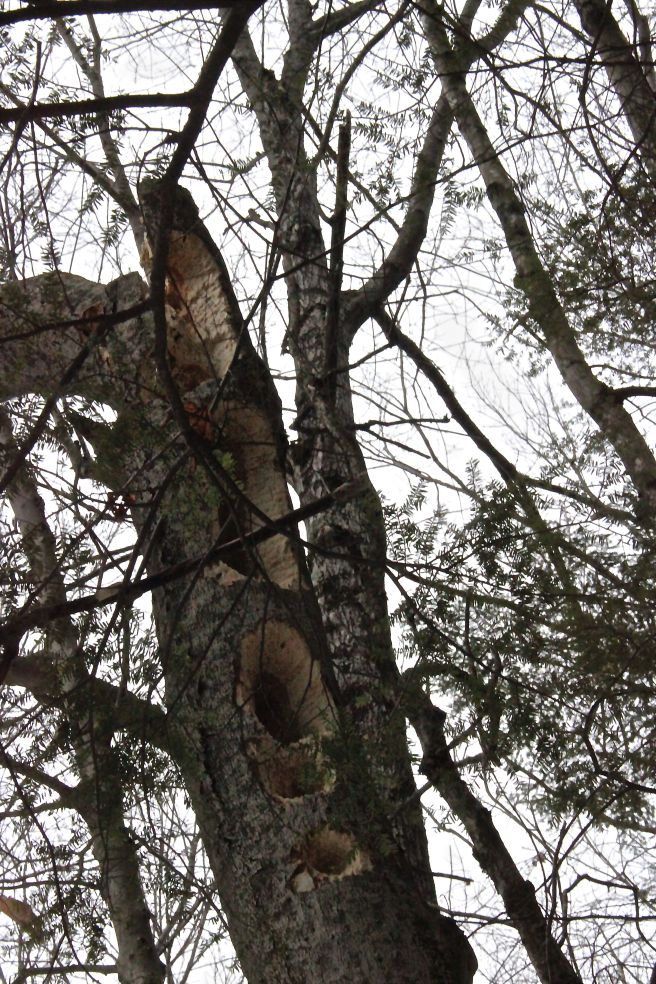
r-pileated condo

Birds also have played a major role in this community. This pileated woodpecker-created condominium has been around for a while.

r-pileated pile

From the trail, I spied the largest pile of wood chips I’ve ever seen and of course, had to investigate.

r-pileated tree

The old beech was recently excavated for new condos.

r-pil pile 2

Below, the wood chip pile was a couple of inches deep.

r-pileated scat 1

r-pil scat 2

The best part–lots of scat cylinders filled with insect body parts. Good stuff to see.

r-birdhouse

Pileated woodpeckers aren’t the only ones in the building industry.

r-birdhouse sign

I think you’d agree that Quinn and Mike did a fabulous job constructing this birdhouse.

r-mullein capsules

In several open areas we spotted the winter display of common mullein.

r-mullein 2

Its crowded performance of two-parted capsules atop a tall, fuzzy stem made it easy to identify.


The pointed prickly bracts of thistles also offered a winter show.

r-lungwort on ash

Lungwort tried to hide on the backside of an ash tree, but I found it. I only wish we’d had rain, or better yet, snow, recently, because I love the neon green that it becomes once it is wet.

r-lunch rock

Be careful what you wish for. Though the day was sunny at the start, it began to rain as we ate our sandwiches on lunch rock overlooking Lake Pennesseewassee, aka Norway Lake.

r-lake 1

It wasn’t a downpour, but enough that it encouraged us to eat quickly and move on.

r-beaked bud

Well, I didn’t move far. Within steps, I found a shrub I was seeking yesterday–beaked hazelnut.

r-beaked hazel

It’s a member of the birch family and features catkins–the male flowers that will release pollen this spring to fertilize the shrub’s delicate red female flowers.

r-christmas fern

Another quick find–Christmas fern–one pinnae topped with a birch fleur de lis.

Typically, during the winter there is only one trail open to hikers. Today, however, we figured it would be OK to walk on the ski trails because they are either icy or bare. It was definitely a micro-spike kind of day, which has been more the norm this year.

r-painted cow

Other than birds and squirrels, we saw no wildlife. But we did stumble upon the “Painted Cows” created by Bernard Langlais in 1974 and gifted to the land trust by Colby College and the Kohler Foundation.

We had planned to explore the inner network of trails, but the cold raindrops drove us out. Despite that, I think my guy enjoyed himself as much as I did. And he was extremely patient each time I paused. Sometimes he even gave me a heads up–I took that to mean he didn’t mind that I had to stop, wonder and photograph. This is one Leap Date I hope we don’t forget.