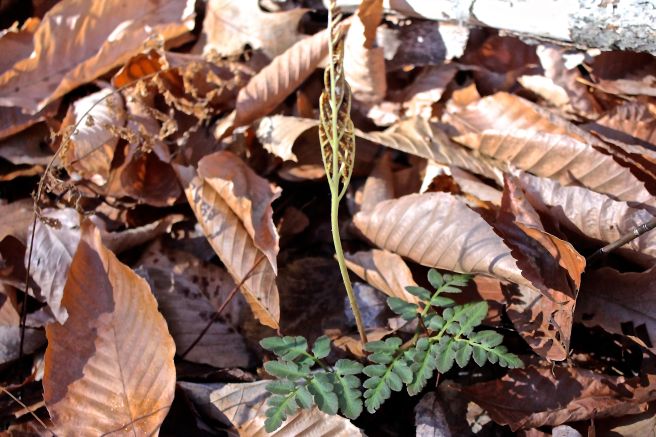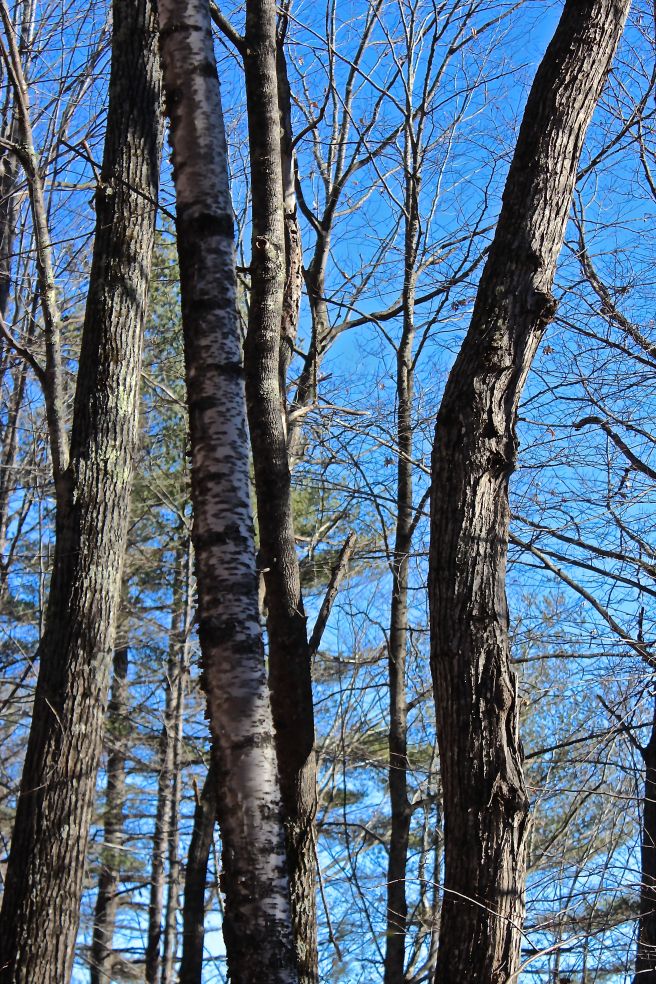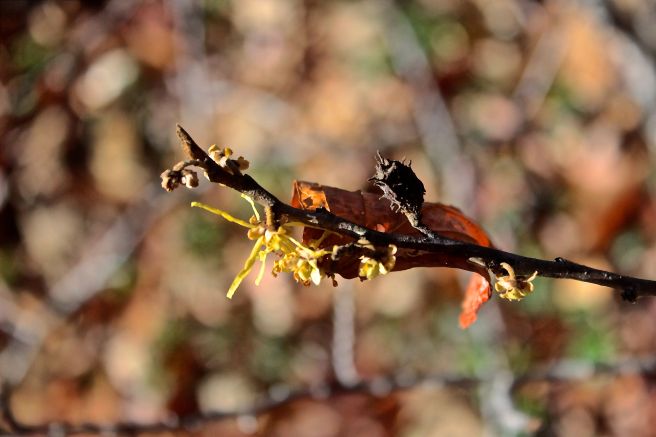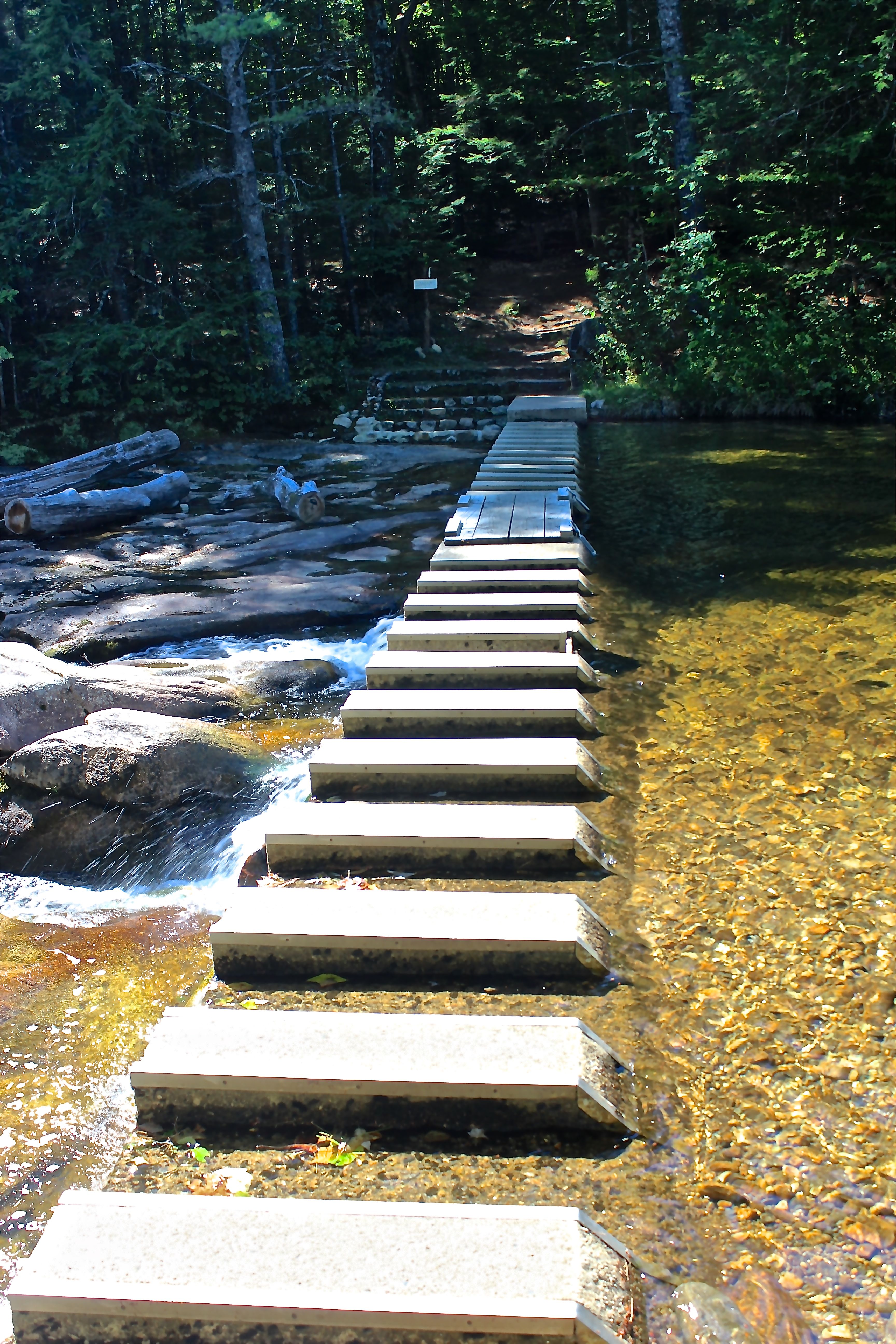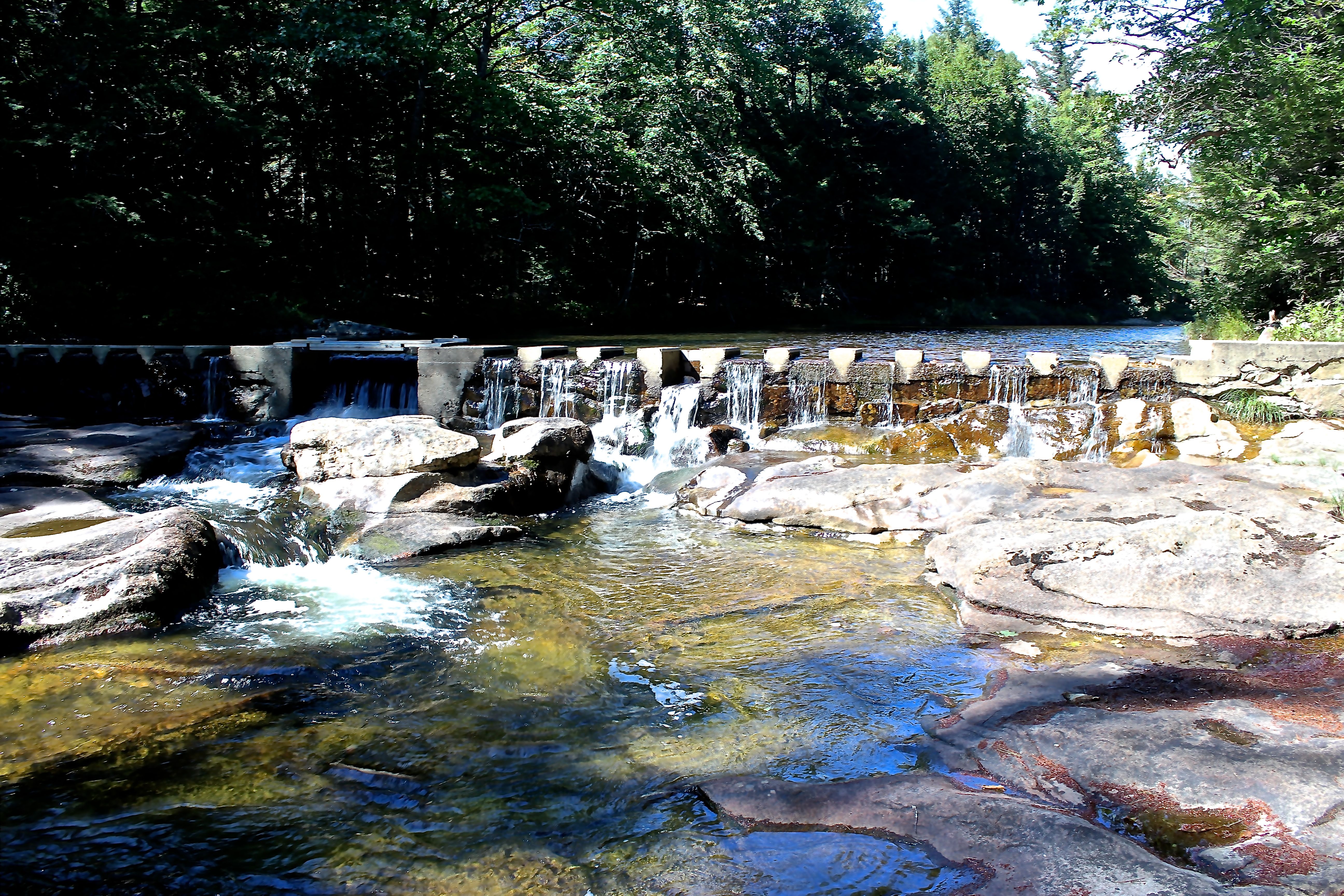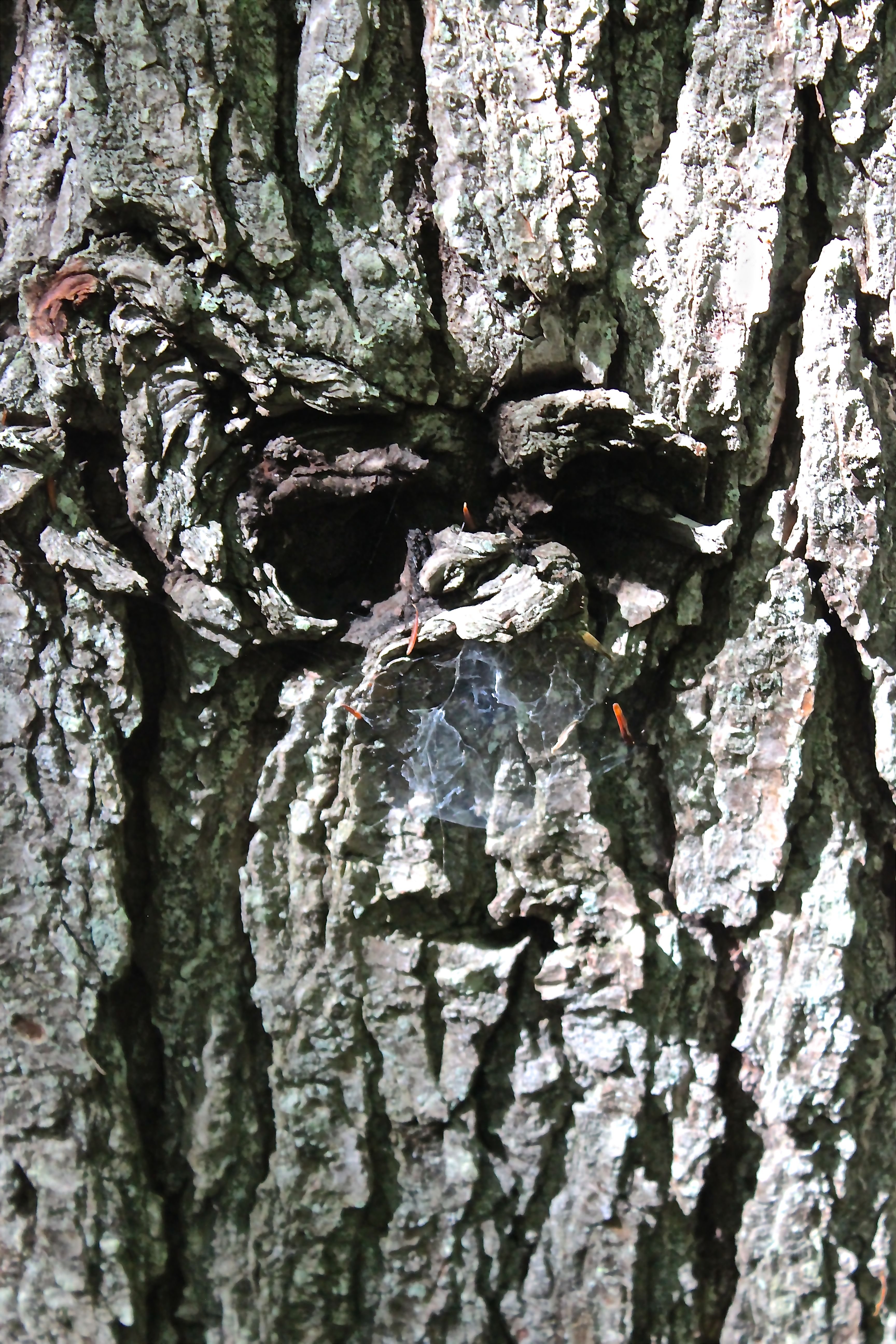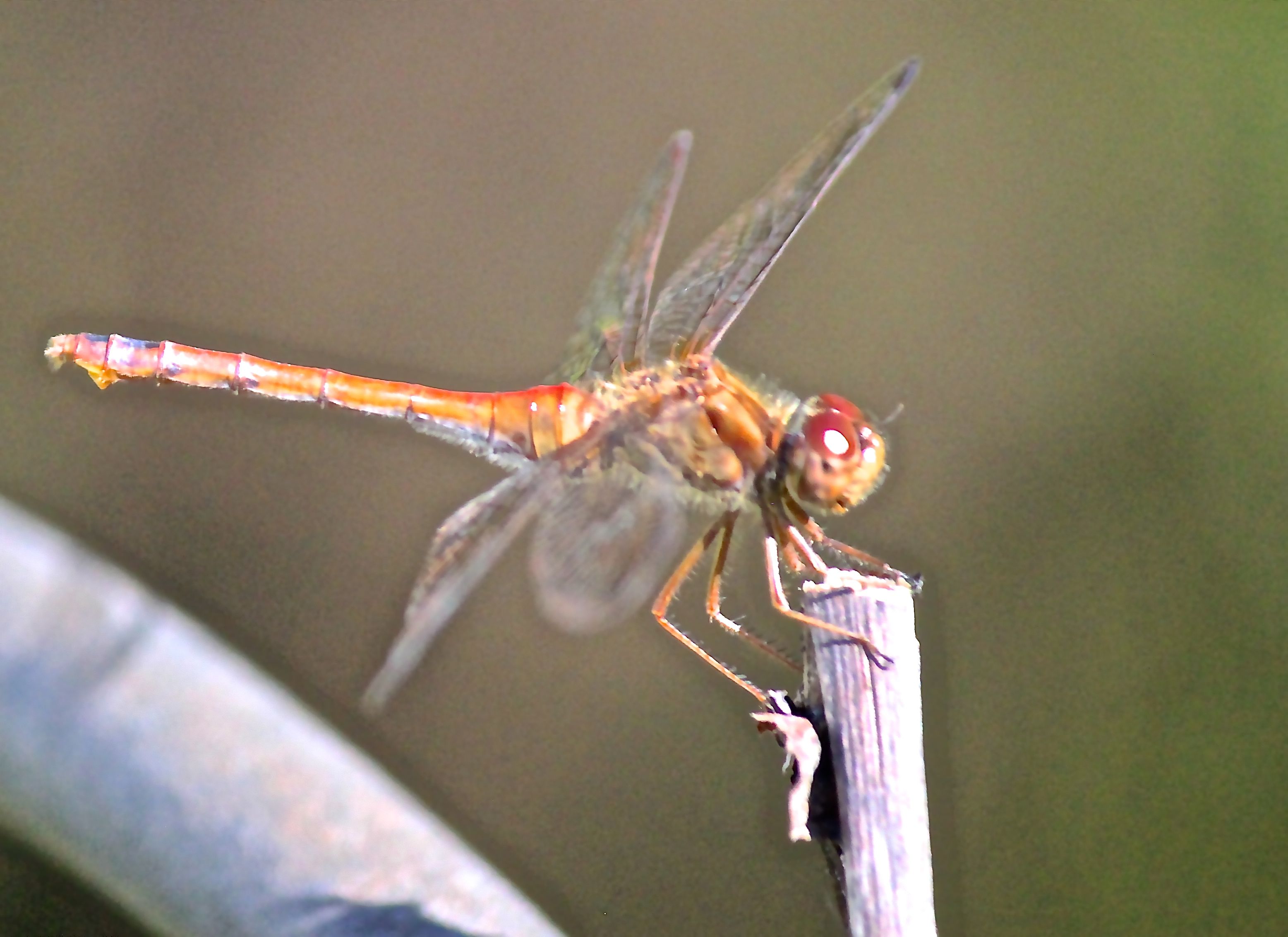
Gallivanting Around Great Brook

It’s been a couple of months since Jinny Mae and I last checked in on the doings in the Great Brook neighborhood off Hut Road in Stoneham, Maine.

H-Forest Road 4

Forest Road 4 isn’t plowed in the winter. That’s OK. We welcomed the opportunity to admire our surroundings as we hiked above the brook. So much to see that is so often missed as one drives.

h-paper birch blue

Though the temperature was on the rise, the blueness of a few paper birch trees reminded us that it’s still winter.

h-sphagnum

We found sphagnum moss looking a bit frosty but cheering us on with its pompoms.

h-chaga

On more than one yellow birch, chaga offered its medicinal qualities in quantity.

h-yellow and white partners

We came upon a special relationship–a yellow birch and a white pine. Rooted in this place, they embrace and share nutrients.

h-yellow birch:white pine

Forever conjoined, they dance through life together.
h-GB1

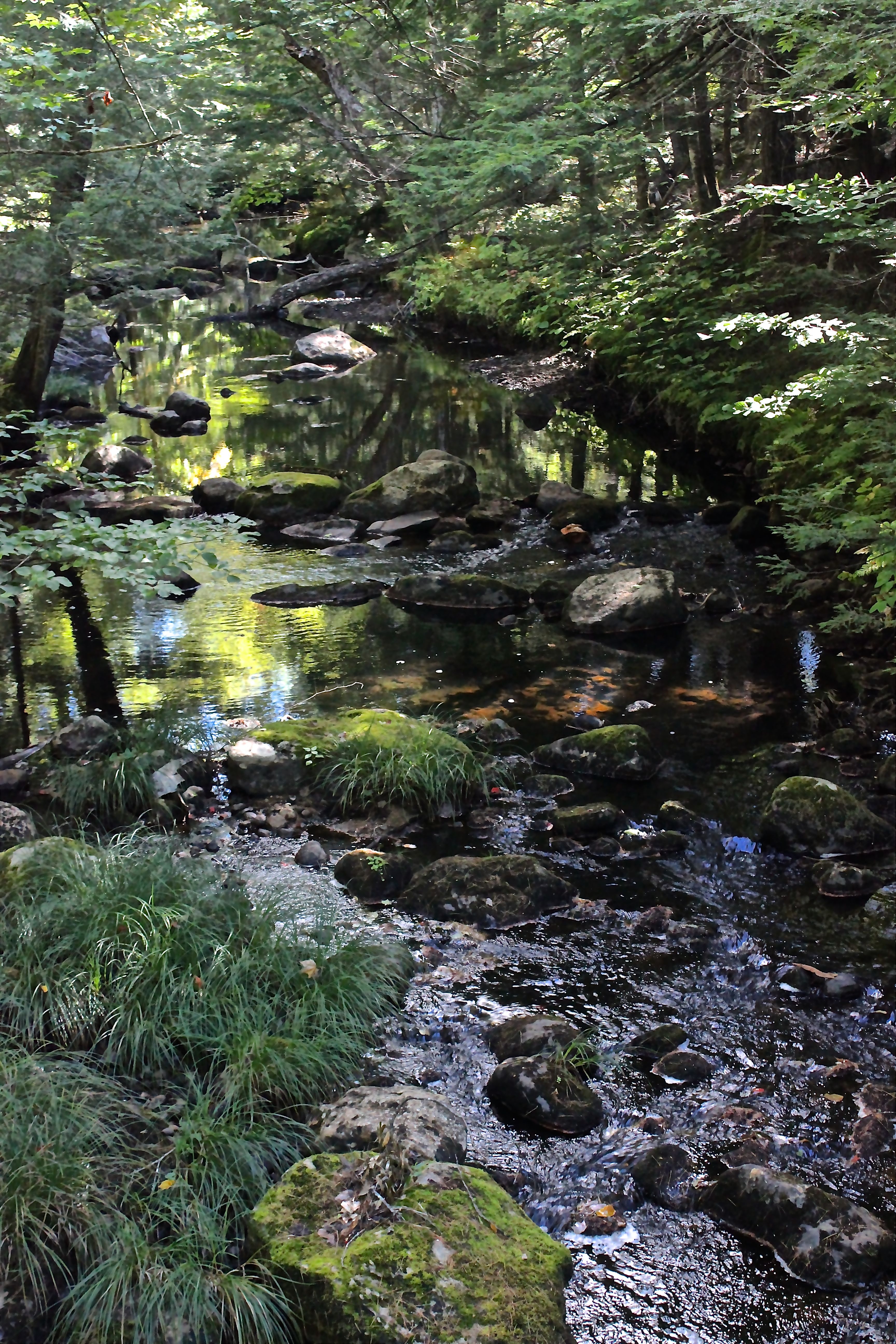
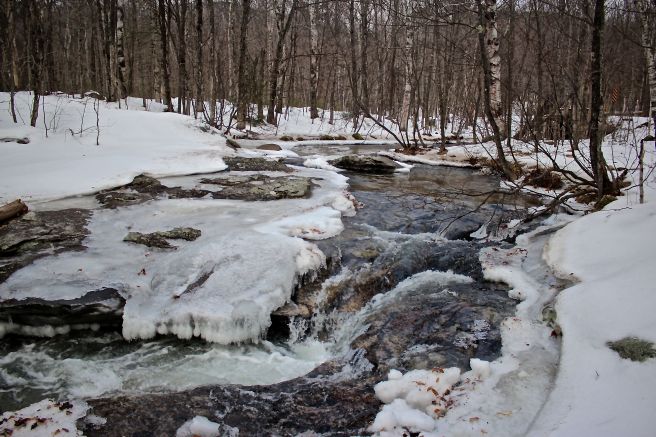
Finally beside the brook,  we couldn’t see the rocks below very well, but watching the water race over them gave us a better understanding of the forces that have smoothed their surfaces.

h-GB south

In a few more months, we’ll stand here and wonder where all the water went.

h-ice drips& bubbles

But today, it was the ice formations that we couldn’t stop admiring. Bubbling water below and dripping ice above, each adding to the other and both constantly changing.

h-ice 2

So much variation on the same theme as coursing water freezes into ice while at the same time carving into the rocks below.

h-ice pedastle support

Looking beneath, we noticed pedestals shaped like elephant legs providing support to shelves above.

h-gb ice castle

Occasionally, we saw crystalline turrets, translucent arches and frozen chandeliers of castles captured in ice.
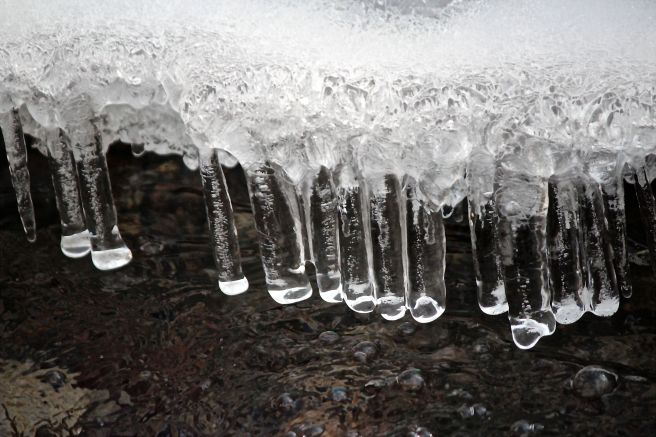
h-sets of ice feet

Sometimes, it seemed like ballerinas danced on their tippy toes. That’s what water really is, isn’t it–a dance through time with changing tempos along the way?

H-GB

We crossed Great Brook and then paused for a moment as we decided which trail to follow.  We took the road less traveled by. I laughed when Jinny Mae referenced Robert Frost’s poem. My former students don’t read this, but that was one of the poems they had to learn and recite. And my guy–poor soul–knows it through association. Actually, he’s a better soul for that reason.

h-tree owl 2

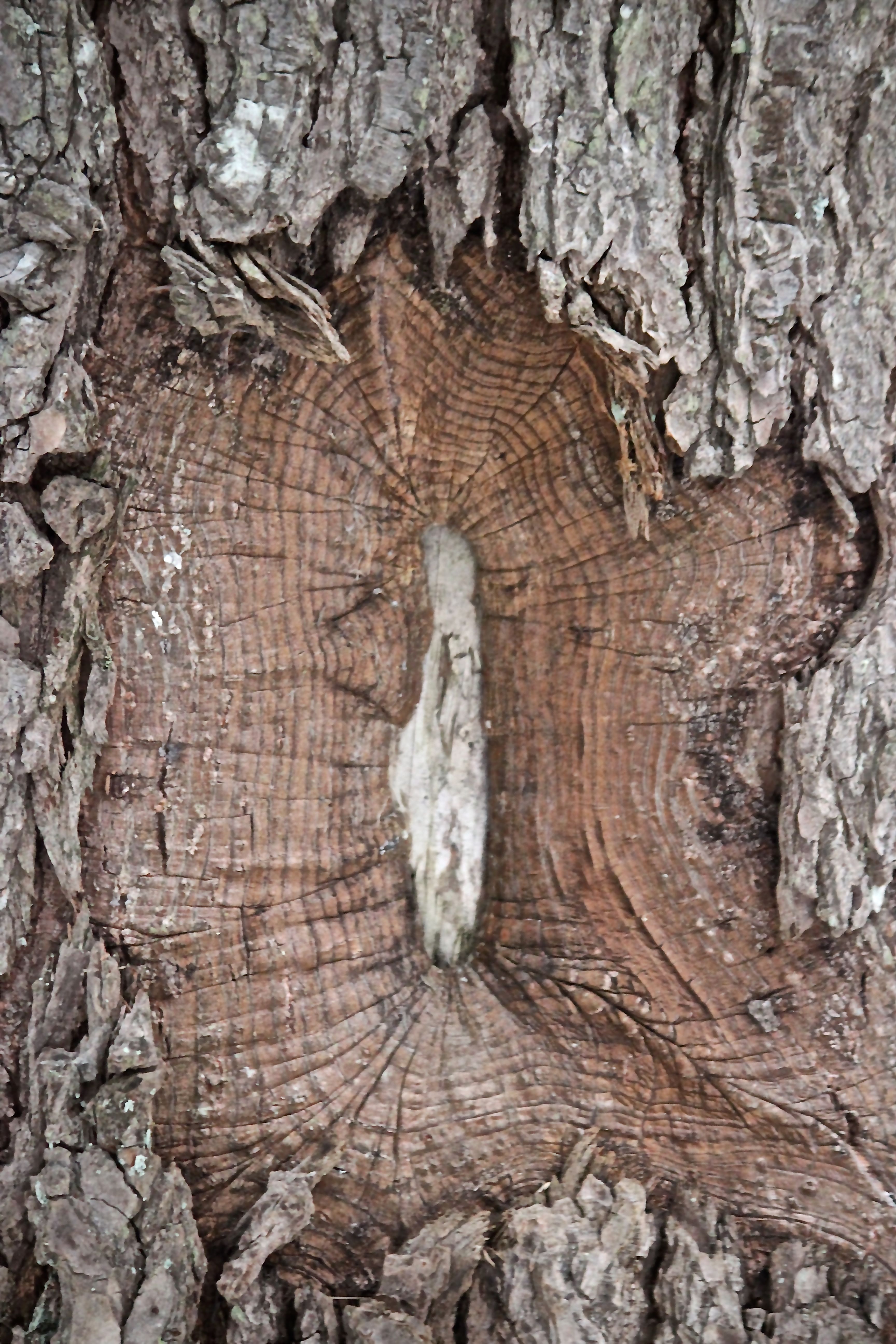
So you may not see it, but Jinny Mae and I did–an owl hidden in the ash bark. Not a live owl, mind you. Well, that depends on your perspective, I suppose.

h-heal all

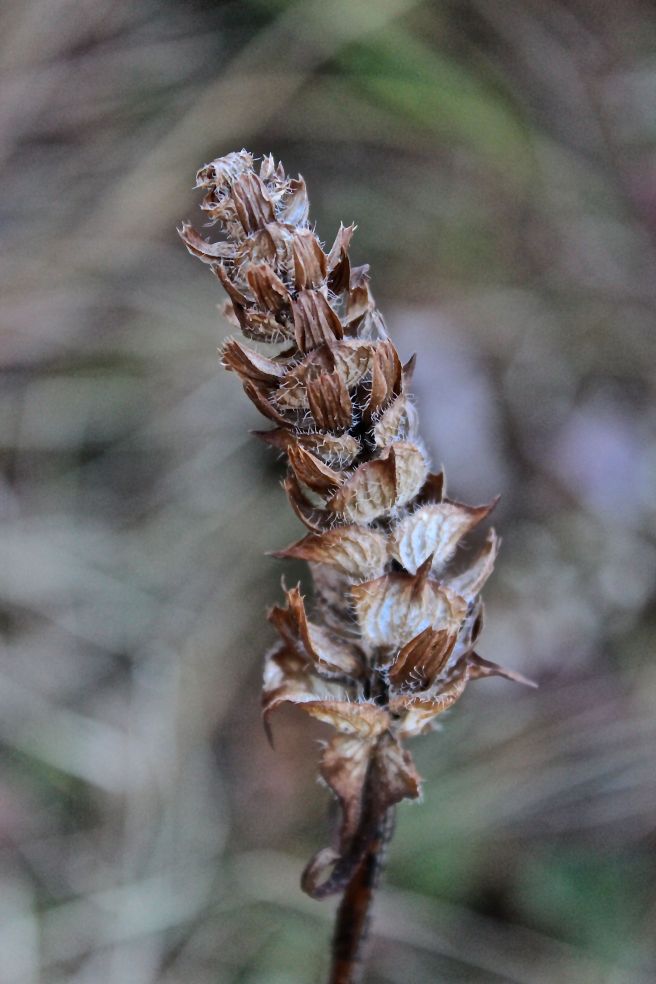
Within minutes, we knelt to admire Selfheal or Heal All (Prunella vulgarism) and its hairy calyces.

h-survey sign

We stood by the survey marker sign and realized it had been attached for many years.

h-survey marker

Perhaps 51 years!

h-frullania 1 on red oak

h-frullania 2

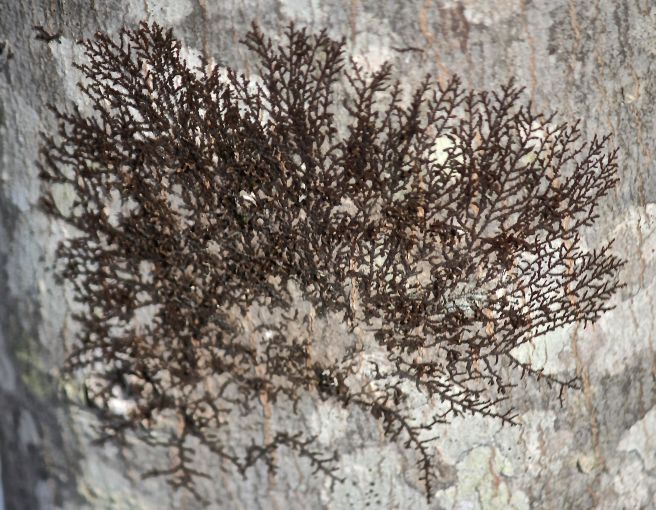
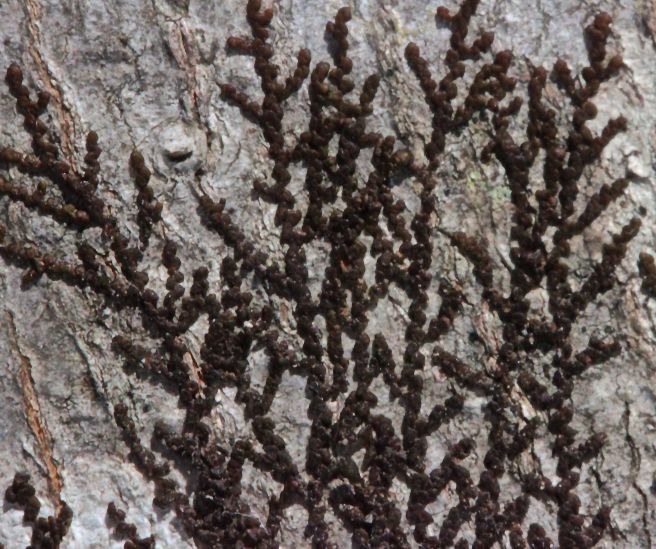
On a red oak, we pause to look at the reddish-brown liverwort–Frullania. There’s history in this species–dating to the earliest land plants. No matter how often we see it, and we see it often, we feel privileged.
h-leaves and ice

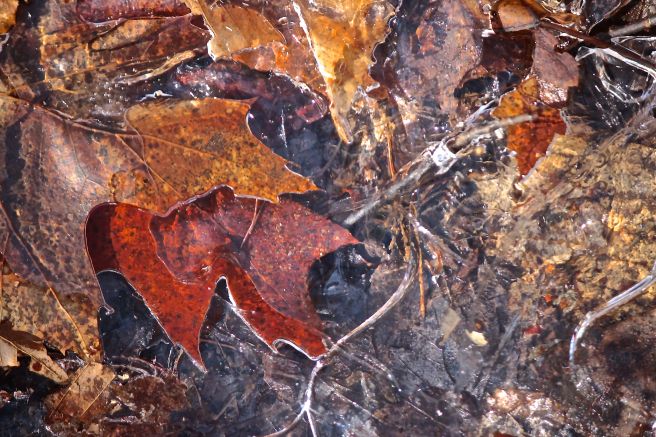
The trail switches from snow to ice to water and back again. Ice covered leaves draw our appreciation.
h-fnd 1a

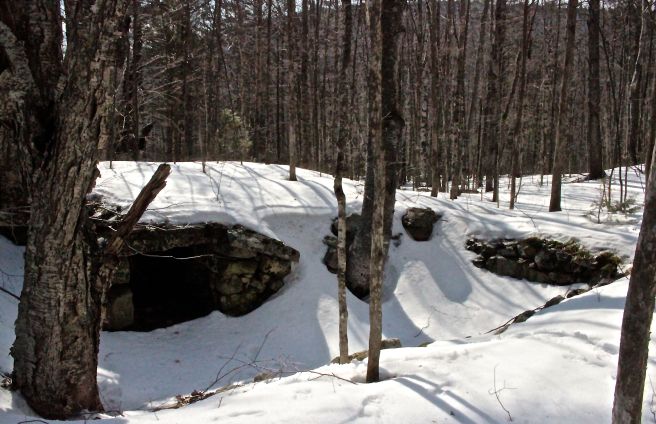
In the neighborhood, we pause to check on the local families.
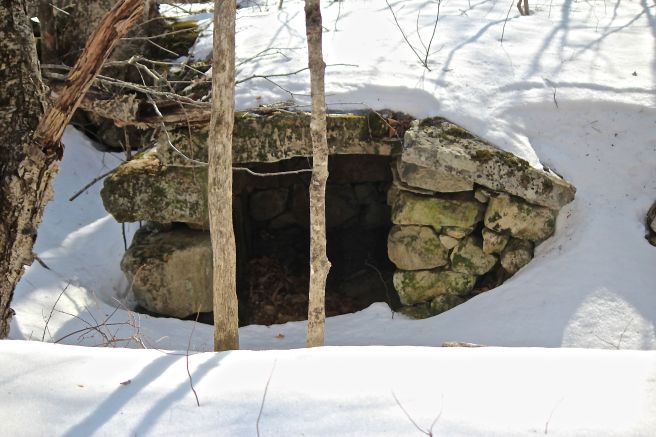
h-fdn 1 chamber

I climb down to the root cellar and discover that the porcupines haven’t visited all winter. Old scat still present in there, but nothing new.

H-Fdn 2

Moving up the colonial road, we come to the second residence.

h-fdn 2 yellow birch on mantel

Atop the mantel grows an old yellow birch. Like any TV screen above the fireplace, it offers an ever-changing display.

h-brook upland

We moved toward Shirley Brook, where we were once again in awe of ice.

h-water and ice1

Water and ice: a relationship in constant flux–at the moment.
h-brook structure

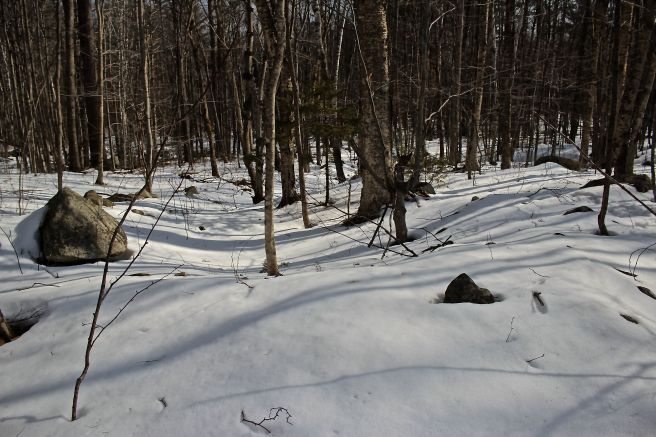
Beside the brook is a stream that’s currently dry. We look edat the snow-covered stonework that crosses over it and realized we need to return and try to figure out what the structure might have been and why it was built here. Stuff like this adds to the intrigue. Man-made. When? Why?

h-spider 3

Poor Jinny Mae. She had to wait for me constantly as I shifted from one lens to the next. But check out this spider.

h-stone piles 1

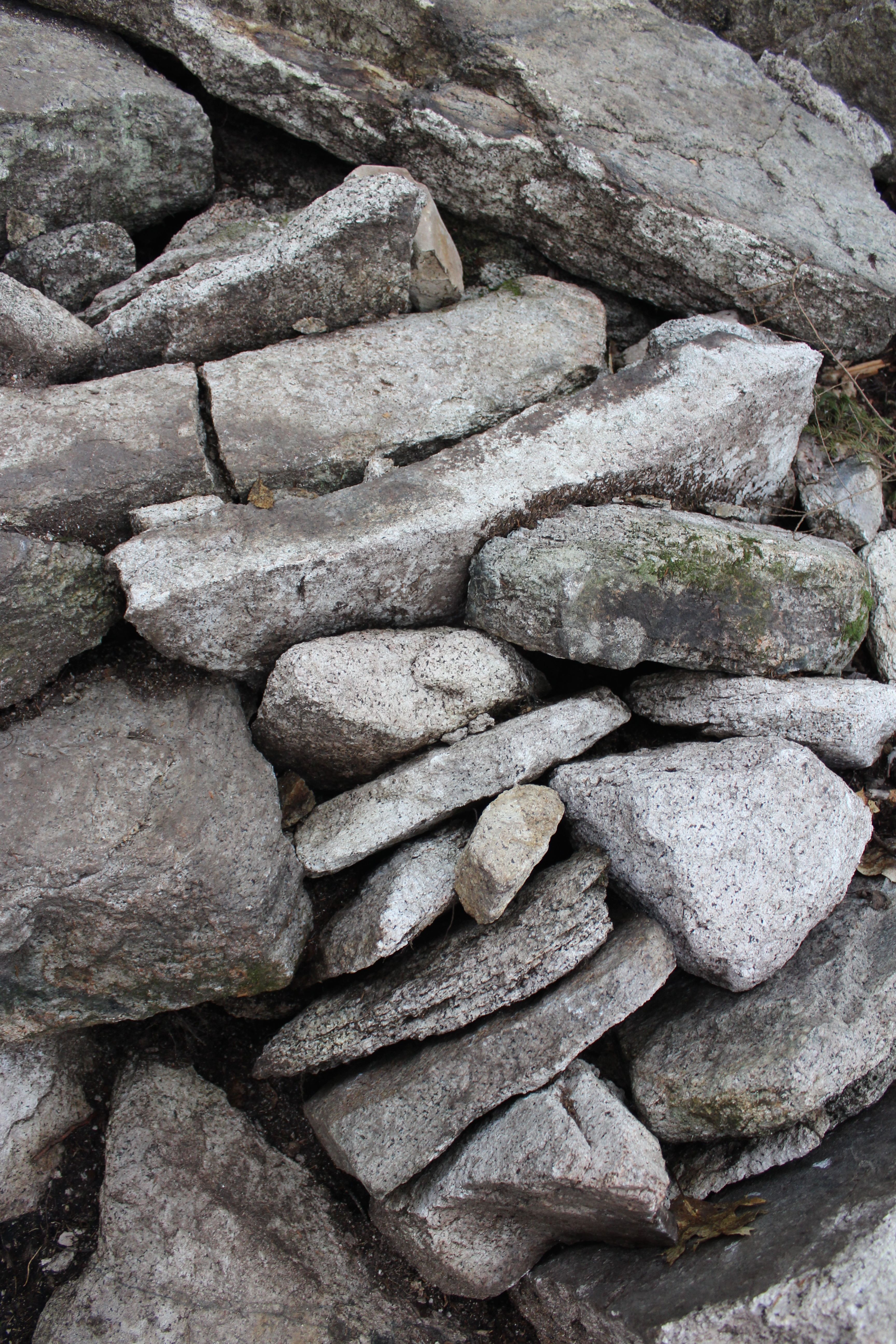
We are the queens of bushwhacking and love discovering the stories hidden in the woods. In this neighborhood, lots of stone walls tell part of the story. Rock piles enhance the chapters.
h-moose scat 1

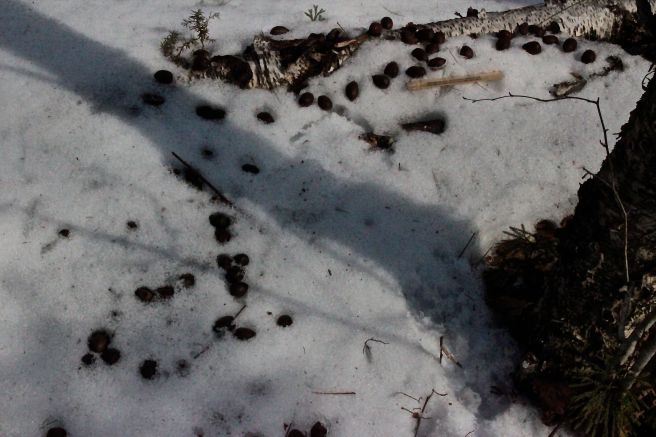
And then we found more. Fairly fresh moose scat insisted upon our attention. We’d noted that there were some old snowshoe hare runs and we found some moose browse on a nearby striped maple, but we were surprised that there weren’t many fresh tracks. Where have all the mammals gone?
h-moose scat 2

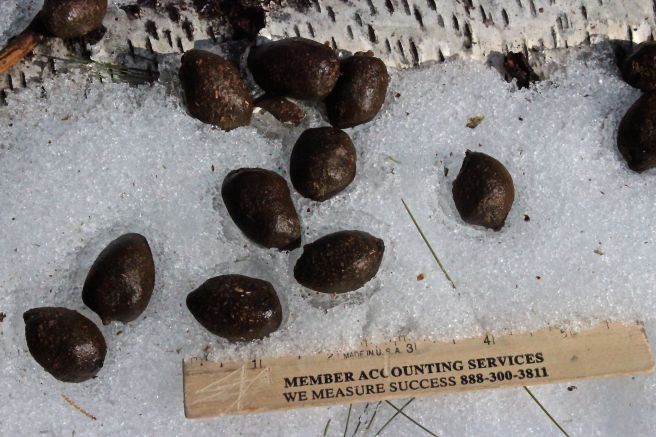
This scat is some of the biggest moose scat we can recall seeing. A few gems followed me home.
h-lady's slipper

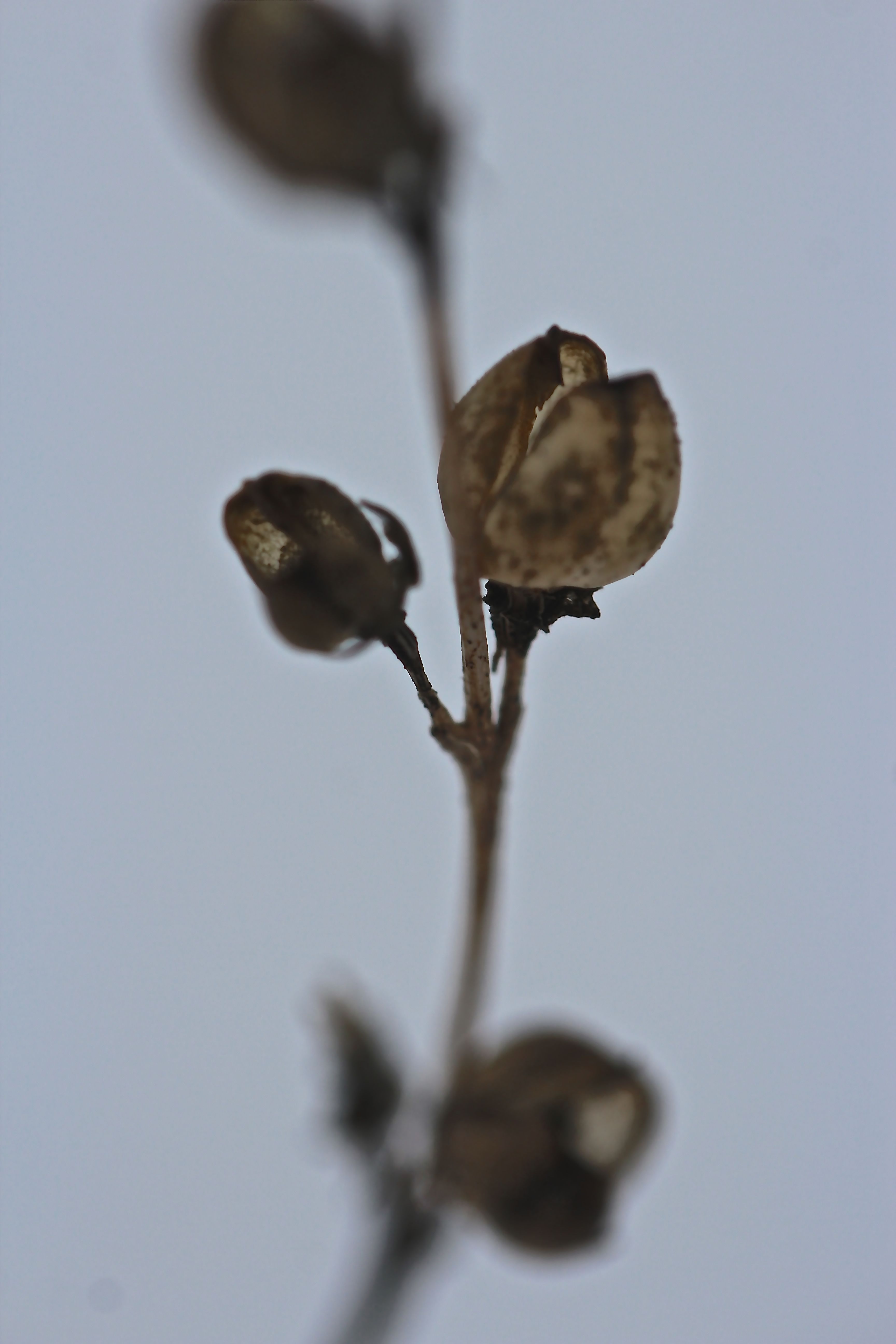
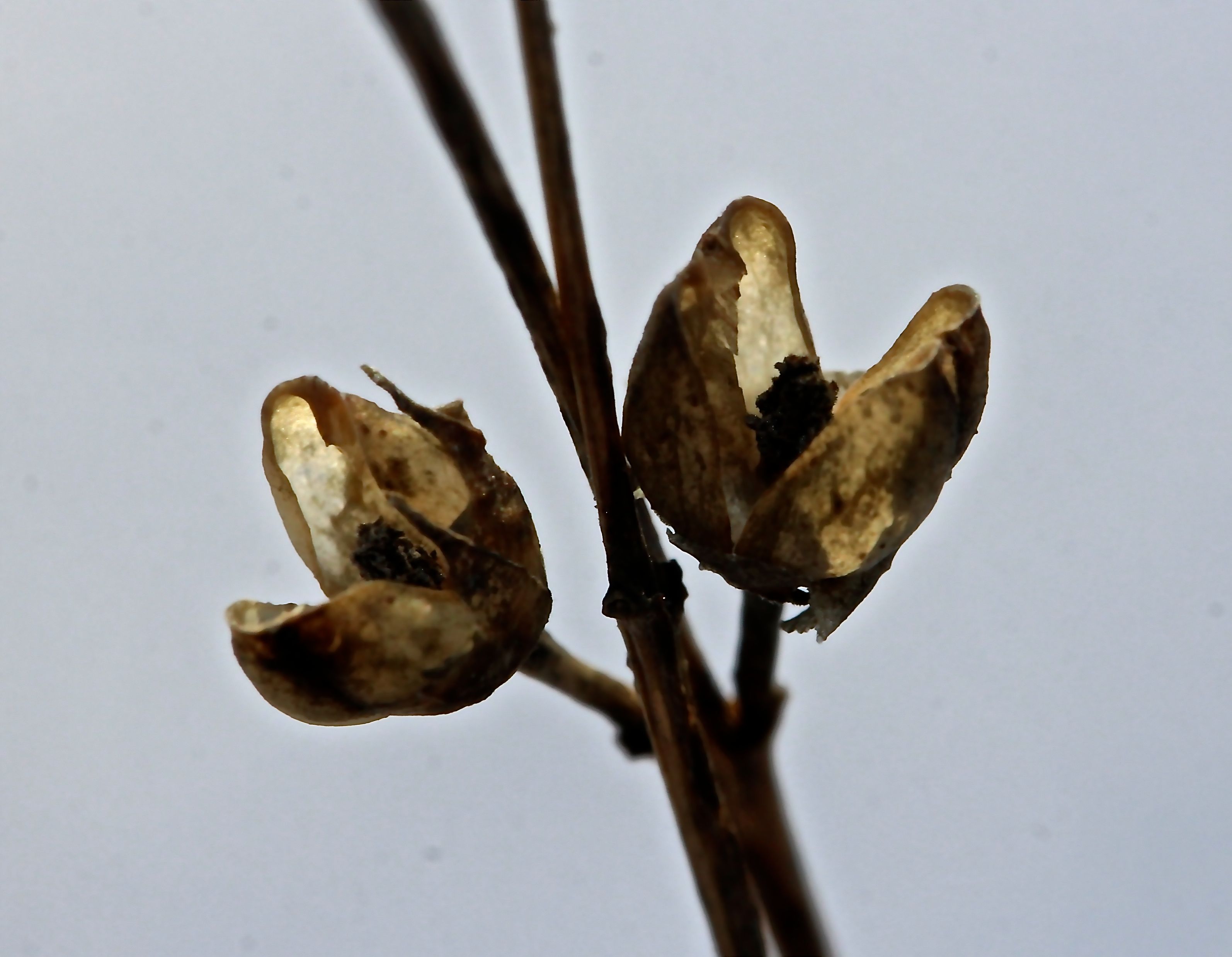
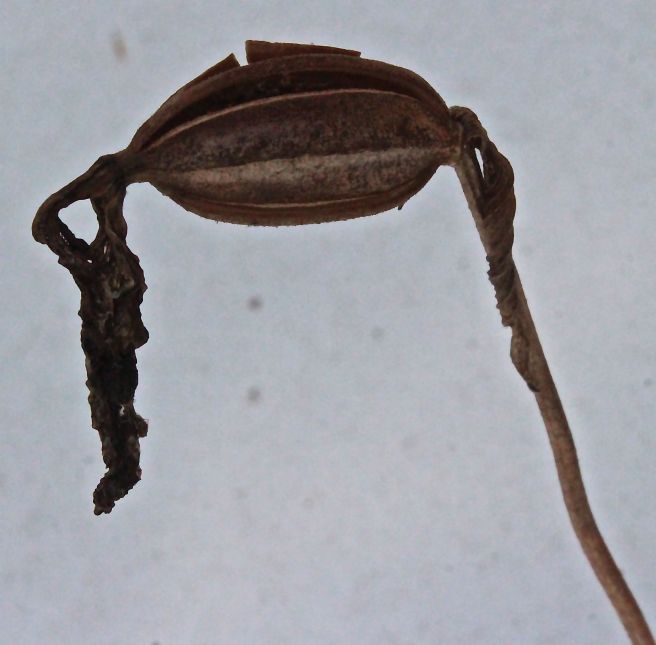
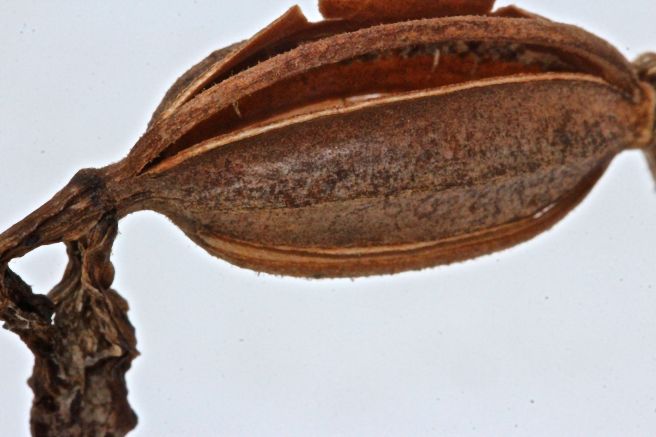
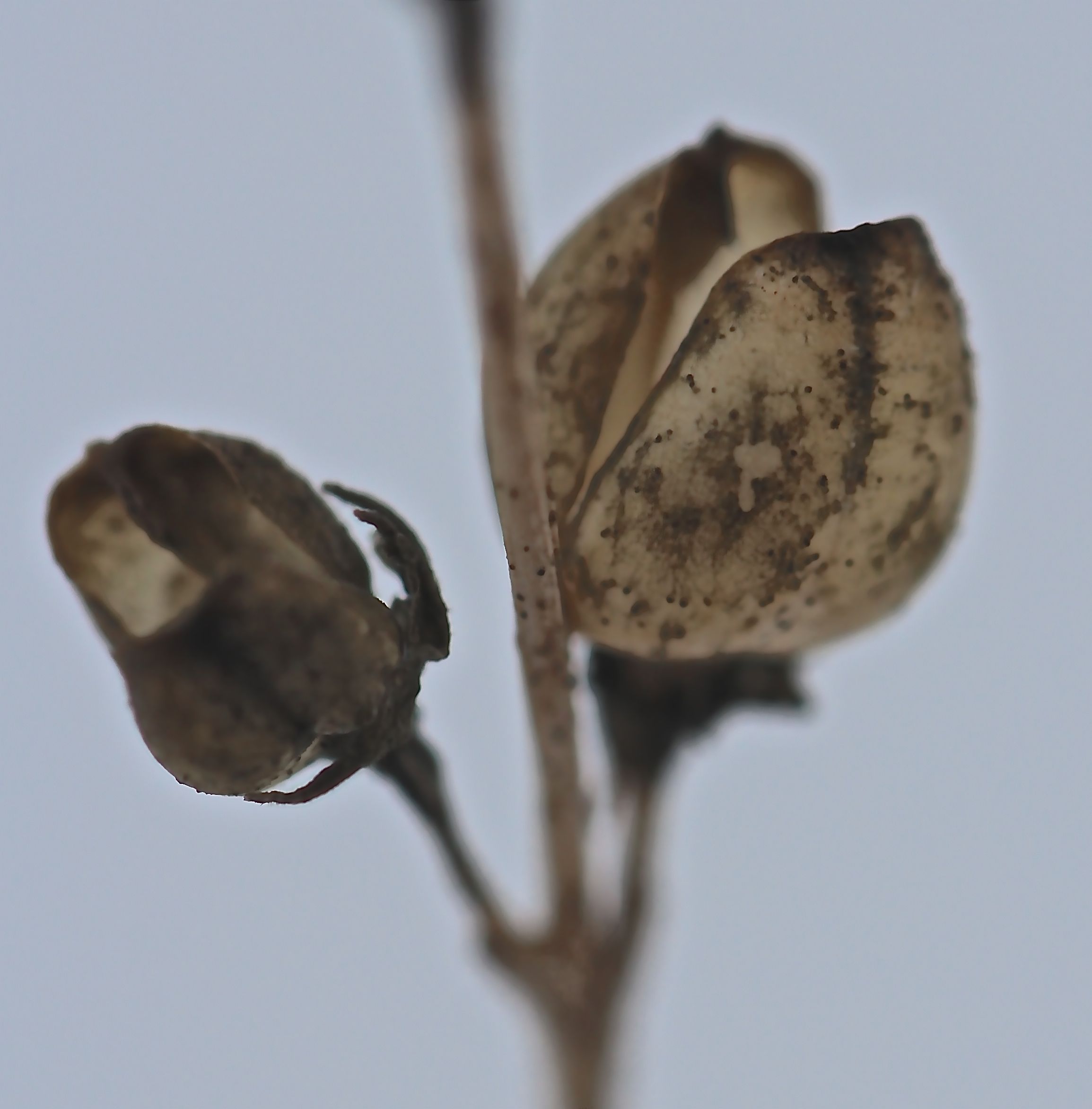
And then we happened upon something neither of us have seen before–at least that we are aware of. We had our ideas about what winter weed this is, but since we haven’t encountered it before our sense of wonder kicked in.
h-lady's slip pod 2

Back home, I looked it up in Weeds and Wildflowers in Winter by Lauren Brown. The capsule is woody and about two inches long. As you can see, it’s closed at both ends, but opens along slit lines–six in all, actually.

h-lady's bract at base of pod

At the back end, a long, curved bract.


And at the front, the slipper gone by. Yup–Lady’s Slipper (Cypripedium acaule). And the reason we didn’t recognize it–because it’s a rare find in the winter woods. Wow.

h-bear 1

We’re on our way out when we spotted these marks on beech bark. We’d looked and looked because we know this is bear territory.

h-bear NW

Compared to other bear trees, these claw marks are newer than most I’ve seen. Jinny Mae was as excited about the find as I was. I’d told her earlier as we scanned the trees that my guy has come to an unconfirmed scientific conclusion that bear claw marks appear on the northern side of trees. This one didn’t let us down. Based on the location of the sun that’s grew lower in the sky, these are on the northwestern side of the tree.

At last it was time to drive home.

Gallivant: go from one place to another in the pursuit of pleasure or entertainment. Over five miles and almost five hours later, we were thankful for the opportunity we shared today to gallivant around Great Brook.


Celebrating a Year of Wonder-filled Wanders

One year ago today I invited you to follow me into the woods. More specifically, I invited you to wander and wonder with me. I had no idea where the path would lead, but that didn’t seem to bother you. Occasionally I got fake lost, as was the case today, but still you read on. And other times I gave you the wrong information, but you quietly corrected me and continued to read. Thank you for your time, curiosity, encouragement and endless wonder. This one is for all of you.

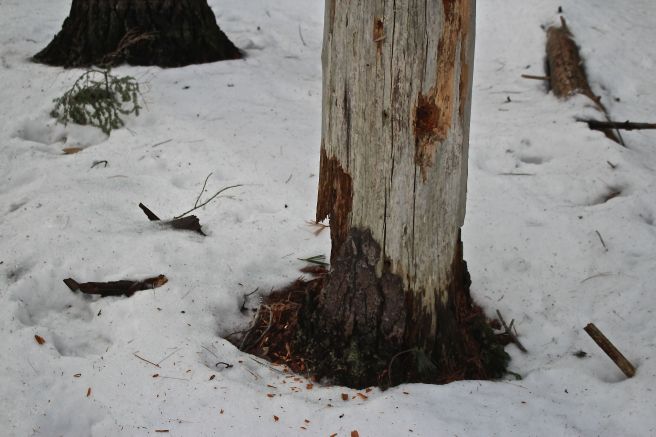
b-woody1Check out this tree that I pass by each time I step into our woodlot. My guy and I were commenting on it just the other day–he tried pushing, but it stood firm. This morning, fresh wood chips indicated that the pileated woodpecker had paid a visit in the last 24 hours.

b-woody tree 2It’s a well-visited tree. What will the woodpeckers do when it finally does fall? Two things. First, they’ll continue to visit it because apparently it’s worthy of such. And second, they’ll find other trees; there are several others just like this.
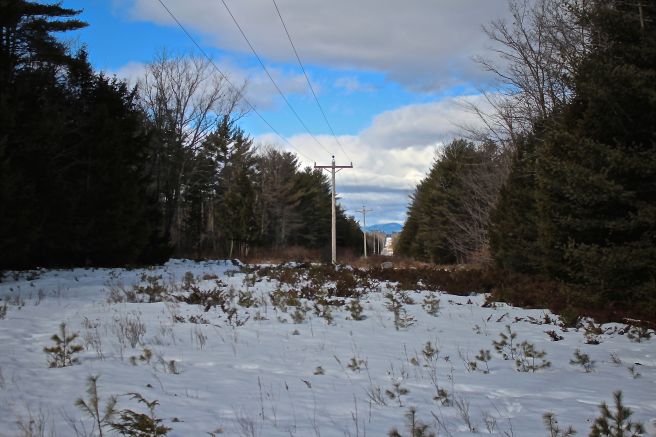
b-powerlineI was feeling a bit grumpy when I headed out the door, but finding the recent woodpecker works and emerging from the cowpath onto the power line where I was captured by the whitegreenbluegray of the world as I looked toward Mount Washington put a smile on my face. My intention was to walk along the barely used snowmobile trail as far as I could. I wasn’t sure if open water would keep me from reaching the road, which is a couple of miles away, but decided to give it a try.

b-cat following deerJust because that was my plan doesn’t mean that’s what happened. Maybe that’s what I love best about life–learning to live in the moment. This moment revealed the spot where deer sunk into the snow just off the snowmobile trail and a bobcat floated on top.
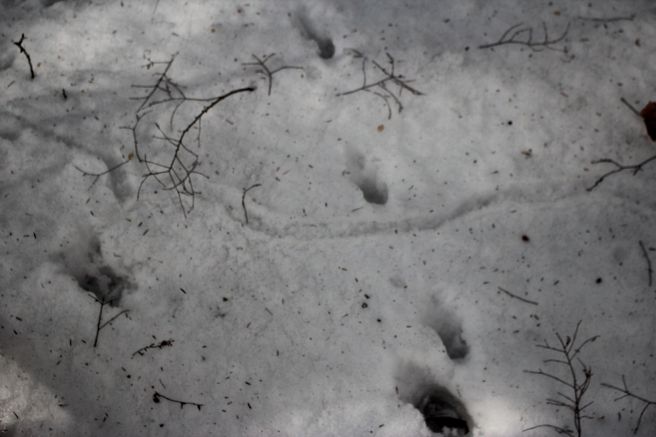
b-cat following deerSoft snow made for distorted prints. And these prints made for a quick change of plans.

b-cat:voleI turned 180˚ and found more tracks on the other side of the snowmobile trail. And so began today’s journey into the woods. I was feeling proud of myself for backtracking the animal–following where it had come from rather than where it had gone so I wouldn’t cause unnecessary stress. Yet again, I stress out all the mammals because of my constant movement–and so many I don’t see because they hear me coming. Anyway, I followed the bobcat for quite a while, noticing that it continued to follow the deer and even crossed over a couple of vole tunnels that already have their spring appearance. It’s much too warm much too soon.

b-cat-2 printsWhat I discovered is that this mammal was checking out stumps and along the way circled around them. And then it seemed that there might be two because suddenly I was following rather than backtracking. So much for that plan. What I do like is how this photo shows the mammal’s hind foot stepping into the same space the front foot had already packed down–direct registration, just a little off center.

b-cat nurse logIts prints are in the bottom right-hand corner, but then it appeared to walk across the top of this nurse-log. After that, I had to circle around looking for the next set of prints.
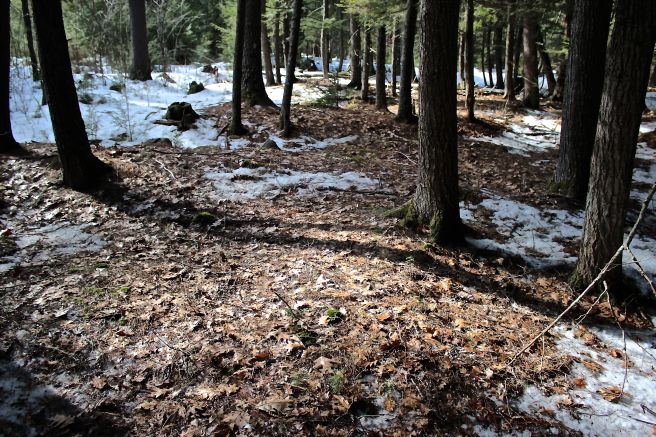
b-no snowUnder some of the hemlocks, there was little to no snow. Eventually I lost the bobcat’s trail, which is just as well.
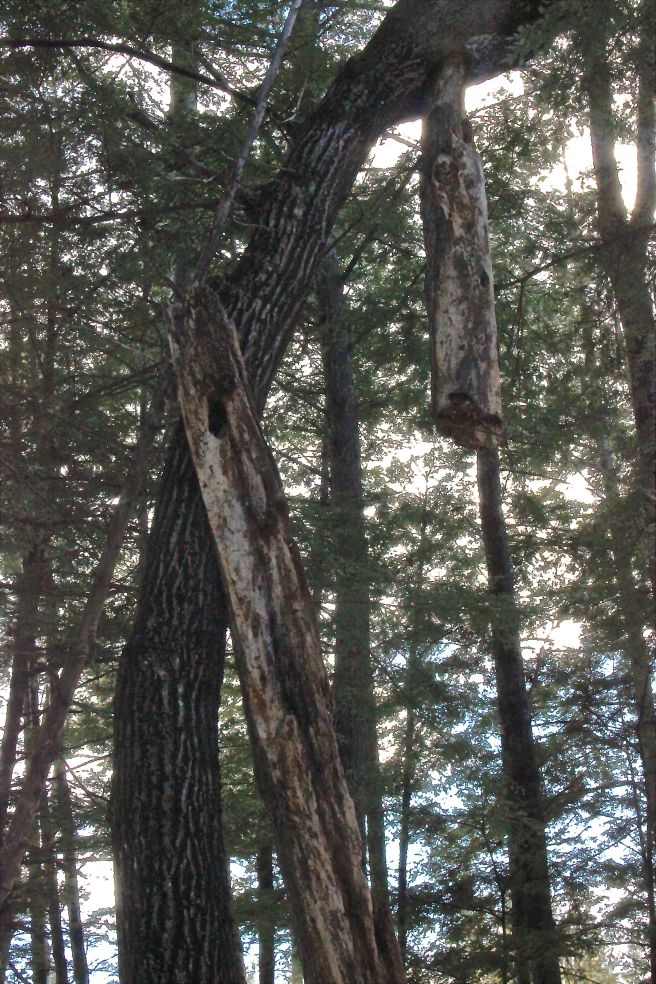
b-widowmaker1I didn’t realize until I looked up that I was still in familiar territory.

b-widowmaker 2I first spotted this widow maker 20+ years ago. It never ceases to amaze me.

b-deep snowI decided that rather than return to the snowmobile trail, I’d continue deeper into the woods. I had an idea of where I’d eventually end up, but if you’ve traveled these woods with me recently (Marita and Dick can vouch for this), you’ll know that the logging operation has thrown me off and not all of my landmarks are still standing. It’s that or they just got up and moved. Anyway, I was lost for about an hour, but continued moving slowly through sometimes deep snow (relatively speaking this winter) and other times puddly conditions. It was a slog to say the least. My friend, Jinny Mae, had warned me about water hidden beneath the snow and I found it. More than once.

b-brit 2I also found other cool stuff. British lichen bearing bright red caps.

b-hemlock yearsA hemlock wound that indicated the last time this land was logged. I counted to 25. That makes sense.

b-hemlock cone:seedsA hemlock cone and seeds on a high spot of snow–not the usual stump, log or branch, but still a high spot. Apparently the red squirrel that had gone to all the work of taking the cone apart to eat the seeds had been scared away. Perhaps it will return, or another, or I’ll be admiring hemlock saplings in a few years.
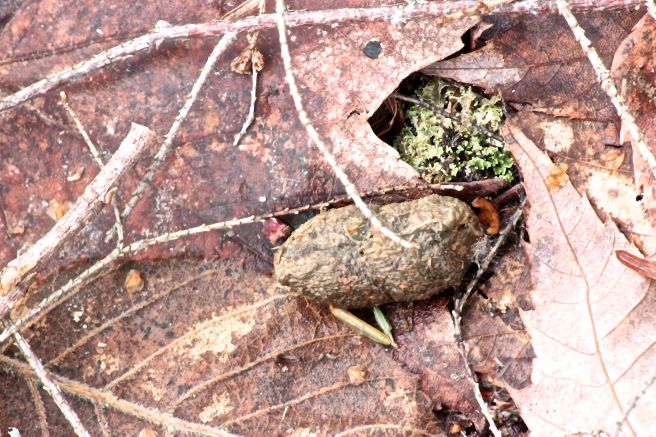
b-porcupine scatPorcupine scat below another hemlock.

b-porky twigAnd a few snipped off twigs–porcupine style.
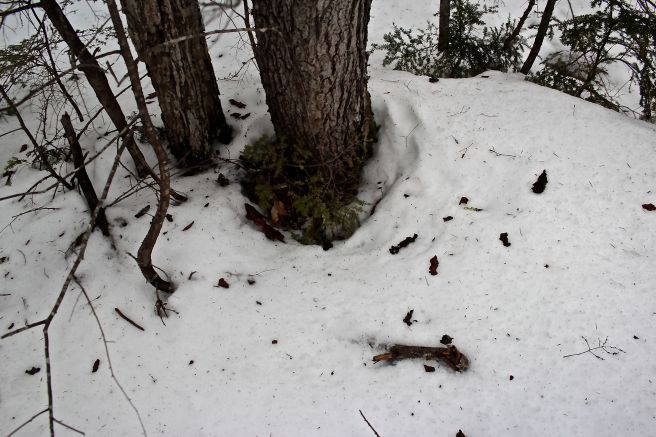
b-hemlock debrisA mystery perhaps. I love a mystery. So, scattered on the snow–bits of hemlock bark.

b-hemlock 2aAnd an apparent path up the tree. But . . . look up. This tree is dead. I don’t think this is porky work.

b-hemlock 2Could it be that where the bark is missing a woodpecker has been at work?
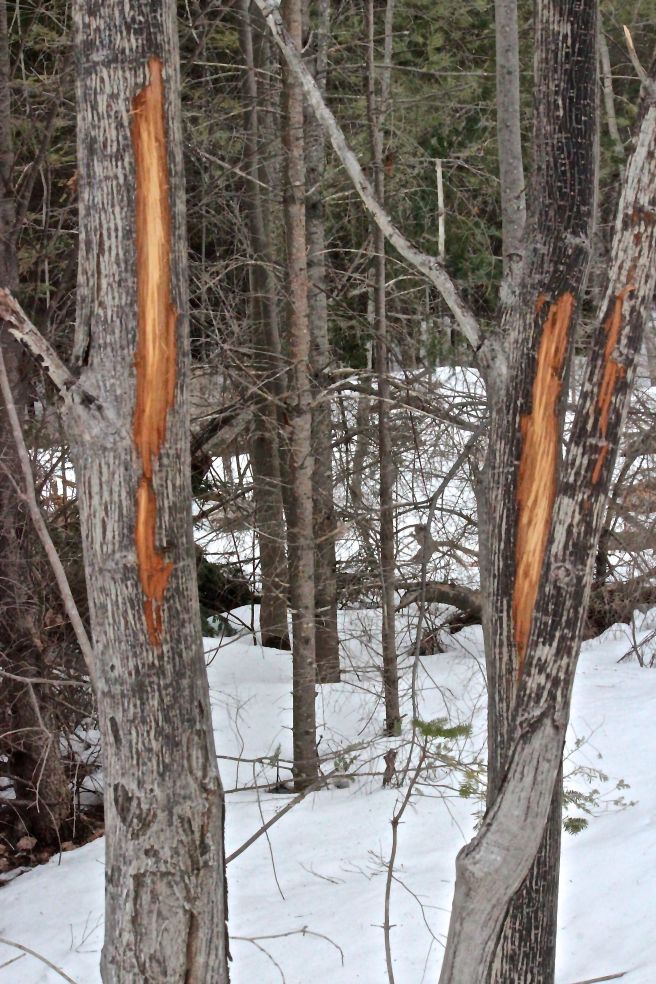
b-striped maple browseI found fresh browse on striped maple–that had been previously browsed based on the scars.
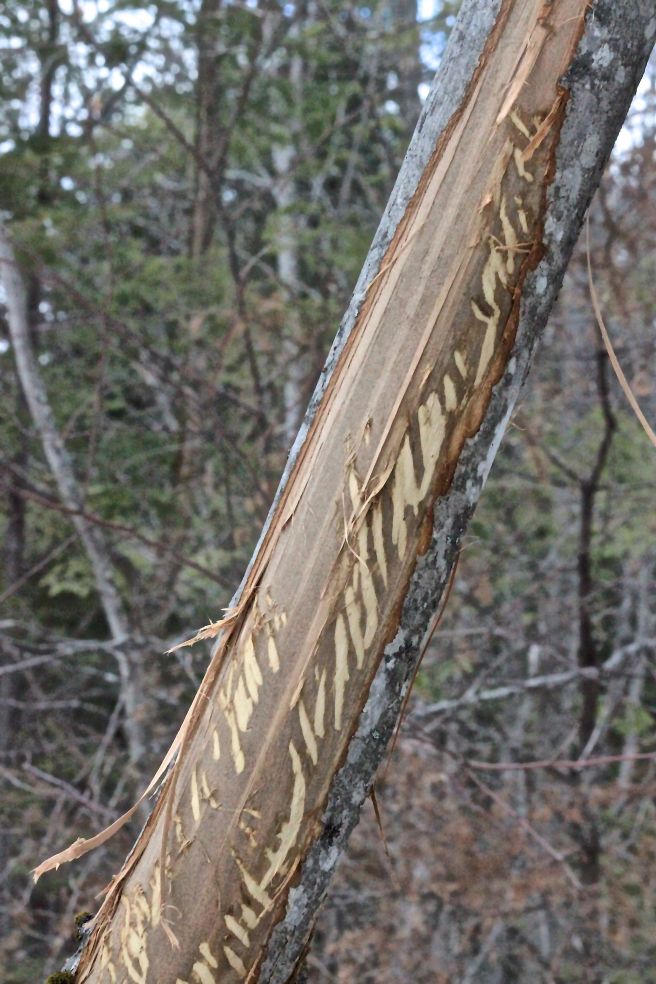
b-deer browse red mapleAnd red maple that had received the same treatment.
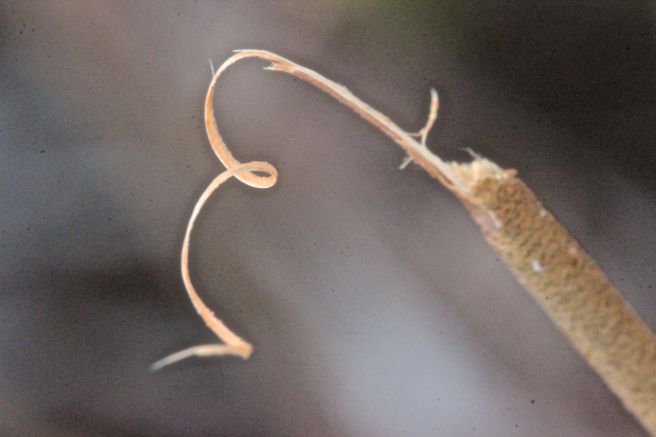
b-witch hazel browseWitch hazel was not to be overlooked. I think this is the longest deer tag I’ve encountered–to date.

b-scat 2You may not appreciate this, but I couldn’t resist. So . . . to whom does it belong? Either a coyote or bobcat. It’s filled with hair and I’m leaning toward the latter. Of course, I want it to be the latter.

b-doggy bagI, um, brought some home in a doggy bag. Not all of it, mind you, because it is a road sign to others. I’m not sure how they do it, but members of the same family can apparently identify gender, health and availability by such works. And members of other families may read this as a territory marker. There was a copious amount, so it could be that the same or two animals used this spot. Just sayin’.

In case you were wondering, I did find my way out–another three+ hour tour. As I slogged along, I recalled a spot I often returned to for quiet contemplation. I can no longer locate it because so much has changed as this area has been logged for the past three years. But . . . I came to the realization today that I don’t need one spot. Any will do. That being said, I pulled out my camp stool, colored pencils and journal back at my sit spot by the edge of the cowpath.

b-deer run:sit spotIt’s right beside a deer run. In the past two years, the deer visited this spot, but I’ve noticed much more activity this winter. The stone wall is hardly an obstacle. And the junipers–prickly as they are to me, the deer seem to enjoy them.

b-sheep 1One thing I did notice that I don’t understand. The sheep laurel that grows here has recently been browsed.
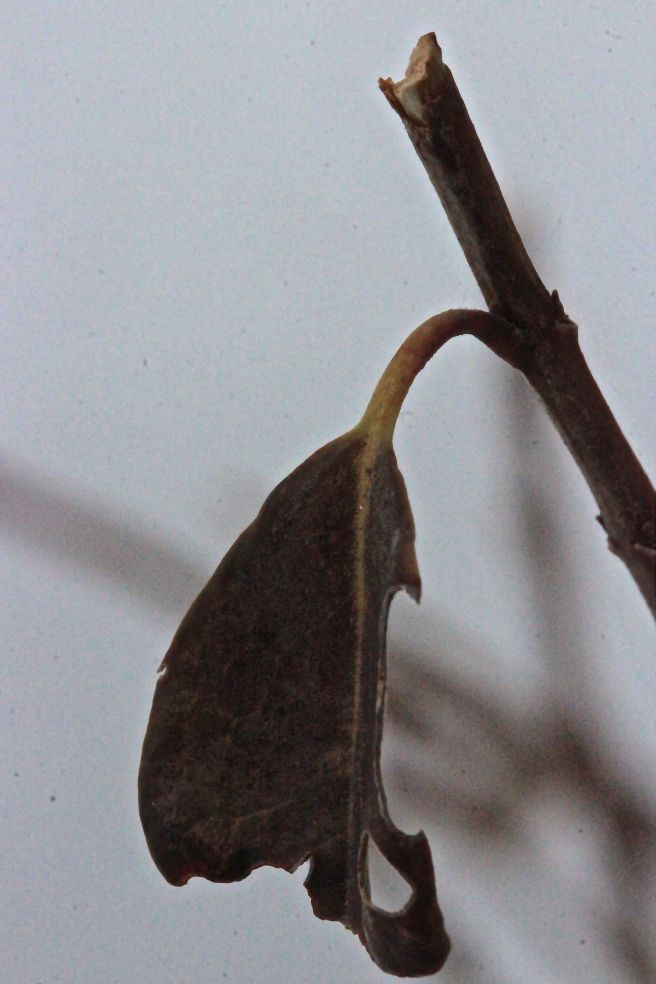
b-sheep2Deer tracks below it and the nature of the work lead me to believe that the ungulates fed on it. Hmmm . . . I thought that sheep laurel was poisonous to wildlife. But then again, deer are browsers, not staying in one spot long enough to consume a large amount so perhaps it doesn’t affect them if they eat a bit here and there. If you know otherwise, please enlighten me.
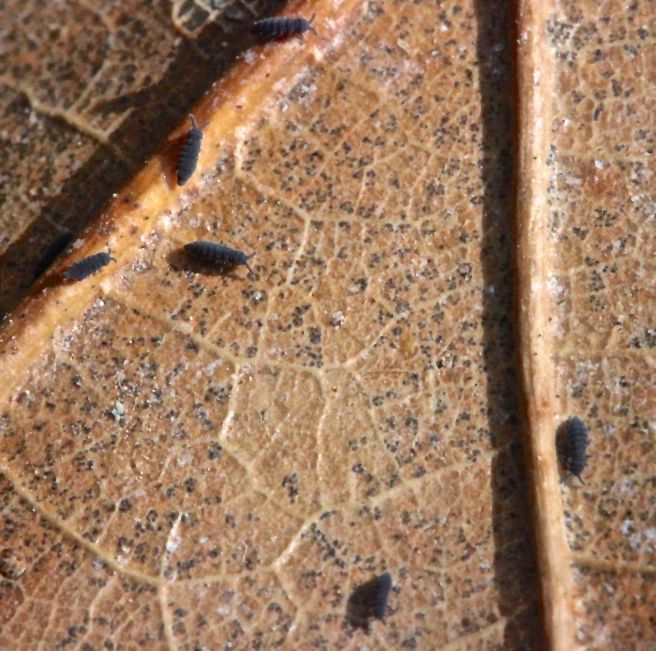
b-spring tailsAnother thing–yes, if you look closely at leaves, you’ll find them. These hot chili peppers don’t appear just on the surface of snow. They are snow fleas, aka springtails. With their spring-loaded tails they can catapult themselves an inch or so. We never look for them once the snow melts, but they are still abundant on organic debris. They’re easiest to locate on leaf litter, but also can be seen on soil, lichens, under bark, decaying plant matter, rotting wood and other areas of high moisture as they feed on fungi, pollen, algae or decaying organic matter.
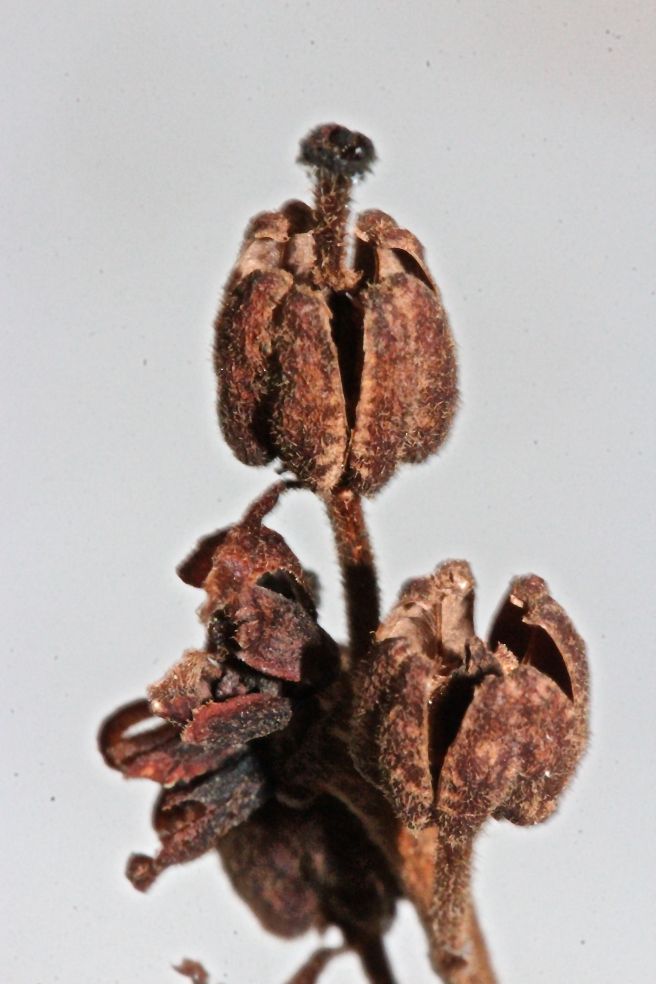
b-pine sap 2Though it was warm under the sun, my fingers were getting cold as I sketched, so I packed up to head home. Back in our woodlot, I decided to follow a deer trail rather than my own. And to them I give thanks. Beside a hemlock tree, pinesap’s woody capsules called out. I’d found some at the start of winter–along the cowpath. And now a second patch. It really does pay to go off my own beaten path.

b-Indian pipe 1While pinesap has several flowers on one stalk, a few feet later and I came upon Indian pipe, which has one flower (now a woody capsule) atop its stalk. Notice how hairy the pinesap is compared to the Indian pipe.

b-goblets 1I’m afraid this photo is a bit fuzzy, but I’m still going to use it because it’s too dark to head out and take another. These cup lichens serve as my pixie goblets to all of you who have stuck with me for this journey–both today’s and the past year. Thank you so much. The year flew by and I’m a better person for this experience. Well, I think I am. What has made this past year so special is the paying attention. The slowing. The recognizing. The questioning. I’ve learned a lot and I trust you’ve learned a wee bit as well. Who knows where the path will lead me next, but I sure hope you are along to wander and wonder.
To you, I raise these goblets!


Three-legged stool

Support comes in many manners and I can’t help but think that many of us would probably benefit from having more than two legs to stand on. But then again, we have family and friends to lean on and serve as our third leg of the stool.

lungwort 6

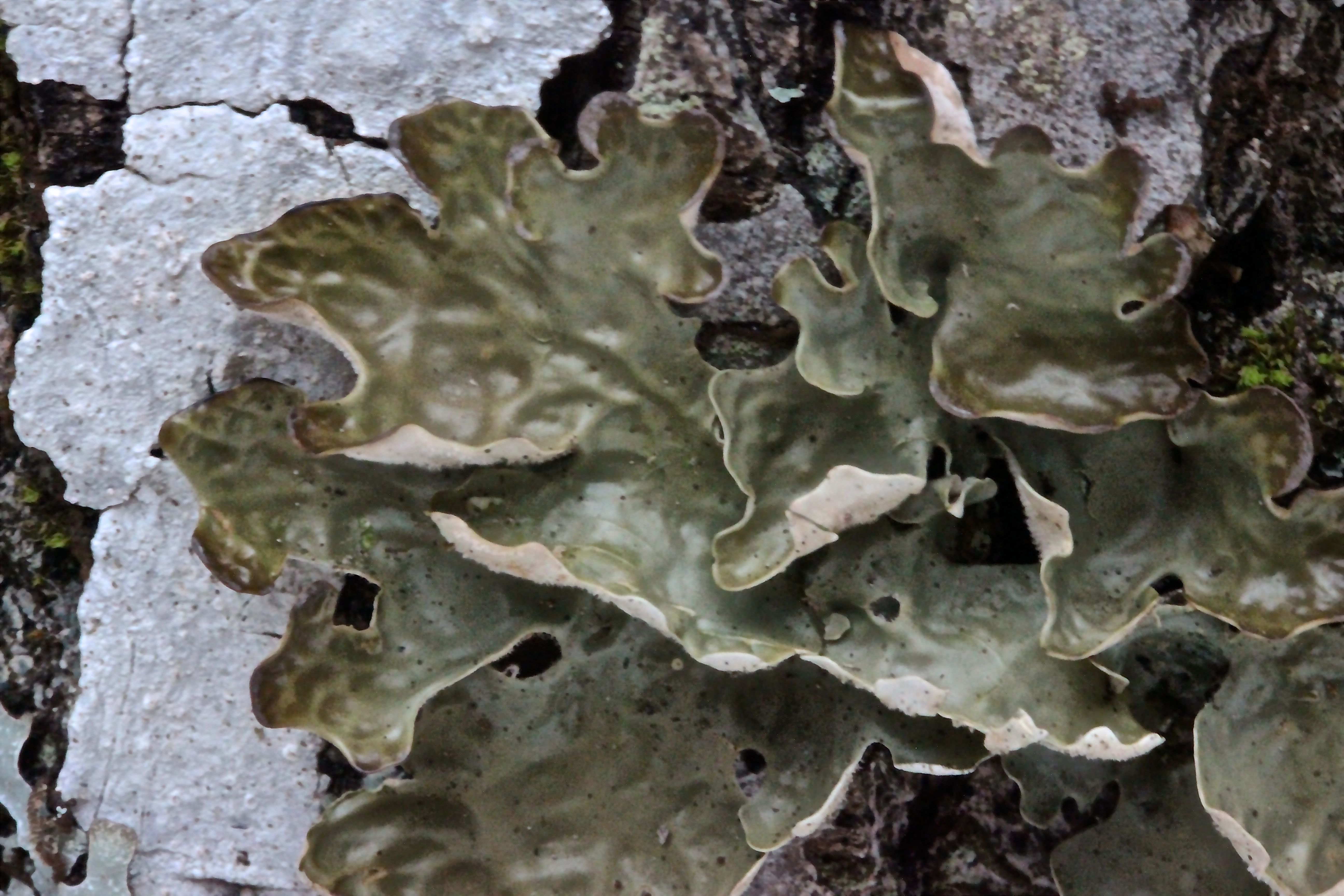
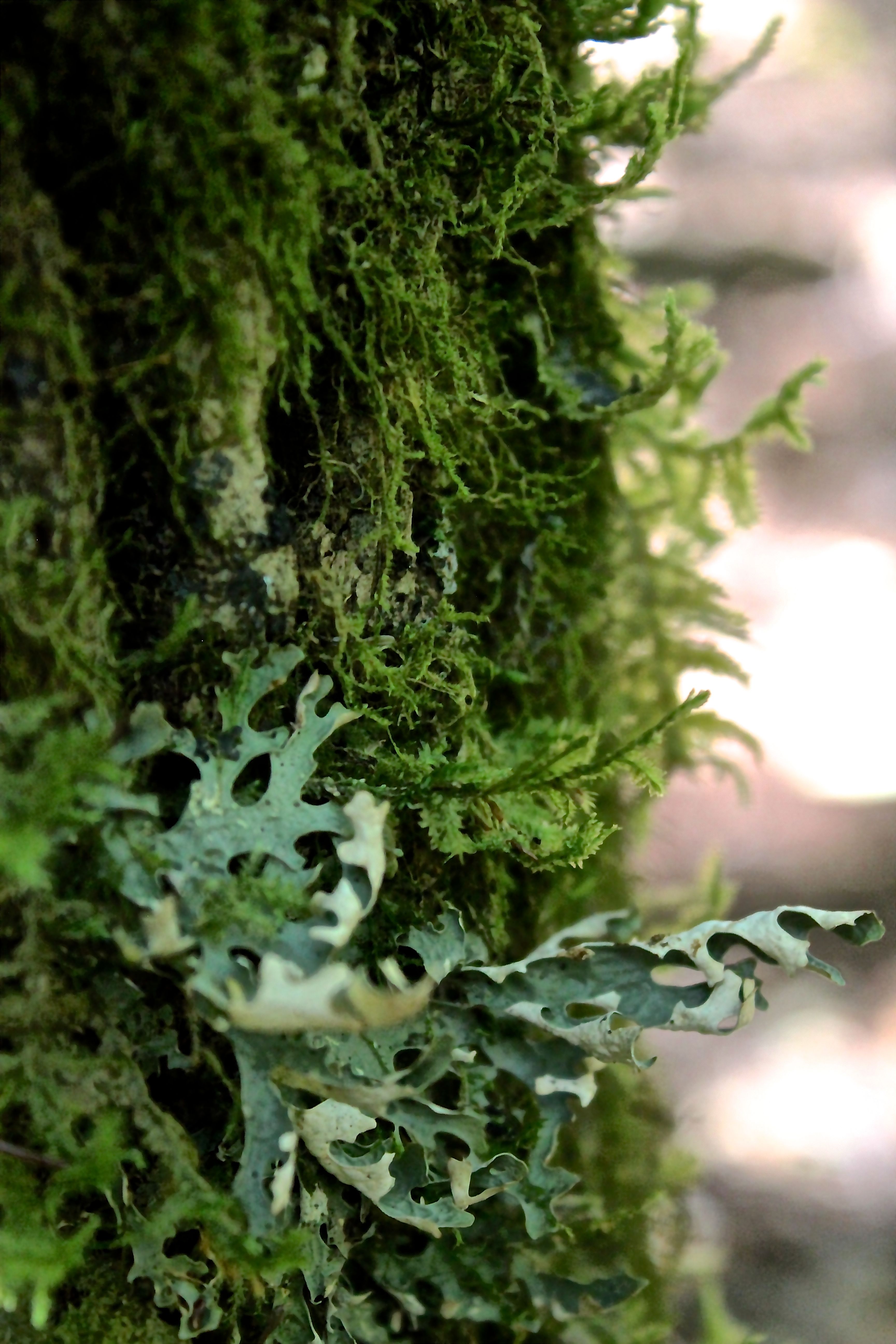
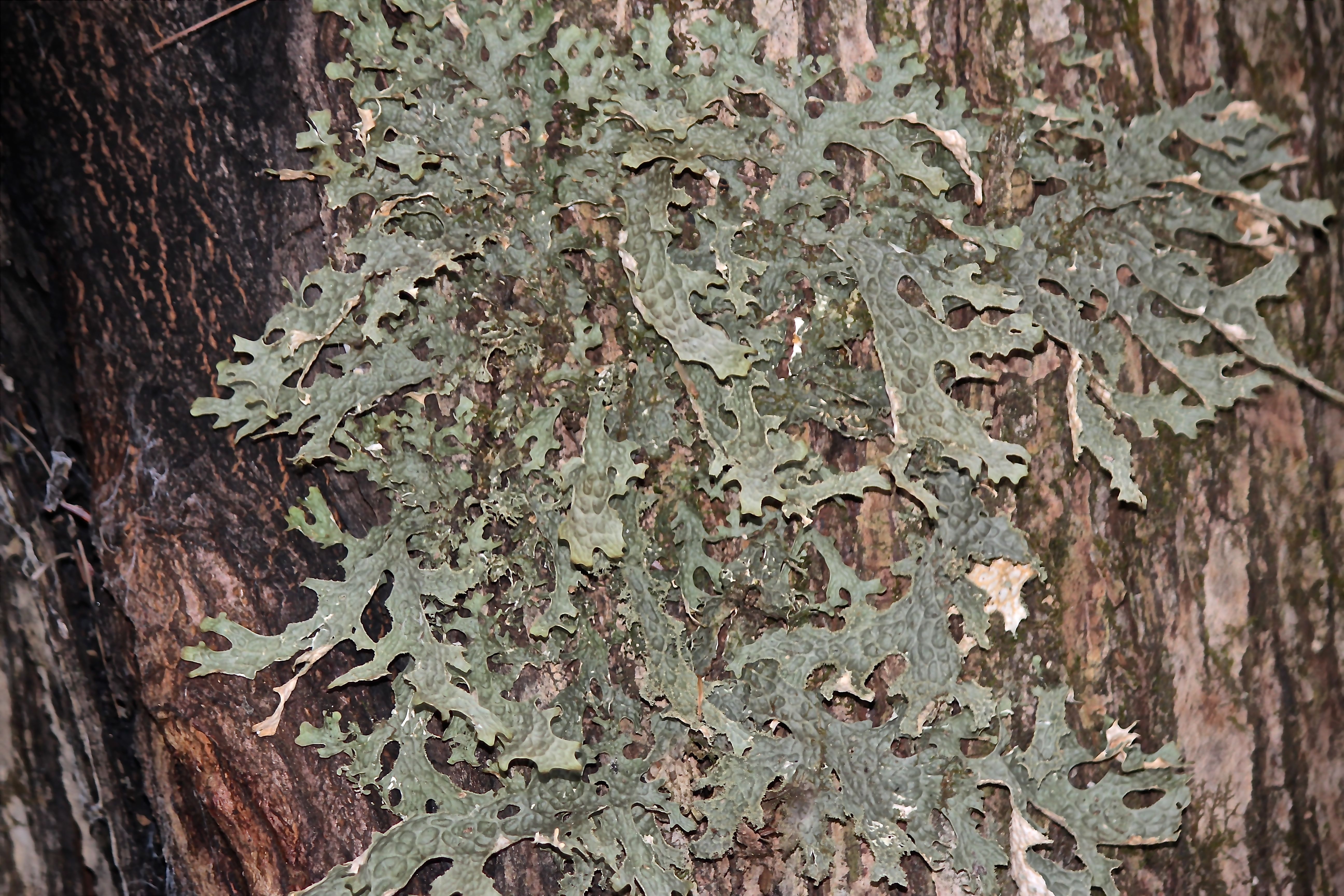
It’s the same in nature, where three-legged stools don’t necessarily resemble seats at all. Take for instance the tree lungwort (Lobaria pulmonaria). A friend and I stumbled across this leaf-like lichen as we tramped up and down several ridges today.

lungwort 4

When it’s wet, the upper side turns bright green while the underside is creamy white. Today we found some that ranged from aqua to olive in color.

lungwort 8

The thallus or body is easily distinguished by its lobed form. The ridged and pitted surface is said to resemble lung tissue–thus the common name. During the Renaissance era, when the physical form of a plant was thought to determine its use, tree lungwort’s similarity to the structure of a lung led to the belief that it healed respiratory problems.

lungwort

So here’s the thing. Typically, lichens consist of two partners who benefit from the presence of each other–one being fungal and the second being an algal partner. (You may have heard the old line that Freddy Fungi and Alice Algae took a liken to each other and live symbiotically ever after). For the tree lungwort, the fungus provides the rigid structure and anchorage. Simultaneously, the algae gives it the ability to gain energy from the sun–think photosynthesis.

lungwort 2

But . . . there’s a third partner or leg of the stool for tree lungwort–the fungus and algae live in a relationship with a blue-green cyanobacteria that helps the lichen gain energy from the sun, but also absorbs and fixes nitrogen from the atmosphere. When thalli eventually fall off trees, the decomposing lungwort adds nitrogen to the forest floor.

lungwort 5

While this leafy growth uses the tree as support, it doesn’t take any nutrients from its host, making it an epiphyte. In our area, moose are said to feed on it. And natural dyes may be made of it.

lungwort 7

Its leaf-like structure provides an example of a foliose (think foliage) lichen.

Common button lichen

There are two other forms of lichen. Common button lichen with its thin gray surface or thallus and flat, black disks is an example of a crustose lichen (think crust of bread).

beard lichen

Beard lichen is a fruticose (think fruit–branching structure like grape branches). I don’t know about you, but mnemonic devices help this old brain.

beech 2

As is our habit, we paused often to take a closer look–at the vascular system of a decaying beech leaf resembling a stained-glass window;

 false tinder 3

The false tinder conks decorating an old paper birch;

hemlock 2  hemlock rings

The rings of life healing a hemlock wound;

winter crane fly

A winter crane fly pausing during flight;

pyrola 1

A pyrola peeking out from the snow;

speckled 2

And a speckled alder catkin preparing for its spring fling.

We shared three hours and three miles plus our knowledge, wonder and support–performing as the third leg of the stool for each other.


My Need To Get A Life

About two weeks ago a friend and I exchanged e-mails about mammal tracks we’d spotted that day. His big find was plenty of bobcat tracks at Bald Pate Preserve, while mine was mink tracks by Sucker Brook in Lovell. And that’s when he commented, “We need to get a life.” ;-)

Yup. So today I did just that. With a friend in tow, I revisited the Red Tail Trail off Hurricane Mountain Road in North Conway. Our mission was to move slowly through the landscape in search of signs of nature in winter.

Oh my. Such a boring task. What could there possibly be to see? Everything is brown and gray and ever so drab.

mouse

From the start, mouse tracks show the suicide mission these little guys make each night as they scramble this way and that in search of food . . . and cover. Mice are nocturnal bounders who travel above ground for long  distances–risky behavior since they are tasty treats for most predators. White-footed and deer mice have similar-sized feet and bodies, so their prints are difficult to distinguish from each other. Their print pattern reminds me of that made by squirrels, only in miniature and their long tails often leave drag marks in the center.

vole 4vole 3

Here’s another favorite meal for many predators–evidence that a vole lives nearby. We were in an old logging area when we found this. While a vole is similar in size to the white-footed and deer mice, its tail doesn’t show in the track. Plus, two other things stood out to us. The tunnel in the first photo is typical vole behavior. While we received 6 inches of snow in western Maine on Tuesday, North Conway only has about two inches on top of ice. Voles are shy of sky space, so tunneling is one of their behaviors. With ice below the snow, this tunnel was exposed and reminded us of spring when vole tunnels become visible in melting snow. The other behavior of this little brown thing (LBT) that is different from its cousins, the other LBTs like mice and shrews, is the zig zag or alternating pattern when it walks. Voles vary their walking pattern, but they don’t bound like the others. The pattern is visible for a few steps above the ruler.

mink 1Mink 2

And who might those predators be? We found the diagonal pattern typical to the weasel family. We thought that this one was a mink, but now that I’m in my cozy den, I’m questioning our ID. It may have been a short or long-tailed weasel. (1/15/16: Changed my mind back to mink. My ruler kept sliding, but the measurements we took, and we took several, clearly indicated mink, so that’s my story and I’m sticking with it.)

weasel 2

Further up the trail, we were more certain that this one was a weasel, though, again, short or long-tailed is the question. Suffice it to say–weasel.

Fisher 1  Fisher pattern

And still another family member–only a bit larger in size. Notice the tear-drop shaped toes. And the loping pattern. A fisher had recently crossed the trail. We followed its tracks for a bit and then bushwhacked back. On our return we came across a second set of fisher tracks. And then, as we backtracked beside our own snowshoe prints, we realized they’d traveled together and then split apart–perhaps hoping to find some good chow.

Kearsarge River

As we moved beside and away from the river, we also saw deer, snowshoe hare, coyote and fox tracks.

Winding our way up through the switchbacks, one other critter left a calling card.

wing

Based on the behavior, I want to say it’s a ruffed grouse. I must admit that we didn’t follow the tracks, but grouse are also tunnelers and there’s a bit of a tunnel here. Usually I find their scat.  By now, you are probably thinking that I really do need to get a life.

ground litter

hemlock seed and scale

yellow birch

We laughed about how we used to not even notice everything on the ground–dismissing it as  tree litter. Ah, litter it is. But more specifically, we were in the land of hemlocks and birch trees. Hemlock cones, cone scales and winged seeds (samaras) are part of the array. And the yellow birch catkins have released their fleurs-de-lis scales and seeds as well.

beech scale 3

One of the things we weren’t thrilled to discover–the white, wooly and waxy coating that the beech scale insects secrete to cover themselves. Oy vey. This beech tree doesn’t stand a chance.

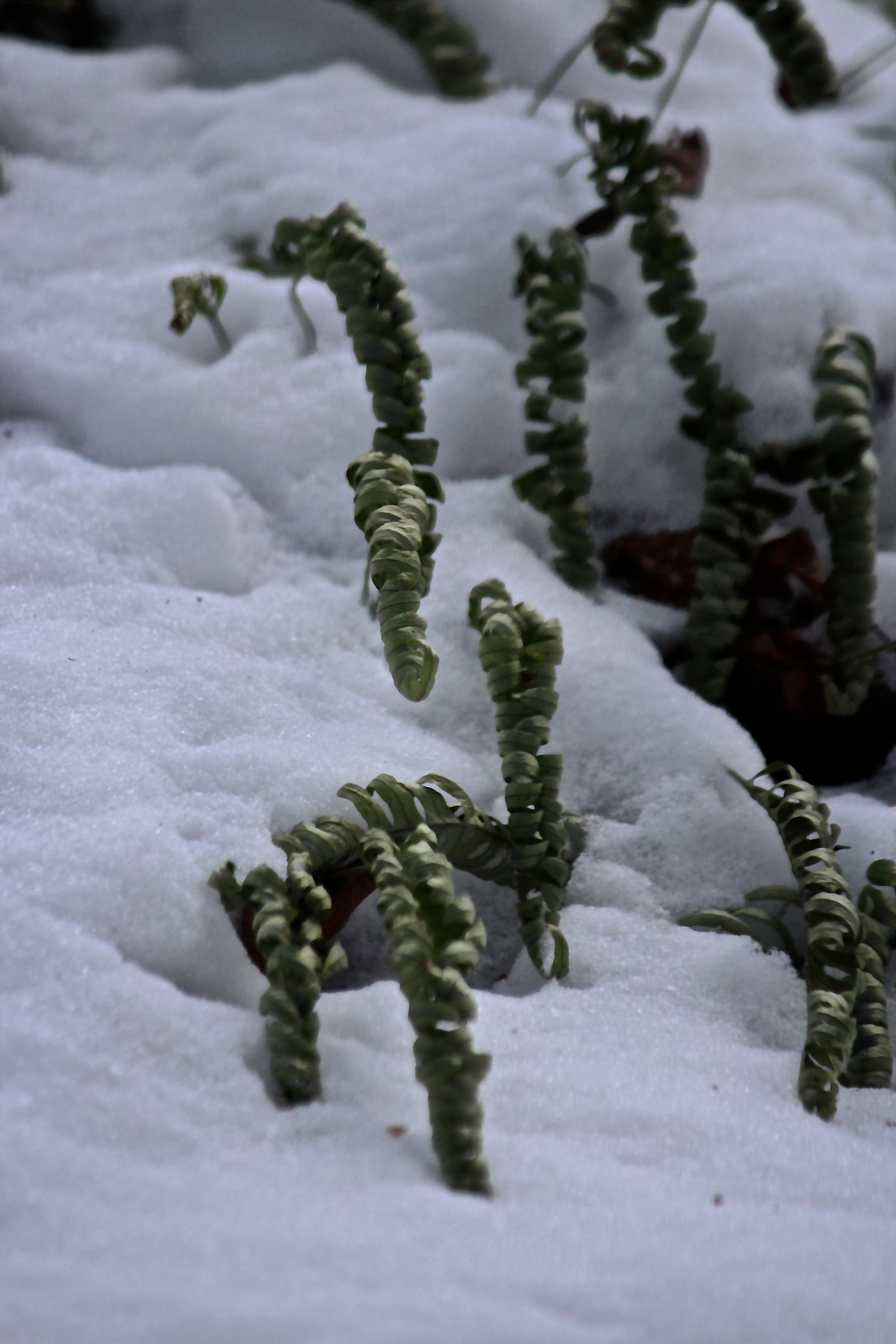
polypody frozen

So back to happier thoughts, including the polypody that let us know it was time to head home and curl up by a warm fire–the temp was in the low teens.

ice skirt

Even the river rocks wore several layers.

artist 3

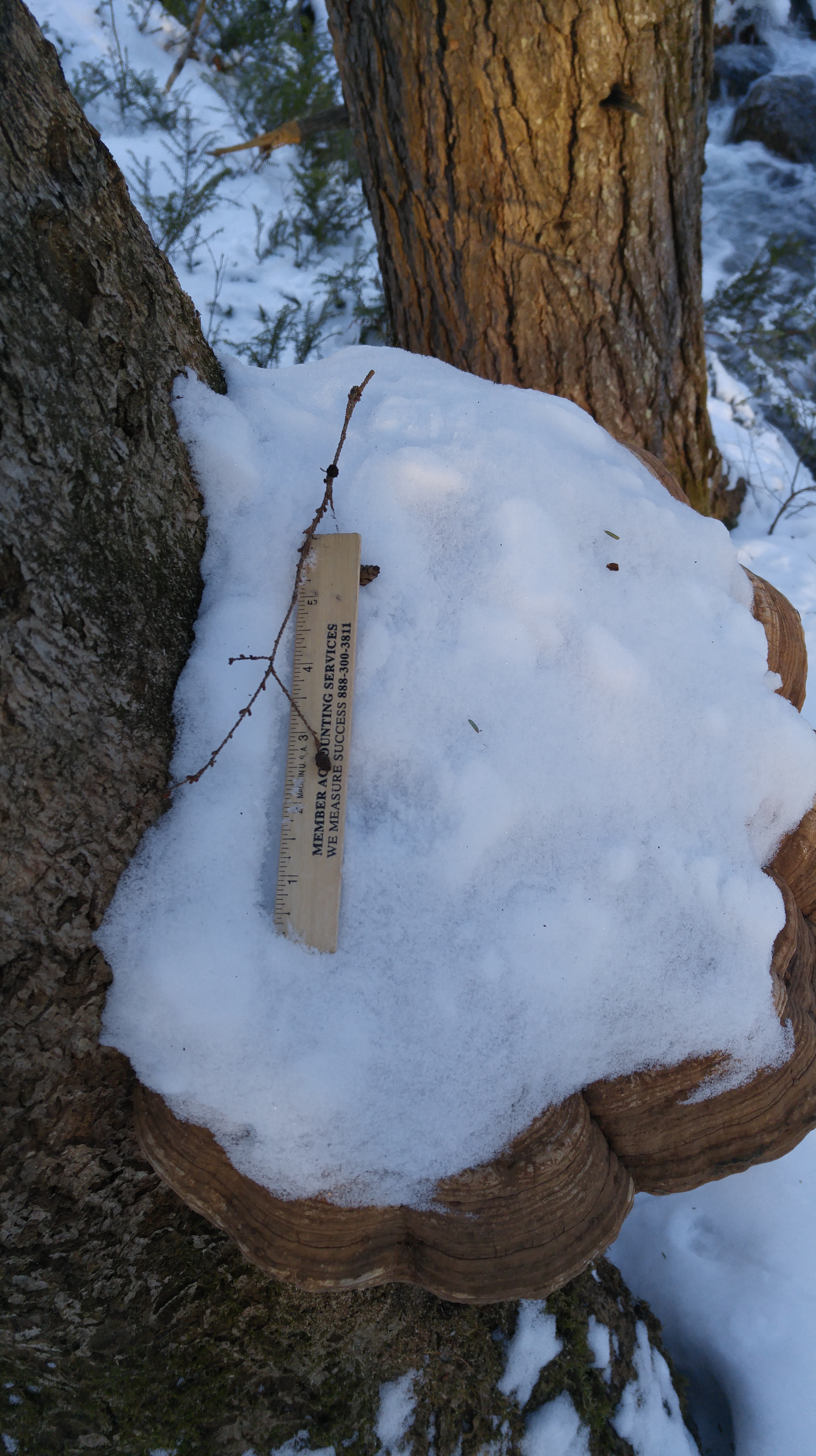
artist conk

Just before we arrived at my truck, we stopped to admire this mighty fine artist conk. It will still be there on Saturday–join me and the wonderful folks from the Upper Saco Valley Land Trust for a walk on the trail–weather permitting. I’m not so sure it will actually happen this week given the forecast.

No matter. These were only a few of our finds. There’s so much to see and wonder about and every time I visit, I’m in awe of this special place. And thankful for the life I’ve got.

Some Call Them Weeds

Shades of brown, gray and green dominate the winterscape now that we finally have some snow. It’s those browns that frequently draw my focus as I admire the woody skeletons of bygone summer wildflowers. Of course, some call them weeds.. I’ll admit that they do grow prolifically–especially in land cleared by humans, e.g. the field and power line I frequent.

But . . . come meet a few of my winter friends.

Indian Tobacco

This is Indian tobacco (Lobelia inflata). Guides say it tends to be alone, but I’ve seen it grow in colonies as well. The papery calyx is all that is left now.

IT 2

Inflata refers to the inflated seedpods, which are two-chamber capsules that split open to drop their seeds.

iT 4

Minute and scaly, the seeds self sow.

bugleweed

I struggle with the ID of this member of the mint family. Knowing it is a mint is the easy part. Notice the square stem? I believe it’s bugleweed or water horehound, but I’ve also toyed with motherwort. Either way, both feature toothy calyces that whorl around the stems. I keep flip-flopping because the dried seedpods seem larger than bugleweed, but all were on single stems and the area is known to be wet–though not consistently. Maybe knowing it’s a mint is enough.

spirea 3 meadowsweet

Both hardhack (steeplebush) and meadowsweet are members of the Rosaceae family. Their dried fruit structure is known as a follicle, meaning it splits open along one line–like a milkweed. But these two plants have five follicles encircling a central point.

goldenrod 1 goldenrod 2

Showy goldenrods grow abundantly and it’s no wonder given all their seeds. They depend on the wind and my snow pants to disperse. I refer to plants that stick to my clothes as volunteers. And if they are sticking to me, then they are also sticking the fur of mammals that move about this area. Today I found deer, bobcat and squirrel tracks.

achene

Both goldenrods and aster seeds have small, single-seeded fruits called achenes. A receptacle holds the fruits in place until they’re ready to head off on their own.

goldenrod 4

Check out the crown of hair, called a pappus, on this aster. These act like parachutes and enable the fruits to float along in a breeze, thus spreading the flowers far and wide.

a or g 5

While the goldenrod flowers tend to grow in dense clusters, aster flowers are found in a single arrangement.

A turn to folklore explains how the goldenrods and asters are related. Two young girls talked talked about their future. One, who had golden hair, said she wanted to do something that would make people happy. The other, with blue eyes, said that she wanted to be with her golden-haired friend. When the two girls told a wise old lady of their dreams, she gave them some magic corn cake. After eating the cake, the girls disappeared. The next day, two new kinds of flowers appeared where the girls had walked: Asters and Goldenrods.

g gall 2 Goldenrod bunch gall

Another way to identify goldenrod in the winter is to look for these galls. The goldenrod ball gall, on the left, is a round gall in the middle of a stem. In the spring, the Goldenrod gall fly lays her eggs on the stem. Hatched larvae chew their way into the stem and the gall starts to develop. The other is a Goldenrod bunch gall created by a tiny fly called the Goldenrod gall midge. It looks like a mass of tiny leaves. While it stops the main stem from growing, tiny branches extend outward.

spider 2

Though not an insect, I did find a spider on the snow today.

 bouquet

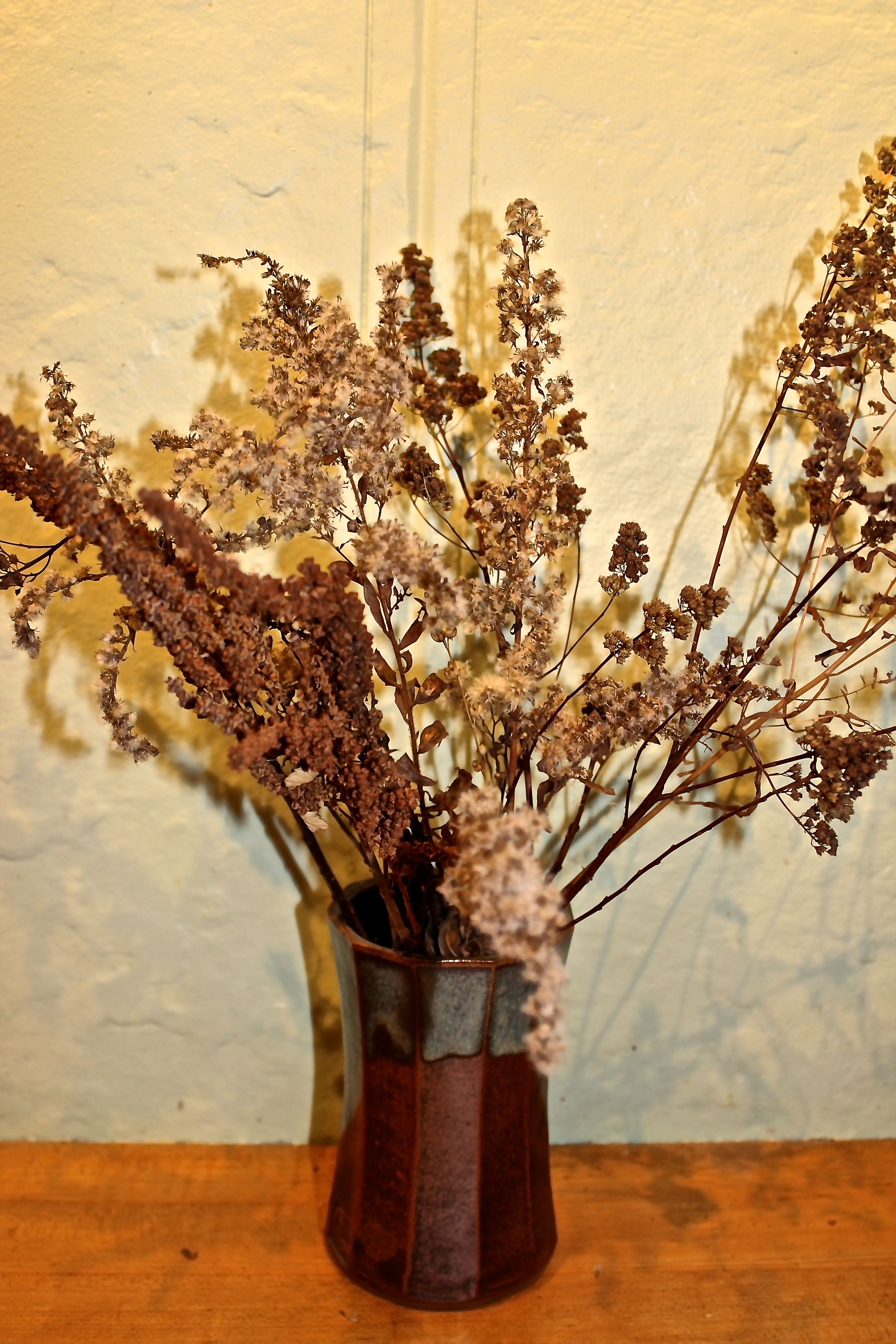
And then I came in, bringing a few finds with me. My guy is lucky–bouquets come cheap around these parts.

sketch

Some call them weeds. I call them volunteers who add beauty in any season.


Book of January: A Guide to Nature in Winter by Donald W. Stokes

Stokes 1

Book of January

I have a number of winter nature books, but one of my go-to favs is A Guide to Nature in Winter by Donald W. Stokes. My copy is old (1976–it was a very good year–I graduated from high school) and a bit weathered, but that’s because it has seen frequent use.

Divided into eight field guides, Stokes covers all aspects of winter: winter weeds; snow; wintering trees; evidence of insects; winter’s birds and abandoned nests; mushrooms in winter; tracks in the snow; and woodland evergreen plants.

For each topic,  pen-and-ink drawings by illustrator Deborah Prince and the author are included in the key, as well as natural history descriptions.

The natural history descriptions are just that–Stokes’s descriptions are part of the story that Kevin Harding of the Greater Lovell Land Trust reminds us to share with others. Here’s an example: “St. Johnswort (Hypericum perforatum)–An old country custom in Europe was to hang a special yellow-blossomed plant in your window on the eve of St. John’s Day (June 24), in order to repel bad spirits and counteract the evil eye. In general, the presence of this plant was considered a good omen, and since it was thought that the plant warded off lightning and revealed the identity of passing witches, St. Johnswort was allowed to prosper around the farmhouse. It became known as St. John’s Plant or St. Johnswort (wort meaning “plant” or “herb”). When the plant immigrated to North America it left its traditions behind, and although still as effective as it probably ever was against evil, St. Johnswort is now seldom used for that purpose.” Of course, then he goes on to describe how the plant grows and the seed heads that will appear in the winter landscape.

One of the things I’ve learned from this book is to keep it simple. In the chapter about winter trees, Stokes encourages the reader to begin with the six most common deciduous trees: oak; maple; ash; beech; birch; and aspen. Learning these along with the evergreens provides you with knowledge about 80% of the trees in your forest. I’ve spent the last couple of years developing my bark eyes. I still have much to learn, but can eliminate the common species when I encounter bark I’m uncertain about.

It’s well worth taking the time to read A Guide to Nature in Winter from cover to cover–it’s an easy and enjoyable read. I say it won’t take long–unless you are like me and you pause to underline (yes, I mark my books up–even write in the margins, oh my!) details and take time to understand what you do see along the trail. I probably should invest in a more up-to-date copy, but I feel right at home engrossed in the one that I have.

And it’s also easy to turn to a particular chapter to figure things out. The simplified, illustrated keys should bring you quickly to an identification. And as I said before, the natural history description will further enhance your learning.

The book is available at Amazon.com, but if you live near an independent book store like Bridgton Books, then I strongly encourage you to shop there.

A Guide to Nature in Winter: Northeast and North Central North America, by Donald W. Stokes, illustrated by Deborah Prince and the author, published 1976, Little, Brown & Company.

Finally Flakes

White stuff fell from the sky today–a late date for our first measurable snowfall.

dandelion

Yesterday, I saw a dandelion blooming in Denmark as I participated in Maine Audubon’s annual Christmas Bird Count. Today, I assume that yellow blossom is snug below about five or six inches of snow.

While on the bird count, I practiced using my new macro lens, but didn’t have the telephoto lens in my pack because it wasn’t working correctly. Miraculously, I solved that problem this morning and am back in business–taking photos with several different foci.

chickadee

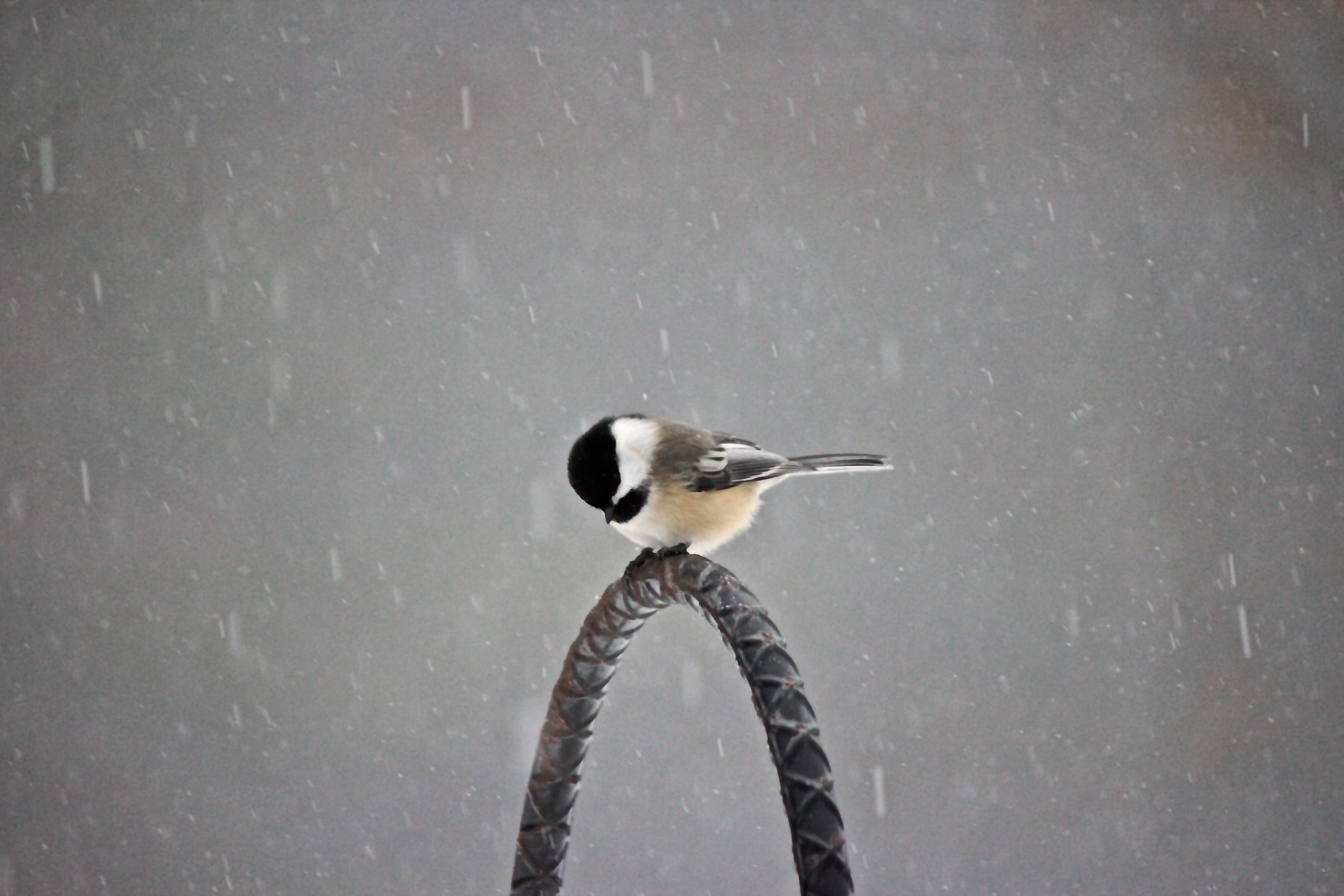
hairy

ruffled red breasted

From the get-go, the feeders provided a source of energy and entertainment. I wonder who ruffled the red-breasted nuthatch’s feathers?

cat trax

Perhaps it was a cat. Let the tracking season begin! I noticed this set leading from the barn, where we watch anywhere from one to six neighborhood cats emerge. I’m not sure which one owns these prints, but it stayed close to the house rather than making the usual venture to hunt below the feeders.

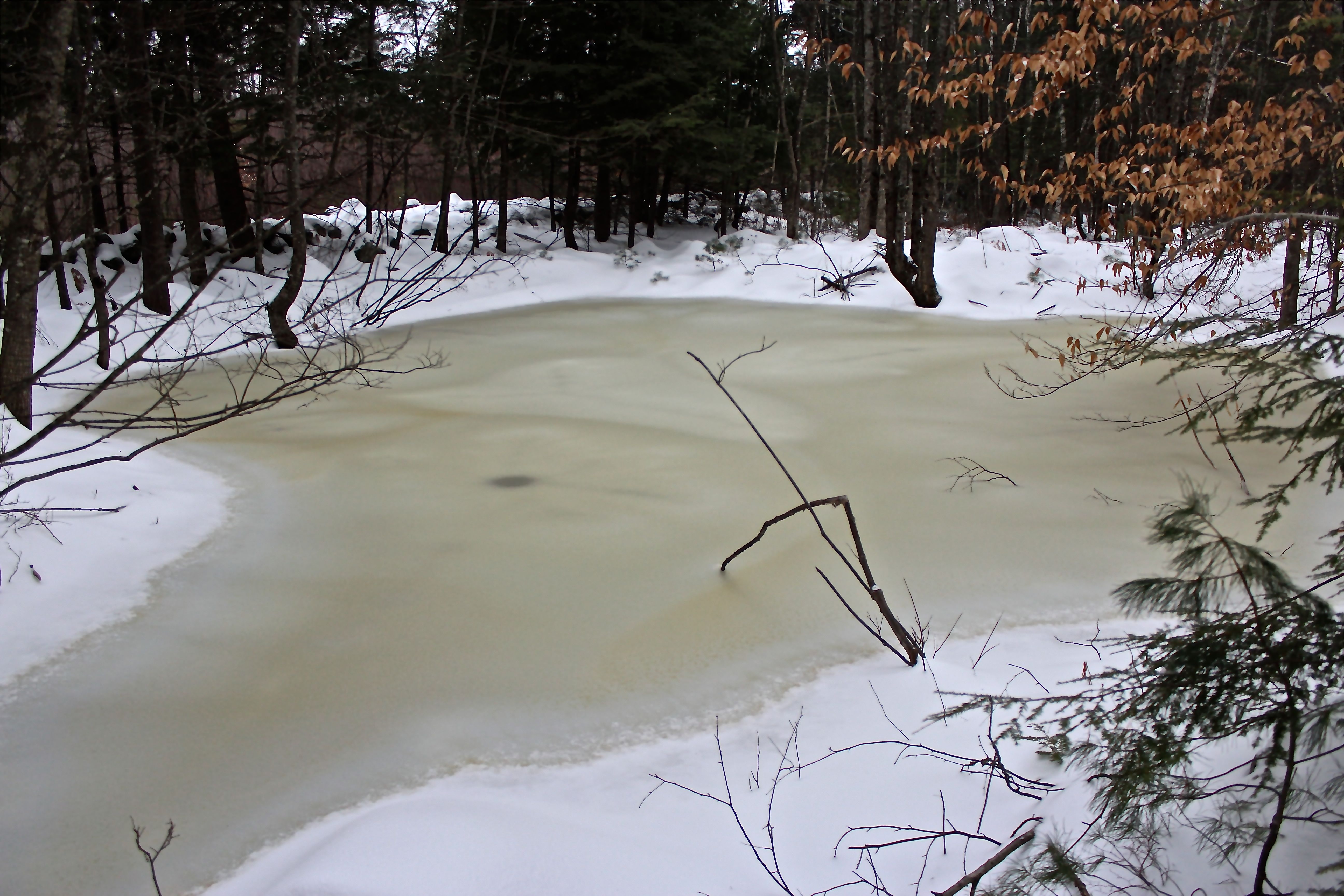
vernal pool slush

After scooping the driveway snow, I was antsy to check things out in the woods. The vernal pool is covered with slush–we need a few nights in the deep freeze to firm things up. Looks like we could hit negative digits by next week. Not sure our bodies are acclimated for that this year. Pile on the layers.

grouse trax

Without meaning to, I flushed three ruffed grouse–only their prints showed their presence. And my heart beat.

turkey trax

A flock of turkeys had also traveled my way, leaving behind their trademark signature.

snow on wood pile

snow 1

I hadn’t expected too many tracks, so pointed the lens toward the snow and its presentation on a variety of subjects.snow on astersnow on hardtack

Atop asters and hardtack,

snow on balsamsnow on bulrush

balsam fir and bulrush, each crystal clung.

 snow on cinnamon fern snow on sensitive fern

Some were embraced by cinnamon and sensitive ferns,

snow on w. h.

Still others formed blankets of protection.

frullania, leafy liverwort

And then I turned my attention elsewhere. The leafy liverwort in the genus Frullania beckoned a closer look. Like mosses and lichens, liverworts are nonvascular flora.

frull 5 

Most are green, but Frullania is brown. As it weaves in and out of the crevasses on the ash bark, its structure reminds me of ricrac, that zigzaggy trim we used to add to sewing and craft projects.

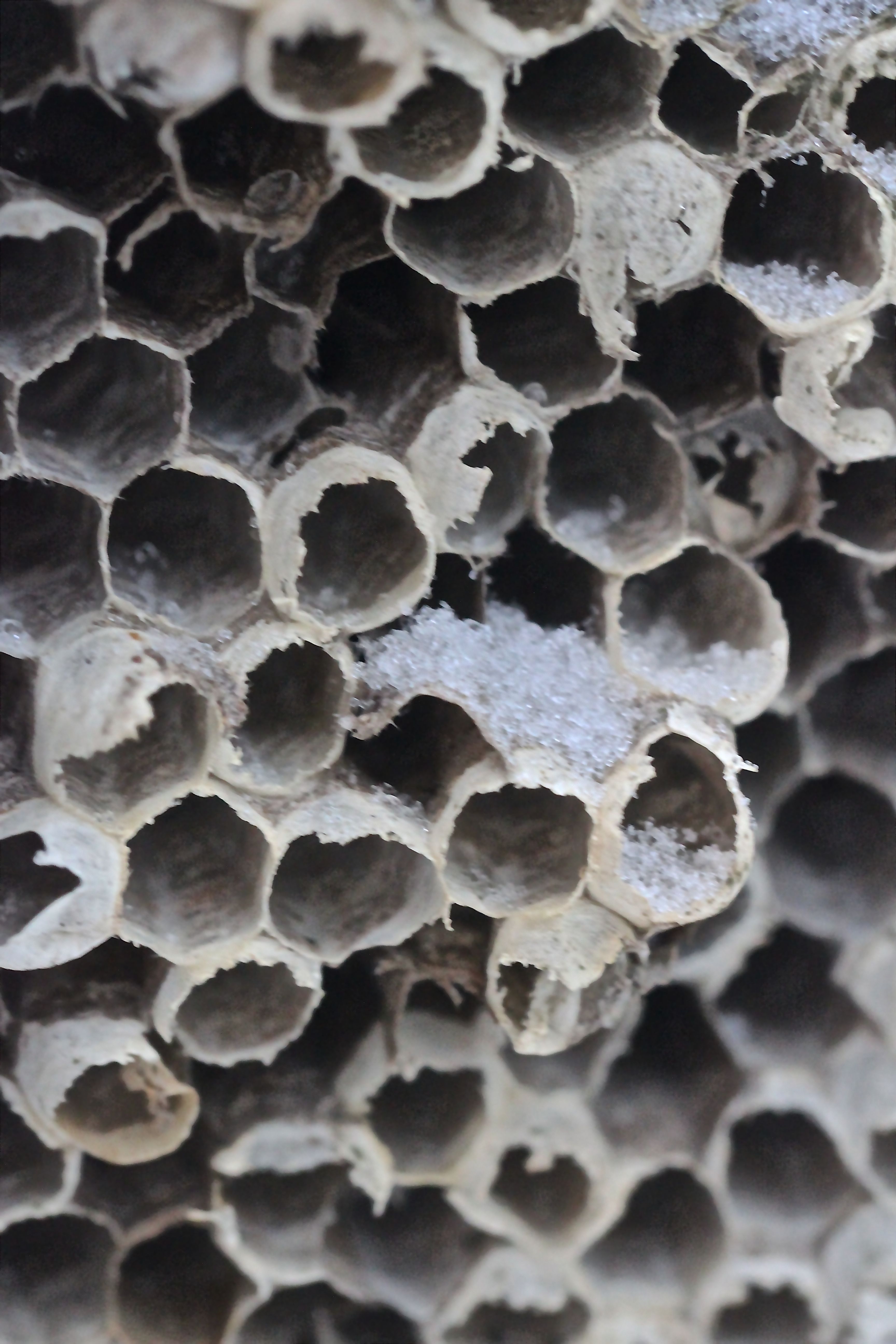
w. nest 2

This hornet nest always deserves an examination of structure, texture and design. Constructed from chewed up wood strips mixed with sticky saliva, this is an incredible undertaking.

nest compartments

Each tiny cell once housed an egg. While the males and the old queen died in the autumn, the females who mated have burrowed into tree stumps and other cozy spots to survive the winter months.

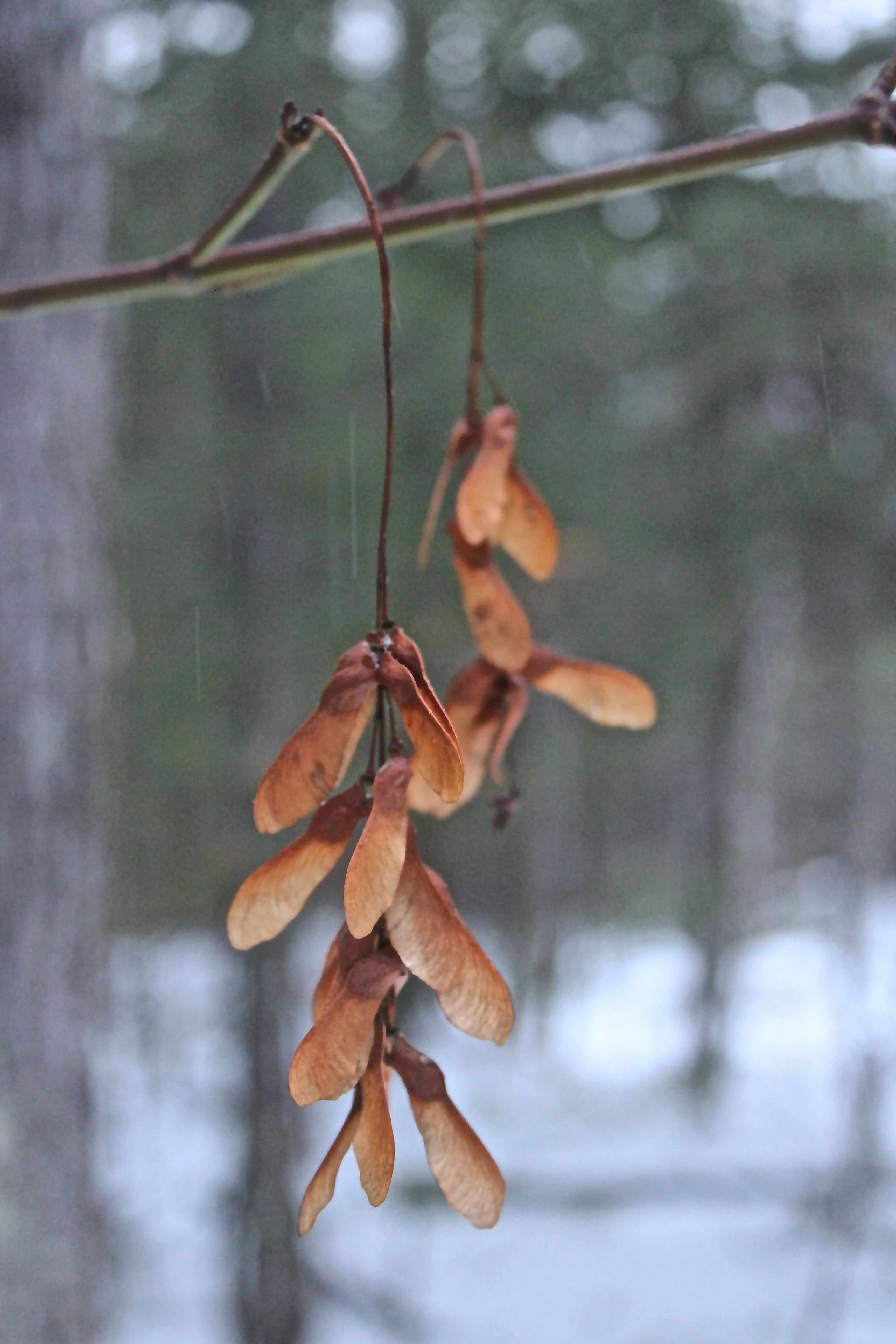
 striped 3 striped 5

One of my favorite finds today: clusters of striped maple samaras dangling from a tree–waiting for the right moment to disperse. Insect wings come to mind.

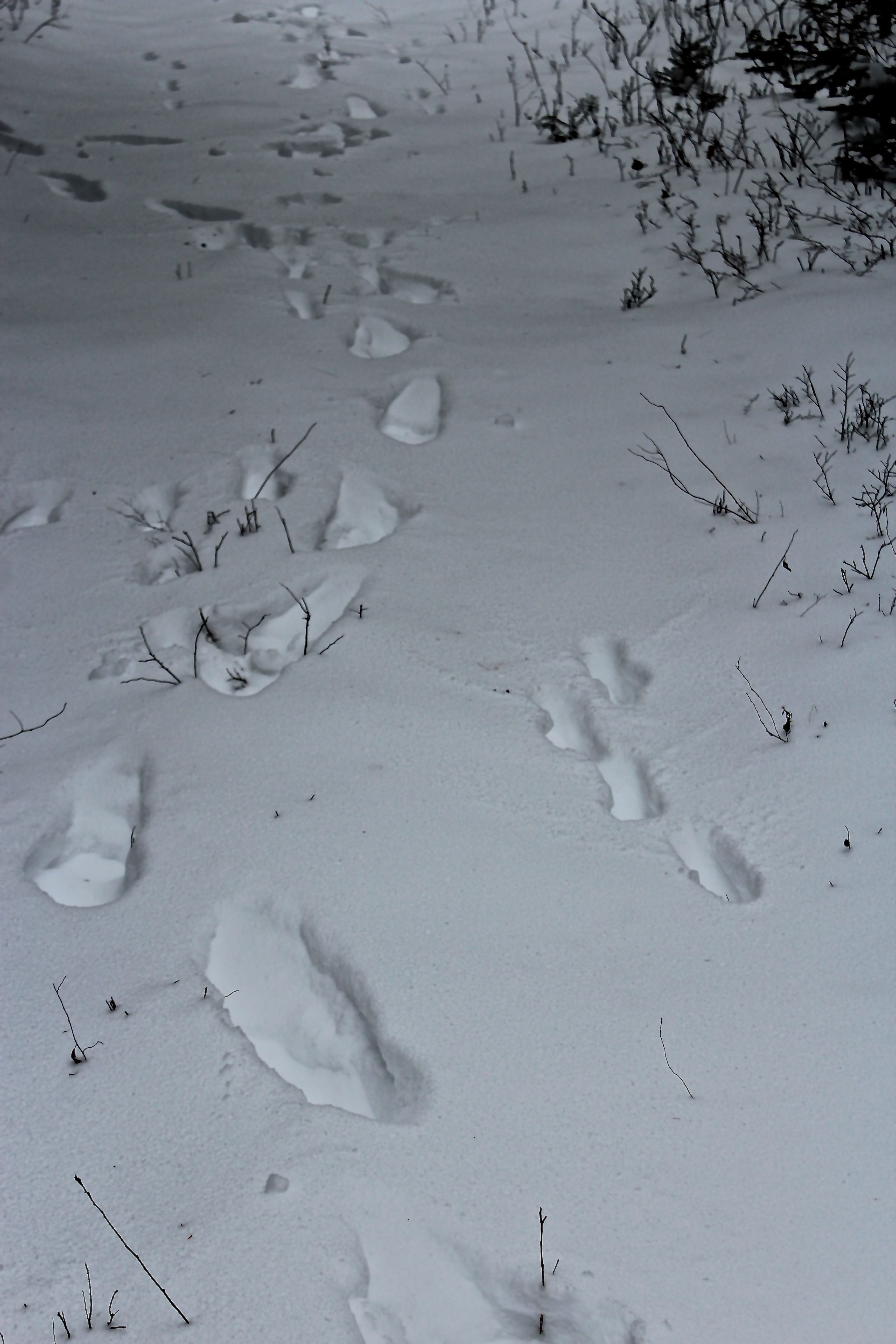
 slush

Because the ground hasn’t frozen and we’ve had so much rain lately, I left a few slushy prints.

deer trax 1

As I retraced my steps, I discovered I’d had company. Unfortunately, I never saw the two deer that crossed behind me. We were silent partners in the winter world.

cardinal 2

Home again, I’m thankful for the male cardinal that graces the backyard on a regular basis. Sometimes his mate accompanies him, but I didn’t see her tonight.

It’s beginning to look and feel like my favorite season has arrived. Flakes finally fell–YAHOO!


Trending Blaze Orange

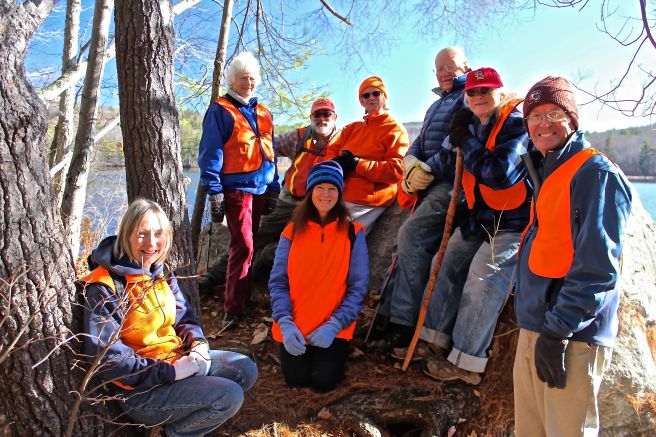
Donning our blaze orange, eight of the Greater Lovell Land Trust‘s docents joined me today for an exploration along the trail to Otter Rock at the Heald and Bradley Ponds Reserve.

Our destination was the Otter Rock spur, not very far, but it’s amazing how long it can take us and we were impressed that we actually reached our goal.

grape fern 1.jpg

Along the way we stopped to admire the blunt-lobe grape ferns and their separate fertile stalks, some still intact.

4 birches.jpg

And then we looked up. We’d been talking about tree bark, and right before our very eyes were four members of the birch family.

paper birch

Paper Birch (Betula papyrifera) features chalky white bark that often peels away in large sheets. The peeled bark reveals pink or orange tints, only partially visible here, but evident on other trees in the neighborhood.

yellow birch

To the left of the Paper Birch stands a Yellow Birch (Betula alleghaniensis), with its curly ribbon-like strips of bronze or yellowish-gray bark giving it a shaggy appearance.

black birch

And to its left the one that excited us most, Black Birch (Betula lenta), sporting gray bark with long, horizontal lenticels. All trees have lenticels, but they are more obvious on some than others. These slits allow for the exchange of gas so the tree may breath.


gray birch

Last in the family line-up, a Gray Birch (Betula populifolia) showing off its almost dirty appearance and chevrons below the former branch sites.

dragonfly nymph 1

At Otter Rock, we found dragonfly nymph exoskeletons still clinging to tree bark

df 2

and rocks.

shell remnants

Our discovery of shells made us wonder and smile about others who have passed this way.

wh b

Now that the leaves are gone, we delighted in the knowledge that there is so much more to see, including Witch Hazel.

witch hazel gall

We examined one of the few remaining ribbony flowers, the scalpel-shaped buds, fruiting bodies, asymmetrical leaves and a spiny gall all on one branch.

witch hazel Bob.jpg

Our very own Witch Hazel Expert, Docent Bob, demonstrated the way the seeds pop–referencing Henry David Thoreau’s discovery of this phenomenon.

docents 1.jpg

Before we headed back to the main trail, the group posed for a photo call. They all look so sporty in their blaze orange.

wild raisins

A few more finds as we walked back to the parking lot: remnants of a wild raisin (Viburnum cassinoides), so named because the shriveled fruits that remain look like raisins;

black cherry bark.jpg

Black Cherry bark (Prunus serotina), easily identified by the small scales that curl outward like burnt cornflakes or potato chips;

red oak leaves

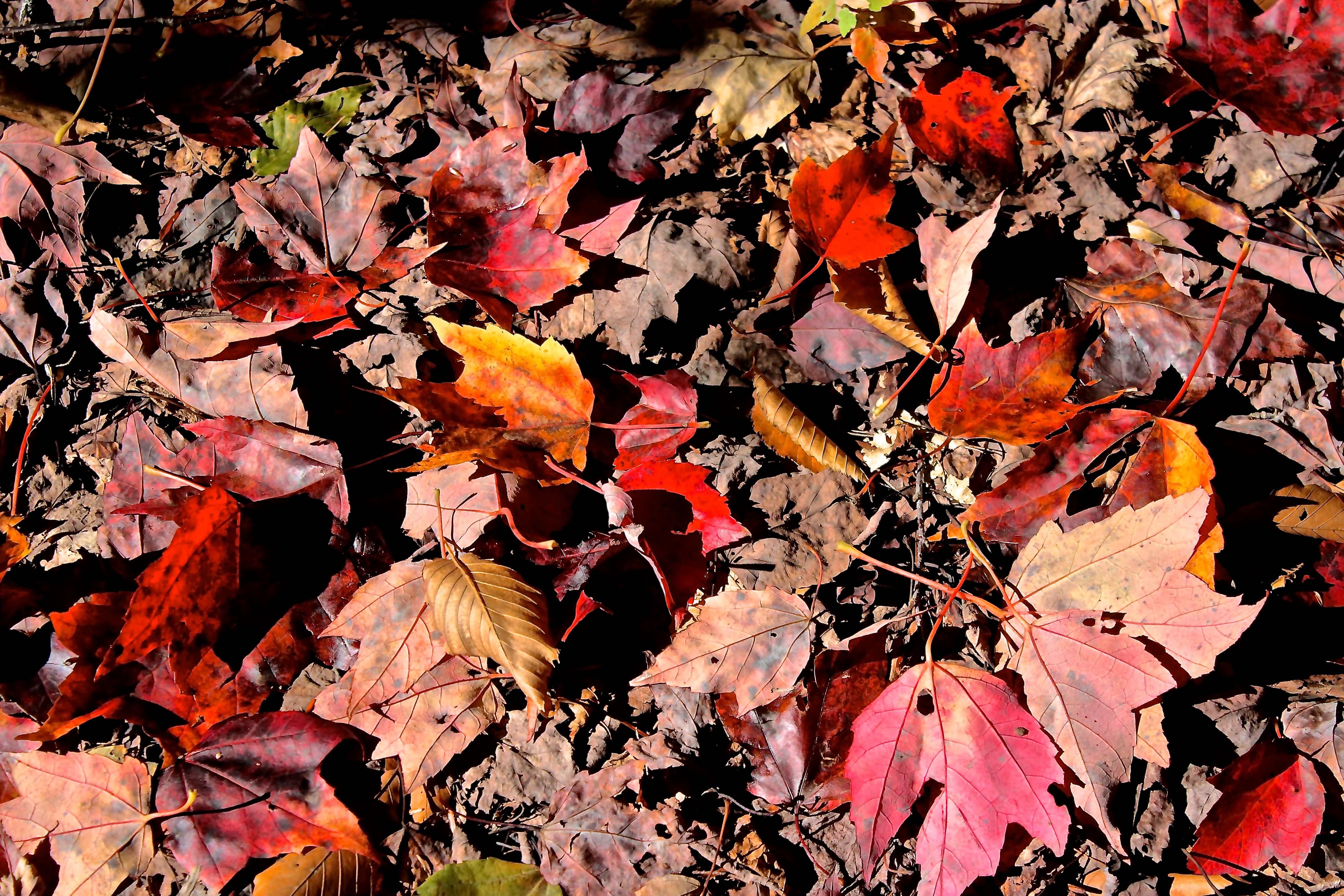
and Northern Red Oak leaves displaying holiday colors.

Mill Stream

Though most of us parted company just beyond the mill stream, a couple of us continued on to the John A. Segur Wildlife Refuge off New Road.

Heal All

We focused our attention on winter weeds, a topic for our January 9th walk. On this old logging road, some of the Selfheal or Heal-all (Prunella vulgaris) stands at least a foot and a half tall. As pretty as it is in the summer, it’s still a sight to behold in its winter structure.

evening primrose

Another to look forward to is the Evening Primrose (Oenothera biennia). Its fruits are four-parted capsules arranged in a spike at the tip of the stem, looking rather like flowers themselves.

There’s more to see, but I don’t want to give it all away.

CS view 1

My last stop for the day was a loop around the Chip Stockford Reserve. I wasn’t the only one trending blaze orange. The glow of the late afternoon sun cast an orange hue across the beech leaves.

November in western Maine. We’re happy to don our blaze orange and get out on the trails.


Embracing Splashes of Color

Walk in the woods any day of the year and you’ll find color, but nothing beats a day like today.

morning light red maple swamp

Early this morning, I waited at the Holt Pond Preserve parking lot for Jon Evans of Loon Echo Land Trust. Well, I didn’t actually wait. I walked off the trail, taking in the morning sunlight on the red maple swamp–knowing we’d return to it later. By the time I arrived back at the parking lot, Jon was waiting for me–we hitched a ride to Bald Pate, where today’s adventure began.

Jon, LELT

Together, we lead eighteen people, including six Boy Scouts from Troop 149, to the summit of Bald Pate and back down, where we connected with the Town Farm Trail and continued on to Holt Pond.

view from Bald Pate

As we climbed up Bald Pate, we paused to take in the western view. This week, the colors have popped.

Peabody Pond & Sebago Lake

The fall foliage was delayed because of September’s warm temperatures. Not only does less daylight trigger the chemical change in tree leaves, but a drop in temperature is also important. That being said, it doesn’t have to be cold enough to create a frosty coating.

splash of color

 The decreasing daylight hours and temps below 45˚ at night are signals to the leaf that it is time to shut down its food-making factory. The cooler night temps trap sugars made during the day, preventing them from moving to the tree. Once trapped, the sugars form the red pigment called anthocyanin.

Muddy River

As we witnessed along the Muddy River at Holt Pond, when the chlorophyll begins to break down, the green color disappears. This allows the yellows to show through. At the same time, other chemical changes may cause the formation of more pigments varying from yellow to red to maroon. While some trees, like quaking aspens, birch and hickory only show the yellow color, sugar maple leaves turn a brilliant orange or fiery red combined with yellow.

witch hazel flowers, Holt Pond

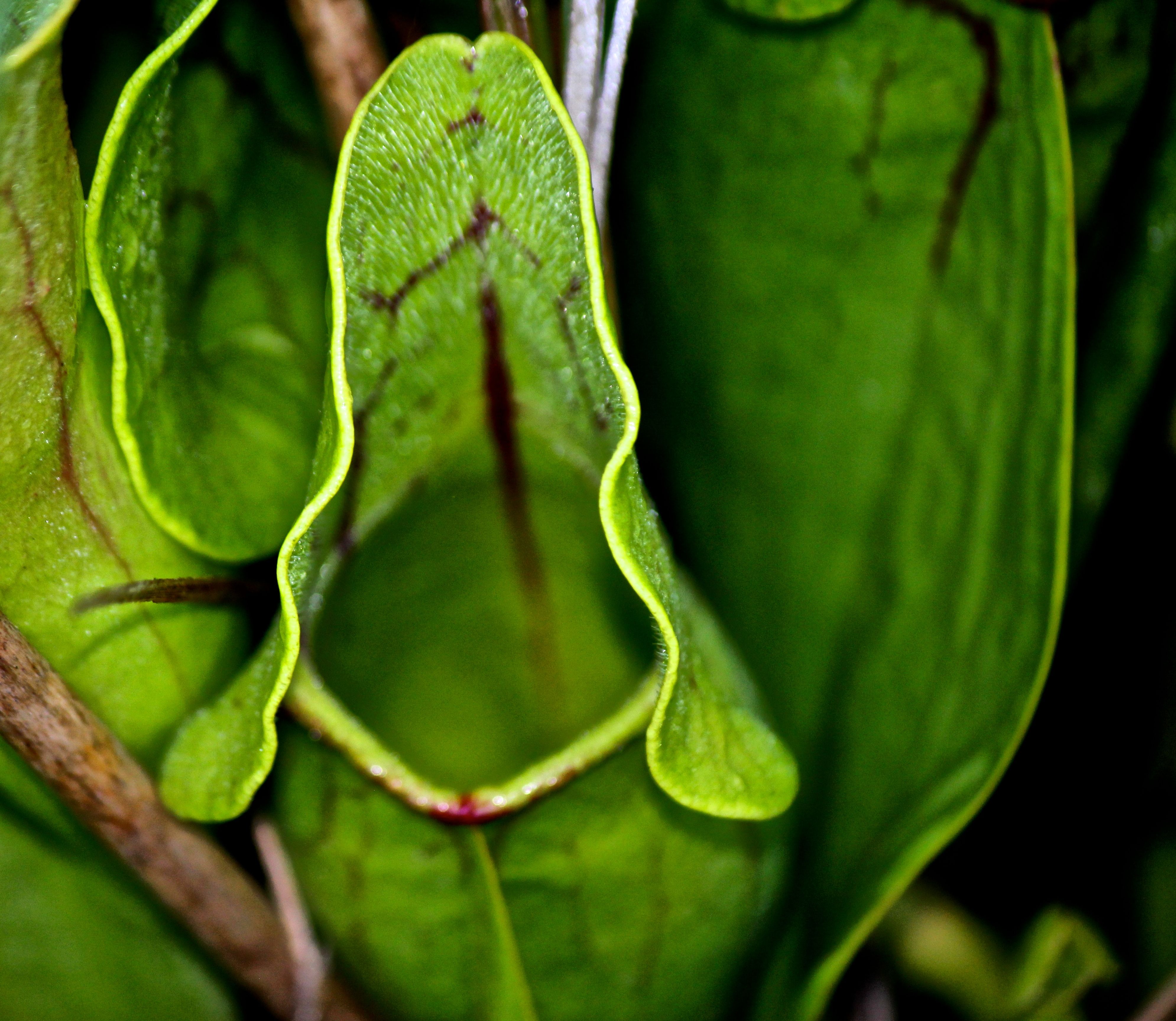
pitcher plants

button bush, Holt Pond

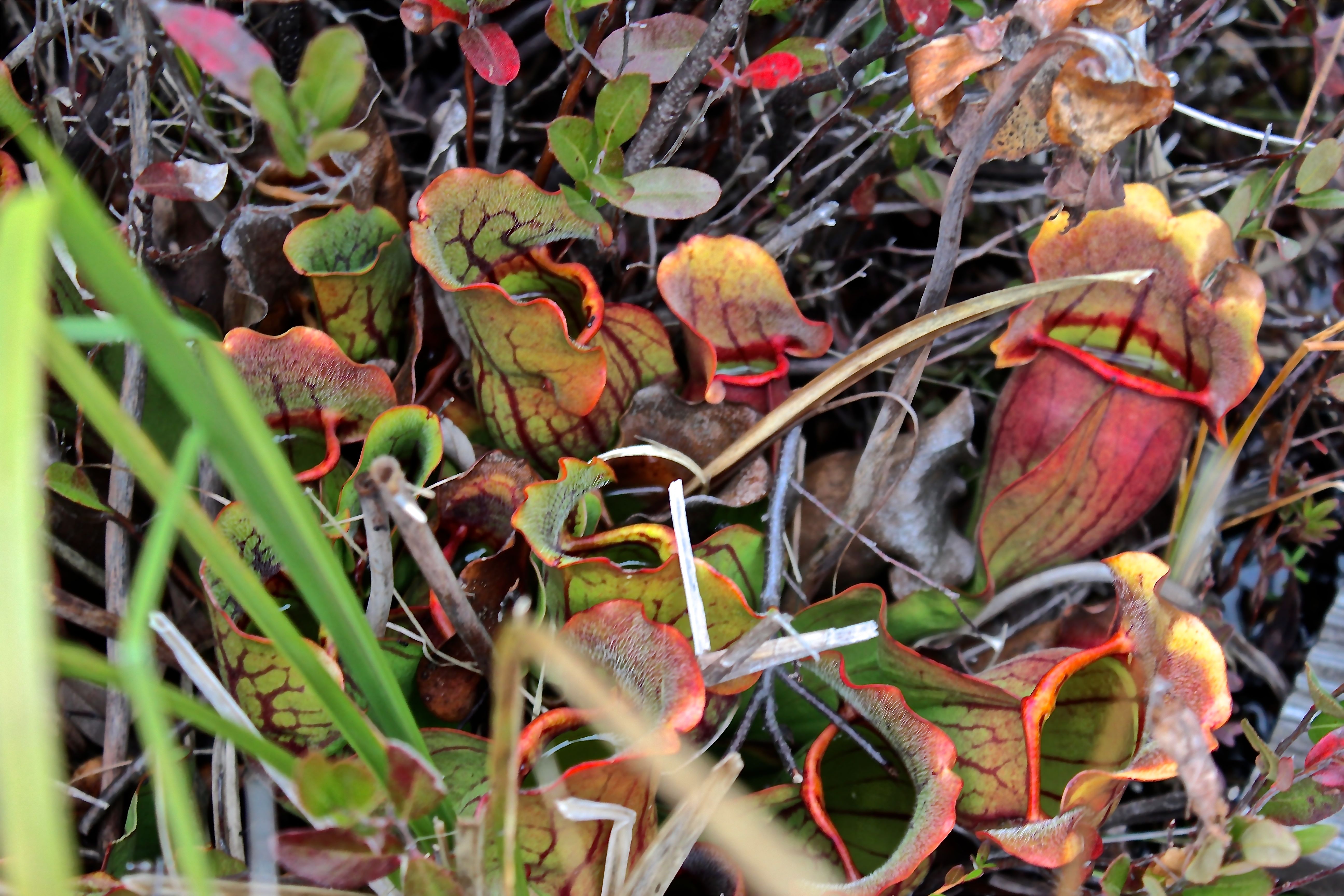
Not to be left out, the flowering witch hazel, pitcher plants and buttonbush display their own variation of colors.

Holt Pond Red Maple Swamp

Five hours and almost five miles later, we were back at the Red Maple Swamp I’d photographed at 7:30am.

The day was too beautiful to head indoors, so after a quick stop at home, I endured the Fryeburg Fair traffic and drove to the Gallie Trail at the Heald and Bradley Ponds Reserve in Lovell. My intention was a reconnaissance mission for next weekend’s Greater Lovell Land Trust hike to the summit of Whiting Hill.

 bear claw 2 bear claw and nectria

On the way up, I scanned the beech trees, searching for bear claw marks and wasn’t disappointed.

 Mama Beech Whiting Hill

The beech leaves have yet to take on their golden-bronze hue that lasts throughout the winter and appears like dabs of sunlight in the white landscape.

color contrast

The maples, however, provide a brilliant contrast in the canopy.

whiting view 2

It’s beginning to look a bit like . . . autumn from the summit.

red maple splendor

One red maple was particularly dazzling.

red oak, subtle color

This northern red oak provides a much more subtle hue,

ash leaf

while a white ash shows off its magenta-colored leaves.

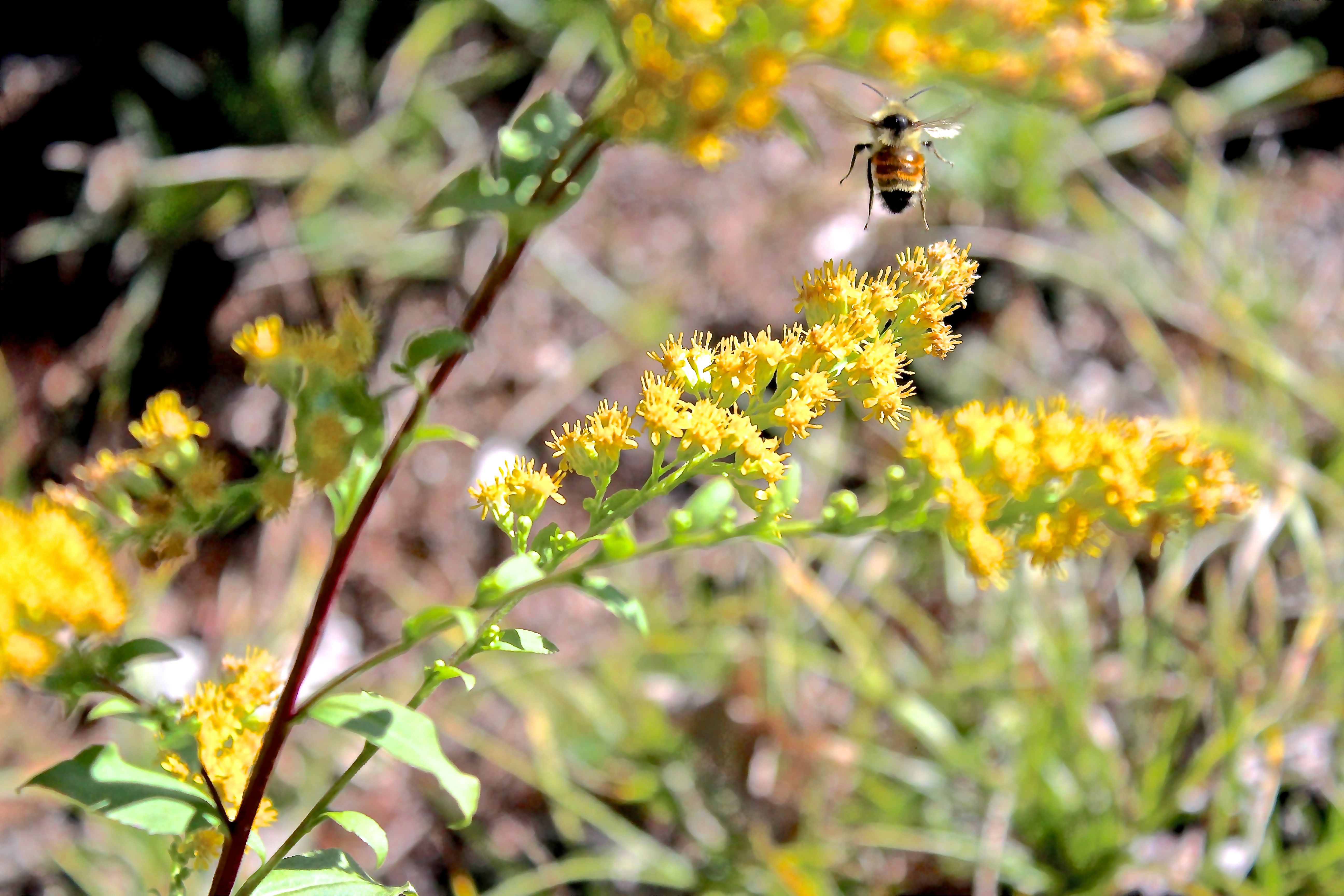
bees on goldenrod, Whiting Hill

A goldenrod continues to bloom and the bees know it. This one is doing a happy dance.

yellow-greens of striped maple

As I hiked down a different trail, the community changed and the striped maples dominated the understory

striped maple leaves

with their yellow-green leaves.

Indian cucumber root fading

Similarly, the Indian-Cucumber root’s leaves have taken on its lime-green color of fall.

splash of yellow greensplash of color2

Splashes of color. Nature on display. How fortunate I am to be able to embrace these moments.

Stalking a Grasshopper

So it’s Monday, but my guy just returned from a business trip and a quiet day was in order.

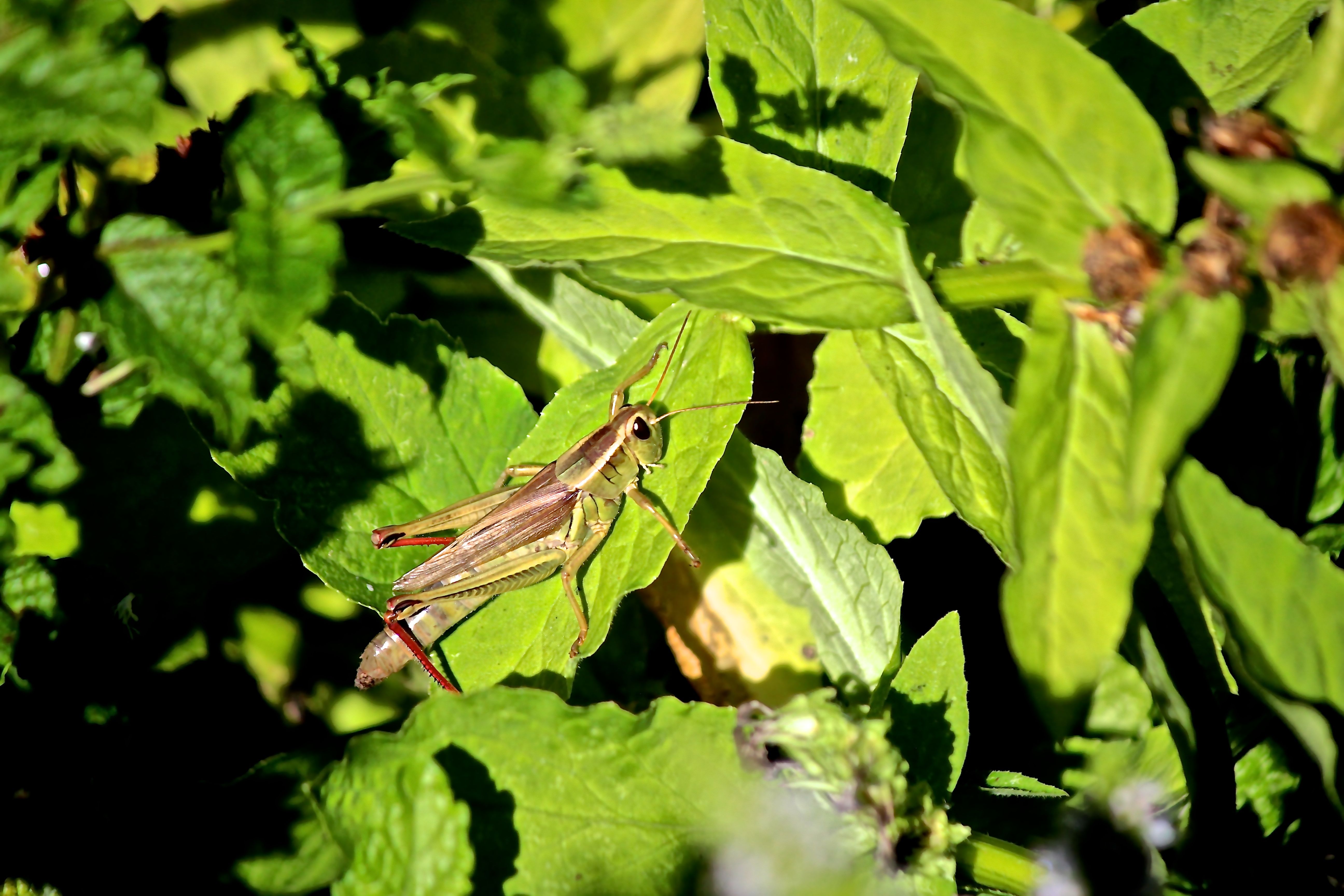
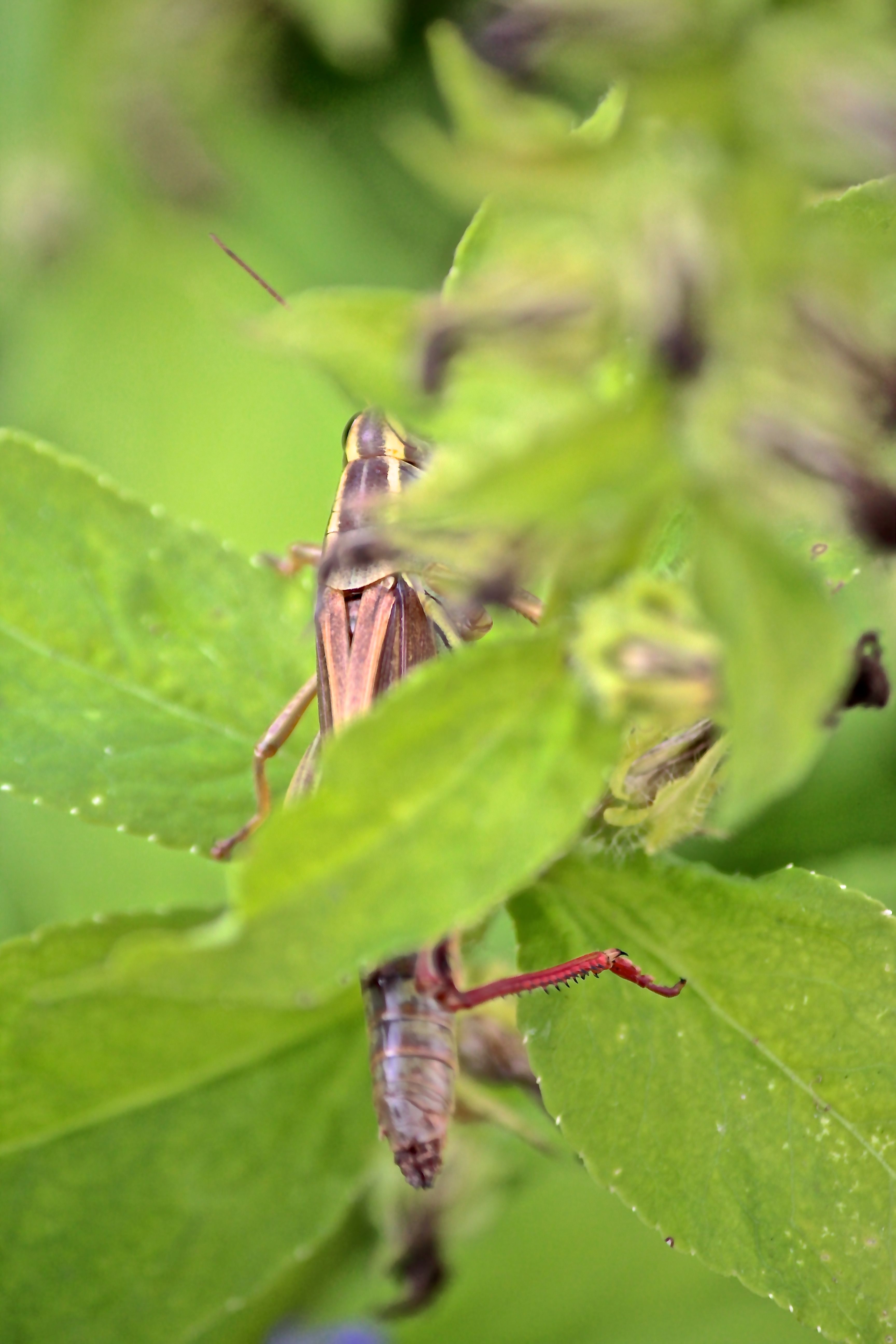
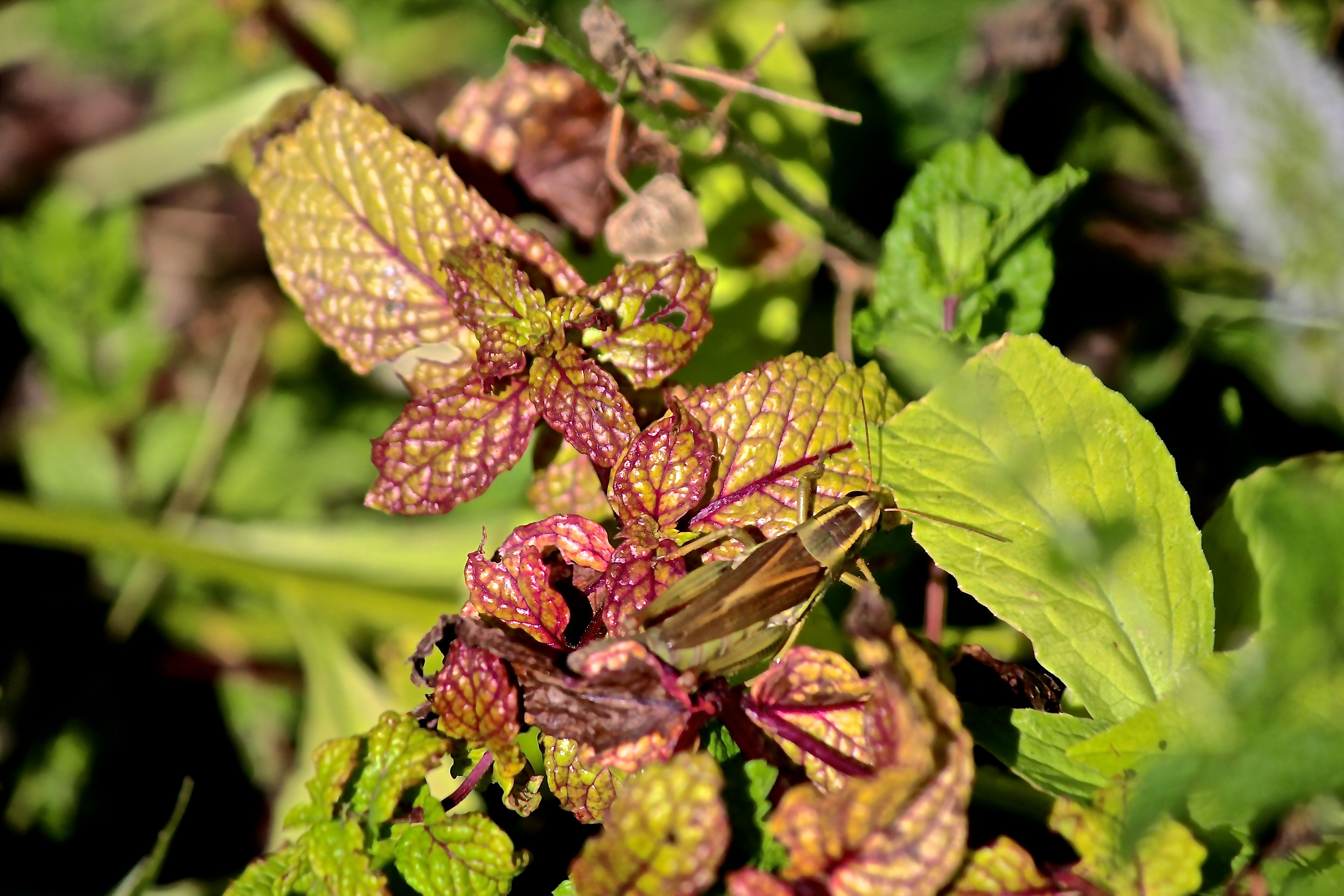
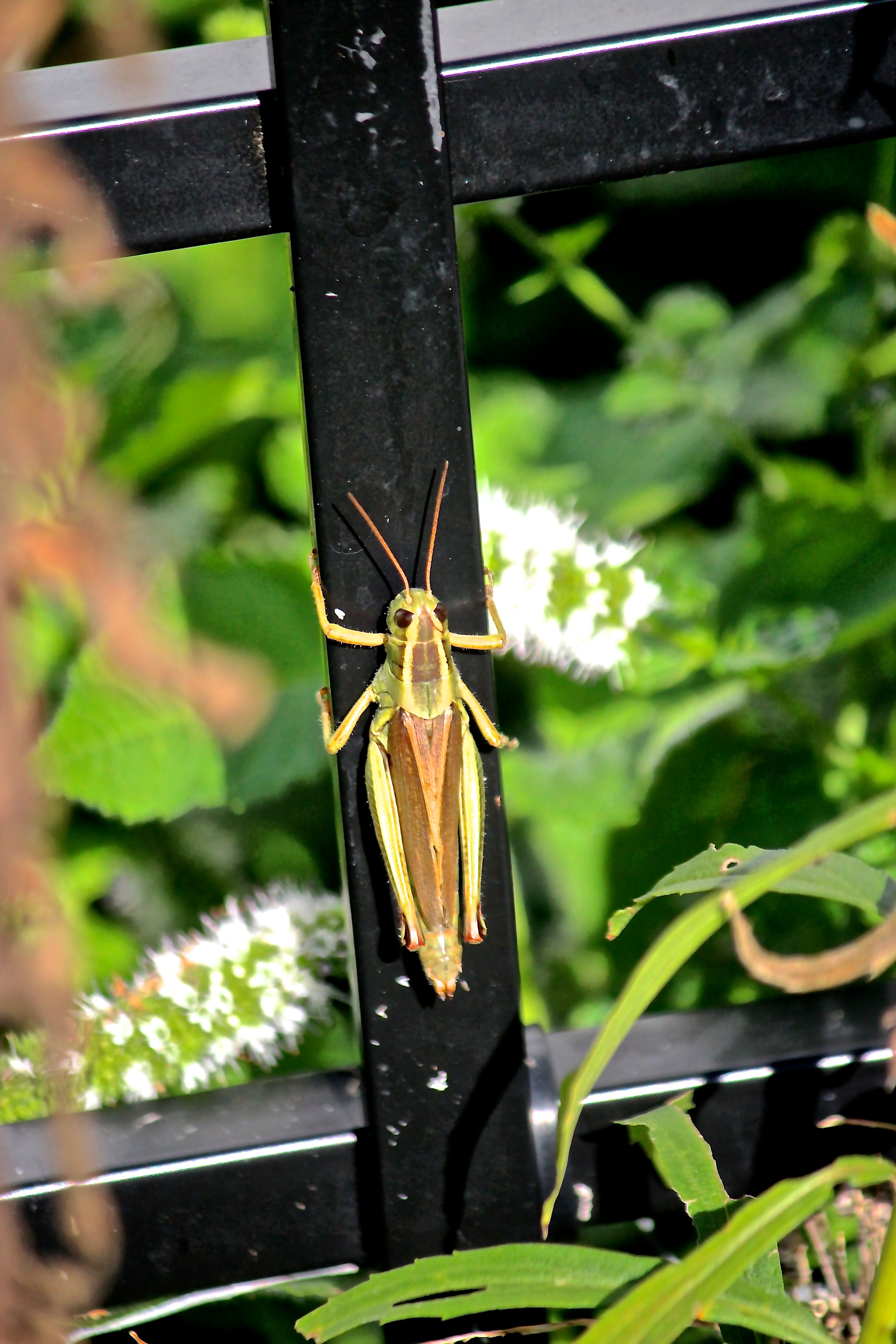
That meant I had time to stalk the poor red-legged grasshopper that lives in the garden.

on leaf

Like me, it warmed itself in the sun before moving about. The temperature was 37° this morning.

sideview

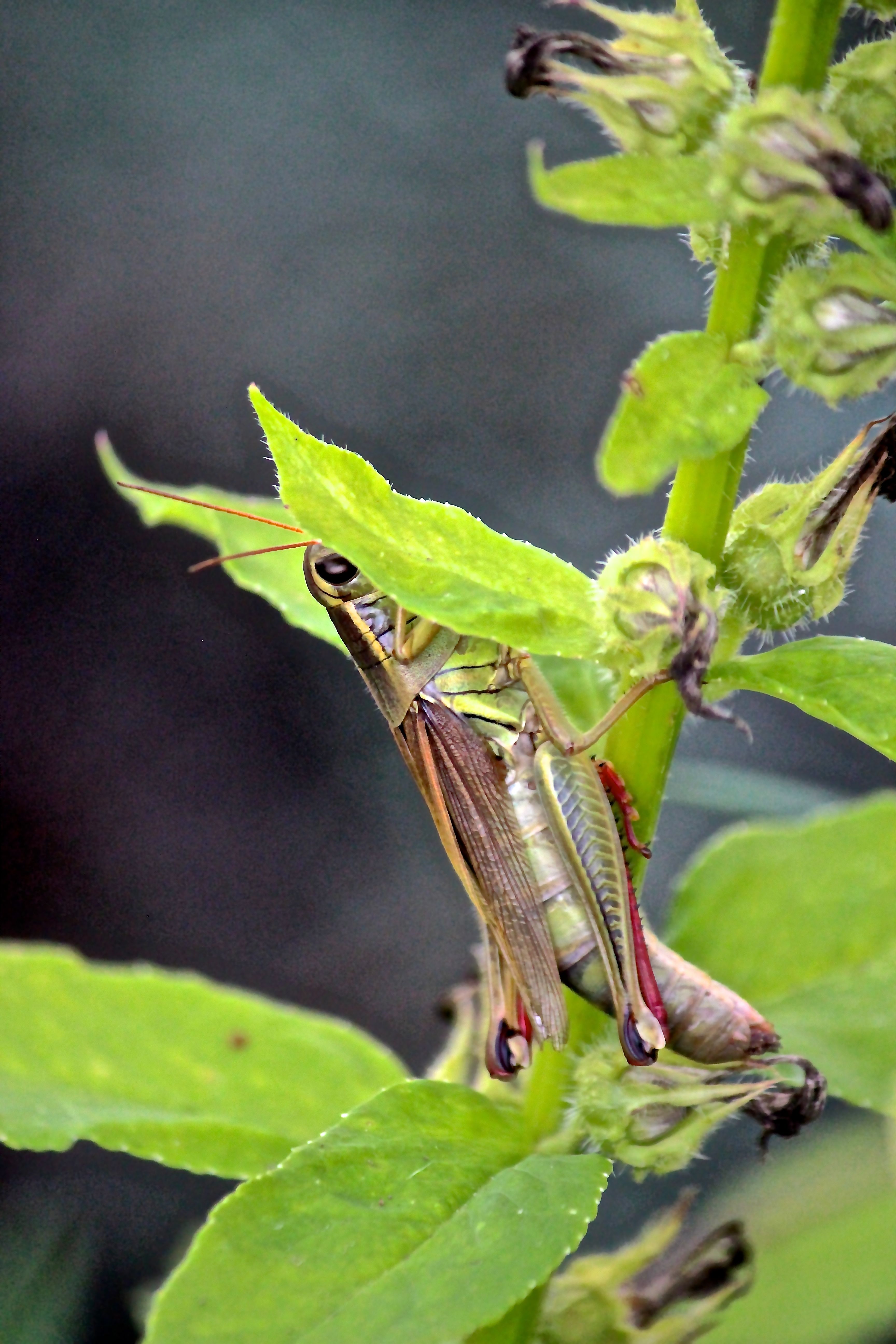
Like any insect, a grasshopper’s body consists of three main parts: head; thorax; and abdomen.

antlers searching mint

This short-horned herbivore uses its antennae to feel about the mint leaves. The  pair of antennae serve as sensory organs.

On lavendar face

The head includes the antennae plus two compound eyes and three simple eyes or ocelli (yup, 5 eyes altogether). One ocellum is located between the antennae and the other two are near the compound eyes.

mouthparts

The head also features  several mouth parts including the palpi, which are used to handle food.The short palpi remind me of fangs.

herring bone legs

The thorax or middle part of the body actually consists of three separate parts. Closest to the head is the prothorax, which supports the first pair of legs. Next is the mesothorax, providing support for the middle pair of legs plus the first set of wings.  And the third section is the metathorax, which supports the third and largest pair of legs plus the second pair of wings that are used for flying.

back legs

The first two pairs of legs are short and used for walking and eating, while the third pair is used for hopping. Each leg consists of five parts. The largest part of each being the femur–identified easily on this specimen by the herring-bone pattern. Notice the rounded area at the bottom of the femur–that’s the knee.

moving off lavendar

The knee connects the femur to the more slender tibia, which has a spiny appearance.

on great lobelia

And below the tibia is the tarsus or foot, which consists of several segments and claws. (Sounds like time for a song–the hip bone is connected to the . . . you don’t want to hear me sing.)

 swing right

The abdomen or third section of the body begins behind the metathorax.

nibbling mint

The first segmented section of the abdomen features a pair of “ears” (tympanum) that are located under the wings (or behind mint leaves). A grasshopper can’t necessarily hear like we do, but it can distinguish the sounds of love–the intensity and rhythm of a male’s song. Each of the other segments features a pair of dots that are actually spiracles or openings for breathing tubes–there are five sets total. And at the tip of the abdomen is an ovipositor, the egg laying appendage.
on mint

Camouflage protects the grasshopper from predators, which includes birds, spiders, skunks, shrews, snakes, toads and salamanders. They all frequent our yard.

on dead stem

Each time I returned to the garden today, I had to stand still and scan the area for several minutes before I realized that I’d found my friend. Of course, I’m only assuming it was always the same one.

lavendar

Sometimes it was an easy find.

Stalking a grasshopper–not a Mondate, but still a fun focus.

Questions To Be Asked

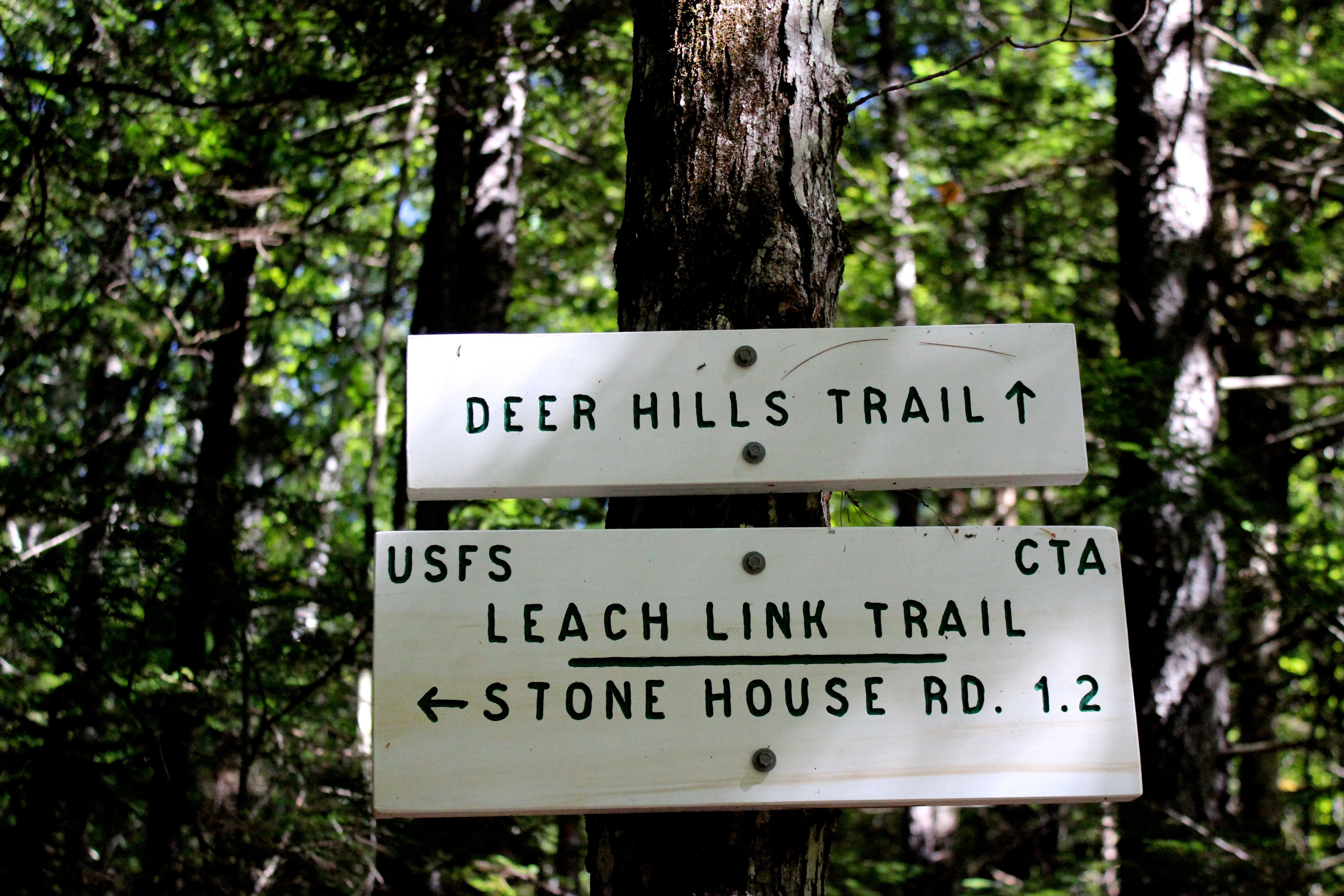
A friend and I drove to Evans Notch today with the mission of exploring a trail that was new to us. The Leach Link Trail connects Stone House Road to the Deer Hill trail system.

IMG_1338

We started at Stone House Road and turned back at the Cold River Dam. Not a long trail, certainly. And rather flat for the most part. Despite that . . . it took us four hours to cover 2.4 miles. You might say we stopped frequently.

There was a lot to see along this enchanted path. And questions to be asked.

CB 2

We walked beside the Cold River as we passed through hemlock groves and mixed hardwoods covered with a myriad of mosses and liverworts.

lungwort

Because it had rained last night, Lungwort, an indicator of rich, unpolluted areas, stood out among the tree necklaces. Why does it turn green when wet?

water strider

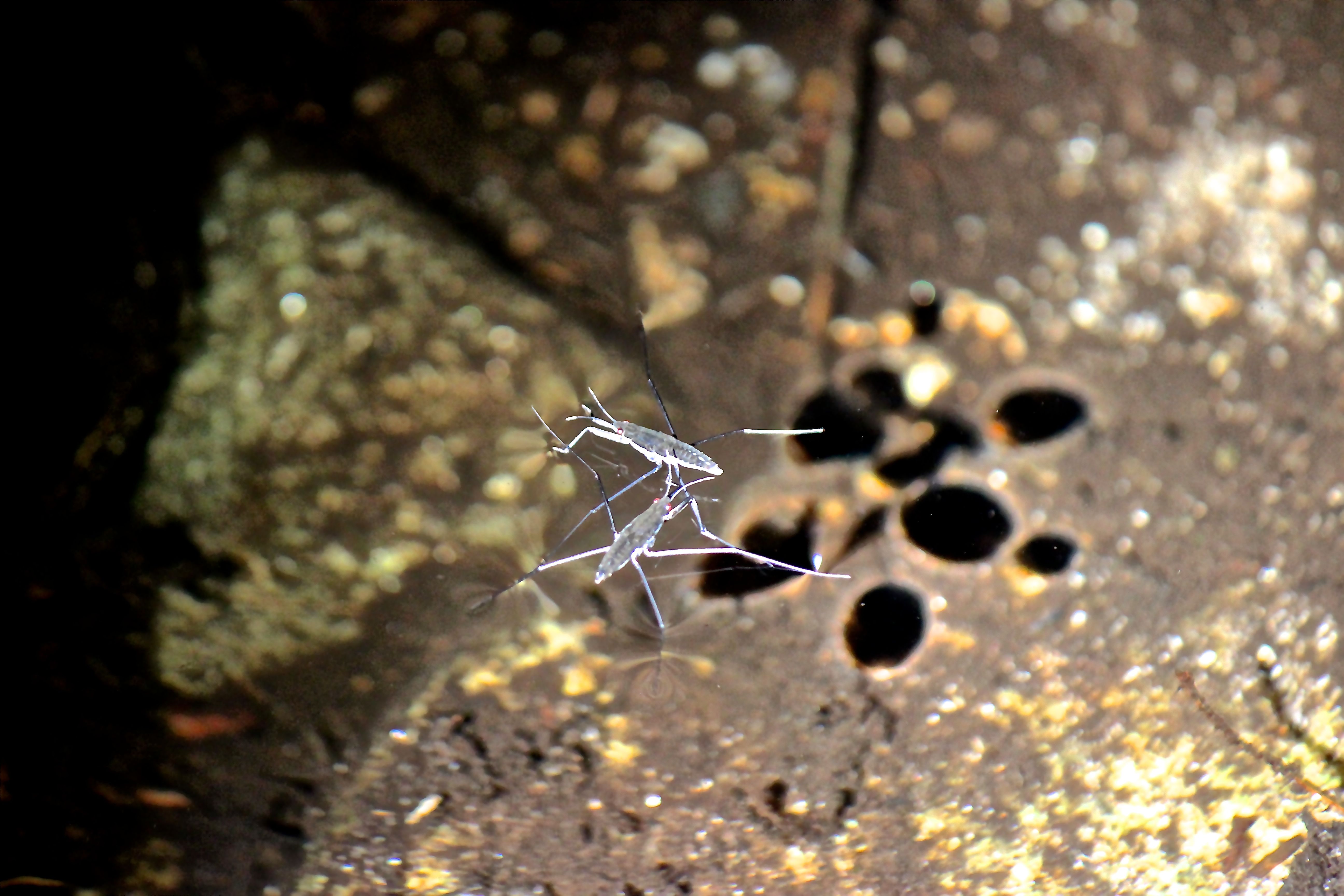
The shadow of the water strider tells its story. To our eyes, it looks like their actual feet are tiny and insignificant. What we can’t see is the  fuzzy little hairs that both repel water and trap tiny air bubbles, thus allowing them to float or skate along the water’s surface. But still, why is the foot shadow so big while the body shadow is more relative to the strider’s size? Is it the movement of the foot against the water that creates the shadow?

bobcat

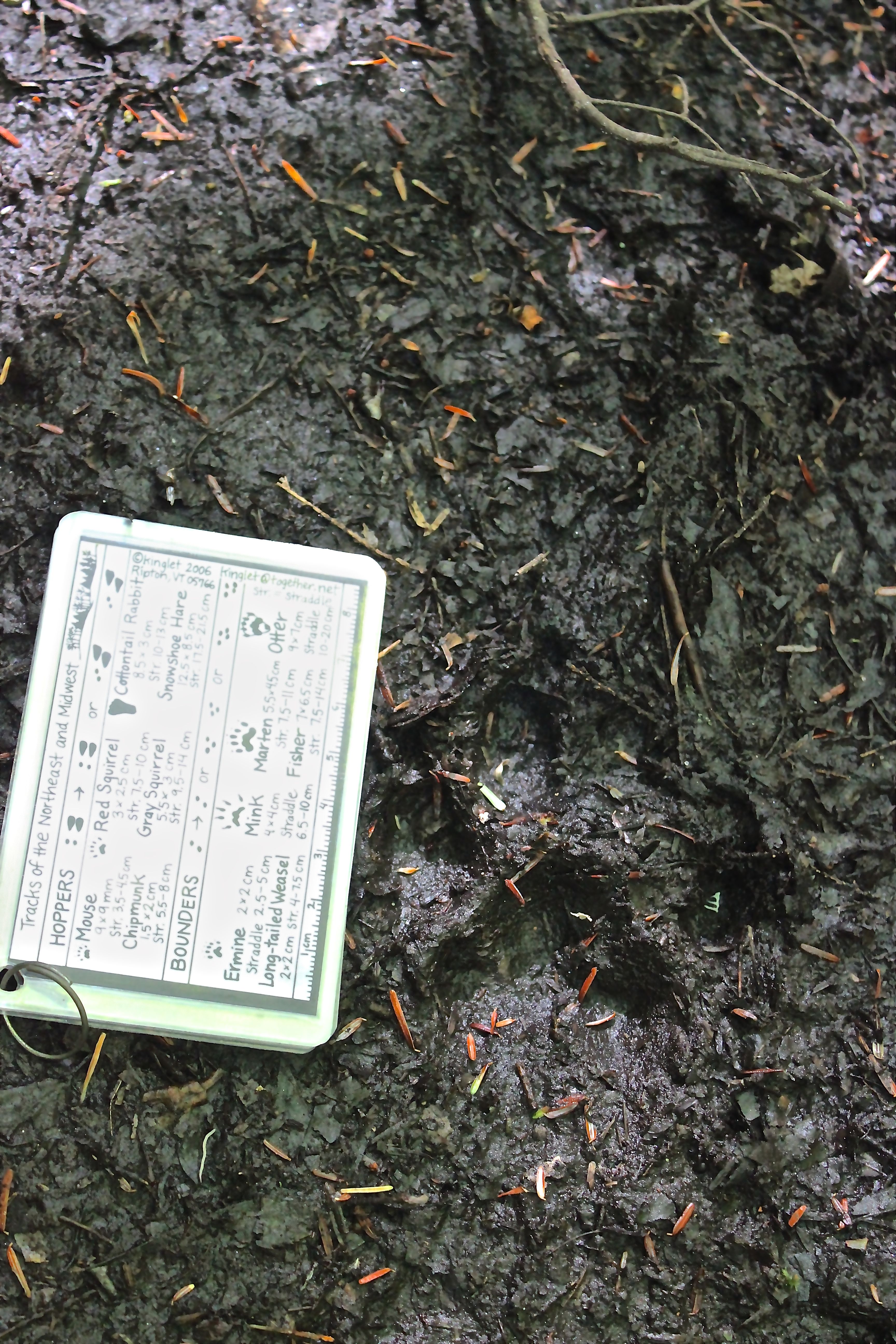
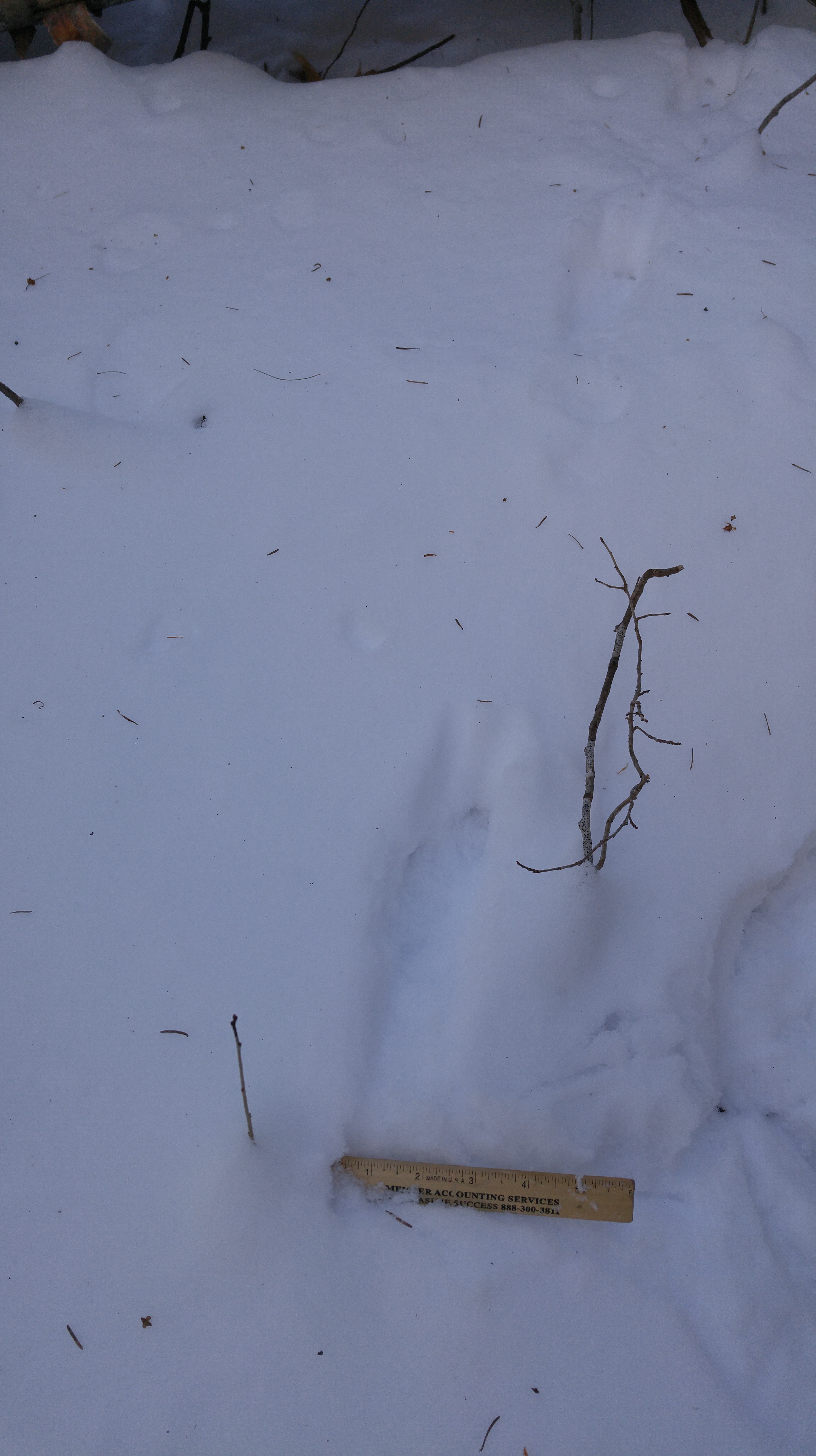
While the river was to our right on the way to the dam, we noted ledges on the left. Prime habitat for the maker of this print: bobcat. You might be able to see nail marks in front of the toes. We always say that cats retract their nails, but in mud like this, traction helps.

bobcat & coyote

A little further along we discovered the bobcat was still traveling in the same direction and a coyote was headed the opposite way. What were they seeking? What was the difference in time of their passing?

CR4

Periodically, we slipped off the trail to explore beside the river.

WH 3

Ribbony witchhazel blossoms brightened our day–not that it was dark.

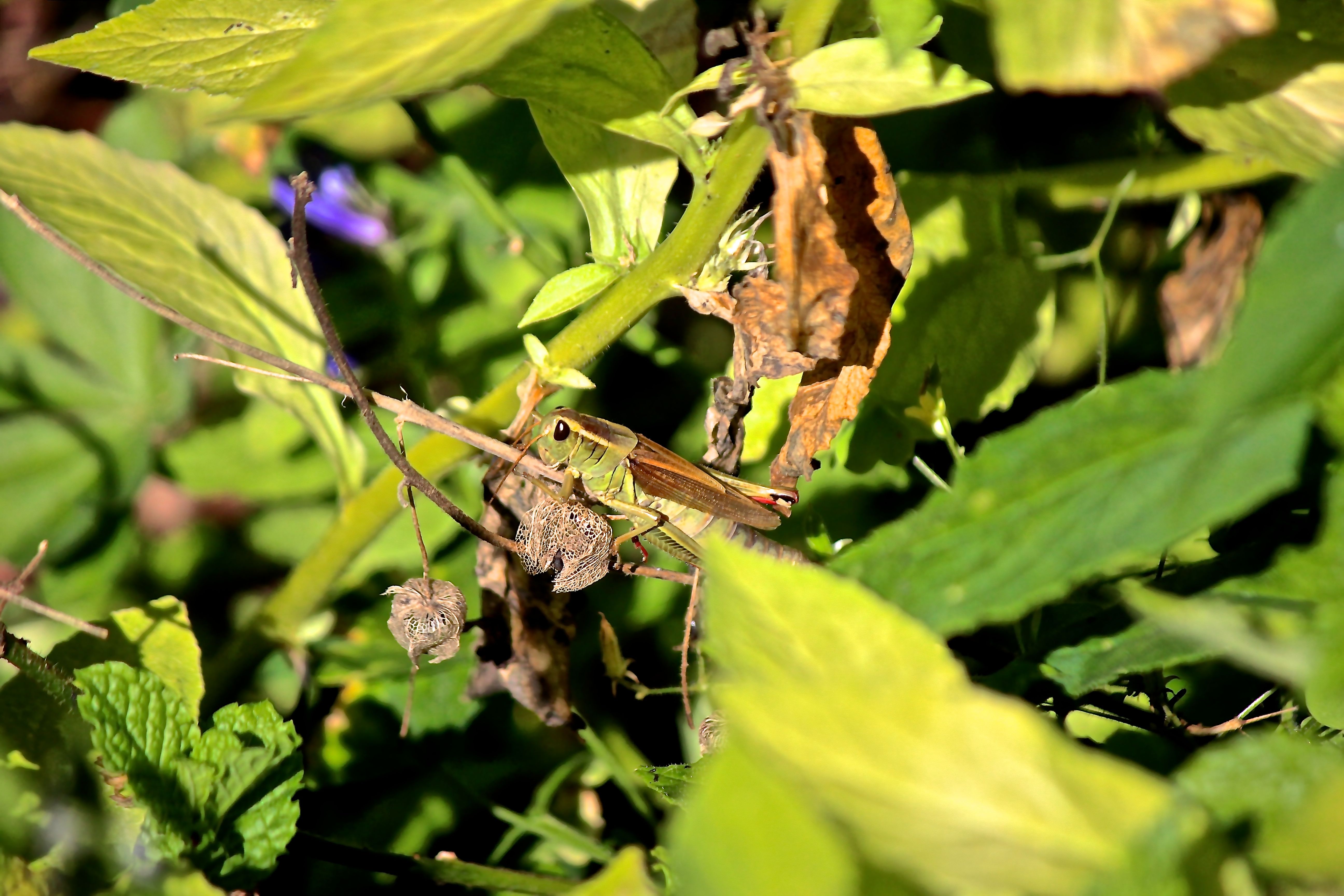
grasshopper 1

We weren’t the only ones taking a closer look at hobblebush.

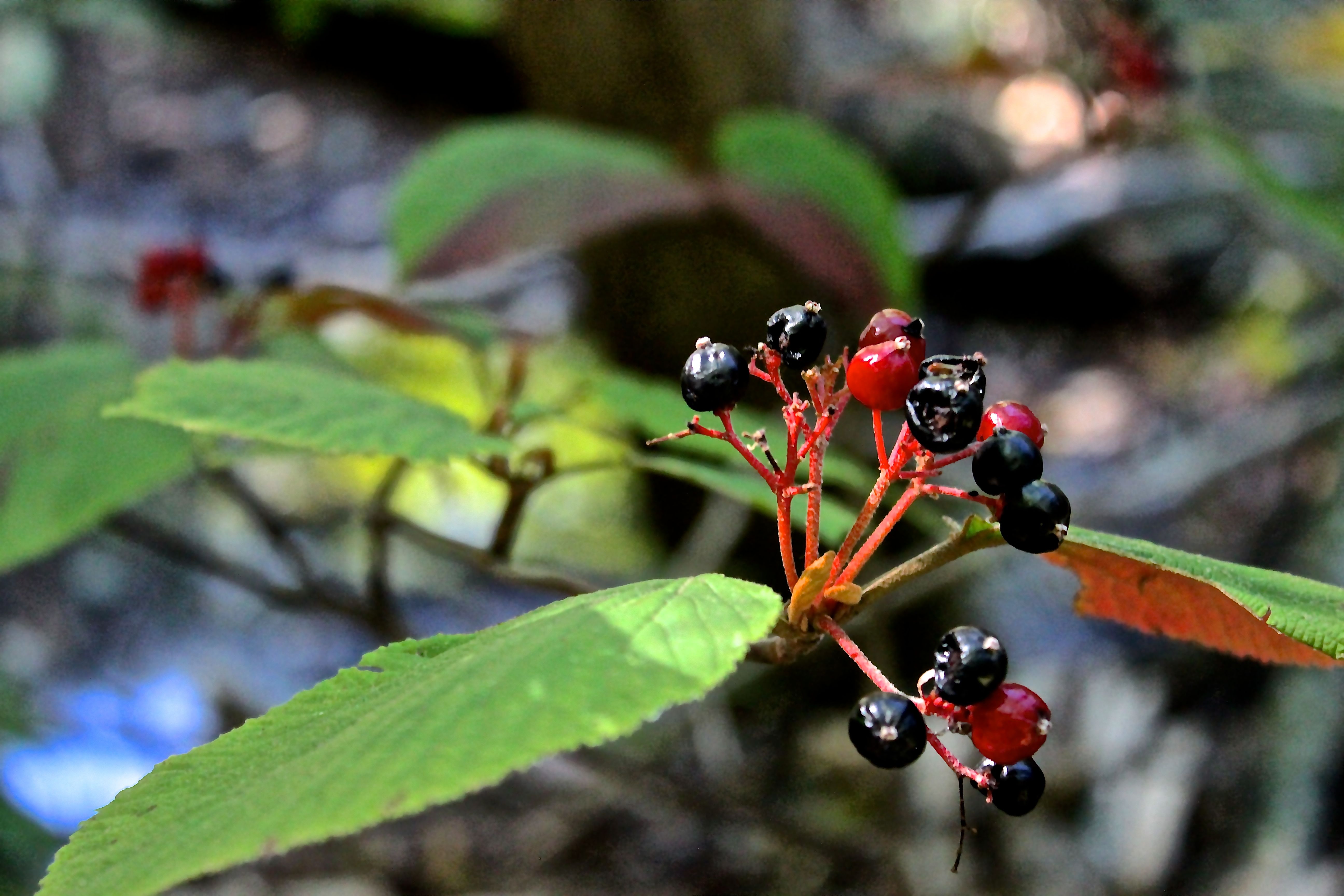
hobblebush berries

As its leaves begin to change from green to plum, the berries mature and transform from red to dark blue. Will they get eaten before they all shrivel? We think they’ll be consumed by birds and mammals.

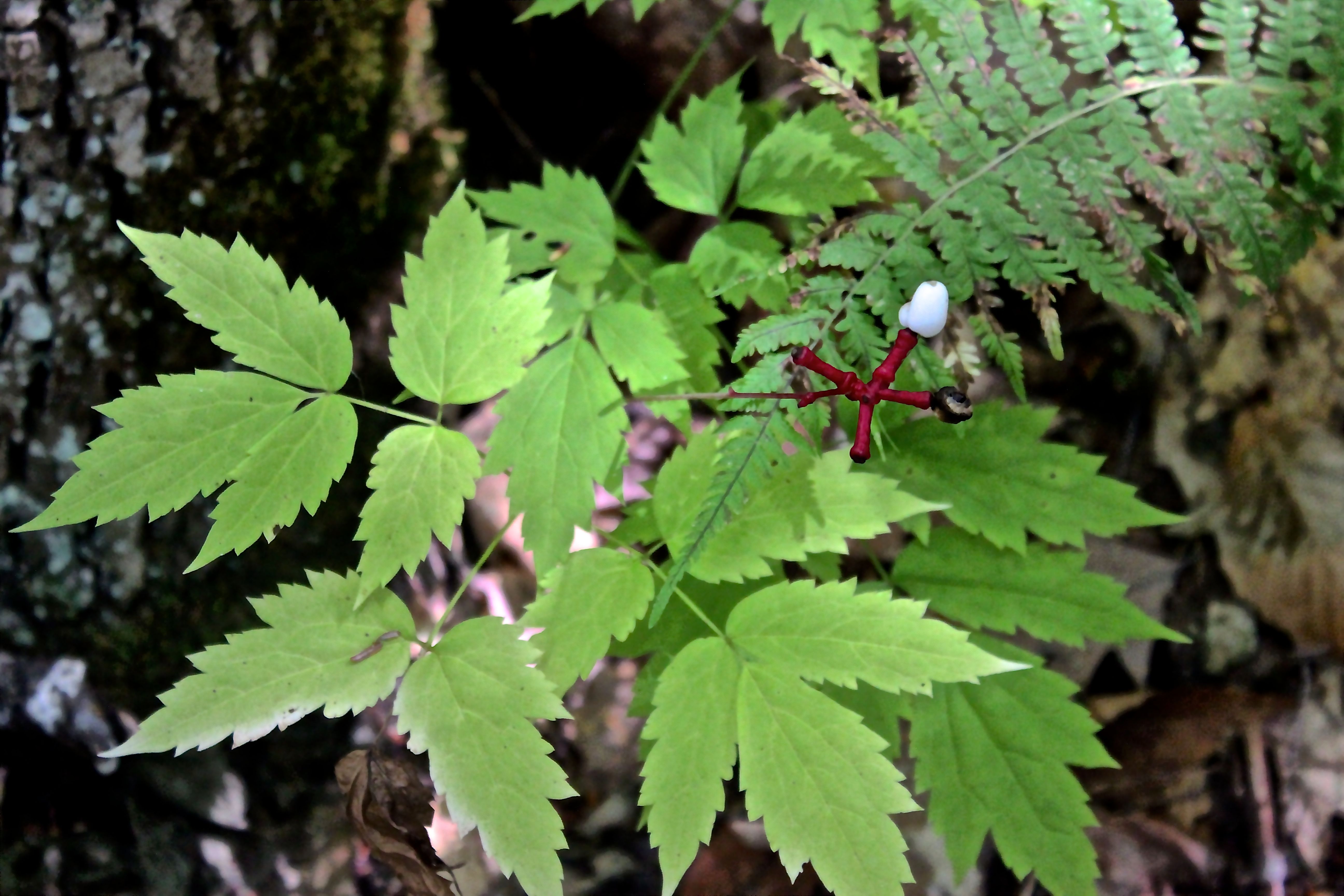
doll's eye

Most of the “doll’s eye” fruit is missing from this white baneberry. The archaic definition of “bane” is something, typically poison, that causes death. I’ve read that  ingesting the berries can bring on symptoms such as stomach cramps, vomiting, diarrhea, delirium and circulatory failure. Think: respiratory distress and cardiac arrest. YIKES. So what may have eaten these little white eyeballs? Wildlife may browse it, but it’s said to be quite unpalatable and low in nutrition. Interestingly, birds are unaffected by its toxic qualities.

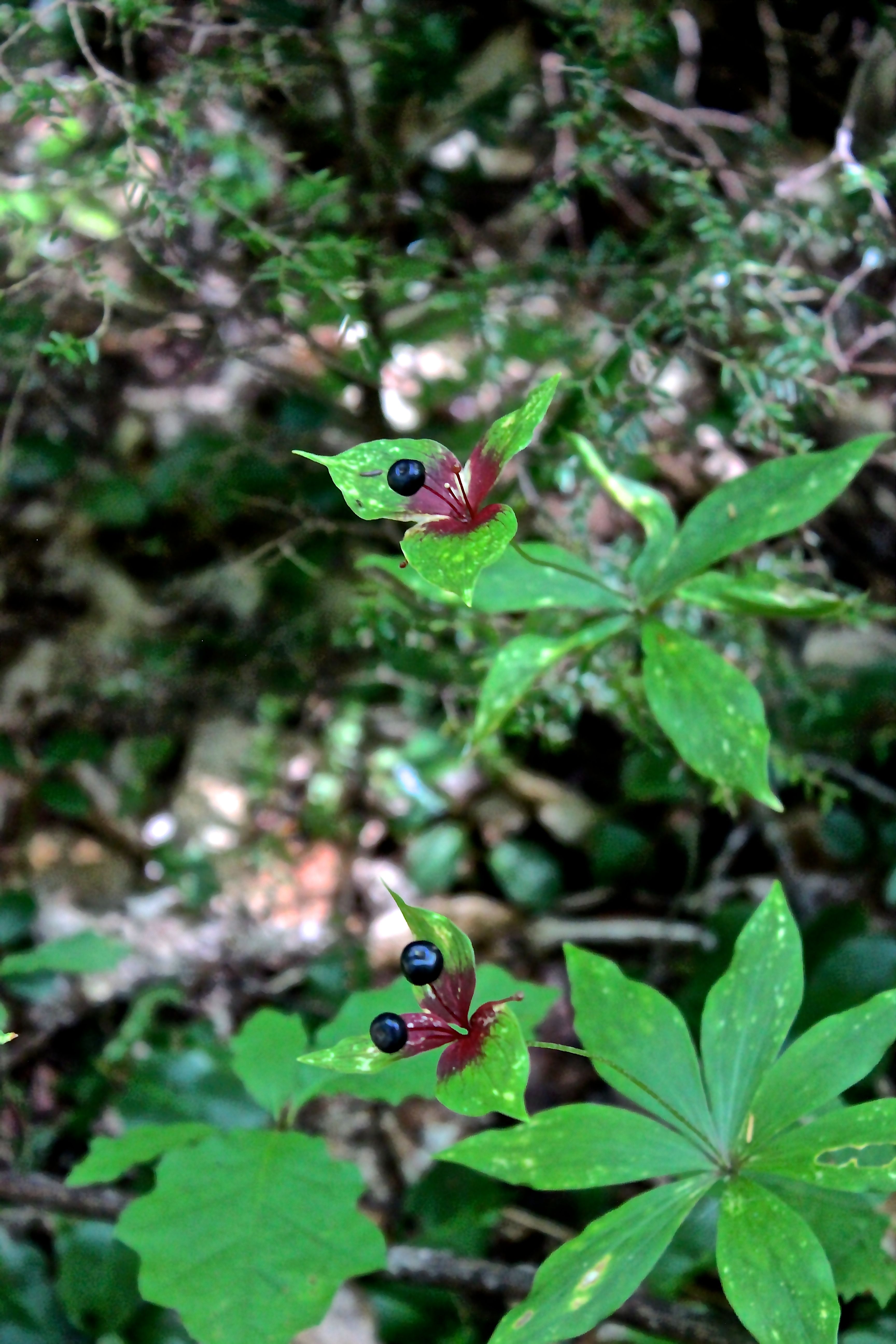
Indian Cucumber root

Berry season is important to migrating birds. The purplish black berries of Indian Cucumber-root are only consumed by birds. Other animals, however, prefer the stem and cucumberish-flavored root of this double decker plant. Why does the center of the upper whorl of leaves turn red? Is this an advertisement for birds?

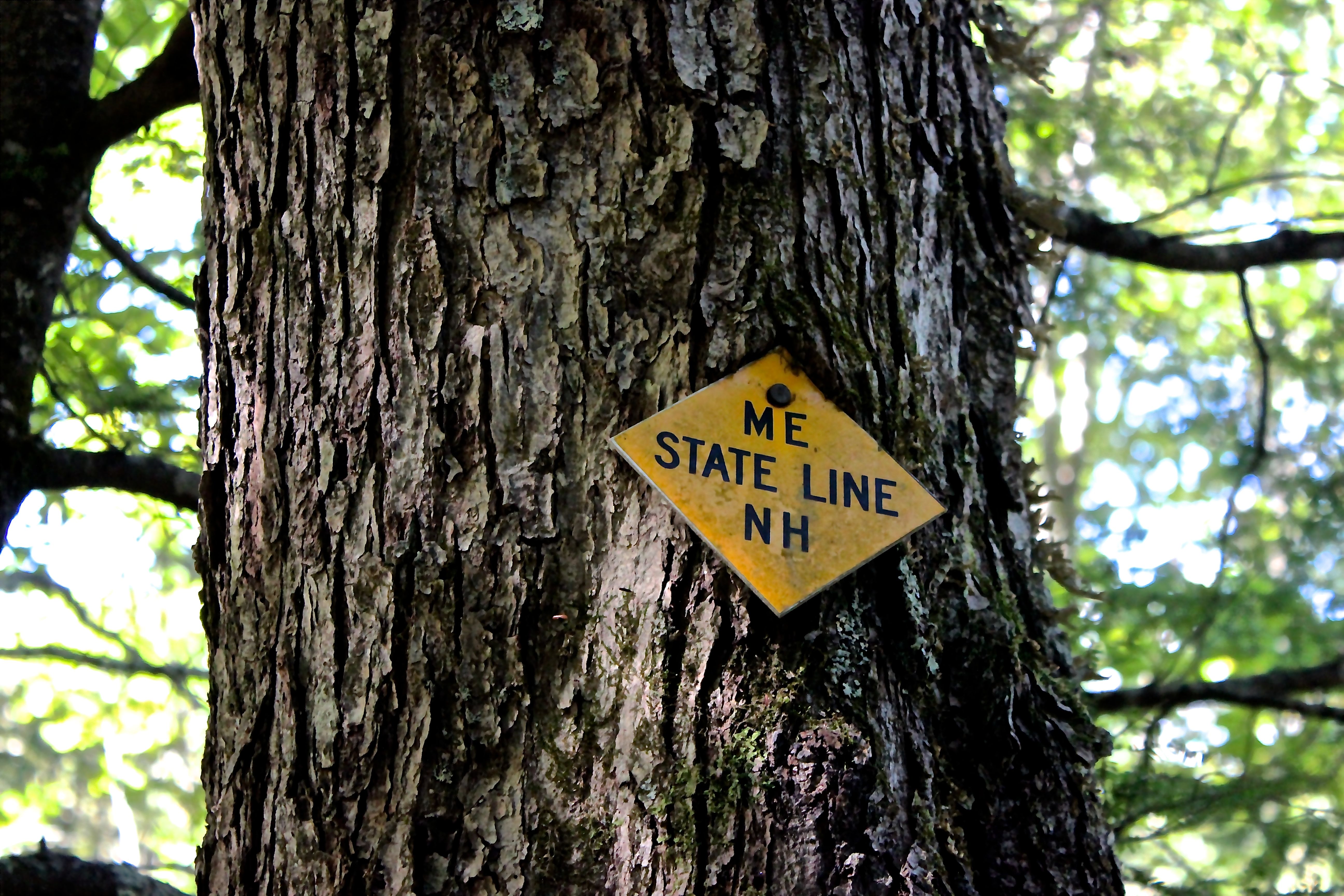
state line

Soon, well, not all that soon, we arrived at the state line and passed onto Upper Saco Valley Land Trust property.

dam 3

And then we came upon the dam.

dam 2

It was the perfect day to sit on the rocks and eat a peanut butter and jam sandwich–with butter.

 tree face

As we walked back toward Stone House Road, we realized we were being watched. Perhaps this tree muse has all the answers.

Thanks to P.K. for a delightful wander and a chance to wonder together.

Mutual Fascination

meadowhawk 1

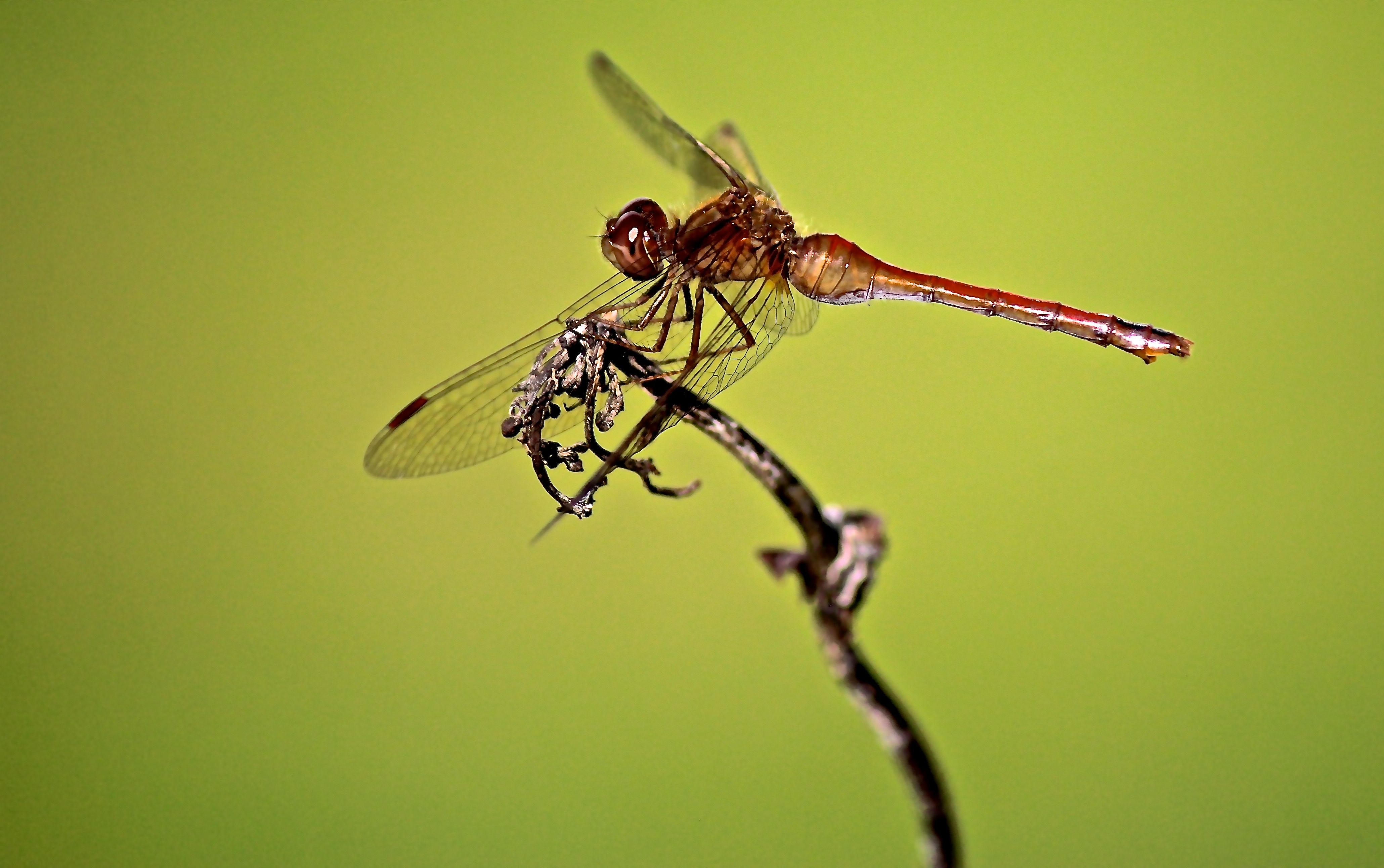
Spending even just a few minutes with a dragonfly is a fascinating experience.

meadow front view 2

We share a mutual curiosity about each other.

meadow hanging

I only wish I was half as interesting to look at as this meadowhawk.

meadowhawlk side view 3

Those compound eyes. And veined wings. That hairy body. And segmented tail. And those iridescent colors.

meadowhawk landing

Otherworldly.

grass climbing up

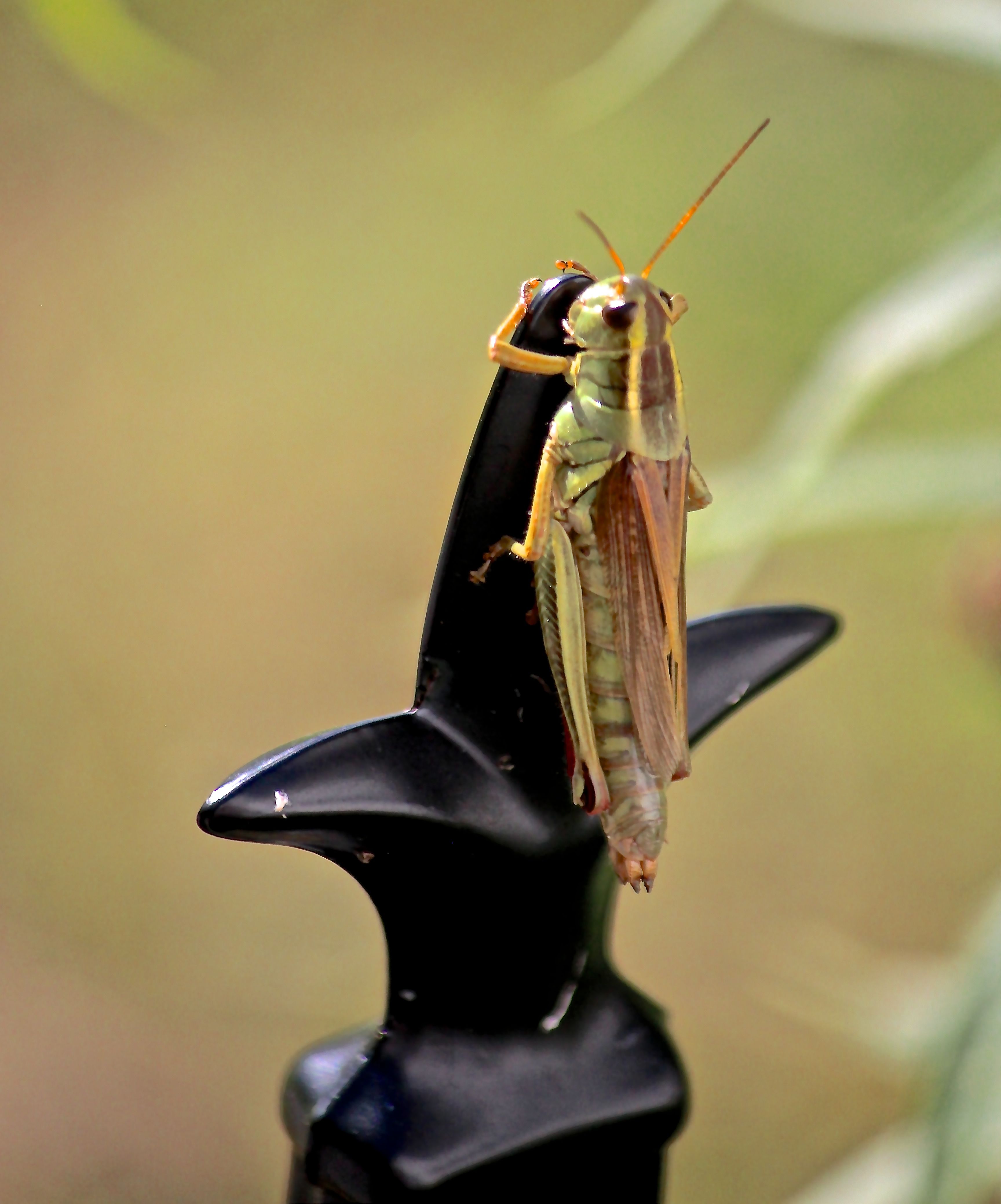
The band-winged grasshopper also commands my attention.

grass 3

It appears curious as well, but in a much shier manifestation.

grass scratching head

And sometimes, it just has to scratch its head.

grass side view

Again, it’s the compound eyes, segmented body parts, camouflage coloration and herring-bone pattern on its hind legs that draw my focus.

grass front view 2

As we played peek-a-boo, I wondered what there is about me that it finds fascinating.

Rain Drops and Mondates Always Make Me Glad (and humble)

My guy and I ventured off to the Major Gregory Sanborn Wildlife Management Area in Brownfield today. Cooler temps and plenty of sunshine marked the early morning hours.

BBog sign

Covering almost 6,000 acres, this area was formerly known as the Brownfield Bog, but was renamed to honor Major Sanborn, a beloved Maine Warden, who lost his battle with cancer several years ago.

Bbog1

This is a place we return to often, but I have to admit that my sense of place was thrown off within the past week.

Saco River

We came to explore the Saco River. So this is where our pride takes a ribbing. We’ve walked to the river on most of our visits, but we never realized that this was the actual river. Huh? Yup, it’s true. In our brains, this was either the Shepard River or an old course of the Saco. Maybe it’s because when we’ve stood beside its bank, we’ve never seen anyone paddling along. Maybe it’s because until yesterday we never looked at the map. We never bothered to locate our place–just assumed we knew where we were. Another life lesson. Just a week ago, we were the merry paddlers, cruising along at tandem kayak speed, passing through the bog from Lovewell Pond to maybe a  half mile north of the Brownfield Bridge (maybe less). Maybe it’s because we were such swift paddlers that we were clueless. Anyway, now we know: The Saco River bisects the bog.

SR exploration

Exploring the floodplain became our focus as we followed the river.

river erosion

Each year, the river consumes more land, making me wonder what it was like when Brownfield was founded in 1802.

sensitive fern, chest height

We walked down a mowed path, where the sensitive fern grows chest high on either side.

royal fern

And the royal ferns are equally large and plentiful.

glen

Saco River 3

We explored in a different direction, perhaps trespassing on private land. (Oops, did that chain between the posts really mean “keep out”?)

elm 2

We recognized an elm growing over the river that we’d spotted while kayaking last week and knew that we’d established our sense of place.

SR 2

And then we turned from the river, retraced our steps and continued on to explore more of the bog via foot.

wild raisins 1

Wild raisins are abundant.

wild raisins

Eventually, the fruits will all turn blueish black and if the birds don’t eat them, they’ll shrivel up–like raisins.

common winterberry

The showy red fruits of common winterberry also dot the landscape. The curious thing about this plant–though this is a member of the holly family, the leaves are not sharply toothed like other hollies, nor are they evergreen.

milkweed dispersal

Milkweed is ready to fly away and find a new home.

green darner dragonfly

Speaking of flying, if I hadn’t seen this green darner fly into the foliage, I never would have discovered it.

Meadowhawk dragonfly

Meadowhawk dragonflies were much easier to spot, enjoying the warmth of the sunshine.

BBog 5

Openings in the shrubs and trees provide frequent views,

Pleasant Mtn 4

including the backside of Pleasant Mountain.

white oak bark

The community changed a wee bit, and suddenly we were under white oaks with their flaky-surfaced, rectangular, block-like bark.

northern red oak bark

Beside them grow the Northern red oaks, with their flat-topped ridges outlined by the rusty red inner bark.

big tooth aspen bark

The horizontal/vertical line design of big-toothed aspen also made its presence known.

big tooth aspen leaf

And on the ground, a big-toothed leaf provides a hint of what is to come.

red maple leaves changing

A few red maples are beginning to announce the changing season as well.

Bbog 2

When we reached our turn-around point, we were feeling a bit hot and sticky. We’d shed our sweatshirts and were thankful for a slight breeze.

fragrant water lily

I admired a few fragrant water lilies still in flower, while my guy followed the action of a northern harrier through the binoculars.

storm leaves

And then the wind really picked up. I looked at the trees and could see the backs of the leaves–my mother had long ago told me that that was a sure sign of rain to come.

storm cloud

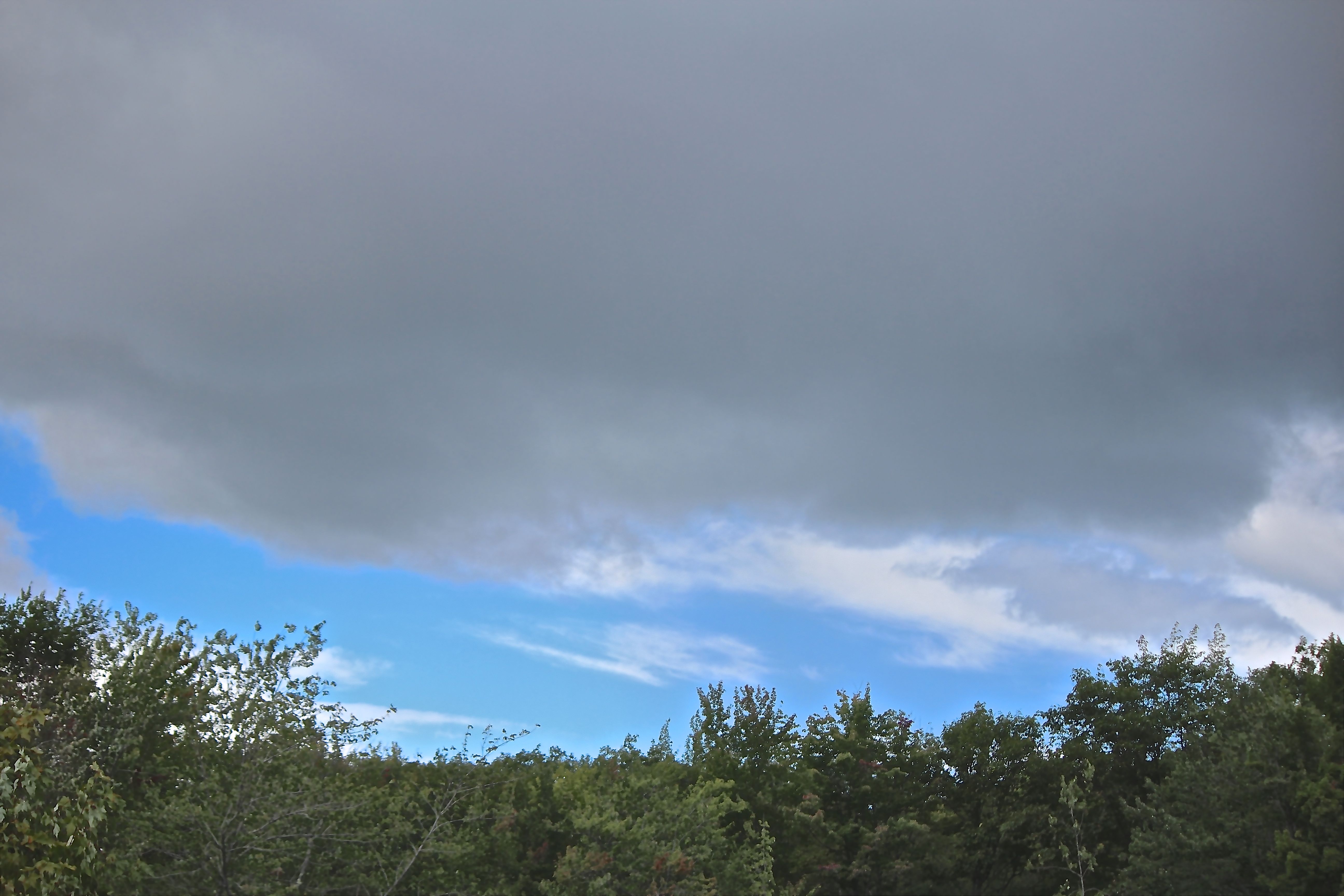
We looked up and had an Eeyore moment.

boots

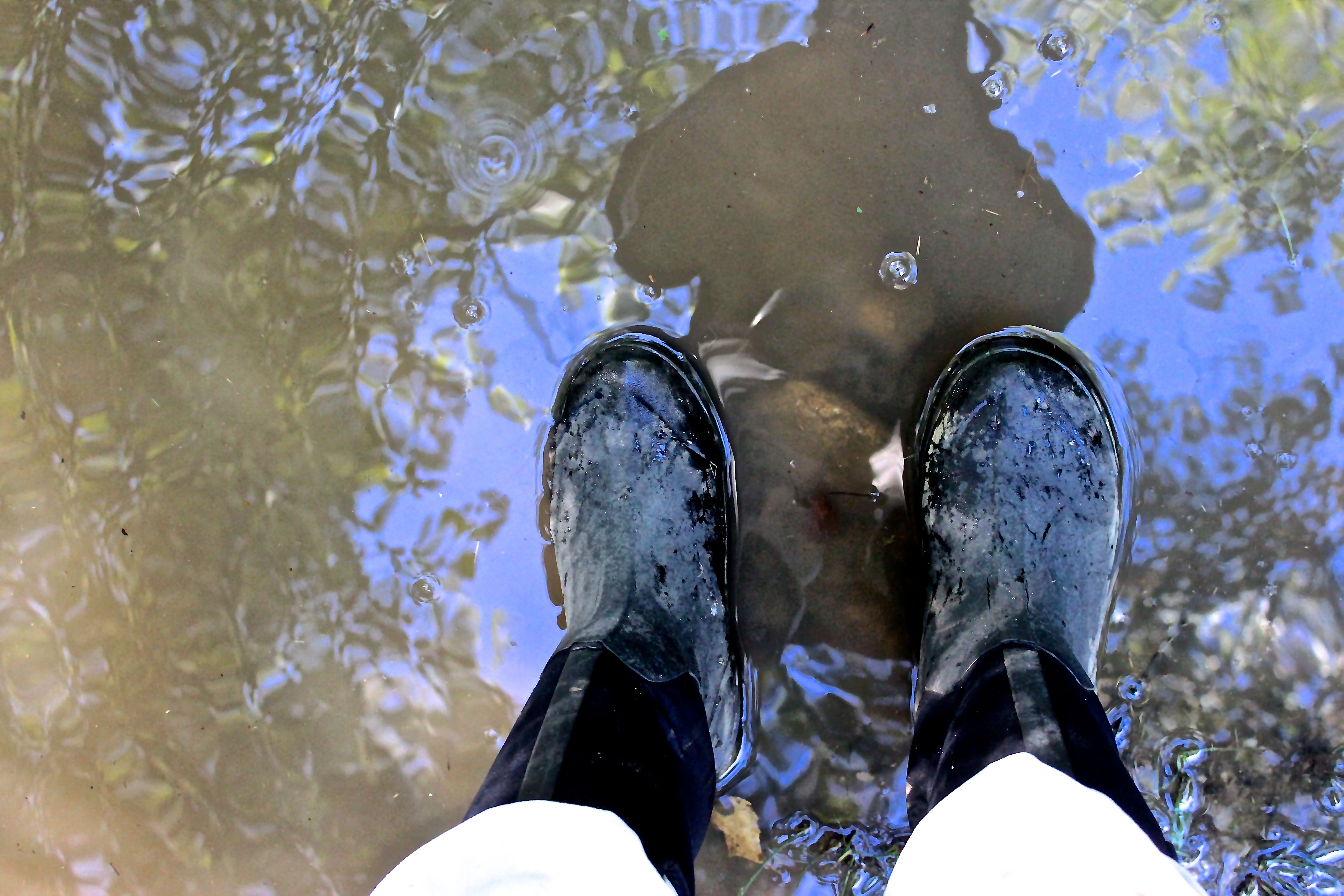
I was wearing my boots, but no raincoat.

raindrops 1

It rained. It poured. It felt good.

raindrops 2

And then it was only a memory–and a pleasant one at that.

rain: Pleasant Mtn

We watched it move across the southwest end of Pleasant Mountain as we headed back.

lb andbee

When we arrived home, the air was a bit cooler. I stepped outside to check out the insect activity in the yard and through the camera lens I realized something was photobombing the bee.

lb7

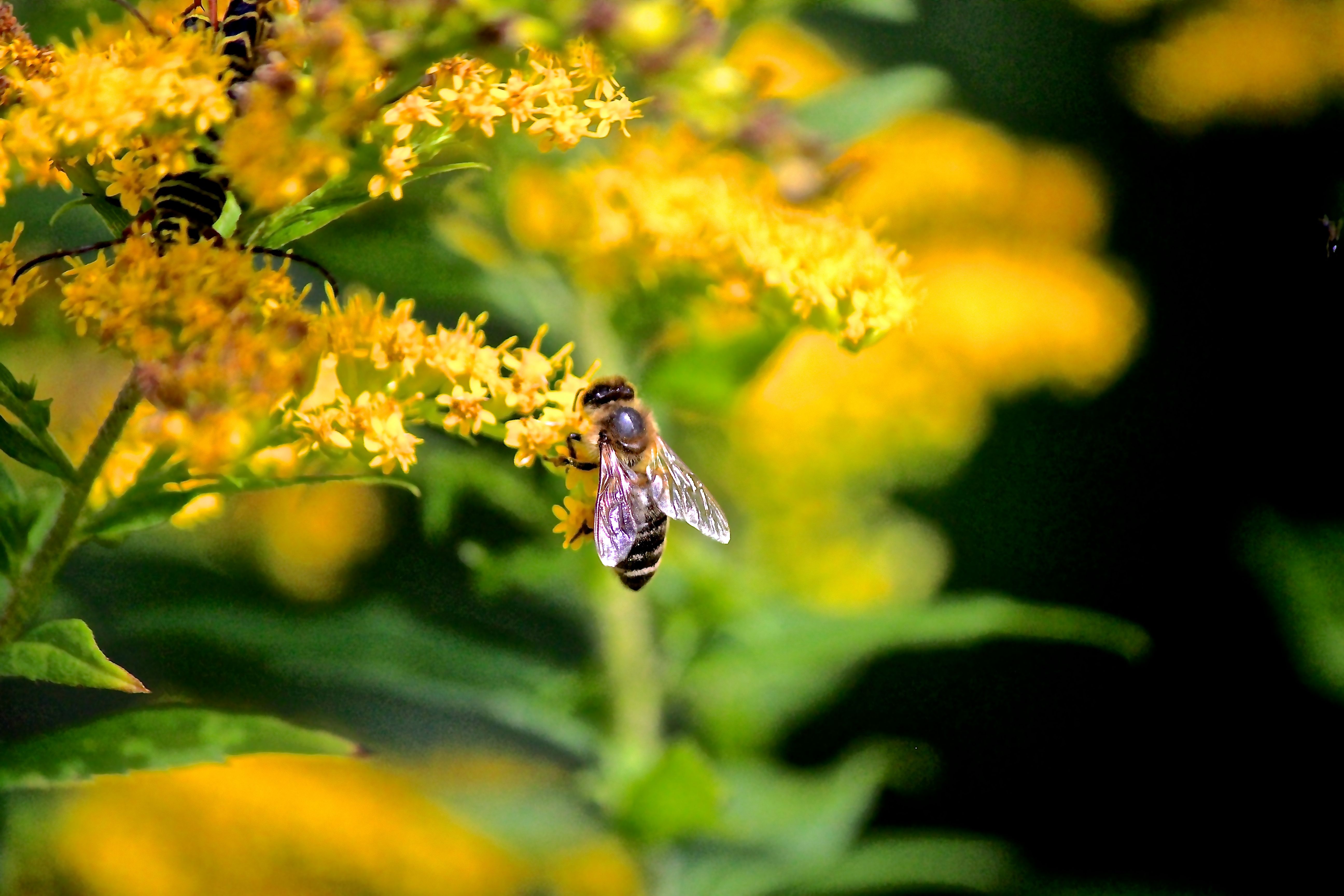
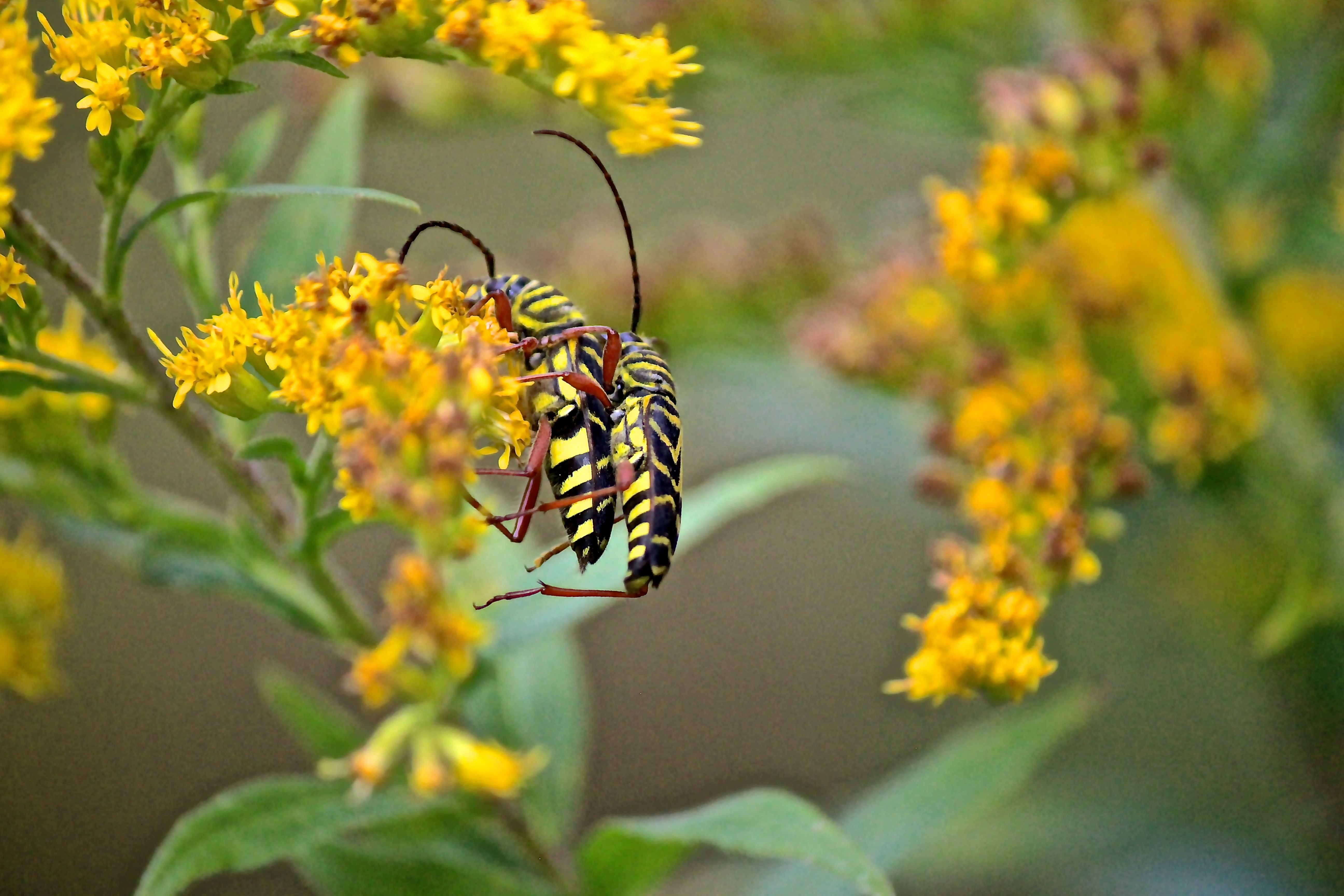
Two somethings in fact–a pair of locust borers apparently shared their own Mondate. The only locust tree in the neighborhood is down the street, but I suspect that momma will be laying some eggs in the bark at dusk tonight.

It looks like rain once again, but we’re glad for the opportunity to explore together on another Mondate–and gain a better understanding of our greater neighborhood, our sense of place. So much for pride. Life is a humbling experience.

Giving thanks post 9/11

As I was wandering about today, memories of 9/11 passed through my mind. Sadly, it’s one of those days that will forever mark time.

I was at work when a friend called and told us to turn on the TV. We spent the rest of the day shaking, crying and watching in horror as the events unfolded. In the afternoon, I sat on the couch with our young sons and tried to explain what had happened. How were they to comprehend something I didn’t get?

And then, we headed to soccer practice. I remember feeling angry that practice hadn’t been cancelled, but in reality, it was probably the best thing for all of us. It gave us a sense of normalcy and a chance to gather in community.

I also remember the first time I heard an airplane fly when the skyway was finally reopened. I had just opened the door to step outside and actually ducked under the awning at the sound of the plane, not aware in that moment of what I was doing.

My world view changed that day. But, thankfully, I live in a place where I can step outside and walk freely.

female Ichneumon Wasp

 I pay attention to what is underfoot, like this female ichneumon wasp,

green cicada

green cicada,

green frog

green frog and

toad

American toad.

chippy

I notice those who try to hide, like this chipmunk,

grasshopper in fern

grasshopper,

yellowjackets 2

and sleeping yellowjackets.

lady beetle

I observe the eating habits of a lady beetle,

sawfly caterpillars on quaking aspen

sawfly caterpillars,

horned caterpillar

 and a horned caterpillar.

bluejay, fall webworm

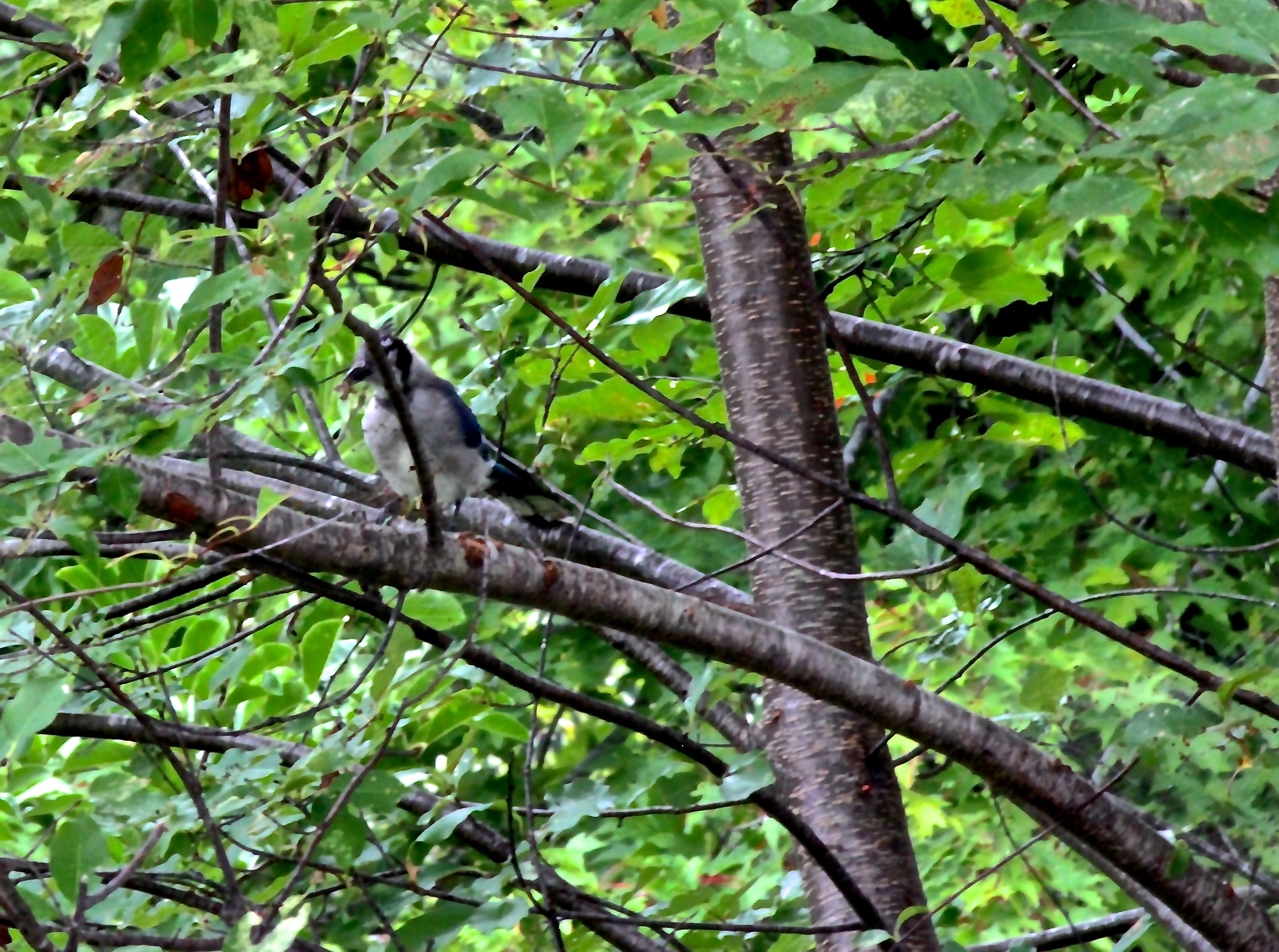
I watch a blue jay in the cherry tree and

bluejay and cat.

notice how he thrashes the fall webworm caterpillars against the bark before eating them. I assume he’s trying to get the hair off their bodies.

r e nest caught eye

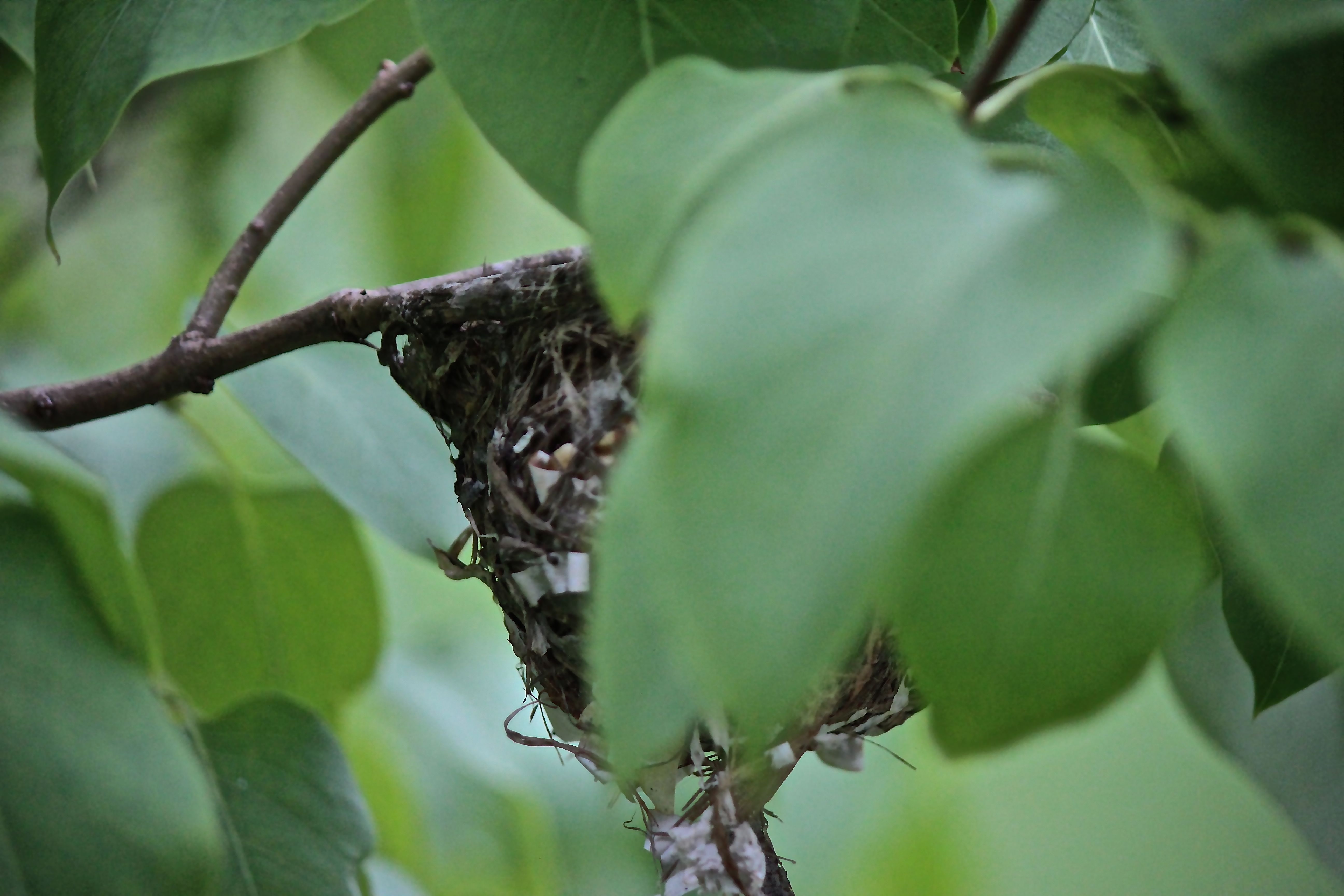
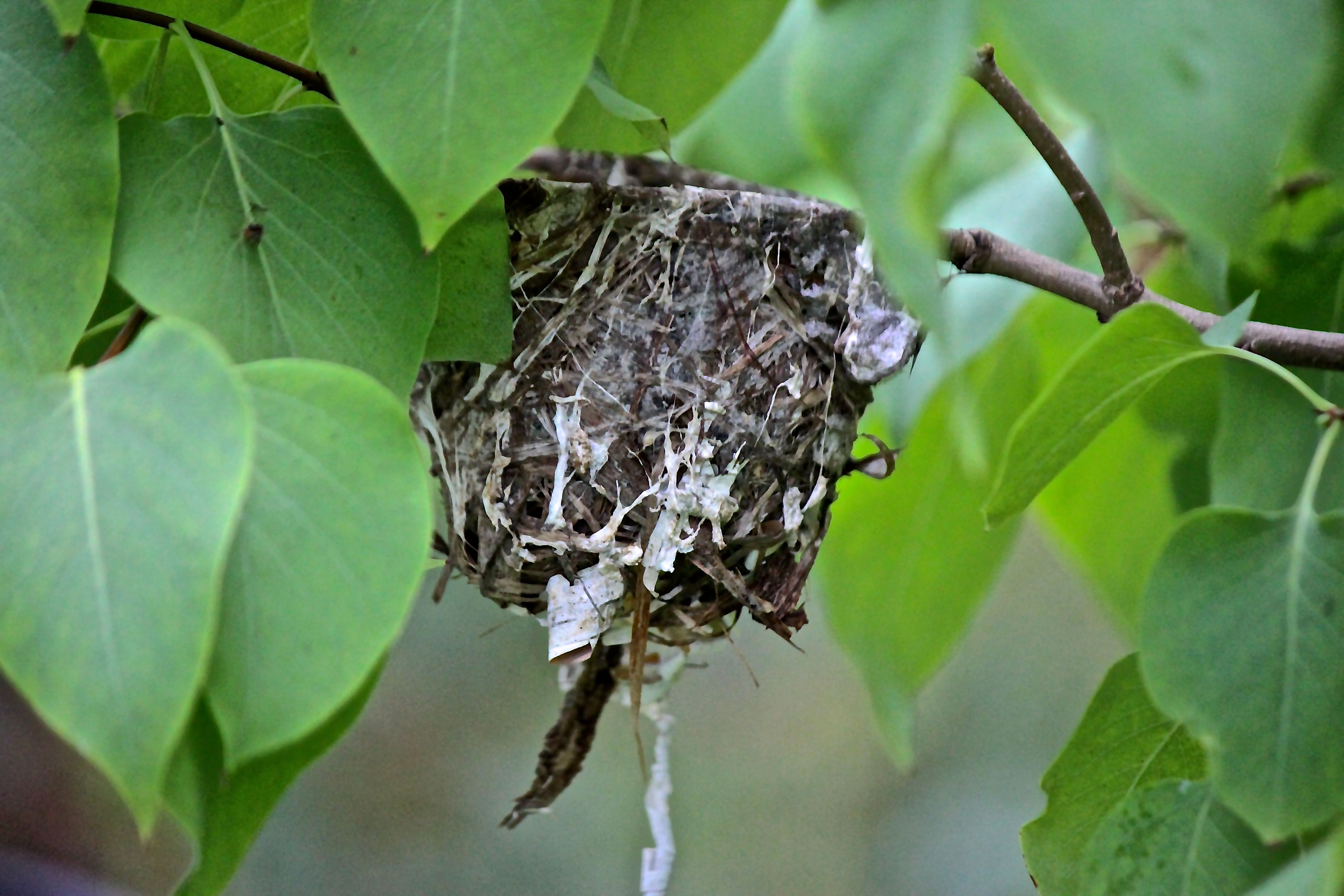
I make new discoveries, like this cupped nest in the lilac bush right off the deck.

nest 3

I think it was created by a red-eyed vireo, but I could be wrong.

sawfly caterpillars ?

 I will forever question what I see and how it works, but I’m thankful that I am able to do that.

To think for myself. To wander and wonder.
Thank you to all who lost their lives that fateful day, to their families and to all who worked so hard in the days that followed and those who continue to protect us all.


Ten Fun Finds in the Last 24 Hours

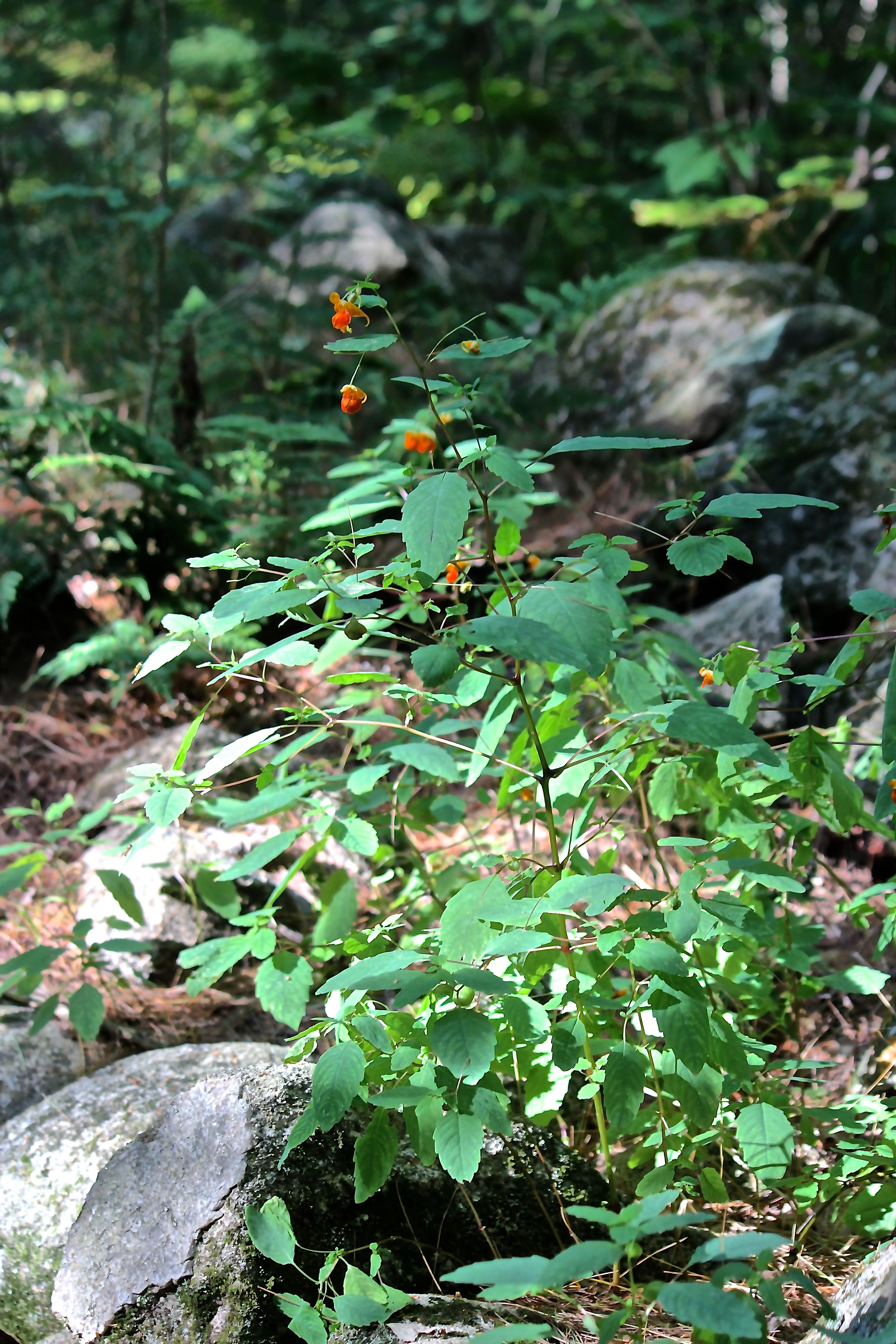
jw2

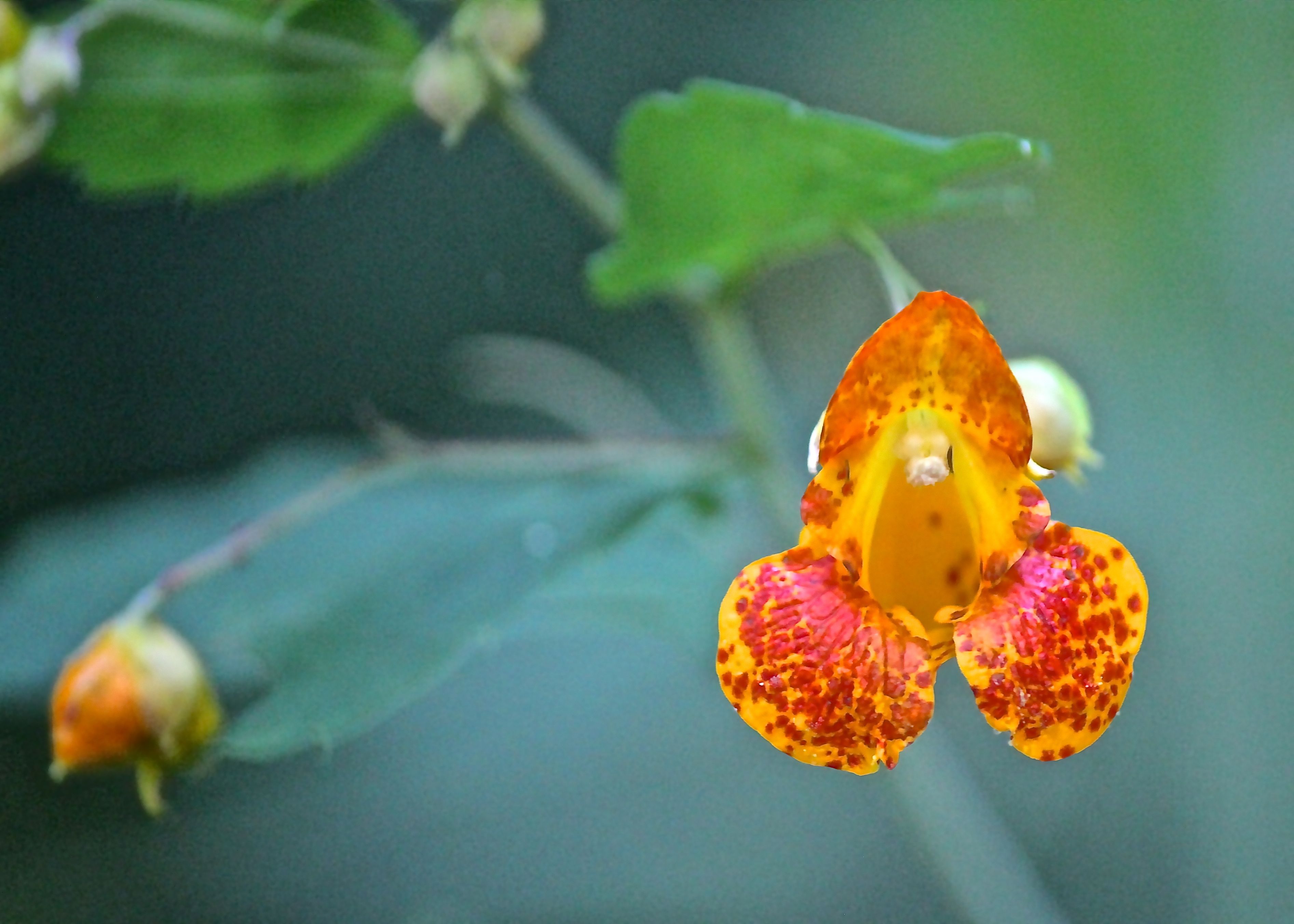
  1. Orange jewelweed, aka Spotted Touch-Me-Not. I found these lining the path during a quick walk through Pondicherry Park yesterday afternoon. The flower will form a capsule that bursts open and flings seeds when touched.

jewelweed 1

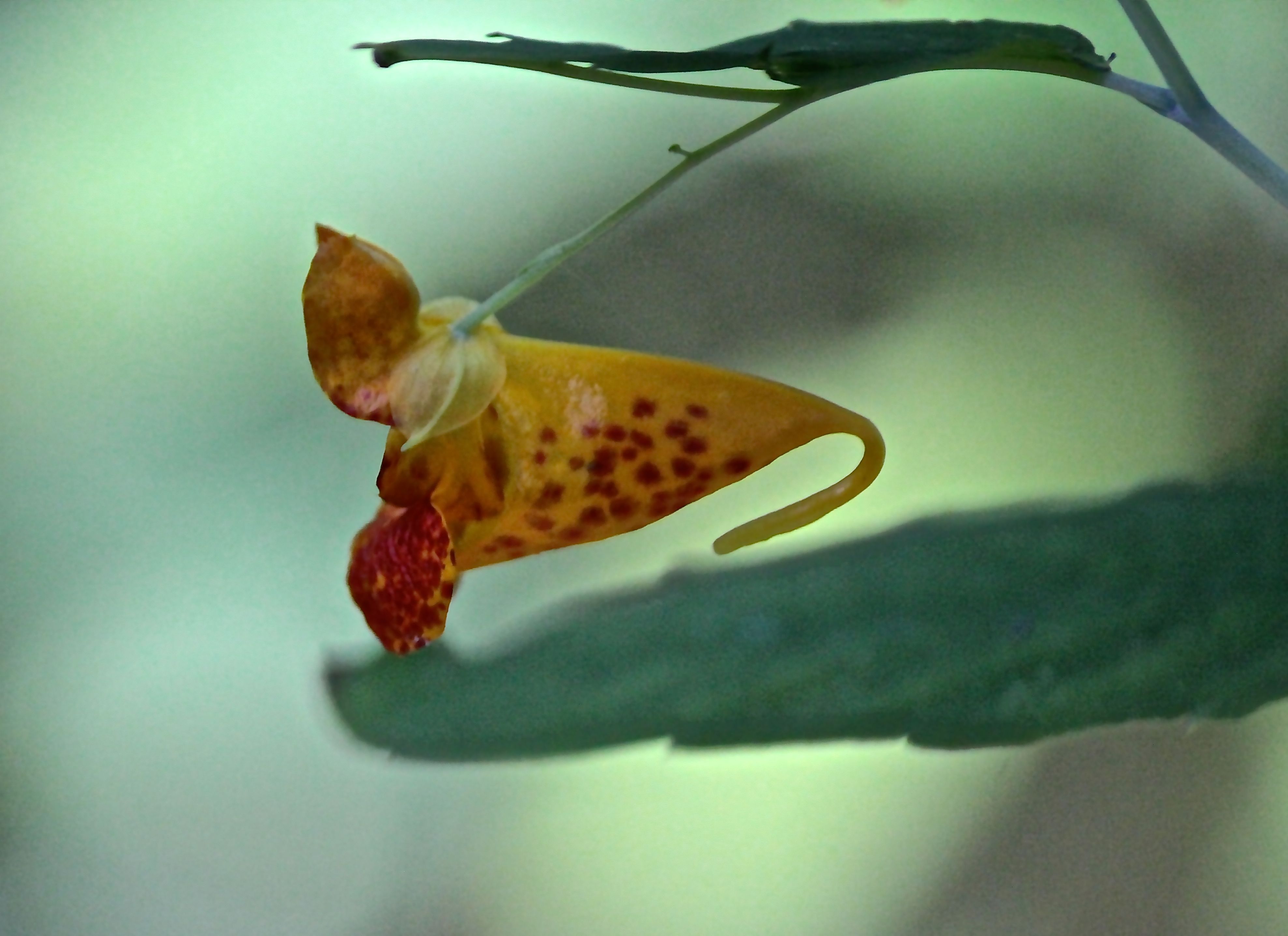
One of the cool things about jewelweed’s structure is its spurred sac that extends backwards.

jw3 on the wall

Though it likes the moist woodland paths in the park, I also found it in bloom atop a stonewall.

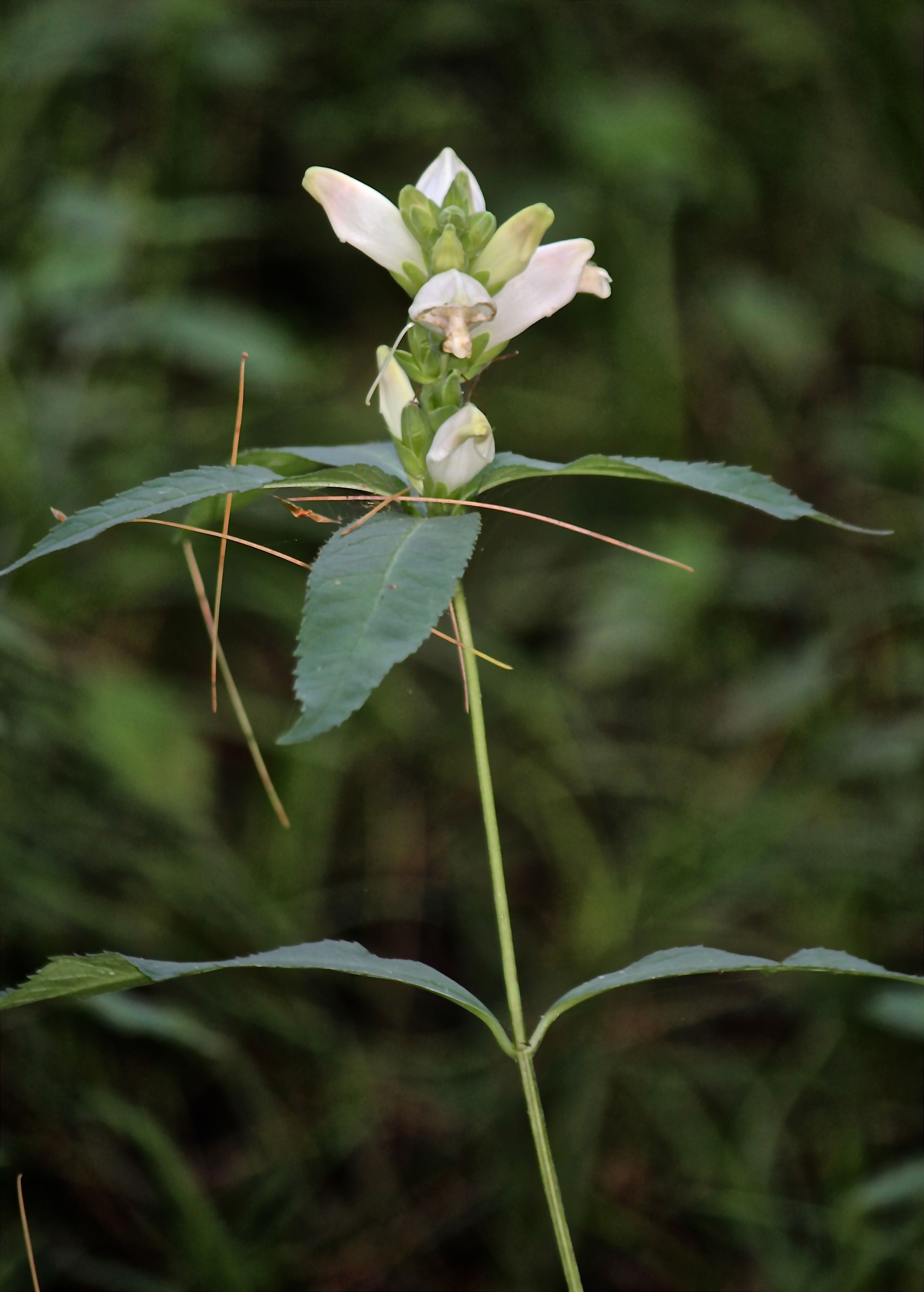
turtlehead

2. I’d never seen turtlehead until I moved to Maine. As a kid, I collected turtles–think stuffed, ceramic, wooden, glass. A neighbor even gave me a shell, which I still have. So, when we moved into our old farmhouse, I was excited to discover pink turtlehead growing in the garden. And on several occasions this past week, including yesterday’s walk in the park, white turtlehead was in bloom. It’s so named for the two-lipped appearance, with the upper lip arching downward and strongly suggesting a turtle’s head.

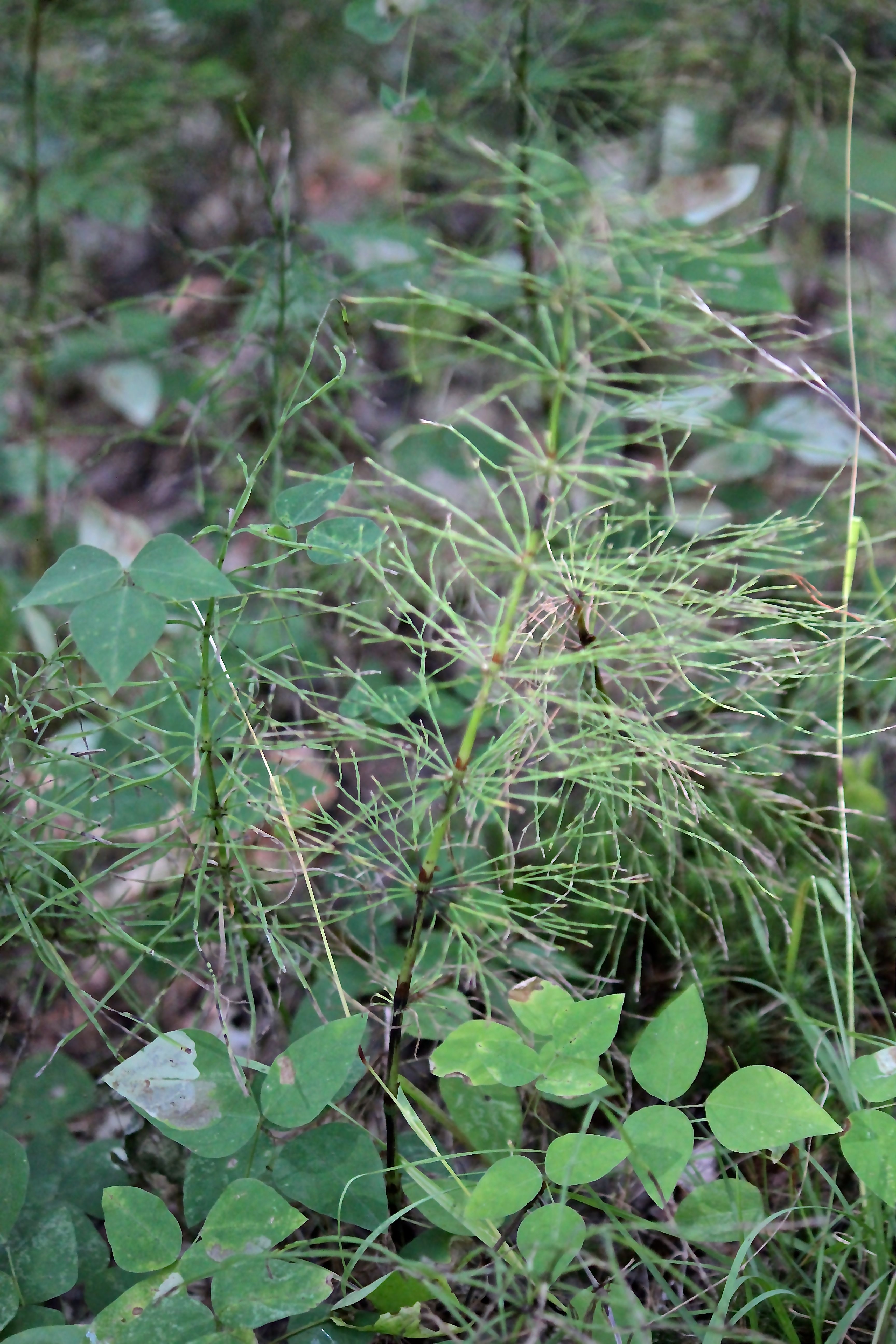
equisetum

3. Woodland horsetail grows among the white pine saplings. It’s easy to confuse the two since they both have whorled branches, but the horsetail branches have a lacier appearance. Its “leaves” are reduced to a toothed sheath that surrounds the stem.

fogged inmorning dew

4. Morning fog on Moose Pond was almost the pea-soup variety until it began to burn off around 7:30 this morning. I was mesmerized by the patterns created by the moisture on the porch screens.

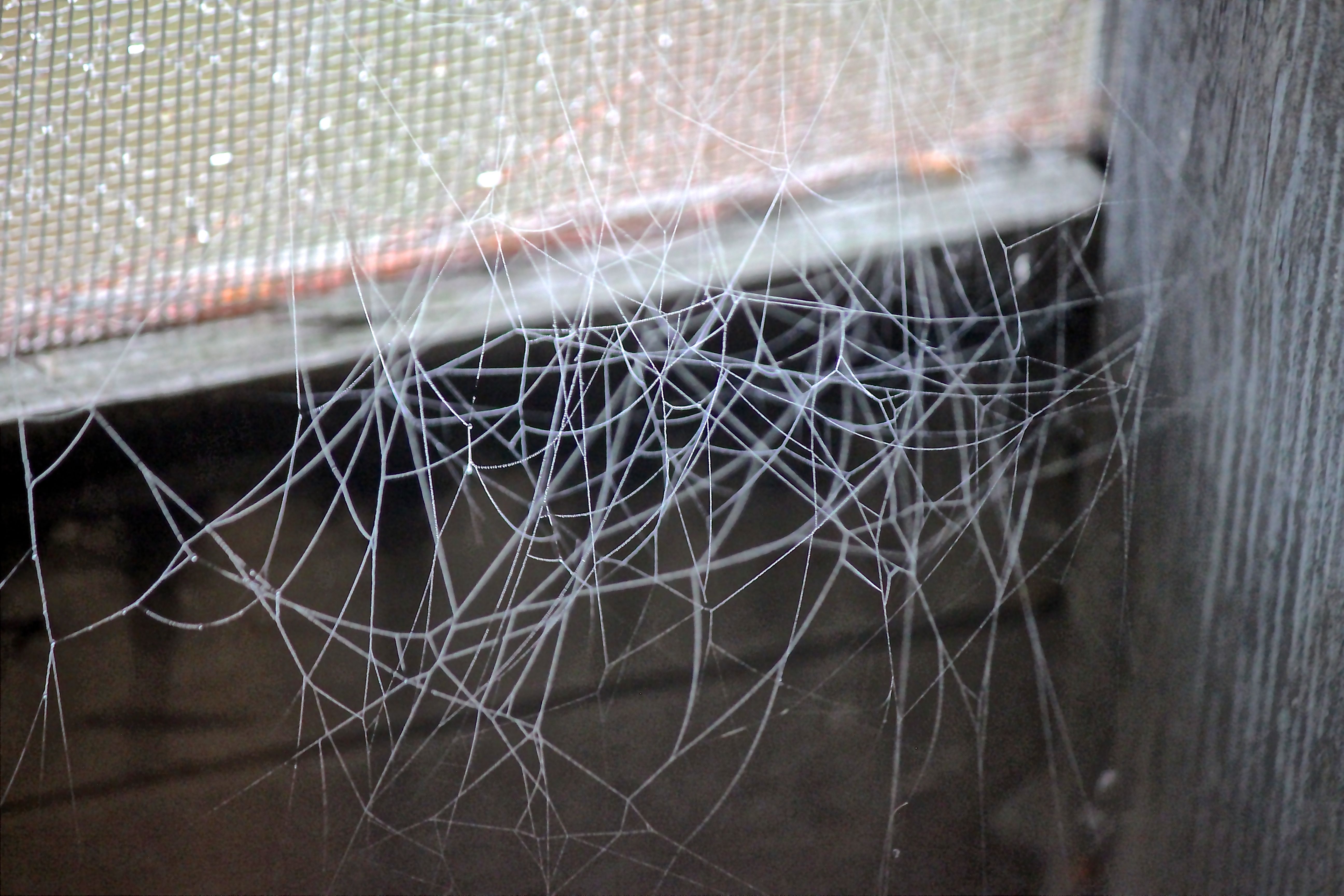
spider works

spider works 2

5. I was equally mesmerized by the spider works I found both on the porch and outside. Industrious architects are these. Mind you, I’m not a spider fan. I used to make family members destroy them. And I remember some mighty large and hairy ones that shared our flat in England back in ’79. That’s when I learned that the eensy weensy spider really does climb up the water spout. But, these webs are to be admired.

white oak leaves

6. As my guy and I climbed Burnt Meadow Mountain in Brownfield today (after the fog burned off), I realized for the first time that white oaks grow there. It’s the little things that excite me and seeing those rounded leaves made my heart flutter. I’ve now noted that white oak grows beside red oak in Casco, Denmark and Brownfield. I’m connecting the dots that form its northern line.

trailsignalmost to the summitsummit 1mount washington

7. We followed the North Peak trail to the top. It’s always a joy (think: relief) to walk onto the large, flat summit after scrambling over the rocks to get there. Because we like a round trip, we descended via the Twin Brooks Trail, which offers some great mountain views, including Mount Washington.

summit grasshopper

8. Grasshoppers are abundant at the summit. They’re known to feed on blueberries, and the crop is quite abundant, especially just off the summit on the Twin Brook Trail.

oak gall

9. Oak Gall. I think this is an oak apple gall growing on the red oak, but I’ve never actually seen one on the tree before. Usually, I find the dried shell of such a gall on the ground. My other guess would be the acorn plum gall. If you know, please inform me.

bear claws 1bear claws 2bear claw 3

10. I was looking for these and we found them. :-) Yes, more bear claw marks. It only made sense. Lots of beech trees. Lots of blueberries. And . . . a few years ago, we encountered a bear on the North Peak trail.

tree roots

11. OK, so here’s my eleventh cool thing. Kinda like getting a baker’s dozen–11 for 10, such a deal. Anyway, I’m always fascinated by the manner of tree roots growing over and around each other and other things. Embracing. Supporting.  Layering. Call it what you want. The thing is, they find a way to grow together. Oh, it doesn’t always work out. Sometimes it’s a smothering relationship. I’d like to think that these two trees, an oak and a birch, have intertwined in support of each other.

Thanks for joining me to take a look at the past 24 hours. I hope you had time to wonder as well.

The Need for More

Yesterday I stopped into our local independent bookstore, Bridgton Books, to purchase a title recommended to me by a friend (thanks D.B.), H is for Hawk by Helen Macdonald. While there, Pam, one of the proprietors, showed me Reading Rural Landscapes by Robert Sanford because she thought I’d be interested. Of course I was, and so for all of two seconds I debated about which to buy and guess what–I’m now the proud owner of both titles. I had earned a $10 credit (for every $100 spent, you receive $10 off if you belong to their book club and there is no book club fee–truly independent).

At camp, I was also reading another book (purchased at Bridgton Books a year or two ago). Well, actually rereading it because I like the author’s style/voice and maybe just a wee bit because she’s an Episcopalian. And she lives in Alaska–another draw for me. If You Lived Here, I’d Know Your Name: News from small-town Alaska by Heather Lende.

3 books

Both last evening and this morning, I read from all three. Not simultaneously, of course. It’s always been that way for me. Skipping from one topic to the next. Easily bored? I don’t think so because being bored is not part of my makeup. More like an insatiable need to know more.

The bees and wasps and flies and ants and hummingbirds have the same insatiable need right now, as they flit and walk and crawl from one plant to the next, sucking nectar and exchanging pollen along the way.

beebee2

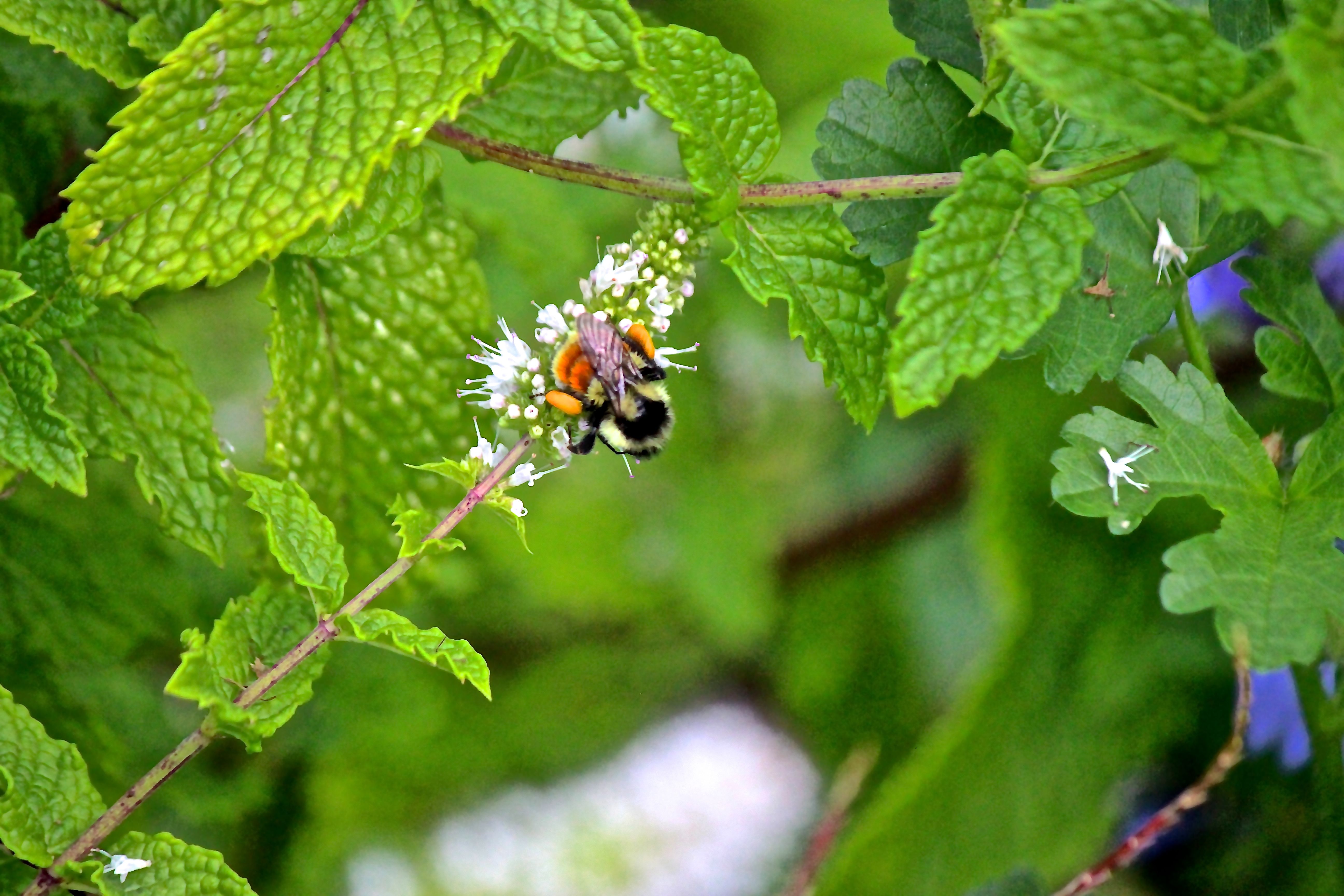
This busy bee was well-laden with pollen. Its bright orange sacs bulge on its hind legs like a kid wearing arm floaties in the water.

bee on mintbee on mint 2

Every time a bee visits flowers, the pollen sticks to its fuzzy body–its antennae, legs, face and body. Think pollen magnet!

The middle legs are equipped with comb-like hairs that scrape off the pollen and transfer it to the pollen presses located on the hind legs.

bee 3

Like our calves, the bee’s legs have a tibia or lower leg section. The tibia is shiny and surrounded by hairs, including some that are rather long and stiff. These form the pollen basket. Located at the lower end of the tibia  is another comb-like structure (ankle), and on the metatarsus (heel or foot) is the press. When it comes to pollen collection, the two structures work together like levers.

Nectar moistens the pollen, making it sticky. The pollen is transferred to the press, and then is manipulated between the press and comb until it sits flat on the bottom of the tibia. Each time a new batch of pollen is added, it’s pressed onto the bottom, forcing the pervious batches to move further up the tibia.  A full basket (think one million grains of pollen) bulges, but hairs hold the pollen in place as the bee flies from one plant to another before heading home to stock the nest.

beefly on goldenrod

It’s not just hairy bees who are active in the gardens.

large blue wasp

Gathering for the family is important business.

wasp 2

Thanks to the goldenrods and asters, there’s plenty of pollen and nectar still to be gathered.

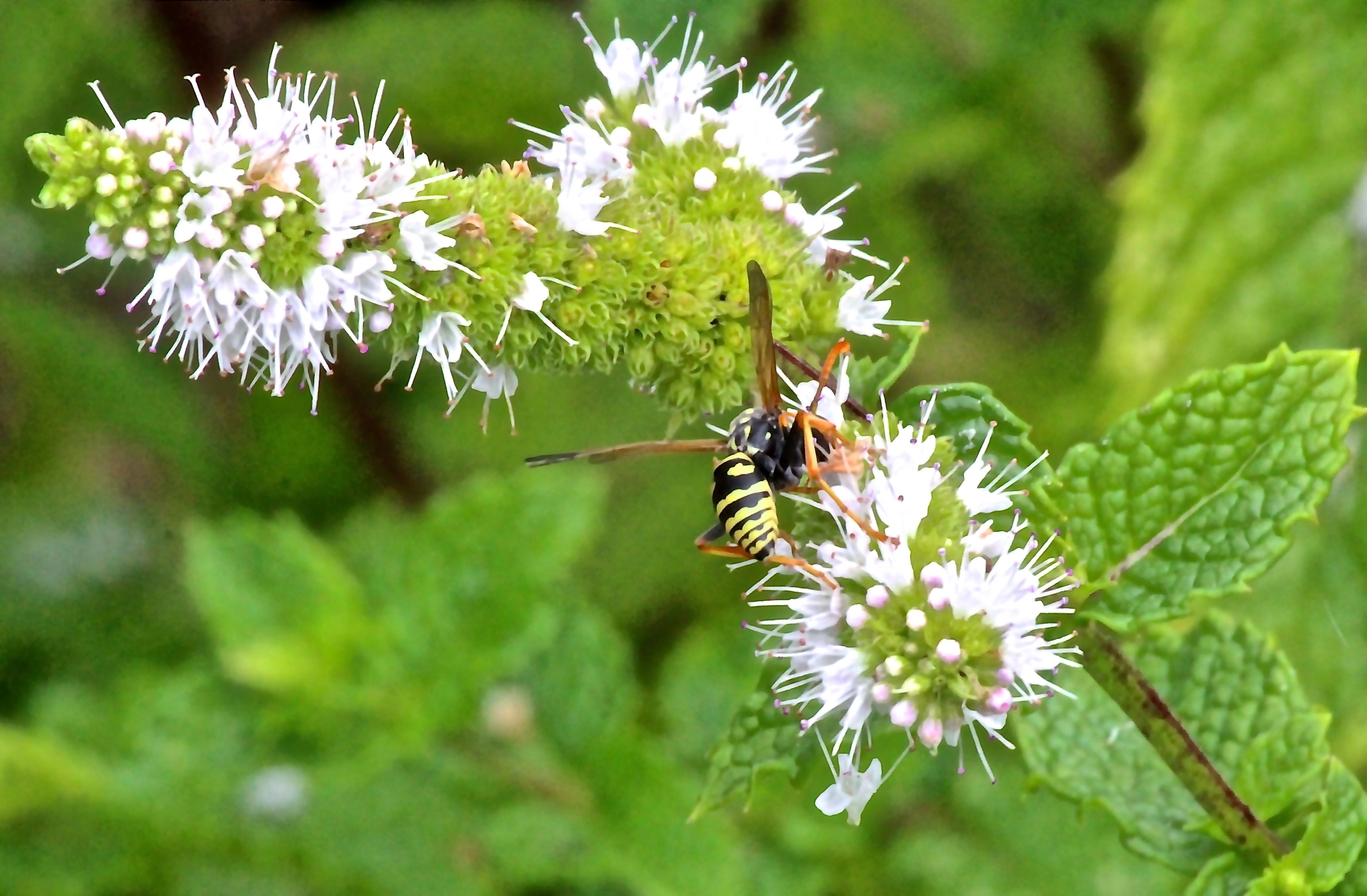
yellowjacket

The mint seems to be the biggest hit among the variety.

spiders 1

And there is other action as well. A funnel weaver tried to challenge the larger spider, but quickly retreated.

spider 2

Whenever I take a closer look at the crawling and flying members of the gardens, I’m in awe of their colors, patterns, hair or lack of, and overall body structure.

inchworm

You may have to look closer to find the visitor on this coneflower.

red legged grasshopper

This red-legged grasshopper tried to make itself invisible.

grasshopper 2

The camouflage worked better once it climbed to the top of the fence. When grasshoppers fly, I can hear their wings make a rasping sound. But moving as this one was, there wasn’t a peep. The crickets and cicadas, however, I couldn’t see, but they’ve been contributing to a chorus all day.

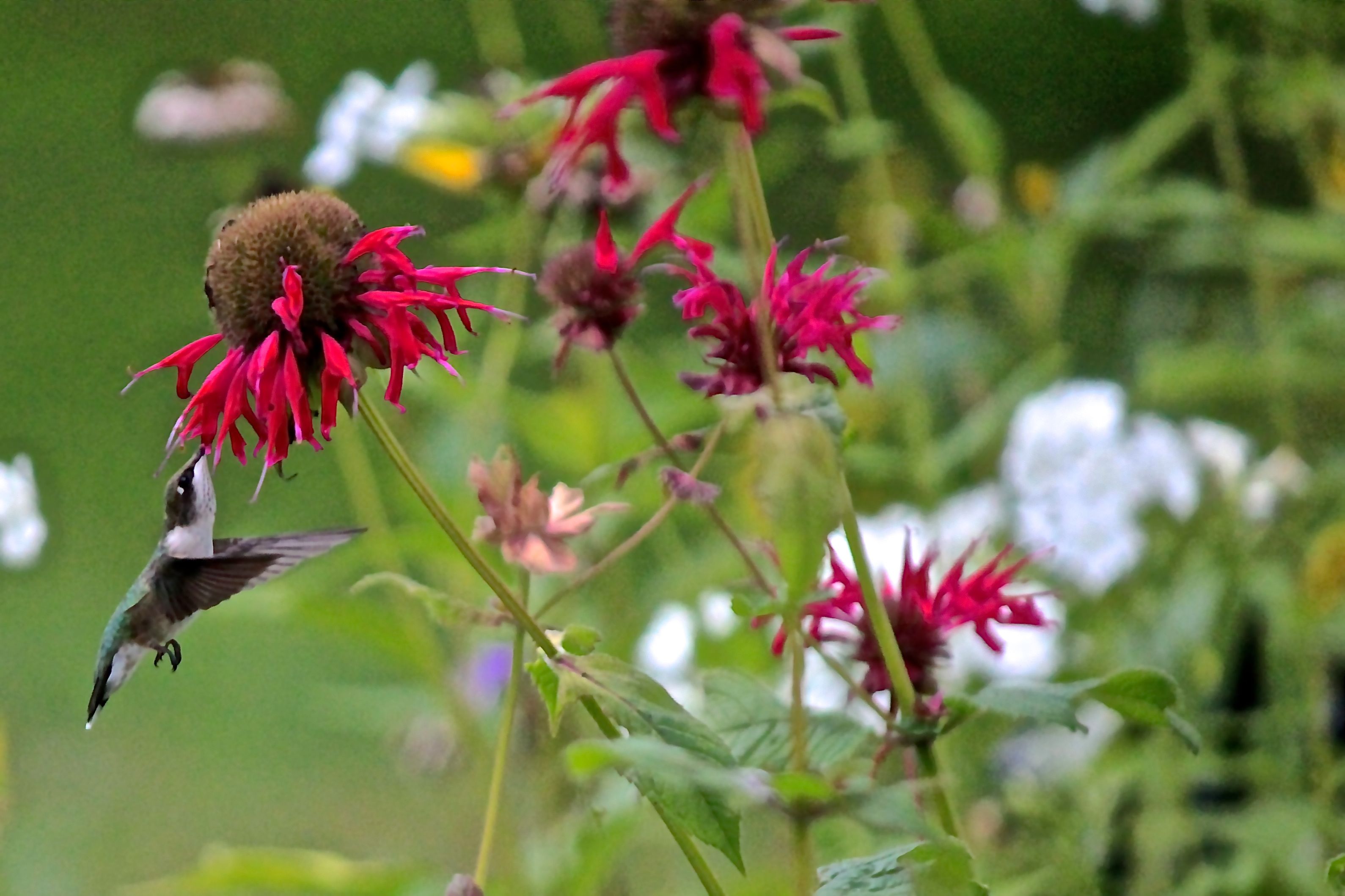
hummer approaching

hummer approaching 2

hummer approaching 3

hummer approaching 4

hummer approaching 5

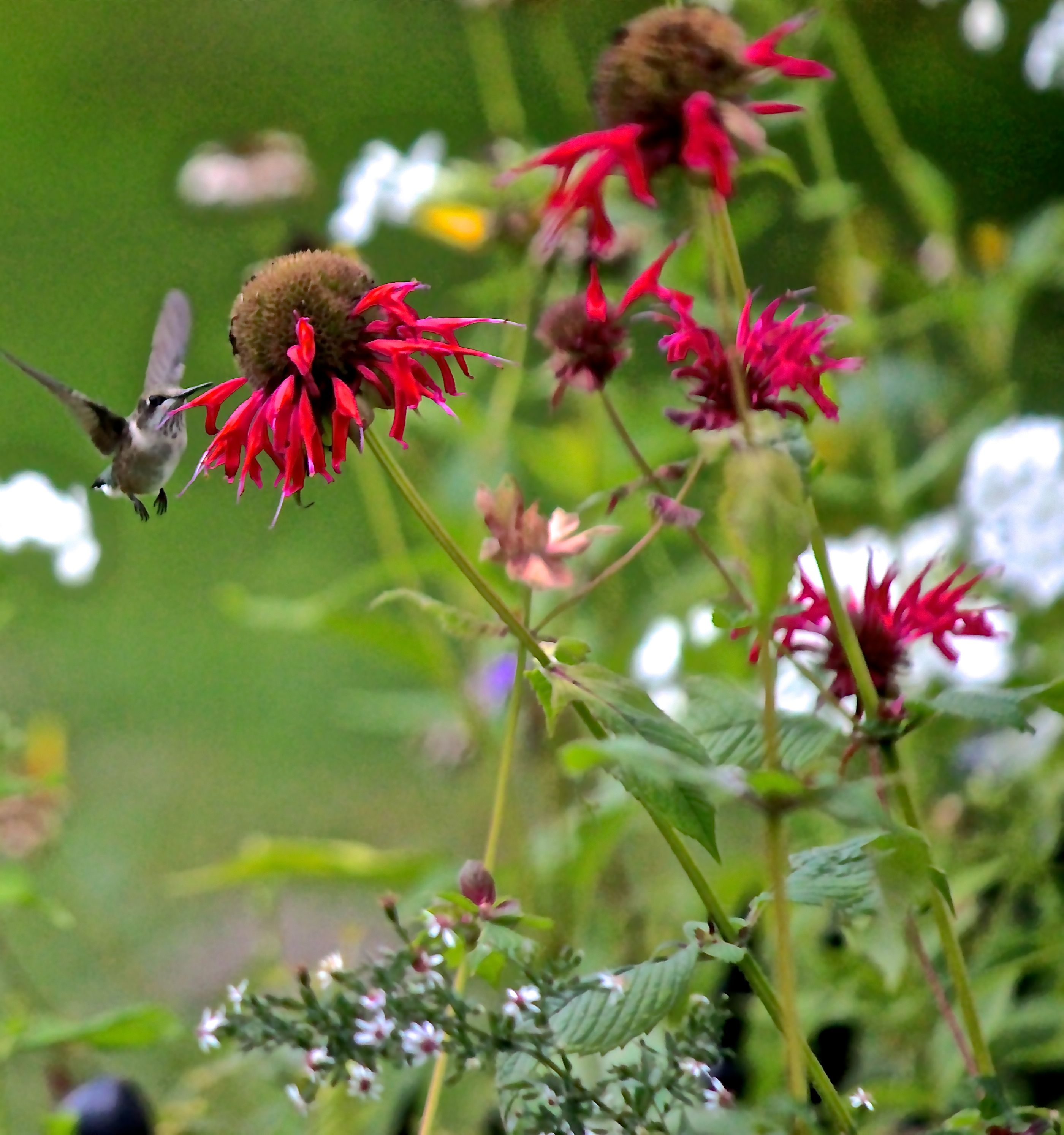
And then there is the hummingbird–ever swift and beautiful with its iridescent colors. Whether it is dining on nectar or insects attracted to the nectar, I don’t know, but it always returns, seeking more.

We all have the need for more. The frightening thing is that oftentimes we take more than we need. For the sake of the birds and insects, we need to think about that and how we might change our ways.

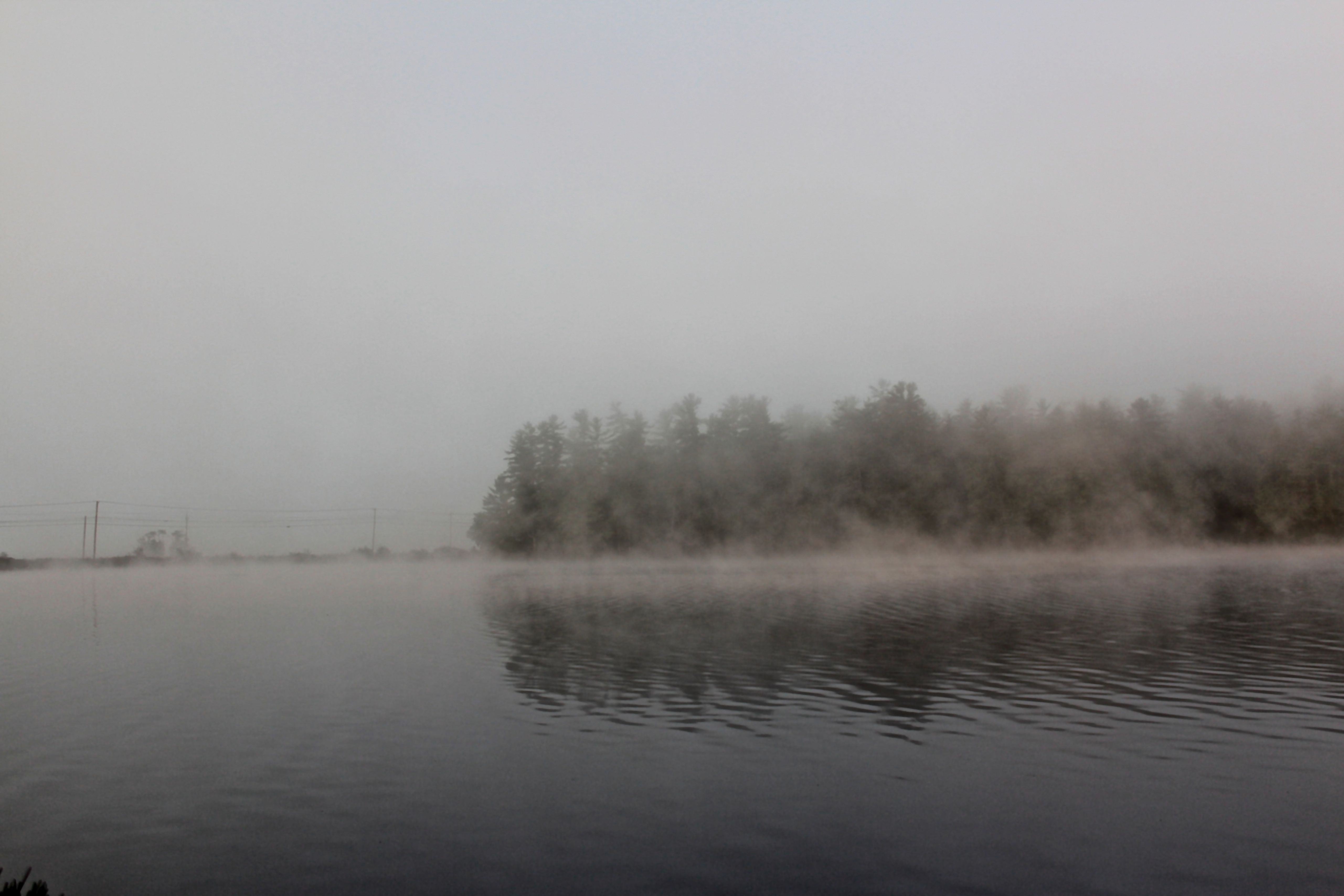
Out of the fog

morning fog

Morning fog embraced Pleasant Mountain, making it only a memory.

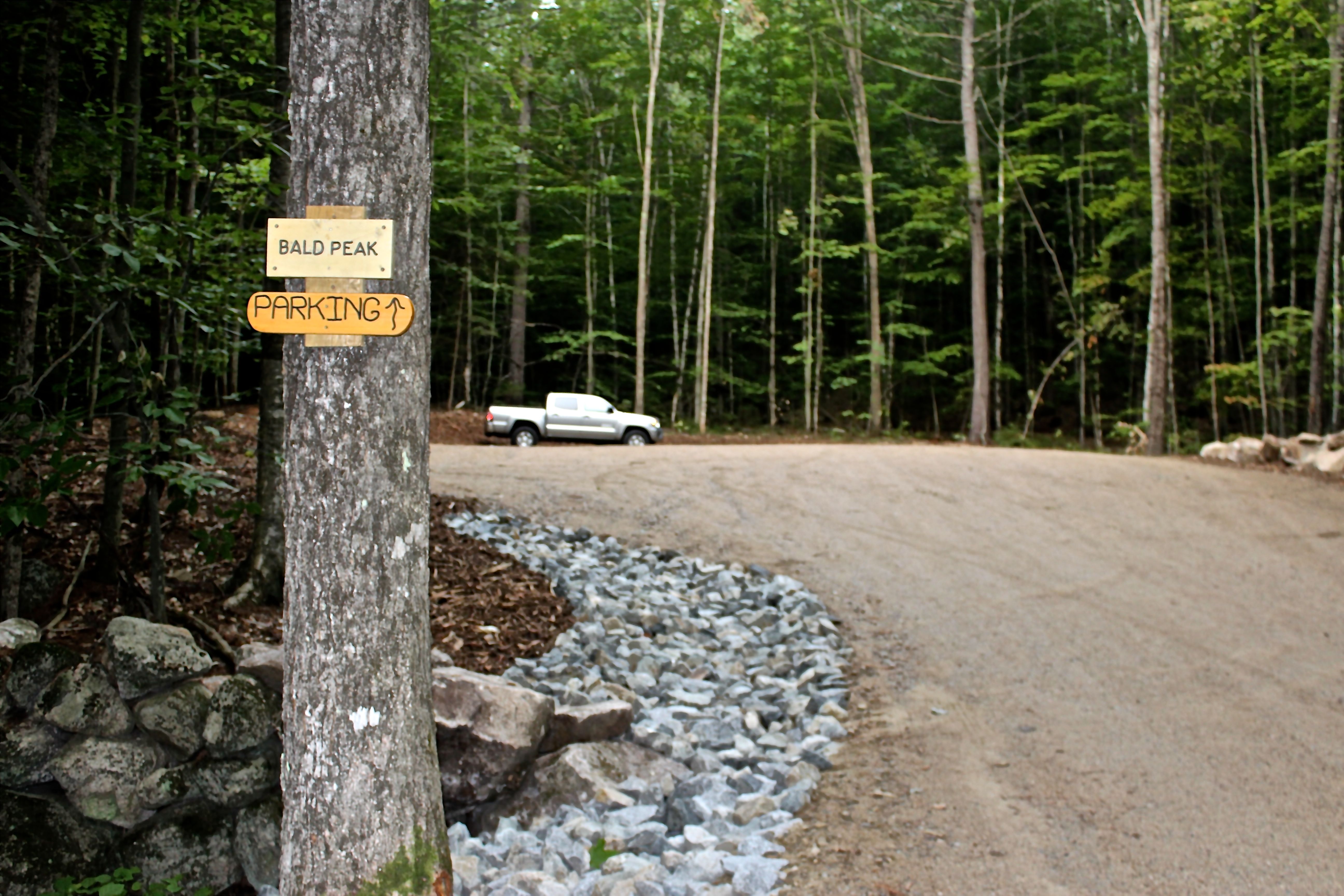
new parking lot

In my need to know that it was still there, I drove down Mountain Road to the brand-spanking new Bald Peak parking lot. I guess I was early since my truck was the lone vehicle.

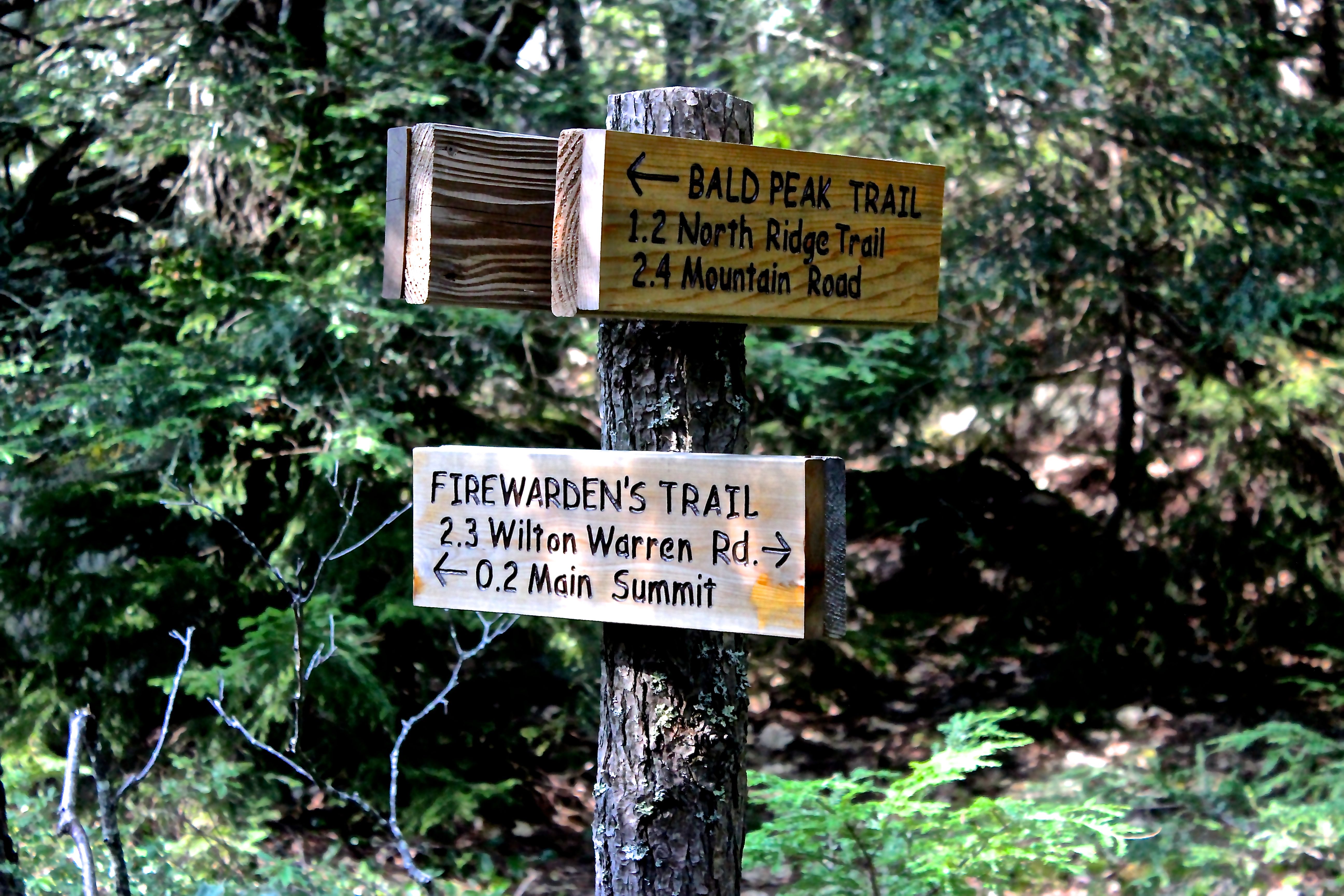
Bald Peak Trail Sign

Thanks to Loon Echo Land Trust and the AMC, the Bald Peak trail has undergone a transformation this year.

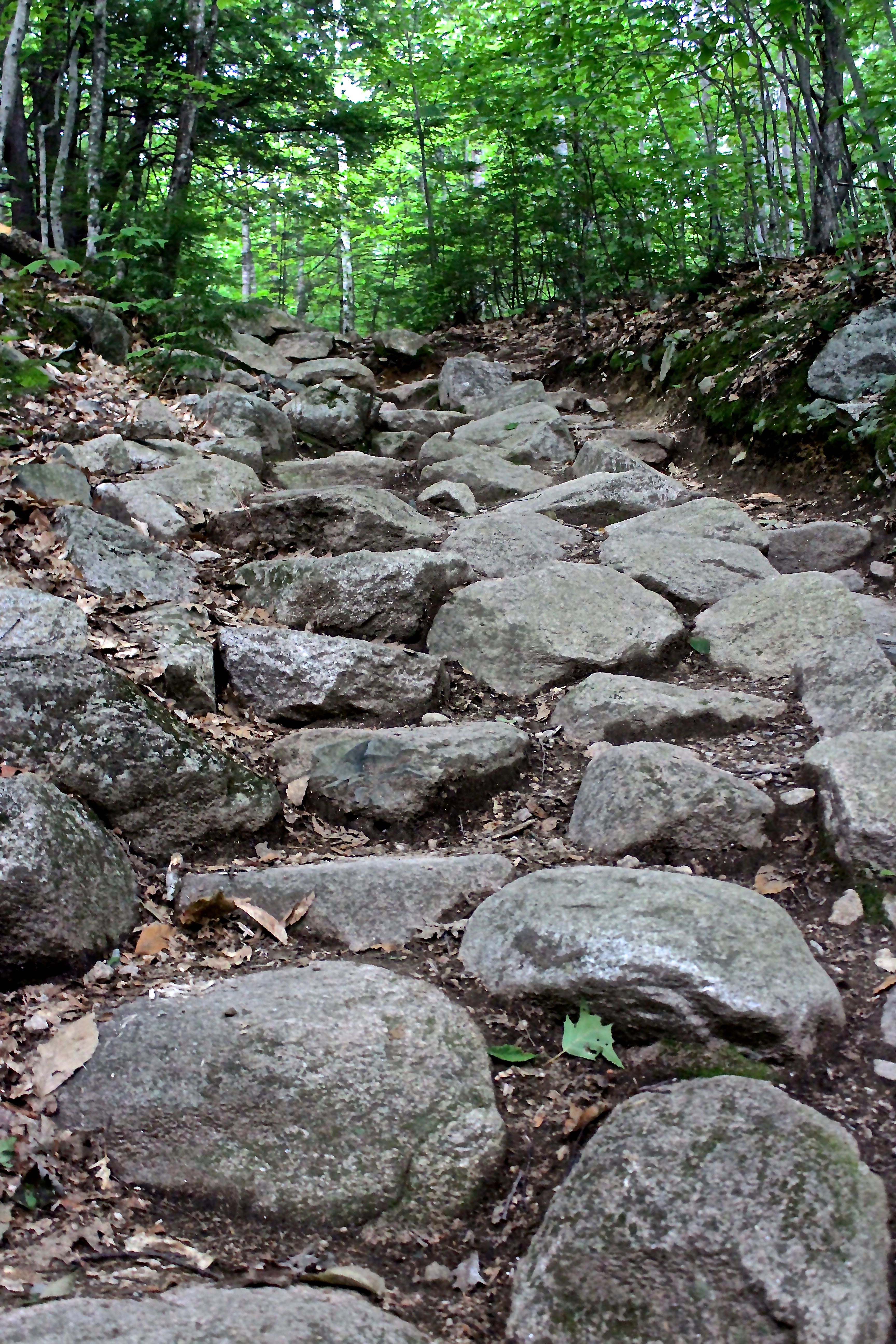
Stairway to heaven

new trail

trailwork 4trailwork2trailwork 3

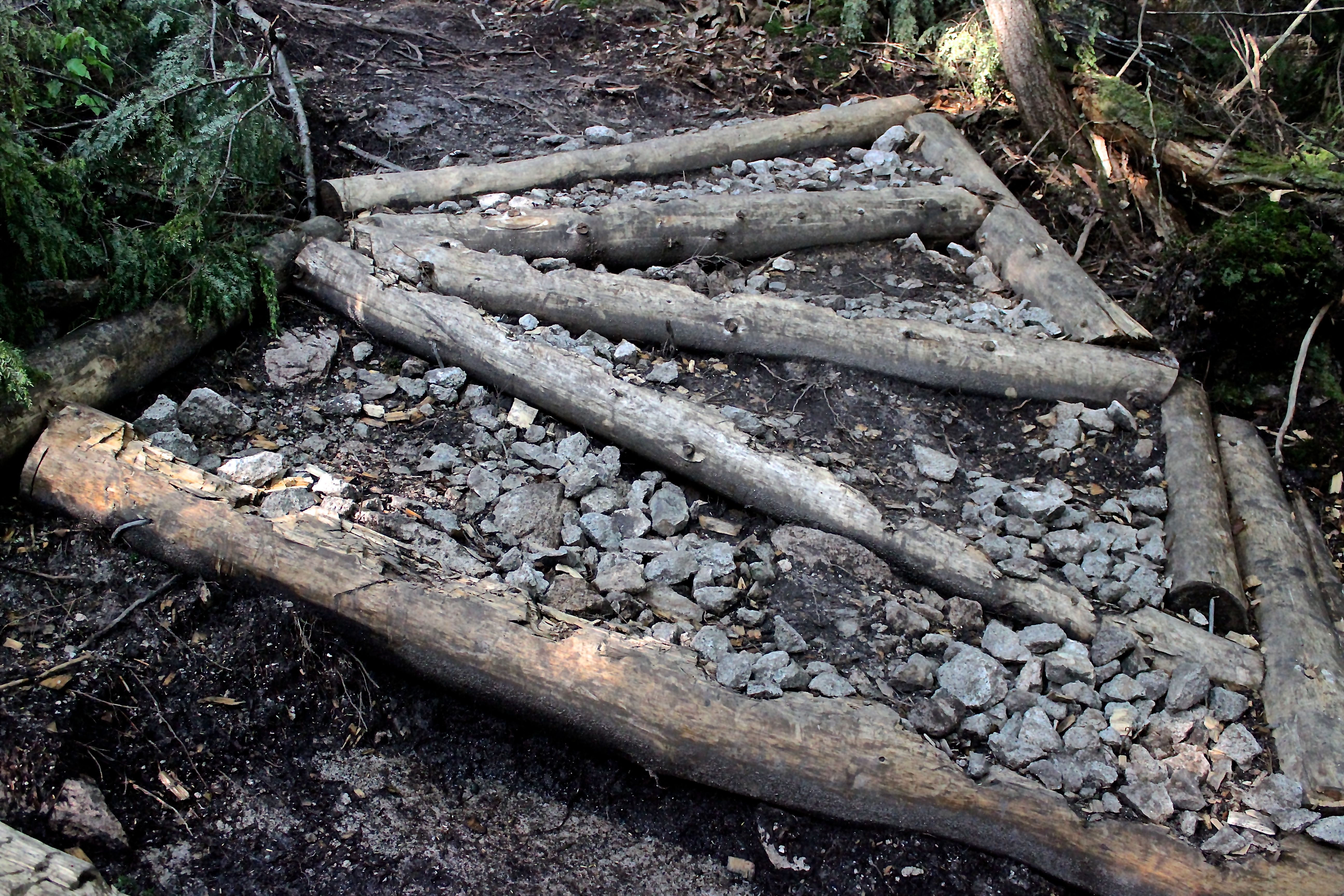
More stairways, a new path and switchbacks make for an easier climb. Um, that’s all relative. It’s still moderately challenging compared to the other trails on the mountain.

trail signs

Trail signs mark the way, giving a sense of direction and distance.

debarked

I’m a bit out of order with this photo, but that’s my nature. Near the start is this debarked birch. People have carved their initials to note their presence. I know I occasionally post photos of beech trees with carvings, but the fact that someone took the time to peel the bark off this tree bothers me. Please leave bark on trees. I know it peels easily on birches, but the tree will shed its bark when it is ready. For us to peel it is like someone peeling off a layer of skin. Shivers run up and down my spine as I think of that. Bark is the tree’s form of protection from the elements. ‘Nuf said . . . I hope.

mossy rocks

For much of the way, the trail follows a stream featuring moss covered boulders

lush mtn garden

and terraced rock gardens.

rock garden

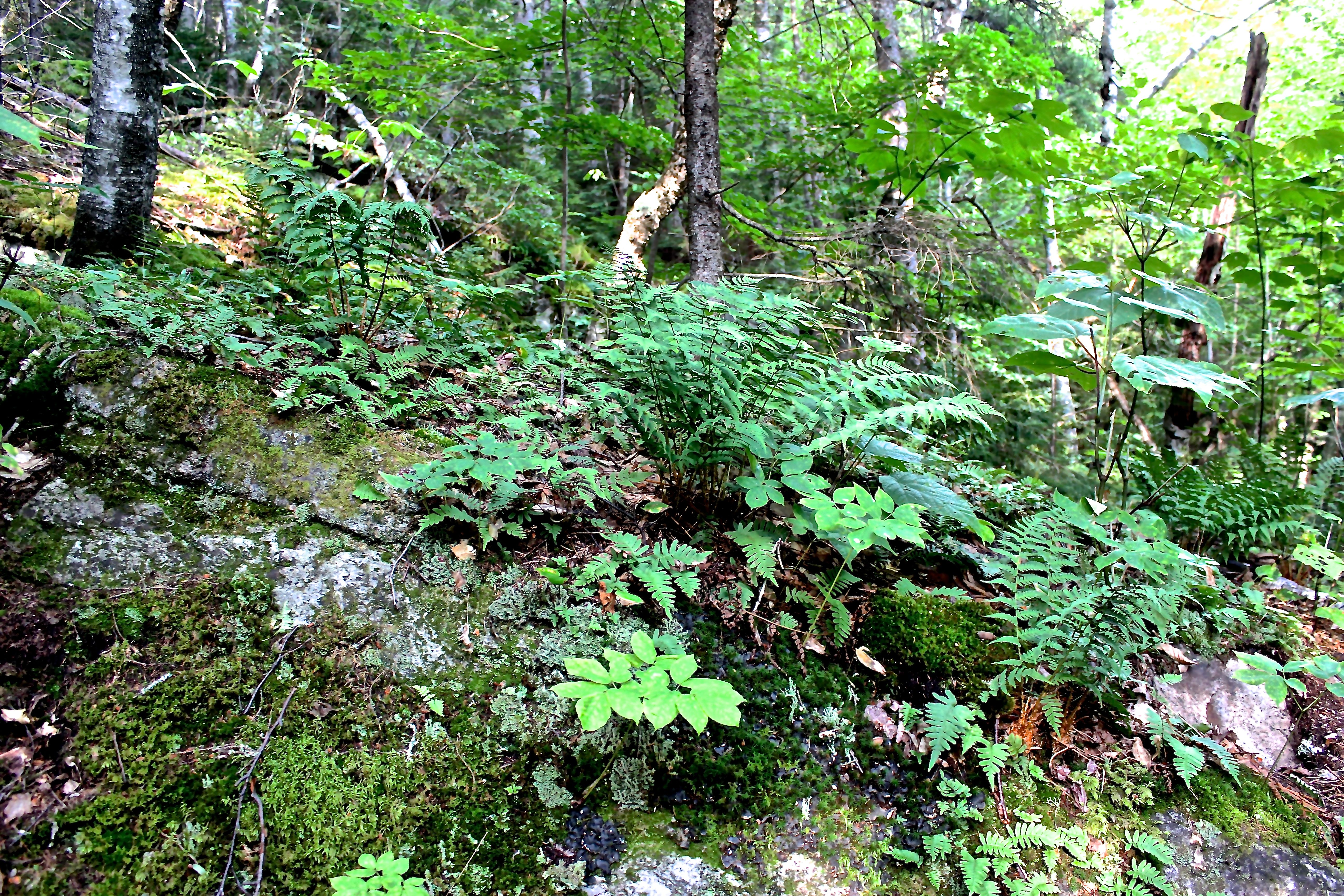
I pause beside one boulder where lichen, mosses, wildflowers, ferns and even a striped maple tree have made a home.

Christmas fern

Christmas fern–do you see the shape of the leaflets or pinnae? Little Christmas stockings or boots? Some say Santa sits in his sleigh with the reindeer before him. Each leaflet is attached to the main stem via a short petiole.

polypody1

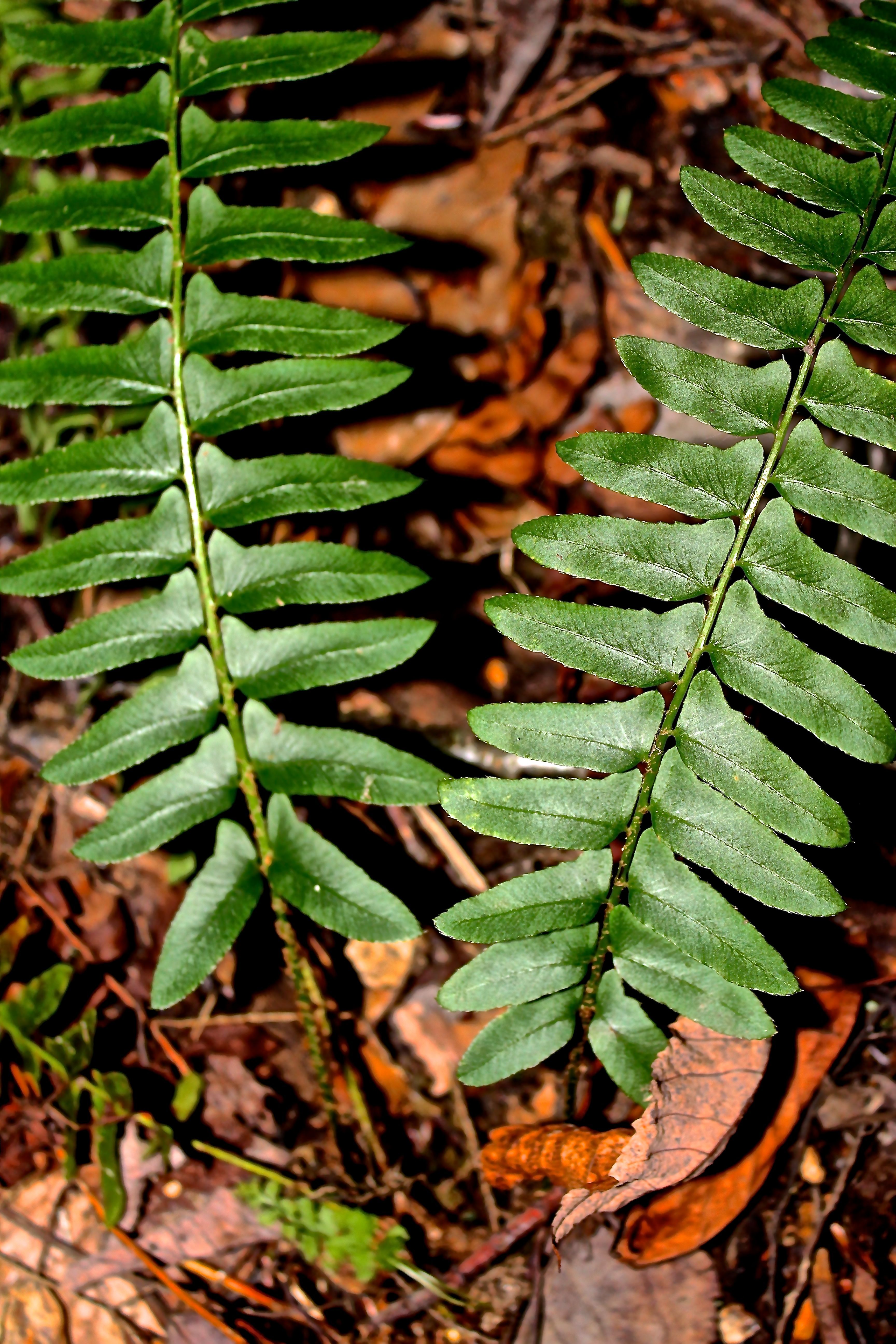
Polypody fern loves to give rocks a crazy-hair-day look. While its leaflets look similar to that of Christmas fern, they attach directly to the main stem and give the  entire blade a rather ladder-like appearance.

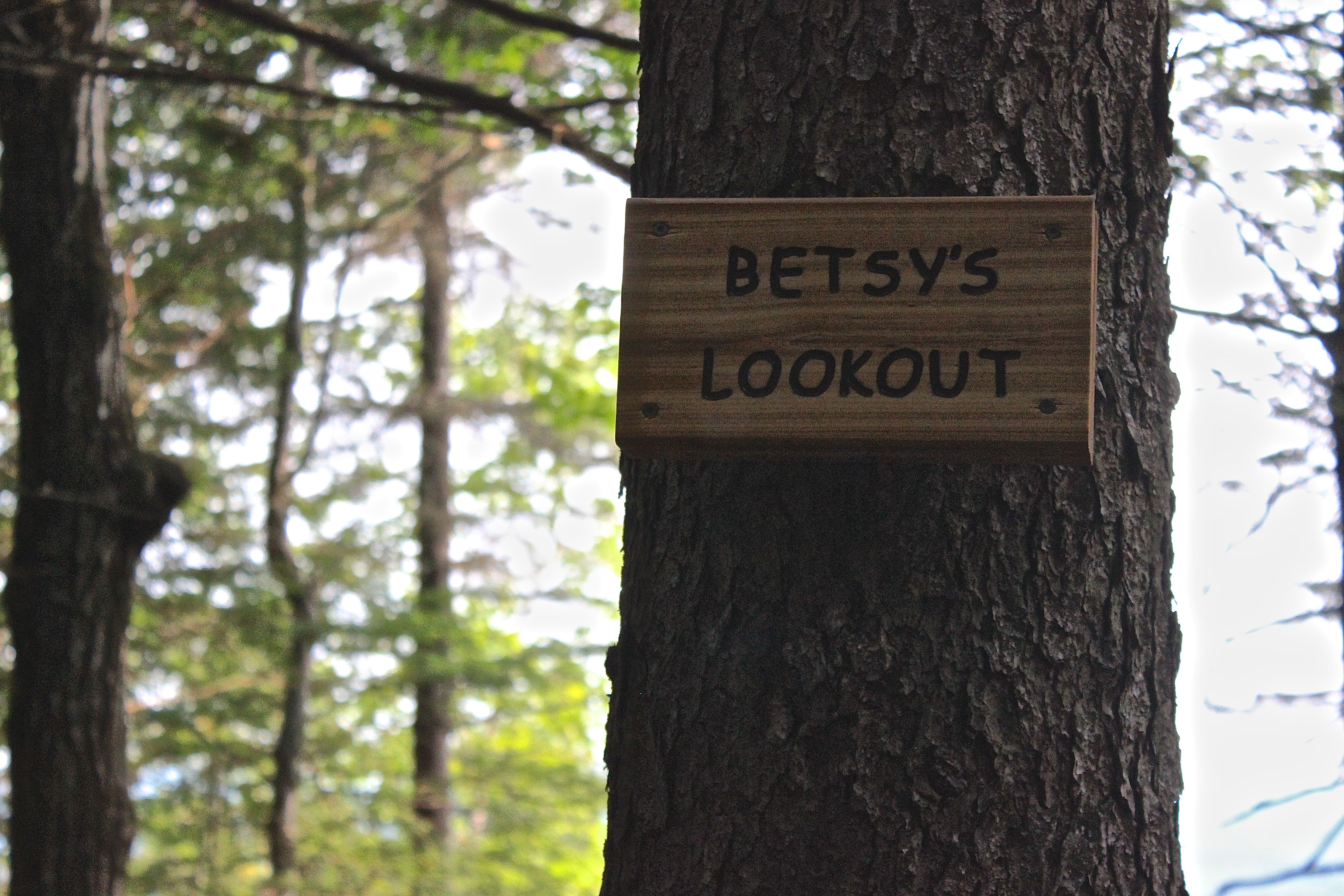
betsy's lookout

I’m not sure who Betsy is, but along the path, there is a new cutout providing a bit of a view of Moose Pond below.

American Toad

Before I hiked onto the ridge, an American toad paused for a photo op.

looking at camp

Out of the fog. Camp is about smack-dab in the middle of this photo on the north basin of Moose Pond.

trail along the ridge

I met no one as I hiked up and only encountered two people and their dogs along the ridge trail heading toward the summit.

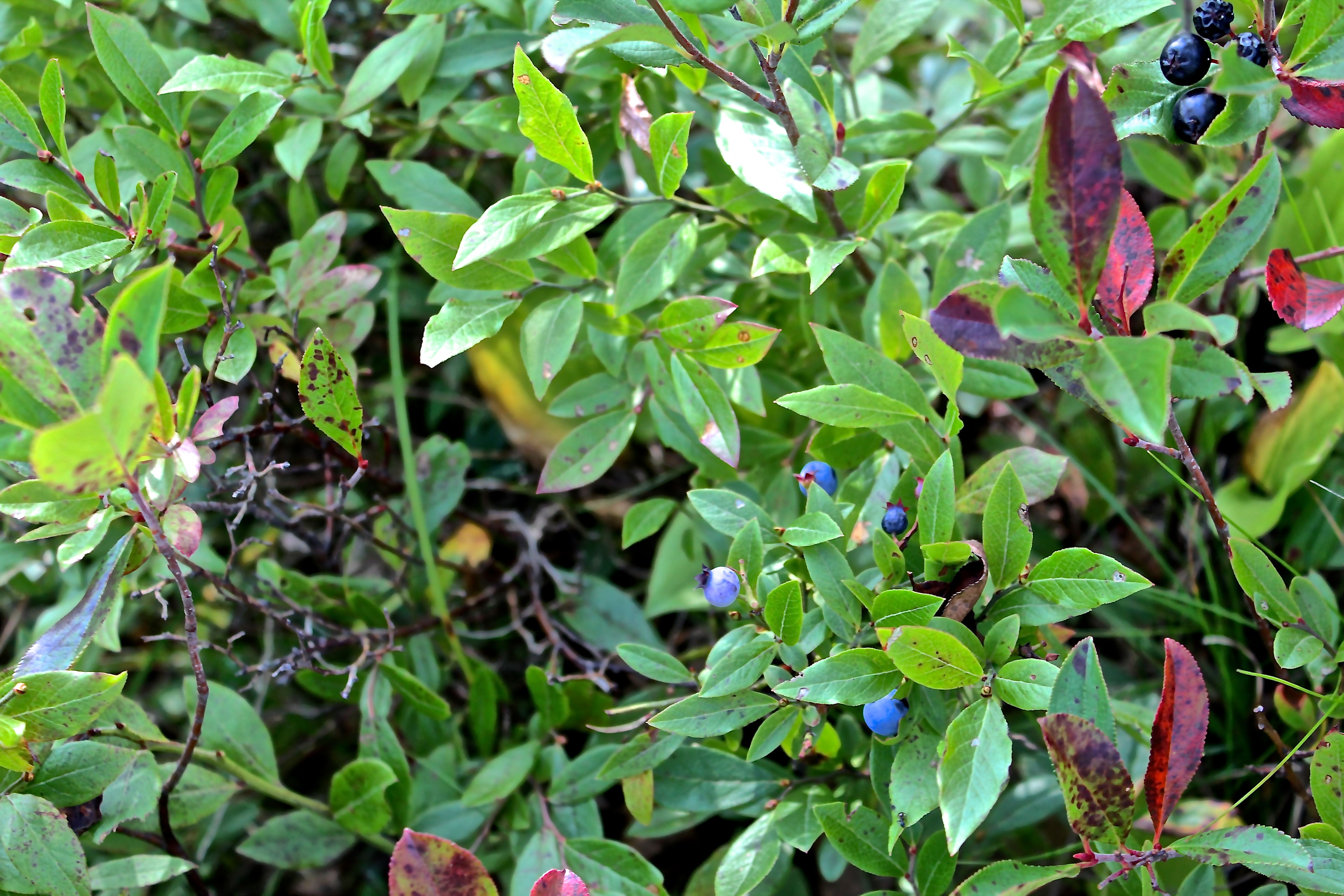
blueberries and huckleberries

There aren’t too many blueberries left, but the huckleberries are abundant–and seedier.

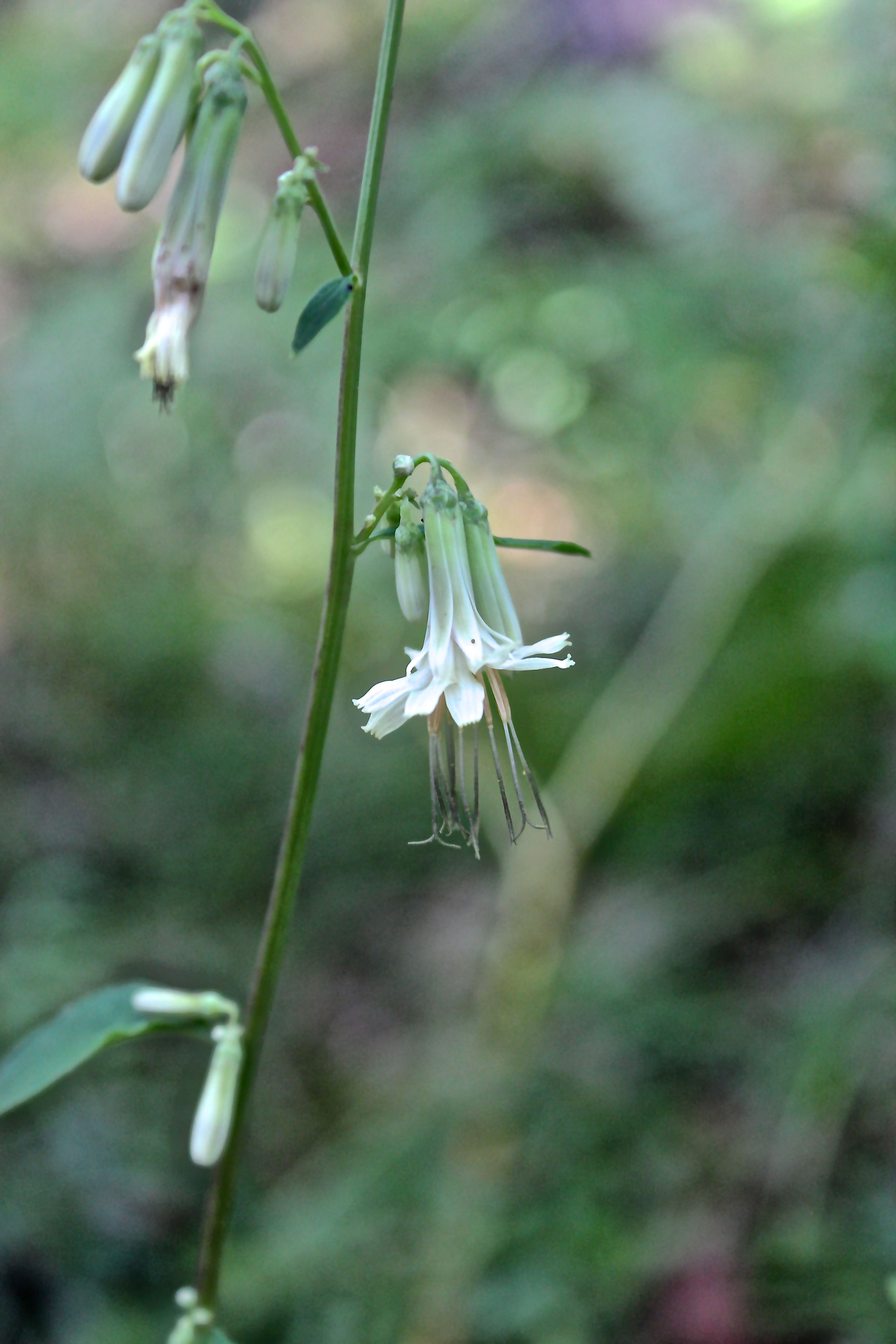
gall of the earth 2

Also plentiful–Gall-of-the-Earth or Rattlesnake Root (Prenanthes trifoliata). Such a curious name for this plant. Hilary Hopkins writes in Never Say It’s Just a Dandelion, “Gall-of-the-Earth: a mysterious name dating from at least 1567, referring to a plant’s bitterness, though not this plant, but rather one said to have been discovered by Chiron the centaur, a physician of Greek mythology.” OK–so if not this plant, then why the name?

Hopkins continues, “Rattlesnake Root refers to the plant’s supposed efficacy against rattlers.” Always good to know I have a tool handily available when hiking alone.

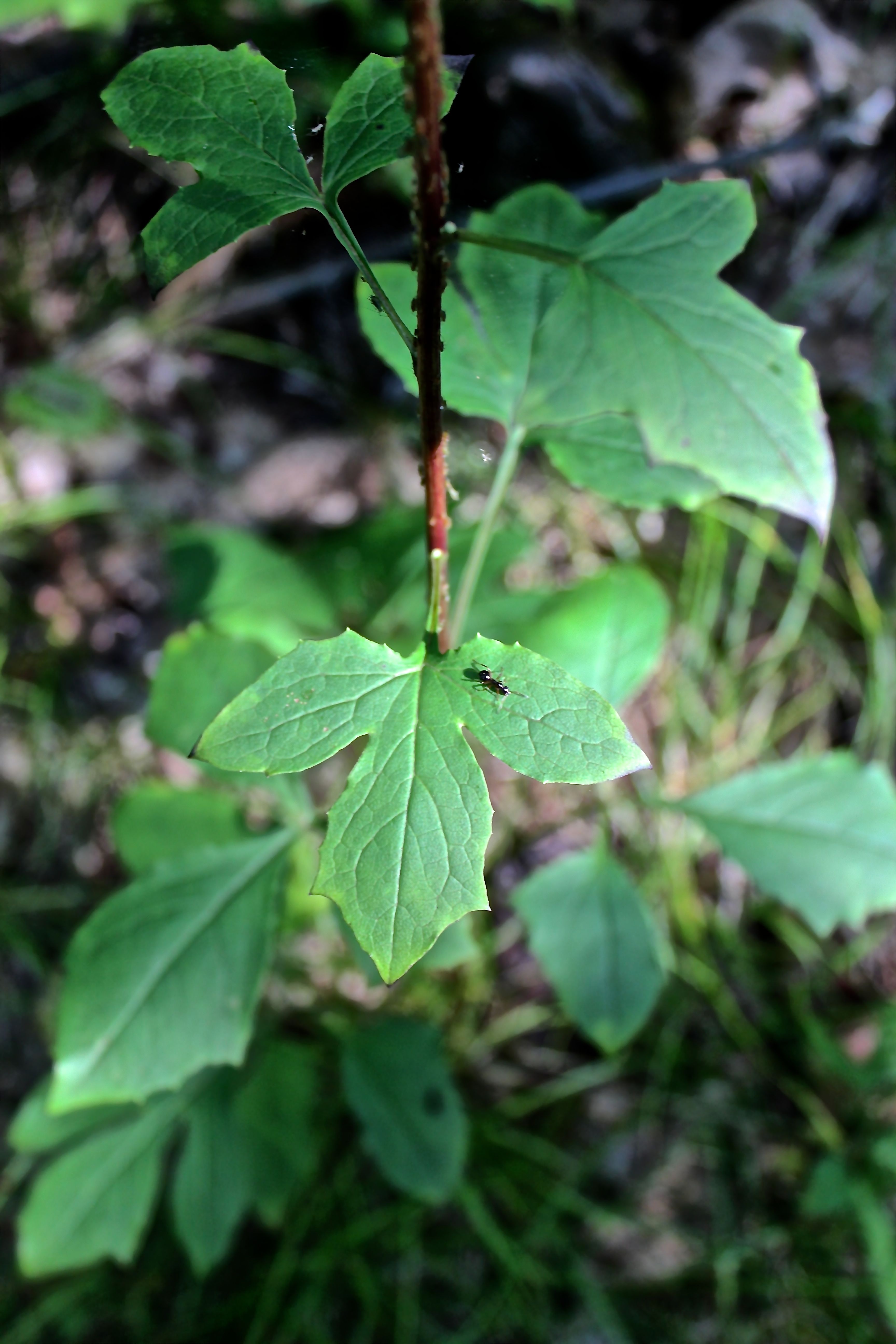
And finally, she writes, “Prenanthes means ‘drooping flower,’ a perfect description; trifoliata describes the three-parted leaves.” That is definitely accurate.

gall aphids

Though I saw numerous Prenanthes trifoliata along the trail, only this one was covered with aphids.

gall ant

And one ant. It is said that ants herd the aphids, protecting them from predators and parasites, so that the ants can enjoy the honeydew left behind by the tiny insects. This ant must have had sentry duty–he roamed all over this leaf and then down to the next one. Perhaps he thought I was the predator and he had to keep an eye on me.

whorled asters

Whorled Asters graced the trail periodically and the base of a Northern Red Oak.

Firewarden's Trail

Moments before I reached the Firewarden’s Trail, I startled a red fox that ran into a rock den.

fire tower 2

Standing forever stalwart is the fire tower. I hope it will continue to stand tall forever, as it marks a piece of the mountain’s history.

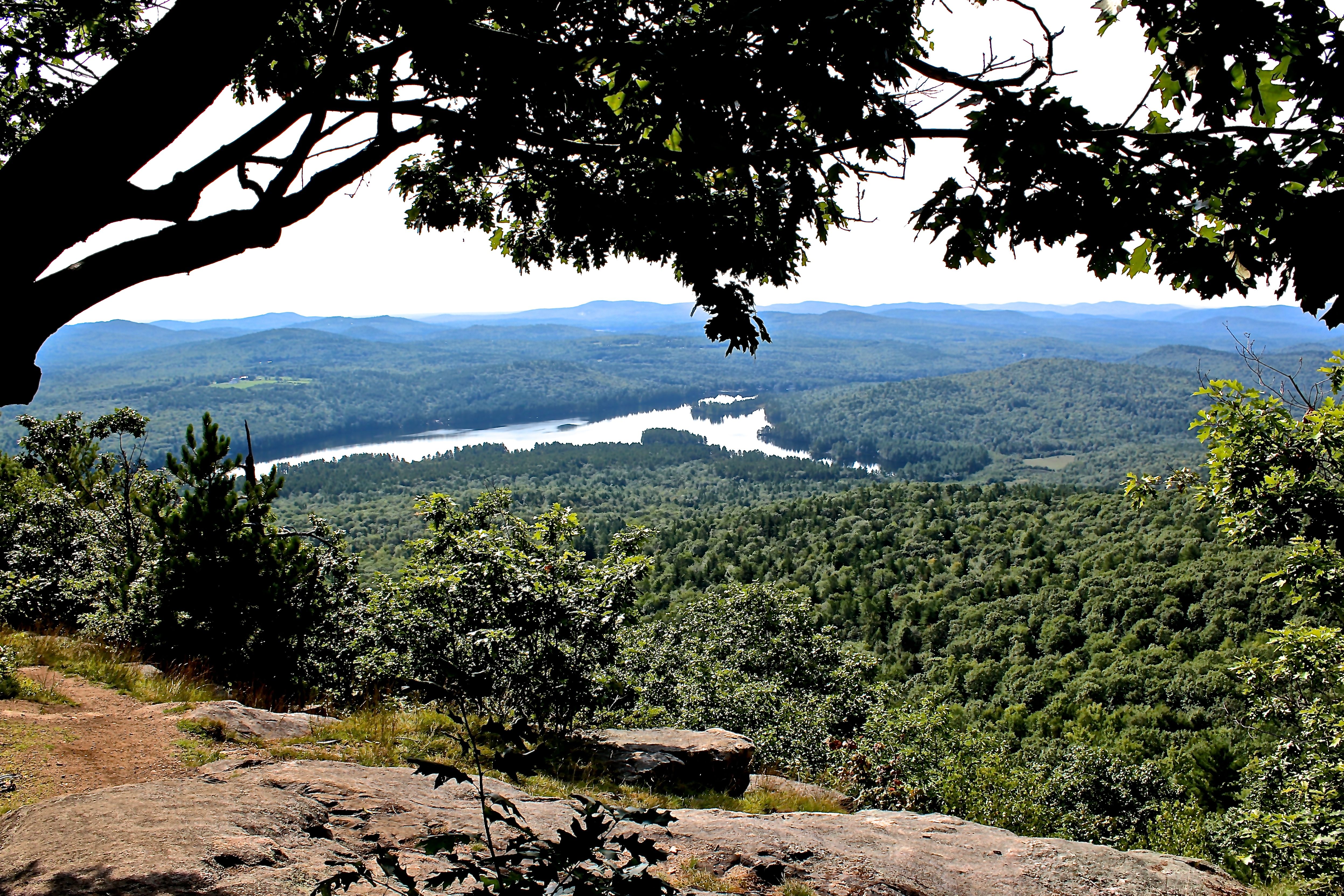
summit view1

Out of the fog. Looking west from the summit.

trail signs heading down

There was a time when one could easily get lost on this mountain, but thanks to the LELT, those days are no more. Good thing. There were six people at the summit and I passed quite a few more as I descended via the Ledges Trail.

 white goldenrod

Silverod is our only white goldenrod and it prefers the drier soil of this path.

Ledges 1

The ledges offer a peek at the south basin of Moose Pond.

Mountain Road

Finally, I was back on Mountain Road for the 1.5 mile walk back to my truck.

red eft

Interestingly, along the way I found thirteen smooshed red efts. These are the terrestrial teenagers of the newts. My first thought–snacks galore. Then I remembered–their color is a warning sign of their toxicity. No one wants such a snack. (Reportedly, they aren’t harmful to humans, but I wasn’t about to find out.)

And so it was today that I’m glad I climbed out of the fog. Thanks for joining me on this long wander.
Blue Gold Mondate

Thunder rumbles in the distance, while clouds mask the setting sun, creating a golden blue/pink/purple sky. We need a word for that. Just as I made up Mondate to describe the Monday dates my guy and I share, I feel obligated to describe tonight’s sky as golden blinkle.

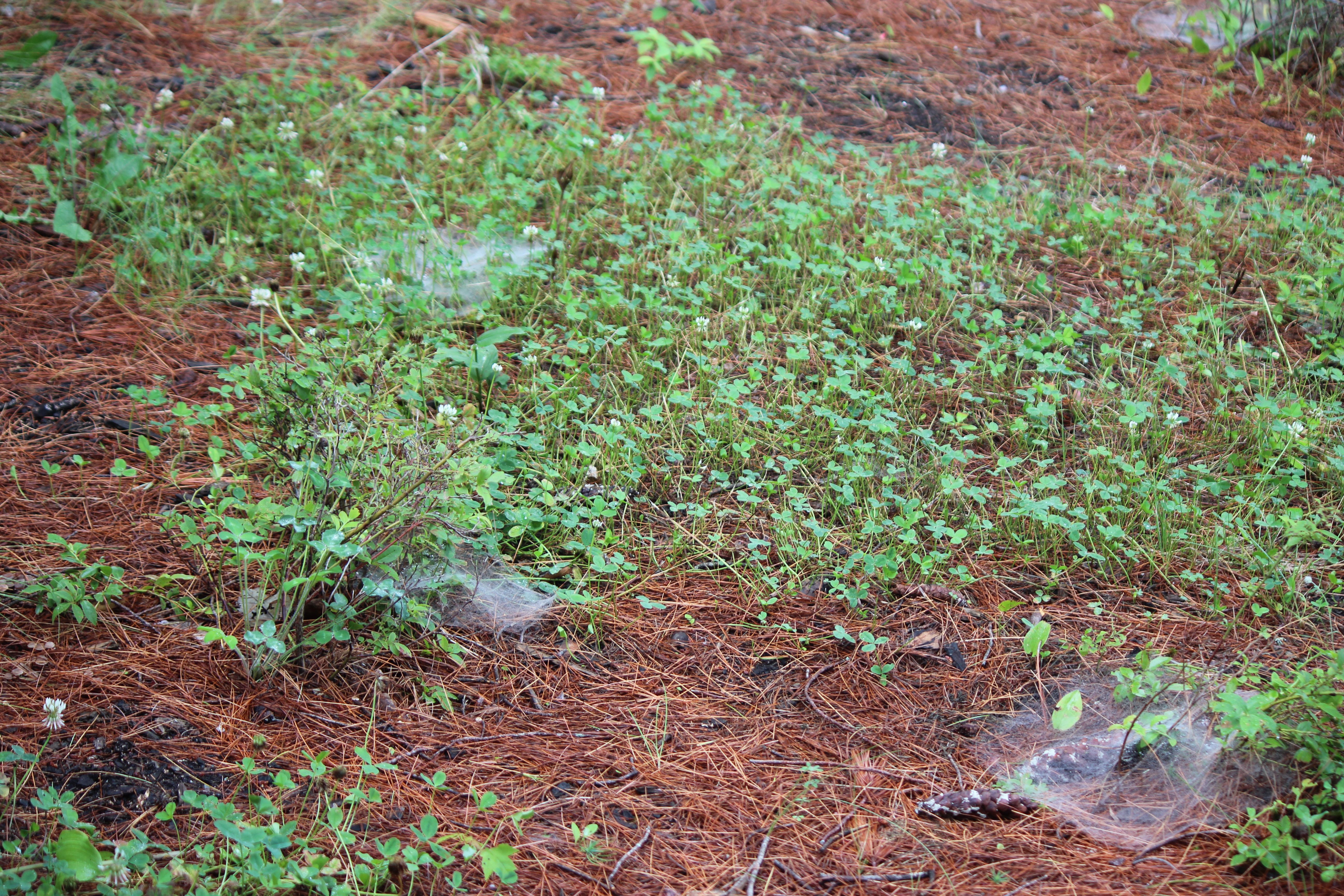
After a rainy weekend, we awoke to another gray morning. But . . . there was a bright spot. Our yard was filled with mats of spider webs.

webs 1

OK, so maybe “filled” is an exaggeration, but they weren’t here yesterday.

web 2

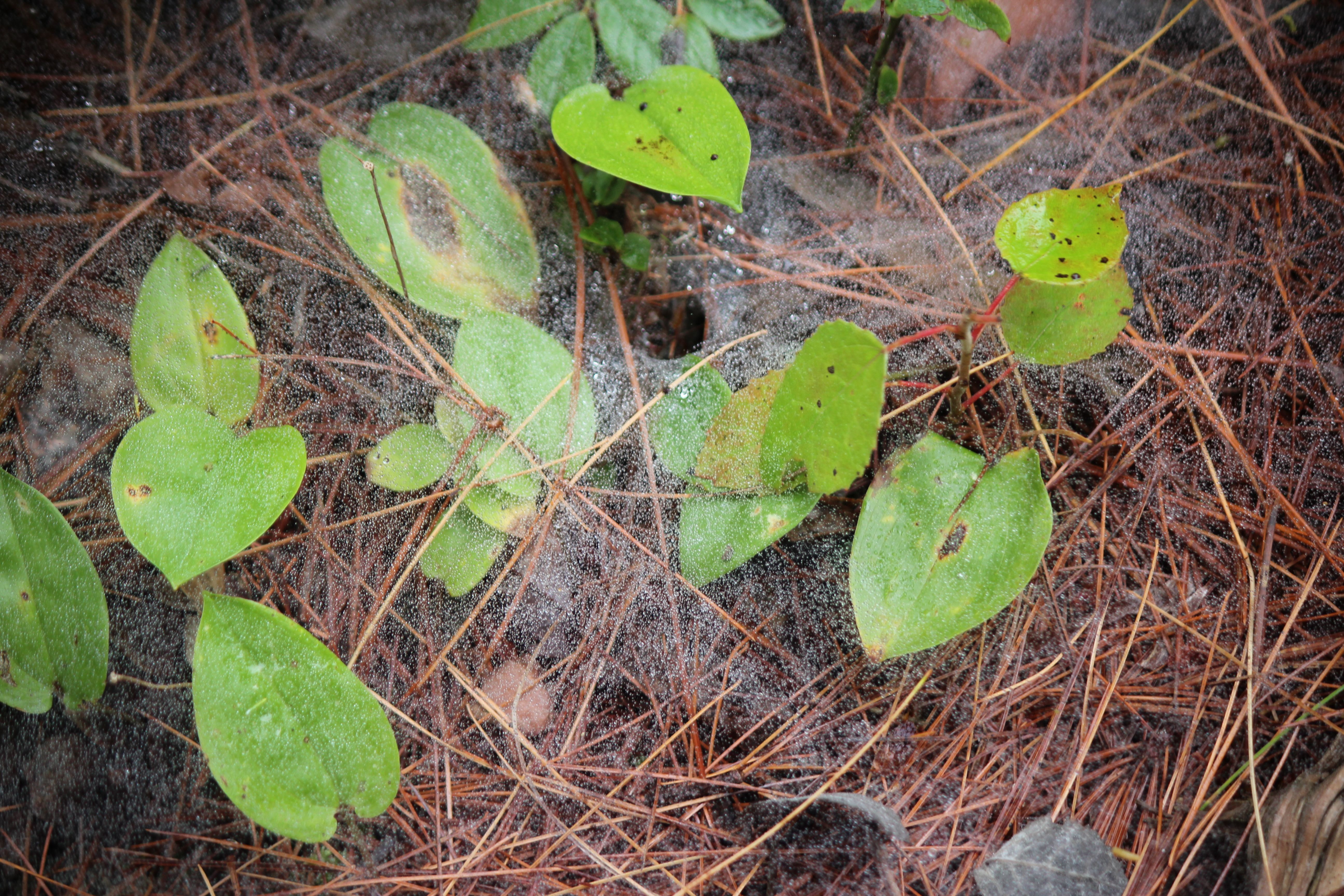
My initial intrigue was with the water droplets sitting atop these finely woven blankets.

funnel 2

And then I spotted a hole in the center of one.

funnel 1

A look at the others, and I knew we had a yard filled with funnel weavers.

funnel 3

Imagine the industrious nocturnal work it took to complete this masterpiece.

spider 1

As I stood watching, one of the weavers appeared.

spider 3

I saw something land, I know not what, and he quickly scampered over to snatch it, and then moved into the funnel to dine. That reminded me that it was time for breakfast.

My guy had been out for a morning run and when I pointed out the webs scattered about the yard, he said he’d seen them all along his route. So . . . why today? Why so many? Will they be here tomorrow. As the day wore on, it became more difficult to see the webs.

spider web dock 2

This masterpiece, however,  has been gracing the dock for weeks. I keep waiting for Charlotte to leave a message.

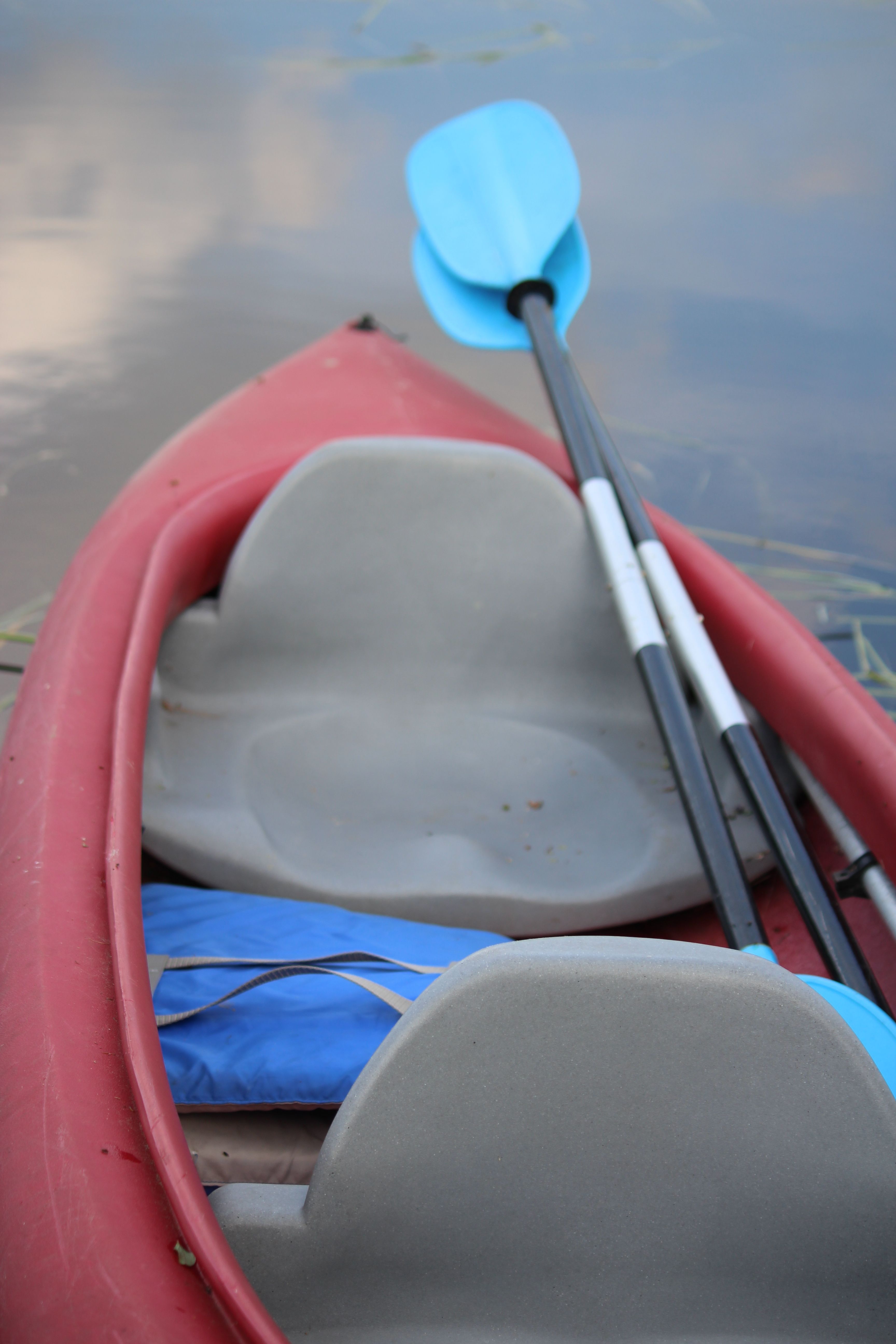
We had some errands to run in North Conway and then decided to head off in the kayak. I wish I could take a selfie of our paddles as we work together in unison. It reminds me of our relationship–we’ve always prided ourselves on our ability to think things through and come to an agreement as one. Oh yeah, sometimes we get a bit out of sync and one paddle dips into the water ahead of the other or the water splashes one of us, but all in all, we lower and raise the paddles together–and as Robert Frost would say, “That has made all the difference.”

beaver mound

As we paddled along the edge of the islands, we discovered one large beaver scent mound–it had to be three feet high.

beaver mound disturbance

While this was probably created in the spring to mark a boundary, it appears to have been visited recently.

buttonbush

Numerous buttonbush plants bloom along the water’s edge. In all their manifestations, they are spectacular.

bluegold3

Spadderdock continues to offer a brilliant reflection of gold on blue

water garden

in the water garden.

female red-winged blackbird

But it’s the birds we follow today. Here, a female red-winged blackbird.

out on a limb

Her guy is out on a limb.

kayak

They don’t give us the exact information we want, but the catbirds are nearby. We hear their mews emanating from the shrubs and know that it’s time to abandon ship.

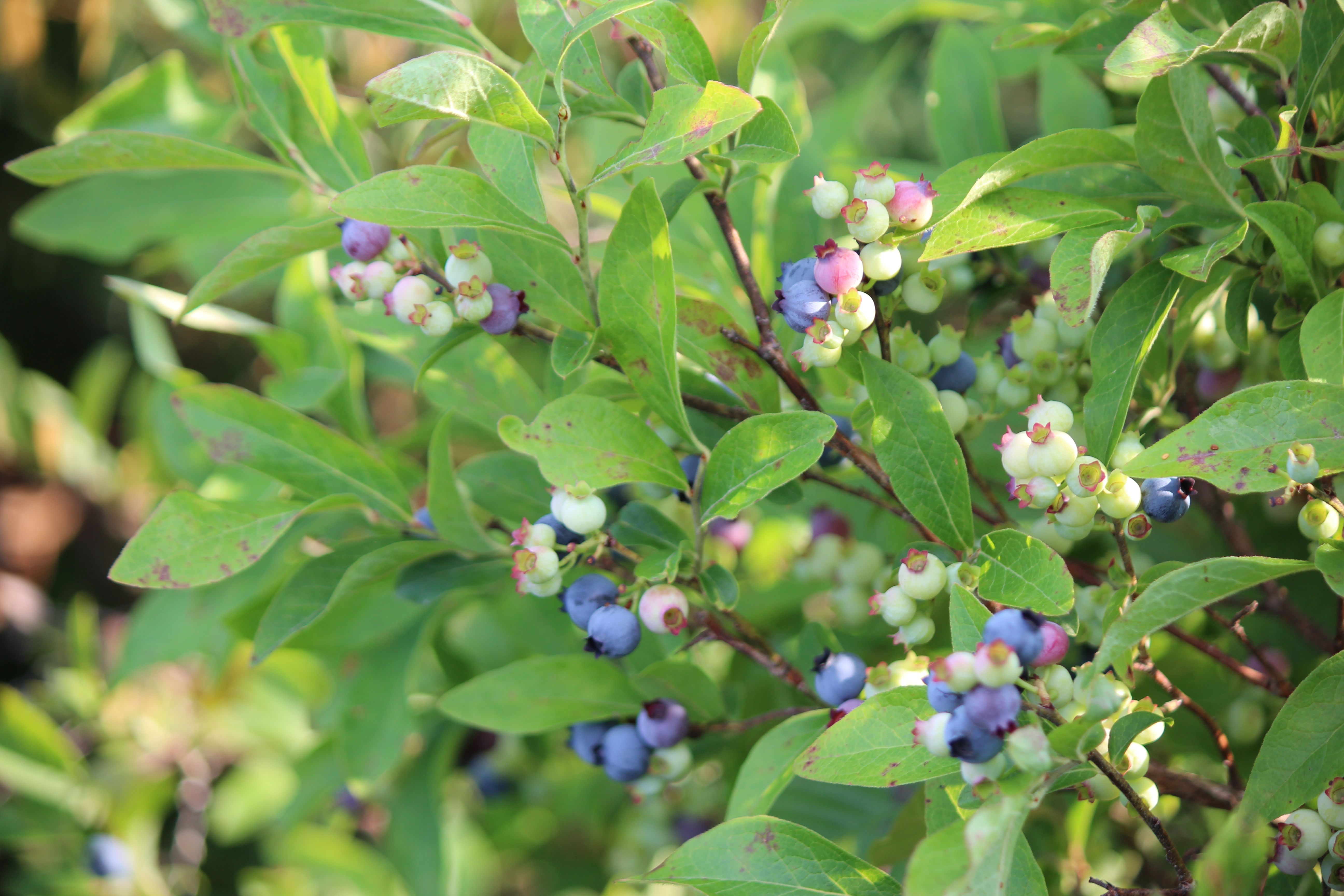
blueberries

This is blue gold. A happy afternoon spent foraging together. We made sure to leave some for the birds in thanks for their guidance.

And now, the thunder continues in the distance and occasionally lightening flashes  across the sky, but nothing can shine brighter than a blue gold Mondate.

A Little of This and a Little of That

As I sit here listening to the undelightful sound of an artesian well being drilled on a neighboring property, I have to wonder how deep they must go. After all, we’re beside a lake.

To distract myself, I wandered about our lot, wondering what I might see. I’d also wandered at Holt Pond early this morning, sharing the pitcher plants and some other great finds with K. So . . . here’s a little of this and a little of that.

Muddy River

Morning has broken . . . on the Muddy River.
HP boardwalk

And the quaking bog at Holt Pond.
pp2

Home of the pitcher plants and the reason for our visit.

Horned Bladderwort

A new find for me: Horned bladderwort. It’s growing at the edge of the pond. The stalk is erect and there are no apparent leaves–because . . .  “tiny leaves grow beneath the soil” according to Newcomb’s Wildflower Guide.

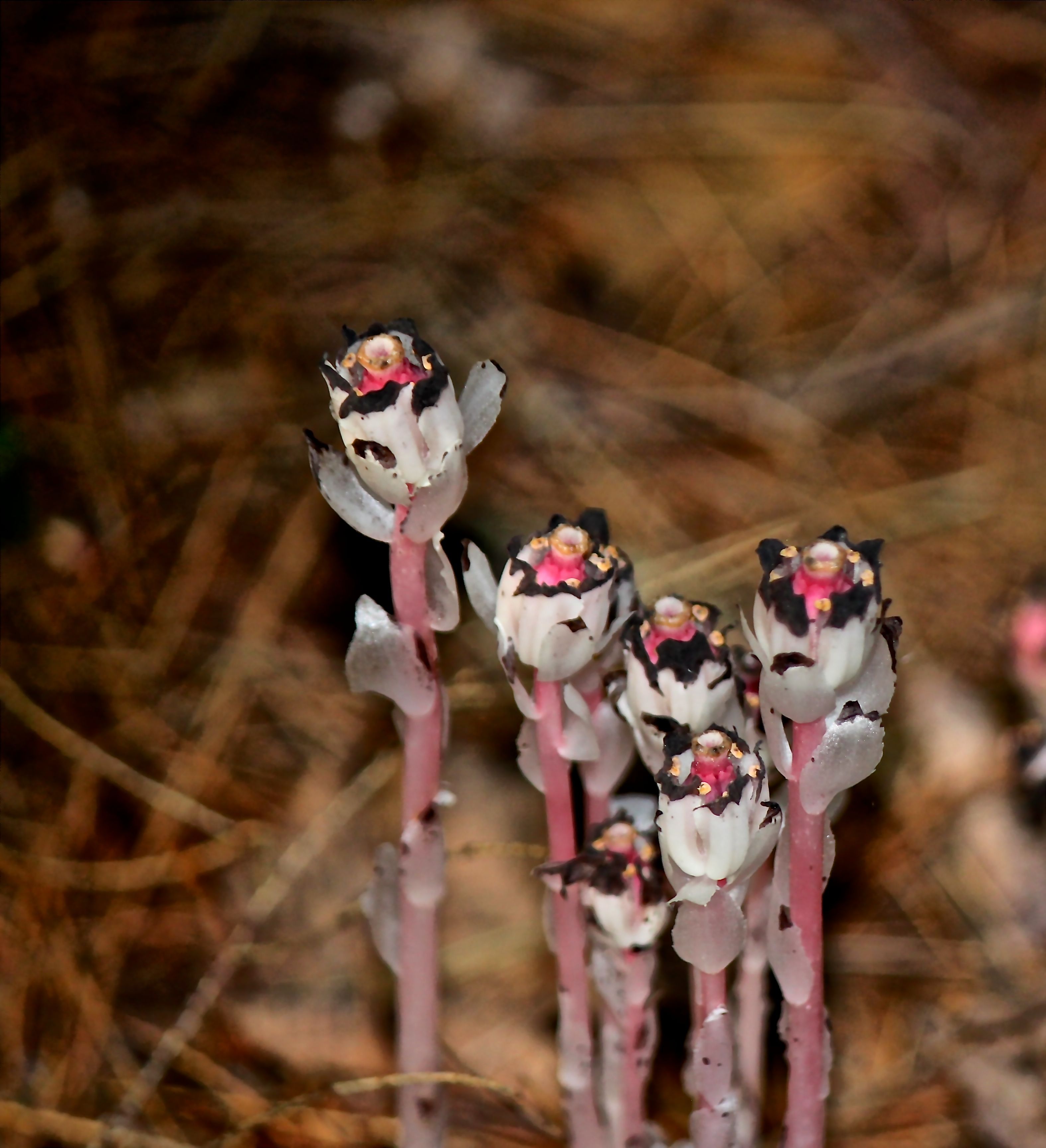
Indian pipe

Check out this Indian Pipe. Usually we see the ghostly white version, but Newcomb states that occasionally the plants are pink. This is one of those occasions. And these flowers have been fertilized–therefore, they are standing upright, rather than nodding.

Staghorn sumac

On my way home, I stopped by the side of the road to admire the staghorn sumac. The cluster of upright flowers reminded me a wee bit of the sundews we’d been admiring at Holt Pond. Color and hairiness–similar but entirely different.

rose

Back at camp and by the water’s edge, a single swamp rose bush.

serviceberry

The berries of a shadbush dangle like ornaments.

exoskeleton

Under a porch floorboard, the exoskeleton of a dragonfly.

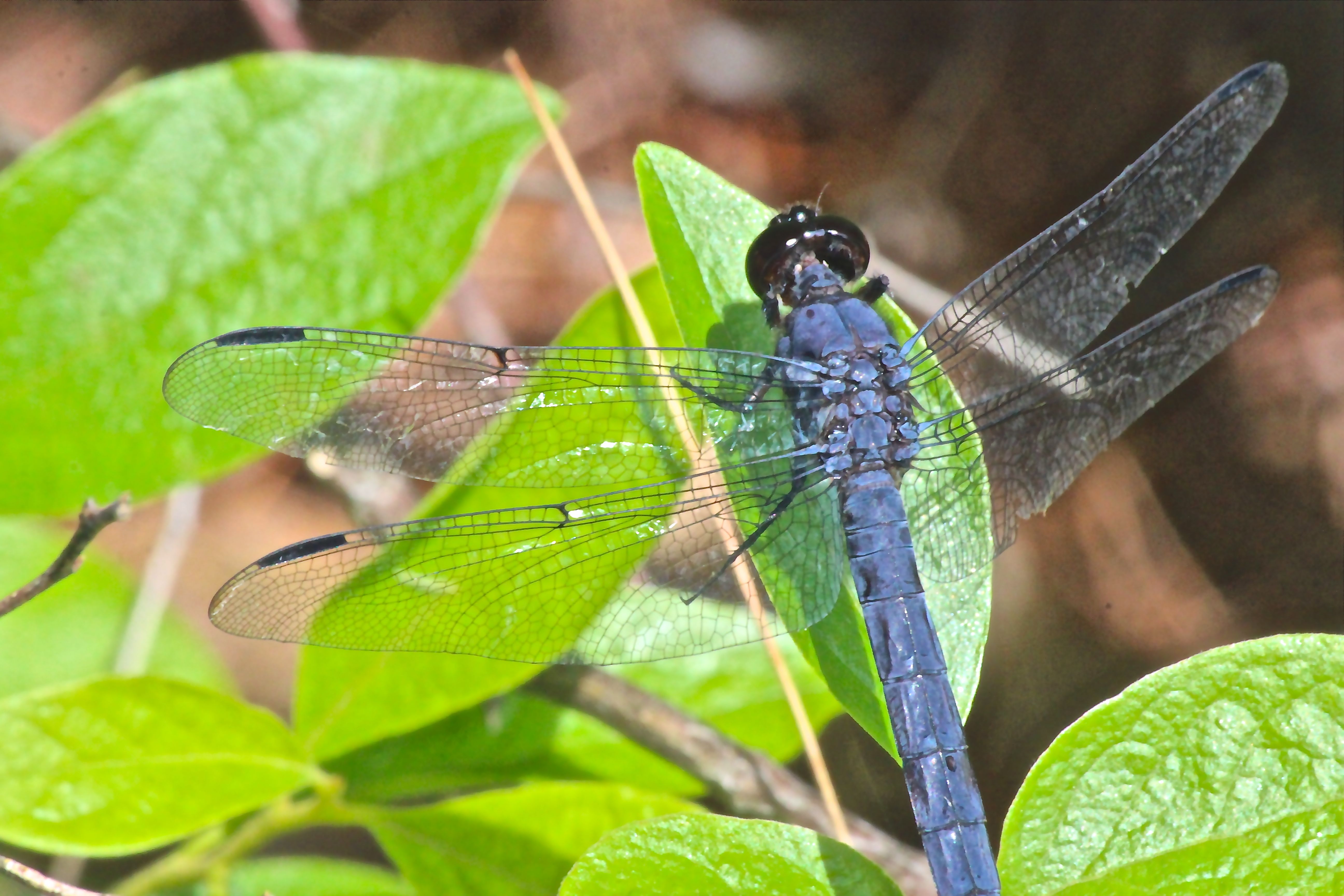
blue dasher dragonfly

Perhaps it previously protected this one–a blue dasher.

thistle

And finally, a field thistle on our neighbor’s side of the driveway. Such a suit of armor.
There’s more, but that was enough this and that for the day. And besides, the well folks are finally departing. Let there be silence.
Moosey Mondate

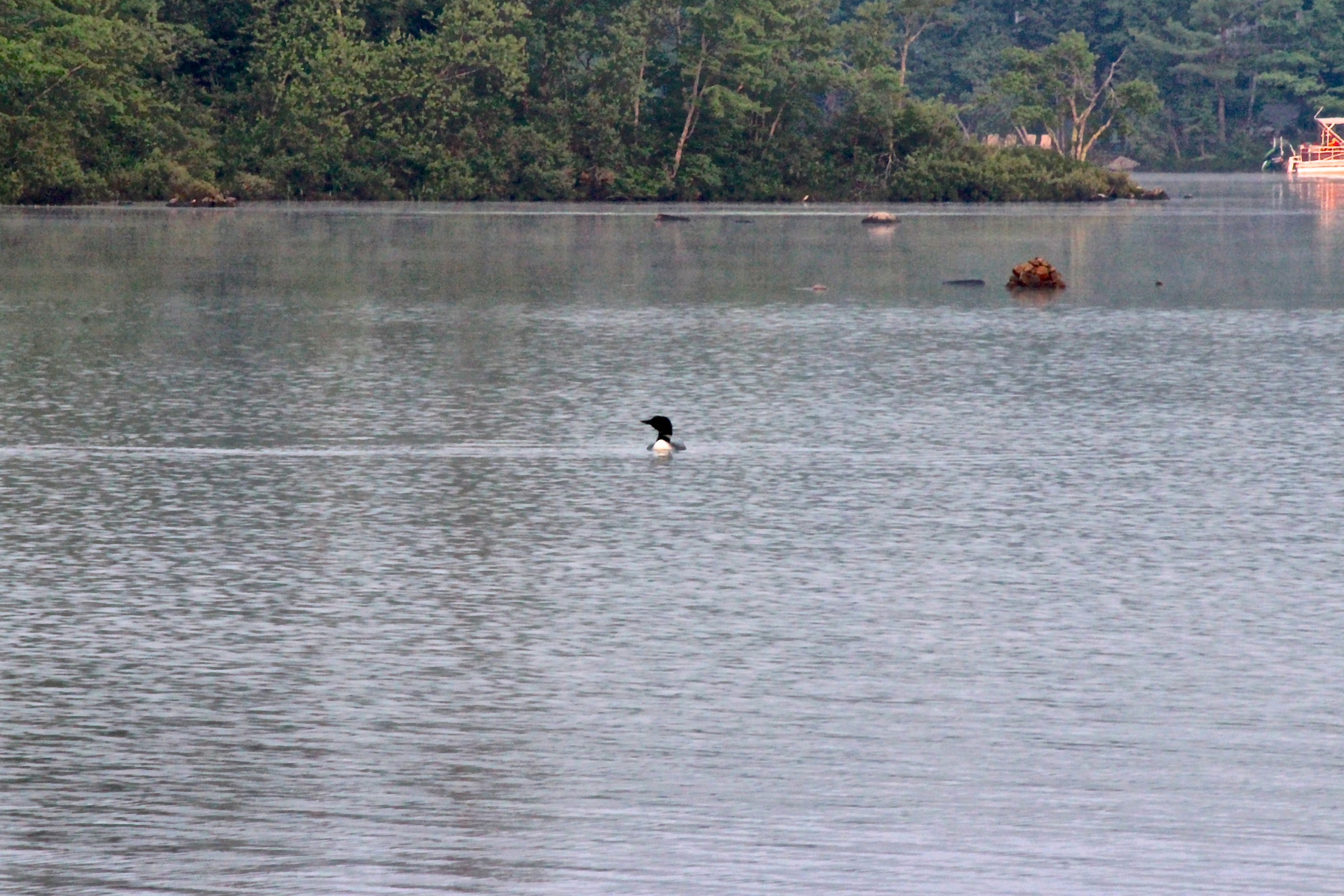
We finally moved to camp yesterday, and awoke early this morning to that hauntingly delightful sound–the cry of the loon.

loon

While I stood on the dock, wishing the pair would come closer, something else caught my attention.

suspendedsusp2

Suspended animation. I couldn’t see the web, but trusted it was there.

Black Mtn

Our Mondate began after we got some chores out of the way. A perfect day to hop in the tandem kayak and head north to Sweden. Thanks to our friends the Neubigs, who purchased the tandem for us years ago. They need to return and use it–just saying.

island shoreline

We love the upper basin because there are so many islands and stumps and inlets and coves and beaver lodges and you name it to explore.

tall weeds

The only thing that drove us crazy was the deer flies. Yeah. So we know insects are important for pollination and to provide food for fish, birds, dragonflies and others. But truly, what purpose do deer flies serve, other than to suck our blood? Mind over matter. Don’t scratch and the swelling will go down eventually. Note–like black flies, it’s the females that bite. I’d say, “Go Girls,” but hardly in this case.

dragonfly

Among the many dragonflies was this blue dasher, a common variety near quiet water. If only he would feast on those darn deer flies.

button bush

The buttonbush seems otherworldly with its pincushion styles protruding from each tubular flower.

spadderdock

The tight, waxy, petal-like sepals of the spatterdock, aka yellow pond lily or cow lily, stands upright above its leaf–featuring a small v-notch

fragrant water lily

On other ponds and lakes, I’ve seen the fragrant water lily in bloom already, but here it is just beginning to open. Its leaves are larger than those of the spatterdock and notched to the center.

pickerel

Pickerelweed is like no other. Though the upside-down heart-shaped leaves are long-stemmed and look similar to arrowhead, once the flower blossoms, there’s no mistaking it.

pick 2

The flowers are worth a second or third look. They grow in spikes along the pond’s edge. And each is covered in hair. Why?

pick 3

Not only that, but each flower is two-lipped. And each lip is three-lobed. And the upper lip has two yellow spots.

sundews 1

The pond was dammed a long time ago and stumps support a variety of life–including the carnivorous sundews beginning to flower.

sundews 2

At first glance, I thought they were the round-leaved variety, but I now think they are spatulate-leaved sundews. Love that name–for the spoon or spatula-shaped leaves that are longer than they are wide.

love is in the air

Love is in the air.

As it should be on a Mondate with my guy well spent on Moose Pond. I bet you thought I was going to post a photo of a moose.