Vernal Pool 1: Oh Baby(ies)

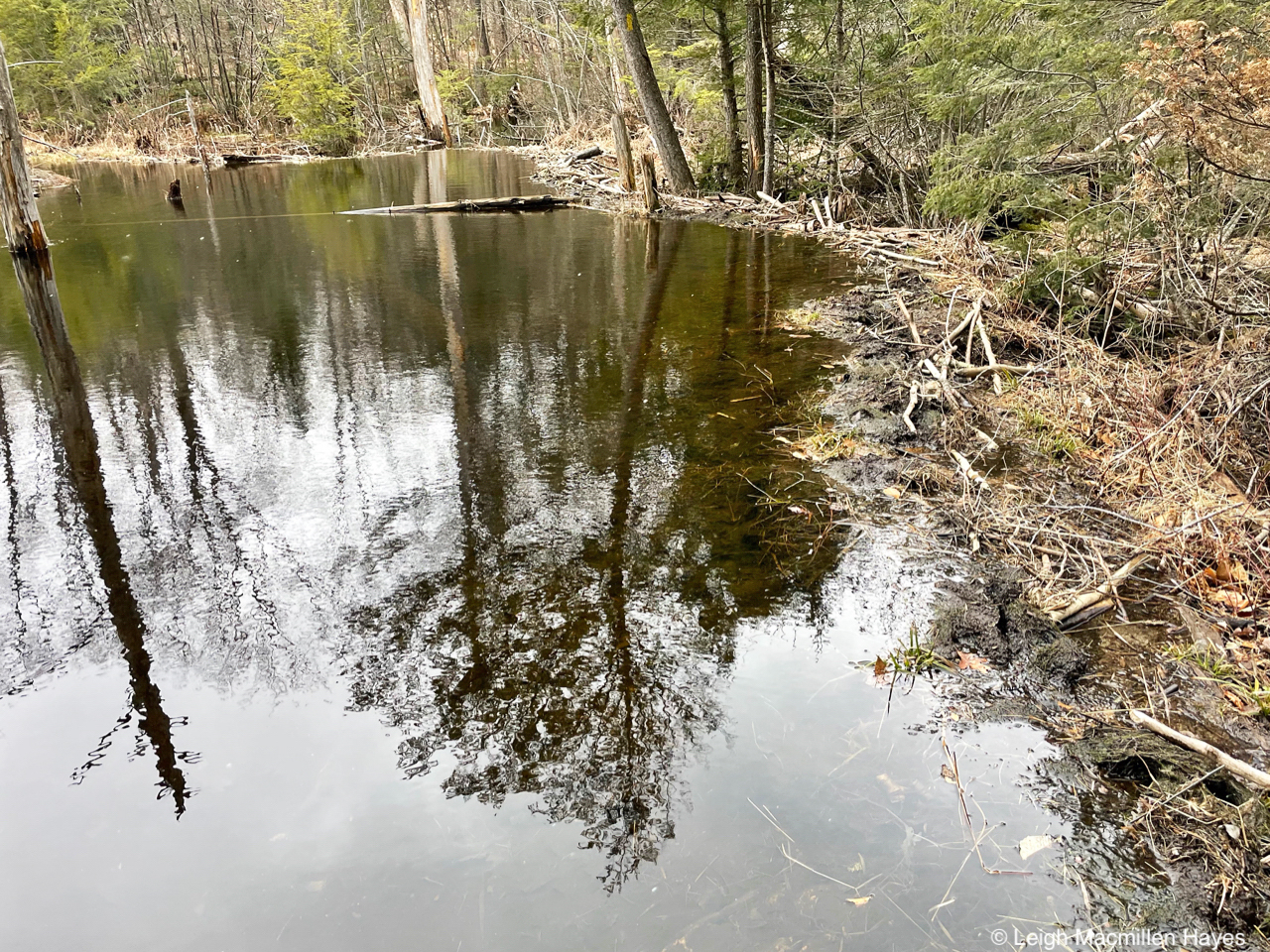
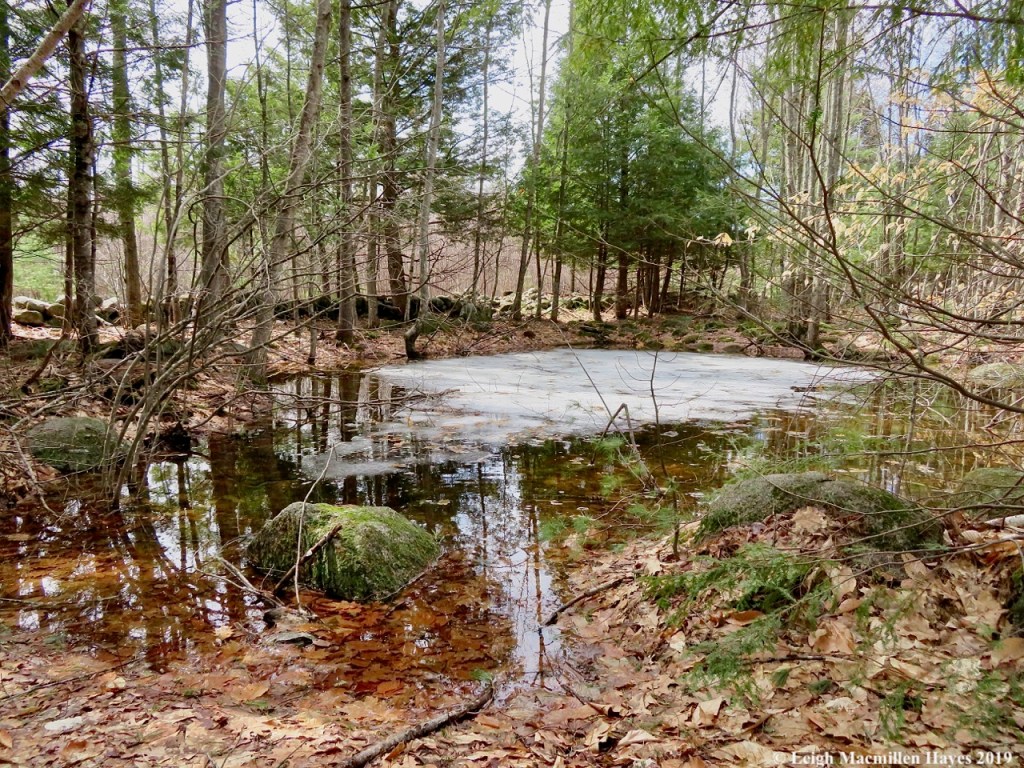
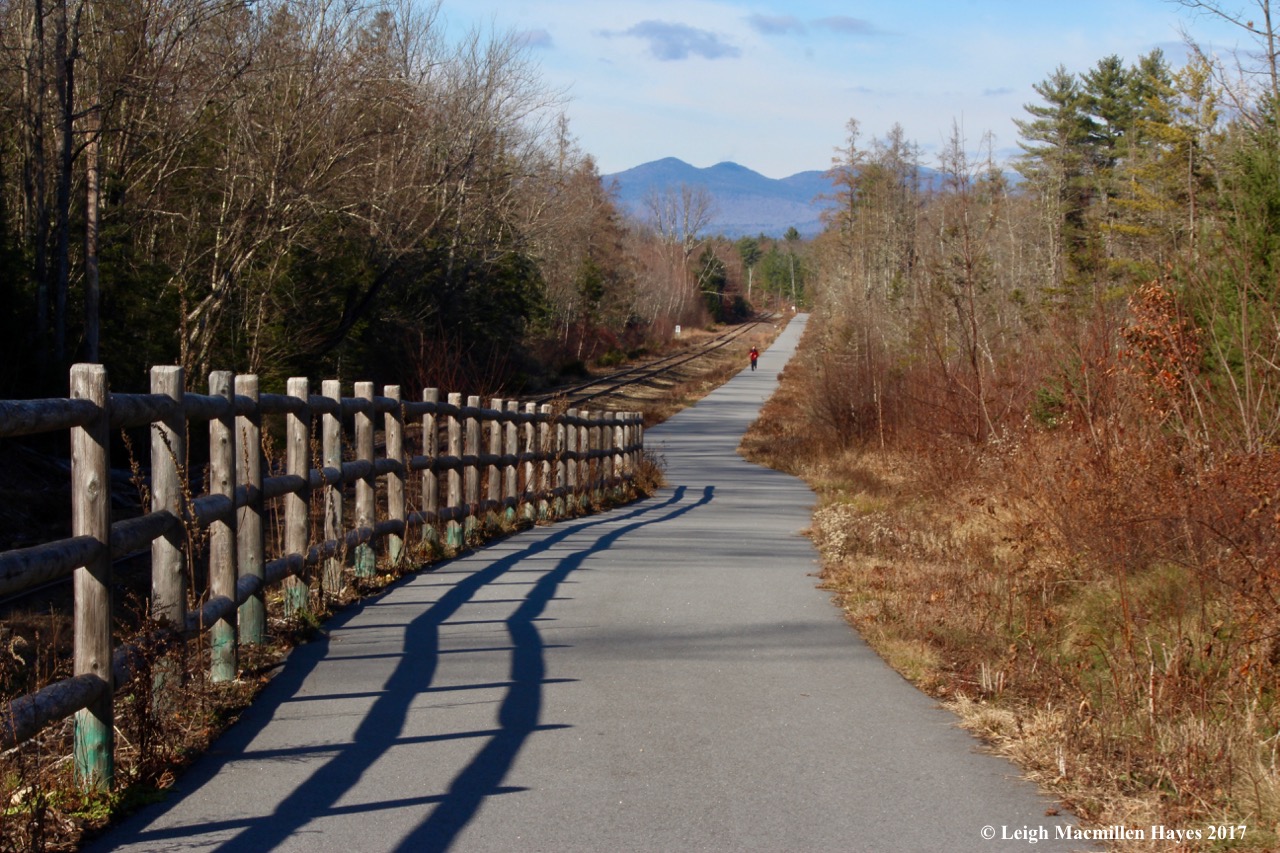
Once the snow and ice began to melt, I started making almost daily visits to “My” vernal pool, located about a quarter of a mile from our house, and only a hop, skip, and jump, well maybe a few hops, skips, and jumps, from the cowpath, and more importantly, on neighbors’ property.

I met the neighbors for the first time last November when I spotted them walking their dog through their woods as I looked for any insects on trees. They were breaking branches to create a sorta trail, and I encouraged them to walk the cowpath instead because it’s flat and I try to keep it cleared of downed branches.

It was upon our second encounter when they did actually use the cowpath (and have done so regularly since though our paths haven’t crossed in months) that I asked them if they knew about the vernal pool. They did not. The dog was a rescue and they’d only had her for a few months and she was the reason they were out walking in the woods.

Being my blunt self, I did ask that they not bring their dog to the vernal pool in the spring and explained about the Wood Frogs and Spotted Salamanders who use it as a breeding pond. Yeegads. But they didn’t take it to be rude, and instead told me that they think they have another vernal pool elsewhere on their land, closer to their house. Then they invited me to walk in their woods and explore anytime. Um, I thanked them and admitted that I’ve been doing that for years; I just don’t go close to the house.
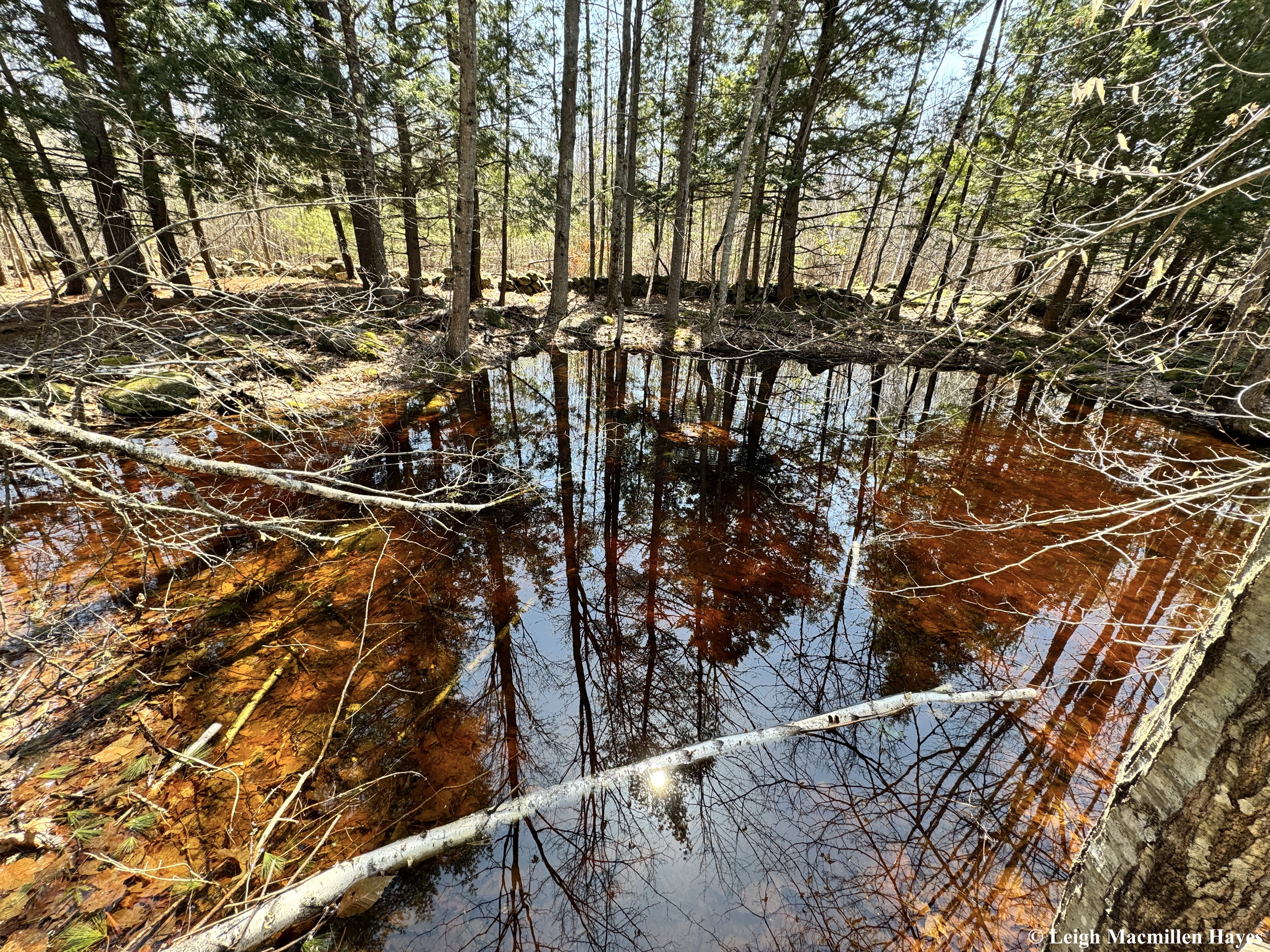
At last, about two weeks ago, the ice went out. But . . . there was no action. It was cold and seemed to snow every other day and the ground was still frozen and the breeders just weren’t ready. I waited.
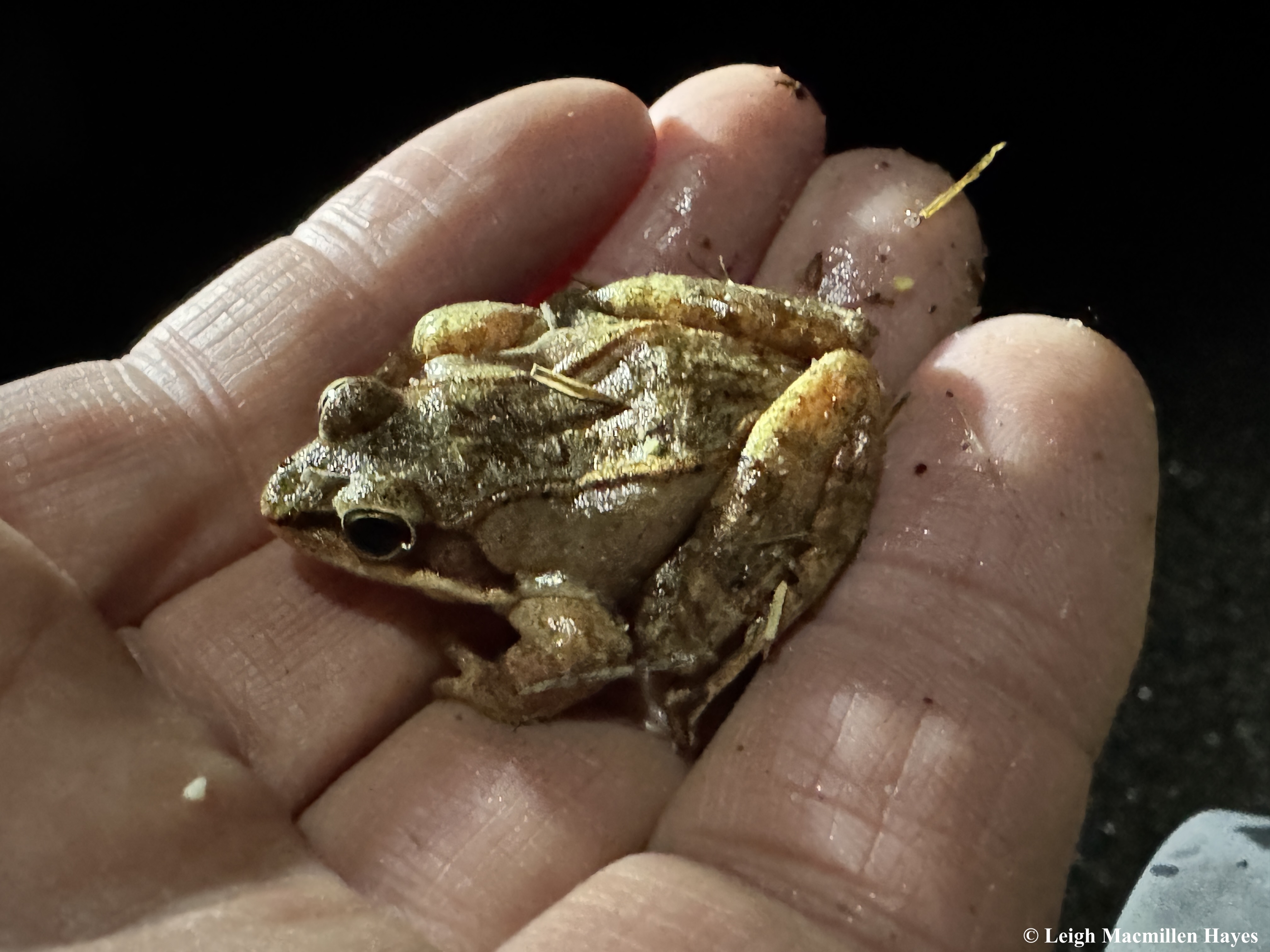
Finally, on Sunday, April 13, 2025, we had some rain, and our local Big Night celebration was announced via text and email messages. Big Night is that night(s) when it’s been raining in the afternoon and evening and the roads are wet, and volunteers head out to locations close to home to help amphibians cross the road without getting smooshed. Or help most of them.

We didn’t hear any Wood Frogs or Spring Peepers as we approached the pool of our attention that night (not “My” vernal pool, which is thankfully not near a road), so we weren’t sure if we’d see any action. And others south and east of us had been posting for a week that they’d only found one or two frogs during any given rain event. Still, we went. And were glad we did because we helped a total of 158 Wood Frogs (including the one pictured above) and Peepers that night. There were still a few smooshed, but as always, we reminded ourselves that they become food for other critters.
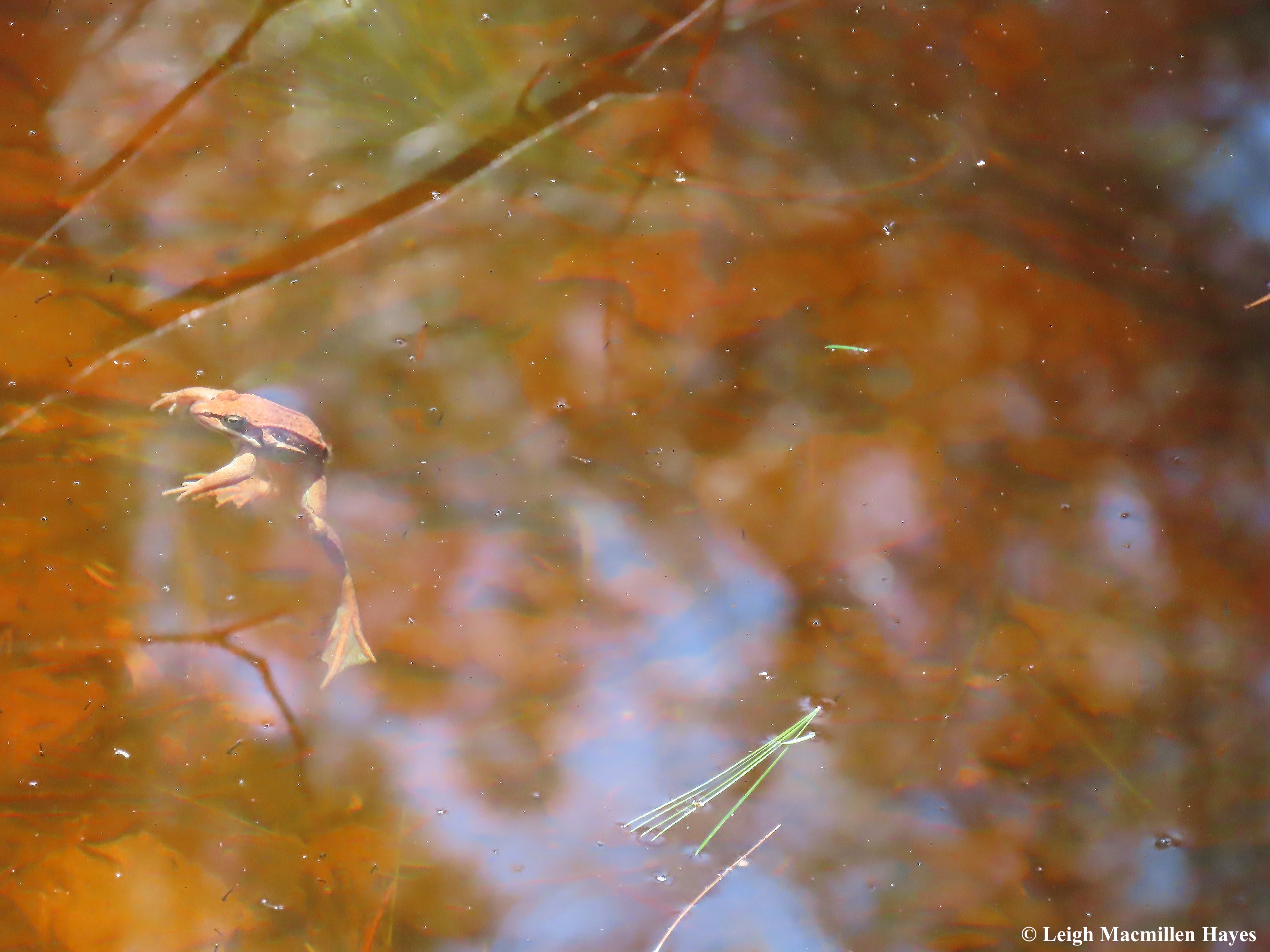
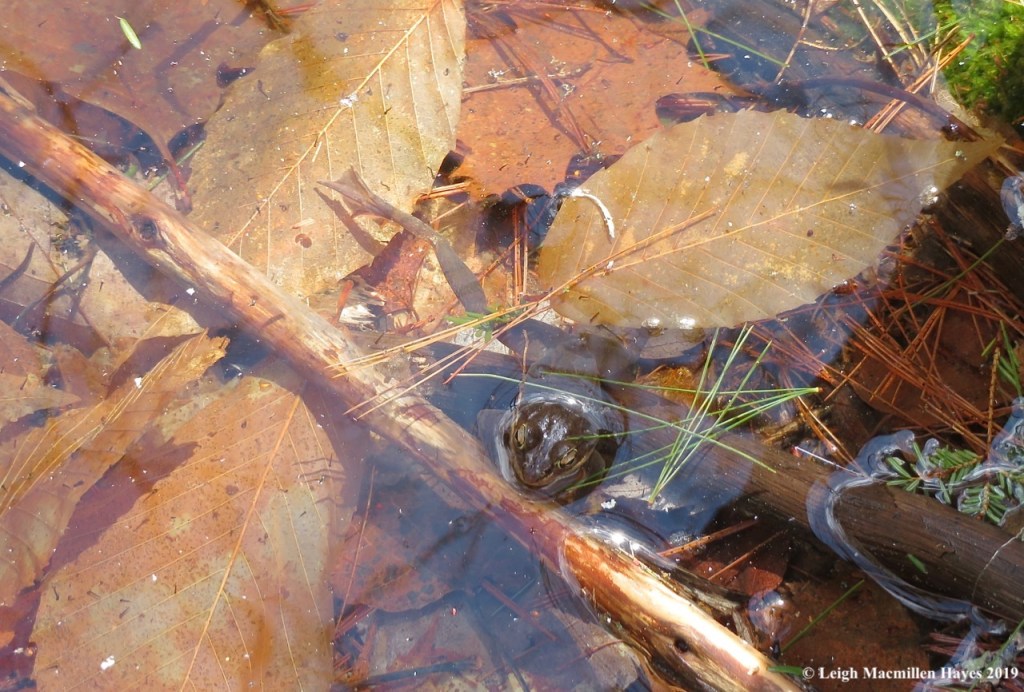
Given that success, the next afternoon I visited “My” pool and heard not a peep upon my approach. But I did what I do, and stood as still as possible upon a rock at the edge, and within a few minutes this male Wood Frog surfaced.
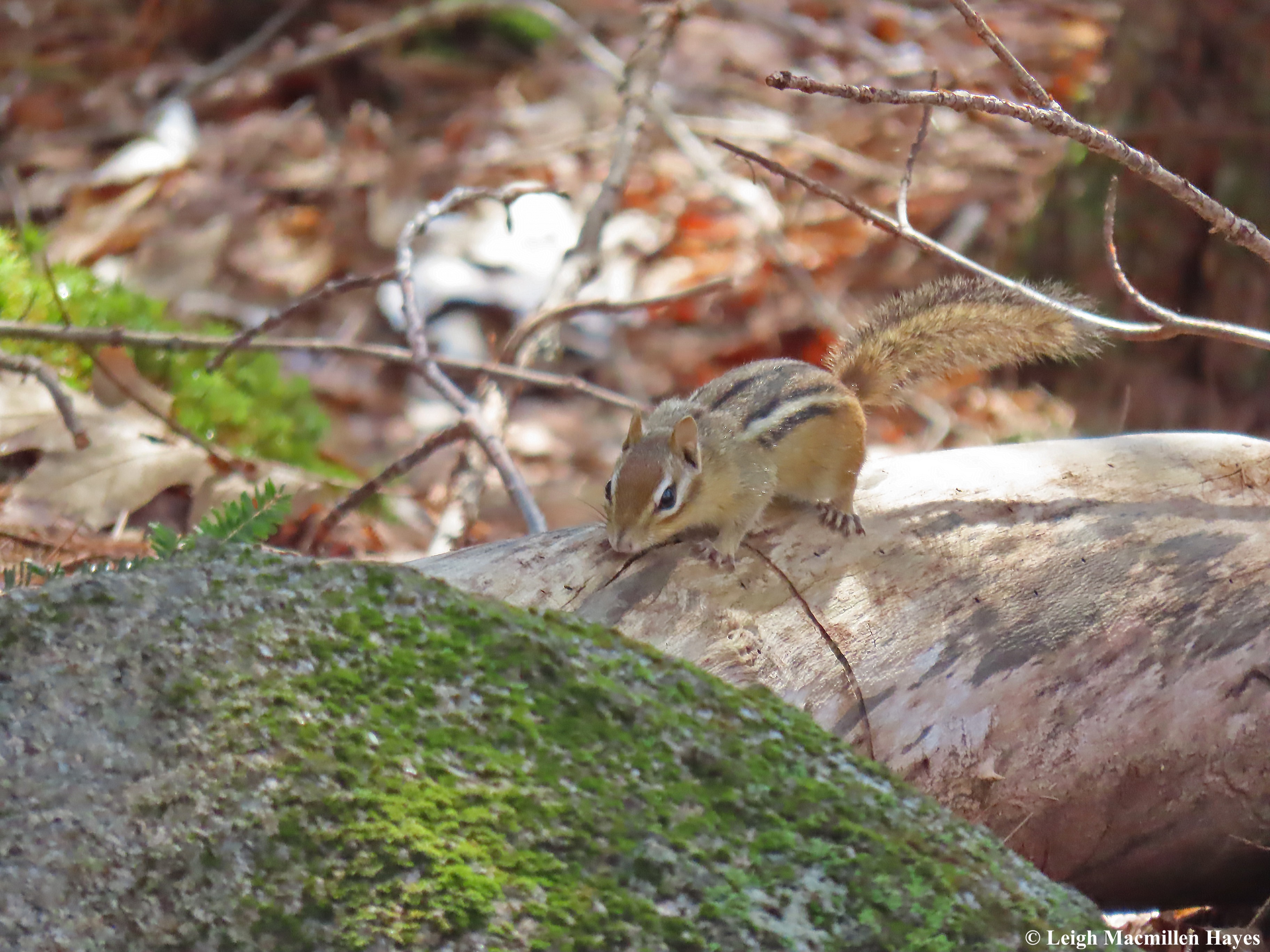
And I decided that this year I am going to try to be more present at the pool and try to get to know all who venture in and around it, including Chippy, on an eternal search for seeds to stuff into his cheeks.

Mid-morning Tuesday found me making my way to the pool again and this time, I could hear the “Wruck, Wruck” calls of the male Wood Frogs as I approached. Spring has finally sprung. Oh, and the crocuses have finally bloomed. Beaked Hazelnuts with their tiny yet exquisite magenta flowers as well.

And then, my first peek into the pool, and there it was, a Wood Frog egg mass about the size of a wiffle ball and I wondered if it had been there on Monday and I just hadn’t seen it.

As always, I stood still, and as always, it took the frogs a few minutes to surface, but suddenly they were everywhere, and probably wishing, if frogs can do such a thing, that I would leave so they could begin their mating chorus again.

But I stayed. And wondered. Why is it that a Gray Squirrel, like the Chipmunk, can scamper about and rustle the leaves and make all kinds of noise and the frogs continue to float upon the surface, but the minute I flinch, they dive to the bottom and hide under leaves for minutes on end?
I did decide to change positions after a bit of enjoying the sight of so many frogs, because I wanted to see if there were any egg masses at the western end of the pool, but discovered none.

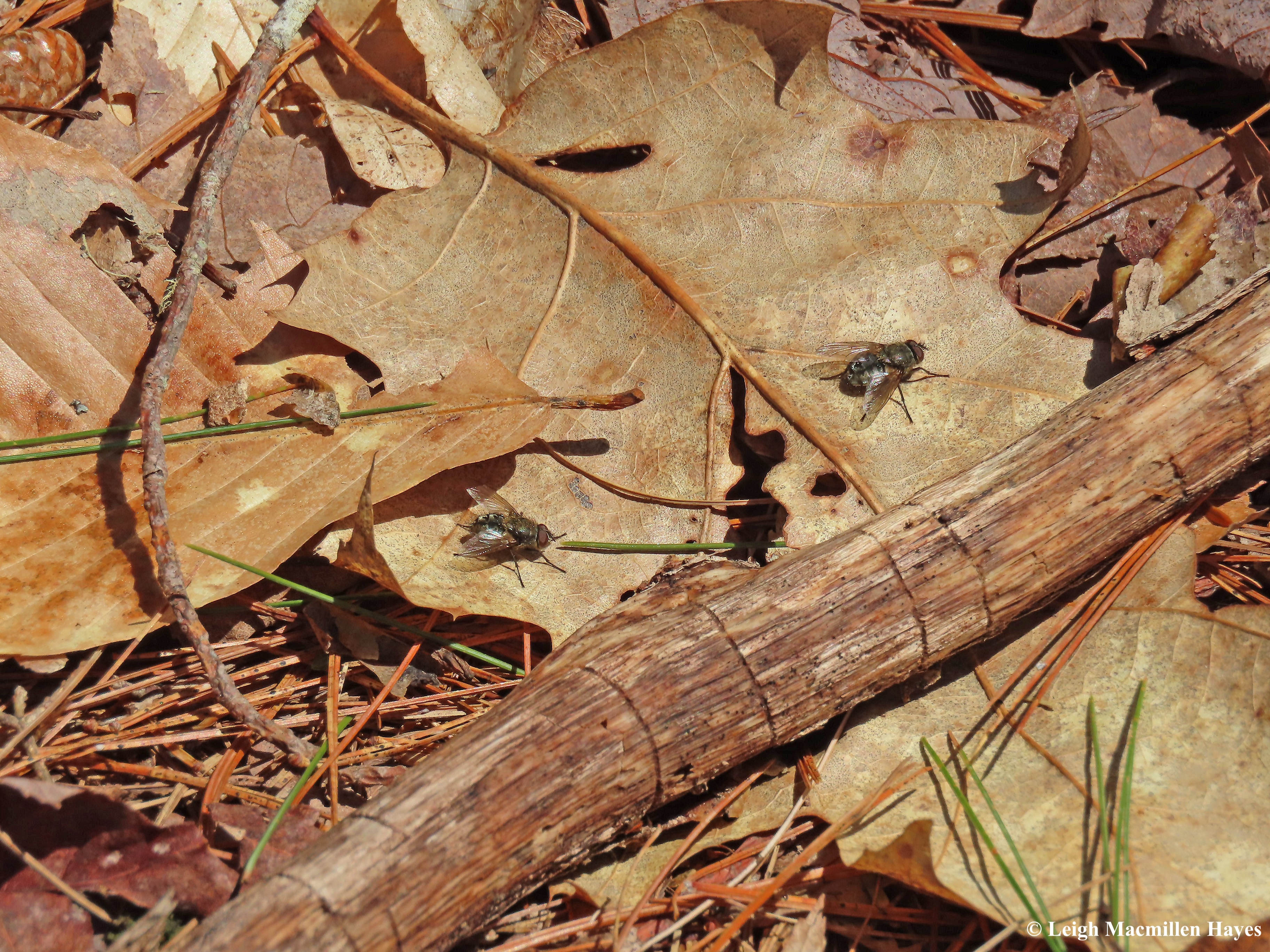
I did spy a bunch of Cluster Flies by the edge of the water.

And in the water, I watched Mosquitoes larvae wiggle about and a Predaceous Diving Beetle lift its butt to the surface to fill the air bubble located under its wings or elytra.

And then the Beetle surprised me and after swimming under the small log, it climbed onto it and gave me a whole different perspective for I never think about them as fliers, but they have strong wings and can do such, especially if the pool they are in dries up and they need to get to another pool. Apparently they are also attracted to lights, another reason not to keep outdoor lights on all night.

My morning visit came to an end when the frog nearest to me dove down and hid under the leaf cover. Well, sorta hid. Do you see it?
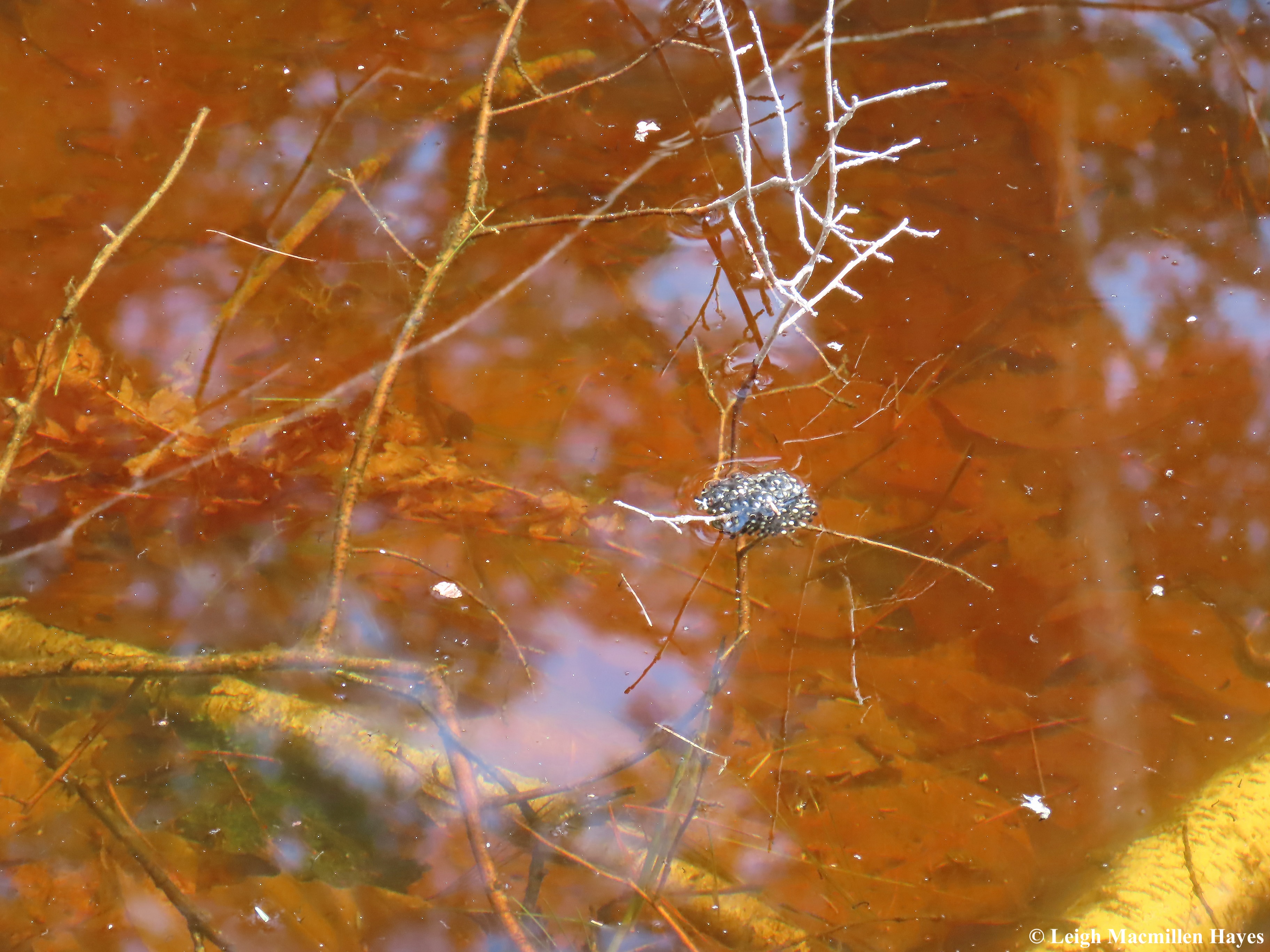
I was so taken with the pool, that I returned again in the afternoon. And this time I spotted something I’d missed in the morning. A more recently deposited egg mass. I suspect it had been there for at least a few hours because it was already bigger than a quarter, which is the size they are at first.
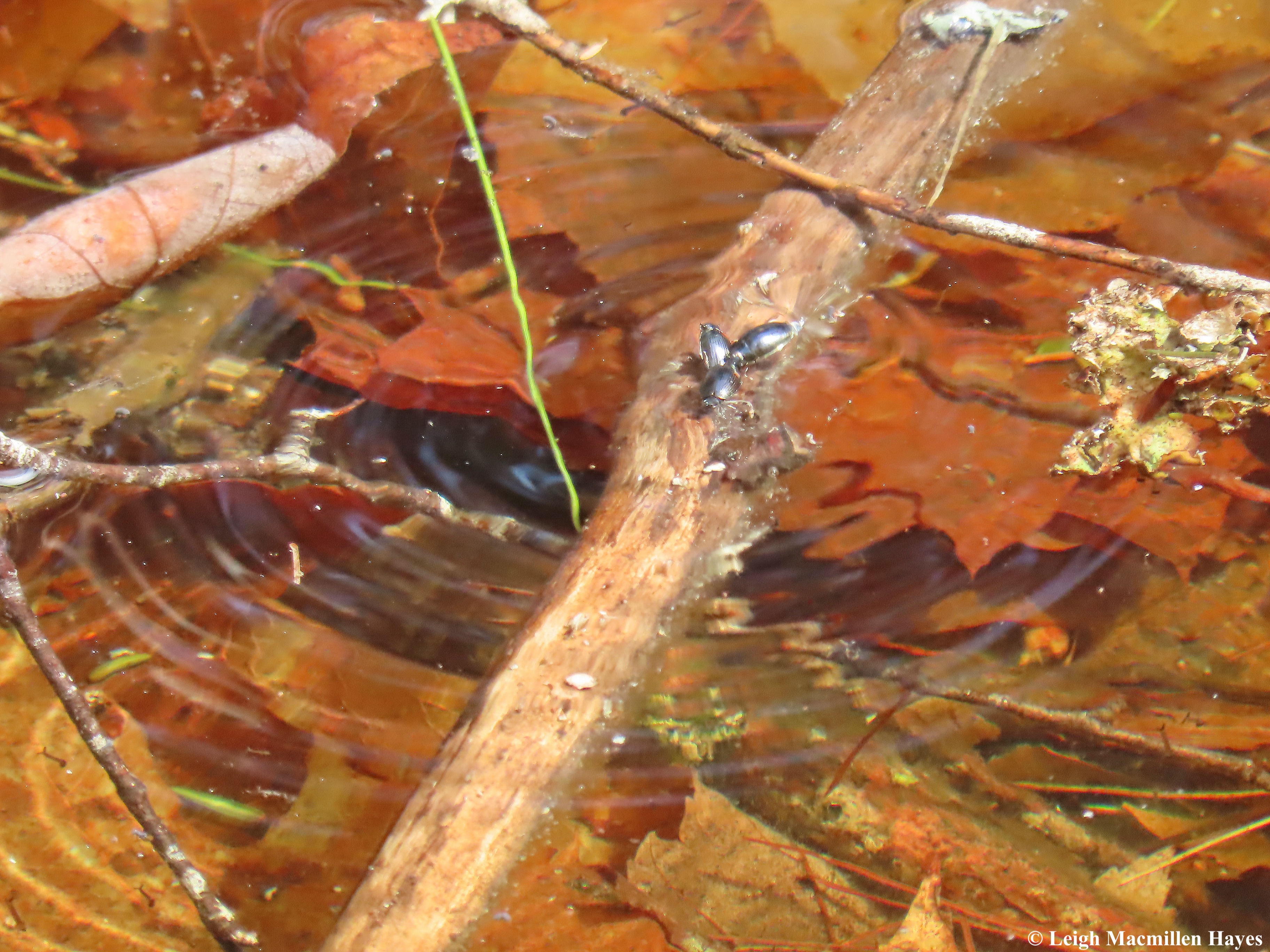
During this visit, I also spotted Whirligig Beetles gyrating around each other in breakneck speed, creating ripples everywhere.

And male Wood Frogs ever on the look out for a date.

In fact, so anxious were they that sometimes one male tried to grasp another, but the one underneath quickly squealed and swam away.

Then I spotted another old friend or its relative and wondered if the Long-jawed Orb Weaver that had created a perfect web between branches over the water was one that I’d photographed on the snow this past winter. Probably not. But a woman can dream.

Later in the afternoon on Tuesday it began to rain and while the storm didn’t last too long, it was enough to wet the roads and again the word went out for Big Night #2. This time there were a few Spotted Salamanders on the move as well.

The next photo may disturb you, so you may want to skip over it.
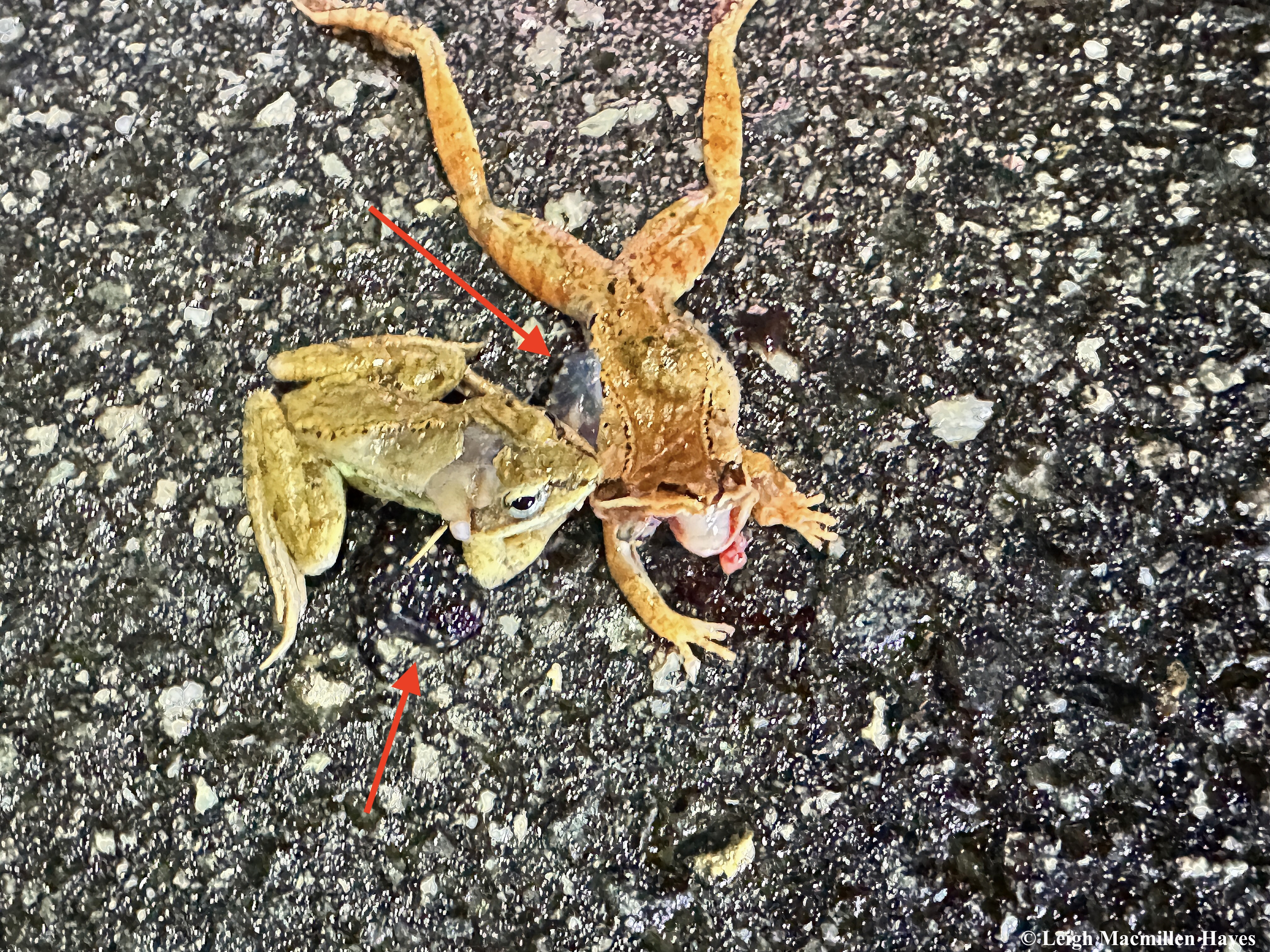
I included this picture of two squished female Wood Frogs because this is what happens when we drive by vernal pools and other wetlands on rainy nights. And I added the arrows to show the egg sacs that had popped out as the tires drove over these ladies.

We let out a communal groan as we heard the pop, and then made this discovery, trying to ease the moment by reminding ourselves that they would become food for others, but still . . . reinforcing the reason why we’ve been celebrating Big Night(s) on this local road for at least 25 years of organized events and I suspect many more before that.

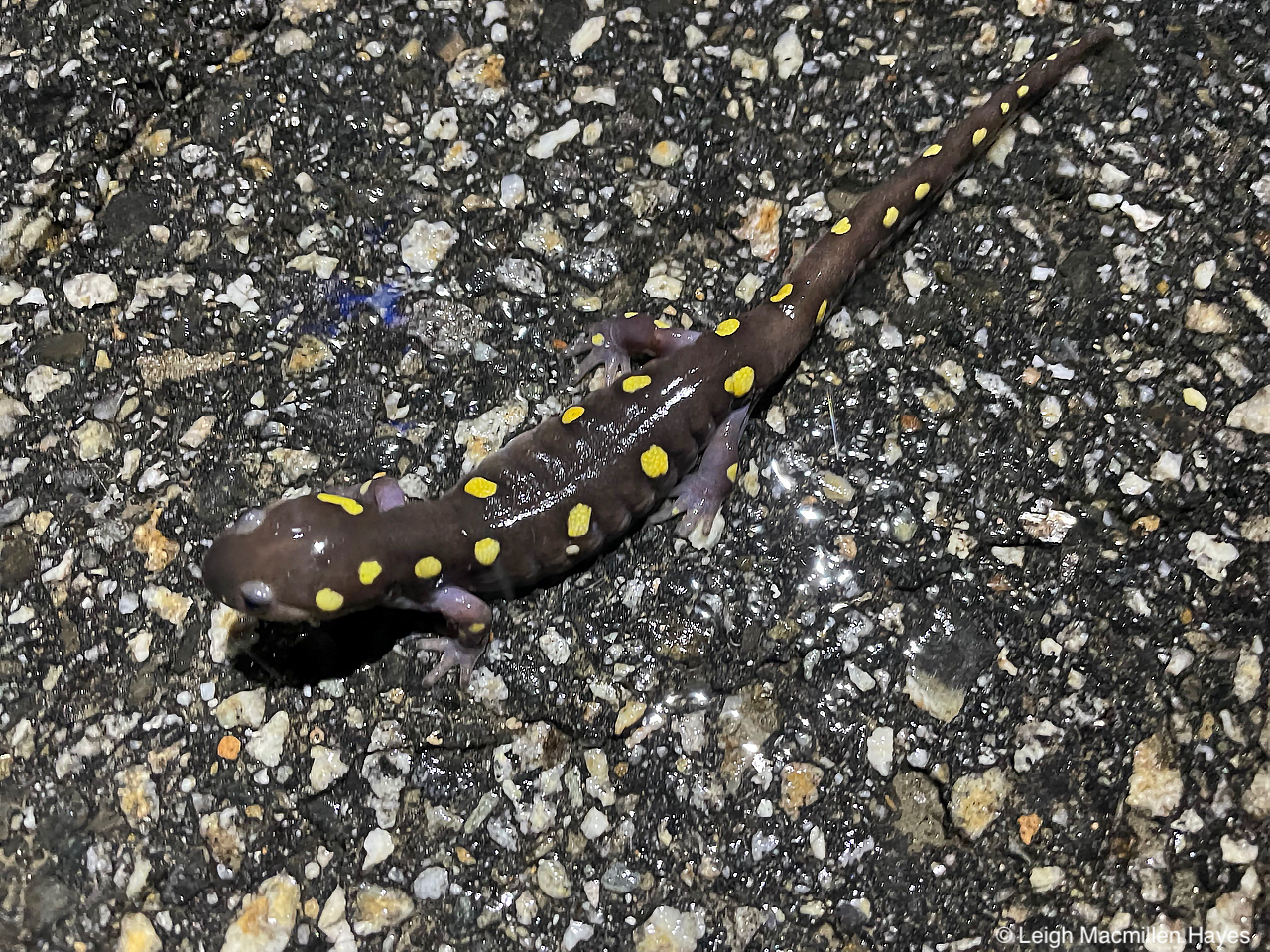
All told for saves on Tuesday night: 836 live Wood Frogs, Spring Peepers, Spotted Salamanders, plus at least one Green Frog and one Eastern Newt.

That was a BIG night! And many thanks to Dawn and Maggie for organizing it.

And from the sound of the “Wrucks” on Wednesday, which was louder than the day before, I knew the ladies had returned to “My” pool as well. And the guys were feeling successful.

Within a minute of standing there, I looked down and spotted a couple embraced in what is known as Wood Frog amplexus, the smaller and darker male being on top with his forelegs wrapped around her, just above her enlarged belly.

She seemed to be in full control as she moved about the twigs, looking for a good location to deposit her eggs.
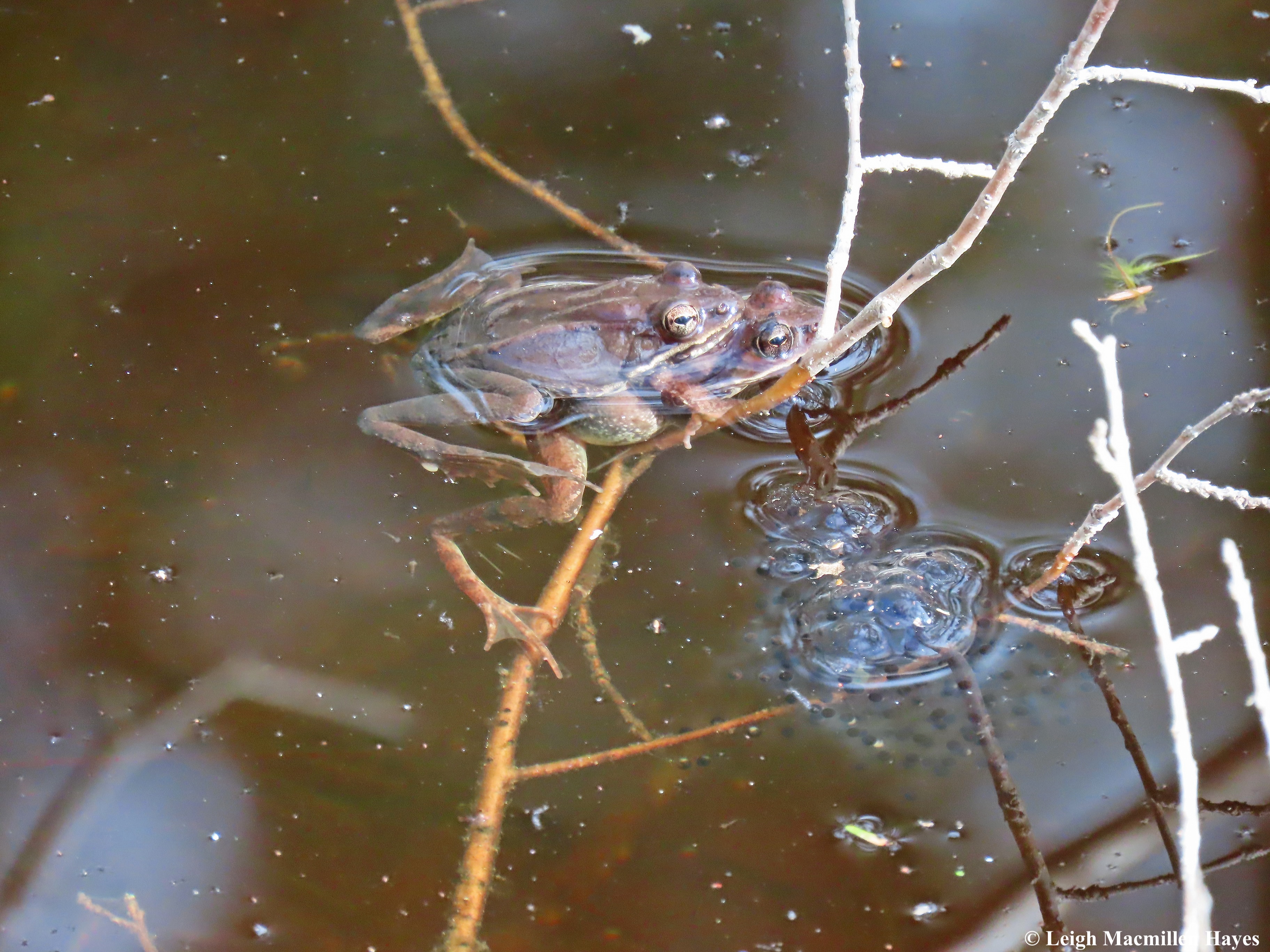
I thought the first spot was perfect because it was located near another egg mass and Wood Frogs tend to deposit their eggs in communal colonies, the better to avoid predation–especially if yours are among the first and are surrounding by other egg masses, and therefore protected.
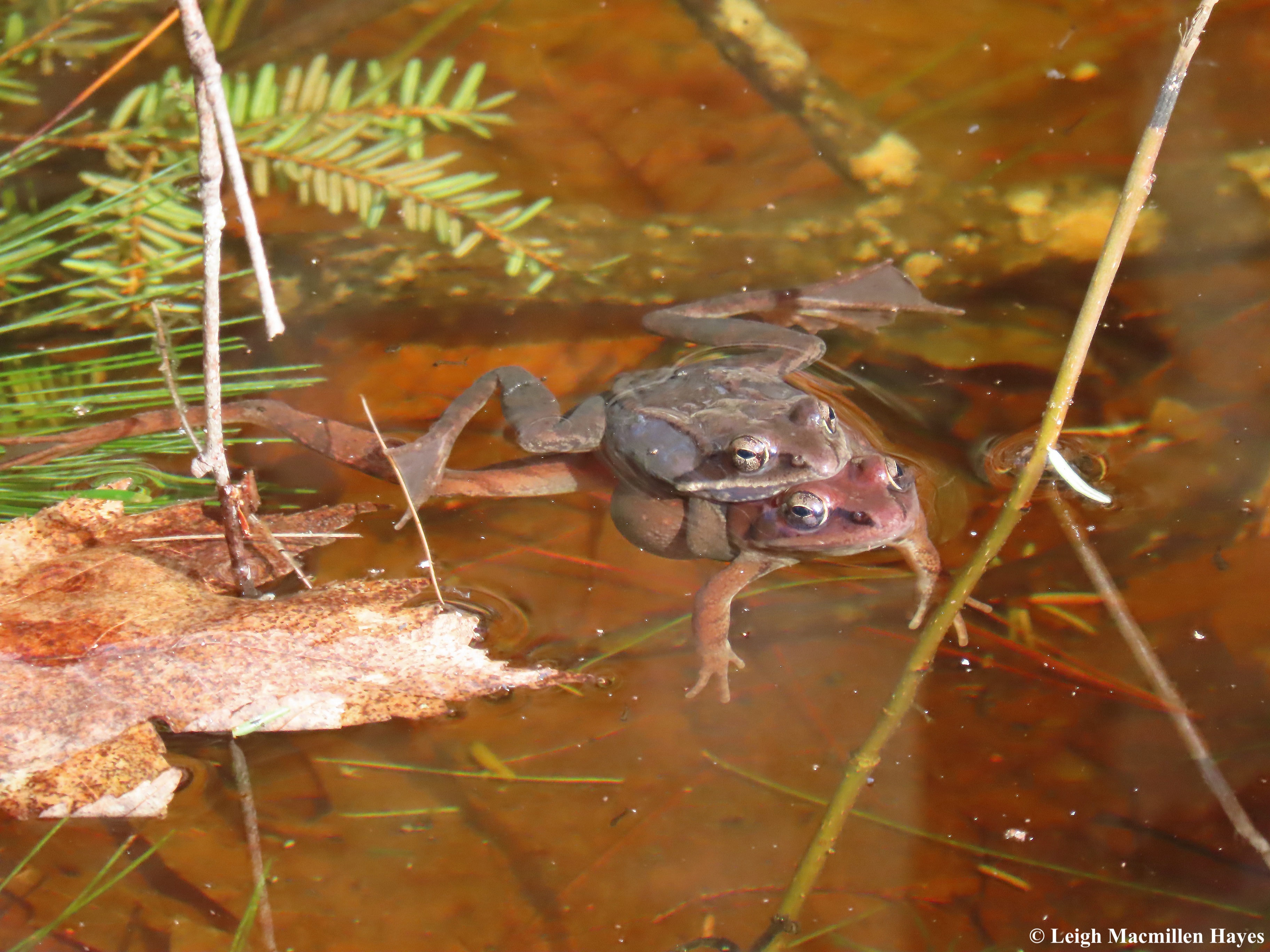
Scanning the pool, I spotted another couple and decided that going forward they need names, so this is Couple 2.

Meanwhile, Couple 1 continued to move about the same set of twigs.
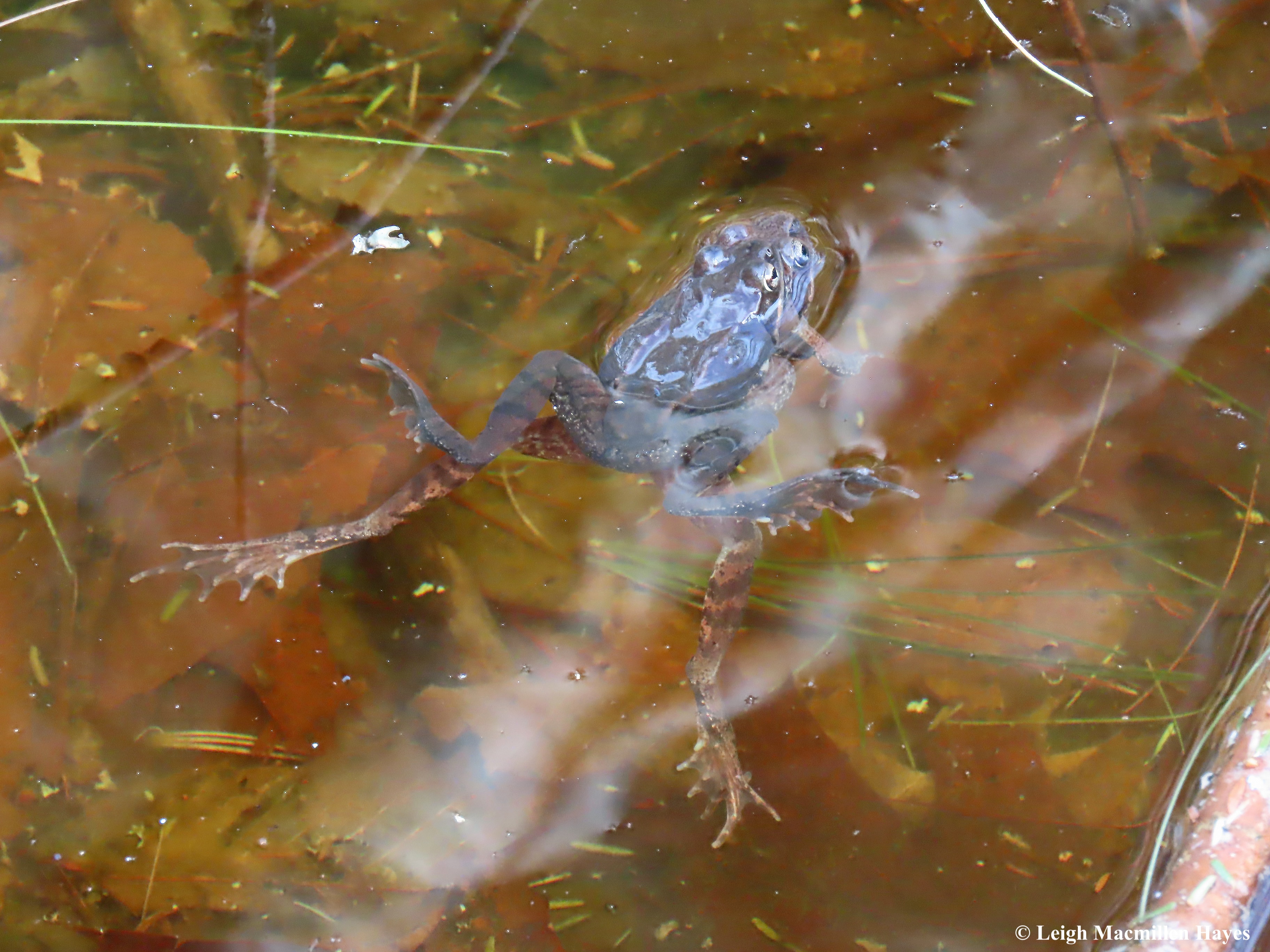
And then near my rock, Couple 3 appeared.

There were also lone males, and because it was breezy, no one seemed to mind my presence. In fact, a couple of males in the western corner even “Wrucked” a few times.
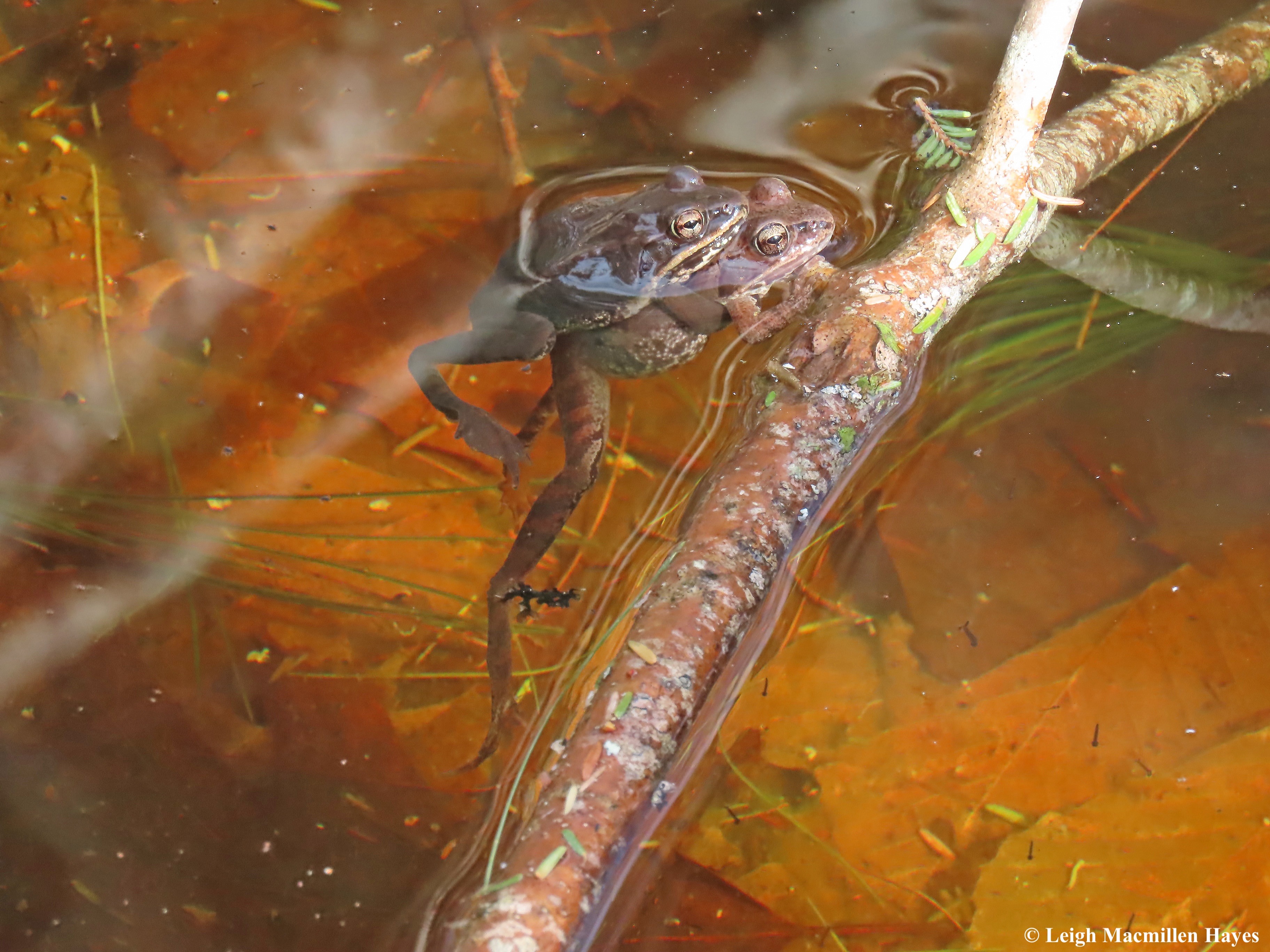
Couple 2 found a larger branch and hung out there.

But Couple 1, they were on the move again.

This time testing a different set of twigs. All I could do was wonder exactly what she was looking for. What made a prime location prime?
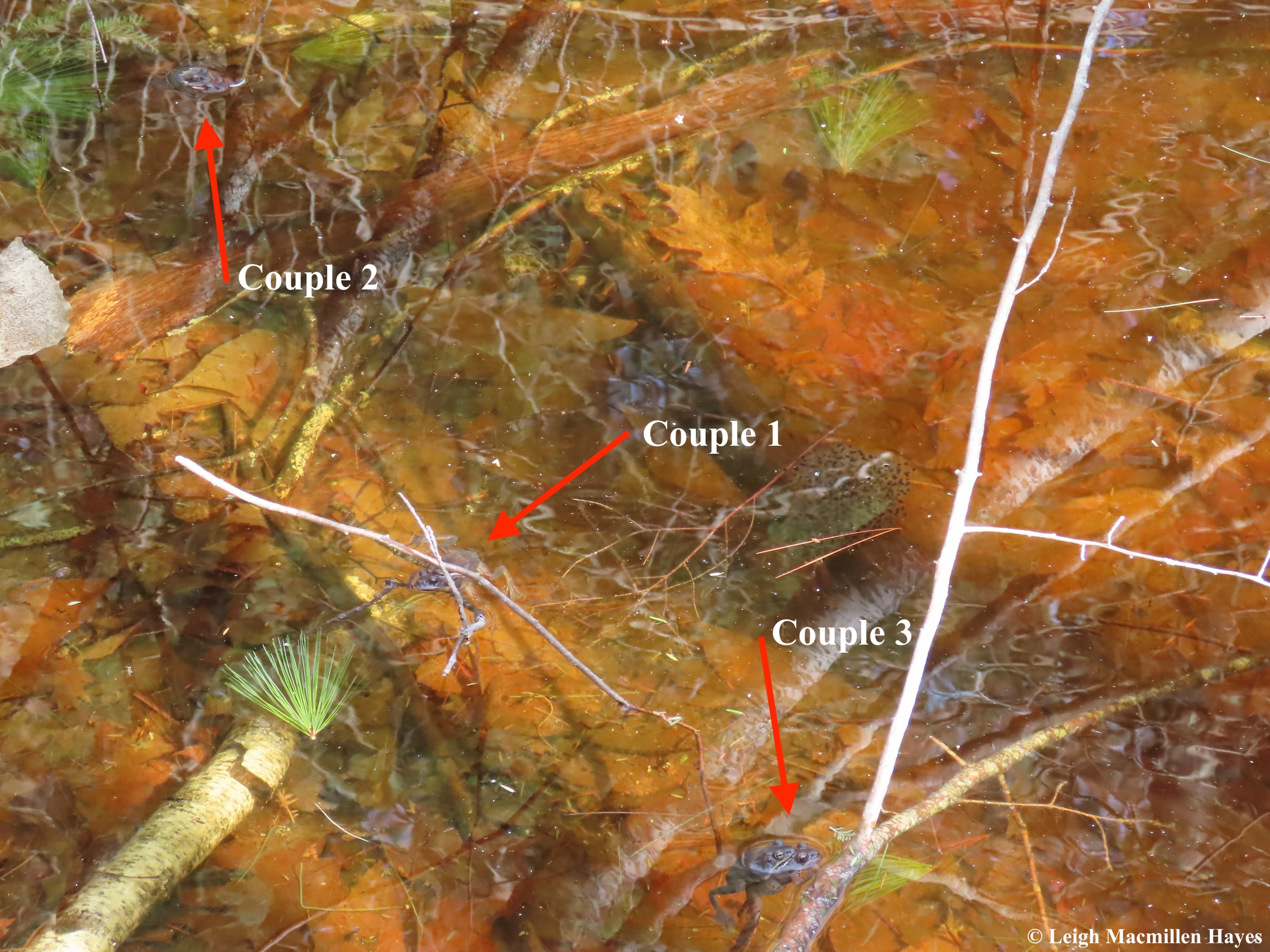
I don’t have the answer and probably never will, but still couldn’t believe my good fortune to have all three couples right there by my feet.

And then . . . and then Couple 1 swam off and disappeared under a recently fallen tree and I thought, “That’s a good place because there are so many branches to choose from,” but at the same time I was disappointed because I figured I’d never see the rest of the story.

Until . . . they swam back out and approached the twig of their first choice.
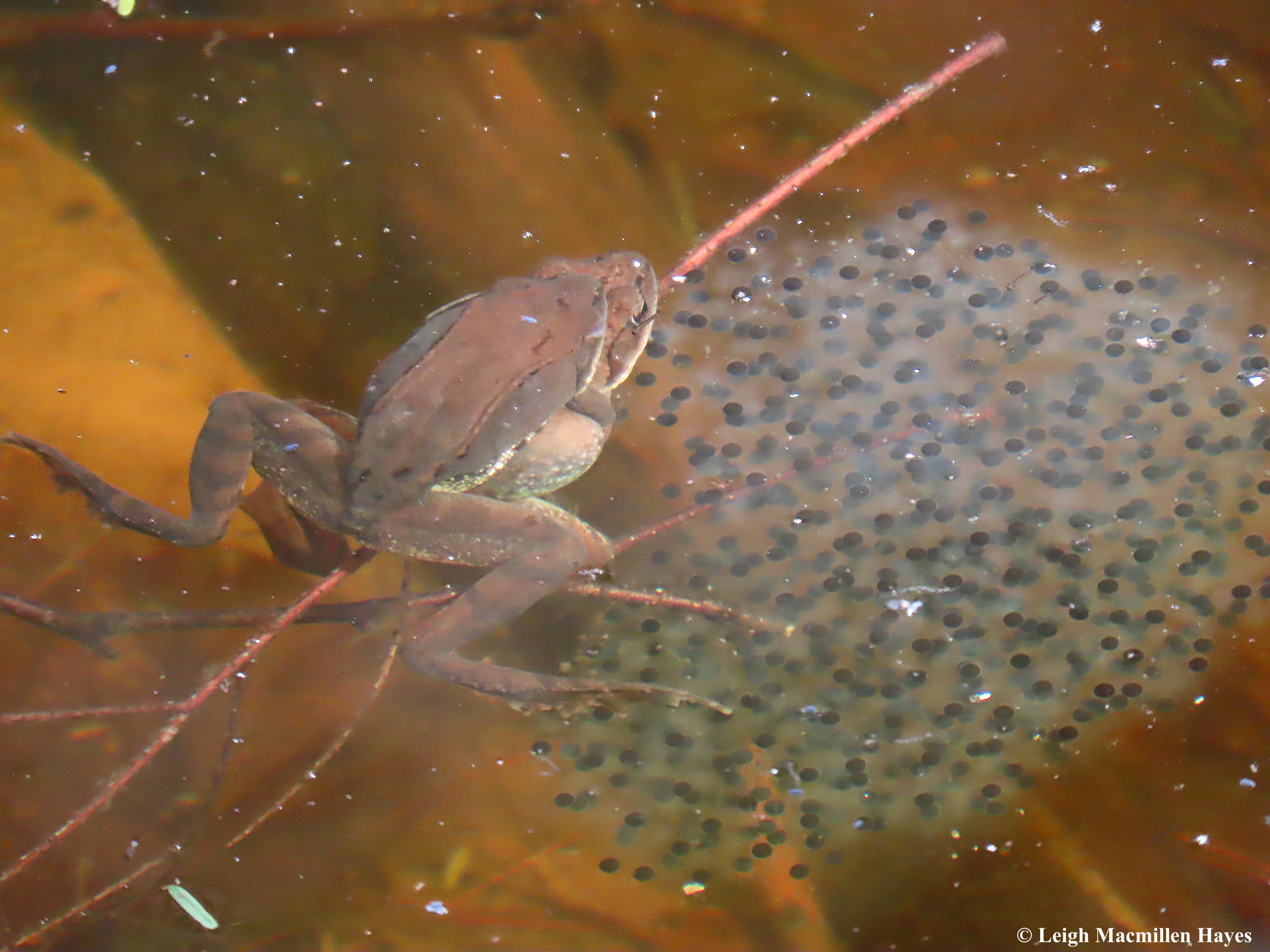
And seemed to be making a move to settle upon it.

Only they didn’t. Instead, they swam to another twig that they’d tried earlier; one that had no other egg masses.
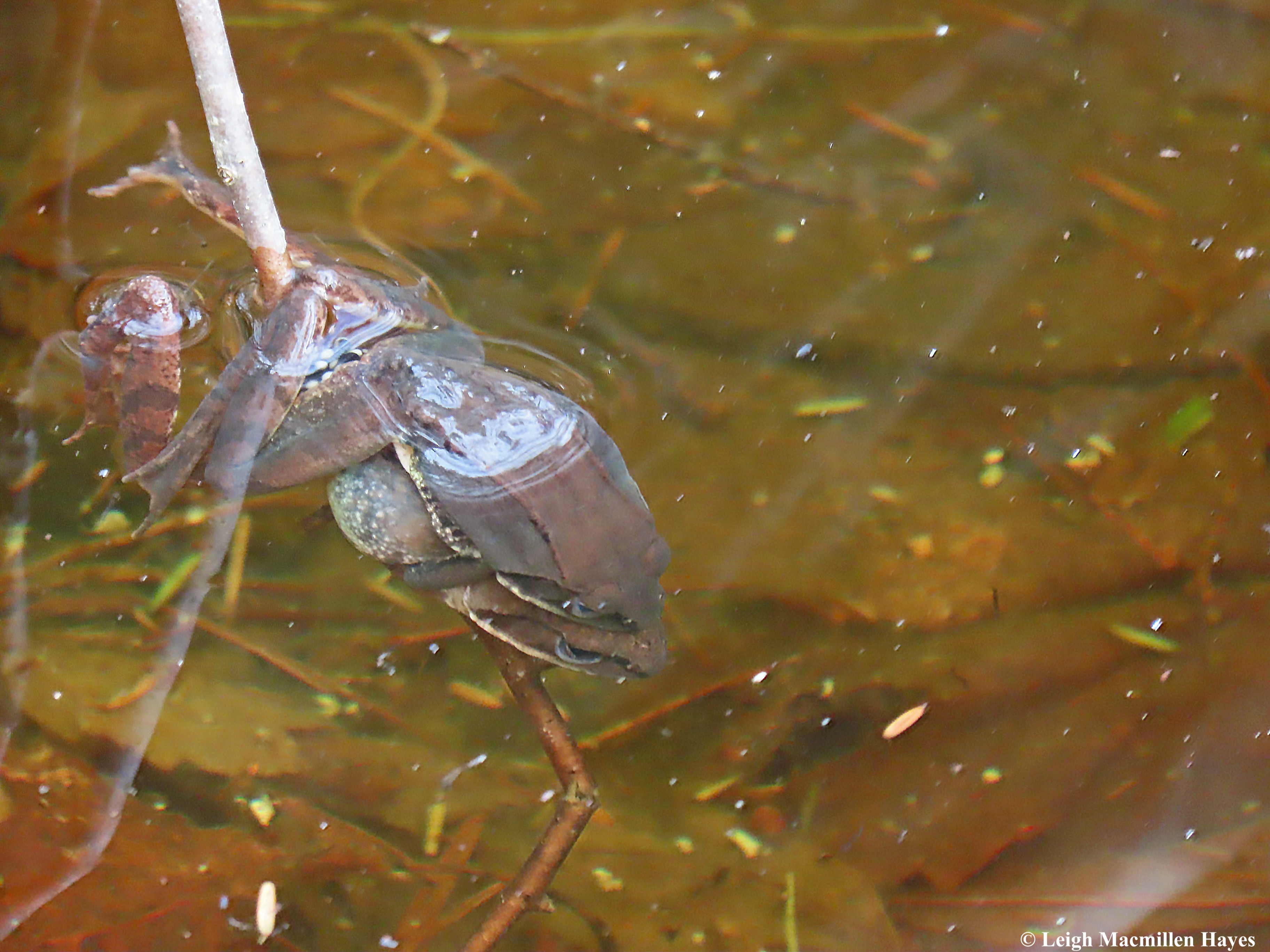
And suddenly, right before my eyes, she began to lay eggs, which he fertilized externally. Can you see the black and white dots between their hind legs?

I could not believe I was finally witnessing this amazing moment. Magic in the making.

My body was stiff from standing so still, but it was so worth the effort.
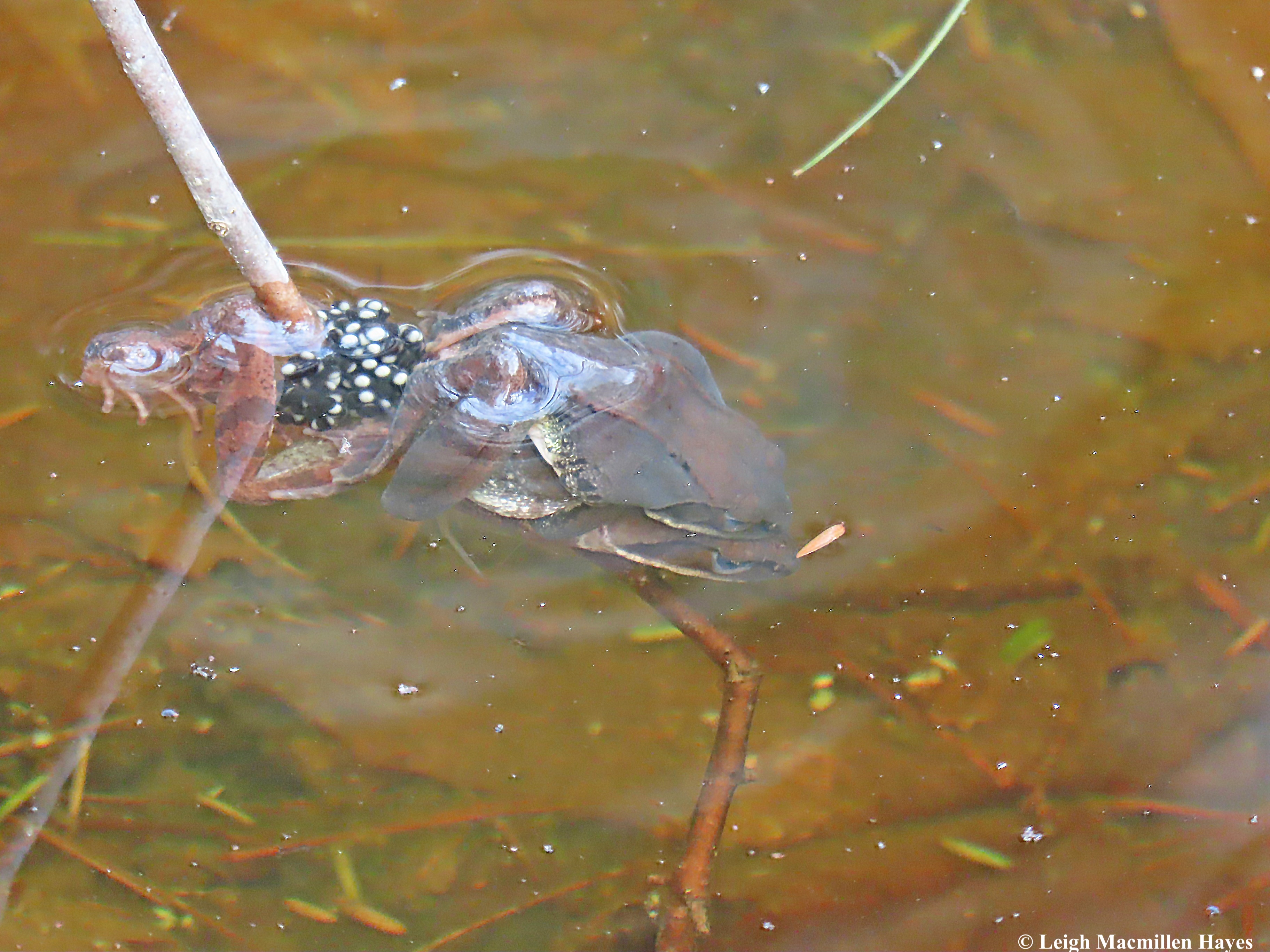
With her hind legs, and I may be wrong about this, she appeared to be wrapping the mass around the stick so it would be well attached.

The eggs are black and white, the Pied Pattern, the top of the egg being dark so predators from above may not see it because it more closely matches the dark leaves and muck on the floor of the pool, and white on the bottom so that predators within the pool will think it’s just sky.

So, as luck would have it, and I was feeling super lucky and grateful for the opportunity to observe, my camera battery died. And the back-up battery was at home. (Note to self: carry it in my pocket.)

I pulled out the next best thing and shot this photo with my iPhone. He eventually moved off of her, but not too far away, probably exhausted from all the effort. And she remained below the quarter-size egg mass for a few more minutes.

As for the other two couples, one disappeared under the fallen tree and the other went under the leaves below my rock, perhaps seeking privacy.

Finally, I took my leave. With a huge smile on my face.

Oh Baby(ies), I know your parents will leave the pool soon, but I’ll be there to watch over you. Maybe not daily, but frequently for as long as the pool holds water, being ephemeral as it is.

One Night, Two Nights, Three Nights…

It was a dark and dreary night. Repeat. It was a dark and dreary night. Repeat. It was a dark and dreary night.

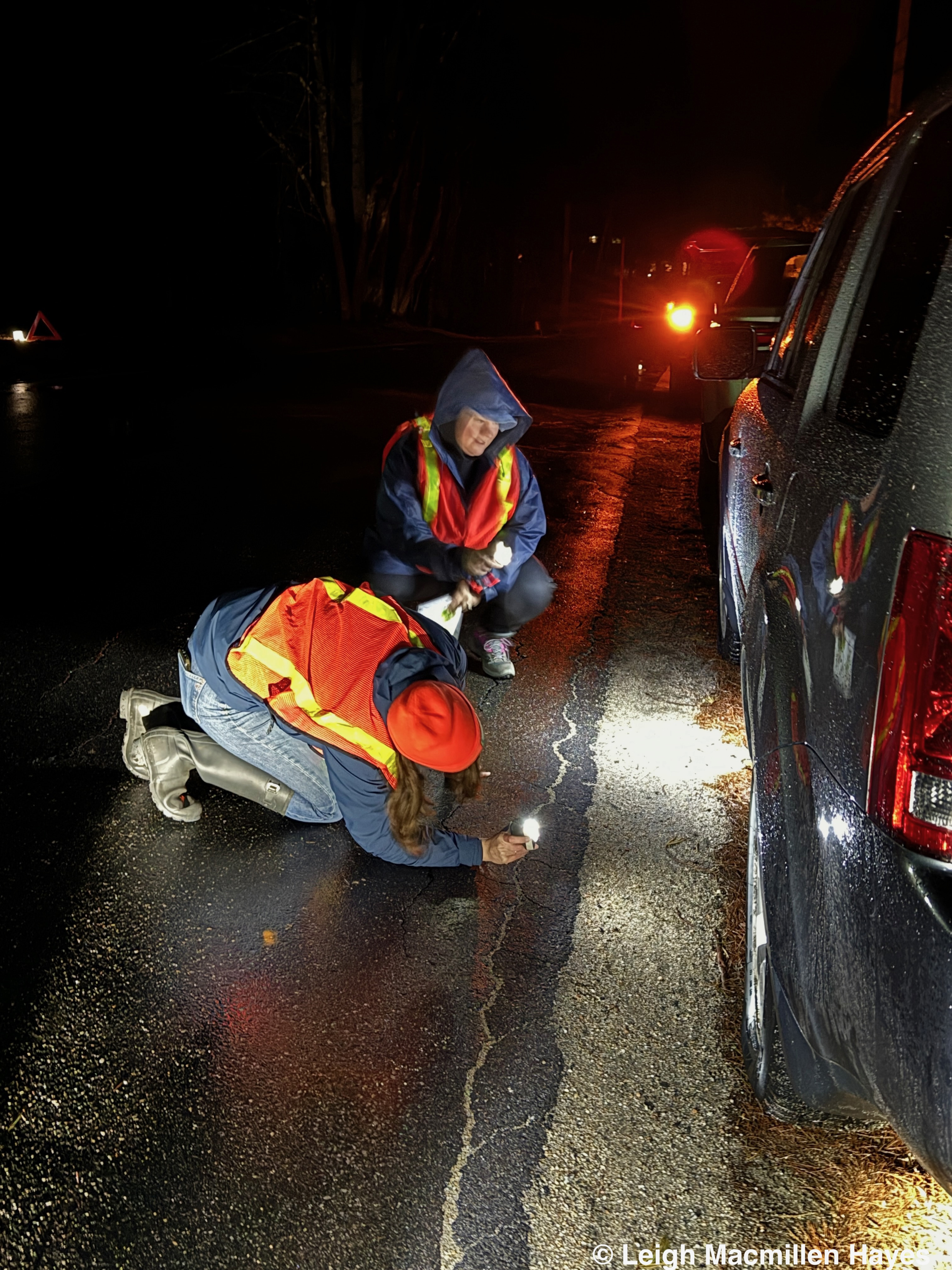
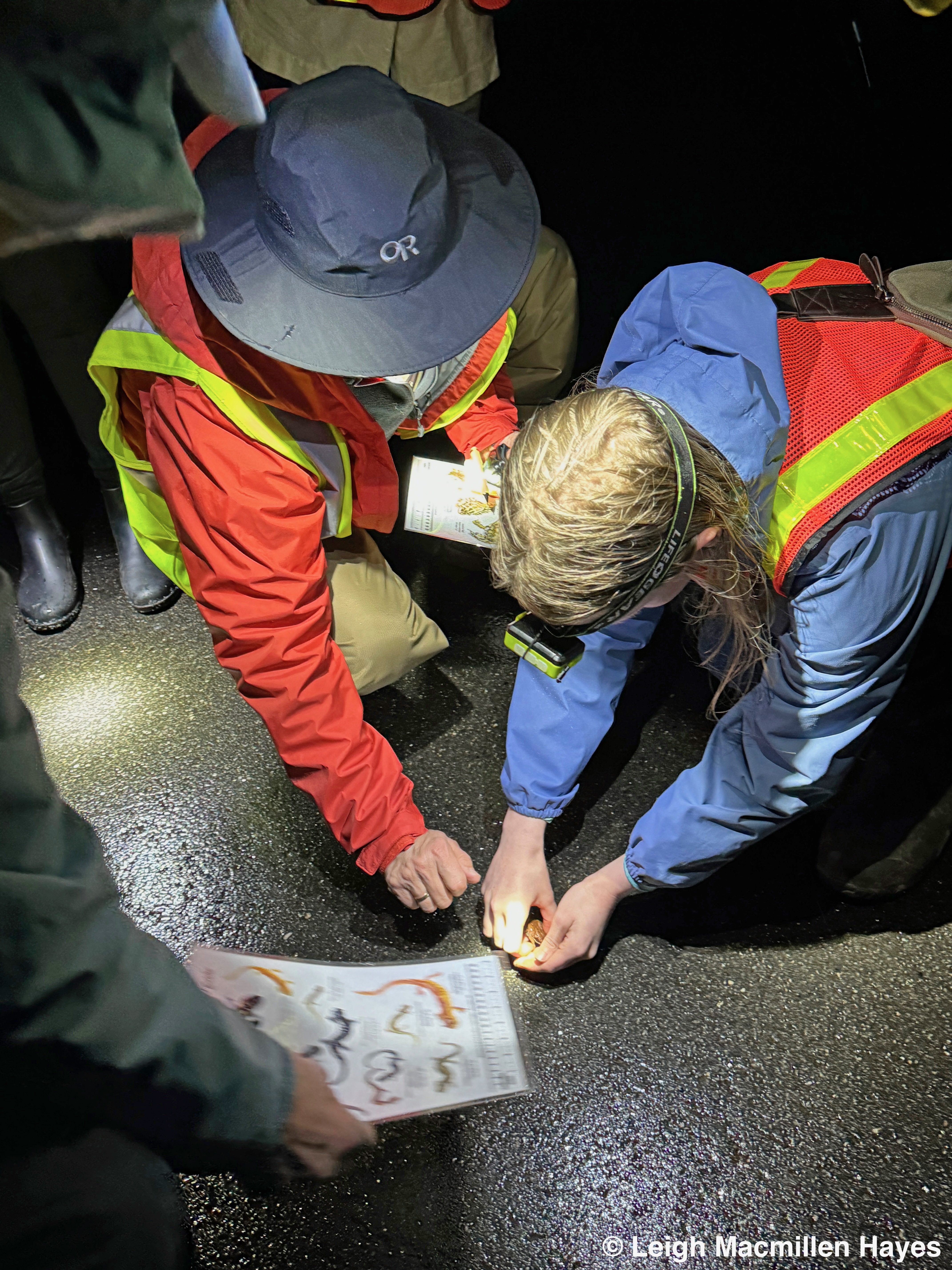
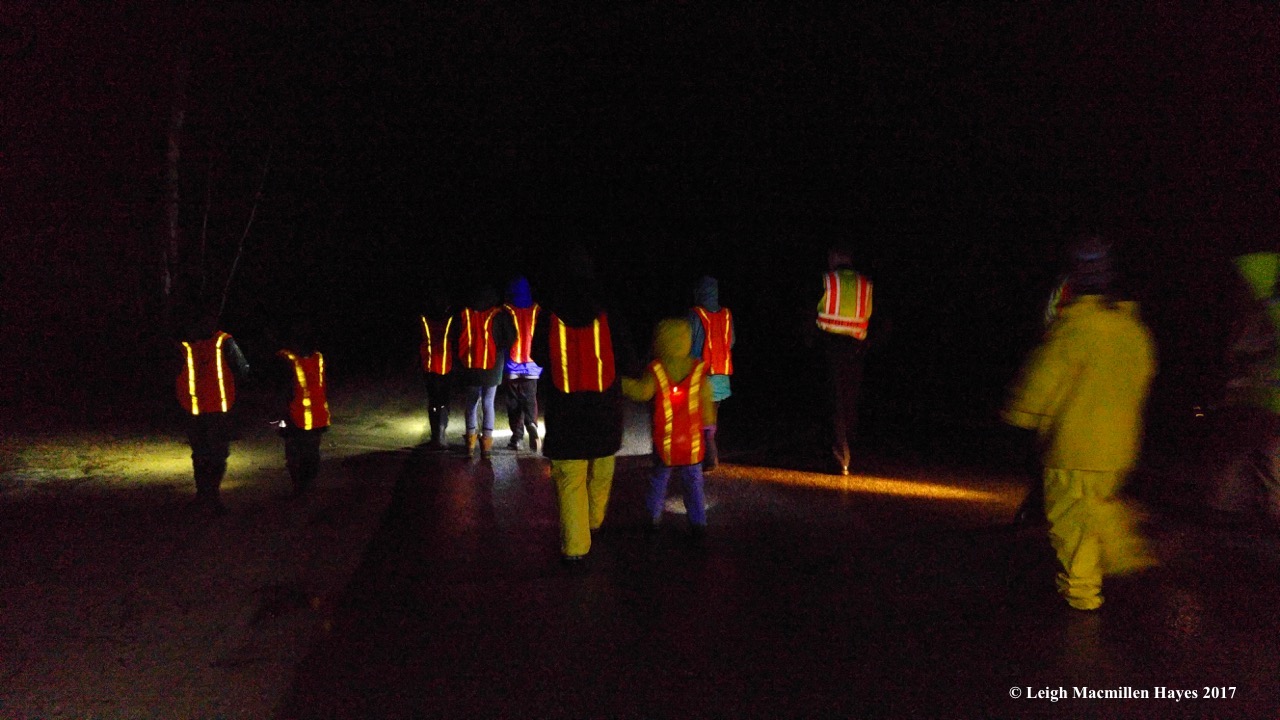
While most folks would choose to stay inside curled up by the fire while drinking a hot toddy, a number of intrepid community scientists ranging in age from 3 to 70+, donned rain gear (even waders) and reflective vests, cleansed hands of soap and moisturizer, grabbed flashlights and headlamps, and met at 7:30pm in the pre-determined locations.
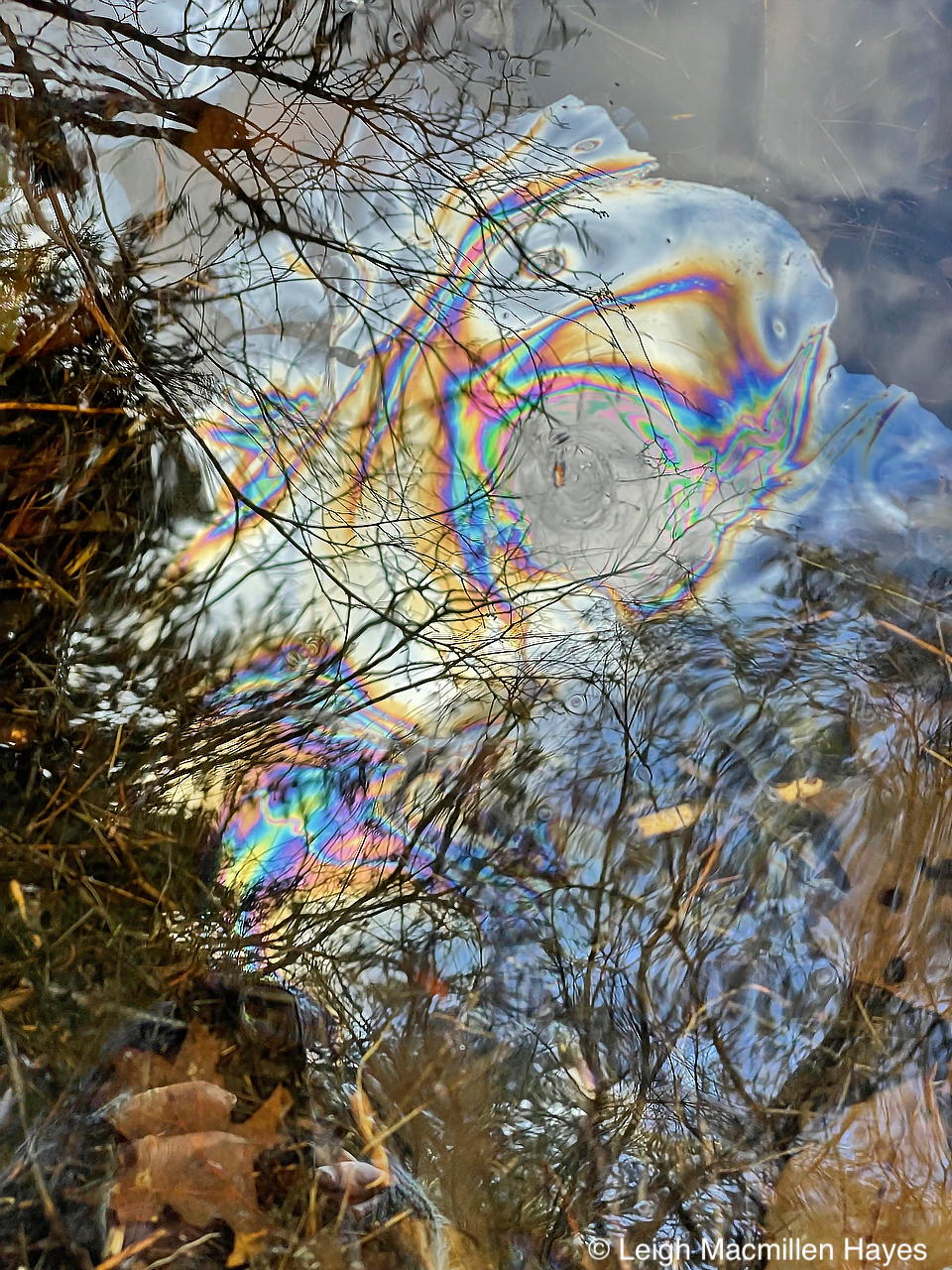
Their mission each night was the same: Help us help frogs and salamanders cross the road to avoid getting squished by vehicles.

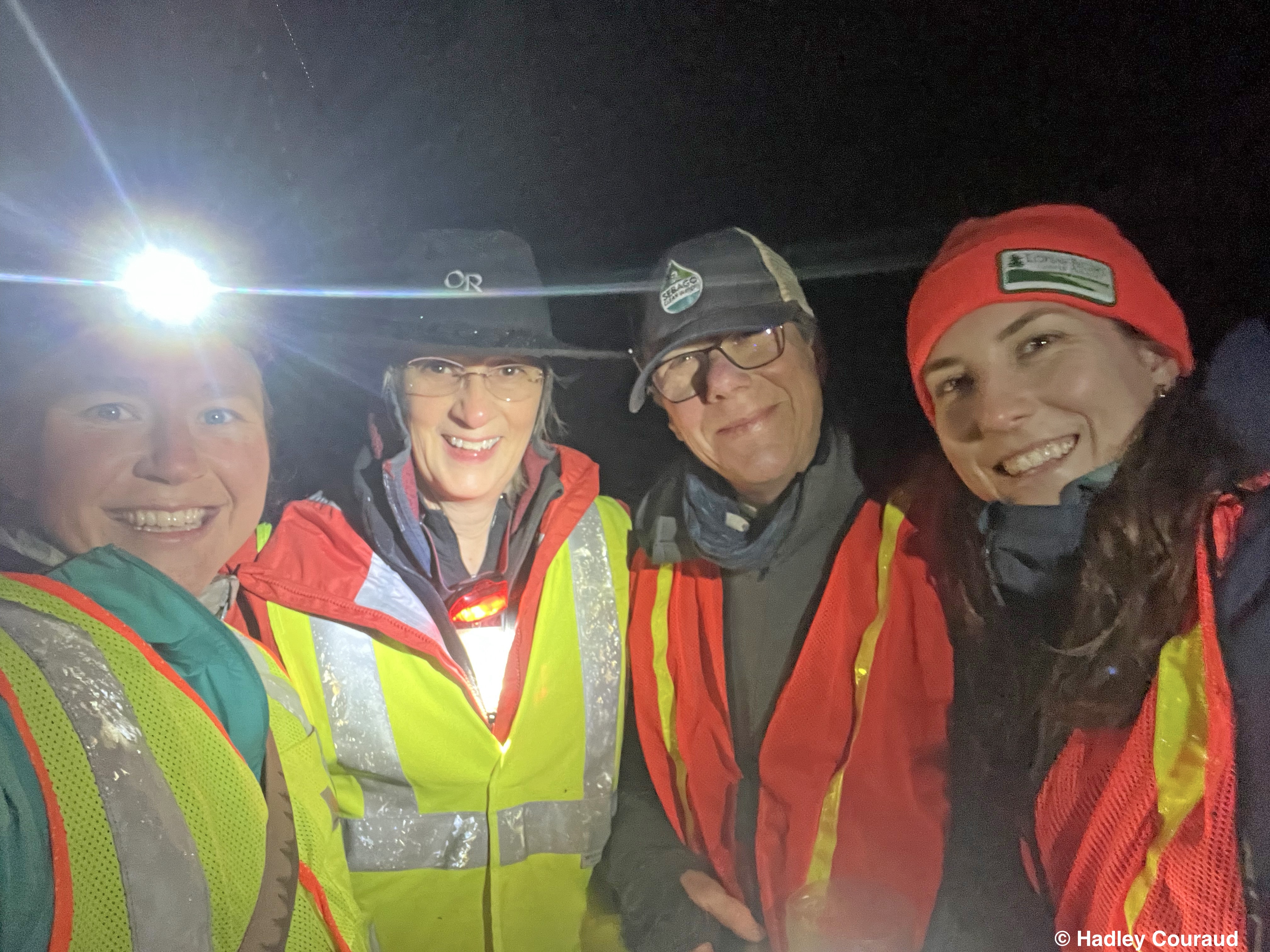
The names and ages of participants changed each night, but the leadership remained the same. As Maine Master Naturalists, Dawn Wood (who took the lead on organizing these events and recording data–a daunting task in the rain and dark and with people spread out and shouting numbers and species at her), Hadley Couraud, and I led the way, all three of us providing information about the different critters and their behavior as the evening progressed. All of this was under the umbrella (pun intended–though no one actually had an umbrella) of Loon Echo Land Trust in Bridgton, Maine. Thank you to Maggie Lynn for creating the sign-up forms, advertising the events, and keeping us posted.

The technique was easy. Once we reached the location of the vernal pool, to which amphibians return each year from their upland habitat, we started scanning the road with our lights. It’s amazing how the mica, small rocks, sticks, and lichens can fool us.

It’s equally amazing how much tiny Spring Peepers resemble small rocks. And how stone cold they are when we lift them up. And how they’d rather stay in our hands than return to the cold earth.

We always noted the direction in which they were headed and that’s the side of the road we took them to, even if it didn’t make sense to us. They knew what they were up to and we were there only to try to keep them alive so they could canoodle for a few nights before heading out of the pools and back to the forest.

Meet a Spring Peeper up close and personal. Note those little toes, which are actually suction cups of a sort, the better to climb vegetation, especially at the edge of or in a wetland, and then to sing their high-pitched songs that announce the males intention of finding a date. Because of the toe pads, peepers were originally thought to be closely related to Tree Frogs but they have since been reassigned as chorus frogs in the genus Pseudacris, which comes from the Greek pseudes (false) and akris (locust) (think of our Dog Day Cicadas and their raspy love songs in the summer).

The species name, crucifer comes from the Latin cruces, meaning “cross,” so named for the dark X or cross on the frog’s back.

A really cool thing happened that first night. A teenager who lived in the neighborhood where we were scanning the road came out to ask what we were doing. And then he joined us, eager to learn as his family had recently moved here from out of state.

After a Spotted Salamander was saved, he ran home to get his camera and stayed until we finally departed. We had hoped he’d join us the next night at a different location, but wonder if he stayed home to help those on his road instead. Whether or not he did that, we loved his enthusiasm and desire to learn.

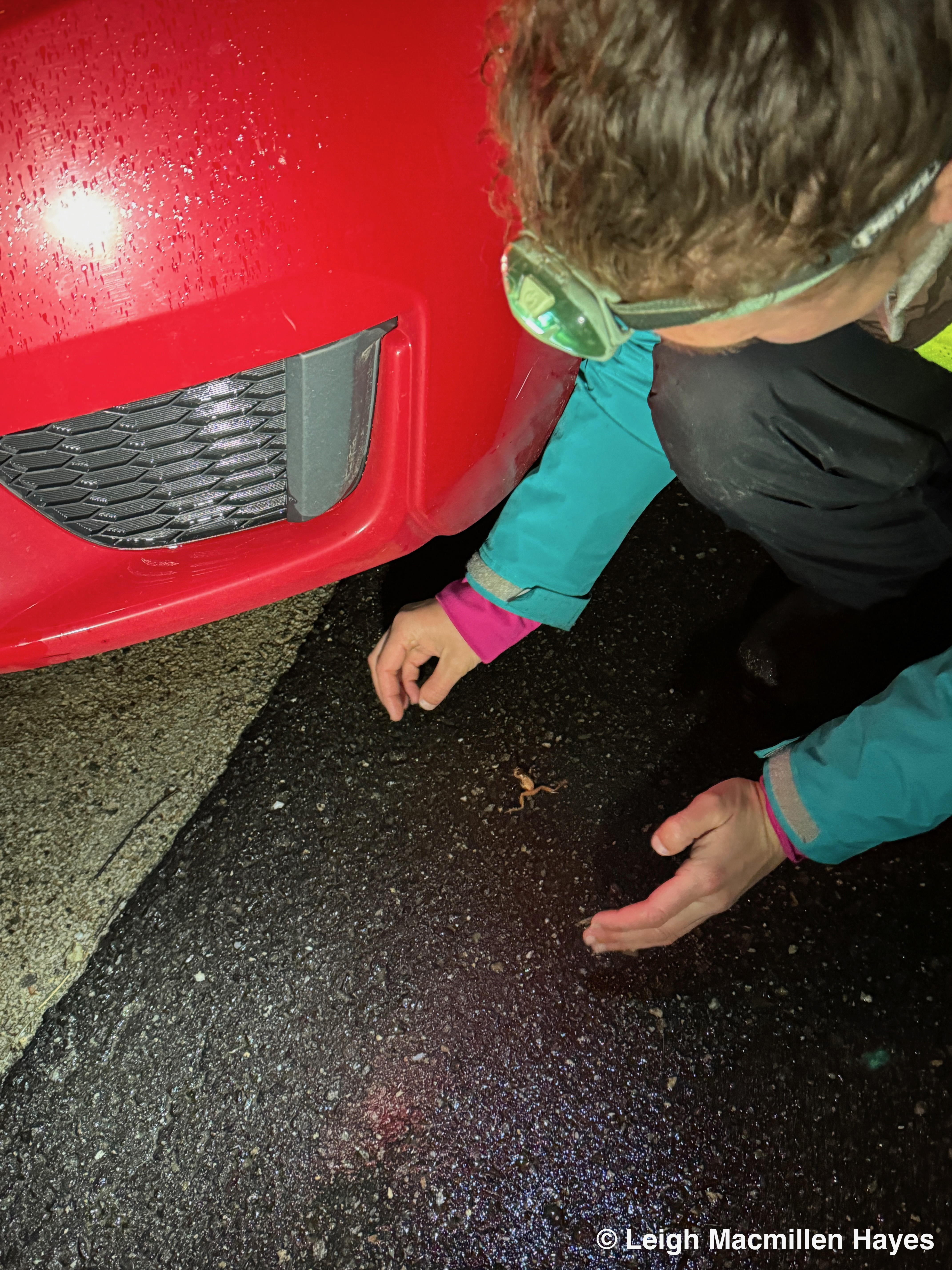
It soon became clear on the first night that we’d parked in the wrong spot, however right it may have seemed because we could get our vehicles off the road. As people started to leave, we all did a check underneath from all angles to make sure tires would not run over any critters by accident.

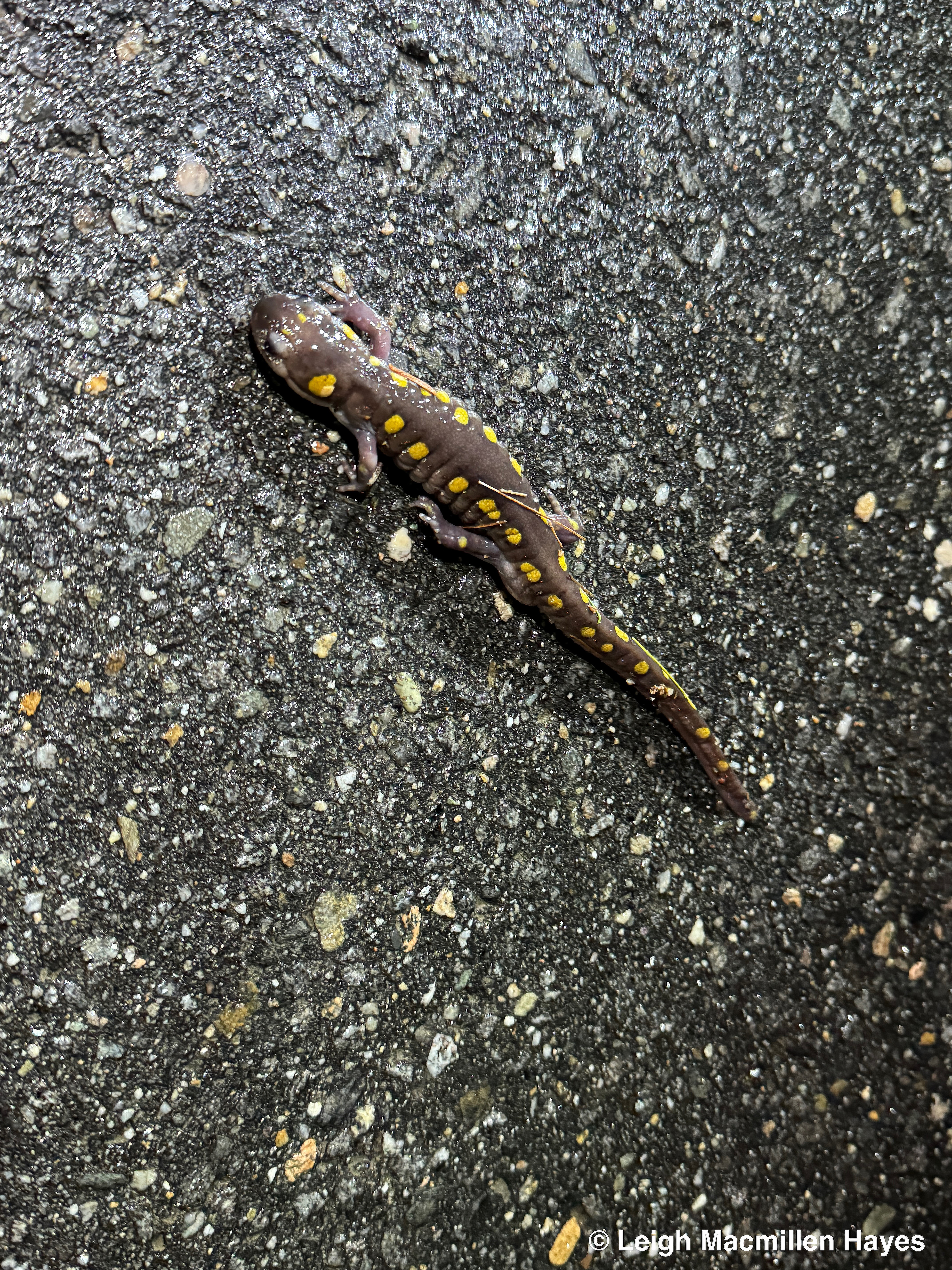
And sure enough . . . out crawled a Spotted Salamander. Of course, photo calls came first, and then help was offered to get to the other side.

Even teeny, tiny Spring Peepers had to be saved. And we all commented that we didn’t want to know if we did happen to drive over something. Added to that, we noted most of the vehicles only made it a few feet down the road, before the driver stopped and another amphibian was saved. That and the driving was rather erratic since everyone had gained a new understanding of how much action there is on a rainy night.

The second night found us in a different location that we actually walked about three quarters of a mile to reach, thus lowering our chances of hitting the critters right near the pool which is located directly beside the road, with a vast wetland on the other side of the street.

Wood Frogs, with their dark masks, typically headed toward the pool, where they’ll spend the next two weeks or so, singing for a mate, embracing her in a technique called amplexus, fertilizing her eggs, and trying again and again, until it’s time to hop out and head into the forest for the next 50 weeks.

Because it was dark, the Wood Frogs didn’t seem to mind our presence too much. Some still sang, or rather “wruck, wrucked” their love songs, and others floated in anticipation or chased each other in hopes of finding a female. We even noted a few egg masses clinging to branches, telling us this pool had been busy for a few days already.

Part of the fun in hosting such an event is sharing it with other people who might not typically head out the door after dark. And then seeing smiles on faces as they encountered the critters for the first time.

A cool find on this night was an Eastern Newt crawling across the road. Perhaps because the pool dries up each summer, this one had overwintered either in the wetland or even the upland before returning on this particular night. It felt like an unusual find on the road, though from what I’ve read, it’s not rare. I have seen many Red Efts, the juveniles of this species, their bodies squished by vehicle tires, on this very road in the fall.

Yet again, it was the Spring Peepers who garnered much of our attention.

And some Spotted Salamanders, though not as many as on the first night.

That said, we were thrilled with each find. And found an easy way to help them was to place the laminated ID card created by Maine Master Naturalist Michael Boardman under their bodies. Now don’t you think this guy is crawling onto the card in search of his ID?

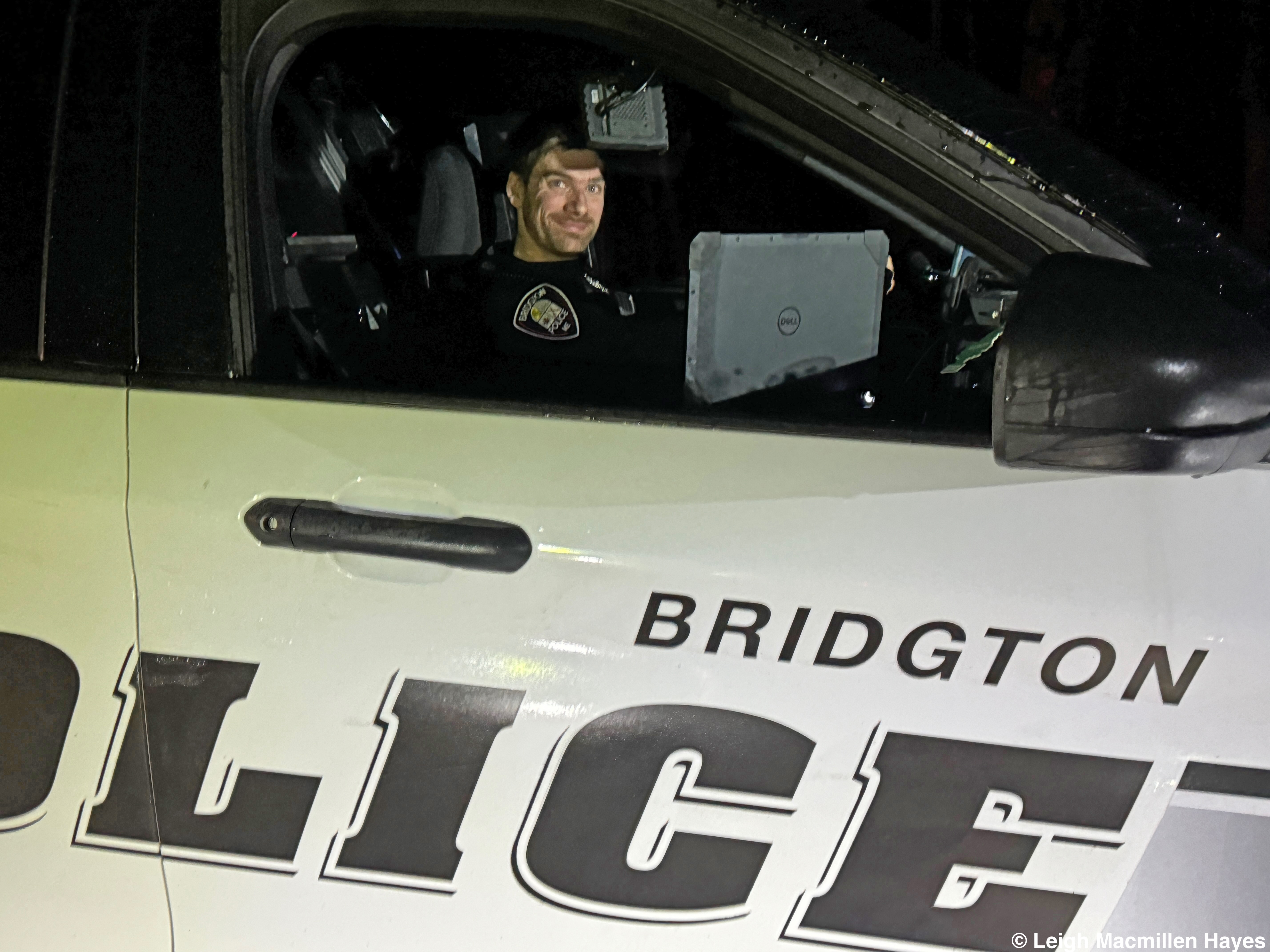
As we prepared to walk back to our vehicles that night, Officer Hammond of the Bridgton Police Department happened along. No, he wasn’t going to arrest us for J-walking, though that’s essentially what we did. He was just stopping by because we’d ask Maggie to let the department know of our whereabouts in case anyone wondered what we were doing, but didn’t slow down to ask us. Traffic was high each of the nights. I’ve been doing this for about 22 years, and this year I felt like we had the most traffic. Most drivers were considerate when they saw the cones (courtesy of Hayes Ace Hardware) and vehicle flashers, plus our headlamps and flashlights. And we were all good at yelling “CAR” each time we saw approaching lights, but there were a few who were annoyed and one even had to lean on the horn after passing through the section of road we walked upon.

Night three was the warmest, with temps in the 50˚s and little to no rain. In fact, by the time we were heading home, the moon and stars were visible.

But still, the critters crossed and once again we showed new participants of all ages how to ID them and then help them cross the road.

On this final night, we had several teenagers along for the journey. Two of them had actually driven past us on the first night, slowed down, rolled down the window, and asked if we were okay. When we showed them a photo of a Spotted Salamander, they went home and signed up for a chance to help. Their enthusiasm was incredible.

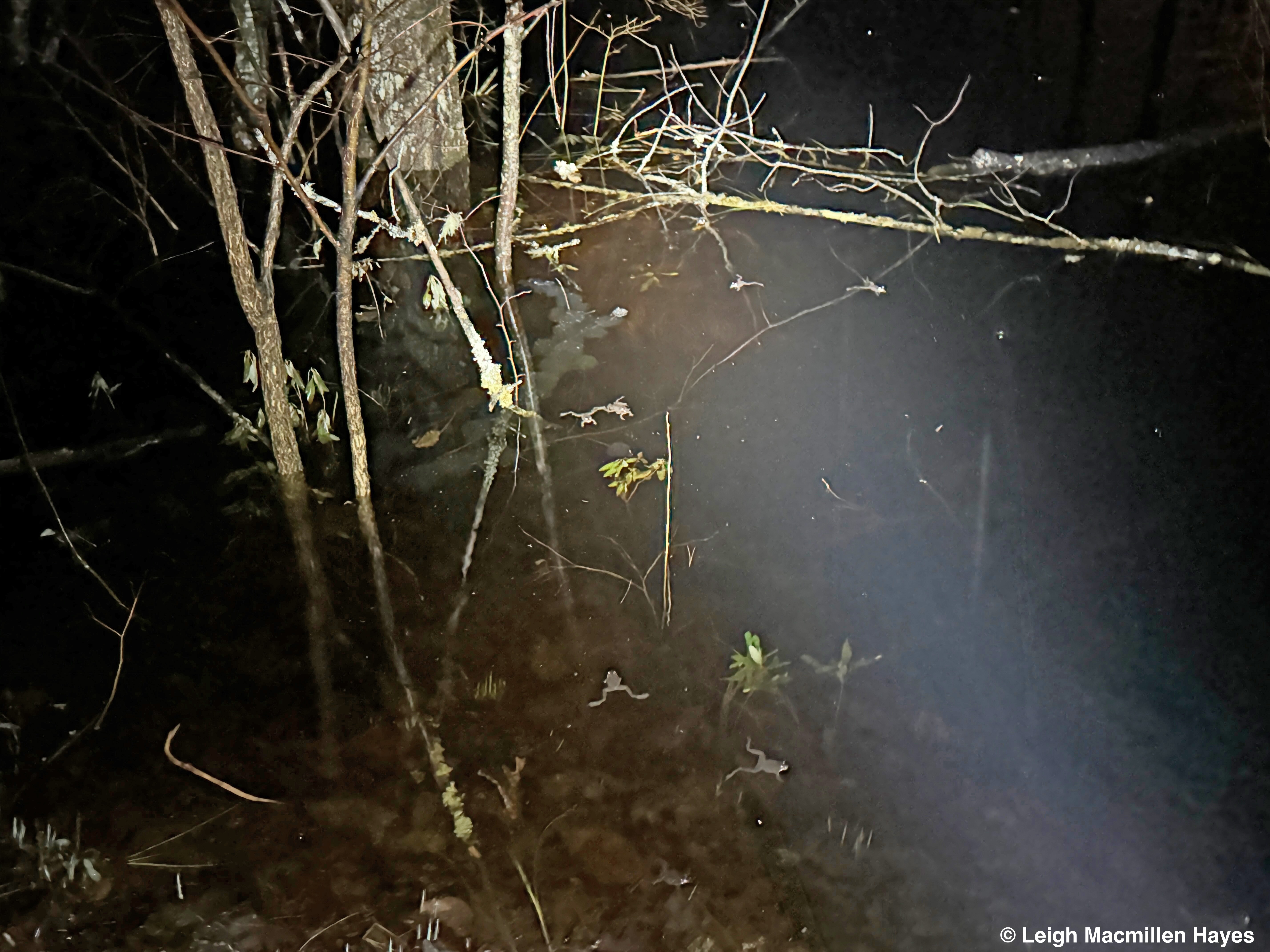
We peered into the pool again and were amazed at the number of swelled Wood Frog egg masses in their communal cluster–as is the Wood Frog fashion. perhaps to take advantage of being warmer when crowded together, and thus evolve quicker. It’s the swelling that told us they’d been laid a few days before as initially their egg masses are maybe the size of a golf ball, but swell as they absorb water over the days to come.

The action was constant and I encourage you to see how many frogs you can find in this photo. It’s almost like the Hidden Picture of Highlights magazine, or Where’s Waldo?

And twice we spotted Spotted Salamanders swimming in the pool, though I really wanted to see a “congress” of salamanders conducting their mating dance. One of these nights.

As we walked out on the third night, about ten feet from each other we spotted two sets of Wood Frogs in amplexus! They couldn’t even wait to find a room, or pool, for that matter!

We quickly, if awkwardly, helped them off the road because we heard that familiar “CAR!”

One night, two nights, three nights . . . turned into one incredible and extended BIG NIGHT migration.

Our results:

April 10, 2024
21 Spotted Salamanders
40 Spring Peepers

April 11, 2024
7 Spotted Salamanders
102 Spring Peepers
75 Wood Frogs
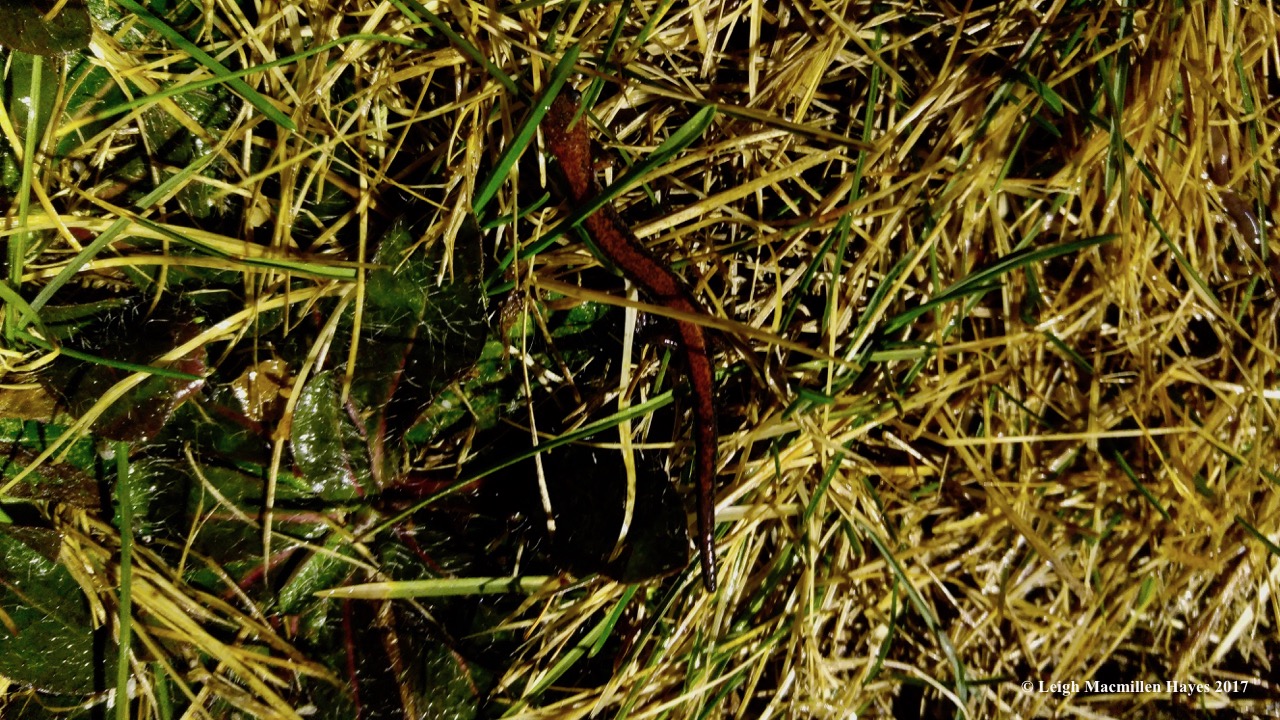
3 Red-backed Salamanders
1 Eastern Newt

April 12, 2024
13 Spotted Salamanders
268 Spring Peepers
62 Wood Frogs
4 Red-backed Salamanders
2 Green Frogs
1 Eastern Newt

For a grand total of 599 critters helped to the other side of the road. We saw a number of squished ones and had to constantly remind ourselves that they will become food for others.

Thank you to the 39 people who joined us during these three nights--you were incredible and we loved hearing stories of how you want to share this with other members of your family and you are already planning to join us next year.

To go out on a rainy night and help amphibians cross the road is special–for the critters and for us. Thank you to Hadley, Dawn, and Maggie–for being the cool swamp critters that you are! And for letting me be part of the club.

BIG NIGHT 2024–one for the books.

A Wonder-filled Easter Parade

While bonnets are on display each Easter in New York City, the parade takes a different form in the wilds of Maine. This year’s festivities began in the late afternoon of Good Friday.

It was then that this handsome Yellow-bellied Sapsucker tapped an announcement inviting everyone to the avenue.

A River Otter was one of the first to arrive, pausing in the midst of playing with a relative.

From a branch above, a Grackle showed off its iridescent spring finery as it viewed the procession below.

Fluttery marchers moved along, pausing in their routines before flying high and then dancing toward the ground again.

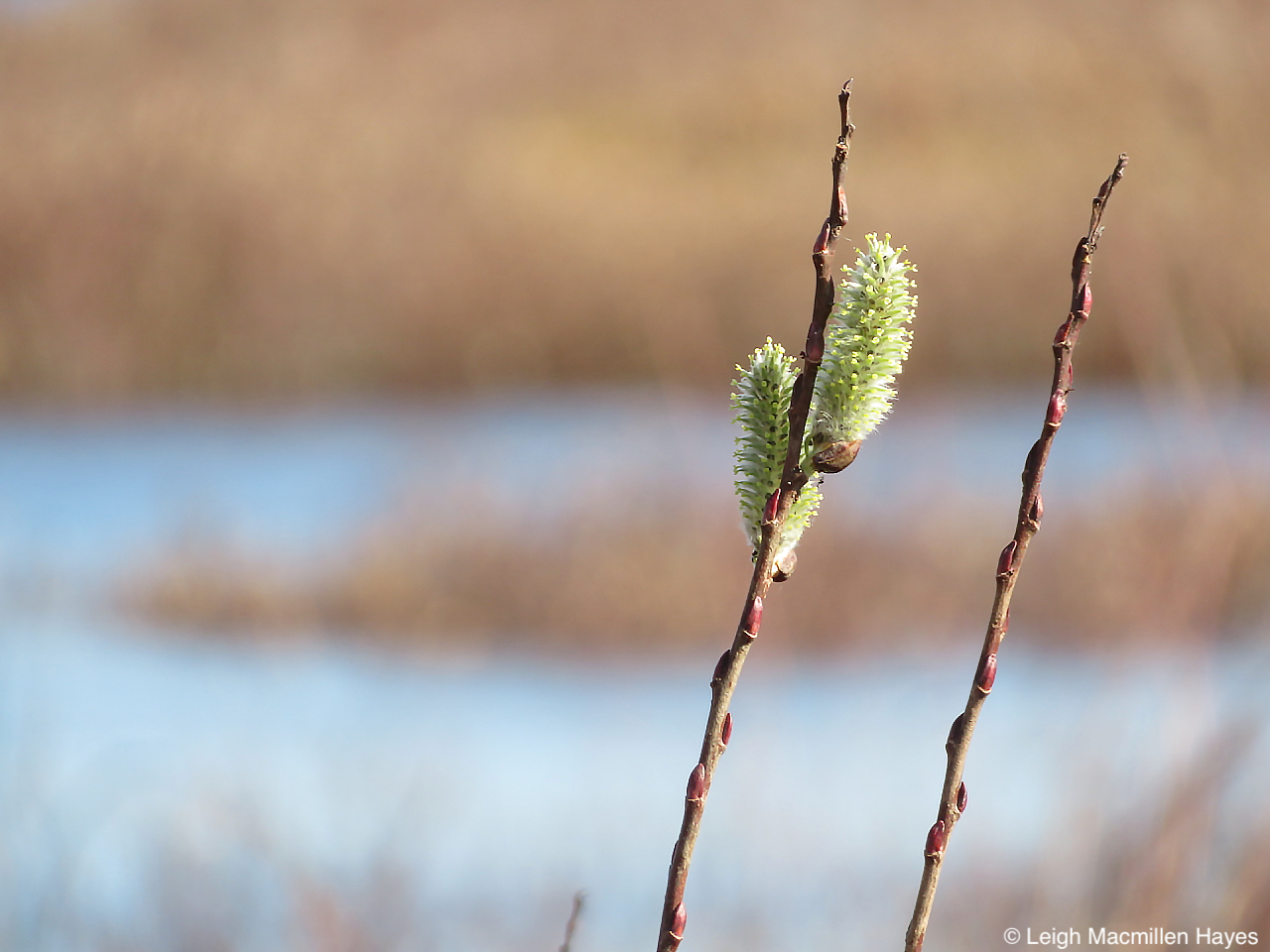
Willows stood along the way, waving flowery flags to the tap of the music.

And Ring-necked Ducks wondered what all the frivolity was about.

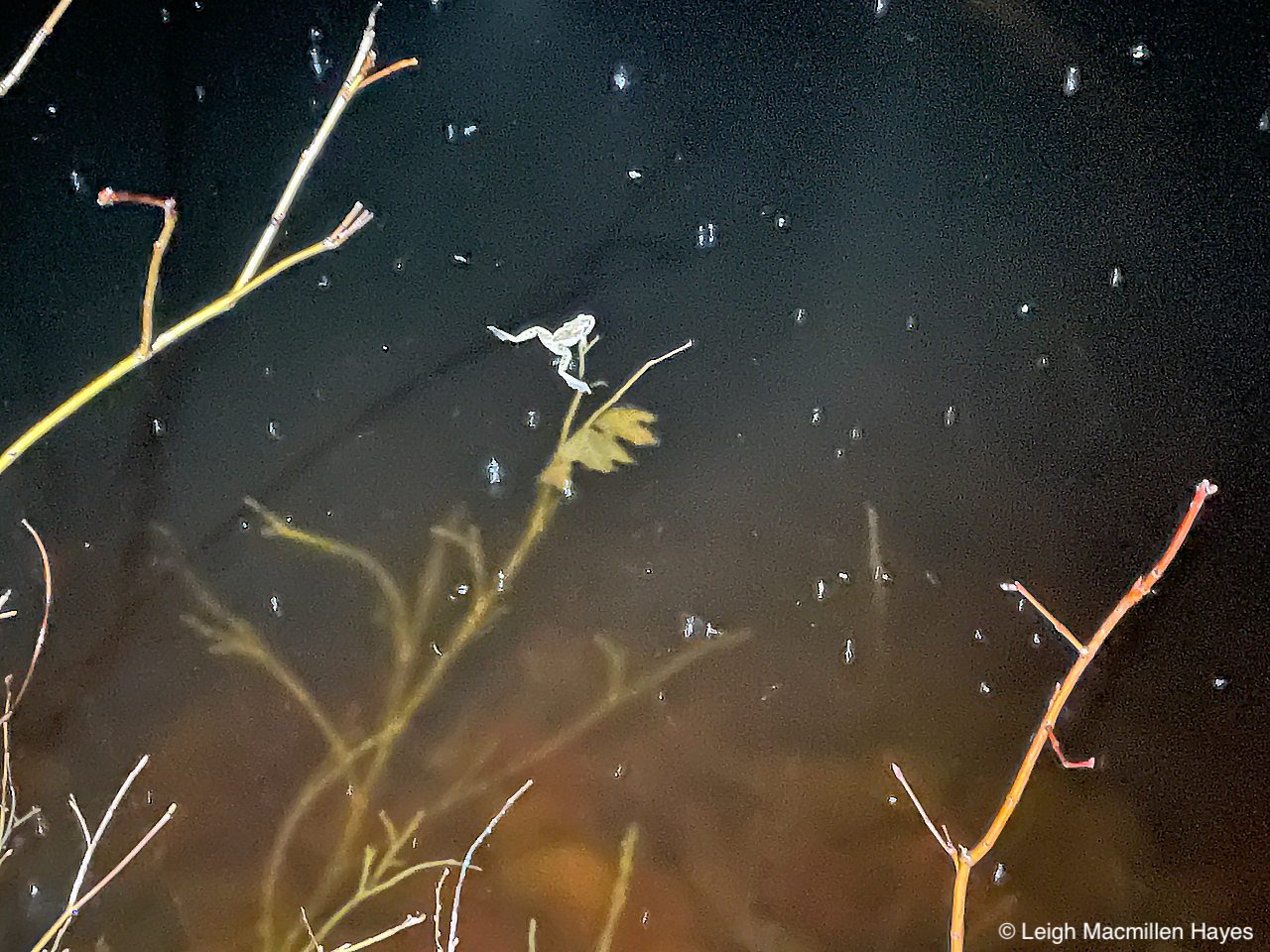
The route changed over the course of the weekend, and Saturday night found it along a backroad where Wood Frogs showed off their float techniques and sang love songs as rain drops fell.

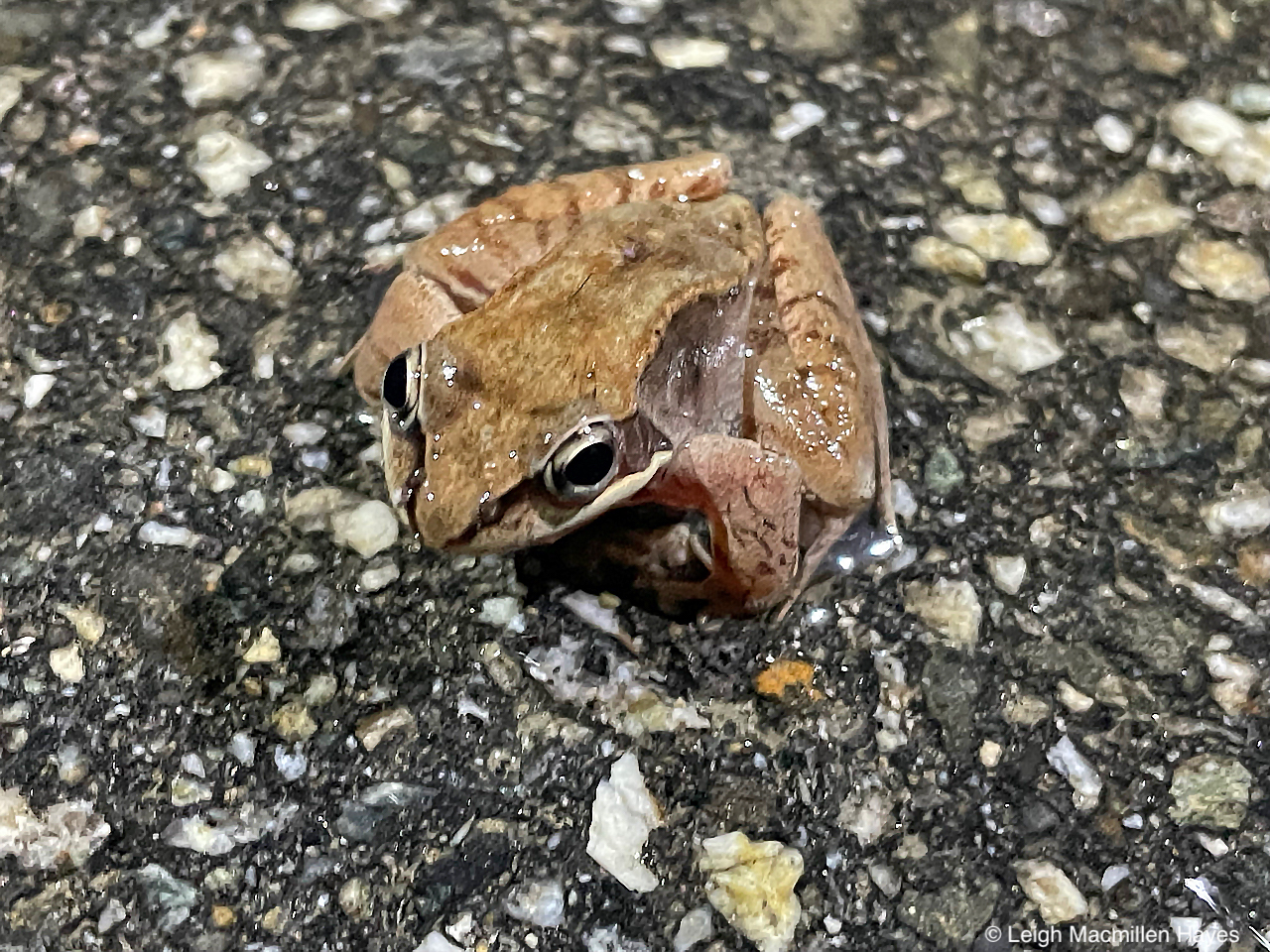
A female heard the band and hurried across the road to get to the other side. (She may have had some help)

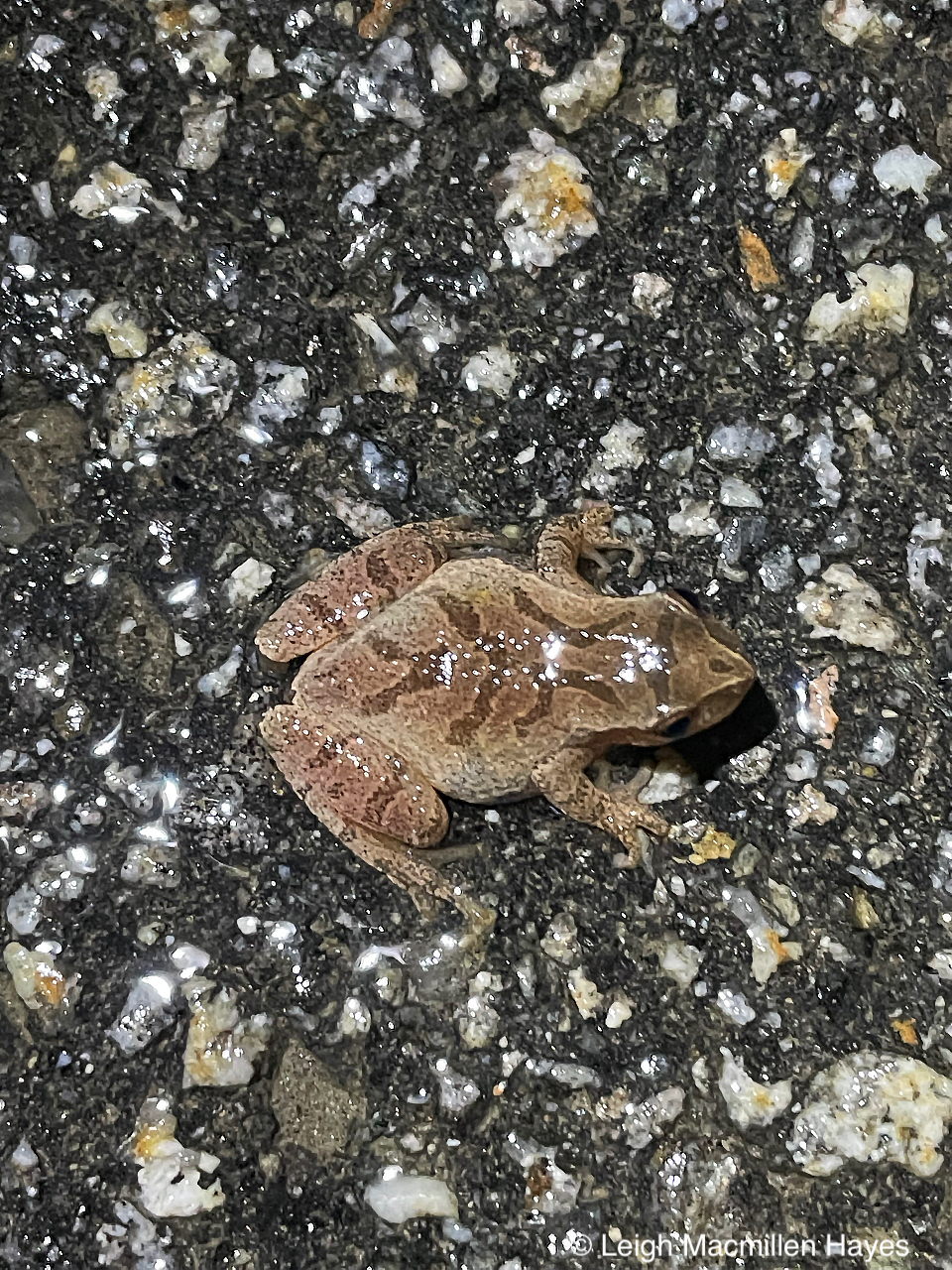
Spring Peepers high-pitched notes filled the air and all felt a sense of excitement despite the weather.

As the night went on, the grand marshal, a Spotted Salamander, finally arrived.

Actually, there was more than one grand marshal and some needed a little help to get to the grand stand so they could watch and participate in the action.

And then Easter Day dawned and after a festive church service, the parade resumed, this time along a gated Forest Road where Beavers had created sculptures to decorate the way.

Those Beavers had completed other work and due to the footwear of some of the onlookers, the route had to be changed for crossing the beaver dam proved a challenge.

Instead, it followed miles and miles of Forest Roads, where brooks contributed happy babbling songs to compliment the local Wood Frog and Spring Peeper chorus.

It wasn’t just music, though. Balsam Fir natural essence rainbows reflected bird balloons for everyone to enjoy.

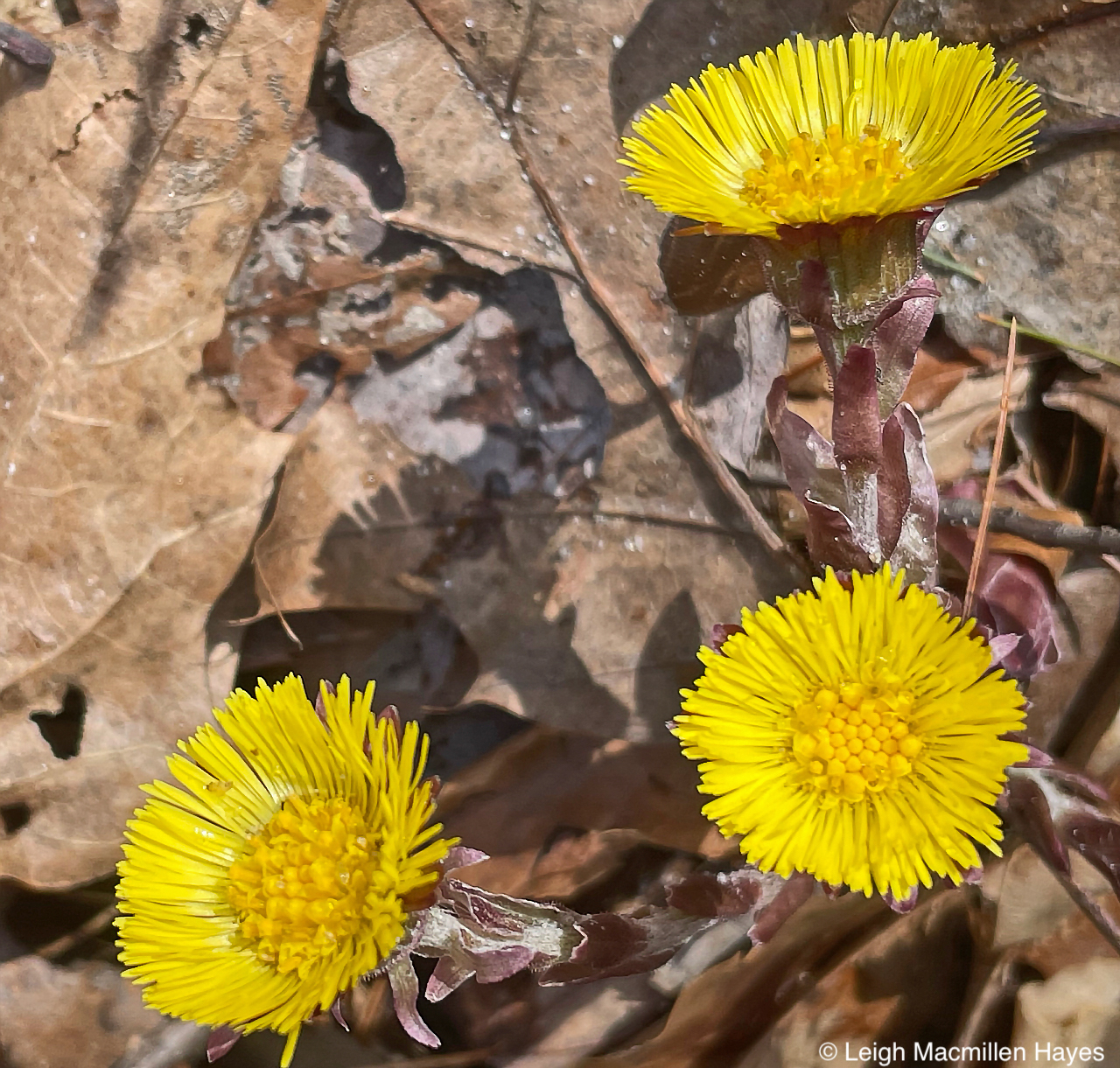
As the parade neared its end, an early spring flower known as a Coltsfoot, appeared along the way.

And suddenly there were three, a trinity. Faith, Hope, and Love. Sunshiny faces for all to see.

Then a Sapsucker tapped the final announcement. This may not be New York, but the weekend’s Easter Parade has drawn to a close and hope, and awe and wonder are in the air.

Lessons from the Earth

Dear Earth,

This year found me once again staying in my home territory to honor you and so while my guy did some yard chores, I chose to visit a few of your vernal pools.

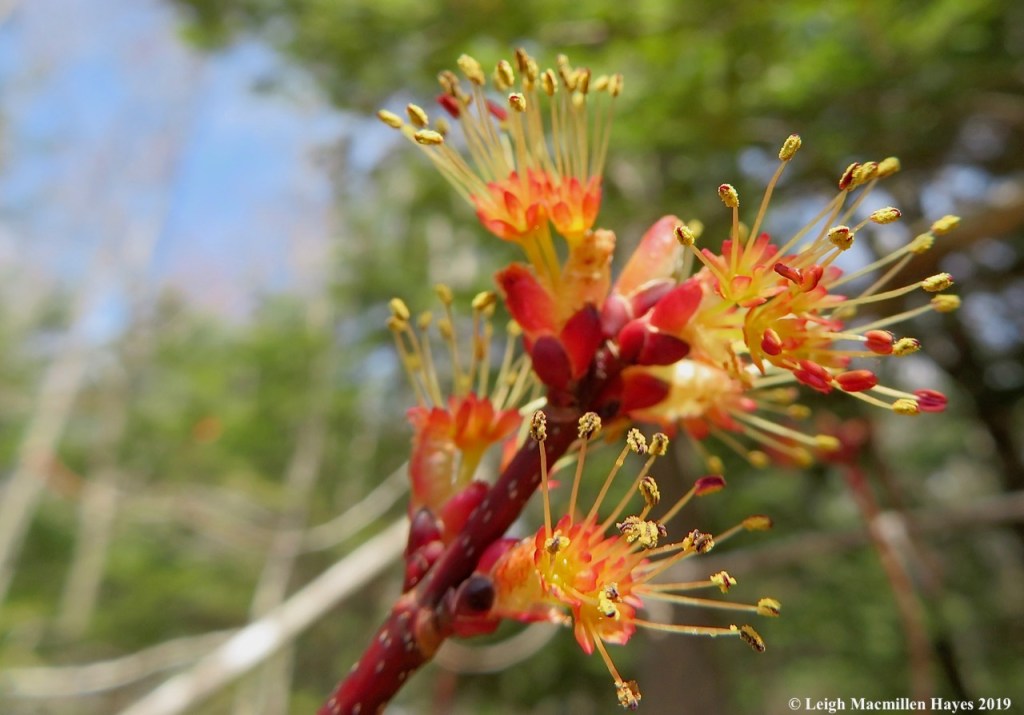
Along the way, I stopped to smell the roses! Opps, I mean admire the flowers of the Red Maples, their pistils and stamen all aglow.

As I approached the first and nearest pool, I new love was in the air for I heard the deep wrucks of the Wood Frogs. That is, until I got to within about ten feet, and then the only sounds were small splashes that barely created ripples as the frogs sought cover under the leafy pool lining.

But, as you’ve taught me in the past, I stood as still as possible and waited patiently. It was then that my eyes began to focus on the pool’s tenants. And I realized that the usual population of larval mosquitoes, aka “wrigglers” already somersaulting their way through the water. That may be bad news for me, but it’s certainly good news for the birds and dragonflies of the neighborhood. While I try to practice mind over matter when I’m stung by a mosquito, I have to remember that your plan to offer “Meals on the Fly” sustains so many others.

And then, and then I spied something disturbing. Actually it was two somethings. Frog legs of two frogs. And even a head. Dinner? For whom? Typically, I rejoice at a kill site for I realize that one species feeds another, but this one disturbed me. Perhaps, dear Earth, it was because I think of this pool as mine even though it’s located on a neighbor’s land, and I want to protect it and all that live within, as well as all who venture to it for nourishment. Eventually, I realized that perhaps someone had been nourished by the frogs, but why didn’t they consume the entire beings? Could it be one of their own species who went into attack mode? I don’t have the answer–but once again you’ve given me more to question. And so in the end I realized I should be grateful for having the opportunity to wonder.

The good news–right behind the two dead frogs was a recently deposited egg mass. Its form made me think Spring Peepers, but I’ll need to watch them develop.

Death. Life. The cycle plays out as if a best seller in this dramatic genre.

I circled the pool looking for any other unusual sights or clues, but found none. Eventually I stood on my favorite rock and appreciated that you finally rewarded me, dear Earth. A Wood Frog appeared by my feet and we both remained as still as possible–that is until my feet began to fall asleep and I needed to move on.

As you know, dear Earth, I located several more pools, their wruck choruses giving them away. And within one, it was obvious by the egg masses that the lover frogs had found their mates.

Walking back toward home, I got a bit nosey, as you know, and turned over some bark that had fallen from dead trees. To my delight: millipedes, earth worms, bark beetles, slugs, and . . .

At least five Red-backed Salamanders. That reminded me, dear Earth, that though I wasn’t able to join Lakes Environmental Association for Big Night on Saturday, that rainy night when the temperature ranges about 40˚ and the amphibians decide to return to their vernal pools to mate and folks try to help them cross our roadways to do so, I trust that you made sure the Red-backed Sallies and worms made their presence known in the grass behind the Masonic Hall. Did you?

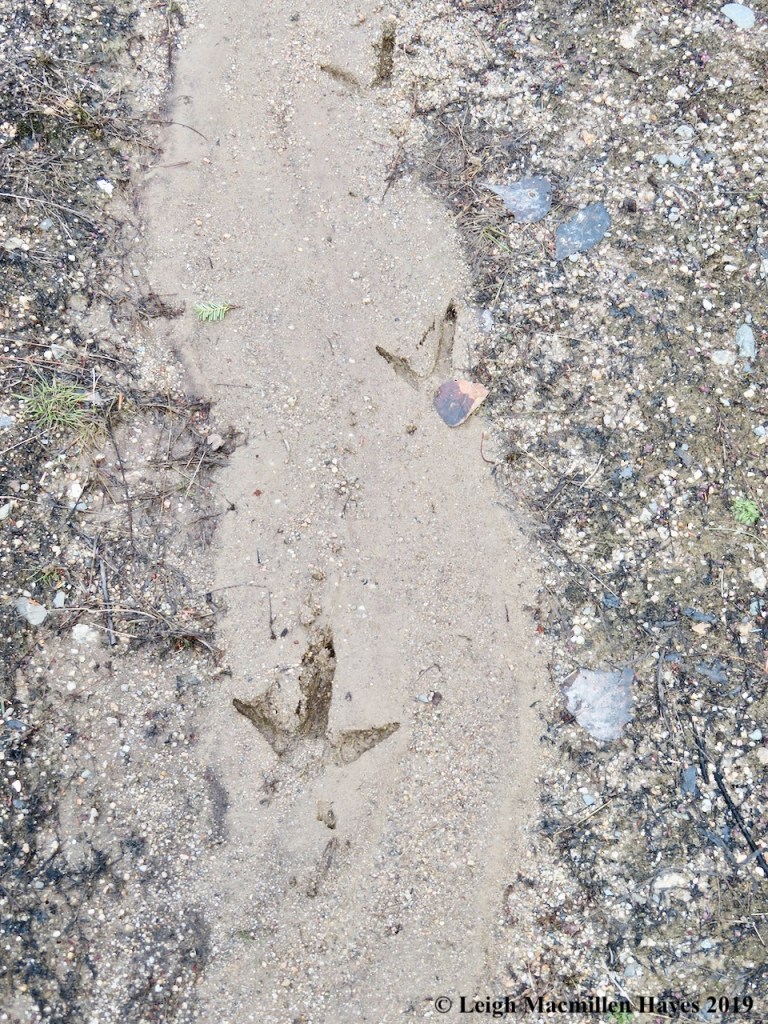
As for my walk today, I followed our trails and then an old logging road, where the deer and moose and coyotes and foxes and turkeys also roam.

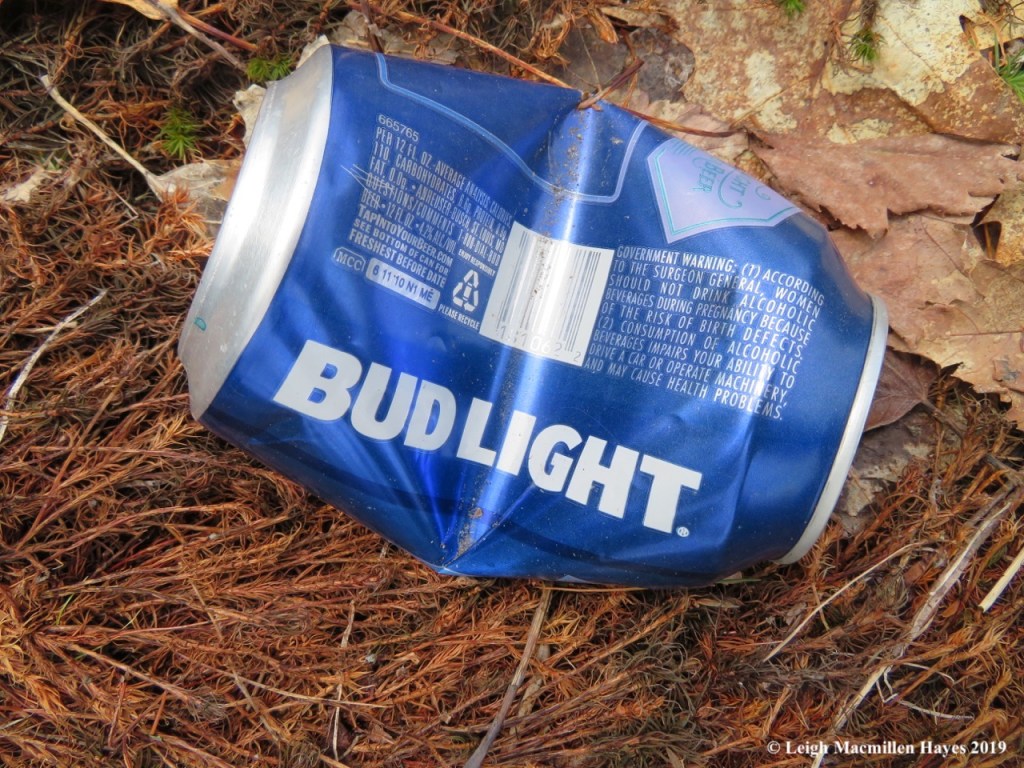
And because part of my journey took me along the snowmobile trail, I picked up some empties and realized that not all turkeys are created equal.

But you don’t judge, do you dear Earth. Nor do you pretend that the world is perfect.

That being said, the sight of my first butterfly of the season, the pastel colored Clouded Sulphur, was rather perfect in my book.

Thanks for once again taking the time to teach me a few lessons . . . lessons from the Earth on this, your day, Earth Day 2019.

Wondermyway Celebrates Third Anniversary

Three years ago this journey began as a quiet entry into the world of blogging, of sharing my finds and questions found along the trail. And ever so slowly, you joined me to wander and wonder.

So really, today is a celebration of you, for I give thanks that you’ve continued to follow and comment and wander and wonder along, whether literally or virtually.

I absolutely love to travel the trail alone and do so often. But I also love hiking with my guy and others because my eyes are always opened to other things that I may have missed while hiking on my own.

I’m blessed with the community of naturalists with whom I’m surrounded–and this includes all of you for if you’re following along and taking the time to actually read my entries, then you share my interest and awe. And you may send me photos or I may send you photos and together we learn.

t6-cecropia cocoon

Just yesterday, while tramping in Lovell, Maine, with fellow trackers, I spotted a cocoon  dangling from a beech tree. My first thought–Cecropia moth, but I contacted Anthony Underwood, a Maine Master Naturalist who has great knowledge about insects, and learned that I was wrong. He said it looked more like the cocoon of a Promethea moth. “They hang down whereas Cecropia are usually attached longitudinally,” wrote Anthony. And there you have it.

Now I just have to remember it, which is part of the reason I value my post entries. The information has been recorded and I can always plug a key word, e.g. Promethea, into the search bar and today’s blog will come up–jogging my memory.

And so, without further ado, I present to you my favorites of the past year. It’s a baker’s dozen of choices. Some months, I had difficulty narrowing the choice to one and other months there was that one that absolutely stood out. I hope you’ll agree with my selection. I also hope that you’ll continue to follow me. And if you like what you read here, that you’ll share it with your families and friends and encourage others to follow along.

February 23, 2017:  Knowing Our Place

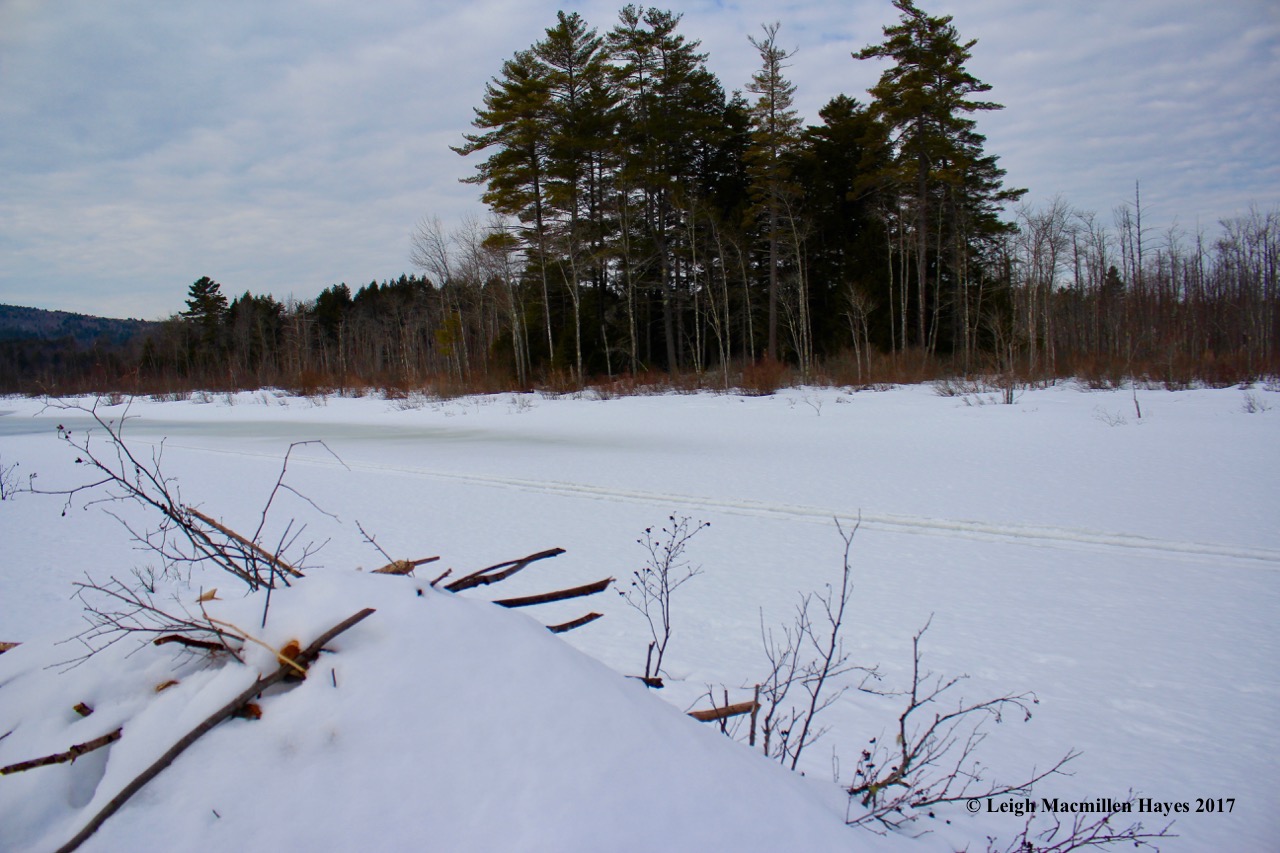
h-muddy-river-from-lodge

Holt Pond is one of my favorite hangouts in western Maine on any day, but on that particular day–it added some new notches to the layers of appreciation and understanding.

March 5, 2017: Tickling the Feet

CE 3

I don’t often write about indoor events, but while the rest of the world was out playing in the brisk wind of this late winter day, a few of us gathered inside to meet some feet.

April 22, 2017: Honoring the Earth

h-spotted sallie 2 (1)

It would have been so easy to stay home that night, curled up on the couch beside my guy while watching the Bruins play hockey. After all, it was raining, 38˚, and downright raw. But . . . the email alert went out earlier in the day and the evening block party was scheduled to begin at 7:30.

May 21, 2017: On the Rocks at Pemaquid Point

p16-fold looking toward lighthouse

Denise oriented us northeastward and helped us understand that we were standing on what is known as the Bucksport formation, a deposit of sandstone and mudstone metamorphosed into a flaky shist. And then she took us through geological history, providing a refresher on plate tectonics and the story of Maine’s creation–beginning 550 million years ago when our state was just a twinkle in the eyes of creation.

June 9, 2017: Fawning with Wonder

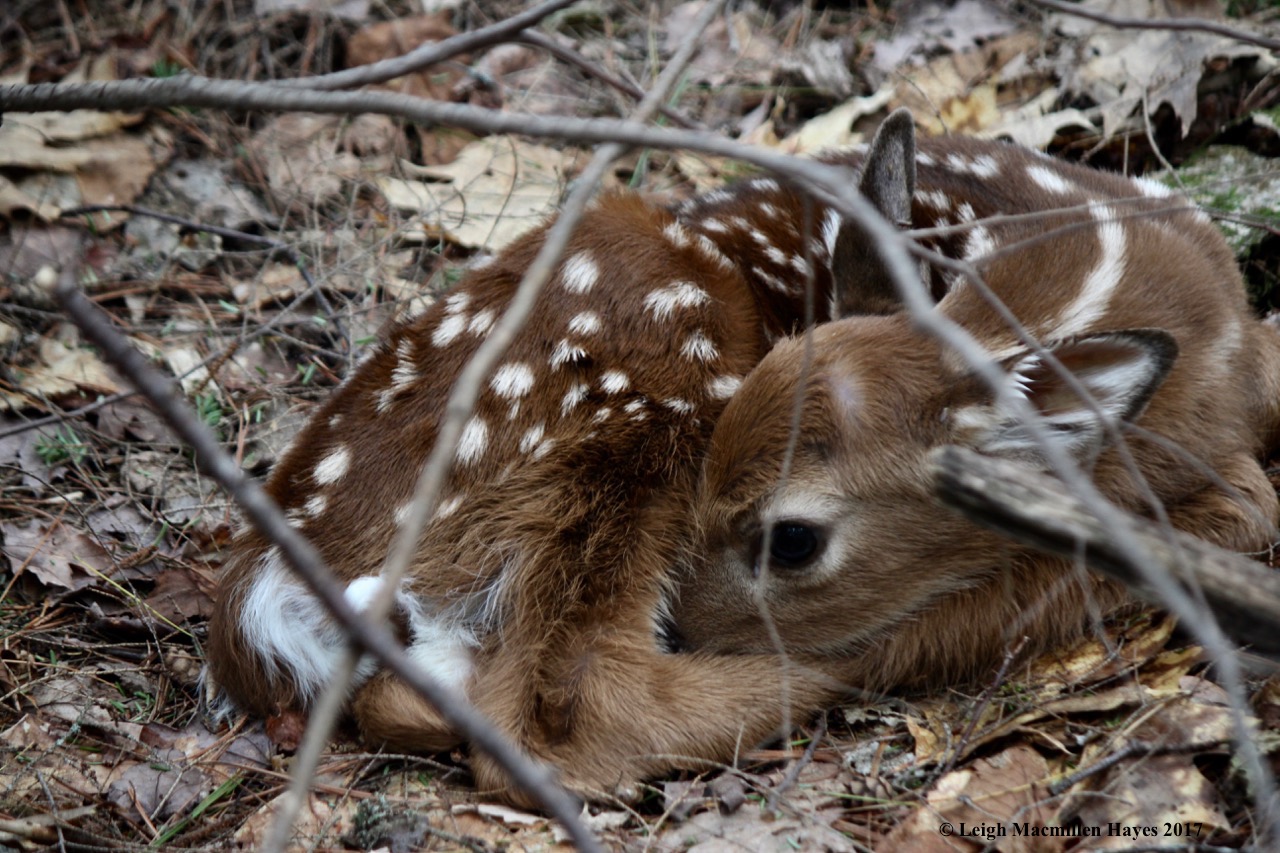
p-fawn 2

Though fawning is most oft used to describe someone who is over the top in the flattery department (think old school brown nose), the term is derived from the Old English fægnian, meaning “rejoice, exult, be glad.”

July 3, 2017: Book of July: Flying on the Wild Wind of Western Maine

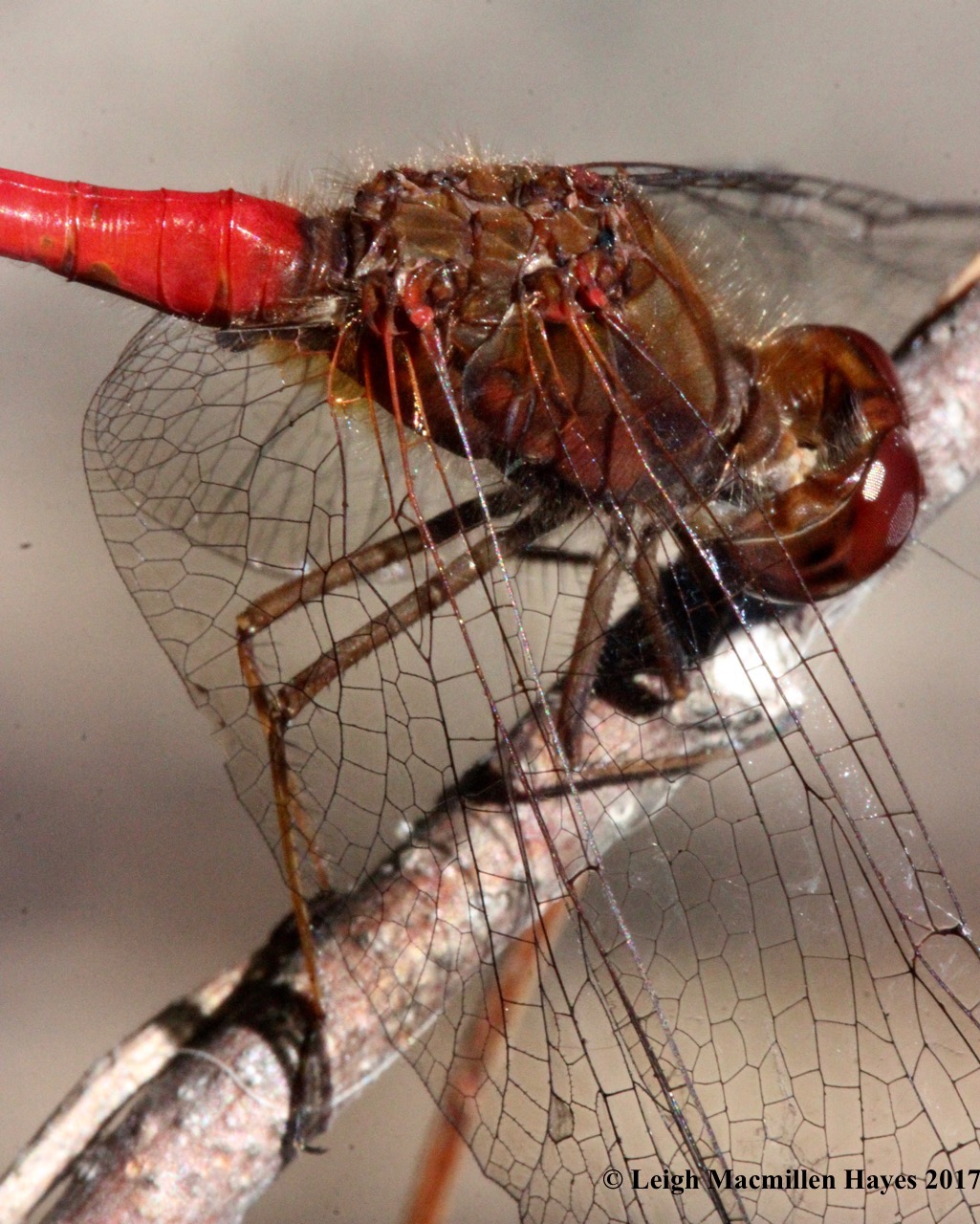
d-skimmer, yellow legged meadowhawk, wings

My intention was good. As I sat on the porch on July 1st, I began to download dragonfly and damselfly photographs. And then the sky darkened and I moved indoors. Suddenly, and I mean suddenly, the wind came up. Torrential rain followed. And thunder and lightening. Wind circled around and first I was making sure all screens and doors were closed on one side of the wee house and then it was coming from a different direction and I had to check the other side. Trees creaked and cracked. Limbs broke. And the lightening hit close by.

August 6, 2017: B is for . . .

b-bye

Our original plan was to hike to the summit of Blueberry Mountain in Evans Notch today,  following the White Cairn trail up and Stone House Trail down. But . . . so many were the cars on Stone House Road, that we decided to go with Plan B.

September 15, 2017: Poking Along Beside Stevens Brook

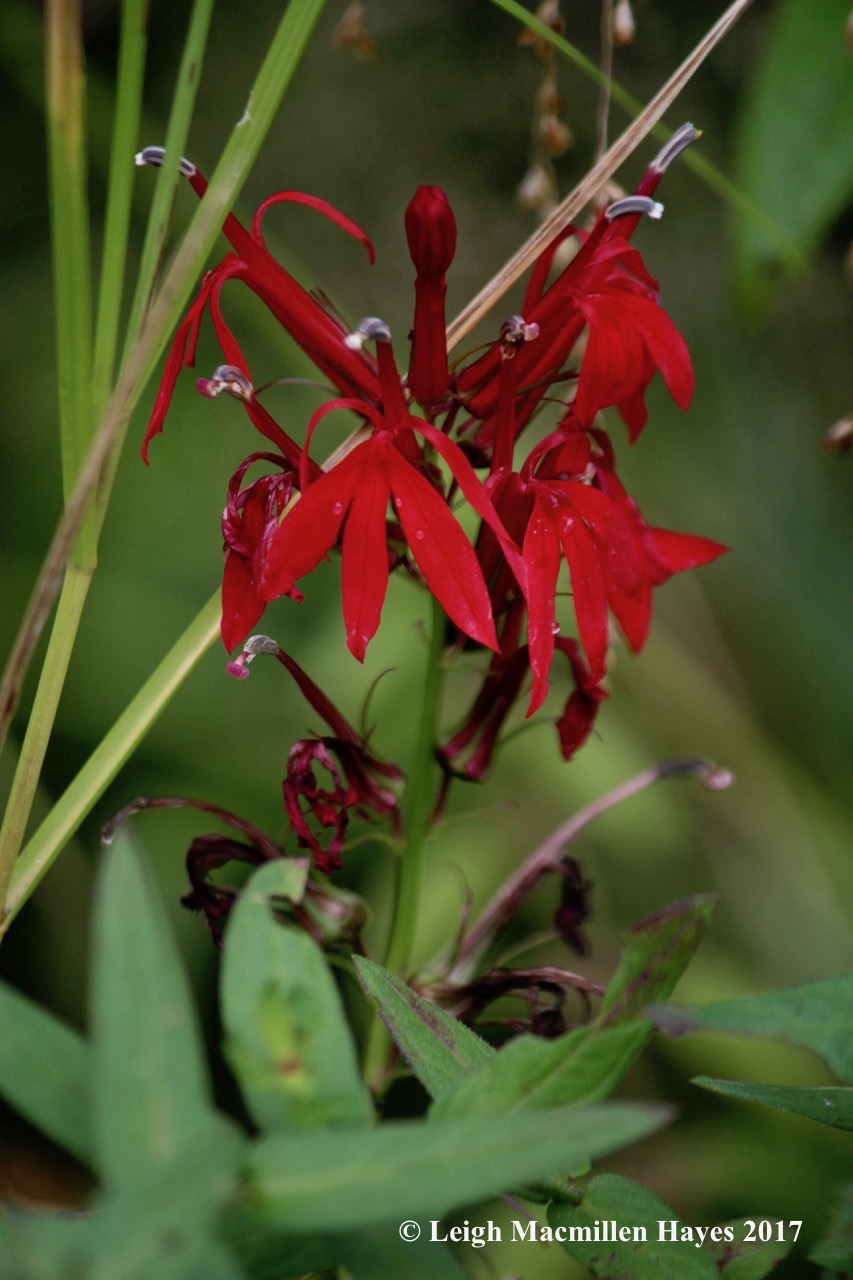
s22-cardinal flower

Raincoat? √

Notecards? √

Camera? √

Alanna Doughty? √

This morning I donned my raincoat, slipped my camera strap over my head, and met up with LEA’s Education Director Alanna Doughty for our reconnaissance mission along Stevens Brook in downtown Bridgton. Our plan was to refresh our memories about the mill sites long ago identified and used beside the brook.

October 5, 2017: Continued Wandering Into the World of Wonder

i-baskettail, common baskettail 1

May the answers slowly reveal themselves, while the questions never end.

November 24, 2017: Black Friday Shopping Extravaganza

b8-the main aisle

At last, I’d raided enough aisles. My cart was full to the brim and my brain overwhelmed. I guess I’m not really a “shop-til-you drop” kind of gal. It was time to wind along the trail and end my Black Friday shopping extravaganza.

December 29, 2017: Oh Baby!

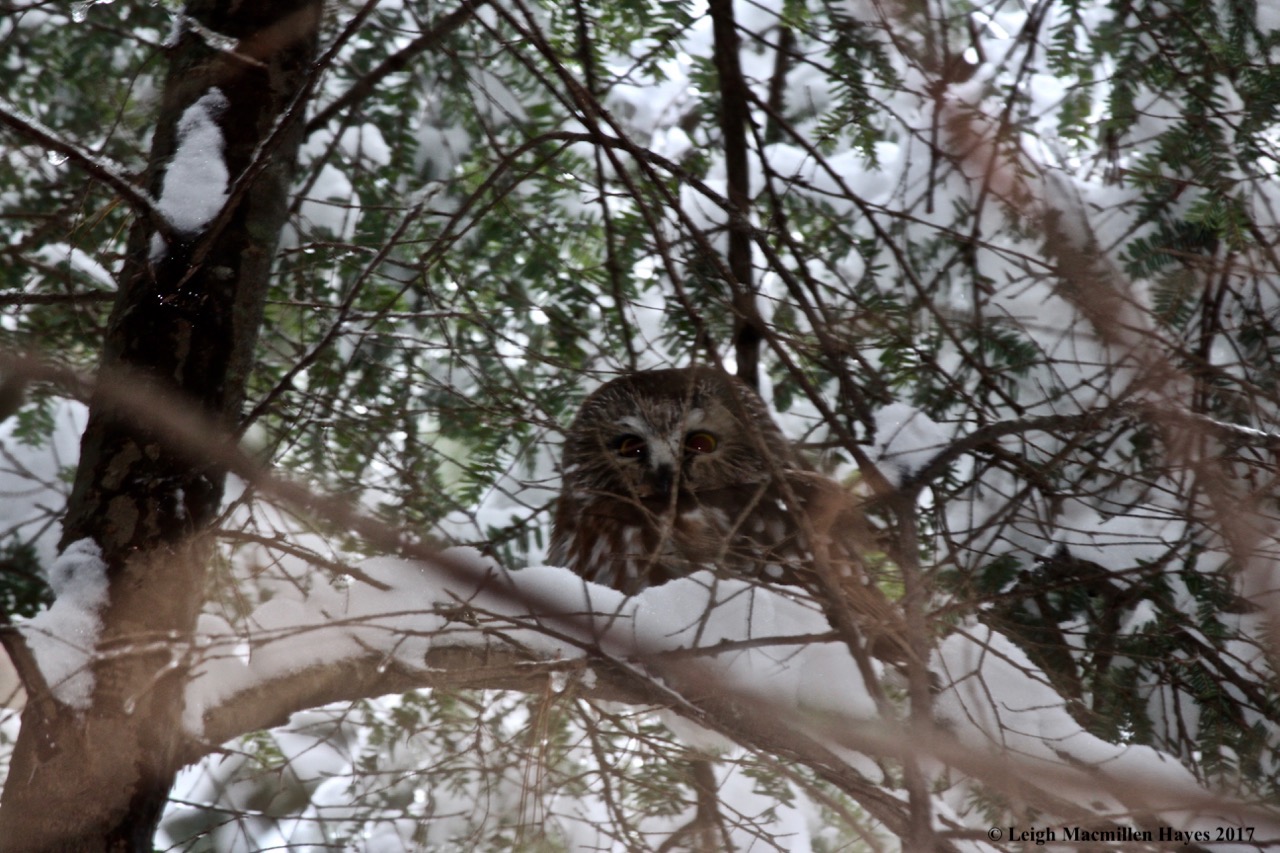
s-screech owl 2

We shared about ten minutes together and it was definitely an “Oh baby!” occasion. But there was more . . .

January 21, 2018: Sunday’s Point of View

p17-Needle's Eye

We arrived home with ten minutes to spare until kickoff.

February 8, 2018: Hardly Monochromatic

p18-Stevens Brook

My world always takes on a different look following a storm and today was no different.

To all who have read thus far, thanks again for taking a trip down memory lane today and sticking with me these past three years. I sincerely hope you’ll continue to share the trail as I wander and wonder–my way.

And to wondermyway.com–Happy Third Anniversary!


Honoring the Earth

It would have been so easy to stay home last night, curled up on the couch beside my guy while watching the Bruins play hockey. After all, it was raining, 38˚, and downright raw. But . . . the email alert went out earlier in the day and the evening block party was scheduled to begin at 7:30. And so, I piled on the layers from a wick-away shirt to Under Armour, a turtleneck, sweater, LL Bean vest and rain jacket. I slipped into my Bogg boots and made sure I had the right gear–smartphone for photos, reflective vest, headlamp and flashlight. With a visored hat on my head to shield my glasses from the rain, I was finally ready. Out the door and down the road I went, headed to the Lakes Environmental Association‘s office for Big Night.

h-Big Night Patrol 3 (1)

I wasn’t the only one crazy enough to attend the party. Our number was about twenty. I think the best part was that we ranged in age from 6 to almost 60, the latter being me–the oldest kid on the block. And in that mix, one teen who was celebrating his 15th birthday (Happy Birthday, Kyle), and several teens who had never attended before but came because one of their crowd was an annual participant. We even had two policemen in the mix–and though their job was to slow traffic and keep us safe, they had as much fun as we did completing our mission.

h-spotted sallie 2 (1)

Said mission–to help spotted salamanders . . .

h-spring peeper 1 (1)

and spring peepers cross the road.

h-redback salamander (1)

We did so for a while and then headed back to our vehicles. Just before reaching the spot where we’d all parked, someone spotted this redback salamander–I smiled because its the symbol of the Maine Master Naturalist Program.

We were wet. We were cold. And we were happy. As nature would have it, Big Night preceded Earth Day–a perfect beginning.

h-candy lichen

Earth Day began appropriately with a board meeting at Lakes Environmental, where among other topics, Dr. Ben Peierls, the new research director of LEA’s Maine Lake Science Center, shared with us his plans for the water quality testing laboratory. Ben addressed us first so that he could drive to Portland and join the March for Science. We continued our meeting, but were thankful for his representation. Meanwhile, directly outside and all around town, another gathering was taking place as many people participated in an Earth Day cleanup.

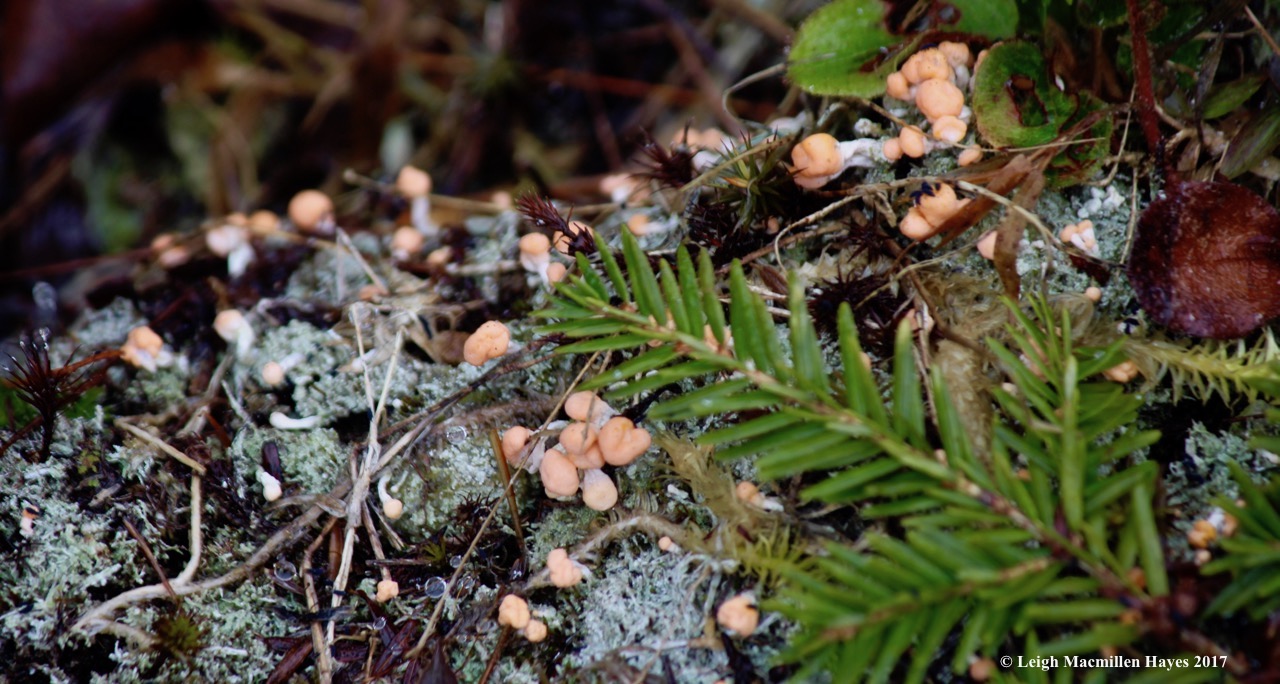
By the time I left the meeting pleased with all that had been accomplished, I was ready for a solo adventure to find out what the Earth wanted to share with me since most of the snow melted this past week. Despite being another raw day, or maybe because of it, the candy lichen brought a smile to my face. I think one of the cool things about this lichen is that even though its salmon-colored fruits stand atop stalks, this is really a crustose (crust-like) lichen, the bluish-green surface being the actual structure.

h-juniper berries

Near the candy lichen, the bright blue of some berries stood out on the common juniper. They remain on the shrubs all winter and it seemed only a wee bit ago they looked all withered. Today’s offerings were plump and pretty.

h-pine droplets

And then there were the raindrops, each waiting its turn to continue the journey toward the earth. I had to wonder what else it might fall upon before reaching its final destination–each little ball encapsulating nourishment.

h-lambkill

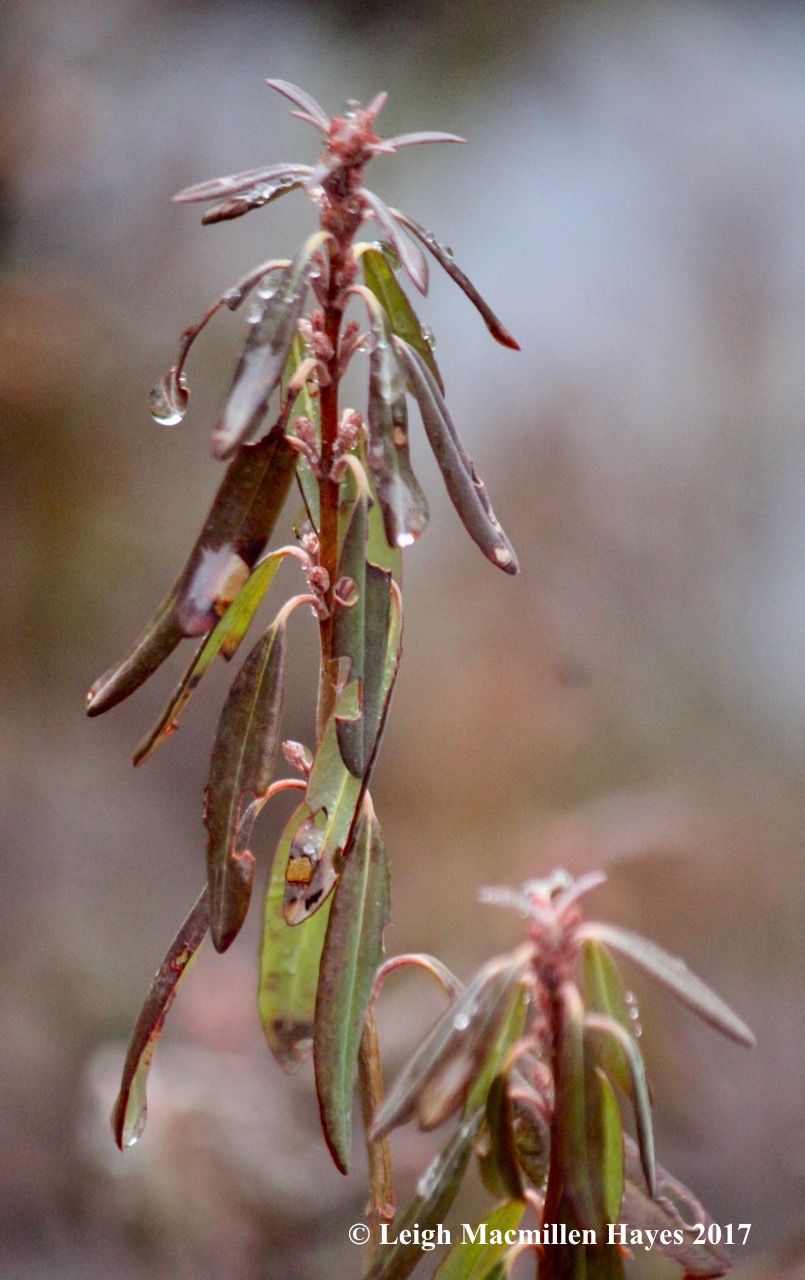
One of the receivers, sheep laurel, which displayed its own new life.

h-trailing arbutus

And at the base, trailing arbutus. One year ago, as I noted in my Earth Day post, it was already in bloom. This seemed a reminder from Mother Earth that we need to practice patience.

h-wild turkey

I continued my mosey, as quiet as could be, and so was startled when one large, exotic bird, and then another, and a third flew off from behind a stone wall. And then I realized they were wild turkeys–who truly are exotic if you take a look at all the colors in their feathers.

h-tinder conks on beech

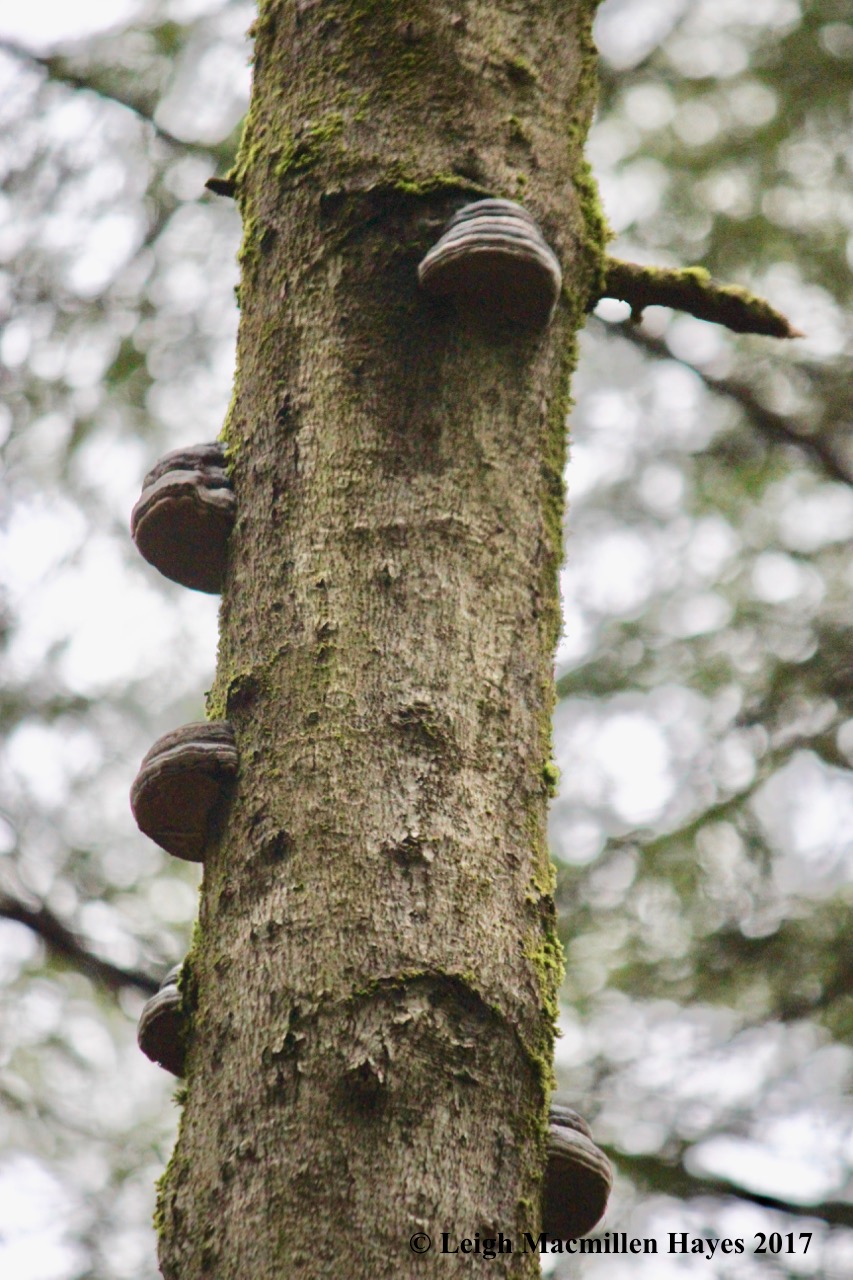
I’d been on the snowmobile trail, but traveling was difficult given some remaining icy snow and deep ruts filled with water. As if I needed an excuse, I decided to slip into the woods. One of my first delights–tinderconks lining a tree as I looked up.

h-moss covering

But really, it was the thick moss coating at the top of the tree that first drew my attention. Several trees in the neighborhood displayed the same fashion.

h1-woods south (1)

My wander was aimless, taking me through boggy areas . . .

h-snow1

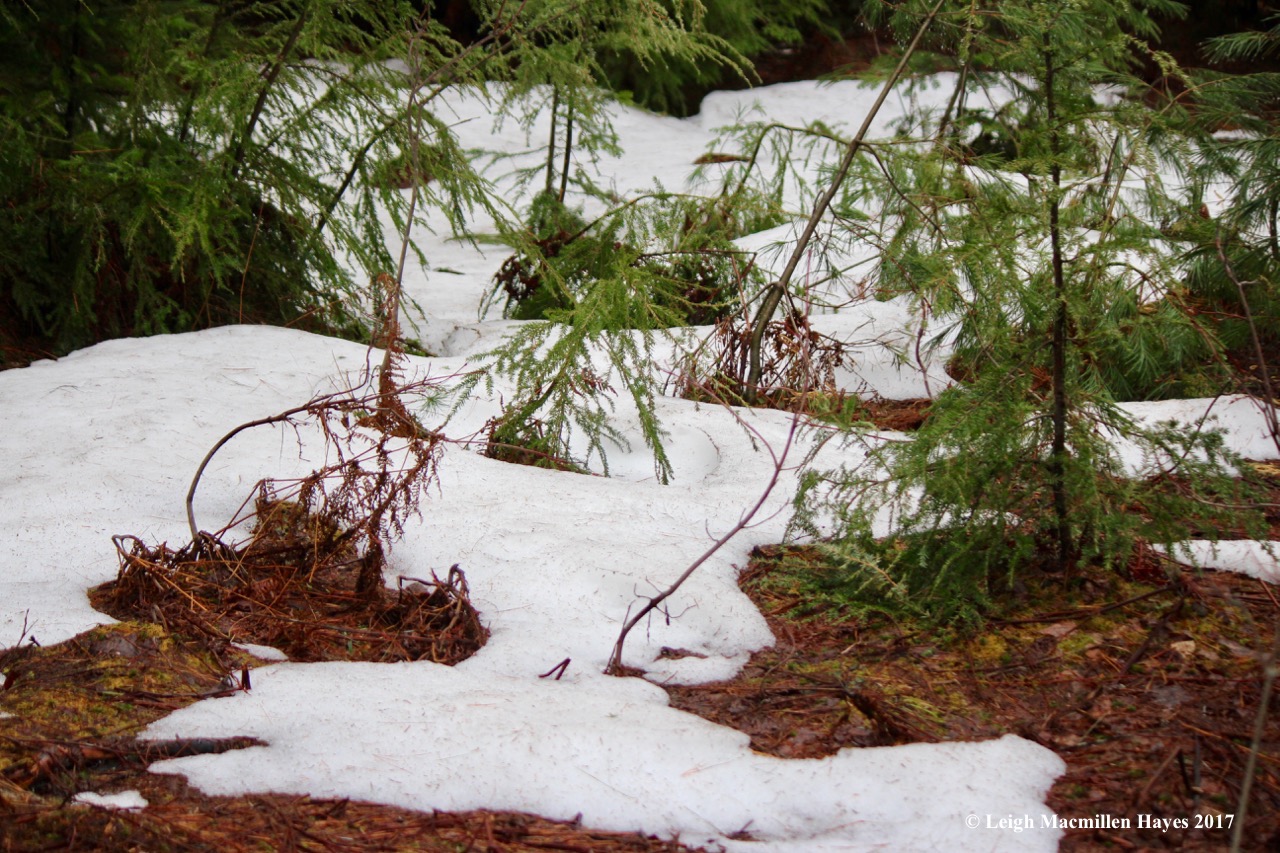
and small sections where snow still blanketed the ground.

h-deer prints in snow

Besides plenty of deer scat, I found prints . . .

h-deer hair

and hair.

h-deer hair bubbles

Raindrops enhanced the hair.

h1-moose scat 1 (1)

And though I suspect they’ve moved toward open water, there was plenty of evidence that the moose had also spent the winter in these woods.

h-moose hair

They, too, have shed hair–preparing for the summer scene.

h-moose maple

A couple of months ago, I’d been concerned that the moose had consumed all the tree buds, but the red maples showed me otherwise.

h1-woods south 2 (1)

At one point, I stood for a while atop a rock and looked to the south.

h1-woods north (1)

And then to the north. It was as I stood there that I heard a repeated sound. It began with a few slow beats, and then a swift series of beats. All seemed muffled. It finally occurred to me that I was listening to a ruffed grouse. Eventually, I followed the drumming and came close to the one beating its wings against a log–the work of a displaying male. I didn’t bother to seek out the actual bird for I knew I’d startle it and it would fly off, so I let it drum in peace, thankful for the opportunity to at least hear it. Really, it was a first for me. Oh, I’ve possibly heard it before, but only today did I recognize it for what it was.

h1-widowmaker (1)

For a while, I was fake lost . . . and then I heard another repeated sound that lead me to a widowmaker and I knew exactly where I was. But where was the maker of the sound?

h-owl 1

In a tree above me.

There were actually two barred owls and I was so thankful for the honor of listening to and watching them on this Earth Day.

I was also thankful for all the privileges bestowed upon me. The privilege of living. The privilege of noticing. The privilege of questioning. The privilege of understanding. The privilege of wandering. And especially, the privilege of wondering. Thank you for your offerings, Mother Earth. I am honored to know you.