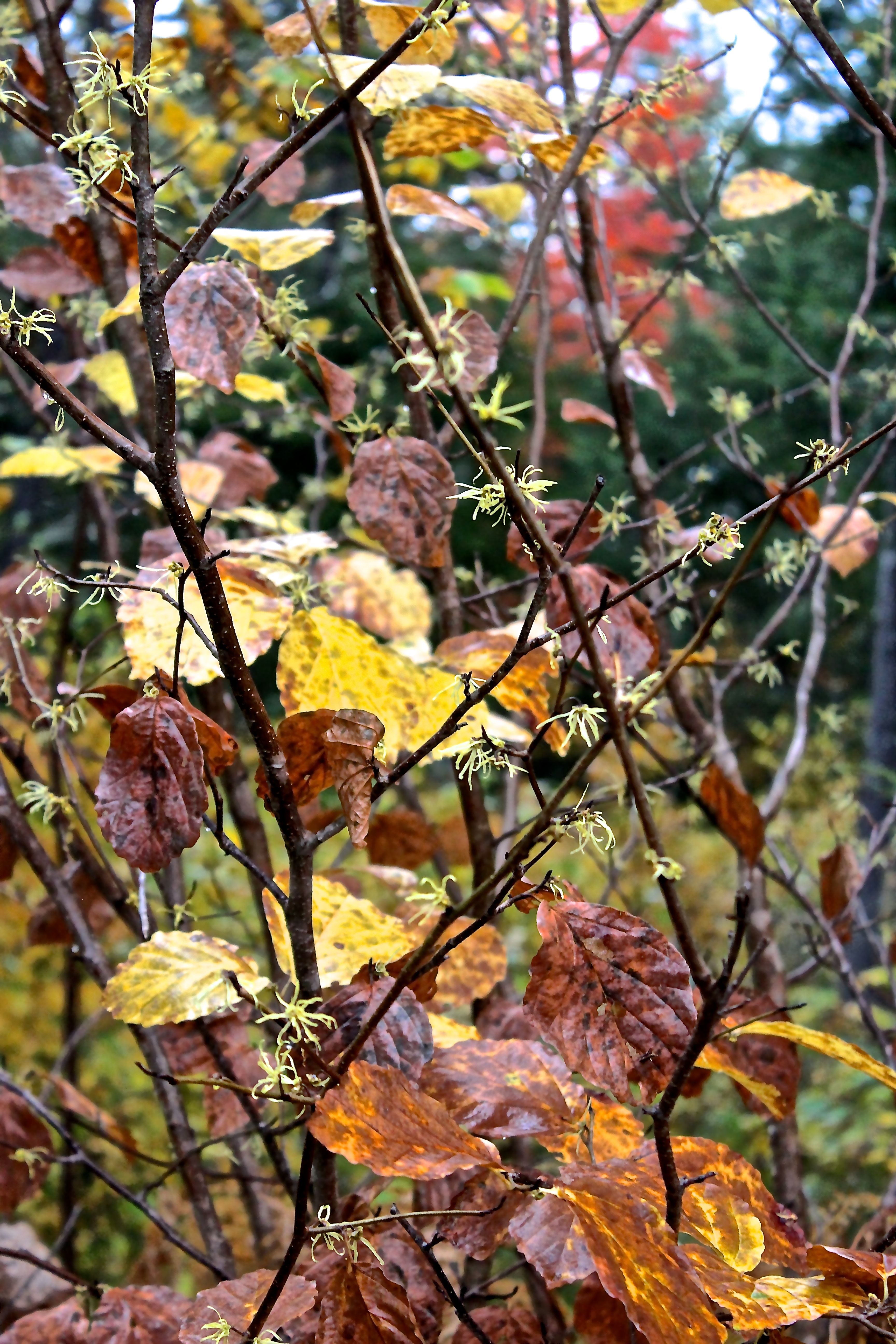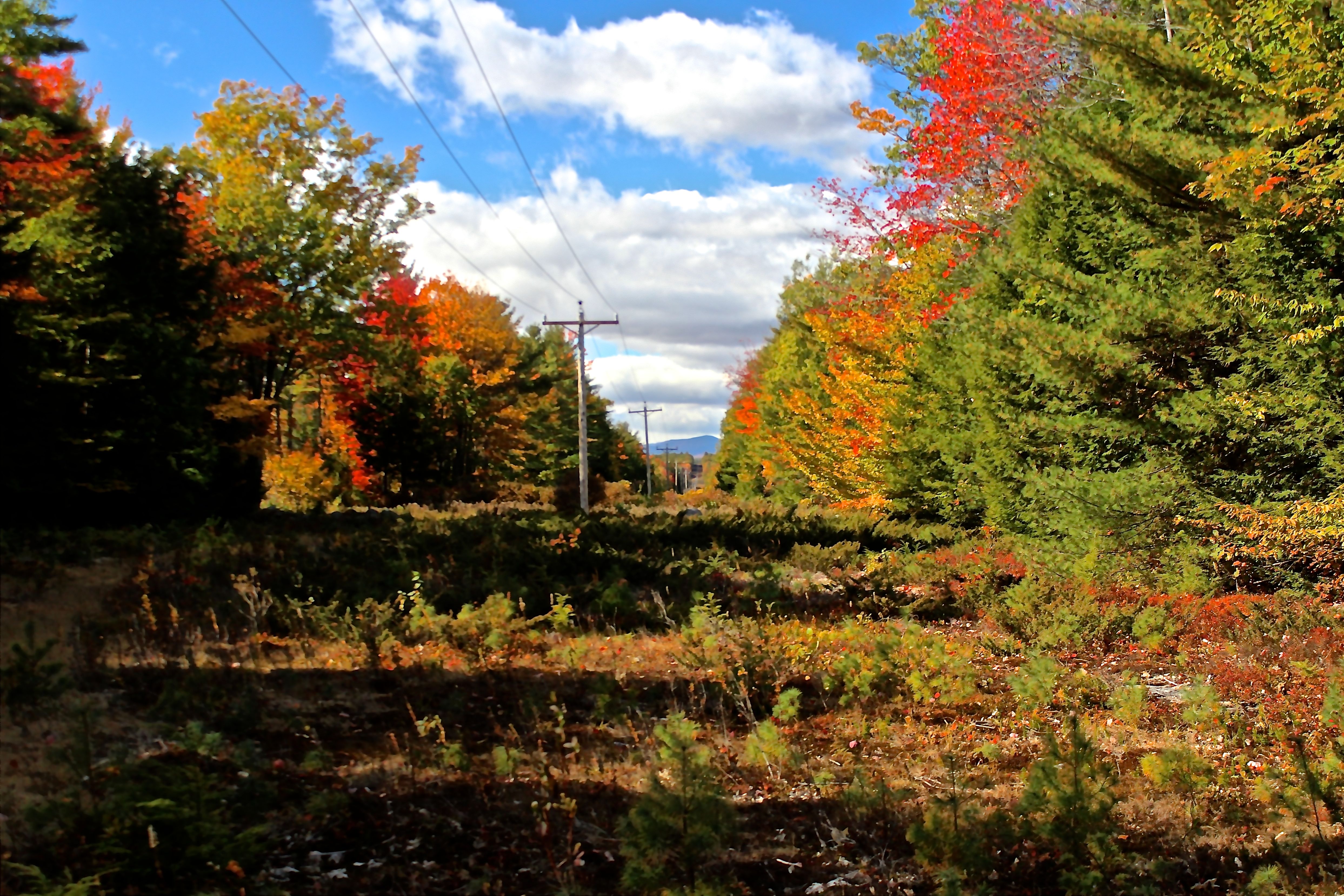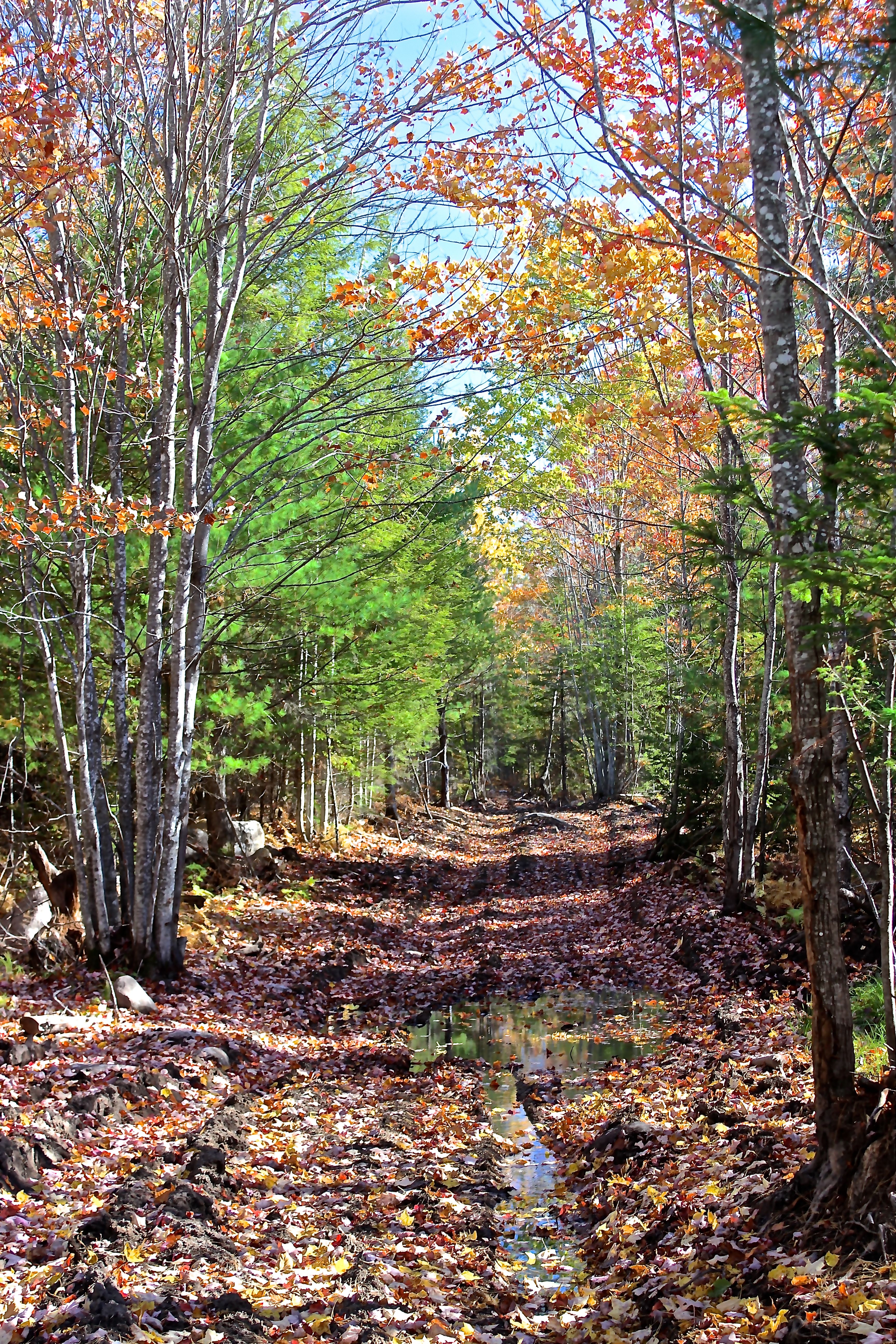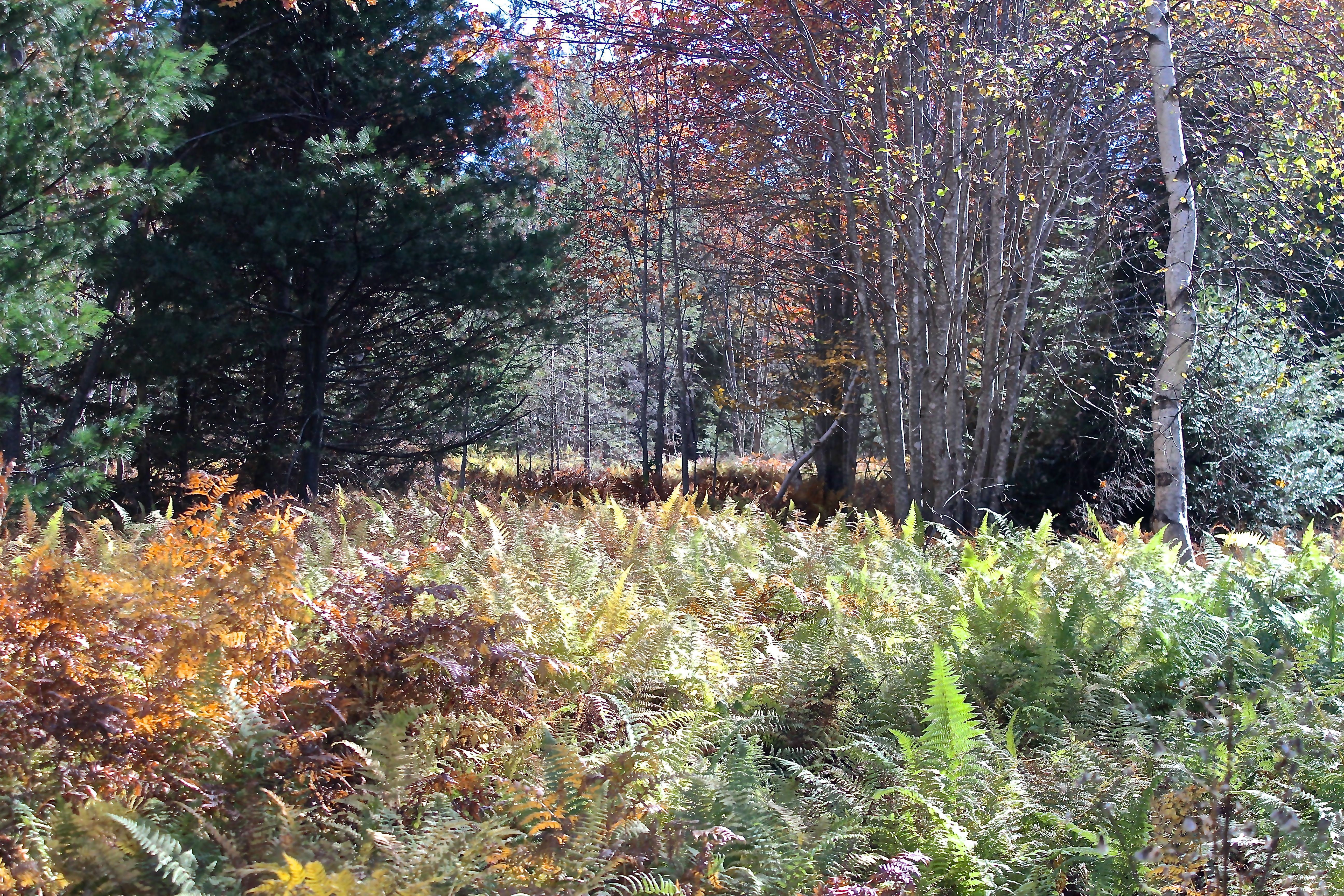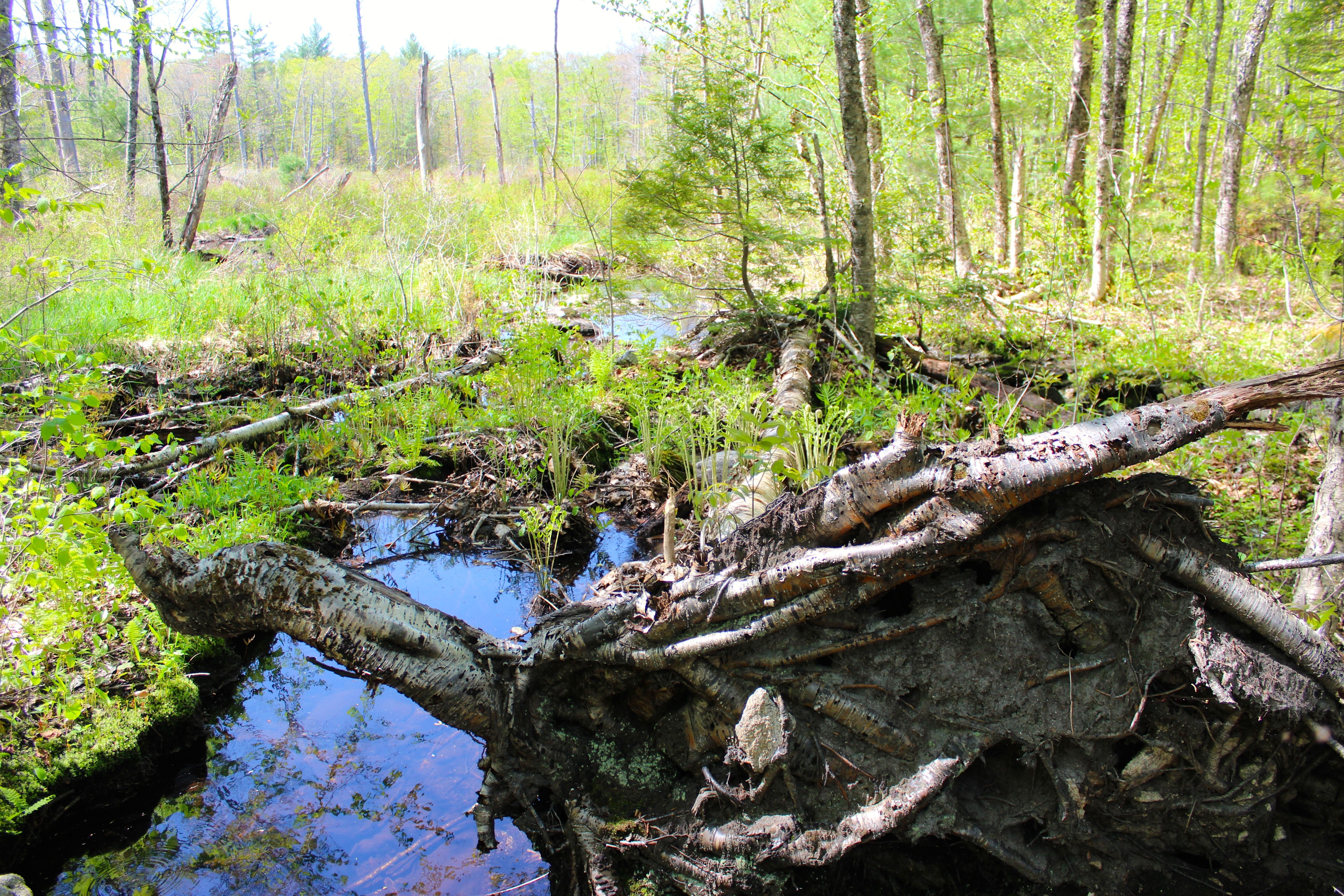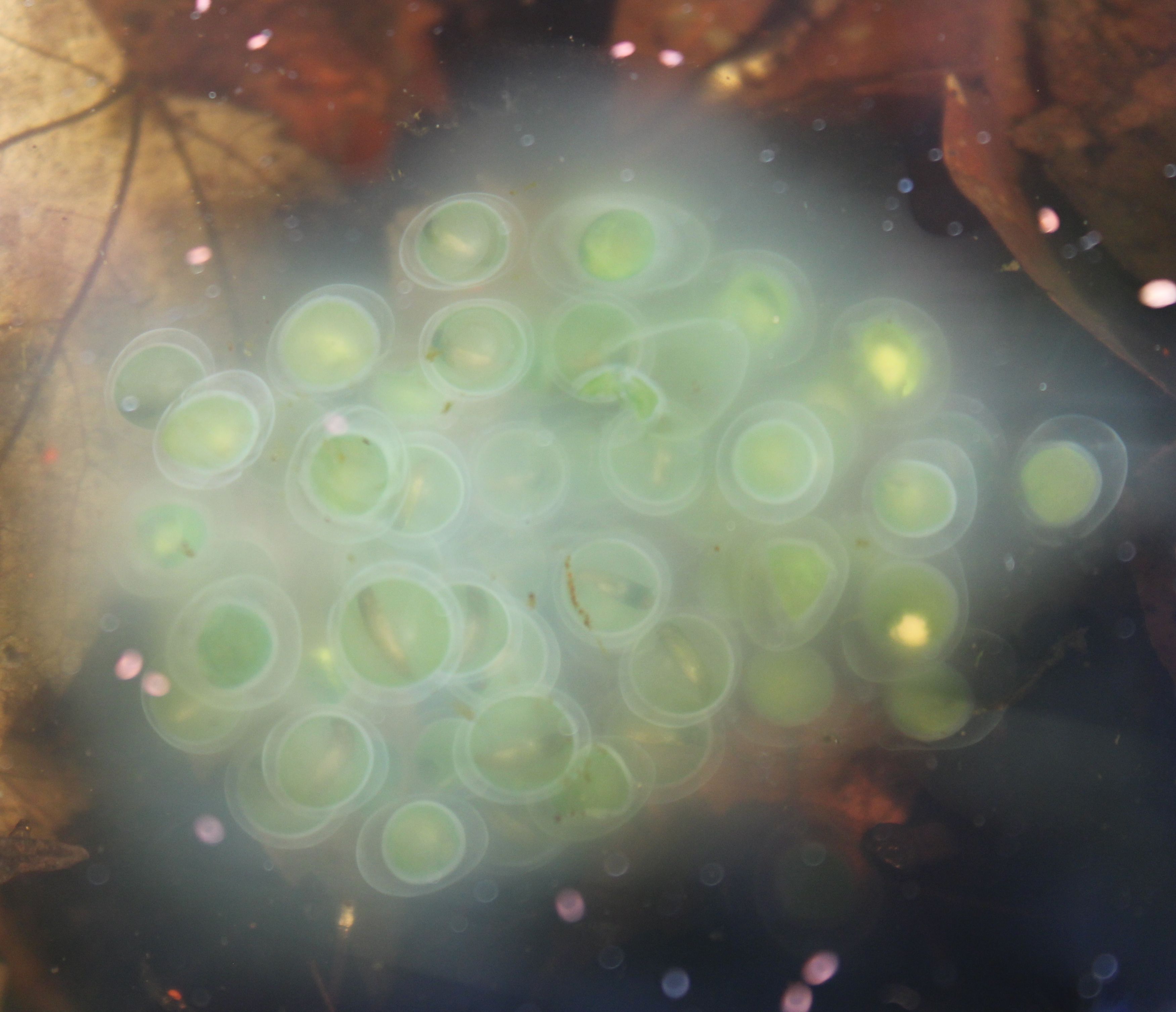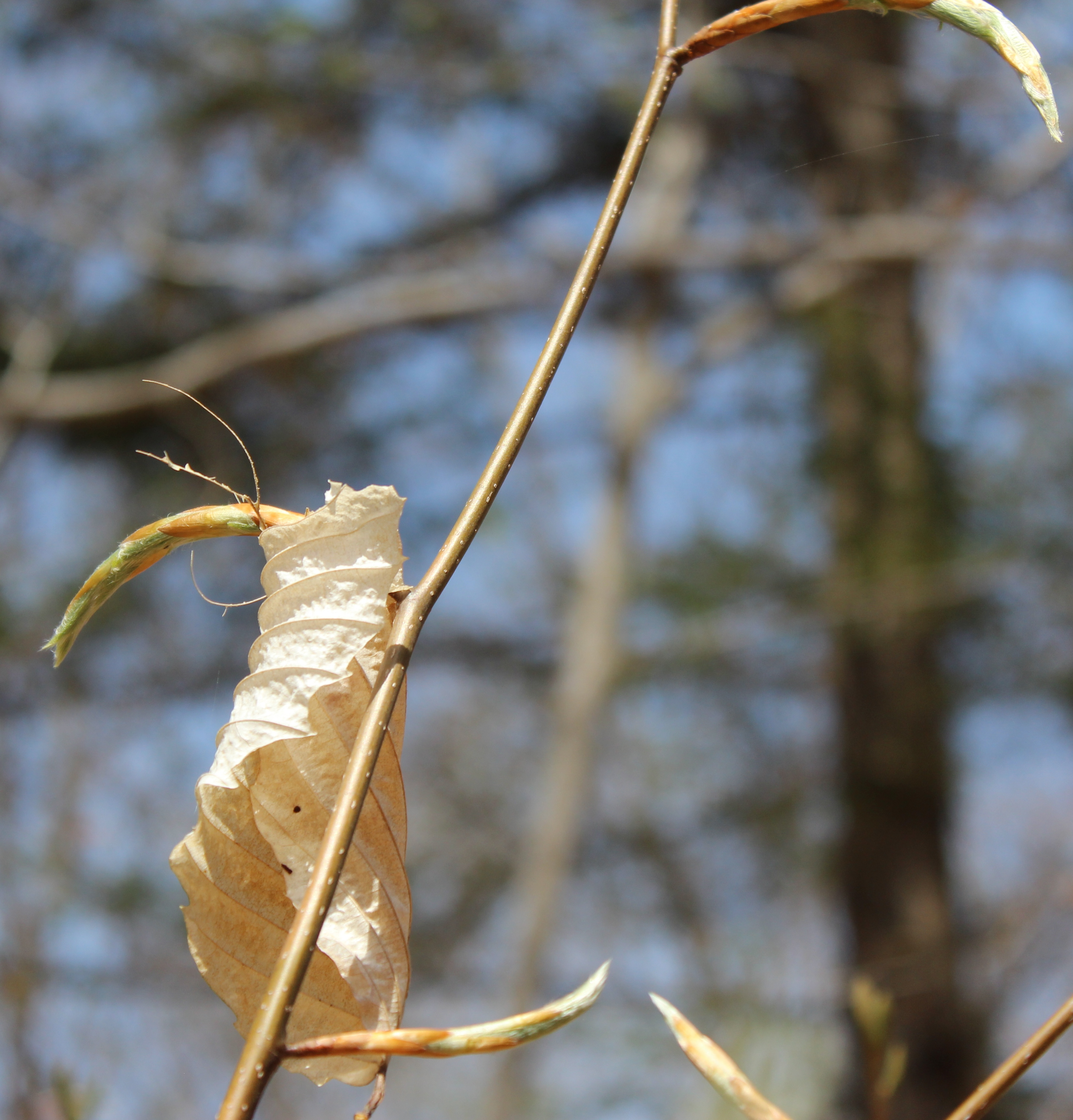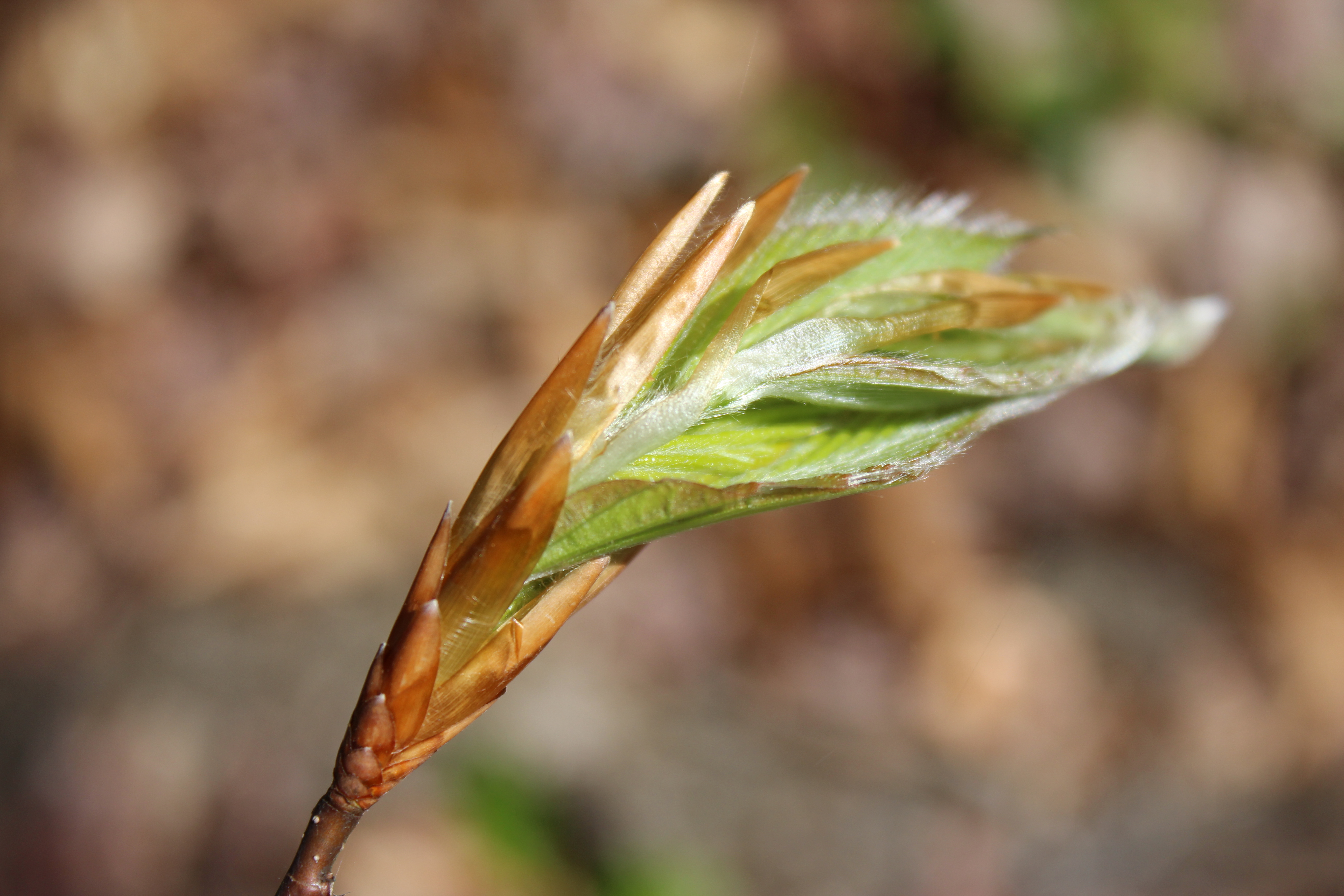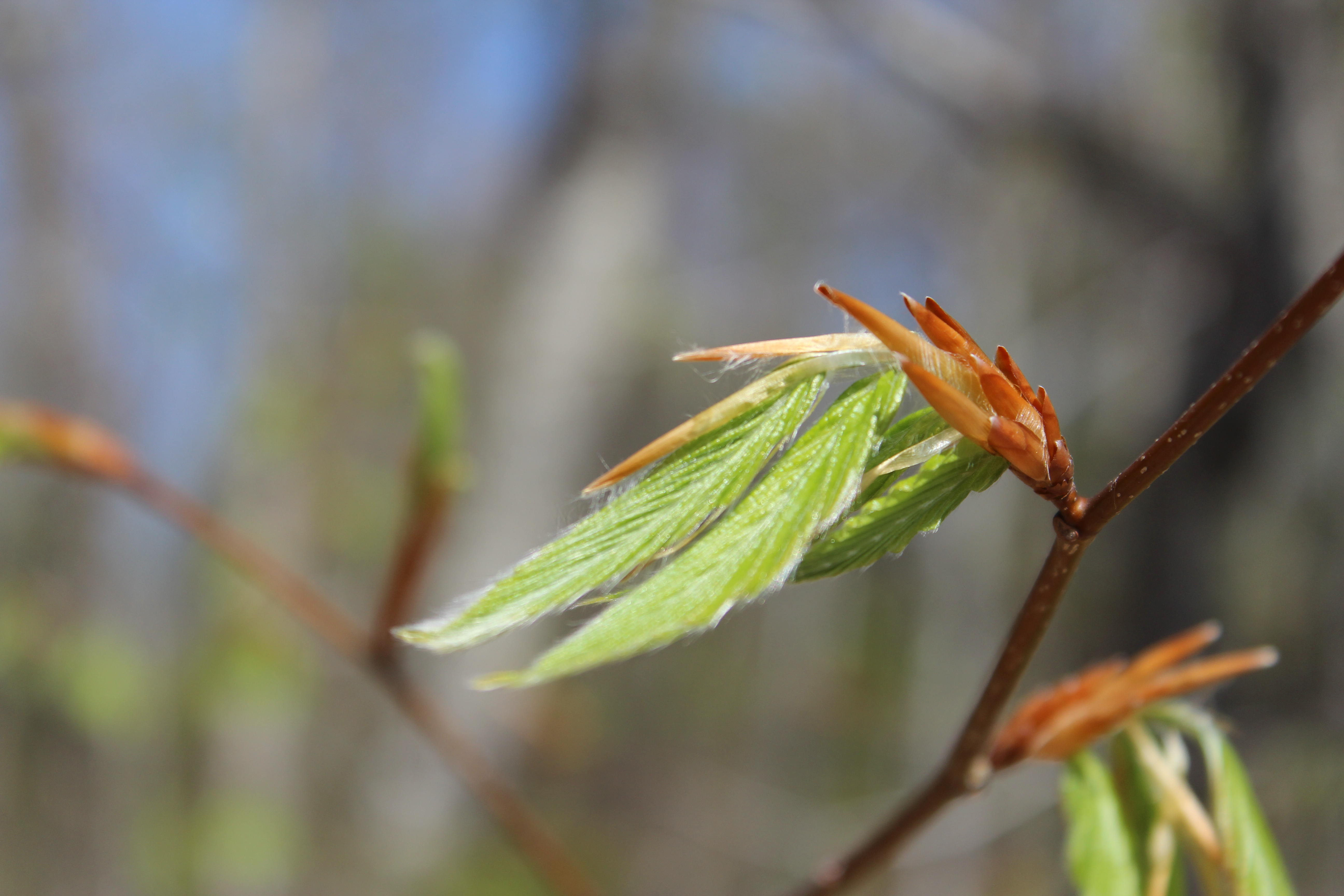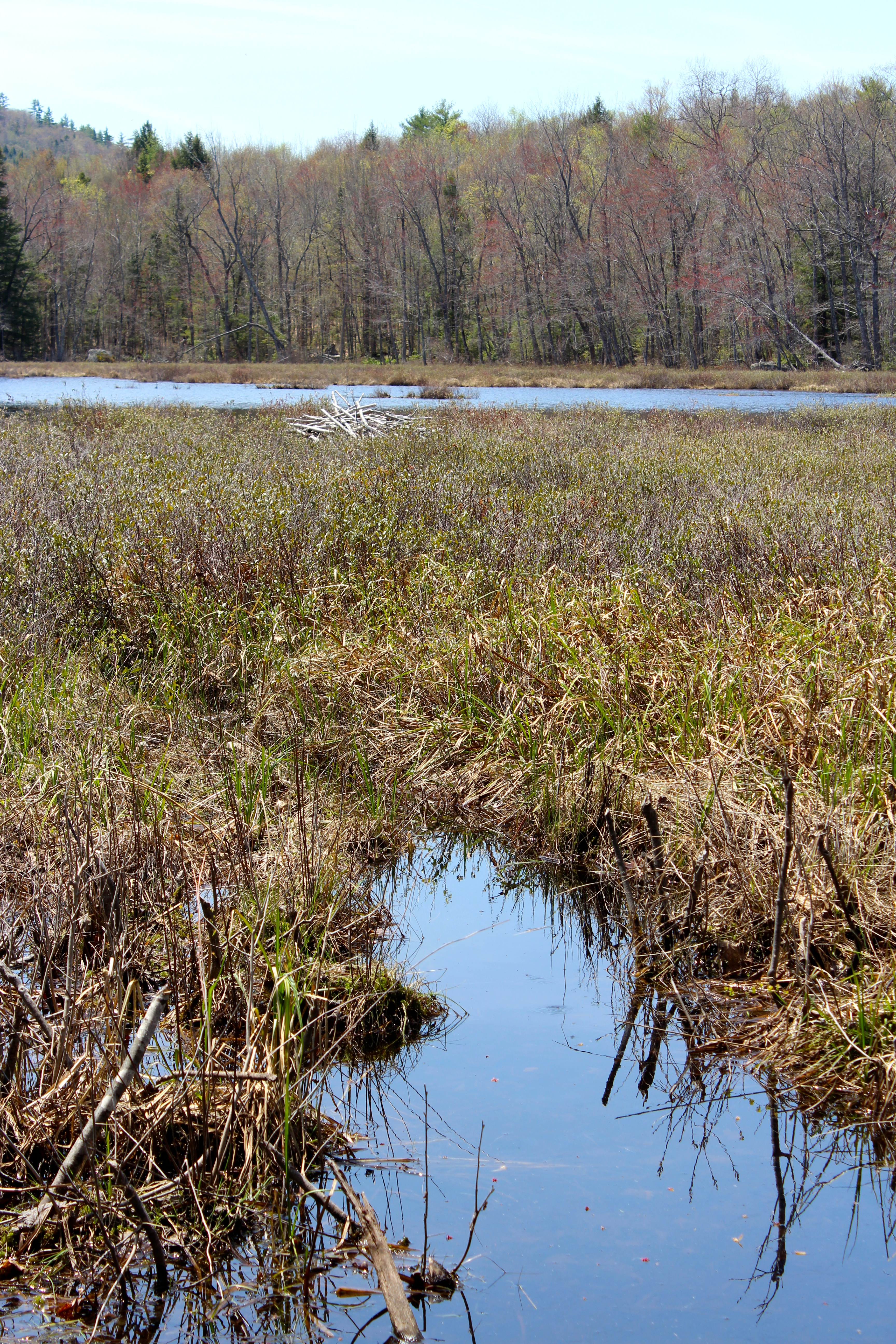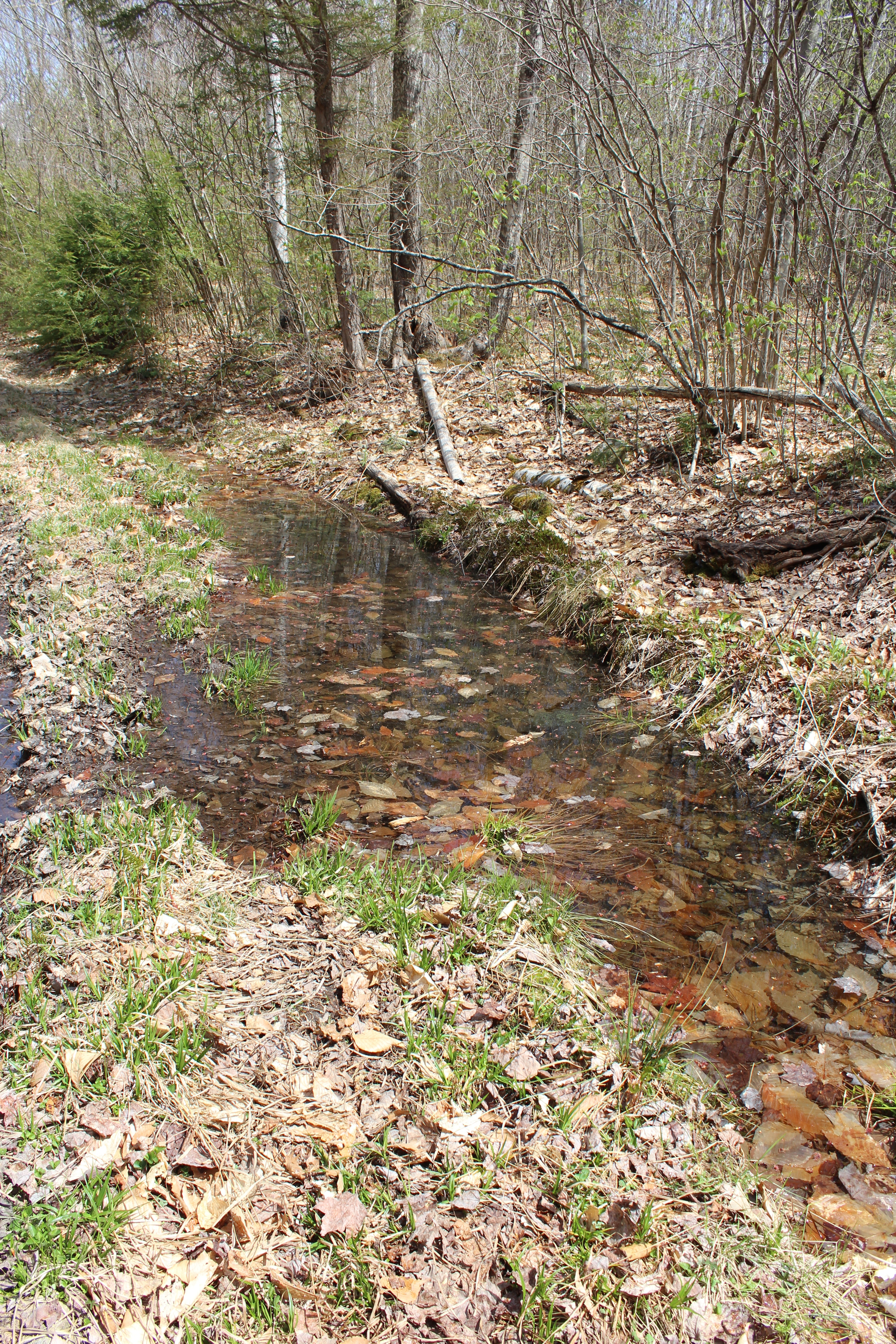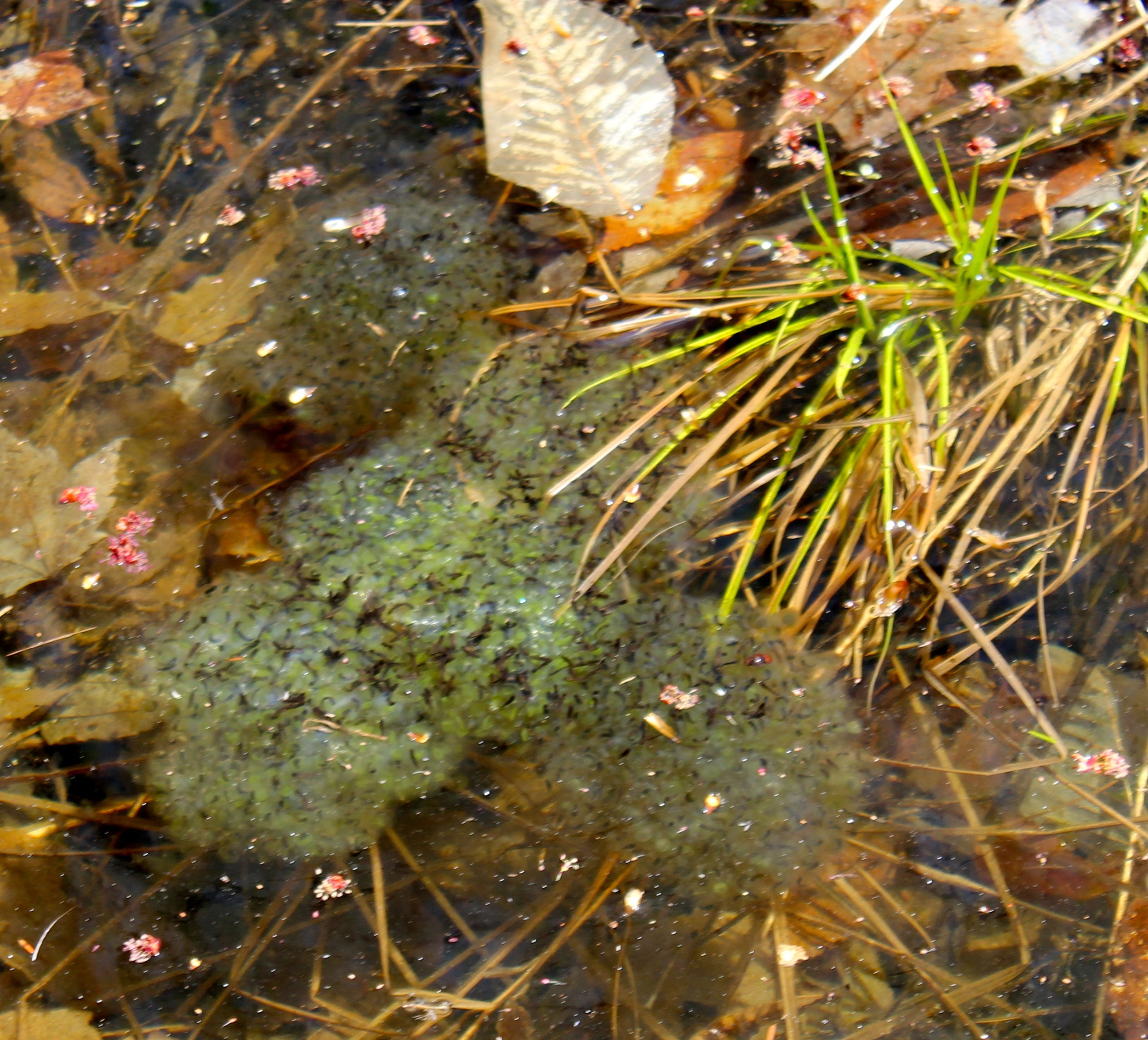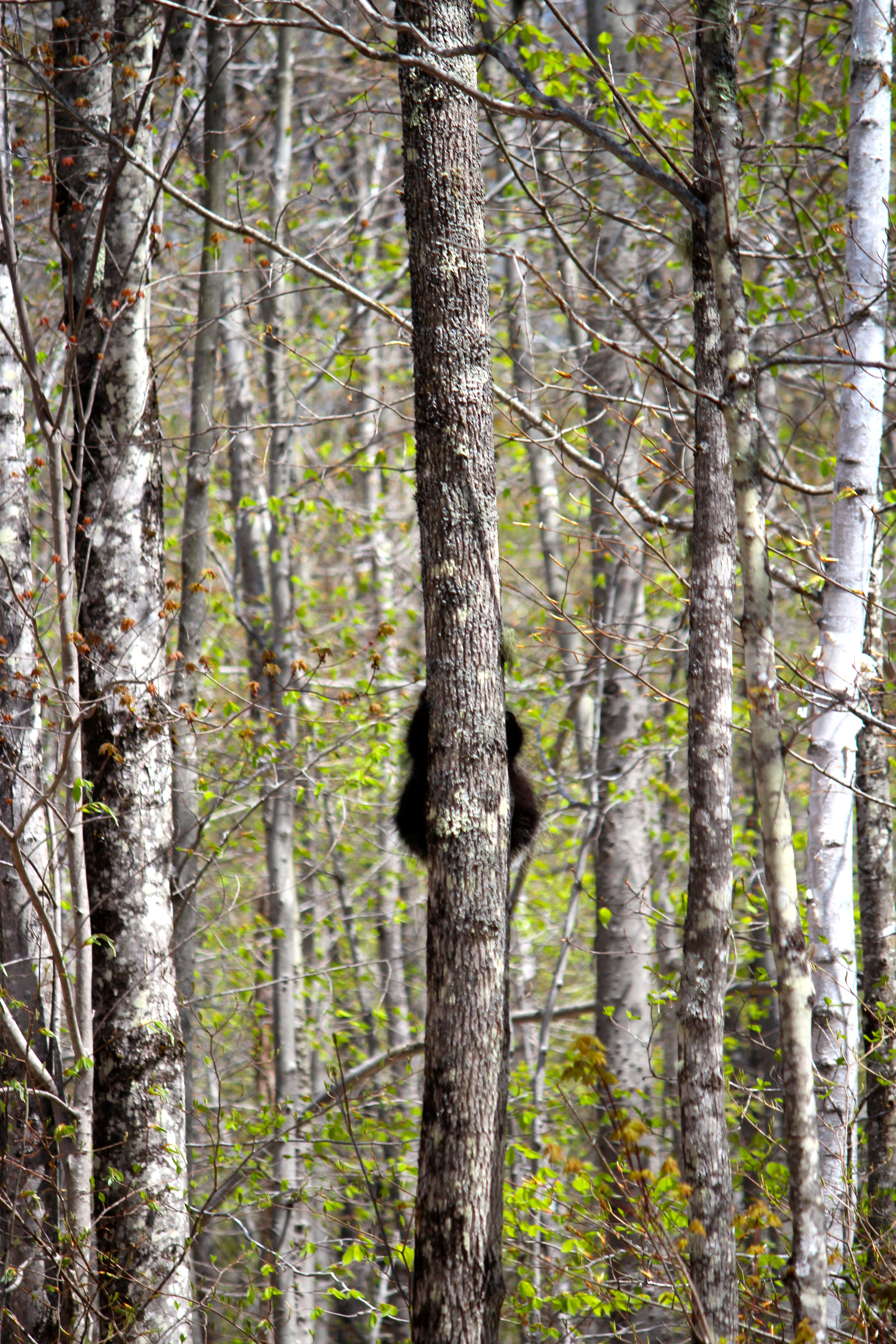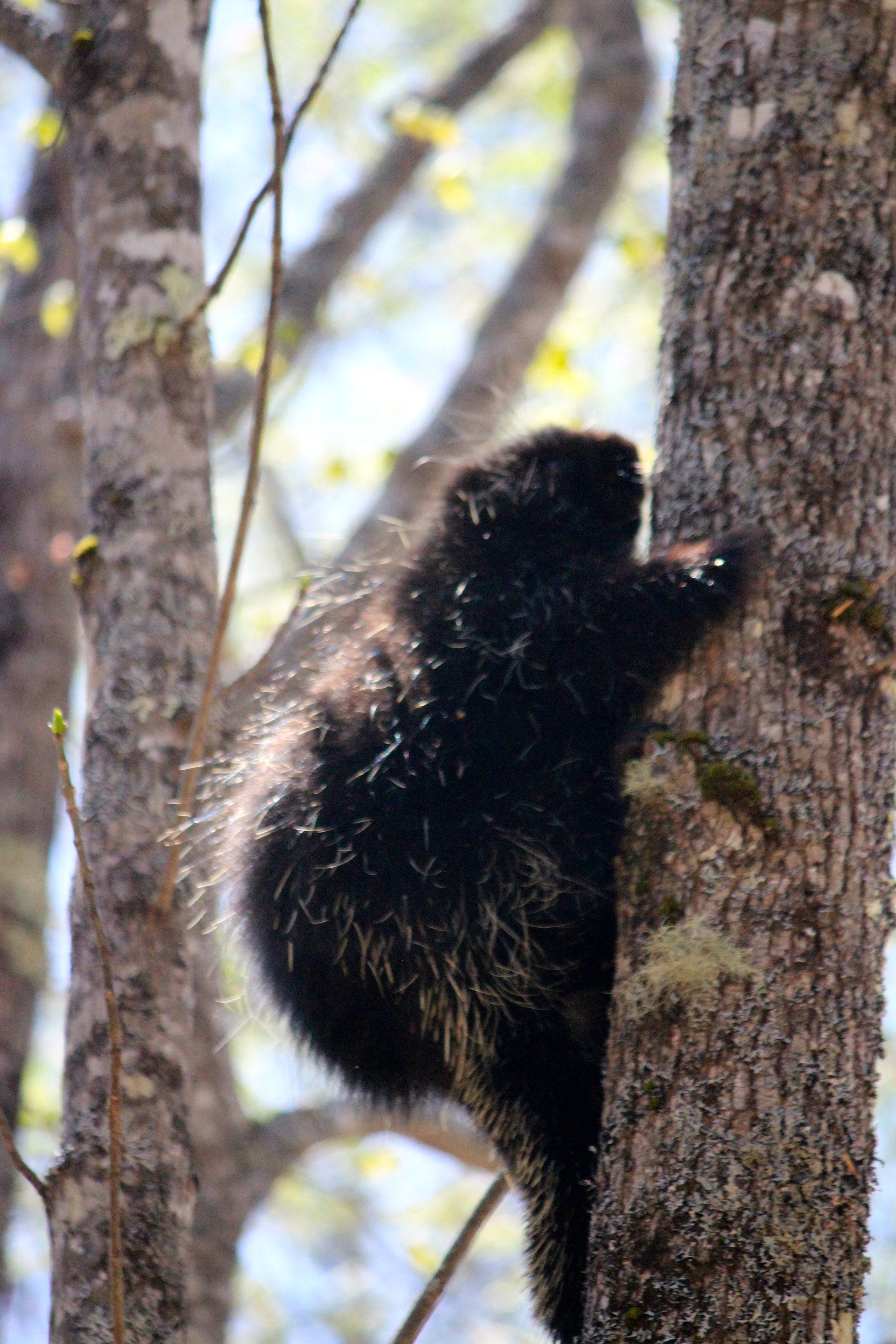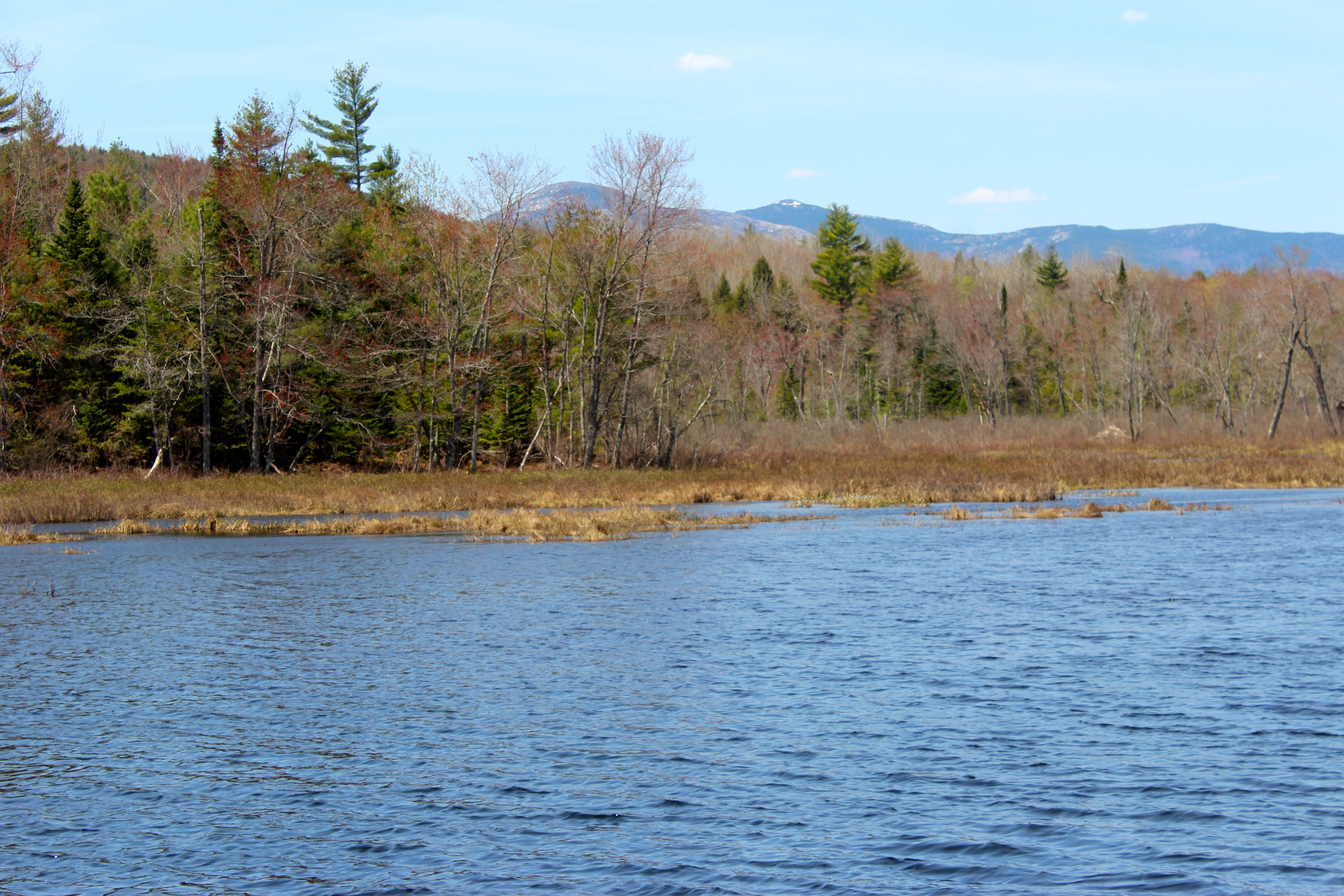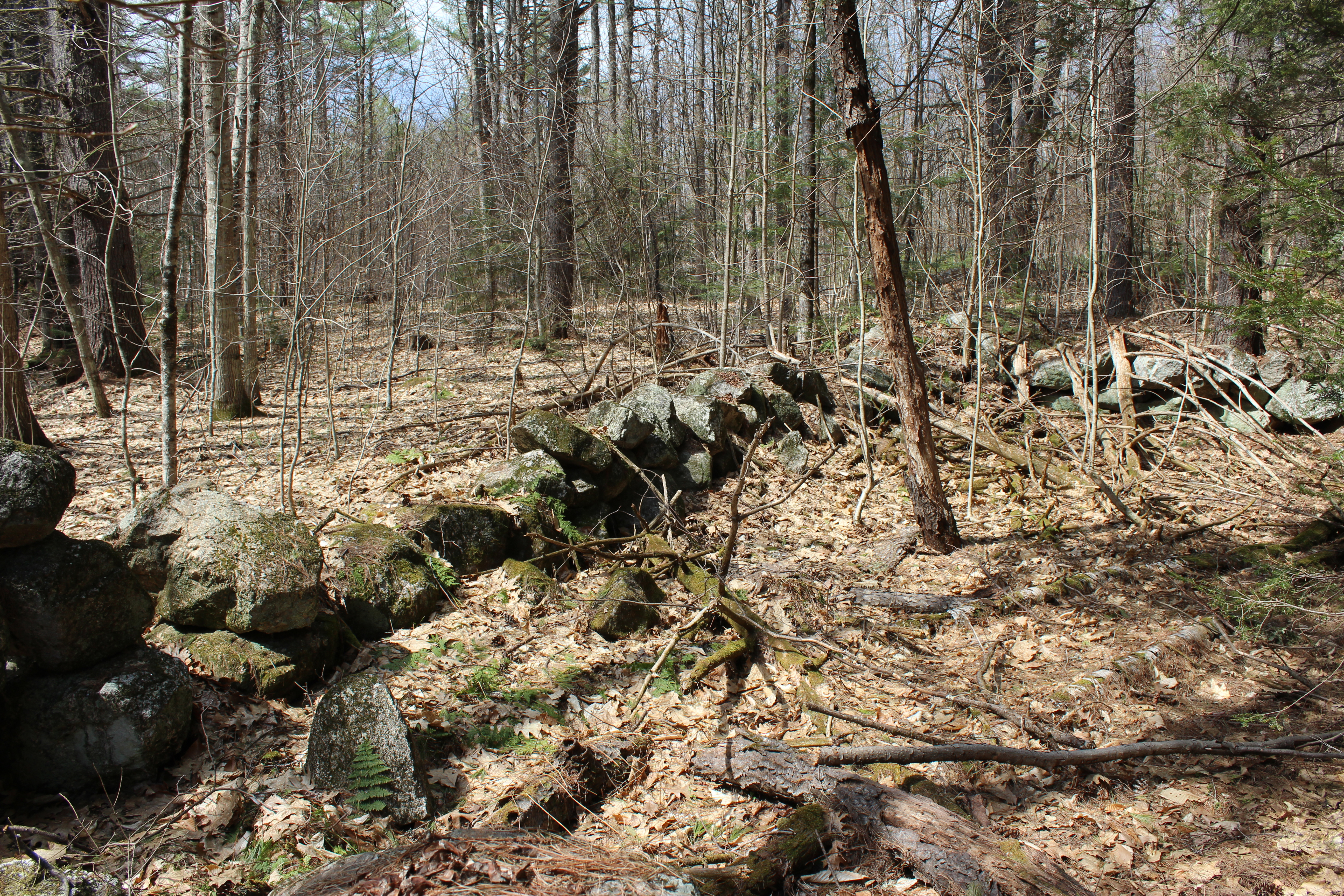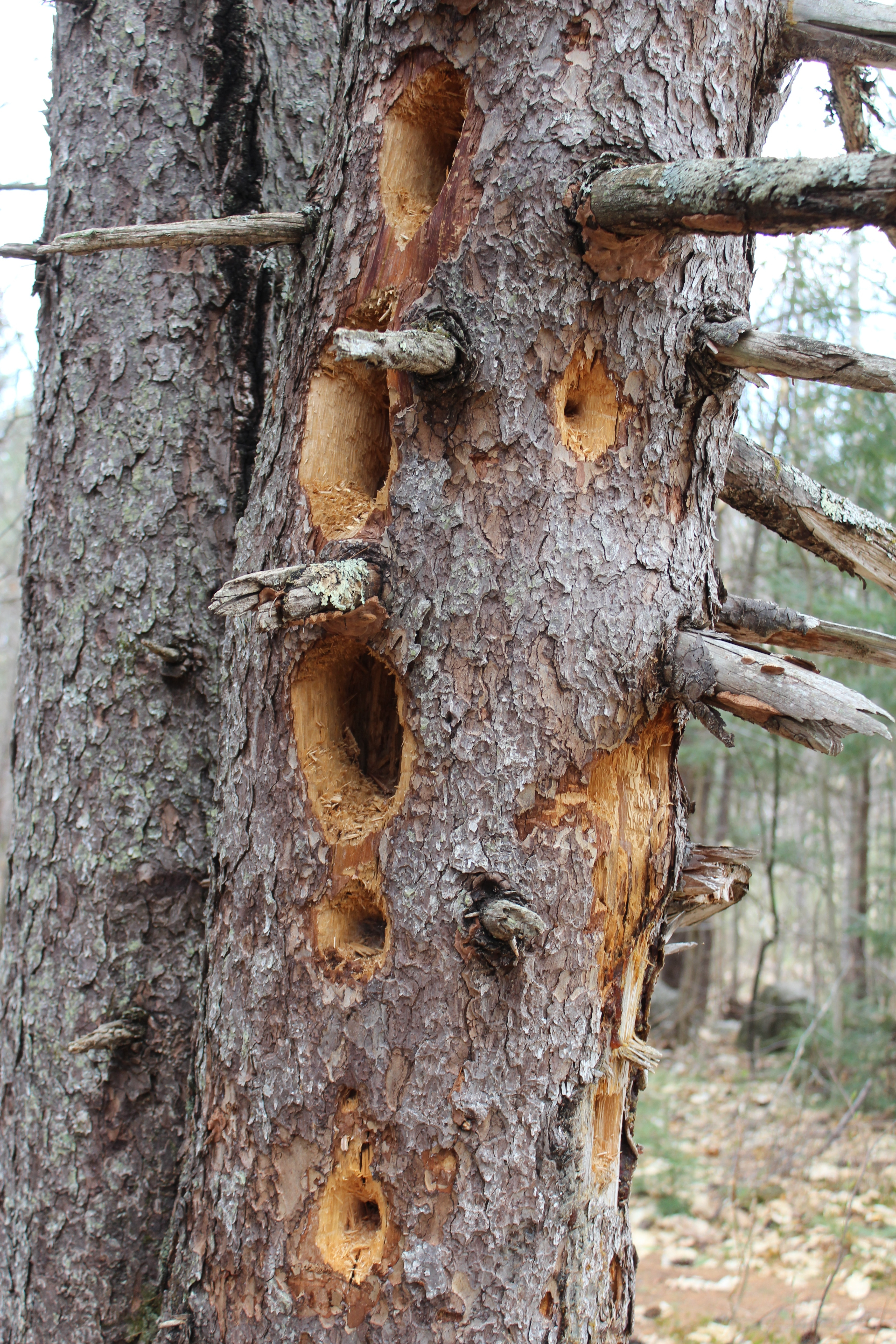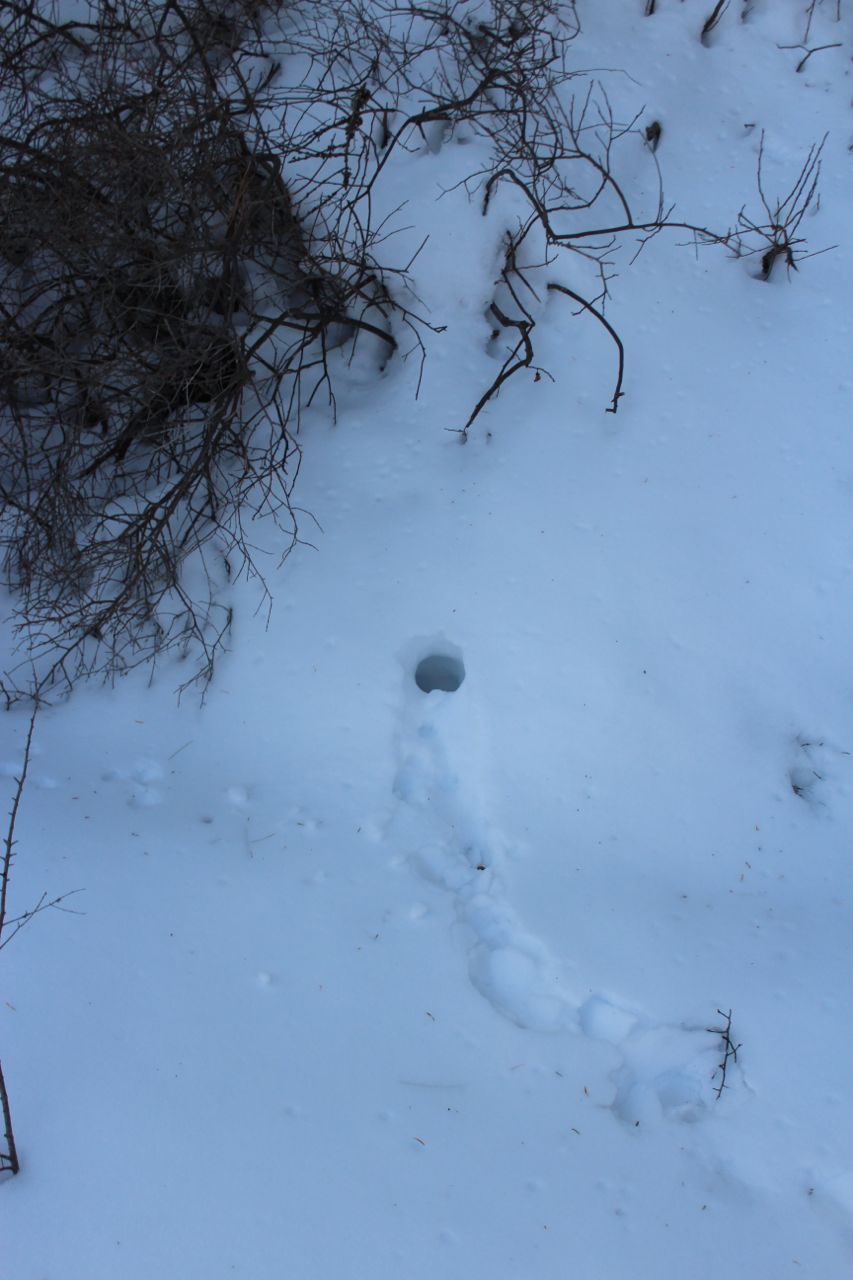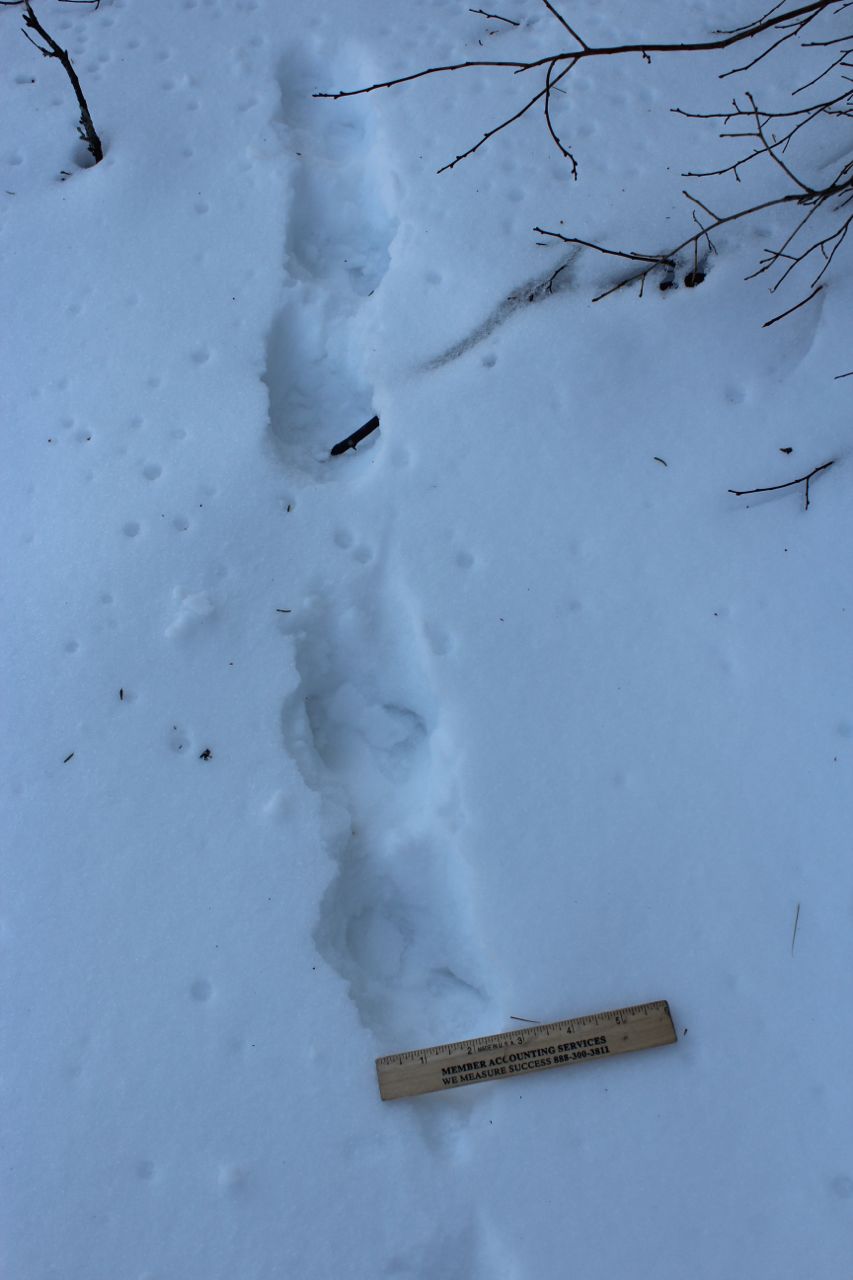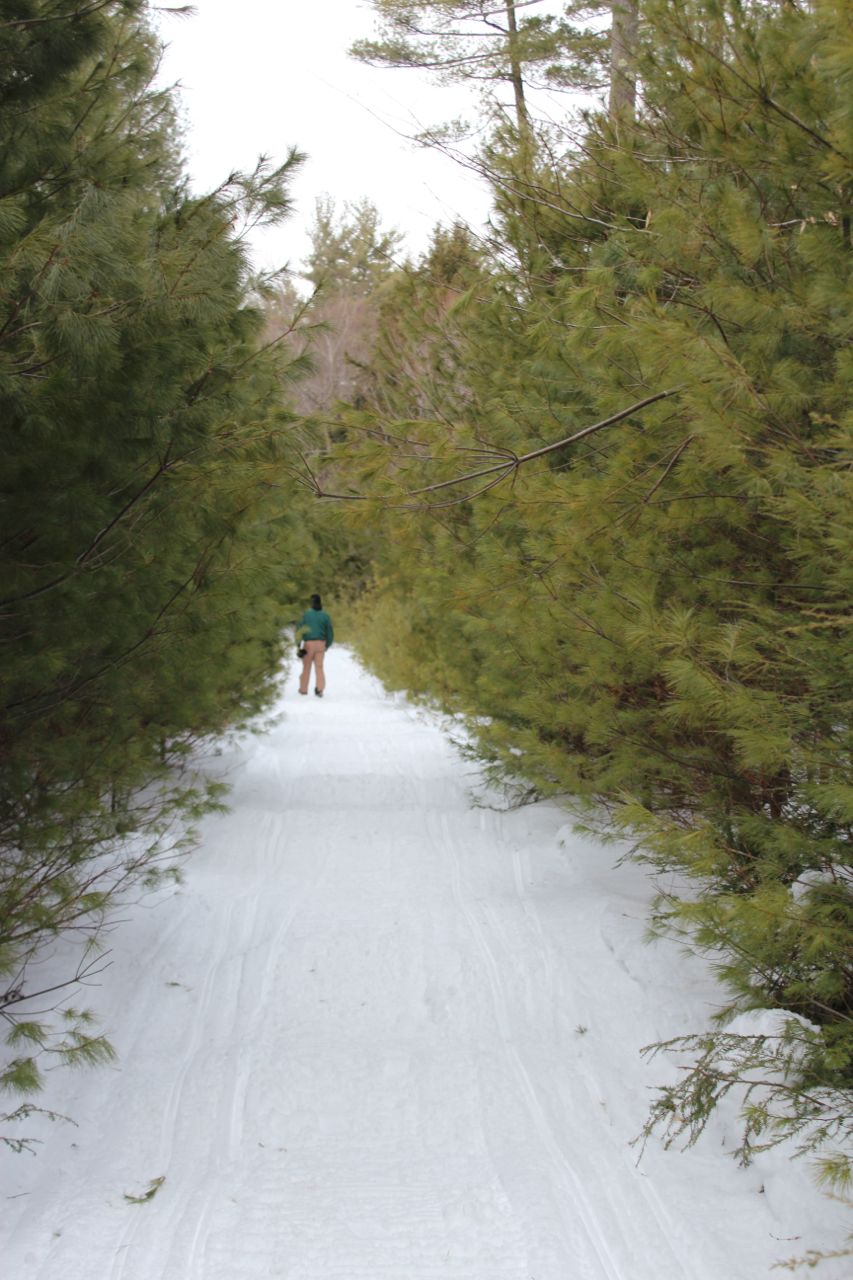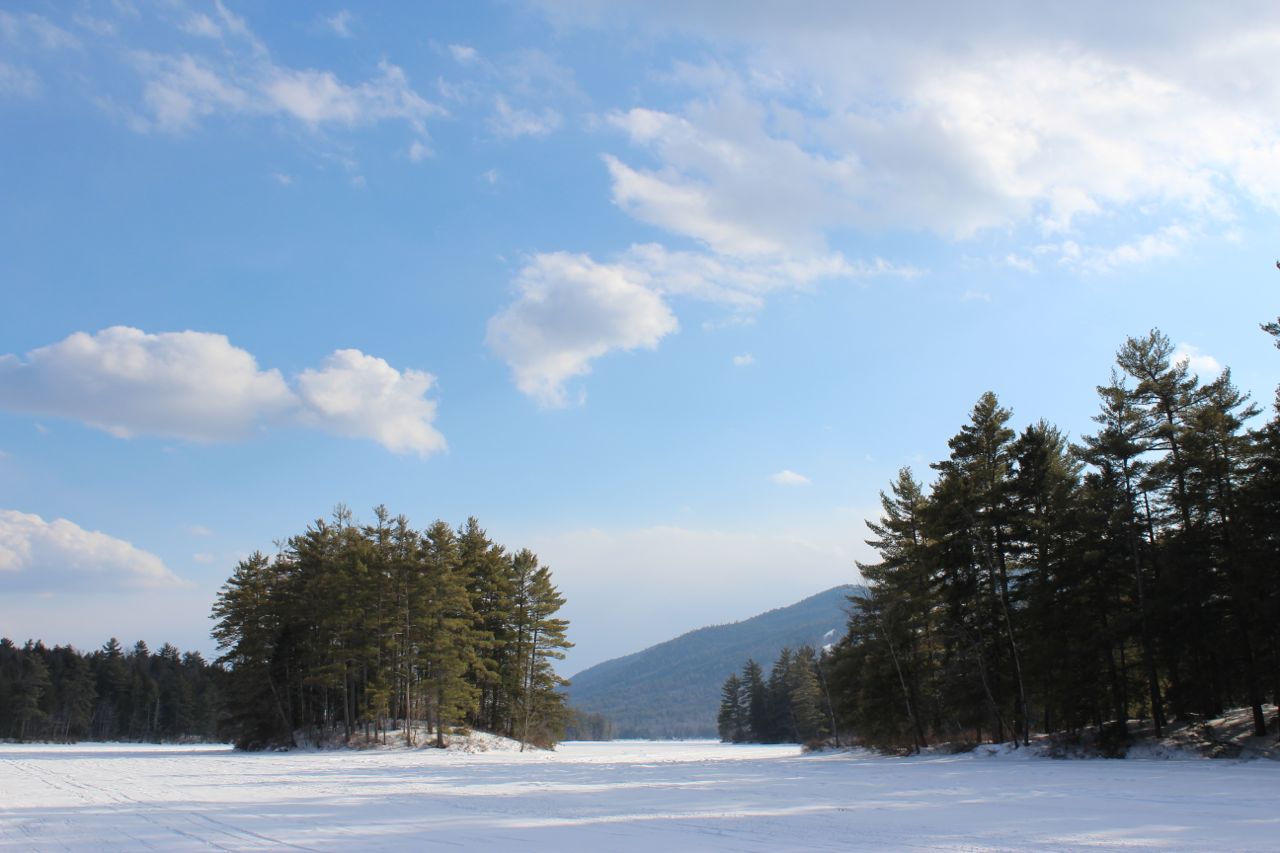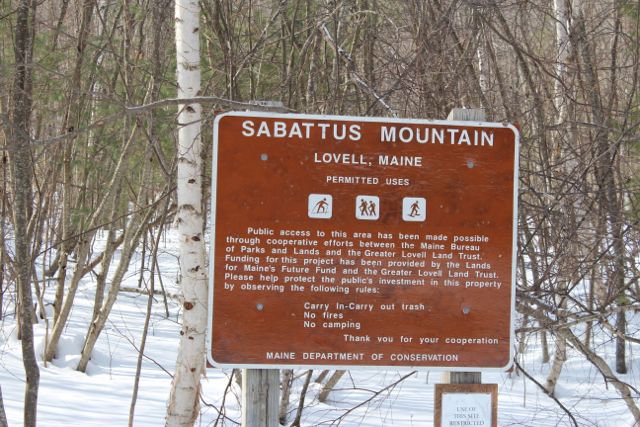
Spotlight on Sabattus

Following this morning’s Greater Lovell Land Trust trek at Chip Stockford Reserve, where we helped old and new friends form bark eyes as they examined various members of the birch family, my feet were itchy. Not in the scratchy sort of way–but rather to keep moving.

It was a lovely day for a hike and Sabattus Mountain in Lovell was my destination. I love this little mountain because it offers several different natural communities and great views.

s-com 1

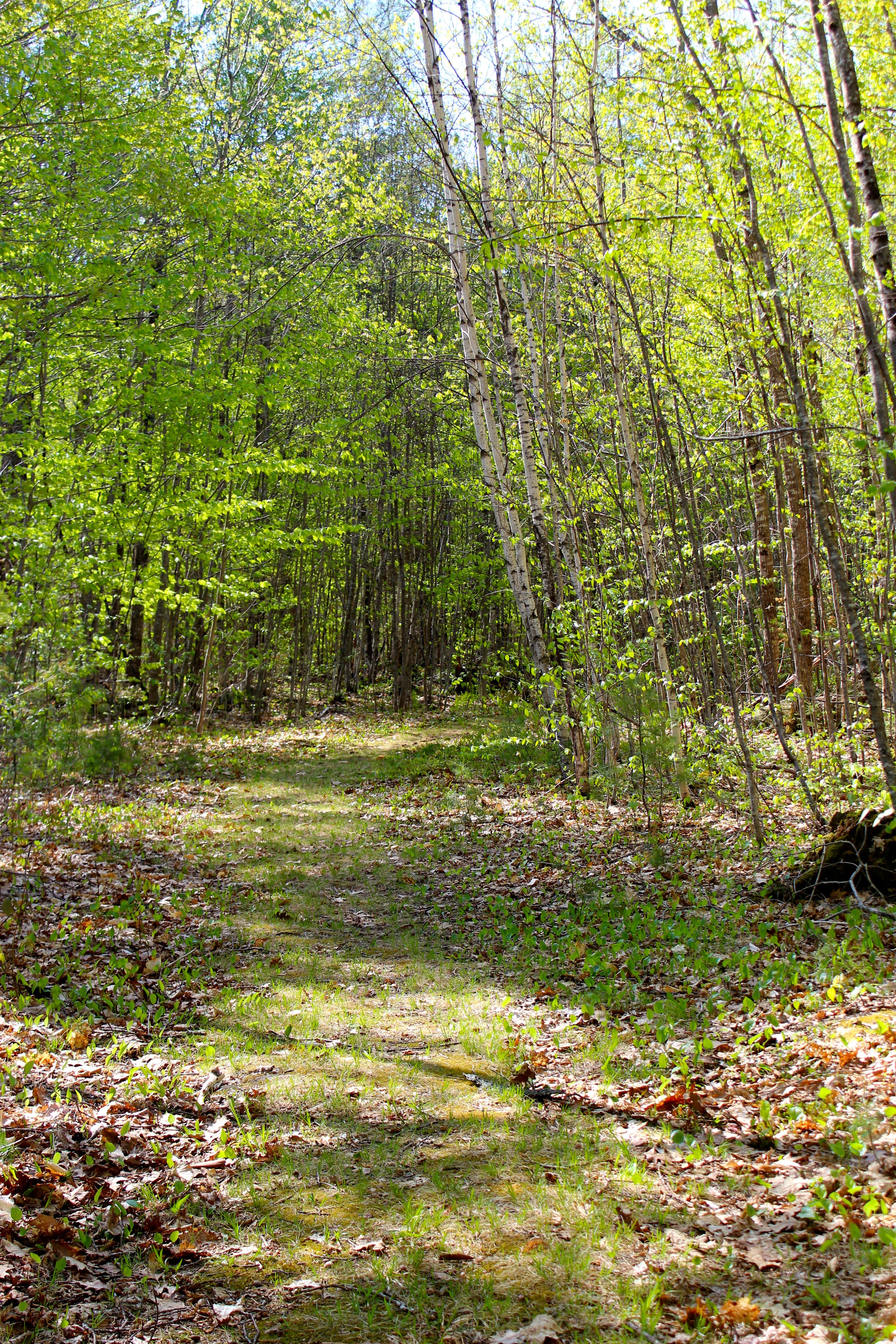
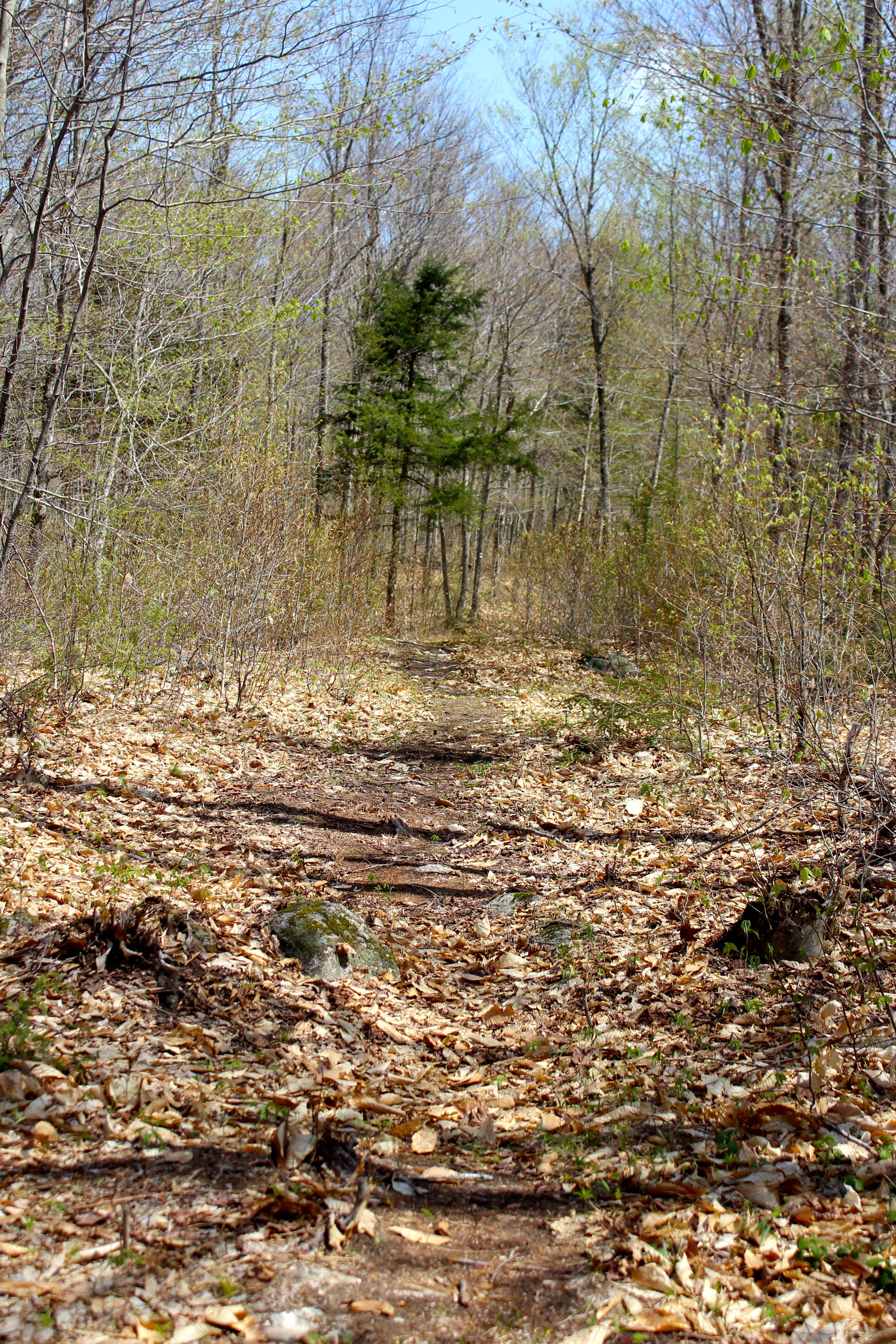
Though there are a few softwoods on the lower portion of the trail, it’s really the land of a hardwood mix.
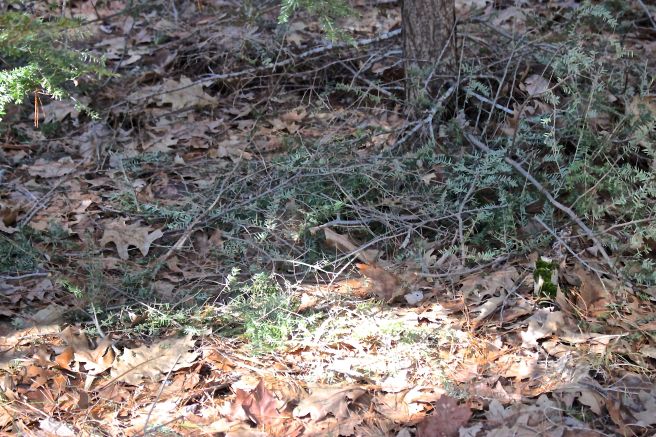
s-downed twigs

About halfway up, the neighborhood switches to a hemlock-pine-oak community. It was then that I began looking for downed hemlock twigs in an array at the base of trees. I’ve found them here before, and today I wasn’t disappointed.

s-porky chew 3

The twigs had been chewed off and dropped by a porcupine as evidenced by the 45˚-angled cut and incisor marks. Though red squirrels also nip off the tips of hemlock twigs, they do just that–nip the tips. Porcupines cut branches.
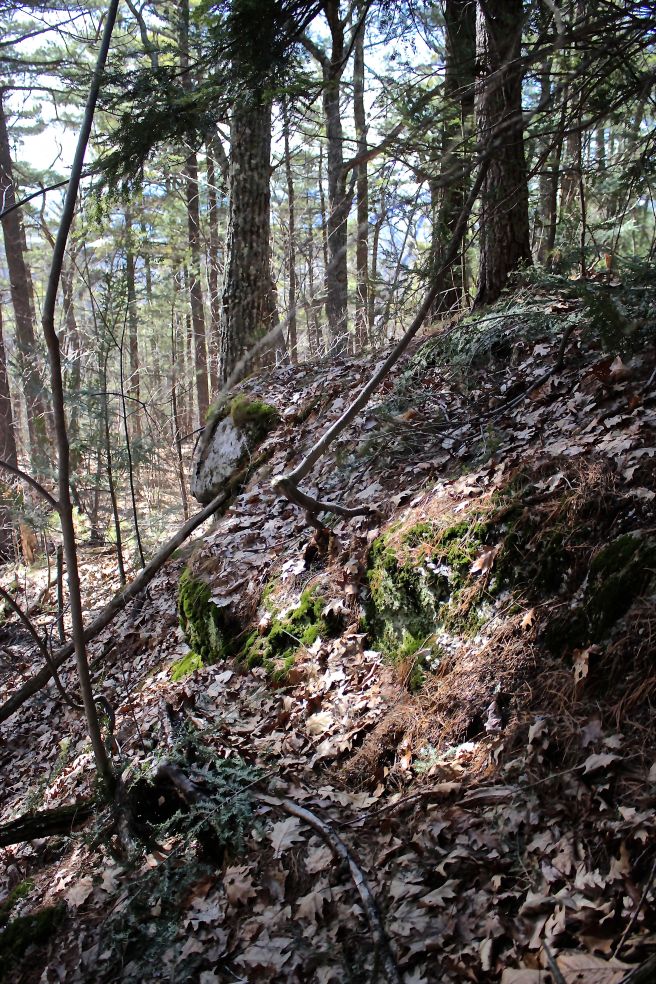
s-porky cliff

Downed branches usually mean scat, but I searched high and low and under numerous trees that showed signs of activity and found none. A disappointment certainly.

s-pippipsewa

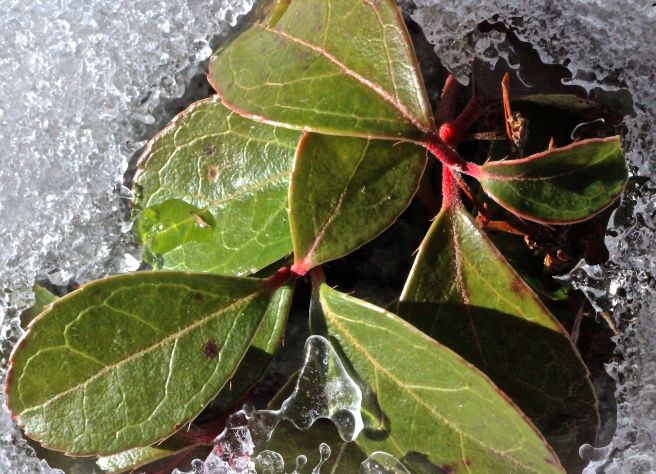
My search, however, led me to other delightful finds that are showing up now that most of the snow has melted, like this pipsissewa that glowed in the afternoon sun. As is its habit, the shiny evergreen leaves look brand new–even though they’ve spent the winter plastered under snow and ice. A cheery reminder that spring isn’t far off.

s-Pleasant 1

At the summit, I got my bearings–the ridge of Pleasant Mountain and Shawnee Peak Ski Area to the southeast.
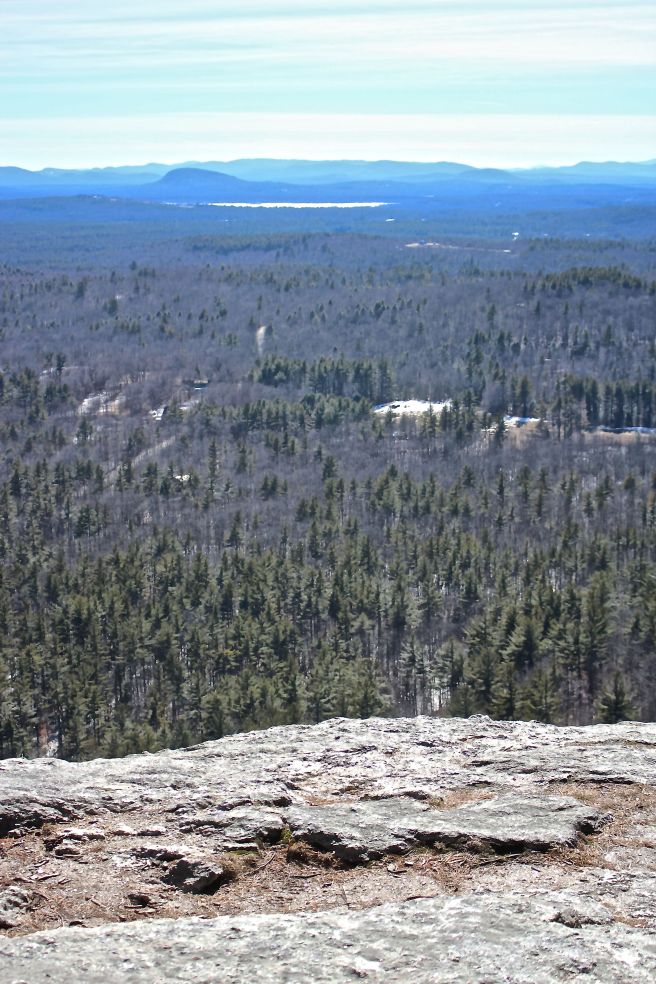
s-mount tom & kezar pond

To the southwest, the asymmetrical Roche Moutonnée, Mount Tom, visible as it stands guard over Kezar Pond in Fryeburg.

s-Kearsarge 2

And to the west, Kezar Lake backed by Mount Kearsarge in New Hampshire. I wanted to venture further out on the ledge, but some others hikers had arrived and I opted not to disturb their peace.
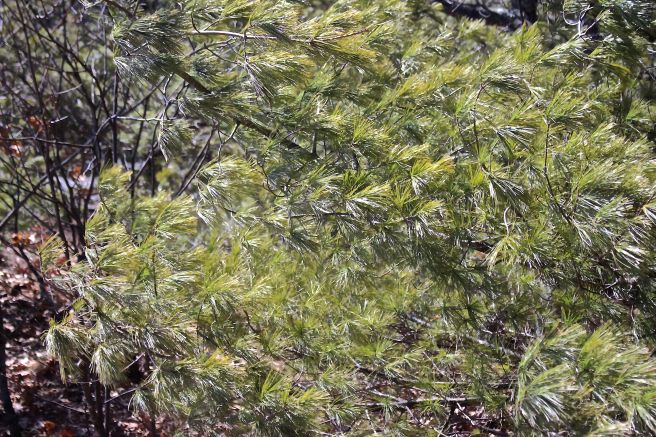
s-summit wind

Instead, I sat for a few minutes and enjoyed the strong breeze offering possibilities as it floated over the summit and me.
s-porky cuts1

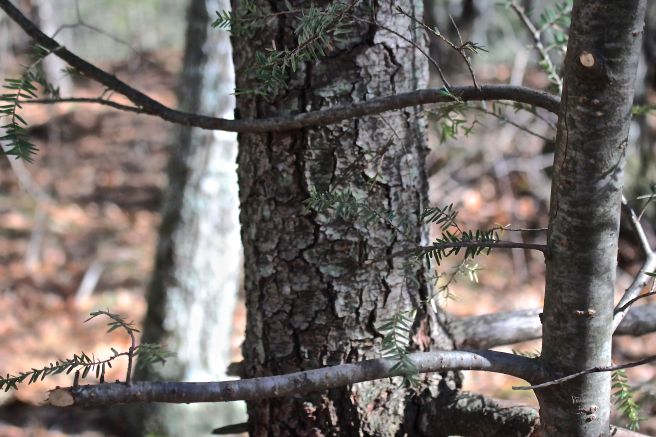
Crossing the ridge, I left the trail and found more porcupine trees, including this young hemlock that had several cuts–look in the upper right-hand corner and lower left hand. A number of younger trees along this stretch will forever be Lorax trees.
s-golden moonglow1

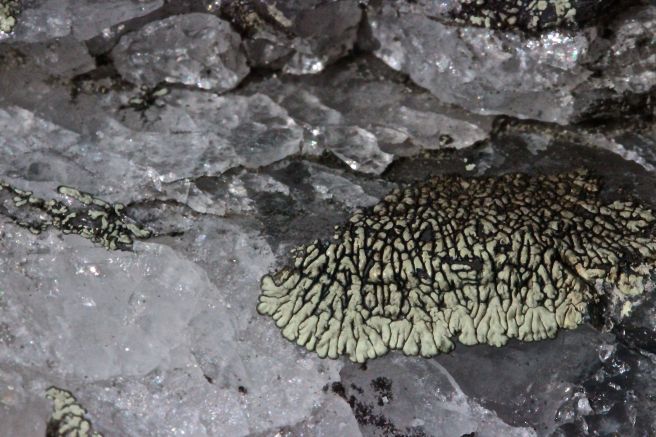
On the outcrop of quartz, I paused to admire the golden moonglow lichen–it’s almost as if someone drew each hand-like section in black and then filled in the color, creating an effect that radiates outward.
s-polypody patch

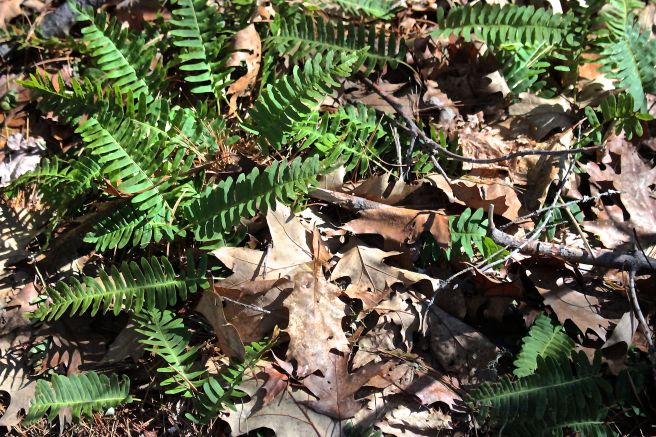
I was pleasantly surprised to find a patch of polypody ferns on what appears to be the forest floor but was actually the rocky ridge. Notice how open-faced it is, indicating that the temperature was quite a bit warmer than what I’d seen on cold winter days.

s-polypody sun

Sunlight made the pinna translucent and the pompoms of sori on the backside shone through.

s-glacial 1

The trail doesn’t pass this glacial erratic, but I stepped over the logs indicating I should turn left and continued a wee bit further until I reached this special spot.

s-porky scat 1

Its backside has been a porcupine den forever and ever. Nice to know that some things never change.

s-hemlocks and oaks

After returning to the trail, I followed it down through the hemlocks and oaks. This is my favorite part of the trail and though it’s a loop, I like to save this section for the downward hike–maybe because it forces me to slow down.
s-fairies 1

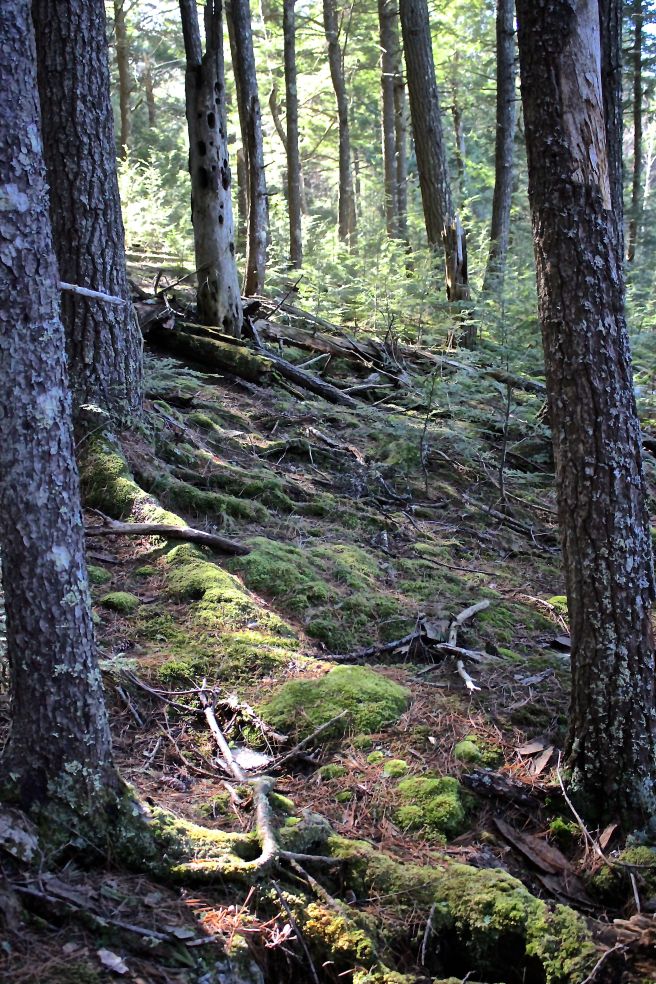
For one thing, it features the land of the fairies. I always feel their presence when here. Blame it on my father who knew of their existence.

s-fairies 2

I had a feeling a few friends were home–those who found their way into a fairy tale I wrote years ago. I left them be–trusting they were resting until this evening.
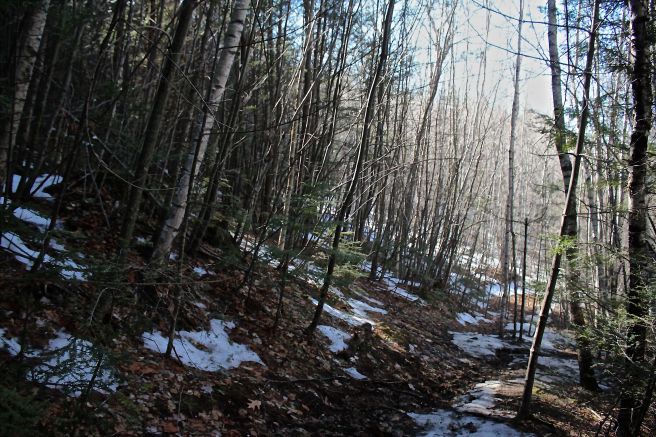
s-community transition 1

As swiftly as the community changed on the upward trail, the same was true on my descent.
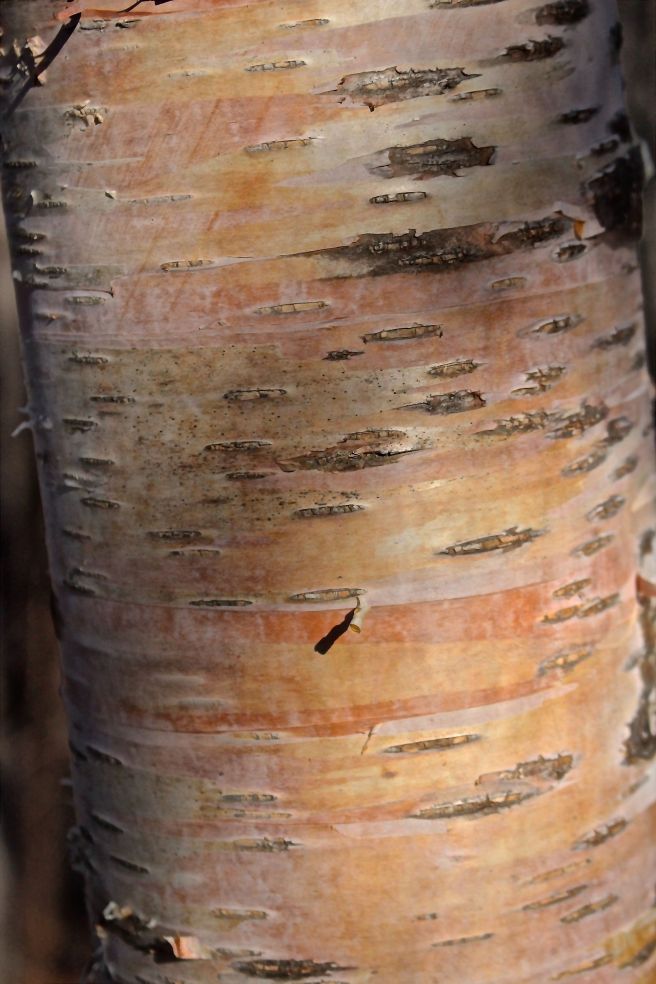
s-birch bark color

On our morning trek, we’d looked at paper birch, but none of the trees we saw showed the range of colors like this one–a watercolor painting of a sunset.

s-birch bark 1

This one shows the black scar that occurs when people peel bark. The tree will live, but think about having your winter coat torn off of you on a frigid winter day. Or worse.

s-black birch 1

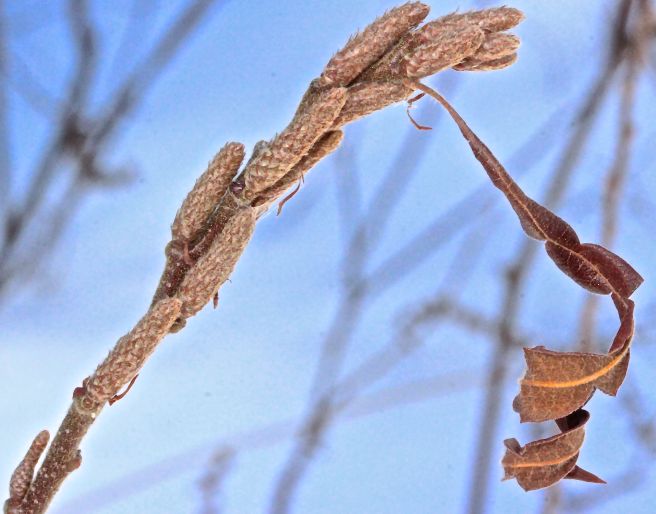
Off the trail again, I paused by a few trees that I believe are black birch. Lately, a few of us have been questioning black birch/pin cherry because they have similar bark. The telltale sign should be catkins dangling from the birch branches. I looked up and didn’t see catkins, but the trees may not be old enough to be viable. This particular one, however, featured birch polypores. So maybe I was right. I do know one thing–it’s not healthy.

s-pines 2a

And then I reached a section of trail that I’ve watched grow and change in a way that’s more noticeable than most. I counted the whorls on these white pines and determined that they are about 25 years old. I remember when our sons, who are in their early twenties, towered over the trees in their sapling form. Now two to three times taller than our young men, the trees crowded growing conditions have naturally culled them.

s-birch planter

Nature isn’t the only one that has culled the trees. Following their selection to be logged, however, some became planters for other species.
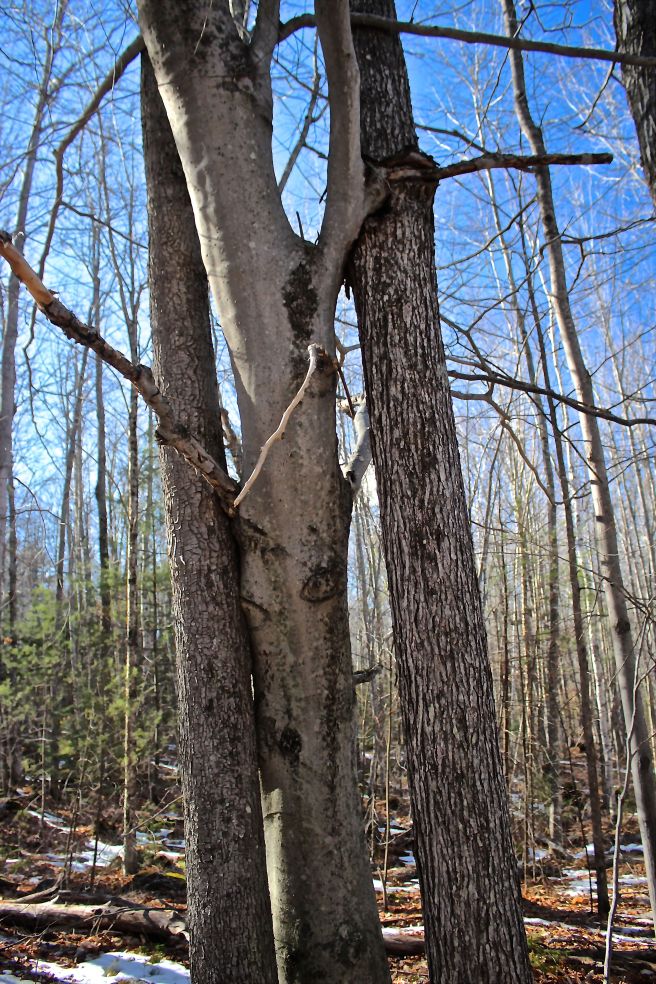
s-3 trees

Nearing the end of the trail another view warmed my heart. Three trees, three species, three amigos. Despite their differences, they’ve found a way to live together. It strikes me as a message to our nation.

Perhaps our leaders need to turn the spotlight on places like Sabattus. It’s worth a wonder.
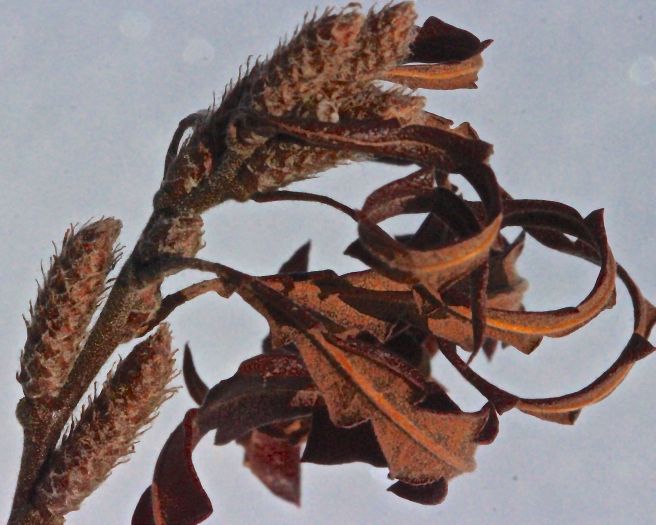


Moi–Bull in a China Shop

Several inches of fresh snow topped with freezing rain two days ago and the world is transformed. I couldn’t decide whether to wear snowshoes, micro-spikes or neither. I choose micro-spikes, which seemed a good choice at the start, but not long into my 3.5 hour tramp through the Greater Lovell Land Trust’s John A. Segur Wildlife Refuge off Farrington Pond Road, I wished I chosen the snowshoes. At times the snow was soft, but other times it sounded as if glass was breaking as I crashed through it. Broken shards slide across the glazed surface. I was the bull in a china shop.

SB-sweet fern begin blue trailFrom the parking lot, I decided to begin via the blue trail by the kiosk. It doesn’t appear on the trail map, but feels much longer than the green trail–possibly my imagination. Immediately, I was greeted at the door of the shop by sweet fern, aka Comptonia peregrina (remember, it’s actually a shrub with foliage that appear fern-like). The striking color and artistic flow of the winter leaves, plus the hairy texture of the catkins meant I had to stop and touch and admire.
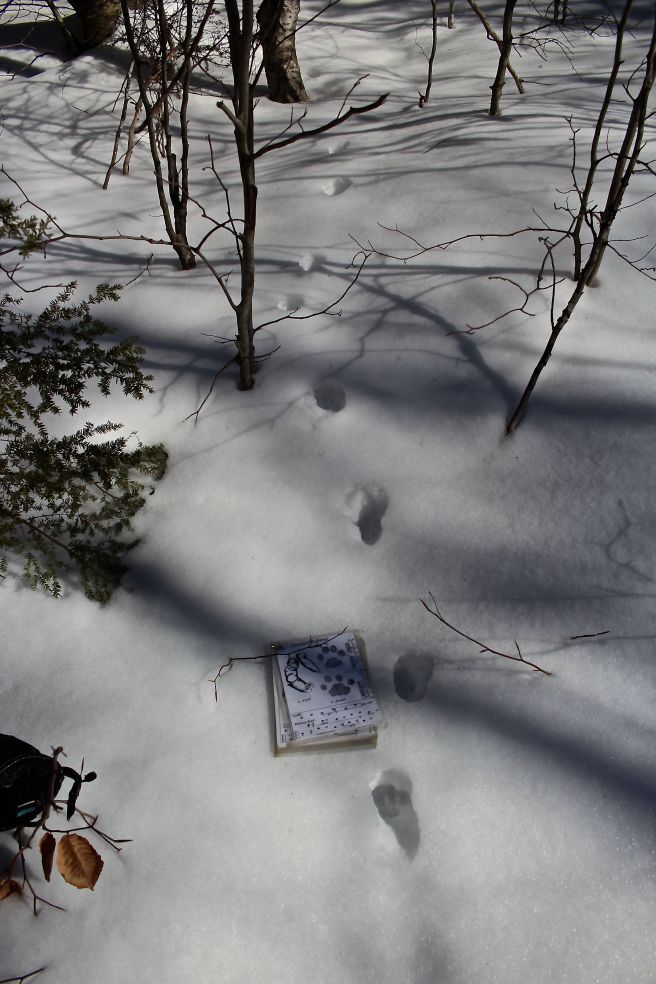
SB-bobcat1And only steps along the trail another great find–bobcat tracks. This china shop immediately appealed to moi.
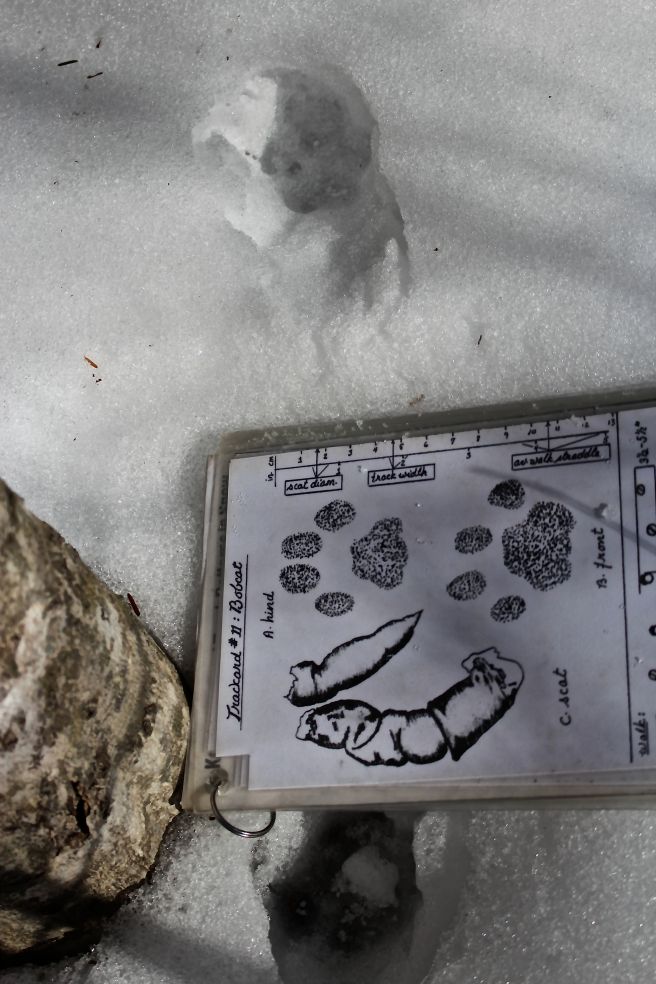
SB-bob 3My Trackards slid along the glassy surface, so it was difficult to show the print size. But . . . it is what it is. The bobcat crossed the trail a couple of times and even came back out to explore squirrel middens.

SB-rocksWhen I got to a ledgy spot, I decided to explore further–thinking perhaps Mr. Bob might have spent some time here. Not so–in the last two days anyway.

SB-red squirrel printThe best find in this spot–red squirrel prints. A few things to notice–the smaller feet that appear at the bottom of the print are the front feet–often off-kilter. Squirrels are bounders and so as the front feet touch down and lift off the back feet follow and land before the front feet in a parallel presentation. In a way, the entire print looks like two exclamation points.
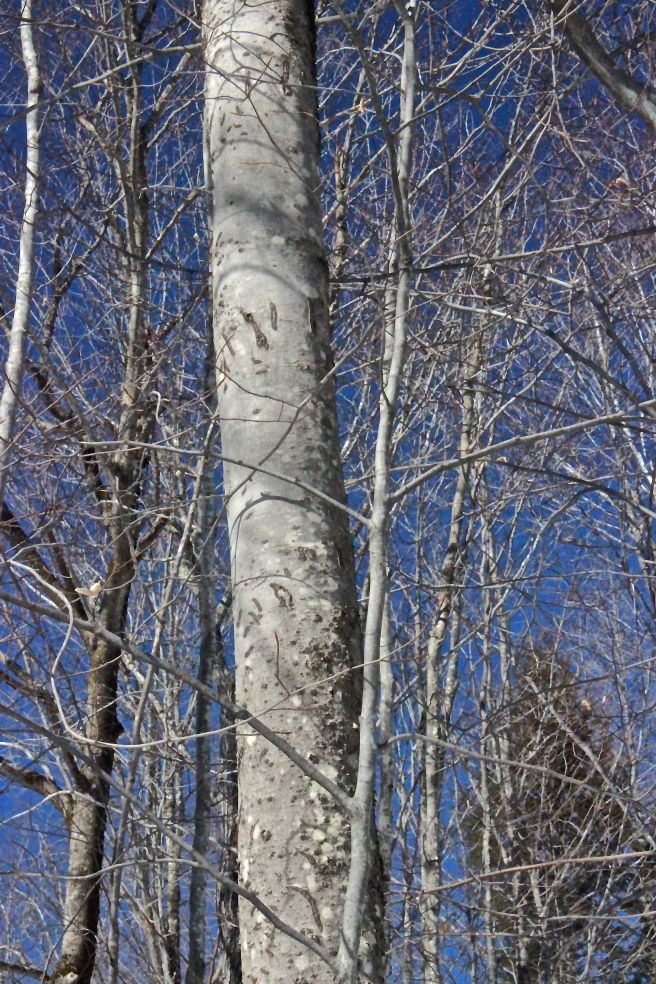
SB-bear 1As I plodded along, my eyes were ever scanning and . . . I was treated to a surprise. Yes, a beech tree. Yes, it has been infected by the beech scale insect. And yes, a black bear has also paid a visit.
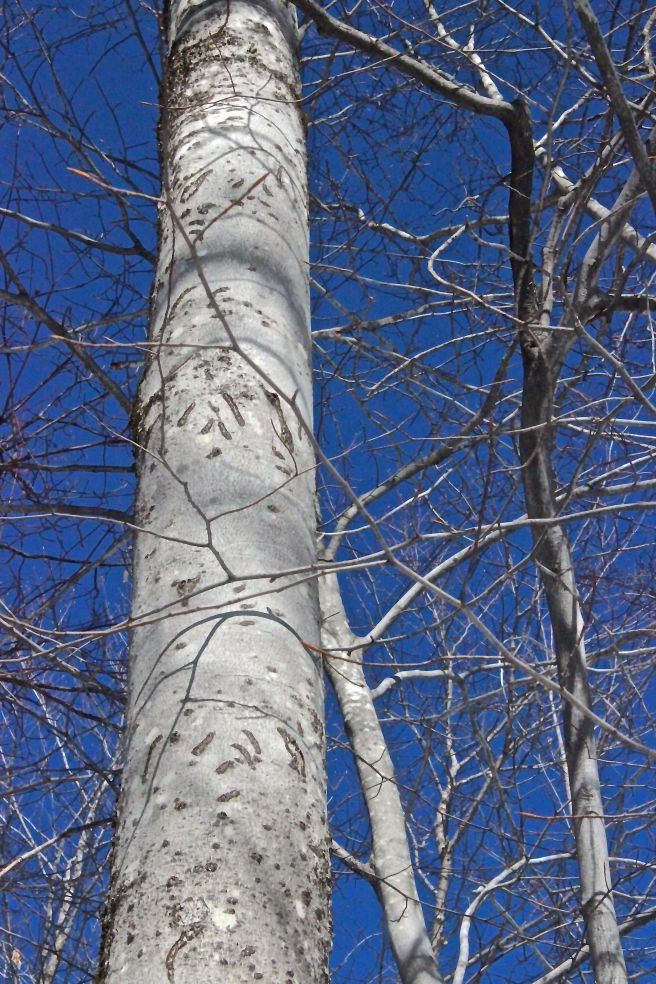
SB-bear 1aOne visit, for sure. More than one? Not so sure. But can’t you envision the bear with its extremities wrapped around this trunk as it climbs. I looked for other bear trees to no avail, but suspect they are there. Docents and trackers–we have a mission.

SB-beech nut1And what might the bear be seeking? Beech nuts. Viable trees. Life is good.

SB-right on red maplesExactly where is the bear tree? Think left on red. When you get to this coppiced red maple tree, rather than turning right as is our driving custom, take a left and you should see it. Do remember that everything stands out better in the winter landscape.
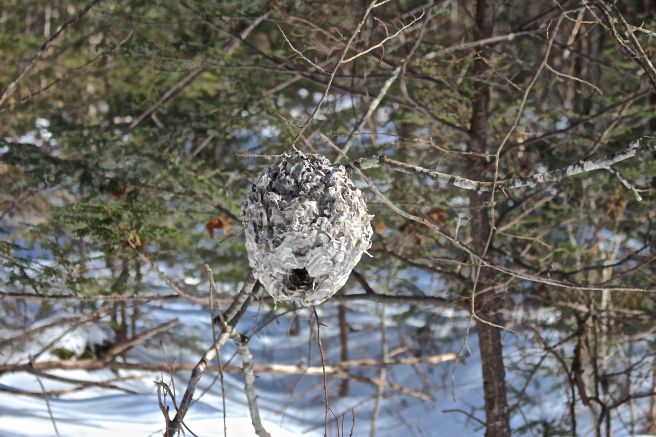
SB-nest 2As delicate as anything in the china shop is the nest created by bald-faced hornets.
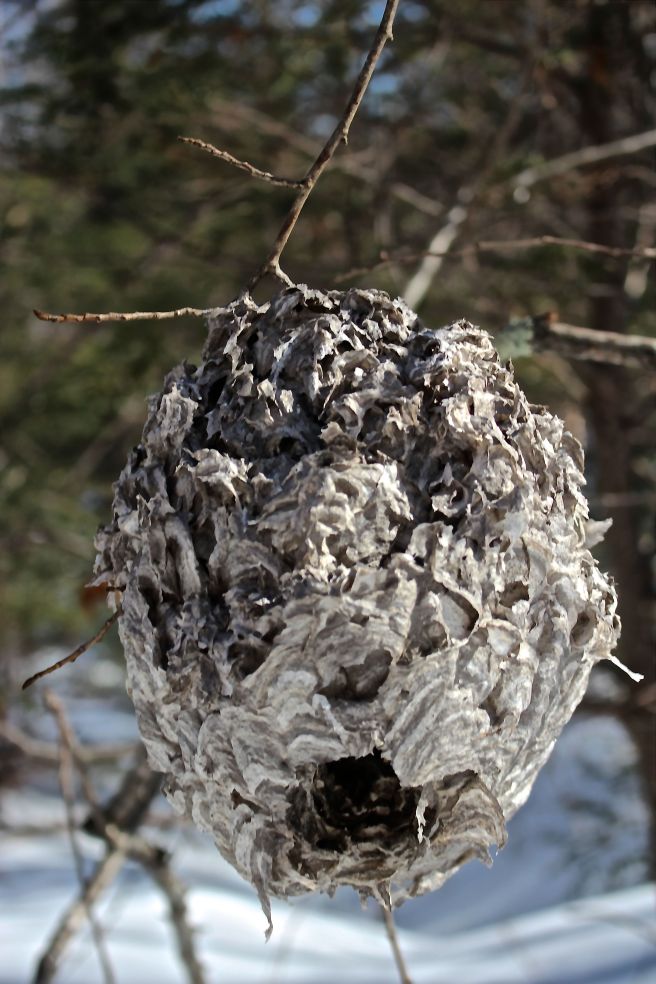
SB-nest 3Well, it appears delicate, but the nest has been interwoven with the branches and twigs–making it strong so weather doesn’t destroy it. At the bottom is, or rather was, the entrance hole.

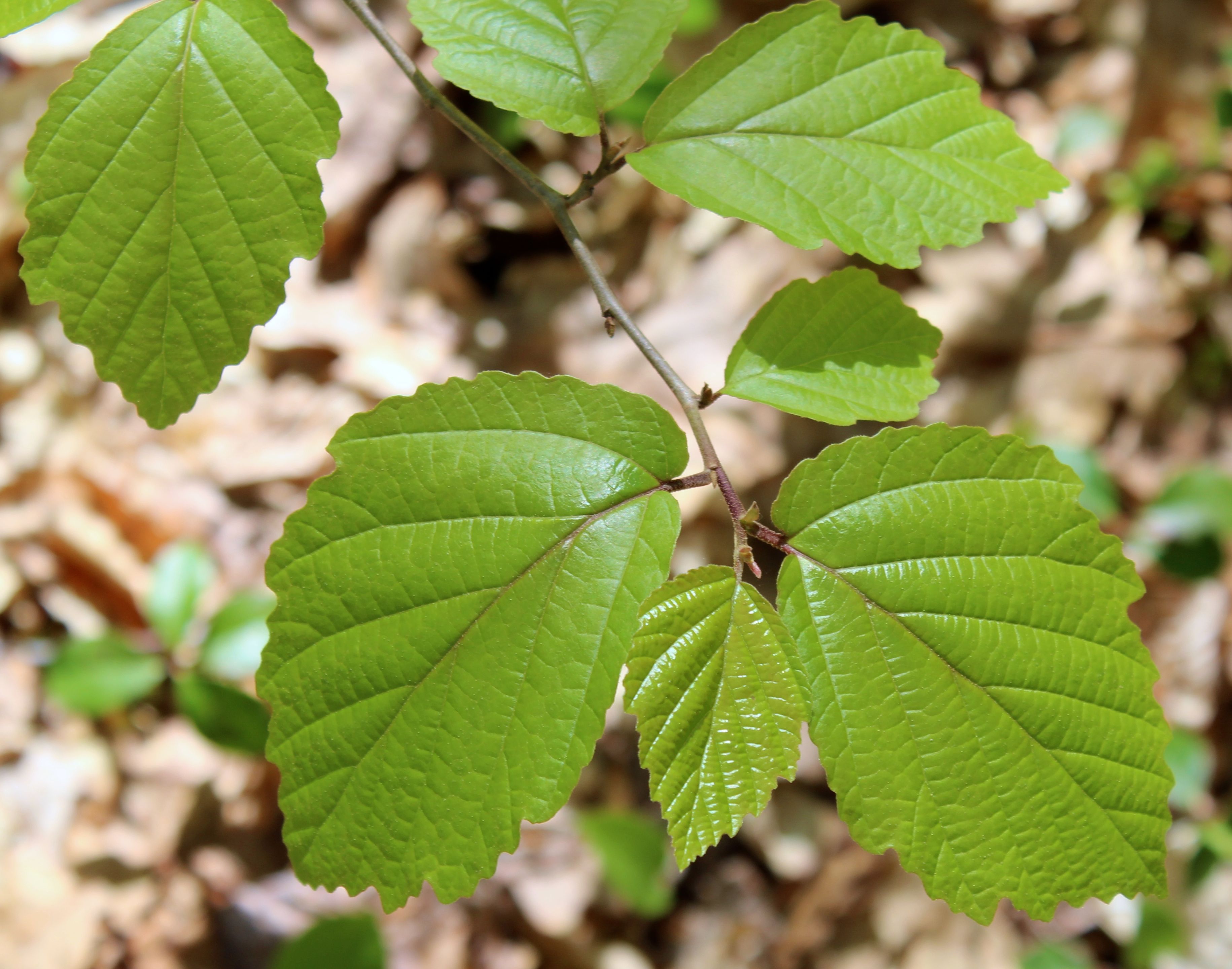
SB-witch hazel flowersWitch hazel (Hamamelis virginiana) grows abundantly beside younger beech trees. Though the flowers are now past their peak, I found a couple of dried ribbony petals extending from the cup-shaped bracts. China cups? No, but in the winter setting, the bracts are as beautiful as any flower.

I have to admit that I was a wee bit disconcerted when I reached a point where the blue trail and green trail split and it wasn’t at a point that I remembered. But I lumbered on and was pleasantly surprised when I reached the field I recognized–approaching it from the opposite side than is the norm. And later on, I realized that where the blue trail again joined the green trail was a shortcut. We need to get an accurate map made of this property, but I also need to spend more time familiarizing myself with it. At last I reached Sucker Brook.

SB-lodges and Evans NotchWith the Balds in Evans Notch forming the backdrop, the brook is home to numerous beaver lodges, including these two.

SB-lodge and layersLayers speak of generations and relationships.

SB-two lodges 1Close proximity mimics the mountain backdrop.

Old and new efforts mark return attempts.

SB-cove beaver treesAnd sometimes, I just have to wonder–how does this tree continue to stand?
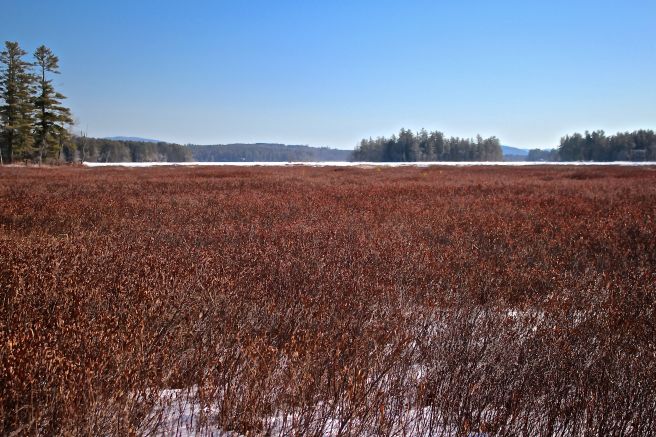
SB-near outlet leatherleaf fields foreverLeatherleaf fields forever.

SB-leatherleaf budsSpring is in the offing.

SB-wintergreen 2Wintergreen offers its own sign of the season to come.
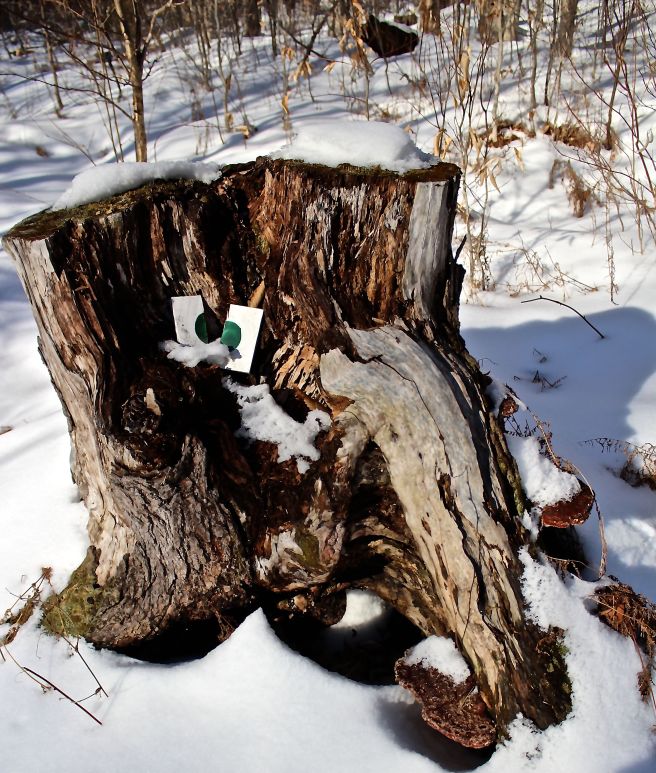
SB-hemlock stump et alIn the meantime, it’s still winter and this hemlock stump with a display of old hemlock varnish shelf (Ganoderma tsugae) caught my eye. By now, I was on the green trail.
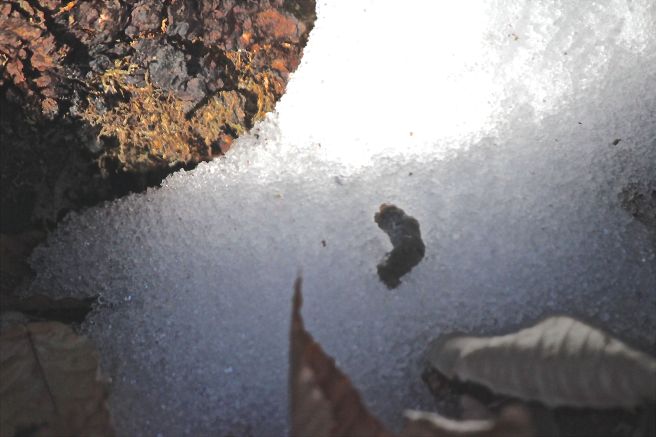
SB-grouse 2But it’s what I saw in the hollow under the stump, where another tree presumably served as a nursery and has since rotted away, that made me think about how this year’s lack of snow has affected wild life. In the center is ruffed grouse scat. Typically, ruffed grouse burrow into snow on a cold winter night. Snow acts as an insulator and hides the bird from predators. I found numerous coyote and bobcat tracks today. It seems that a bird made use of the stump as a hiding spot–though not for long or there would have been much more scat.

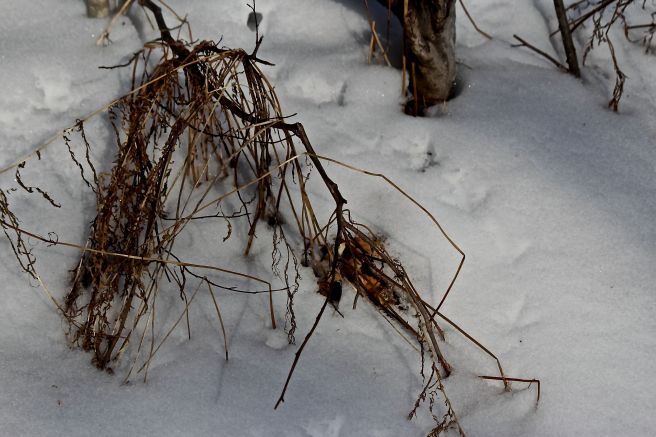
On the backside of the stump, more ruffed grouse scat white-washed with uric acid.

SB-hemlock grouse printsApparently it circled the area before flying off.

Moments later I startled a ruffed grouse in a tree while I observed turkey tracks. Though their prints and scat appear to be similar–turkeys are soooo much bigger in all respects.
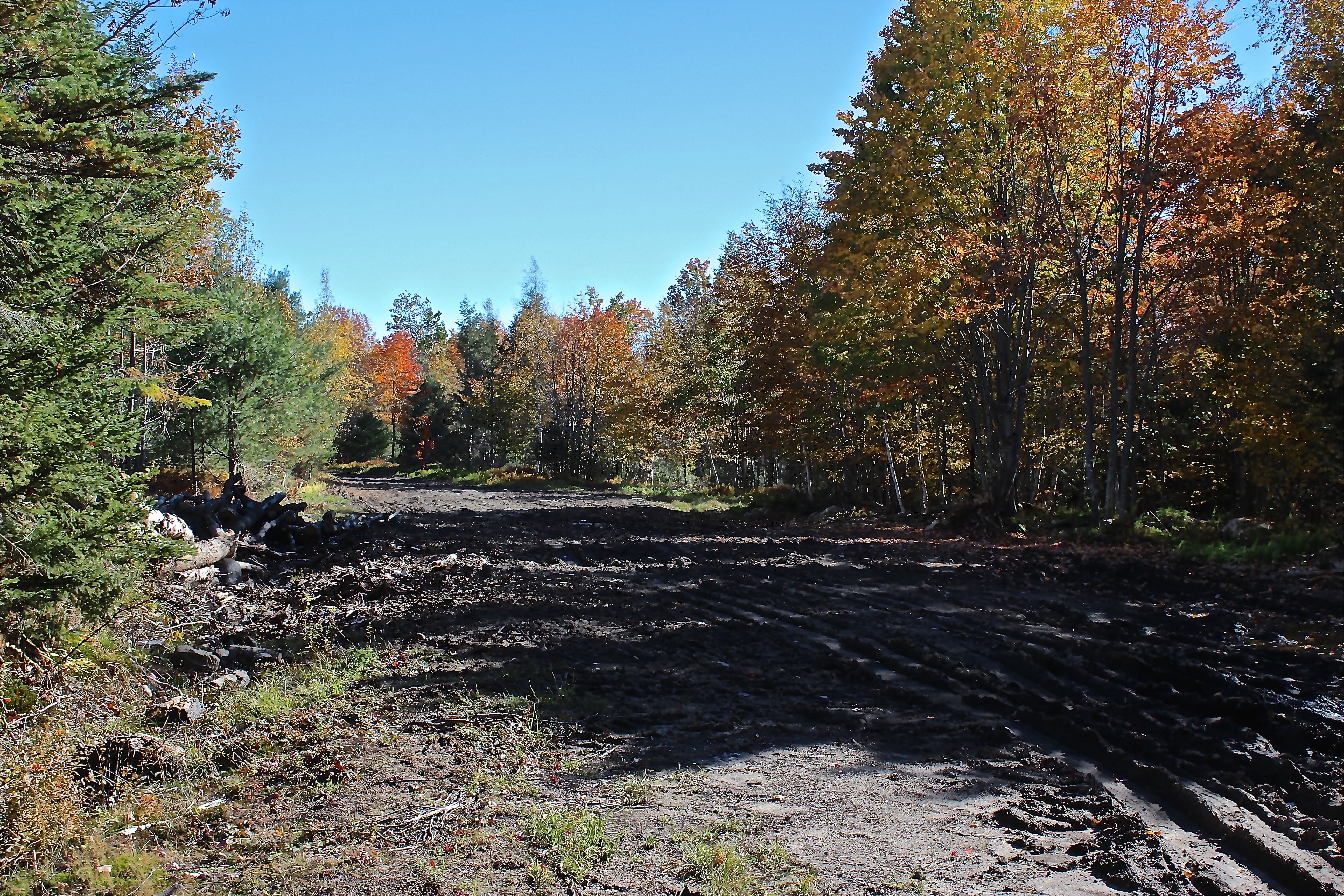
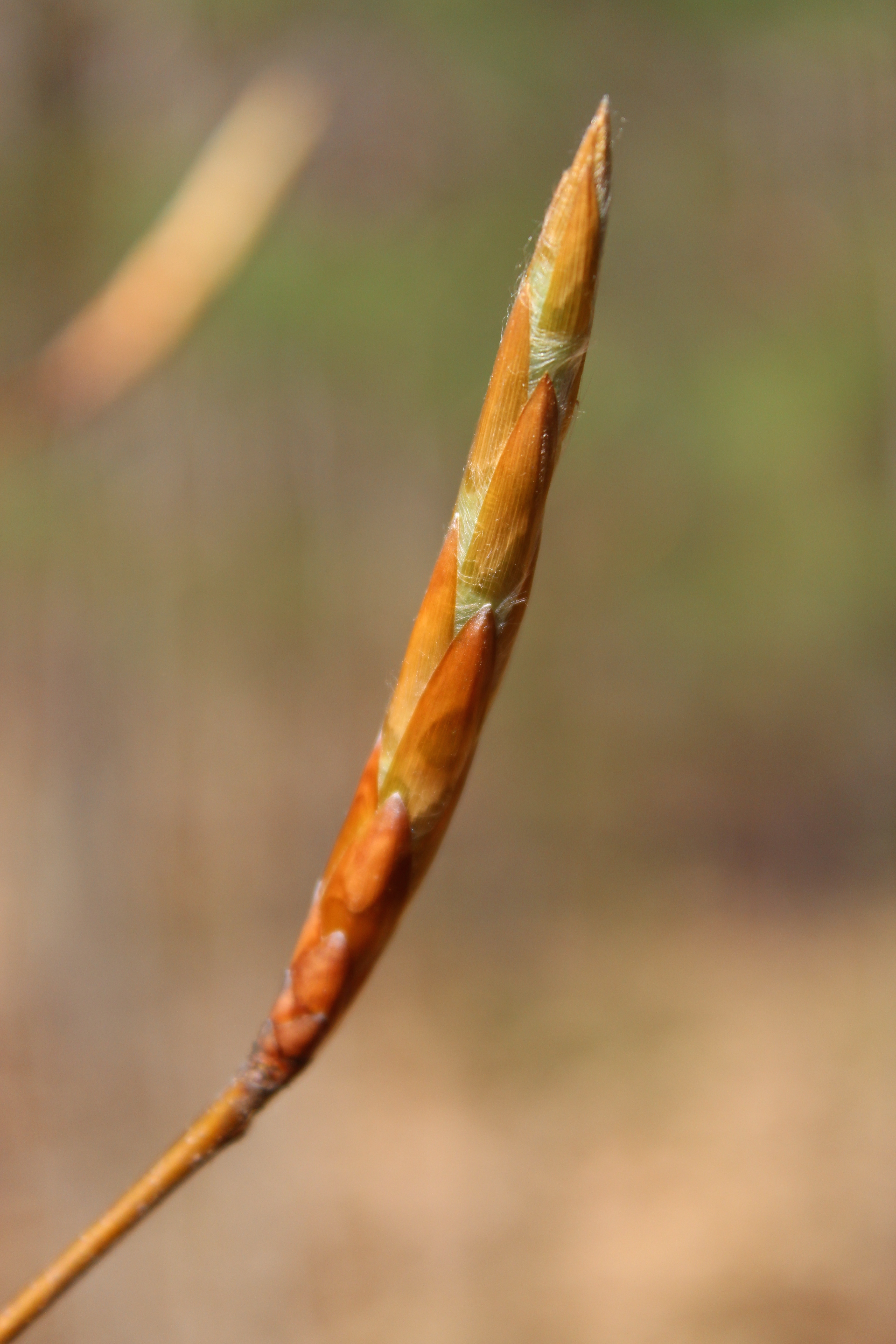
SB-sweet fern end of green trail

My trek ended in the same manner that it began–with sweet-fern offering a graceful stance despite my bull in a china shop approach.


Trending Blaze Orange

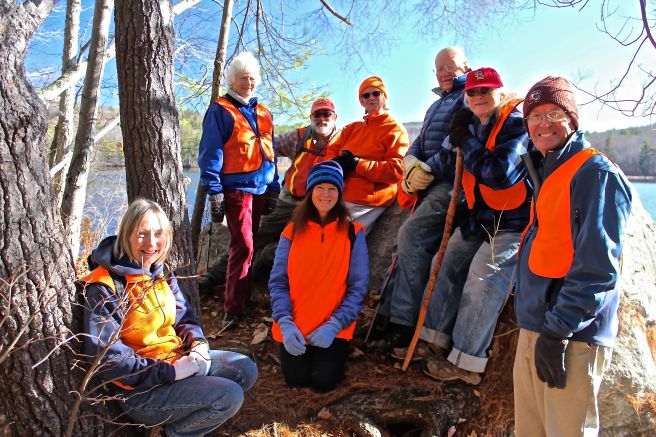
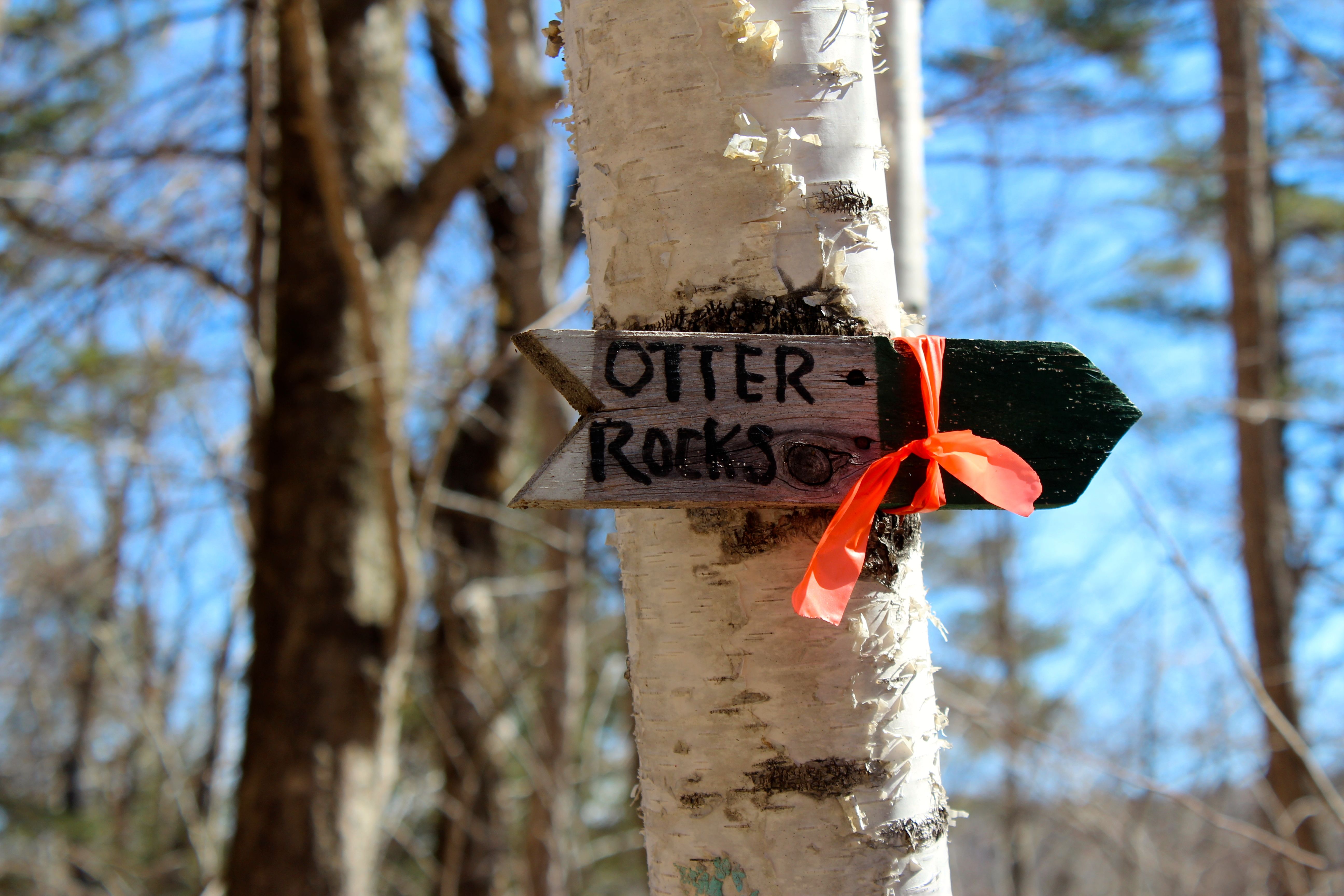
Donning our blaze orange, eight of the Greater Lovell Land Trust‘s docents joined me today for an exploration along the trail to Otter Rock at the Heald and Bradley Ponds Reserve.

Our destination was the Otter Rock spur, not very far, but it’s amazing how long it can take us and we were impressed that we actually reached our goal.

grape fern 1.jpg

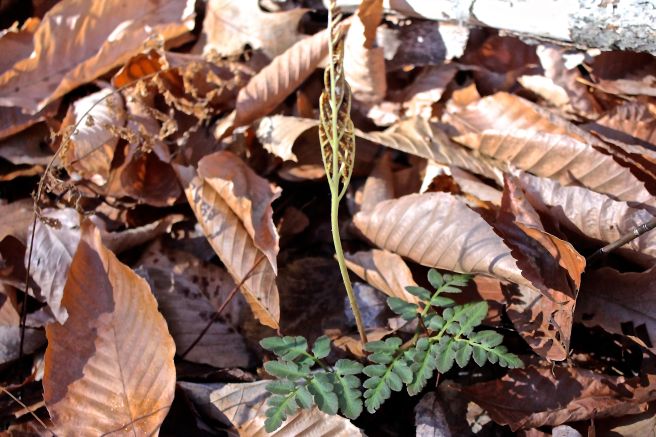
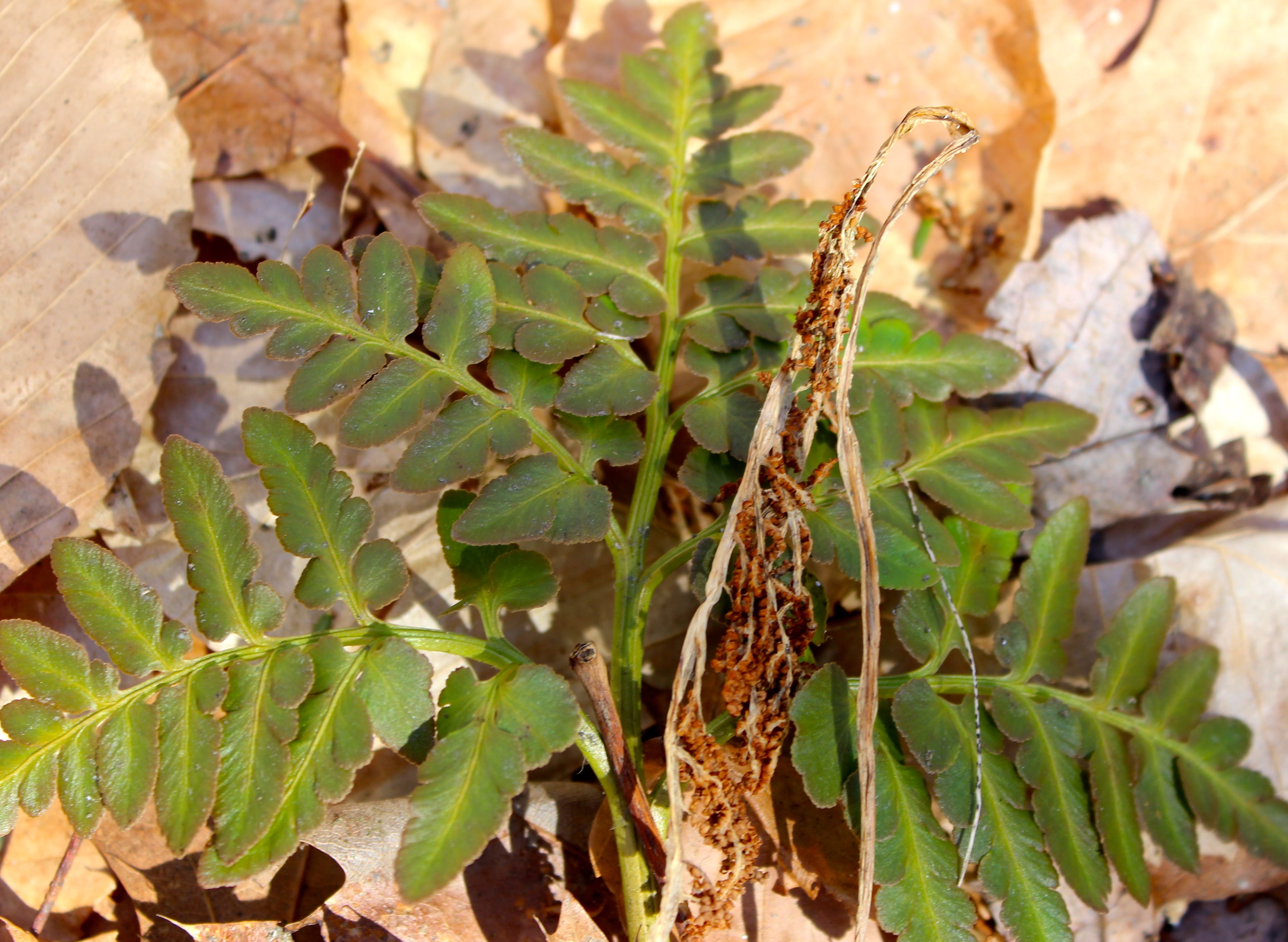
Along the way we stopped to admire the blunt-lobe grape ferns and their separate fertile stalks, some still intact.

4 birches.jpg

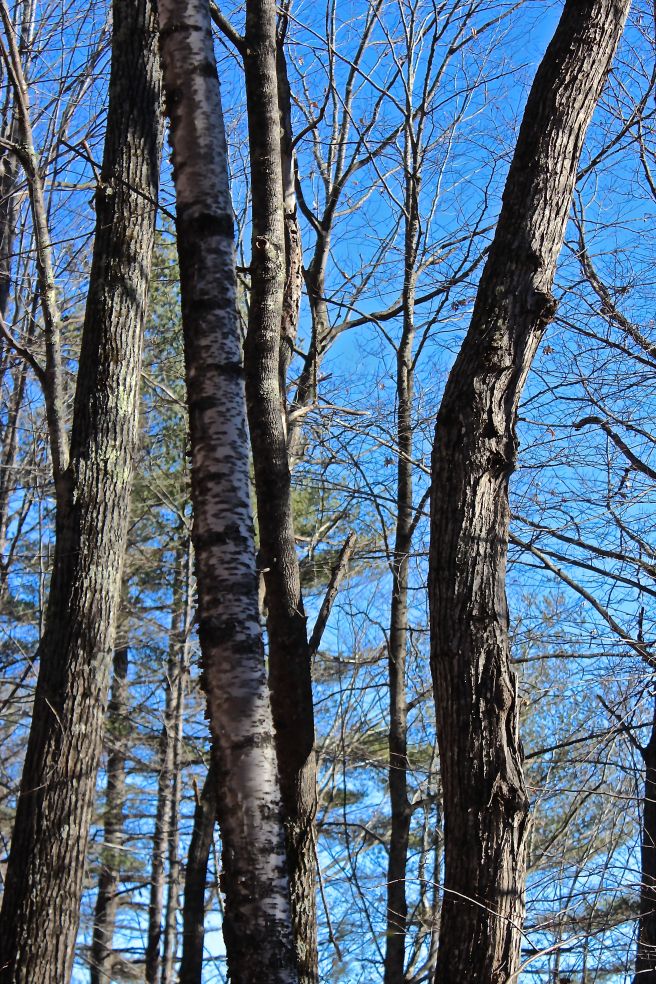
And then we looked up. We’d been talking about tree bark, and right before our very eyes were four members of the birch family.

paper birch

Paper Birch (Betula papyrifera) features chalky white bark that often peels away in large sheets. The peeled bark reveals pink or orange tints, only partially visible here, but evident on other trees in the neighborhood.

yellow birch

To the left of the Paper Birch stands a Yellow Birch (Betula alleghaniensis), with its curly ribbon-like strips of bronze or yellowish-gray bark giving it a shaggy appearance.

black birch

And to its left the one that excited us most, Black Birch (Betula lenta), sporting gray bark with long, horizontal lenticels. All trees have lenticels, but they are more obvious on some than others. These slits allow for the exchange of gas so the tree may breath.


gray birch

Last in the family line-up, a Gray Birch (Betula populifolia) showing off its almost dirty appearance and chevrons below the former branch sites.

dragonfly nymph 1

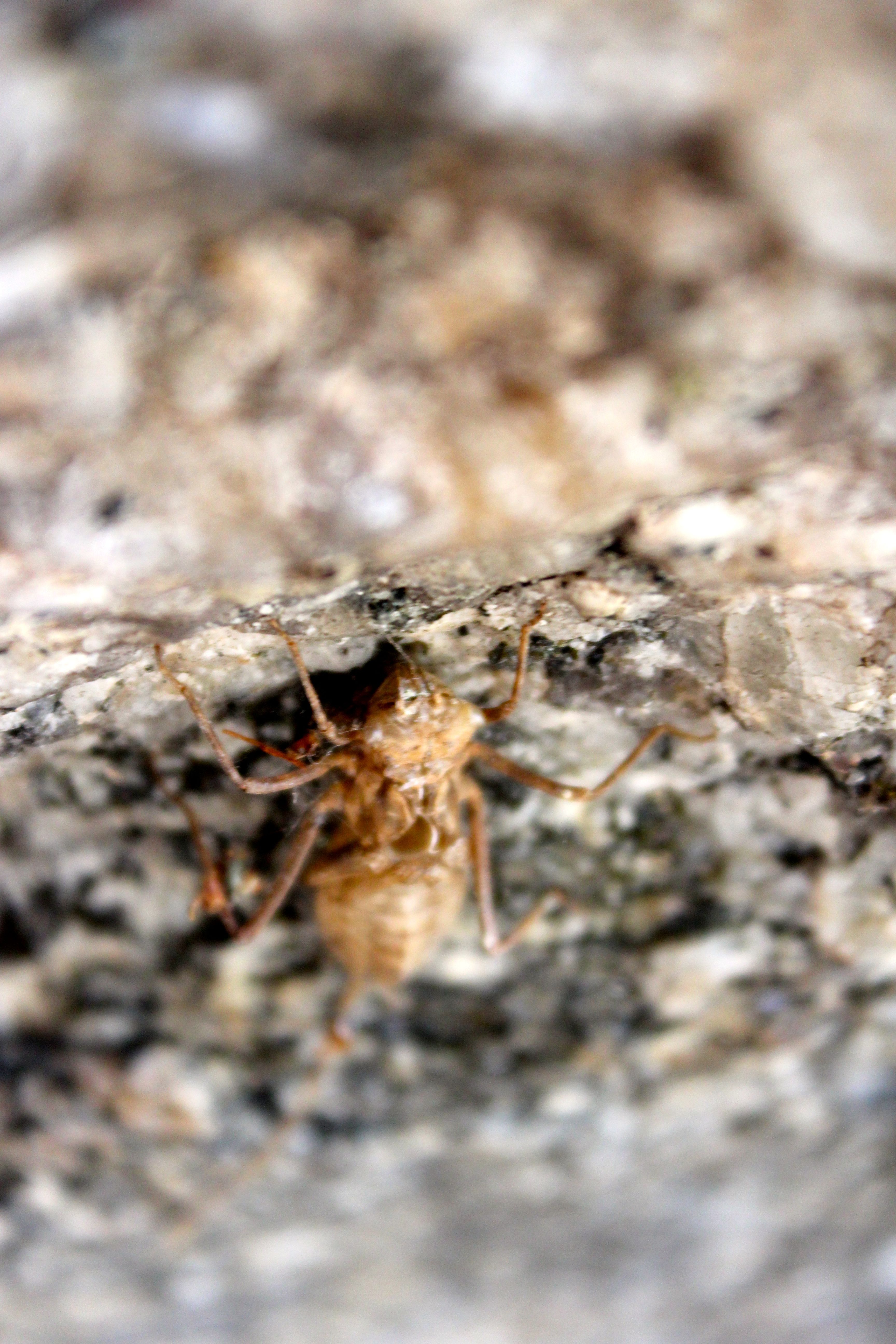
At Otter Rock, we found dragonfly nymph exoskeletons still clinging to tree bark

df 2

and rocks.

shell remnants

Our discovery of shells made us wonder and smile about others who have passed this way.

wh b

Now that the leaves are gone, we delighted in the knowledge that there is so much more to see, including Witch Hazel.

witch hazel gall

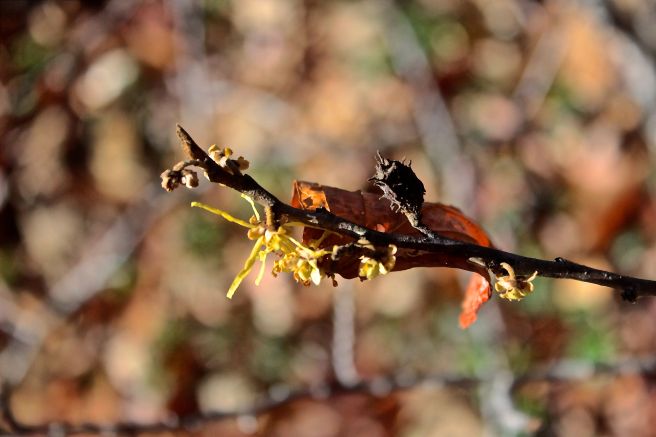
We examined one of the few remaining ribbony flowers, the scalpel-shaped buds, fruiting bodies, asymmetrical leaves and a spiny gall all on one branch.

witch hazel Bob.jpg

Our very own Witch Hazel Expert, Docent Bob, demonstrated the way the seeds pop–referencing Henry David Thoreau’s discovery of this phenomenon.

docents 1.jpg

Before we headed back to the main trail, the group posed for a photo call. They all look so sporty in their blaze orange.

wild raisins

A few more finds as we walked back to the parking lot: remnants of a wild raisin (Viburnum cassinoides), so named because the shriveled fruits that remain look like raisins;

black cherry bark.jpg

Black Cherry bark (Prunus serotina), easily identified by the small scales that curl outward like burnt cornflakes or potato chips;

red oak leaves

and Northern Red Oak leaves displaying holiday colors.

Mill Stream

Though most of us parted company just beyond the mill stream, a couple of us continued on to the John A. Segur Wildlife Refuge off New Road.

Heal All

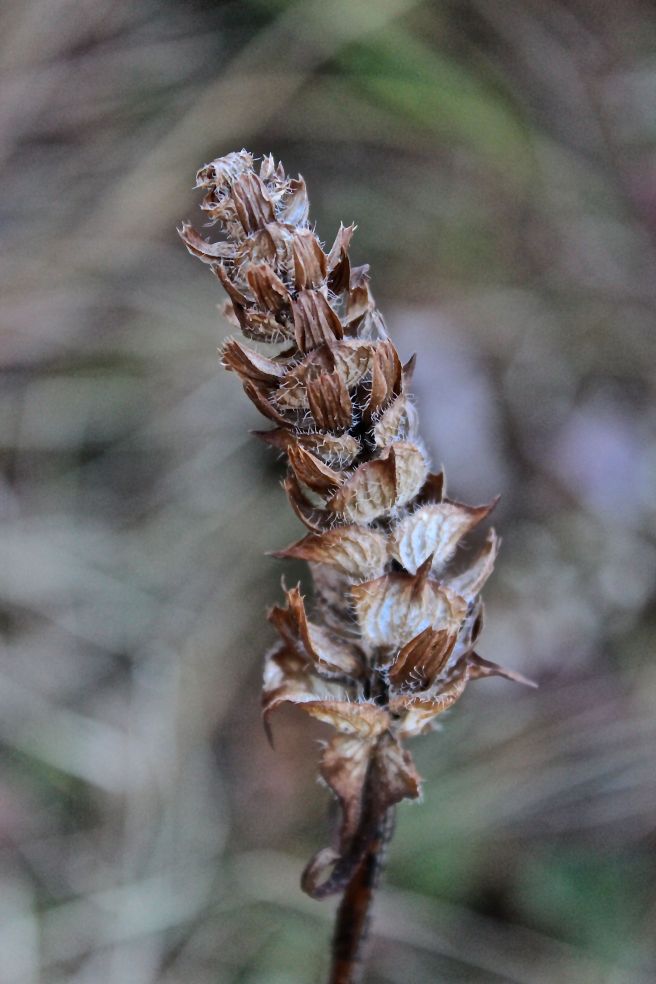
We focused our attention on winter weeds, a topic for our January 9th walk. On this old logging road, some of the Selfheal or Heal-all (Prunella vulgaris) stands at least a foot and a half tall. As pretty as it is in the summer, it’s still a sight to behold in its winter structure.

evening primrose

Another to look forward to is the Evening Primrose (Oenothera biennia). Its fruits are four-parted capsules arranged in a spike at the tip of the stem, looking rather like flowers themselves.

There’s more to see, but I don’t want to give it all away.

CS view 1

My last stop for the day was a loop around the Chip Stockford Reserve. I wasn’t the only one trending blaze orange. The glow of the late afternoon sun cast an orange hue across the beech leaves.

November in western Maine. We’re happy to don our blaze orange and get out on the trails.


Hanging On

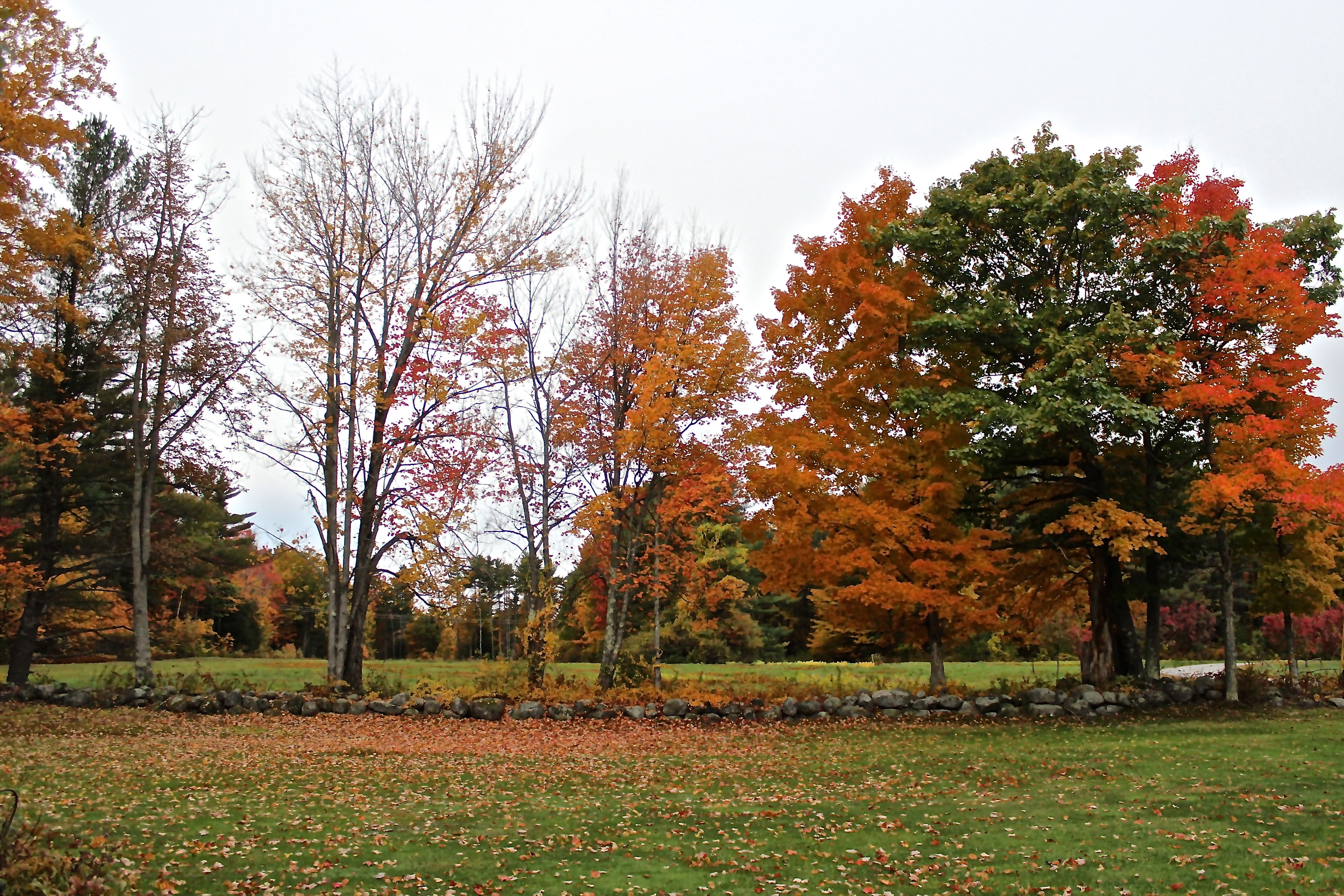
To say the colors have been fantastic this fall is an understatement. Maybe they are just as spectacular as last year’s display, but I don’t remember. Or maybe it’s that the leaves turned at a later date than in recent history and the anticipation was rewarded by the brilliance.

morning view

All I know is that I can’t get enough.

Route 93 mtn view

Route 93 2

As I drove toward Lovell this morning, a break in the treeline beside the road forced me to back up and jump out of the truck. I recalled another October when the foliage caught my attention–I can’t believe I remember this, but it was either 1974 or ’75 when I often traveled the back roads with my high school cohorts–Carissa and Sarah. I only hope I remember this fall as vividly as that one has always stood out in my mind.

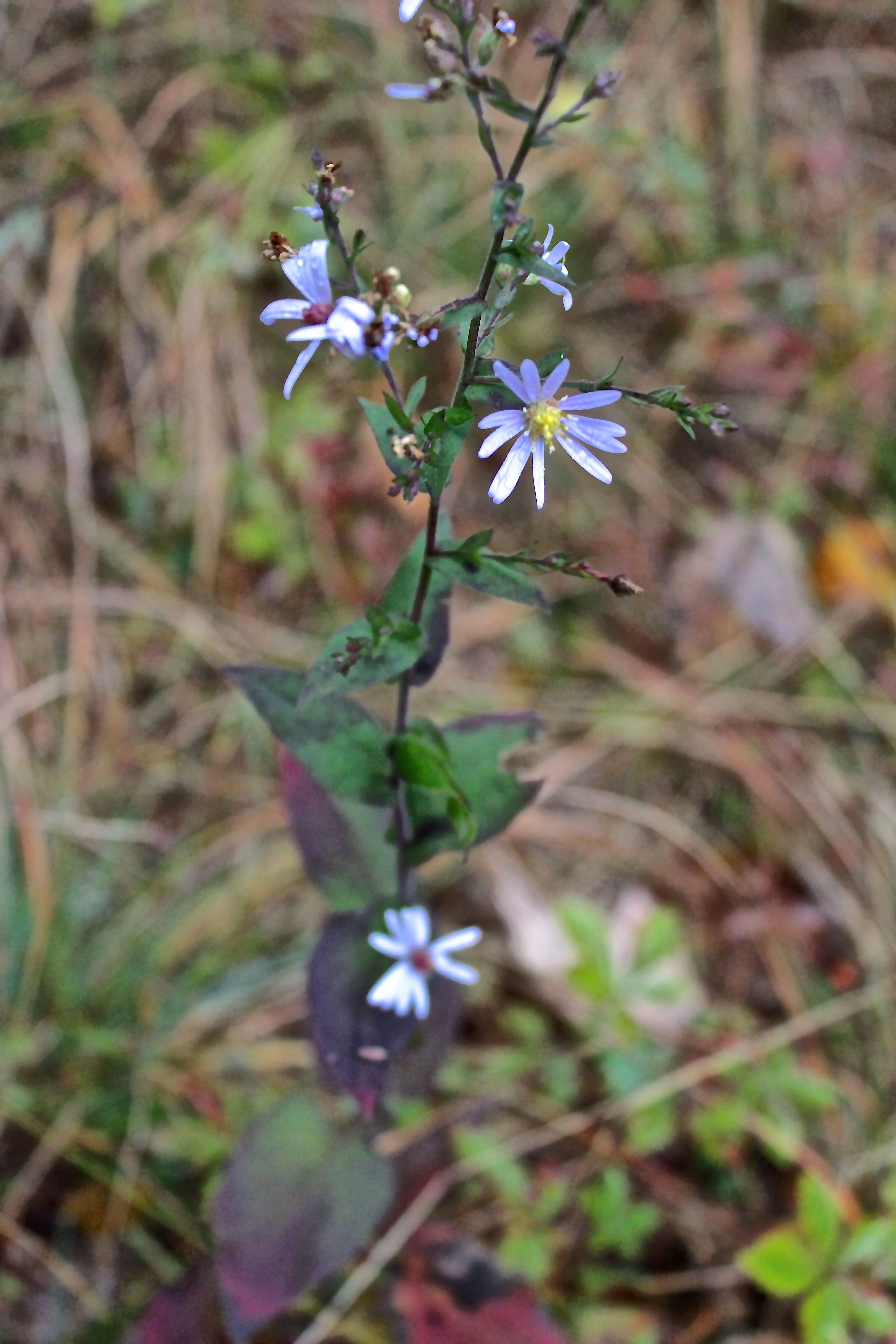
purple aster

It felt like rain when a couple of friends and I walked along the short trail at the GLLT’s John A. Segur Wildlife Refuge on New Road this morning. We didn’t get far because there were so many wildflowers to view, some still in bloom and others gone to seed. Like so many trails, this is an old logging road. It would be so easy to dismiss it as an ugly tangle of shrubs and weeds. But it’s hardly that. Gray and paper birch grace the border of the road, mixed with evergreens and a few red maples.

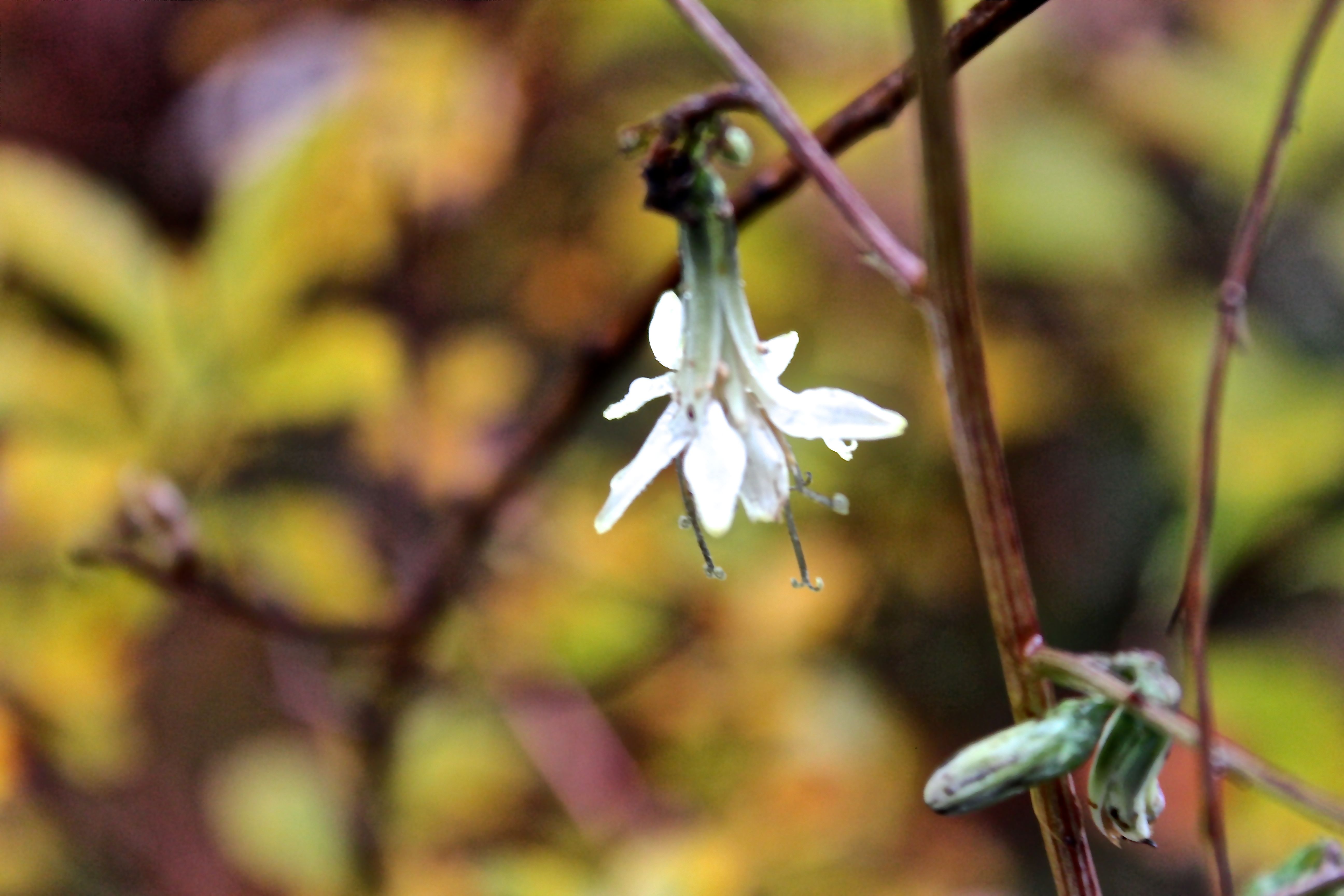
gall of the earth flower 2

But the flowers really caught our attention today. One Gall of the Earth displays its nodding head.

sundew leaves dying back

The round-leaf sundew is beginning to die back.

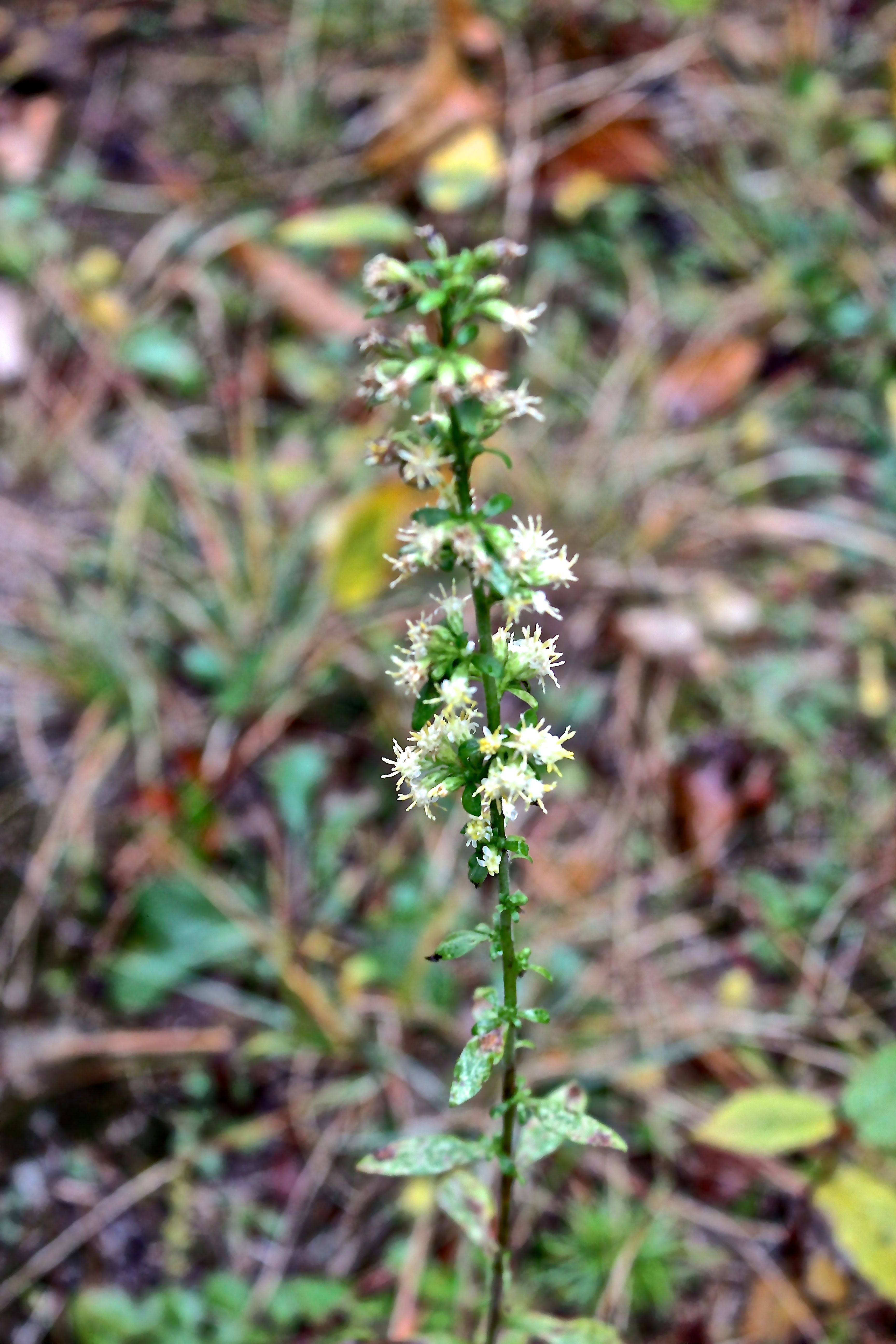
silverod

It seemed like in most cases only one plant of the species still had flowers, like this silverrod, our only white goldenrod.

Pearly everlasting

Pearly everlasting,

steeplebush

steeplebush and

aster seeds 2

asters are letting go.

witch hazel flowering

Meanwhile, the witch hazel is in full bloom.

wh flower and pod

Apparently, its ribbony yellow flowers bloom late in order to take advantage of pollinators at a time when everything else has finished blossoming.

baby woodfrog

We didn’t have a lot of time to spend at the property, but this little guy caught our attention–a young wood frog. He’ll need to find his way under the leaf litter soon.

Route 93

On the way home, another photo call.

Mount Washington

And later in the day, some work behind me, I stepped out the door again. It’s a compulsion a this point; a strong desire to catch every shade of yellow, orange, red and purple before it’s too late. I haven’t turned north on the snowmobile trail under the power line in a while, so today I did.

Mansion Road

My journey took me down a logging road that has become a super highway in the last two years. I think the operation is finally over.

log landing 1

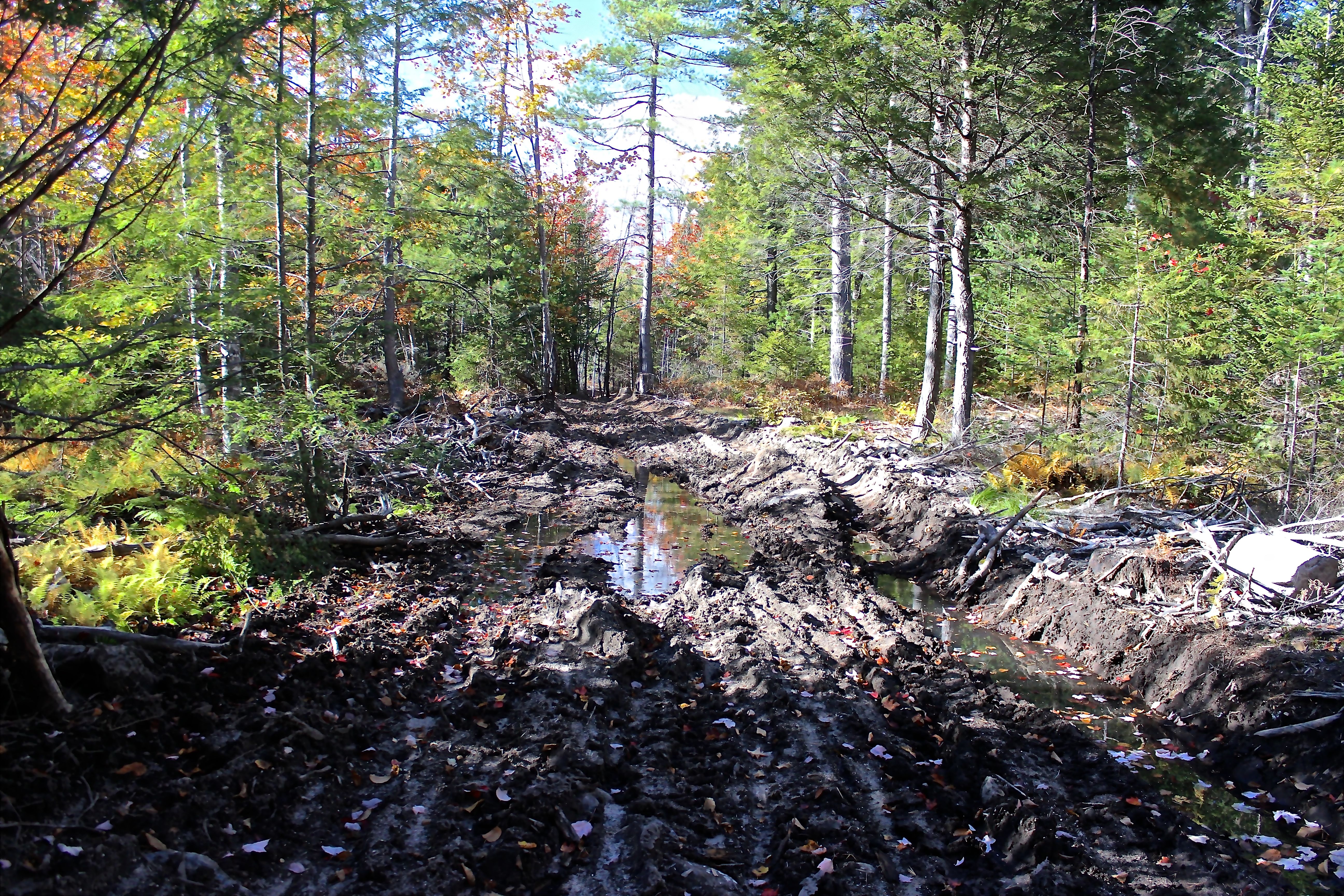
The landing and beyond have been my destination for 23 years. I’ve watched the succession play out in this space. And now it will happen again. I have to look at it as a lesson–watching the species gradually take over this muddy lot. The land was probably last logged about thirty years ago, so I met it in its early stages. Now I will get to see it transform from the get go. And I have to say, it’s one of the cleanest log landings I’ve ever encountered.

logging road

Considering how wet it is in these woods, I’m impressed with the forester’s work.

ferns filling in

Ferns already grow in roads created a year ago.

grass filling in logging roads

Grass fills in others.

mud

But mud is predominate and I love mud.

bobcat tracks 1bobcat 2

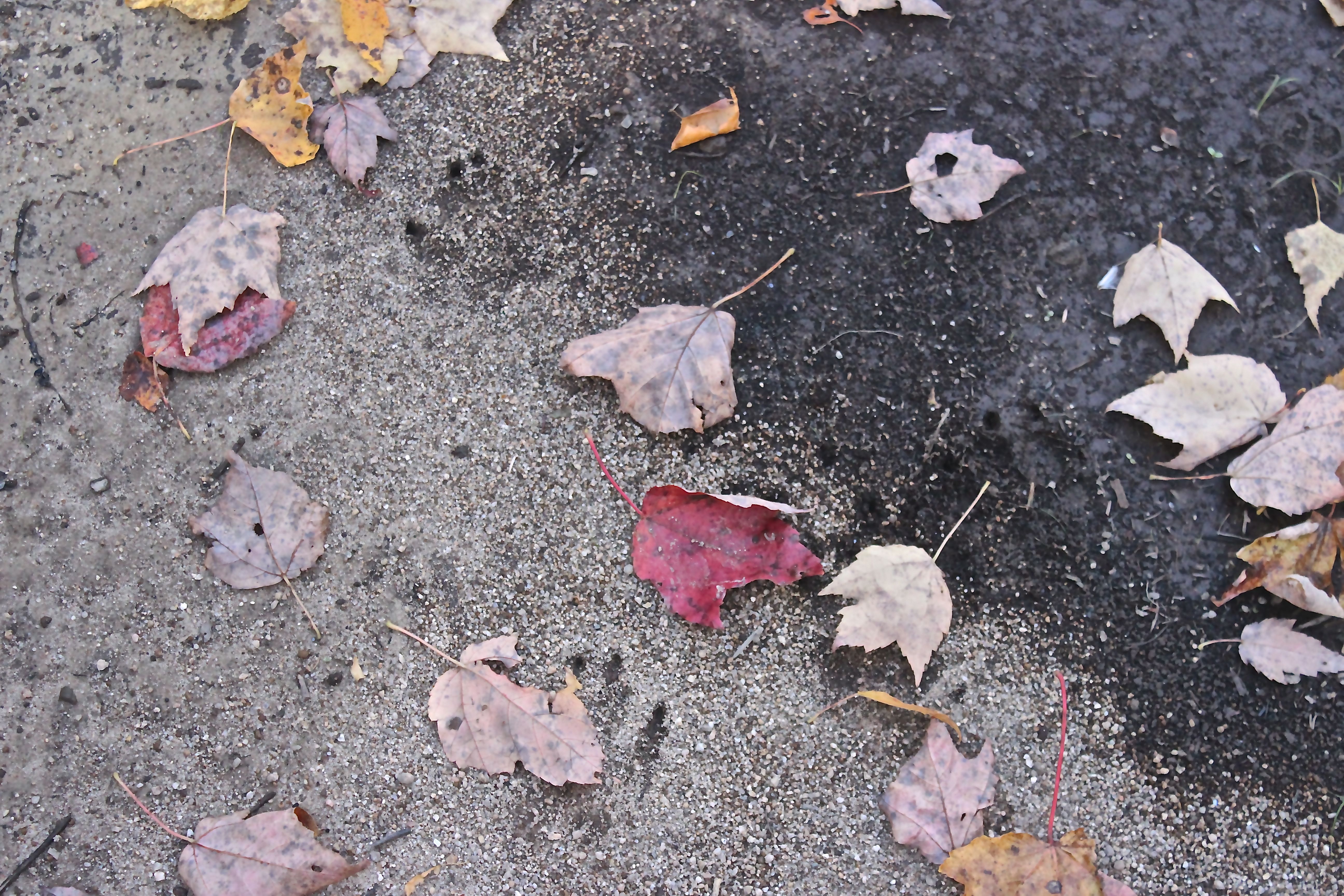
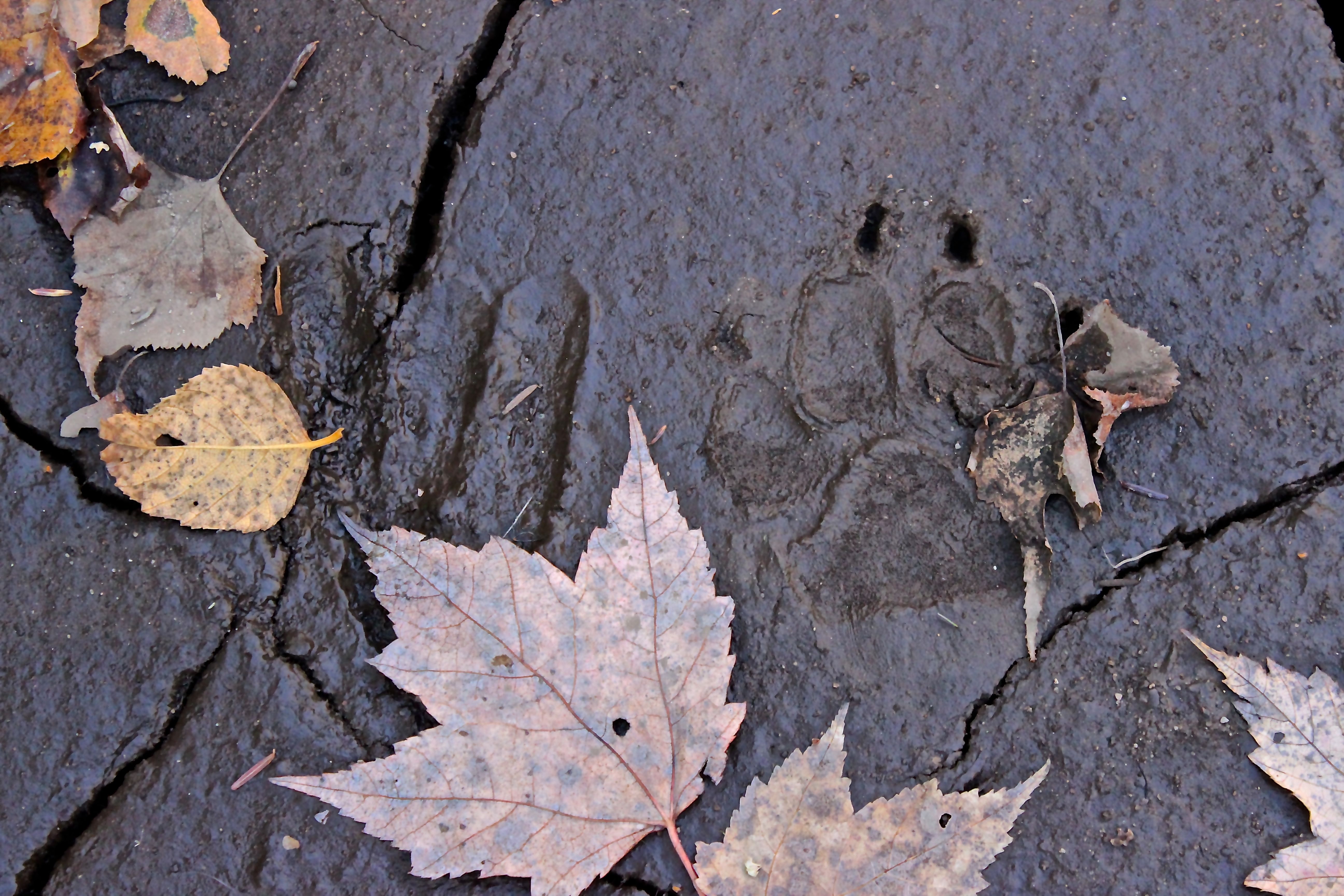
Bobcat tracks were everywhere. It’s been my understanding that bobcats don’t travel trails like coyotes and foxes, but instead cross over them in a corridor that is about 40 feet wide. My observance, however, is that this isn’t always the case. Heck, I’d follow the easier trail as well. I did today. I started to return home via one of the trails I use when on snowshoes, but because this is a wet countryside, the slash left by previous loggers and the most current one makes that trail almost impassable until the snow flies (which may be soon–at least for a few flakes).

bobcat 3bc pattern

I’m curious about the number of tracks. Bobcats are solitary except during breeding season in February-March. Are these youngsters? Do they travel together? Or is this an individual passing through repeatedly?

bc and deer-opposite

Deer are among a bobcat’s prey and thus part of the reason this is such fertile hunting grounds. I love the view of both passing through this space in opposite directions. And the turn of the bobcat’s toe nails, which show clearly in the mud even though they are able to retract them. The deer also seemed to have slid into a turn. Though you can’t see my boot prints here, I love that the three of us passed this way side-by-side, at different moments. I looked for them, but am sure they were much more astute about knowing my whereabouts.

leaves in puddle

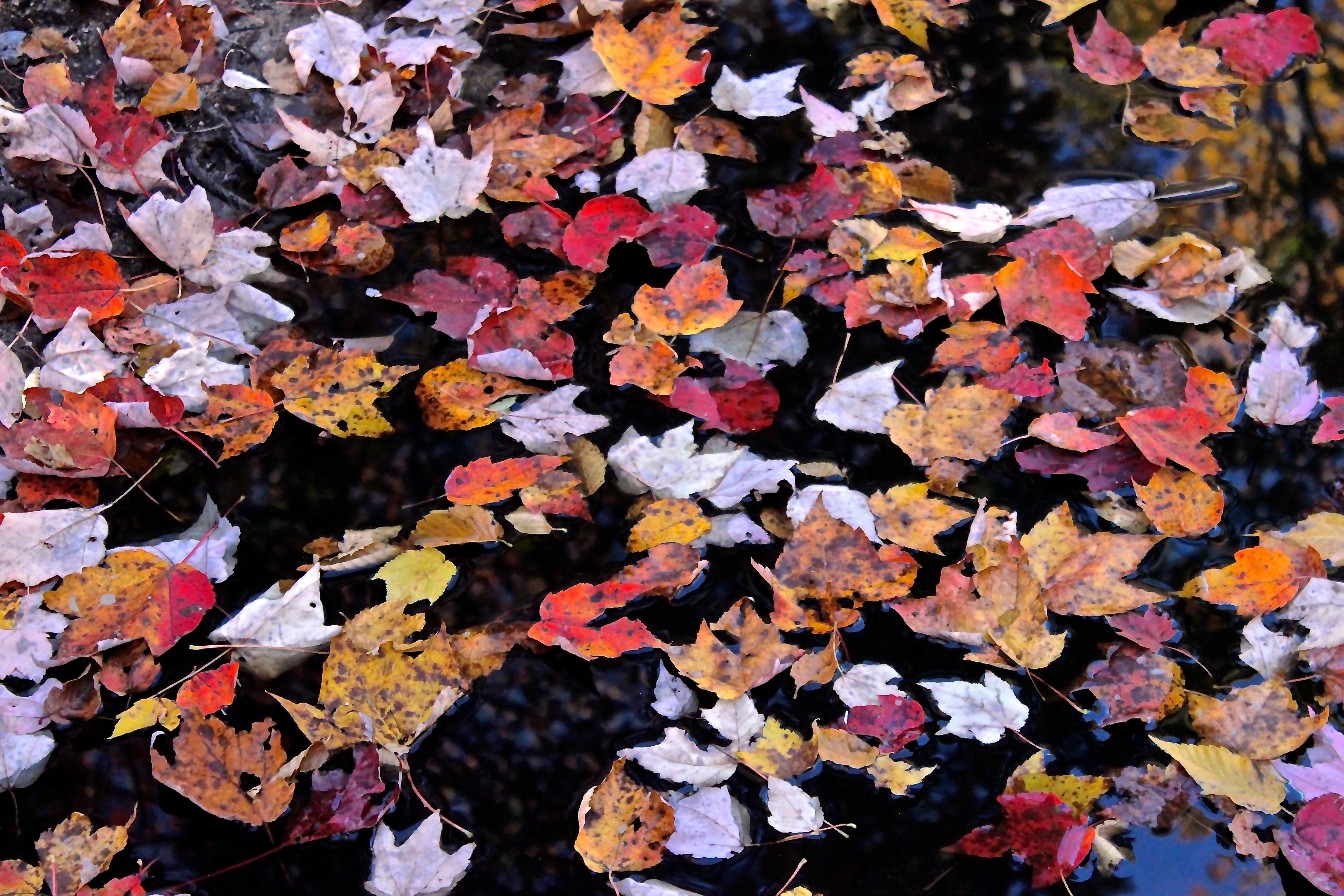
Puddles along the way were filled with fallen leaves

leaves in puddle & reflection

and reflections of trees to which they once clung.

old squirrel drey

Back on our land, I found an old squirrel drey that had fallen from quite high in a tree.

red maple leaf scar

And noted the red maple twigs–new buds already offering hope for next year, leaves still hanging on, and a bright green leaf scar from one that fell off recently.

fewer leaves

At the end of the day the leaf pile grows. I guess we can only hang on to the old for so long.

What Would Jinny Mae See?

My friend, Jinny Mae, was recently blindsided by a dreaded diagnosis. It has slowed her down significantly, but today she was with me in spirit as I walked along the Homestead Trail/Gallie Trail at Heald and Bradley Pond Reserve in Lovell, and then headed to the summit of Amos Mountain.

What would Jinny Mae see? That became my mantra along the way. I love to explore with her because she makes me slow down and take a closer look. She asks questions. She is incredibly knowledgable about the natural world. And even more so about the historical context of our area.

So . . . this one is for you, Jinny Mae.

HT 1

It was a beautiful afternoon and the mosquitoes were almost non-existent. I felt Jinny’s presence in the breeze that kept the biting insects at bay.

Interrupted Fern

And I knew the Interrupted Fern would draw her in for a closer inspection.

dragonfly and cinnamon fern

As would the fertile frond of a Cinnamon Fern–and a dragonfly.

bracken fern 1bf2

She’d love the juxtaposition of a young Bracken Fern beside an older one.

mullein

Then there was the wooly texture of the Common Mullein leaves begging to be caressed.

Foundation and stuff

Jinny Mae and I have explored these foundations before, so I needed to stop by again.

Hemlock foundation

And I knew that she’d marvel at how this hemlock tree has grown among the rocks and bricks.

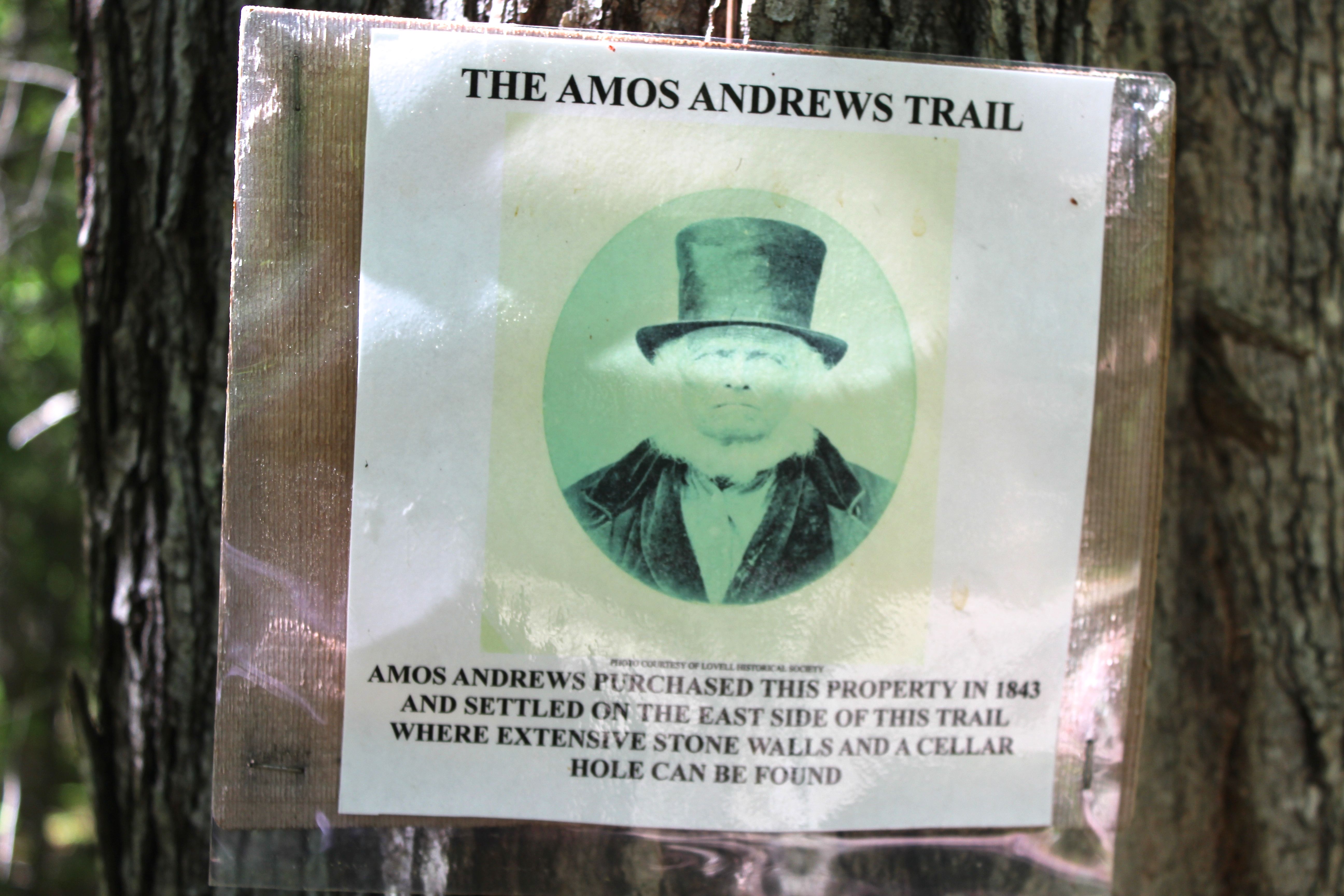
Amos Andrews Trail

The Homestead Trail comes to an end at the handicap-accessible picnic area. And here the Amos Andrews Trail begins.

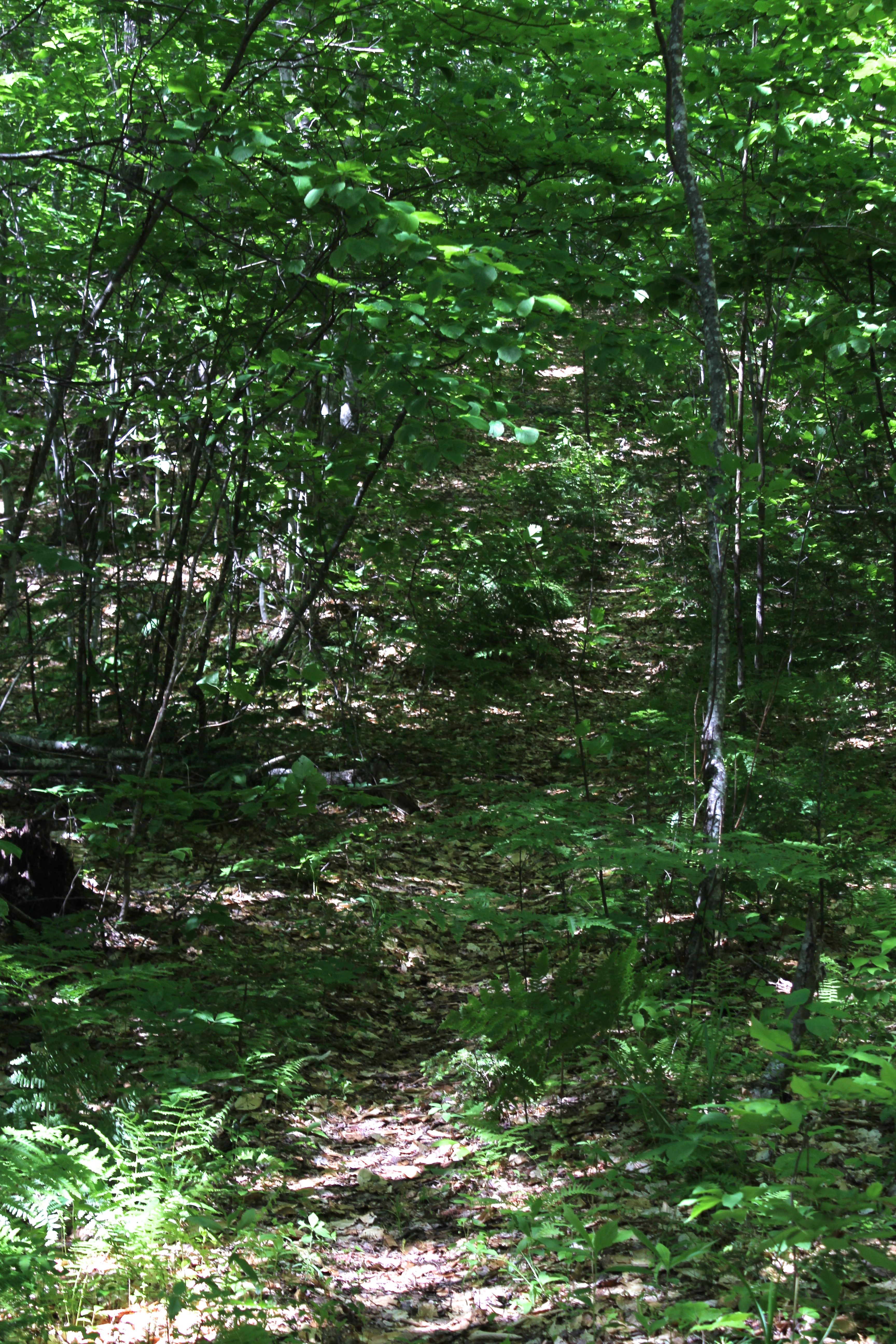
uphill

It’s a bit of an uphill climb, though not steep. For Jinny Mae, I’m thinking positive thoughts that her experience will be uphill all the way. Chin up, girl. You can do this. You’ve already amazed me with your attitude. May I strive to be half the person you are.

Maple Leaf Viburnum

There’s more to see like this Maple Leaf Viburnum,

wild oats

the three-angled seed pod of Wild Oats,

Indian Cucumber Root

flowering Indian Cucumber Root,

stone walls

terraced stonewalls,

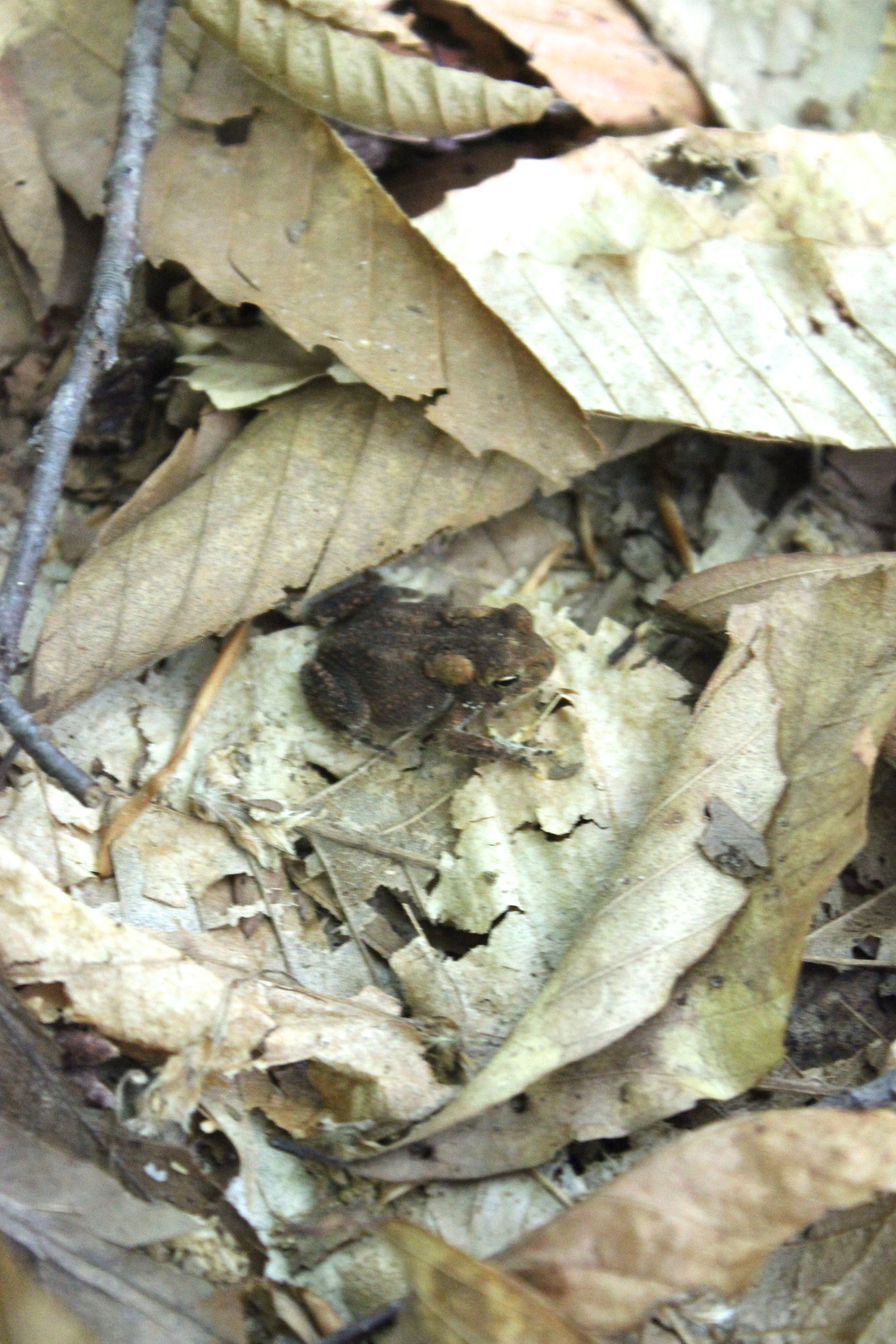
young American toad

and a young American toad.

summit

At last I reached the summit.

stick bug

Again, I looked around and wondered what Jinny Mae might see. Despite its camouflage, I knew she’d find this walkingstick insect. The woman has eagle eyes.

dragonfly 2dragonfly 3

Maybe a more apt description is dragonfly eyes–with 30,000 lenses, they can see all the way around.

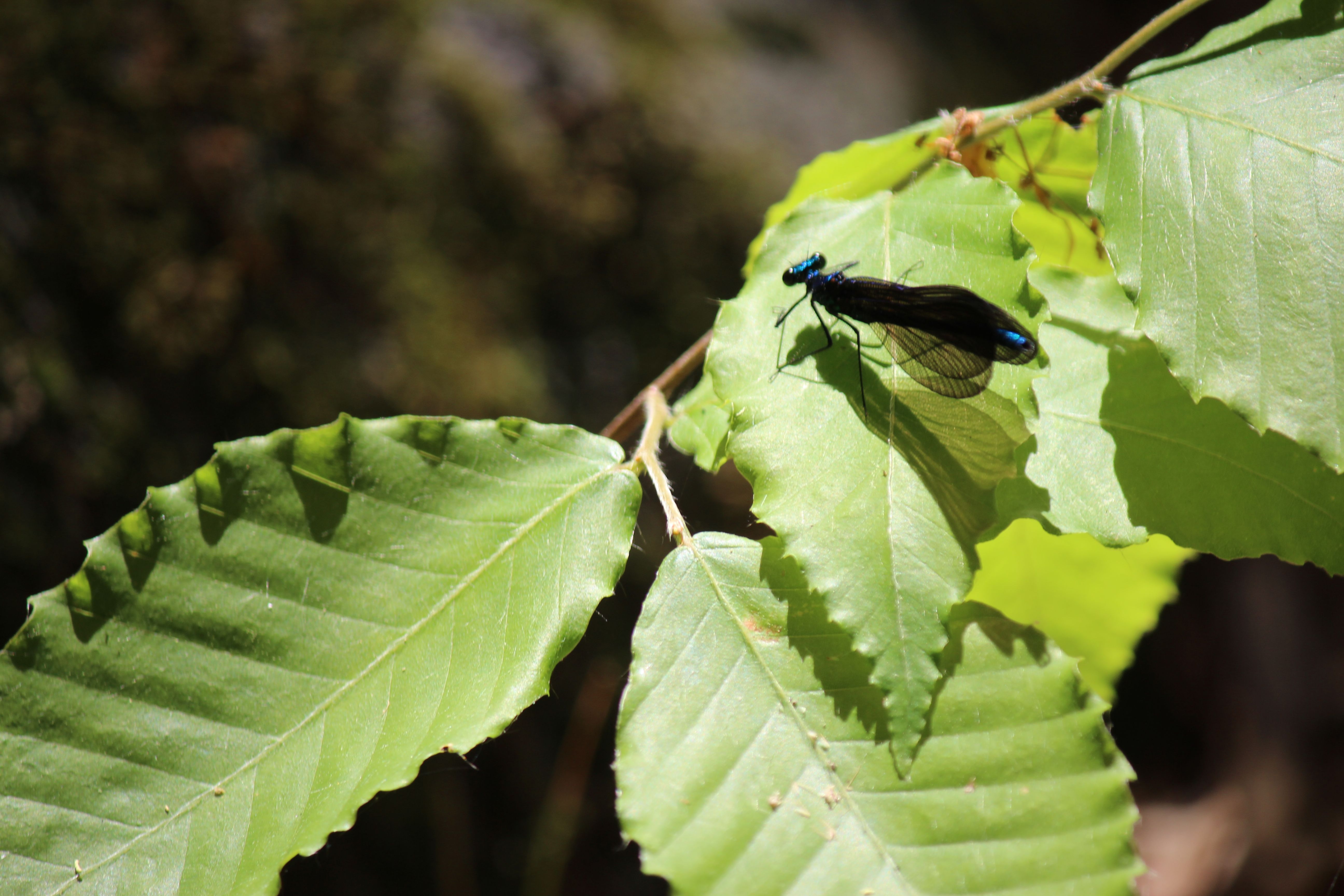
damsel fly

Not to be overlooked, a damsel fly.

strawberry

Wandering about, I found Wild Strawberries

raspberry

and Raspberries in bloom.

IMG_3915

But I saved the best for last. Wild Red Columbine. I can hear Jinny’s happy sigh. I was going to pick it. Kidding.

She’ll be happy to know that I arrived back at my truck three hours later. Another three hour tour–somehow that always happens when we explore together, so I knew for sure that she was channeling this hike.

Here’s to you, Jinny Mae. I know you would have seen even more than I found along the way, so I can’t wait to hit the trail with you again.

Bookends

An absolutely gorgeous day in Maine began with a trek around Perky’s Path in Lovell and ended with a visit to the vernal pool behind our house. In between, I had numerous other things to accomplish, but it was the time spent exploring and wondering that added natural bookends to my day.

spring trail

Only a week ago, I was watching flowers and leaves emerge on trees. They still are, but what a difference a week makes. The trail suddenly seems illuminated.

striped maple

Among the shining stars–Striped Maple, known by some as goose foot because of its shape. (It’s also known as nature’s toilet paper.)

witch hazel

And Witch Hazel, which is easy to identify by its asymmetrical base and scalloped edges.

Red 2

And then there are the spring ephemerals, like this Red Trillium, that must flower before the tree leaves block the sunlight.

pt 2

Painted Trillium was also plentiful. Notice the reason for “tri” in the name? When I taught school, I forced my students to learn word cells–breaking the word down to understand the meaning. Tri=three, llium=referring to liliaceous or the lily family. (They had to learn tri, but llium wasn’t on their list.) I don’t know most of the Latin names, but even a few clues are always helpful.

fs3

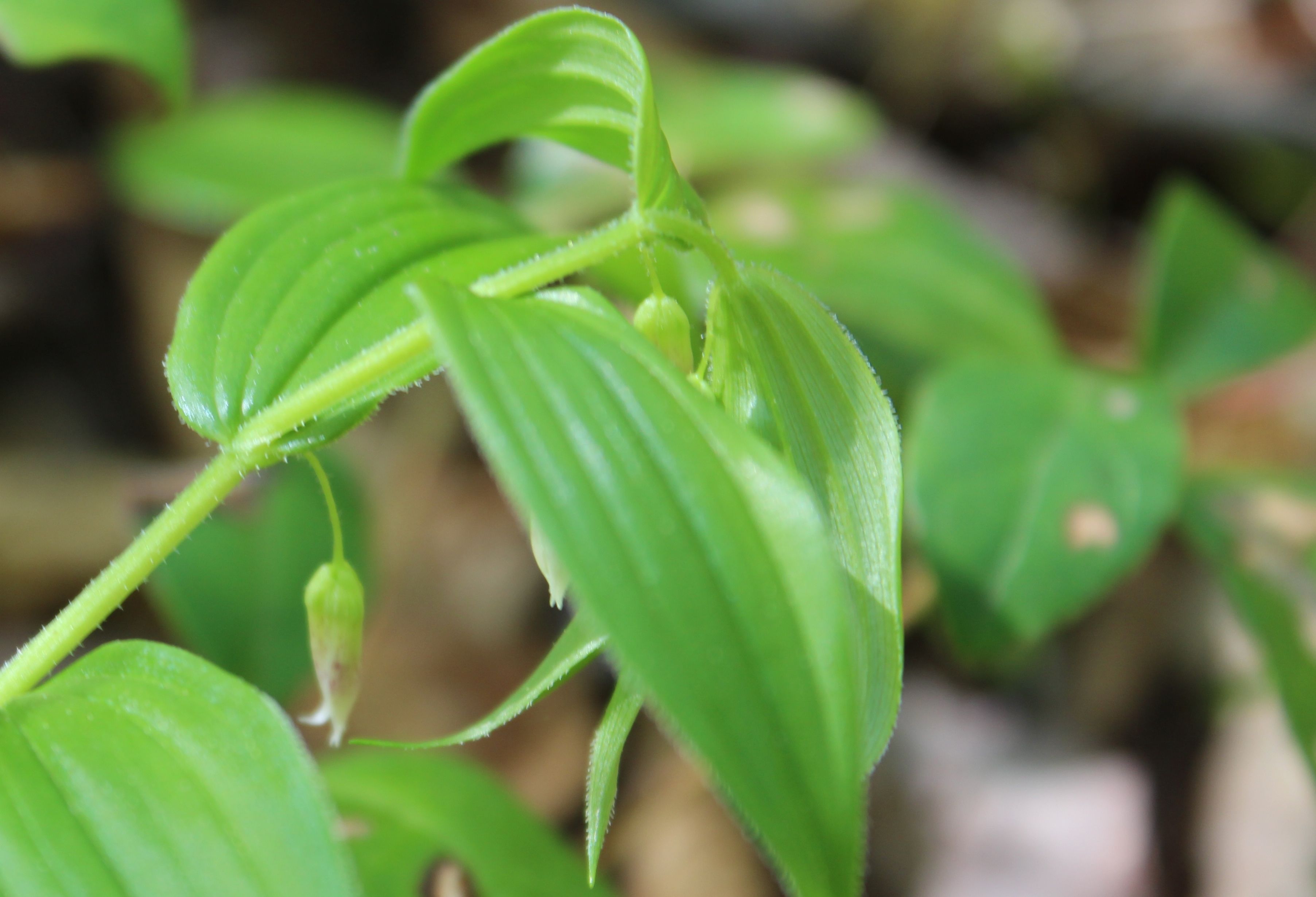
Another member of the lily family–Hairy Solomon’s Seal. One characteristic of the lily kin–the parallel leaf veins.

goldthread

One of my favorite spring flowers is Goldthread. It personifies daintiness. While the scalloped, three-lobed leaves remind me of cilantro, Native Americans apparently used it to make tea. So why the common name? The root resembles a golden thread. Simplicity and beauty in a small package.

bunch

And yet to come, Bunchberries.

wild sars flowers

And the greenish white flowers of Wild Sarsaparilla, that grow under the umbrella-like leaves.

hb2

I would be remiss if I didn’t include Hobblebush.

stream

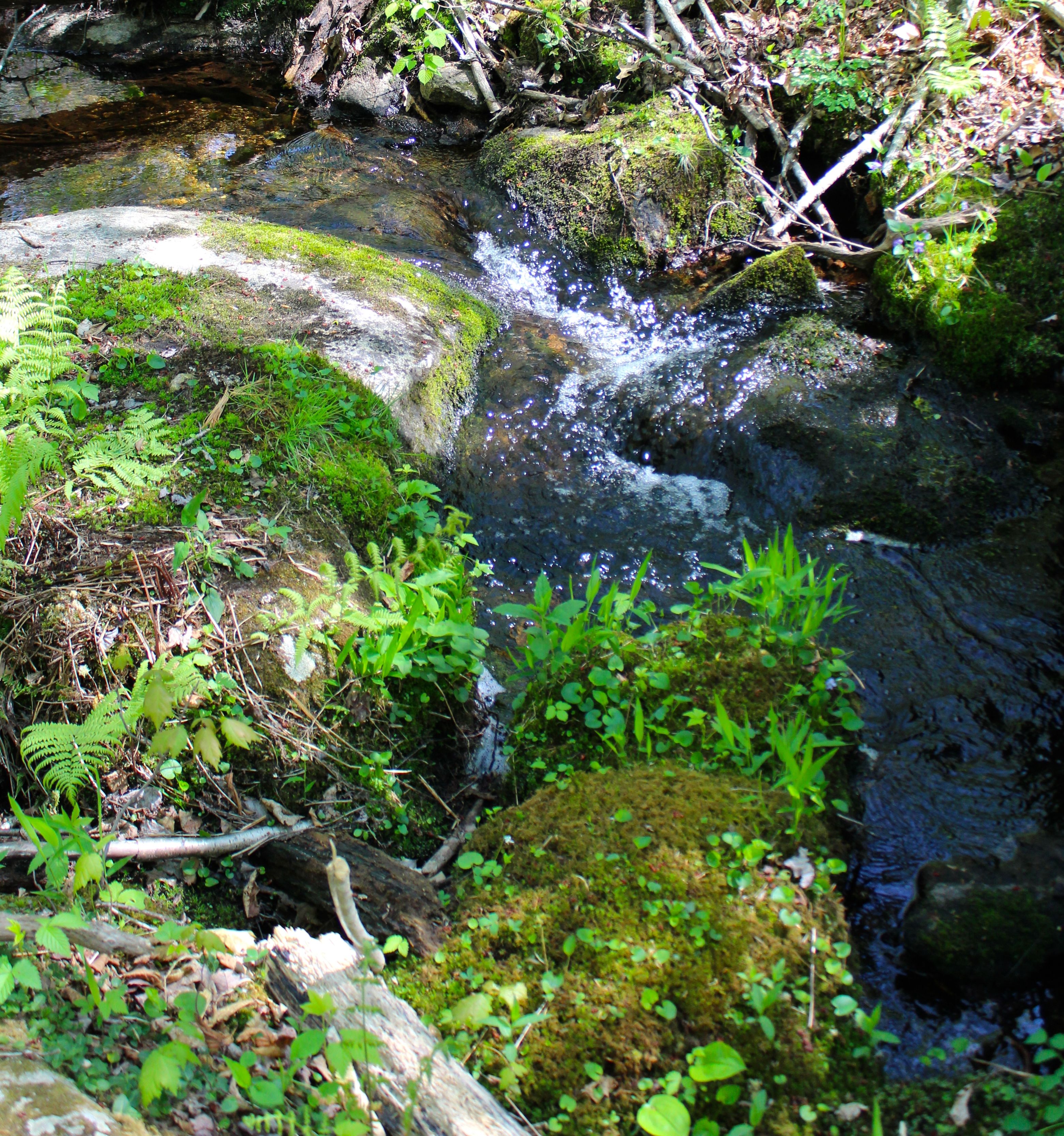
In the winter, friends and I usually find otter tracks and slides by this stream. Today, a variety of life spills forth.

brook

A brook flows from Heald Pond to Bradley Pond, and several years ago the Greater Lovell Land Trust constructed a bench to take in the sights and sounds of this place.

brook2

The view is ever changing.

bridge

Just down the path, a bridge also invites quiet contemplation. (When the black flies aren’t trying to sneak into your eyes, ears and mouth, that is. Protein consumption today? Check)

bridge 2 rock garden

And a rock garden.

swamp

One last look before heading out. Morning has ended.

rhodora

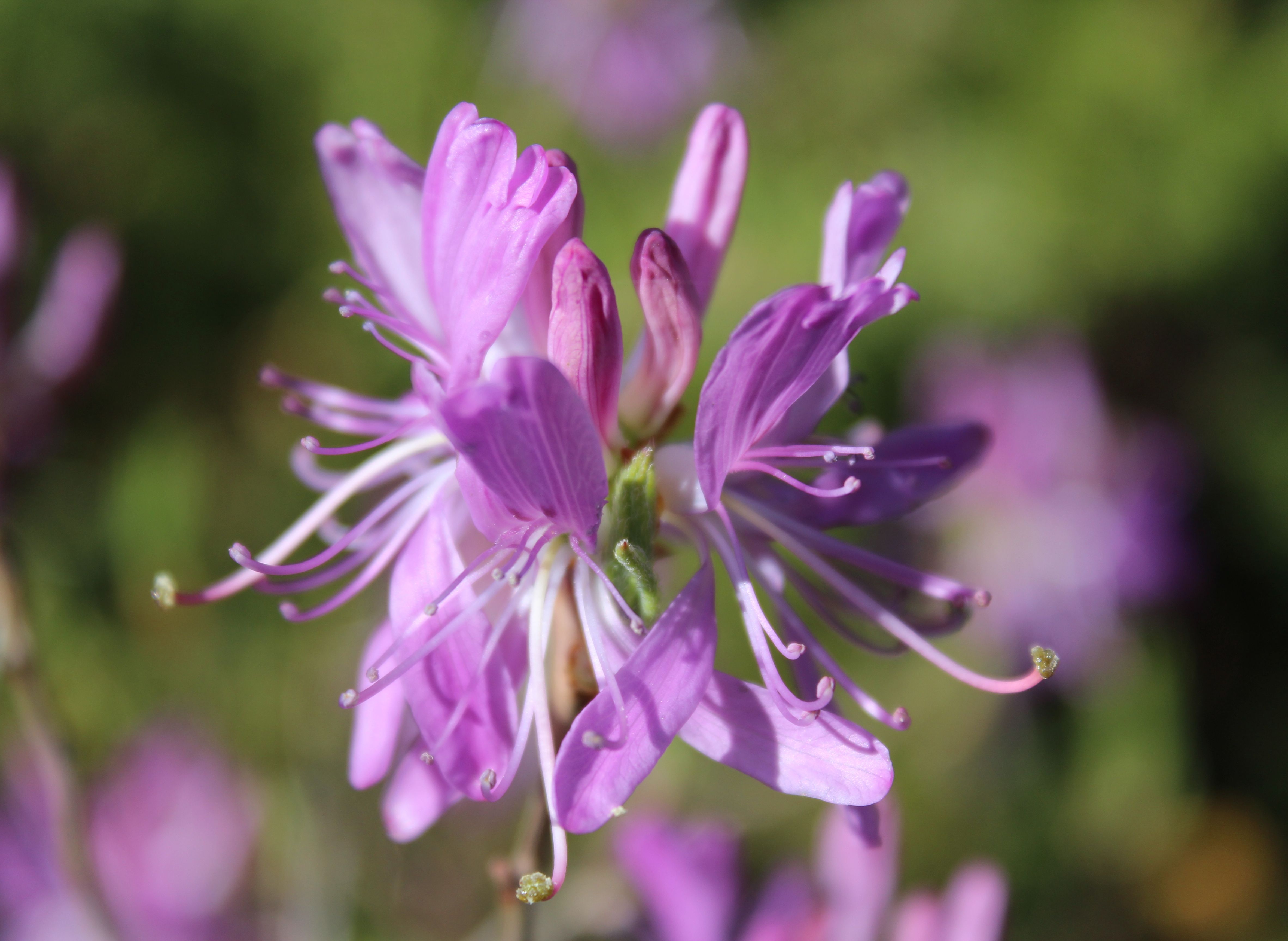
At the other end of my workday, I’m off to the vernal pool. Among a sea of junipers, an explosion of lavender erupts from one Rhodora plant.

bobcat

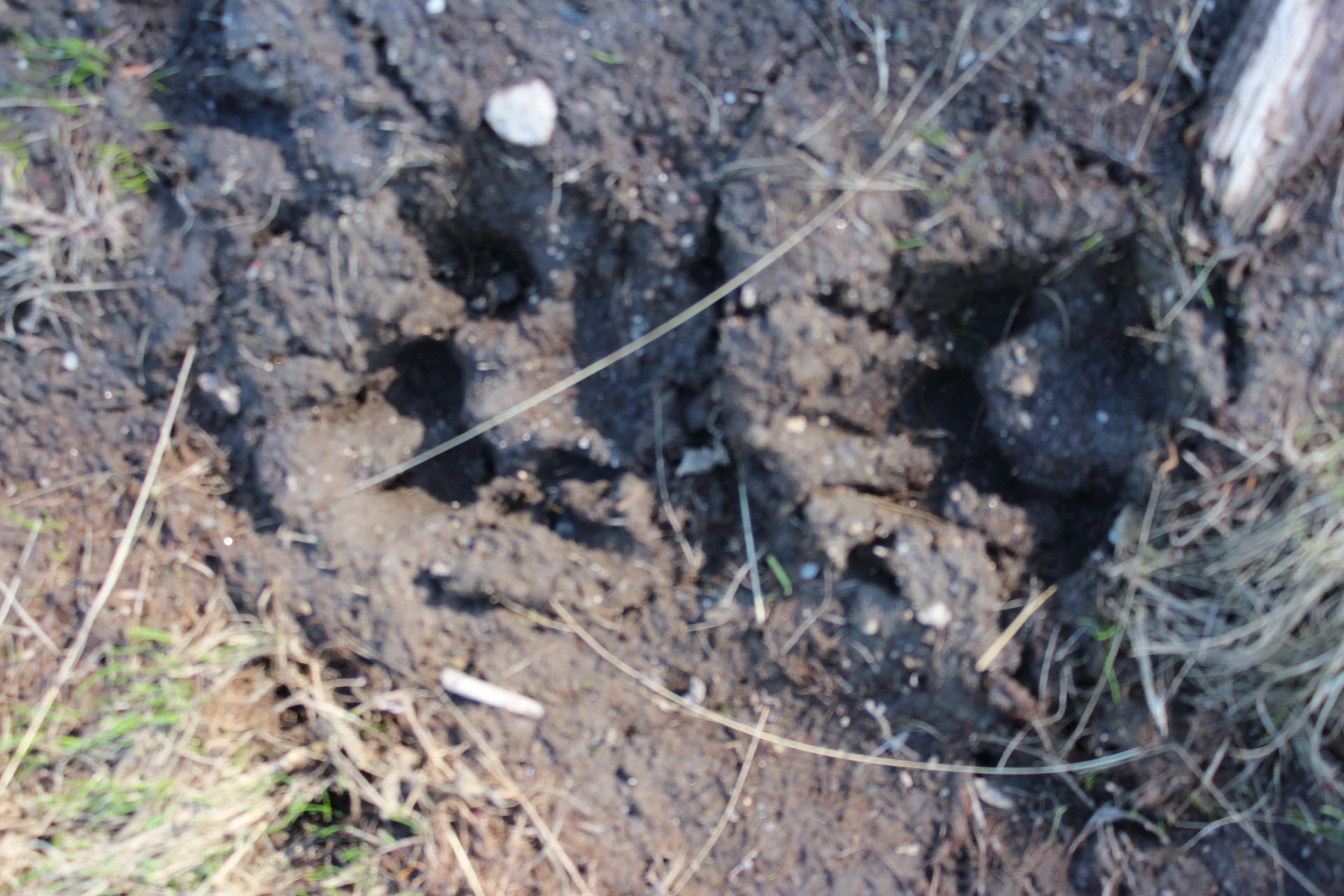
I’m so glad that the Rhodora attracted my attention, because as I turn from it toward the pool, I realize that a bobcat has walked in the direction of our cowpath.

vp

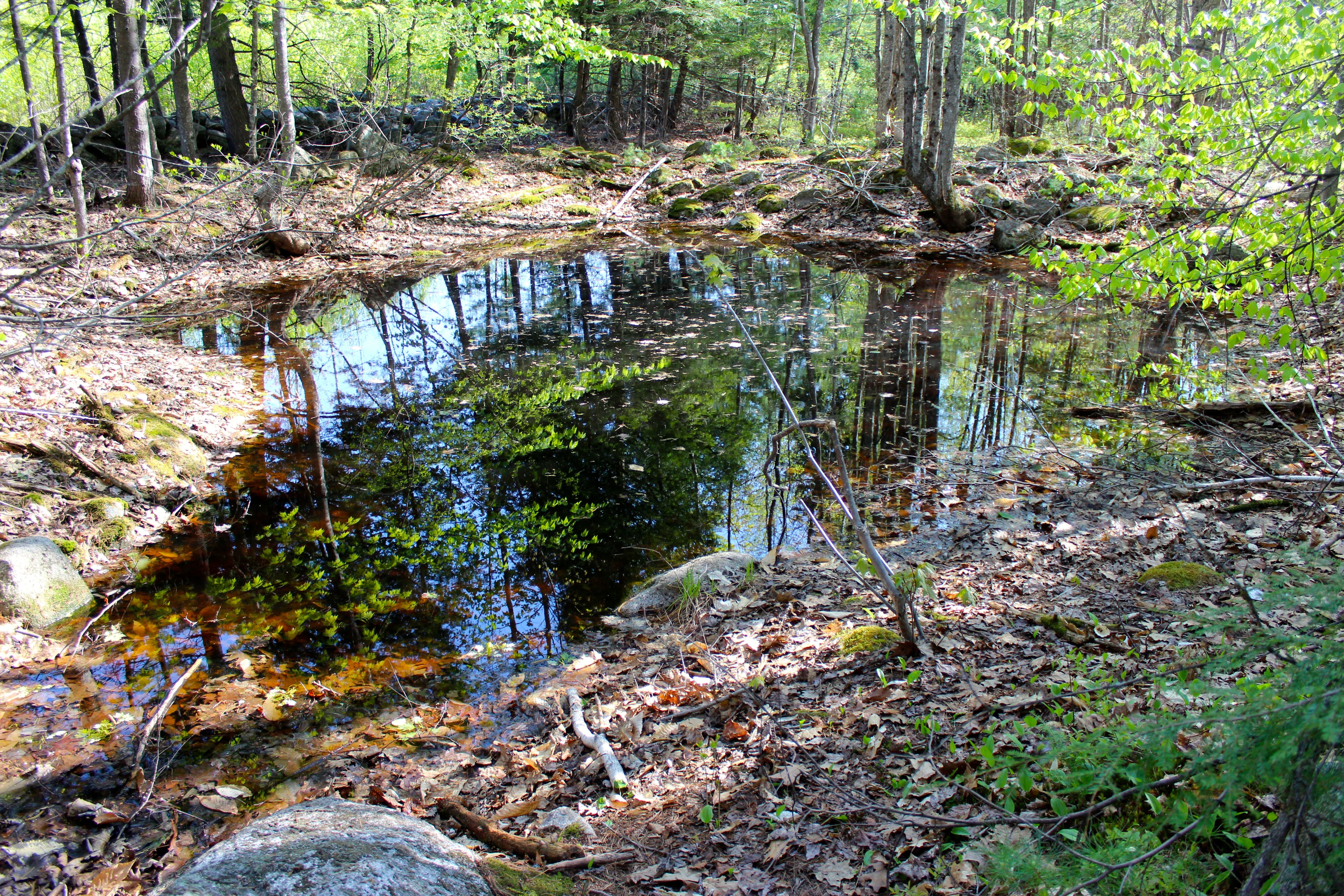
We’ve had little rain in the last few weeks, so while the snowmobile trail still has some muddy spots, the pool is drying up.

sally eggs

Will there be enough water for the spotted salamanders to survive?

water strider

And what will happen to the water striders?

twins

I’ll be curious to see how the tadpoles do. These two appear as bookends for me, holding everything in between in check.

Every day, it’s something new. I feel like I have to start all over again learning the features of this season and I’ll just begin to get it by the time summer rolls around, and then . . . so much more to learn. Though I have plenty of books to guide me, it’s the actual events that are happening right before my eyes that provide the most accurate information.

I’m thankful for any opportunity to wonder and wander, especially at both ends of the day.

A Perfect Beech Day

Eighty-some odd degrees, plenty of sunshine and a welcome breeze greeted a couple of friends and me as we explored the Sucker Brook Outlet Reserve on Farrington Pond Road in Lovell–certainly a beach day.

Beech cigar

Though we often refer to them as being shaped like a cigar, on this summer-like spring day, that description hardly seems apropos.

beech old and new

A few of last year’s leaves still cling tentatively to beech branches,

Beech 1

but on others the buds unfurl

Beech Leaves unfurl

with grace,

beech 2

displaying pleated leaves covered with long silky hair.

trail

There’s so much to see along the trail, so I hope you’ll continue to wander with me.

Hobblebush

 Hobblebush,

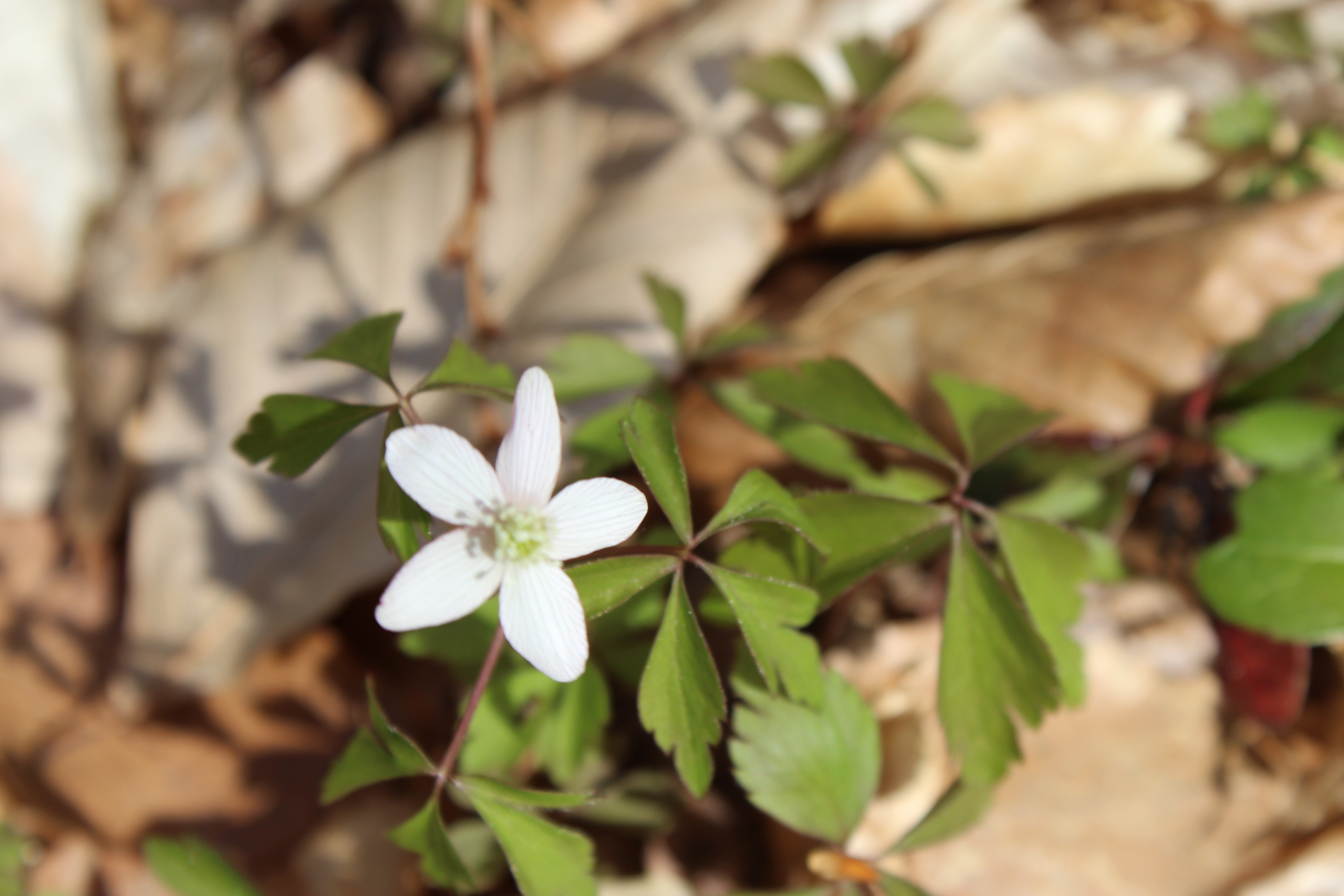
anemone

Wood Anemone

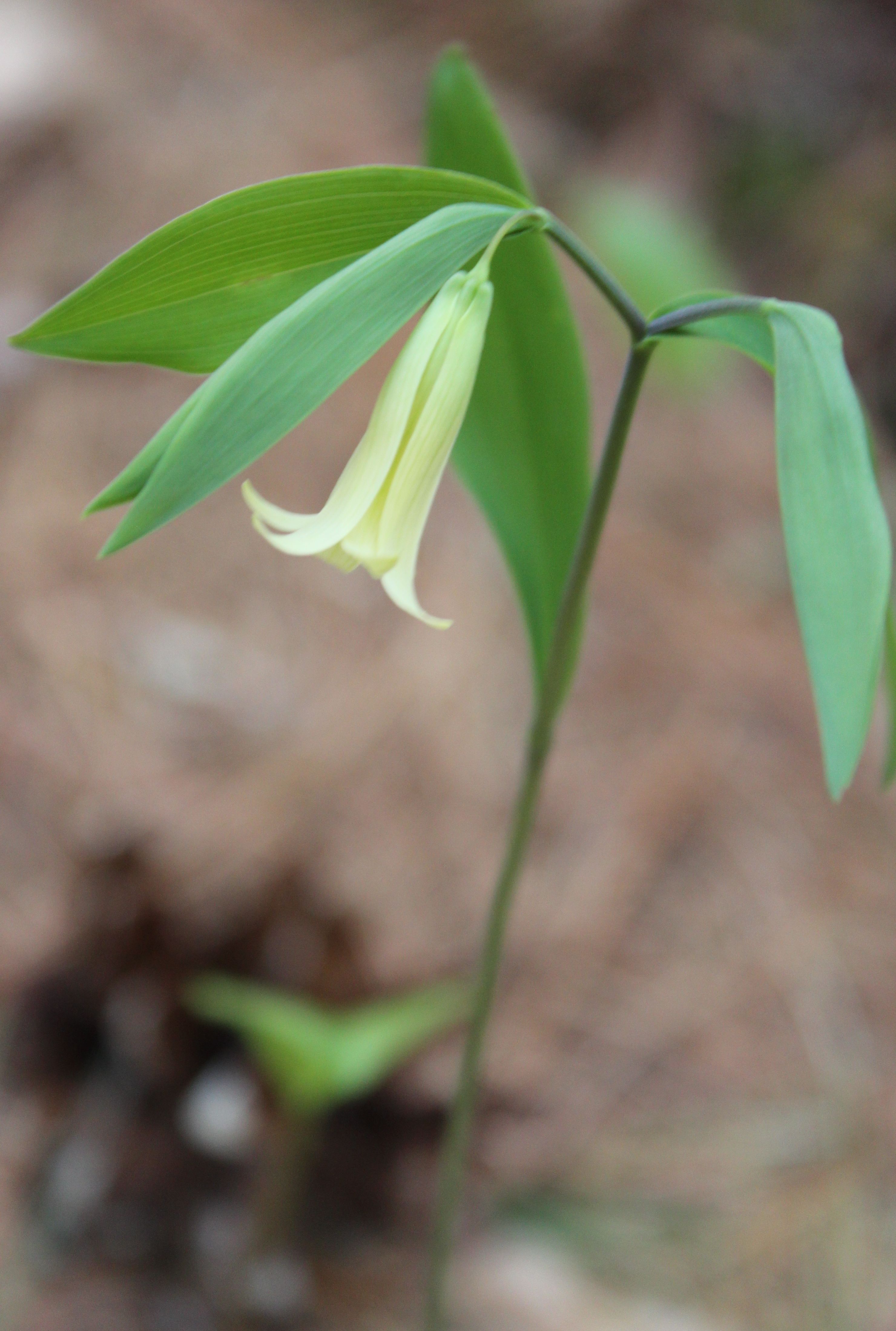
sessile-leaved bellwort or wild oats

and Sessile-leaved Bellwort or Wild Oats.

Leatherleaf

Leatherleaf

Leatherleaf 2

from a different point of view.

beaked hazelnut

Beaked Hazelnut displaying leaves.

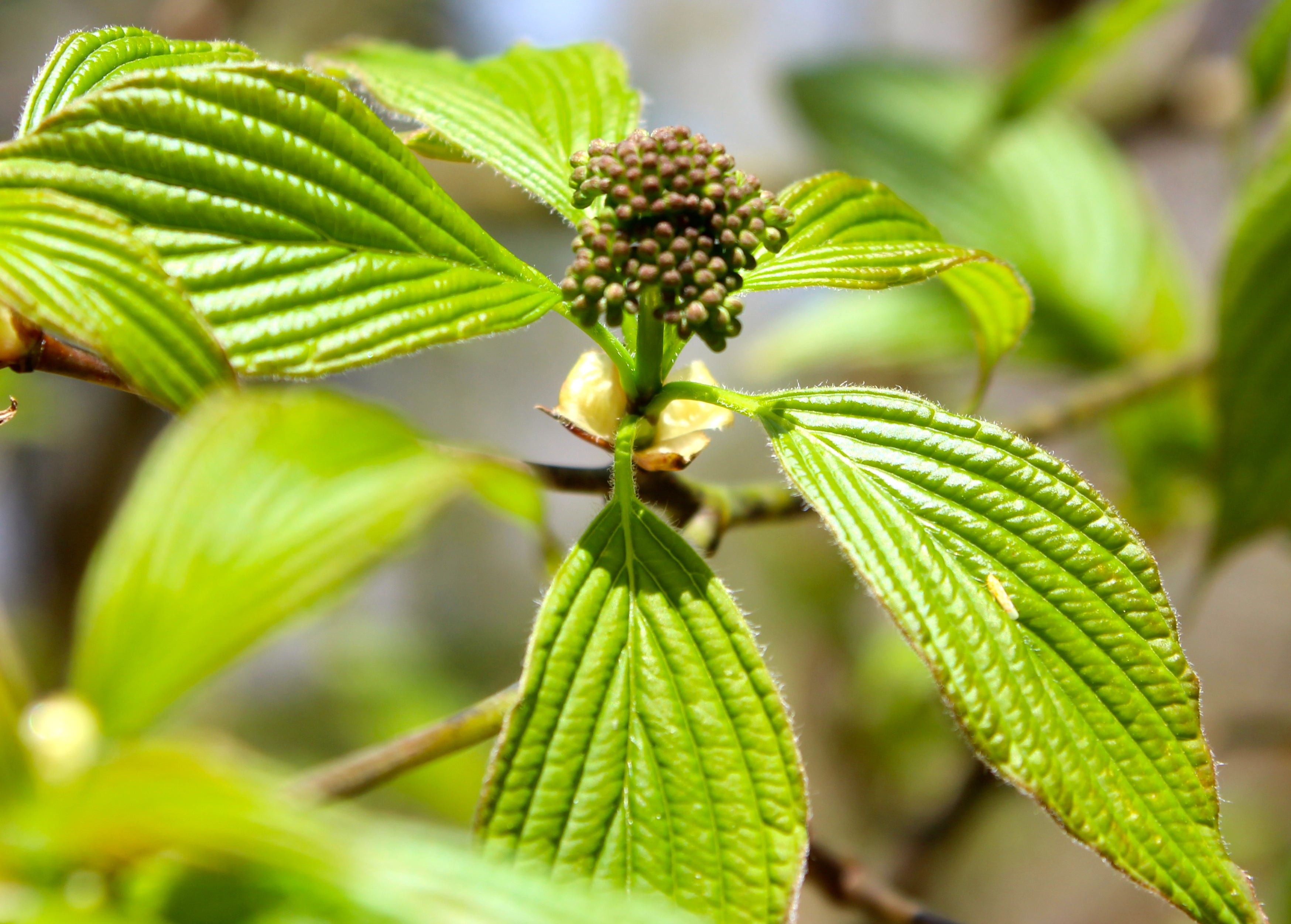
Alternate-leaved Dogwood

Alternate-leaved Dogwood

al dog 2

preparing to flower.

Squawroot resembles pinecone

Squawroot, that reminded us of . . .

pine cone:squaw root

pine cones.

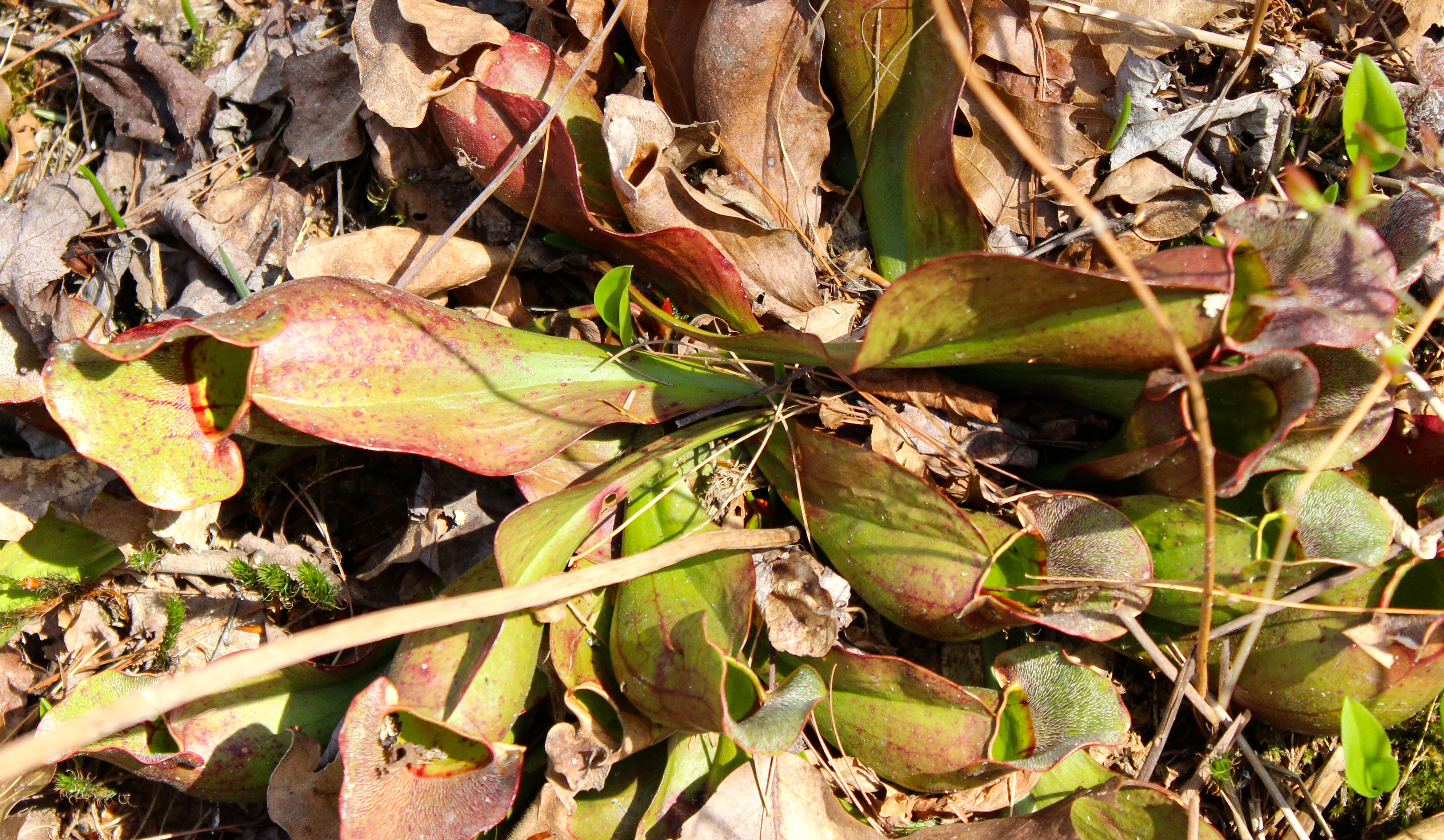
pitcher plant 1

Pitcher Plants, carnivores in the plant world,

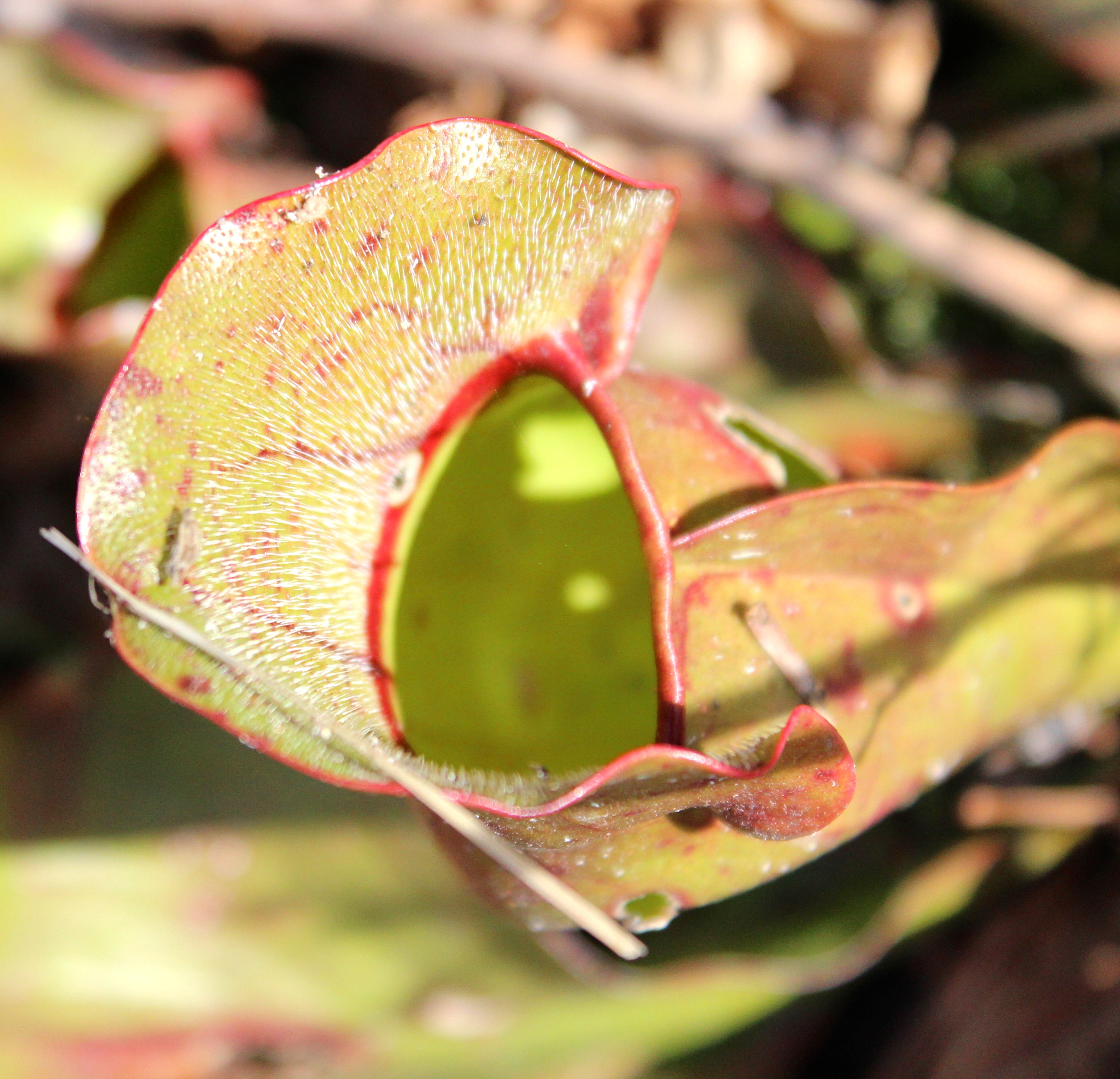
pp3

with their pitcher-shaped leaves,

pp2

covered in trigger hairs–waiting to trap insects.

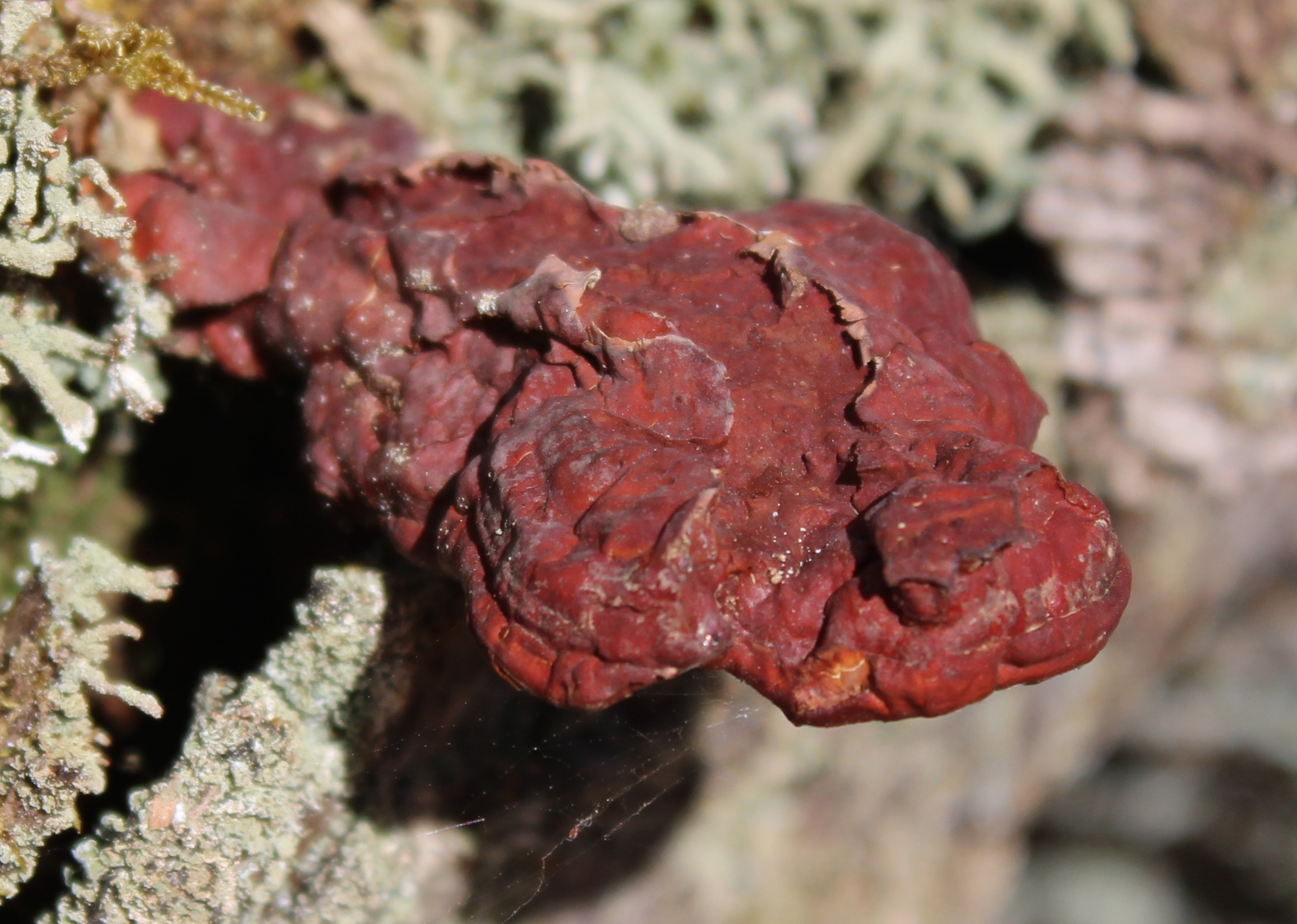
hemlock polypore, Ganoderma tsugae

We saw hemlock polypores,

bn 3

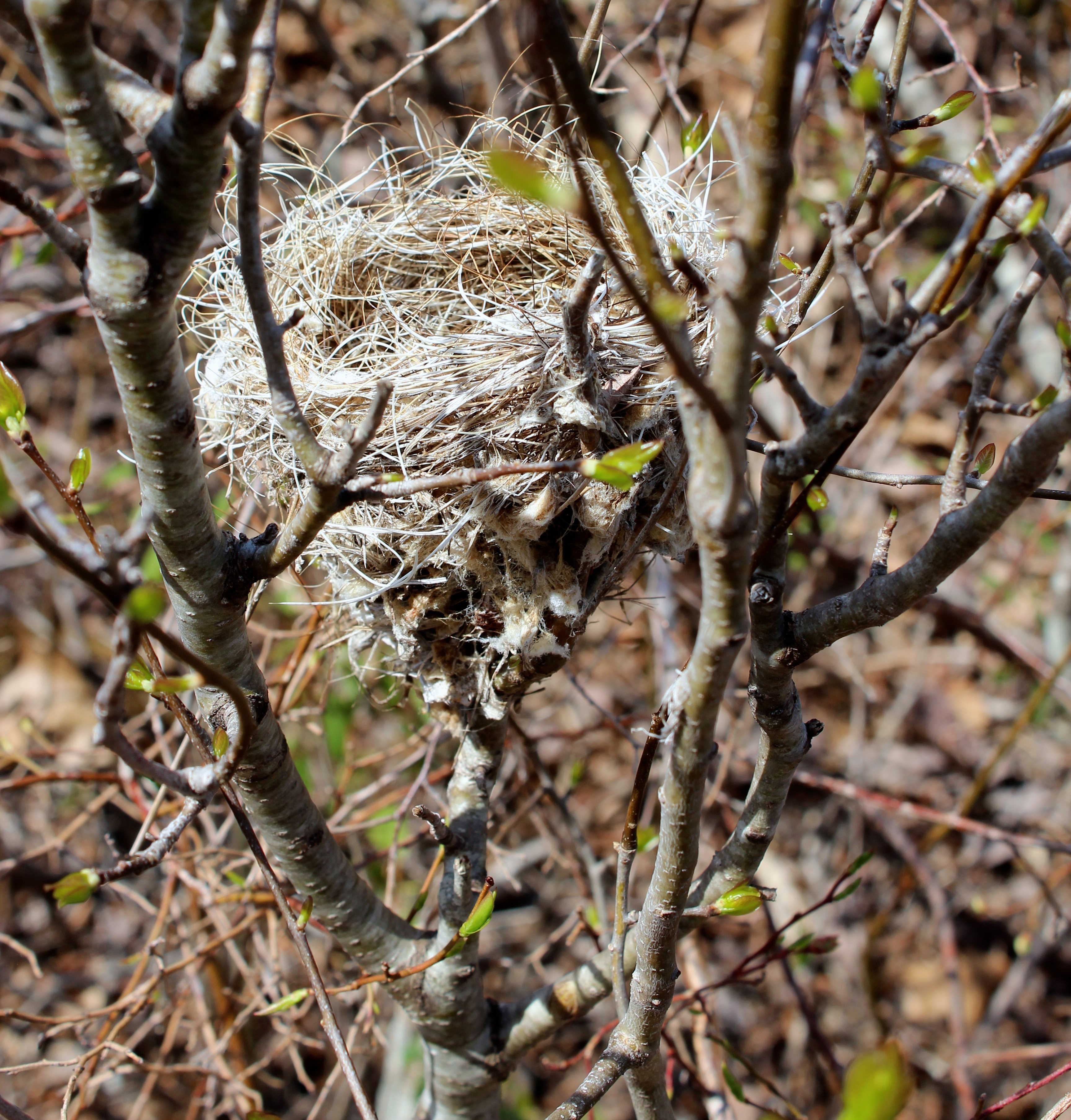
and old bird nests.

And then there was the other animal sign.

 a s deer

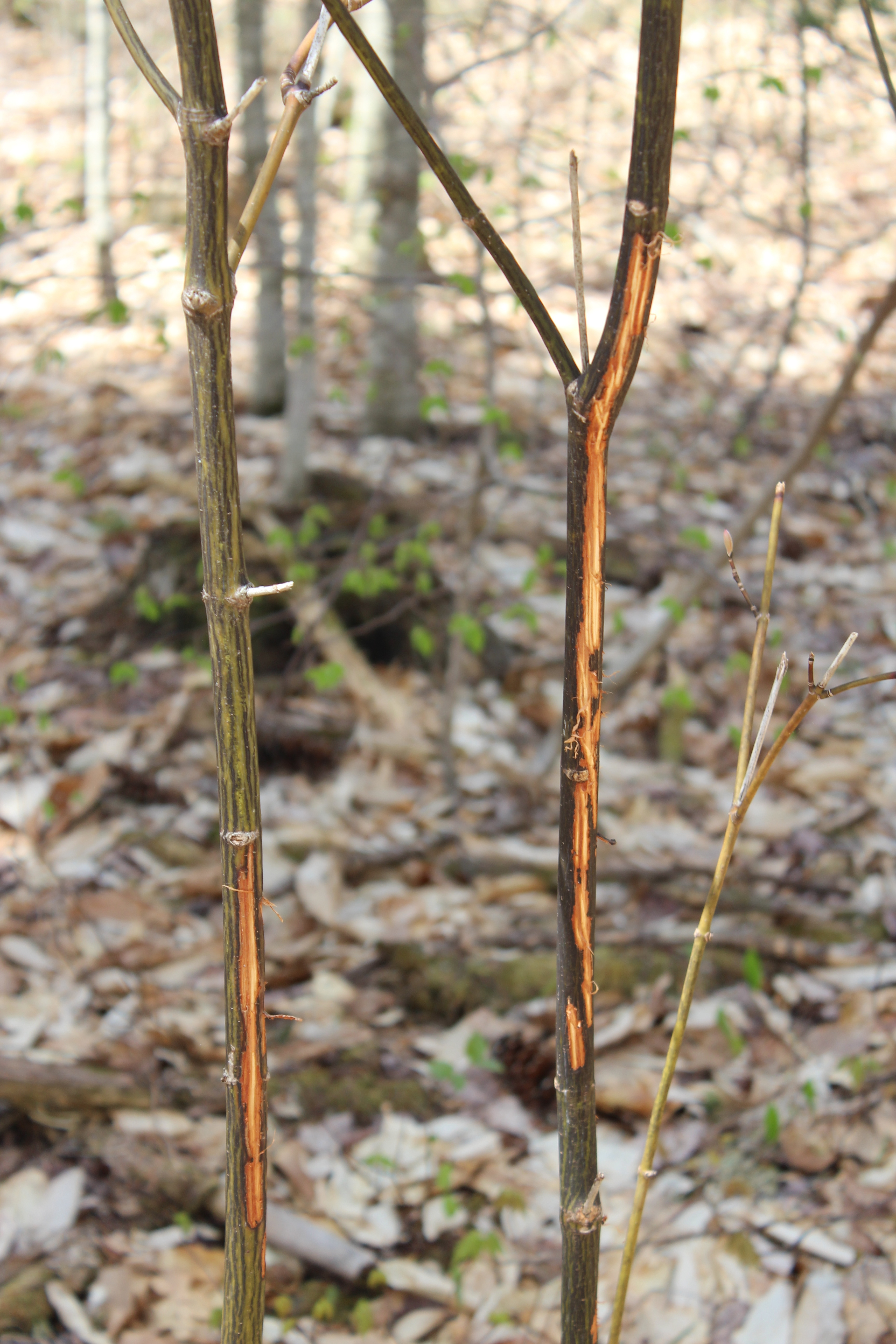
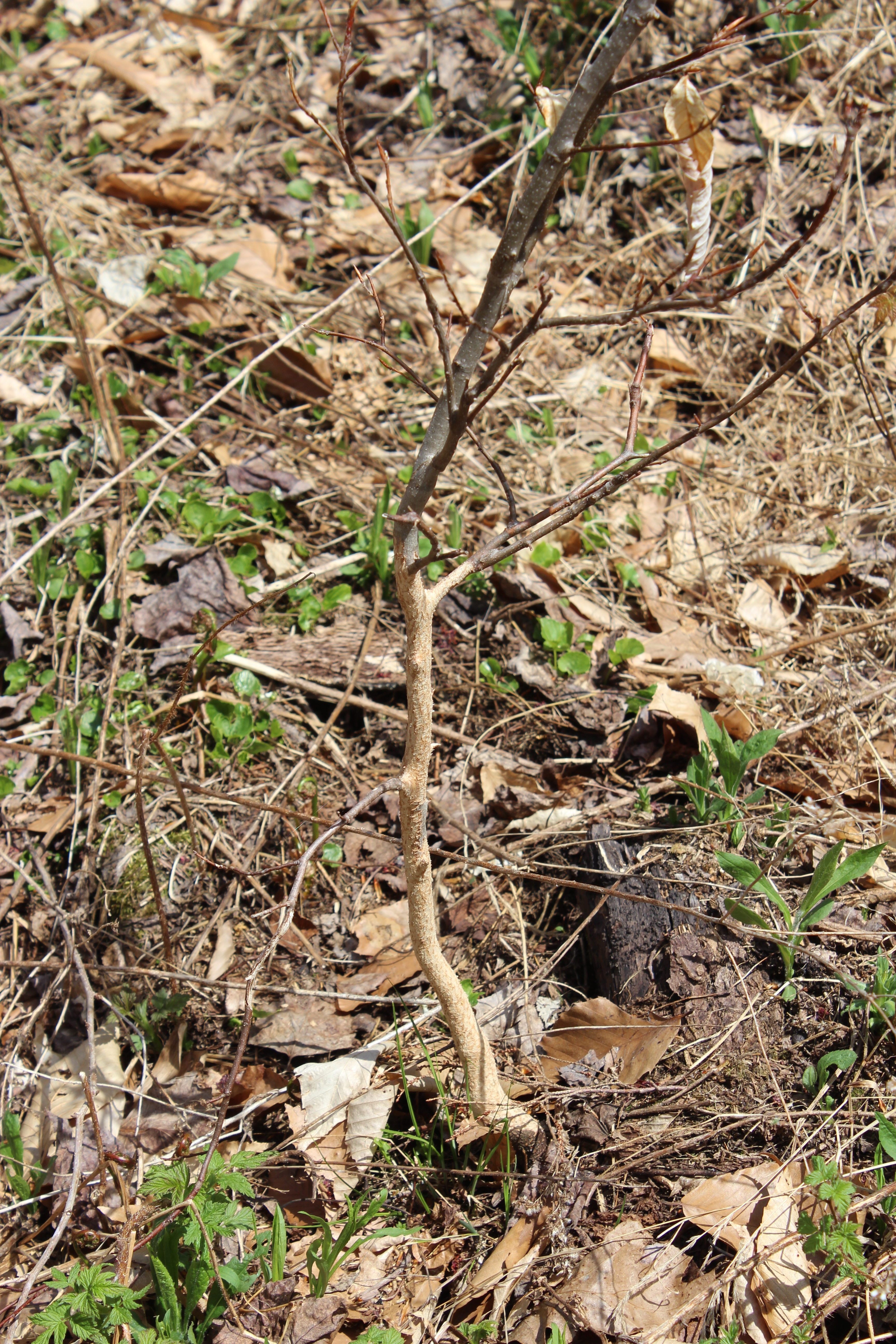
Deer scrapes on Striped Maple bark.

as mouse

And the work of mice below the snow pack.

beaver works

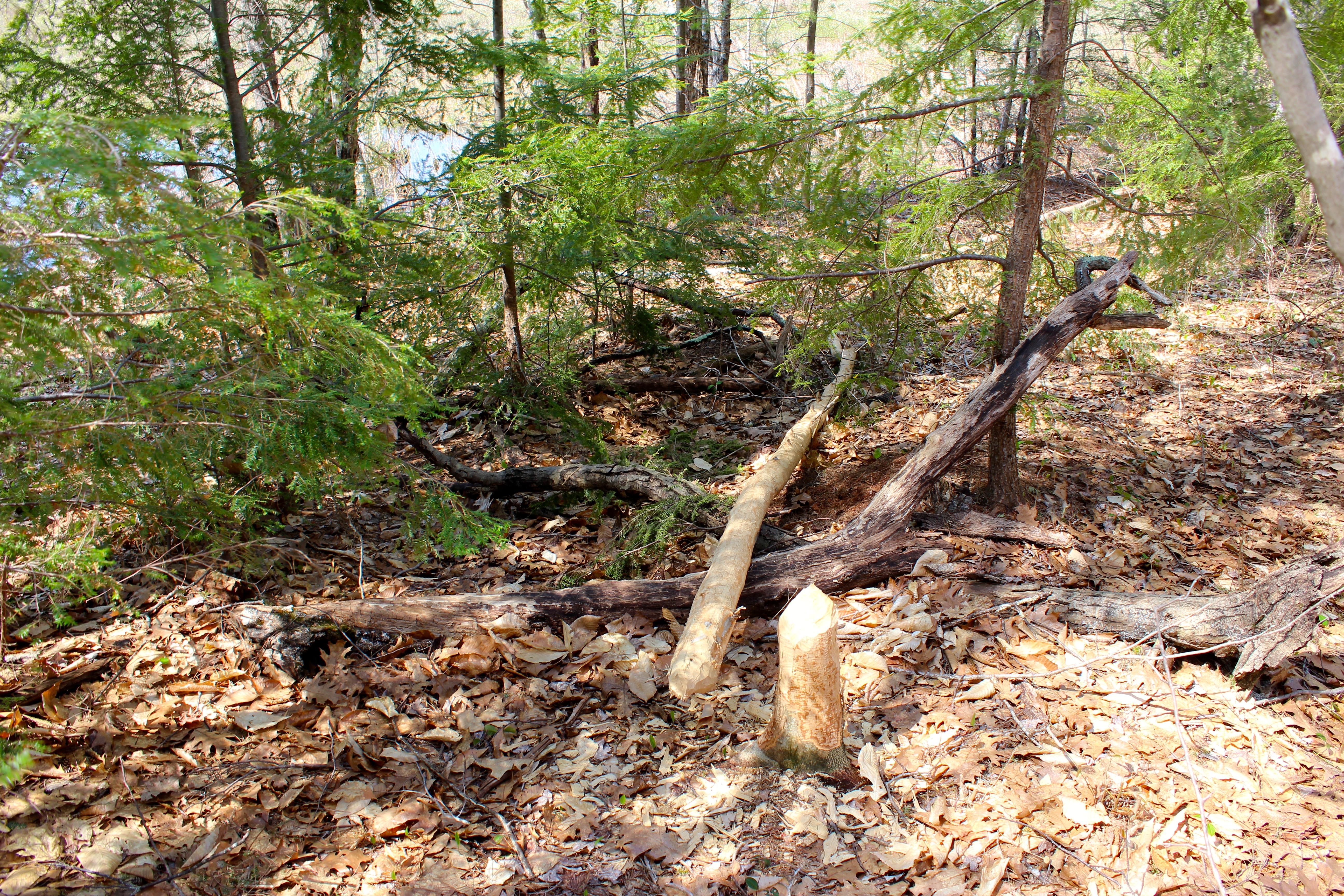
There is beaver work everywhere

bw 5

and numerous lodges in the brook.

vp

A rut in the trail

wood frog eggs

was put to good use–wood frog eggs and emerging tadpoles.

a s yellow feathers, Northern Flicker

Something made a meal of this Northern Flicker.

porc 1

Our best finds were actual wildlife. This guy thought that if he hid his head, we wouldn’t see him.

porc 3

But we did.

wood frog

A wood frog, also trying to hide, well, sorta.

ribbon snake

And a ribbon snake that quickly slithered into a hole and out of sight–the most successful hider of all.

Sucker brook

Lest I forget, we were beside Sucker Brook,

SB 3

where we paused frequently.

mnt view 2

An osprey flew overhead, but I wasn’t quick enough to take a picture.

It was a perfect beech day. Thanks for taking the time to enjoy it with me.

And Happy Birthday to my sister, who has loved the beach since day one.

This Lady’s Delight

There’s something about the Chip Stockford Reserve on Ladies Delight Road in Lovell that keeps pulling me back. I think it’s the history associated with this property that fascinates me. And the questions it raises.

From the start, there is a cellar hole and barn foundation. foundtion 1

About seven years ago, during a visit to the Lovell Historical Society, I learned that  Eldridge Gerry Kimball had purchased 200 acres on January 31, 1880 from Abraham E. Gray.

Various journals from that time period include entries about driving cattle over to the Ladies Delight pasture, picking cranberries over by The Pond, as they called Kezar Lake, picking apples, driving sheep to pasture, picking pears, mowing oats and trimming pines.

large pines

Today, it’s the huge pasture pines, stonewalls and a couple of foundations that tell part of the story. I’ve also heard that this area was used as a cattle infirmary. According to local lore, diseased cattle were brought to Ladies Delight to roam and die, thus preventing disease from spreading to healthy cattle.

pileated condo

The big old pines provide investigation for others.

p scat

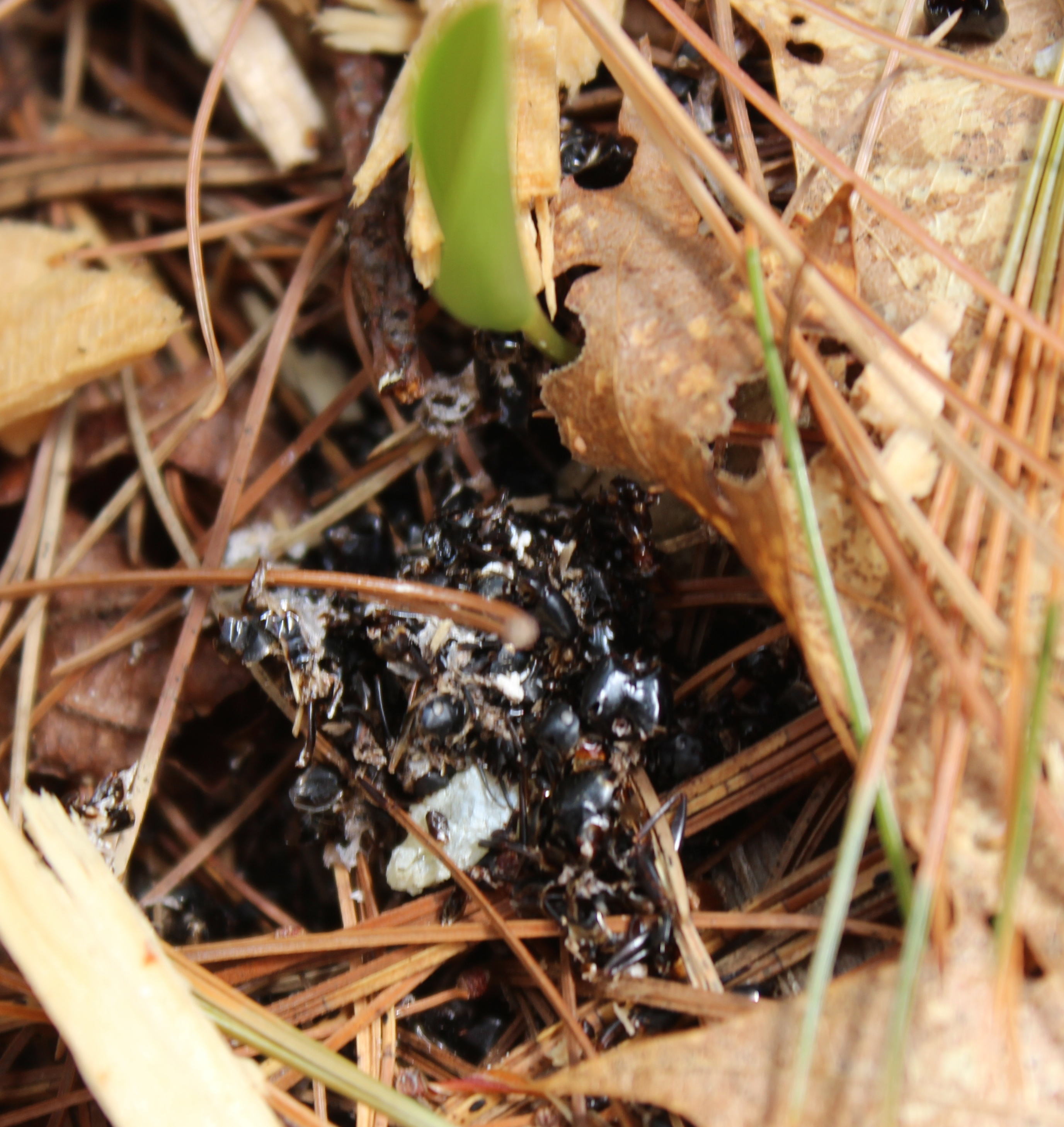
Who sometimes leave presents. Can you see the ant bodies?

cs

Yup, that’s snow. I took this photo in December because I was impressed with the stock pile of cones a red squirrel had made.

midden

It took me a few minutes to locate the tree today. I wanted to see what the midden looked like and wasn’t disappointed.  In trying to find the tree, however, I developed an appreciation for the red and gray squirrels who cache their food and then return to it. Of course, if a gray squirrel doesn’t remember where it stored an acorn, then a turkey or deer may find a treat, or a tree may grow. No matter how you look at it, it’s all good. As for me, I need to learn how to use our GPS.

Another story about Ladies Delight hill is that this is the place where people would come to picnic in the 1800s. Did the women get dressed up to enjoy a day out, a break from their farming duties? I have visions of them wearing long dresses and bonnets and carrying picnic baskets. But could they really afford a day away from their chores?

red spur

The blue trail loops around the 155-acre reserve, and a spur trail (red) leads to the vantage point–a view of Lower Bay on Kezar Lake and the White Mountains.

chip stockford

A bench at the outlook was placed in memory of Chapman “Chip” Stockford, a founding officer of the GLLT who lived in the neighborhood.

view

Spring color–more subtle than fall foliage.

white pine

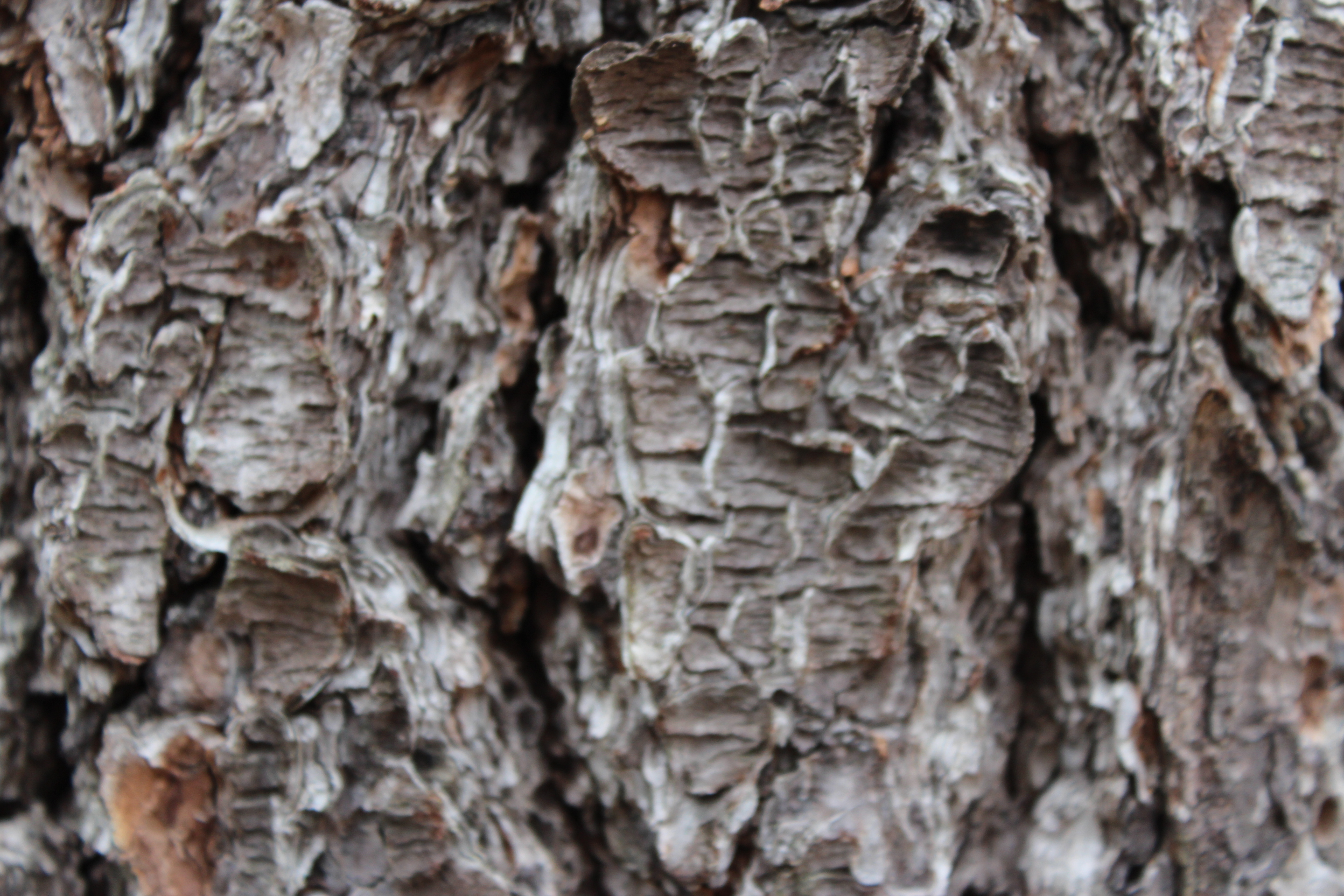
On the short spur between the red arrow and the outlook, the variety of trees offers a study in bark. Eastern White Pine–with horizontal lines on the scales.

hemlock

Flaky, cinnamony-gray (is that a word?) scales of Eastern Hemlock.

ash

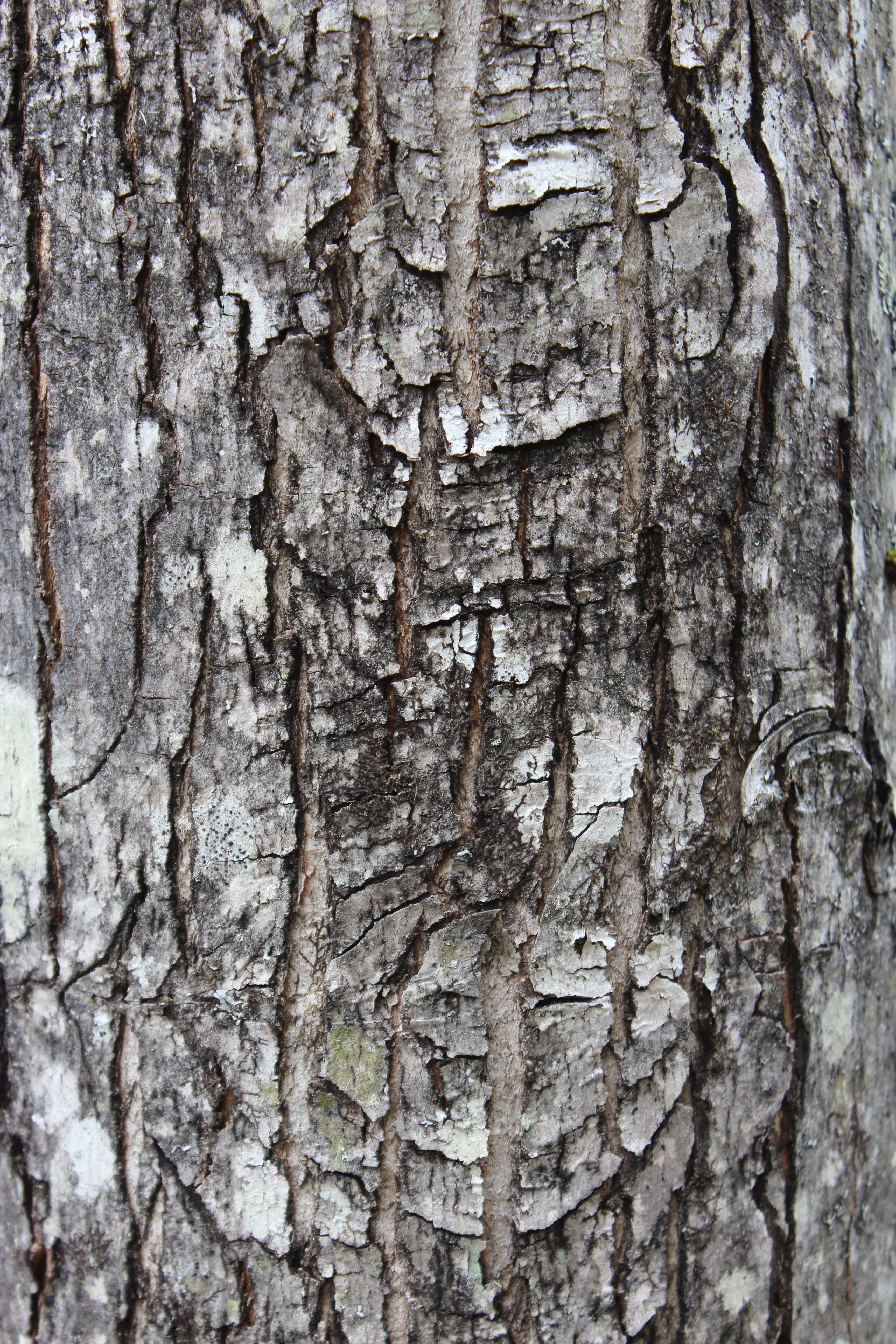
Ash’s diamond-shaped furrows.

beech

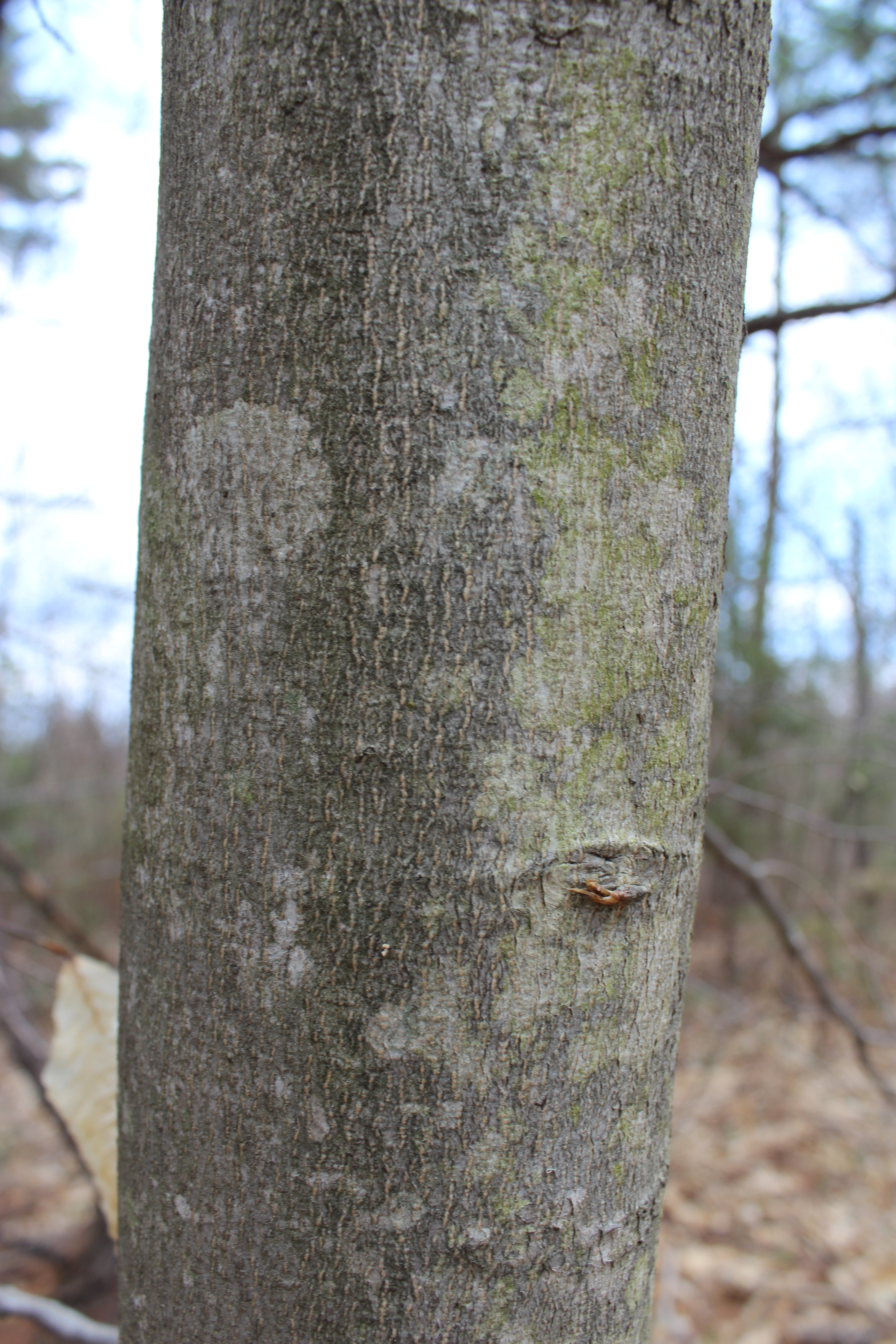
And the smooth, silvery-gray American Beech–with some blotches of lichen adding a dash of green and white.

hop hornbeam

Hop Hornbeam’s shaggy strips.

red maple

And the bull’s eye target on Red Maple.

red oak

Finally, the flattened ridges of ski tracks that run down a Northern Red Oak.

pine age

Back on the blue trail, the sun poked through the clouds, shining on pines that represent a variety of ages.

found 2

I’m not sure who lived in the house above this cellar hole, but it’s always fun to visit and wonder.

In her book, Blueberries and Pusley Weed: The Story of Lovell, Maine, Pauline W. Moore wrote that Ladies Delight, “was not named for the view. Nor because it made a delightful walk for ladies to take on a Sunday afternoon or because it was covered with wonderful blueberries . . . (It was) named in sarcasm because women who tried to live in two houses built there could not endure the loneliness and isolation.”

Was this one of the houses?

found 3

It’s been a long time since any vegetables were stored in this cellar.

As I was told at the historical society,  the bridge across The Narrows wasn’t yet built when the ladies lived there, so the only way to get to the other side was walking across the ice.

the rock

No visit to Chip Stockford is complete without a visit to The Rock. Today, I startled two grouse that flew up from behind it.

grouse dust

Dust bath? Nest site?

sweet fern

A few more things to see as I headed out. Sweet fern, which is really a shrub.

baubles

Baubles on pine saplings.

paper birch bark

Young Paper Birch bark.

striped maple

Swollen Striped Maple buds.

phoebe nest

And a phoebe nest under construction.

This lady was delighted to have time to wonder and wander. Thanks for taking a look.

Gifts from the Land

B & H sign

A friend and I met at the Heald and Bradley Ponds Reserve in Lovell this morning. I only just noticed that this sign places Bradley Pond first–I’ve always heard it the other way. Funny how your mind reads what it thinks is there. At least mine does. Makes the job of editing a slow process–for good reason.

I love that the sign shows three peaks, as there are three peaks here–Whiting Hill, Flat Hill and Amos Mountain. Our mission today, however, was to check out the saw mill site off Slab City Road and walk to Otter Rocks.

We completed said mission and chuckled that it took us less than three hours to walk the short distance out and back. But the gifts we received along the way were many.

To begin with, it was an absolutely gorgeous spring morning.

mill 2

Water raced over the dam at the mill site. Timber long played an important role in Lovell, as in other towns throughout New England.  And water provided the power at the saw and grist mills before steam engines were put to use.

In her book, Blueberries and Pusley Weed, The Story of Lovell, Pauline W. Moore wrote: “Slab City (so named because when the mills were running, the slab or outside of the logs was piled high on either side of the road), had two cooper shops and two stave mills as late as 1881, representing the period when one mill produced the staves and a cooper put the barrels together.”

Robert C. Williams, author of Lovewell’s Town, adds, “In 1840, Benjamin Heald built a sawmill in the area east of Kezar Lake known locally as Slab City–a common New England term for the lumbering area of a town–in order to produce shook, the thin boards used to make barrel staves. Slab referred to the outside cuts of logs with bark that piled up unused by the roadside. Shook mills soon abounded in Lovell, and barrel staves went off to the Caribbean, especially Havana, Cuba, to produce barrels that could be filled with molasses and rum.”

Mill 4

This mill site features a combination of quarried stone and cement. On the Lovell Historical Society’s Web site, there are several photos of mills in the Slab City area.

 cherry tree

I wonder about the efforts to quarry the stone, move it to the brook, and build the dam. I also wonder about other things–like this cherry tree that grows out of the sloped land, dips down toward the water and then reaches skyward. Enviable perseverance.

mill pond

Here’s a look at the mill pond above the dam.

bird 2

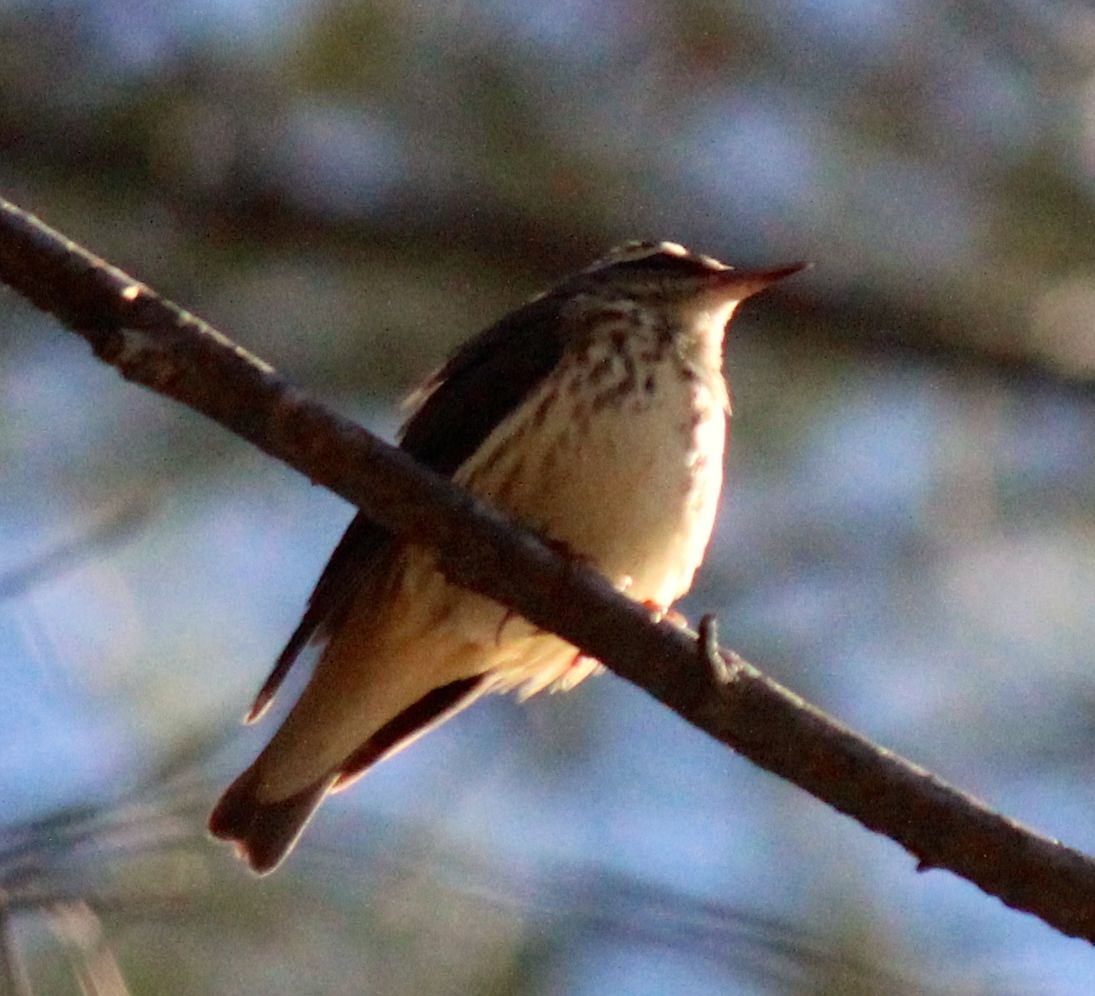
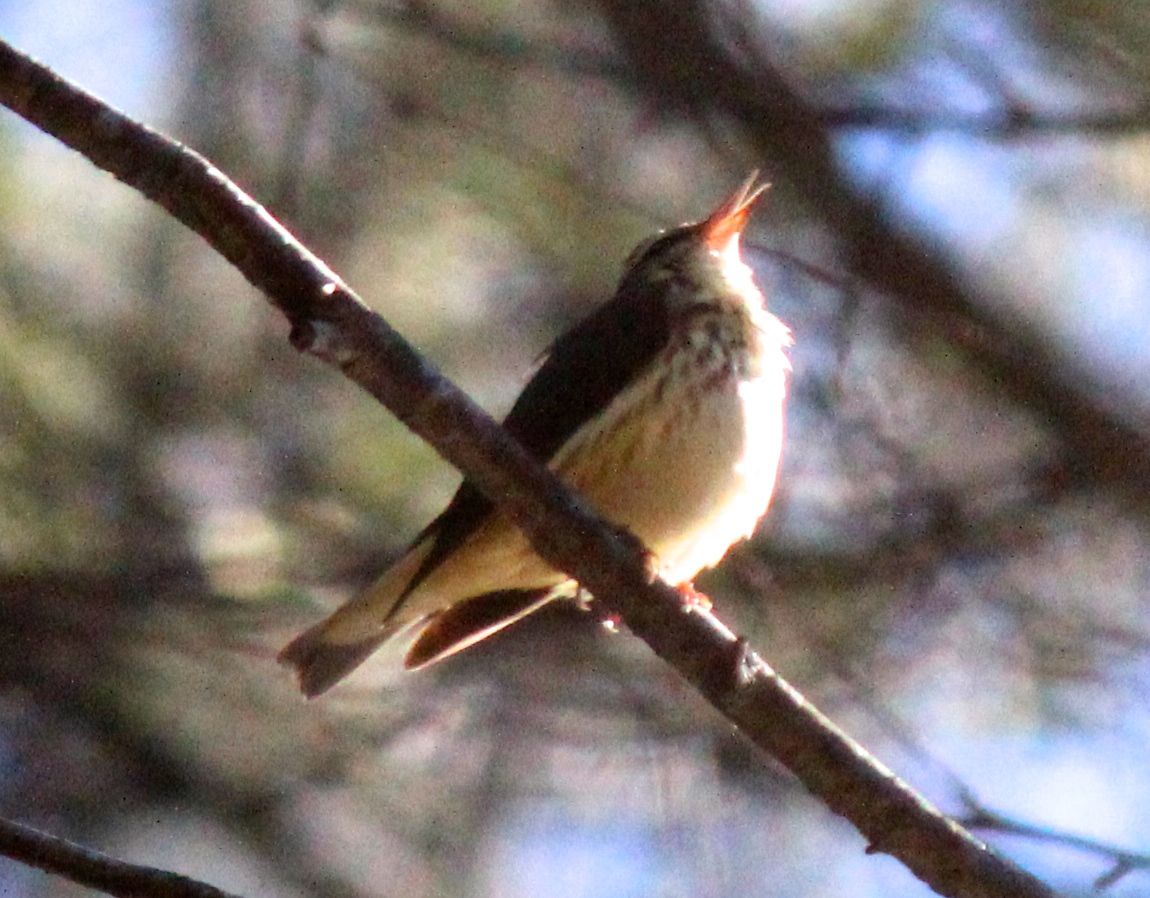
And then there was the gift of song as this warbler sang to us from a branch above. Or is it a Louisiana Waterthrush?

bird

lady ferns

And an evergreen fern, matted from a long winter’s rest.

grape fern and frond

Plus grape fern and its old fertile frond, for which it derives its name because the sporangia have a grape-like appearance when they are fresh.

Christmas fern

The third fern gift of the day–Christmas fern, so named because each leaflet looks like a Christmas stocking or Santa in a sleigh behind his reindeer.

Christmas 2

I didn’t notice any fern fiddleheads, but the snow only melted this past week. There’s still so much to look forward to.

beech leaf

I’ve been watching beech tree buds for at least a month. What I noticed today is that most buds are still wrapped up in scales and retain their cigar shape. On saplings, however, it’s a different story. Along the path, several were unfurling. Perhaps because of their smaller size, they want to be first to leaf out, thus taking advantage of any available sunlight before the larger trees form a canopy above them. Just a thought.

otter rocks sign

Our destination–Otter Rocks.

Otter rock

I’ve not had the privilege of seeing otters here, but plenty of other things revealed themselves today.

ice:eggs look alike

The melting ice fooled us only momentarily. On first glance, it looked like egg masses, but proved to be small masses of ice floating on the surface.

macro

Though you can’t see it here, we watched a kazillion aquatic macro invertebrates swim about.

Mayfly_rs

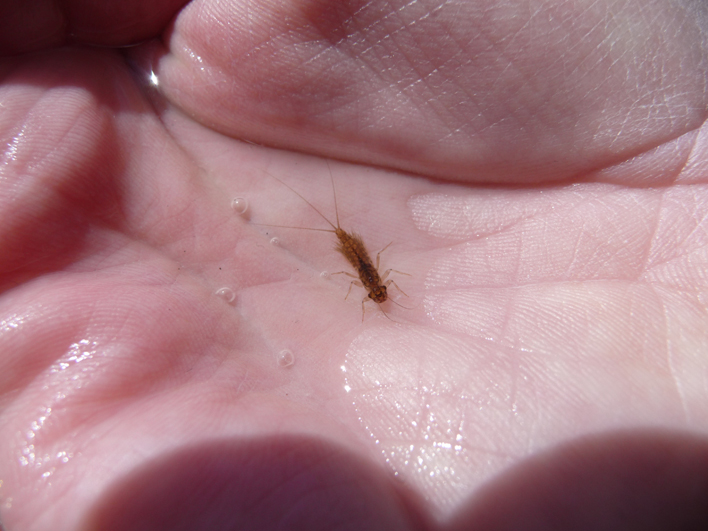
I scooped a few into my hand and my friend, Jinny, snapped this photo of a Mayfly nymph with three cerci or tails. (Thanks J.M.)

exoskeleton

On otter rock itself, there are exoskeletons from hatchings that occurred in previous years.

Heald Pond

It was difficult to pull ourselves away and we have plans to return with sketch books and food and cameras and maybe even some wine–to spend some time taking in all that this lovely spot has to offer.

For today, we needed to wend our way back up the trail. There were still a few more moments of wonder to be had.

partridge berry

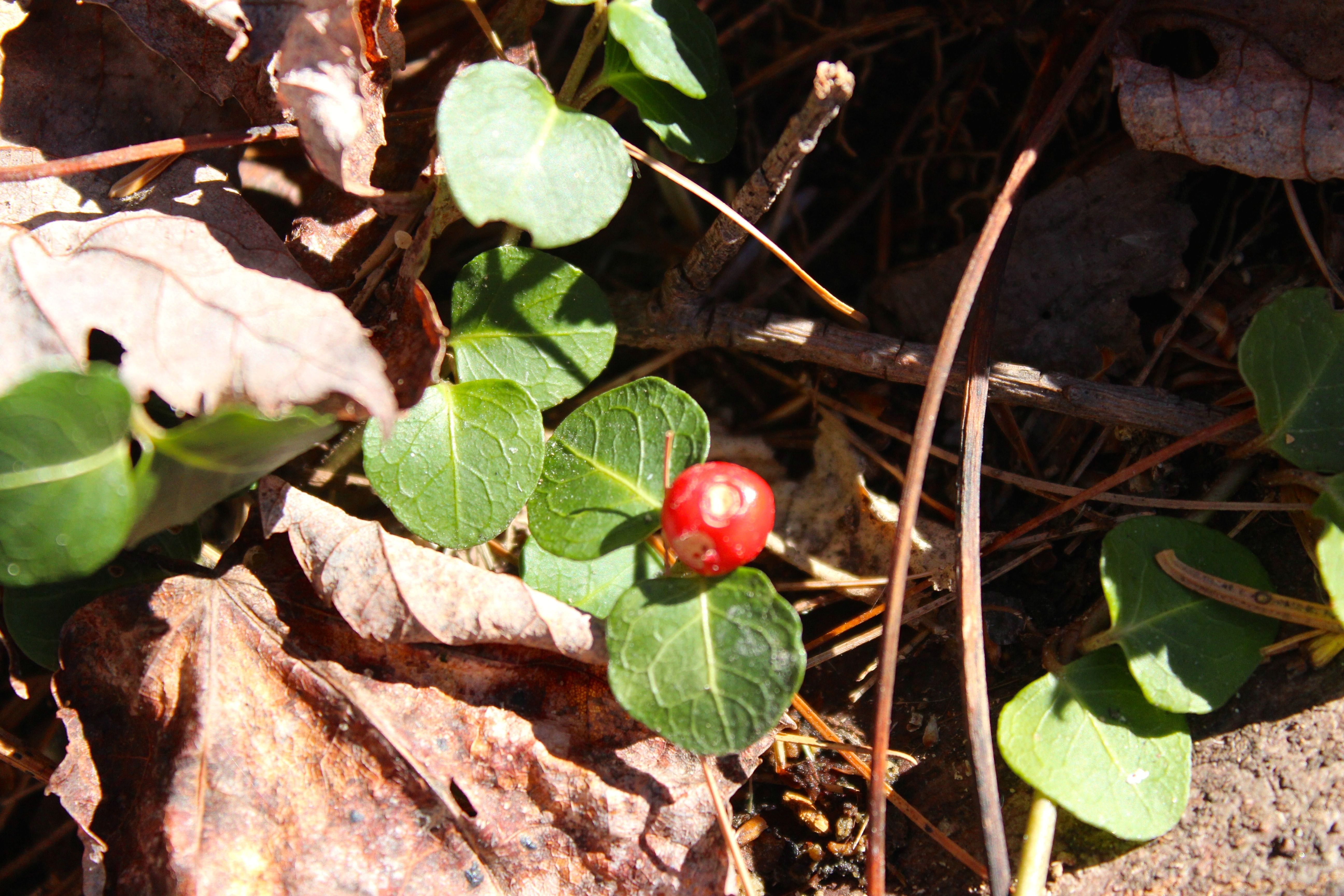
Take, for instance,  the partridge berry with its opposite evergreen leaves and berries with two spots on the surface, a result of the fusion of two ovaries. This plant produces two white flowers, one with short pistils and long stamens and the second just the opposite. In order for a berry to form, both flowers have to be pollinated. Nature has it all figured out. Why don’t I?

cm2

A princess pine club moss shows off its upright spore-producing candelabra or strobili. Funny thing about club mosses–they aren’t mosses. I guess they were considered moss-like when named. Just as the mills take us back in time, so do these–only much further back when their ancestors grew to 100 feet tall during the Devonian Period. They make me feel so small and insignificant. And yet, I’m thankful for the opportunity to be in awe of them.

tinder conks and bird holes

Again the insignificance makes itself known–as this tree dies, it provides life–for carpenter ants, pileated woodpeckers, mosses, lichens and  tinder polypore or hoof fungus. And probably so many more species.

hoof 2

On a nearby tree, the  fruiting bodies of the tinder conks  grow at the base, giving them a true hoof-like appearance. Giddy-up.

sumac

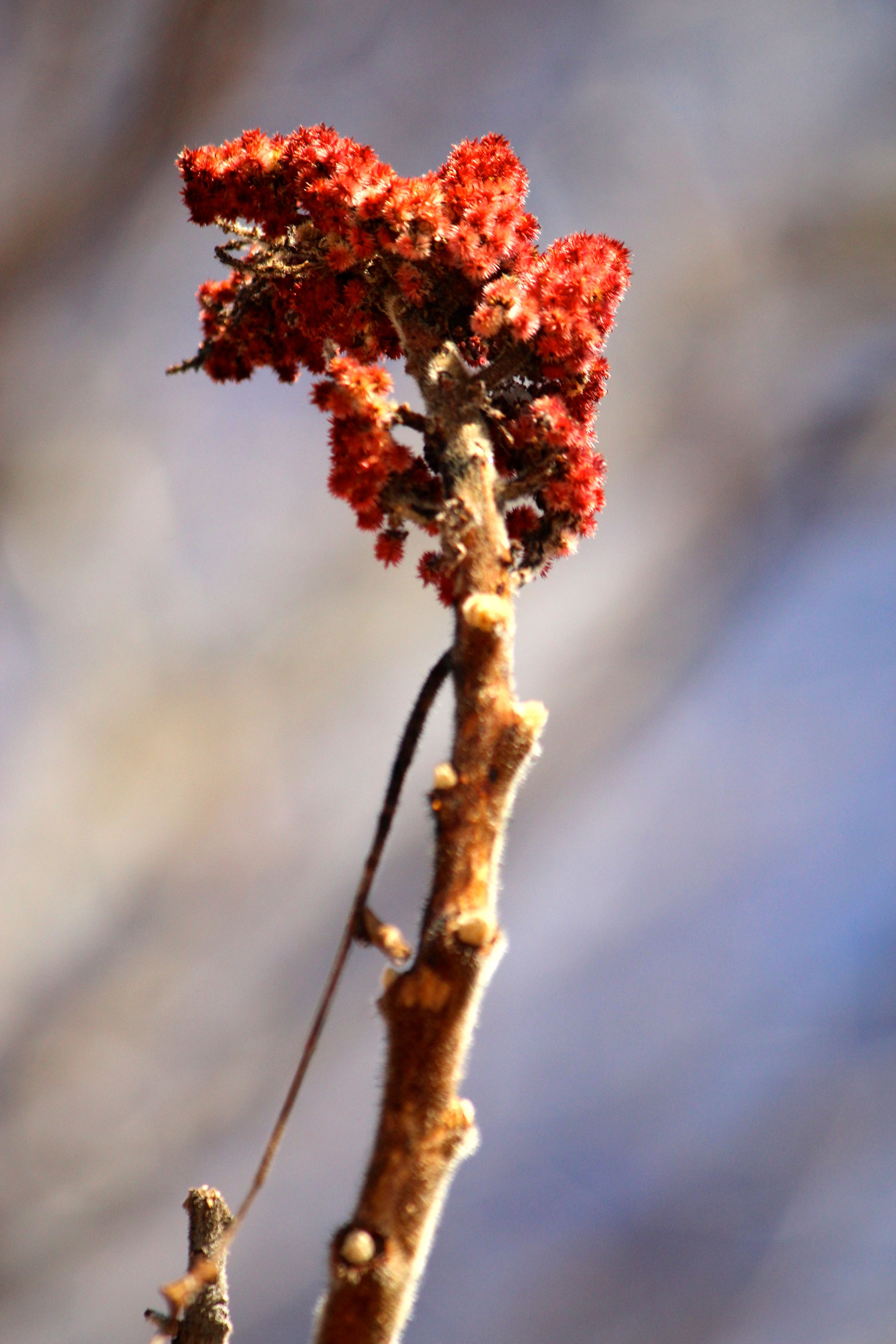
We were almost back to my truck when we saw a clump of staghorn sumac shrubs. I grew up in the land of poison sumac, so it’s taken me a while to warm up to this species. But the hairy red fruits are a work of art in their own right. Plus, they provide food to wild turkeys, ruffed grouse and others.

sumac 2

Some people make tea from the summer berries. I, um, can’t bring myself to try it.

 sumac 3

Check out the hairy antler-like growth pattern. So maybe I won’t seep the fruits for tea, but I can certainly enjoy the other features staghorn sumac offers up.

cedar bark

And though not all of my posts include tree bark, I like it when they do. In this case, Northern White Cedar (Thuja occidentals). The lines of the bark follow the shape of the tree.

cedar leaves

And its leaves are flat and scaly–reminiscent of princess pine.

My friend, Jinny, and her husband Will, are forever naturalists. He wasn’t with us today, and doesn’t often trek with us, but I suspect that he was channeling our adventure. They own many acres and know their land intimately. Sometimes they invite me along to walk their trails and wonder with them. Together, we learn.

And they get me. I know this because every so often they give me gifts from their land.

Today, I was the recipient of two gifts.

green stain

Trail blaze on a downed tree? No, Green Stain (Chlorociboria aeruginascens). In his book, Fascinating Fungi of New England, Lawrence Millman writes, “The stain was once used for Tunbridge ware–decorative wooden objects inlaid with strips of colored veneer.” I’d much rather have this piece of wood.

 bark 2

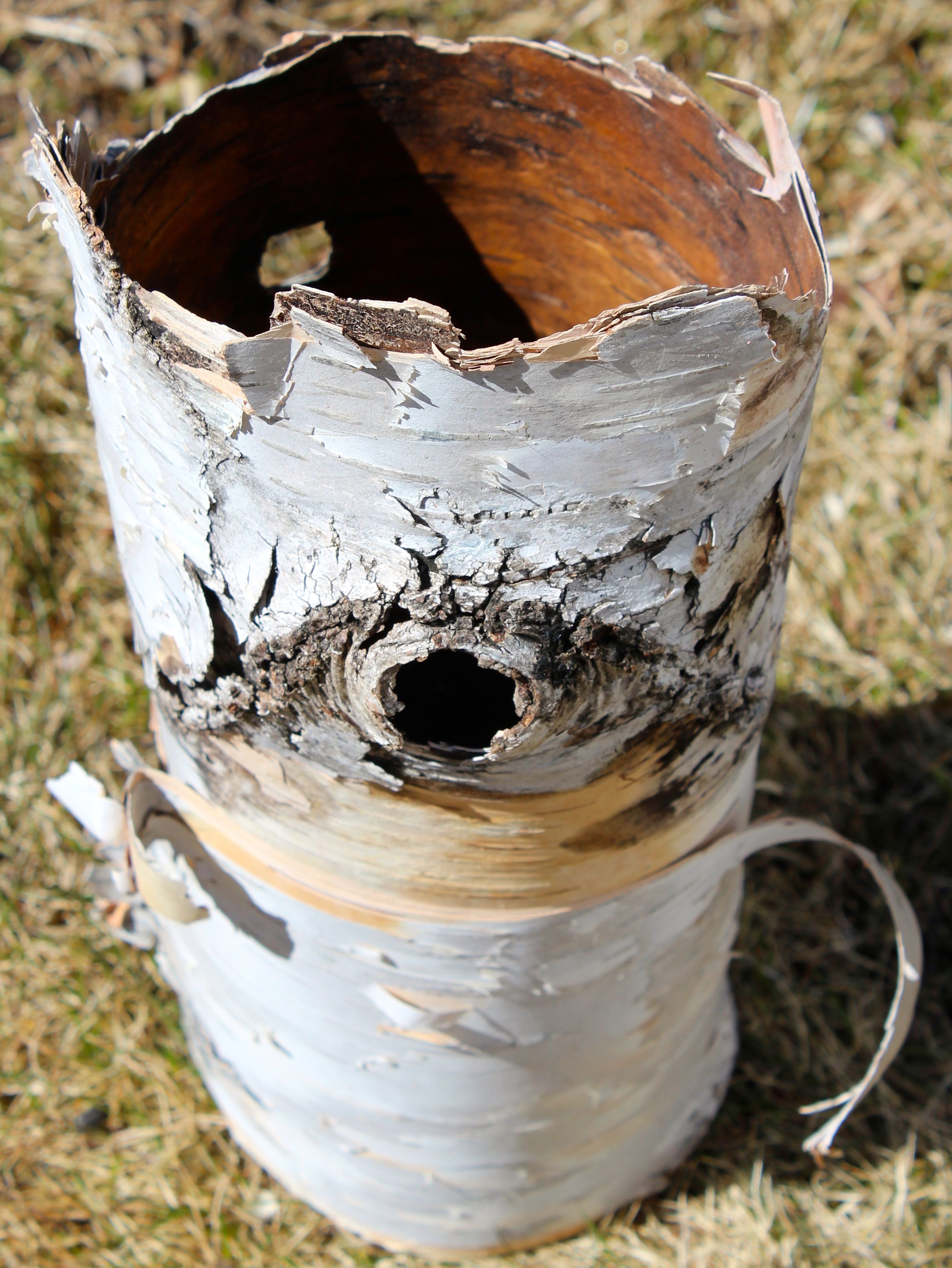
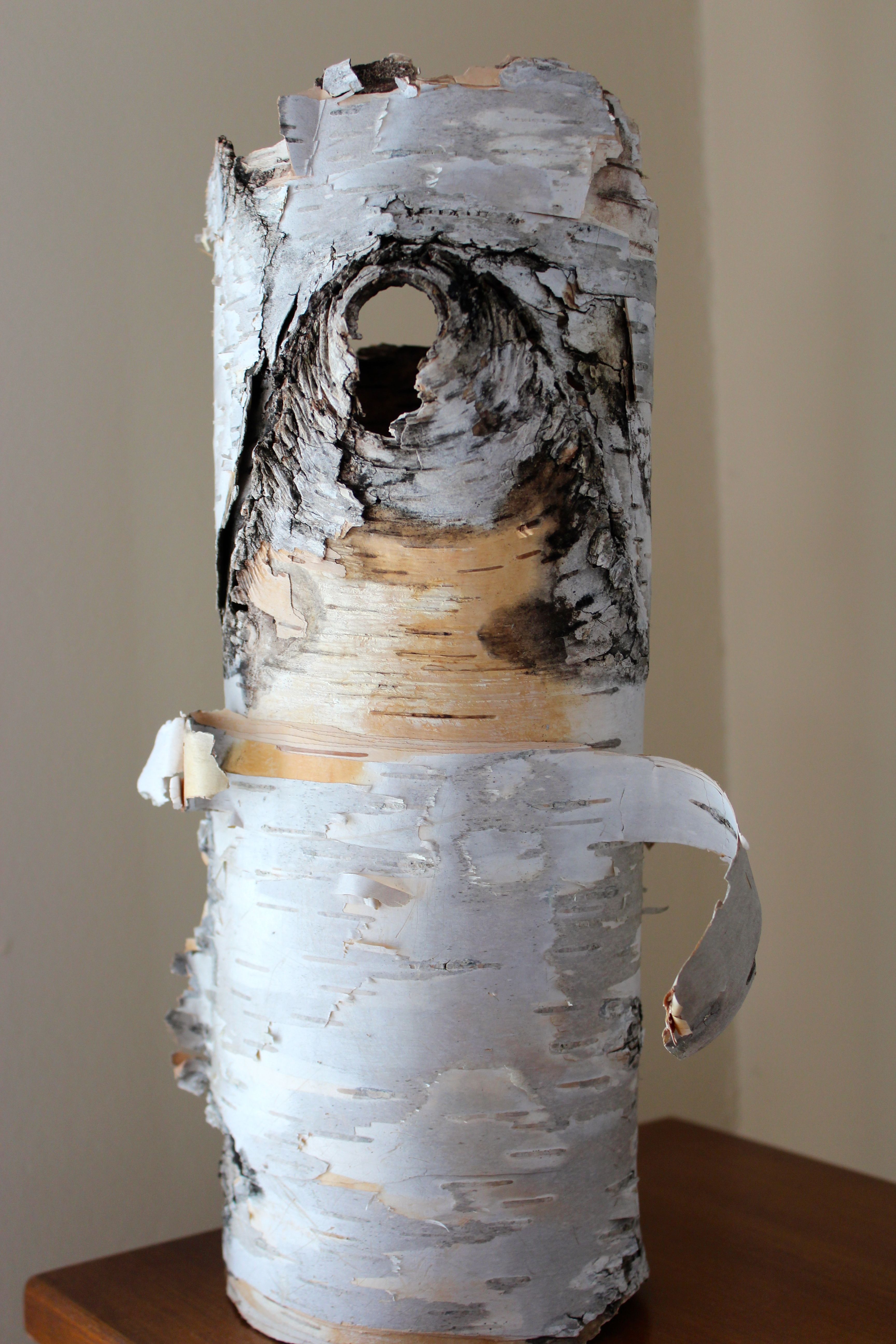
The other present is an intact piece of paper birch bark–peeling, chalky white outer bark, orangey inner bark, a hole where the branch was and a fu manchu over the branch hole. Perfection.

sculpture

It will certainly be a useful teaching tool, but in the meantime, it’s earned a spot on top of the bookcase in the summer kitchen.

One last gift from the land.

matted ferns

These evergreen ferns, matted from a winter under snow, invoke a touch of spring fever.

It was a short wander with a lot of wonder. Thanks for joining me.

On the Edge

I’ve been blessed with amazing opportunities. From writing and editing projects to nature education, I get to meet and learn from a variety of people. Yesterday, I spent two hours with a couple who live off-the-grid on a farm in Stow and rent greenhouse and farm stand space in Lovell. Though we’d met only briefly at an owl presentation this winter, I immediately felt like I was among old friends. My task today was to turn our interview into an article.

Writing is a process that I embrace. I work best when the house is quiet. Then it’s pen or pencil to paper, letting the story flow from head and heart to hand.

Once the rough draft is completed and I’ve typed it, I’ll read it aloud and make some changes. But then I need to step away. And that’s what I did this afternoon.

Mt Wash

I didn’t go far. I felt the need to wander along the edge of the power/tree line, where the snow is melting.

blueberry twig

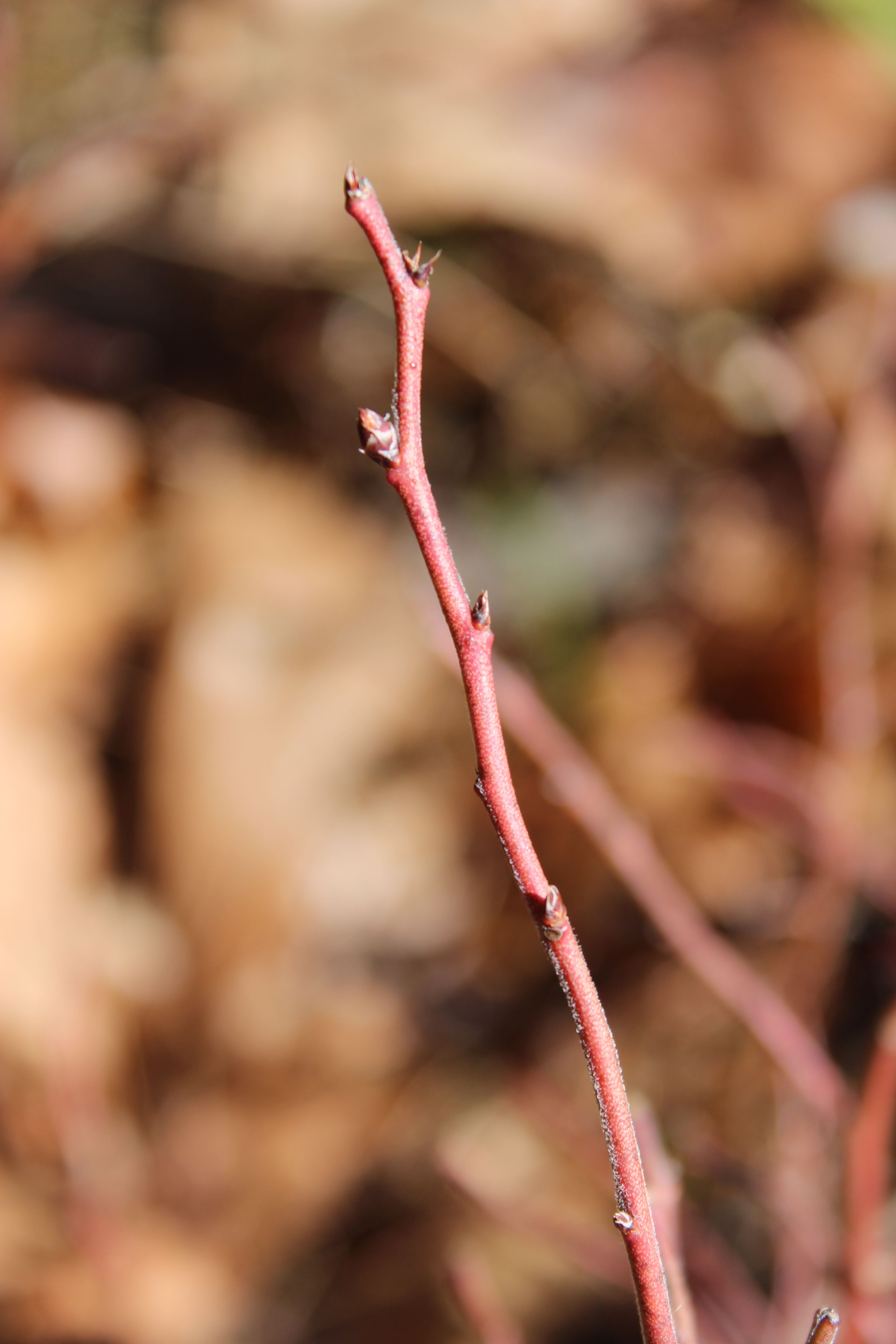
 The color red pulled me in for a closer look. Seems funny that blueberry twigs are red, but then again, I’ve never seen a blue twig . . . and never hope to see one.

teaberry

Still reddish maroon Teaberry or Wintergreen leaves. On summer walks, it’s refreshing to pick a leaf and breath in the wintergreen scent. Though the leaf shouldn’t be swallowed, some like to chew it for the flavor. Or make tea from it.

red maple

I can’t resist the Red Maples. In less than a month they should be flowering.

sketch

After walking along, sinking frequently in the still knee deep snow, I finally settled down. The sun was warm on my back. Every so often a gentle breeze made the hemlock boughs sway daintily above my head as dried leaves rattled on a nearby beech.

Hemlock leaves or needles are each attached to the twig by a hairy stem called a petiole. The needles on a Balsam Fir attach directly to the twig. I love the subtle differences between the two.

I love taking the time to sit and pay attention. To be. On the edge.

Mustelids, Oh My!

kiosk sign

This morning I drove to the Wilson Wing Moose Pond Bog Preserve on Sucker Brook in Lovell. This is a Greater Lovell Land Trust property.

Station !

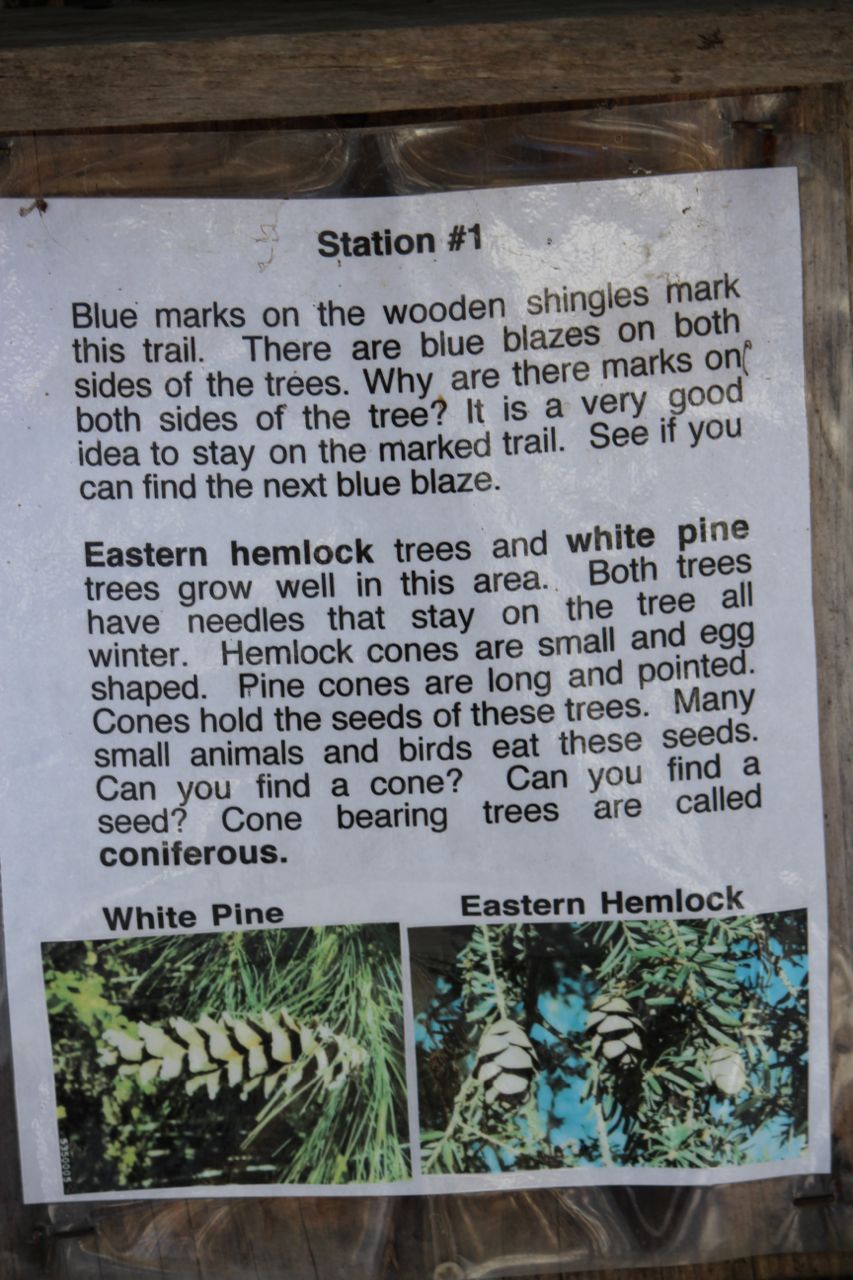
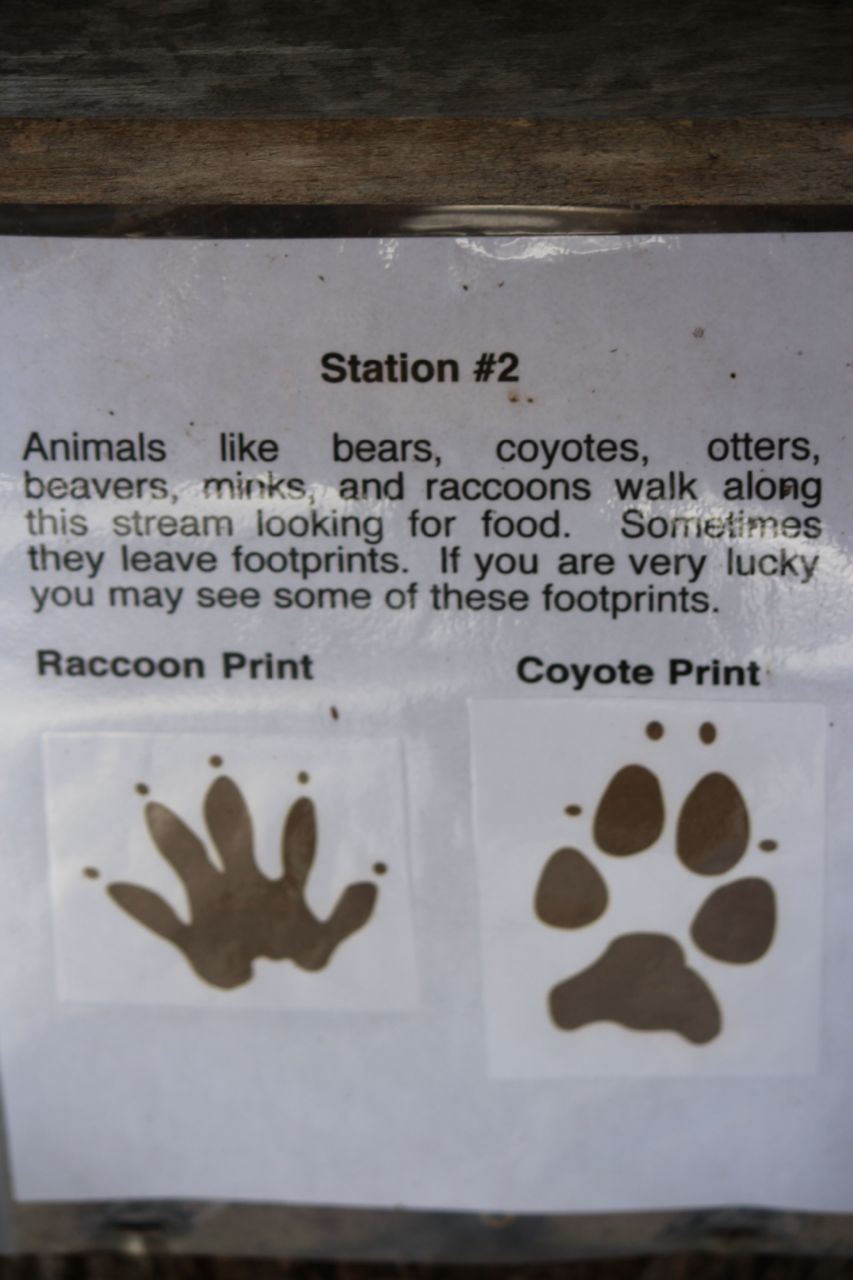
My mission was to photograph the eight station signs along the nature walk so another docent and I can spend some time this spring updating them.

station 2:a

Before I even reached Station 2, I realized I had a bad case of NDD. Nature Distraction Disorder. OK, so I think I just coined a new term and acronym, but maybe I heard it somewhere else and had it tucked away in my mind. (NawDee for short?–corny joke alert and I might be the only one who gets it) Anyway, what it boiled down to was what you see on this sign and then some.

Fisher

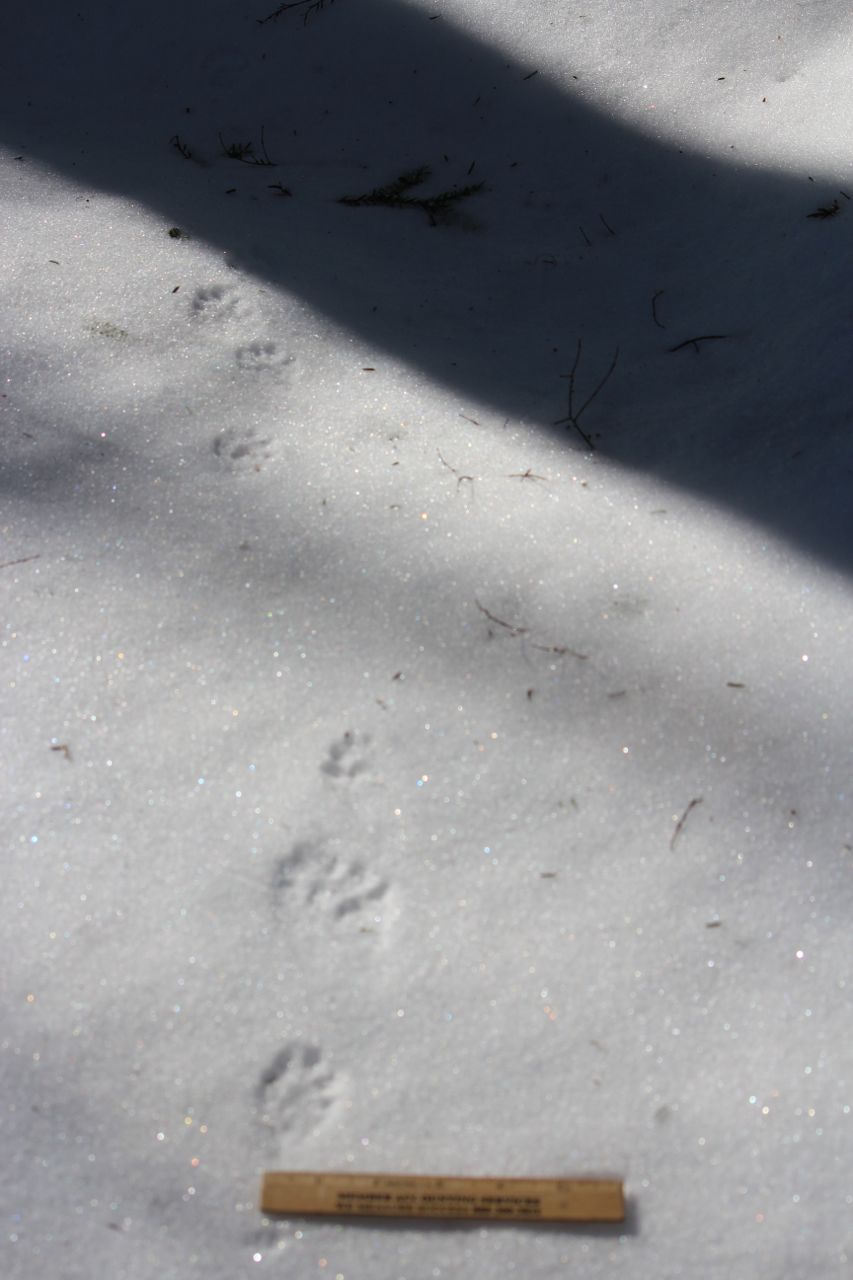
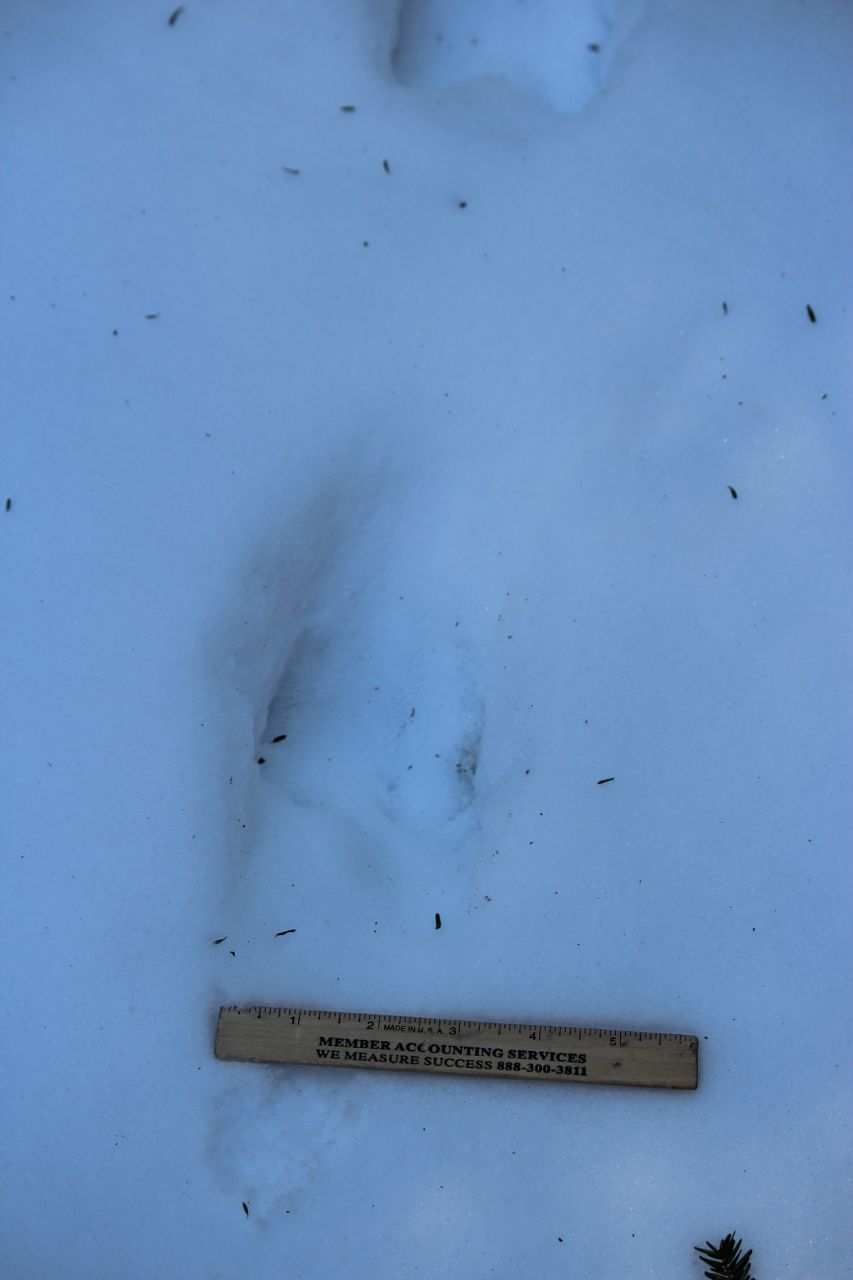
Fisher tracks were all along the brook and through the woods. I’m almost certain these are fisher. I was beginning to question my “I’m always 100% correct when alone” statement. These were quite fresh.

mink1mink slide

Mink tracks and slides were also visible, especially in and out of Sucker Brook.

otter

And then I found these. River Otter.

Silent and graceful are the weasels. From them I should learn so many lessons as they move about quietly observing and discerning what is important. I always think of them as fun loving with all the sliding some of them, like the mink and otter, do. But . . . they are carnivores who have to consume a lot of food to keep warm in the winter.

hole activity

This hole was one of several that I saw. It was across the brook, so I don’t know who entered here. Perhaps they all checked it out. Or maybe it’s a sleeping space for these nocturnal animals.

little brown thing hair

And I found what remained of hair from a little brown thing–either a deer mouse or white-footed mouse. There were tracks leading up to it, but it’s difficult to discern the difference between the two. Who had dinner here? The fisher, I believe.

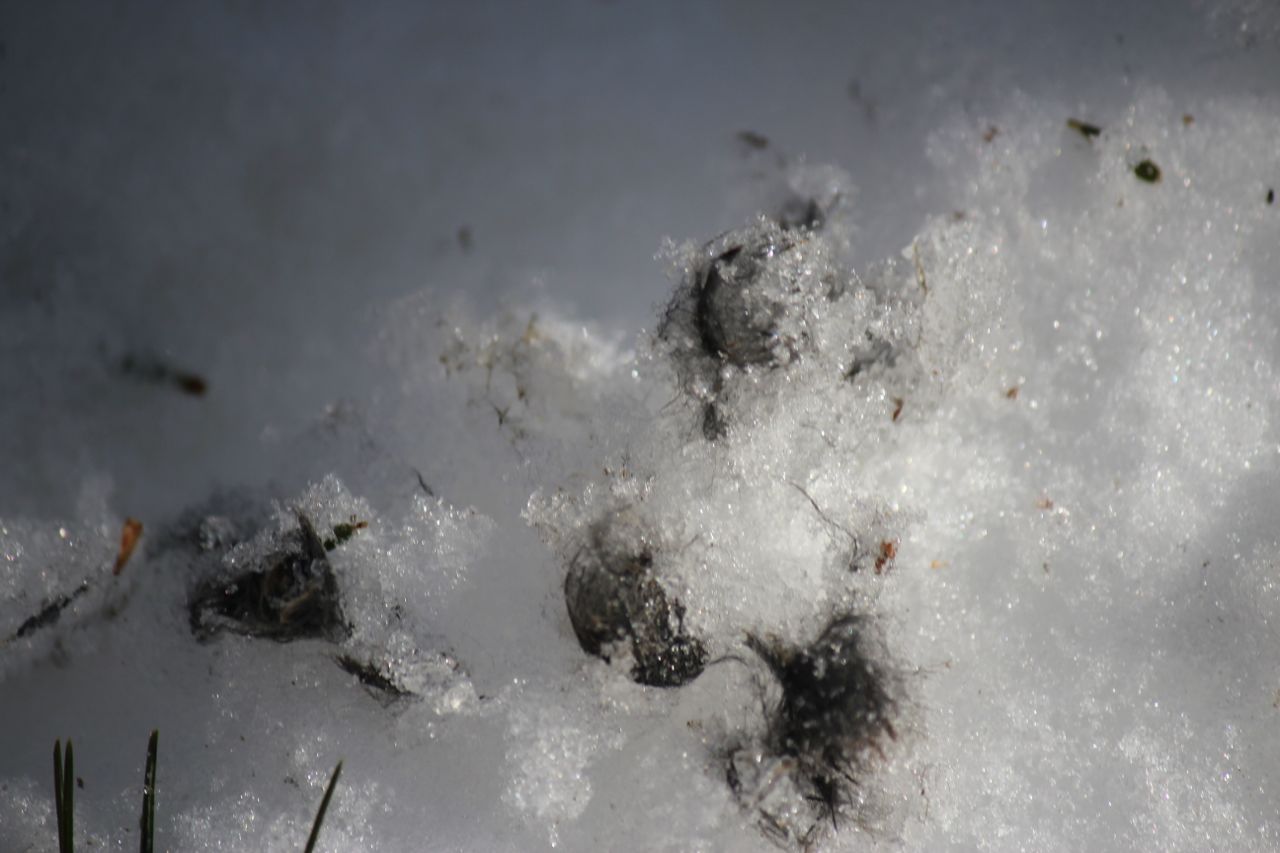
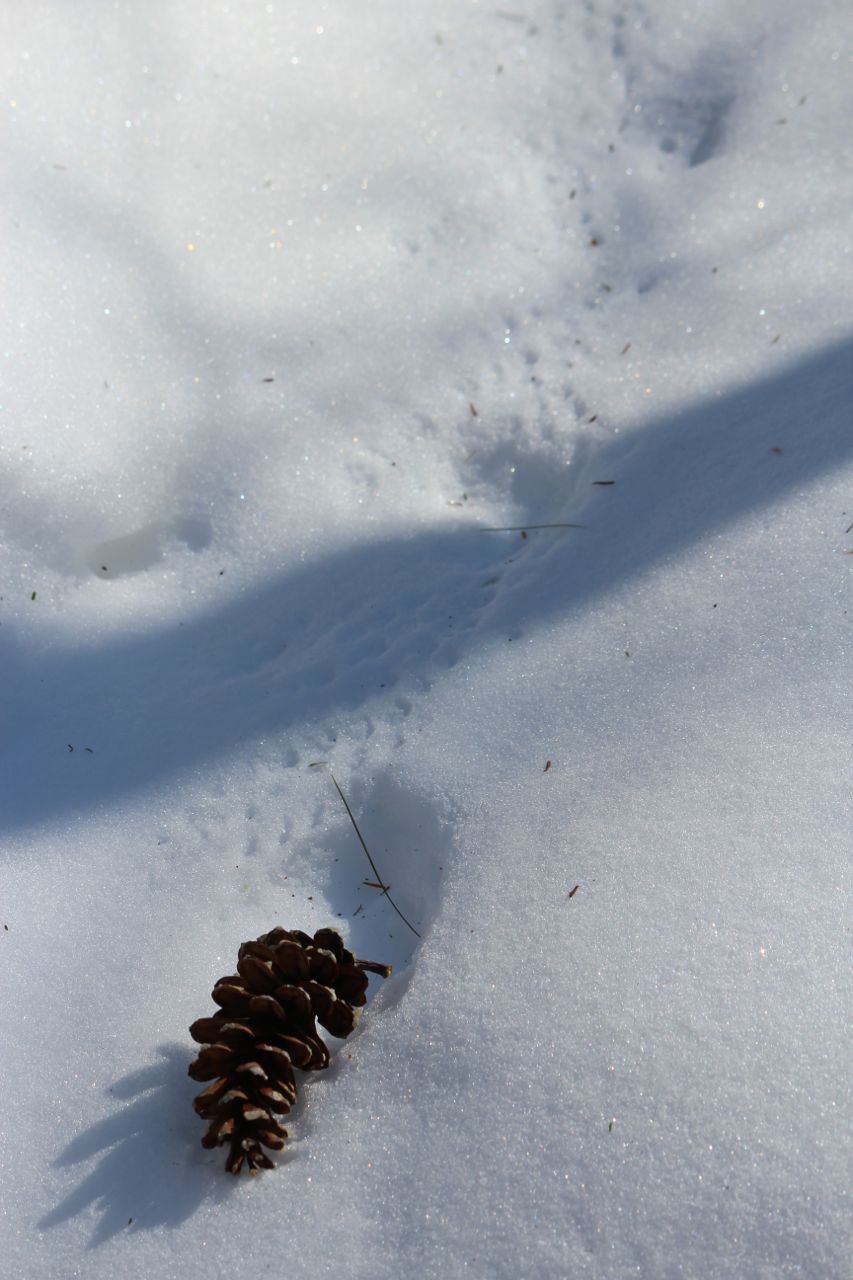
pinecone tracks

It wasn’t only mammal tracks that I found. Look at the trail left behind by this pinecone.

morning lightbrook 1brook 2

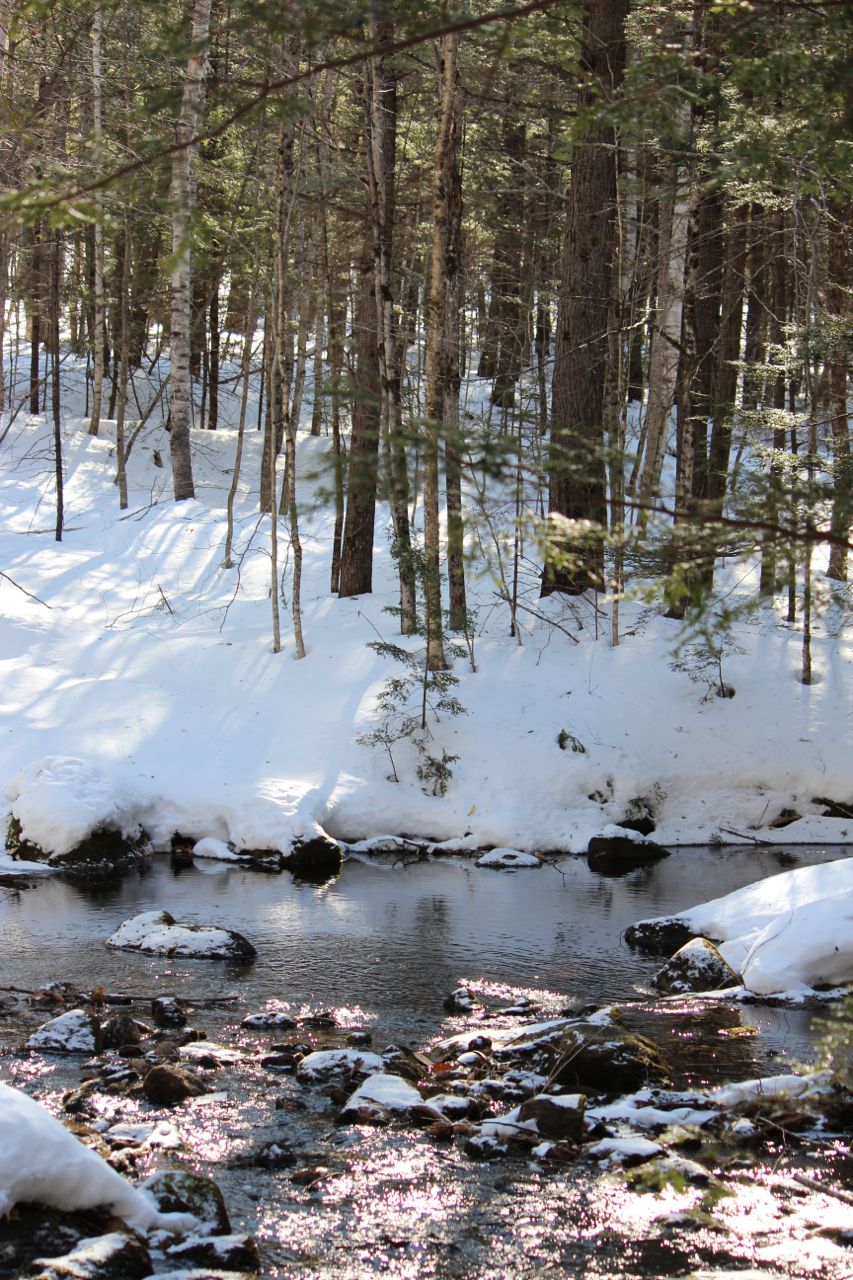
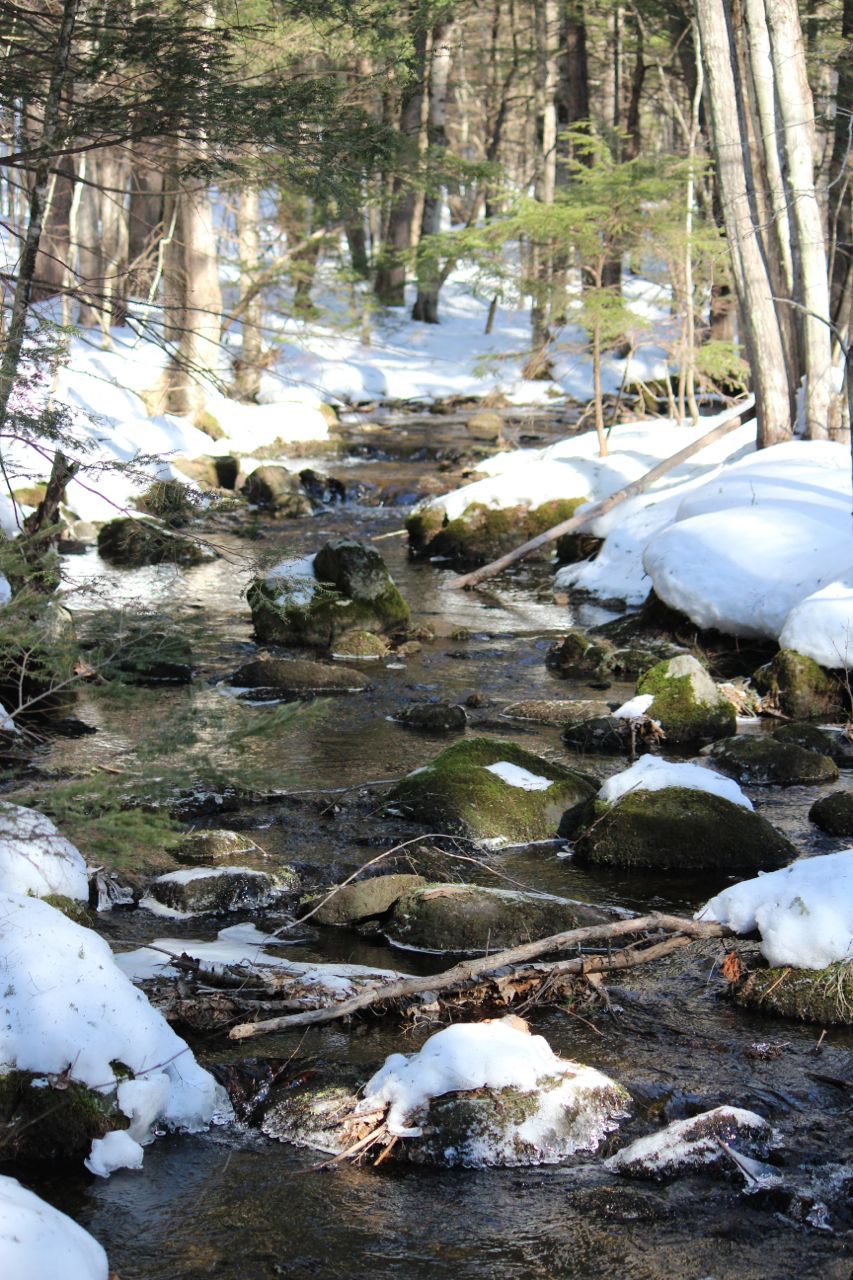
The morning light was beautiful–the beginning of a crisp, clear day.

water and ice 2

Movement frozen in time. water and ice 3

tranquility

And then the brook calms down. Chickadees sing their cheeseburger song while white-breasted nuthatches call, “Yank, yank,” over and over again.

platform

Finally I reached the platform–a hidden oasis that encourages us all to take time to pause and wonder.

bog

And search the brook and bog for signs of wildlife. One of these days, I’m going to see a moose. I think I heard a river otter here either last summer or the previous one. And I’ve been on owl prowls to this very location–occasionally even heard them respond to our calls.

false tinderhoof

Now for some other fun stuff I saw along the way–false tinder polypore. I love that I can now identify this one by its hoof-like appearance on top, but also the way the pore surface angles down toward the tree’s bark. And it’s a perennial, growing taller with the years. I sound so smart, but I’m only just beginning to understand woody fungi. Only a very wee bit.

Some signs that spring is around the corner . . .

wintergreen

Wintergreen appearing where the snow is melting. You may know it as Checkerberry and Tea Berry. We used to chew teaberry gum when we were kids. You can purchase it at Zeb’s General Store in North Conway, New Hampshire. Today, however, the wintergreen extract is produced synthetically.

Hobblebush 2Hobblebush

Hobblebush! While most of the buds we see in the winter landscape have scales to protect them from the weather, hobblebush buds are naked. How do they survive? They are hairy–maybe that helps. I can’t help but wonder. I do know that it won’t be too long before the flat heads of flowers the size of my hands will bloom.

One last thing to share about today’s wander. I thought I was seeing the tracks of this true hibernator and then I saw the real McCoy.

chipmunk

Actually, I saw two of them. It may snow tomorrow, but methinks spring will make  an appearance this year.

Thanks for wondering along beside me on today’s wander. I hope you enjoyed it as much as I did.

To Old City and Back

Leaving camp

From camp. To Old City. Bridgton to Sweden. Via Moose Pond.

Toward Black Mtn

The temp was about 40 degrees, but with the brilliant sunshine, it felt even warmer. We reminisced about kayaking and rowing as we headed north on the pond.

Mink 1

Beside one of the islands, a mink had made numerous trails and holes.

Mink 2

I love it when a critter behaves like it’s supposed to. In this case, the prints are on the slant that the weasel family is known for. A mink is a small mammal with a long body and short legs. It has partially-webbed feet, an adaptation to a near-aquatic habitat. A few years ago, an acquaintance and I were helping with the Moose Pond watershed survey. We were sitting on some rocks by the shore, with a dock in front of us, as we jotted down notes. Much to our surprise, a mink came up from under the rocks by the dock. We starred at it, it starred at us. We had cameras. Did we take a photo? Nope. Another one for the mind’s eye.

Mink3

Bound and slide. Like otters. I still want to be an otter in my next life, but minks do have fun too.

following tracks

Tracks tell the story about behavior, but it’s often a guessing game. I think I got this one right. Homo sapiens. Male. About 6 feet tall. Handsome. Puts up with a lot.

finding a seat

He borrowed a resting spot while I examined those mink tracks and holes. There were tons of holes.

on the trail

At the northernmost end of the pond, we followed the snowmobile trail toward Old City. Today it’s a wooded snowmobile trail around the base of Black Mountain in Sweden, Maine, but during the 19th century a road passed by at least six homesteads. All were reportedly occupied by young men who chose not to live at home–perhaps increasing their status as eligible bachelors. Their names included Cushman, Farrington and Eastman, among others–names long associated with Sweden and Lovell. (Sweden was originally part of Lovell)

foundation

The area was abandoned at some point after the Civil War, but foundations like this one remain. This may have belonged to P. Farrington or J. Edgecomb, but I’m thrown off because it occurs on the wrong side of the current “road.” That doesn’t mean the road was originally in the same spot.

stone walls

Stone walls, like this one near the I. Eastman property, formed boundaries to keep animals in or out. I suspect this guy was a major landowner.

stone wall 2

I’m fascinated by stone walls. Not only are they beautiful and functional, but they also represent a tremendous amount of labor. And the stones have their own story to tell about the lay of our land in New England.

color in the woods

I’d been looking at tracks, trees (always looking for bear claw marks on beech trees and quizzing myself on bark) and stones. On the way back, this touch of color caught my eye. Red Pine bark is among my favorites. Then again, I haven’t meet a tree I didn’t like. And the contrast with the hemlock needles, beech leaves and touch of blue sky gave me pause.

vine?

This also caught my eye. Last fall, a friend had sent me a photo of a beech tree with a similar case of strange scars. I didn’t know what it was, so I sent it on to a forester I know. He sent it on to someone in the invasive insect department at the state level. It all boiled down to what they thought was wounds from bittersweet vine being wrapped around the tree at one time.

vine 2

That made sense then. Today, I dunno. As I looked around, I noticed the same phenomenon on other beech trees. But I didn’t see any evidence of vines nearby. Of course, there’s still a lot of snow on the ground, as my guy can tell you since he chose not to wear snowshoes. The area had been logged at some point. But, I’m just not sure.

heading back to camp

Back on the pond and heading toward Bridgton and camp. Shawnee Peak and Pleasant Mountain provide the perfect backdrop. Yesterday, my guy took one of our grand-nephews for another ski lesson. The young’un skied straight over moguls on the Pine, slipped off the trail into the woods several times and fell a kazillion times. On the ride home this tired seven-year-old said that his younger brother probably spent the day playing Xbox. When asked if he wished he’d done the same, he remarked, “No, this was the most fun day I’ve ever had in my ENTIRE life.” I can hear my mother-in-law guffawing in heaven. :-)

islands and mountain

Only another mile to go before we rest. Thanks for wondering along with us on today’s wander.

Mountain Mondate

Sabattus Mtn sign

Our Monday date took us to Sabattus Mountain in Lovell this morning. It’s an easy trek offering great views, lots of wildlife activity and a decent workout in a short amount of time.

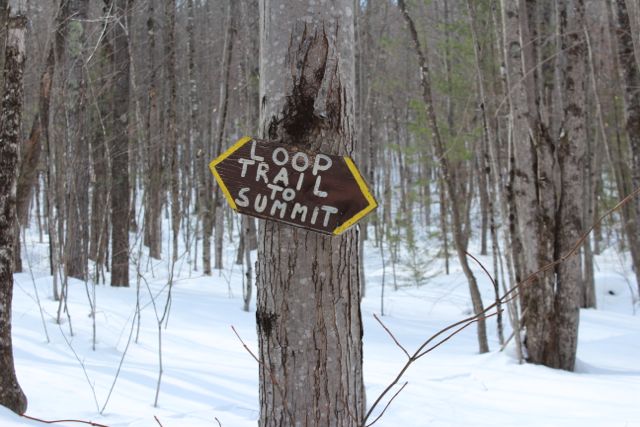
trail sign

Which way should we go? I ask myself that question over and over again. Habit took us up the right-hand trail, but in hindsight, maybe we should have mixed it up this time. A life lesson?

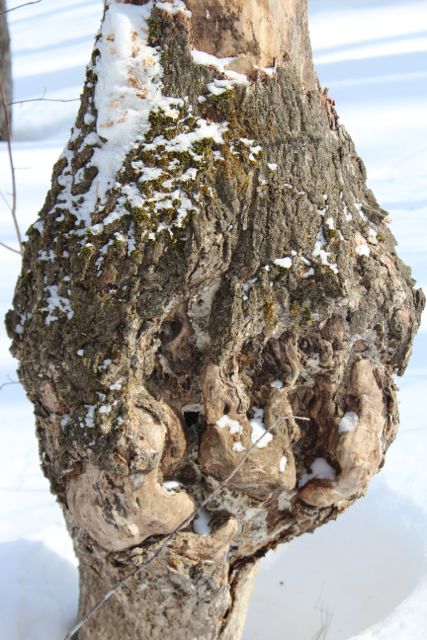
burl

Check out this burl. Over and under and around, oh my!

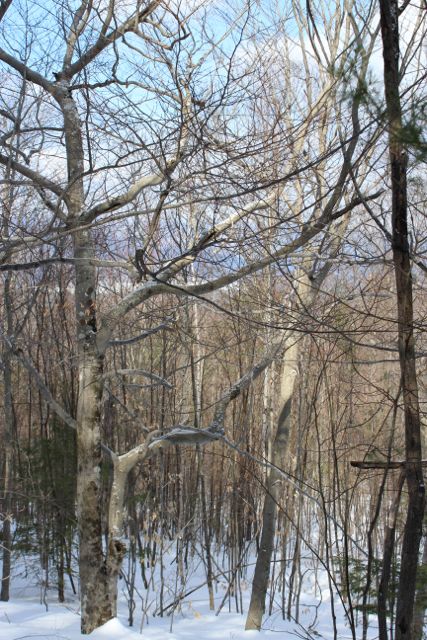
transition 1

I stood at this spot on the trail and looked down–Lots of beech, hemlock, birch and maple in the mix.

transition 2

And then I turned to look up the trail. Oak, pine and hemlock dominated the scenery. A transition point.

growing apart

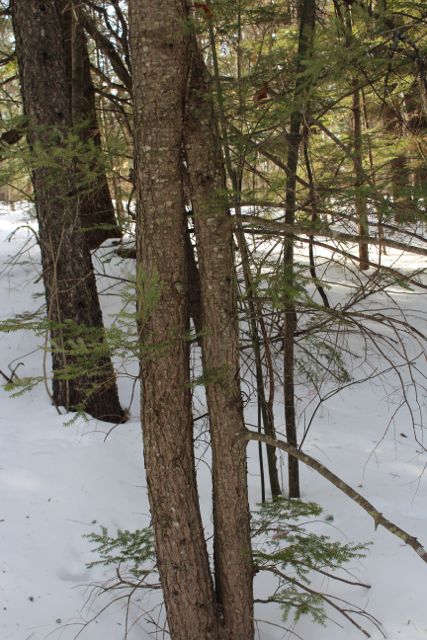
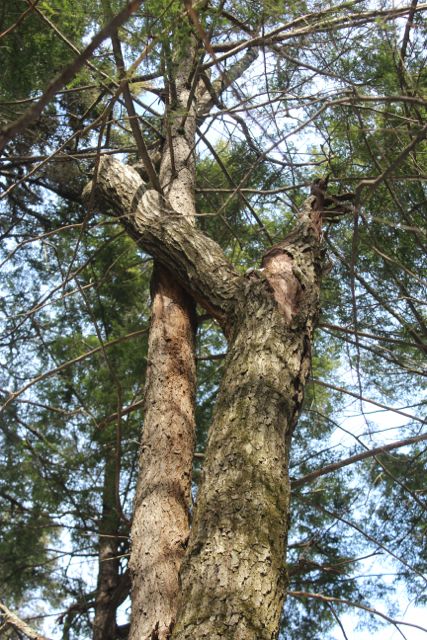
Speaking of transitions, this hemlock grew apart after a couple of years. With two rather than one terminal leaders growing side by side, they eventually found their way back together.

and together again

Here they are woven back together–it’s almost difficult to tell that the two have become one. It made me think of our relationship as we trekked up the mountain. Maybe this tree didn’t really grow apart, the two parts just respected each other as their life together began and they allowed each other to continue growing in their own way, knowing that they needed to stay together ultimately because being united and supportive is what it’s all about. And maybe I’m reading way too much into a natural occurrence.

porcupine 1

A porcupine tree. Lots of porcupine activity in the hemlock grove both on this trail and on the way down.

porc trail

A well-traveled porcupine trail.

fire tower

The concrete stanchions that once supported a fire tower. Apparently, the tower was removed in 1963.

bench 1

Perfect spot for a hot cocoa break.

oake and pine

Eastern White Pine and Northern Red Oak–looks like the oak is ahead in the race to the sun right now. I wonder if that’s how it will play out over the years.

buried bench

And then there’s the other bench at the summit. We couldn’t actually sit on this one.

bobcat 1

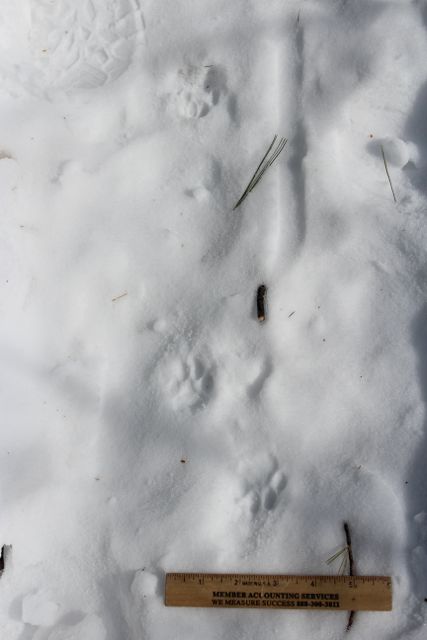
Heading along the ridge, we found these prints that always excite me. This critter had traveled to and fro before going off trail. Notice the “C” shape between the toes and the pad. C is for cat. Yup, a bobcat. And it was at some point in the last six hours or so, because we’d had a dusting of snow. These were fresh. Yippee!

bobcat2

A bobcat is a “perfect” walker. Ah, perfection. But really, it places a front foot down, and as that foot moves forward, the hind foot steps into its place. I think you can see that here–it looks like it might be two feet sharing almost the same space.

bobcat dinner?

Breakfast? The bobcat obviously snatched some little brown thing–or tried to. This was just off the man-made snowshoe trail and right by the ledge. I was a bit surprised that the cat had followed the trail for as long as it had. They usually cross our trails and have their own corridor. But, it sure makes for easier traveling to follow where others have gone before.

old oak

This old oak has seen better days. Amazing that it’s still standing.

support of a friend

But then I looked up. We all need the support of a friend. In this case, the friend is a white pine. They may compete for sunlight, but apparently they can count on each other occasionally.

heading down

Heading down. Transitioning again. There were a zillion snowshoe hare trails. And  mice. And squirrel. Good feeding grounds for a bobcat.

lunch 3

We finished up our trek before we were hungry for lunch. But, when hunger struck we ate PB&J sandwiches beside Kezar Lake.

Thanks for wondering along on this wander through the Maine woods.