Our I Dos

Twenty-six years ago we both said, “I do.” And those two little words have stuck with us ever since.

t-road

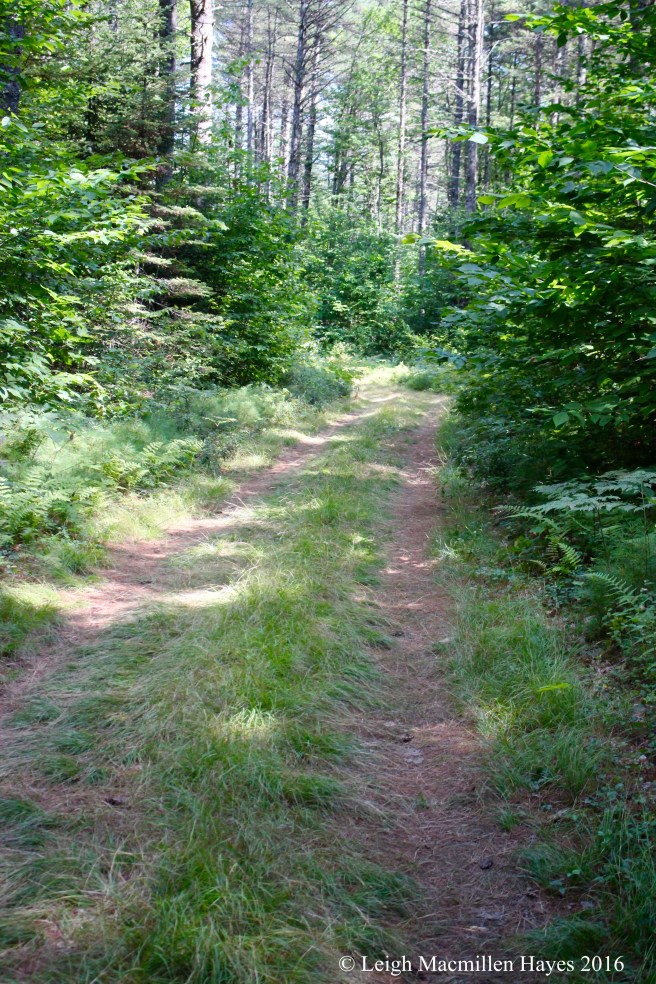
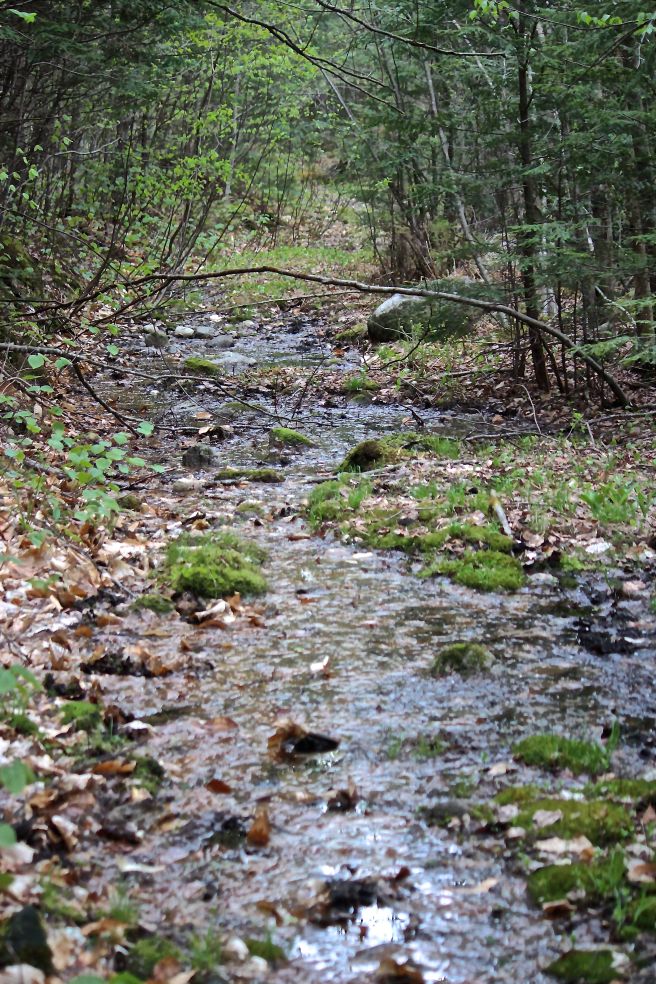
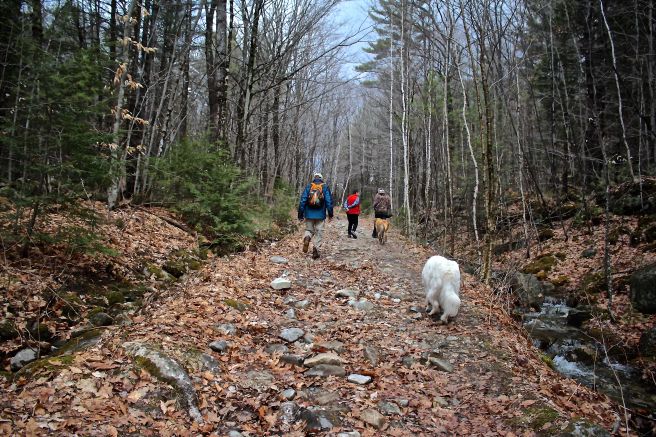
The road has had a few bumps and turns, but relatively speaking, it’s been an easy path to follow.

t spider web

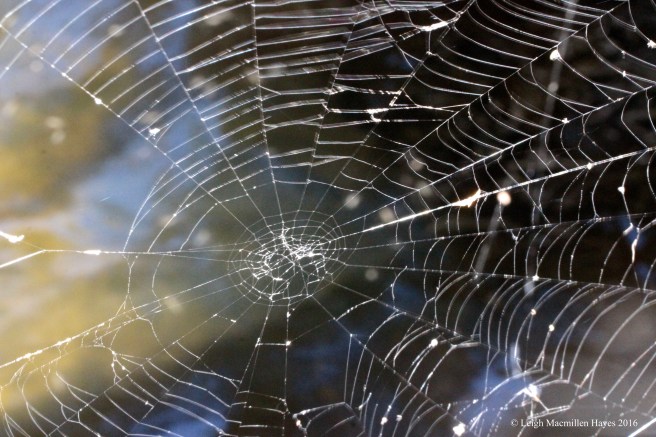
Sometimes the web we’ve woven has torn, but we’ve learned to mend it when necessary.

t-birds nest fungi

We’ve filled the nest and watched our sons disperse, and welcomed them home again.

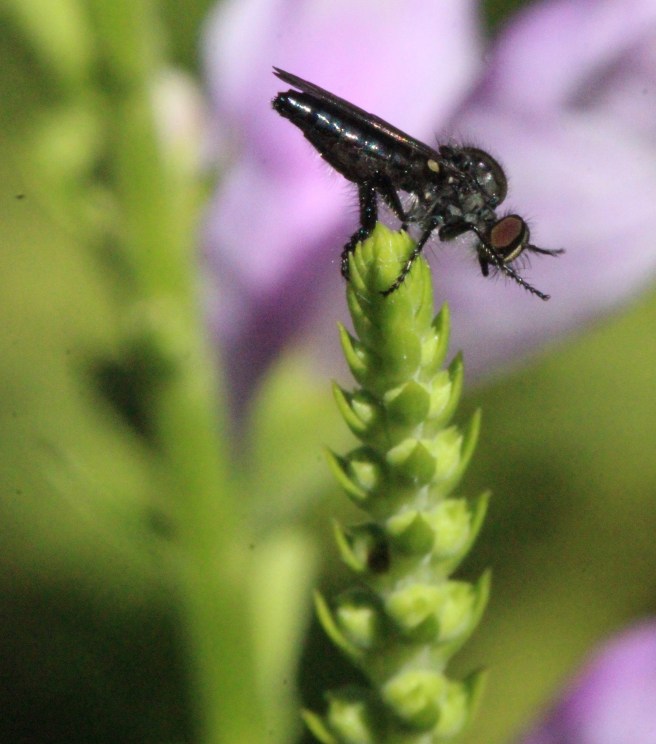
t-orchid pollinator

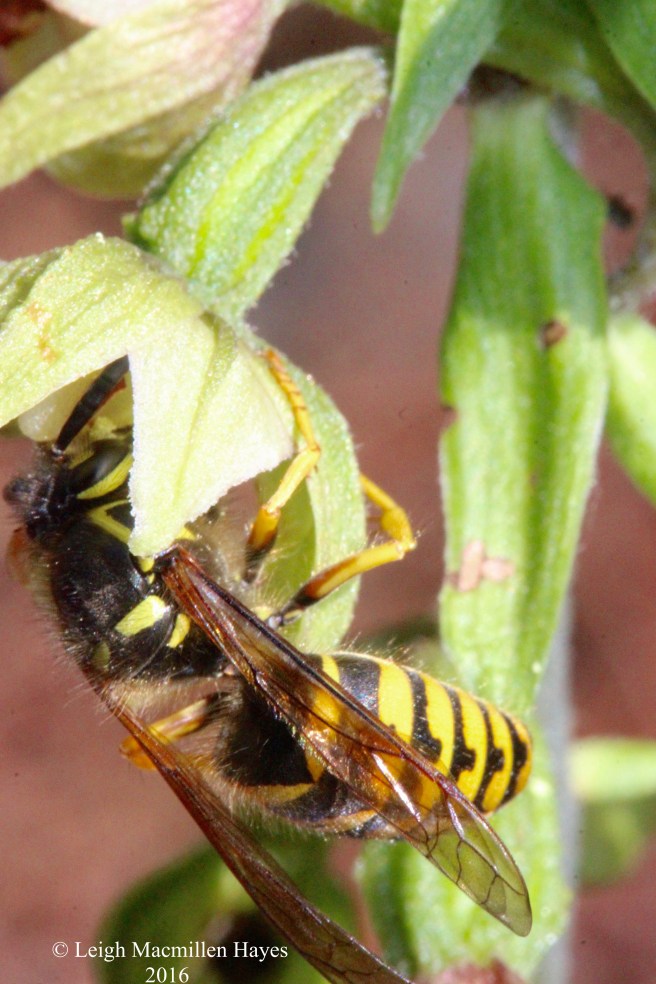
We’ve found fulfillment  . . .

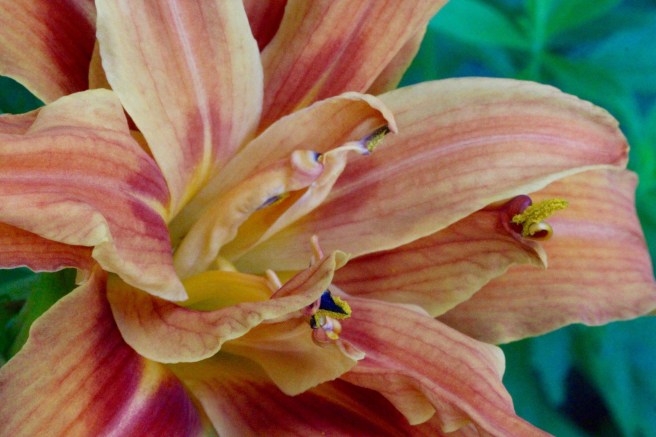
t-pollen

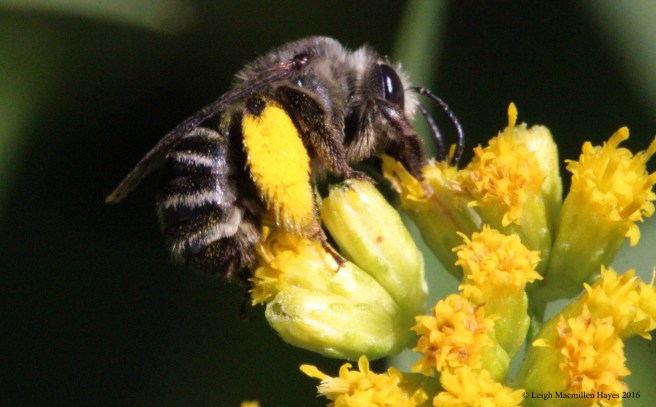
and tried to share it with others.

t-wings

We’ve each grown wings and let the other fly.

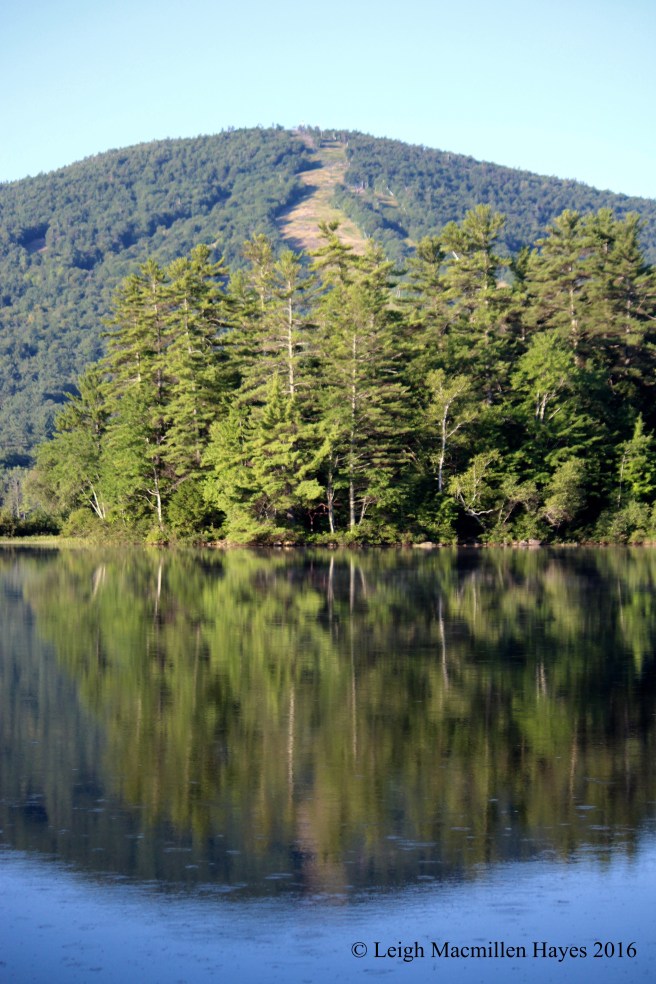
t-pleasant mtn

We’ve cherished the beginning of our journey and give thanks for all the uphill moments.

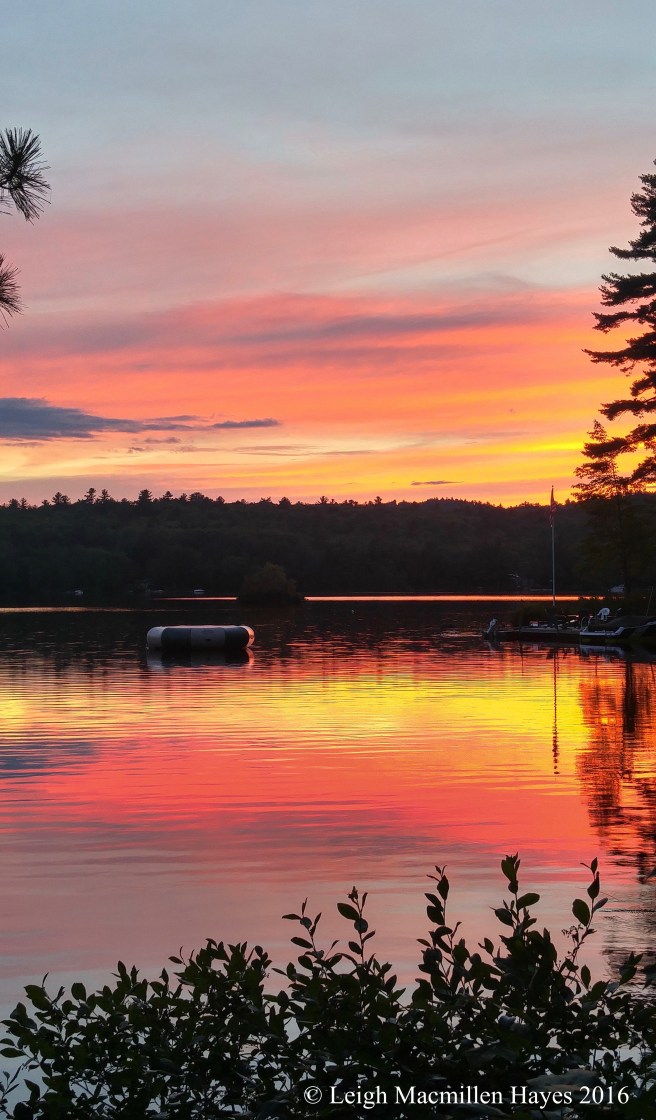
sunset 3

At the end of the day, we don’t know what the future holds, but we appreciate the past.

Happy Anniversary to my guy. If I had to do it all over again, I’d still say, “I do.” And I know you would too.

Searching for the Source of Sweetness

I wore down a path between gardens today as I traipsed from one to the next and back again. But if air space is anything like lawn space, then those who visit the garden via flight have created their own well-worn passageways as they also search.

w-post face scrub

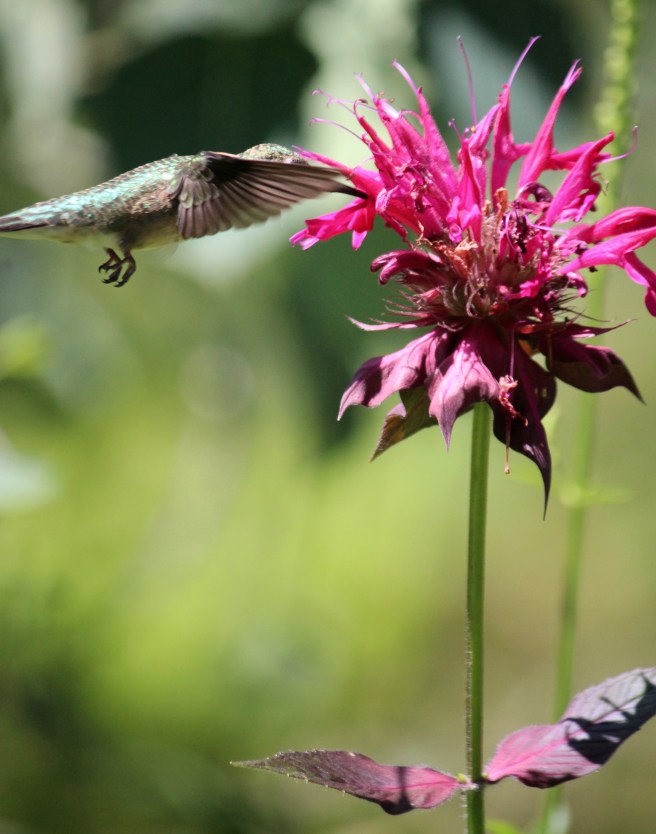
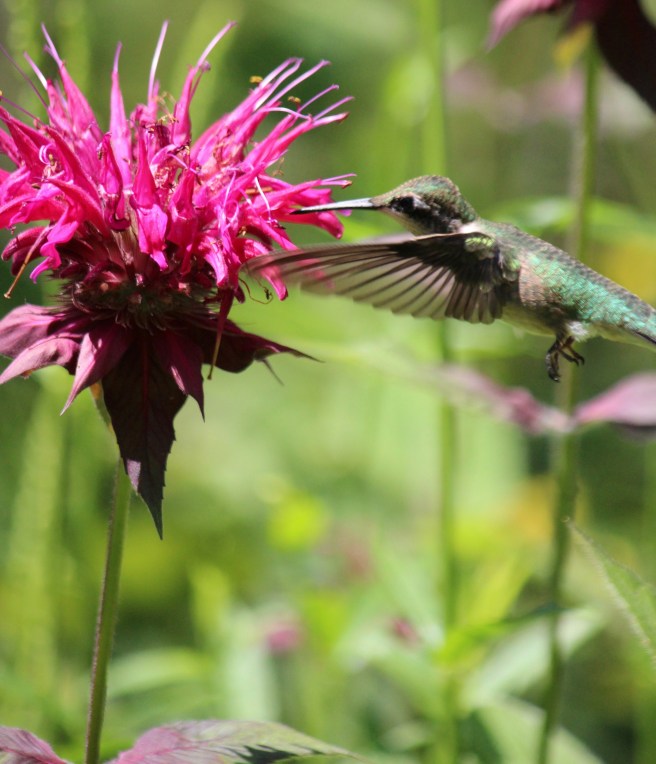
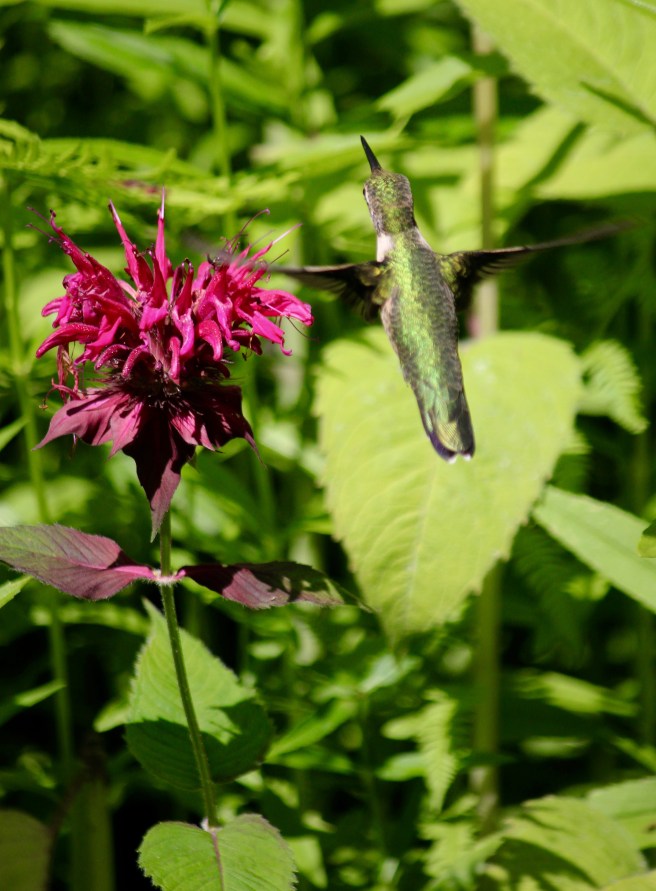
My mission was to see the hummingbird again. But, this little guy, no longer than a half inch, stood atop a false dragonhead yet to bloom and waited to be noticed.

w-face scrub

He even took the time to scrub his face as I watched.

w-double or triple daylily

Continuing my wander, I stopped by the daylilies and made a discovery. We’ve lived in this house for more than two decades and I never realized until today that we have some double daylilies. The previous owners had green thumbs and we’ve benefited from the fruits of their labor. But how had I missed this before? I know we have double daffodils, but loved my new find. Especially as this past weekend, my friend Beth invited us to her hundred acre wood and her mom showed us their daylily gardens. Beth’s mom, Mary, talked about hybridizing the lilies and so she’ll know best about this.

w-lily pollen

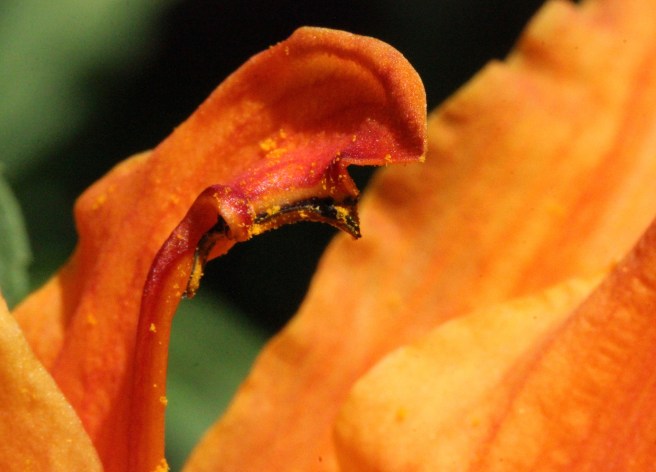
When I revisited the flowers later in the day, the sun shone brilliantly on them, enhancing their orangeness. Correct me if I’m wrong, but what I think has happened is that the petal formed along the stamen and imbedded the anther, thus it looks like a petal with grains of pollen. Crazy cool. And beautiful. And yummy.

w-fritillary1

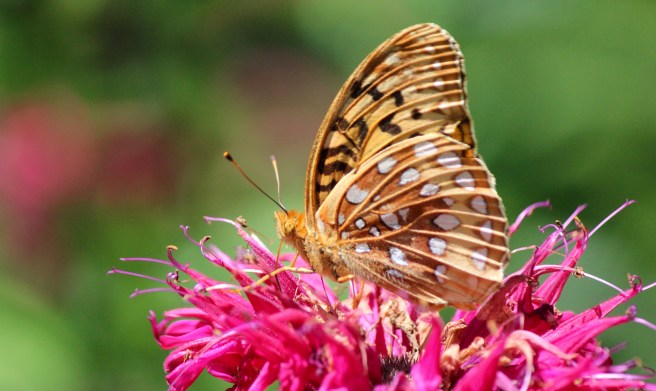
That wasn’t the only shade of orange worth wondering about. And it was no mistake the this fritillary butterfly chose the beebalm on which to land.

w-frit 2

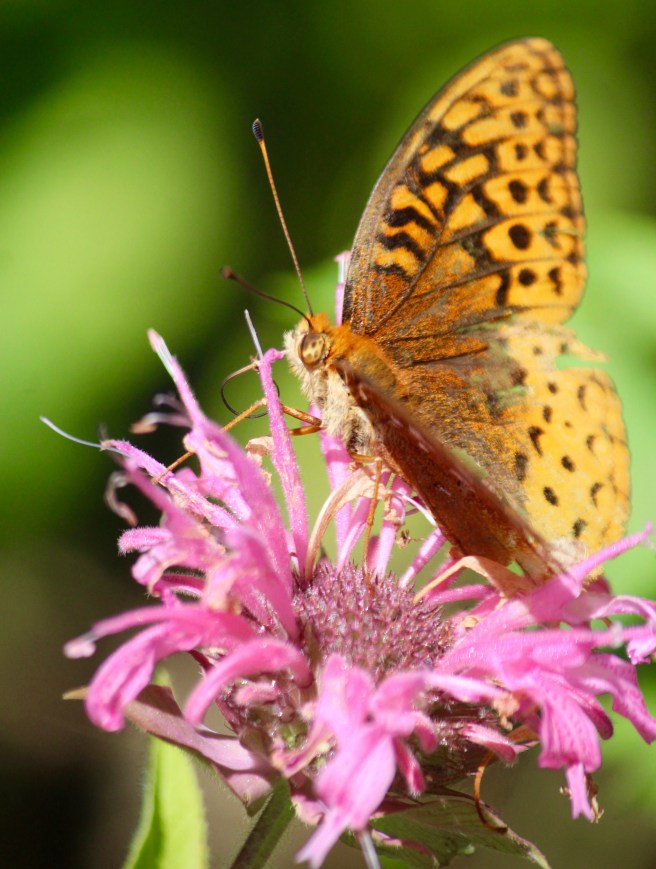
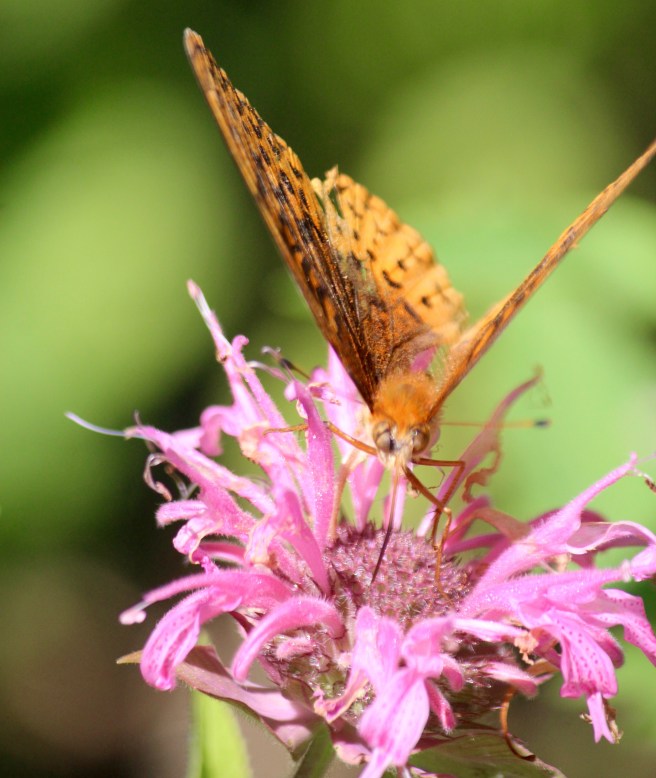
Check out its mouth. A butterfly feeds through a coiled mouth part called a proboscis. When not in use, the proboscis recoils and is tucked into position against the butterfly’s head.

w-frit 3

Since the proboscis is narrow and straw-like, it allows the fritillary to extract sweet nectar from tubular-shaped flowers. Suck away, dear fritillary.

w-hummoth 1a

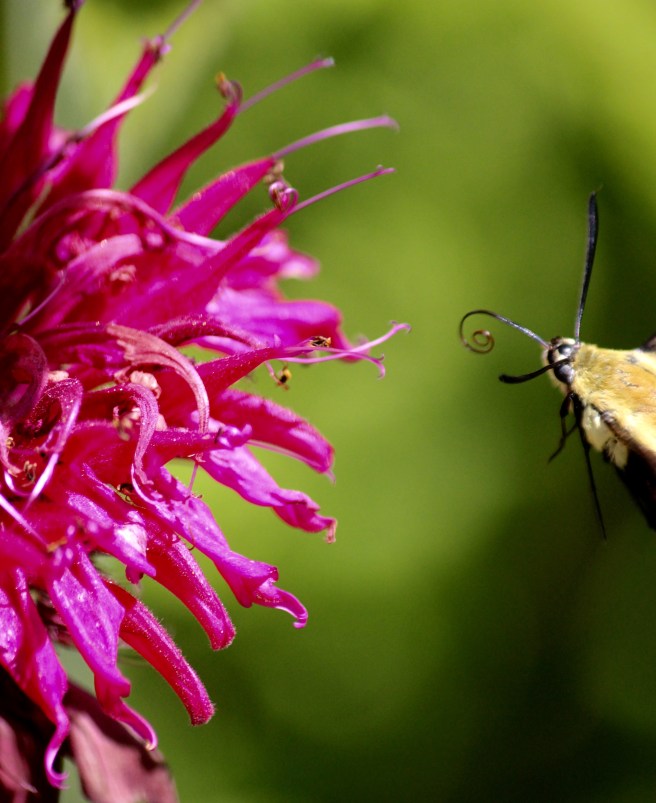
The fritillary wasn’t the only beebalm visitor with a coiled proboscis.

w-hummoth 3

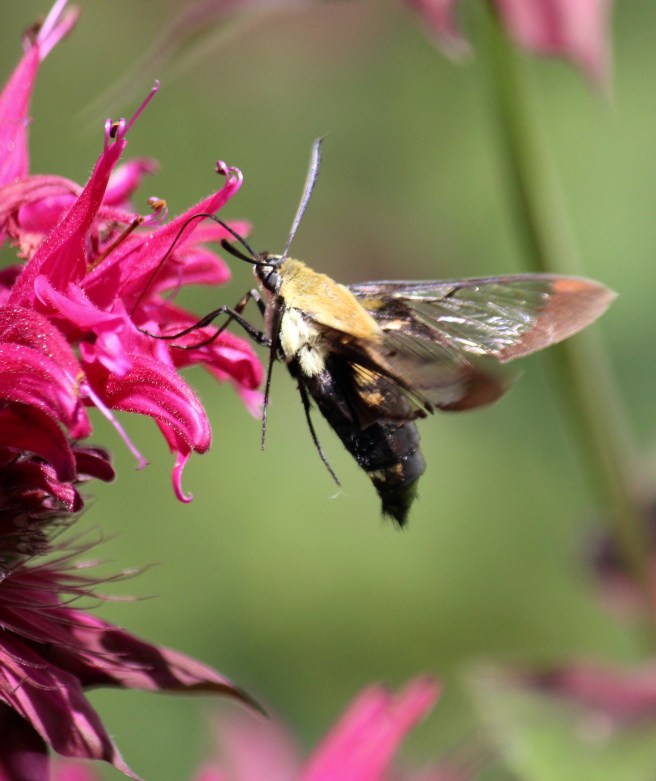
I actually heard it before I looked up and saw this moth. It sounded like a hummingbird and flapped its wings as fast or nearly as fast as a hummingbird and shared the name hummingbird. This is a hummingbird moth.

w-hummingbird moth 1

Notice how the proboscis begins to unfurl as it approaches the flower.

w-hummoth 3a

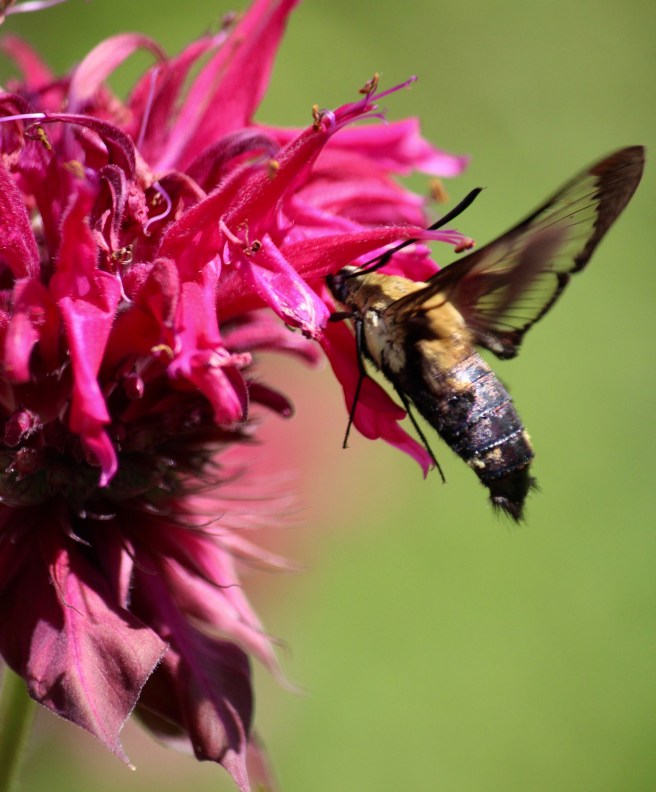
While it hovers, it probes.

w-hummoth 4

Searching deep for the source of sweetness, where others can’t reach.

What’s So Special About Bee Balm?

I have childhood memories of ugly red bee balm plants surrounding a maple tree in our front yard. In addition to being ugly, what really bothered me about this flower was the smell. The scent tickled my nose in an unpleasant manner and gave me an instant headache.

b1

And then I grew up. Well, I suppose that’s questionable, but what did happen is I came to appreciate the showy flower and aromatic scent. (Funny thing is, an infusion of crushed, boiled bee balm flowers apparently treats headaches–I should have used it to treat the very symptom it caused. It has many other medicinal uses as well.)

b5

This summer, like others, I waited in anticipation.

b3

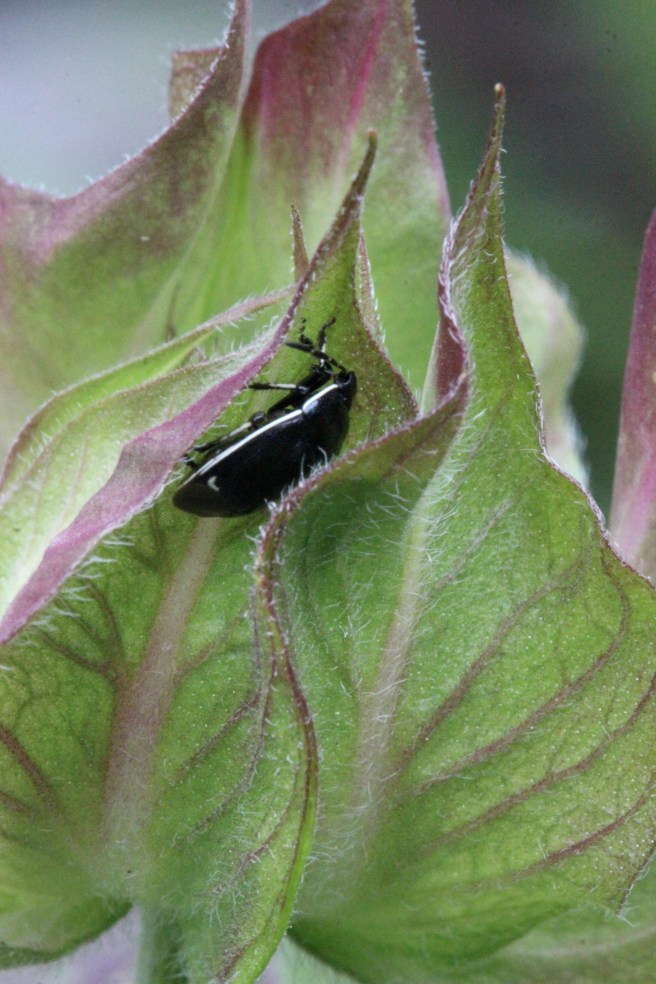
Even before it bloomed, its leafy bracts showcased a fluid beauty.

b4

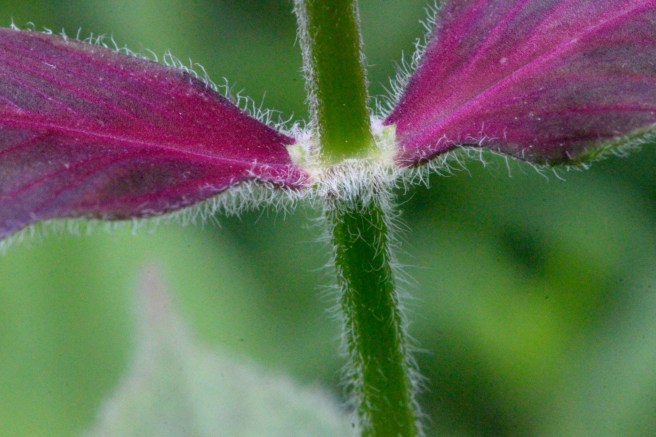
And those leaves set at right angles to the square stem offered a crossroads where color and texture met.

b7

Finally . . .

b8

with the aid of raindrops

b2

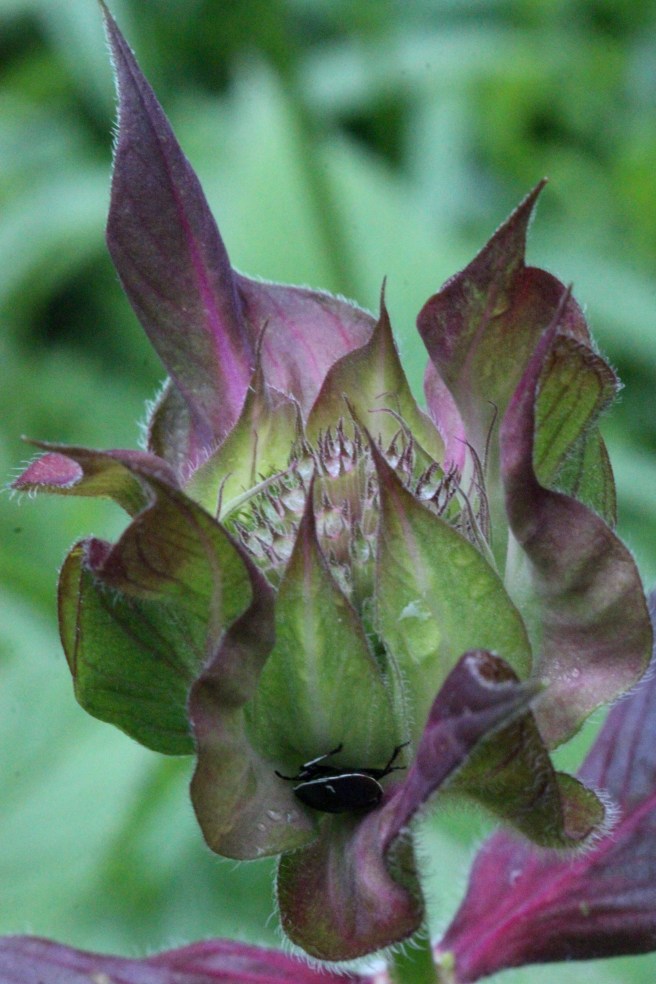
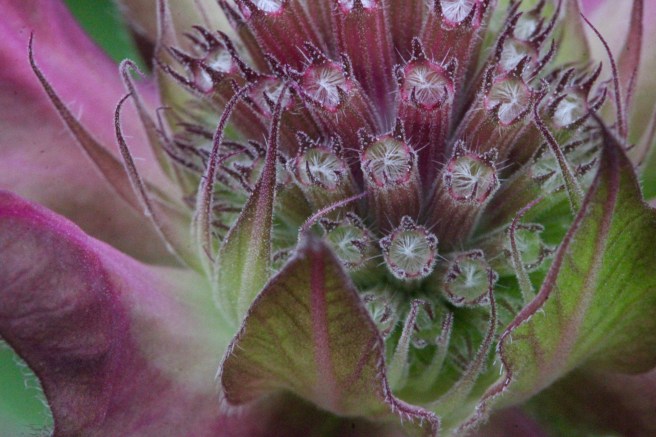
and sunshine, the bracts pulled away and revealed star-capped tubes nestled within.

b9

Ever so slowly, flowers began to emerge.

b10

With a hat reminiscent of a jester, they crowned the plant.

b12

Stamens projected from the tubular upper lip, while below, three slender lips provided a landing pad for visiting insects seeking nectar-filled sweetness.

b15

Like me, the pollinators’ eyes shone brightly

b24

as they sought

b24a

fulfillment.

b11

I’ve spent many moments starring–in awe and wonder–at the structure, simple yet complex, and all of its idiosyncrasies.

b16

And I know I’m not the only female who stops by to soak in the glory of this old-fashioned perennial.

b17

b18

b25

b26

b20

b27b28

b22

b29

b21

What’s so special about bee balm? Everything.

P.S. This one is for you, Jinny Mae, because you, too, are special.


Hewnoaks

This morning, the Greater Lovell Land Trust and Charlotte Hobbs Memorial Library in Lovell co-hosted a poetry workshop conducted by poet Judith Steinbergh of Brookline, Massachusetts. The setting: Hewnoaks Artist Colony.

It’s always a special treat to listen to Judy and others read poetry, wander the grounds which overlook Kezar Lake, and share with like-minded people.

Sixteen of us found our voices this morning. Or tried to. Here’s my attempt:

h-hewnoaks 1

Hewnoaks

h-raindropsMG_1835

Where raindrops jiggle

h-backs of leaves (1)

and leaf backs glow,

h-pine needles

pine needles dangle

h-pine coneIMG_1867

and new cones land,

h-pepperbushIMG_1836

shrubs sway

h-ferns

and ferns dance,

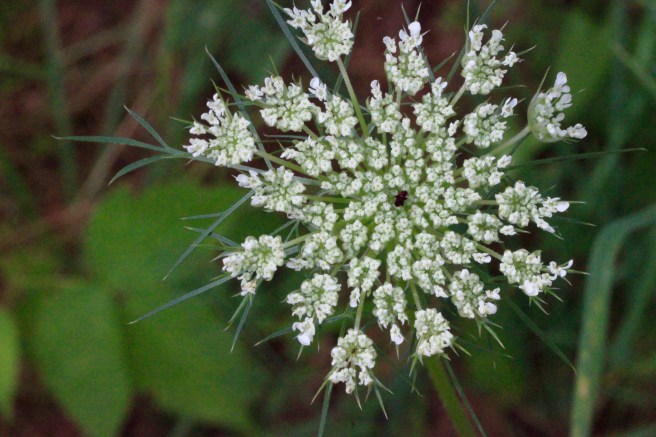
h-queen anne's lace1

flowers blossom

h-seeds 1IMG_1841

and seeds fly,

h-feather

feathers pause

h-driftwood (1)

and driftwood poses,

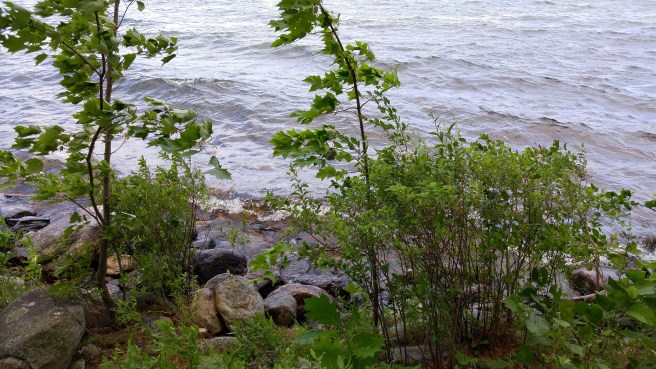
h-white caps 2 (1)

white caps form

h-waves 2 (1)

and waves crash.

h-poets 1 (1)

Hewnoaks, where poets write

h-poets 2 (1)

as the north spirit renews our souls

h-poets 3 (1)

with each gust of fresh air. ~LMH

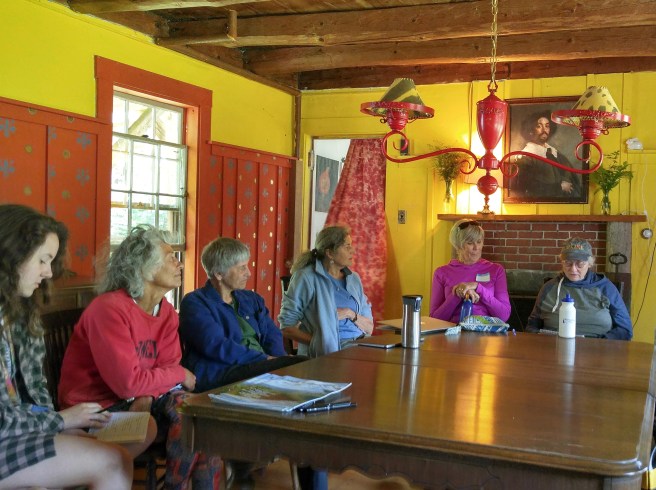
h-Listening to Ann (1)

Later we gathered inside, out of the wind, to share our offerings–each one a gift.

Thank you, Judy. And Anna. And Ann ;-)


Filled to the Brim Mondate

It’s been a few weeks since my guy and I shared a Mondate. And so, this morning after joining our youngest for breakfast, we mosied on over to Pleasant Mountain in West Bridgton. Leaving the truck at the base of the Ledges Trail, we walked 1.5 miles down the road to the Bald Peak Trailhead. Since we didn’t have two vehicles, it was much easier to get the road piece done first, rather than at the end when we would be hot and tired. The climb up was a wee bit slippery since it had rained most of the weekend and was still raining at 5am. But the rain had stopped, the sun shone brilliantly and the breeze made for a pleasant adventure up our favorite mountain.

p-Indian cucumber root

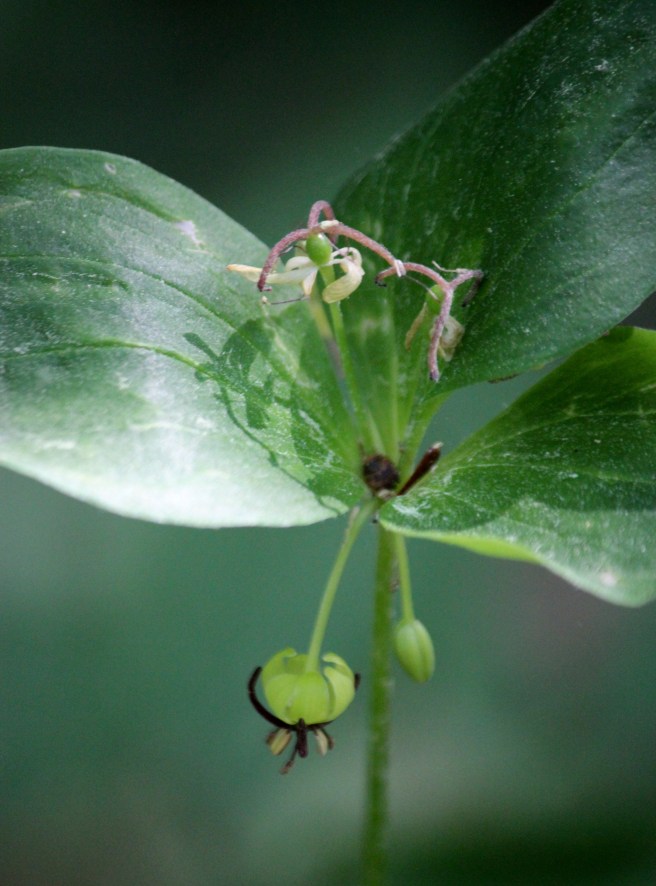
My guy encouraged me to go first and I surprised him with a steady pace. I did pause, however, when I spotted fruit beginning to form on Indian cucumber root.

p-berries wet

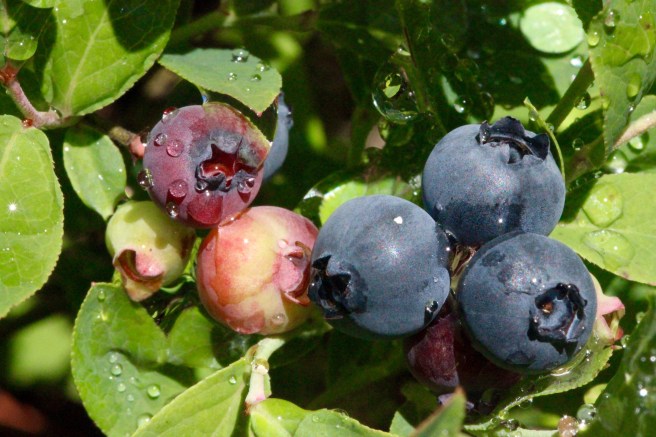
By the time we reached the intersection with the North Ridge Trail, we realized we were in for more fruit–a sweet treat. Since the high bush blueberries at home aren’t ripe yet, we didn’t even think to bring containers for the low bush berries that carpet the mountain’s ridgeline.

p-rain on berry leaves

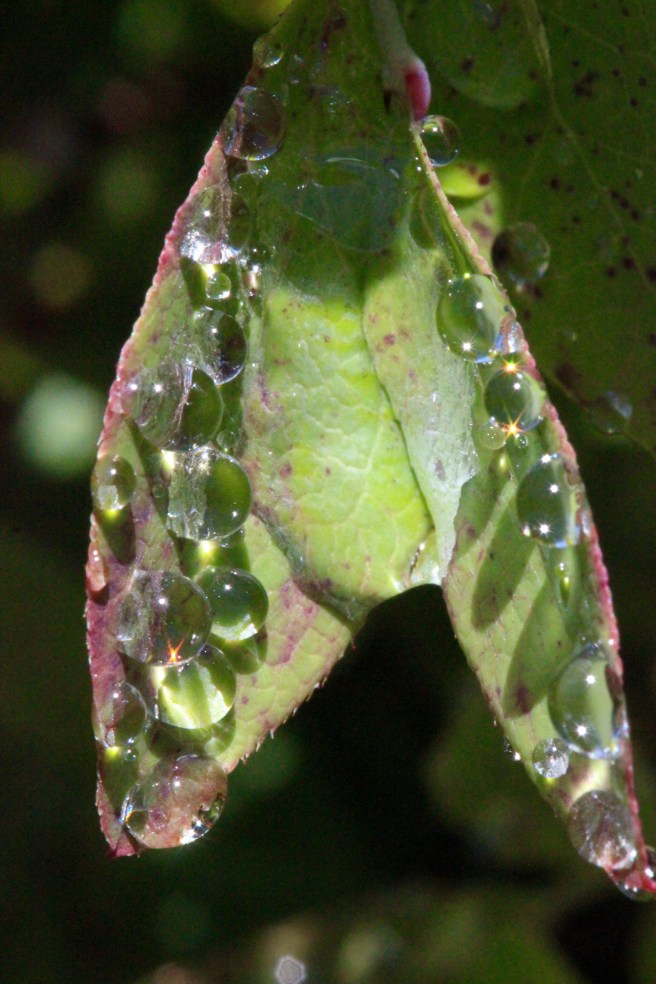
Bejeweled berries and leaves sparkled in the morning sun.

p-ridge view 2 (1)

We continued across the ridge, but in the slowest of motions for us. My guy lagged behind, which isn’t usually the case.

p-picking berries 1

Unless, that is, he spies blue. Everywhere.

p-picking4

At first, we ate them on the spot.

p-picking2 (1)

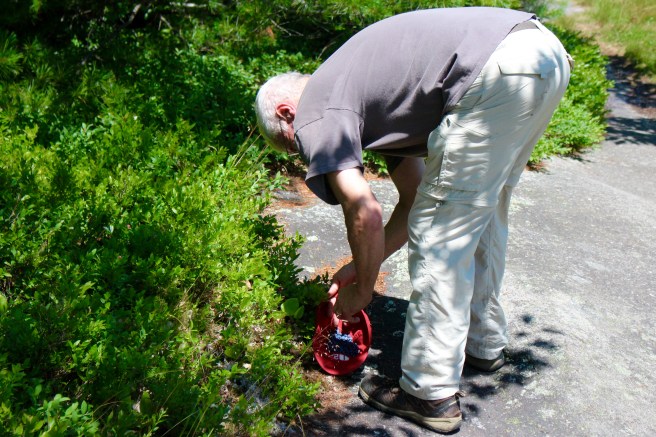
But then he decided that his hat would serve as the perfect container.

p-picking berries 1 (1)

And that’s when greed set in.

p-picking 6

Blueberry greed.

p-picking 5

He couldn’t pick them fast enough.

p-filled to the brim

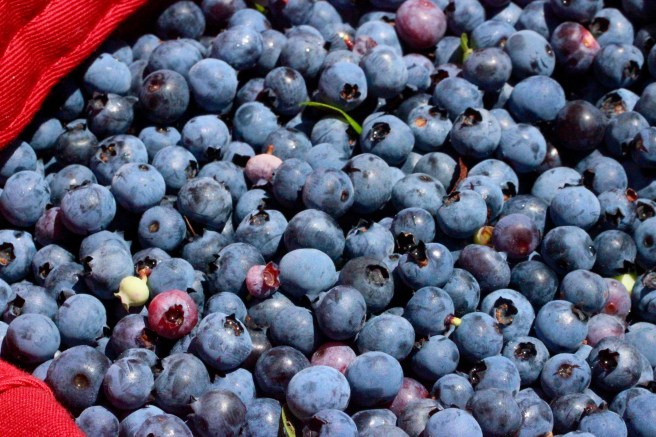
Even as we sat to eat our sandwiches in an area where the only view was blueberry bushes, a few oaks and pines, he continued to pick until his hat was filled to the brim.

p-summit 1

Somehow, he finally pulled himself away and we continued on to the summit.

p-wood lily 2

I was eager to get to the summit and then move on because I hoped to find the wood lily in bloom.

p-wood lily 2 (1)

And I wasn’t disappointed.

p-ledges 2 (1)

Our descent was much quicker as the berries aren’t quite so abundant along the Ledges Trail. Speaking of that, those who fear that I’ve given away a prime location, fear not. My readership is low and the berries plentiful.

p-camp kayak

Back at camp, we checked on some high bush berries, but they’re still green. The greed will have to hold off for a few more days. Thank goodness we could find our way home with the help of a cairn–in the water?

p-cake 2

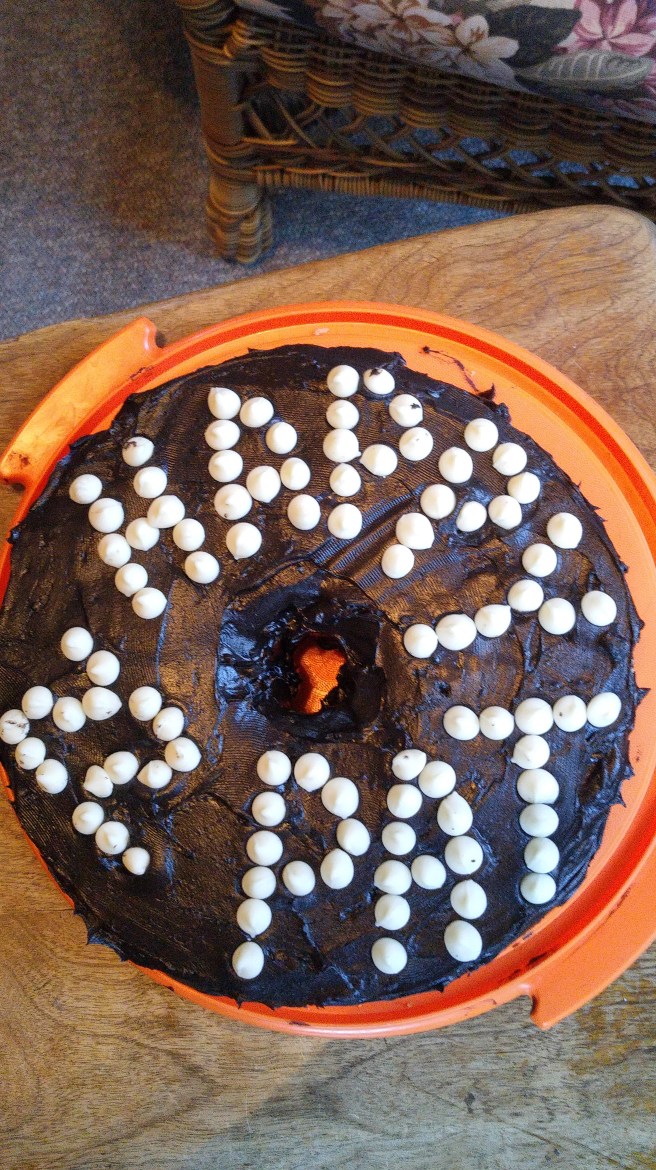
And then it was time to prepare dinner and help our youngest celebrate his birthday. He’d spent the day playing in Boston, much more fun that hanging out with the ‘rents.

A pleasant Mondate indeed. Filled to the brim were we–with each other, blueberries, cake and family time.

Capturing Wonder

I’m envious of friends who own acres and acres of land with layers of trail loops that provide a diversity of habitats for exploration. But then I remember that beyond our six acres there’s a vast forest that I’m welcome (well, I think I’m welcome–it’s not posted and in Maine that generally means I may trespass) to tramp through. For the most part, that’s my late fall to early spring playground. But we also live within walking distance of a large woodland park where I spend an equal amount of time. Of course, I tend to get greedy about it and think of it as my own. That’s how it felt this morning when I wandered there after church without encountering another soul. I went in search of wonder. And I found it both there and back at home.

rice 2

Everywhere I walked, or so it seemed, rice krispies lay scattered at my feet.

rice krispie

They are the newly fallen male pollen cones of our white pines. And yes, they are the size of rice krispies. Once mature, their sacs split open, sending pollen wafting through the air where some of it actually finds the female seed cones. And much of it covers our vehicles, driveways, lawn furniture and window sashes, like a coating of yellow snow. When their mission is completed, they turn brown and fall to the ground. Eventually, they’ll disintegrate, adding to the richness of the forest floor. Worth a wonder.

spruce gall

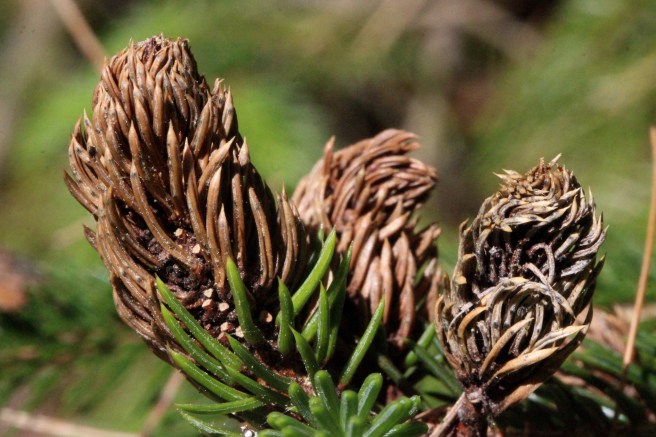
Further along, I encountered the rather cone-like shape that adorns the tips of spruce trees. These brown, prickly galls were caused by the Eastern spruce gall adelgid, which is closely related to aphids. Will the tree die? Perhaps. Certainly, it’s disfigured.

Eggs are laid in early spring and emergent nymphs begin feeding at the base of tender new shoots. The gall forms as they feed and completely encloses them like a warm, protective covering–keeping predators and diseases at bay. The galls I noticed are older as they are dried out. But typically, the nymph emerges from the gall in August, molts and flies to another branch to start the cycle again. The adelgids are parthenogenetic, meaning only females occur, reproducing without males. They typically produce two generations each year, with the latter overwintering as partly grown females. Worth a wonder.

mullein 4

And then I came to a dry, sunny spot where common mullein stands tall, this one almost as tall as me. According to lore dating back to Roman times, it is said that the stems were dipped in tallow to make torches–either for witches to use or to be used against them. Thus, some know it as hag taper. Others refer to it as candlewick plant because the dried leaves and stems were used to make lamp wicks.

mullein 2

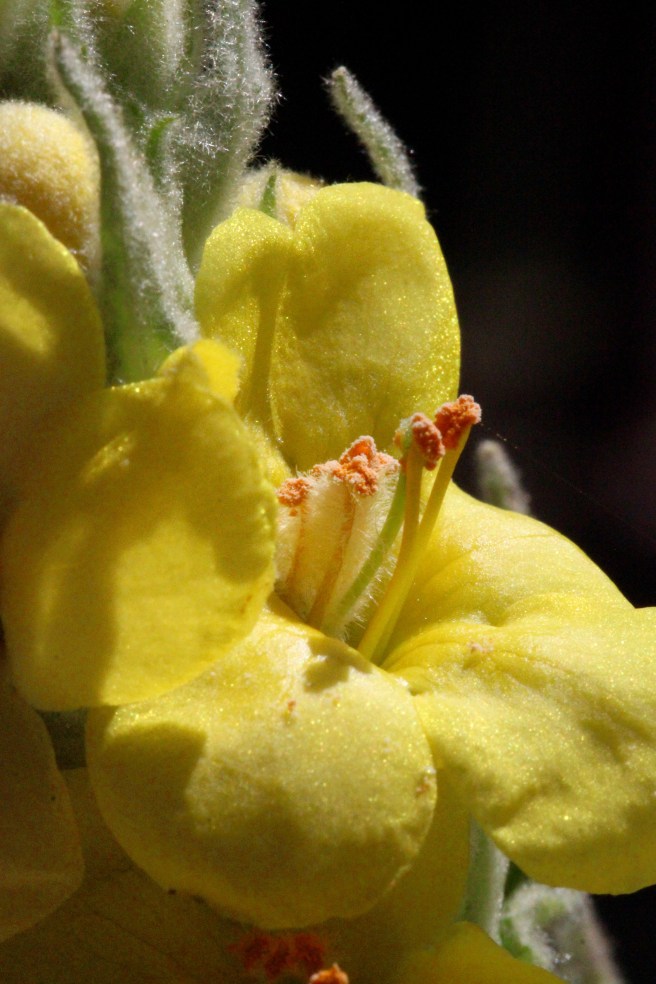
It seems to me that it’s hardly common at all given its uses and structure. Over the course of the summer, five-petaled yellow flowers will bloom randomly in a dense,  terminal cluster.

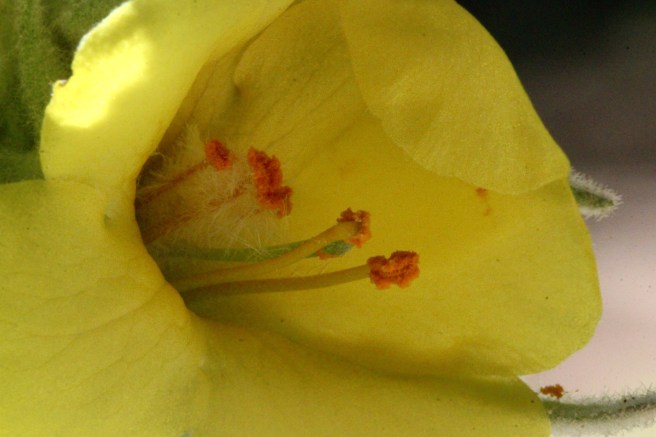
Though it’s also called flannel leaf and bunny’s ear for its wooly leaves, they aren’t the only hairy spots. Check out those three upper stamens, short and extremely woolly. Apparently, they contain a sap that lures insects to the plant. The longer and smoother two lower stamens serve a different purpose. They produce the pollen that fertilizes the flower. Worth a wonder.

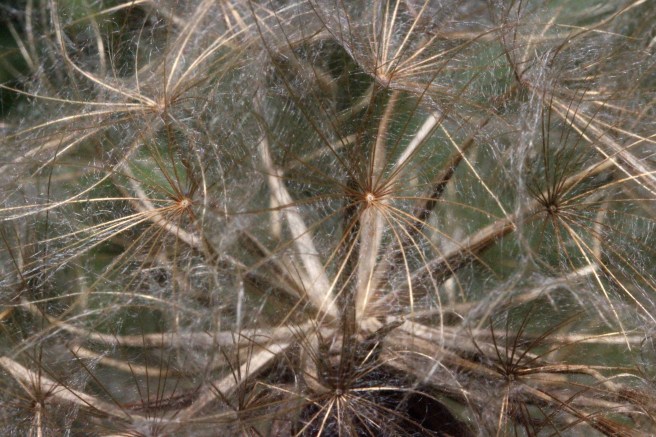
Goat's beard seedhead

As I headed out of the park via a different trail than I’d entered, I was stopped in my tracks by a plant that stood about three feet above ground. I think this was my favorite find of the day. I have so many favorites that it’s hard to choose one. But just maybe this is the one.

Meet meadow salsify, aka meadow goatsbeard. The latter name refers somehow to the fluffy seed head. Though there were not goats nearby for me to examine the similarity, these were beside a donkey pasture. (And donkeys are known to protect goats from predators.) The feathery down that will become parachutes during dispersal is finer than the finest spider web. And perhaps more beautiful. Worth a wonder.

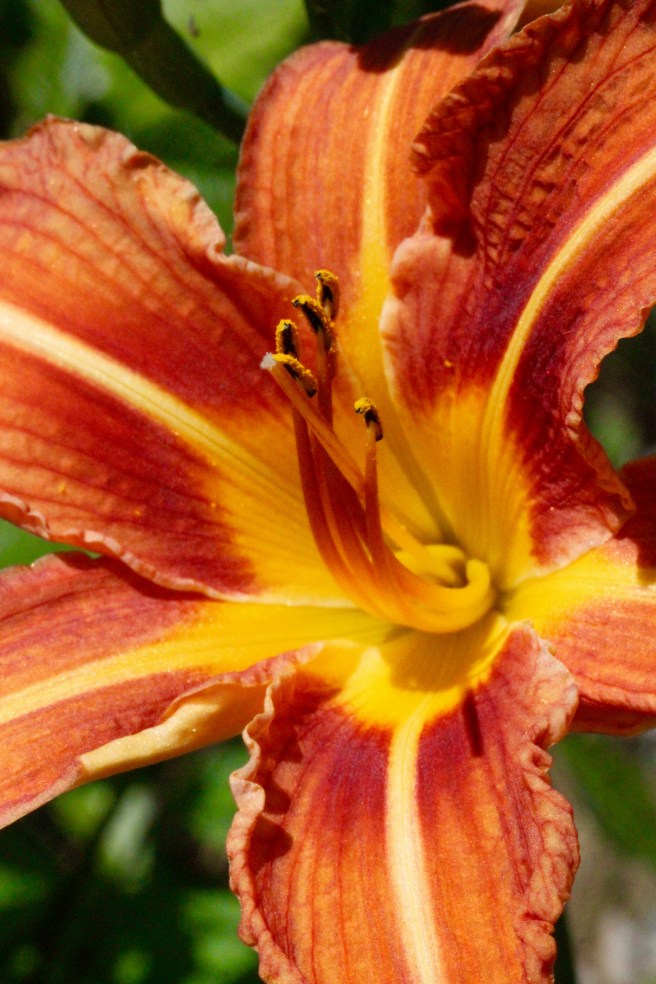
Day lily--perfect.jpg

On my way home, I stopped to admire my neighbor’s day lilies–the first blossom of the season for this perfect flower.

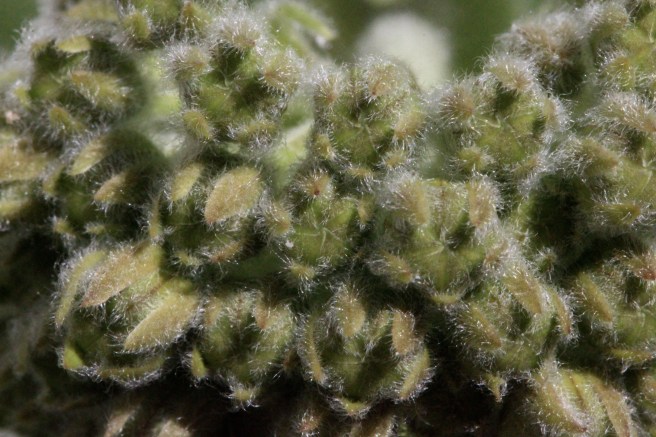
milk 0

Back at home, it was the fuzzy coating of another summer flower that grabbed my attention.

milk 4

The flowerhead offered a show featuring a variety of presentations.

Milkweed 1

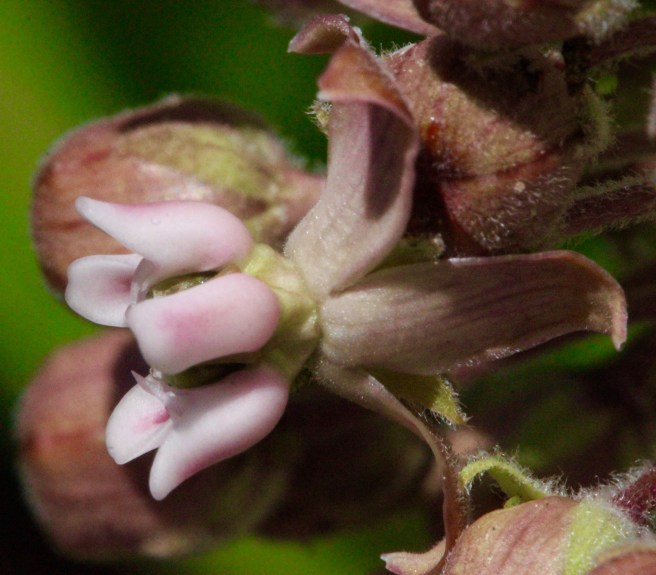
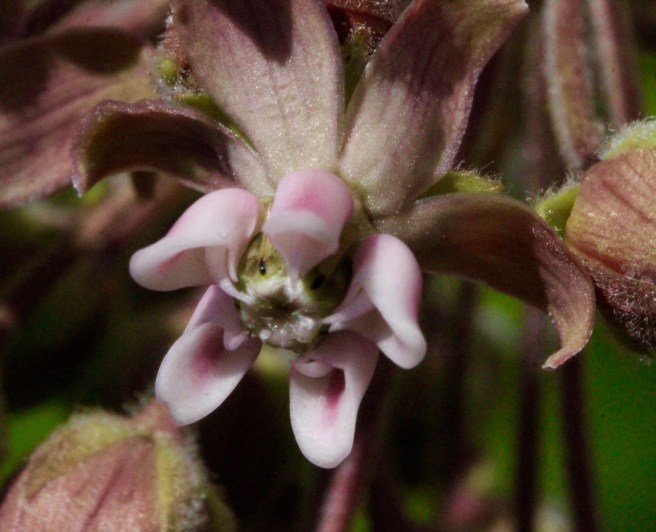
Ever so slowly, the pinkish flowers of common milkweed are beginning to open.

milkweed 2

In my mind, it’s an example of another hardly common common plant.

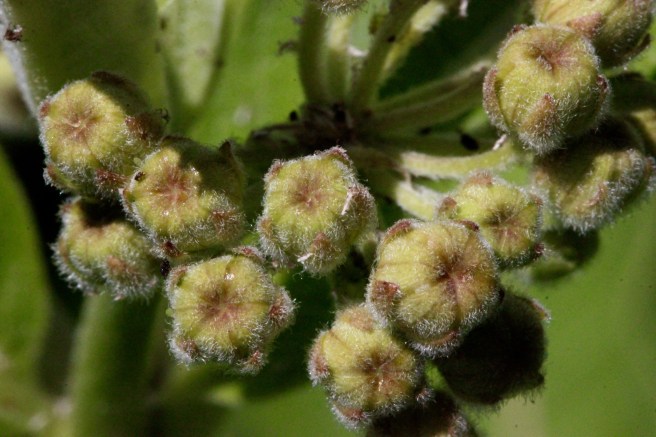
milkweed 5

The flowers are complex and invite a closer look. Overall, they droop in a globe-like umbel. What you see here is five upright hoods, each with a pointed, incurved horn.  Surrounded by those hoods are the fused column of stamens and heads of the styles–where the magic happens.

Since there is no scent yet, the insects don’t seem to have discovered it, but they will. It will nourish many with its nectar and pollen and provide shelter and hiding spots for others. I promise to keep an eye on it and all its visitors because it also is –worth a wonder.

I’m thankful that each day offers new opportunities to capture wonder.


Fun with Focus

I must confess. I’m a stalker. Of flowers and ferns and leaves and twigs and buds and bark and insects and birds and mammals and tracks and scat and cycles and systems. Of nature. Every day. All day long.

Sometimes I circle round and round, checking on the activity of a particular area over and over again–all the while mentally noting any changes. Minute by minute, day by day, week by week. I can’t help myself. My stalking is addictive. As it should be.

multiflora1

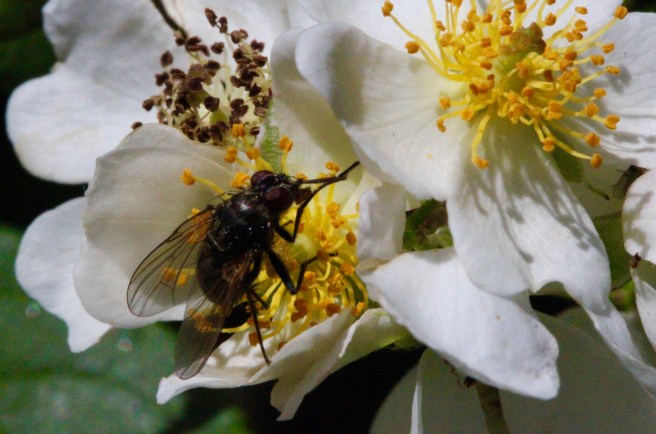
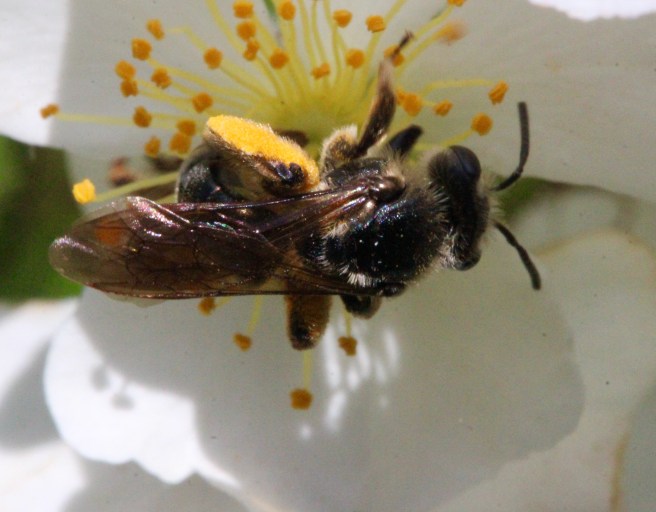
Right now, one of my focal points is the multiflora rosa that blooms in our yard. Yes, we can get into all the reasons why this invasive shouldn’t grow here, but I, too, am an invasive species–my ancestors arrived on a boat, possibly bringing some seeds or roots with them.

fly on multiflora rose

Multiple species pollinate the massive display.

bee on multi

Their pollen sacs bulge as they quickly move from anther to anther.

sawfly larvae

Meanwhile, sawfly larvae munch their way across leaves.

saw 2

Sawfly is another word for wood wasp–certainly makes sense. But right now, their larvae look like caterpillars. Very hungry ones.

spring peeper1

And because I took time to look, I noticed. When I first spied this little guy about the size of a nickel, I thought it was either a small snail or a dried up leaf that. Curiosity pulled me in closer–thank goodness. Located about three feet above ground, this spring paper hid from predators all day, waiting to munch on insects and spiders tonight. I know this shot is sun drenched, but do you see the X on its back? Its name–Pseudacris crucifer–breaks down to Pseudo (false), acris (locust) and crucifer (cross bearer).

grasshopper

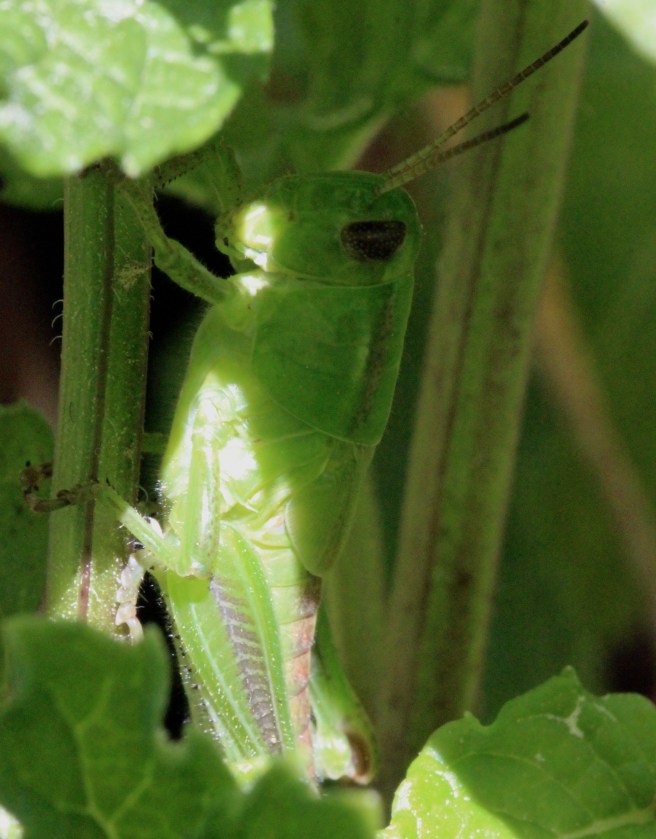
I’ve also been stalking the grasshoppers again, much as I did last year. Every day, I’ve noted that they are a wee bit larger–measuring almost an inch. But today, I found a giant among them.

Heal all

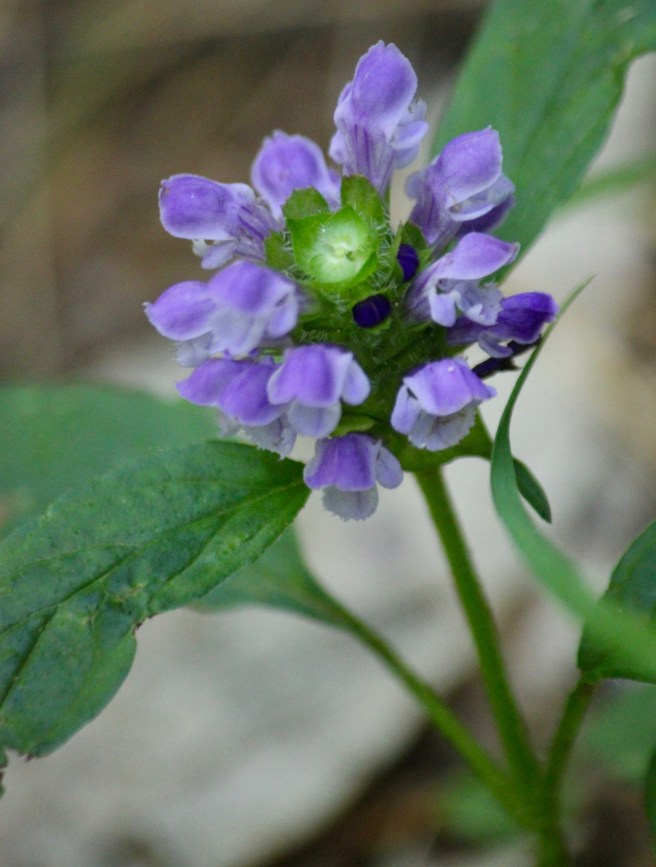
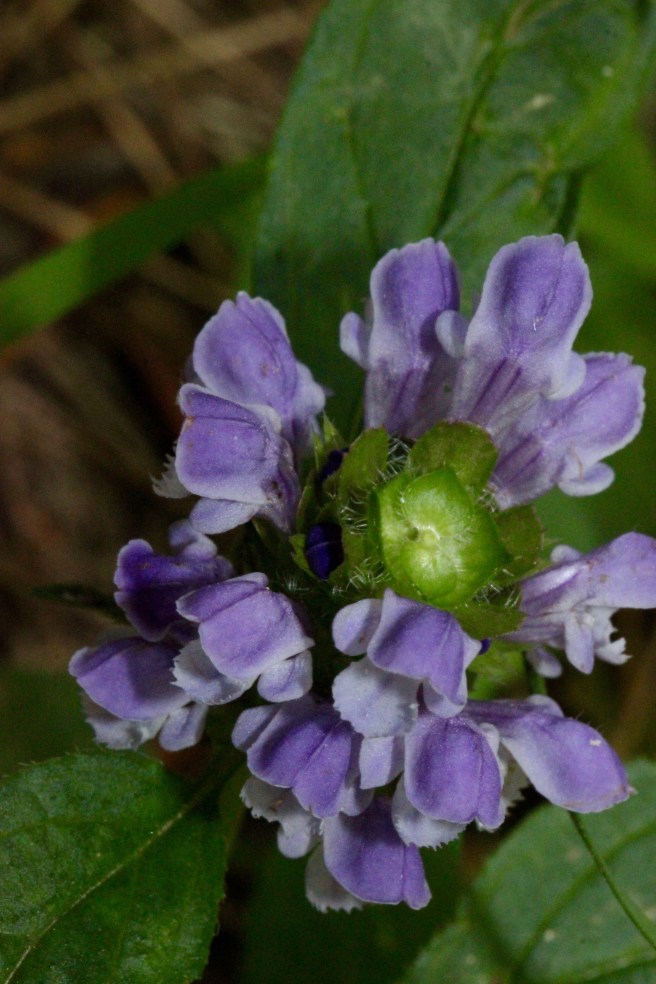
Then I went further afield, but to another familiar spot that I frequent. Heal-All blooms there with its square stem and whorls of florets.

heal all 2

The upper part of each floret provides a darker hood over the lower fringed landing platform. I’m surprised I didn’t see any action today. But don’t worry. I’ll keep  stalking.

Lady fern spores

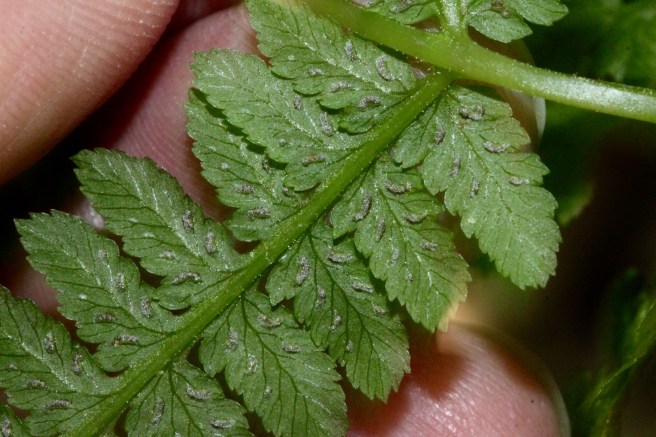
The ferns also drew my attention, like this lady fern, with its graceful appearance and sori in the shape of eyebrows.

hayscented fern

Hay-scented fern offers another lacy look, but the size and shape of its spore cups at the margin of the underside make it easy to recognize. Look underneath. Always.

cinnamon fern 1

While I’m focused on ferns, here’s a clue to differentiate a cinnamon fern from an interrupted fern once if it doesn’t feature a spore stalk. Cinnamon ferns have obvious hairy underarms. Do you see the tuft of hair at the rachis?

interrupted fern

Not quite the same for an interrupted fern. I love the hunt.

royal 2

Cinnamon and interrupted ferns are both members of the Osmundaceae family, which also includes royal fern, so named for the fertile frond topped with a crown.

royal crown

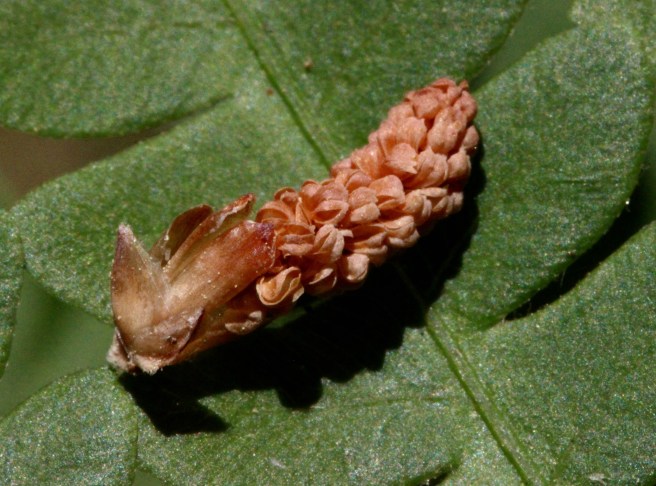
Bead-like in structure, the capsules have evolved from their aqua-green color a couple of weeks ago to a rusty shade. Eventually, they’ll turn dark brown after releasing their spores.

exoskeletons

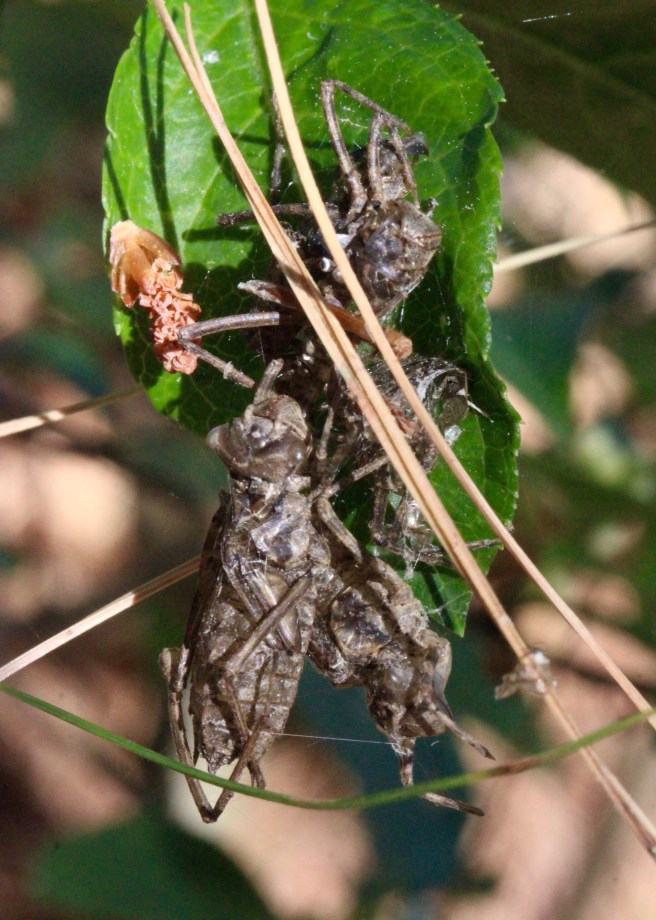
Because I was near water when I spied the royal ferns, I also had the joy of once again stalking exoskeletons that remain where dragonflies emerged. Such a special monument to their metamorphosis.

American toad

And  . . . young American toads hopped all about at my feet.

turtle 2

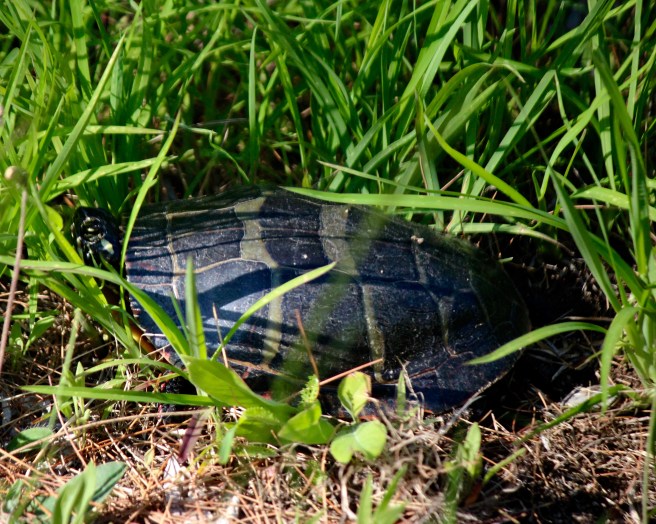
But one of my favorite focal points of the day–a painted turtle. She had her own mission–to lay eggs. After I saw her, I noticed another and so I did what any good stalker would do, I circled about the area looking for others. Only the two. But that was enough.

I’d made the two-hour round trip to Portland this morning to pick up my macro-lens that had taken two months to repair–0r so they say. As I got used to using it again, I found myself having fun figuring out the focus. I’ll continue to stalk and continue to learn–on so many levels.


From Bare to Bear on Burnt Meadow Mountain

Back in October 1947, catastrophic wildfires erupted throughout Maine during what became known as “The Week Maine Burned.”

It hadn’t rained for 108 days and the dry woods were like tinder. Here in western Maine, Fryeburg, Brownfield and Denmark thought they had a fire under control, but overnight a strong wind blew and gave it new life. About 2,000 acres burned by the next night as the fire spread to the edge of Brownfield.

With the winds continuously shifting, town folks began to panic. Farmers either turned their livestock loose or herded them to neighboring towns. Others packed as many belongings as they could and evacuated.

By morning, most homes and public buildings in Brownfield were mere piles of ash. Stately places including the Farnsworth Place where Dr. Philo Farnsworth, a pioneer in the field of television, spent his summers, had burned. Churches, schools, the post office, Grange hall, library and town hall all went up in smoke–only twenty houses survived. In the end, 85% of the town was destroyed, including a mountain trail.

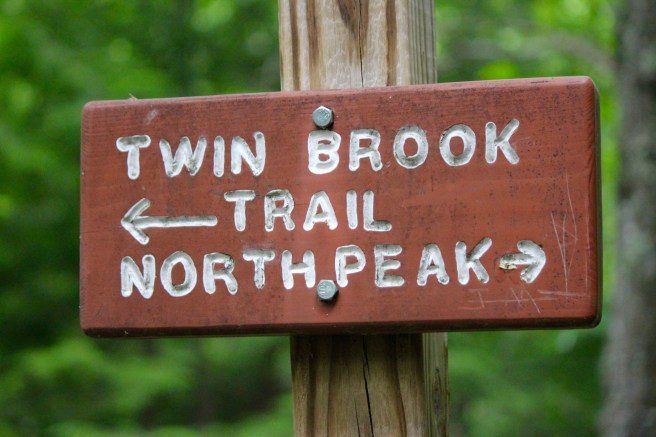
Today, Marita and I ventured to Burnt Meadow Mountain for a loop hike. It used to be that one had to hike up and back on the same trail, now known as the North Peak. Though that’s the shortest way up and back (about an hour each way), I for one, am thankful to the Friends of Burnt Meadow Mountain, who sought landowner permission to create a loop and spur–Twin Brook Trail and Stone Mountain Trail.

trail sign

From the parking lot and kiosk, it’s a bit of a climb to reach the trail split. We followed the blue blazes of the North Peak trail, which though it is shorter, is also the more difficult of the two.

white pine 1

Immediately we noticed that the white oaks that grow at the bottom of the mountain play host to numerous leaf miners and other insects.

white oak gall

Some are decorated with pronounced galls. I always think about how a bud protects the whisp of a leaf all winter long, and how hairy it is as it slowly unfolds and then–kaboom–the insects have to survive too. And they do. Until something eats them. And their energy passes up through the web, where it’s enhanced at each level by sun and air and rain and . . . even when life doesn’t look so good, it is.

Blueberries

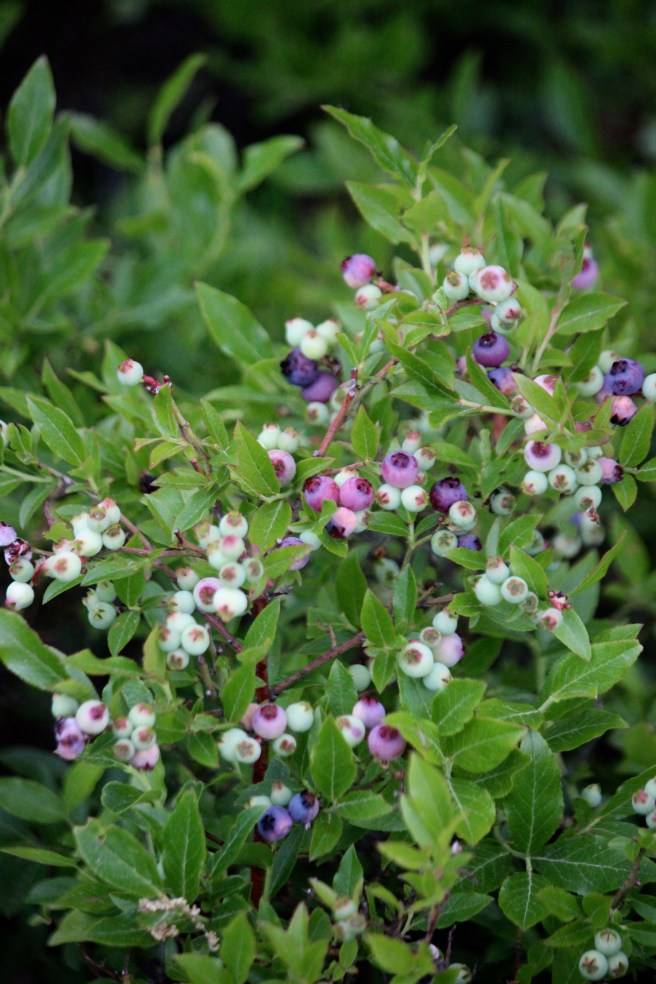
As we climbed, the blueberries became more prolific. And bluer.

spreading dogbane

Spreading dogbane showed forth its tiny pink bells.

ph rocky ascent (1)

And the trail became a scramble. If I said we scampered up the ledge quickly, I’d be telling a fib. (Do people still tell fibs?) Near the summit is a section of hand-over-hand climbing. It doesn’t really last long, but in the moment it seems like forever.

ph view on way 2 (1)

And so it invites a pause to take in the view to the south and east.

ph summit view 5 (1)

The relatively flat summit is rather barren–in memory of those 1947 wildfires.

ph summit view3 (1)

We were glad it was cloudy as there are no shade trees at the top.

ph summit view 2 (1)

Our view included Stone Mountain and the saddle between it and Burnt Meadow Mtn.

ph red pine 3 (1)

Normally in the landscape, red pines stand tall and proud. At the summit, however, their scrubby form presents their features at eye level–bundles of two needles, pollen cones and older seed cones. Young red pines typically germinate and grow only after forest fires or some other event that causes tree loss.

Eastern Towhee 2

Eastern Towhee

While we took a break, an Eastern Towhee sang its metallic yet musical “drink your tea” song.

ph view on way down 4 (1)

Descending via the much longer, but a wee bit easier Twin Brook trail, we were treated to mountain views to the west.

driftwood

And driftwood. Oops. Wrong setting. But still, mountain wood can be as beautiful as ocean wood.

ph bear 5

One of our pleasant surprises was the discovery of bear claw marks on rather small beech trees. Perhaps made by even smaller bear cubs who scampered up and down a year or two ago, leaving their marks much the way we left our own today without knowing it.

ph bear 2

Further along, the hole in this older beech stopped Marita in her tracks. We noticed saw dust on the ground below. And numerous bear claw marks on the bark above.

bear 3

Another oft visited tree.

From bare to bear, Burnt Meadow Mountain in Brownfield is worth the trek. (You probably thought we saw a bear today. No such luck, but my guys and I encountered a bear on the North Peak trail on a summer day years ago. It seemed content to lumber along about fifteen feet from us–probably full of blueberries.)


Paying Attention

When she invited me to join her for a walk down a dirt road, I knew Jinnie Mae and I would make some wonderful discoveries, but had no idea what begged to be noticed.

j-ebony 15

We cruised along at a faster pace than normal as we chatted . . . and then . . . we slowed . . . down. And that’s when the world poured forth its graces.

j-ebony 18

Beside a small stream, we were in the land of numerous ebony jewelwing damselflies, their metallic green bodies, beady black eyes and jewel-outlined wings showing brilliantly as they flitted about.

j-jack1

We noticed Jack-in-the-Pulpit growing strong, proud and tall,

J-swamp candle

swamp candles lighting up the water,

j-heal all 3

heal-all beginning to bloom,

j-pyrola 2

and waxy-petaled pyrola flowers with styles curved below like an elephant’s trunk.

j-beaver 2

We stopped by a beaver pond and decided they have moved on,

j-beaver 4

but their works were still evident.

j-beaver 3

Though the lodge may be abandoned by beavers,

j-lodge 1

it appeared that someone had stopped by.

j- royal 6 (1)

On the other side of the beaver dam, royal ferns decorated the stream in their shrub-like manner.

j-royal 2

Their fertile fronds posed like crowns above their heads, bespeaking their royalty.

j- royal 5 (1)

With their unique structure, there is really nothing else that resembles the royal fern.

j-ebony3

Because we were once again by the water, we realized the jewelwings were abundant–though they seemed more blueish in color here than further down the stream. Was it the lighting?

j-ebony 13

Beside the tranquil stream, they flittered and fluttered, their wings like sails over iridescent bodies, and occasionally they settled on vegetation for a photo call.

j-spider 2

Others also settled.

j-cuke1

We pulled ourselves away–or actually, Jinnie Mae gently nudged me away and we continued our journey back, certain that we’d see sights we missed on the way down the road. There were Indian cucumbers with multiple flowers–the most I’d ever seen . . . until Jinnie May pointed out that it was really two plants. Oops.

j-cuke 2

But still, we found one with at least four blossoms, all in various stages.

j-butterfly1

She told me we’d probably see an Eastern black swallowtail.

j-butter 3

And we did.

j-spotted winter

Though it’s not time for spotted wintergreen to flower yet,

j-spotted 1

we found its seed pods atop tall stalks. For me, this was a plant I don’t believe I’ve ever seen before. (According to Maine Natural Areas Program’s Rare Plant Fact Sheet, Chimaphila maculata is threatened in our state and has an S2 ranking) Will I see it in other places now that I’m aware of it? Time will tell.

j-winter 1

We noticed tender new wintergreen leaves, but it’s the berries that made us turn back for a closer look.

j-winter 2

The scarlet berries matured last summer, survived the winter without being eaten (they taste like wintergreen in the summer, but lose their flavor and sugar count over the winter months) and have now become enlarged.

j- trailing 2 (1)

What really stopped us in our tracks–trailing arbutus. Last month, we were wowed by its gentle white and pale pink flowers. They’ve since faded to a rusty tone.

j- trailing 6 (1)

And some have transformed into swollen round seed pods.

j- trailing 8 (1)

The sepals have curled away to reveal the white fleshy fruit speckled with tiny brown seeds. It was well worth getting down on our knees to look through a hand lens–especially since ants, chipmunks and mice find these to be a delicacy so they may soon disappear.

Paying attention with and without a hand lens on a delightful spring day–we were once again thankful for the opportunity to notice . . . and to wonder.


The Big and the Small of the Hundred Acre Wood

As my friends know, I’m not one to say no to an invite to explore their land. And so this afternoon’s adventure found me spending time with Beth on the 100 plus-acre property she, her husband and parents call home in Oxford County.

b-view 2

Their sense of place begins with a field of wildflowers yet to come, the entry to their wood lot and a view of Ragged Jack Mountain. My sense of excitement to explore their place was heightened by this jumping off point.

b-Maine trail

Trails loop throughout the property and the family has taken the time to name and label all of them.

b-pine 4

We wandered along and suddenly Beth noted that we’d reached their champion pine. I looked at a small spruce before us and wondered what all the fuss was about. Then she pointed to my left.

b-pine 2

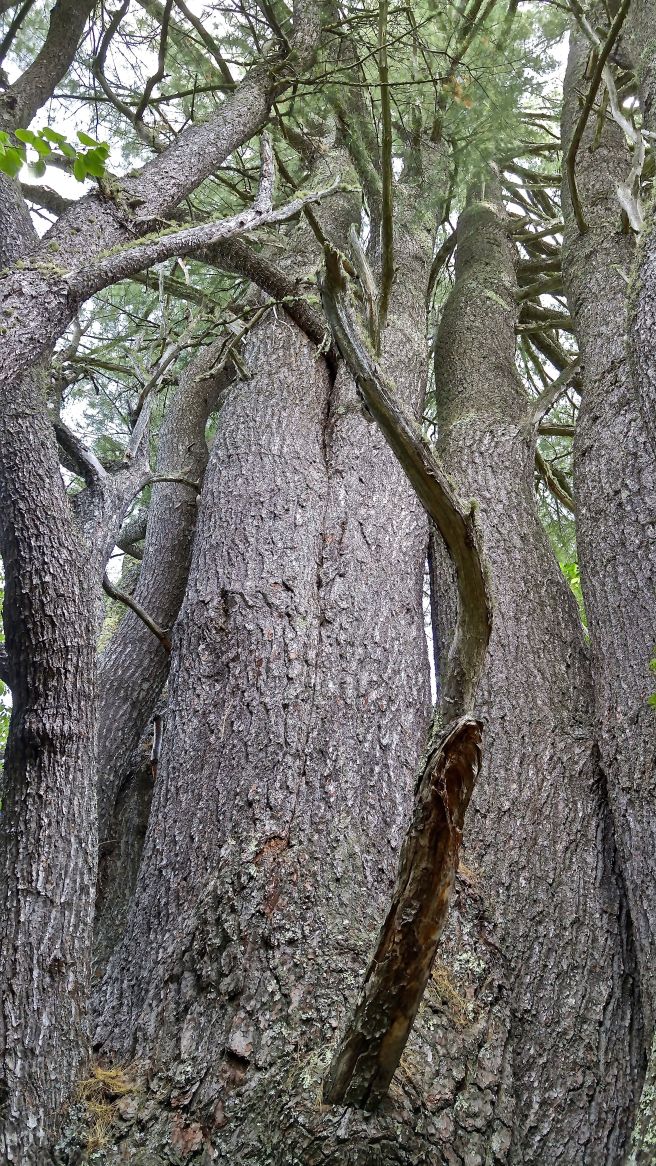
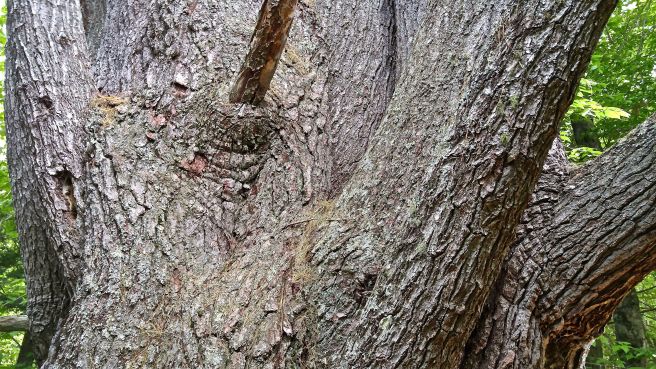
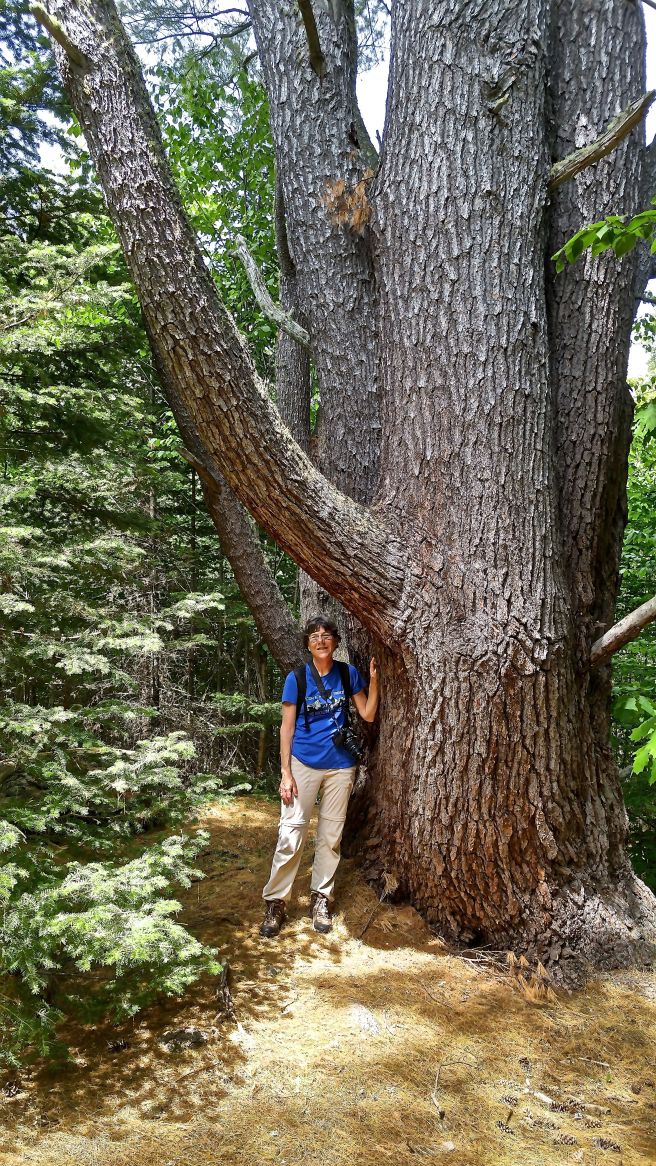
One massive Eastern white pine gallantly towered over us. At some point in its early life the terminal leader was injured–perhaps by a weevil or weather. But . . . this tree carried on and continues to do so. I felt like we were standing below a giant in the woods.

b-pine bark

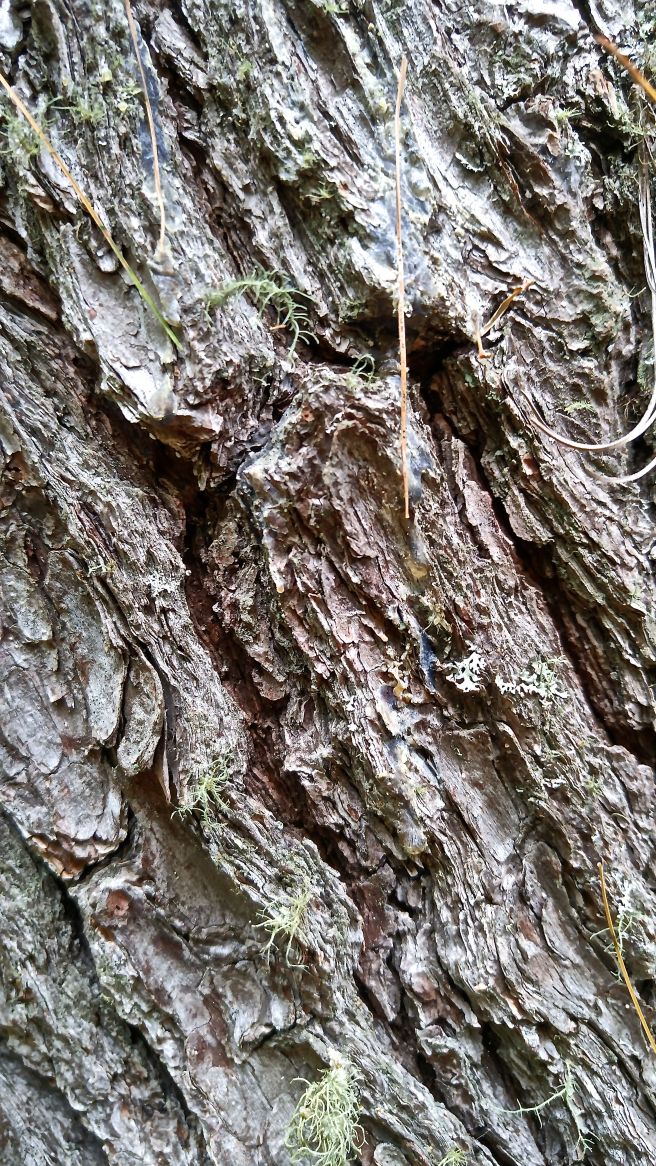
It’s characterized by layers upon layers of bark.

b-pine 3

And it’s wider than any tree I’ve ever seen. Here are the stats on this champion: According to Beth, it towers 108 feet tall, is 256 inches in circumference (21.3 feet) and has a crown of 15.75.

b-pine 1

Yup. It’s big. Or rather, BIG!

b-dam:lodge2

We weaved our way along the trails and Beth shared favorite spots with me as she told tales of her experiences with this land and water.

b-mora 1

Mara, Beth’s springer spaniel, shared her own tail. She was happiest when mud and water provided opportunities to play. We had to wonder other times when she cowered behind us or tried to hide between Beth’s legs. What did she sense that we weren’t aware of? We did hear a few critters, including baby grouse that Mara visited, and saw the tracks of moose and deer, plus coyote and fox scat, and maybe even bobcat scat, but our only official mammal sightings were red squirrels.

b-pond

Among Beth’s sharings was this spot she refers to as the Accidental Pond. Accident or not–it’s enchanted.

b-split granite

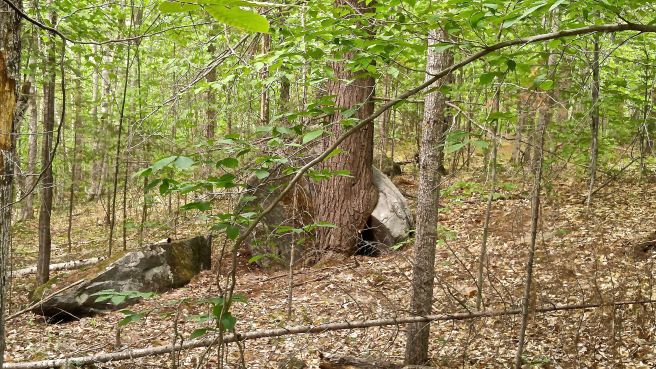
Here and there throughout the woods, she pointed out glacial erratics. This one we particularly wondered about. What came first? The rock split on its own or the hemlock caused the split?

b-bracken 1

Those were the big things, but we were equally wowed by all the small stuff we saw along the way, like this bracken fern just beginning to unfurl.

b-cinnamon ferns

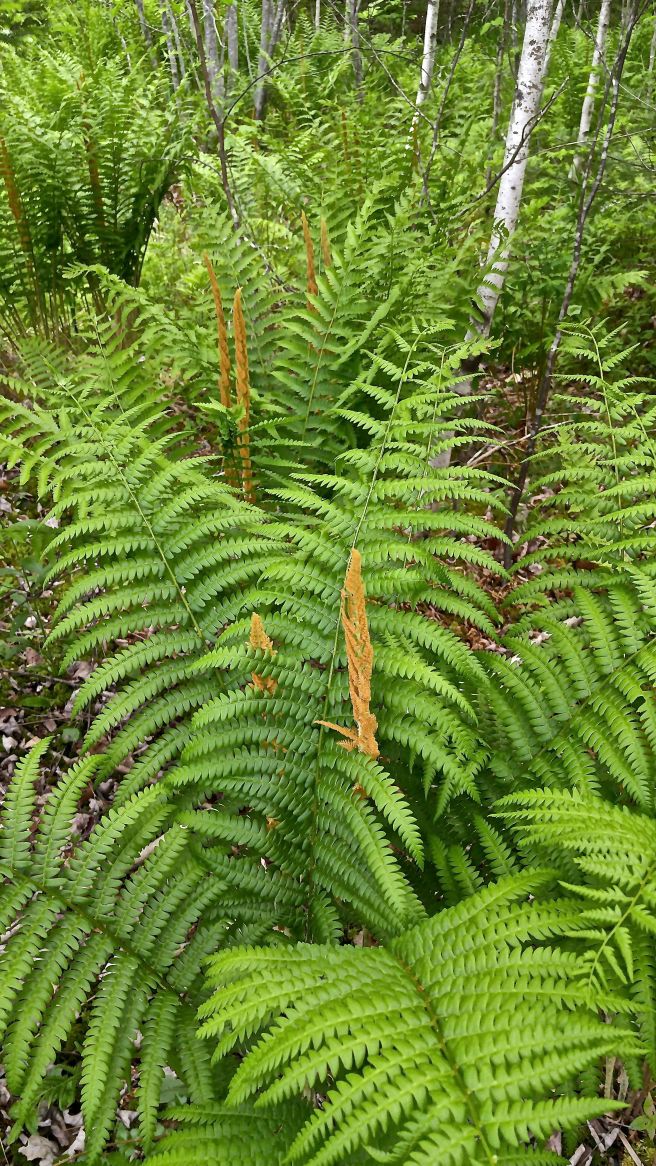
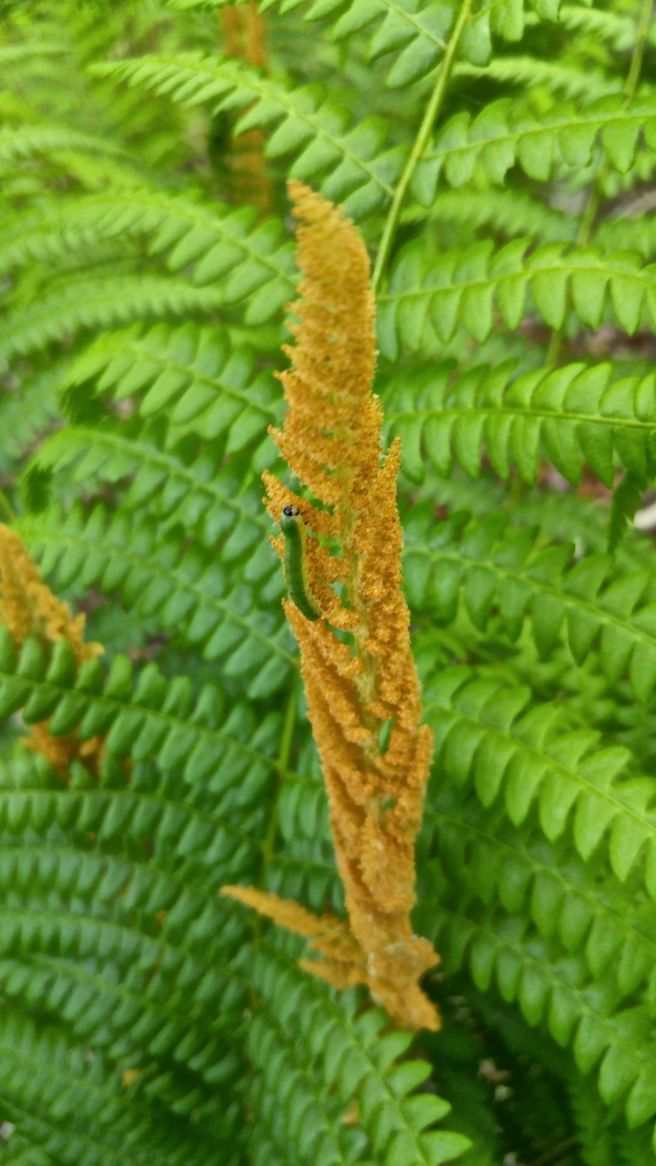
Several times we wandered in the land of the cinnamon fern, where the separate fertile fronds sport the cinnamon color for which they are named. It won’t be long before those fertile fronds bow down to the earth and the large, arching sterile fronds are all that will remain.

b-caterpillar 2

And then something else caught our attention–a green caterpillar on the fertile frond.

b-caterpillar 1

We weren’t sure who it was, but we saw it on several stalks. Always something to wonder about.

b-royal

Royal fern also offered a display, especially beside the brook. Look closely and you might find the fertile frond “crown” on this one. It’s a rather “Where’s Waldo” presentation, but it’s there.

b-gilled 1

We found some gilled mushrooms we also couldn’t identify, but appreciated their existence.

b-lady 3

The lady’s were in bloom.

b-lady's slipper

Take a look at those hairs.

b-web 3

And it’s spider web season so we paused and admired the work of an orb weaver who built a spiral wheel-shaped web.

b-spider web

Also among our sightings, a well-built high-rise structure woven among the remains of winter weeds.

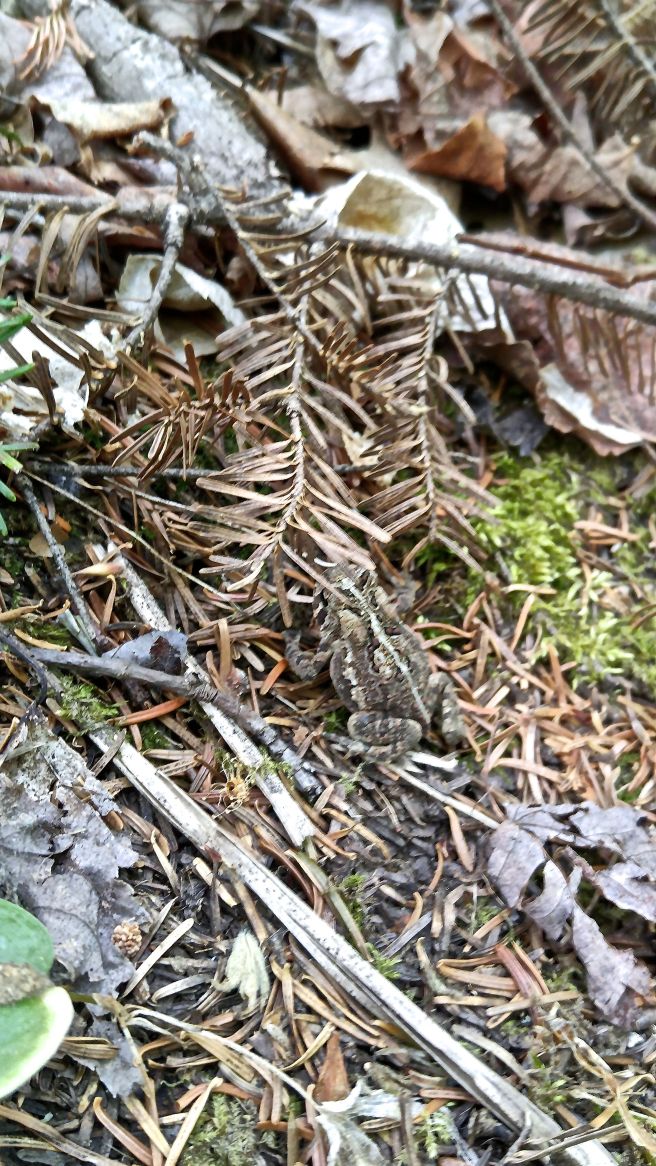
b-toad 3

Camouflage is everything. Just ask the American toad.

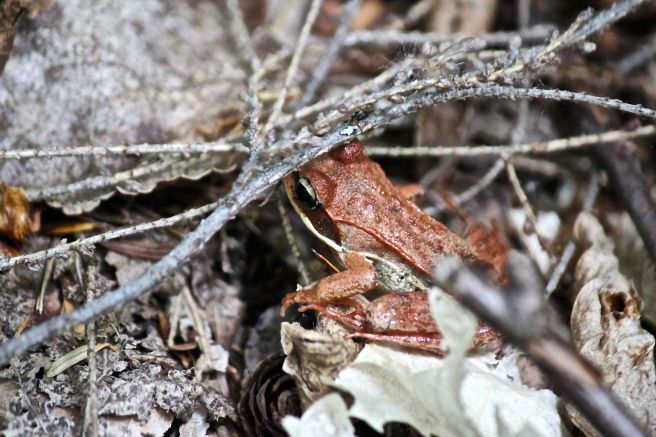
b-wood frog 1

We found the wood frog easier to spot.

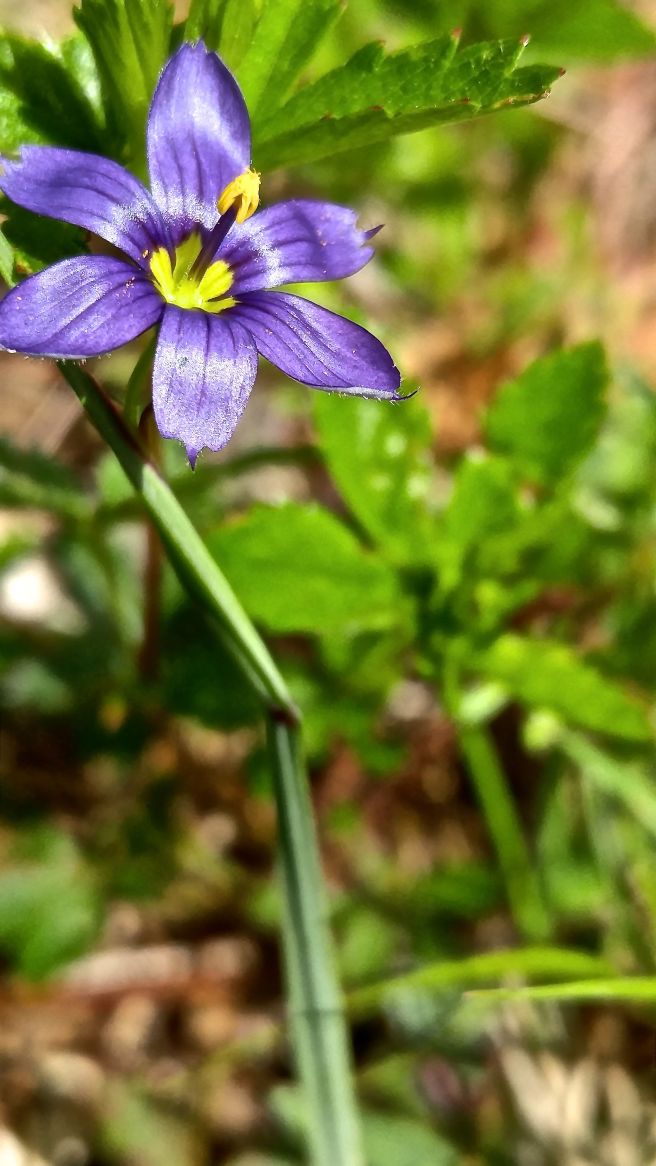
b-blue-eyed grass1

But I had my eye on the blue-eyed grass.

b-blue 5

These are the shy ones. They only keep their eyes open if the sun is shining. On a cloudy day it’s almost impossible to recognize them.  And they love damp open woods, slopes and stream banks so it’s no wonder we found them today.

The big and the small . . . Beth’s property has it all. And this was only a sampling from her hundred acre wood. Winnie the Pooh and his friends–they too, would love this place.


Wallowing in Wonder

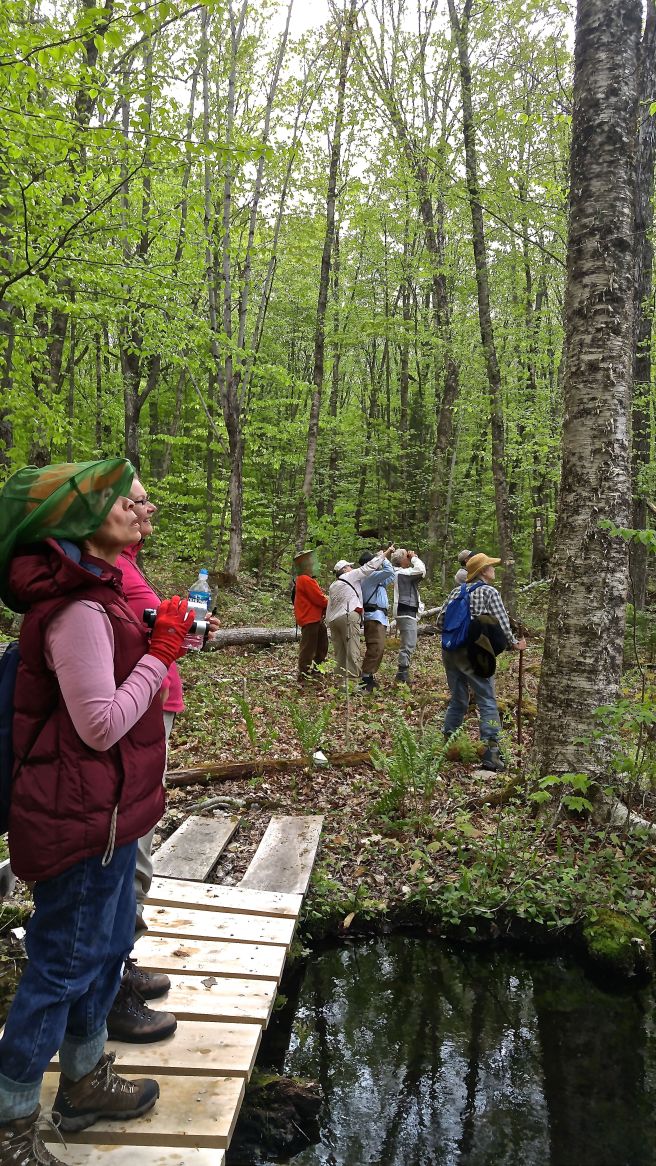
We knew what flowers we’d show off and had a general idea of what birds we’d see when we headed down the trail from the Flat Hill parking lot at the Greater Lovell Land Trust’s Heald and Bradley Ponds Reserve in Lovell early this morning. But from the get-go this turned into one very special hike that filled us all with the wonder of life.

p-silent march

Maybe it was because we headed off on a silent march, the better to take in the cacophony of bird songs. With Linda and Heinrich in the lead, our intention was to make a bee-line to the viewing platform. Linda encouraged everyone to note the flowers along the way–with a promise to stop and celebrate them on the return trip. We’d decided during a pre-hike that we wouldn’t follow the loop trail around Perky’s Path. We wanted this to be a different experience.

p-ph view from bench

The view from the bench was beautiful, but the birding there was only so-so, much to our dismay.

p-ph birding 2

On to the bridge we moseyed. Our one disappointment, we didn’t hear the American bittern that had entertained us with its toilet plunger call during the pre-hike.

p-ph birding1

But that didn’t stop us from raising our binoculars frequently–for red-winged blackbirds, Canada geese, blue jays, several species of woodpeckers, sparrows, warblers, wood ducks, chickadees, a wood thrush and more. We heard the ovenbird and vireos, but never caught sight of them.

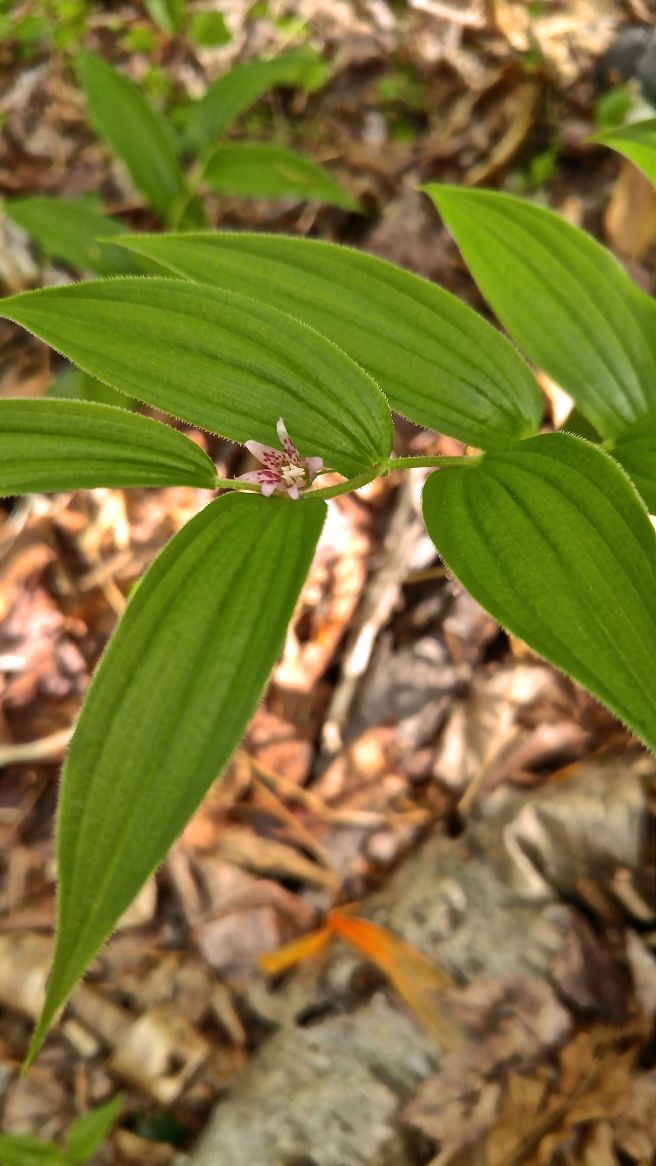
p-ph rosy 2

While Heinrich was our birding guide, Linda used the area just beyond the bridge to begin our examination of flowers.

p-ph rosy 1

It was while we were moving in for a closer look at the rosy twisted-stalk, that someone spied what became the center of our attention for the next hour.

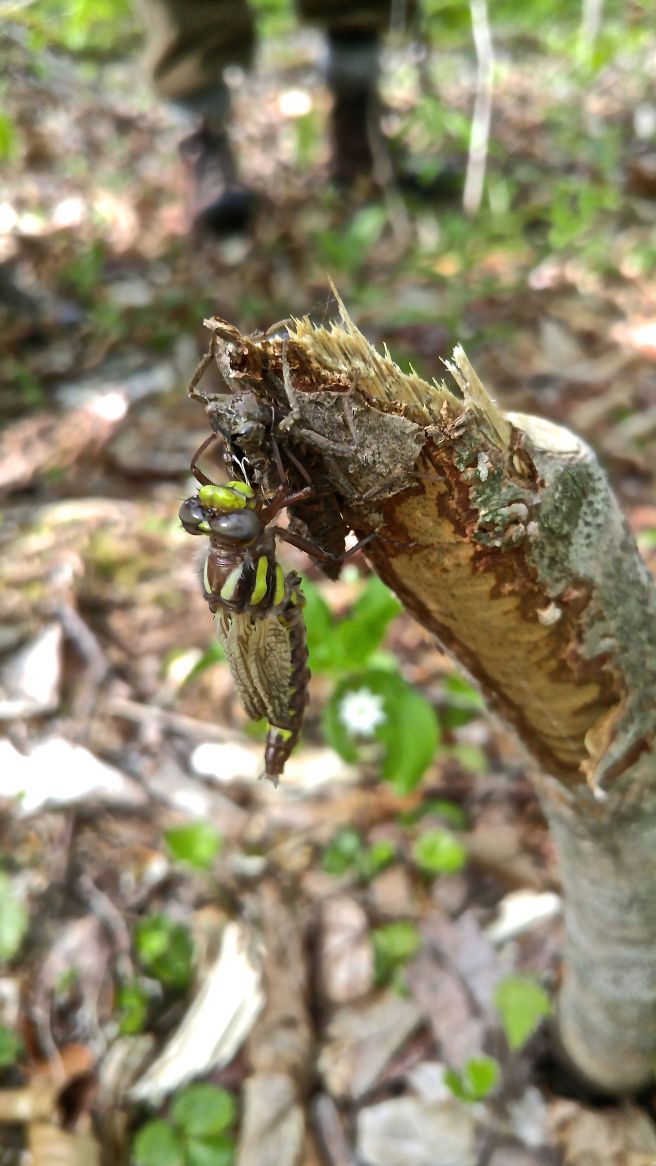
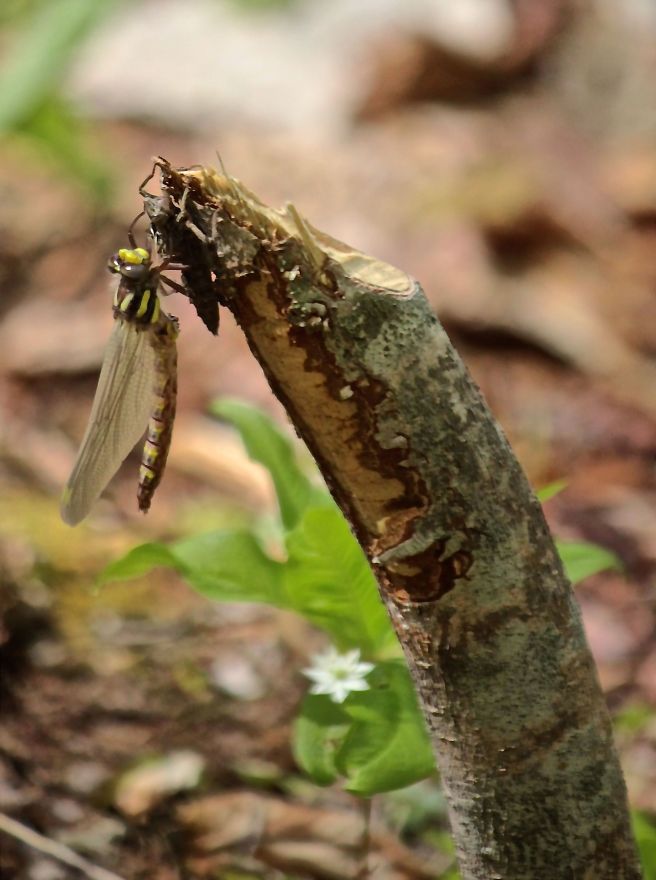
p-dragon begin1

A dragonfly had just split open its exoskeleton and emerged from the nymph stage. Of course, we were standing by a beaver pond, and so it seemed only appropriate that it would use the top of a sapling cut by a beaver.

p-ph dragon middle 4

By pumping air into its body, the adult slowly grew larger.

p-dragon end 1a

As it inflated the wings with blood pressure, they began to extend.

p-ph dragon end7

The veinous wings remained folded over its back as we continued to watch.

p-ph early coralroot orchid 2

We were in that one spot for a long time, but when Linda inquired if anyone wanted to start back, all were silent. We did, however, take our eyes off the dragonfly for brief moments. And because of it, we got to know a small area rather well. A few of our discoveries included  the yellow-green, early coral-root orchid, which has no leaves,

p-ph starflower 7

star flowers with their seven petals, seven stamens and sometimes seven leaves, though the latter wasn’t consistent,

p-ph yellow clintonia

and yellow clintonia, aka bluebead lily.

p-ph springtails 1

We also saw hot chili pepper on the leaf litter and . . .

p-spring tails 1

in the water. Springtails galore. Yes, aka snow fleas, but obviously we can see them even when there isn’t snow on the ground.

p-dragon end 1b

As we explored, we continued to keep a watchful eye on our friend. In fact, he became “our” dragonfly. An hour later, the melodic song of a Baltimore oriole pulled us away and we finally started back along the path.

p-cloak 5

We paused frequently to admire the flowers and leaves, but then another flyer slowed us down and became “our” mourning cloak as it settled on a fallen tree and then fluttered amongst us. Happy were we to have shared such moments of awe.

p-ph pack on Amos

Though our walk had lasted longer than intended, I wasn’t ready to head home, so once everyone left, I turned back and climbed Amos Mountain using the Saddle Trail. It was hot and buggy, but I went for a reason and wasn’t disappointed.

p-amos 1

Among the grasses and violets,

p-ph wild strawberry

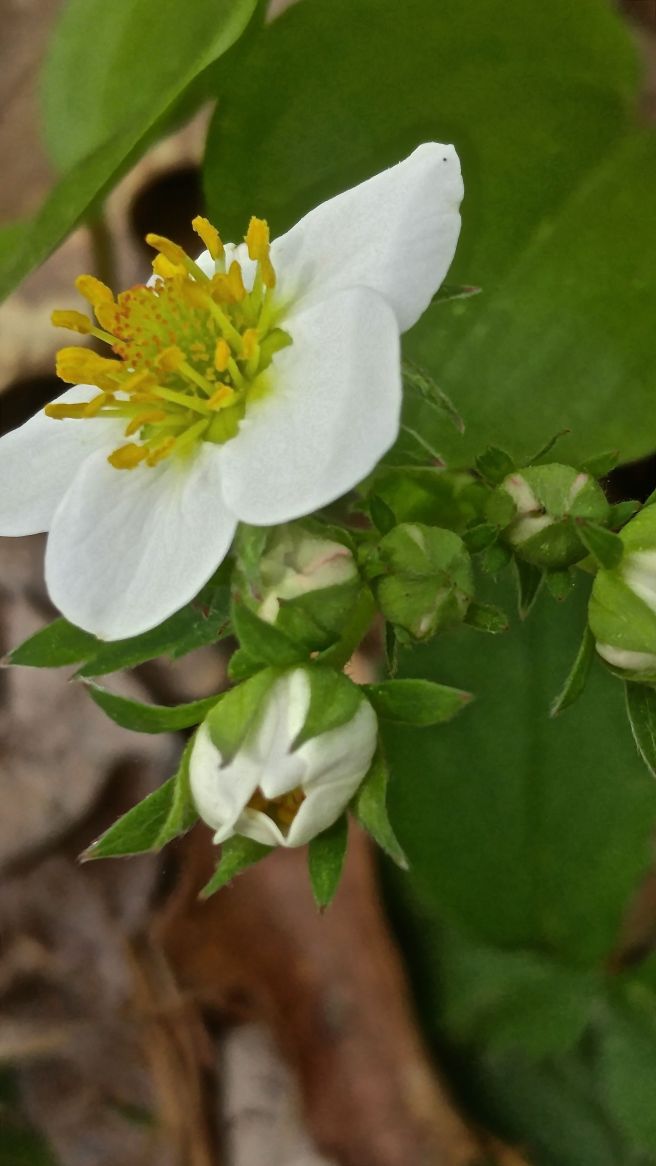
the wild strawberries grow. But that’s not all.

p-ph colum 5

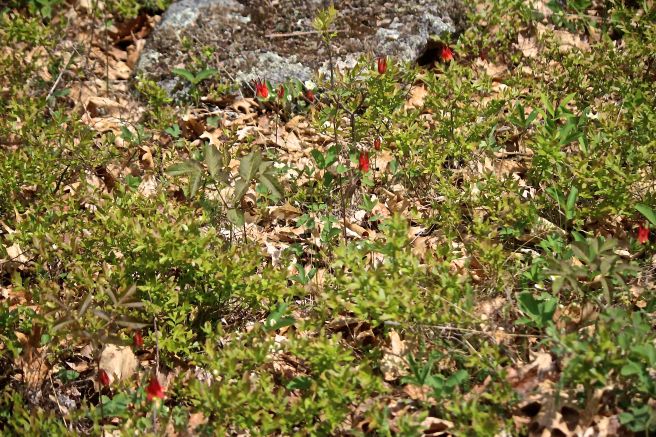
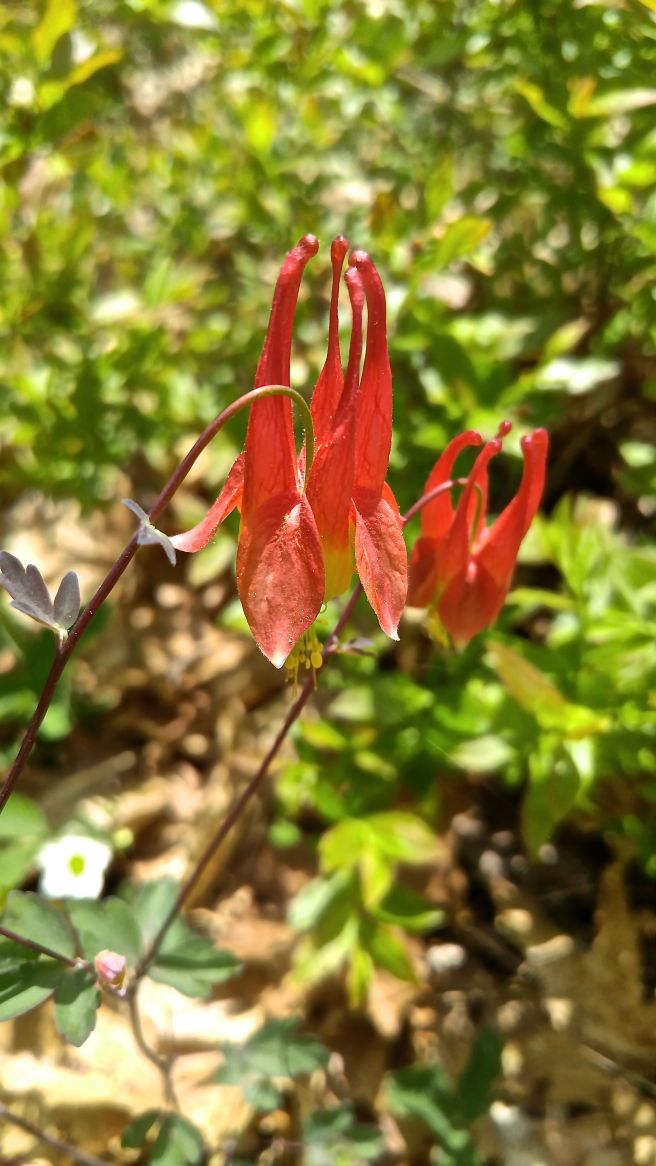
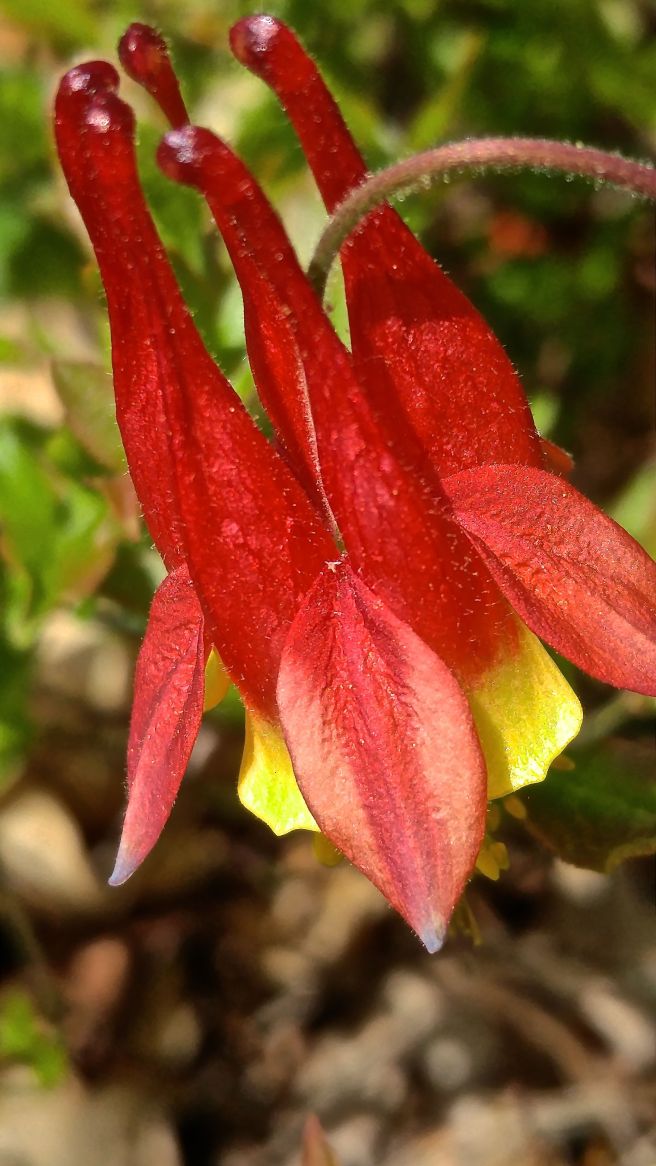
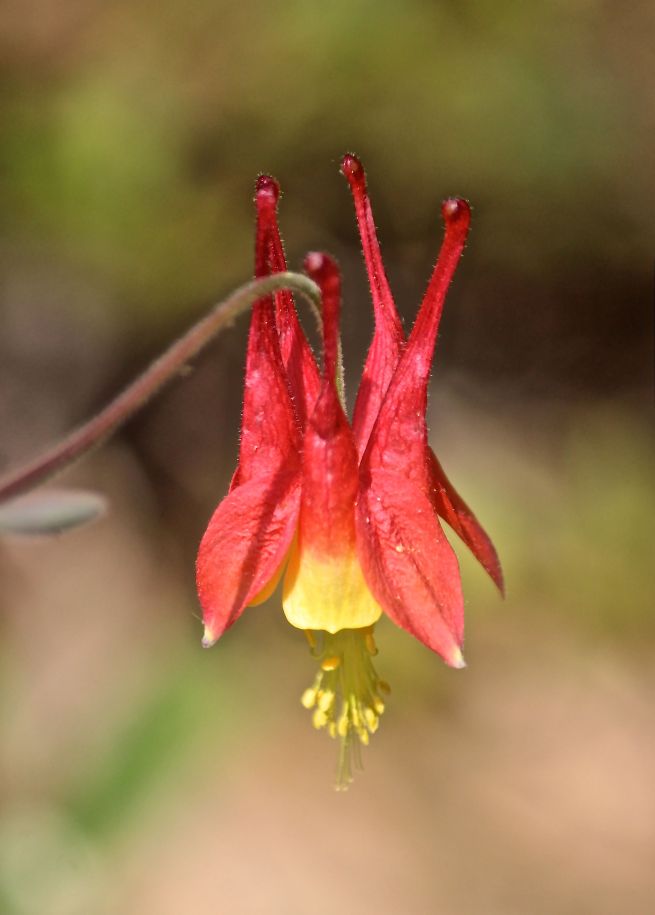
It was the spurred red and yellow flowers of wild columbine that I wanted to see.

p-ph colum 4

Their heads drooped dramatically.

p-columbine 1

Numerous yellow stamens projected downward and surrounded the green pistils with their long, thin styles, creating the look of an ornate lantern dangling from a post–thus its other common name, little lantern. I really don’t care what it’s called. Spending time in its presence was all that mattered.

The same was true for our dragonfly experience. We wallowed in wonder today and let nature reveal its glory.

Three Times A Charm

One might think that following the same loop through the woods in slow motion three times in one day would be boring. One would be wrong. My friend Joan and I can certainly attest this fact.

Round One: 9 am, Wildflower and Bird Walk with Lakes Environmental Association co-led by birder/naturalist Mary Jewett of LEA and the ever delightful botanist Ursula Duve.

h-hobblebush

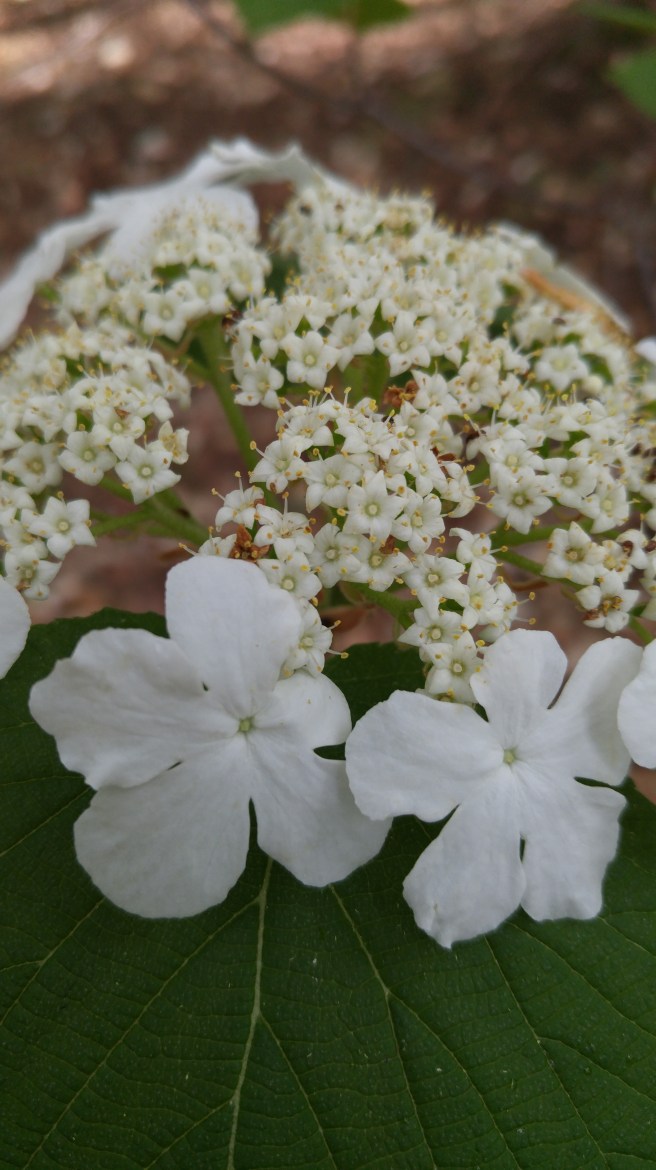
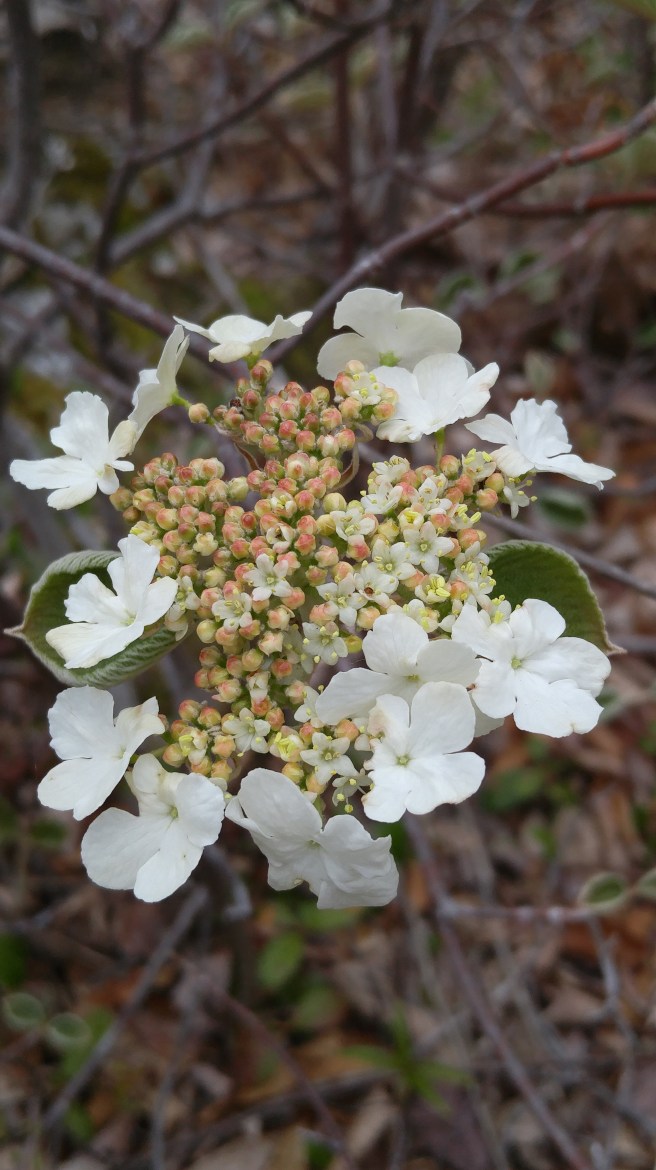
In abundance here, the hobblebush bouquet–a snowy-white flower that is actually an inflorescence, or lacy cluster of tiny fertile flowers surrounded by a halo of showy, yet sterile bracts. Yeah, so I’ve showed you this before. And I’ll probably show it again. Each presentation is a wee bit different.

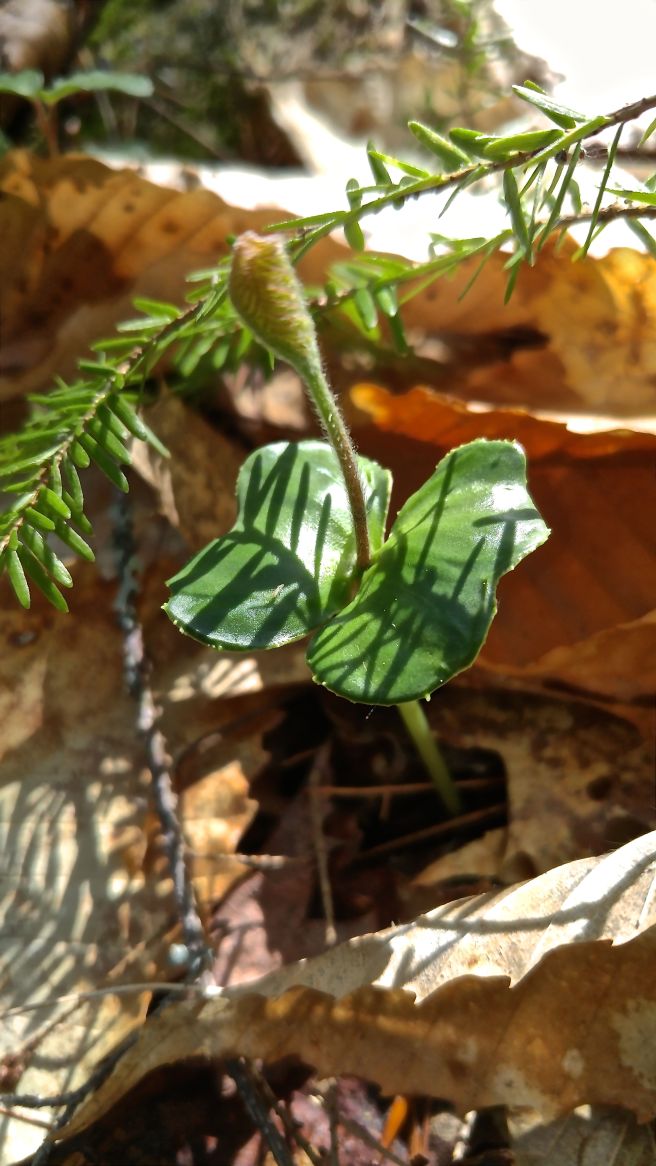
h-beech cotyledon1ph

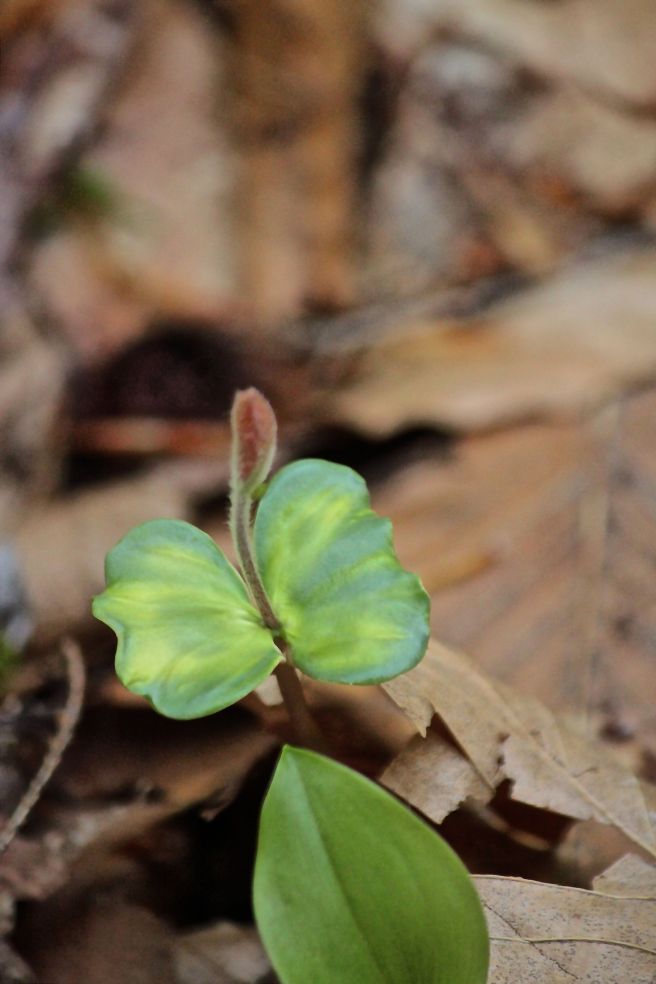
And then we spied something that I’ve suddenly seen almost every day this week.

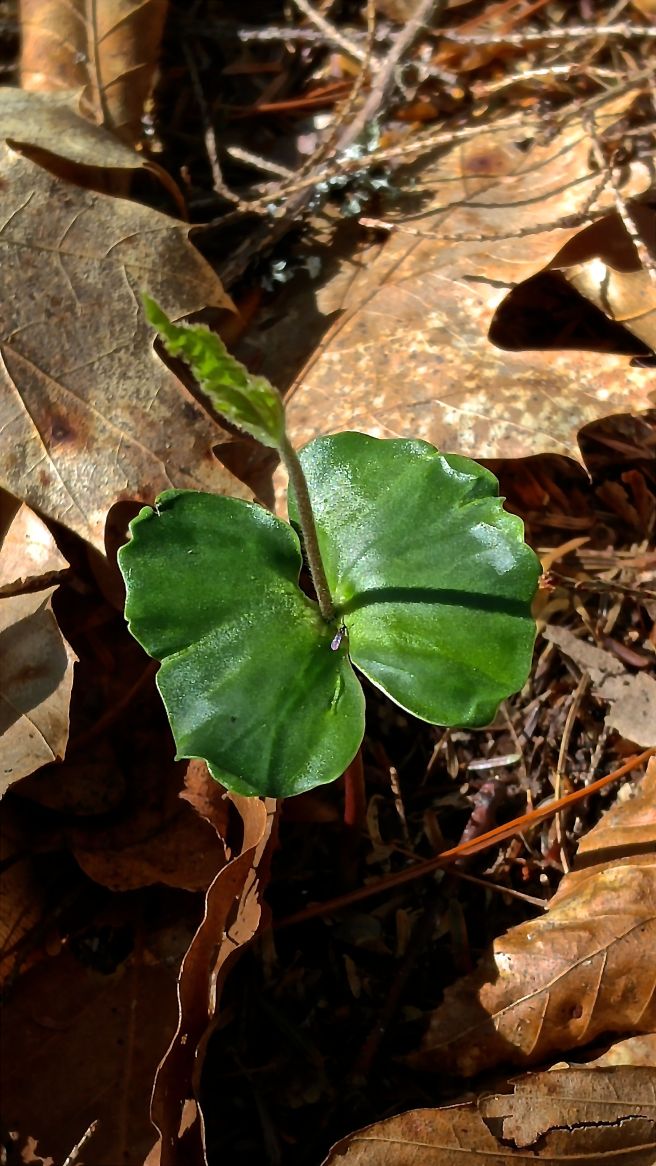
h-beech coty 4ph

The cotyledon or seed leaf of an American beech. Prior to Monday, I don’t know that I’ve ever seen this and yet, since then I’ve continued to discover them almost every day. Worth a wonder.

h-beech coty 3ph

Think about it. The journey from seed to tree can be a dangerous one as the root is sent down through the leaf litter in search of moisture. Since the root system is shallow, lack of moisture can mean its demise. When conditions are right, a new seedling with a rather strange, yet beautiful appearance surfaces. The seed leaves of the beech, aka cotyledons, are leathery and wavy-margined. They contain stored food and will photosynthesize until the true leaves develop, providing a head start for the tree. I realize now that I’ve seen them all my life in other forms, including maple trees, oak trees and vegetables. But . . . the beech cotyledon captures my sense of wonder right now, especially as it reminds me of a luna moth, which I have yet to see this year.

h-green frog 2

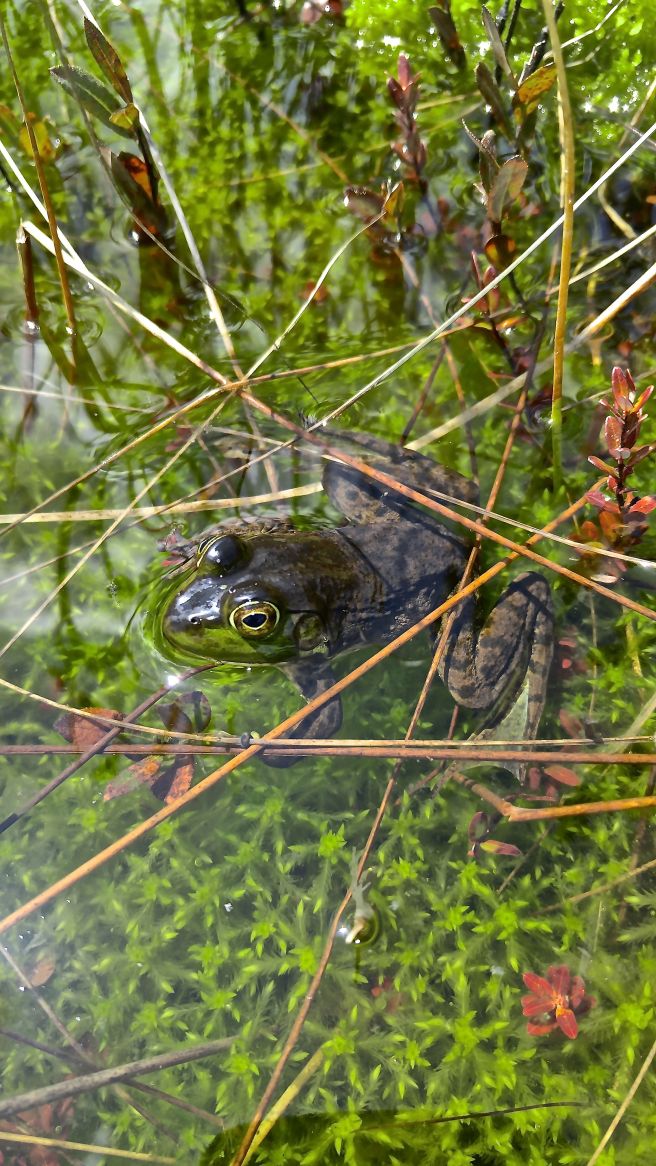
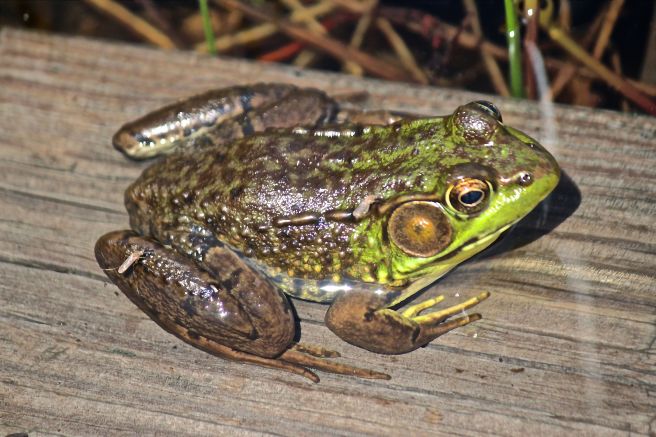
Crossing the first boardwalk through the red maple swamp, a large male green frog tried to hide below us. Notice the large circular formation behind his eye. That’s the tympanum, his visible external ear. A male’s tympanum is much larger than his eye.

h-rhodora ph1

Other red maple swamp displays included the showy flowers of rhodora and their woody capsules.

h-rhodora1

Ralph Waldo Emerson knew the charm of this spring splendor:

The Rhodora

On being asked, whence is the flower.
In May, when sea-winds pierced our solitudes,
I found the fresh Rhodora in the woods,
Spreading its leafless blooms in a damp nook,
To please the desert and the sluggish brook.
The purple petals fallen in the pool
Made the black water with their beauty gay;
Here might the red-bird come his plumes to cool,
And court the flower that cheapens his array.
Rhodora! if the sages ask thee why
This charm is wasted on the earth and sky,
Tell them, dear, that, if eyes were made for seeing,
Then beauty is its own excuse for Being;
Why thou wert there, O rival of the rose!
I never thought to ask; I never knew;
But in my simple ignorance suppose
The self-same power that brought me there, brought you.

h-LEA group

To avoid getting our feet too wet, we spread out as we walked on the boardwalk through the quaking bog.

h-five morning

Morning light highlighted the layers from the pond and sphagnum pond up to Five Fields Farm and Bear Trap above.

h-trill 1

And because it was ever present, I couldn’t resist pausing to admire the painted trillium once again (don’t tell my guy).

h-dwarf ginseng1ph

One plant that I will always associate with this place and Ursula, who first introduced me to it years ago, is the dwarf ginseng. I love its global spray of flowers and compound leaves. But maybe what I love most is its beauty in diminutive form–just like Ursula.

Round Two: Noon, Lunch and a walk with my dear friend Joan.

h-bigtooth aspen

After returning to our vehicles following the morning walk, Joan and I grabbed our lunches. And I paused in the parking lot to enjoy the silvery fuzziness of big tooth aspen leaves. The quaking aspen in our yard leafed out a couple of weeks ago, but big tooth aspen leaves are just emerging. Like others, they begin life with a hairy approach–perhaps as a protective coating while they get a start on life?

h-muddy riverlunch

We ate lunch beside Muddy River where the spring colors were reflected in the water.

h-blueberries 1ph

And then we heard something jump in the water, so we moved silently like foxes as we tried to position ourselves and gain a better view. In the back of our minds, or perhaps the front, we wanted to see a turtle, beaver or especially an otter. Not to be. But we did see highbush blueberries in flower.

h-bee 1

And the bees that pollinate them.

h-pitcher 5ph

In their out-of-this universe form, we knelt down to honor the pitcher plant blossoms that grow along a couple of boardwalks.

h-red maple samaras

We were wowed by the color of the red maple samaras,

h-red winged

prominent shoulder patch of the red-winged blackbird,

h-cranberries

and cranberries floating on the quaking bog.

h-lone larch

And then our eyes were drawn to the green–of the lone larch or tamarack tree

h-green 9ph

and the green frogs.

h-green 8ph

I spent some time getting to know one better.

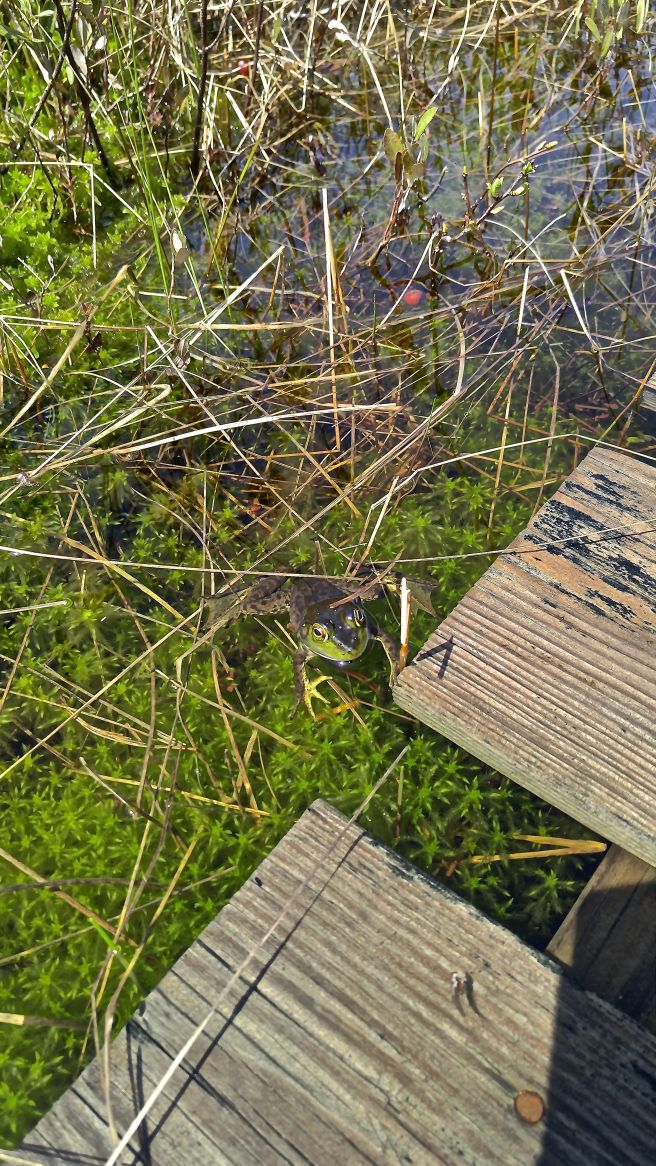
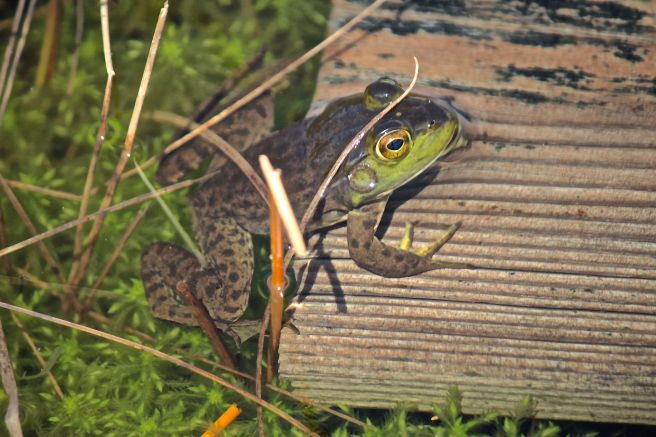
h-green 3

She even climbed out to accommodate me–I’m sure that’s why she climbed up onto the boardwalk.

h-green 6

Or maybe she knew he was nearby. What a handsome prince.

Round Three: 2:30pm, Joan and I (co-coordinators of the Maine Master Naturalist Bridgton 2016 class) were joined by another MMNP grad, Pam Davis Green, who will lead our June field trip to explore natural communities at Holt Pond.

h-striped maple flower

h-spriped flowers 2

Cascading down from the striped maple leaves, we saw their flowers, which had alluded us on our first two passages.

h-speckled 2

The cottony white masses of wooly alder aphids decorated many of the speckled alders in the preserve. In a symbiotic relationship, ants stroke the aphid with their antennae, while  the aphid releases a drop of honeydew, much like a cow being milked. It’s actually rather creepy.

h-duck

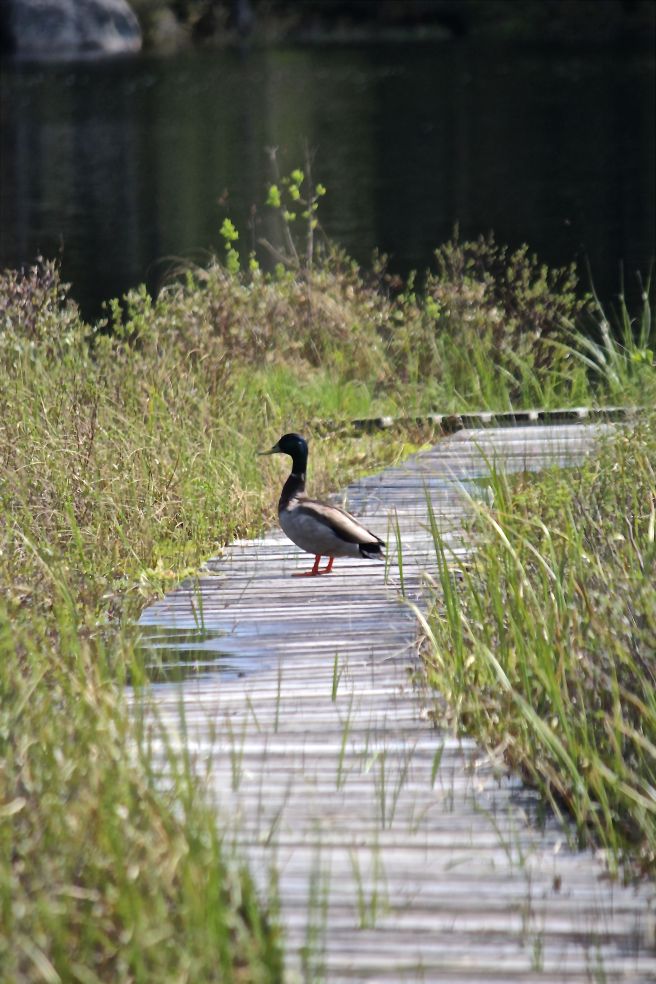
Two Canada Geese squawked from another part of the pond, but Mrs. Mallard stood silently by.

h-tree pants

Our final sight brought a smile to our faces–someone put his or her pants on upside down!

We hope that charms your fancy. Joan and I were certainly charmed by our three loops around and those we got to share the trail with today.

We also want to thank Ursula, Mary and Pam for their sharings. And we send good vibes and lots of prayers to my neighbor, Ky, and Pam’s brother-in-law.       

 

 

Another Day Mondate

We knew when we couldn’t find the trail we were looking for yesterday that we’d return today. What we didn’t know was how brisk it would be, but thankfully we were prepared. We both packed extra layers and I was thankful for a winter hat and gloves. Mid-May in Maine.

a-horses

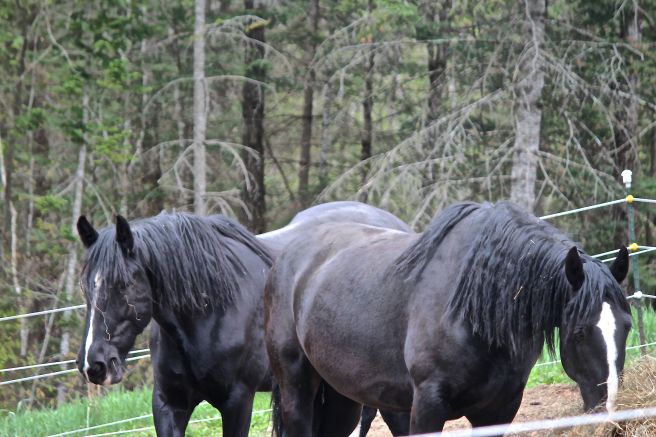
We also didn’t expect to park across from a horse farm.

a-tree down

But wind gusts reaching 30 mph had toppled a tree, preventing us from driving to the trailhead. I questioned our intelligence as we approached the tree and downed wires. My guy was certain we’d be fine. I let him go first. No fireworks. So I followed and looked back to take a photo. Generators hummed in several yards. Apparently, this is normal procedure.

a-albany sign

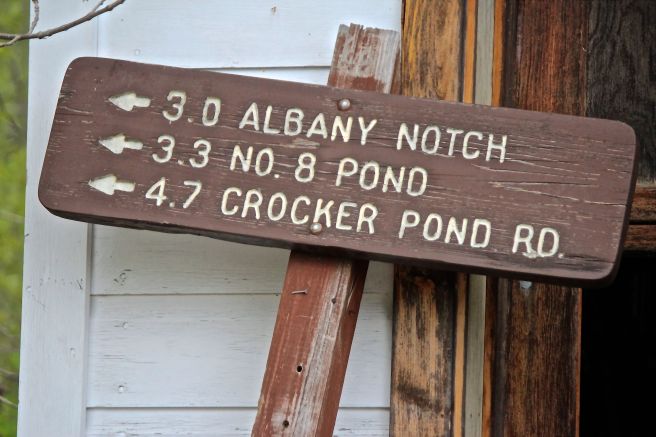
Two weeks ago, we’d climbed Albany Mountain from Crocker Pond Road. Yesterday, we tried to climb from Birch Avenue in Stoneham, but found ourselves wandering and wondering along a snowmobile trail–we caught glimpses of the mountain, but it alluded us. So today, determination set in. We were going to conquer the mountain again.

a-crossing brook.jpg

Back across the brook we trudged. Actually, this was one of about five brook crossings. There’s something to be said for the snowmobile trail–usually there were bridges. Not to be this time around.

a-veery

We had company at the beginning of our journey. A veery kept pace with us and peered about as it foraged for food.

a-lunch rock

Within about ten minutes of finally getting onto the actual trail, we found lunch rock–as if on cue, for it was noon.

a-lunch rock 2

PB&J always tastes better in beautiful surroundings.

a-trill 1

The soil was rich and moist–we can attest to that as we slogged through mud following moose tracks much of the way. Trilliums thrive in such conditions and painted trilliums showed their bright faces. Three leaves, three leaf-like bracts and three petals–one triangle layered upon the next in elegant symmetry.

a-trill 6ph

Meanwhile, the regal bloom of a red trillium shared the continuation of the series of three–trilliums have a pistil with three parts surrounded by six stamens. My guy asked if I have a trillion pictures of trilliums. Maybe–but certainly not enough.

a-burl, ph

We paused to admire  a large burl.

a-beaver, ph

And passed through an old beaver bog into a hemlock grove.

a-mystery 1

Though it was much too cold for butterflies, I found one in the form of a plant. Actually, it rather reminded me of a luna moth.

a-striped maple

As we began to climb, we were in the land of the striped maple and hobblebush. I promised myself I wouldn’t photograph the hobblebush flowers. But this striped maple–ahhhhh.

a-snail, ph

My guy is fast, even after going for a run this morning. I, however, was happy to discover that I wasn’t the only one moving at a snail’s pace.

a-5 petals1

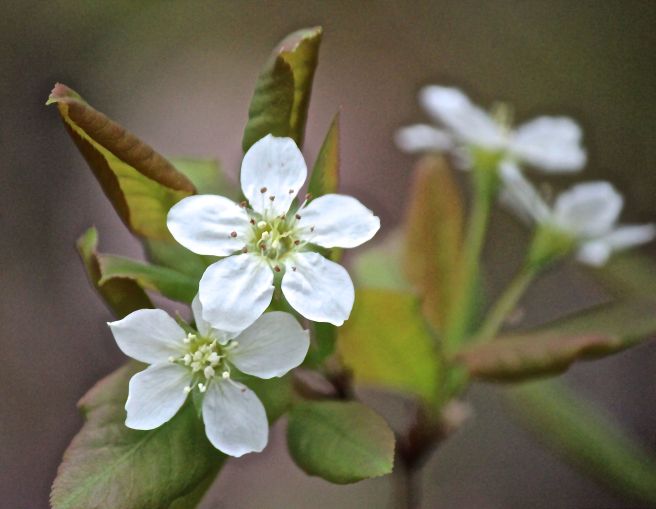
Continuing up, cherry and

a-shadbush, ph

shadbush displayed their dainty faces.

a-near summit

Up and down through the notch we continued until at last we approached the summit.

a-mtn view1, ph

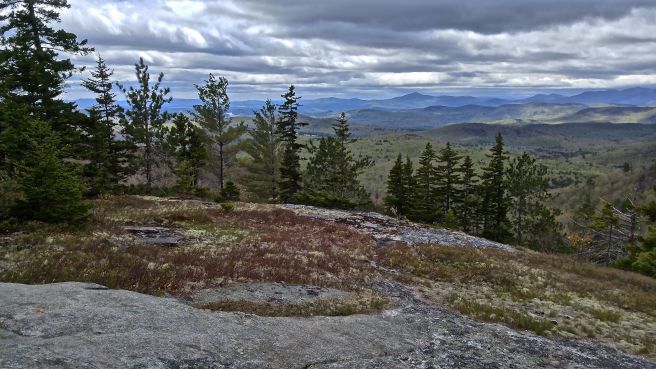
Yesterday, we marched to the beat of a different drummer. Today, we took in the scene toward Kearsarge and the Baldface Mountains. Rock, lichens, mosses, shrubs, trees, mountains, valleys, lakes, clouds–all verged on the horizon. We knew we were blessed.

Thanks for wondering my way on another day and a Mondate to boot.


On Another Day

Today was a perfect day for a hike–cool temps and a breeze kept the bugs at bay. And so my guy and I headed off after lunch with a destination in mind. Backpack–check. Camera–check. Map–check.

And with the latter, it all ended.

a-squiggly sign

We’d hiked our intended trail once before within the last ten years, but remembered that back then we had a difficult time following it. We were sure, however, that we could find our way today and we did. Until, that is, we reached a junction and read the snowmobile trail signs. Our gut told us to go straight but because we were on a snowmobile trail, the signs listed destinations. We looked at the map, looked at the signs, and convinced ourselves to turn right.

a-hobble 3

And so we journeyed on, enjoying the beauty of hobblebush even as it forced us to do what it was named for–hobble through the undergrowth.

a-hobble 2

But how could we resist such beauty. Or should I say, how could I resist such beauty–my guy trudged on. I think it’s the complexity of the blossom that intrigued me most–large, five-petaled, sterile flowers encircled petite and fertile, waxy-white flowers. Why big showy flowers surrounding such tiny ones complete with stamens and pistils? Perhaps the outer sentry attract insects for the sake of pollination.

a-round-leaved violet 2

Also thinking about pollination–those purple runway lines of the round-leaved violets.  I’m not a fashion girl, but it’s flowers like this that make me realize you can combine a variety of colors to make a statement.

a-rose twisted stalk

A much more subtle display of color–rose twisted-stalk. Not a great photo, but the  flowers dangled below the twisted stalk. Why rose?  The bell-shaped flowers that occur singly at the leaf axils are pale rose in hue. Why twisted? Because at each leaf junction the stem takes a distinct twist.

a-sarsaparilla

Adding to the subtle color of the season–sarsaparilla. I love the fact that this particular example shows the variety in the finely toothed compound leaves–in this case, two leaves sporting five leaflets, while another consists of three. It’s the three that sometimes gives this plant an undeserved bad rap–leaves of three, leave them be, refers to poison ivy. But this is not P.I. as we used to call it when I was a kid.

a-coltsfoot1

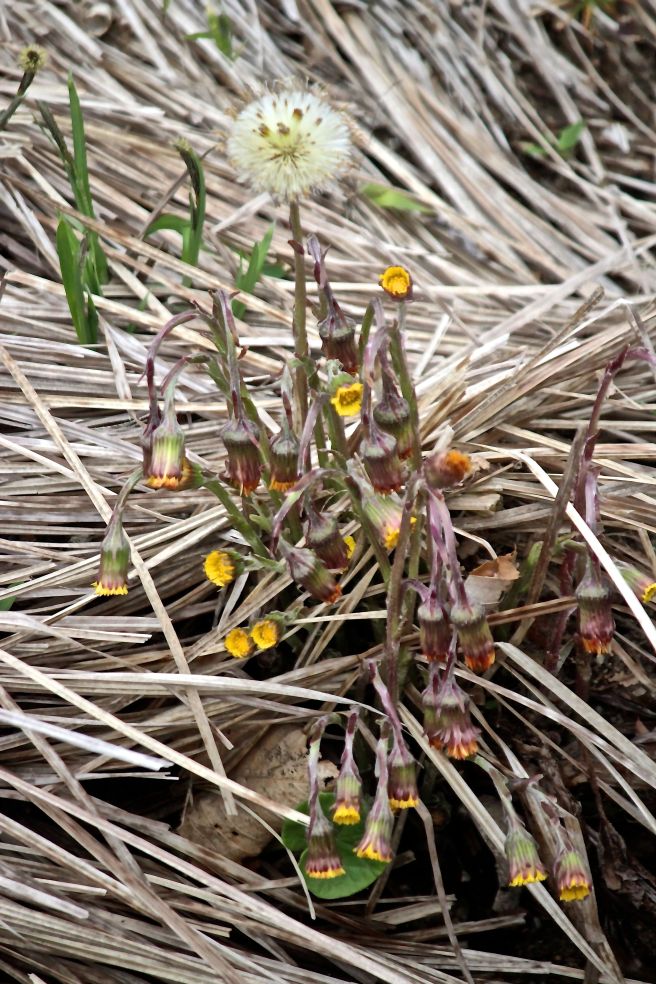
Another sorta look-alike, coltsfoot that resembles a dandelion. The difference–a coltsfoot seed ball retains its flower parts.

a-spring color

As the tender new leaves emerge, the landscape softens.

a-oak 1

From subtle colors

a-beech 3

to hairy fringes

a-sumac 1

and fuzzy coatings, the world embraces a softer point of view.

a-wet trail

Though we continued to make delightful discoveries, it was evident that we were on the wrong trail.

a-brook crossing.jpg

After a couple of hours, we turned back.

a-trail blaze.jpg

And at the point where we ignored our gut feelings and decided to turn right, we checked on the other trail–and found that it was blazed. Oh well.

We’ll save it for another day.


Beulah’s Mystery

One of the fun happenings in my life is that friends send me nature photos and ask me to help them ID a species. Sometimes I know immediately what it is and can ask them questions to help them get to the answer. Other times I’m as stumped as they are. Thus was the case today, when I drove to Brownfield to look at a tree growing in the field beside an old farmhouse.

t-beulahs 2

Beulah’s farmhouse, to be exact. My friend’s brother recently purchased it and the adjacent barn. Though the farmhouse is a fixer-upper, Beulah’s sign looks as if it was created yesterday.

t-tree1

This is the tree. If you know it right off, my hat goes off to you. I was in my Forest Trees of Maine mode and kept looking at it from that perspective. It’s overall appearance didn’t match what I know. We began with the key and slowly (painfully slowly as the black flies swarmed us–mind over matter, mind over matter), worked our way through the choices, two by two.

t-dwarf shoots

Because it’s not in leaf yet, we used the Winter Key. With each question, we paused to examine the tree–looking at the alternate leaf shoots, hairy scaled buds, pith, bark–every detail. We considered its location in the middle of a farm field, where the land sloped slightly and was rather dry. We also looked at the ground and found decaying leaves as well as deer scat. As I suspected, it wasn’t in the key. So I came home and scoured other books. I think I reached the answer and that the deer scat is actually a clue. Do you know? Now you may say so.

t-porky den

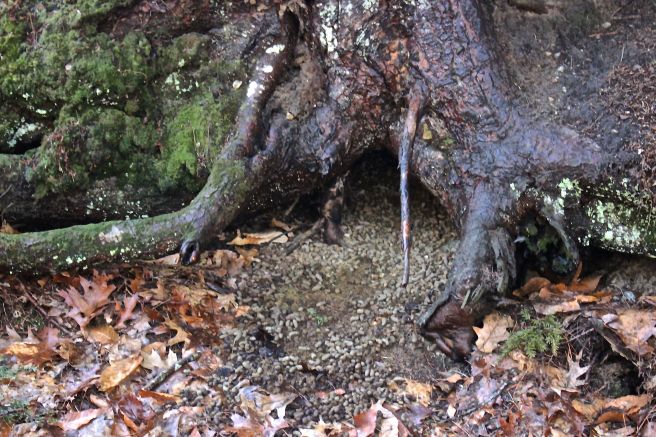
On our way to see one more cool thing, we paused to look at a den located beside the old foundation. Though much of the scat has since been removed, plenty of it and numerous quills painted the picture of who’d created this pigpen.

t-critter 2

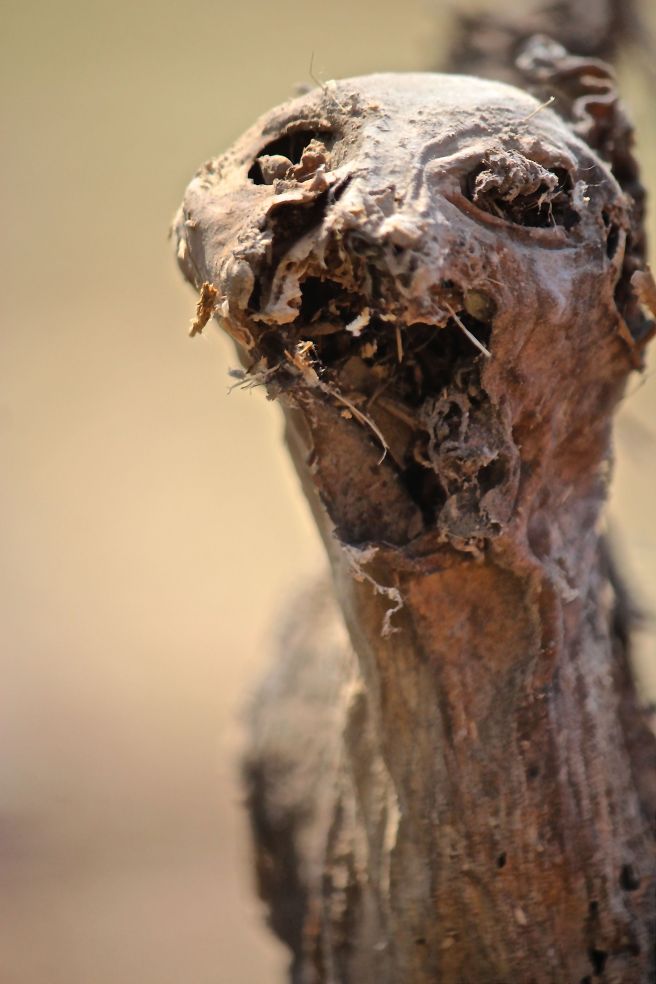
And then they had one more mystery item to show me. I hope this doesn’t freak you out. It’s part of many renovations in old farmhouses–a dried-up animal carcass. The front of the face was missing, but as we say, eyes in the front, born to hunt.

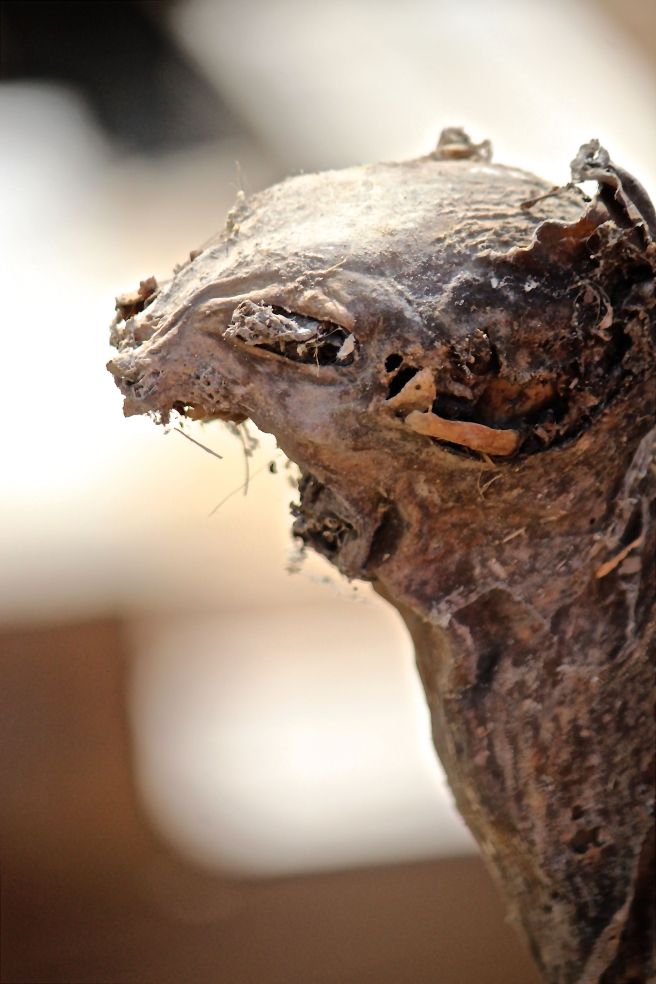
t-critter 1

A side view of this handsome critter. Can you see the ears?

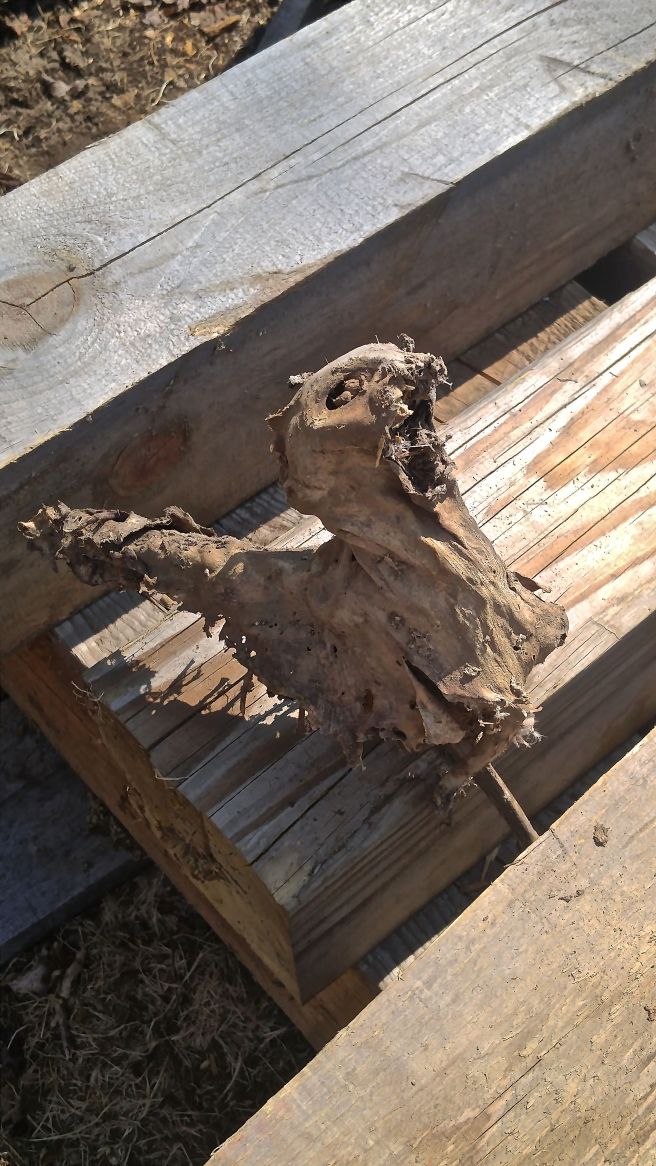
t-critter 4

Talk about all skin and bones.

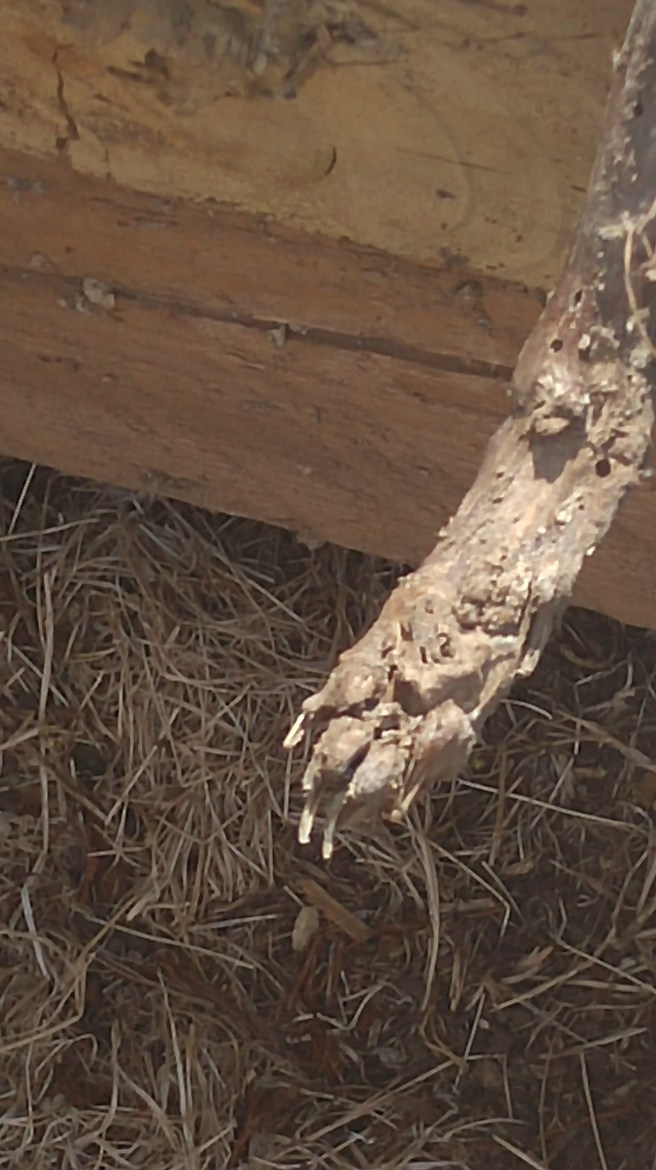
t-critter pads

And then the foot pads and nails. Four toes, nails, about the size of a nickel. Do you know?

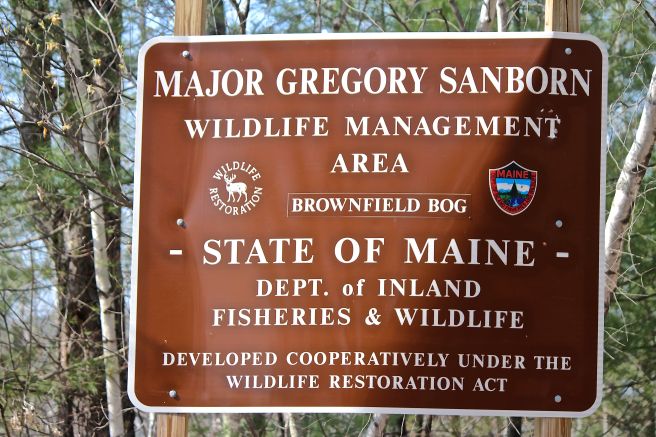
t-bog sign

Because I was in the neighborhood, I visited Brownfield Bog and continued my afternoon exploration. (Yeah, I had work to do, but playing hooky for a couple of hours is allowed once in a while if I don’t abuse the privilege–ah, the life of a freelancer.)

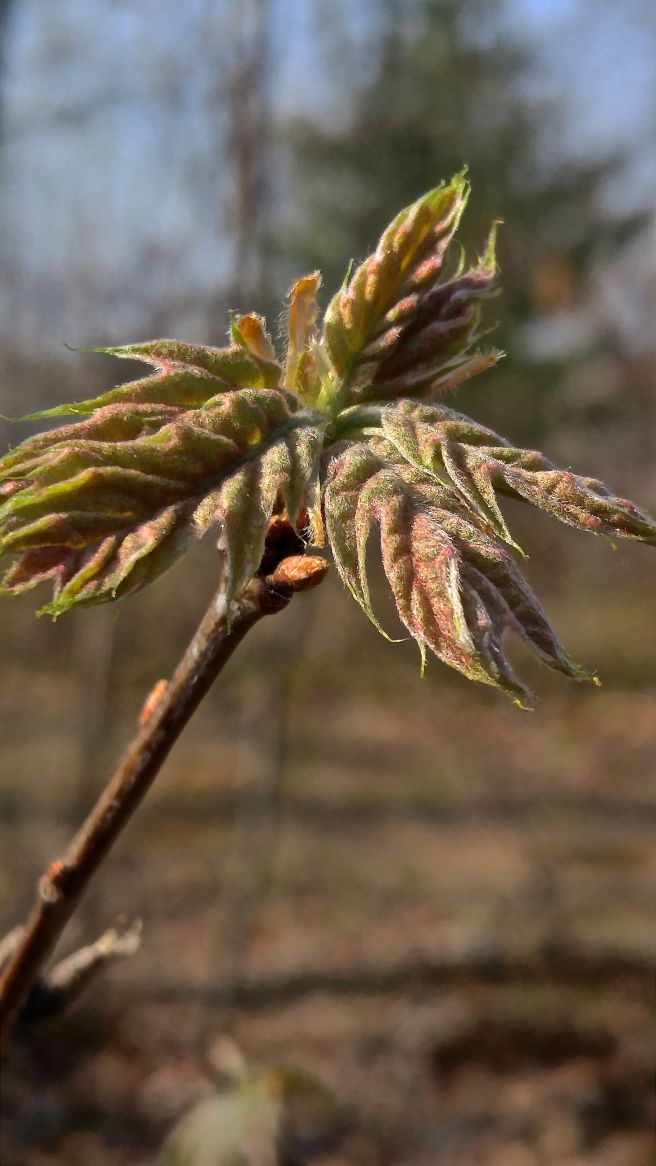
t-red oak emerging

I remember suddenly becoming aware of spring colors about thirty-five years ago, when I taught  school in New Hampshire by the convergence of the Pemigewasset and Merrimack Rivers. Until then, I’d never realized that tree leaves emerge in a variety of colors–they all weren’t suddenly green. (BTW– do you see the spittlebug? )

t-red oak mini leaves

In a quickness equal to fall foliage, spring colors may not be as flashy, but their subtle beauty deserves notice.

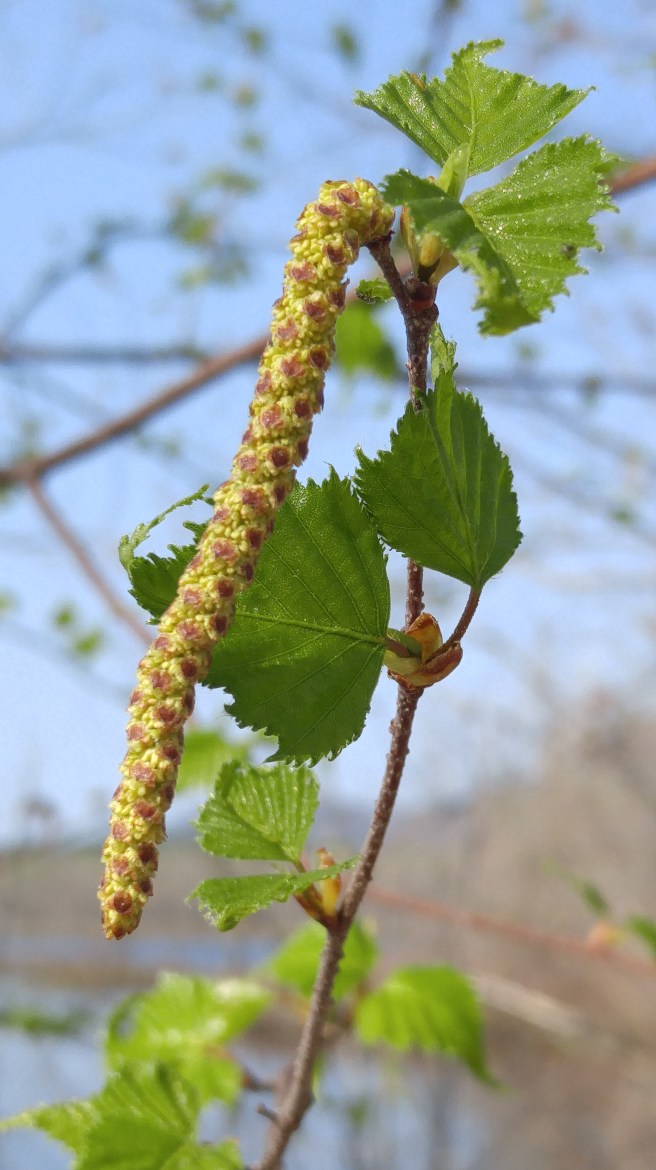
t-gray birch 2

And those leaves that are green offered their own reasons to stop me in my tracks as I took in the details–in this case the double-toothed elephant’s trunk. What? Notice the shape and outer margin of the leaf.

t-gray birch 4

The lovely elongated catkins demanded a glance that lasted more than a second.

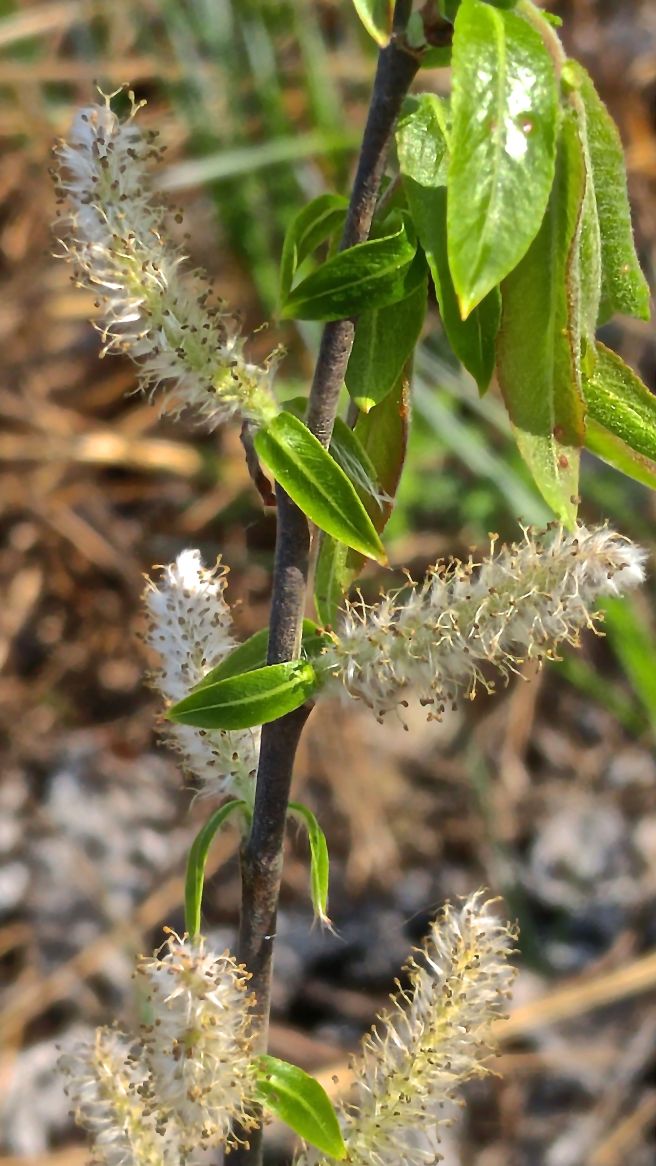
t-willows cat1

Adding a festive fuzziness to the celebration of spring was another set of catkins.

t-willow gall

Unwittingly, this shrub also played host to a gall gnat midge that overwintered in a structure created by the reaction to a chemical released by the larva–what would have been leaves were forced to harden into a pine cone look alike.

t-bog colors 2

The subtle colors graced the meadow,

t-pleasant

were reflected in the bog,

t-river

and blessed the Saco River.

t-baltimore 2

There were bits of flashy color–do you see who was feeding on the upper branches?

t-rhodora 1

And this spring beauty exploded with love and life.

At the end of my journey, I was grateful to P&K for an excuse to step away from my desk and check out the mystery standing in Beulah’s field. Especially as it led me further afield.

Spring In Slo-Mo

Spring is so fleeting in Maine. Oh, I know, it lasts the usual three months and the beginning and ending overlap with its seasonal partners, but really . . . one must take time to pause and watch or you’ll miss the most amazing action that occurs in slow motion right outside the window–and beyond.

s-red trill 1

Jinny Mae and I drove beyond today to catch a glimpse of this most splendid season.

s-red trill 10

Among the offerings, red trillium also known as stinking Benjamin. The Benjamin part is from benzoin, a mid-16th century word derived from the French benjoin, that refers to “a fragrant gum resin obtained from a tropical tree of eastern Asia, used in medicines, perfumes, and incense.”  It’s been tagged “stinking”  because its nodding flower has an unpleasant odor. We didn’t bother to sniff. We were too busy being wowed by the fact that it surrounded us in great number.

s-red trill 2

That smell, however, is of extreme importance. Along with the flashy coloration, the odor helps to attract pollinators–green flesh-flies that prefer to lay their eggs on rotting meat. Though this isn’t the perfect nursery, the flies assist the plant on the procreative end. And in this spot, stinking Benjamin rules, but I prefer to think of it as red trillium.

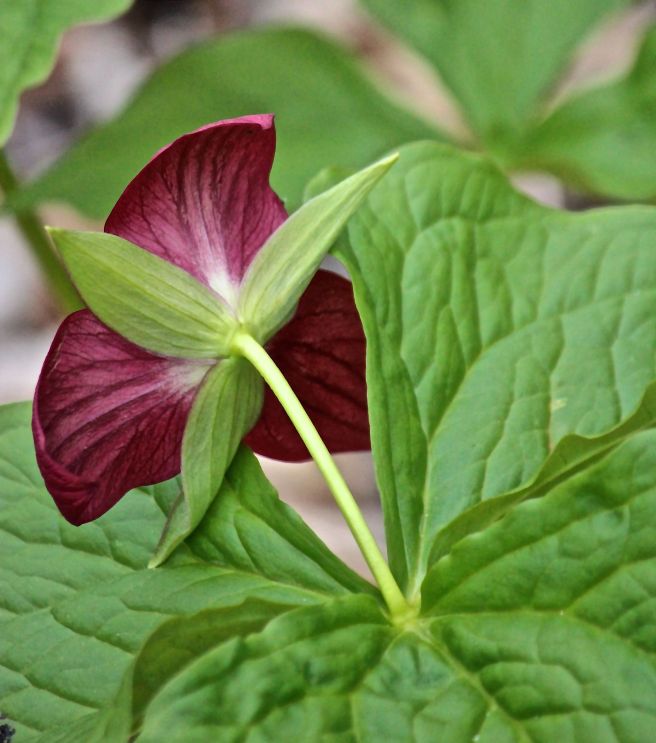
s-red trill back

Even from the backside, its design is one to behold.

s-false 1

Equally abundant were the leafy structures of false hellebore.

s-fals3e4

I was mesmerized by its pattern.

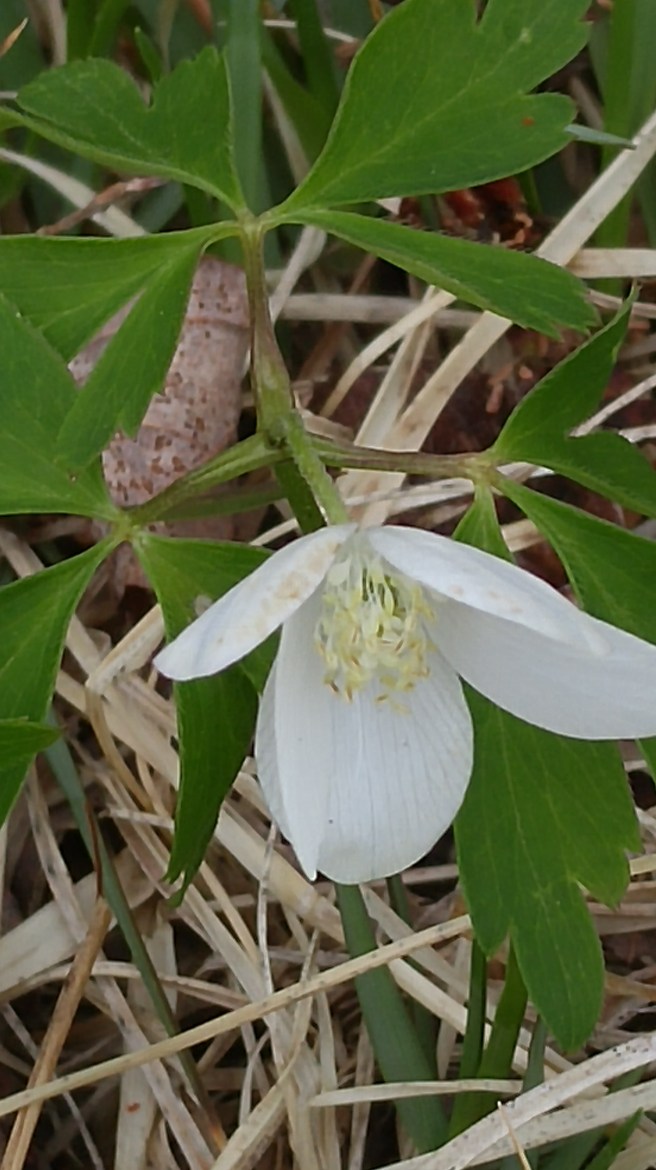
s-wood 2

Unlike the trillium, wood anemones have little scent.

s-wood 1

Their graceful heads drooped, perhaps because the day threatened rain.

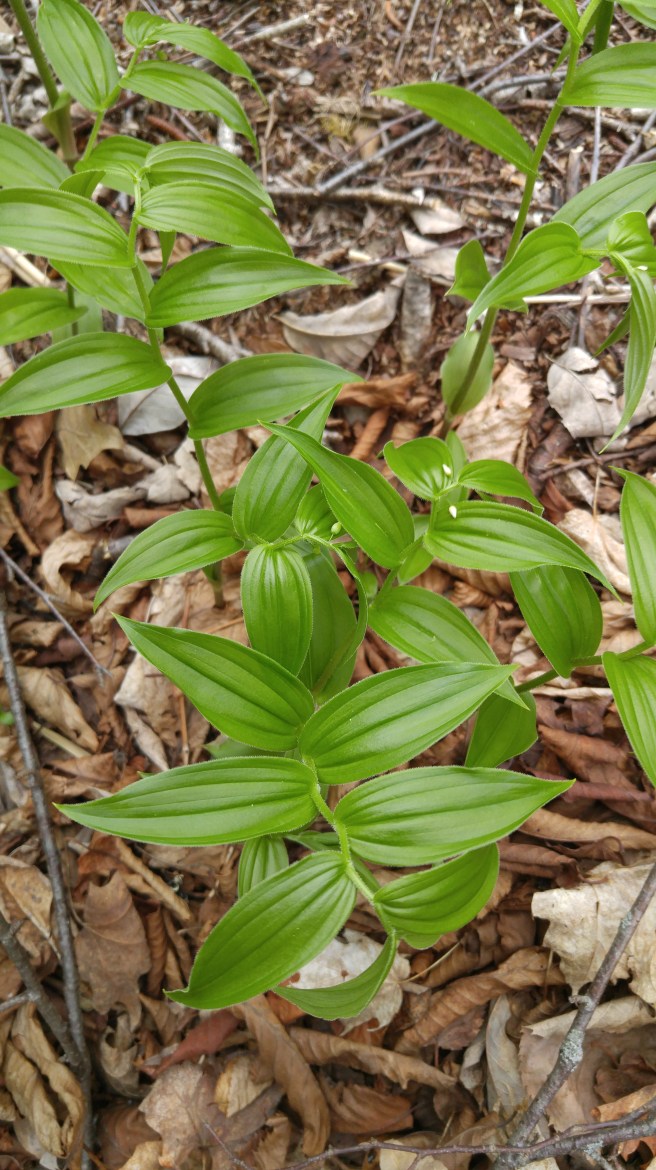
s-bellwort 3

The offerings included sessile-leaved bellwort (aka wild oats),

s-dutchmen1

Dutchman’s breeches with leaves as interesting as their flowers,

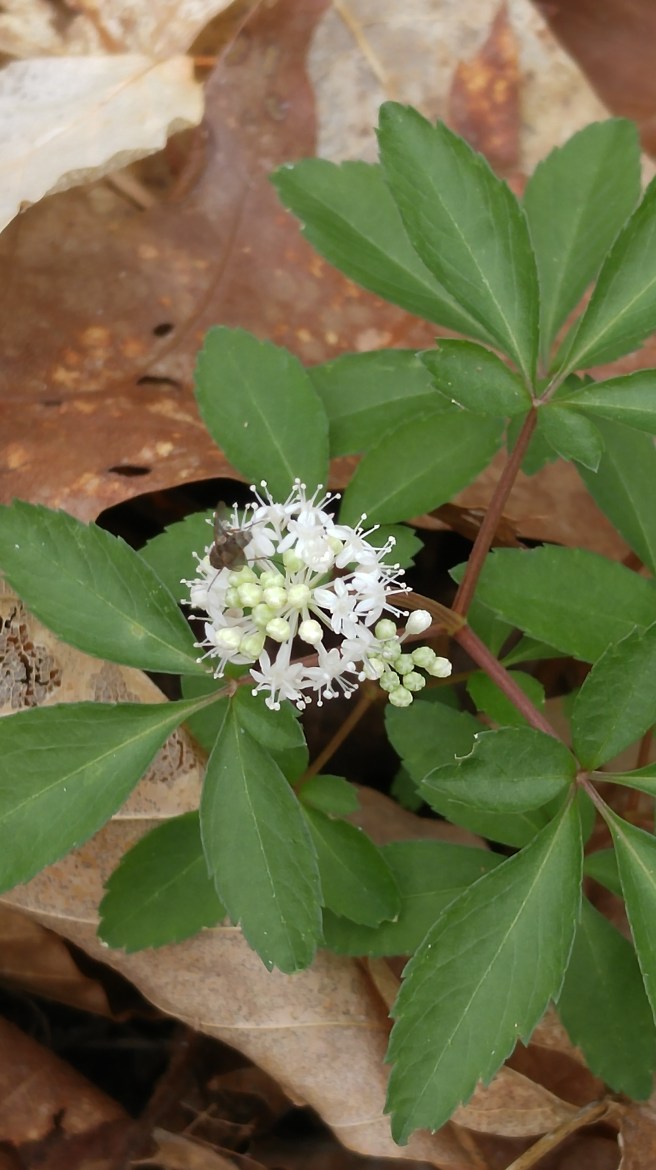
s-ginseng 2

the delicate white flowers of dwarf ginseng,

s-twisted 4

and  zigzag pattern of clasping twisted stalk.

s-twisted1

Its key features are minutely-toothed leaf margins, stalkless leaves that clasp the stem, and flowers dangling below.

s-twisted 3

The flowers hadn’t opened, but the closer we got, the more we appreciated its finer details.

s-hobblle 1

Ever so slowly, as is the case in all things, hobblebush flowers began to bloom.

s-hobble2

Outer sterile flowers form a ring around the delicate inner flowers that are fertile. Nature has a way of protecting its own.

s-colts 2

When we first spotted the fluff ball of seeds across the brook, we thought we were looking at dandelions. And then we saw the scaled stalks and lack of leaves. Coltsfoot it is.

s-cinnamon 3

It wasn’t just the flowers that had us getting down on our hands and knees. There was the brownish wool covering of the cinnamon fern.

s-ostrich 1

And the hairless ostrich fern

s-ostrich 2

with its crook-shaped crosier, reminiscent of a bishop’s staff.

s-christmas 2

But my favorite today was one I’d never noticed before.

s-Christmas 4

Oh, I know it’s a Christmas fern, but the tightly-wound, silvery-scaled crosiers were new to me. It was yet another chance for us to wonder how we could have missed something that’s been here all along.

s-striped maple 1

And then we looked up. Well, sort of up. Striped maple leaves slowly opened in the understory.

s-red maple 1

And have you ever noticed that young red maples are a tad hairy along the margin?

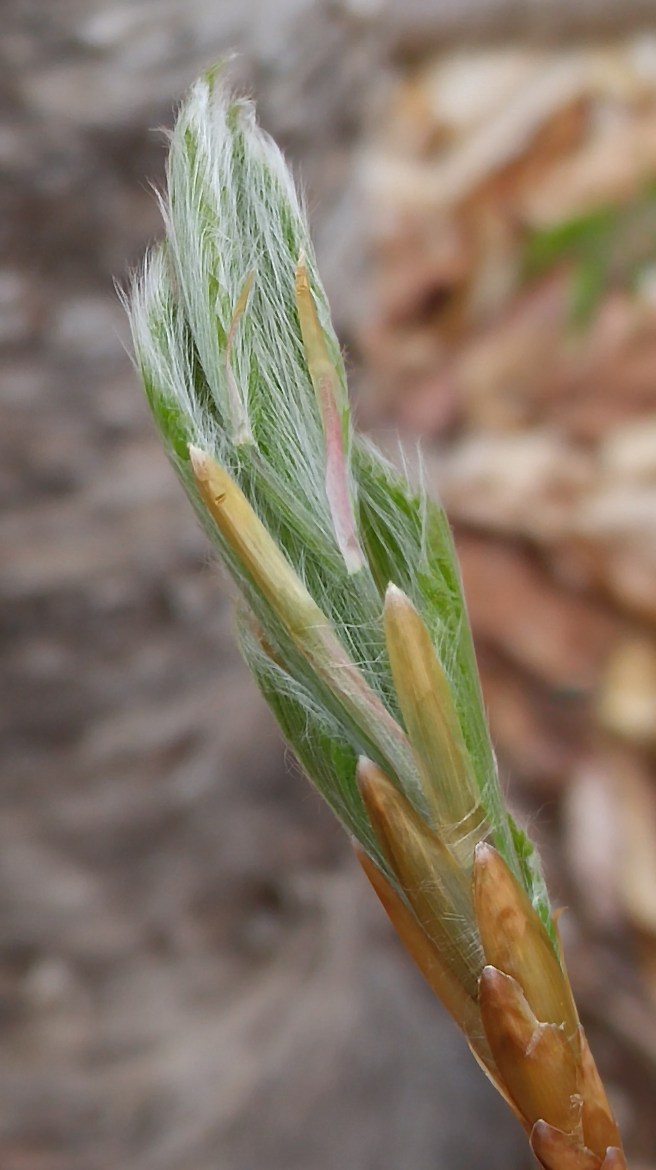
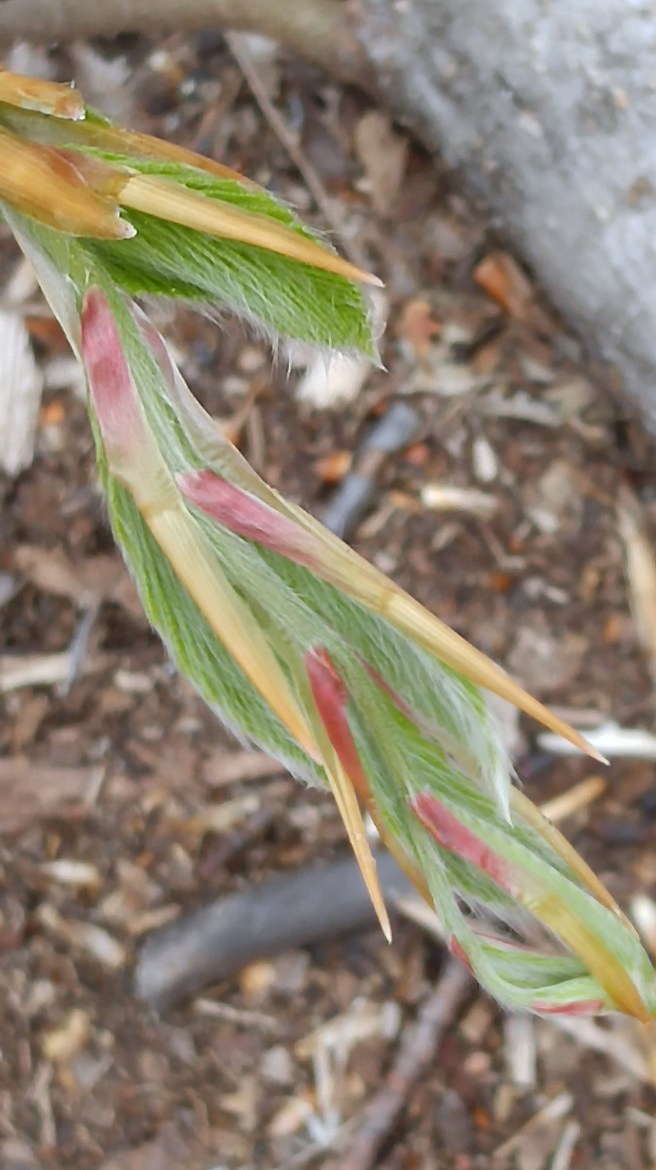
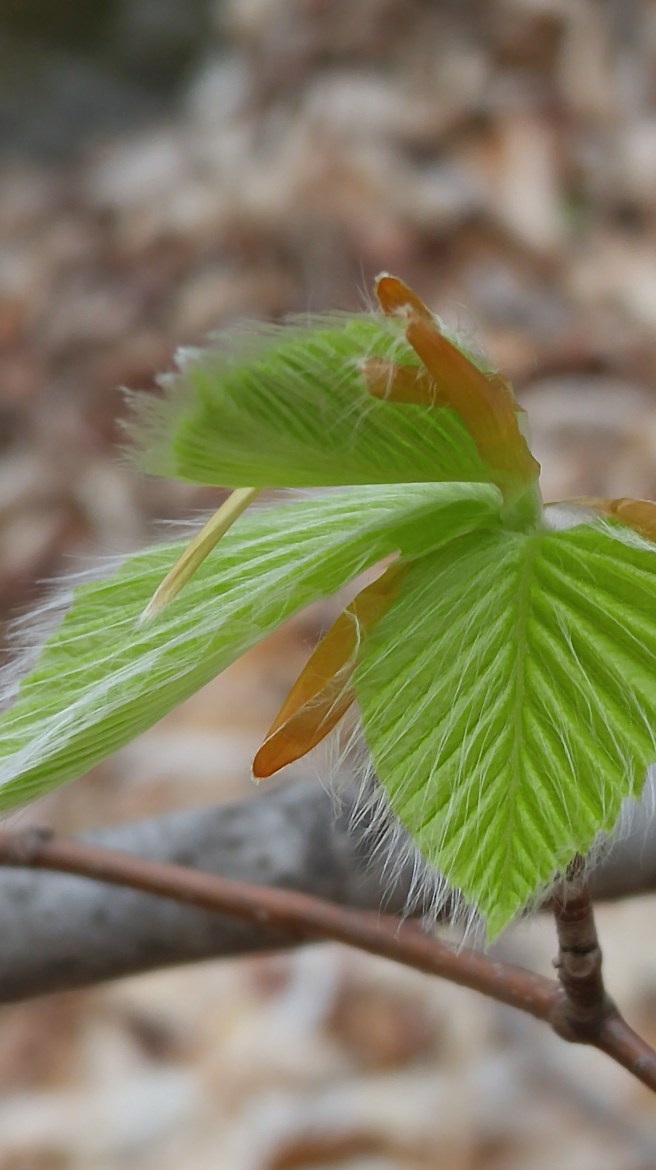
s-beech 6

Even hairer, beech leaves.

s-beech 7

All winter long, bud scales enclosed leaves that are now slowly emerging.

s-beech 8

They’re absolutely beautiful in their plaited and hairy state.

s-beech 2

What leaves me wondering (ah, a pun), is the fact that these leaves are so hairy. It seems the hairs are intended to keep insects and others at bay.

s-beech 1

And yet, it won’t be long before the insects discover that beech leaves make a good meal and home.

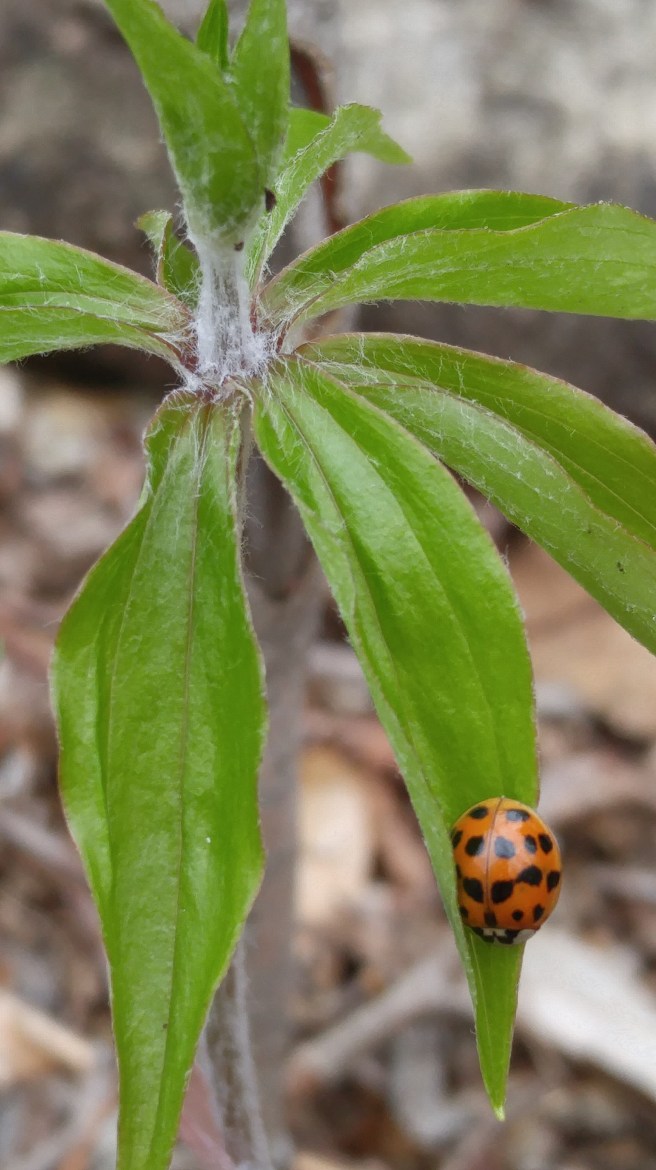
s-ladybug

Speaking of insects, we found a ladybug presumably feeding on aphids–already. So why do ladybugs sport  bright orange or red color and distinctive spots? To make them unappealing to predators. They can secrete a foul-tasting fluid from their leg joints–the coloring is therefore intended to shout out,  “I taste awful.”

s-Mayfly 1

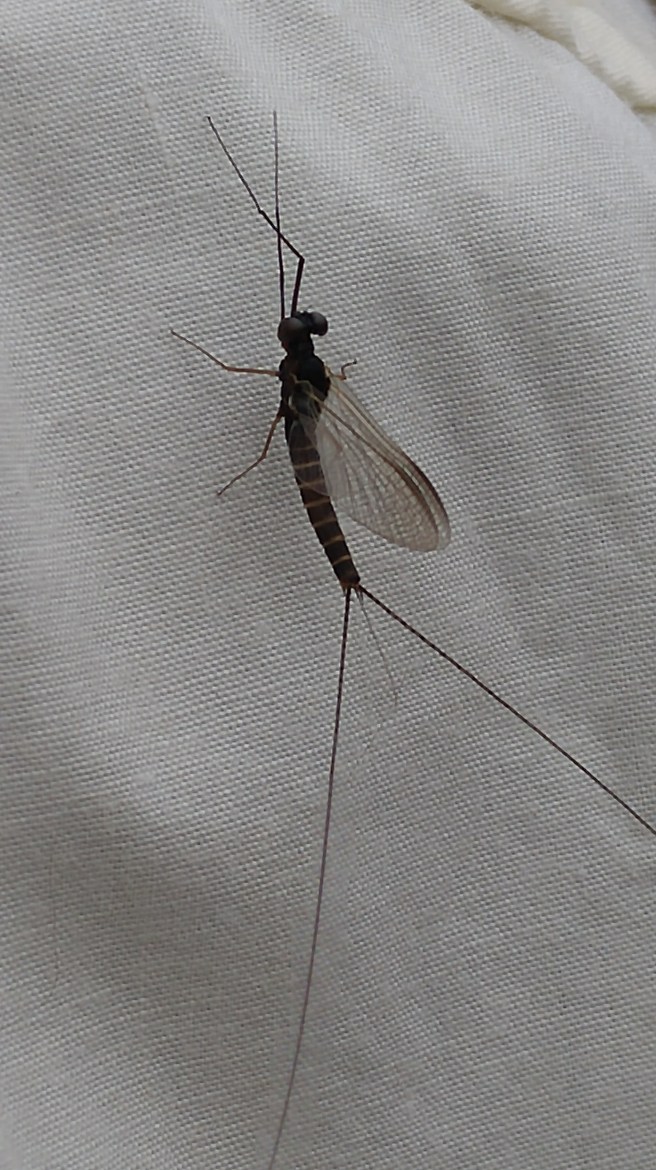
And Jinny Mae sported her own insect–a Mayfly, known to be more fleeting than spring, landed on her jacket. Oh, and did I mention the black flies? They swarmed our faces, but we practiced mind over matter.

s-brook

We were in one of the most beautiful places on Earth,

s-shell1

as evidenced by brook,  pond and mountains beyond.

s-gorge 4

And then there was the gorge.

As we watched the water rush through, we gave thanks for a day spent moving in slo-mo to take in all that this fleeting season has to offer in its spring ephemerals.

Mondate on Mount Will

It’s been a while since we’ve actually had a Mondate. After two days of hiking the trails up Pleasant Mountain, today’s journey found us venturing a wee bit out of the neighborhood as we made our way through Bethel to Mount Will.

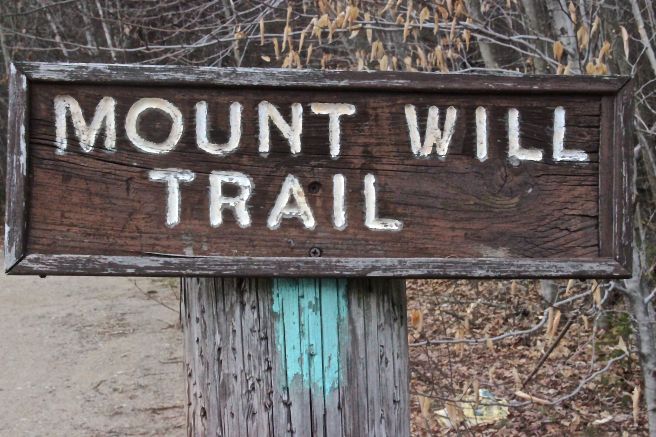
w-mount will sign

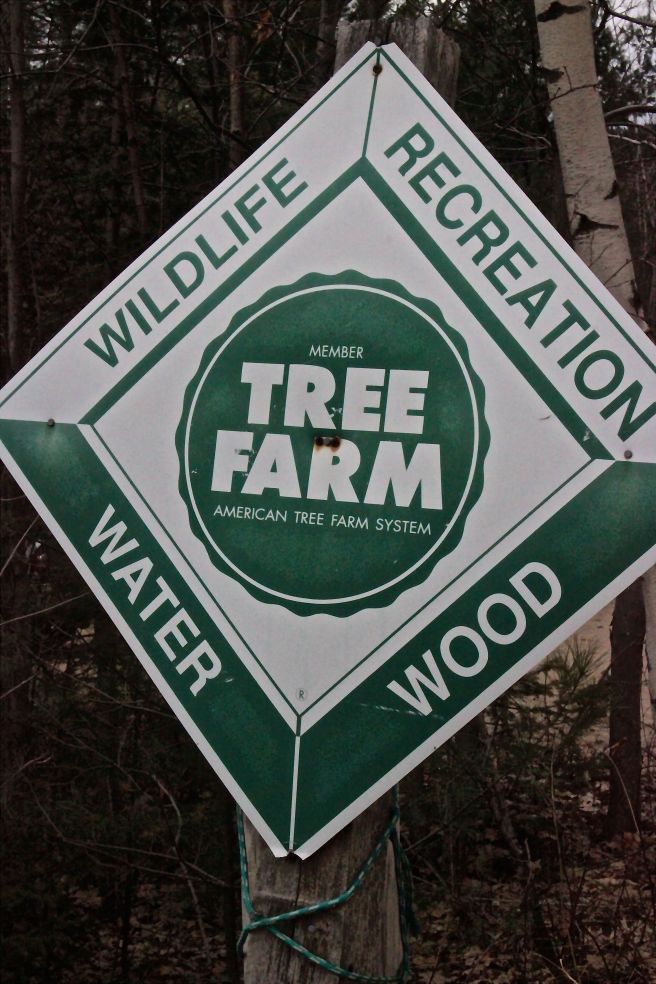
w-tree farm sign

The parking lot is located between these two signs. Part of the Mount Will trail system is within the 115-acre Bethel Town Forest that had served as the Town Farm back in the day.

w-2 trails

The South Cliff trail leaves from the left, while the North Ledges is on the right. This is a loop and we decided on a counterclockwise trek. It had been at least five years since we last hiked here and we’d forgotten about some of the steep sections.

w-n-parklike

Of course, at the start, it seemed almost parklike. Three years ago, several local organizations including Mahoosuc Pathways, the Oxford County Conservation Corps, Outward Bound and the Bethel Conservation Commission rerouted this particular section of the loop.

w-n-switch

Now switchbacks wind their way up toward the North Ledge.

w-bear 8

When I wasn’t looking down, I scanned the woods, ever searching for my favorite species–bear claw trees.

w-bear

And I wasn’t disappointed.

w-bear 7

We saw them over,

w-bear9

and over again. Oh happy day! We found more than these, which leads me to believe that there are even more. Let the search continue!

w-gargoyle 2a

A few trees displayed other surprise packages–burls or warty growths caused by some environmental condition such as injury, virus, fungus, insect infestation or mold. Though this growth can put stress on a tree if it becomes too heavy, generally trees with these features are healthy. And woodworkers covet burls for the unique pattern and beauty found within. That sounds like a comment on the world–we all have hidden treasures, but they aren’t always visible.

w-n-artist conk

Other tree growths include artist’s conk and

w-s-redbelted polypore

red-belted polypores.

w-n-bobcat

The trail passed below rocky outcrops–and my imagination saw bobcats. But, what would they eat? The undergrowth is limited, so I doubted snowshoe hare. That being said, spruce and hemlock cones are many and red squirrels chided us constantly.

w-n-vp

Meanwhile, at a vernal pool just off the trail, all was quiet–and still partially covered in ice.

w-n-lunch rock

Lunch rock was the North Ledge. Below, the Androscoggin River wends its way through the landscape. The Androscoggin has a long history as a life-giving force–beginning with the Abenaki Indians who used it as a water trail and knew the nuances of this 170-mile river.

w-n-carters

The fertile, ancient floodplain has served many a farmer, including the Carters who own the farm across the river below where we sat. While we ate, we shared our memories of cross-country skiing across those fields, beside the river and into the woods.

w-spruce sap

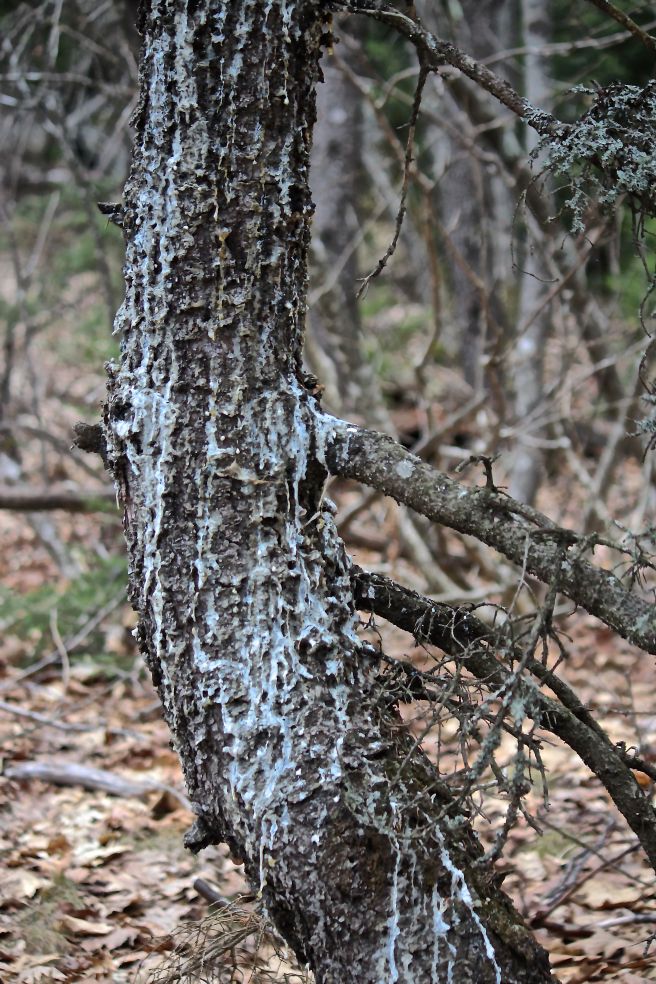
We continued on across the ridge and through the spruce forest where the sap ran blue.

w-s-sunday river

Before turning toward South Cliffs, we caught a glimpse of the trails at Sunday River Ski Area in Newry.

W-gray 1

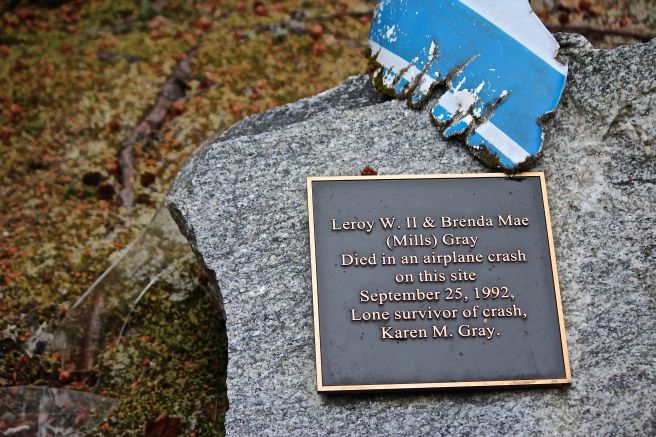
And then we saw a sign that had us wondering. The Gray Memorial? We had no previous memory of it, so we followed the detour and walked along a snowmobile trail for about a quarter of a mile.

w-s-gray memorial

The story is sad. The airplane remnants powerful in suggestion. Upon arriving home, I found an article in the Sun Journal referencing the event. Leroy was a state trooper and his wife, Brenda, an executive secretary who became head dispatcher for the Bar Harbor Police Department. With their 14-year-old daughter, Karen, they were flying their Cherokee Piper to Bethel to spend time with relatives when the plane “crashed nose first” into Mount Will about 7:30pm. Despite her own injuries, Karen hiked down the steep mountainside to seek help. A somber site indeed.

w-s-cliff view

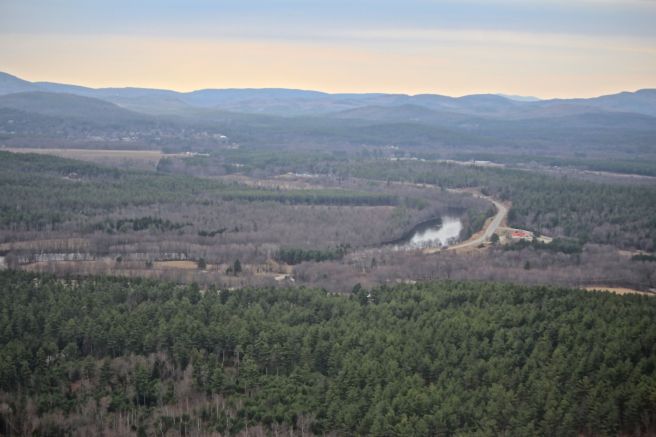
We backtracked to the trail and continued on to the South Cliffs, where our view again showed the river, with Route 2 following beside and both leading to Bethel village.

w-s-mtn goats

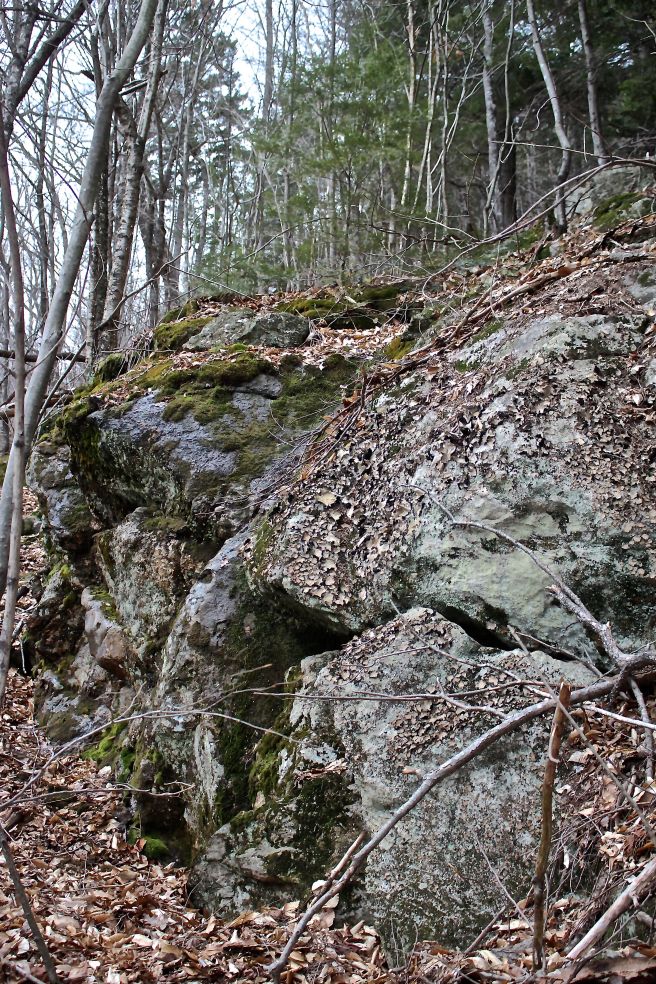
Moving off the cliff, we were sure mountain goats had laid out the trail.

w-s-ledges

Again, we were in bobcat territory, frequented by chatty red squirrels who seemed to feel quite safe as they scrambled from tree to tree.

w-oz

And then we moved into the land where the monkeys in the Wizard of Oz jumped out upon Dorothy and her friends. My guy started humming the music from his favorite movie. The reality is that these trees knew the wrath of previous storms.

w-s-heading down

Once again the trail turned S curves as we continued downward and

w-s-brook

listened to water trickling over the mossy stream bed beside us.

w-s-logging

And then we found ourselves in the midst of a recent logging operation–remember, this is a working forest. Slash galore decorated the landscape, but we suspect that all of this will be chipped eventually. One thing we happily noted–bird song. Lots of bird song at this spot.

w-s-weather1

We were almost to the bottom of the trail when an anomaly grabbed our attention and forced us to investigate.

w-s-weather 1

w-s-weather tape

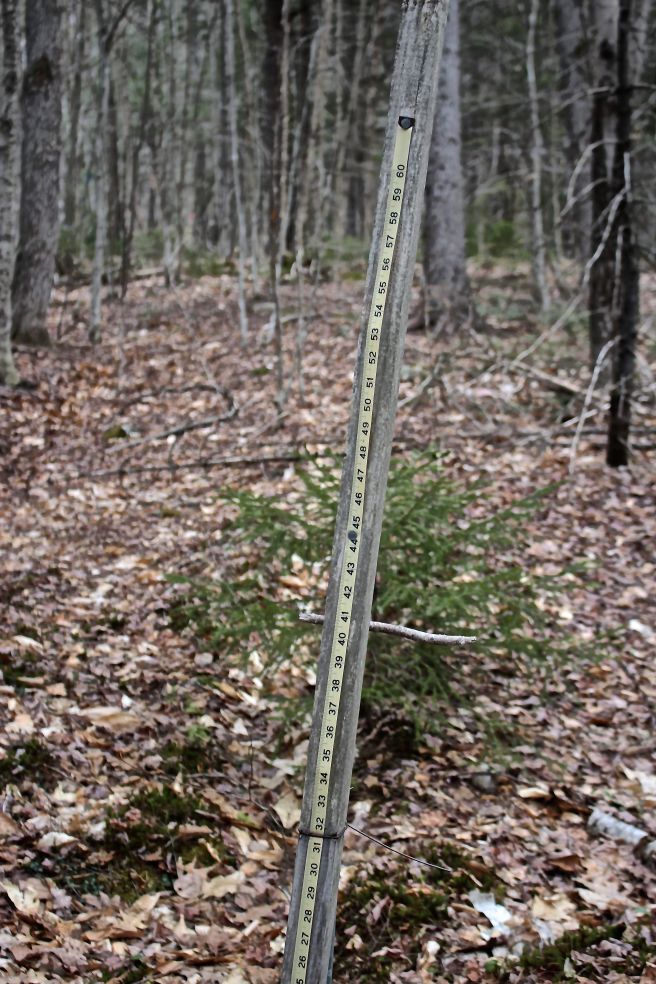
We’d stumbled upon a winter weather station. We only knew that because “winter weather station” was printed in faded paint across the box. So, we get the tape measure for snow depth, but the box? And the hole covered with mesh? Worth a wonder, so we did.

w-s-weather cocoon

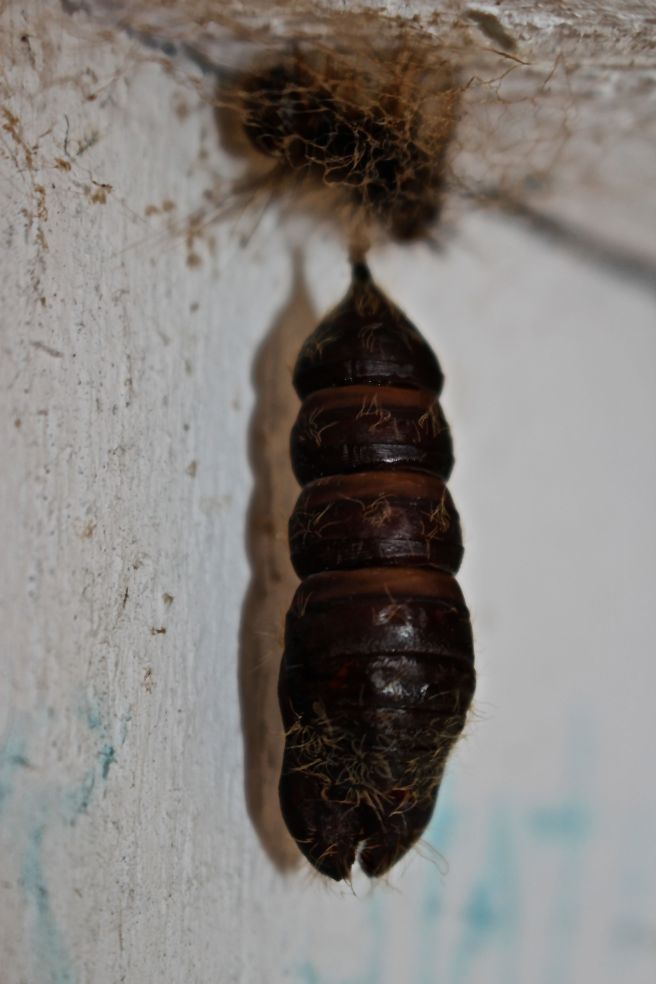
Apparently, a moth appreciated the efforts of the citizen scientists who created this shelter. Our hike was over, but this chrysalis holds the future.

w-covered 2

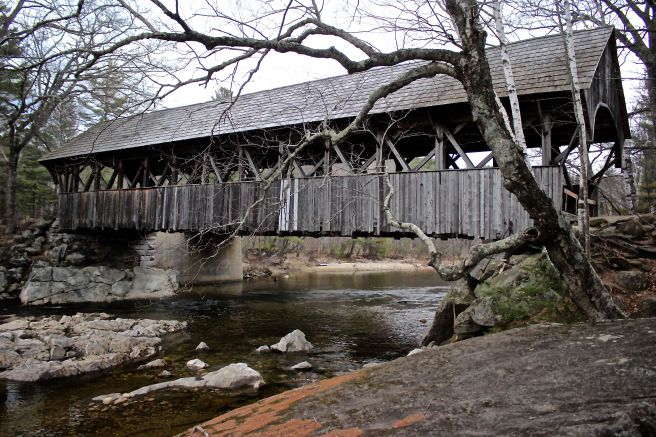
We decided to complete our Mount Will Mondate with a visit to Artist’s Bridge over Sunday River–the perfect culmination of our love for nature and history.


Following In The Footpath Of Others

Rain marked this morning’s dawn, but that didn’t daunt our group of six. We donned overcoats, gloves, hats and waterproof boots knowing that we’d encounter mud along our intended route.

And so we met near the former site of the Methodist church in the northeast corner of Sweden–Sweden, Maine, that is. Our intention was to follow the snowmobile trail for a couple of miles and visit foundations and a few other historic sites along the way.

s-you are here map

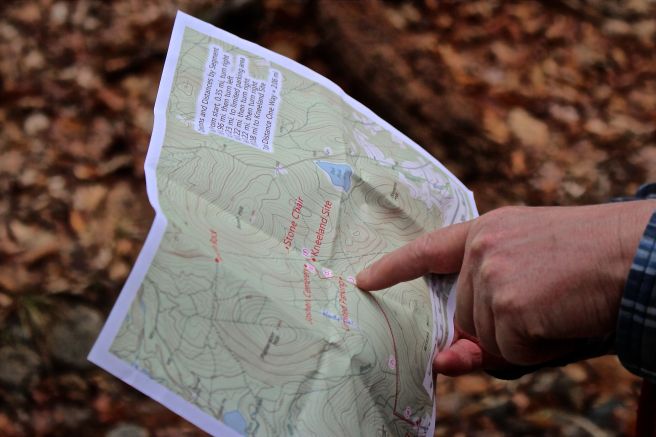
Maps dated 1858 and 1880 show a network of roads that served the scattered neighborhoods of this town. The trails we were about to walk on follow the footpaths and wagon tracks of earlier people. These were once town roads. We happened to be in the presence of the president of the Sweden Historical Society and she gave us copies of the maps to help us gain a better understanding of our destination. She also printed out a topographical map so we’d have no excuse for getting lost.

s-following trail in

With the sun suddenly shining upon us, we laughed at ourselves as we moved along because we traveled at breakneck speed. Well, for us anyway–1.8 mph when we were moving. Note the phrase: “when we were moving.”

s-stream to Patterson 1

Along the way, we paused to admire the streams that flow toward Patterson Brook and

s-vp 1

checked on life in a potential vernal pool.

s-stream 2-mill site

While we find water so mesmerizing, I couldn’t help but wonder about its potential here for the early settlers.

s-stream 3

Several times we found stone walls on either side of the streams and didn’t know how to interpret their meaning. That was OK–we appreciated not having all of the answers.

s-stream 4

The opportunity to partake of the beauty among friends old and new was enough.

s-cheyenne

Even four-footed friends.

s-single:double wall

The stonewalls, both double and single in structure, indicated that the land had been cultivated. We tried to make sense out of the sudden switch from single to double and back to single in a short distance, but really, they didn’t necessarily build walls according to our expectations of what life must have been like–a single wall meaning keep the farm animals in or out and the double being a garden wall–lots of times it was probably just plain common sense and a need to get rid of the stones that rose with the frost.

s-drilled rock

Eventually, we climbed over the wall and headed up toward this monument. Dave, who lives in this neighborhood and knows these woods well, encouraged us to ponder.

s-drilled rock 2

Why was the top of the rock split off intentionally and then left there?  Was it intended for a foundation stone? Was the neighborhood abandoned before this piece was used?

s-town line 1

We wandered further through the woods and came to the Sweden/Waterford town line. Two stone walls less than ten feet apart mark the boundary. Waterford to the left and Sweden to the right. (Did I get that right, Linda?–my left and right?)

s-town line

Orange paint also marked the boundary line.

s-kneeland foundation

We’d crossed into Waterford and stopped for a break at the Kneeland (1858)/Kimball (1880) residence, a rather large foundation with a center chimney.

s-fdn rocks, squirrel table

Apparently, we weren’t the only ones who paused here for a snack.

s-hidden brook

And then we crossed the snowmobile trail once more and began bushwhacking again. Though you see only tree shadows, leaves and moss here, it wasn’t what we saw, but what we had the honor to hear that made us stop–an underground brook. It felt like we’d stumbled upon a secret spot.

s-stone chair 2

Dave led us uphill to another special spot a friend of his discovered years ago–the stone chair. You have to wonder about this. We’re in the middle of nowhere that was once somewhere. Below this is a large hole in the earth, possibly a foundation of sorts. And beside, a skidder trail. So, who built the chair?

s-stump by chair 100:50

Atop the foundation of sorts was this cut stump–we surmised it was cut about fifty years ago and that it was about 100 years old at that time.

s-group 1

It really doesn’t matter. What matters is sharing the discovery.

s-chair and Sophie

Another four-footed friend also thought it was rather special.

s-cable

Not too far from here we found something else that spoke of logging.

s-goshen 2

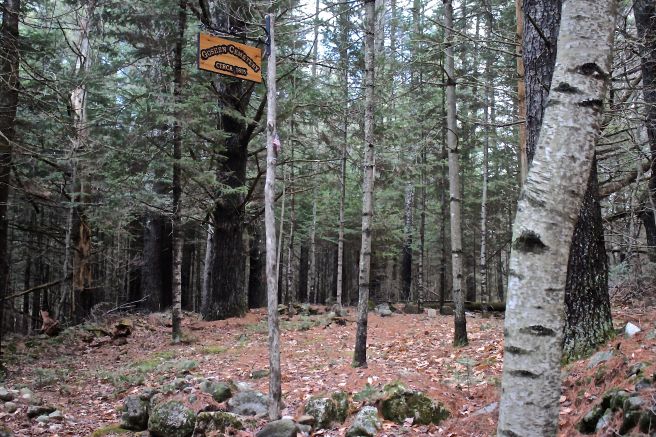
We continued our bushwhack to another site of importance–and came upon it from the backside.

s-goshen sign 2

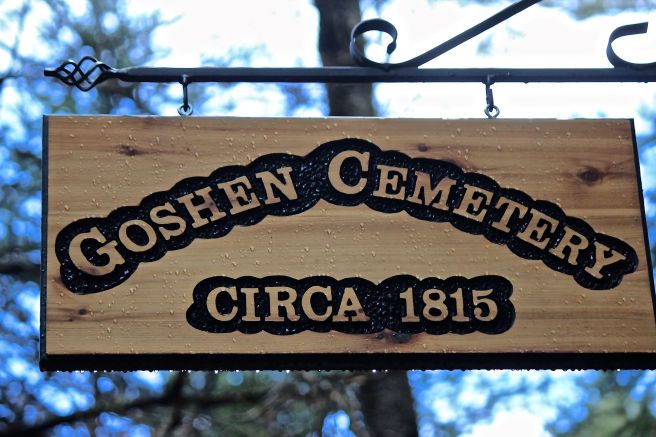
The Goshen Cemetery, circa 1815. Notice the raindrops and blue sky. A few drops fell in the middle of our walk and then it cleared again.

s-goshen cem 3

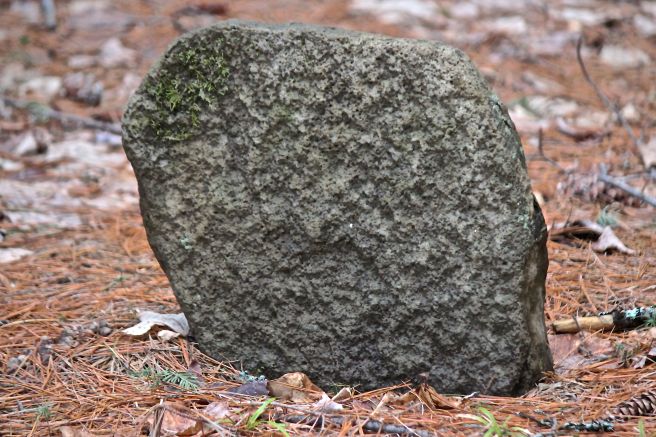
The cemetery contains stones that had been buried under the duff, but when discovered, were uprighted in spot.

s-goshen stone 2

s-goshen tomb stone

The tombstones are unmarked and as far as I know, two theories exist–an epidemic struck the neighborhood and those who died needed to be buried as fast as possible, or these were the tombs of the residents from the town’s poorhouse.

s-goshen sign 3

One thing we do know for certain. The bears like the sign and it has been remade several times and posted higher and higher in hopes that they’ll leave it alone.

s-bark art 1

Those were our historical finds, but we also made time to enjoy our surroundings, beginning with artwork created naturally.

s-beech elephant

I always say that beech bark doesn’t remind me of elephant skin, but today–elephant legs and feet, for sure.

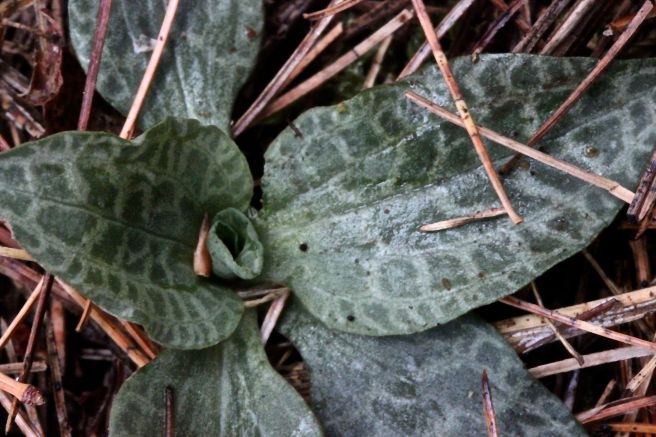
s-downy rattlesnake plantain

Peaking out from the leaf litter, downy rattlesnake plantain showed off its white-veined leaves. Stained glass windows come to mind whenever I spy this. And though its the commonest of the rattlesnake plantains, I’m always in awe.

s-checkered rattlesnake

We also nearly stepped on its cousin, checkered rattlesnake plantain. I do have to say that if I were in charge of the world, I’d switch their names.

s-artist conks

We found artists conks and

s-hemlock shelves 1

old hemlock varnish shelves.

s-porcupine den

We know where the porcupines denned,

s-moose:striped maple

moose browsed,

s-pileated 1

woodpeckers dined,

s-deer rub

deer rubbed their antlers,

s-deer rub:paw

and pawed the ground. Do you see it at the bottom of this photo? It’s a scrape meant to communicate information to other deer.

s-flying squirrels 1

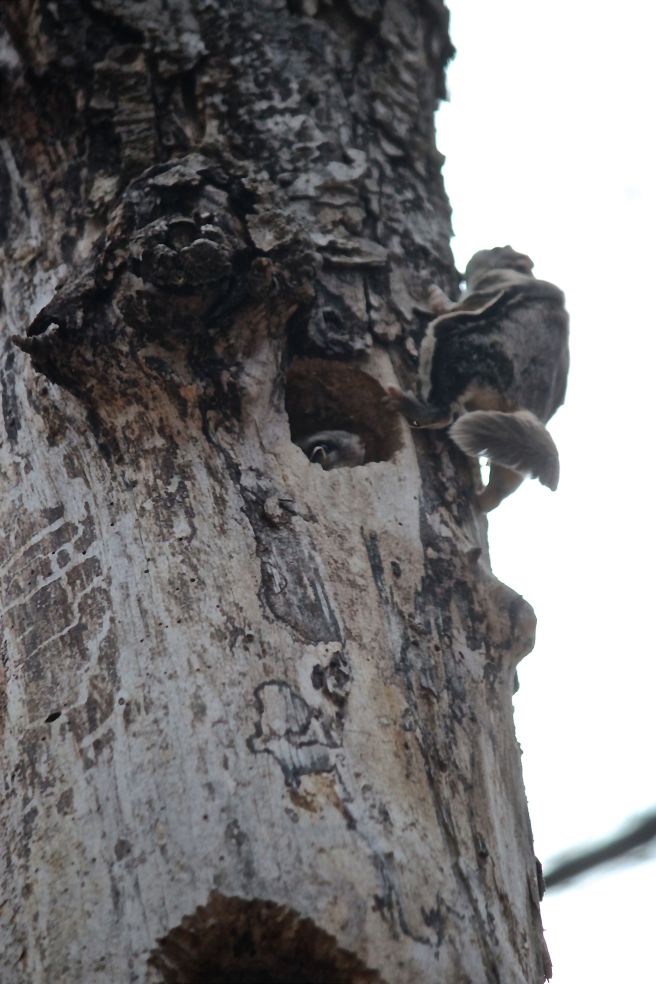
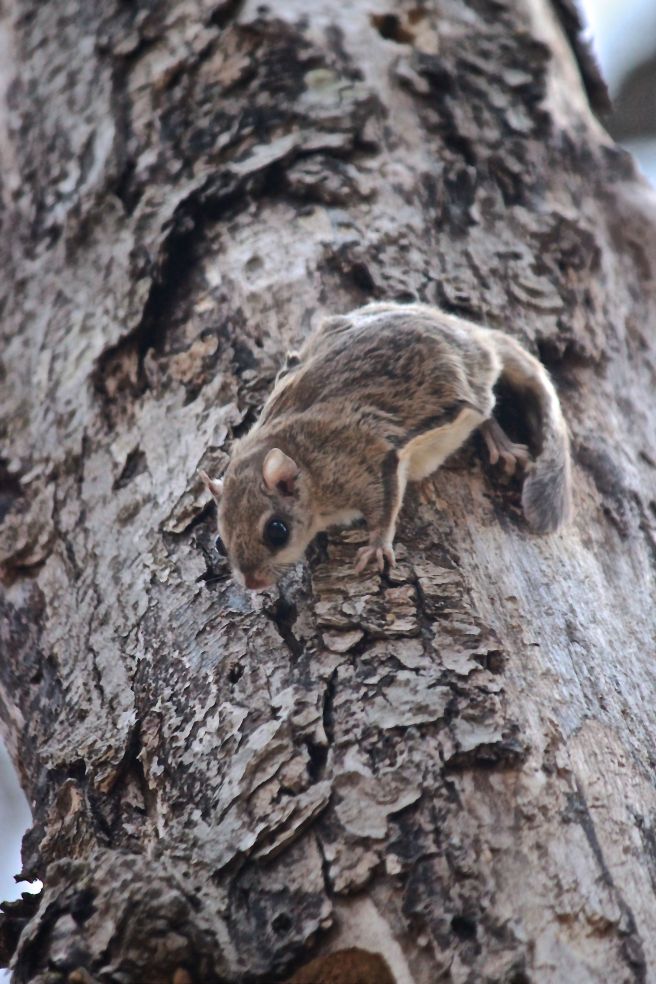
But one of my favorite sights of the day–the flying squirrels that scampered up an old snag. Notice the flat tail–a rudder.

s-fs 2

And the flap on its side, that furry membrane that stretches from the wrist to ankle–a parachute of sorts for gliding from tree to tree.

s-fs 4

And those bulging eyes–the better to see in the dark.

s-heading home

Four hours and almost six miles later, we followed the trail out, thankful for the opportunity to spend time wondering together and follow in the footpath of others.


Wondering Beside Willard Brook

I dragged my guy along for a wander in the Hut Road neighborhood today and we made Willard Brook the center of our attention.

That being said, our journey began at Great Brook. I parked by the gate that isn’t open yet due to  road conditions–not realizing that the only other vehicle belonged to a friend, who kindly left us a note we found under the windshield wiper as we drove away hours later.

The wind was wild and we felt it rattle our bones while we walked along Forest Service Road #4. That just meant a fast walk to the start of our adventure.

h-Great falls

The beauty of this spot never ceases to take my breath away.

h-ice

But we didn’t pause long because that wind was cold and icicles helped tell the story.

h-map

Lately, when I’ve tramped about in this area, I’ve been on the Great Brook Trail to start, but I contacted a few folks in the past two days because they’ve made comments on previous posts that indicated they have some understanding of the Native American presence that once existed here. And perhaps still does.

Stoneham_Hut_Road_1858_12-06-2015

My friend, Jinny Mae, had intended to join us today, but that didn’t work as planned. She and I have explored this area a couple of times in the past few months and she’s my GPS techie, as well as a talented historian and naturalist. The above map is from a section of the 1858 map of Stoneham she posted. (Thanks JM for letting me borrow this without asking.)

Stoneham_Hut_Road_1880_12-06-2015

As Jinny Mae indicates on her blog, this is from the 1880 map and there’s been a change in ownership of the neighborhood homes.

h-stone pile beside willard

We chose a different route than the one she has outlined in red. Ours led to Willard Brook. Just before the snowmobile bridge, we turned right and began to follow the brook. I realized immediately that I’d been here before. Part of my quest was to take a look at stone placement and think about it not as Colonial only, but also as Pre-colonial or Native American. And so, I paused at every rock formation I found, including this circular configuration beside the brook. Current day fire pit? My guy didn’t think so. I don’t know.

h-stove 2

As happens in our woods, we suddenly found ourselves visiting an old camp. Debris is scattered about. This particular piece from a stove front caught my guy’s attention. He was born in Taunton, Massachusetts, and immediately recognized this as coming from The Weir, an industrial section of town. If memory serves him right, there were at least three stove companies in that area.

h-mailbox

My favorite will always be the mailbox, truly a tribute to snail mail.

h-yellow birch

Our intention had been to follow the brook north, but we let an already traveled trail lead us instead. Soon we came to another landmark I remembered, the great yellow birch. An old yellow birch. Very old. I led a bark workshop yesterday and this is one of the trees we talked about. Yellow birch can live to be 200 years old, much longer than any of their relatives. I don’t know the age of this monument, but I do wish I could hear the stories it has to tell of this land.

h-colonial road

We turned left and followed the former road to Willard Brook. Colonial road or older?

h-stone wall turtle

I’ve learned from others to look at the shapes incorporated into stone walls and fences. I may be making this up because I’ve had an affinity with turtles since I was a young child and own quite a collection even to this day, but I see a turtle configured in this wall. Planned or coincidence? Worth a wonder.

h-stone wall 2, turtle

Potentially another in this section of the same wall, but at the same time, this part seems more consistent in structure.

h-Willard 1

We ate the quickest lunch in our hiking history because our fingers were so cold. Even winter temps didn’t seem to bother us as much as today’s temp and wind chill. Lunch rock  sat beside Willard Brook with Speckled Mountain above.

h-entering neighborhood

And then we backtracked up the road and I took my guy up to the Hut Road neighborhood. He’d not visited this particular community before, so was happy to make its acquaintance.

h-1st fdn

Our first encounter was with the Willard homestead of 1858; later known as the McKeen homestead of 1880.

h-wall on hill, balancing

As we moved up the hill to another foundation, we passed by this stonewall, where I wondered about the difference in stone size. A balancing act perhaps?

h-fdn 2 and chamber

Homestead #2 belonged to the Durgins in 1858 and Rowlands in 1880. It’s one of my favorites because of the stone chamber within. Which came first–the stone chamber or the rest of the cellar? Was the entire cellar considered a root cellar?

h-chamber interior

Hence, a closer look. Oh yes, and the porcupine scat pile is still there in the back right-hand corner, but none of it is fresh. Darn.

h-chamber stones 1

On the outside of the chamber’s edge that connects with the cellar–again my imagination took over. Perhaps my turtle’s head is the large blocky rock bottom center. Or is it a smaller version in the rocks above. Am I seeing things that are not there? Overthinking as my guy would suggest?

h-chamber back

Perhaps in the back wall?

h-chamber int 2

And in the side? Again, I see a face peering out at me just up from the bottom center/left. Do you see it?

h-rock pile 2

h-stone 5

h-stone pile 4

h-stone pile 3

While I was busy photographing stone piles in the woods and wondering about their significance, my guy followed his nose and made a discovery that has eluded Jinny Mae and me for months.

h-tombstones 1

Just like that he found the cemetery.

h-Sarah Dergin

Sarah, daughter of Anna and Ephraim, is the first tombstone. She died in 1858 at age 22.

h-Mary Dergin

Beside her, Mary, wife of Sumner Dergin, who died before Sarah–in 1856. She, too, was 22 years old. As best I can tell, Sarah and Sumner were siblings.

h-Ephraim Durgin

And Ephraim, Sarah’s father, who died in 1873 at age 81. Notice the difference in stone from the two girls to Ephraim? Slate to cement. And the name spelling–Dergin and Durgin. As genealogy hobbiests, we’ve become accustomed to variations in spelling.

I found the following on RootsWeb:

8. ANNA3 FURLONG (PATRICK2, JOHN1) was born 1791 in Limerick, Maine, and died 1873 in Stoneham, Maine. She married EPHRAIM DURGIN June 18, 1817 in Limerick, Maine14. He was born April 13, 1790 in Limerick, Maine, and died in Stoneham.

Children of ANNA FURLONG and EPHRAIM DURGIN are:
i.OLIVE4 DURGIN, b. 1811, Stoneham, Maine; m. DUNCAN M. ROSS, April 11, 1860, Portland, Maine.
ii.SALOMA DURGIN, b. 1813.
iii.ELIZABETH DURGIN, b. 1815.
iv.SALLY DURGIN, b. 1817.
v.SUMNER F. DURGIN, b. 1819, Of Stoneham, Massachusettes; m. MARY ANN DURGAN, July 11, 1853, York County, Maine; b. Of Parsonsfield, Maine.
vi.CASANDIA DURGIN, b. 1821.
vii.EPHRAIM DURGIN, b. 1823.
viii.FANNY DURGIN, b. 1825.

Sarah isn’t listed above. But . . . Sally and Sarah were often interchangeable.

h-cemetery view-Durgin

Though only these three stones stand upright, leaning against a wall, this potentially was a large cemetery. And the view–Durgin Mountain.

h-down from cem

Rather than backtrack again, we decided to travel cross-country back toward Willard Brook.

h-bog

At the bottom of the hill, the area was filled with sphagnum moss and cinnamon and interrupted fern.

h-bear scat

Though I didn’t find any bear trees today, I did find bear scat ;-)

h-moose scat

And plenty of moose sign.

h-red maple

The red maples offered numerous examples of the bull’s-eye fungi that I told yesterday’s workshop participants to notice. I encouraged them to develop bark eyes. Meanwhile, I’m working on my stone eyes. (not stoned!)

h-willard dry bed

As we traipsed across the landscape, my guy recognized the large yellow birch we’d come upon earlier. And then we followed the walls down to Willard Brook where bushwhacking became the name of the game. Sometimes we found ourselves moving cautiously along the rocks in a dry section of riverbed–the overflow.

h-rock slide by Willard

I kept my eyes open for stone treatments and found this twenty-foot rock slide that didn’t look natural. I have no idea what it represents.

h-wheels

One of the things I continue to notice and love about the woods around us–no matter how far from civilization you think you are, you never are. Notice the wooden wheel spokes.

h-trees and rocks beside willard

I also noticed the trees and rocks across Willard, where the water’s rise and fall over the years has carved out a unique landscape and each entity is intertwined with the other.

h-2nd bridge

Eventually we came out at the spot where we’d headed off the snowmobile trail and decided to turn right and follow it toward Evergreen Valley.

h-cairn

Though the walk was nice and the wind not so strong, we got to this modern-day cairn and felt we’d gone far enough. We turned back and bushwhacked down to Willard Brook.

h-scouting willard

Like Lewis, my guy scouted for a crossing. Like Clark, I followed.

h-brook crossing

Our spot to ford the brook looked easier than it was. He crossed first and landed without issue. Me too–um, almost. Only one foot slipped. His comment, “Good thing your hiking boots are waterproof.” My response, “Yeah, but my socks aren’t.” Oh well. I’ve had wet feet before and will again. When I finally took my boot off at home, I was surprised at how drenched the sock was.

h-great brook on way back

We made our way through balsam fir saplings and hobblebush and a variety of other species and turned away from Willard assuming we’d eventually encounter Great Brook again. Success.

h-great structure 2

I’d been told to pay attention to Willard for Native American sites, and found this beside Great Brook. I have no idea what it represents.

h-3rd fdn central chimney

And lo and behold as we headed back to our starting point, we found ourselves at a third foundation–a rather large one with a center chimney between two cellar holes and an addition behind it. It’s where the school probably stood in 1858 and A. Gray’s home in 1880.

h-fnd 3 chimney

Bricks still top the central chimney.

h-final

Just like that, we were back at our starting point–looking at it from the opposite side of the brook.

Thanks to all those I bugged about what to look for as we tramped about today. And thanks again to Jinny Mae for her talent. I can’t wait to share this trail with you again.

We’d wandered for hours and found plenty to wonder about–especially along Willard Brook.


Milling About Stevens Brook

I must begin with a thank you to fiber artist, historian and friend, Sue Black. Sue has led numerous walks along the very trail I followed today and I’ve often been in her presence–usually with notebook in hand so I could jot information down and gain a better understanding of this place.

s-trail sign

Though she wasn’t with me today, I could hear Sue as I mosied along examining the old mill sites of the Stevens Brook Trail in Bridgton. And many of the words that follow are probably hers. I also gleaned info from the Bridgton Historical Society several years ago, when Sue couldn’t lead the walk and asked me to fill in. So I guess, really, what follows is like the confluence of the Stevens and Willet Brooks–two streams that meet to form one.
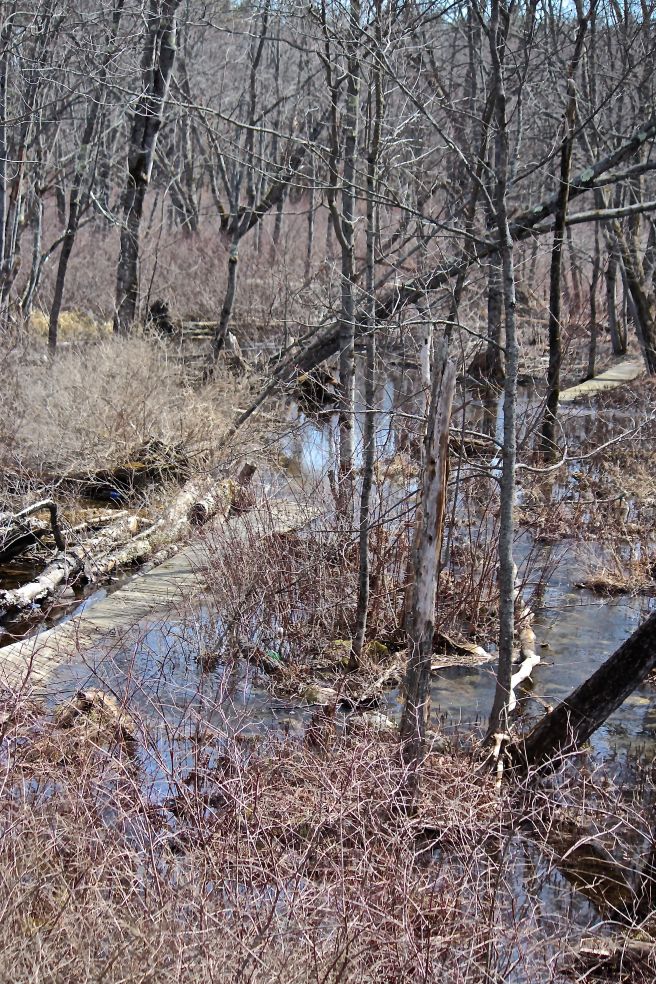
s-boardwalk under water

Bridgton was once a thriving mill town and Stevens Brook its source of power. Of course, to do this properly, I should begin at Highland Lake, the source of the brook, but  I’m not a proper-sort-of gal and you’ll have to bear with me. I didn’t begin at Pondicherry Park either–for the boardwalk was under water.

s-below Pondicherry

Instead, I slipped onto the trail at Depot Street, beside the Bridgton Community Center. By this point, Willet Brook has joined forces with Stevens, thus increasing the power of the water. I was backtracking, and again didn’t get far because of water flowing over the trail, but along the way I made a discovery. Those beautiful trees that lean over the brook–silver maples (Acer saccharinum). It never occurred to me that they grew here, but makes perfect sense.
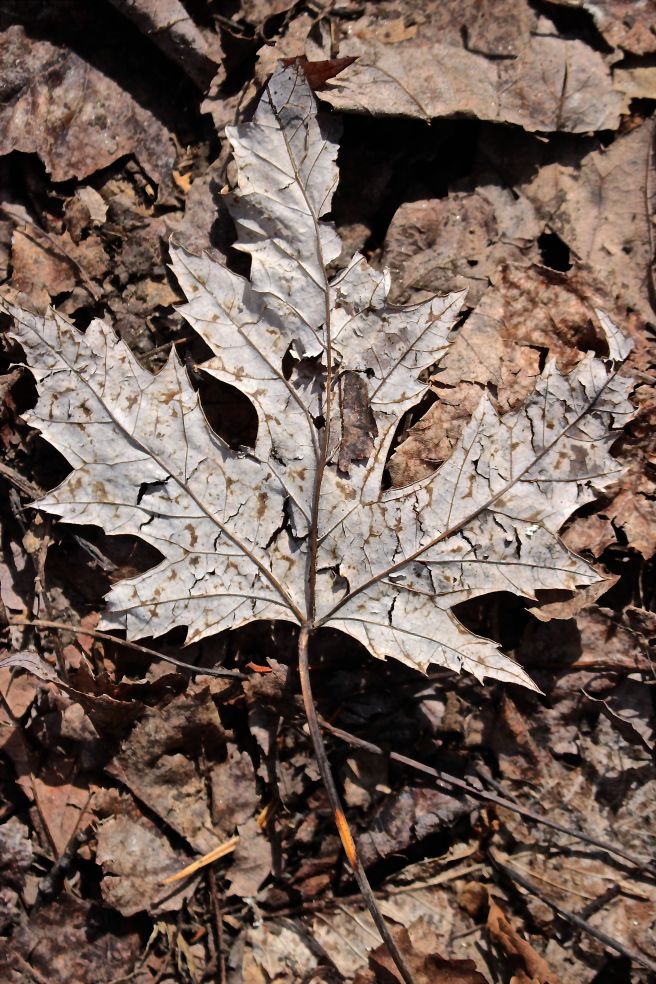
s-silver maple leaf

The backside of the deeply-lobed leaves are silvery gray in old age and silvery white during their prime.

I should have taken a photo of the old Memorial School because that was the sight of the train depot (Depot Street) for the Bridgton and Saco River Railroad that was built in 1883–a narrow gauge operating from Hiram, but didn’t think of it at the time. Instead, I followed the stone steps down, walked beside the brook as it ran below the deep bank by Stevens Brook Elementary School and came up behind a few old buildings, back on Depot.

s-food city bridge

And then I stood on the bridge overlooking Food City. I should note that this is power site #4. Yup, I’ve skipped the first three for now. Stick with me. We’ll get there. In 1822, this area of town wasn’t part of the main village–that was confined to Main Hill. A water-powered carding mill equipped to prepare wool for spinning, thus replacing the tedious hand work of disentangling, cleaning and intermixing the fibers was in operation in this area at the time. By 1825, James Flint and Aaron Littlefield built a sawmill, which they operated for 15 years. In 1840, this was the site of the Walker Saw Mill and Grist Mill. And then things changed. The Pondicherry Mill was built in 1865 to manufacture woolen goods. It was one of the most extensive manufacturing plants in Maine at that time and employed 50 operators. Standing where I was on the bridge, I could see the stones related to the mill and dam. The dam disintegrated in the 1960s.

s-coal trestle

s-trestle 2

In 1898, the neighboring town of Harrison wanted to be joined to the railroad and the RR owners obliged. From this spur, a trestle was built that carried coal in dump carts to the Pondicherry Mill. The structure has deteriorated immensely, but still stands as a monument to this moment in history. So wait, think about this coal situation. The mill had grown to employ 225 people and water power from the brook was no longer dependable. An immense coal-burning chimney about 100 feet in height had been added to the mill. Sixty looms produced 18,000 yards of cloth weekly. Though the building stood until the mid-sixties, the industry moved south long before that. The stones by the brook and trestle are all that are left to tell the story. A now-deceased resident, Reg Fadden, used to tell the story of knowing what color they were dying the wool on any particular day–he’d see the color in the water as he walked to school.
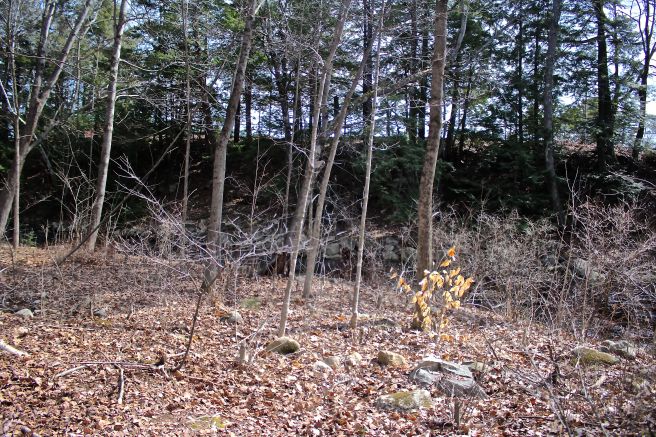
s-former millpond:5th site

Above power site #5, the land was flat and indicative of a former mill pond.

s-5th site

A stone dam and some other foundation work is all that’s now left. The first mill to be located here was a sawmill built in 1868. By 1871, a shovel factory was built on the west side, which was the side I stood upon. By 1899, the Bridgton Lumber Company had located to this power site, with two mills operating–one for boxes and house furnishings; the other for lumber. This apparently was a successful site because in 1911 it became the Burnham and Newcomb Sawmill, which was purchased by Harry Bisbee in 1920. He used a turbine since the water power wasn’t dependable. Though it gushed over the rocks today, in the summertime, this is the perfect place to sit on the flat rocks and dangle ones feet. I can’t remember if Sue told me this or I read it, but apparently there was a treacherous footwalk that crossed the brook in this area and even at age 90, Mr Bisbee would walk across. The sawmill eventually burned, with only the office remaining. This time using a diesel engine, Mr. Bisbee started a smaller sawmill. In 1953, the dam washed out with a flood and local lore has it that Mr. Bisbee walked out one day, leaving it all behind. He died a couple of years later, gifting the mill to the public library.

Charles Fadden and his son, Reg, bought the mill at auction and operated a box mill, using a turbine for power. The office was still standing until about ten years ago, when it collapsed.
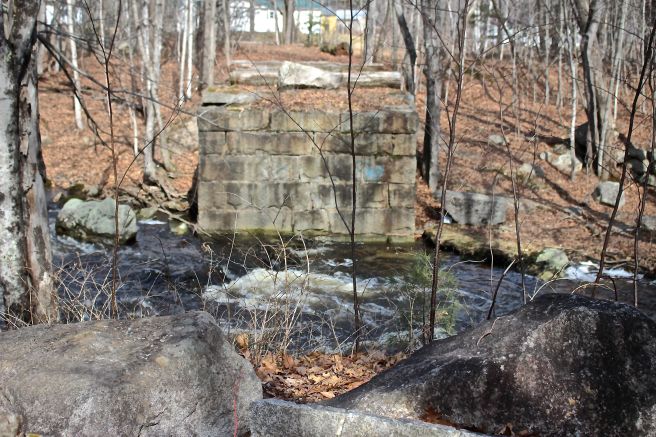
s-narrow 1

By the mill, the Harrison Narrow Gauge crossed over a trestle; today only the stone stanchions remain. A sixth power site was never developed.
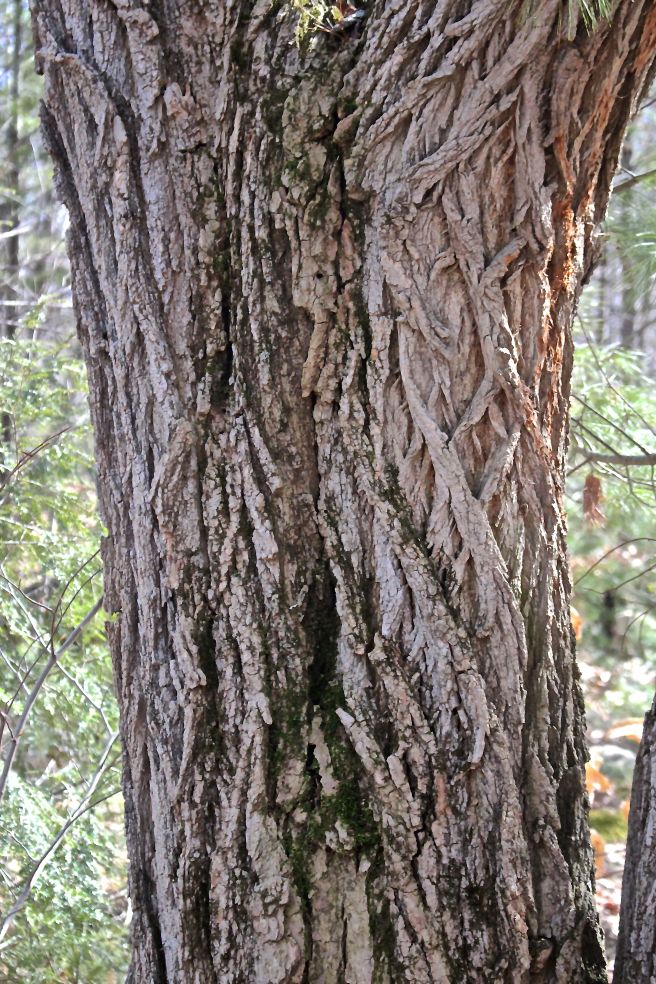
s-locust bark

It was here that I recognized another tree I don’t always encounter–a black locust (Robinia pseudoacacia). The bark appears almost braided.

s-locust pod

And below it, an old flat pod that contains bean-like seeds.
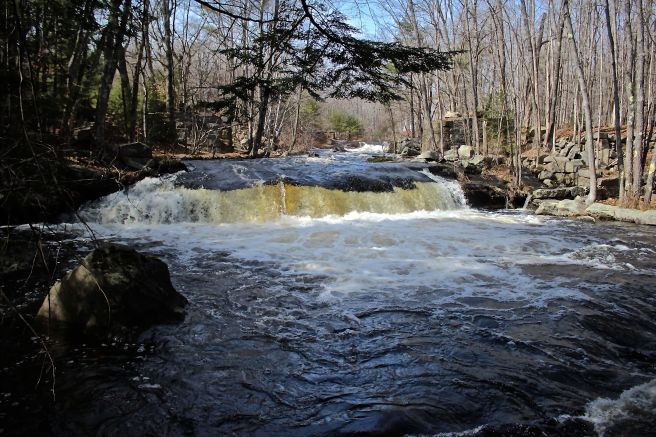
s-7th site, Johnson Falls

I followed a new trail (possibly private, but it wasn’t posted) and was delighted to get a better view of what I believe is power site #7.
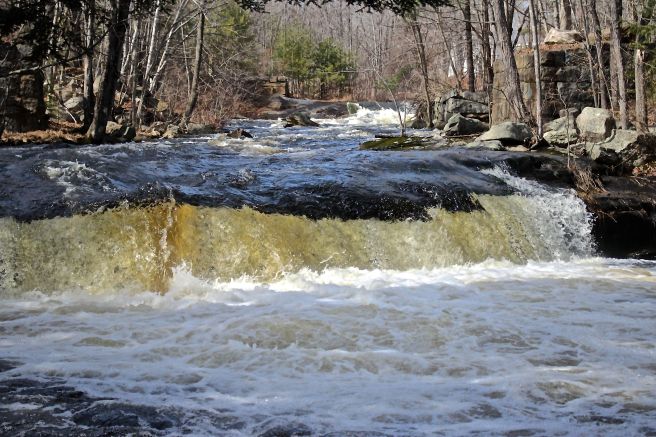
s-lower johnson falls site 7

If I’m correct in my thinking, this is Lower Johnson Falls, and was the possible 1859 site of the Milliken Bedstead Factory.
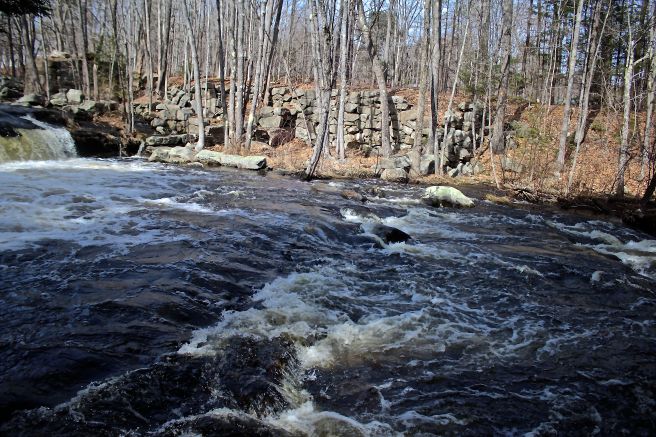
s-remnants by Johnson falls

A foundation is still visible on the eastern side of the brook.
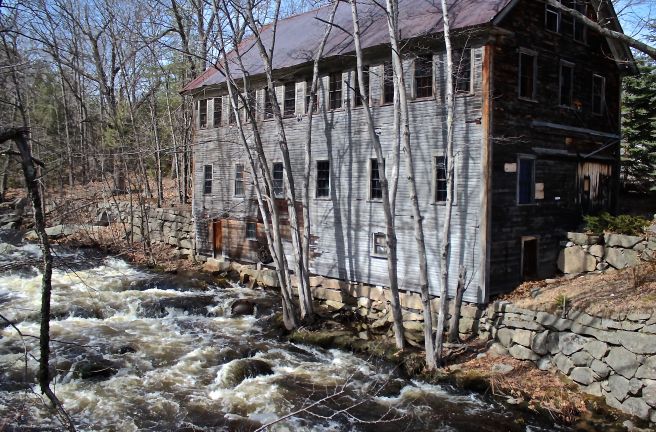
s-7th site, smith sash 1

Below power site #7, I came to the coffin shop. Hey, somebody has to build them. Lewis Smith built the two-story building with a basement in the late 1860s. It was a sash and blind factory, but he also built furniture, and yes, coffins. More local lore: he was the town’s first undertaker. While the building has had several owners since then who have tried to restore it, it still needs some (way more than some) tender loving care so it doesn’t go the way of all the other mills.

s-turbine rig

All that remains of a water-powered turbine still reaches over the brook. Originally, all the water wheels along the brook were overshot wheels. While an overshot wheel had horizontal axils, a turbine wheel had vertical axils, thus making it smaller, more efficient and more dependable given the rise and fall of the water.
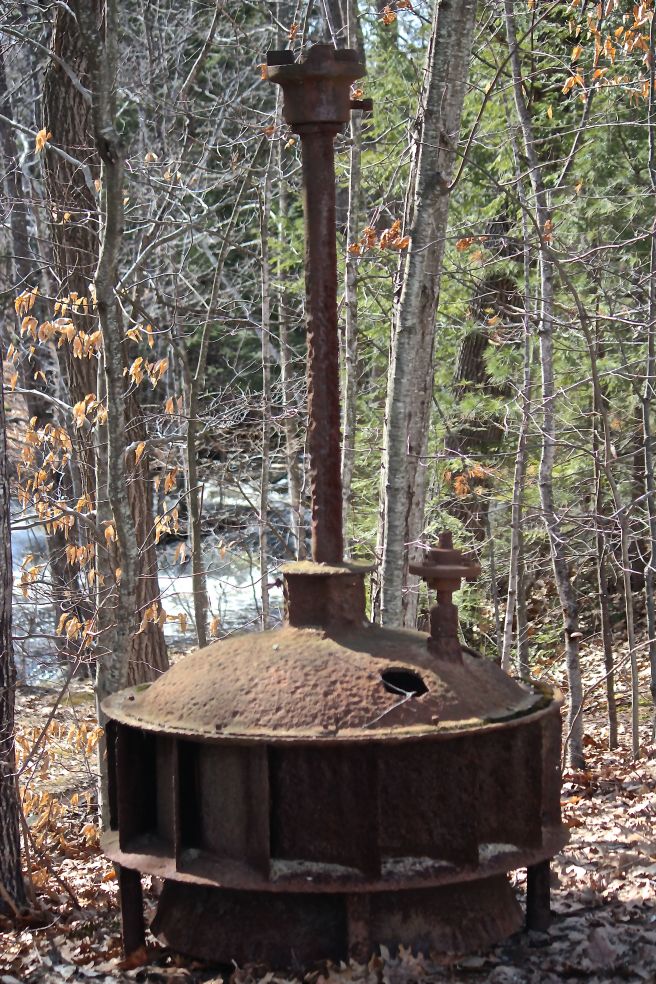
s-turbine

And on the front lawn of the coffin shop, the real deal–a Perry Turbine Water Wheel. In 1877, Richard Bailey and Samuel Miller operated an iron factory and machine shop built by William Perry and George Taylor across the road from the Smith factory. When they sold their business to Forest Mills owed by William  Fessenden Perry, it was renamed the Bridgton Machine Company with George and Frank Burnham taking over as managers. In 1887, the Perry turbine was invented and it received nation-wide popularity for use in mills along small streams.
s-forest mill a

Power site #8 is one of my favorites. This is where Perry and Taylor erected a mill in 1862 to manufacture woolen goods. The dam was built to provide a fifteen-foot fall with a mill pond above.
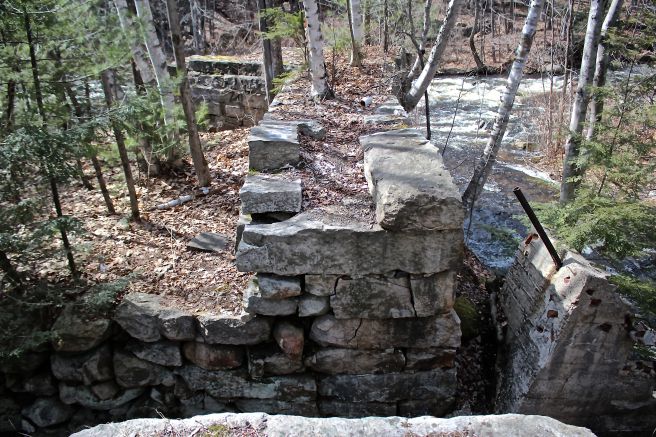
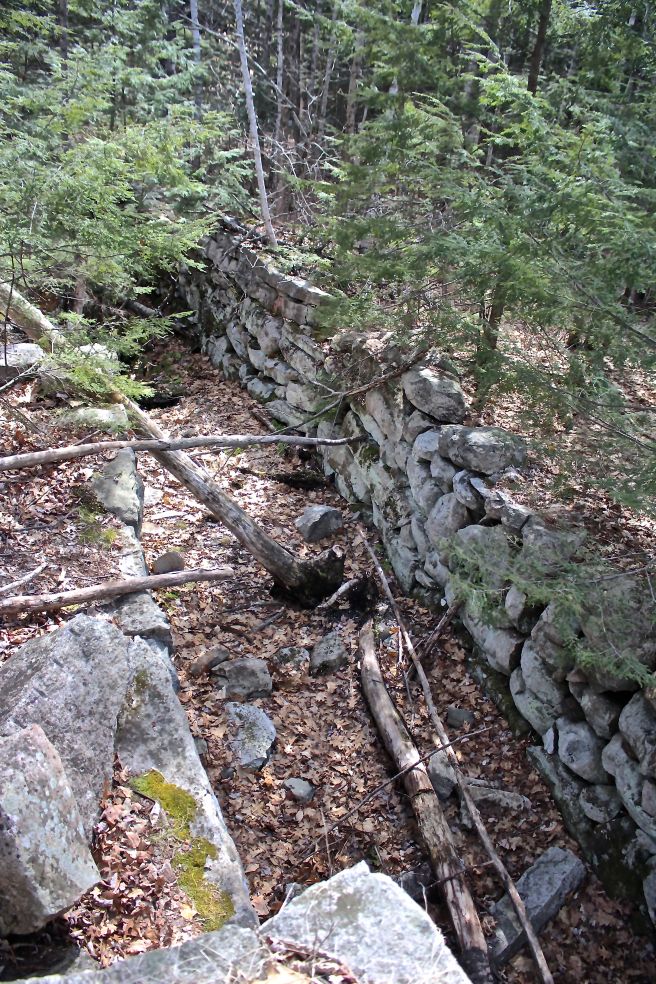
s-Forest Woolen Mill 2

s-forest sluice

Today the sluiceway is dry, but I can imagine the water pouring through here.

s-forest woolen mill 3

With the advent of Kansas Road in 1865, the woolen mill expanded to 200 feet by 45 feet and stood two stories tall. With more looms than any mill in the area, outerwear was produced here and shipped to Boston. During the Civil War, attention turned to creating war materials.
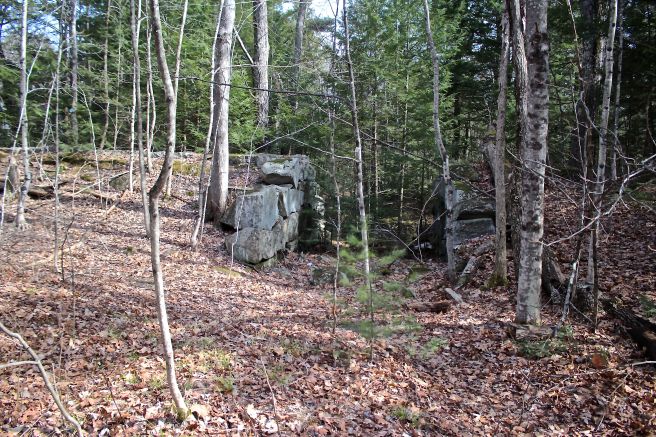
s-9th site, Kennard Dam

Across the street, I ventured down the wrong trail at first and found myself on the upper side of the dam built at power site #9. The 13′ dam built by Boothby and Chadwick in 1864 was near Kennards Stocking Mill. It was originally intended that Kansas Road would cross the dam, but the turn would have been too sharp and too steep.

s-vp by Kennards, 9th site

Today, a vernal pool sits below the former dam. I checked it and several others along the way. No signs of life. I’ve yet to hear spring peepers.

Anyway, Taylor and Perry purchased this site in 1865 and built a three-story carding mill with an overhead walkway that crossed Kansas Road and connected their two mills: Forest Mill #1 and Forest Mill #2.  By 1879, Mr. Taylor had died and Mr. Perry re-organized as the Forest Mills Company, which employed 130 workers and produced cashmere. As Sue has told me, this was not from cashmere goats but rather a lightweight fabric consisting of wool fiber that had either a plain or twill weave.

s-power 9

A railroad spur and trestle were built in 1900 to unload coal and other supplies for the Forest Mills Company. The American Wool Company purchased the mill, which was large for Bridgton, but small compared to those south of Maine. Eventually, business moved south. In 1925, a shoe shop moved in, but it wasn’t successful either. The building was torn down in 1962.

s-powerline trail

The scene changed briefly when I followed the trail onto the present day power line.
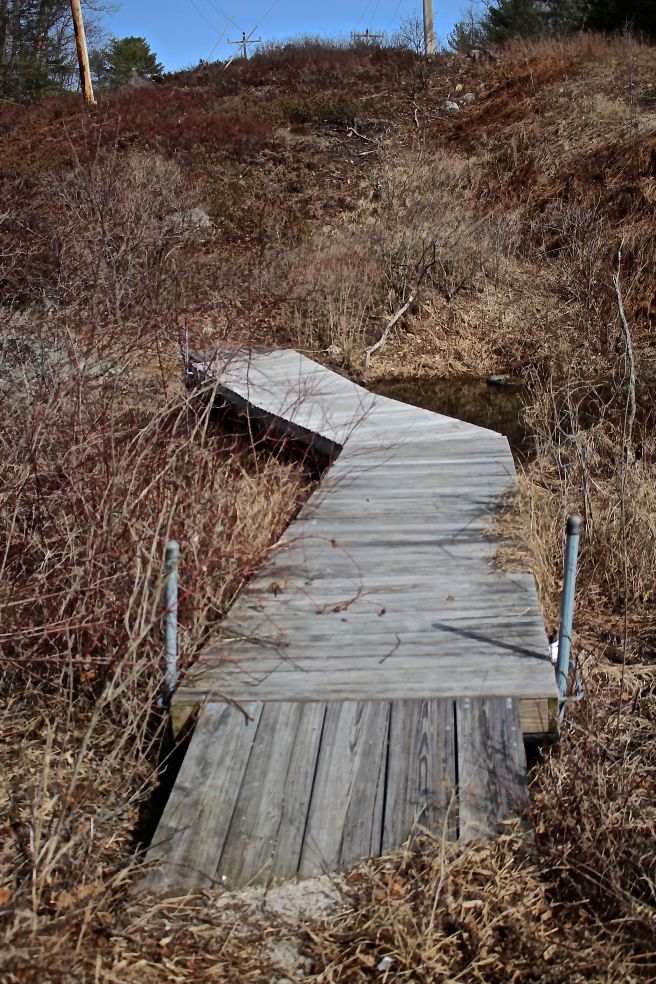
s-powerline boardwalk

Typically, this boardwalk is under water in March and April. But this year is far from typical.

s-cmp pond

And then I reached power site #10. This is the most modern of them all, but again, it has a history. It’s possible that this was the site of Jacob Stevens’s first sawmill built in 1768.

s-cmp dam 1

Mr. Stevens would have built a boulder and gravel dam, not one of cement certainly. He lived nearby and raised eight children; the four oldest worked beside him. Mr. Stevens was a ranking member of the survey crew that came to what is now called Bridgton in 1766 from Andover, Massachusetts. He returned in 1768 under contract with the Proprietors to develop water power and make it serve the early settlers by creating mills that provided building materials and grain for food. Stevens was the one who identified twelve power sites along the almost two-mile brook with a drop of 156 feet from its source at Highland Lake (known originally as Crotched Pond) to its outlet at Long Lake (Long Pond). It made sense for him to build a site here for both a saw mill and grist mill, as this is near the mouth of the stream and would have provided him with easy access to the main thoroughfare of Long Pond and beyond. The proprietors required that the saw mill operate for fifteen years and the grist mill for twenty.
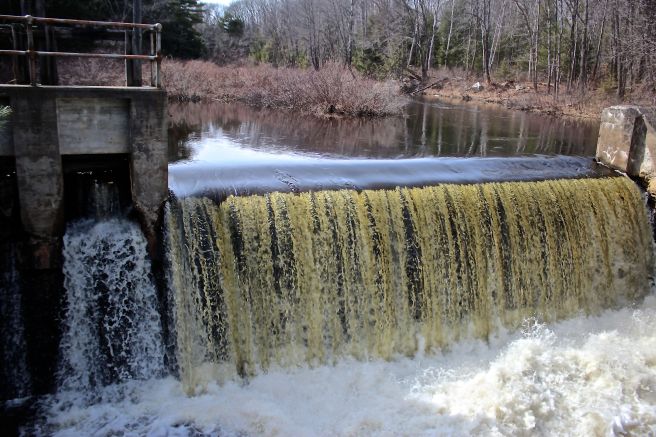
s-cmp dam 4

I don’t know what happened between 1768 and 1896 when the Bridgton Water and Electric Company took over as the first source of electricity and water for the village. The concrete dam was built in 1931 by Central Maine Power after several transfers of ownership. The greatest power could be found between this site and power site #11, where the brook drops 25-30 feet.
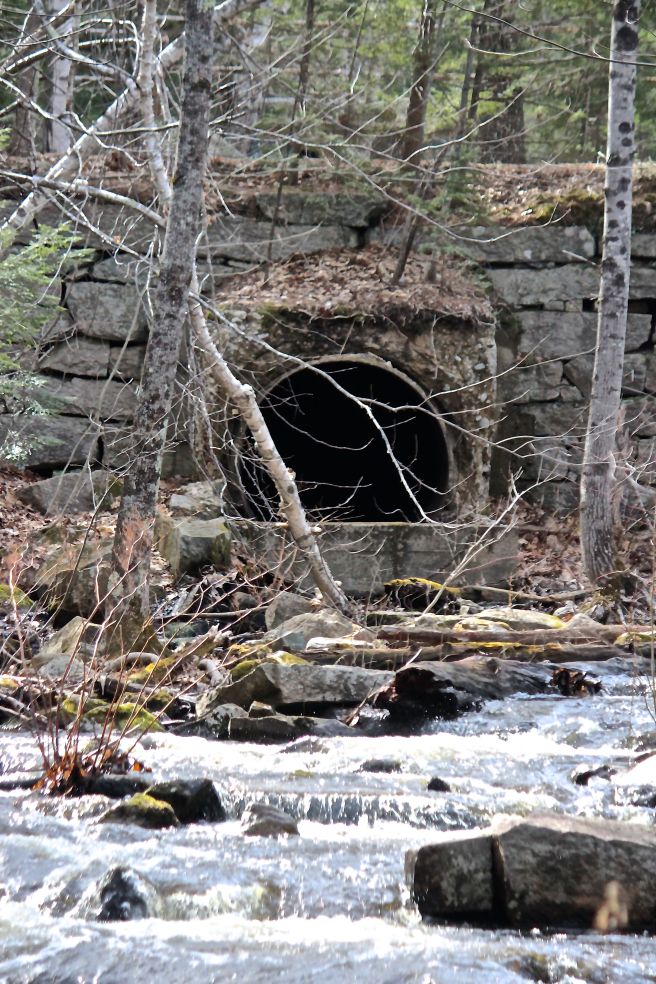
s-penstock start

A 790-foot penstock was built to regulate the flow of the water.

s-penstock channel

s-penstock support

Evidence remains of its position and actually, it’s easiest to see right now before the summer foliage obscures so much.
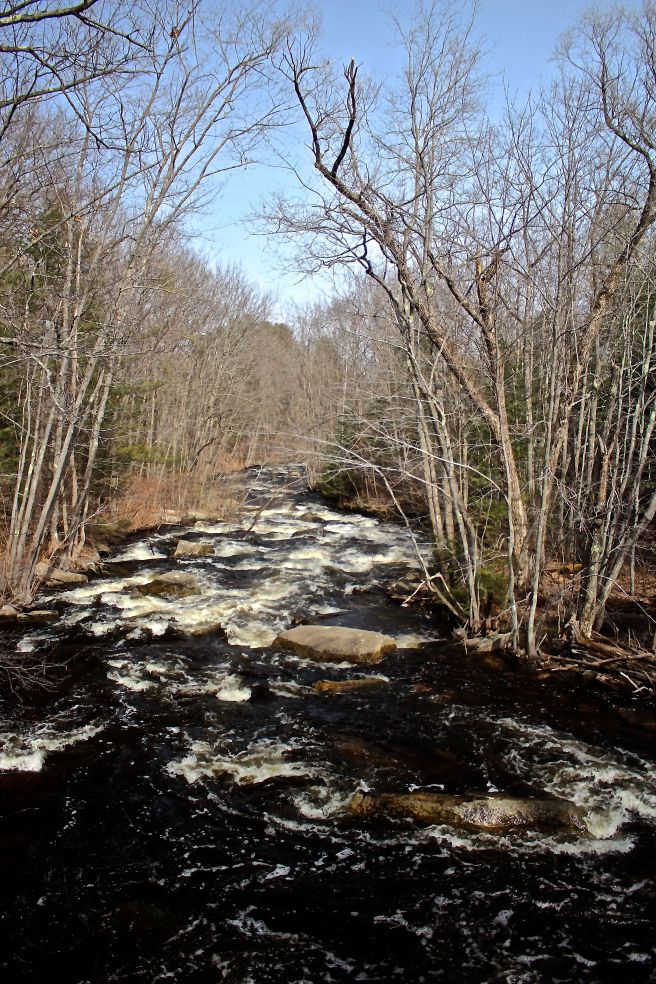
s-1

Somewhere in this area was power site #11. The Hart Tannery may have been built on an island in the middle of the brook.
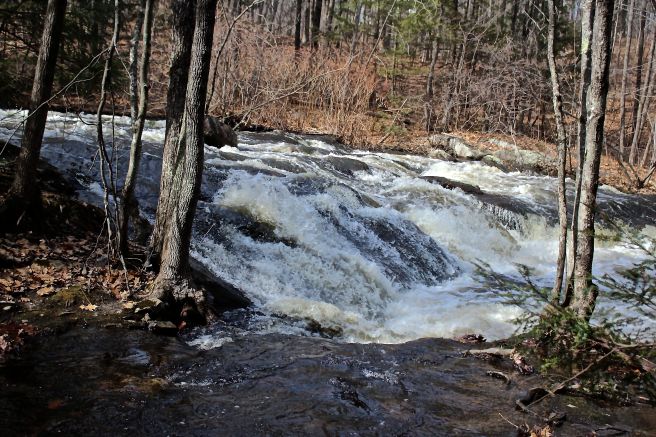
s-water drops below CMP

The exact location of power site #12 is also elusive, but rumor has it that a shingle factory was located between site #11 and the outlet.

s-1922 brick

Early on, a wooden structure was used as a power house. That was replaced by a brick building built in 1922 by the Western Maine Power Company. Notice where the penstock entered. And above it, a turbine generator.

s-Long lake 2

All was calm by the time Stevens Brook emptied into Long Lake today.

s-beaver 1

Though it’s easy to miss, this area still offers a source of dams and industry.

s-beaver lodge and dams

Beaver style.

s-3

I walked back up Main Street and headed to the first three power sites, which I present in backwards order at the risk of confusing my tired readers. Power site #3 has a storied past: 1813-fulling mill (put weaving on hot water and beat it to close fibers); 1822-saw and grist mill; 1830-saw, grist and plaster mill; 1845-mill burned; 1857-rebuilt two stories; 1877-never rebuilt. Yet this was long known as the Dam Site and a Dam Site Restaurant stood here for years. Across the street was a tannery, which didn’t need water for power, but did need water to fill the 140 vats. Using hemlock bark, 10,000 hides were tanned each year.

s-shorey park dam 1

I’m only just realizing that I missed power site #2. I looked at it as I walked by, but must have been tired. Anyway, it’s below this split stone dam and served as a grist mill in 1798 and a sash and blind mill in 1835.
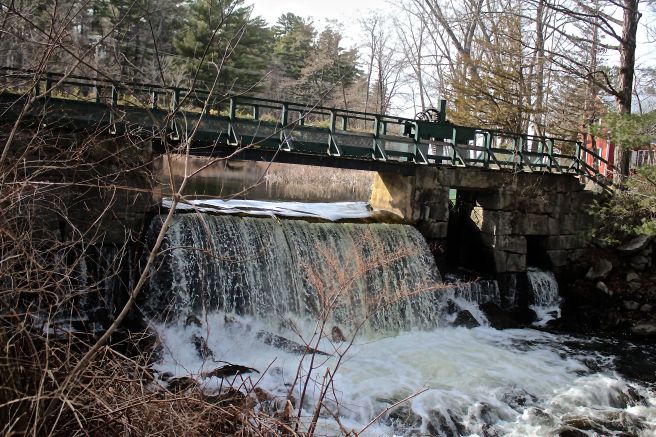
s-sp 3rd power site

Power site #1 was originally a saw mill built by Asa Kimball at the head of Stevens Brook. The lay of the land has changed since roads were constructed and Highland Lake (Crotched Pond) had a different configuration and lower depth. The pond served as Mr. Kimball’s mill pond, where he floated logs from Sweden (Sweden, Maine, that is). The split stone dam was erected in 1849-50 by Rufus Gibbs and others, thus providing power for the first big mill in the village that stood four stories tall, employed 50 workers, ran 20 looms and made blankets for the Civil War. By 1941, is was demolished.

s-sp millpond

This is the mill pond as we see it today, but if my vision is clear, before Highland Road intercepted it, this was part of Crotched Pond.

s-highland

And the start of it all, the thing that got me milling about today, Highland Lake and the source of Stevens Brook.

Dear reader, if you are with me still, thank you. It was a long journey and I appreciate that you came along.