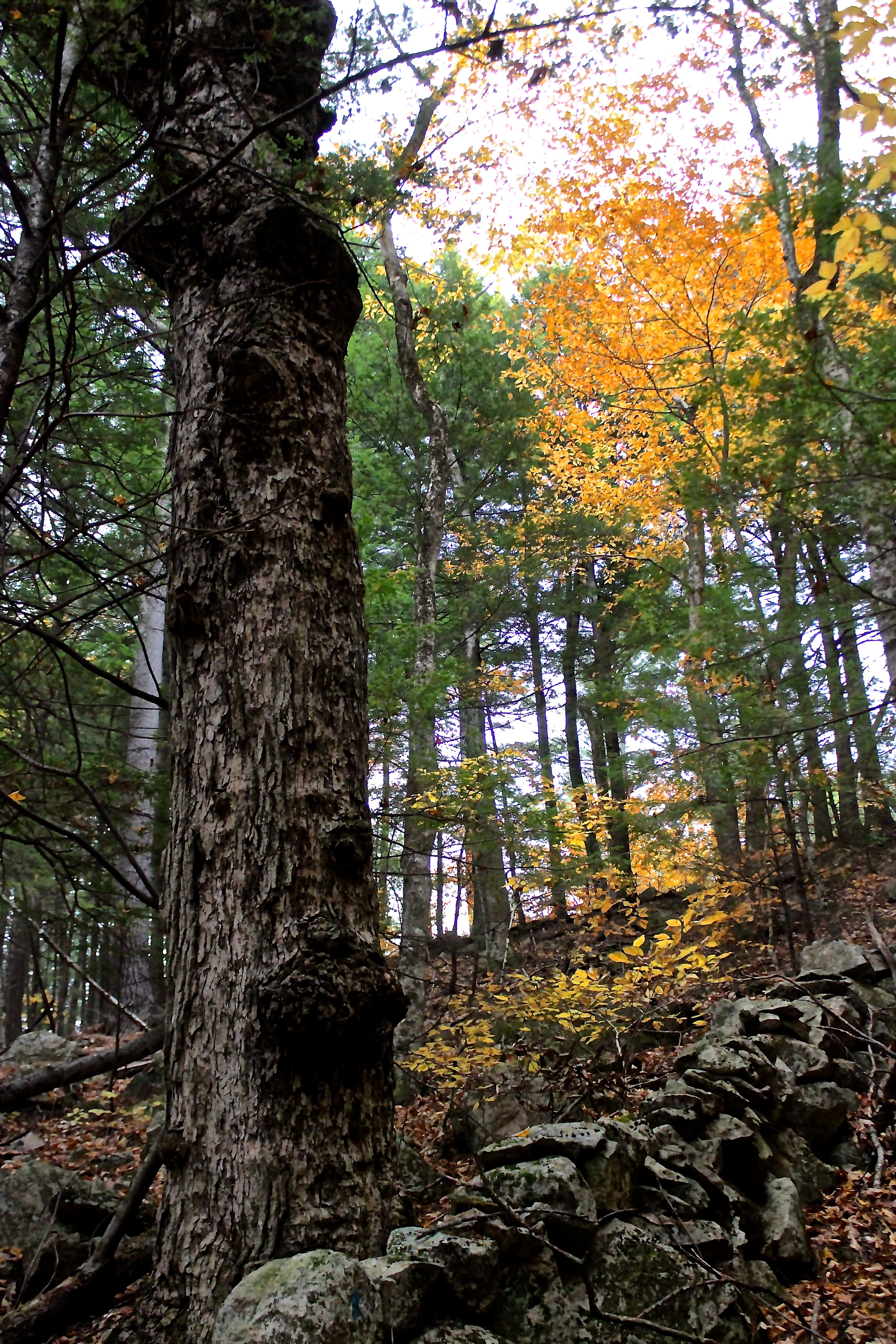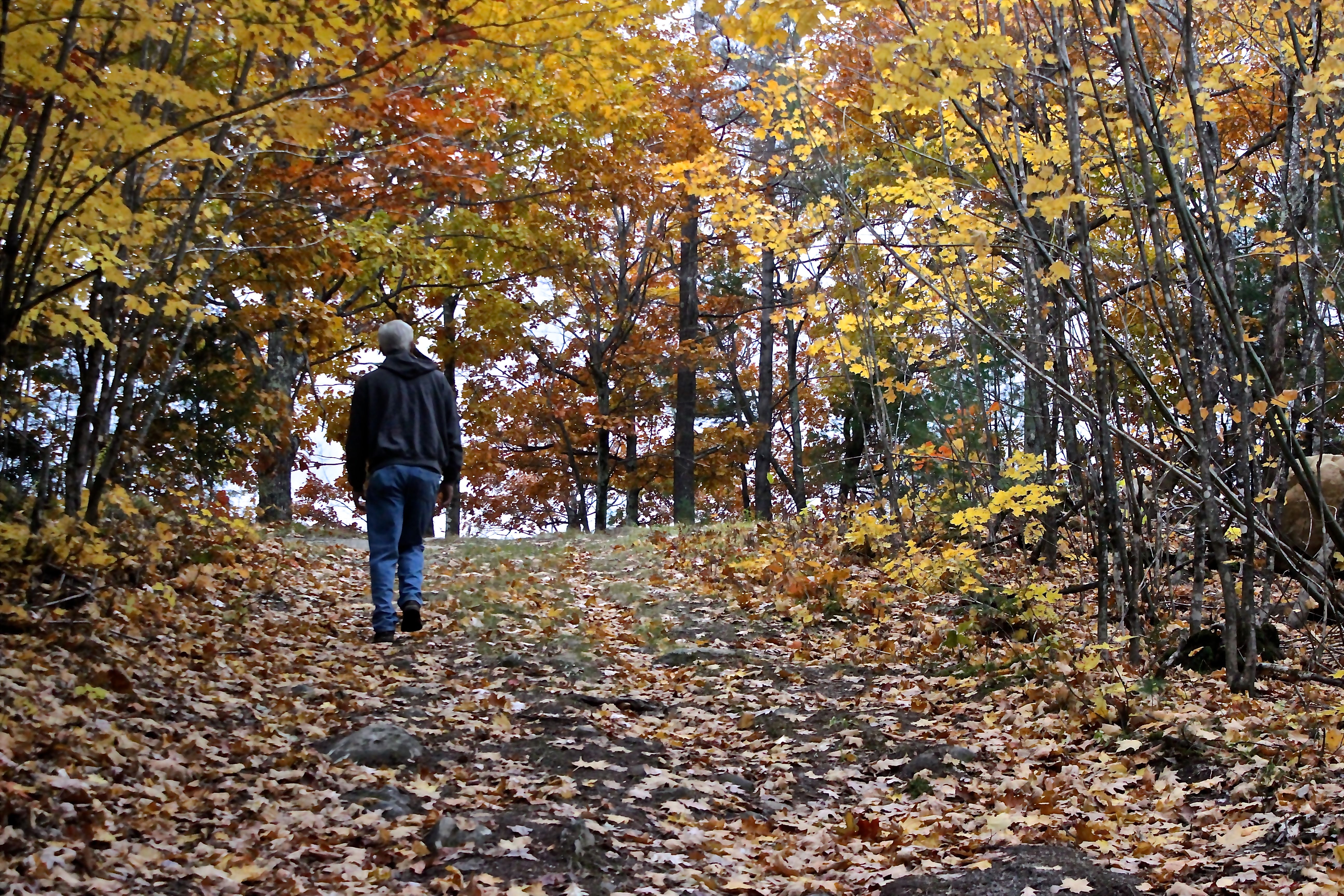
The Homecoming

The other day a friend handed me a piece of paper and told me to read it later. We were about to go tracking, so I stuck it into my pack and forgot about it. This afternoon, as I prepared for a hike up Mount Tom in Fryeburg, I found the paper.

I’d originally thought it was an article, but instead, it’s a quote from the October 1967 issue of Yankee. A friend had given it to him and he passed it on to me: “We hunt as much for the memories as for the birds. For the memories, and for the hours afield in the autumn woods where a man can get back, for a while, to remembered realities, to a time and a way of life close to the eternities of the land. It’s hard to explain this to the outlander who never knew such things. He thinks of it as an escape. To us it is more like a homecoming. We live here, of course, but only in the leisure after we’ve done the stint at our jobs do we go out on the hills and up the brooks. There we find the truth of our world, even the truth of ourselves.” ~author unknown.

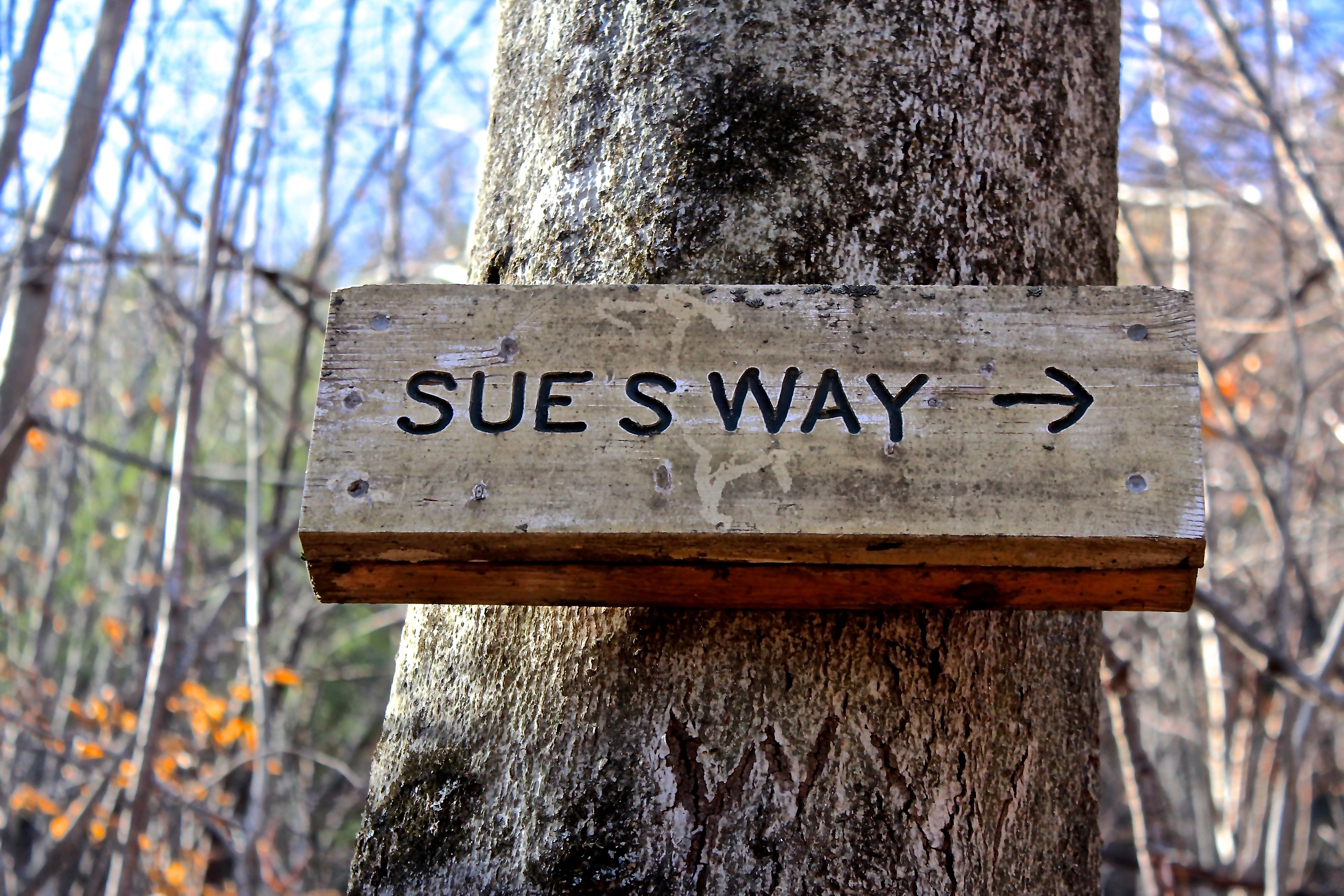
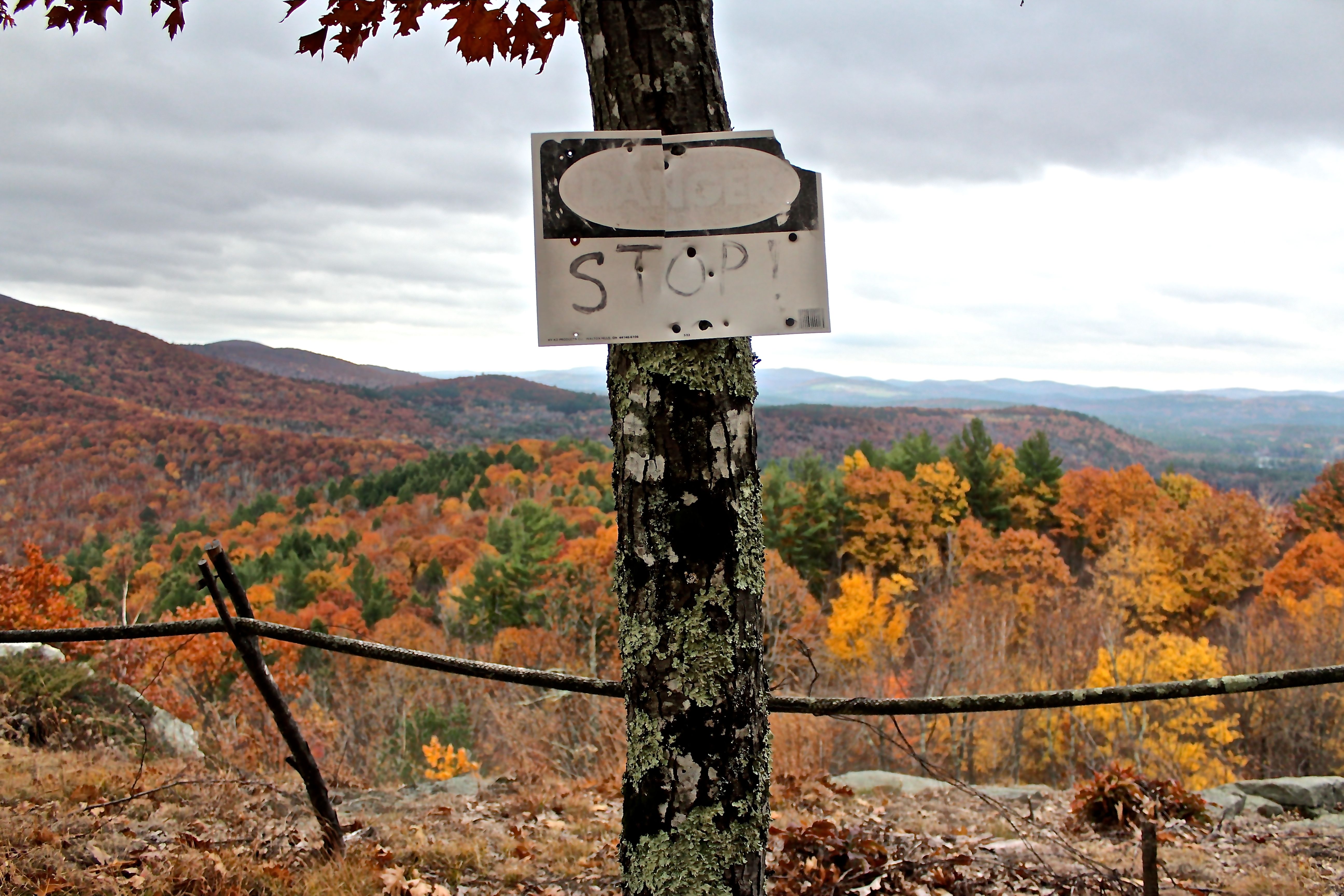
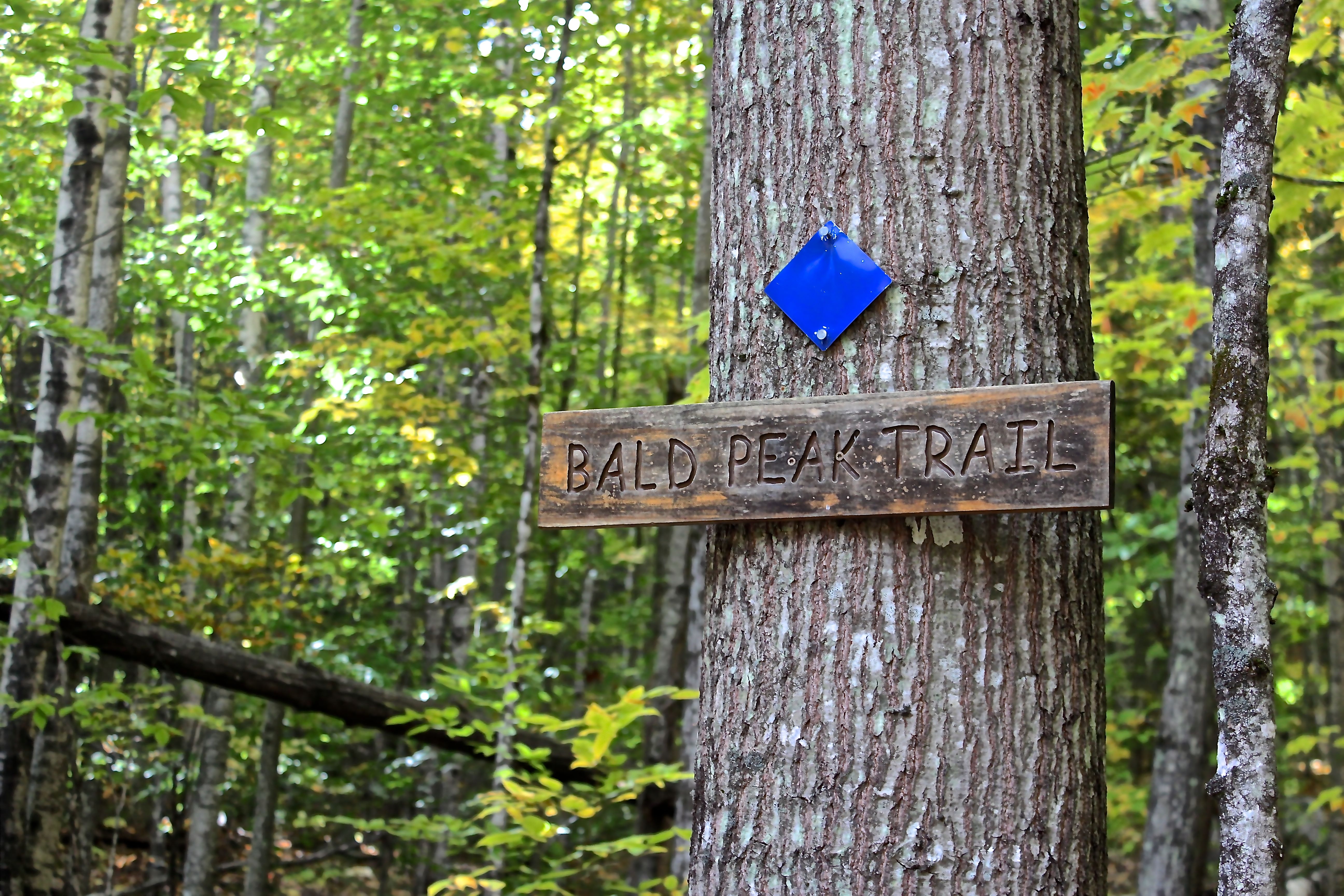
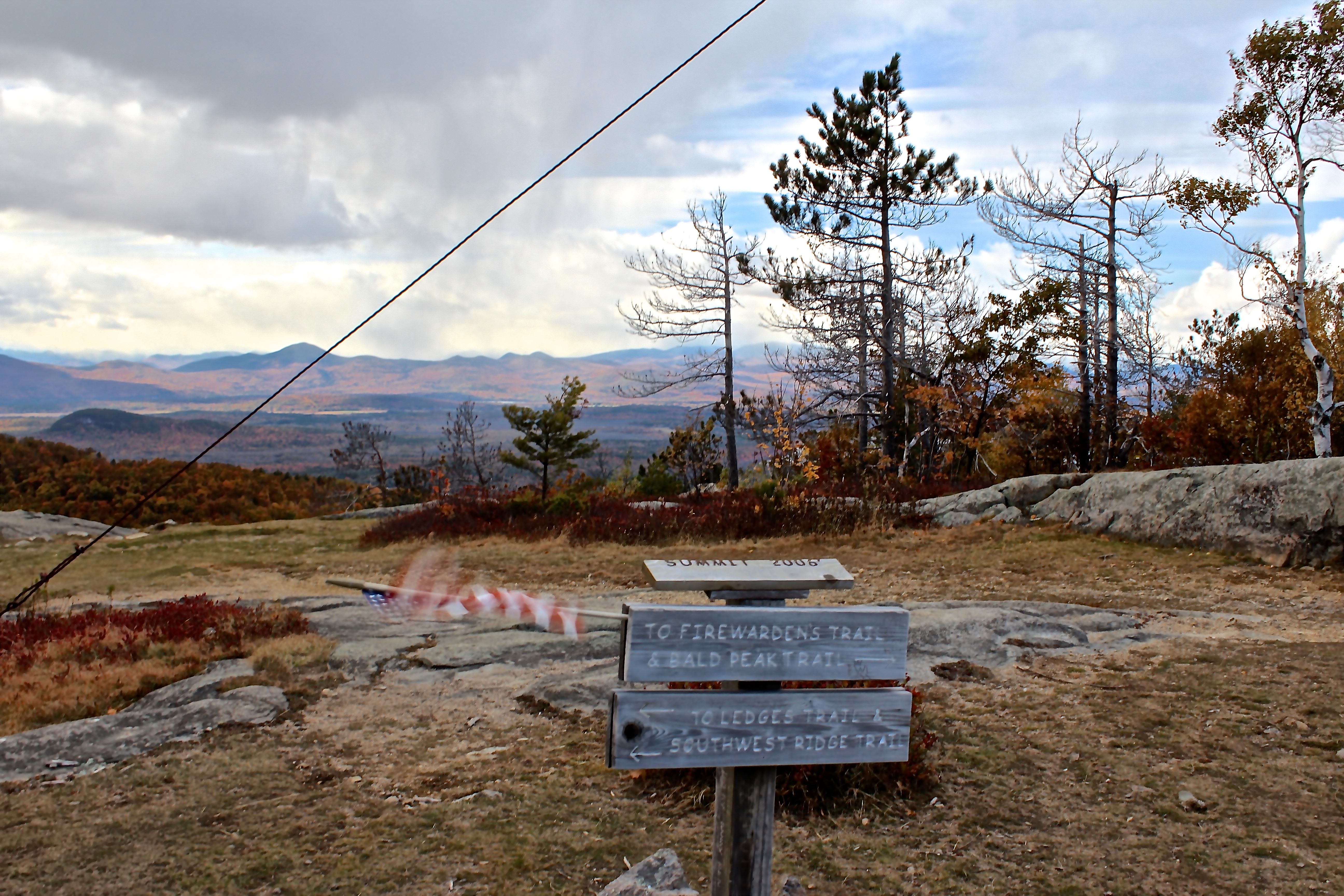
trail sign

I reflected upon those words as I slipped into my snowshoes at the trail head. I’d made a decision to end one of my freelance writing/editing jobs this week (not Lake Living, which is my all time favorite writing job. Hard to believe the spring issue will mark my tenth anniversary!) and declutter my world.

porky paths stump dump

It will never happen, but certainly the porcupines that inhabit this mountain should consider the same.

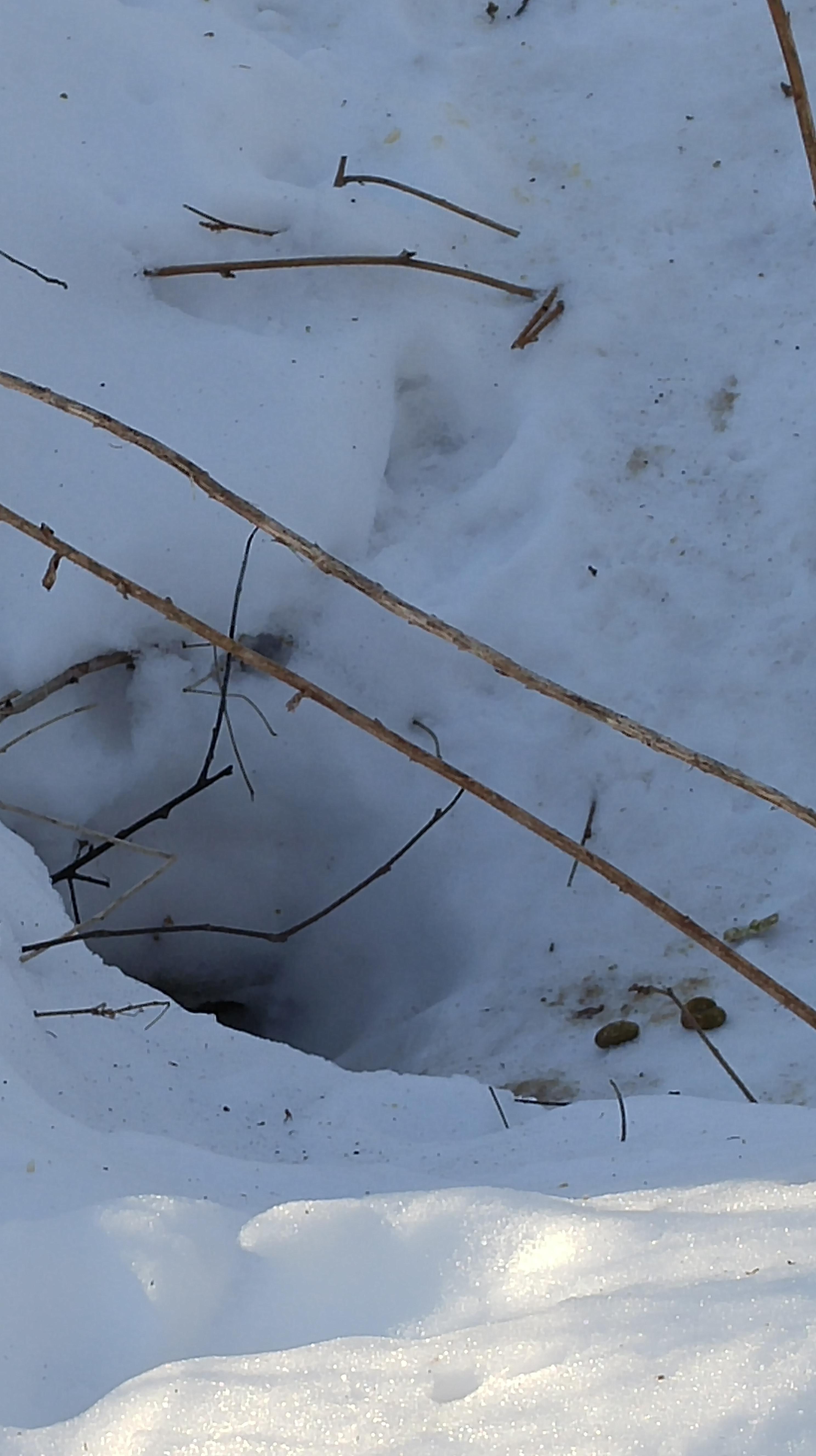
stump dumpporcupine den

I had a hunch I’d see evidence of their existence once I got up into the hemlock neighborhood, but a small stump dump early on provided ample den space.
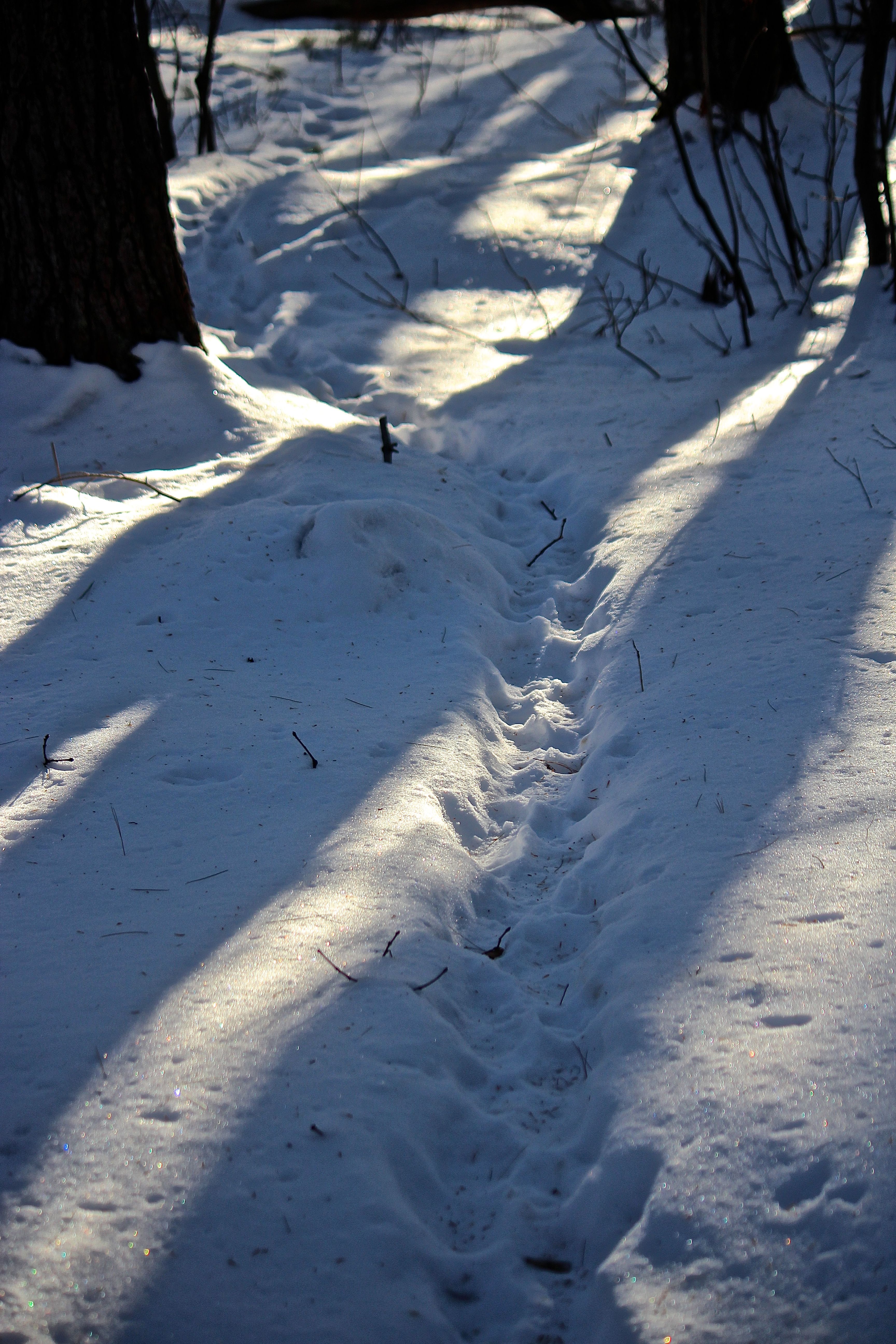
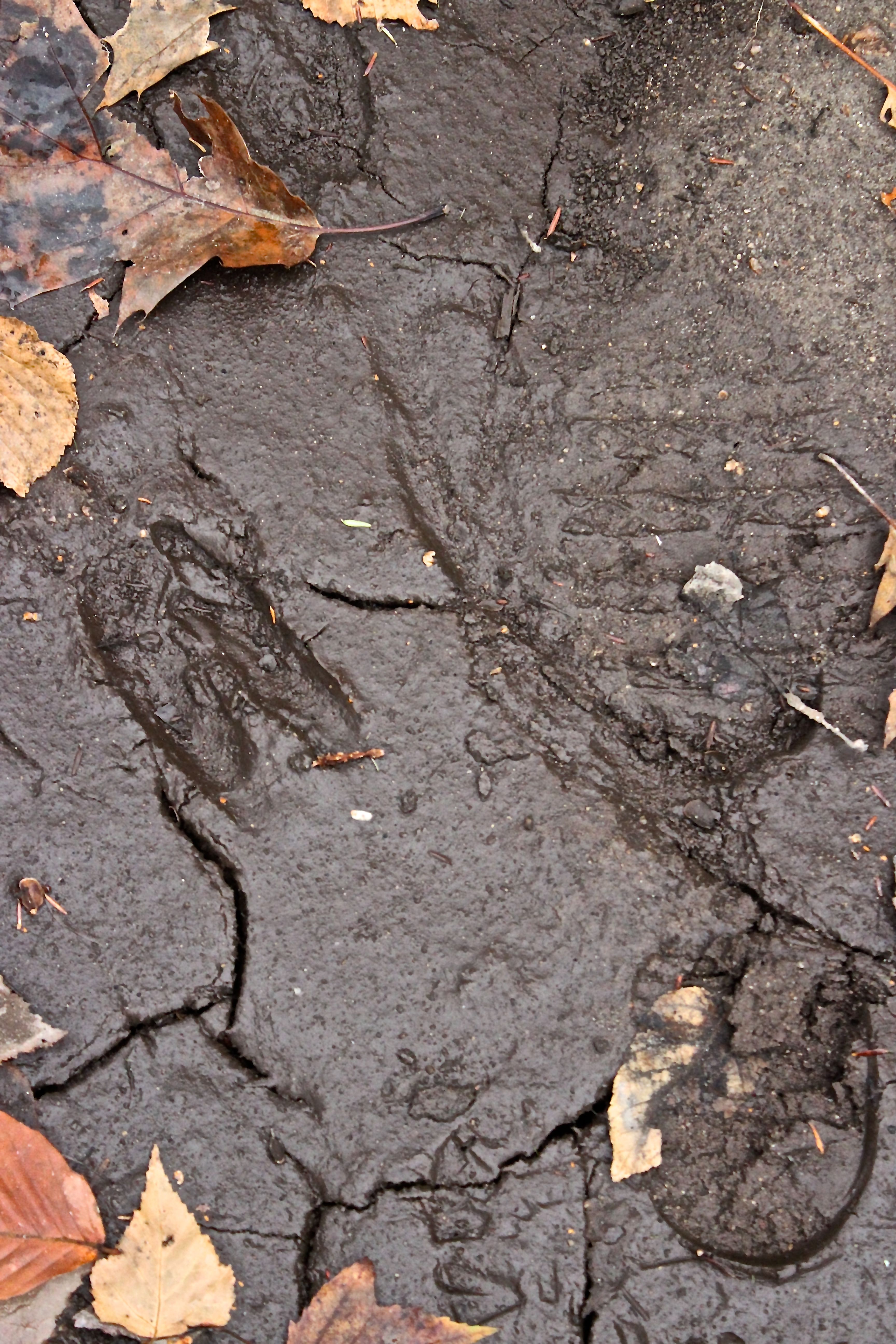
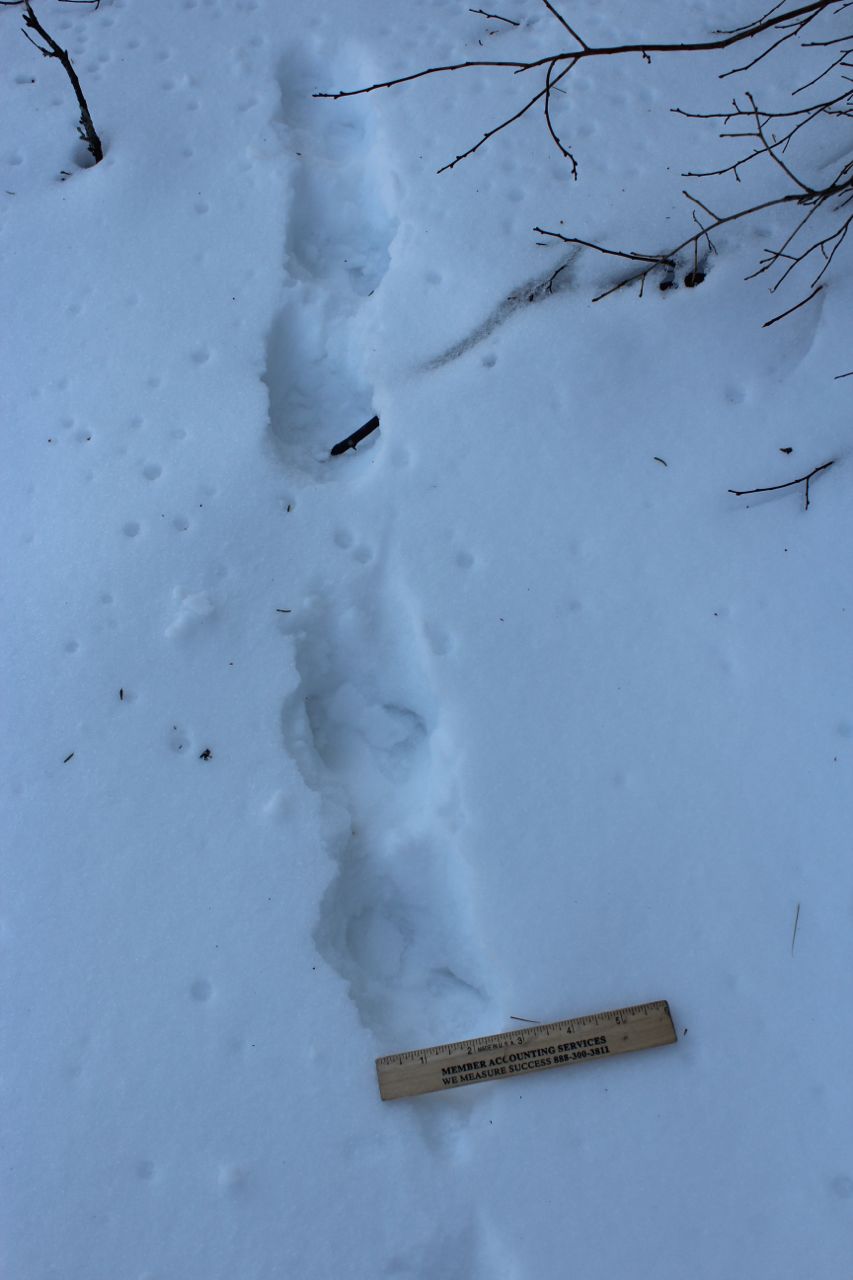
porcupine tracks 1

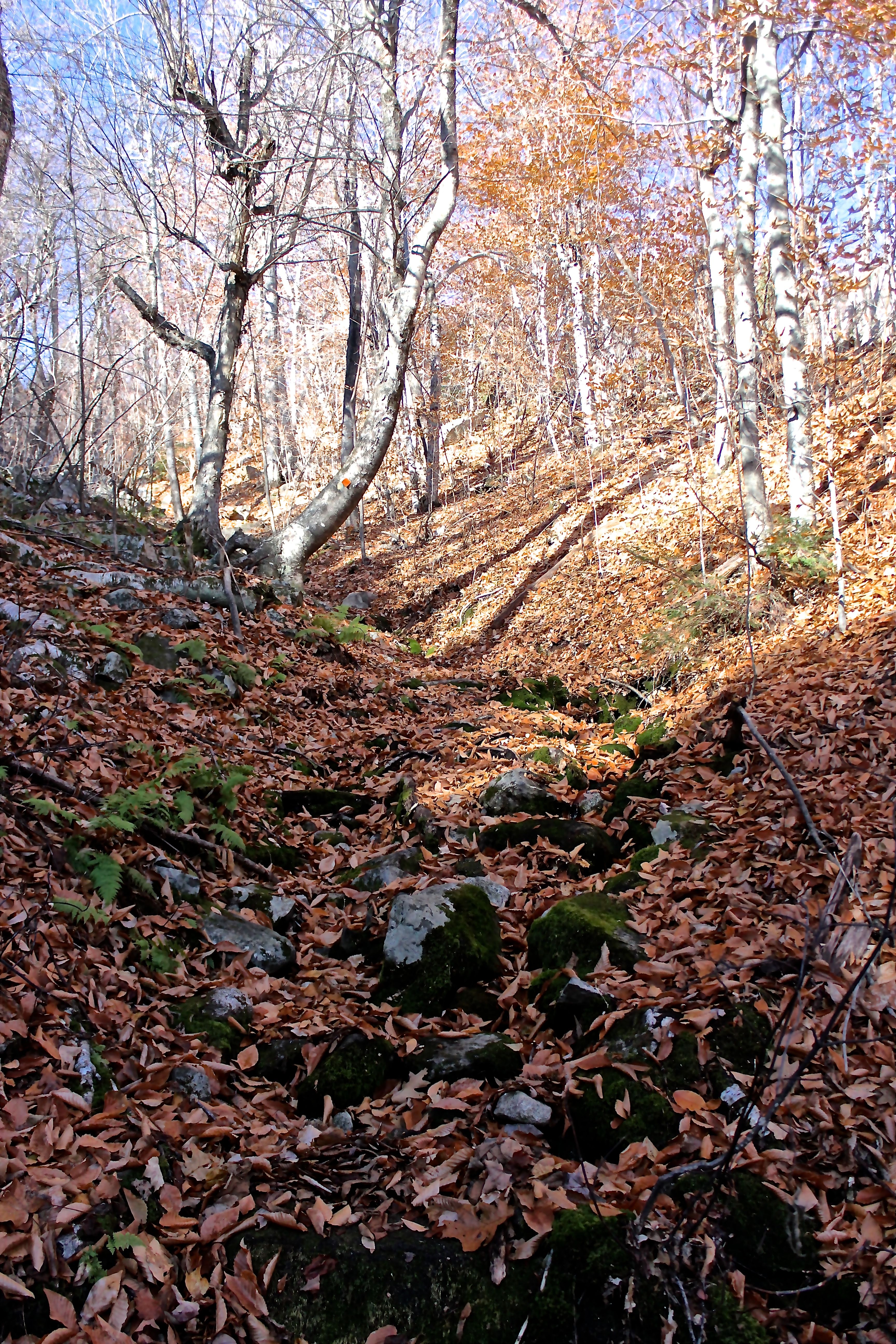
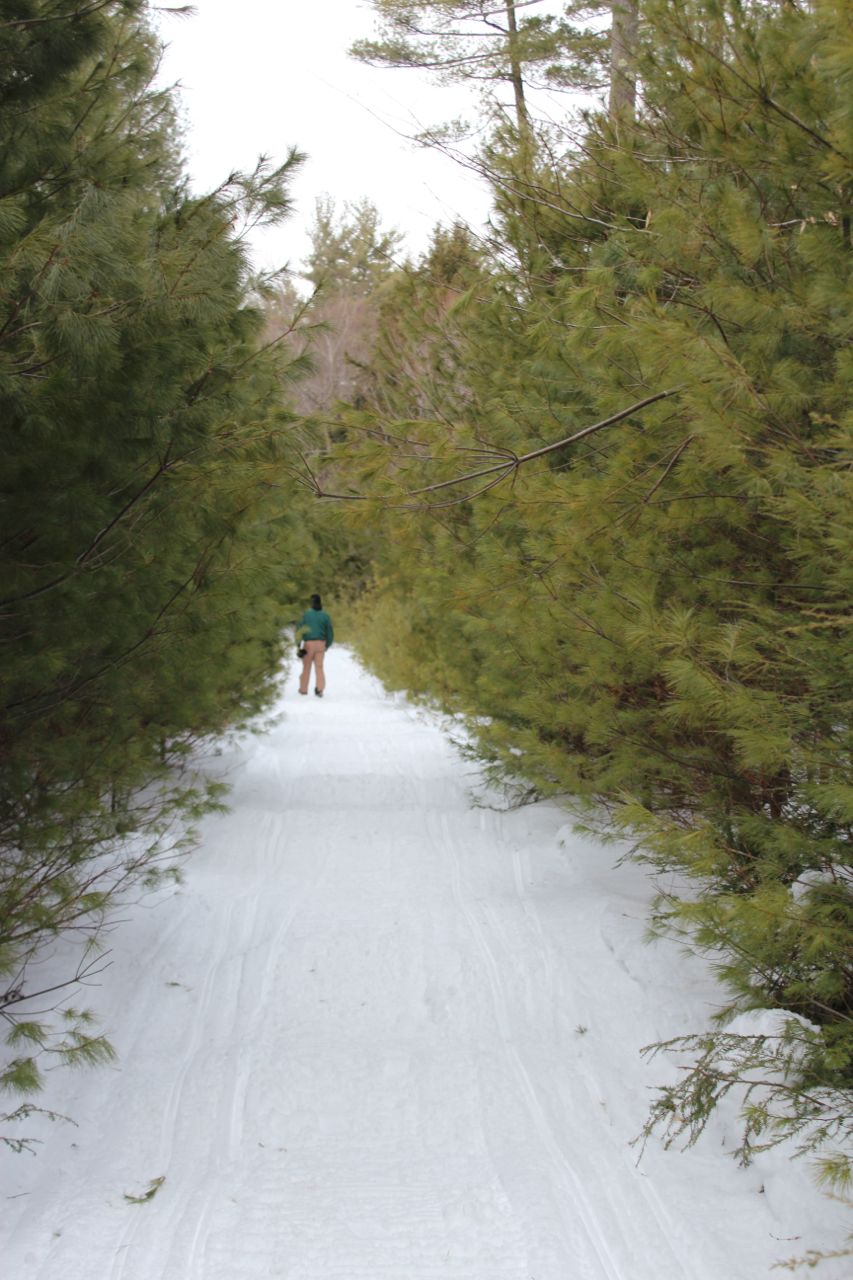
I didn’t even realize as I climbed toward the summit that I wasn’t taking too many photos. Instead, I was cued into the tracks left behind by two people who had traveled this way before me and the porcupines, deer, hare, coyote, bobcats and little brown things. While the people stuck to the trail, I wandered this way and that as I tried to decipher what I saw–my own zig zag trail reminiscent of those I followed.
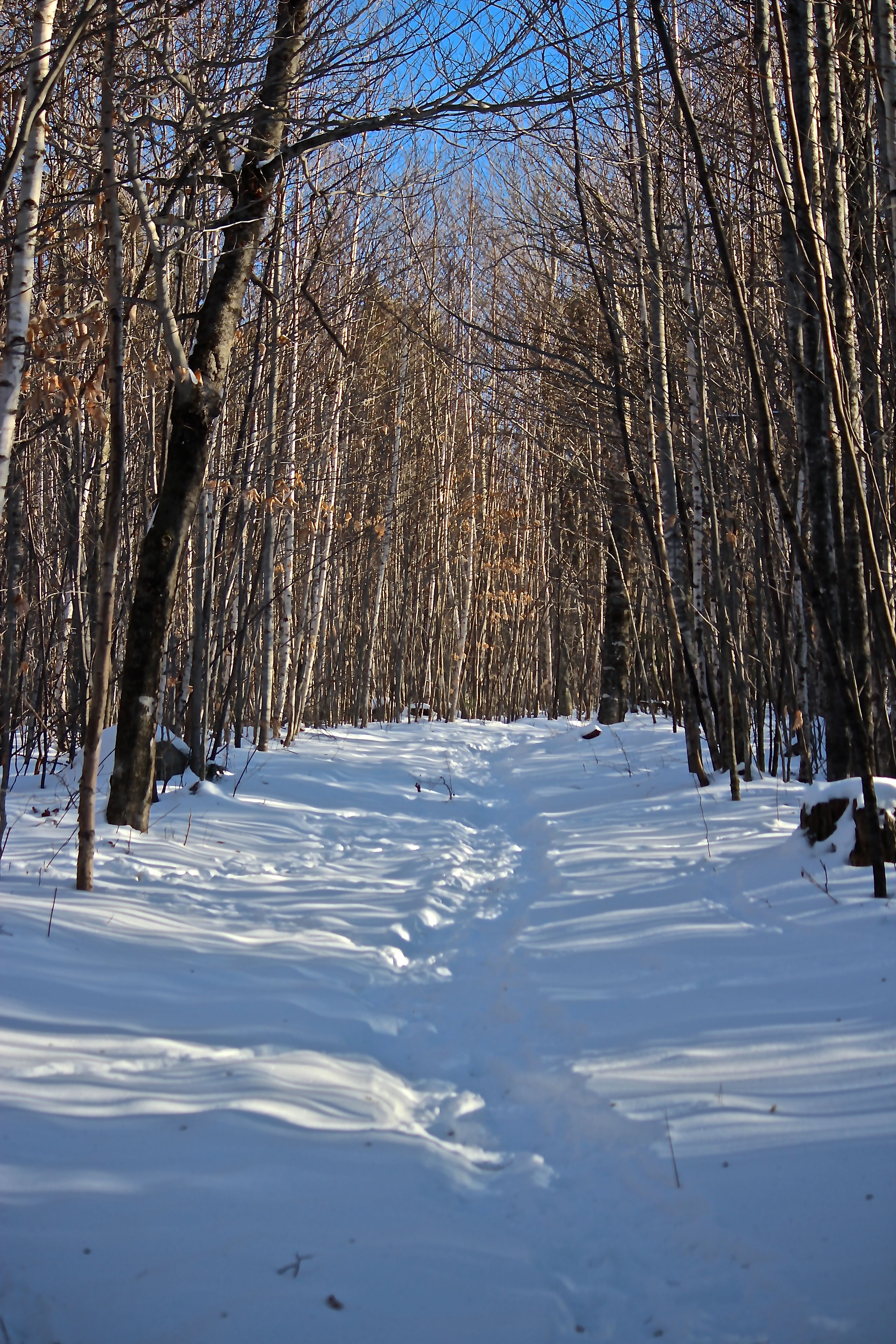
logged community, thin trees

I didn’t get lost today, though truly, when I do get fake lost, it’s a time to understand myself better– listening to my inner self sort things out. Most of today’s trail is an old logging road. And most of what I saw was familiar. Perhaps that’s what it’s all about–knowing a place so no matter where you are, you recognize it.
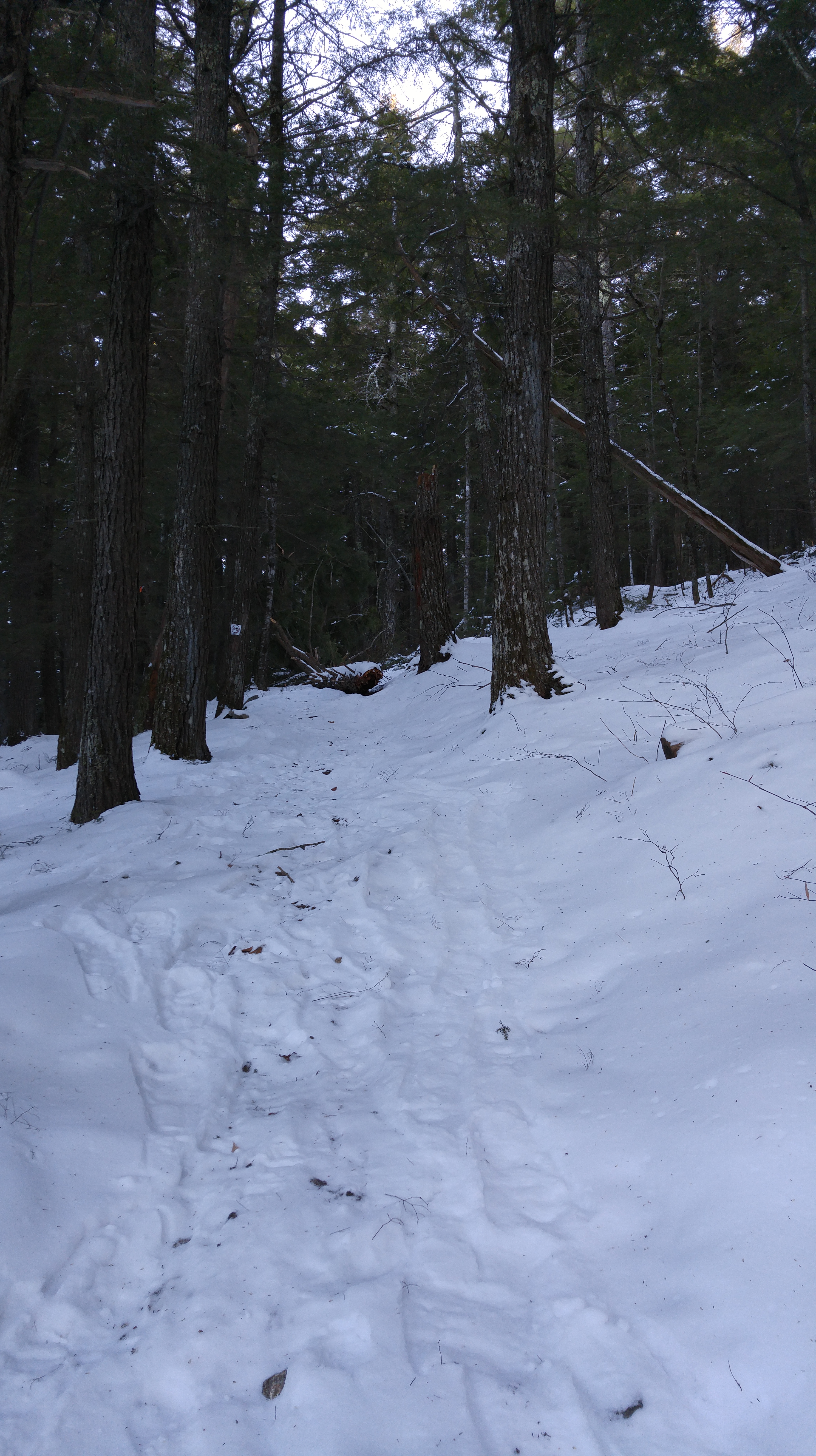
hemlock community

The community changes abruptly from birch, beech and maple saplings to hemlocks and pines. I, too, can change abruptly and have a tendency to be blunt. I don’t see that as a bad thing, though occasionally I do regret what I’ve said.

striped maple scrapes

And then I began to look up and notice other parts of my surroundings like these old deer or moose scrapes on striped maples. Forever scared, they provided nourishment in the past–and may do so in the future when the time is right.
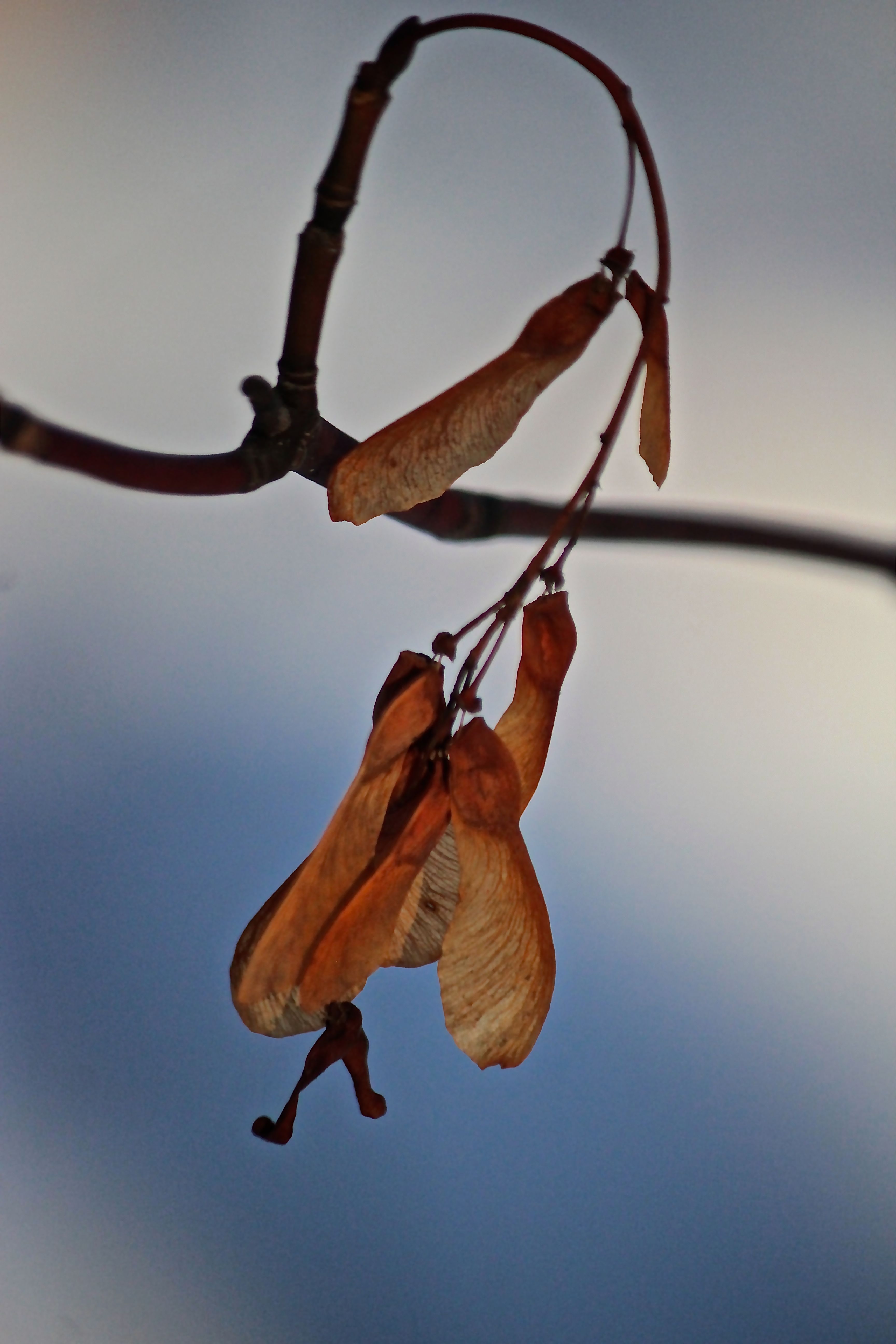
striped maple samaras

One striped maple still sported a few seeds that have yet to go forth in the world. What’s holding them back? Don’t they know the time has come to let go?

frost crack

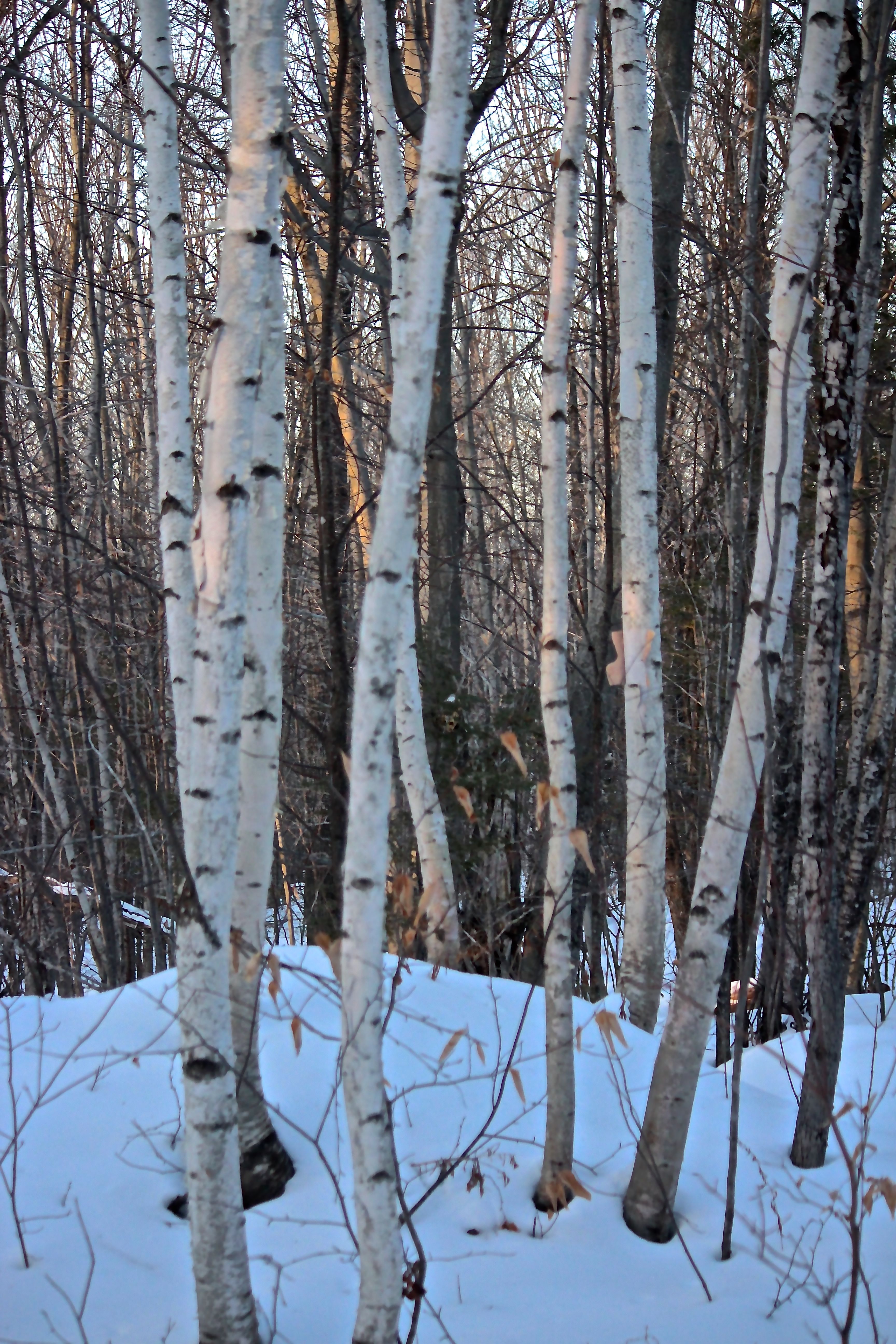
Amongst the evergreens  a paper birch offered a twist on life. I believe this is the result of sun scald–the heating and freezing of thin bark. Typically, the white reflective bark helps the tree avoid such danger–but something obviously happened to cause this candycane-like stripe..

sun on hemlocks

Though it was getting late in the day, rays of sunshine illuminated the darker side of things.
white oak leaf

As I followed more porcupine tracks at the summit, a dried leaf captured my attention. In my ongoing attempt to draw an imaginary line showing the boundary of white oak, I added another dot.
white, beech, red oak

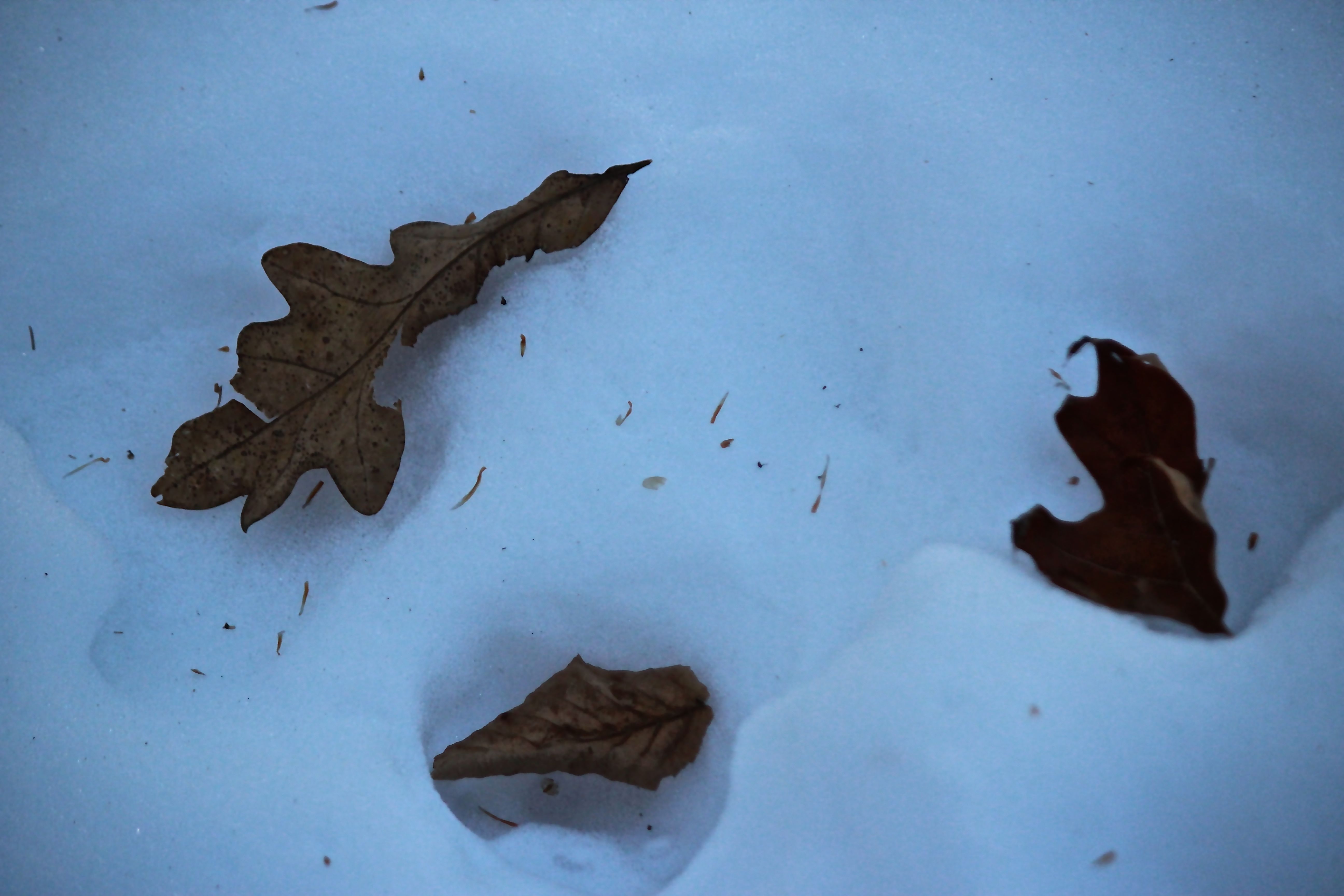
Nestled within animal tracks, three leaves told me more about the members of this neighborhood–white oak, beech and Northern red oak.
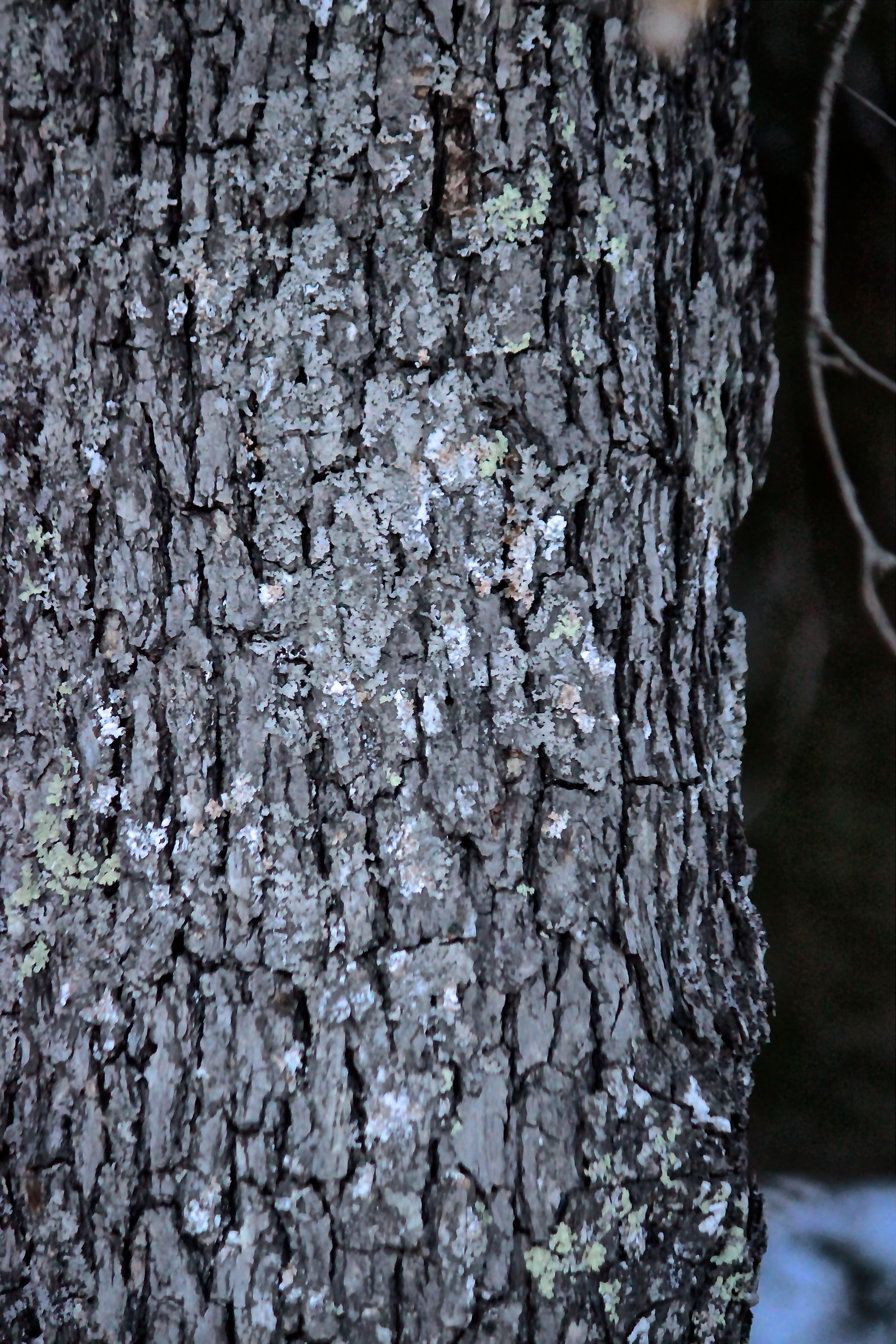
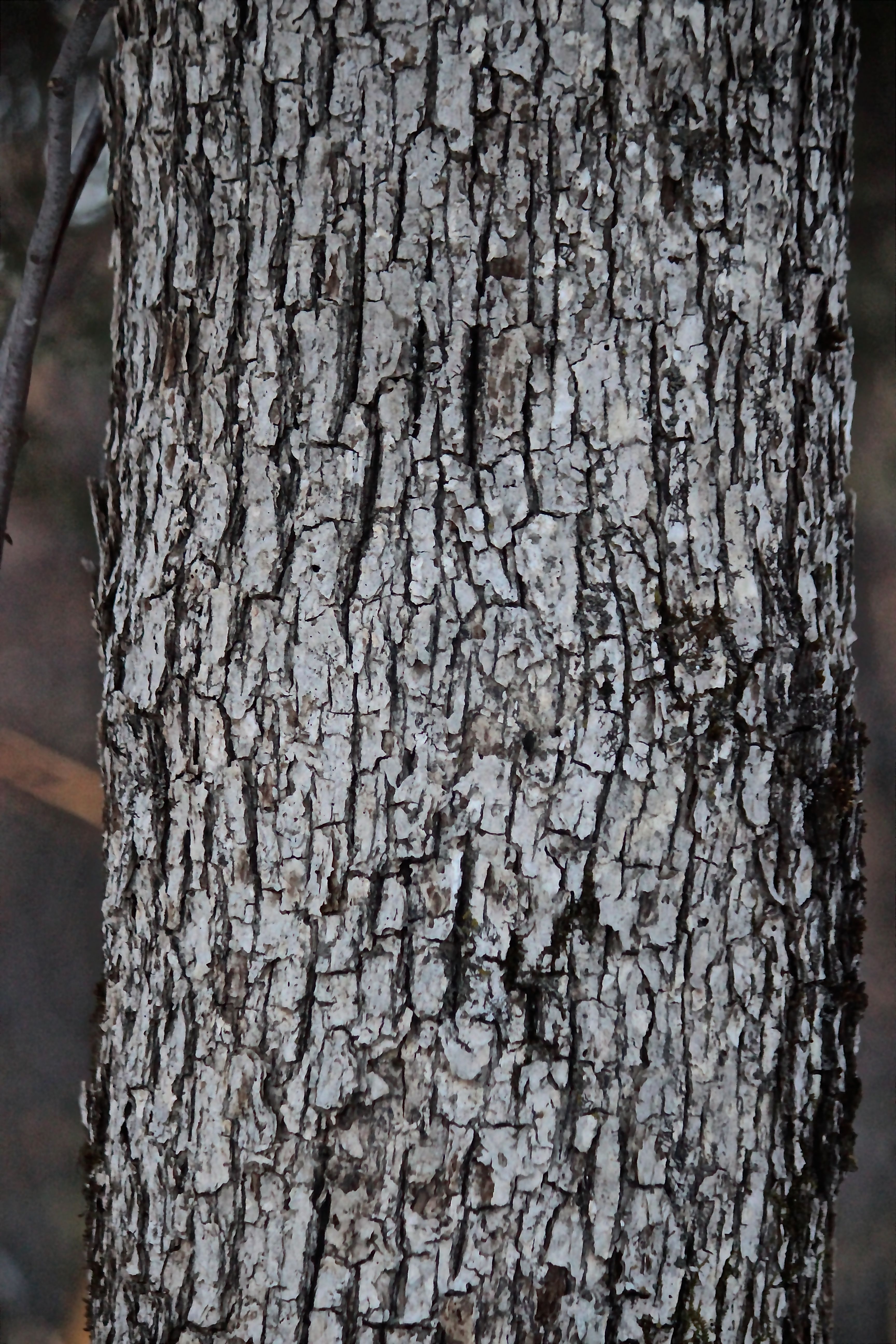
white oak 2 white oak 3 white oak layers

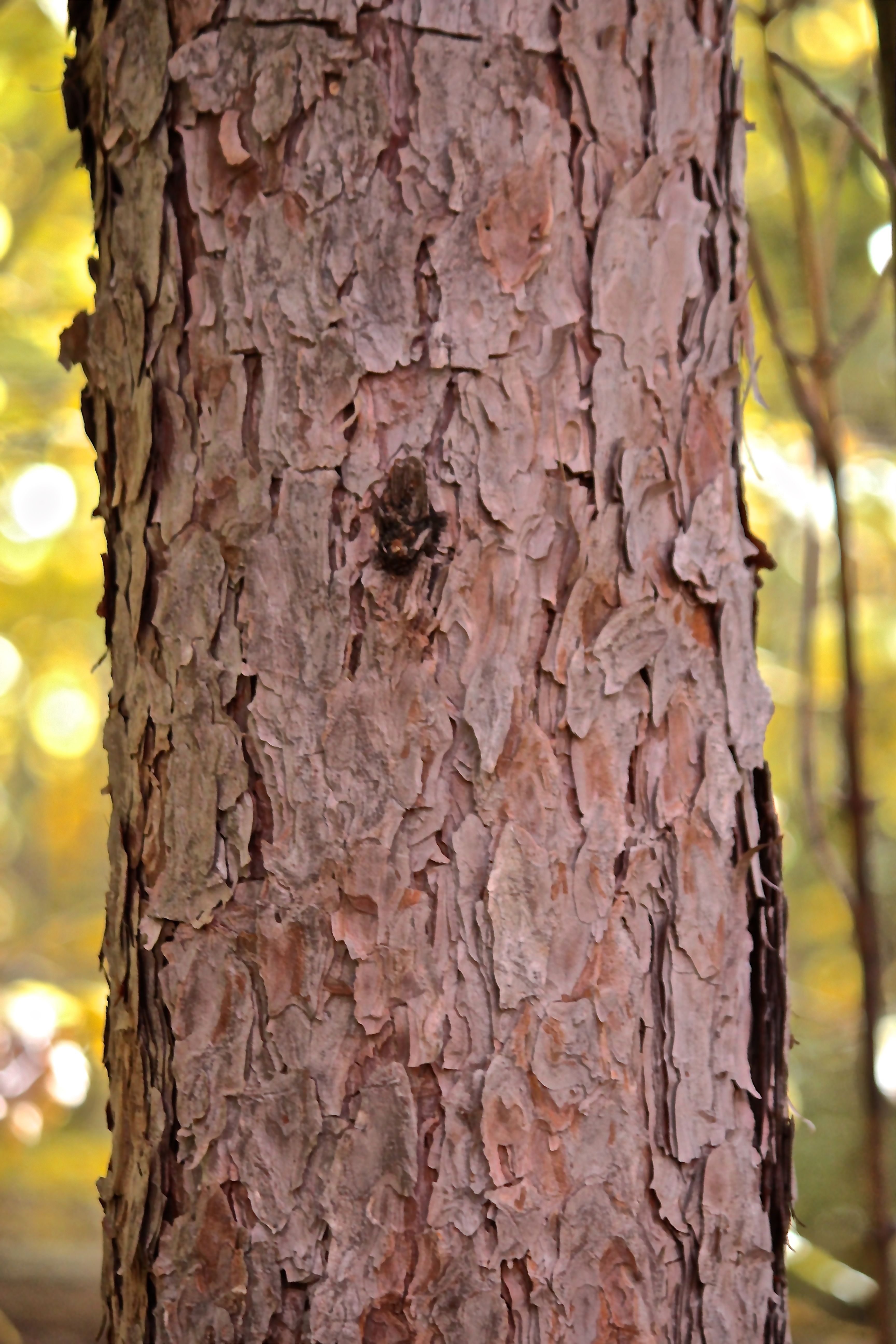
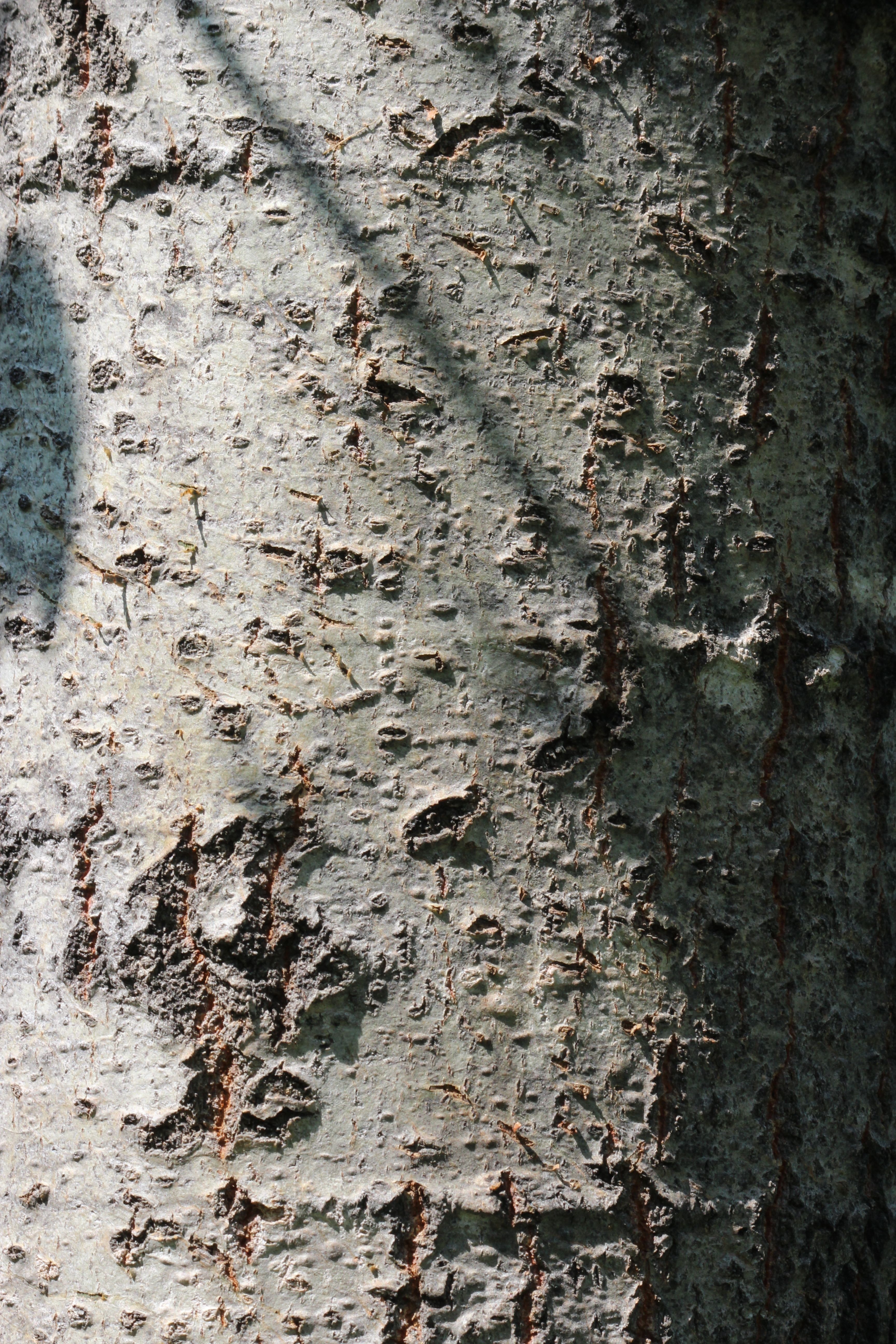
So then I searched for the white oak trees–and found them. My bark eyes still don’t cue into this one immediately and I need to learn its idiosyncrasies, including its ashy gray color and blocky presentation.

bird nest 1 bird nest 2

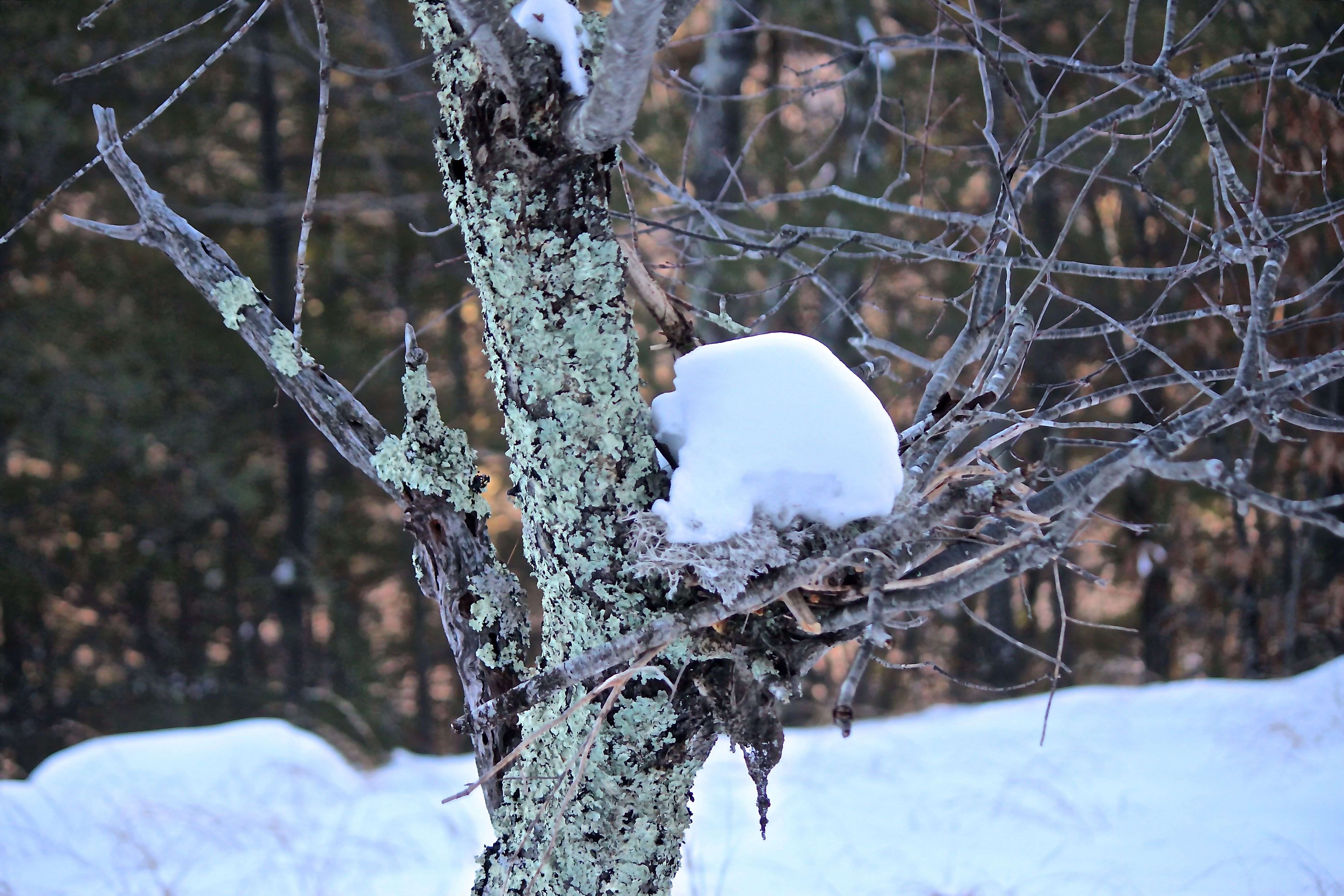
I discovered a snow-covered nest that made me ask–bird-made or human-made? It’s constructed of reindeer lichen and sits upon a base of sticks about four feet up in a scrubby old oak. I was as excited by the find as I was by my wonder and lack of an answer. What fun would it be to know everything?

summit

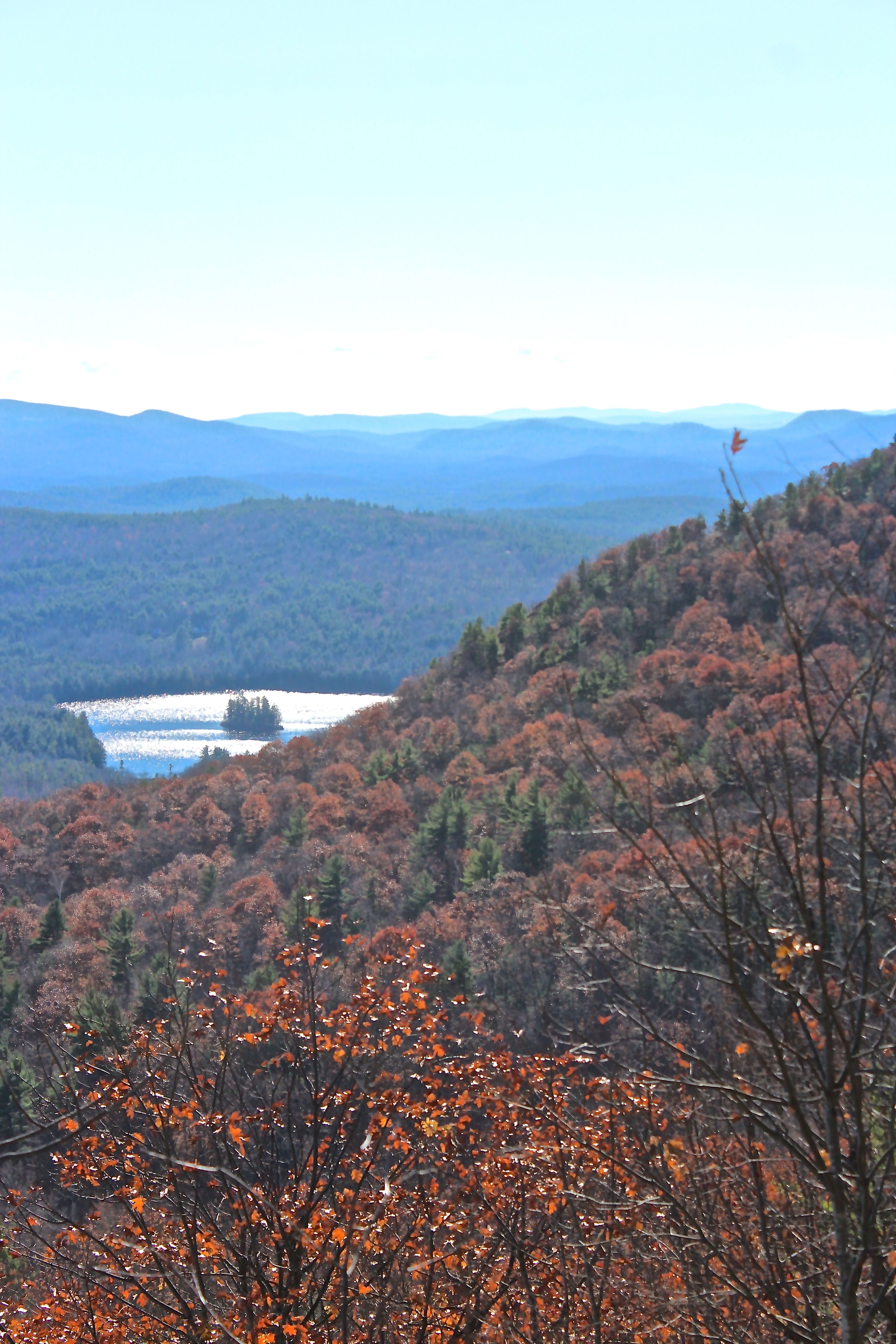
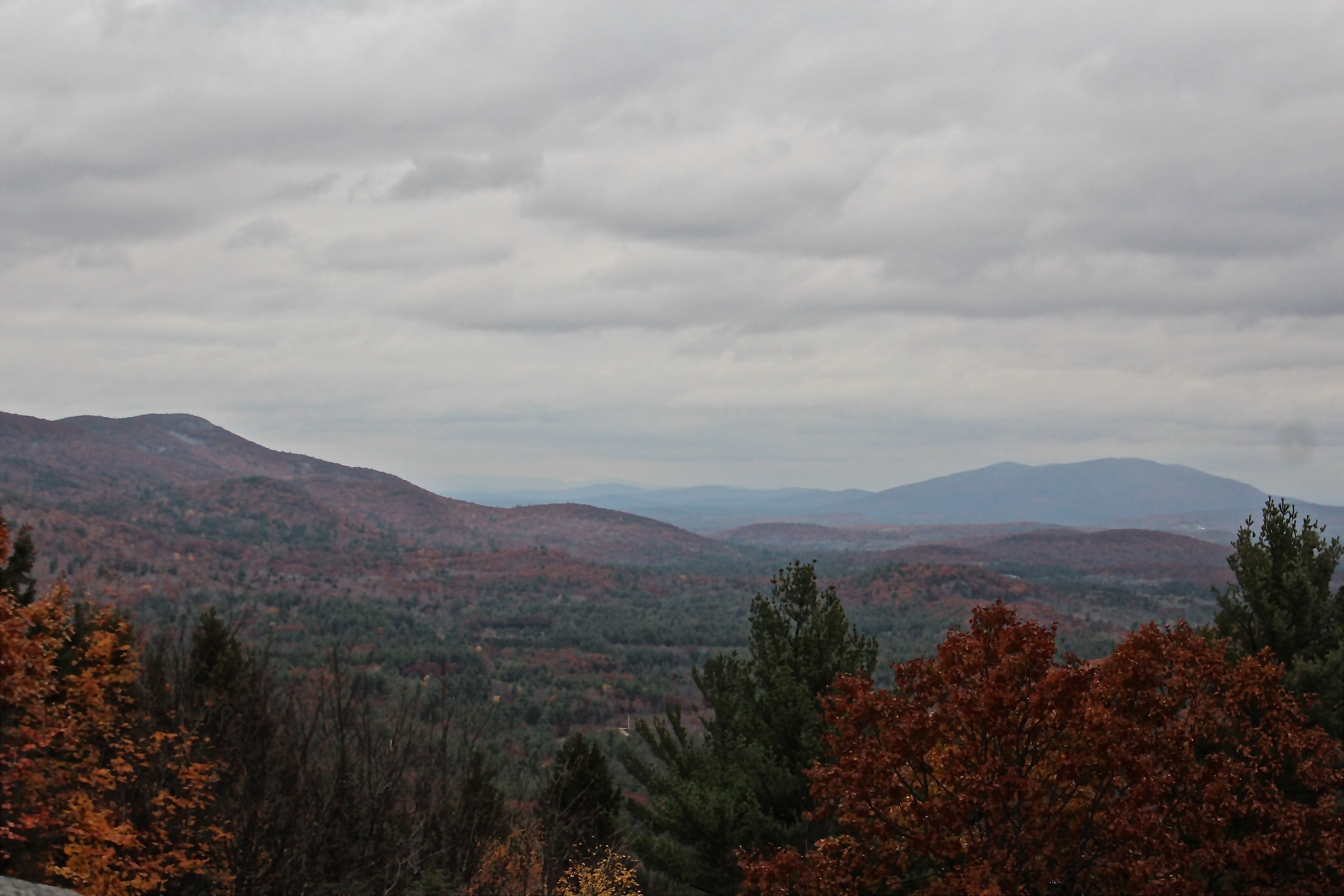
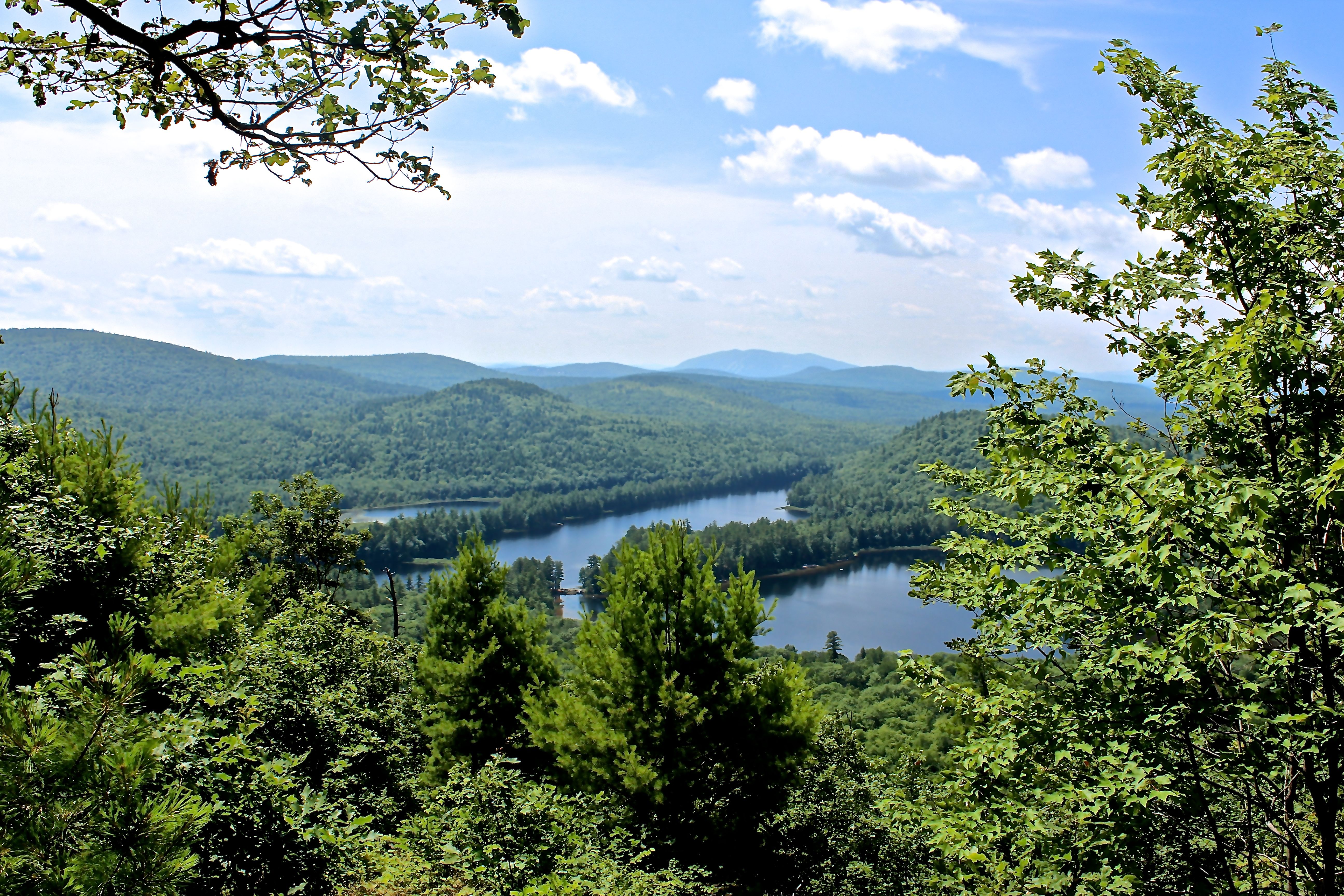
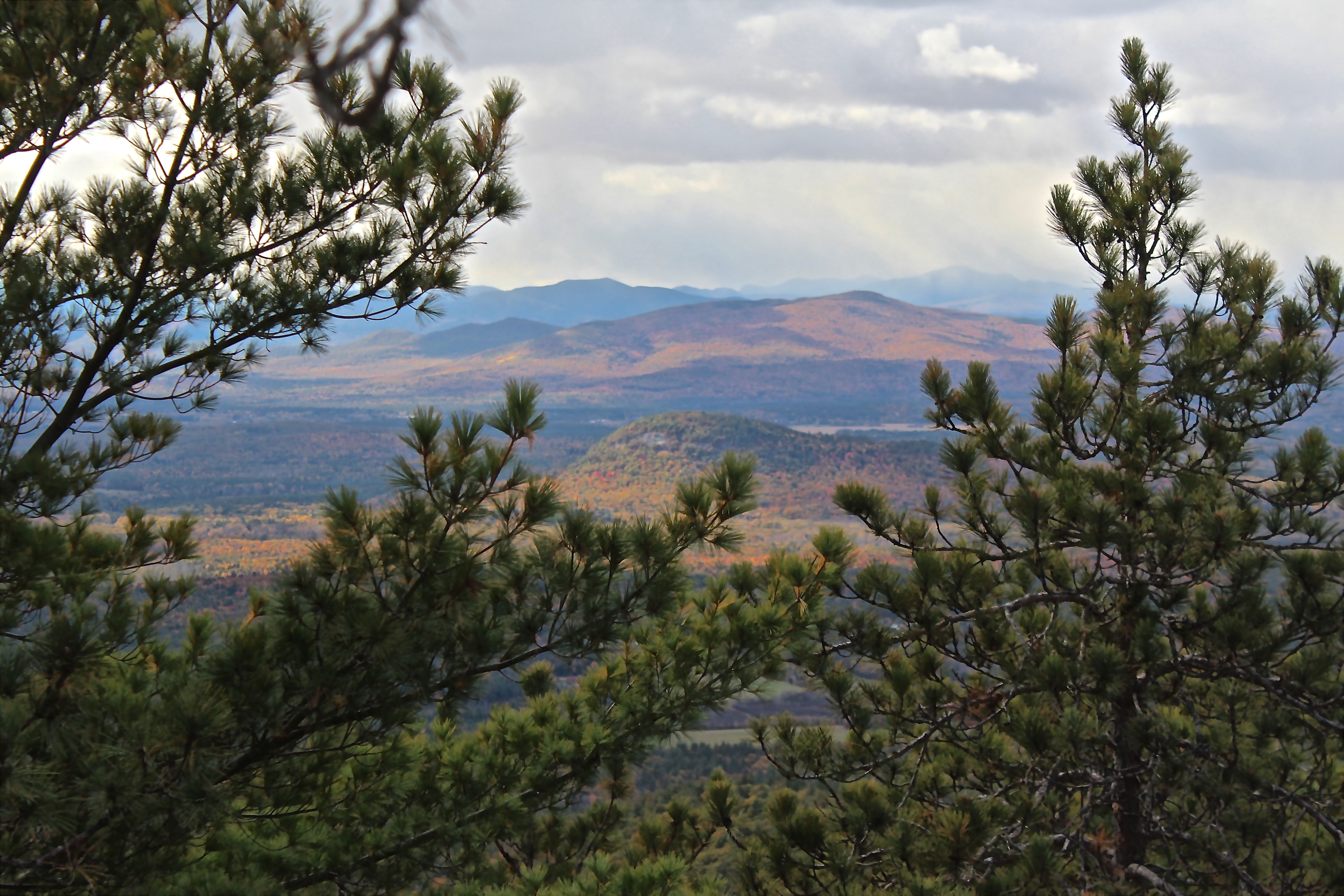
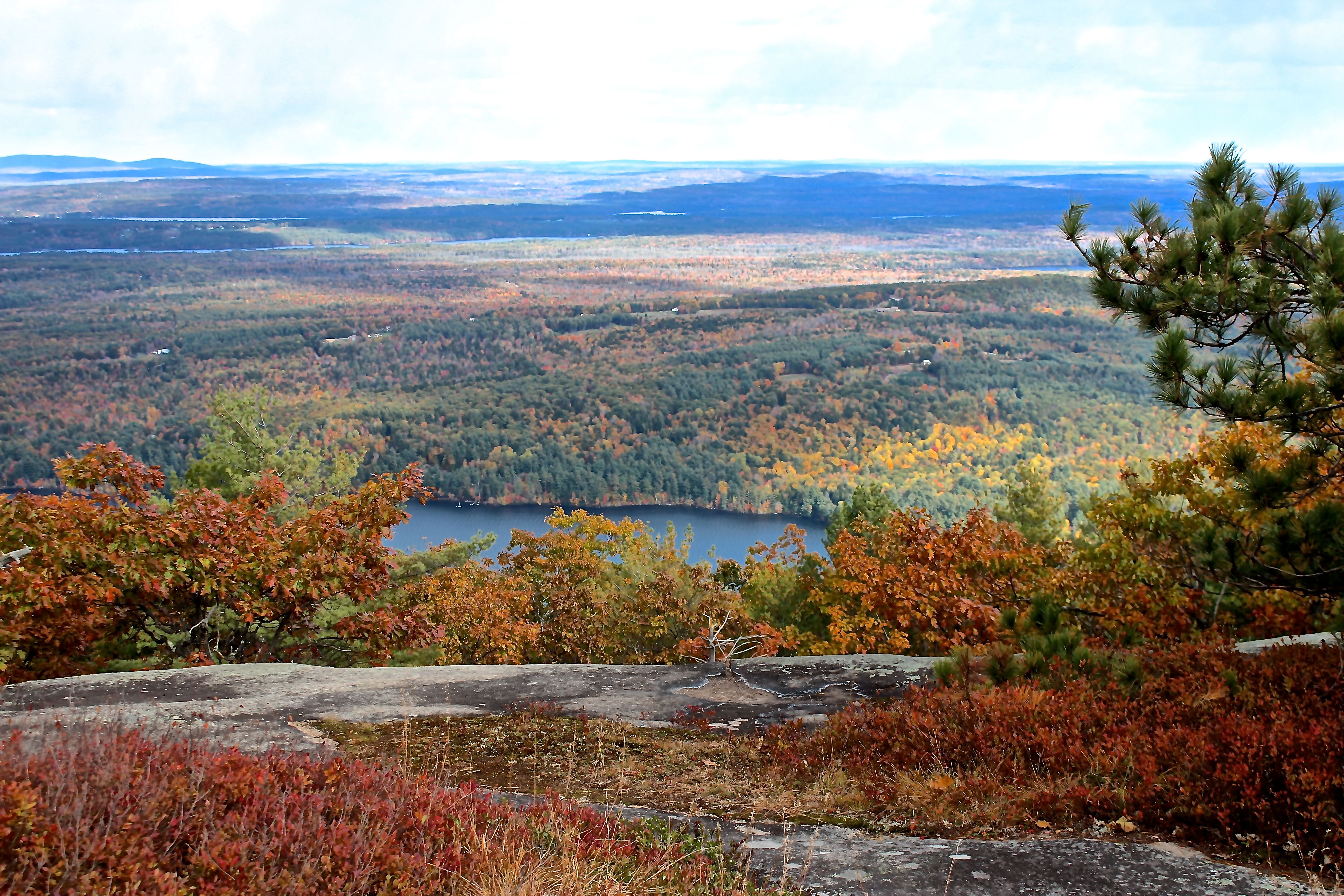
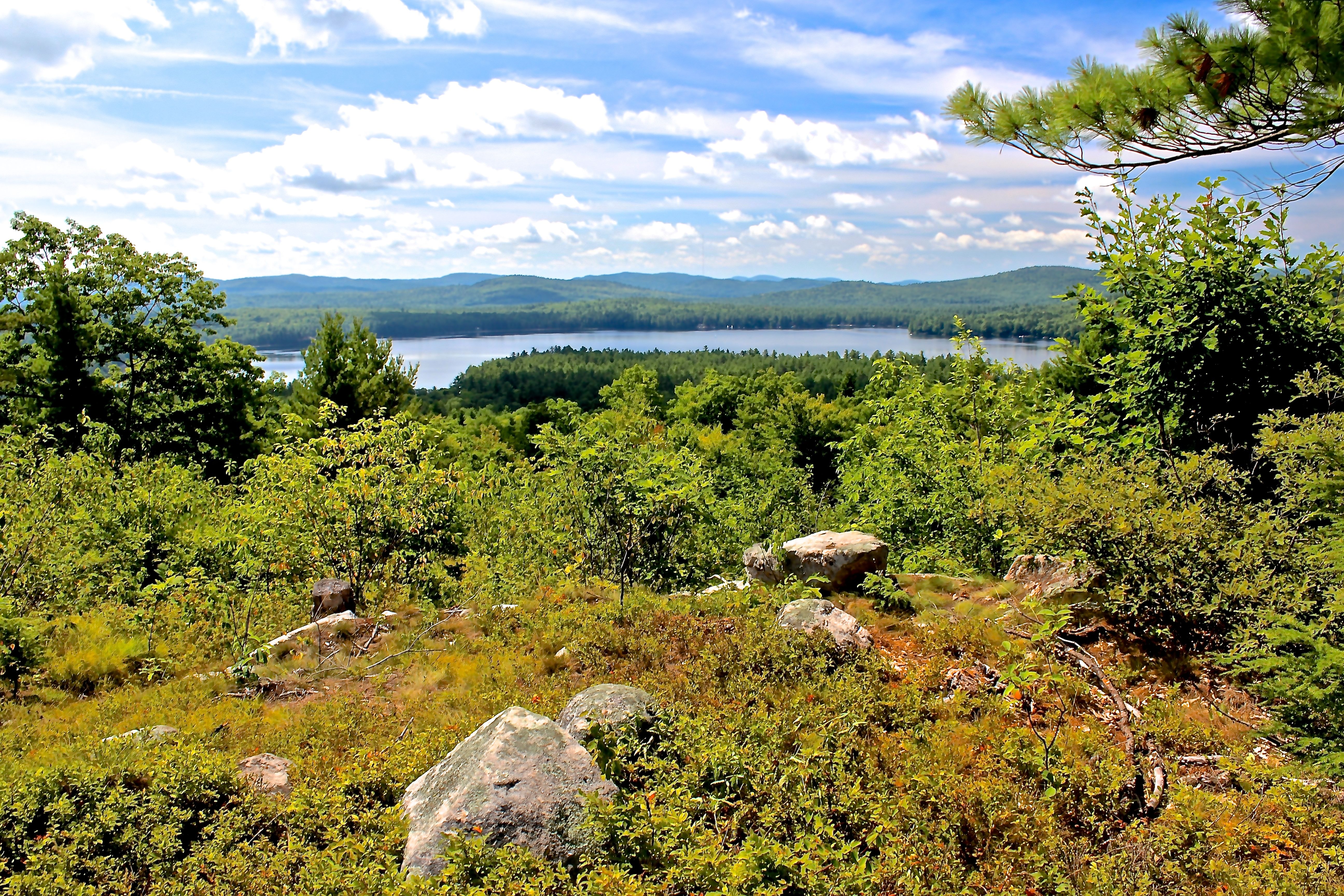
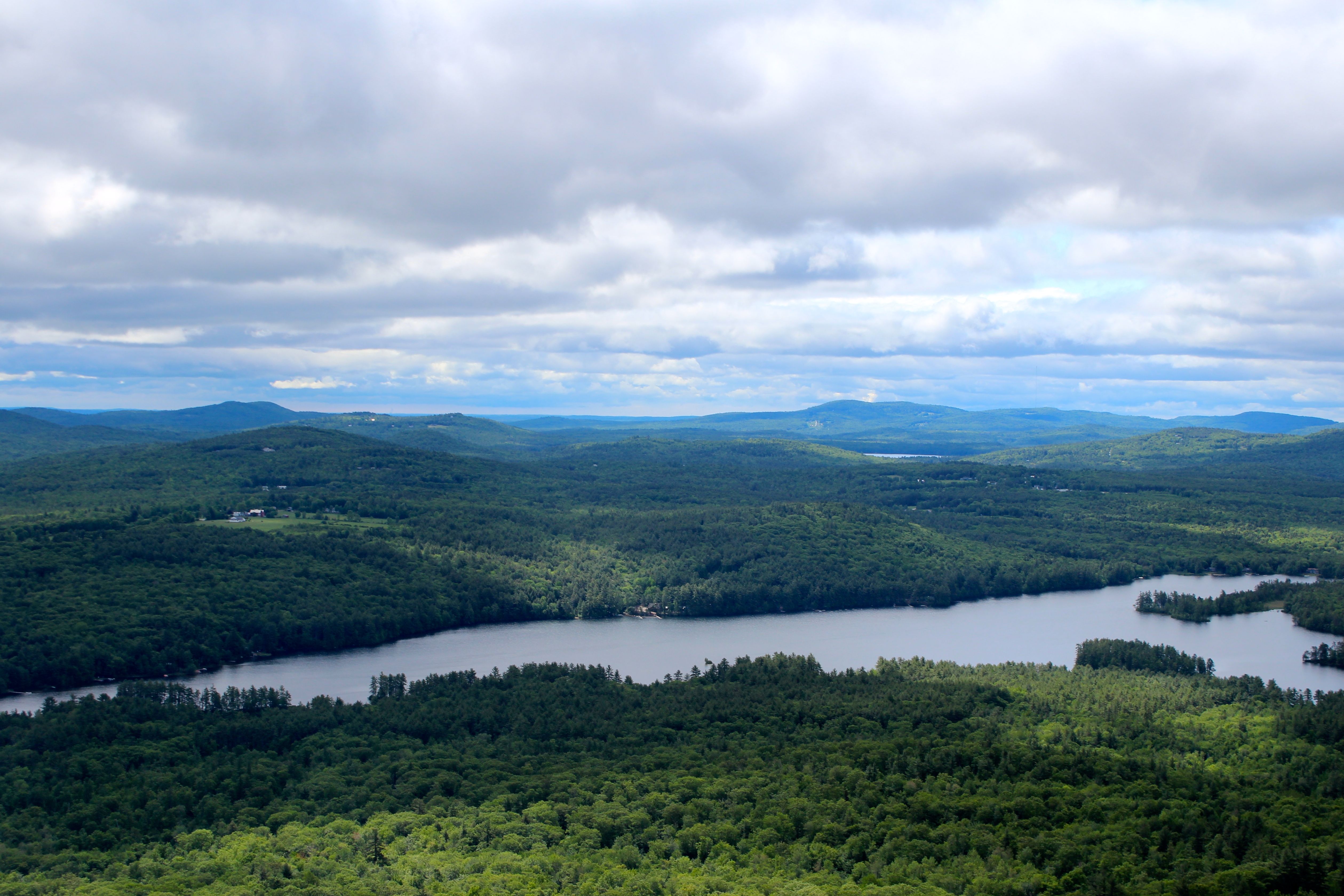
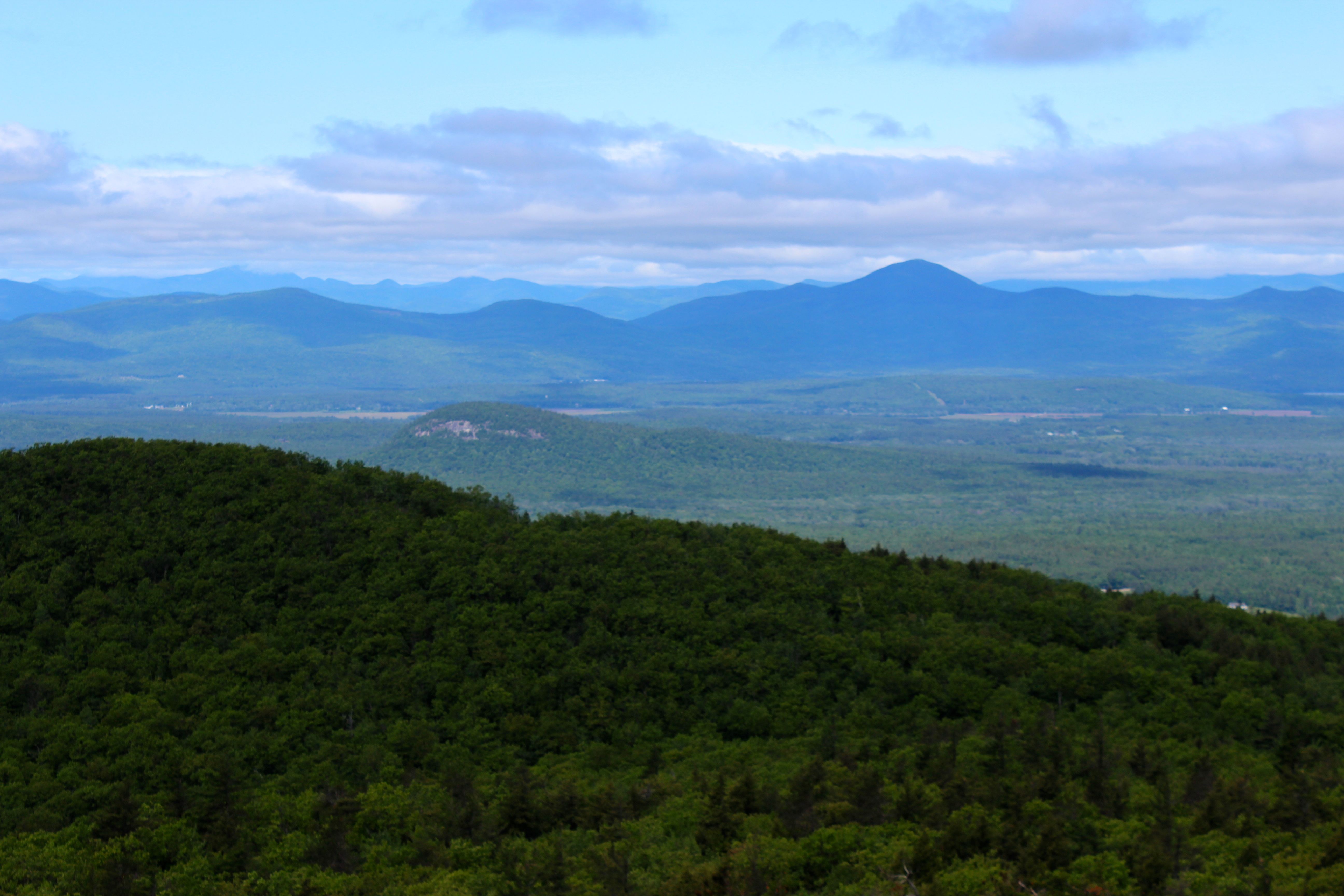
From the summit, I could see Pleasant Mountain’s ridge–giving me another sense of home. The view isn’t spectacular, but that isn’t the point.

Kearsarge 2

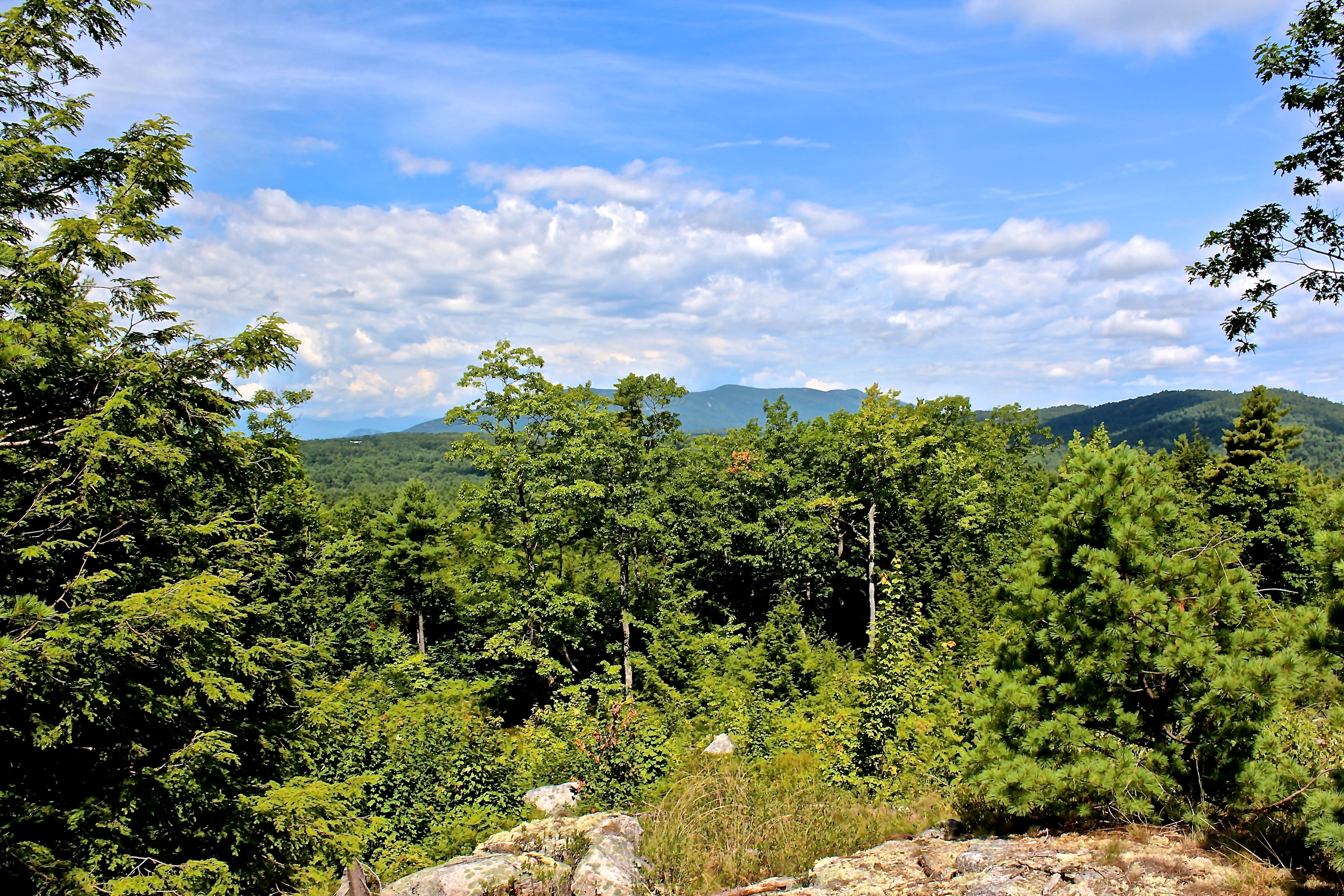
Heading down, a second old favorite came into view–Kearsarge North. I stopped frequently as I descended–to listen and watch. And smell. Twice, a strong cat-like pee odor tickled my nose. The tracks were there, but I couldn’t find any other bobcat evidence. One of these days.

paper 4 paper birch 1 paper birch 3 paper birch rainbow paper burgundy Paper pastel

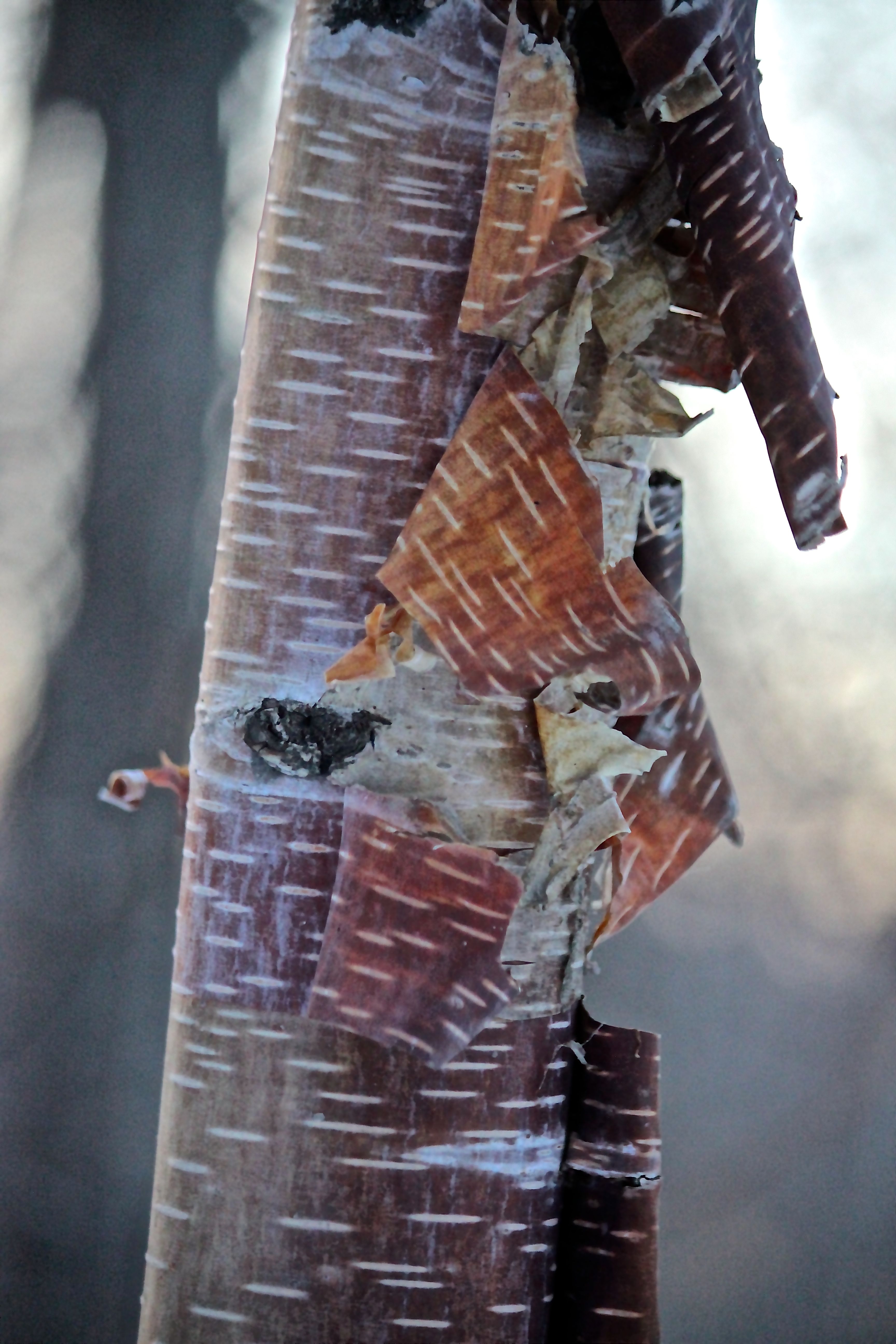
A rainbow of color presented itself among the paper birch trees–such variation for what is commonly called white birch.

Mount Tom cabin 1 Mt tom cabin 2

Near the bottom, the Mt Tom cabin speaks to an earlier time when living off this land was the norm. Though I like to think that I could stay here by myself for a week, I’m not so sure. Of course, that would force the issue and surely the truth about myself would be revealed. Maybe it’s best left a mystery. ;-)

staghorn sumac1 staghorn red

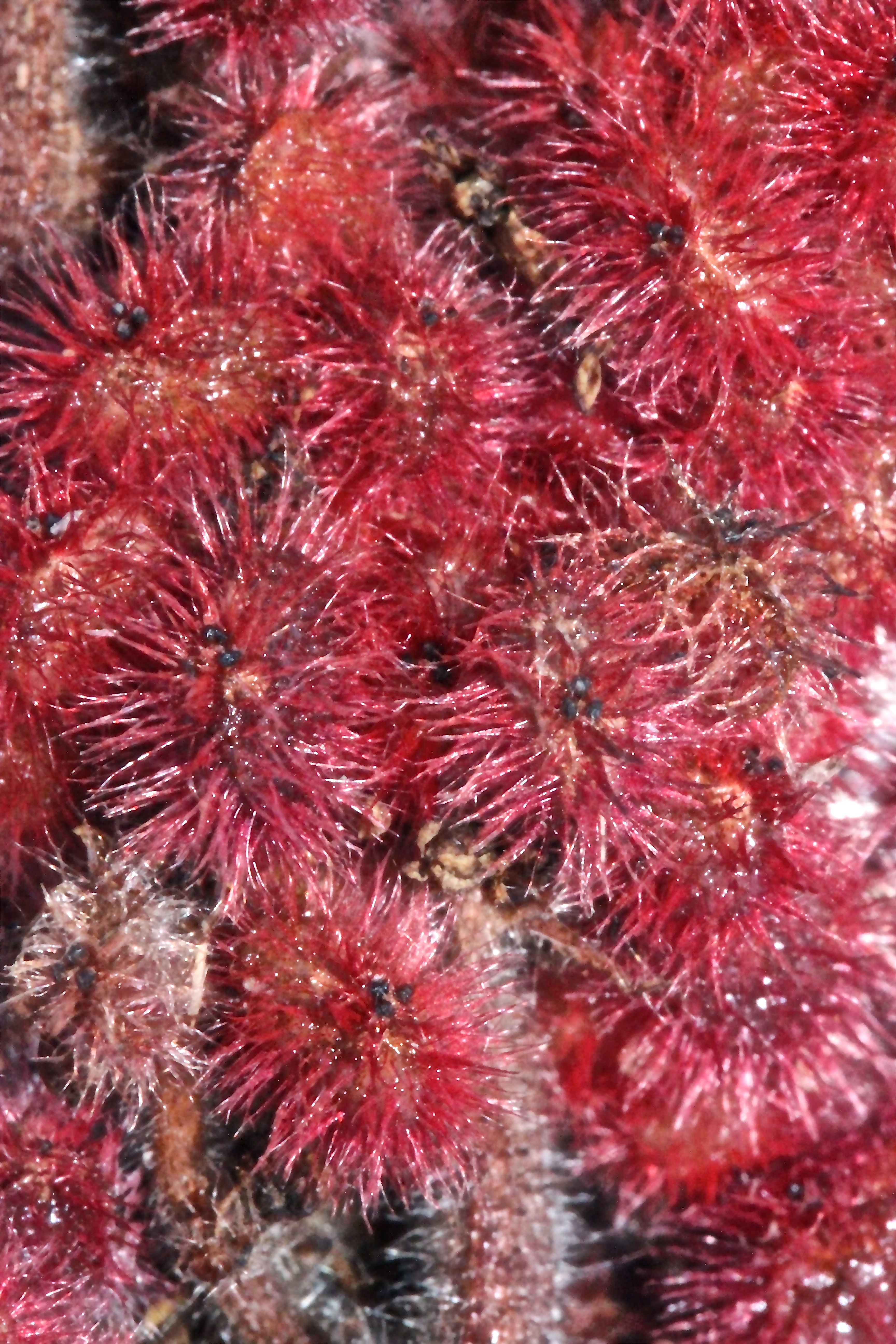
Before slipping out of my snowshoes, I paused beside the staghorn sumac. It was my height, so I had an opportunity to examine its hairy features closely. Animal from The Muppets must have cloned himself.

Full moon

There was a time when I was easily unnerved being in the woods alone. And I still have moments–especially when a ruffed grouse erupts. Geesh–that can certainly make my heart sound like it’s going to jump out of my body. But, the more time I spend out there, the more time I want to spend out there–exploring, discovering, wondering. This afternoon, I finally followed the full moon home, thankful to find even an inkling of my spirit. I recognize that the word “home” has come to mean more than one place. Our abode is our home, but time in the woods is also a homecoming.


Savoring the Sanctity of the Mountains

“Savor the sanctity of the mountains in these incredibly discouraging times,” said a friend on Friday. And so we did.

MW morning

The mid-morning sun highlighted Mount Washington as we passed through Fryeburg Harbor–always a breath-taking view.

trail sign

Our destination: Speckled Mountain in Evans Notch–via Blueberry Mountain.

Bricket Place

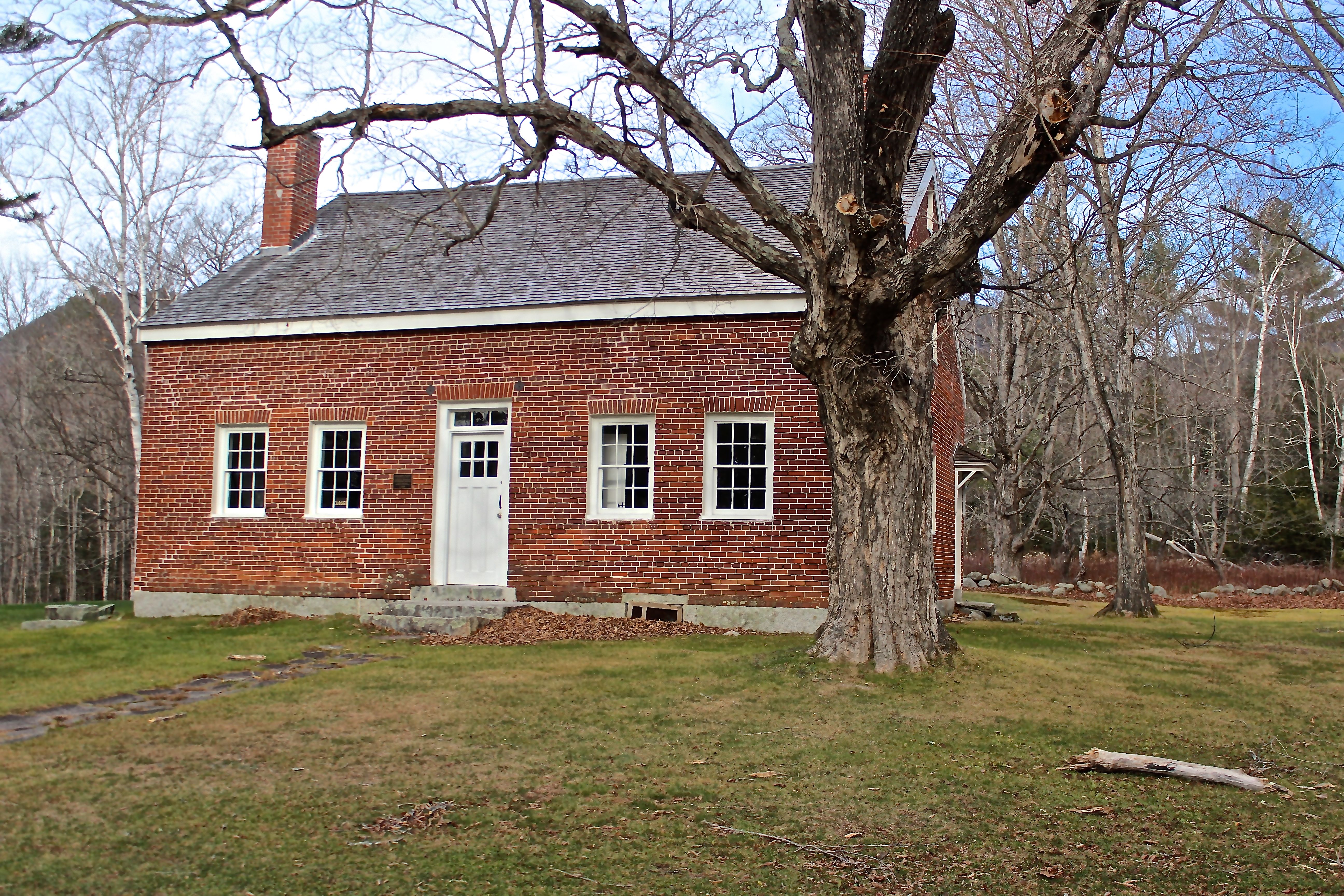
Parking is at the Brickett Place, where the Brickett family farmed, logged and produced maple syrup in the mid-1800s. Their original home was log, but they later built this house with locally-fired bricks.

Bricket place signage

The house is listed on the National Register of Historic Places.

Y

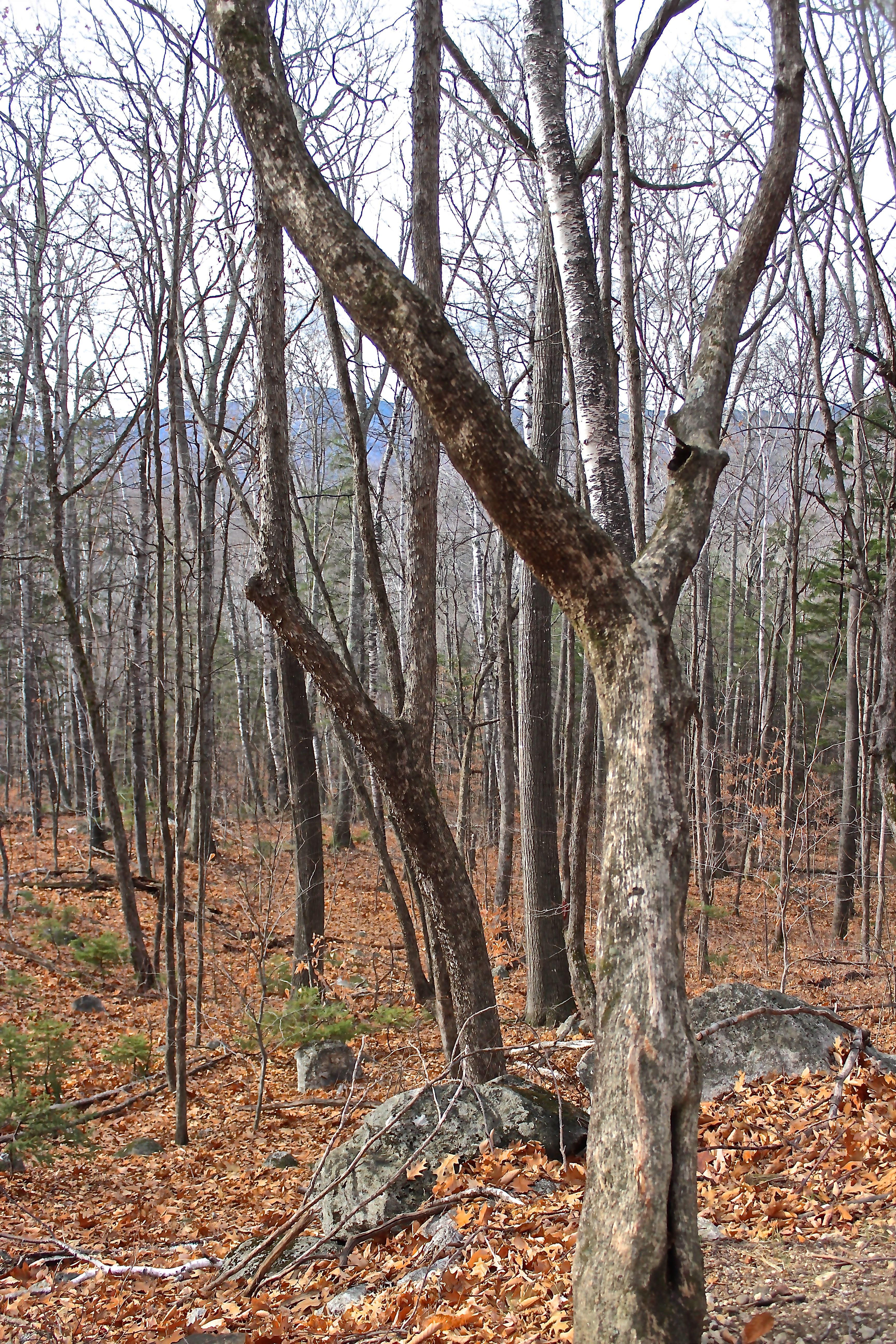
Hop Hornbeam trees are abundant in a section of the lower trail. My guy saw slingshots in the unusual growth of these two, but I saw Ys. Why? Why? Paris? Syria? Around the globe?

B slides upper

About .7 of a mile from the trailhead, we paused at Bickford Slides–one of the many places for contemplation along the way.

B slides 2

While the upper slides are calm at the trail crossing, the brook funneled below us into a narrow chute, where the water’s fast movement has carved a channel in time.

granite, glacier

Later, on the Blueberry Ridge trail, I saw this pattern in the granite and thought of how the glaciers that covered our northern states scoured the land as they receded.    The land tells the story–I just need to learn how to read it.

climbng up Blueberry

We usually hike down the Blueberry Ridge Trail because it offers magnificent mountain views, but I was thankful that we switched things up today. A different perspective was welcome.

rime ice

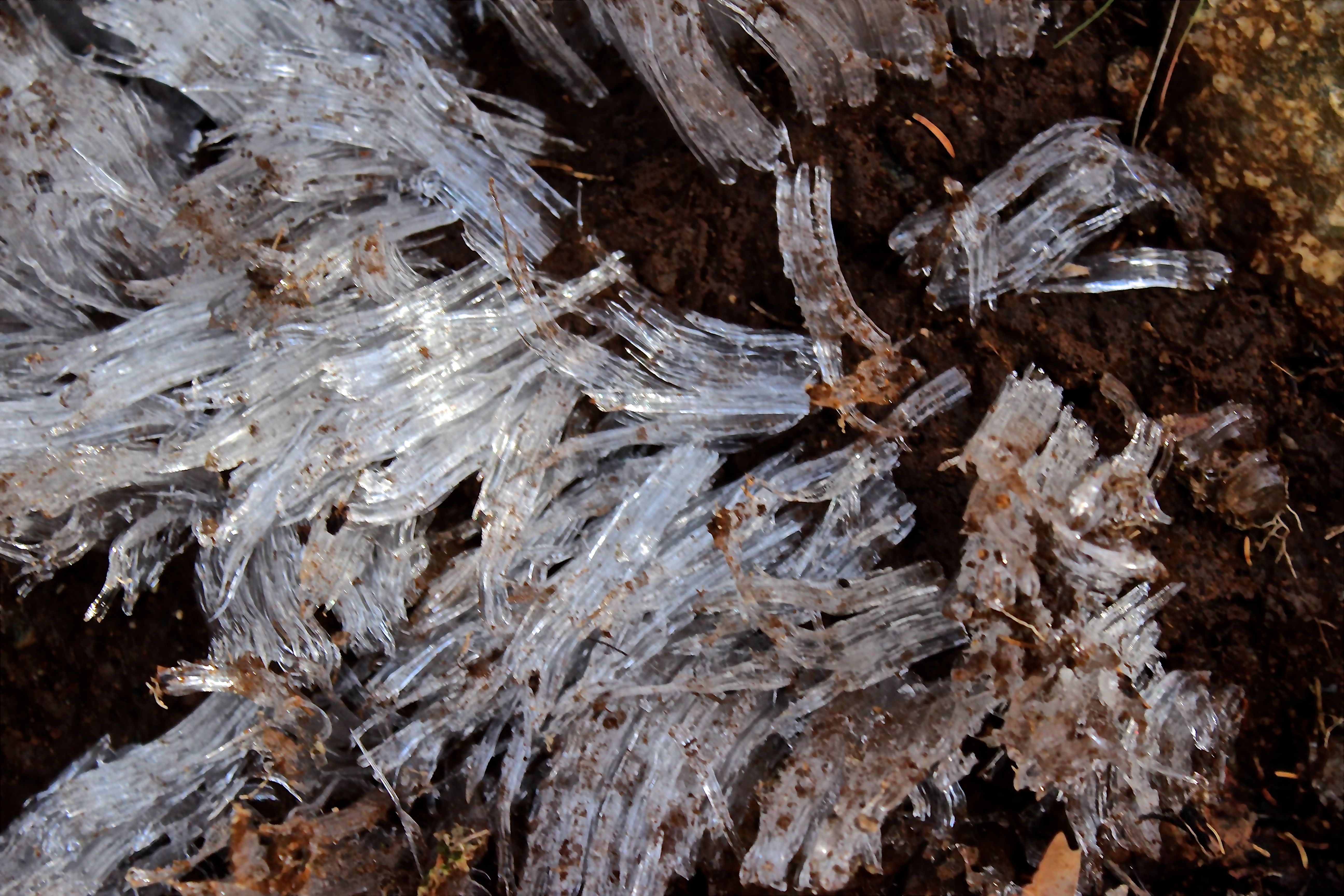
I found myself paying attention to each step upward, mindful of leaves and rocks and water and ice. Because of this, I spent a lot of time staring at the ground. There’s plenty to appreciate at this level, like the crystals of needle ice that form within the earth.

ice 1

We left our crampons at home, but in the future, we need to add them to the pack.

ice 4

As dangerous as it is to walk on, I’m fascinated by the dramatic formations that change with the moment–forever fluid.

wintergreen

Other things worth noting–wintergreen leaves taking on their winter hue;

sheep laurel 1

Sheep laurel leaves protecting its spherical fruit;

reindeer lichen

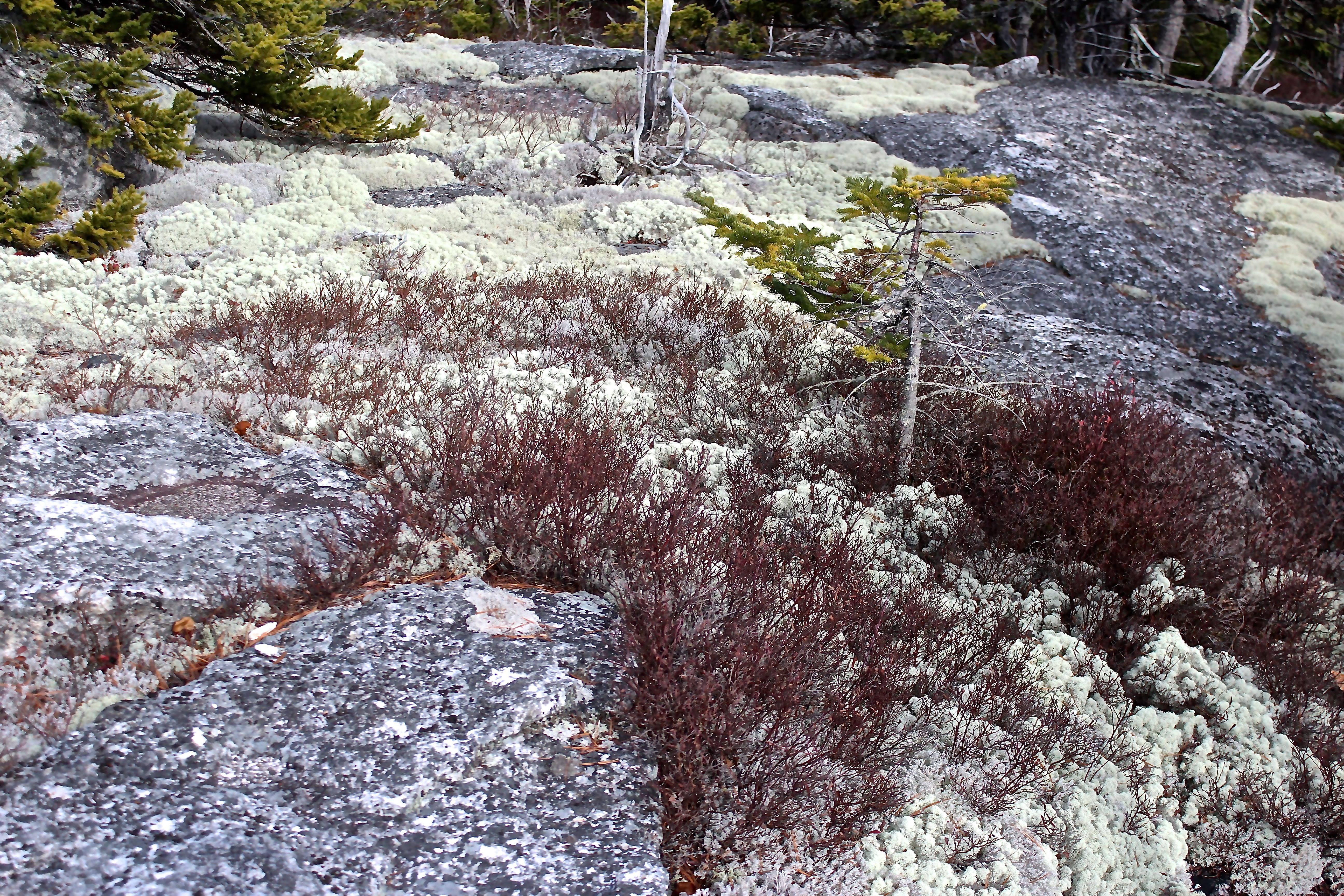
and a variety of reindeer lichens awaiting a visit from the red-nosed, sled-pulling residents of the North Pole.

MW from Blueberry Ridge

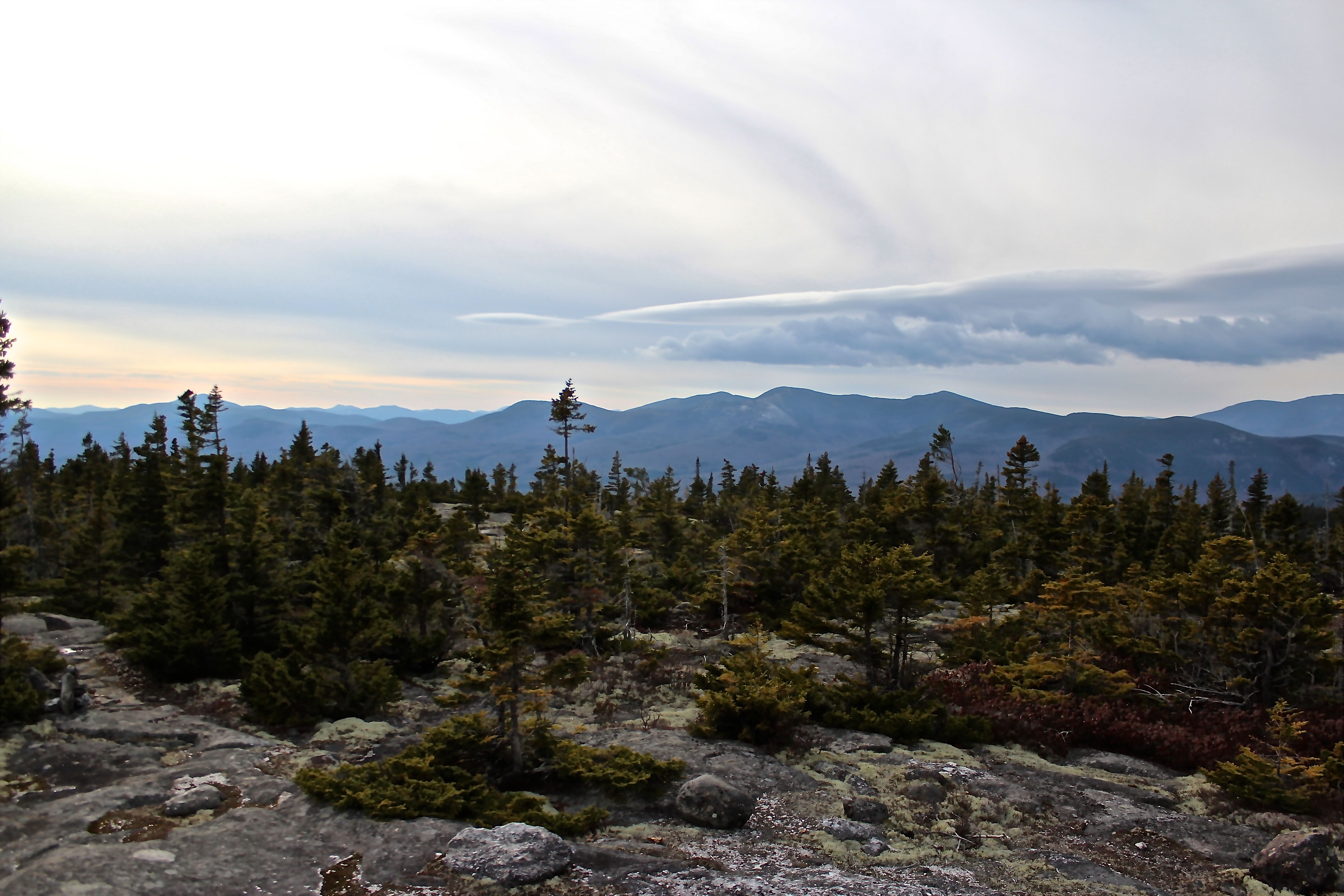
After pausing on Blueberry Mountain, we continued up the ridge, remembering to turn back frequently and take in the view,

Shell Pond and PM

including Shell Pond below and Pleasant Mountain in the background. My guy pointed out that Shell Pond really does look like a conch shell from here.

Kezar Lake

Our view also included the islands on the northern end of Kezar Lake in Lovell.

lunch rock

We chose the largest rock we could find for today’s lunch spot. Lunch? The usual–PB&J, followed by brownies,

looking back

and topped off with another spectacular view.

squirrel lunch rock 2

We weren’t the only ones choosing a rock for lunch. This squirrel prefers the top rock on the cairn.

spruce scales

Red Spruce scales and cobs line much of the trail.

squirrel cache

And we found a few caches–a sign of things to come.

nd 4

The higher we hiked, the more natural devastation we encountered. Gazing upon it brought me back to today’s reality. Blow downs, galls, fungi, animal interactions with the landscape–it’s constantly in flux. Then there’s the human factor–we leave our imprint in ways we can’t even imagine. But . . . across our nation and around the globe?

ice on Speckled Trail

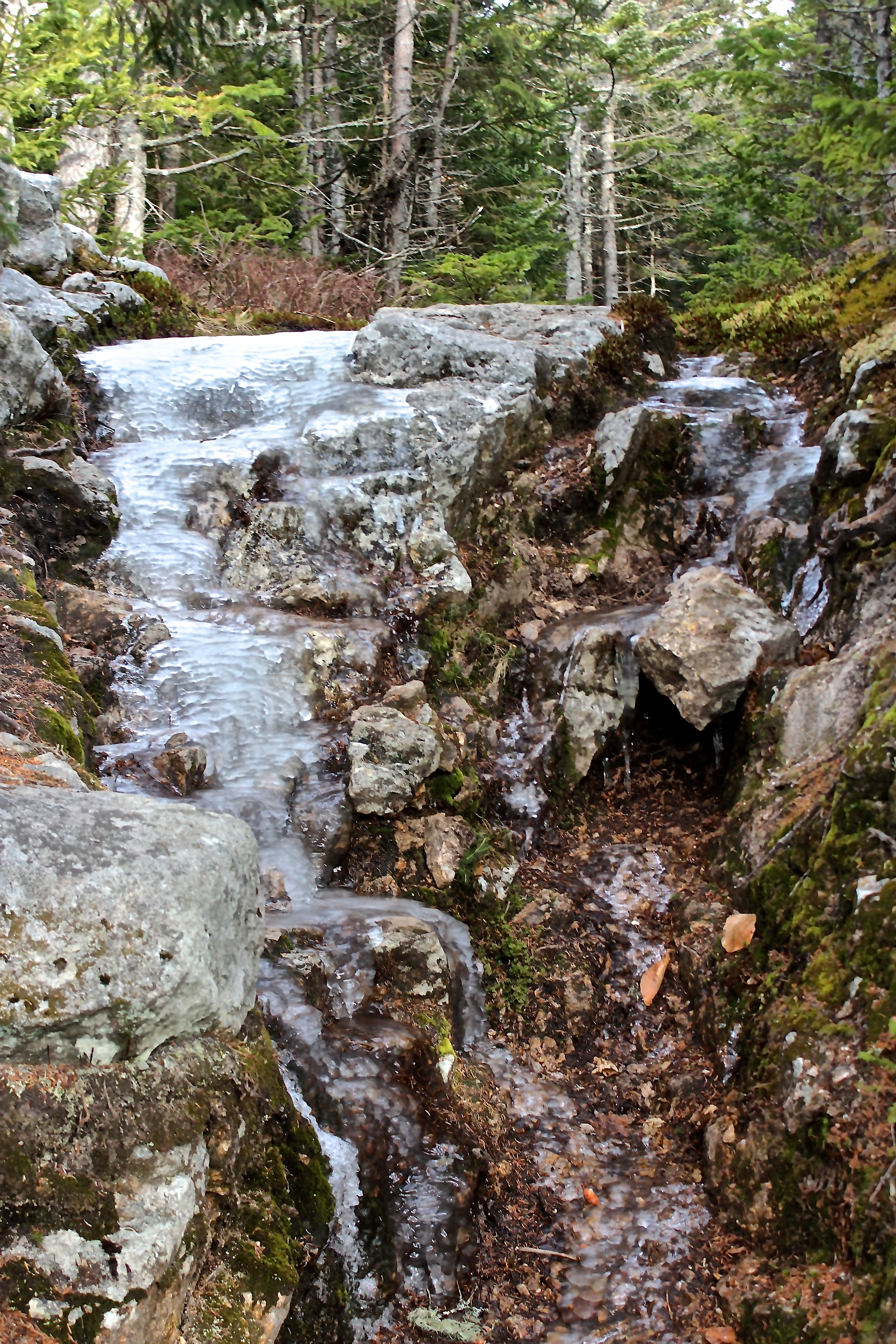
We encountered more ice on the climb to the summit of Speckled Mountain.

summit wind

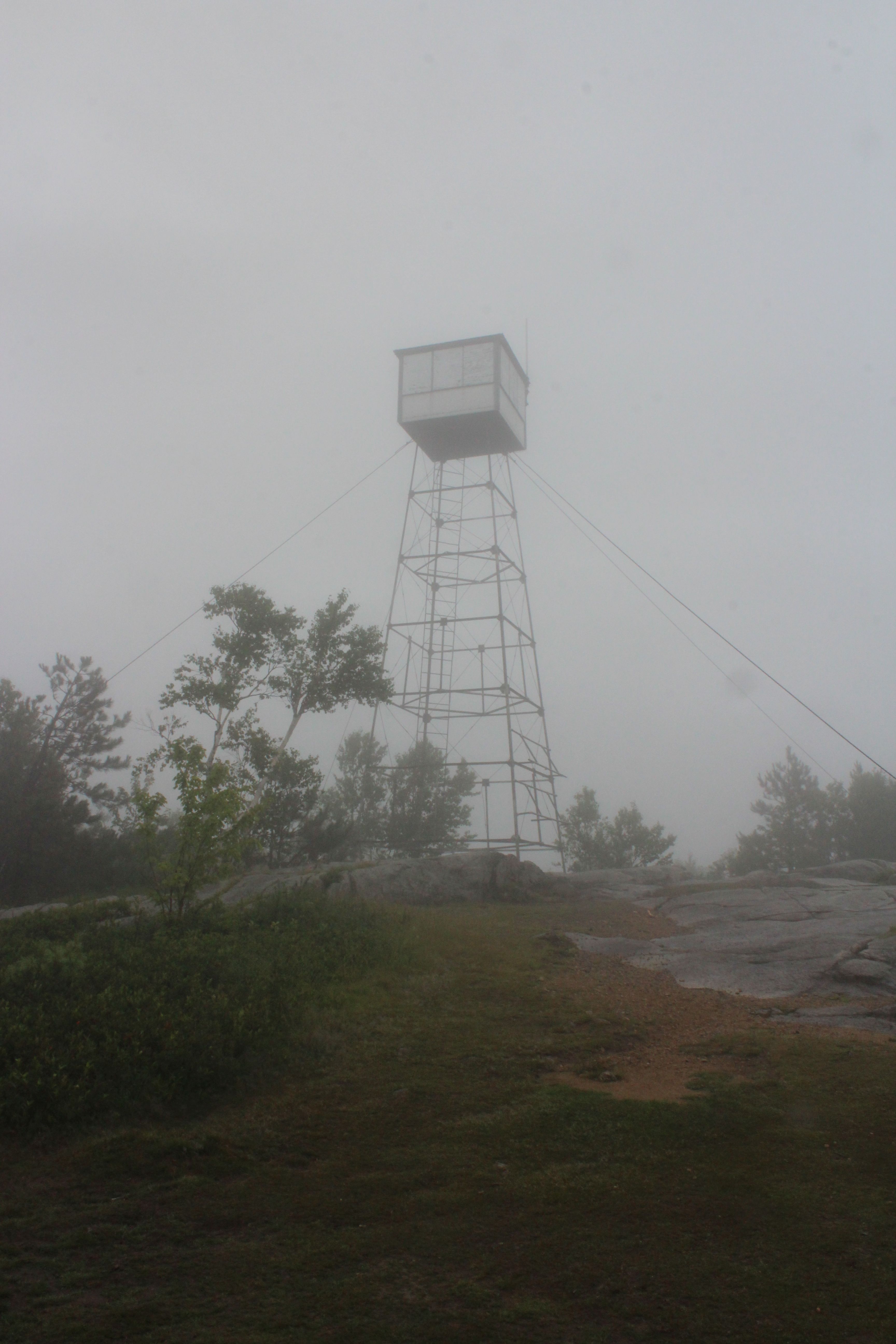
The wind was blowing when we reached the summit, where a fire tower once stood.

summit view miles of mountains

The stanchions are all that remain of this former lookout site.

summit, MW in clouds

It was getting late, so we didn’t stay long,

summit, MW,

just long enough to notice that Mount Washington was disappearing into the clouds.

sphagnum and snow 2

We followed the old jeep trail that is the Bickford Brook Trail, on the way down. Rather than ice, we found snowflakes among the sphagnum moss.

hidden rocks

Once we got below the spruce-fir forest, the beech and oak leaves obscured the rocks, making it almost more difficult than the upward climb.

beech sign

I couldn’t spend as much time as I wanted scanning the beech trees for bear claw marks because I was paying attention to my foot placement, but I did pause by this tree that has served as a sign post for many years.

1976

1976–a very good year. I happen to be a member of the Bicentennial Class of North Branford Senior High School. Go Thunderbirds!

Eight plus miles and five and a half hours later, we’d completed the loop as the sun   lowered behind the mountains.

hobblebush, global prayer

My hope is that these hobblebush buds encircle the world in prayer so that all may savor the sanctity that we find in the mountains.

Mountain Moments

I took to The Mountain today, as we fondly refer to Pleasant Mountain ’round these parts, in search of what it might teach me.

It was chilly as I started up the Bald Peak Trail. Beside the stream, I thought about its life-giving capacity.

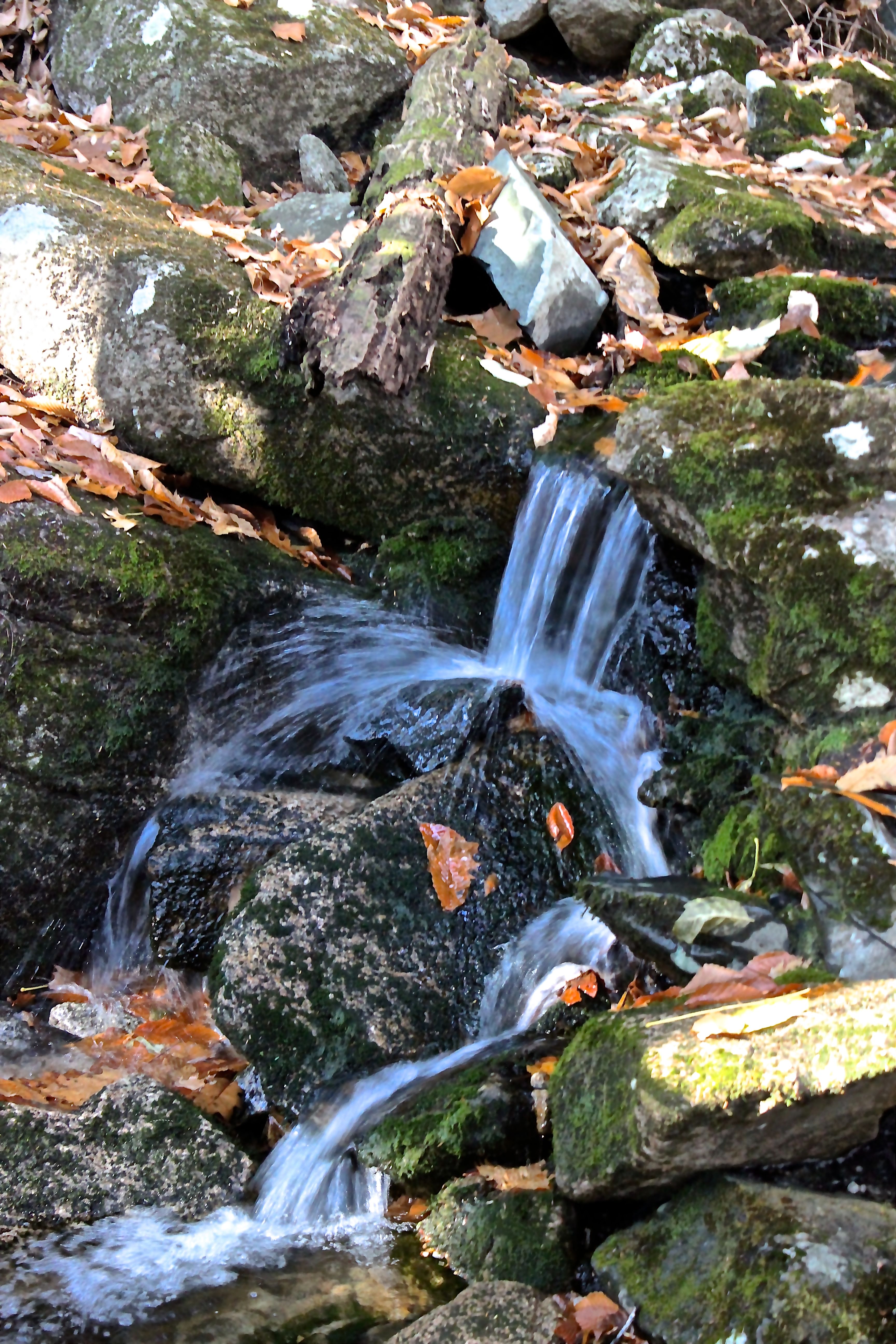
mountain stream

 tear-shaped droplet

It wasn’t only the stream that was wet. The leaves were covered in droplets that acted as a hand lens–offering a closer look at the structure.

Sue's sign

Sue’s Way is about .7 up Bald Peak. For all my treks up The Mountain, I’ve never tried her way. I don’t know Sue and had no idea what to expect.

Sue's Way 1

It begins in a beech grove. As I continued, the beech and oak leaves were so thick that I couldn’t identify the trail, and sometimes had to pause and search for the next orange blaze. It slowed me down and made me pay attention.

Beech on Sue's 1

Especially to things like this old beech. I knelt beside it, praying the wind wouldn’t decide this was the moment to shout timber, and realized the tree was hollow in the center. Somehow, with a minimum bit of sapwood under what’s left of the outer bark, this fella made enough food to leaf out. To keep on giving even when  times are tough.

beech on Sue's 2

Its leaves looked a bit worse for wear, but they exist. This beech is. So am I.

Sue's Way 2

The community soon changed and I followed a stream bed where water flowed below the rocks.

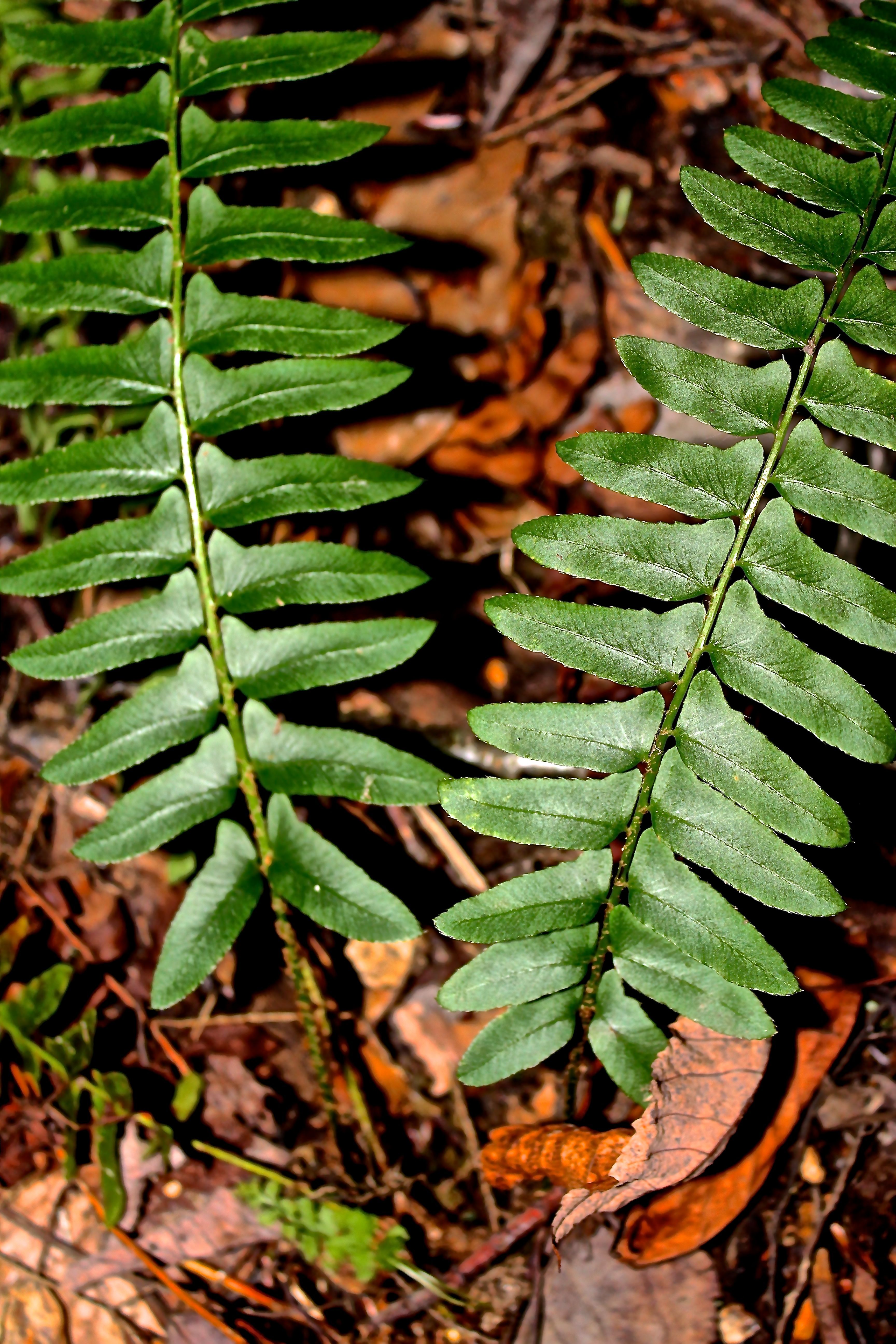
evergreen wood fern

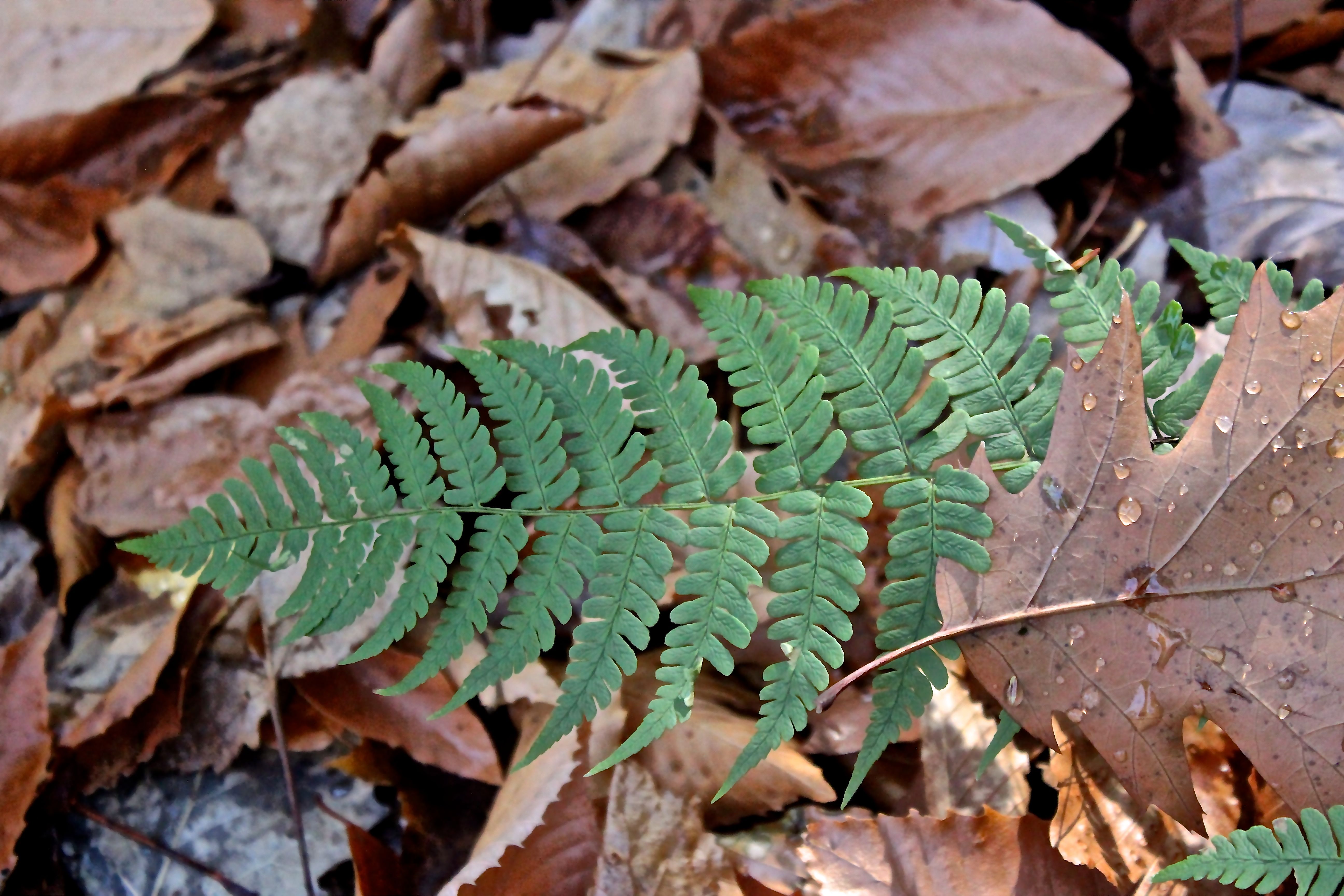
An enchanted valley–I was in the land of the evergreen ferns. Evergreen Wood Fern (Dryopteris intermedia)–first downward pointing pinnule on the lowest pinna is shorter than the pinnule next to it. Huh? In fern terms: a fern frond consists of the blade and stipe or stalk;  a blade is the leafy part of one frond; each blade is divided into separate leaflets or pinna; and the pinna may be divided into smaller leaflets called pinnules.

Evergreen wood fern 2

I didn’t mention the rachis–that’s the stalk within the blade. So take a look at the rachis and the first set of pinnae. The one on the right is a big ragged, but on the left, you should see that the first downward-pointing pinnule is shorter than the second.

marginal wood fern

Marginal Wood Fern (Dryopteris marginalis) also flourishes here. Its margins are smooth, where as the Evergreen’s are toothed and have bristle tips.

marginal wood fern 2

I found some that were fertile, with their round sori located near the margin–thus the common name.

evergreen & marginal

In some spots, they grow so close to each other, that they seem to be the same plant. Not so–Evergreen Wood on the left and Marginal Wood on the right. Teachable moment.

polypody

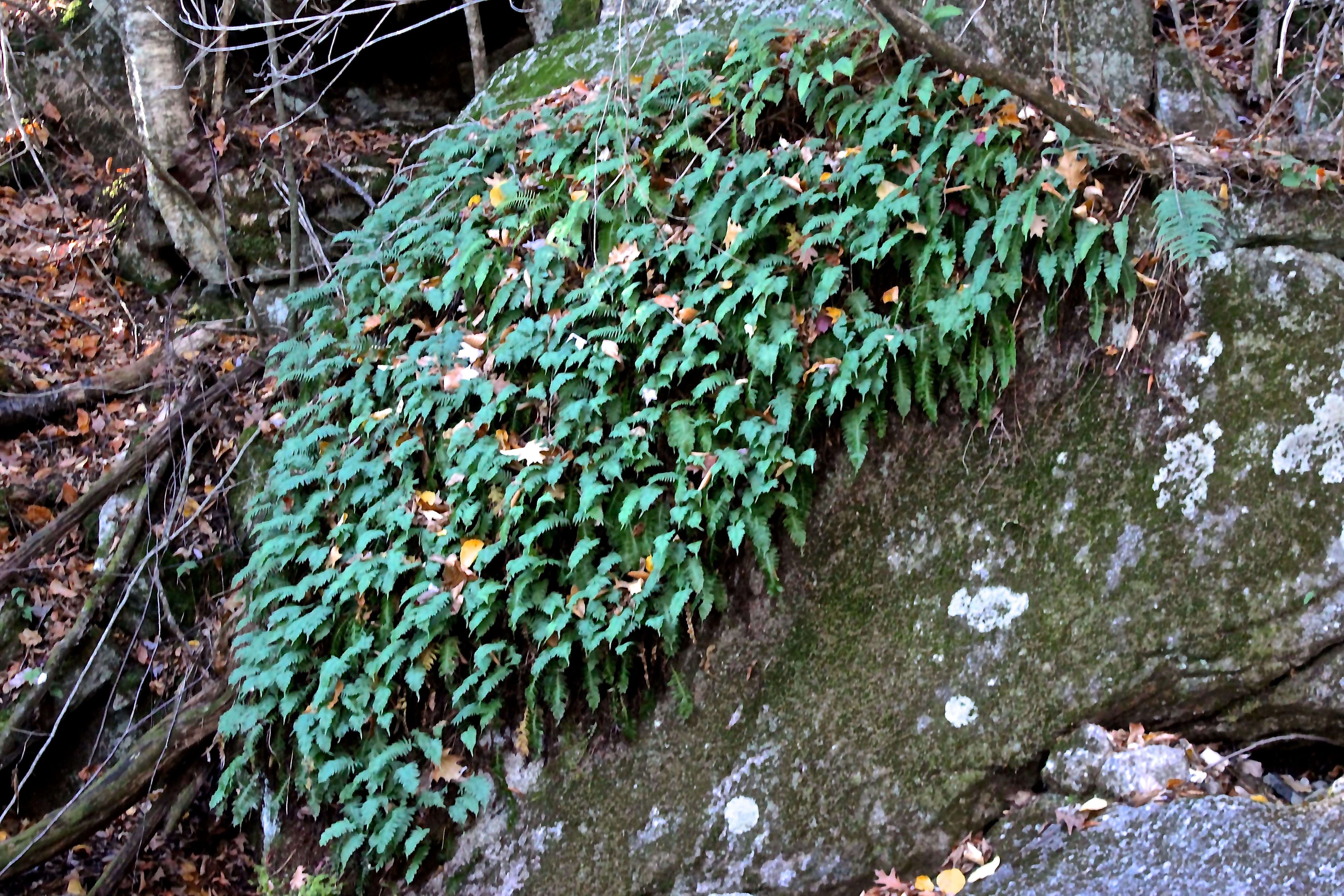
Polypody also grows abundantly, giving the rocks a green head of tussled hair.

 Ski Slope sign

At last I reached the next intersection and took a quick trip out to the Shawnee Peak ski slopes.

lifts 3

It won’t be long. I thought about my guy who raced yesterday in the Moose Pond Half Marathon, a fundraiser that benefits the Shawnee Peak Adaptive Ski Program. I’m so proud of him for finishing the race in 1:56:44, four minutes faster than his time last year, and for placing first in his age group (last year he was second). Not only that, but he raised $550 for the cause.

ice on leaves

Back on the trail, heading along the North Ridge, I realized that the leaves made a louder crackling sound–ice. Winter will come again.

north ridge pines

The North Ridge, with its white and red pines towering above and blueberries and sheep laurel below, has always been one of my favorite spots.

speckled alder

gray birch

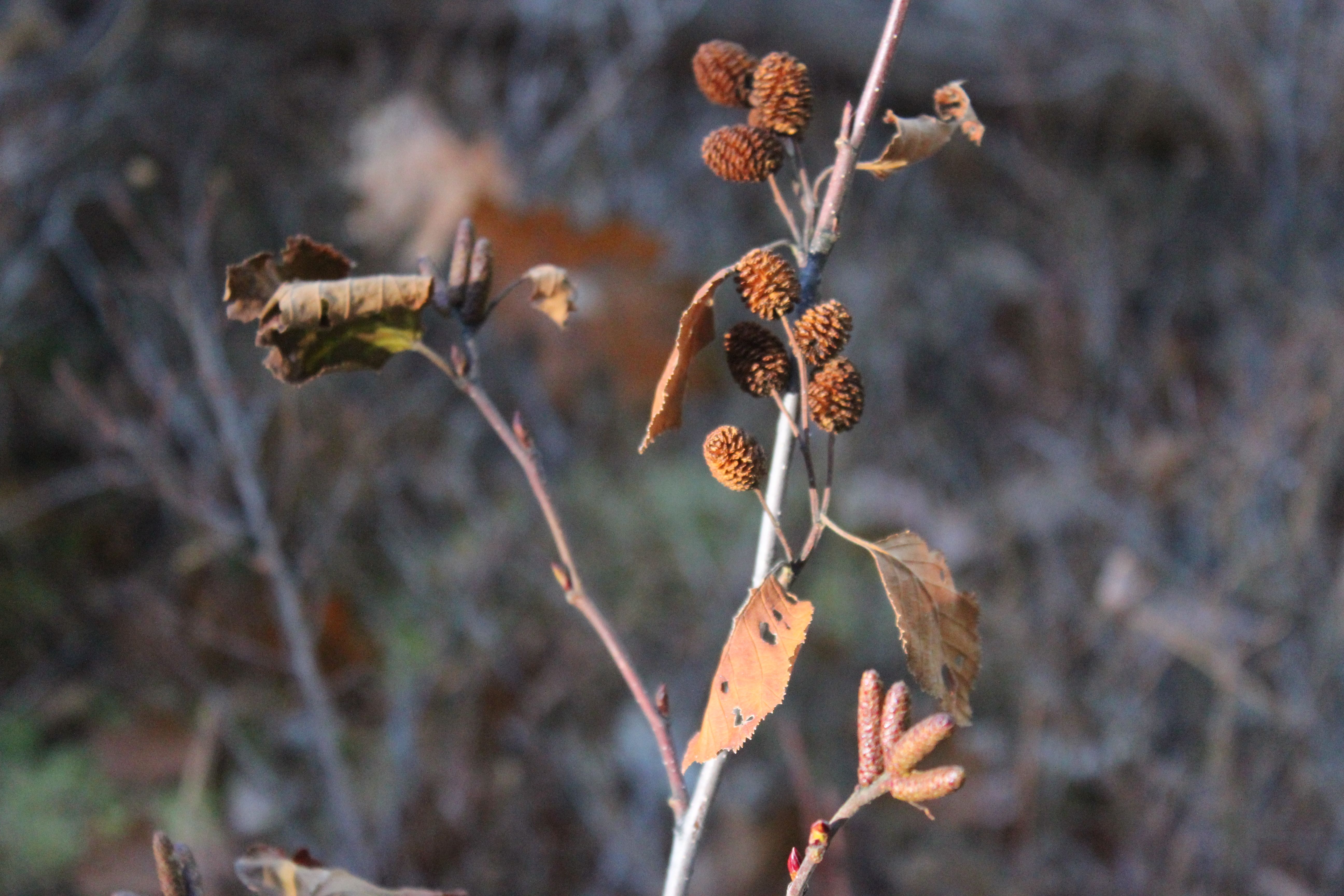
What I didn’t realize is that speckled alders and gray birches also manage to live in this neighborhood.

ridge 2

I was no longer following Sue’s Way, but trust she looped around the North Ridge often. My journey took me in the opposite direction than is my norm at this point, so it was fun to view the mountain ridge and see the fire tower halfway across–my destination.

snow snow 2

Look what I found when I moved onto the Bald Peak Trail to follow the ridge line: SNOW!

looking for a home

And a parachute that flew in on the breeze. Perhaps this will grow into a healthy milkweed and the monarchs will find it. Hope is eternal.

 Mt W 2

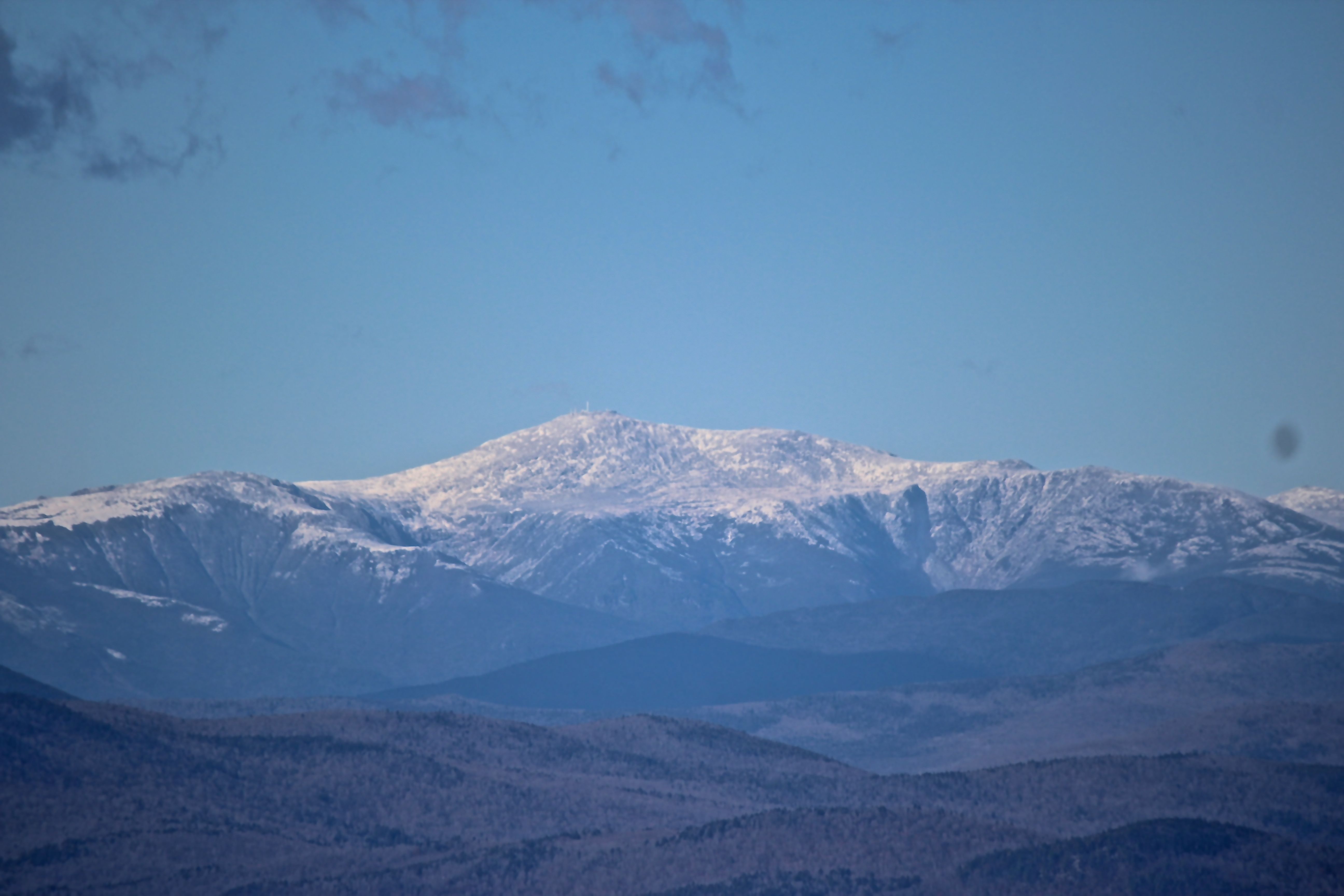
At the summit, I couldn’t have asked for a crisper view of Mount Washington.

Mt. W 2

Like our mountain, Mount Washington always gives us a sense of location. But it provides more than that. Beauty and splendor. Awe and wonder.

beetle bark tunnels

man tunnels

Hiking down the Ledges Trail, I noticed the hieroglyphic work of bark beetles on one tree, and human beetles on another. I prefer the former, but this goes to show that natural and human forces constantly change what is before us.

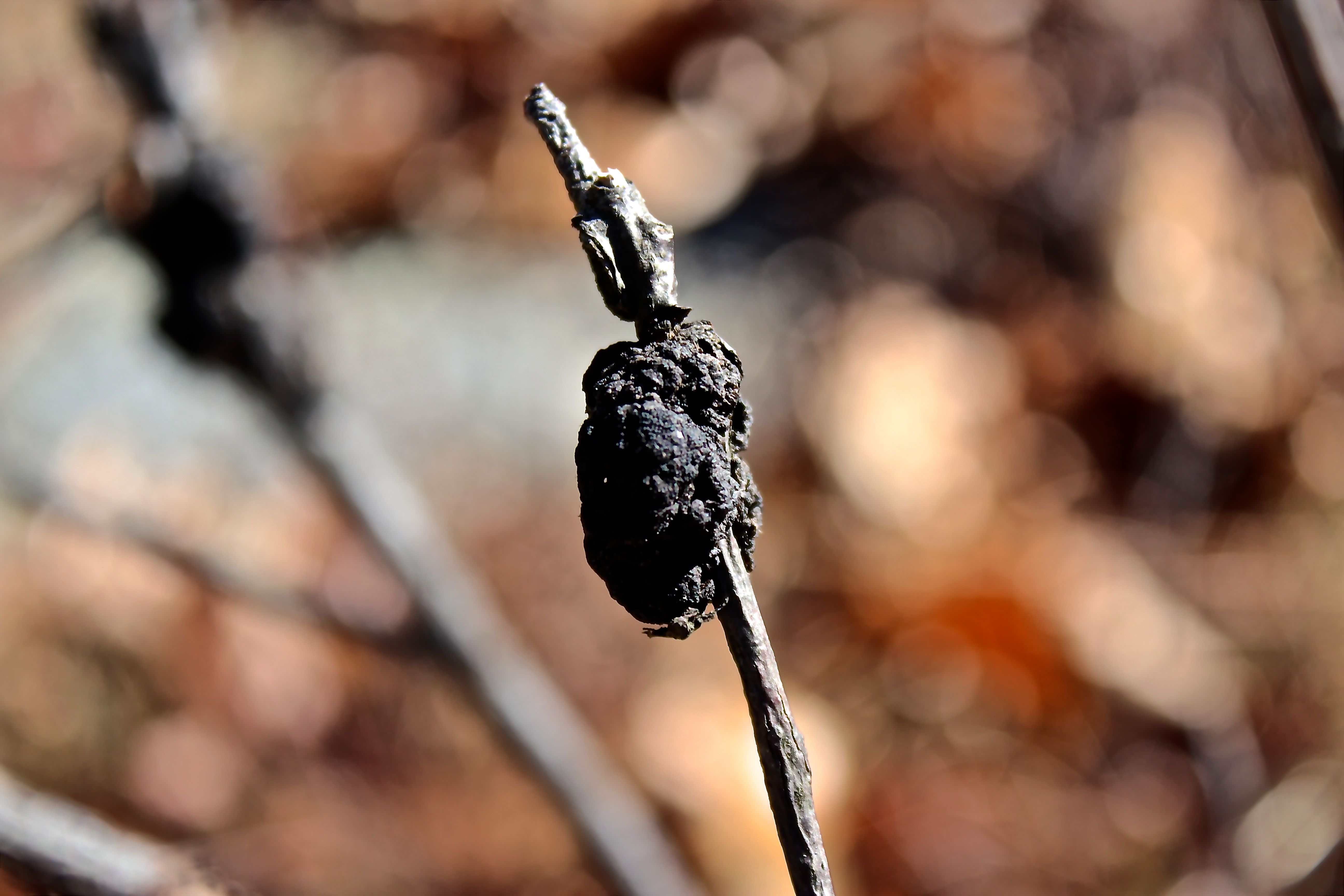
black knot

And then I came to black knot fungus on a cherry tree. In a previous post, I identified a growth on a cherry tree as black knot and a friend corrected me. I wasn’t sure he was right, but turns out he was. What I saw previously was the casing of tent caterpillars–not black knot. Thanks to Alan S. for pointing that out. I still have a lot to learn. Thank goodness.

beaver pond:

A glistening Beaver Pond in Denmark offered a brilliant reflection of this cool, crisp day.

As I continued to descend, I was ever mindful of the leaves beneath my feet. They weren’t so wet on this trail, but still slippery. I was wallowing in my good luck as I neared the road, when the earth reached up to grab me. A rock actually. Maybe two rocks. I landed with a thud. A young couple didn’t see me go down, but they heard me. I stood up and shook it off, though I can tell you right now exactly where my body made contact. Humbling for sure. It’s not my first fall. And I hope it won’t be my last. Not that I want to fall again, but I don’t want a fall to prevent me from hiking.

Five point two miles later I was back on Mountain Road and still had a mile and a half to walk before reaching my truck, which I’d left at the other trailhead.

No matter how often I climb The Mountain, I come away a better person for time spent enjoying moments in its presence.

Work We Must Mondate

Today was a day made for some writing/editing work and yard work, but . . . my guy and I managed to squeeze in a hike–yesterday.

Last week, our friend, Dick B., excitedly shared with us a hiking location we’d never explored–Notch Mountain in Porter. He had recently walked the trail with the Denmark Mountain Hikers, a local group that ventures off each Friday.

So it was, we followed Dick’s directions and drove to Porter in search of the trailhead. An easy miss, but we spied the wood kiln he spoke of as we drove past it and turned around at the Hiram town line, knowing we’d gone too far. Backtracking, the trailhead was across from Clemons Point Road and the kiln.

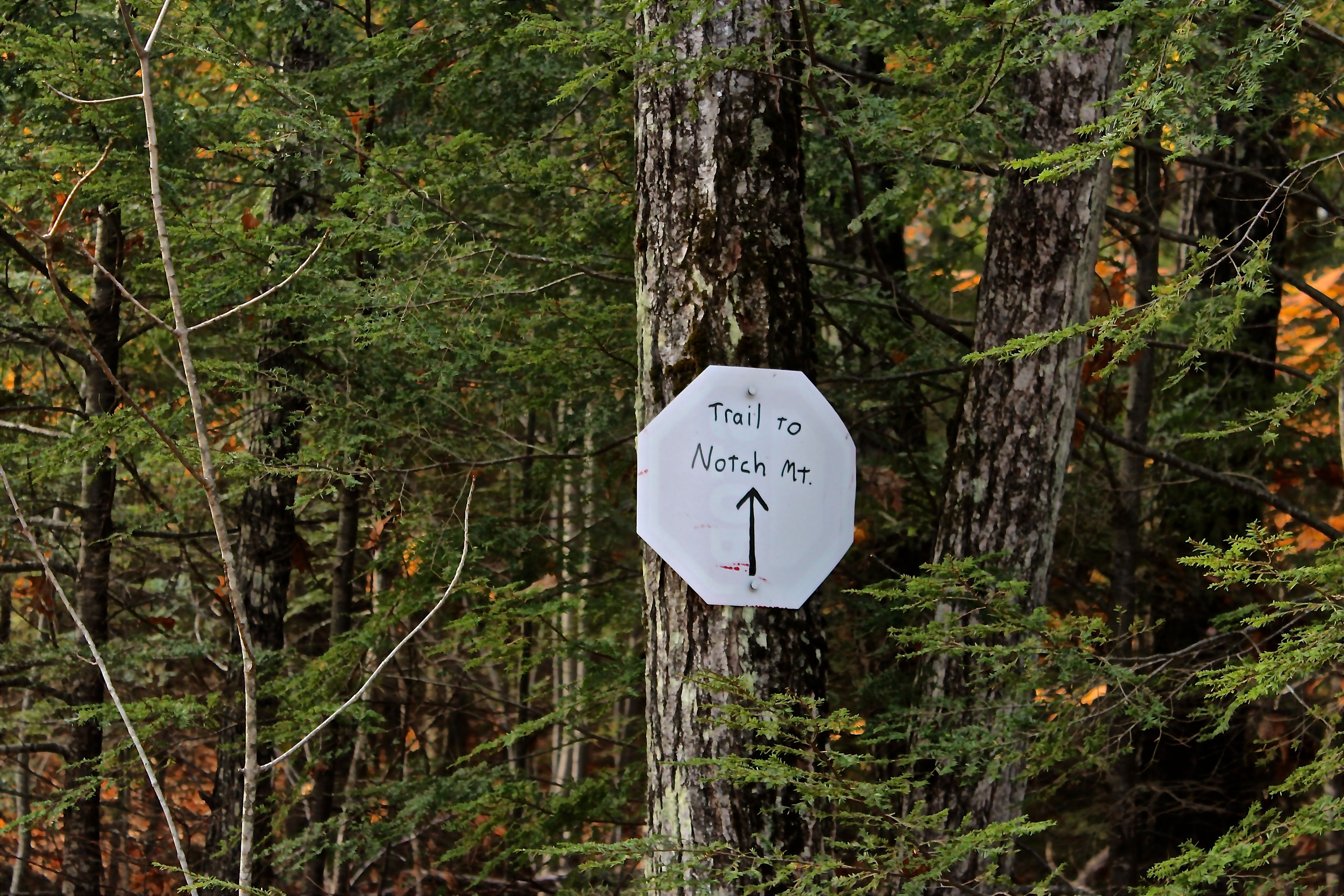
.Notch sign

The sign–about twenty feet in from the road. Unassuming to say the least.

Notch trail wet

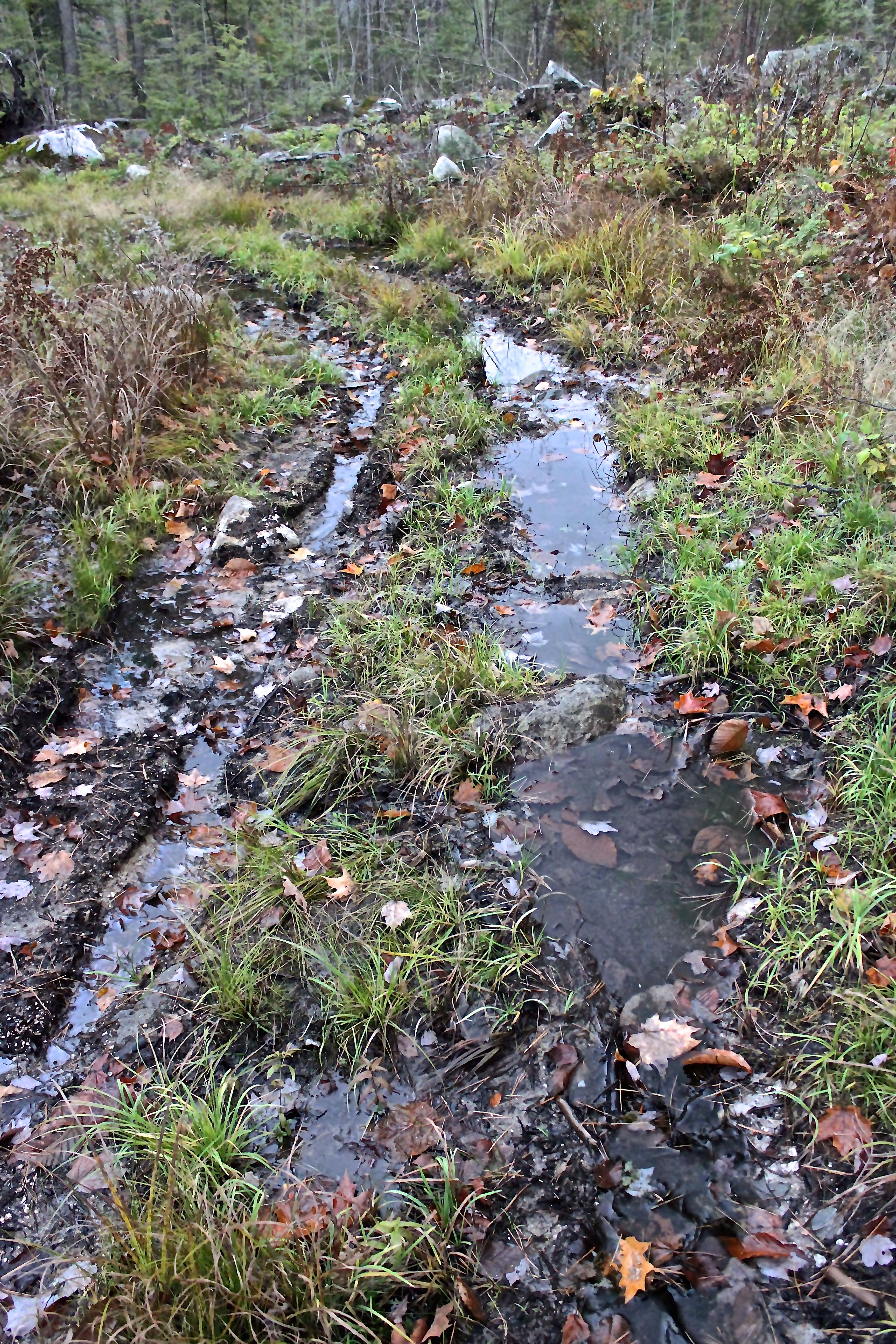
As we played dodge the water and looked at the slayed trees, we turned to each other and grimaced. What was Dick thinking?

Notch foundation 1

But we journeyed on and the muckiness abated. Then, this foundation practically jumped out at us.

Notch foundation 2

We weren’t sure exactly what we were looking at, but felt that this was a large house and there was either an attached barn or large shed, or the other structure was located quite close to the house.

Notch fdn bricks

Buried beneath the leaves, bricks indicated a chimney on an outside wall.

Notch tool shed?

We discovered what may have been a tool shed–a separate, three-sided room.

Notch farm remnantNotch plow 2

Indeed, we even found a few tools, including a plow, which became significant as we continued to explore along the trail.

Notch fdn feather:wedge

In the barn foundation, I like how one stone is wedged between the other two. It offers a reflection of how these rocks came to be in this place. The minerals, like quartz and feldspar, that are an essential part of granite’s make-up, interlock like pieces of a jigsaw puzzle. The end result: granite is one of the strongest and most durable rocks.

Using the plug and feather method practiced in the 19th century, small holes were hand drilled every six or seven inches across the stone. Two shims, called feathers, were placed in the hole and a wedge or plug was hammered between them. The farmer probably built this house in the winter when his farming duties weren’t as plentiful. And by drilling then, ice formed in the holes and helped to complete the work of splitting the granite. He and his family would have used a stone boat or sledge pulled by oxen to move the stones into place.

Notch mound of stones

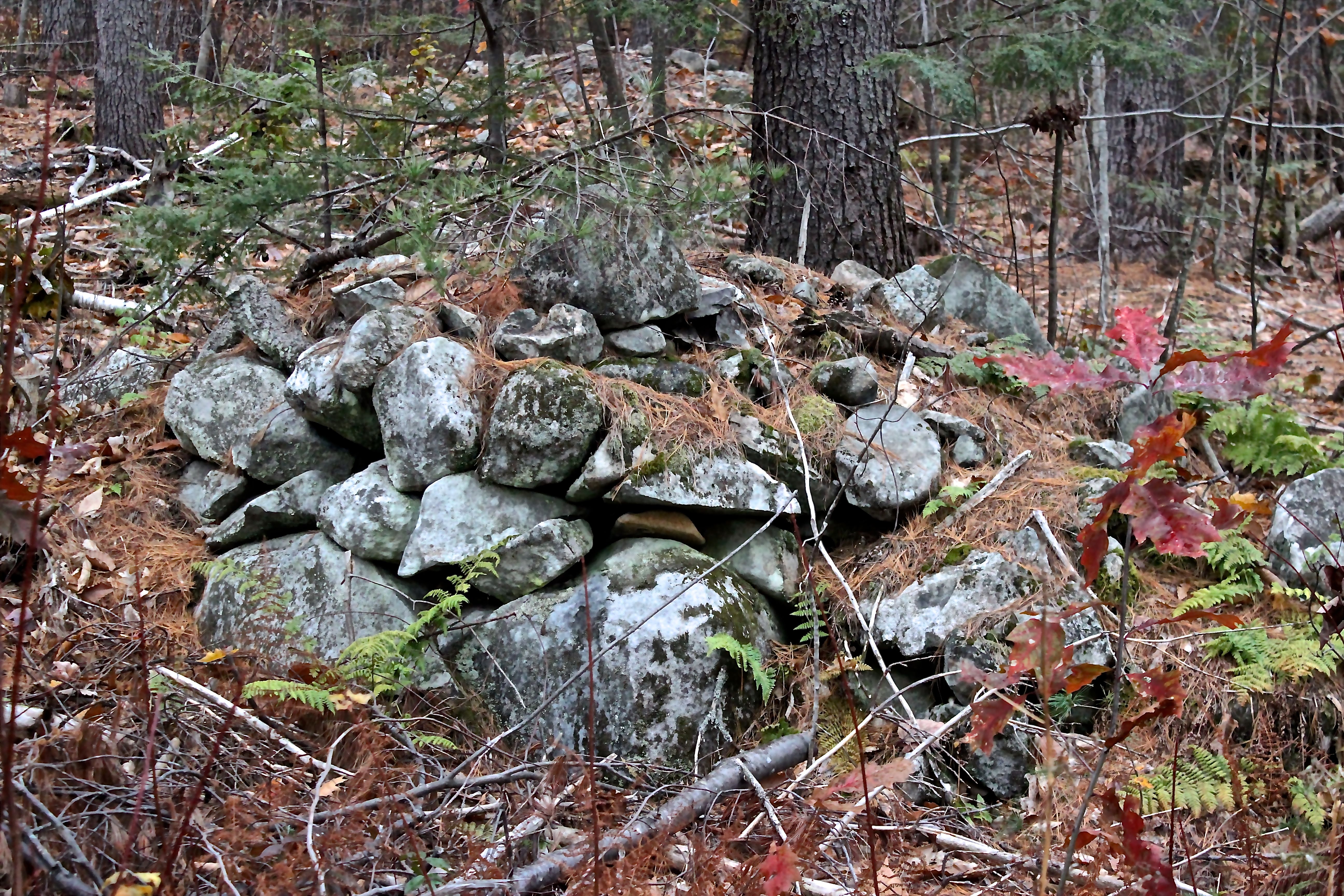
A little further along, we came upon a massive wall of medium-size stones. This farmer must have cleared many, many acres, thus producing an incredible stone potato crop. And then moved them all so he could plow. My fingers twinge and my back hurts just thinking about all the work involved–makes our yard work look so easy.

Notch trail

On either side of the trail were stone walls, indicating this was more than a logging road at one point in time.

Notch big rocks

Throughout the woods, we found more piles of rocks, some with small stones and others, like this with medium-size stones. Rather than quilting bees, this family must have enjoyed stone bees–an exercise to remove as many stones from the ground as possible.

Notch wall:gnarly old maple

The stone wall frenzy is evidenced all along the trail. Sometimes double-wide garden walls, and other times single walls, also called farmer or pasture walls that were built as boundaries, and to keep animals from destroying crops.

Notch cemetery

Dick had mentioned the Wormwood cemetery, but we were still surprised when we happened upon it.

Notch grave 2

Charles B. Fly

b. Jun. 20, 1828; d. Oct. 27, 1860

Notch grave 1

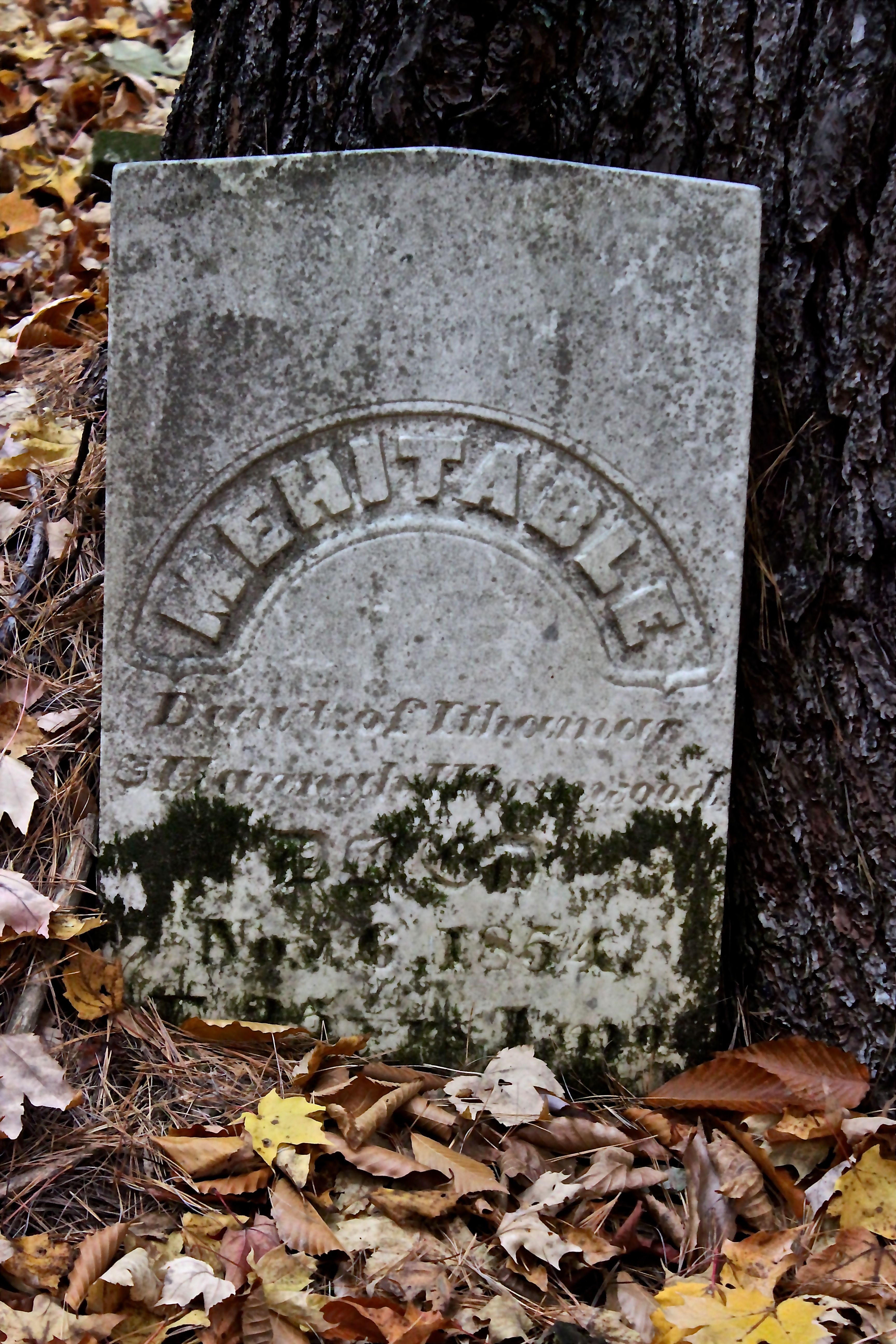
Mehitable Wormwood

b. Oct. 16, 1825; d. Nov. 27, 1851

Notch, stone 4

Lydia Jane Osgood Wormwood

b. 1826; d. Dec. 27, 1851

Notch, stone 3

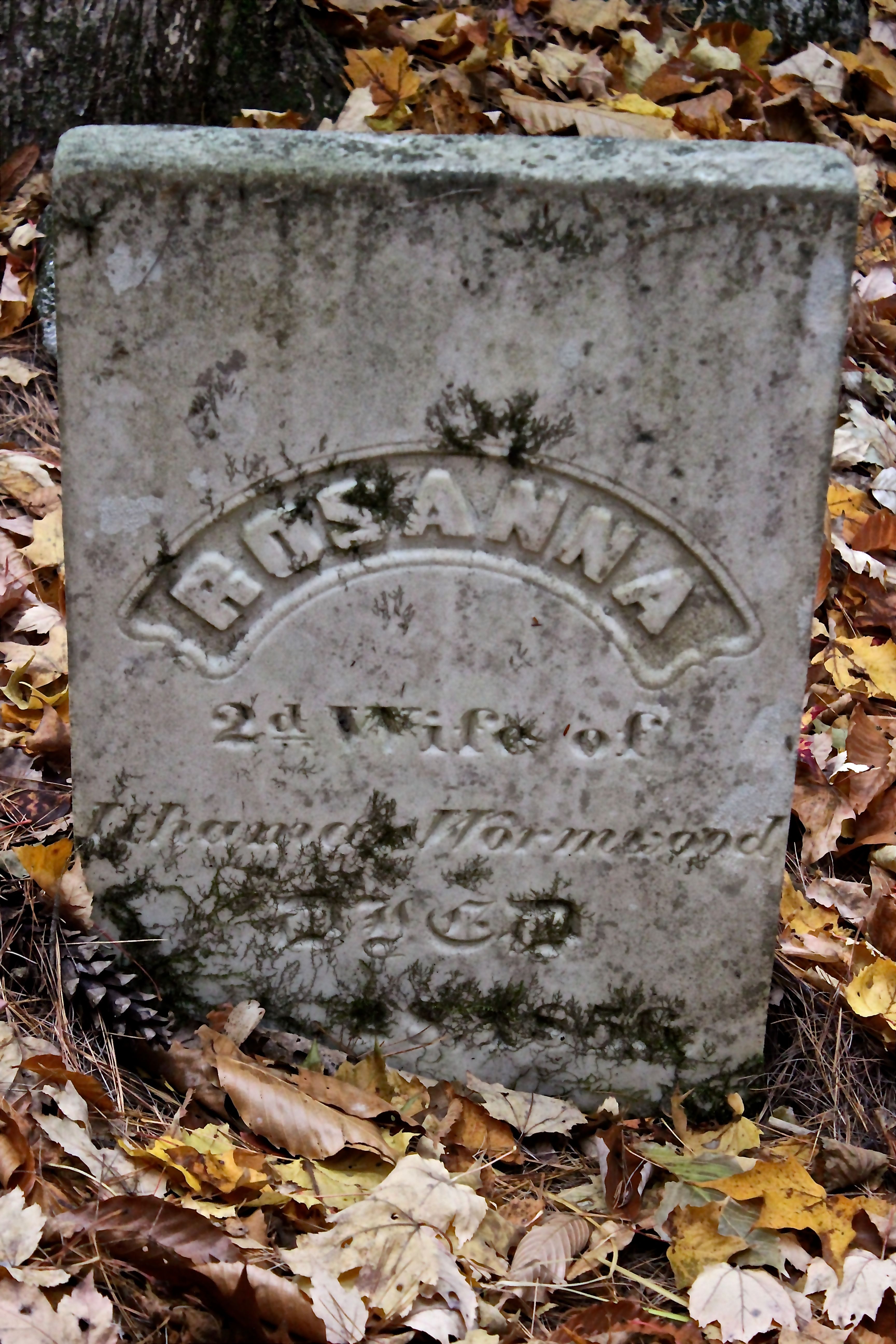
Rosanna Warren Wormwood, 2nd wife of Ithamar Wormwood

b. Oct., 1791; d. Feb. 28, 1856

Notch, 2 stones

Hannah and Ithamar Wormwood (b. May 29, 1791; d. Jul. 16, 1865). Two-year-old Jason Fly was also buried here.

Apparently the Flys were related to the Wormwoods, which makes sense. I suspect that there are other foundations to be discovered, but I was with my guy–Mr. Destinationitis, and so we continued toward the summit.

Notch glacier

As we climbed, we noticed glacial striations on rocks (aka snowmobile etchings),

Notch, beech contortionist

beech trees that think they are contortionists,

Notch oaks

and a mix of white and Northern red oak leaves.

Notch summit 1

Then the summit came into view.

Notch stop sign

Thank goodness for the faded stop sign

Notch summit fairy

and the fairy who watches over all who step too close to the edge.

Notch view

As the rain clouds gathered, we ate our PB&J sandwiches, this time topped off with Halloween candy and views of Clemons and Little Clemons ponds.

Notch, burnt meadow and pleasant

Burnt Meadow Mountain and Pleasant Mountain formed the backdrop.

We hiked down among rain drops, but the sun shone once we arrived home.

mansion, hunter and hunted

I was restless and didn’t want to deal with yard work, so I went for a walk and came upon evidence of the hunter and the hunted.

Today, while our work continued, I had the opportunity to escape to Pondicherry Park for a stewardship committee meeting–now that’s my idea of a great meeting place.

snowman

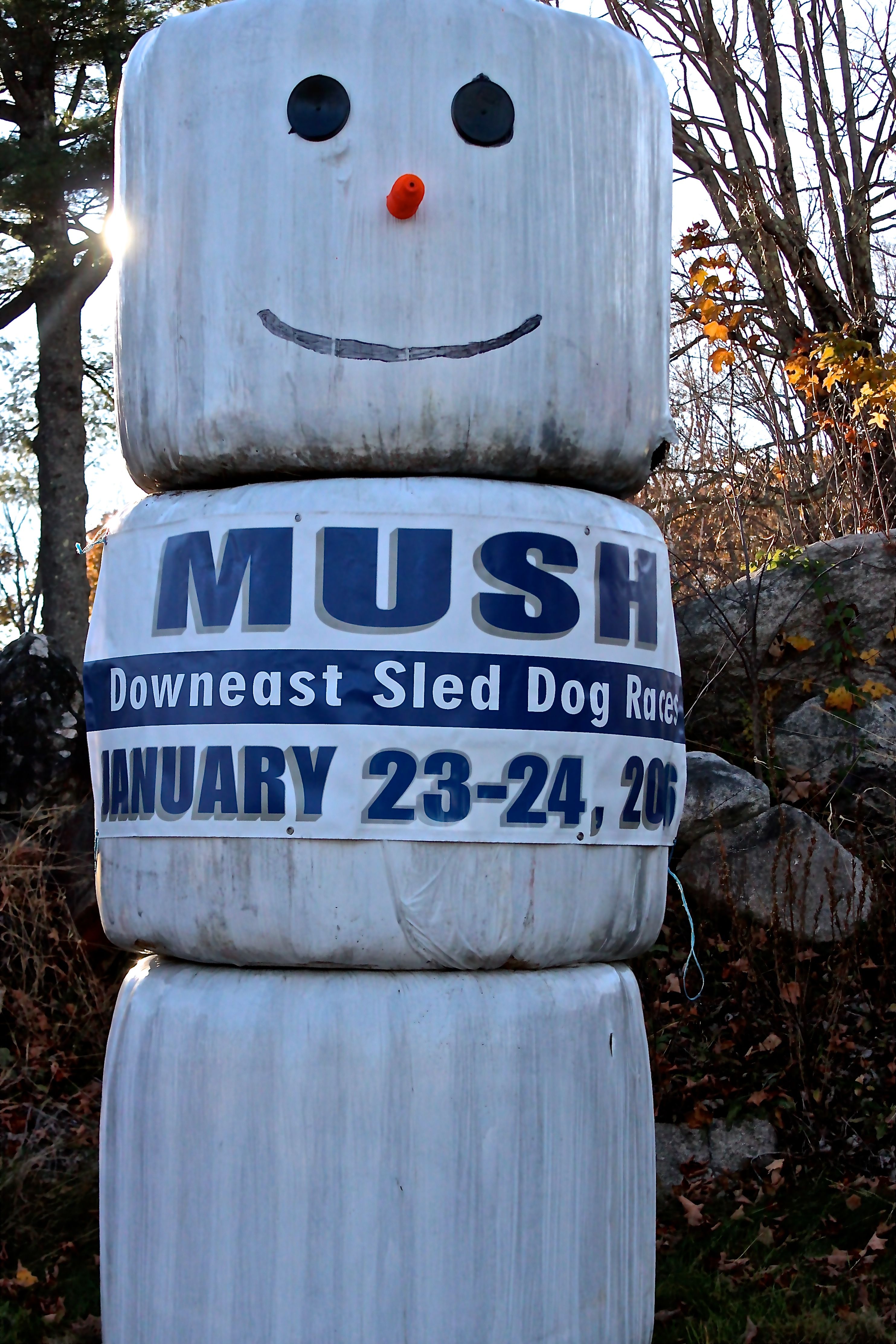
On my way, this guy reminded me that the next season is right around the corner (literally).

Pondicherry Reflection

And in the park–still plenty of color to reflect upon.

We know we have to work, whether to earn a living or maintain a home, but we do love our opportunities to explore new and old places. Thanks for sharing this one with us, Dick. It warrants further exploration to wander and wonder.

Three-Season Mondate at Back Pond Reserve

OK, so it wasn’t three seasons all packed into one Monday date, but walking up the   Mountain Trail at GLLT’s Back Pond Reserve in Stoneham today brought back memories of previous visits by my guy and me.

yellow

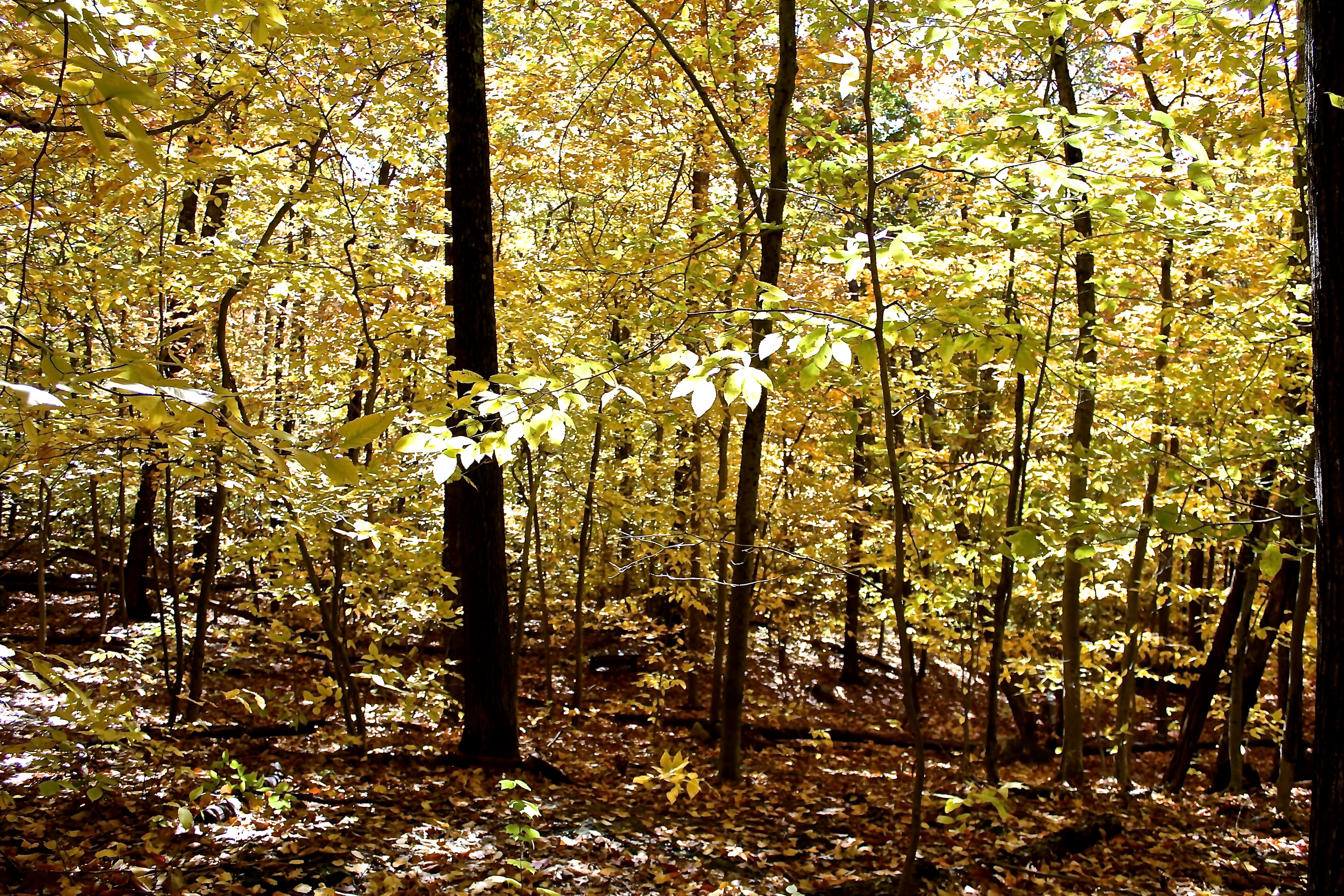
The woods are awash in golden-green yellows right now, especially where the trees include beech, big-tooth aspen and striped maple.

a dose of red

Climbing higher, variations of red join the carpet display.

summit 3 of 5 Kezars

We were surprised by how quickly we reached the summit, which is what got us recalling previous visits.  Today, the water of three of the Five Kezars sparkled while Pleasant Mountain stood watch in the background.

summit, summersummit, winter

As I looked through my photo files, I realized we have never hiked this trail in the spring. In the summer there are wildflowers to make us pause, and winter finds us exploring mammal activity–thus our treks are slower.

summit, Mt Washington

Today’s view included snow on Mount Washington, the grayish-white mountain located between the pines.

Ganong chocolates

As we enjoyed the view, we topped off our PB&J sandwiches with the last couple of truffles we had purchased at Ganong Chocolatier in St. Stephen, New Brunswick, earlier this month.

water bottle 2

And water, of course.

which way do we go?

Instead of letting the arrows confuse us, we turned 180˚ and followed the connector trail between the Mountain and Ron’s Loop. It’s not on the map yet and still needs some work, but it’s full of surprises–only a few of which I’ll share right now.

winter, connecting trail

We’ve always enjoyed this trail and today realized that though it’s much easier to follow than it was a few years ago, many trees have blown down along the way.

numerous trees 2

They’re easy enough to climb over. If you go, do know that there are two or three mucky spots along this trail as well, but again, easy to get around.

lone red pine, connecting trailred pine, winter

This lone red pine always makes us wonder. Perhaps it found its way here via a seed on a skidder?

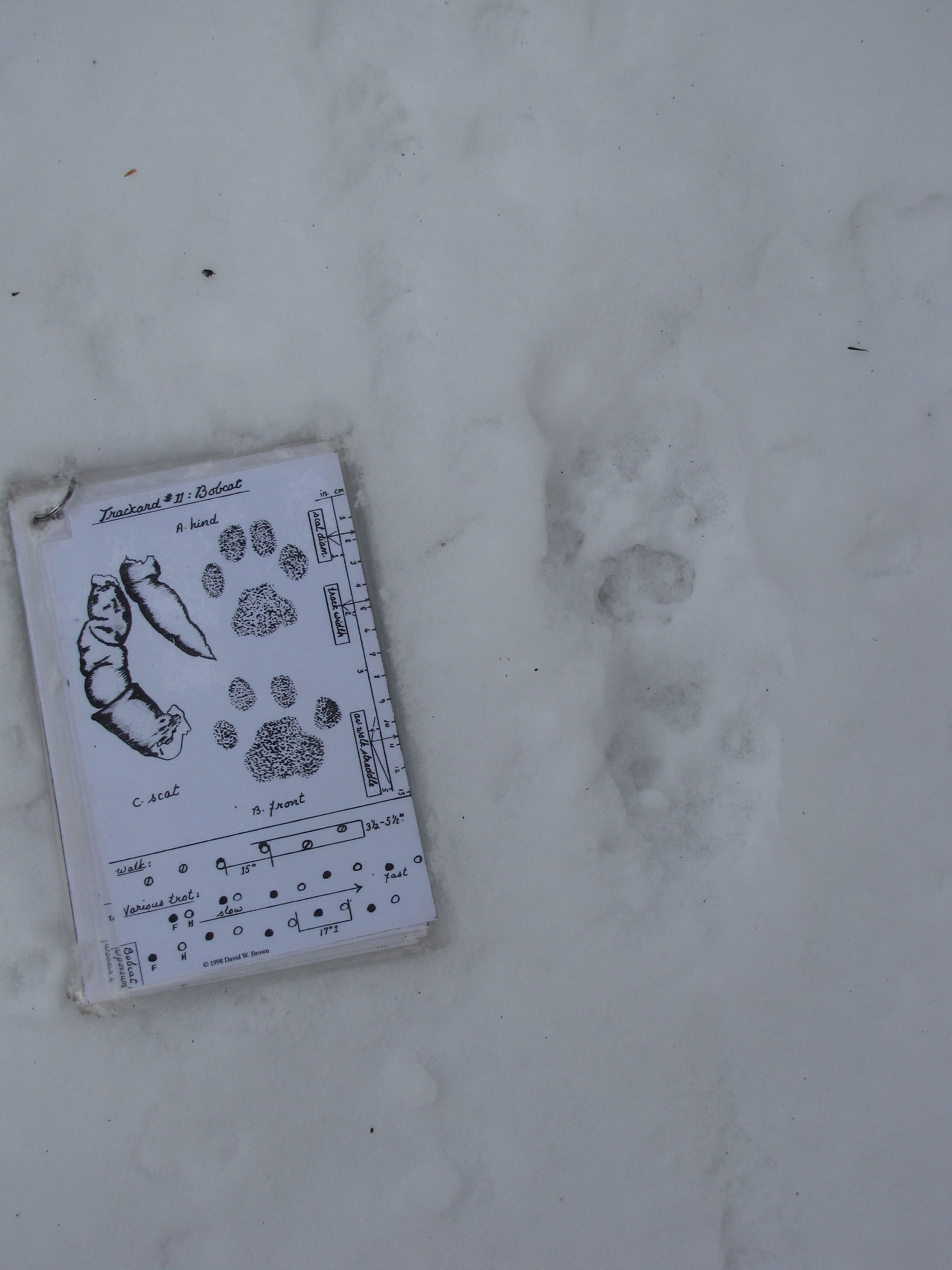
winter bobcat prints

Today we found moose tracks, plus red fox and coyote scat. If there was bobcat scat, it was obscured by the leaf litter, but we know they frequent this area.

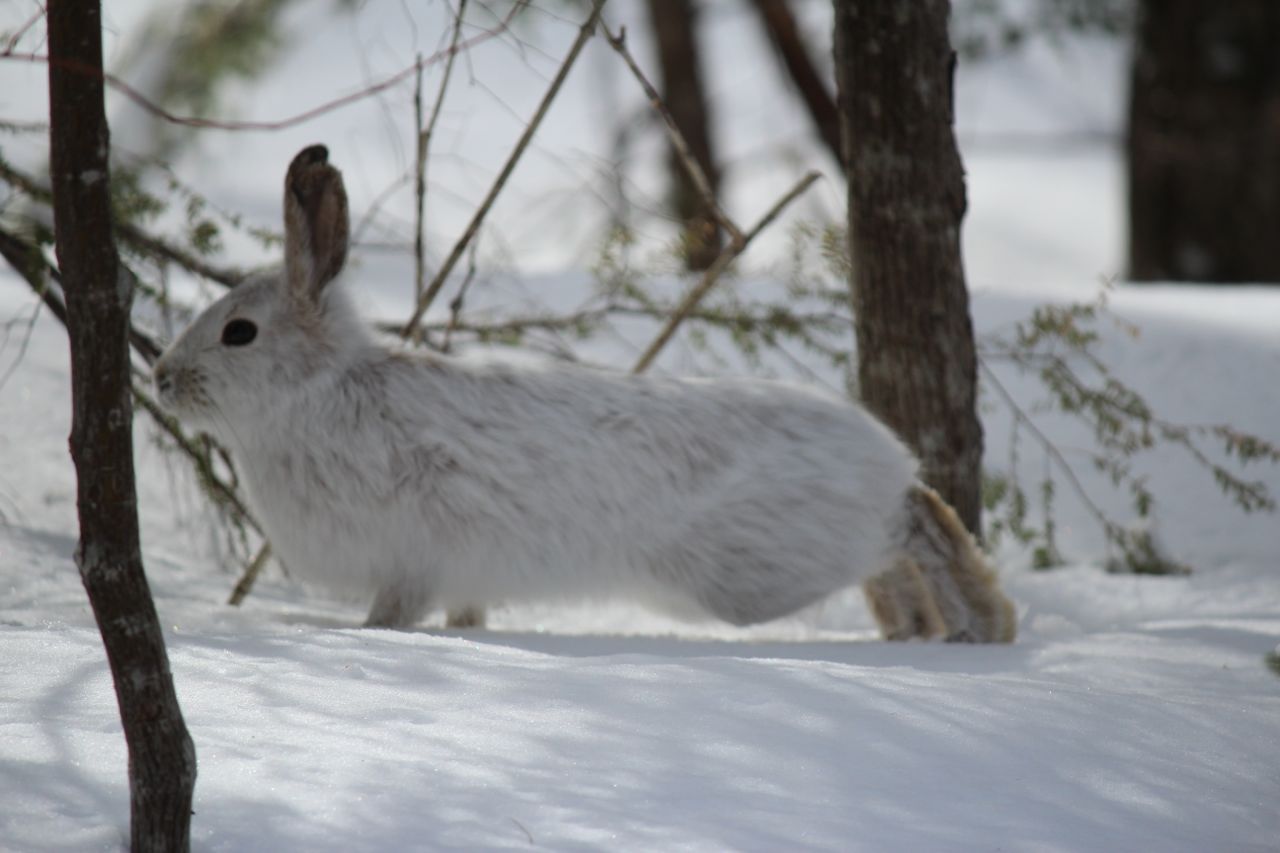
winter, snowshoe hare

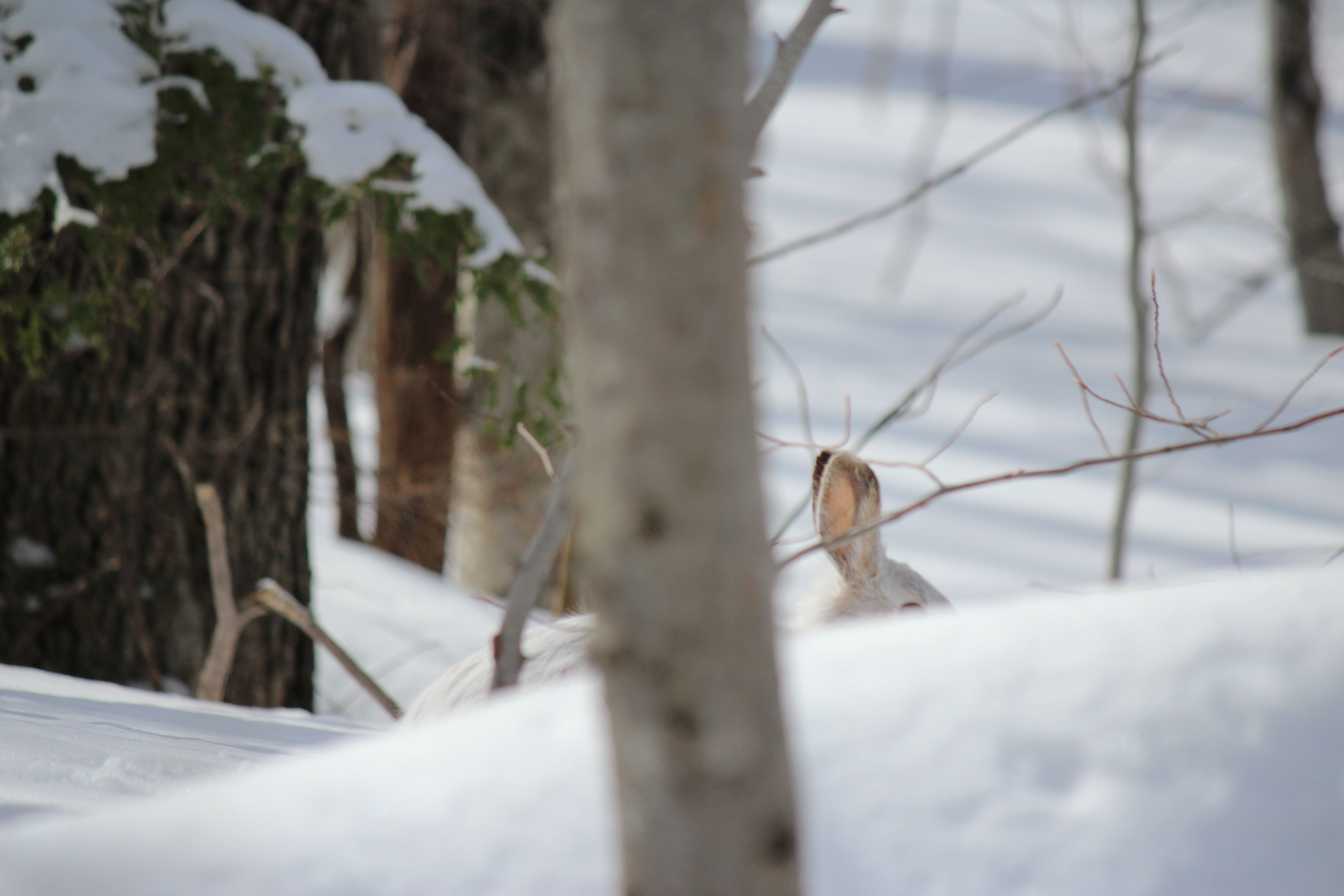
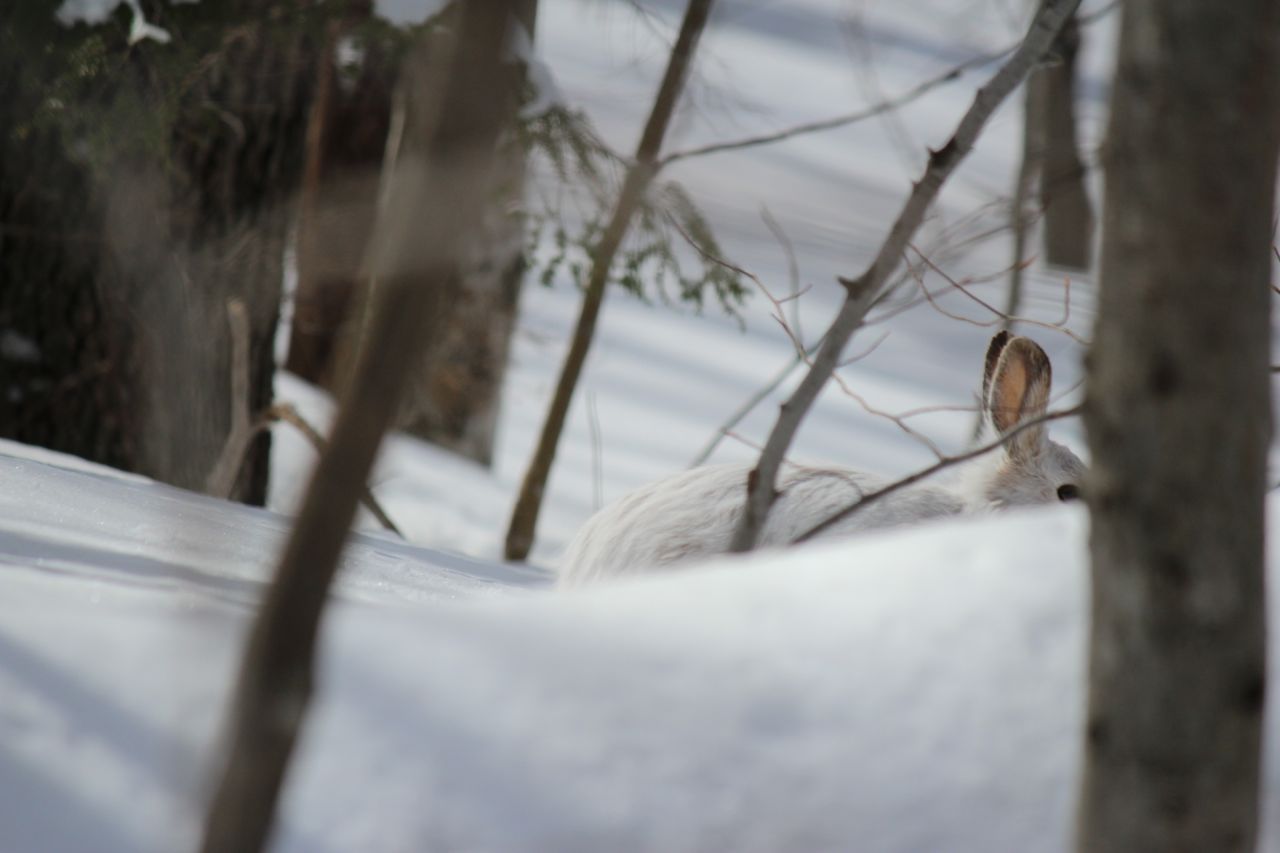
We also know the bobcat’s favorite meal lives here–we saw this guy in early March and of course, always see his prints on winter treks.

artist's conkcrowded parchment, connecting trail

Lion's Mane past peak

A couple of fun finds along the way–artist’s conk, crowded parchment and an old lion’s mane.

the bridge on Ron's Loop

winter, the bridge at Ron's Loop

The bridge on Ron’s Loop is all decked out with autumn colors–a contrast to its winter coat.

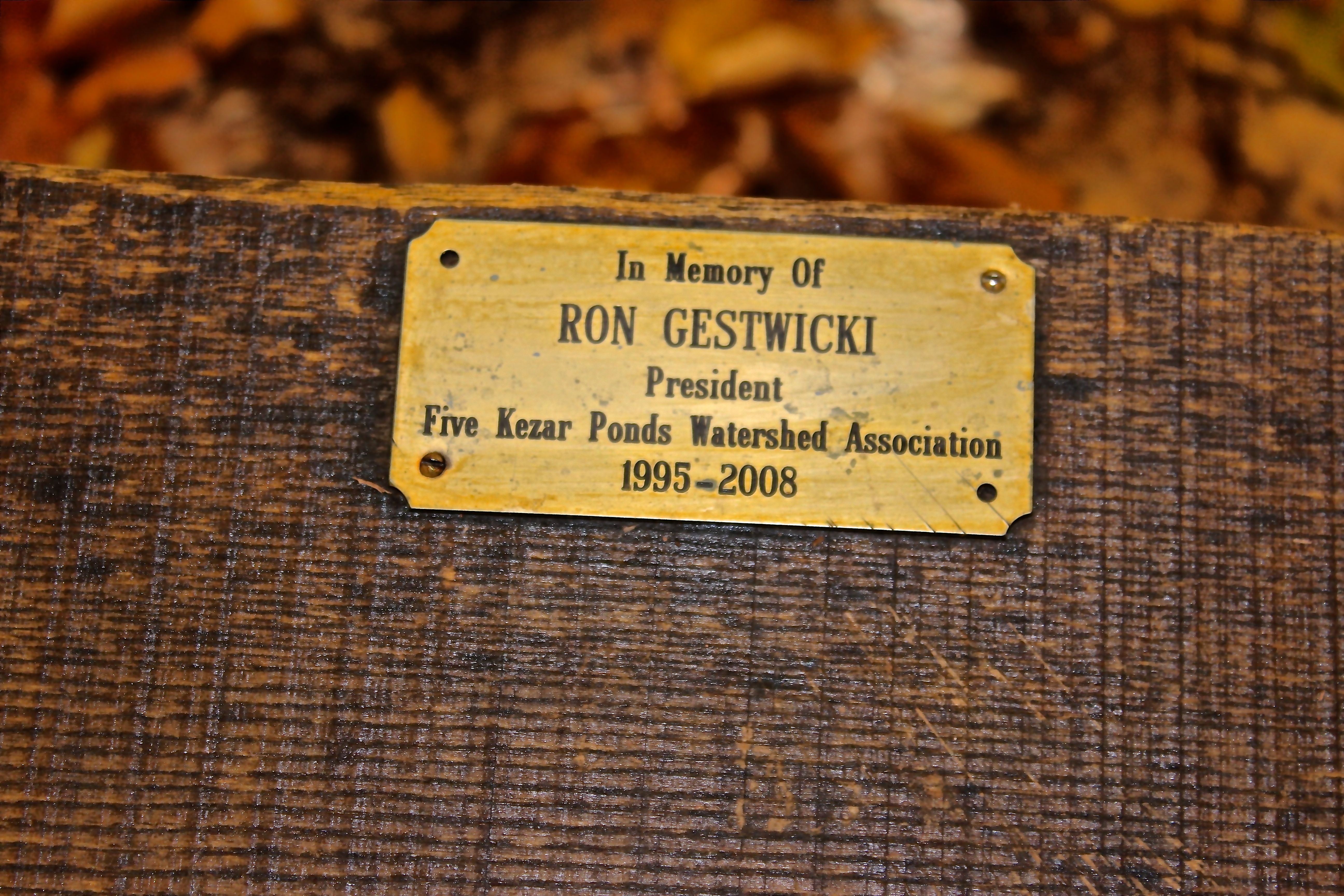
honoring Ron

We’re forever thankful to Ron for his leadership and foresight,

bench on Ron's Loop

even when we can’t see the plaque that honors him.

Kendra and Jewell

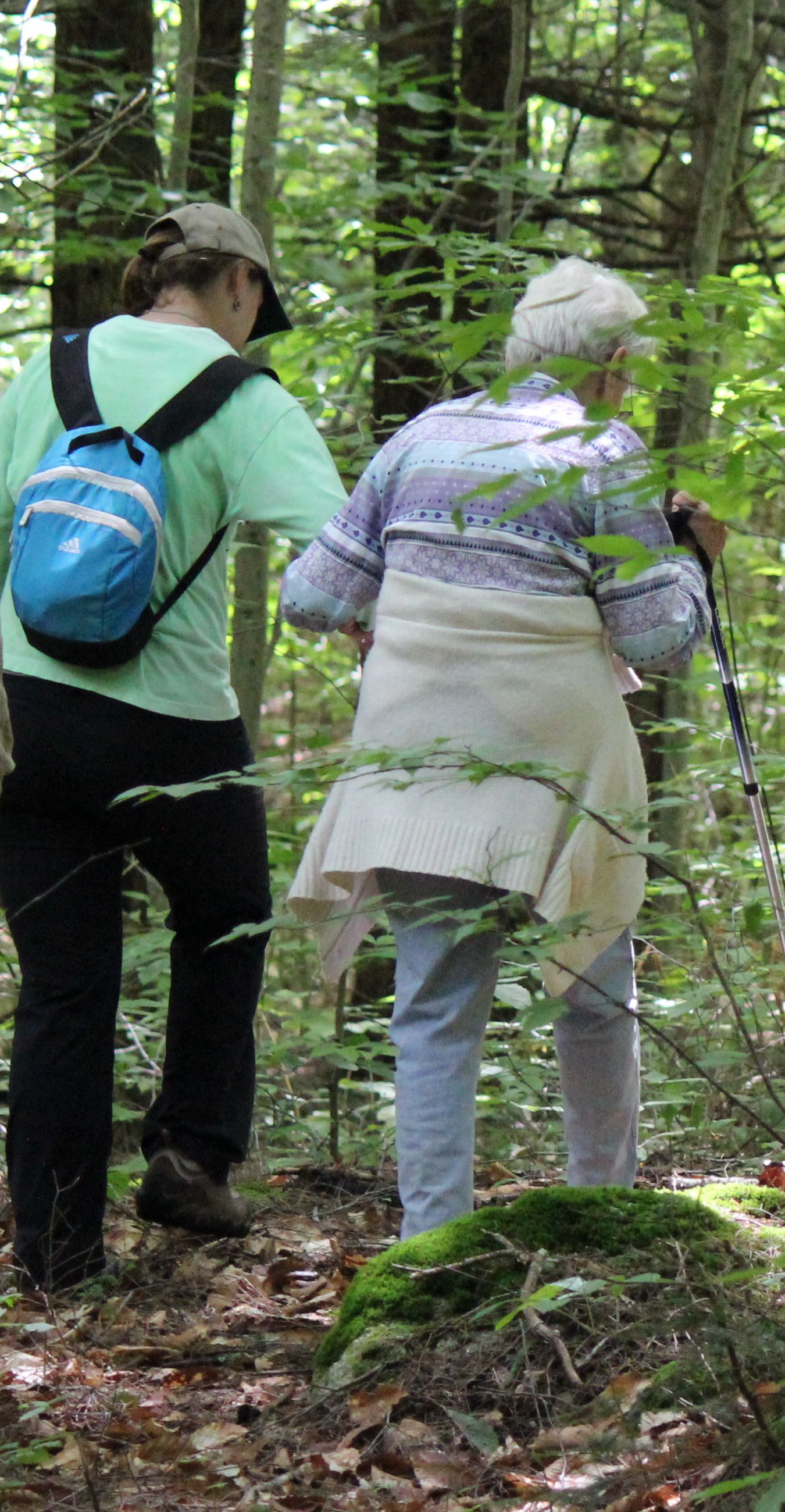
We met no other people on the trail today, but one of my fondest memories dates back two years when one of GLLT’s interns, Kendra, offered her arm to Jewell for a safe journey. Once upon a time, Jewell was Kendra’s Sunday School teacher and on this summer day, Kendra was Jewell’s guide.

water bottle by Ron's Loop

As we walked into the parking area of Ron’s Loop, we noticed that someone had left behind a water bottle. If it’s yours, it’s still there.   wasp nest Ron's Loop

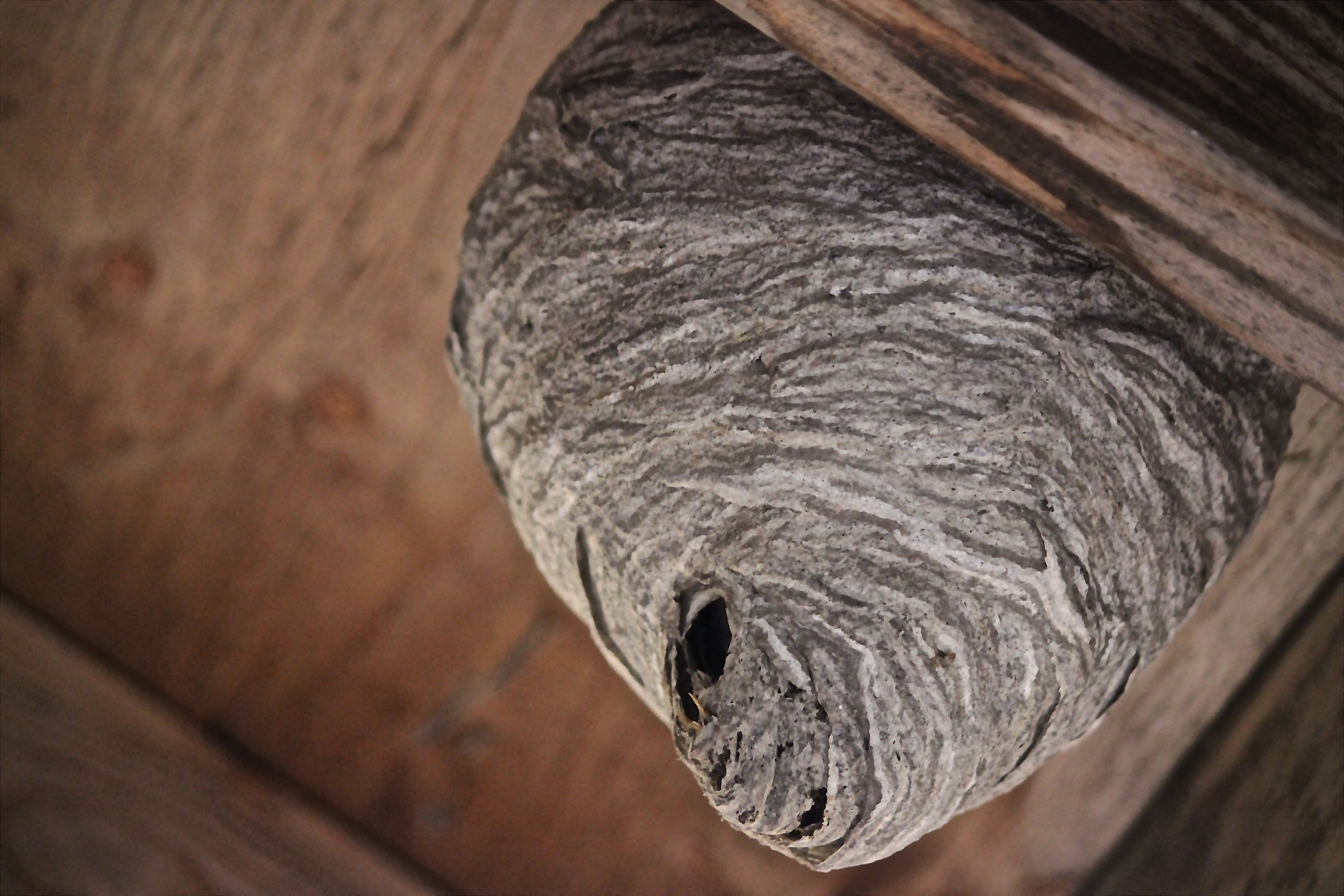
Each time we visit, we take a moment to check out the wasp nest at the kiosk.

Ron's Loop kiosk, Jan 2015

We can’t remember when we first noticed it, but it’s been there for a while.

coffee sign

One last thing to note before we walked back to the Mountain trailhead where our truck was parked–Magnolia coffee. Wish I’d ordered more than one this past year. Dark roast.

One Mondate–three seasons. And now the quest is to turn it into a four-season destination. Stay tuned.

What’s Next?

I chose to walk intentionally today, pausing every few moments to look and wonder. I didn’t want to rush, always seeking the next best thing.

And so I began with a stop to admire the great lobelia that continues to bloom  despite the frost we’ve had this past week.

Great lobelia

But it was at a former log landing we can see from the kitchen window, that “what’s next” kicked into gear.

log landing 10+ years ago

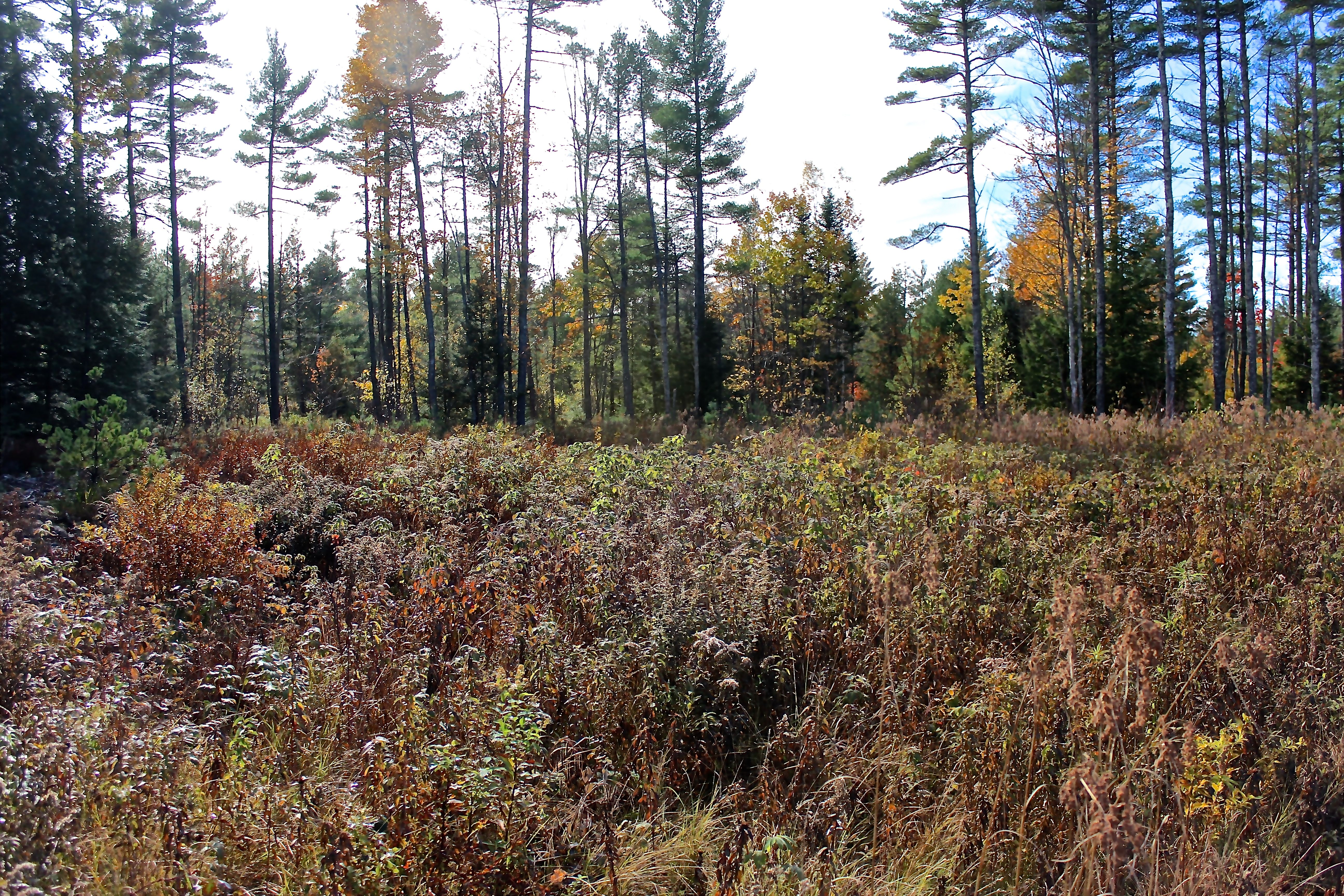
While the field beyond our stone wall is mowed once a year, this area has been allowed to follow the order of succession for cleared land. Goldenrod, asters, meadowsweet, grasses and raspberries have filled this space. What will follow?

deer print

Further along, the deer and

moose prints

the antelope, I mean, moose play. No fresh bobcat or coyote prints after this morning’s rain, but I saw some scat from both. And I had to remind myself not to have expectations. That’s the thing. It’s so easy to get caught up in looking for the next best thing and forgetting to focus on the moment, the beauty and the complexity that surrounds us.

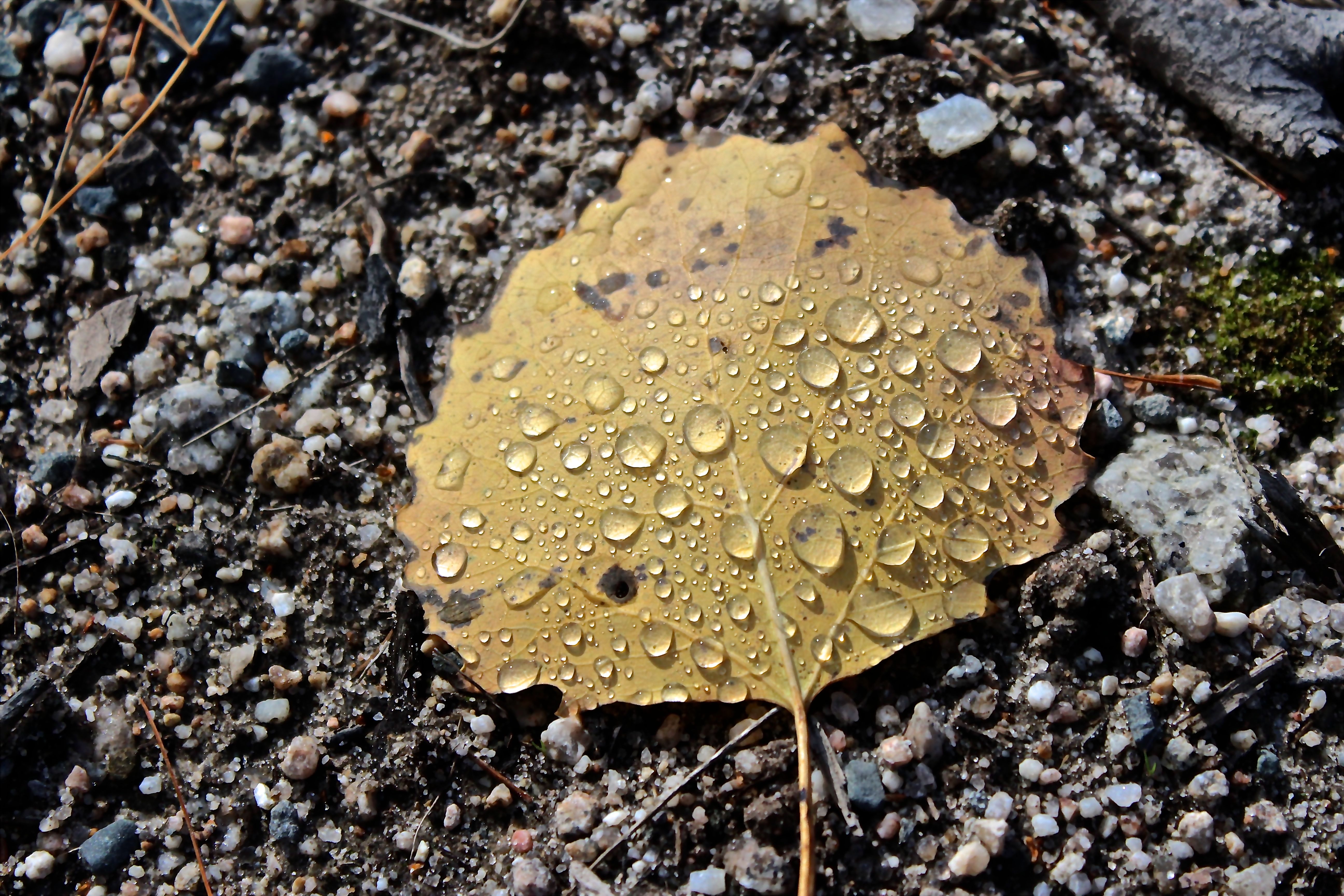
water droplets on big-tooth aspen

So I did–focus that is. On the big tooth aspen leaf decorated with rain droplets,

asters gone to seed

aster seeds waiting for their moment of dispersal,

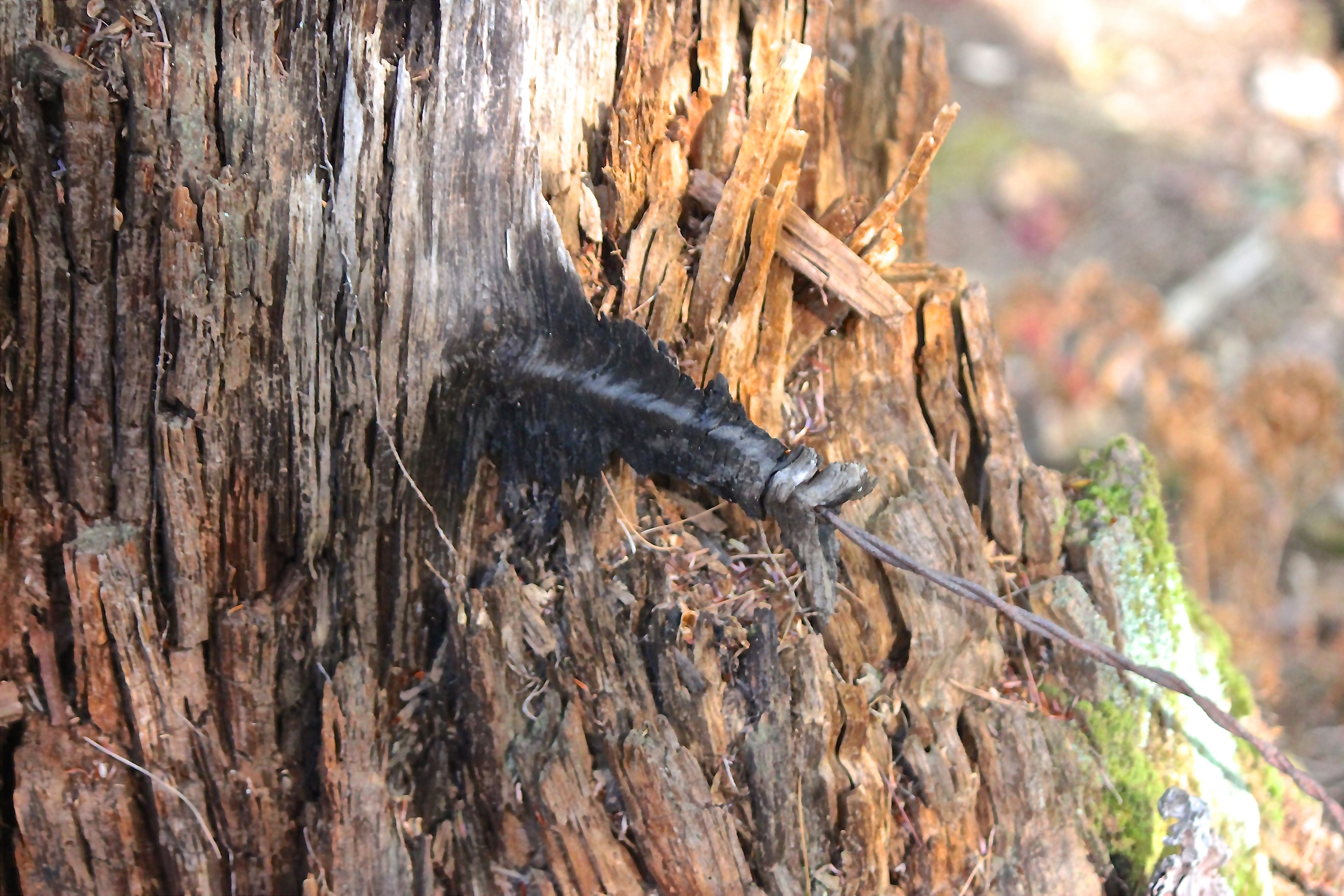
barbed wire

a hemlock that long ago knew this forest as farmland,

autumn meadowhawk

 an autumn meadow hawk soaking up the late afternoon sun,

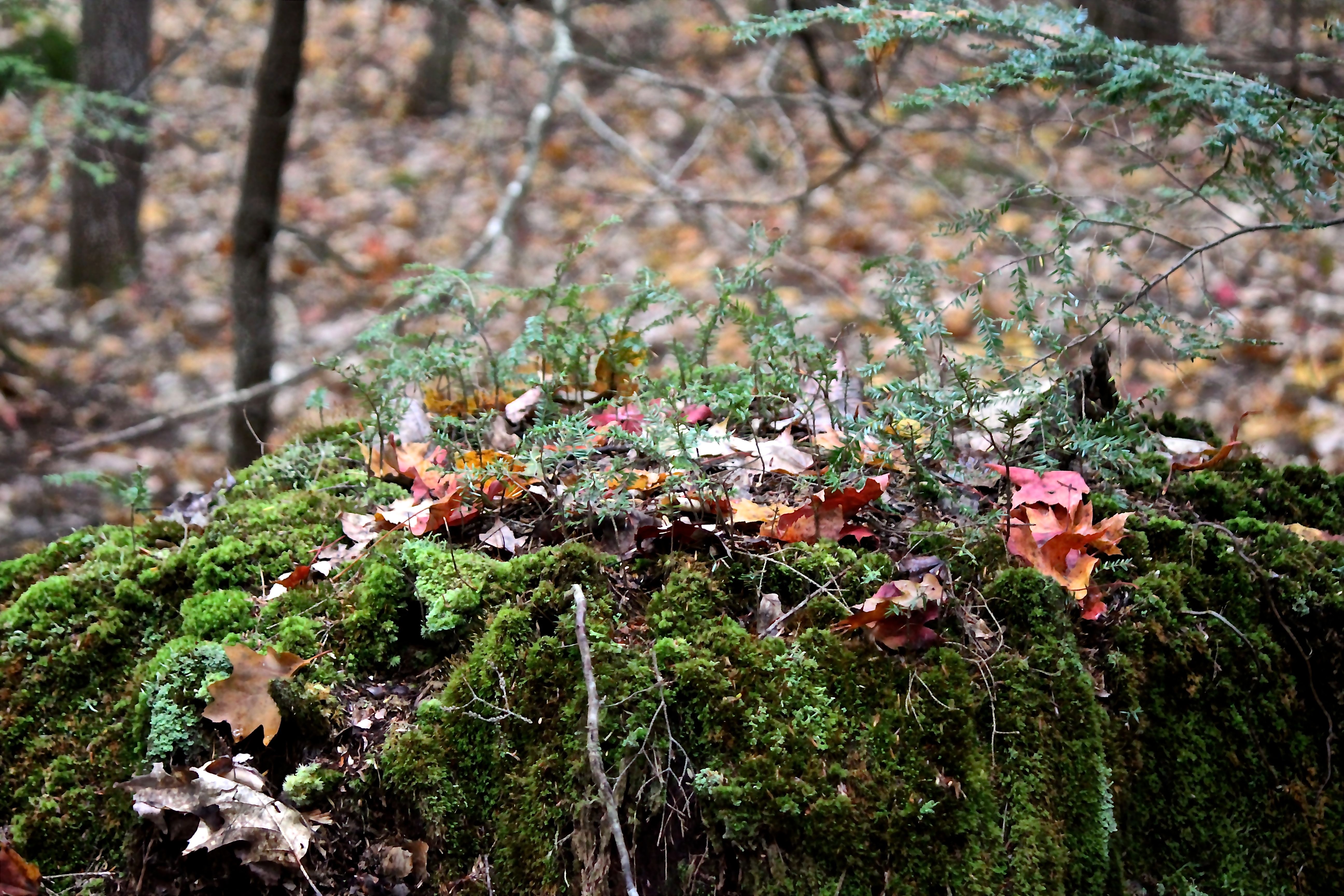
life on a stump

the variety of life growing on a stump,

hemlock saplings on stump

and hemlock saplings taking root.life on a tree 2

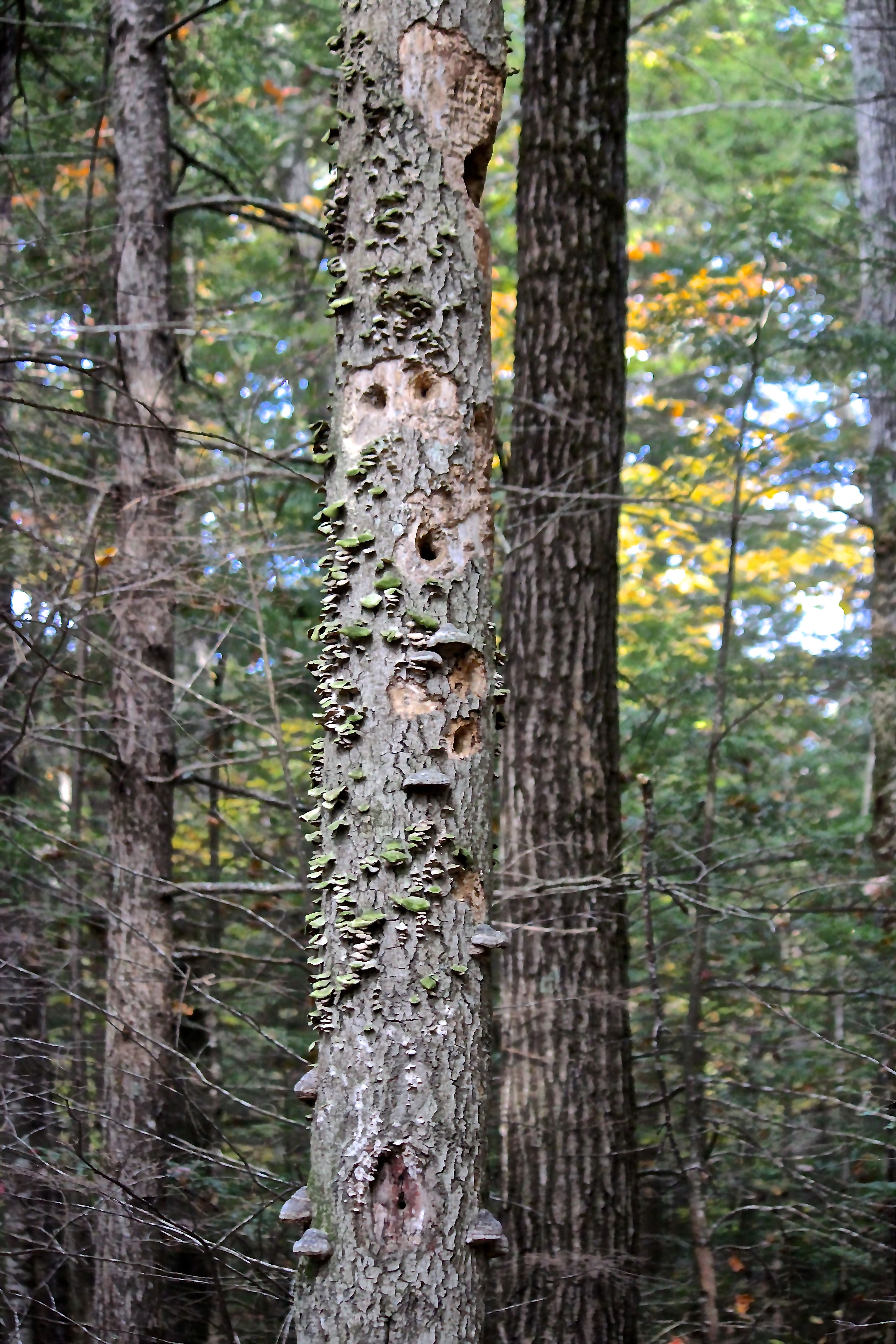
life on a tree 3

life on tree 5life on tree 7

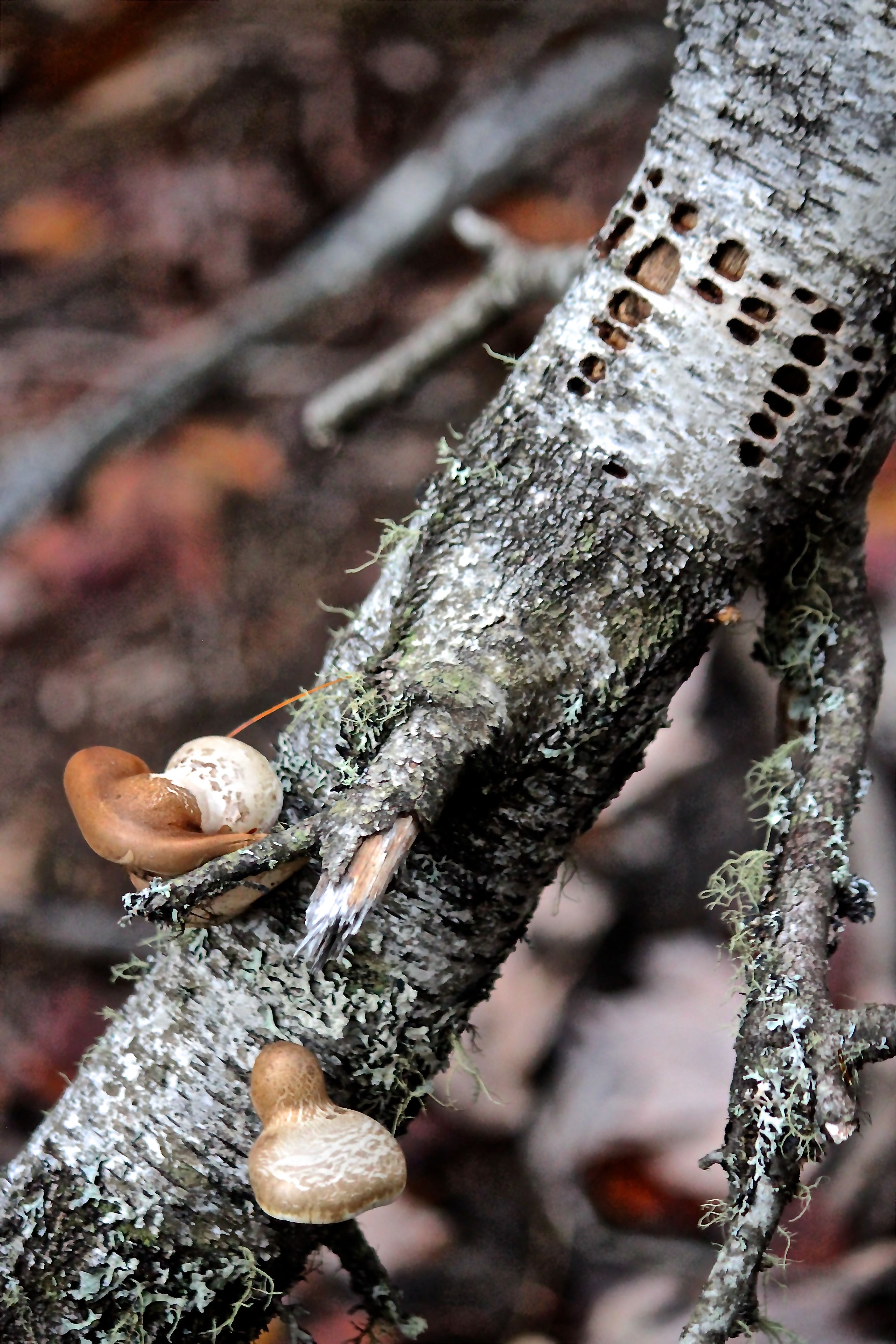
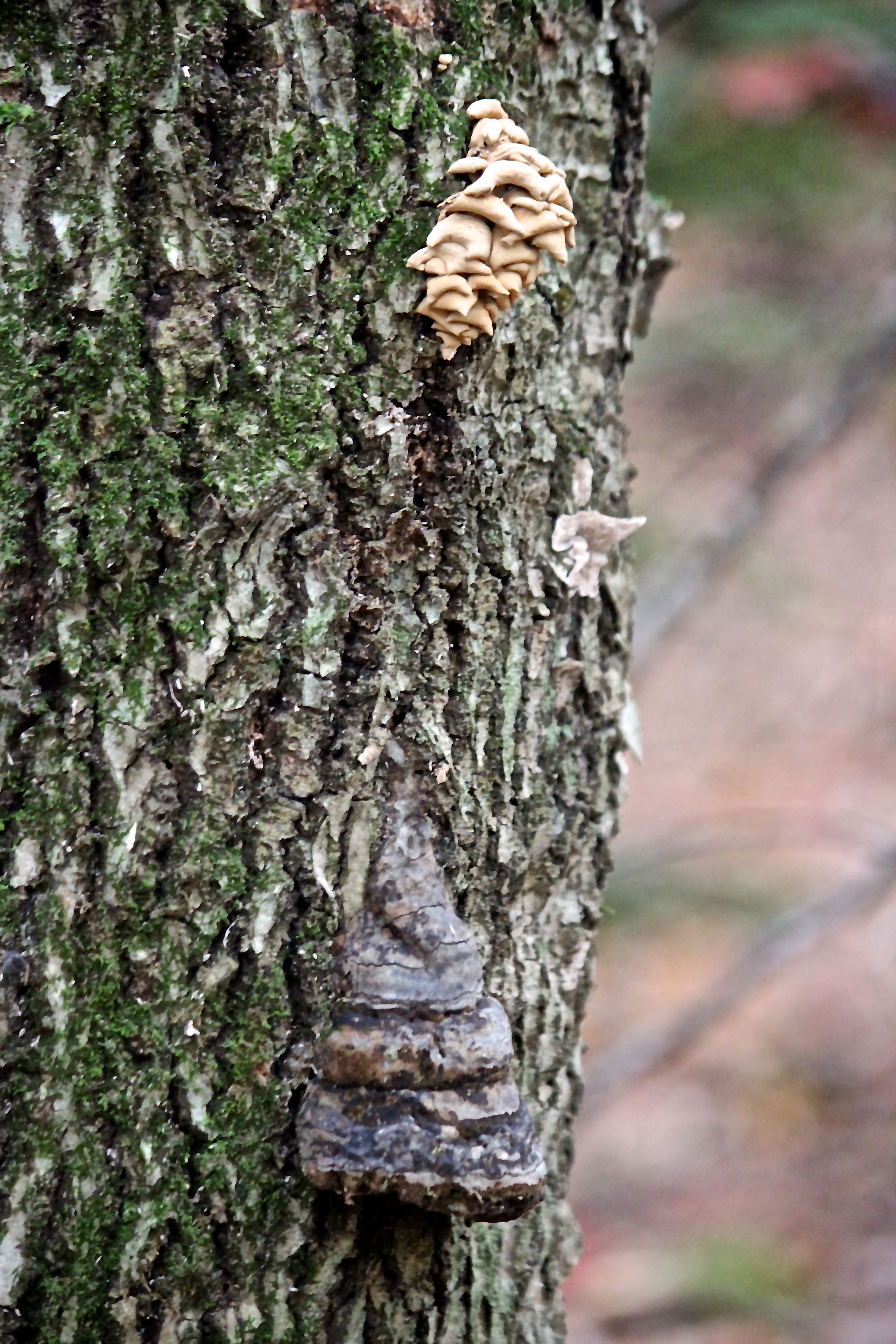
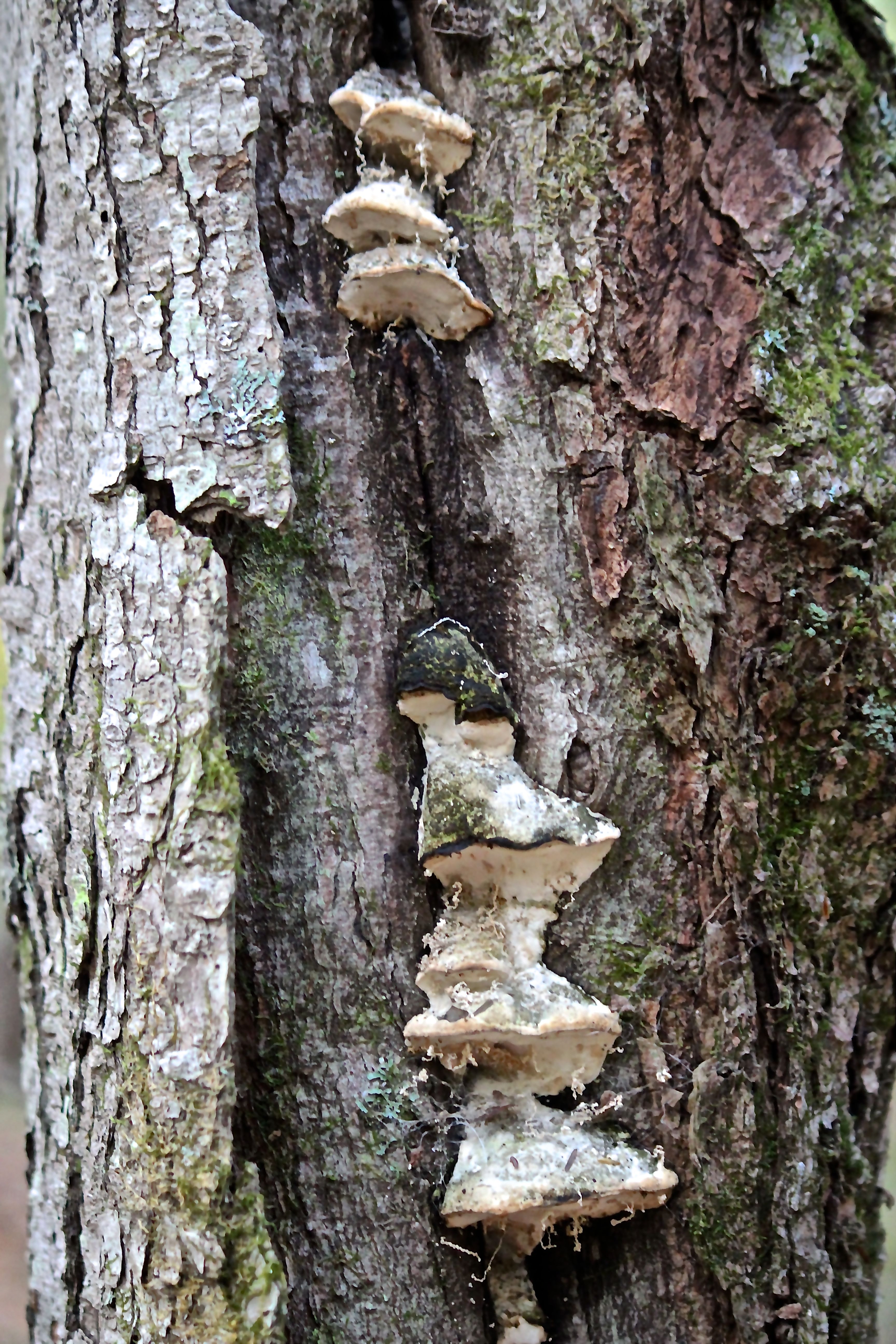
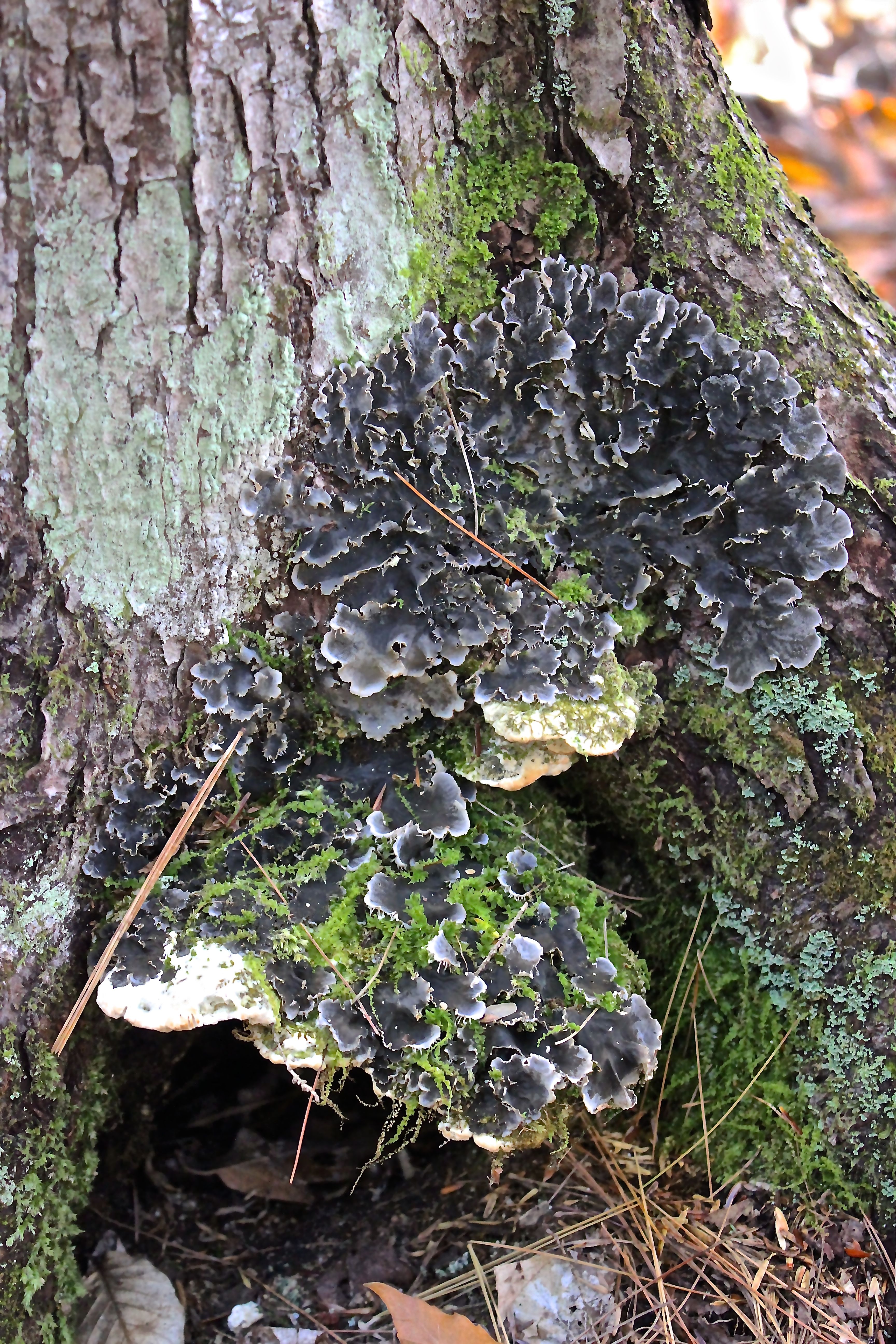
My eyes were drawn to all manner of life growing on trees that are past their prime, from woodpeckers and sapsuckers to mosses and fungi, including violet-toothed, birch and tinder polypores, plus Jack O-Lanterns that glow in the night.

old tinder conk

I found an older tinder conk springing forth with life as it gleans sustenance from its host,

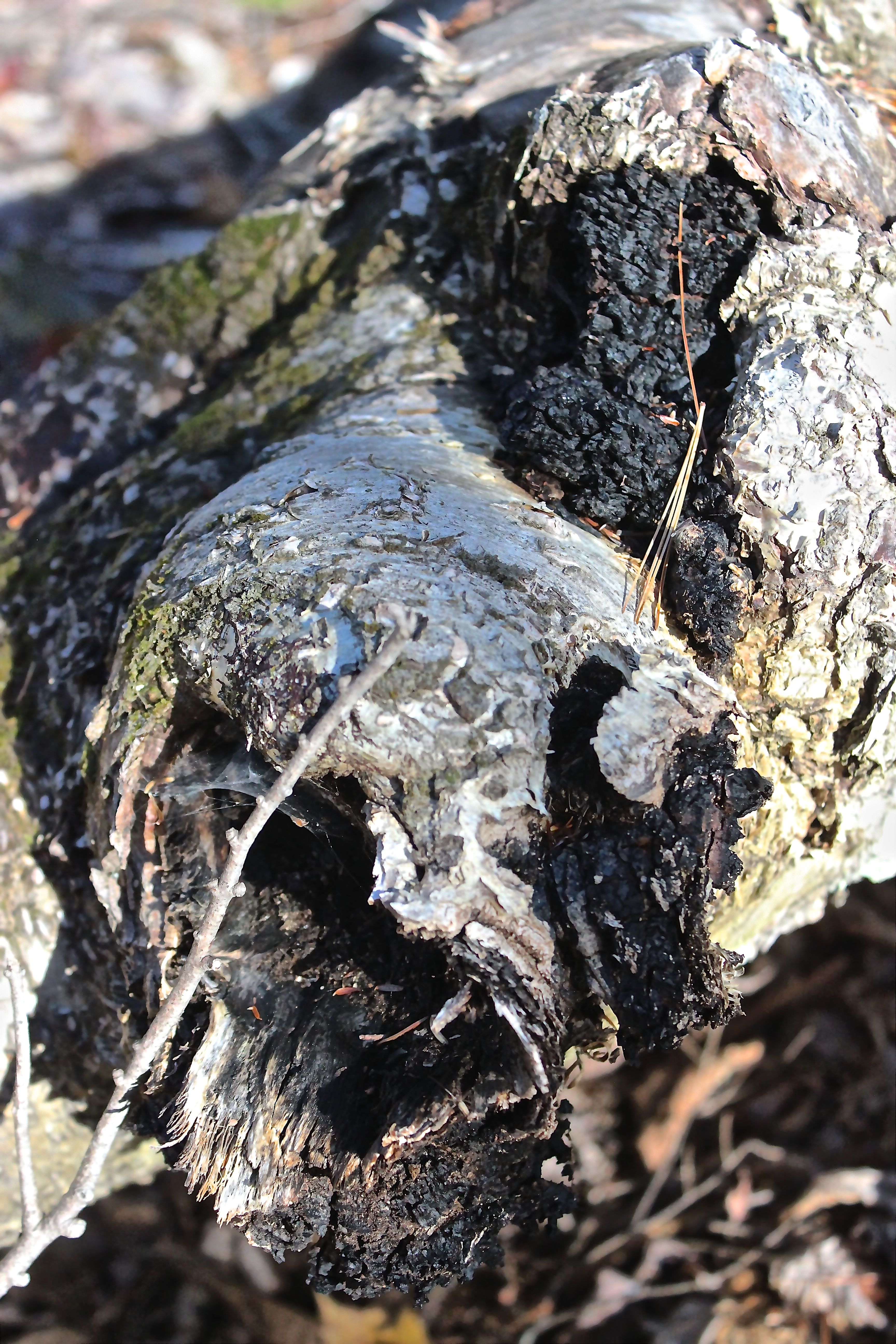
chaga

chaga, that hardened mass of hyphae that is proclaimed to be life-giving,

mossy maple

mossy maple polypores growing in a wound, as is their preference,

mossy maple mushroom:field dog lichen

and more mossy maple, this time covered with the brownish-gray lobes of field dog lichen, which typically grows on the ground. Huh?  Creation at work. Soil forming on top of the moss covered fungi–certainly a fertile ground.

quartz

I found quartz where I expected to find only granite,

royal fern

a small royal fern holding court on its own,

sensitive fern

and the bead-like fruiting stalk of the sensitive fern.

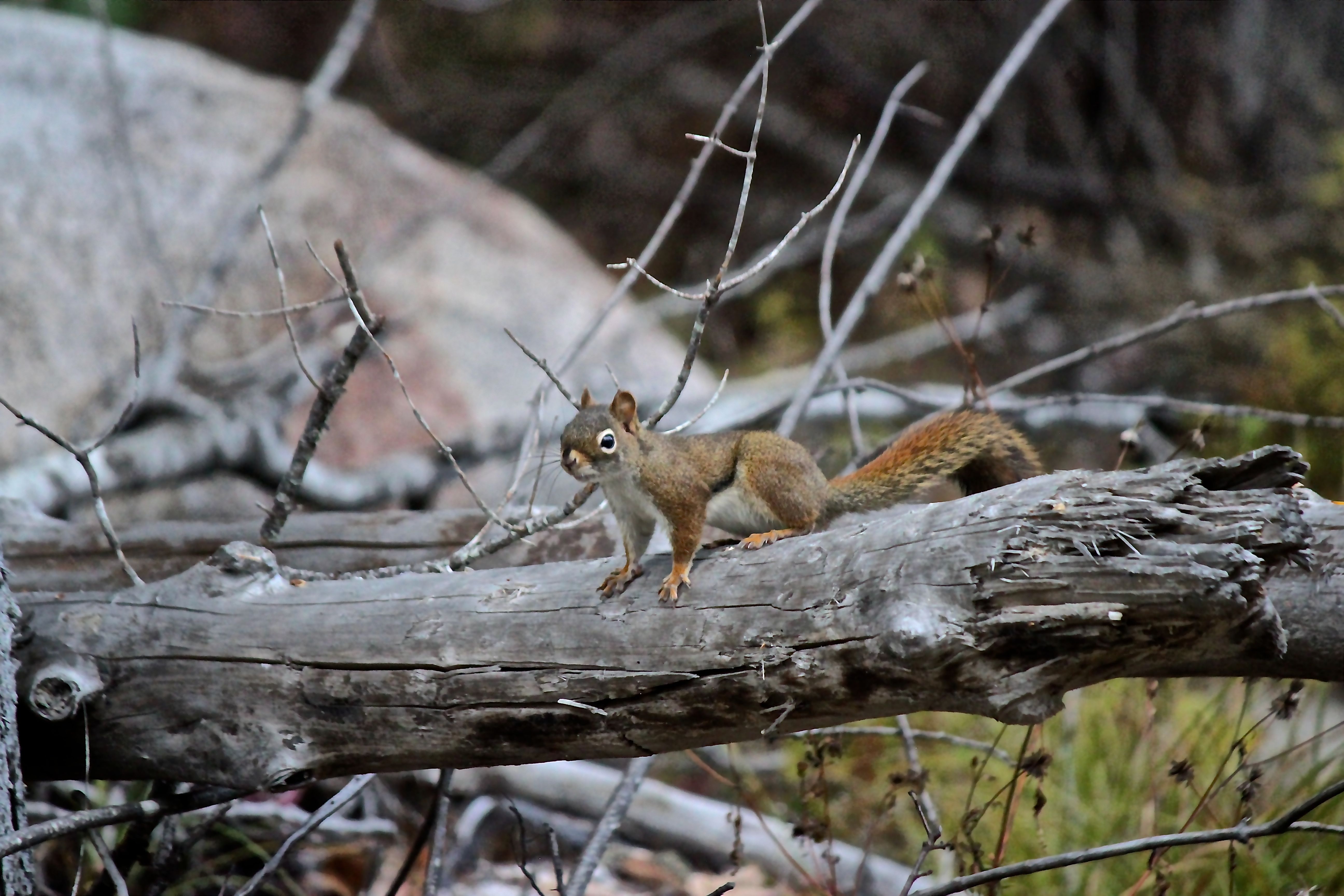
 red squirrel

I saw plenty of birds, including a few ruffed grouse that I startled as they startled me. This and other red squirrels chatted insistently whenever I was near.

beech tree captures late afternoon rays

And I saw the sun’s rays reflected by the beech leaves.

trail 1

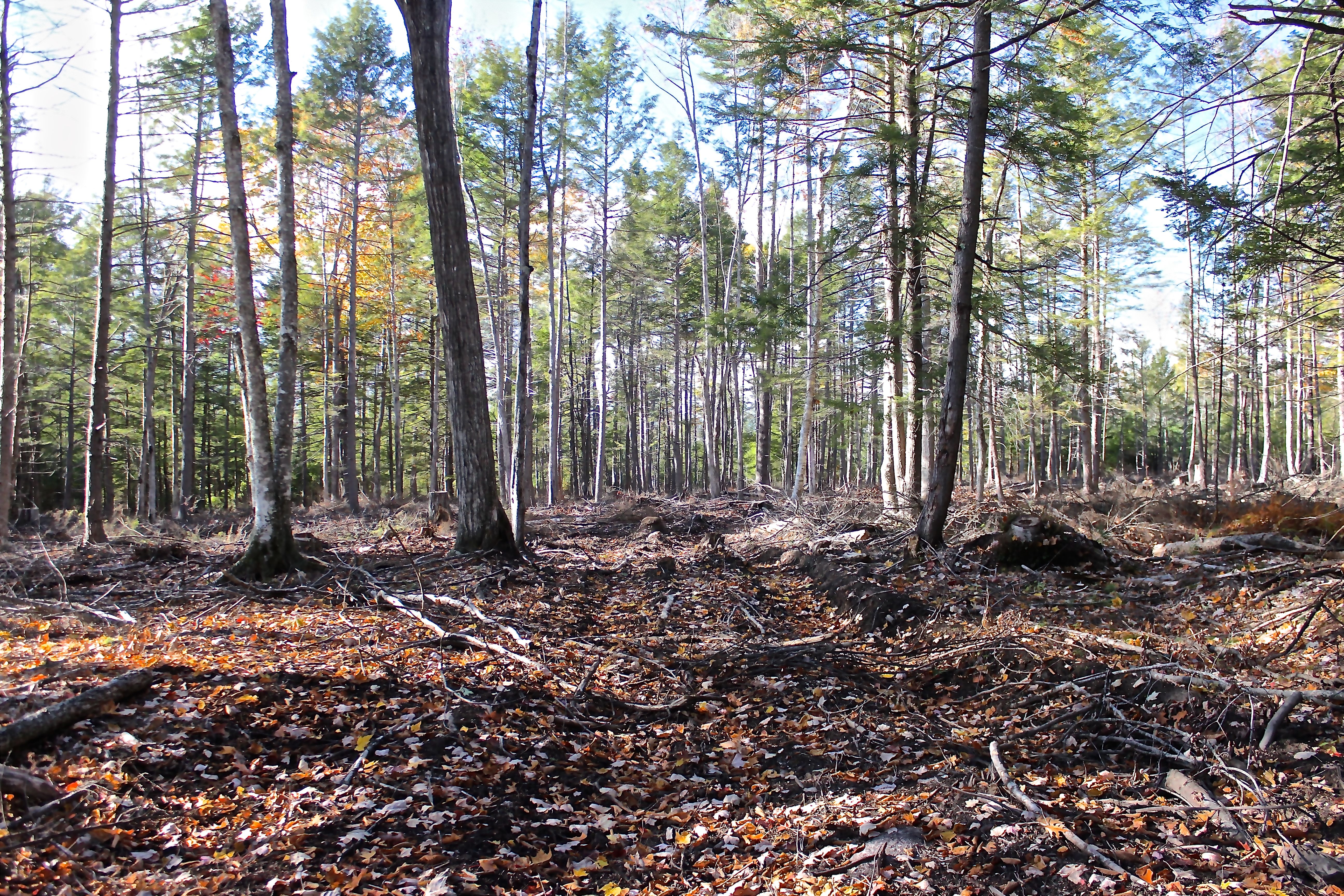
Sometimes following trails, other times bushwhacking, I wondered what will become of this forest.

tree opening

Open spaces invite pioneers to settle down.

Pleasant Mtn

In other places, those that long ago gained a foothold continue to enjoy the view–of Pleasant Mountain.

4 birches

Making my way homeward, I found myself in the presence of the birch clan–paper, yellow, black and gray–how sweet it is.

fleeting moments of fall foliage

As the foliage enjoys its final fleeting moments, I intentionally move from wondering what’s next to enjoying what’s now.

Down Low, Up High

I needed some time for quiet contemplation mid-morning, so I was thankful my guy was working for a few hours.

Sunday morning

I knew exactly where to go to sort out my thoughts.

orange peel on logging road

Along the way, I made discoveries like this–orange peel fungi (Aleuria aurantia), which prefers disturbed areas. Hmmm . . . and disturbed brains?

oak leaf iced in

I found a Northern red oak leaf frozen in ice. But it won’t remain that way forever. Eventually, the ice will melt and the leaf will gradually break down, adding nutrients to the soil. It takes time. I need to remember that.

flowering witch hazel

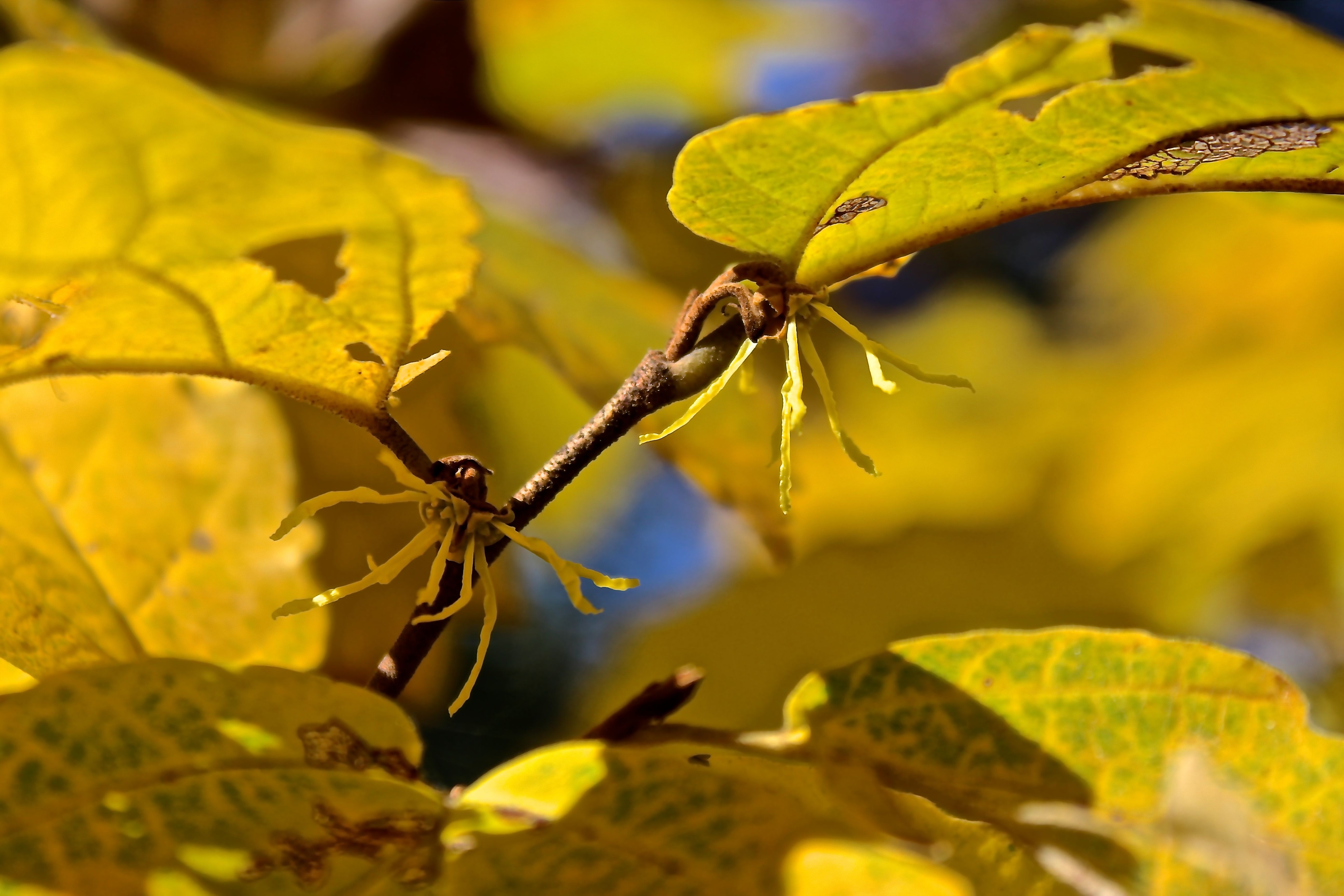
The witch hazels are in full bloom and they made me smile. Life is good after all.

moose track 1

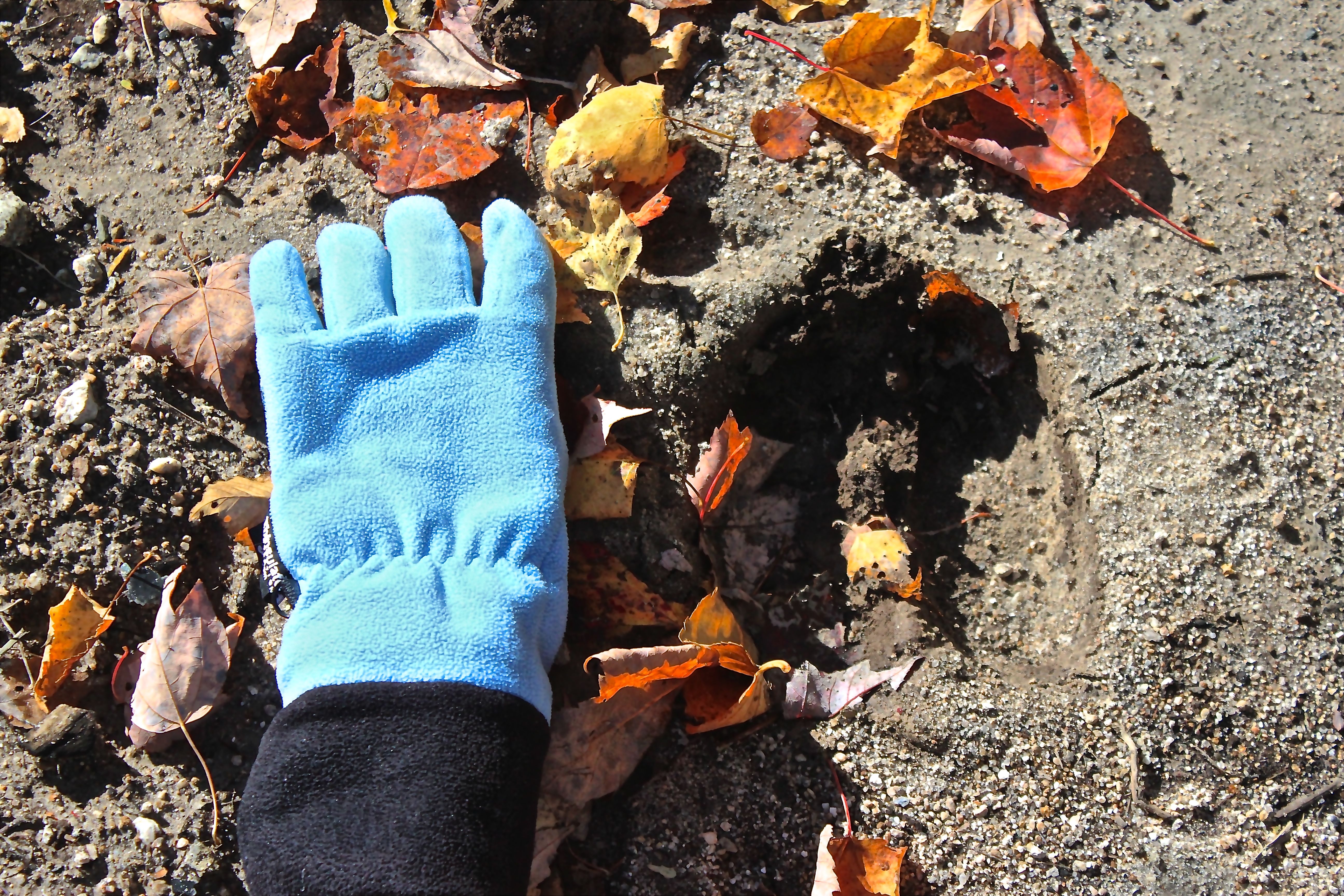
Another reason to smile–moose tracks. Not the ice cream, but the real thing. Though the ice cream is mighty delicious. Our sons tease me because I mine a gallon for the big chunks of chocolate.

home sweet home

Home sweet home at last. My brain was cleared and I knew the path to take.

Prehike view

After lunch, my guy and I also chose a path. Our destination–the one and only Pleasant Mountain. We planned to leave one truck at the bottom of the Ledges Trail and the other at the Bald Peak trail head. Lots of other people also took advantage of the crisp air–a day meant for hiking.

new BP trailhead

The sign has been moved to the back of the new parking lot

new trailhead

where steps lead the way to the new trailhead. Thanks to Loon Echo Land Trust for all the work they and their volunteers and the AMC did to recreate this trail. My guy hadn’t been on it this year and he joined me in singing its praises.

Bald Peak trail stream

Below Needle’s Eye, water cascades over the rocks.

follow the yellow leaved bedrock

Sometimes we followed the yellow brick road, I mean, yellow leafed bedrock

thrift shop

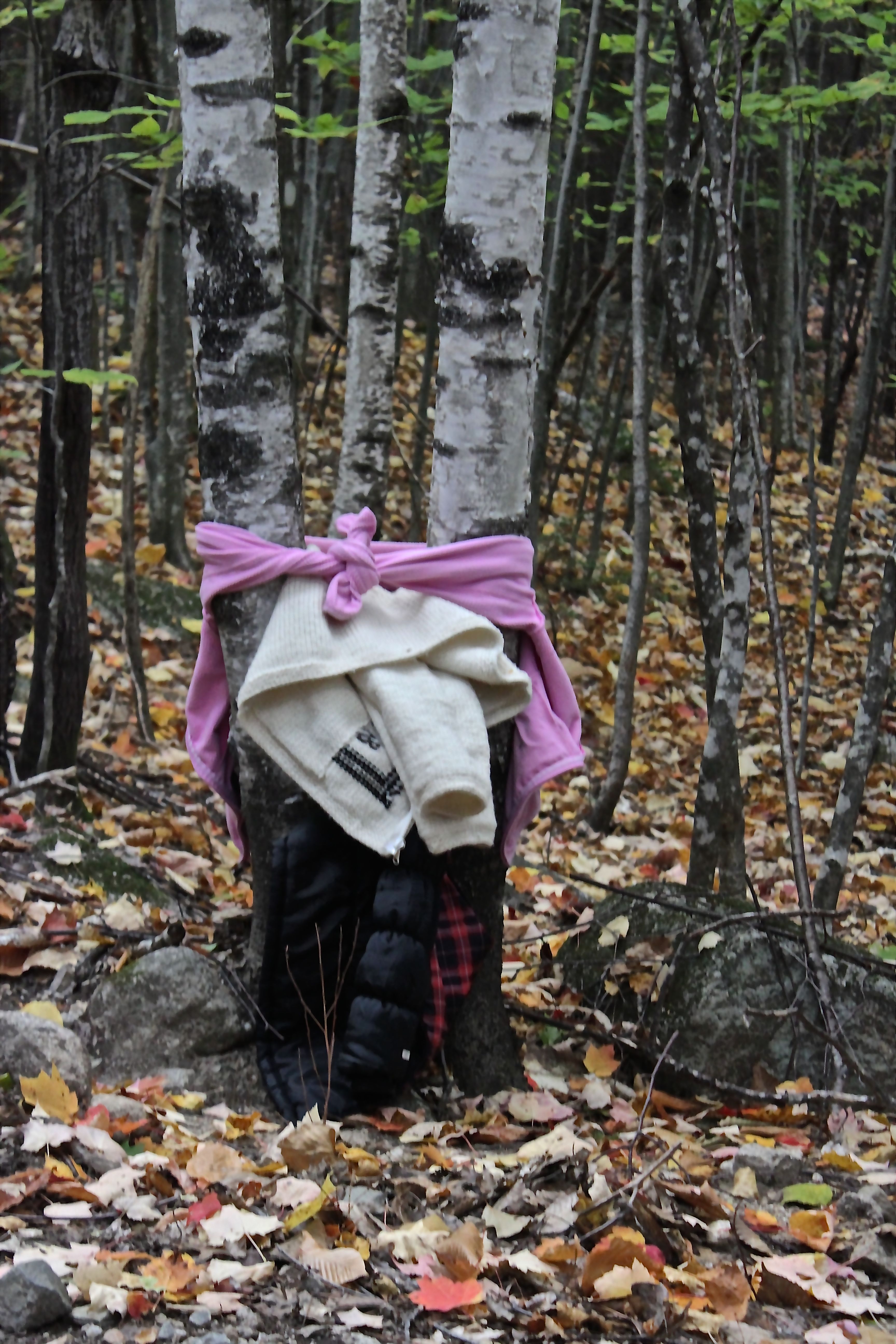
and found a thrift shop along the way. I only hope the owners of these jackets didn’t regret that they’d left them on the lower portion of the trail. The climb up is sweat inducing, but the wind at the summit–brrr.

causeway 2

I love this peek back at the causeway by Sabattus Island, where I had taken the photo of the mountain about an hour previously.

North Ridge summit view

At the North Ridge intersection, mountain views opened.

ridge 2

The fall foliage is beginning to wan, but ever so slightly and the blueberry plants provide a colorful contrast.

Moose Pond from ridge

One moment Moose Pond was clearly visible

waves of flurries

and the next it was clouded by waves of flurries. Snow flurries :-)

The People's Marathon

Step for step, I followed my guy who sported his Marine Corps Marathon jacket. It’s been a while since he’s run a marathon, but only a year since he last ran a half marathon. He’s in training again–the Moose Pond Half Marathon is in two weeks. He ran the course yesterday–13.1 miles around the pond. I’m mighty proud of this guy–he’s raising money for the marathon’s cause–the adaptive ski program at Shawnee Peak. If you are so inclined and want to support him, please stop by his store. This is only one of the numerous things he quietly does for others.

fire tower 2

At last we reached the fire tower at the summit.

windy summit 1

It was a wee bit windy as the flag indicates.

summit, us

That didn’t stop us from pausing

summit view 4

summit view 2

summit view, Kezar Pond:snow

to take in the view. Yes, that is snow falling from those clouds. But only flurries.

ledges view 3

On our way down the Ledges Trail, Moose Pond again came into sight.

I was thankful for yet another opportunity to enjoy a mountain high with my guy–and overcome the low points of the day.

This may be a Sunday Mondate. Not sure what tomorrow will bring us. That’s the thing about life and nature–we never completely know everything. I like that. Lows and highs–it keeps us wondering and wandering.

This post is dedicated to my guy who will run in the Moose Pond Half Marathon on November 7 and to Major Kimberly Olmsted Jennings, USAF, who will run in the Marine Corps Marathon, The People’s Marathon, next Sunday. So proud of both of you.

Rain Drops and Mondates Always Make Me Glad (and humble)

My guy and I ventured off to the Major Gregory Sanborn Wildlife Management Area in Brownfield today. Cooler temps and plenty of sunshine marked the early morning hours.

BBog sign

Covering almost 6,000 acres, this area was formerly known as the Brownfield Bog, but was renamed to honor Major Sanborn, a beloved Maine Warden, who lost his battle with cancer several years ago.

Bbog1

This is a place we return to often, but I have to admit that my sense of place was thrown off within the past week.

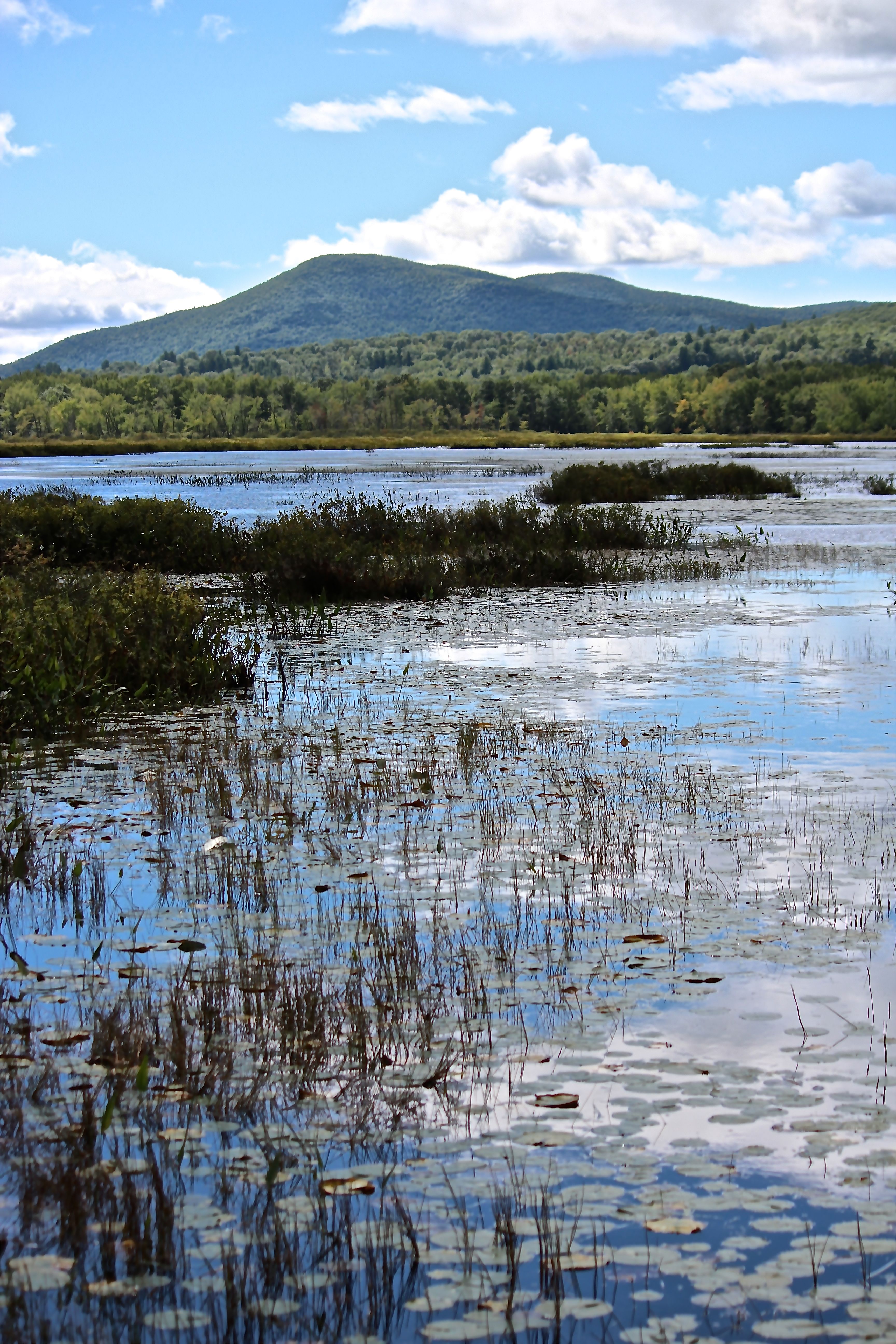
Saco River

We came to explore the Saco River. So this is where our pride takes a ribbing. We’ve walked to the river on most of our visits, but we never realized that this was the actual river. Huh? Yup, it’s true. In our brains, this was either the Shepard River or an old course of the Saco. Maybe it’s because when we’ve stood beside its bank, we’ve never seen anyone paddling along. Maybe it’s because until yesterday we never looked at the map. We never bothered to locate our place–just assumed we knew where we were. Another life lesson. Just a week ago, we were the merry paddlers, cruising along at tandem kayak speed, passing through the bog from Lovewell Pond to maybe a  half mile north of the Brownfield Bridge (maybe less). Maybe it’s because we were such swift paddlers that we were clueless. Anyway, now we know: The Saco River bisects the bog.

SR exploration

Exploring the floodplain became our focus as we followed the river.

river erosion

Each year, the river consumes more land, making me wonder what it was like when Brownfield was founded in 1802.

sensitive fern, chest height

We walked down a mowed path, where the sensitive fern grows chest high on either side.

royal fern

And the royal ferns are equally large and plentiful.

glen

Saco River 3

We explored in a different direction, perhaps trespassing on private land. (Oops, did that chain between the posts really mean “keep out”?)

elm 2

We recognized an elm growing over the river that we’d spotted while kayaking last week and knew that we’d established our sense of place.

SR 2

And then we turned from the river, retraced our steps and continued on to explore more of the bog via foot.

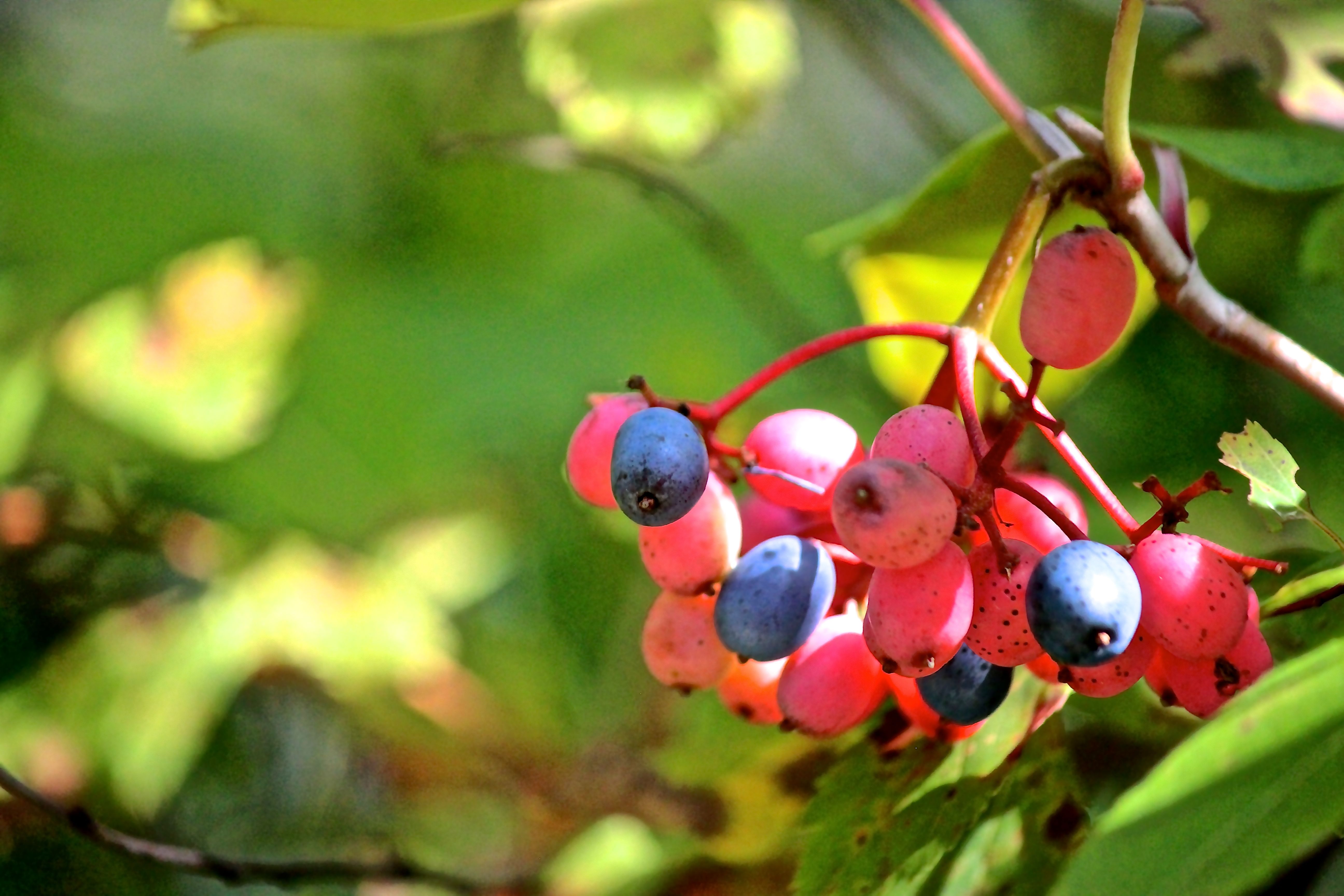
wild raisins 1

Wild raisins are abundant.

wild raisins

Eventually, the fruits will all turn blueish black and if the birds don’t eat them, they’ll shrivel up–like raisins.

common winterberry

The showy red fruits of common winterberry also dot the landscape. The curious thing about this plant–though this is a member of the holly family, the leaves are not sharply toothed like other hollies, nor are they evergreen.

milkweed dispersal

Milkweed is ready to fly away and find a new home.

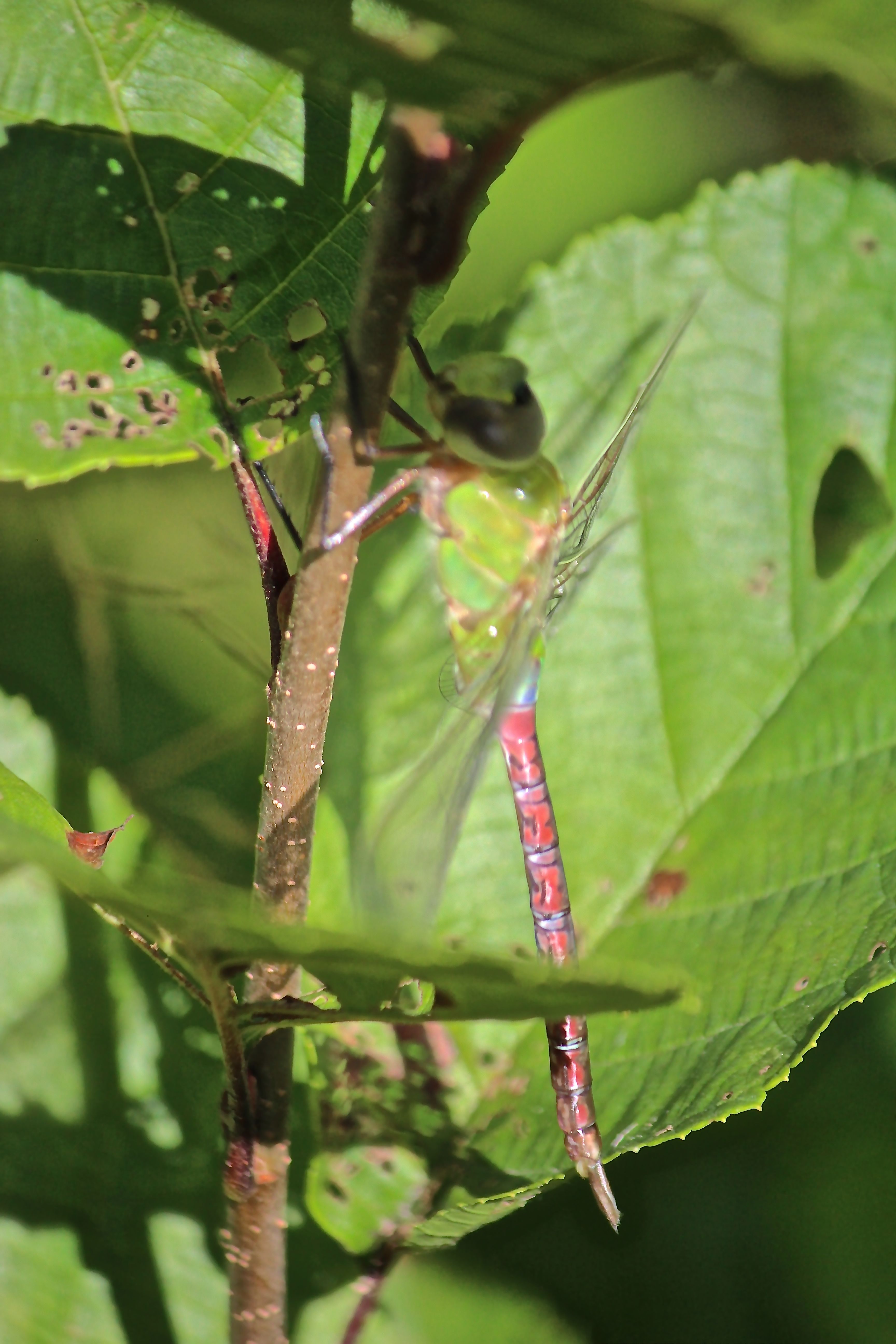
green darner dragonfly

Speaking of flying, if I hadn’t seen this green darner fly into the foliage, I never would have discovered it.

Meadowhawk dragonfly

Meadowhawk dragonflies were much easier to spot, enjoying the warmth of the sunshine.

BBog 5

Openings in the shrubs and trees provide frequent views,

Pleasant Mtn 4

including the backside of Pleasant Mountain.

white oak bark

The community changed a wee bit, and suddenly we were under white oaks with their flaky-surfaced, rectangular, block-like bark.

northern red oak bark

Beside them grow the Northern red oaks, with their flat-topped ridges outlined by the rusty red inner bark.

big tooth aspen bark

The horizontal/vertical line design of big-toothed aspen also made its presence known.

big tooth aspen leaf

And on the ground, a big-toothed leaf provides a hint of what is to come.

red maple leaves changing

A few red maples are beginning to announce the changing season as well.

Bbog 2

When we reached our turn-around point, we were feeling a bit hot and sticky. We’d shed our sweatshirts and were thankful for a slight breeze.

fragrant water lily

I admired a few fragrant water lilies still in flower, while my guy followed the action of a northern harrier through the binoculars.

storm leaves

And then the wind really picked up. I looked at the trees and could see the backs of the leaves–my mother had long ago told me that that was a sure sign of rain to come.

storm cloud

We looked up and had an Eeyore moment.

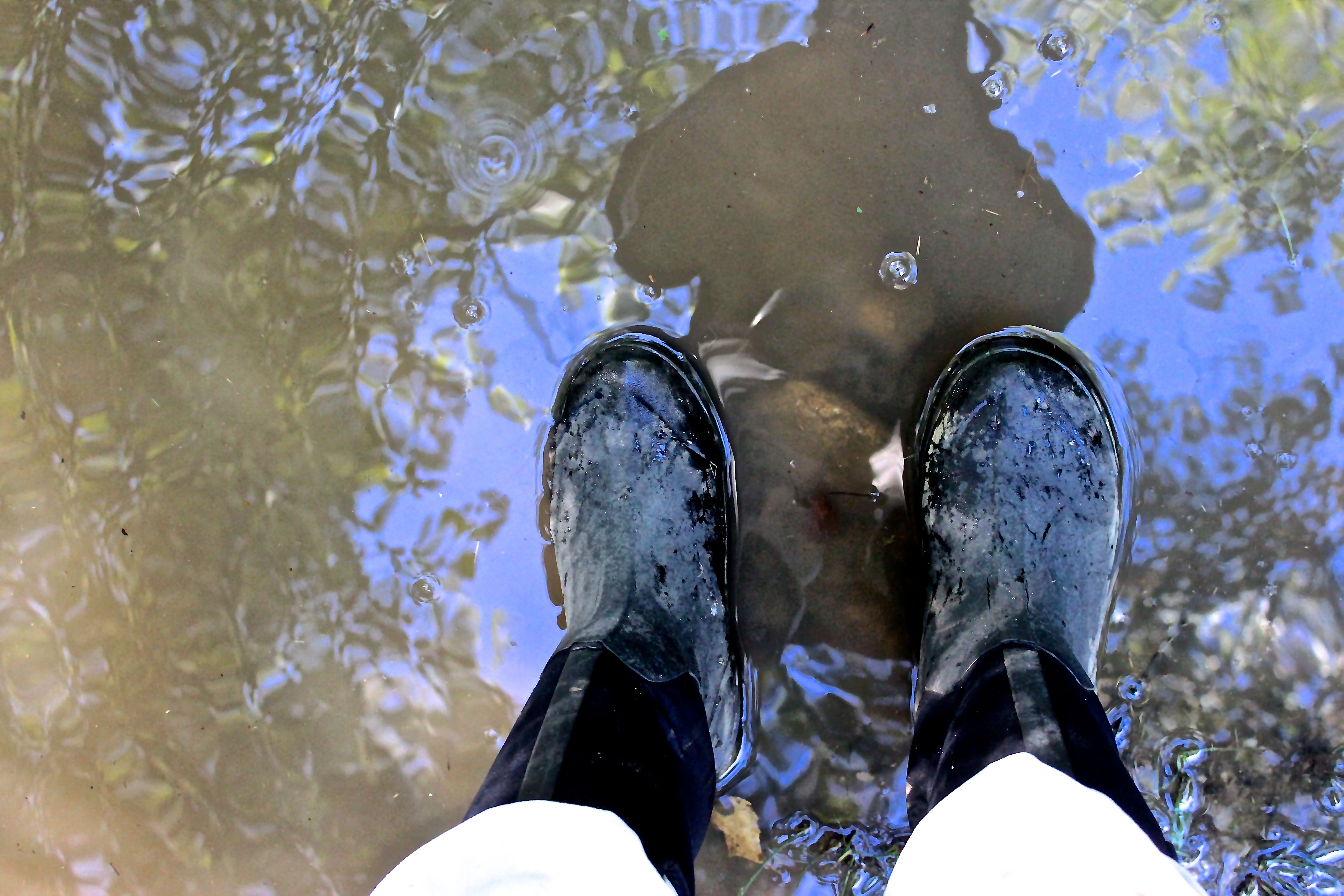
boots

I was wearing my boots, but no raincoat.

raindrops 1

It rained. It poured. It felt good.

raindrops 2

And then it was only a memory–and a pleasant one at that.

rain: Pleasant Mtn

We watched it move across the southwest end of Pleasant Mountain as we headed back.

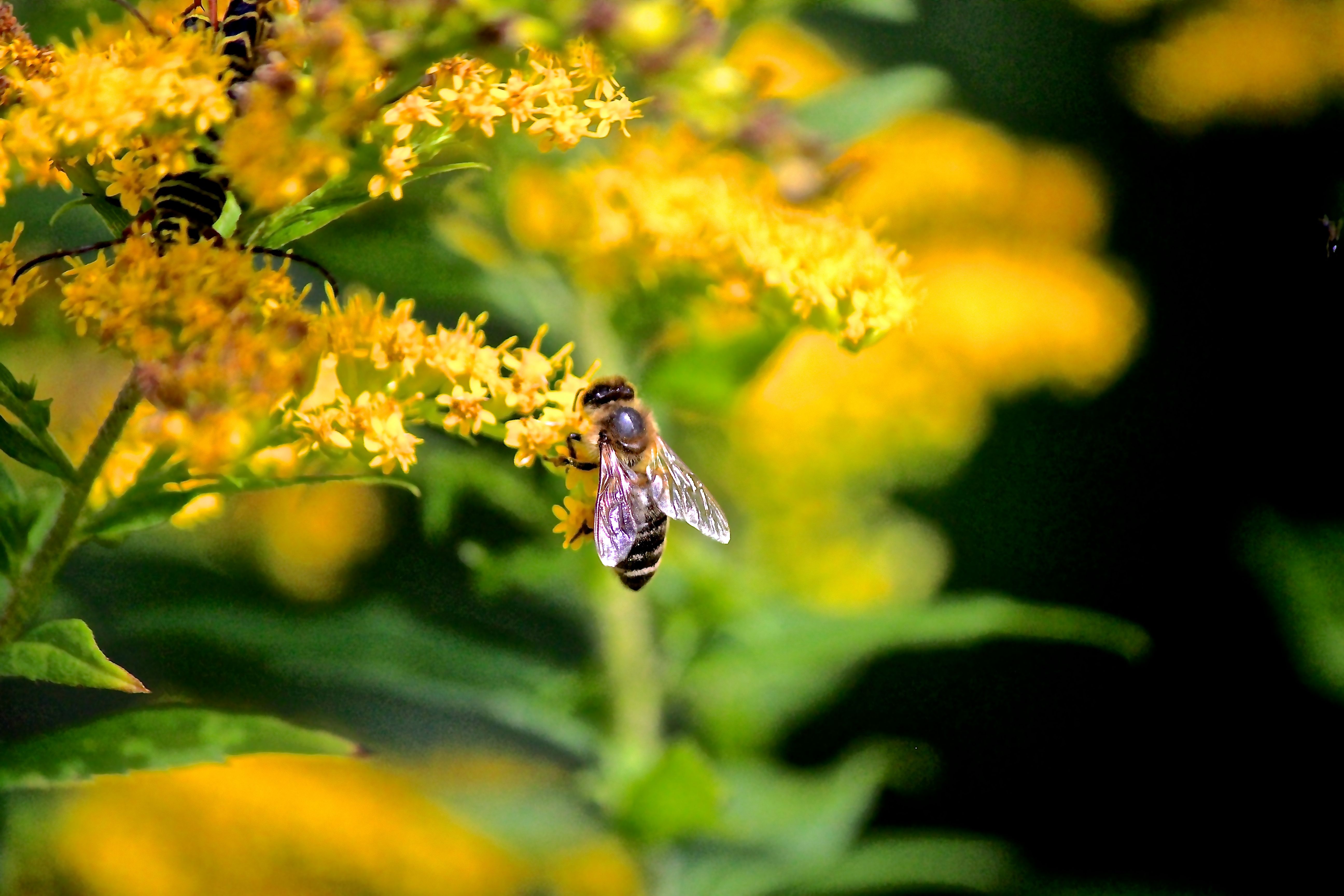
lb andbee

When we arrived home, the air was a bit cooler. I stepped outside to check out the insect activity in the yard and through the camera lens I realized something was photobombing the bee.

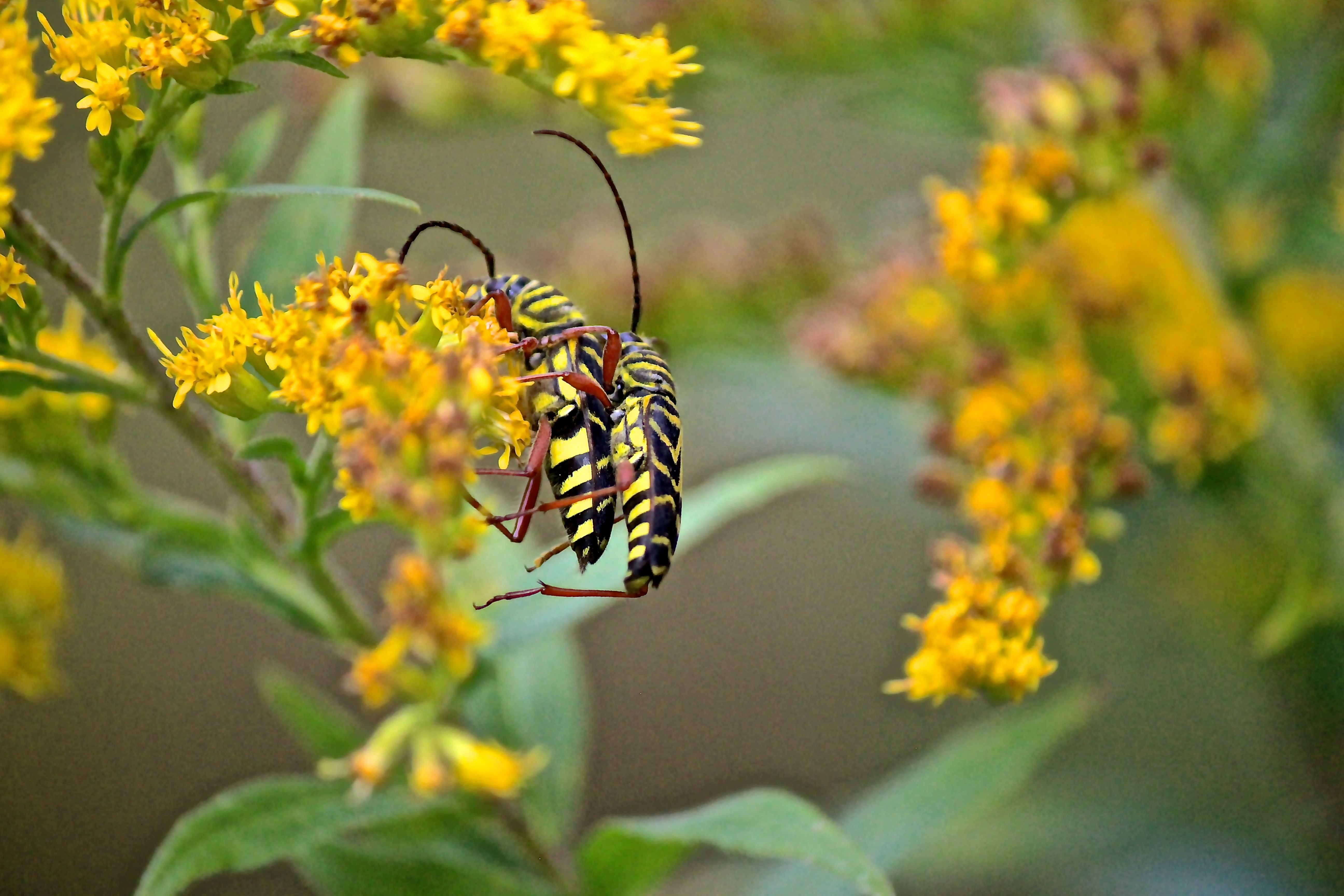
lb7

Two somethings in fact–a pair of locust borers apparently shared their own Mondate. The only locust tree in the neighborhood is down the street, but I suspect that momma will be laying some eggs in the bark at dusk tonight.

It looks like rain once again, but we’re glad for the opportunity to explore together on another Mondate–and gain a better understanding of our greater neighborhood, our sense of place. So much for pride. Life is a humbling experience.

Saco River Mondate on a Sunday

My relationship with the Saco River began in 1985 when I was a YMCA camp director in Laconia, New Hampshire. My charges were tweens and teens. Each week they piled into the 15 passenger van and I took them on an adventure–just as much fun for me as for them.

I’d scoped out this particular canoeing/camping trip ahead of time and felt confident that we had a good plan.

We rented canoes from Saco River Canoe and Kayak in Fryeburg, Maine, and the first leg of our journey was a long day spent paddling down the river and then up the old course to the covered Hemlock Bridge. My copilot was a 16-year-old lifeguard named George.

Though we’d practiced canoeing techniques in the Y pool, the real thing was a challenge.  Once on the river, the kids eventually learned to paddle in an almost straight line after many circular attempts.

At last we reached our destination, set up camp, told ghost stories, spooked each other and settled down for the night. Sleep alluded me so I watched the lightning show and listened to serenading bullfrogs.

In the middle of the night, one of the girls yelled out, “Help! Somebody! Help me!” When I arrived at her tent, I asked, “Dawn, did you have a nightmare?”

“It wasn’t Dawn. It was me,” replied Melissa quietly. “The zipper on my sleeping bag just got stuck.”

The next morning we paddled back to the main course of the river and enjoyed a pancake breakfast on a sandbar. As the day went on, we lolled about–splashing each other, getting out to swim, and singing silly camp songs.

Until . . . a few girls forged on and forgot to pull over when they saw Walker’s Rip. Two canoes went over the rip without any problems. The third got caught atop two rocks in the rapids. The girls panicked when water began to flow in one side and out the other as the bow and stern bent toward the river. The current and slippery rocks made the ten feet from the riverbank feel like ten yards. People on either side came to the rescue. In a fast few moments things went from bad to worse and we had several injuries accompanied by lots of high drama, including an ambulance ride to Memorial Hospital in North Conway, New Hampshire.

The diagnosis: everyone was fine with a few minor bruises. The prescription: ice cream and Tylenol.

Though we were supposed to camp out that night, the kids were done, so I drove back to Laconia and the Y director met us there (with a 6 pack to calm my nerves.)

As far as summer jobs go, this ranks number one on my list. I don’t know what has happened to any of the kids, but I hope they still remember the pranks and fun we shared. (Number 2 favorite summer job: painting Yale bowl)

A year later I landed a teaching job in western Maine and the Saco River and Hemlock Bridge became part of my place.

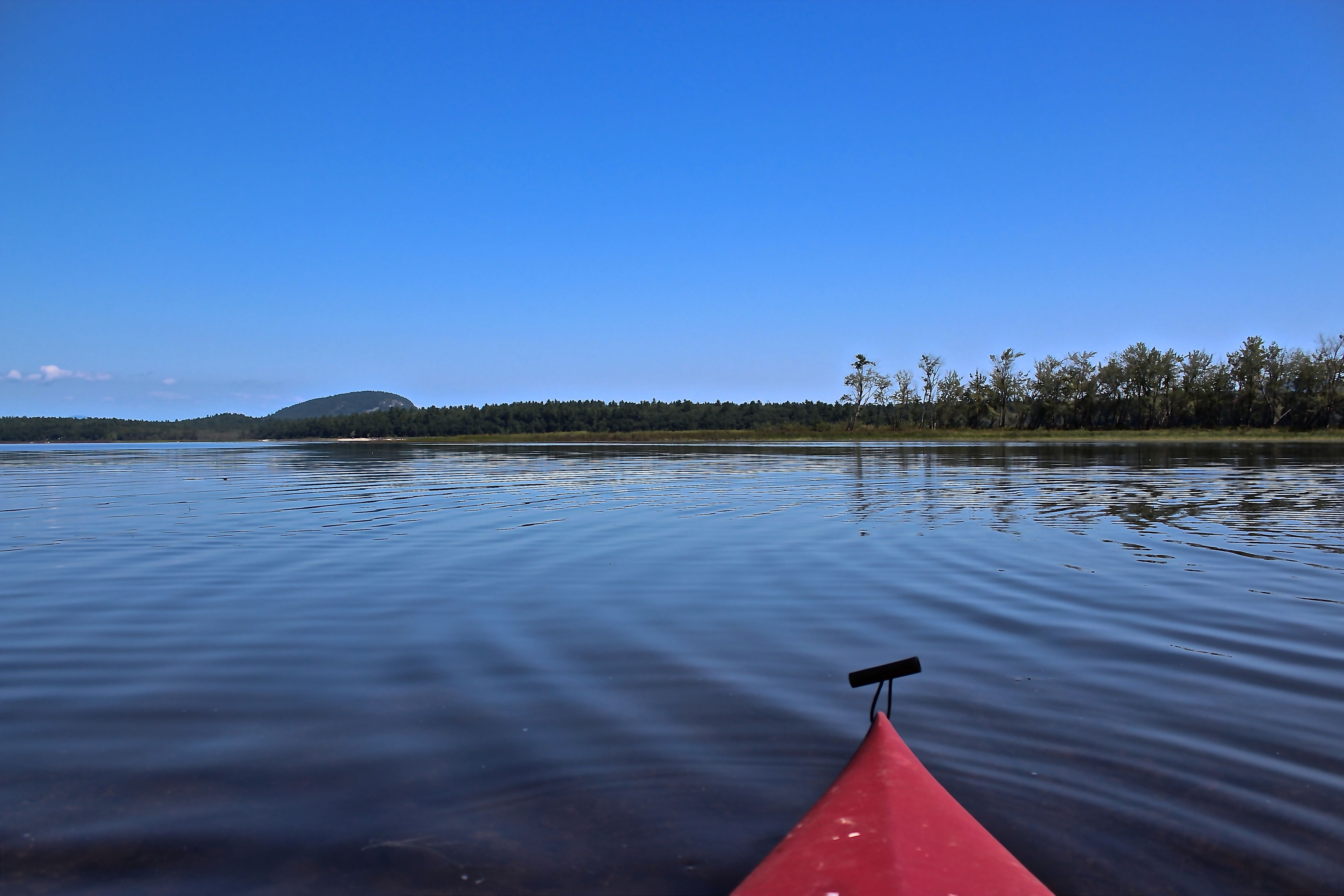
So it was that yesterday, my guy and I left one truck at the Brownfield Bridge and drove to Lovewell Pond to launch our tandem kayak. It was actually a reconnaissance mission for me because the Upper Saco Valley Land Trust has asked me to lead a paddle on this portion of the river in a few weeks.

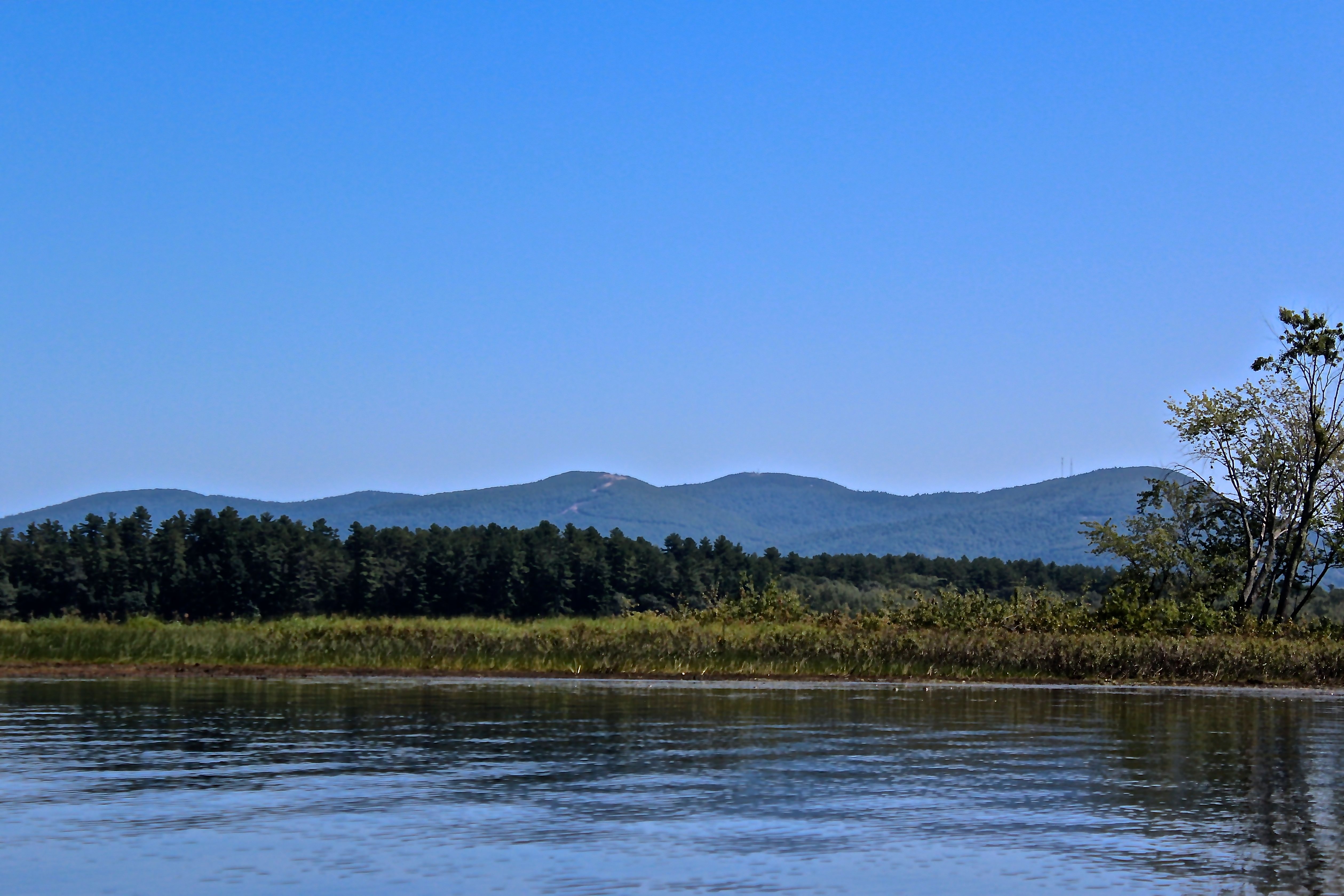
Mt Tom

Mount Tom, a Roche Moutonnée, is visible to the left. This asymmetrical hill features a gently sloping up-ice side that has been smoothed and polished by a glacier. The other side is  abrupt and steep–the down-ice side where the rocks were plucked off, leaving a more cliff-like appearance.

Lovewell Pond

We’d never been on Lovewell Pond before, so were a bit astonished by the white sandy beaches accentuated by the mountain backdrop as we looked toward Fryeburg and North Conway.

Pleasant Mtn

Pleasant Mountain also forms part of the backdrop, giving us a sense of direction. Home is on the other side of the far left peak.

corm 2

Paddling about for a bit, we checked out the local wildlife, including this pair of cormorants and

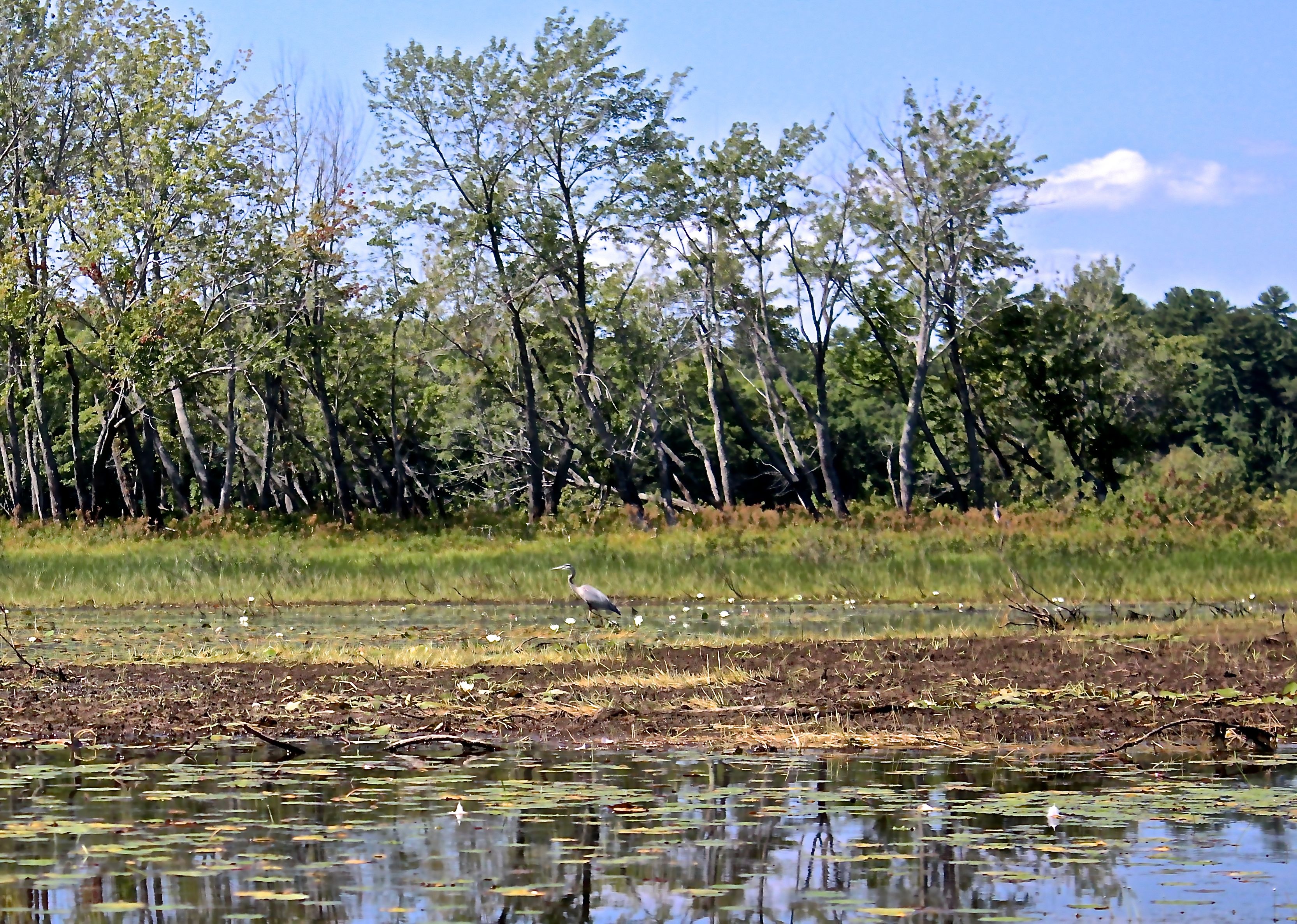
heron

a wading great blue heron.

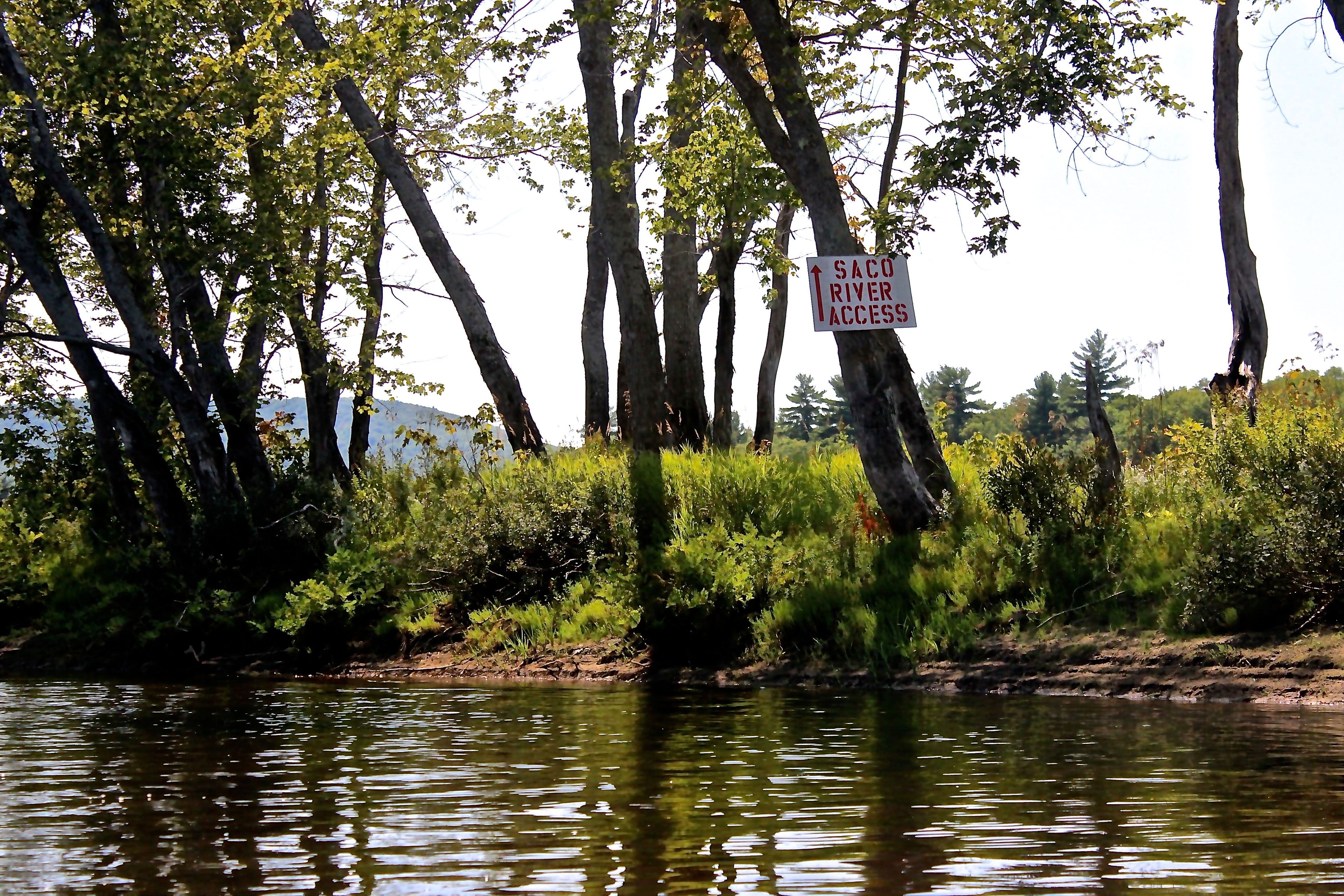
SR access

And then we were ready to begin our journey. We thought we might be a wee bit crazy to be on the river this weekend, along with the boys from deliverance, but we only met a few. For the most part, we encountered families and friends enjoying a beautiful day in Maine. And a clean river thanks to the Saco River Recreation Council.

Saco Access

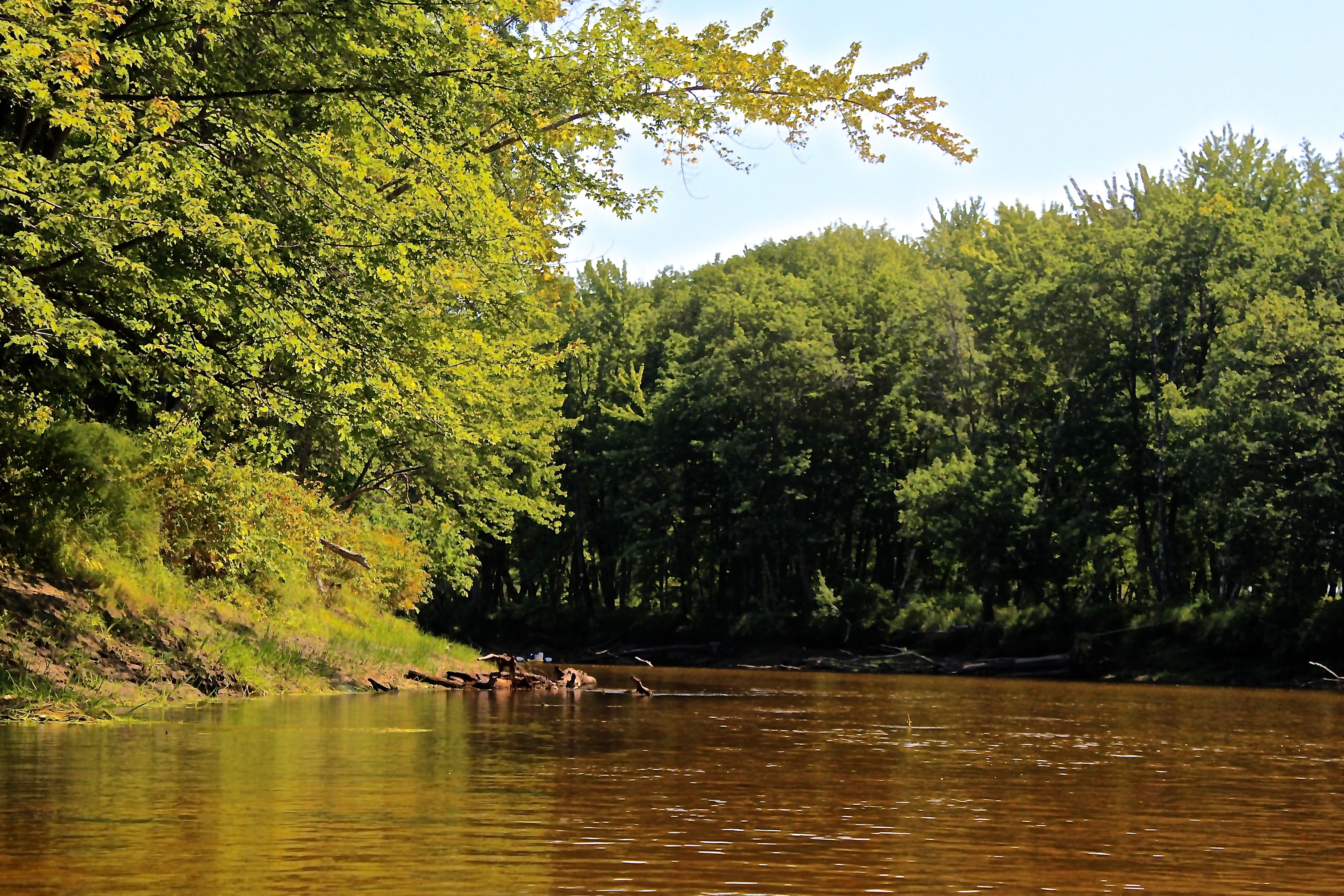
Silver maple trees grace the banks.

shallow water

Being September, the river was quite shallow in some spots. But walking in the water felt good.

round the bend

Around each bend, we reminisced about previous river runs, including the time we did a much longer trip in an inflatable raft–we were young, in love and clueless. And uncomfortable. Now we are old, in love and still clueless. But happy.

silver maples

Though the river is at a low point, you can tell by the bank that water rushes through here. The silver maple, known for the silvery color of its leaf’s underside, is fast growing and a bank stabilizer, but it also succumbs to the river’s force.

Elm leaves

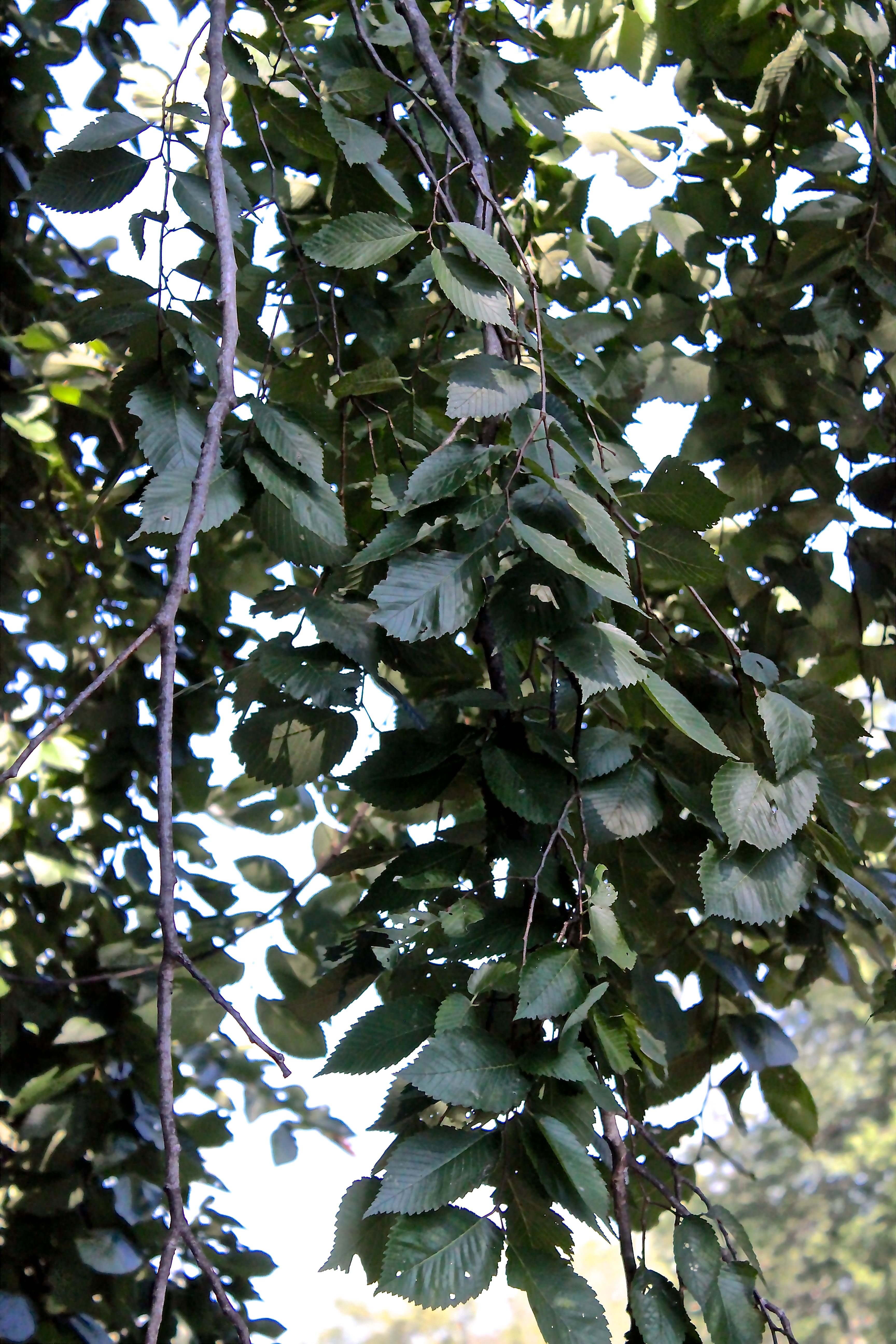
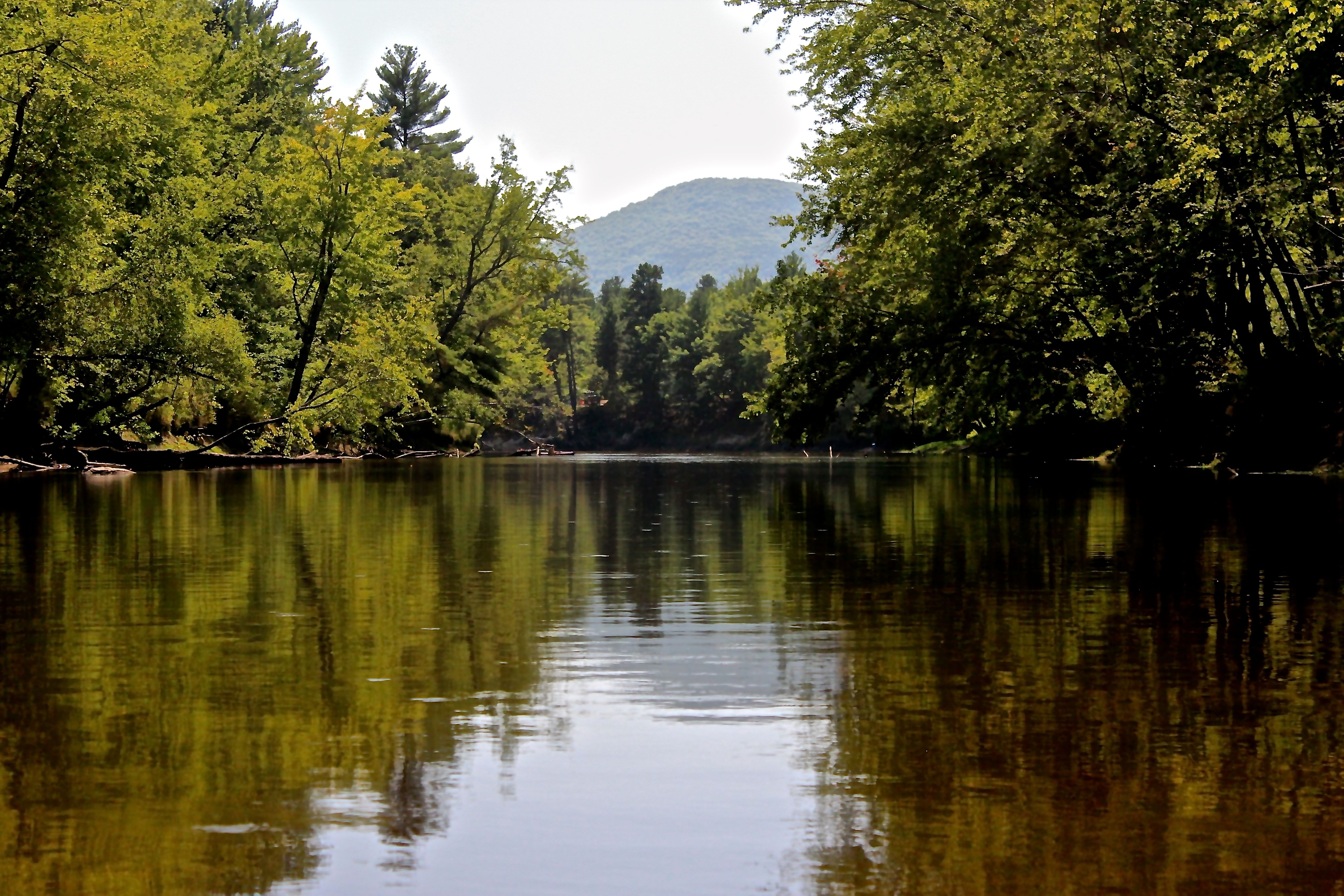
As we floated along, I began to wonder what I should point out in a few weeks.  Yes, there’s the silver maple floodplain forest, which includes red maples. Royal fern, sensitive fern and ostrich fern were visible along the way. And some shrubs and plants. Finally, we came upon this American elm leaning over the river–large and healthy with its asymmetrical leaves.

Burnt Meadow Mtn in background

We were close to our pull-out point when I saw some white and red pines and thought I might talk about the King Pines–those massive pine trees that were marked with the king of England’s arrow, so selected because they grew straight and tall and would be perfect for ships’ masts.

I may also mention the river’s curse, but I might save it until the end when Burnt Meadow Mountain is visible in the background.

According to legend, in 1675 the wife and infant son of Squandro, chief of the Sokokis tribe, were playing on a river sandbar when they encountered three rowdy, drunken English sailors.  The mother and child were laughing and didn’t hear an approaching canoe. One of the three sailors claimed that a papoose could swim like a wild animal (dog paddle) naturally from birth. The others doubted him. To prove it, the man jumped out and grabbed the child. The mother watched in horror while the sailors threw her baby into the water. She grabbed the baby and ran to Squandro. It was too late. Squandro raised the limp body toward the sky and said, “As long as the grass grows and the water runs, it shall be the will of the Great Spirit that every year the waters of this Great River shall take three White Men’s lives.”

There is also a version whereby the mother was pregnant and she, her infant and her unborn child all died.

Some say the curse ended in 1947 when no lives were taken. That was also the year of the Great Fires, including in Brownfield, our take-out point. Related?

It seems to me that respect may be the key. Respect for the land, respect for the river and respect for each other.

Though our trip yesterday was short (about four miles), this wander has been a bit long. Thanks for coming along for the ride.

Out of the fog

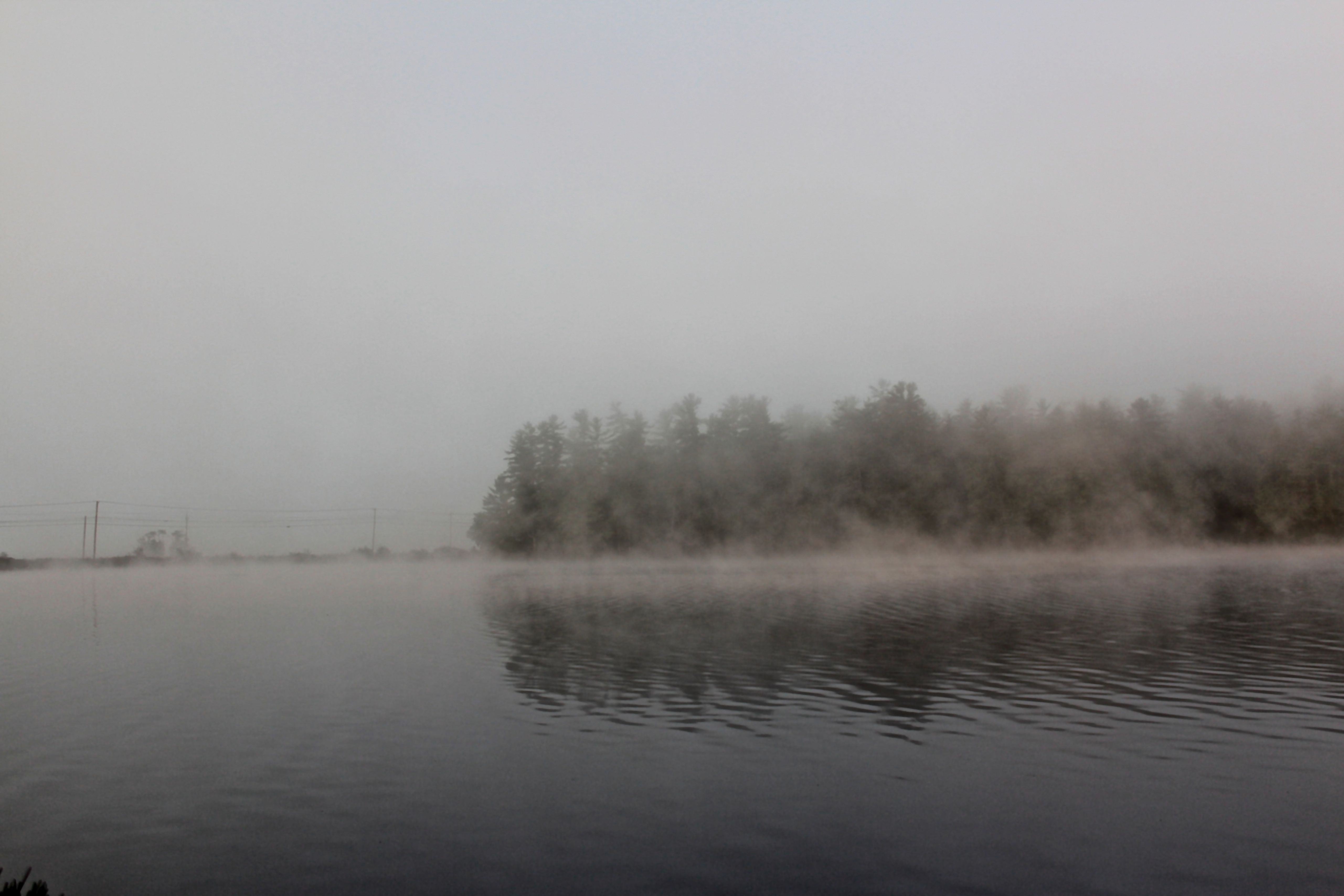
morning fog

Morning fog embraced Pleasant Mountain, making it only a memory.

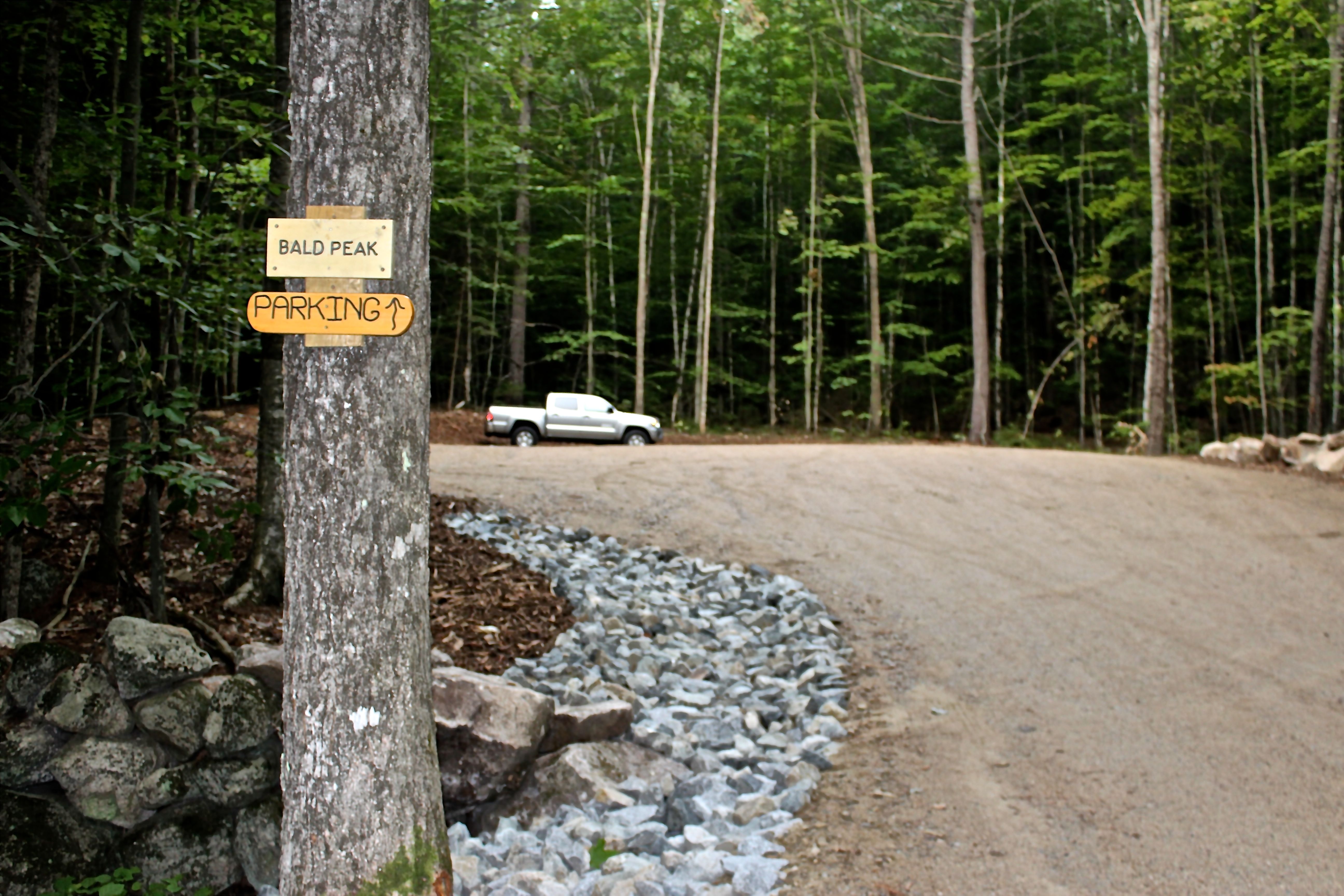
new parking lot

In my need to know that it was still there, I drove down Mountain Road to the brand-spanking new Bald Peak parking lot. I guess I was early since my truck was the lone vehicle.

Bald Peak Trail Sign

Thanks to Loon Echo Land Trust and the AMC, the Bald Peak trail has undergone a transformation this year.

Stairway to heaven

new trail

trailwork 4trailwork2trailwork 3

More stairways, a new path and switchbacks make for an easier climb. Um, that’s all relative. It’s still moderately challenging compared to the other trails on the mountain.

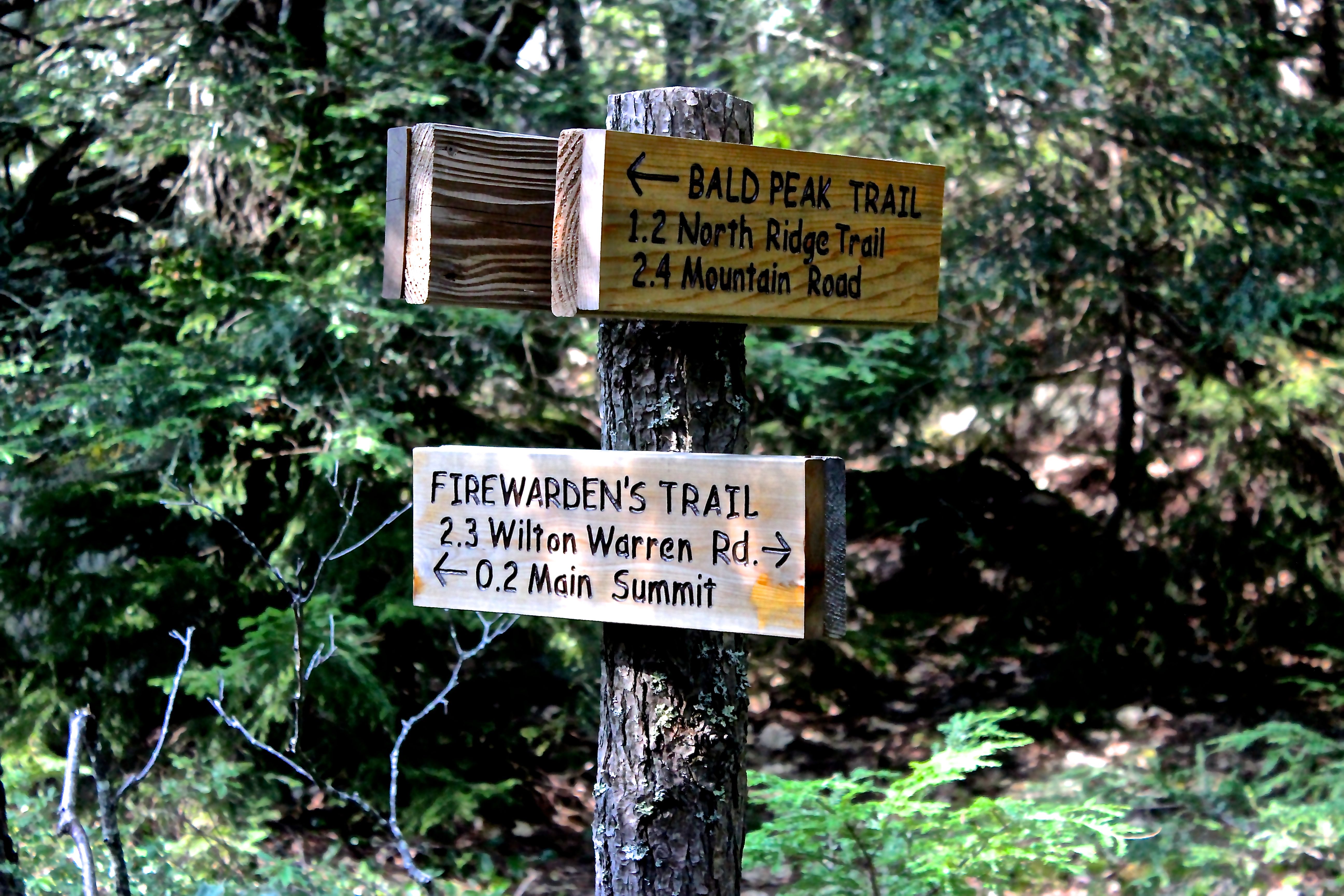
trail signs

Trail signs mark the way, giving a sense of direction and distance.

debarked

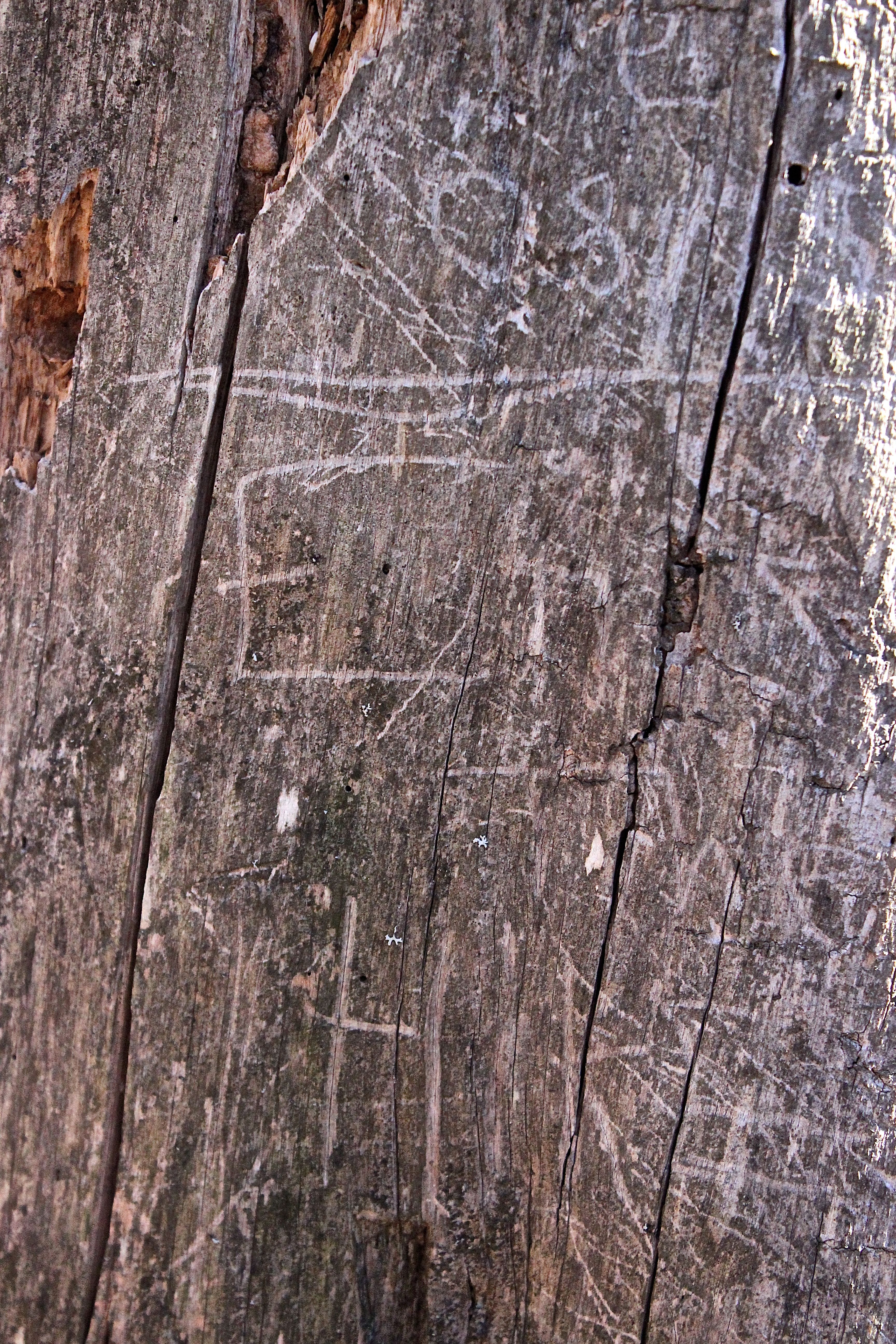
I’m a bit out of order with this photo, but that’s my nature. Near the start is this debarked birch. People have carved their initials to note their presence. I know I occasionally post photos of beech trees with carvings, but the fact that someone took the time to peel the bark off this tree bothers me. Please leave bark on trees. I know it peels easily on birches, but the tree will shed its bark when it is ready. For us to peel it is like someone peeling off a layer of skin. Shivers run up and down my spine as I think of that. Bark is the tree’s form of protection from the elements. ‘Nuf said . . . I hope.

mossy rocks

For much of the way, the trail follows a stream featuring moss covered boulders

lush mtn garden

and terraced rock gardens.

rock garden

I pause beside one boulder where lichen, mosses, wildflowers, ferns and even a striped maple tree have made a home.

Christmas fern

Christmas fern–do you see the shape of the leaflets or pinnae? Little Christmas stockings or boots? Some say Santa sits in his sleigh with the reindeer before him. Each leaflet is attached to the main stem via a short petiole.

polypody1

Polypody fern loves to give rocks a crazy-hair-day look. While its leaflets look similar to that of Christmas fern, they attach directly to the main stem and give the  entire blade a rather ladder-like appearance.

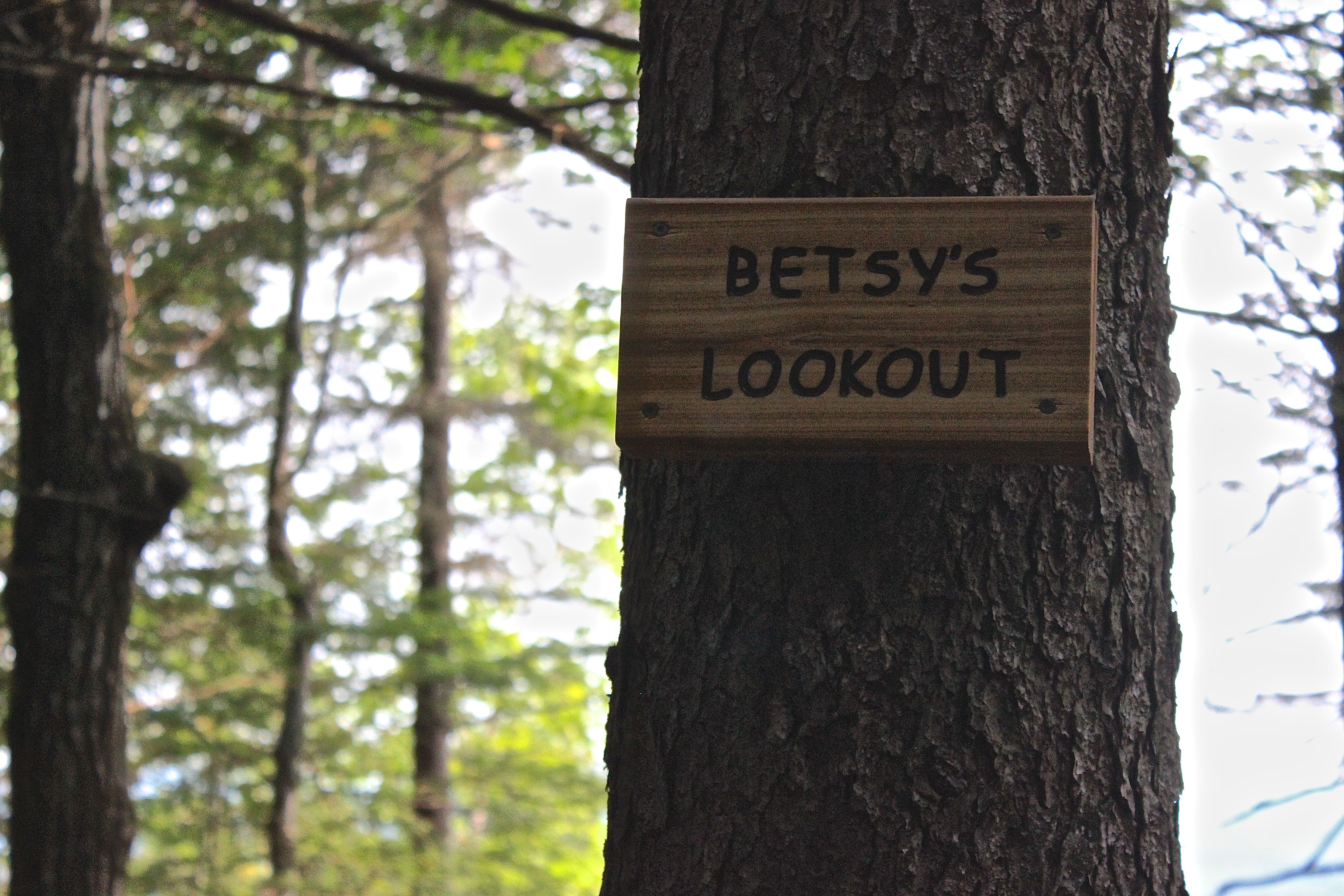
betsy's lookout

I’m not sure who Betsy is, but along the path, there is a new cutout providing a bit of a view of Moose Pond below.

American Toad

Before I hiked onto the ridge, an American toad paused for a photo op.

looking at camp

Out of the fog. Camp is about smack-dab in the middle of this photo on the north basin of Moose Pond.

trail along the ridge

I met no one as I hiked up and only encountered two people and their dogs along the ridge trail heading toward the summit.

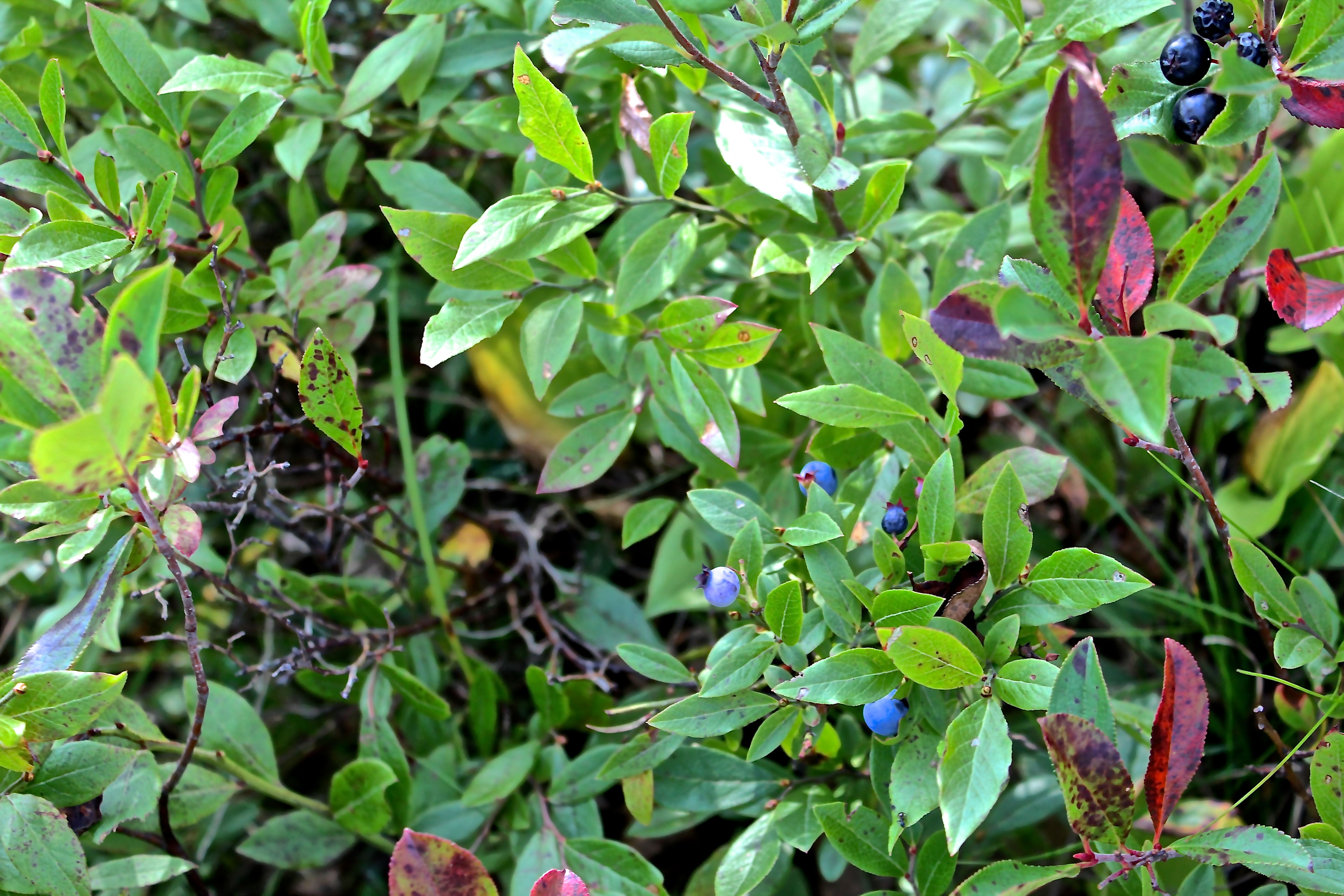
blueberries and huckleberries

There aren’t too many blueberries left, but the huckleberries are abundant–and seedier.

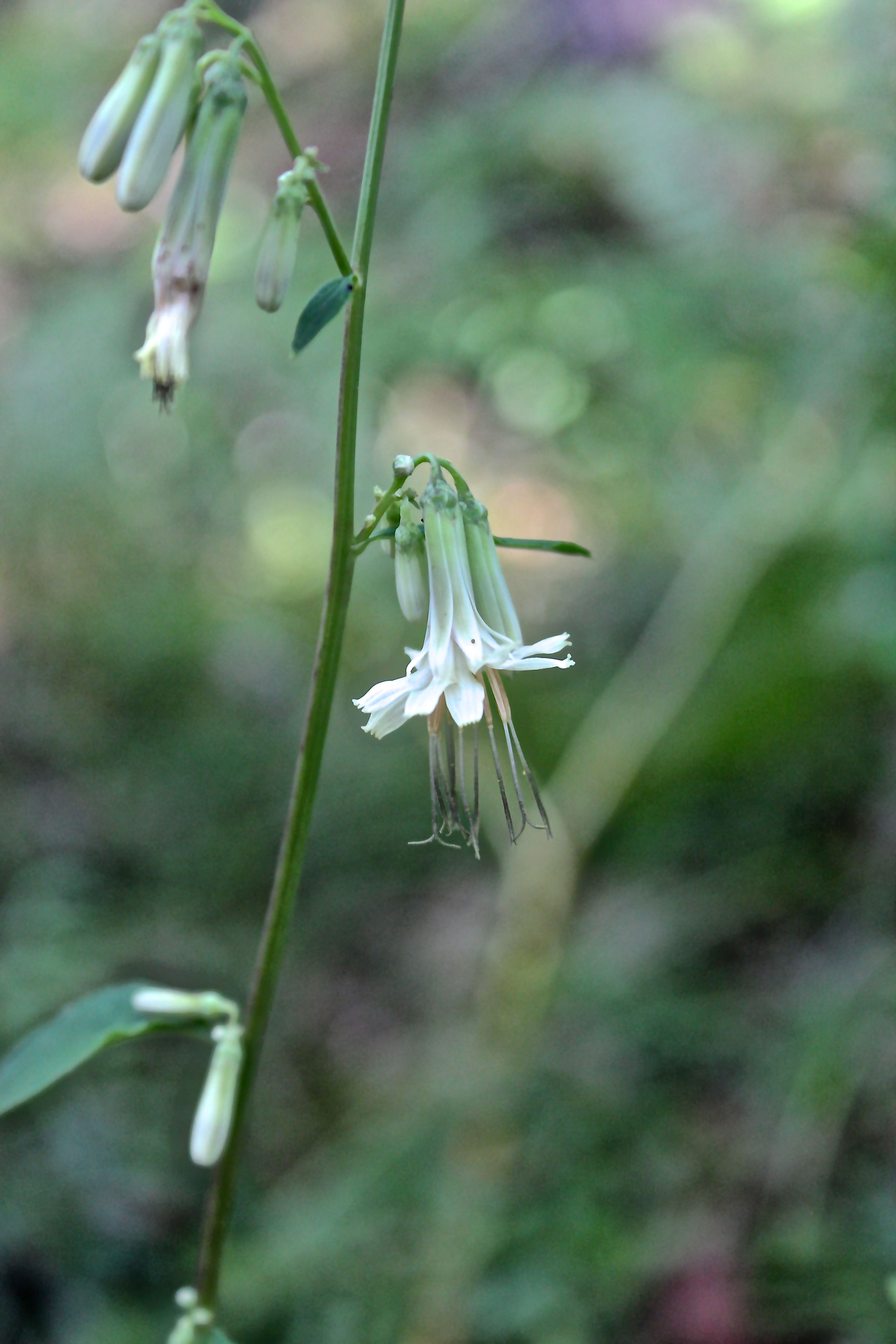
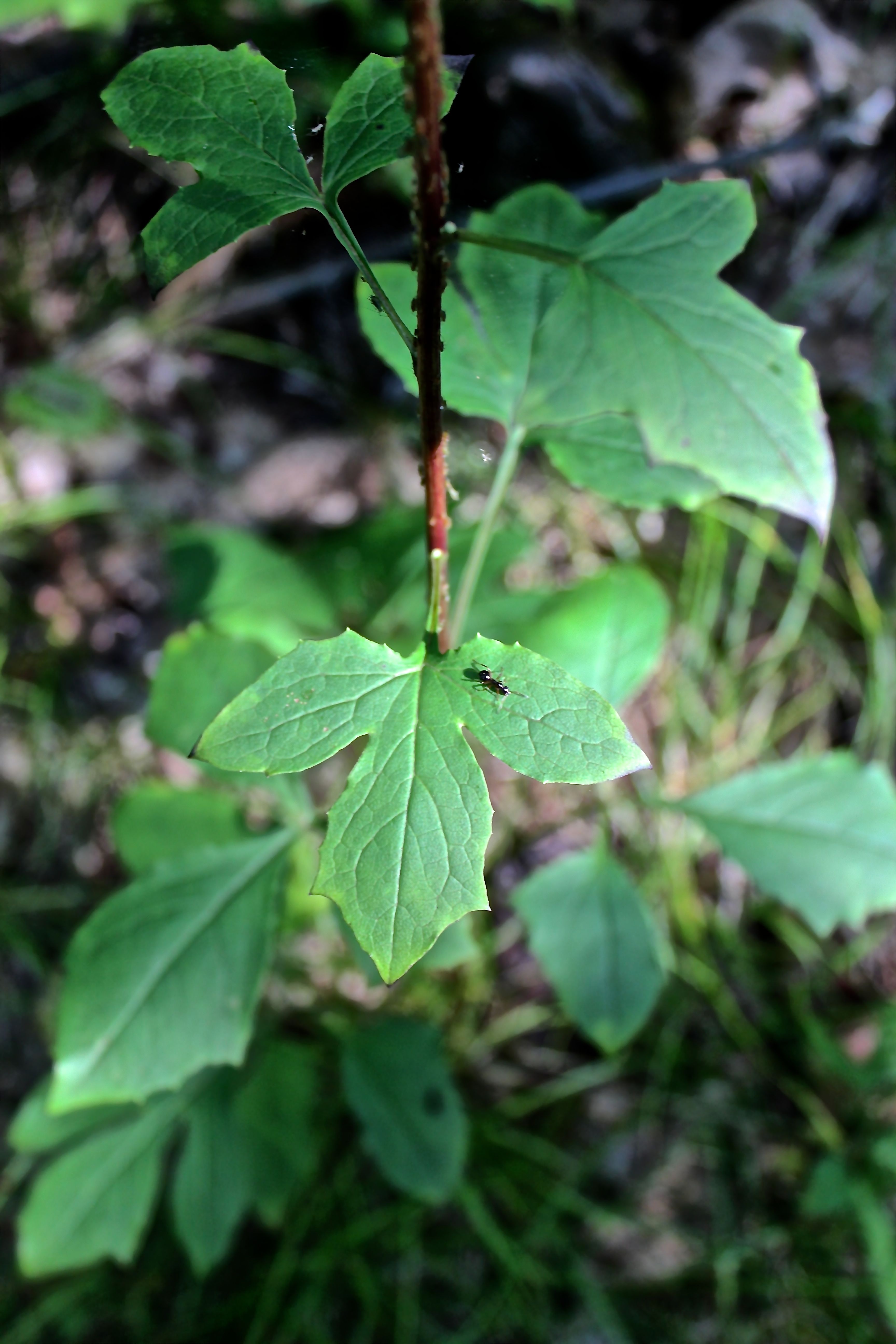
gall of the earth 2

Also plentiful–Gall-of-the-Earth or Rattlesnake Root (Prenanthes trifoliata). Such a curious name for this plant. Hilary Hopkins writes in Never Say It’s Just a Dandelion, “Gall-of-the-Earth: a mysterious name dating from at least 1567, referring to a plant’s bitterness, though not this plant, but rather one said to have been discovered by Chiron the centaur, a physician of Greek mythology.” OK–so if not this plant, then why the name?

Hopkins continues, “Rattlesnake Root refers to the plant’s supposed efficacy against rattlers.” Always good to know I have a tool handily available when hiking alone.

And finally, she writes, “Prenanthes means ‘drooping flower,’ a perfect description; trifoliata describes the three-parted leaves.” That is definitely accurate.

gall aphids

Though I saw numerous Prenanthes trifoliata along the trail, only this one was covered with aphids.

gall ant

And one ant. It is said that ants herd the aphids, protecting them from predators and parasites, so that the ants can enjoy the honeydew left behind by the tiny insects. This ant must have had sentry duty–he roamed all over this leaf and then down to the next one. Perhaps he thought I was the predator and he had to keep an eye on me.

whorled asters

Whorled Asters graced the trail periodically and the base of a Northern Red Oak.

Firewarden's Trail

Moments before I reached the Firewarden’s Trail, I startled a red fox that ran into a rock den.

fire tower 2

Standing forever stalwart is the fire tower. I hope it will continue to stand tall forever, as it marks a piece of the mountain’s history.

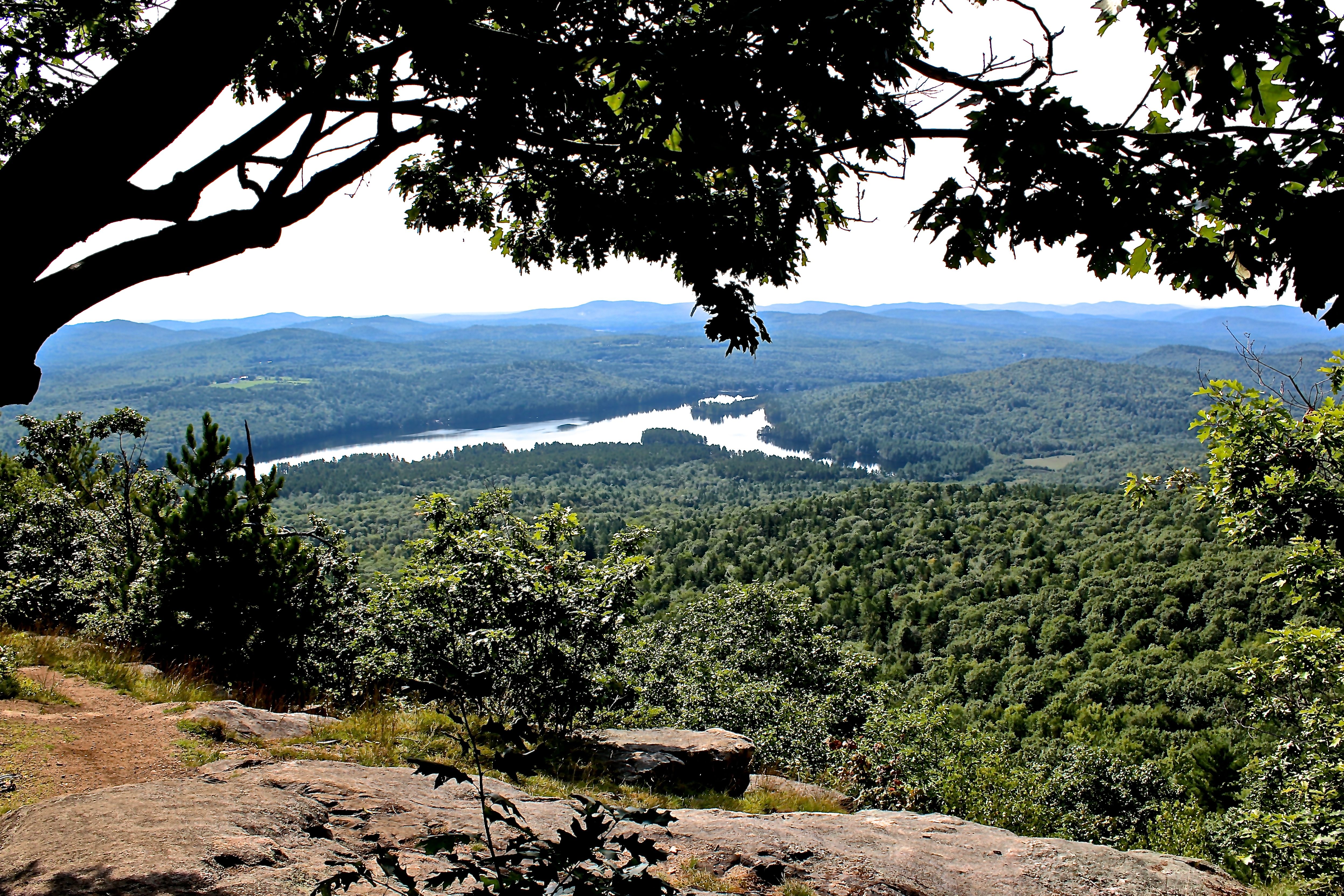
summit view1

Out of the fog. Looking west from the summit.

trail signs heading down

There was a time when one could easily get lost on this mountain, but thanks to the LELT, those days are no more. Good thing. There were six people at the summit and I passed quite a few more as I descended via the Ledges Trail.

 white goldenrod

Silverod is our only white goldenrod and it prefers the drier soil of this path.

Ledges 1

The ledges offer a peek at the south basin of Moose Pond.

Mountain Road

Finally, I was back on Mountain Road for the 1.5 mile walk back to my truck.

red eft

Interestingly, along the way I found thirteen smooshed red efts. These are the terrestrial teenagers of the newts. My first thought–snacks galore. Then I remembered–their color is a warning sign of their toxicity. No one wants such a snack. (Reportedly, they aren’t harmful to humans, but I wasn’t about to find out.)

And so it was today that I’m glad I climbed out of the fog. Thanks for joining me on this long wander.

Mondate Filled With Smiling Faces

We had many reasons to smile on yesterday’s Mondate.

It began about 5 a.m. when the Canada geese honked continuously. Their chorus was joined by quaking ducks. And then a loon chimed in.

I stepped onto the dock because I thought I heard the reason for the early morning cacophony.

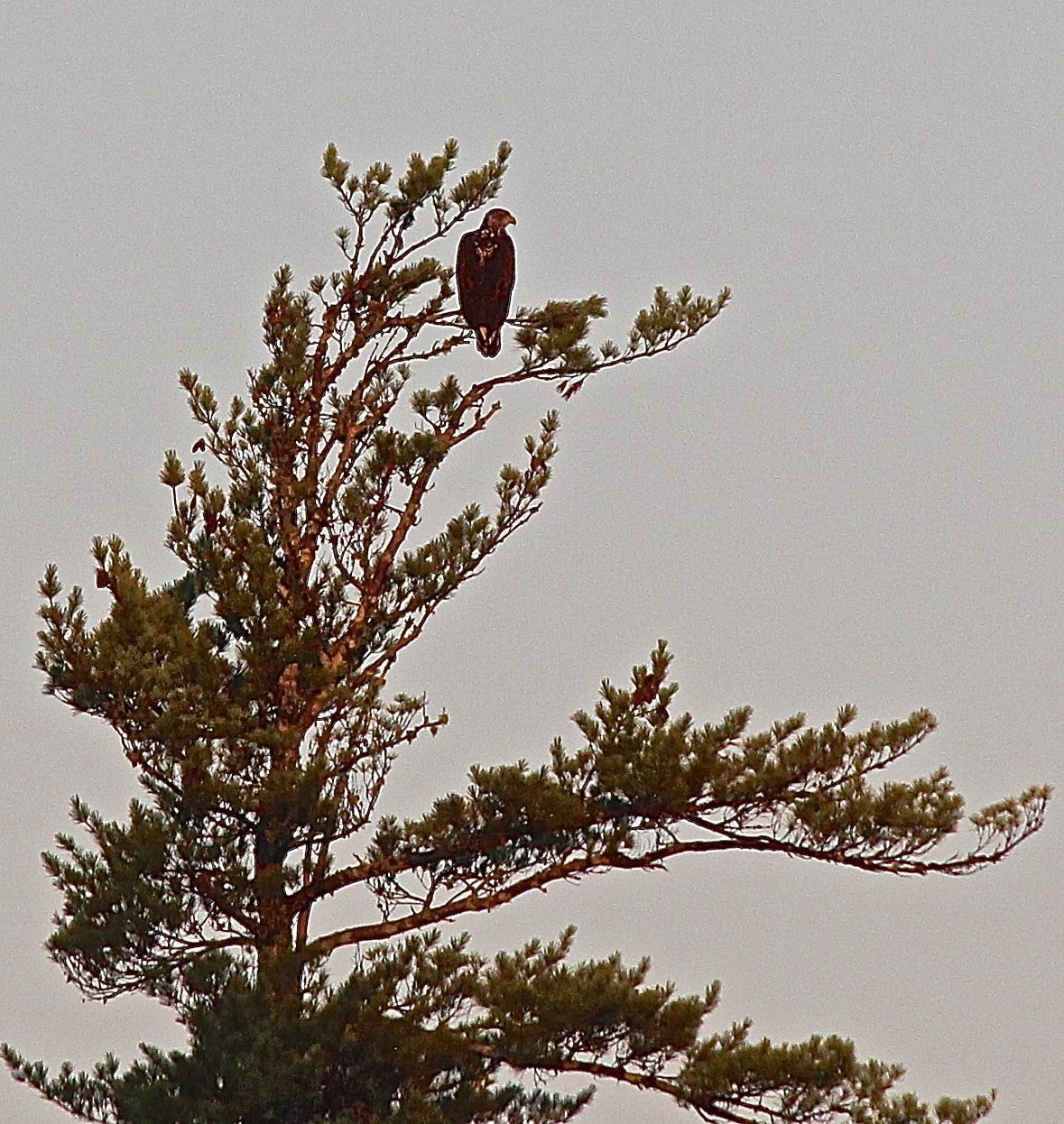
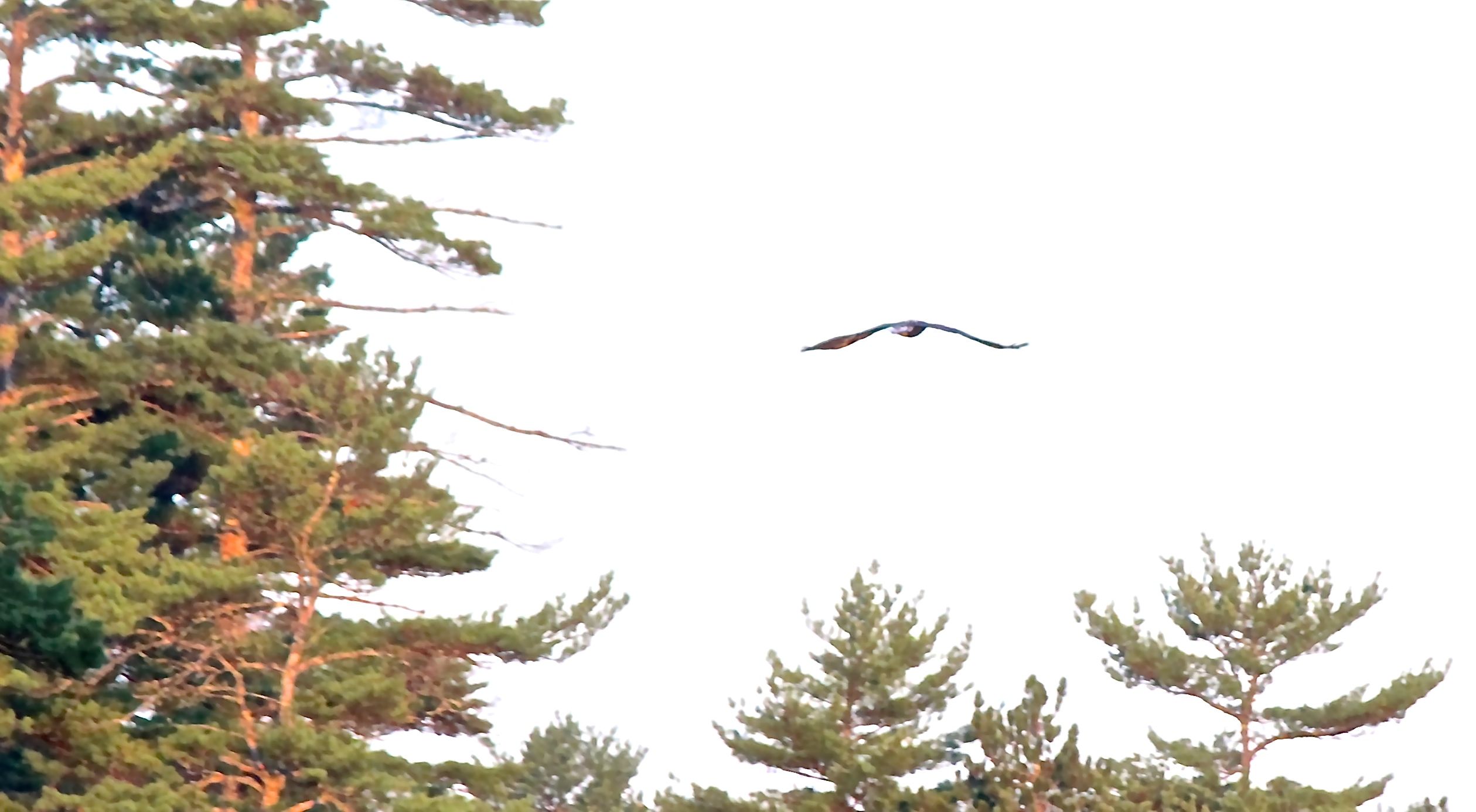
bird

This big guy.

bird flying

Eventually, he flew off and then I heard the crows across the pond, so I think I know where he stopped next.

mtn morning

Standing on the dock early in the morning provides pleasant views :-)

Mid-morning, my guy and I drove to Hancock Pond in Denmark, to join F & B H. for a morning jaunt on their son’s forty-acre property. I’m always pleased to learn about people who purchase land to keep it from being developed, but still allow traditional uses. Such is the case here.

But before we hiked to the almost bald summit, we paused on their dock.

bob1As if on cue, their friend Bob stopped by

bob 2 smiling

and greeted us with a smile.

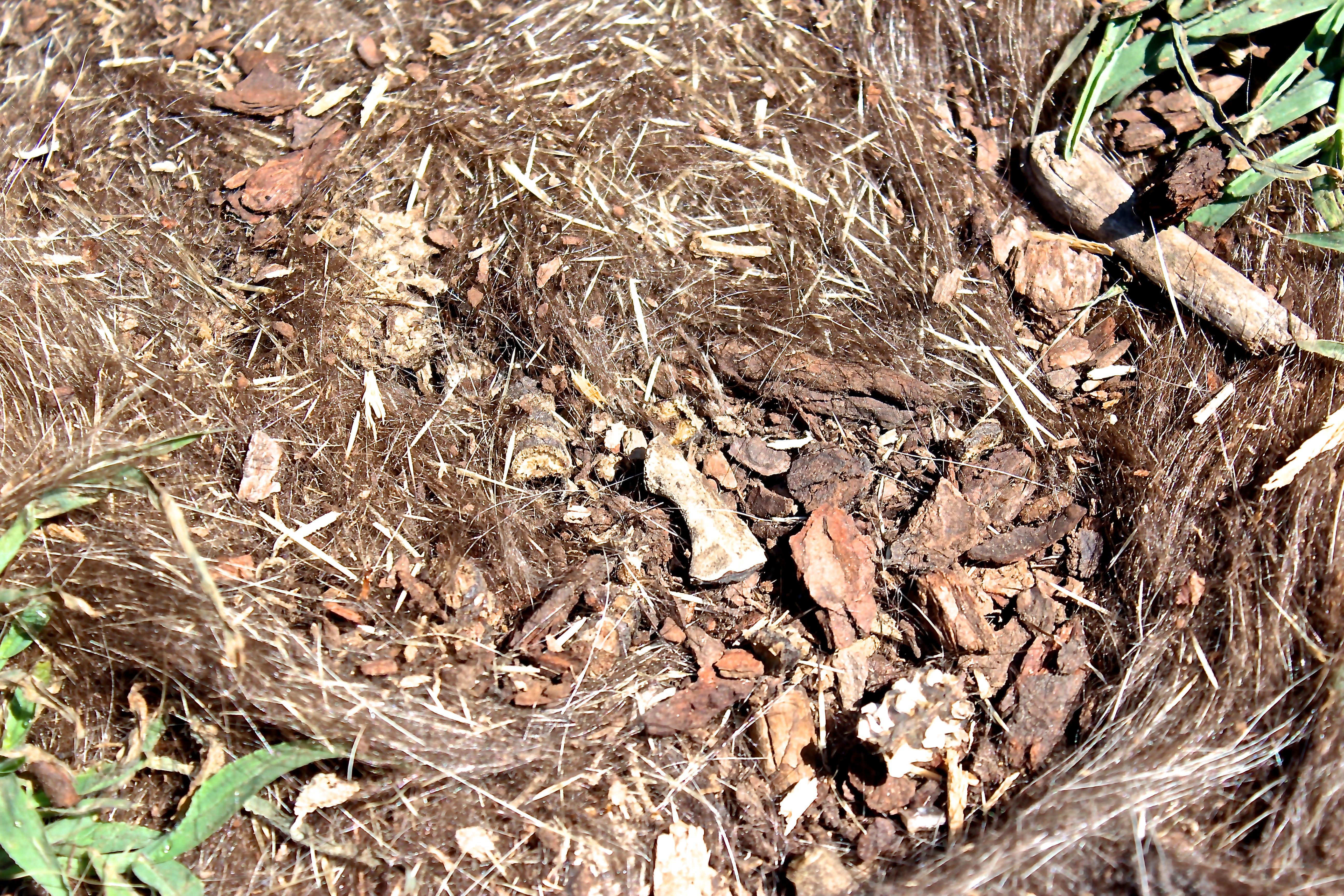
porky 1 jaw

On the trail, B asked me to identify this. He knew. I guessed wrong because I didn’t take the time to examine it closely. When will I ever learn? See the small mandible and the shape of the teeth?

porky 2, quills

And the little quills mixed? Yup, a baby porcupine.

pearly everlasting

The land was last harvested ten years ago, so it’s slowly transforming. Pearly everlasting blooms among the raspberries and blackberries, goldenrod and sweet fern on the trail that once served as a skidder road.

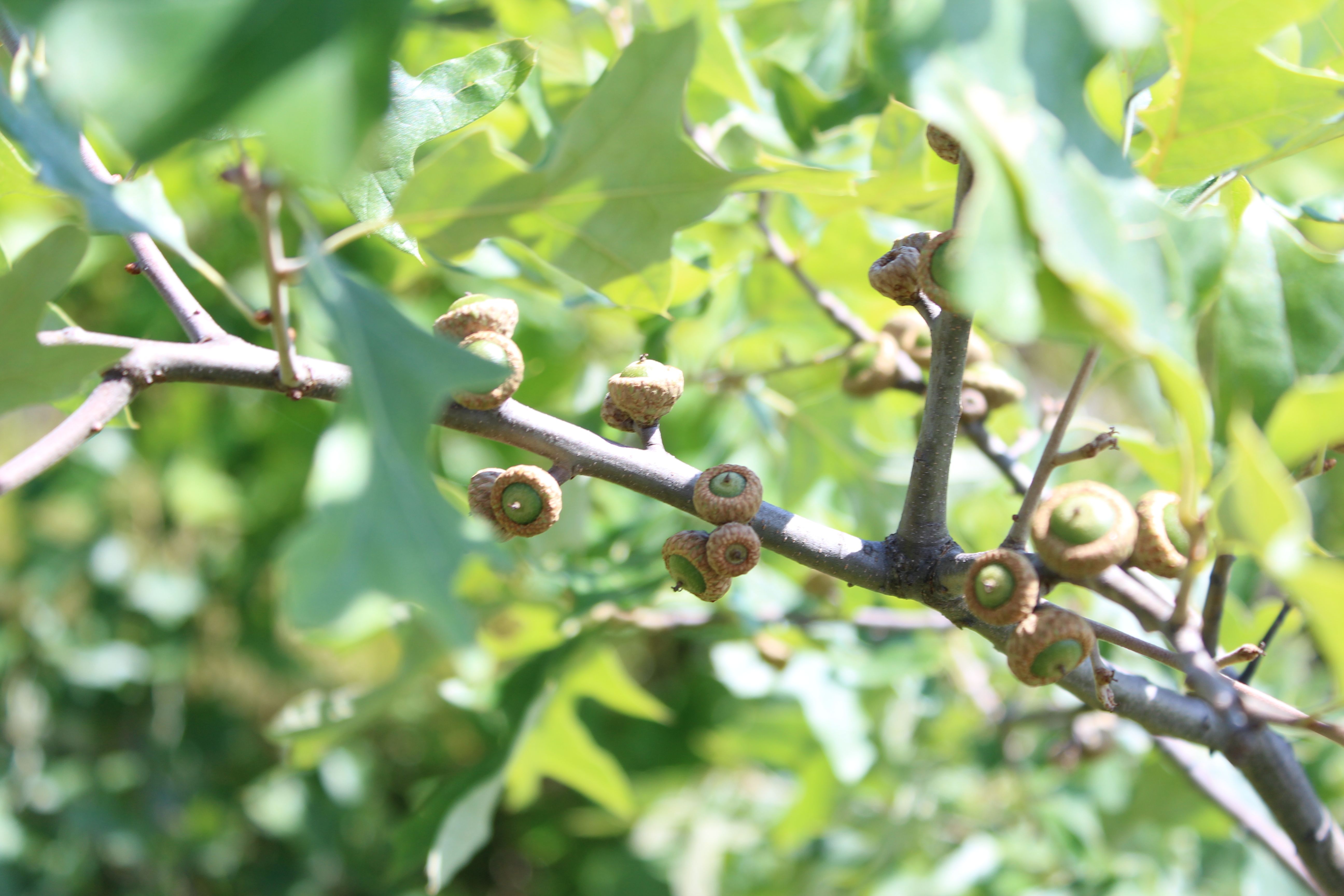
acorns

Acorns are forming on Northern red oaks, which stand beside white oaks. For me, it was curious to see the white oaks here. They’re a rare find in the woods I travel most frequently.

hancock pond

Near the summit, Hancock Pond came into view.

Pleasant Mountain

As did our beloved Pleasant Mountain.

thistle

Of all the flowers we saw, the prickly thistle was my favorite. A touch of Scotland that F and I share. We returned to their camp for a delicious lunch and a look at B’s stone art and books. We were in awe of his talent. And their love for each other–50 years strong. Thank you both for sharing your land, lunch and love with us.

A wee bit of barn painting was accomplished–one of these days it will be all red. We have almost completed scraping and priming three sides. It’s a sporadic job, to say the least.

Our day ended with a trip to Portland with our sons–we all needed a technology update. That gives me pause, of course. I liked life before all of this stuff, but I wouldn’t be writing this post without it.

Dinner out with my three guys–what’s not to smile about.

Change is in the air

Pleasant Mountain was enshrouded in a blanket of gray when a friend and I headed up the trail this morning. And the muggies were upon us.

We stopped briefly because a new wildflower was in bloom near the trailhead.

Tick Trefoil

Tick Trefoil. Funny name for such a delicate flower. Trefoil refers to the fact that the compound leaves each have three leaflets. And tick–ugh–nobody likes ticks. In this case, the hairy pods that develop after it finishes flowering tend to stick to people and animal fur. Beggar’s lice is another common name. Geesh.

Ledges in fog

Despite being sultry, we hustled to the ledges and found the view to be pea-soup fog.

summit 1

The same was true at the summit.

summit 2

If the fire warden’s tower was still manned, the view would be limited.

summit 3, bit of blue

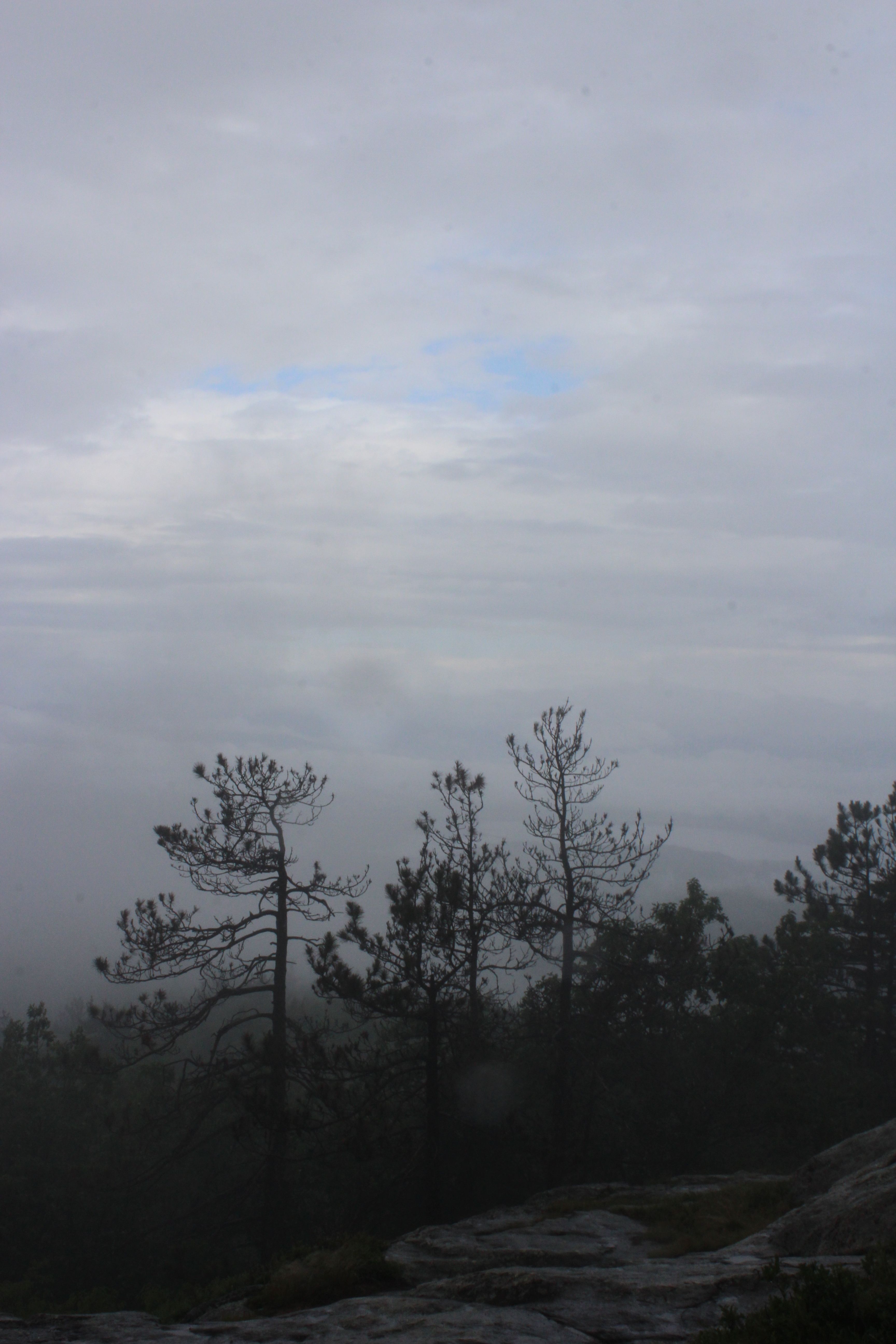
But then . . . a spot of blue.

summit 5, changing

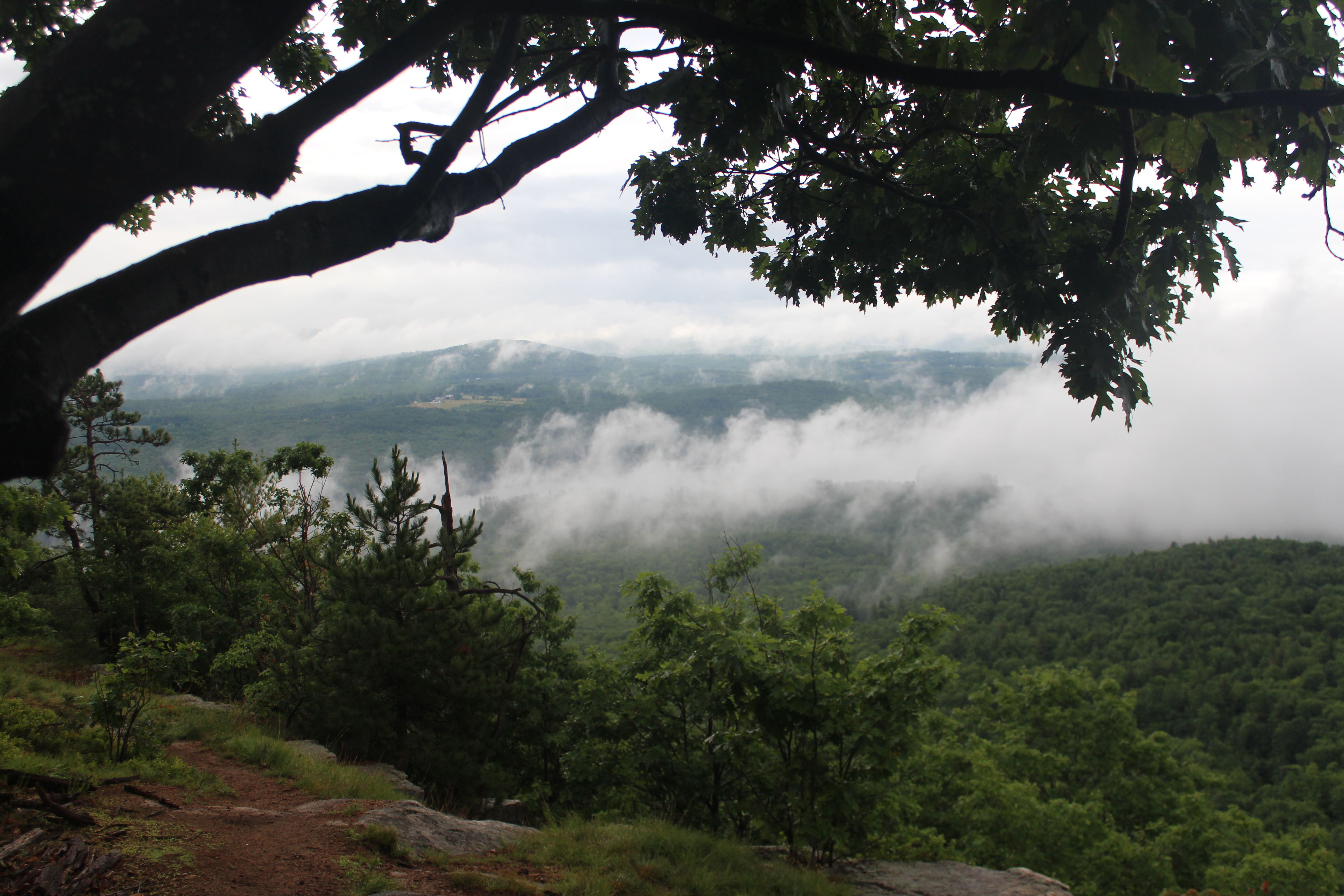
The clouds rolled past

summit 6

and land forms came into view.

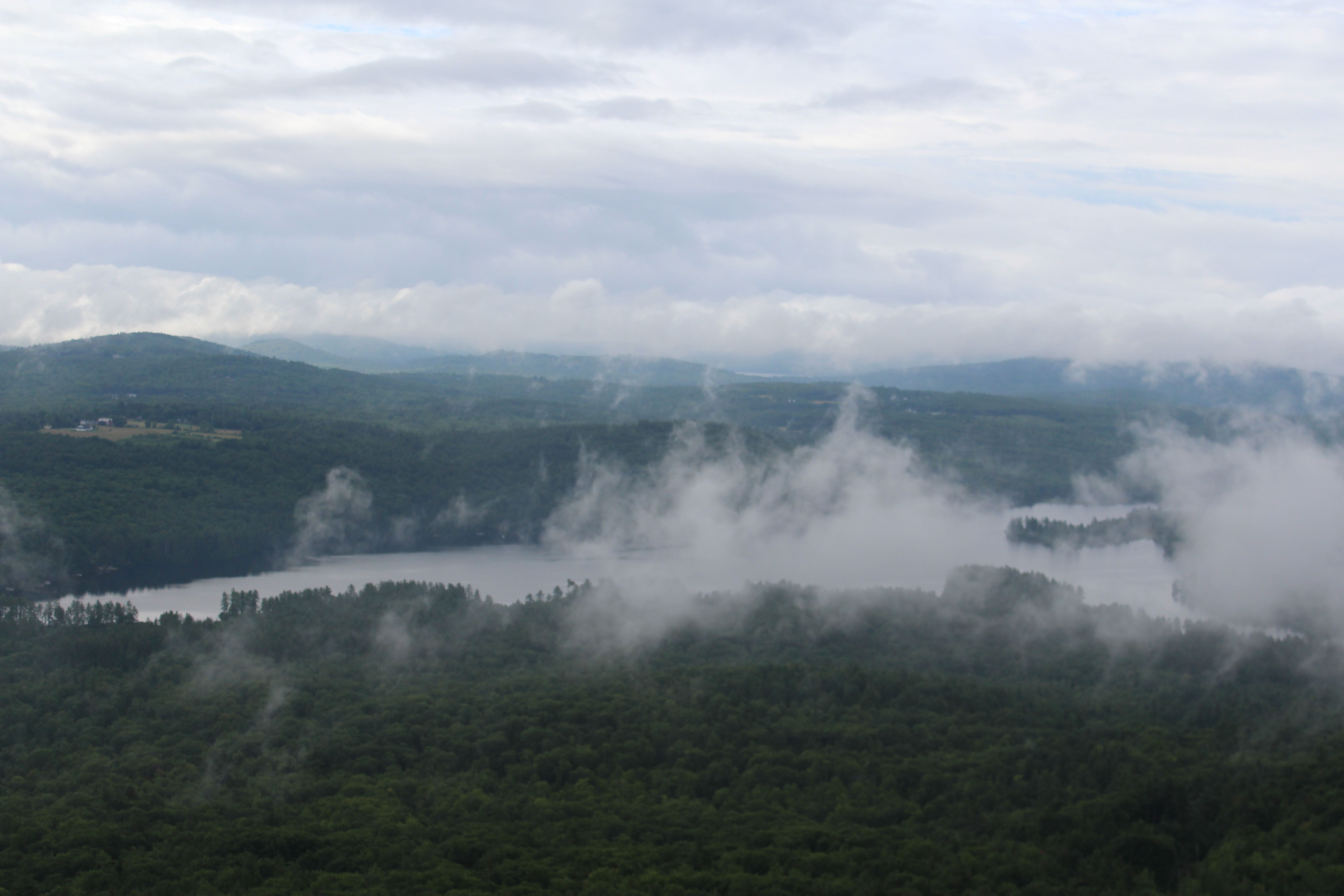
summit 7, emerging

An ever changing work of art. While the view continued to transform, it poured for a couple of minutes, which we welcomed.

wood lilies

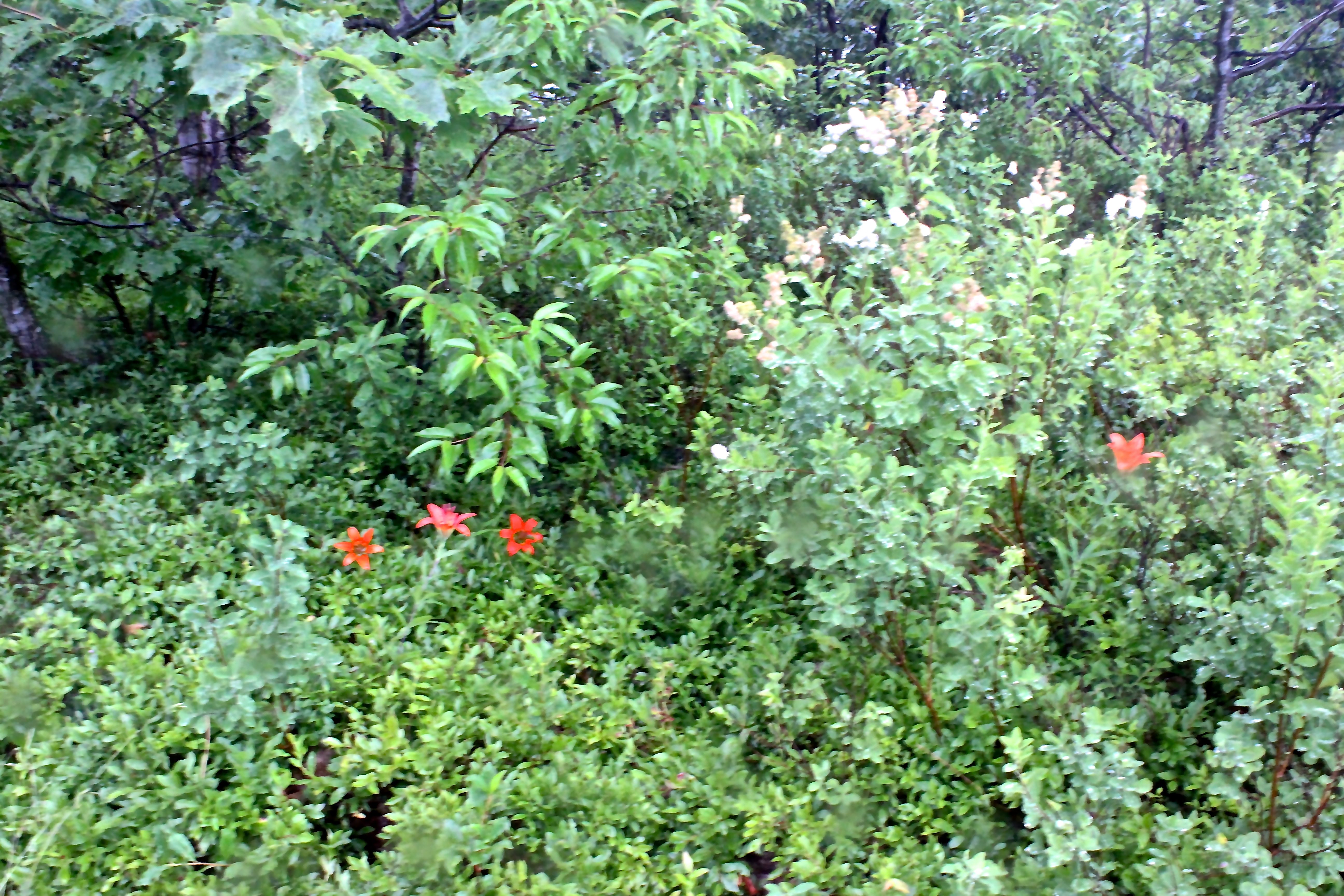
We paused before descending via the same trail. A few days ago one wood lily caught our attention. This morning–four in bloom

wood lily--burst of light

offering a brilliant burst of color.

back to ledges--change is in the air

All the way down, the view became clearer

hang clouds

as the hang clouds quickly dissipated.

lovell rec 2

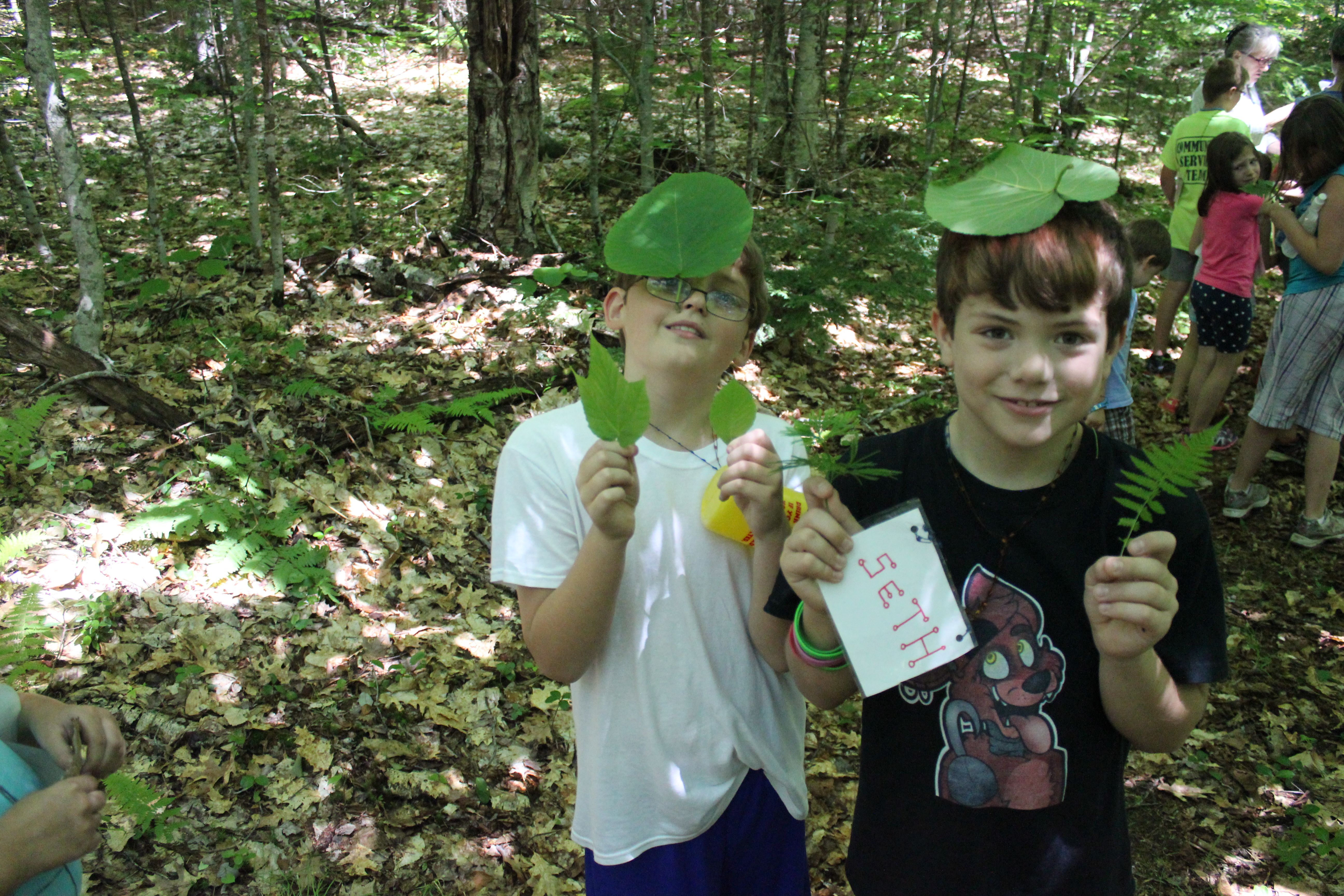
And it turned into the perfect day for Lovell Rec kids to examine nature up close and personal

lovell 4

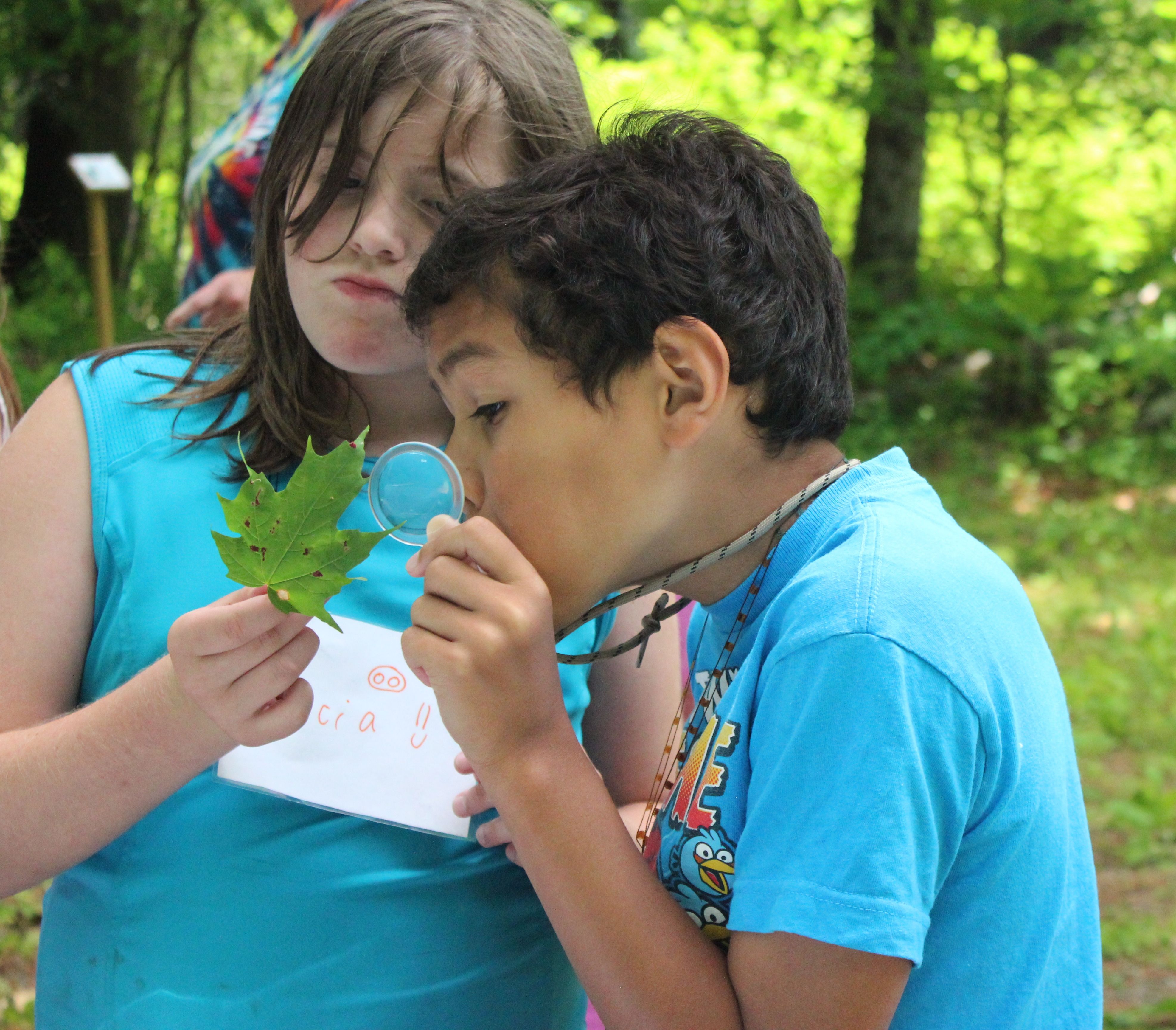
while donning leaf berets.

change

Tonight–change is in the air.

(Disclaimer–if you received an earlier post from me, I’m sorry. I hit the publish button by mistake.)

A Day of Contrasts

Each time we climb Pleasant Mountain, the view differs–and so it was this morning. Haze sugar coated the summits beyond.

hazy 2

Green, blue, white, purple and gray melted into each other.

haze 3

That’s what made a bright orange wood lily beside the trail stand out.

wood lily

Certainly a shock of color.

wood lily 2

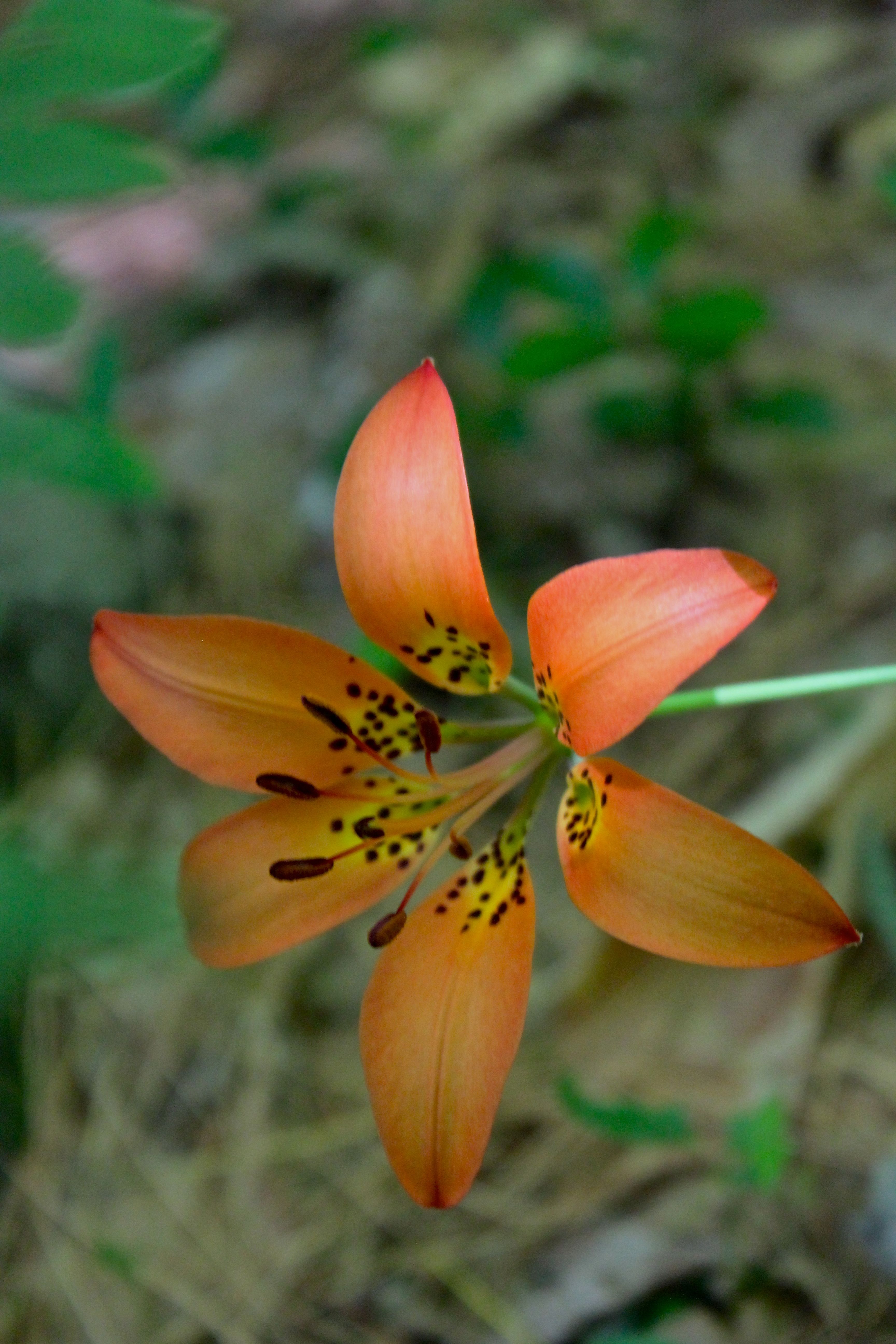
Step in with me for a closer look. Three sepals and three petals, but their design is similar. Each is jazzed with dark purple to black spots–the better to draw in those butterflies and skippers. And white-tailed deer.

wood lily, whiting

The other thing to notice is how the sepals and petals taper at the base. I actually took this photo on Whiting Hill in Lovell about two weeks ago. But, I’m curious about its reproduction–one on Whiting, one on Pleasant. Am I missing something? Have the deer consumed others? I frequent both of these locations and have only seen the solo plants.

porcy 1

I  can’t sit still when I get home. Especially when I know I have work to do. So, I wandered around the backyard. Right off the deck, a quaking aspen grows on the edge of a flower garden. Daylilies surround a wooden barrel we turned into a water feature. Alas. They’ve been knocked down.

porky claws

The resident porcupine has been visiting on a regular basis. Quaking aspen bark features horizontal and vertical lines, but the porcupine left its own mark–look for the fainter diagonal lines created by its toe nails.

porky leaves

The leaves must be delish.

blueberries

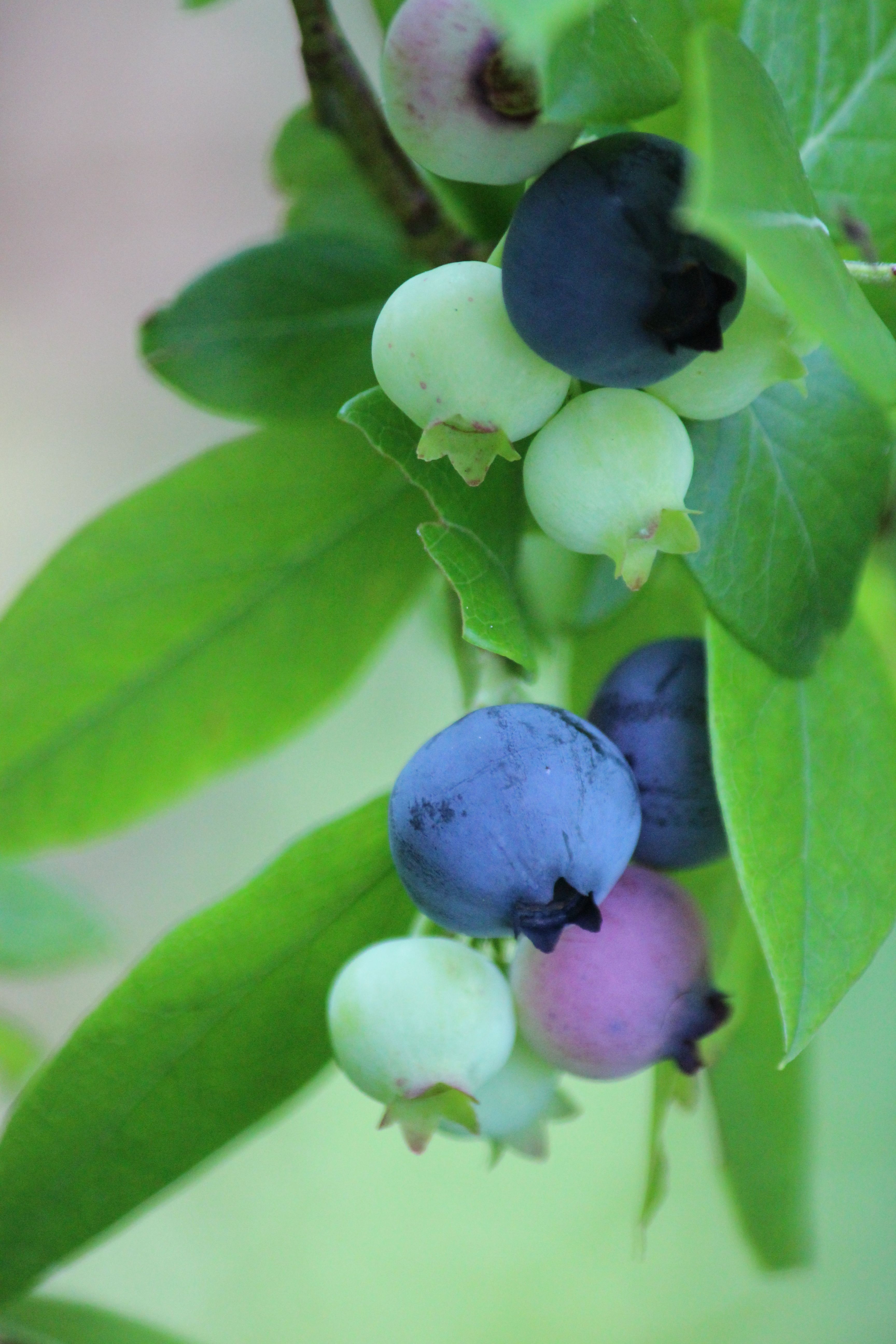
I wandered some more. Certainly delish–blueberries. They need a wee bit more time.

Bittersweet Nightshade

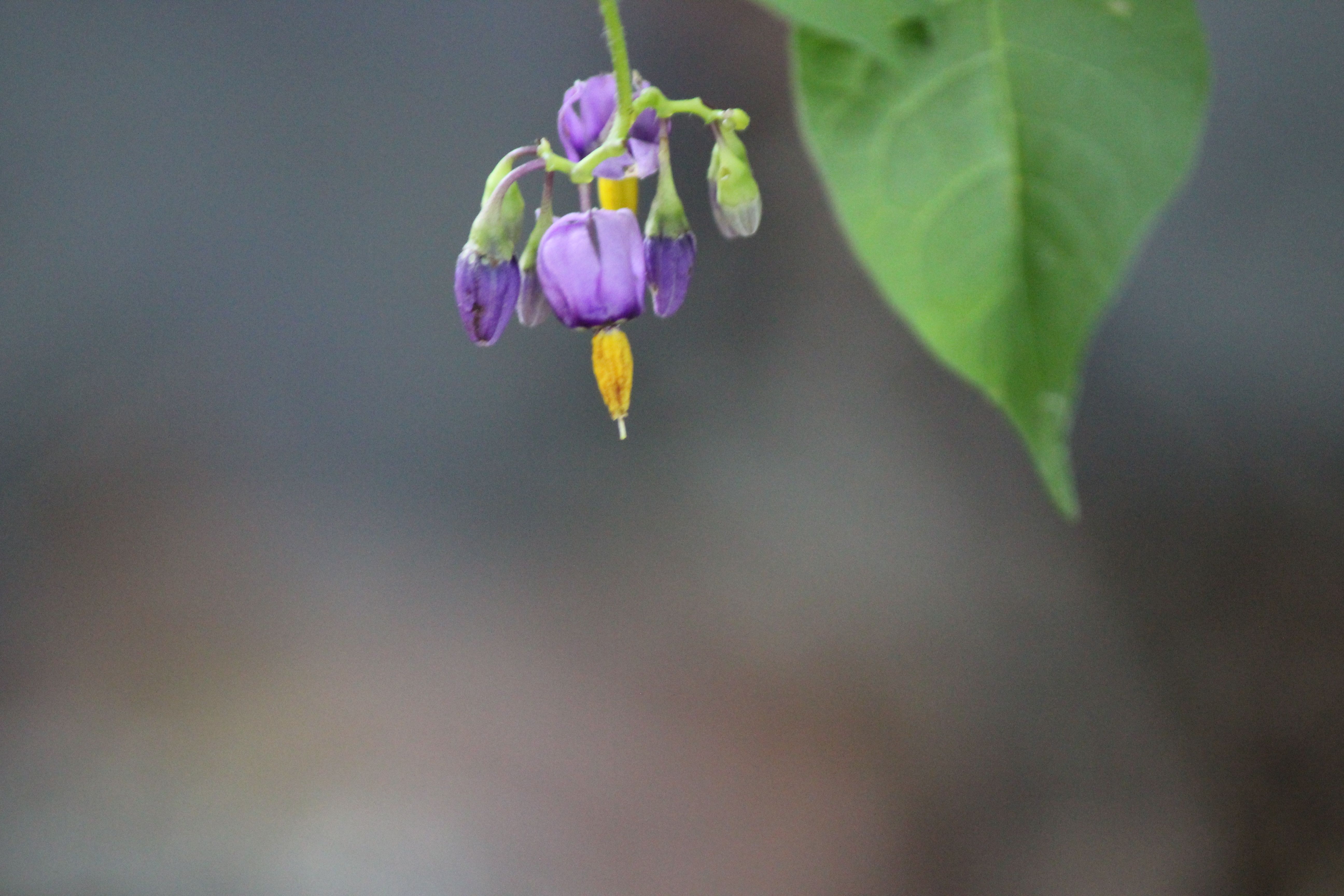
Not delish, but dramatic in shape and color is the bittersweet nightshade. I remember my mother calling it deadly nightshade. Its berries are poisonous, but unless eaten in large quantities, it isn’t fatal. OK, the point is–admire the flower; don’t eat the berries.

grasshopper

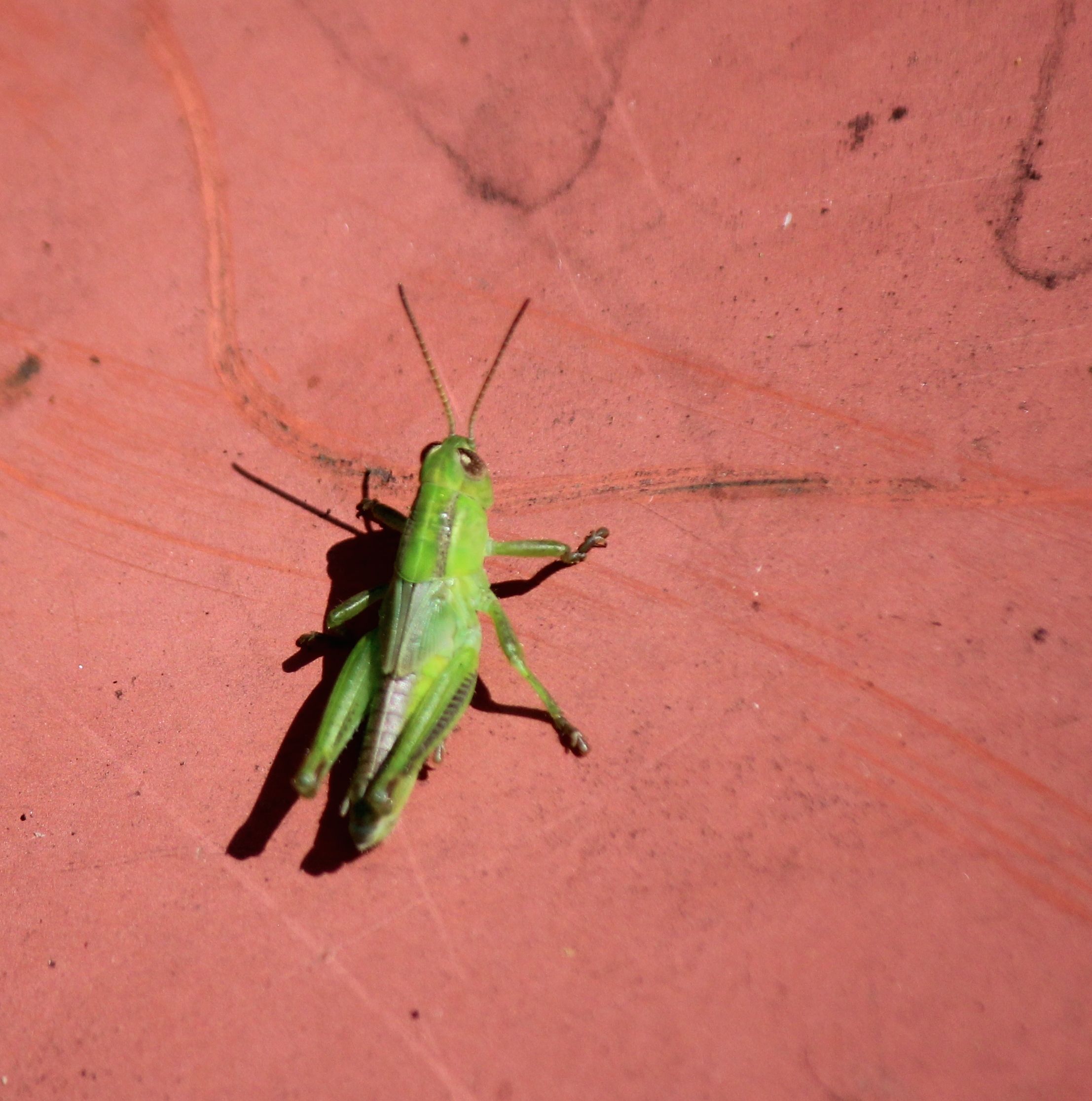
Not as dramatic because it wants to blend in is a grasshopper. Do you see it?

grasshopper 2

A sibling was hardly invisible on the cellar door.

yellow lily 2

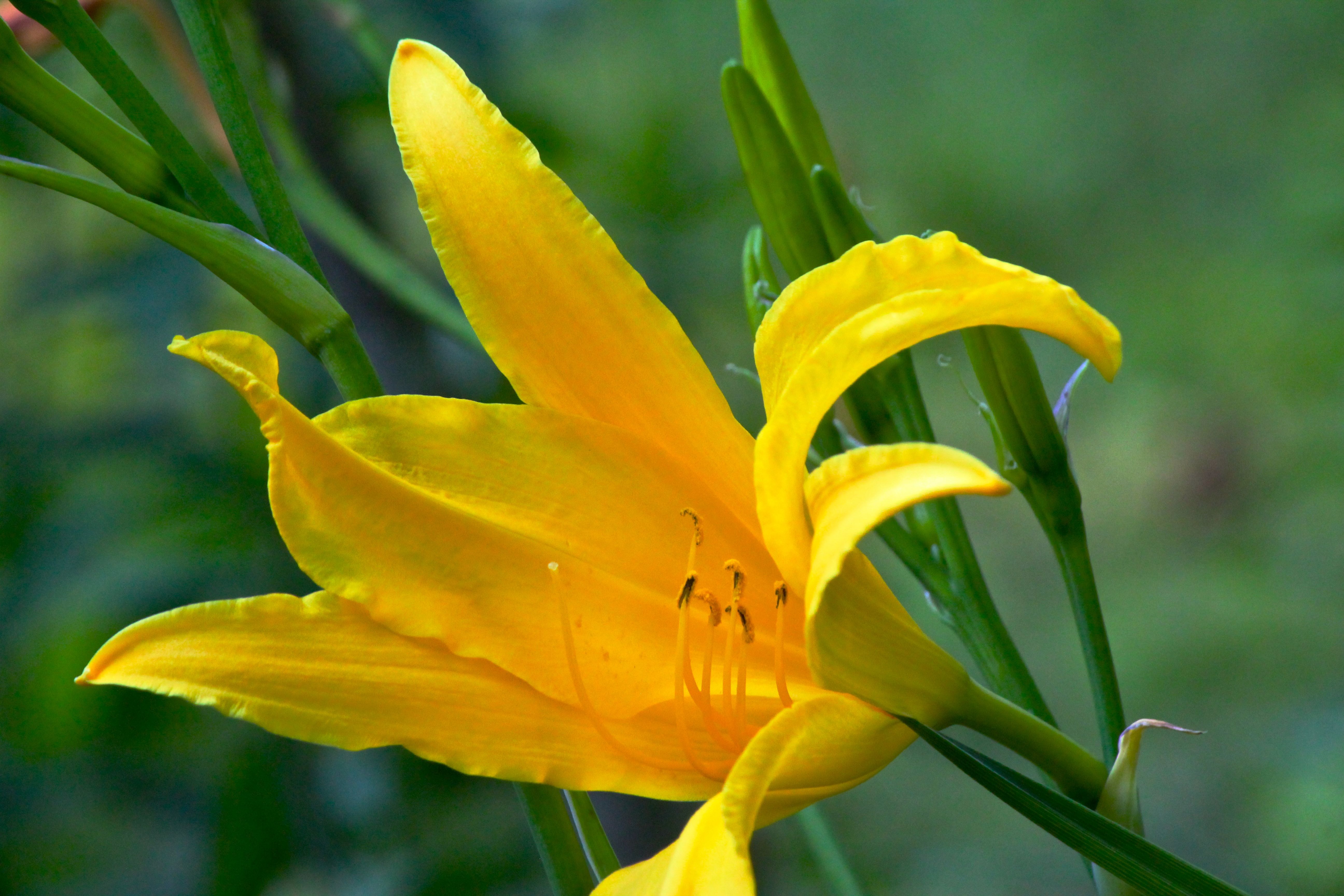
Before heading inside, I stepped into our neighbor’s yard because her yellow lilies are blooming. Ours will probably show forth their sunshiny faces tomorrow. I’ve a feeling that these are cultivated, but don’t know for sure. I’m hoping Bev Hendricks of DeerWood Farm and Gardens will  enlighten me on this species.
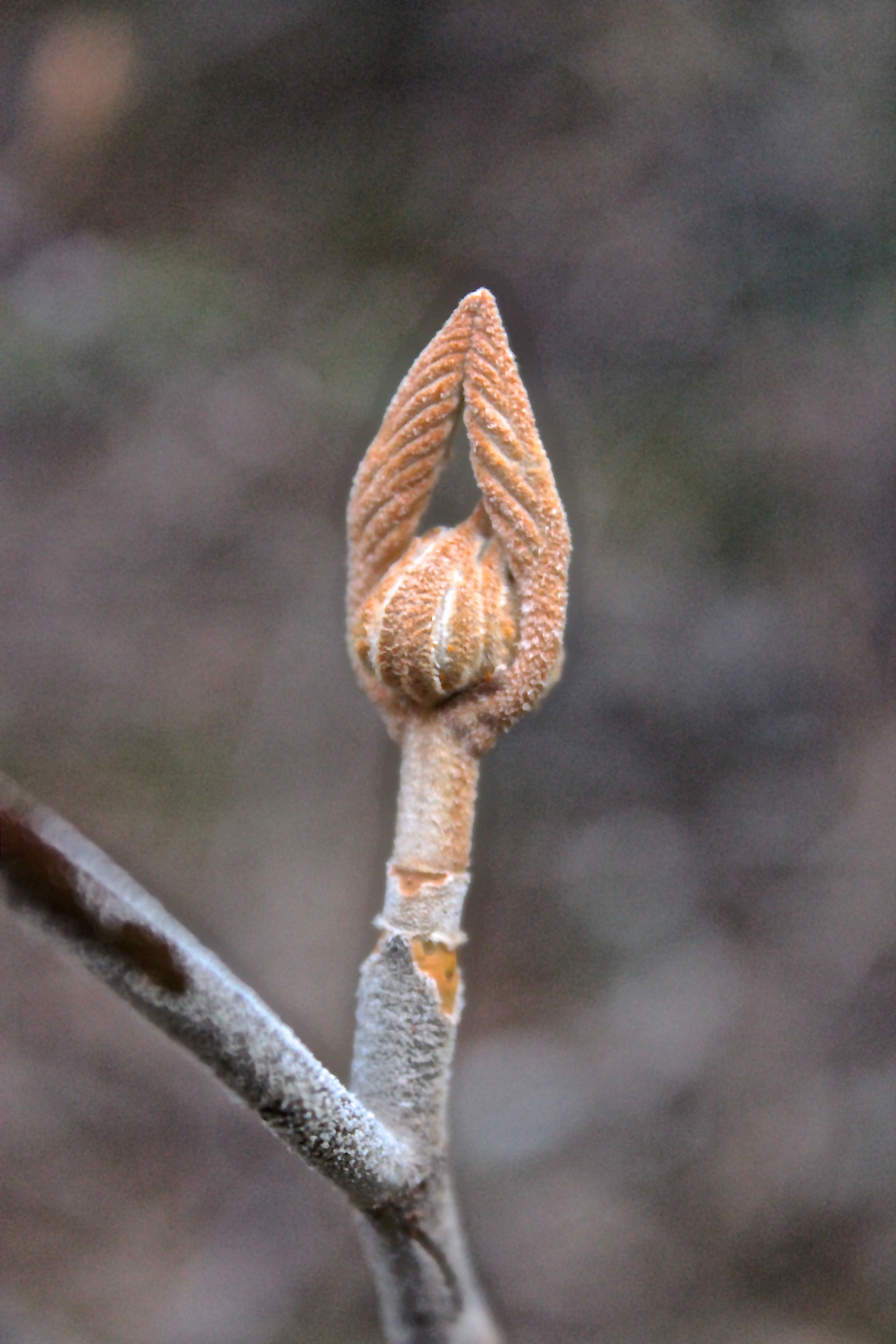
From a hazy summit view to brilliant natural hues, today was a day of contrasts.

Painting Naturally

It finally rained in Maine–for several days. But today featured sunlight, clouds and cool temps–just the right conditions to join my friend, Marita Wiser, (author of  Hikes and Woodland Walks in and around Maine’s LAKES REGION) for a climb up Pleasant Mountain.

LELT sign

Loon Echo Land Trust owns 1,859 acres on the mountain, including the Ledges Trail, which was our choice.

steps

Thanks to the efforts of Loon Echo’s volunteer base and the help of the Appalachian Mountain Club, the trail is well maintained. (AMC actually happened to be working down the road at the Bald Peak trail)

view from ledges

About halfway up, the view from the ledges includes the Denmark end of Moose Pond.

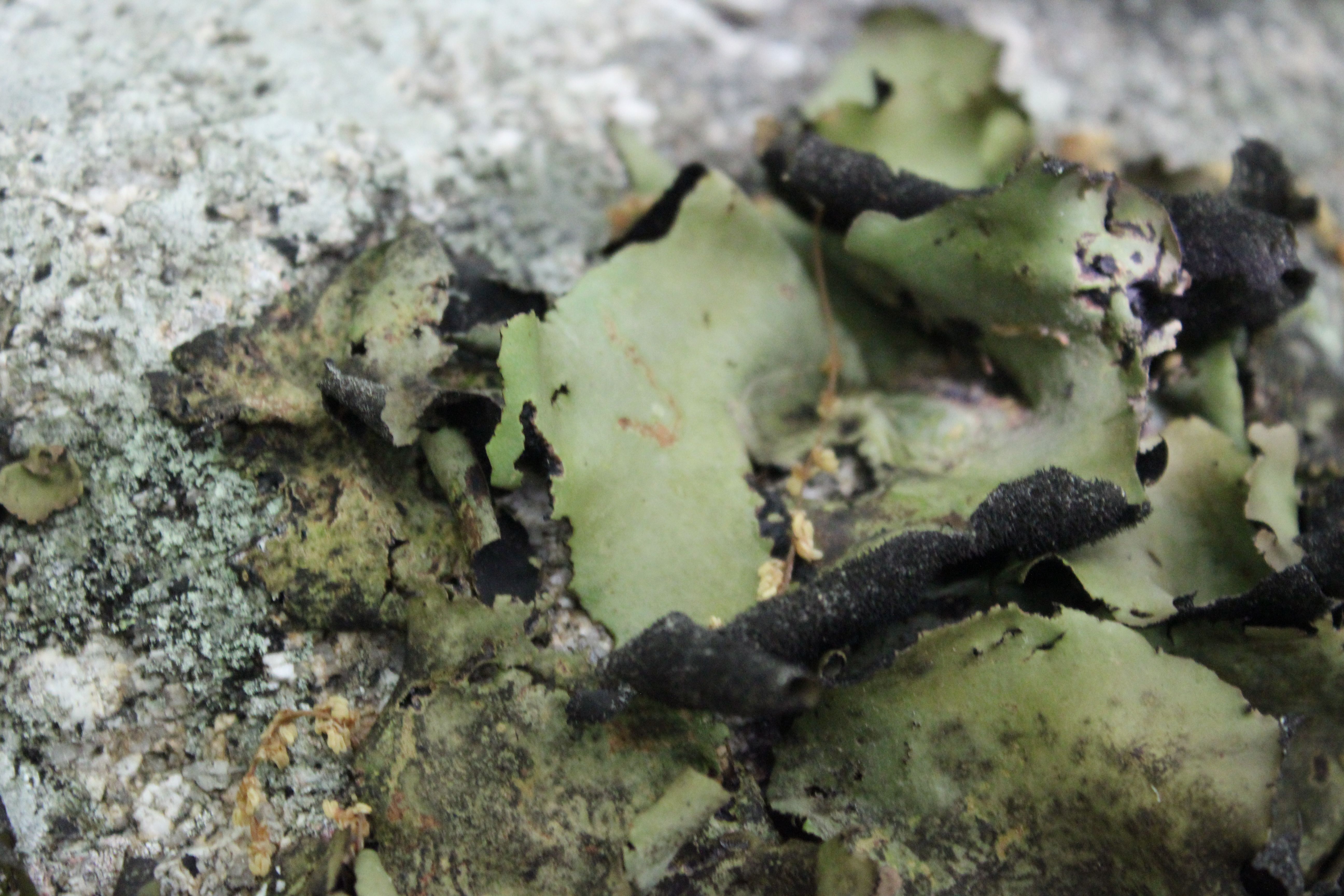
rock tripe

Marita was kind enough to endure my photography stops. Here, the greenish hue of rock tripe, that turns brown when dry and can survive for a long time without water.

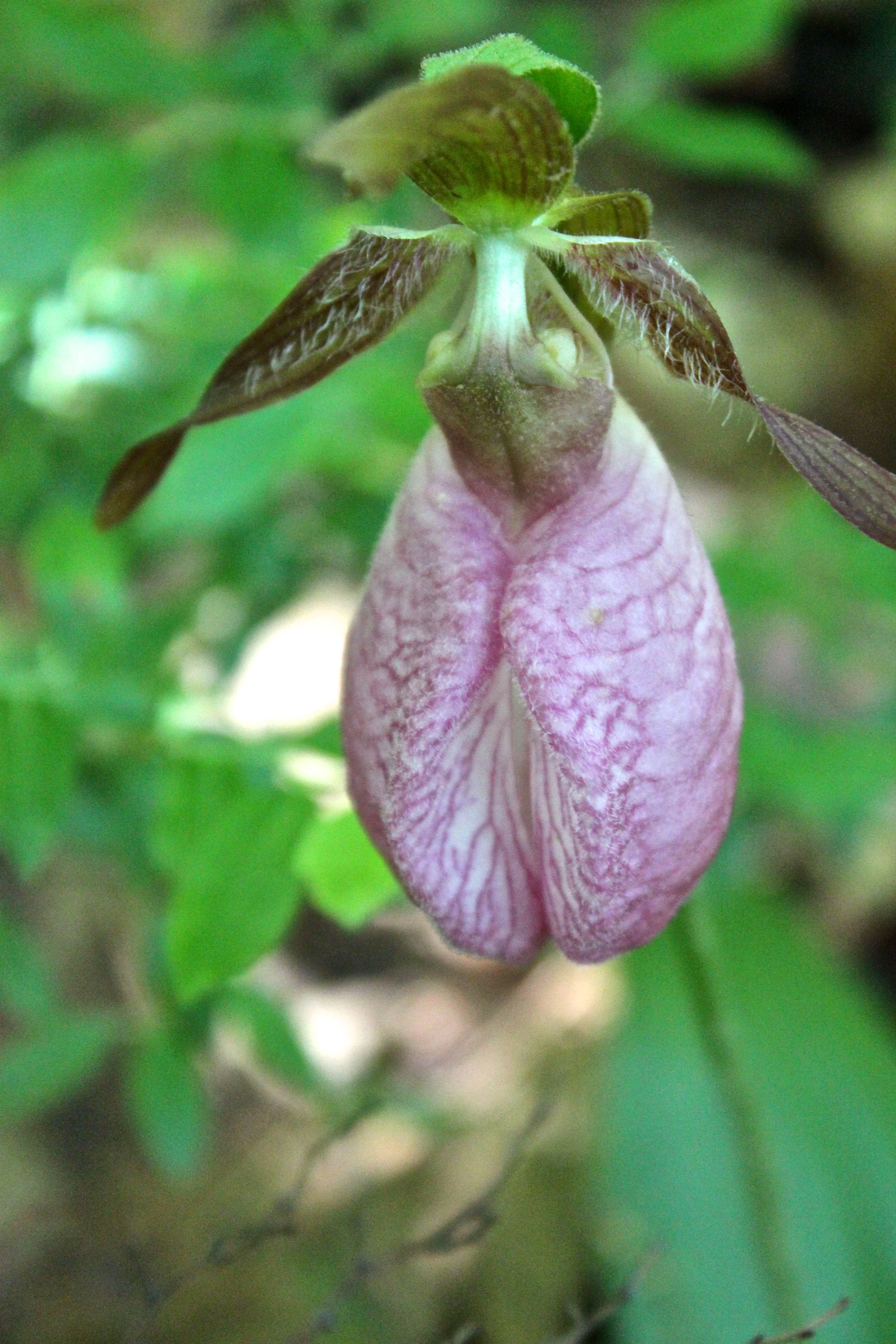
pink lady's slipper

Pink Lady’s Slippers decorate the path.

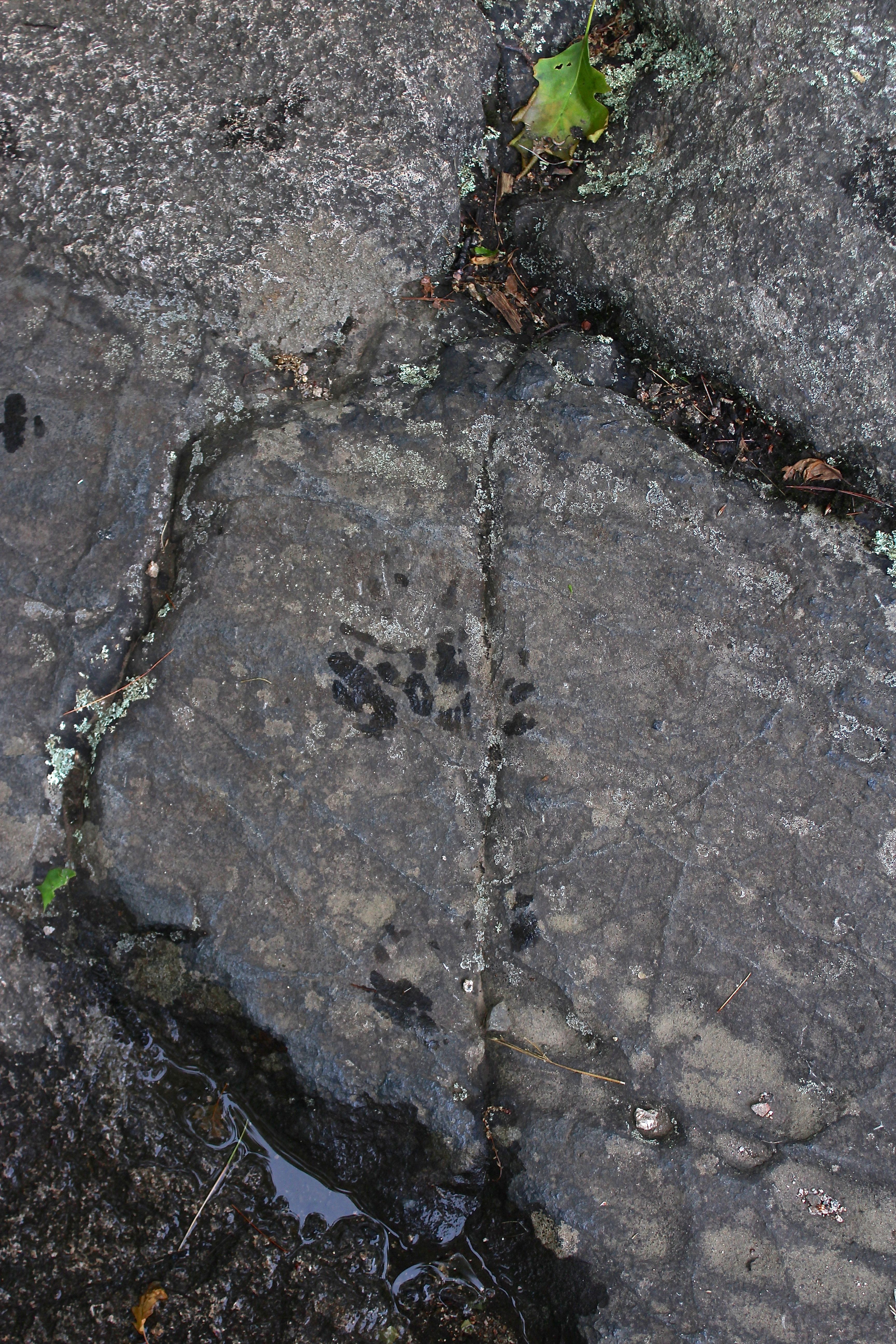
footprint

A few wet spots meant we occasionally left tracks.

summit sign

At the summit, we paused for a while.

ft 1

Here stands the 48-foot fire tower, erected in 1920 and manned until 1992 (I know this because Marita wrote about it). We chatted about The Pleasant Mountain House, a hotel that was built on the summit in the late 1800s and was torn down in 1908. It’s difficult to envision people coming to town via the Cumberland and Oxford Canal, then riding in a stage coach from the boat landing on Long Lake to the mountain. But they did.

summit view w: tree

We spent most of our time in awe of the colors.

summit view

view 2

view 3

Marita

I wasn’t the only one taking photos. By her sweater, you can see that it was just a tad nippy, though we both wore short-sleeved shirts and only an extra layer at the summit.

green shield

On the way down, the common green shield lichen was also brighter because of the rain.

ss 2

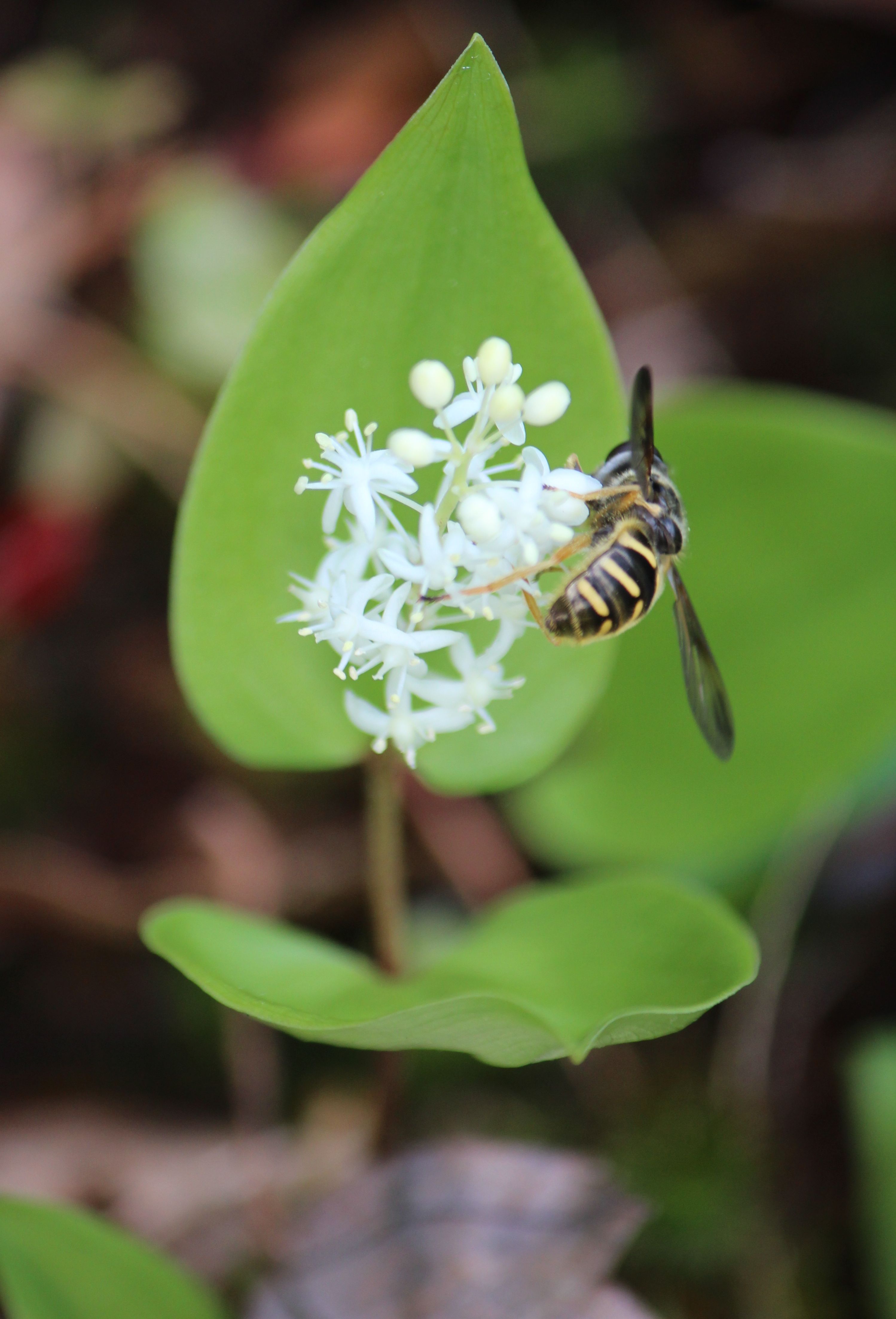
The dainty greenish-yellow flowers of Solomon’s Seal tried to hide, but we knew to look underneath.

false ss

False Solomon’s Seal, with its flowers at the tip of the stem, also grows along the trail.

water flowing

Where a few days ago, the few streams that cross the trail were dry, today they bubbled.

And so, upon my return home, it seemed only natural that I should head out to the vernal pool. Its story isn’t exactly over yet.

 bunchberry

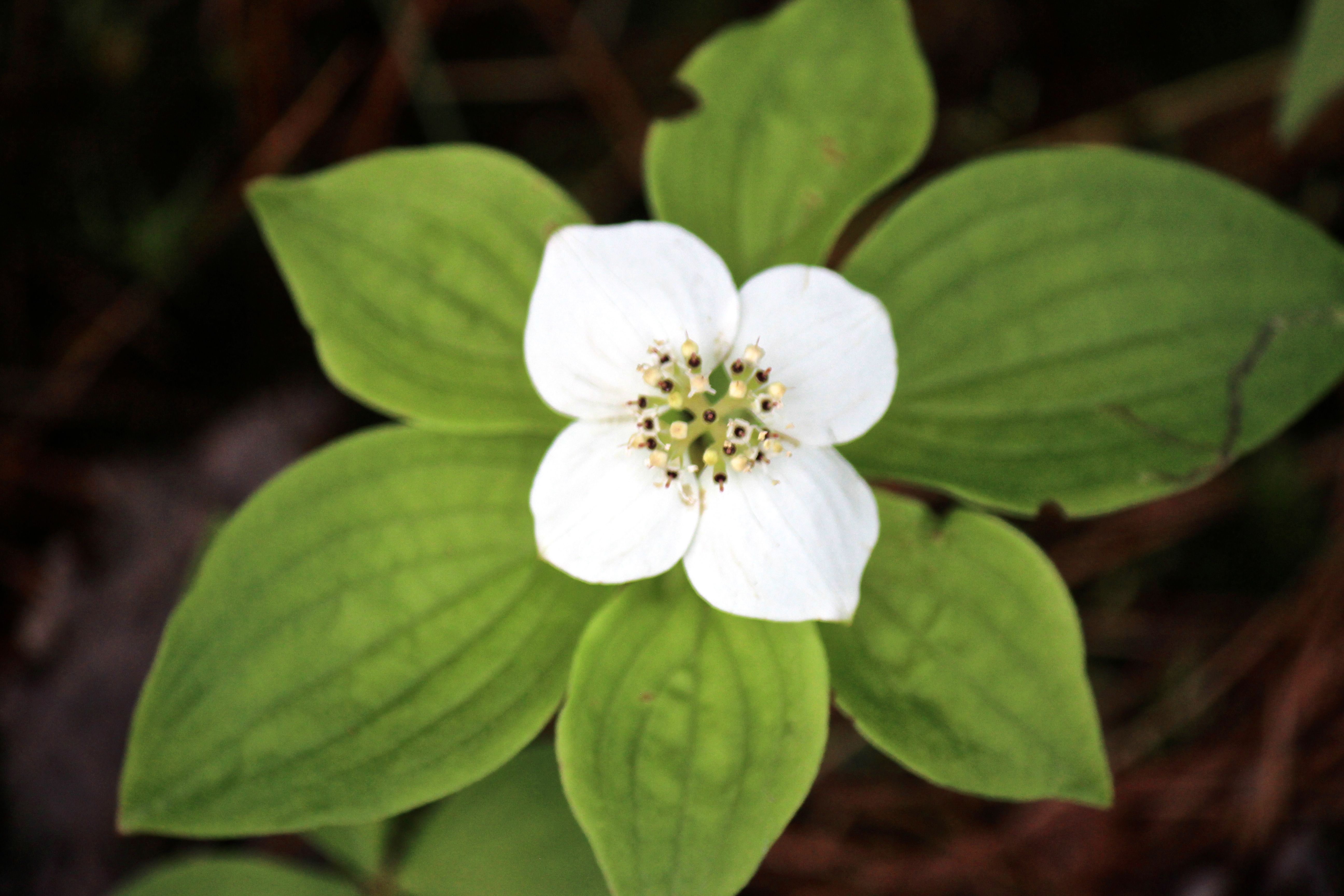
On the way, patches of Bunchberries are in full bloom.

bb 5

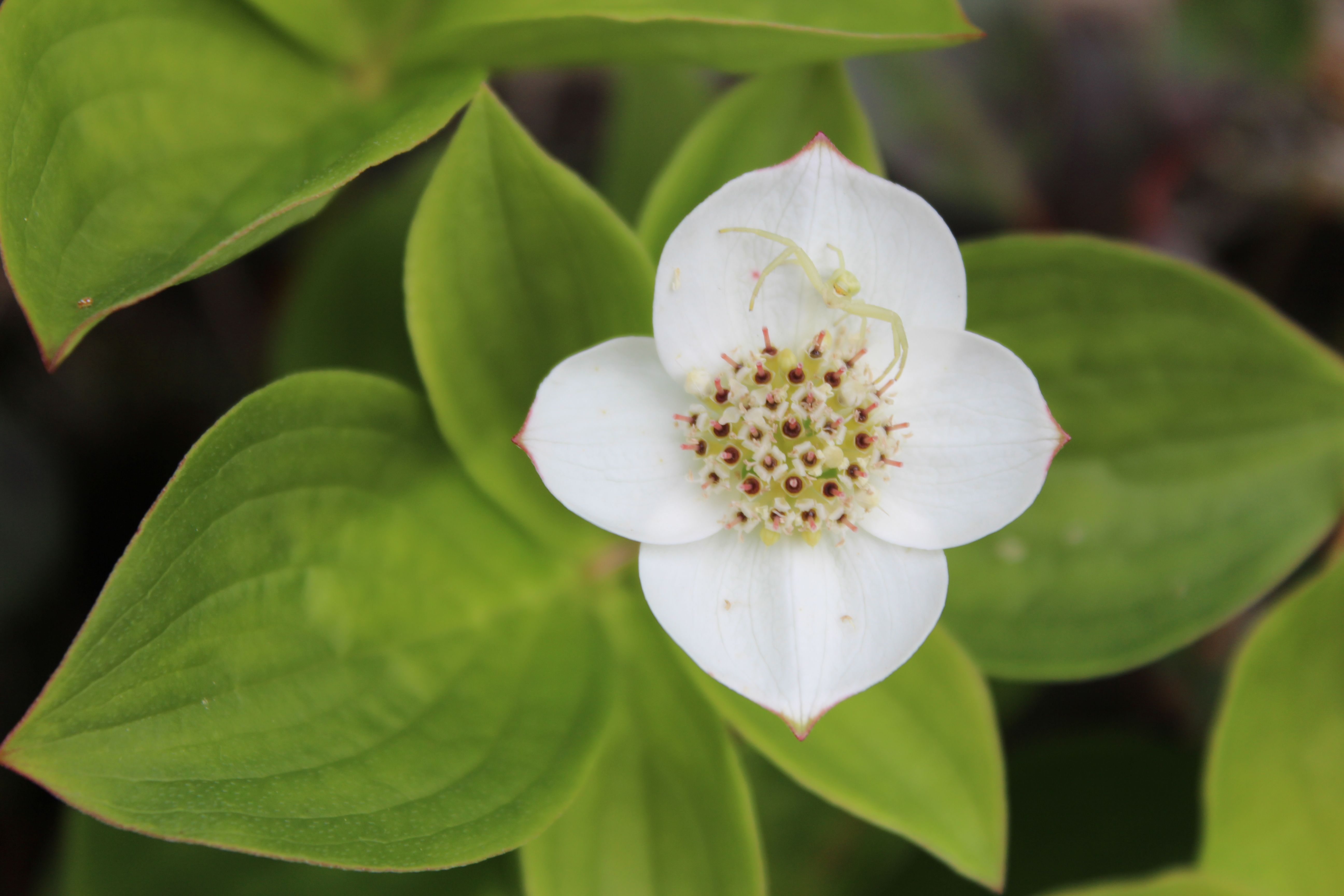
Like so many flowers, this one also has its own story to tell. Though it looks like it’s a plant with four white petals, those are actually bracts, the leaf-like structure located below the flowers.

bb & spider

The tiny flowers are in the center of the white bracts.

BB 4 leaves, 6 leaves

And here’s another thing to notice. Plants with four leaves do not have flowers, while plants with six leaves do have them. Reminds me of the Canada Mayflower, Wild Oats and Indian Cucumber Root–another case of a plant needing the extra energy from additional leaves in order to produce flowers.

Canada Mayflower

Not to be left out, the Canada Mayflowers are still in bloom.

Okey dokey–I’m finally getting to the vernal pool.

sallies

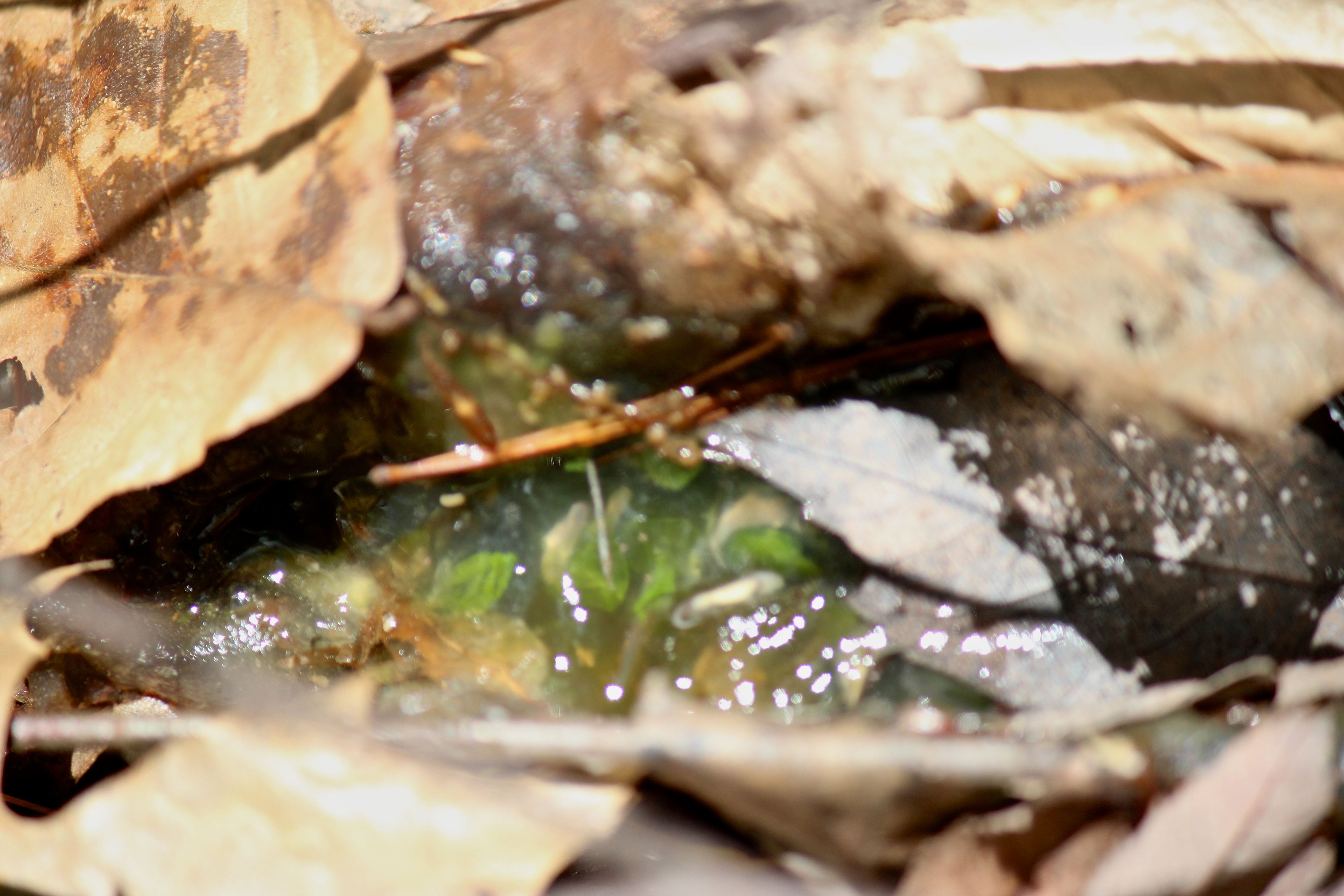
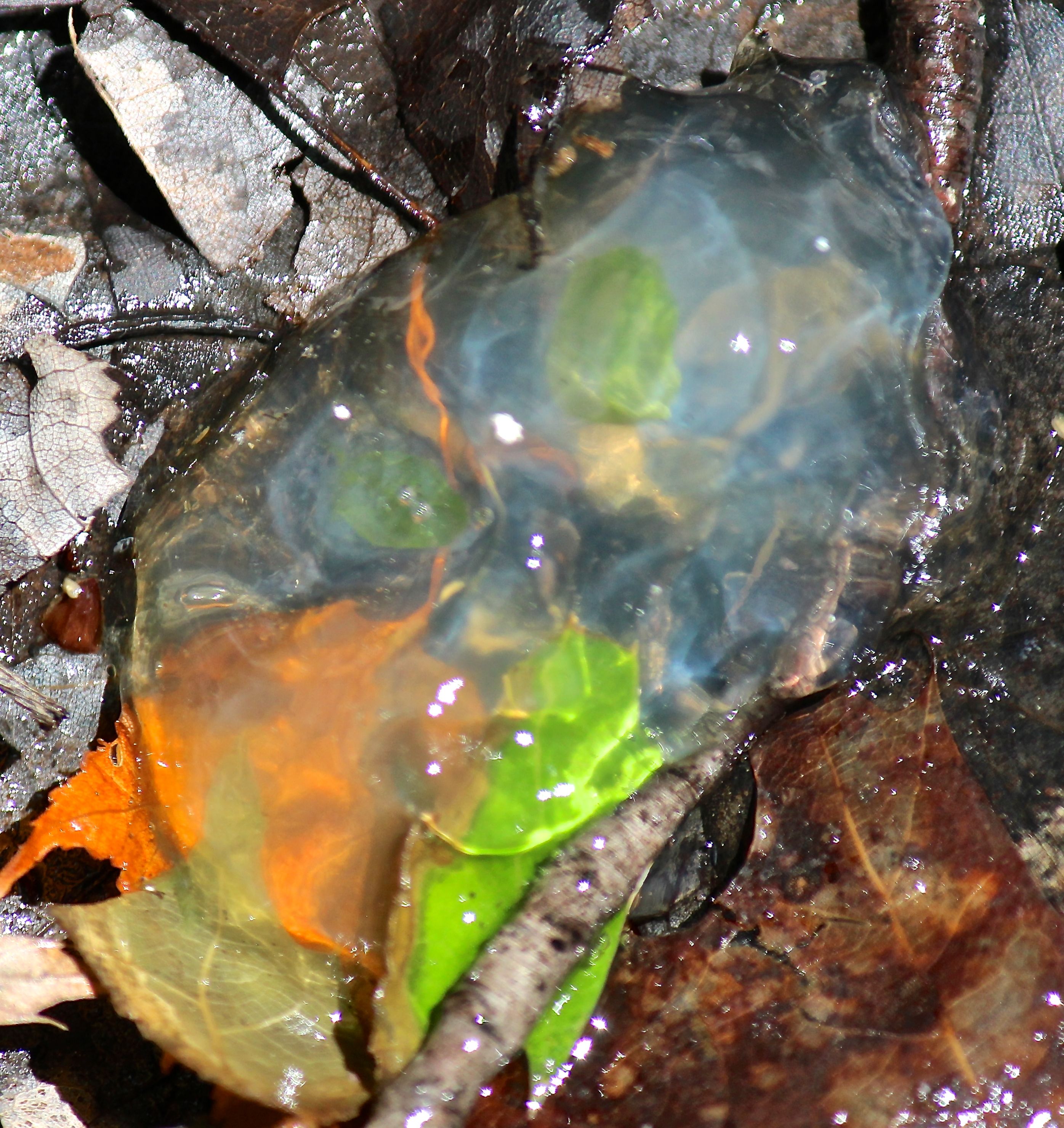
There was a bit of water in the depression, and I hoped that I might find wood frog tadpoles swimming about. Not to be. I didn’t even see any of those that died the other day. Nor did it smell so bad and there were only a couple of flies. The salamander eggs, however, were in different places than where they had started life. The sticks they were attached to have moved. Yet, the eggs were still there and except for being in different locations, they seemed okay.

sally 2

Will they survive with only a bit of dampness?

sally 4

True Confession: I did something I shouldn’t have done. I interfered with nature and put some of them into the wee bit of water. The jelly masses were warm to touch. Something will probably eat them soon, but I had to give them a chance.

butterfly 1

It was time to head home and get some work done. But . . . in the herb garden just outside the kitchen door–a Painted Lady.

Nature’s colors–a painting worth viewing each and every day.

Thanks for joining me for today’s wonder.

Small Rewards . . .

are huge in my book of life. Today’s Mondate (Monday date) found us climbing The Mountain at GLLT’s Back Pond Reserve in North Waterford.

name signs

As is the tradition around these parts, family names are posted at the beginning of the road. A sure welcome.

5 Kezars Pond Road

Since yesterday’s precipitation, no one had traveled down the Five Kezar Ponds Road–except for the red fox and snowshoe hares that crossed it. We know the red fox marked its territory as it moved along, because even though we didn’t climb over the snowbank to follow its tracks, we could smell the skunky scent. Seems a bit late in the year for that, but this year, everything is a bit late.

Hi Ho

Hi Ho! Hi Ho! It’s off to climb we go. Oh–be thankful you can’t hear me sing. My voice is as flat as the computer screen you are staring at and someone reminded me that enough was enough. :-)

ponds coming into view

Pausing along the way, the ponds were coming into view. It won’t be long before leaves obscure this. That’s one of the things I’ll miss about winter, which I know must come to an end eventually. But it provides us with sightings we might not see during other seasons.

bear claw marks1

Like this. I was scanning the landscape, with the hope of finding this. And I was rewarded. Yes, this tree has a case of beech bark disease and exhibits the perennial cankers, but look toward the left of the trunk and you’ll see the pattern of bear claw marks.

snowshoe hare tracks

As we continued to climb, we were also rewarded with a variety of animal tracks, from mice and squirrels to snowshoe hare, weasels and porcupines. I really wanted to see bobcat, but it wasn’t to be. I’ve seen their tracks and coyote tracks here in the past. The thing I should remember is that I need to live in the moment and enjoy what I see, rather than have expectations of what I want to see.

view

The view of several of the ponds at Five Kezars. I’m not sure, but I think this view is of Back Pond, Middle Pond and Mud Pond. Pleasant Mountain and Shawnee Peak Ski Area are in the background.

rock tripe

As we started down the connecting trail, marked with orange blazes, the flat and  flappy growths of rock tripe lichen jumped out at me. Though it’s supposed to be edible, I think you have to do some severe boiling and who knows what else to eat this. I’m not about to try, but what I do appreciate, is that like the lungwort that I shared in a previous post, rock tripe changes with the weather–from leathery and brown to pliable and bright green.

split maple

And then there was this maple. What in the world? Talk about resilience. We decided that maybe a weather event caused the split and then the tree reacted. Some reaction. And recovery. This tree has the will to live, despite any obstacles put in its way.

bear claws 3

Yup, another bear claw tree. It never gets old. Sighting one I mean. The claw marks become more apparent with age, so getting old is good in this case–to me.

hare

But I’ve saved today’s best reward until almost the end. Do you see it?

snowshoe 1

How about now?

snowshoe 2

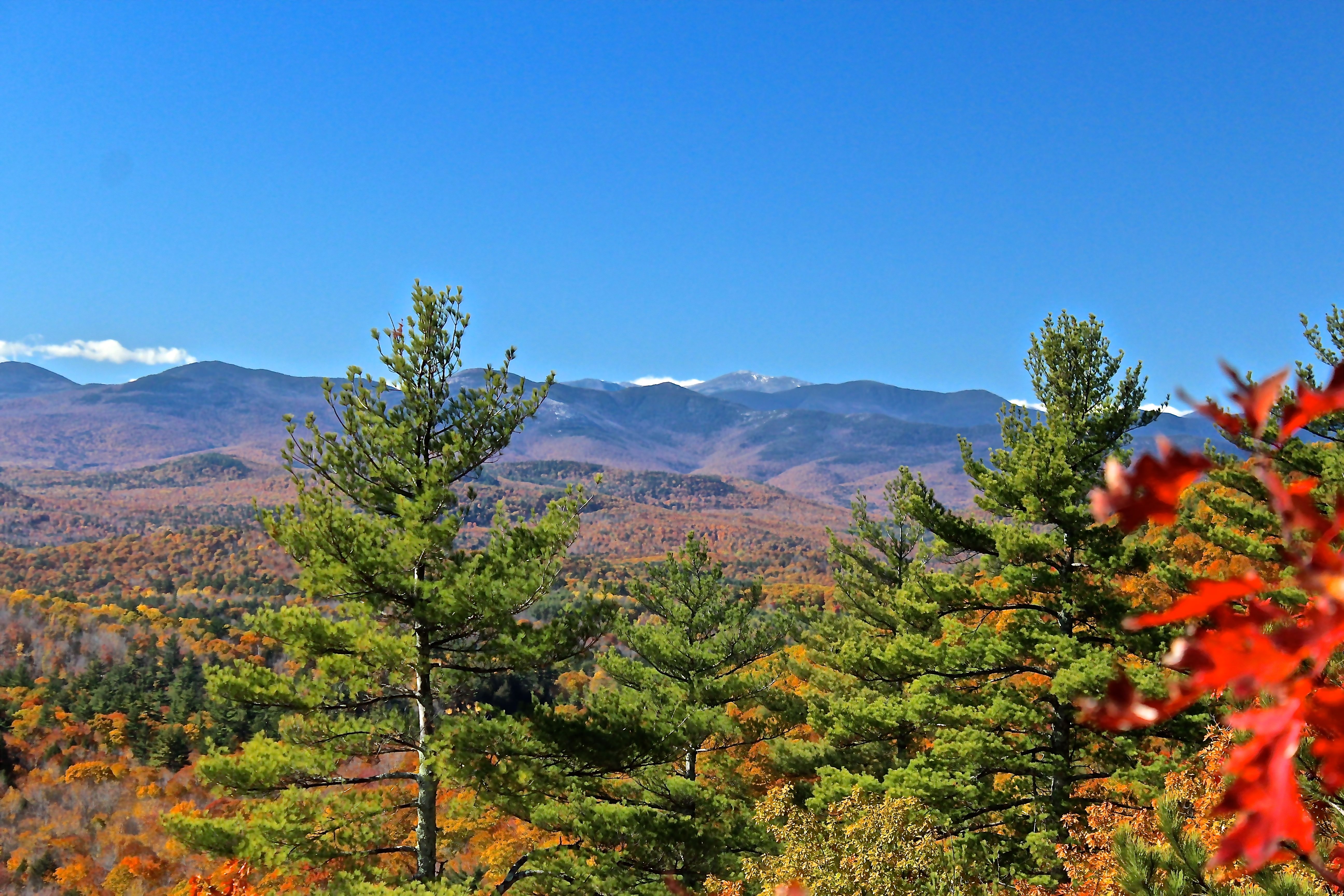
This guy was big. As were its eyes and ears. Eyes on the side–born to hide. A prey animal for a predators like bobcats.
snowshoe 3

My, what big feet you have. And to you we gave thanks today for our snowshoes.

selfie

Selfie.

lunch rock view

We crossed the bridge and then sat on a rock to eat lunch. PB&J as usual. And the final reward–homemade brownies. Life is good.

Thanks for stopping by for another wonder-filled wander. I hope you found today’s tramp as rewarding as I did.

To Old City and Back

Leaving camp

From camp. To Old City. Bridgton to Sweden. Via Moose Pond.

Toward Black Mtn

The temp was about 40 degrees, but with the brilliant sunshine, it felt even warmer. We reminisced about kayaking and rowing as we headed north on the pond.

Mink 1

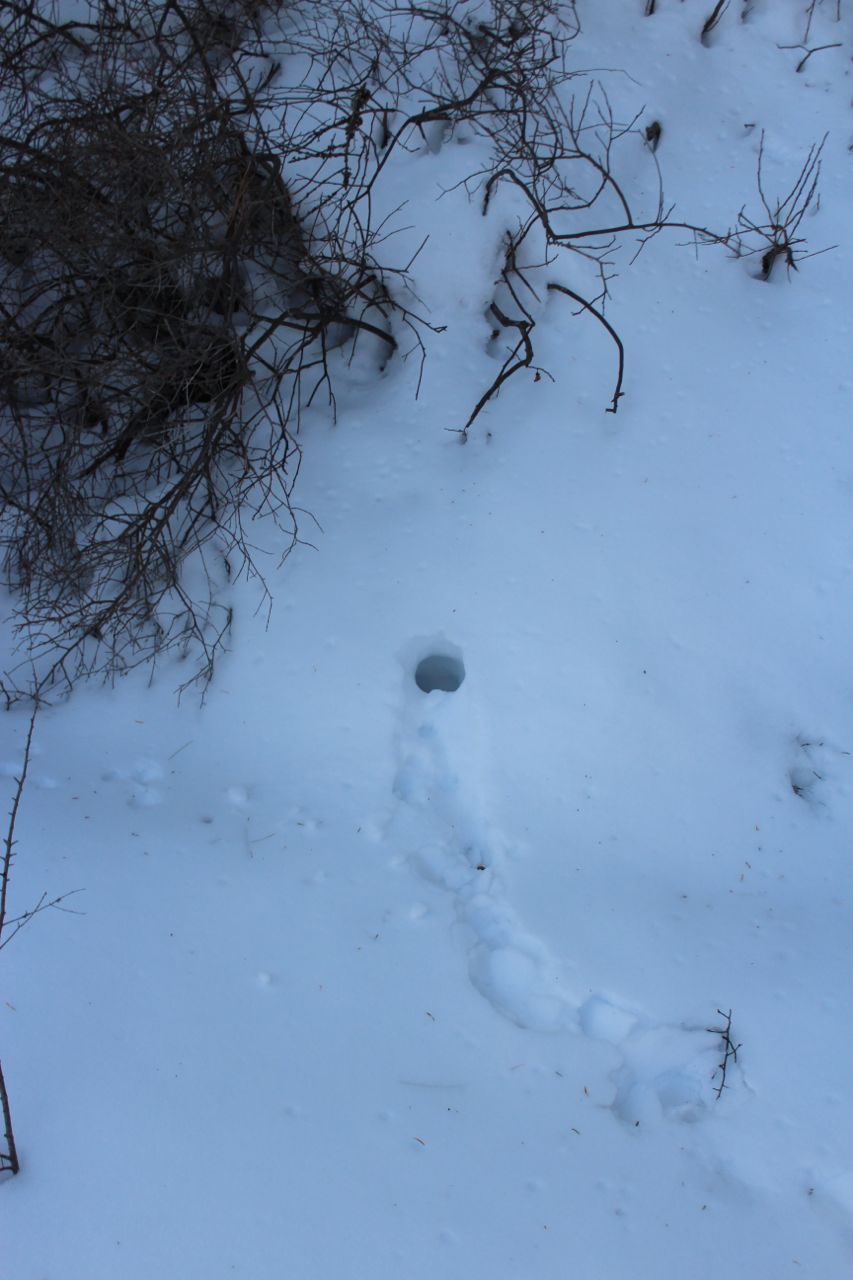
Beside one of the islands, a mink had made numerous trails and holes.

Mink 2

I love it when a critter behaves like it’s supposed to. In this case, the prints are on the slant that the weasel family is known for. A mink is a small mammal with a long body and short legs. It has partially-webbed feet, an adaptation to a near-aquatic habitat. A few years ago, an acquaintance and I were helping with the Moose Pond watershed survey. We were sitting on some rocks by the shore, with a dock in front of us, as we jotted down notes. Much to our surprise, a mink came up from under the rocks by the dock. We starred at it, it starred at us. We had cameras. Did we take a photo? Nope. Another one for the mind’s eye.

Mink3

Bound and slide. Like otters. I still want to be an otter in my next life, but minks do have fun too.

following tracks

Tracks tell the story about behavior, but it’s often a guessing game. I think I got this one right. Homo sapiens. Male. About 6 feet tall. Handsome. Puts up with a lot.

finding a seat

He borrowed a resting spot while I examined those mink tracks and holes. There were tons of holes.

on the trail

At the northernmost end of the pond, we followed the snowmobile trail toward Old City. Today it’s a wooded snowmobile trail around the base of Black Mountain in Sweden, Maine, but during the 19th century a road passed by at least six homesteads. All were reportedly occupied by young men who chose not to live at home–perhaps increasing their status as eligible bachelors. Their names included Cushman, Farrington and Eastman, among others–names long associated with Sweden and Lovell. (Sweden was originally part of Lovell)

foundation

The area was abandoned at some point after the Civil War, but foundations like this one remain. This may have belonged to P. Farrington or J. Edgecomb, but I’m thrown off because it occurs on the wrong side of the current “road.” That doesn’t mean the road was originally in the same spot.

stone walls

Stone walls, like this one near the I. Eastman property, formed boundaries to keep animals in or out. I suspect this guy was a major landowner.

stone wall 2

I’m fascinated by stone walls. Not only are they beautiful and functional, but they also represent a tremendous amount of labor. And the stones have their own story to tell about the lay of our land in New England.

color in the woods

I’d been looking at tracks, trees (always looking for bear claw marks on beech trees and quizzing myself on bark) and stones. On the way back, this touch of color caught my eye. Red Pine bark is among my favorites. Then again, I haven’t meet a tree I didn’t like. And the contrast with the hemlock needles, beech leaves and touch of blue sky gave me pause.

vine?

This also caught my eye. Last fall, a friend had sent me a photo of a beech tree with a similar case of strange scars. I didn’t know what it was, so I sent it on to a forester I know. He sent it on to someone in the invasive insect department at the state level. It all boiled down to what they thought was wounds from bittersweet vine being wrapped around the tree at one time.

vine 2

That made sense then. Today, I dunno. As I looked around, I noticed the same phenomenon on other beech trees. But I didn’t see any evidence of vines nearby. Of course, there’s still a lot of snow on the ground, as my guy can tell you since he chose not to wear snowshoes. The area had been logged at some point. But, I’m just not sure.

heading back to camp

Back on the pond and heading toward Bridgton and camp. Shawnee Peak and Pleasant Mountain provide the perfect backdrop. Yesterday, my guy took one of our grand-nephews for another ski lesson. The young’un skied straight over moguls on the Pine, slipped off the trail into the woods several times and fell a kazillion times. On the ride home this tired seven-year-old said that his younger brother probably spent the day playing Xbox. When asked if he wished he’d done the same, he remarked, “No, this was the most fun day I’ve ever had in my ENTIRE life.” I can hear my mother-in-law guffawing in heaven. :-)

islands and mountain

Only another mile to go before we rest. Thanks for wondering along with us on today’s wander.