Rejoicing for Jinny Mae

When my friend Jinny Mae received an ominous diagnosis in June, she faced it with admirable spirit and courage. All who know her watched in awe as she  underwent treatment and slowly made her way back into our midst. Despite everything, she continued to spend as much time in nature as possible, whether observing from her chair by the window, walking her dogs or eventually joining friends for tramps. And today–she received fabulous news that I learned about as I was about to hike up Bald Pate Mountain in South Bridgton. She is in remission. INDEED!

So as I did when I first learned of her diagnosis, I took her along with me in spirit on today’s hike. I would have asked her to join me for a celebratory tramp, but it was late in the day. We’ll have plenty of opportunities.

I was on a reconnaissance expedition because I’m leading a hike for Loon Echo Land Trust next weekend. Having Jinny Mae along meant I noticed some things I may have walked by previously. In the end, I discovered a mixture of my favorites and hers.
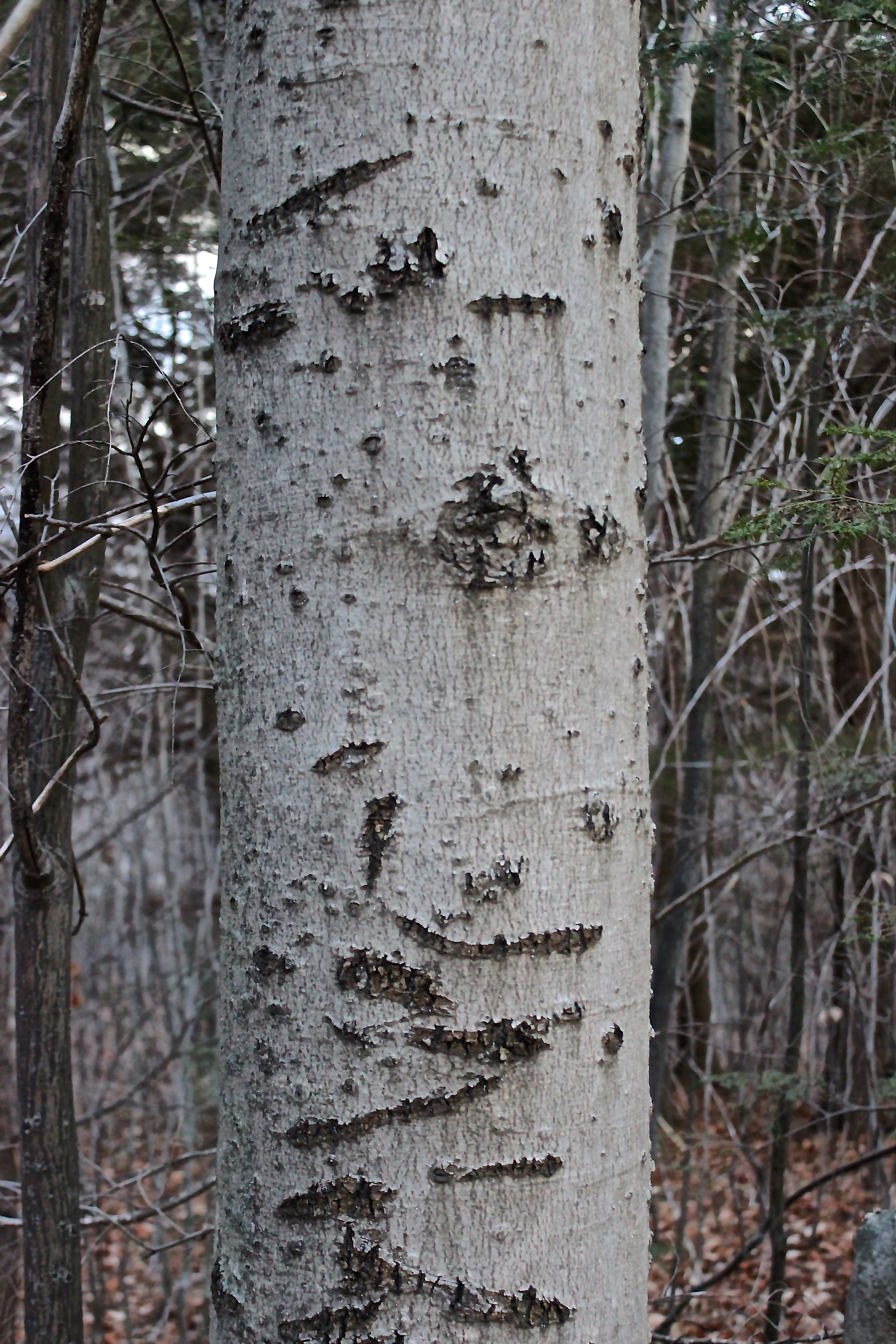
beech slash

Because there is a beech forest at the base of the mountain, and it’s located adjacent to an orchard, I’m determined to find bear activity. Is this the work of a bear that gave the tree a side-ways slap?
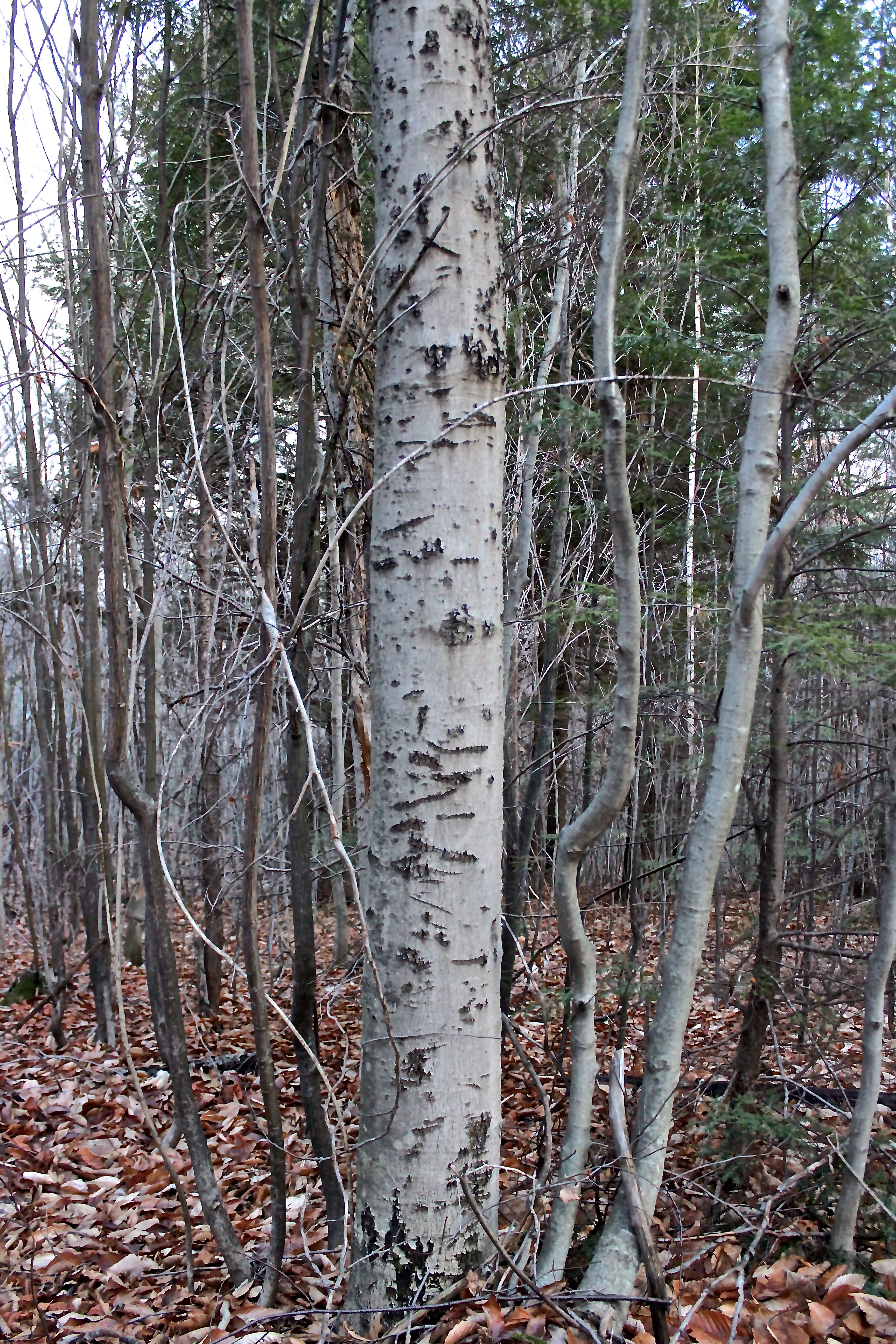
beech slash 2

I don’t think so. More likely, the younger trees beside it waved in the breeze enough to create slight scars that have grown with the bark.
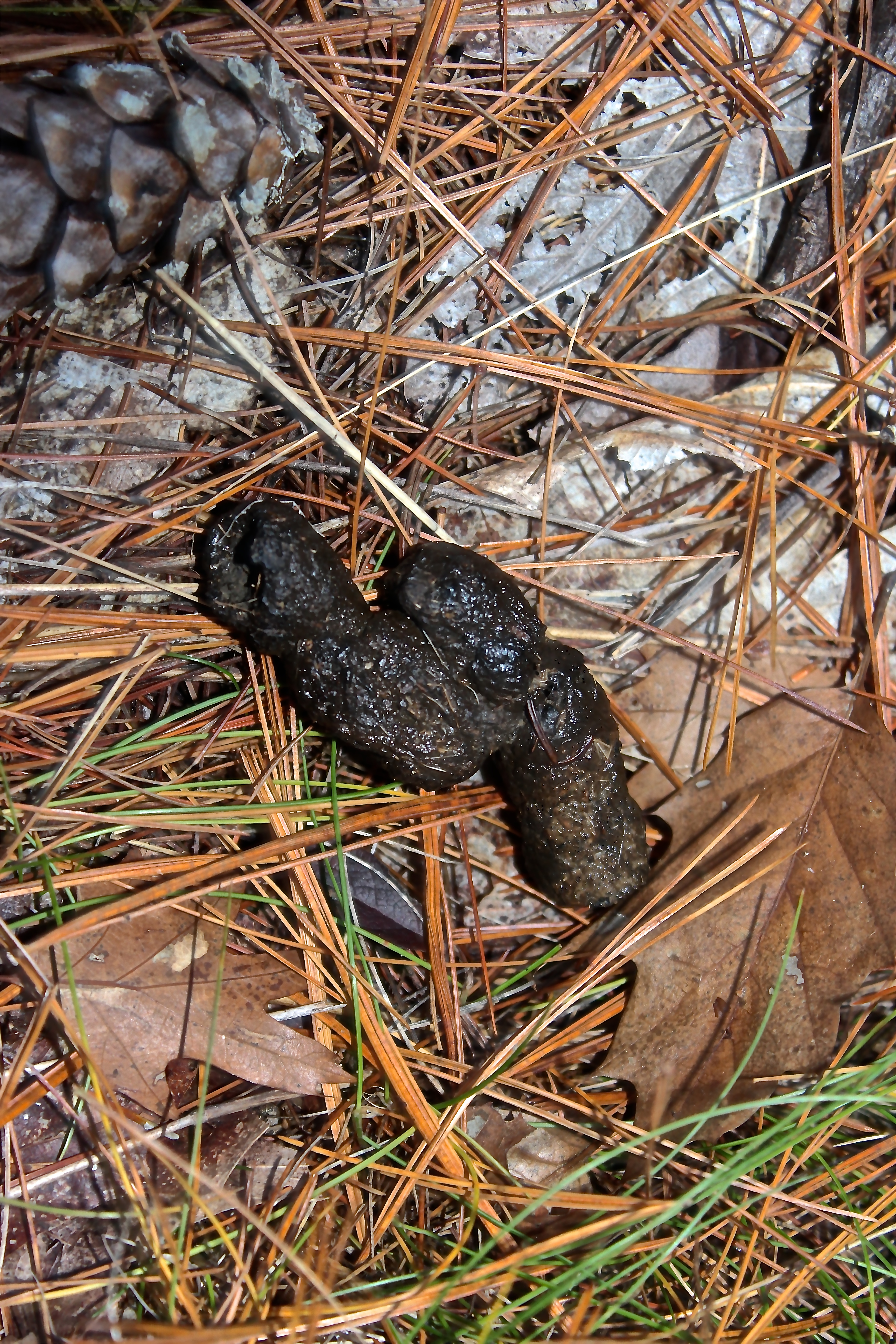
porcupine scat

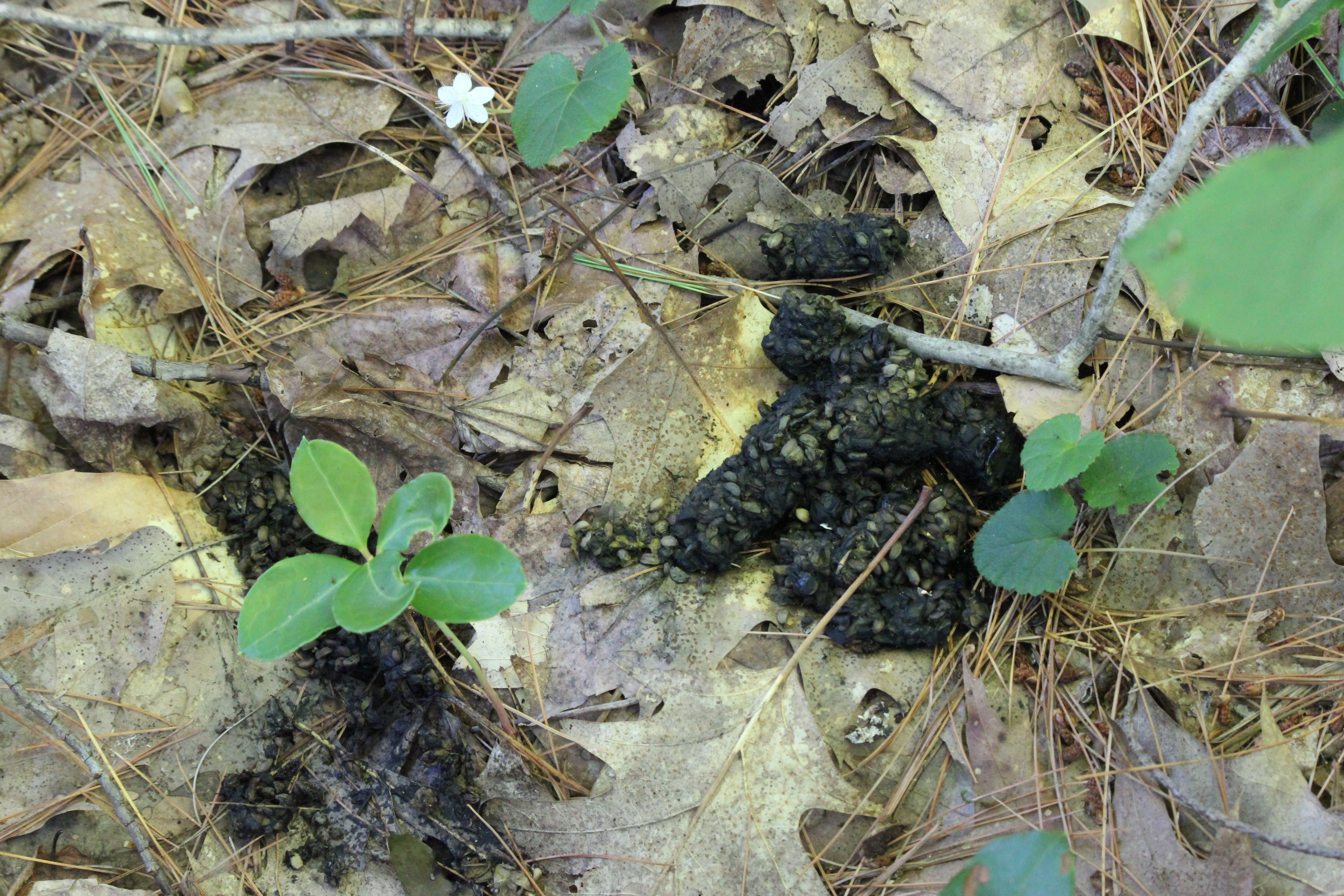
I poked around under a large hemlock, and noticed what I thought was old deer scat. But then I realized that some of it was a wee bit longer and had the curved shape characteristic of porcupines. As I continued to look, I saw that many small twigs had nipped off ends cut at an angle–porcupine it was.
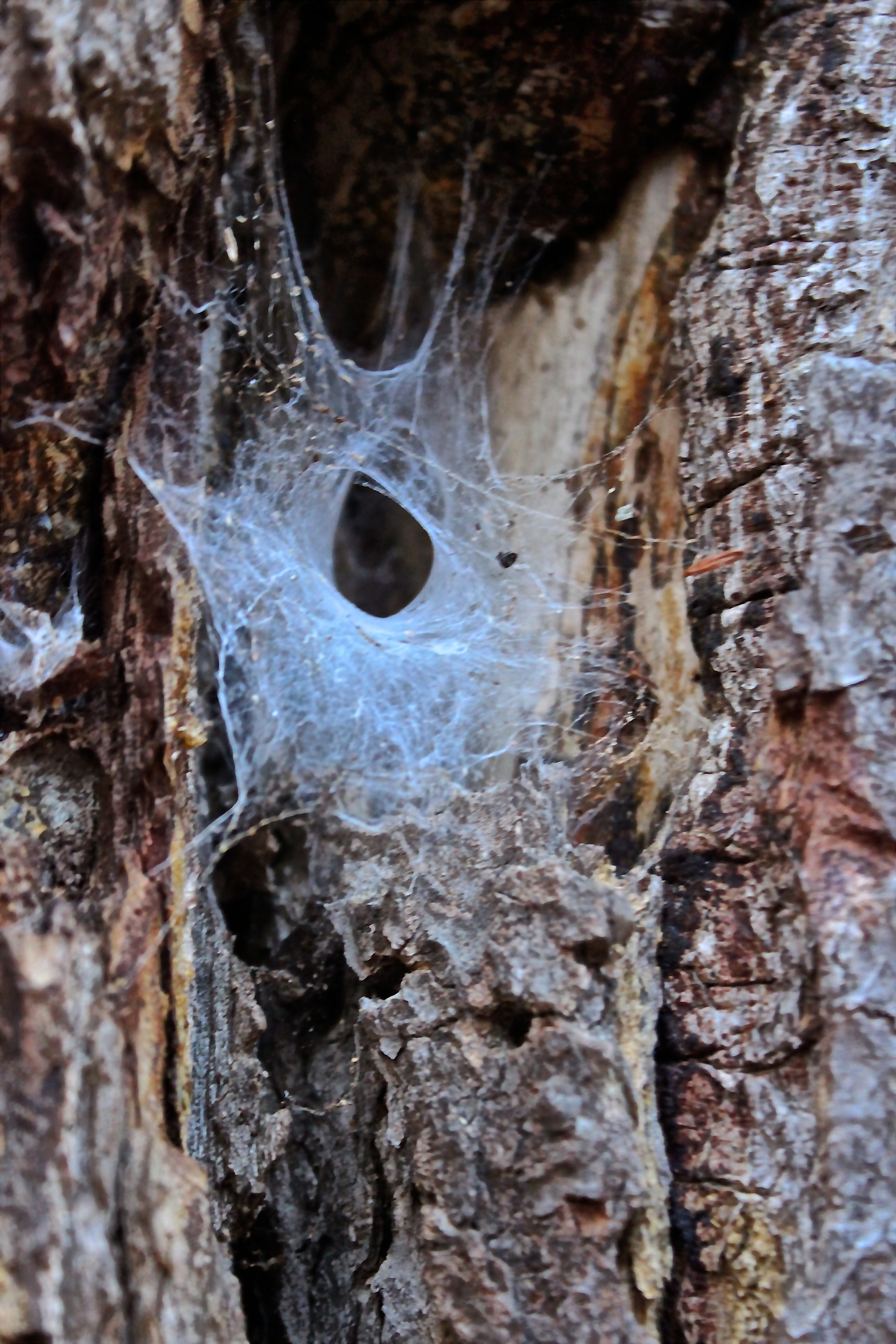
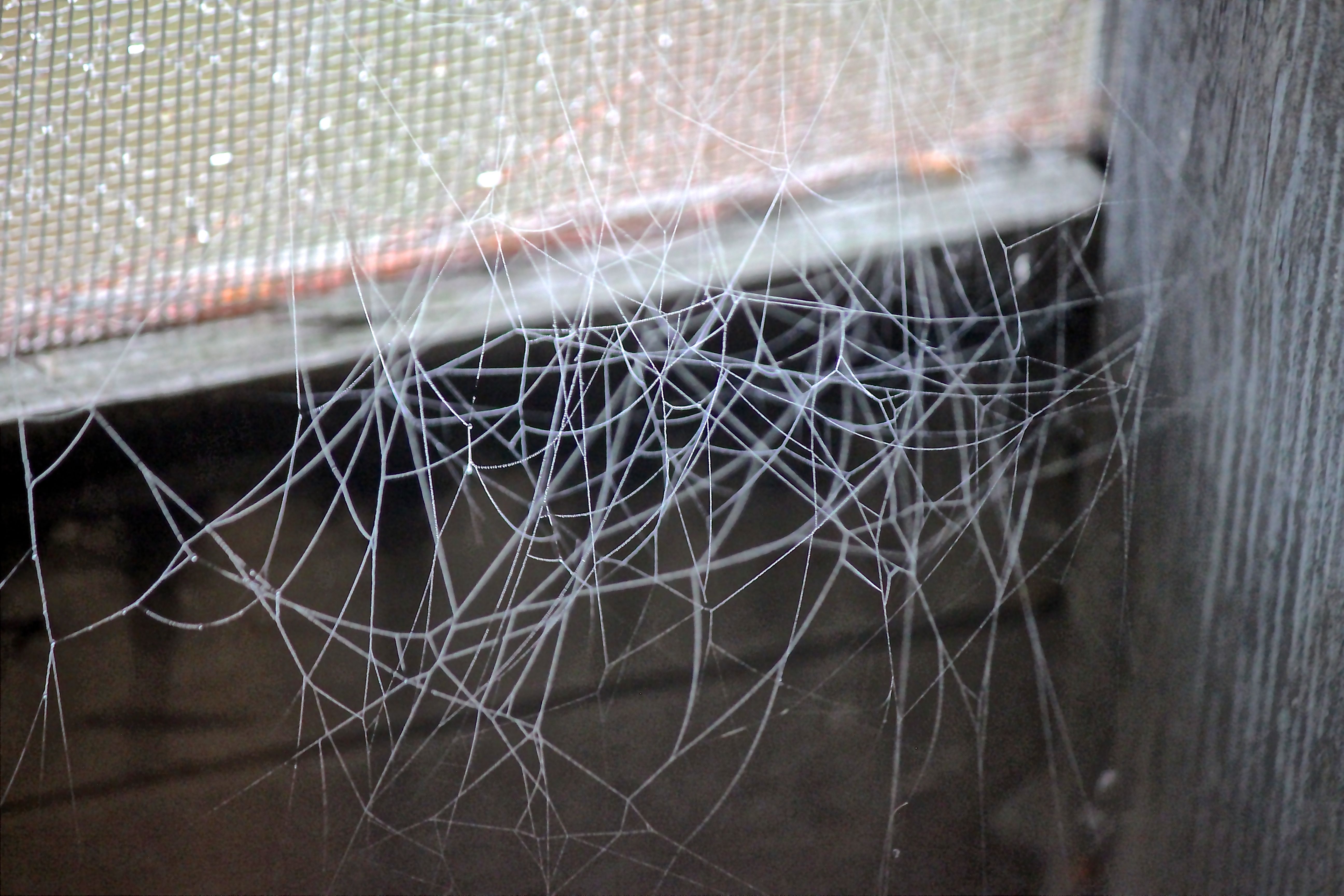
funnel weaver web

For a while, hemlocks became my focus as I checked under each for signs of activity. On the backside of one, I found this funnel weaver web–standing strong against the elements. It reminded me of someone else.
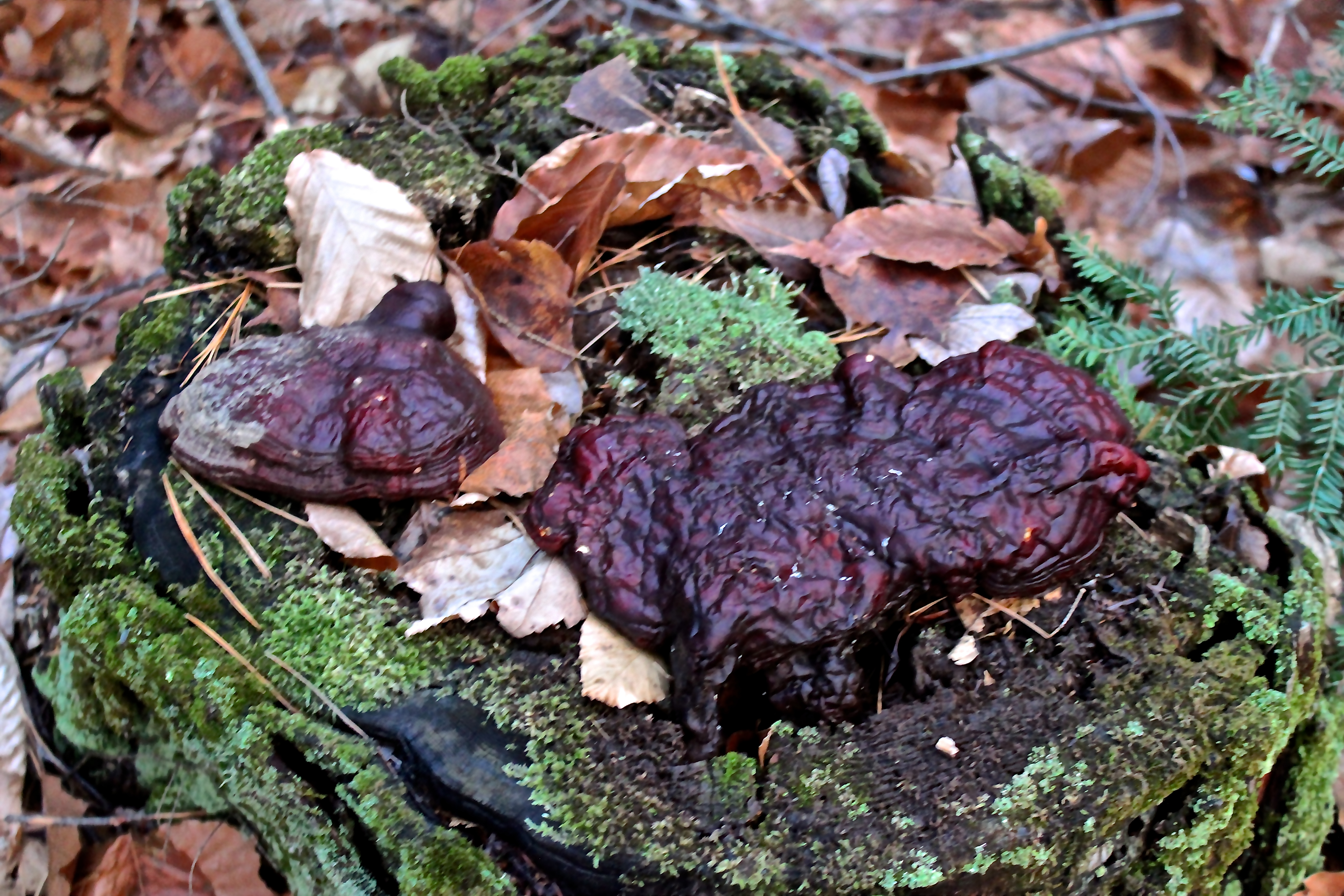
hemlock varnish shelf

That someone would certainly have stopped by this old hemlock stump to admire these varnish shelf fungi–it wouldn’t matter to her that they are withered and old. There’s beauty in age.
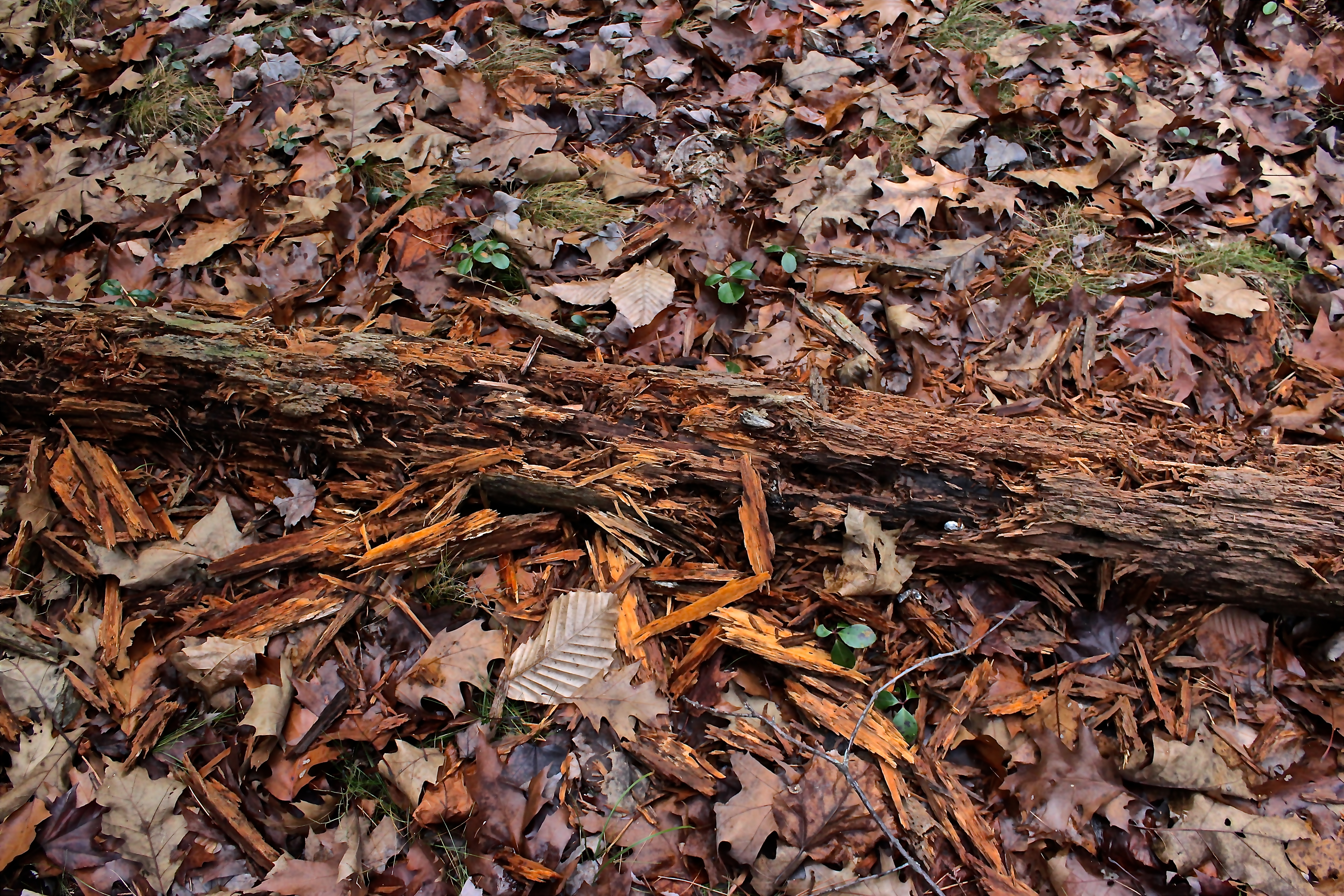
pileated log

Every once in a while I felt the nudge to go off the trail and explore–when J.M. keeps track of our tramps on her GPS, the line always zigzags. This rotting log caught my attention. Bear or fisher activity?
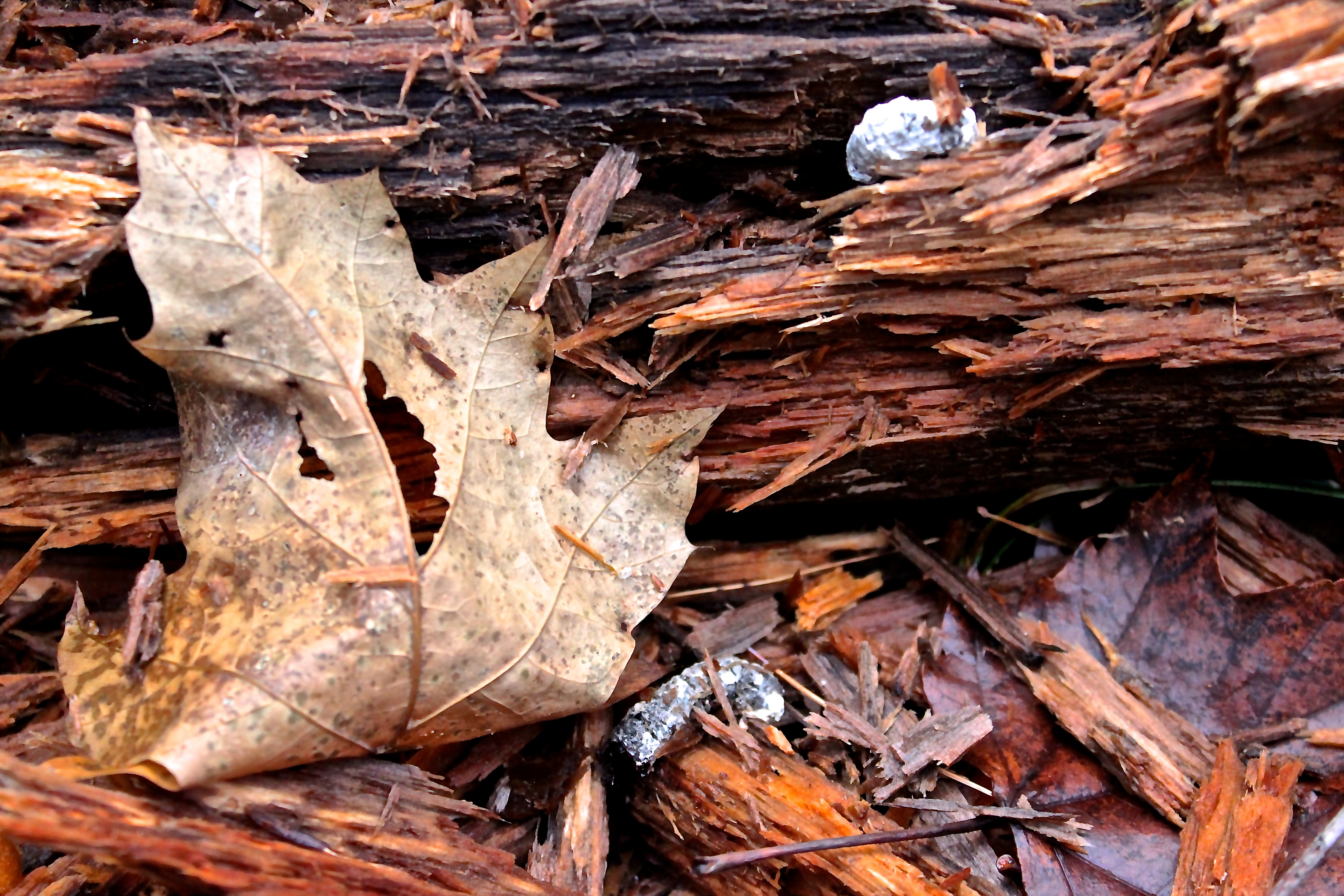
pileated scat

No hair or obvious scratch marks from claws, but some scat–pileated woodpecker scat. I left it there in hopes I can show it to people on the hike and let them see that it’s filled with carpenter ant bodies.

ledge

Behind the log was this ledge. A quick look at it and I knew that a certain someone would want to inspect it.

ledge 2

It’s almost completely covered in smooth rock tripe. Sorta looks delicious enough to eat–if you boil it for days on end maybe. Apparently it can be used to thicken stew. Too bad I made stew the other day.

polypody & tripe

And growing among the tripe–a few polypody ferns, who also appreciate a moist, rock surface. Thanks J.M. for encouraging me to take a closer look.
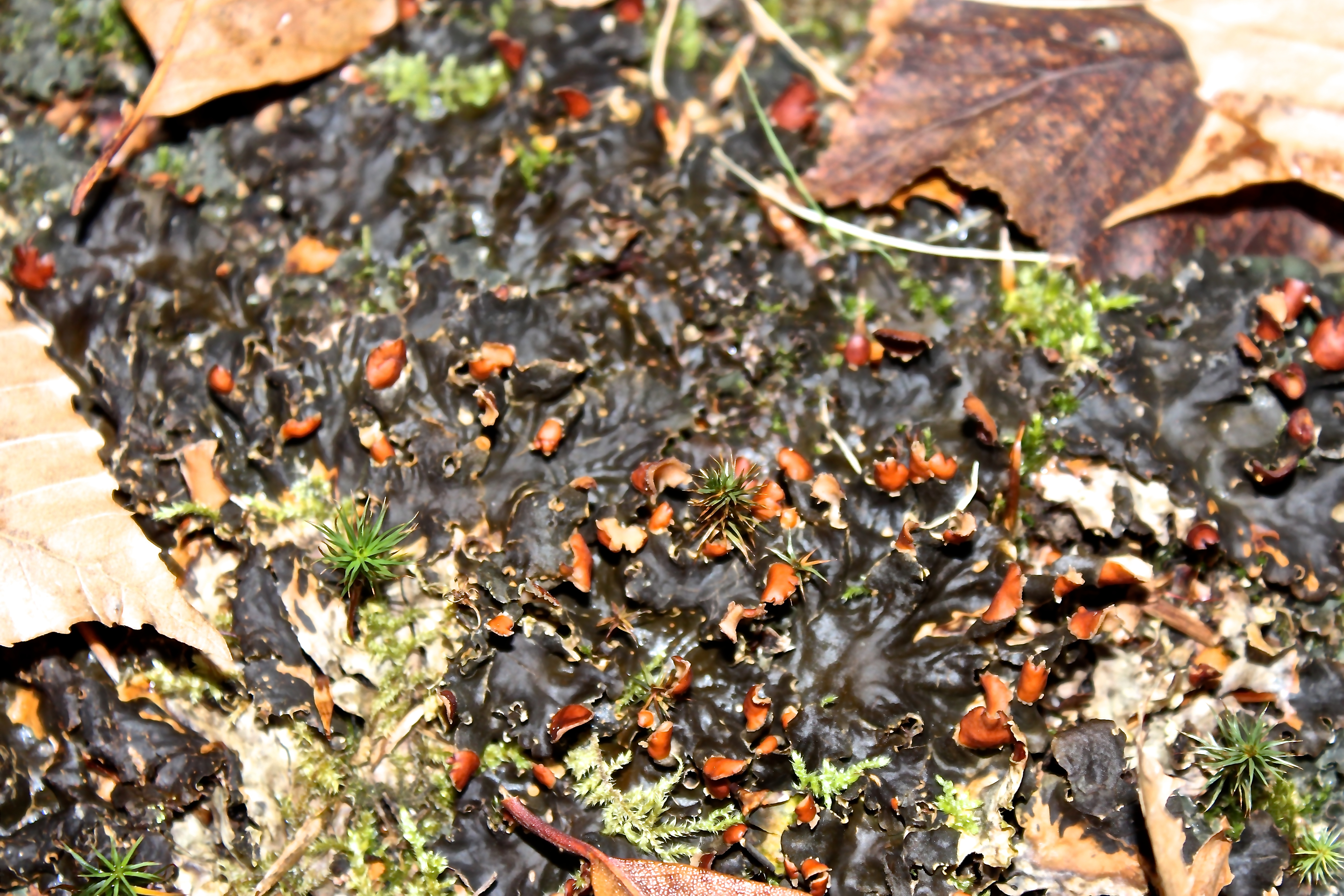
Many-fruited pelt

While I’m on the topic of lichens, here’s one that was new to me. The rust-colored projections among the shiny brown lobes made me squat for a photo call. At home, I thumbed through my go-to lichen book, Lichens of the North Woods by Joe Walewski, and discovered that this foliose lichen is Many-fruited Pelt. Those reddish-brown projections are the fruiting bodies on the leafy margins–thus the name. One for us to learn, J.M. We’ll probably see it everywhere now as it grows on soil, moss or rocks.
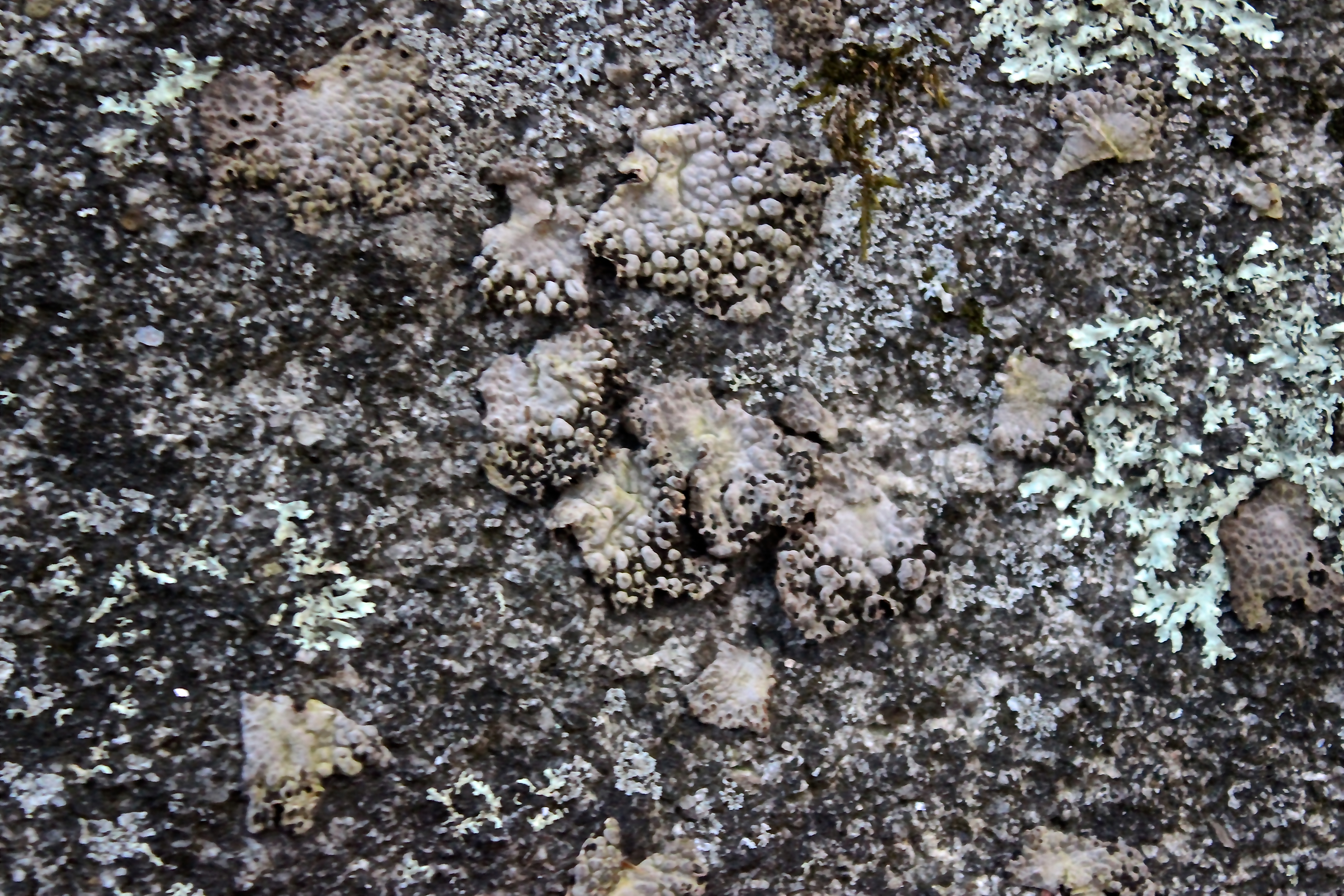
common toadskin lichen

And because we like to learn, here’s another–Common Toadstool Lichen. That should be easy enough to remember, given its warty appearance.
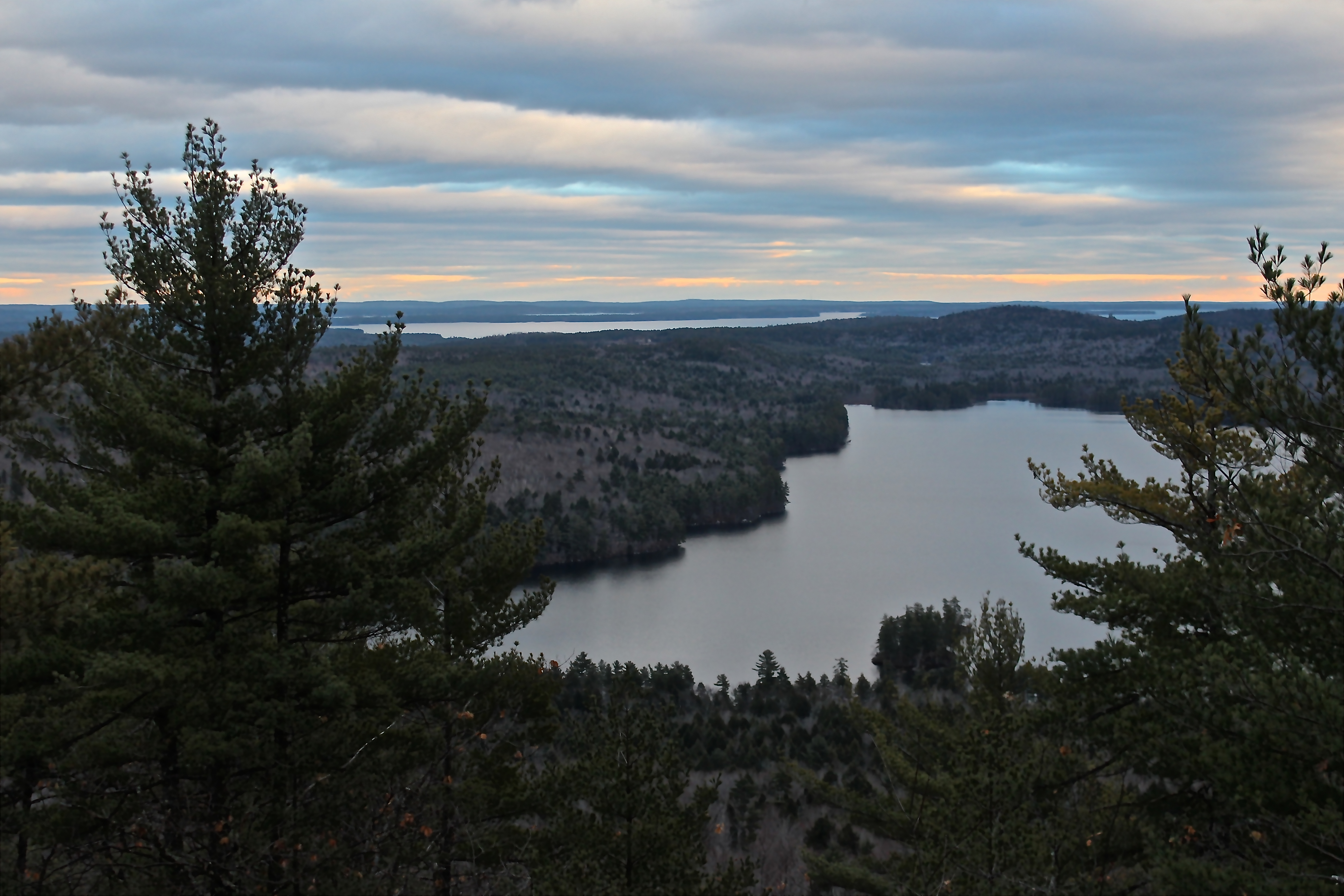
Peabody Pond

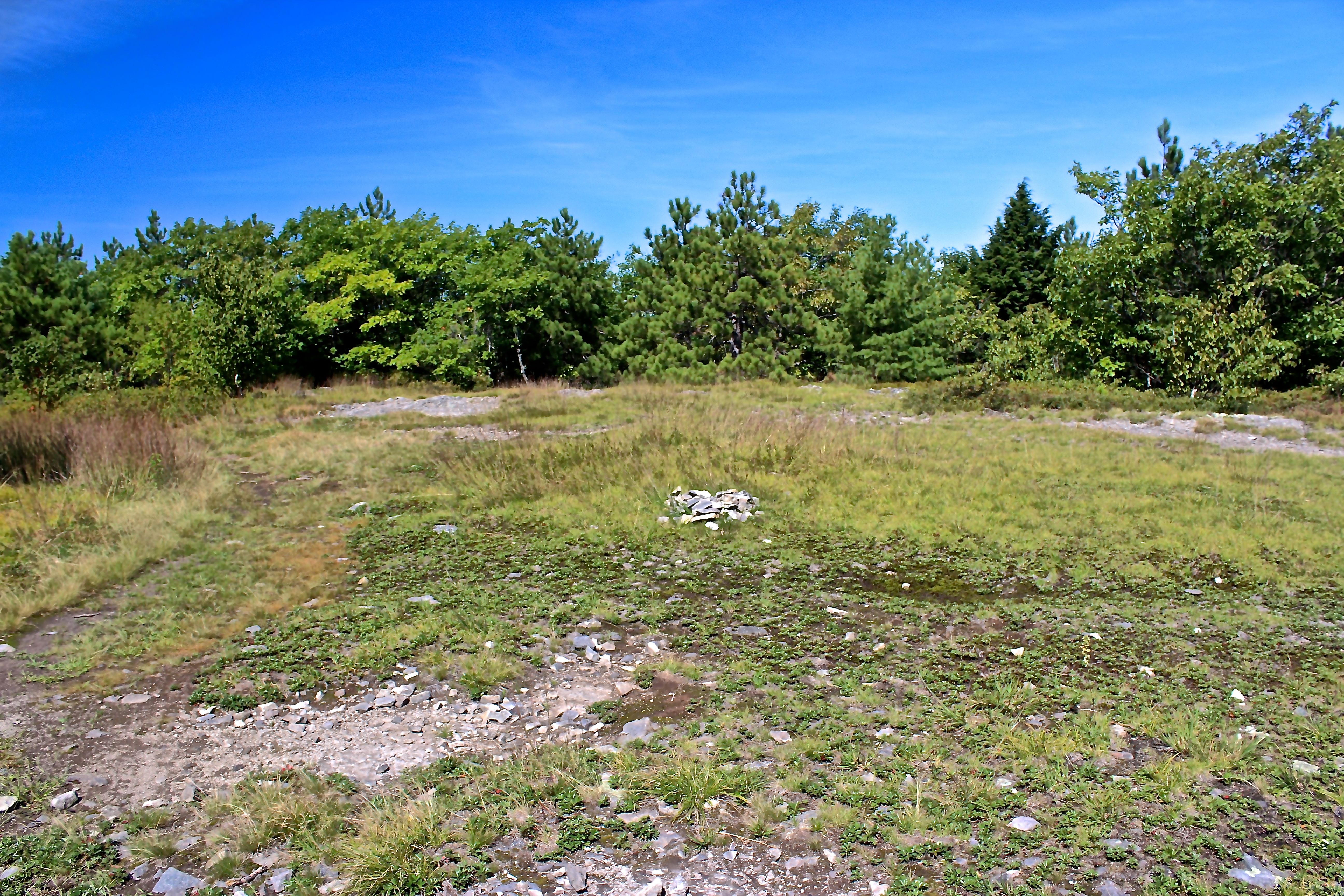
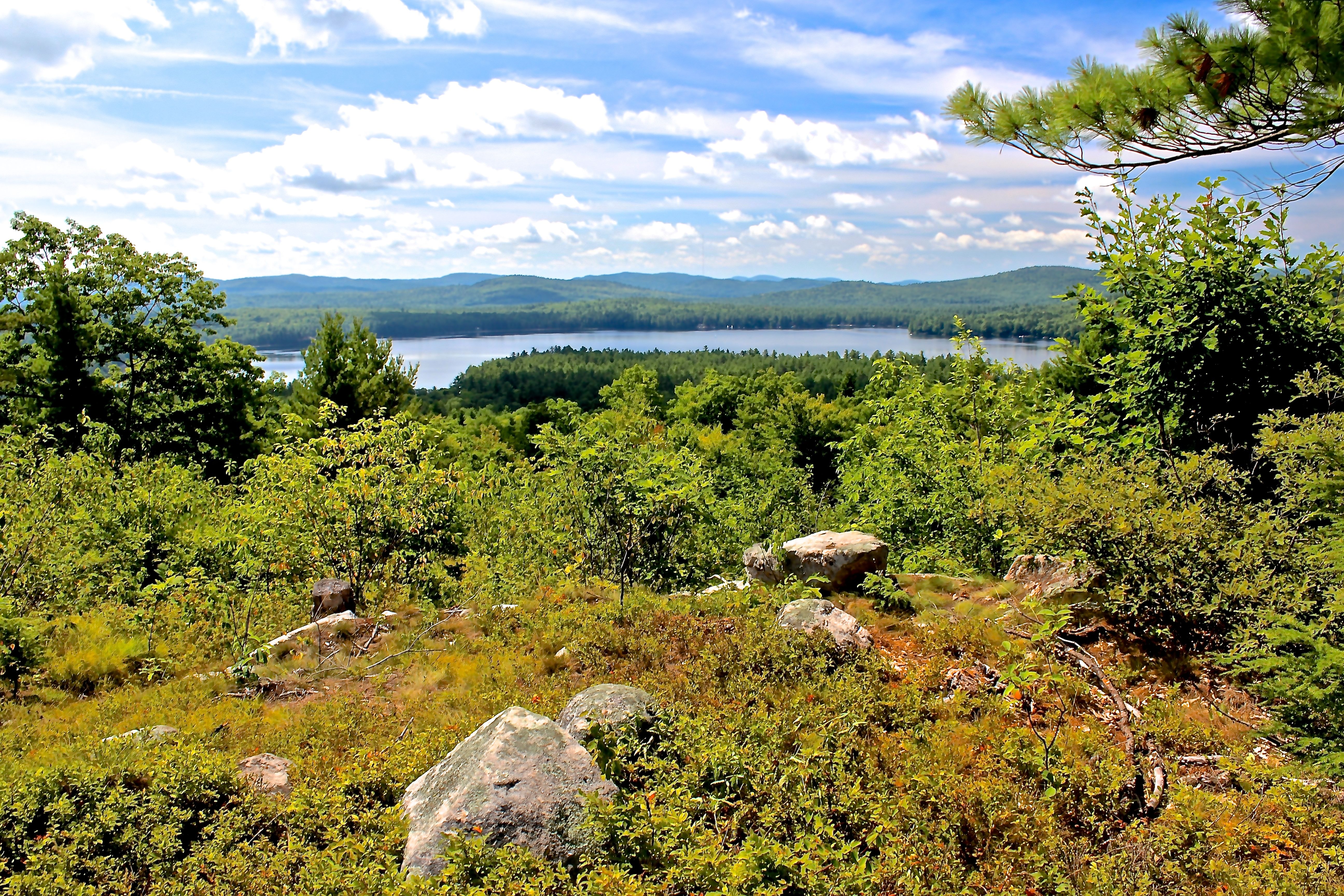
At the summit, I paused briefly to take in the views of Peabody Pond and

Pleasant Mtn

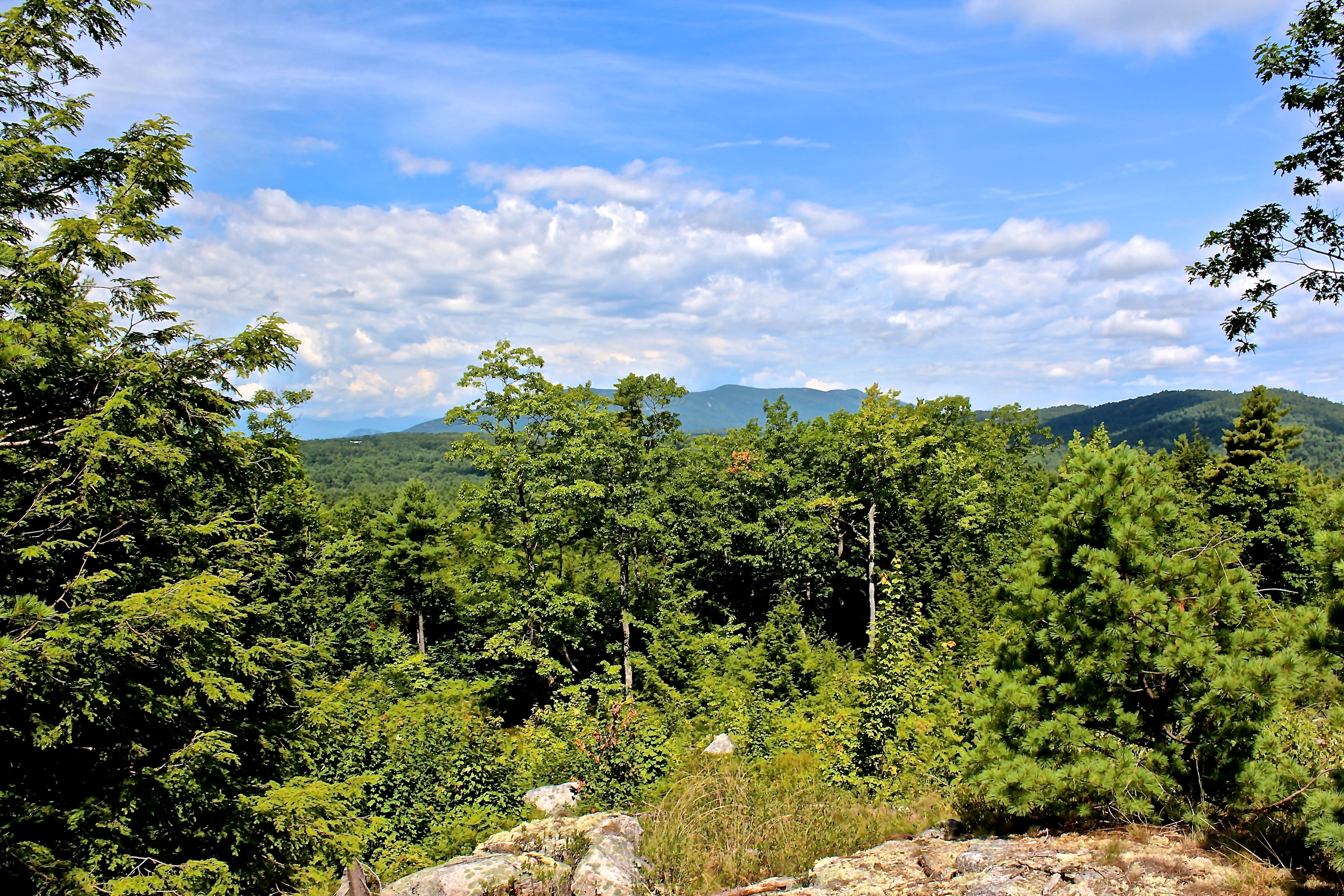
Pleasant Mountain. It was getting late and I still wanted to hike to the Foster Pond Outlook via the Bob Chase Scenic Loop.
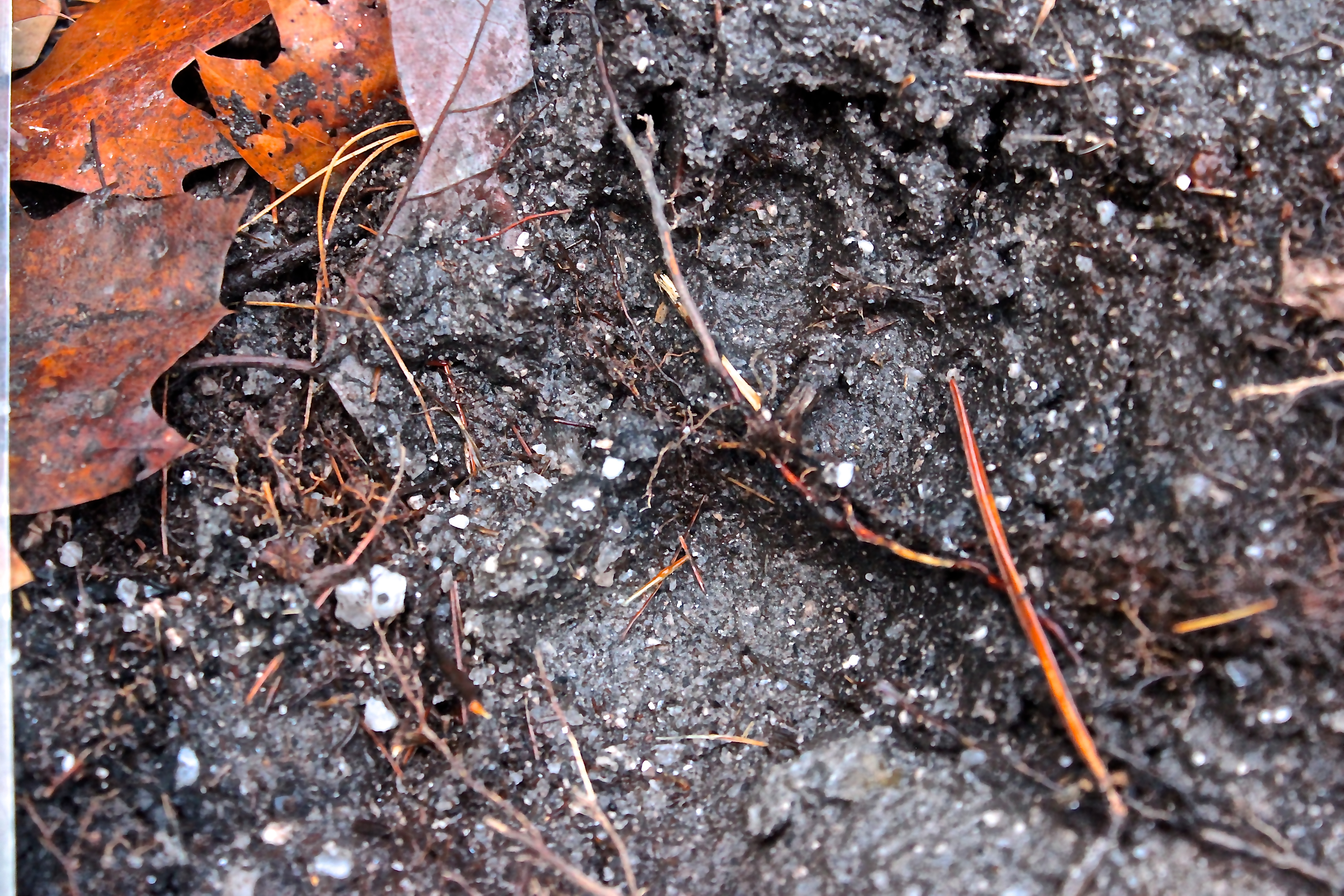
bob1

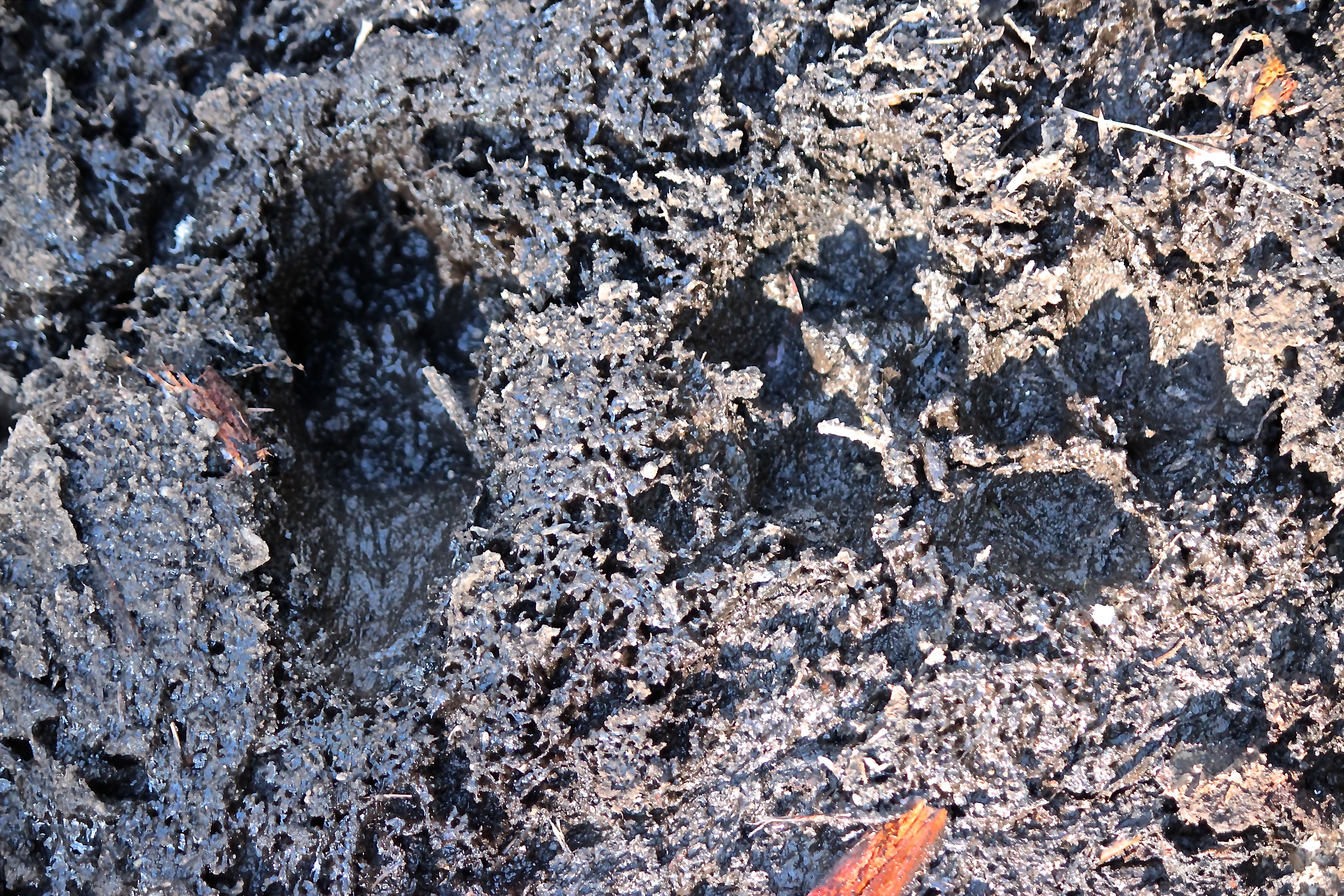
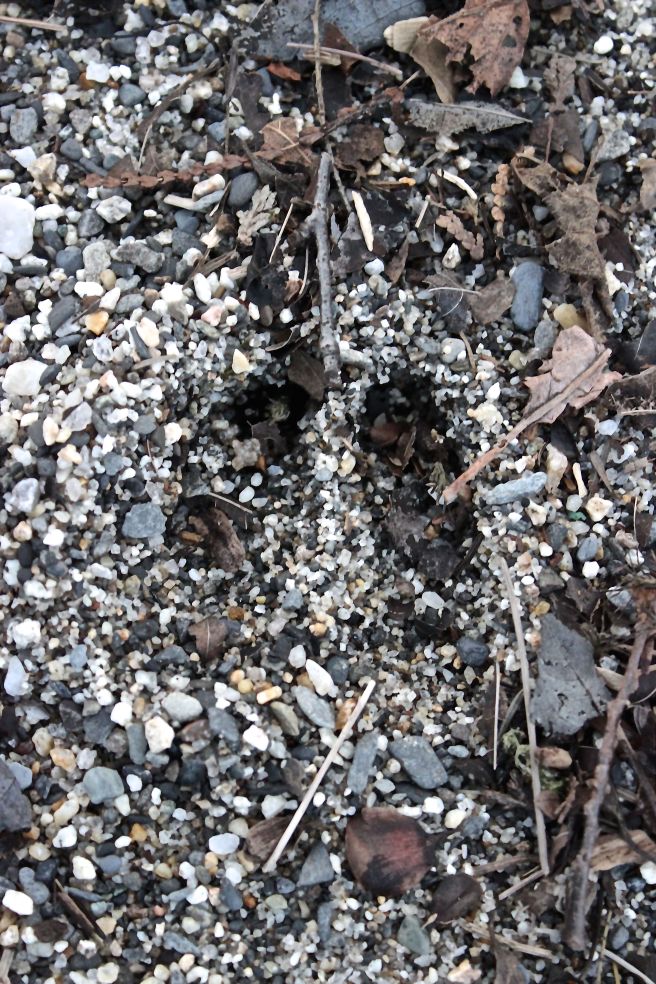
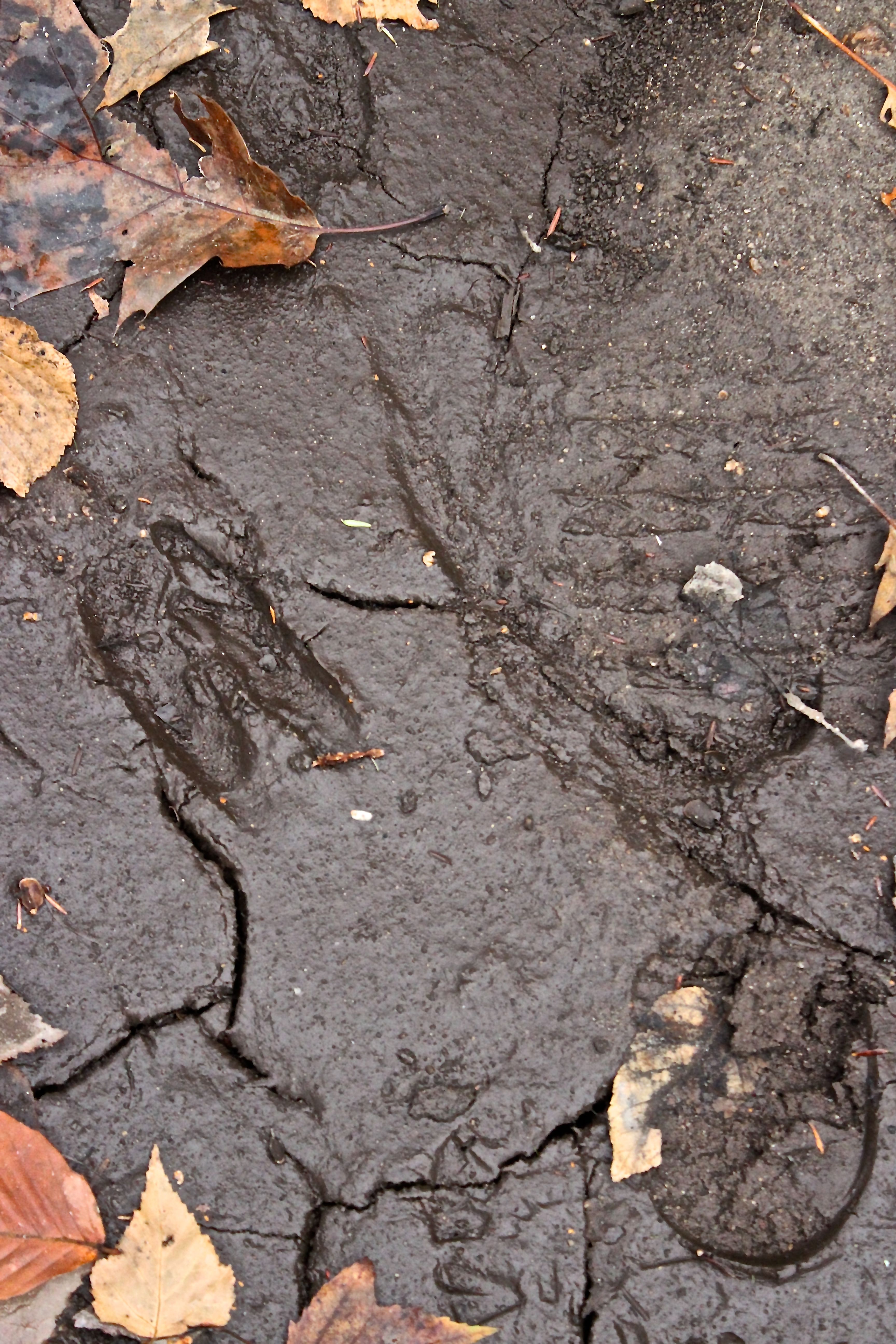
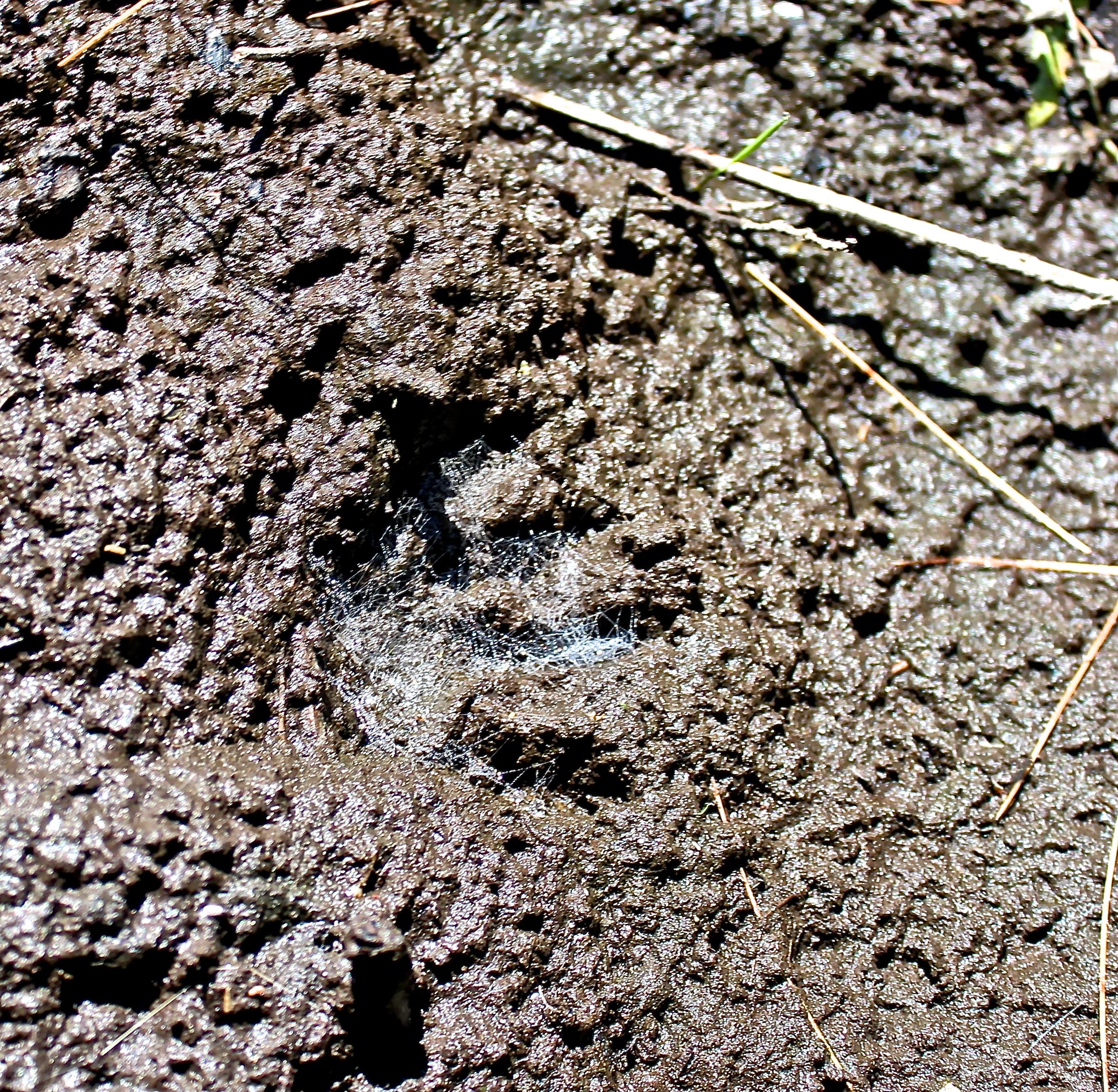
And then, just as I stepped back onto the trail, I saw this print in the mud and a couple in front of it. My heart sang.
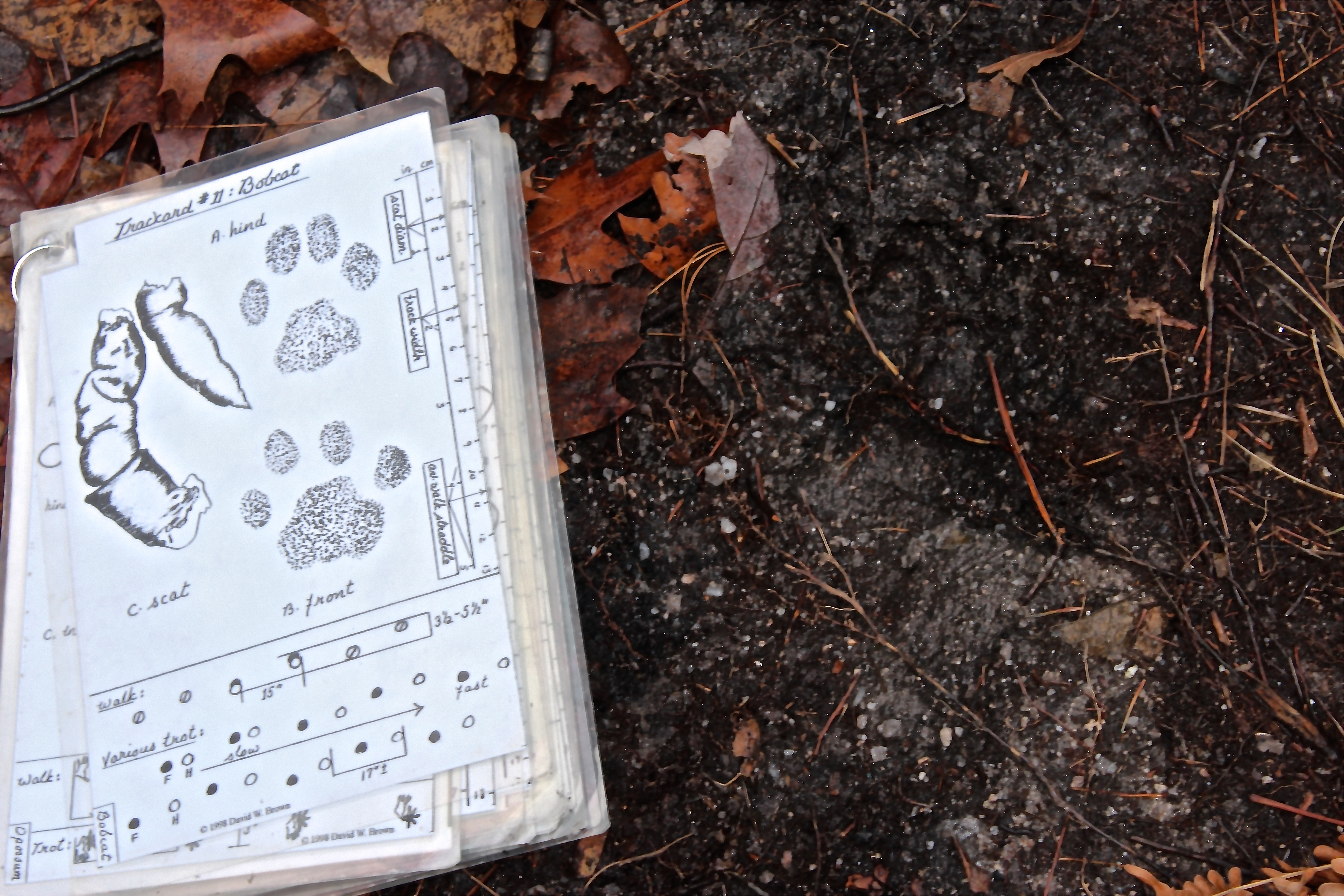
bobcat 2

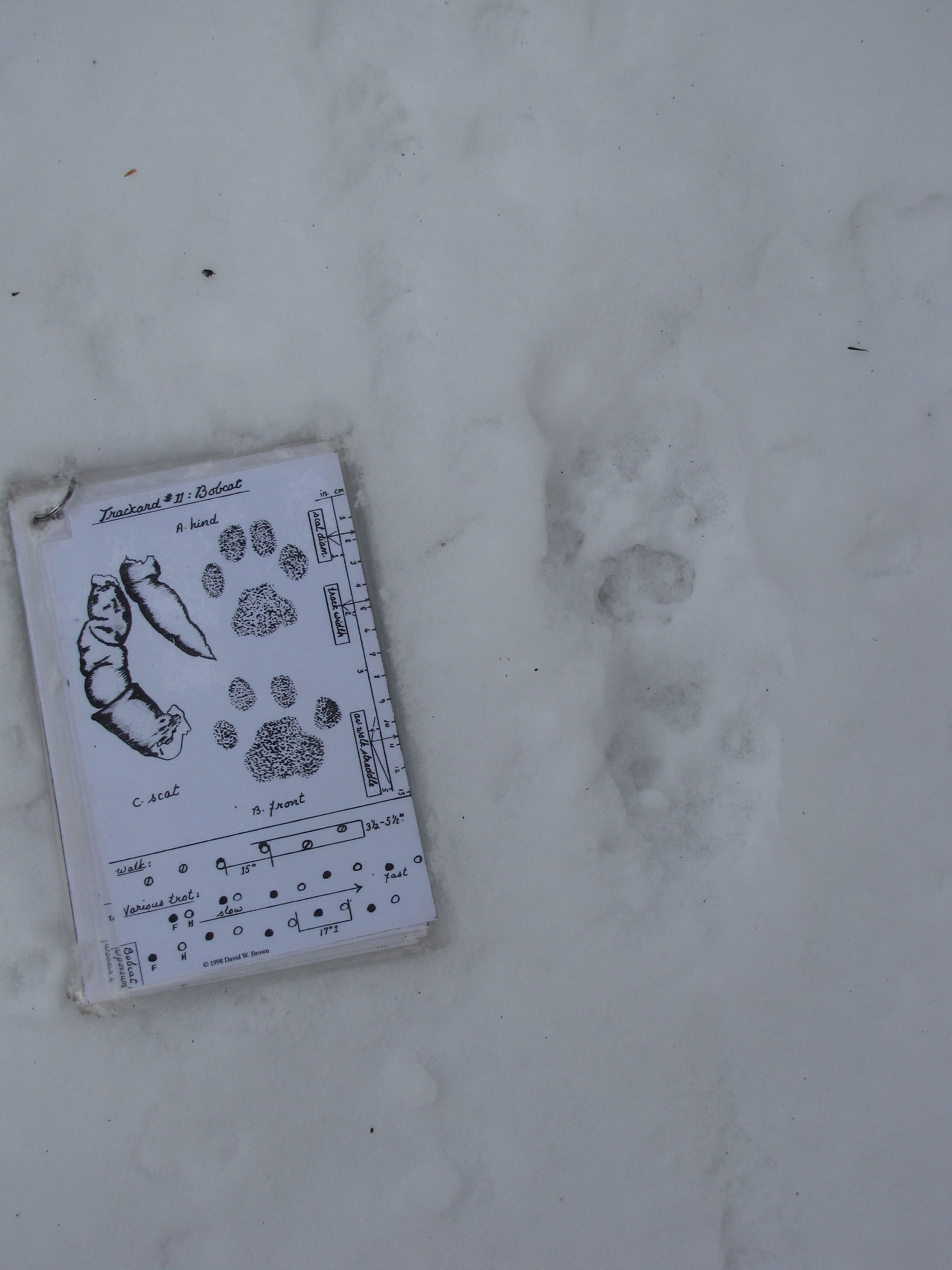
I was in bobcat territory. My favorite place to be. I only hope I have such luck next weekend and that I can pull out my David Brown Trackards to show the difference between bobcat and coyote prints.

bobcat in sandbob 4

The substrate changed a few times, but we traveled the same route.
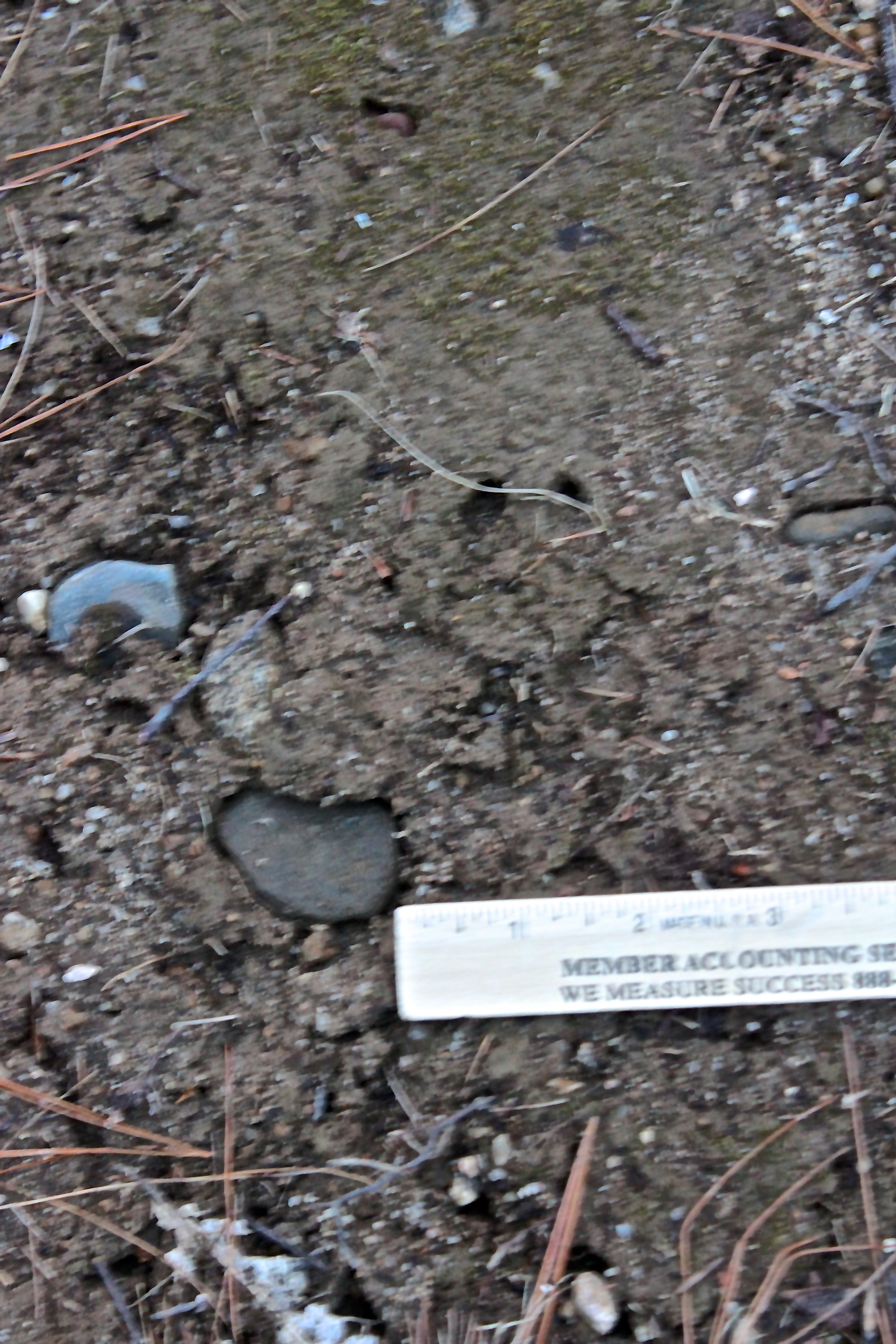
coyote print

I also found coyote prints. My hope was that since I was hiking so late in the afternoon, I might actually see one or both of these mammals, but that was asking too much. Finding evidence that they’re here is enough.

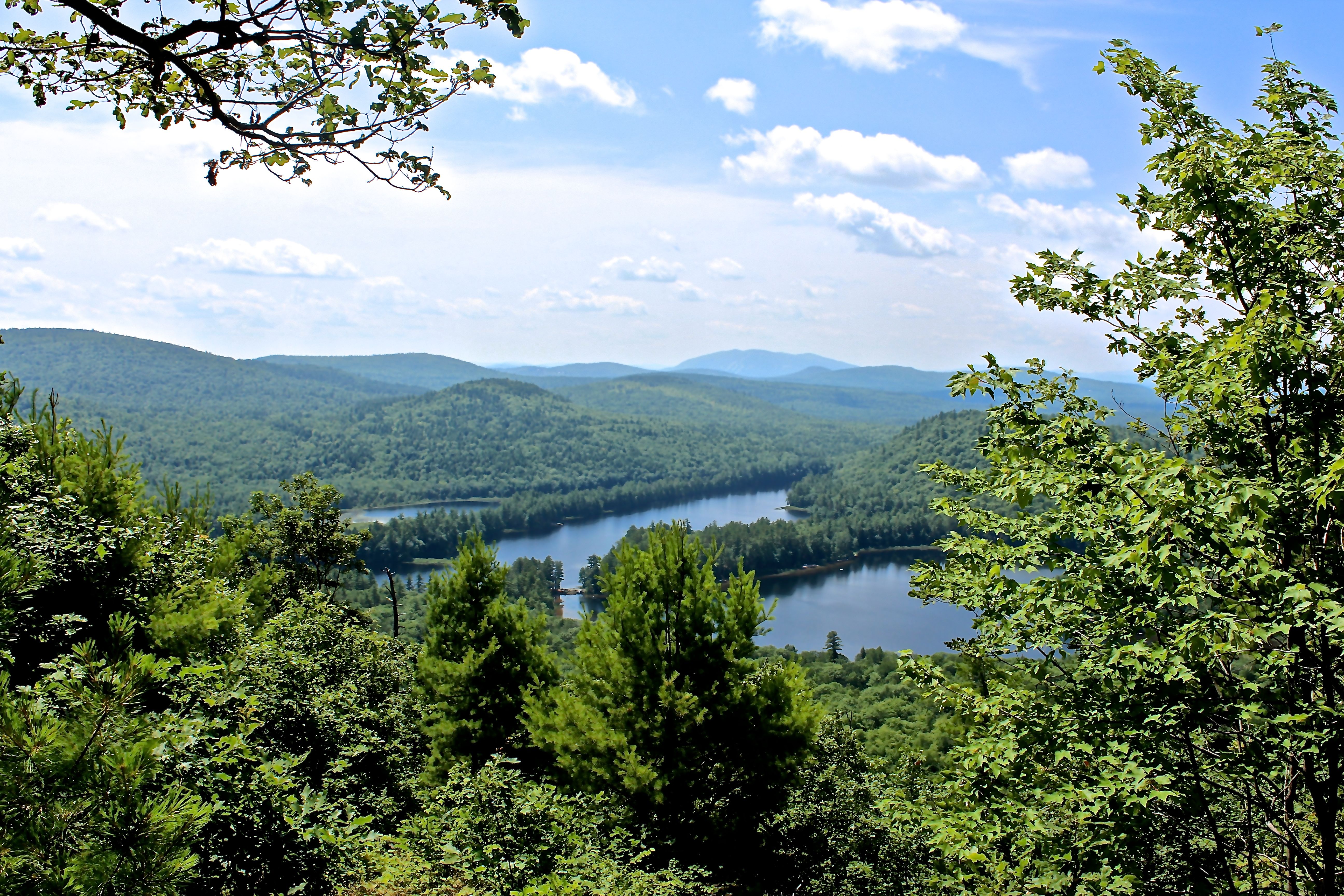
Foster Pond

One last view–the Foster Pond Overlook. And then I followed the trail back to the parking lot, thankful to have Jinny Mae along with me in spirit as I rejoiced in her glad news. I’m looking forward to many more opportunities to wander and wonder with her.
Nature’s Never Static

Mid-morning found me slipping into my smiling place where I decided to follow a route I usually save for snowshoe season.

slipping into the woods

I know it will come eventually, but the realization that we can’t predict when the first snowstorm will arrive or how much snow we’ll get over the course of the year reminded me that nature is never static.

trail boggy

I, for one, am looking forward to snow and hoping for lots of it because it will be so much easier to make my way through this boggy area.

creeping snowberry

In the meantime, I focused my attention on the ground–checking each step as I went. It’s easy to get caught on the slash the logger left behind. And when I looked down, I noticed things I don’t get to see once the white stuff falls, like the creeping snowberry that grows abundantly here.

hawk 1

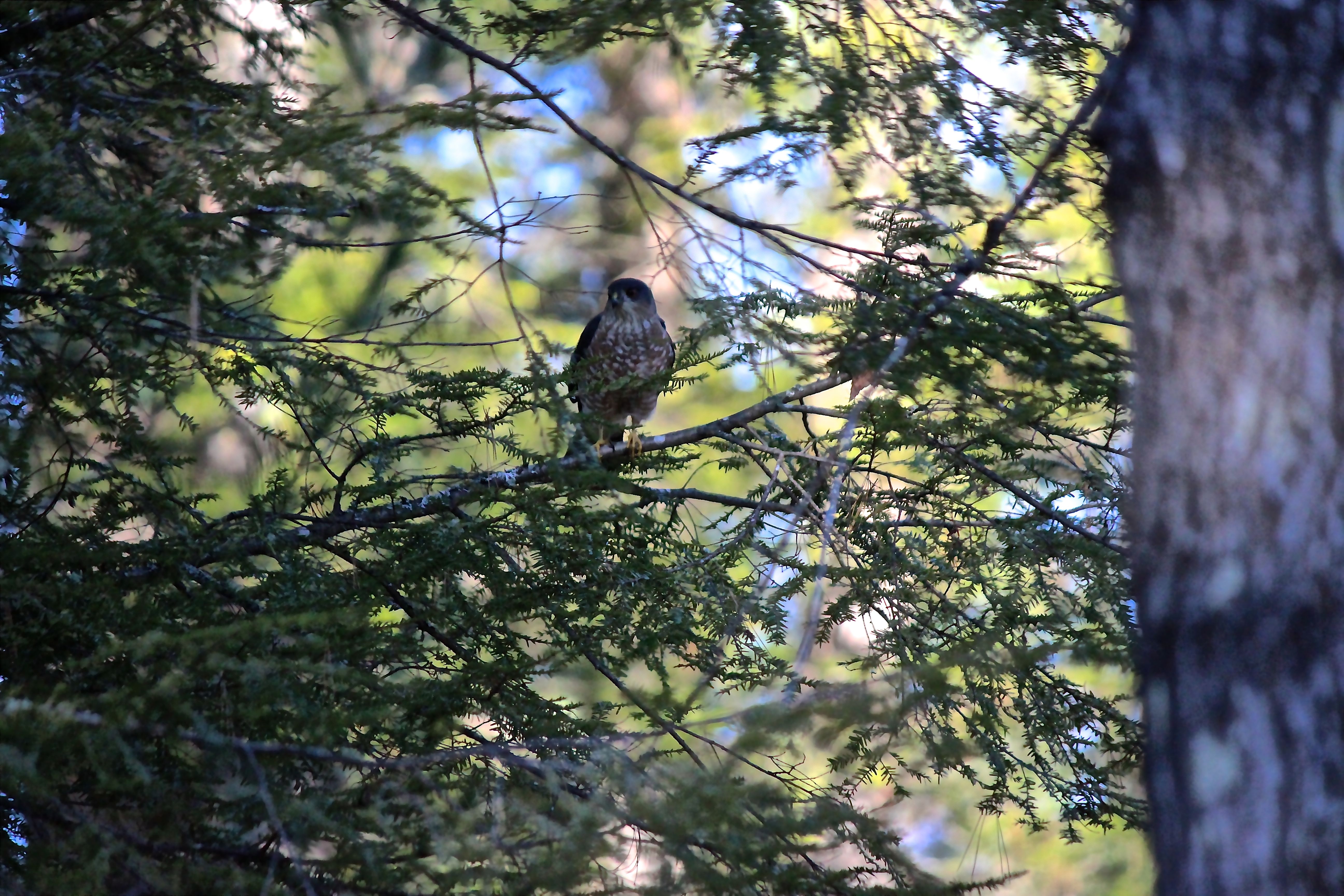
Pausing frequently to look around, I suddenly noticed I had company.

hawk 2

The curious thing–this sharp-shinned hawk slowly made its way east, while further down the trail

bird flock 2

a flock of birds chitted and chatted as they moved among the tree tops.

chickadee

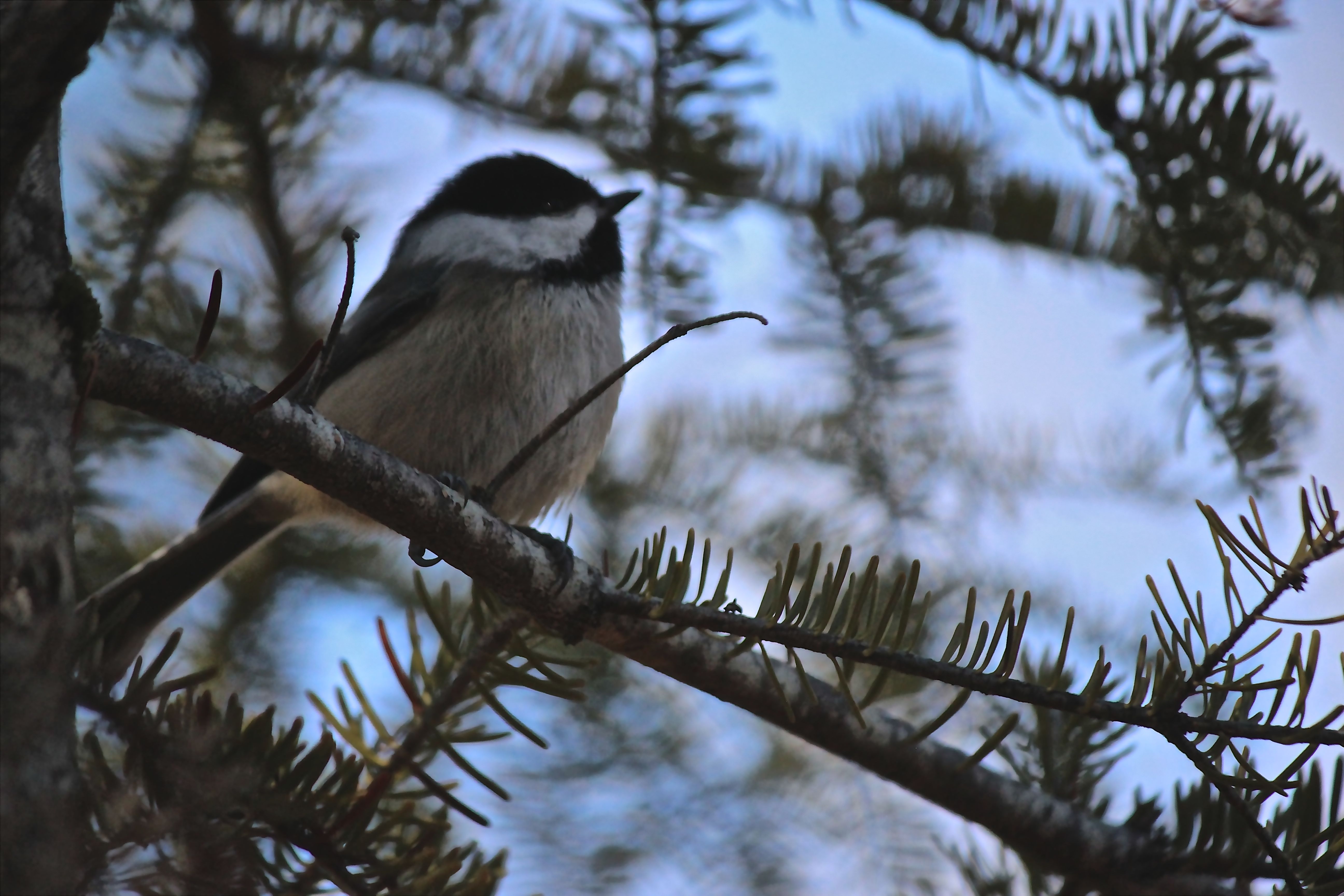
An ever curious chickadee landed nearby to check me out. And visa versa.

goldfinch

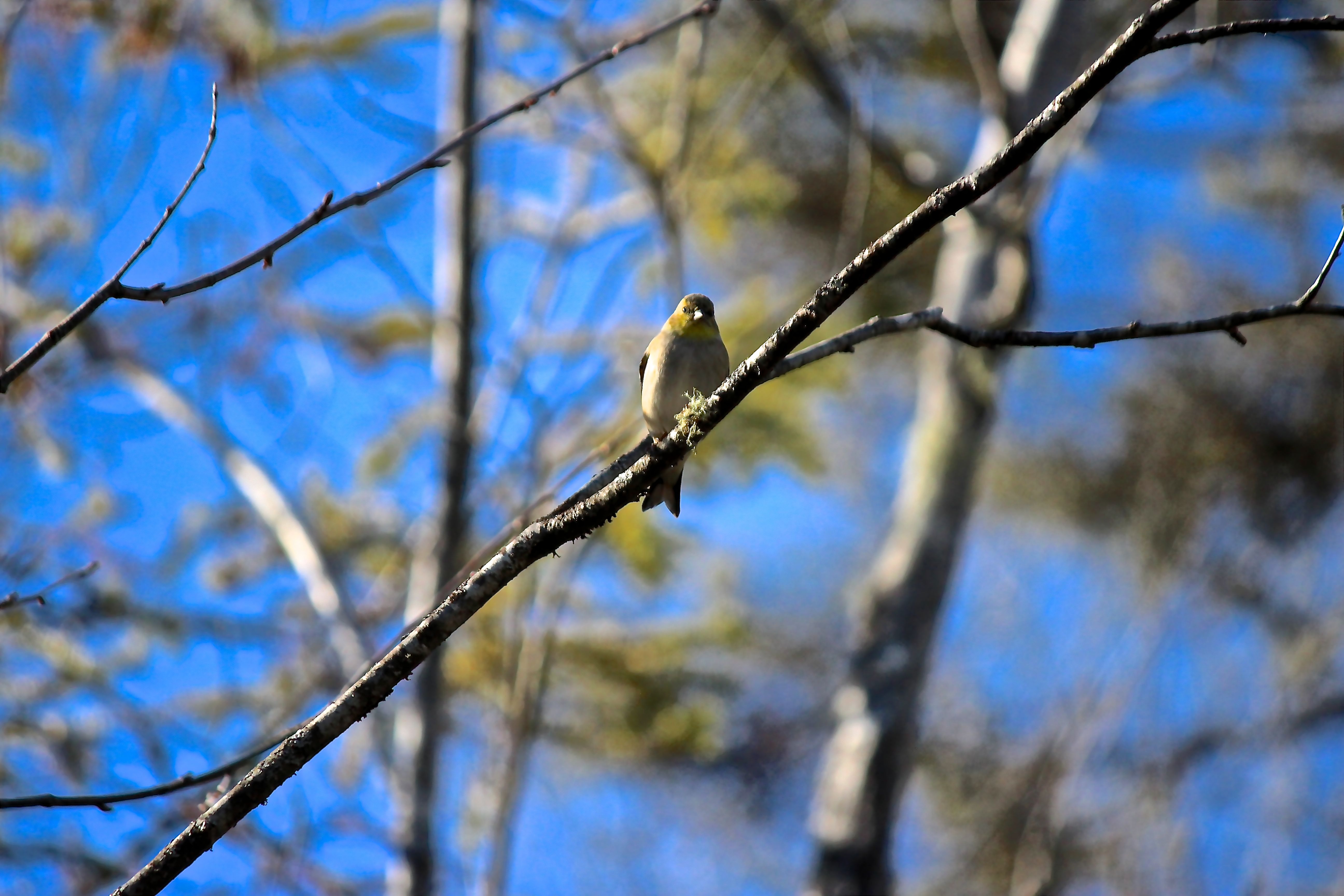
A goldfinch sporting its winter coloration also paused to peek. Lucky for all of them, the hawk was headed away rather than closer. Maybe it had already feasted.

mud

Eventually I found mud. I LOVE mud. With each step it squelches and squerches as it sucks my boots in and I pull them out. (And takes me back to Clinton Harbor at low tide, where my father always insisted that people paid millions of dollars to sink their feet in mud.)

my tracks

The beauty of mud here in western Maine is that prints are well defined and easily identified–homo sapien, female, average height and weight, just over middle age, blue eyes–wait a second. I wish I could read that much information in the prints I find, but I’m satisfied to be able to identify the animal to species.

coyote 2

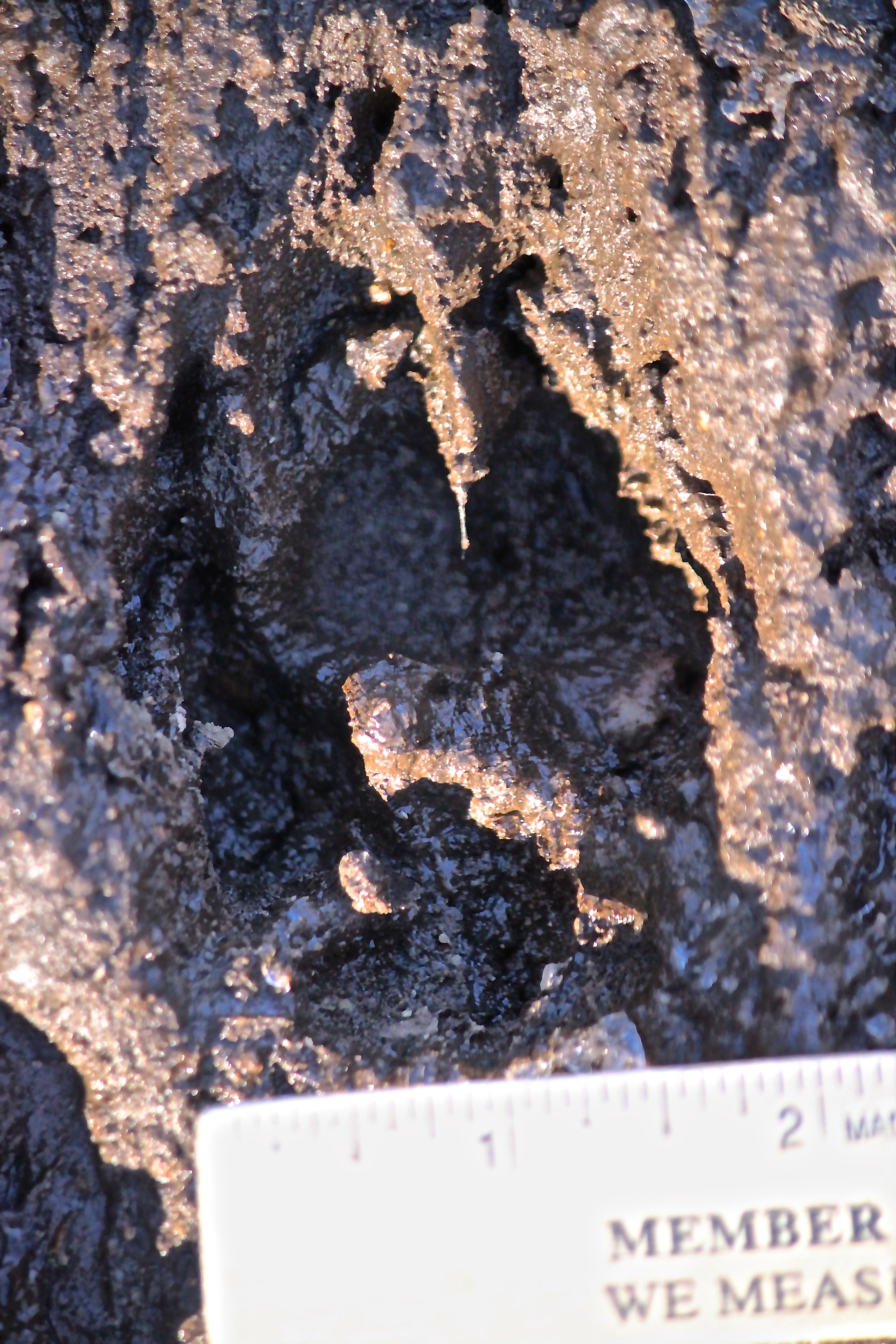
Reaching into my pocket, I discovered I had my trusty six-inch ruler–left there since early spring. It helps to give perspective of a print–in this case a coyote. Middle toes parallel, nails leaning inward, 2 inches across, x-shaped ridge between toes and heel pad.

coyote and bobcat

I love it when nature happens side-by-side. Coyote on the left and bobcat on the right. The coyote had passed this way more recently, when the ground was softer and moved through quickly as evidenced by the slide into position. The classic C of the bobcat’s ridge between toes and pad is clearly visible.

 moose 2 directions

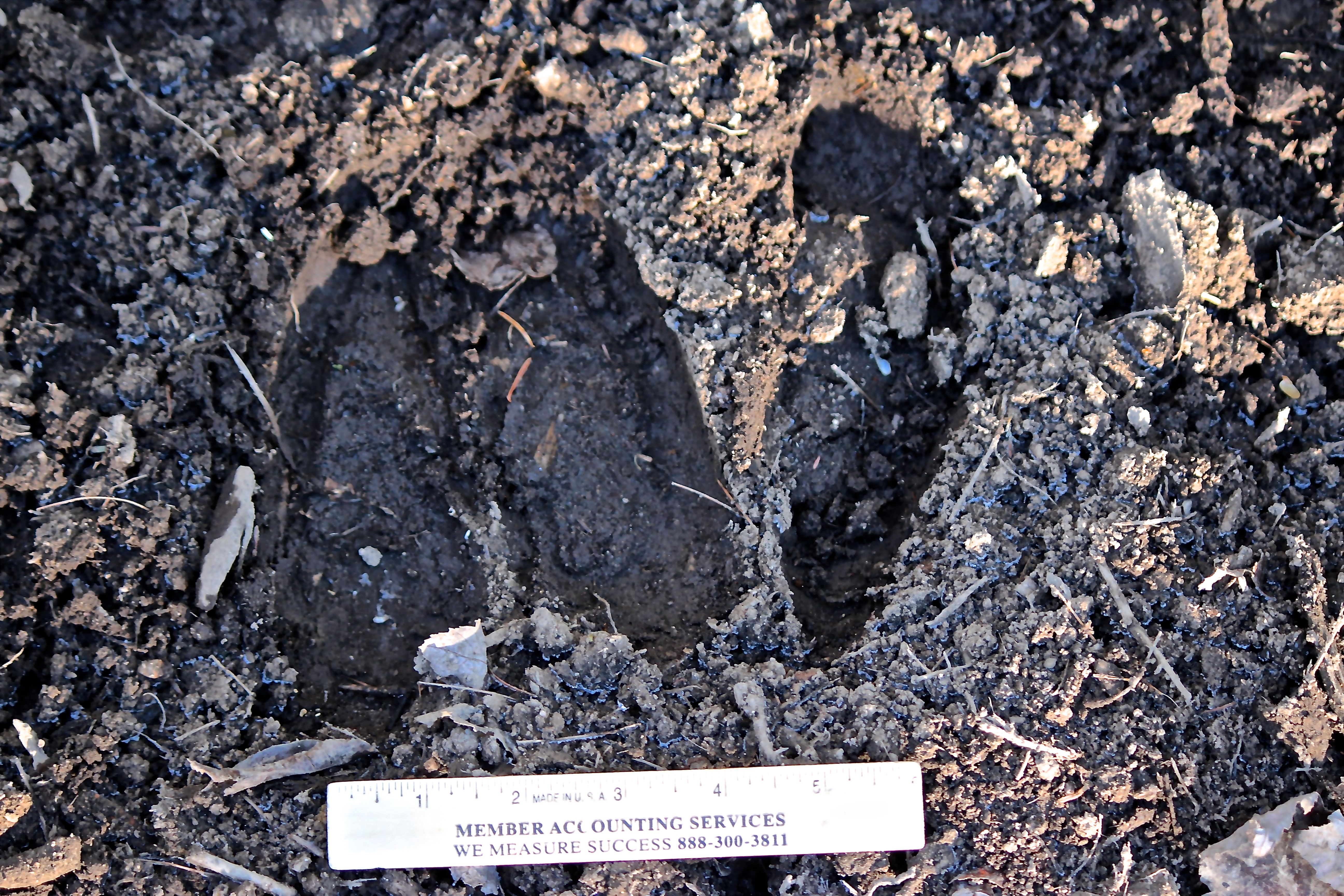
Moose frequent the area and I’m not sure if this is the same one passing to and fro or two different moose. It’s obvious that the first print was made as the animal moved in the direction of the ruler and the second shows the moose moving away.

deer, direction change 1

And then there was the deer that decided to change directions. Did it hear the mighty hunter coming along? Or another predator? Maybe me, though I suspect these prints were fresh last night and not this morning.

ice-mud

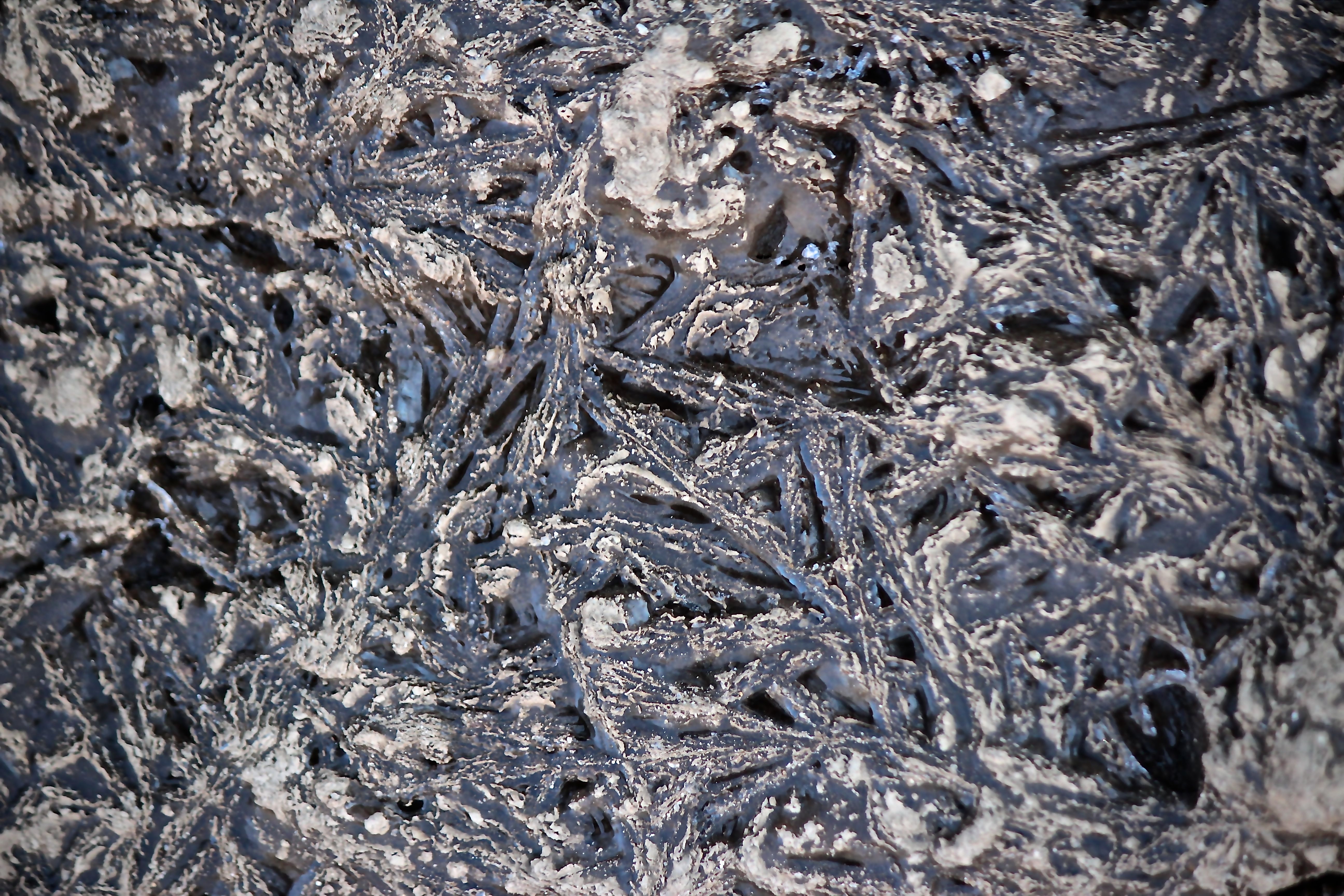
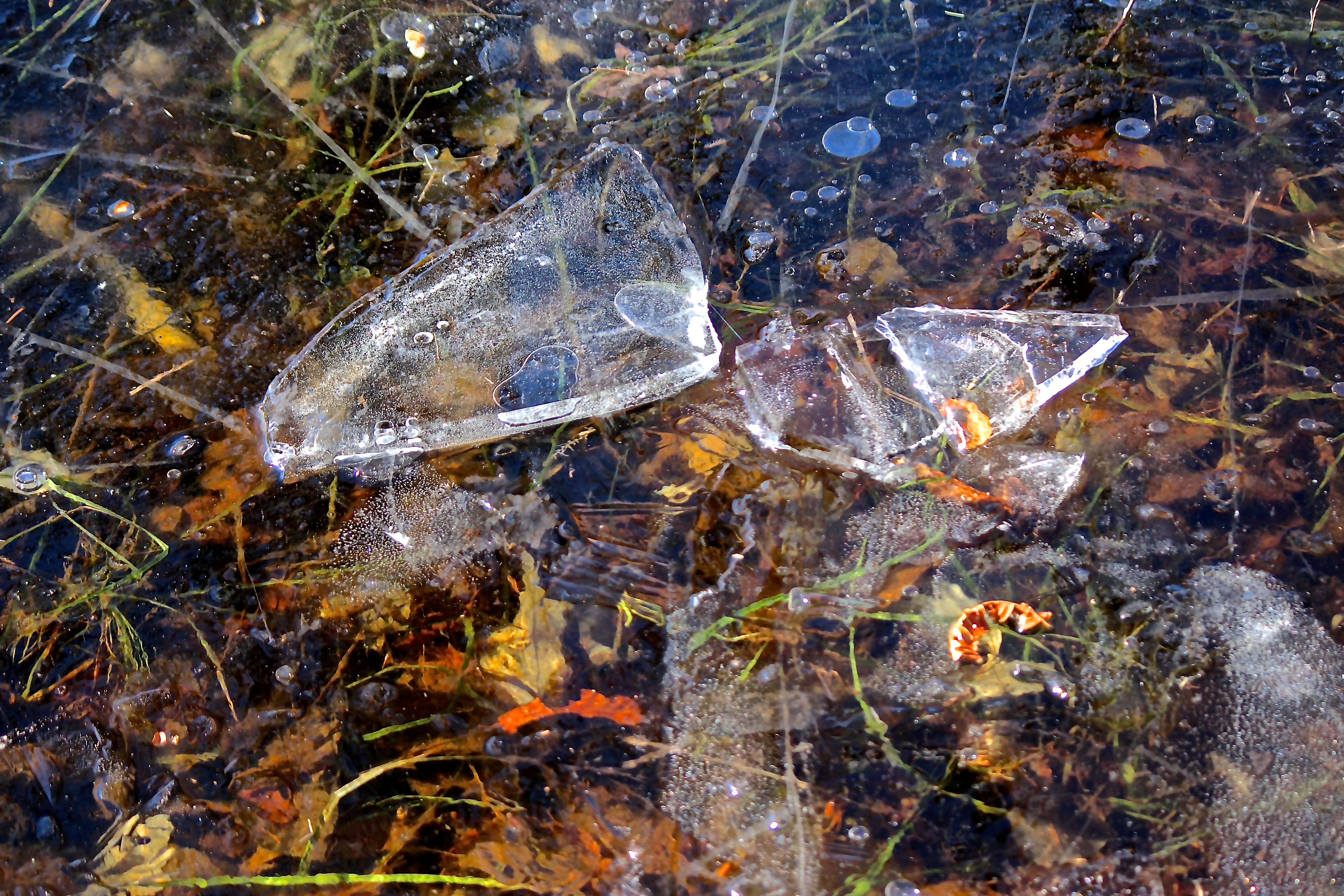
The other thing about mud–combined with ice it becomes nature’s artwork.

ice ground 2

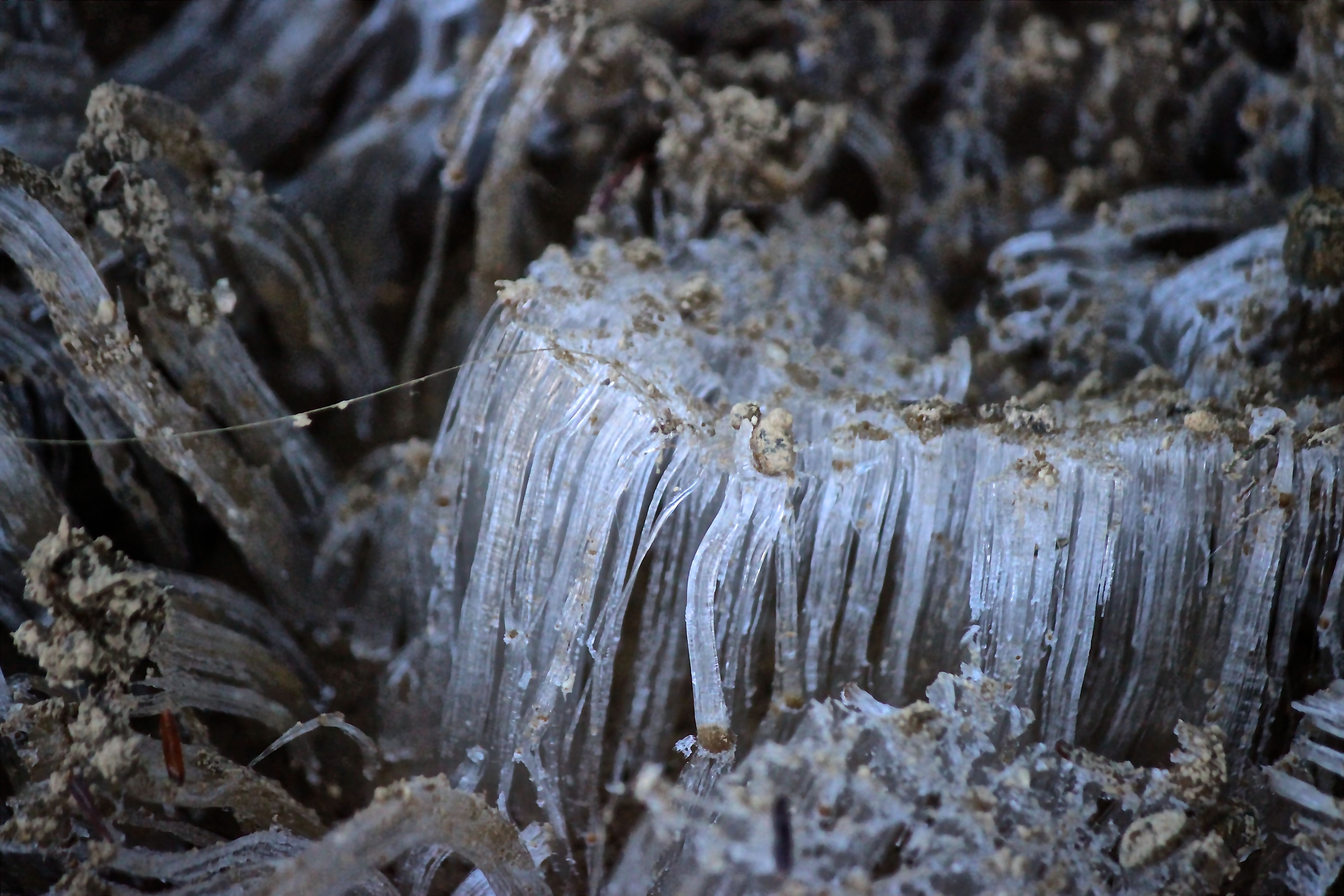
Sometimes it sits upon icy pedestals begging to be noticed.

ice puddle abstract art

And ice itself is ever forming, ever changing. That’s the thing about nature. It isn’t static. Nor am I. Growing. Evolving. Seeking. And thankful for the opportunity.


Giving Thanks

I’ve so many reasons to give thanks and making time to wander, wonder and ask why is high on the list.

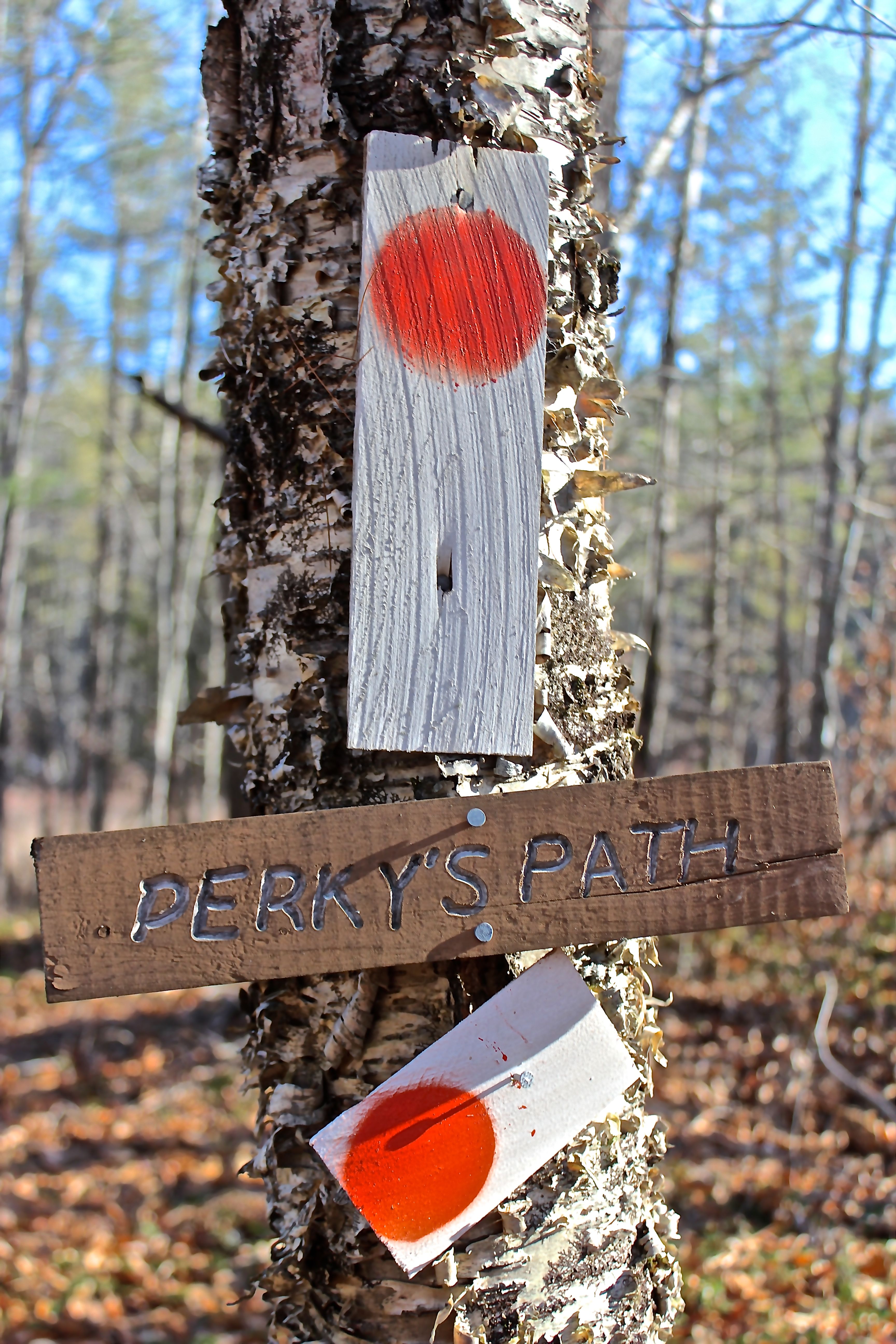
With that in mind, I headed to Perky’s Path in Lovell this morning.

perkys path

I love wandering along paths I’ve traveled many times before and making new discoveries.

dam 1

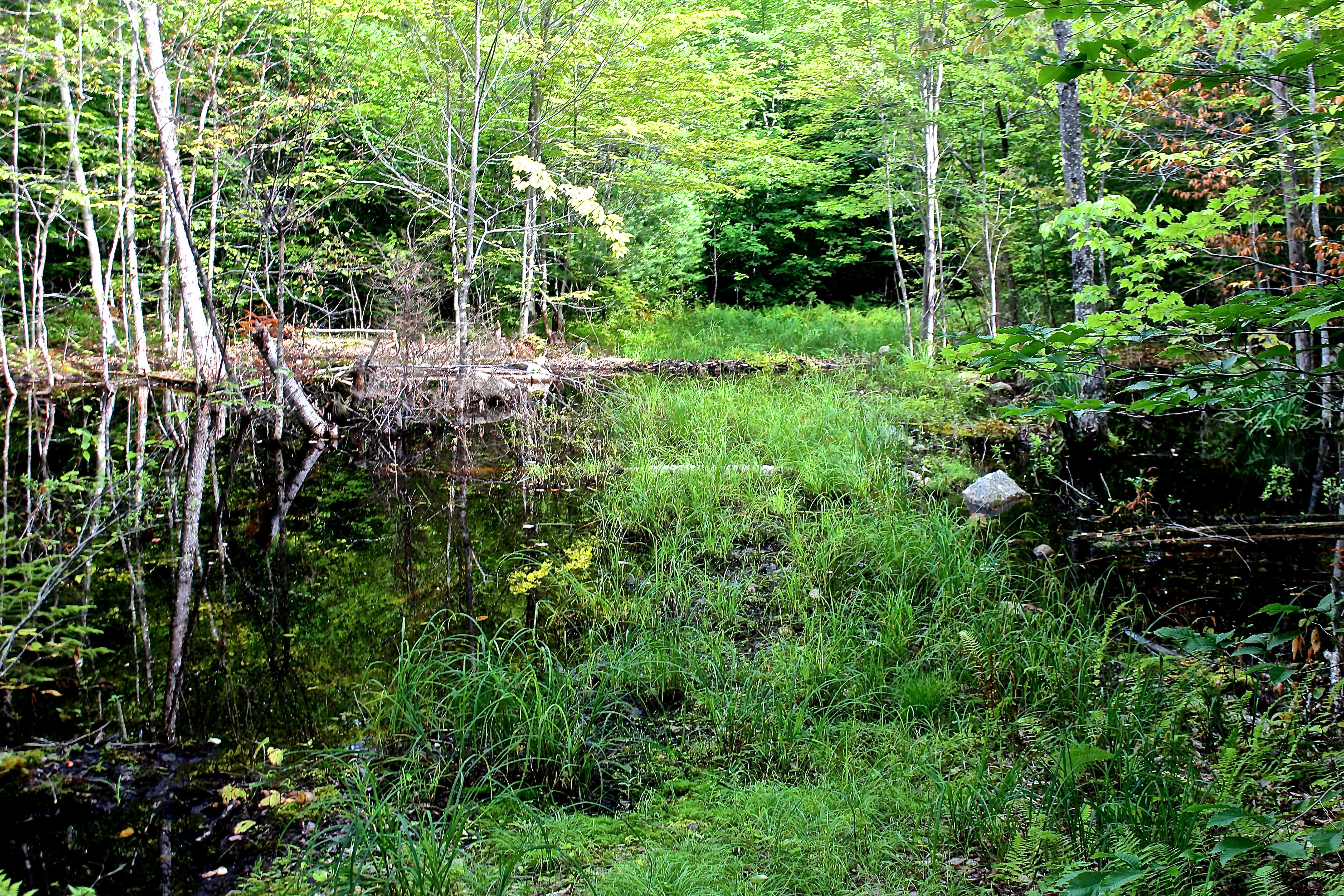
The path has two stream crossings, the first leading into a marsh. As I stood on the trail and looked toward the marsh, my eyes were drawn to a wall of sorts.

dam 2 infinity

I bushwhacked to get a closer look and was in awe. The wall is an old beaver dam that I’d never noticed before. Water trickles over it, but in the world of real estate, it has created an infinity pool. Wow–properties with such pools sell for a high price. Fortunately, this property is protected by the Greater Lovell Land Trust. 

fresh 4

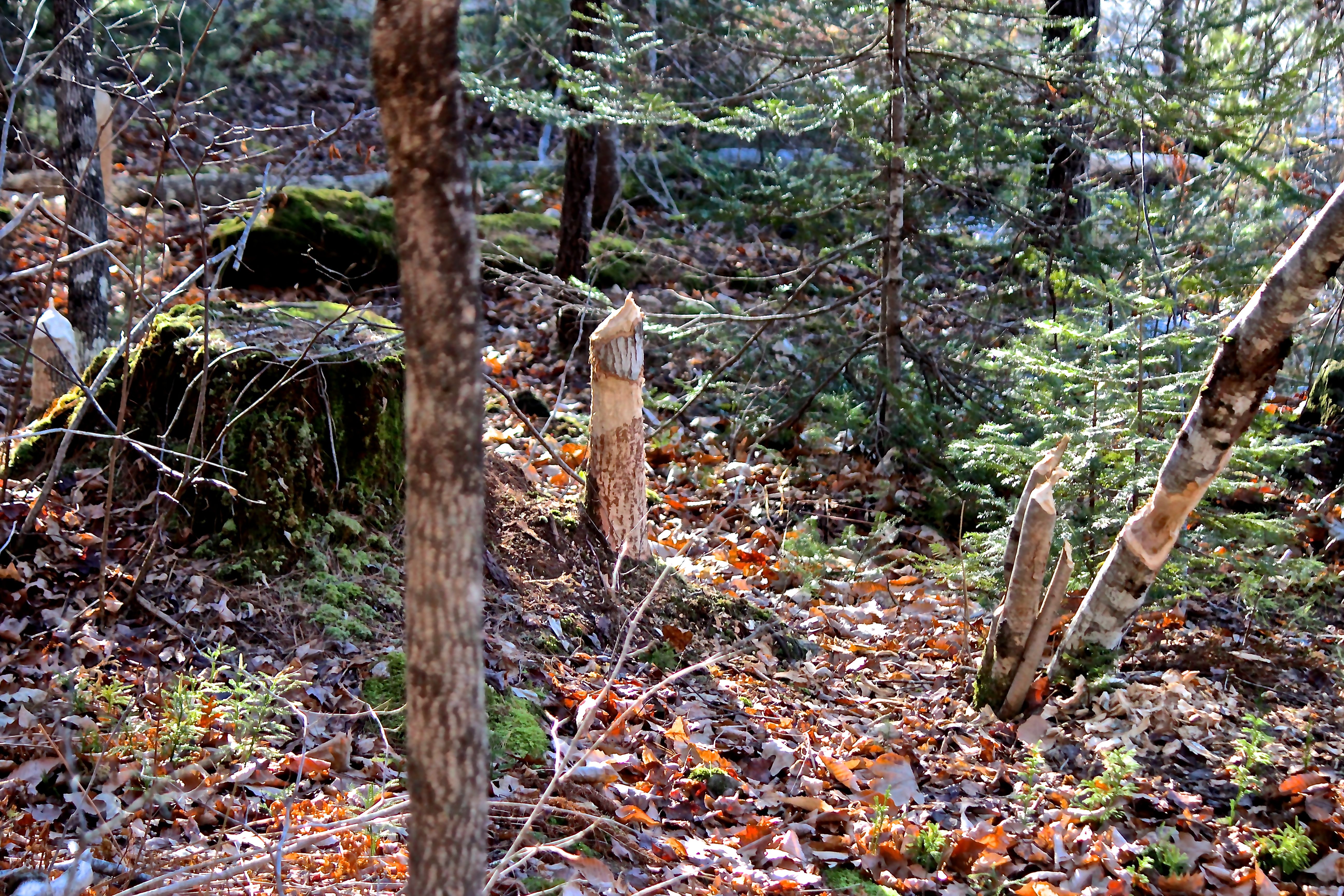
That discovery, however, led to more bushwhacking. Beaver works galore. All along the perimeter of the marsh they’d completed some selective cuts.

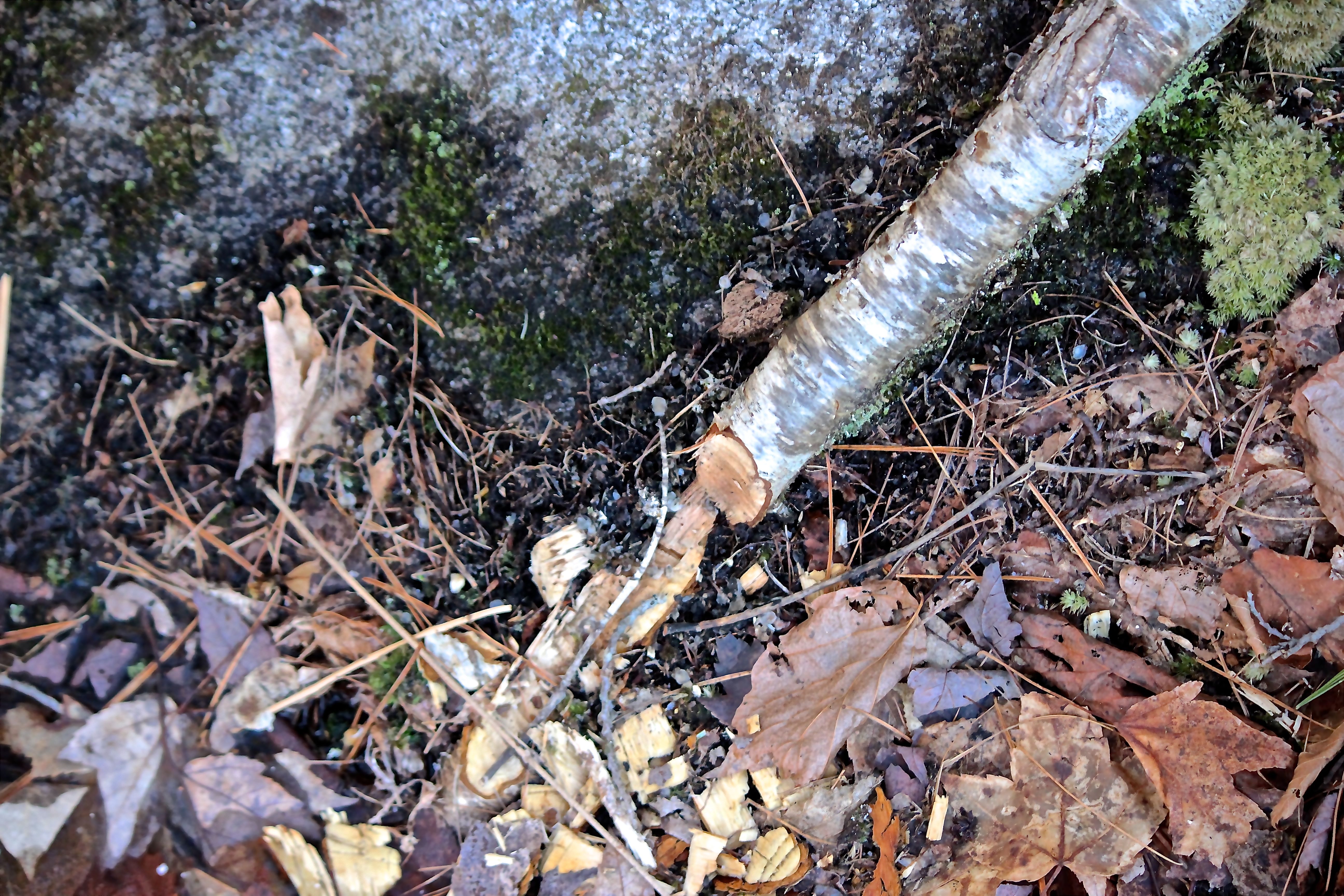
fresh beaver root

Even tree roots, like this yellow birch that hugged a slice of granite, were at the mercy of this industrious critter.

fresh beaver works 1

Big or small, it didn’t matter. If it could be felled, it was. Of course, some disappeared–to be added to the lodge, I presumed. I couldn’t see where they’d been taken. Larger trees were left where they’d fallen, but their branches became snacks.

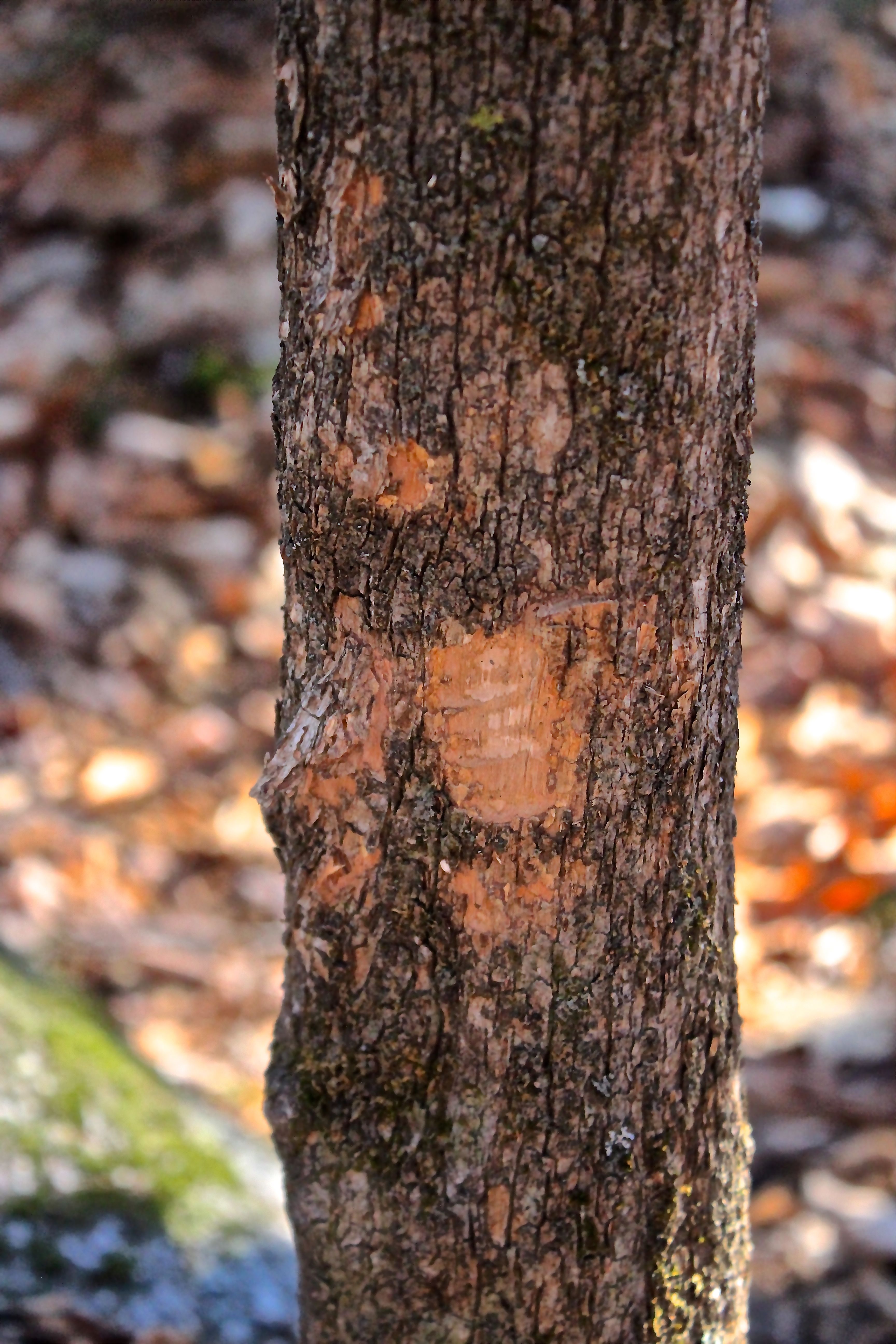
fresh beaver, ironwood

This beaver wasn’t fussy–Red Maple, Beech, Ash, Yellow Birch and Striped Maple all became part of the inventory. But . . . one tree proved its nickname–Hop Hornbeam, aka Ironwood. After an unsuccessful attempt at this hardest of hardwoods, it was left standing. Lucky for the hornbeam.

platform viewplatform 2

Moving along, I paused at the viewing platform to take in the view to the north and south.
sparkles 3The morning sun glistened on newly formed ice creating its own art statement.

ice sparkles 1

Amazing.

selfie

As I sat on the bench and soaked in the sun’s warmth, I wondered about the mysteries before me, the mysteries behind me and the mysteries to my sides. And I gave thanks for the opportunity.

perkys

There was more to see, so I moved on. At the second stream crossing, I looked around for more beaver evidence. Last year there was some, but none this year.

perkys 2

The water was high, however, and so I again began exploring the perimeter of the marsh.

woodpecker

A pileated woodpecker left its sign and lots of chipped wood below, but no scat. Drats.

wintergreen wintergreen berry

Wintergreen grows abundantly in this forest, and so I foraged a few berries. Remember Teaberry gum–this is the source. Both the leaves and berries are the source of the flavor (before it was created artificially). Try one. You’ll like it.

bristies

bristles

And then I came upon a mystery and feel like I should know this, but don’t. At first, I thought it was a mammal’s tail, left behind. But . . . it’s almost woody and quite bristly. (I found some at another property later in the day. ARGH!)

lodge 2

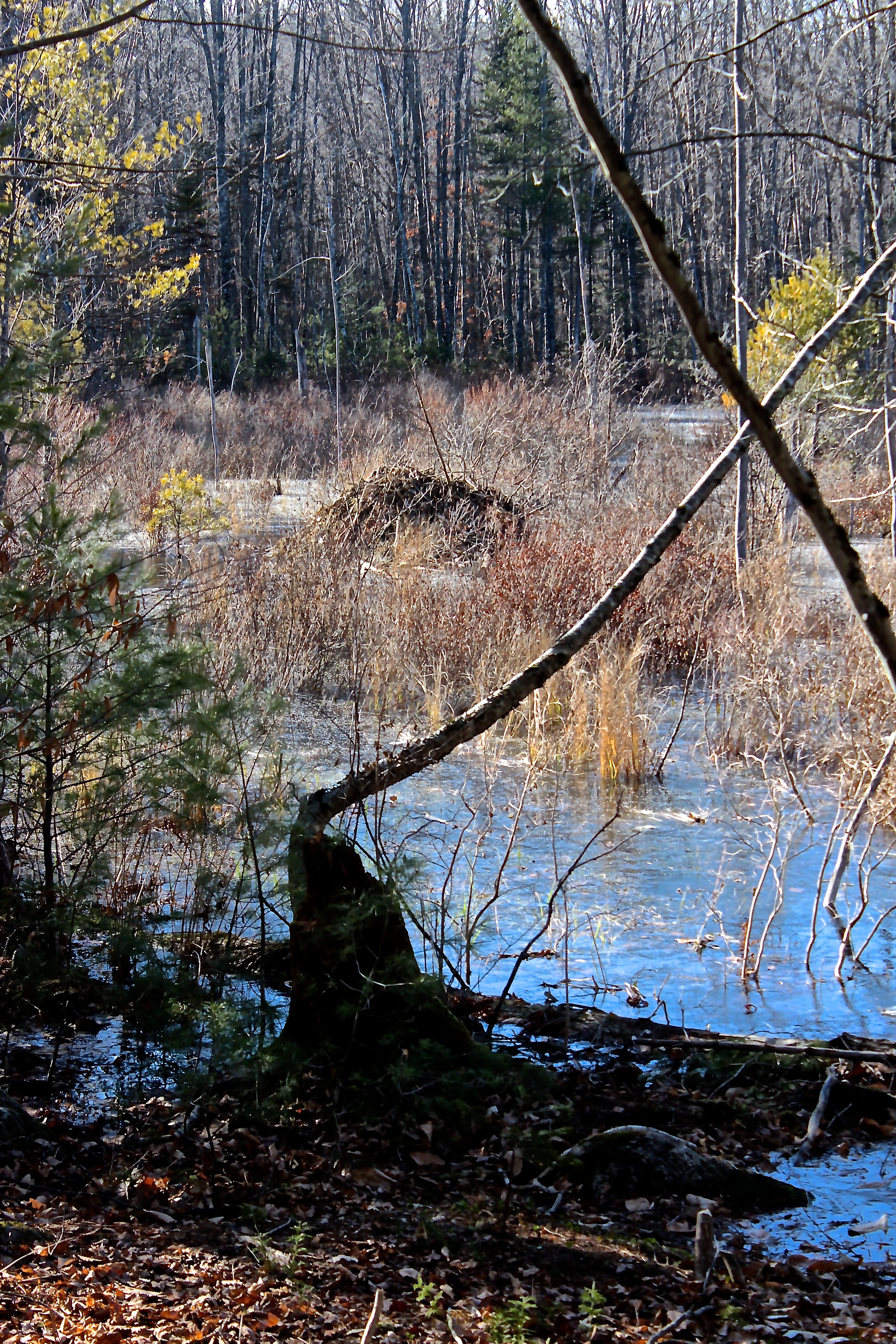
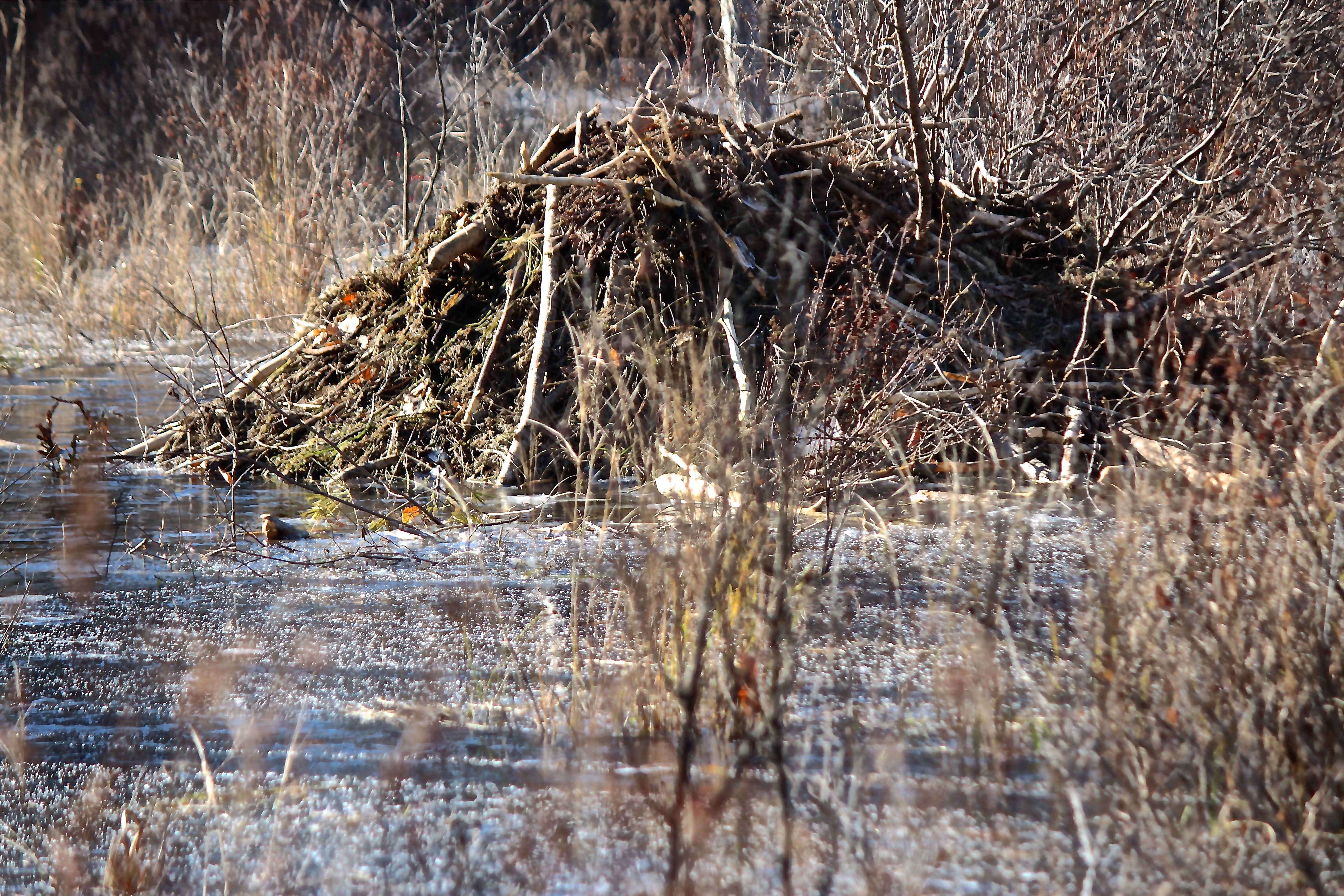
And finally, after wandering along the marsh, I found the lodge.

lodge, Perky's

It’s been recently mudded–well, before the ice formed, that is. A raft of chew sticks appears to the right front–ever-ready snacks.

broken ice

Something caught me eye–chunks of ice on top of the ice near the water’s edge. What happened here?

otter 2

The area leading to the ice was a bit disturbed.

scat 2otter scat 1

Then I realized I was in the presence of not one, but two aquatic mammals. Yes, the beavers may have made a hole in the ice, thus leaving the chunks on top, but someone else has also spent some time here and could be responsible for the disturbed area as well. A river otter. I knew this by the scat deposited on a rock–filled with fish scales. The thing is–otters prey on beavers. So . . . now I have to wonder.

old beaver 2

I left Perky’s Path with questions on my mind. Later in the afternoon, I walked to Pondicherry Park in search of answers but found only more questions. Old beaver works are still evident. Some were made last year at this time when several beavers inhabited this space. As of today, I have not seen any beaver activity here. Why? Where did they go? Did they move away of their own doing, or were they helped? Did a predator get to them–man or mammal?

old parchment

0ld crowded2

As I bushwhacked along the brook, I came across this Red Maple. I can’t remember when it fell, but crowded parchment has since taken up residence. One thing always leads to another.

mallards

Mallards swam about while the vegetation cast late afternoon shadows.

royal fern

Beside the water, a few Royal Ferns still sported their crowns of sporangia, albeit withered.

winterberry

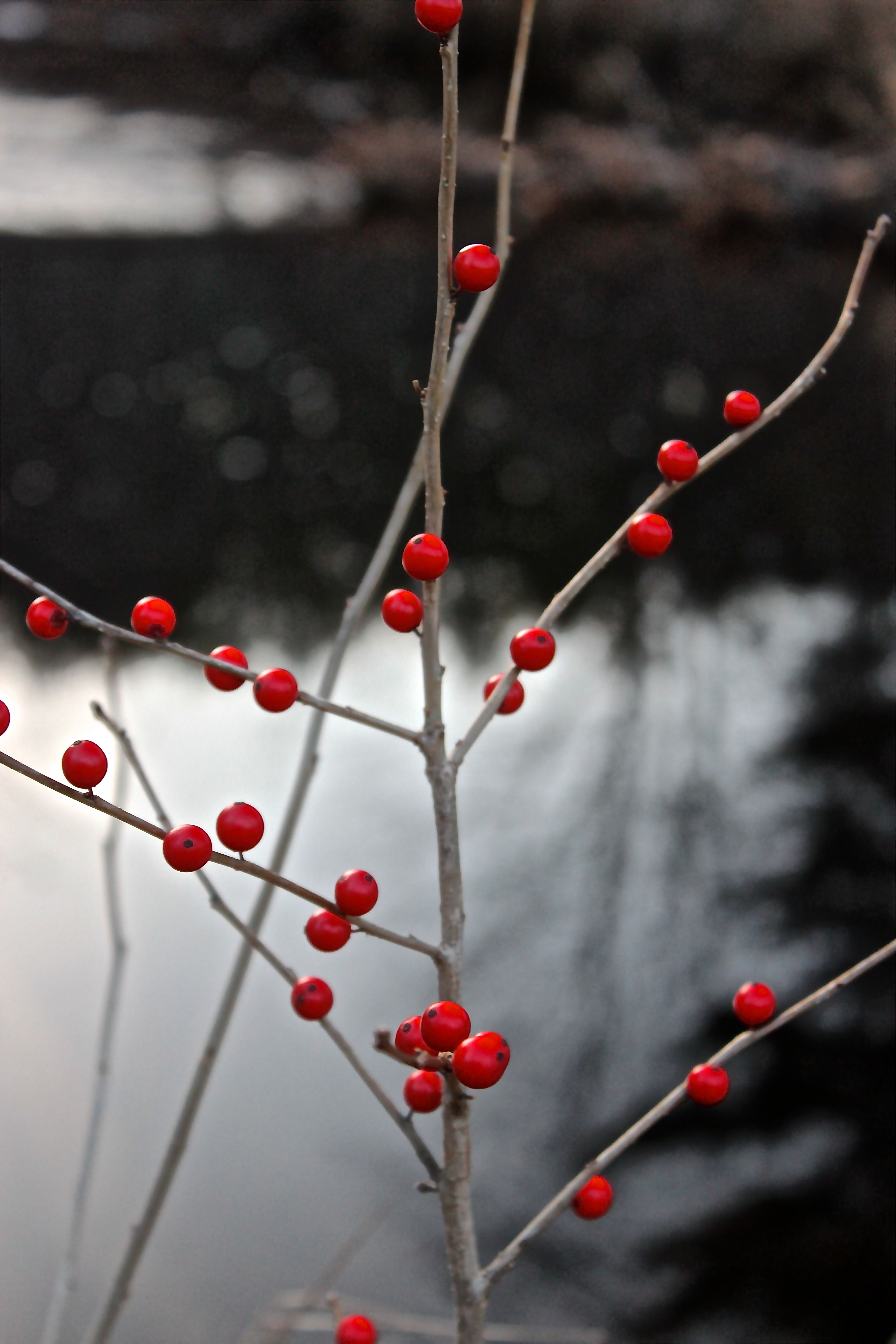
As is its custom, Winterberry has lost its leaves, making the bright red berries all the more showy in the landscape.

crosier

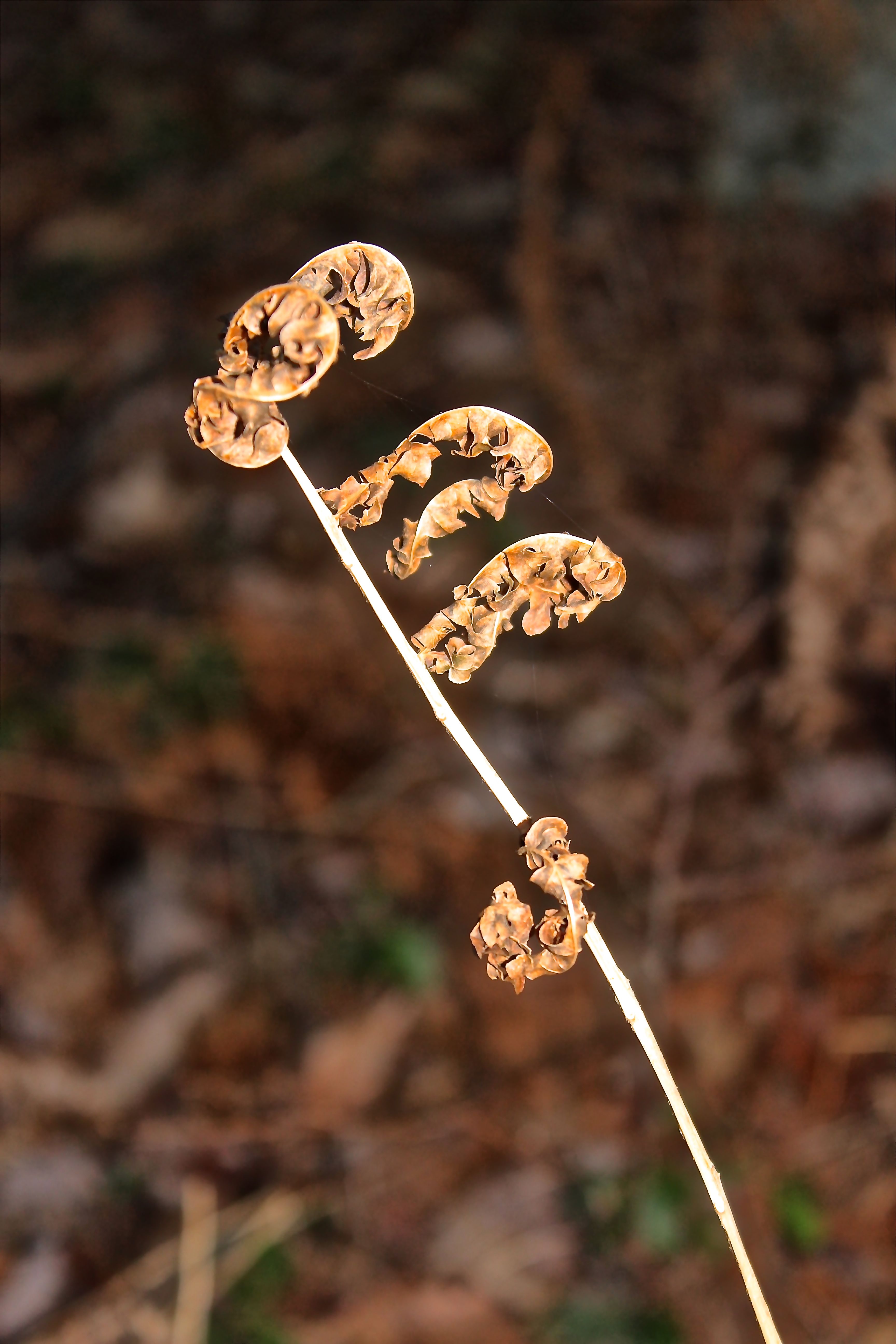
And Cinnamon Ferns are curling into themselves–appearing almost like the crosier form with which they begin life.

changing light, PP

The sun was setting as I headed home, thankful for the time I’d had to wander and wonder.
And thankful for my parents who always encouraged me to ask questions and continue to sit on my shoulder and nudge me today. I’m also thankful that they gave me life all those years ago.

cake

And I’m thankful for my guys, who helped me celebrate when I got home.

Ladies’ Weekend 2015

While it was Ladies’ Day Out here in western Maine, I drove west to Vermont, to celebrate with friends in a different manner.
Brownington, Vermont, was the destination–as three of us drove north and west to converge at a friend’s farmhouse. And then the Talk Fest began.
Yes, instead of a Shop Fest, we enjoyed a Talk Fest. Of course, unless you want to buy eggs, there’s not much shopping to be done in Brownington. That’s the beauty of it. Plus, we aren’t shoppers.

What we did do, which is also a little unusual for a ladies’ weekend, was go on a quest for my ancestral roots. (Thanks B.M.D., P.S. and B.C. for humoring me)

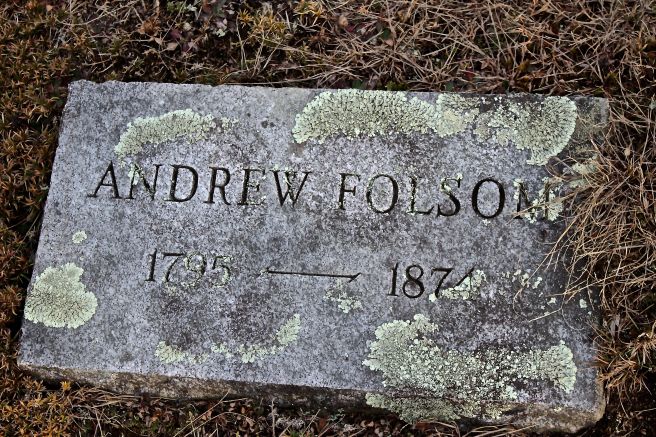
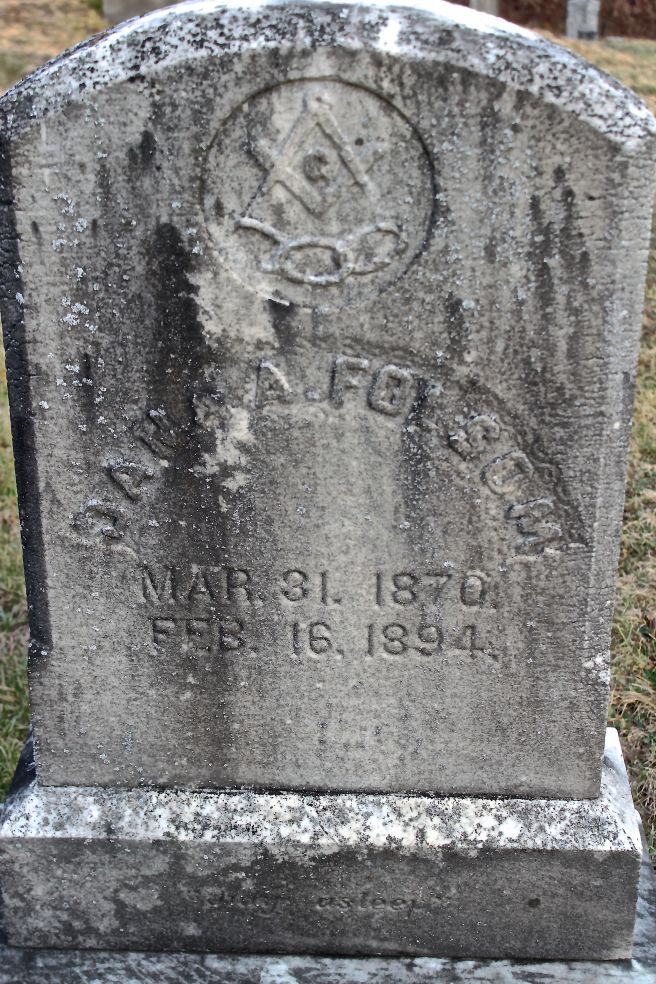
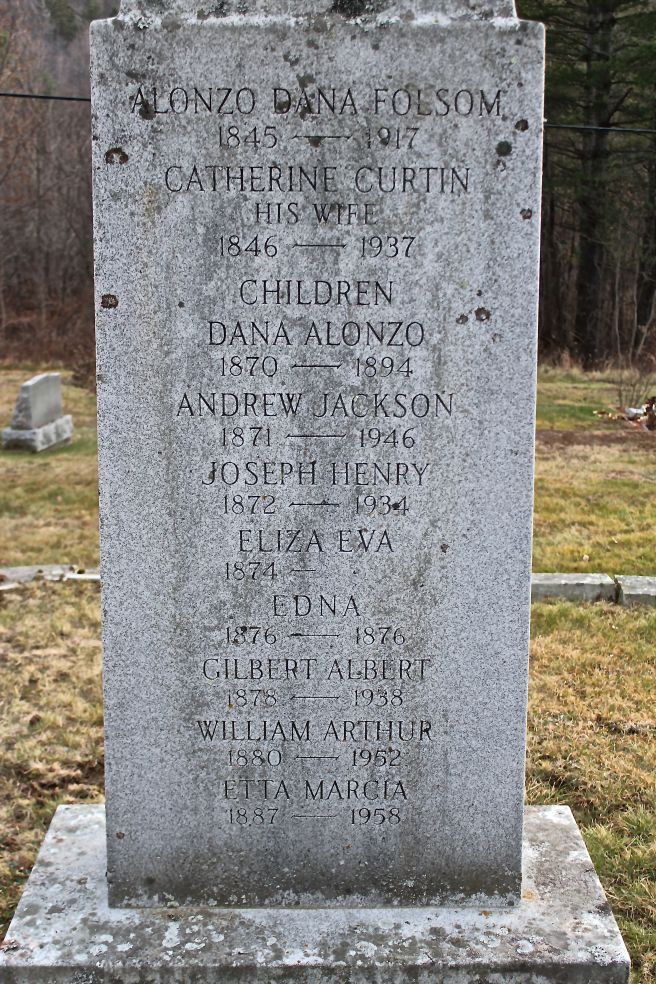
And at the South Cemetery in South Barton, we found what I was seeking.

Folsom 2

My greatX3 grandparents and other ancestors are buried here in a small valley below Crystal Lake (once known as Belle Pond). According to various census reports, they were farmers and I have to wonder if one of the small homes in the area belonged to them, or if there is a foundation somewhere nearby. A future hunt?

QA 10

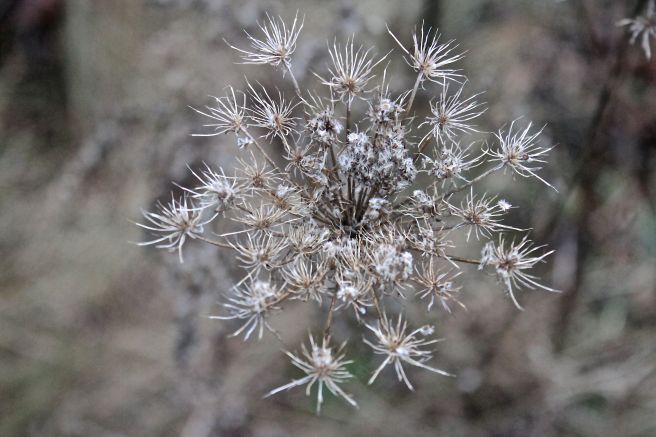
Wildflowers growing on the hill between the cemetery and road feature an abundance of Queen Anne’s Lace. Like a spray of fireworks, the fruiting structure extends in various directions.

andrew f

Dana A F

Alonzo Dana

Finding physical evidence of those who came before made my heart sing. They were here. They worked this land. They breathed this air. They were born, grew up and carved out a living here. They were farmers who sowed their own seeds. And some of them died here.

QA 2

Queen Anne’s Lace is prolific in spreading its seeds by the wind.

Dana Folsom

They served their country and some didn’t return, like my great-great grandfather. And while my great grandmother was born here, she and my great grandfather moved to Massachusetts and then New Hampshire–I have to wonder why.

QA 8

Some seeds land nearby; others float away in the wind. I must have inherited some of g.g.’s genes.

Willoughby Cemetery

We’d spent enough time reading the headstones and appreciating the lives they represented.

WL, Haystack, Pisgah, Hor

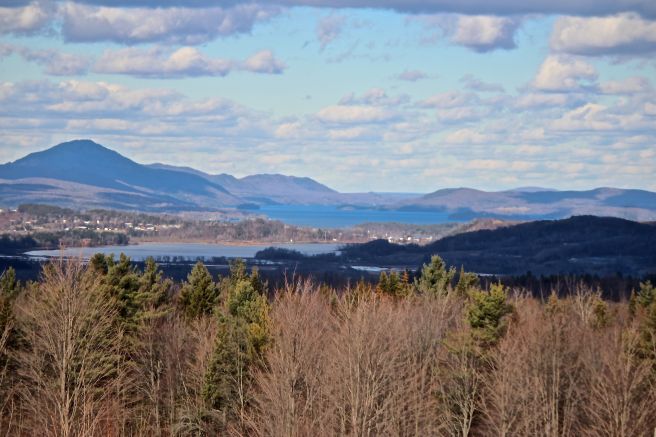
It was time to continue our Talk Fest and take a peek at the peak’s our hostess knows so well. Haystack, Pisgah and Hor create the backdrop of Willoughby Lake.

deer print

We stumbled upon deer prints and . . .

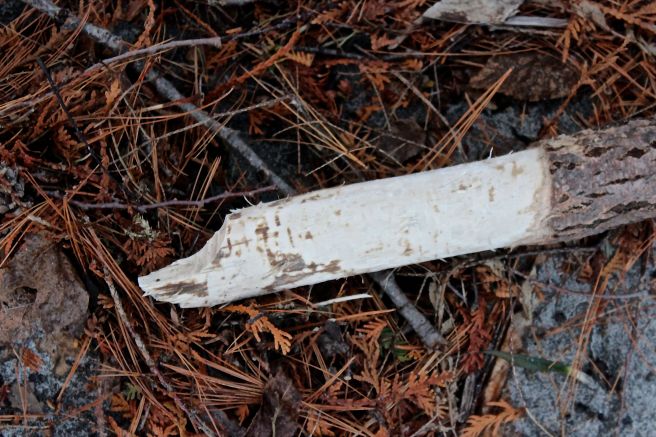
beaver chew

beaver works. The latter forced us to look further, but we couldn’t find any evidence of a lodge or dam, just more beaver chews along the beach–perhaps they floated in from another locale.

Prospect Hill Observatory

We climbed the Prospect Hill Observatory and took in the 360˚ views. Rolling hills, farms, villages, mountains and . . .

Oh Canada

Canada. My great grandfather came from Canada–perhaps right over there. I’m not sure–I’m still trying to figure out his lineage.

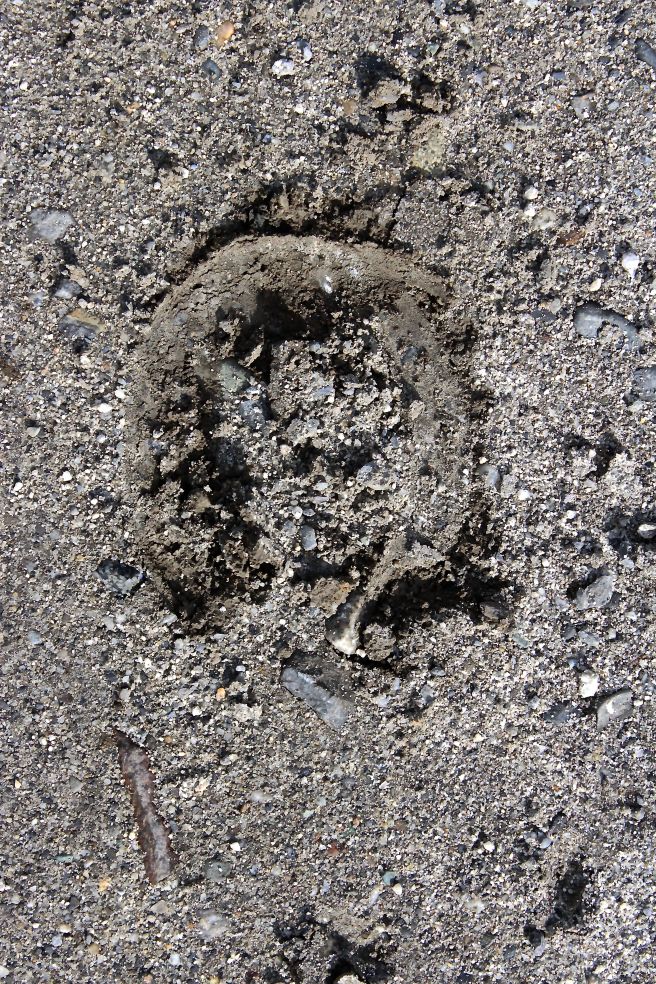
horseshoe print

This print is one in a series of tracks that lead up and around the observatory. A couple of Amish families have moved into the neighborhood in the past year–a horseshoe print.

Sisters & Brenna

We left our own prints at the geographic survey mark when we posed for a selfie–photobombed by another lady–Brenna.

Brownington

The Orleans Historical Society has protected this land and the buildings you see here. Brownington is a picturesque village located along the former stage coach route that led from Canada to Boston.

stone house 2

Thirty-five years ago, when our hostess moved here for a teaching job, she earned her keep by keeping an eye on this building. Stone House sign

Local lore has it that Twilight quarried the granite blocks and erected the building on his own. He used a single ox–on a treadmill on staging–to raise the blocks and when the last stone was placed, he couldn’t figure out how to lower the beast, so he roasted it.

QA 12

It was time to go. We embraced each other and gave thanks to our hostess and host, and for our lasting friendship–as we looked ahead to next year’s gathering. Ancestors below Belle Pond, Queen Anne’s Lace, Brenna and us–a perfect combination for a Ladies’ Weekend.


Wer-if-est-er-i-a-ing A-long

12074842_10153632630537731_2769008110586363497_n

Thank you to my friend, Judy Lynne, who shared this word with me today. I know I do it, but I didn’t know there was a word for it. And I love that it’s an Old English word–takes me back to college days and my History of the English Language Class where we learned to read in Old and Middle English.

And so it was that today I wandered longingly through the forest in search of mystery with five other naturalists–all MMNP grads who will bring the Master Naturalist course to Bridgton in the spring of 2016.

After a tour of Lake Environmental Association’s Maine Lakes Science Center, we took care of some housekeeping items (coursework) before heading out the door. I made them practically run through Pondicherry Park–well, maybe run is an overstatement, but we moved quickly for us–not much time for werifesteriaing.

It was our afternoon tramp at Holt Pond when we allowed ourselves more time to pause and wonder.

HP snake

As we started down the trail, Beth saw this snake hidden among the leaf litter. It’s the third garter snake I’ve seen this week. The day was overcast and we weren’t sure if he was coiled up because he was cold or if something had attacked him.
HP Muddy River

We stepped onto the boardwalk to view the Muddy River and it almost sank beneath our weight. The water is quite high and I suspect I know why.

HP beaver works

Off to the side, we saw fresh evidence of beaver works.

HP beaver lodge, Muddy River

And in the river, a lodge topped with new sticks. I think the dam down the river has probably been rebuilt.

Looking from this vantage point, the layers of communities are pronounced, with the wetland plants like leatherleaf, sheep laurel and sweet gale growing low by the river, topped by alders and small red maple trees, topped by tamaracks, topped by white pines, hemlocks and Northern red oaks.

HP layers from Muddy River

Similar layers surrounded us with the bright red winterberries forming the creme between two wafers.

HP pitcher 1

As happens each time I pass this way, I am forced to photograph the pitcher plants.

HP pitcher 2, picture

Have you ever noticed the pictures on the hairy inner lip? Do you see what I see? A woodland landscape–trees with extended branches, a layer of colorful foliage and a grassy edge leading to the lake (water in the cup)? I know the hairs and design are important for the attraction of insects, but I never really paid attention to the actual design before.

HP Wooly aphid

We also found more woolly alder aphids, which Joan and Ann held in their hands so everyone could get an unclose look at the squiggly insects. Rather disgusting, yet fascinating.

Holt PondHP north 2

Even a single moment at Holt Pond translates into tranquility. (And I had to channel this moment for Judy Lynne.)

HP bog boardwalk, water

Gordon, Beth and Joan tried to keep their feet dry as we examined the plant life along the quaking bog boardwalk.

HP cranberries

Karen spotted one cranberry and then another, and another, so everyone could sample the tart flavor. Pucker up.

HP owl pellet

Our next fun find–a raptor pellet comprised of hair and bones galore. For the naturalist course, this will come into play.

HP raining leaves 3

Every once in a while, I’d ask if it was raining. It was–beech and oak leaves.

HP old hemlock varnish conk

While we stopped to admire several older hemlock varnish conks, something else caught our attention.

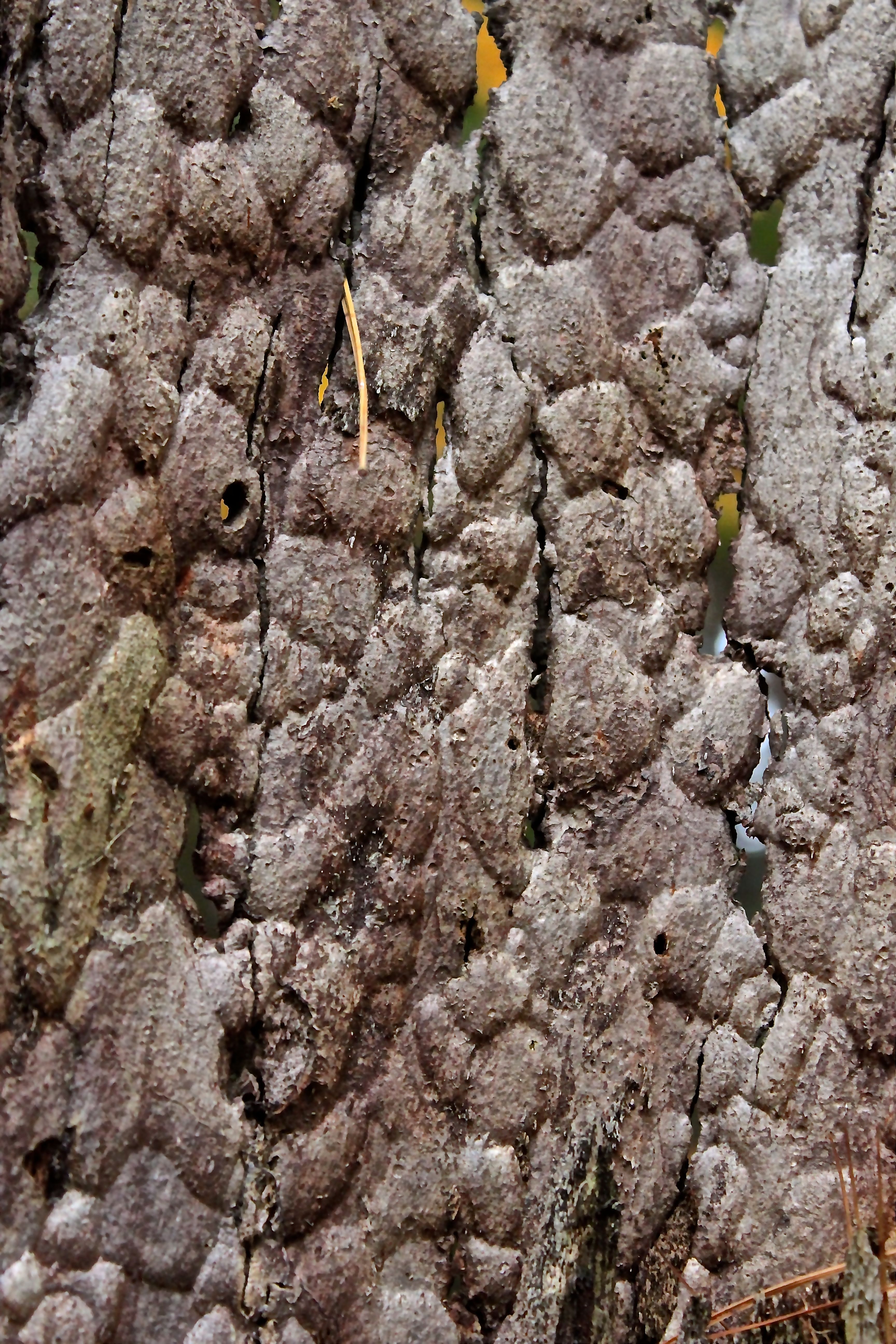
HP mystery bark

Do you know what it is?

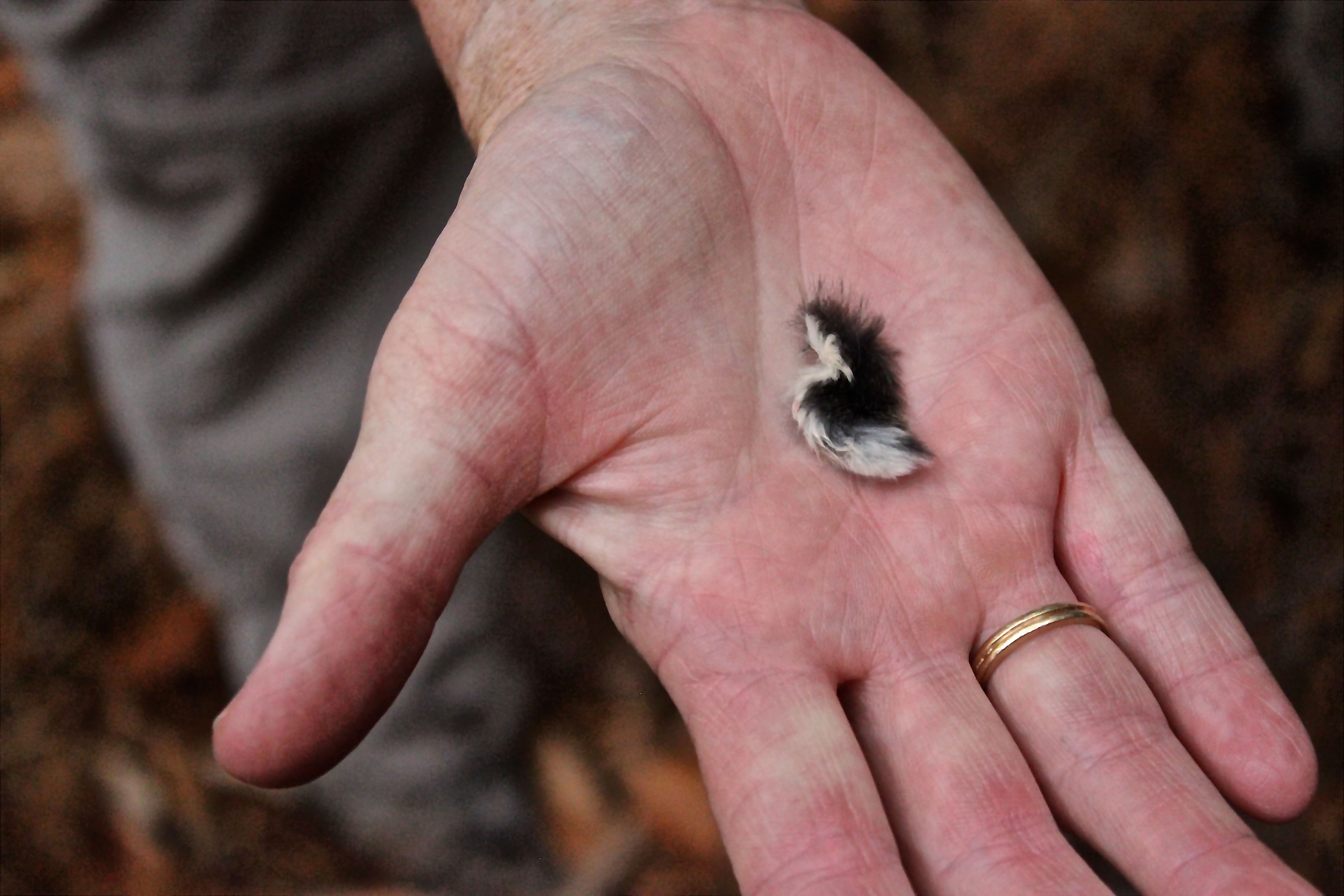
HP fur

And then Ann spotted this little tidbit–leftover from someone’s dinner. We still don’t know who ate whom. Or if it was related to our earlier find of the pellet.

What we do know is that we spent a delightful day werifesteriaing along.

HP fun mystery

As for the mystery photo–the inside of hemlock bark. This is the bark that I think of when trying to remember how trees decay–hardwoods rot from the inside out, softwoods rot from the outside in, but hemlock bark often remains. In the 19th century, hemlock bark was used in the tanning process because the tannins found in the bark preserved a hide and prevented natural decay while giving it a brown hue. At the same time, the tannin left the leather flexible and durable.

Here’s hoping you’ll have the opportunity to wander longingly in search of mystery.

Work We Must Mondate

Today was a day made for some writing/editing work and yard work, but . . . my guy and I managed to squeeze in a hike–yesterday.

Last week, our friend, Dick B., excitedly shared with us a hiking location we’d never explored–Notch Mountain in Porter. He had recently walked the trail with the Denmark Mountain Hikers, a local group that ventures off each Friday.

So it was, we followed Dick’s directions and drove to Porter in search of the trailhead. An easy miss, but we spied the wood kiln he spoke of as we drove past it and turned around at the Hiram town line, knowing we’d gone too far. Backtracking, the trailhead was across from Clemons Point Road and the kiln.

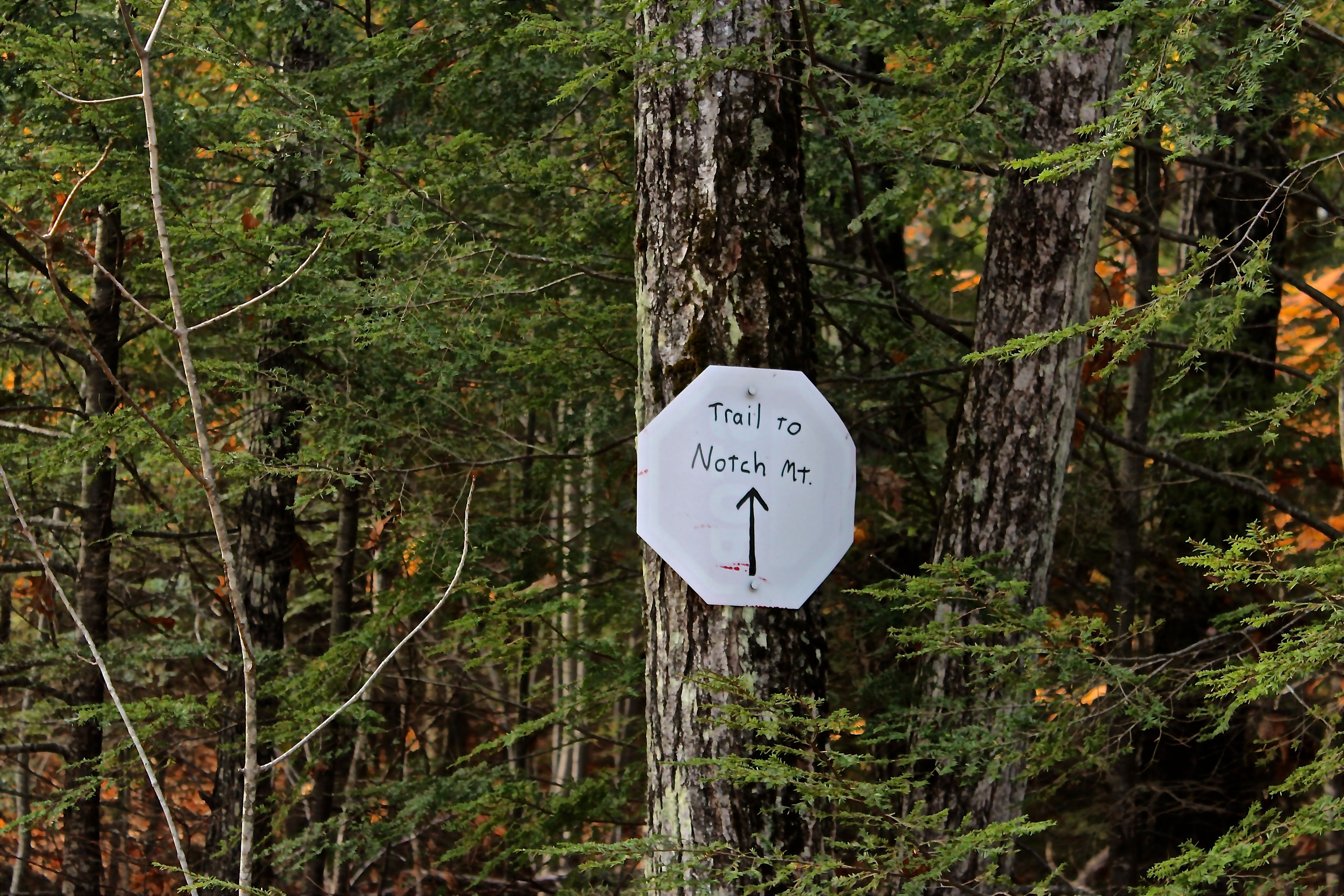
.Notch sign

The sign–about twenty feet in from the road. Unassuming to say the least.

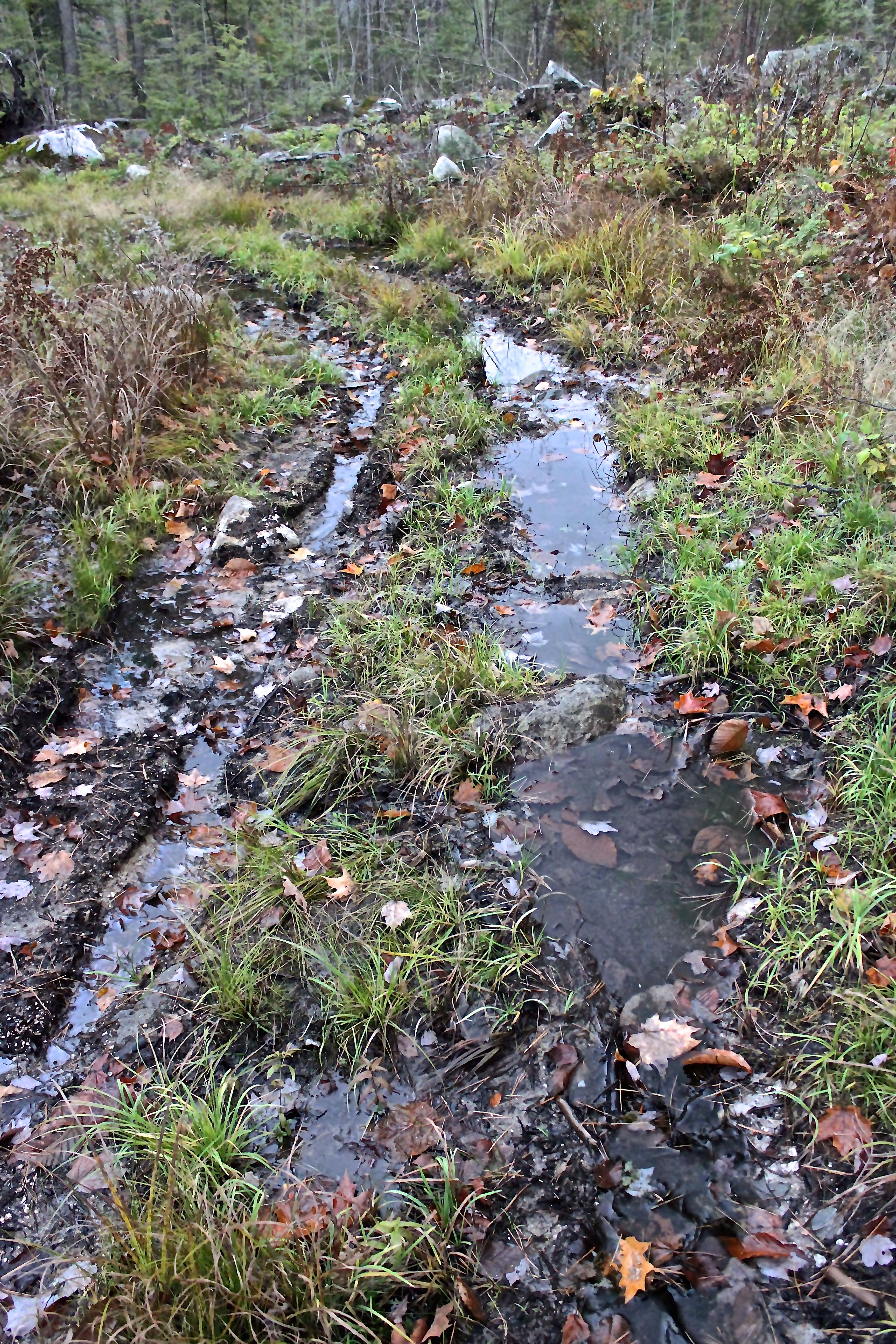
Notch trail wet

As we played dodge the water and looked at the slayed trees, we turned to each other and grimaced. What was Dick thinking?

Notch foundation 1

But we journeyed on and the muckiness abated. Then, this foundation practically jumped out at us.

Notch foundation 2

We weren’t sure exactly what we were looking at, but felt that this was a large house and there was either an attached barn or large shed, or the other structure was located quite close to the house.

Notch fdn bricks

Buried beneath the leaves, bricks indicated a chimney on an outside wall.

Notch tool shed?

We discovered what may have been a tool shed–a separate, three-sided room.

Notch farm remnantNotch plow 2

Indeed, we even found a few tools, including a plow, which became significant as we continued to explore along the trail.

Notch fdn feather:wedge

In the barn foundation, I like how one stone is wedged between the other two. It offers a reflection of how these rocks came to be in this place. The minerals, like quartz and feldspar, that are an essential part of granite’s make-up, interlock like pieces of a jigsaw puzzle. The end result: granite is one of the strongest and most durable rocks.

Using the plug and feather method practiced in the 19th century, small holes were hand drilled every six or seven inches across the stone. Two shims, called feathers, were placed in the hole and a wedge or plug was hammered between them. The farmer probably built this house in the winter when his farming duties weren’t as plentiful. And by drilling then, ice formed in the holes and helped to complete the work of splitting the granite. He and his family would have used a stone boat or sledge pulled by oxen to move the stones into place.

Notch mound of stones

A little further along, we came upon a massive wall of medium-size stones. This farmer must have cleared many, many acres, thus producing an incredible stone potato crop. And then moved them all so he could plow. My fingers twinge and my back hurts just thinking about all the work involved–makes our yard work look so easy.

Notch trail

On either side of the trail were stone walls, indicating this was more than a logging road at one point in time.

Notch big rocks

Throughout the woods, we found more piles of rocks, some with small stones and others, like this with medium-size stones. Rather than quilting bees, this family must have enjoyed stone bees–an exercise to remove as many stones from the ground as possible.

Notch wall:gnarly old maple

The stone wall frenzy is evidenced all along the trail. Sometimes double-wide garden walls, and other times single walls, also called farmer or pasture walls that were built as boundaries, and to keep animals from destroying crops.

Notch cemetery

Dick had mentioned the Wormwood cemetery, but we were still surprised when we happened upon it.

Notch grave 2

Charles B. Fly

b. Jun. 20, 1828; d. Oct. 27, 1860

Notch grave 1

Mehitable Wormwood

b. Oct. 16, 1825; d. Nov. 27, 1851

Notch, stone 4

Lydia Jane Osgood Wormwood

b. 1826; d. Dec. 27, 1851

Notch, stone 3

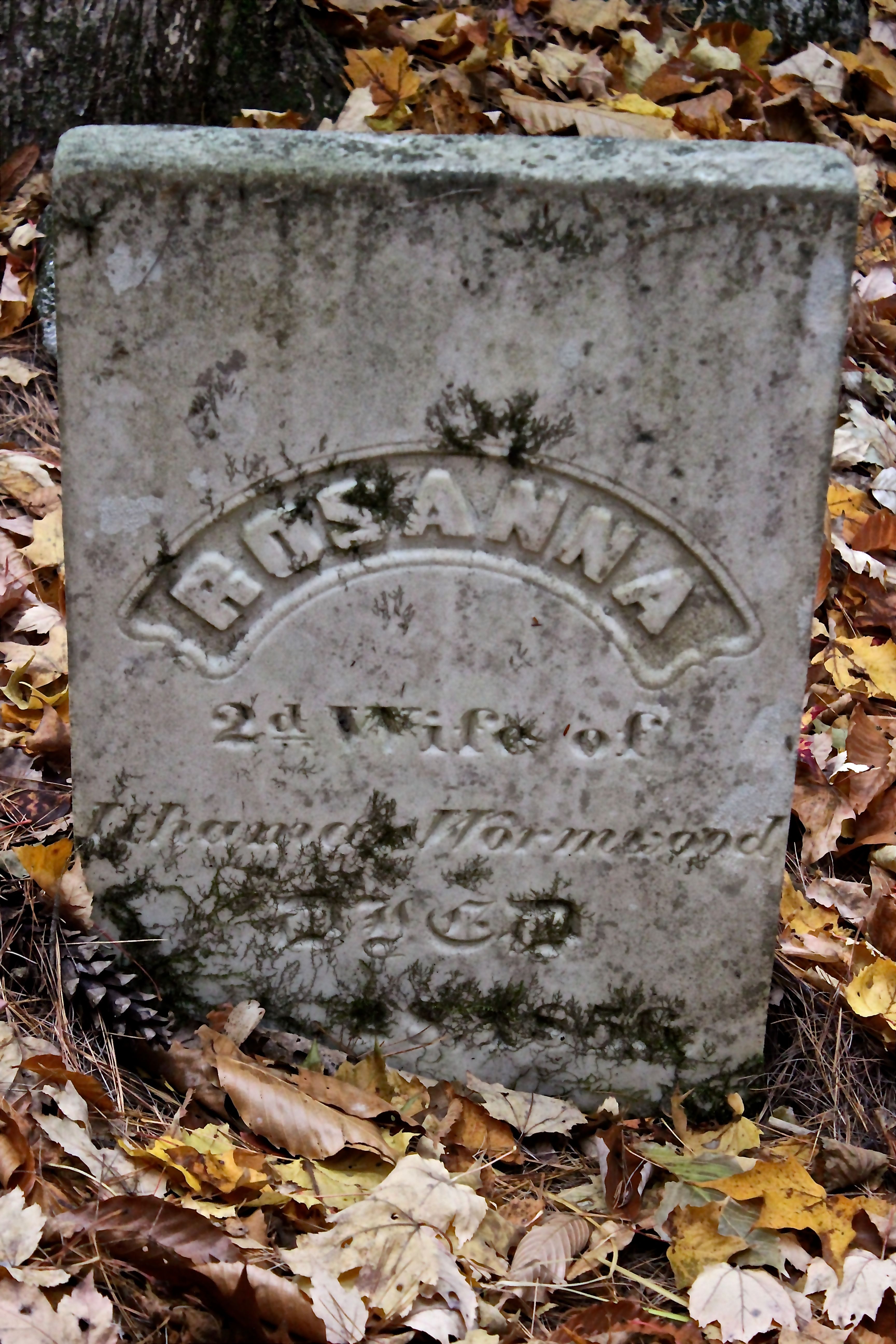
Rosanna Warren Wormwood, 2nd wife of Ithamar Wormwood

b. Oct., 1791; d. Feb. 28, 1856

Notch, 2 stones

Hannah and Ithamar Wormwood (b. May 29, 1791; d. Jul. 16, 1865). Two-year-old Jason Fly was also buried here.

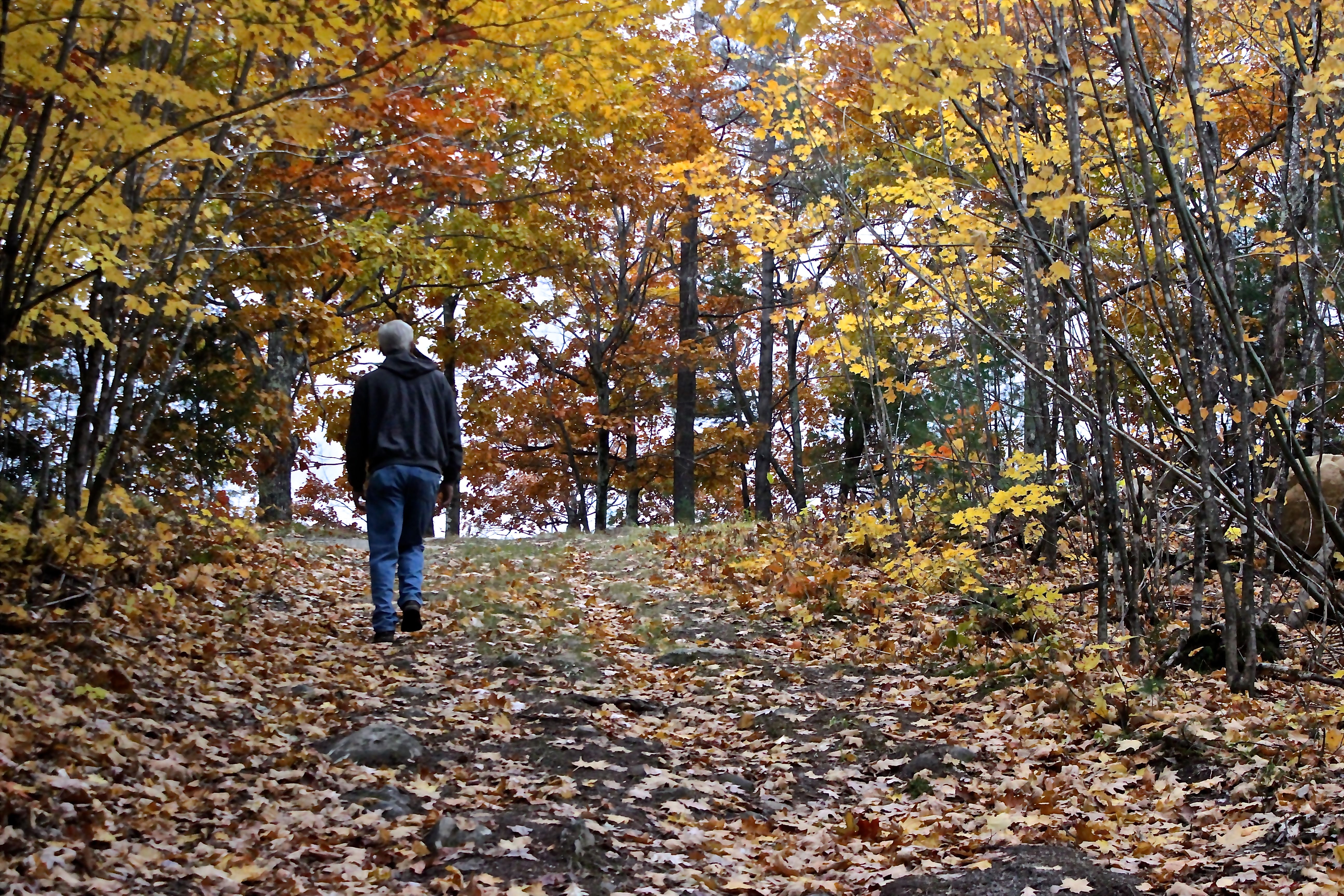
Apparently the Flys were related to the Wormwoods, which makes sense. I suspect that there are other foundations to be discovered, but I was with my guy–Mr. Destinationitis, and so we continued toward the summit.

Notch glacier

As we climbed, we noticed glacial striations on rocks (aka snowmobile etchings),

Notch, beech contortionist

beech trees that think they are contortionists,

Notch oaks

and a mix of white and Northern red oak leaves.

Notch summit 1

Then the summit came into view.

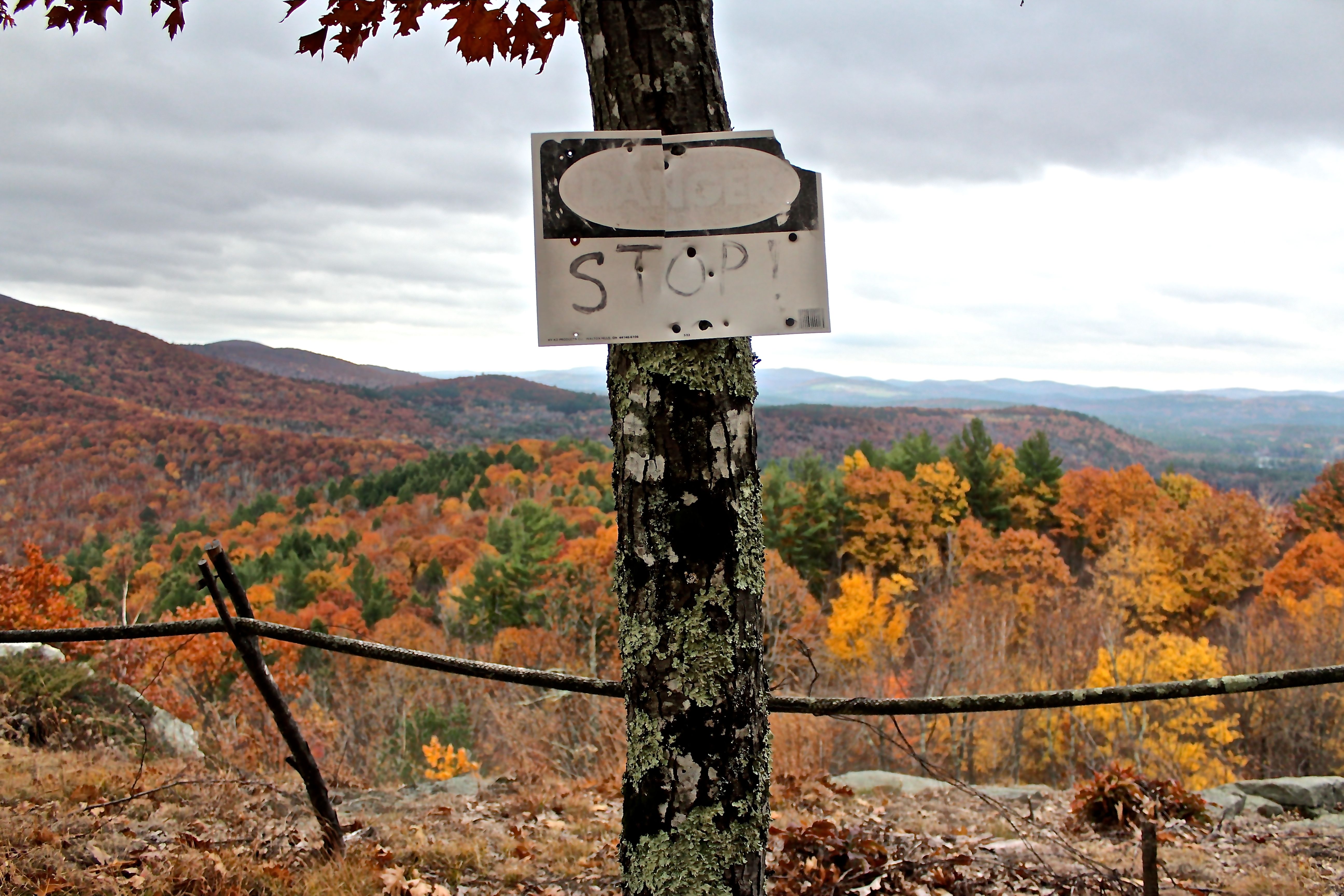
Notch stop sign

Thank goodness for the faded stop sign

Notch summit fairy

and the fairy who watches over all who step too close to the edge.

Notch view

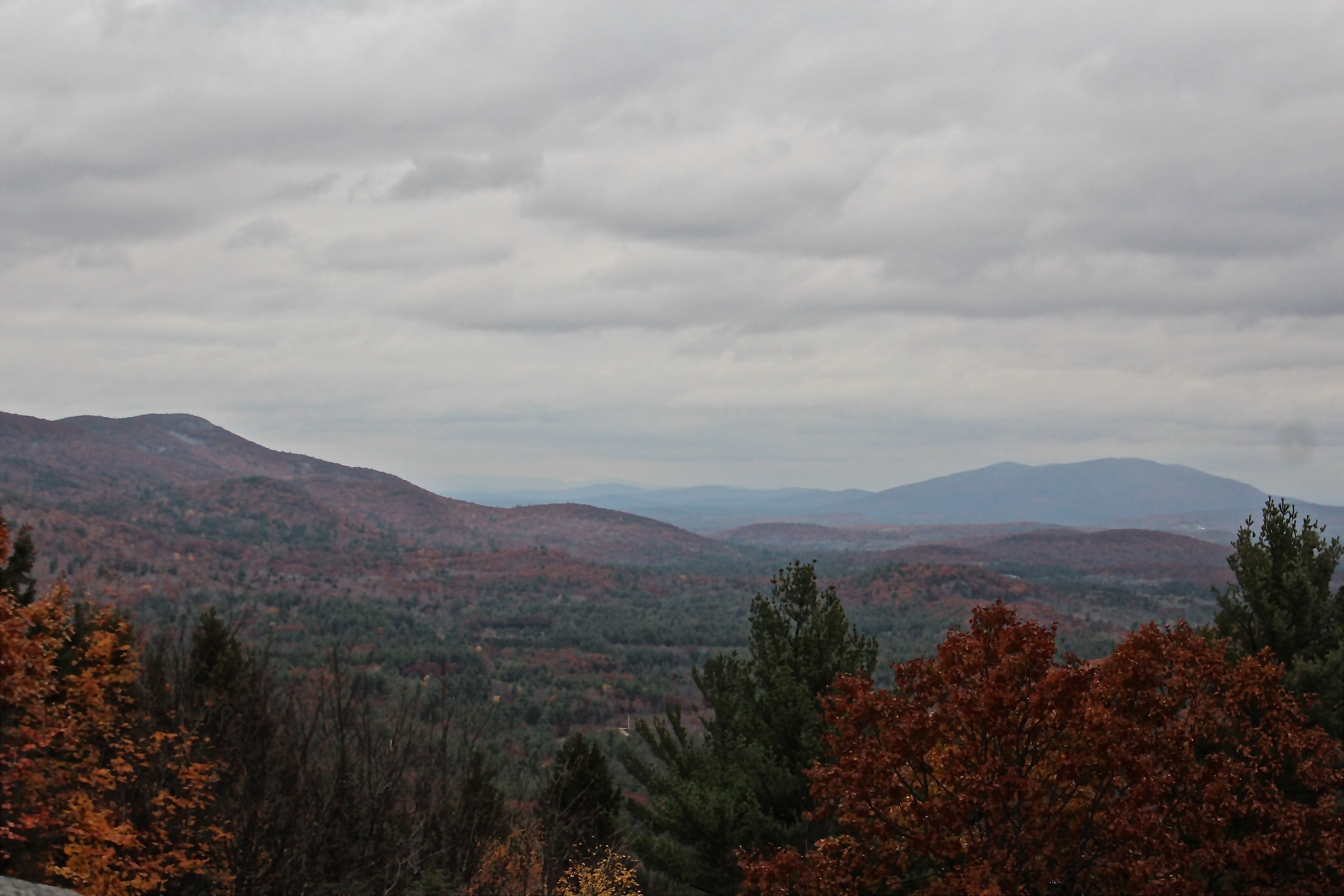
As the rain clouds gathered, we ate our PB&J sandwiches, this time topped off with Halloween candy and views of Clemons and Little Clemons ponds.

Notch, burnt meadow and pleasant

Burnt Meadow Mountain and Pleasant Mountain formed the backdrop.

We hiked down among rain drops, but the sun shone once we arrived home.

mansion, hunter and hunted

I was restless and didn’t want to deal with yard work, so I went for a walk and came upon evidence of the hunter and the hunted.

Today, while our work continued, I had the opportunity to escape to Pondicherry Park for a stewardship committee meeting–now that’s my idea of a great meeting place.

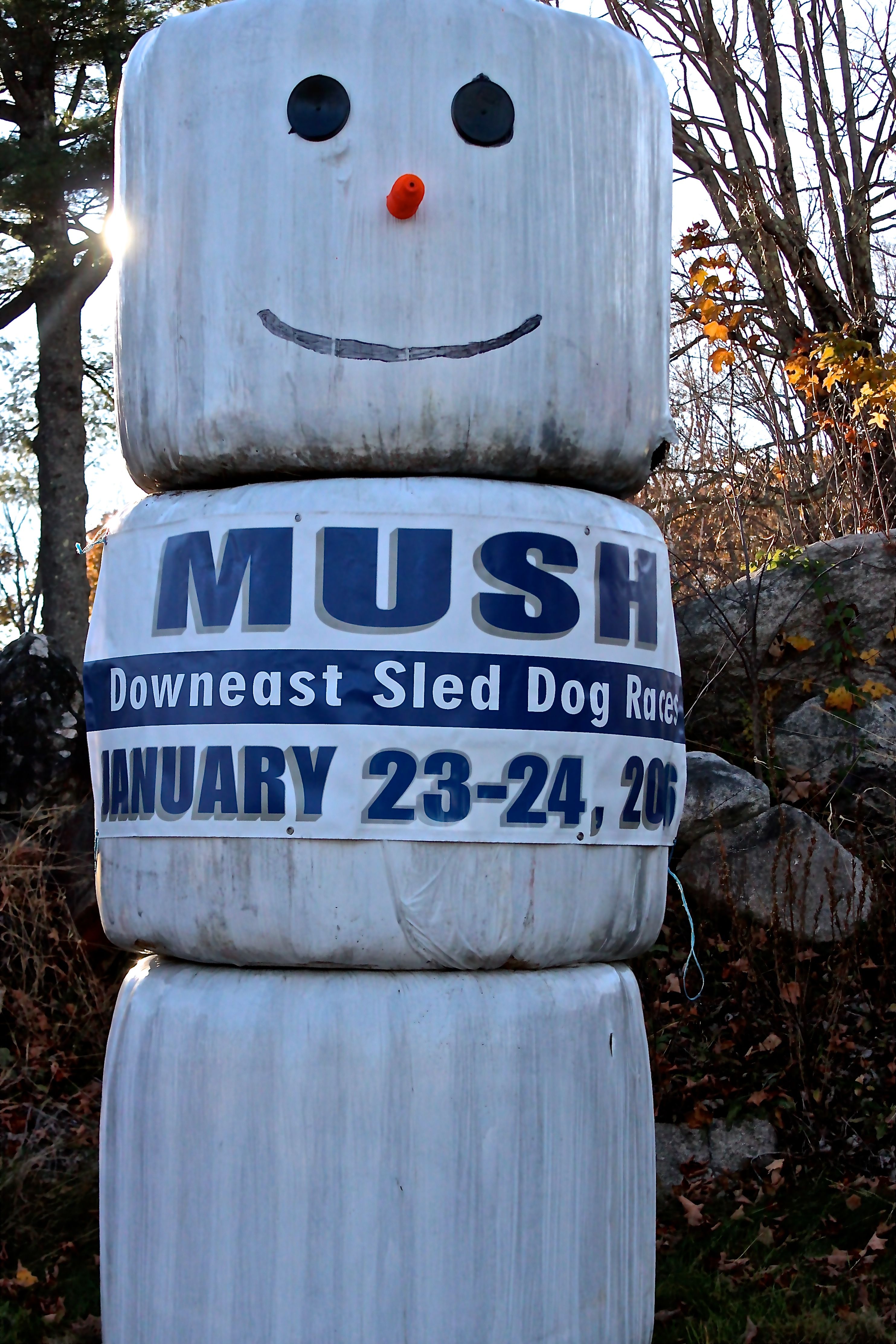
snowman

On my way, this guy reminded me that the next season is right around the corner (literally).

Pondicherry Reflection

And in the park–still plenty of color to reflect upon.

We know we have to work, whether to earn a living or maintain a home, but we do love our opportunities to explore new and old places. Thanks for sharing this one with us, Dick. It warrants further exploration to wander and wonder.

Three-Season Mondate at Back Pond Reserve

OK, so it wasn’t three seasons all packed into one Monday date, but walking up the   Mountain Trail at GLLT’s Back Pond Reserve in Stoneham today brought back memories of previous visits by my guy and me.

yellow

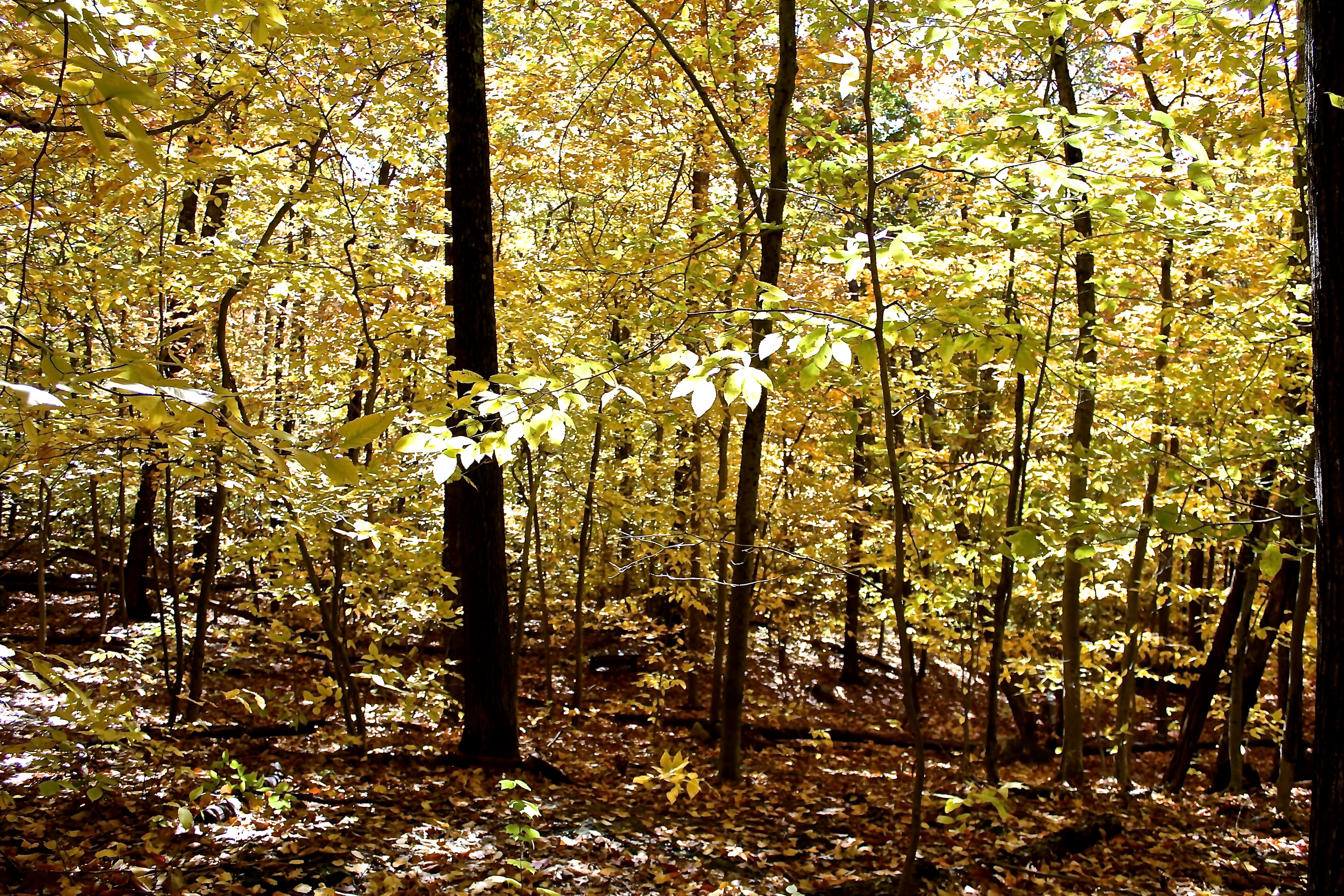
The woods are awash in golden-green yellows right now, especially where the trees include beech, big-tooth aspen and striped maple.

a dose of red

Climbing higher, variations of red join the carpet display.

summit 3 of 5 Kezars

We were surprised by how quickly we reached the summit, which is what got us recalling previous visits.  Today, the water of three of the Five Kezars sparkled while Pleasant Mountain stood watch in the background.

summit, summersummit, winter

As I looked through my photo files, I realized we have never hiked this trail in the spring. In the summer there are wildflowers to make us pause, and winter finds us exploring mammal activity–thus our treks are slower.

summit, Mt Washington

Today’s view included snow on Mount Washington, the grayish-white mountain located between the pines.

Ganong chocolates

As we enjoyed the view, we topped off our PB&J sandwiches with the last couple of truffles we had purchased at Ganong Chocolatier in St. Stephen, New Brunswick, earlier this month.

water bottle 2

And water, of course.

which way do we go?

Instead of letting the arrows confuse us, we turned 180˚ and followed the connector trail between the Mountain and Ron’s Loop. It’s not on the map yet and still needs some work, but it’s full of surprises–only a few of which I’ll share right now.

winter, connecting trail

We’ve always enjoyed this trail and today realized that though it’s much easier to follow than it was a few years ago, many trees have blown down along the way.

numerous trees 2

They’re easy enough to climb over. If you go, do know that there are two or three mucky spots along this trail as well, but again, easy to get around.

lone red pine, connecting trailred pine, winter

This lone red pine always makes us wonder. Perhaps it found its way here via a seed on a skidder?

winter bobcat prints

Today we found moose tracks, plus red fox and coyote scat. If there was bobcat scat, it was obscured by the leaf litter, but we know they frequent this area.

winter, snowshoe hare

We also know the bobcat’s favorite meal lives here–we saw this guy in early March and of course, always see his prints on winter treks.

artist's conkcrowded parchment, connecting trail

Lion's Mane past peak

A couple of fun finds along the way–artist’s conk, crowded parchment and an old lion’s mane.

the bridge on Ron's Loop

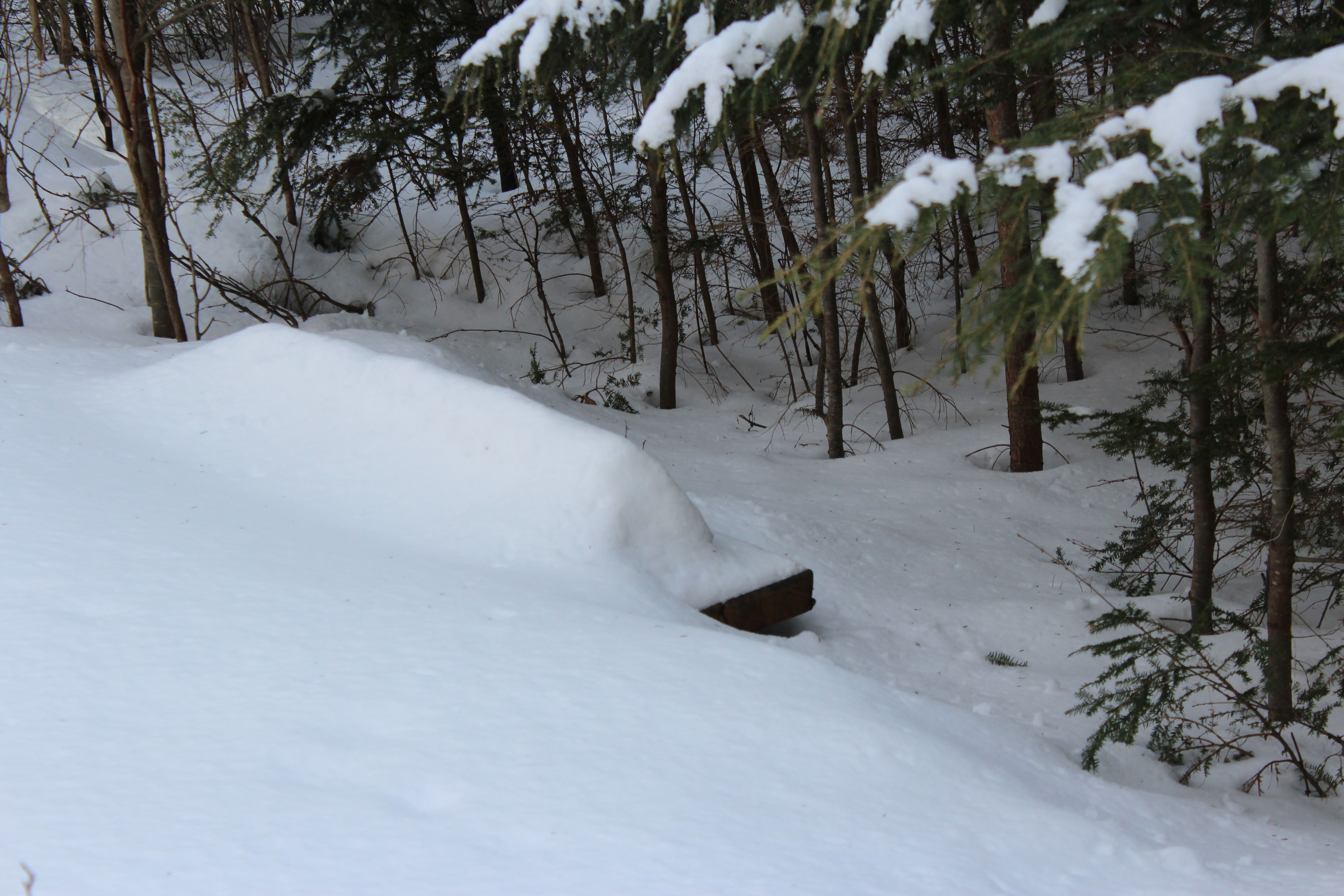
winter, the bridge at Ron's Loop

The bridge on Ron’s Loop is all decked out with autumn colors–a contrast to its winter coat.

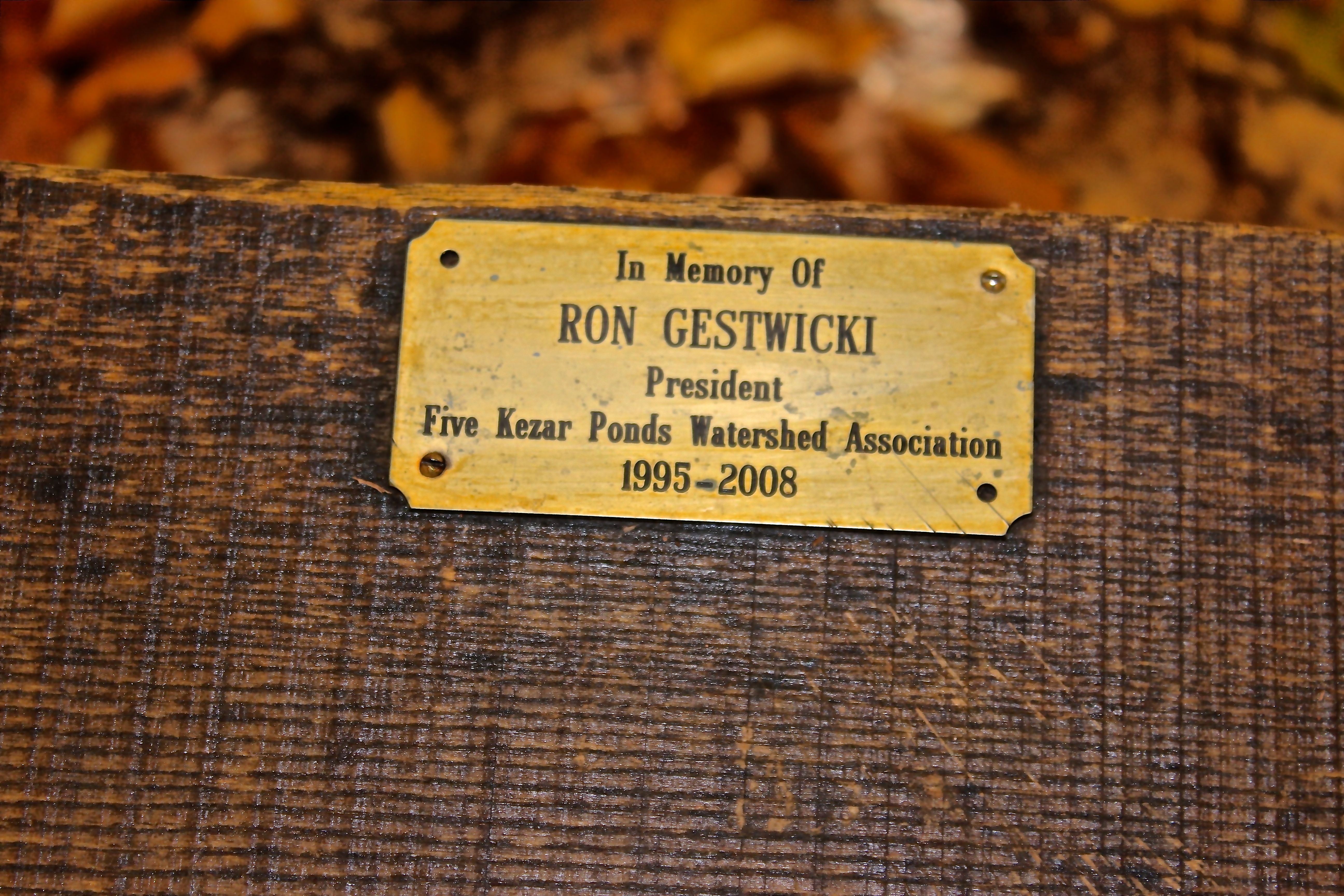
honoring Ron

We’re forever thankful to Ron for his leadership and foresight,

bench on Ron's Loop

even when we can’t see the plaque that honors him.

Kendra and Jewell

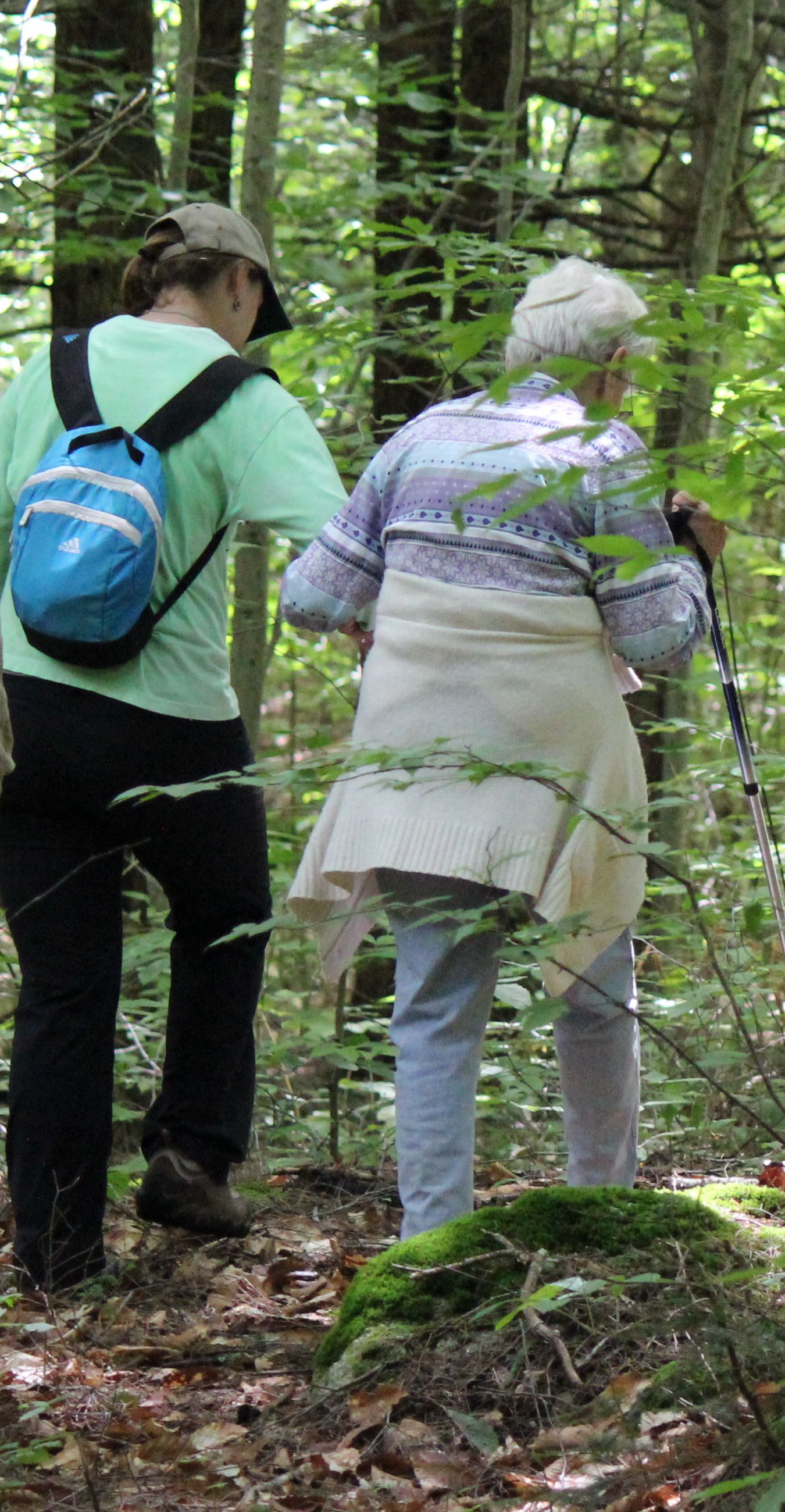
We met no other people on the trail today, but one of my fondest memories dates back two years when one of GLLT’s interns, Kendra, offered her arm to Jewell for a safe journey. Once upon a time, Jewell was Kendra’s Sunday School teacher and on this summer day, Kendra was Jewell’s guide.

water bottle by Ron's Loop

As we walked into the parking area of Ron’s Loop, we noticed that someone had left behind a water bottle. If it’s yours, it’s still there.   wasp nest Ron's Loop

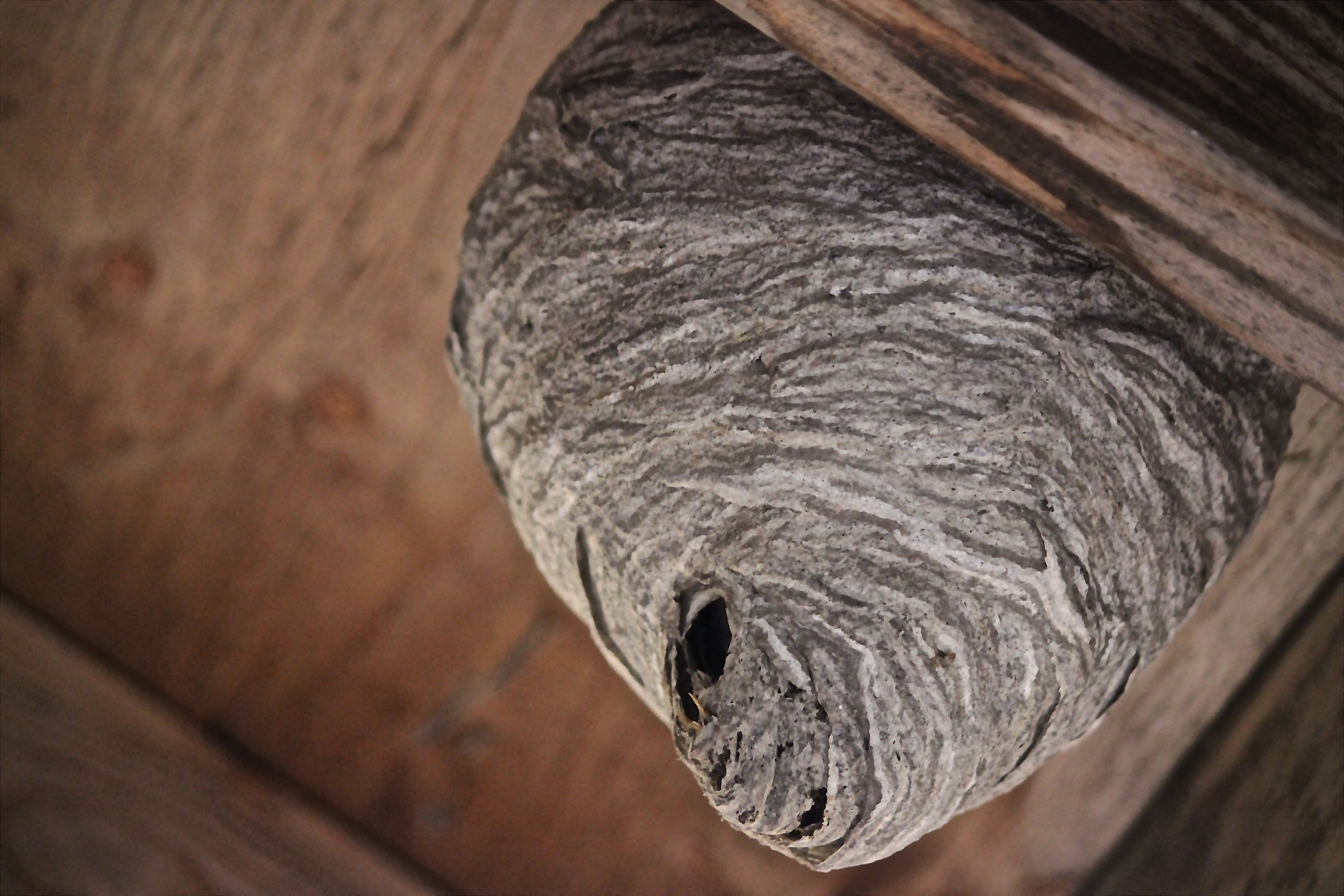
Each time we visit, we take a moment to check out the wasp nest at the kiosk.

Ron's Loop kiosk, Jan 2015

We can’t remember when we first noticed it, but it’s been there for a while.

coffee sign

One last thing to note before we walked back to the Mountain trailhead where our truck was parked–Magnolia coffee. Wish I’d ordered more than one this past year. Dark roast.

One Mondate–three seasons. And now the quest is to turn it into a four-season destination. Stay tuned.

What’s Next?

I chose to walk intentionally today, pausing every few moments to look and wonder. I didn’t want to rush, always seeking the next best thing.

And so I began with a stop to admire the great lobelia that continues to bloom  despite the frost we’ve had this past week.

Great lobelia

But it was at a former log landing we can see from the kitchen window, that “what’s next” kicked into gear.

log landing 10+ years ago

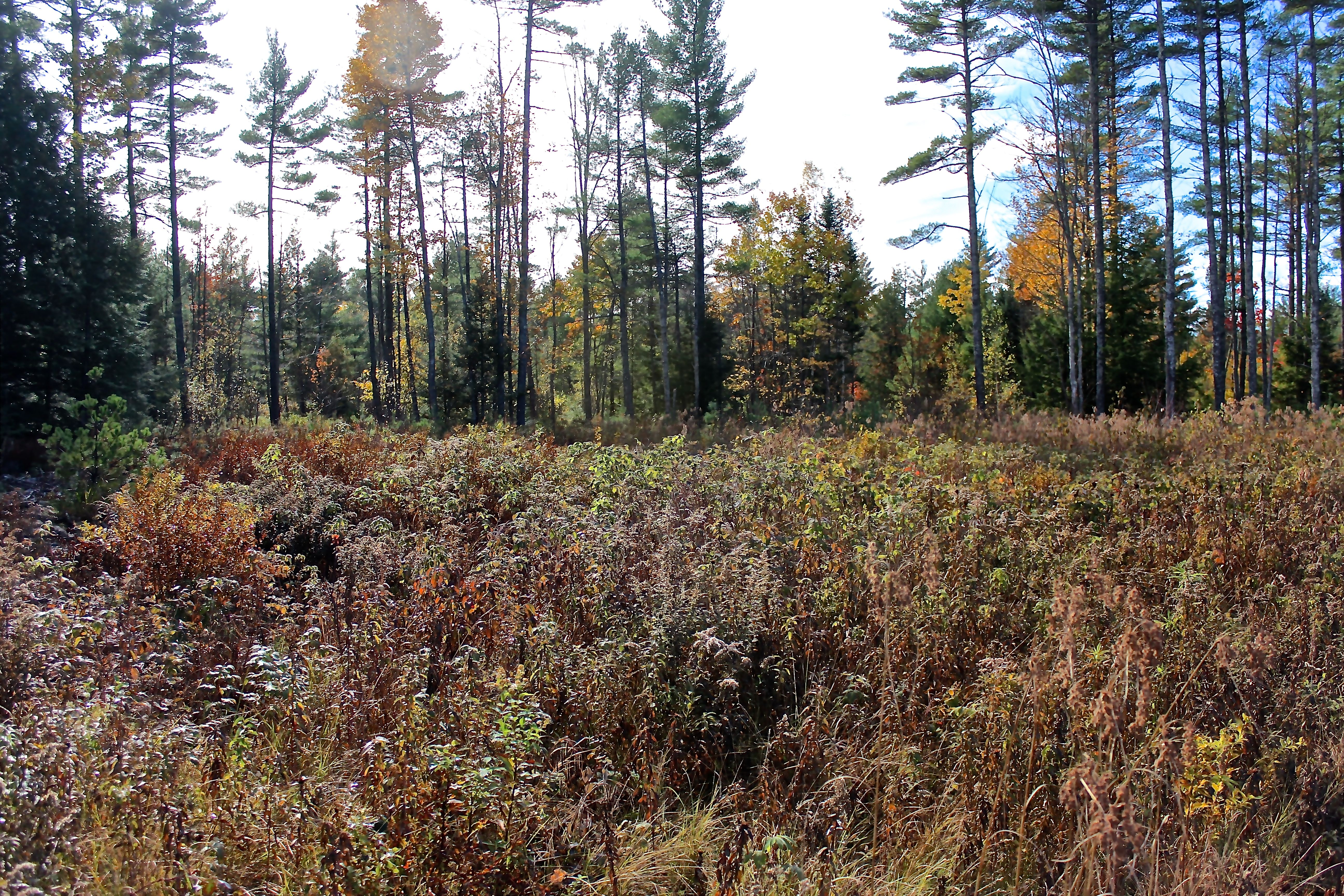
While the field beyond our stone wall is mowed once a year, this area has been allowed to follow the order of succession for cleared land. Goldenrod, asters, meadowsweet, grasses and raspberries have filled this space. What will follow?

deer print

Further along, the deer and

moose prints

the antelope, I mean, moose play. No fresh bobcat or coyote prints after this morning’s rain, but I saw some scat from both. And I had to remind myself not to have expectations. That’s the thing. It’s so easy to get caught up in looking for the next best thing and forgetting to focus on the moment, the beauty and the complexity that surrounds us.

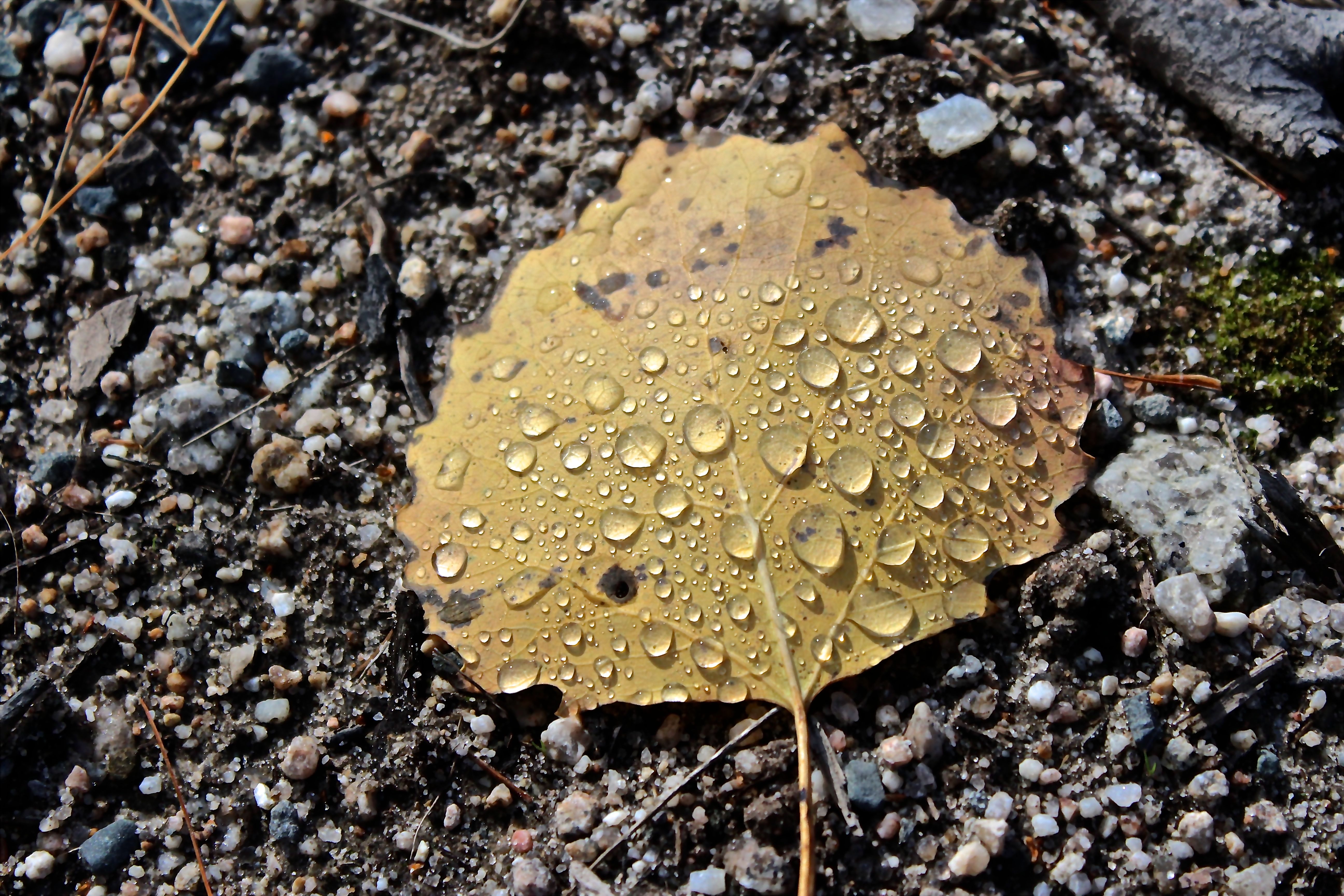
water droplets on big-tooth aspen

So I did–focus that is. On the big tooth aspen leaf decorated with rain droplets,

asters gone to seed

aster seeds waiting for their moment of dispersal,

barbed wire

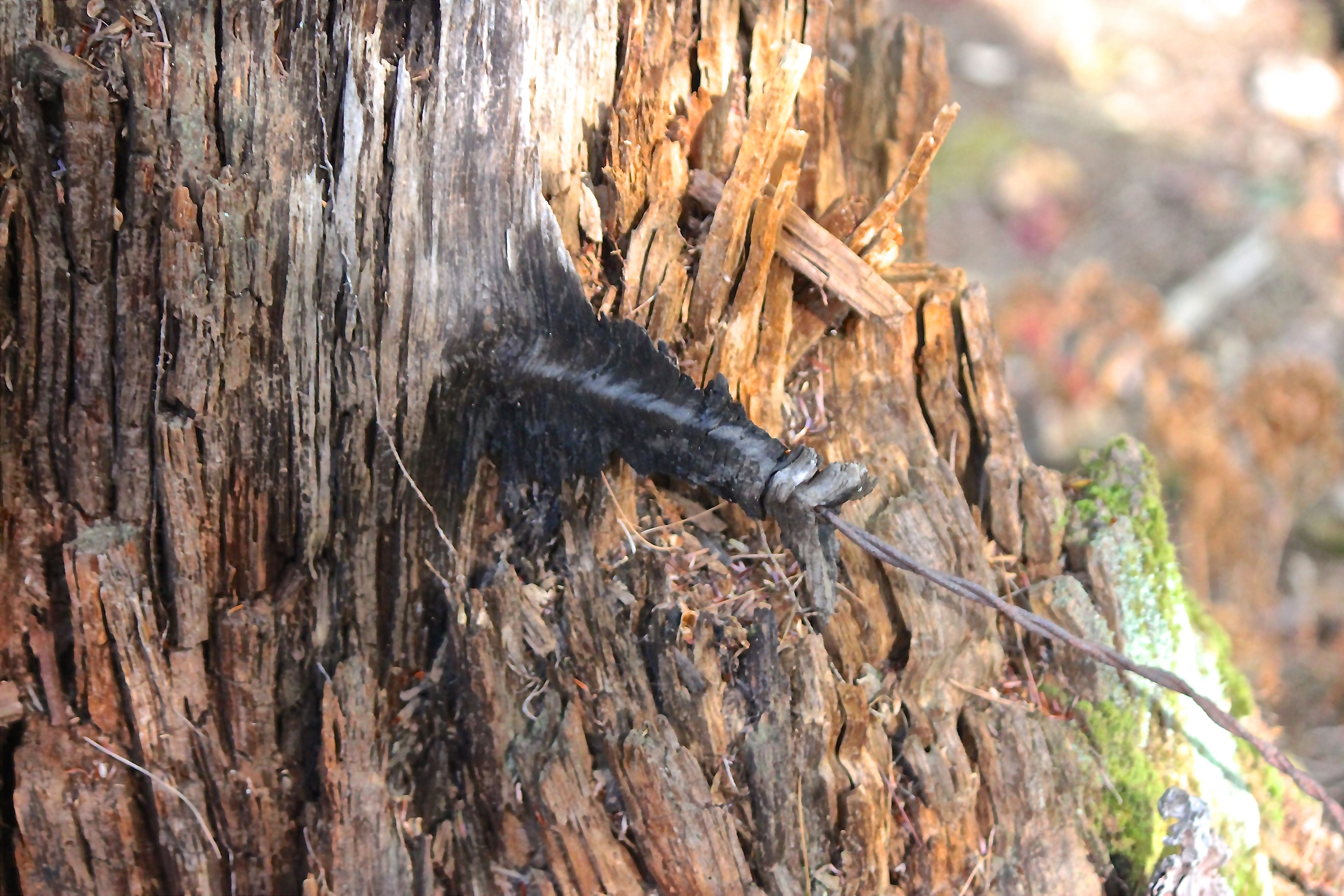
a hemlock that long ago knew this forest as farmland,

autumn meadowhawk

 an autumn meadow hawk soaking up the late afternoon sun,

life on a stump

the variety of life growing on a stump,

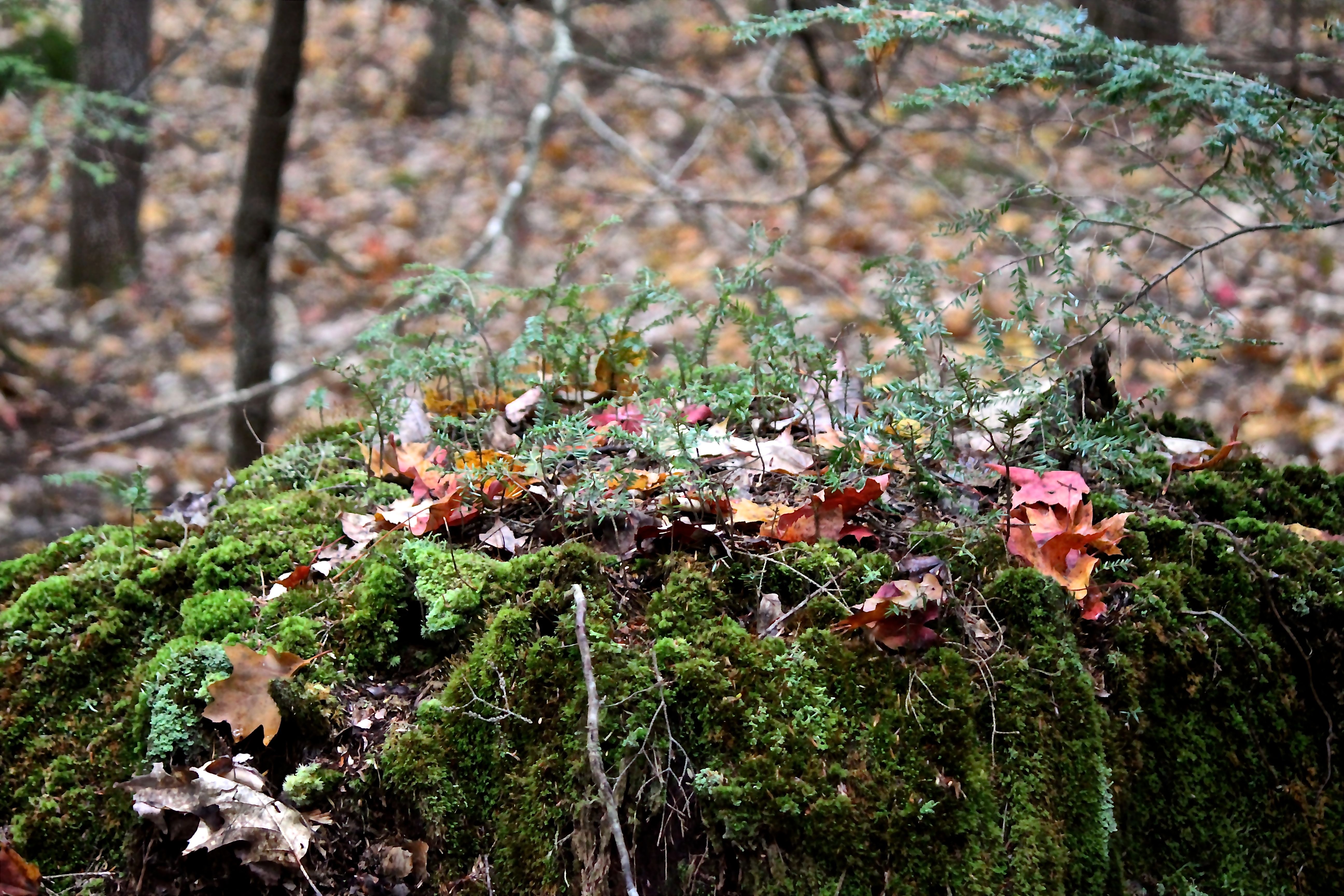
hemlock saplings on stump

and hemlock saplings taking root.life on a tree 2

life on a tree 3

life on tree 5life on tree 7

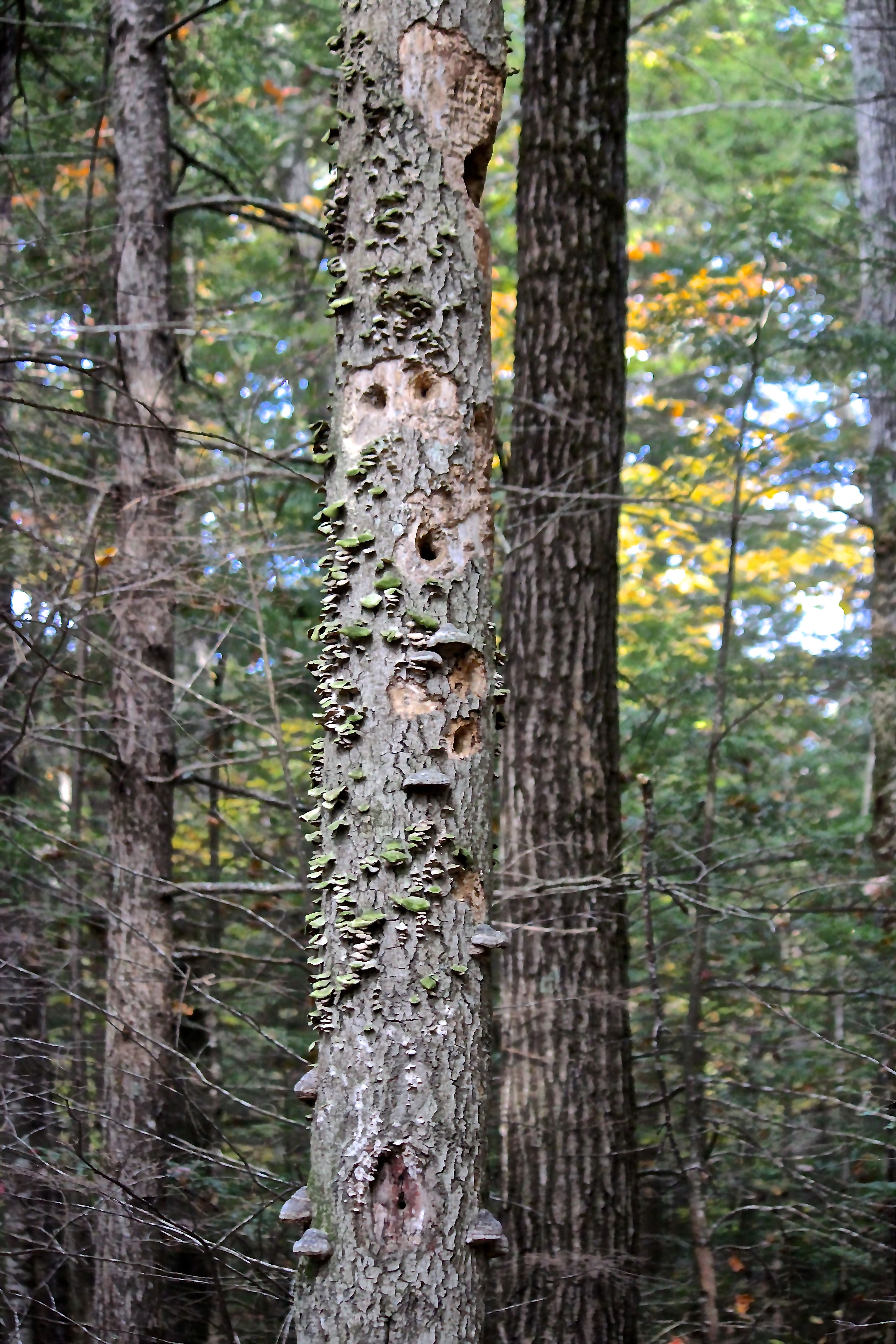
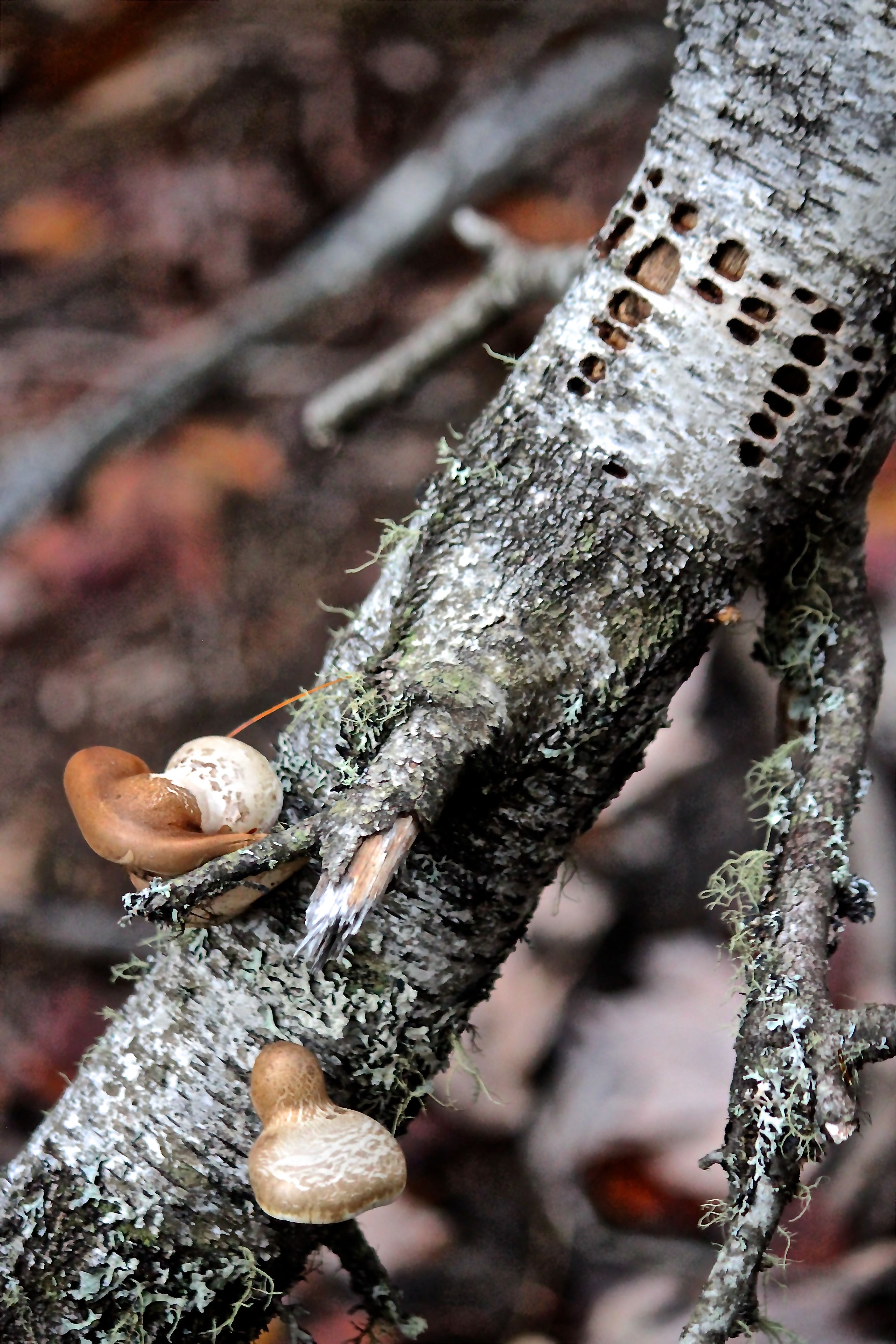
My eyes were drawn to all manner of life growing on trees that are past their prime, from woodpeckers and sapsuckers to mosses and fungi, including violet-toothed, birch and tinder polypores, plus Jack O-Lanterns that glow in the night.

old tinder conk

I found an older tinder conk springing forth with life as it gleans sustenance from its host,

chaga

chaga, that hardened mass of hyphae that is proclaimed to be life-giving,

mossy maple

mossy maple polypores growing in a wound, as is their preference,

mossy maple mushroom:field dog lichen

and more mossy maple, this time covered with the brownish-gray lobes of field dog lichen, which typically grows on the ground. Huh?  Creation at work. Soil forming on top of the moss covered fungi–certainly a fertile ground.

quartz

I found quartz where I expected to find only granite,

royal fern

a small royal fern holding court on its own,

sensitive fern

and the bead-like fruiting stalk of the sensitive fern.

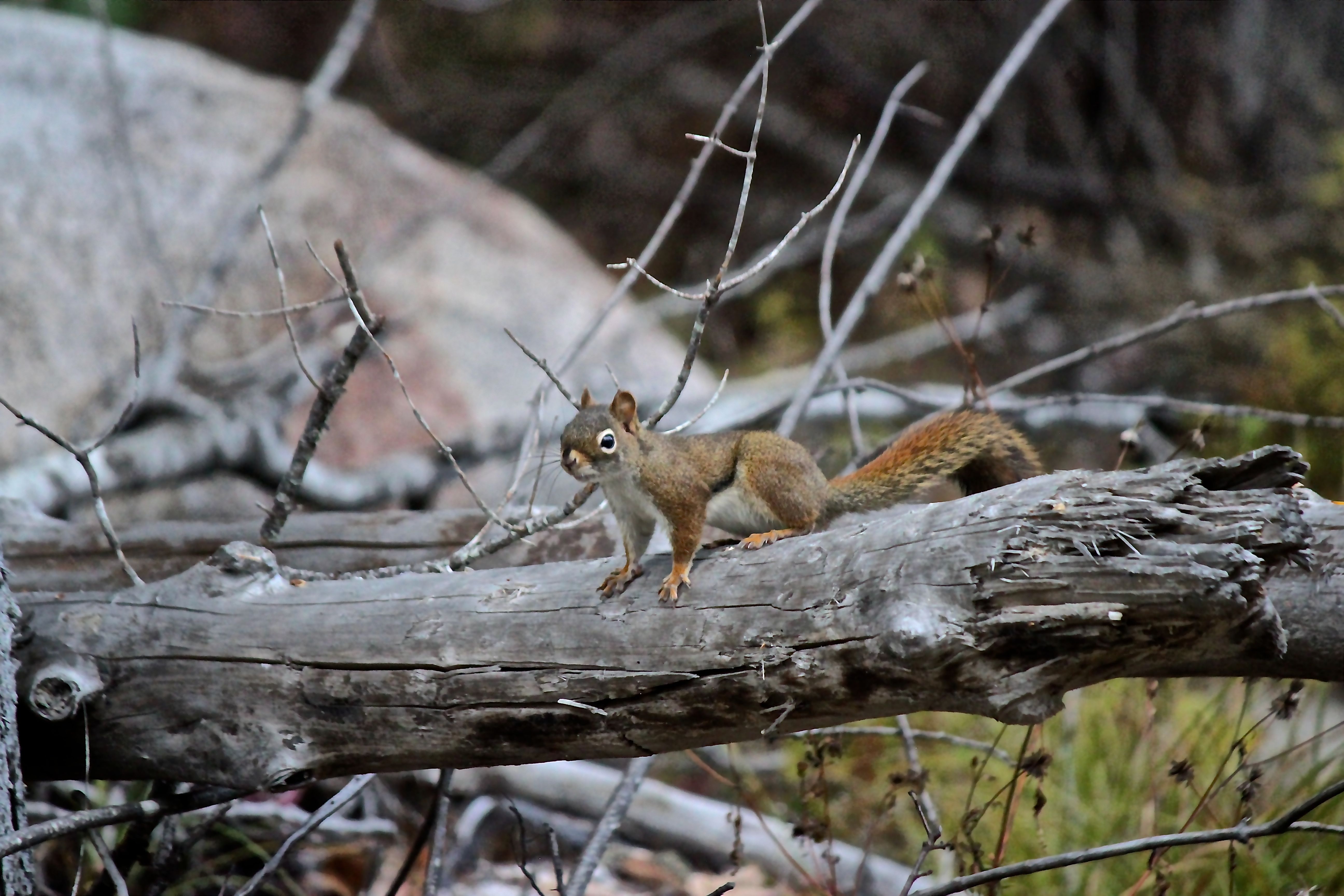
 red squirrel

I saw plenty of birds, including a few ruffed grouse that I startled as they startled me. This and other red squirrels chatted insistently whenever I was near.

beech tree captures late afternoon rays

And I saw the sun’s rays reflected by the beech leaves.

trail 1

Sometimes following trails, other times bushwhacking, I wondered what will become of this forest.

tree opening

Open spaces invite pioneers to settle down.

Pleasant Mtn

In other places, those that long ago gained a foothold continue to enjoy the view–of Pleasant Mountain.

4 birches

Making my way homeward, I found myself in the presence of the birch clan–paper, yellow, black and gray–how sweet it is.

fleeting moments of fall foliage

As the foliage enjoys its final fleeting moments, I intentionally move from wondering what’s next to enjoying what’s now.

Hanging On

To say the colors have been fantastic this fall is an understatement. Maybe they are just as spectacular as last year’s display, but I don’t remember. Or maybe it’s that the leaves turned at a later date than in recent history and the anticipation was rewarded by the brilliance.

morning view

All I know is that I can’t get enough.

Route 93 mtn view

Route 93 2

As I drove toward Lovell this morning, a break in the treeline beside the road forced me to back up and jump out of the truck. I recalled another October when the foliage caught my attention–I can’t believe I remember this, but it was either 1974 or ’75 when I often traveled the back roads with my high school cohorts–Carissa and Sarah. I only hope I remember this fall as vividly as that one has always stood out in my mind.

purple aster

It felt like rain when a couple of friends and I walked along the short trail at the GLLT’s John A. Segur Wildlife Refuge on New Road this morning. We didn’t get far because there were so many wildflowers to view, some still in bloom and others gone to seed. Like so many trails, this is an old logging road. It would be so easy to dismiss it as an ugly tangle of shrubs and weeds. But it’s hardly that. Gray and paper birch grace the border of the road, mixed with evergreens and a few red maples.

gall of the earth flower 2

But the flowers really caught our attention today. One Gall of the Earth displays its nodding head.

sundew leaves dying back

The round-leaf sundew is beginning to die back.

silverod

It seemed like in most cases only one plant of the species still had flowers, like this silverrod, our only white goldenrod.

Pearly everlasting

Pearly everlasting,

steeplebush

steeplebush and

aster seeds 2

asters are letting go.

witch hazel flowering

Meanwhile, the witch hazel is in full bloom.

wh flower and pod

Apparently, its ribbony yellow flowers bloom late in order to take advantage of pollinators at a time when everything else has finished blossoming.

baby woodfrog

We didn’t have a lot of time to spend at the property, but this little guy caught our attention–a young wood frog. He’ll need to find his way under the leaf litter soon.

Route 93

On the way home, another photo call.

Mount Washington

And later in the day, some work behind me, I stepped out the door again. It’s a compulsion a this point; a strong desire to catch every shade of yellow, orange, red and purple before it’s too late. I haven’t turned north on the snowmobile trail under the power line in a while, so today I did.

Mansion Road

My journey took me down a logging road that has become a super highway in the last two years. I think the operation is finally over.

log landing 1

The landing and beyond have been my destination for 23 years. I’ve watched the succession play out in this space. And now it will happen again. I have to look at it as a lesson–watching the species gradually take over this muddy lot. The land was probably last logged about thirty years ago, so I met it in its early stages. Now I will get to see it transform from the get go. And I have to say, it’s one of the cleanest log landings I’ve ever encountered.

logging road

Considering how wet it is in these woods, I’m impressed with the forester’s work.

ferns filling in

Ferns already grow in roads created a year ago.

grass filling in logging roads

Grass fills in others.

mud

But mud is predominate and I love mud.

bobcat tracks 1bobcat 2

Bobcat tracks were everywhere. It’s been my understanding that bobcats don’t travel trails like coyotes and foxes, but instead cross over them in a corridor that is about 40 feet wide. My observance, however, is that this isn’t always the case. Heck, I’d follow the easier trail as well. I did today. I started to return home via one of the trails I use when on snowshoes, but because this is a wet countryside, the slash left by previous loggers and the most current one makes that trail almost impassable until the snow flies (which may be soon–at least for a few flakes).

bobcat 3bc pattern

I’m curious about the number of tracks. Bobcats are solitary except during breeding season in February-March. Are these youngsters? Do they travel together? Or is this an individual passing through repeatedly?

bc and deer-opposite

Deer are among a bobcat’s prey and thus part of the reason this is such fertile hunting grounds. I love the view of both passing through this space in opposite directions. And the turn of the bobcat’s toe nails, which show clearly in the mud even though they are able to retract them. The deer also seemed to have slid into a turn. Though you can’t see my boot prints here, I love that the three of us passed this way side-by-side, at different moments. I looked for them, but am sure they were much more astute about knowing my whereabouts.

leaves in puddle

Puddles along the way were filled with fallen leaves

leaves in puddle & reflection

and reflections of trees to which they once clung.

old squirrel drey

Back on our land, I found an old squirrel drey that had fallen from quite high in a tree.

red maple leaf scar

And noted the red maple twigs–new buds already offering hope for next year, leaves still hanging on, and a bright green leaf scar from one that fell off recently.

fewer leaves

At the end of the day the leaf pile grows. I guess we can only hang on to the old for so long.

Double Mondate–Cape Style

My guy and I took off on an adventure a week ago today.

welcome, red road

We were excited to see that they’d rolled out the red carpet

Welcome sign

and welcome mat.

B&Bexterior

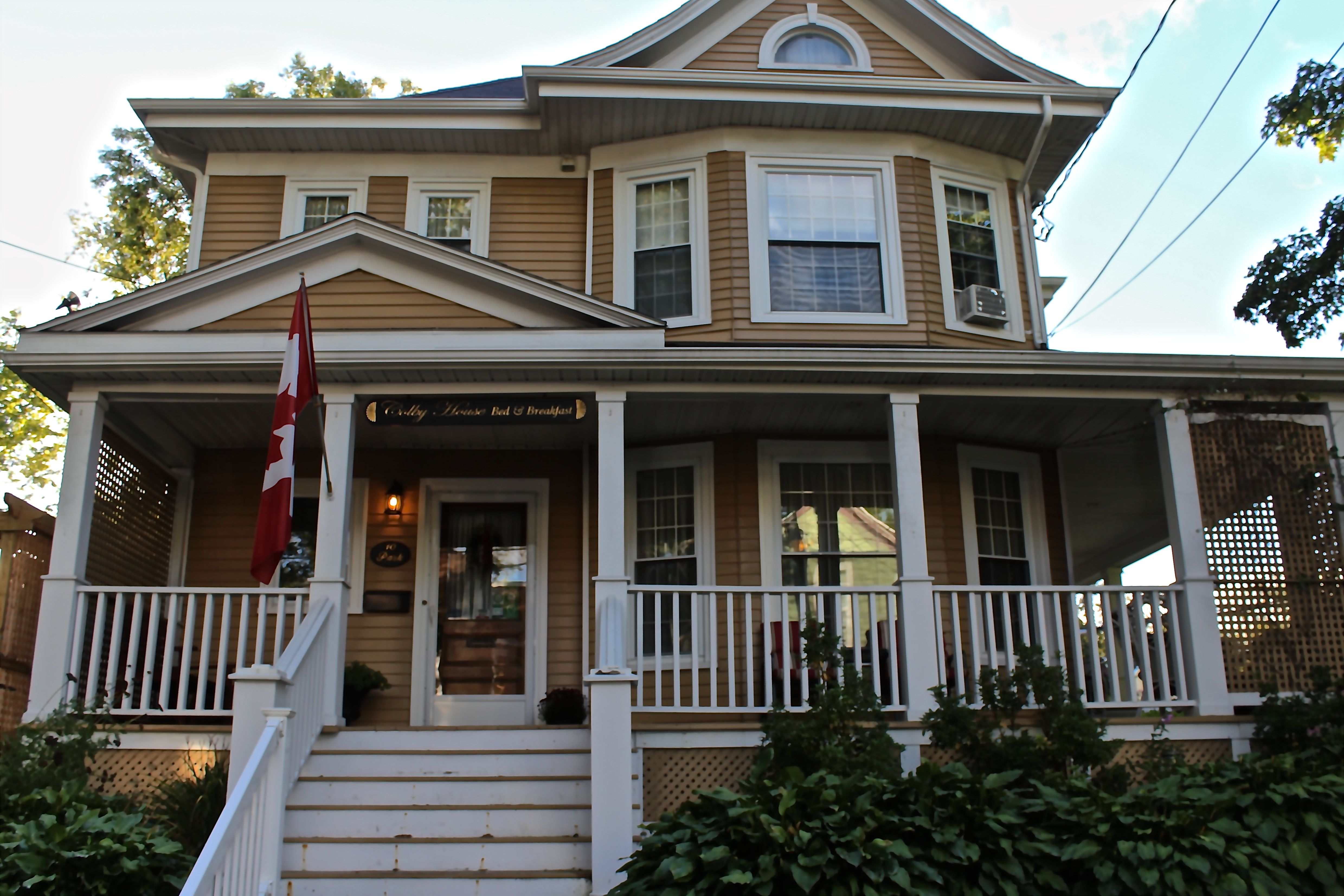
We rested our weary bodies at the Colby House B&B in Sydney each night and gorged on delicious  three-course breakfasts every morning–think pumpkin scones followed by blueberry cobbler topped with two scoops of frozen yogurt, fresh mint and a raspberry, followed by toast topped with guacamole, tomato and an egg, plus crisp bacon and orange slices. Each day, it was something equally decadent. Yeah, we didn’t eat again until about 9pm.

Beach walk, Port Hood

skipping stones

We walked along the beach near Port Hood, where the skipping stones begged to be set free.

mabou d1 cliff view

Our discovery of the Mabou trails was one of our favorite finds.

Mabou d1 b

Around every bend the scene changed.

Mabou hiking, day 1

We hiked here on our first day when the sun was shining.

mabou d2 enchanted forest 2

And returned for a five hour hike on our last full day, when the raindrops glistened.

Mabou d2 more moose bones

We found all kinds of animal sign, including plenty of scat and even a few moose bones.

Mabou 2 enchanted forest

The lady ferns decorated the slopes of the enchanted forest

mabou d2 lungwort

and lungwort on many trees let us know that we were in a rich, healthy ecosystem.

Mabou day 2, land trusts

The Cape Mabou Highlands encompasses about 5,000 acres of coastal wilderness centered around MacKinnon’s Brook on the western coast of the island.

Mabou trail signs

The trails are well signed and maintained.

cabot the road

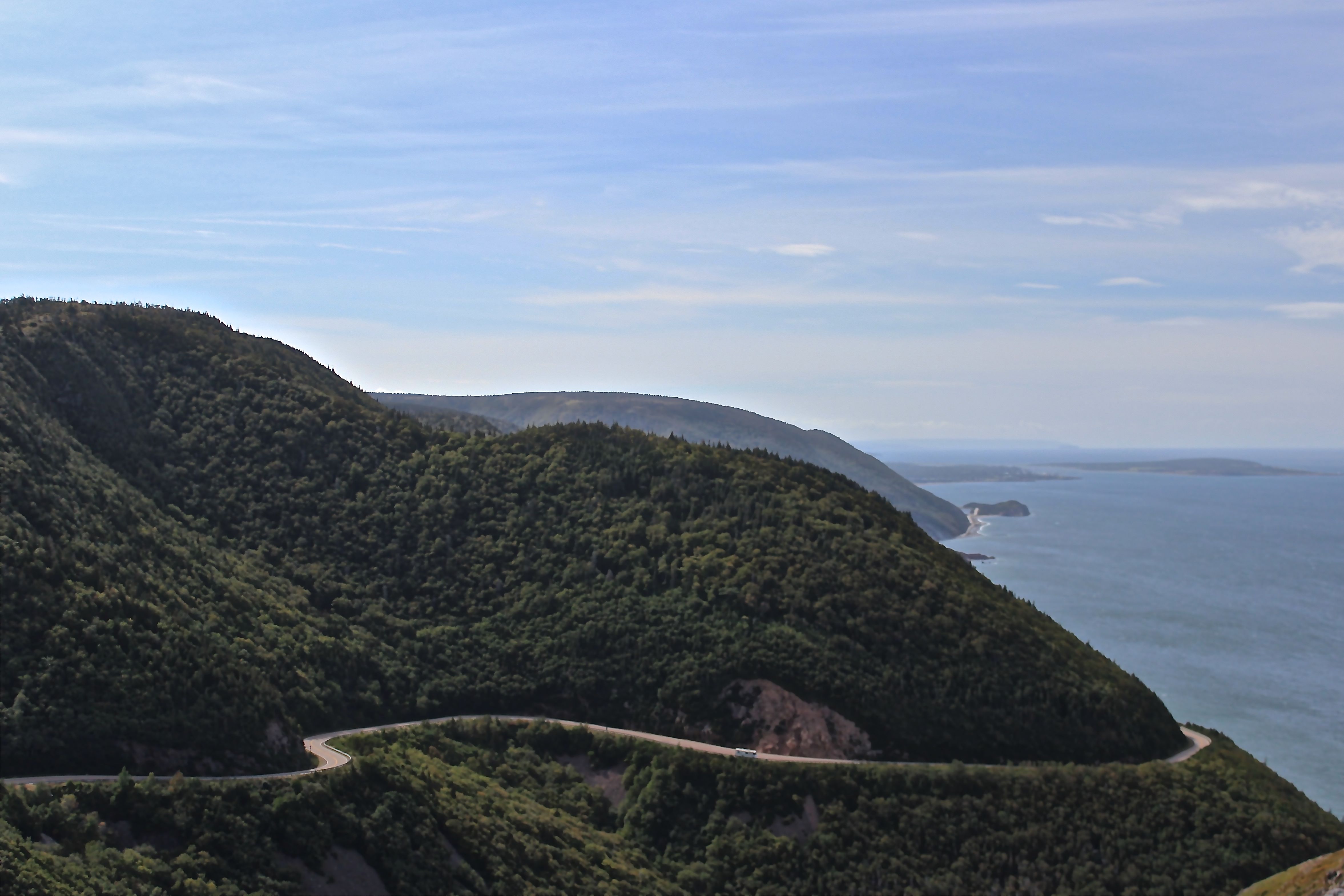
Of course, no trip to the island is complete without a journey on the Cabot Trail.

cabot moose print

We followed the Skyline Trail and found plenty of moose prints beside the boardwalk.

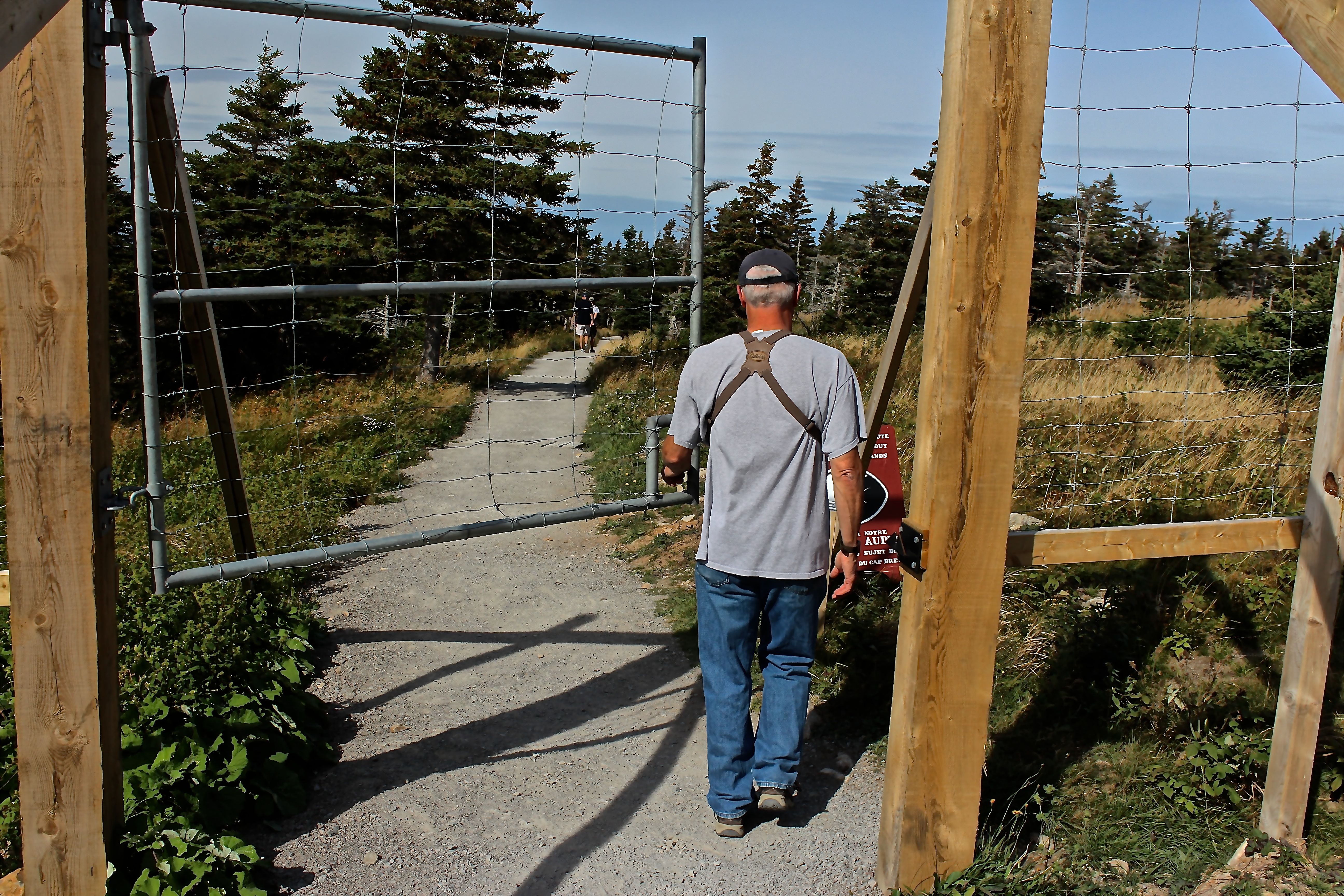
cabot skyline moose gate

We walked through a gated area along the path intended to let all but moose pass through. The hope is that this area that has been fenced off because the moose had browsed it extensively, will eventually return to a boreal forest. The jury is still out on that one.

cabot descending skyline trail

We followed the boardwalk and descended to the lookout where the wind nearly blew us off the cliffs.

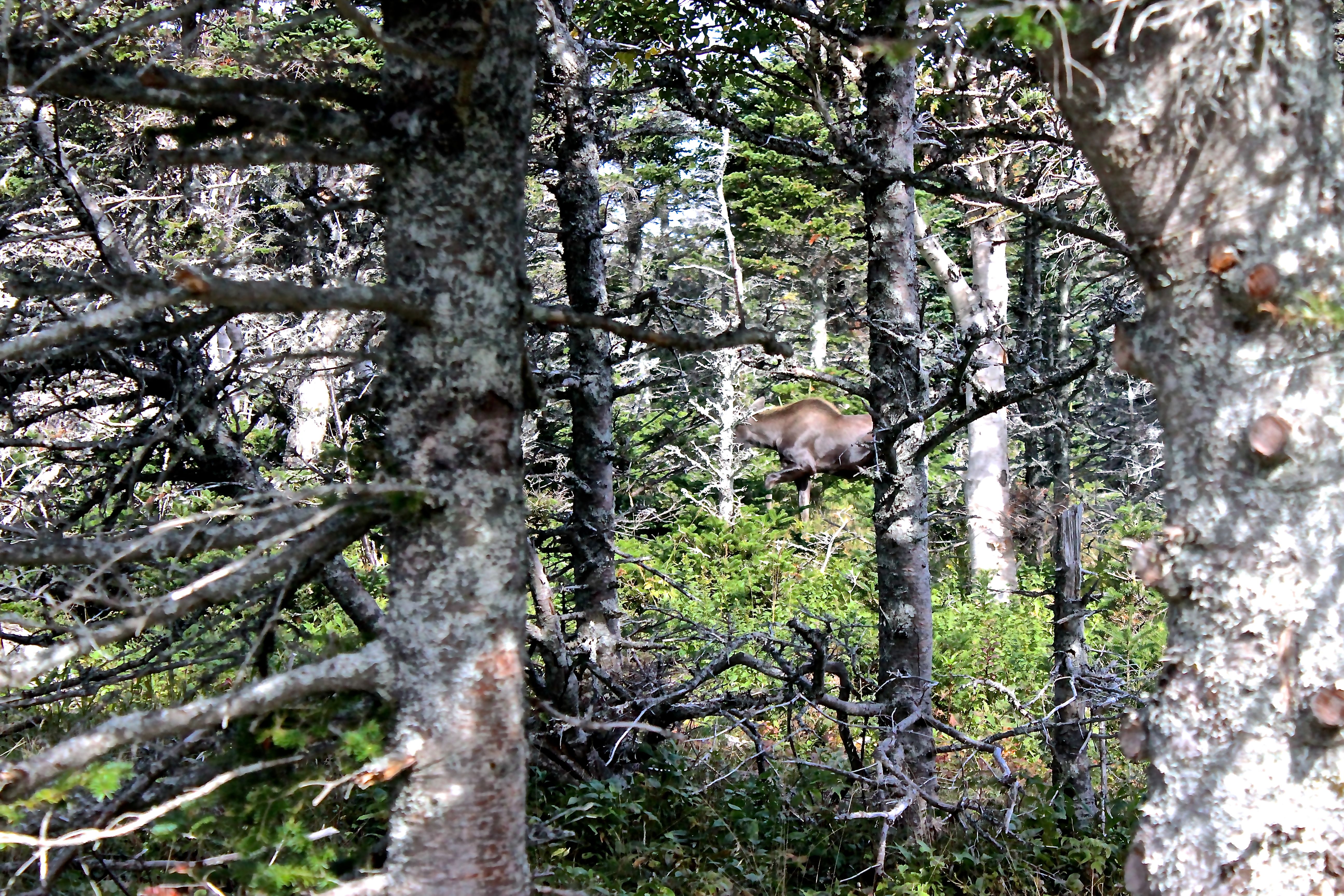
Moose moving off skyline trail

On our way back, we saw a young moose standing beside the trail. By the time I focused the camera, it had turned.

moose on skyline trail

Through the woods, we could see its mother and a sibling.

cabot water fall

On other trails, we hiked to a small waterfall,

big old sugar maple

through an old growth sugar maple forest and

cabot lone sheiling

beside the lone sheiling, a rectangular structure closely modeled after Scottish traditional dwellings for crofters or tenant farmers, with its rubblestone walls, rough-hewn timbers and thatched roof.

cabot jack pine forest colors

One of my favorites was the pitch pine forest, where the contrast of color and growth habit was most evident.

cabot cliff face

We discovered that life on the cliffs is abundant and lush.

fruit, bunchberries

Really lush.

fruit, wild raisins fruit wild raisins drying up fruits, wild r dried up

We saw how wild raisins earned their common name.

fruit, cherries

Everywhere we looked we saw fruit, like these cherries,

fruits mountain ash

mountain ash berries,

fruits rose hips

beach rose hips,

fruits, blue beads

and blue beads (Yellow clintonia).

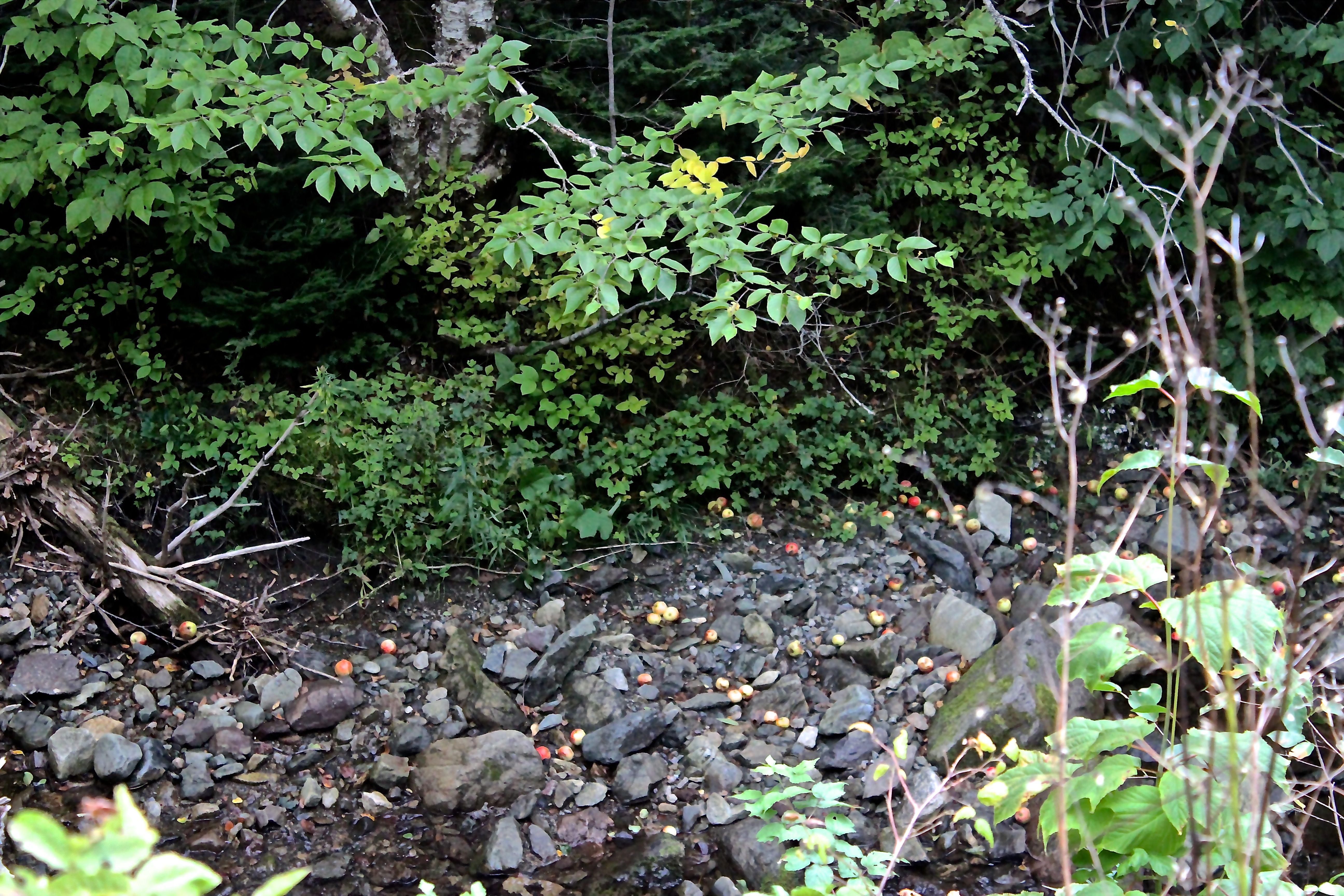
apples in brook

But the tree that had us wondering the most caught our attention on the first hike. We saw apples in the brook far below.

apple trees

My assumption was that there must be a homestead nearby. Then we began to notice apple trees growing alongside many roads we traveled (and we traveled on many). Apparently, they are descendants of ancient trees planted by early settlers. The climate is obviously agreeable–while the growing season on the highland plateau is shorter and experiences harsher extremes, it appears that in the lowlands, the amount of sun and rain is just right. Life is good and plentiful. Wildlife that is.

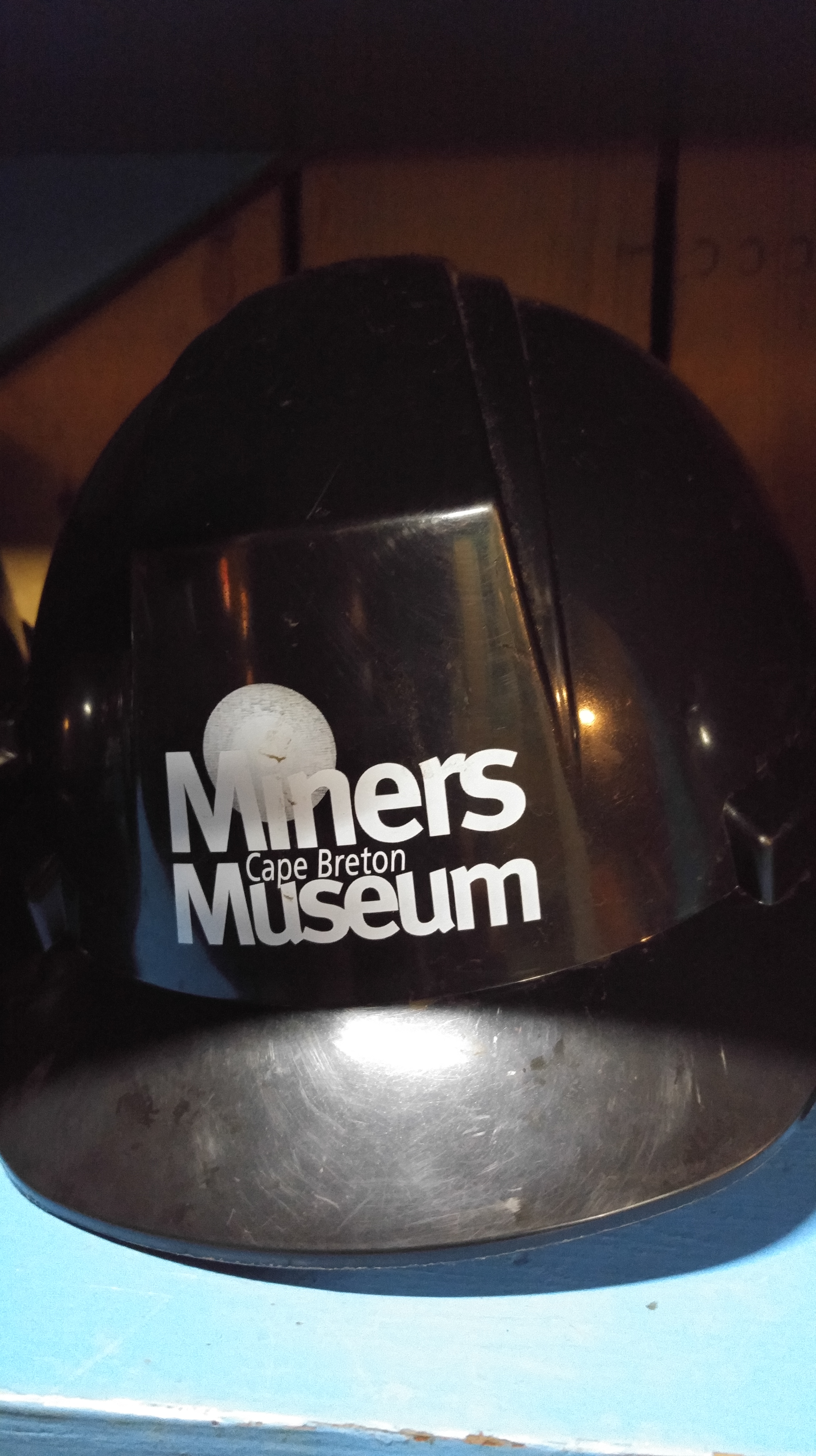
mine hat

While we did hike in some rain, we also spent a couple of rainy days learning about local history. Our favorite museum was the Miners Museum in Glace Bay.

miners 2

Our guide and former miner, Wishie Donovan, played a huge role in making this the best of all tours.

mine 5

As he lead us down the tunnels, he shared the story of mining for coal miles beneath the ocean–based on historical facts and his own experiences.

mine 8

We donned capes and hardhats and had to bend low to avoid bumping our heads.

museum mine critters

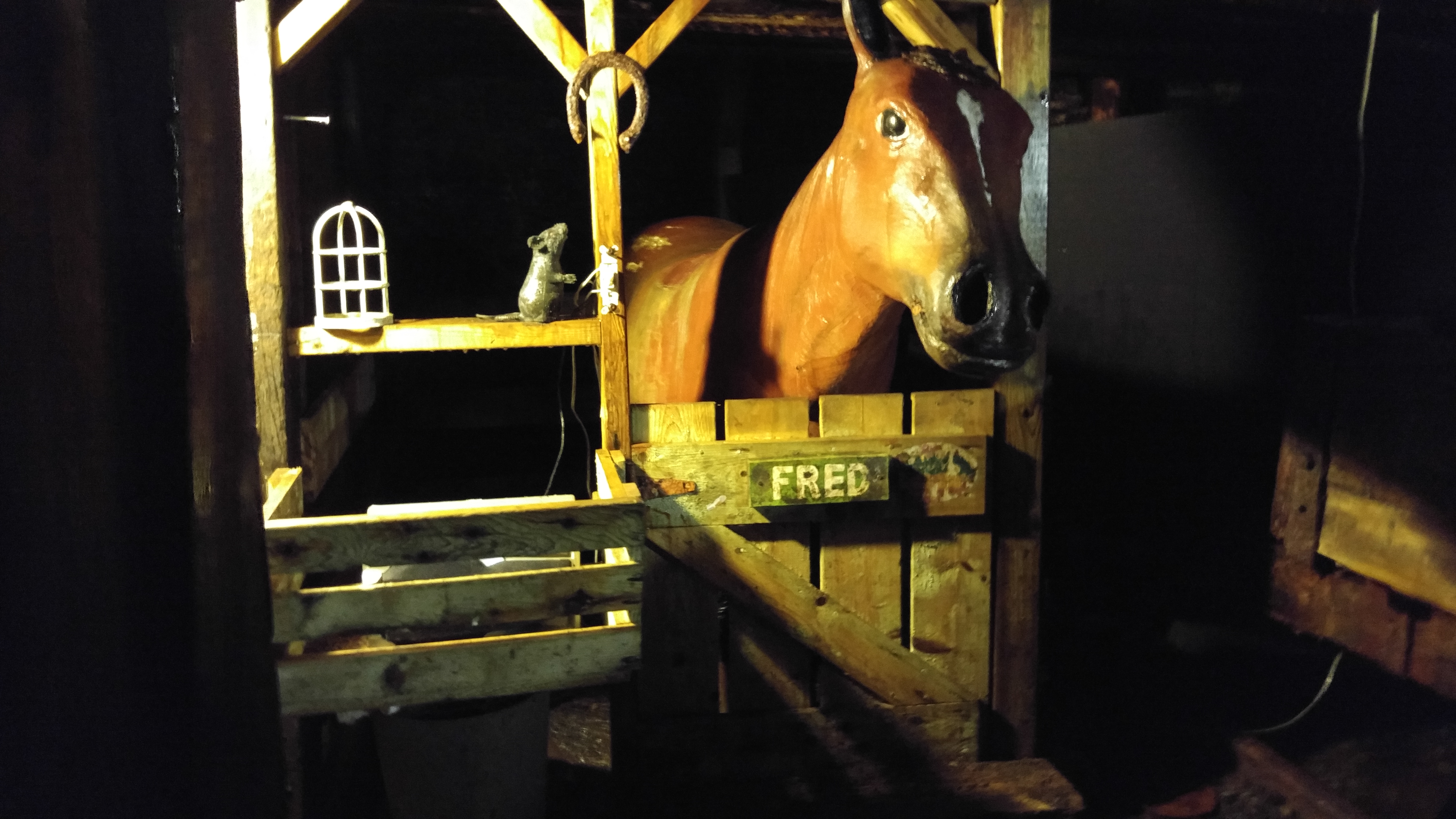
Horses like Fred, well, not really like Fred because he’s not real, helped haul the mined coal and rats were actually important. We’ve always heard about the canaries in the mine, but rats lived there and if there were no rats running about in the morning, the men took that as a sign not to enter.

museum, mine, bending over

We came away with a greater understanding of this enterprise.

museums, Bell quote

In Baddeck, we stopped at the Alexander Graham Bell Museum.

museums, water skater

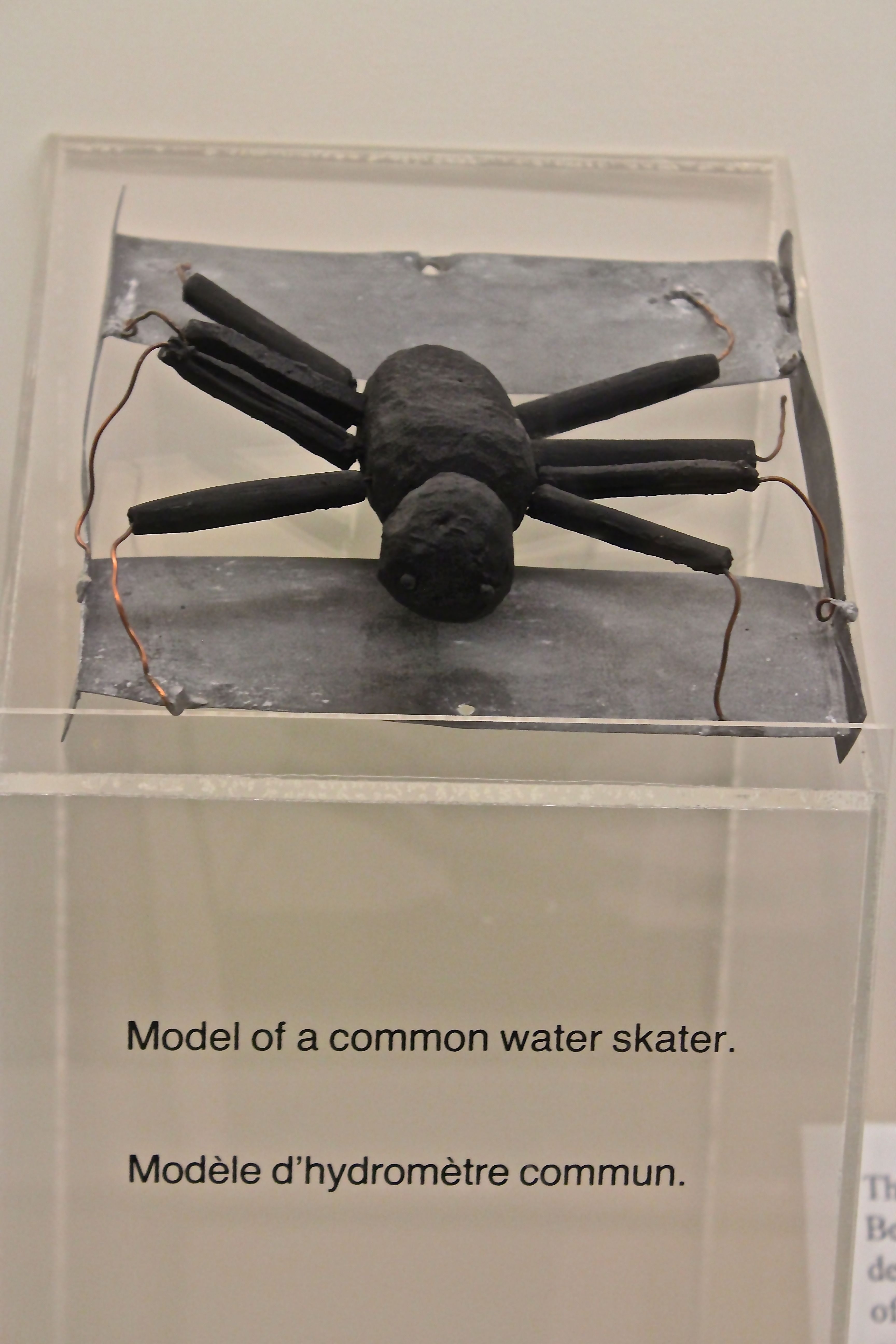
There were many interesting things on display and we learned about the vast variety of interests and knowledge Bell had, including a look at the common water skater model built by his friend, Hector McNeil. They used this to better understand nature’s own hydrofoil, so they could apply its basic principles to the hydrofoil they were building.

museums, The bells in Baddeck

I do have to wonder, though, if Alec and Mabel Bell sat on the bench looking out over St. Patrick’s Channel and wondered why there weren’t any truly interactive displays at the museum. In a film clip, one of their daughters mentions how he would bring science projects to the dinner table for them to investigate. We spent way too much time reading about him and not enough time actually experiencing the discoveries he made. Or trying to make our own–which is what he apparently encouraged.

musuems, lynx

I did spot a bit of wildlife at the Bell museum–a Canada lynx. We saw plenty of cat scat on our hikes. Apparently, the lynx were the top cats on the island until the Canso Causeway was built and the bobcats found their way across. I’m not sure which cat owned the scat we saw, but the lynx are the main cat predators in the higher elevations, while bobcats inhabit the lower elevations. I’m in awe of either one of these elusive animals.

 museum Highland Center

It poured as we raced from one building to another at the Highland Village Museum in Iona.

Musuems Highland Center

I liked this portrayal of life as it was presented in a timeline from building to building. The Scottish Gaelic culture came alive as we traveled from one setting to the next and watched life transform.

Museums, Highland school

We almost got to watch life transform for longer than we’d intended. While in the schoolhouse, we heard the door close and then a latch moved. We were about to be locked in for the night.

Bras D'Or Bras D'or2

On our final day, as we left Cape Breton, the sun shown brightly over Bras d’Or Lake.

thistle 1

The waning thistle signaled the end of our Cape Breton tour.

Shephards 1

But the fun wasn’t over. We stopped in Saint John, New Brunswick, and connected with family. Another leaf on the family tree for my guy.

family church

It also meant a stop at the sight of the former parish his ancestors knew so well.

family grave:Allen

And a photo op beside their grave stone.

family home

No trip to Musquash is complete without a visit to his namesake’s home.

family homestead map

And this time we met the fire chief who knew the family well and pointed out the original homestead site.

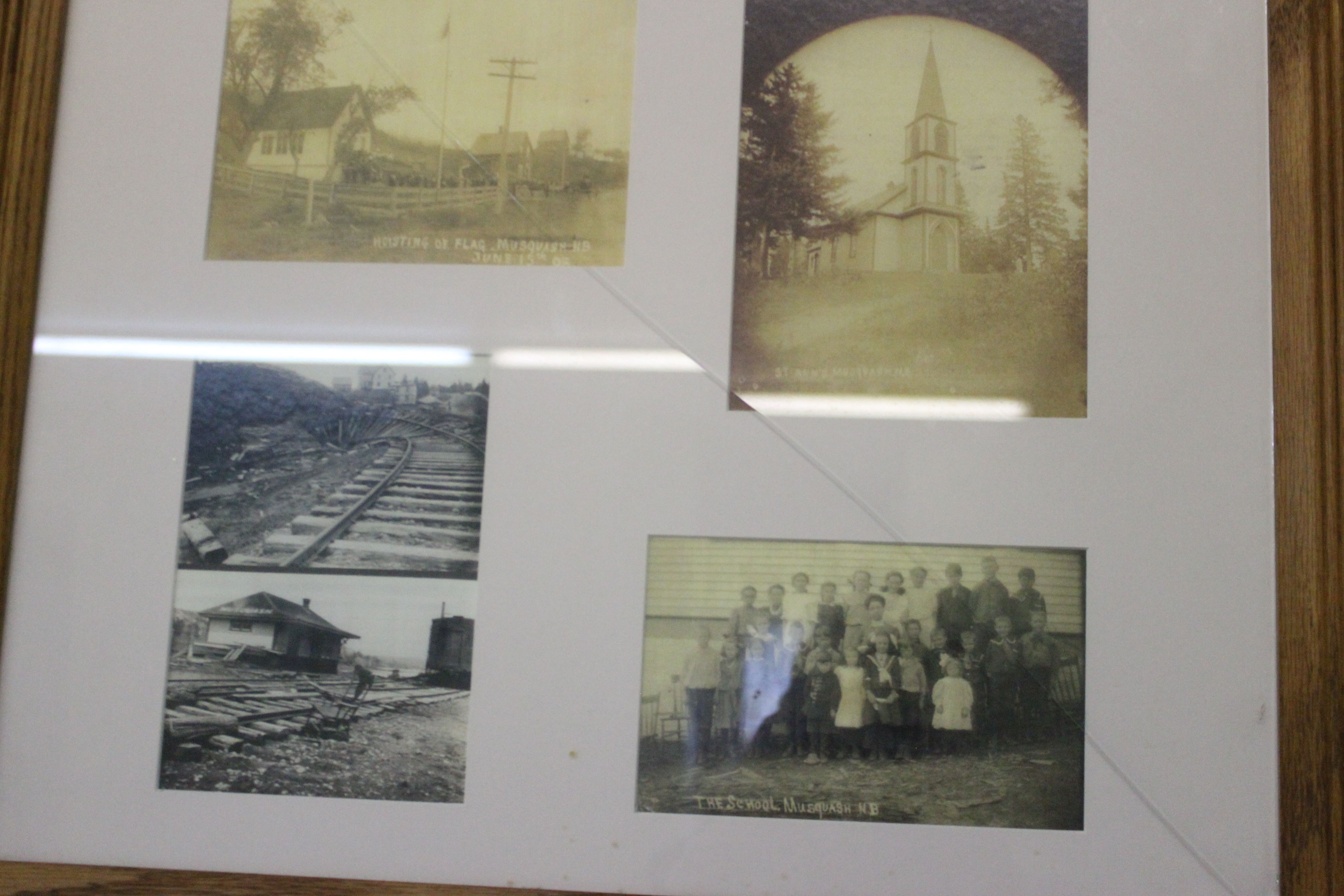
family photos

The chief obviously values his local history. He took us upstairs in the firehouse and pointed out other photos he’s collected. We suspect some of my guy’s ancestors are students in the lower righthand photo.

the end border crossing

At last, it was time to cross the border–back to reality. Mondate to Mondate. Cape style.

This post is dedicated to our friend, Dick Olmsted, who passed away this week. Dick knew the value of family and friends. We’ll forever be enriched by our memories of time well spent with him. And the wise guy he could be :-)

Nature Works

Sometimes when you walk off the beaten path you discover that you are actually on the beaten path. A path once created by those who walked before. Such was the case today for ten of us from the Greater Lovell Land Trust.

We began our journey by carpooling from the main road, Route 5. One side road led to another, much curvier and bumpier. Eventually, that road became a dirt road. And finally, it ended at a gate where we parked.

There were several choices of paths to follow and we choose the one closest to the brook.

early fall day

As we crossed the brook, my eye was drawn to the changing color of the maple leaves. The days have been warm and sunny, but the nights are beginning to cool down and so sugar made in the leaves during the day gets trapped there. As the leaves begin to stop their food-making process, the yellow, red and orange carotenoids that are masked by the green pigment all summer slowly become visible.

downy woodpecker's feathers

One of our docents had a keen eye today. While the rest walked past, she spotted this dinner site. Downy woodpecker feathers and body parts. Good find, Ann.

got mail

Got mail? Though this mailbox wasn’t our intended destination, it’s on the way. We wondered about its purpose, knowing it was beside a former logging/hunter camp. But still . . . it struck us as odd.

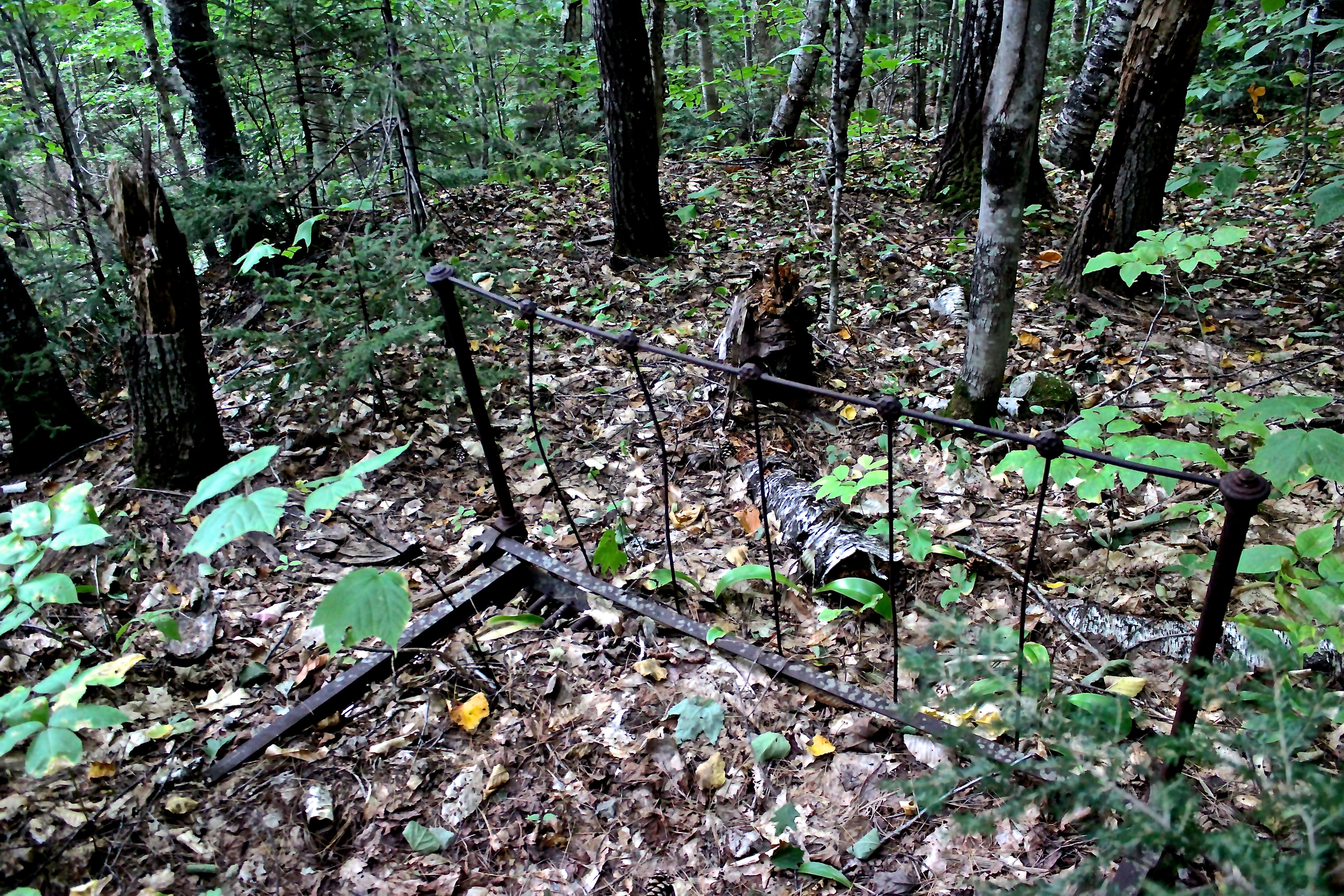
bed frame 1

Nature slowly reclaims that which was left behind.

massive yellow birch

We turned right at this yellow birch. Though we didn’t hug it, I think it would have taken two or three of us to embrace this tree. There were others equally as big or bigger–mostly sugar maples, which led a few to surmise that they were left because of their importance for sap production.

country lane

At last we were in the old neighborhood, where the path existed between two single-wide stone walls. The farmland is bordered by numerous walls that stand stalwart, though some sections are more ragged that others.

chatting in the parlor

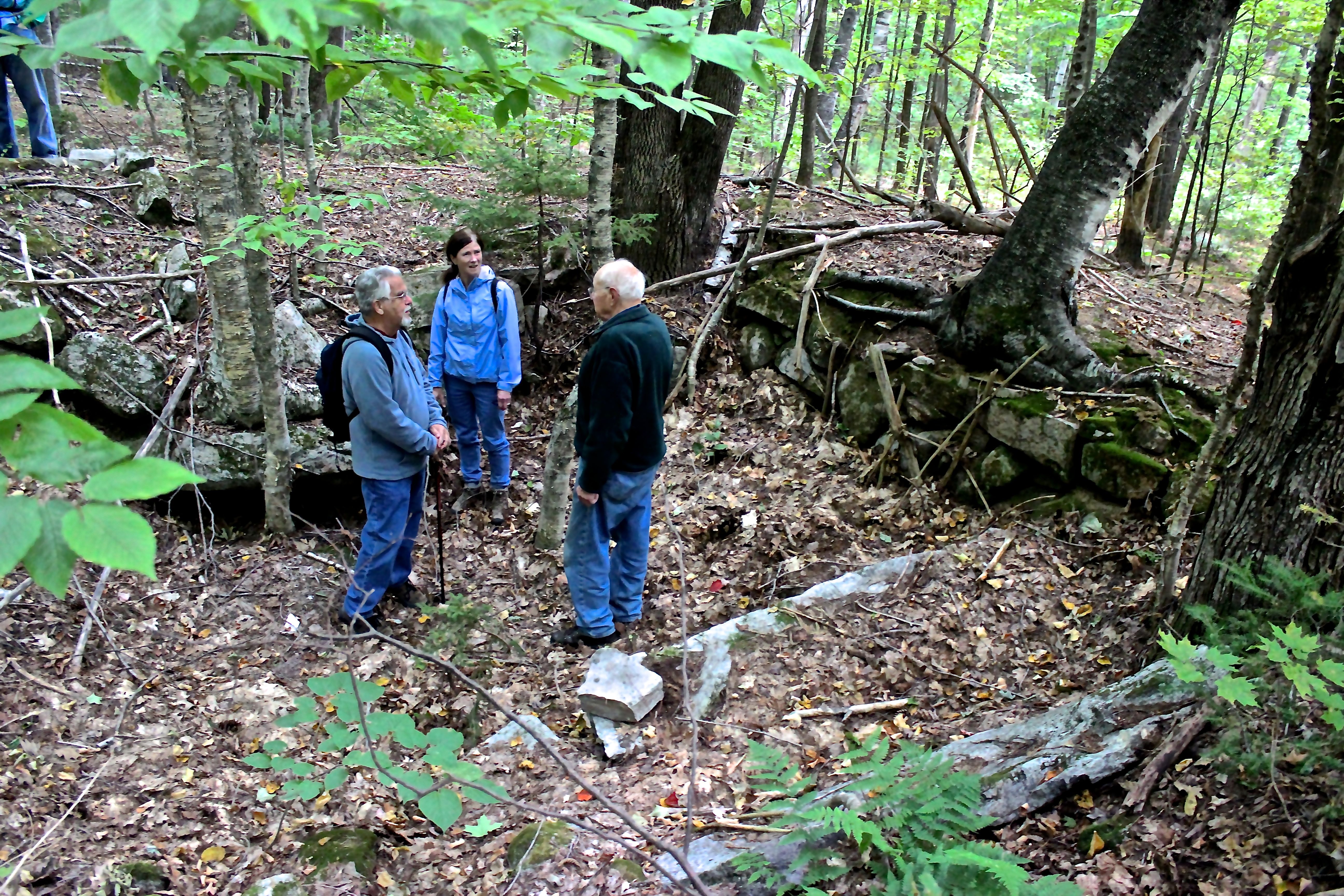
Standing in the parlor, my friends tried to make sense of an old foundation. Trees, roots, frost, weather, critters and humans have added to the foundation’s demise, but what remains left us in awe of those who had lived on this land. We suspect the neighborhood was abandoned post Civil War, when soldiers/farmers discovered that there was fertile ground elsewhere where stone potatoes were not the number one crop.

root cellar

Within the cellar of a neighboring foundation was a root cellar.

root cellar 2

Taking a closer look, we learned that someone else has made use of it. Or should I say something else–a porcupine. The back corner is filled with scat.

snapping turtle headshape

We explored the hillside and checked out some boulders taller than us. The ragged edges reminded us that this didn’t get rolled about by the glacier, but may have been part of a boulder field left behind. Sometimes our imagination turned from the historical nature to whimsy. I see a snapping turtle head; someone else saw a frog in this stone formation.

moose femur

Another great find by the woman in blue (Ann, you had eagle eyes today!) was the femur of a moose. It had some nibble marks–evidence that a rodent had been gnawing it to get the benefit of the calcium. The circle of life dictates that something will then eat the rodent, and the calcium will continue to make its way through the food web.

Sarah's stoneMary's stoneEphraim's stone

We bushwhacked to the site of a cemetery. It was interesting to note that the two stones on the left are slate. Hmmm . . . it would have cost more money for slate since it’s not a local stone.

barbed wire

On the way back, someone spotted barbed wire growing through a tree–or rather, a tree that grew around barbed wire, another indication of this land’s use once upon a time.

shrew 2

And a dead shrew–easy to identify by its elongated snout. It was killed but not consumed, probably because it has a musky gland that makes it smell unappetizing–but it’s not until the animal has died that the smell is evident. Why after death? One of my mentors, Kevin Harding, was with us today and so I posed this question to him. He and Naturalist David Brown theorize that one shrew takes a hit for the whole team. In other words, its predators might recognize the next shrew and decide to let it live. Maybe so.

Hobblebush

If you’ve been following my wanders, you know I can’t pass by a hobblebush without admiring it.

GB 3A

Three hours later we returned to the trailhead, thankful for a chance to spend time together on an autumn day and wonder how nature works.

Questions To Be Asked

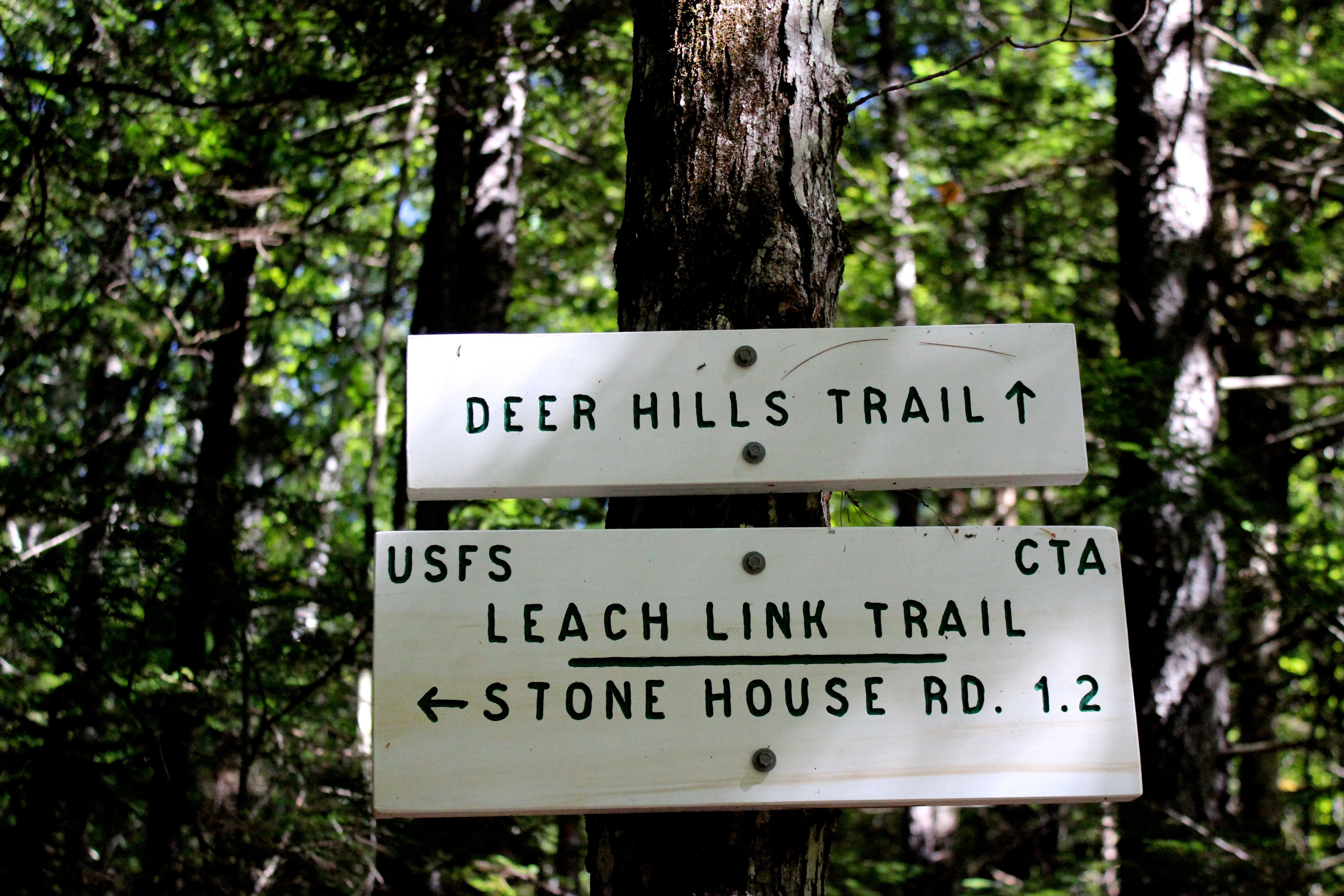
A friend and I drove to Evans Notch today with the mission of exploring a trail that was new to us. The Leach Link Trail connects Stone House Road to the Deer Hill trail system.

IMG_1338

We started at Stone House Road and turned back at the Cold River Dam. Not a long trail, certainly. And rather flat for the most part. Despite that . . . it took us four hours to cover 2.4 miles. You might say we stopped frequently.

There was a lot to see along this enchanted path. And questions to be asked.

CB 2

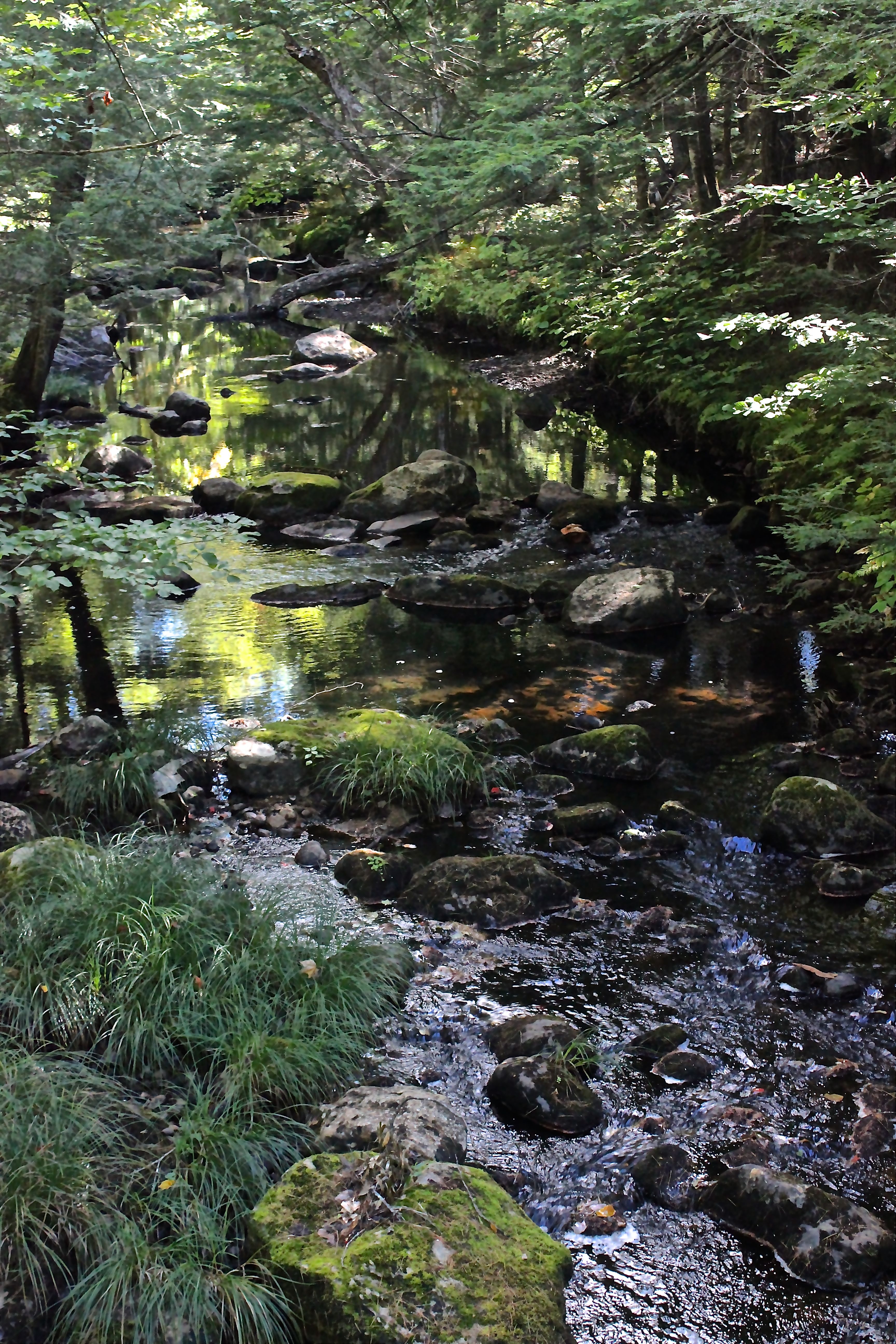
We walked beside the Cold River as we passed through hemlock groves and mixed hardwoods covered with a myriad of mosses and liverworts.

lungwort

Because it had rained last night, Lungwort, an indicator of rich, unpolluted areas, stood out among the tree necklaces. Why does it turn green when wet?

water strider

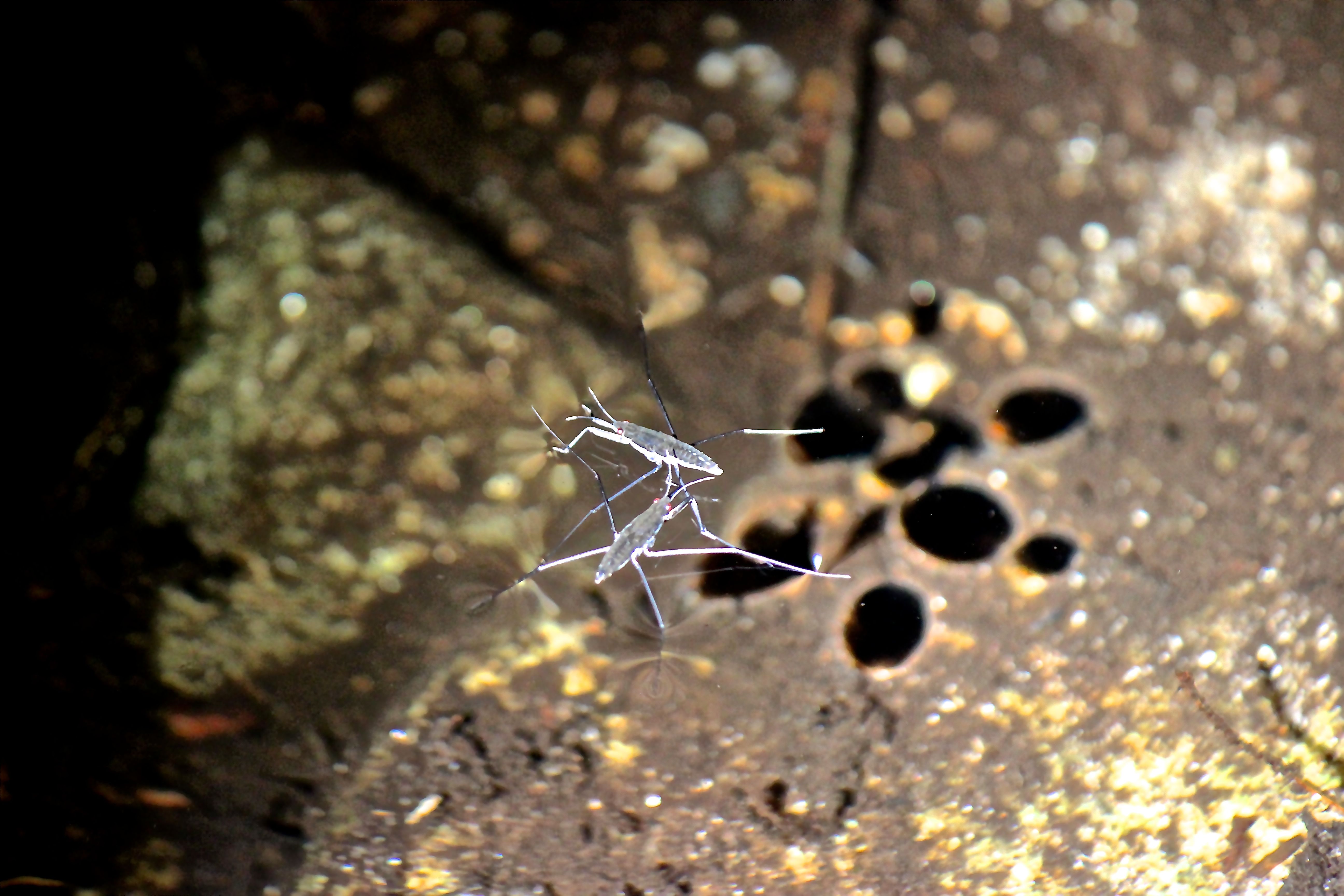
The shadow of the water strider tells its story. To our eyes, it looks like their actual feet are tiny and insignificant. What we can’t see is the  fuzzy little hairs that both repel water and trap tiny air bubbles, thus allowing them to float or skate along the water’s surface. But still, why is the foot shadow so big while the body shadow is more relative to the strider’s size? Is it the movement of the foot against the water that creates the shadow?

bobcat

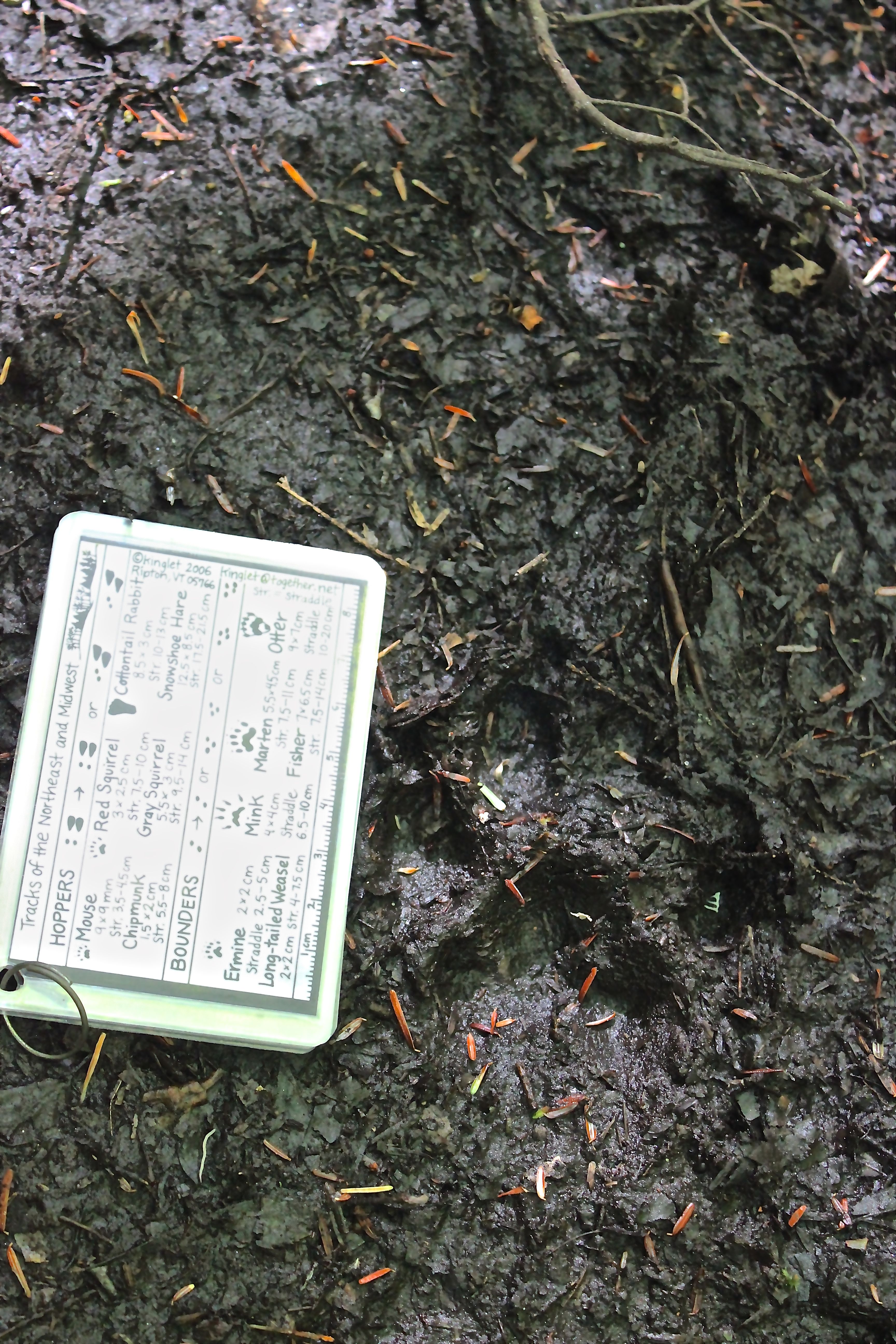
While the river was to our right on the way to the dam, we noted ledges on the left. Prime habitat for the maker of this print: bobcat. You might be able to see nail marks in front of the toes. We always say that cats retract their nails, but in mud like this, traction helps.

bobcat & coyote

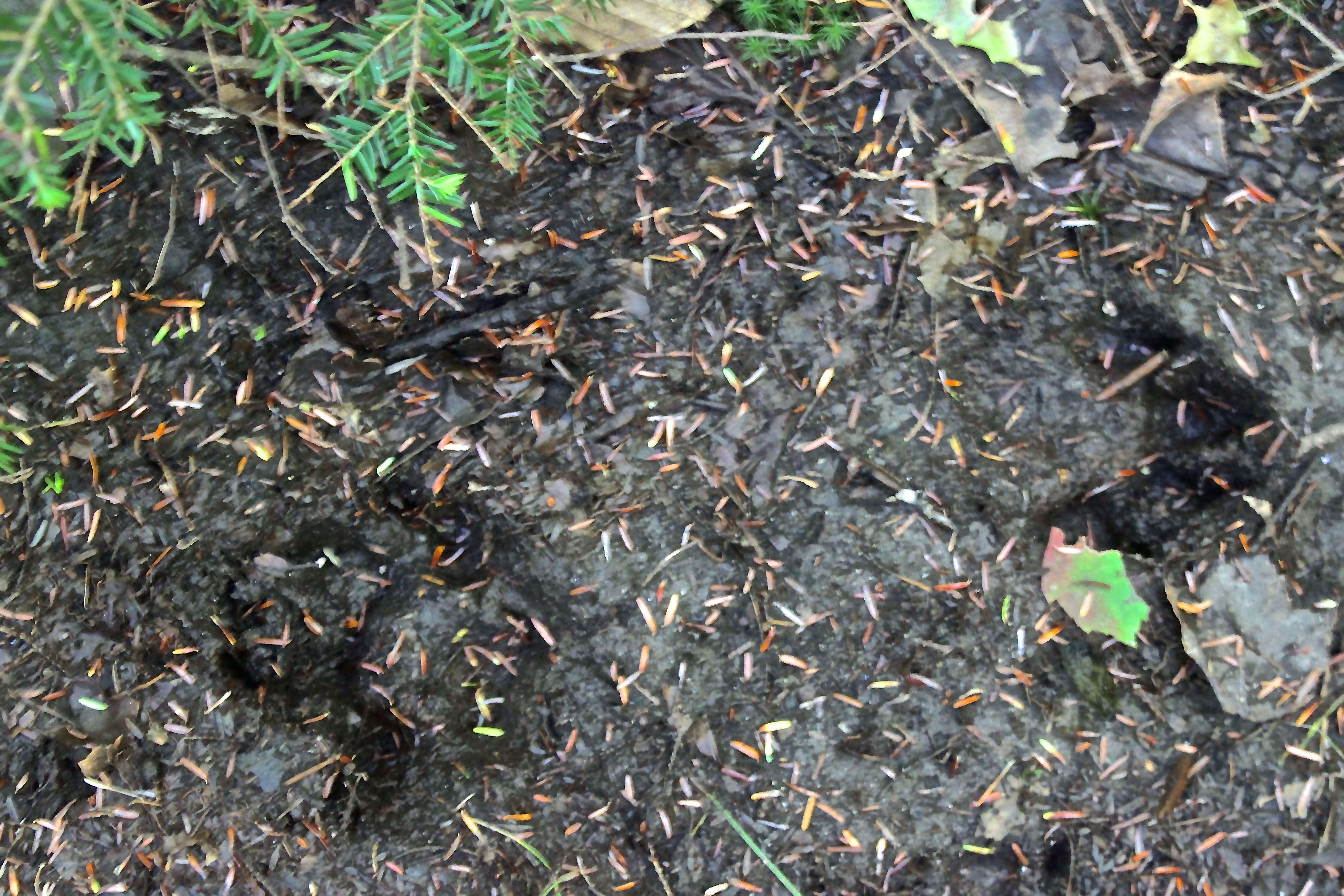
A little further along we discovered the bobcat was still traveling in the same direction and a coyote was headed the opposite way. What were they seeking? What was the difference in time of their passing?

CR4

Periodically, we slipped off the trail to explore beside the river.

WH 3

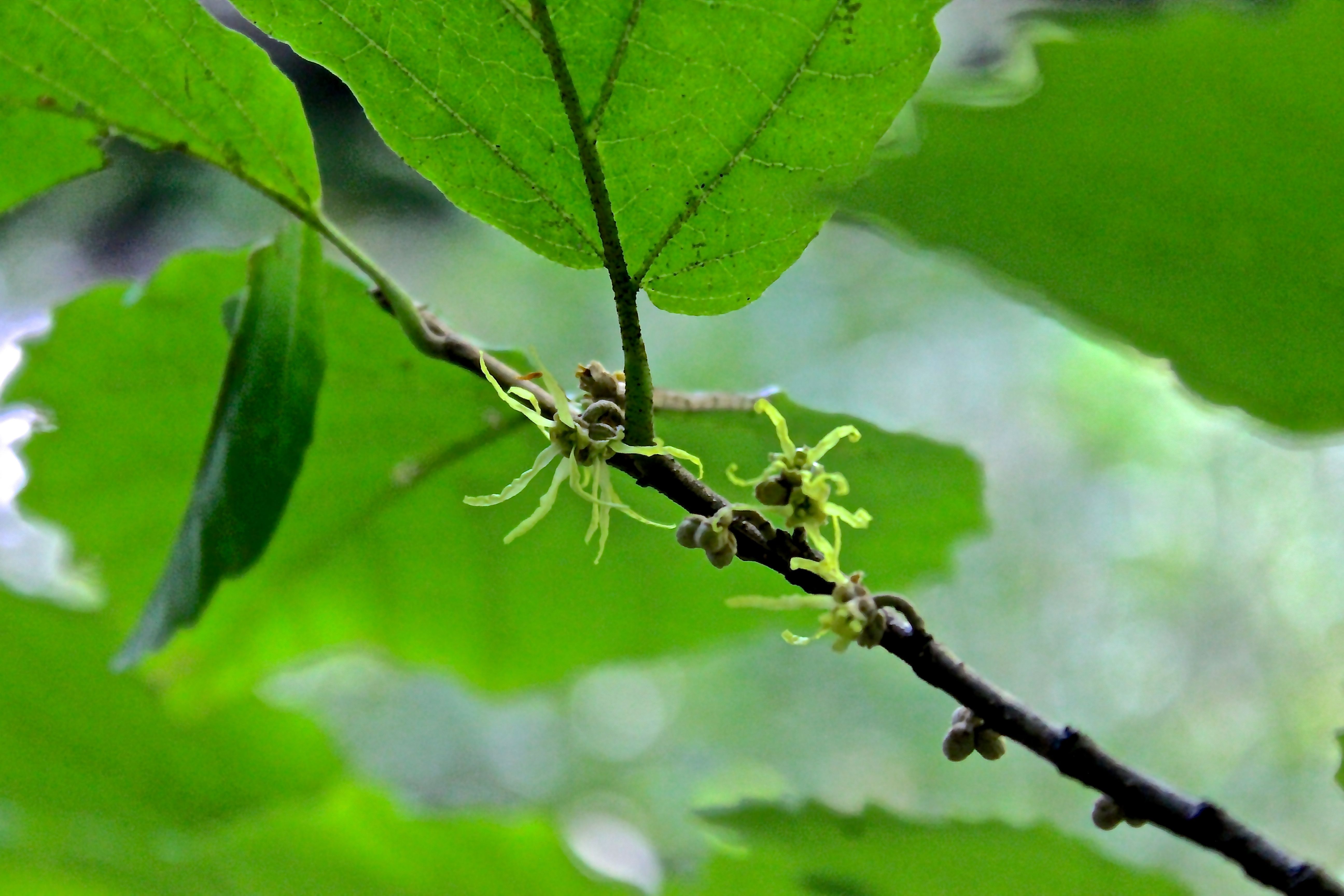
Ribbony witchhazel blossoms brightened our day–not that it was dark.

grasshopper 1

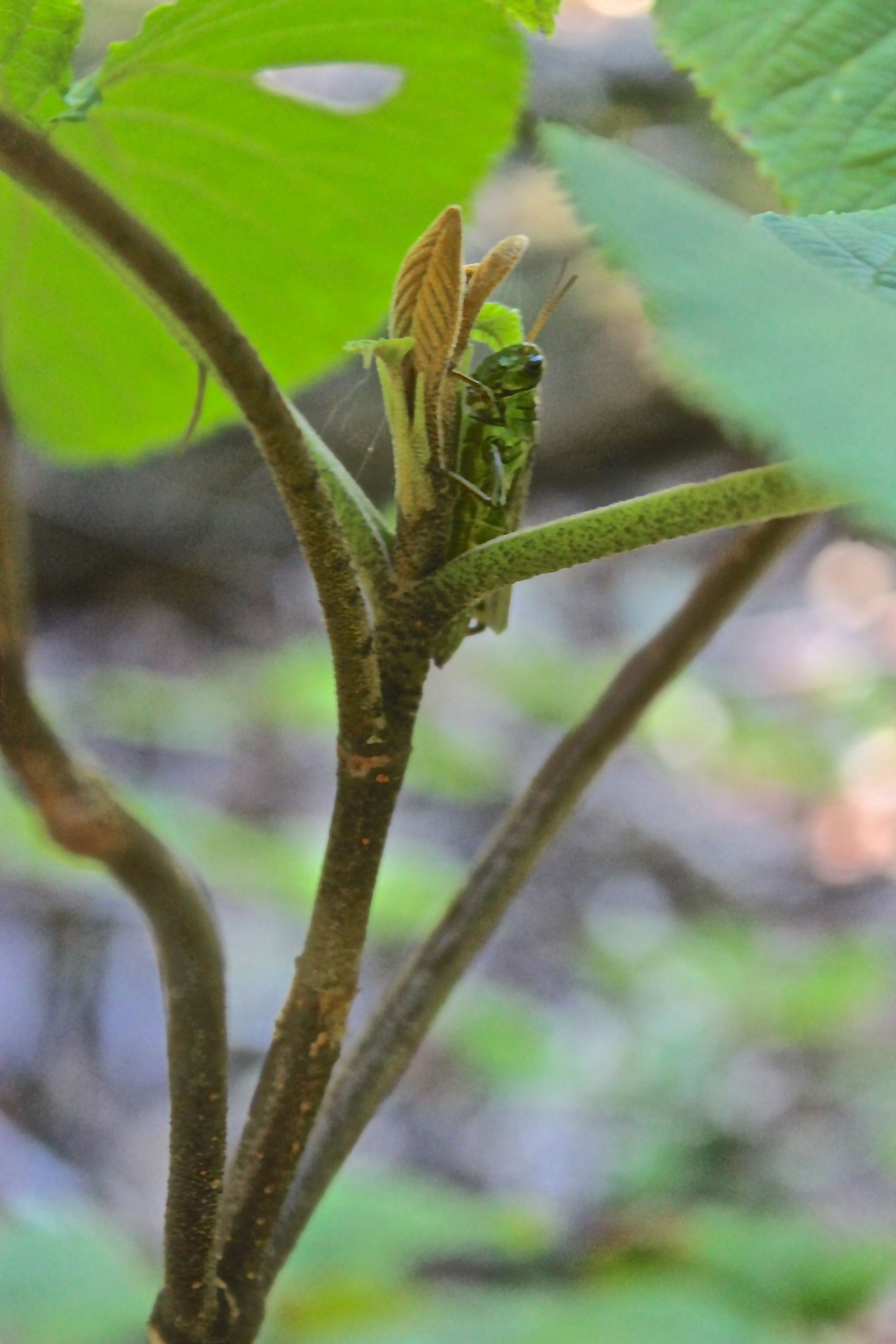
We weren’t the only ones taking a closer look at hobblebush.

hobblebush berries

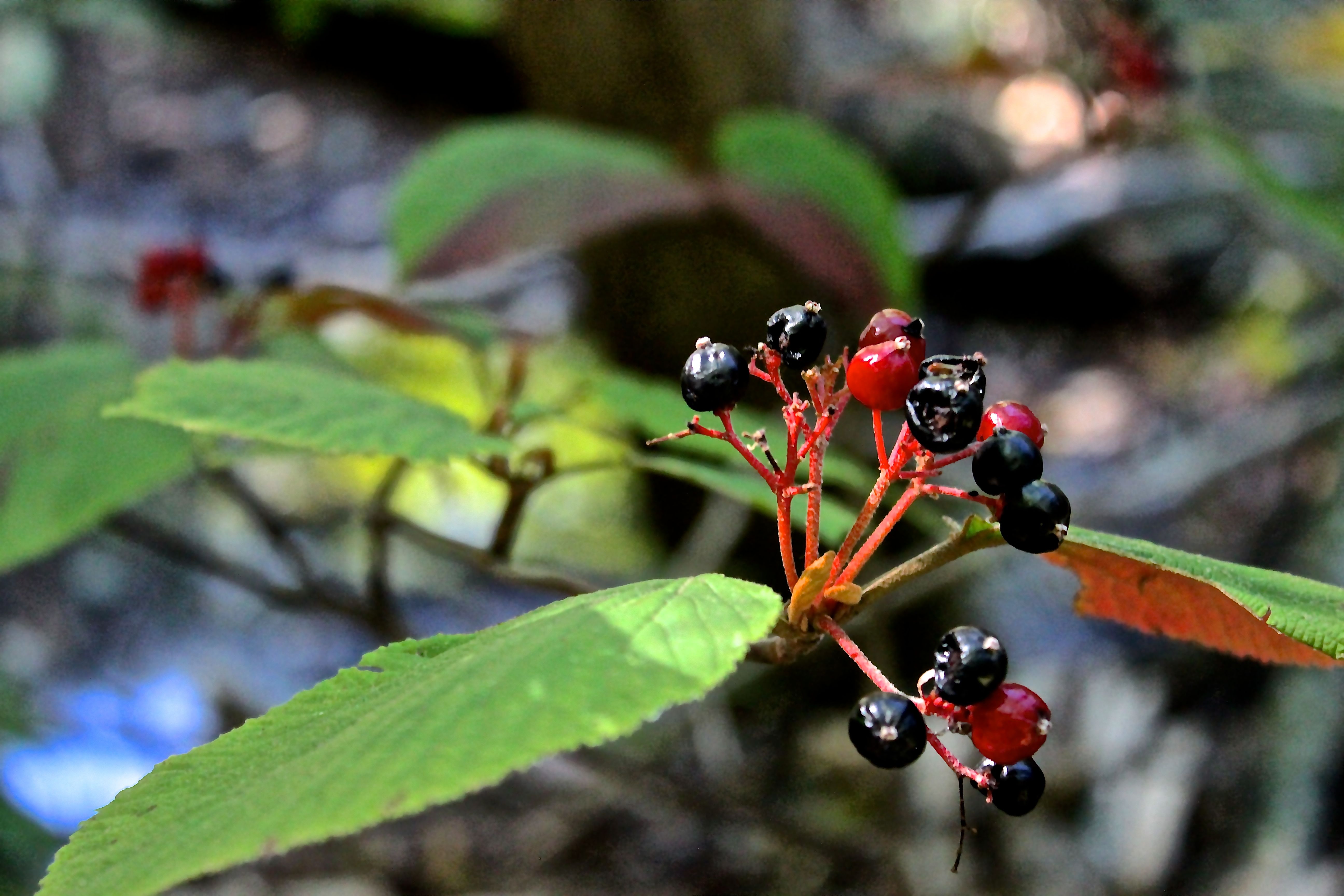
As its leaves begin to change from green to plum, the berries mature and transform from red to dark blue. Will they get eaten before they all shrivel? We think they’ll be consumed by birds and mammals.

doll's eye

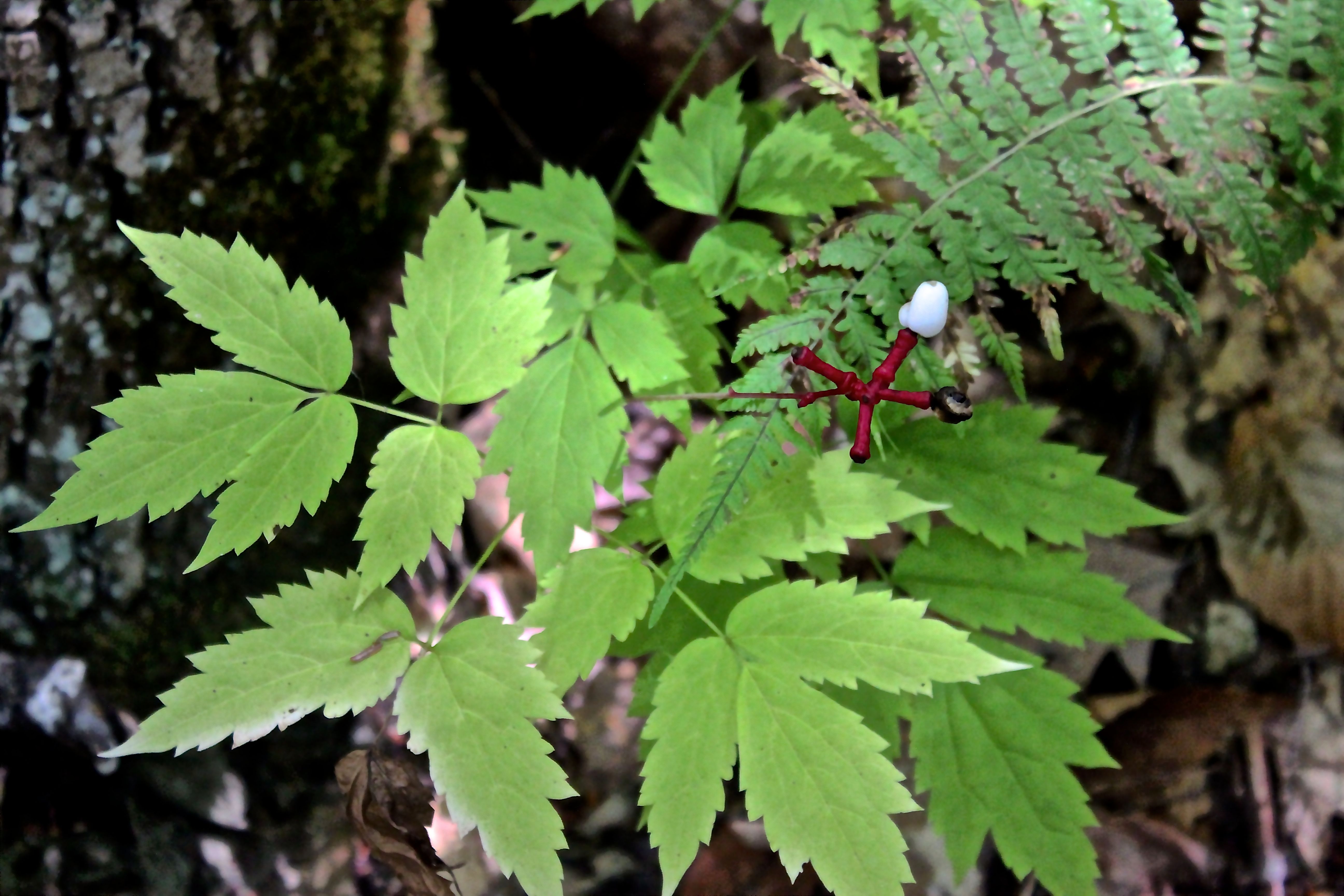
Most of the “doll’s eye” fruit is missing from this white baneberry. The archaic definition of “bane” is something, typically poison, that causes death. I’ve read that  ingesting the berries can bring on symptoms such as stomach cramps, vomiting, diarrhea, delirium and circulatory failure. Think: respiratory distress and cardiac arrest. YIKES. So what may have eaten these little white eyeballs? Wildlife may browse it, but it’s said to be quite unpalatable and low in nutrition. Interestingly, birds are unaffected by its toxic qualities.

Indian Cucumber root

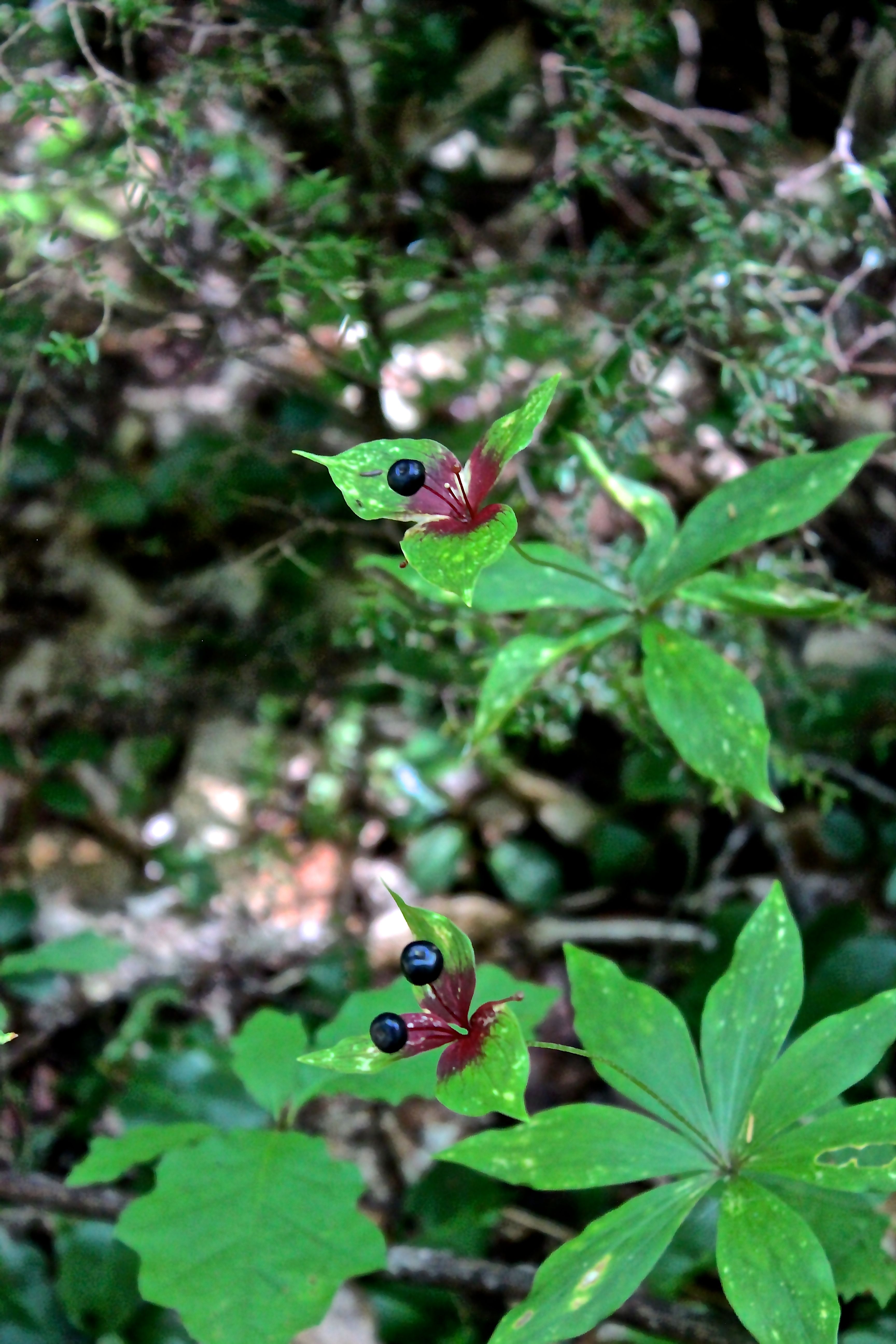
Berry season is important to migrating birds. The purplish black berries of Indian Cucumber-root are only consumed by birds. Other animals, however, prefer the stem and cucumberish-flavored root of this double decker plant. Why does the center of the upper whorl of leaves turn red? Is this an advertisement for birds?

state line

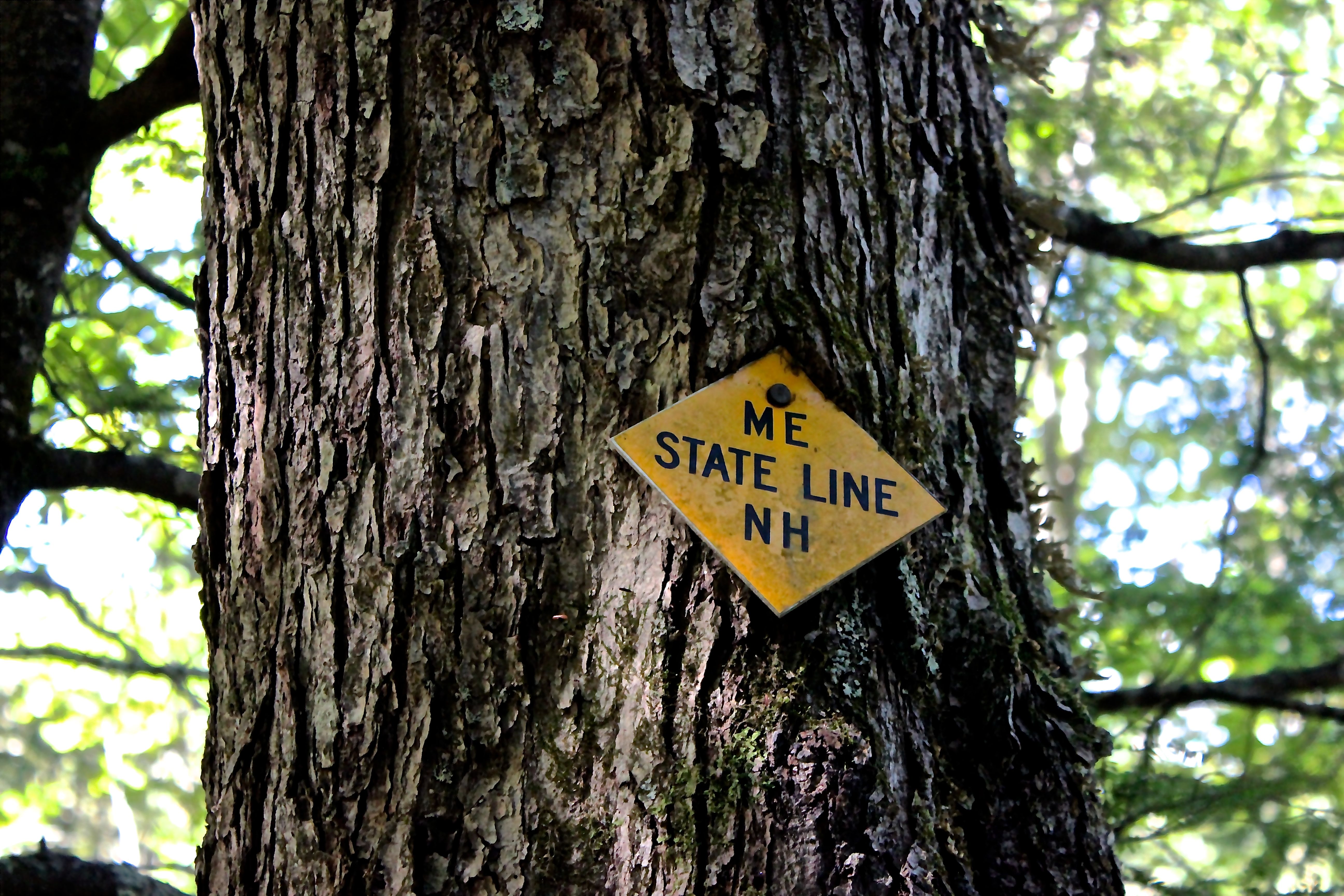
Soon, well, not all that soon, we arrived at the state line and passed onto Upper Saco Valley Land Trust property.

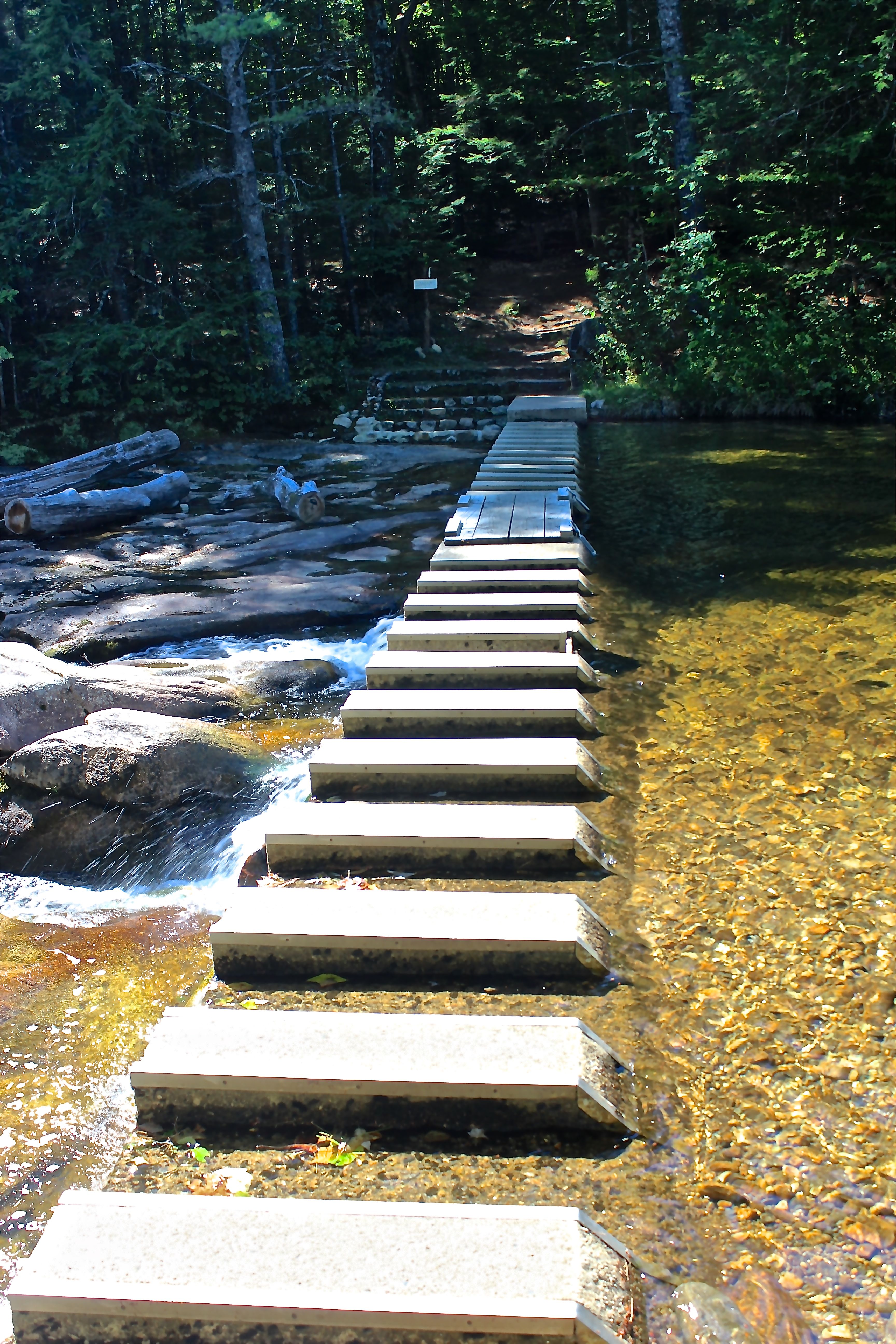
dam 3

And then we came upon the dam.

dam 2

It was the perfect day to sit on the rocks and eat a peanut butter and jam sandwich–with butter.

 tree face

As we walked back toward Stone House Road, we realized we were being watched. Perhaps this tree muse has all the answers.

Thanks to P.K. for a delightful wander and a chance to wonder together.

Giving thanks post 9/11

As I was wandering about today, memories of 9/11 passed through my mind. Sadly, it’s one of those days that will forever mark time.

I was at work when a friend called and told us to turn on the TV. We spent the rest of the day shaking, crying and watching in horror as the events unfolded. In the afternoon, I sat on the couch with our young sons and tried to explain what had happened. How were they to comprehend something I didn’t get?

And then, we headed to soccer practice. I remember feeling angry that practice hadn’t been cancelled, but in reality, it was probably the best thing for all of us. It gave us a sense of normalcy and a chance to gather in community.

I also remember the first time I heard an airplane fly when the skyway was finally reopened. I had just opened the door to step outside and actually ducked under the awning at the sound of the plane, not aware in that moment of what I was doing.

My world view changed that day. But, thankfully, I live in a place where I can step outside and walk freely.

female Ichneumon Wasp

 I pay attention to what is underfoot, like this female ichneumon wasp,

green cicada

green cicada,

green frog

green frog and

toad

American toad.

chippy

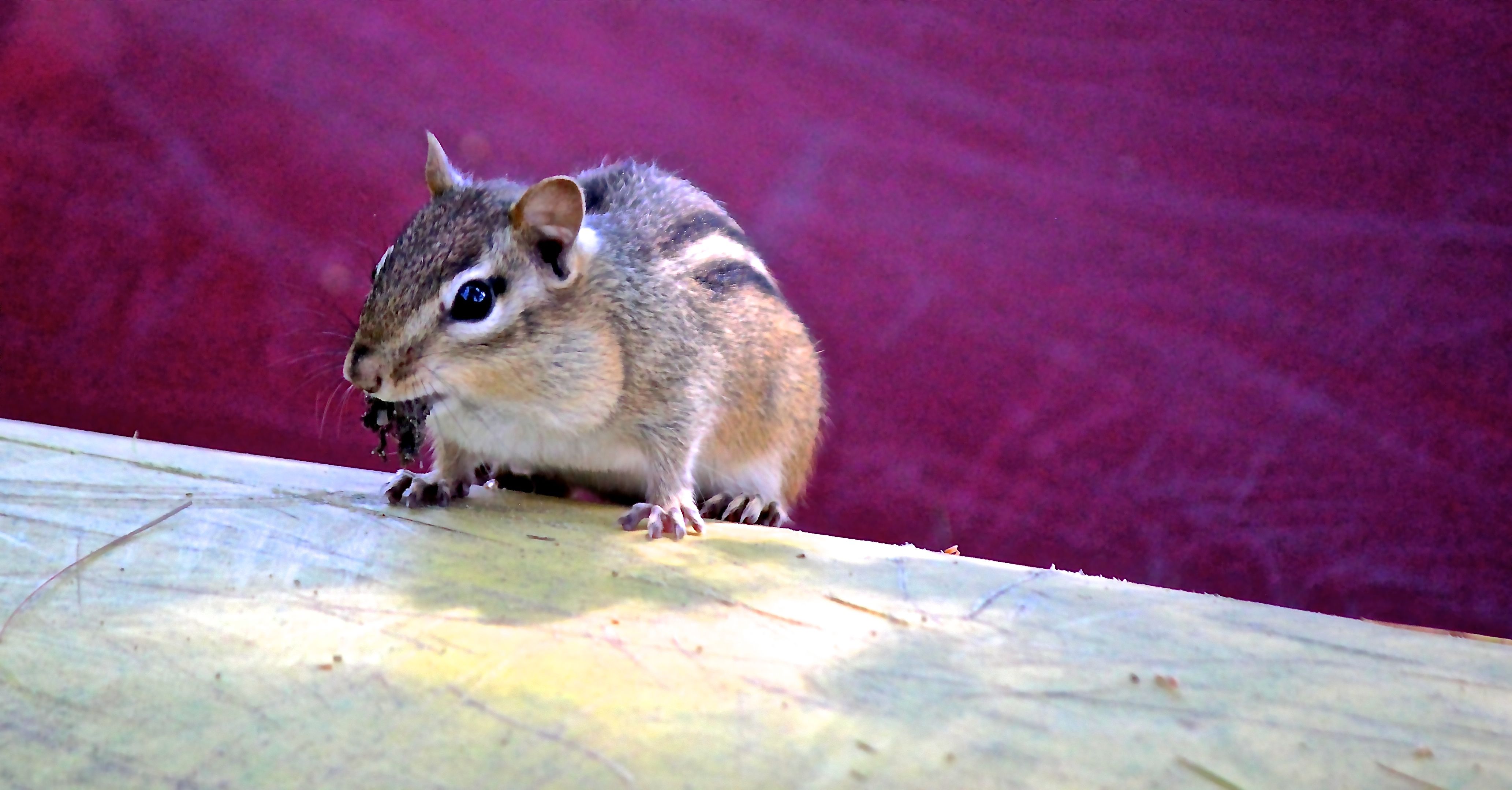
I notice those who try to hide, like this chipmunk,

grasshopper in fern

grasshopper,

yellowjackets 2

and sleeping yellowjackets.

lady beetle

I observe the eating habits of a lady beetle,

sawfly caterpillars on quaking aspen

sawfly caterpillars,

horned caterpillar

 and a horned caterpillar.

bluejay, fall webworm

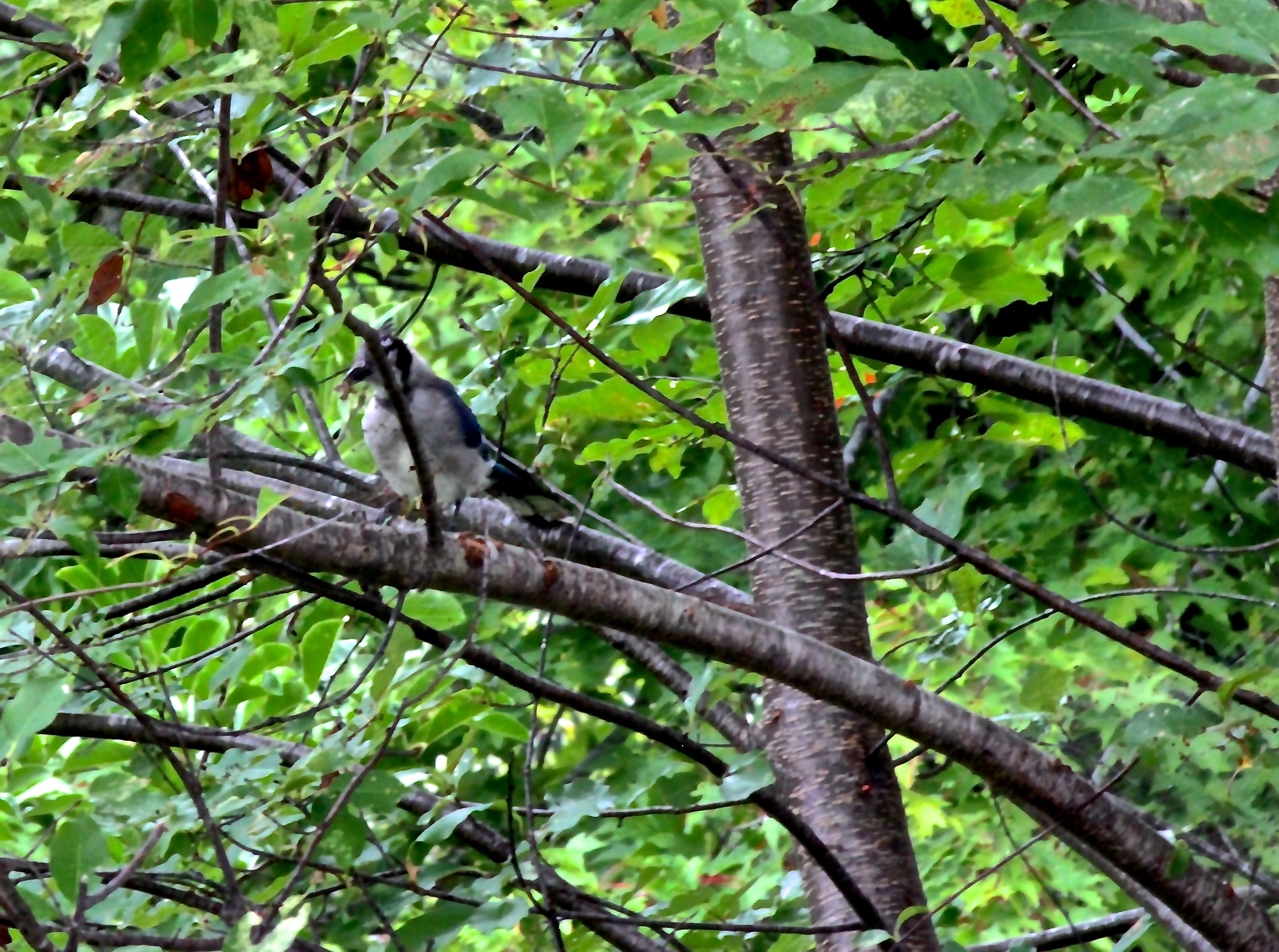
I watch a blue jay in the cherry tree and

bluejay and cat.

notice how he thrashes the fall webworm caterpillars against the bark before eating them. I assume he’s trying to get the hair off their bodies.

r e nest caught eye

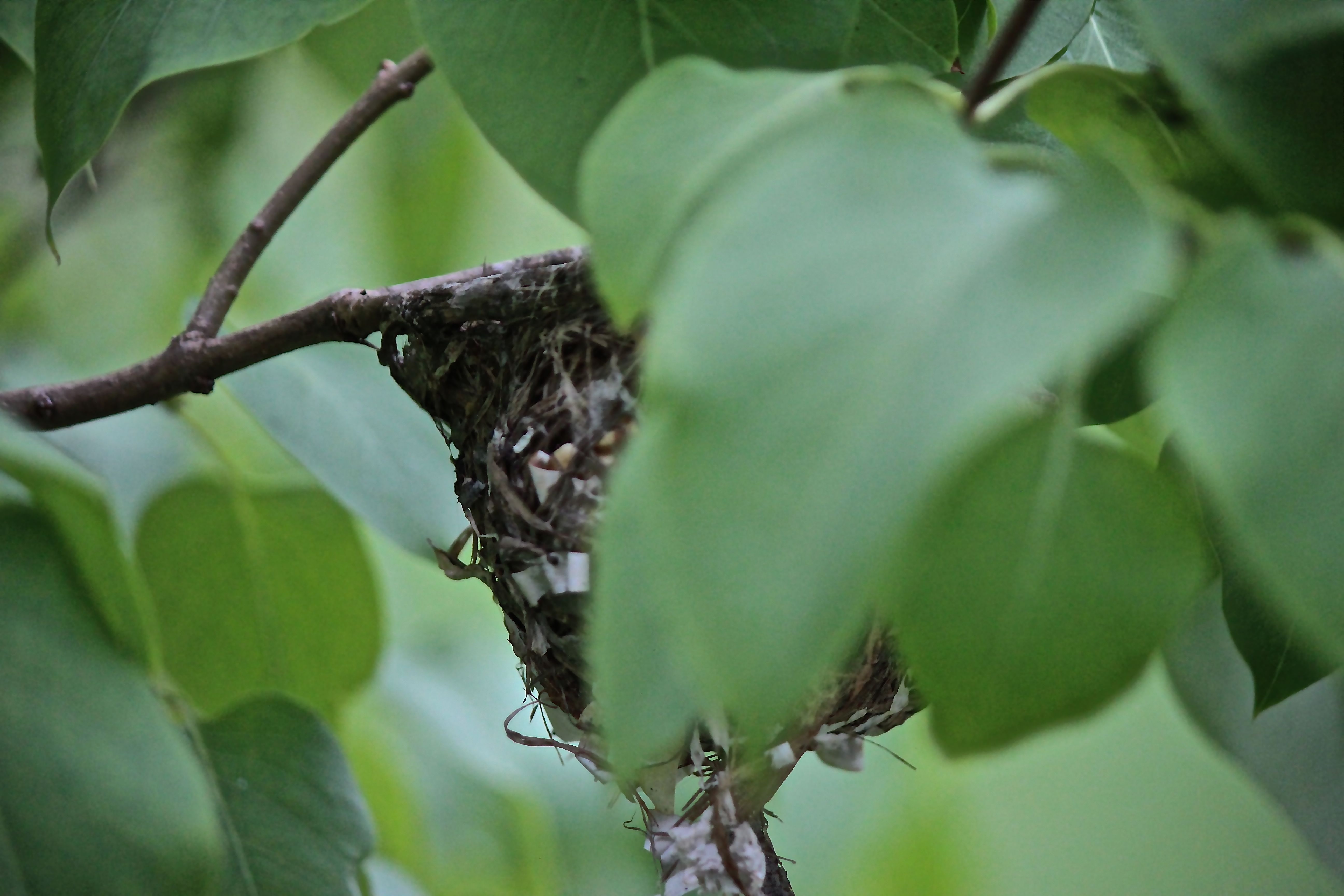
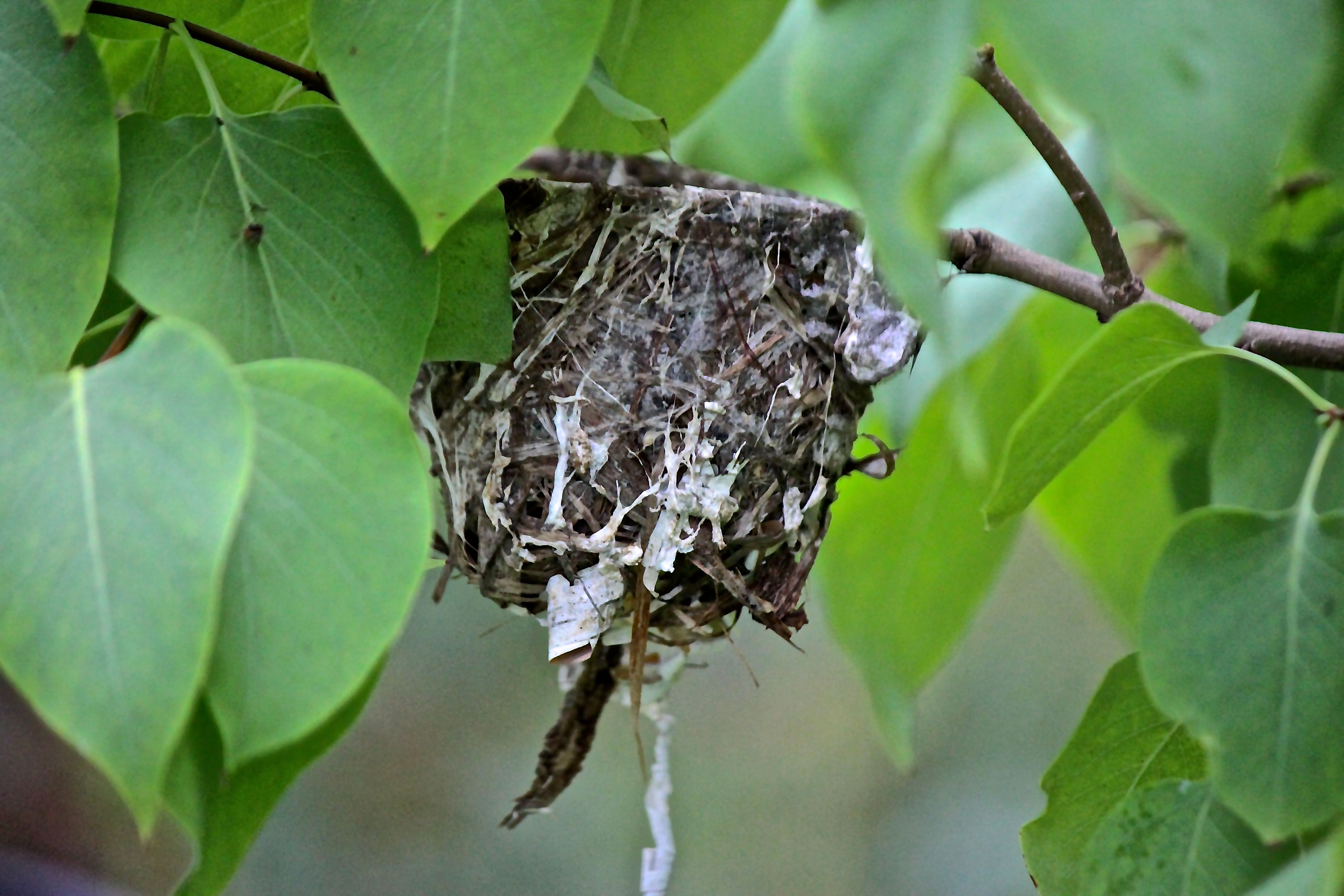
I make new discoveries, like this cupped nest in the lilac bush right off the deck.

nest 3

I think it was created by a red-eyed vireo, but I could be wrong.

sawfly caterpillars ?

 I will forever question what I see and how it works, but I’m thankful that I am able to do that.

To think for myself. To wander and wonder.

Thank you to all who lost their lives that fateful day, to their families and to all who worked so hard in the days that followed and those who continue to protect us all.


Ten Fun Finds in the Last 24 Hours

jw2

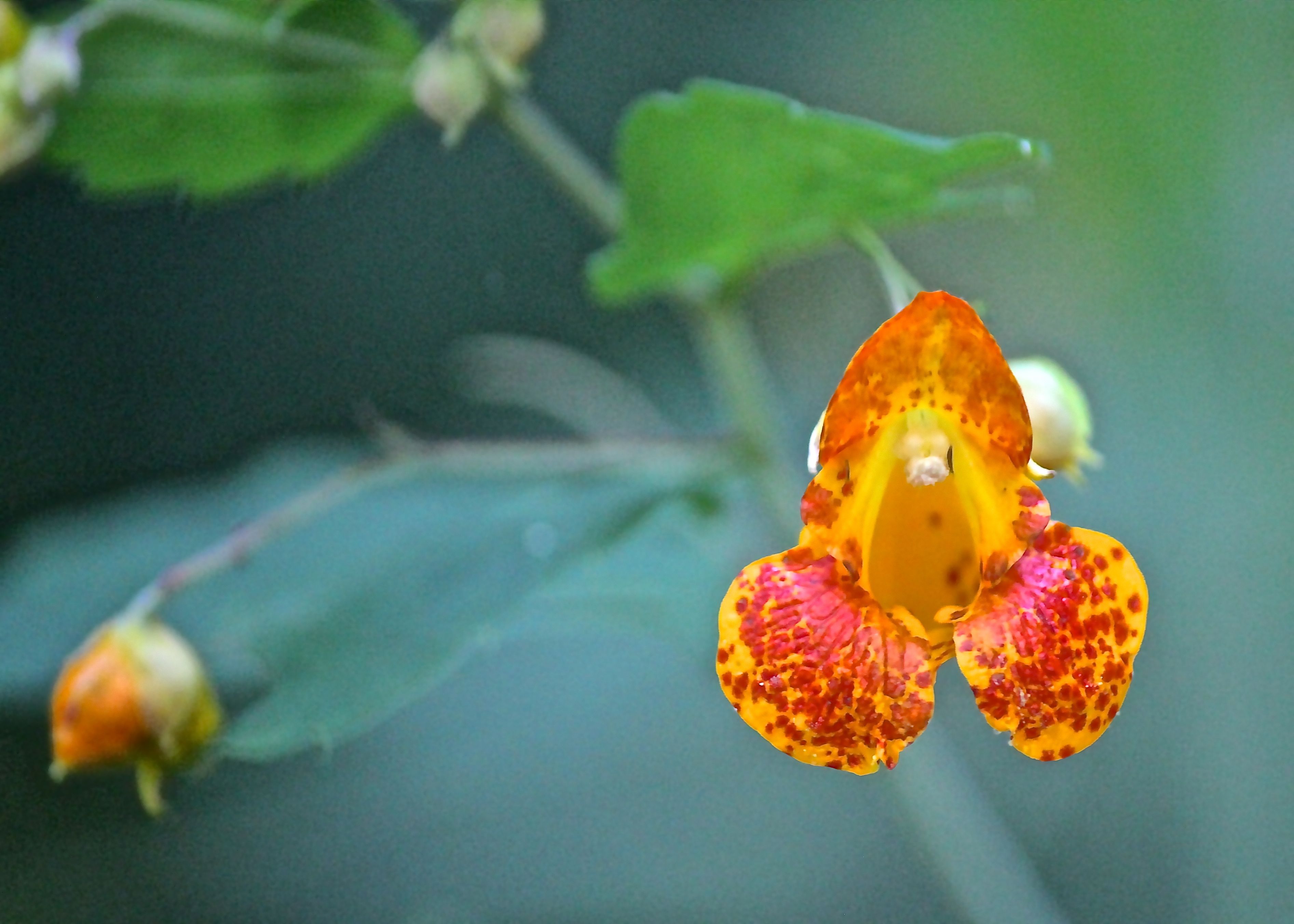
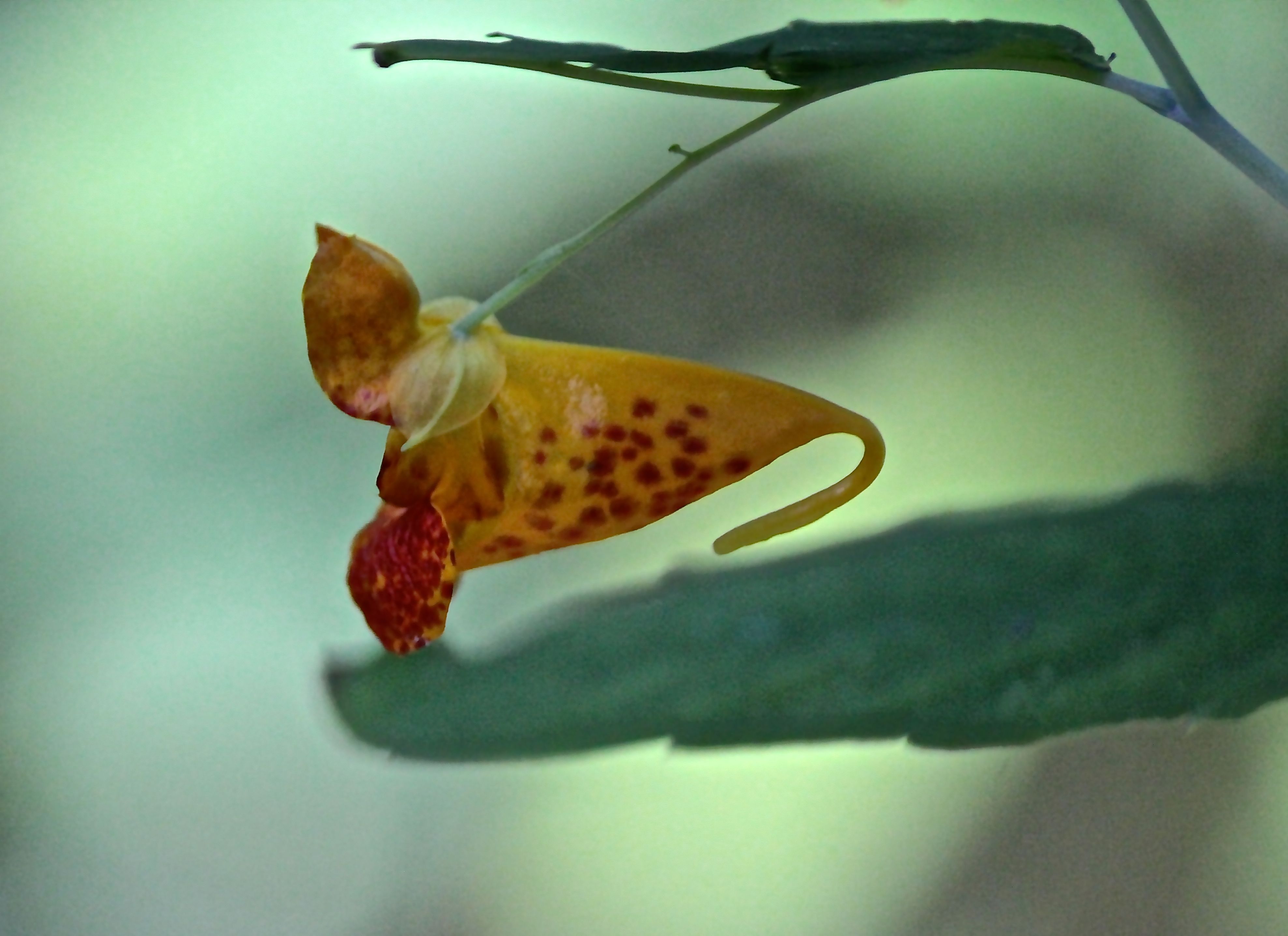
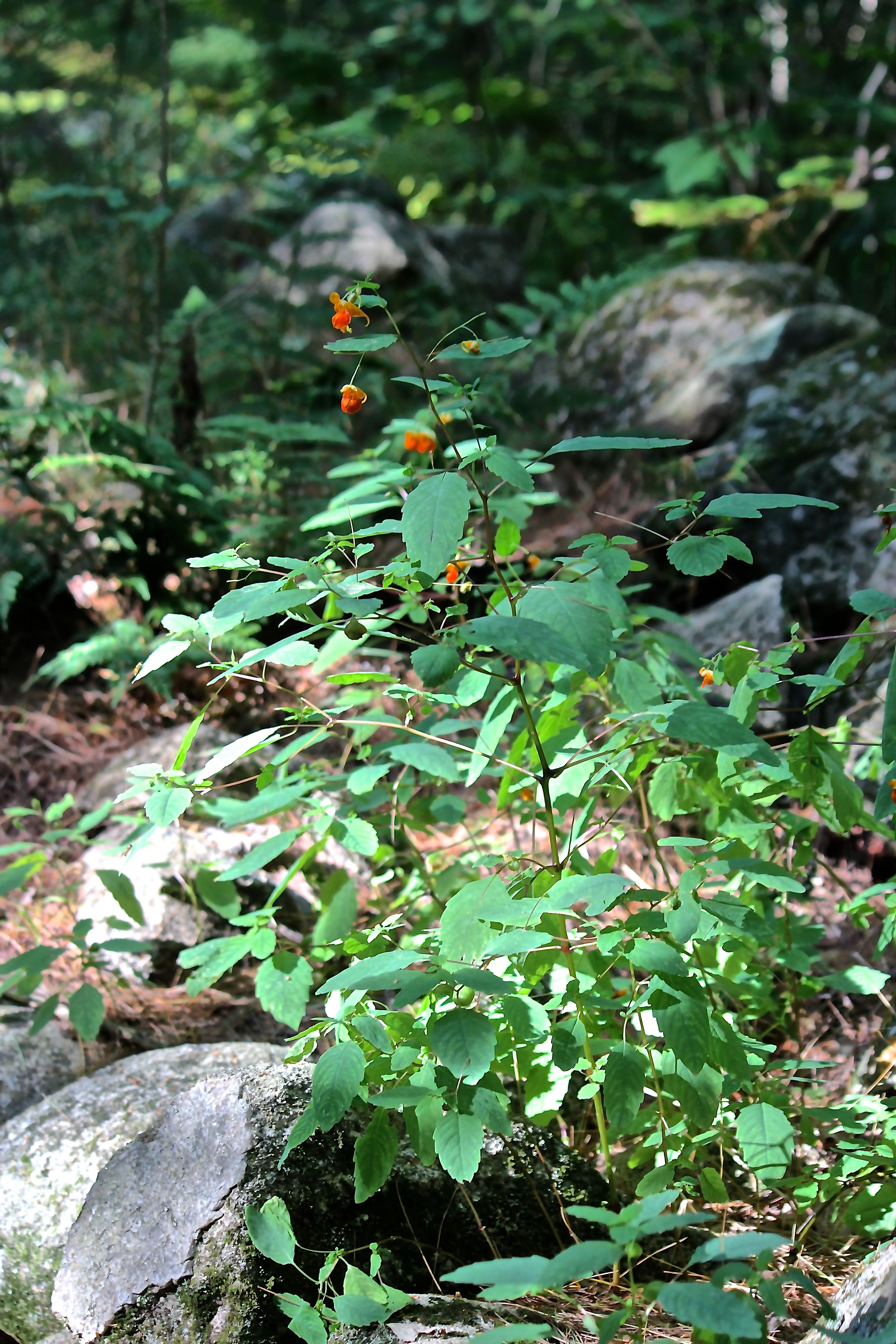
  1. Orange jewelweed, aka Spotted Touch-Me-Not. I found these lining the path during a quick walk through Pondicherry Park yesterday afternoon. The flower will form a capsule that bursts open and flings seeds when touched.

jewelweed 1

One of the cool things about jewelweed’s structure is its spurred sac that extends backwards.

jw3 on the wall

Though it likes the moist woodland paths in the park, I also found it in bloom atop a stonewall.

turtlehead

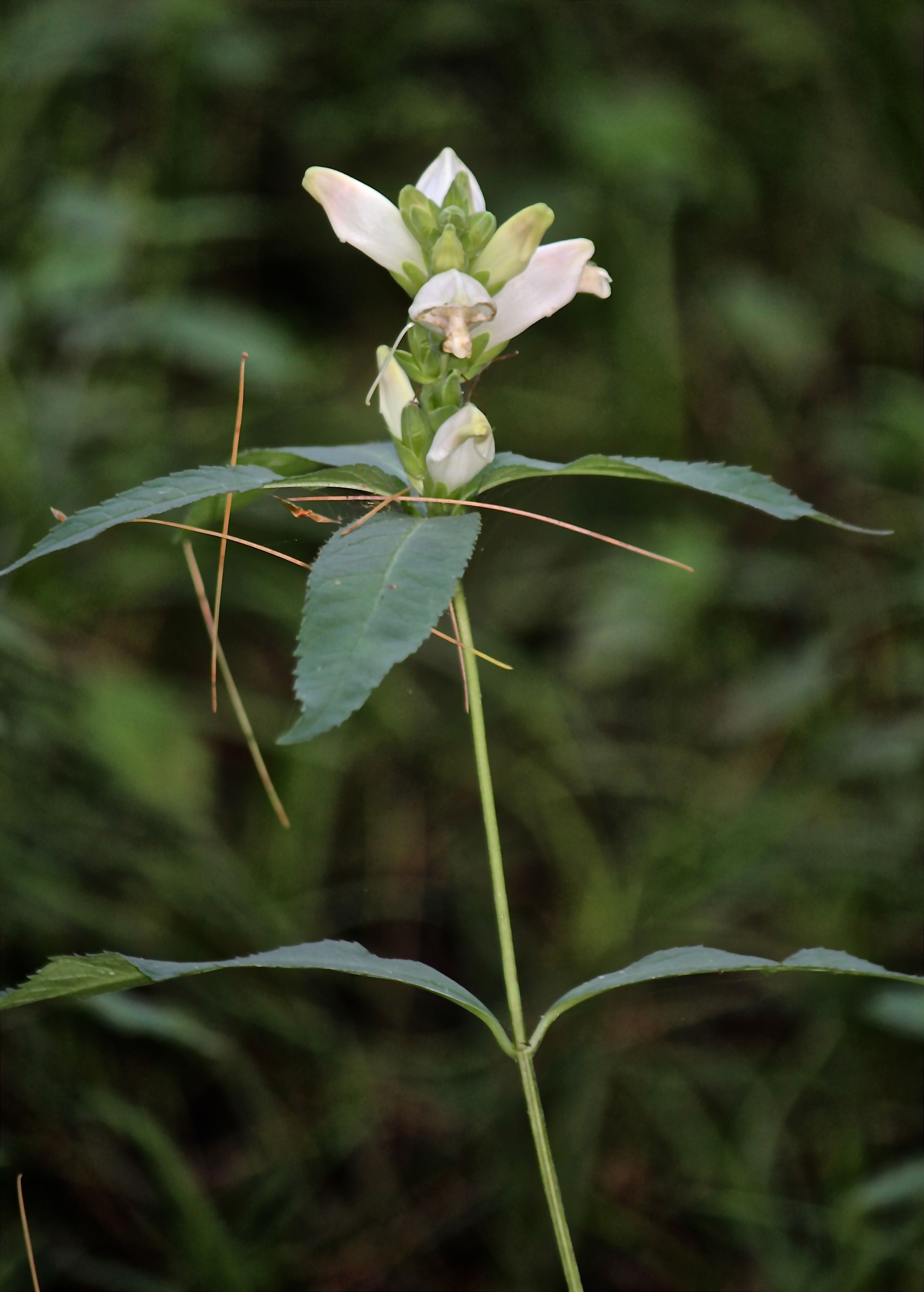
2. I’d never seen turtlehead until I moved to Maine. As a kid, I collected turtles–think stuffed, ceramic, wooden, glass. A neighbor even gave me a shell, which I still have. So, when we moved into our old farmhouse, I was excited to discover pink turtlehead growing in the garden. And on several occasions this past week, including yesterday’s walk in the park, white turtlehead was in bloom. It’s so named for the two-lipped appearance, with the upper lip arching downward and strongly suggesting a turtle’s head.

equisetum

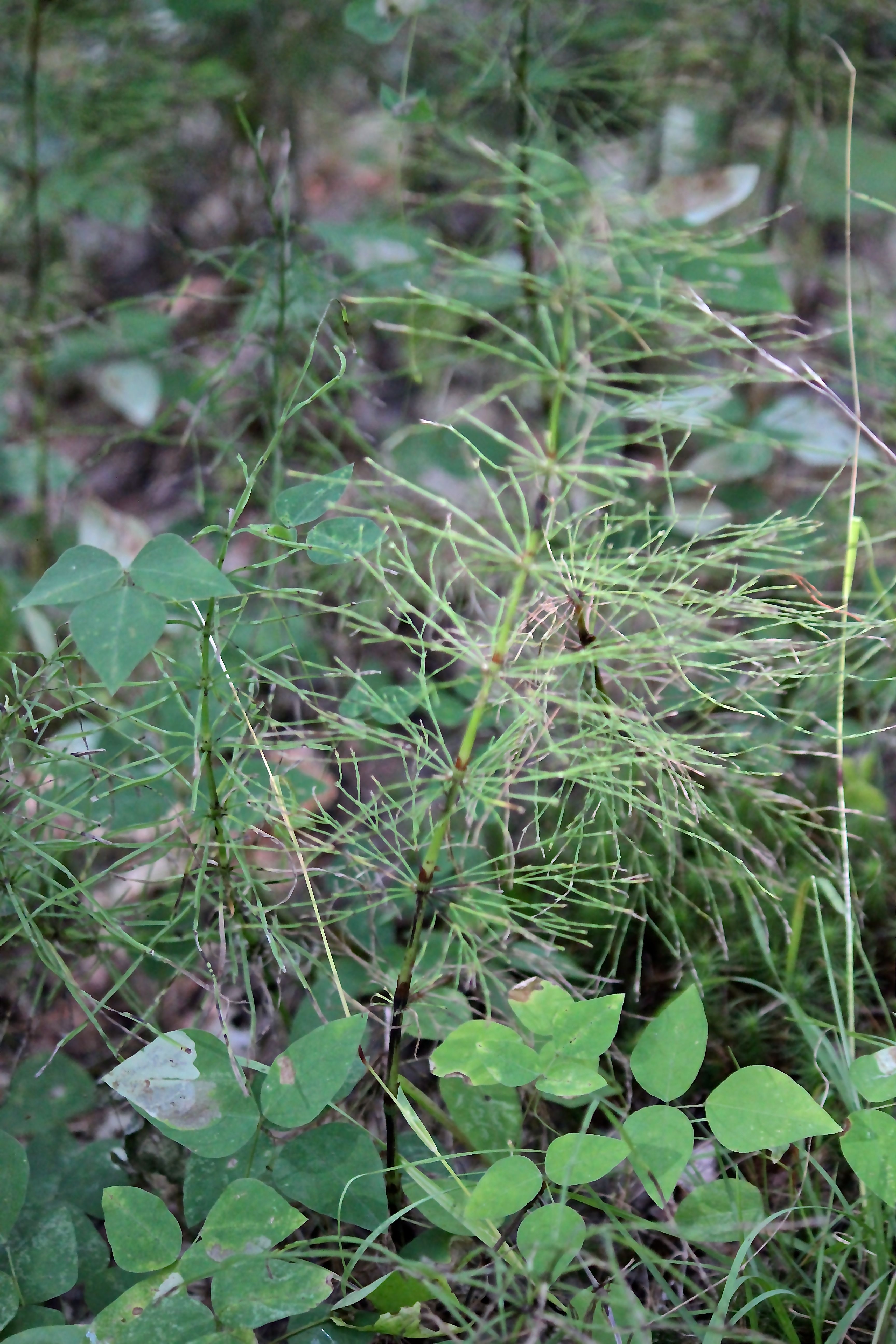
3. Woodland horsetail grows among the white pine saplings. It’s easy to confuse the two since they both have whorled branches, but the horsetail branches have a lacier appearance. Its “leaves” are reduced to a toothed sheath that surrounds the stem.

fogged inmorning dew

4. Morning fog on Moose Pond was almost the pea-soup variety until it began to burn off around 7:30 this morning. I was mesmerized by the patterns created by the moisture on the porch screens.

spider works

spider works 2

5. I was equally mesmerized by the spider works I found both on the porch and outside. Industrious architects are these. Mind you, I’m not a spider fan. I used to make family members destroy them. And I remember some mighty large and hairy ones that shared our flat in England back in ’79. That’s when I learned that the eensy weensy spider really does climb up the water spout. But, these webs are to be admired.

white oak leaves

6. As my guy and I climbed Burnt Meadow Mountain in Brownfield today (after the fog burned off), I realized for the first time that white oaks grow there. It’s the little things that excite me and seeing those rounded leaves made my heart flutter. I’ve now noted that white oak grows beside red oak in Casco, Denmark and Brownfield. I’m connecting the dots that form its northern line.

trailsignalmost to the summitsummit 1mount washington

7. We followed the North Peak trail to the top. It’s always a joy (think: relief) to walk onto the large, flat summit after scrambling over the rocks to get there. Because we like a round trip, we descended via the Twin Brooks Trail, which offers some great mountain views, including Mount Washington.

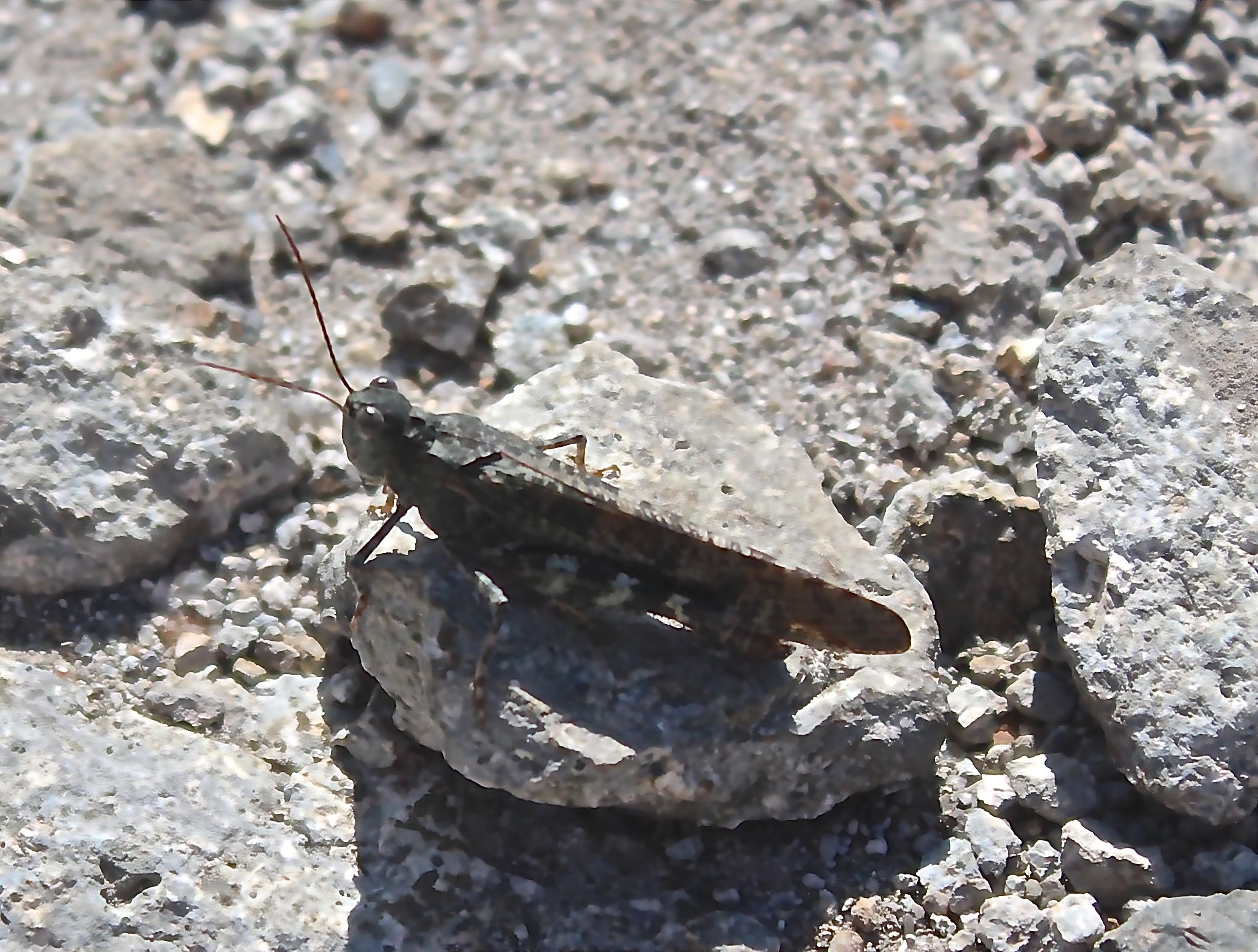
summit grasshopper

8. Grasshoppers are abundant at the summit. They’re known to feed on blueberries, and the crop is quite abundant, especially just off the summit on the Twin Brook Trail.

oak gall

9. Oak Gall. I think this is an oak apple gall growing on the red oak, but I’ve never actually seen one on the tree before. Usually, I find the dried shell of such a gall on the ground. My other guess would be the acorn plum gall. If you know, please inform me.

bear claws 1bear claws 2bear claw 3

10. I was looking for these and we found them. :-) Yes, more bear claw marks. It only made sense. Lots of beech trees. Lots of blueberries. And . . . a few years ago, we encountered a bear on the North Peak trail.

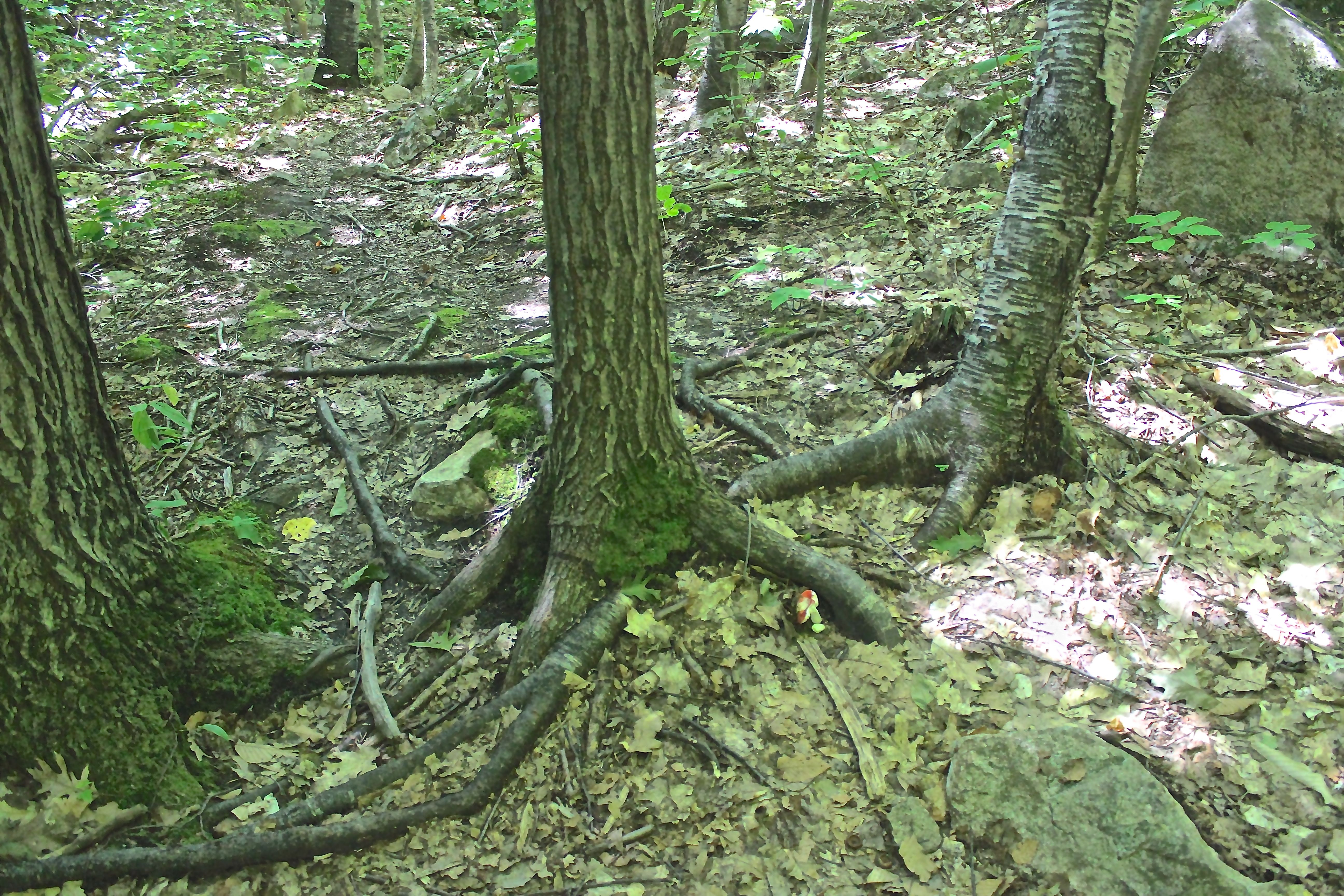
tree roots

11. OK, so here’s my eleventh cool thing. Kinda like getting a baker’s dozen–11 for 10, such a deal. Anyway, I’m always fascinated by the manner of tree roots growing over and around each other and other things. Embracing. Supporting.  Layering. Call it what you want. The thing is, they find a way to grow together. Oh, it doesn’t always work out. Sometimes it’s a smothering relationship. I’d like to think that these two trees, an oak and a birch, have intertwined in support of each other.

Thanks for joining me to take a look at the past 24 hours. I hope you had time to wonder as well.

Renewing the spirit

My guy and I drove to the central Maine town of Madison this morning to join Master Naturalist Kate Drummond on a walk that combined the natural and historical context of a trail beside the Kennebec River.

The Pines

The Pines, as this area is aptly named, once served as an Abenaki settlement.

Kate D

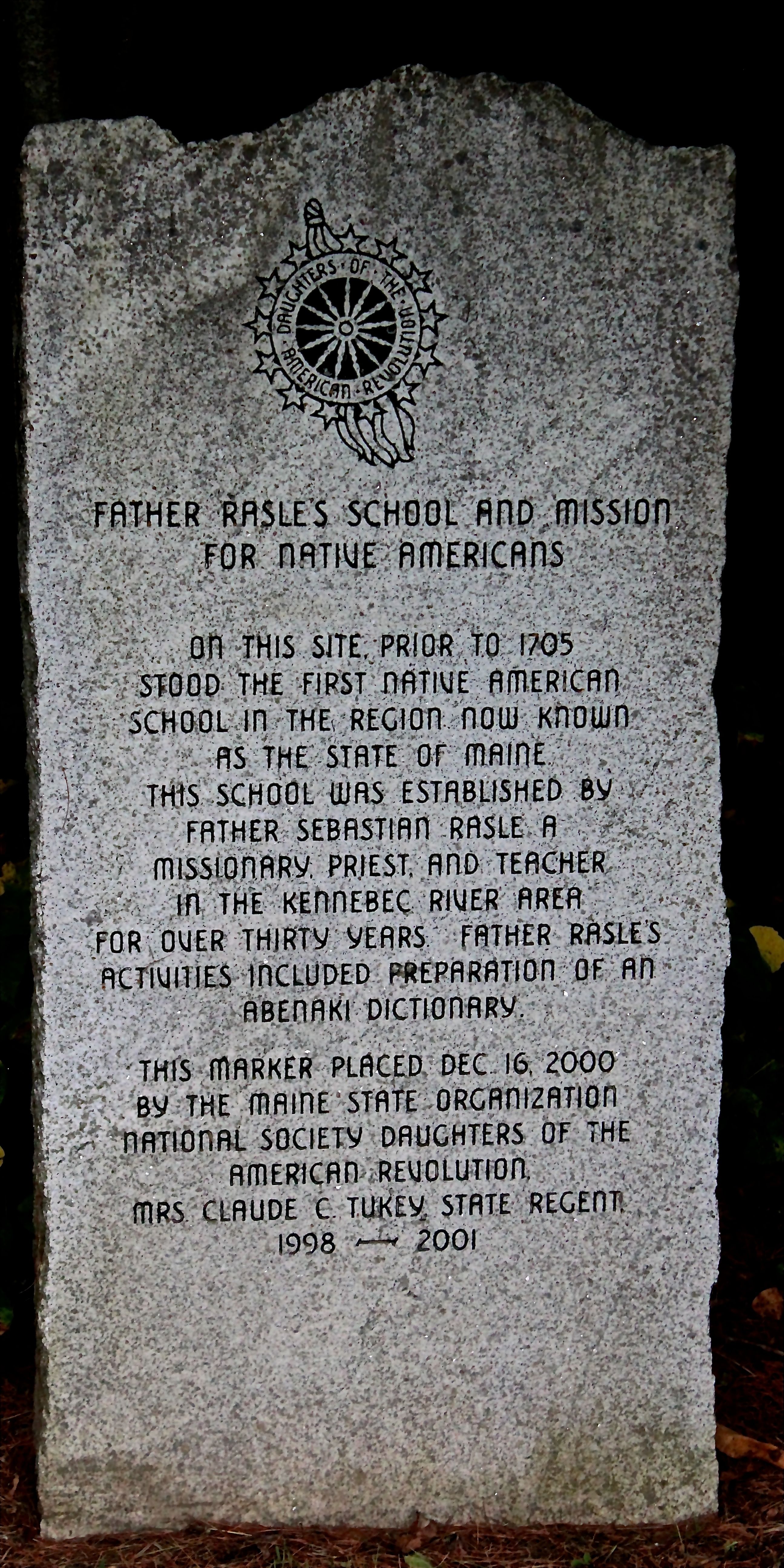
Kate began by sharing the history of Father Sebastien Rasle, who lived among the Abenakis, learned their language and converted them to Catholicism. For more than thirty years in the late 17th/early 18th century, he served as a Jesuit missionary and built at church here. Father Rasle educated the children and developed a dictionary of the native language. He also helped keep the English at bay when they tried to encroach upon Indian lands–until that fatal day–August 23, 1724.

While Father Rasle had earned the respect of the Abenakis, the English militia was wary of him. They combined forces with the Mohawk Indians to destroy the village and killed at least 80 Abenakis and Father Rasle 300 years ago today.

And so it was that Kate chose to honor Father Rasle and the Indians he lived amongst by sharing the trail with local townspeople (and us–from two hours away) to tell his story and recognize the natural elements that were a part of their daily life.

Kate is a high school chemistry teacher, so captivating her audience is a part of her makeup. To begin, she asked us to stand still for a minute and listen, look, be in the moment. After we shared our observations, she took us back in time, to imagine what the area looked like three hundred years ago.

matching cards to cool facts

matching cards

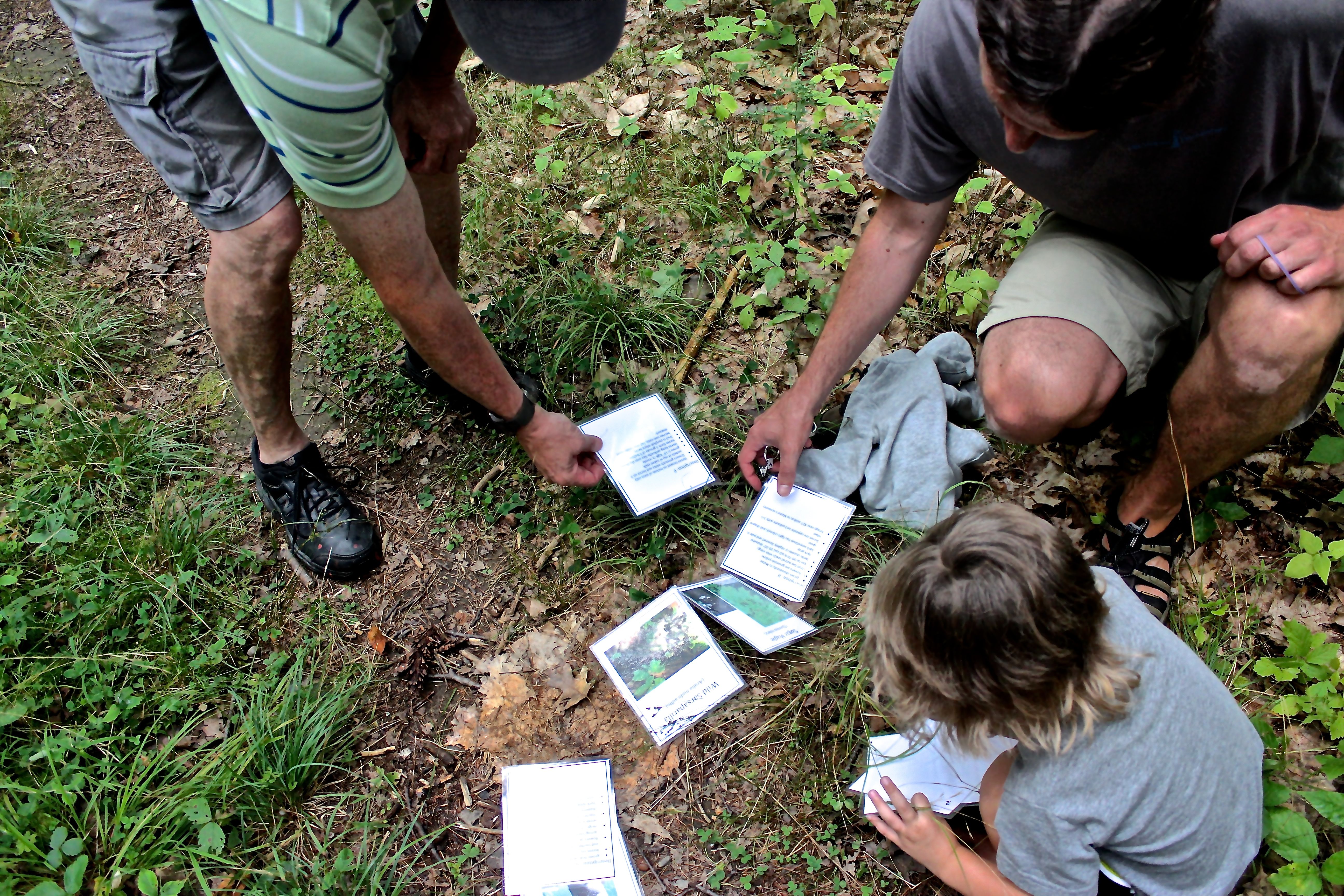
And then our real work began. We were given a set of cards and had to match the photos to the card listing cool facts about a particular species. Thankfully, there was no quiz at the end, but I suspect this group would have passed with flying colors–everyone was equally engaged.

We found some cool finds along the way:

acorn plum gall

Our first was a mystery. This speckled red ball, about the size of a jawbreaker, had us puzzled. We found several on the ground beneath Northern red oaks and Eastern white pines. Cutting one open, it looked rather fleshy and we could see what appeared to be an insect, but we still weren’t sure. And when we later found an empty acorn apple gall, we realized it was the same size. Well, a quick Google search for “large speckled red ball beneath oak” revealed acorn plum gall. It’s the home of a wasp species that uses this as a nursery. The grub slowly eats the gall’s tissue and metamorphs into a pupa before changing into a small wasp that eats its way out through a hole. This particular gall grows at the base of the acorn cup.

red and sugar maple leaves

A red maple and a sugar maple stood side by side, making for a lesson on leaf id. Red on the left, sugar on the right. Red–more teeth, or as Kate said, R=rough. Sugar–a U between the lobes, and as Kate said, Sugar has a U in it. It’s their sap that the Abenakis knew.

beaver works

Though we didn’t see any fresh sign of beaver activity, we knew by this statue that they’ve been here in the past. I love that those who actually cut the rest of the tree down to prevent it from falling across the path, had the foresight to leave the beaver works for all to see. The beavers were important to the Abenakis for a variety of reasons, including as food, tools and warmth.

basswood leaf

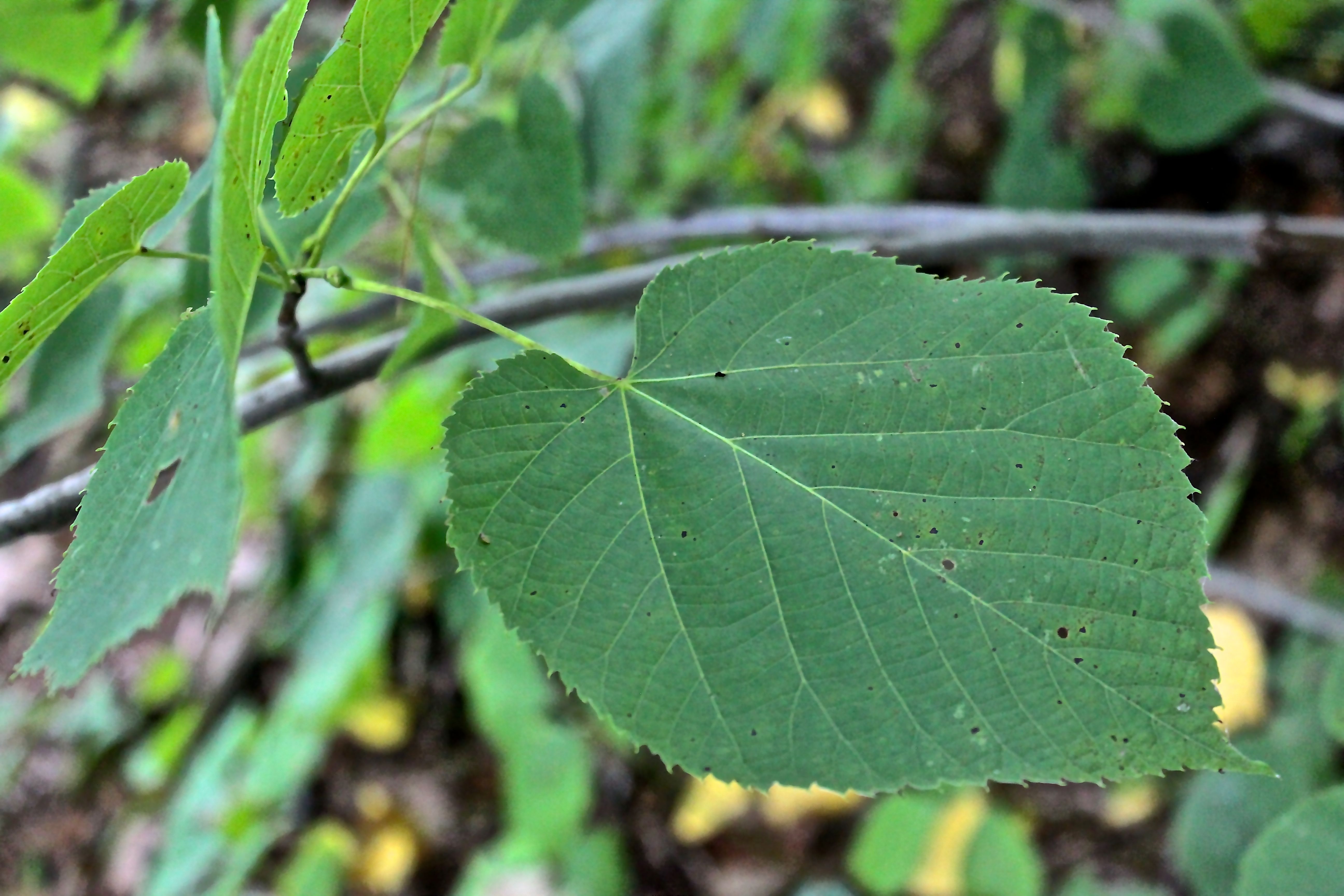
The asymmetrical base of the basswood tree makes it easy to identify. It was the bark, though, that was of prime importance all those centuries ago–the stringy fibers were used to make line or rope.

jer art 1

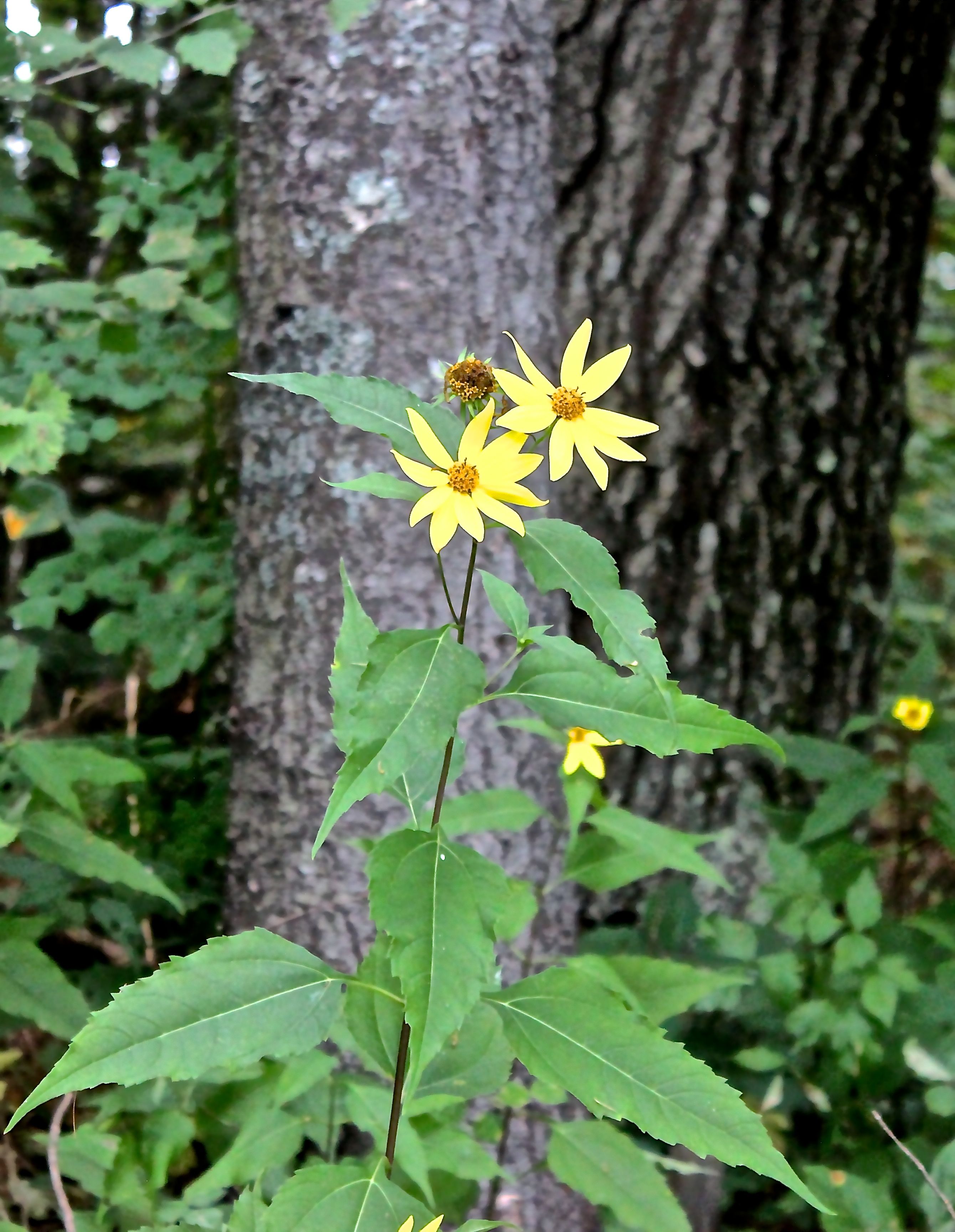
In bloom were the Jerusalem artichokes. In Notes on a Lost Flute: A Field Guide to the Wabanaki, author Kerry Hardy writes, “Peeking out of the woods at Old Norridgewock are Jerusalem artichokes, the penak [ground nut]of the Abenakis who lived here.  I believe these plants must be descendants of those grown here centuries ago.” How cool is that? The plants tubers are edible.

jersaleum artichoke

On this day of reflection, remembrance and revelation, they shown brilliantly, perhaps a sign that reconciliation is possible.

Kennebec River 2

We spent some time beside the Kennebec where eels and alewives were important food sources.

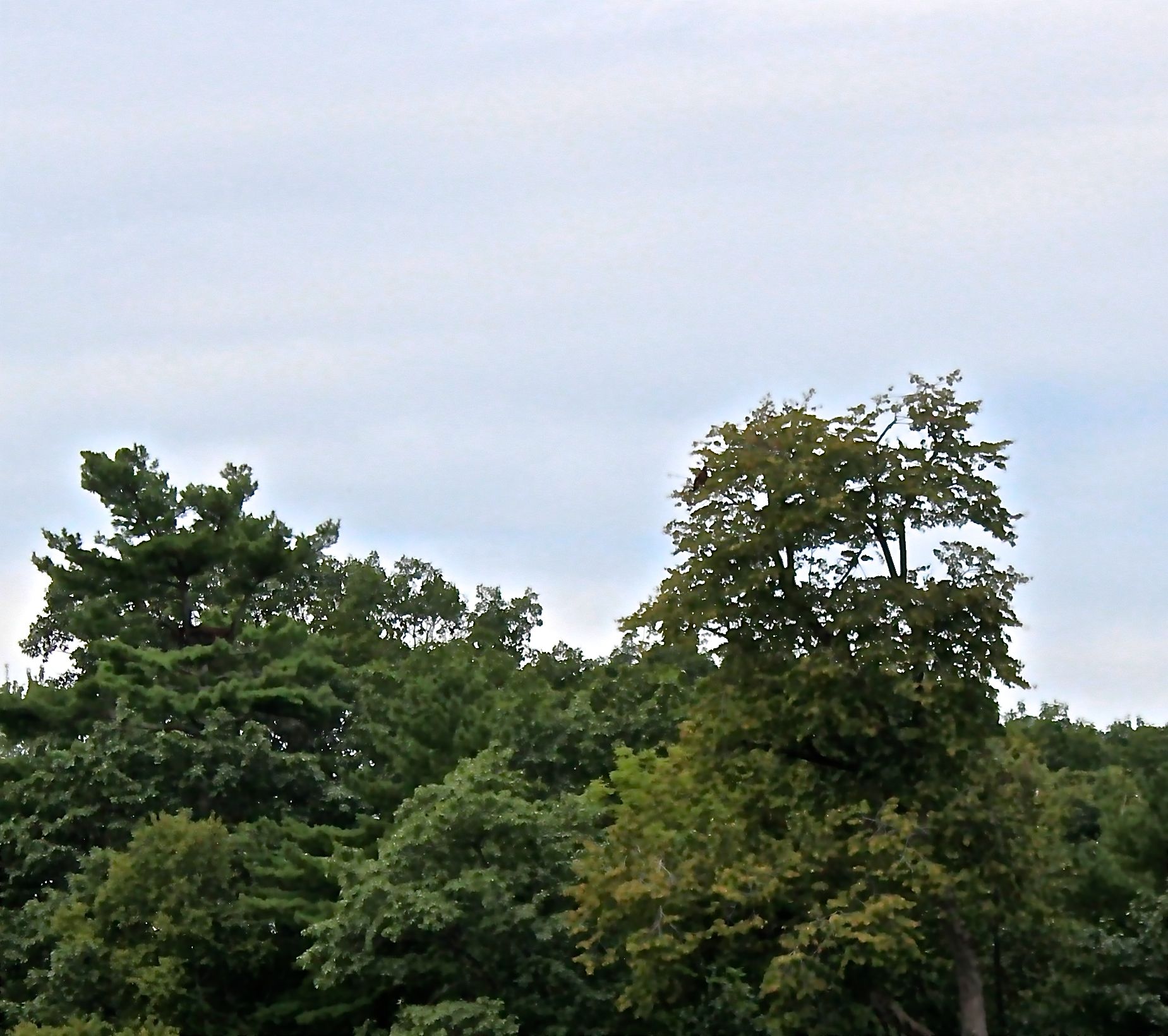
immature bald eagle and nest

And an immature bald eagle let us know of his presence. He’s in the oak on the right, while his nest is toward the top of the pine on the left.

FR monument 1

FR mon 2

FR school

It is Kate’s hope that more people will want to learn about the history of this place. Kudos to her for embarking on renewing its spirit.

A World in Miniature

trail

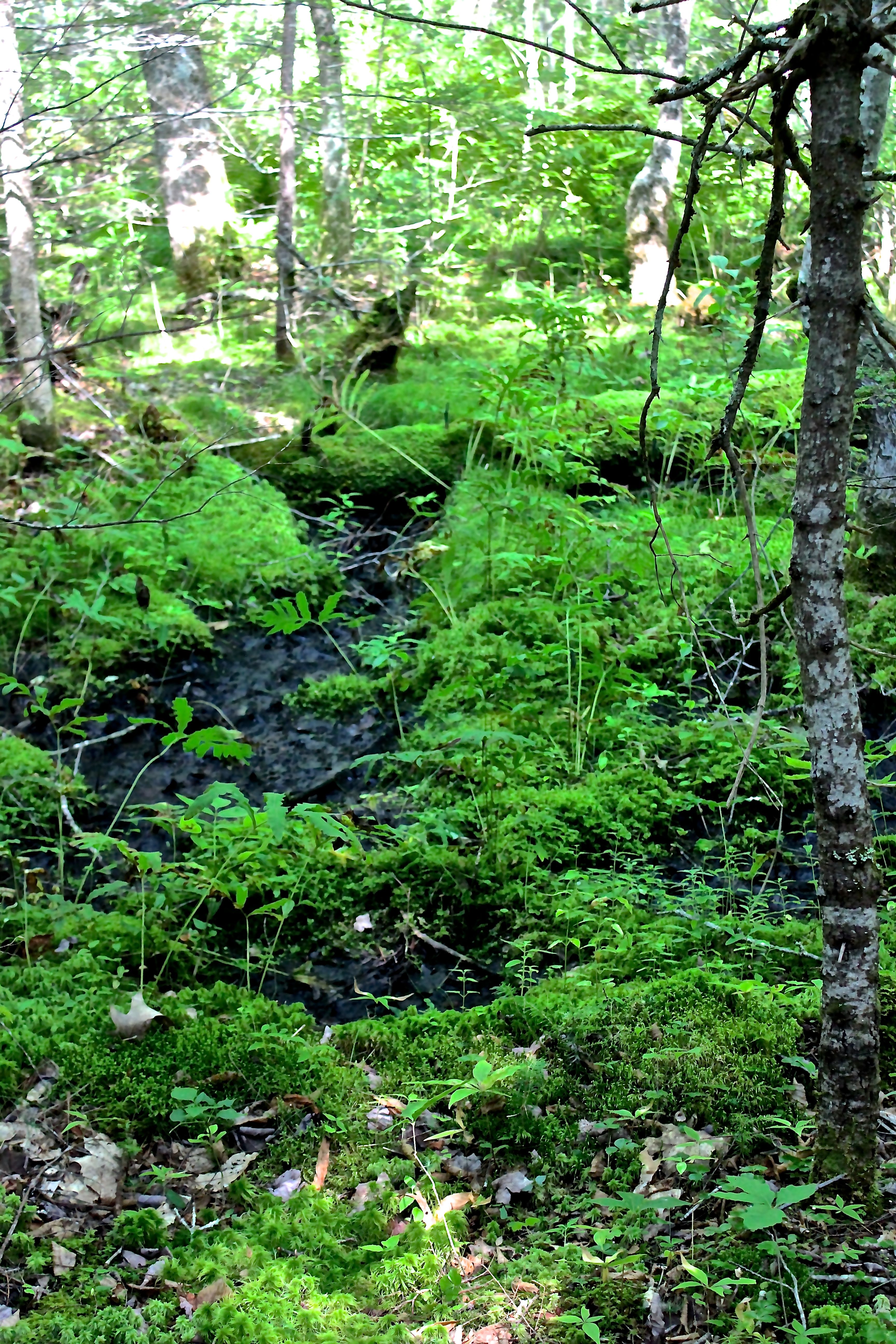
I feel my dad’s presence when I enter a forest where mosses carpet the damp  floor and blanket once exposed rocks and tree trunks. To dad, this was home to the faeries or fair folk. Indeed, it is.

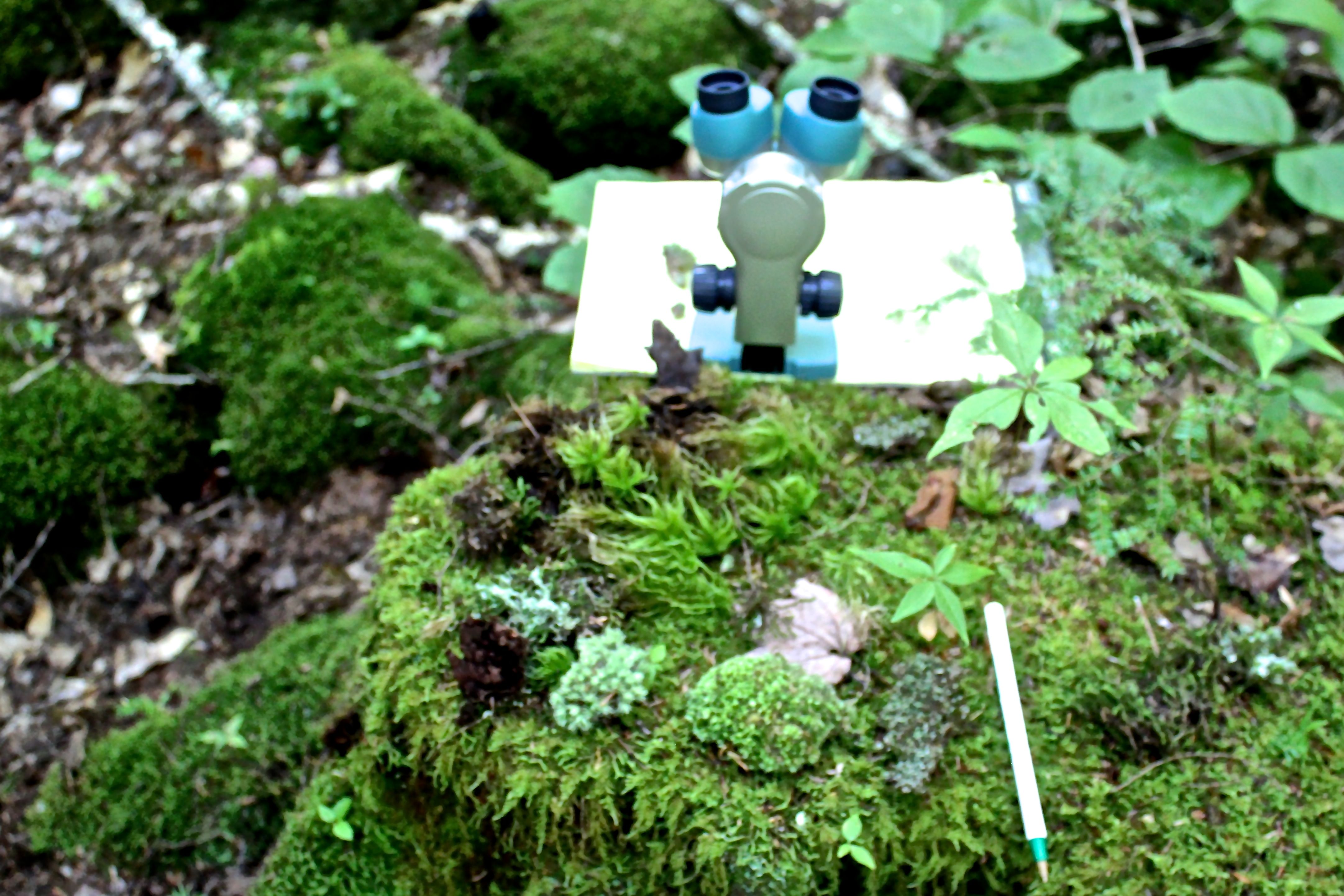
desk top 2

Yesterday, I took a closer look. With hand lenses, a field microscope and a copy of the Princeton Field Guides: Common Mosses of the Northeast and Appalachians,  friends and I set out to identify a few common species.

Mosses (and liverworts) are bryophytes, bryon being Greek for moss and photon for plant.

A sea of green surrounds us. Moss green. OK, so what does that mean exactly? Each species has its own shade of green and even still, several variations of that shade.

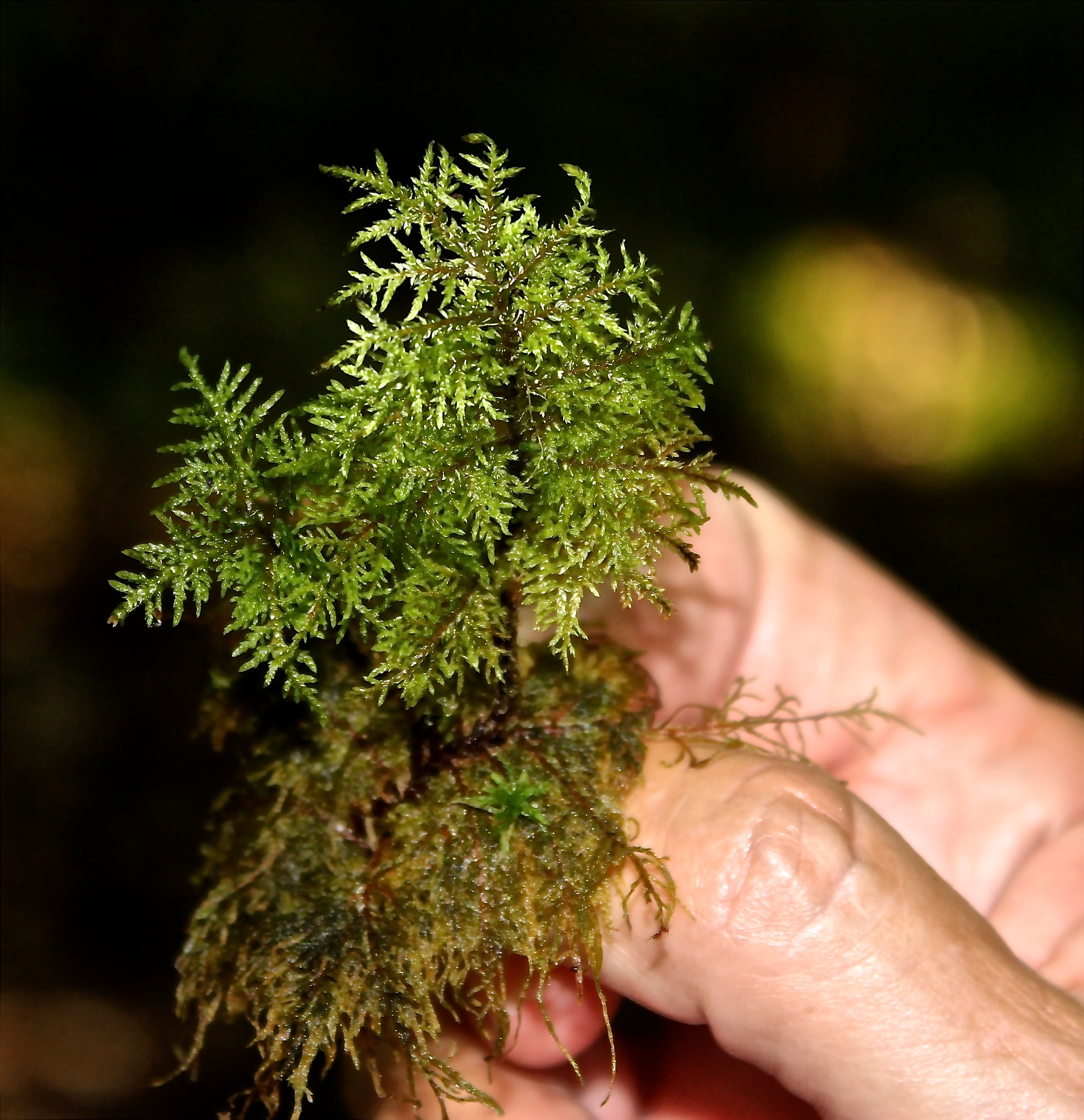
fern moss

Above is a fern moss, with its fern-like leaves and yellowish-green hue. What would its name be on a paint chip? Below, you can see its brown spore-bearing, pointed capsules born on a wiry stalks sticking out from the side of a tree stump.

fern moss spore capsules

If you look closely, you’ll see something else on this old stump.

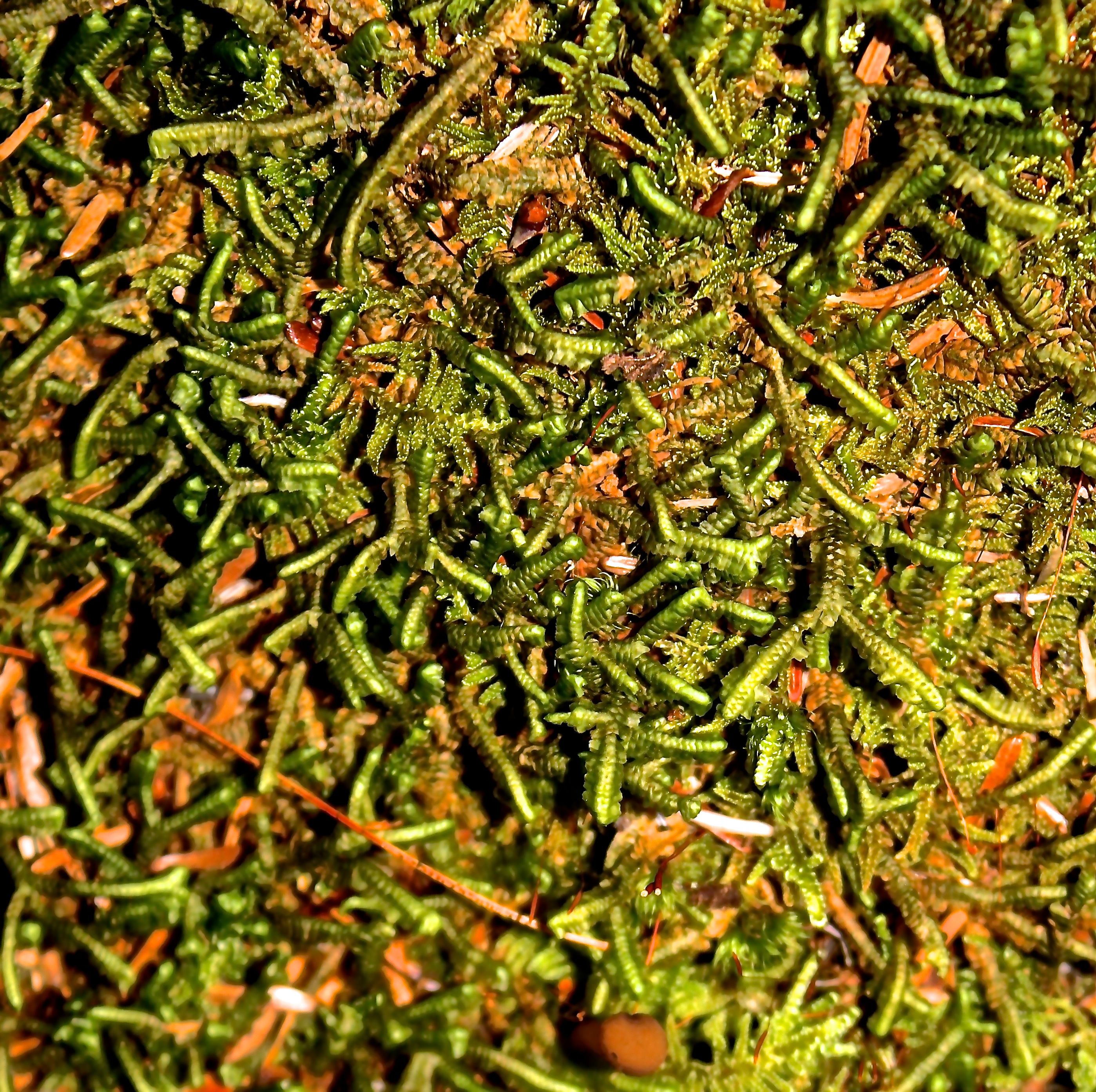
liverwort

Green worms. Zillions of them writhing about. Such is the illusion created by thin overlapping leaves that curl under along the outer sides–giving them a 3-D appearance. This is a liverwort–three-lobed Bazzania or Bazzania trilobita.

mystery fern mat

Nearby, another mat caught our attention. It reminded us of one we’d seen earlier, but we needed to spend time with it.

mystery fern moss 3

We knew by its structure that it was another fern moss species–but which one? The red stem stood out to me as the missing link. It became our mystery moss for the time being, but I think I’ve figured it out. Pleurozium schreberi or red-stemmed moss. I also found it as Phoenix feather moss. And big red stem moss. Yeah, I know–that’s why I should learn the Latin. Ah, Mr. Cretella, you are still sitting on my shoulder trying to get me to stop using Spanish words to fill in the answers on Latin quizzes.

spag 3

We discovered springy, wet sphagnum moss. I always think of it as being in a more bog-like setting, but it is quite damp here.

pincushion moss

One of the common species that grows in small, easy to see mounds scattered about the area, pincushion moss. To some, it resembles a sea urchin. Using our hand lenses, we looked for air bubbles that are supposed to be visible at the base, but mostly we saw tears welled up in our eyes from laughing.

desk top display

After three hours, it was time to pack up the items on our our tree stump desk and head out. We’d only walked .2 of a mile down the trail, so it wasn’t a long haul out.

wood frog

Movement made us pause. Not a faerie, but a large masked wood frog who wanted us to think he wasn’t there.

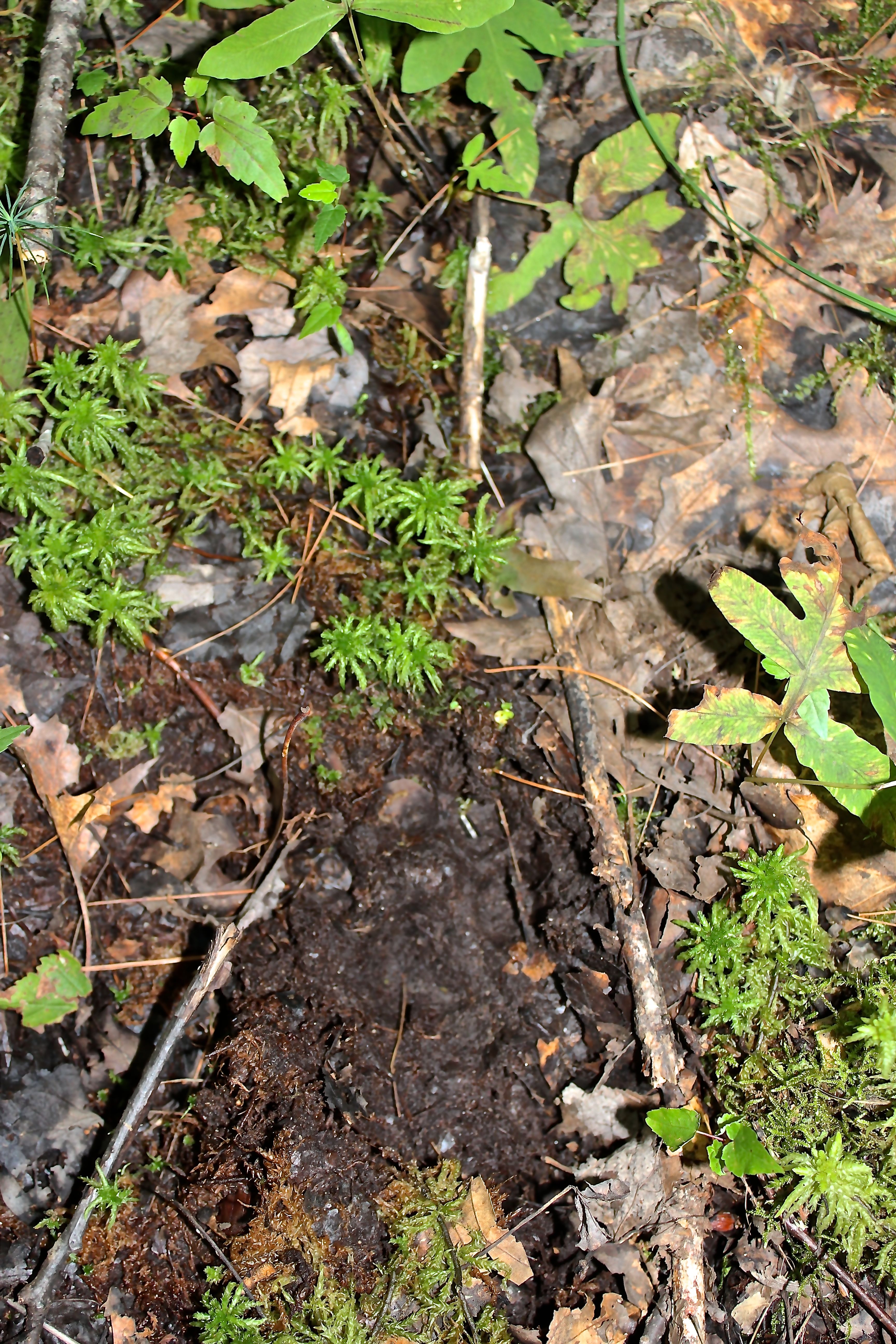
bobcat and haircap

Someone else had previously passed by. We’d seen tracks on the way in and knew what it was, but I waited till the end to photograph this bobcat print. Do you see it in the mud? And the hair cap moss above it and to the right?

Acro moss

I’d sketched this previously. Looking at it now reminds me that we reviewed the three basic growth forms of mosses and found examples of all three in this little space–acrocarp, pleurocarp and peat moss.

Acrocarp–simple or sparsely forked stems typically grow in upright position. (pincushion, haircap)

Pleurocarp–stems typically trail along the ground and feature opposite branches. (fern mosses)

Peat moss–stems stand upright; often have mop-like or pom-pom heads. (sphagnum)

I’m thankful for friends who love to learn (P & B K. and D.S.). We hardly scratched the surface. I can’t wait to spend more time among this miniature world beneath our feet.

Living by Faith and other Fun Finds

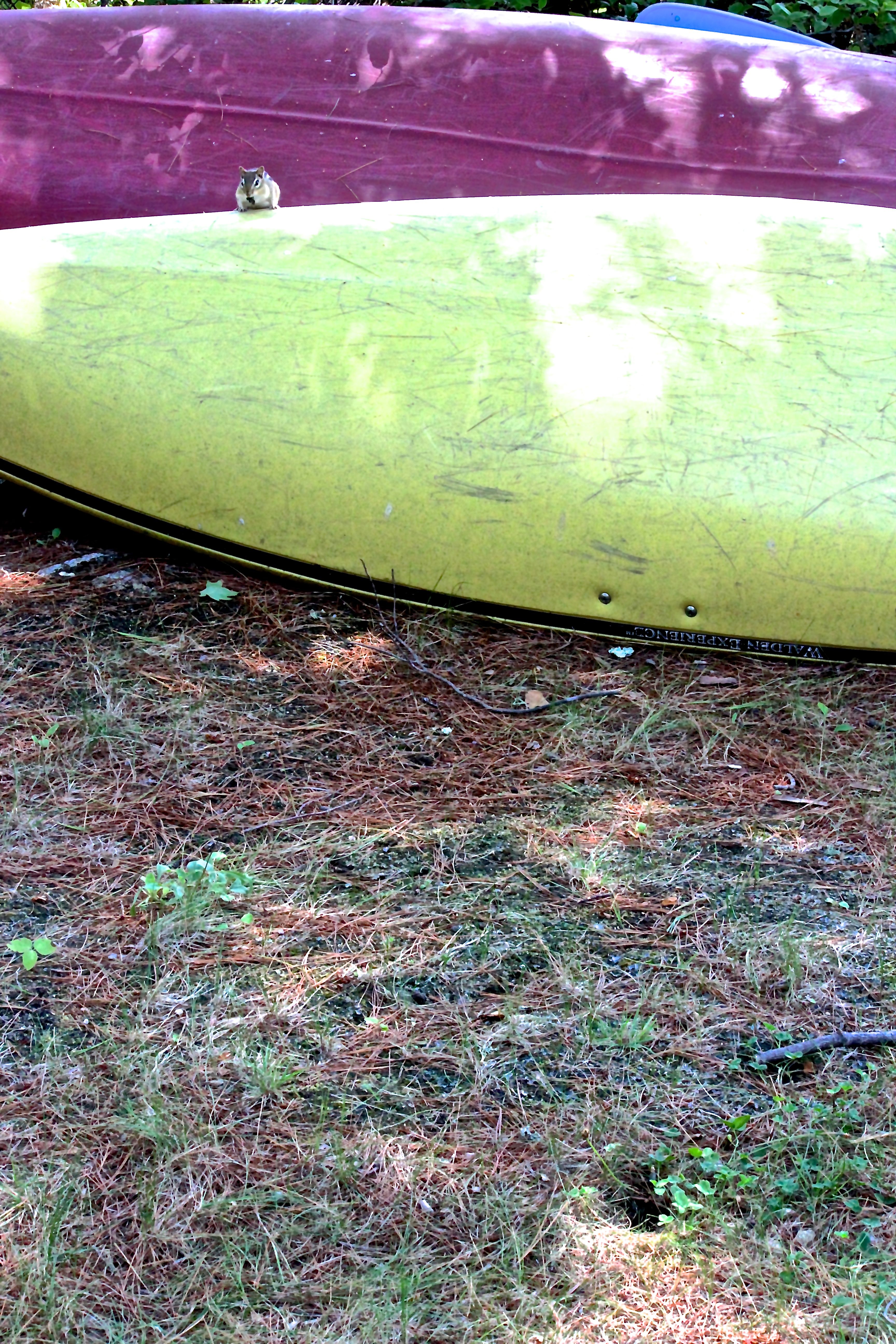
For a few minutes, I stand still and watch a chipmunk leave the safety of his hole and race under our kayaks before entering the refuge of bushes beyond. Out of sight, I still have a general idea of his whereabouts as I hear leaves crackle with his movements. Moments later, he scampers to the top of a kayak, pieces of a dried leaf dangling from his stuffed cheeks and mouth.

chip

He’s a brave soul as the main entrance to his underground mansion is in the open, within easy sight of predators–especially birds of prey.

chip 3

Do you see the hole in the ground? His mansion consists of a network of chambers–for sleeping, feeding and birthing. Though chipmunks are not true hibernators, they do enter a state of torpor and sleep for days or weeks on end during the winter, waking occasionally for a snack.

chip 5

So . . . in August, this small critter busily readies his home in preparation for what he believes is to come. He uses the shredded leaves to build a nest. And he stores a cache of nuts and seeds.

It seems to me that this little guy (I assume he’s a male since his name is Chip) thrives because of his faith–though he probably doesn’t call it that. He has faith that he’ll survive the mad dash from his tunnel to the huckleberry bushes and ferns beside the lake. And he has faith that he’ll get all of his housekeeping chores squared away before the snow flies.

Faith–it’s easy enough to have when everything is fine–when the sky is blue and the nuts are plentiful and we are safe; when we have enough of everything we need and no reason to expect that to change.

But . . . when the storm clouds gather and the torrential rain floods our nest or a hawk approaches with its claws extended and our world turns upside down–then we have to practice trust. Right now. Right here. Easier said than done.

I don’t know what the future holds for my little friend, Chip, but I’m sure things don’t always go as planned and yet he continues to work hard every day. I should take a lesson from him.

And now for some other cool shots I took today.

bald eagle 1

I made my own mad dash this morning to get this photo. I heard their high-pitched whistle before I saw them. Two bald eagles soared high on the thermals so I grabbed my camera, only to discover as I aimed that the battery was dead. Back inside for a quick change and by the time I returned I saw only one.

dragonfly

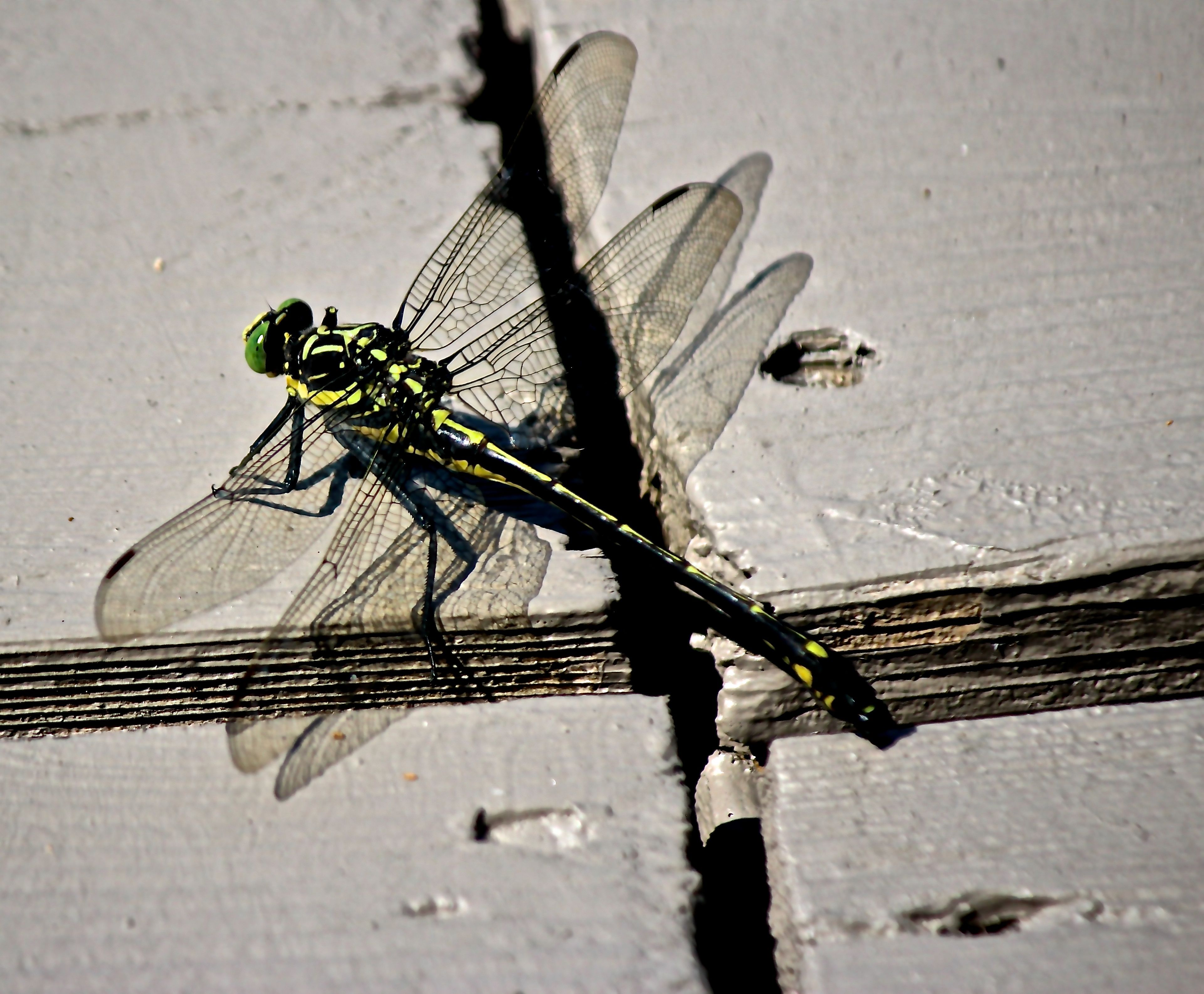
And on the dock–I think it’s a green marsh hawk dragonfly.

dew drops and scat

Just when you thought I wouldn’t show any scat photos till winter–gotcha! Interesting juxtaposition of raccoon scat beside wintergreen and dainty dewdrops. Word of warning: don’t get too close to raccoon scat. Well, you probably shouldn’t get too close to any scat, but particularly this species, which contains Baylisascaris procyonis or raccoon roundworm

smiley face

I’ll end with a smiley face provided courtesy of a maple-leaf viburnum.

I never know what I’ll find as I wander but I love the lessons and moments of wonder discovered along the way.

Thanks for stopping by.

Mondate Filled With Smiling Faces

We had many reasons to smile on yesterday’s Mondate.

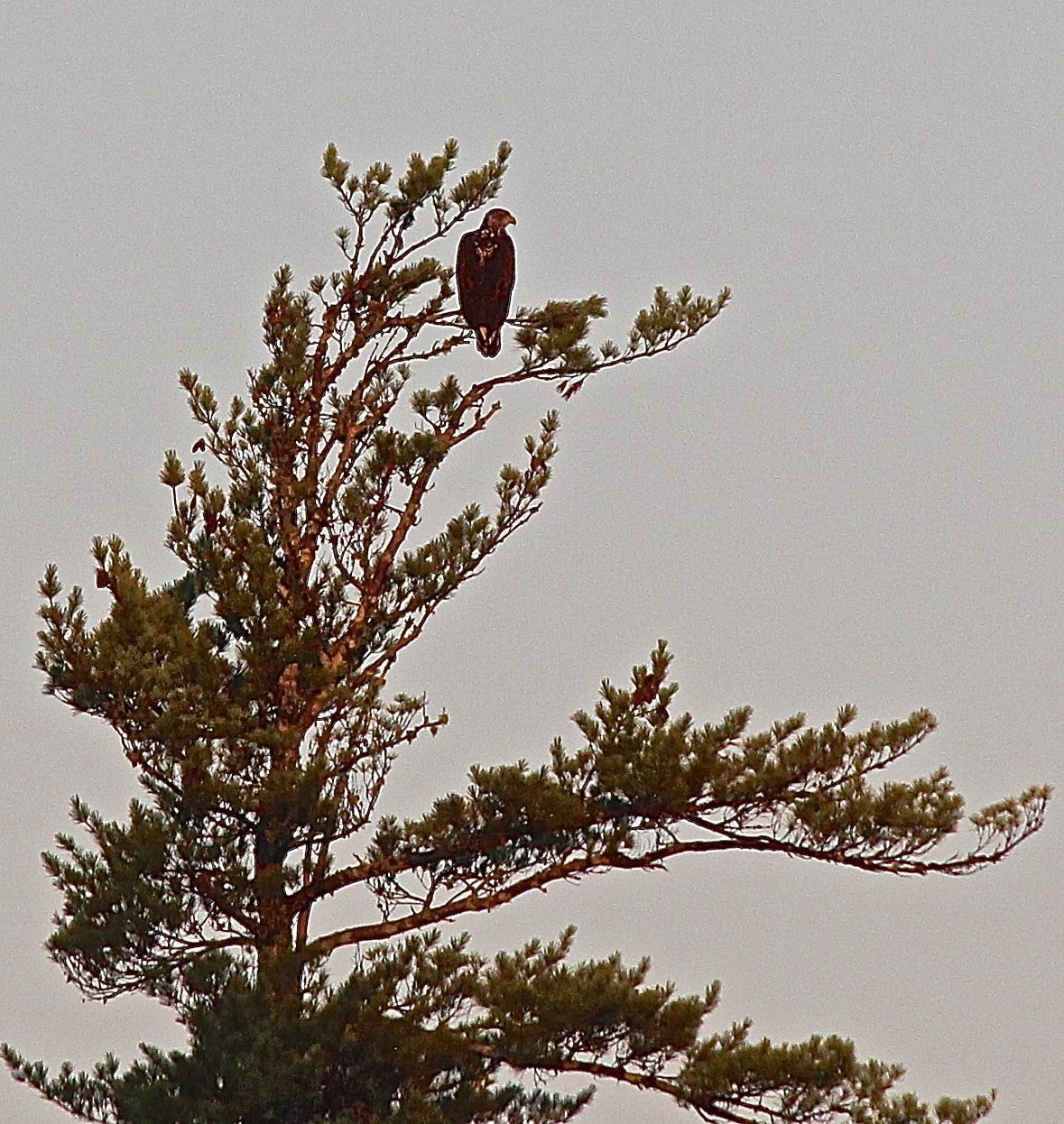
It began about 5 a.m. when the Canada geese honked continuously. Their chorus was joined by quaking ducks. And then a loon chimed in.

I stepped onto the dock because I thought I heard the reason for the early morning cacophony.

bird

This big guy.

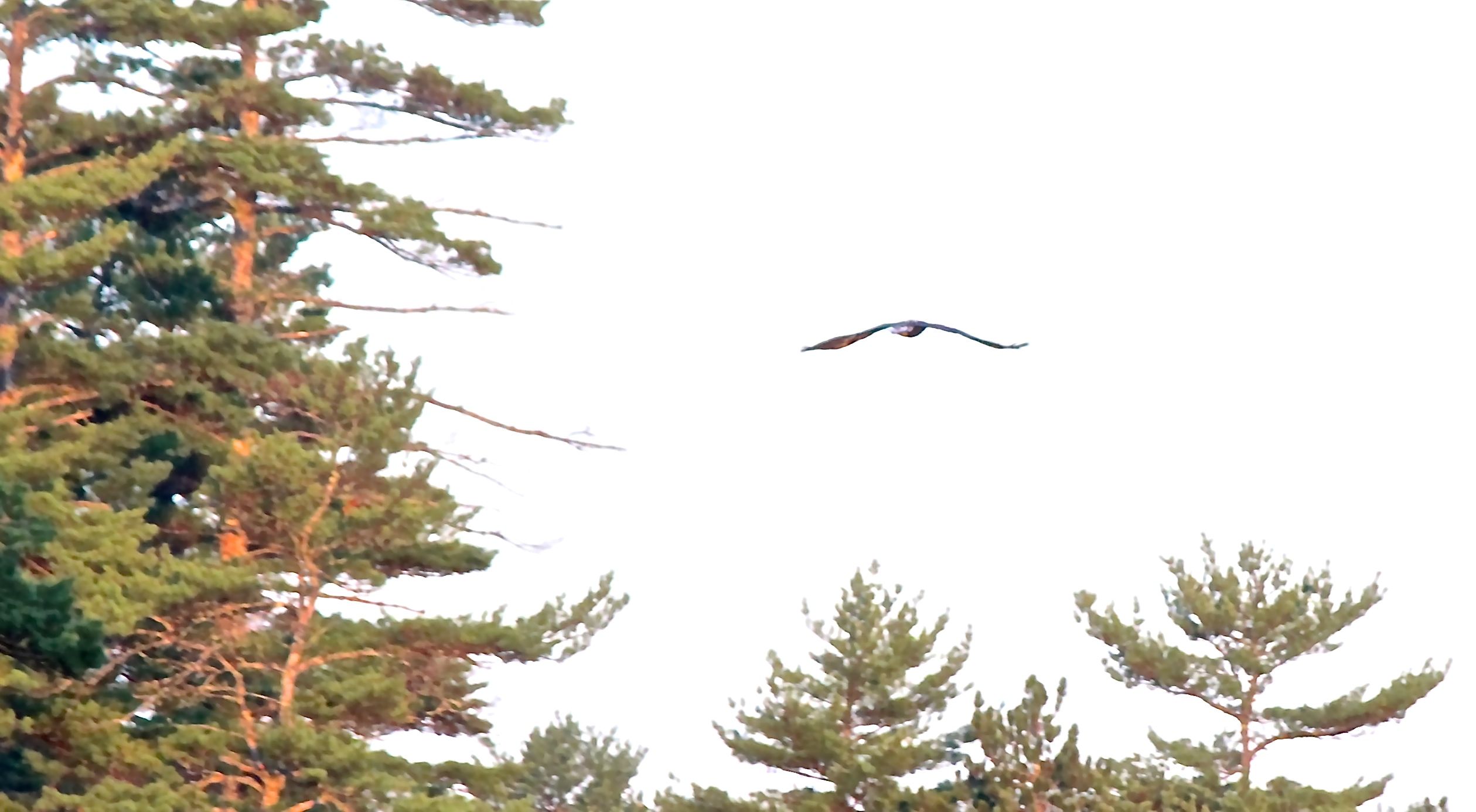
bird flying

Eventually, he flew off and then I heard the crows across the pond, so I think I know where he stopped next.

mtn morning

Standing on the dock early in the morning provides pleasant views :-)

Mid-morning, my guy and I drove to Hancock Pond in Denmark, to join F & B H. for a morning jaunt on their son’s forty-acre property. I’m always pleased to learn about people who purchase land to keep it from being developed, but still allow traditional uses. Such is the case here.

But before we hiked to the almost bald summit, we paused on their dock.

bob1As if on cue, their friend Bob stopped by

bob 2 smiling

and greeted us with a smile.

porky 1 jaw

On the trail, B asked me to identify this. He knew. I guessed wrong because I didn’t take the time to examine it closely. When will I ever learn? See the small mandible and the shape of the teeth?

porky 2, quills

And the little quills mixed? Yup, a baby porcupine.

pearly everlasting

The land was last harvested ten years ago, so it’s slowly transforming. Pearly everlasting blooms among the raspberries and blackberries, goldenrod and sweet fern on the trail that once served as a skidder road.

acorns

Acorns are forming on Northern red oaks, which stand beside white oaks. For me, it was curious to see the white oaks here. They’re a rare find in the woods I travel most frequently.

hancock pond

Near the summit, Hancock Pond came into view.

Pleasant Mountain

As did our beloved Pleasant Mountain.

thistle

Of all the flowers we saw, the prickly thistle was my favorite. A touch of Scotland that F and I share. We returned to their camp for a delicious lunch and a look at B’s stone art and books. We were in awe of his talent. And their love for each other–50 years strong. Thank you both for sharing your land, lunch and love with us.

A wee bit of barn painting was accomplished–one of these days it will be all red. We have almost completed scraping and priming three sides. It’s a sporadic job, to say the least.

Our day ended with a trip to Portland with our sons–we all needed a technology update. That gives me pause, of course. I liked life before all of this stuff, but I wouldn’t be writing this post without it.

Dinner out with my three guys–what’s not to smile about.

Through Rose-Colored Glasses

Beaver works was the name of my first adventure today. Last fall, some of the Greater Lovell Land Trust’s docents and I walked along the trail of this private property and saw the beaver trees, dams, ponds and lodges. But today, I felt like I was stepping into a completely different territory.

This week, thanks to the generosity of the landowners, we have a walked planned on the same property and someone has been rather busy–cutting off the path with a fallen tree and a flooded pond. With today’s pre-hike we have a sense of what to expect.

beaver path

You know they are busy when you see their well-traveled path

beaver 2and downed trees.

beaver tree

Or those that have been girdled but have yet to fall.

beaver dam

This old dam is quite large and no longer productive–you can see that the pond it once held is diminished to a small stream. The vegetation on top provides another sign of inactivity.

web in raccoon print

Inactive on the part of a beaver perhaps, but someone else passed by and left a baby-hand type print in the mud recently–or sorta recently.

beaver works--walk around

The beavers moved on and changed things up elsewhere–one needs wellies in order to follow the straight line. We chose to go around.

beaver pond

In the process, we got to see another beaver pond. They’re everywhere!

The landscape is constantly evolving. I used to think it took a hundred years for a forest to change–that belief founded on what a junior high school science teacher said. I now know a wee bit more–it’s all in a state of constant flux. I think the same can be said for us–growing and changing with the years–physically, mentally, emotionally, socially and spiritually.

Off my soapbox–There are other fun things to see along this particular trail. I’ll only mention one–some bear sign. And yesterday morning, while placing a land trust sign on Route 5, I watched a young black bear cross the road–less than a mile from this trail and in a seemingly straight line with what we found today. I know that because of my X-Ray vision. (Disclaimer–what we found wasn’t created by the bear yesterday, but it shows evidence of a bear’s presence. Then again, there’s lots of bear sign in these woods.)

My guy was working and it’s been a while since I’ve gone on a solo trek, so I decided to journey on at another GLLT property–Flat Hill and Perky’s Path.

red-purple trail

I was on the purple trail to begin and surrounded by hues of green.

red maple stems 2

So shades of red like the stems of red maple leaves became my focus. They were subtle, but I was surprised with how many examples I found.

red oak

The salmon-colored inner bark of northern red oak.

red striped maple

Striped maple leaf stems.

red sarsapirilla

Wild sarsaparilla leaves.

red pinkish mushroom

A Rusulla, I think.

red squirrel sign

The kitchen table of a red squirrel.

red pine bark

Sandstone-patterned red pine bark.

red wintergreen berry

Wintergreen berry  and

red-partridge berry

partridgeberry.

Flat Hill view

Not red at this moment, but home to many a red sunset, the view from the summit of Flat Hill. Don’t you love an oxymoron?

orange trail

Following the orange trail of Perky’s Path provided more shades of red.

red bunchberry, starflower leaves

A whorl of starflower leaves and bunchberry fruits.

red maple leaf on ground

A single red maple leaf.

red trillium 3

The fruit of a trillium.

red hobblebush

And hobblebush leaves and fruit.

red-mushrooms emerging

More Russulas emerge, displaying their red caps.

Steeplebush

And finally, a pink steeplebush.

Though my eyes were fixated on red, I did see a few other things.

yellow mushroom

A yellow Russula. (Hope my partial ID is at least partially correct.)

bird's nest

A leaf and twig bird nest tucked against the tree trunk. Surely, someone can help me ID the creator of this masterpiece.

Indian Cucumber root

And the world’s largest Indian cucumber root. Soon those berries will turn red.

I thoroughly enjoyed today’s wander through rose-colored glasses. Thanks for coming along.

A Day of Contrasts

Each time we climb Pleasant Mountain, the view differs–and so it was this morning. Haze sugar coated the summits beyond.

hazy 2

Green, blue, white, purple and gray melted into each other.

haze 3

That’s what made a bright orange wood lily beside the trail stand out.

wood lily

Certainly a shock of color.

wood lily 2

Step in with me for a closer look. Three sepals and three petals, but their design is similar. Each is jazzed with dark purple to black spots–the better to draw in those butterflies and skippers. And white-tailed deer.

wood lily, whiting

The other thing to notice is how the sepals and petals taper at the base. I actually took this photo on Whiting Hill in Lovell about two weeks ago. But, I’m curious about its reproduction–one on Whiting, one on Pleasant. Am I missing something? Have the deer consumed others? I frequent both of these locations and have only seen the solo plants.

porcy 1

I  can’t sit still when I get home. Especially when I know I have work to do. So, I wandered around the backyard. Right off the deck, a quaking aspen grows on the edge of a flower garden. Daylilies surround a wooden barrel we turned into a water feature. Alas. They’ve been knocked down.

porky claws

The resident porcupine has been visiting on a regular basis. Quaking aspen bark features horizontal and vertical lines, but the porcupine left its own mark–look for the fainter diagonal lines created by its toe nails.

porky leaves

The leaves must be delish.

blueberries

I wandered some more. Certainly delish–blueberries. They need a wee bit more time.

Bittersweet Nightshade

Not delish, but dramatic in shape and color is the bittersweet nightshade. I remember my mother calling it deadly nightshade. Its berries are poisonous, but unless eaten in large quantities, it isn’t fatal. OK, the point is–admire the flower; don’t eat the berries.

grasshopper

Not as dramatic because it wants to blend in is a grasshopper. Do you see it?

grasshopper 2

A sibling was hardly invisible on the cellar door.

yellow lily 2

Before heading inside, I stepped into our neighbor’s yard because her yellow lilies are blooming. Ours will probably show forth their sunshiny faces tomorrow. I’ve a feeling that these are cultivated, but don’t know for sure. I’m hoping Bev Hendricks of DeerWood Farm and Gardens will  enlighten me on this species.

From a hazy summit view to brilliant natural hues, today was a day of contrasts.