Tagging Along with Jinny Mae

“Don’t walk behind me; I may not lead. Don’t walk in front of me; I may not follow. Just walk beside me and be my friend.” ~ Albert Camus

While I sometimes walked beside Jinny Mae this afternoon, I spent more time following her and am still her friend (I think).

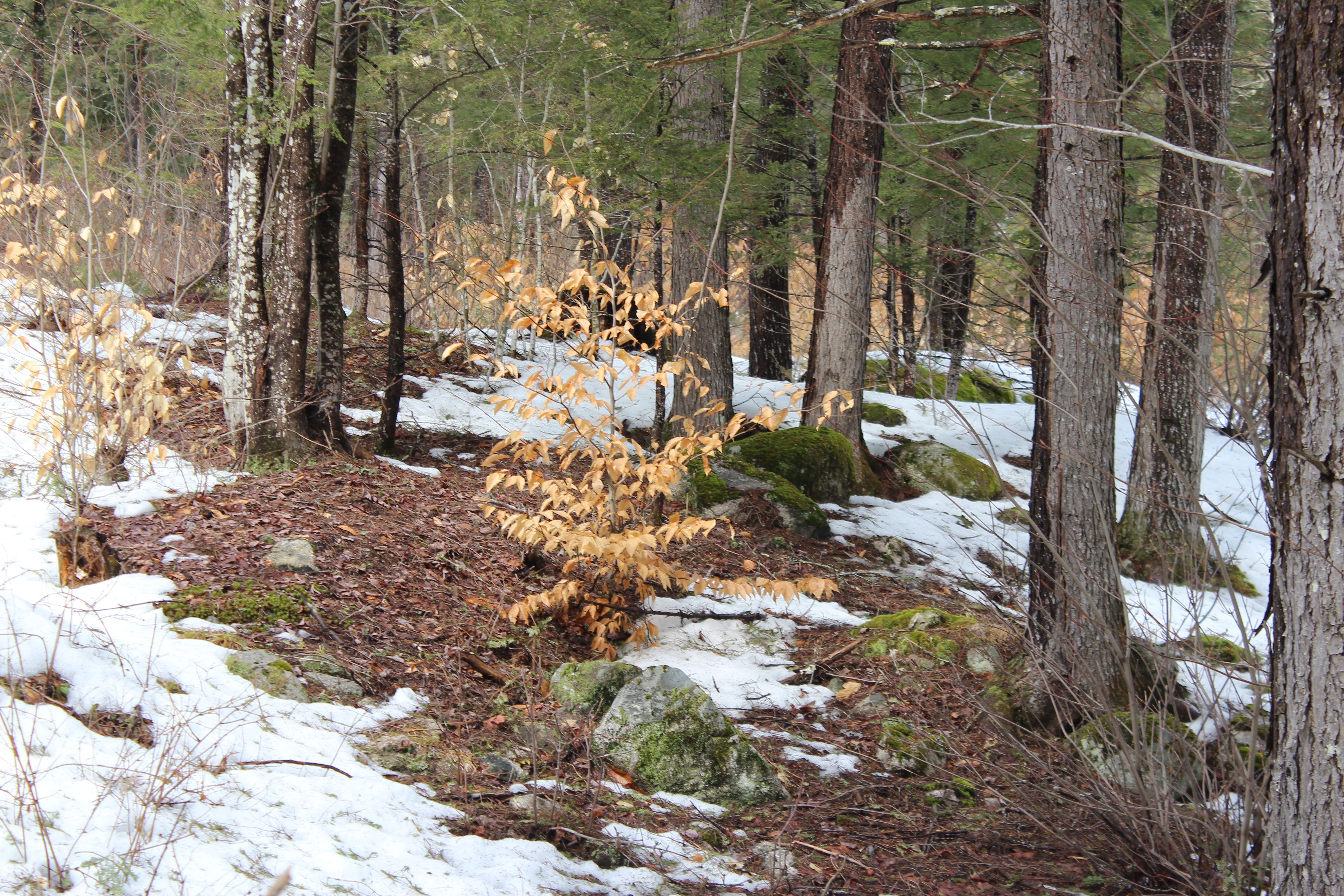
A HOT afternoon. Despite the heat, however, I’m always tickled to follow her because she knows her 40-acre property intimately–including all of its nooks and crannies and cool sights.
j-green frog in water


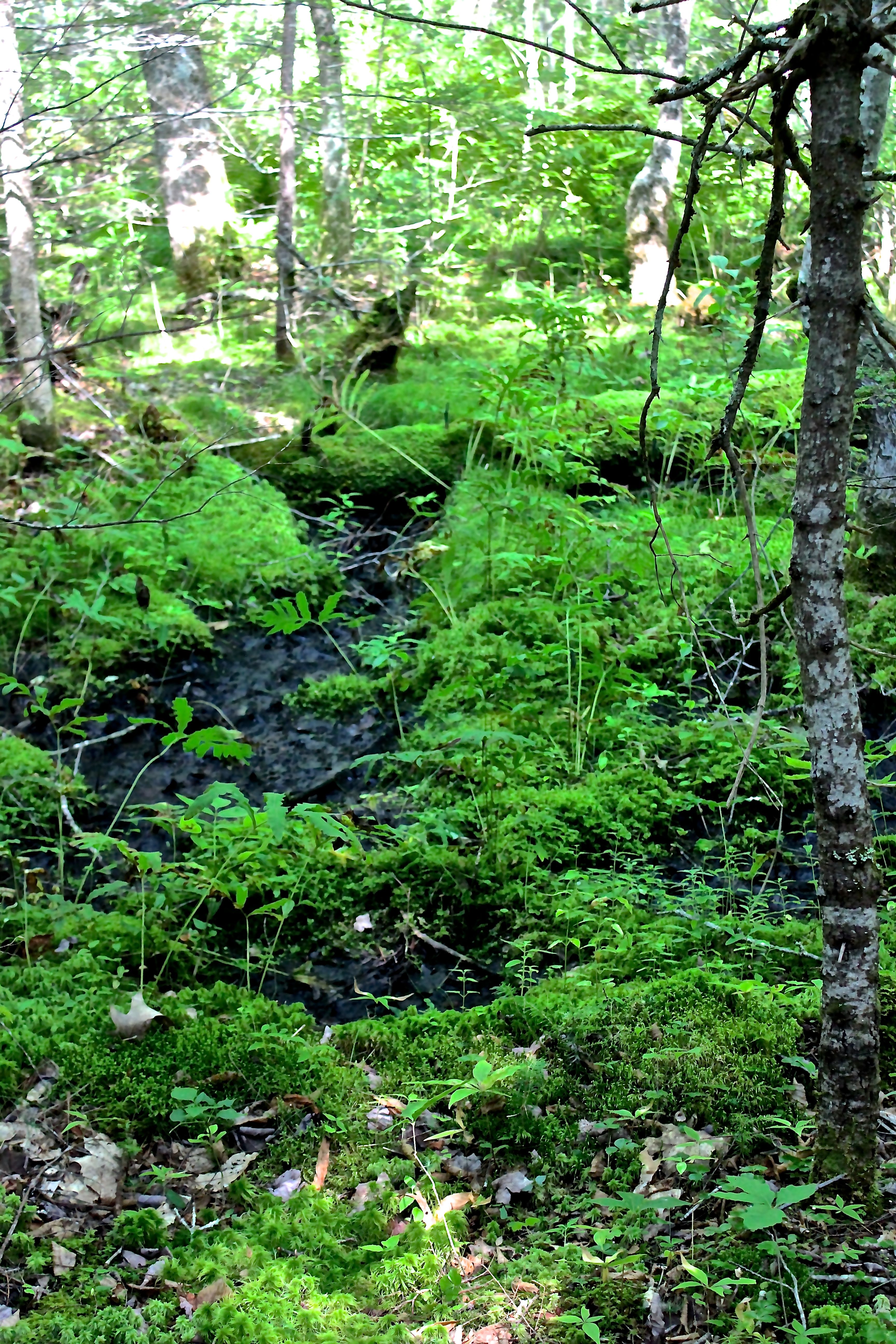
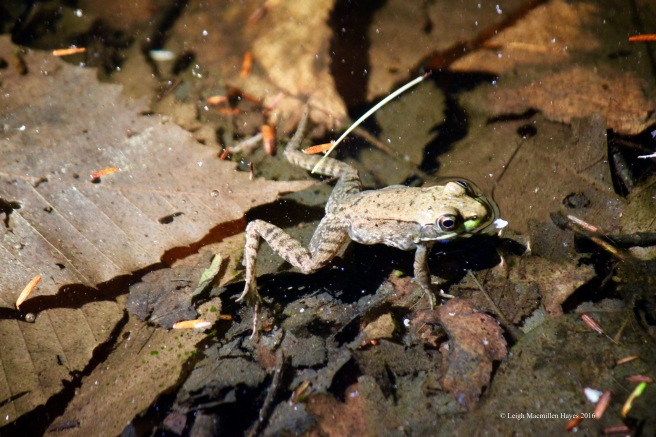
We had some rain this morning, but Jinny Mae’s land is naturally wet and well loved by mosses and ferns . . . and green frogs. As we approached, several leaped into this mini pool and then posed.
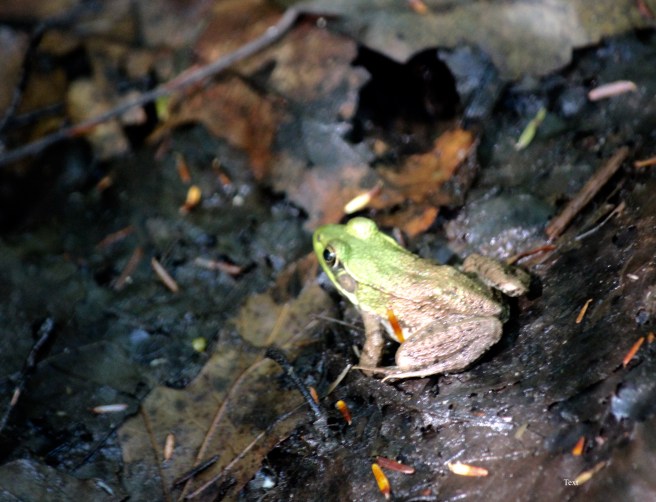
j-green frog

Others waited patiently–probably hoping we’d move along.
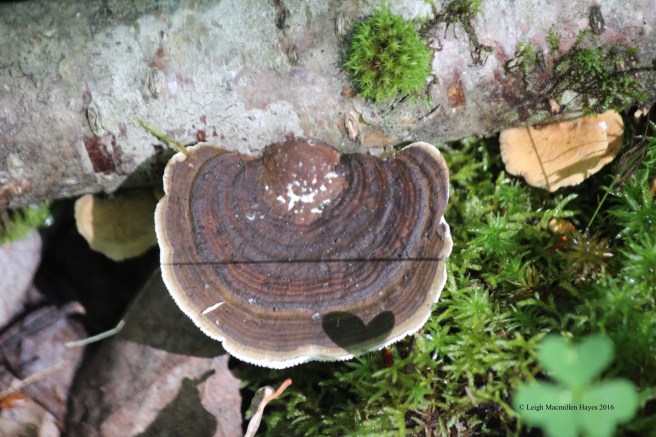
j-polypore

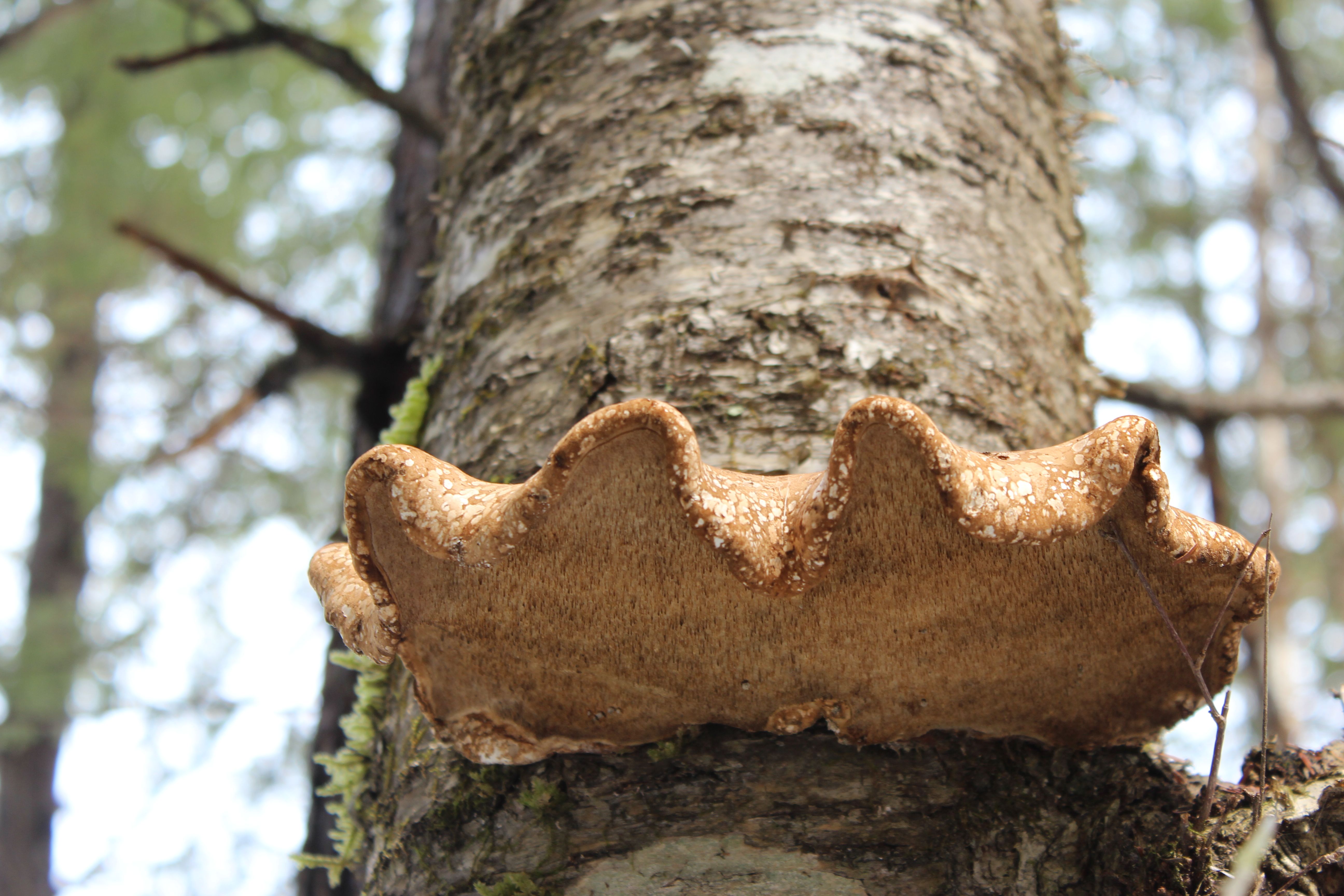
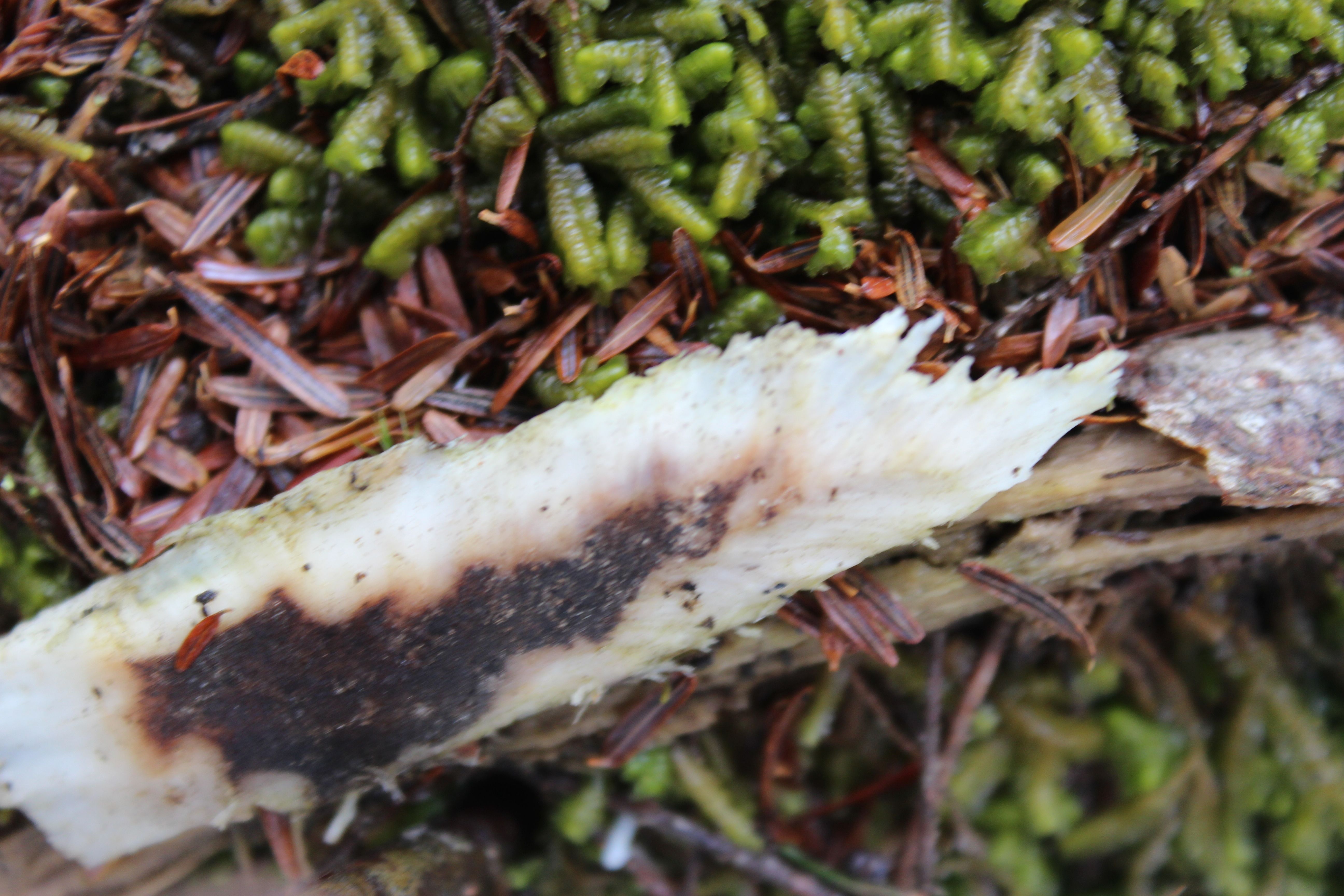
J.M. has a fascination for fungi. Many fruiting bodies, like this gilled polypore, showed their faces as we moved about.

j-gilled polypore

We rolled the log to get a better look at the maze-like underside.

j-false chanterelle

Among our finds–chanterelles (deleted false because fungi expert, Jimmie Veitch informed me that they are true chanterelles. If you want to know more about Maine fungi or to purchase some, visit White Mountain Mushrooms) and . . .
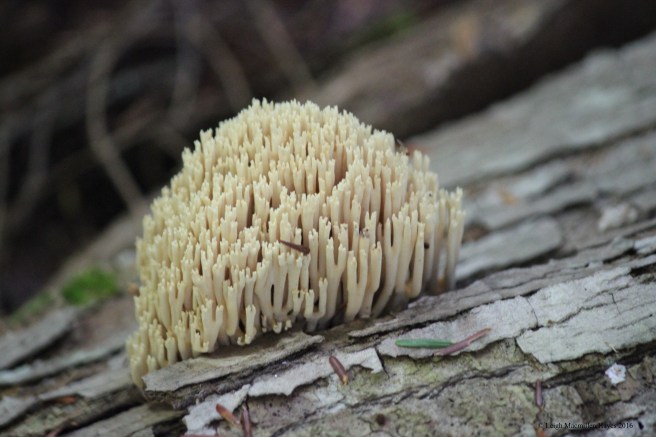
j-coral

a coral fungi. Given today’s humidity, it felt like we were in the Bermuda of the North.
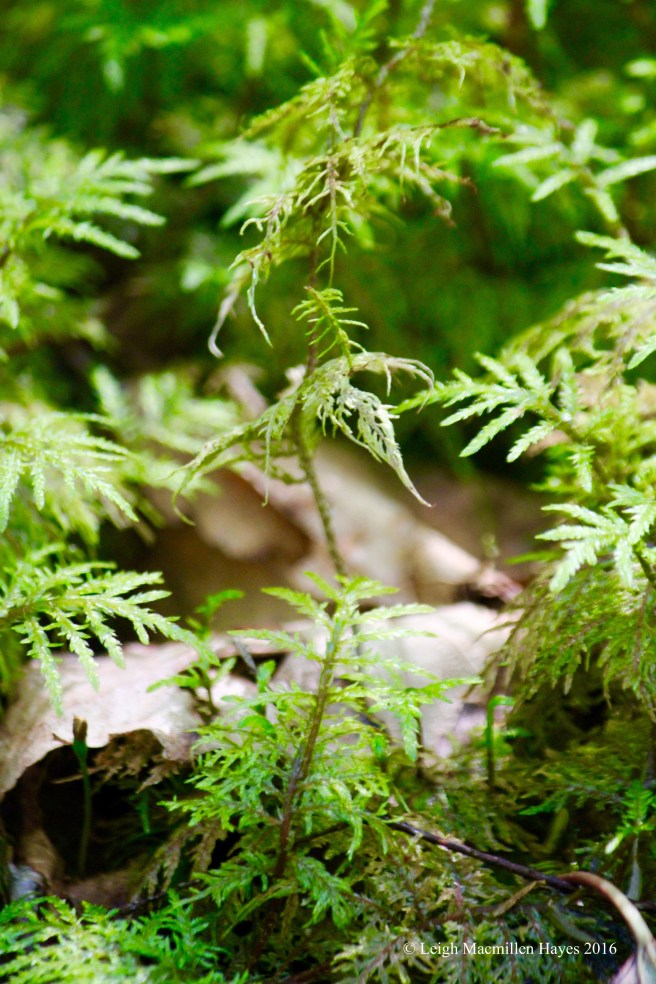
j-fern

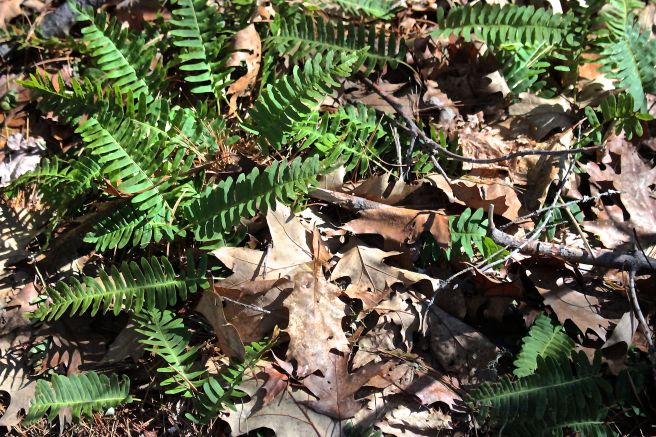
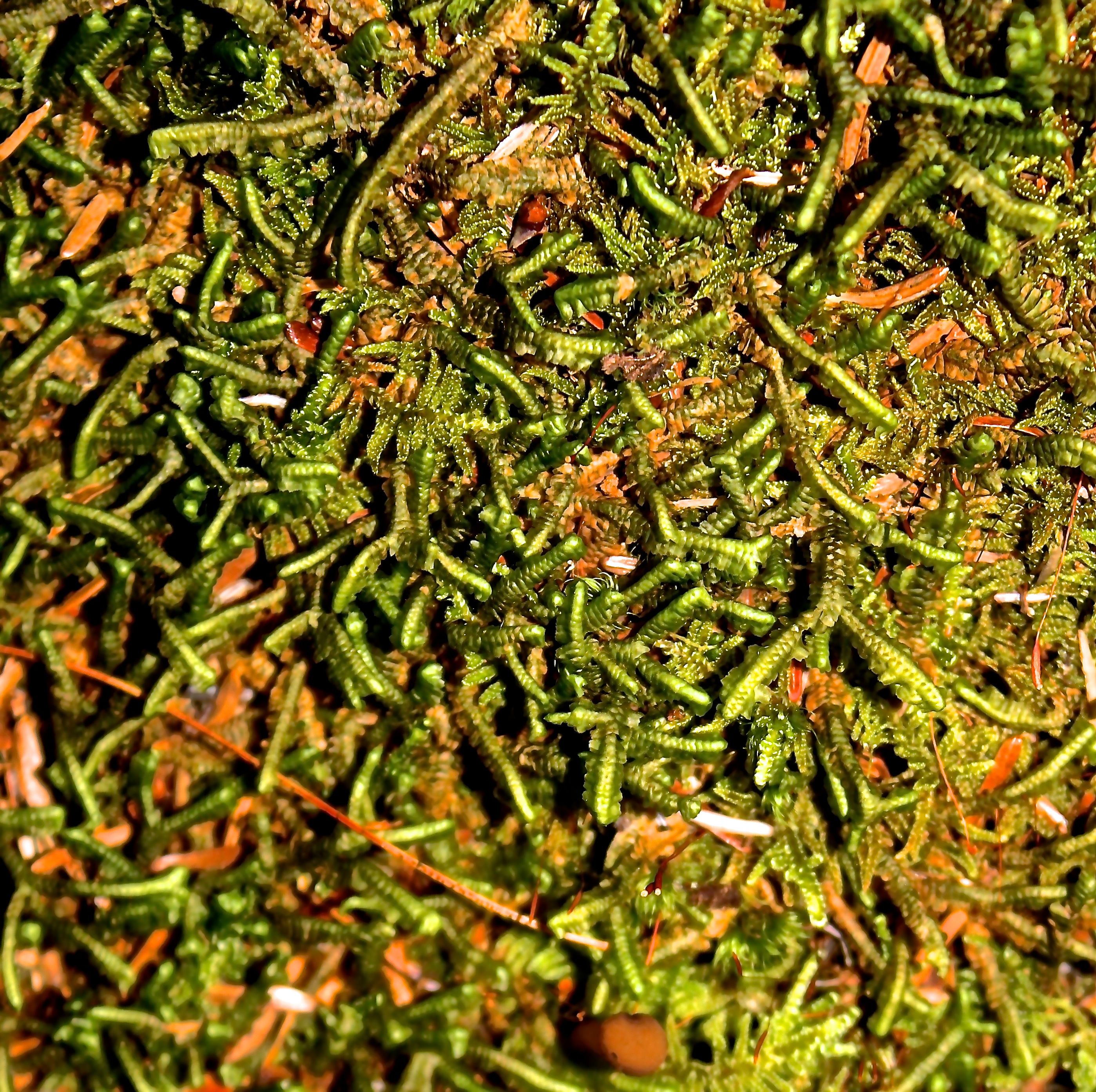
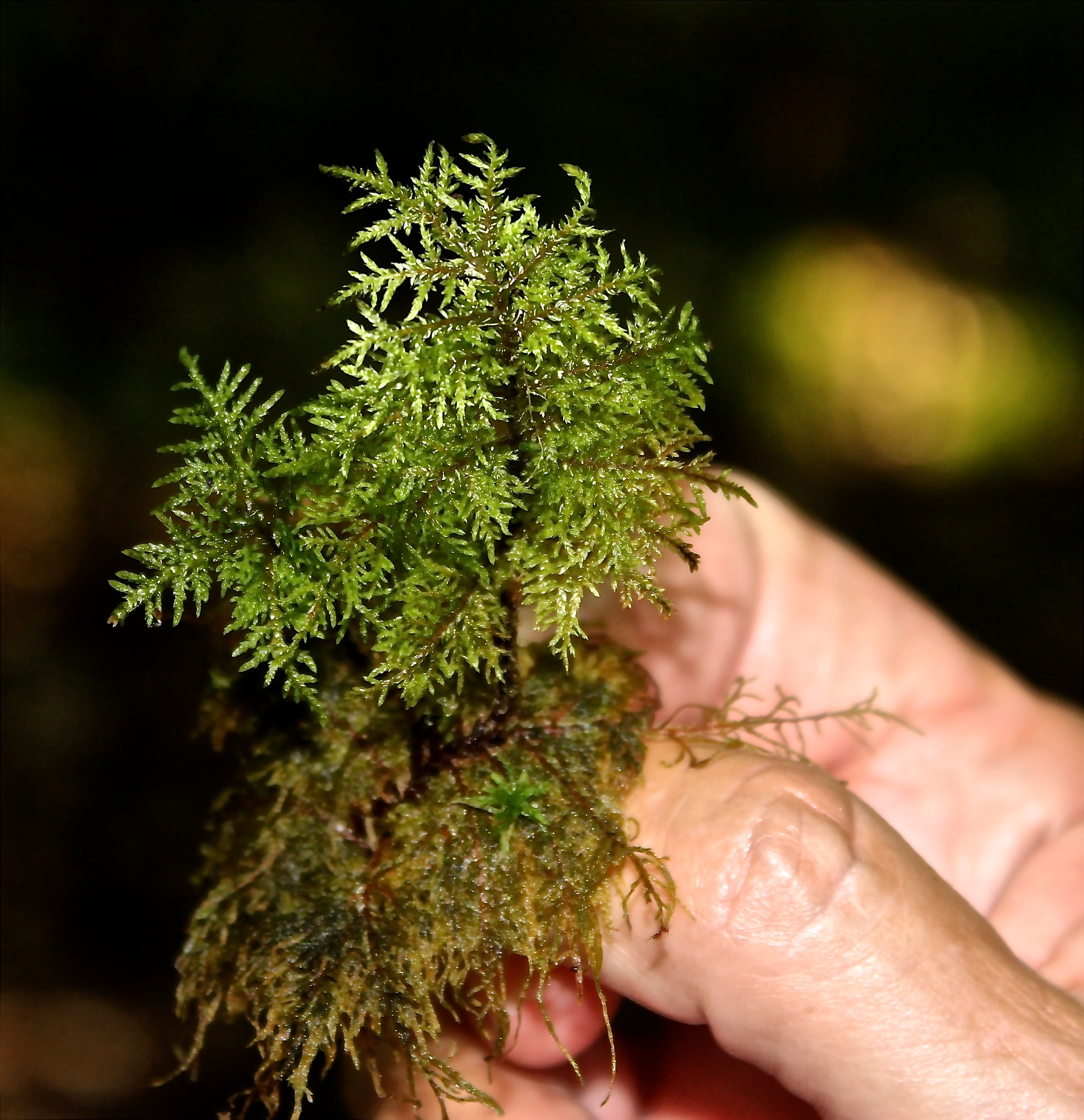
Jinny Mae also showed me a fern-like moss that I don’t think I’ve ever seen before: stair-step moss. This moss is particularly fond of the moist coniferous and hardwood forest we tramped through. Its new growth arose from the previous year’s growth–climbing like a staircase.
j-yellow birch and hemlock

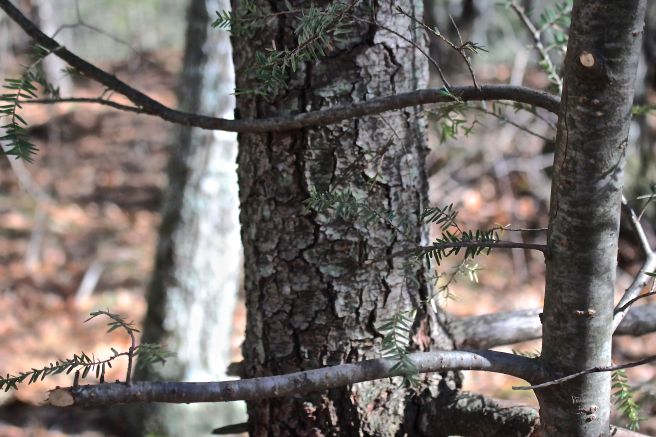
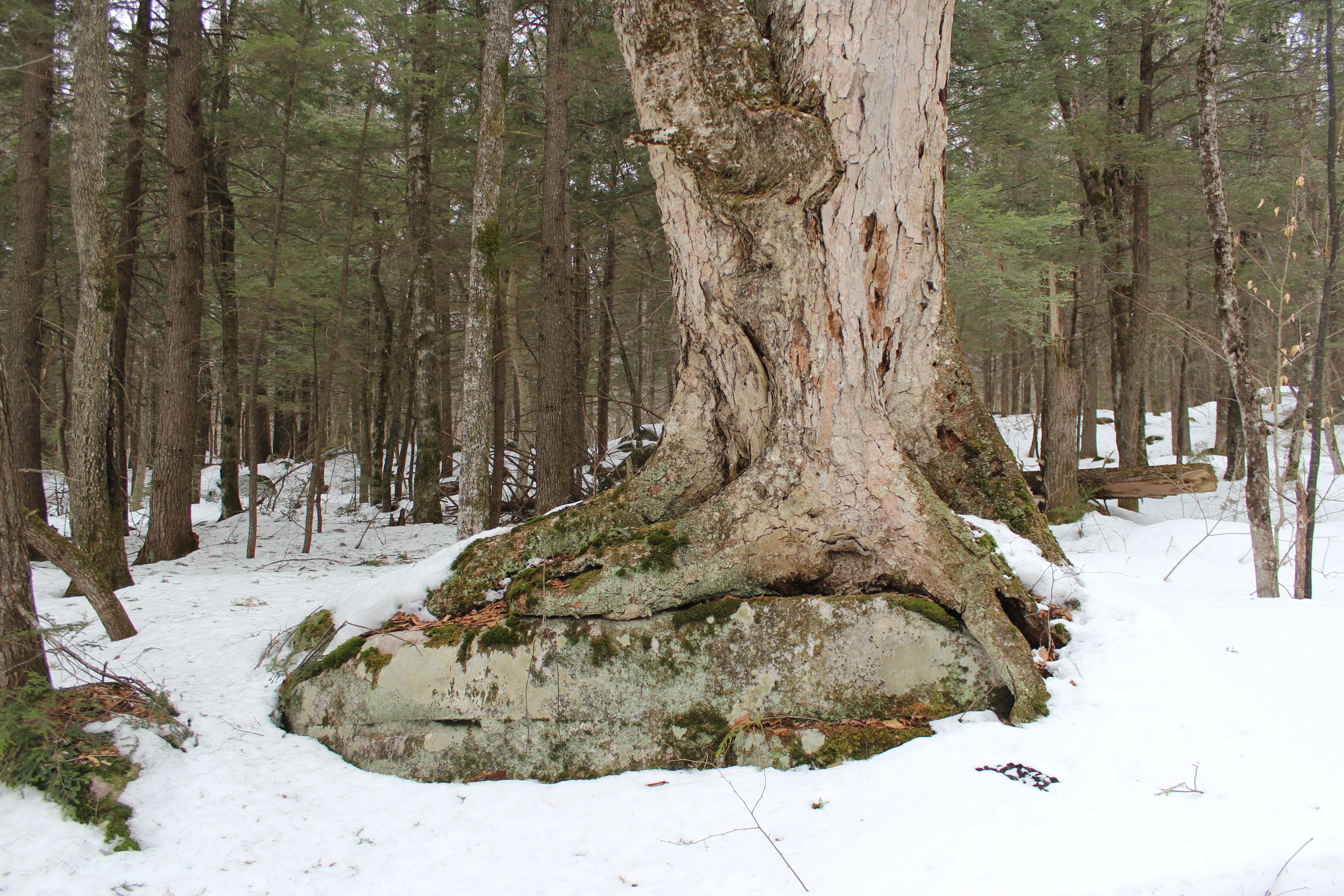
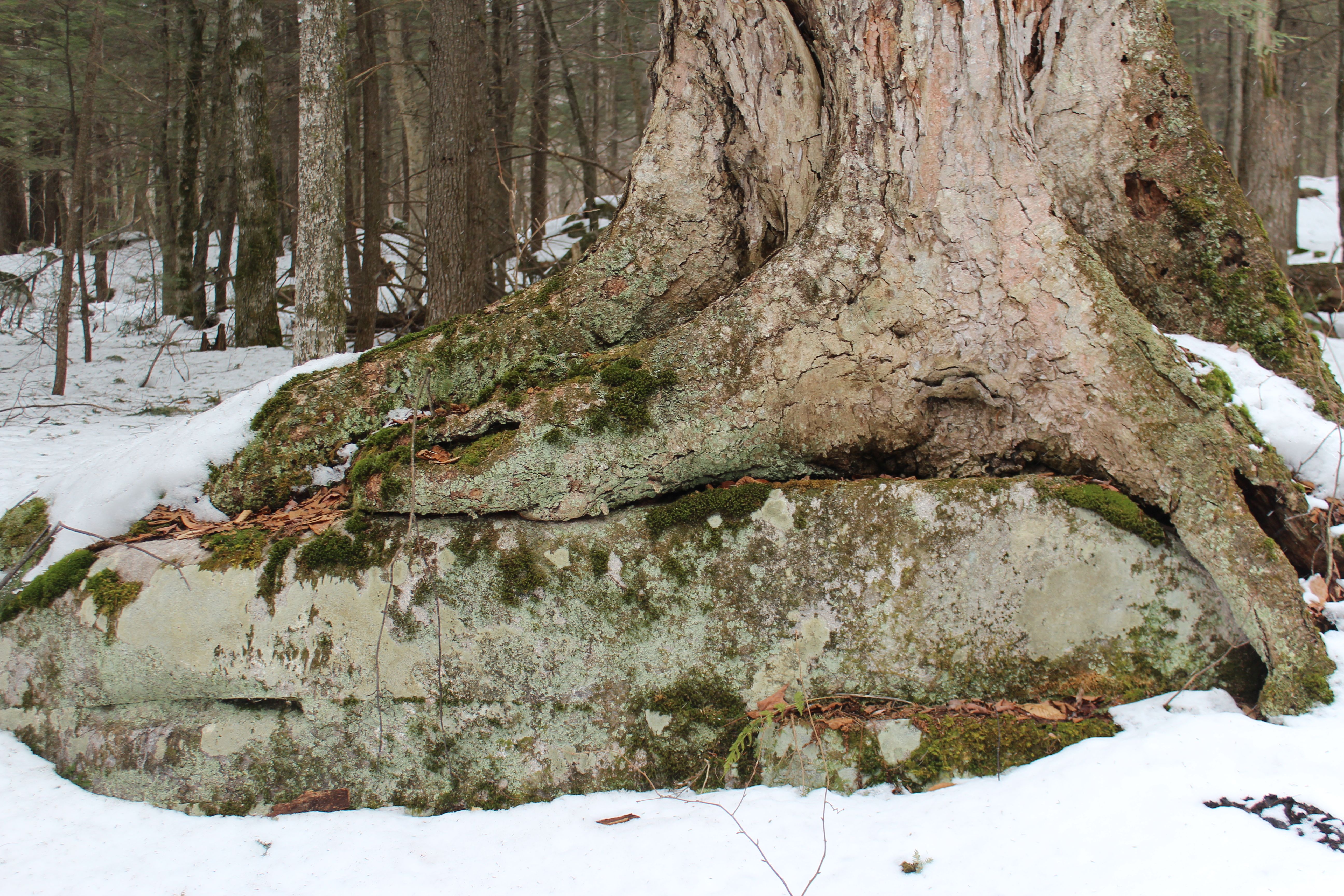
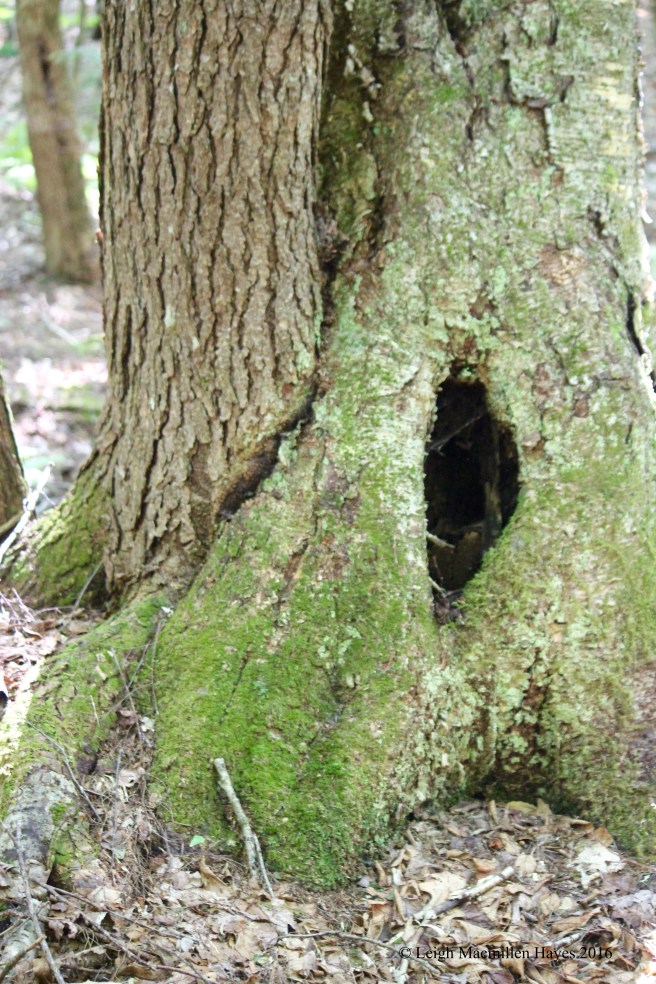
Nearby, she pointed to one of her favorite tree displays–a hemlock and yellow birch sharing space. Both have seeds that germinate best on rotting logs or rocks, where moss gathers and provides moisture. In a compatible relationship, they’ve reached for the sky with equal success. I’m reminded of two friends who know the importance of supporting each other–similar to the chitchat and occasional silence Jinny Mae and I share as we bushwhacked.

j-lightning 2

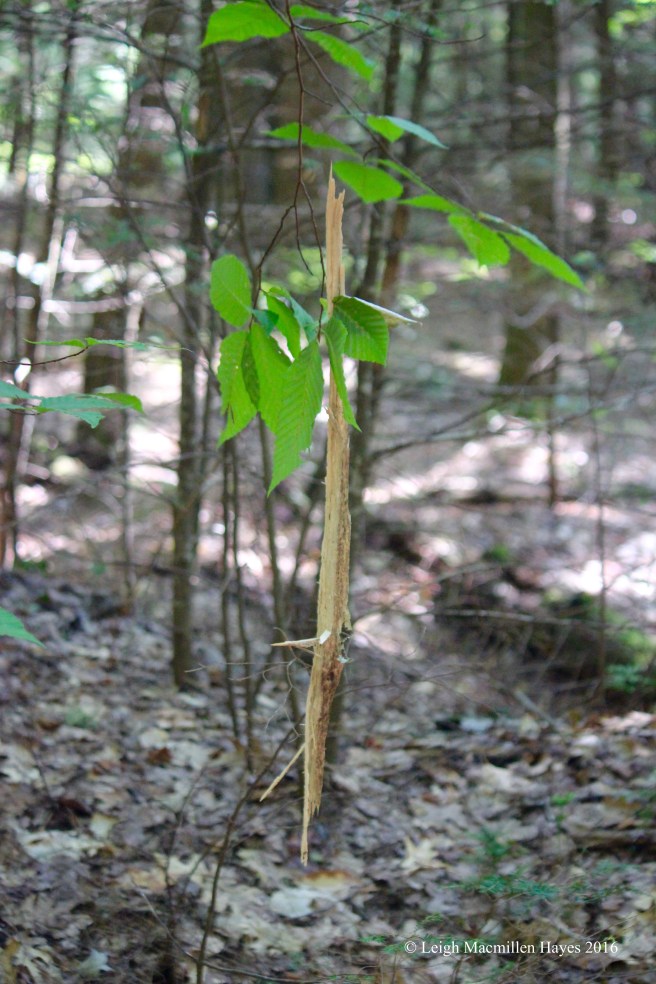
And then she introduced me to Excalibur. Even King Arthur probably couldn’t pull this    sword-like piece of a tree out of the ground–well, maybe he could. But we couldn’t.

j-lightning tree 1

The reason for Excalibur’s existence: a recent lightning strike.
j-lightning 4

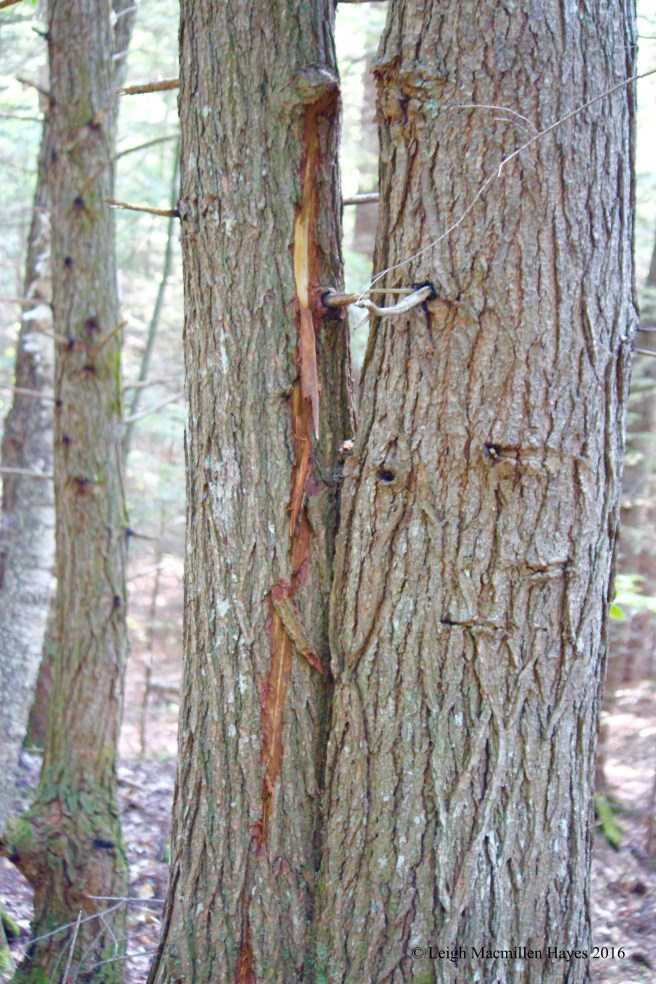
We looked around and saw that the energy passed through at least three trees.

j-lightning 5

Bark peeled off.

j-lightning 3

And shredded wood scattered. What surprised us both was that we couldn’t find any burnt wood. Thankfully.

j-beech drops

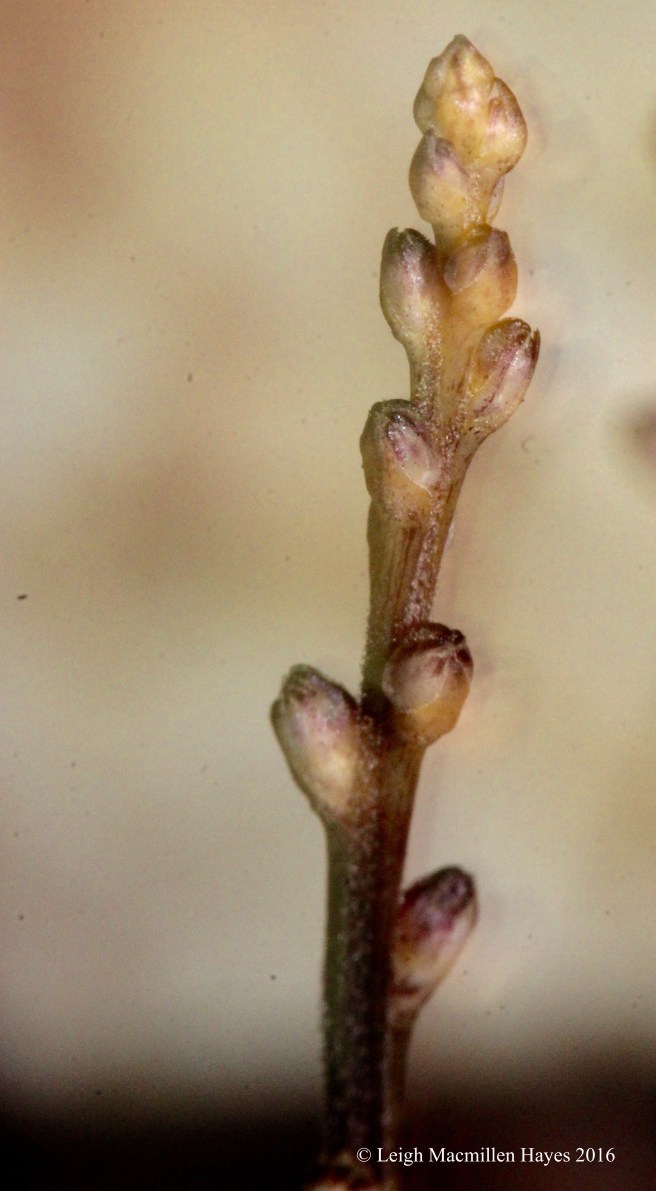
Making our way back toward her house, we entered a beech forest and began to see beechdrops everywhere we looked.
j-beech drops2

These are parasitic plants that don’t manufacture their own nutrition, thus they depend on the roots of American beech trees for food.
j-coteledon

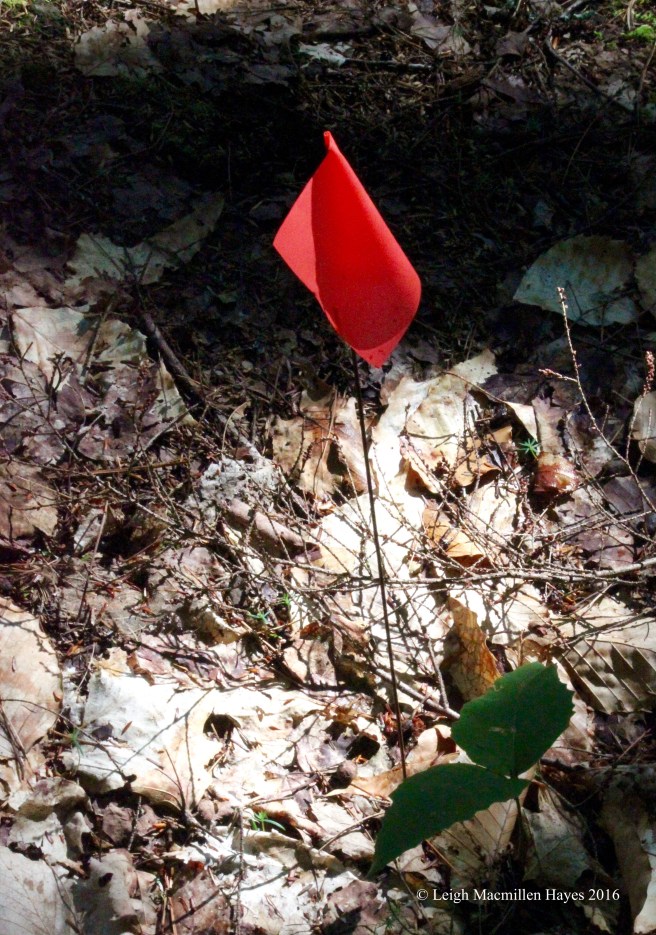
In this same area, we come across a young beech tree Jinny Mae flagged in the spring when she first observed a cotyledon. We chuckled when we remembered how we both were so taken with cotyledons a few months ago–a new sighting for us. One of those things that was always there, but we’d never noticed it previously. Today, she was filled with pride for this young beech. It’s had a healthy start and in forty years may provide beech nuts for the neighborhood bears. In the meantime, it will probably nourish a few beech drops.

j-Indian pipe .jpg

And then she showed me the final cool find of the day–an Indian pipe with stamens that appear to have split away from the flower. It seems that these friends made the move together–much the same as Jinny Mae and I did today.

I may have tagged along and followed her, but really, we walked side by side and I’m thankful for her friendship.
Bathing in the Forest

Yesterday, a friend handed me an article she’d clipped from The Washington Post entitled “Walking in Forest Changes You” written by Meeri Kim that referenced a Japanese practice called Shinrin-yoku. “Coined by the Japanese Ministry of Agriculture, Forestry and Fisheries in 1982, the word literally translates to ‘taking in the forest atmosphere’ or ‘forest bathing’ and refers to the process of soaking up the sights, smells and sounds of a natural setting to promote physiological and psychological health.”

Kim states: “Over thousands of years of human history, we have effectively become an indoor species. Particularly for those of us trapped in the cubicle life, often the only times we regularly step foot outside is for our daily work commute or to run errands . . . a number of scientific studies emphasize that reveling in the great outdoors promotes human health. Spending time in natural environments has been linked to lower stress levels, improved working memory and feeling more alive, among other positive attributes.”

I know that I can’t literally share the sounds and smells of our gardens, yard and woodland with you, but I invite you to imagine the softness of pine needles, crunch of dried leaves and sponginess of moss beneath your feet, the smell of pine interwoven with must and mud, and the sensation of a strong breeze, hot sun and cool shade. May you hear branches creaking in the wind, leaves fluttering, occasional mosquitos buzzing and songs of the oven bird, red-eyed vireo, chipping sparrow and white-throated sparrow who calls, “Old Sam Peabody” over and over again.

Join me in a garden/yard/forest bath:

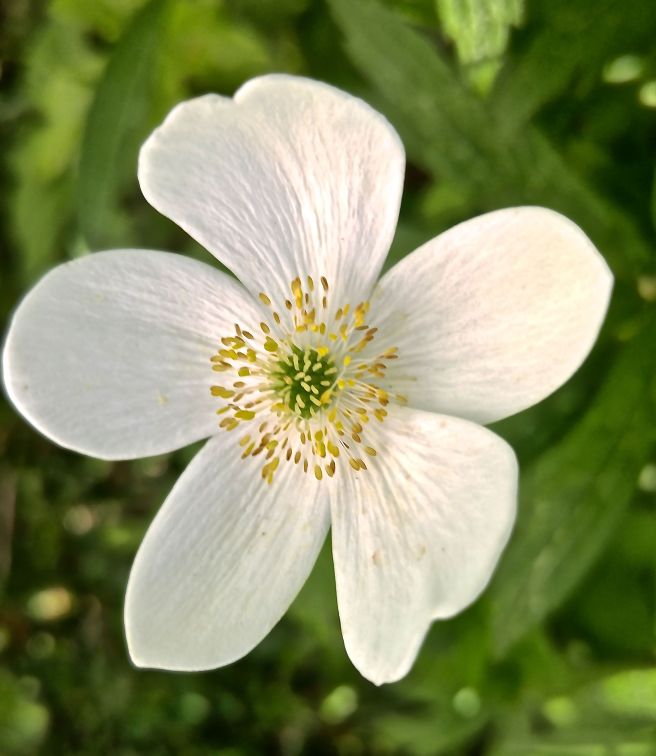
y-anemone 1

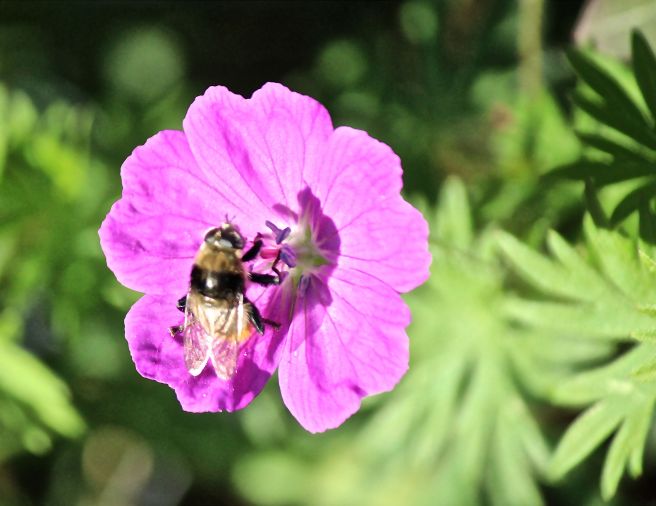
y-bee

y-frit 6

y-black-eyed1

y-grass green 2

y-milkweed

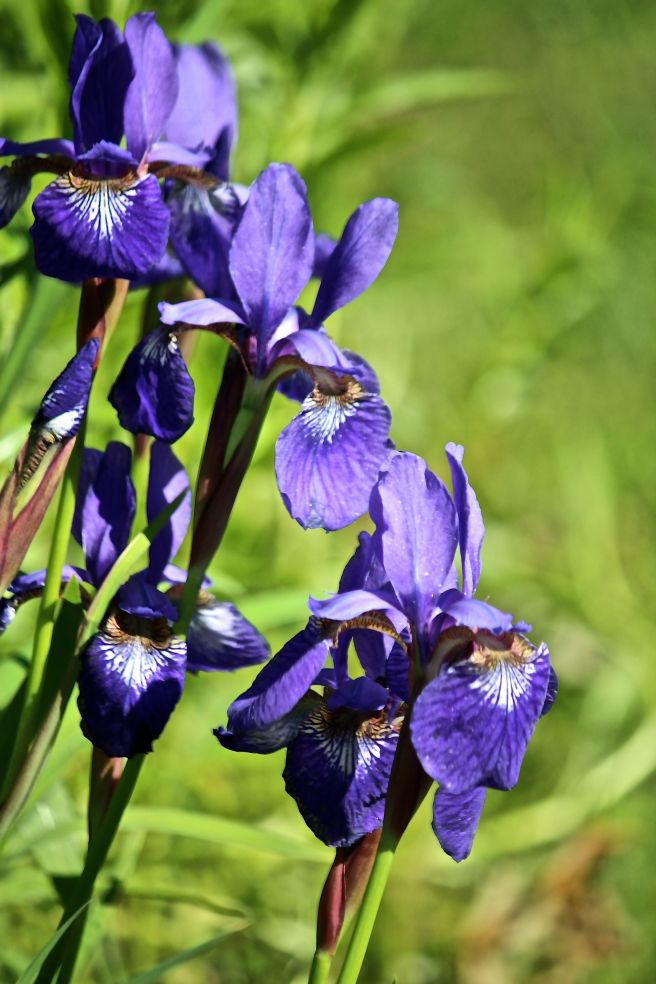
y-blueflag1

y-hawkweed

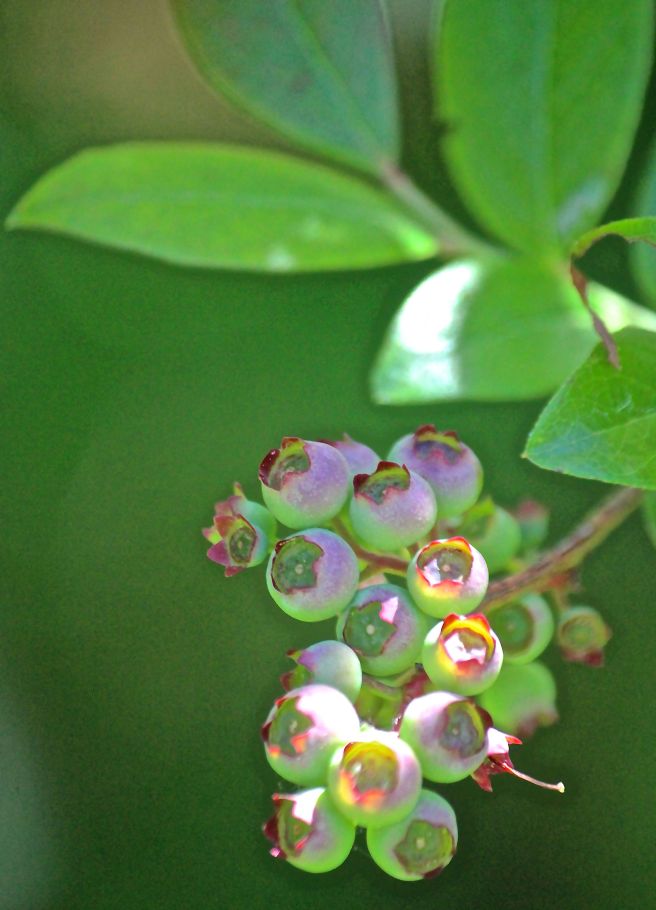
y-berries1

y-cowpath

y-pollen 11 (1)

y-barred

y-club 1

y-view 2

y-sheeplaurel3

y-hum4

y-moss1

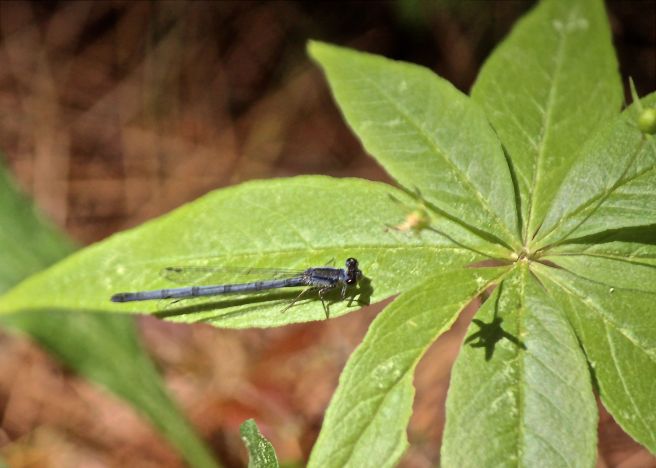
y-damsel 10

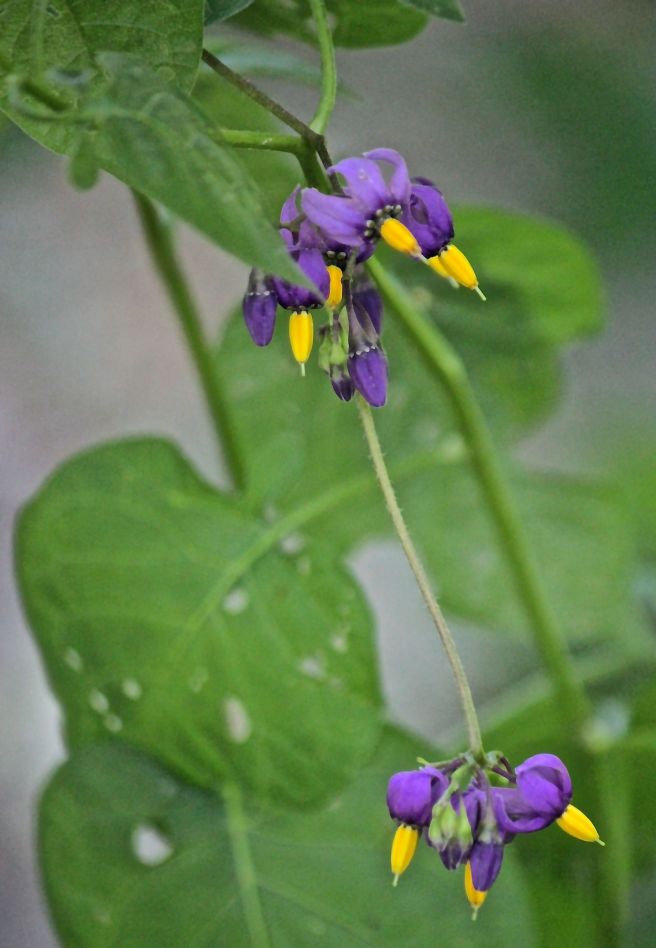
y-nightshade

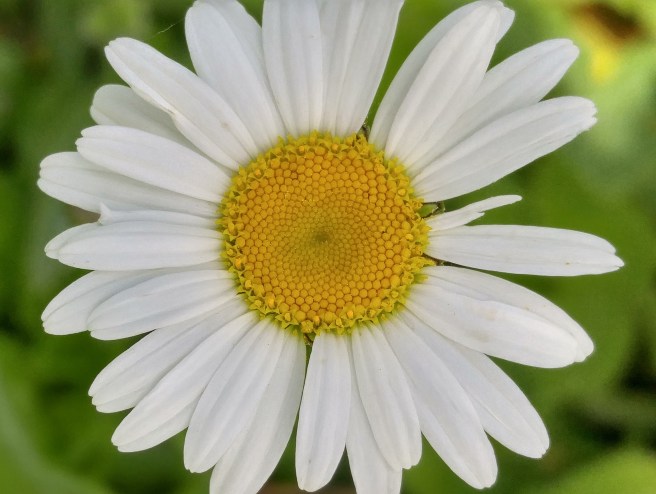
y-daisy 2 (1)

Happy wandering. Happy wondering. Happy bathing.

On The Verge Of Change

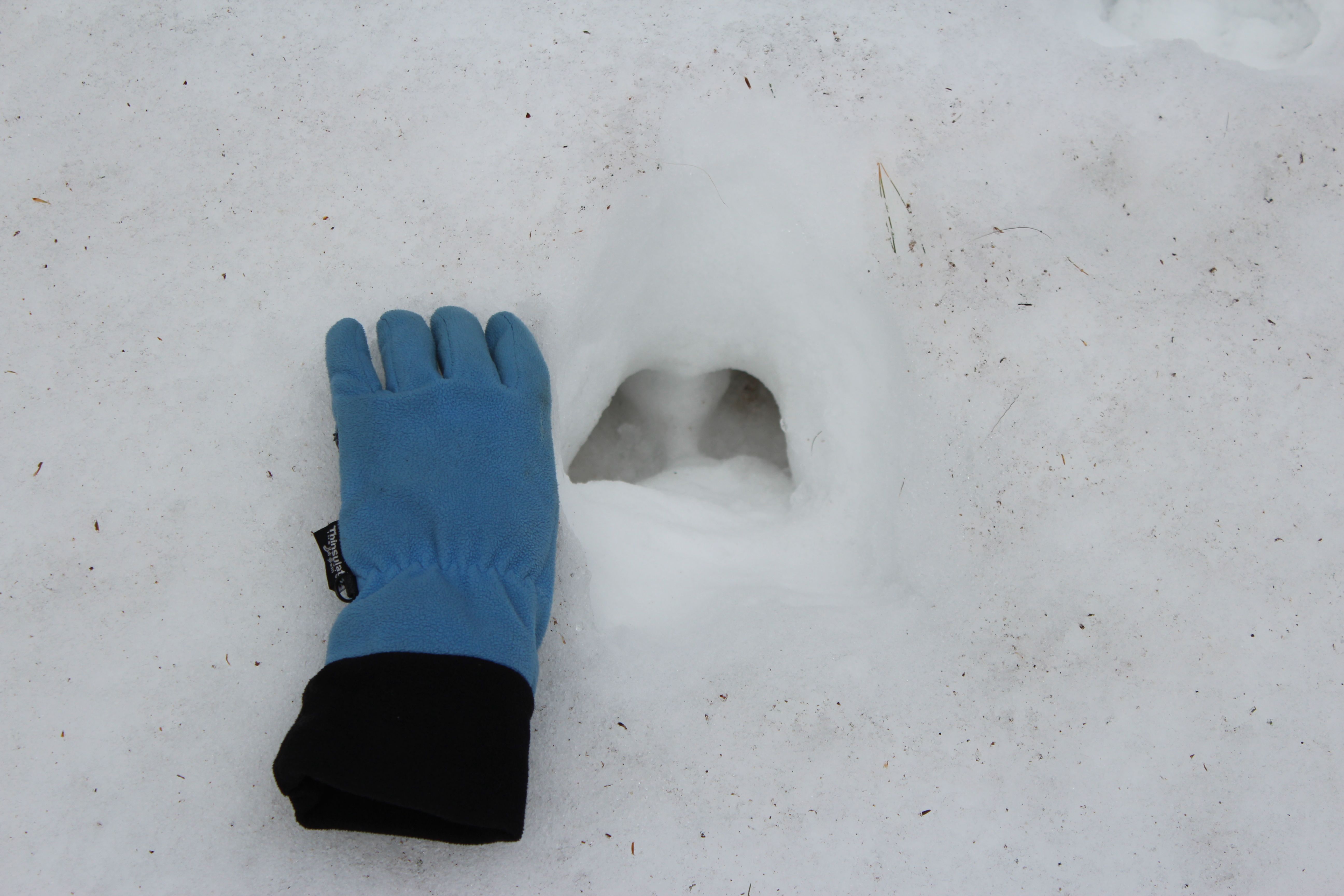
Change is in the air. Stepping out the door this morning, I was immediately treated to the sight of wet mammal tracks on the deck.

b-raccoon tracks

The hand-like shape was hardly a surprise since at least two raccoons visit the bird feeders on their nightly rounds.

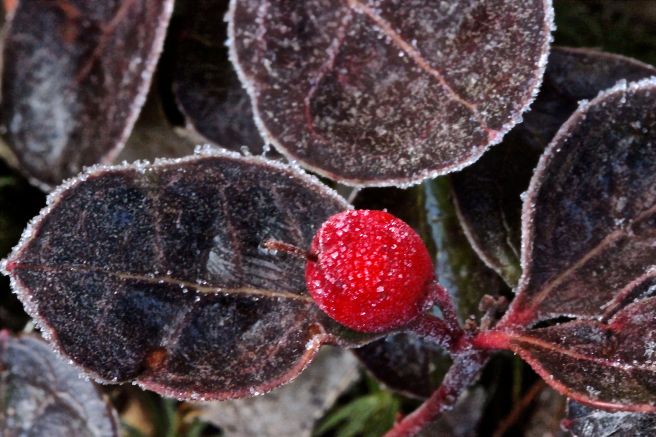
b-wintergreen

My next source of delight–frost embracing wintergreen berries and leaves.

vp1

And then I paid my respects to the vernal pool. While there, I spent some time reflecting on Bridie McGreavy, who celebrates her birth this day, and many moons ago introduced me to the sacredness of place–especially this delicate space.

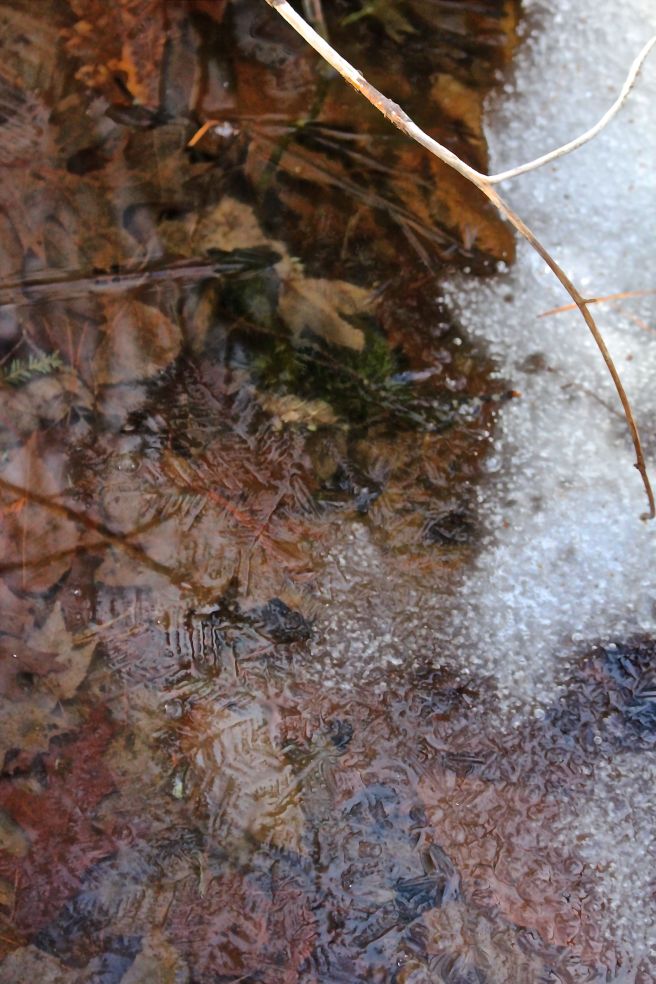
Vp2

Feather ice formed after yesterday’s melt and last night’s cooler temps.

As I did last year, I intend to document the pool on a regular basis–noting its evolution over time. This year’s big question: Will Big Night happen earlier than normal? I’m already receiving reports from others of spring peepers singing their songs.

b-brook 2

And then I was off to the GLLT’s Back Pond Reserve in Stoneham. My friend, Parker, and I were on a quest to locate species that would be good indicators of rich soils. He’s much better at knowing about this than I am, so I tagged along–thankful for the opportunity to bushwhack beside the stream that eventually flows into Back Pond while learning from him.

b-bass 2

We found a dead tree that stymied us for a few minutes, but though it has some ash-like tendencies, we came to the conclusion that it was a basswood–one of those indicators we were seeking.

b-basswood bark

Only thing–during our entire search, we only found two.

b-bear tree

But that’s OK because there was so much more to see. Though I’ve spotted other bear trees in these woods, this one features the best sign. My guy will be jealous that he wasn’t with us to find this one.

b-crowded parchment

For many of us, Parker is our fungi guru. He and his brother became interested in mushrooms at a young age and have studied them extensively. They know only Latin, I speak only common. And so, I present to you crowded parchment (Stereum rameale). 

b-hemlock varnish shelf

Hemlock varnish shelf (Ganoderma tsugae) grows prolifically in these woods. These old fruiting bodies are still beautiful in their offering.

b-panellus stipticus?

And though it didn’t get dark while we were there, Parker found Panellus stipticus, a bioluminescent species. Check out those gills on the underside. According to Lawrence Millman in his book Fascinating Fungi of New England, ” . . . specimens in the Northeast glow more obviously than specimens in other parts of North America.” So  if you are ever in these woods late at night, don’t be freaked out by a light greenish glow. It just might be nature’s night light.

b-magenta fungi

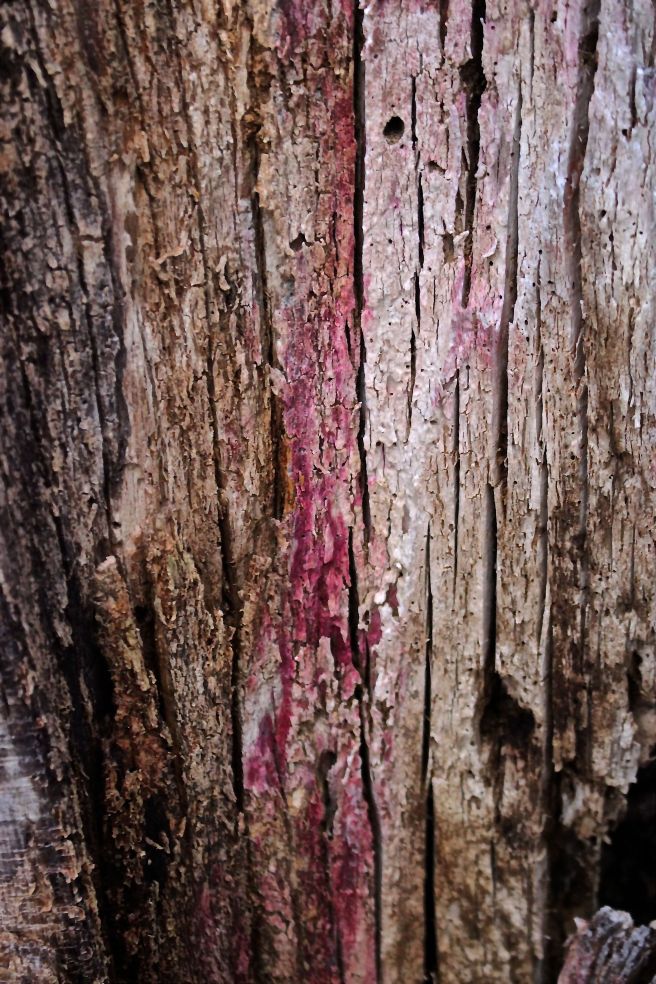
The fun thing about exploring with Parker is that he’s not afraid to say, “I don’t know.” Such was the case with this magenta fungus we found on the inner bark of a rotting stump.
b-hemlock:hop hornbeam 2

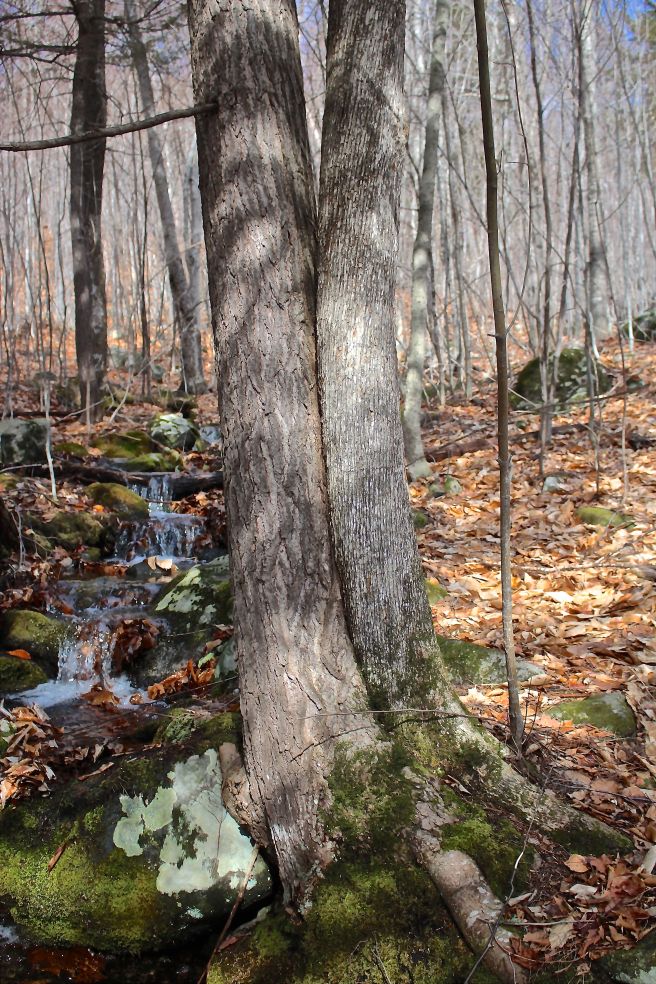
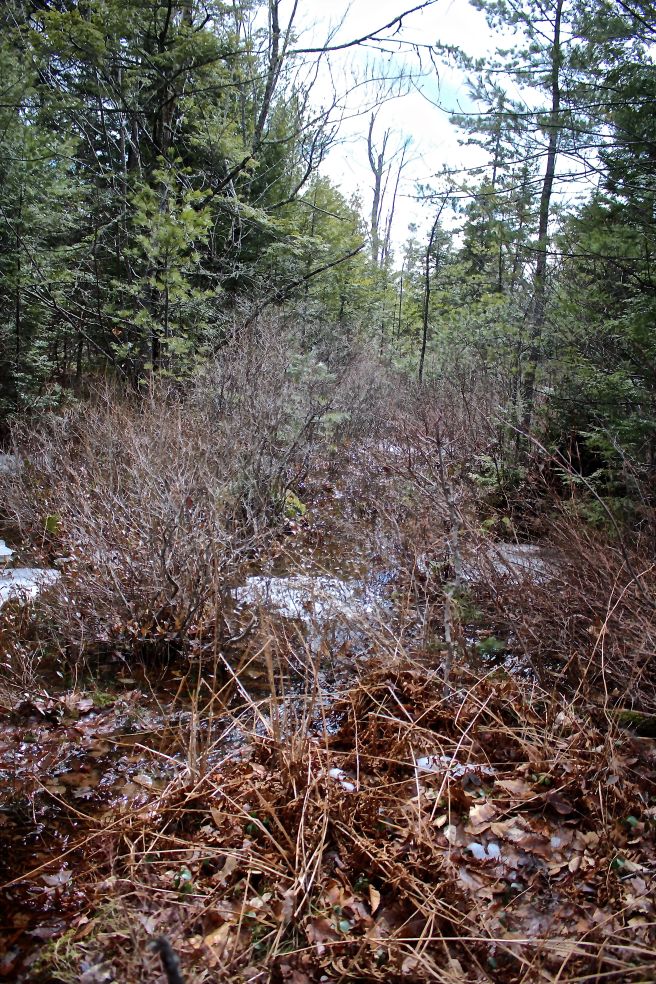
I don’t know why I’m surprised every time I see two trees sharing a space,but I am–this time hemlock and hop hornbeam.
b-brook sans ice

We continued beside the stream for most of our climb and eventually came upon the trail that connects Ron’s Loop to The Mountain.

b-lichen on tree

A few things stopped us along the way, including this lichen that neither of us could conclusively identify,

b-rock lichen

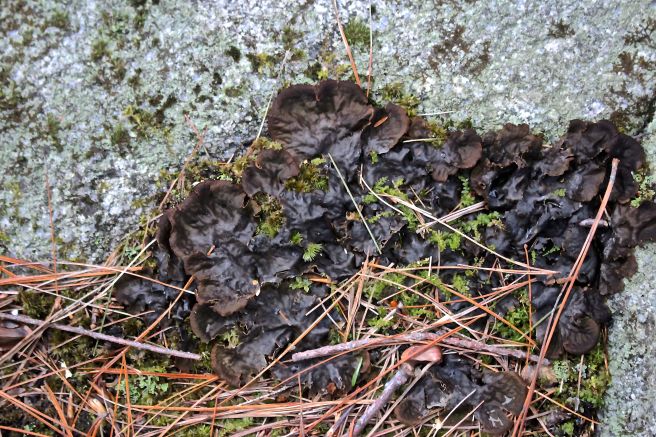
what I believe is peppered rock tripe,

b-lungwort, lichens

and the glorious bright green state of lungwort. The thing that gave us pause about the lungwort wasn’t so much the lungwort as the lichen and moss garden that also decorated this tree.

b-mtn bog

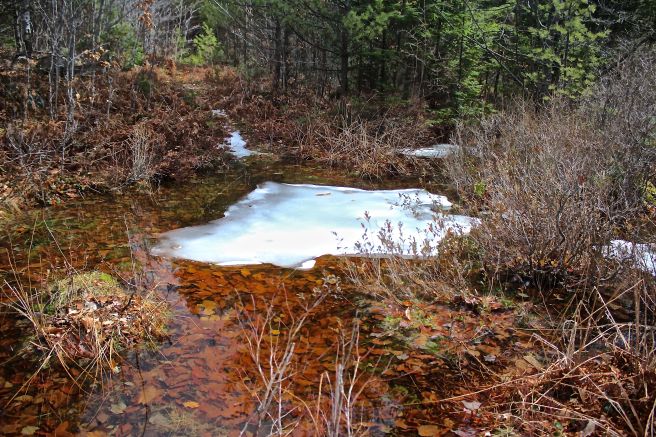
And then we were literally stopped by water. Our intention to reach the scenic view over the Five Kezars was prevented by this boggy area. A vernal pool?

b-mtn bog 2

Certainly a wetland. We explored for a few minutes and wondered about the species that will appear here in the next few months.

b-boulder field

Then we returned to the stream, crossed over and paid a visit to the boulder field for a closer examination.

b-rock tripe 1

Like the lungwort, much of the rock tripe was also green today–a testimony to recent rain and yesterday’s hail.

b-tripe center

Two things to note–how it grows from the center umbilicus, like an umbilical cord, thus its Latin name: Umbilicaria mammulata; and the fact that it’s creating a garden on the up-rock side, where mosses and humus and seeds gather.

b-rock tripe water 2

I found a drier brown specimen that had captured several drops of water and held them still.

b-redbacked

Upon our decent, we stumbled upon a redback salamander–the first of the season for both of us. It seemed rather lethargic so we covered it with leaves and wished it a safe life. Redbacks are terrestrial and don’t have an association with vernal pools, though they are sometimes spotted on Big Night as we help the salamanders cross the road.

b-rose moss 1

A mossy display on several rocks in a seepage meant we had to pause again.

b-rose 2

We believe this is rose moss (Rhodobryum ontariense), but our ID was quick.

b-rose 3

Based on the description in  Common Mosses of the Northeast and Appalachians, “the shield-shaped leaves are widest above mid leaf and end in needle point.” Yup.

b-wood sorrell

And then we realized we have to get our wildflower eyes back on. The wood sorrel (Oxalis montana) leaves stumped us initially, but what else could it be?

b-wood sorrel 2

Other than a luna moth, that is! Doesn’t it remind you of one?

b-foamflower?

Without a flower, it’s difficult to ID a plant. My first choice: Foamflower or False Miterwort (Tiarella cordifolia), but my second choice based on the blunt-toothed leaves: Naked Miterwort (Mitella nuda). Time . . . and blossoms will tell.

b-orchid?

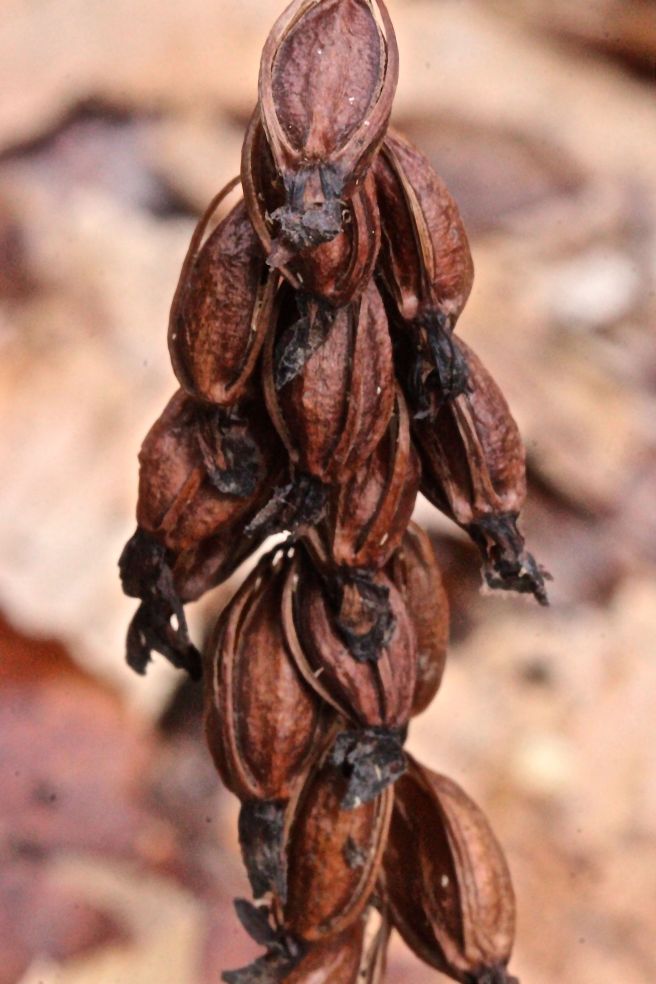
Our final find of the day left us with differing opinions. I said shinleaf (Pyrola elliptic). Parker said Corallorhiza maculate, which is a coralroot. A friend of his who is an orchid expert agreed. I guess we’ll have to revisit this place to confirm.

We’re on the verge of change and the seasons may collide with a Nor’easter in the offing.


Sharing Our Mondate

My guy and I spent this morning roaming about the woods in Lovell with several friends who are docents for the Greater Lovell Land Trust. We had been invited to explore a 20-acre property and the owners, Barb and Bruce, were in hopes that we’d discover interesting things.

As it turned out we explored much more than their property because we got a bit mixed up with boundary lines, and came away with some questions to ponder about the lay of the land as well as a scavenger hunt for their grandchildren to conquer.

b-red pines

Before we headed off into the woods, Barb wanted us to see a neighbor’s off-the-grid tiny cabin. To get there, we passed through a red pine grove that immediately put me into question mode. Why a grove here? Who planted them? When? I know that the Civilian Conservation Corp did this sort of thing in the 1930s and had been in the area–Stoneham and Bridgton, Maine, as well as Chatham, New Hampshire. But my research didn’t indicate that they’d done any projects in Lovell.

What I did learn, however, is that the farmer who once owned this hilly land may have received a subsidy to plant the trees in order to control soil erosion and turn them into a cash crop. An article in Northern Woodlands states the following: “The government further subsidized red pine seedlings throughout the twentieth century as a way of providing hill farmers with a future cash crop that would grow on otherwise played-out soil. Red pine seemed the perfect candidate for this, as it’s fast growing and susceptible to fewer serious enemies than most pine species. (White pine can be bedeviled by white pine weevil and white pine blister rust – neither of which affect red pine.)

From their size and close proximity to each other, its apparent that the “cash crop” never paid off. Instead, Barb and her husband have a stately cathedral overlooking the mountains and a quiet passageway to visit their neighbor.

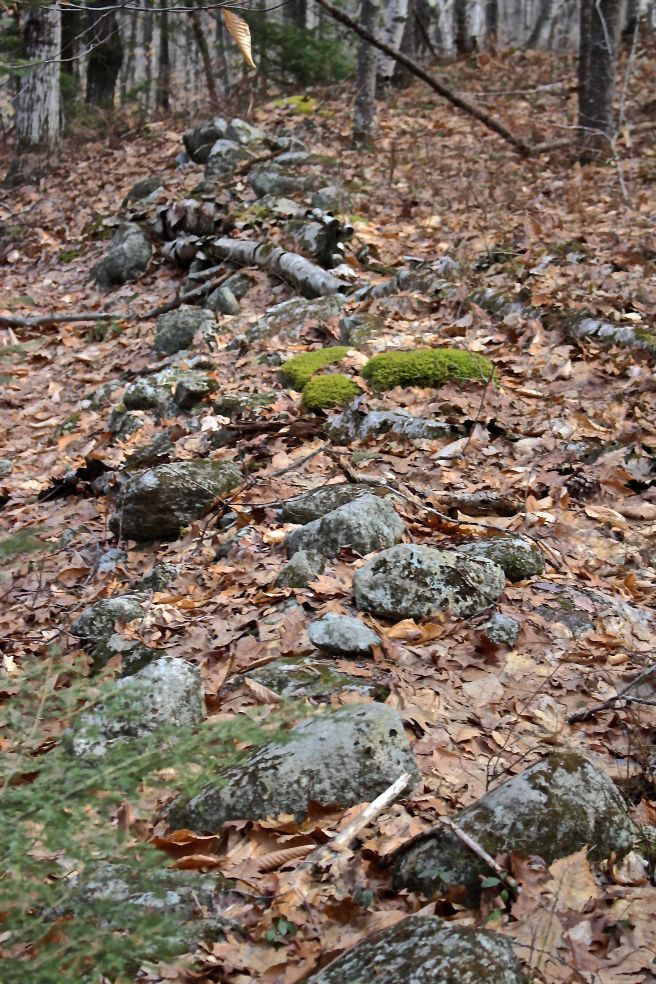
We returned from our quick house tour and followed a double-wide stone wall to an opening. Again, we questioned the wall’s purpose. A way to get rid of stones? Did they use the bottom portion of the land below the wall for agriculture and let cows or sheep roam above? We didn’t come up with the answers, but continued on.

b-rock tripe colony

It was time for us to find some treasures that the grandkids can seek. Rock tripe is first on the list.

b-rock tripe

It’s gray-brown upper surface turns dark green when moist–so be sure to bring along some water to pour on this lichen. Then watch the transformation.

Though edible in a last ditch effort by someone who doesn’t mind chewing and chewing and chewing some more, rock tripe is neither delicious nor nutritious. Some Native peoples used it as a soup thickener and others as a last resort tidbit. If you soak it for a while it will soften up.

b-vernal pool

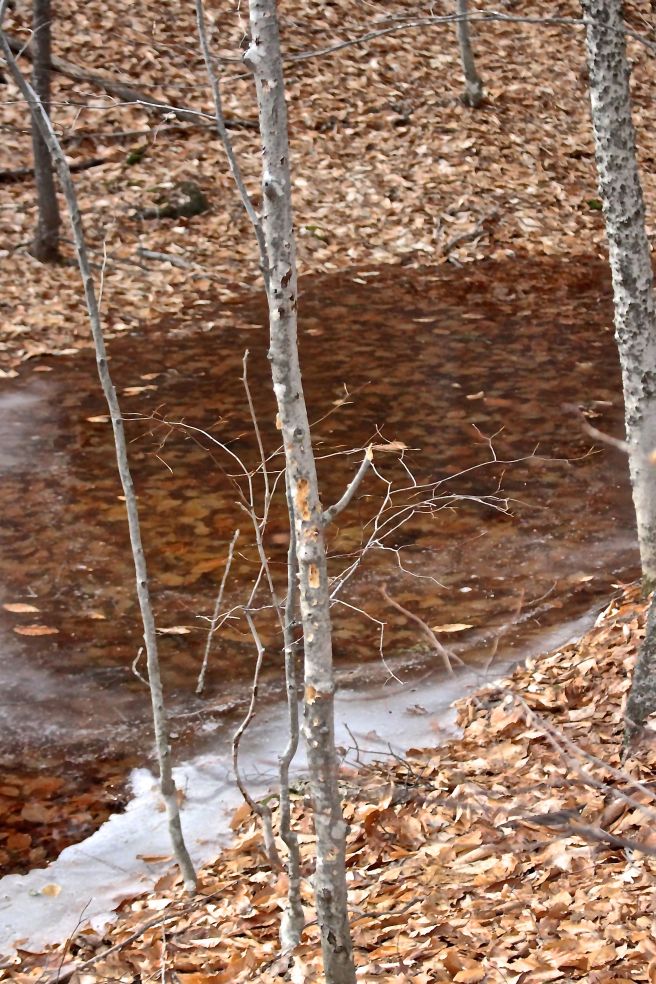
The temperature was cooler this morning than the last few so a skim of ice covered the surface of this vernal pool. I’m not sure how long it will last, but if it’s still there, dip a pail in and look at the assortment of species that swim about. Maybe you’ll even see some frog or salamander egg masses if you visit in the spring.

b-Indian pipe

Here and there we found the pods of Indian pipes. In the summer, look for their ghostly white form–they look like their name, with the flower part hanging down. If it’s turned upright like this one, it has been fertilized.

b-puff balls

Though long since spent, puff balls are another fun find. Poke them and watch the spores float out like smoke from a chimney.

b-wood chips

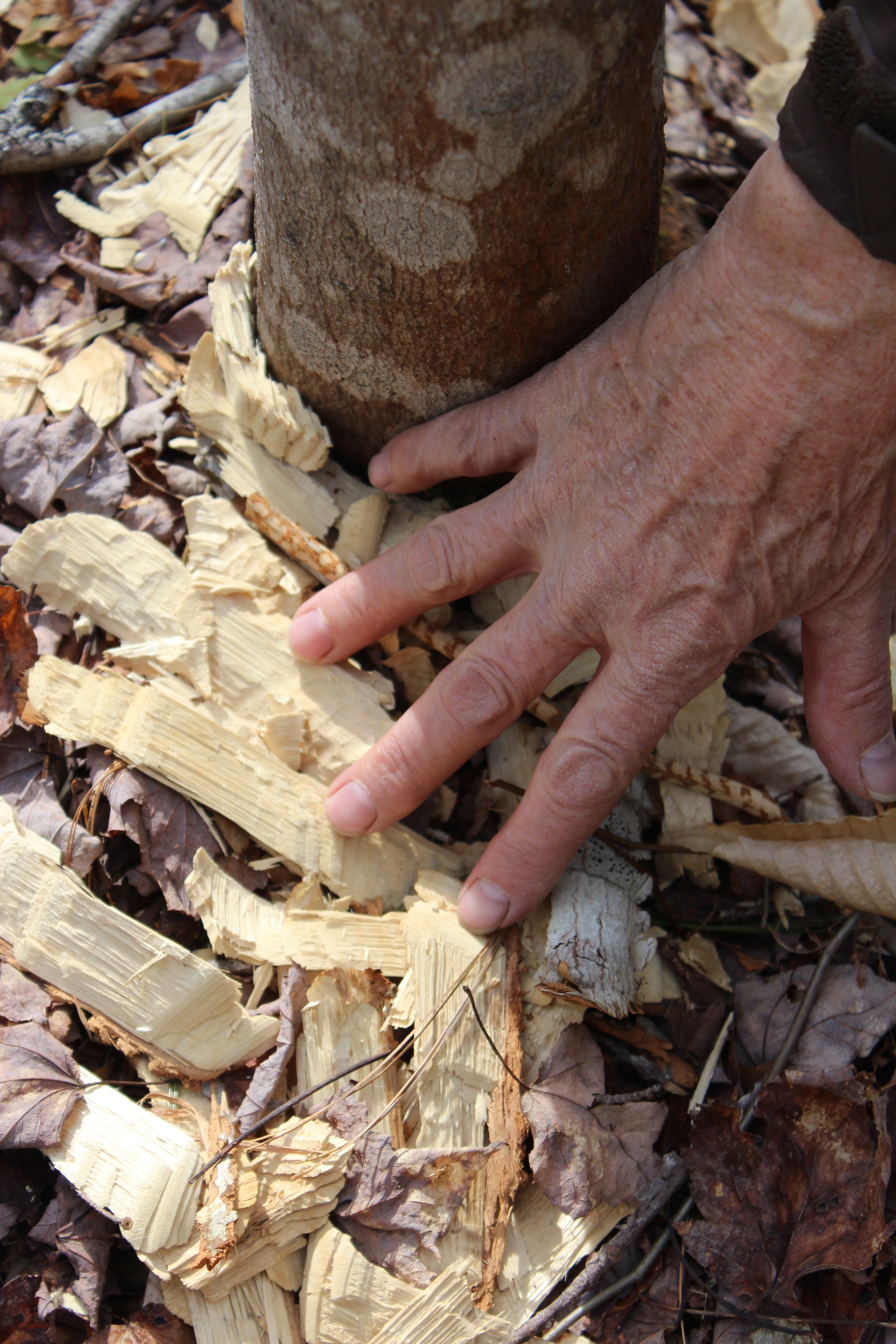
The pileated woodpeckers love this mixed hardwood forest, so you might find evidence of their work on the floor. And then look up into the tree to locate the cavity they’ve excavated.

b-bird nest 1

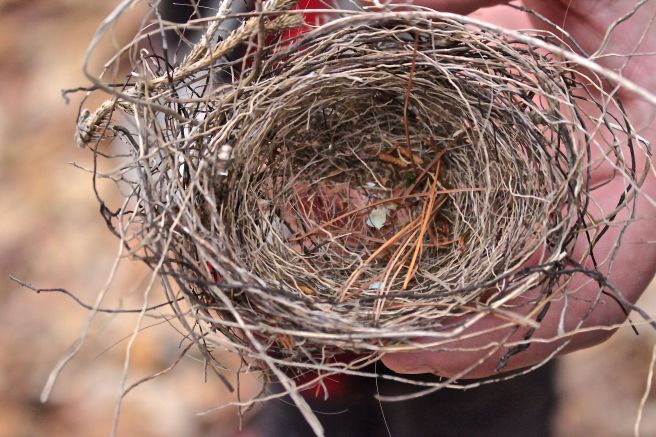
We found several bird nests, including this one made of grasses and wiry stems.  A fraction of a blue egg shell sits inside.

b-nest 2, downy feather

Wait until late winter/early spring to search for these, when the wind has blown them to the ground. But leave them be. According to the Migratory Bird Treaty Act of 1918, “It is  illegal to collect or have in your possession live native birds (adults or young), bird feathers, nests or eggs, to try to incubate wild bird eggs, to keep nests or eggs even for “show and tell” educational purposes, or to have road-killed birds in your possession without a permit.” Do you know why? Do some research to find the answer.

b-mock orange

There’s a variety of fungi growing on the trees right now, and come summer, you’ll find more on the ground. We had our favorite mushroom guru with us, who helped us ID this species as mock oyster.

b-tinder conk

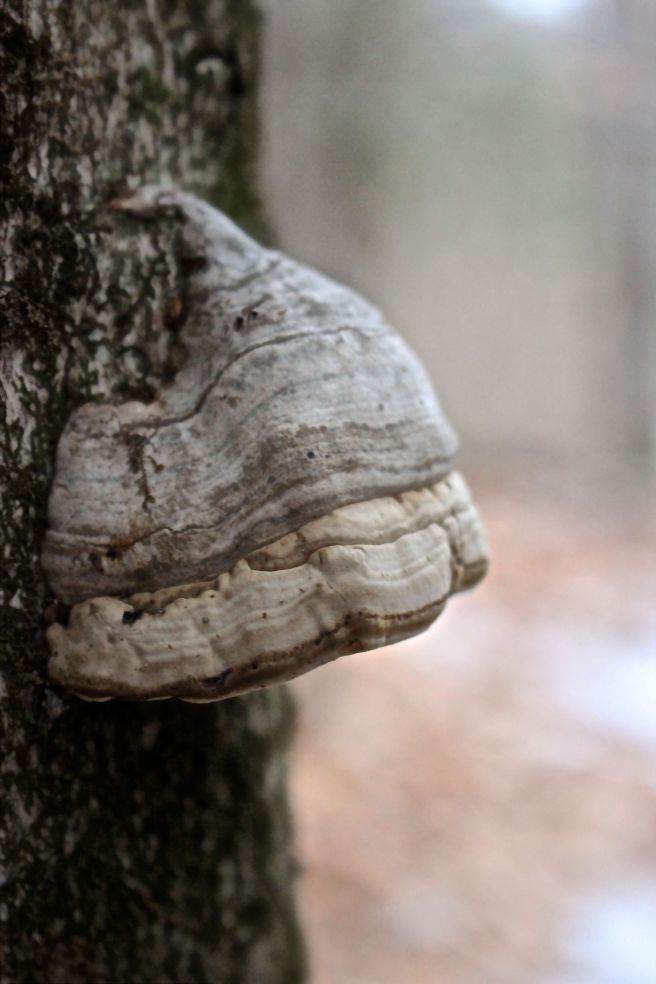
Tinder polypore is one of my favorites because it looks like a horse’s hoof. Another research project for you–why did the Ice Man carry a sample of this?

b-nurse log

There are numerous nurse logs, but this one struck me as especially beautiful. Mosses and liverworts grow abundantly along its upper surface and provide a place for all kinds of action to happen. Look for small saplings taking hold. Can you find the shelled remains of an acorn or the scales of a hemlock cone? Who do you think left those? Any small, twisted scat?

b-owl pellet

Or how about something that looks like this–lots of hair and bones matted together? This is an owl pellet and with the help of your adults, you can actually pull the bones out and reconstruct the skeleton(s) of the prey–be it vole or shrew or even red squirrel. Sometimes the pellets contain the skeletons of more than one critter.

b-beech growing through paper birch bark

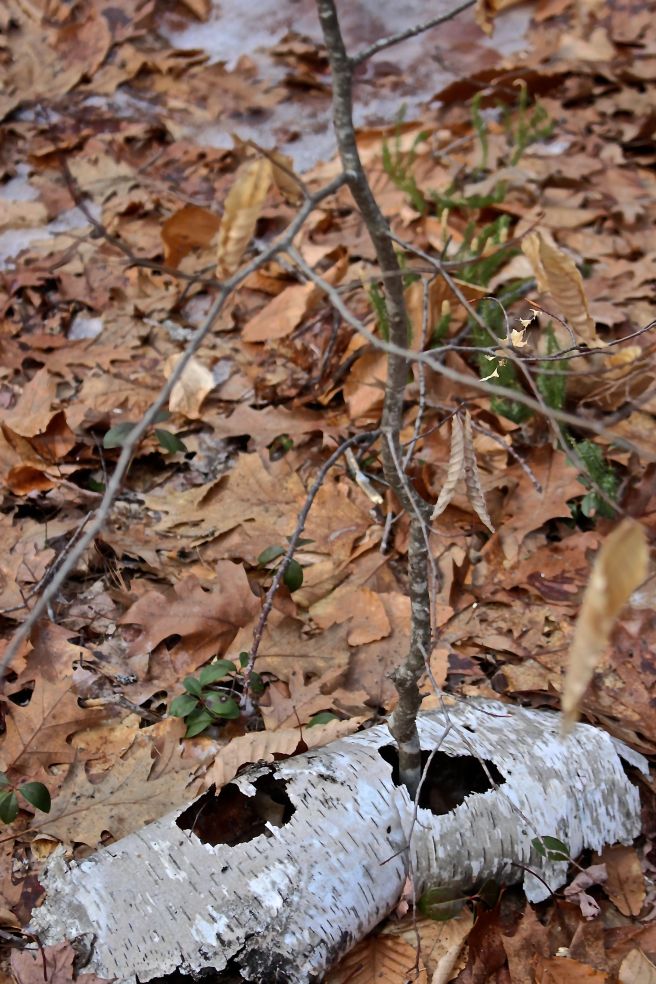
I would love to learn that you found this–a young beech tree growing through paper birch bark. Which came first? And why?

b-barbed3

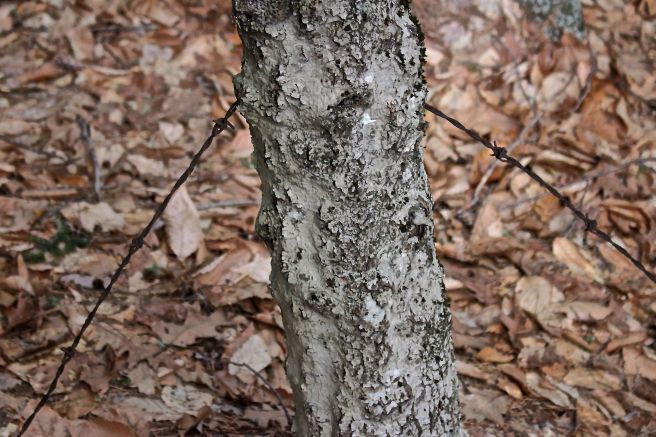
Another sight for you, and one to certainly watch out for–barbed wire. We found it all along the back boundary, where it grows through the trees. This is rough country and there are no stone walls. The wire probably dates to the 1880s or later. Be careful.

b-dip between eskers?

The land had us wondering about esker ridges as it dipped and rose. We’ll try to ask those who know more about local geology to help us gain a better understanding.

b-gps 2

We realized we’d zigged where we should have zagged, but didn’t care because we share a passion for the exploration.

b-garden wall

As we headed down, we stumbled across another garden wall and

b-stone pile.jpg

small rock piles like this one. My first thought–a well. That was until we found several others. Maybe just rock piles.

b-shinleaf, pyrola eliptica

Our final find as we stepped through a wetland making our way from a neighbor’s property to the road–the winter look of shinleaf (Pyrola elliptic).

I’d promised everyone a two hour tour, but those who know me best know better. Three hours later we knocked on the door to thank Barb and Bruce for the opportunity–for sharing their land with us and giving us the opportunity to share our Mondate with others.


Spotlight on Sabattus

Following this morning’s Greater Lovell Land Trust trek at Chip Stockford Reserve, where we helped old and new friends form bark eyes as they examined various members of the birch family, my feet were itchy. Not in the scratchy sort of way–but rather to keep moving.

It was a lovely day for a hike and Sabattus Mountain in Lovell was my destination. I love this little mountain because it offers several different natural communities and great views.

s-com 1

Though there are a few softwoods on the lower portion of the trail, it’s really the land of a hardwood mix.

s-downed twigs

About halfway up, the neighborhood switches to a hemlock-pine-oak community. It was then that I began looking for downed hemlock twigs in an array at the base of trees. I’ve found them here before, and today I wasn’t disappointed.

s-porky chew 3

The twigs had been chewed off and dropped by a porcupine as evidenced by the 45˚-angled cut and incisor marks. Though red squirrels also nip off the tips of hemlock twigs, they do just that–nip the tips. Porcupines cut branches.

s-porky cliff

Downed branches usually mean scat, but I searched high and low and under numerous trees that showed signs of activity and found none. A disappointment certainly.

s-pippipsewa

My search, however, led me to other delightful finds that are showing up now that most of the snow has melted, like this pipsissewa that glowed in the afternoon sun. As is its habit, the shiny evergreen leaves look brand new–even though they’ve spent the winter plastered under snow and ice. A cheery reminder that spring isn’t far off.

s-Pleasant 1

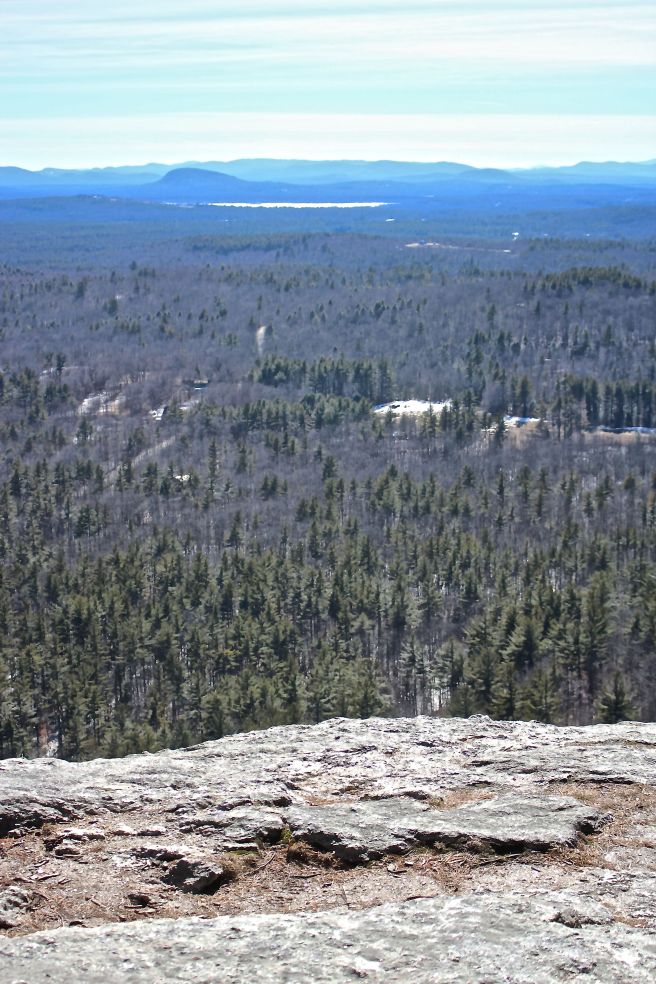
At the summit, I got my bearings–the ridge of Pleasant Mountain and Shawnee Peak Ski Area to the southeast.

s-mount tom & kezar pond

To the southwest, the asymmetrical Roche Moutonnée, Mount Tom, visible as it stands guard over Kezar Pond in Fryeburg.

s-Kearsarge 2

And to the west, Kezar Lake backed by Mount Kearsarge in New Hampshire. I wanted to venture further out on the ledge, but some others hikers had arrived and I opted not to disturb their peace.

s-summit wind

Instead, I sat for a few minutes and enjoyed the strong breeze offering possibilities as it floated over the summit and me.

s-porky cuts1

Crossing the ridge, I left the trail and found more porcupine trees, including this young hemlock that had several cuts–look in the upper right-hand corner and lower left hand. A number of younger trees along this stretch will forever be Lorax trees.

s-golden moonglow1

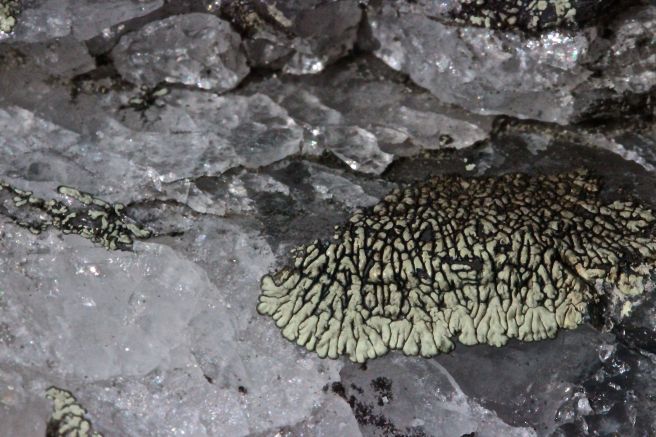
On the outcrop of quartz, I paused to admire the golden moonglow lichen–it’s almost as if someone drew each hand-like section in black and then filled in the color, creating an effect that radiates outward.

s-polypody patch

I was pleasantly surprised to find a patch of polypody ferns on what appears to be the forest floor but was actually the rocky ridge. Notice how open-faced it is, indicating that the temperature was quite a bit warmer than what I’d seen on cold winter days.

s-polypody sun

Sunlight made the pinna translucent and the pompoms of sori on the backside shone through.

s-glacial 1

The trail doesn’t pass this glacial erratic, but I stepped over the logs indicating I should turn left and continued a wee bit further until I reached this special spot.

s-porky scat 1

Its backside has been a porcupine den forever and ever. Nice to know that some things never change.

s-hemlocks and oaks

After returning to the trail, I followed it down through the hemlocks and oaks. This is my favorite part of the trail and though it’s a loop, I like to save this section for the downward hike–maybe because it forces me to slow down.

s-fairies 1

For one thing, it features the land of the fairies. I always feel their presence when here. Blame it on my father who knew of their existence.

s-fairies 2

I had a feeling a few friends were home–those who found their way into a fairy tale I wrote years ago. I left them be–trusting they were resting until this evening.

s-community transition 1

As swiftly as the community changed on the upward trail, the same was true on my descent.

s-birch bark color

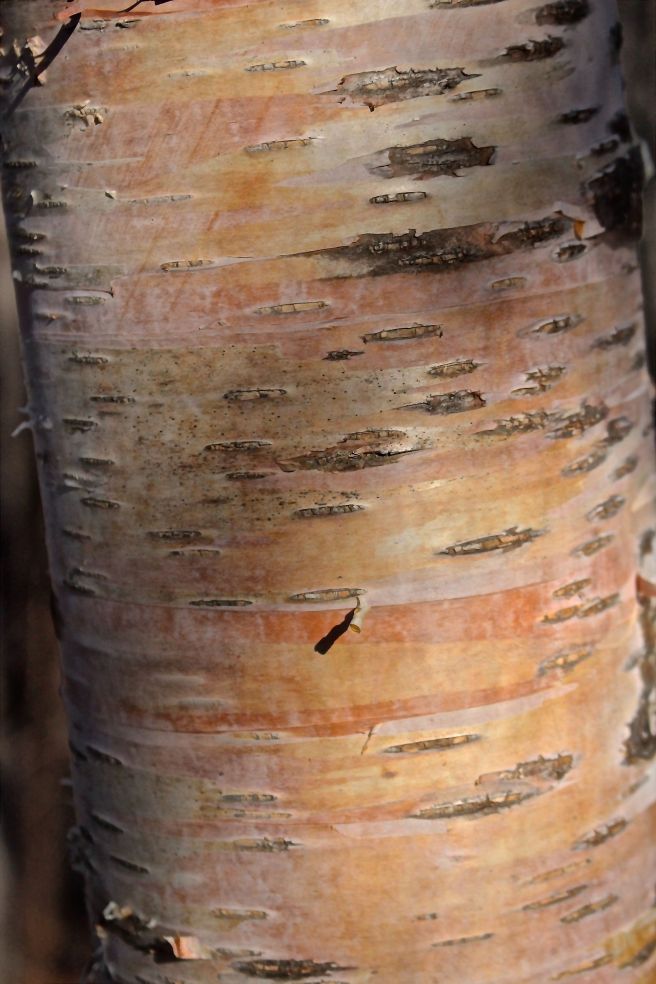
On our morning trek, we’d looked at paper birch, but none of the trees we saw showed the range of colors like this one–a watercolor painting of a sunset.

s-birch bark 1

This one shows the black scar that occurs when people peel bark. The tree will live, but think about having your winter coat torn off of you on a frigid winter day. Or worse.

s-black birch 1

Off the trail again, I paused by a few trees that I believe are black birch. Lately, a few of us have been questioning black birch/pin cherry because they have similar bark. The telltale sign should be catkins dangling from the birch branches. I looked up and didn’t see catkins, but the trees may not be old enough to be viable. This particular one, however, featured birch polypores. So maybe I was right. I do know one thing–it’s not healthy.

s-pines 2a

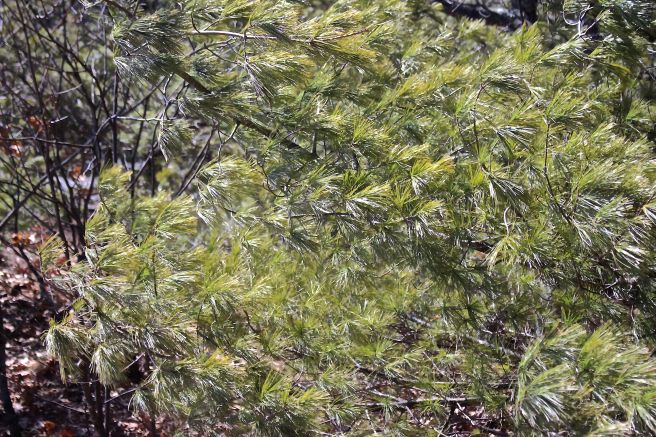
And then I reached a section of trail that I’ve watched grow and change in a way that’s more noticeable than most. I counted the whorls on these white pines and determined that they are about 25 years old. I remember when our sons, who are in their early twenties, towered over the trees in their sapling form. Now two to three times taller than our young men, the trees crowded growing conditions have naturally culled them.

s-birch planter

Nature isn’t the only one that has culled the trees. Following their selection to be logged, however, some became planters for other species.

s-3 trees

Nearing the end of the trail another view warmed my heart. Three trees, three species, three amigos. Despite their differences, they’ve found a way to live together. It strikes me as a message to our nation.

Perhaps our leaders need to turn the spotlight on places like Sabattus. It’s worth a wonder.


Pure Bliss Mondate

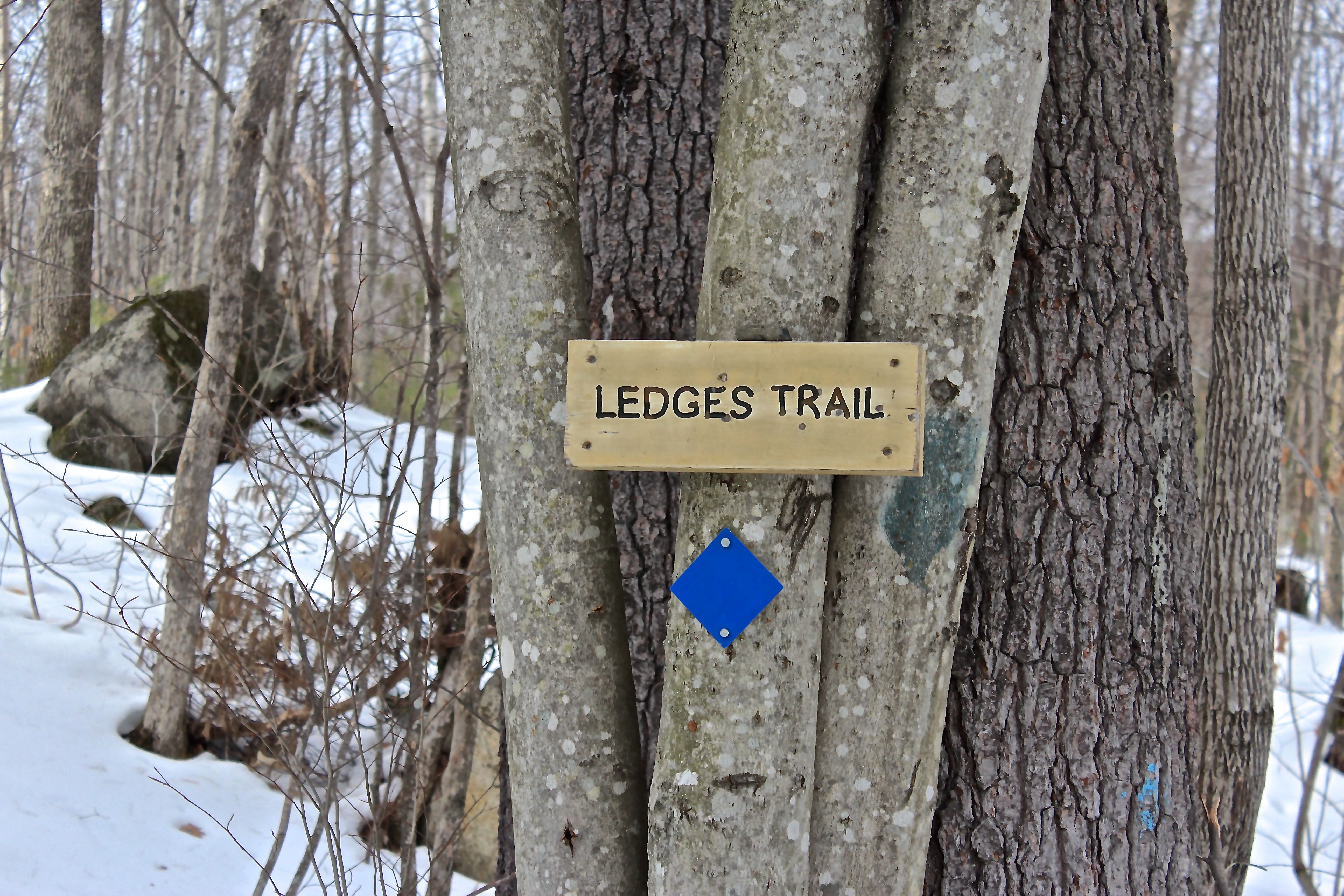
It took us a while to get our act together today, but finally we heard the call from the Ledges Trail up Pleasant Mountain. Since it was late morning, we packed a lunch. Very late morning. 11:30 a.m. start.

ledges sign

And a very warm day. February first and the temperature is 53˚ in western Maine. Unreal. The  breeze was downright balmy and more reminiscent of a spring day. Will the ground hog see his shadow tomorrow?

ledges trail 2

Trail conditions varied from mud and soft snow to slush and ice. Not a snowshoe-type of day at all. We haven’t had too many of those lately. Micro-spikes were the right choice.

ledges O 2

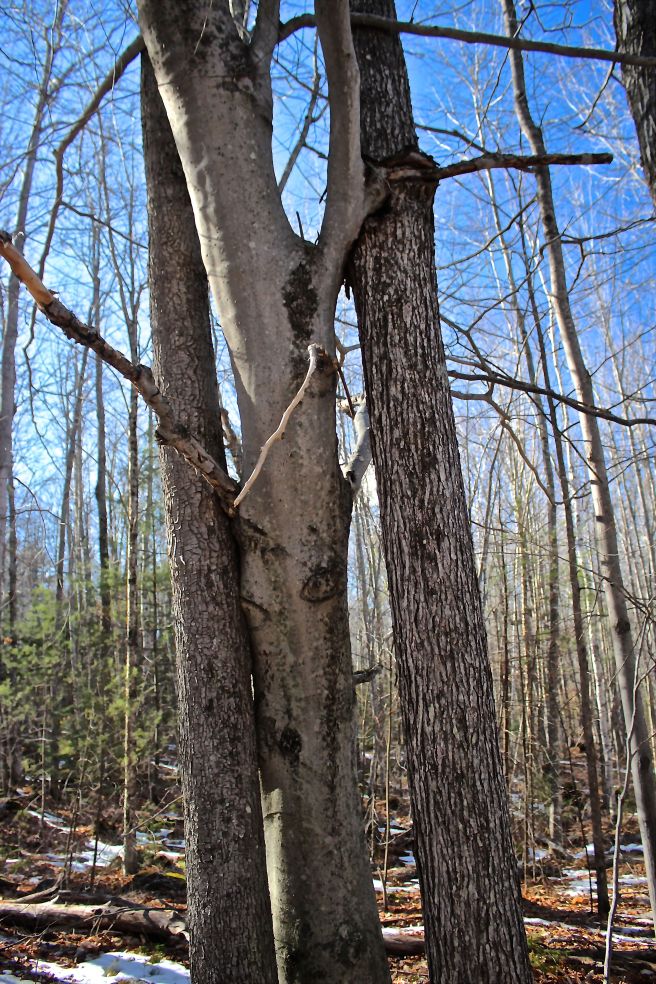
Of course, I was still a slow-poke. But that’s okay because as he waited for me along the way, my guy began to notice his surroundings. OOOOh my! He started pointing out the oddities in the beech trees.

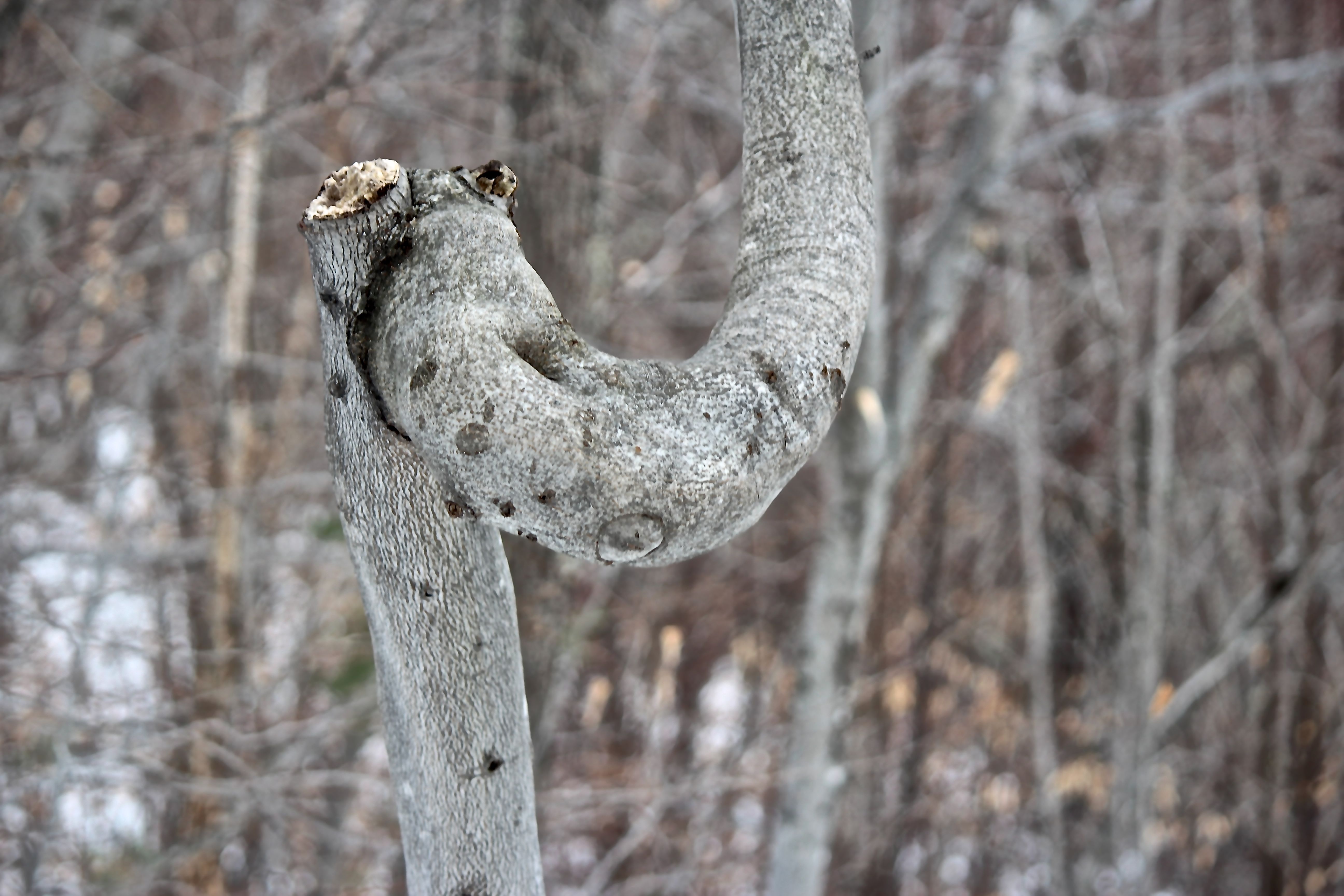
ledges beech elbow

This one struck him as an elbow–well, not literally. Popeye’s biceps perhaps.

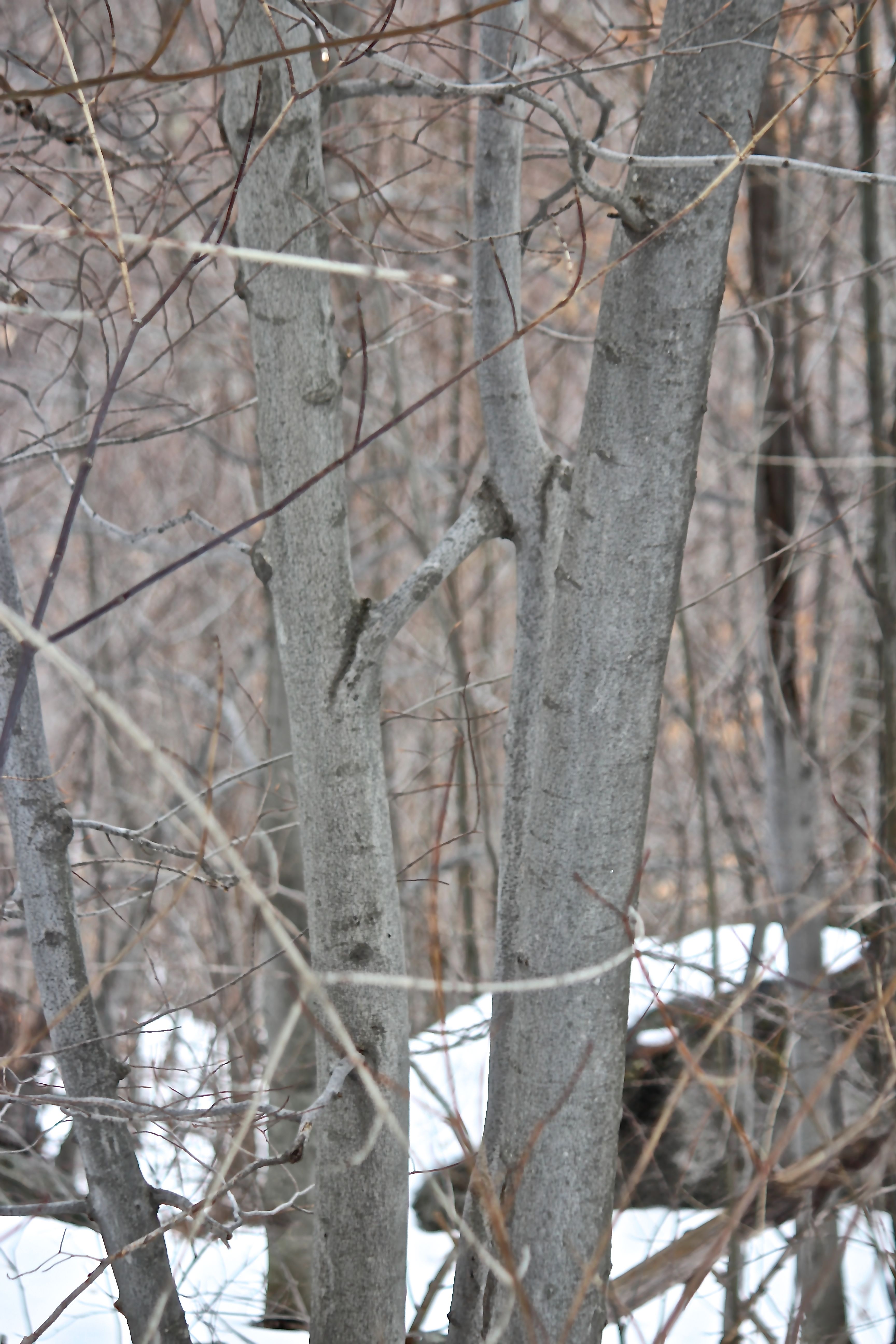
ledges beech joined in dance

And then there were the two that joined hands in a woodland dance.

ledges wedge 1

We even found a couple kissing a long gone relative.

So what causes a tree to graft? Under the bark is the cambium layer, which consists of living cells. Outside the cambium layer, the cells divide and multiply, thus creating bark tissue. And inside, they create woody tissue. The newest cells act as a two-way system–moving  water and minerals that the roots sucked from the soil up into the tree and carbohydrates made by the leaves down.

In order for two trees to create a union by fusing together they have to be compatible–so a joint fusion occurs within one tree or between two trees of the same or closely related species.

Of course, the tree or limbs have to be in direct contact and under pressure for the cells to naturally graft. A dash of magic also helps.
ledges laughing faceThis woodland spirit laughs at us for gawking at its relatives. But really, it is amazing and worth a wonder.

ledges green leaves

Here and there, leaves litter the trail. But this one stopped me in my tracks. Green leaves? How can that be? Another mystery.

ledges Canada mayflower

Because the snow was melting rapidly, we found bare ground here and there showing off some treasures, like these Canada mayflower leaves. We all know that one person’s junk is someone else’s treasure–so for every person who sees this as a dead leaf, I bet there are as many of us who are fascinated by the design left behind by the vascular system and rejoice in the nutrients the leaves have contributed to the earth as nourishment for future generations.

ledges trailing arbutus

That wasn’t the only find. I’m reminded by this sight that Trailing Arbutus, also known as  Mayflower, has evergreen leaves. If today’s temperature is any indication of what’s to come, it won’t be long for these harbingers of spring to bloom. I’m not ready for that and can only hope that the woodland spirit can pass on the word that more snow would be most welcome.

ledges glacial 2

Glacial striations mark some of the bare rocks. Those glaciers must have been crazy as they retreated–melting and scraping this way and that. ;-)

ledges icicle 2

No matter what season we pass by this rock, water drips from it. Today, it’s suspended in a milky icicle.

ledges mossy maple

Mossy maple polypores gathered at the base of this old tree while

ledges toadskin tripe1ledges smooth rock tripeledges toadskin 2

smooth rock tripe and common toadstool lichen decorated the rocks nearby.

ledges mooseledges lunch view

Lunch rock provided us a view of the middle basin of Moose Pond on the left and lower basin on the right.

We stayed just long enough to eat our sandwiches on the ledges. We didn’t have time to head to the summit. On the way down, both of us left plenty of handprints on the trees that grow beside the trail–happy to have their support.

ledges bliss

We had an errand to run in Portland this afternoon, and then it was home again, home again, jiggity jig. Our day was topped off with a supper of blueberry pancakes coated with maple syrup while watching the Beanpot hockey tournament. Thanks to Pam Lord Bliss for the amber treat–this Mondate was truly pure bliss.

Aimless Mission

A friend and I wandered aimlessly today with a mission of finding bobcat tracks. I should know better. Go without expectations.

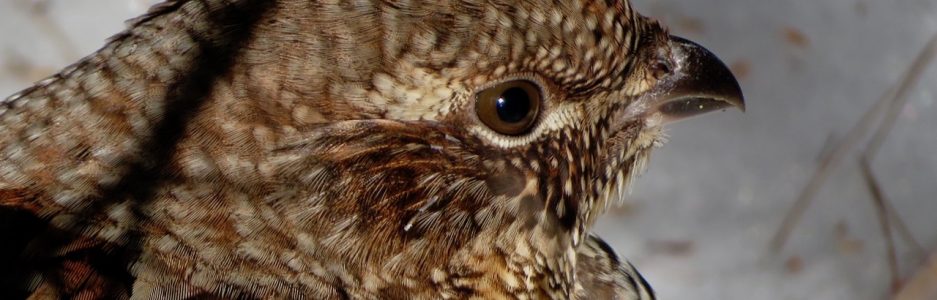
So, yeah, we didn’t find any prints that were most certainly bobcat. We did find coyote and fox. And plenty of deer, turkey and ruffed grouse. And had great fun exploring while catching up. And taking time to notice and wonder.

rhody 1

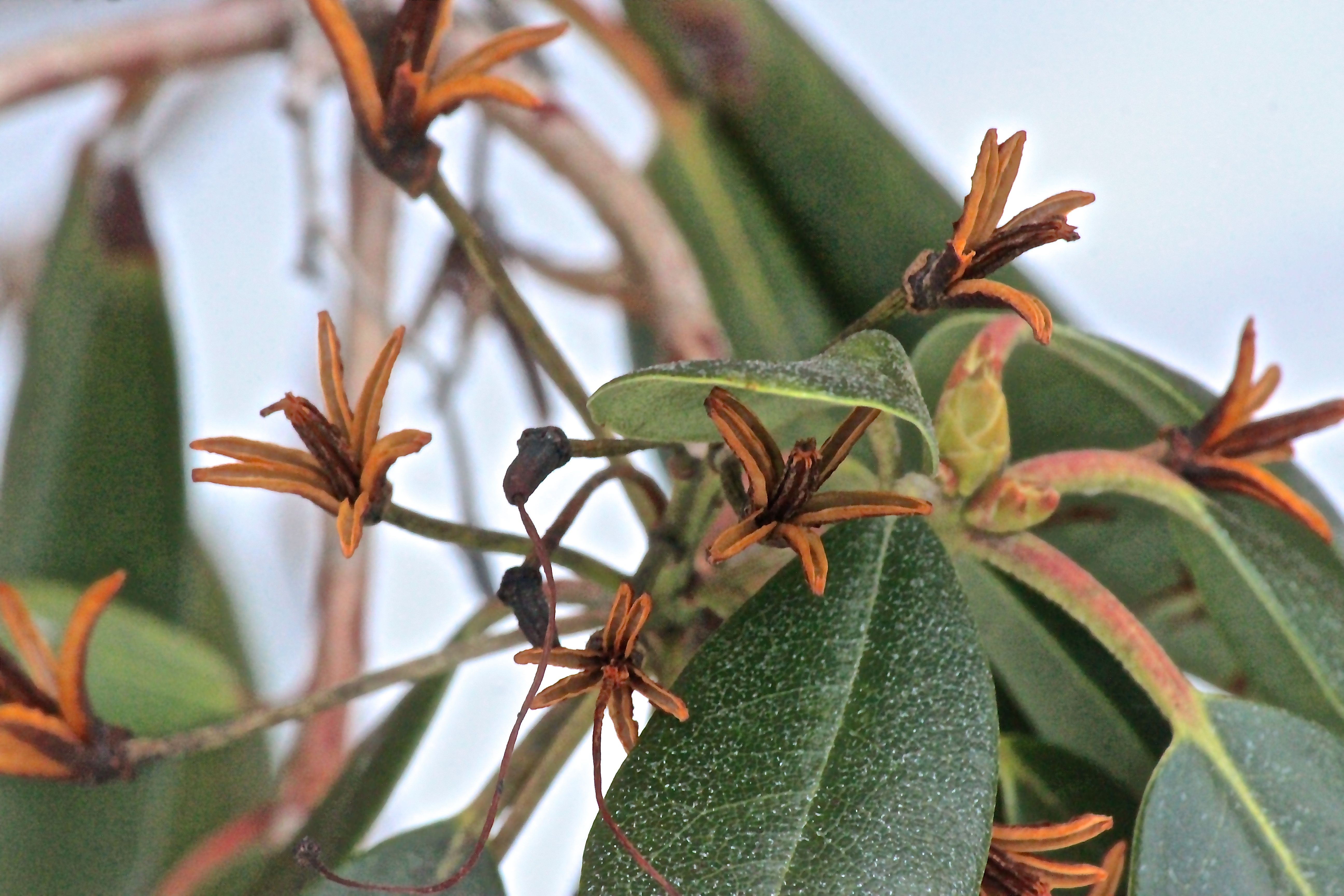
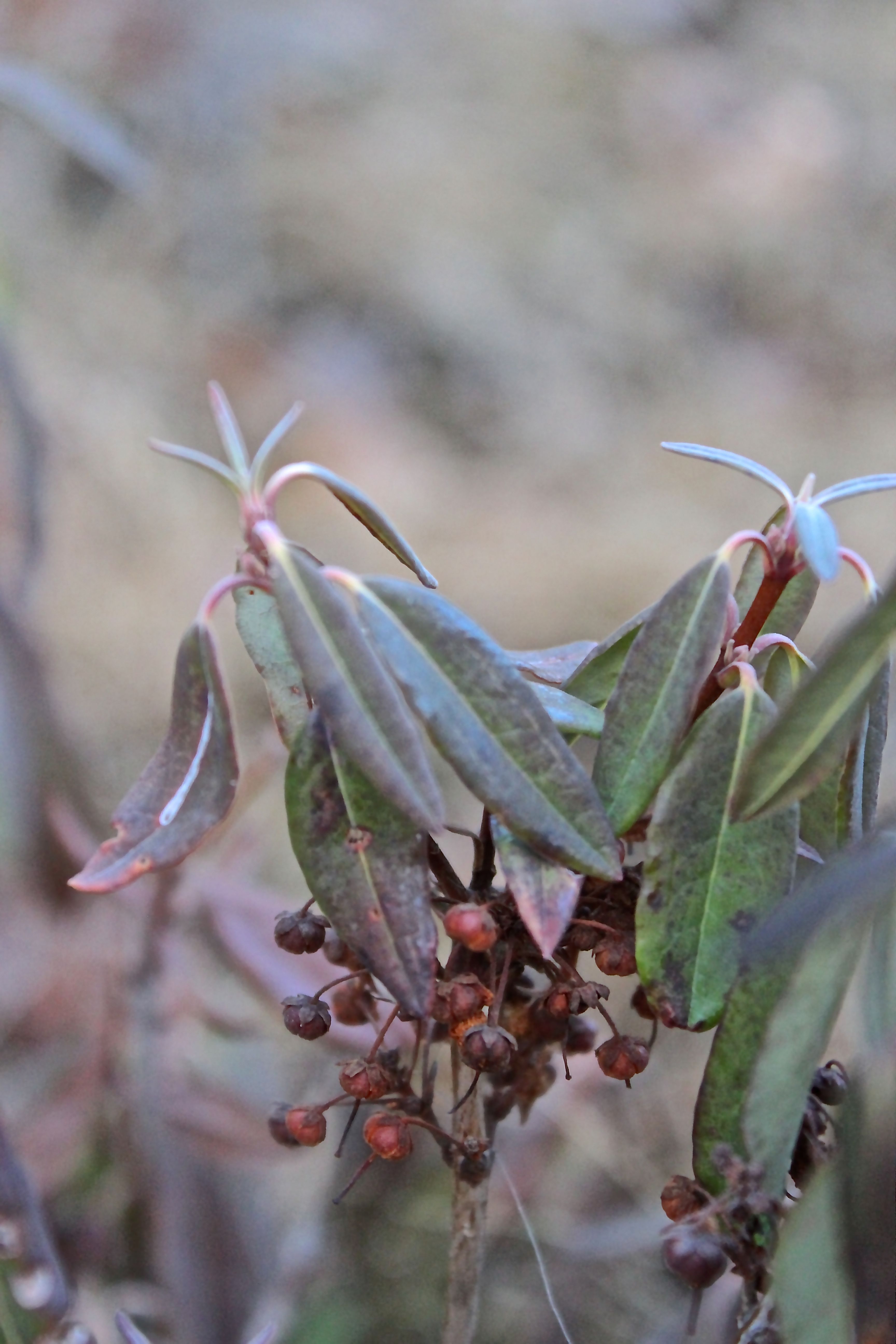
While Dick strapped on his snowshoes, I took a look at the rhododendron bush that grows beside the barn. Today’s temp–45˚. A January thaw following last week’s deep freeze. Thus, the leathery leaves looked happy rather than curled inward as they do when the temperature falls. And last summer’s new growth offered a spring palette.

rhody 3

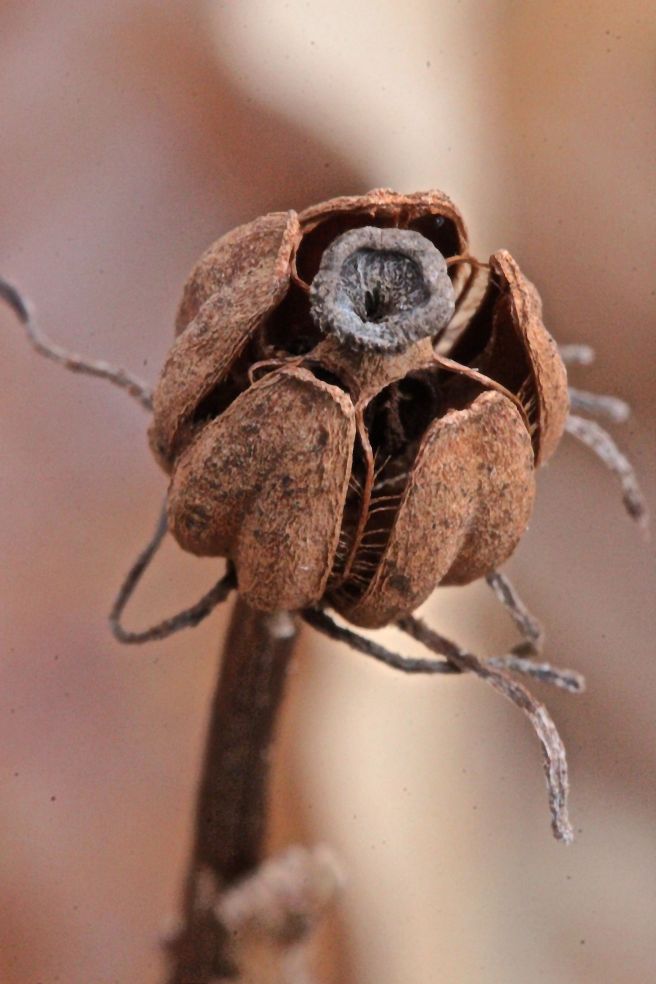
The woody capsules are like flowers unto themselves. I’m just realizing that though we have several rhododendrons growing by the barn and house, I’ve never seen any babies. Once ripened in the fall, the capsule splits open and its many seeds are dispersed by the wind–probably becoming bird food.

  rub1

As we snowshoed about, trying to avoid breaking through ice in this rather swampy woodland, we saw where the deer had eaten red maple buds and bark, as well as where some had bedded down. But one of my favorite finds was a stick. Or so it may appear.

rub 2

It’s a small, half dead balsam fir that served as a signpost. Can you read it? “My name is Buck. Keep out. Unless your name is Doe.” Yes, this is a deer rub created when antlers were pushed up and down, creating tags of bark dangling at either end with smooth wood in between.

uprooted

Then we came upon nature’s classroom–an uprooted tree. As a forever student, it’s a place I like to frequent.

root 1

The tree fell years ago. Did anyone hear it?

root 3 root 4

Among the roots, rocks and dirt, we checked for animal or bird sign and didn’t find any.

root lichen

But the moss, lichen and liverwort garden is exquisite with its variegated colors and textures.

lichens et al

This miniature world resounds with a sign of its own: “Clean Air Here.” Lichens and mosses won’t grow were the air is polluted.

white pine nursery

Other life forms also like this spot and see it as the perfect nursery.

stonewall1

As is common in these woods, we stumbled upon the stone walls and barbed wire that speak to the land’s historical use. Borrowing a line from Robert Frost, this sign once read: “Good fences make good neighbors.”
broken wire

Gone are the days when the wall and wire are set again.

tree wireLong gone.

And so it was that we wandered and wondered along on an aimless mission–not finding the tracks of the bobcat(s) that journey here, but enjoying plenty of other signs along the way.

Sunday Surprises

As I headed into my smiling place today, I was certain that I wouldn’t find anything of interest. But this Sunday wander made me realize that the gift of wondering means being open to surprises.

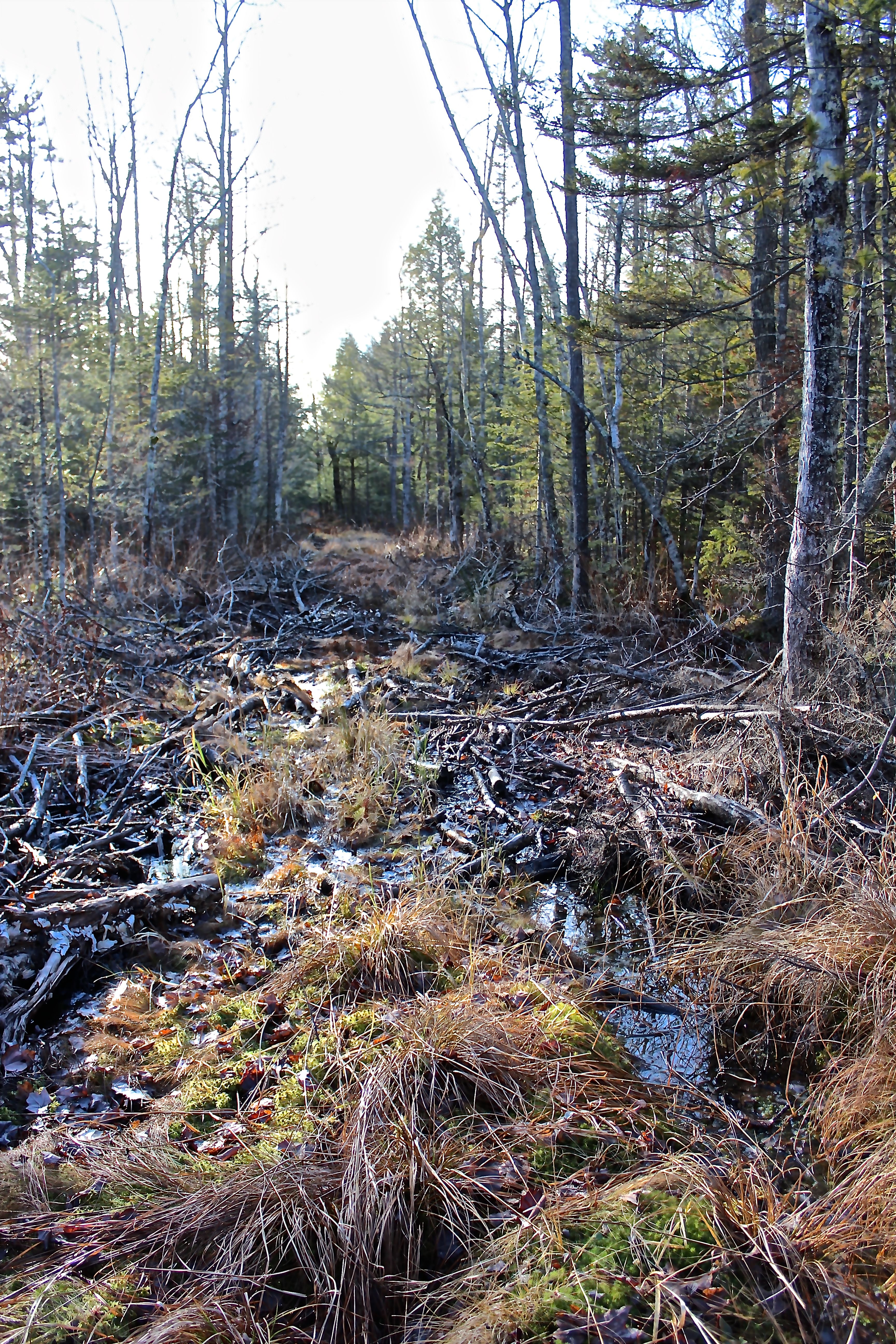
I began my traipse following one of the more recent logging trails where sliding over slash is the name of the game.

slash

I can’t wait for three feet of snow to make this an easier adventure. In the meantime, I made do.

sinking

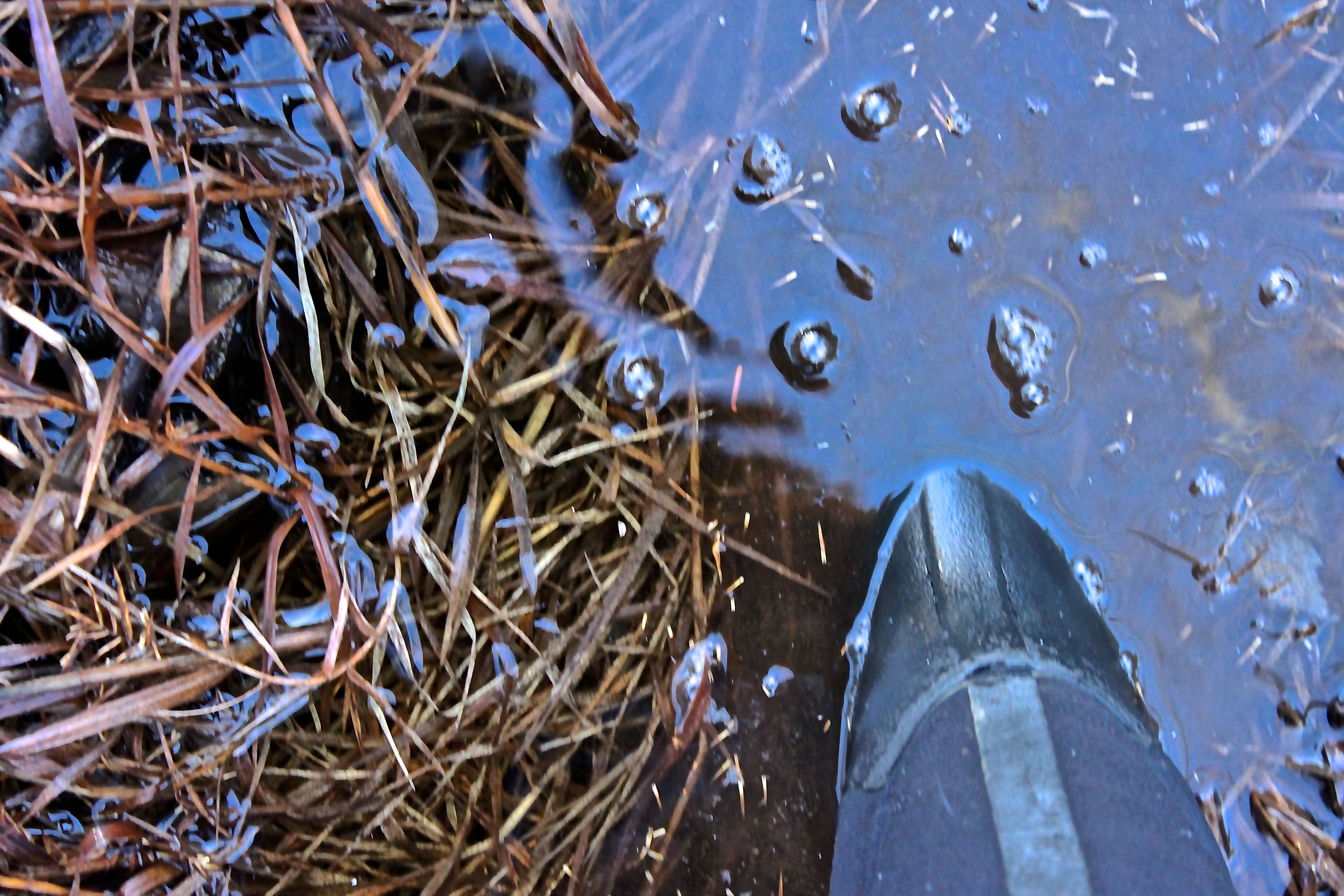
Some moments I did think I was sinking to China–where my friend Judy Lynne would have to be on the lookout for me.

cinnabar 2

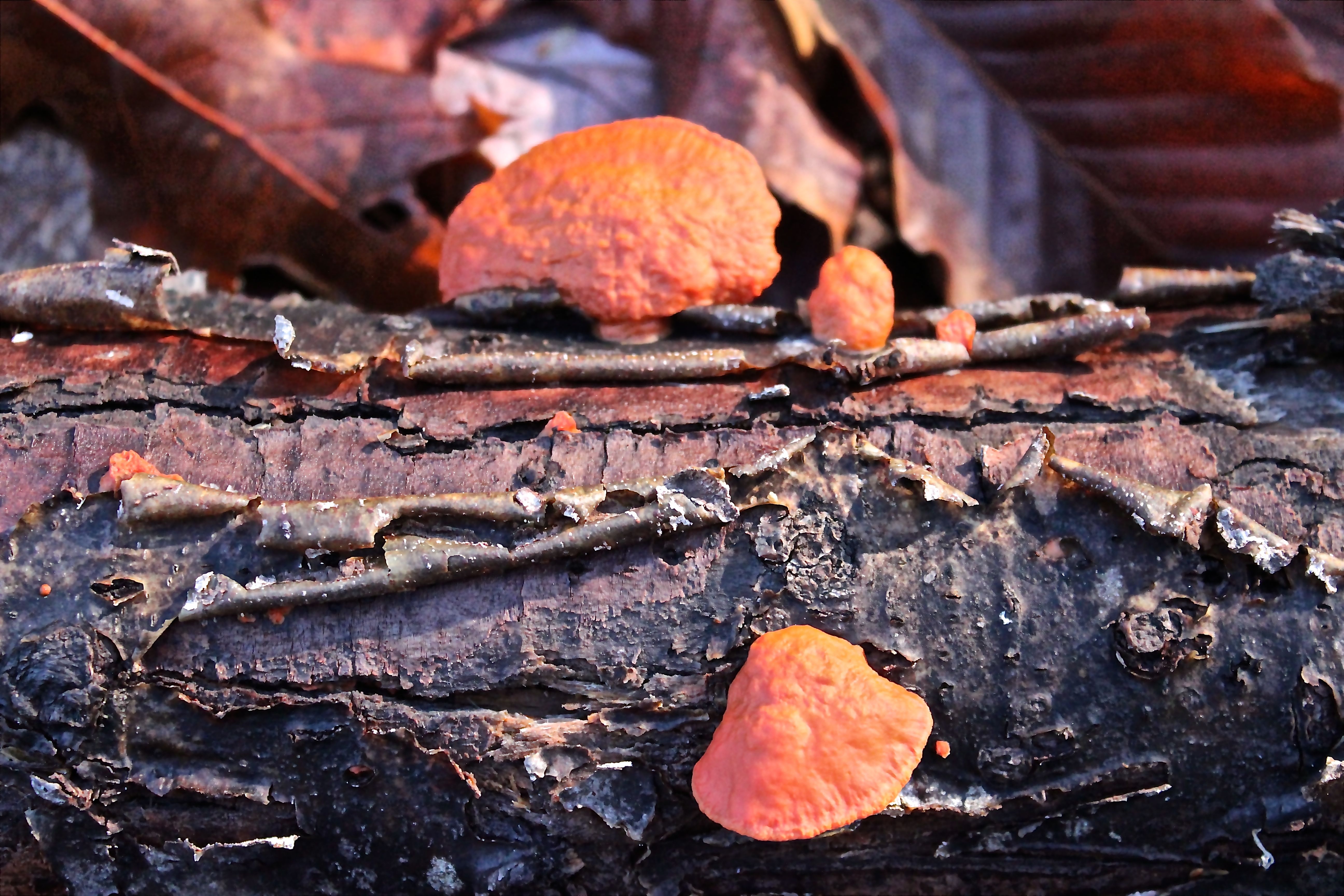
And then pumpkin orange polypores called out, proving slash is good for something. Cinnabar-red Polypore (Pycnoporus cinnabarinus) I do believe. It pays to have Fascinating Fungi by Lawrence Millman in my pack.

cinnabar 3

As is its habit, it was growing on a downed cherry log. I picked one fruit to show the pore surface beside the cap. Millman describes it this way: “Caps are kidney-shaped orange to dull reddish-orange, azonate and covered with warts and wrinkles in age. The pore surface, in the words of mycologist Gary Lincoff, ‘looks as if it had been seared by a hot iron.’ The pores themselves are usually more angular than round.” I had to look up azonate when I got home: without zones or circular bands.

cinnamon 2

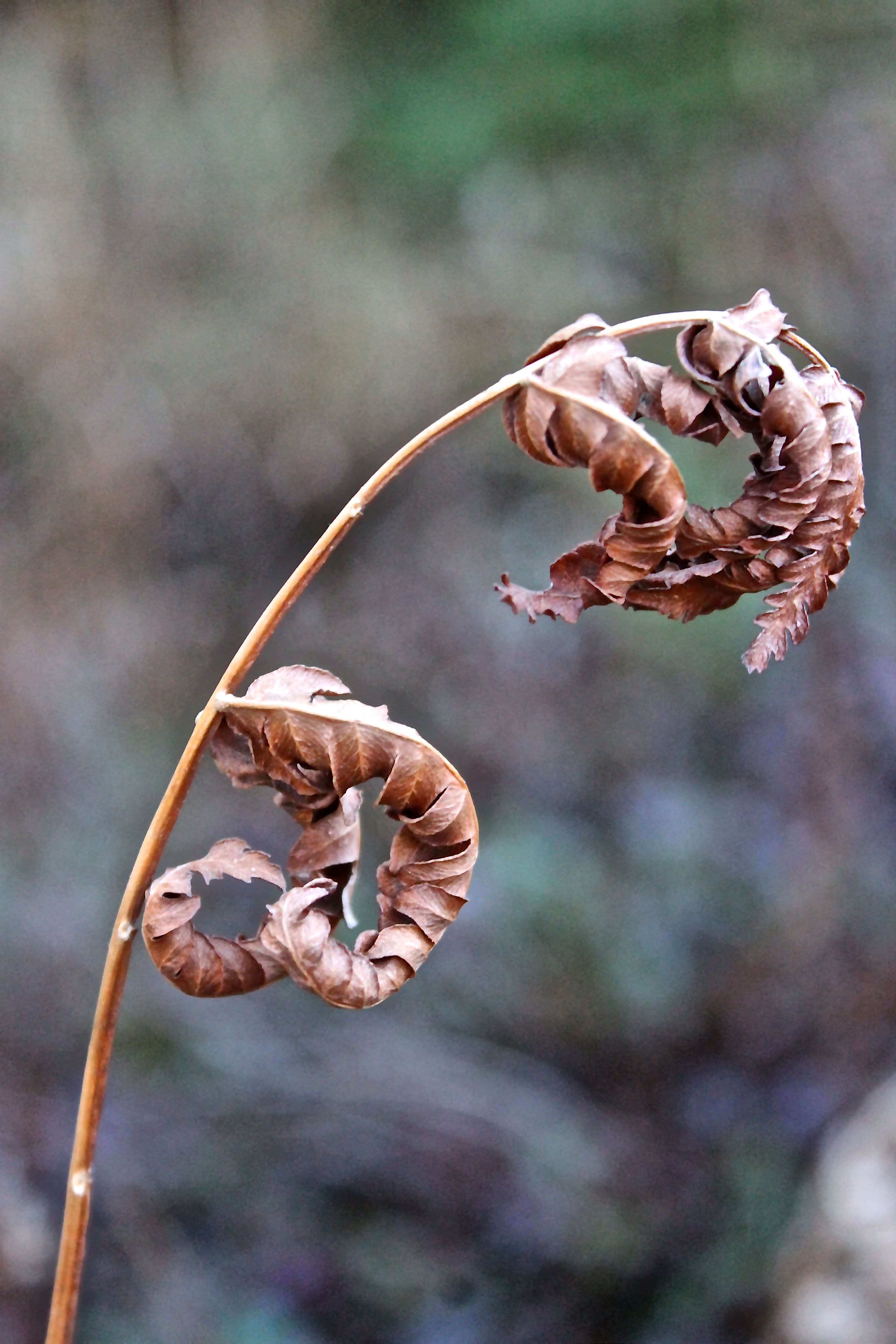
Cinnamon fern grew abundantly in this boggy land and as usual, I was drawn to the drama it provides in death.

cinnamon fern

Most of the pinnae or leaflets have fallen to the ground, where their curved forms add texture and interest even as they begin to break down and give back.

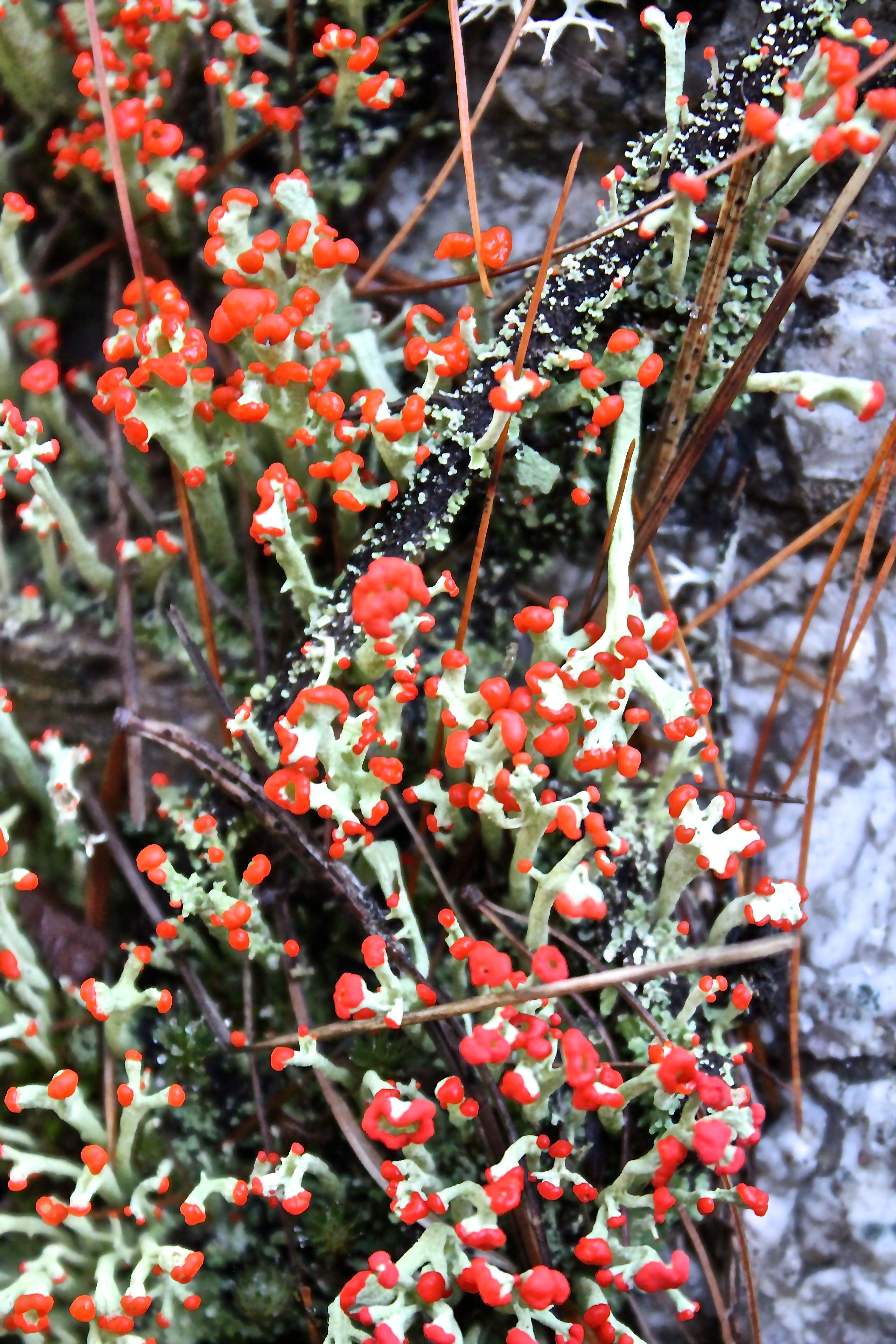
British soldiers

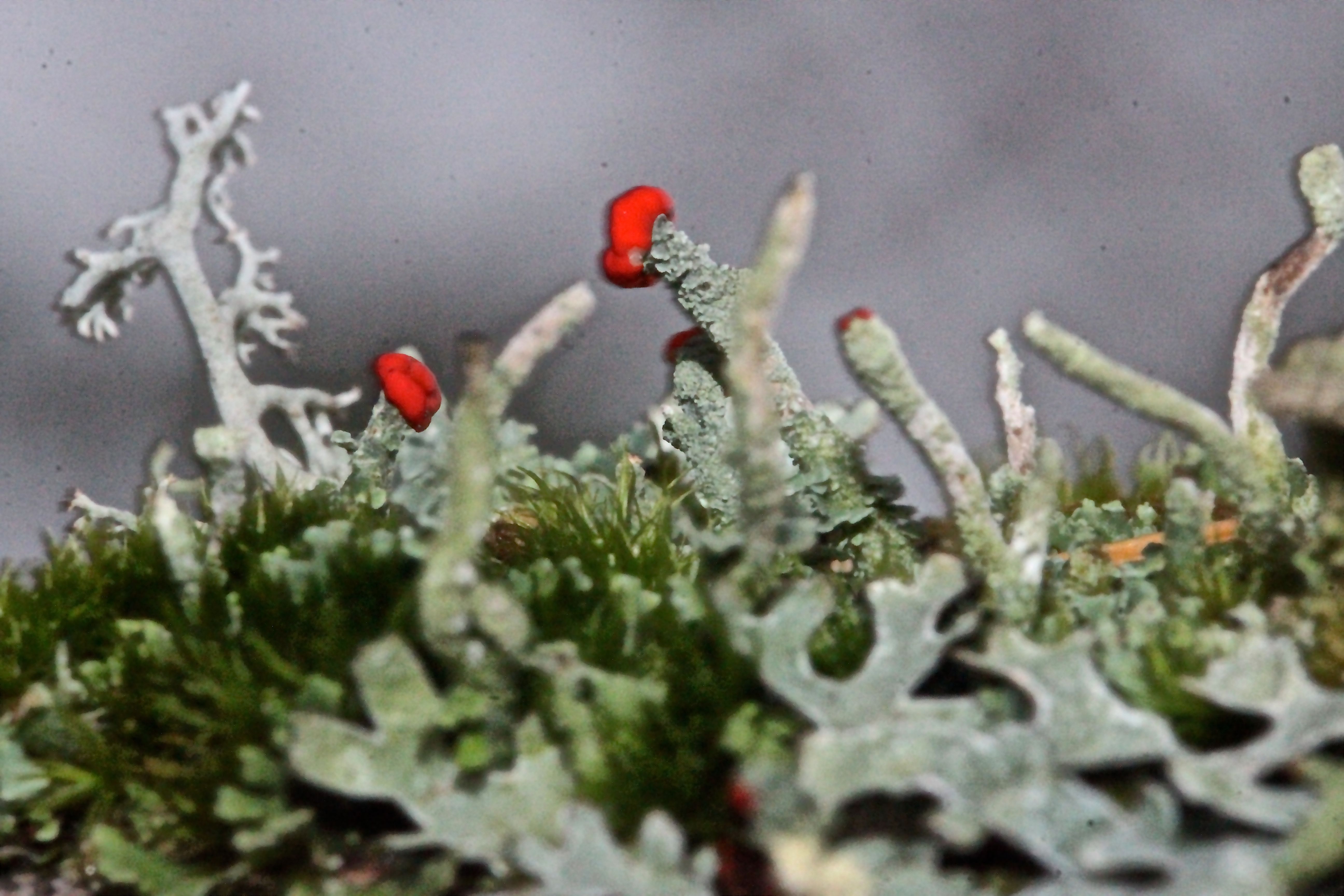
Watching over all–a large colony of British soldiers, their red caps ever so bright in this miniature world.

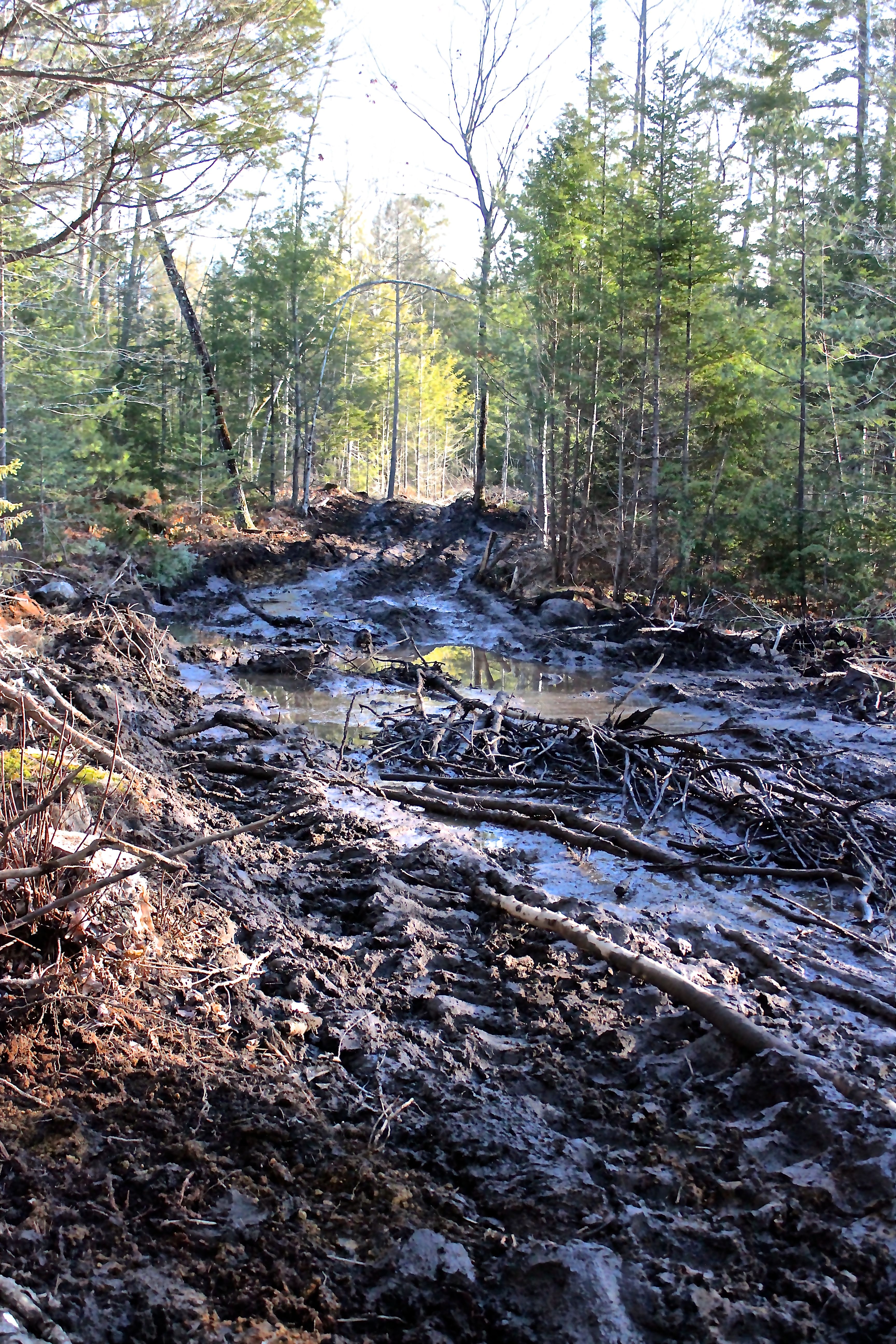
muddy logging road

I reached the main logging road at last. A few weeks ago I thought that the logger had finished his mission, but apparently not. That’s okay, because after I found a bunch of bobcat, coyote and deer prints, I headed back into the woods leaving the muck behind.

pine needles 1

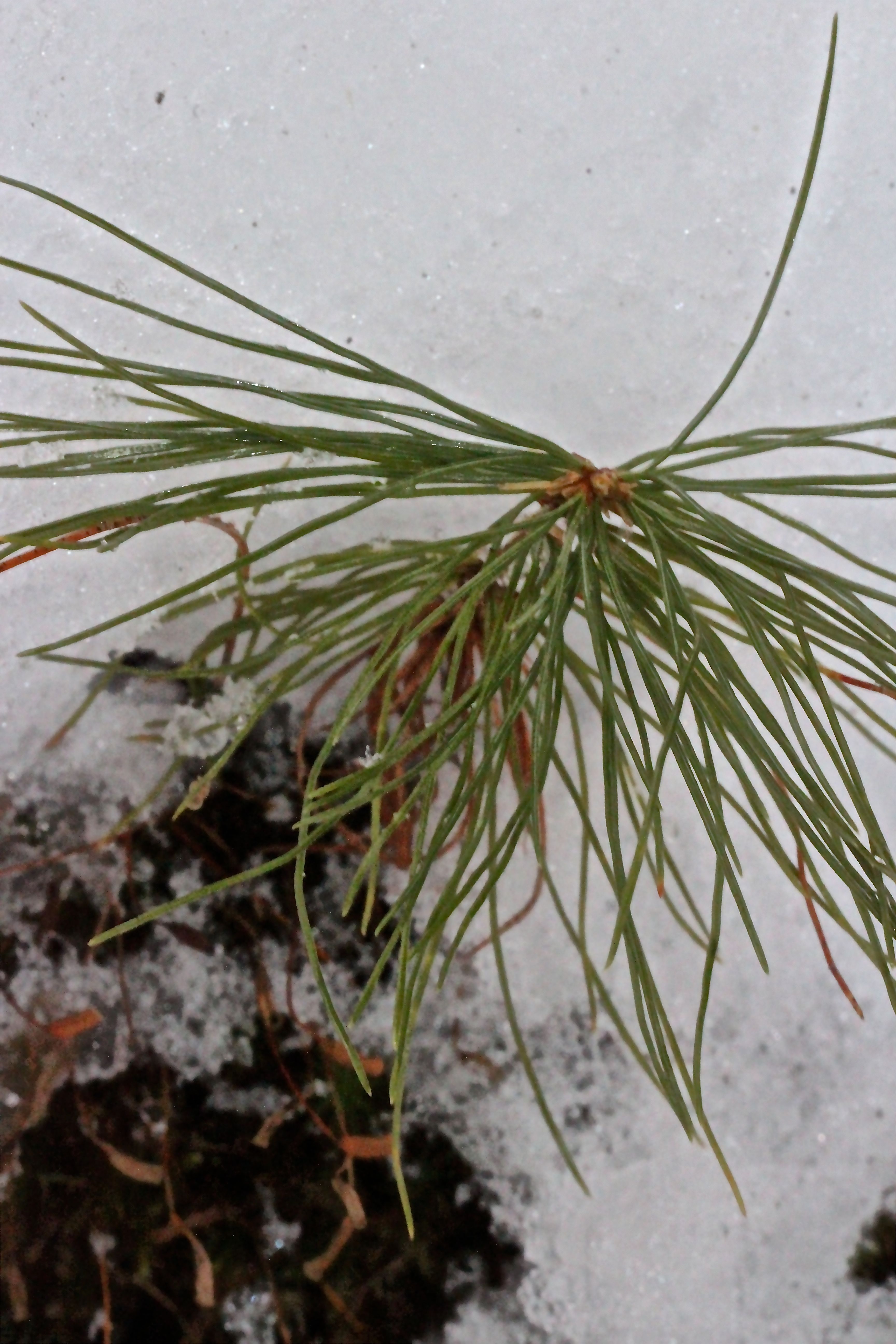
Bunches of white pine needles adorn many of the young hemlock trees–all in keeping with the season.

haircap geometry

And the hair cap moss speaks of starry, starry nights and geometric designs.

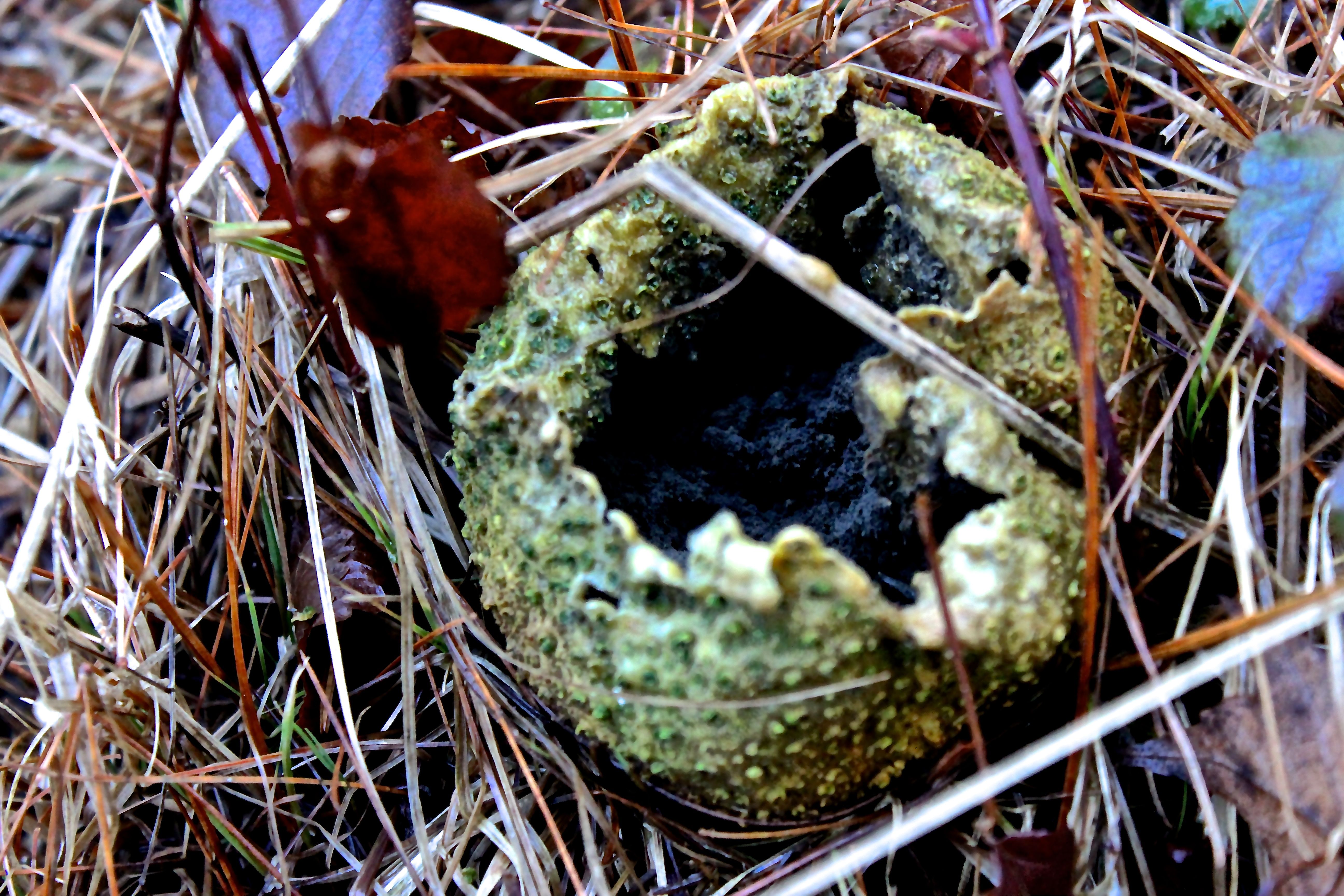
pigskin poison puffball

But my best find of all was a total surprise. In fact, I didn’t think it was natural at first. An old baseball or tennis ball that somehow landed in this place where few venture? I touched it and it felt almost leathery. Inside, the duff was powdery. Time to turn to Millman again. I think my ID is correct: Pigskin Poison Puffball aka Earthball (Scleroderma citrinum). WOW! Look at that warty surface. And it was huge compared to other puffballs. My heart was singing. (Fortunately I kept the song in my heart though I was in a place where no one would have heard me!)

wintergreen veil

Eventually I made my way back to the snowmobile trail where I continued to wander for a while. Wintergreen is the plant of choice for this stump garden.

bronze bracken fern

Bracken ferns have turned from green to a light bronze patina. Most have fallen or been knocked over. This one especially appealed to me because it has retained its structure and even portrayed an uplifting spirit.

the ice princess

The past few days have been delightfully, though unusually, warm, but I found some ice. And even an ice ghost.

witch's 2

From ghosts to witches–in the woods, I never know who I’ll happen upon. Witch’s Butter (Tremella mesenterica) is another that stands out amongst the grays and browns of the December landscape.

colors 2

Not all is gray and brown. As I wait for snow, the colors of the season remind me that without its covering, there’s much to enjoy.

grassy trail

droplets on grass

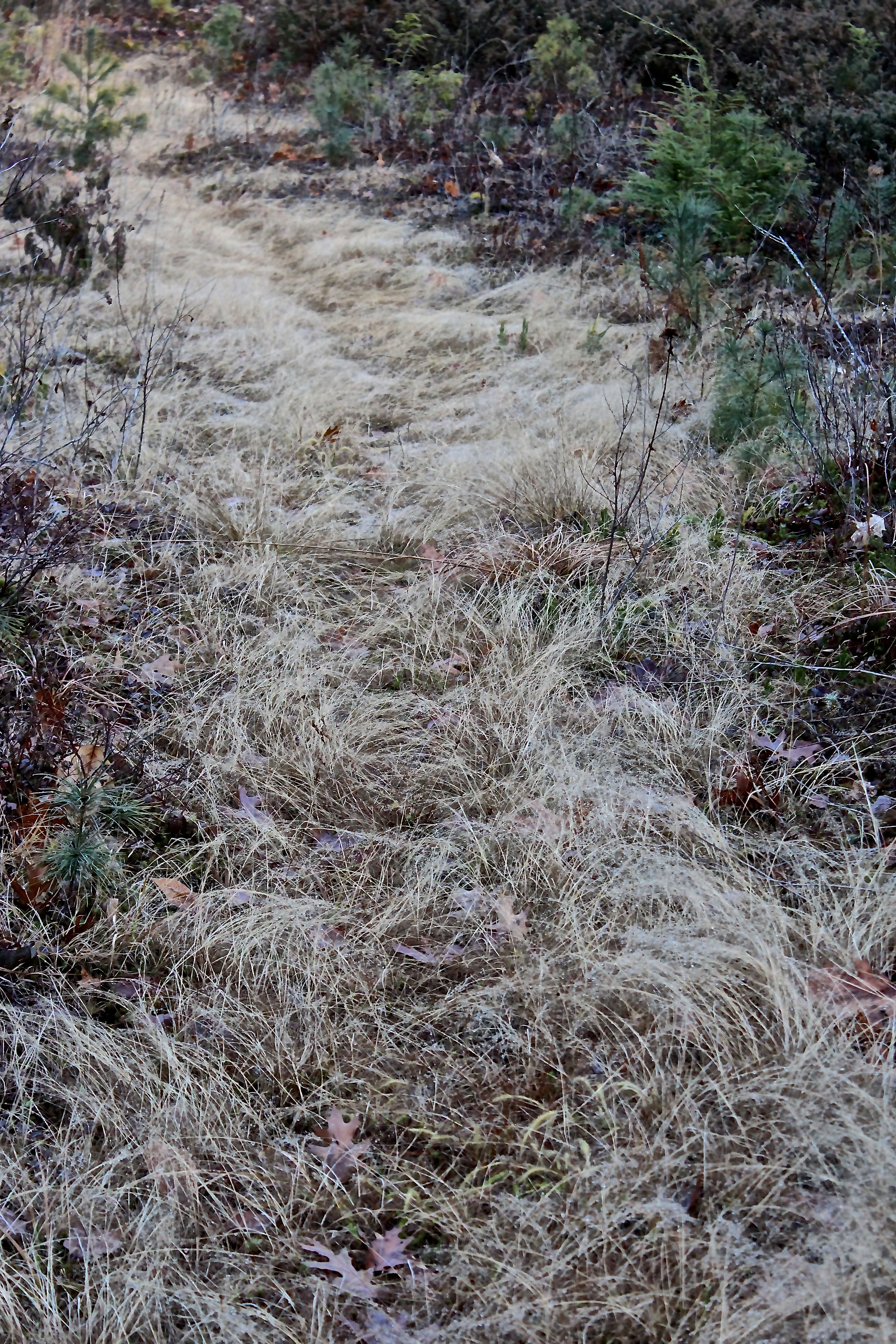
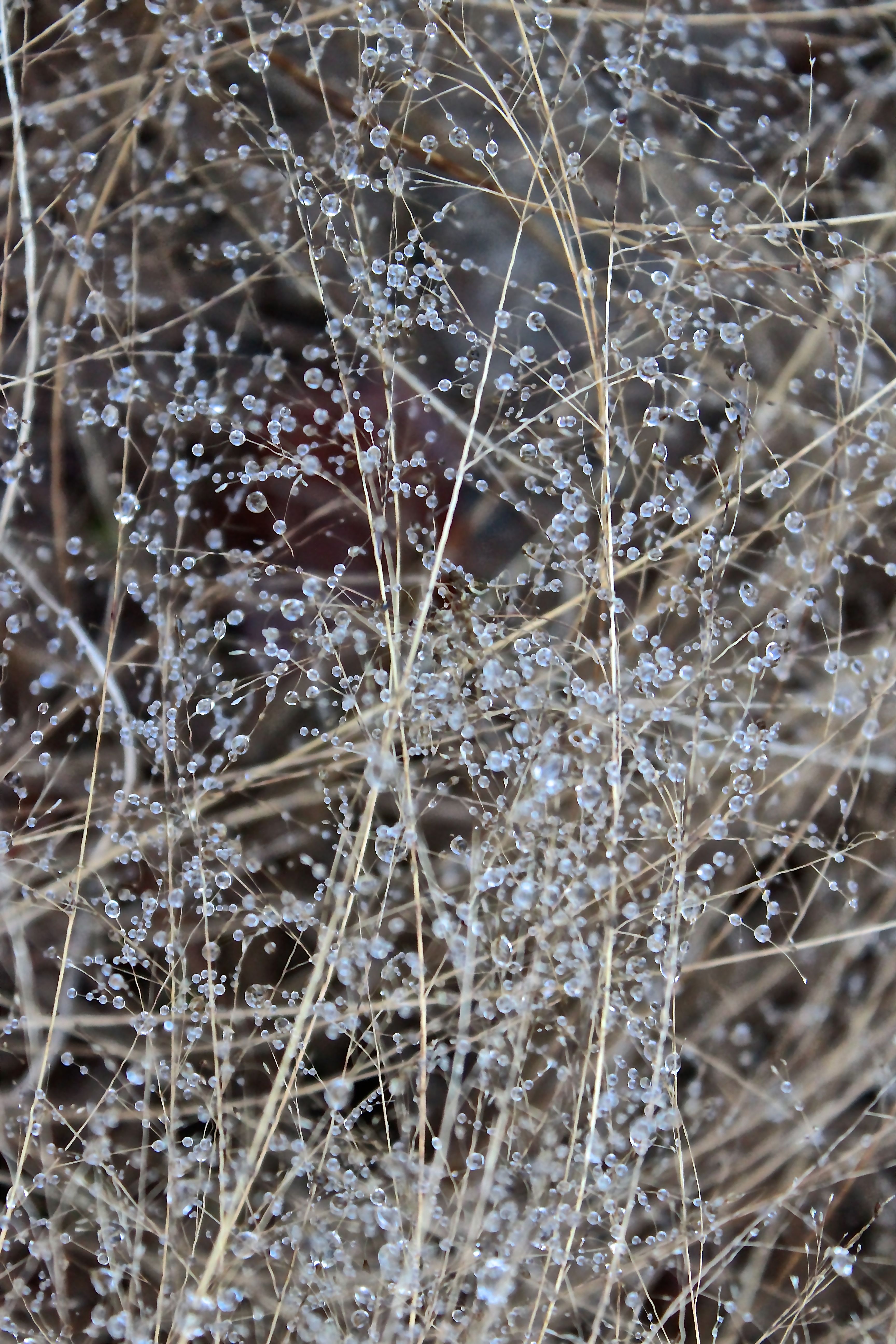
I was about to head down the grassy path that leads to our cowpath, when two things gave me pause. First, the droplets of water that adorned the grass.

meadowsweet gall

And second–this gall on a meadowsweet plant. I’ve passed it numerous times and decided today was the day to try to figure it out. If my guess is wrong, please feel free to correct me. I think this is rose bedeguar gall, aka Robin’s pincushion gall. Meadowsweet is a member of the rose family, so maybe I’m right. Then again . . .

sheep laurel fruit

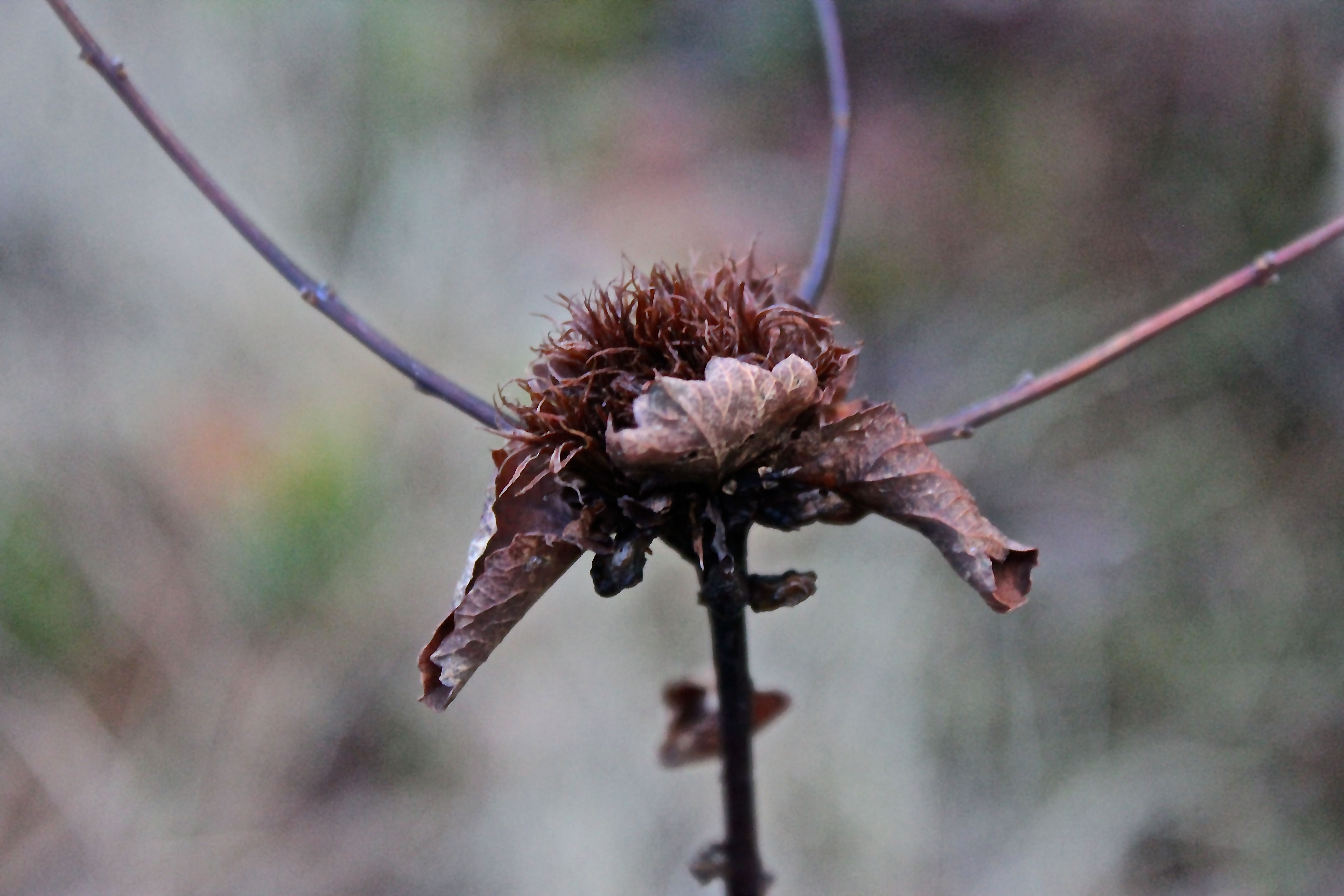
One last find that I always enjoy looking at–the fruits of sheep laurel extending  below the leaves and reminding me of jingle bells.

home

At last I was home again, thankful for a Sunday wander wonder-filled with surprises.

Questions To Be Asked

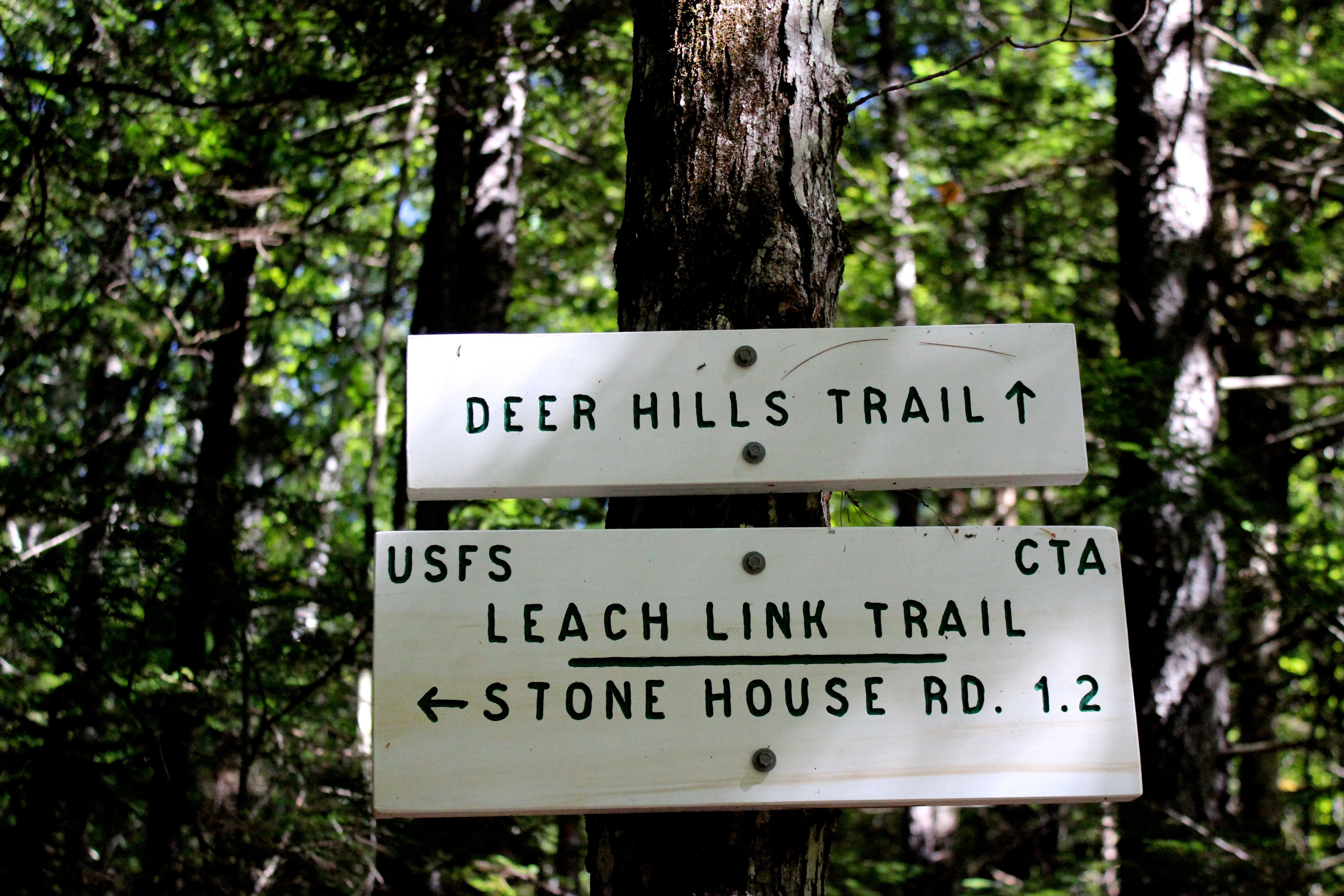
A friend and I drove to Evans Notch today with the mission of exploring a trail that was new to us. The Leach Link Trail connects Stone House Road to the Deer Hill trail system.

IMG_1338

We started at Stone House Road and turned back at the Cold River Dam. Not a long trail, certainly. And rather flat for the most part. Despite that . . . it took us four hours to cover 2.4 miles. You might say we stopped frequently.

There was a lot to see along this enchanted path. And questions to be asked.

CB 2

We walked beside the Cold River as we passed through hemlock groves and mixed hardwoods covered with a myriad of mosses and liverworts.

lungwort

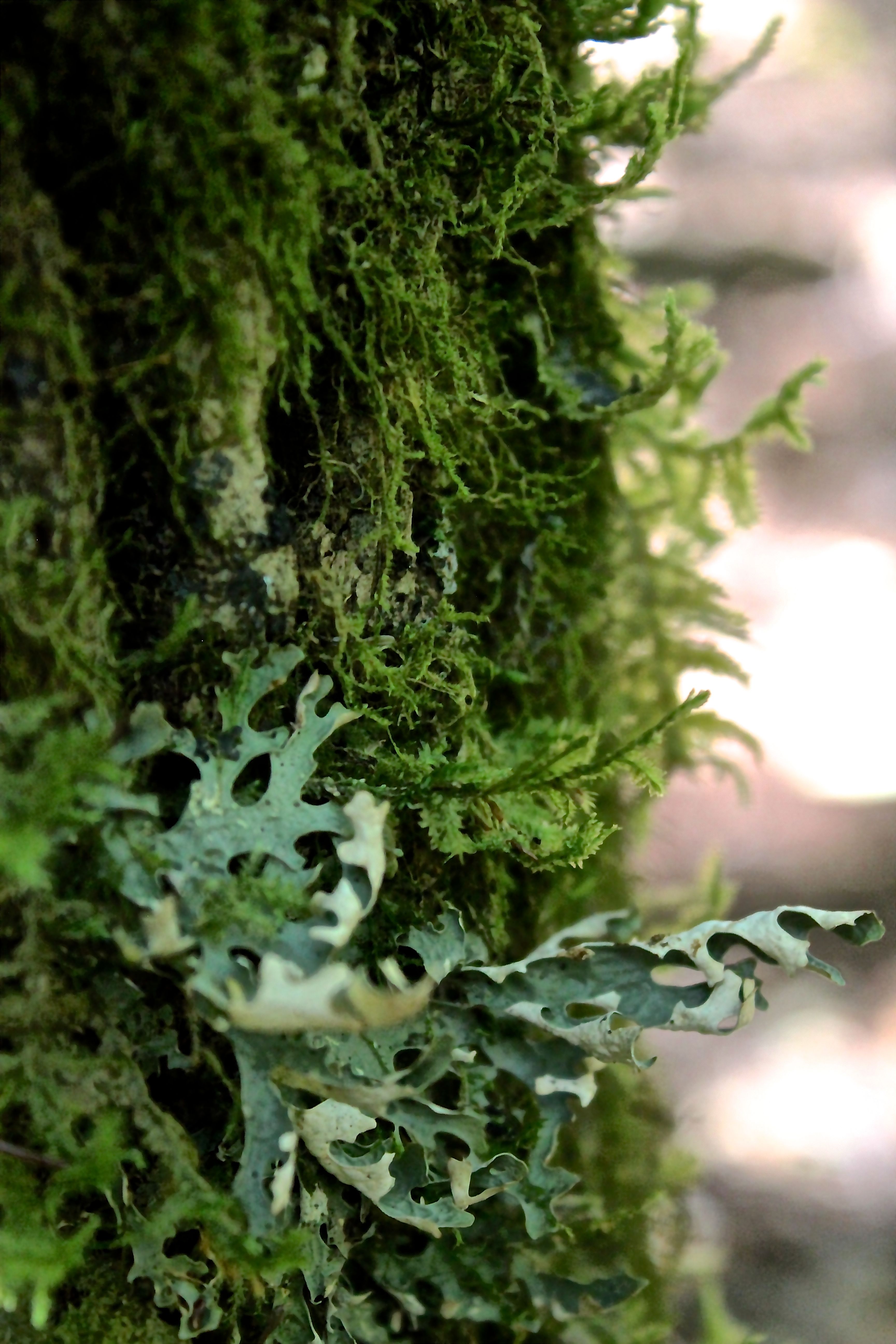
Because it had rained last night, Lungwort, an indicator of rich, unpolluted areas, stood out among the tree necklaces. Why does it turn green when wet?

water strider

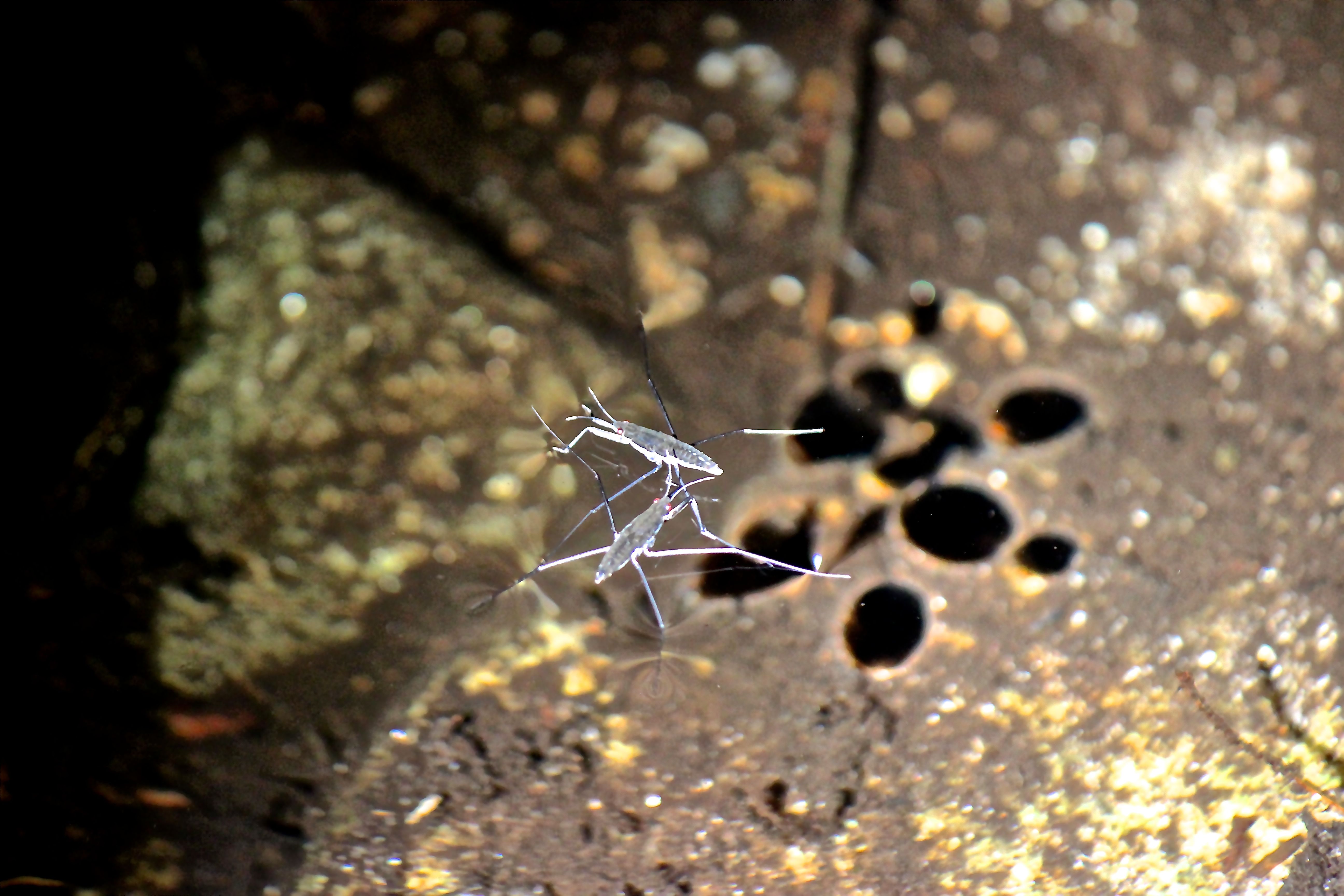
The shadow of the water strider tells its story. To our eyes, it looks like their actual feet are tiny and insignificant. What we can’t see is the  fuzzy little hairs that both repel water and trap tiny air bubbles, thus allowing them to float or skate along the water’s surface. But still, why is the foot shadow so big while the body shadow is more relative to the strider’s size? Is it the movement of the foot against the water that creates the shadow?

bobcat

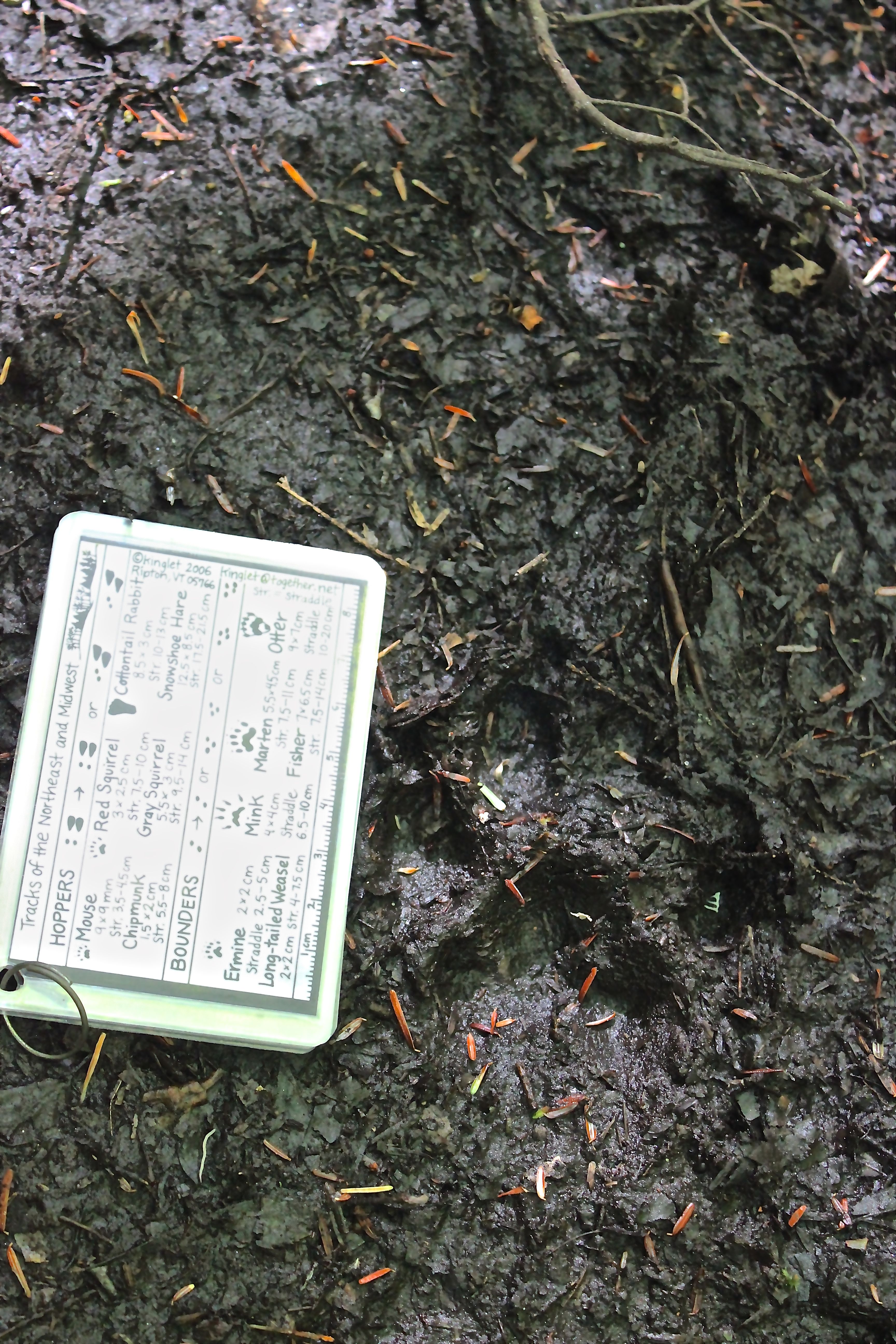
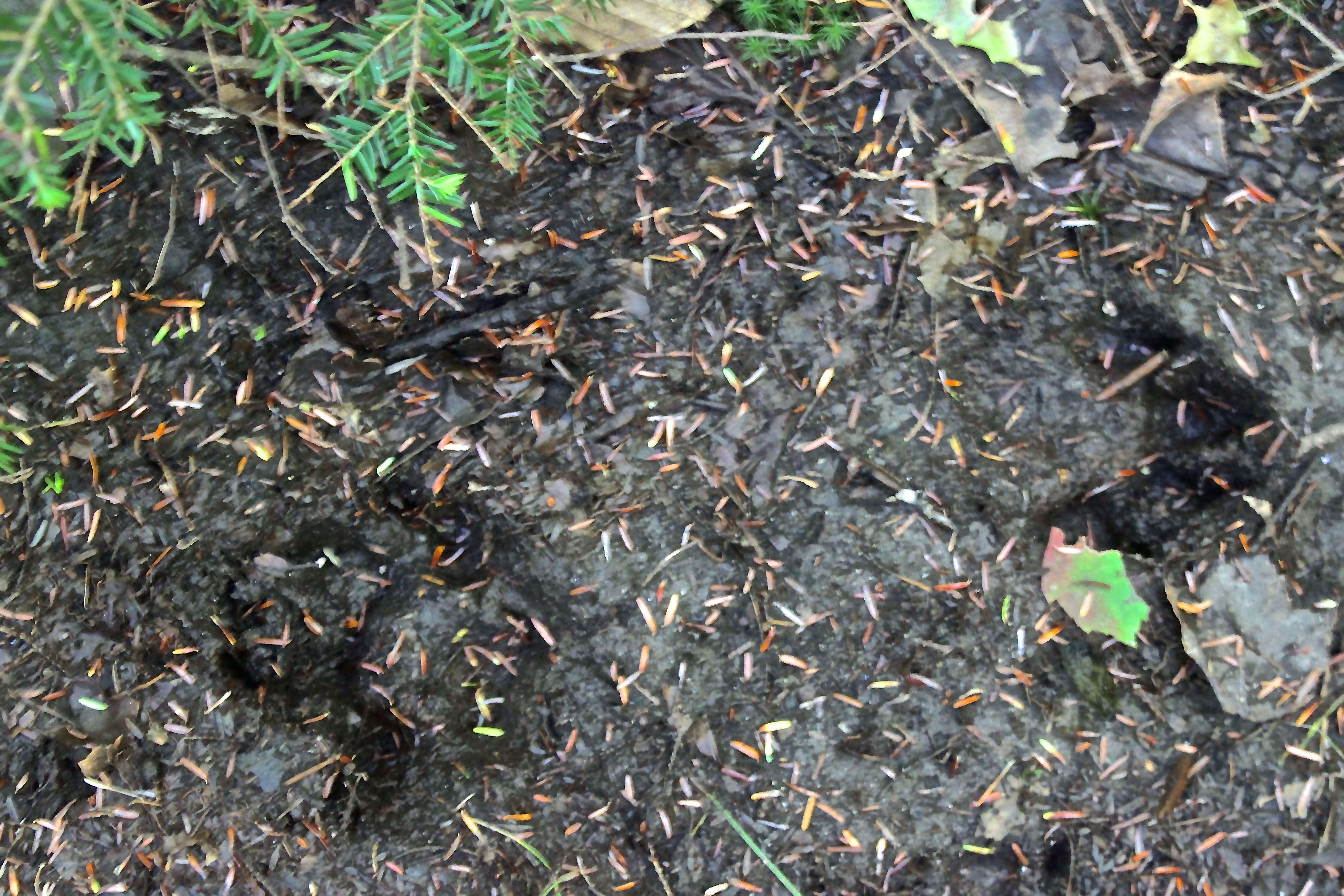
While the river was to our right on the way to the dam, we noted ledges on the left. Prime habitat for the maker of this print: bobcat. You might be able to see nail marks in front of the toes. We always say that cats retract their nails, but in mud like this, traction helps.

bobcat & coyote

A little further along we discovered the bobcat was still traveling in the same direction and a coyote was headed the opposite way. What were they seeking? What was the difference in time of their passing?

CR4

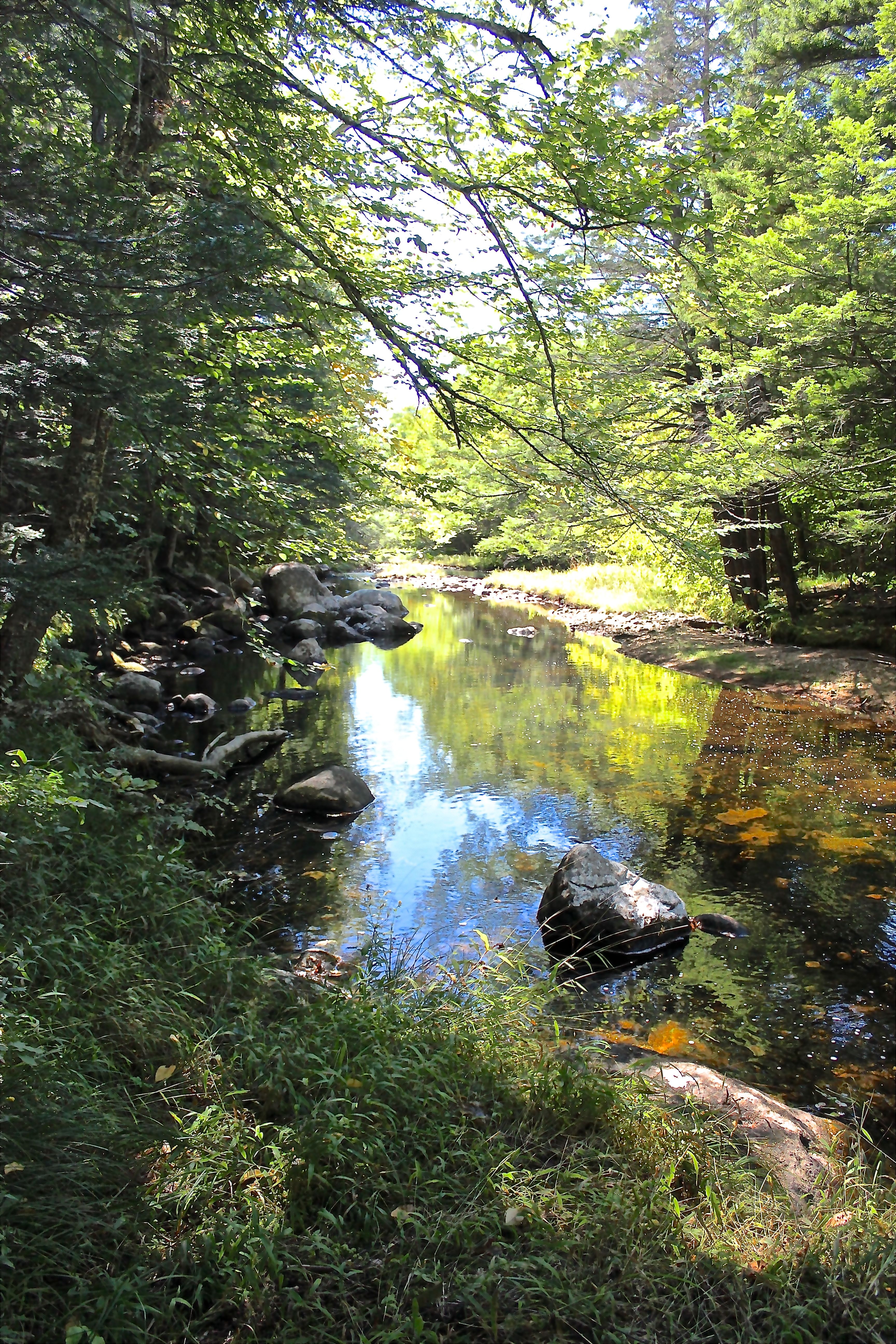
Periodically, we slipped off the trail to explore beside the river.

WH 3

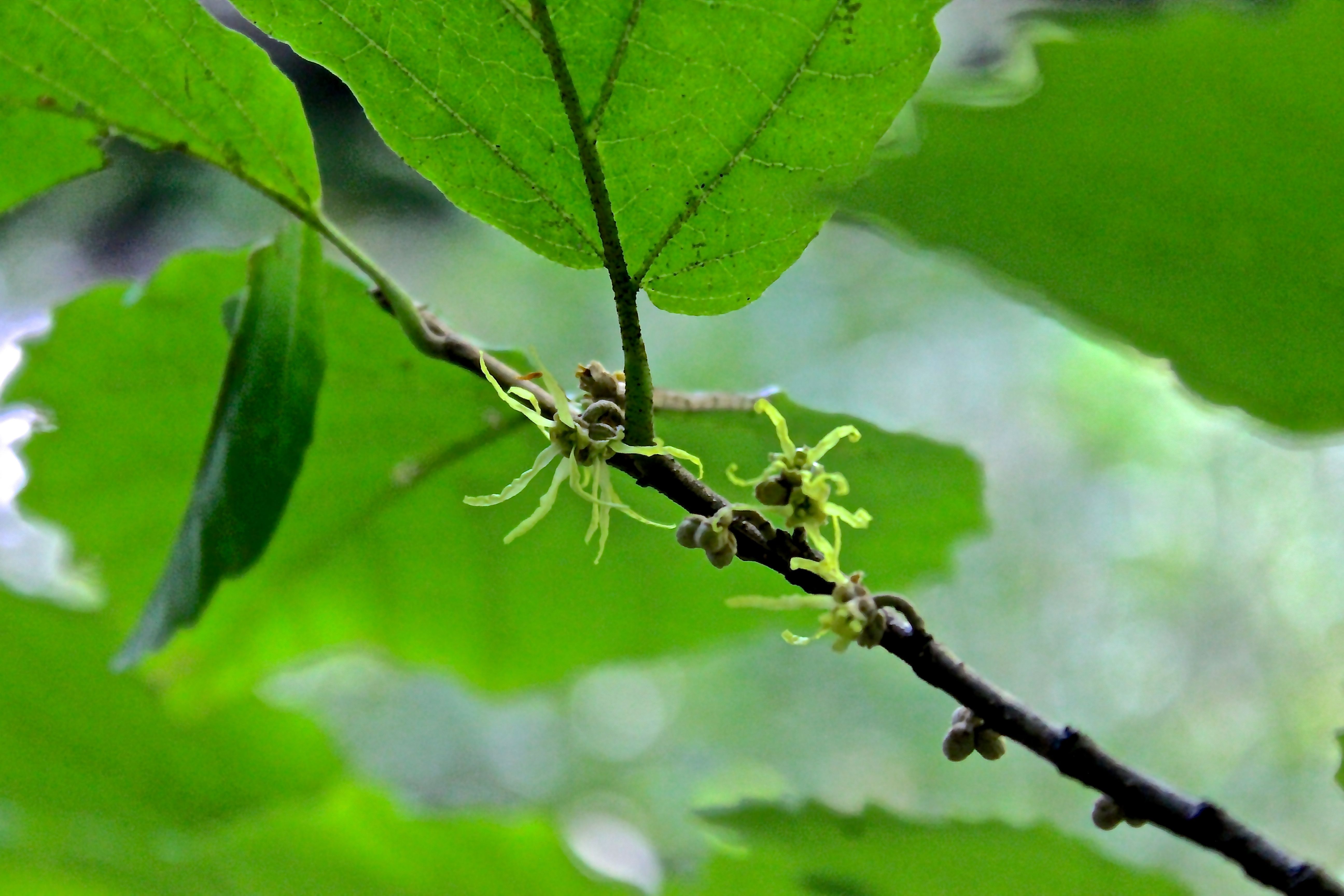
Ribbony witchhazel blossoms brightened our day–not that it was dark.

grasshopper 1

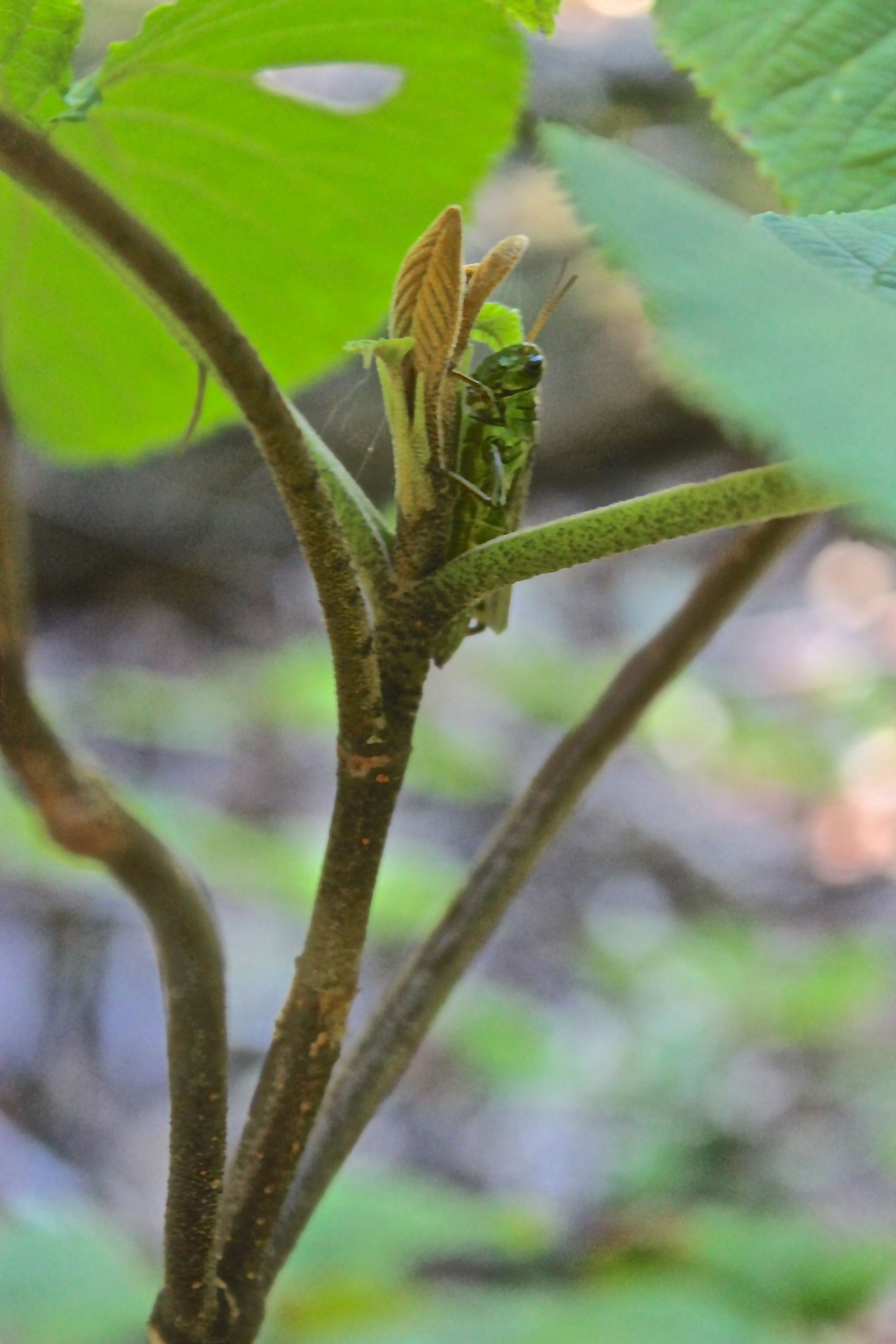
We weren’t the only ones taking a closer look at hobblebush.

hobblebush berries

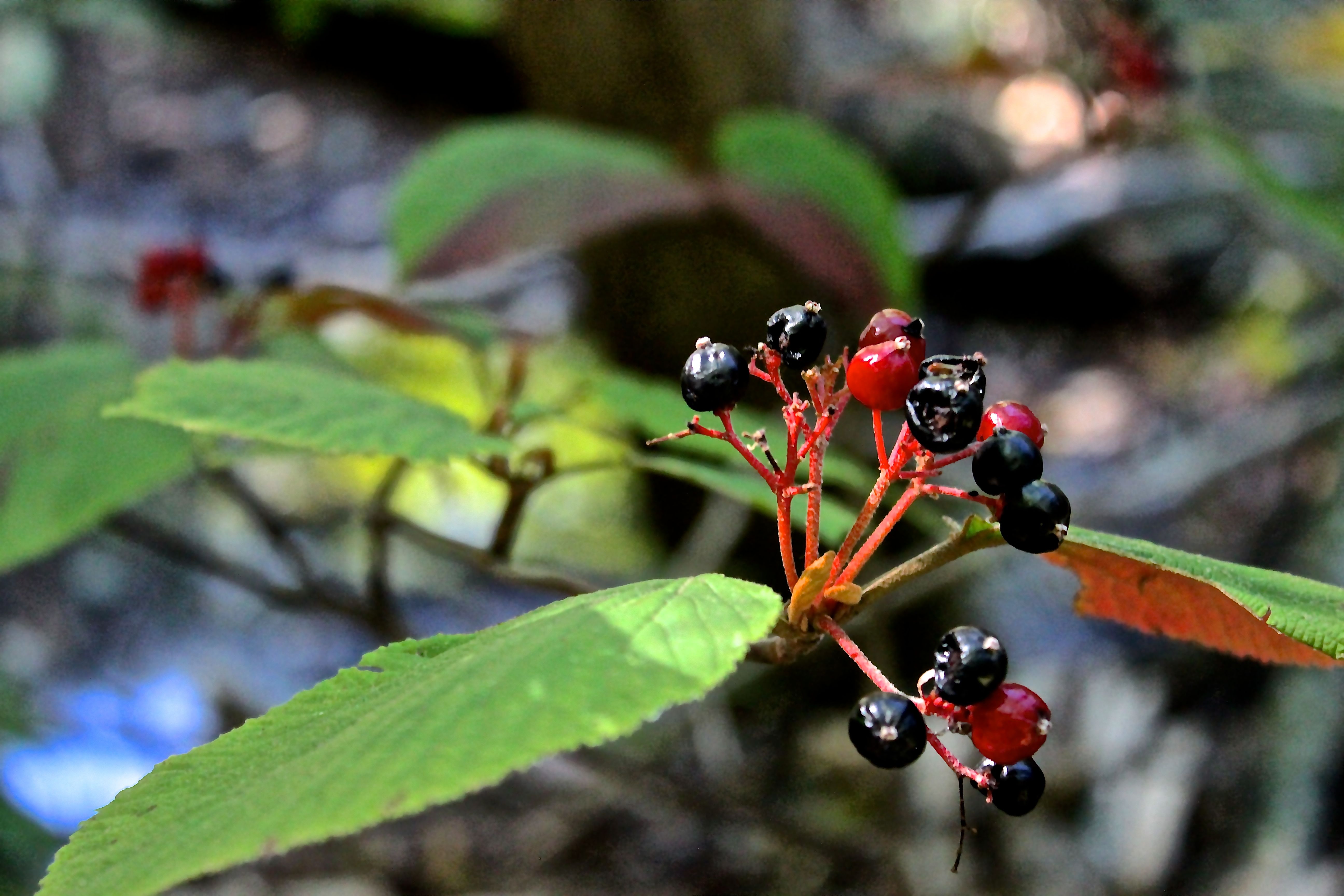
As its leaves begin to change from green to plum, the berries mature and transform from red to dark blue. Will they get eaten before they all shrivel? We think they’ll be consumed by birds and mammals.

doll's eye

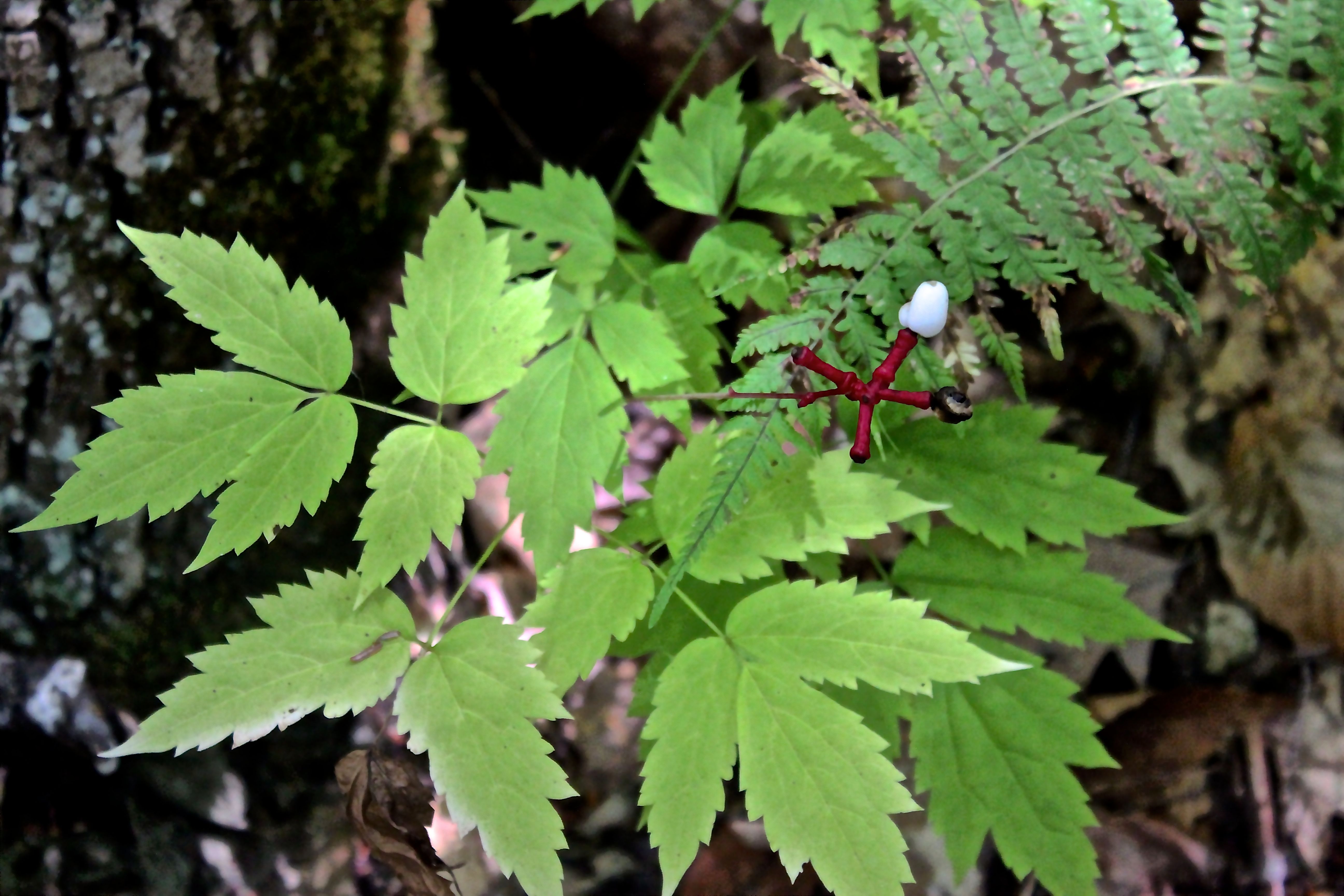
Most of the “doll’s eye” fruit is missing from this white baneberry. The archaic definition of “bane” is something, typically poison, that causes death. I’ve read that  ingesting the berries can bring on symptoms such as stomach cramps, vomiting, diarrhea, delirium and circulatory failure. Think: respiratory distress and cardiac arrest. YIKES. So what may have eaten these little white eyeballs? Wildlife may browse it, but it’s said to be quite unpalatable and low in nutrition. Interestingly, birds are unaffected by its toxic qualities.

Indian Cucumber root

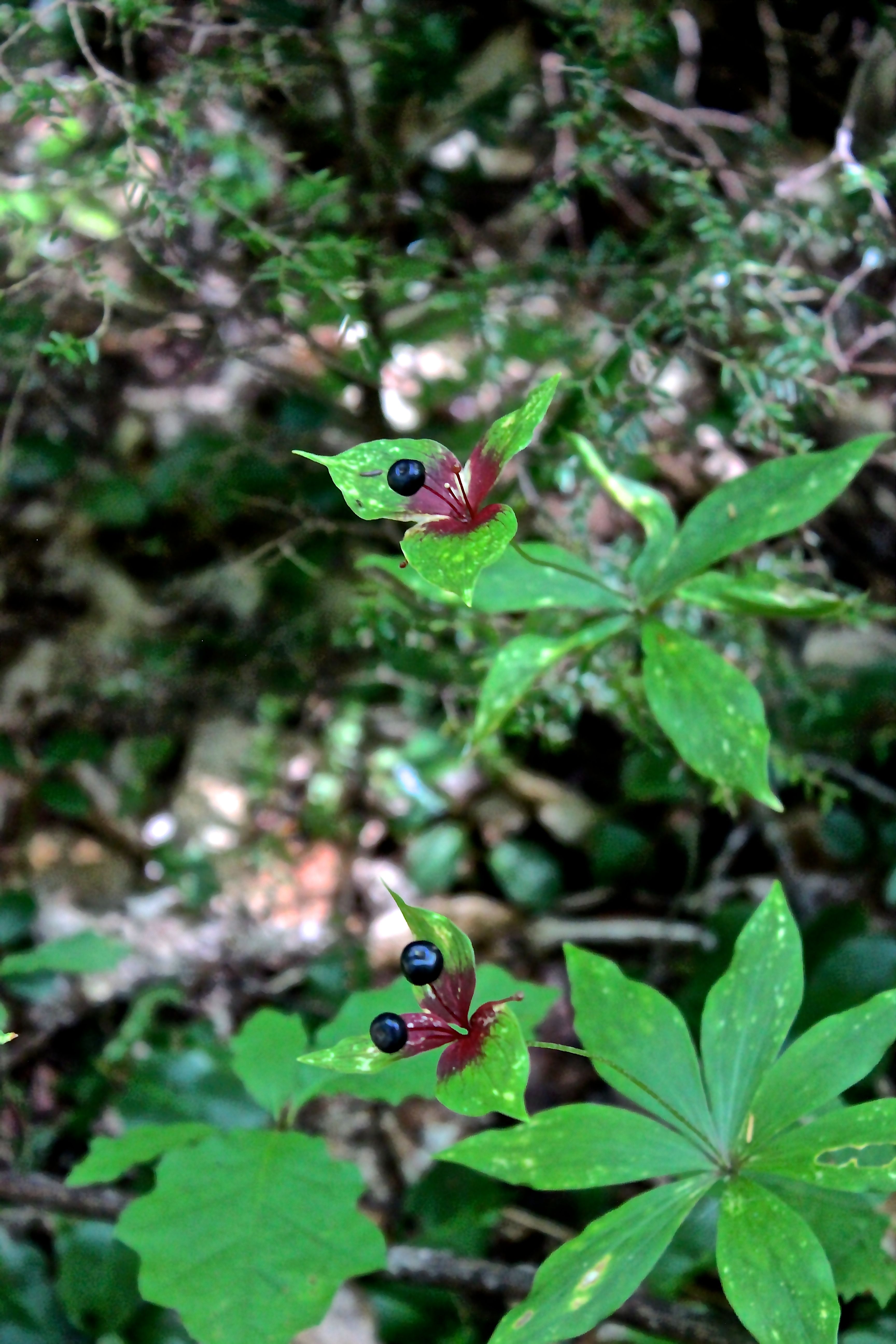
Berry season is important to migrating birds. The purplish black berries of Indian Cucumber-root are only consumed by birds. Other animals, however, prefer the stem and cucumberish-flavored root of this double decker plant. Why does the center of the upper whorl of leaves turn red? Is this an advertisement for birds?

state line

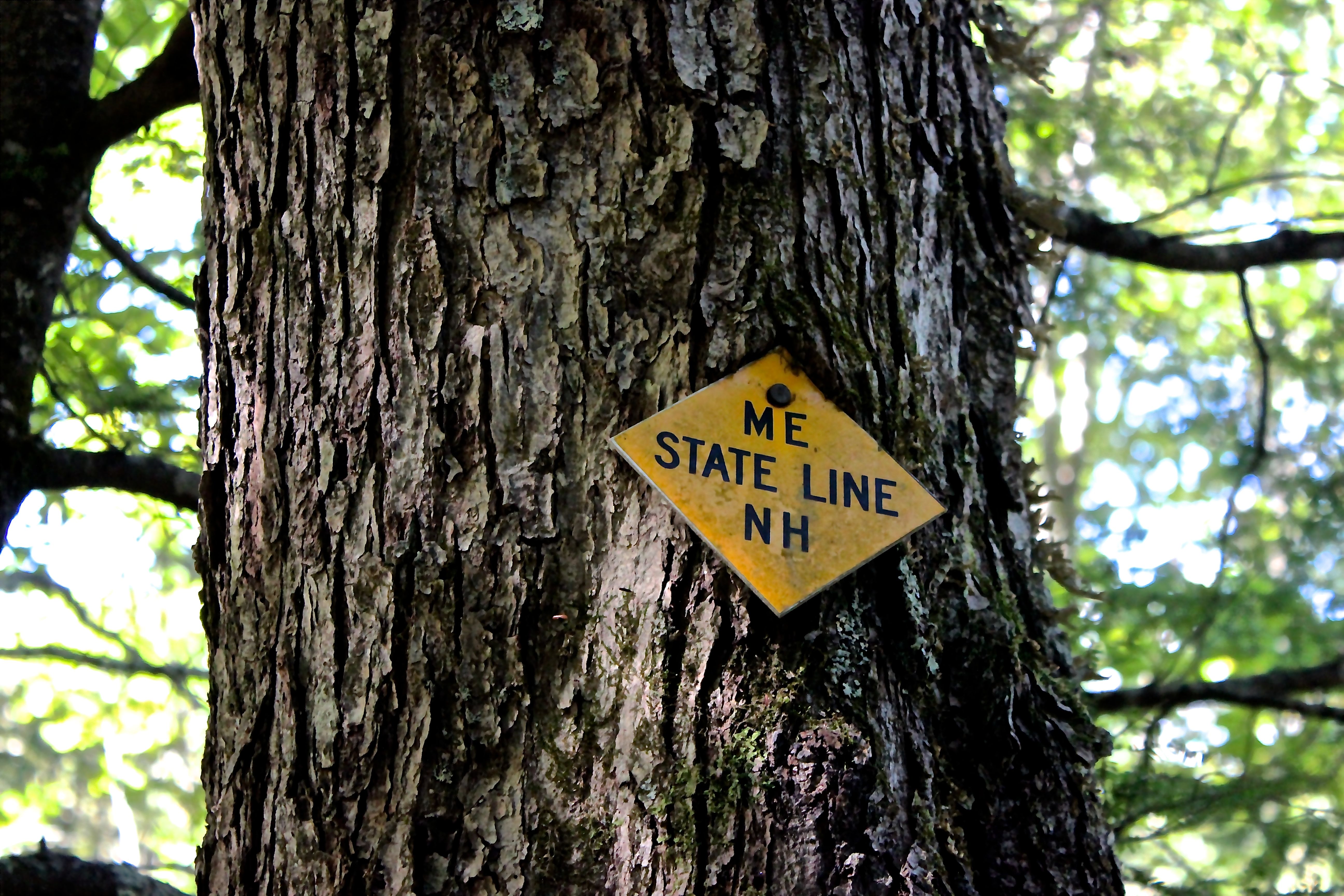
Soon, well, not all that soon, we arrived at the state line and passed onto Upper Saco Valley Land Trust property.

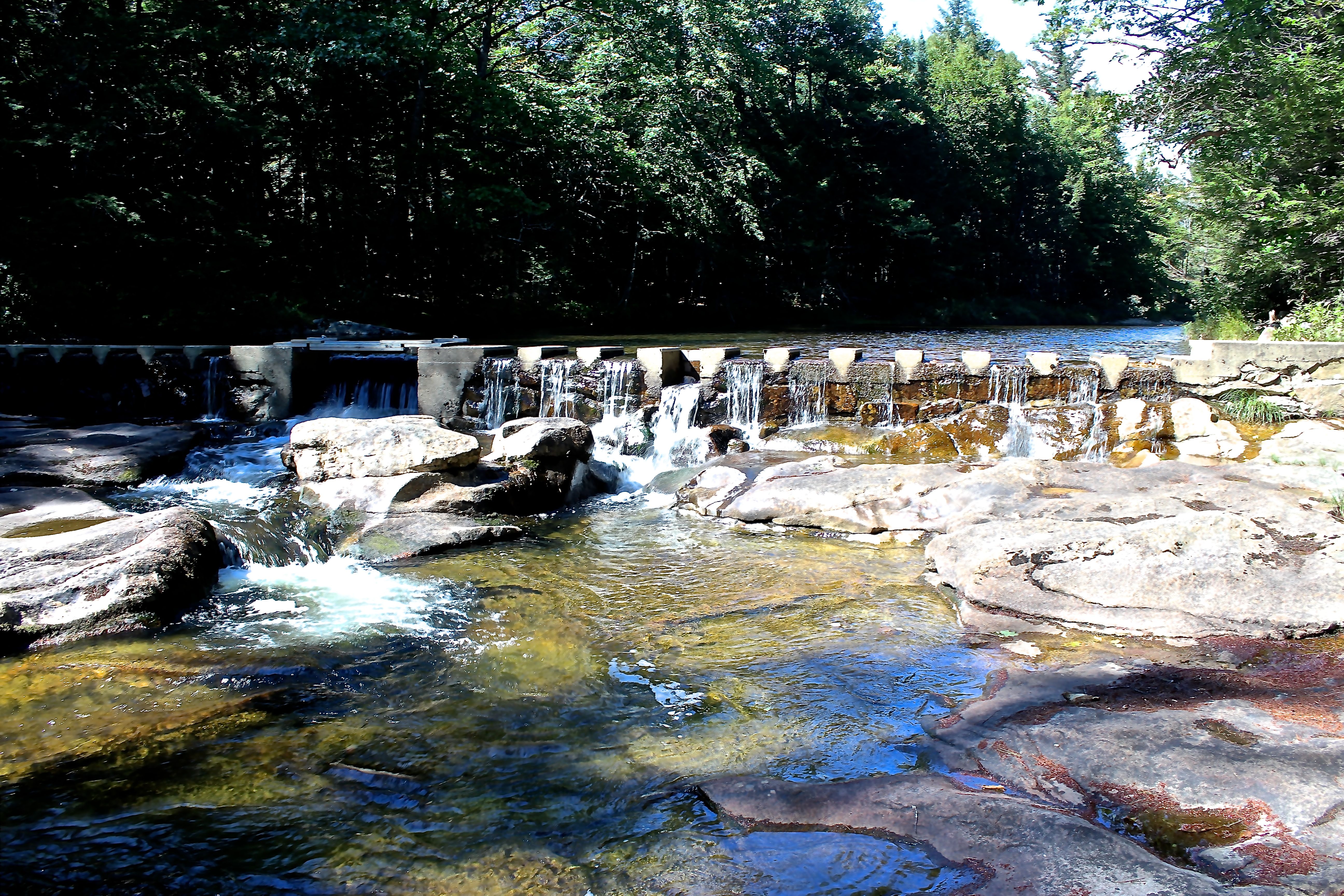
dam 3

And then we came upon the dam.

dam 2

It was the perfect day to sit on the rocks and eat a peanut butter and jam sandwich–with butter.

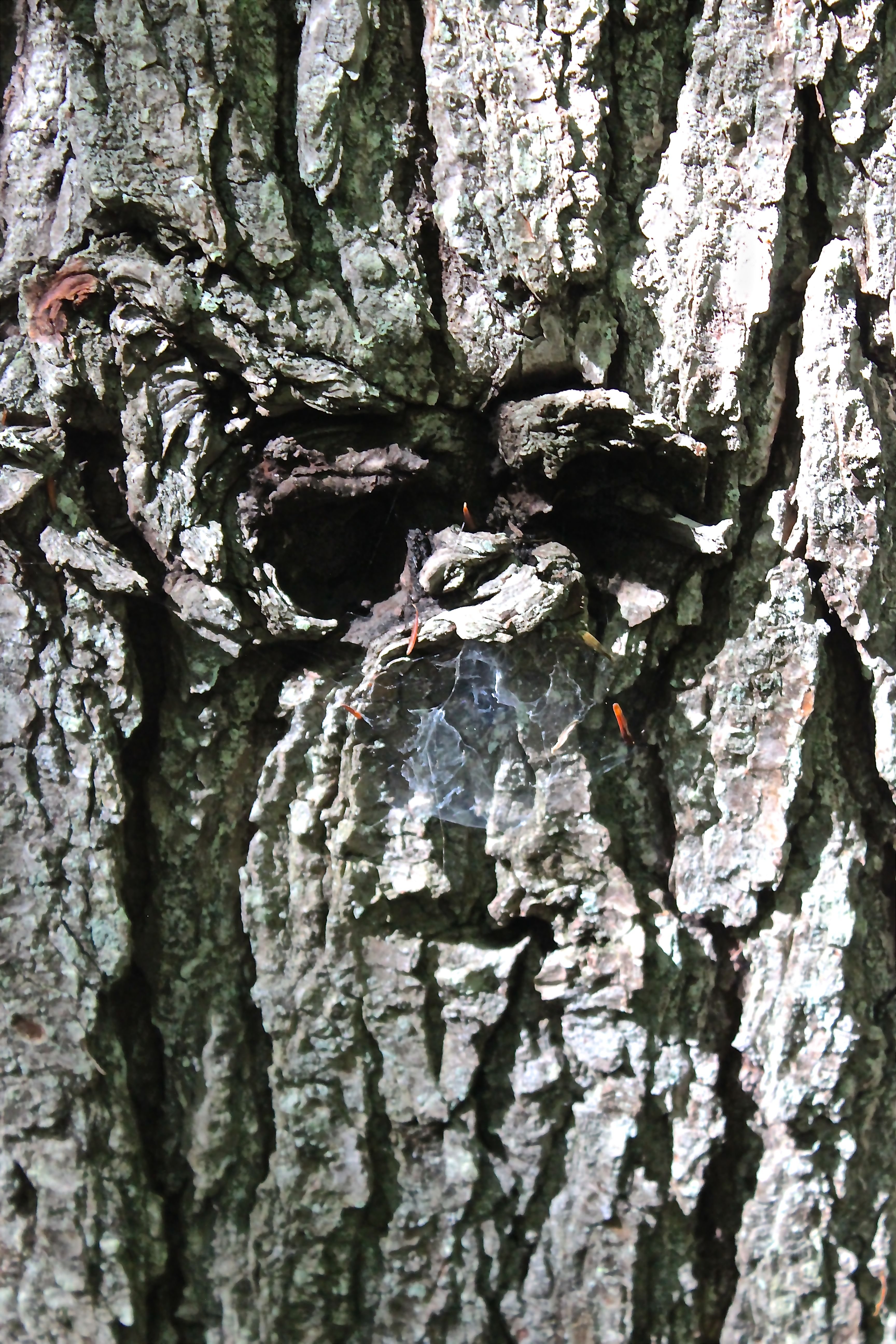
 tree face

As we walked back toward Stone House Road, we realized we were being watched. Perhaps this tree muse has all the answers.

Thanks to P.K. for a delightful wander and a chance to wonder together.

A World in Miniature

trail

I feel my dad’s presence when I enter a forest where mosses carpet the damp  floor and blanket once exposed rocks and tree trunks. To dad, this was home to the faeries or fair folk. Indeed, it is.

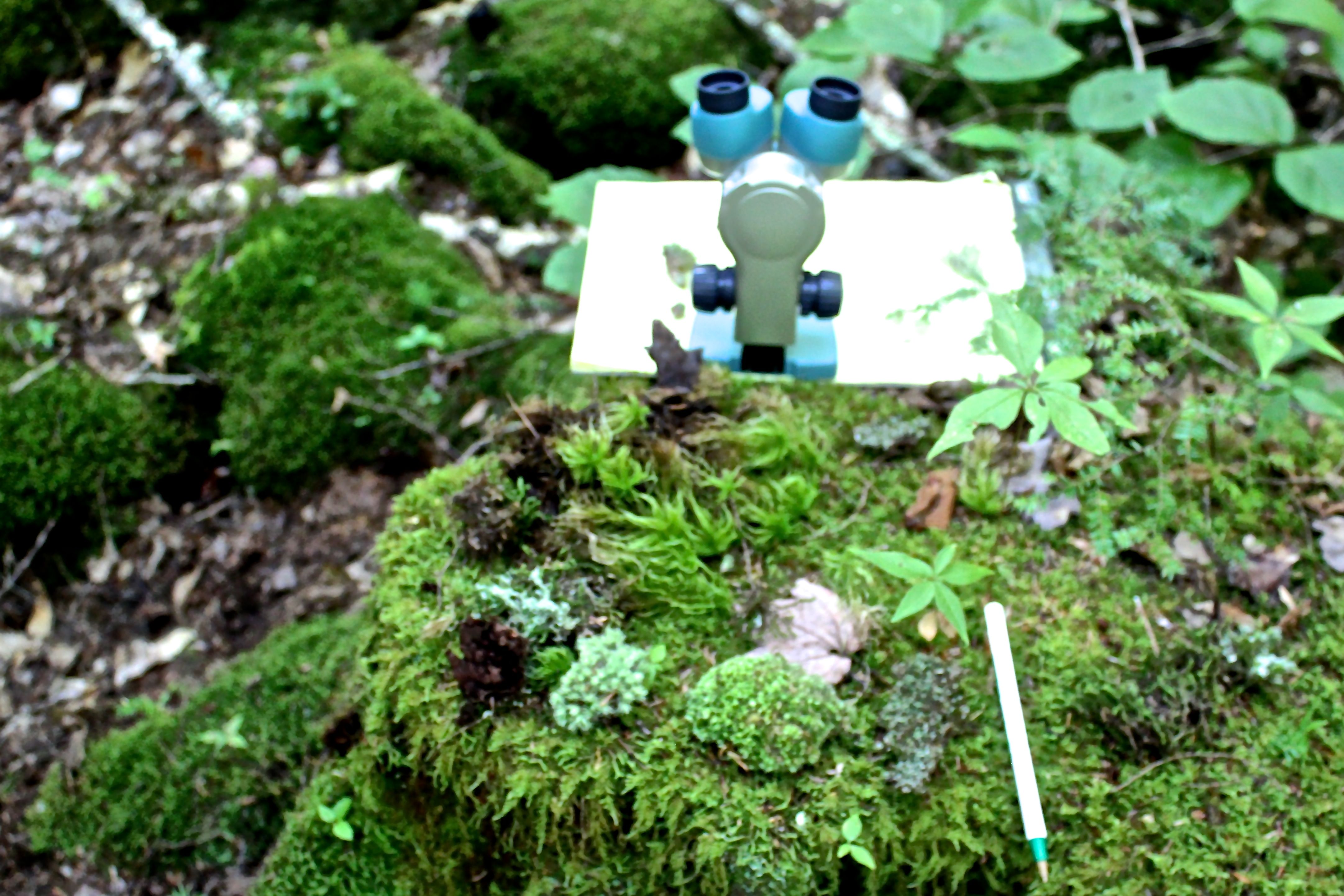
desk top 2

Yesterday, I took a closer look. With hand lenses, a field microscope and a copy of the Princeton Field Guides: Common Mosses of the Northeast and Appalachians,  friends and I set out to identify a few common species.

Mosses (and liverworts) are bryophytes, bryon being Greek for moss and photon for plant.

A sea of green surrounds us. Moss green. OK, so what does that mean exactly? Each species has its own shade of green and even still, several variations of that shade.

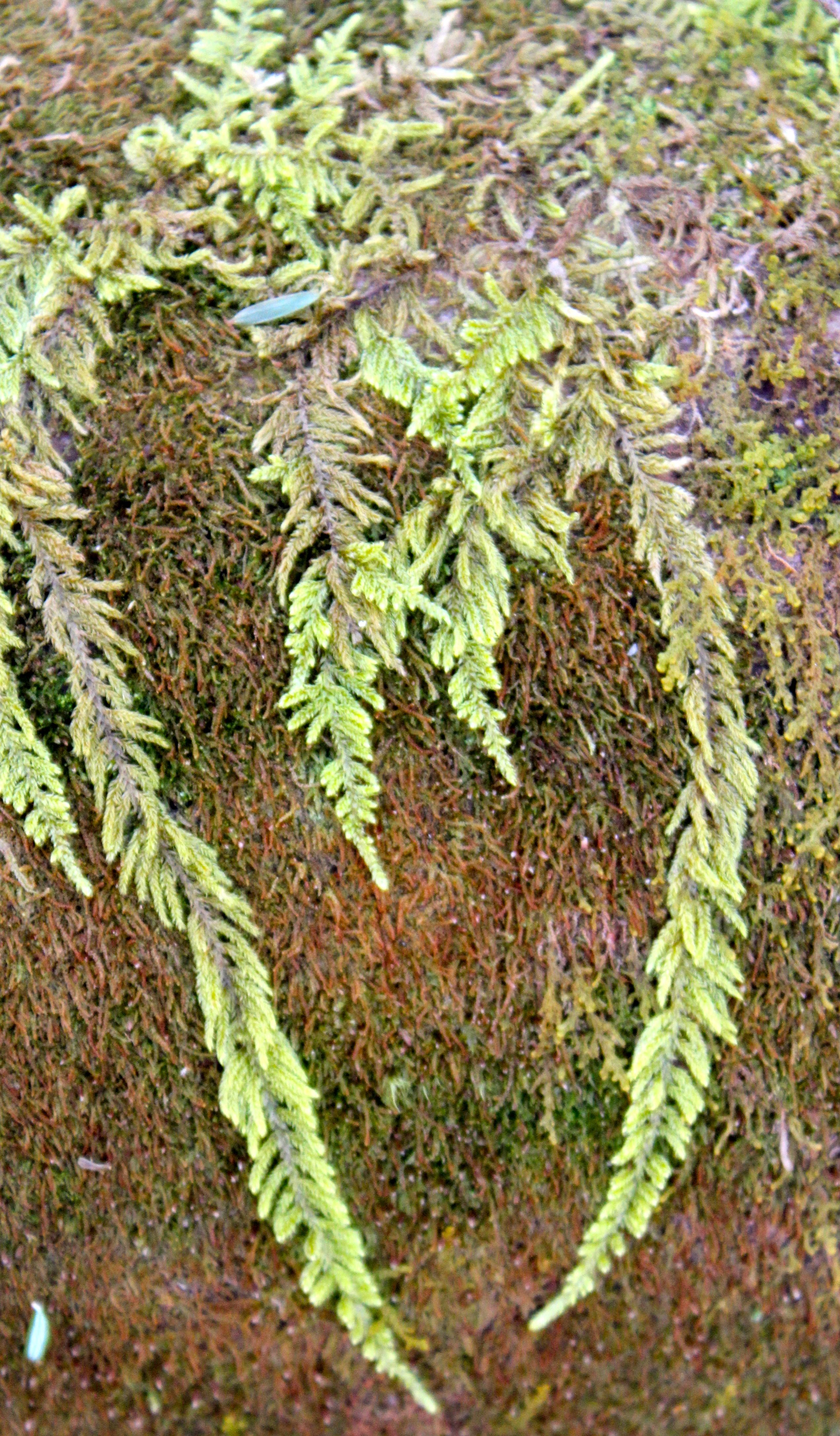
fern moss

Above is a fern moss, with its fern-like leaves and yellowish-green hue. What would its name be on a paint chip? Below, you can see its brown spore-bearing, pointed capsules born on a wiry stalks sticking out from the side of a tree stump.

fern moss spore capsules

If you look closely, you’ll see something else on this old stump.

liverwort

Green worms. Zillions of them writhing about. Such is the illusion created by thin overlapping leaves that curl under along the outer sides–giving them a 3-D appearance. This is a liverwort–three-lobed Bazzania or Bazzania trilobita.

mystery fern mat

Nearby, another mat caught our attention. It reminded us of one we’d seen earlier, but we needed to spend time with it.

mystery fern moss 3

We knew by its structure that it was another fern moss species–but which one? The red stem stood out to me as the missing link. It became our mystery moss for the time being, but I think I’ve figured it out. Pleurozium schreberi or red-stemmed moss. I also found it as Phoenix feather moss. And big red stem moss. Yeah, I know–that’s why I should learn the Latin. Ah, Mr. Cretella, you are still sitting on my shoulder trying to get me to stop using Spanish words to fill in the answers on Latin quizzes.

spag 3

We discovered springy, wet sphagnum moss. I always think of it as being in a more bog-like setting, but it is quite damp here.

pincushion moss

One of the common species that grows in small, easy to see mounds scattered about the area, pincushion moss. To some, it resembles a sea urchin. Using our hand lenses, we looked for air bubbles that are supposed to be visible at the base, but mostly we saw tears welled up in our eyes from laughing.

desk top display

After three hours, it was time to pack up the items on our our tree stump desk and head out. We’d only walked .2 of a mile down the trail, so it wasn’t a long haul out.

wood frog

Movement made us pause. Not a faerie, but a large masked wood frog who wanted us to think he wasn’t there.

bobcat and haircap

Someone else had previously passed by. We’d seen tracks on the way in and knew what it was, but I waited till the end to photograph this bobcat print. Do you see it in the mud? And the hair cap moss above it and to the right?

Acro moss

I’d sketched this previously. Looking at it now reminds me that we reviewed the three basic growth forms of mosses and found examples of all three in this little space–acrocarp, pleurocarp and peat moss.

Acrocarp–simple or sparsely forked stems typically grow in upright position. (pincushion, haircap)

Pleurocarp–stems typically trail along the ground and feature opposite branches. (fern mosses)

Peat moss–stems stand upright; often have mop-like or pom-pom heads. (sphagnum)

I’m thankful for friends who love to learn (P & B K. and D.S.). We hardly scratched the surface. I can’t wait to spend more time among this miniature world beneath our feet.

A Watchful Eye

FB-sand

On my way to meet a friend at the Wilson Wing Moose Pond Bog Preserve, the amount of sand on the road made me appreciate all the snow we had this winter and give thanks to those who cleared the way and kept us safe –constantly.

Never mind that I was lost in thought and this is beyond Foxboro Road where I should have been. After stopping to take this photo, I saw three things that were out of place–a road sign (at which time, I thought, “I didn’t realize the ‘no thru trucks, 26,000 RGVW at anytime’ sign was on Foxboro Road”–it isn’t); my friend passed me headed in the opposite direction; I came to the curve by Wiley Road and knew something wasn’t quite right. Whatever you do, don’t follow me. I’ll surely lead you astray. But if you don’t mind wondering, then let’s go.

fb brook

It’s so different to be at Wilson Wing during the spring when the water tumbles over the rocks in Sucker Brook. We accepted the invitation to pause and ponder.

water

And enjoy fluid moments.

goldthread

And hope in the greenery. This scallop-leafed goldthread made us get down on our hands and knees for a closer look.

dewdrop

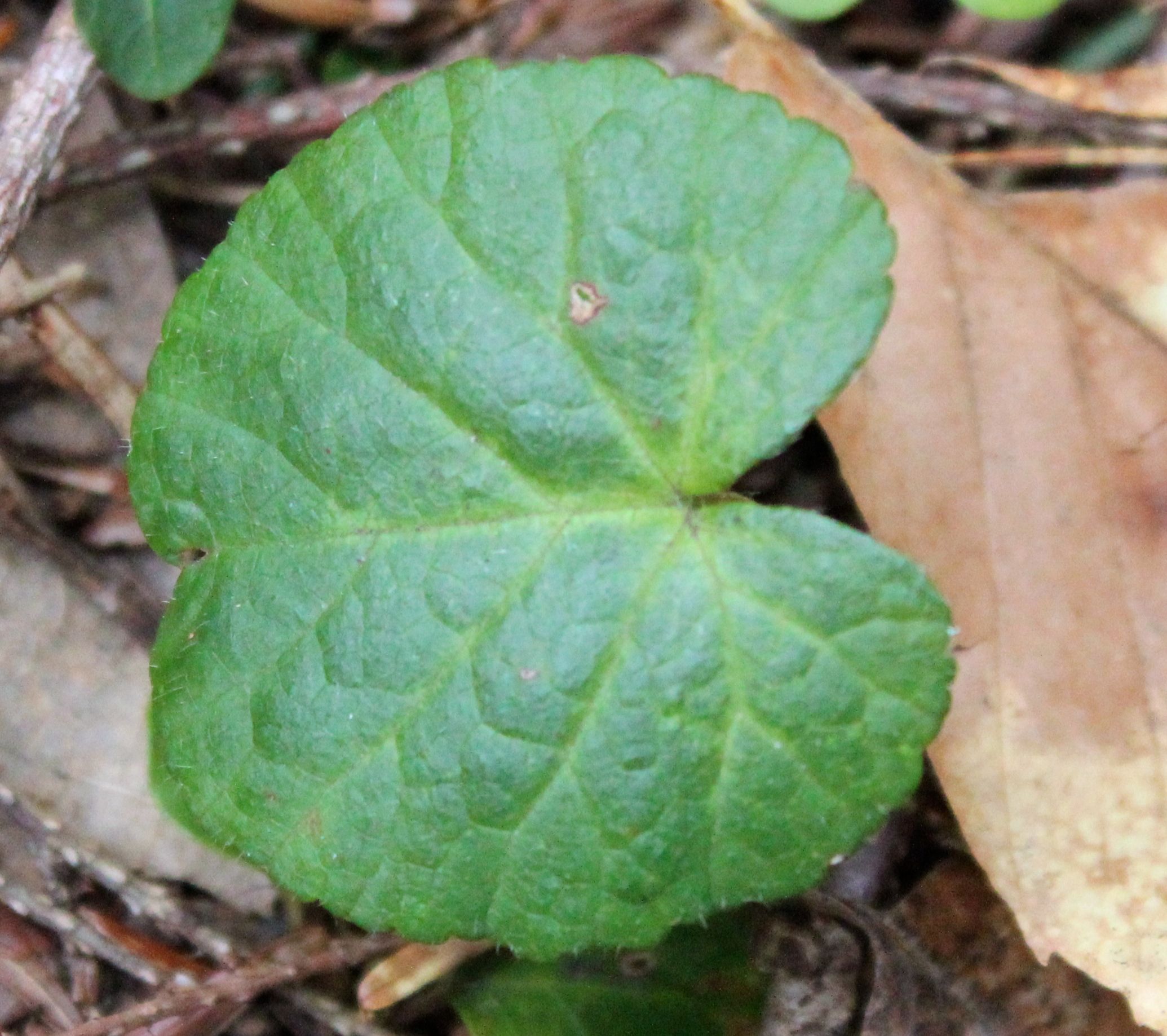
As did the heart-shaped dewdrop leaves.

heart

Another heart also spoke to us.

rock:lichen

And the lichen and moss on this rock invited an up close and personal inspection through the hand lens.

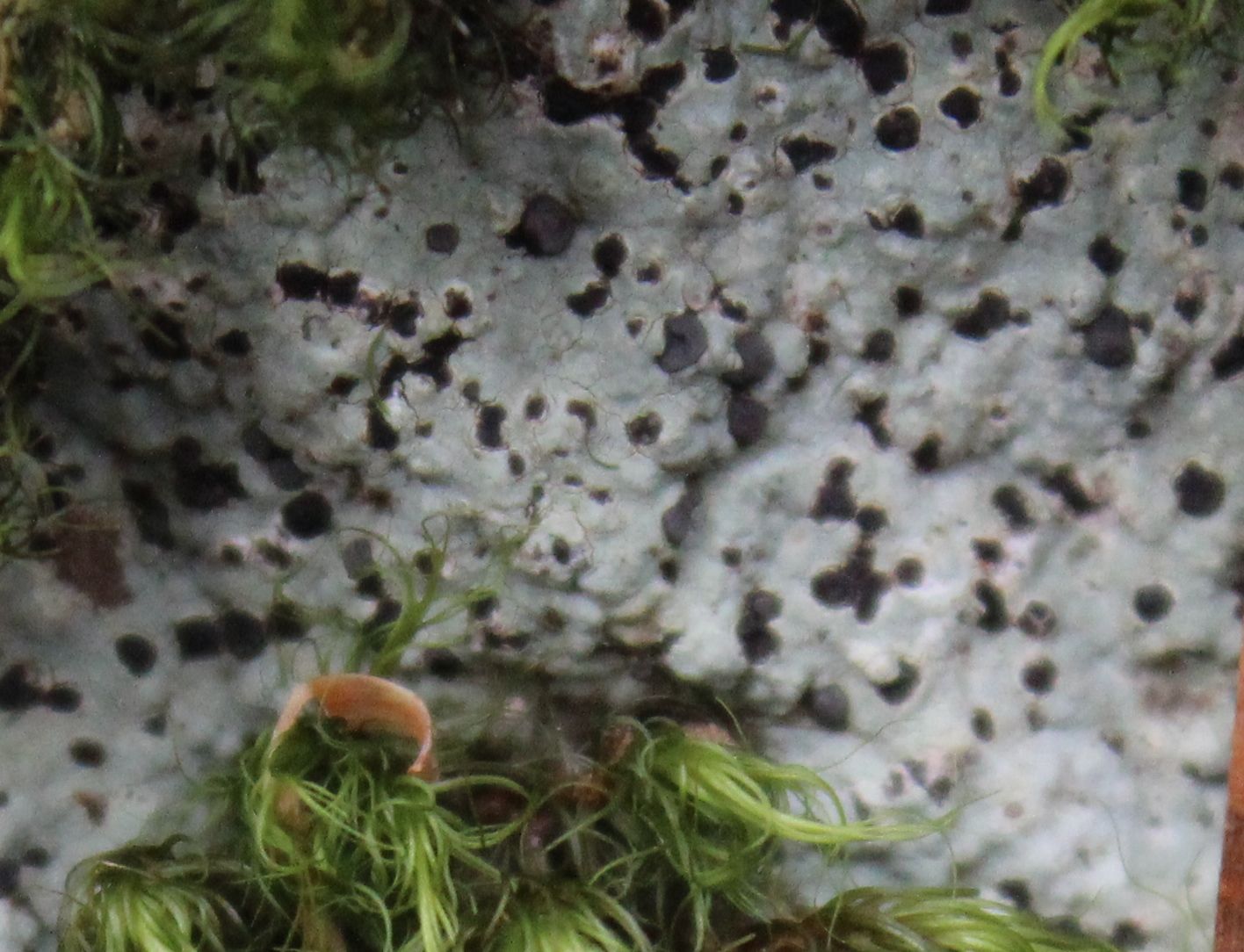
lichen 2

We tried to figure out which crustose lichen it is. I’m leaning toward a disk lichen (Lecidella stigmata) because the black fruiting bodies are raised.

quartz:lichen

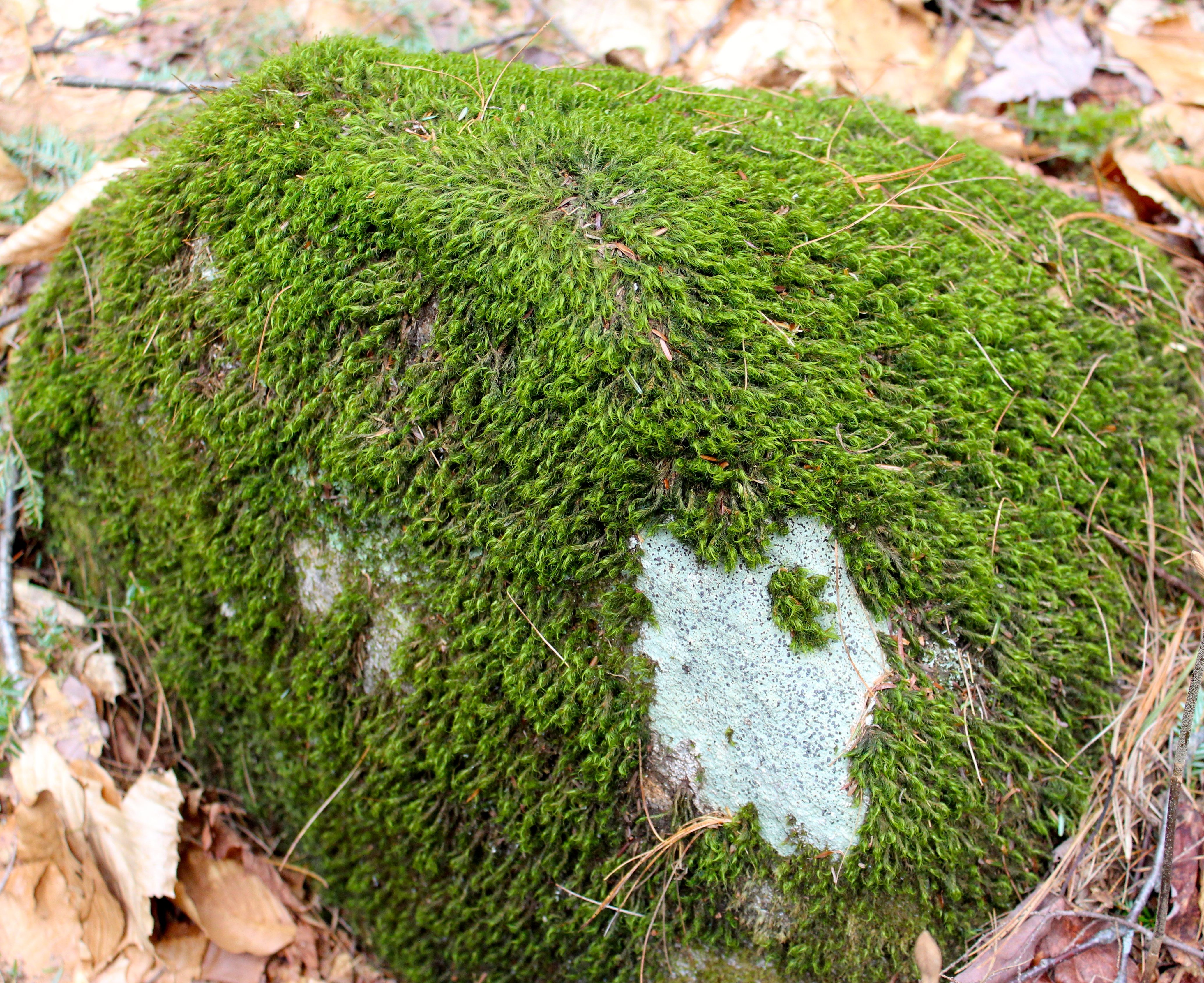
Then we saw a contrast in styles–soft moss and hard quartz.

tree chain lichen

Some trees were adorned with necklaces. Tree necklaces.

hb

Our focus also included hobblebush, with its unscaled leaf buds

hb clasping

clasped together, perhaps in silent prayer for the bog and the life it supports.

hb 3

Flowers are forming, but we don’t want to rush the season.

hb 2

Then again, I can’t wait.

beaver 1

And then there was another story to unfold.

beaver 2

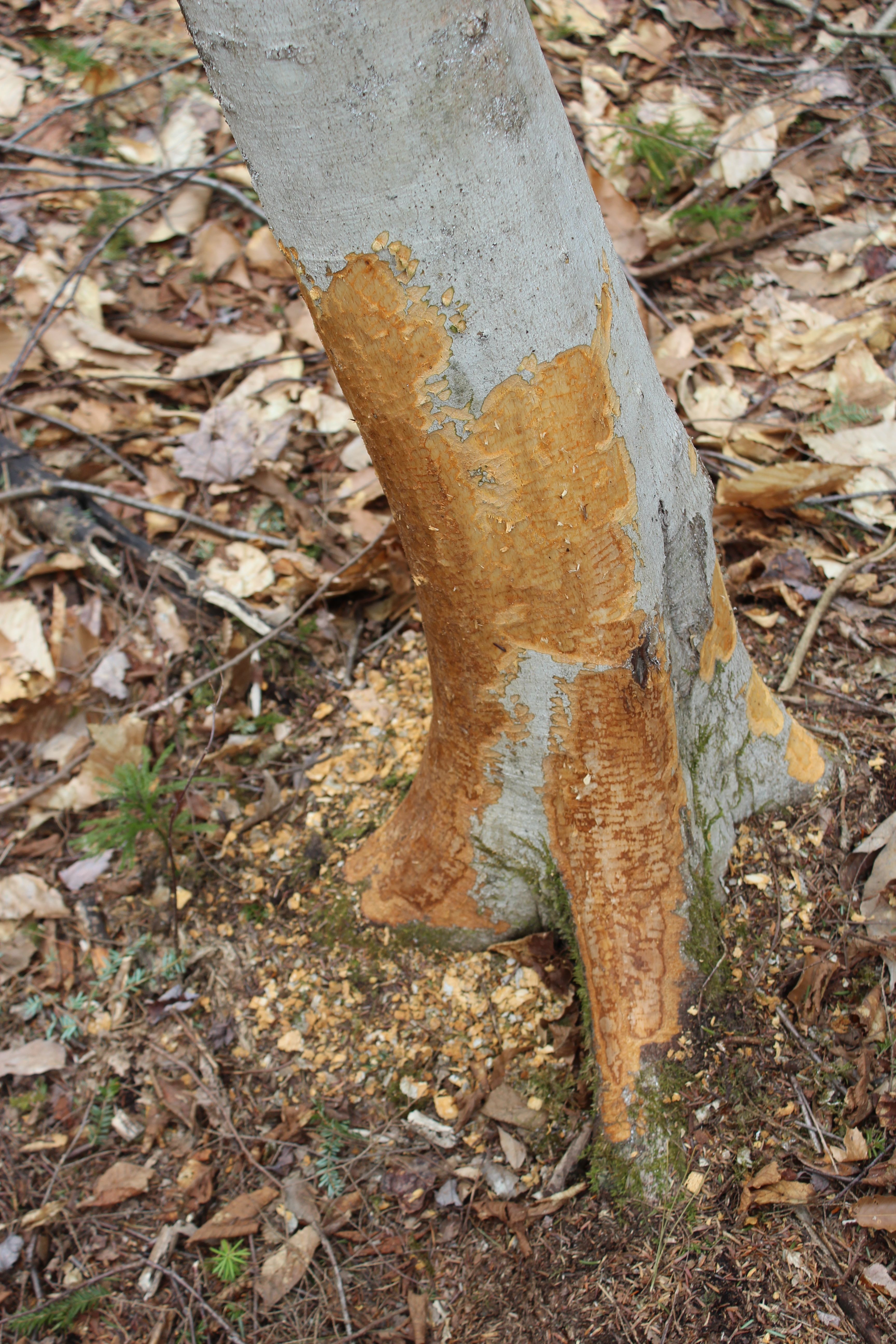
I thought beaver. My friend thought porcupine.

beaver 3

It was the wee amount of debris at the base of the beech that stumped us. And the fact that this was the only tree in the area that had been chewed in this manner. No scat to confirm. But my, what wide teeth you have.

beaver 4

We walked along and then moved off the trail. Looking around, we saw these and were finally able to turn the pages of the book.

beaver 5

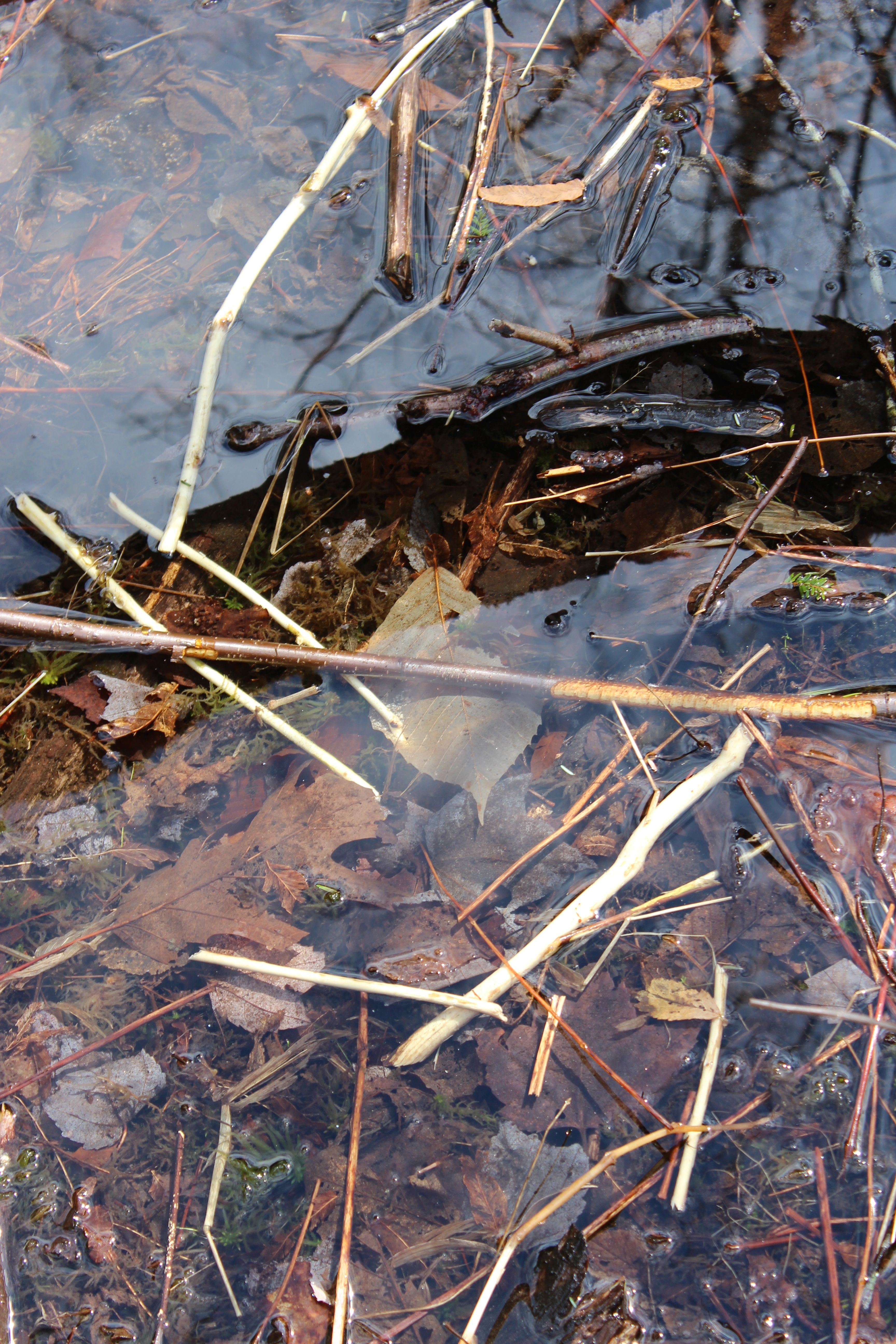
Munched treats

beaver 6

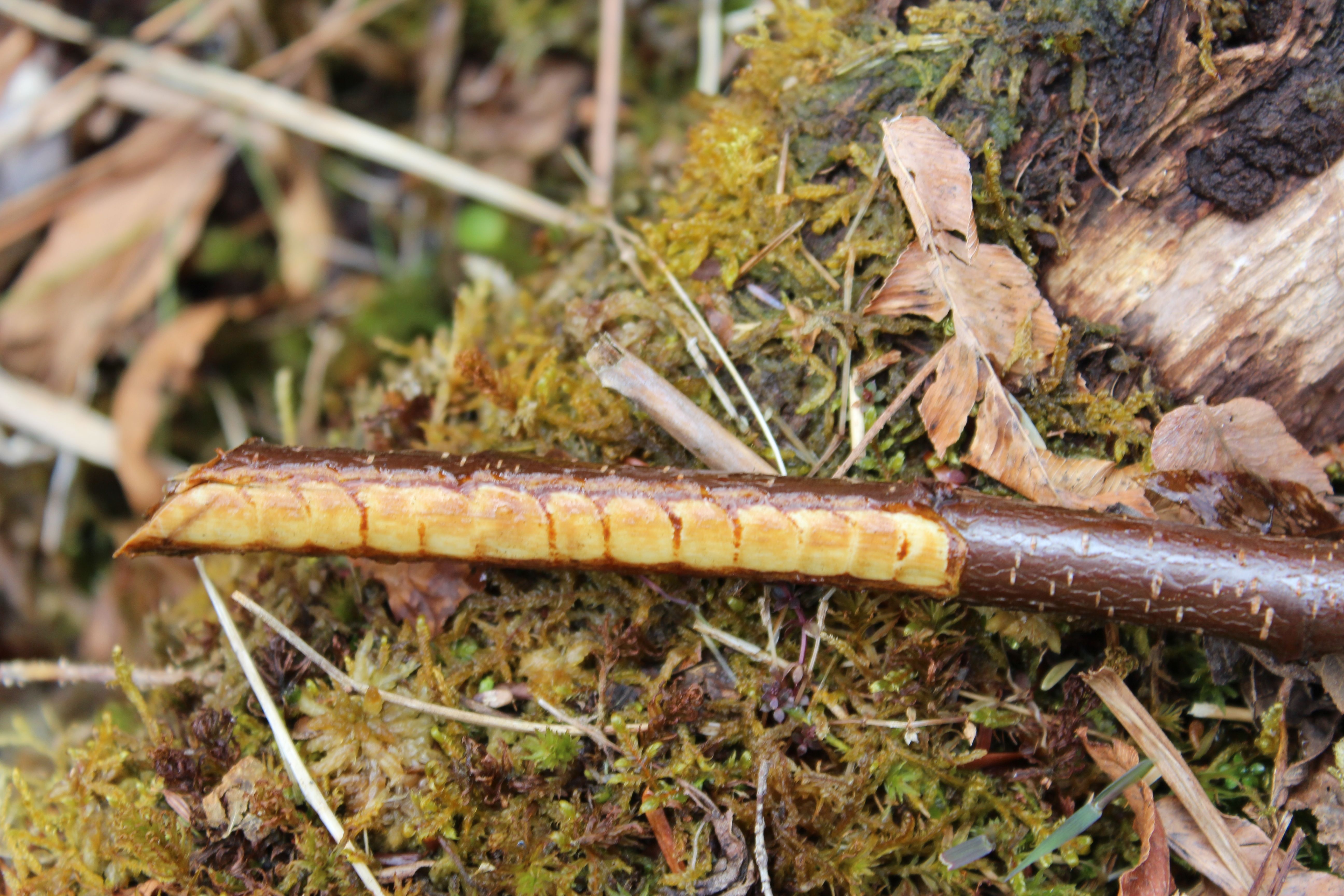
and munched saplings told us who had moved about.

beaver 7

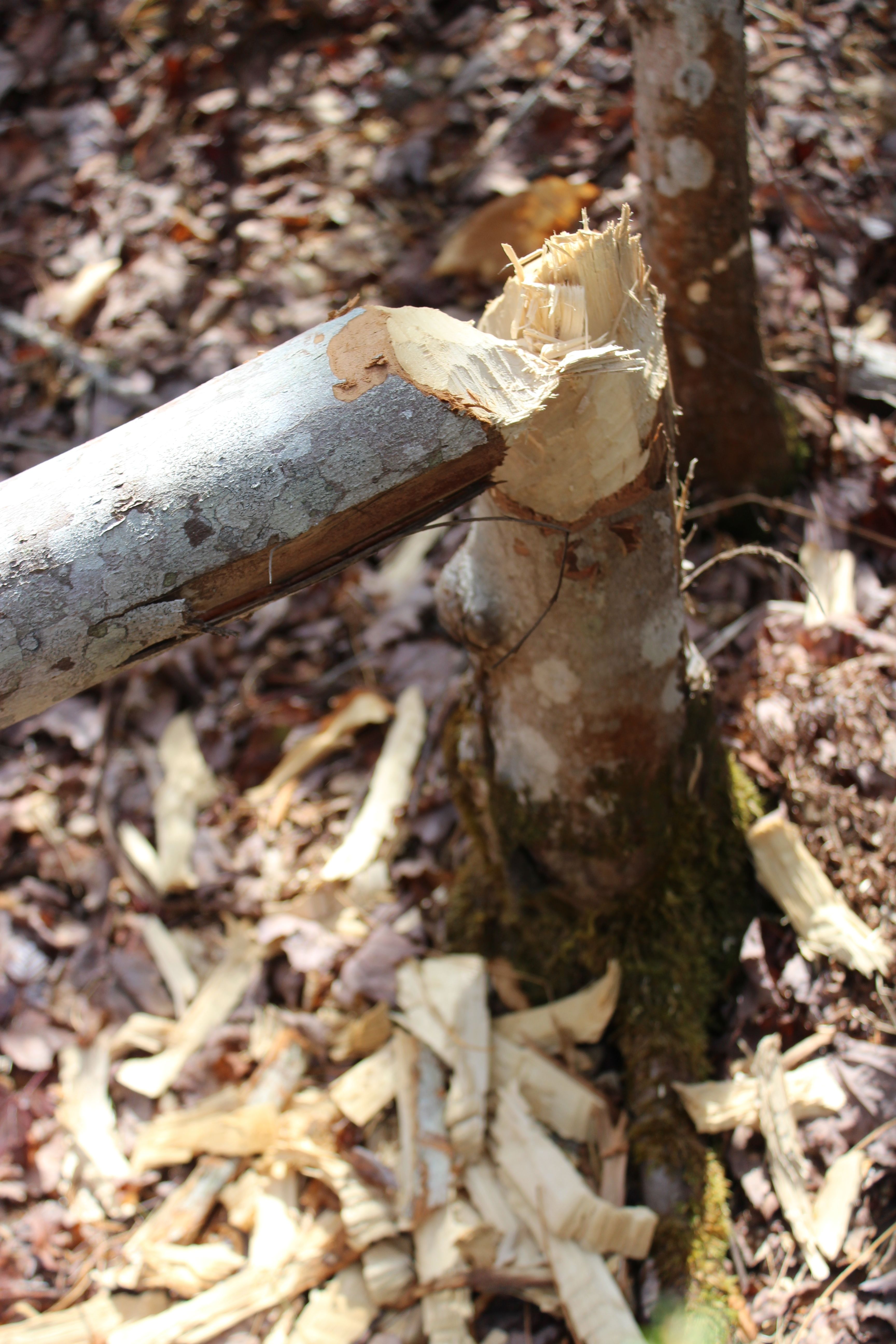
These chips are more what we would expect from a beaver. So here’s how we read the story. The fresh chew that caused the initial debate was perhaps the work of a two-year-old beaver forced to leave the lodge. It stopped along the way recently to nibble some treats. The sapling in the later photos was felled last fall, when it was time to renovate the lodge.

view

At the platform, we climbed up to enjoy the view, which includes the lodge.

hawk 3

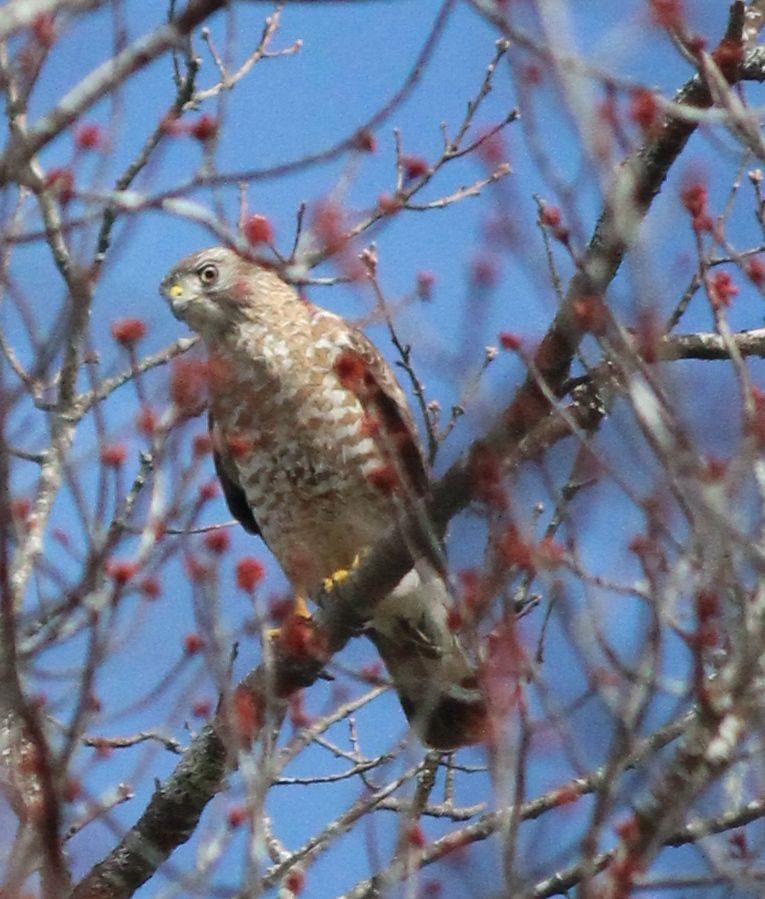
We weren’t the only ones with a watchful eye.

I’m so glad you wondered along on today’s wander. Keep watching. There’s so much more to see.

Eagle Eyes

CL market

Today’s Mondate began with the ritual PB&J creation at home. Our destination was a hiking trail in New Hampshire, but on the way, we realized the need for gas. So . . . a jig here and a jag there over the bumpy backroads and we landed at Center Lovell Market. While my guy was inside paying for the gas and chatting with a friend who works there, he was handed a slice of blueberry cake just out of the oven. He brought it out to share with me–and I sent him back in, hoping he’d buy the whole thing. Such self-restraint. He only purchased one piece–a good decision, certainly. But really?

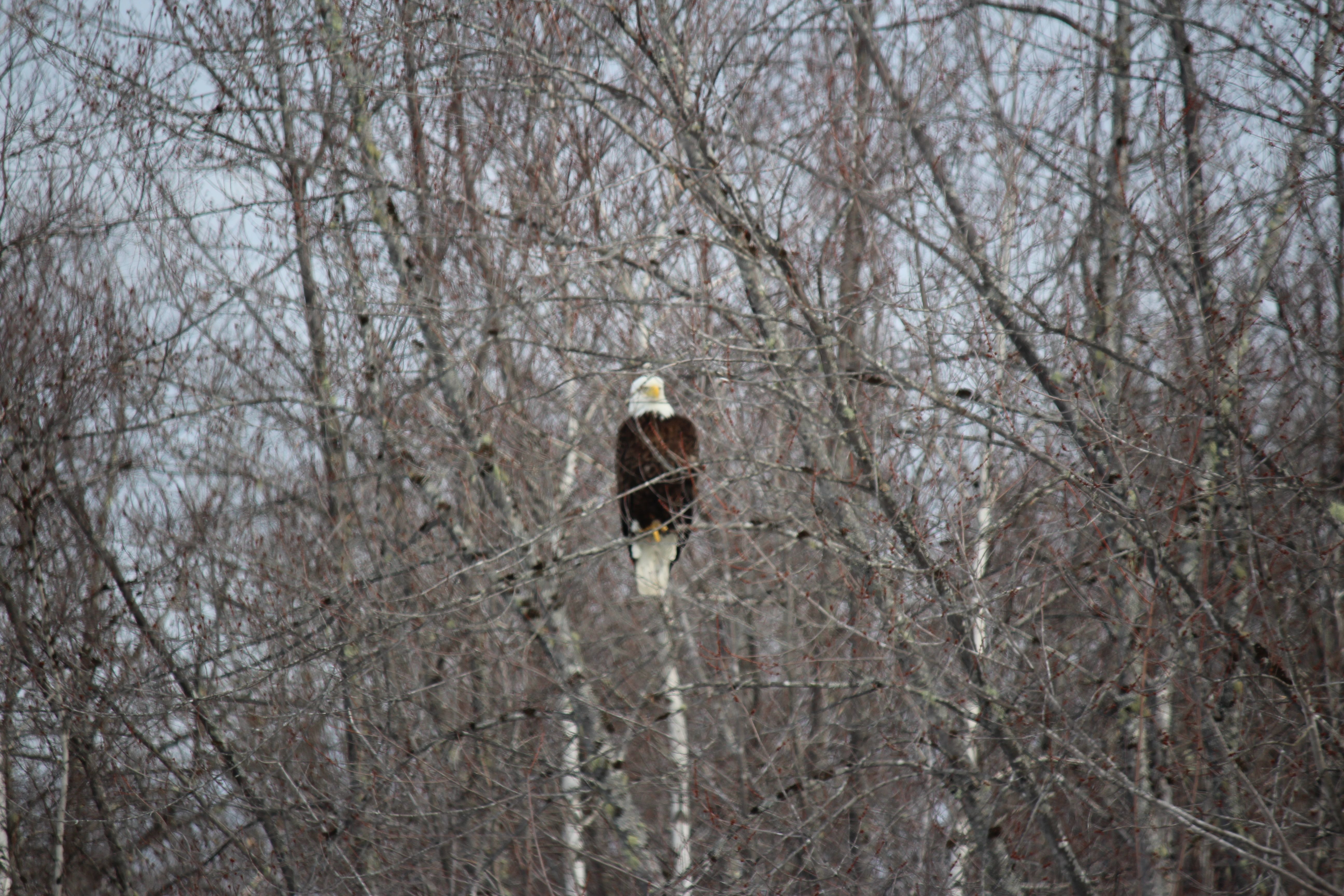
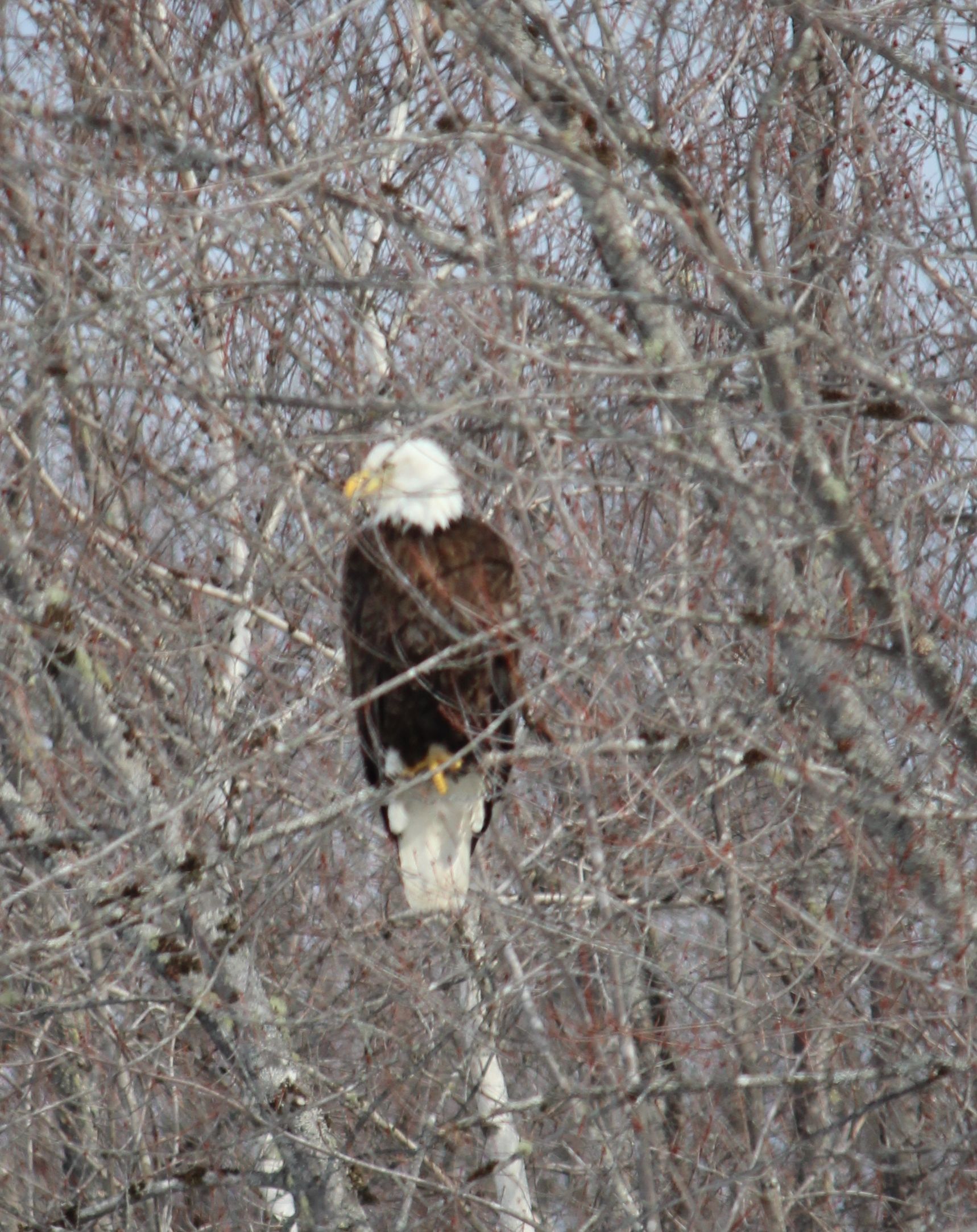
Eagle 1

We made our way back to Harbor Road in North Fryeburg, where something in the landscape caught my eye.

Eagle 1a

Always an impressive sight.

Eagle 2

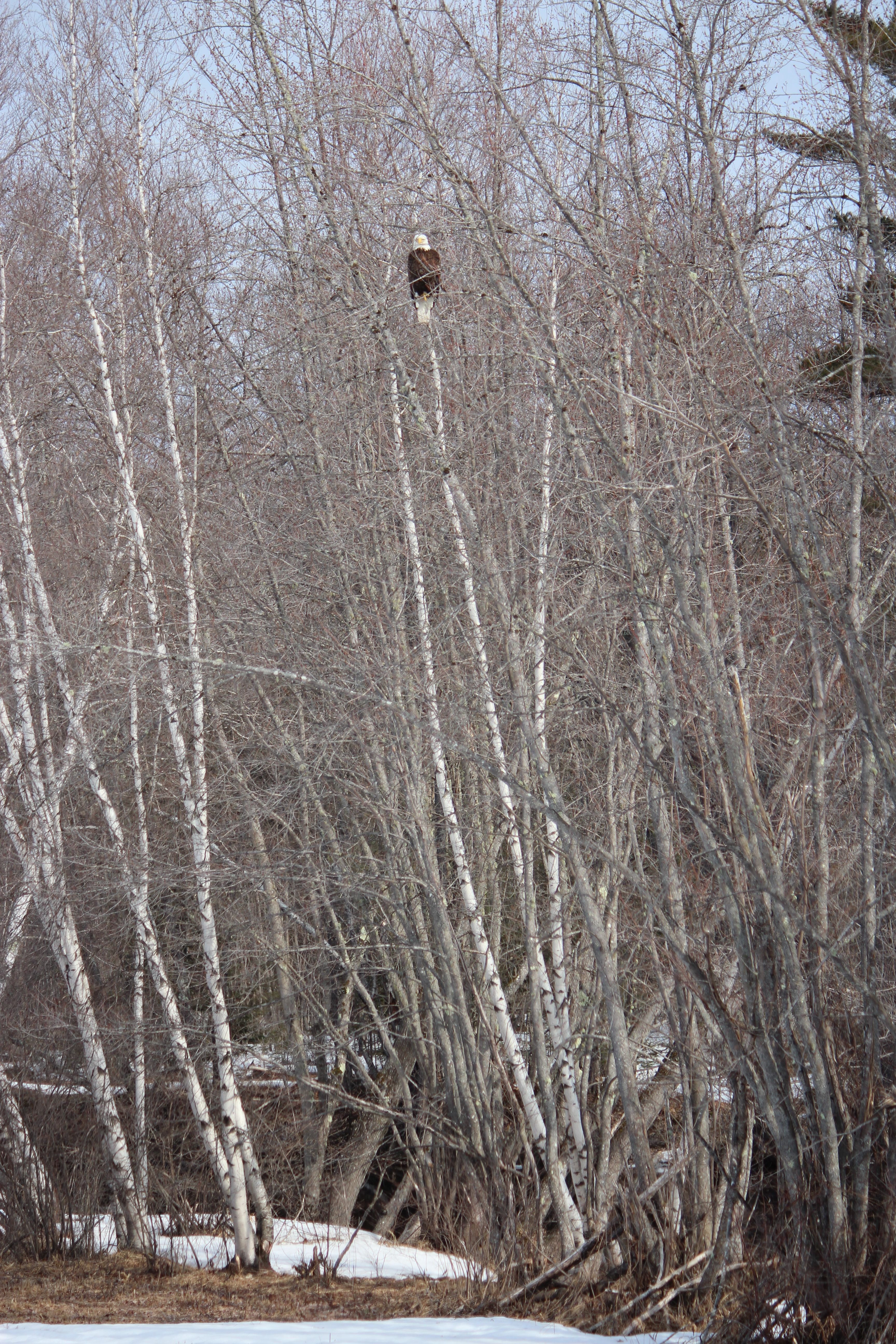
A mature Bald Eagle checking out the area around Charles River, near the old course of the Saco River.

trail parking sign

Our destination–Province Brook Trail. This hike is for my friend, P.K., who first introduced me to this trail in her summer backyard a few years ago. While she winters in Florida, I hope she’ll enjoy today’s view.

We had to park on South Chatham Road, in South ChatHAM, New Hampshire. I once interviewed Frank Eastman, a South Chatham native, who informed me that it’s pronounced ChatHAM, not Chat’em, because H-A-M spells ham. A lesson I’ll never forget.

trail men

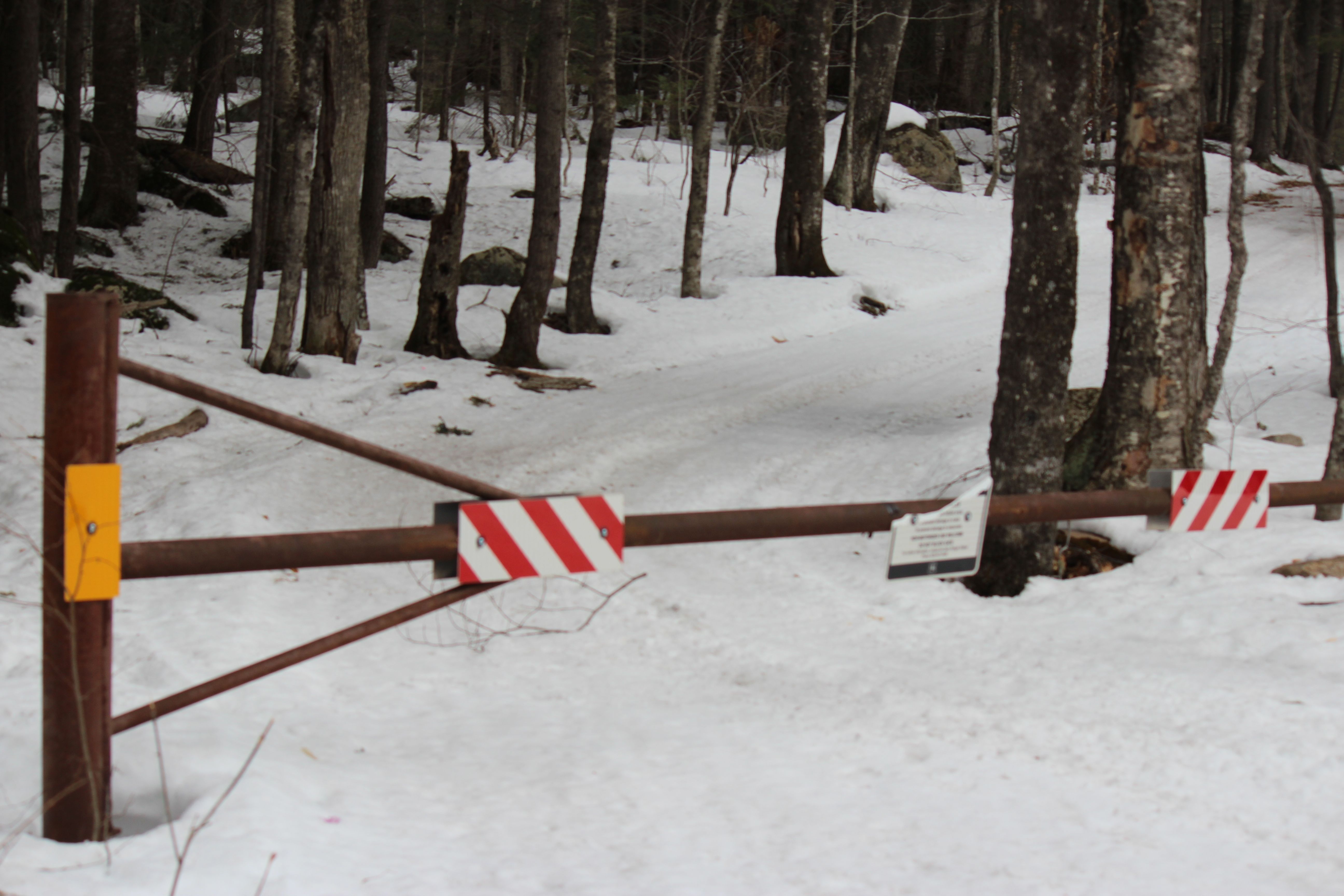
While we walked along the snowmobile trail, aka 2.5-mile Peaked Hill Road or Forest Service Road 450, two members of the White Mountain National Forest trail crew came along to close gates–a sure sign of spring.

pot hole

Seeing a few potholes like this one, we could understand why.

moose printmoose

We opened our eagle eyes and things began to appear.

Moose 3

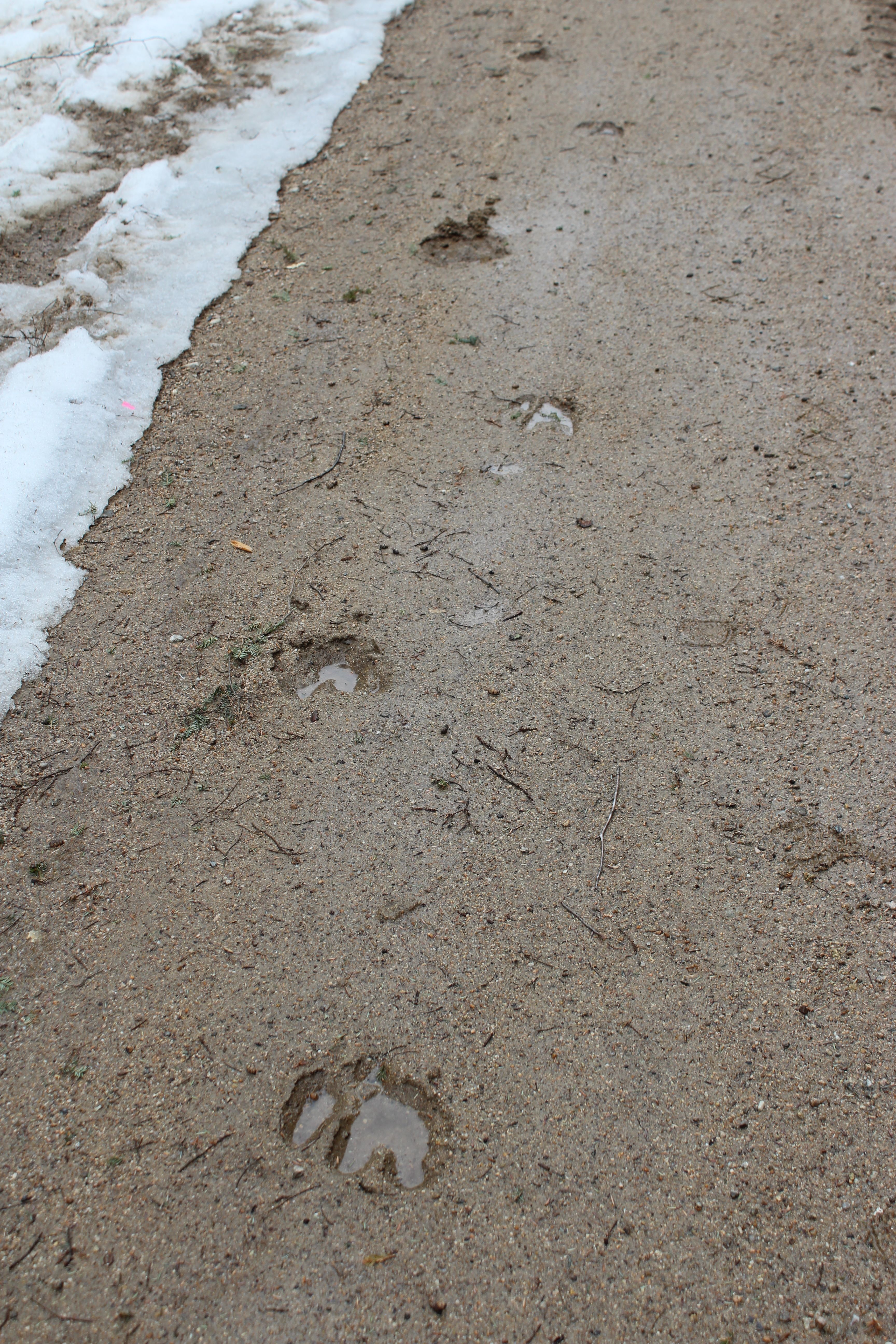
Criss-crossing the trail, through snow and mud, moose prints.

bearbear 1

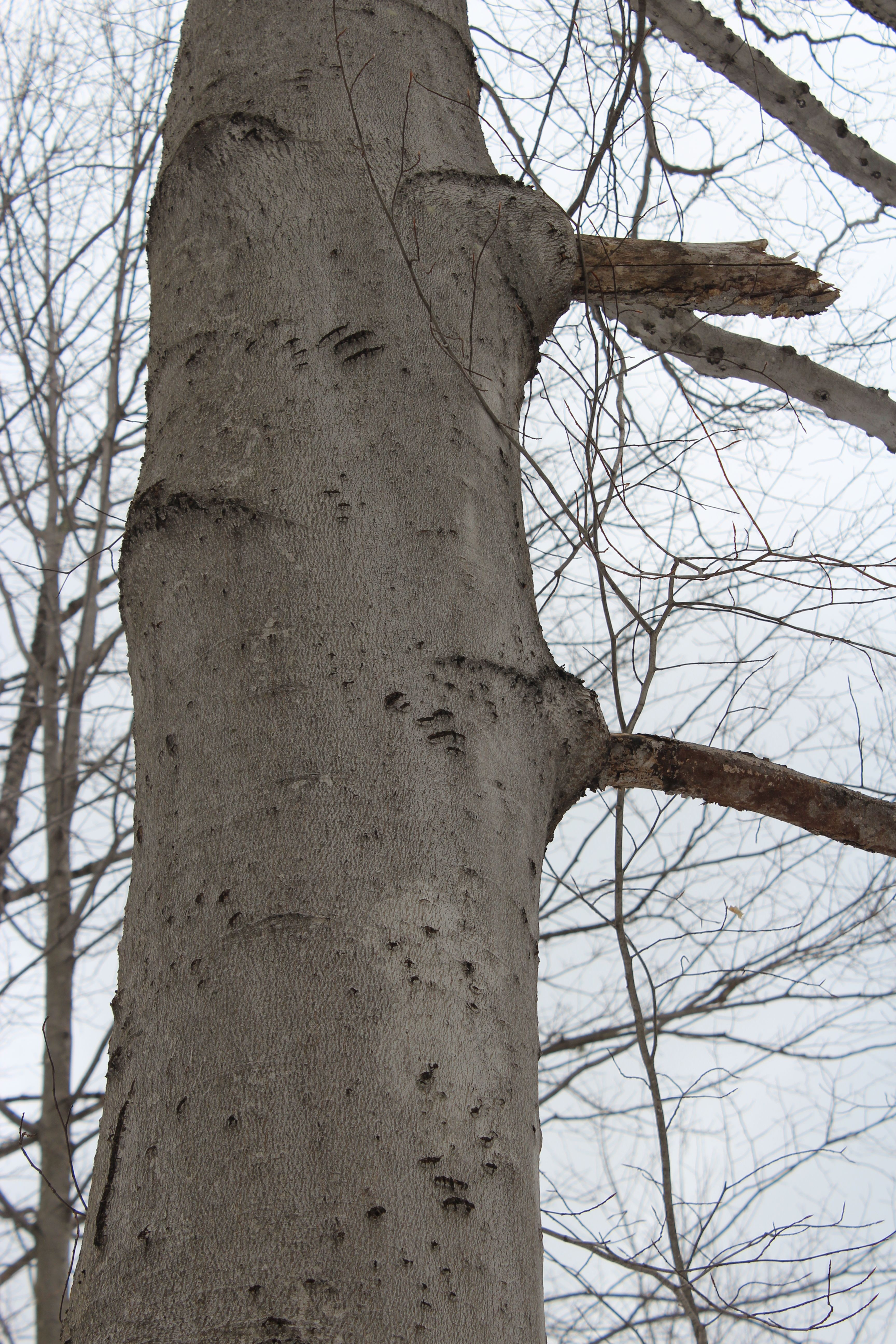
Our eyes are forever scanning beech trees–on the lookout for bear claw marks. We weren’t disappointed.

hairy scat

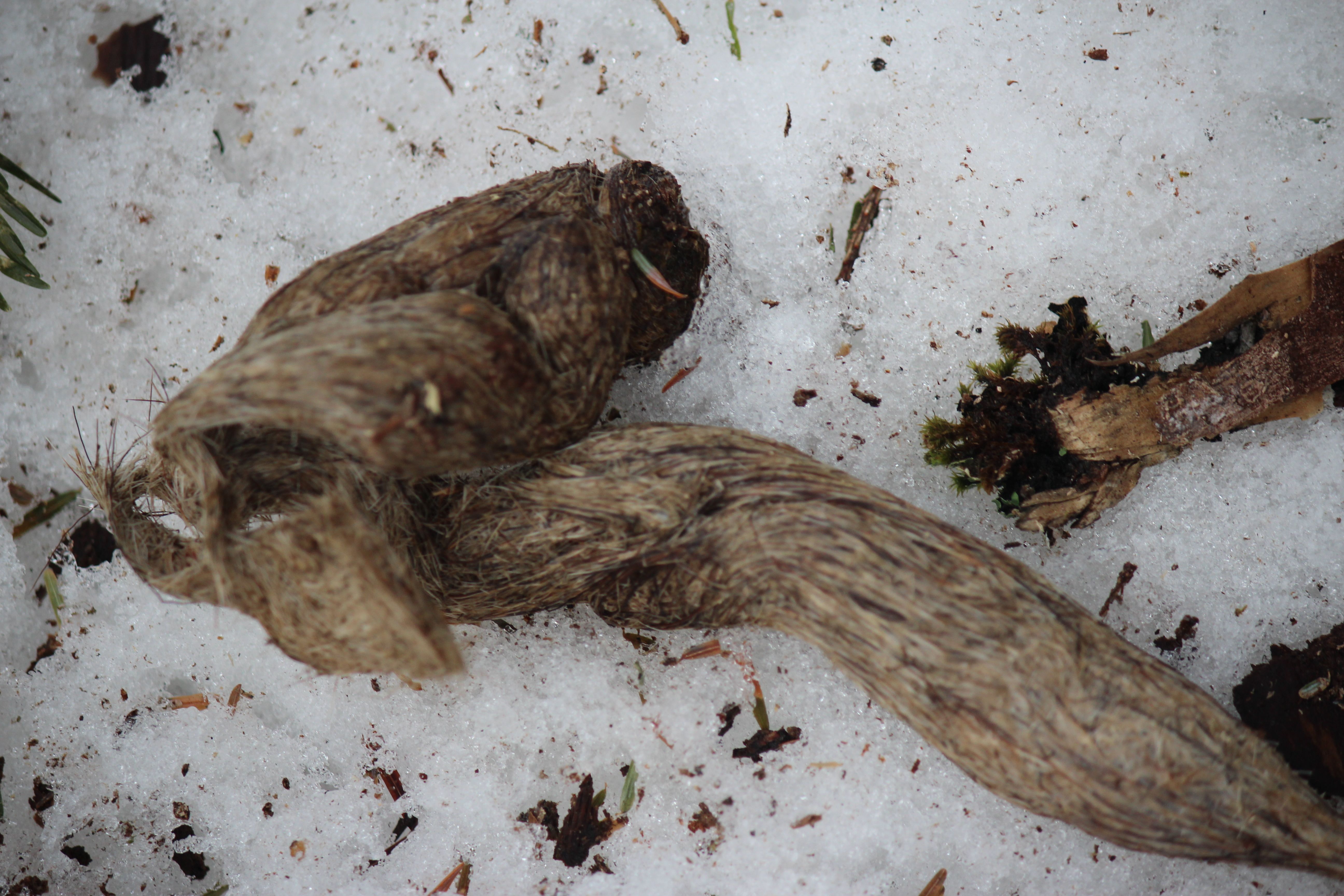
On the trail, we saw several old scat samples. Coyote or bobcat. This one is all hair. I’m leaning toward bobcat–but am open to other conclusions. There were no obvious tracks to make a certain id.

yellow birch

And here–one very large Yellow Birch growing on granite.

yb2

Yellow Birch seeds find optimum growing conditions on moss-covered rocks, stumps and logs. Once the tree establishes itself, it clings to the rock and sends its roots in search of the soil below. Hemlocks do the same.

trail head

Finally, we reached the trail head. Oops, I lopped off the head of the hiker on the sign.

trail closed

Province Brook Trail is currently closed to snowmobiles and ATVs, but we walked around the gate and continued on.

ice

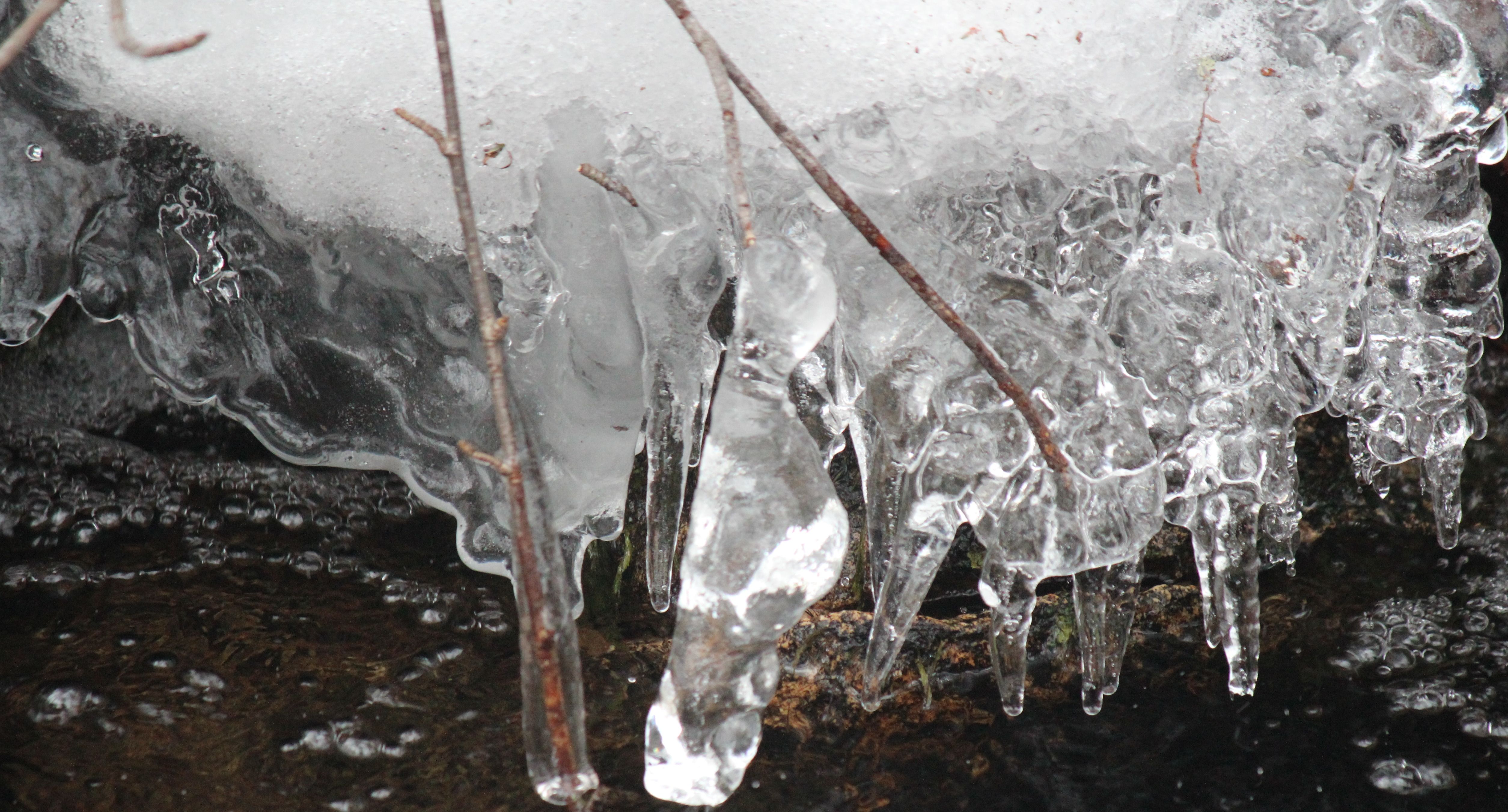
Still plenty of ice in the streams beside the trail.

snow:brook

And lots of snow.

polypody fern

Polypody Fern peeking out from under a snow-covered rock.

hobblebush

And Hobblebush preparing to bloom.

glacial erratics

Lots of glacial erratics along the way. This one supports an entire community.

mushrooms

The tree in the center invited a closer look.

mush 1

Fan-shaped Artist’s Conks.

mush 2

Their white pore surface.

mush 3

Looking skyward.

mush 4

And a sense of perspective.

 pond1

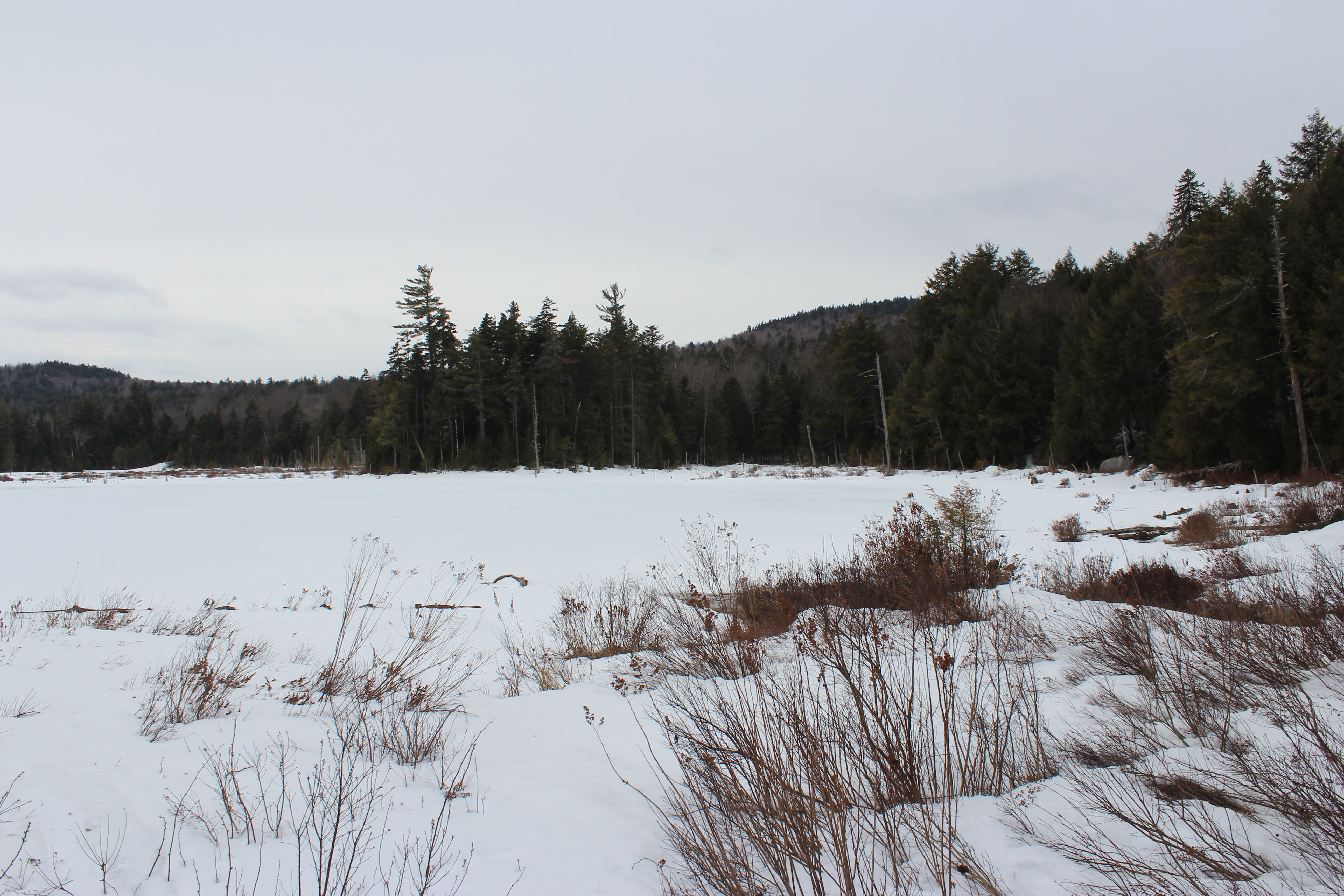
At last, we reached Province Pond.

shaw mtn

Shaw Mountain is in the background–we’re saving it for another day.

Allen-snow

On our way to a forest service shelter that was built in the 1930s (I know this because I read it in Hikes & Woodland Walks in and around Maine’s LAKES REGION written by my friend, Marita Wiser), the deep snow caught us a few times. My guy is knee-deep.

brook crossing

It pays to let him go first. I can then figure out where not to step. Here, he’s contemplating the brook crossing to the shelter. It was actually quite easy.

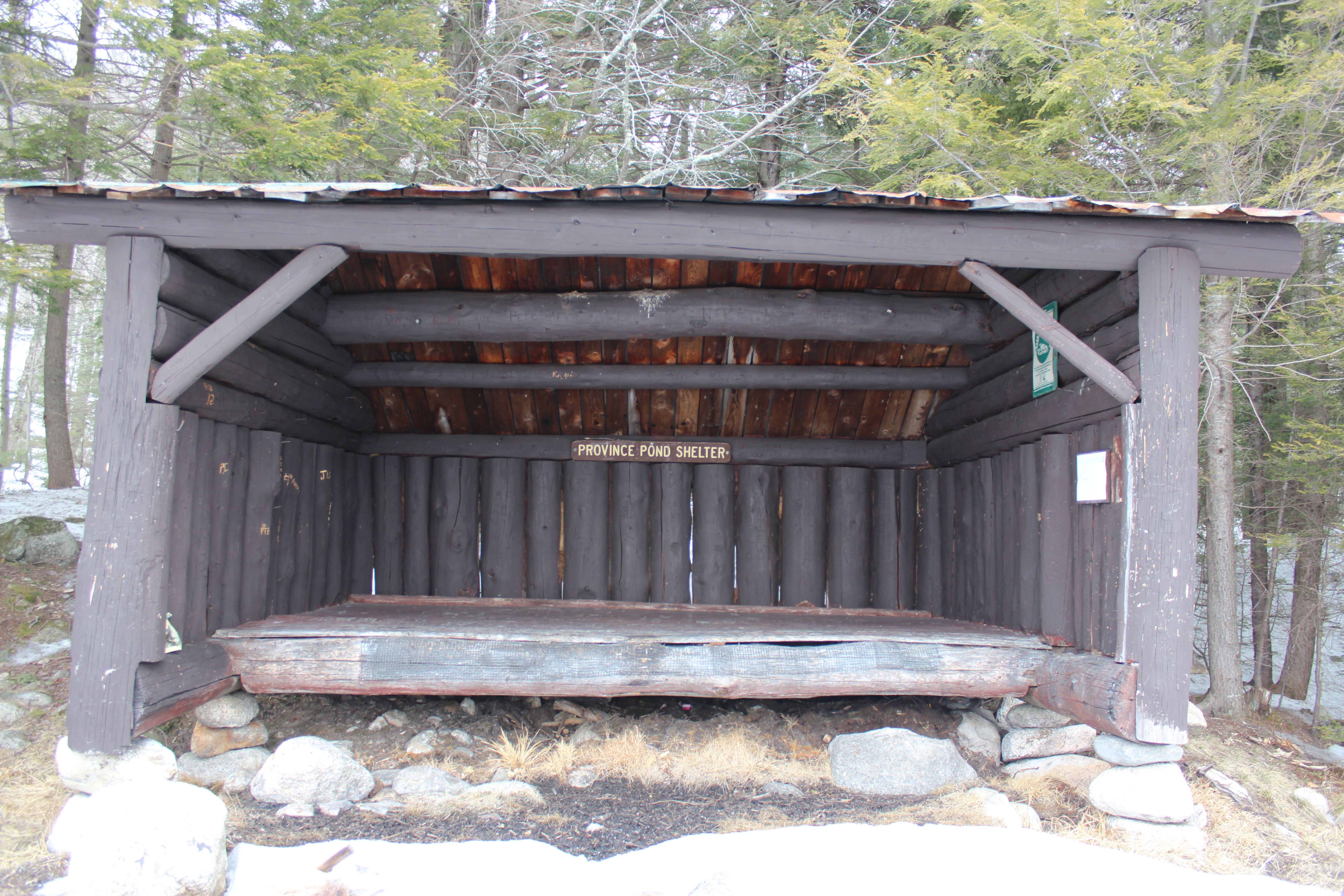
Shelter

A sheltered lunch locale–just right for those PB&J sandwiches.

lunch viewlunch 2

Best view in the house.

initials

I’ve a feeling these walls could tell many tales.

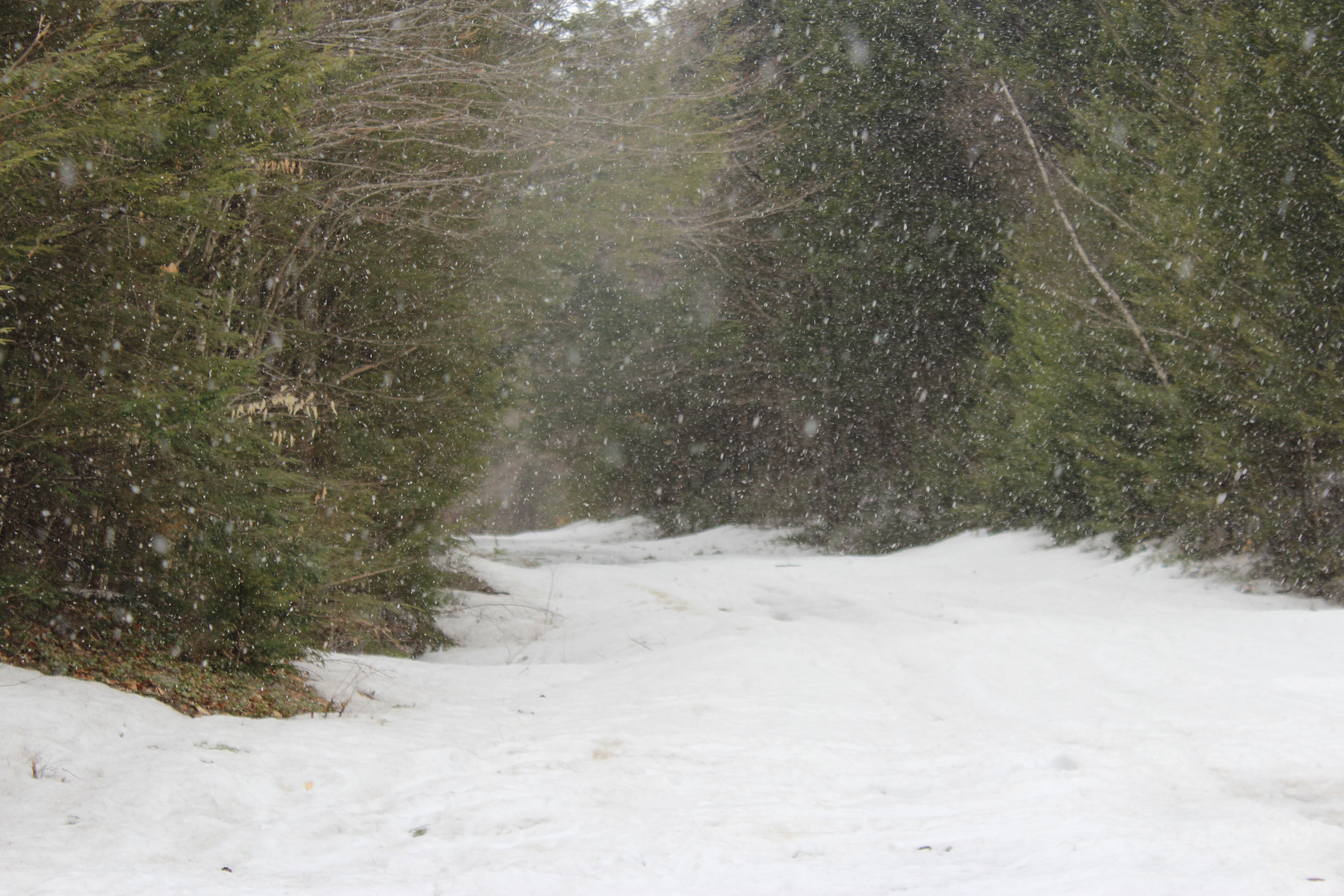
snowing

It was snowing as we headed back down the trail. Yet another wintery-spring day.

Eight miles later, we were thankful for the opportunity to stretch our legs and use our eagle eyes.

Thanks for wandering by to wonder.

Quiet Beauty

Sixty-five degrees in the shade. Time to shed a few layers. And so I did before I stumbled through the snow to my sit spot. I didn’t feel like wearing snowshoes, so it felt like I was digging post holes again.

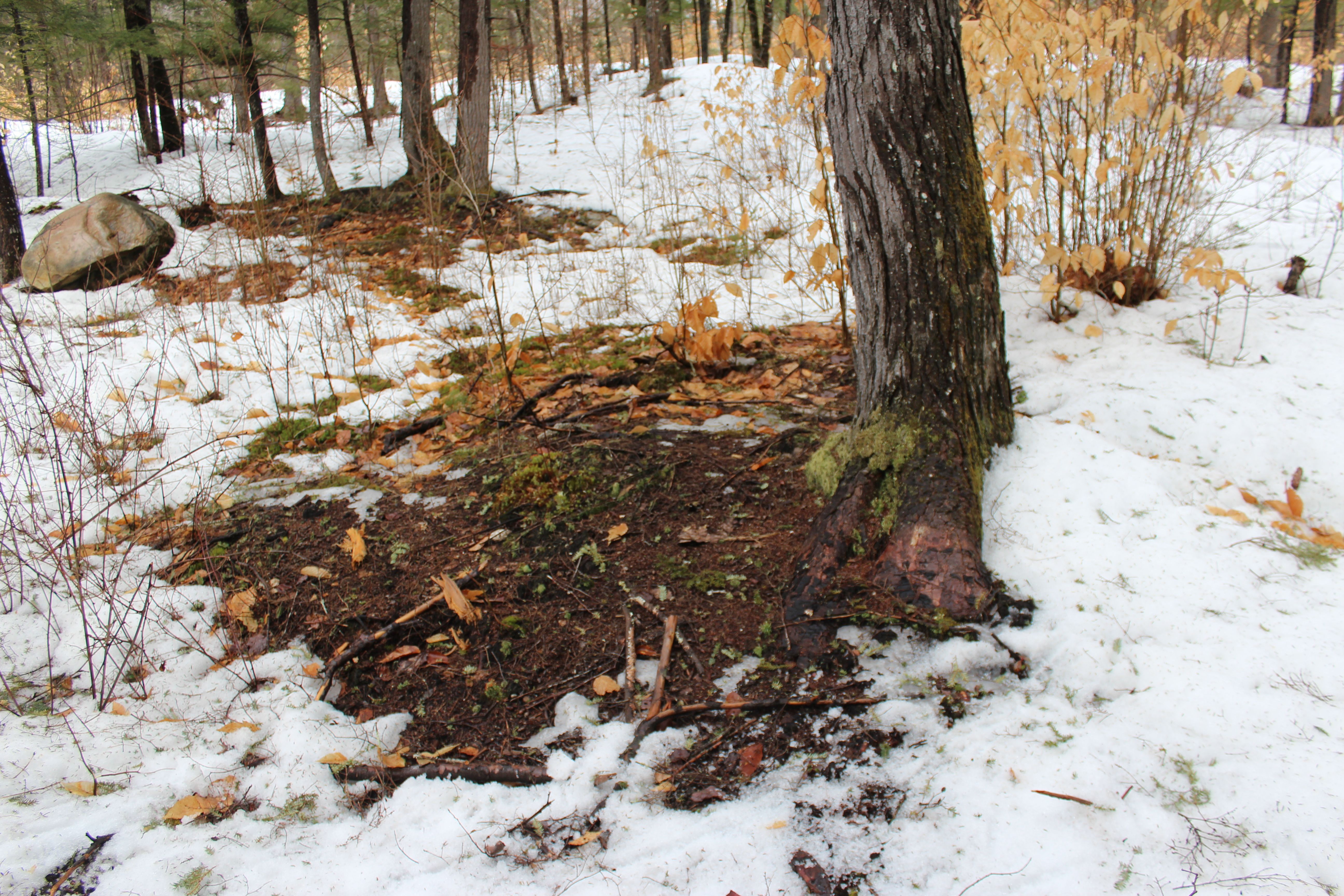
cowpath

I set up camp at the opening of the cowpath. Shades of green, brown and white surrounded me. Once in a while I spied a touch of contrast–one red berry on a Wintergreen and a few weathered purplish-red berries of a Canada Mayflower.

canada mayflower

The deer had moved through yesterday afternoon and again this morning. We watched them cross the field, which is still snow-covered. They paused by the stonewall to browse before climbing over it and into our woods. Their presence was noted everywhere.

stone wall deer

juniper 2juniper 3

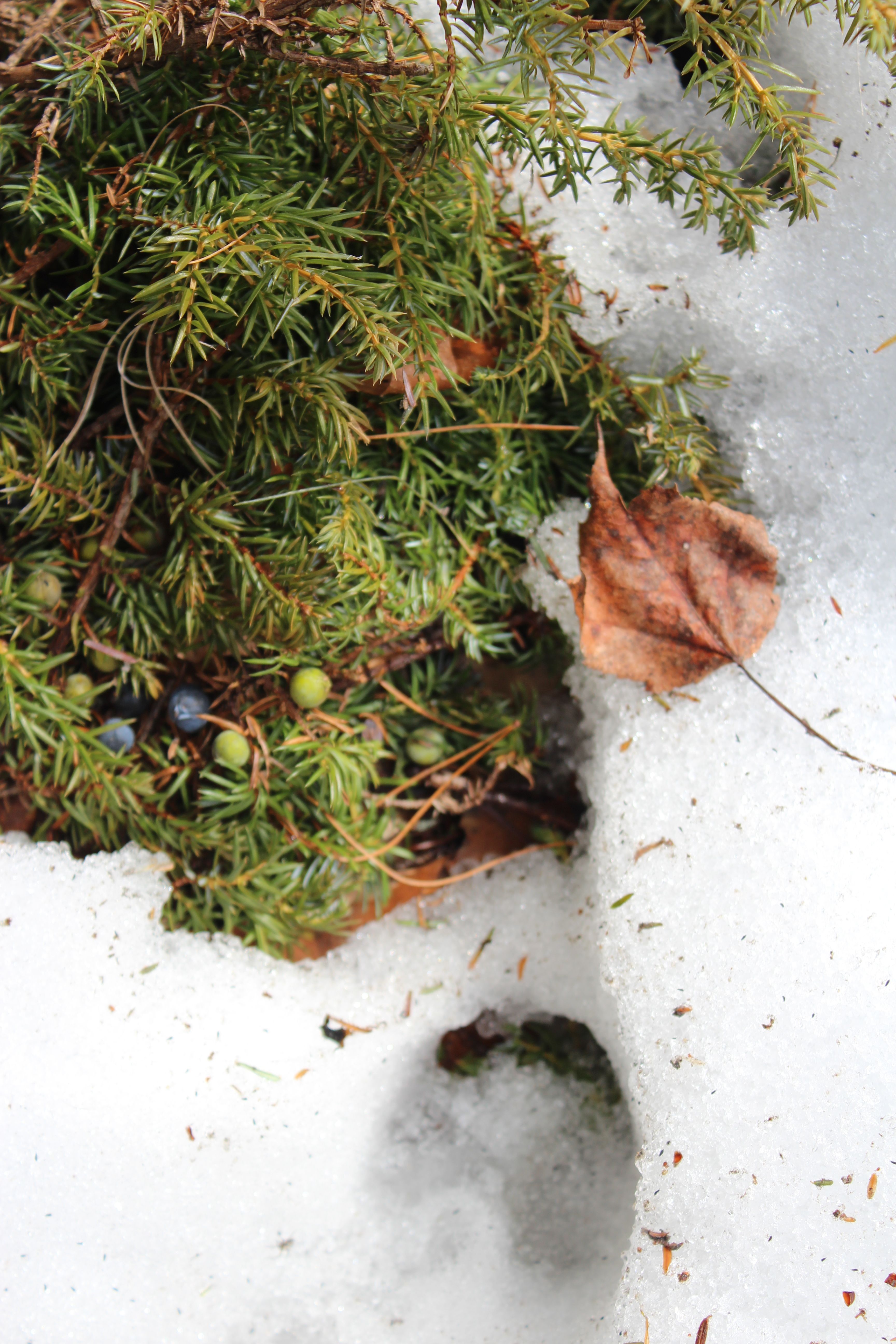
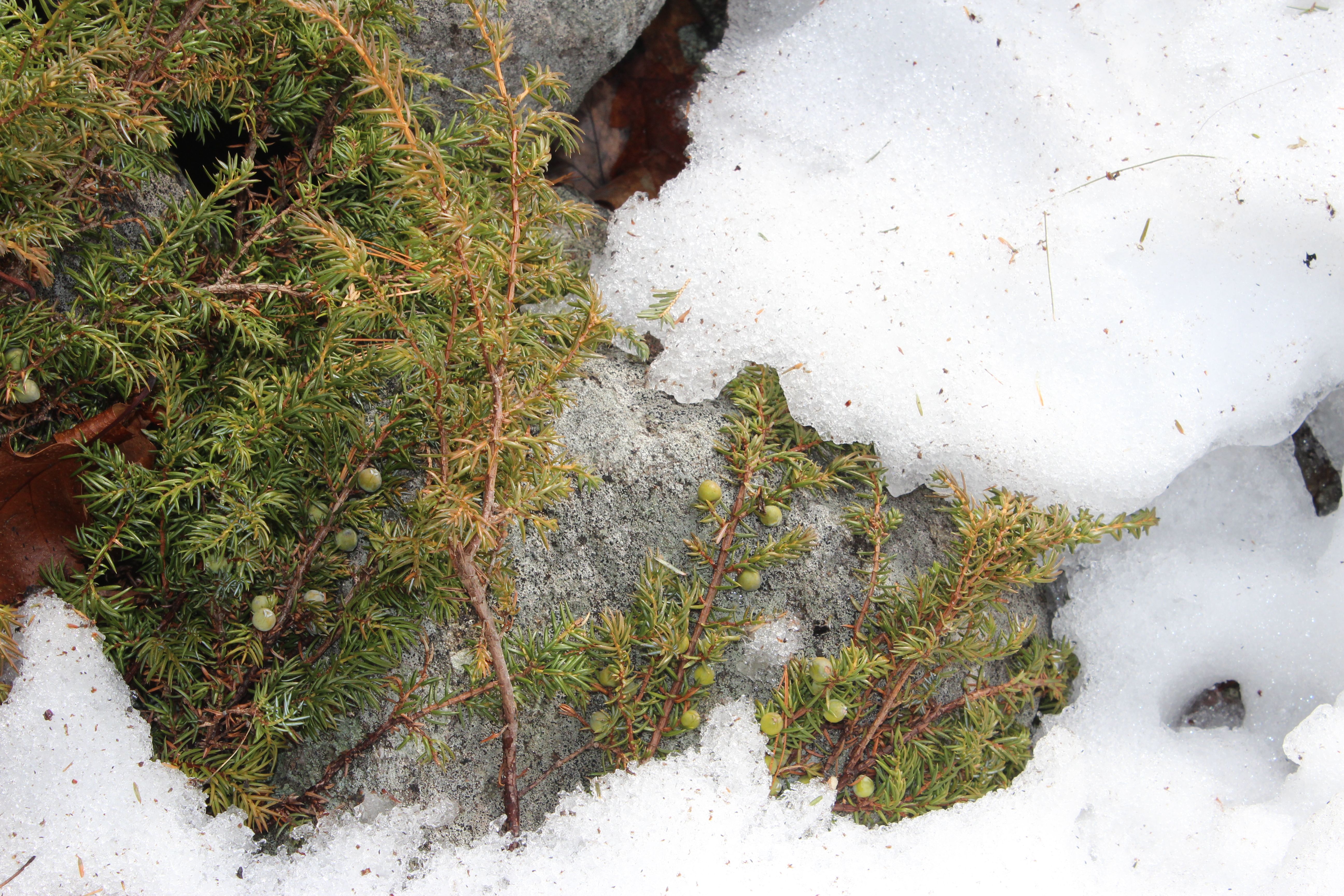
Before moving on, they stopped at the junipers that grow along one section of the stonewall. The shrubs are filled with berries–green, blue and even gray. I find it curious that these berries are supposed to provide food for deer and yet, there are still so many there. All of the exposed juniper bushes are laden with berries.

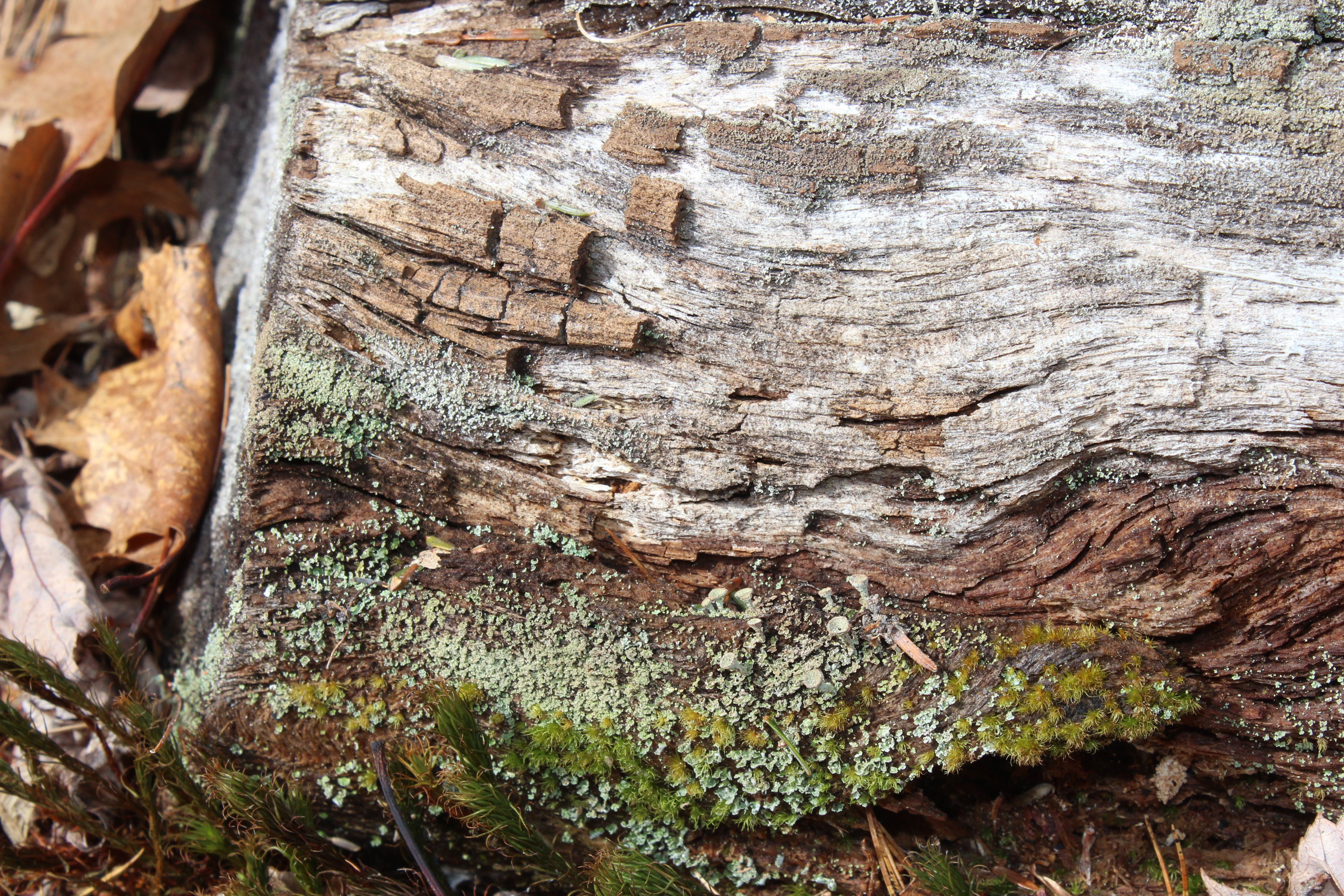
Log

Right at the opening of the cowpath is this decaying log. I’ve observed the life it supports for the past few years. It reminds me of a similar log below a tree in my childhood backyard. My two playmates and I named the tree “Treetonic” and we each had a chosen branch that served as our home. Mine was the lowest one–I was the more cautious of the three. We used to dig small chunks out of the log below to create our “meals” of meat and vegetables. Wow–I can’t believe I remember that.

Back to the present–two years ago I found a couple of tiny white pine saplings growing on this log, but today there was no sight of them. Often, I’ve discovered acorn shells. And once, close to Halloween, I found plugs of red squirrel hair–lots of it. It was extremely soft, about an inch or more long, white at the base, then black, and topped with reddish brown–which had some black specks. I called it the Frankenhair Mystery in honor of Halloween and the fact that “Frankenstorm” Sandy was on the horizon.

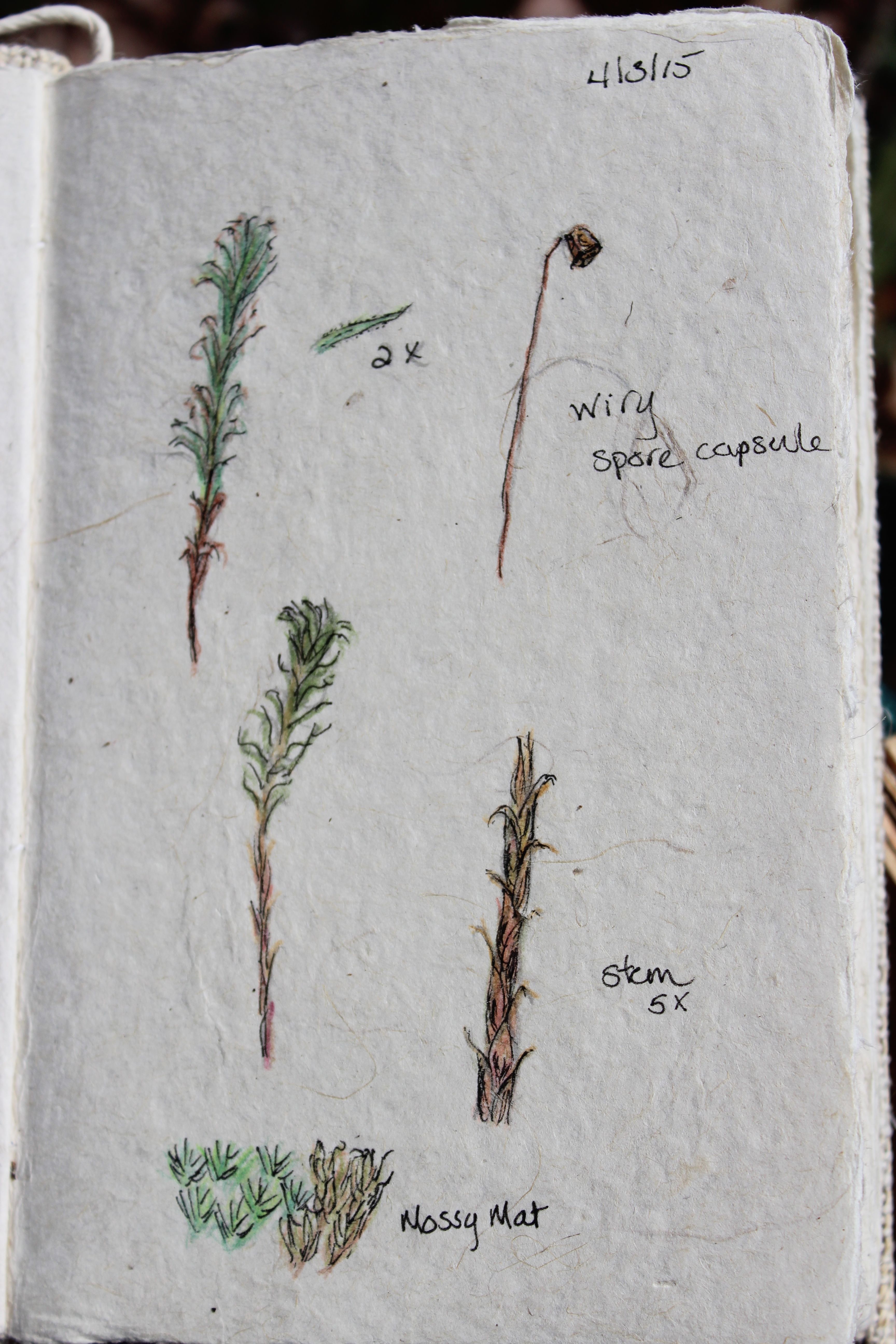
Today, it was the mossy mat that made me pull out my colored pencils. A tree dies, falls to the ground, begins to decompose. Lichens colonize it, blown in as spores in the air–a topic for another day. Moss grows over the lichen, taking advantage of moisture trapped in the organic matter. Eventually, the moss adds to the organic material and helps build a soil base. Once the moss mat is established, grasses, sedges, ferns and herbs invade–arriving by wind-borne spores or seeds (or perhaps even via rainwater and spring tales, aka snow fleas, as suggested in “A Chemical Romance . . . Among the Mosses” in the winter 2012 issue of Northern Woodlands magazine.)

common haircap

The moss mat, like that created by this Common Haircap Moss, takes on vertical complexity–soil,  moisture, organic matter all build up. Plant richness increases. If the soil builds up sufficiently, it can support more extensive root systems of woody plants, like the white pine sapling.

sapling

Common Haircap Moss grows in thick patches everywhere I look. Using my hand lens, I can see that the narrow, lance-shaped leaves have toothed edges. I love getting a closer look through the lens. I can see how the leaves clasp the stem. Then I looked at the spore capsule with its copper-wiry stem and four-sided hood that looks like it’s seen better days–because it has.

moss?

I’m not sure about this photo–I thought I was looking at two different mosses, but it may be that one is a moist form of haircap and the other is a dry form, with the leaves drawn in–but it does seem to have a wilder appearance. What wowed me when I looked through the lens was the color of the stem. Without the lens, it looked like it was basic brown. A closer look revealed reds, and pinks, and yellows and greens. And scaly leaves hugging the stem. Maybe as time goes on I’ll have a better idea of what it is–but I’m so glad I took the time to view it up close, where it quietly revealed its beauty on a day dedicated to quiet reflection.

sketch

Days when I make time to wander and wonder and discover the quiet beauty that surrounds me are my favorite kind of days.

Thanks for tagging along to enjoy today’s wonder.

Island Hopping

island 1

Off on a care-free holiday in . . . Lovell, Maine. What sets it apart is the variety of islands. And, I suppose, the ferry service between each.

island 2

A naturalist friend and I set off on our grand adventure at the John A. Segur Wildlife Refuge this morning. This is a 598-acre refuge owned and cared for by the Greater Lovell Land Trust. We hopped, more like sloshed on snowshoes, from one island to another as we discovered the highlights of each.

mushroom 1

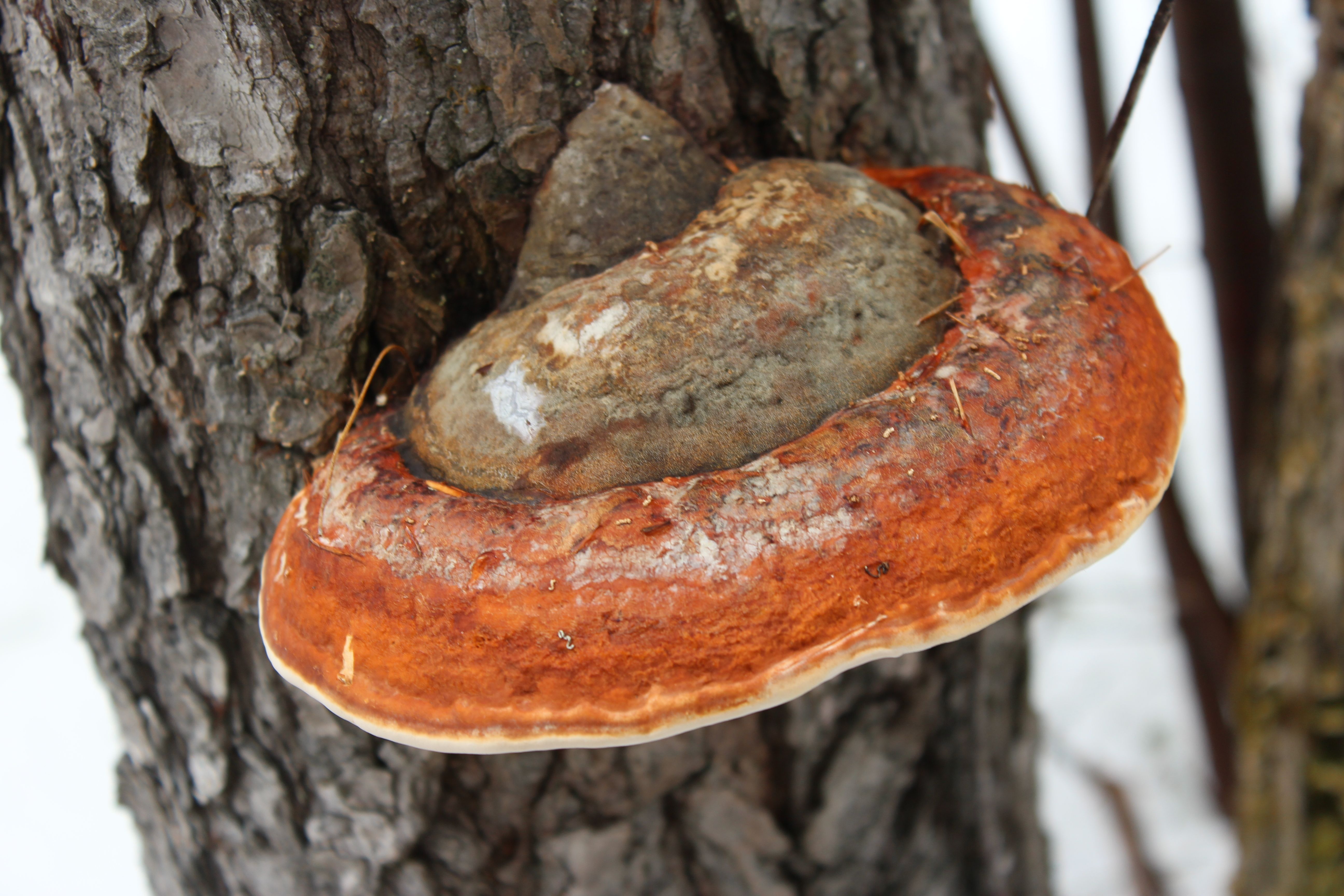
Red-belted Polypore Fomitopsis pinicola

Like on any island hopping experience, we were quite taken with the breathtaking diversity of vibrant colors and textures. This is a red-belted polypore (if I’m right), Fomitopsis pinicola. I have another friend who is determined that I will learn my fungi, so I hope he’ll read this and correct me as I go along. He knows only the Latin names. I’m lucky if I can remember a common name. (Don’t tell Mr. Cretella, my high school Latin teacher.)

turkey tail

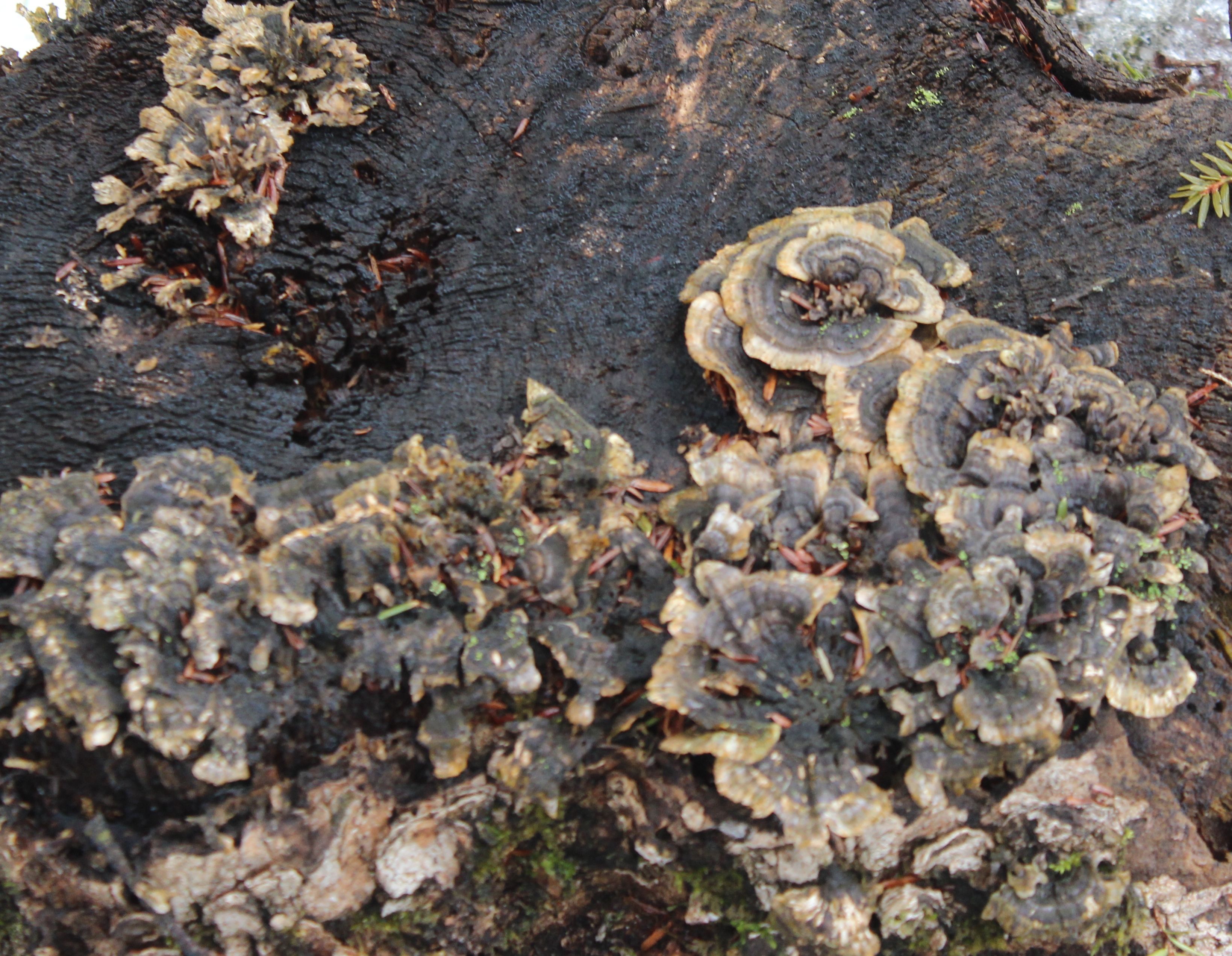
Turkey Tails (Trametes versicolor) were hanging out, doing their thing on some dead wood.

witches butter

More than once we were greeted by Witch’s Butter (Tremella mesenteric). I love butter, so this must be the good witch. (My PB&J sandwiches always include slabs of butter)

birch polypore

No island tour is complete without seashells. In this case, I think this is a Birch Polypore (Piptoporus betulinus) growing on the Yellow Birch. I’m thrown off by that wavy rim. Whatever it is, it’s beautiful.

British Soldier

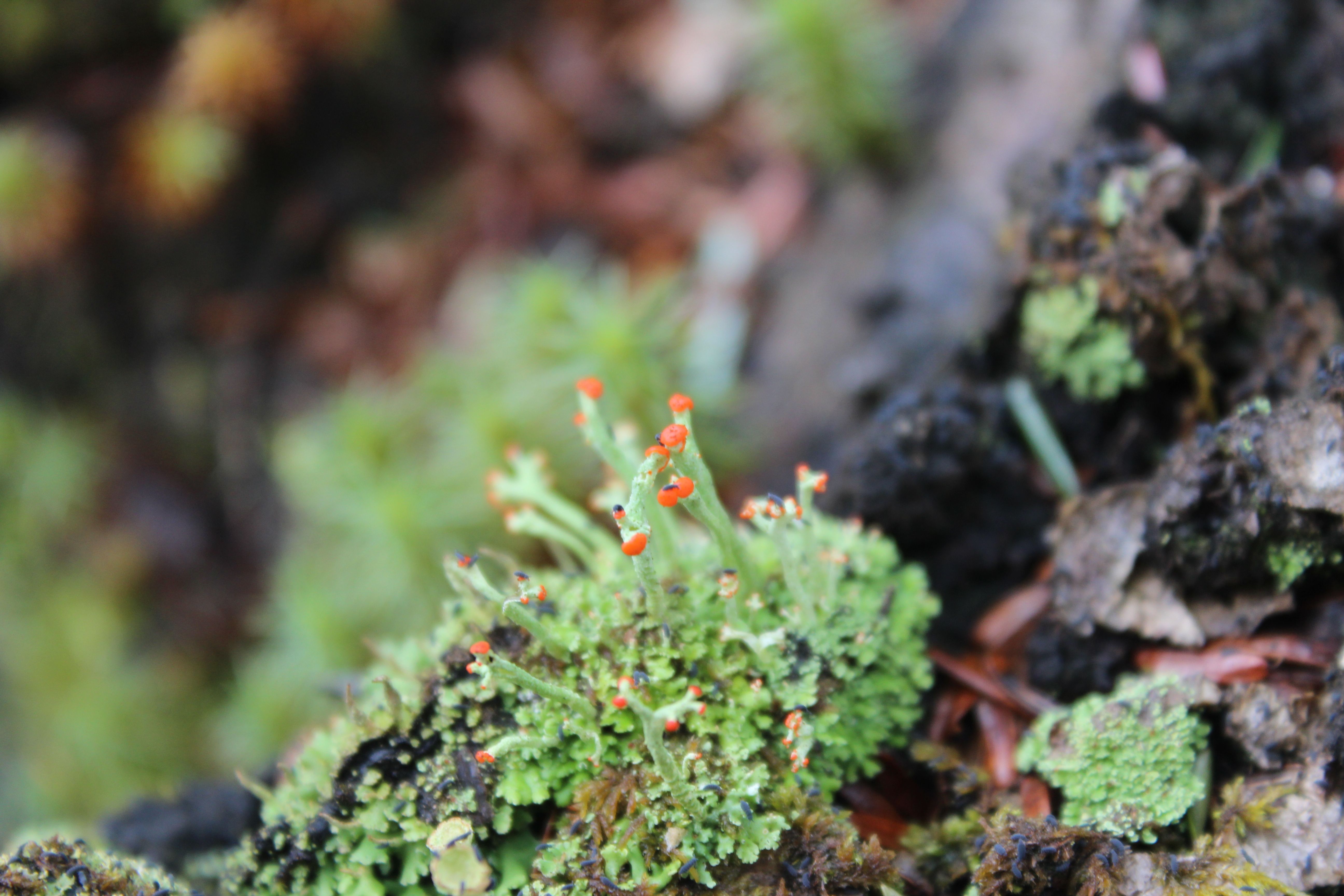
We didn’t just hang out with a bunch of fungi. British soldiers (Cladonia cristatella) were standing around, proudly inviting us to take a look at their red caps.

Kidney lichen

Yes, we took a liken to some other lichens as well. I believe this is Pimpled Kidney Lichen (Nephroma resupinatum).

lungwort

Being in the islands, we are on the cusp of the rainy season and the Lungwort (Lobaria pulmonary), was saturated and bright green. We had hoped we’d see it on this tour, and it didn’t lettuce down.

Mealy Pixie cup lichen

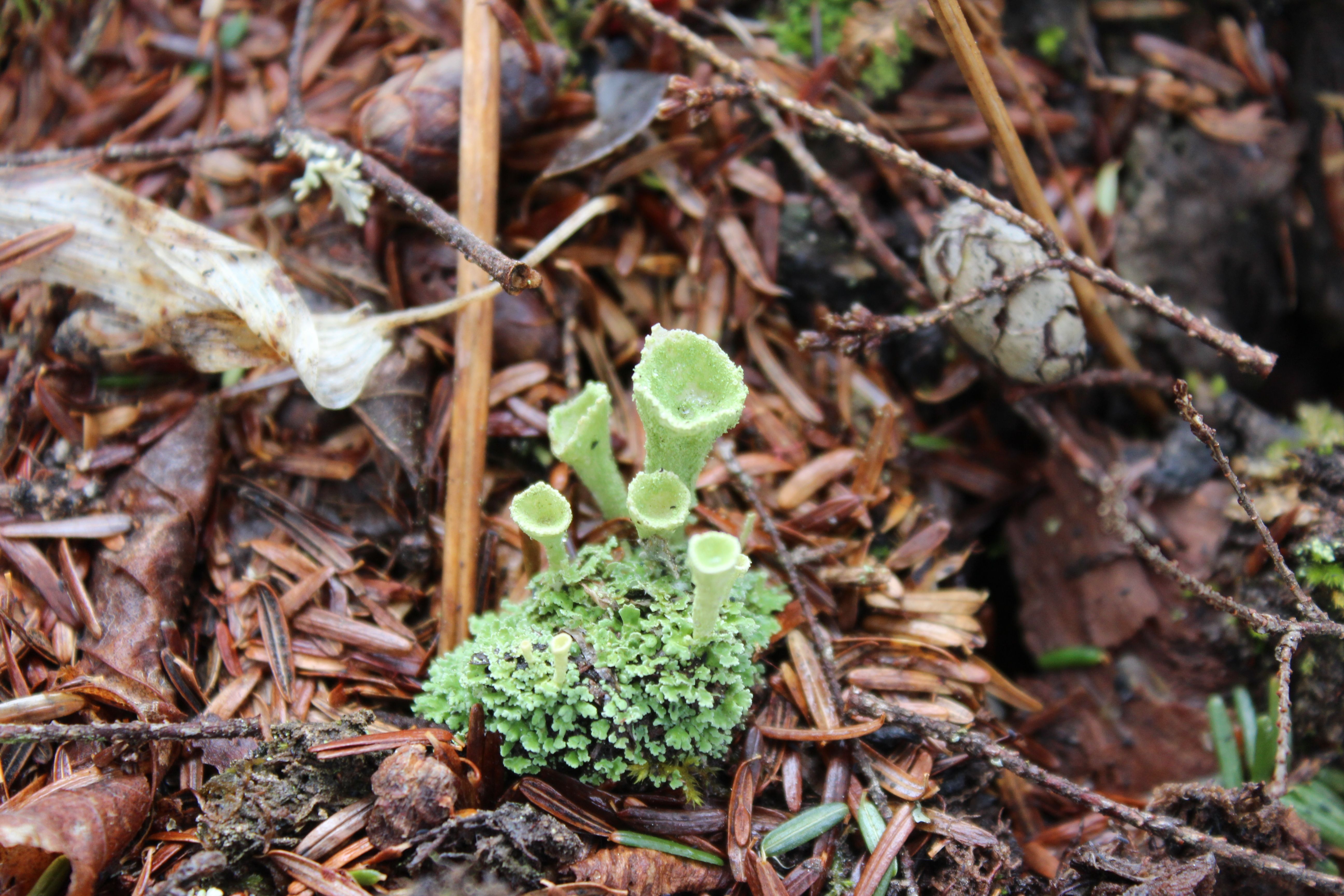
Are you still with me? There were so many more sights to see, including the Green Pyxie Cups, aka Mealy Pyxie Cups (Cladonia chlorophaea).

spore capsule, hair cap moss

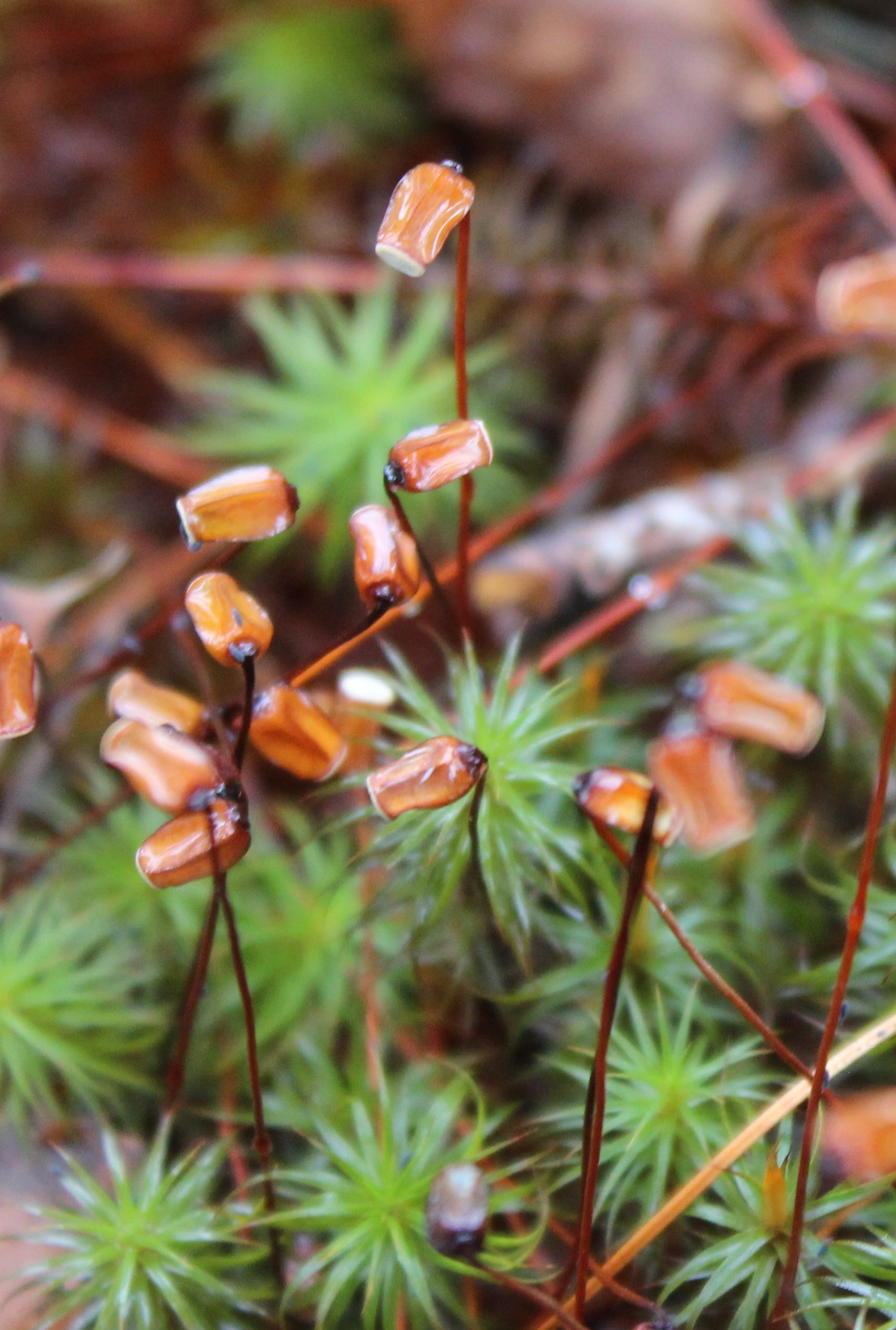
I should have paid better attention, but this hair-cap moss is either Polytrichum commune, (Common hair-cap) or P. ohioense. I’m thinking the former, which has a spore capsule that is no more than 1.5 X as long as wide, while the latter’s capsule is more than 1.5X as long as wide.

antler piece?

No matter where we looked, either on the islands or on the sea of snow between each, we found evidence that the deer had visited before us. Tracks, scat and beds everywhere. And then we found this. A bone fragment that had been nibbled on. Maybe a piece of an antler?

deer hair 1

And this–deer hair.

deer hair 2

And this. Lots of deer hair beside the plug of hair above. What happened here? We didn’t have a guide to ask, but the story unfolded before our eyes. A deer sat down to spend the night under the hemlock tree. Its body heat turned the snow to ice. And when it stood up the next morning, the hair stuck to the ice. Anyway, that’s our story and we’re sticking with it.

porcy scat

If you’ve stuck with me through these wonder-filled wanders, then you know that I may include a photo of scat. In this case, an island native made itself known by the debris on top of the island and snow–porcupine.

porky den

A few minutes later we came upon its den. Porcupines are the pig pens of the natural world. Despite that, we were excited to find this.

island 3

No need, however,  to stick around there. We bounded (hardly) off to another island, glad that we were able to stop at so many destinations in a single day. And the best part is that when we visit again, we’ll find other treasured spots to explore.

Thanks for stopping by to wander and wonder.

P.S. And take a look at my friend’s site–her photos are amazing and the map of our walk shows just how nature distracted we are.