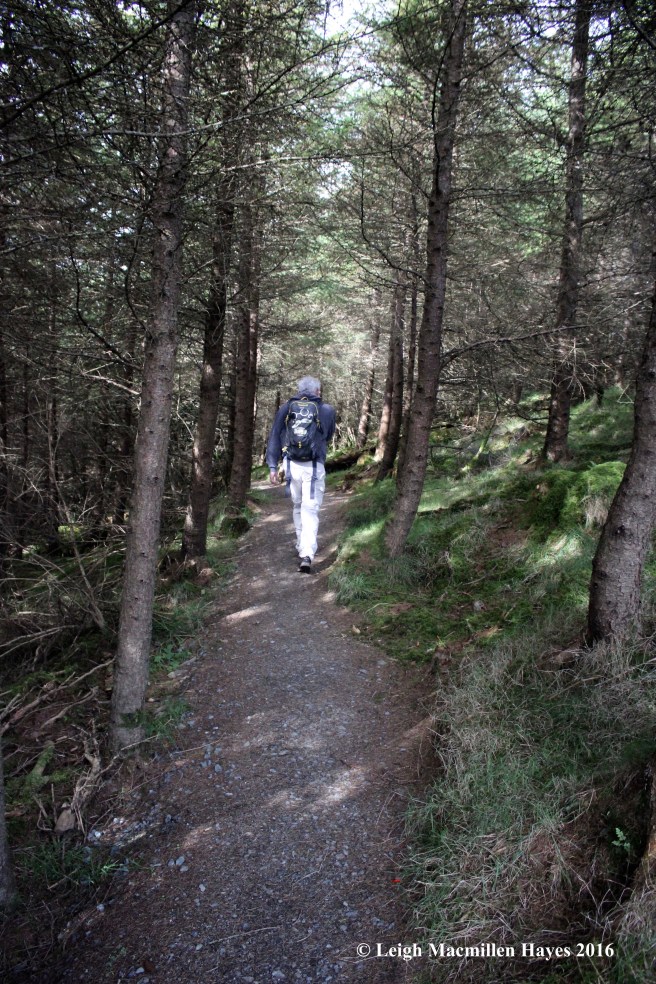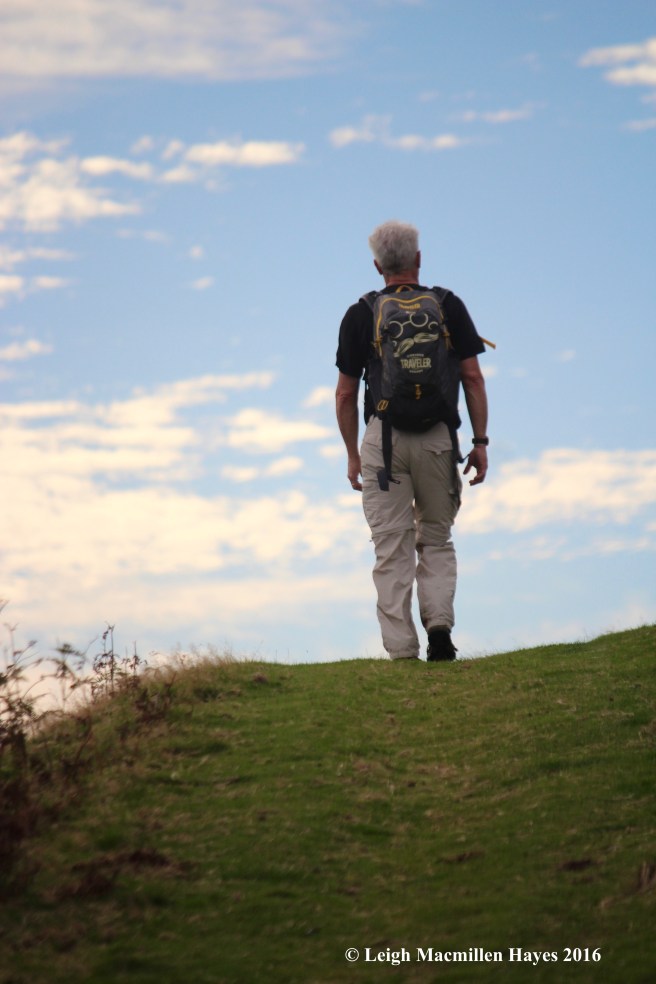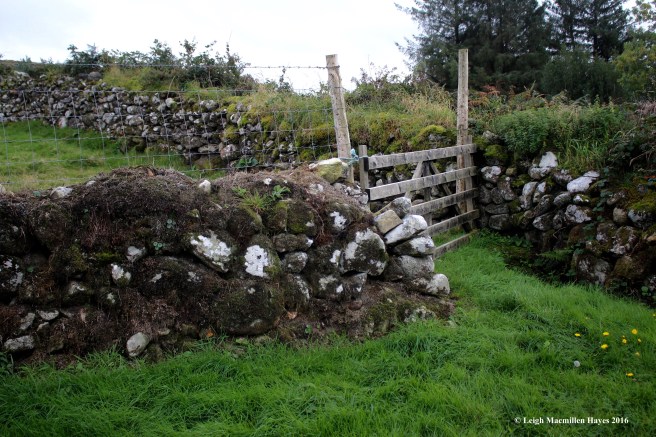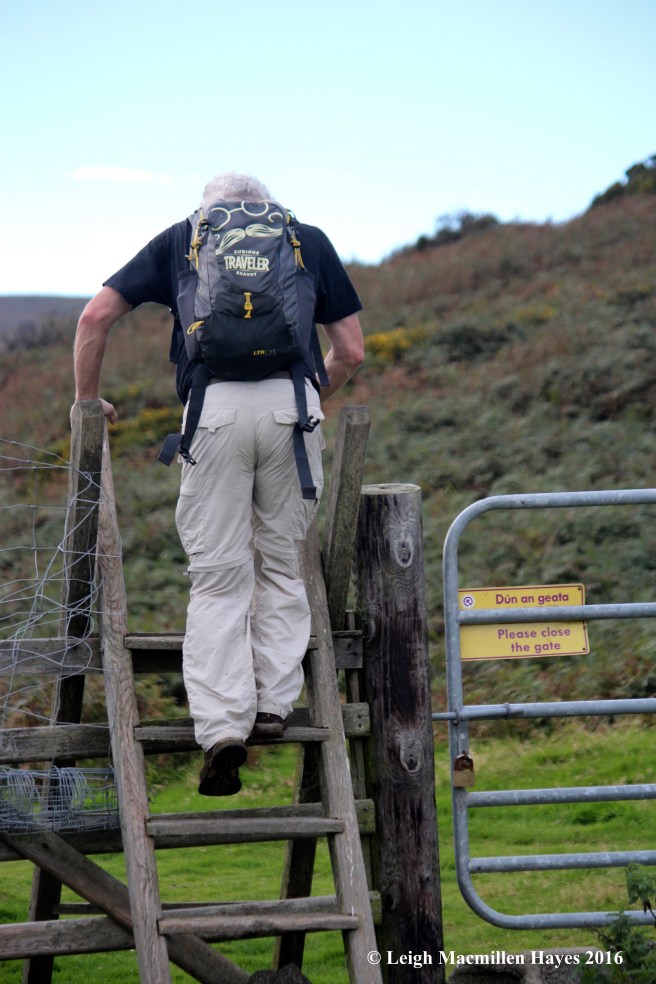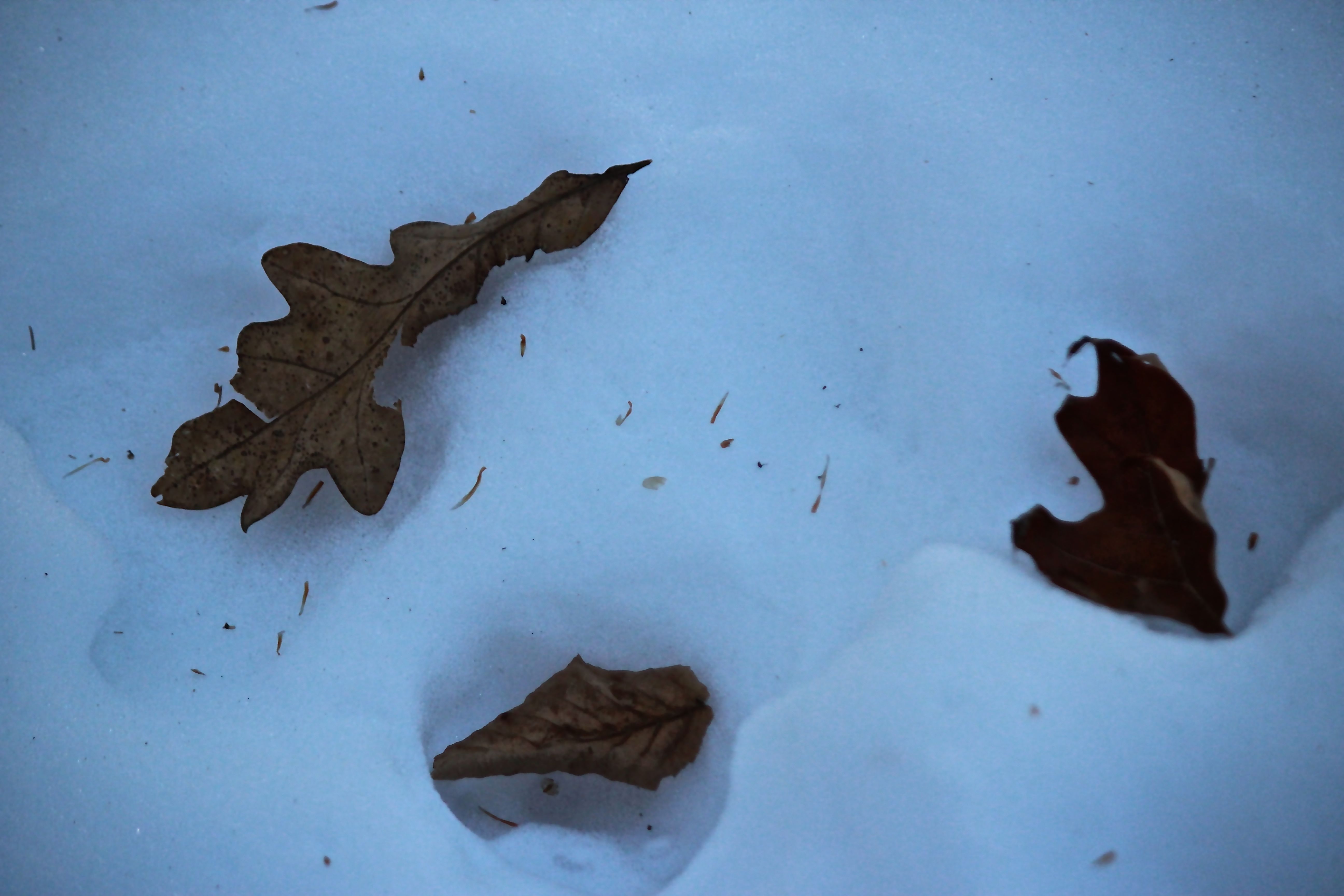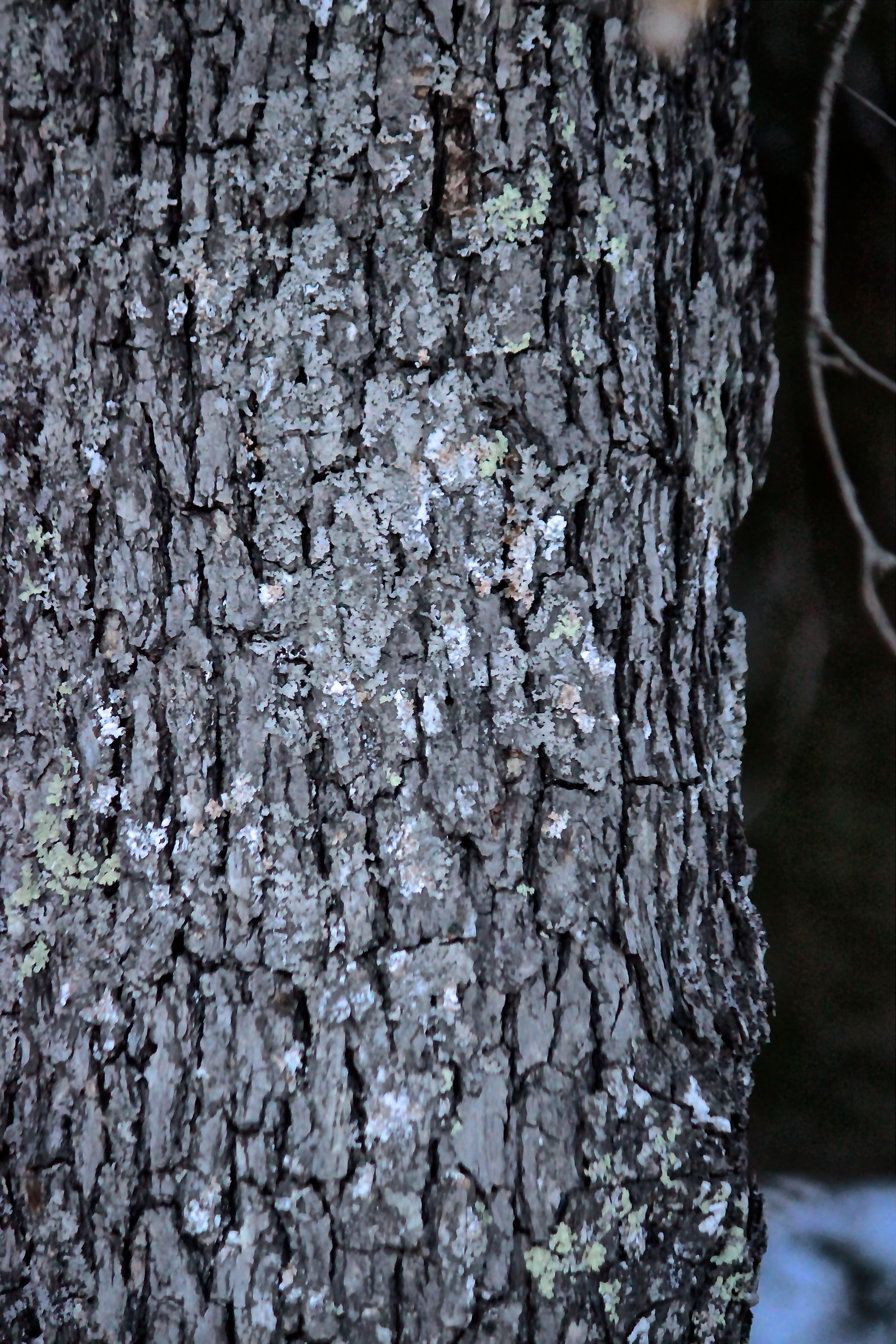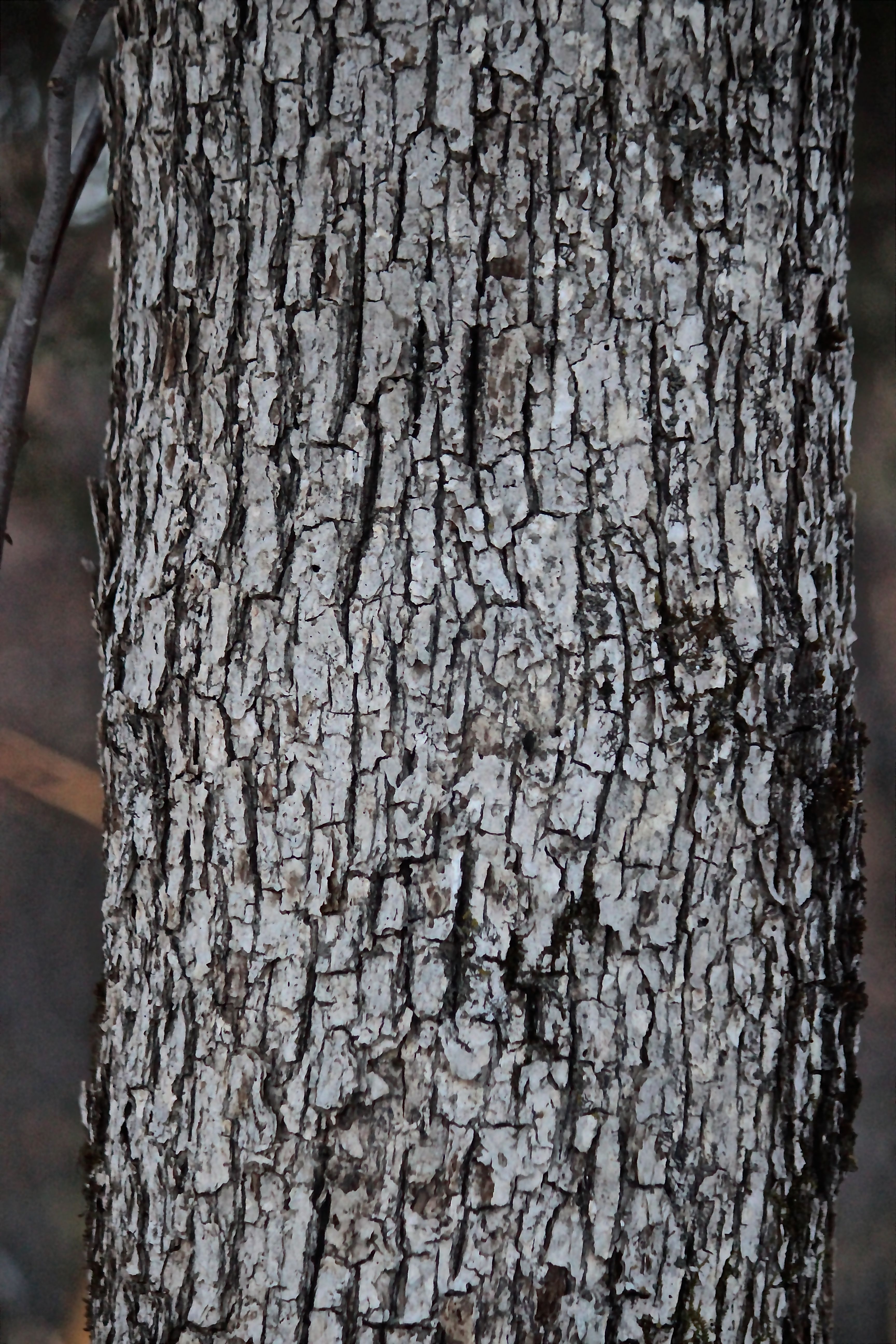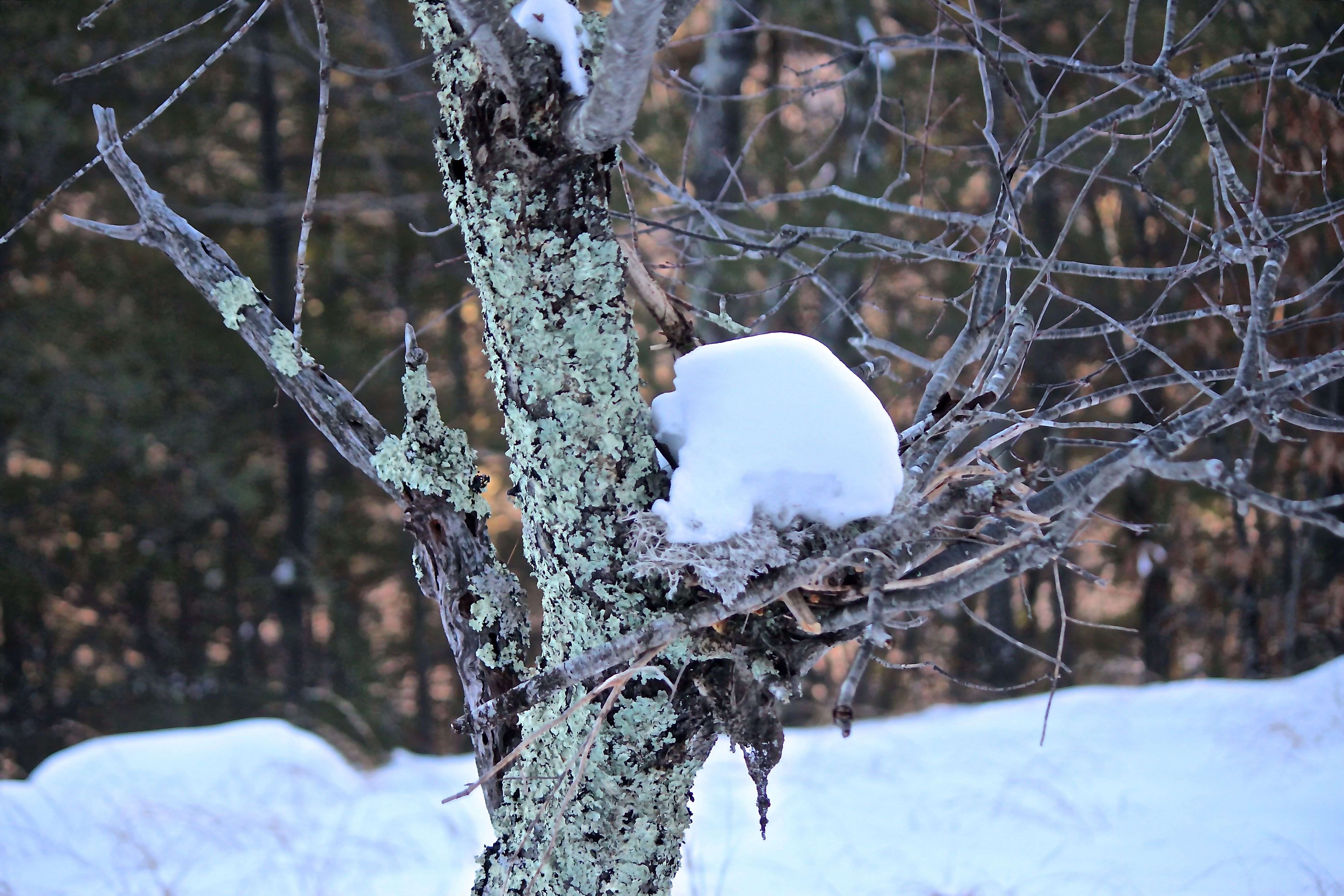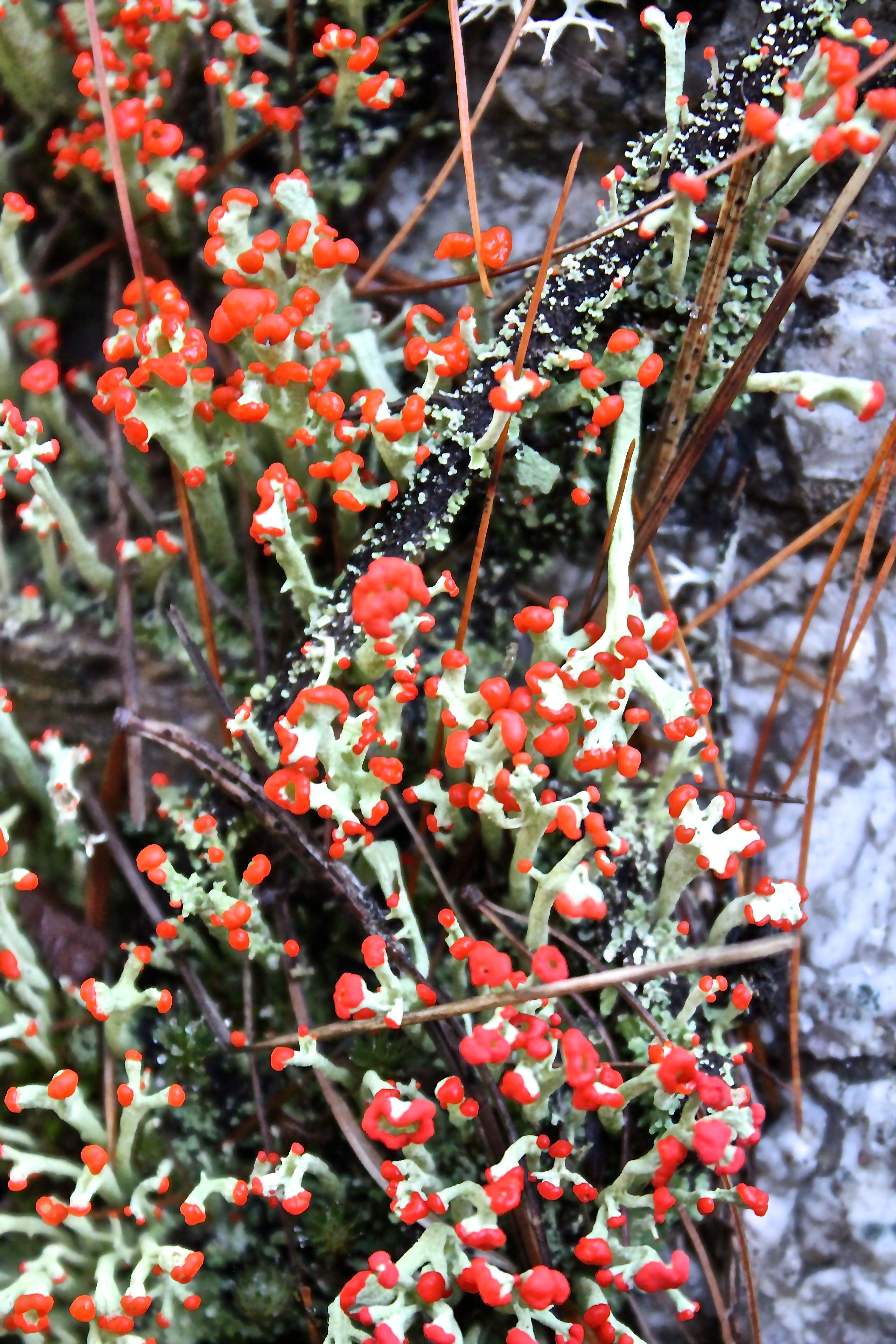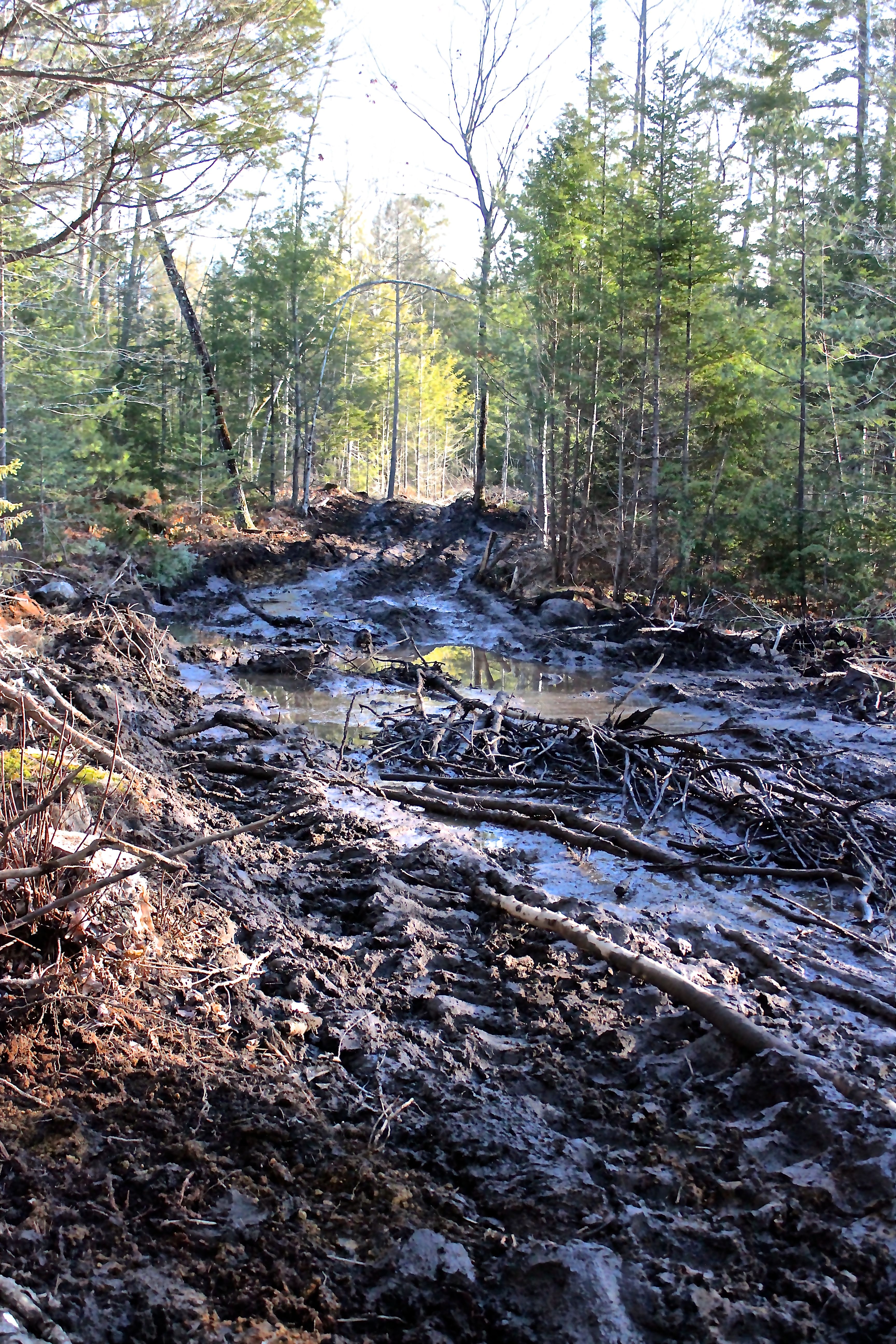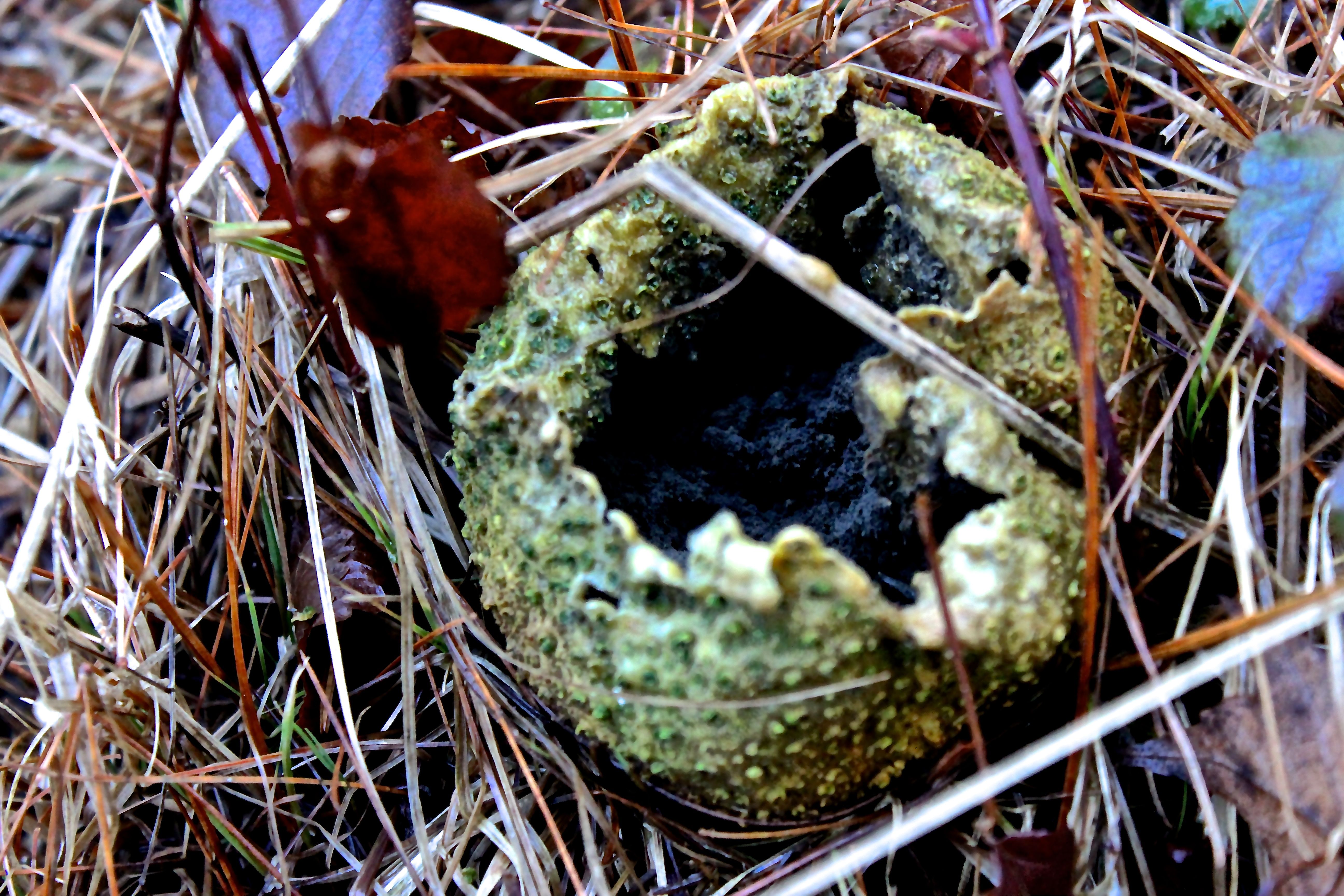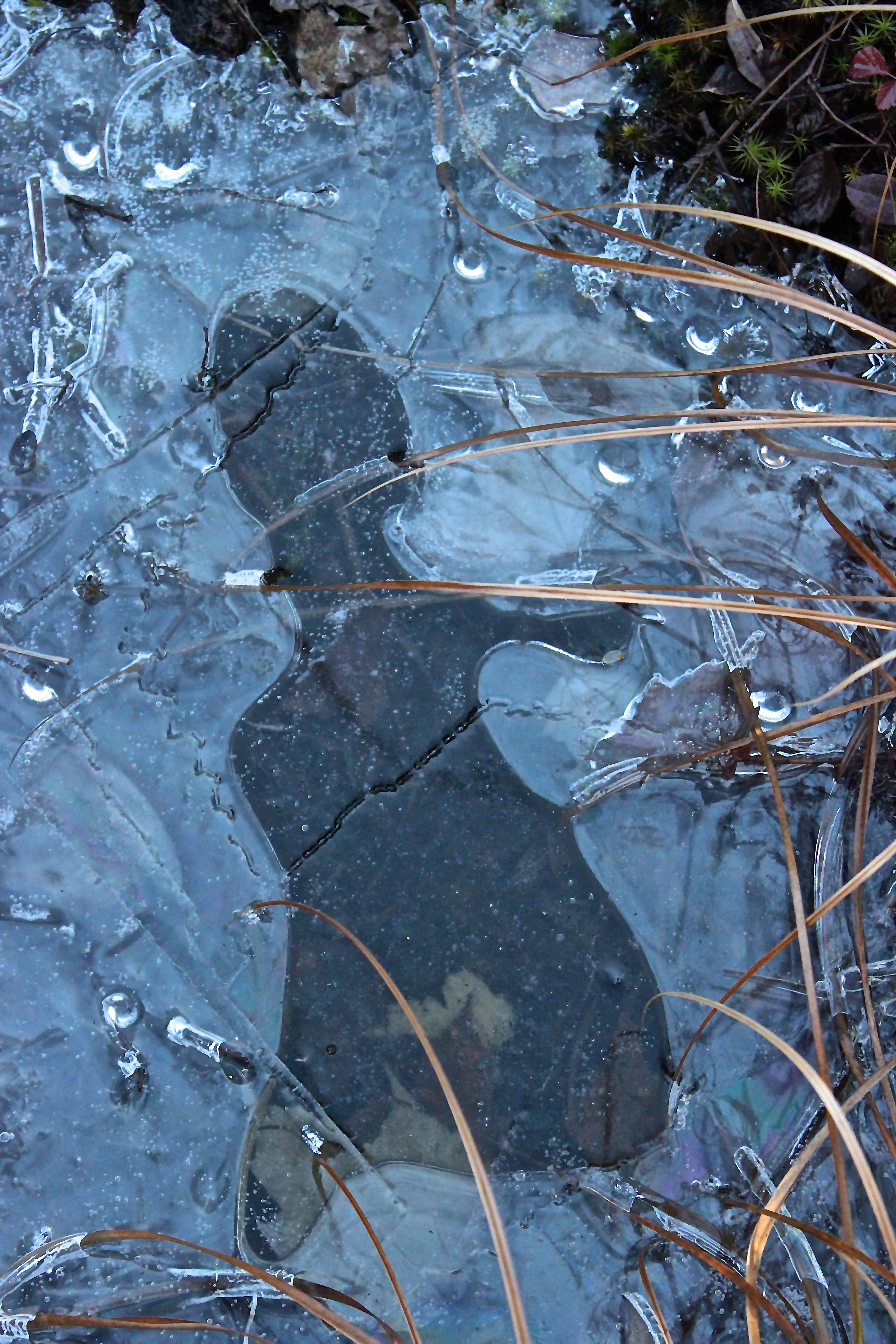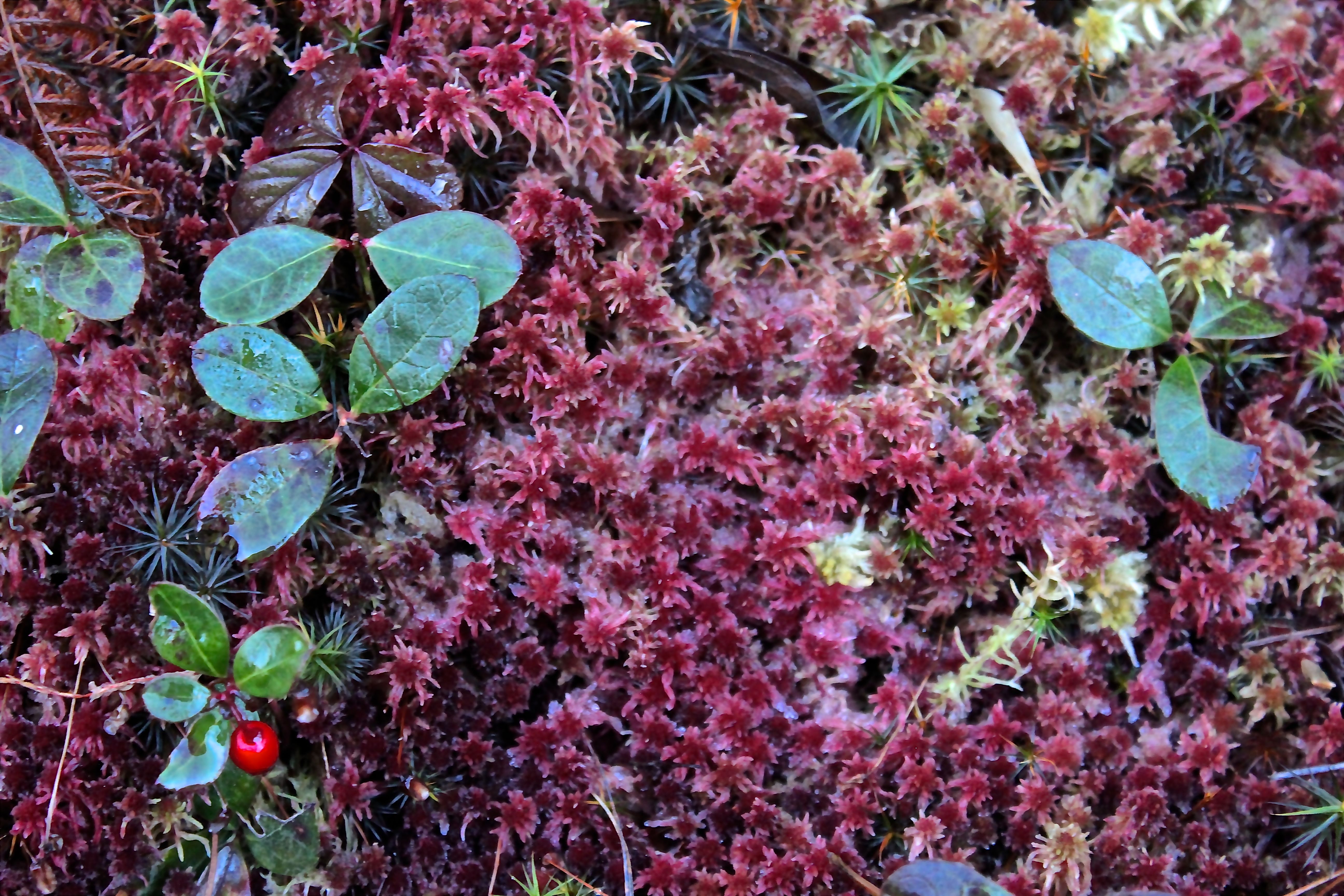
An Emerald Mondate

My guy and I journeyed via bus, car and foot across northern and eastern Ireland these past two weeks. Our main agenda–a vacation in the land where twenty-six years and two months ago we celebrated our honeymoon. We both also had semi-hidden agendas–his to seek out ancestral roots, mine to search as well, though my quest wasn’t quite so clear.

river-liffey-and-quay-dublin

Our journey began after we dumped our bags at the hotel, where our room wasn’t yet ready, and crossed the River Liffey in Dublin. It was to the right that we’d parked a rental car 26 years previously as we searched for traditional music and supper, only to return hours later and discover that the driver’s side window had been smashed and our video camera stolen. All these years I’ve held a sour view of the Fair City and so I felt a bit nervous as we stepped forth.

trinity-college-dublin

The feeling began to wane immediately, for as we approached a street corner and chatted about locating the library, a Dubliner overheard us and assumed we were looking for Trinity College (founded in 1592). We decided to play along and followed his directions–thankfully. It was “Welcome Freshers” week and the quad swelled with activity tents, music and students anticipating the year ahead. We passed among the frivolity and found the self-guided tour of the 18th century Old Library and that most ancient of manuscripts–the Book of Kells, a 9th century book featuring a richly decorated copy of the four Gospels of the life of Jesus Christ. A favorite discovery: the monks used oak apple galls to create ink–apparently, they crushed the galls and soaked them in rainwater, wine or beer until they softened. I’ve got to try this.

library-at-book-of-kells-1-1

While (or whilst as the Irish say) no photos were allowed in the Treasury where the manuscripts are stored, equally impressive was the Long Room, which houses 200,000 of the library’s oldest books in ancient oak bookcases. Just thinking about the centuries we were encountering was mind boggling, enhanced of course, by a lack of sleep.

architecture-and-flowers-dublindublin-church-architecture

A few hours later, we made our way back to the hotel, enjoying the architecture and flowers as we walked along. At last, we could check in and so we checked out–a rejuvenating nap essential to our well being.

guiness-sign-and-face

Rested and showered, we hopped aboard a bus–our next destination, the Guinness Storehouse at St. James Gate Brewery. The 250-year story of Guinness® is portrayed on five floors in a building designed in the shape of a pint. What’s not to like about that.

singing-oyster-guiness

We learned about the process of creating beer, and then there was the whistling oyster, one of the many icons of the Guinness® brand.

guinness-gravity-bar

After taking in the full story, we reached the Gravity Bar, where ticket holders may each sip a complimentary foam-topped pint. The museum was preparing to close and the bartenders made the last call. My guy asked if we could purchase a second pint and we learned that they don’t sell any, but he kindly slipped us two. Don’t tell.

guiness-view-2

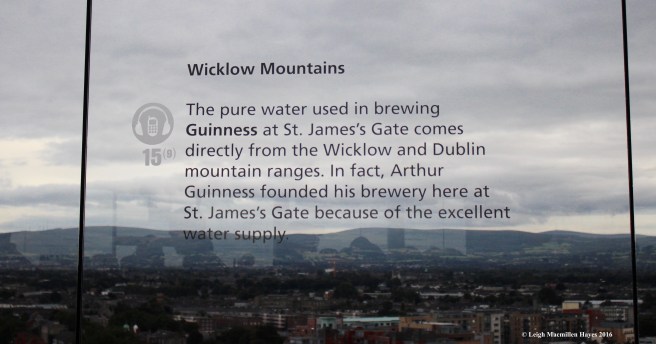
The Gravity Bar offers 360˚ views of the city.
wicklow-mtns-from-gravity

And the view includes the Wicklow Mountains, our intended destination for week 2.

the-temple-bar

If you hear my guy tell this story, he’ll say that we were told it was a 45 minute walk from our hotel to the Storehouse, but a short bus ride. We rode the bus there, but later weren’t sure where we should queue for the ride back, so we decided to walk instead. According to him, it took us five hours to make that 45 minute walk. I’m not sure it was quite that long, but we did stop at The Temple Bar for the music and a few other prime spots to eat and sip a wee bit more.

national-library-dublin

The next morning we set out for the National Library, which had actually been our intended destination the previous day–but who can deny enjoying the Book of Kells exhibit. My guy was hopeful that the genealogists at the library would help him make some connections, but without knowing parishes he hit a bit of a stonewall.

And so we left the Fair City with much fonder memories, took a bus to the airport, picked up our rental car, and ventured on. Oy vey. If you’ve ever watched the BBC program, “Keeping Up Appearances,” you’ll appreciate that I was Hyacinth to my guy’s Richard. “Mind the pedestrian,” I’d say. “I’m minding the pedestrian,” he’d respond.
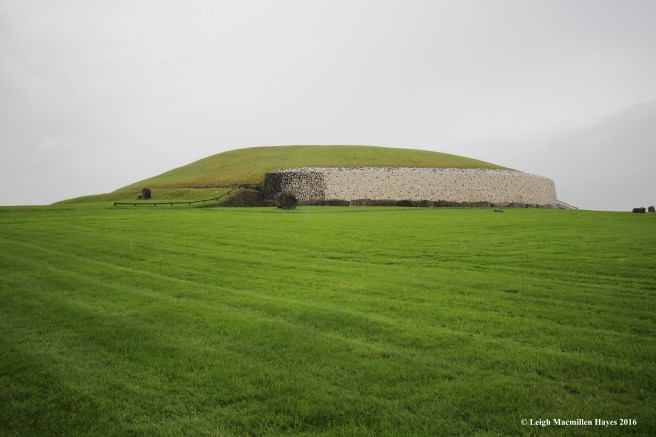
newgrange

Our first stop, Newgrange, a Neolithic passage tomb alleged to be older than Stonehenge and the Great Pyramids. Constructed during the Stone Age, about 5,200 years ago, Newgrange is a large circular mound that covers 300 feet in diameter and stands 36 feet high. A stone passageway leads to three small chambers. Some describe it as an ancient temple, a place of astrological, spiritual and ceremonial importance. Our guide told us that bones were found here and it may have been a place for worship as well as where people were laid to rest. We were in awe of its structure and the fact that the passageway is oriented northward allowing the sun to illuminate it during the winter solstice.

newgrange-entrance

Yes, the railings are new, but this is possibly the oldest building in the world. That’s worth repeating–the oldest building in the world. We had to bend low to enter and then squeeze between the walls as we walked toward the center, where three small chambers with stone basins created a cross-like structural plan. Even as we stood with others in darkness and waited for a beam of artificial light to demonstrate the real thing, we couldn’t quite fathom what we were witnessing.
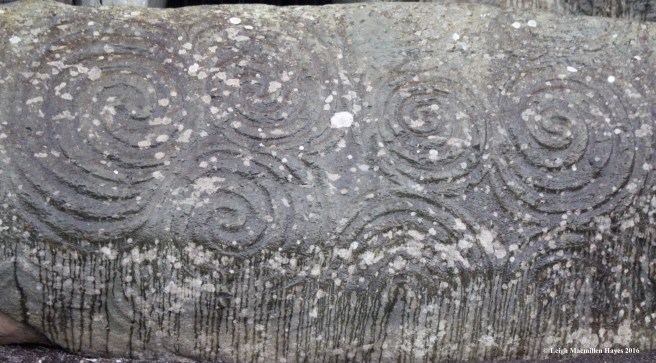
newgrange-spirals

Our awe continued within the center and by the entrance stone, where we witnessed megalithic art. The spirals reminded me of labyrinths, but we’ll never know their true significance. And that’s OK.
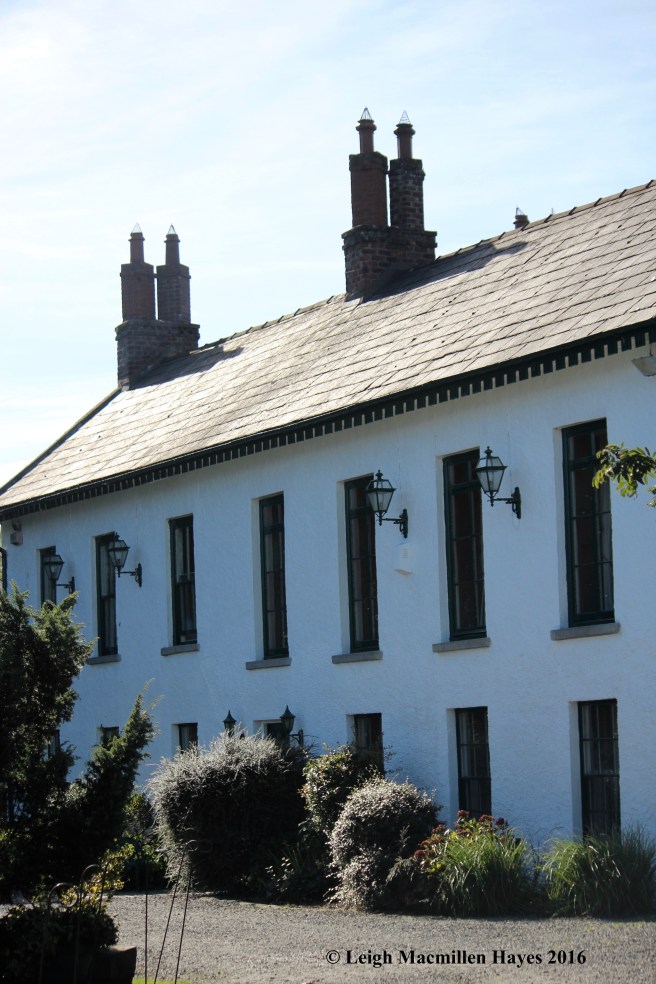
ghan-house-carlingford

By the time we arrived at Carlingford, it was pouring and we had no idea where to stay. We stopped at a hotel, which was full–thankfully. They suggested the Ghan House, a Georgian House set within three acres of walled gardens. It was our most posh stay and we didn’t truly appreciate it until the next morning when the sun shone brilliantly.
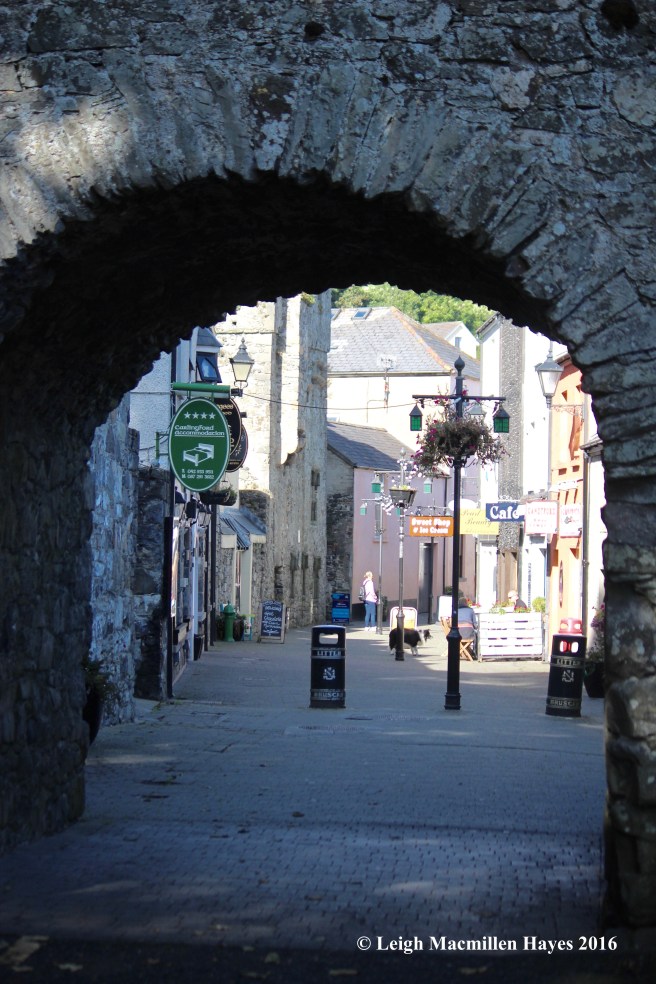
carl-arch-2

The Ghan House is located just a stone’s throw from the Thoisel or town gate leading into the narrow streets of the town centre, where we found Ma Baker’s in the rain, a welcoming pub frequented by the locals, who laughed and joked and reminded us that the Irish love to sip a pint, tease each other and tell stories no matter what the weather might be out the door. And they don’t care about spelling, punctuation or run-ons. Life is too short for that–note to self.

carlingford-lough1

The tide was low when we walked along the lough the next morning and took in King John’s Castle, which was initially constructed by Hugh De Lacy in 1190, though it wasn’t completed until 1261. Purportedly, King John, the brother of Richard the Lionhearted, visited in 1210, and thus the name for this Norman structure.

wall-around-derry

From Carlingford, we travelled north and did what we had wanted to do 26 years prior; we crossed into Northern Ireland. On our previous adventure, we’d journeyed as far as Letterkenny in the northern part of the Republic of Ireland, only a half hour from Derry. But that was then, the time of The Troubles, and we didn’t dare to cross the border. Again, my guy was seeking ancestors and at the Welcome Center he was told to visit the Tower Museum where Brian Mitchell would be able to provide some help. We were too late when we climbed down from the wall to the museum, so we did what the Irish would do–when in Rome–we found a pub and had a nice chat with a young man who had recently returned to Derry in search of work. We also walked around the city, taking in the sites made famous by The Troubles. And the following morning we again returned to the museum, where the curator told us that Brian would probably show up around 11am. So, we paid for a self-guided tour and learned about the town’s colorful and dramatic past through “The Story of Derry.” At 11:30 we once again went in search of Mr. Mitchell, only to learn that he was out and about somewhere. Since we needed to check out of our room, we decided that our Derry experience was over, but Mr. Mitchell did respond to an e-mail and so my guy has some more resources to consider.

carrick-cave

Our next stop, Portrush, a resort town along the Atlantic and on the northern fringe of Ireland. After checking in at the Antrim House B&B, we headed off along the Coastal Scenic Route to Carrick-a-Rede Island. Carrick-a-Rede is from the Scottish Gaelic term, Carriage-a-Rade, meaning the rock in the road.
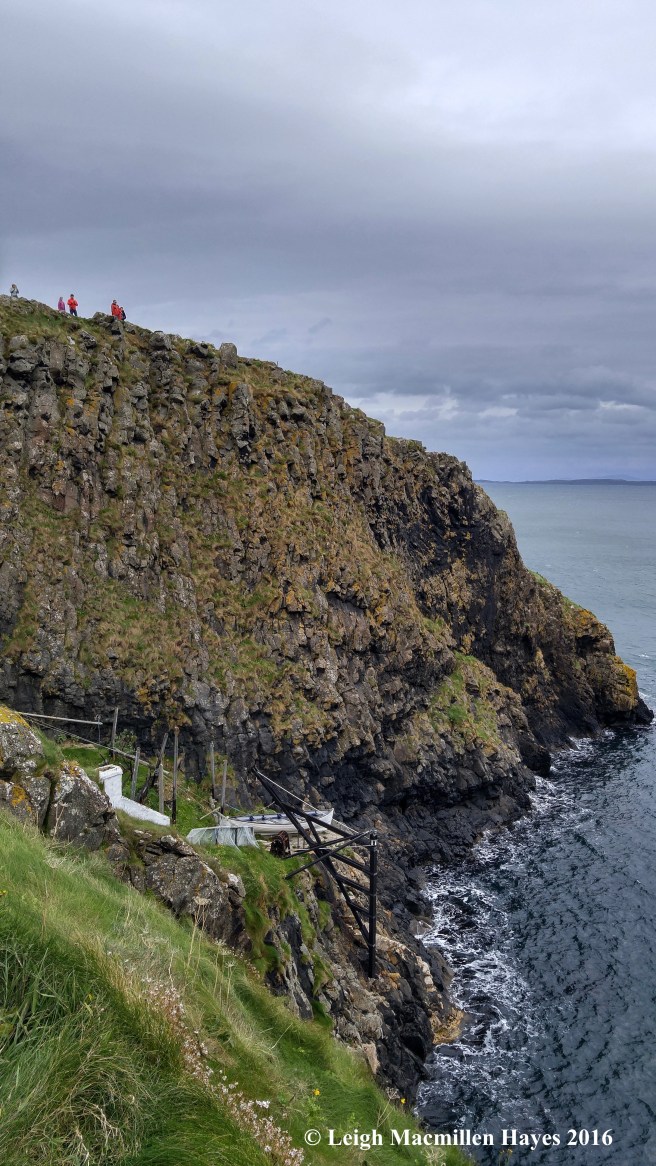
salmon-boat-at-carrick-1

And the road is presumably the sea route for Atlantic salmon that were once fished here prolifically. In fact, so prolifically, that the fishery is no longer viable. In order to reach  the best places to catch the migrating salmon, for 350 years fishermen crossed regularly to the island.
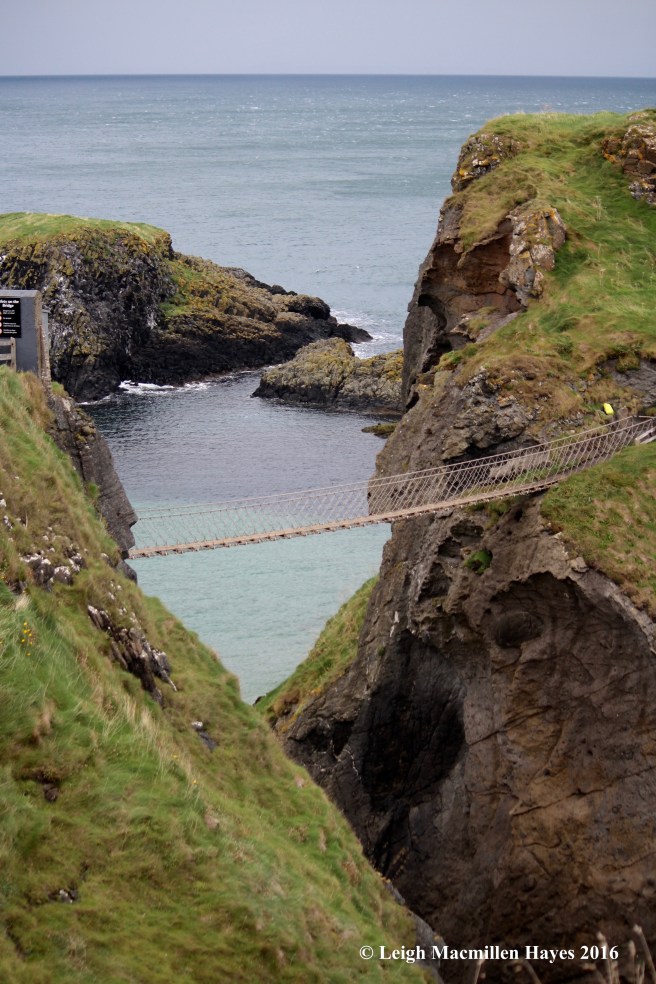
rope-bridge

One hundred feet above the sea, the fishermen crossed the 60-foot chasm via a rope bridge to check their nets. Of course, they had only one rope, not the steel and plank structure that we crossed. That being said, it was quite windy and the bridge did sway.
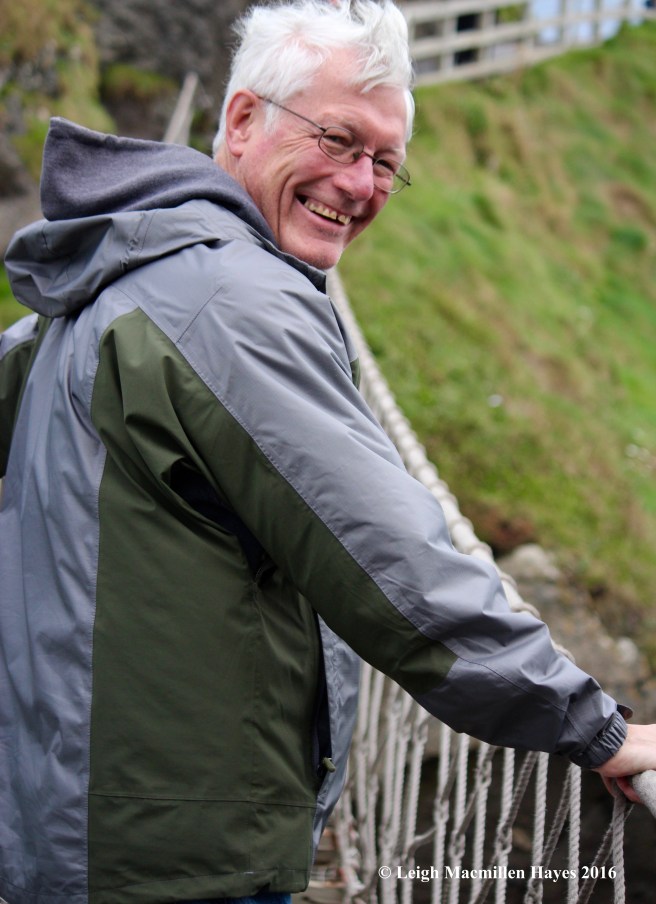
smiling-from-the-carrick-a-rede-rope-bridge

We put our fear of heights behind us and made our way across.

allen-at-carrick-3-1

Did he just do that? Yup.

me-at-carrick-1

And I followed.

scotland-2

Our views included Raithlin Island, the northernmost point of Ireland.

giants-causeway-1-1

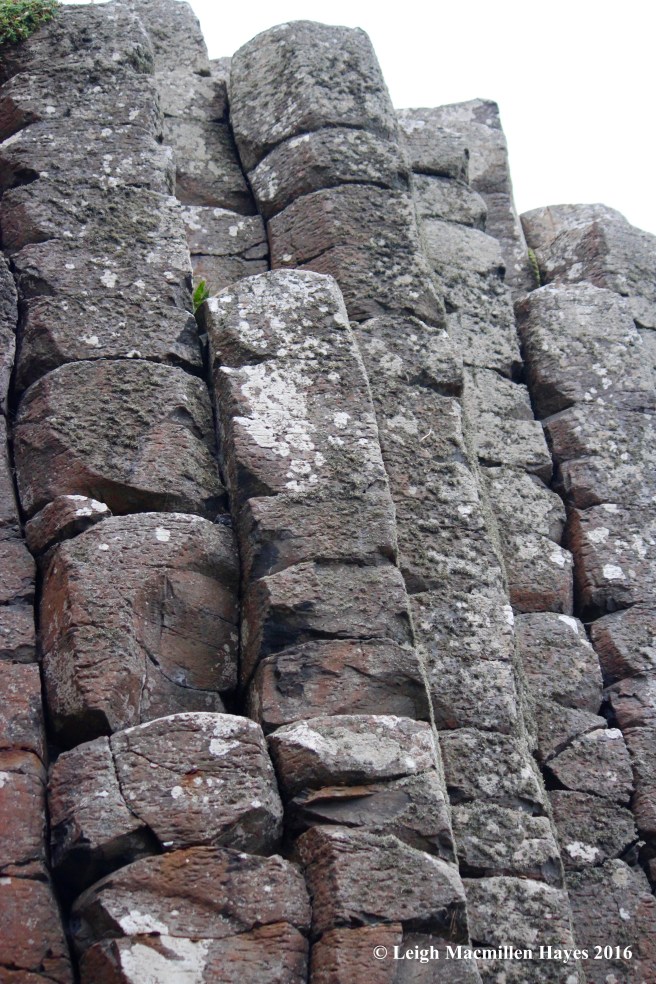
Our next wonder–the Giant’s Causeway, a geological phenomenon of 40,000 basalt stone columns formed by volcanic eruptions over 60 million years ago.
giants-3

giants-6

These hexagonal tubes stacked together like cans on a shelf offer yet another mystical and magical look at the world, one that the Irish embraced by creating legends to explain their existence–Fionn mac Cumhaill (Finn MacCool), an Irish giant, was challenged to a fight by the Scottish giant Benandonner. Good old Fionn accepted said challenge and built the causeway across the North Channel so that the two could meet. There are two endings so take your pick: In one version, Fionn defeats Benandonner, but in another,  he hides from Benandonner because he realizes his foe is much bigger. Fionn’s wife, Oonagh, disguises her husband as a baby and tucks him in a cradle. When Benandonner sees the size of the “baby,” he fears that its father, Fionn, must be the biggest giant of them all. Benandonner flees back to Scotland in fright, but makes sure to destroy the causeway behind him so he won’t be followed by Fionn.
causeway-view

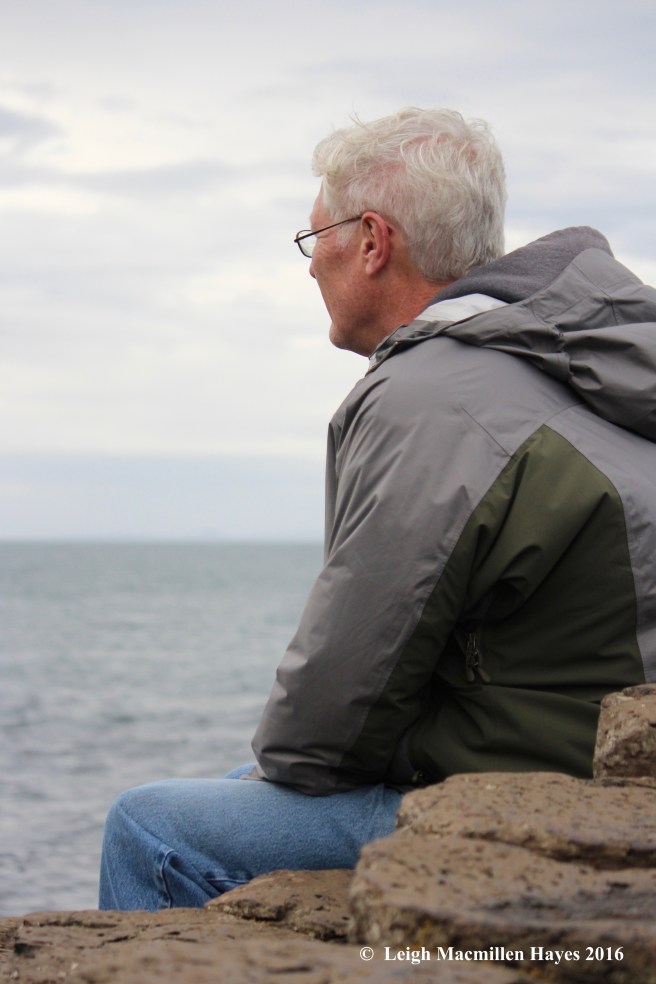
My guy found a spot to take in the giant’s viewpoint.

dunluce-castle-2-1

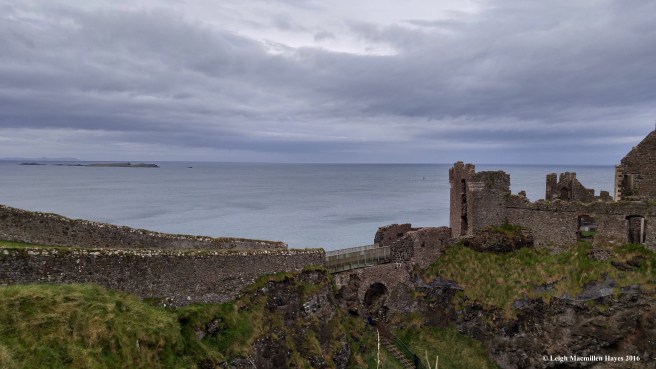
As we made our way back toward Portrush, we paused at Dunluce Castle. We couldn’t go in because it had closed for the day, but we could still see part of the castle town that was developed in the early 1600s.
dunluce-castle-1-1

Originally built by one clan in the early 1500s, it was seized by another in the mid 1500s. Its history includes rebellions and intrigue.

dunluce-castle-wall-over-cliffimg_7377

Included in its dramatic history are tales of how the castle kitchens fell into the sea one stormy night in 1639. We couldn’t help but wonder if the same happened to the wall.

portrush-2-1

Back in Portrush finally, our own tale continued. At the suggestion of our hostess, we walked to the Harbour Bar for dinner.

wee-harbor-bar-ryder-cup-trophy-1

While we waited for a table, we paused in the wee pub, as they call it. A few minutes later, two guys walked in with a trophy and made a big fuss about its placement among the best bottles of whiskey.

darren-3-1

At the time, I was standing to the right of the gentleman in the middle and so I asked him about the trophy. He explained that when you participate in the Ryder Cup you receive a replica. My guy immediately realized that I was talking to a famous Irish golfer, he just couldn’t put a name with the face. On the wall above, we could see photos of him, but we weren’t close enough to read the signatures.

allen-as-darren-1

It turns out we were in the presence of Darren Clarke, the European Ryder Cup captain for 2016. We didn’t know that until we went to check on our table and asked. One of the bartenders encouraged us to stay for the send-off, so we did. Everyone donned a D.C. mask (at 00:16, if you look quickly to the back left, you might see my scraggly hair behind a mask)–and sang “Shoulder to shoulder, we’ll answer Darren’s call.” We were included as the North American entourage.

allen-and-willie-2-1

allen-and-willie-1

While I got Darren’s autograph on one of the masks, my guy befriended Willie, the bar manager.

portrush-2

The next morning, after a traditional Irish breakfast, we toured the downtown. Ireland amazes us–the temperature was chilly and yet the flowers were gorgeous. And palm trees grow throughout the country.

walk-to-murlough-bay-with-fairhead-in-background

Upon our departure, our hostess suggested we follow the coastal route to Murlough Bay and so we did. And took a wrong turn that lead down a dead-end to a gate with a sign warning us that guard dogs were on site. With caution, my guy backed up the lane until he could turn the car around. Our hostess had also told us not to park at the upper lot for Murlough Bay, but instead to drive down. I insisted upon the upper lot given that the road had at least a 10% pitch. So we walked down. And down. And down some more.

fairhead-murlough-bay

Upon our descent, the light at a distant lighthouse beckoned in the background as Fairhead came into view.

murlough-bay

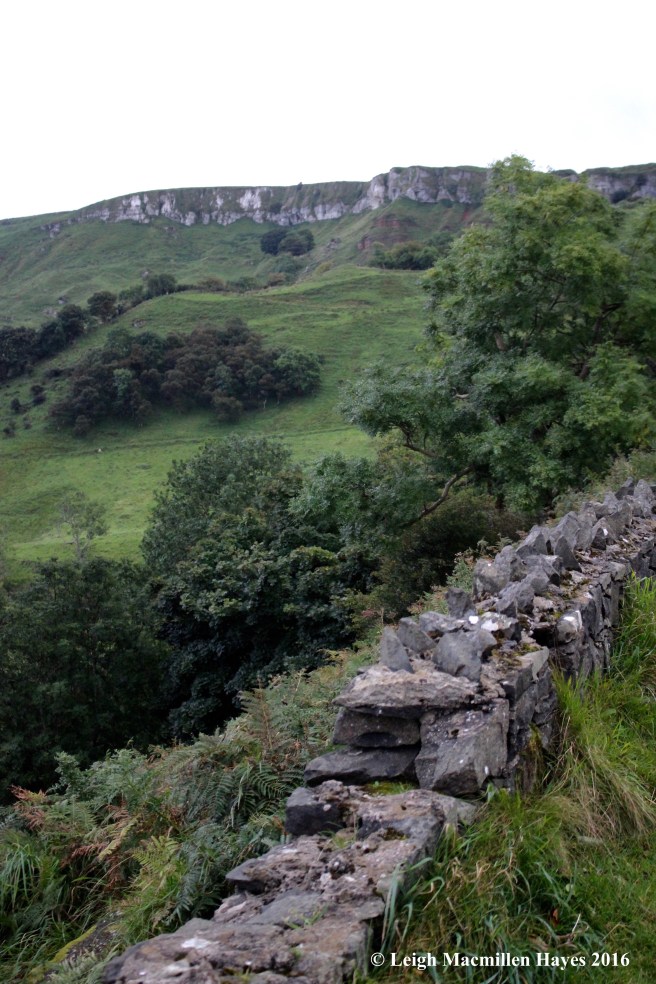
The coastline was as dramatic as we’d been promised. And I was glad we’d walked because the drive would have been even more dramatic with Hyacinth in the passenger seat.
stormlands

This area may appear familiar to viewers of Game of Thrones–including the site of Stormlands.

traditional-music-in-belfast-1

After a hike back up the road, we drove on to take in the scenery of Torr Head. The road narrowed significantly as it twisted and turned along the coast. And then . . . we met a porsche rally. As best he could, my guy squeezed our car past them. And as soon as he could, we got off the coastal route and drove on to Belfast. It was late in the day and pouring when we arrived. By the time we parked in city centre and walked to the Welcome Center, we were drenched. And disappointed. There was no where to stay in town and we’d have to move on. But . . . then one final effort proved that a hotel was available. We should have questioned if for the price. Well, actually I did, but we were told that it was a fine place and served as a conference center. So we took it. And couldn’t wait to get out of there. Fortunately, we found some Irish music back in town and a delightful meal of locally harvested food. All we needed to do was sleep in the rathole, though even that didn’t work so well.

nomadic-1

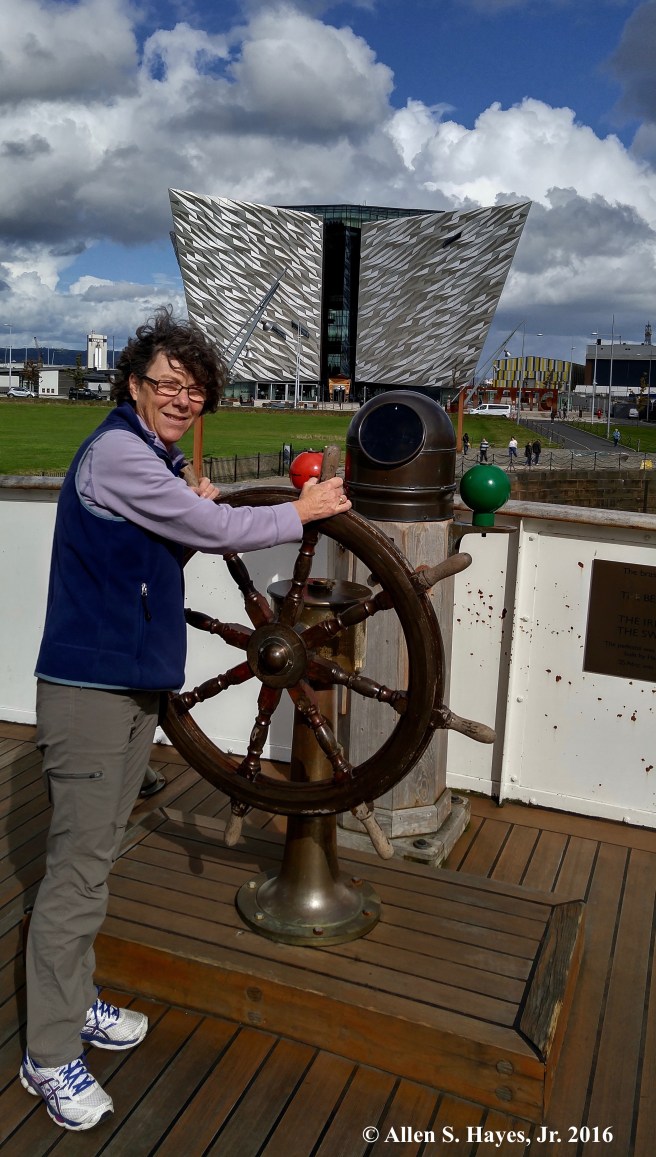
The next morning we took in the Titanic Museum and stepped aboard one of its tenderfoot boats, the Nomadic.
me-nomadic-2-1

A dose of coffee and I was ready to take the helm. And if you are wondering if it’s windy every day in Ireland, the answer is yes. It also rains at some point each day. Our time in Northern Ireland was over, but except for that one accommodation, we’d had a wonderful and wonder-filled time.
holly-cottage-laragh-1

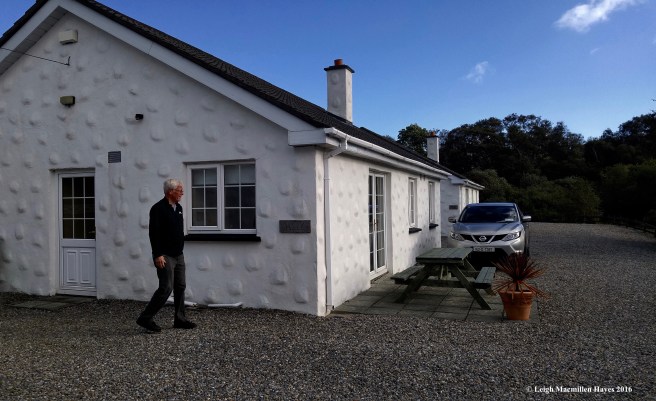
As we worked our way south, we spent a night at a delightful B&B in Navan, which featured  more traditional music and a place to relax. On Monday morning, we finally headed to the cottage we’d rented in the town of Laragh–Glendale Holiday Cottages–we highly recommend. Our host, Christy, was extremely accommodating, the cottage spacious and amenities plentiful.

ww-monastic-city

We’d chosen this location because it was a five minute walk to the pub and restaurant in Laragh, located in the Wicklow Mountains, and near the Glendalough monastic settlement founded by St. Kevin in the sixth century.

round-tower-glendalough

Forty shades of green and Brigadoon all came to mind as we approached the monastic settlement and its round tower.

st-kevins-church-glendalough

St. Kevin’s kitchen is actually a 12th century church, so named because it was believed that the bell tower was a kitchen chimney. Apparently, however, no food was ever cooked there. But . . . if you think of the word of God as food, then perhaps many a feast was actually served.

ww-monastic-cathedral

From the altar window in the cathedral, the largest of seven churches within the monastic city,  a view of the world beyond was offered.

st-kevins-monastery-glendalough-1

Likewise, we could see the world within, including the Priest House in the background.

monastery-cemetery-glendalough

And everywhere, gravestones told the story of many who’d passed this way.

trinity-church-glendalough-day-3

A little closer to Laragh, Trinity Church.

upper-lake-3-glendalough

Upper Glendalough was the jumping off point for our initial hike upon the Wicklow Way.

p-falls-2-glendalough

We paused beside Poulanass Falls before zigzagging our way up the first trail.
sheep-wicklow-way-2

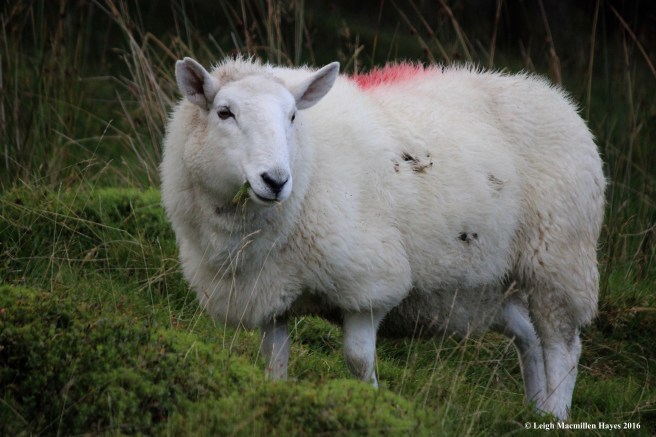
Sheep merely looked up to acknowledge our passing. We, however, needed to pay more attention for sheep shit was prolific.

reforestation-wicklow-way

Tree felling was also a frequent sight, but we noted a unique (to us anyway) method of reforestation–in this case the Sitka spruces and Scots pines being felled were replaced by mountain ash saplings. One other thing we wondered about–the plastic sleeves–we saw some that had fallen away as trees grew, but were left in place. Biodegradable? We could only hope.
wicklow-way-bog-day-1

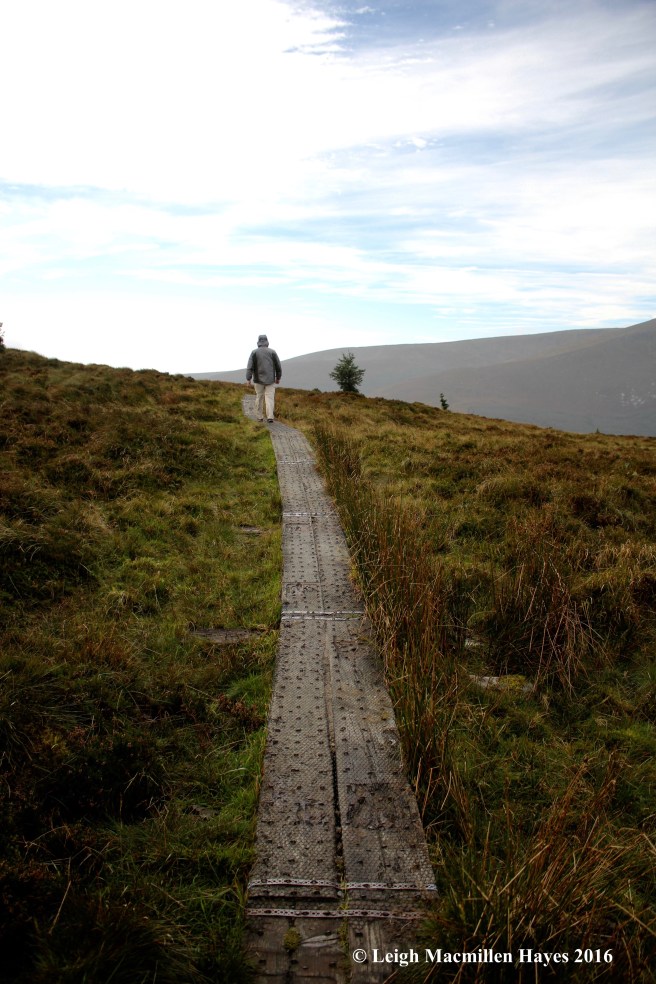
We spent three full days on the trail, not covering all of it, but a good portion as we hiked 10-15 miles each day.
crossing-bog-wicklow-way-day-1

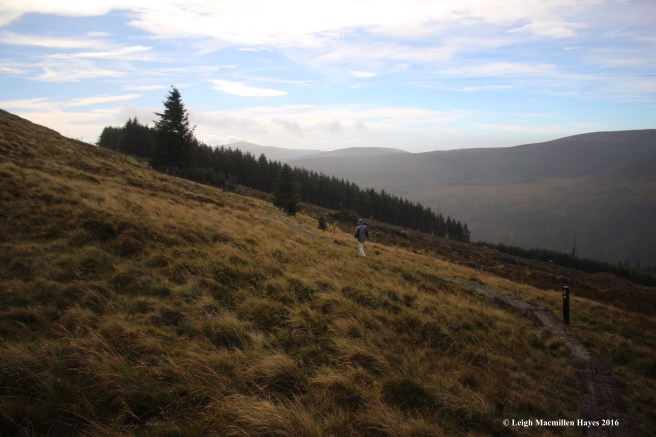
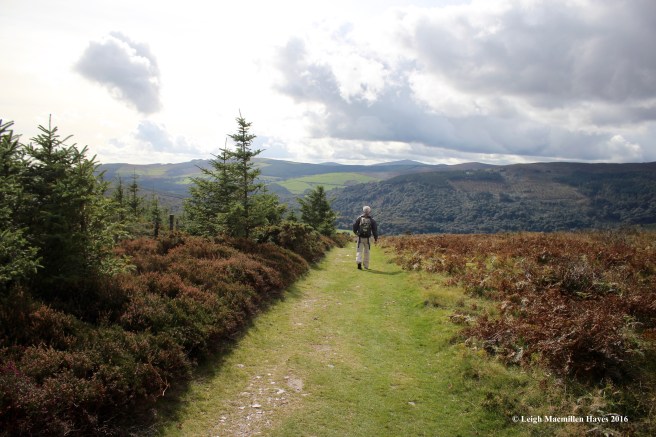
Our journey took us over boggy portions,
wicklow-way-day-3

down grassy sections,

w-lane-2

on village lanes,

ww-boardwalk

over boardwalks,

ww-forest-path

through the black forest,

w-walking-into-the-sky-day-3

and into the future.

ww-following-the-signs

Frequently, we had to stop, reread the directions and study the map, but more often the route was self-explanatory.

ww-muddy-trail

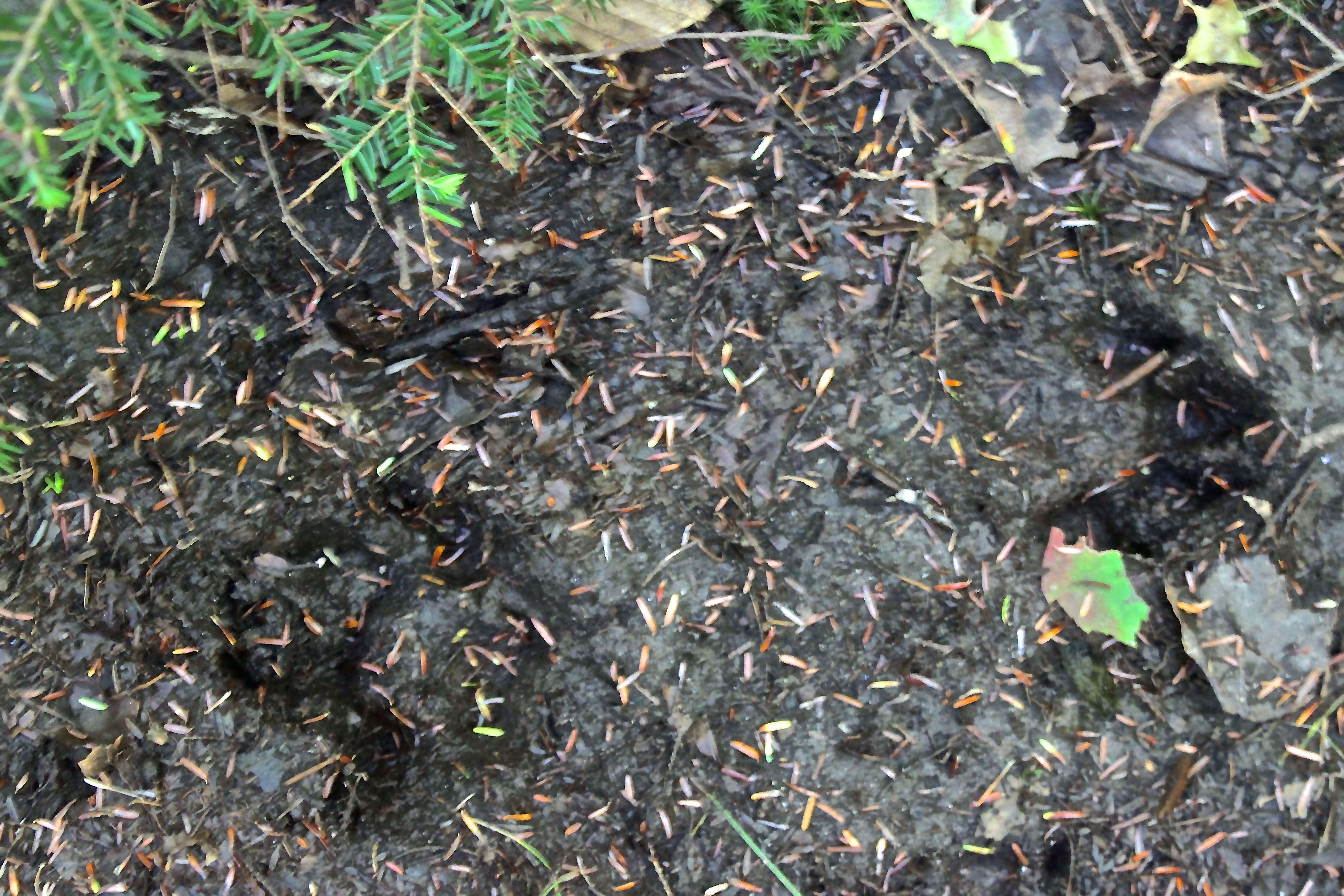
Along one section that was particularly muddy due to frequent horse crossings, we made a discovery unique to us.

w-badger-print

A badger print. Sadly, or maybe happily to locals, we saw a dead badger on one of the lanes not far from this print. Related? We’ll never know.
w-deer-at-glendalough

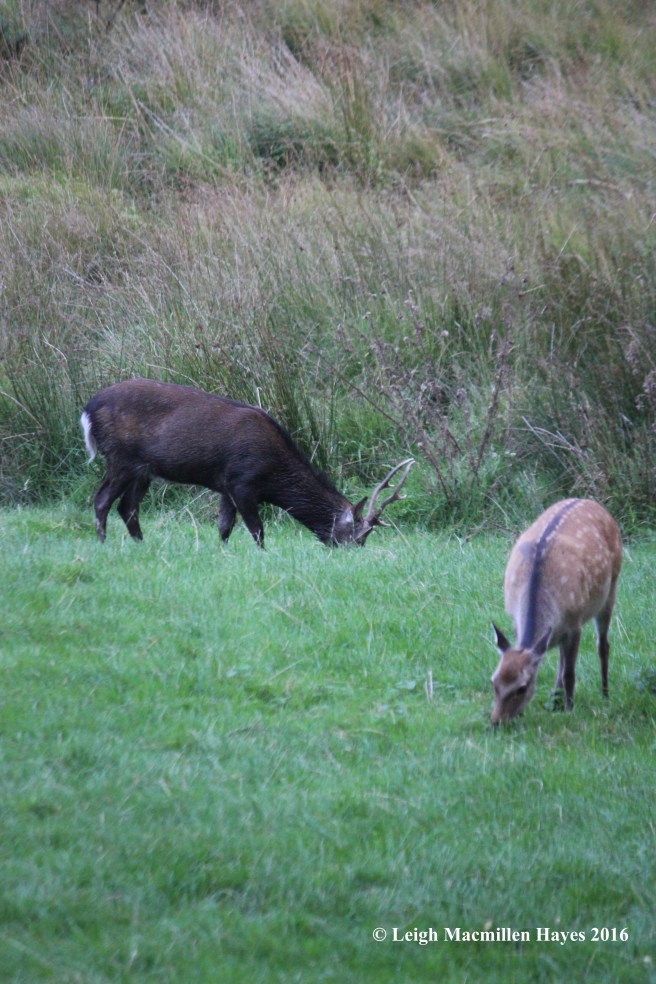
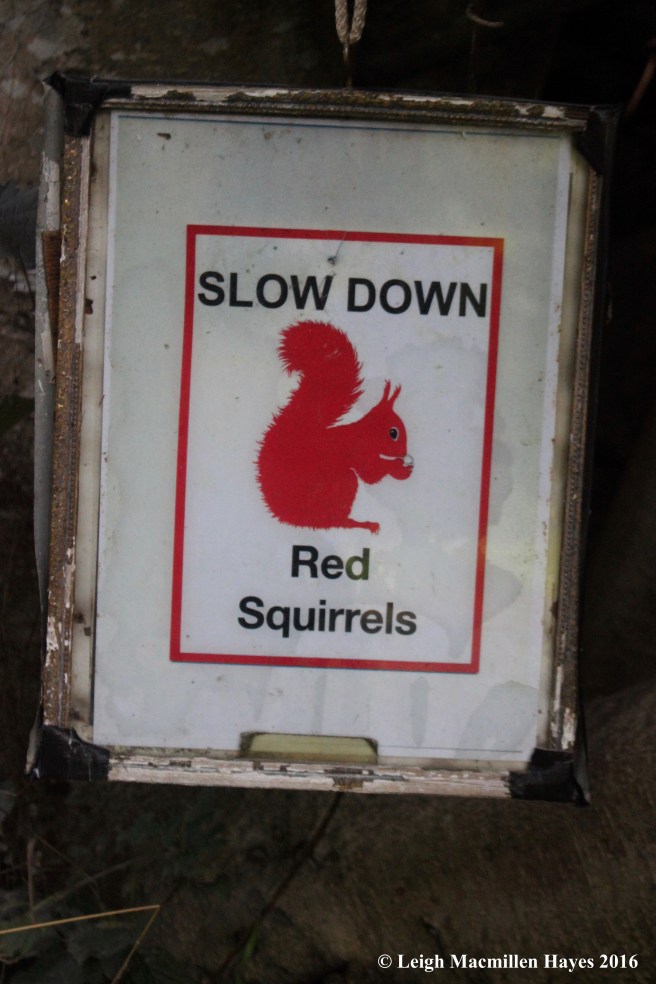
We saw deer, one rabbit and two red squirrels.
Red Squirrel sign, day 3.jpg

Writing of the latter, we chuckled when we encountered this sign because we have frequent encounters with them at home. But considering we only saw two in two weeks and spent most of our days outside, we had to wonder.
w-bessy-1

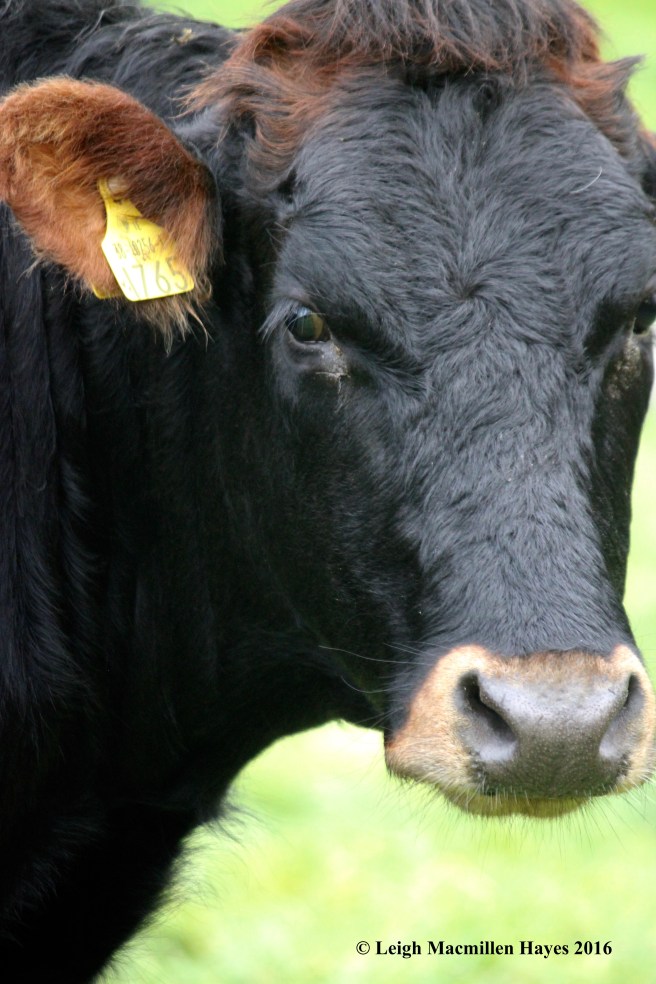
Bessie One,

w-bessy-2

Two,

w-bessy-3

and Three (pronounced Tree) tolerated our presence.

w-cow-on-wall

And Bessie Four made us laugh–as she stood upon a wall.
w-hay-in-barn

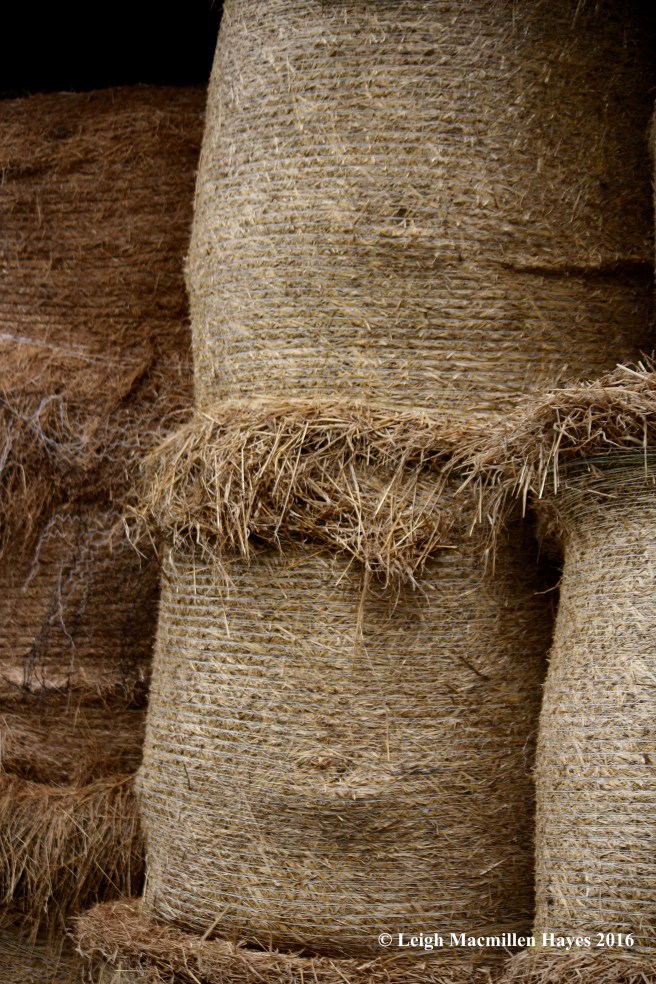
Though we passed through pasture after pasture and by many a farm and barn, we never saw any farmers, but knew that they were hard at work preparing for winter.
drinking-water-wicklow-way-day-3

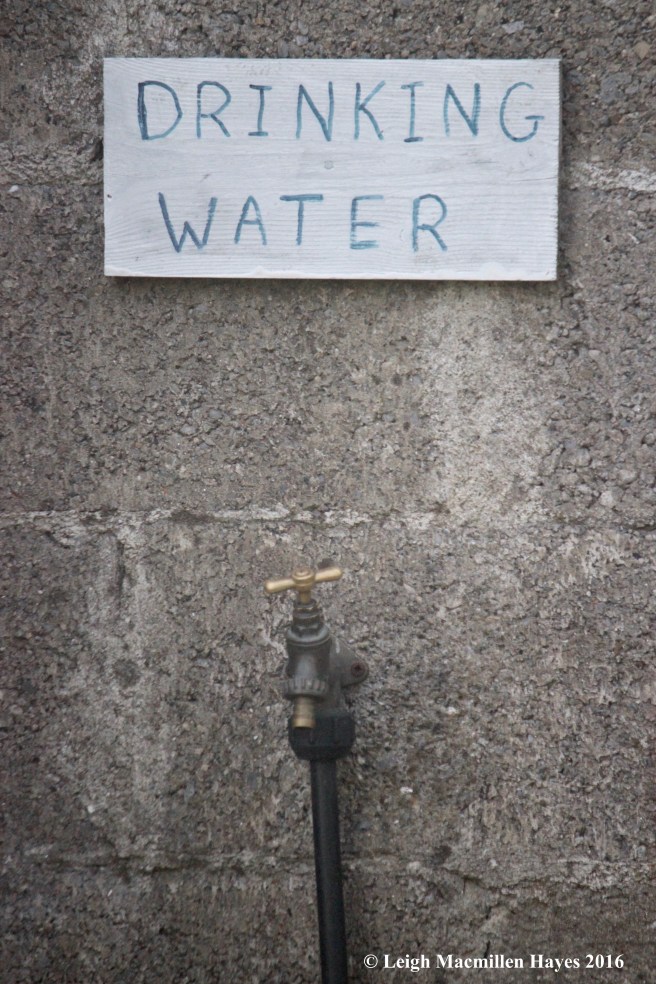
And one even offered us nourishment.

w-wooden-stile

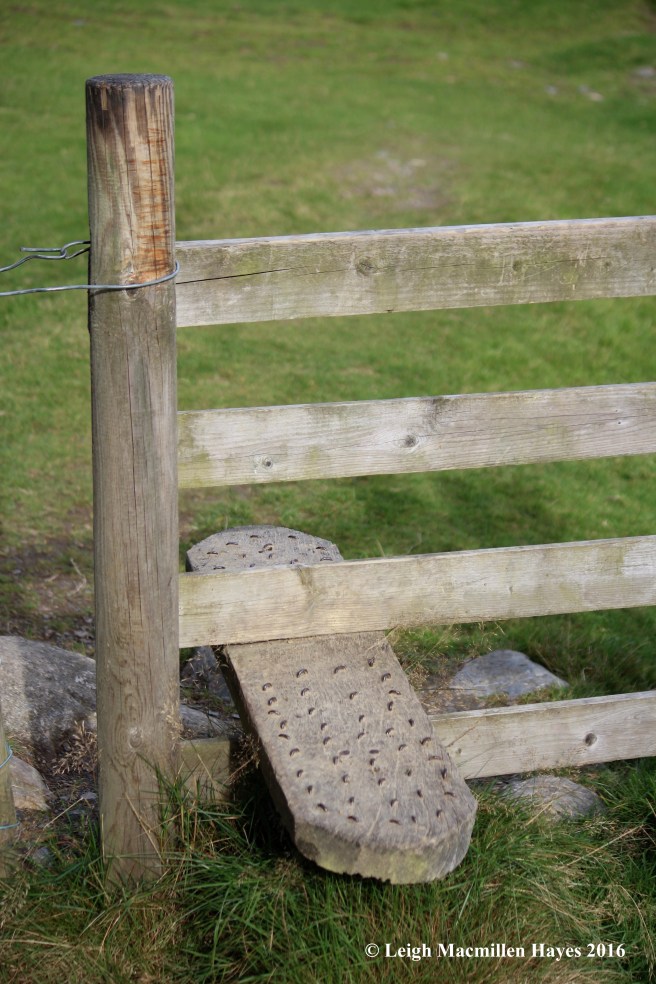
Our path included obstacles, though most were easy to overcome from a rope loop
w-stile-step-wicklow-way-day-3

to a simple step or

w-another-stile

ladder crossing.

w-bull-sign

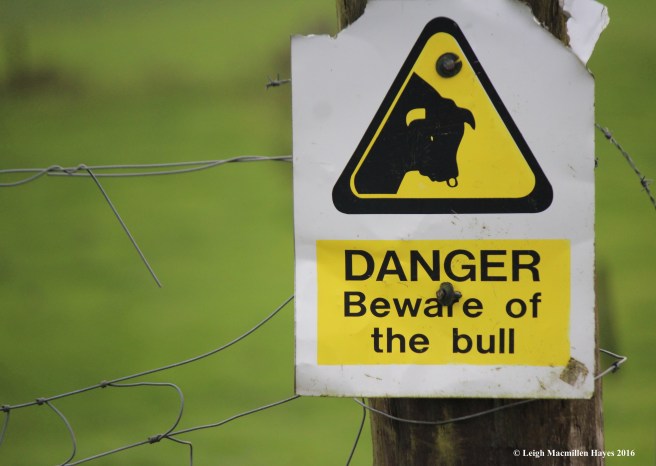
Only once were we uncertain. The stile was padlocked and there was no step or ladder. We finally decided to climb up over the gate in hopes that there wasn’t a bull on the other side. Usually though, a beware of bull sign announced their presence and no such sign marked that particular crossing–phew.

w-guinness-sign

Our days ended with a stop at the local pub because Guinness® is good for you. I actually overheard an older woman telling her significant other the truth behind this. Apparently, when this woman’s mother had been in hospital years before, she was given Guinness® to drink each morning and evening–perhaps for its iron content. Or perhaps just because it’s good for you.

w-dying-cow-1

One of our stops was at the smallest and oldest pub in the nation–the Dying Cow. Mr. Dolan sat behind the bar sipping a Guinness® along with us as he and my guy got into a discussion about American politics. We noted that to be a hot topic. Our reason for finding this pub was because we’d walked into Tenahely after a fifteen miler and were about to step into Murphy’s for a pint when a gentleman sitting outside started chatting with us. He suggested we head off down the road because we needed to experience this tiny bar and he would have joined us but he’d just ordered his pint and didn’t want to waste it.

w-1798-monument

We followed the directions he wrote out for us, and missed the 1798 monument at first, but retraced our route and found it. We only wish he’d then told us how to get back to Laragh. That took a while, but eventually we found our way home.

wicklow-day-3-1

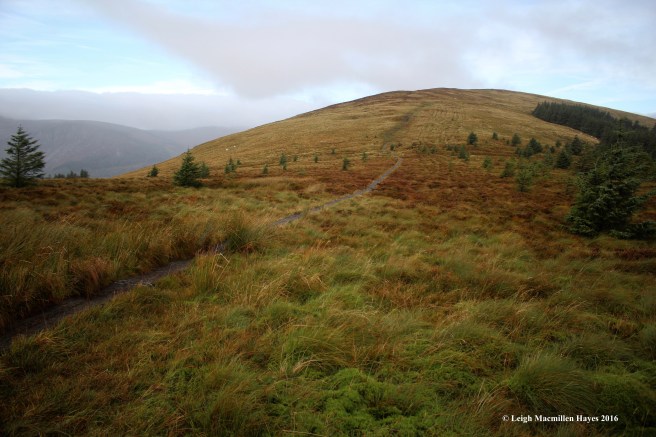
Our views from the Wicklow Way were worthy of wonder.
wicklow-way-day-1-3

And the ever present clouds added to the drama.

ww-greens

The land resembled a patchwork quilt.
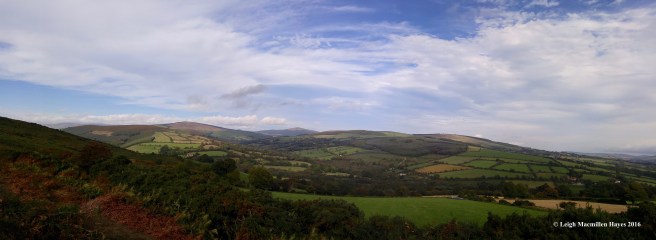
pano-2-day-2-1

No matter where we looked, it was forever changing.
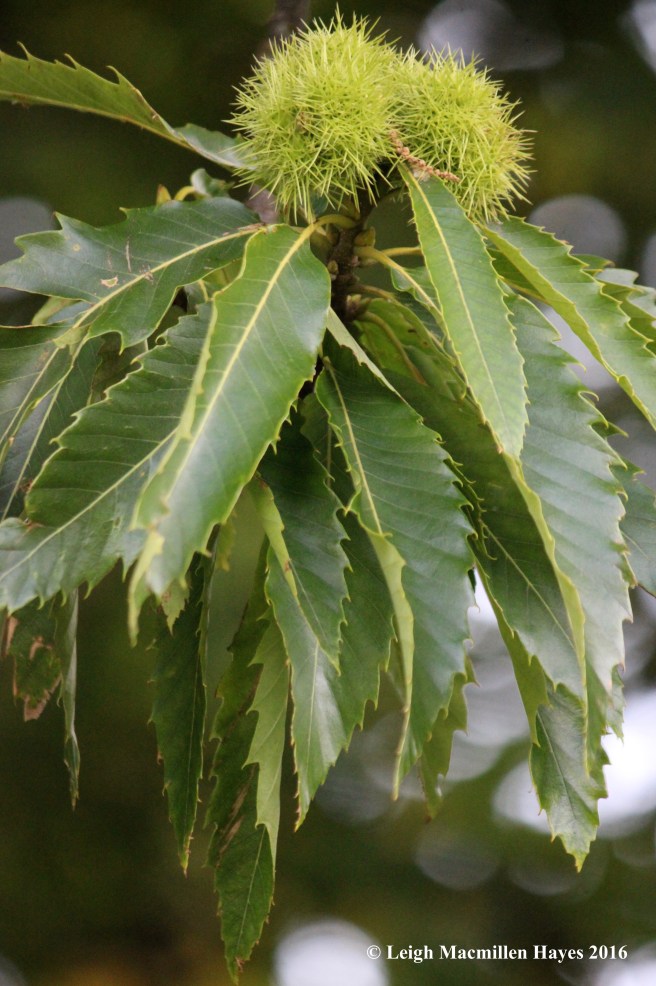
chestnuts

Some of our fun discoveries included chestnut trees,
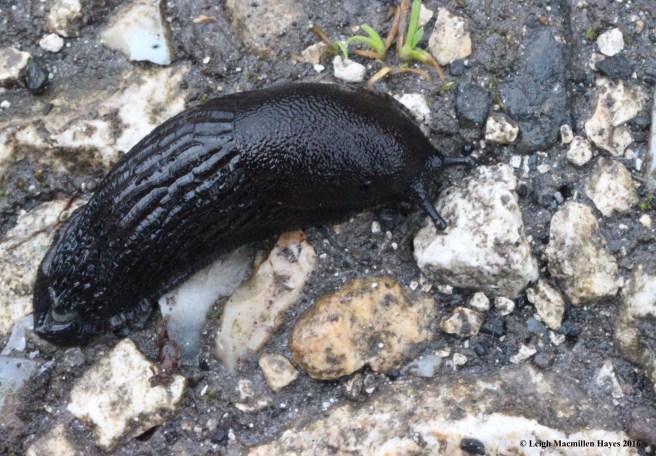
slug

black slugs, and . . .

bear-gryllz-signature

the crème de la crème–bear claw marks! Did Bear Gryllz really leave his signature on the trail behind the Glendalough Hotel?

wicklow-and-the-irish-sea

When we weren’t hiking, we explored the area, including Wicklow and its stone beach.

wind-turbine-boat-wicklow-harbor

We didn’t understand this ship at first until my guy asked–meet Wavewalker, a maintenance boat for Ireland’s Offshore Windfarm.

wicklow-harbor-other-side

Across the harbor, we spied the remains of a castle that invited a closer look.

wicklow-castle-2-sky-and-water-reflection

It seems Black Castle was constantly under siege and totally destroyed in 1301. And yet–I felt a presence still there.

castle-wicklow-face-in-turret

Do you see his face?

avoca-chairs

The oldest mill in Ireland also drew our attention–Avoca Handweavers Mill was established in 1723.

avoca-socks

It was the home of color with attitude.

avoca-yarn-5

Upclose and personal, we saw the inner workings.
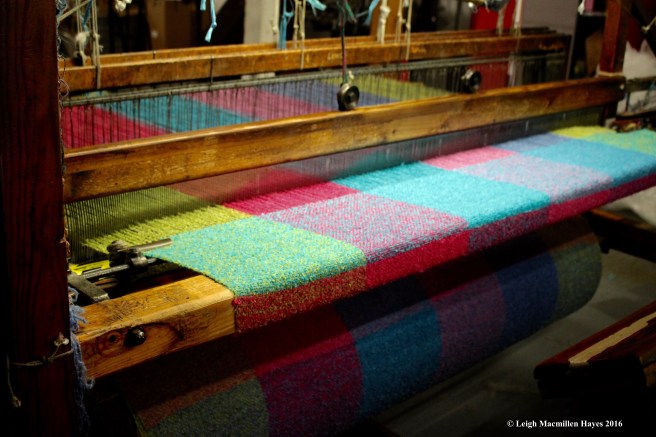
avoca-yarn-2

And marveled at the creative results.

carlow-castle-towers

Our last full day in Ireland found us in Carlow. Standing beside the River Barrow, this castle was thought to once be a stronghold and it survived attacks in the 1400s and 1600s. According to local lore, a physician set out to remodel it into an asylum in the early 1800s. As he tried to demolish the interior, he placed explosive charges near its base and accidentally destroyed all but the remaining west wall and twin towers. Uh oh.

swan-face-carlow

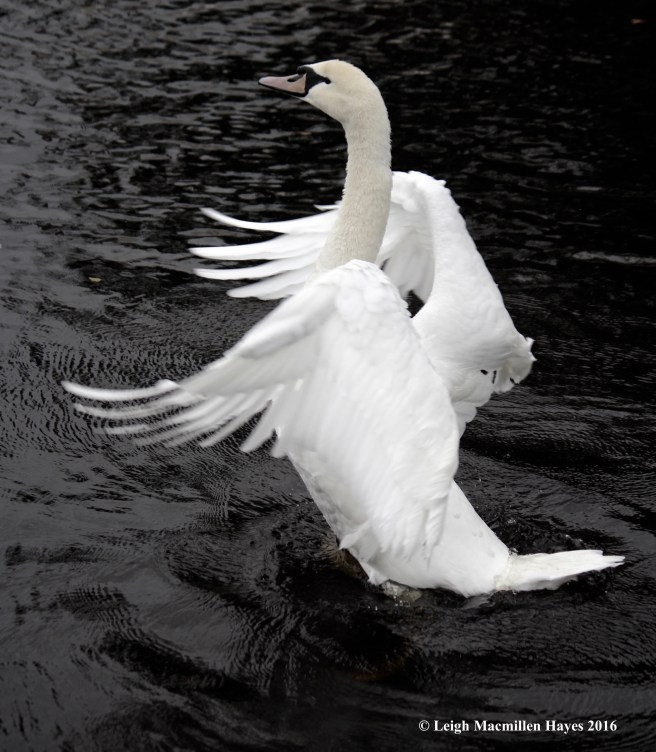
As happened daily, the weather quickly changed from blue sky to raindrops. Swans in the River Barrow didn’t care. They were in their element.
swan-stretch-carlow

My guy counted while I photographed. Thirty some odd–all wishful that we’d brought good tidings in the form of bread. Not to be much to their dismay. Despite that, we were treated to several displays.

sunset-over-carlow-1

And later that night, a display of sun and clouds as we went in search of supper.

irish-breakfast

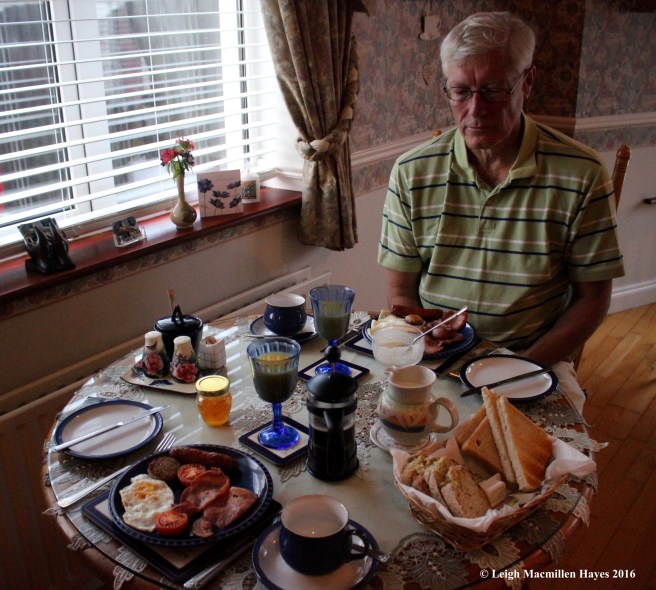
Our final night was spent at the Green Lane B&B in Carlow where Pat and Noeleen took special care of us. My guy watched the GAA football game with Pat, their grandson Sam helped us print out our airline tickets and Noeleen made sure we had toll money for our journey to the airport. And then there was the breakfast–the finest we’d enjoyed.
breakfast-2

Think eggs, tomatoes, mushrooms, bacon, sausage, white pudding, toast and Irish soda bread. And they wanted to know if we wanted porridge and cereal. Really?

irish-mist

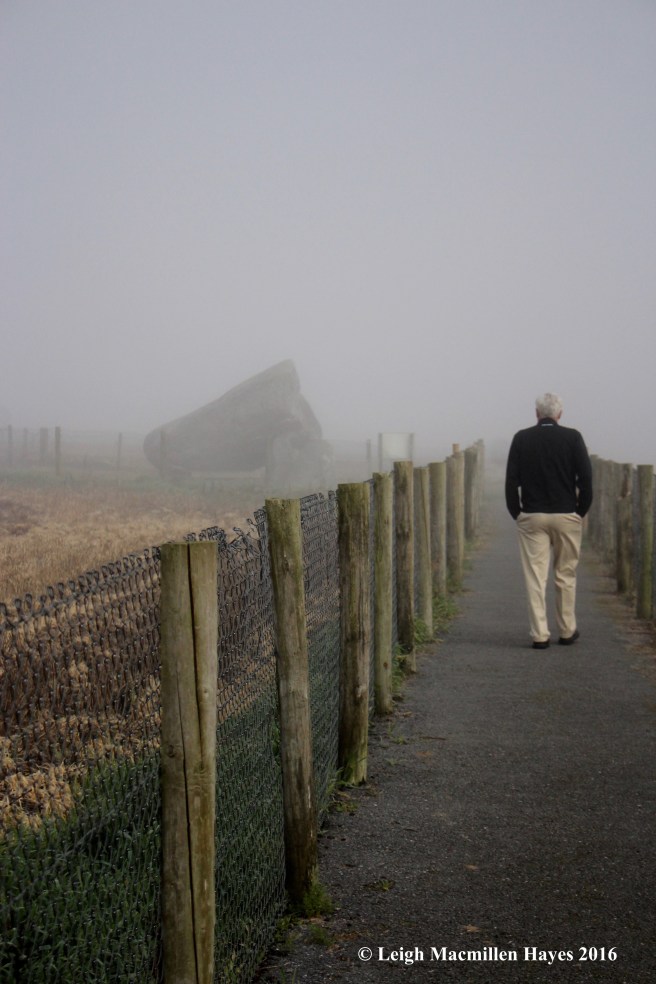
Before we checked out, I made my guy drive to this field ensconced in an Irish mist.
out-of-the-mist

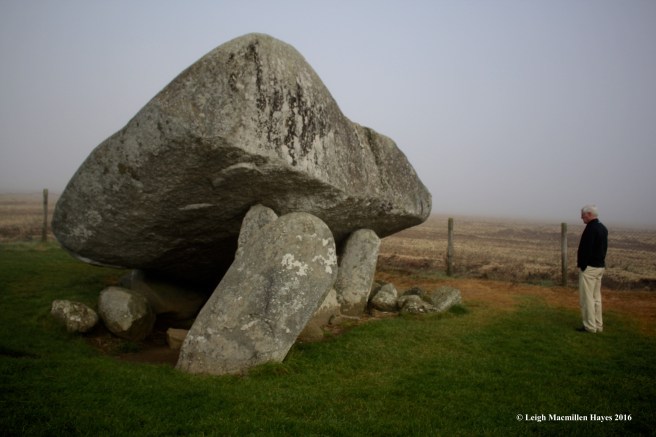
The fog seemed apropos for our walk out to the Browneshill Dolmen. This was a burial chamber that may have originally been covered with earth.
dolman-size

My guy stands almost six feet tall, so his height provided a sense of size.

dolman-2

The two more pointed stones on either side of the squared stone were known as portal stones that would have supported the granite capstone or chamber roof. The squared stone in the center was probably the gate stone that blocked the entrance. This site has not been excavated so there’s no other info about it, but just standing in its presence and considering those who came before and created such was enough.
web-2

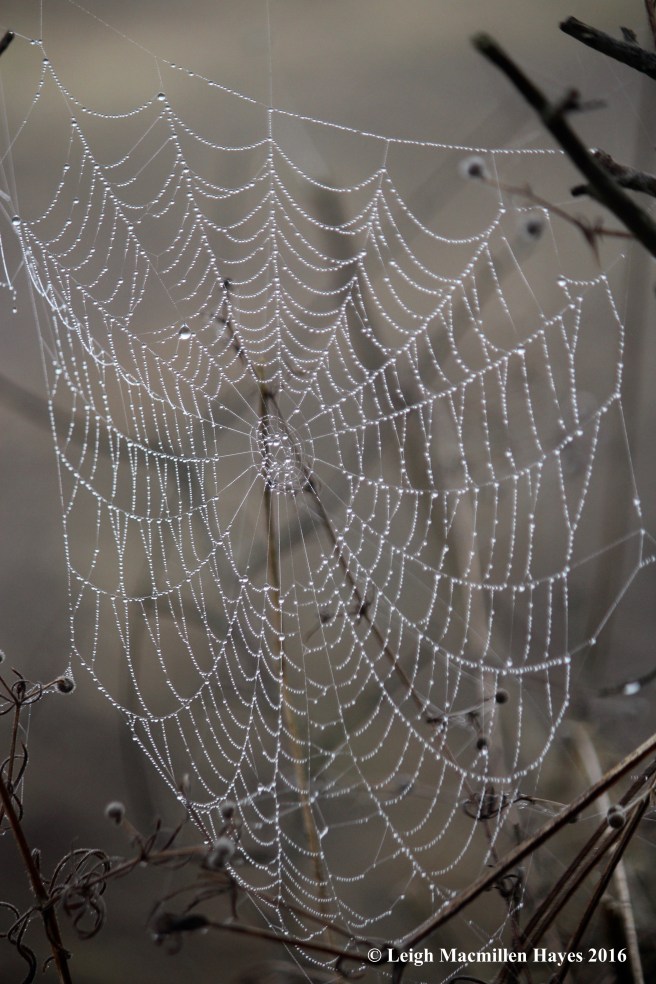
And then there were the spider webs. I’d missed them as we’d walked toward the dolmen, but they captured my attention all the way back. From prehistoric to present, the structures before us were breathtaking.
tree-webs

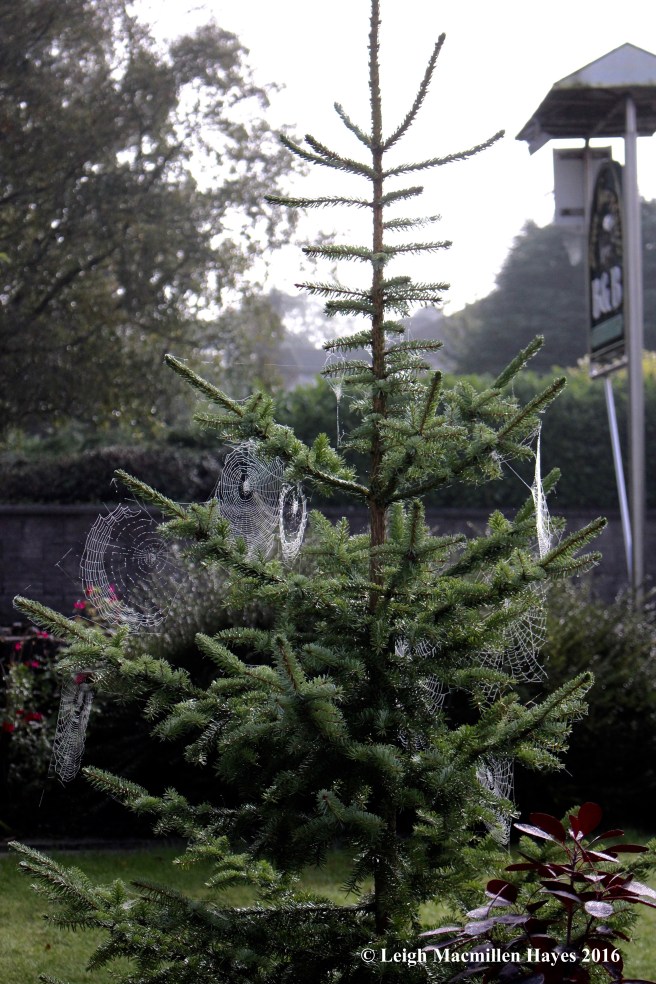
And when we finally pulled out of the B&B driveway on our way to the airport, I asked my guy to stop while I jumped out of the car. What a sight to behold–web ornaments. A perfect ending to our vacation.

My guy meet several roadblocks on his search for roots, but at the same time, he learned about some new avenues that may help in his quest. And I, I wished for more time to understand all that was before me from prehistoric to present–but maybe I sought answers that don’t need to be. Having the questions might be enough.

Together, we were grateful for our Hyacinth and Richard Adventure on the Emerald Isle. And glad to return the car safely to the rental agency.


The Wonders of Kezar River Reserve

How many people can  travel a familiar route for the first time every time? I know I can.

j-kiosk

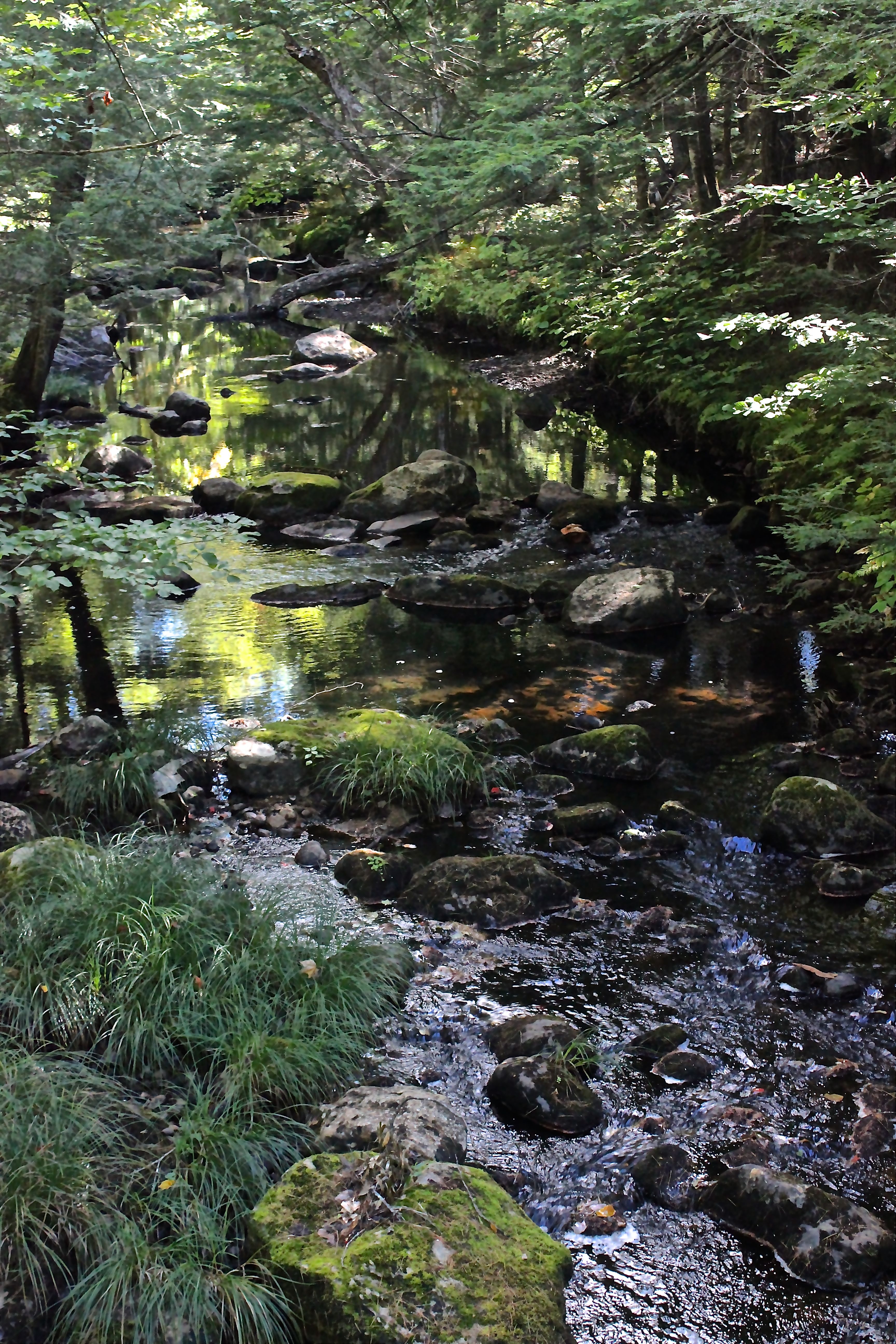
And so it was this morning when I ventured to the Greater Lovell Land Trust’s Kezar River Reserve off Route 5 in Lovell. I went with a few expectations, but nature got in the way, slowed me down and gave me reason to pause and ponder–repeatedly.

k-oak-gall-1

As I walked along the trail above the Kezar River, I spied numerous oak apple galls on the ground. And many didn’t have any holes. Was the wasp larvae still inside?

k-partridgeberry

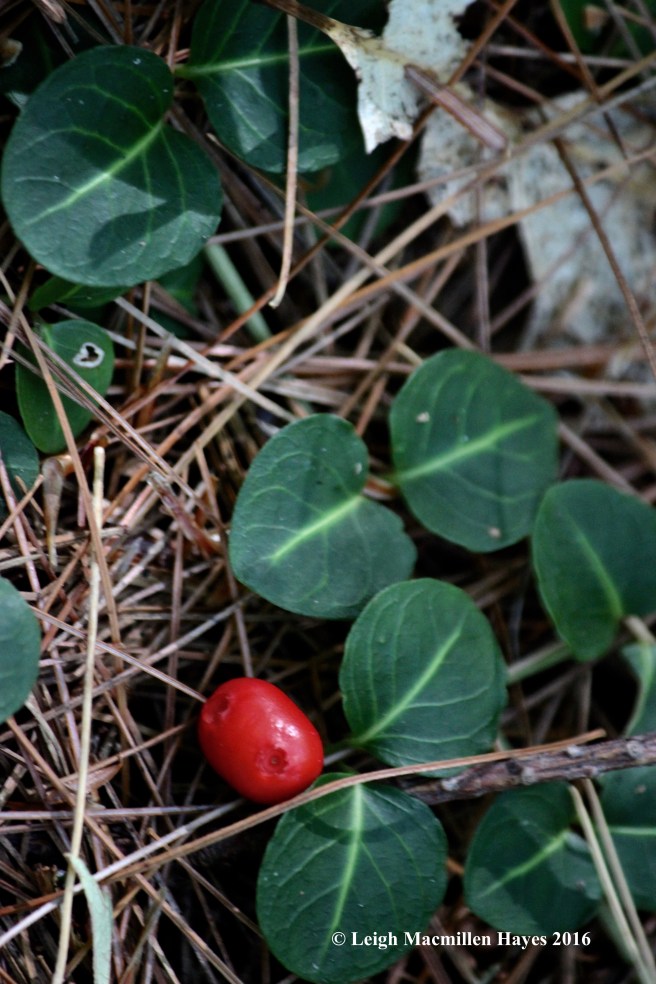
While the dots on the gall were reddish brown, the partridgeberry’s oval drupes shone in Christmas-red fashion. I’m always awed by this simple fruit that results from a complex marriage–the fusion of pollinated ovaries of paired flowers. Do you see the two dimples? That’s where the flowers were attached. Two became one. How did they do this?

k-fairy-2

After walking along the first leg of the trail, I headed down the “road” toward the canoe launch. And what to my wondering eyes should appear–fairy homes. Okay–true confession: As a conclusion to GLLT’s nature program for the Lovell Recreation Program this summer, the kids, their day camp counselors and our interns and docents created these homes.

k-fairy-1

I was impressed that the disco ball still hangs in the entrance of this one. Do you see it? It just happens to be an oak apple gall. Creative kids. I do hope they’ve dropped by with their parents to check on the shelters they built.

k-bench

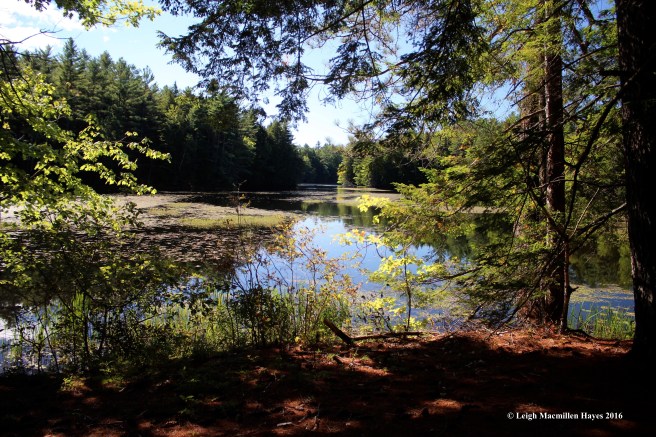
And then I reached the launch site and bench. It’s the perfect spot to sit, watch and listen. So I did. The bluejays kekonked, nuthatches yanked and kingfishers rattled.

k-ripples

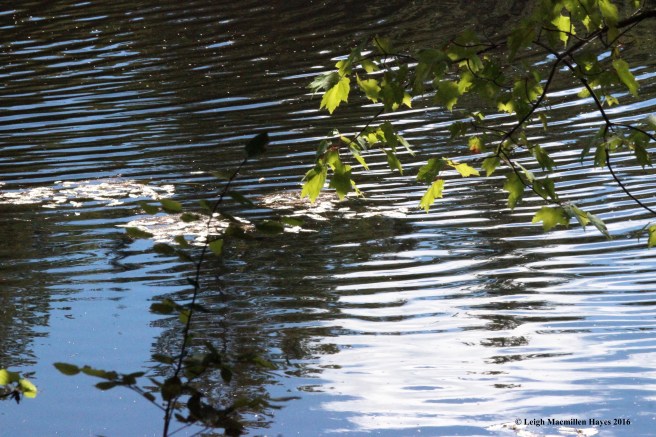
A gentle breeze danced through the leaves and offered a ripply reflection.

k-river-4-morning

And I . . . I awaited great revelations that did not come. Or did they? Was my mind open enough to receive? To contemplate the mysteries of life? The connections? The interactions?

k-ridgeline-2-1

At last, I moved on and entered a section that is said to be uncommon in our area: headwall erosion. This is one of five ravines that feature deep v-shaped structures. Underground streams passing through have eroded the banks. It’s a special place that invites further contemplation. And exploration.

k-skate-bugs

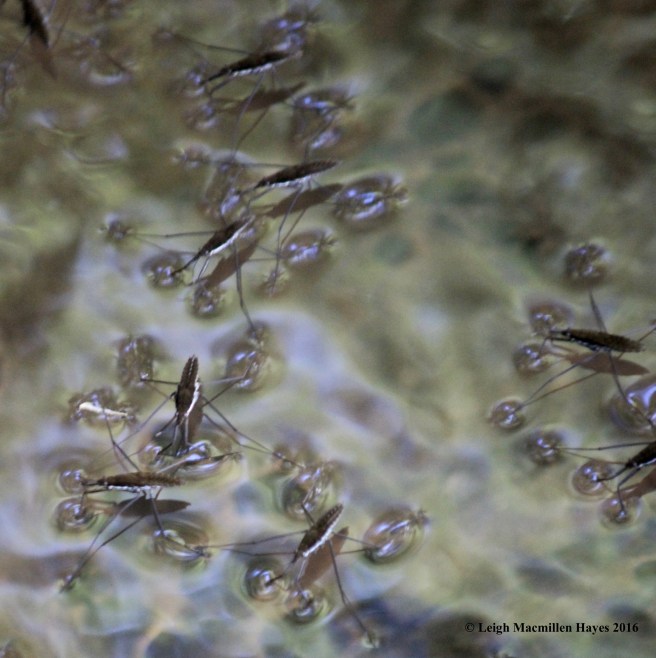
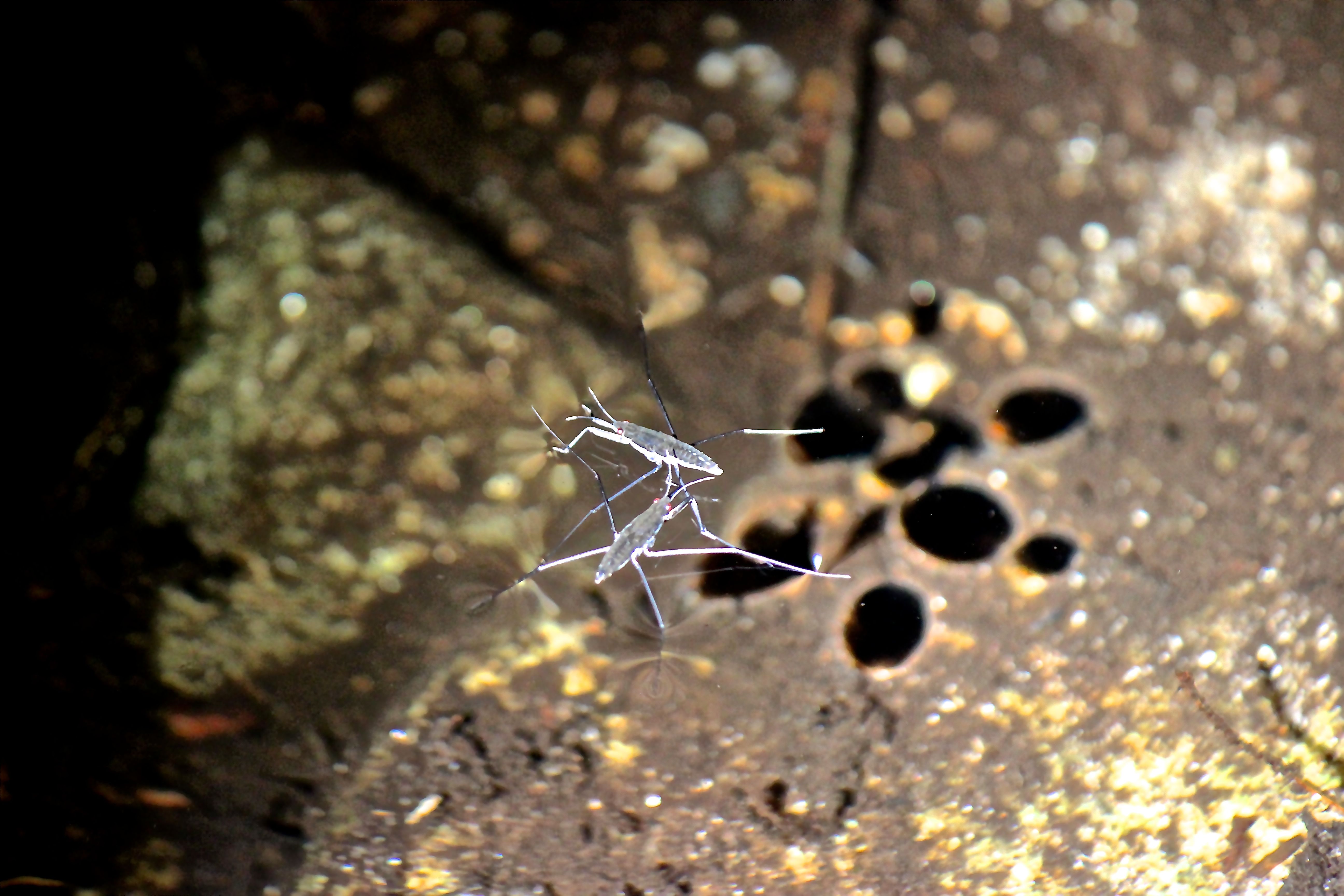
One of my favorite wonders on the bit of stream that trickled through–water striders. While they appeared to skate on the surface, they actually took advantage of water tension making it look like they walked on top as they feasted on insects and larvae that I could not see.

k-turtle-sign

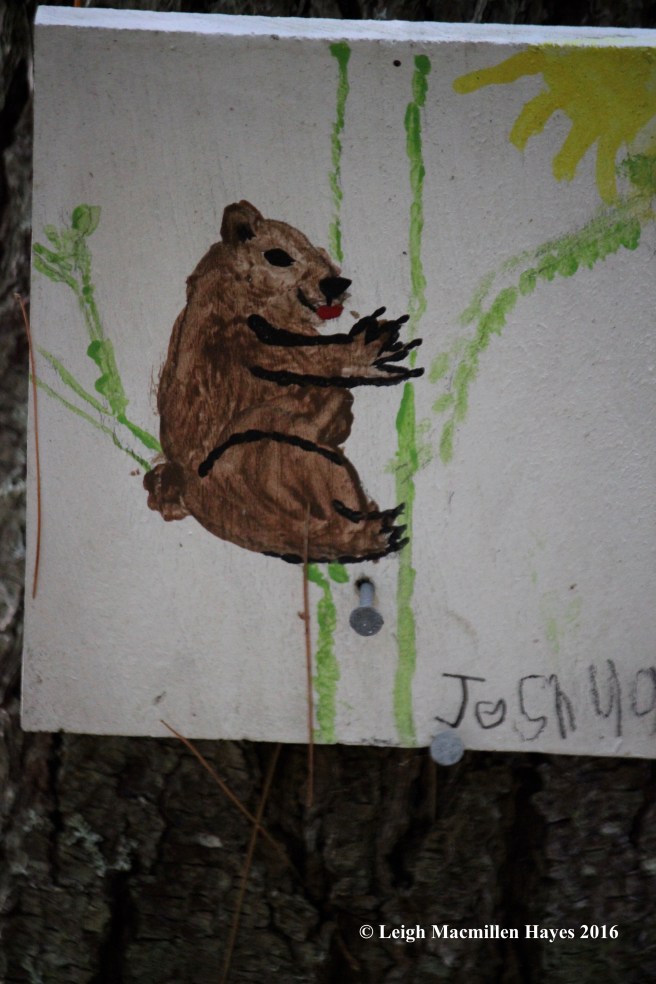
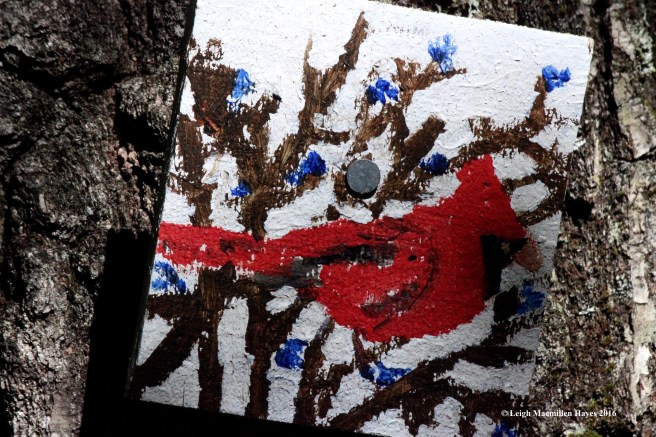
Lots of turtle signs also decorated the trail. Literally.

k-bear-sign

In fact, I found bear sign,

k-cardinal-sign

cardinal sign,

k-ladys-slipper

and lady’s slipper sign . . . among others. Local students painted the signs and it’s a fun  and artistic addition to the reserve.
k-blue jay feather.jpg

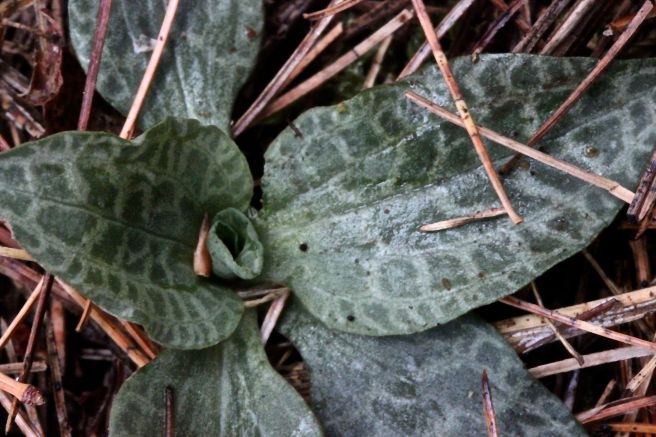
Of course, there was natural sign to notice as well, including a blue jay feather.

K-aster .jpg

Asters and goldenrods offered occasional floral decorations.

k-hobbleberries

And hobblebush berries begged to be noticed.

k-meadowhawk-1

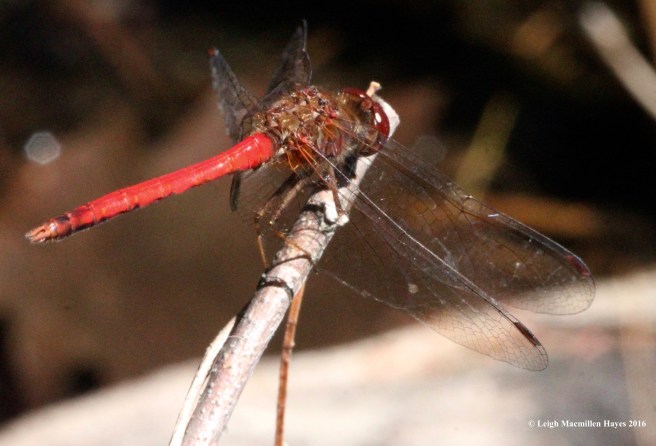
And then a meadowhawk dragonfly captured my attention. I stood and watched for moments on end.

k-red-maple-leaf

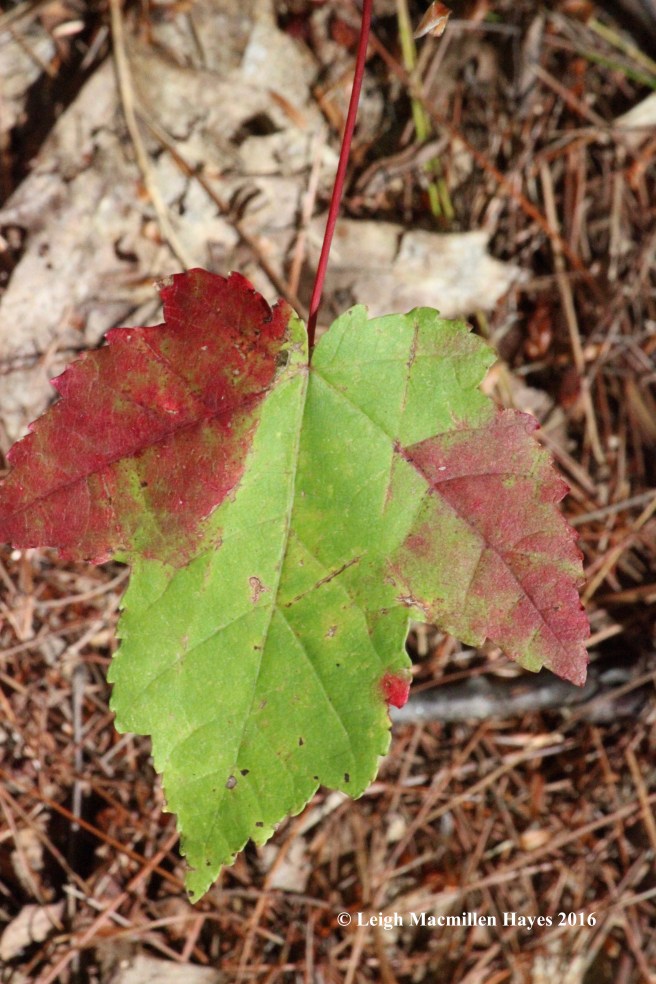
And noted that the red maples offered similar colors.

k-squirrel.jpg

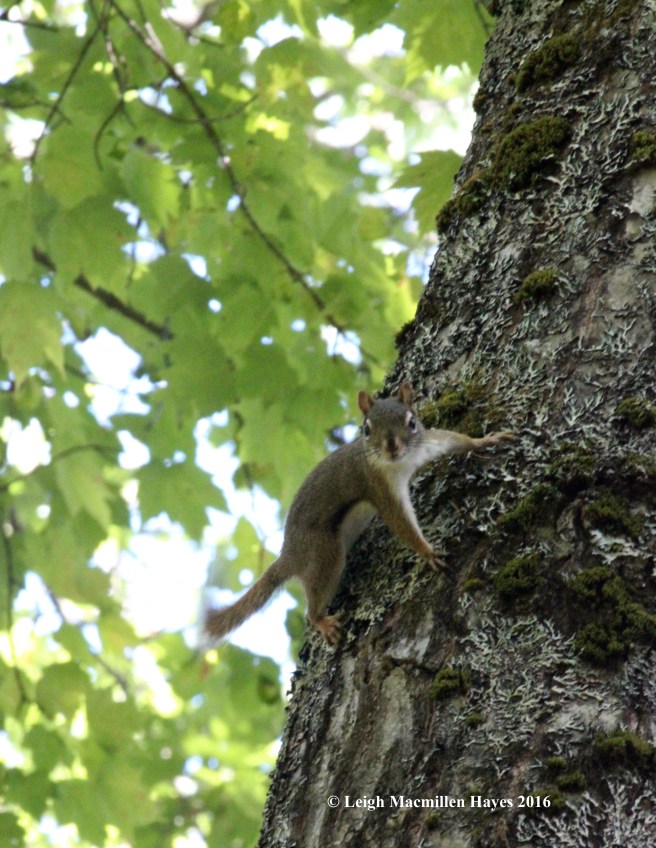
When I reached the canoe launch “road,” I was scolded for my action.

k-river-later-1

Despite that, I returned to the bench overlooking the mill pond on the river. Rather than sit on the bench this time,  I slipped down an otter slide to the water’s edge.

k-green frog 1.jpg

My efforts were rewarded. Frogs jumped. And a few paused–probably hoping that in their stillness I would not see them. But I did . . . including this green frog.

k-ruby-2

My favorite wonder of the day . . .

k-meadowhawk-6

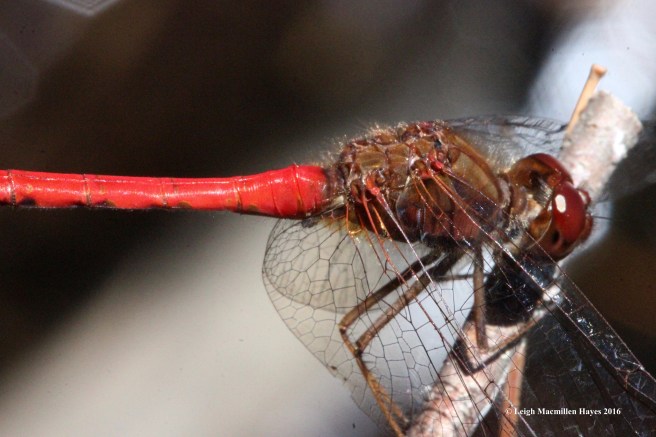
moments spent up close and personal with another meadowhawk.

k-ruby-3

No matter how often I wander a trail, there’s always something, or better yet, many somethings, to notice. Blessed be for so many opportunities to wonder beside the Kezar River.


Inching Along With Jinny Mae

Jinny Mae is a slow poke. Me too. And so today, we moved at slow-poke speed and covered maybe a mile in total.

h-yellow-necked caterpillar

We traveled a trail I frequent at Holt Pond Preserve, but I had the opportunity to view it through her eyes. That meant, of course, that we shared identical photos because we always pause to focus on the same thing. I trust, however, that our perspective was a wee bit different–as it should be. For isn’t that what makes us individuals?

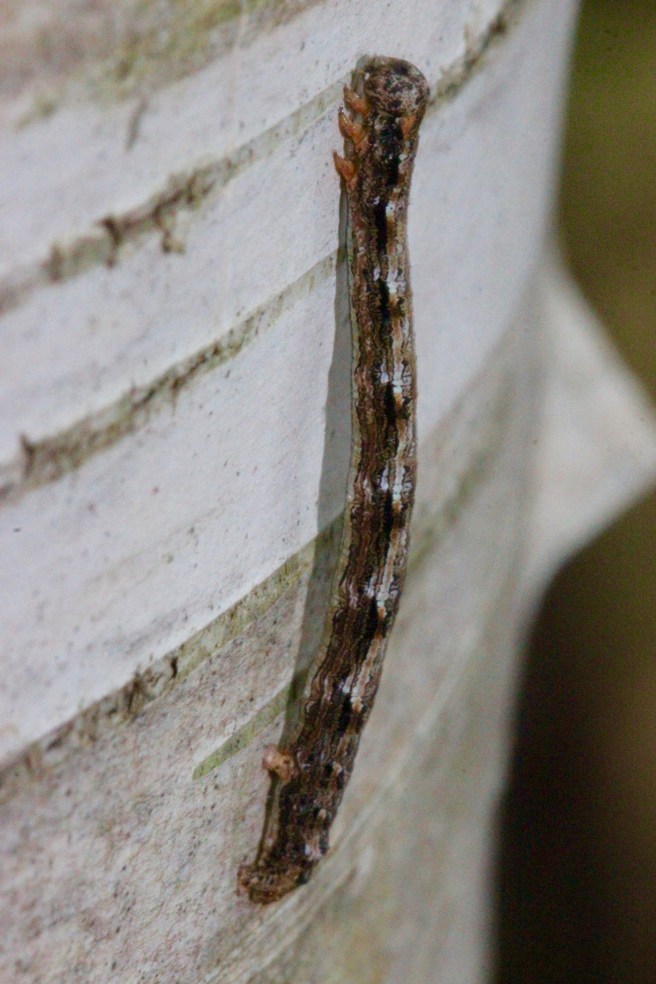
Speaking of individuals, we saw only one of these yellow-necked caterpillars. I didn’t know its name until I looked it up later. Apparently, the adult is a reddish-brown moth. And this is a defense position–indeed.

h-Royal fern

And then the royal fern forced us to pay attention. The fertile blade of a royal fern typically looks similar to a sterile blade, but has a very distinctive cluster of sporangia-bearing pinnules at the blade tips that appear rather crown-like. What to our wondering eyes did we spy–sporangia on lower pinnules. Did this fern not read the books? We checked the rest of the royal ferns along the path and never saw another like this one.

h-entering pitchter

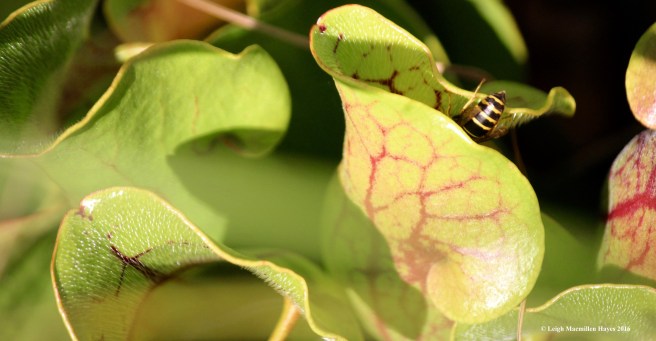
One of our next reasons to pause–those wonderful pitcher plants that always invite a closer look. We weren’t the only ones checking them out.

h-entering the pitcher

A yellow jacket was also lured by the smell of sweet nectar. A walk down the leaves was probably the last walk those insects took. Inevitably, they’d slip to the bottom of the pitcher where a pool of water awaited. There, they either drowned or died from exhaustion while trying to escape since the downward pointing hairs prevent such from happening. Eventually, after the insect bodies break down, the plant will access the nitrogen and phosphorus contained within each bug. I can’t visit this preserve without spending time in awe of the pitcher plants.

h-spread-winged damselfly

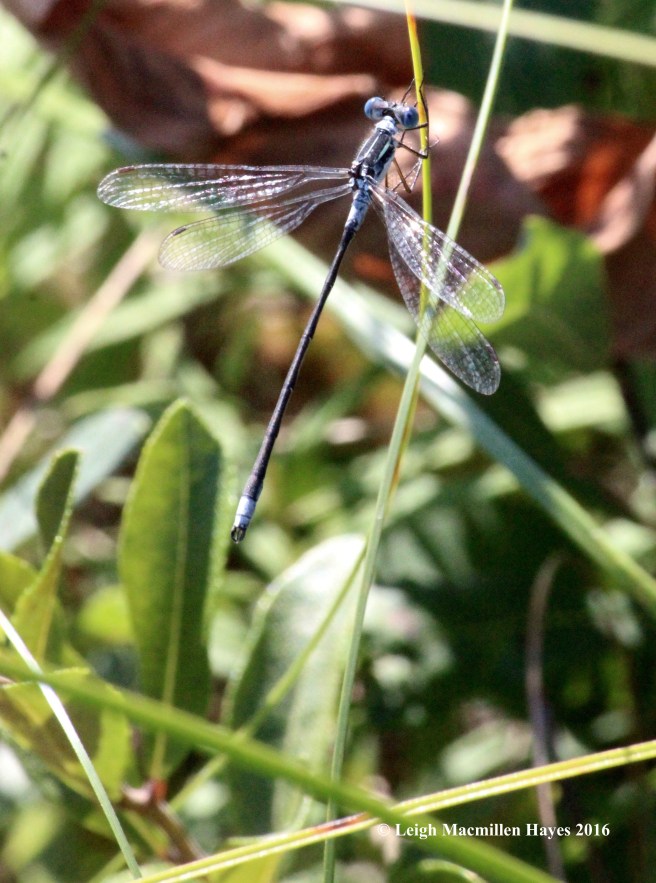
Damselflies and dragonflies also made us stop. We had walked on the boardwalk across the quaking bog. A spread-winged damsel posed beside Holt Pond. When at rest, it spreads its wings, unlike typical damselfly behavior.

h- darner dragonfly

We watched as the darner dragonflies zoomed about, just above the water and vegetation at the pond’s edge. Occasionally, one hovered close by–just long enough for a quick photo opp.

h-jack in the pulpit

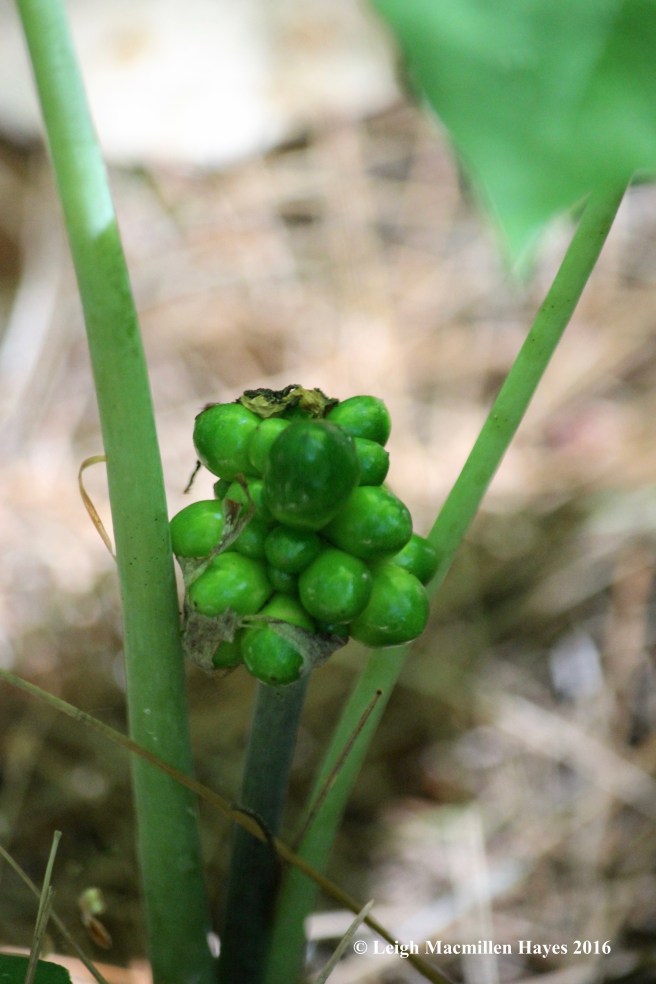
As we continued back along the main trail, Jinny Mae spied a Jack-in-the-Pulpit. The fertilized flower cluster had produced green berries. Soon, they should ripen to a bright red before dispersing their seeds. If the thrushes and rodents are savvy, they’ll enjoy some fine dining. These are not, however, people food. Oxalic acid in the root and stems may cause severe gastric problems.

h-purple aster

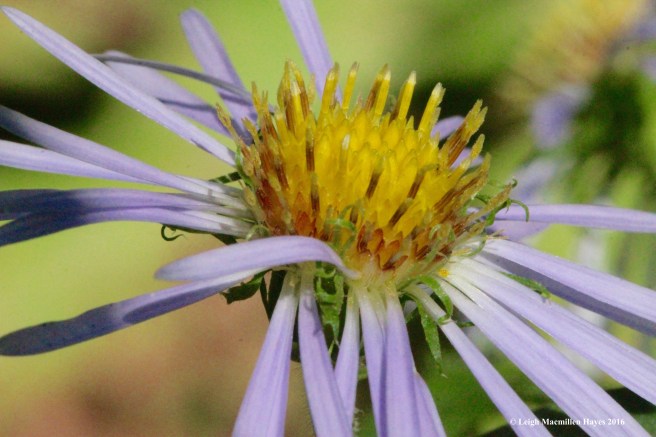
In the same spot near Sawyer Brook, we admired the purple flowerhead of swamp asters. Within the flower disk, the five-lobed florets have started their transition from yellow to dull red.

h-jewelweed

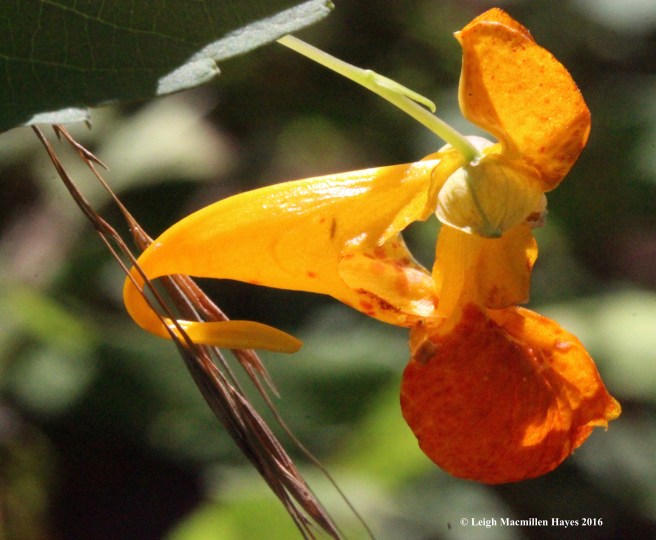
With Jinny Mae’s guidance, I was able to take a decent photo of a jewelweed. I love the spurred sac that extends backward. And noted that a small seed capsule had formed. JM is from the Midwest and refers to this as Touch-Me-Not because that capsule will burst open and fling seeds if touched. You say potAto, I say potAHto. We’re both right. As we always are 100% of the time–insert smiley face.

h-inch worm

It was another three-hour tour filled with many ohs and ahs, lots of wonder, a few questions, several considerations and even some answers.

h-inching along

Inching along with Jinny Mae. Always worth the time and pace.

Wondering About Nature’s Complexity

As I sat on the porch of our camp this morning, three wafts of smoke blew up from the ground along a pathway to the water. And my heart swelled. Earlier, I’d been out between raindrops taking some photos and my eye was drawn to that very spot. My photos didn’t come out so well, but I believe what I was looking at were bird’s nest fungi. They were cup-like in shape and some were filled with minute eggs, while others were covered in an orangey blanket.

I suspect it was the latter that caught my attention from the porch. It had started to rain and this fungus depends on rain for dispersal of its egg-like capsules that contain the spores. The hydraulic pressure of a raindrop falling into the nest causes the capsule to spring forth, emitting spores in a puff. I could have sat there all day waiting for it to happen again, but . . .

1 hawkweed

there were other things to look at and wonder about. The bird’s nests weren’t the only ones ready to send forth new life. While the hawkweed seeds embraced the raindrops, they waited for a breeze to send their young into the greater world.

2Oleander aphids on milkweed

And then I returned home, where I found some other cool things. It all depends upon your point of view, I suppose, but check out these Oleander mites on the underside of a milkweed leaf. They are so named because they also like Oleander.

4ant milking aphids

Those weren’t the only aphids wandering about. The little gray dots on this leaf are actually another form. So here’s the scoop on ants and aphids. While aphids suck the sugar-rich fluids from their host plants, the ant strokes (milks) the aphids with its antenna to get them to secrete waste (honeydew), which has a high sugar content. And we all know that ants love sugar. Honey-dew just took on a whole new image.

3cranefly

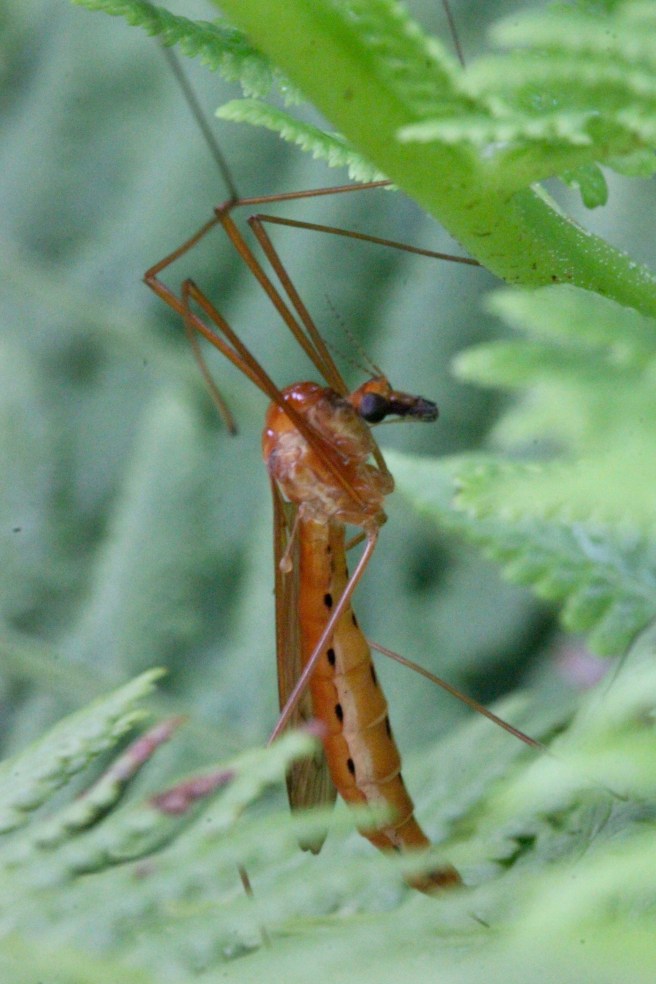
Tucked under the lady ferns, I found a cranefly. I’m always searching for orange in support of our young neighbor who was recently diagnosed with leukemia. When I started posting a photo a day in his honor, I didn’t realize how important it would become to me–making me think about all that he and his family are enduring on a daily basis. He is in remission, but still undergoing treatment and will need a bone marrow transplant. This cranefly almost became today’s post, but a daylily dragon won out for Team Kyan.

5mystery

So dear reader, I enjoy teaching you, but now need you to teach me. I found this under another leaf on a shrub. And I often see the same thing stuck to our house. It reminds me of a caddisfly case. What is it?


7daylily

No mystery here. But still, the complexity . . .

8mallow

enhanced by raindrops.

c9omplex world

Nature is complex, but oh so worth a wander. And certainly worth a wonder.

Thanks for stopping by today.

The Big, The Little and Everything In Between

I stepped out of the shower after a walk around town with friend Marita and heard someone chatting away on the answering machine. Maybe it’s because I didn’t have my glasses on, though what that has to do with it I don’t know, but I couldn’t ID the voice. The male yammered away about something in the snow and it had come last night and I had to get there quickly. For some reason I thought it was our eldest and I  wondered what it was that needed my immediate attention. So, I cautiously picked up the phone and said hello. The voice on the other end continued talking desperately about me going somewhere. “Who is this?” I asked. It was friend Dick and I should have recognized his voice, but maybe not having glasses on is like not being able to taste if your nose is stuffed. Or maybe I’m overthinking as usual. Dick, however, was not overthinking or overreacting. He was excited and knew I would be as well. He was standing in a friend’s yard about a half mile from here and looking at bear tracks in the snow.

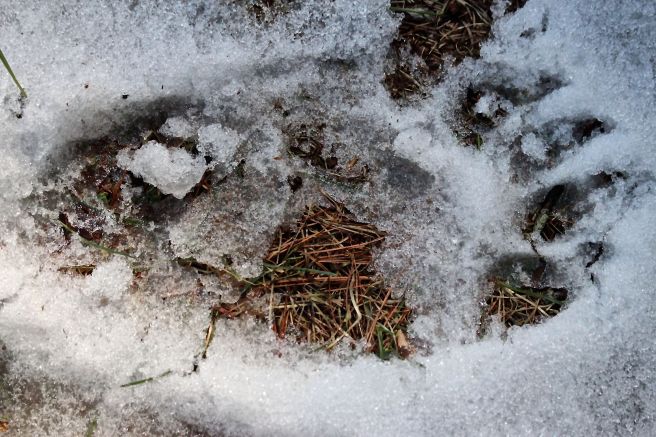
b-bear 7

As he knew he would, he had me on the word “bear.” His voice was urgent as he insisted I stop everything and get to his friend’s house. “I just need to dry my hair and then I’ll be right there,” I said. Deadlines loomed before me but bear tracks won my internal war. Dick suggested I just wrap a towel around my head. Really, that’s what I should have done because my hair has no sense of style whether wet or dry, so after a few minutes I said the heck with it and popped into my truck, camera and trackards in hand.

b-bear2

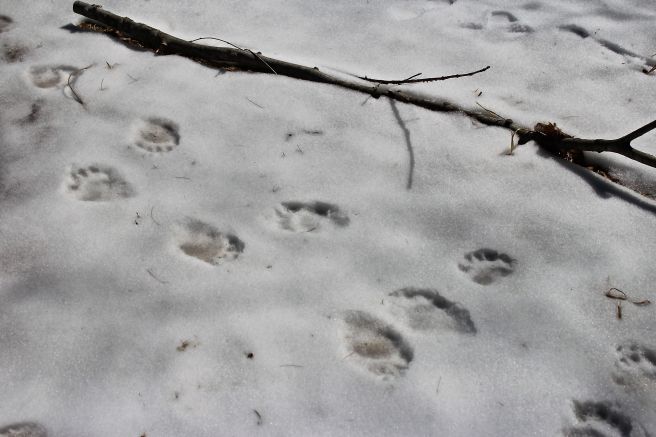
Yup–bear tracks. Classic, beautiful bear tracks. Even nail marks above the toes.

b-pigeon toed

And the pigeon-toed gait.

b-bear 9

My heart be still. The bear certainly wasn’t.

b-bear fence

It trampled a garden fence.

b-bear 4

And yanked down a suet feeder that dangled from a wonderful rigging at second story height designed to keep the raccoons from stealing it. We couldn’t find the actual feeder.

b-feeder1

It toppled another feeder and consumed all the sunflower seeds. Oh, the squirrels may have helped, but apparently the feeder was stock full. Not any more. We looked for hair but found none.

b-trot

One of the mysteries to us was why did the bear suddenly trot. I’m now wondering if it was startled at some point and ran away.

b-bear 6

Before leaving, I enjoyed one more look. How sweet it is. And how thrilled I was to have seen it–especially knowing that it wouldn’t last long. The. Big.

b-feathers in circle

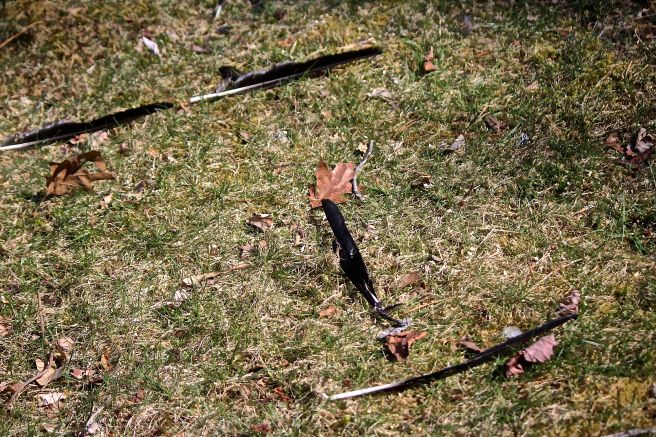
When I arrived home, I knew I needed to work, but figured a quick walk to check on the vernal pool was a great way to celebrate the bear tracks. And on my way–feathers. Long black feathers.

b-feather 1

Most were about a foot long.

b-feather 2

They appeared to be torn out rather than cut.

b-bird head

I know the neighborhood cats hang around our bird feeders all day–ever hopeful. But I don’t think they got this crow. I’ve a feeling a hawk was the culprit. The. In. Between.

b-snow on mount

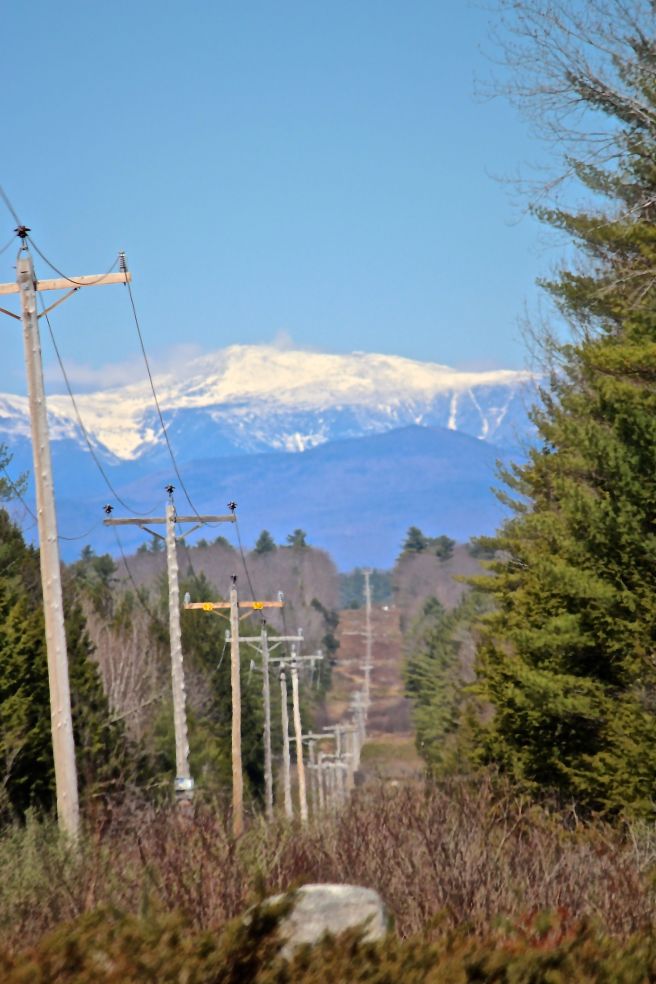
It’s my neighborhood, so I always cast an eye toward the Mount. The. Big. Again.

b-vp1

The water level seems about the same as last week and a wee bit of Tuesday’s snow still decorated the  western shore.

b-tadpoles 3

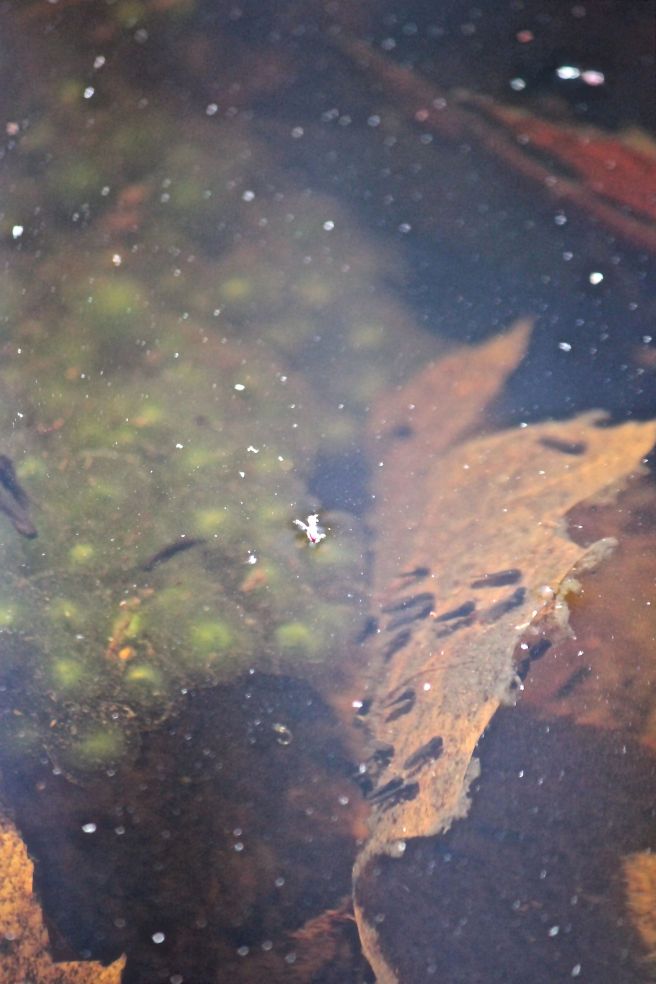
Though the lighting wasn’t great at that hour, it was obvious that the tadpole population had increased.

b-sally1

And the salamanders continued to grow within their protective covering. The. Little.

b-woody1

I did finally settle down to work. And then it was lunch time. My guy and I weren’t the only ones dining.

b-woody lunch 1

After I finished two assignments and before I walked to a meeting, I decided to visit the pool again and capture the action in the late afternoon light. But first, an examination of the woodchuck’s feeding site. Yup, those leaves were nibbled.

b-woody lunch 2

And so were these. The. In. Between.

b-vp no snow

And then it was back to the pool, where the snow had melted. But, I have to share a finding along the way. Or rather, a non-finding. I intended to grab the crow head because I wanted the skull. Not. It wasn’t in the path where I’d seen it in the morning. I poked around and couldn’t find it anywhere. Who stole it? Maybe one of those darn cats.

b-tads 7

In the warmth of the sun at the eastern side of the pool where most of the egg masses were laid, the population continued to increase.

b-tads 10

I felt the same glee about all of these little critters as I felt about the bear tracks earlier in the day.

b-tads on sallies

Tadpoles and salamanders. I may not see bears tracks every day, but for a brief moment in time, I’m honored to watch the transformation that takes place in the vernal pool. The. Little. Times. Two.

Giving thanks for the ability to wonder. The Big. The Little. And Everything In Between. Especially Everything.

Following In The Footpath Of Others

Rain marked this morning’s dawn, but that didn’t daunt our group of six. We donned overcoats, gloves, hats and waterproof boots knowing that we’d encounter mud along our intended route.

And so we met near the former site of the Methodist church in the northeast corner of Sweden–Sweden, Maine, that is. Our intention was to follow the snowmobile trail for a couple of miles and visit foundations and a few other historic sites along the way.

s-you are here map

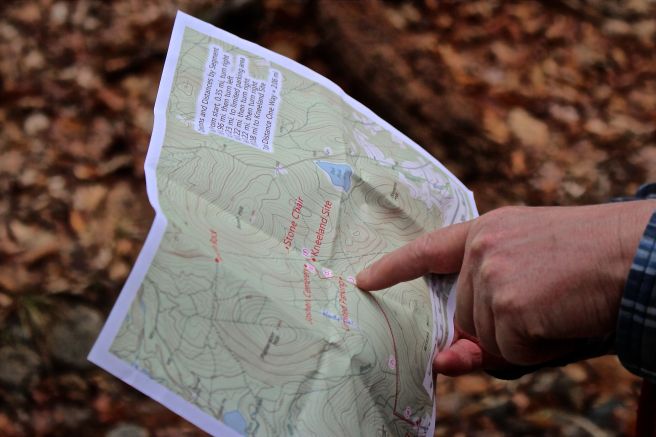
Maps dated 1858 and 1880 show a network of roads that served the scattered neighborhoods of this town. The trails we were about to walk on follow the footpaths and wagon tracks of earlier people. These were once town roads. We happened to be in the presence of the president of the Sweden Historical Society and she gave us copies of the maps to help us gain a better understanding of our destination. She also printed out a topographical map so we’d have no excuse for getting lost.

s-following trail in

With the sun suddenly shining upon us, we laughed at ourselves as we moved along because we traveled at breakneck speed. Well, for us anyway–1.8 mph when we were moving. Note the phrase: “when we were moving.”

s-stream to Patterson 1

Along the way, we paused to admire the streams that flow toward Patterson Brook and

s-vp 1

checked on life in a potential vernal pool.

s-stream 2-mill site

While we find water so mesmerizing, I couldn’t help but wonder about its potential here for the early settlers.

s-stream 3

Several times we found stone walls on either side of the streams and didn’t know how to interpret their meaning. That was OK–we appreciated not having all of the answers.

s-stream 4

The opportunity to partake of the beauty among friends old and new was enough.

s-cheyenne

Even four-footed friends.

s-single:double wall

The stonewalls, both double and single in structure, indicated that the land had been cultivated. We tried to make sense out of the sudden switch from single to double and back to single in a short distance, but really, they didn’t necessarily build walls according to our expectations of what life must have been like–a single wall meaning keep the farm animals in or out and the double being a garden wall–lots of times it was probably just plain common sense and a need to get rid of the stones that rose with the frost.

s-drilled rock

Eventually, we climbed over the wall and headed up toward this monument. Dave, who lives in this neighborhood and knows these woods well, encouraged us to ponder.

s-drilled rock 2

Why was the top of the rock split off intentionally and then left there?  Was it intended for a foundation stone? Was the neighborhood abandoned before this piece was used?

s-town line 1

We wandered further through the woods and came to the Sweden/Waterford town line. Two stone walls less than ten feet apart mark the boundary. Waterford to the left and Sweden to the right. (Did I get that right, Linda?–my left and right?)

s-town line

Orange paint also marked the boundary line.

s-kneeland foundation

We’d crossed into Waterford and stopped for a break at the Kneeland (1858)/Kimball (1880) residence, a rather large foundation with a center chimney.

s-fdn rocks, squirrel table

Apparently, we weren’t the only ones who paused here for a snack.

s-hidden brook

And then we crossed the snowmobile trail once more and began bushwhacking again. Though you see only tree shadows, leaves and moss here, it wasn’t what we saw, but what we had the honor to hear that made us stop–an underground brook. It felt like we’d stumbled upon a secret spot.

s-stone chair 2

Dave led us uphill to another special spot a friend of his discovered years ago–the stone chair. You have to wonder about this. We’re in the middle of nowhere that was once somewhere. Below this is a large hole in the earth, possibly a foundation of sorts. And beside, a skidder trail. So, who built the chair?

s-stump by chair 100:50

Atop the foundation of sorts was this cut stump–we surmised it was cut about fifty years ago and that it was about 100 years old at that time.

s-group 1

It really doesn’t matter. What matters is sharing the discovery.

s-chair and Sophie

Another four-footed friend also thought it was rather special.

s-cable

Not too far from here we found something else that spoke of logging.

s-goshen 2

We continued our bushwhack to another site of importance–and came upon it from the backside.

s-goshen sign 2

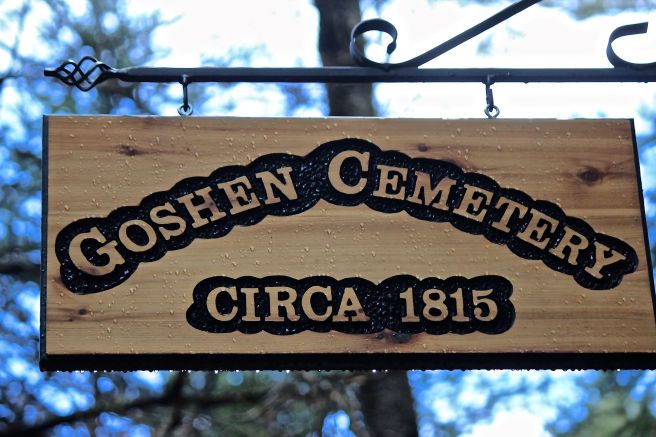
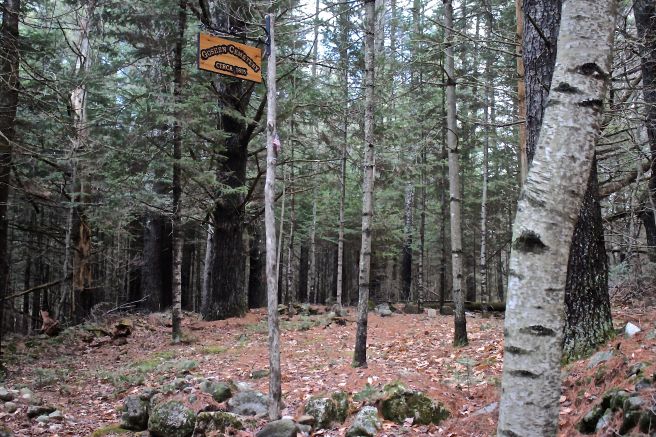
The Goshen Cemetery, circa 1815. Notice the raindrops and blue sky. A few drops fell in the middle of our walk and then it cleared again.

s-goshen cem 3

The cemetery contains stones that had been buried under the duff, but when discovered, were uprighted in spot.

s-goshen stone 2

s-goshen tomb stone

The tombstones are unmarked and as far as I know, two theories exist–an epidemic struck the neighborhood and those who died needed to be buried as fast as possible, or these were the tombs of the residents from the town’s poorhouse.

s-goshen sign 3

One thing we do know for certain. The bears like the sign and it has been remade several times and posted higher and higher in hopes that they’ll leave it alone.

s-bark art 1

Those were our historical finds, but we also made time to enjoy our surroundings, beginning with artwork created naturally.

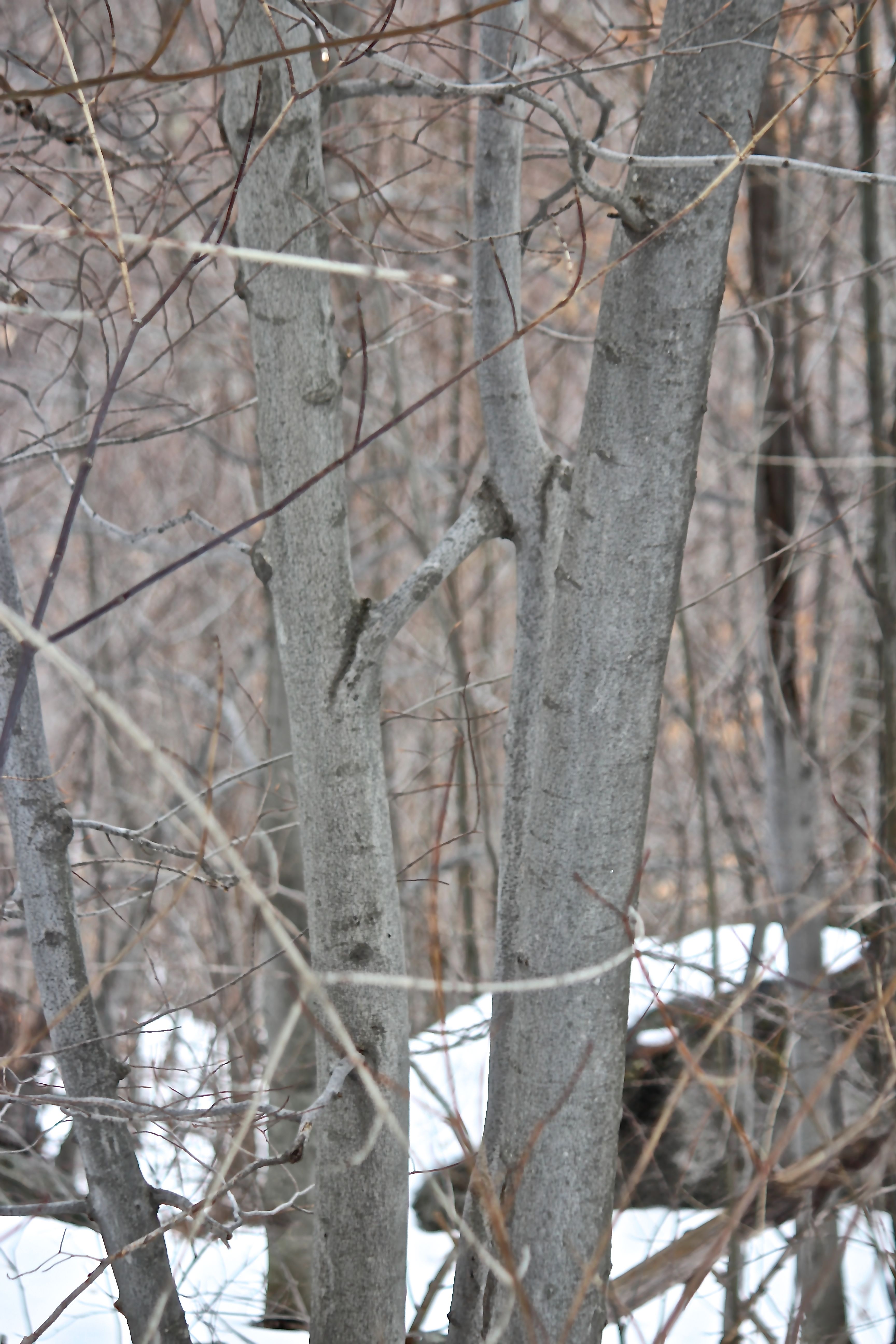
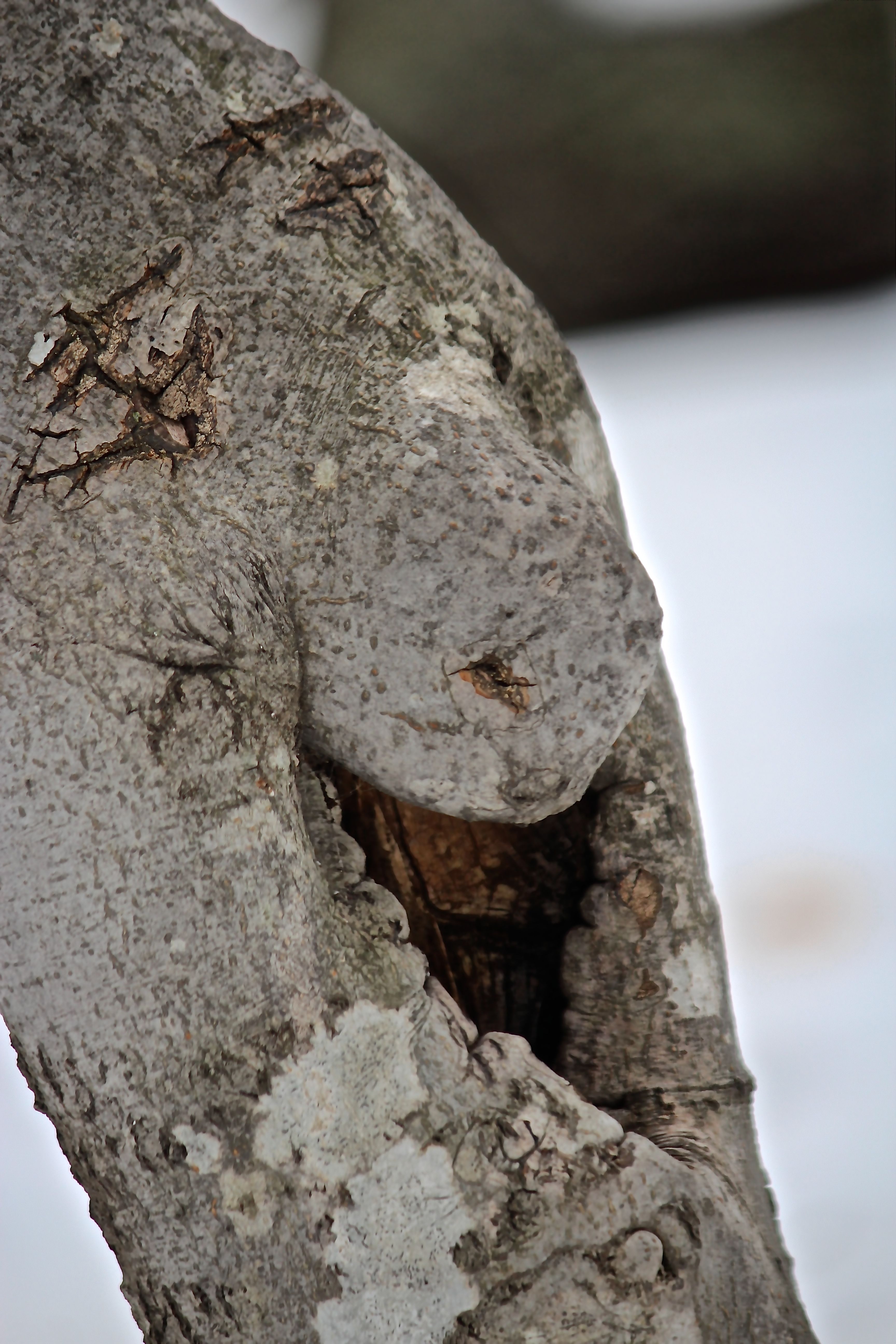
s-beech elephant

I always say that beech bark doesn’t remind me of elephant skin, but today–elephant legs and feet, for sure.

s-downy rattlesnake plantain

Peaking out from the leaf litter, downy rattlesnake plantain showed off its white-veined leaves. Stained glass windows come to mind whenever I spy this. And though its the commonest of the rattlesnake plantains, I’m always in awe.

s-checkered rattlesnake

We also nearly stepped on its cousin, checkered rattlesnake plantain. I do have to say that if I were in charge of the world, I’d switch their names.

s-artist conks

We found artists conks and

s-hemlock shelves 1

old hemlock varnish shelves.

s-porcupine den

We know where the porcupines denned,

s-moose:striped maple

moose browsed,

s-pileated 1

woodpeckers dined,

s-deer rub

deer rubbed their antlers,

s-deer rub:paw

and pawed the ground. Do you see it at the bottom of this photo? It’s a scrape meant to communicate information to other deer.

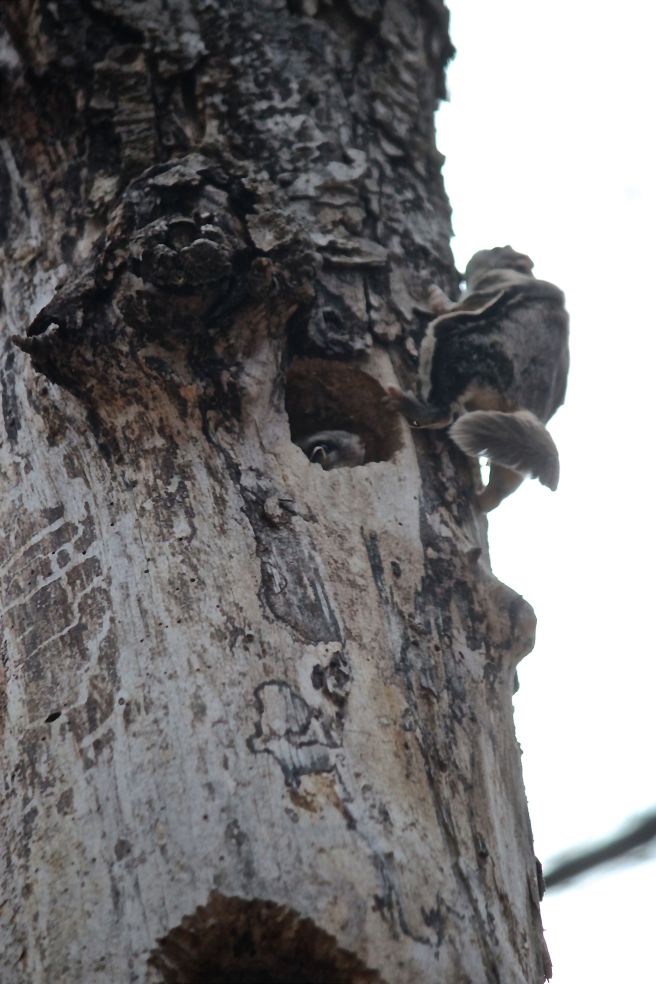
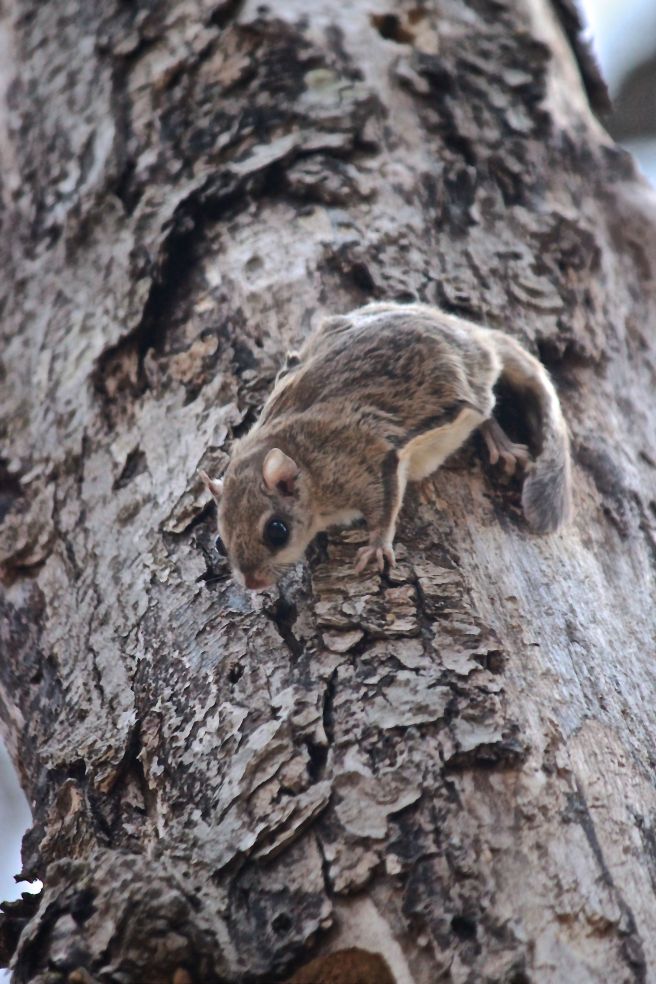
s-flying squirrels 1

But one of my favorite sights of the day–the flying squirrels that scampered up an old snag. Notice the flat tail–a rudder.

s-fs 2

And the flap on its side, that furry membrane that stretches from the wrist to ankle–a parachute of sorts for gliding from tree to tree.

s-fs 4

And those bulging eyes–the better to see in the dark.

s-heading home

Four hours and almost six miles later, we followed the trail out, thankful for the opportunity to spend time wondering together and follow in the footpath of others.


The Borrowing

My friend, Dick, sent me the following message yesterday: “from a novel, Northwest Angle by Krueger … who has a series which relates to the Objidwa (sp) of the upper parts of Michigan …

‘What’s a Mide?” — ‘A member of the Grand Medicine Society,’ Stephen explained. ‘A healer. Somebody who understands the harmony of life and how to use nature to restore harmony when it’s been lost.” p246

“Belongs.” Meloux (a very senior shaman type of the Native American ‘Mide’ of the Objidwe) seemed to consider the word. “I believe no one belongs to anyone else. You, me Waaboozoons, we are all dust borrowed for a little while from Grandmother Earth. And even that dust does not belong to her. She has borrowed it from all creation, which is the Great Mystery, which is Kitchimanidoo. And if you ask this old man, I would say that another way to think about Kitchiimanidoo is as a great gift. Kitchimanidoo is not about keeping. Nothing belongs to anyone. All of creation is meant as a giving.” p 269

While I haven’t read the book or any of Krueger’s works, these words resonated with me as I moved about this morning.

m-vp

My first stop was a visit to the vernal pool, where the ice is beginning to melt.

m-vp, birch seeds

I looked for insects and found instead birch seeds and scales–meant as a giving.

m-berries

Wintergreen berries remained prolific below the power lines. While this fruit is traditionally browsed by a variety of mammals, I had to wonder if its location is the reason it was left untouched–poisoned by the herbicides Central Maine Power uses to keep the land clear. What was meant as a giving revoked.

m-leaves thru ice

Not all was bad as I followed the trail for a distance and enjoyed the beauty that has begun to emerge.

m-sphagnum color

The pompom heads of sphagnum moss contrasted brilliantly beside the running clubmoss.

m-trail light

Looking back, I noticed that today’s sunlight was captured in yesterday’s raindrops–certainly a reason for thanks-giving.

m-mount 1

And before me–man and nature in the eternal struggle for harmony. An example of borrowing.

m-pollen?1

Before I turned onto a logging road, a puddle caught my attention.

m-pollen?2

My first thought was pollen, but as I approached, I realized the little dots were moving about much like spring tails because .  . . they were spring tails. So my learning increased as I noted their color and the fact that there are aquatic members of this family. Another giving received.

m-pin cherry warts 2

On recent treks, my bark eyes have been confused about two trees–black birch (aka sweet or cherry birch) and pin cherry. As youngsters, both feature reddish-brown bark. What has thrown me off is the association with other birch trees, including the yellow birch that grows behind this specimen. Today, I made a point of noticing–the warty orange lenticels, lack of catkins and no wintergreen scent. These are three features that helped point me toward pin cherry. Black birch bark features long, thin lenticels, catkins common to birch trees and when scraped, that delightful wintergreen smell.

m-pin cherry:birch1

Despite the fact that they are not of the same family, certainly they’ve found a way to give to each other and live in harmony. A lesson.

m-porky

Just beyond the birches, in one of many stump dumps along this logging road, something caught my eye.

m-porky 1

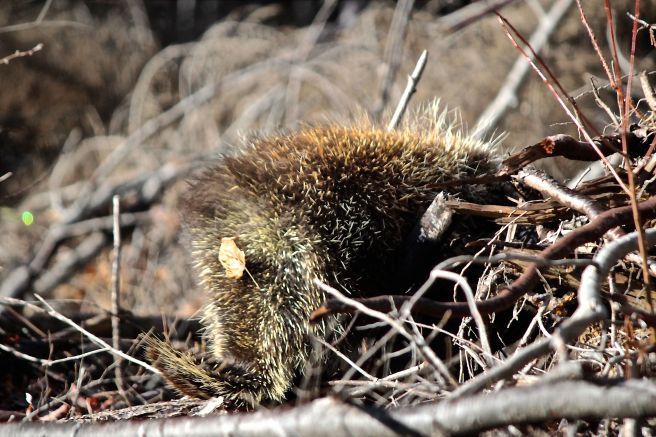
A porcupine worked over the bark of a fallen hemlock tree. I stood for several minutes and watched. Either it wasn’t aware of me or I didn’t pose enough of a threat.

m-porky again

The leaf caught on its backside made me chuckle and wonder why we don’t see more of that.

m-porky like

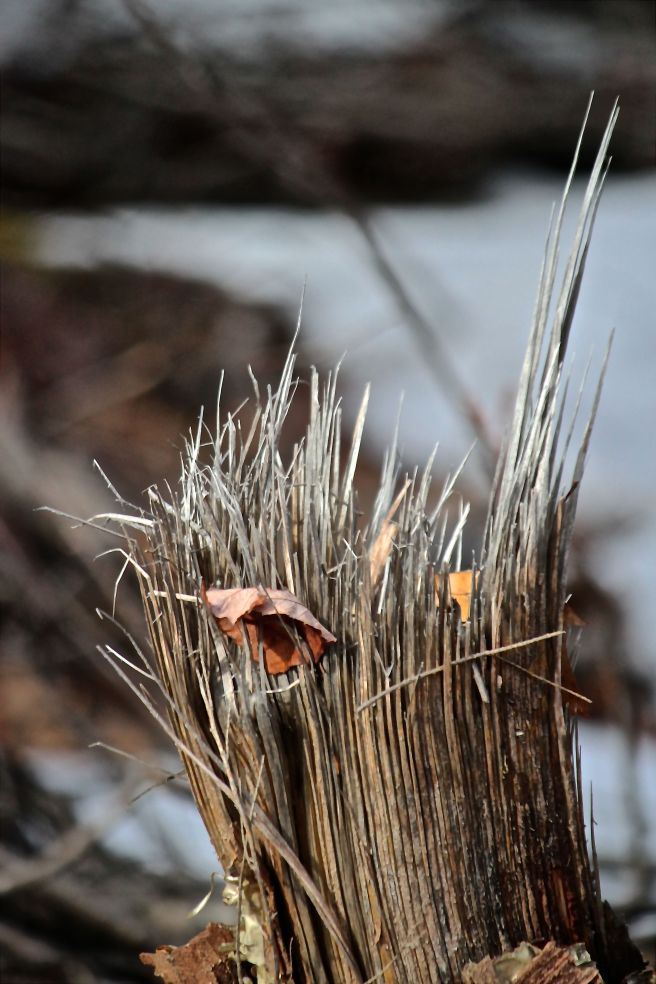
I’m amazed that I saw it at all in this land that has been chopped up over the course of the last three years. Notice how leaves are similarly stuck to this shredded tree stump.

m-porky tree 3

m-porky tree 2

m-porky tree

Behind were the trees that have received the porcupine’s recent attention. While the logging is destructive, it helps heat homes, provides income to at least several people including the logger and landowner, and creates new habitat and food opportunities for wildlife. Change is difficult and I’d grown to love these woods the way they were, but they were that way because of prior cuttings. A borrowing.

m-bubbles

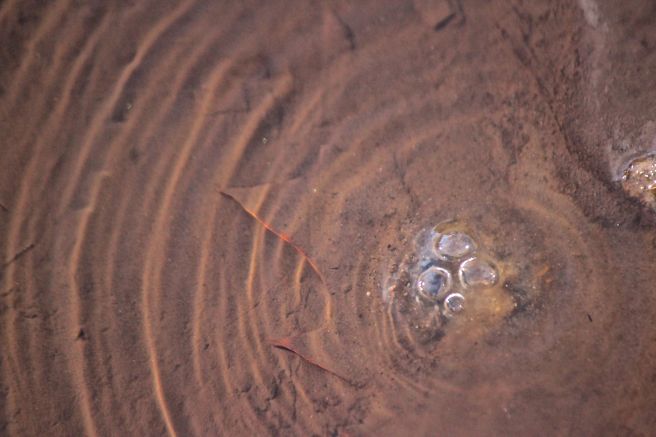
Most of the logging road was a combination of puddles and mud. At times, air bubbles rippled as I moved through and I was reminded of my youth years spent feeling for clams in the mudflats of Clinton Harbor on Long Island Sound. The memory itself was a giving.

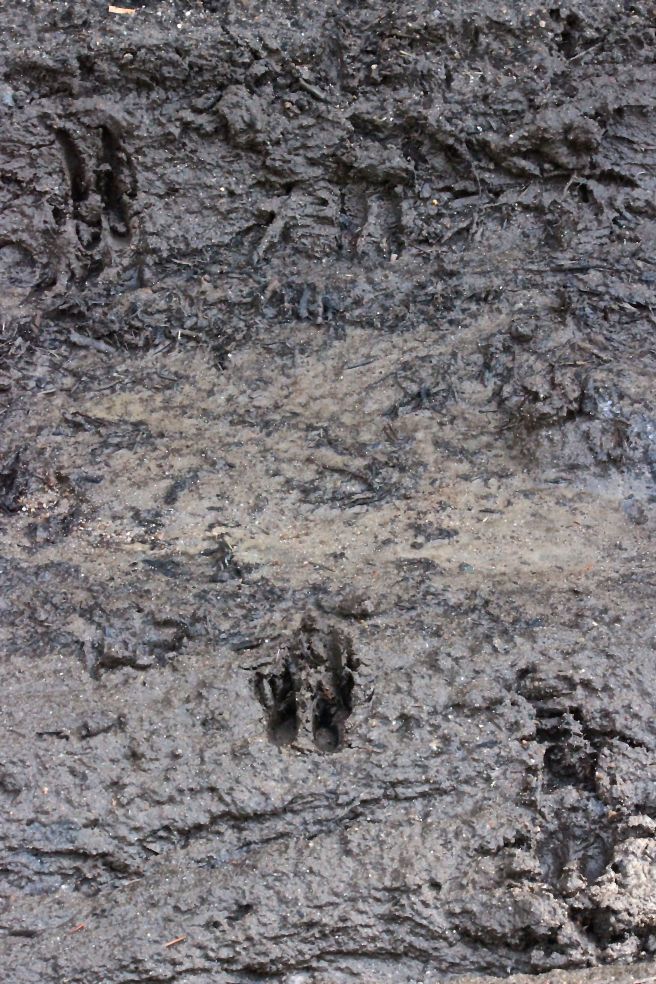
m-deer 2

Like the deer that frequent this land, my boots got stuck in the muck. Sometimes, it seemed like I was being sucked in and told to stand still. But my mind wandered on and I followed it.

m-trail conditions

Going forward in time, I’ll be curious to watch the reflections in the puddles change as the pioneer species move back in and regenerate this land. The harmony.

m-spirit

In the end, as always seems the case, I was on the receiving end of the giving and grateful for the borrowing as the spirit of Grandmother Earth shared a few tidbits of the Great Mystery.


Gallivanting Around Great Brook

It’s been a couple of months since Jinny Mae and I last checked in on the doings in the Great Brook neighborhood off Hut Road in Stoneham, Maine.

H-Forest Road 4

Forest Road 4 isn’t plowed in the winter. That’s OK. We welcomed the opportunity to admire our surroundings as we hiked above the brook. So much to see that is so often missed as one drives.

h-paper birch blue

Though the temperature was on the rise, the blueness of a few paper birch trees reminded us that it’s still winter.

h-sphagnum

We found sphagnum moss looking a bit frosty but cheering us on with its pompoms.

h-chaga

On more than one yellow birch, chaga offered its medicinal qualities in quantity.

h-yellow and white partners

We came upon a special relationship–a yellow birch and a white pine. Rooted in this place, they embrace and share nutrients.

h-yellow birch:white pine

Forever conjoined, they dance through life together.

h-GB1

Finally beside the brook,  we couldn’t see the rocks below very well, but watching the water race over them gave us a better understanding of the forces that have smoothed their surfaces.

h-GB south

In a few more months, we’ll stand here and wonder where all the water went.

h-ice drips& bubbles

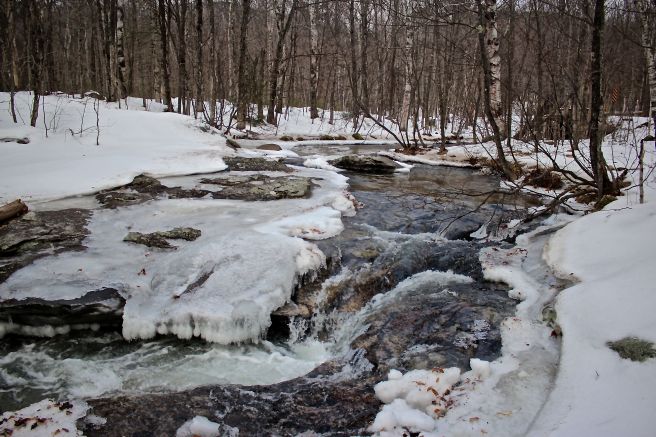
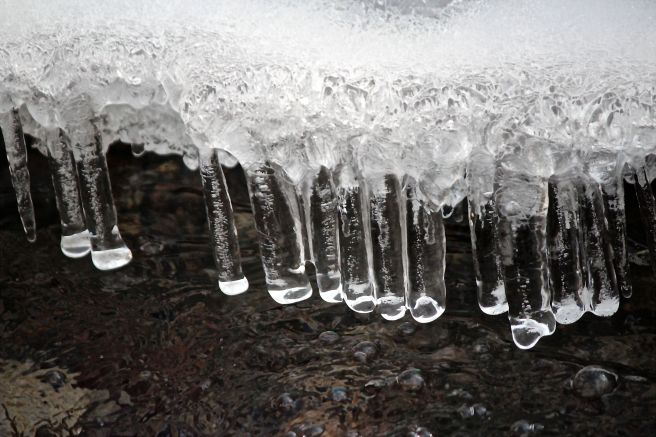
But today, it was the ice formations that we couldn’t stop admiring. Bubbling water below and dripping ice above, each adding to the other and both constantly changing.

h-ice 2

So much variation on the same theme as coursing water freezes into ice while at the same time carving into the rocks below.

h-ice pedastle support

Looking beneath, we noticed pedestals shaped like elephant legs providing support to shelves above.

h-gb ice castle

Occasionally, we saw crystalline turrets, translucent arches and frozen chandeliers of castles captured in ice.

h-sets of ice feet

Sometimes, it seemed like ballerinas danced on their tippy toes. That’s what water really is, isn’t it–a dance through time with changing tempos along the way?

H-GB

We crossed Great Brook and then paused for a moment as we decided which trail to follow.  We took the road less traveled by. I laughed when Jinny Mae referenced Robert Frost’s poem. My former students don’t read this, but that was one of the poems they had to learn and recite. And my guy–poor soul–knows it through association. Actually, he’s a better soul for that reason.

h-tree owl 2

So you may not see it, but Jinny Mae and I did–an owl hidden in the ash bark. Not a live owl, mind you. Well, that depends on your perspective, I suppose.

h-heal all

Within minutes, we knelt to admire Selfheal or Heal All (Prunella vulgarism) and its hairy calyces.

h-survey sign

We stood by the survey marker sign and realized it had been attached for many years.

h-survey marker

Perhaps 51 years!

h-frullania 1 on red oak

h-frullania 2

On a red oak, we pause to look at the reddish-brown liverwort–Frullania. There’s history in this species–dating to the earliest land plants. No matter how often we see it, and we see it often, we feel privileged.

h-leaves and ice

The trail switches from snow to ice to water and back again. Ice covered leaves draw our appreciation.

h-fnd 1a

In the neighborhood, we pause to check on the local families.

h-fdn 1 chamber

I climb down to the root cellar and discover that the porcupines haven’t visited all winter. Old scat still present in there, but nothing new.

H-Fdn 2

Moving up the colonial road, we come to the second residence.

h-fdn 2 yellow birch on mantel

Atop the mantel grows an old yellow birch. Like any TV screen above the fireplace, it offers an ever-changing display.

h-brook upland

We moved toward Shirley Brook, where we were once again in awe of ice.

h-water and ice1

Water and ice: a relationship in constant flux–at the moment.

h-brook structure

Beside the brook is a stream that’s currently dry. We look edat the snow-covered stonework that crosses over it and realized we need to return and try to figure out what the structure might have been and why it was built here. Stuff like this adds to the intrigue. Man-made. When? Why?

h-spider 3

Poor Jinny Mae. She had to wait for me constantly as I shifted from one lens to the next. But check out this spider.

h-stone piles 1

We are the queens of bushwhacking and love discovering the stories hidden in the woods. In this neighborhood, lots of stone walls tell part of the story. Rock piles enhance the chapters.

h-moose scat 1

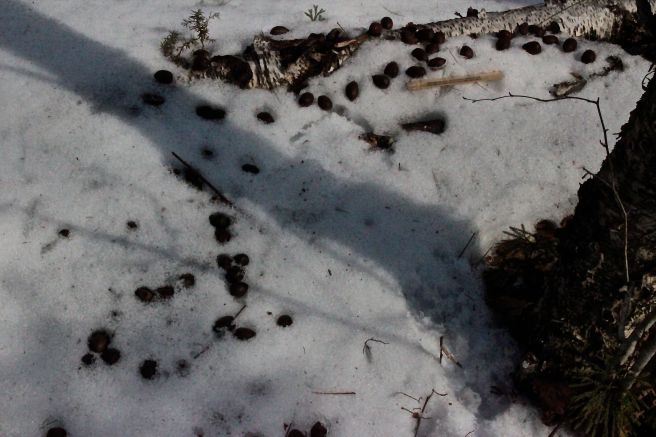
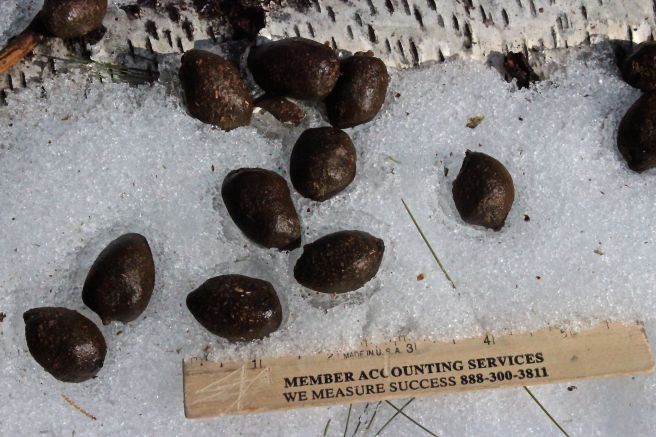
And then we found more. Fairly fresh moose scat insisted upon our attention. We’d noted that there were some old snowshoe hare runs and we found some moose browse on a nearby striped maple, but we were surprised that there weren’t many fresh tracks. Where have all the mammals gone?

h-moose scat 2

This scat is some of the biggest moose scat we can recall seeing. A few gems followed me home.

h-lady's slipper

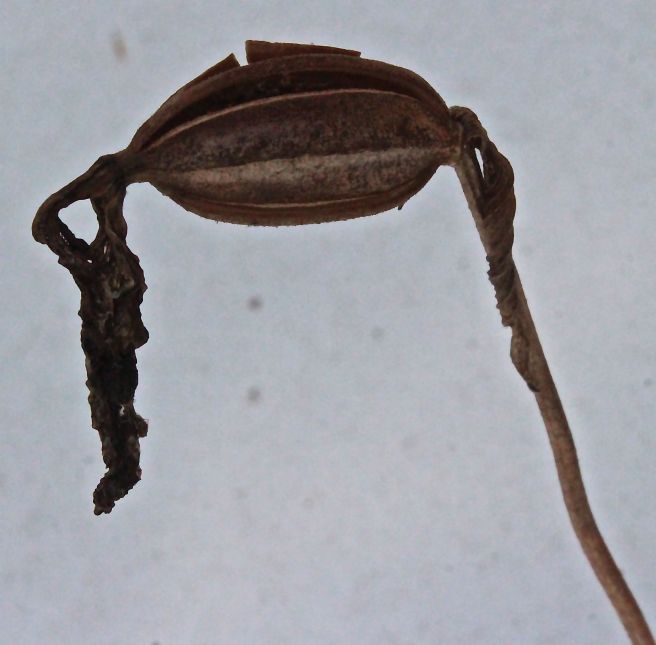
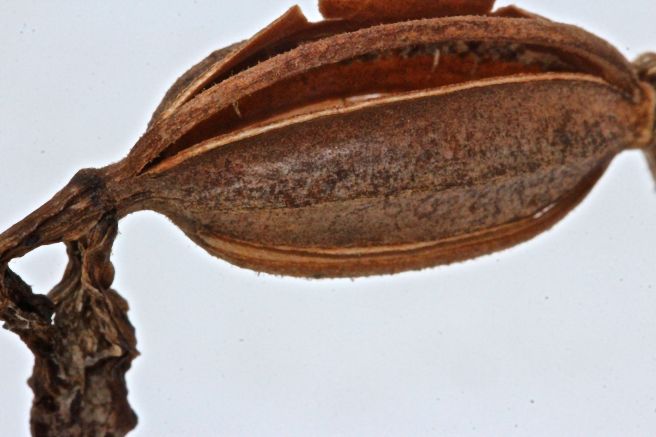
And then we happened upon something neither of us have seen before–at least that we are aware of. We had our ideas about what winter weed this is, but since we haven’t encountered it before our sense of wonder kicked in.

h-lady's slip pod 2

Back home, I looked it up in Weeds and Wildflowers in Winter by Lauren Brown. The capsule is woody and about two inches long. As you can see, it’s closed at both ends, but opens along slit lines–six in all, actually.

h-lady's bract at base of pod

At the back end, a long, curved bract.


And at the front, the slipper gone by. Yup–Lady’s Slipper (Cypripedium acaule). And the reason we didn’t recognize it–because it’s a rare find in the winter woods. Wow.

h-bear 1

We’re on our way out when we spotted these marks on beech bark. We’d looked and looked because we know this is bear territory.

h-bear NW

Compared to other bear trees, these claw marks are newer than most I’ve seen. Jinny Mae was as excited about the find as I was. I’d told her earlier as we scanned the trees that my guy has come to an unconfirmed scientific conclusion that bear claw marks appear on the northern side of trees. This one didn’t let us down. Based on the location of the sun that’s grew lower in the sky, these are on the northwestern side of the tree.

At last it was time to drive home.

Gallivant: go from one place to another in the pursuit of pleasure or entertainment. Over five miles and almost five hours later, we were thankful for the opportunity we shared today to gallivant around Great Brook.


Community-centered Mondate

While it wasn’t the first Mondate I wrote about, one of our early Mondates in the past year occurred at the Greater Lovell Land Trust property we headed to today–Back Pond Reserve in North Waterford/Stoneham.

m-eagle 1

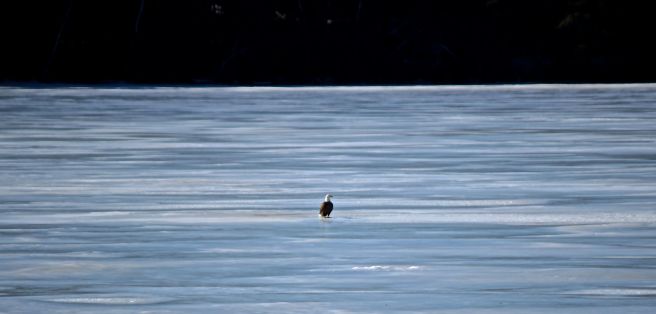
On our way we were forced to stop by Bear Pond for a regal sight.

m-Ron

And another regal sight along the trail–I’ve given thanks to Ron before and I know I’ll thank him again (RIP Ron) for his foresight in encouraging the greater community to protect the water quality of the Five Kezar ponds by purchasing and placing “The Mountain” area in conservation easement.

m-climbing view

As we climbed through the beech/oak forest, I paused to take a photo. Lo and behold, my camera didn’t work. I was certain I’d charged the battery, but it wouldn’t click. I tried a back-up battery to no avail. Frustration set in, but my guy reminded me that I could always take photos with my phone. I’m not one-hundred percent convinced that I’ve mastered phone photos, but decided it was better than nothing. This meant, however, less time focusing on photos and more time focusing on us. And that got me thinking about time. We were on a bit of a time crunch today, but the more important thing was that we were spending our time together doing what we love doing–hiking and being in each other’s presence. We spend so much time worrying about all that needs to be done and making money to do those things. But really, in the end will that matter? I don’t think so. I think it will be far more important that we learn to appreciate what is around us and figure out how to share that wealth with others. It won’t always have a monetary value attached because as they (whoever they are) say, “Money isn’t everything.” Is money anything? It certainly doesn’t grow on these trees. Or does it?

m-community changes trail conditions

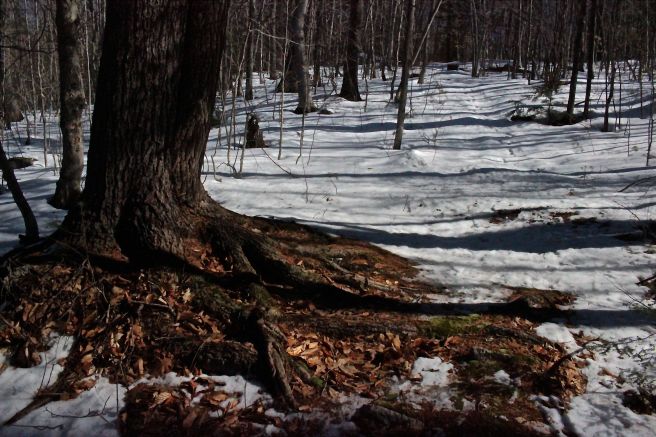
Though there was snow underfoot for most of the beech/oak community as we climbed, under the hemlocks it was a different story.

m-bare summit

And when we reached the summit of The Mountain Trail, nothing but bare ground due to its southwest orientation.

m-summit phone

We sat on a rock and enjoyed the sun while absorbing the view below and beyond. With the  phone I captured the moment.

m-view

And then I pulled out my camera again. Determination is the name of my game. Turns out I’d been wearing mittens as we began and my big muffs must have hit the wrong setting–creating a 10-second time lapse. Had we wanted to pose for a photo we would have been all set but that’s not our style. Hardly a selfie in our photo album. It is curious to notice the difference in color and wider range of the phone photo. But I prefer my Canon.

m-trailing arbutus

Near the summit, trailing arbutus announced its future plans.

m-connector trail

While trail maps show The Mountain Trail and Ron’s Loop, we long ago learned by chance that the two are connected via a trail down the backside. Today we reminisced about the first time we ever traveled this route and how we struggled to find our way. Though it still has its share of obstacles, it’s now much more obvious.

m-no snow under hemlock

The community changed from evergreens to hardwoods with occasional evergreens. And with that, the snow conditions also changed. We paused below this hemlock to admire the subtle transition.

m-hare

And we recalled our delightful experience of observing a hare in this very spot almost a year ago.

m-snowshoe hare scat

Today only tracks and scat alerted us that hares live in the neighborhood.

m-bobcat 1

Hare tracks weren’t the only ones we saw. All along the trail, though not quite as clear, we recognized that a bobcat had made a pass.

m-first bear tree

We also recognize dmarks we’ve previously admired on some old beech trees.

m-bear claw marks.jpg

I could almost feel the claw grasping the bark–both front and hind visible here. But there’s so much more going on with this tree. It hosts a community of visitors from big black bears to minute beech scales that cause the bark to develop cankers around its invasion. And in between–other insects and woodpeckers.

m-bear tree variety of life

It’s a tree of life even as it reaches toward death. Eventually it will fall and we will no longer celebrate its bear claw marks, but as it decays, it will leave a legacy on which these woods depend. The cycle of life. The work within the community.

m-pileated.jpg

Another beech down the trail displayed its form of the same gift.

m-broken bridge crossing

We reached the first of the crossings–this one still on the connector trail that once served as a snowmobile trail. For as long as we’ve traveled this way the bridge we were about to cross has been broken.

m-new bear tree

Though conditions were good, with my camera working again, my journey slowed. My guy accused me of searching for bear trees. And he was right. And I was further rewarded. I found one neither of us recalled seeing before.

m-new bear 2

m-new bear 1a

One foot atop another. Upward mobility in search of sustenance.

m-beech nut 2

It’s here for the taking.

m-yellow birch scales and seeds

At last, we found our way onto Ron’s Loop, where we turned right at the bridge and continued on. The community changed and here we found the fleur de lis and winged seeds of yellow birches settling onto their community of choice–moss upon a boulder.

m-fungi community

Creating a dense bouquet is the violet-toothed polypore community– a reminder that there’s beauty in age.

m-lonely pine

And beauty in singleness.

m-deer browse 2

We’re in the neighborhood where deer browse red maples.

m-raccoon prints

And raccoons venture forth on semi-warm winter nights.

m-raccoon diagonal

We rejoiced in recognizing the alternate-angled pattern of the trail they leave behind.

m-birch polypores

There were always surprises. Birch polypores decorated this paper birch that masked its condition with a healthy appearance.

m-brook

Despite my caution, we made several successful brook crossings.

m-my guy's prints

And I followed my guy to the end of the Earth–well, at least to the end of the trail–though I suspect he knows I’d follow him anywhere. He’s a good guy. Actually, he’s a great guy.

m-map.jpg

We paused at the kiosk to check the map. Imagination is a necessity–no kidding. For this moment you must connect the summit of The Mountain Trail to the far end of Ron’s Loop–thus re-creating the connector trail between the two.

m-5 kezar ponds road

Suddenly we are back on 5 Kezar Ponds Road headed toward our truck.

m-hornets nest

And here we found remnants of another community that is integral in the overall system of life.

As we drove home, we paused again by Bear Pond and the bald eagle didn’t let us down. Though the ice fishermen and women weren’t about today, it knew this community to be prime hunting grounds.

As for us, our hike was quick today because we had our own community efforts to join–he had a Lions Club meeting and I had a Maine Master Naturalist board meeting. We do our best to provide support in any way we can. It’s important to us to be community-centered–even on a Mondate. And by the way–the Lions are always looking for contributions to support their eye-sight programs; and the Maine Master Naturalist Program is still accepting applications for its Tier One course being offered from May-Sept this year in Bridgton, Farmington and Mount Desert Island.


Celebrating a Year of Wonder-filled Wanders

One year ago today I invited you to follow me into the woods. More specifically, I invited you to wander and wonder with me. I had no idea where the path would lead, but that didn’t seem to bother you. Occasionally I got fake lost, as was the case today, but still you read on. And other times I gave you the wrong information, but you quietly corrected me and continued to read. Thank you for your time, curiosity, encouragement and endless wonder. This one is for all of you.

b-woody1Check out this tree that I pass by each time I step into our woodlot. My guy and I were commenting on it just the other day–he tried pushing, but it stood firm. This morning, fresh wood chips indicated that the pileated woodpecker had paid a visit in the last 24 hours.

b-woody tree 2It’s a well-visited tree. What will the woodpeckers do when it finally does fall? Two things. First, they’ll continue to visit it because apparently it’s worthy of such. And second, they’ll find other trees; there are several others just like this.
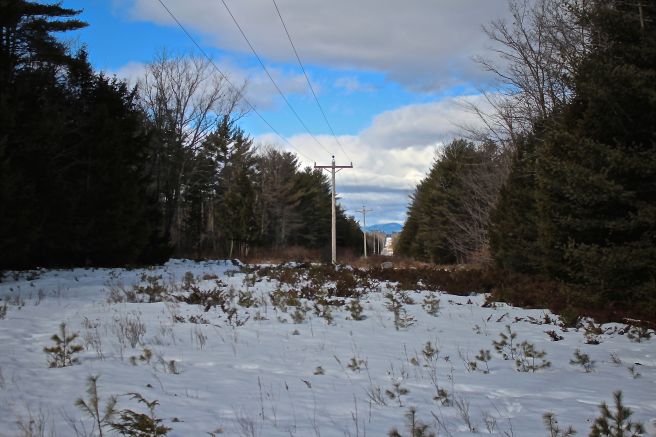
b-powerlineI was feeling a bit grumpy when I headed out the door, but finding the recent woodpecker works and emerging from the cowpath onto the power line where I was captured by the whitegreenbluegray of the world as I looked toward Mount Washington put a smile on my face. My intention was to walk along the barely used snowmobile trail as far as I could. I wasn’t sure if open water would keep me from reaching the road, which is a couple of miles away, but decided to give it a try.

b-cat following deerJust because that was my plan doesn’t mean that’s what happened. Maybe that’s what I love best about life–learning to live in the moment. This moment revealed the spot where deer sunk into the snow just off the snowmobile trail and a bobcat floated on top.
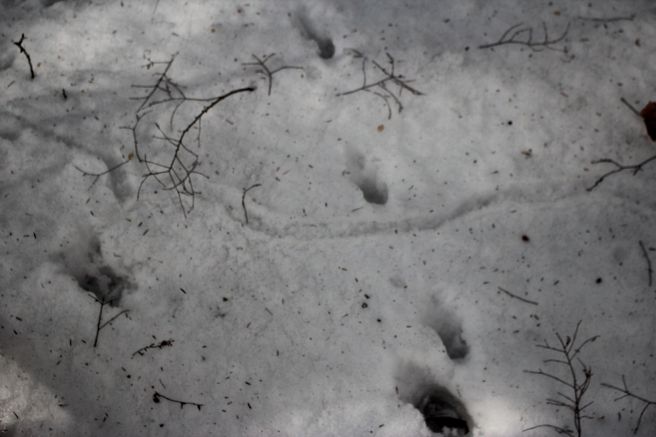
b-cat following deerSoft snow made for distorted prints. And these prints made for a quick change of plans.

b-cat:voleI turned 180˚ and found more tracks on the other side of the snowmobile trail. And so began today’s journey into the woods. I was feeling proud of myself for backtracking the animal–following where it had come from rather than where it had gone so I wouldn’t cause unnecessary stress. Yet again, I stress out all the mammals because of my constant movement–and so many I don’t see because they hear me coming. Anyway, I followed the bobcat for quite a while, noticing that it continued to follow the deer and even crossed over a couple of vole tunnels that already have their spring appearance. It’s much too warm much too soon.

b-cat-2 printsWhat I discovered is that this mammal was checking out stumps and along the way circled around them. And then it seemed that there might be two because suddenly I was following rather than backtracking. So much for that plan. What I do like is how this photo shows the mammal’s hind foot stepping into the same space the front foot had already packed down–direct registration, just a little off center.

b-cat nurse logIts prints are in the bottom right-hand corner, but then it appeared to walk across the top of this nurse-log. After that, I had to circle around looking for the next set of prints.
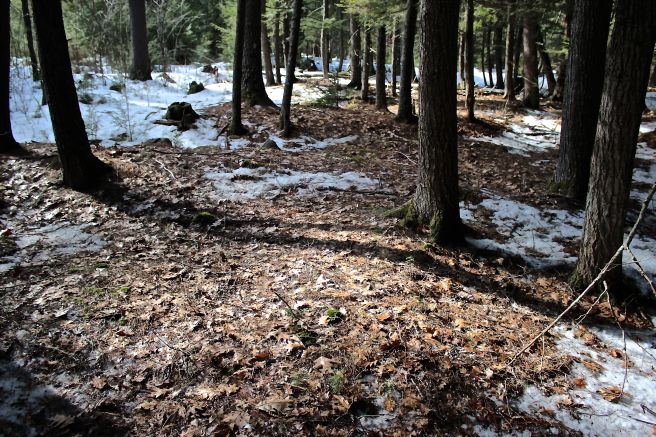
b-no snowUnder some of the hemlocks, there was little to no snow. Eventually I lost the bobcat’s trail, which is just as well.
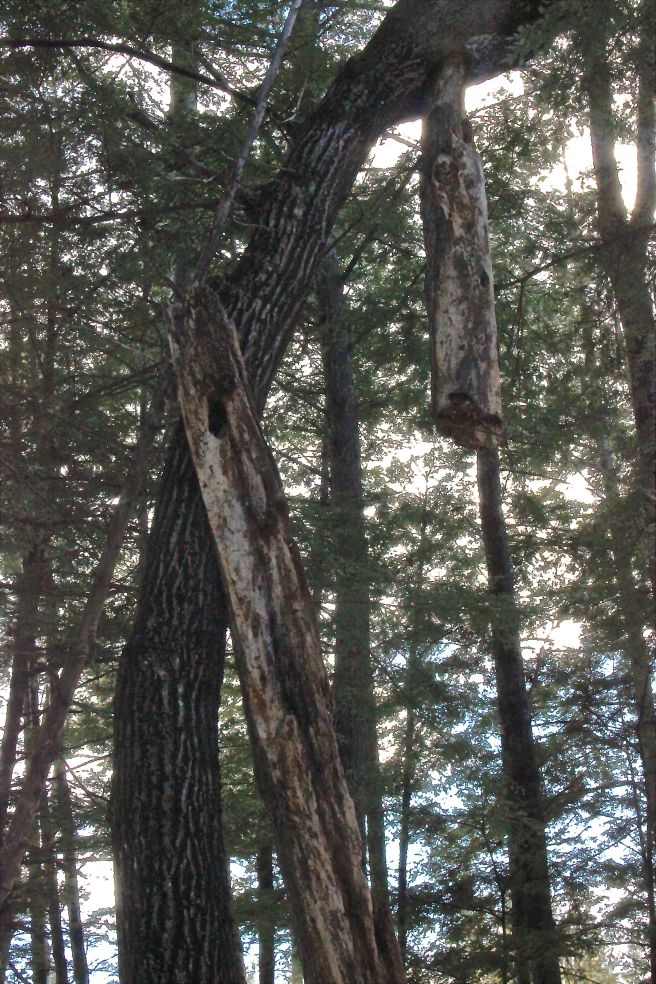
b-widowmaker1I didn’t realize until I looked up that I was still in familiar territory.

b-widowmaker 2I first spotted this widow maker 20+ years ago. It never ceases to amaze me.

b-deep snowI decided that rather than return to the snowmobile trail, I’d continue deeper into the woods. I had an idea of where I’d eventually end up, but if you’ve traveled these woods with me recently (Marita and Dick can vouch for this), you’ll know that the logging operation has thrown me off and not all of my landmarks are still standing. It’s that or they just got up and moved. Anyway, I was lost for about an hour, but continued moving slowly through sometimes deep snow (relatively speaking this winter) and other times puddly conditions. It was a slog to say the least. My friend, Jinny Mae, had warned me about water hidden beneath the snow and I found it. More than once.

b-brit 2I also found other cool stuff. British lichen bearing bright red caps.

b-hemlock yearsA hemlock wound that indicated the last time this land was logged. I counted to 25. That makes sense.

b-hemlock cone:seedsA hemlock cone and seeds on a high spot of snow–not the usual stump, log or branch, but still a high spot. Apparently the red squirrel that had gone to all the work of taking the cone apart to eat the seeds had been scared away. Perhaps it will return, or another, or I’ll be admiring hemlock saplings in a few years.
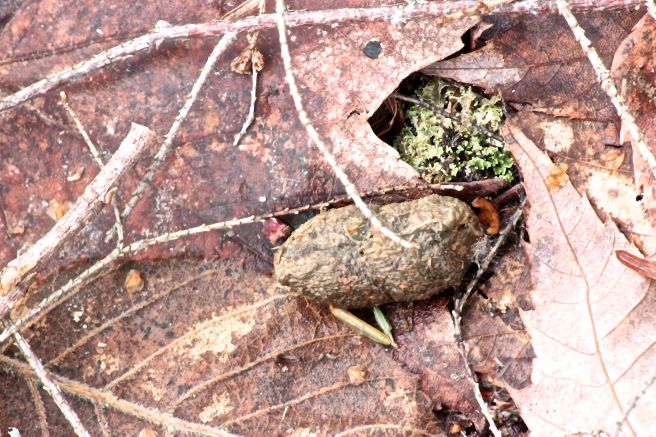
b-porcupine scatPorcupine scat below another hemlock.

b-porky twigAnd a few snipped off twigs–porcupine style.
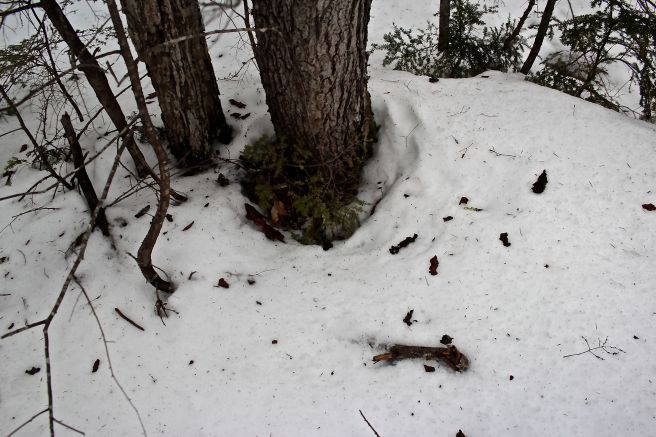
b-hemlock debrisA mystery perhaps. I love a mystery. So, scattered on the snow–bits of hemlock bark.

b-hemlock 2aAnd an apparent path up the tree. But . . . look up. This tree is dead. I don’t think this is porky work.

b-hemlock 2Could it be that where the bark is missing a woodpecker has been at work?
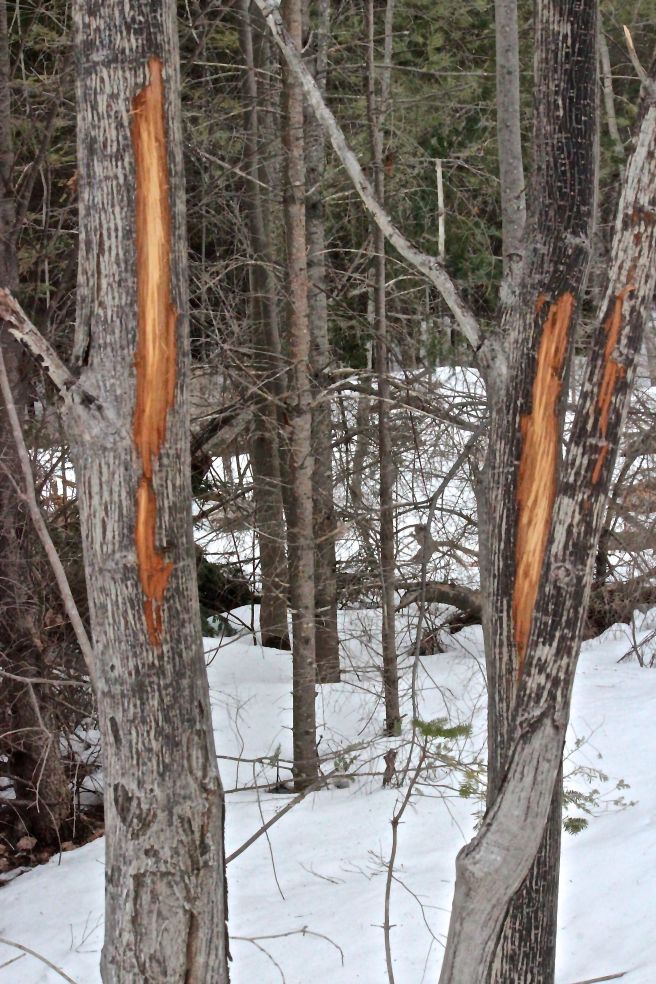
b-striped maple browseI found fresh browse on striped maple–that had been previously browsed based on the scars.
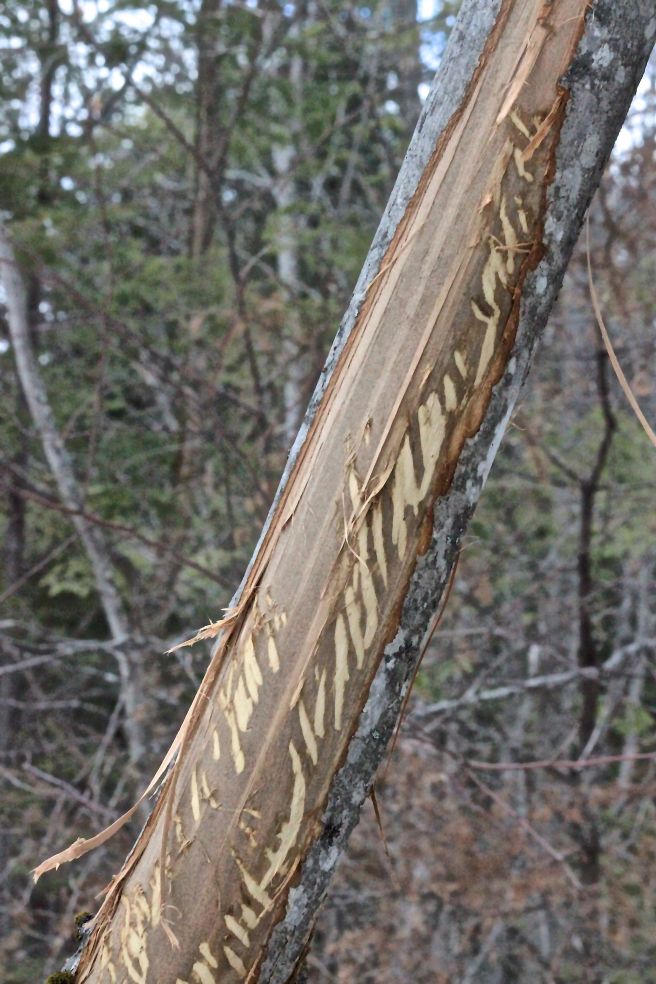
b-deer browse red mapleAnd red maple that had received the same treatment.
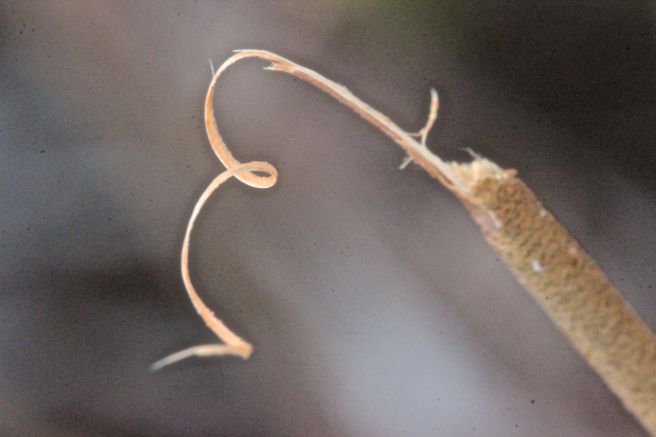
b-witch hazel browseWitch hazel was not to be overlooked. I think this is the longest deer tag I’ve encountered–to date.

b-scat 2You may not appreciate this, but I couldn’t resist. So . . . to whom does it belong? Either a coyote or bobcat. It’s filled with hair and I’m leaning toward the latter. Of course, I want it to be the latter.

b-doggy bagI, um, brought some home in a doggy bag. Not all of it, mind you, because it is a road sign to others. I’m not sure how they do it, but members of the same family can apparently identify gender, health and availability by such works. And members of other families may read this as a territory marker. There was a copious amount, so it could be that the same or two animals used this spot. Just sayin’.

In case you were wondering, I did find my way out–another three+ hour tour. As I slogged along, I recalled a spot I often returned to for quiet contemplation. I can no longer locate it because so much has changed as this area has been logged for the past three years. But . . . I came to the realization today that I don’t need one spot. Any will do. That being said, I pulled out my camp stool, colored pencils and journal back at my sit spot by the edge of the cowpath.

b-deer run:sit spotIt’s right beside a deer run. In the past two years, the deer visited this spot, but I’ve noticed much more activity this winter. The stone wall is hardly an obstacle. And the junipers–prickly as they are to me, the deer seem to enjoy them.

b-sheep 1One thing I did notice that I don’t understand. The sheep laurel that grows here has recently been browsed.
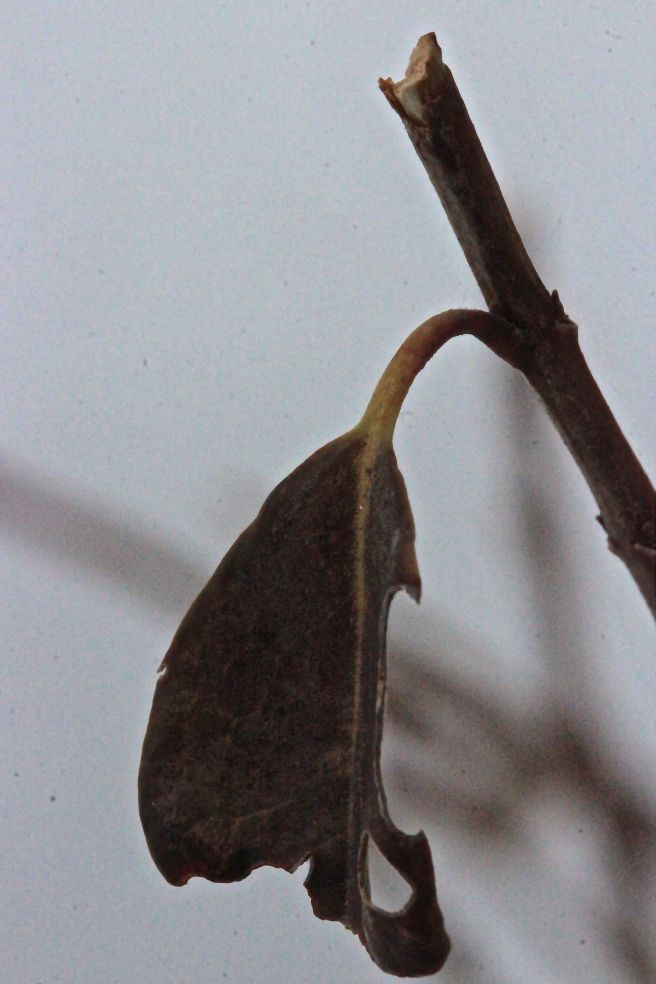
b-sheep2Deer tracks below it and the nature of the work lead me to believe that the ungulates fed on it. Hmmm . . . I thought that sheep laurel was poisonous to wildlife. But then again, deer are browsers, not staying in one spot long enough to consume a large amount so perhaps it doesn’t affect them if they eat a bit here and there. If you know otherwise, please enlighten me.
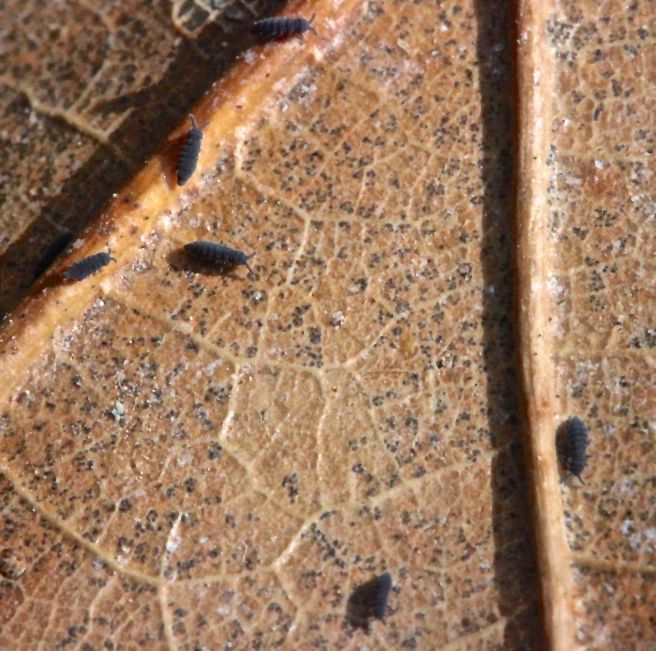
b-spring tailsAnother thing–yes, if you look closely at leaves, you’ll find them. These hot chili peppers don’t appear just on the surface of snow. They are snow fleas, aka springtails. With their spring-loaded tails they can catapult themselves an inch or so. We never look for them once the snow melts, but they are still abundant on organic debris. They’re easiest to locate on leaf litter, but also can be seen on soil, lichens, under bark, decaying plant matter, rotting wood and other areas of high moisture as they feed on fungi, pollen, algae or decaying organic matter.
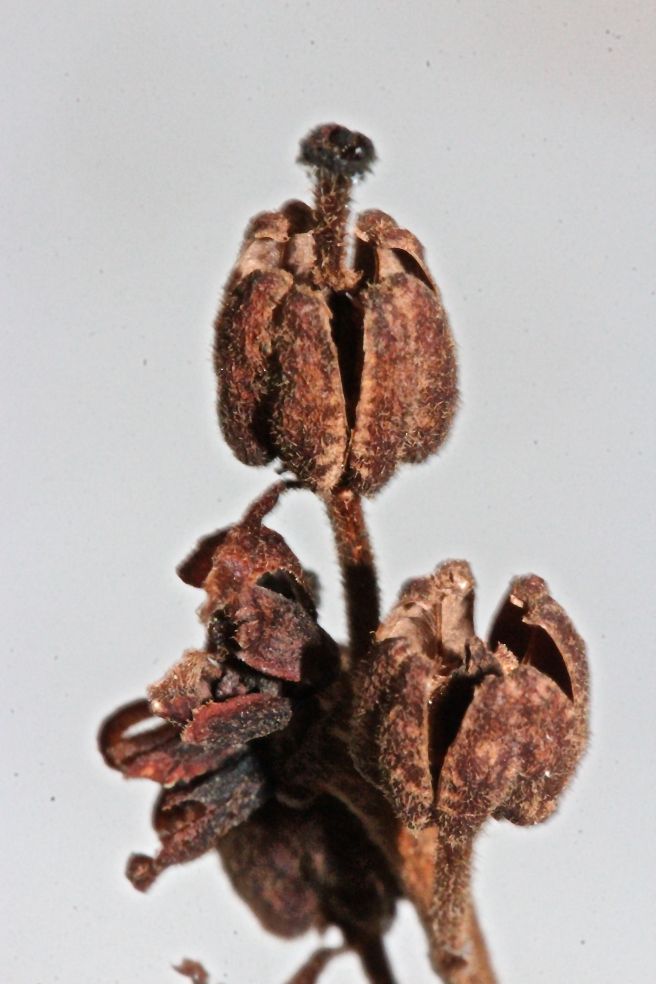
b-pine sap 2Though it was warm under the sun, my fingers were getting cold as I sketched, so I packed up to head home. Back in our woodlot, I decided to follow a deer trail rather than my own. And to them I give thanks. Beside a hemlock tree, pinesap’s woody capsules called out. I’d found some at the start of winter–along the cowpath. And now a second patch. It really does pay to go off my own beaten path.

b-Indian pipe 1While pinesap has several flowers on one stalk, a few feet later and I came upon Indian pipe, which has one flower (now a woody capsule) atop its stalk. Notice how hairy the pinesap is compared to the Indian pipe.

b-goblets 1I’m afraid this photo is a bit fuzzy, but I’m still going to use it because it’s too dark to head out and take another. These cup lichens serve as my pixie goblets to all of you who have stuck with me for this journey–both today’s and the past year. Thank you so much. The year flew by and I’m a better person for this experience. Well, I think I am. What has made this past year so special is the paying attention. The slowing. The recognizing. The questioning. I’ve learned a lot and I trust you’ve learned a wee bit as well. Who knows where the path will lead me next, but I sure hope you are along to wander and wonder.
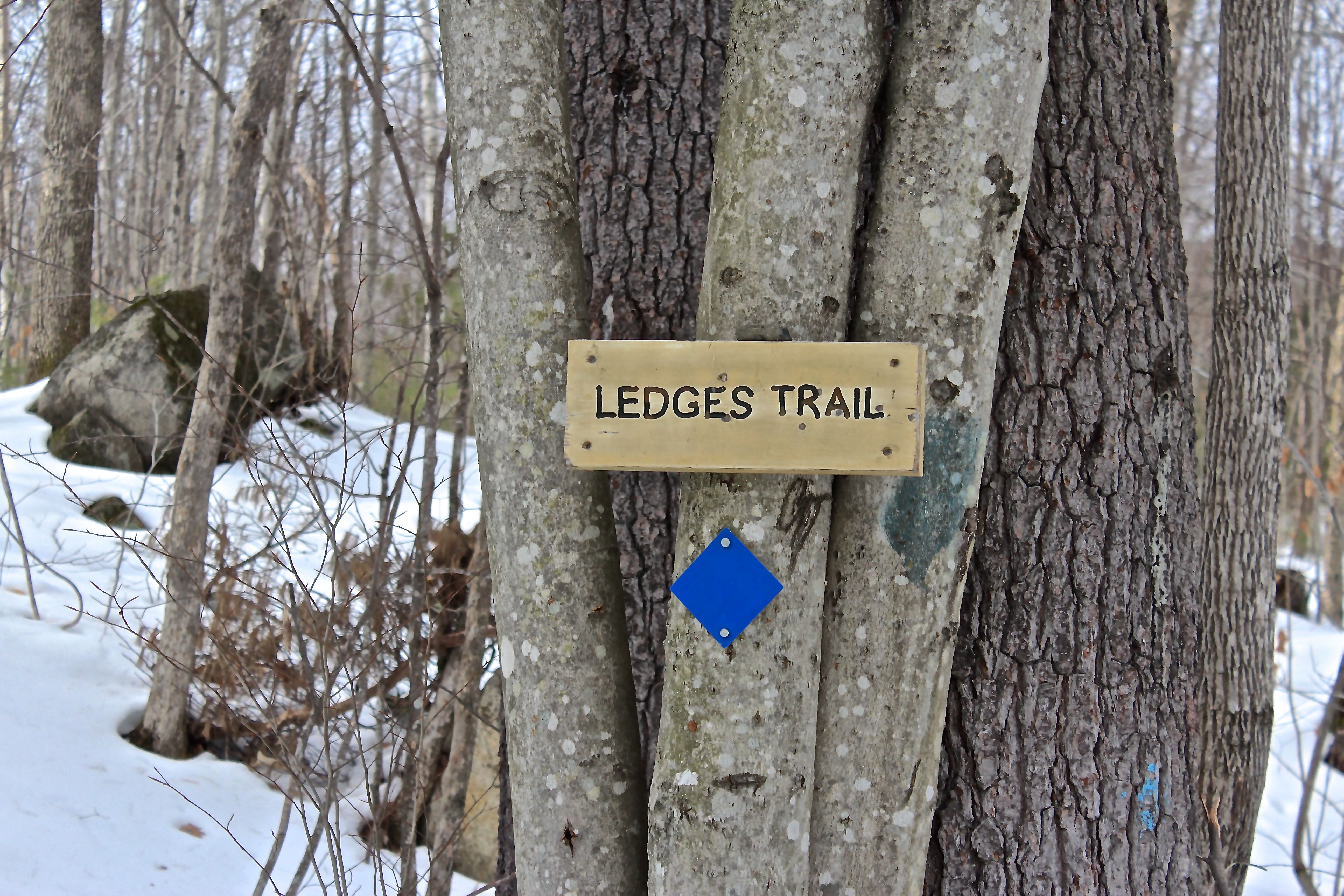
To you, I raise these goblets!


Pure Bliss Mondate

It took us a while to get our act together today, but finally we heard the call from the Ledges Trail up Pleasant Mountain. Since it was late morning, we packed a lunch. Very late morning. 11:30 a.m. start.

ledges sign

And a very warm day. February first and the temperature is 53˚ in western Maine. Unreal. The  breeze was downright balmy and more reminiscent of a spring day. Will the ground hog see his shadow tomorrow?

ledges trail 2

Trail conditions varied from mud and soft snow to slush and ice. Not a snowshoe-type of day at all. We haven’t had too many of those lately. Micro-spikes were the right choice.

ledges O 2

Of course, I was still a slow-poke. But that’s okay because as he waited for me along the way, my guy began to notice his surroundings. OOOOh my! He started pointing out the oddities in the beech trees.

ledges beech elbow

This one struck him as an elbow–well, not literally. Popeye’s biceps perhaps.

ledges beech joined in dance

And then there were the two that joined hands in a woodland dance.

ledges wedge 1

We even found a couple kissing a long gone relative.

So what causes a tree to graft? Under the bark is the cambium layer, which consists of living cells. Outside the cambium layer, the cells divide and multiply, thus creating bark tissue. And inside, they create woody tissue. The newest cells act as a two-way system–moving  water and minerals that the roots sucked from the soil up into the tree and carbohydrates made by the leaves down.

In order for two trees to create a union by fusing together they have to be compatible–so a joint fusion occurs within one tree or between two trees of the same or closely related species.

Of course, the tree or limbs have to be in direct contact and under pressure for the cells to naturally graft. A dash of magic also helps.
ledges laughing faceThis woodland spirit laughs at us for gawking at its relatives. But really, it is amazing and worth a wonder.

ledges green leaves

Here and there, leaves litter the trail. But this one stopped me in my tracks. Green leaves? How can that be? Another mystery.

ledges Canada mayflower

Because the snow was melting rapidly, we found bare ground here and there showing off some treasures, like these Canada mayflower leaves. We all know that one person’s junk is someone else’s treasure–so for every person who sees this as a dead leaf, I bet there are as many of us who are fascinated by the design left behind by the vascular system and rejoice in the nutrients the leaves have contributed to the earth as nourishment for future generations.

ledges trailing arbutus

That wasn’t the only find. I’m reminded by this sight that Trailing Arbutus, also known as  Mayflower, has evergreen leaves. If today’s temperature is any indication of what’s to come, it won’t be long for these harbingers of spring to bloom. I’m not ready for that and can only hope that the woodland spirit can pass on the word that more snow would be most welcome.

ledges glacial 2

Glacial striations mark some of the bare rocks. Those glaciers must have been crazy as they retreated–melting and scraping this way and that. ;-)

ledges icicle 2

No matter what season we pass by this rock, water drips from it. Today, it’s suspended in a milky icicle.

ledges mossy maple

Mossy maple polypores gathered at the base of this old tree while

ledges toadskin tripe1ledges smooth rock tripeledges toadskin 2

smooth rock tripe and common toadstool lichen decorated the rocks nearby.

ledges mooseledges lunch view

Lunch rock provided us a view of the middle basin of Moose Pond on the left and lower basin on the right.

We stayed just long enough to eat our sandwiches on the ledges. We didn’t have time to head to the summit. On the way down, both of us left plenty of handprints on the trees that grow beside the trail–happy to have their support.

ledges bliss

We had an errand to run in Portland this afternoon, and then it was home again, home again, jiggity jig. Our day was topped off with a supper of blueberry pancakes coated with maple syrup while watching the Beanpot hockey tournament. Thanks to Pam Lord Bliss for the amber treat–this Mondate was truly pure bliss.

The Homecoming

The other day a friend handed me a piece of paper and told me to read it later. We were about to go tracking, so I stuck it into my pack and forgot about it. This afternoon, as I prepared for a hike up Mount Tom in Fryeburg, I found the paper.

I’d originally thought it was an article, but instead, it’s a quote from the October 1967 issue of Yankee. A friend had given it to him and he passed it on to me: “We hunt as much for the memories as for the birds. For the memories, and for the hours afield in the autumn woods where a man can get back, for a while, to remembered realities, to a time and a way of life close to the eternities of the land. It’s hard to explain this to the outlander who never knew such things. He thinks of it as an escape. To us it is more like a homecoming. We live here, of course, but only in the leisure after we’ve done the stint at our jobs do we go out on the hills and up the brooks. There we find the truth of our world, even the truth of ourselves.” ~author unknown.

trail sign

I reflected upon those words as I slipped into my snowshoes at the trail head. I’d made a decision to end one of my freelance writing/editing jobs this week (not Lake Living, which is my all time favorite writing job. Hard to believe the spring issue will mark my tenth anniversary!) and declutter my world.

porky paths stump dump

It will never happen, but certainly the porcupines that inhabit this mountain should consider the same.

stump dumpporcupine den

I had a hunch I’d see evidence of their existence once I got up into the hemlock neighborhood, but a small stump dump early on provided ample den space.

porcupine tracks 1

I didn’t even realize as I climbed toward the summit that I wasn’t taking too many photos. Instead, I was cued into the tracks left behind by two people who had traveled this way before me and the porcupines, deer, hare, coyote, bobcats and little brown things. While the people stuck to the trail, I wandered this way and that as I tried to decipher what I saw–my own zig zag trail reminiscent of those I followed.

logged community, thin trees

I didn’t get lost today, though truly, when I do get fake lost, it’s a time to understand myself better– listening to my inner self sort things out. Most of today’s trail is an old logging road. And most of what I saw was familiar. Perhaps that’s what it’s all about–knowing a place so no matter where you are, you recognize it.

hemlock community

The community changes abruptly from birch, beech and maple saplings to hemlocks and pines. I, too, can change abruptly and have a tendency to be blunt. I don’t see that as a bad thing, though occasionally I do regret what I’ve said.

striped maple scrapes

And then I began to look up and notice other parts of my surroundings like these old deer or moose scrapes on striped maples. Forever scared, they provided nourishment in the past–and may do so in the future when the time is right.

striped maple samaras

One striped maple still sported a few seeds that have yet to go forth in the world. What’s holding them back? Don’t they know the time has come to let go?

frost crack

Amongst the evergreens  a paper birch offered a twist on life. I believe this is the result of sun scald–the heating and freezing of thin bark. Typically, the white reflective bark helps the tree avoid such danger–but something obviously happened to cause this candycane-like stripe..

sun on hemlocks

Though it was getting late in the day, rays of sunshine illuminated the darker side of things.
white oak leaf

As I followed more porcupine tracks at the summit, a dried leaf captured my attention. In my ongoing attempt to draw an imaginary line showing the boundary of white oak, I added another dot.

white, beech, red oak

Nestled within animal tracks, three leaves told me more about the members of this neighborhood–white oak, beech and Northern red oak.

white oak 2 white oak 3 white oak layers

So then I searched for the white oak trees–and found them. My bark eyes still don’t cue into this one immediately and I need to learn its idiosyncrasies, including its ashy gray color and blocky presentation.

bird nest 1 bird nest 2

I discovered a snow-covered nest that made me ask–bird-made or human-made? It’s constructed of reindeer lichen and sits upon a base of sticks about four feet up in a scrubby old oak. I was as excited by the find as I was by my wonder and lack of an answer. What fun would it be to know everything?

summit

From the summit, I could see Pleasant Mountain’s ridge–giving me another sense of home. The view isn’t spectacular, but that isn’t the point.

Kearsarge 2

Heading down, a second old favorite came into view–Kearsarge North. I stopped frequently as I descended–to listen and watch. And smell. Twice, a strong cat-like pee odor tickled my nose. The tracks were there, but I couldn’t find any other bobcat evidence. One of these days.

paper 4 paper birch 1 paper birch 3 paper birch rainbow paper burgundy Paper pastel

A rainbow of color presented itself among the paper birch trees–such variation for what is commonly called white birch.

Mount Tom cabin 1 Mt tom cabin 2

Near the bottom, the Mt Tom cabin speaks to an earlier time when living off this land was the norm. Though I like to think that I could stay here by myself for a week, I’m not so sure. Of course, that would force the issue and surely the truth about myself would be revealed. Maybe it’s best left a mystery. ;-)

staghorn sumac1 staghorn red

Before slipping out of my snowshoes, I paused beside the staghorn sumac. It was my height, so I had an opportunity to examine its hairy features closely. Animal from The Muppets must have cloned himself.

Full moon

There was a time when I was easily unnerved being in the woods alone. And I still have moments–especially when a ruffed grouse erupts. Geesh–that can certainly make my heart sound like it’s going to jump out of my body. But, the more time I spend out there, the more time I want to spend out there–exploring, discovering, wondering. This afternoon, I finally followed the full moon home, thankful to find even an inkling of my spirit. I recognize that the word “home” has come to mean more than one place. Our abode is our home, but time in the woods is also a homecoming.


Snow Be It

The action at the bird feeders was crazy busy this morning–as if a snow storm might be on the horizon.

goldfinch 2

goldfinches, mid air squawk

Some goldfinches managed to dine together in peace, while others displayed a midair squawk over perch choice.

male hairy woodpecker

The hairy woodpecker often had the suet to himself, until, that is, the nuthatches, titmice and chickadees flew in.

female cardinal

And somehow the female cardinal managed to pose upon a perch across from a chickadee. She never looks quite comfortable up high.

male cardinal

cardinal and squirrel

Her guy always checks out the local scene before foraging for seeds on the ground. He’s not the only forager in the neighborhood.

ice rink 2

And beyond the feeders, the ice rink is open. Of course, if you want to use it  you need to bring your own shovel. My days of being the human zamboni ended a few years ago.

raccoon prints

I’d intended to join friends in Falmouth for a tramp today, but with the impending storm, I decided to stick closer to home. And so this afternoon found me exploring familiar grounds, wondering what I might see. What could possibly be different?

Ah, the intrepid raccoon had passed this way. I love the pattern it leaves behind, with each set of prints on the opposite diagonal.

vernal pool 1

And then there’s the vernal pool. Nothing new about that, but at the same time, it’s ever changing.

Queen Anne's Lace 1

The fact that dainty Queen Anne’s Lace is filled with spiky seeds seems almost an oxymoron. A beautiful one.

The snow was just starting to fall when I happened upon the QAL. And so I continued on, crossing the road and disappearing into a familiar place–Pondicherry Park.

ice form 2ice form 3ice formation 1ice rays

With every step, I needed to be mindful of where I placed my foot to avoid slipping. Though I’m weary of ice, I never tire of the formations it manifests.

ash 1 Ash 2ash seeds 3

I’m going out on a limb here, but believe based on the structure of the single winged samara that these are green ash seeds that litter the ground. As the wing surrounding the seed tapers toward the tip, it is straight versus the slight curve seen in a white ash. In addition, the white ash samara is wider than a green ash.

ash leaves 1

And then there is the ash leaf mystery. Leaves still on trees? Ash leaflets are not marcescent so why have these leaves withered and stayed attached to the twigs? Ah, but when some trail management was conducted this past summer, the cut branches that crowded the path were tossed aside. The leaves died then and there, thus not being “cut” off by the tree and falling in a normal manner.

 witch hazel color contrast

contrast beech leaves

Of course, the marcescent leaves of witch hazel and American beech against the blue of Willet Brook provided a display worthy of attention as the snow began to collect.

witch's butter on red pine

Witch hazel isn’t the only witch in the park. Witch’s butter decorates a red pine trunk.

jelly ear fungi

Likewise, witch’s butter isn’t the only fungi. Jelly ears decorate a fallen oak branch.

snag sap

There’s always plenty to wonder about. In this case, a very, very dead snag–leaking sap. How can that be so?

Willet Brook

The ice lining the banks of Willet Brook crinkled and crackled with the flow of the water, adding an eerie sound to the landscape.

mallards

Meanwhile, in Stevens Brook, several pairs of mallards quacked constantly, announcing their presence.

Stevens Brook

The snow increased as I crossed the Bob Dunning Memorial Bridge and

dam

walked past the Stevens Brook dam.

still Christmas 1

At home, it’s still Christmas. Snow be it.

Sunday Surprises

As I headed into my smiling place today, I was certain that I wouldn’t find anything of interest. But this Sunday wander made me realize that the gift of wondering means being open to surprises.

I began my traipse following one of the more recent logging trails where sliding over slash is the name of the game.

slash

I can’t wait for three feet of snow to make this an easier adventure. In the meantime, I made do.

sinking

Some moments I did think I was sinking to China–where my friend Judy Lynne would have to be on the lookout for me.

cinnabar 2

And then pumpkin orange polypores called out, proving slash is good for something. Cinnabar-red Polypore (Pycnoporus cinnabarinus) I do believe. It pays to have Fascinating Fungi by Lawrence Millman in my pack.

cinnabar 3

As is its habit, it was growing on a downed cherry log. I picked one fruit to show the pore surface beside the cap. Millman describes it this way: “Caps are kidney-shaped orange to dull reddish-orange, azonate and covered with warts and wrinkles in age. The pore surface, in the words of mycologist Gary Lincoff, ‘looks as if it had been seared by a hot iron.’ The pores themselves are usually more angular than round.” I had to look up azonate when I got home: without zones or circular bands.

cinnamon 2

Cinnamon fern grew abundantly in this boggy land and as usual, I was drawn to the drama it provides in death.

cinnamon fern

Most of the pinnae or leaflets have fallen to the ground, where their curved forms add texture and interest even as they begin to break down and give back.

British soldiers

Watching over all–a large colony of British soldiers, their red caps ever so bright in this miniature world.

muddy logging road

I reached the main logging road at last. A few weeks ago I thought that the logger had finished his mission, but apparently not. That’s okay, because after I found a bunch of bobcat, coyote and deer prints, I headed back into the woods leaving the muck behind.

pine needles 1

Bunches of white pine needles adorn many of the young hemlock trees–all in keeping with the season.

haircap geometry

And the hair cap moss speaks of starry, starry nights and geometric designs.

pigskin poison puffball

But my best find of all was a total surprise. In fact, I didn’t think it was natural at first. An old baseball or tennis ball that somehow landed in this place where few venture? I touched it and it felt almost leathery. Inside, the duff was powdery. Time to turn to Millman again. I think my ID is correct: Pigskin Poison Puffball aka Earthball (Scleroderma citrinum). WOW! Look at that warty surface. And it was huge compared to other puffballs. My heart was singing. (Fortunately I kept the song in my heart though I was in a place where no one would have heard me!)

wintergreen veil

Eventually I made my way back to the snowmobile trail where I continued to wander for a while. Wintergreen is the plant of choice for this stump garden.

bronze bracken fern

Bracken ferns have turned from green to a light bronze patina. Most have fallen or been knocked over. This one especially appealed to me because it has retained its structure and even portrayed an uplifting spirit.

the ice princess

The past few days have been delightfully, though unusually, warm, but I found some ice. And even an ice ghost.

witch's 2

From ghosts to witches–in the woods, I never know who I’ll happen upon. Witch’s Butter (Tremella mesenterica) is another that stands out amongst the grays and browns of the December landscape.

colors 2

Not all is gray and brown. As I wait for snow, the colors of the season remind me that without its covering, there’s much to enjoy.

grassy trail

droplets on grass

I was about to head down the grassy path that leads to our cowpath, when two things gave me pause. First, the droplets of water that adorned the grass.

meadowsweet gall

And second–this gall on a meadowsweet plant. I’ve passed it numerous times and decided today was the day to try to figure it out. If my guess is wrong, please feel free to correct me. I think this is rose bedeguar gall, aka Robin’s pincushion gall. Meadowsweet is a member of the rose family, so maybe I’m right. Then again . . .

sheep laurel fruit

One last find that I always enjoy looking at–the fruits of sheep laurel extending  below the leaves and reminding me of jingle bells.

home

At last I was home again, thankful for a Sunday wander wonder-filled with surprises.

Giving Thanks

I’ve so many reasons to give thanks and making time to wander, wonder and ask why is high on the list.

With that in mind, I headed to Perky’s Path in Lovell this morning.

perkys path

I love wandering along paths I’ve traveled many times before and making new discoveries.

dam 1

The path has two stream crossings, the first leading into a marsh. As I stood on the trail and looked toward the marsh, my eyes were drawn to a wall of sorts.

dam 2 infinity

I bushwhacked to get a closer look and was in awe. The wall is an old beaver dam that I’d never noticed before. Water trickles over it, but in the world of real estate, it has created an infinity pool. Wow–properties with such pools sell for a high price. Fortunately, this property is protected by the Greater Lovell Land Trust. 

fresh 4

That discovery, however, led to more bushwhacking. Beaver works galore. All along the perimeter of the marsh they’d completed some selective cuts.

fresh beaver root

Even tree roots, like this yellow birch that hugged a slice of granite, were at the mercy of this industrious critter.

fresh beaver works 1

Big or small, it didn’t matter. If it could be felled, it was. Of course, some disappeared–to be added to the lodge, I presumed. I couldn’t see where they’d been taken. Larger trees were left where they’d fallen, but their branches became snacks.

fresh beaver, ironwood

This beaver wasn’t fussy–Red Maple, Beech, Ash, Yellow Birch and Striped Maple all became part of the inventory. But . . . one tree proved its nickname–Hop Hornbeam, aka Ironwood. After an unsuccessful attempt at this hardest of hardwoods, it was left standing. Lucky for the hornbeam.

platform viewplatform 2

Moving along, I paused at the viewing platform to take in the view to the north and south.
sparkles 3The morning sun glistened on newly formed ice creating its own art statement.

ice sparkles 1

Amazing.

selfie

As I sat on the bench and soaked in the sun’s warmth, I wondered about the mysteries before me, the mysteries behind me and the mysteries to my sides. And I gave thanks for the opportunity.

perkys

There was more to see, so I moved on. At the second stream crossing, I looked around for more beaver evidence. Last year there was some, but none this year.

perkys 2

The water was high, however, and so I again began exploring the perimeter of the marsh.

woodpecker

A pileated woodpecker left its sign and lots of chipped wood below, but no scat. Drats.

wintergreen wintergreen berry

Wintergreen grows abundantly in this forest, and so I foraged a few berries. Remember Teaberry gum–this is the source. Both the leaves and berries are the source of the flavor (before it was created artificially). Try one. You’ll like it.

bristies

bristles

And then I came upon a mystery and feel like I should know this, but don’t. At first, I thought it was a mammal’s tail, left behind. But . . . it’s almost woody and quite bristly. (I found some at another property later in the day. ARGH!)

lodge 2

And finally, after wandering along the marsh, I found the lodge.

lodge, Perky's

It’s been recently mudded–well, before the ice formed, that is. A raft of chew sticks appears to the right front–ever-ready snacks.

broken ice

Something caught me eye–chunks of ice on top of the ice near the water’s edge. What happened here?

otter 2

The area leading to the ice was a bit disturbed.

scat 2otter scat 1

Then I realized I was in the presence of not one, but two aquatic mammals. Yes, the beavers may have made a hole in the ice, thus leaving the chunks on top, but someone else has also spent some time here and could be responsible for the disturbed area as well. A river otter. I knew this by the scat deposited on a rock–filled with fish scales. The thing is–otters prey on beavers. So . . . now I have to wonder.

old beaver 2

I left Perky’s Path with questions on my mind. Later in the afternoon, I walked to Pondicherry Park in search of answers but found only more questions. Old beaver works are still evident. Some were made last year at this time when several beavers inhabited this space. As of today, I have not seen any beaver activity here. Why? Where did they go? Did they move away of their own doing, or were they helped? Did a predator get to them–man or mammal?

old parchment

0ld crowded2

As I bushwhacked along the brook, I came across this Red Maple. I can’t remember when it fell, but crowded parchment has since taken up residence. One thing always leads to another.

mallards

Mallards swam about while the vegetation cast late afternoon shadows.

royal fern

Beside the water, a few Royal Ferns still sported their crowns of sporangia, albeit withered.

winterberry

As is its custom, Winterberry has lost its leaves, making the bright red berries all the more showy in the landscape.

crosier

And Cinnamon Ferns are curling into themselves–appearing almost like the crosier form with which they begin life.

changing light, PP

The sun was setting as I headed home, thankful for the time I’d had to wander and wonder.

And thankful for my parents who always encouraged me to ask questions and continue to sit on my shoulder and nudge me today. I’m also thankful that they gave me life all those years ago.

cake

And I’m thankful for my guys, who helped me celebrate when I got home.

Wer-if-est-er-i-a-ing A-long

12074842_10153632630537731_2769008110586363497_n

Thank you to my friend, Judy Lynne, who shared this word with me today. I know I do it, but I didn’t know there was a word for it. And I love that it’s an Old English word–takes me back to college days and my History of the English Language Class where we learned to read in Old and Middle English.

And so it was that today I wandered longingly through the forest in search of mystery with five other naturalists–all MMNP grads who will bring the Master Naturalist course to Bridgton in the spring of 2016.

After a tour of Lake Environmental Association’s Maine Lakes Science Center, we took care of some housekeeping items (coursework) before heading out the door. I made them practically run through Pondicherry Park–well, maybe run is an overstatement, but we moved quickly for us–not much time for werifesteriaing.

It was our afternoon tramp at Holt Pond when we allowed ourselves more time to pause and wonder.

HP snake

As we started down the trail, Beth saw this snake hidden among the leaf litter. It’s the third garter snake I’ve seen this week. The day was overcast and we weren’t sure if he was coiled up because he was cold or if something had attacked him.

HP Muddy River

We stepped onto the boardwalk to view the Muddy River and it almost sank beneath our weight. The water is quite high and I suspect I know why.

HP beaver works

Off to the side, we saw fresh evidence of beaver works.

HP beaver lodge, Muddy River

And in the river, a lodge topped with new sticks. I think the dam down the river has probably been rebuilt.

Looking from this vantage point, the layers of communities are pronounced, with the wetland plants like leatherleaf, sheep laurel and sweet gale growing low by the river, topped by alders and small red maple trees, topped by tamaracks, topped by white pines, hemlocks and Northern red oaks.

HP layers from Muddy River

Similar layers surrounded us with the bright red winterberries forming the creme between two wafers.

HP pitcher 1

As happens each time I pass this way, I am forced to photograph the pitcher plants.

HP pitcher 2, picture

Have you ever noticed the pictures on the hairy inner lip? Do you see what I see? A woodland landscape–trees with extended branches, a layer of colorful foliage and a grassy edge leading to the lake (water in the cup)? I know the hairs and design are important for the attraction of insects, but I never really paid attention to the actual design before.

HP Wooly aphid

We also found more woolly alder aphids, which Joan and Ann held in their hands so everyone could get an unclose look at the squiggly insects. Rather disgusting, yet fascinating.

Holt PondHP north 2

Even a single moment at Holt Pond translates into tranquility. (And I had to channel this moment for Judy Lynne.)

HP bog boardwalk, water

Gordon, Beth and Joan tried to keep their feet dry as we examined the plant life along the quaking bog boardwalk.

HP cranberries

Karen spotted one cranberry and then another, and another, so everyone could sample the tart flavor. Pucker up.

HP owl pellet

Our next fun find–a raptor pellet comprised of hair and bones galore. For the naturalist course, this will come into play.

HP raining leaves 3

Every once in a while, I’d ask if it was raining. It was–beech and oak leaves.

HP old hemlock varnish conk

While we stopped to admire several older hemlock varnish conks, something else caught our attention.

HP mystery bark

Do you know what it is?

HP fur

And then Ann spotted this little tidbit–leftover from someone’s dinner. We still don’t know who ate whom. Or if it was related to our earlier find of the pellet.
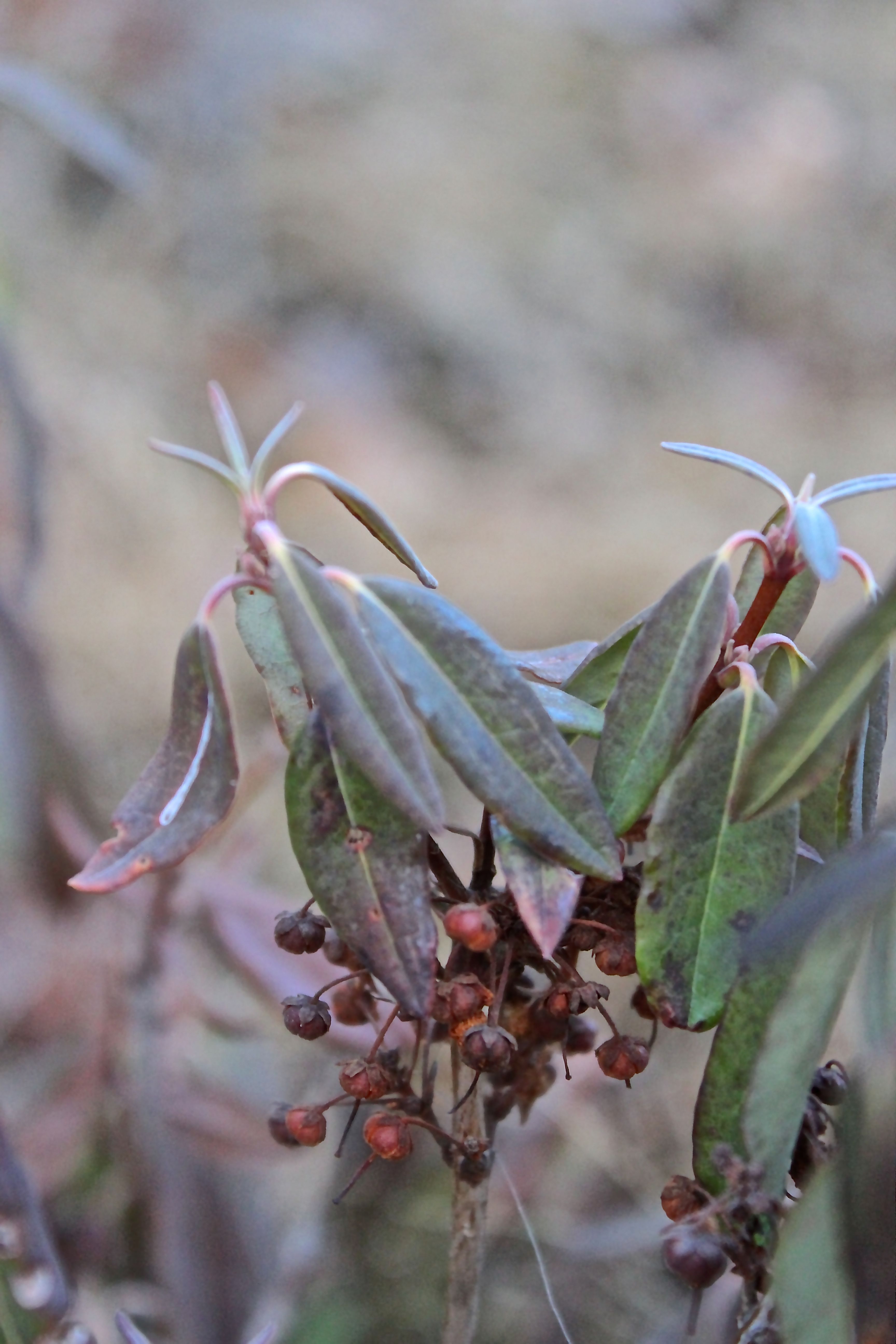
What we do know is that we spent a delightful day werifesteriaing along.

HP fun mystery

As for the mystery photo–the inside of hemlock bark. This is the bark that I think of when trying to remember how trees decay–hardwoods rot from the inside out, softwoods rot from the outside in, but hemlock bark often remains. In the 19th century, hemlock bark was used in the tanning process because the tannins found in the bark preserved a hide and prevented natural decay while giving it a brown hue. At the same time, the tannin left the leather flexible and durable.

Here’s hoping you’ll have the opportunity to wander longingly in search of mystery.

Questions To Be Asked

A friend and I drove to Evans Notch today with the mission of exploring a trail that was new to us. The Leach Link Trail connects Stone House Road to the Deer Hill trail system.

IMG_1338

We started at Stone House Road and turned back at the Cold River Dam. Not a long trail, certainly. And rather flat for the most part. Despite that . . . it took us four hours to cover 2.4 miles. You might say we stopped frequently.

There was a lot to see along this enchanted path. And questions to be asked.

CB 2

We walked beside the Cold River as we passed through hemlock groves and mixed hardwoods covered with a myriad of mosses and liverworts.

lungwort

Because it had rained last night, Lungwort, an indicator of rich, unpolluted areas, stood out among the tree necklaces. Why does it turn green when wet?

water strider

The shadow of the water strider tells its story. To our eyes, it looks like their actual feet are tiny and insignificant. What we can’t see is the  fuzzy little hairs that both repel water and trap tiny air bubbles, thus allowing them to float or skate along the water’s surface. But still, why is the foot shadow so big while the body shadow is more relative to the strider’s size? Is it the movement of the foot against the water that creates the shadow?

bobcat

While the river was to our right on the way to the dam, we noted ledges on the left. Prime habitat for the maker of this print: bobcat. You might be able to see nail marks in front of the toes. We always say that cats retract their nails, but in mud like this, traction helps.

bobcat & coyote

A little further along we discovered the bobcat was still traveling in the same direction and a coyote was headed the opposite way. What were they seeking? What was the difference in time of their passing?

CR4

Periodically, we slipped off the trail to explore beside the river.
WH 3

Ribbony witchhazel blossoms brightened our day–not that it was dark.
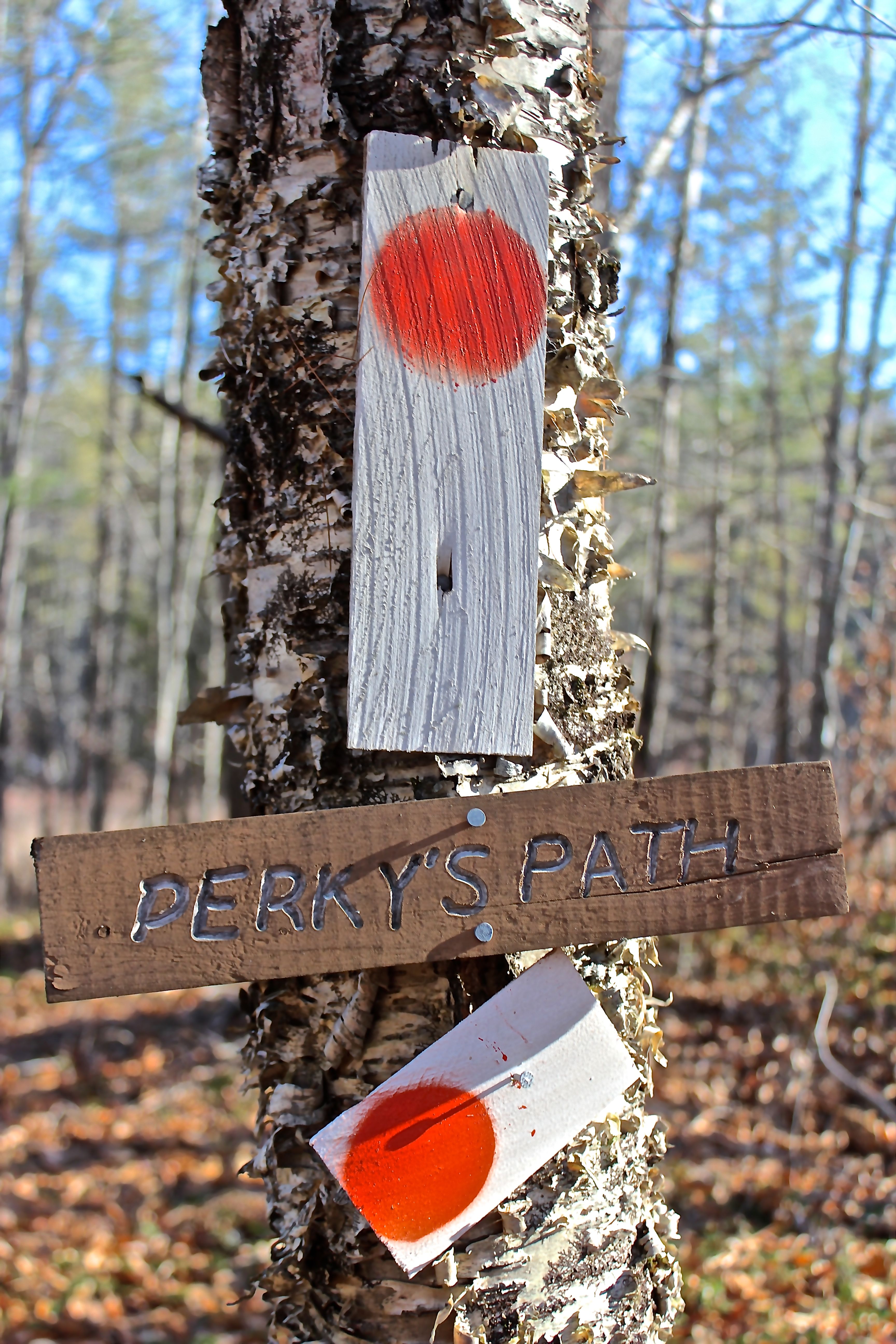
grasshopper 1

We weren’t the only ones taking a closer look at hobblebush.

hobblebush berries

As its leaves begin to change from green to plum, the berries mature and transform from red to dark blue. Will they get eaten before they all shrivel? We think they’ll be consumed by birds and mammals.

doll's eye

Most of the “doll’s eye” fruit is missing from this white baneberry. The archaic definition of “bane” is something, typically poison, that causes death. I’ve read that  ingesting the berries can bring on symptoms such as stomach cramps, vomiting, diarrhea, delirium and circulatory failure. Think: respiratory distress and cardiac arrest. YIKES. So what may have eaten these little white eyeballs? Wildlife may browse it, but it’s said to be quite unpalatable and low in nutrition. Interestingly, birds are unaffected by its toxic qualities.

Indian Cucumber root

Berry season is important to migrating birds. The purplish black berries of Indian Cucumber-root are only consumed by birds. Other animals, however, prefer the stem and cucumberish-flavored root of this double decker plant. Why does the center of the upper whorl of leaves turn red? Is this an advertisement for birds?

state line

Soon, well, not all that soon, we arrived at the state line and passed onto Upper Saco Valley Land Trust property.

dam 3

And then we came upon the dam.

dam 2

It was the perfect day to sit on the rocks and eat a peanut butter and jam sandwich–with butter.

 tree face

As we walked back toward Stone House Road, we realized we were being watched. Perhaps this tree muse has all the answers.

Thanks to P.K. for a delightful wander and a chance to wonder together.

Renewing the spirit

My guy and I drove to the central Maine town of Madison this morning to join Master Naturalist Kate Drummond on a walk that combined the natural and historical context of a trail beside the Kennebec River.

The Pines

The Pines, as this area is aptly named, once served as an Abenaki settlement.

Kate D

Kate began by sharing the history of Father Sebastien Rasle, who lived among the Abenakis, learned their language and converted them to Catholicism. For more than thirty years in the late 17th/early 18th century, he served as a Jesuit missionary and built at church here. Father Rasle educated the children and developed a dictionary of the native language. He also helped keep the English at bay when they tried to encroach upon Indian lands–until that fatal day–August 23, 1724.

While Father Rasle had earned the respect of the Abenakis, the English militia was wary of him. They combined forces with the Mohawk Indians to destroy the village and killed at least 80 Abenakis and Father Rasle 300 years ago today.

And so it was that Kate chose to honor Father Rasle and the Indians he lived amongst by sharing the trail with local townspeople (and us–from two hours away) to tell his story and recognize the natural elements that were a part of their daily life.

Kate is a high school chemistry teacher, so captivating her audience is a part of her makeup. To begin, she asked us to stand still for a minute and listen, look, be in the moment. After we shared our observations, she took us back in time, to imagine what the area looked like three hundred years ago.

matching cards to cool facts

matching cards

And then our real work began. We were given a set of cards and had to match the photos to the card listing cool facts about a particular species. Thankfully, there was no quiz at the end, but I suspect this group would have passed with flying colors–everyone was equally engaged.

We found some cool finds along the way:

acorn plum gall

Our first was a mystery. This speckled red ball, about the size of a jawbreaker, had us puzzled. We found several on the ground beneath Northern red oaks and Eastern white pines. Cutting one open, it looked rather fleshy and we could see what appeared to be an insect, but we still weren’t sure. And when we later found an empty acorn apple gall, we realized it was the same size. Well, a quick Google search for “large speckled red ball beneath oak” revealed acorn plum gall. It’s the home of a wasp species that uses this as a nursery. The grub slowly eats the gall’s tissue and metamorphs into a pupa before changing into a small wasp that eats its way out through a hole. This particular gall grows at the base of the acorn cup.

red and sugar maple leaves

A red maple and a sugar maple stood side by side, making for a lesson on leaf id. Red on the left, sugar on the right. Red–more teeth, or as Kate said, R=rough. Sugar–a U between the lobes, and as Kate said, Sugar has a U in it. It’s their sap that the Abenakis knew.

beaver works

Though we didn’t see any fresh sign of beaver activity, we knew by this statue that they’ve been here in the past. I love that those who actually cut the rest of the tree down to prevent it from falling across the path, had the foresight to leave the beaver works for all to see. The beavers were important to the Abenakis for a variety of reasons, including as food, tools and warmth.

basswood leaf

The asymmetrical base of the basswood tree makes it easy to identify. It was the bark, though, that was of prime importance all those centuries ago–the stringy fibers were used to make line or rope.

jer art 1

In bloom were the Jerusalem artichokes. In Notes on a Lost Flute: A Field Guide to the Wabanaki, author Kerry Hardy writes, “Peeking out of the woods at Old Norridgewock are Jerusalem artichokes, the penak [ground nut]of the Abenakis who lived here.  I believe these plants must be descendants of those grown here centuries ago.” How cool is that? The plants tubers are edible.

jersaleum artichoke

On this day of reflection, remembrance and revelation, they shown brilliantly, perhaps a sign that reconciliation is possible.

Kennebec River 2

We spent some time beside the Kennebec where eels and alewives were important food sources.

immature bald eagle and nest

And an immature bald eagle let us know of his presence. He’s in the oak on the right, while his nest is toward the top of the pine on the left.

FR monument 1

FR mon 2

FR school

It is Kate’s hope that more people will want to learn about the history of this place. Kudos to her for embarking on renewing its spirit.

A World in Miniature

trail

I feel my dad’s presence when I enter a forest where mosses carpet the damp  floor and blanket once exposed rocks and tree trunks. To dad, this was home to the faeries or fair folk. Indeed, it is.

desk top 2

Yesterday, I took a closer look. With hand lenses, a field microscope and a copy of the Princeton Field Guides: Common Mosses of the Northeast and Appalachians,  friends and I set out to identify a few common species.

Mosses (and liverworts) are bryophytes, bryon being Greek for moss and photon for plant.

A sea of green surrounds us. Moss green. OK, so what does that mean exactly? Each species has its own shade of green and even still, several variations of that shade.

fern moss

Above is a fern moss, with its fern-like leaves and yellowish-green hue. What would its name be on a paint chip? Below, you can see its brown spore-bearing, pointed capsules born on a wiry stalks sticking out from the side of a tree stump.

fern moss spore capsules

If you look closely, you’ll see something else on this old stump.

liverwort

Green worms. Zillions of them writhing about. Such is the illusion created by thin overlapping leaves that curl under along the outer sides–giving them a 3-D appearance. This is a liverwort–three-lobed Bazzania or Bazzania trilobita.

mystery fern mat

Nearby, another mat caught our attention. It reminded us of one we’d seen earlier, but we needed to spend time with it.

mystery fern moss 3

We knew by its structure that it was another fern moss species–but which one? The red stem stood out to me as the missing link. It became our mystery moss for the time being, but I think I’ve figured it out. Pleurozium schreberi or red-stemmed moss. I also found it as Phoenix feather moss. And big red stem moss. Yeah, I know–that’s why I should learn the Latin. Ah, Mr. Cretella, you are still sitting on my shoulder trying to get me to stop using Spanish words to fill in the answers on Latin quizzes.

spag 3

We discovered springy, wet sphagnum moss. I always think of it as being in a more bog-like setting, but it is quite damp here.

pincushion moss

One of the common species that grows in small, easy to see mounds scattered about the area, pincushion moss. To some, it resembles a sea urchin. Using our hand lenses, we looked for air bubbles that are supposed to be visible at the base, but mostly we saw tears welled up in our eyes from laughing.

desk top display

After three hours, it was time to pack up the items on our our tree stump desk and head out. We’d only walked .2 of a mile down the trail, so it wasn’t a long haul out.

wood frog

Movement made us pause. Not a faerie, but a large masked wood frog who wanted us to think he wasn’t there.

bobcat and haircap

Someone else had previously passed by. We’d seen tracks on the way in and knew what it was, but I waited till the end to photograph this bobcat print. Do you see it in the mud? And the hair cap moss above it and to the right?

Acro moss

I’d sketched this previously. Looking at it now reminds me that we reviewed the three basic growth forms of mosses and found examples of all three in this little space–acrocarp, pleurocarp and peat moss.

Acrocarp–simple or sparsely forked stems typically grow in upright position. (pincushion, haircap)

Pleurocarp–stems typically trail along the ground and feature opposite branches. (fern mosses)

Peat moss–stems stand upright; often have mop-like or pom-pom heads. (sphagnum)

I’m thankful for friends who love to learn (P & B K. and D.S.). We hardly scratched the surface. I can’t wait to spend more time among this miniature world beneath our feet.

Through Rose-Colored Glasses

Beaver works was the name of my first adventure today. Last fall, some of the Greater Lovell Land Trust’s docents and I walked along the trail of this private property and saw the beaver trees, dams, ponds and lodges. But today, I felt like I was stepping into a completely different territory.

This week, thanks to the generosity of the landowners, we have a walked planned on the same property and someone has been rather busy–cutting off the path with a fallen tree and a flooded pond. With today’s pre-hike we have a sense of what to expect.

beaver path

You know they are busy when you see their well-traveled path

beaver 2and downed trees.

beaver tree

Or those that have been girdled but have yet to fall.

beaver dam

This old dam is quite large and no longer productive–you can see that the pond it once held is diminished to a small stream. The vegetation on top provides another sign of inactivity.

web in raccoon print

Inactive on the part of a beaver perhaps, but someone else passed by and left a baby-hand type print in the mud recently–or sorta recently.

beaver works--walk around

The beavers moved on and changed things up elsewhere–one needs wellies in order to follow the straight line. We chose to go around.

beaver pond

In the process, we got to see another beaver pond. They’re everywhere!

The landscape is constantly evolving. I used to think it took a hundred years for a forest to change–that belief founded on what a junior high school science teacher said. I now know a wee bit more–it’s all in a state of constant flux. I think the same can be said for us–growing and changing with the years–physically, mentally, emotionally, socially and spiritually.

Off my soapbox–There are other fun things to see along this particular trail. I’ll only mention one–some bear sign. And yesterday morning, while placing a land trust sign on Route 5, I watched a young black bear cross the road–less than a mile from this trail and in a seemingly straight line with what we found today. I know that because of my X-Ray vision. (Disclaimer–what we found wasn’t created by the bear yesterday, but it shows evidence of a bear’s presence. Then again, there’s lots of bear sign in these woods.)

My guy was working and it’s been a while since I’ve gone on a solo trek, so I decided to journey on at another GLLT property–Flat Hill and Perky’s Path.

red-purple trail

I was on the purple trail to begin and surrounded by hues of green.

red maple stems 2

So shades of red like the stems of red maple leaves became my focus. They were subtle, but I was surprised with how many examples I found.

red oak

The salmon-colored inner bark of northern red oak.

red striped maple

Striped maple leaf stems.

red sarsapirilla

Wild sarsaparilla leaves.

red pinkish mushroom

A Rusulla, I think.

red squirrel sign

The kitchen table of a red squirrel.

red pine bark

Sandstone-patterned red pine bark.

red wintergreen berry

Wintergreen berry  and

red-partridge berry

partridgeberry.

Flat Hill view

Not red at this moment, but home to many a red sunset, the view from the summit of Flat Hill. Don’t you love an oxymoron?

orange trail

Following the orange trail of Perky’s Path provided more shades of red.

red bunchberry, starflower leaves

A whorl of starflower leaves and bunchberry fruits.

red maple leaf on ground

A single red maple leaf.

red trillium 3

The fruit of a trillium.

red hobblebush

And hobblebush leaves and fruit.

red-mushrooms emerging

More Russulas emerge, displaying their red caps.

Steeplebush

And finally, a pink steeplebush.

Though my eyes were fixated on red, I did see a few other things.

yellow mushroom

A yellow Russula. (Hope my partial ID is at least partially correct.)

bird's nest

A leaf and twig bird nest tucked against the tree trunk. Surely, someone can help me ID the creator of this masterpiece.

Indian Cucumber root

And the world’s largest Indian cucumber root. Soon those berries will turn red.

I thoroughly enjoyed today’s wander through rose-colored glasses. Thanks for coming along.