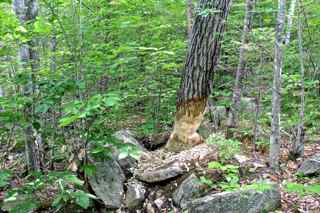
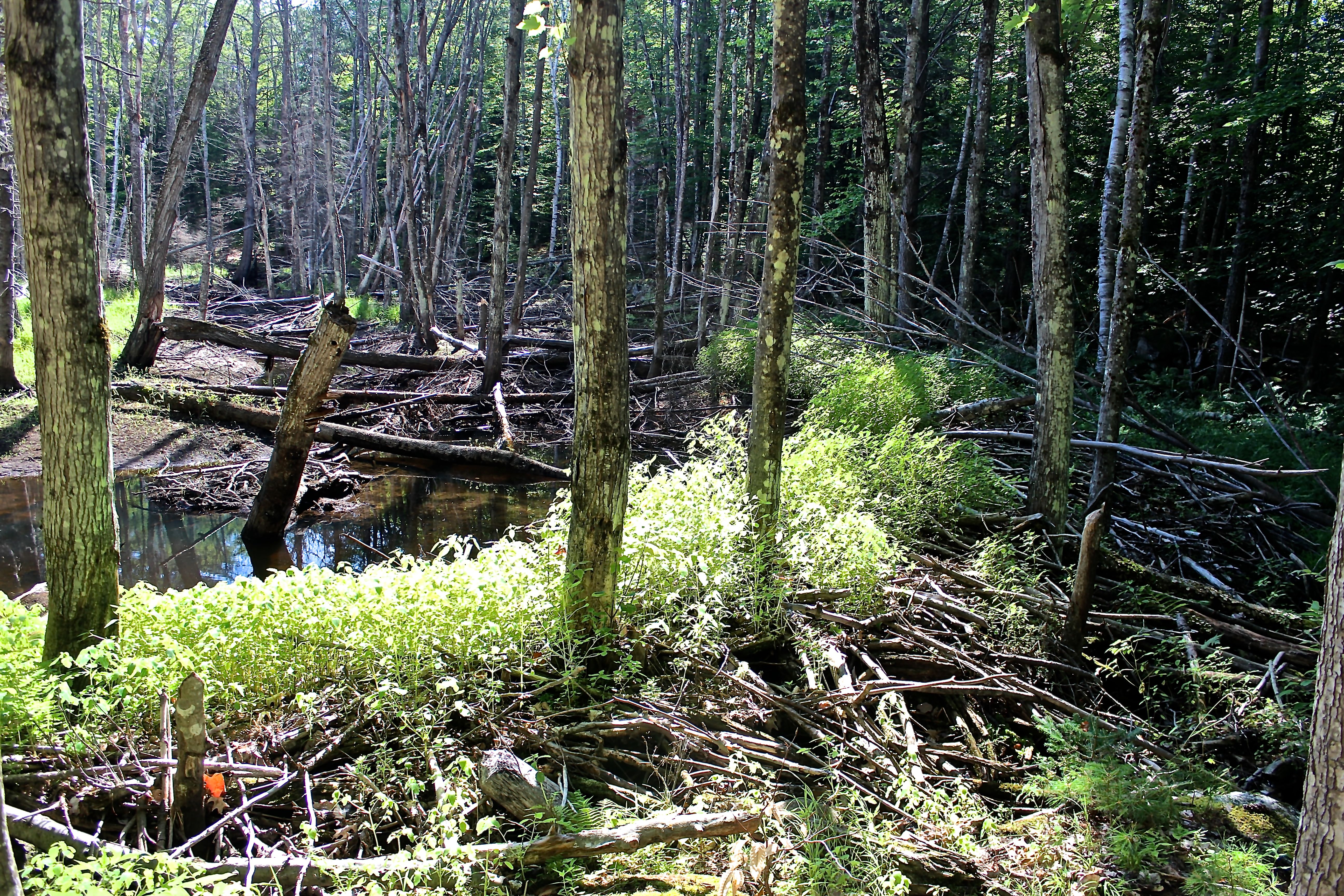
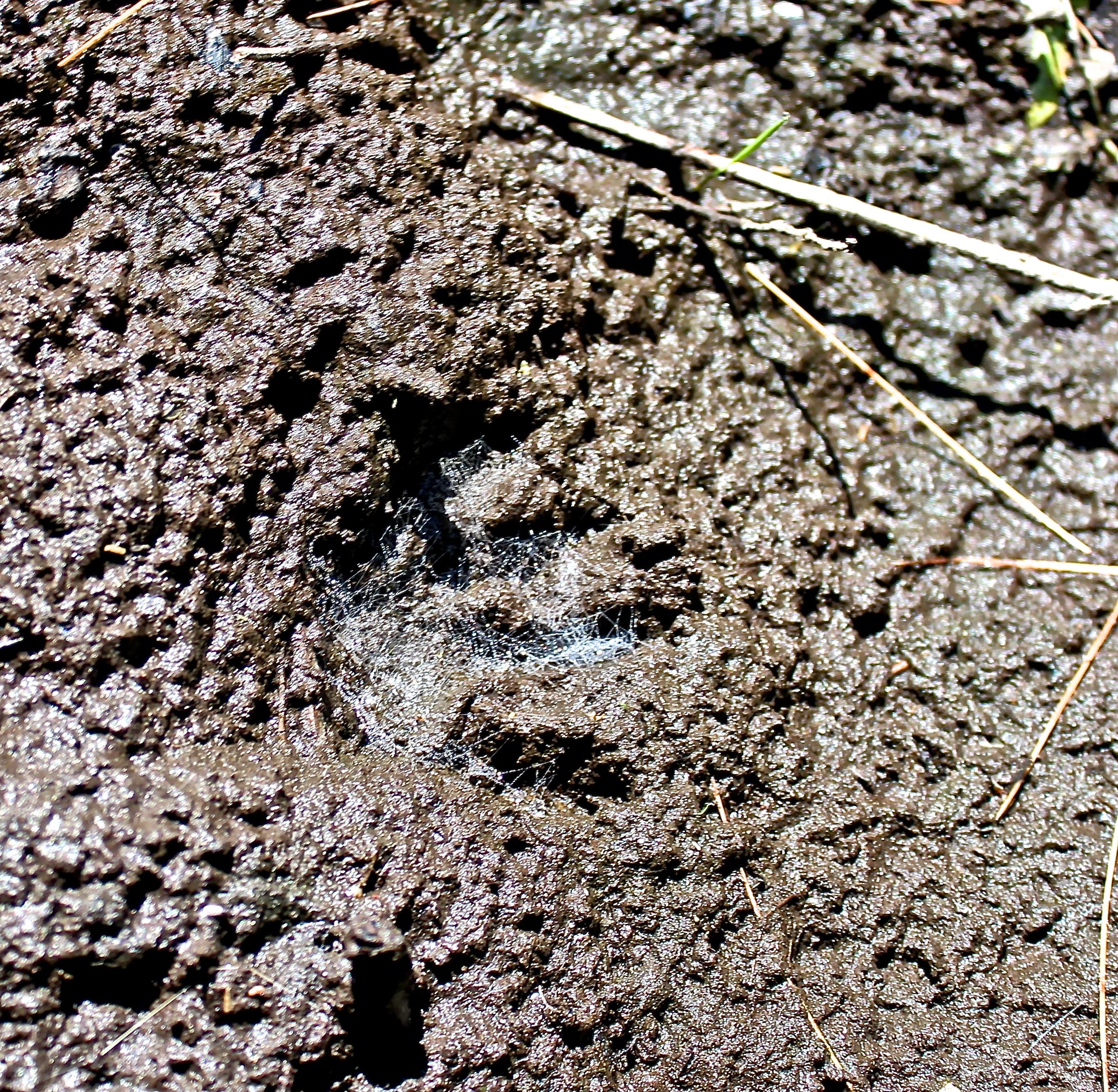
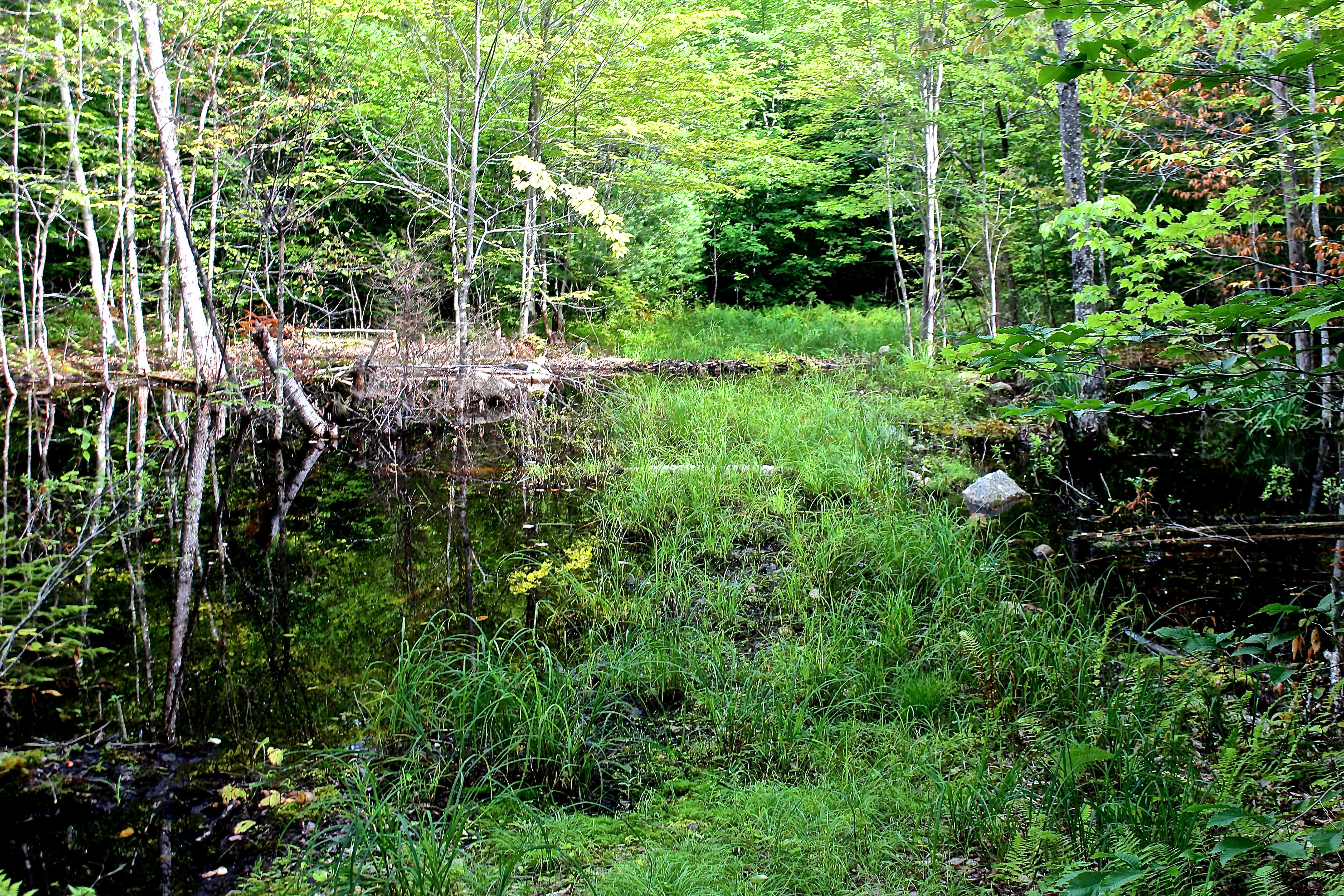
Finally Flakes

White stuff fell from the sky today–a late date for our first measurable snowfall.

dandelion

Yesterday, I saw a dandelion blooming in Denmark as I participated in Maine Audubon’s annual Christmas Bird Count. Today, I assume that yellow blossom is snug below about five or six inches of snow.

While on the bird count, I practiced using my new macro lens, but didn’t have the telephoto lens in my pack because it wasn’t working correctly. Miraculously, I solved that problem this morning and am back in business–taking photos with several different foci.

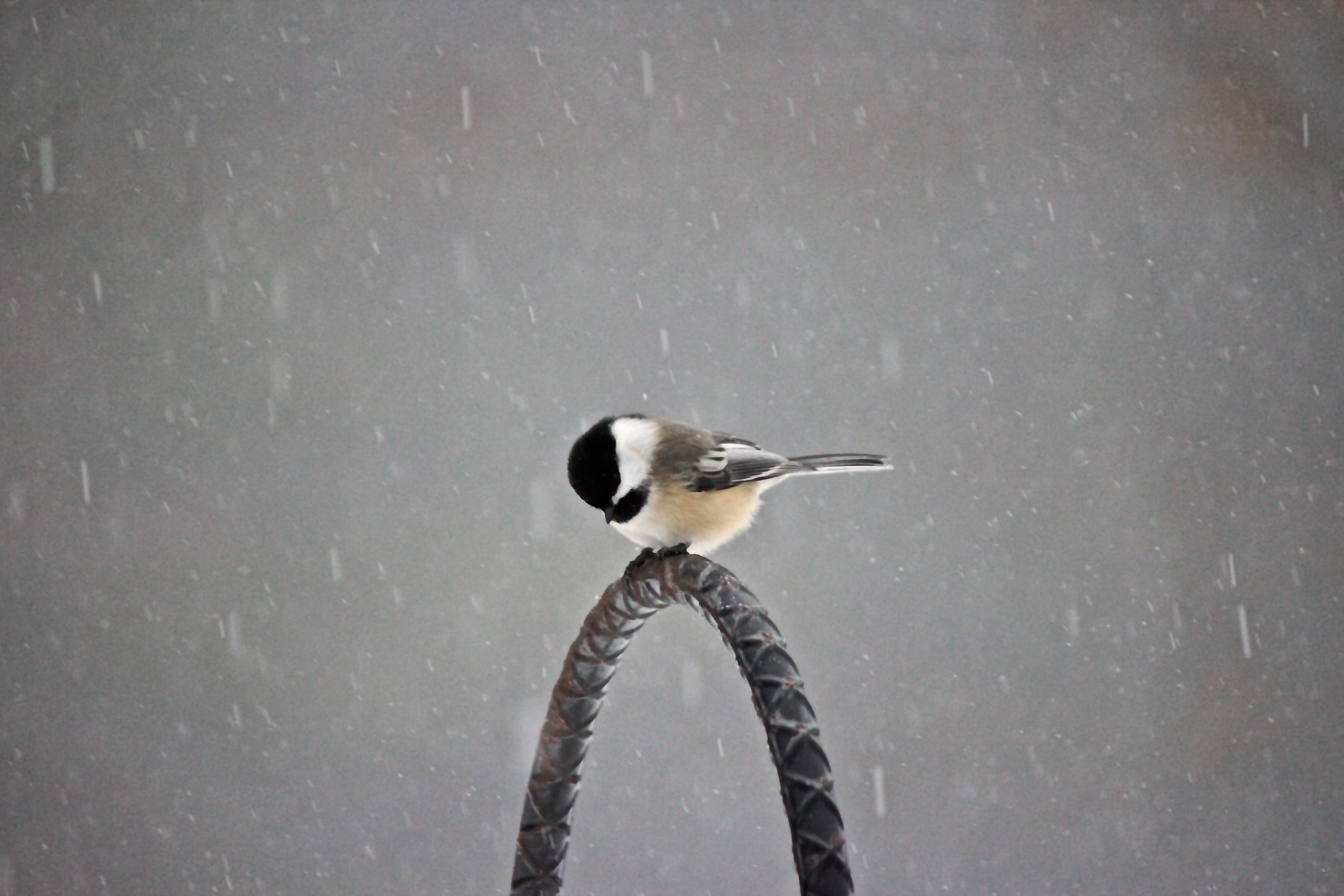
chickadee

hairy

ruffled red breasted

From the get-go, the feeders provided a source of energy and entertainment. I wonder who ruffled the red-breasted nuthatch’s feathers?

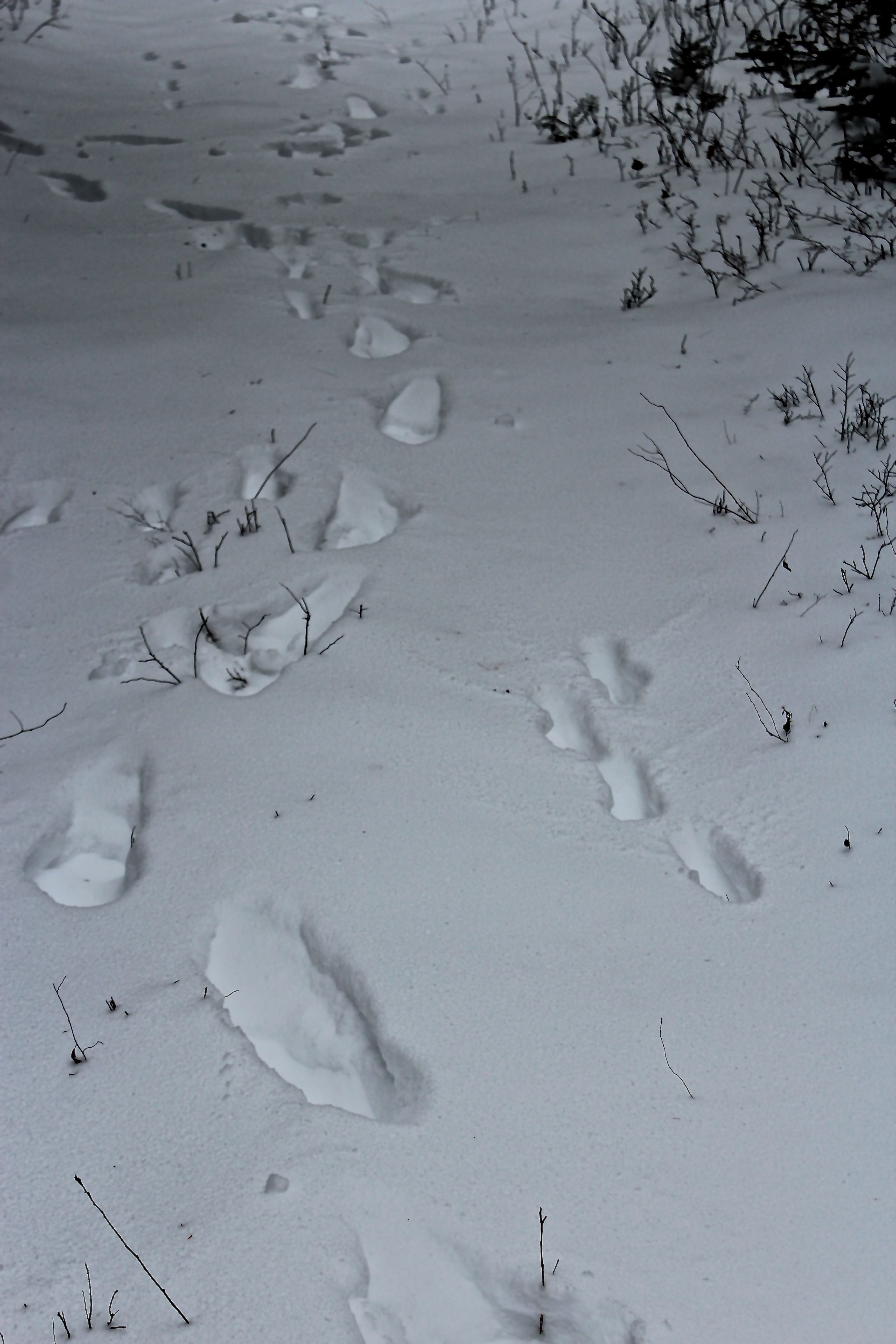
cat trax

Perhaps it was a cat. Let the tracking season begin! I noticed this set leading from the barn, where we watch anywhere from one to six neighborhood cats emerge. I’m not sure which one owns these prints, but it stayed close to the house rather than making the usual venture to hunt below the feeders.

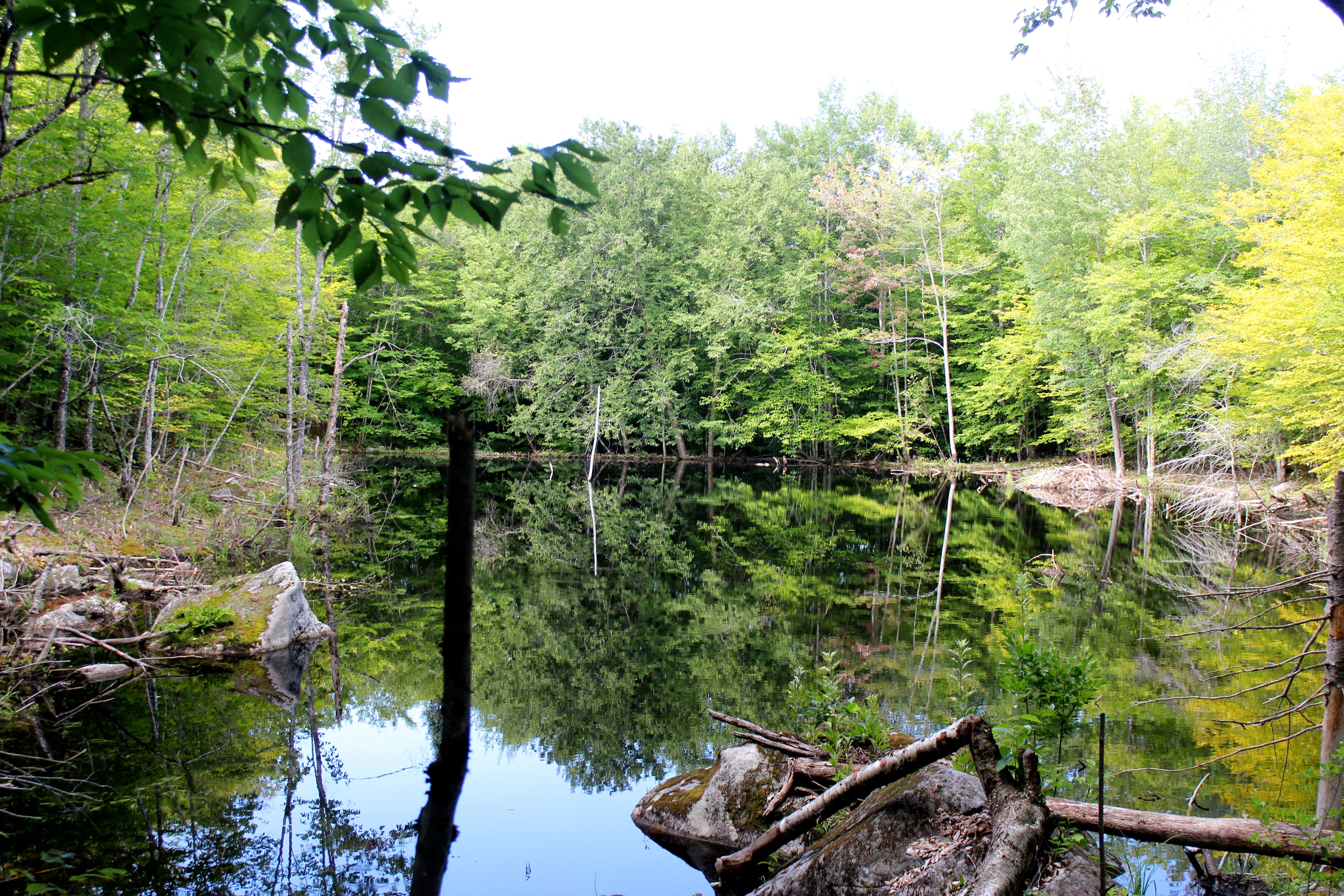
vernal pool slush

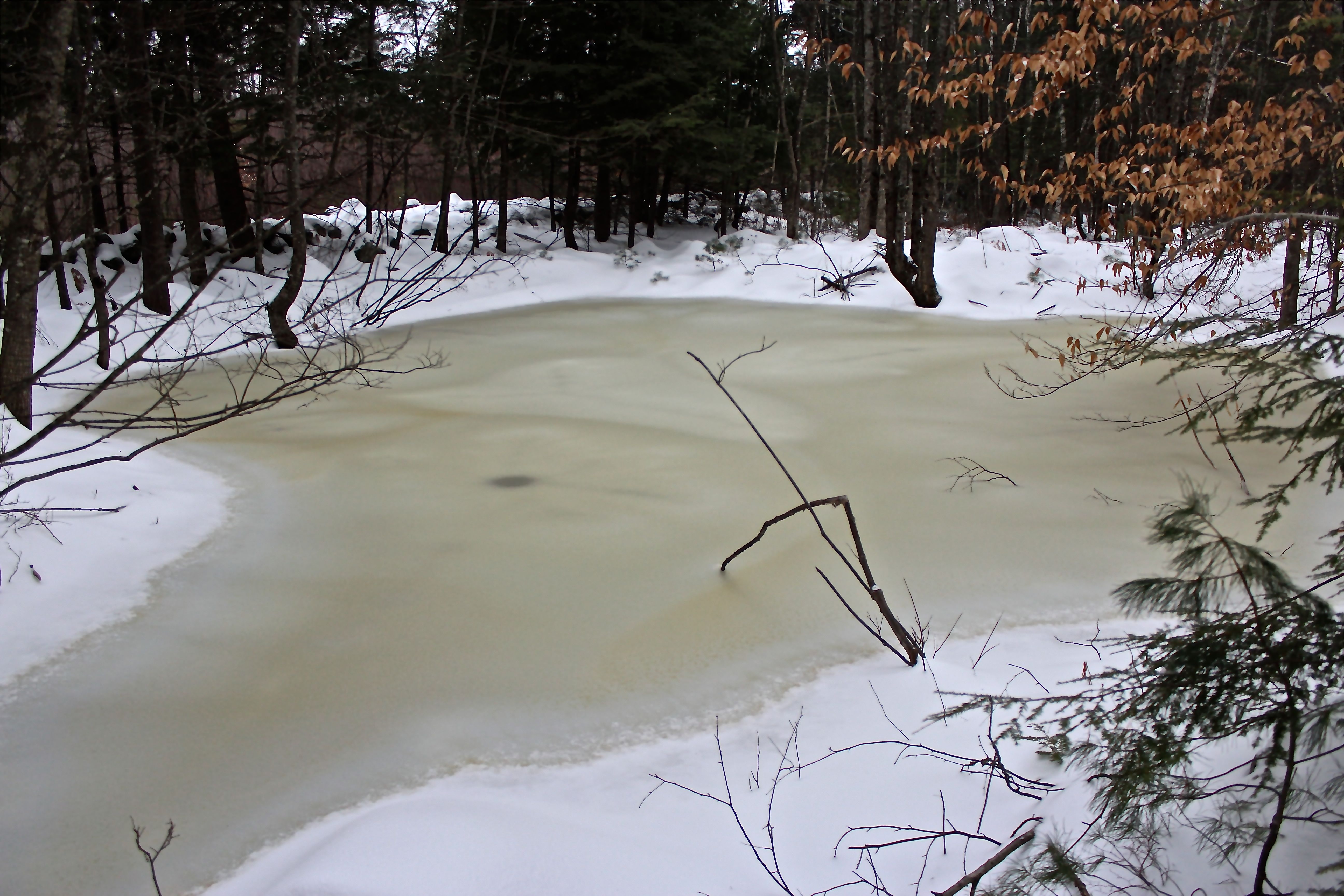
After scooping the driveway snow, I was antsy to check things out in the woods. The vernal pool is covered with slush–we need a few nights in the deep freeze to firm things up. Looks like we could hit negative digits by next week. Not sure our bodies are acclimated for that this year. Pile on the layers.

grouse trax

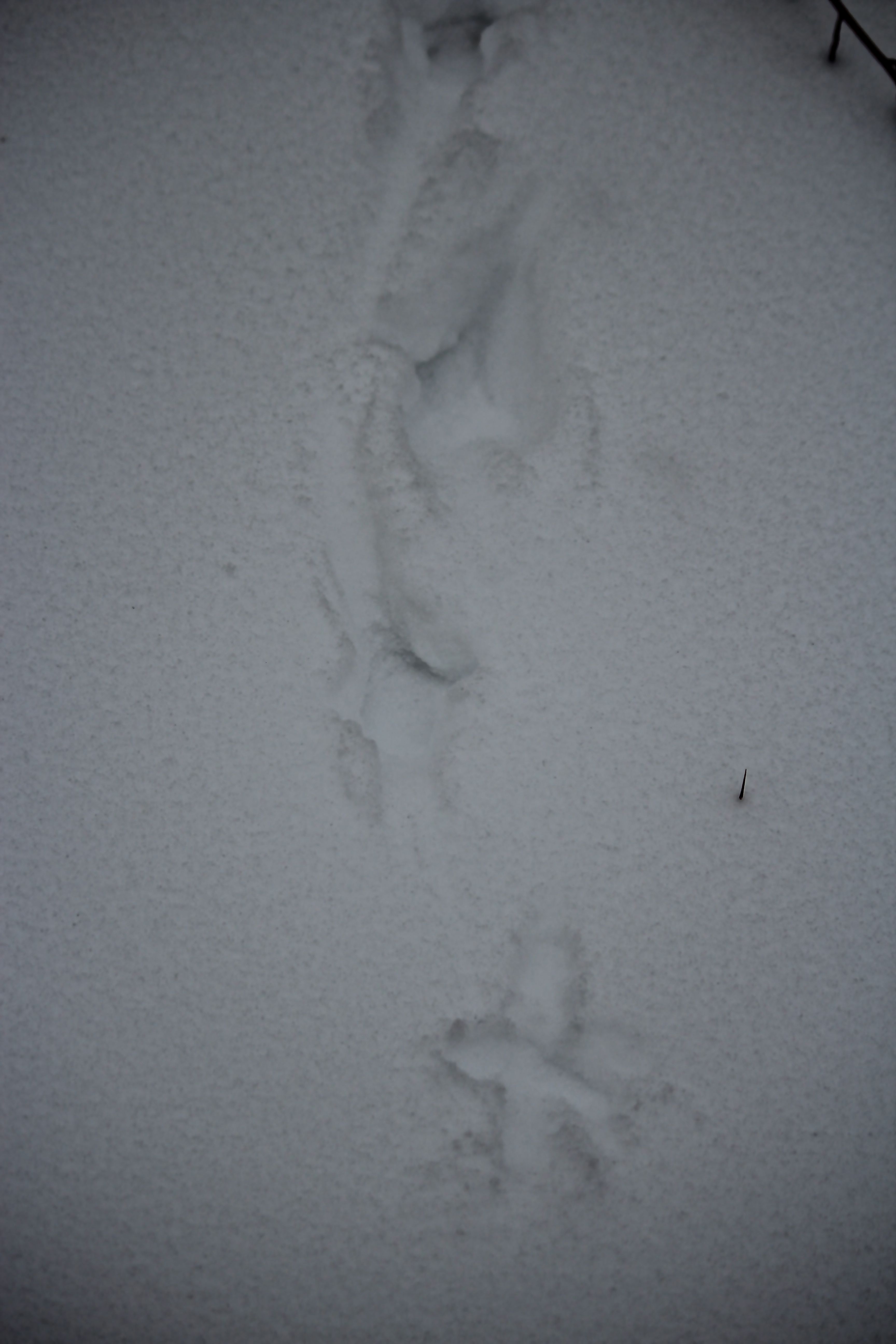
Without meaning to, I flushed three ruffed grouse–only their prints showed their presence. And my heart beat.

turkey trax

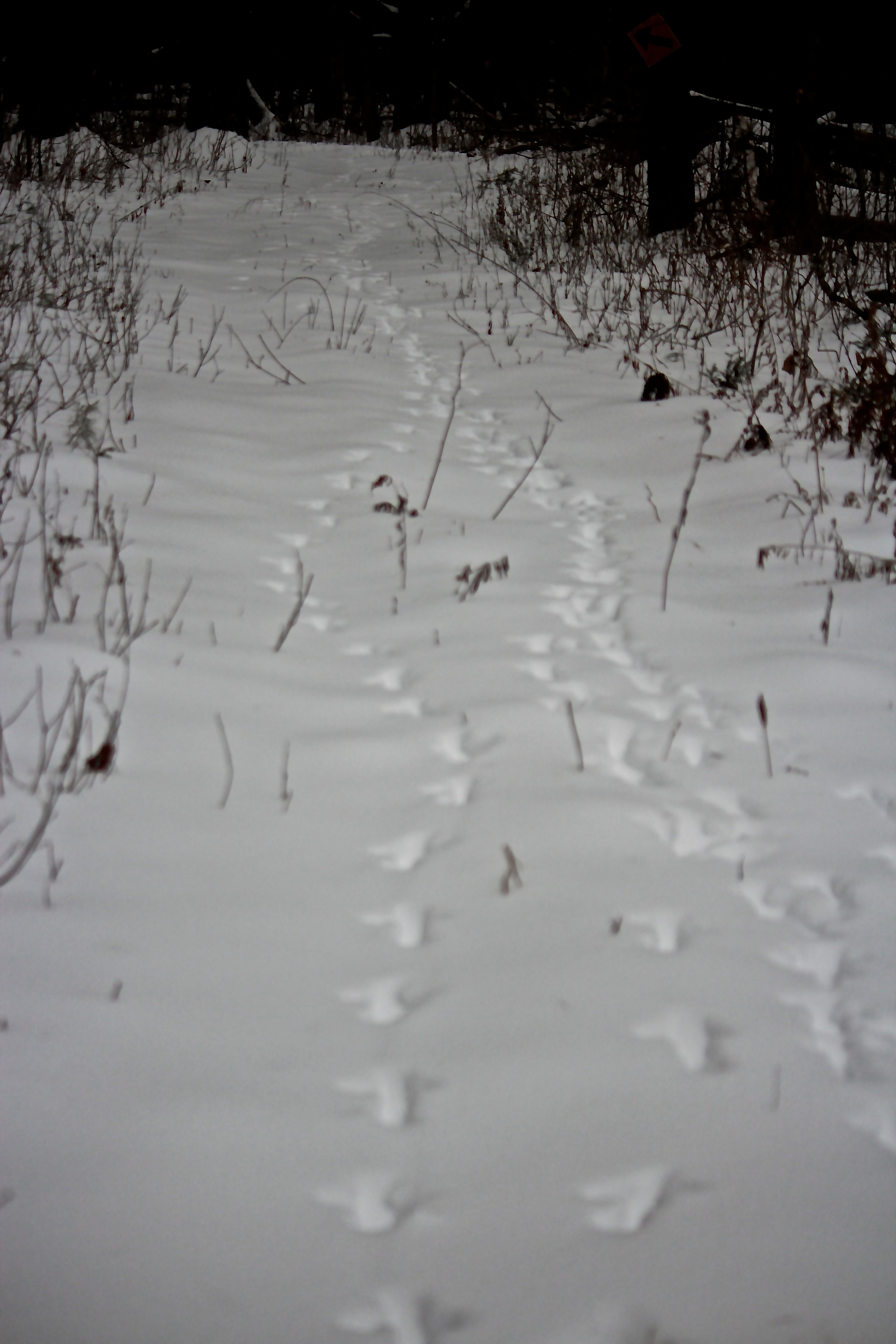
A flock of turkeys had also traveled my way, leaving behind their trademark signature.

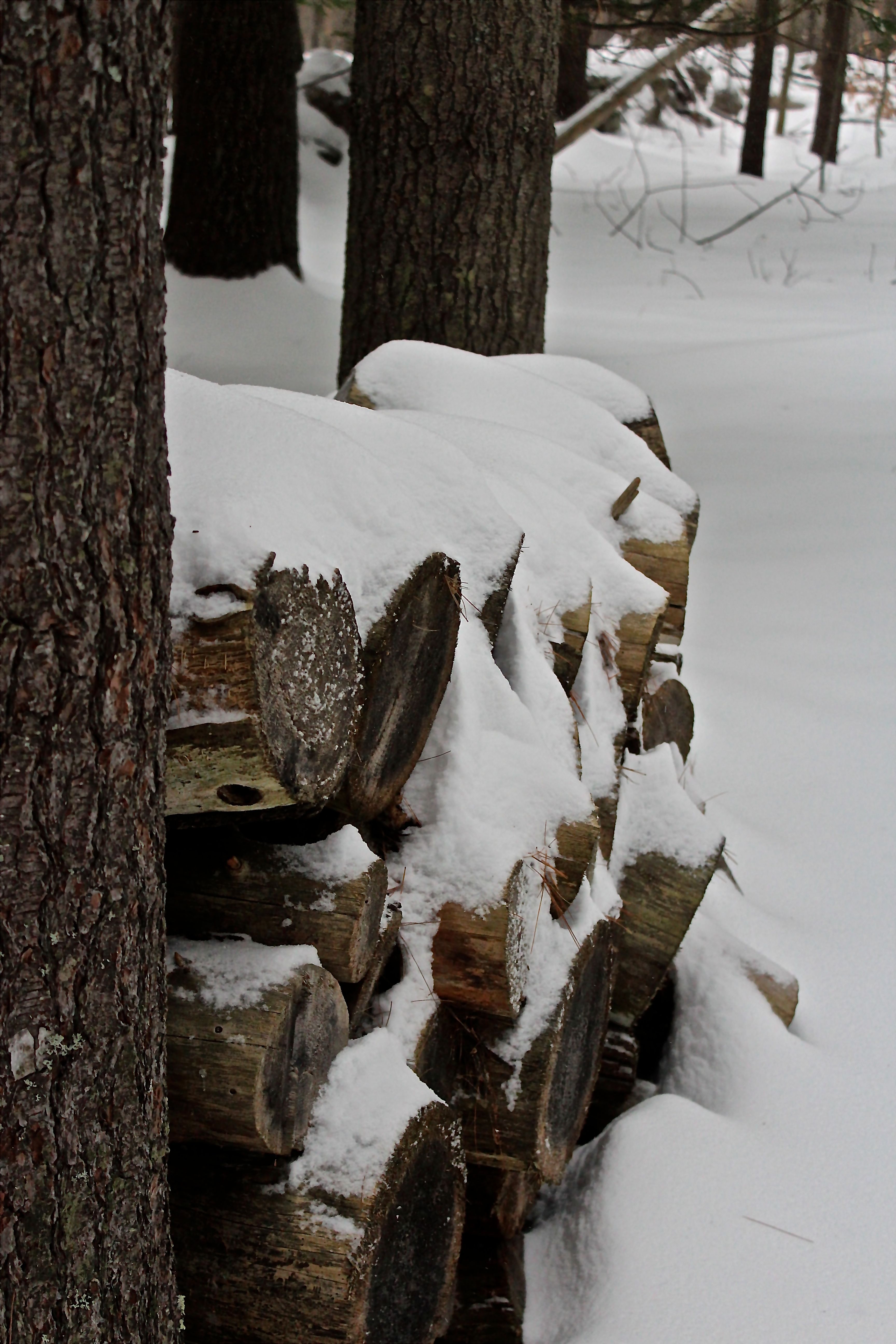
snow on wood pile

snow 1

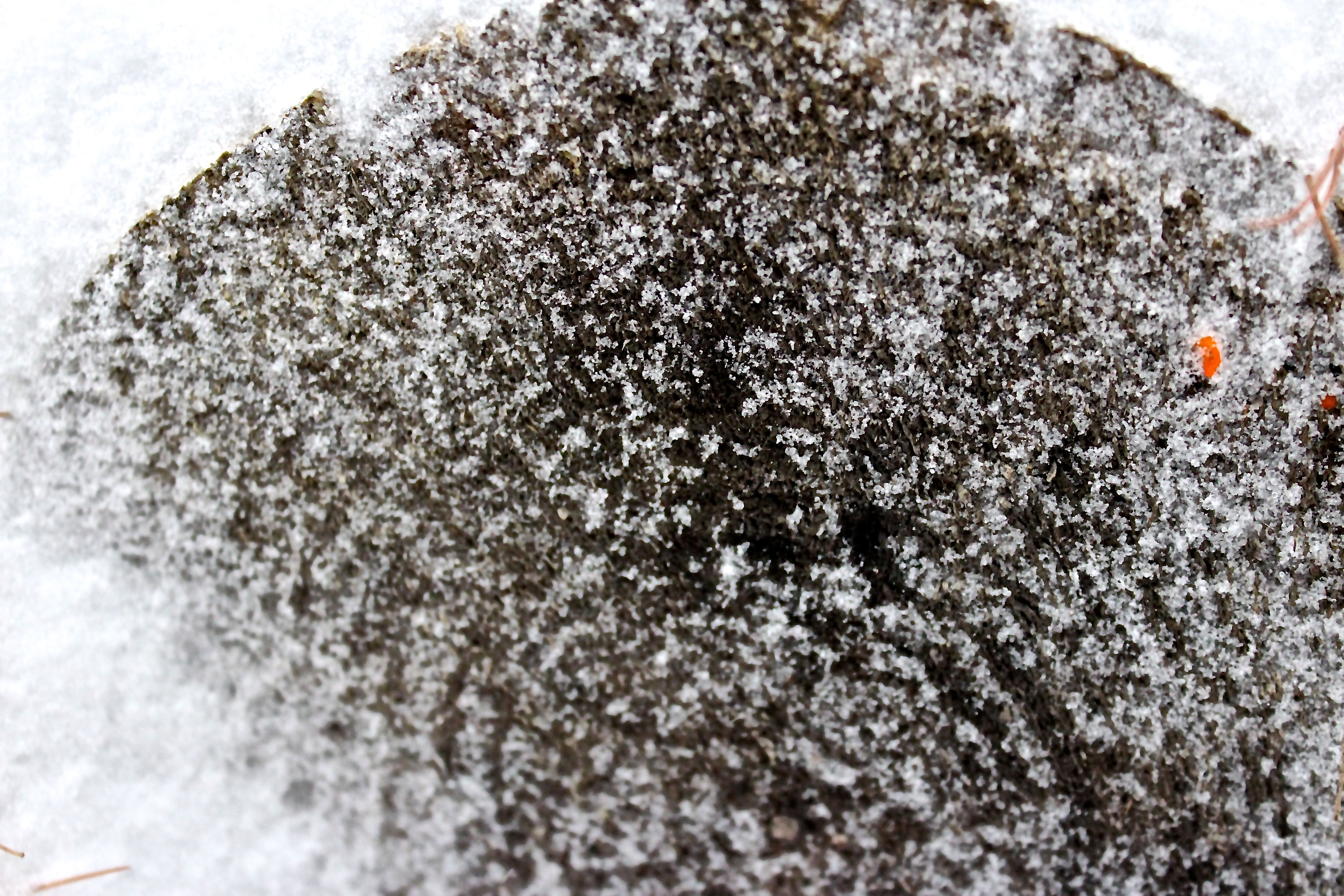
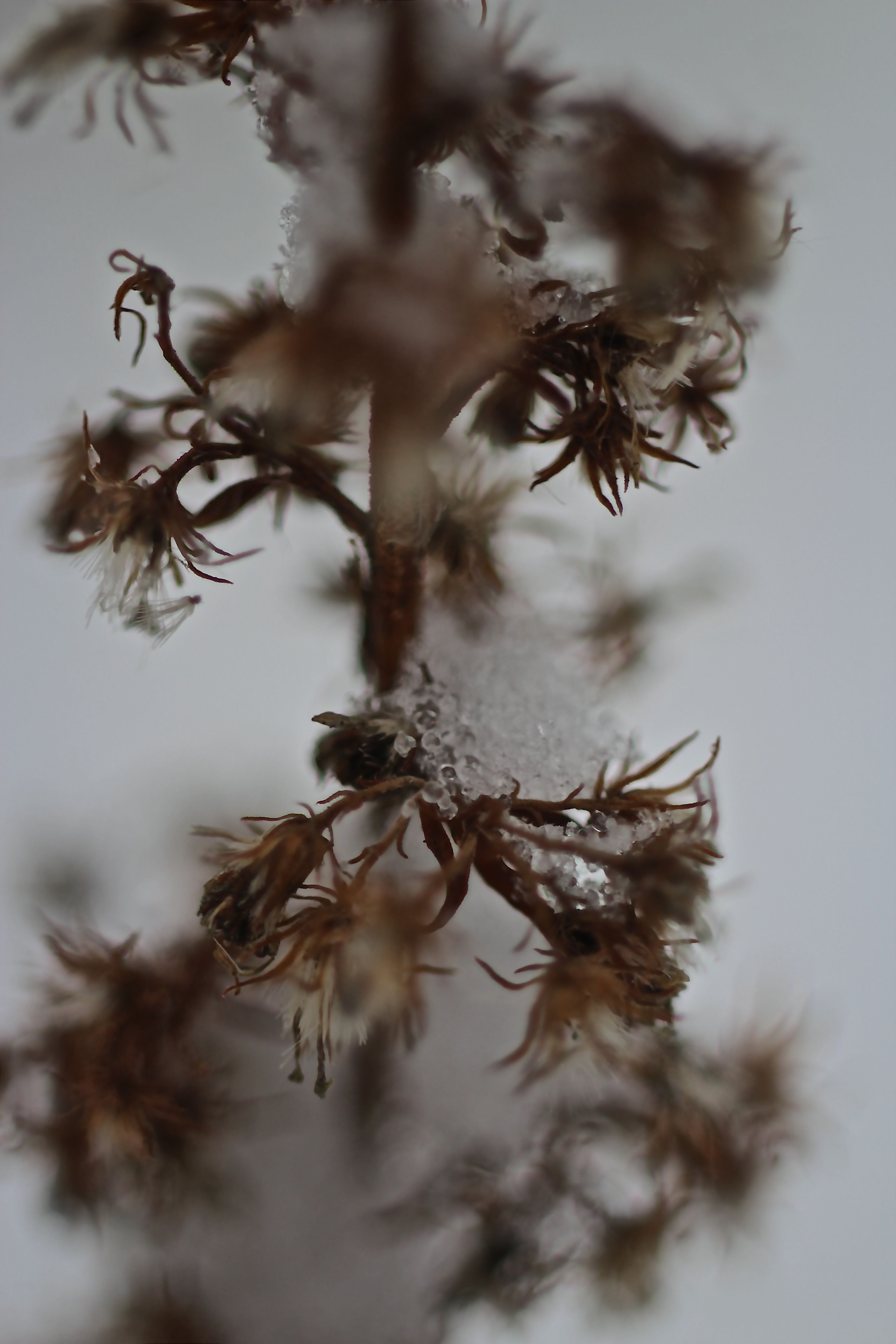
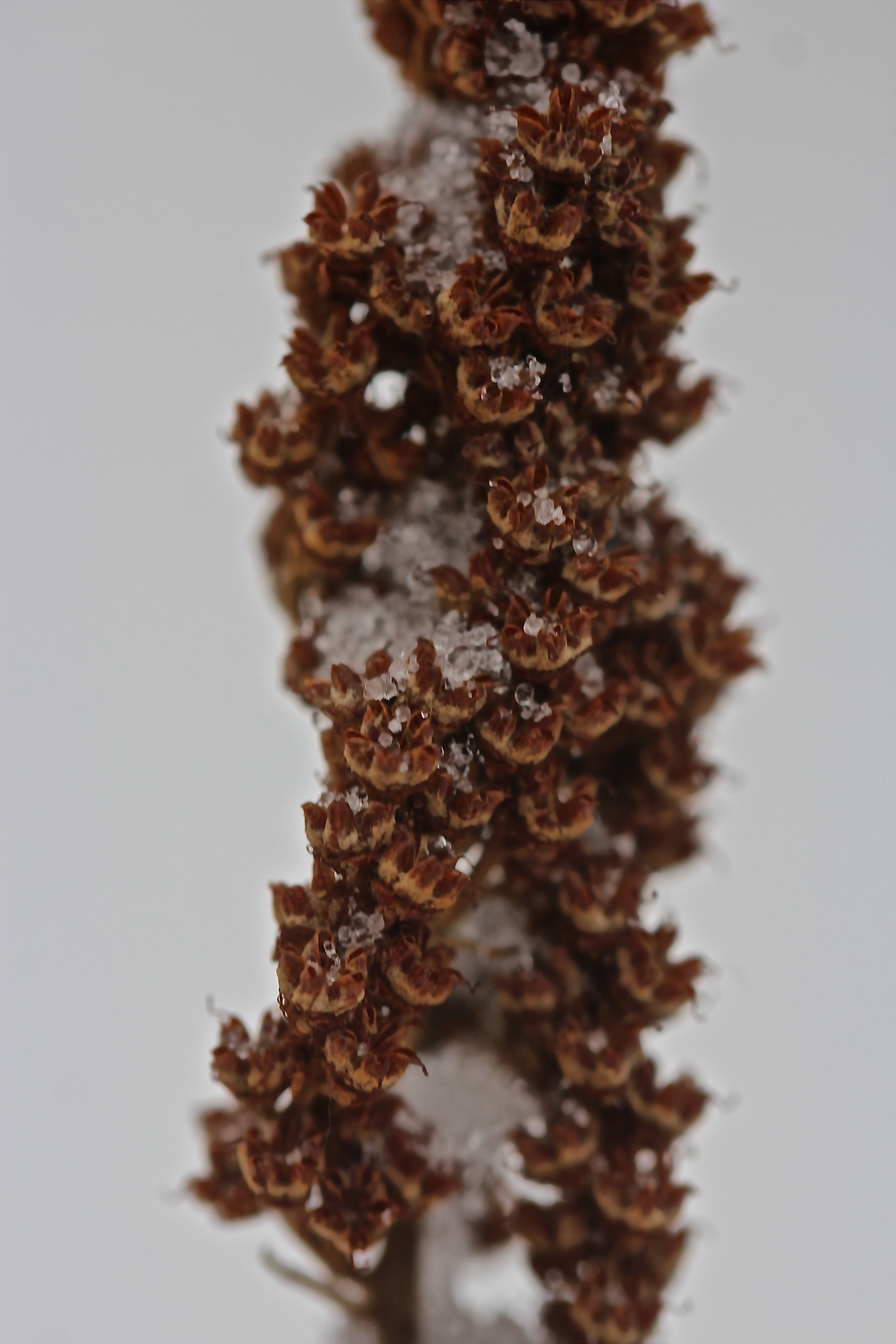
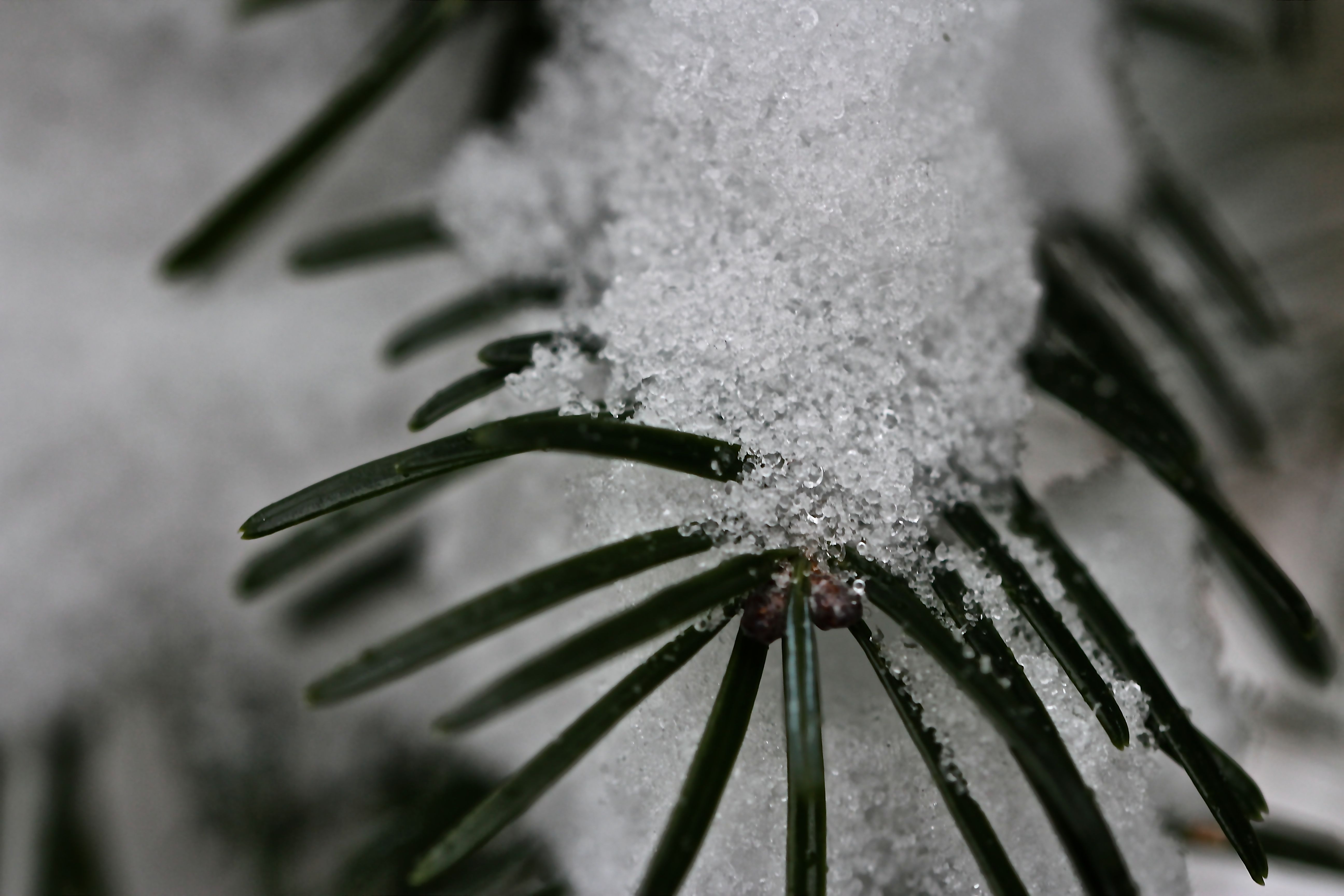
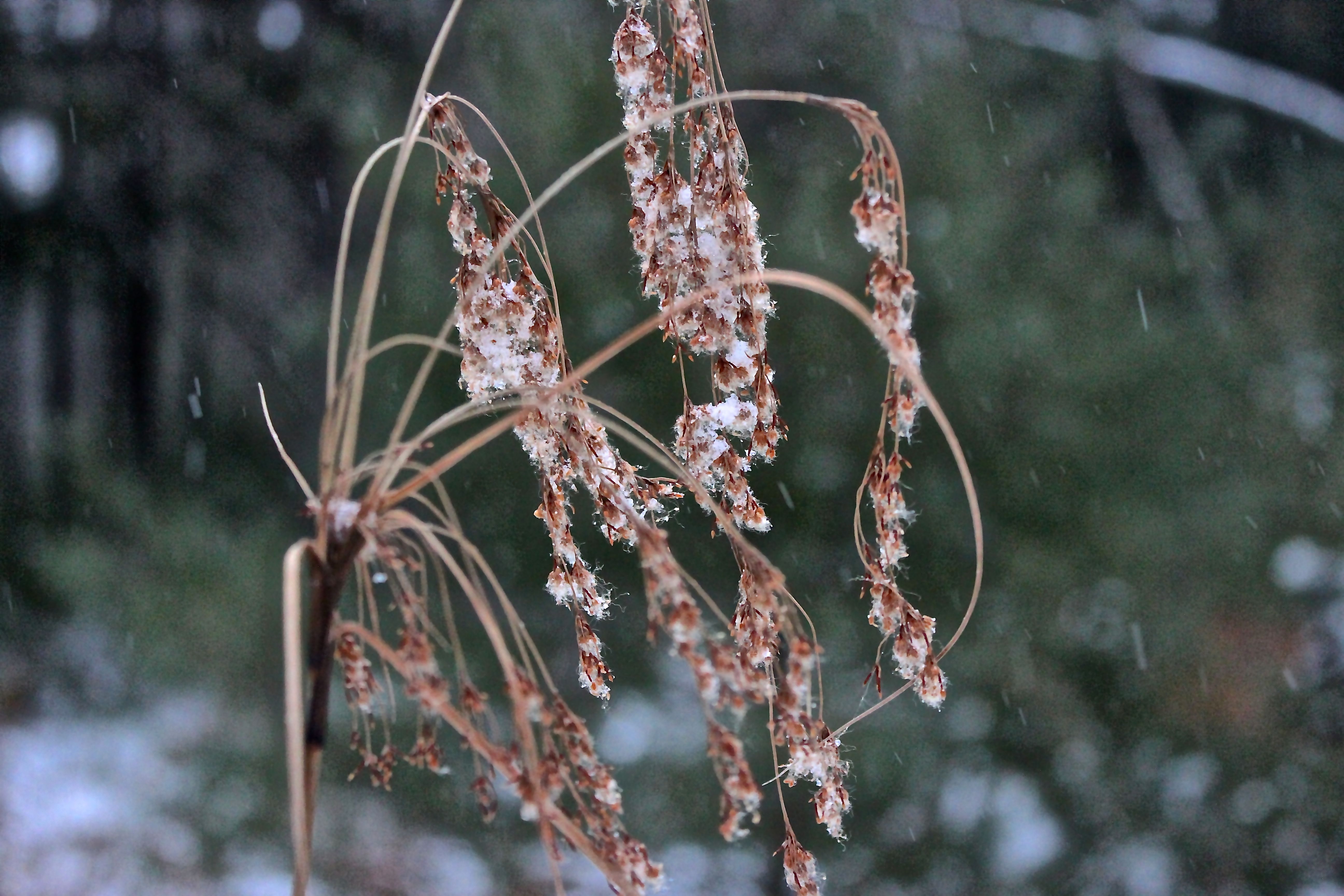
I hadn’t expected too many tracks, so pointed the lens toward the snow and its presentation on a variety of subjects.snow on astersnow on hardtack

Atop asters and hardtack,

snow on balsamsnow on bulrush

balsam fir and bulrush, each crystal clung.

 snow on cinnamon fern snow on sensitive fern

Some were embraced by cinnamon and sensitive ferns,

snow on w. h.

Still others formed blankets of protection.

frullania, leafy liverwort

And then I turned my attention elsewhere. The leafy liverwort in the genus Frullania beckoned a closer look. Like mosses and lichens, liverworts are nonvascular flora.

frull 5 

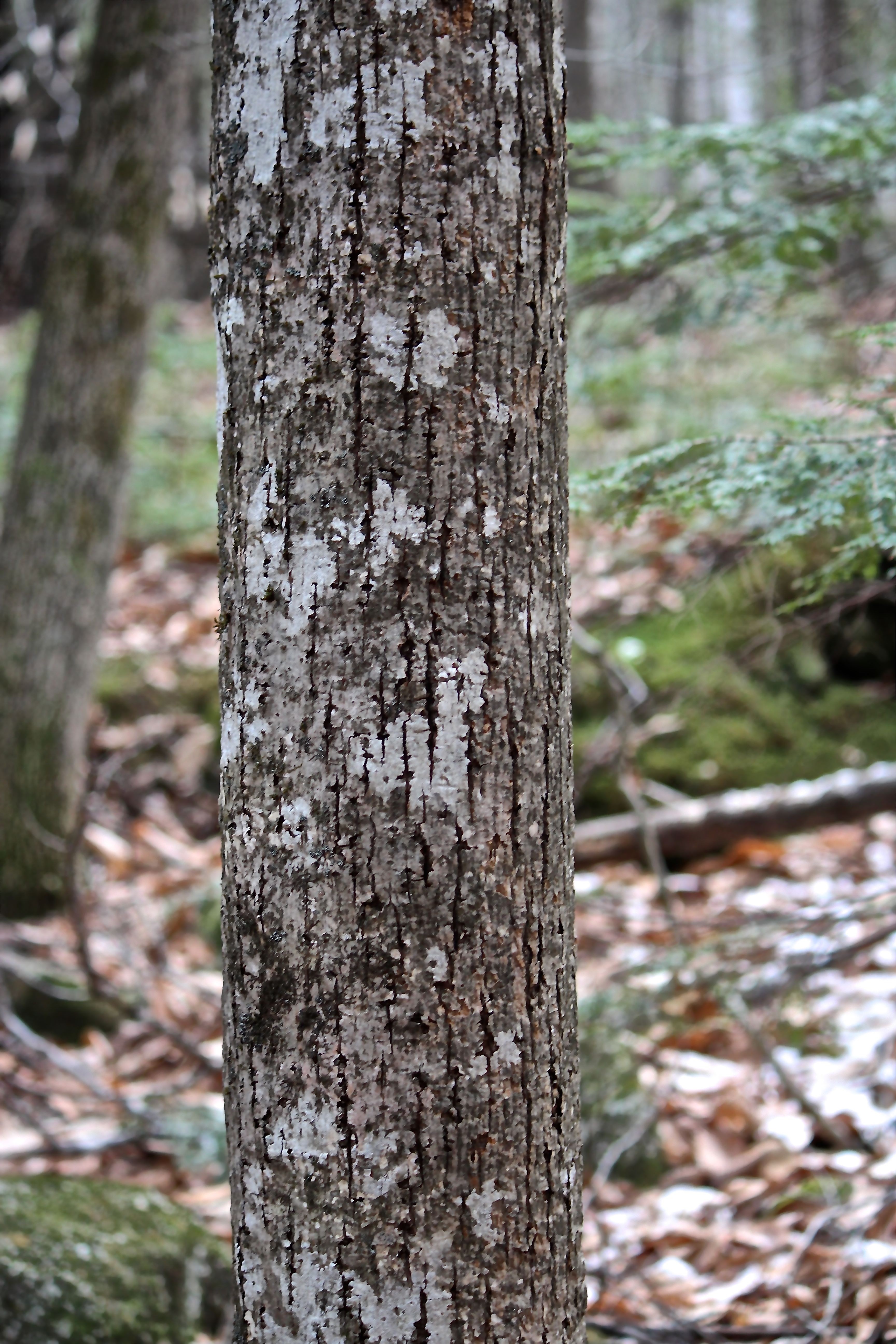
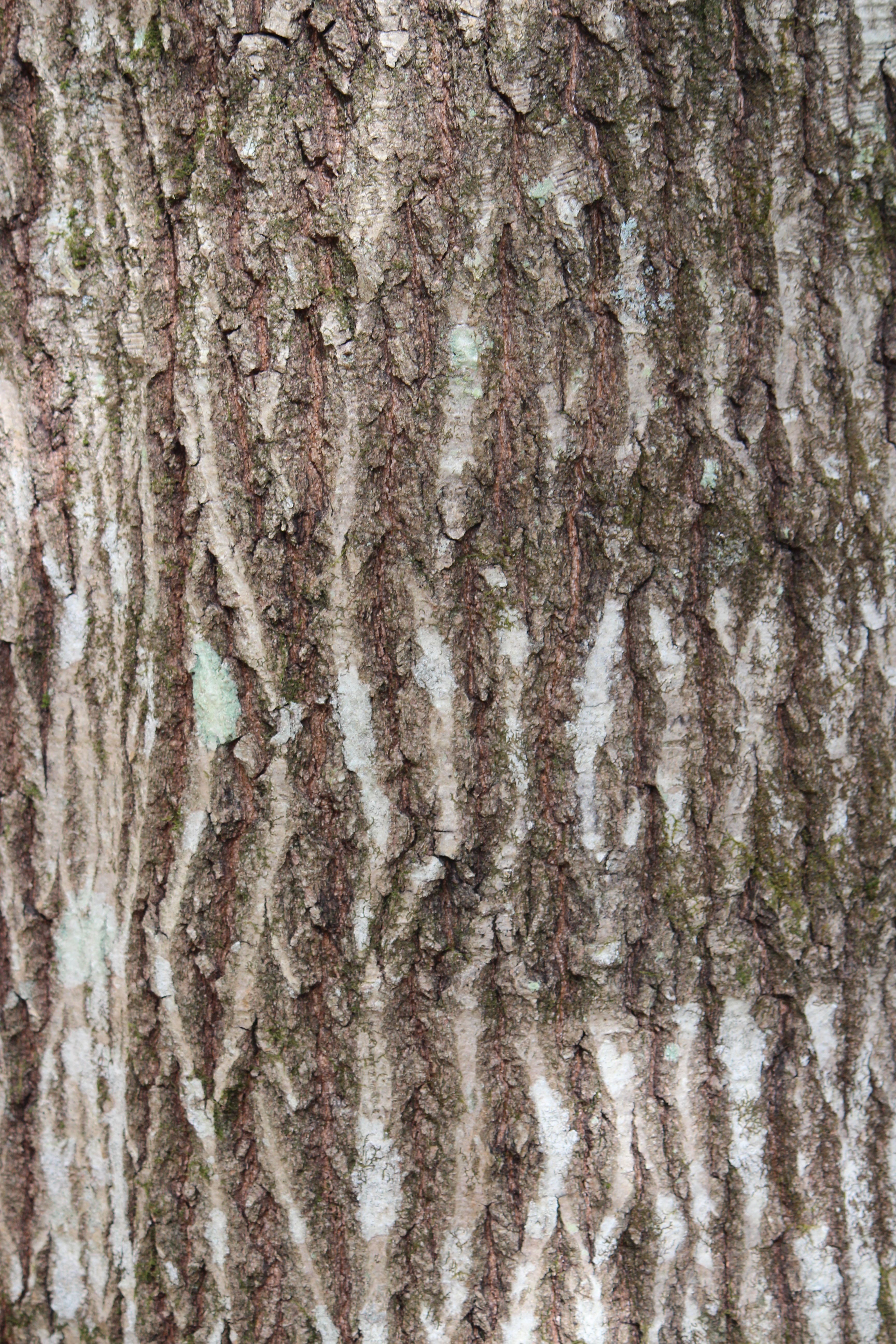
Most are green, but Frullania is brown. As it weaves in and out of the crevasses on the ash bark, its structure reminds me of ricrac, that zigzaggy trim we used to add to sewing and craft projects.

w. nest 2

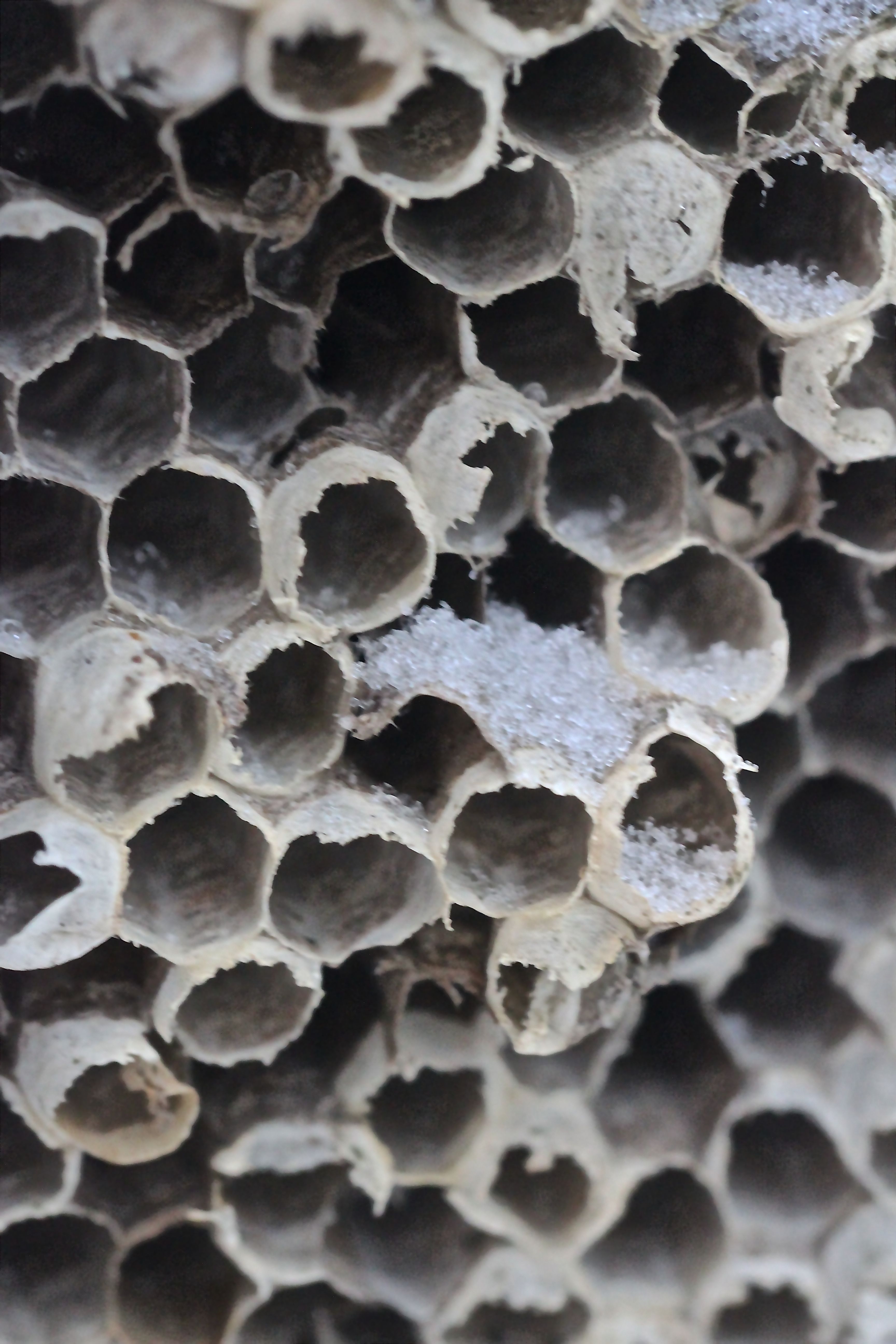
This hornet nest always deserves an examination of structure, texture and design. Constructed from chewed up wood strips mixed with sticky saliva, this is an incredible undertaking.

nest compartments

Each tiny cell once housed an egg. While the males and the old queen died in the autumn, the females who mated have burrowed into tree stumps and other cozy spots to survive the winter months.

 striped 3 striped 5

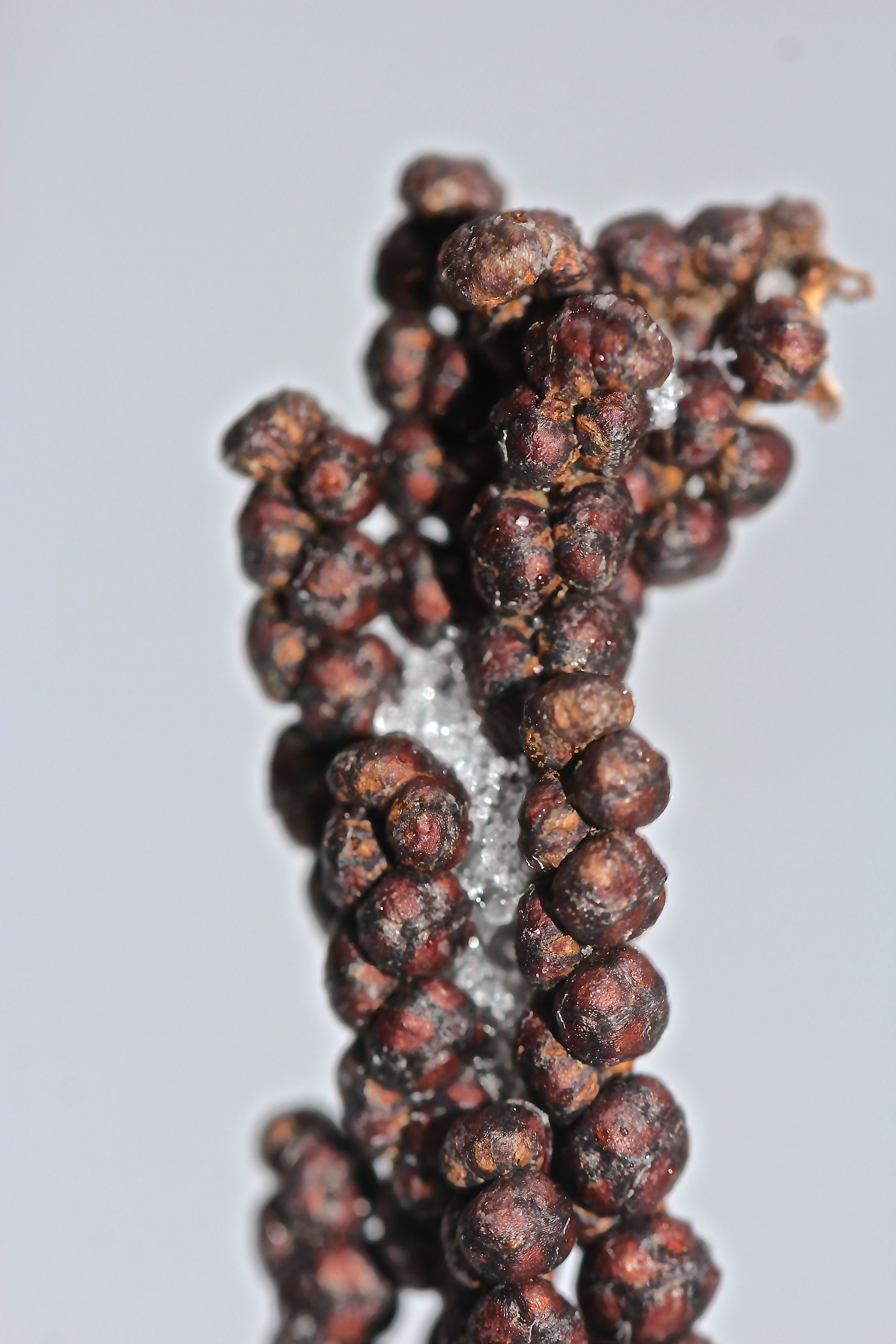
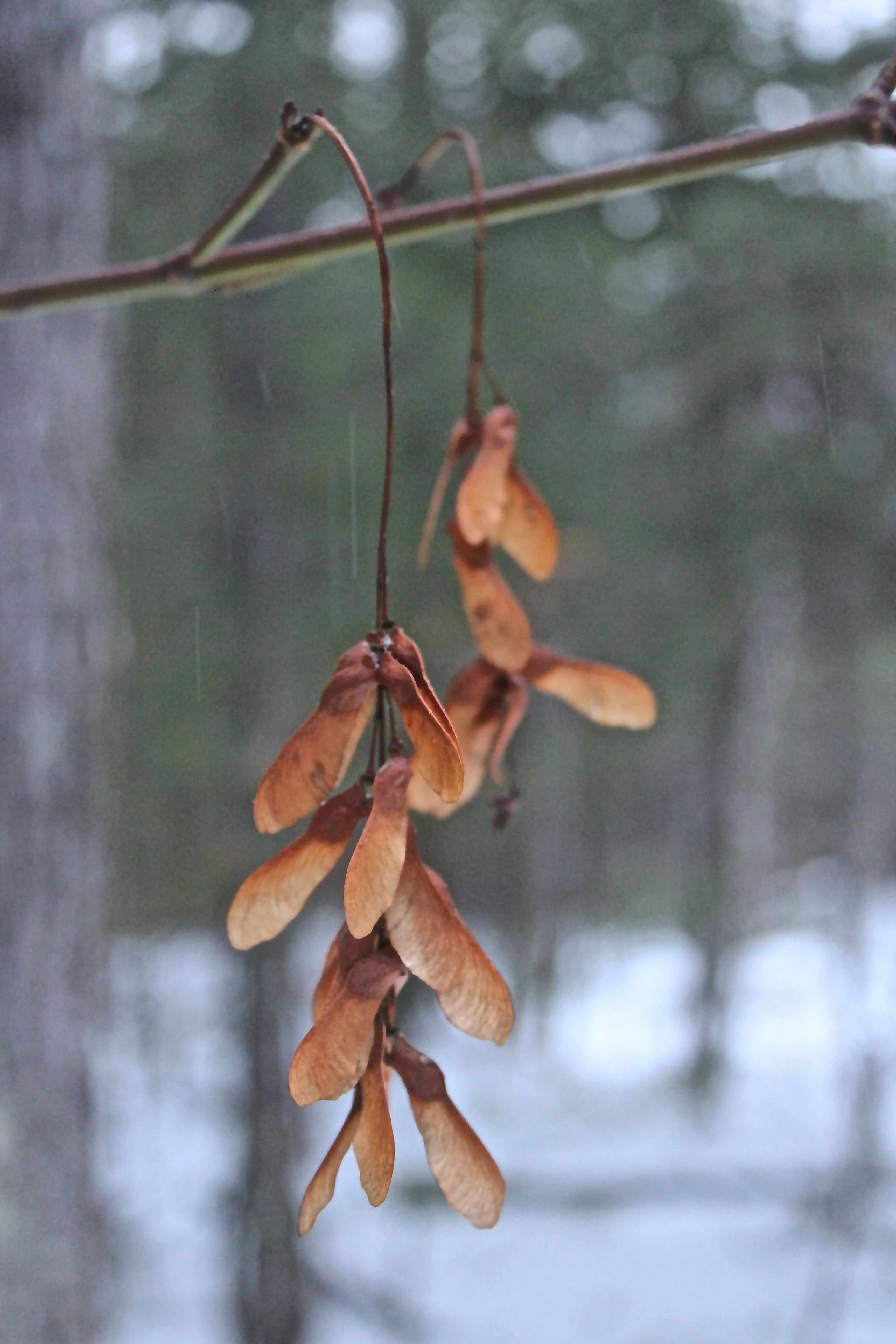
One of my favorite finds today: clusters of striped maple samaras dangling from a tree–waiting for the right moment to disperse. Insect wings come to mind.

 slush

Because the ground hasn’t frozen and we’ve had so much rain lately, I left a few slushy prints.

deer trax 1

As I retraced my steps, I discovered I’d had company. Unfortunately, I never saw the two deer that crossed behind me. We were silent partners in the winter world.

cardinal 2

Home again, I’m thankful for the male cardinal that graces the backyard on a regular basis. Sometimes his mate accompanies him, but I didn’t see her tonight.

It’s beginning to look and feel like my favorite season has arrived. Flakes finally fell–YAHOO!


Everything Old is New Again

Sometimes my feet wander down trails I’ve traveled many times before and other times they pull me into new territory. Either way, I’m happy to bumble along.

vp

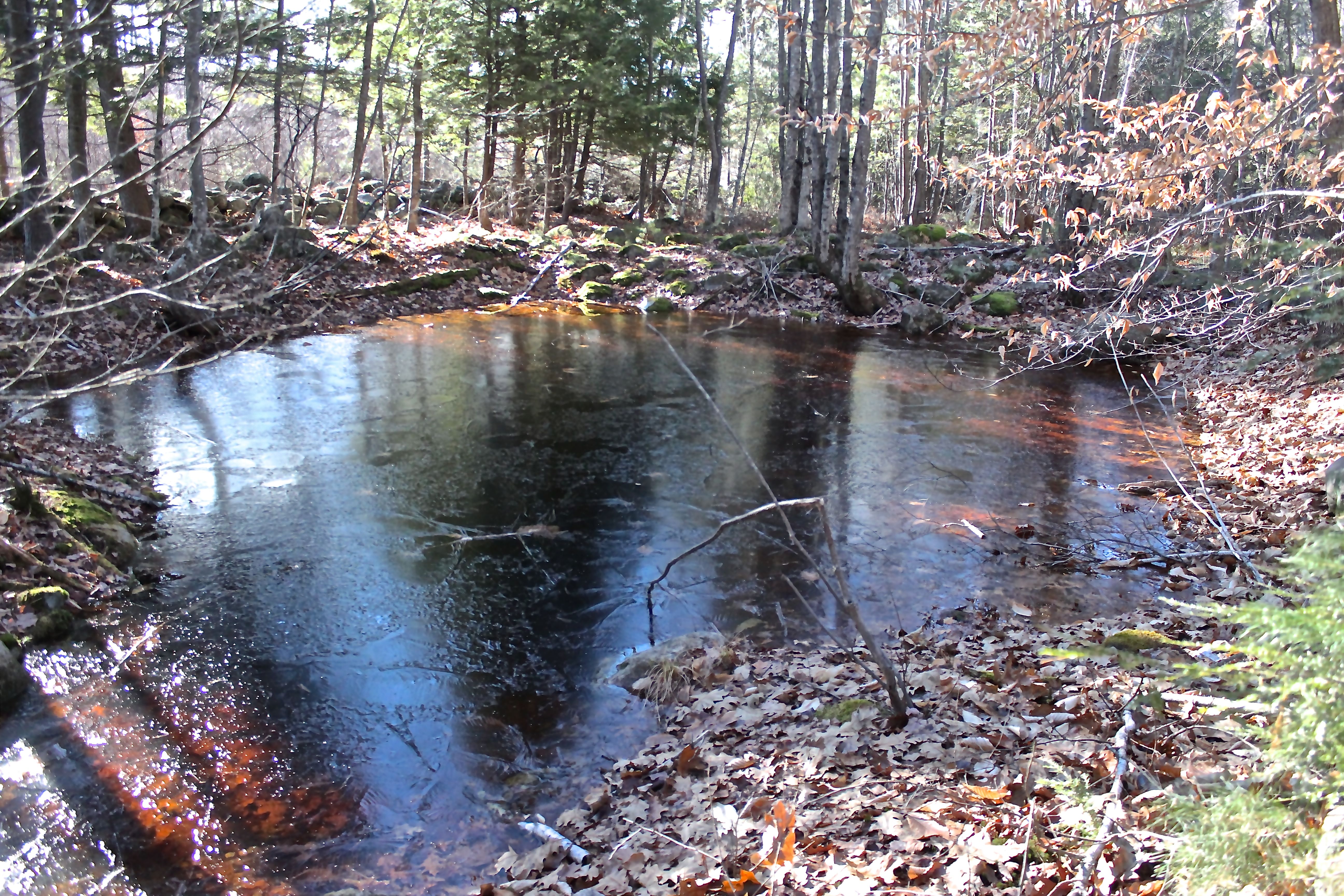
My morning tramp began with a visit to the vernal pool. A week ago it was empty. Some rain and cooler temps suddenly mean water glazed with ice.

gateway 1

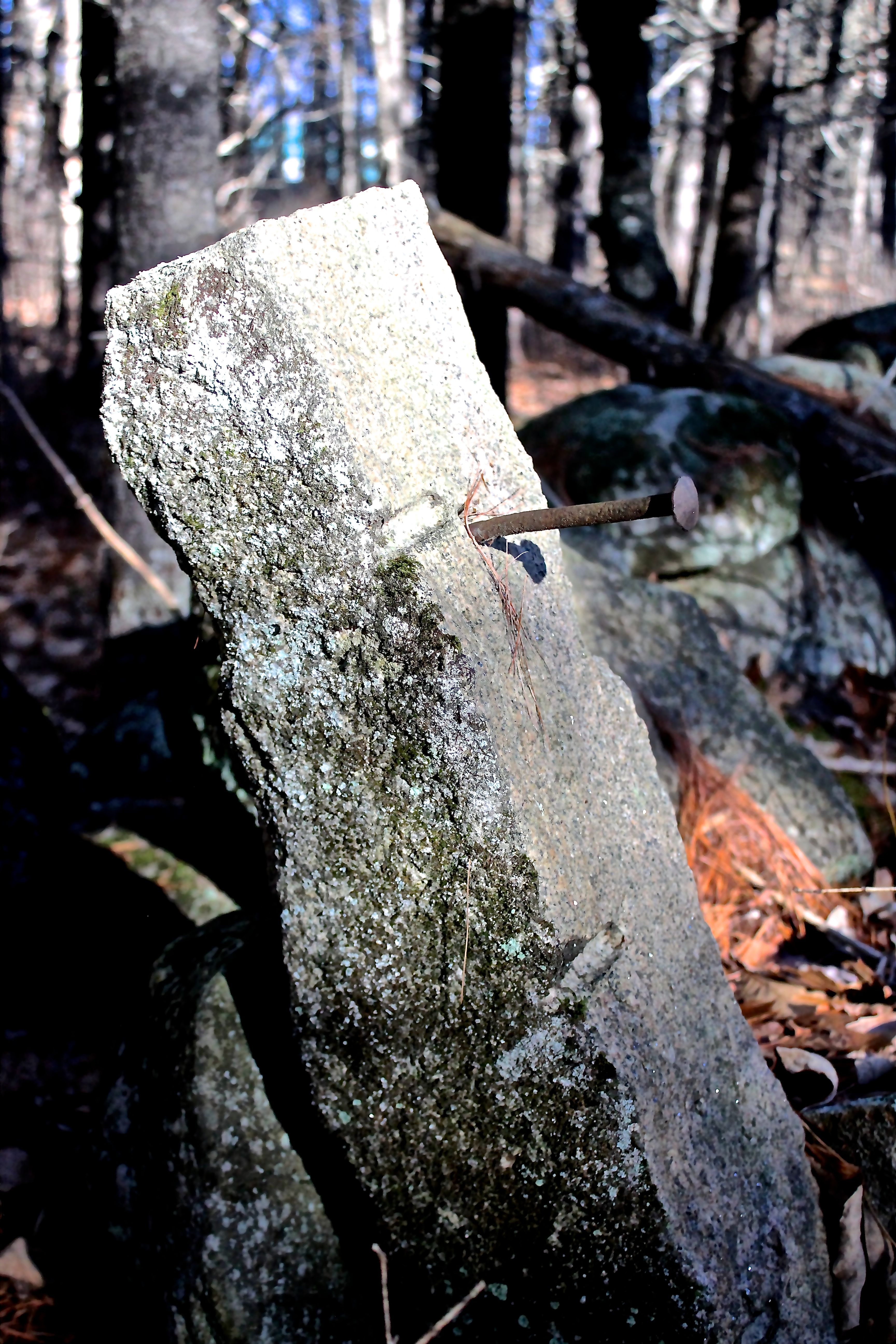
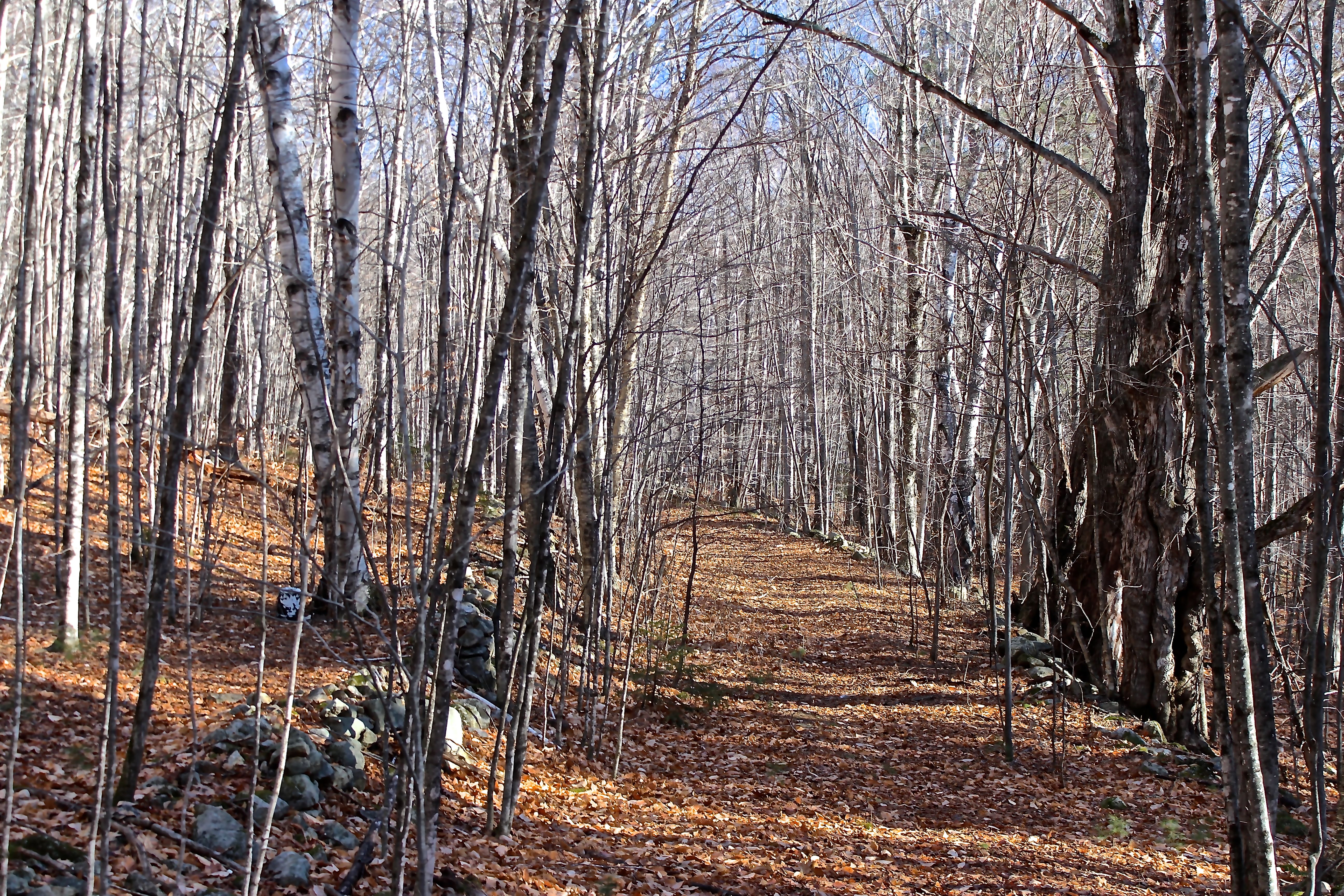
Continuing along, I stopped at an old gateway where granite posts mark the former opening. There is a cowpath on our property. Is this another one? Was there a barn nearby?

gate 2 gatepost

The split granite spoke of earlier times. Rather than pass through, as is usually my manner, my feet turned and I found myself following the stonewall in a westerly direction.

double wall

Curiously, it’s a double wall or two parallel walls, which typically indicates plowed land. That makes perfect sense, as the land was flat. But, what I noticed is that there aren’t many small stones between the outer walls as is traditionally the case. Why?

well

Eventually, I reached a corner, and found where all the smaller rocks had gone. They form a triangle–a common way to get rid of the little guys. I also noticed what I believe to be a well. There are wells throughout this woodland–rather curious.

dump site

Some artifacts, though rusted or broken, remain to provide further evidence that this area served a different use at one time. It now stands in tree growth and is lumbered every 30 years or so.

super double wall

As the wall turned, so did I. And here I was even more confused. The wall is about eight feet wide. The reason? I can only wonder.

island hopping

At the next corner, rather than continue to follow the wall, I climbed over and did some island hopping.

sphag 2 sphagnum 1

Sphagnum mosses display their pompom heads.

evergreens evergreens2

Evergreens compete for sunlit spaces.

snow flurries

And suddenly, snowflakes land on ice. Only flurries, but still . . . it’s snow.

lost 1

At times, I was lost. Not really lost because I knew I could find my way home, but fake lost–curious about where my next steps would lead.

turkey tails

Among my findings as I wandered about, turkey tail fungi (Trametes versicolor),  proving that they are as prolific as the tails of strutting turkeys for which they were named. And one hundred times more beautiful.

hemlock varnish shelf

Exhibiting its winter color is a hemlock varnish shelf (Ganoderma tsugae).

witch's butter & bark beetles

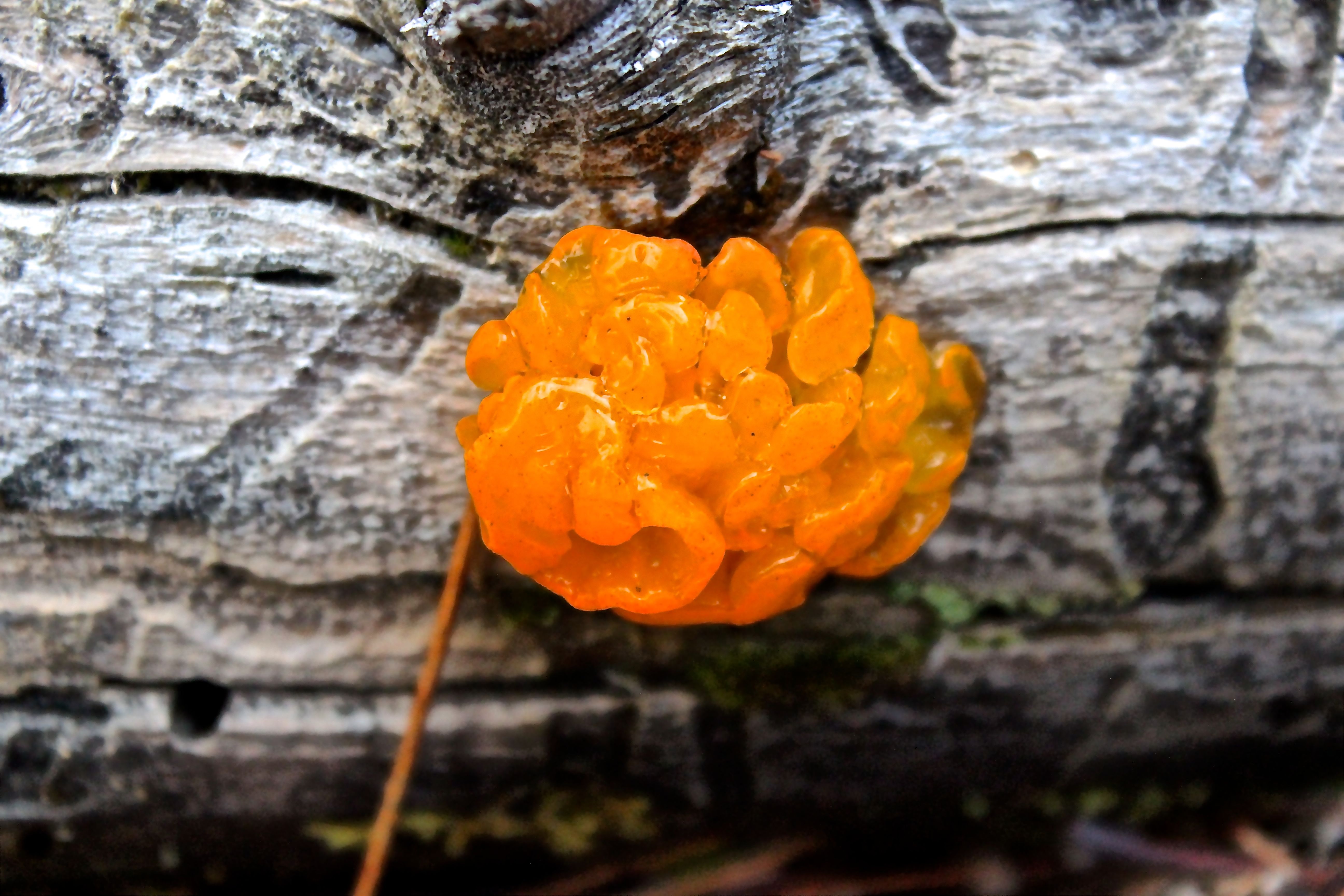
Witch’s butter (Tremella mesenterica) put me under its spell. I didn’t have any pins to prick it and let the jelly juices run, thus counteracting any adverse effects, but that’s okay–I think it’s a good witch.

ice needles

The ice needles are forming again, ever curious in style and design.

balloon

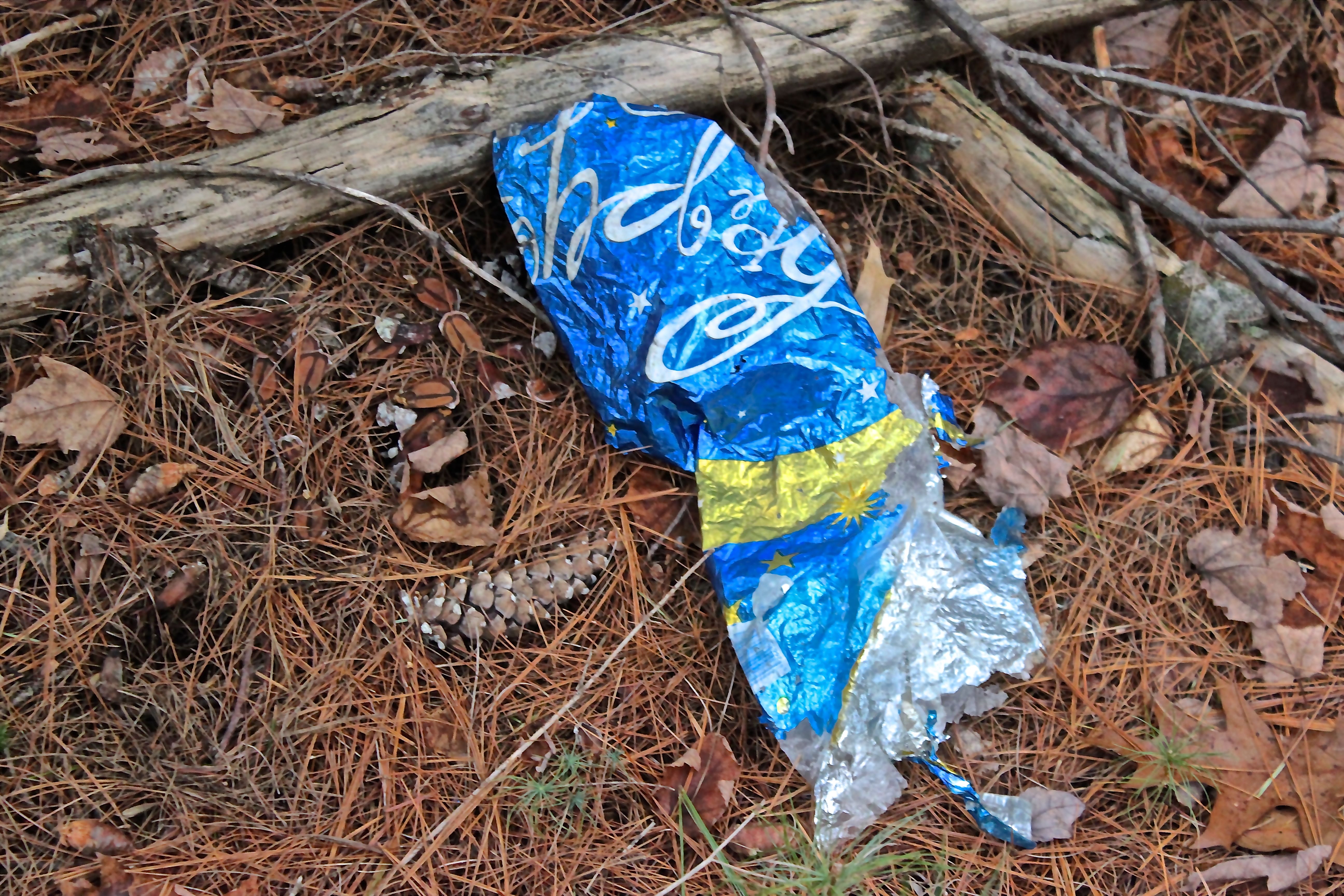
A different color catches my eye–deep in the woods and yet . . . and yet, the human effect leaves its mark. Don’t worry, it’s not there anymore.

deer trail

Finally, I followed the deer and moose trail home, and later decided to follow a more conventional trail.

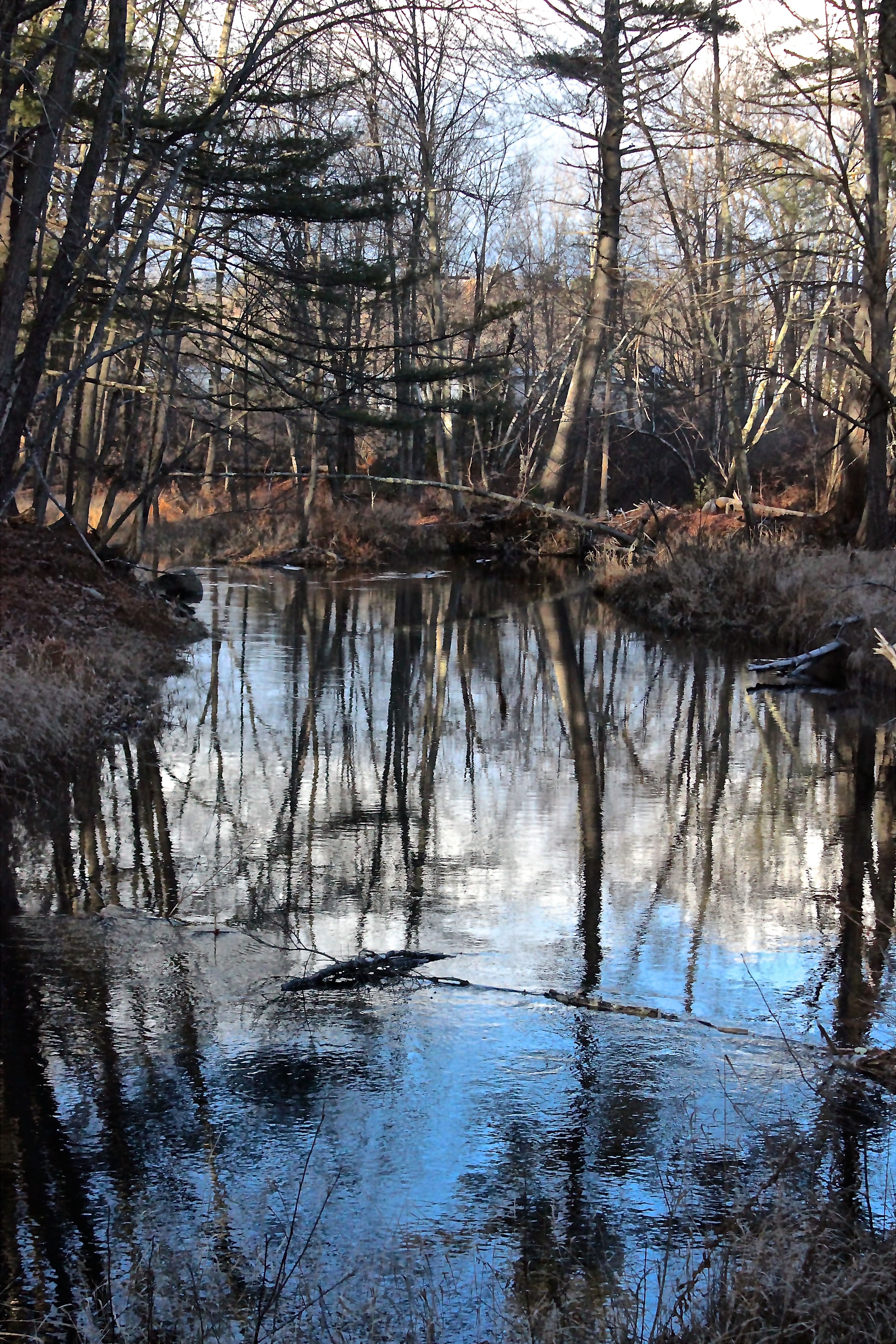
 brook 2

brook reflection

Though I explore the trails beside the brook frequently, the change is constant.

 weeping treeweeping 2

This white pine, which is actually a snag, has taken to weeping. It’s nearing life’s end. I’d cry too if my outer layers of skin were cast away as if they meant nothing.

art 2

art 3

Another snag shows off its palettes of great size–artist’s conks.

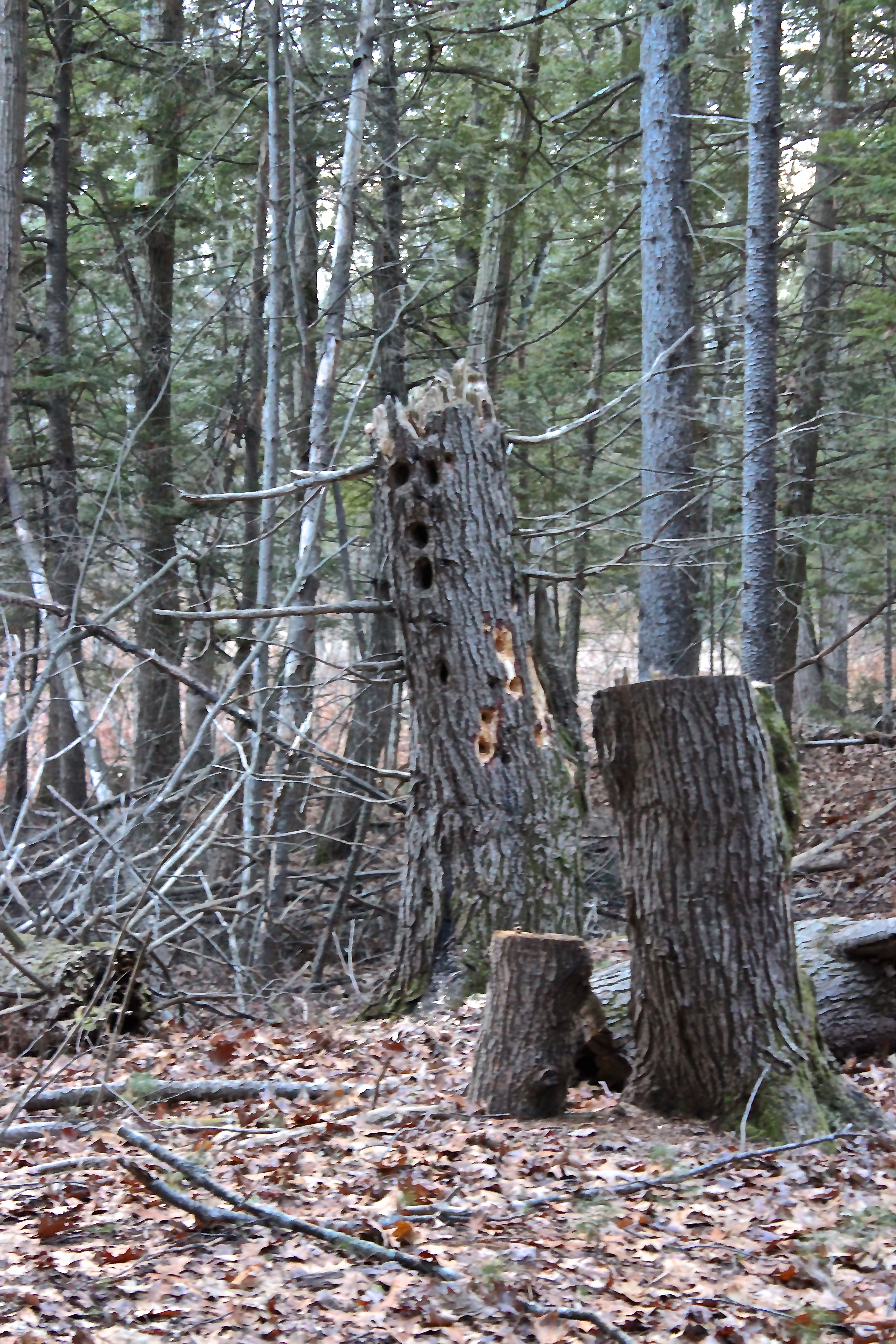
   pileated 1

A third snag is an old favorite for pileated woodpeckers and me. I can see by the light color that it’s been visited within the last week.

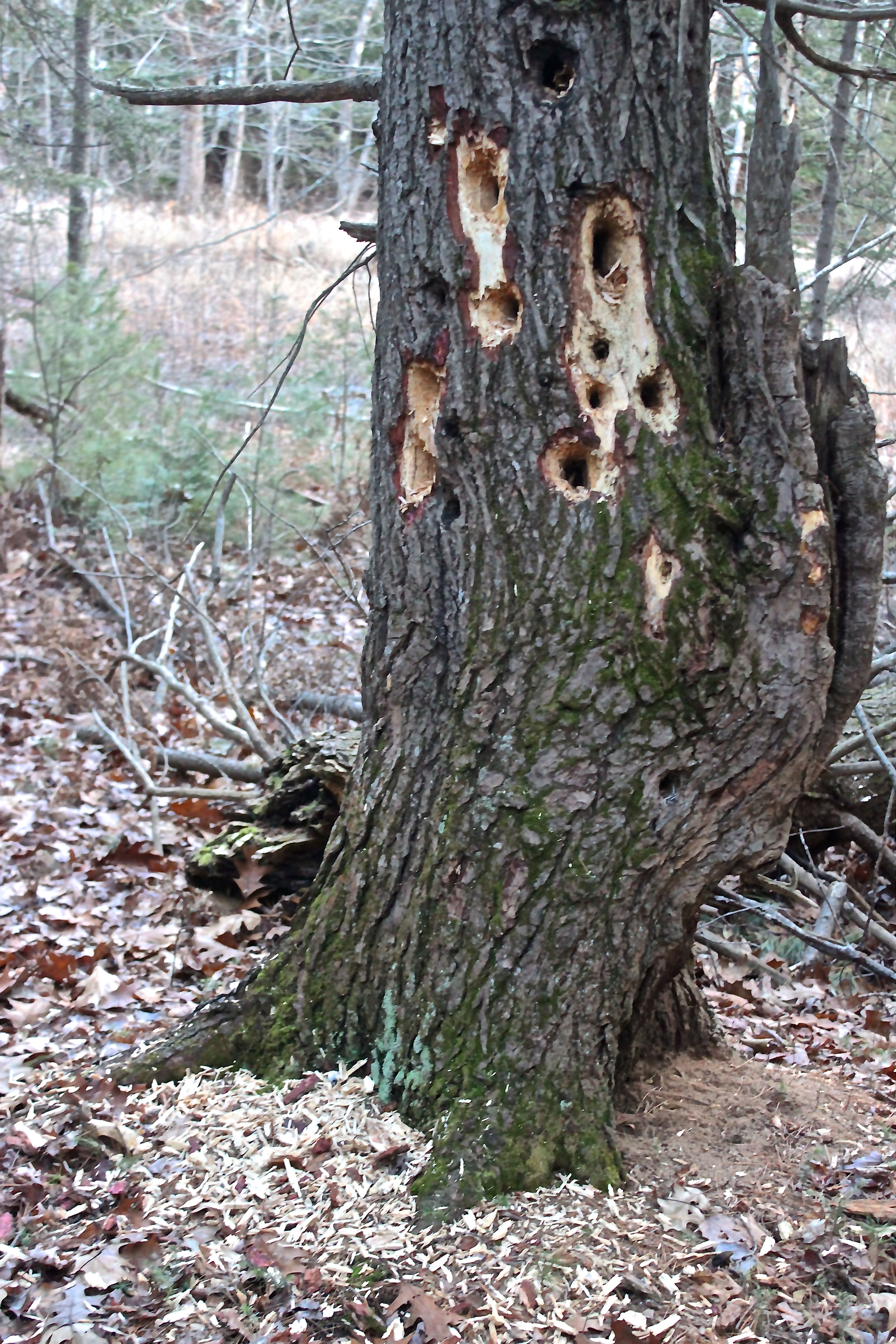
pile, 3

Fresh holes, fresh chips and fresh saw dust.

pile scat

Of course, the crème de la crème–pileated woodpecker scat filled with carpenter ant carcasses.

 hemlock inner bark

hemlock 2

In the midst of it all, the inner bark of the hemlock tree decked out in its characteristic bright cinnamon red color reminiscent of the varnish shelf that grows on this species.

false tinder conk on red mapletinder conk

A false tinder conk and a tinder conk, both looking a bit like a horse’s hoof, appear ready to gallop away.

jelly ear 2

The jelly ear fungus listens attentively to all who choose to share their thoughts.

cache

And finally, a cache on an old stump let’s me know that winter is drawing near.

At day’s end, I’m ready for the next season, confident in the knowledge that everything old will be new again.

Making a list

and checking it twice. That’s what the busy beavers on a friend’s property appear to be doing right now as they ready for winter.

When JoAnne asked if I wanted to see the recent beaver works, I jumped at the opportunity.

beaver pond 1

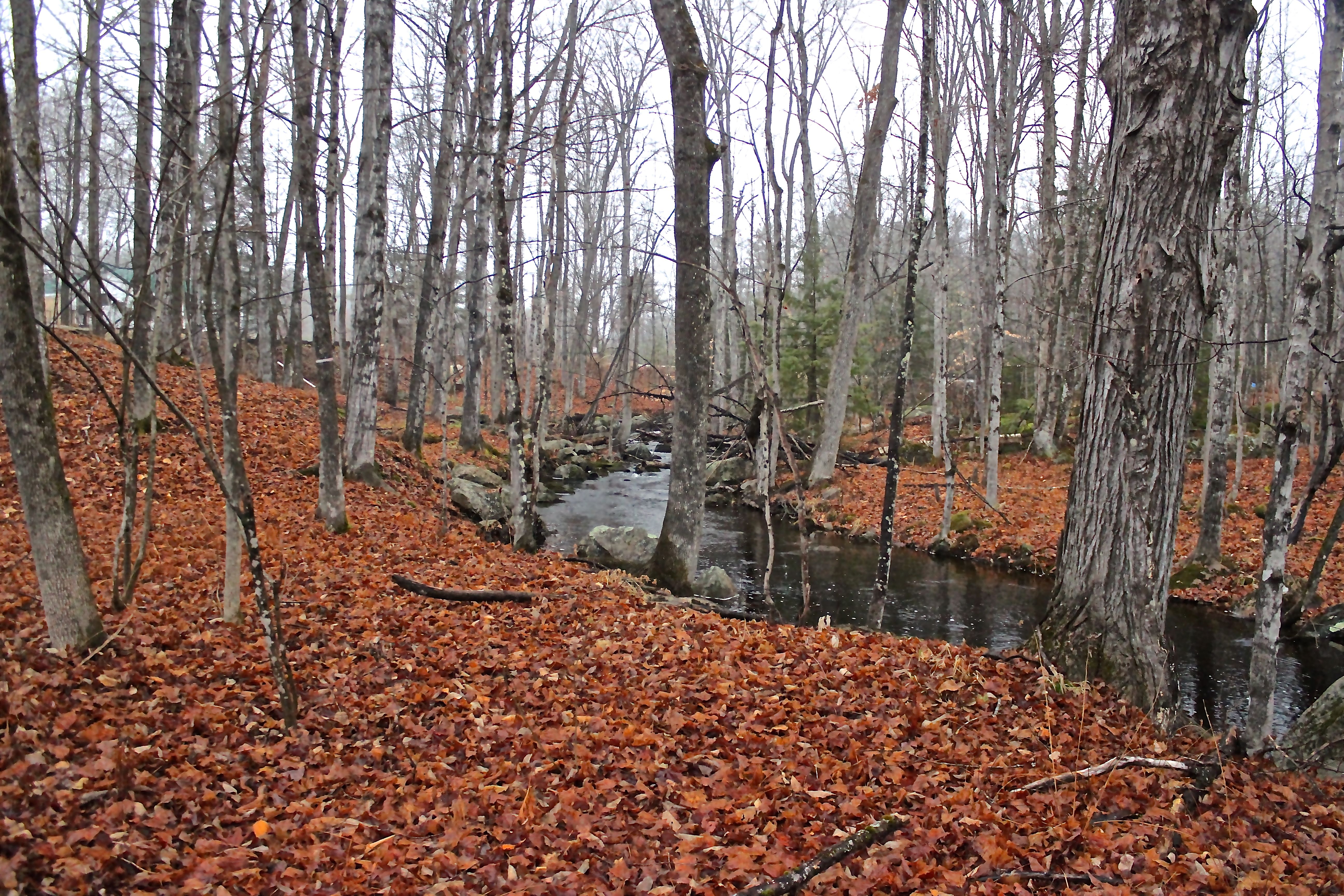
Today’s rain didn’t stop us from heading out to explore. She first discovered this new pond when she walked down a sloping field and noticed through the trees what looked like water–where it wasn’t supposed to be.
beaver creek 2

A creek flows through her neighbor’s property and once supported several mill sites.

beaver stream width

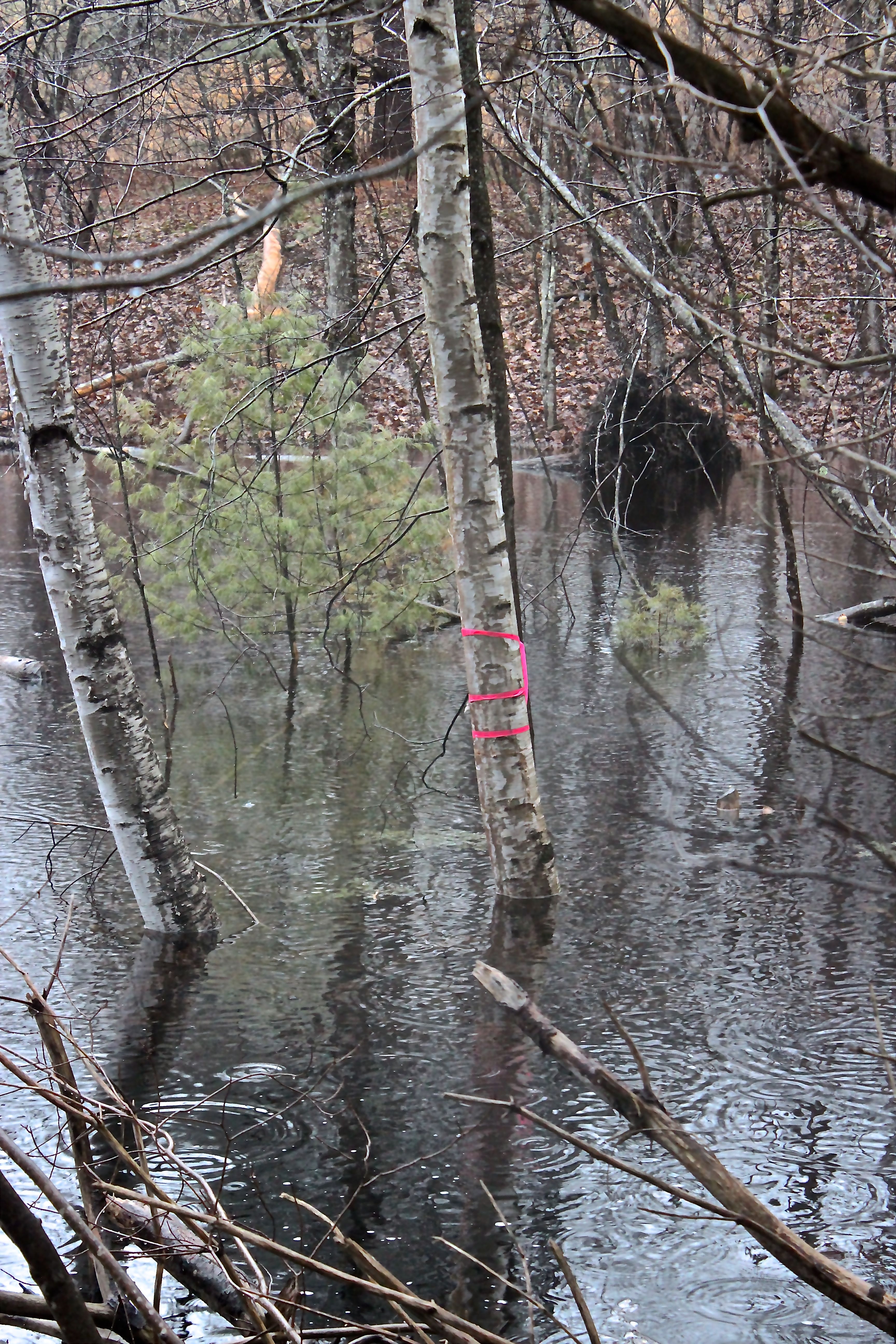
It continues, or should I say continued, across her property, coming in from the right. That is, until things changed.

beaver ribbons

This past summer, in the middle of what is now the pond, JoAnne stood beside the then creek and marked a property boundary with pink tape.

beaver ribbon 1a

The ribboned tree was on the far side of the creek before her new neighbors  came knocking.

At a former dam site, they took it upon themselves to do their own construction. It needs work as we could see some holes, but I’ve no doubt that they’ll be on that in no time.

  beaver works 6beaver works 4beaver works 2

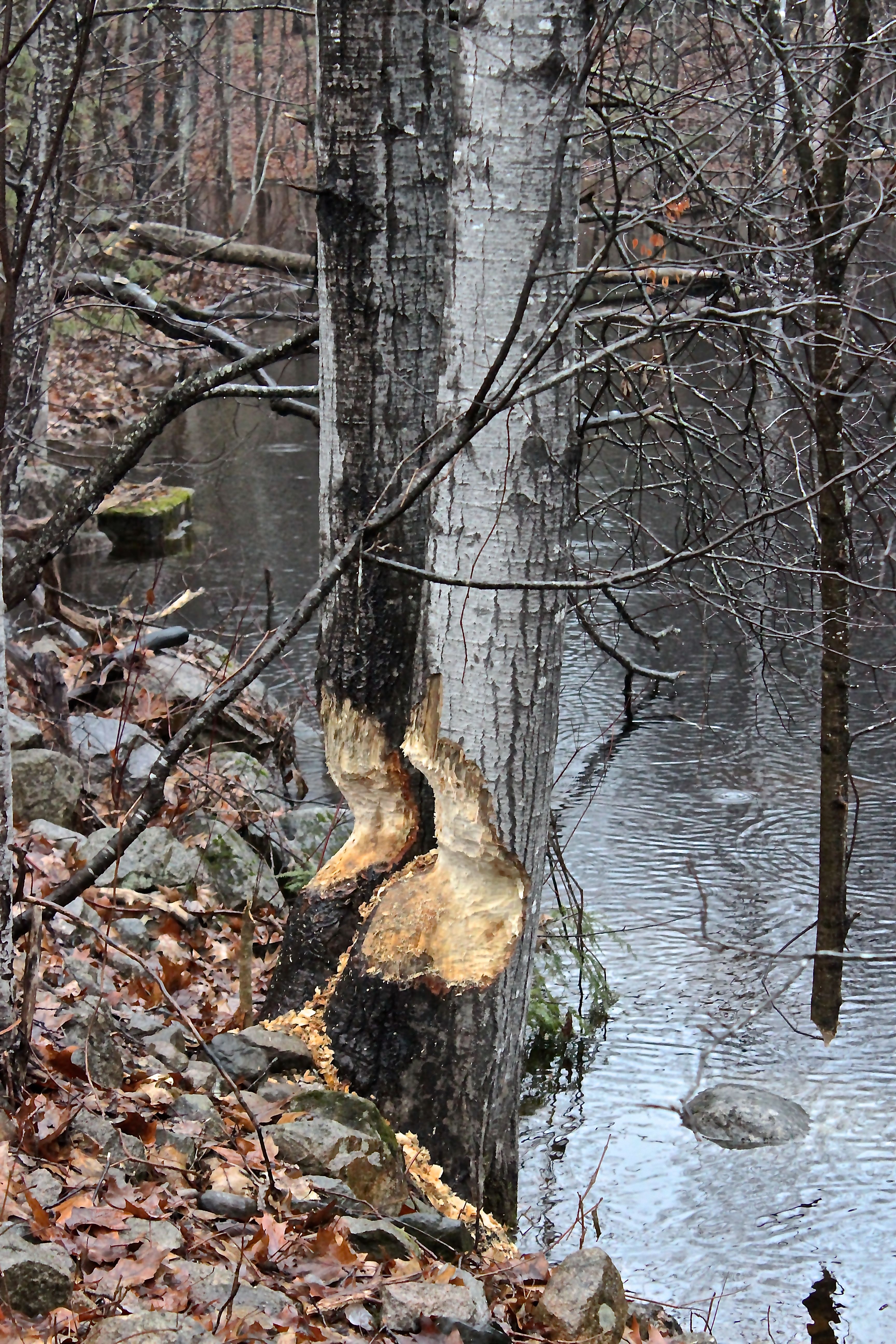
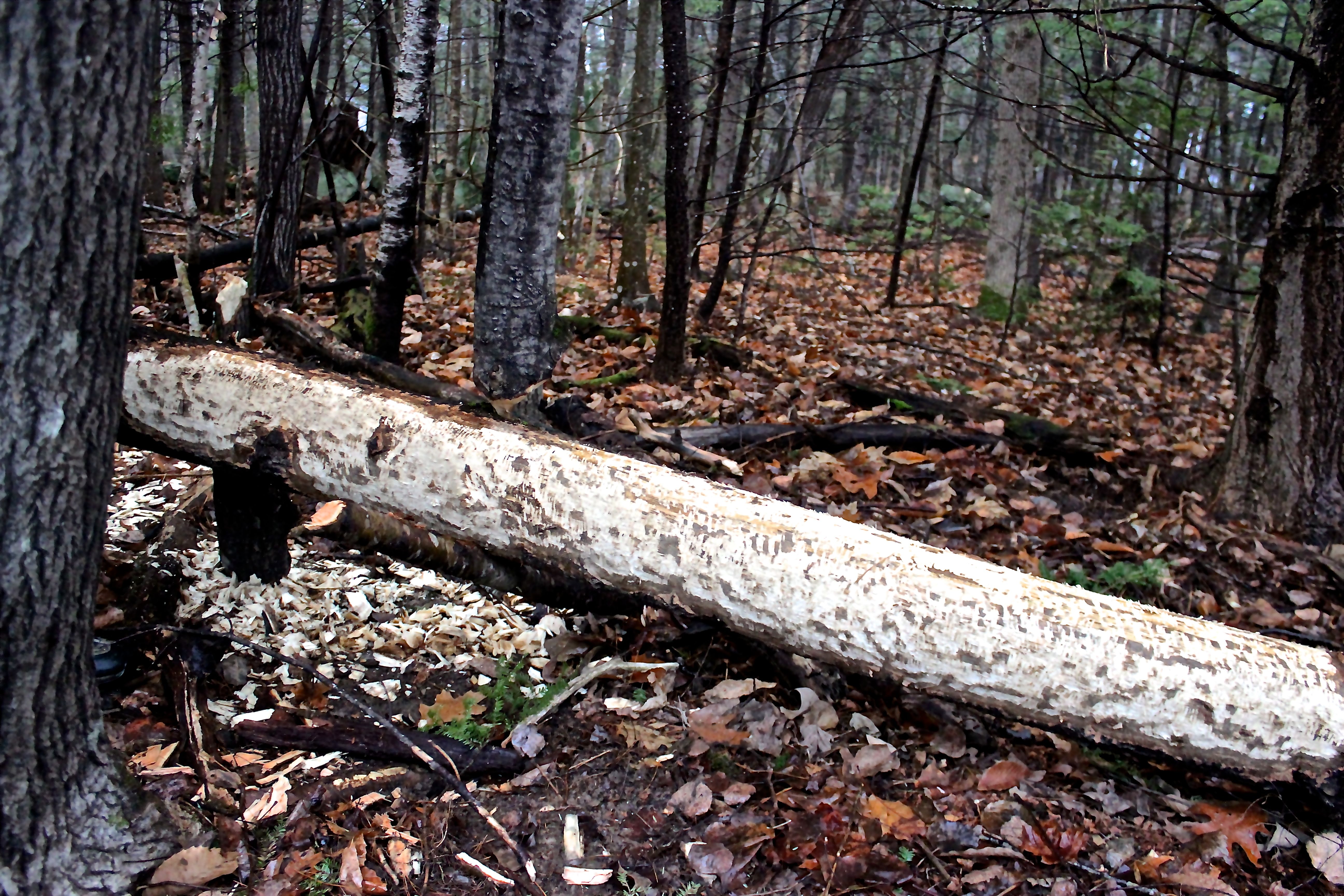
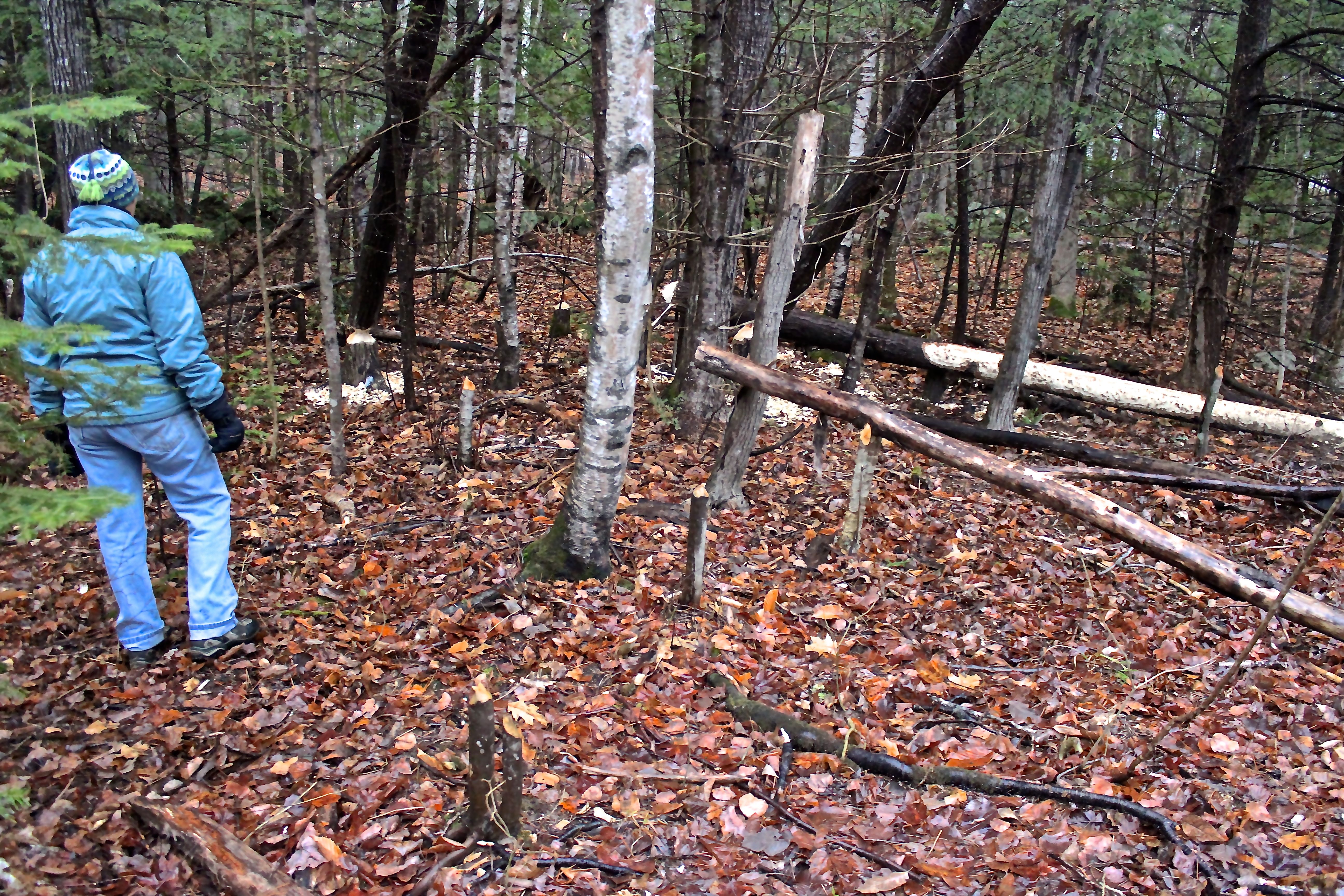
Their industrious nature was evident everywhere we looked. No tree species was spared. Once felled, they trimmed the branches and carried or dragged them to the water.

beaver debark

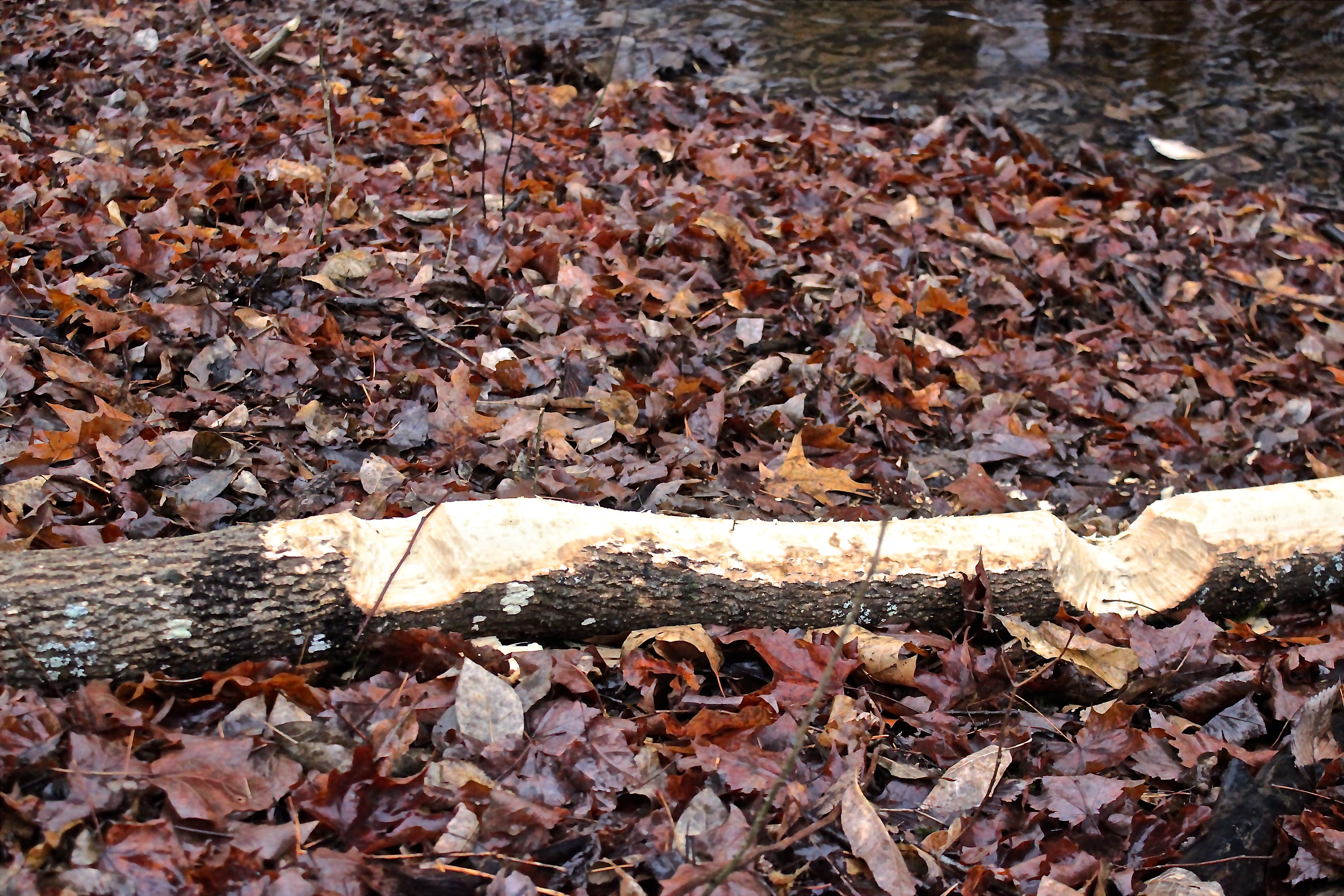
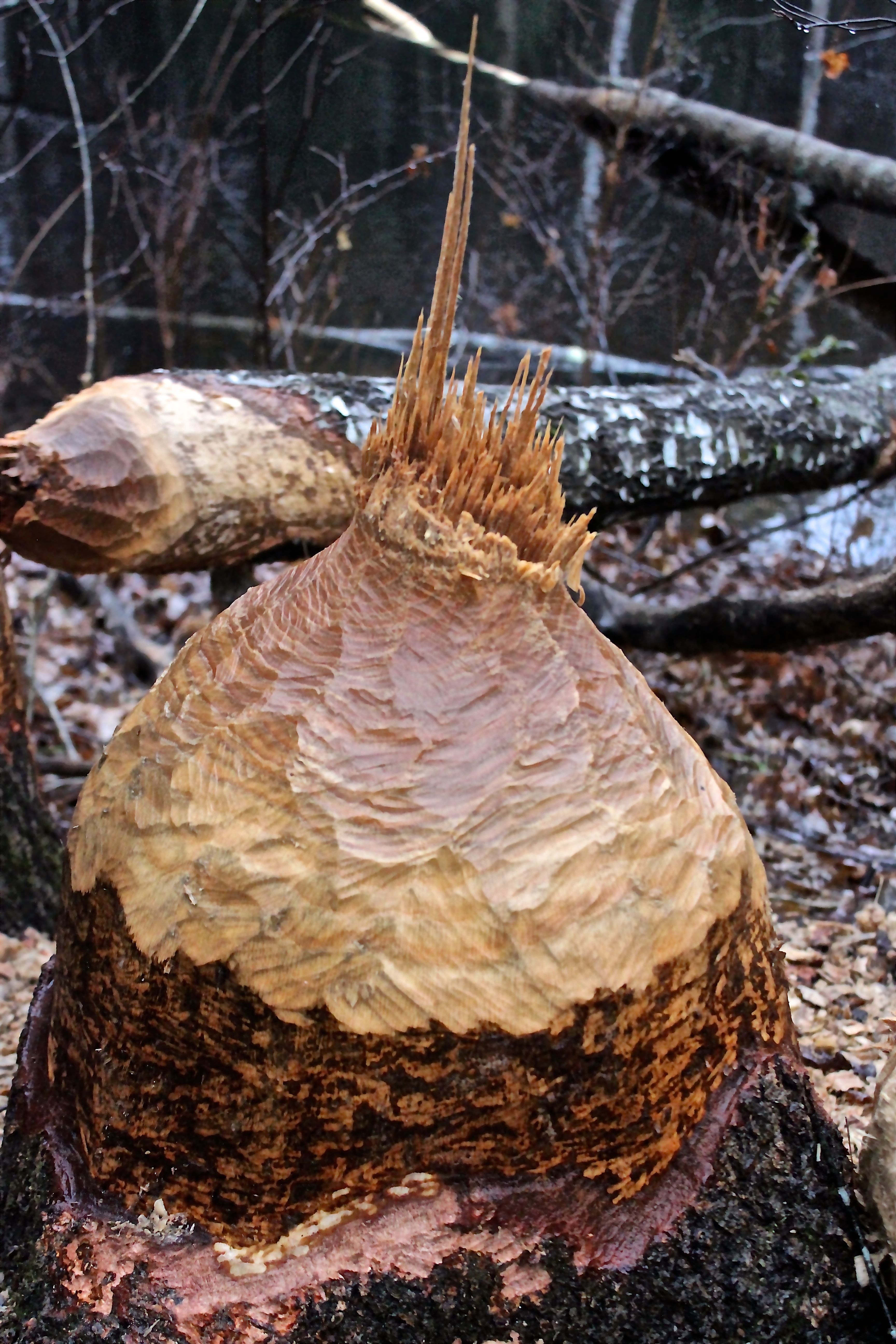
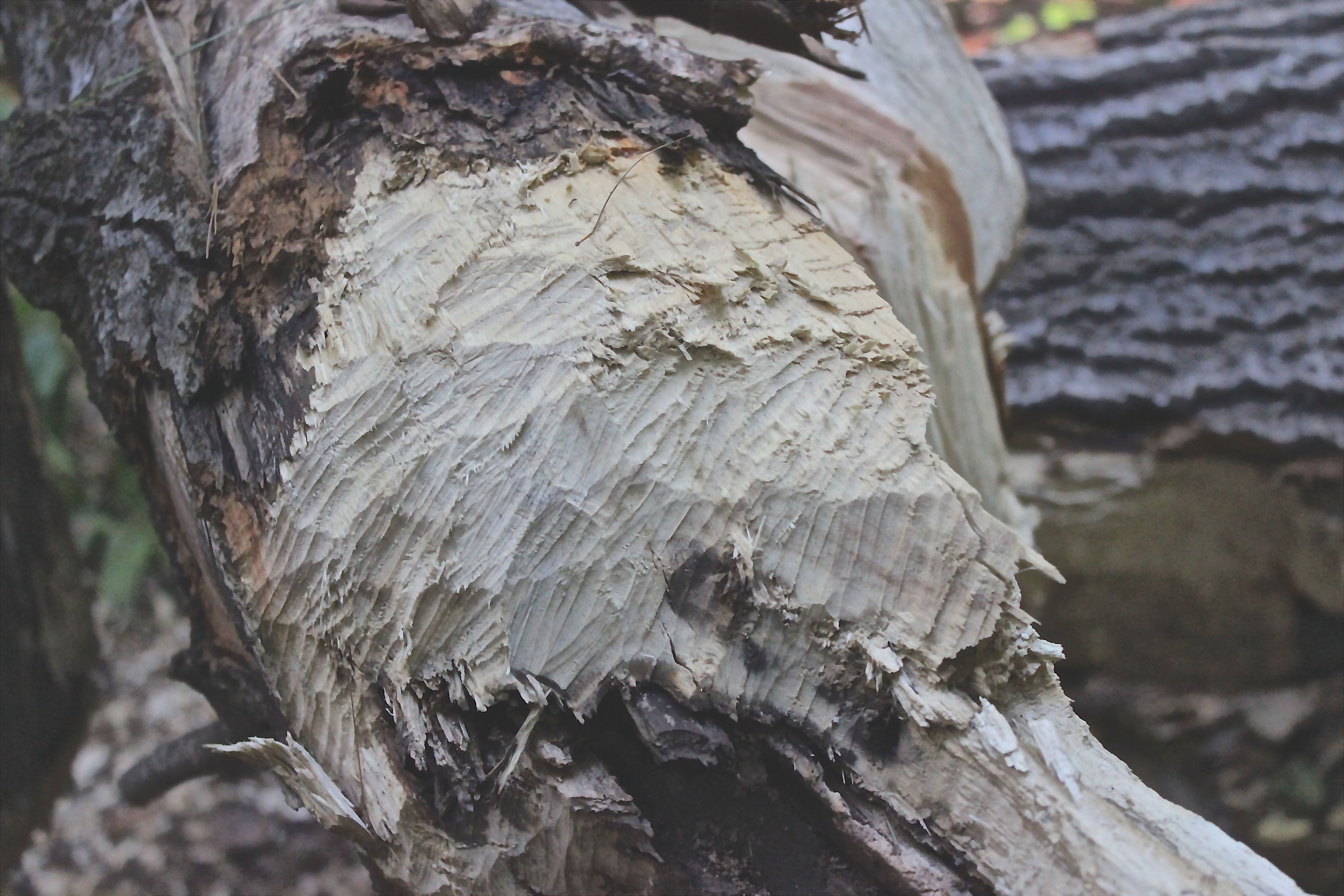
With their large front teeth, beavers bite chips off trunks. Their rodent teeth never stop growing so gnawing wood helps keep them in check. Because their lips are located behind their teeth, they can keep their mouths closed while they work. No need to hum a logging tune.

beaver chews

Some trees are particularly tasty and it seems that they like more than just the bark and cambian layer, the softwood just beneath the bark. Or perhaps they are cutting them into log-size pieces to make for easier carrying and maneuvering in the water.

beaver shed

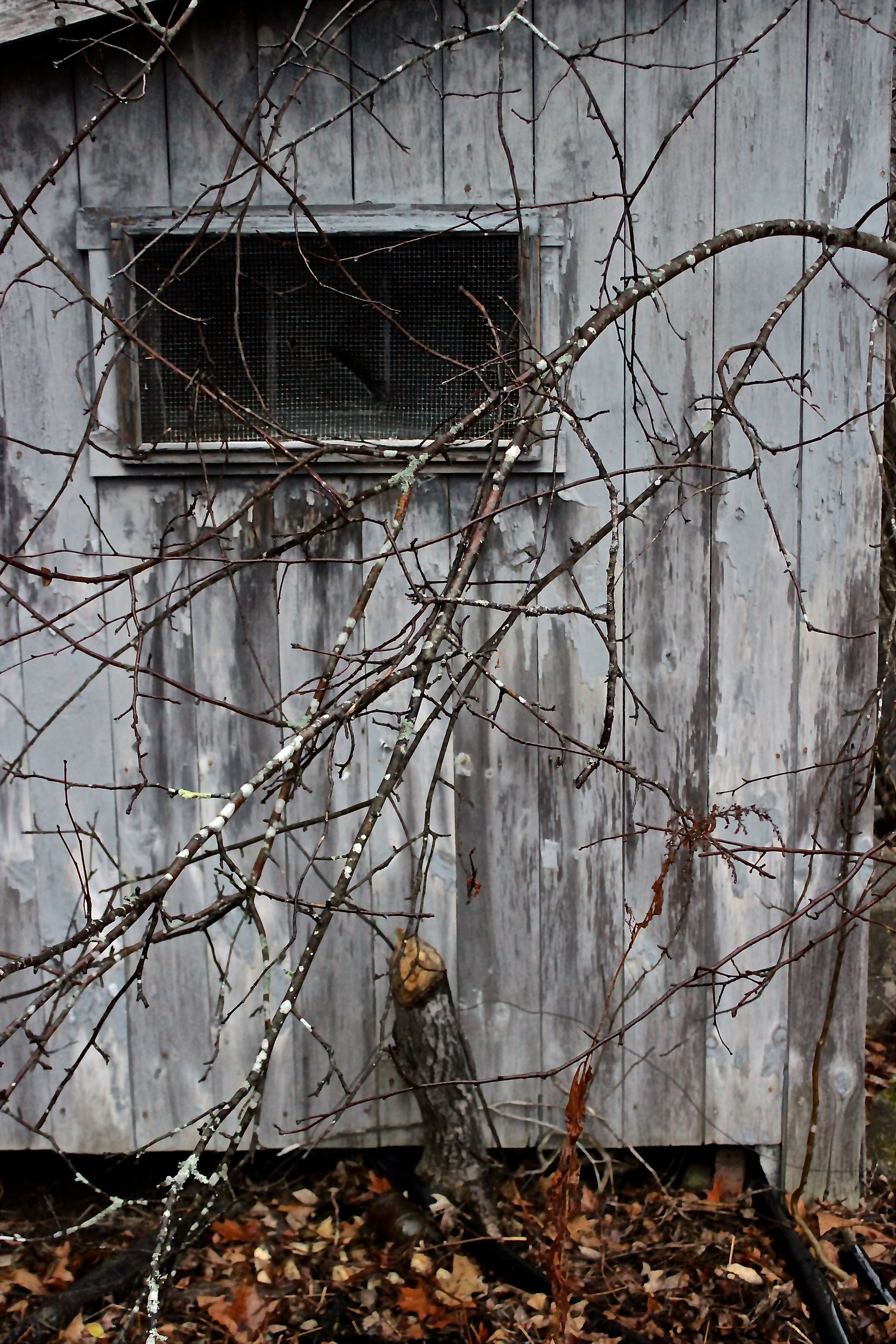
Nothing was safe, including the sapling that had grown beside the shed.

beaver industry

beaver works 3

Sometimes things don’t work out quite the way they intend.

beaver caught

The upper part catches on other trees. All that effort . . . for naught.

beaver works 5

We stood in awe and wondered about how nature plays tricks on them occasionally.

beaver height

We marveled at the thought of them standing on their hind feet to work.

beaver trail 2

And we noticed their oft-traveled roadways throughout the area.

beaver admiration

One of the truly curious things–most of the trees have fallen toward the water. Chance? Instinct? Engineering skills? They’ve learned how to fell a tree in that direction, thus creating the quickest route back to safety?

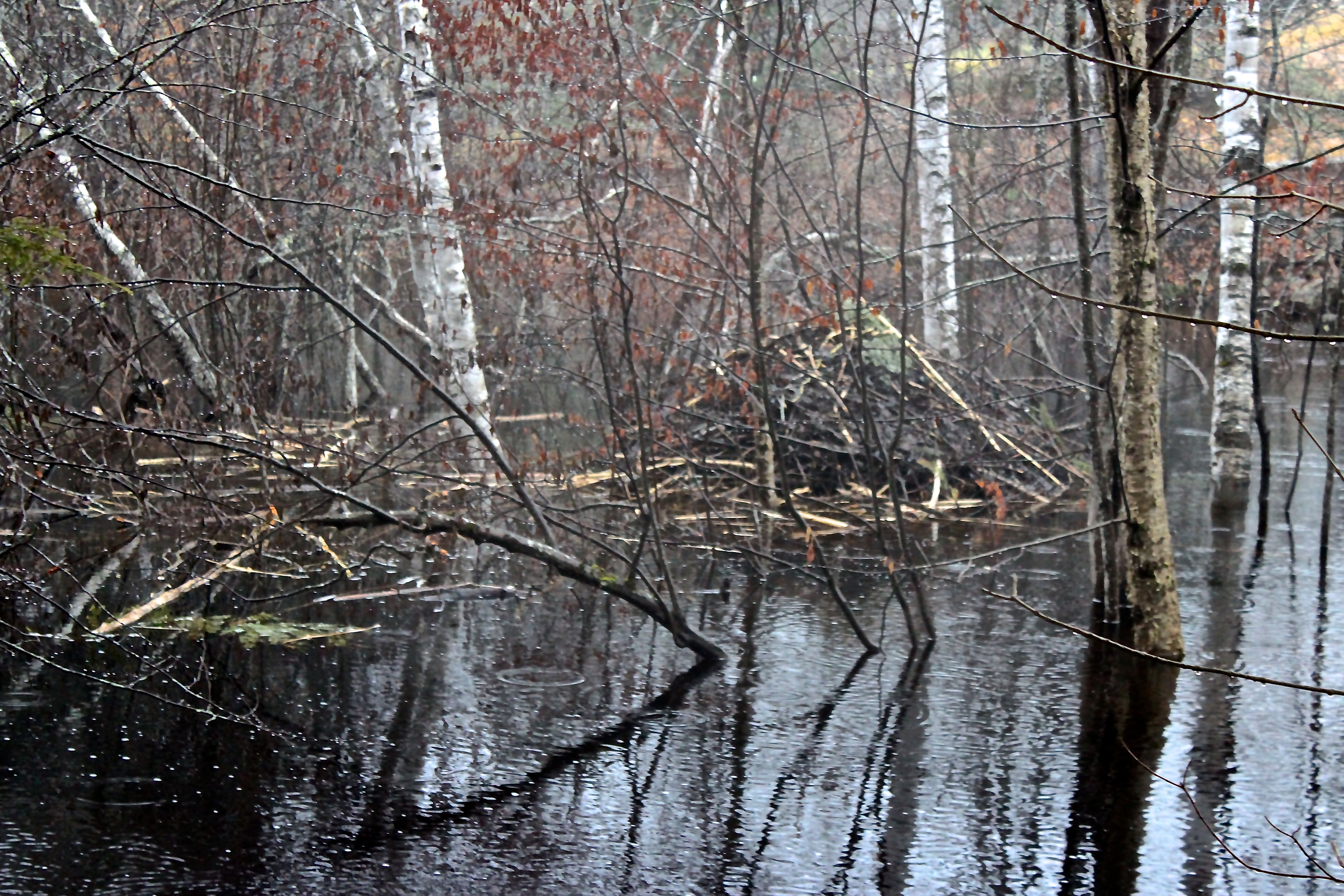
beaver lodge 2

The lodge is large. Accessible only via underwater entrances, the beaver family has protection from some predators. Outside, we could see part of their winter feed pile. We suspect there are more sticks below the water that will be available once the ice finally forms.

beaver statue 2

When all is said and done, statues like this will remain to remind JoAnne and others of these natural engineers and how they altered the land to create the water world they need for survival, which will ultimately benefit other wildlife.

As for their checklist:

*dam secure?

*lodge in good repair?

*food cut, moved and stored?

How about you? Have you made your list and checked it twice?

Toasting Chestnuts

“Chestnuts roasting on an open fire . . . ” So the traditional song goes.

Meanwhile, in Lovell, we’ve been toasting the American chestnut trees since The American Chestnut Foundation and the University of Maine recognized a tree on a local property as being the tallest in North America two weeks ago.

dr brian

Shane

 TV crews

tallest

The final measurement: 115 feet tall. The only tree that has been found to be taller is a 121-footer that apparently is growing in a Belgium arboretum.

Why all the fuss? The American Chestnut Foundation “estimates that over four billion American chestnuts, 1/4 of the hardwood tree population, grew  from Maine to Florida and from the Piedmont west to the Ohio Valley.”

These majestic trees were important to wildlife and man. Native Americans used the nuts to treat a variety of ailments. Deer, squirrels, birds and bears ate the nuts. Nuts were sold commercially and the wood was used to create furniture, fence posts and telephone poles.

All of that changed in the twentieth century.

blight 3

A bark fungus or blight accidentally introduced on imported Asiatic chestnut trees began to attack the American chestnuts in the early 1900s. Blight symptoms include bark swelling and sucker branches.

Where's Waldo

While North America’s tallest tree isn’t located on Greater Lovell Land Trust property, we know that there are several American chestnut trees just up the road at the Heald/Bradley Pond Reserve.

Our intention–to celebrate the trees. And to try to get to know them better. It’s actually a where’s Waldo moment upon each encounter. Being a member of the Fagaceae family, which includes Northern red oaks and beech trees, the similarities throw us off.

like red oak

Chestnut bark

The ridged bark is flat-topped and reminds me of the ski trails we see on Northern red oak. It takes a closer look to realize that chestnut has a wee bit different coloration and design.

bark 2

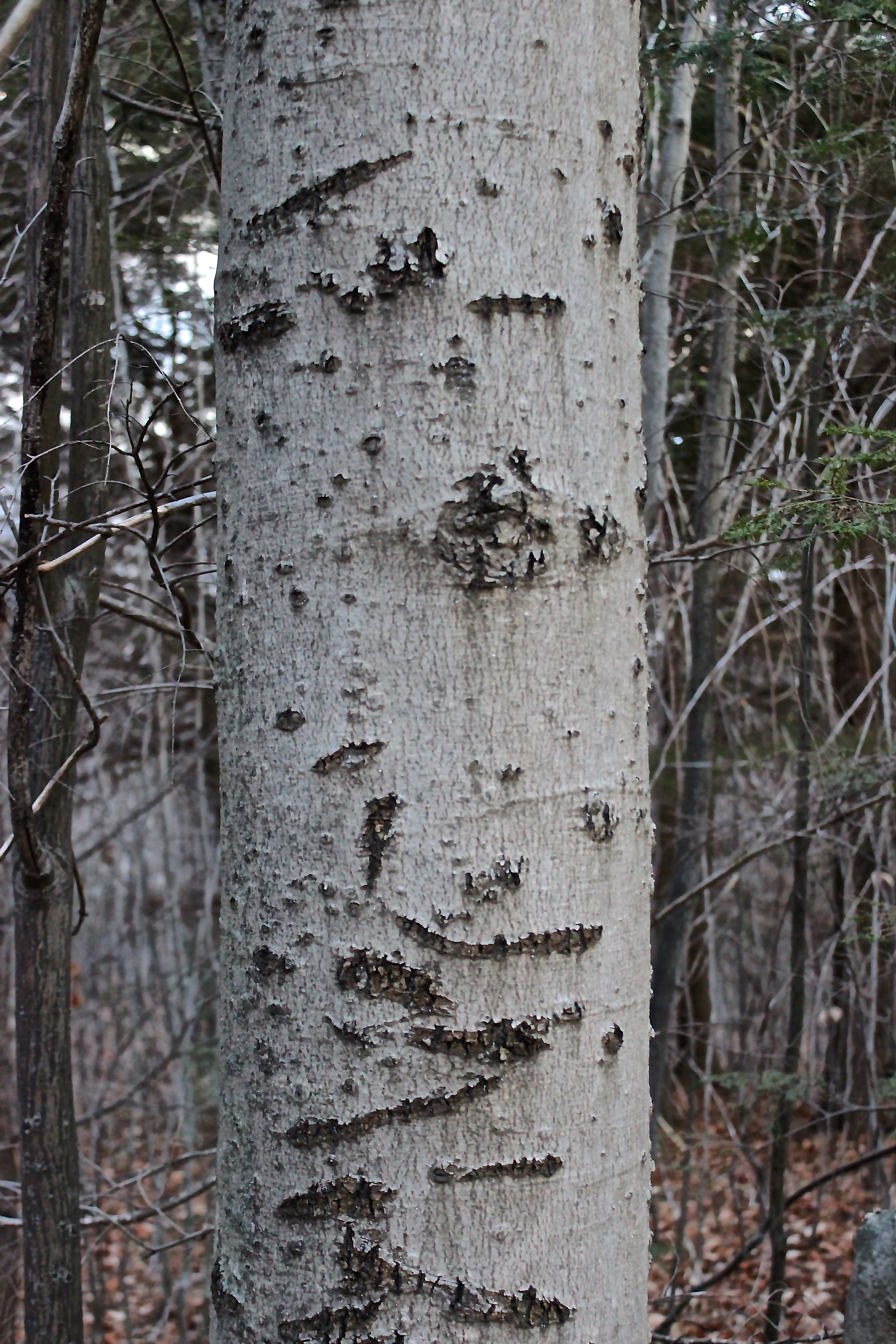
The bark characteristics also remind me of aspen trees, which have flattened ridges and horizontal lines that visible on the lower portion of the trunk.

chestnut husks

But the real clues are to be found on the ground.

fruit and stem

Large painfully prickly burrs house the delicious nuts. They mature in the fall and fall to the ground following the first frost.

home of viable seeds

Usually three nuts reside within each burr.

beech and chestnut 2

The other clue–the leaves, which are longer and narrower than beech. Beech on the left, chestnut on the right.

barbed leaf

The leaf’s margin is bristle-toothed and each hook curves inward. At the base, the blade tapers to the stem.

Chestnut #2

We paid homage to each tree before moving on.

grape fern

grape fern 2

Of course, we found other things of interest along the way–numerous grape ferns inhabit part of the trail. Their common name is reflective of the grape-like clusters of sporangia that grow on a separate stalk.

rattlesnake leaf

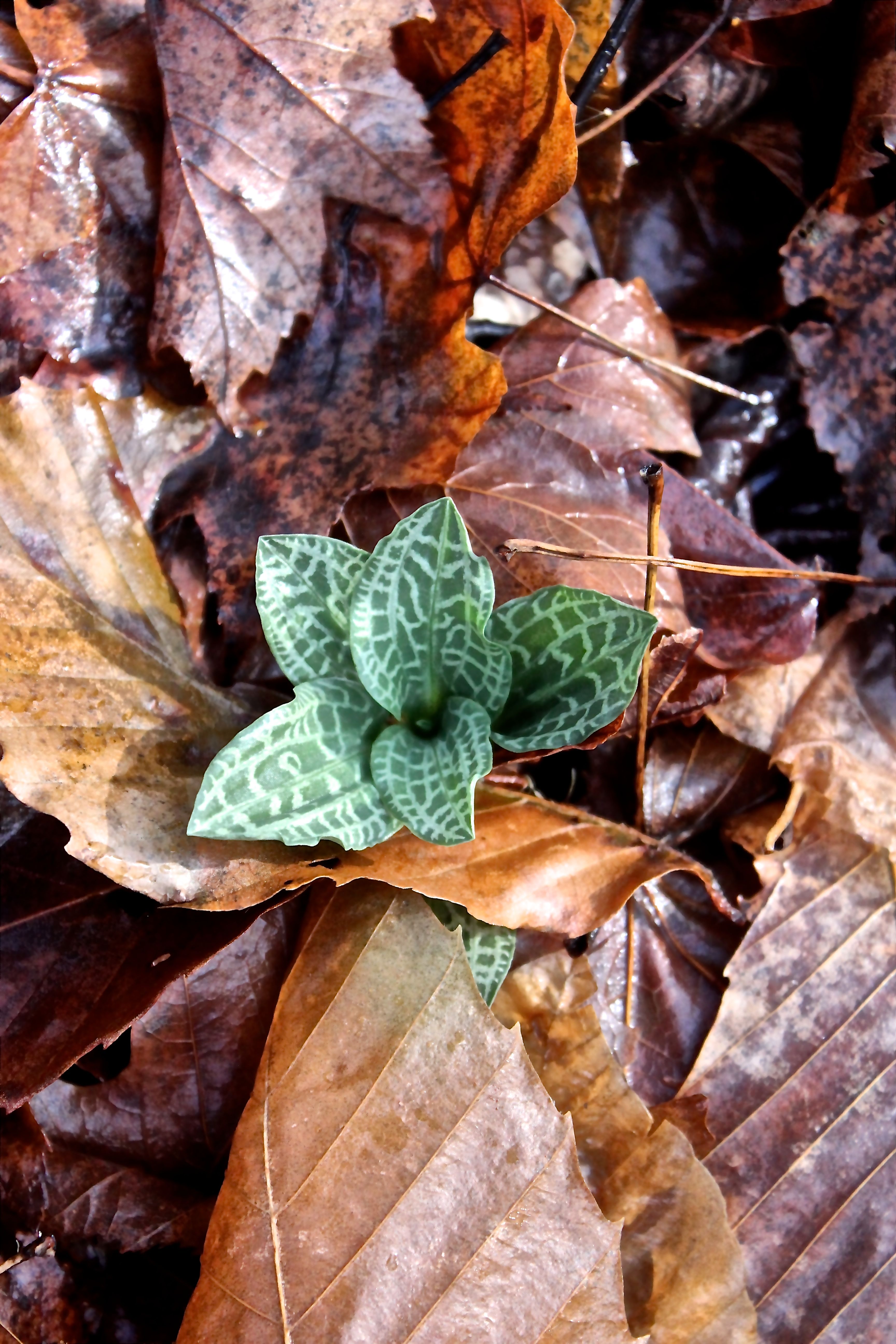
Downy rattlesnake plantain (Goodyera pubescens), though a common species of the orchid family, always stops us in our tracks. The striking leaves, with their network of silvery veins and a broad stripe down the center, resembles snake skin. They are covered in fine downy hairs, difficult to see from this photo.

rattlesnake pods

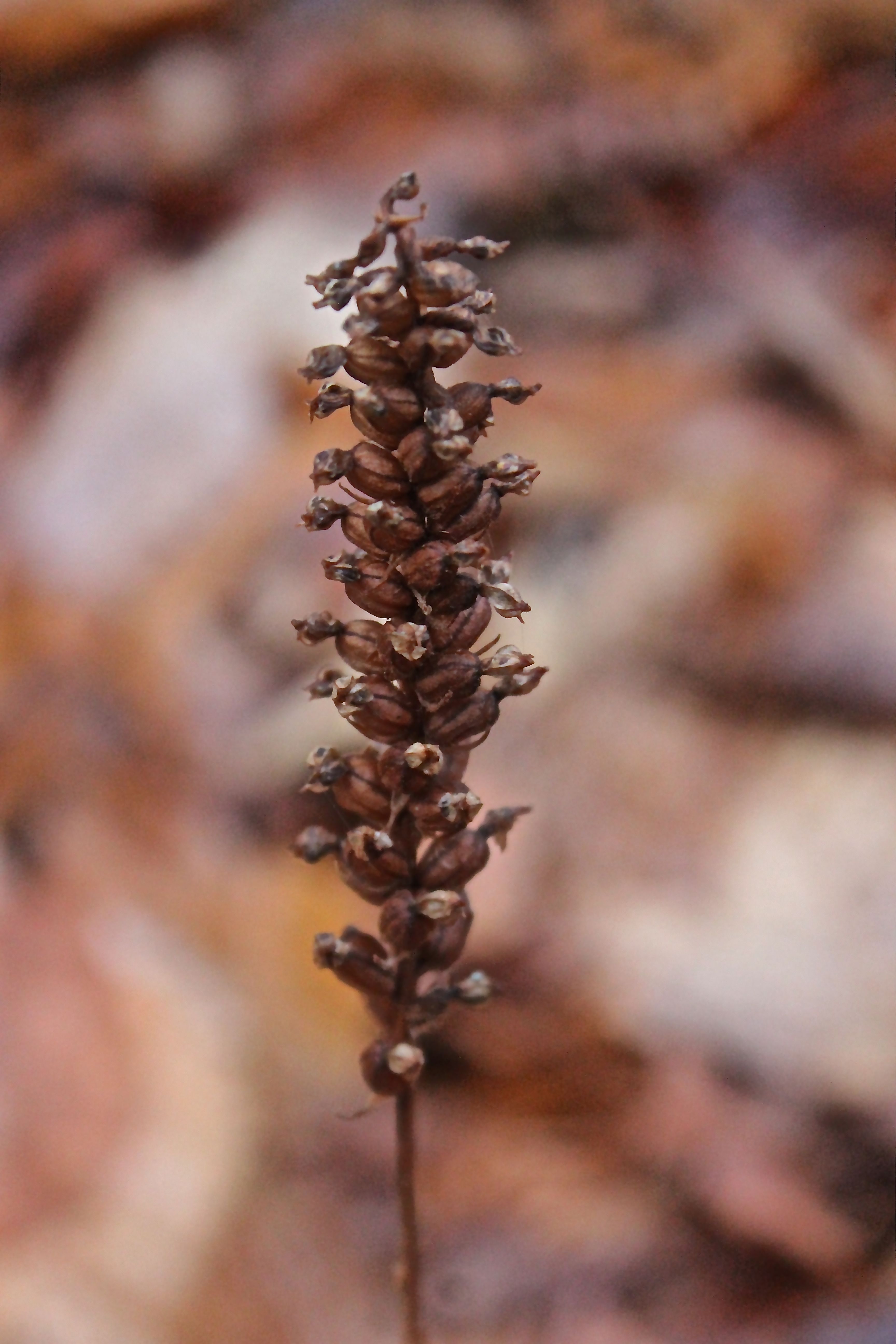
Each seedpod contains 200-400 seeds–rather teeny seeds.

checkered

We also found checkered rattlesnake plantain (Goodyera tessellate), with its much more subtle green markings. Equally beautiful.

labyrinth

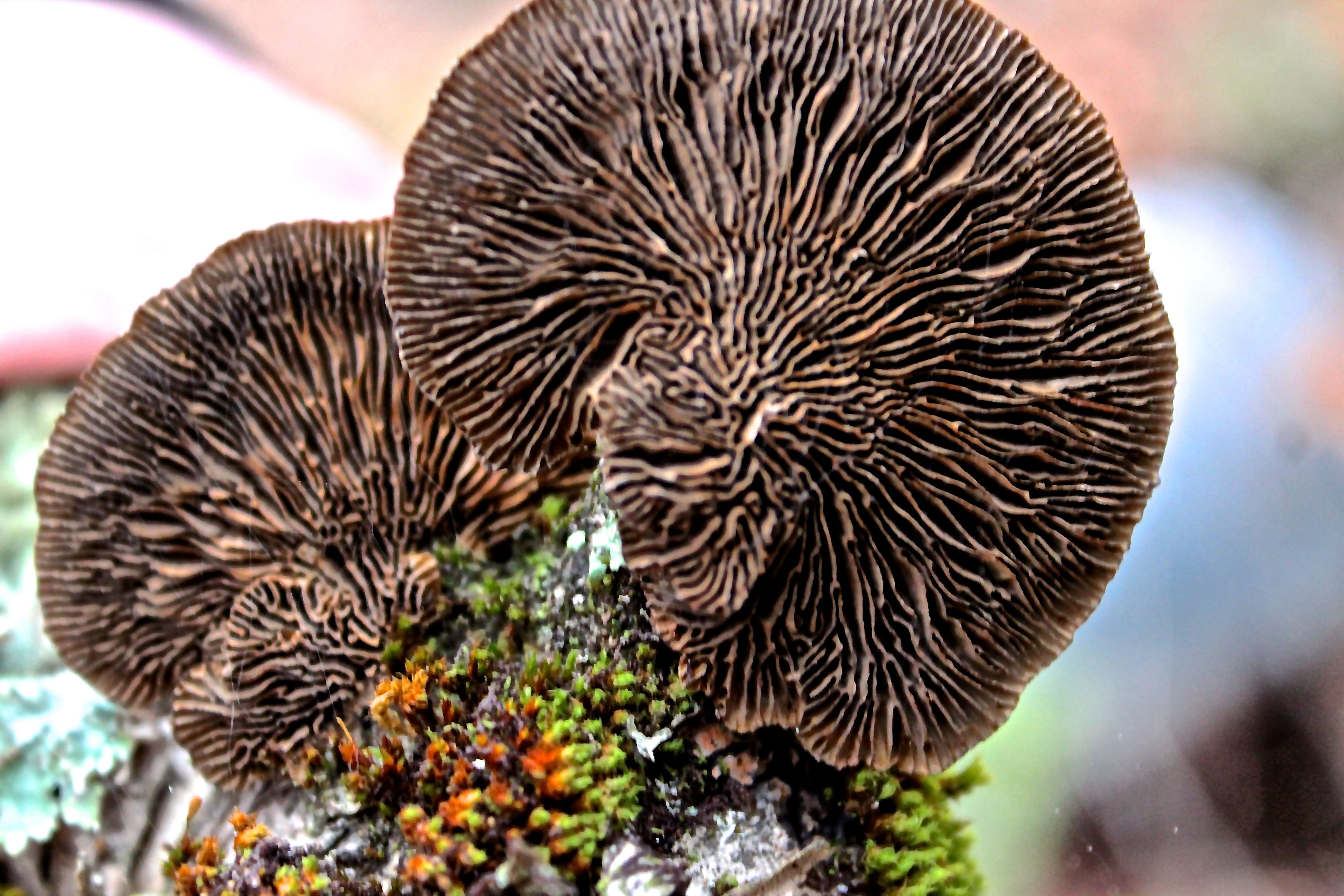
Yesterday, the labyrinth structure of tubes and pores on a Gilled Polypore (Lenzites betulina) wowed us.

2nd pigskin

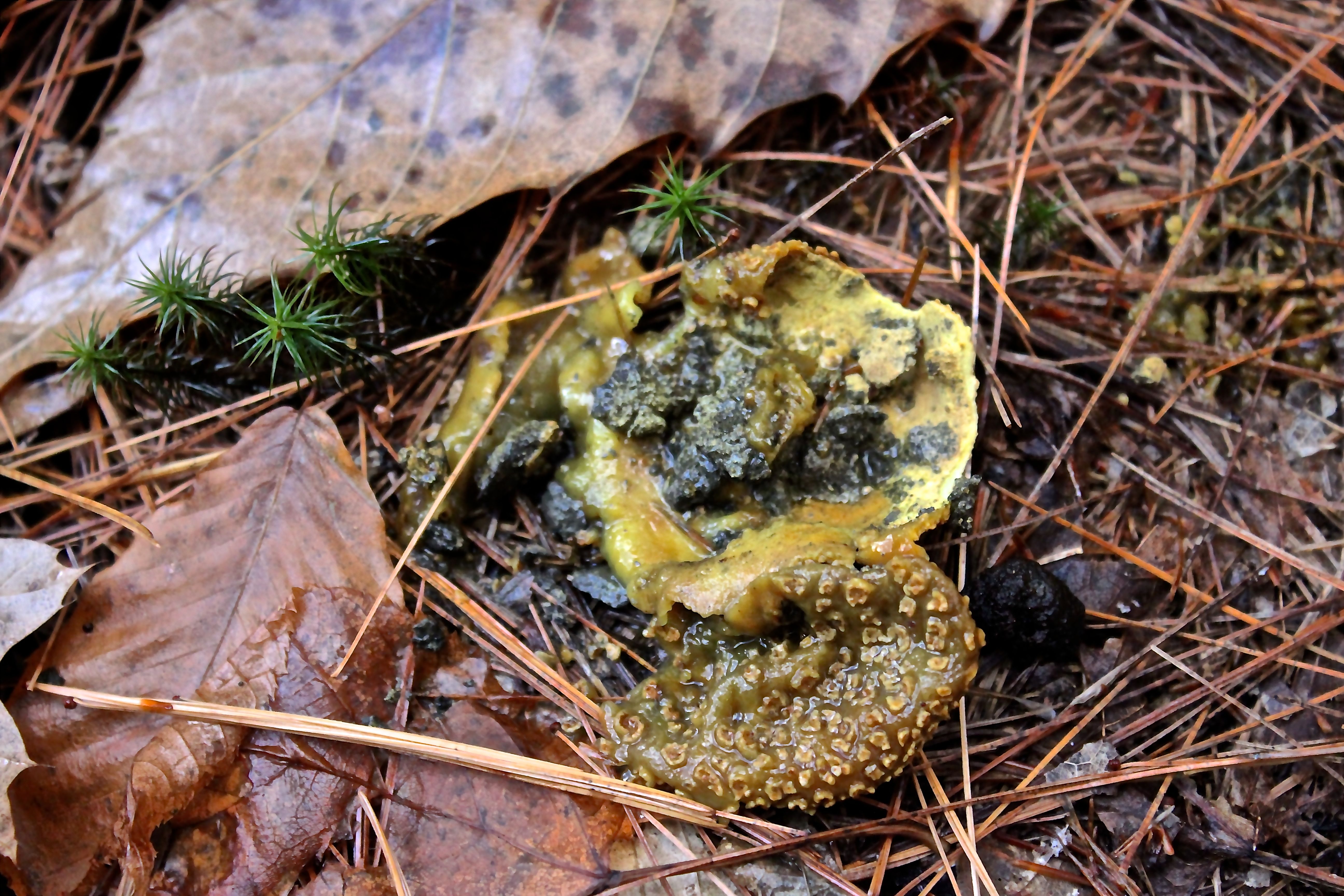
Today, my second Pigskin Poison Puffball (Scleroderma citrinum) ever. This one was quite broken down and slimy rather than rubbery/leathery. But still–I recognized it immediately. My mushroom guru, Parker, was part of the group, and he thinks I’m getting better at identifying fungi. I’m not so sure about that, but this one is distinctly different from any others.

#1 on hill

One final look at one of the mighty American chestnut trees on GLLT property.

While those chestnuts roasting over open fires are now European chestnuts, we toast the American chestnut trees of Lovell as we wonder about their future.

Welcoming Embrace

It was a wee bit foggy when I arrived at the trailhead for Bald Pate Mountain today. I was on a return reconnaissance mission in preparation for an upcoming hike for Loon Echo Land Trust.

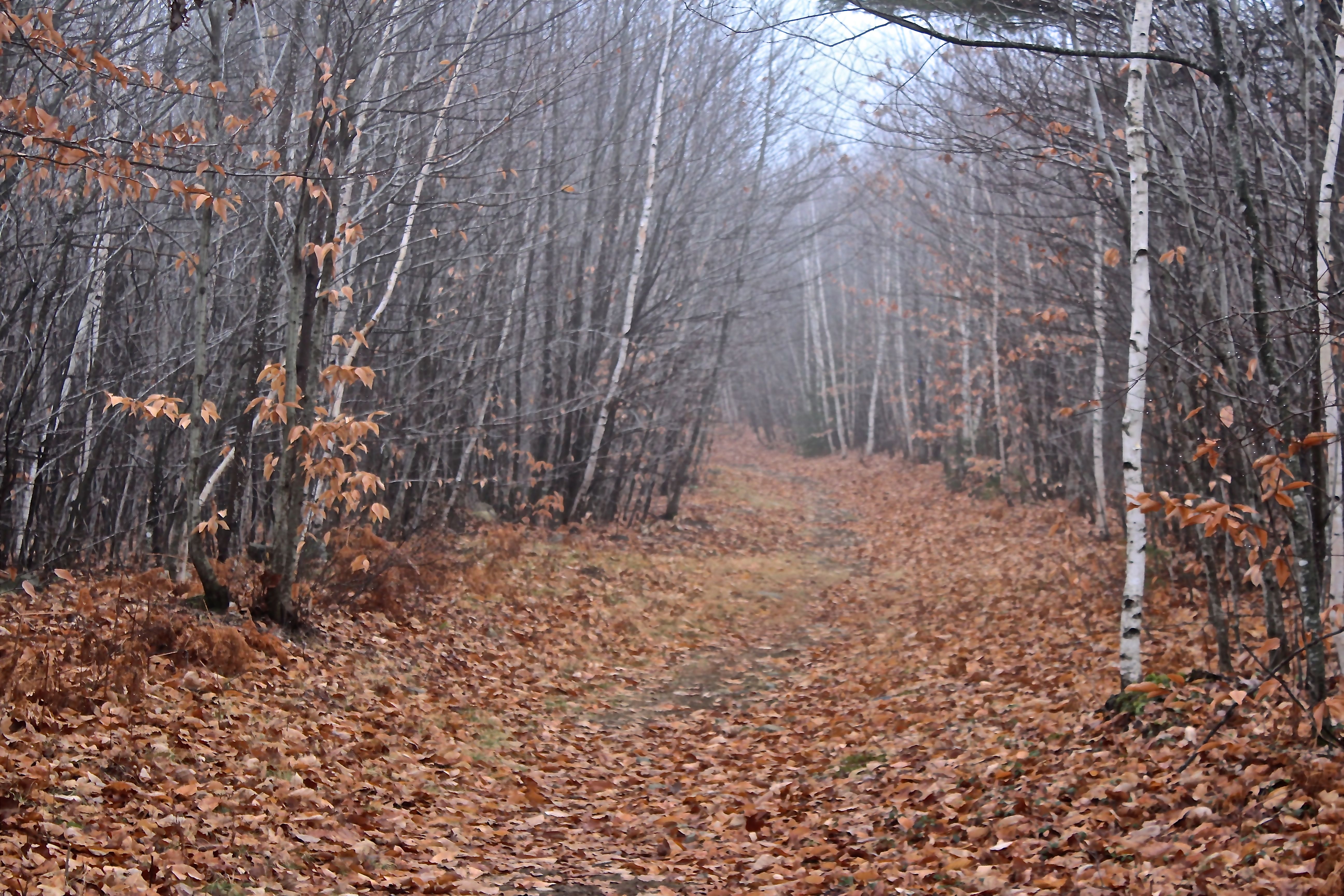
As I walked along, I felt the welcoming embrace of the fog–soft in its touch as it enveloped me.

foggy trail

My intention was to hike to the Foster Pond Outlook first because it was getting dark earlier in the week when I’d visited. I was on my eternal search for bear claw marks. Instead, there were other discoveries to be made.

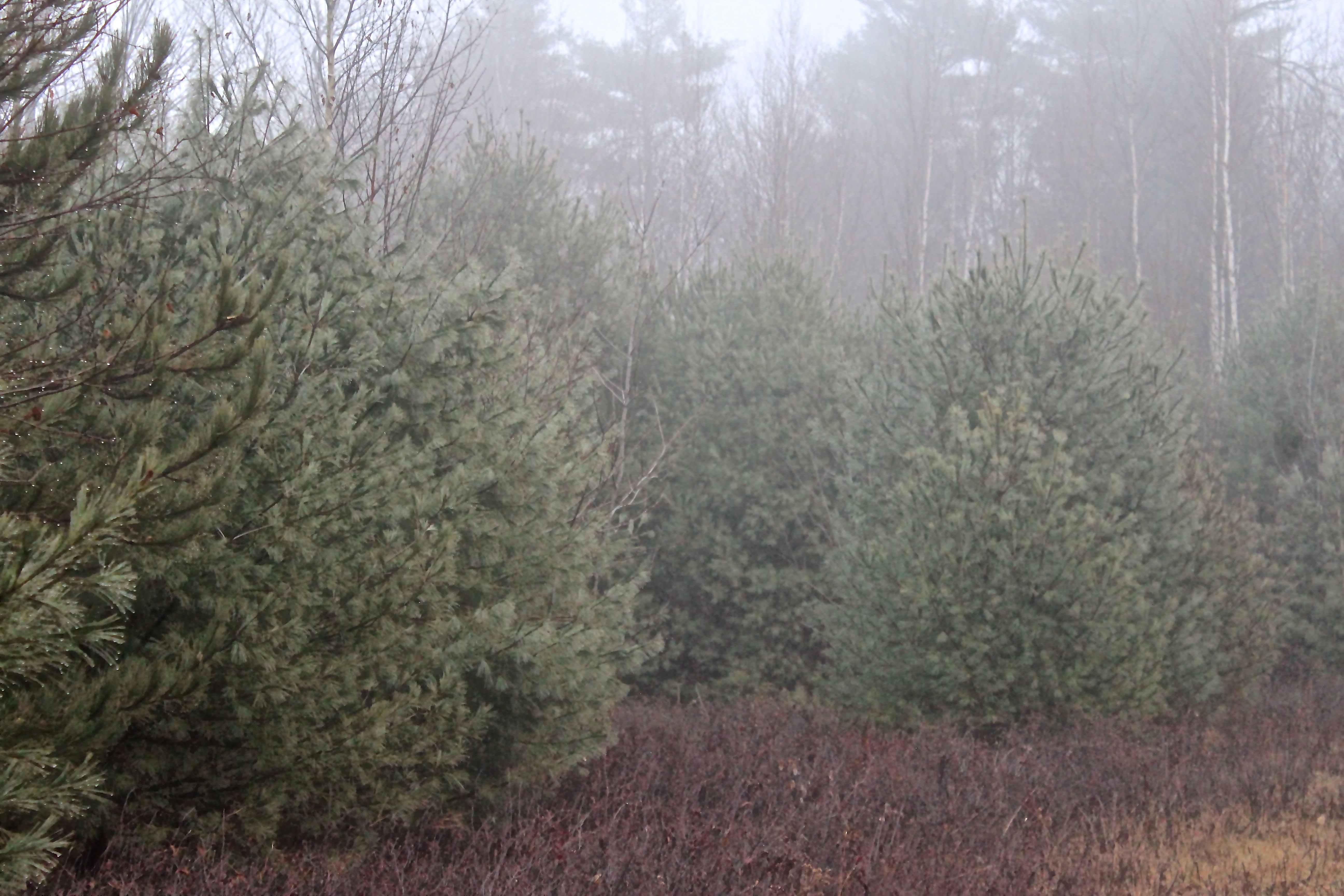
foggy pines

Like me, the pines were wrapped in the fog’s grace.

Foster Pond lookout

And the pond invisible, yet I trusted it was still there. 

beech leaveswitch hazel leaves

I discovered the light of the season . . . in leaves lingering still,.

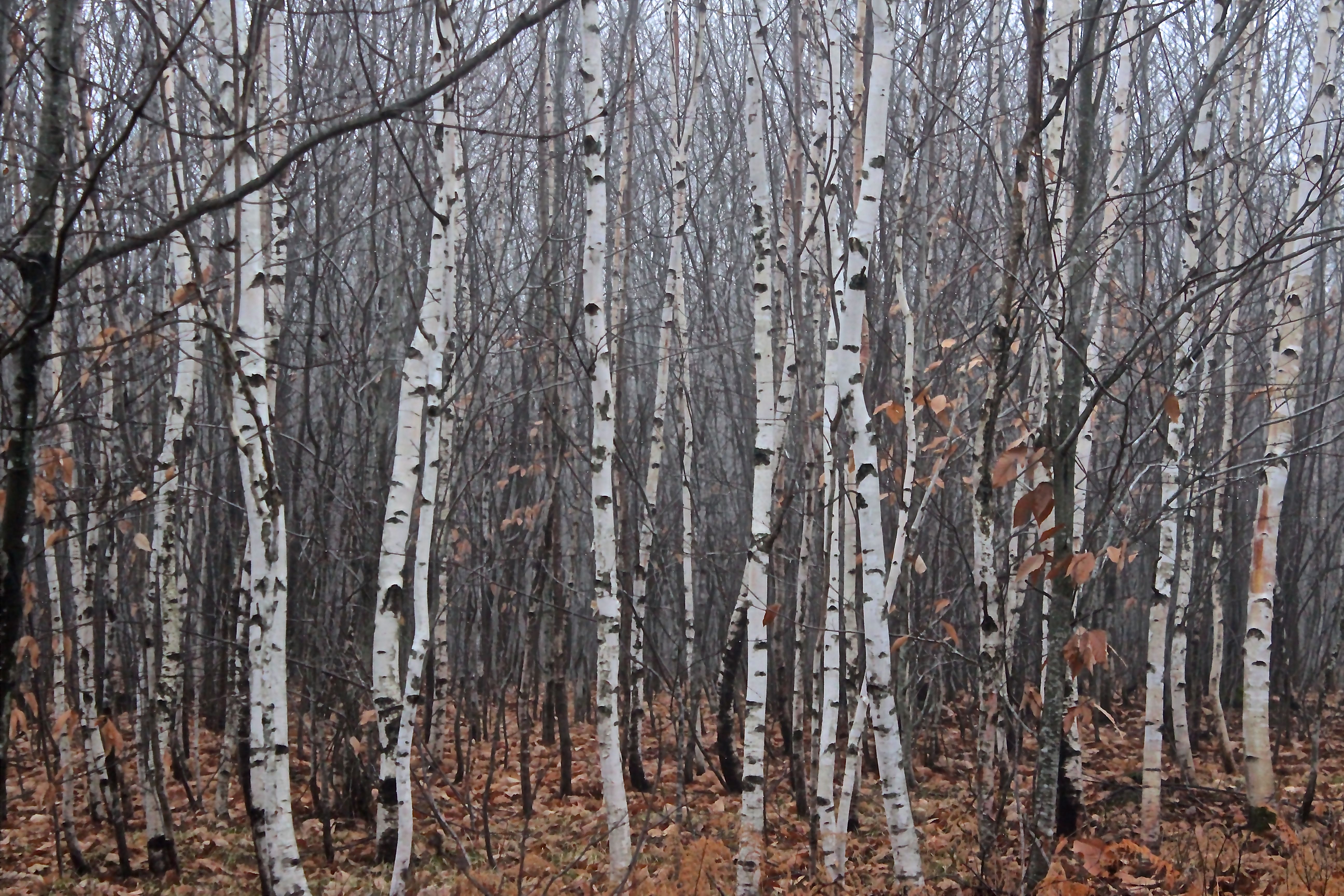
birch bark

in bark appearing snowy,

young paper birch bark

in beauty revealing inward,

Brit 1

in miniatures branching upward,

droplets 1

in droplets anticipating release,

mountains floating

and mountains floating beyond.

This is the season of expectation. I expected to find bear claw marks, but didn’t. Instead, I found warmth and light. And some other cool things to share with others.

I welcomed the fog and its revelations. I reveled in its embrace. Happy am I for opening my eyes and heart and mind.


Peeking About Mondate

Our afternoon Mondate found us sneaking to the peak–Peaked Mountain in North Conway, New Hampshire. While it’s not the most challenging hike ’round these parts, it offers great views.

sign

The trail is located in The Nature Conservancy’s Green Hills Preserve. It’s a great place to snowshoe, but today that wasn’t an option.

up the ravine

We chose the counter-clockwise route–hiking up through the ravine between Peaked and Middle Mountains.

mountain stream

Though it was a constant companion, we couldn’t always see the water rushing downhill, but occasionally we were able to take a peek.

peek peaked

And through the trees we had another sneak peek–that of the summit of Peaked Mountain. Not far from here, we left the mountain stream behind and starting climbing the connector trail toward our destination.

roots

Our discussion centered on roots–our family tree roots and how we can continue to fill in the blanks.

white pine needles

As we got closer to the summit, I realized we were among another family–the  Pinaceae or pine family. White pine, with its five flexible needles in each bundle, grows just below the summit.

red needles 2

At the top, the red pine and pitch pine grow side by side. Their bark is similar in appearance, but the needles and cones make their ID easier. Red pine features two long, stiff needles in a bundle.

pitch pine needles

Pitch pine, on the other hand, has three in a bundle and they’re about half the length of red pine needles. As one friend says, “One, two, three strikes you’re out–pitch pine.” I’m a firm believer in mnemonics.

Then there are the cones.

white pine cone

White pine cones are long and narrow. 4-8″

red pine cone

Red pine cones are ball-like in shape and almost stalkless. 1.5-2.5″

pitch pine 2

Pitch pine cones feature a short, stout prickle on each scale. 2-4″

I never thought about this before, but today it struck me that the whites, with their short needles, have the longest cones, while the reds, with their long needles, have short cones. Why?

A few cool things to note about pitch pine–because of its high resin content, Colonists used it for turpentine and tar to grease wheel axles; and pitch pine is fire resistant, meaning following a fire, new needles are produced on new branches from suppressed buds; also, it will stump sprout after a fire.

lunch rock

We found lunch rock and enjoyed our usual PB&J. Today’s jam was prepared by our friend, Pammie. Spiced peach. Delish.

Middle Mountain

Before us stood Middle Mountain. Though we’ve hiked Peaked a few times before, as well at Black Cap behind it, we’ve never actually reached the summit of Middle. One of these Mondates.

Mount Wash valley

The sun reflected off the roofs of the outlets in North Conway. We were much happier looking down on them, than being down there looking up.

Pudding Pond

Pudding Pond and the Moats add to the view.

Kearsarge

And behind us–another favorite peak: Kearsarge North behind Cranmore Mountain Ski Resort.

ice

The route down put us on the shaded side of the mountain, where ice coated the rocks.

cranmore 1

Cranmore featured top to bottom skiing this past weekend, but really, we need snow. And cold temperatures.

Peek a the great peak, Mt Wash

Even Mount Washington looks like it needs a fresh coating of the white stuff.

frost

We did find some leaves decked out with frost.

scruffing along

While my guy followed me up the trail, I followed him down. He scruffed along, not letting the leaves, rocks and roots bother him. I, meanwhile, took my time, overthinking each placement of my feet. After a few falls last month, each step has become a feat.

waiting patiently

He provided guidance over icy sections and occasionally waited patiently for me to catch up, never once commenting on my caution. I appreciate that.

And I appreciate that we shared a variety of peeks as we conquered the peak. Peaked Mountain Mondate.

Thinking Big

A return trek to the old neighborhood off Hut Road in Stoneham left me thinking big.

J.M joined me for this exploration and it’s a wonder we got any further than our parking place beside Great Brook.

Great Brook

It was a sensational, albeit too warm for this time of year, December day. We could have spent all our time taking in the sounds and smells and sights as the water coursed over the rocks.

road

But we pulled ourselves away and went in search of a time gone by. Single and double-wide stone walls line the old road and mark pastures and gardens. Miles of walls.

rock pile

And dotting the landscape–piles of rocks picked from the ground. This was farm country before the forest took over.

fdn 1root cellar

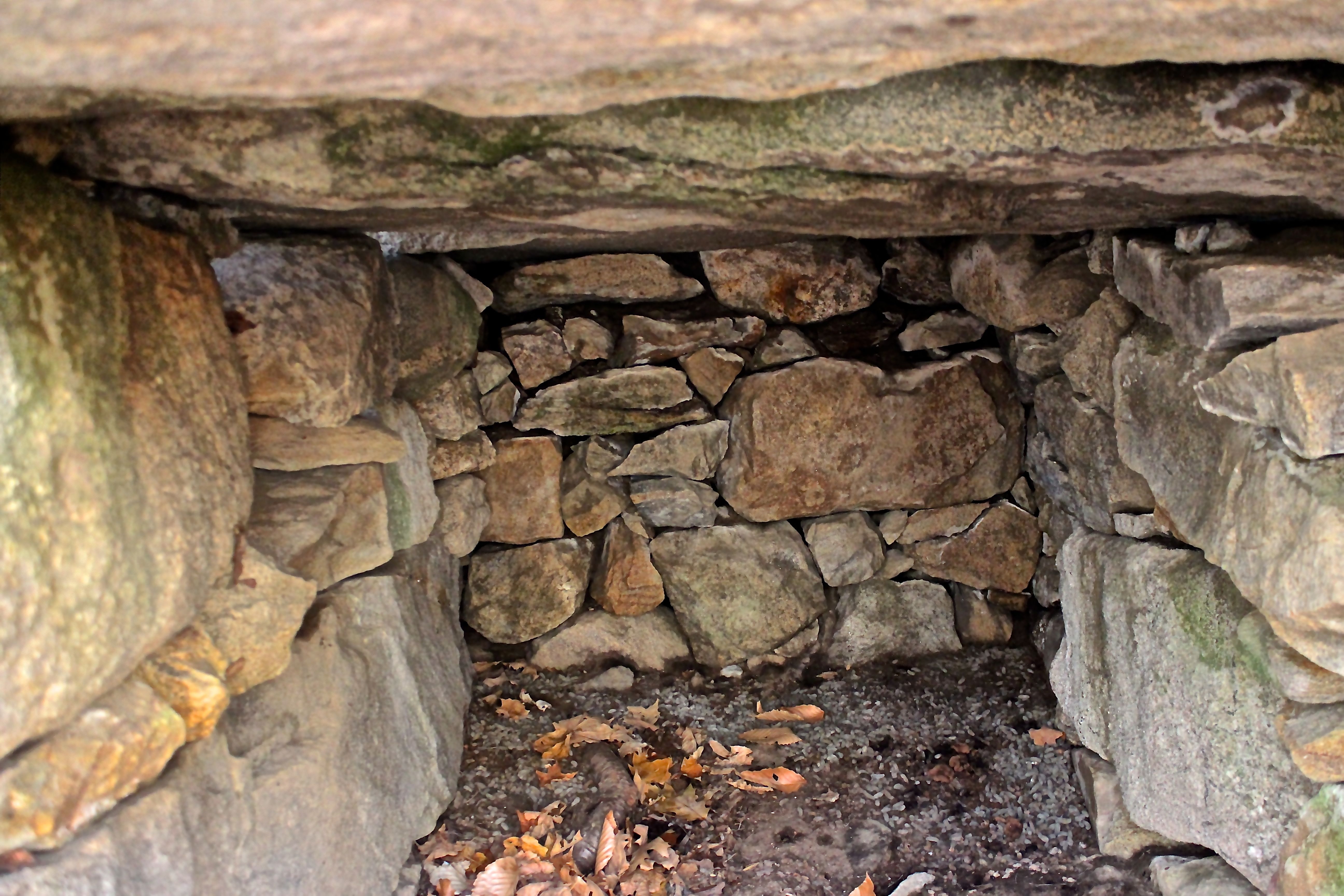
We called on the neighbors and were glad they didn’t mind us examining their root cellar. The only contents–old porcupine scat in the back corner.

tree

The foundation is big and must have supported a large family. Today, it’s home to a large family tree.

well

It always excites us to find other signs of life–including a stone-lined well; it’s a deep subject.

fdn 2

The neighbors lived up the street in an equally large home. Were they related? We’re still trying to figure that out.

Red Rock Brook

We paused beside Willard Brook before turning back.

polypores chaga

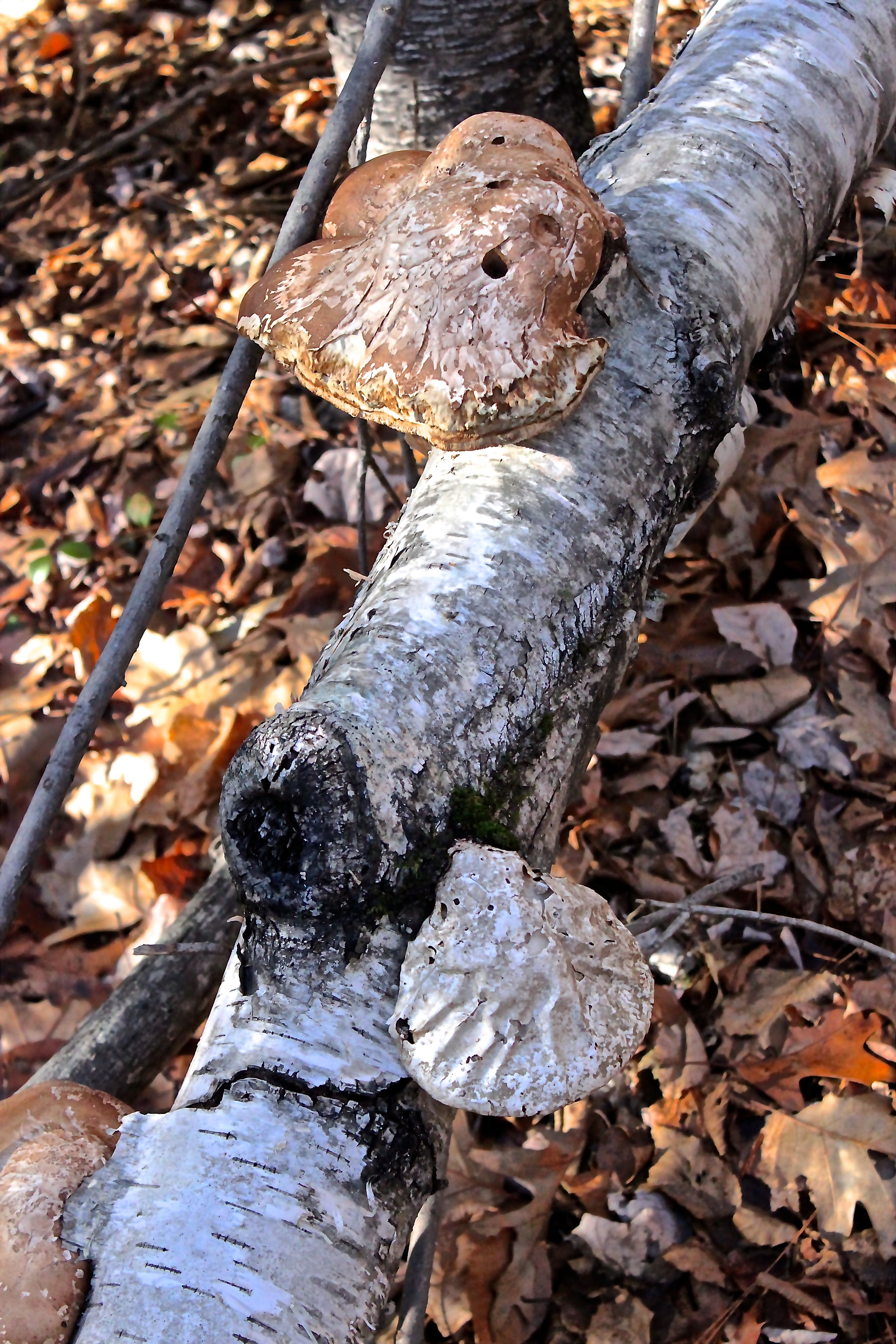
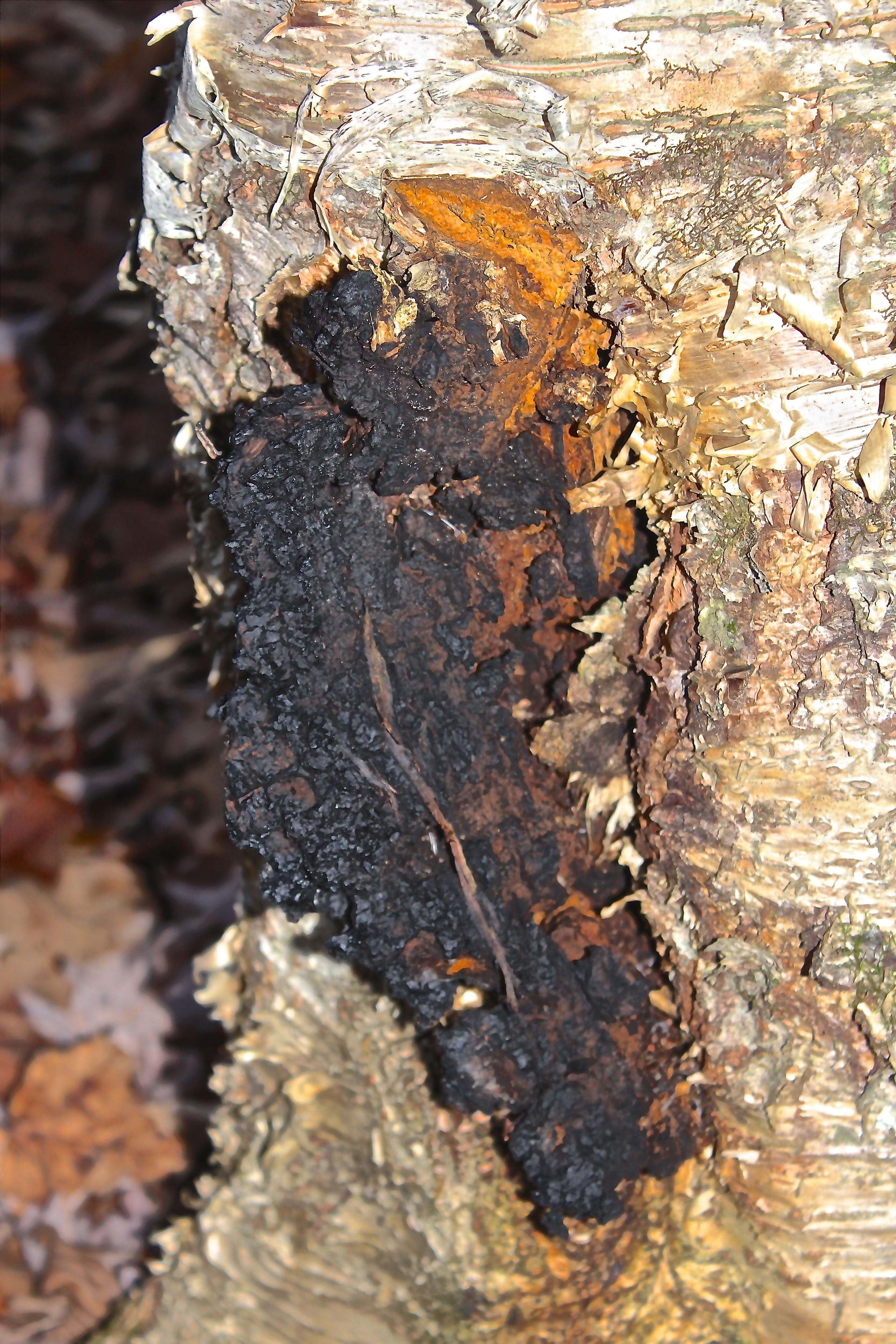
Passing through rich woods, we found ourselves in the land where giant polypores and chaga thrive.

moose scat

That’s not all that thrives here. Moose browse on striped maple and piles of scat were abundant.

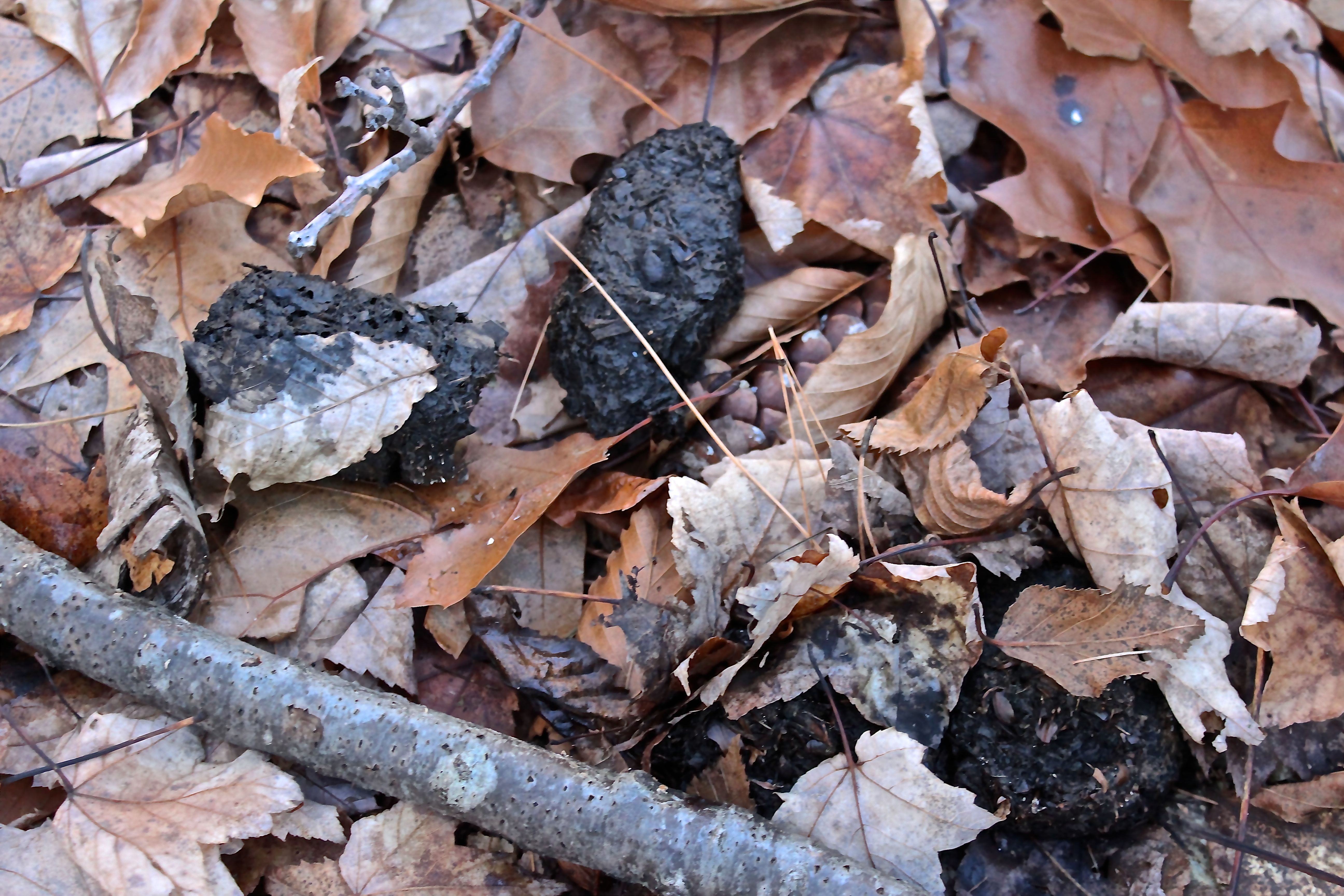
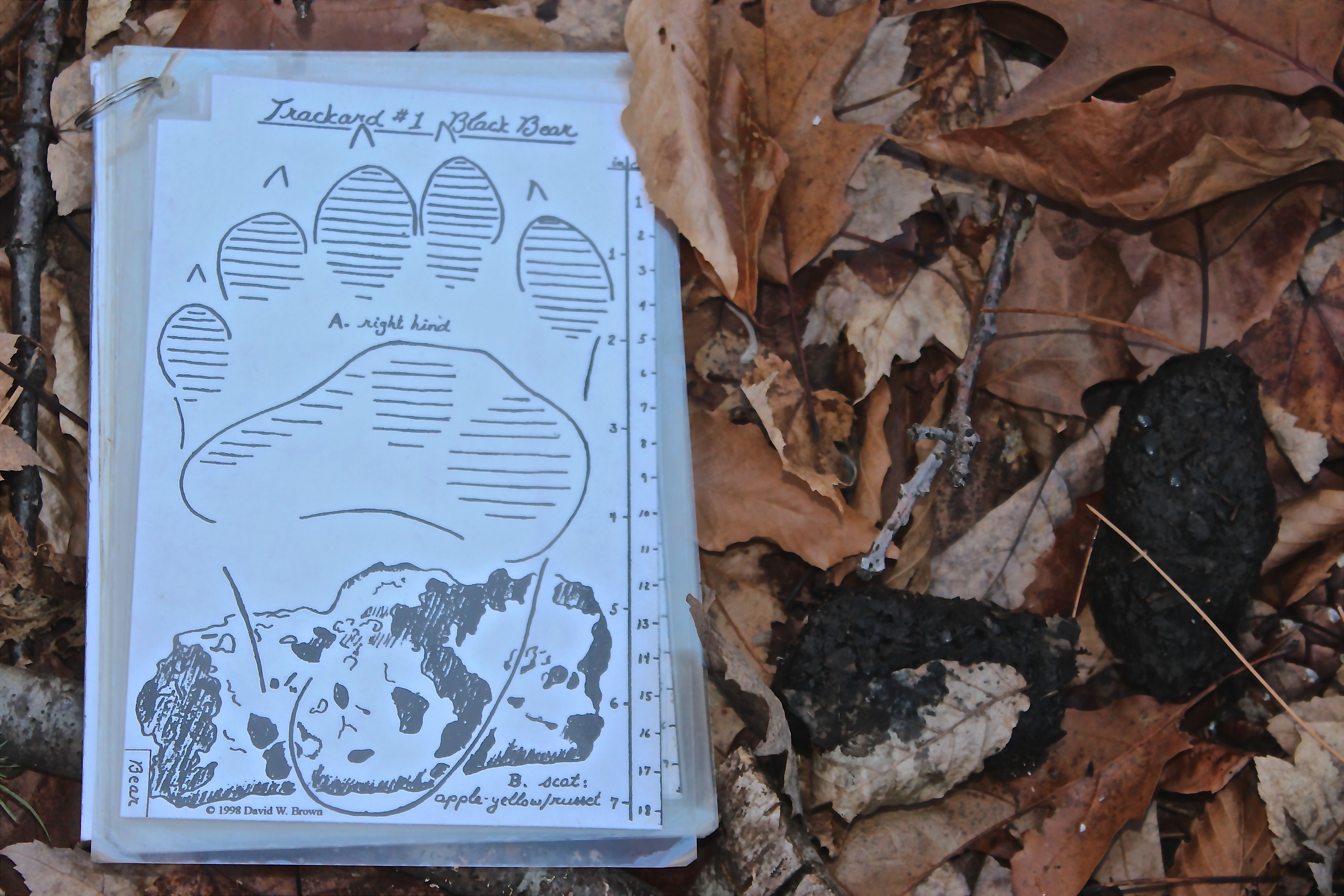
bearblack bear scat

We practically tripped over the biggest scat of all. Well, J.M. tripped. And that’s how it caught our attention. Classic. Love it.

sugar maple

Equally impressive in size and perseverance. And age. The sugar maples.

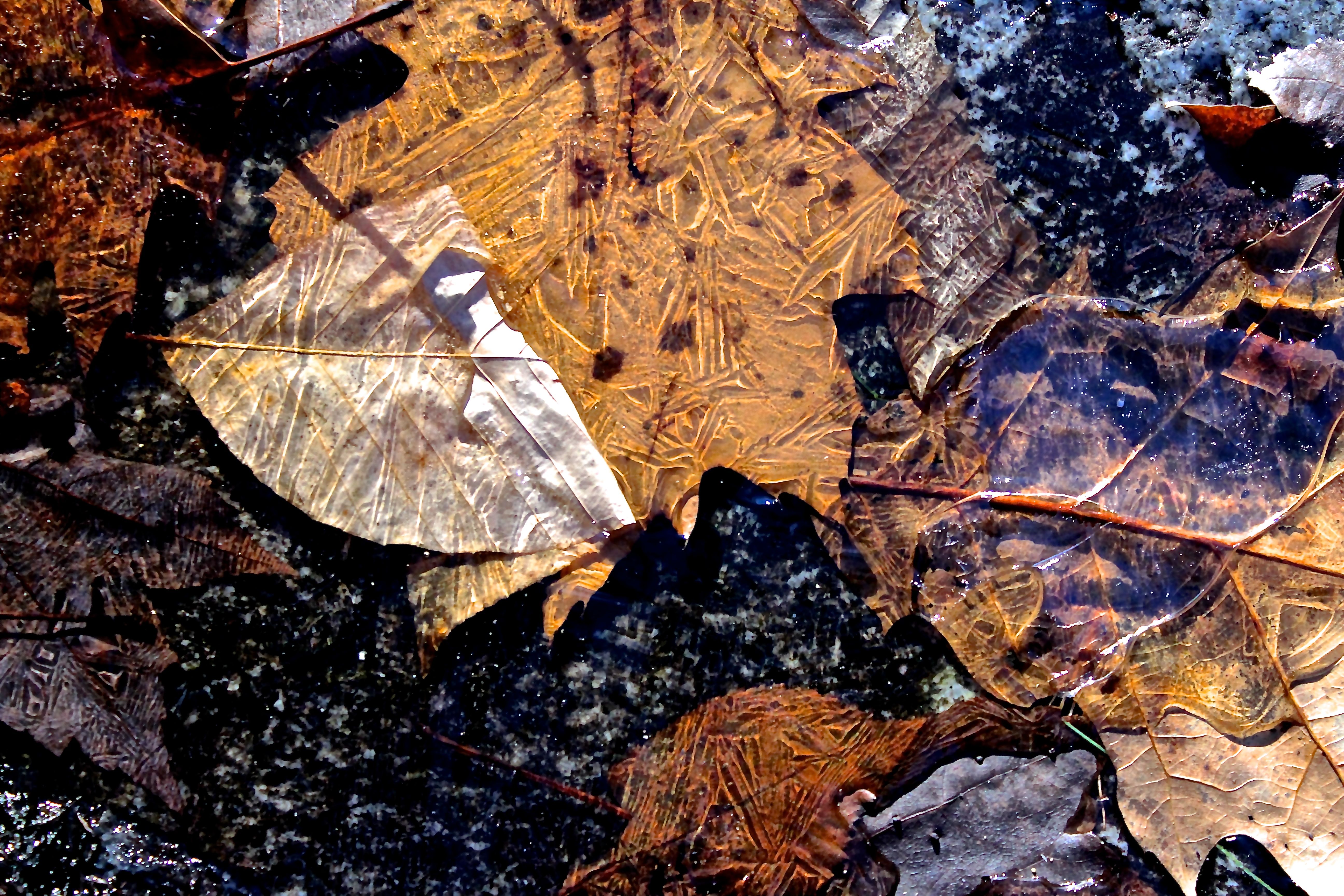
leaves

And because J.M. was with me, we saw things I may have passed by like the ice patterns on leaves. We celebrated hiking together knowing that the small things in life are the biggest.

Rejoicing for Jinny Mae

When my friend Jinny Mae received an ominous diagnosis in June, she faced it with admirable spirit and courage. All who know her watched in awe as she  underwent treatment and slowly made her way back into our midst. Despite everything, she continued to spend as much time in nature as possible, whether observing from her chair by the window, walking her dogs or eventually joining friends for tramps. And today–she received fabulous news that I learned about as I was about to hike up Bald Pate Mountain in South Bridgton. She is in remission. INDEED!

So as I did when I first learned of her diagnosis, I took her along with me in spirit on today’s hike. I would have asked her to join me for a celebratory tramp, but it was late in the day. We’ll have plenty of opportunities.

I was on a reconnaissance expedition because I’m leading a hike for Loon Echo Land Trust next weekend. Having Jinny Mae along meant I noticed some things I may have walked by previously. In the end, I discovered a mixture of my favorites and hers.

beech slash

Because there is a beech forest at the base of the mountain, and it’s located adjacent to an orchard, I’m determined to find bear activity. Is this the work of a bear that gave the tree a side-ways slap?

beech slash 2

I don’t think so. More likely, the younger trees beside it waved in the breeze enough to create slight scars that have grown with the bark.

porcupine scat

I poked around under a large hemlock, and noticed what I thought was old deer scat. But then I realized that some of it was a wee bit longer and had the curved shape characteristic of porcupines. As I continued to look, I saw that many small twigs had nipped off ends cut at an angle–porcupine it was.

funnel weaver web

For a while, hemlocks became my focus as I checked under each for signs of activity. On the backside of one, I found this funnel weaver web–standing strong against the elements. It reminded me of someone else.

hemlock varnish shelf

That someone would certainly have stopped by this old hemlock stump to admire these varnish shelf fungi–it wouldn’t matter to her that they are withered and old. There’s beauty in age.

pileated log

Every once in a while I felt the nudge to go off the trail and explore–when J.M. keeps track of our tramps on her GPS, the line always zigzags. This rotting log caught my attention. Bear or fisher activity?

pileated scat

No hair or obvious scratch marks from claws, but some scat–pileated woodpecker scat. I left it there in hopes I can show it to people on the hike and let them see that it’s filled with carpenter ant bodies.

ledge

Behind the log was this ledge. A quick look at it and I knew that a certain someone would want to inspect it.

ledge 2

It’s almost completely covered in smooth rock tripe. Sorta looks delicious enough to eat–if you boil it for days on end maybe. Apparently it can be used to thicken stew. Too bad I made stew the other day.

polypody & tripe

And growing among the tripe–a few polypody ferns, who also appreciate a moist, rock surface. Thanks J.M. for encouraging me to take a closer look.

Many-fruited pelt

While I’m on the topic of lichens, here’s one that was new to me. The rust-colored projections among the shiny brown lobes made me squat for a photo call. At home, I thumbed through my go-to lichen book, Lichens of the North Woods by Joe Walewski, and discovered that this foliose lichen is Many-fruited Pelt. Those reddish-brown projections are the fruiting bodies on the leafy margins–thus the name. One for us to learn, J.M. We’ll probably see it everywhere now as it grows on soil, moss or rocks.

common toadskin lichen

And because we like to learn, here’s another–Common Toadstool Lichen. That should be easy enough to remember, given its warty appearance.

Peabody Pond

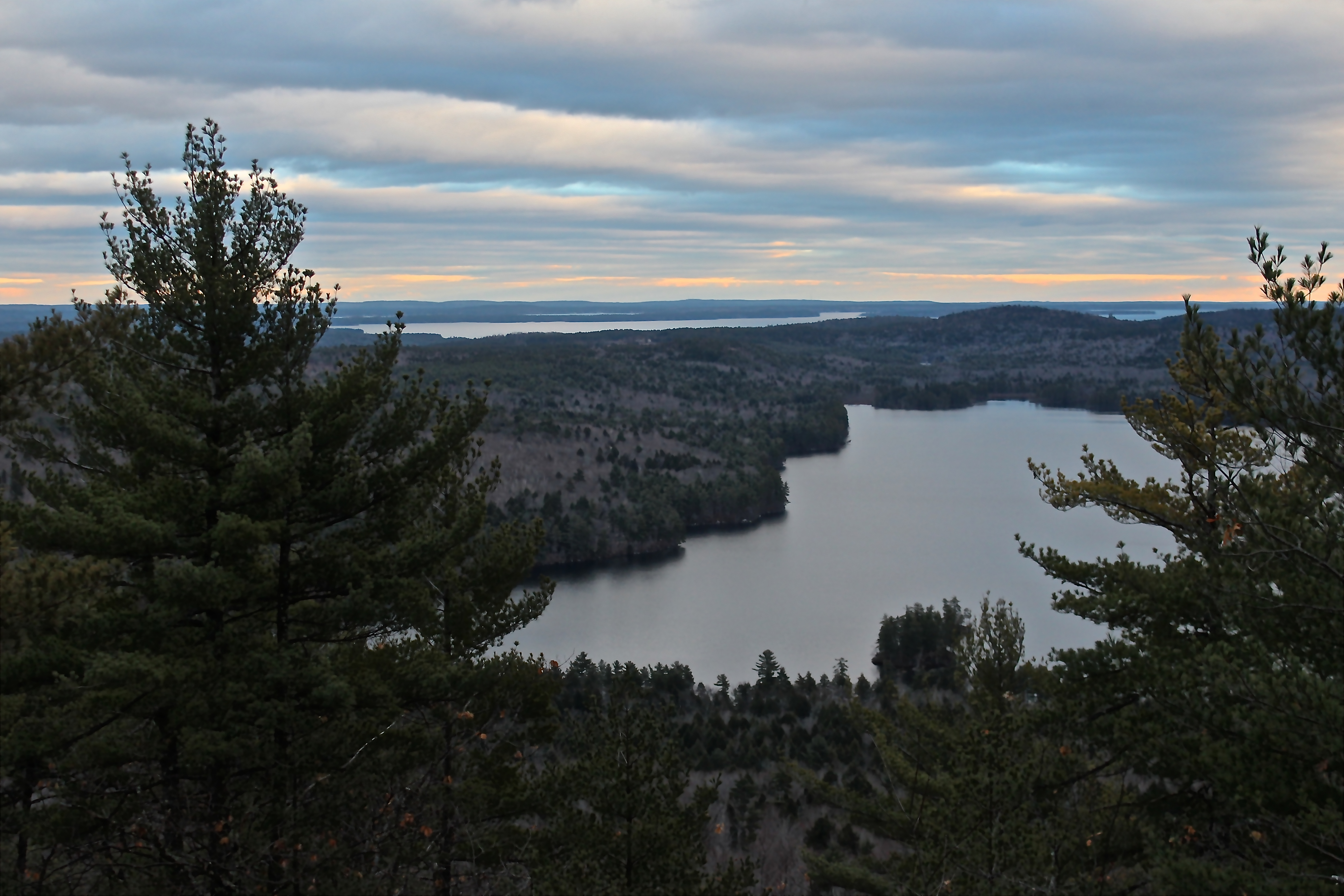
At the summit, I paused briefly to take in the views of Peabody Pond and

Pleasant Mtn

Pleasant Mountain. It was getting late and I still wanted to hike to the Foster Pond Outlook via the Bob Chase Scenic Loop.

bob1

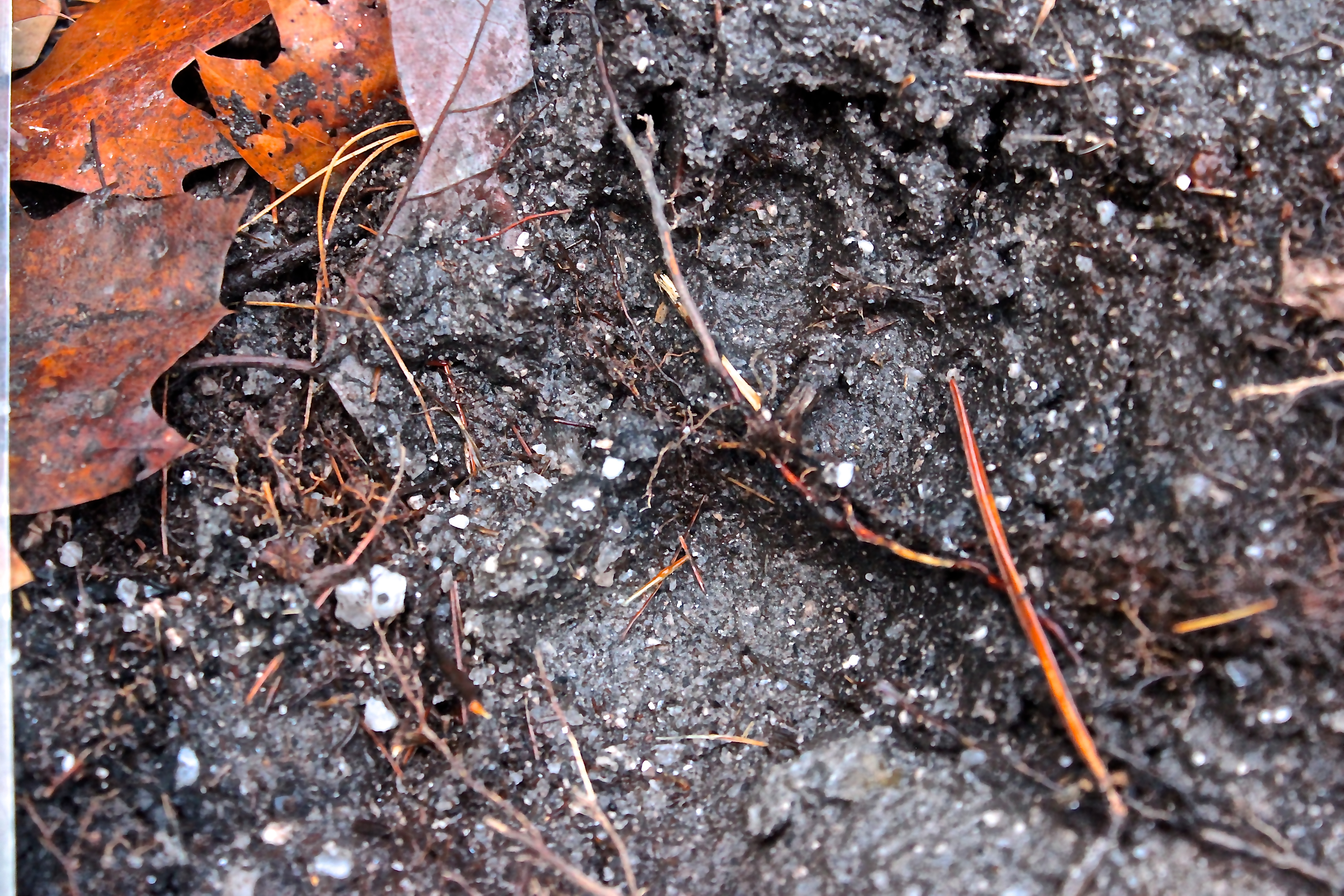
And then, just as I stepped back onto the trail, I saw this print in the mud and a couple in front of it. My heart sang.

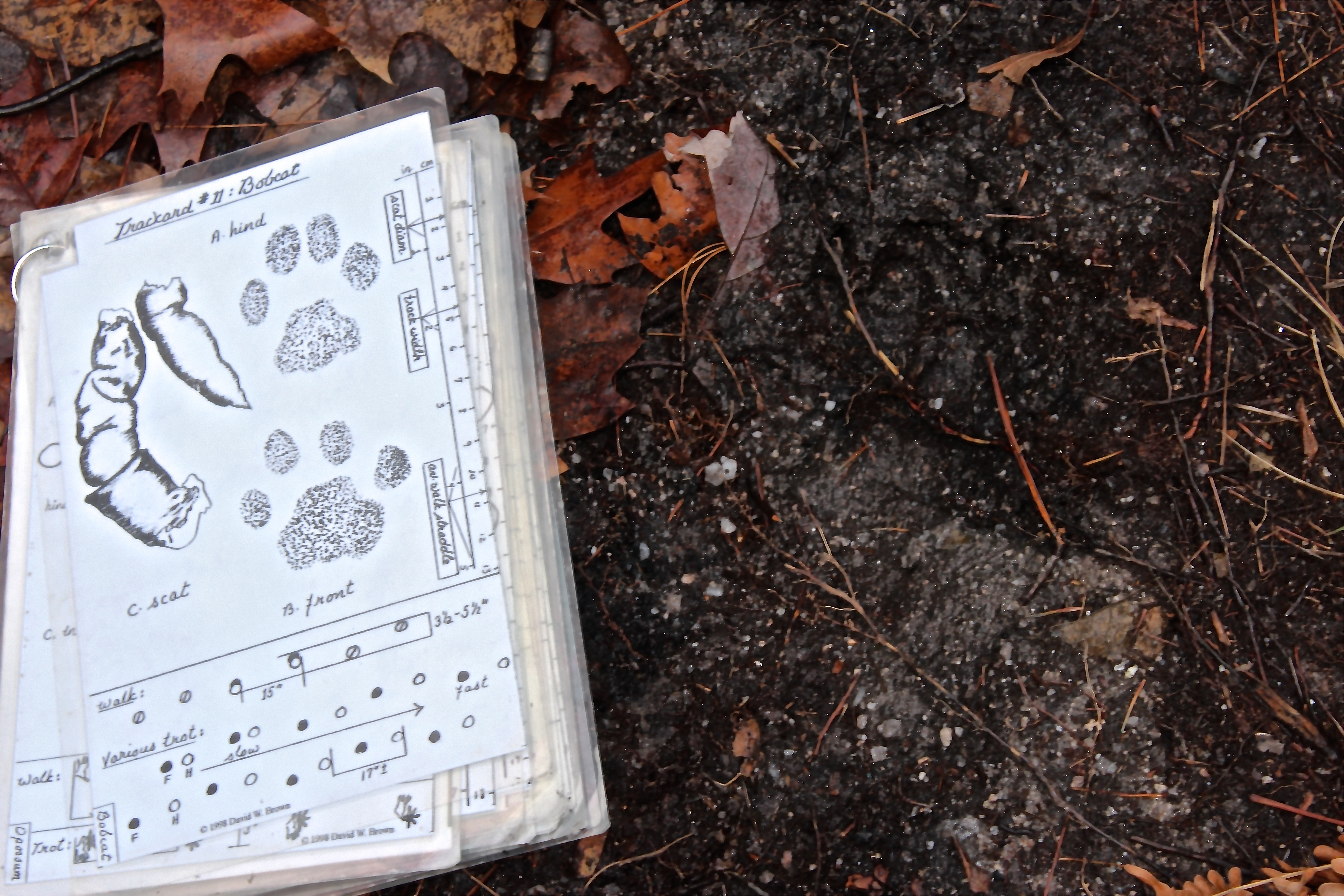
bobcat 2

I was in bobcat territory. My favorite place to be. I only hope I have such luck next weekend and that I can pull out my David Brown Trackards to show the difference between bobcat and coyote prints.

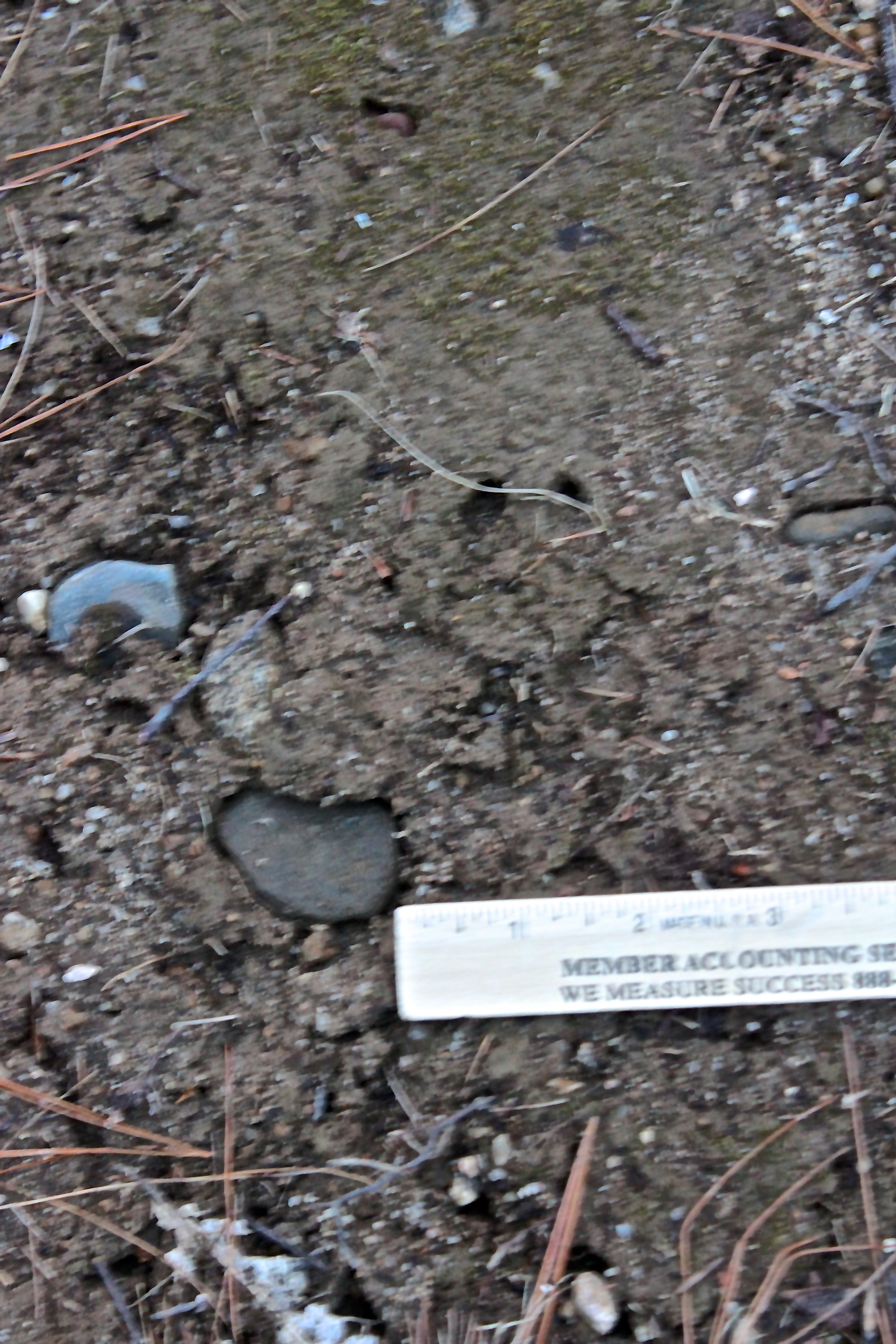
bobcat in sandbob 4

The substrate changed a few times, but we traveled the same route.

coyote print

I also found coyote prints. My hope was that since I was hiking so late in the afternoon, I might actually see one or both of these mammals, but that was asking too much. Finding evidence that they’re here is enough.

Foster Pond

One last view–the Foster Pond Overlook. And then I followed the trail back to the parking lot, thankful to have Jinny Mae along with me in spirit as I rejoiced in her glad news. I’m looking forward to many more opportunities to wander and wonder with her.

Mondate By the Bay

After lunch at Gritty McDuff’s in Freeport (haddock sandwiches and a brew–no PB & J today), my guy and I found our way to Wolfe’s Neck Woods State Park on Casco Bay. So, here’s the good, but scary part. We’ve been there before, but not in a long while–and neither of us had any recollection of it. That means today’s visit was like going there for the first time all over again. (Our dementia is setting in.)

map

Trails follow the coast and circle back to the Harraseeket River, passing through a variation of natural communities. We trekked over all but the North  Loop before we ran out of time. Actually, we finished up a wee bit after the park was officially closed for the night and were glad to find the gate still open.

red oak

By the forest floor, it was easy to name the predominate hardwood trees in any given area from Northern Red Oak to

beech leaves

American Beech to

big tooth aspen leaves

Big-tooth Aspen. Spruce, hemlock, pine and fir also fill this more than 200-acre forest given to the State in 1969 by Mr. and Mrs. Lawrence M.C. Smith.

down the trail

Sometimes the path was packed dirt that made for easy walking.

stone pathway

In other places, a stone pathway had been carefully laid out before us.

roots

And no woodland trail is complete without an array of roots and rocks.

blow downs

One of the noticeable features of this location is the number of uprooted trees.

blow down dominoes

The wind enjoyed a serious game of tic, tac, toe, three in a row or dominoes with this event. Here’s hoping that no one planned a picnic that day.

blow down every which way

And in other spots, it looked like the gale force winds of both summer and winter beat upon the landscape.

curves

Always on the lookout for interesting sites, my eye was drawn to the wavy inner bark of this old birch. It could be locks of Rapunzel’s hair. Of course, I also see a mermaid swimming in the slightly darker wood. Isn’t that what a naturalist is supposed to see?

eye in the tree

And then there was the hemlock-green sideways-turned eye–taking a different view of the world.

pine needles

While I’m sharing some interesting shots, I thought I’d include this one–of pine needles. It was getting dark and I chose the wrong setting, but I like the artsy texture of it–tweed-like in appearance.

seeing red

And the most interesting of all. My guy–he could pass for the invisible man.

Casco Bay Islands

Of course, we were beside Casco Bay, so we spent time exploring the coast line as well.

islands floating in distance

My knowledge of the island names is less than limited, but it did appear that those in the distance were floating on water–a mirage.

Goggins Island

As part of the park, Goggins Island is an Osprey sanctuary. Though I respect that, I do have to wonder about the human impact on the bird’s mating season. We’ve seen Ospreys build nests atop telephone poles over highways and bike paths with successful births despite the continuous noise and disturbance. But . . . a sanctuary certainly provides an extra layer of protection.

osprey platform

We could only spot one cock-eyed nesting platform on the island–with no nest on it.

Osprey nest 1

We did spy a bird-made nest on the mainland, and rather close to the trail. Just saying.

Googins in sunlight

All nests are abandoned now as the birds flew to South America in September–with plans to return next year to this golden paradise where they’ll mate again. Ospreys are monogamous and repeatedly use the same nest site. That’s the amazing piece to me.

rocky coast

The rocky coast of Maine includes the lighter colored granite pegmatites and darker metamorphic rocks with their repetitive flattened layering.

islands--lines in the rock, sea and sky

I found it intriguing how each layer before us mimicked the next–from the rocks to the ocean waves to the islands to the clouds in the sky.

late afternoon light

And then it was time to bid adieu. The setting sun where the forest meets the bay–Casco Bay. On. A. Mondate.

Black Friday My Way

Shopping on Black Friday is the perfect tonic following a Thanksgiving feast. And so I was excited that my friend, J.M., agreed to join me for the venture–and even happier that she offered to drive.

Our destination–the MDT store in Fryeburg. Everything we needed under one sky roof.

The first department we visited was decked out in shades of red.

red oak bark

The rusty inner bark of this Northern Red Oak practically jumped out at us. How could we resist such temptation? Add it to the cart.

pitch pine bark

Sometimes the display made us stop and wonder.

pitch pine and needles

We hunted about to make sure our identification was correct before we settled on Pitch Pine rather than Red Pine. Both share similar bark, but the former has three long needles, while the latter sports two. The correct coupon in hand, we continued on our way.

Red-belted Polypore

Red-belted Polypores pulled us from the main aisle to admire their construction. Talk about an exclusive offer–woohoo!

Staghorn

And we couldn’t resist the raspberry red pyramid of the Staghorn Sumac. A taste of Sumac Lemonade danced in our heads while we continued shopping.

oak salmon 2

About a year ago, I’d told J.M. about a salmony hue in the winterscape. As we came upon this item, she understood what I meant about the color. And I was thrilled to discover that they had plenty in stock–I had no idea that White Oak grows in Fryeburg. I’m slowly adding towns to my list–where it grows and where it doesn’t grow.

oak leaves 2

The free-form structure spoke of a dance performance. And then we realized that we were in a wind tunnel. Even though it wasn’t windy at the moment, the marcescent leaves have retained their fluid shape.

bush clover 1

We also found variations of red in Bush-Clover, which is a typical species of this place, though we didn’t realize that at the time.

bush clover 2

From the Bush-Clover, it was an easy transition into the texture department where more bargains awaited.

staghorn sumac stalk

The velvety feel of the Staghorn Sumac warranted a caress. Having grown up with Poison Sumac, it always strikes me as odd to be so enamored with a member of this family. But I am.

cattail 3cat tail 1Cattail 5

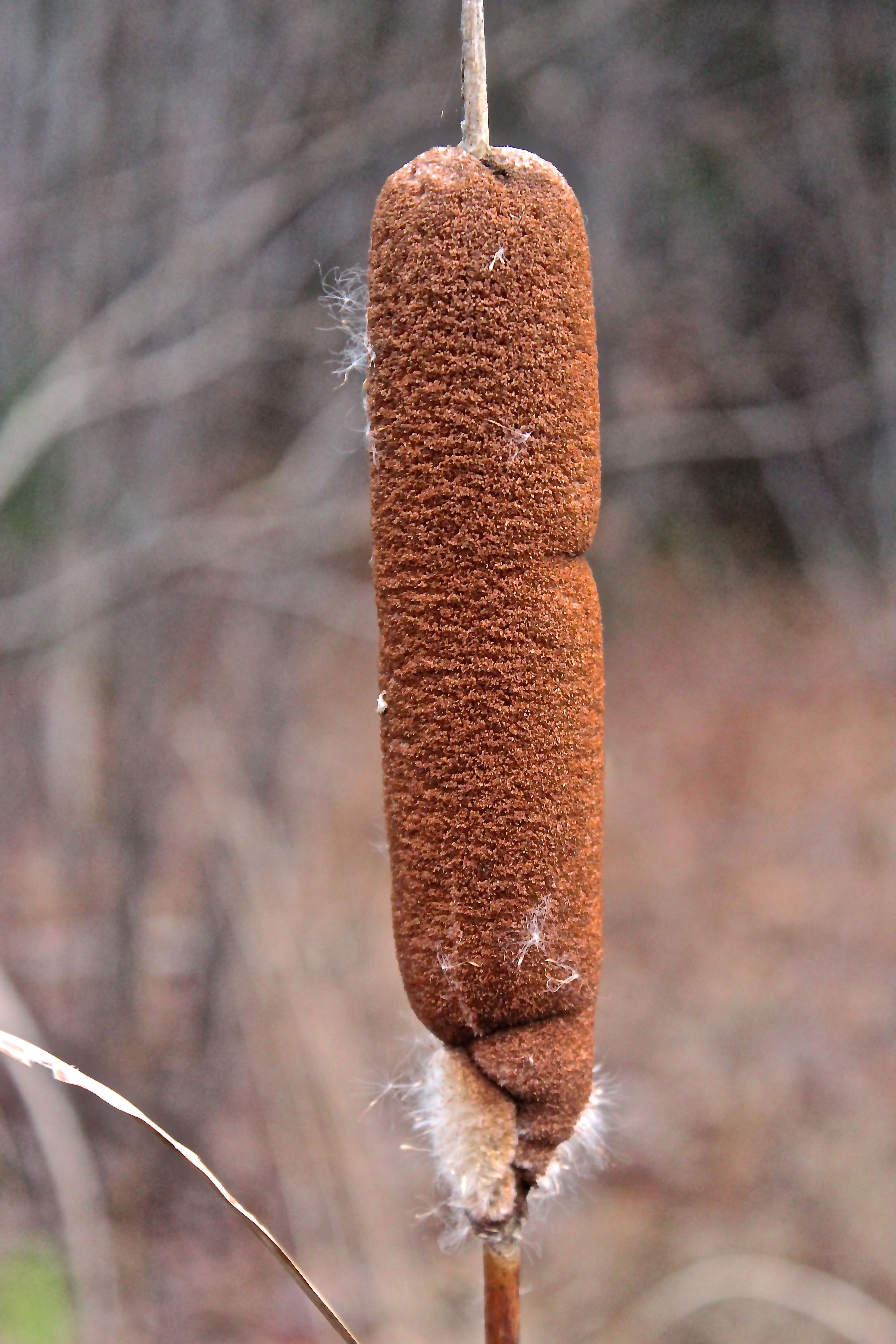
We stepped into the next aisle and found these corn-dogs on a stick. Cattails get their common name from their end-of-season fluffy spikes or tails. Need insulation or mattress stuffing? Check out aisle 6. From food to shaving cream to antifreeze, this is a bargain you don’t want to dismiss.

cattail 2

There’s even a two-for-one sale.

locusts thorns and pods

In contrast, though graceful in appearance when leafed out, the formidable thorns of a locust tree seem to serve as a warning sign–hands off the seed pods. Not exactly what I’d call a sweet deal.

Evening primrose 2

Impulse items drew our attention as well–those things we didn’t need but couldn’t resist. The spiraling of the Evening Primrose seed heads and

sweet-fern

the curling leaves of the Sweet-Fern’s leaves begged to be noticed.

The light was starting to wan as we made our final purchases before heading home.

MTD tracks and trail

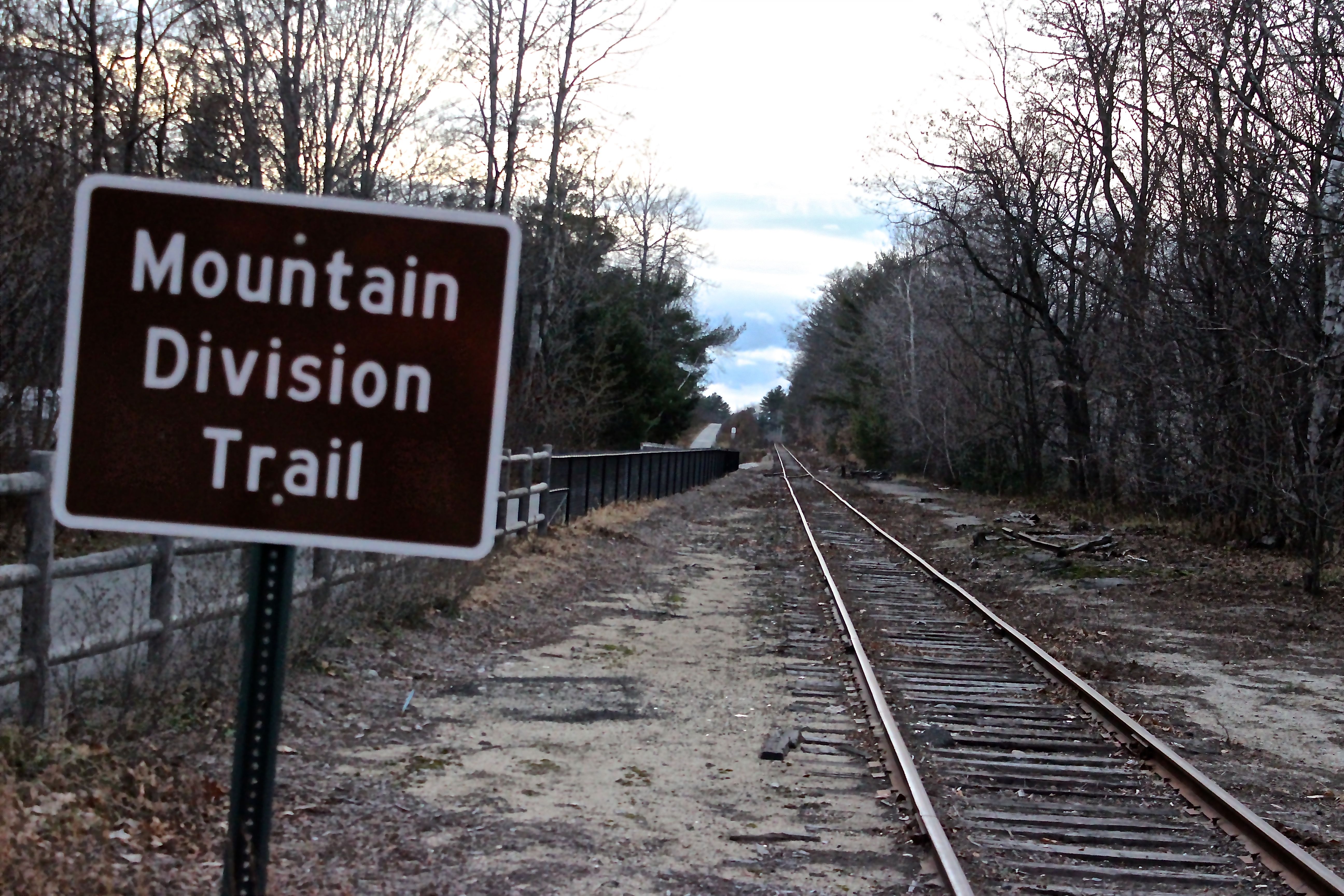
Our shopping trip along the Mountain Division Trail, a 4-mile long section of the rail trail in Fryeburg, had come to an end. But we were guaranteed free shipping for those purchases we couldn’t cart home.

J.M. and I bagged some exclusive specials as we hand picked the near endless stream of deals and discounts on this Black Friday. We knew we’d come to the right place . . . to practice our shopping expertise.

Trending Blaze Orange

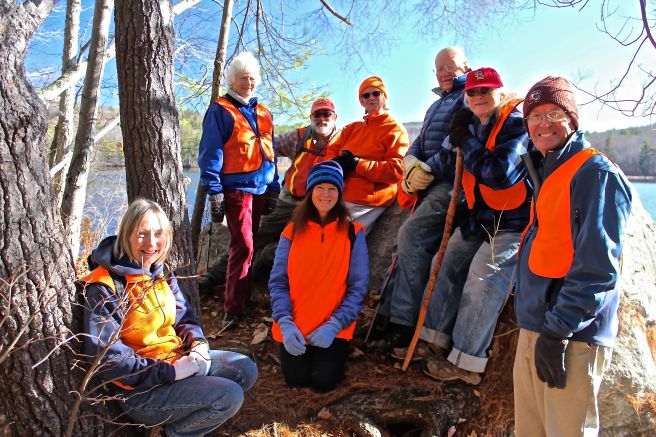
Donning our blaze orange, eight of the Greater Lovell Land Trust‘s docents joined me today for an exploration along the trail to Otter Rock at the Heald and Bradley Ponds Reserve.

Our destination was the Otter Rock spur, not very far, but it’s amazing how long it can take us and we were impressed that we actually reached our goal.

grape fern 1.jpg

Along the way we stopped to admire the blunt-lobe grape ferns and their separate fertile stalks, some still intact.

4 birches.jpg

And then we looked up. We’d been talking about tree bark, and right before our very eyes were four members of the birch family.

paper birch

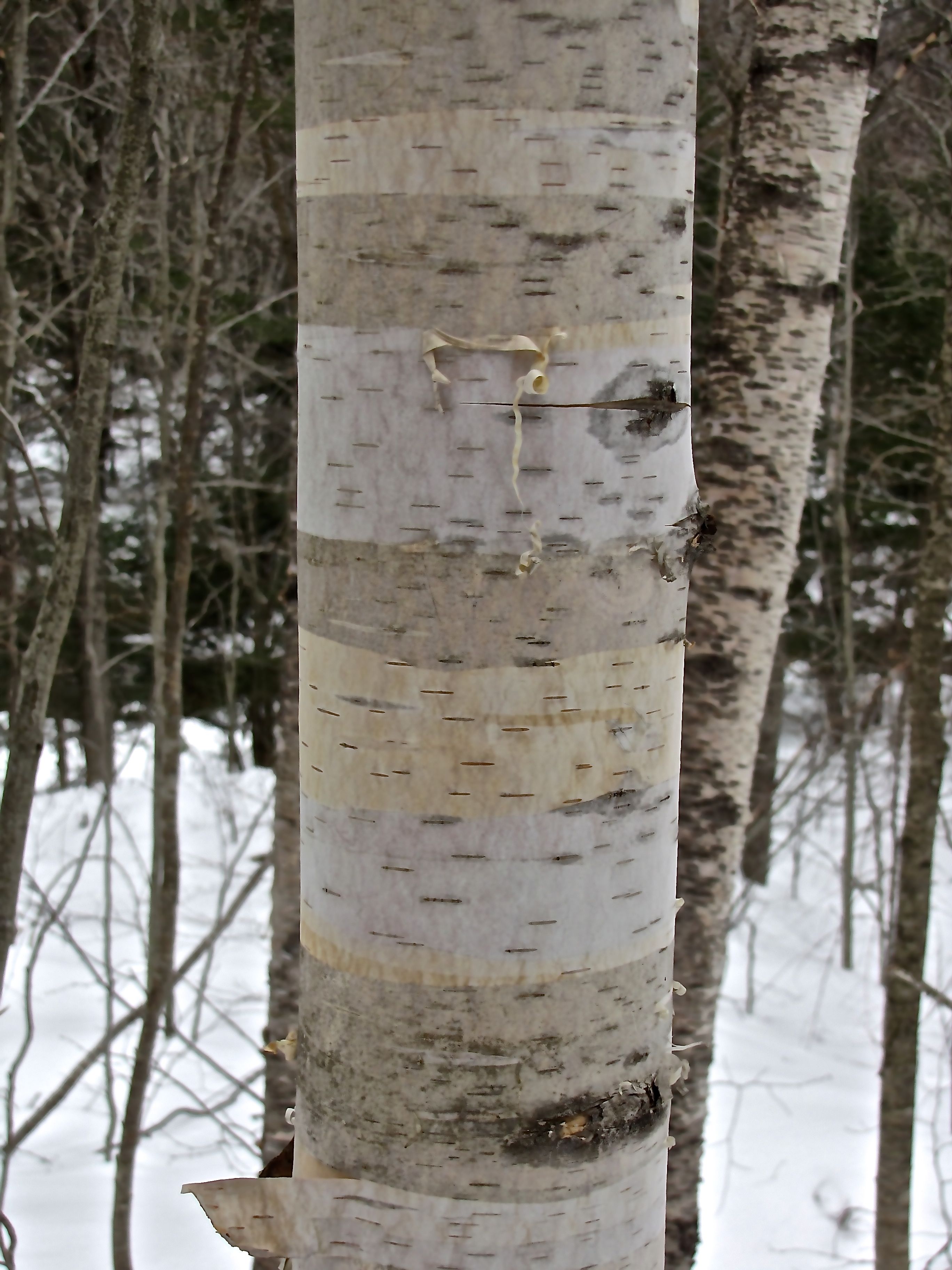
Paper Birch (Betula papyrifera) features chalky white bark that often peels away in large sheets. The peeled bark reveals pink or orange tints, only partially visible here, but evident on other trees in the neighborhood.

yellow birch

To the left of the Paper Birch stands a Yellow Birch (Betula alleghaniensis), with its curly ribbon-like strips of bronze or yellowish-gray bark giving it a shaggy appearance.

black birch

And to its left the one that excited us most, Black Birch (Betula lenta), sporting gray bark with long, horizontal lenticels. All trees have lenticels, but they are more obvious on some than others. These slits allow for the exchange of gas so the tree may breath.


gray birch

Last in the family line-up, a Gray Birch (Betula populifolia) showing off its almost dirty appearance and chevrons below the former branch sites.

dragonfly nymph 1

At Otter Rock, we found dragonfly nymph exoskeletons still clinging to tree bark

df 2

and rocks.

shell remnants

Our discovery of shells made us wonder and smile about others who have passed this way.

wh b

Now that the leaves are gone, we delighted in the knowledge that there is so much more to see, including Witch Hazel.

witch hazel gall

We examined one of the few remaining ribbony flowers, the scalpel-shaped buds, fruiting bodies, asymmetrical leaves and a spiny gall all on one branch.

witch hazel Bob.jpg

Our very own Witch Hazel Expert, Docent Bob, demonstrated the way the seeds pop–referencing Henry David Thoreau’s discovery of this phenomenon.

docents 1.jpg

Before we headed back to the main trail, the group posed for a photo call. They all look so sporty in their blaze orange.

wild raisins

A few more finds as we walked back to the parking lot: remnants of a wild raisin (Viburnum cassinoides), so named because the shriveled fruits that remain look like raisins;

black cherry bark.jpg

Black Cherry bark (Prunus serotina), easily identified by the small scales that curl outward like burnt cornflakes or potato chips;

red oak leaves

and Northern Red Oak leaves displaying holiday colors.

Mill Stream

Though most of us parted company just beyond the mill stream, a couple of us continued on to the John A. Segur Wildlife Refuge off New Road.

Heal All

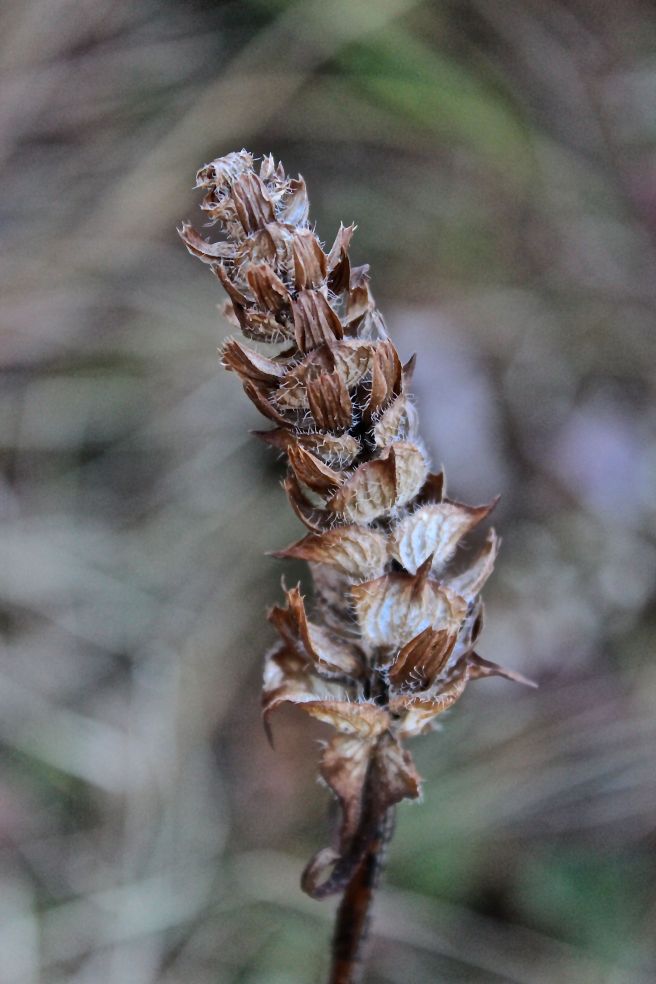
We focused our attention on winter weeds, a topic for our January 9th walk. On this old logging road, some of the Selfheal or Heal-all (Prunella vulgaris) stands at least a foot and a half tall. As pretty as it is in the summer, it’s still a sight to behold in its winter structure.

evening primrose

Another to look forward to is the Evening Primrose (Oenothera biennia). Its fruits are four-parted capsules arranged in a spike at the tip of the stem, looking rather like flowers themselves.

There’s more to see, but I don’t want to give it all away.

CS view 1

My last stop for the day was a loop around the Chip Stockford Reserve. I wasn’t the only one trending blaze orange. The glow of the late afternoon sun cast an orange hue across the beech leaves.

November in western Maine. We’re happy to don our blaze orange and get out on the trails.


Wer-if-est-er-i-a-ing A-long

12074842_10153632630537731_2769008110586363497_n

Thank you to my friend, Judy Lynne, who shared this word with me today. I know I do it, but I didn’t know there was a word for it. And I love that it’s an Old English word–takes me back to college days and my History of the English Language Class where we learned to read in Old and Middle English.

And so it was that today I wandered longingly through the forest in search of mystery with five other naturalists–all MMNP grads who will bring the Master Naturalist course to Bridgton in the spring of 2016.

After a tour of Lake Environmental Association’s Maine Lakes Science Center, we took care of some housekeeping items (coursework) before heading out the door. I made them practically run through Pondicherry Park–well, maybe run is an overstatement, but we moved quickly for us–not much time for werifesteriaing.

It was our afternoon tramp at Holt Pond when we allowed ourselves more time to pause and wonder.

HP snake

As we started down the trail, Beth saw this snake hidden among the leaf litter. It’s the third garter snake I’ve seen this week. The day was overcast and we weren’t sure if he was coiled up because he was cold or if something had attacked him.

HP Muddy River

We stepped onto the boardwalk to view the Muddy River and it almost sank beneath our weight. The water is quite high and I suspect I know why.

HP beaver works

Off to the side, we saw fresh evidence of beaver works.

HP beaver lodge, Muddy River

And in the river, a lodge topped with new sticks. I think the dam down the river has probably been rebuilt.

Looking from this vantage point, the layers of communities are pronounced, with the wetland plants like leatherleaf, sheep laurel and sweet gale growing low by the river, topped by alders and small red maple trees, topped by tamaracks, topped by white pines, hemlocks and Northern red oaks.

HP layers from Muddy River

Similar layers surrounded us with the bright red winterberries forming the creme between two wafers.

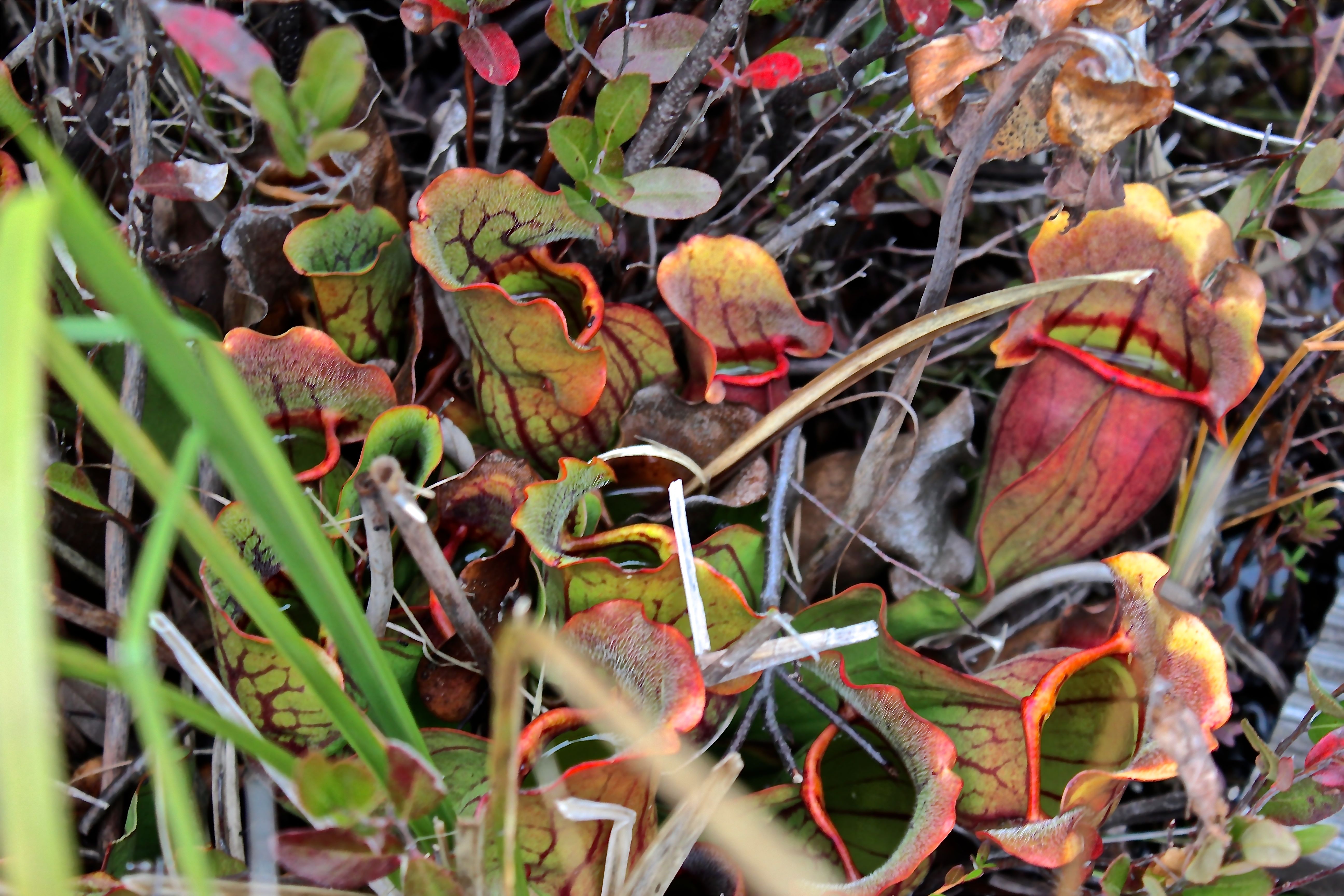
HP pitcher 1

As happens each time I pass this way, I am forced to photograph the pitcher plants.

HP pitcher 2, picture

Have you ever noticed the pictures on the hairy inner lip? Do you see what I see? A woodland landscape–trees with extended branches, a layer of colorful foliage and a grassy edge leading to the lake (water in the cup)? I know the hairs and design are important for the attraction of insects, but I never really paid attention to the actual design before.

HP Wooly aphid

We also found more woolly alder aphids, which Joan and Ann held in their hands so everyone could get an unclose look at the squiggly insects. Rather disgusting, yet fascinating.

Holt PondHP north 2

Even a single moment at Holt Pond translates into tranquility. (And I had to channel this moment for Judy Lynne.)

HP bog boardwalk, water

Gordon, Beth and Joan tried to keep their feet dry as we examined the plant life along the quaking bog boardwalk.

HP cranberries

Karen spotted one cranberry and then another, and another, so everyone could sample the tart flavor. Pucker up.

HP owl pellet

Our next fun find–a raptor pellet comprised of hair and bones galore. For the naturalist course, this will come into play.

HP raining leaves 3

Every once in a while, I’d ask if it was raining. It was–beech and oak leaves.

HP old hemlock varnish conk

While we stopped to admire several older hemlock varnish conks, something else caught our attention.

HP mystery bark

Do you know what it is?

HP fur

And then Ann spotted this little tidbit–leftover from someone’s dinner. We still don’t know who ate whom. Or if it was related to our earlier find of the pellet.

What we do know is that we spent a delightful day werifesteriaing along.

HP fun mystery

As for the mystery photo–the inside of hemlock bark. This is the bark that I think of when trying to remember how trees decay–hardwoods rot from the inside out, softwoods rot from the outside in, but hemlock bark often remains. In the 19th century, hemlock bark was used in the tanning process because the tannins found in the bark preserved a hide and prevented natural decay while giving it a brown hue. At the same time, the tannin left the leather flexible and durable.

Here’s hoping you’ll have the opportunity to wander longingly in search of mystery.

Barking Up A Bridge

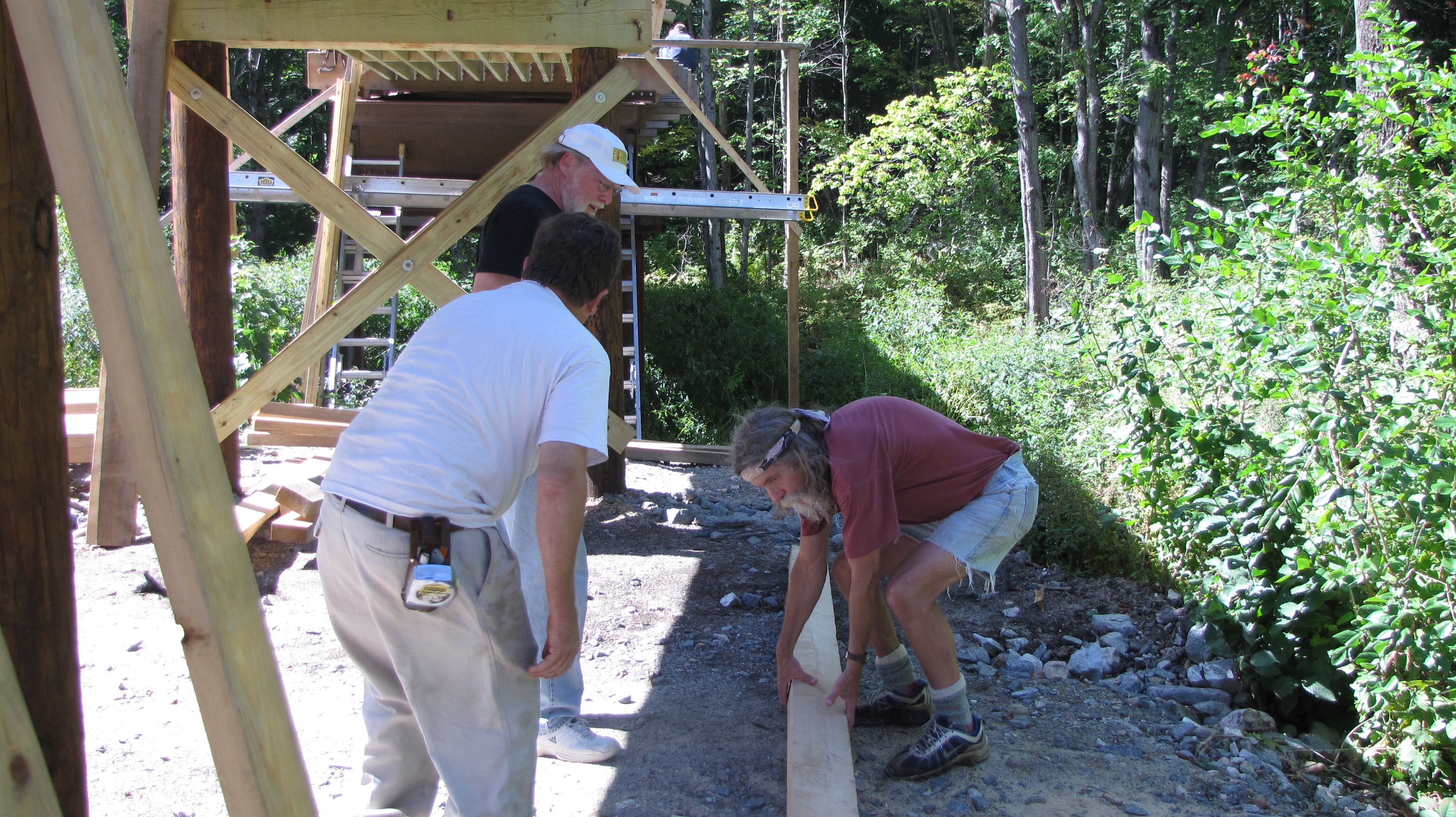
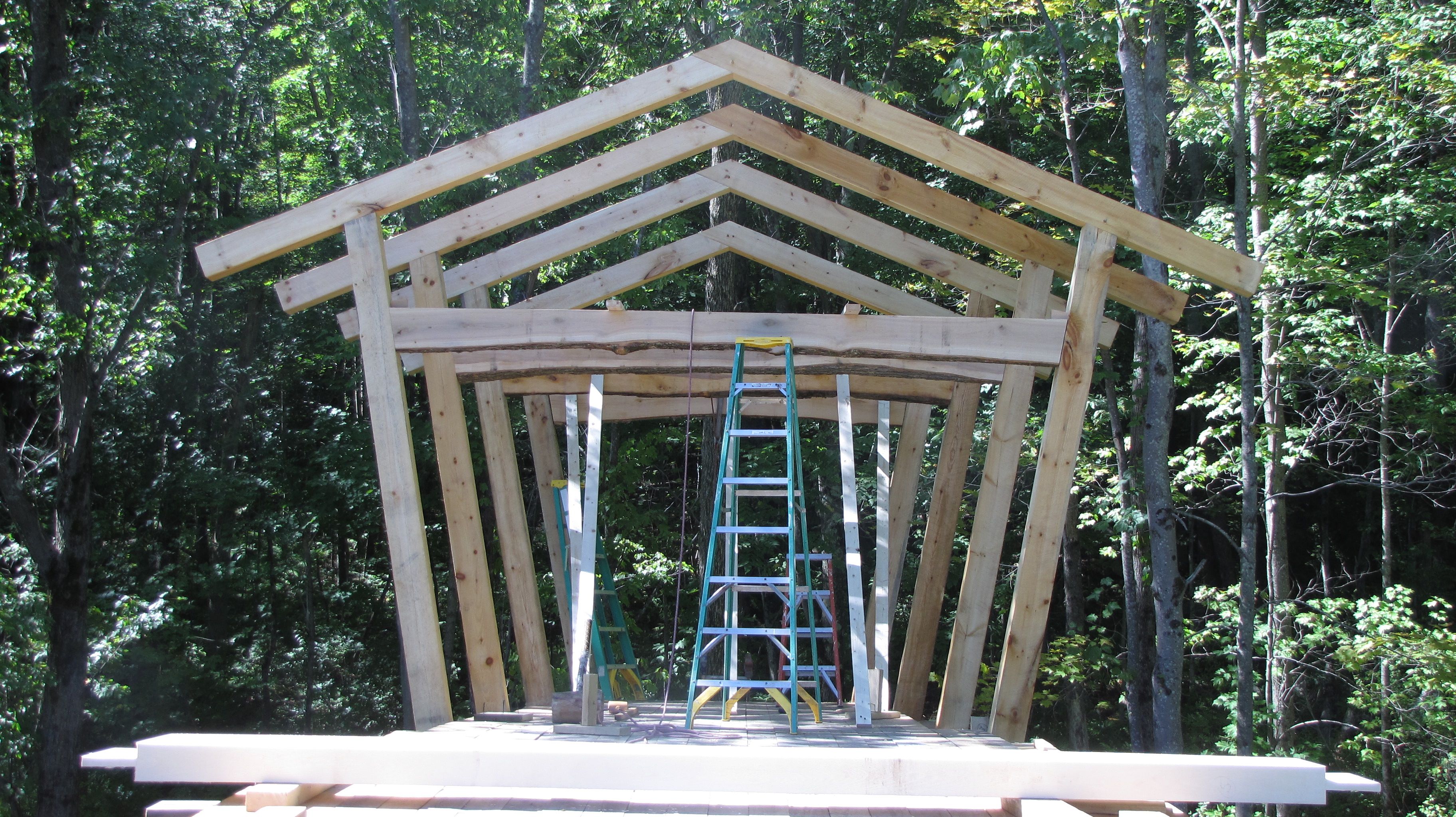
On September 11, 2010, the Bob Dunning Memorial Bridge was constructed in true barn-raising fashion. The bridge is a key feature of Pondicherry Park in downtown Bridgton.

bridge, summer

Bob Dunning, who died suddenly, was a builder, an artist, and among other things, a teacher–sharing his craft with students young and old.

bridge 1bridge 2

bridge 3bridge 4

bridge 7bridge 5

bridge 6

To honor Bob, who treasured traditional building techniques, his friends and fellow craftsmen designed and built a covered bridge leading into the park.

bridge beams

“As the poet said, ‘Only God can make a tree’–probably because it’s so hard to figure out how to get the bark on.” ~Woody Allen

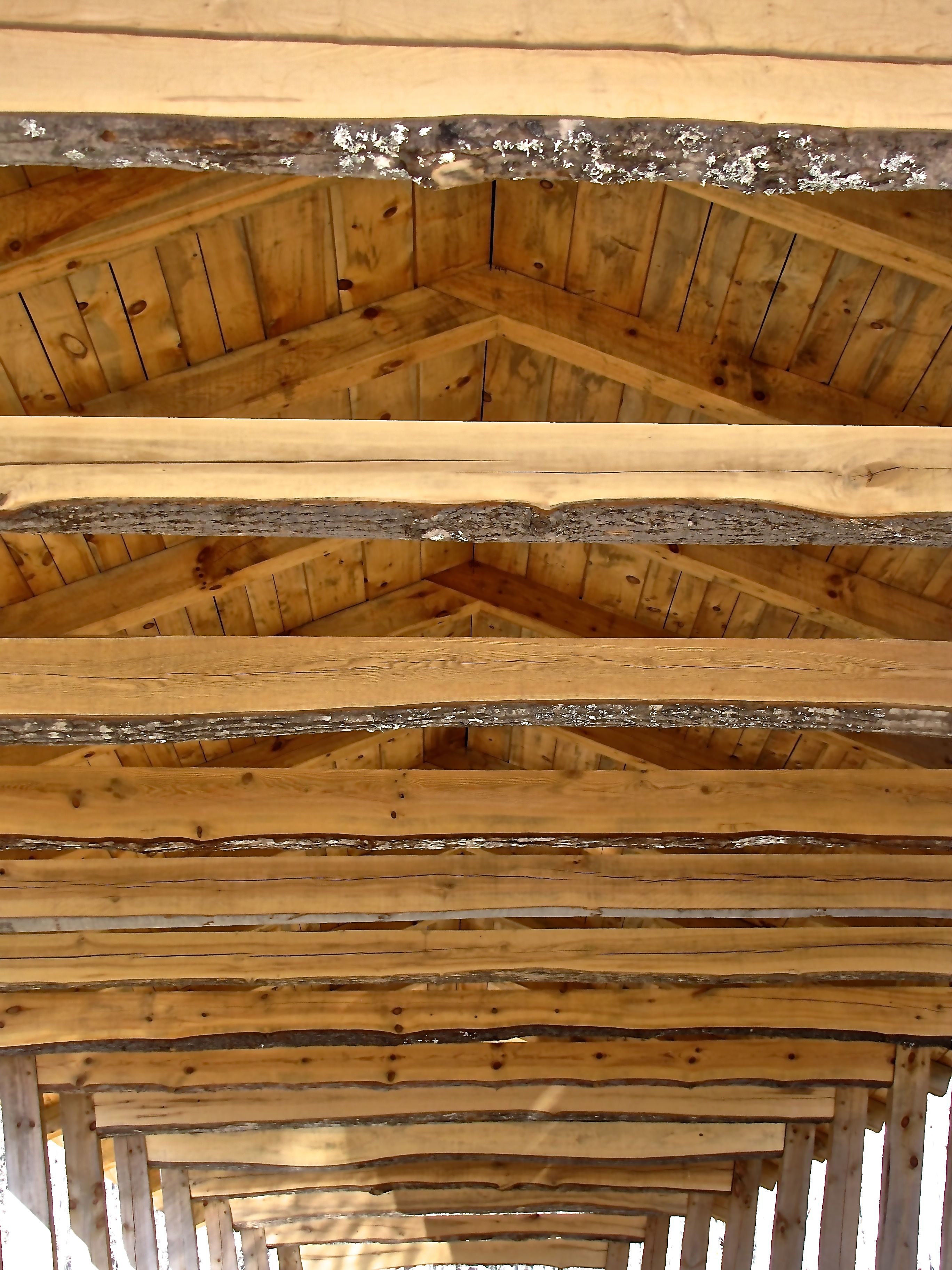
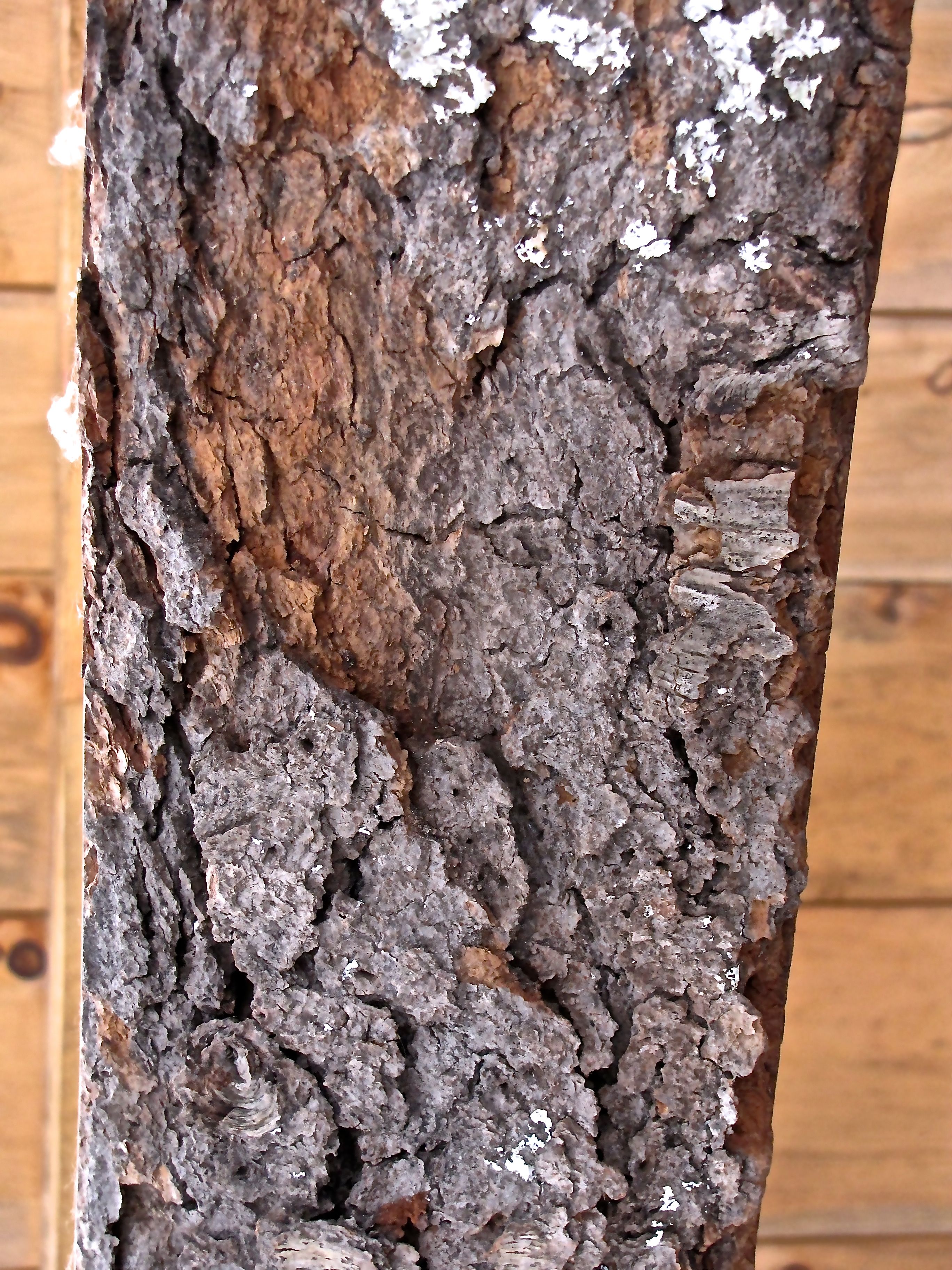
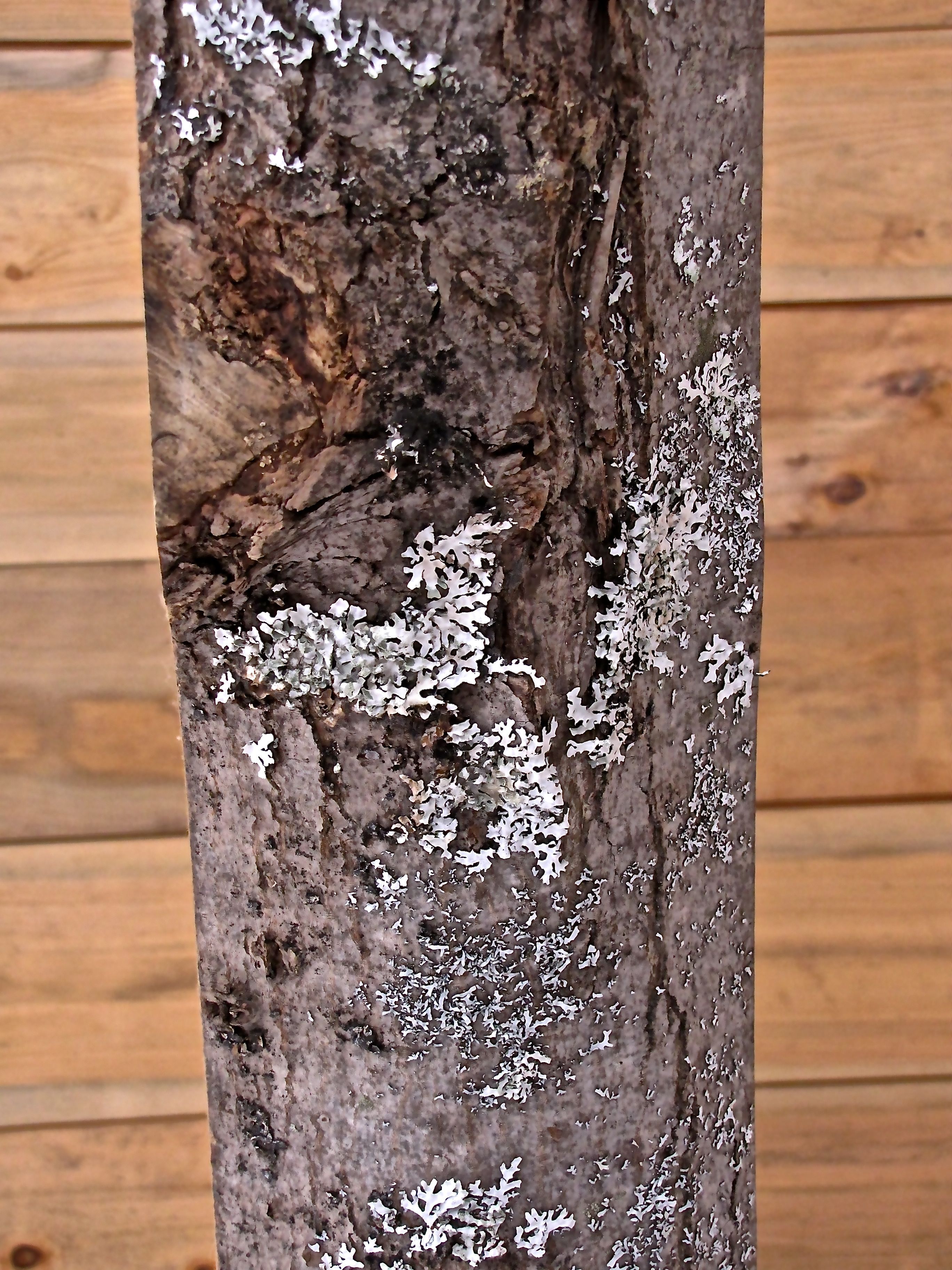
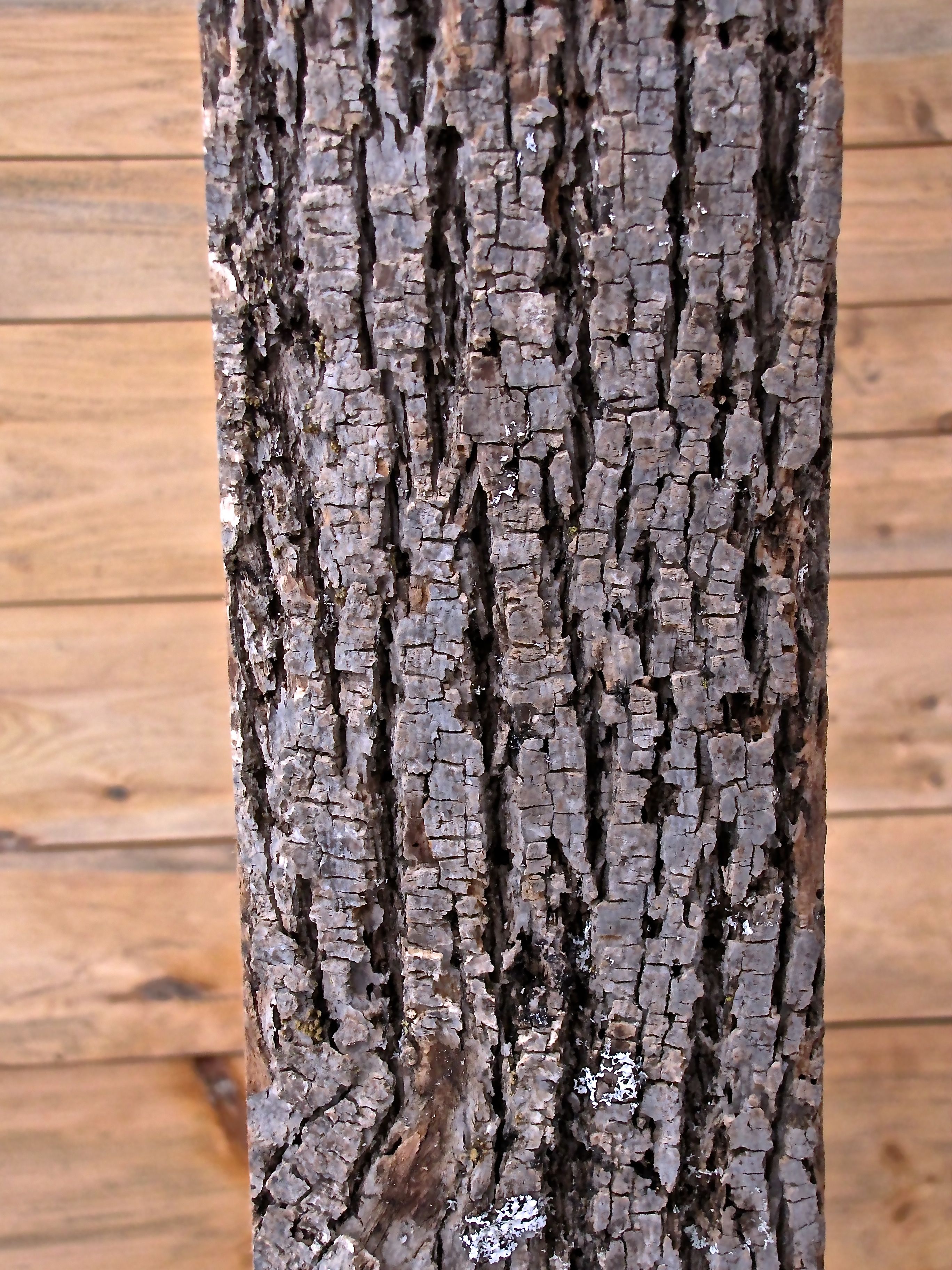
One of the unique things about the bridge is that each tie beam comes from a different tree species, with the bark left on. As I walk across the bridge, my eyes are always drawn to the beams.

Until I took the Maine Master Naturalist class, I recognized only a few species by their bark. But my eyes were opened to the fact that each species has its own presentation, which is true for everything in the natural world. I wanted to know all of them so I set out to teach myself, beginning with the species on the bridge. These became the focus of my capstone project for the class. I spent hours upon hours pouring over reference books such as BARK by Michael Wojtech, The Tree Identification Book by George Symonds, Manual of Trees of North America by Charles Sargent and Forest Trees of Maine by The Maine Forest Service.

I sat in front of trees and sketched them, trying to gain a better grasp of their nuances. I dragged foresters into the field and picked their brains. And I drove hiking companions crazy as I tried to point out clues.

The result was a brochure that you can pick up at the kiosk (let me know if you can’t find a copy) and a powerpoint presentation that breaks down the species by types of bark. Did you know that there are seven types of bark? I learned that from Wojtech’s book and it made it easier to note the differences.

image

Follow me now, as I take you across the bridge and give you a glimpse of each tree. We’ll begin on the east side (closest to Renys) and work our way west.

Beam 1, cherry, smooth bark breaks into scales that are curled outward on the edges. outer scales begin to flake off, revealing smaller, darker, irregularly shaped scales without prominent lenticels

beam 1 e, black cherry

Beam #1: Black Cherry (Prunus serotina): Scales; gray-brown to almost black; small, rough scales randomly placed; curled outward like burnt cornflakes or potato chips.

Beam 2, yellow birch

beam 2 e, yellow birch

Beam #2: Yellow Birch (Betula alleghaniensis): Peeling/Curling; bronze to yellowish-gray; curls away horizontally into thin, papery strips; shaggy appearance.

Beam 3, red maple,smooth, light to dark gray, vertical cracks

red maple

Beam #3: Red Maple (Acer rubrum): Vertical Strips; light to dark gray; almost smooth or cracked vertical, plate-like strips; curls outward on either side; sometimes bull’s eye target caused by fungi.

BEam 4, American BAsswood, GRay to brown, Narrow furrows form long, flattened ridges with parallel edges, ridge surface broken horizontally by hairline cracks, often into squarish segments, ridges loosely intersect

Basswood bark

Beam #4: American Basswood (Tilia americana): Ridges; gray to brown; flattened, square-like ridges with parallel edges; may intersect like a woven basket every 6-12 inches.

Beam 5, red oak, rough, dark brown to blackish furrows, sepaprate smooth, light-colored, often lustrous ridges flush with circumference of trunk or slightly concave, ridges like ski tracks, loosely intersect

beam 5 e, red oak

Beam #5: Northern Red Oak (Quercus rubra): Ridges and Furrows; light colored, with rusty red inner bark; wide, flat-topped ridges run vertically parallel like ski tracks; dark, shallow furrows separate ridges.

Beam 6

hemlock

Beam #6: Eastern Hemlock (Tsuga canadensis): Scales; cinnamon-red to gray; rounded or irregularly-shaped scales; inner bark has purplish tint.

BEam 7, beech, light gray to bluish gray, smooth and unbroken

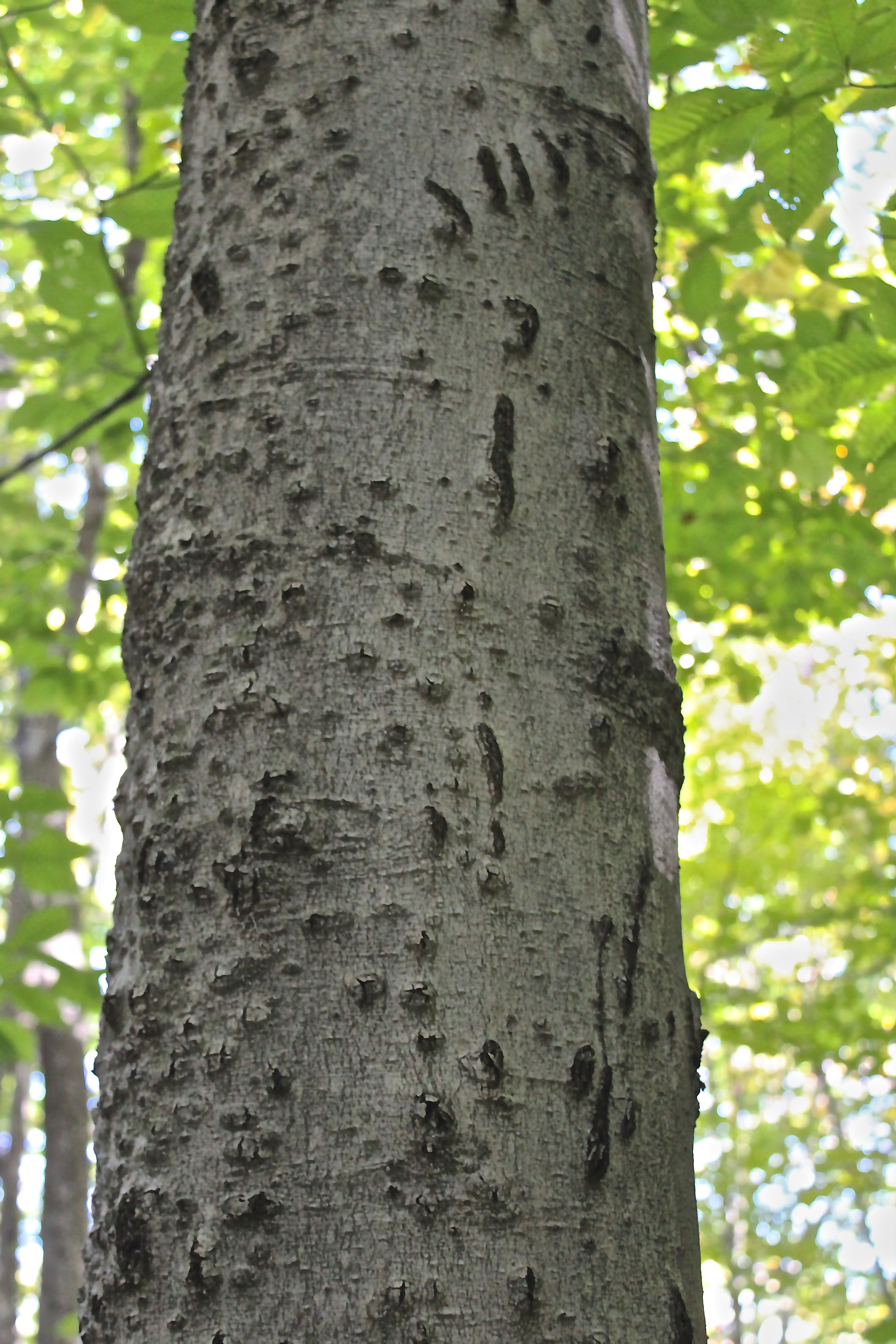
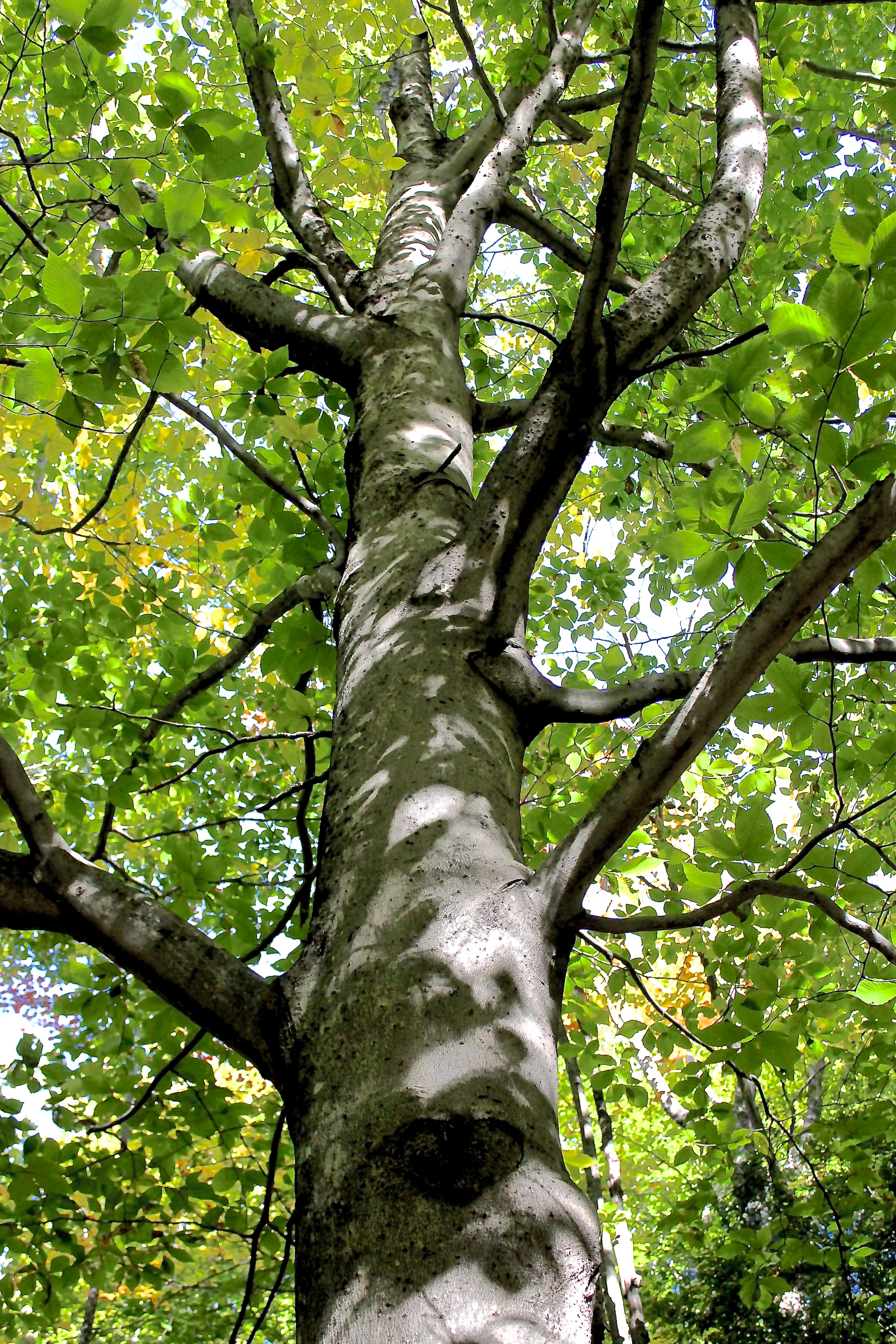
beam 7 e, beech

Beam #7: American Beech (Fagus grandifolia): Smooth/Unbroken; silver-gray or grayish-green; sometimes blotched with lichen; carved initials remain visible forever; often pockmarks caused by fungi.

Beam 8, Ash, gray to brownish-gray diamond-shaped furrows, resembles woven basket.

ash

Beam #8: White Ash (Fraximus americana): Ridges and Furrows; ashy-gray to brown; intersecting ridges form obvious diamond-shaped furrows; look for letter “A” or pattern of cantaloupe rind.

BEam 9, white pine, dash-like lenticels, turns gray to reddish-brown, thick, irregular shaped scales, turn out, develops fine, horizontal lines/cracks consistently spaced like writing paper.

eastern white pine

Beam #9: Eastern White Pine (Pinus strobes): Scales; dark gray to reddish-brown; thick, irregularly-shaped scales; fine horizontal lines evenly spaced along scales like lines on a legal pad.

BEam 10, Red Pine (Norway), reddish brown to pinkish, irregular, thin, flaky scales like jigsaw puzzle, surface of blocks roughly aligns with circumference of tree

red pine

Beam #10: Red Pine (Pinus resinosa): Scales; mottled red and grayish-brown; flaky scales; jigsaw puzzle or sandstone appearance.

BEam 11, sugar maple

sugar maple

Beam #11: Sugar Maple (Acer saccharum): Vertical Strips; gray to brown; finely cracked; looks like old paint; curls away from trunk on one side; look for horizontal scars indicating work of maple sugar borer.

BEam 12, poplar, Big-toothed aspen, deep furrows, rough and more rounded?

beam 12 e, big tooth aspen

Beam #12: Big-Tooth Aspen (Populus grandidentata): Ridges and Furrows; greenish-brown to dark gray; V-shaped furrows intersect every 6-12 inches; flattened ridges appear sanded down; gnarly look; periodic horizontal lines; on older trees resembles Northern Red Oak at bottom and Birch toward top.

BEam 13, white oak, light gray, can appear whitish with a reddish cast, furrows form flattened ridges, broken into somewhat rectangular-shaped blocks, furrows steep and narrow, with sides of blocks often parallel, old bark+irregular in shape, might look like shingles

beam 13 e, white oak

Beam #13: White Oak (Quercus albra): Ridges; light gray with reddish cast; rectangular-shaped blocks with flaky surfaces; ends of blocks curl outward; feather-like in mature trees.

Beam 14, elm

beam 14 e, American Elm

Beam #14: American Elm (Ulmus americana): Ridges and Furrows; ashy-gray; diamond-shaped furrows; flat-topped ridges; alternating light and dark layers like vanilla and chocolate wafer cookies.

BEam 14, black birch

beam 15 e, black birch

Beam #15: Black Birch (Betula lenta): Lenticels Visible (note: all trees have lenticels, but they are more obvious on some than others. Lenticels are tiny slits in the bark that allow for gas exchange, just like our pores); gray to brown-gray to black; may crack and form scales that curl away from trunk; long, thin horizontal lenticels.

Beam 15, paper birch, white birch

beam 16 e, paper birch

Beam #16: Paper Birch (Betula papyrifera): Peeling/Curling; white to creamy white; peeled bark reveals pink or orange tints; small, horizontal lenticels visible.

That’s it in a nutshell. Ah, but here’s the thing. Except for the American Beech, tree bark changes as a tree ages. And beech trees can be equally confusing because some are severely affected by beech scale disease. So, just when you think you know a species, you may come upon a younger or older version and get totally thrown off. The key is to take your time, walk all the way around the tree, and look at other clues like the twig and bud formation. Touch the bark. Smell it.

And take a walk across the bridge and into the park during any season. Chances are, I’ll be there doing the same.

bridge to park

Thanks for joining me for this lengthy wander. I hope you’ll find time to wonder about bark.

Embracing Splashes of Color

Walk in the woods any day of the year and you’ll find color, but nothing beats a day like today.

morning light red maple swamp

Early this morning, I waited at the Holt Pond Preserve parking lot for Jon Evans of Loon Echo Land Trust. Well, I didn’t actually wait. I walked off the trail, taking in the morning sunlight on the red maple swamp–knowing we’d return to it later. By the time I arrived back at the parking lot, Jon was waiting for me–we hitched a ride to Bald Pate, where today’s adventure began.

Jon, LELT

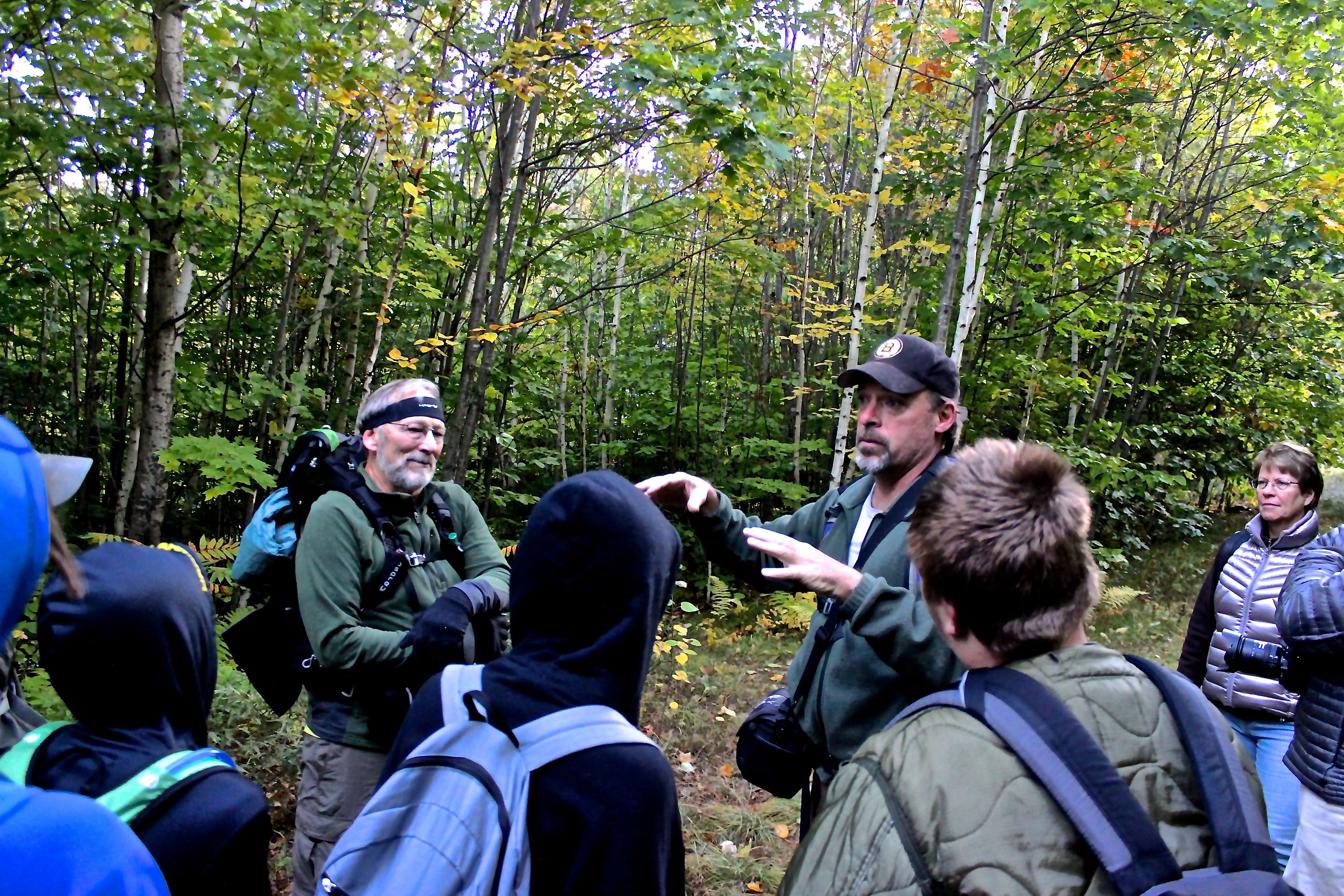
Together, we lead eighteen people, including six Boy Scouts from Troop 149, to the summit of Bald Pate and back down, where we connected with the Town Farm Trail and continued on to Holt Pond.

view from Bald Pate

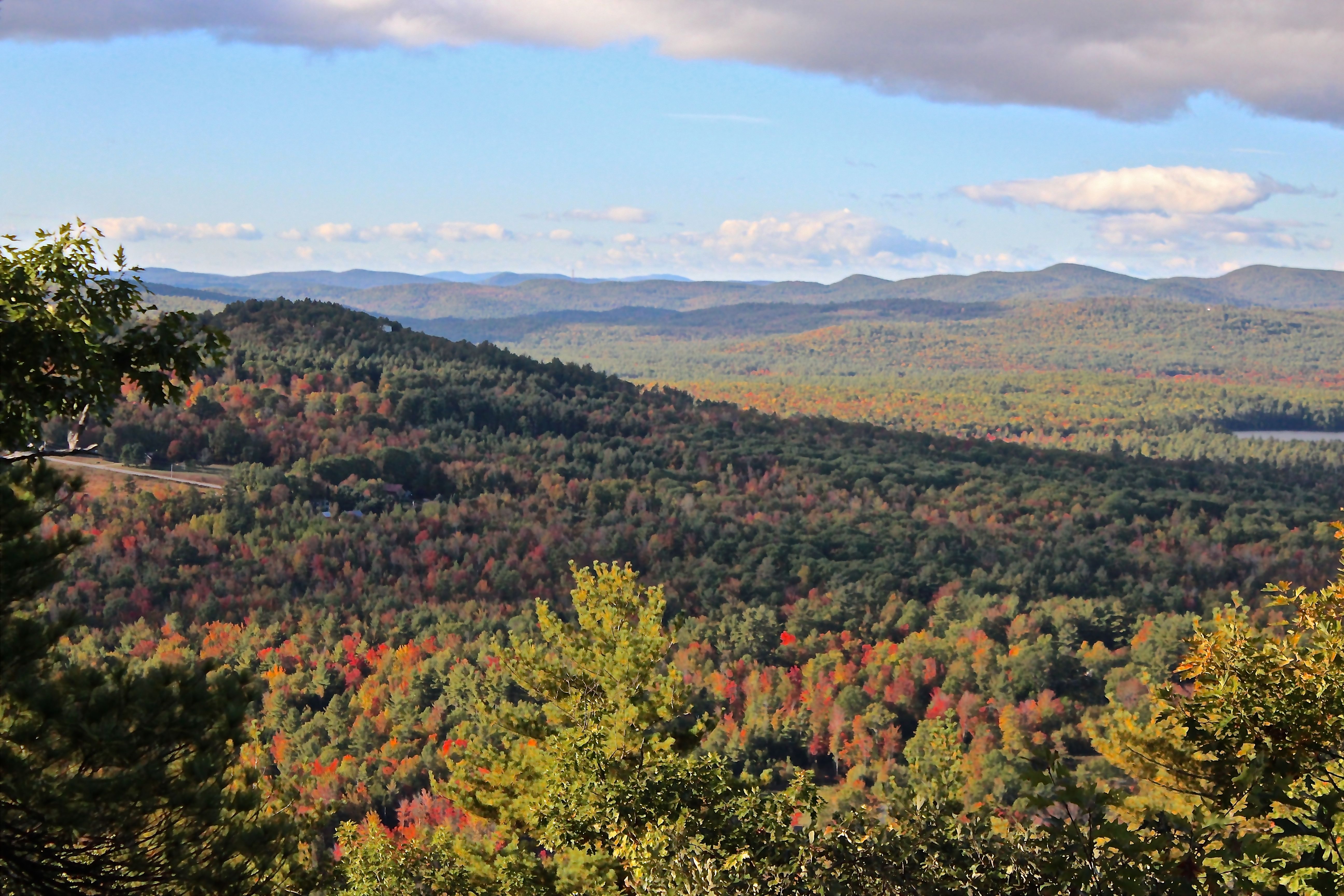
As we climbed up Bald Pate, we paused to take in the western view. This week, the colors have popped.

Peabody Pond & Sebago Lake

The fall foliage was delayed because of September’s warm temperatures. Not only does less daylight trigger the chemical change in tree leaves, but a drop in temperature is also important. That being said, it doesn’t have to be cold enough to create a frosty coating.

splash of color

 The decreasing daylight hours and temps below 45˚ at night are signals to the leaf that it is time to shut down its food-making factory. The cooler night temps trap sugars made during the day, preventing them from moving to the tree. Once trapped, the sugars form the red pigment called anthocyanin.

Muddy River

As we witnessed along the Muddy River at Holt Pond, when the chlorophyll begins to break down, the green color disappears. This allows the yellows to show through. At the same time, other chemical changes may cause the formation of more pigments varying from yellow to red to maroon. While some trees, like quaking aspens, birch and hickory only show the yellow color, sugar maple leaves turn a brilliant orange or fiery red combined with yellow.

witch hazel flowers, Holt Pond

pitcher plants

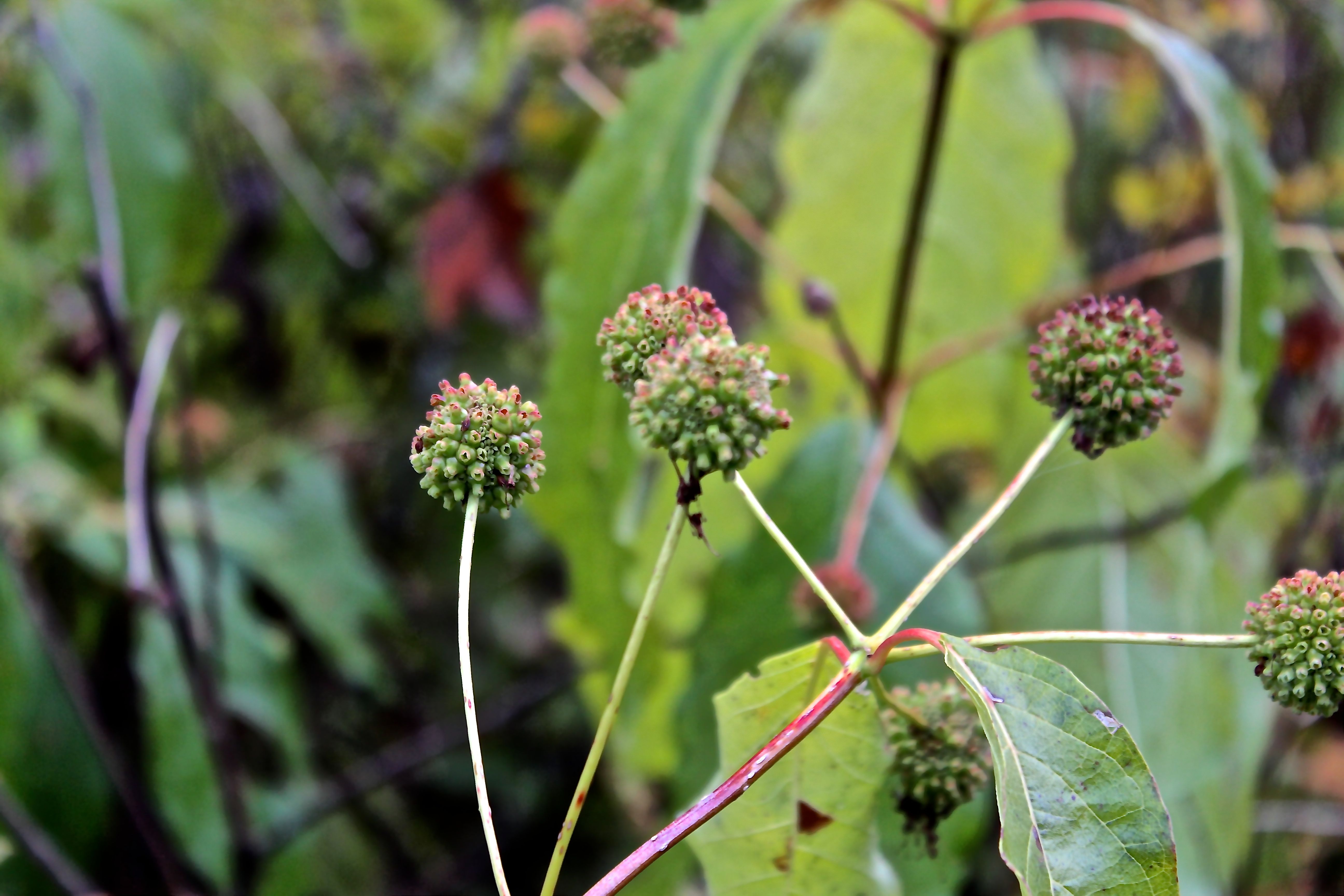
button bush, Holt Pond

Not to be left out, the flowering witch hazel, pitcher plants and buttonbush display their own variation of colors.

Holt Pond Red Maple Swamp

Five hours and almost five miles later, we were back at the Red Maple Swamp I’d photographed at 7:30am.

The day was too beautiful to head indoors, so after a quick stop at home, I endured the Fryeburg Fair traffic and drove to the Gallie Trail at the Heald and Bradley Ponds Reserve in Lovell. My intention was a reconnaissance mission for next weekend’s Greater Lovell Land Trust hike to the summit of Whiting Hill.

 bear claw 2 bear claw and nectria

On the way up, I scanned the beech trees, searching for bear claw marks and wasn’t disappointed.

 Mama Beech Whiting Hill

The beech leaves have yet to take on their golden-bronze hue that lasts throughout the winter and appears like dabs of sunlight in the white landscape.

color contrast

The maples, however, provide a brilliant contrast in the canopy.

whiting view 2

It’s beginning to look a bit like . . . autumn from the summit.

red maple splendor

One red maple was particularly dazzling.

red oak, subtle color

This northern red oak provides a much more subtle hue,

ash leaf

while a white ash shows off its magenta-colored leaves.

bees on goldenrod, Whiting Hill

A goldenrod continues to bloom and the bees know it. This one is doing a happy dance.

yellow-greens of striped maple

As I hiked down a different trail, the community changed and the striped maples dominated the understory

striped maple leaves

with their yellow-green leaves.

Indian cucumber root fading

Similarly, the Indian-Cucumber root’s leaves have taken on its lime-green color of fall.

splash of yellow greensplash of color2

Splashes of color. Nature on display. How fortunate I am to be able to embrace these moments.

Rain Drops and Mondates Always Make Me Glad (and humble)

My guy and I ventured off to the Major Gregory Sanborn Wildlife Management Area in Brownfield today. Cooler temps and plenty of sunshine marked the early morning hours.

BBog sign

Covering almost 6,000 acres, this area was formerly known as the Brownfield Bog, but was renamed to honor Major Sanborn, a beloved Maine Warden, who lost his battle with cancer several years ago.

Bbog1

This is a place we return to often, but I have to admit that my sense of place was thrown off within the past week.

Saco River

We came to explore the Saco River. So this is where our pride takes a ribbing. We’ve walked to the river on most of our visits, but we never realized that this was the actual river. Huh? Yup, it’s true. In our brains, this was either the Shepard River or an old course of the Saco. Maybe it’s because when we’ve stood beside its bank, we’ve never seen anyone paddling along. Maybe it’s because until yesterday we never looked at the map. We never bothered to locate our place–just assumed we knew where we were. Another life lesson. Just a week ago, we were the merry paddlers, cruising along at tandem kayak speed, passing through the bog from Lovewell Pond to maybe a  half mile north of the Brownfield Bridge (maybe less). Maybe it’s because we were such swift paddlers that we were clueless. Anyway, now we know: The Saco River bisects the bog.

SR exploration

Exploring the floodplain became our focus as we followed the river.

river erosion

Each year, the river consumes more land, making me wonder what it was like when Brownfield was founded in 1802.

sensitive fern, chest height

We walked down a mowed path, where the sensitive fern grows chest high on either side.

royal fern

And the royal ferns are equally large and plentiful.

glen

Saco River 3

We explored in a different direction, perhaps trespassing on private land. (Oops, did that chain between the posts really mean “keep out”?)

elm 2

We recognized an elm growing over the river that we’d spotted while kayaking last week and knew that we’d established our sense of place.

SR 2

And then we turned from the river, retraced our steps and continued on to explore more of the bog via foot.

wild raisins 1

Wild raisins are abundant.

wild raisins

Eventually, the fruits will all turn blueish black and if the birds don’t eat them, they’ll shrivel up–like raisins.

common winterberry

The showy red fruits of common winterberry also dot the landscape. The curious thing about this plant–though this is a member of the holly family, the leaves are not sharply toothed like other hollies, nor are they evergreen.

milkweed dispersal

Milkweed is ready to fly away and find a new home.

green darner dragonfly

Speaking of flying, if I hadn’t seen this green darner fly into the foliage, I never would have discovered it.

Meadowhawk dragonfly

Meadowhawk dragonflies were much easier to spot, enjoying the warmth of the sunshine.

BBog 5

Openings in the shrubs and trees provide frequent views,

Pleasant Mtn 4

including the backside of Pleasant Mountain.

white oak bark

The community changed a wee bit, and suddenly we were under white oaks with their flaky-surfaced, rectangular, block-like bark.

northern red oak bark

Beside them grow the Northern red oaks, with their flat-topped ridges outlined by the rusty red inner bark.

big tooth aspen bark

The horizontal/vertical line design of big-toothed aspen also made its presence known.

big tooth aspen leaf

And on the ground, a big-toothed leaf provides a hint of what is to come.

red maple leaves changing

A few red maples are beginning to announce the changing season as well.

Bbog 2

When we reached our turn-around point, we were feeling a bit hot and sticky. We’d shed our sweatshirts and were thankful for a slight breeze.

fragrant water lily

I admired a few fragrant water lilies still in flower, while my guy followed the action of a northern harrier through the binoculars.

storm leaves

And then the wind really picked up. I looked at the trees and could see the backs of the leaves–my mother had long ago told me that that was a sure sign of rain to come.

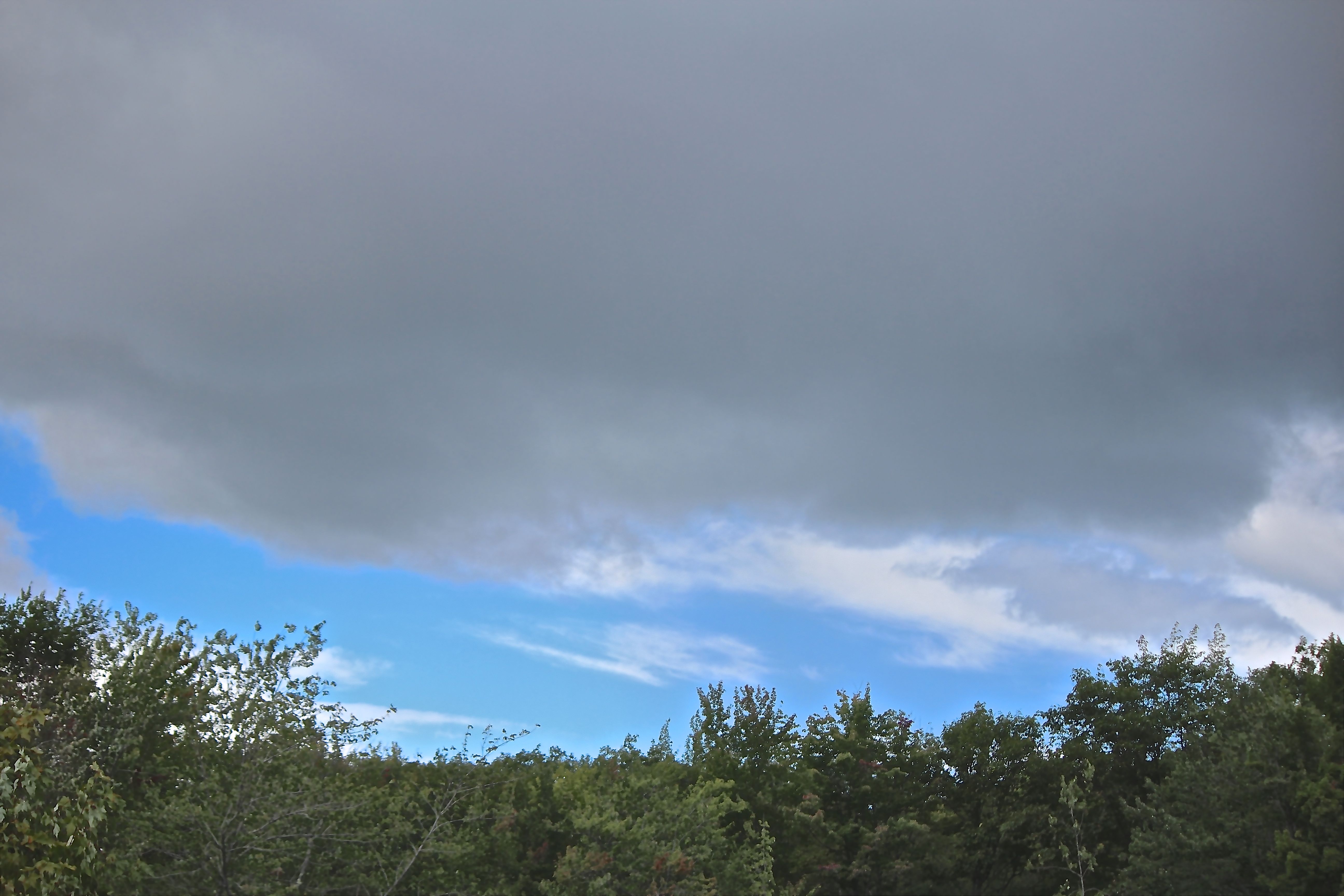
storm cloud

We looked up and had an Eeyore moment.

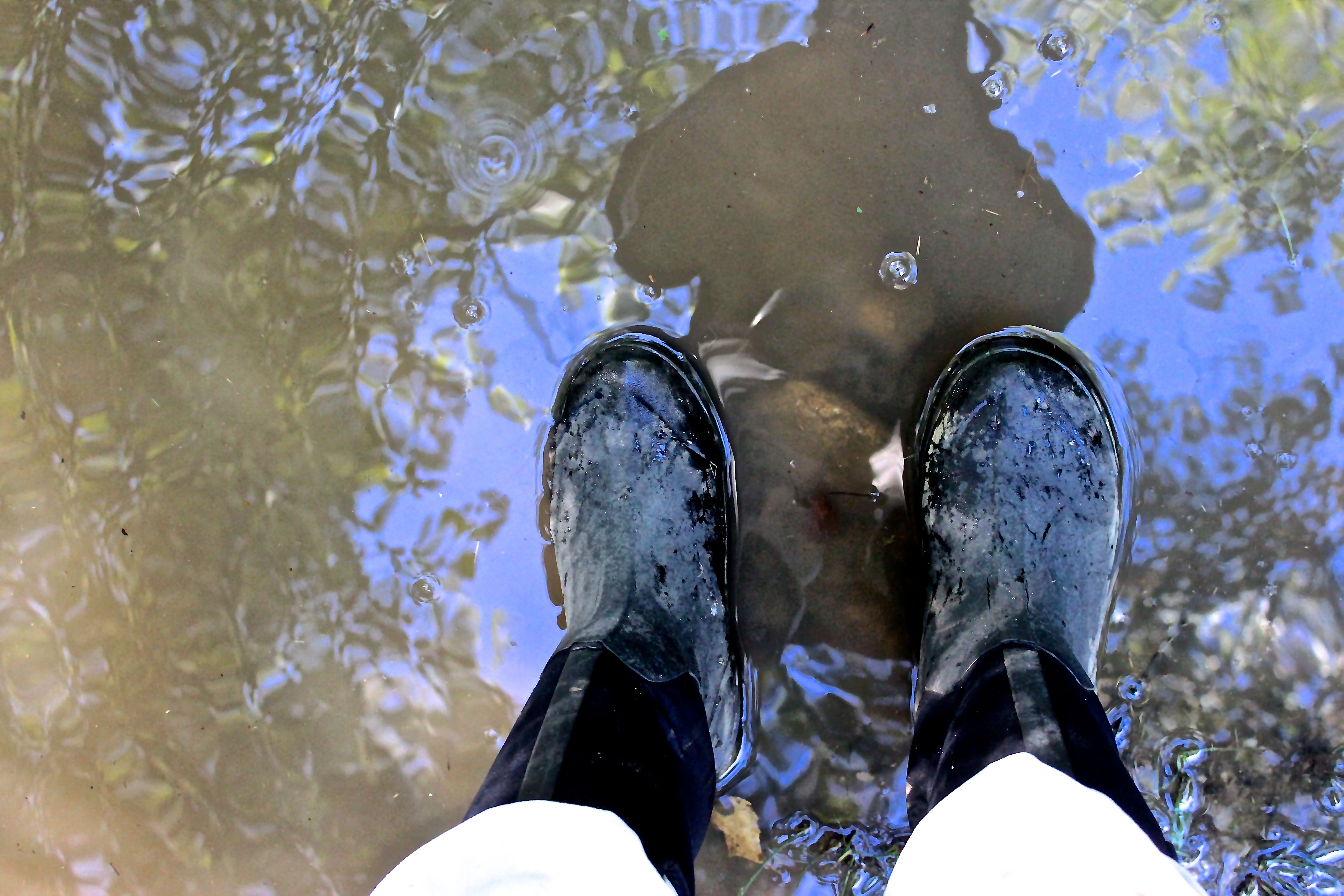
boots

I was wearing my boots, but no raincoat.

raindrops 1

It rained. It poured. It felt good.

raindrops 2

And then it was only a memory–and a pleasant one at that.

rain: Pleasant Mtn

We watched it move across the southwest end of Pleasant Mountain as we headed back.

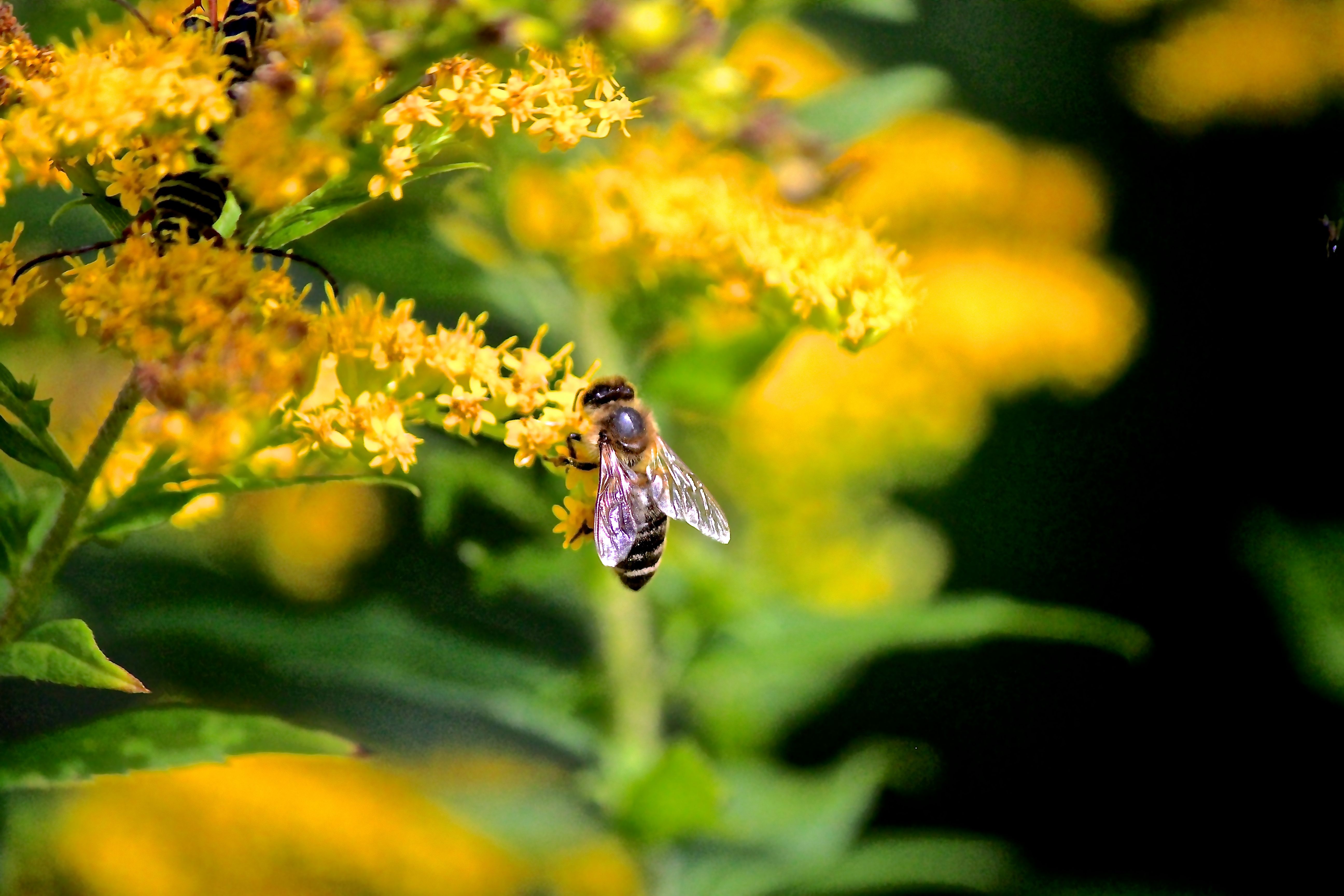
lb andbee

When we arrived home, the air was a bit cooler. I stepped outside to check out the insect activity in the yard and through the camera lens I realized something was photobombing the bee.

lb7

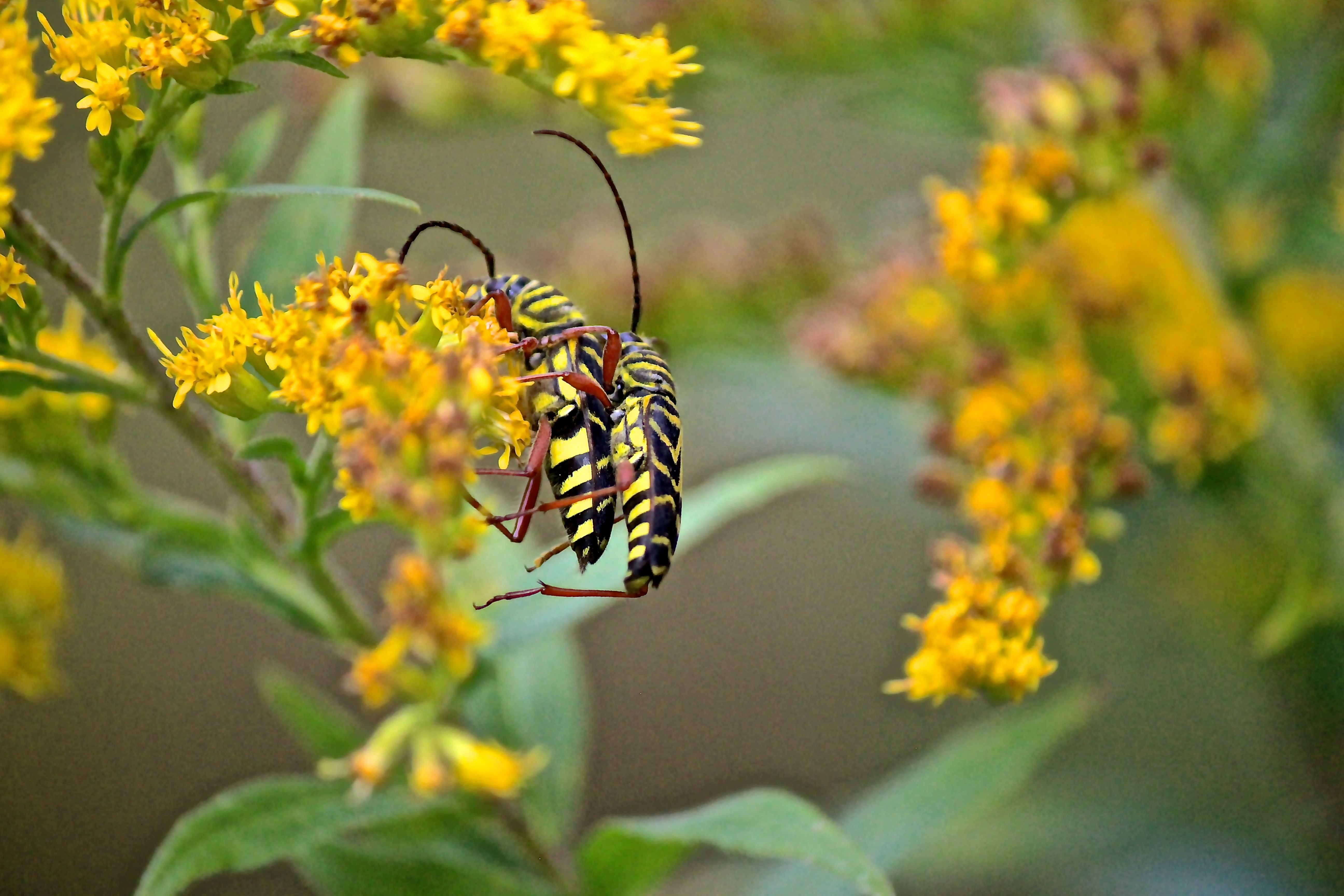
Two somethings in fact–a pair of locust borers apparently shared their own Mondate. The only locust tree in the neighborhood is down the street, but I suspect that momma will be laying some eggs in the bark at dusk tonight.

It looks like rain once again, but we’re glad for the opportunity to explore together on another Mondate–and gain a better understanding of our greater neighborhood, our sense of place. So much for pride. Life is a humbling experience.

Saco River Mondate on a Sunday

My relationship with the Saco River began in 1985 when I was a YMCA camp director in Laconia, New Hampshire. My charges were tweens and teens. Each week they piled into the 15 passenger van and I took them on an adventure–just as much fun for me as for them.

I’d scoped out this particular canoeing/camping trip ahead of time and felt confident that we had a good plan.

We rented canoes from Saco River Canoe and Kayak in Fryeburg, Maine, and the first leg of our journey was a long day spent paddling down the river and then up the old course to the covered Hemlock Bridge. My copilot was a 16-year-old lifeguard named George.

Though we’d practiced canoeing techniques in the Y pool, the real thing was a challenge.  Once on the river, the kids eventually learned to paddle in an almost straight line after many circular attempts.

At last we reached our destination, set up camp, told ghost stories, spooked each other and settled down for the night. Sleep alluded me so I watched the lightning show and listened to serenading bullfrogs.

In the middle of the night, one of the girls yelled out, “Help! Somebody! Help me!” When I arrived at her tent, I asked, “Dawn, did you have a nightmare?”

“It wasn’t Dawn. It was me,” replied Melissa quietly. “The zipper on my sleeping bag just got stuck.”

The next morning we paddled back to the main course of the river and enjoyed a pancake breakfast on a sandbar. As the day went on, we lolled about–splashing each other, getting out to swim, and singing silly camp songs.

Until . . . a few girls forged on and forgot to pull over when they saw Walker’s Rip. Two canoes went over the rip without any problems. The third got caught atop two rocks in the rapids. The girls panicked when water began to flow in one side and out the other as the bow and stern bent toward the river. The current and slippery rocks made the ten feet from the riverbank feel like ten yards. People on either side came to the rescue. In a fast few moments things went from bad to worse and we had several injuries accompanied by lots of high drama, including an ambulance ride to Memorial Hospital in North Conway, New Hampshire.

The diagnosis: everyone was fine with a few minor bruises. The prescription: ice cream and Tylenol.

Though we were supposed to camp out that night, the kids were done, so I drove back to Laconia and the Y director met us there (with a 6 pack to calm my nerves.)

As far as summer jobs go, this ranks number one on my list. I don’t know what has happened to any of the kids, but I hope they still remember the pranks and fun we shared. (Number 2 favorite summer job: painting Yale bowl)

A year later I landed a teaching job in western Maine and the Saco River and Hemlock Bridge became part of my place.

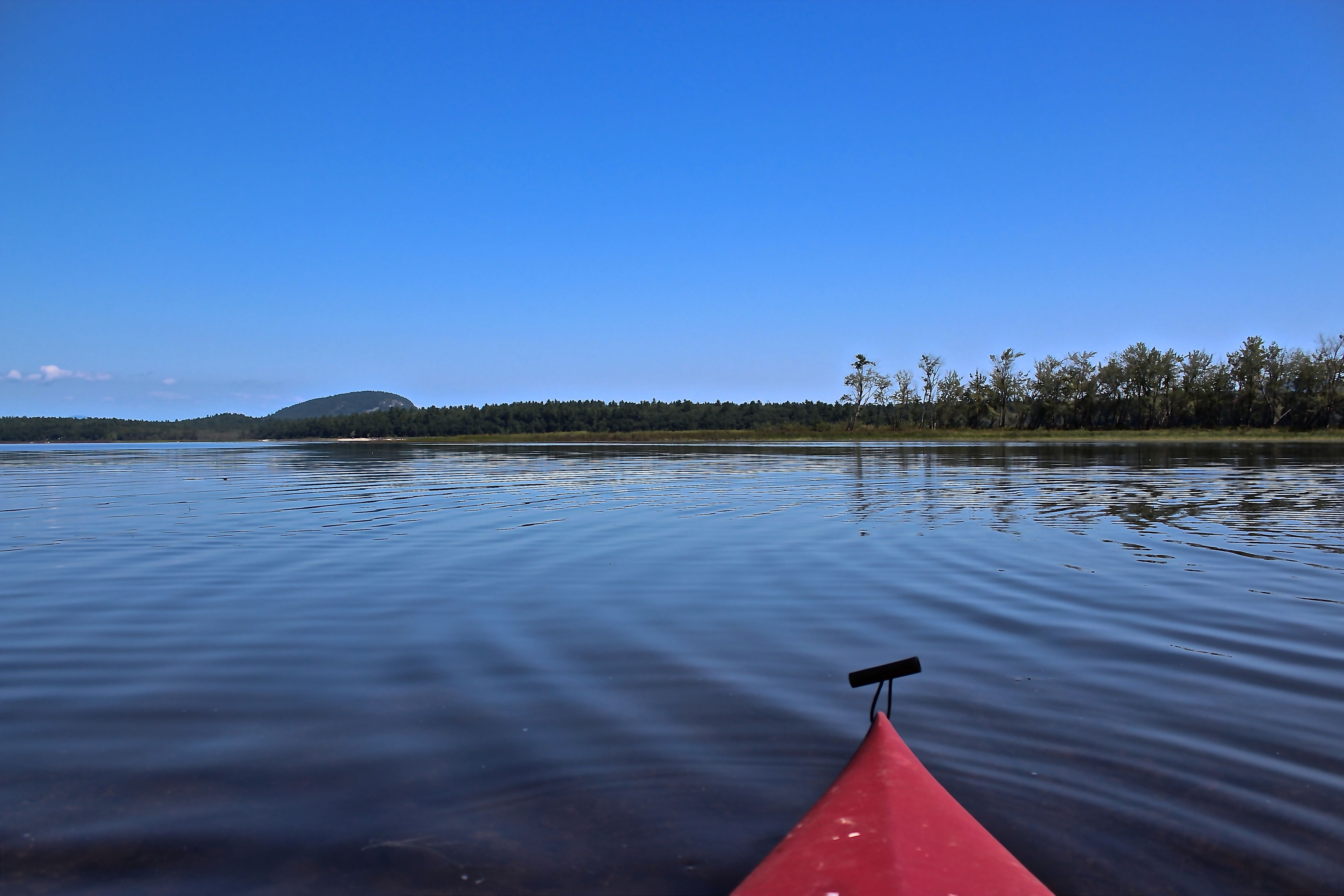
So it was that yesterday, my guy and I left one truck at the Brownfield Bridge and drove to Lovewell Pond to launch our tandem kayak. It was actually a reconnaissance mission for me because the Upper Saco Valley Land Trust has asked me to lead a paddle on this portion of the river in a few weeks.

Mt Tom

Mount Tom, a Roche Moutonnée, is visible to the left. This asymmetrical hill features a gently sloping up-ice side that has been smoothed and polished by a glacier. The other side is  abrupt and steep–the down-ice side where the rocks were plucked off, leaving a more cliff-like appearance.
Lovewell Pond

We’d never been on Lovewell Pond before, so were a bit astonished by the white sandy beaches accentuated by the mountain backdrop as we looked toward Fryeburg and North Conway.

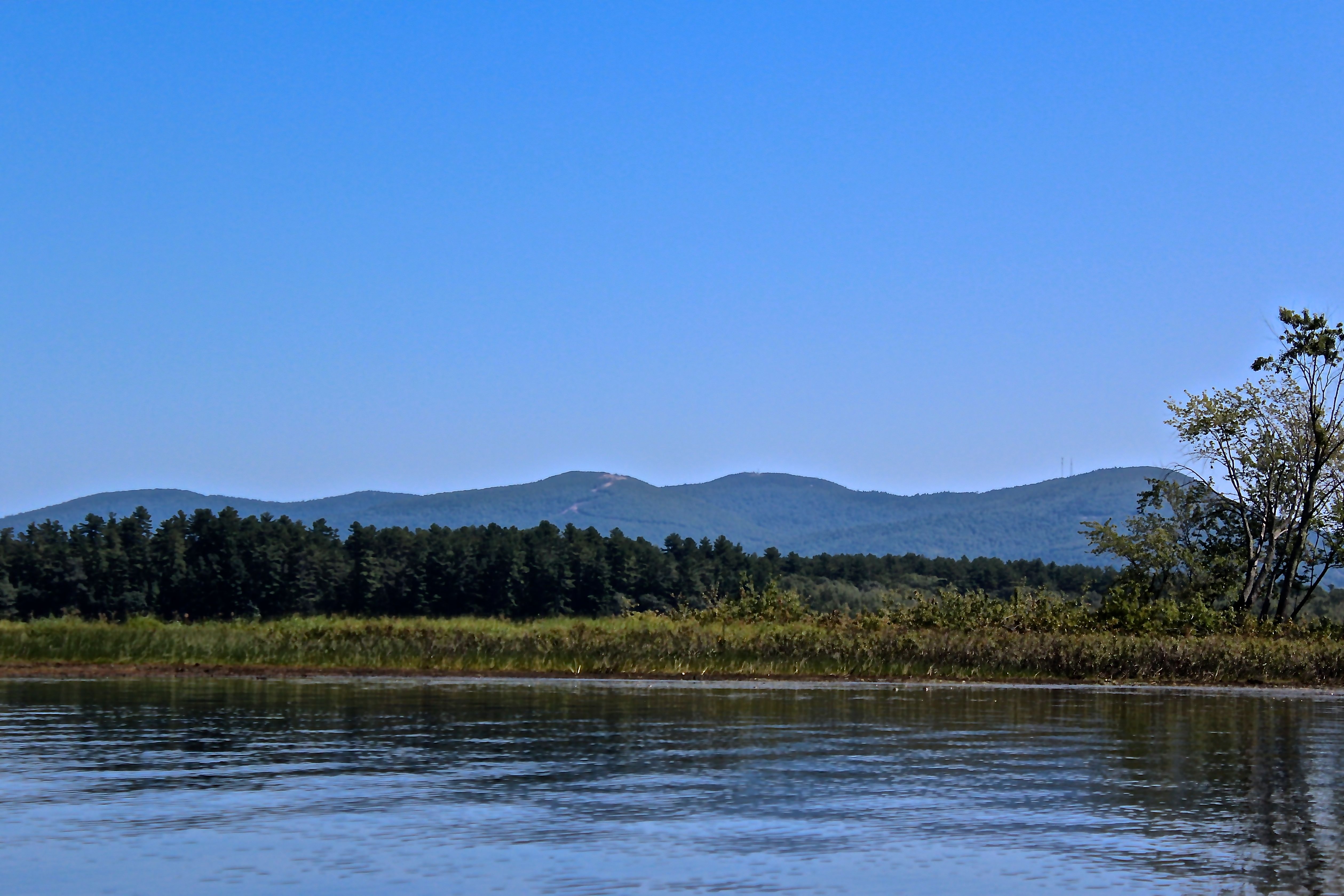
Pleasant Mtn

Pleasant Mountain also forms part of the backdrop, giving us a sense of direction. Home is on the other side of the far left peak.

corm 2

Paddling about for a bit, we checked out the local wildlife, including this pair of cormorants and

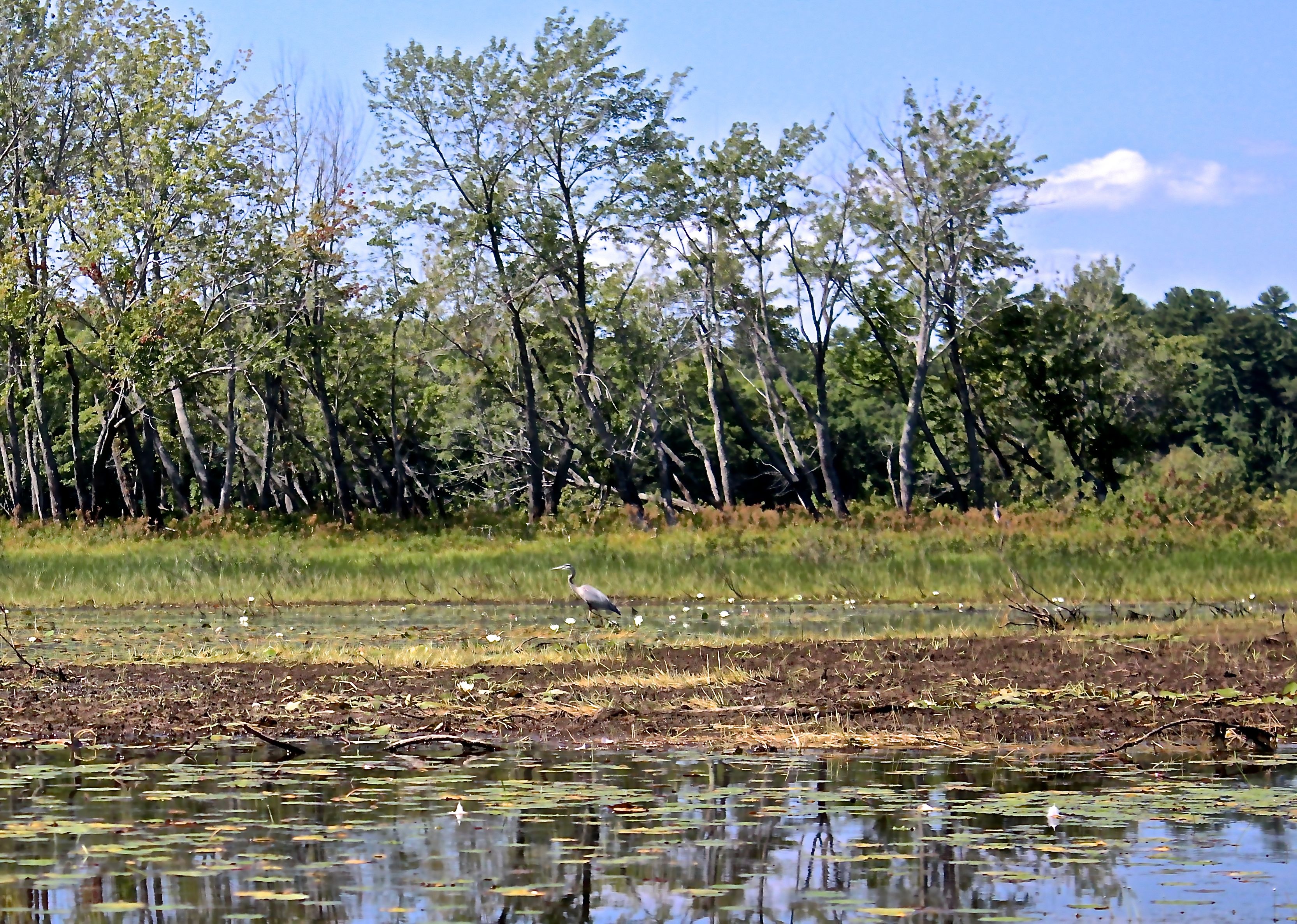
heron

a wading great blue heron.

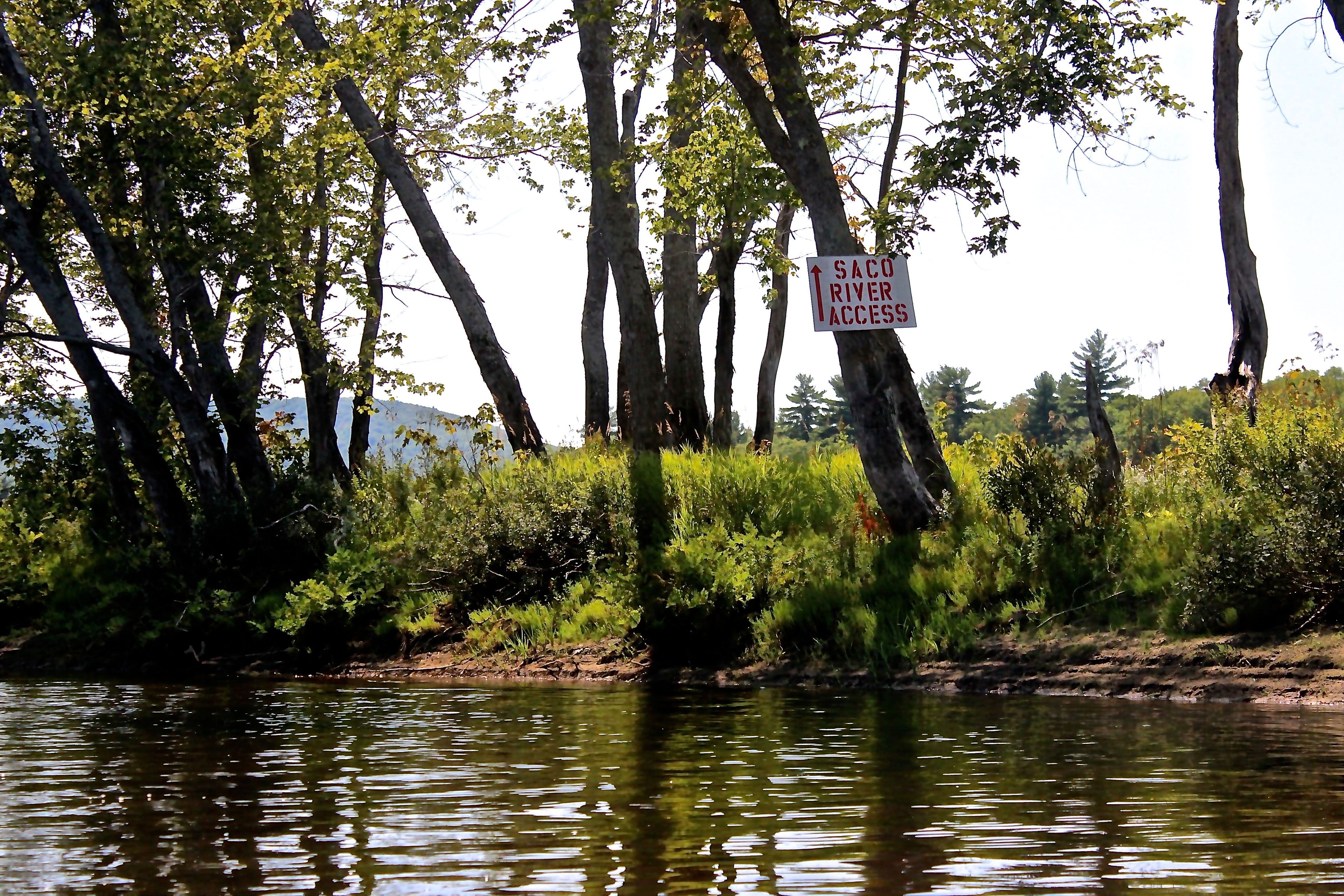
SR access

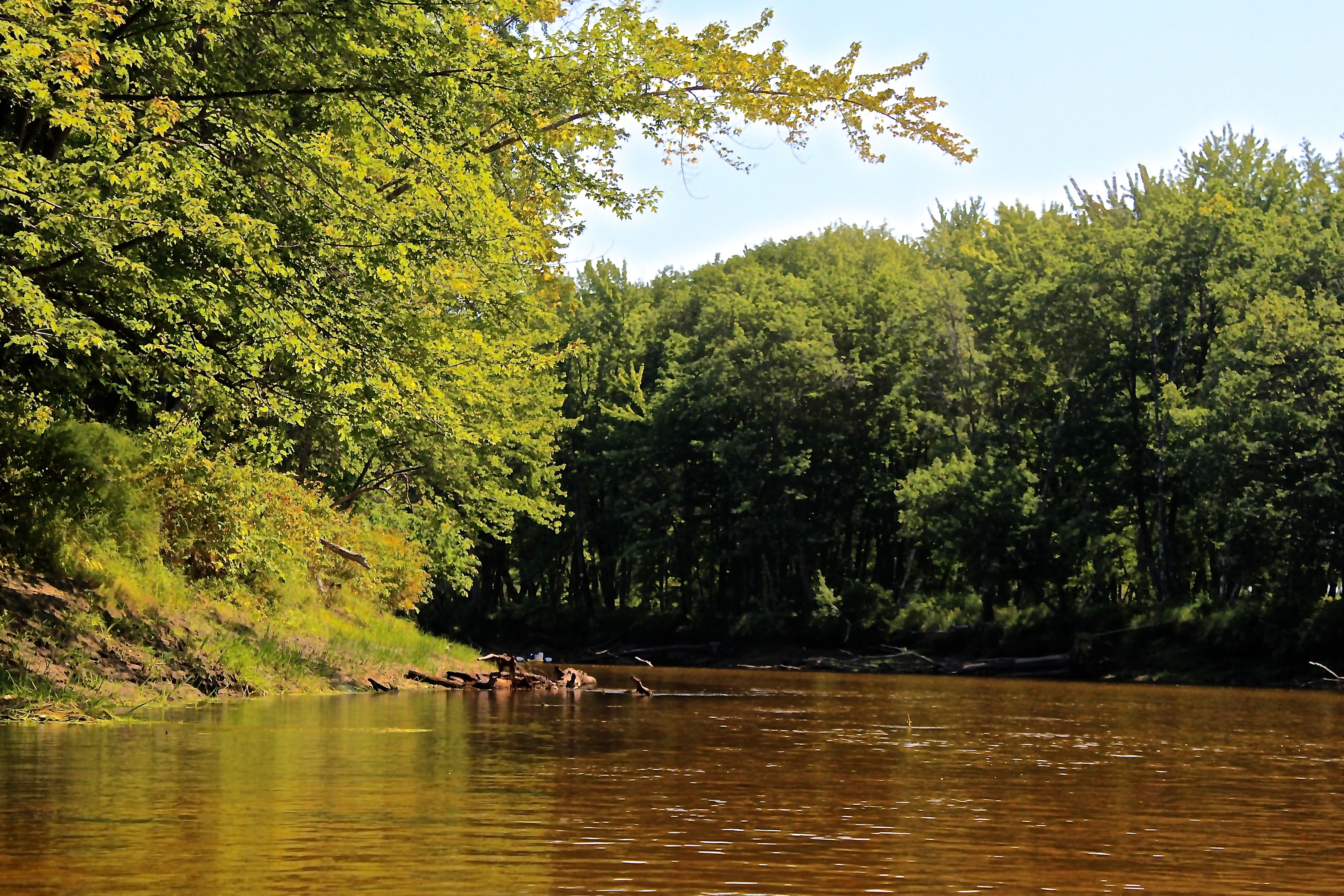
And then we were ready to begin our journey. We thought we might be a wee bit crazy to be on the river this weekend, along with the boys from deliverance, but we only met a few. For the most part, we encountered families and friends enjoying a beautiful day in Maine. And a clean river thanks to the Saco River Recreation Council.

Saco Access

Silver maple trees grace the banks.

shallow water

Being September, the river was quite shallow in some spots. But walking in the water felt good.

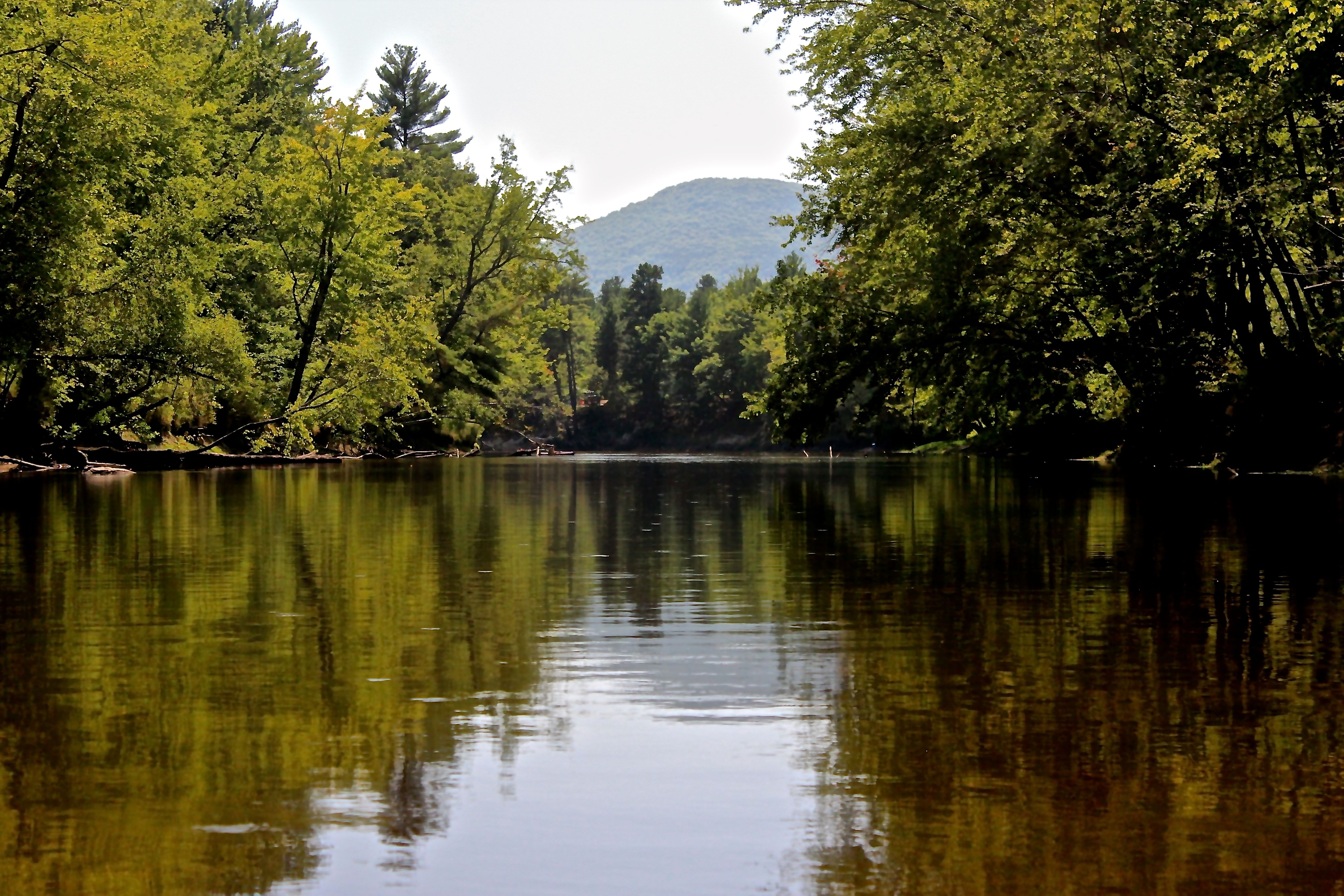
round the bend

Around each bend, we reminisced about previous river runs, including the time we did a much longer trip in an inflatable raft–we were young, in love and clueless. And uncomfortable. Now we are old, in love and still clueless. But happy.

silver maples

Though the river is at a low point, you can tell by the bank that water rushes through here. The silver maple, known for the silvery color of its leaf’s underside, is fast growing and a bank stabilizer, but it also succumbs to the river’s force.

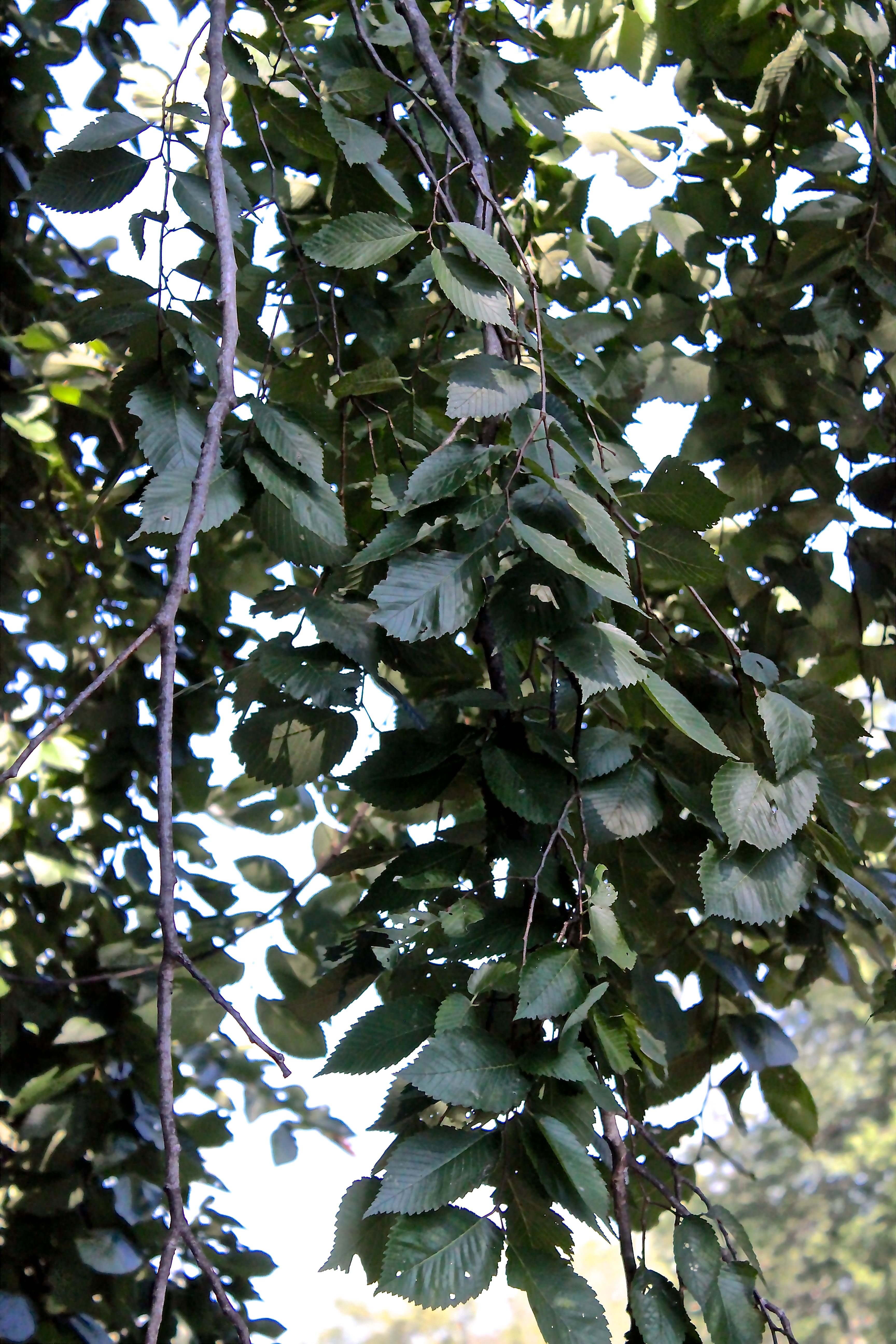
Elm leaves

As we floated along, I began to wonder what I should point out in a few weeks.  Yes, there’s the silver maple floodplain forest, which includes red maples. Royal fern, sensitive fern and ostrich fern were visible along the way. And some shrubs and plants. Finally, we came upon this American elm leaning over the river–large and healthy with its asymmetrical leaves.
Burnt Meadow Mtn in background

We were close to our pull-out point when I saw some white and red pines and thought I might talk about the King Pines–those massive pine trees that were marked with the king of England’s arrow, so selected because they grew straight and tall and would be perfect for ships’ masts.

I may also mention the river’s curse, but I might save it until the end when Burnt Meadow Mountain is visible in the background.

According to legend, in 1675 the wife and infant son of Squandro, chief of the Sokokis tribe, were playing on a river sandbar when they encountered three rowdy, drunken English sailors.  The mother and child were laughing and didn’t hear an approaching canoe. One of the three sailors claimed that a papoose could swim like a wild animal (dog paddle) naturally from birth. The others doubted him. To prove it, the man jumped out and grabbed the child. The mother watched in horror while the sailors threw her baby into the water. She grabbed the baby and ran to Squandro. It was too late. Squandro raised the limp body toward the sky and said, “As long as the grass grows and the water runs, it shall be the will of the Great Spirit that every year the waters of this Great River shall take three White Men’s lives.”

There is also a version whereby the mother was pregnant and she, her infant and her unborn child all died.

Some say the curse ended in 1947 when no lives were taken. That was also the year of the Great Fires, including in Brownfield, our take-out point. Related?

It seems to me that respect may be the key. Respect for the land, respect for the river and respect for each other.

Though our trip yesterday was short (about four miles), this wander has been a bit long. Thanks for coming along for the ride.
Ten Fun Finds in the Last 24 Hours

jw2

  1. Orange jewelweed, aka Spotted Touch-Me-Not. I found these lining the path during a quick walk through Pondicherry Park yesterday afternoon. The flower will form a capsule that bursts open and flings seeds when touched.

jewelweed 1

One of the cool things about jewelweed’s structure is its spurred sac that extends backwards.

jw3 on the wall

Though it likes the moist woodland paths in the park, I also found it in bloom atop a stonewall.

turtlehead

2. I’d never seen turtlehead until I moved to Maine. As a kid, I collected turtles–think stuffed, ceramic, wooden, glass. A neighbor even gave me a shell, which I still have. So, when we moved into our old farmhouse, I was excited to discover pink turtlehead growing in the garden. And on several occasions this past week, including yesterday’s walk in the park, white turtlehead was in bloom. It’s so named for the two-lipped appearance, with the upper lip arching downward and strongly suggesting a turtle’s head.

equisetum

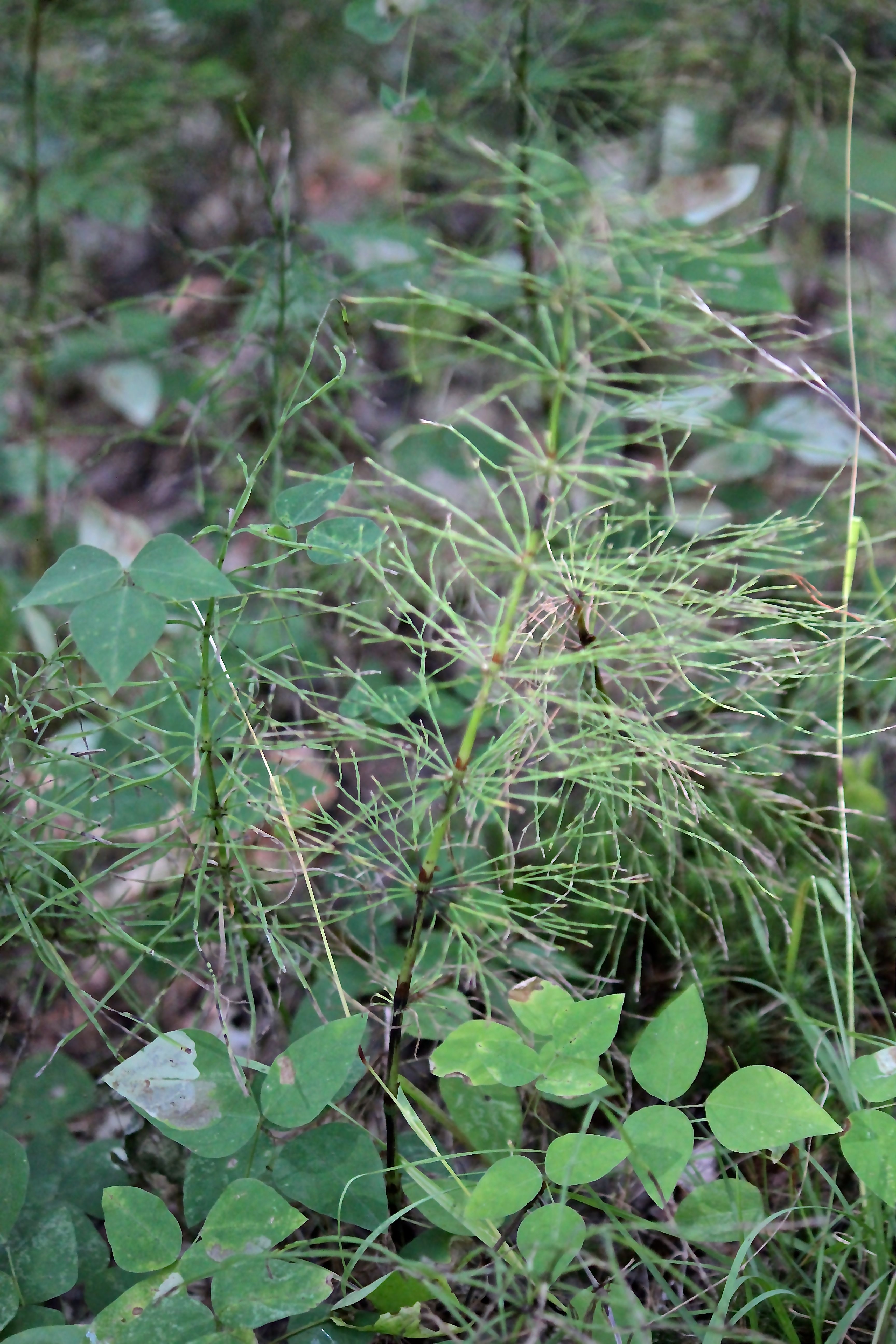
3. Woodland horsetail grows among the white pine saplings. It’s easy to confuse the two since they both have whorled branches, but the horsetail branches have a lacier appearance. Its “leaves” are reduced to a toothed sheath that surrounds the stem.

fogged inmorning dew

4. Morning fog on Moose Pond was almost the pea-soup variety until it began to burn off around 7:30 this morning. I was mesmerized by the patterns created by the moisture on the porch screens.

spider works

spider works 2

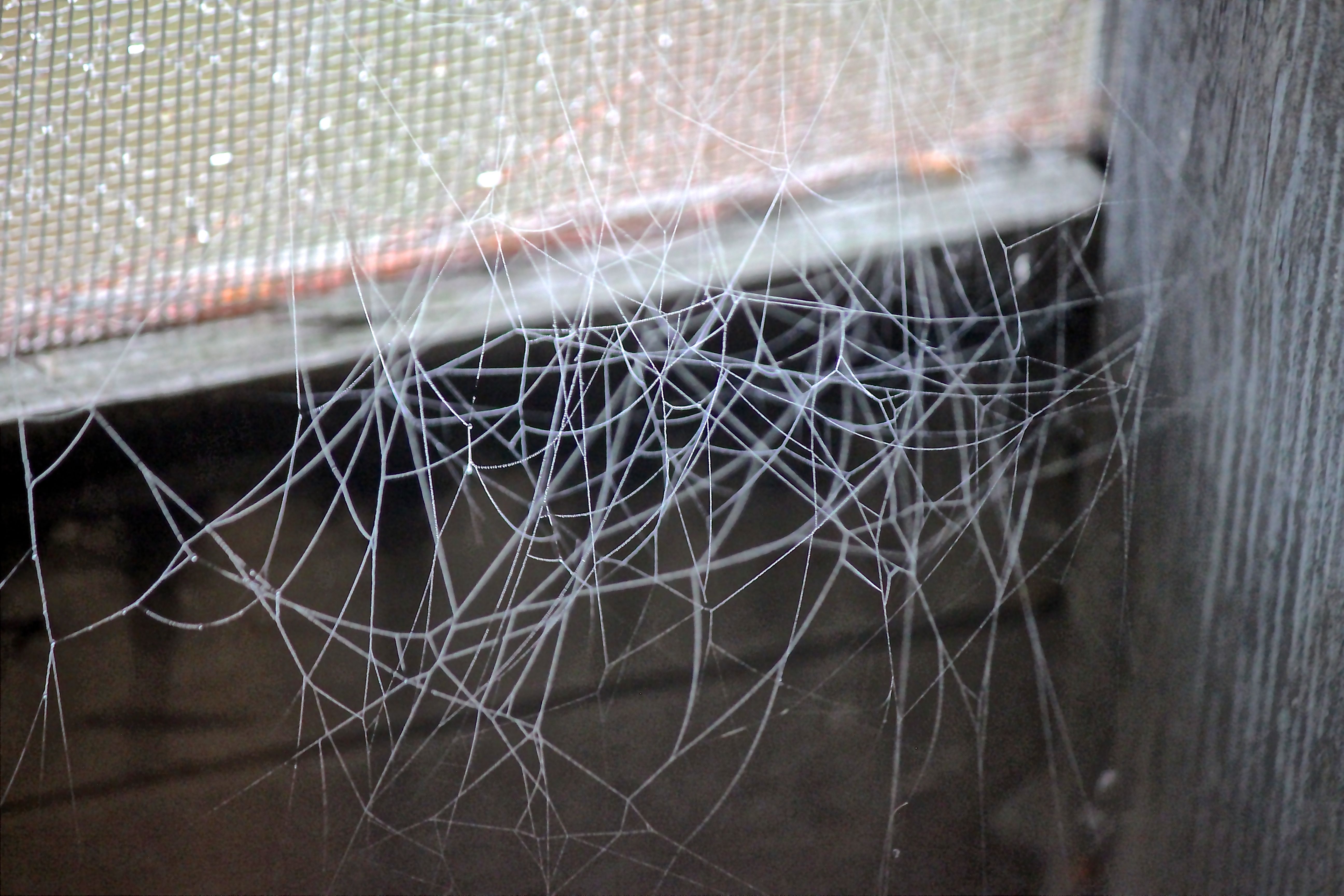
5. I was equally mesmerized by the spider works I found both on the porch and outside. Industrious architects are these. Mind you, I’m not a spider fan. I used to make family members destroy them. And I remember some mighty large and hairy ones that shared our flat in England back in ’79. That’s when I learned that the eensy weensy spider really does climb up the water spout. But, these webs are to be admired.

white oak leaves

6. As my guy and I climbed Burnt Meadow Mountain in Brownfield today (after the fog burned off), I realized for the first time that white oaks grow there. It’s the little things that excite me and seeing those rounded leaves made my heart flutter. I’ve now noted that white oak grows beside red oak in Casco, Denmark and Brownfield. I’m connecting the dots that form its northern line.

trailsignalmost to the summitsummit 1mount washington

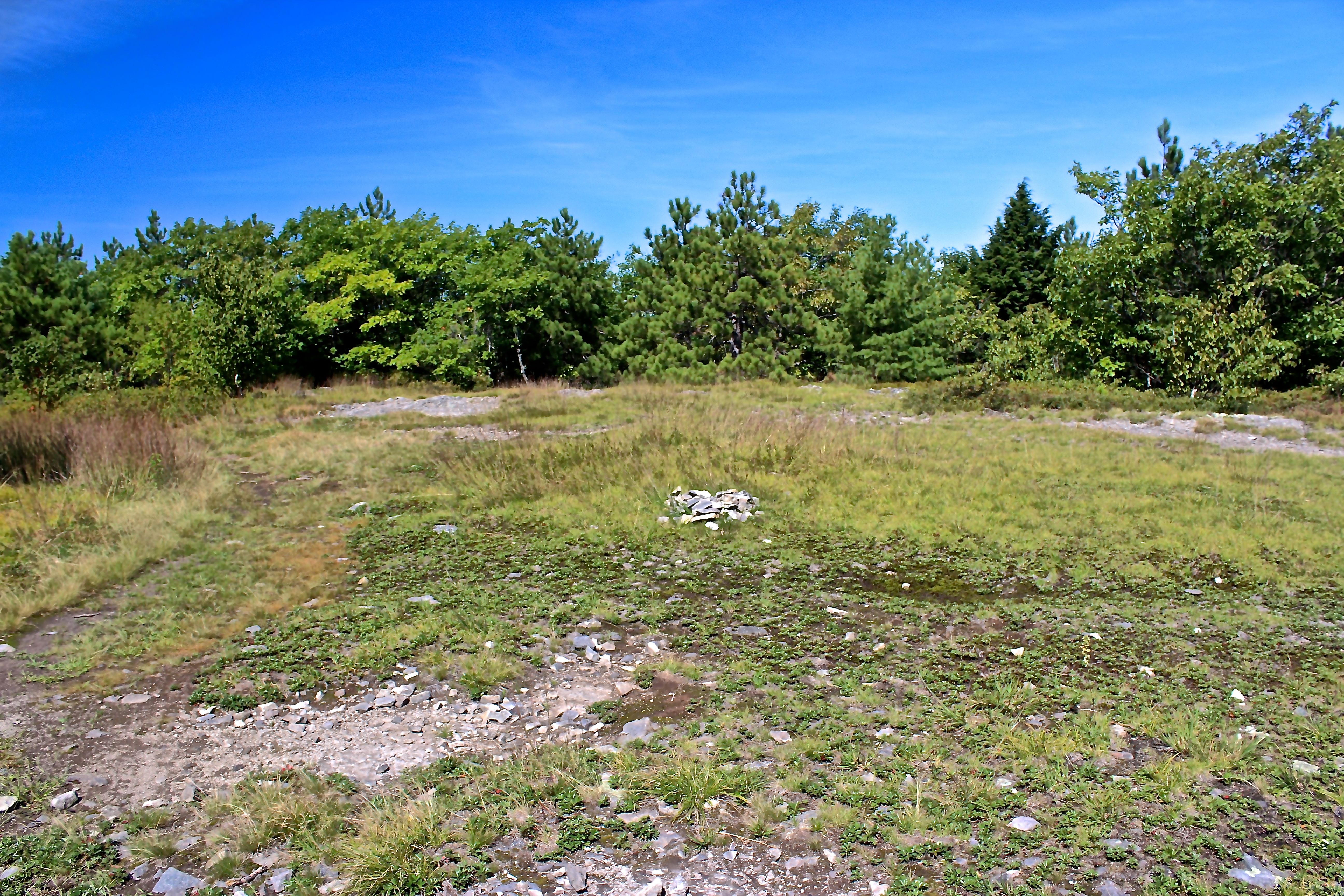
7. We followed the North Peak trail to the top. It’s always a joy (think: relief) to walk onto the large, flat summit after scrambling over the rocks to get there. Because we like a round trip, we descended via the Twin Brooks Trail, which offers some great mountain views, including Mount Washington.

summit grasshopper

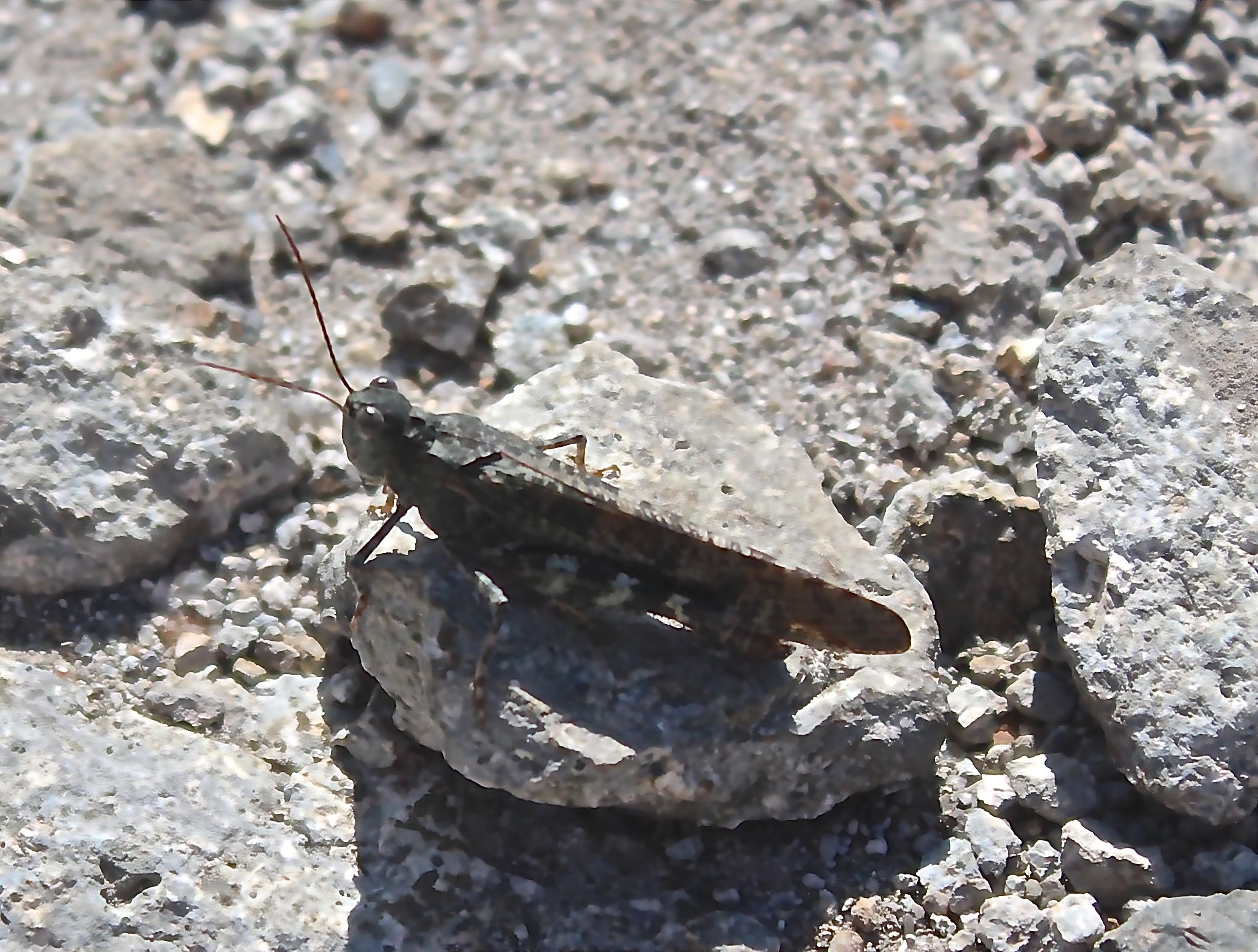
8. Grasshoppers are abundant at the summit. They’re known to feed on blueberries, and the crop is quite abundant, especially just off the summit on the Twin Brook Trail.

oak gall

9. Oak Gall. I think this is an oak apple gall growing on the red oak, but I’ve never actually seen one on the tree before. Usually, I find the dried shell of such a gall on the ground. My other guess would be the acorn plum gall. If you know, please inform me.

bear claws 1bear claws 2bear claw 3

10. I was looking for these and we found them. :-) Yes, more bear claw marks. It only made sense. Lots of beech trees. Lots of blueberries. And . . . a few years ago, we encountered a bear on the North Peak trail.

tree roots

11. OK, so here’s my eleventh cool thing. Kinda like getting a baker’s dozen–11 for 10, such a deal. Anyway, I’m always fascinated by the manner of tree roots growing over and around each other and other things. Embracing. Supporting.  Layering. Call it what you want. The thing is, they find a way to grow together. Oh, it doesn’t always work out. Sometimes it’s a smothering relationship. I’d like to think that these two trees, an oak and a birch, have intertwined in support of each other.

Thanks for joining me to take a look at the past 24 hours. I hope you had time to wonder as well.

A World in Miniature

trail

I feel my dad’s presence when I enter a forest where mosses carpet the damp  floor and blanket once exposed rocks and tree trunks. To dad, this was home to the faeries or fair folk. Indeed, it is.

desk top 2

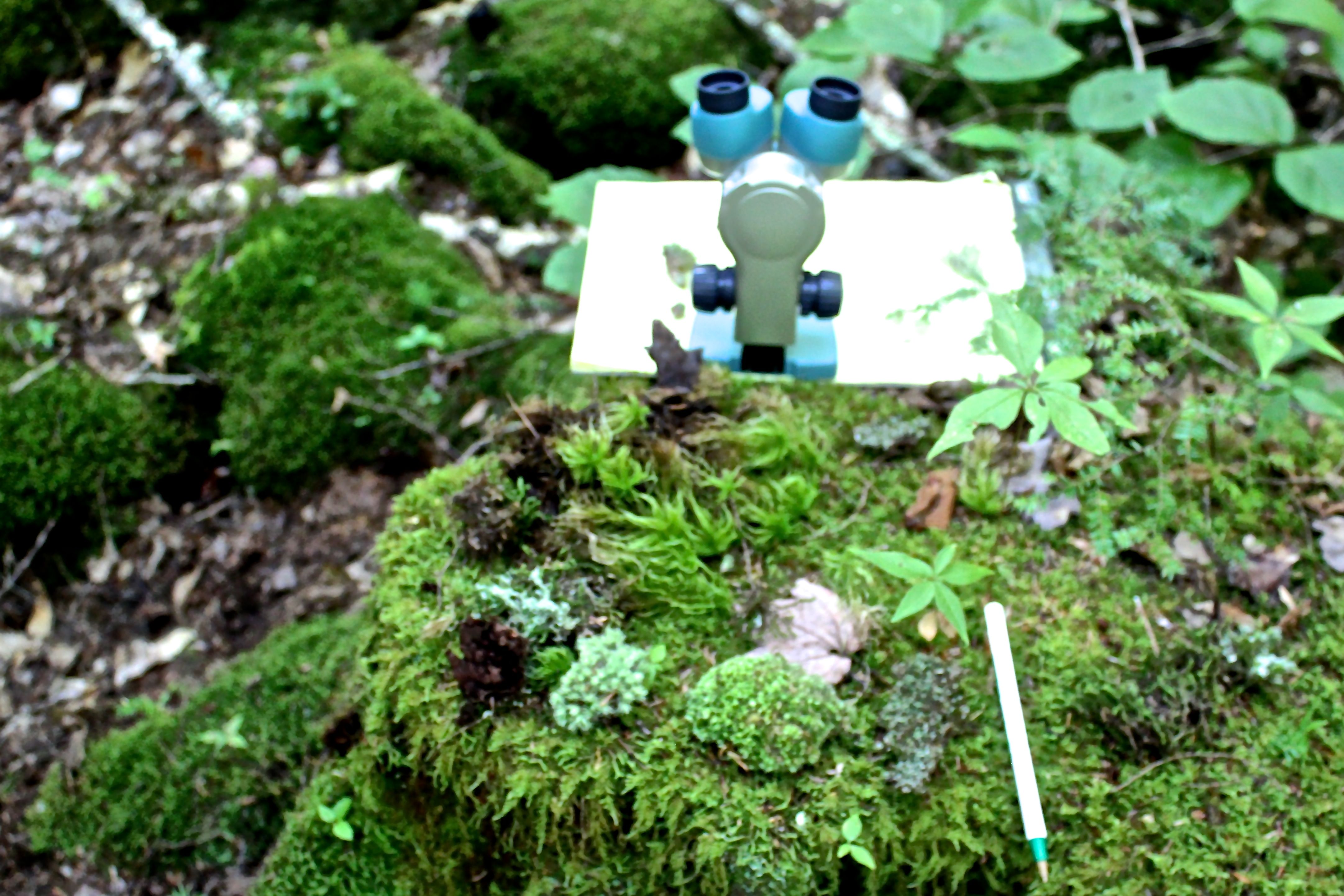
Yesterday, I took a closer look. With hand lenses, a field microscope and a copy of the Princeton Field Guides: Common Mosses of the Northeast and Appalachians,  friends and I set out to identify a few common species.

Mosses (and liverworts) are bryophytes, bryon being Greek for moss and photon for plant.

A sea of green surrounds us. Moss green. OK, so what does that mean exactly? Each species has its own shade of green and even still, several variations of that shade.
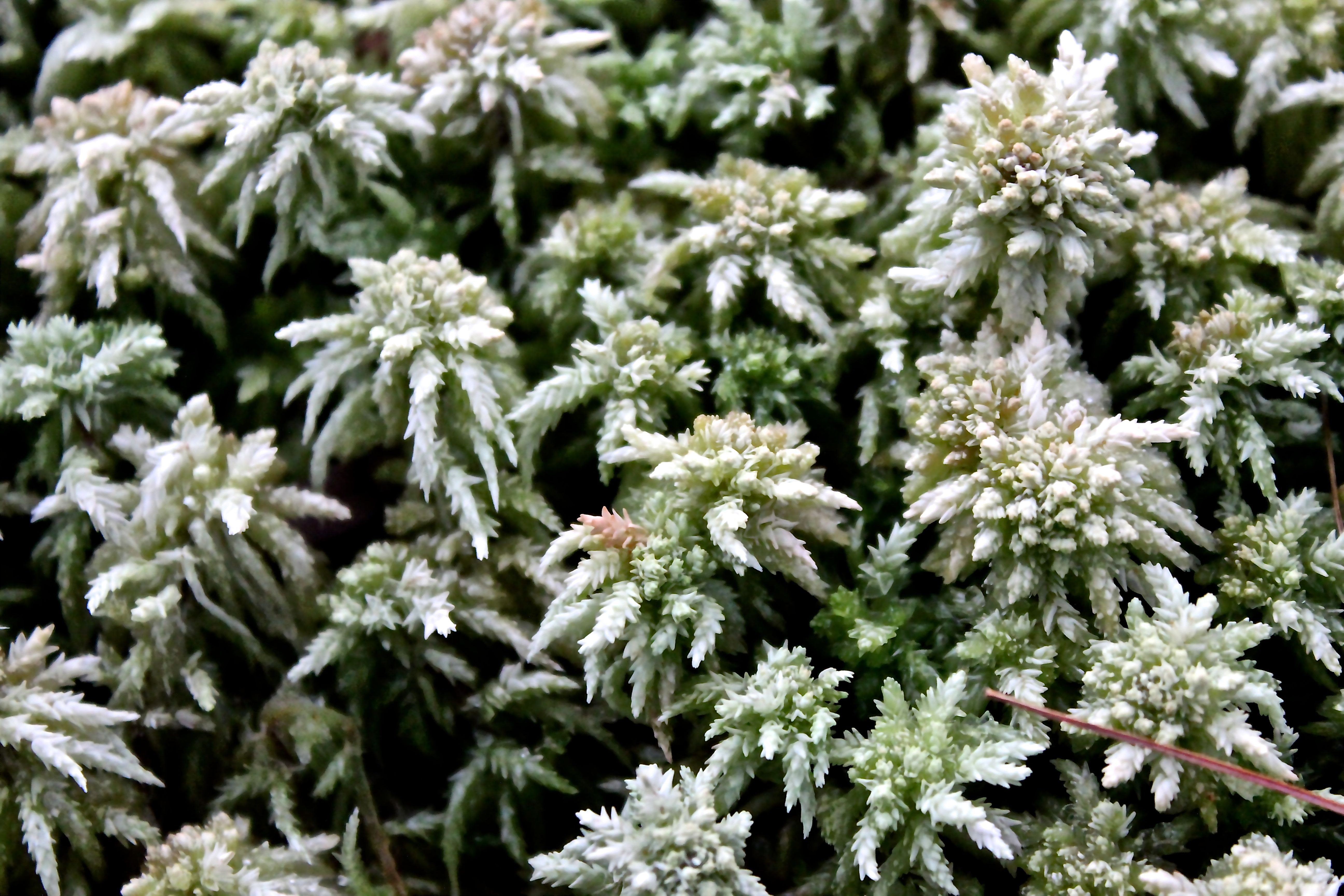
fern moss

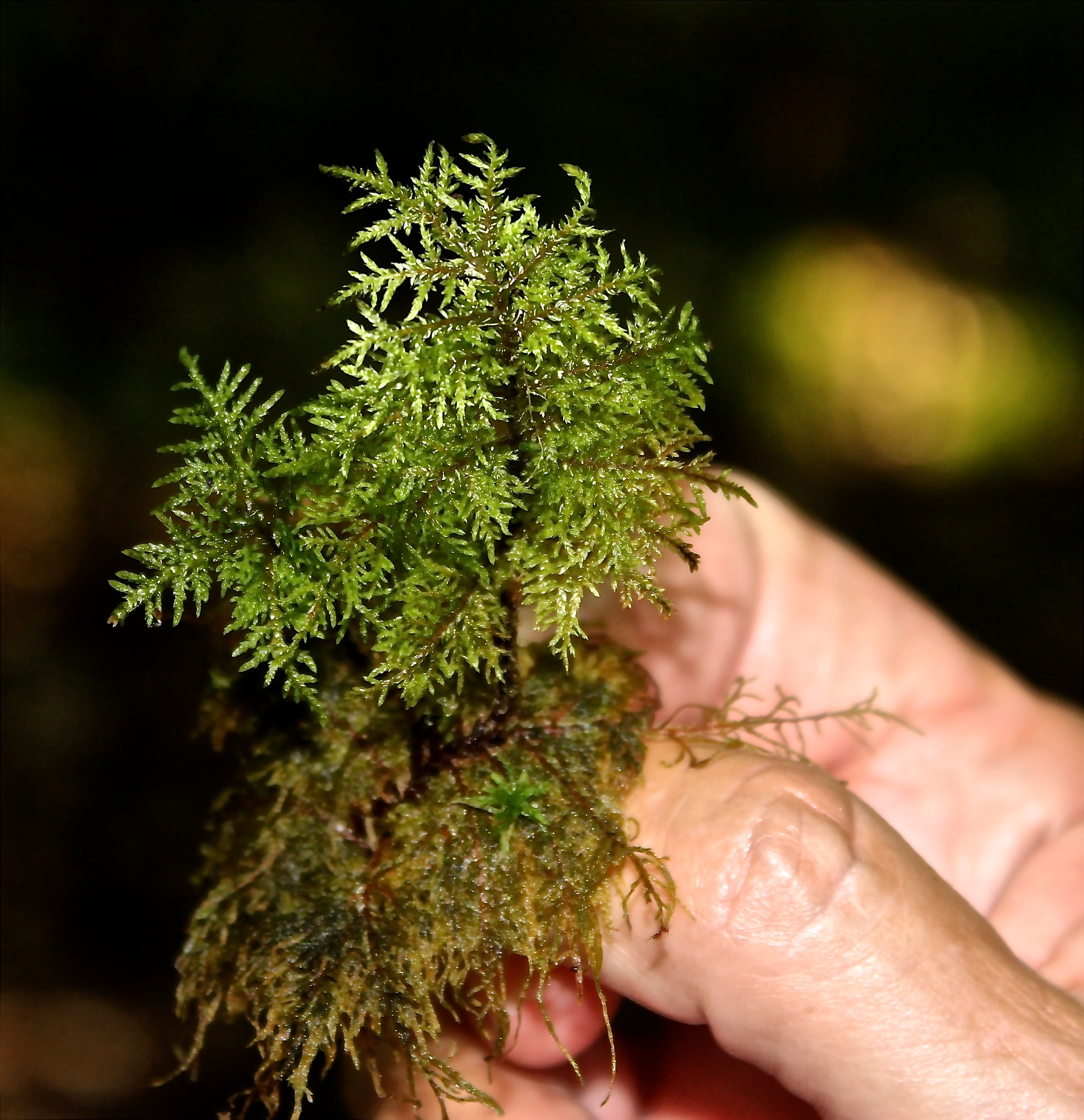
Above is a fern moss, with its fern-like leaves and yellowish-green hue. What would its name be on a paint chip? Below, you can see its brown spore-bearing, pointed capsules born on a wiry stalks sticking out from the side of a tree stump.
fern moss spore capsules

If you look closely, you’ll see something else on this old stump.

liverwort

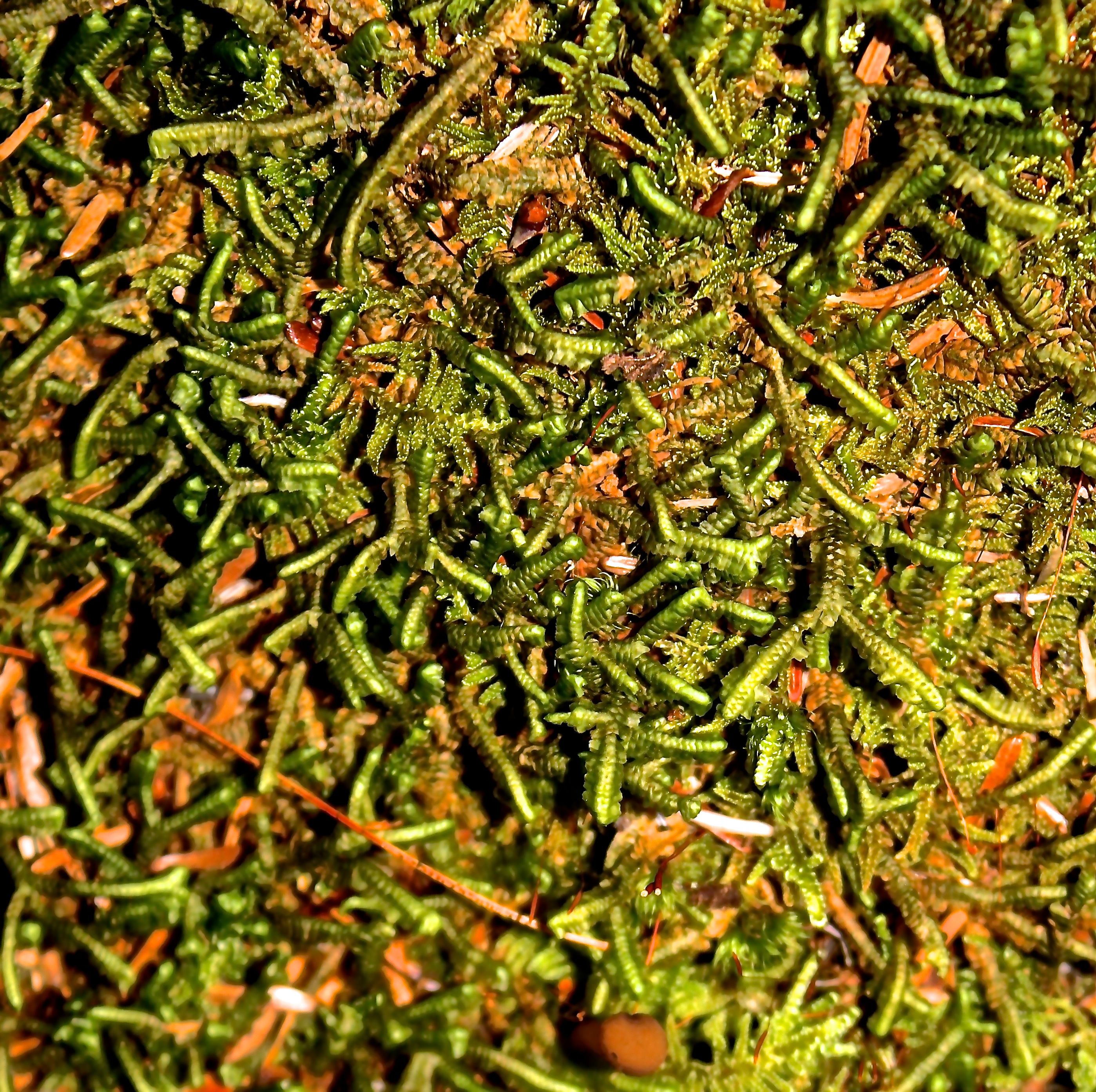
Green worms. Zillions of them writhing about. Such is the illusion created by thin overlapping leaves that curl under along the outer sides–giving them a 3-D appearance. This is a liverwort–three-lobed Bazzania or Bazzania trilobita.
mystery fern mat

Nearby, another mat caught our attention. It reminded us of one we’d seen earlier, but we needed to spend time with it.

mystery fern moss 3

We knew by its structure that it was another fern moss species–but which one? The red stem stood out to me as the missing link. It became our mystery moss for the time being, but I think I’ve figured it out. Pleurozium schreberi or red-stemmed moss. I also found it as Phoenix feather moss. And big red stem moss. Yeah, I know–that’s why I should learn the Latin. Ah, Mr. Cretella, you are still sitting on my shoulder trying to get me to stop using Spanish words to fill in the answers on Latin quizzes.

spag 3

We discovered springy, wet sphagnum moss. I always think of it as being in a more bog-like setting, but it is quite damp here.

pincushion moss

One of the common species that grows in small, easy to see mounds scattered about the area, pincushion moss. To some, it resembles a sea urchin. Using our hand lenses, we looked for air bubbles that are supposed to be visible at the base, but mostly we saw tears welled up in our eyes from laughing.

desk top display

After three hours, it was time to pack up the items on our our tree stump desk and head out. We’d only walked .2 of a mile down the trail, so it wasn’t a long haul out.

wood frog

Movement made us pause. Not a faerie, but a large masked wood frog who wanted us to think he wasn’t there.

bobcat and haircap

Someone else had previously passed by. We’d seen tracks on the way in and knew what it was, but I waited till the end to photograph this bobcat print. Do you see it in the mud? And the hair cap moss above it and to the right?

Acro moss

I’d sketched this previously. Looking at it now reminds me that we reviewed the three basic growth forms of mosses and found examples of all three in this little space–acrocarp, pleurocarp and peat moss.

Acrocarp–simple or sparsely forked stems typically grow in upright position. (pincushion, haircap)

Pleurocarp–stems typically trail along the ground and feature opposite branches. (fern mosses)

Peat moss–stems stand upright; often have mop-like or pom-pom heads. (sphagnum)

I’m thankful for friends who love to learn (P & B K. and D.S.). We hardly scratched the surface. I can’t wait to spend more time among this miniature world beneath our feet.

Through Rose-Colored Glasses

Beaver works was the name of my first adventure today. Last fall, some of the Greater Lovell Land Trust’s docents and I walked along the trail of this private property and saw the beaver trees, dams, ponds and lodges. But today, I felt like I was stepping into a completely different territory.

This week, thanks to the generosity of the landowners, we have a walked planned on the same property and someone has been rather busy–cutting off the path with a fallen tree and a flooded pond. With today’s pre-hike we have a sense of what to expect.

beaver path

You know they are busy when you see their well-traveled path

beaver 2and downed trees.

beaver tree

Or those that have been girdled but have yet to fall.

beaver dam

This old dam is quite large and no longer productive–you can see that the pond it once held is diminished to a small stream. The vegetation on top provides another sign of inactivity.

web in raccoon print

Inactive on the part of a beaver perhaps, but someone else passed by and left a baby-hand type print in the mud recently–or sorta recently.

beaver works--walk around

The beavers moved on and changed things up elsewhere–one needs wellies in order to follow the straight line. We chose to go around.

beaver pond

In the process, we got to see another beaver pond. They’re everywhere!

The landscape is constantly evolving. I used to think it took a hundred years for a forest to change–that belief founded on what a junior high school science teacher said. I now know a wee bit more–it’s all in a state of constant flux. I think the same can be said for us–growing and changing with the years–physically, mentally, emotionally, socially and spiritually.

Off my soapbox–There are other fun things to see along this particular trail. I’ll only mention one–some bear sign. And yesterday morning, while placing a land trust sign on Route 5, I watched a young black bear cross the road–less than a mile from this trail and in a seemingly straight line with what we found today. I know that because of my X-Ray vision. (Disclaimer–what we found wasn’t created by the bear yesterday, but it shows evidence of a bear’s presence. Then again, there’s lots of bear sign in these woods.)

My guy was working and it’s been a while since I’ve gone on a solo trek, so I decided to journey on at another GLLT property–Flat Hill and Perky’s Path.

red-purple trail

I was on the purple trail to begin and surrounded by hues of green.

red maple stems 2

So shades of red like the stems of red maple leaves became my focus. They were subtle, but I was surprised with how many examples I found.

red oak

The salmon-colored inner bark of northern red oak.

red striped maple

Striped maple leaf stems.

red sarsapirilla

Wild sarsaparilla leaves.

red pinkish mushroom

A Rusulla, I think.

red squirrel sign

The kitchen table of a red squirrel.

red pine bark

Sandstone-patterned red pine bark.

red wintergreen berry

Wintergreen berry  and

red-partridge berry

partridgeberry.

Flat Hill view

Not red at this moment, but home to many a red sunset, the view from the summit of Flat Hill. Don’t you love an oxymoron?

orange trail

Following the orange trail of Perky’s Path provided more shades of red.

red bunchberry, starflower leaves

A whorl of starflower leaves and bunchberry fruits.

red maple leaf on ground

A single red maple leaf.

red trillium 3

The fruit of a trillium.

red hobblebush

And hobblebush leaves and fruit.

red-mushrooms emerging

More Russulas emerge, displaying their red caps.

Steeplebush

And finally, a pink steeplebush.

Though my eyes were fixated on red, I did see a few other things.

yellow mushroom

A yellow Russula. (Hope my partial ID is at least partially correct.)

bird's nest

A leaf and twig bird nest tucked against the tree trunk. Surely, someone can help me ID the creator of this masterpiece.

Indian Cucumber root

And the world’s largest Indian cucumber root. Soon those berries will turn red.

I thoroughly enjoyed today’s wander through rose-colored glasses. Thanks for coming along.

Branching Out

I felt privileged this morning to sit under the tall pines overlooking Kezar Lake and the White Mountains while participating in a poetry workshop.

Judy Steinbergh, a published poet and summer resident of Lovell, conducted the workshop for the Greater Lovell Land Trust, Charlotte Hobbs Memorial Library and Hewnoaks Artist Colony. The latter graciously served as the setting.

Hewn Oaks porch

From 2012-14, Judy served as the inaugural poet laureate of Brookline, Massachusetts and she has over forty years of experience teaching poetry to students of all ages. It’s a delight to listen to her share her passion for her work and that of others. She epitomizes the rhythm of nature.

And so it was, that after Judy shared examples and techniques with us, we were set free to wander about this magnificent property in search of inspiration. Hewnoaks  was originally established as an artist colony by the Volk family in the 1890s. Today, it is a non-profit organization that gives “artists time and space to create within a natural, rustic environment.”

pines

Hewn Oaks

mountain views

Kezar

morning view

Finally, I pulled out my hand lens and focused on smaller details.

A Leaf

Life begins

 striped maple buds

As a tree bud

 oak bud 2

Tightly embraced

by Mother Earth.

quaking aspen scales

Its waxy scales

buds

and peachy fuzz

provide protection

leaf unfurling

until it unfurls

new leaves

and gathers energy

new red maple leaves

in the hope

 hope

of branching out.

~LMH, 7/22/15