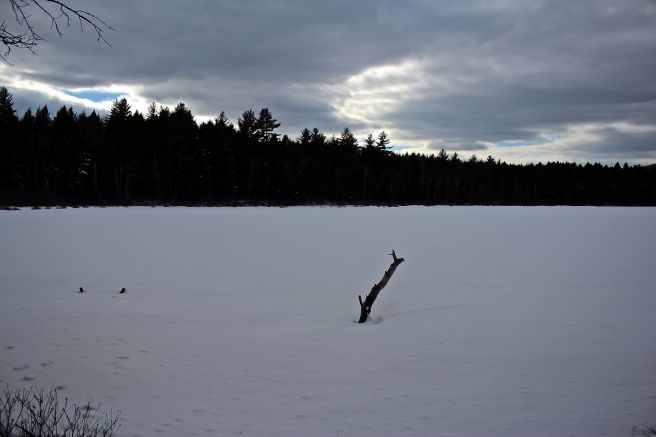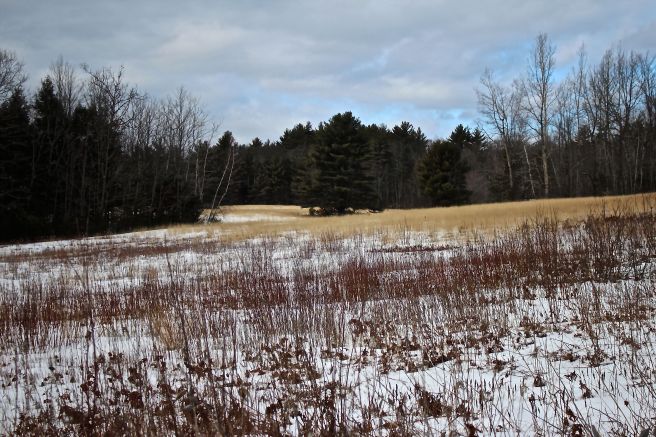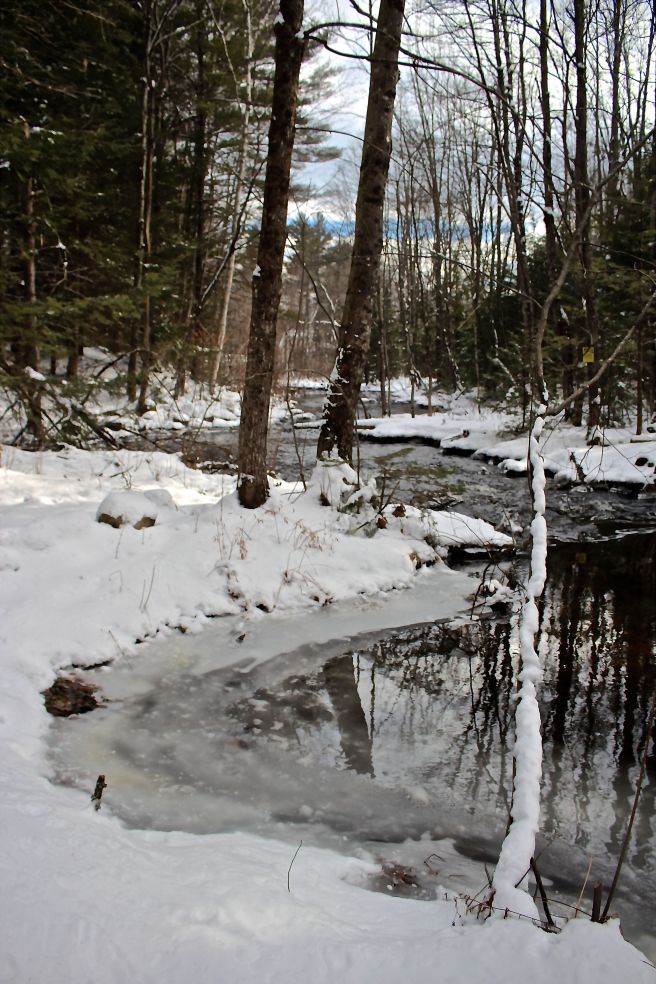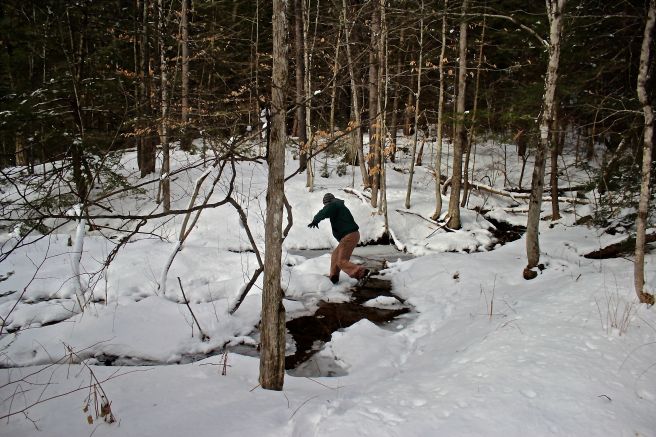
Predicting the Future–After the Fact

My ability to look into a crystal ball and predict the future is non-existent–especially when it comes to the natural world.

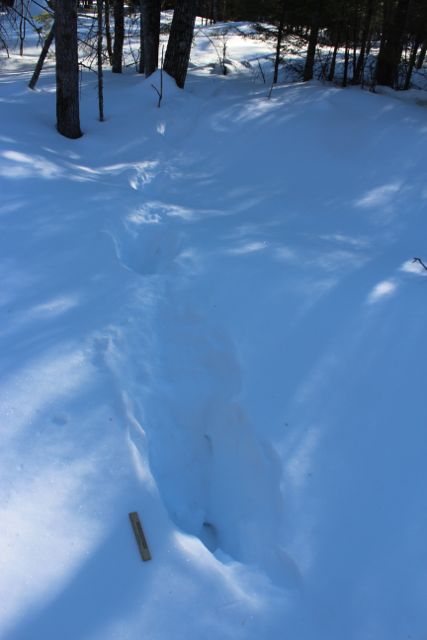
w-deer tracks on cow path

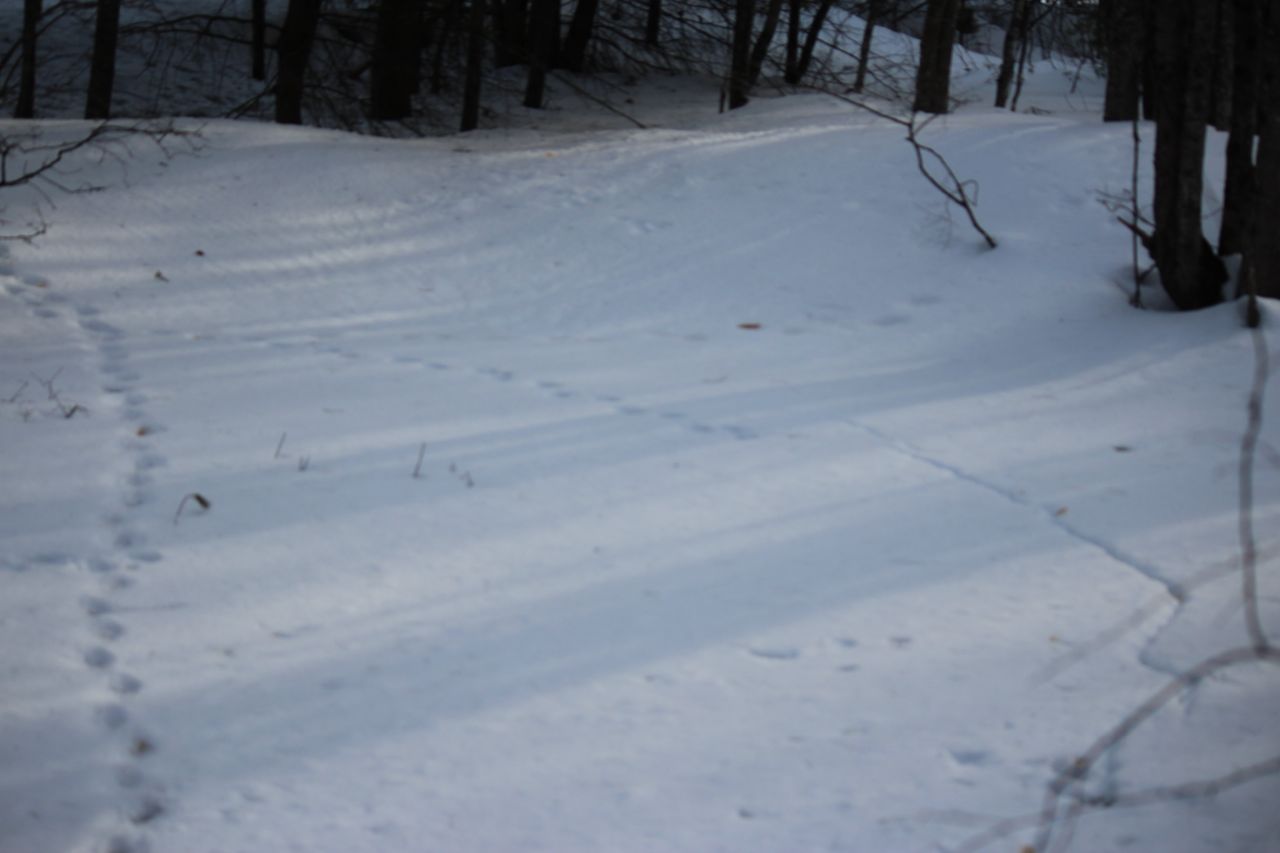
And today was a perfect example. I headed out along the cow path following the deer who had traveled this way during the night.

w-hiding place

They know the entry gate to my secret hiding place and don’t hesitate to pass through. I thought for sure that this would be the day I’d see them again. It’s been a couple of weeks and usually they are too fast for me to capture in a photo.
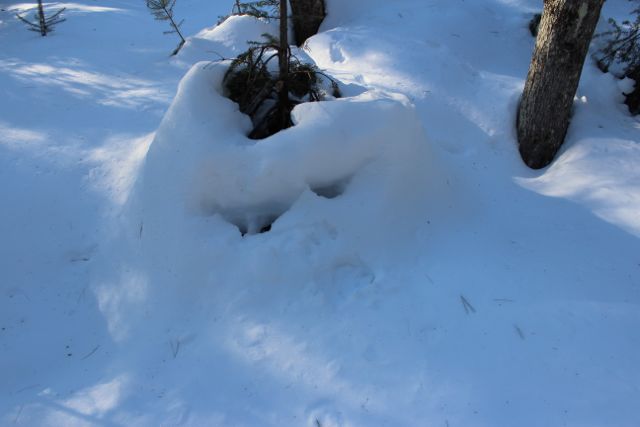
w-red squirrel--king of the castle

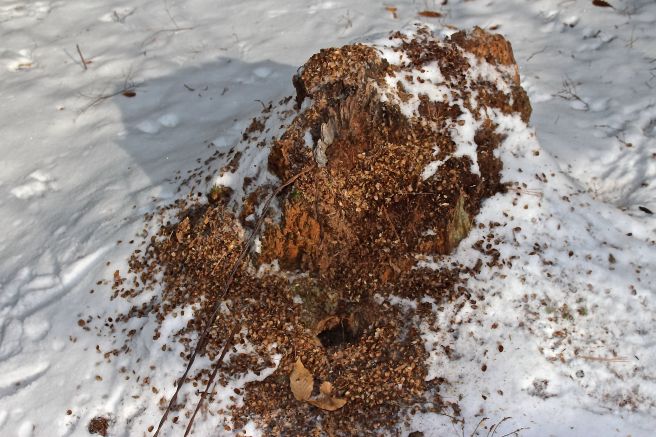
And when I located this red squirrel castle, I was sure I’d see one about. Its tracks showed equally abundant movement and this stump is obviously a place where it enjoys dining, but . . . all was quiet on the squirrel front as well.
w-water hazards

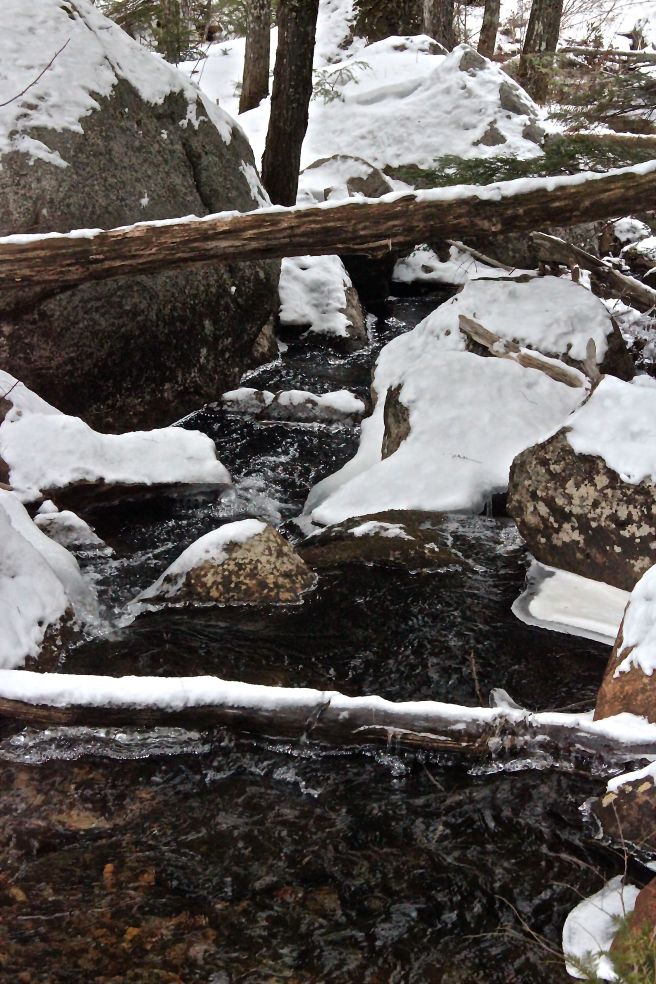
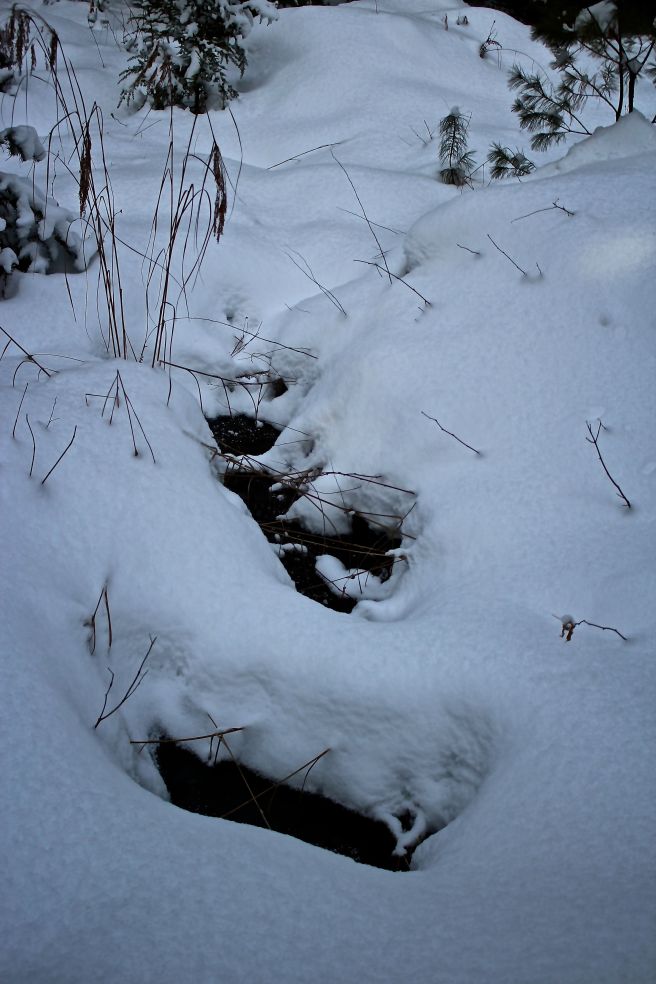
So, I continued on, ever mindful of the water hazards.
W-snowshoes

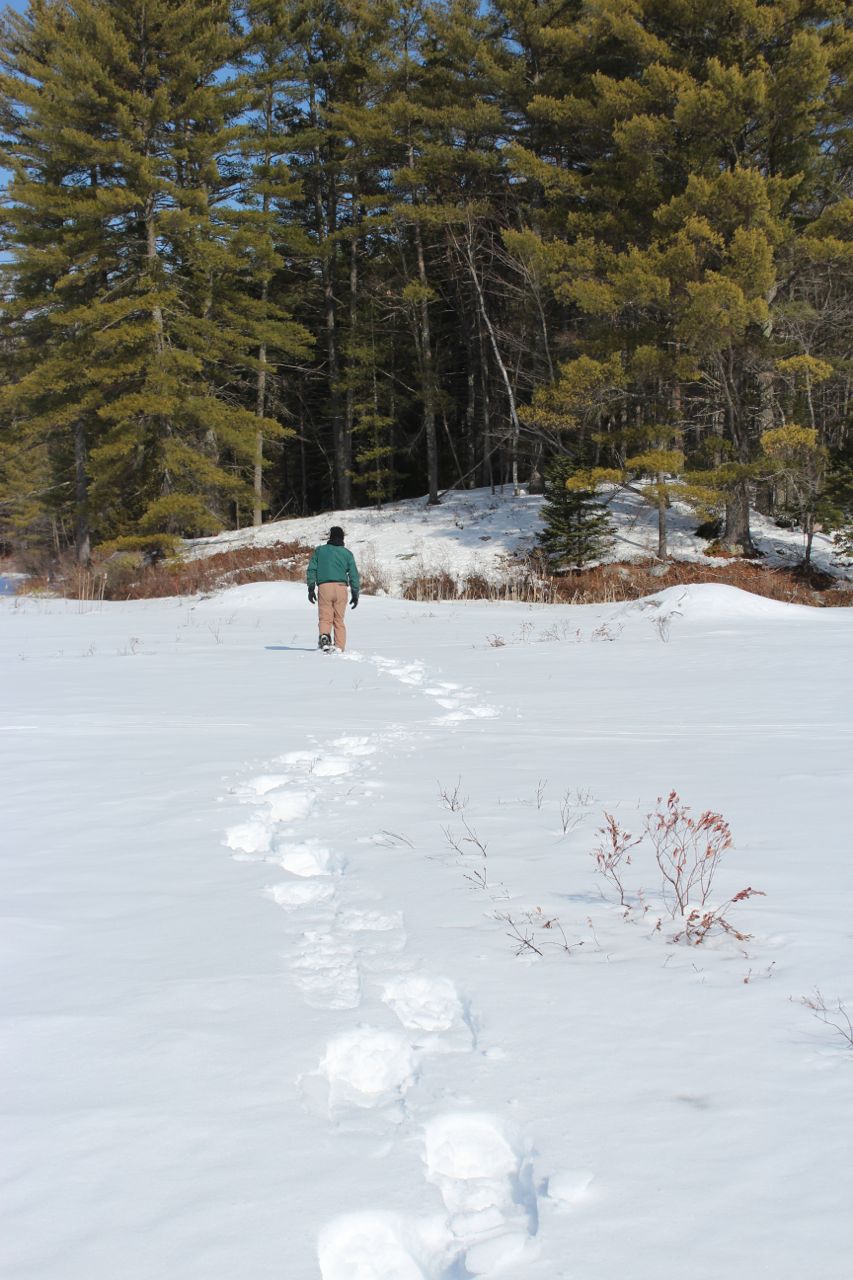
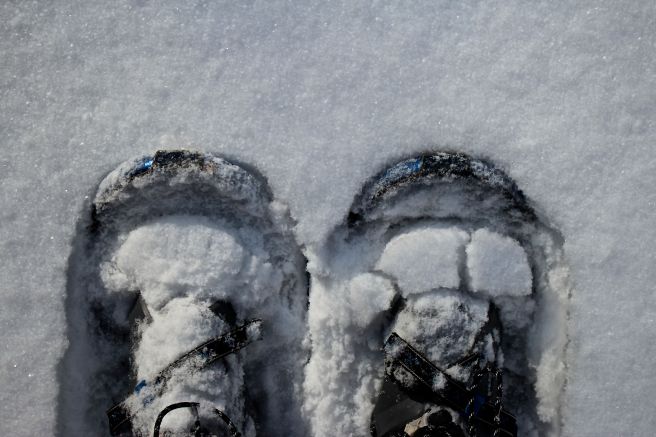
The snow is slowly piling up and after stumbling about yesterday, I donned my  old snowshoes today–traveling was much easier.

w-snowshoe hare tracks

My crystal ball told me that if I sat quietly for a while I just might be rewarded with the sight of another type of snowshoe–a hare.
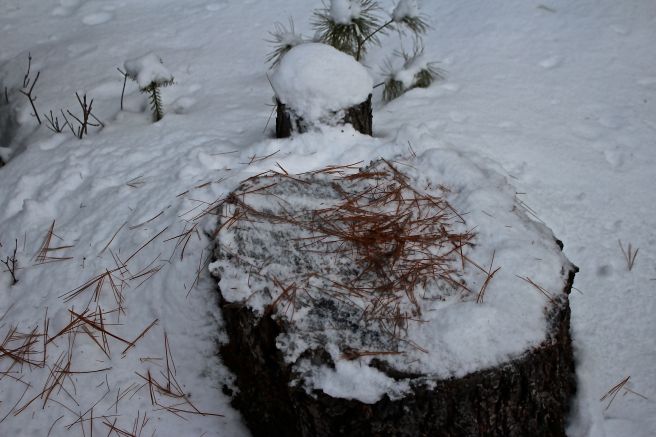
w-sit spot

I found a stump and cleared it off before plunking myself down.

w-snowdust

And I waited–ever sorta patiently. As sunlight hit the upper branches of the evergreens, snow dust floated down upon me. And snow plops landed all around–adding confusion to the prints before me. Still I waited.
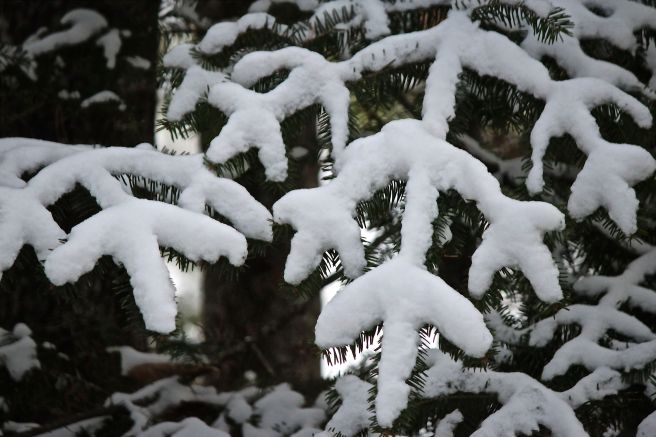
w-turkey tracks

While I waited, I noticed dozens of turkey prints–balsam fir style.

w-balsam snow tips

There were balsams with snowy tips.

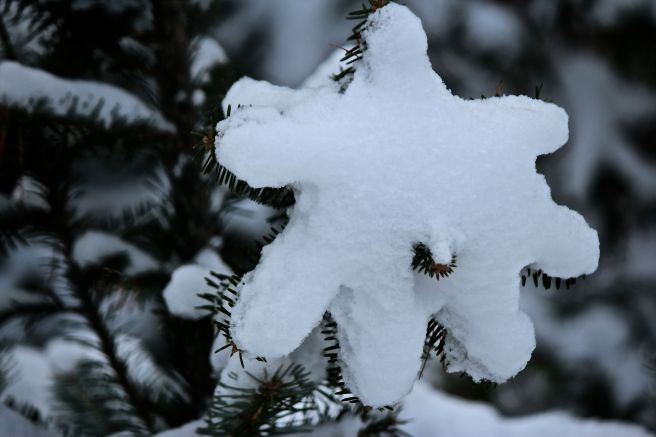
w-balsam star

Balsam flowers.

w-balsam star fish

Balsam star fish.

w-balsam octi

And even a balsam octopus–minus a leg or two.
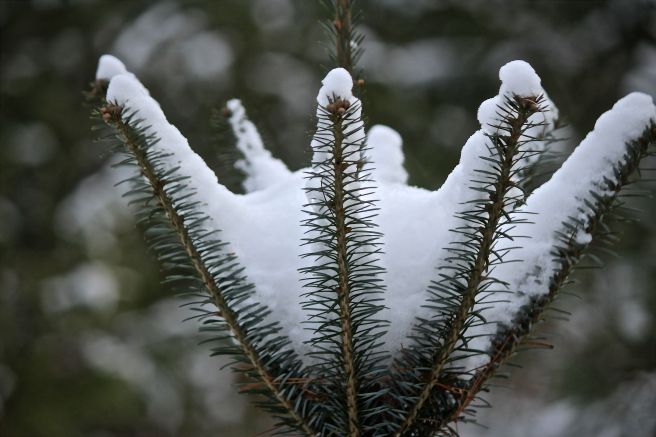
w-balsam fir cup

Maybe my problem was that my crystal ball was made of ice crystals sitting in a balsam cup. Or maybe it was that I kept snapping the camera. I tried to sit still and take in the moments, but . . . my bum got cold and I needed to move on. I’ll save my snowshoe hare siting for another day–as if I have a choice.

I wandered some more and came across two sights I don’t usually see in these woods–rather than snowshoes, I found horseshoes.

w-land of the evergreens and whites

And then I moved out of the land of the white evergreens.

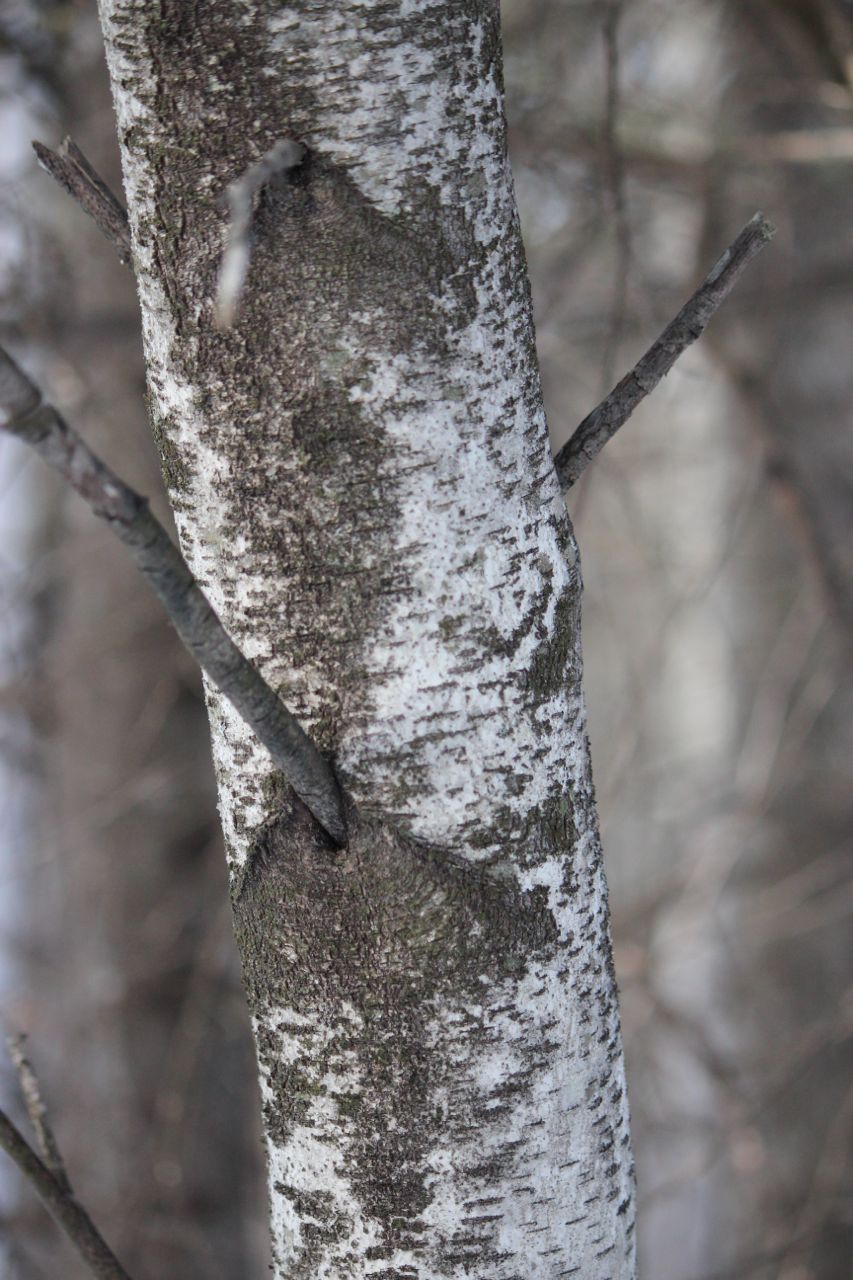
And into the land of early succession, where gray birch and red maple dominate the community. To the gray birch I turned–taking in the orangeyellowburgundybrownpinktanwhite with a dash of gray bark of immature trees. And the squiggly vertical lines intercepted by the raised horizontal lenticels that allow these trees to breath.

w-gray birch branch

The gray chevron or triangle shows where the branch meets the trunk.

Similar in shape, a few toothy, triangular leaves folded unto themselves dangle still. Or not so still, as they swayed in the slight breeze.

w-gray birch bud

Pointed brown buds protect future leaves from this week’s chillier temps.
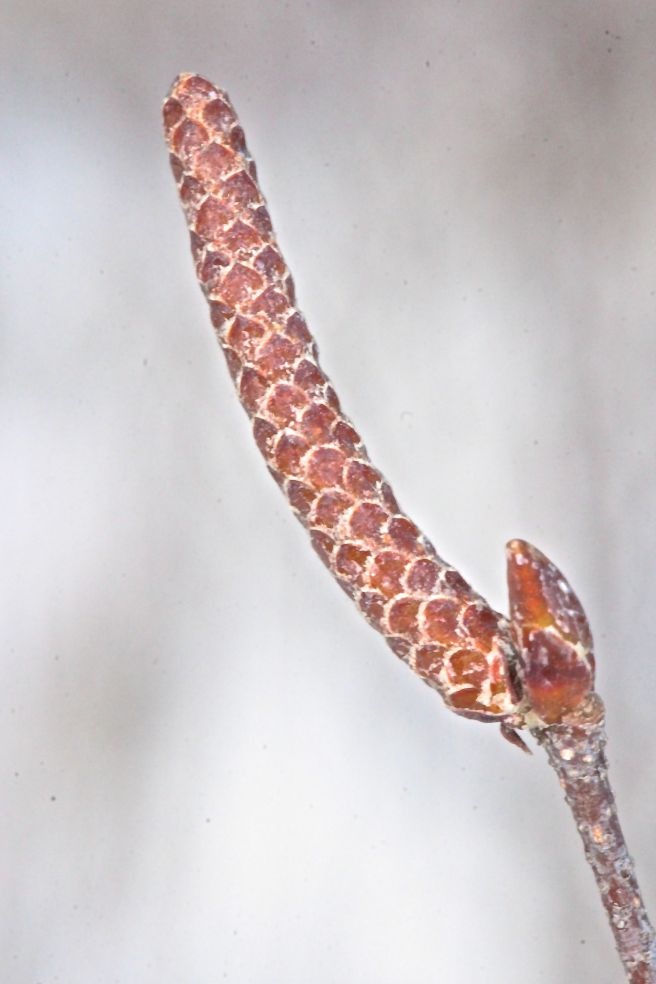
w-gray birch catkin

Catkins are visible on some of these trees.
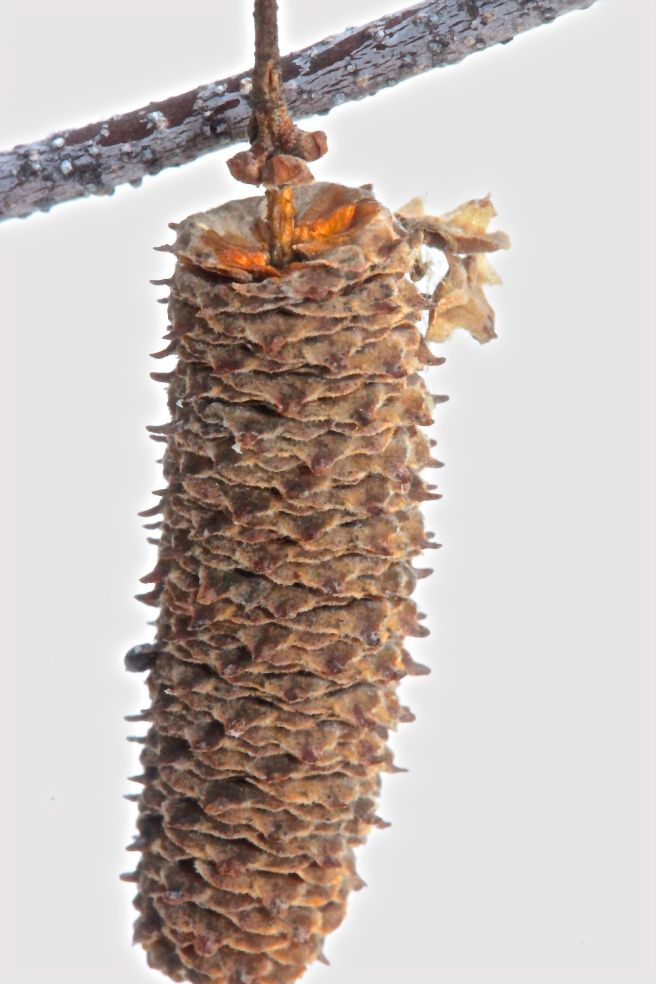
w-gray fleur 3

I did find a few with last year’s fruits consisting of tiny two-winged nutlets and three-lobed scales or fleur de lis in alternate layers; both detach from the central stem in winter. Many have already spread their seeds, but some like this one are waiting for the right moment. I know I certainly can’t declare when that will be.

w-snow flea

The other thing I can’t predict is when or where I’ll see snow fleas, aka spring tails. As I headed home, I found many along the barn’s drip line. It’s a sheltered spot and the sun was shining, so conditions were apparently to their liking. Who knew? Not me.

It seems we’re best at predicting the future after the fact. And so, I predict that today I won’t see deer or red squirrels or snowshoe hare. But there will be a zillion other little things that draw my attention and put a smile on my face. Worth a wonder.


PB Challenge Mondate

We love a friendly challenge and today’s Mondate posed just such an opportunity.

Our destination: Province Pond via the Province Brook Trail in South ChatHAM, New Hampshire. About a year ago we passed this way and decided it was worthy of another visit. Though the sign on South Chatham Road indicates that there is trail parking ahead, the gate is closed and so we parked on the road and began our journey from there. It’s a 2.5 mile upward hike to the trail head. Easy enough given that it’s a forest road and is usually used by snowmobiles–not so this year. We found less snow here than in nearby western Maine.

And then began our challenge to each other. The last time we hiked this way, we found bear claw marks on a beech tree. Both of us pictured the tree in our mind’s eye, but exactly where? We had no idea. So . . . after passing through a hemlock grove and into a beech/hardwood forest, we moved off the trail and began searching high and low.

Guess who found it first. My guy, of course. I saw it and wondered, but he was steps ahead of me and credit goes to him.

Bingo! We had our tree. And then the idea of another challenge struck us. Friends Pam and Bob live in this neck of the woods during the summer months. They wanted to know where this tree was after we located it last year. So . . . we decided to challenge them. Going forth, Pam and Bob, this one’s for you. And anyone else who passes this way.

Beech clue 1

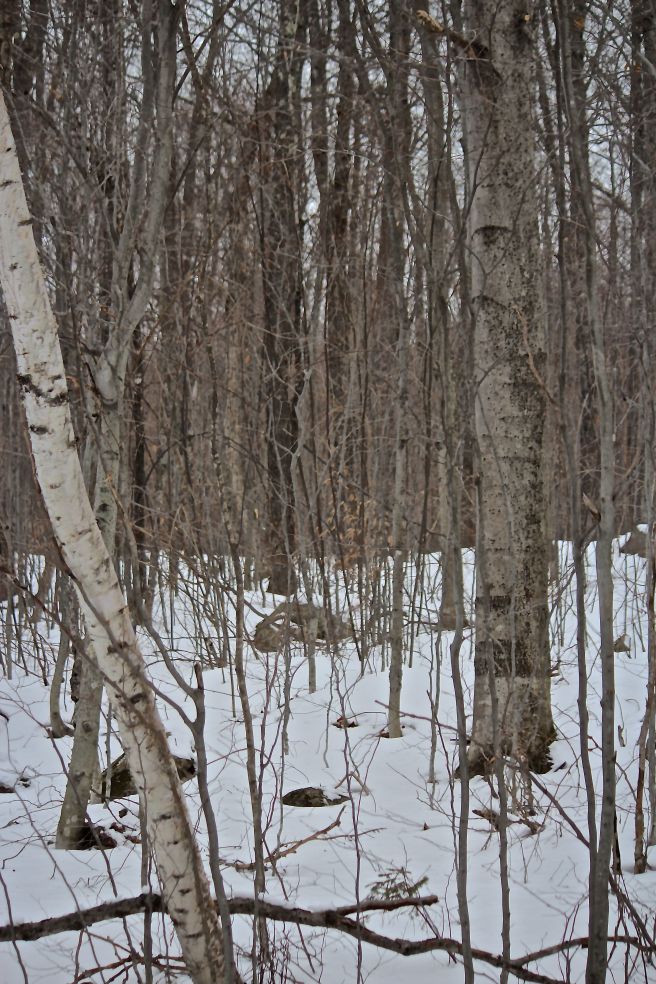
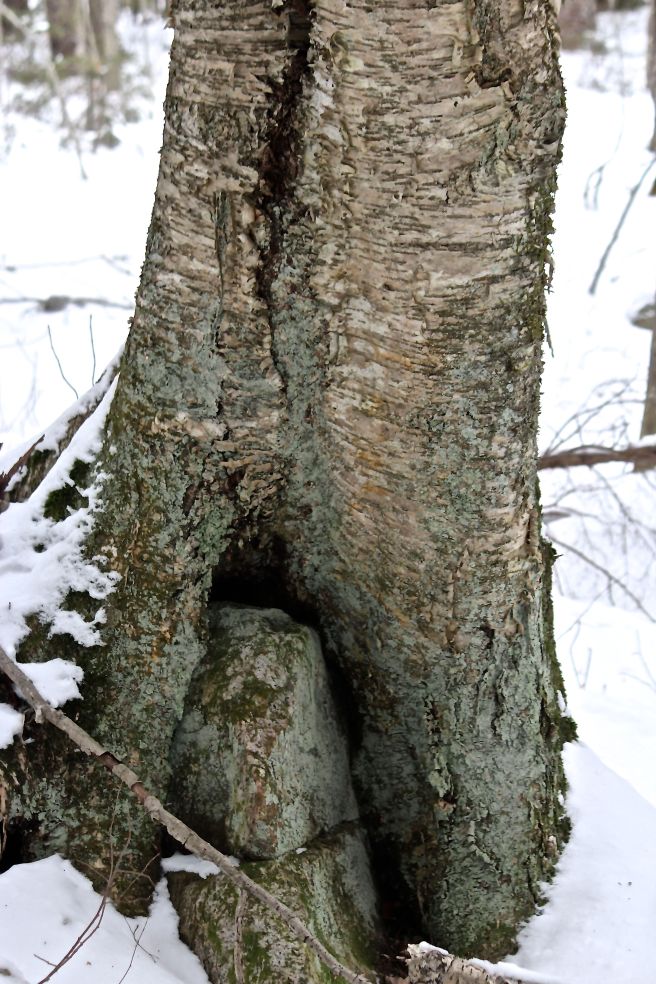
Clue #1: The bear tree is right above this paper birch that leans over the forest road at about two miles from the gate.

beech rock clue

And it’s right before this rock. We hope you are up for the challenge because we have some other natural items for you to locate–and just for fun they are not necessarily in the order we found them.

pileated tree

A pileated tree. Clue: It’s not too far from the bear tree as you head toward the trail head.

large dreyThe world’s largest squirrel drey. Clue: It’s on the opposite side of the road, but not opposite the bear tree.
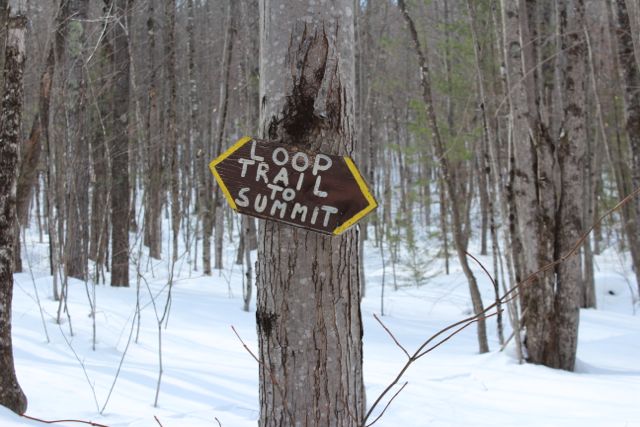
trail sign 1.6

Not a clue, though the touch of spring did make us smile. The trail head at last.

yellow birch on rock

Tree over rock. Clue: Yellow birch tree, blue-gray crustose lichen giving both an aqua hue.

tinder conks

Tinder conks on old snag. Clue: Though it would be fun if you could find this exact tree, you will find horse-hoof shaped fungi throughout this forest.

split stone 1

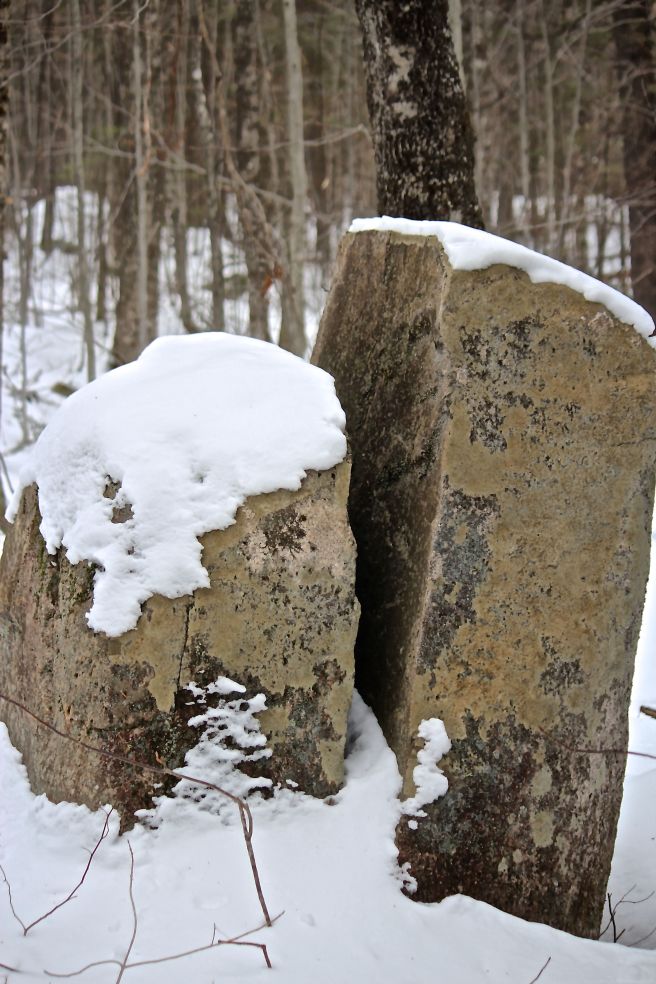
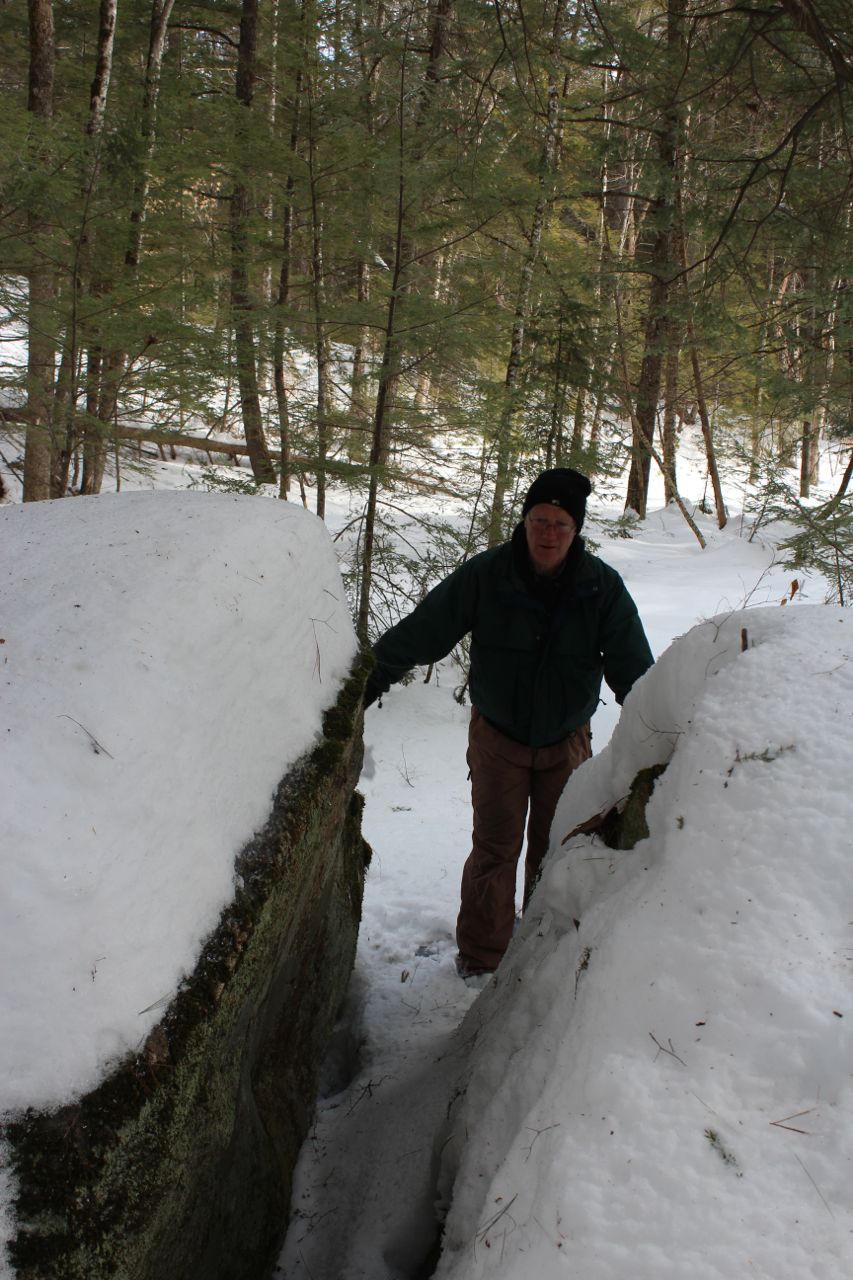
Split stone. Clue: This statue stands beside the trail–to your right as you head toward the pond.

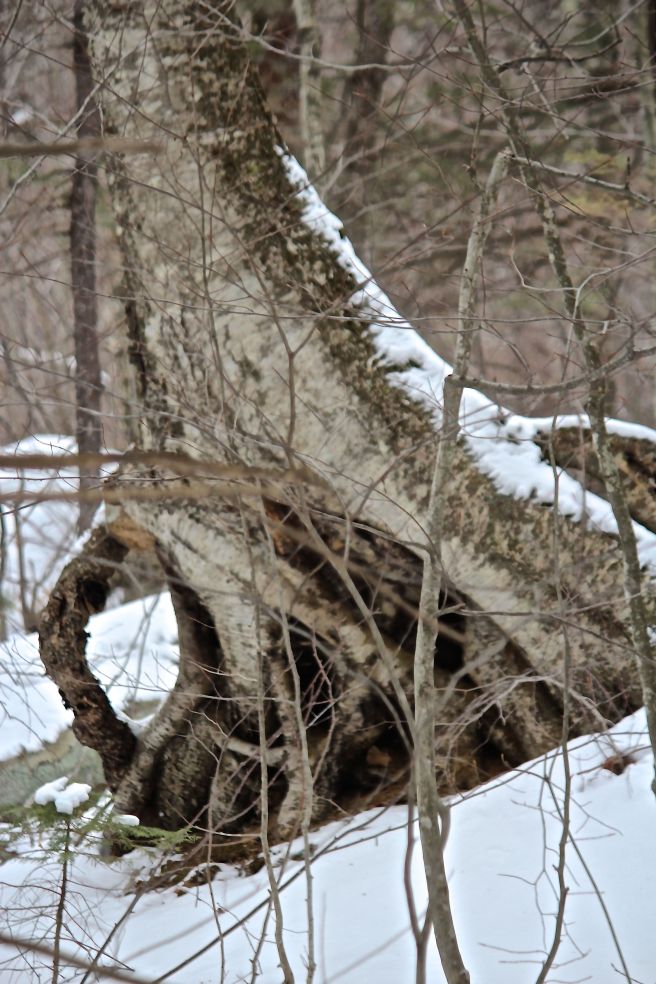
root tangleTangle of roots. Clue: Look to your left for a yellow birch with spindly legs–a reference to  another tree that nursed this one to life.

polypodyPolypody. Clue: Rock with bad hair day. Today, the temp was in the 20˚s with a breeze so the fronds have curled inward. During the summer, they won’t be so curly.
bear face

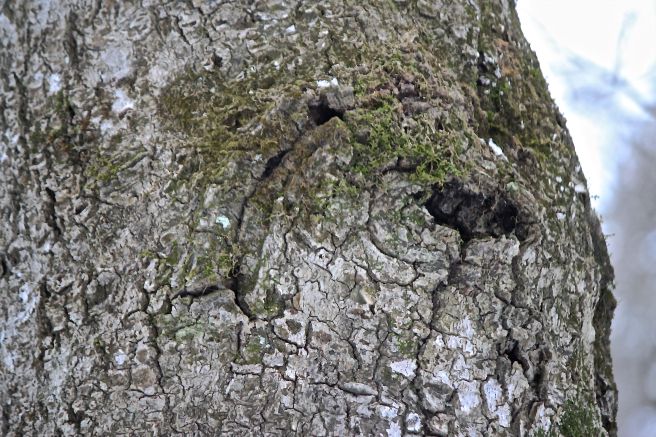
Bear face. Clue: So this one may be a real challenge, but it looked like the face of a bear to me. It’s on a hemlock above a couple of trail-side rocks that are slanted. Across the trail, we found the perfect lunch rock.

moose 1

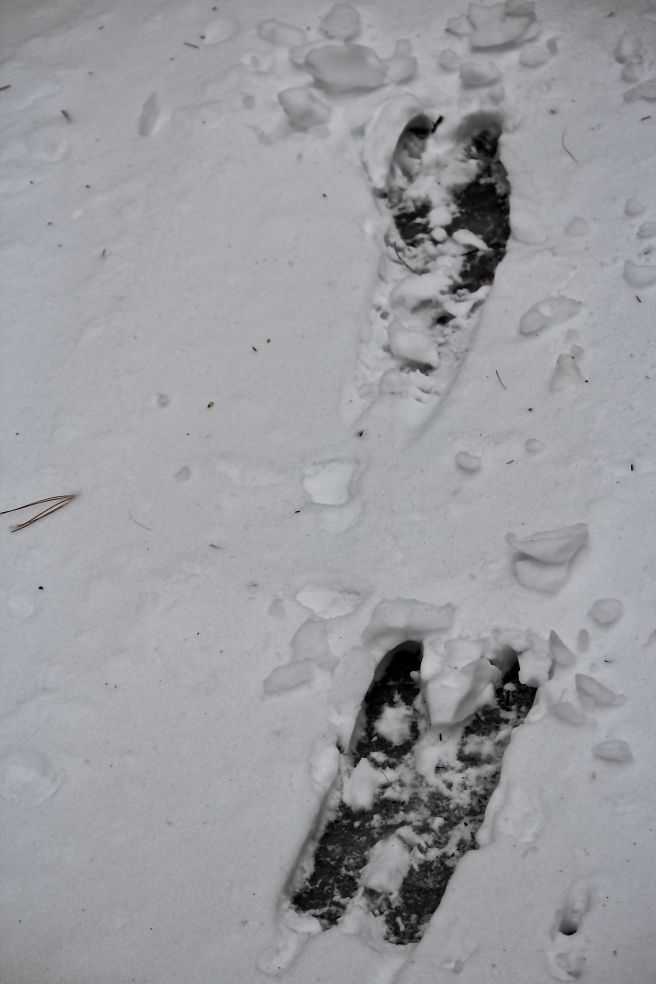
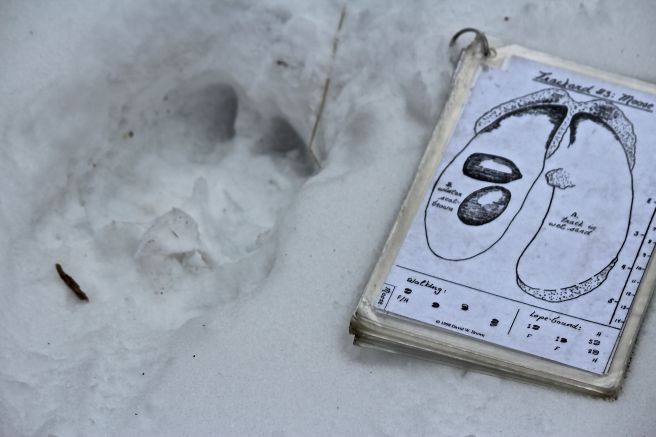
Now we’ll take a brief challenge break. Lots of mammal tracks, but we were looking for this and not disappointed. Moose print.

moose bed

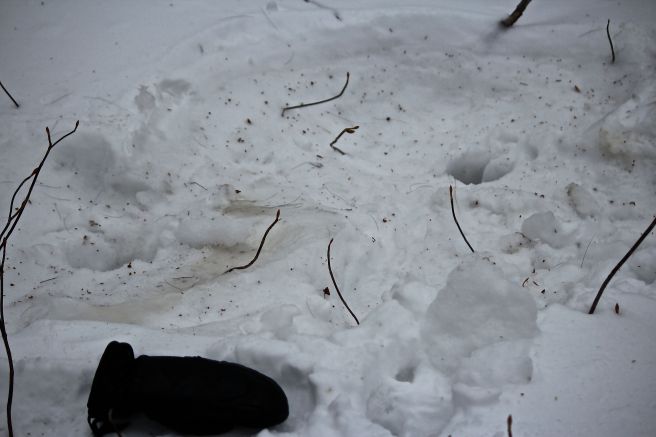
Moose bed. We found three. The back of the moose is at the top of the photo, head above my mitten and legs to the lower right.

moose bed hair

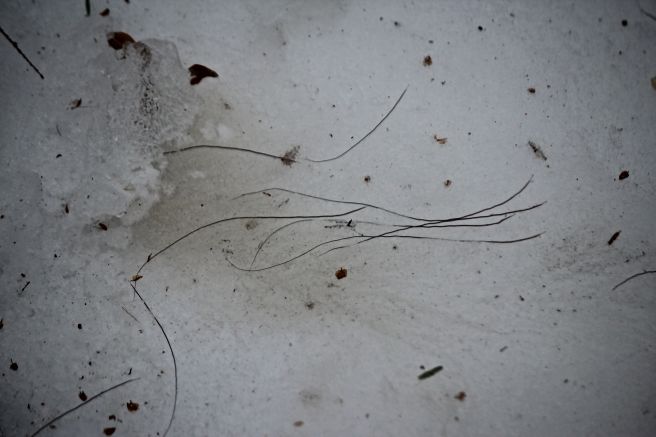
Moose hair. Within the bed, where the body heat turned the snow to ice, moose hair got stuck.

moose scat 1

Ah, scat. Moose scat. I find it humorous that it’s located below a hobblebush that’s been left untouched.

moose skid

Moose skid. Even the moose are slipping and sliding on the ice below the snow. They need my micro-spikes.

hobblebush bud

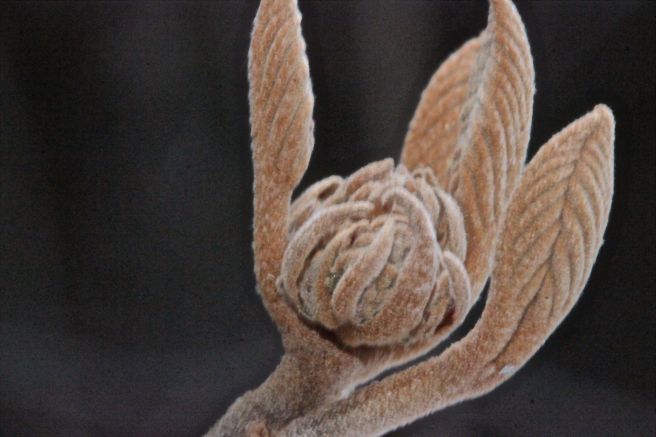
Hobblebush. We were in the land of one of the moose’s favorite treats. These leaves and flower bud have been overlooked for the moment.

hobble graze

moose browse

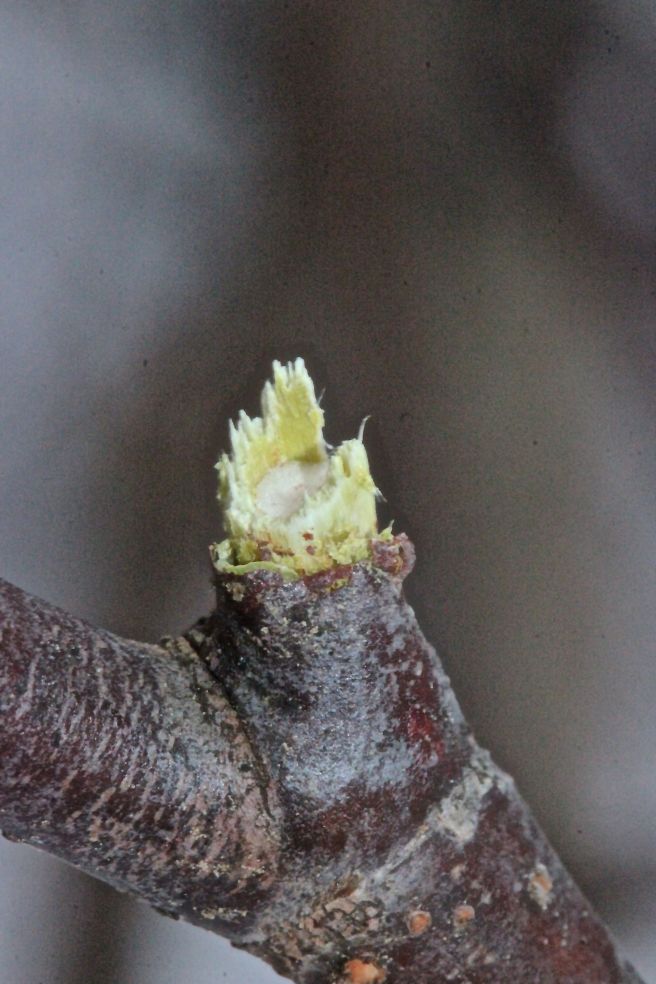
Back to the challenge: Moose browse. Hobblebush and red maple trees along the way show plenty of browse. Several moose frequent the area. Look for tags like this. Moose don’t have upper incisors. Instead, they rip buds with their lower incisors and a hardened upper palate–leaving a “tag,” which is their calling card. Deer do the same. Sometimes it’s difficult to tell which of the two ungulates has dined. Your challenge is to find examples of browsing.

hemlock btwn rocks

Between a rock and a hard place. Clue: hemlock growing on/between two rocks, not far from Province Pond.

Province Brook

Another challenge interruption. Province Brook below the dam at Province Pond.

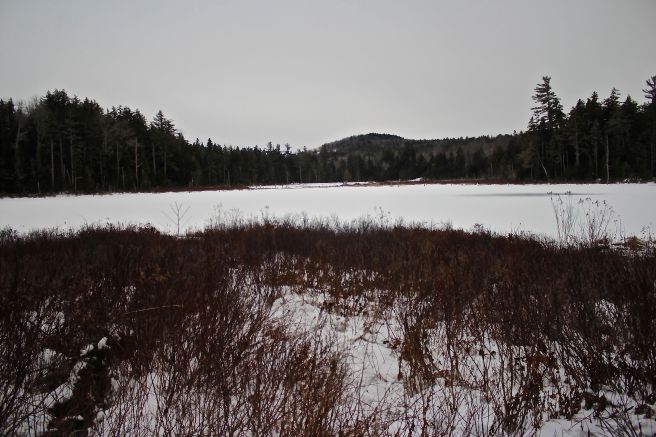
Province Pond1

Province Pond looking toward Mount Shaw. If you look closely, you’ll see the moose tracks leading up from the lower left and moving along the dam, where they turned left again and headed off into the woods.

Province Pond to shelter

Province Pond looking toward the shelter on the far shore–snow on the roof.

trail blaze

Return to the challenge. Trail blaze on a rock. Clue: Between the dam and shelter.

hemlock gall rosette

Hemlock growth. Clue: On the way to the shelter. I’m not sure it’s a gall, but it’s certainly a rosette type of growth on the outer bark.

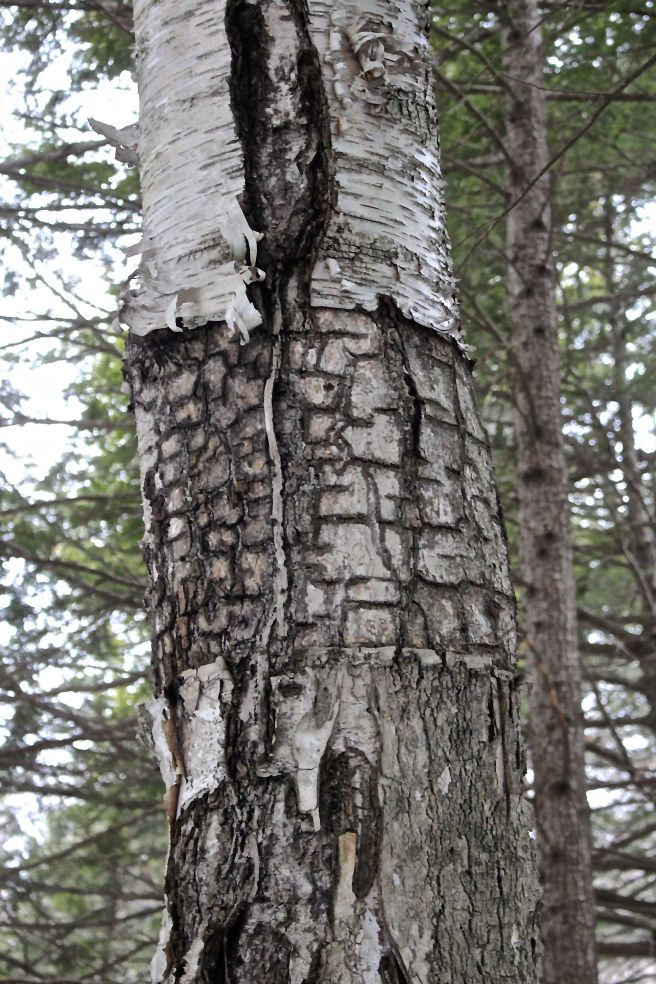
paper birch under bark

Decaying paper birch. Clue: On the shore trail to the shelter. Notice how time has treated this tree.

shelter

My guy reading the shelter messages. Clue: Province Pond Shelter. Find this man ;-)

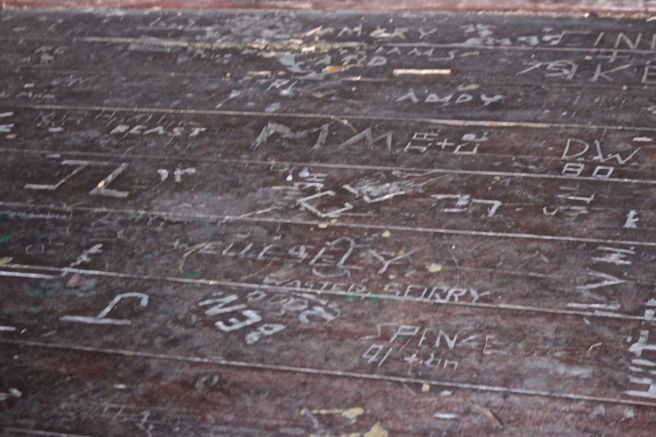
shelter floor

Carved messages. Clue: Shelter floor. Can you find this exact location? The walls were painted last summer, but the floor was left alone.

shelter view 2

Another brief break. Shelter view looking back toward the dam and Peaked Hill.

Robin's pincushion gall on meadowsweet

Gall on meadowsweet. Clue: Robin’s pincushion gall on meadowsweet found near the shelter.

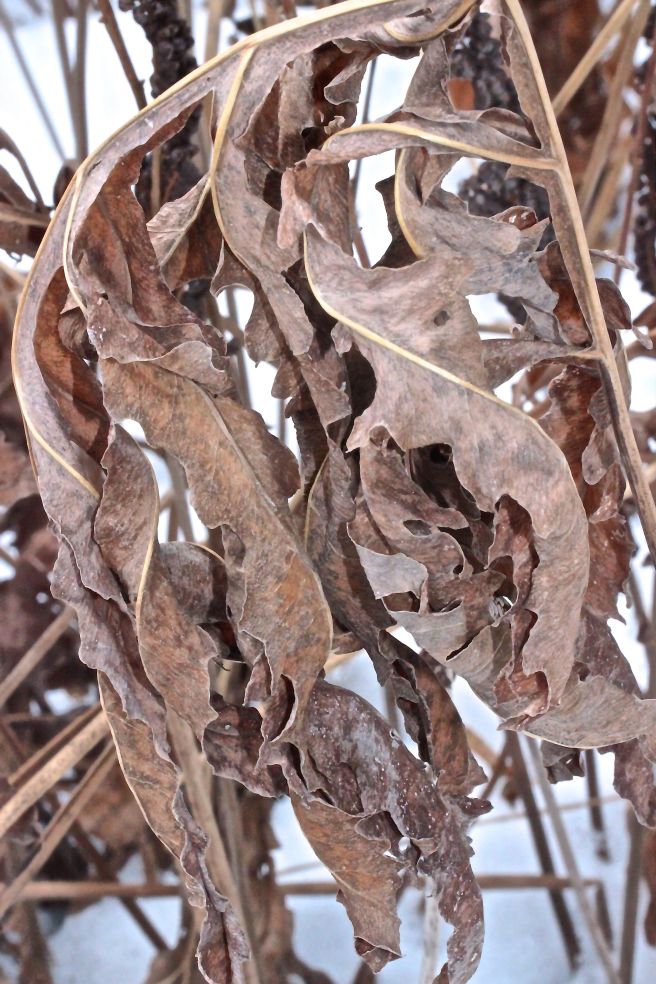
sensitive fern

sensitive 2

Sensitive Fern. Clue: Near the shelter. This is an easy find for you and a treat for me. I don’t often see sensitive fern leaves in their winter formation as they are usually flattened beneath the snow.

sweet fern winterSweet Fern. Clue: Again, near the shelter. You won’t find it in this form when you arrive in the summer, but it’s worth a look.
feather 2

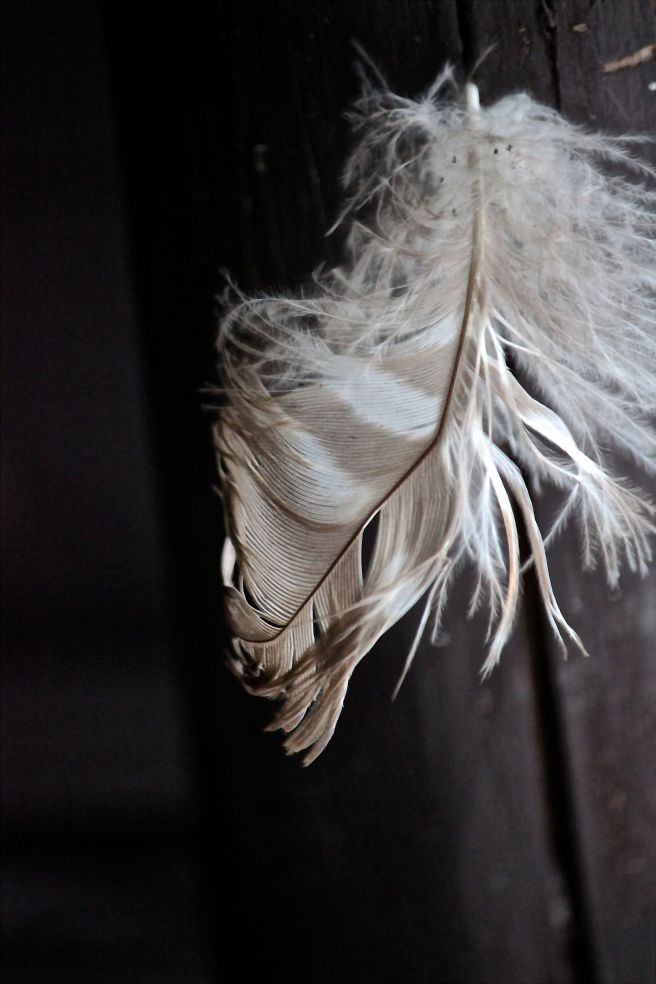
Feather. Clue: Attached to the shelter. I’d love to know if you find it there. Grace-filled in the breeze.

artist's conk 2

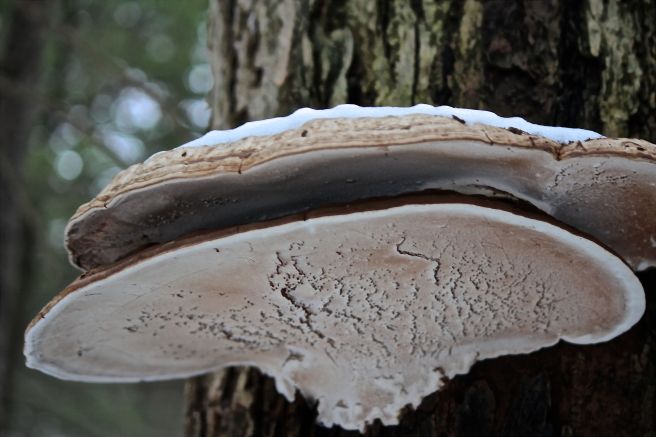
Artists’ conks. Clue: On the trail above the shore trail, not far from the shelter.

belted polypores

Red-belted polypores. Clue: Umm, on the way back. And on a hemlock, of course.

lungwort

Lungwort. Clue: I didn’t see any on the way up, but found a lot of this on the way back down the trail. Always a good sign of forest health.

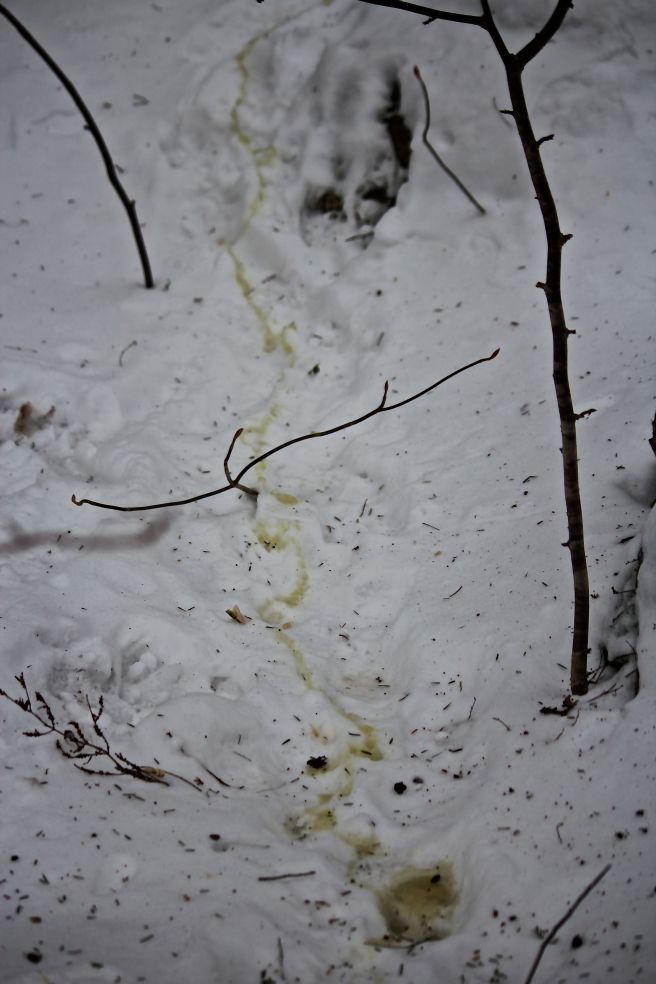
porky pee

Couldn’t resist. Clue: Porcupine Pee. Go as you go. While my guy waited patiently, I followed the trail for a bit, but never found the den. Let me know if you find it.

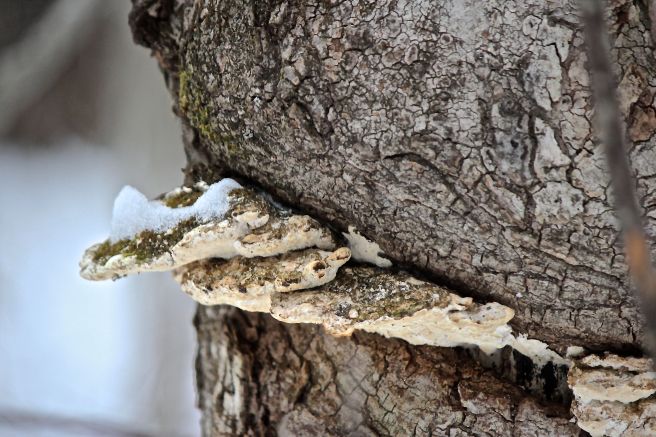
mossy maple polypore

Mossy maple polypore. Clue: In a crack of a maple tree. ;-)

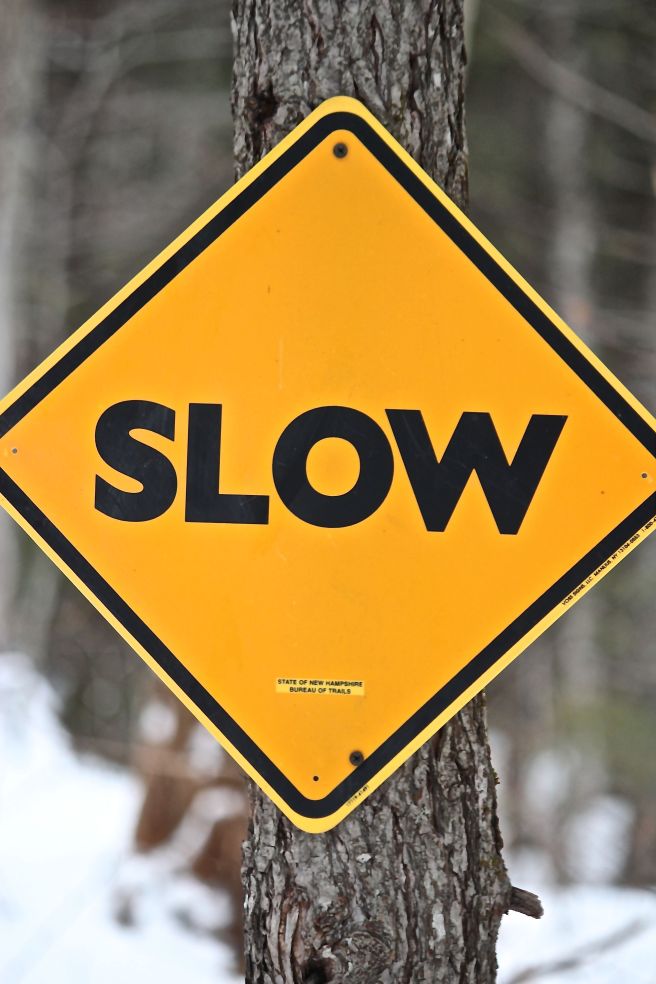
slow sign

Take your time. We both did. Have fun looking for these wonder-filled sights along the way.

And by the way PB–aka Pam and Bob–and anyone else who accepts this challenge (I know a few friends who would love to join you and their names begin with “J”)–invite us along and we’ll provide lunch. You know what we’ll pack. PB&J, of course.

Super Sunday

What a day. While the temperature was probably in the 40˚s, when the sun poked out from behind the clouds, it felt like 70˚. To celebrate, my guy and I left one truck on Grist Mill Road off Fosterville and drove the other to the Bald Pate trail head.

town farm

We skipped the climb to the summit and instead opted to follow the two-mile Town Farm Brook Trail to the pond.

town farm 1

Others had used this trail. We decided to leave snowshoes behind and threw our micro-spikes into the backpack. There they stayed. The snow and ice were so soft that it turned out to be an excellent decision. Otherwise, we would have felt like we were walking on high heels as the snow would have clumped up, and heaven knows–neither one of us are the high heel type.

common 2

Since we were traveling downhill, I raced to keep up with my speed demon. But . . . he stopped for me when I spotted a large patch of common scouring rush.

Common rush 2

The evergreen stems stand tall in these winter woods.

common 3

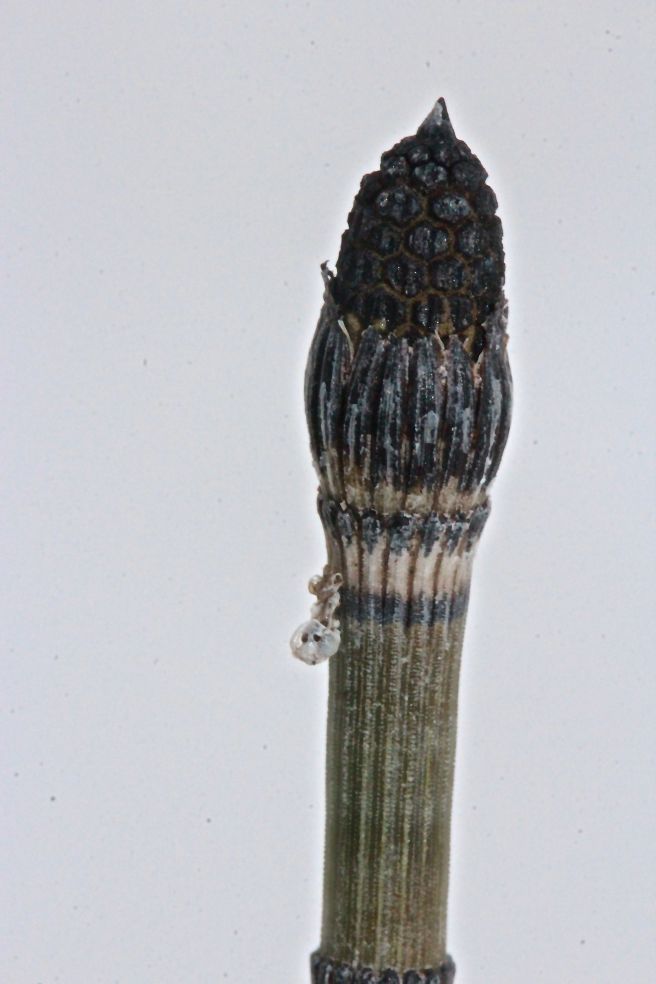
And so my guy sat on a rock and waited patiently while I knelt before this specimen. Check out that pointed cone at the tip.

And those rough, sand-papery textured ridges on the stem. During pioneer days, this plant was used to scour pots, pans and floors, thus its common name.

But . . . when is a rush not a rush? When it’s common scouring rush (Equisetum hyemale affine), which is actually a horsetail. Horsetails are closely related to ferns (take a look at the spores on the cone). This is where it all gets mind-boggling. Both horsetails and ferns were common during the Carboniferous period (280-345 million years ago), when tree-sized specimens occurred. I’m staggered by that thought, but rejoice that I took the time to take a closer look.

common 5

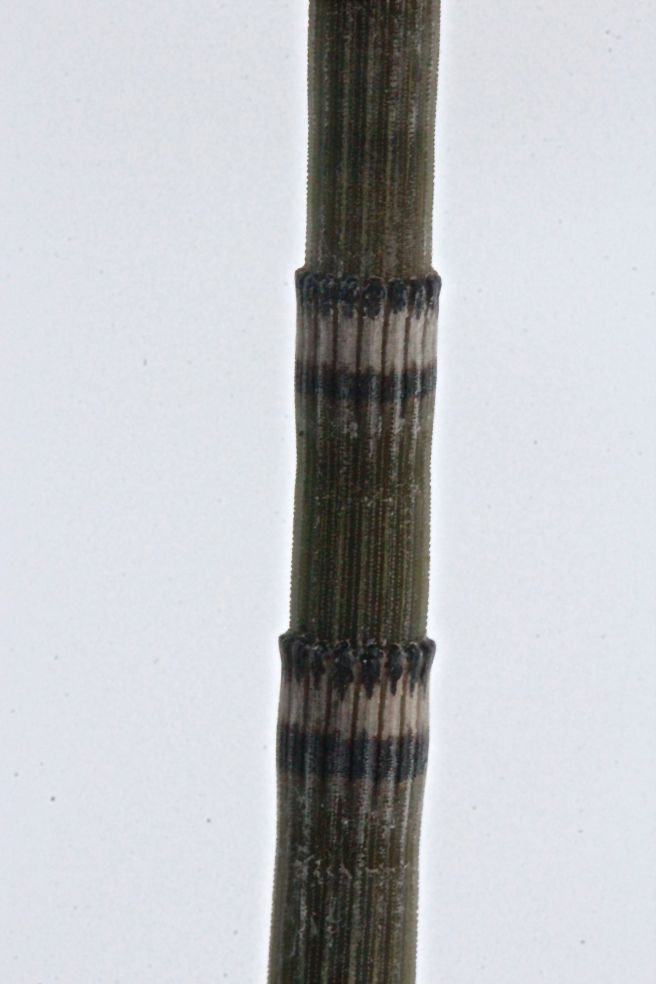
Notice how the whorls of tiny, scale-like leaves are fused together at the stem nodes, forming sheaths that are about as long as wide. The sheaths have a dark-toothed upper band, ashy gray middle band and dark lower band.

stonewall-Knapps

We left them behind, crossed Fryer’s Field and walked down Fosterville Road to slip into the Holt Pond Preserve, where no one had carved the trail–just the way we like it.

mink 1a

When I saw the wee bit of a slide under the downed tree and took a closer look at these tracks, I was transported back in time. I think our twenty-something sons were 8 & 10 and we were in this same spot with Bridie McGreavy when we saw a similar slide created by a mink–back then, it was a first for me.

This afternoon, I turned and saw more defined prints and the diagonal bounding pattern. Yes, indeed.

lunch rock

Chivalry is still alive–my guy dusted the snow off lunch rock. I guess he was hungry for that PB&J.

HP looking toward Quaking

Where the trail briefly offers a glimpse of the pond, we paused and looked toward the quaking bog directly across the way.

HP 4

Our next glimpse was near the end of the Southern Shore Trail.

beaver work

As is the way of things around here, we had to walk on Chaplin Mill Road for a bit, which is where we saw this beaver statue–about three feet from the road and perhaps the reason for the flagging tape.

Emerald Field

A few minutes later, we reached the Emerald Field, an entry way back into the preserve. Emerald–perhaps, but also red, white, green, gold, gray and every shade between.

Among the bramble in the field–milkweed pods that have almost completed their seed release.

Muddy river

The Muddy River has never been so open at this time of year.

leaping the stream

Though there are bog bridges across most of the wet spots, occasionally we had to channel our inner hare and take a leap.

Much to his dismay, I never take ice for granted. Well, I should rephrase that. He doesn’t take ice for granted either. Nor does he spend hours admiring its arty presentation.

We’d left our paddles and pfds home, so a canoe adventure will have to wait for another day.

HP trail

Through the red maple swamp, we suddenly found ourselves following the steps of others as we moved along the boardwalk.

And then we stepped out to the Muddy river for one last glimpse–looking east, then west.

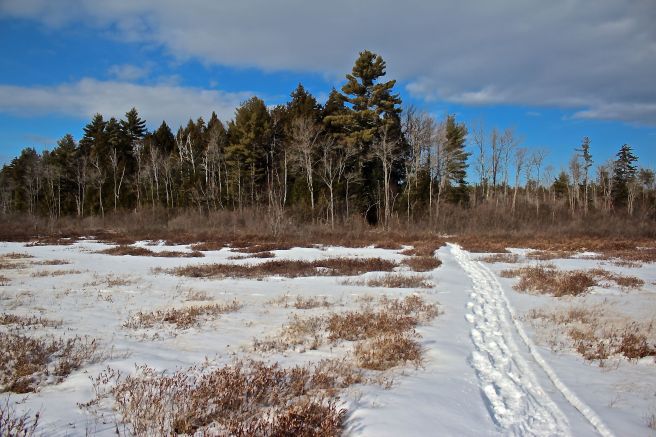
Holt Pond 1At the quaking bog, we felt the heat of the sun as we reflected on the beauty of the day.
quaking bog

Then we retraced our steps across the bog and headed through the hemlock groves as we completed our seven-mile tour.

HOME

It was time to go home after enjoying a super Sunday together. And now we’re watching the game–especially for the commercials.

Silent Snow

A white wash of snow and everything appears fresh and immaculate once again.

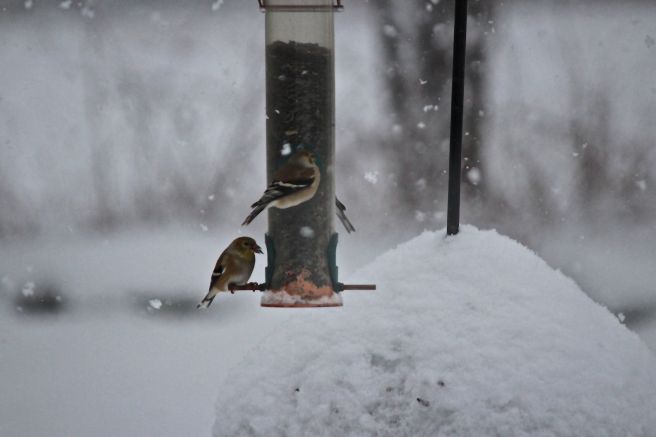
goldfinch feast

All morning long, the goldfinches partook in a feeding frenzy.

chickadee 2

Meanwhile, from the nearby lilac bush, a chickadee waited patiently for its turn at the feeder.

chickadee suet

But goldfinches like to hang out, so the chickadee settled for some suet instead.

snow on pines

Later in the day, I made time for a walk. I thought I’d need snowshoes, but discovered they weren’t necessary. While the trees are well coated, we only received about four inches–which equates to less in the woods right now, given that the evergreens and hardwoods are holding the snow. As I write, however, I can hear the wind blow and trust that tomorrow the world will look different.

bobbles on pines

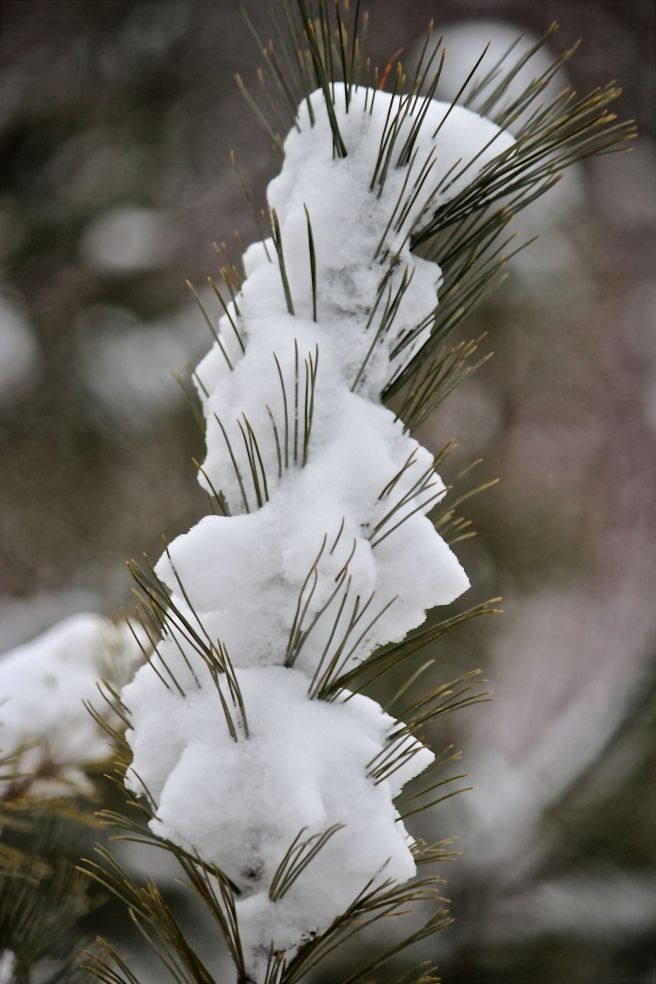
Because it had snowed, I couldn’t resist noticing the different ways it sticks to trees and plants. While the mature pines in our woodlot indicate that the storm came in from the north, these pine saplings don’t give any clues about direction. Their presentation is more ornamental–like bobbles on a Christmas tree.

snow pine needles

Or spiring up a pine, offering a stairway to heaven.

steeple 2

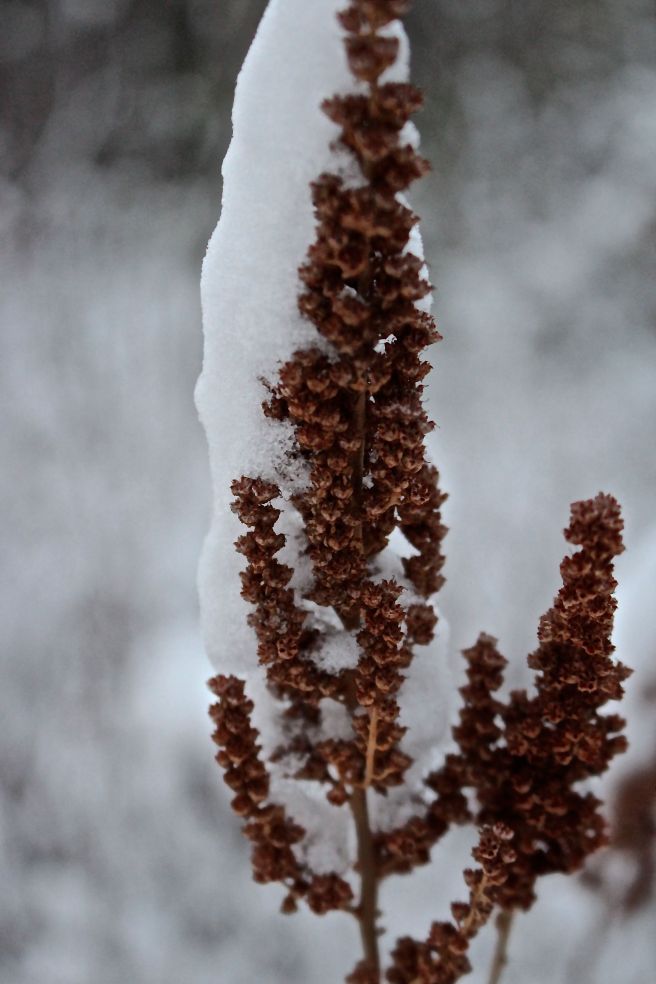
As I walked along, I stopped frequently to appreciate how the flakes clasped the woody weeds like steeplebush,

asters.jpg

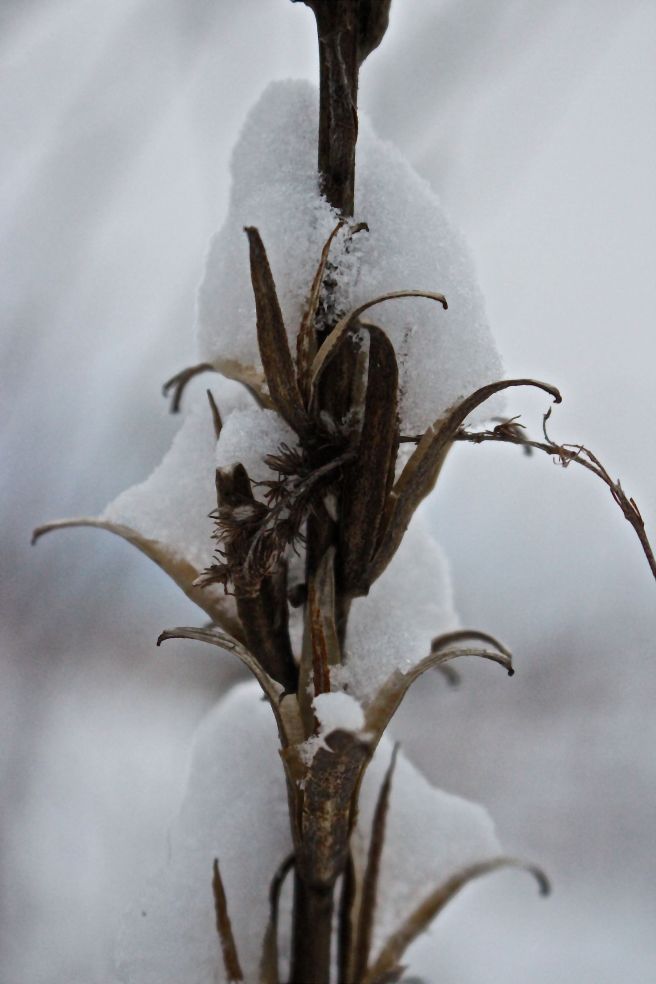
asters and

Evening primrose

evening primrose.

Indian Tobacco 1

Even the delicate papery capsules of the Indian tobacco provided a resting place for a few flakes.

sensitive 4

By a patch of sensitive fern spore stalks I made a discovery that has alluded me in the past. I always admire the beady fruiting structure of this fern. Each bead encapsulates many round spore cases and each case contains the dust-like spores.

sensitive, open 2sensitive lacy

What I never noticed until this afternoon is that once those spore cases have opened, the structure takes on a lacy look.

I thought only the gray squirrels had ventured out during the storm until I came upon the prints of this other bounder–a weasel that made its way to a stone wall where little brown things probably became a feast-de-résistance.

Turkeys had also passed through these woods. Six had been frequenting our neighborhood, but the other day I saw seven in our yard and yesterday nine crossed the field.

silent path

I’d followed the silent snowmobile trail for a ways and after looking down at the turkey tracks, I looked up and noticed the sun shining on the trees above.

sunshine contrast

Suddenly, it was a world of contrasts.

fern leaves

Going off trail found me pausing by ferns, which grow aplenty in this wetland paradise. Again, it was the snowflakes gathered on their leaves that pulled me in for a closer look. Crystals juxtaposed against veins.

interrupted fern

The light was changing as I came upon the spent spore-heads of interrupted fern.

And then I realized I was at a second vernal pool I’ll visit periodically over the next few months. Today, in the soft colors of the setting sun, I discovered snow pillows that remind me of the amphibians who inhabit this place. A glimpse into the future.

snow doughnut

As I made my way home, bushwhacking, or rather snow stumping, and then retracing my steps, I came upon this sweet moment–a snow doughnut. And then I saw that deer had been playing, their prints on top of mine. I never heard them and yet . . . we were in such close proximity. And the weasel had crisscrossed the path several more times. One of these days I’ll sit still and watch.

sunset 1

But today as the critters and I moved about, the snow provided a dose of silence that was appreciated by all.

Wer-if-est-er-i-a-ing A-long

12074842_10153632630537731_2769008110586363497_n

Thank you to my friend, Judy Lynne, who shared this word with me today. I know I do it, but I didn’t know there was a word for it. And I love that it’s an Old English word–takes me back to college days and my History of the English Language Class where we learned to read in Old and Middle English.

And so it was that today I wandered longingly through the forest in search of mystery with five other naturalists–all MMNP grads who will bring the Master Naturalist course to Bridgton in the spring of 2016.

After a tour of Lake Environmental Association’s Maine Lakes Science Center, we took care of some housekeeping items (coursework) before heading out the door. I made them practically run through Pondicherry Park–well, maybe run is an overstatement, but we moved quickly for us–not much time for werifesteriaing.

It was our afternoon tramp at Holt Pond when we allowed ourselves more time to pause and wonder.

HP snake

As we started down the trail, Beth saw this snake hidden among the leaf litter. It’s the third garter snake I’ve seen this week. The day was overcast and we weren’t sure if he was coiled up because he was cold or if something had attacked him.

HP Muddy River

We stepped onto the boardwalk to view the Muddy River and it almost sank beneath our weight. The water is quite high and I suspect I know why.

HP beaver works

Off to the side, we saw fresh evidence of beaver works.

HP beaver lodge, Muddy River

And in the river, a lodge topped with new sticks. I think the dam down the river has probably been rebuilt.

Looking from this vantage point, the layers of communities are pronounced, with the wetland plants like leatherleaf, sheep laurel and sweet gale growing low by the river, topped by alders and small red maple trees, topped by tamaracks, topped by white pines, hemlocks and Northern red oaks.

HP layers from Muddy River

Similar layers surrounded us with the bright red winterberries forming the creme between two wafers.

HP pitcher 1

As happens each time I pass this way, I am forced to photograph the pitcher plants.

HP pitcher 2, picture

Have you ever noticed the pictures on the hairy inner lip? Do you see what I see? A woodland landscape–trees with extended branches, a layer of colorful foliage and a grassy edge leading to the lake (water in the cup)? I know the hairs and design are important for the attraction of insects, but I never really paid attention to the actual design before.

HP Wooly aphid

We also found more woolly alder aphids, which Joan and Ann held in their hands so everyone could get an unclose look at the squiggly insects. Rather disgusting, yet fascinating.

Holt PondHP north 2

Even a single moment at Holt Pond translates into tranquility. (And I had to channel this moment for Judy Lynne.)

HP bog boardwalk, water

Gordon, Beth and Joan tried to keep their feet dry as we examined the plant life along the quaking bog boardwalk.

HP cranberries

Karen spotted one cranberry and then another, and another, so everyone could sample the tart flavor. Pucker up.

HP owl pellet

Our next fun find–a raptor pellet comprised of hair and bones galore. For the naturalist course, this will come into play.

HP raining leaves 3

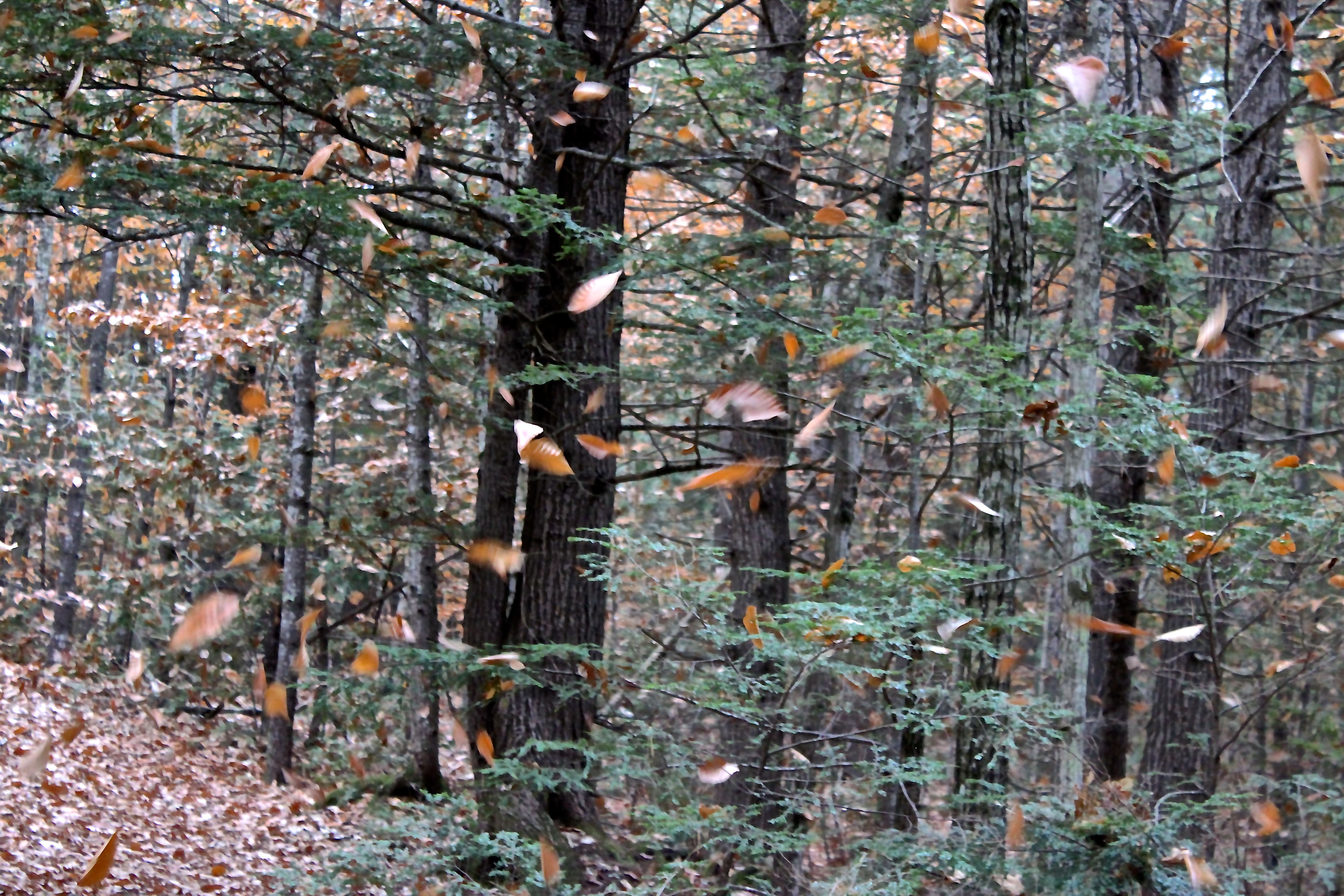
Every once in a while, I’d ask if it was raining. It was–beech and oak leaves.

HP old hemlock varnish conk

While we stopped to admire several older hemlock varnish conks, something else caught our attention.

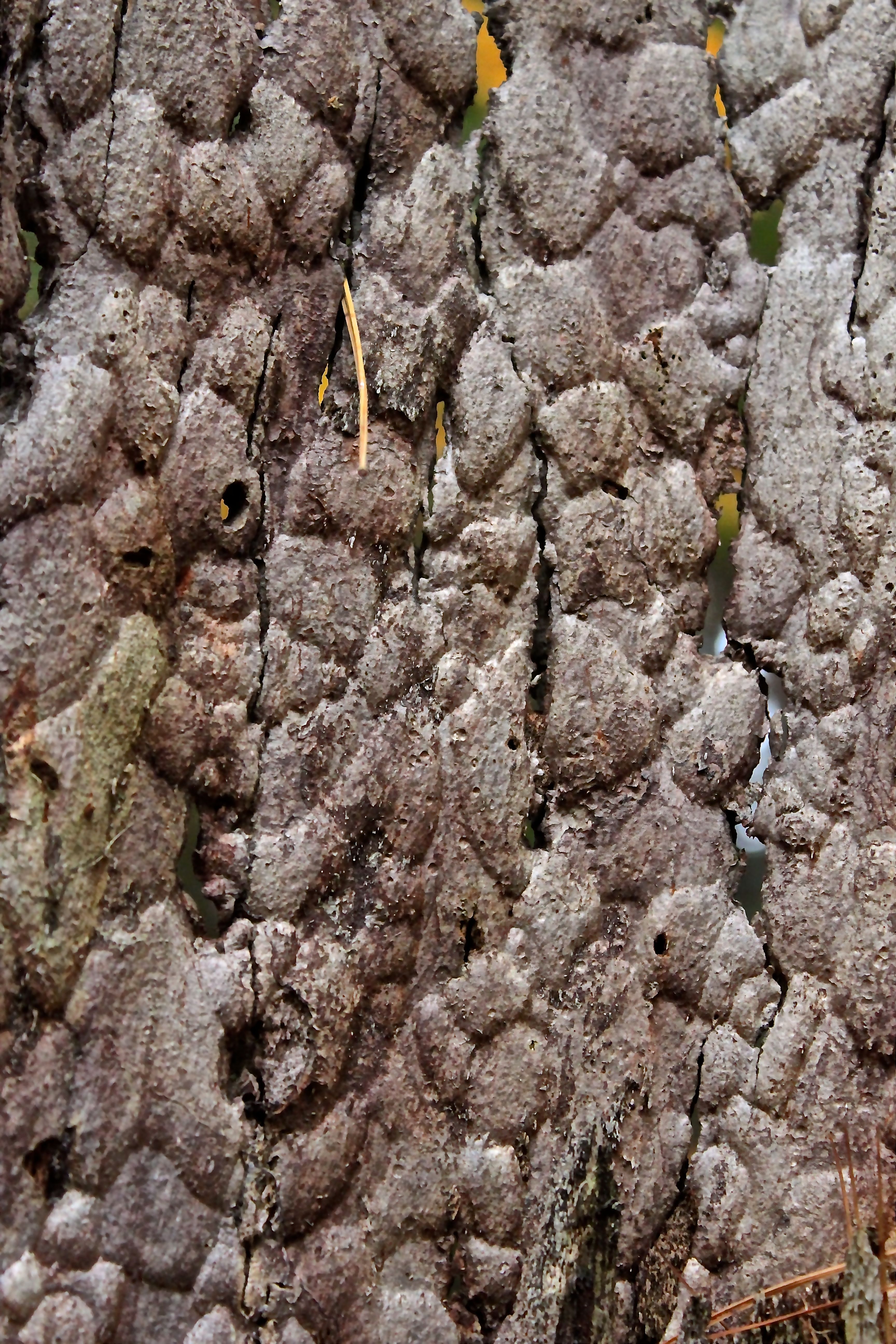
HP mystery bark

Do you know what it is?

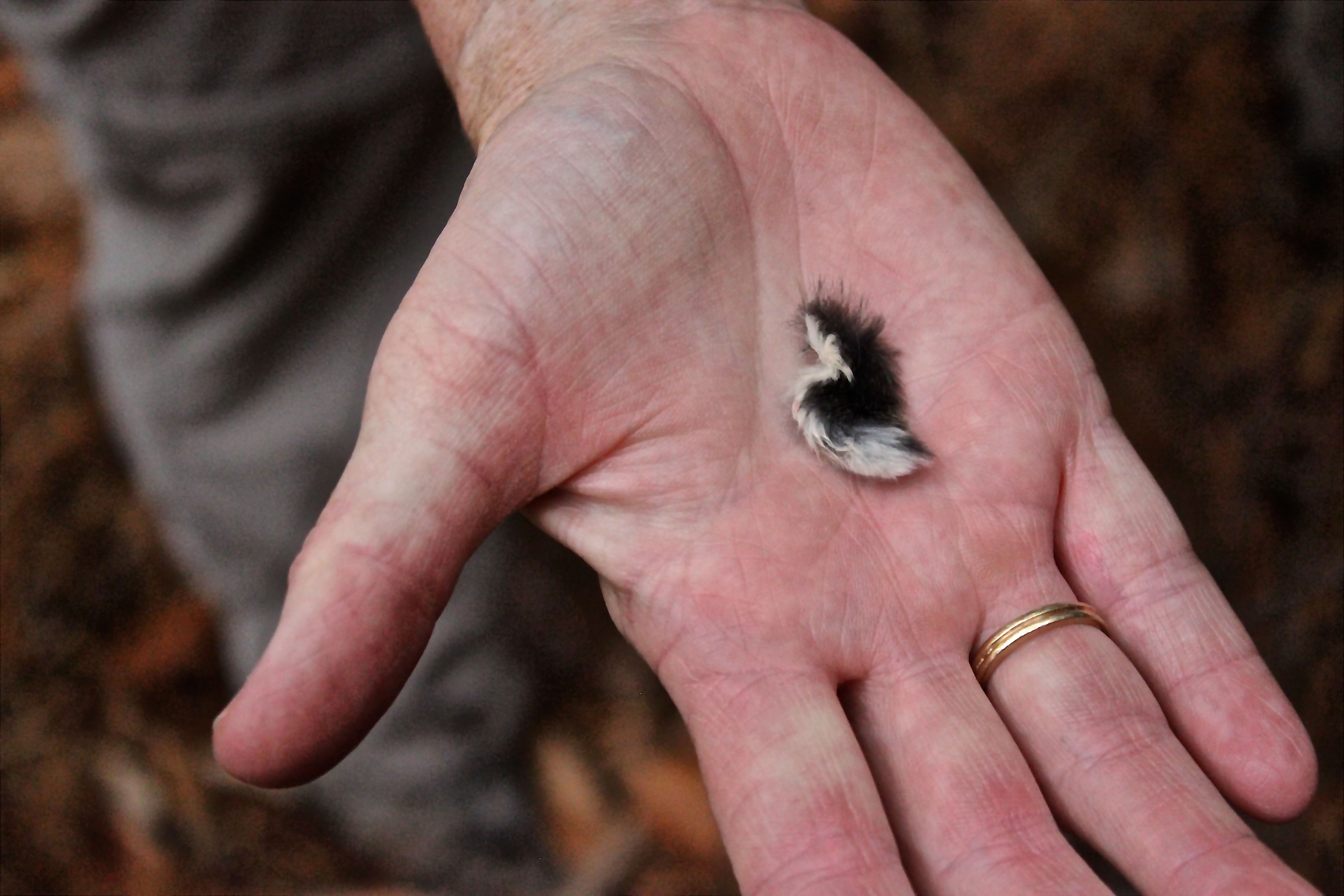
HP fur

And then Ann spotted this little tidbit–leftover from someone’s dinner. We still don’t know who ate whom. Or if it was related to our earlier find of the pellet.

What we do know is that we spent a delightful day werifesteriaing along.

HP fun mystery

As for the mystery photo–the inside of hemlock bark. This is the bark that I think of when trying to remember how trees decay–hardwoods rot from the inside out, softwoods rot from the outside in, but hemlock bark often remains. In the 19th century, hemlock bark was used in the tanning process because the tannins found in the bark preserved a hide and prevented natural decay while giving it a brown hue. At the same time, the tannin left the leather flexible and durable.

Here’s hoping you’ll have the opportunity to wander longingly in search of mystery.

25 Years of Blessings

At noon twenty-five years ago today, my mother walked me down the aisle to a grinning guy. He’s still grinning–thankfully.

As we kayaked yesterday, I was thinking about the bond we have.

tied together

It’s spider-web strong. Oh, it can be broken, and occasionally we get upset with each other, or more likely–I get upset with him–but then we weave a new strand and all is well again.

fish

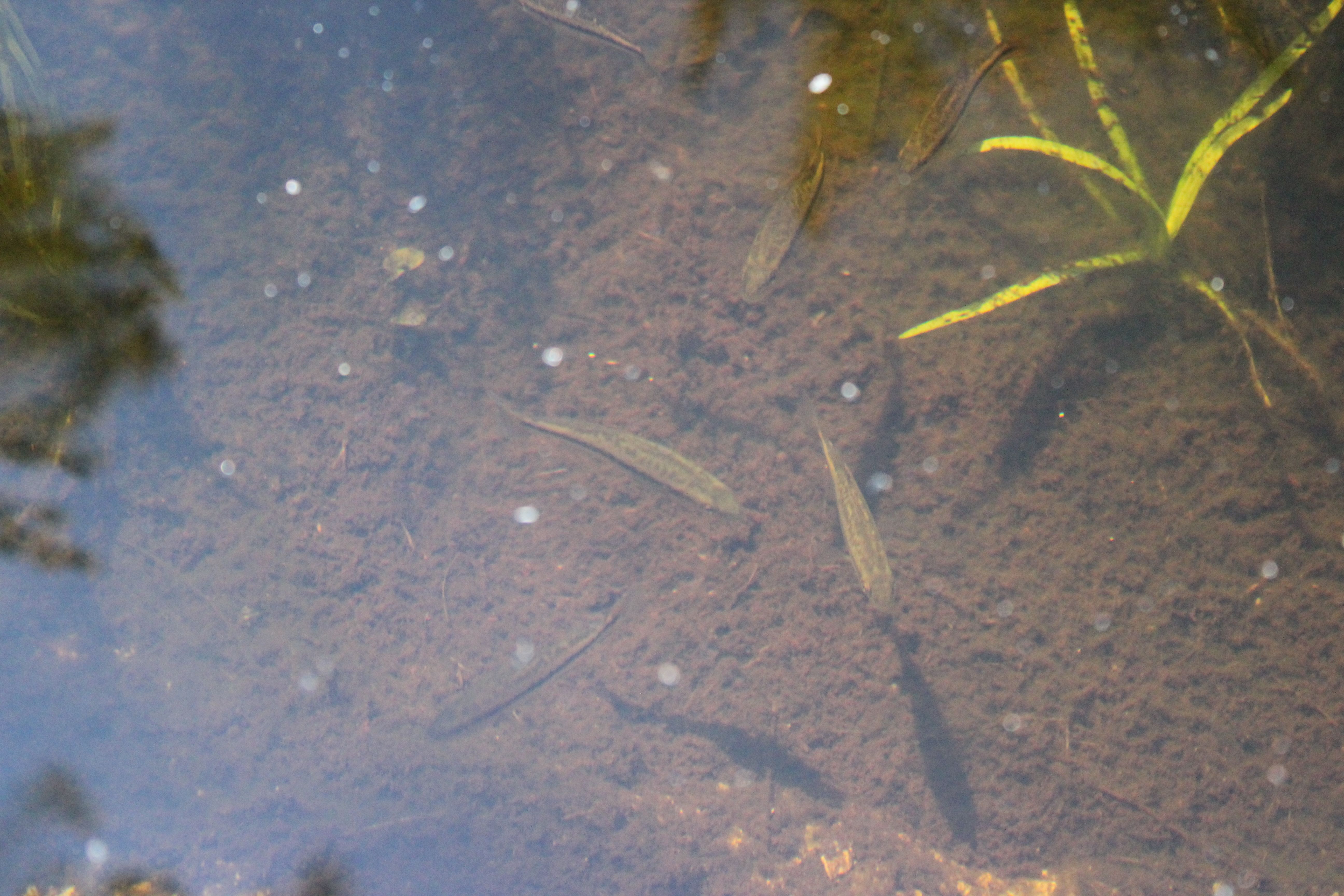
Like fish, we swim together, but are also each our own unique selves and we honor those differences.

sundews

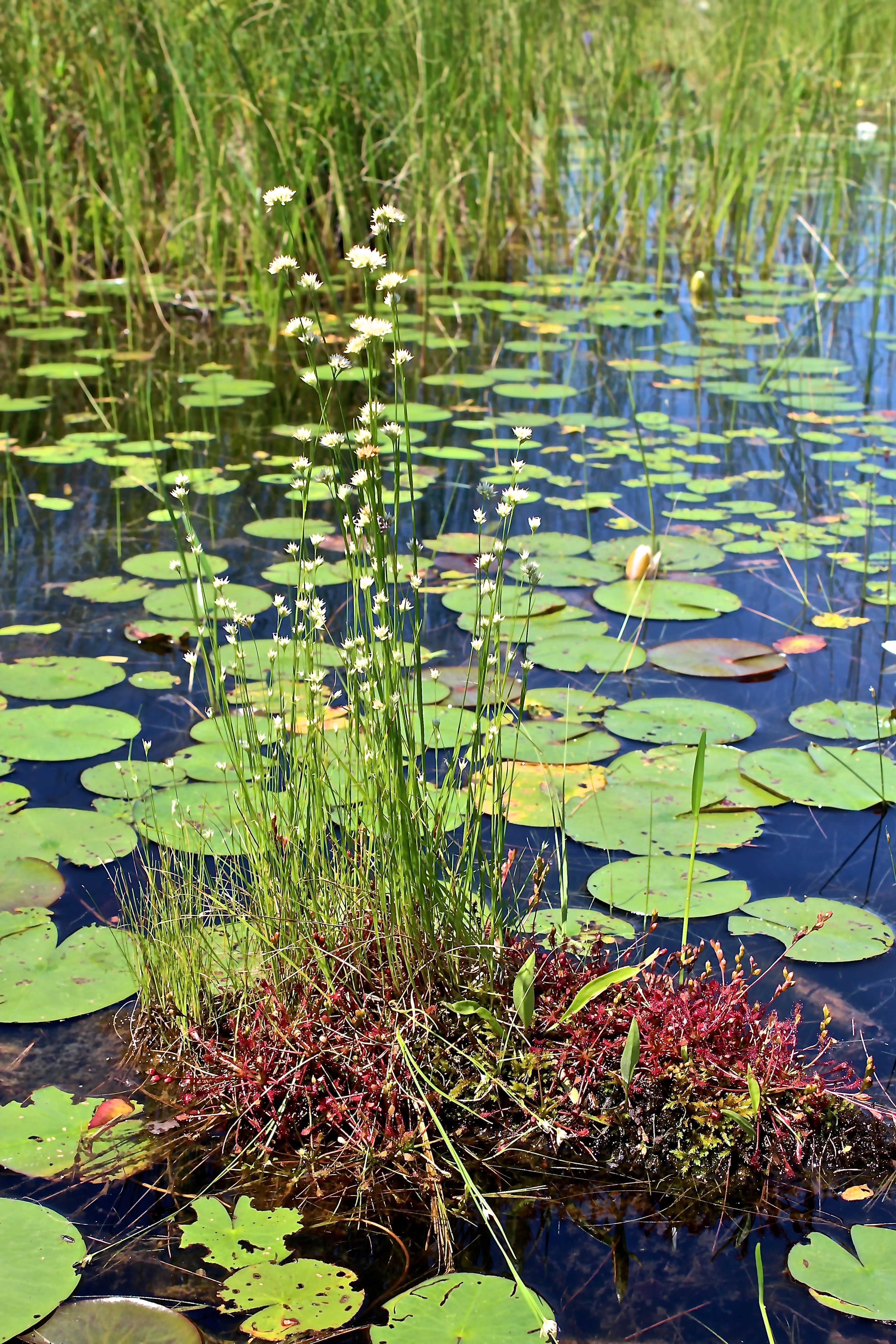
Sometimes, we’re competitive, but the glory of the win only lasts for a short time. I guess we like the competition more than the end result.

pretty day

Communication and Mondates have strengthened our relationship, and we value quiet moments spent in each other’s company.

Mountain view

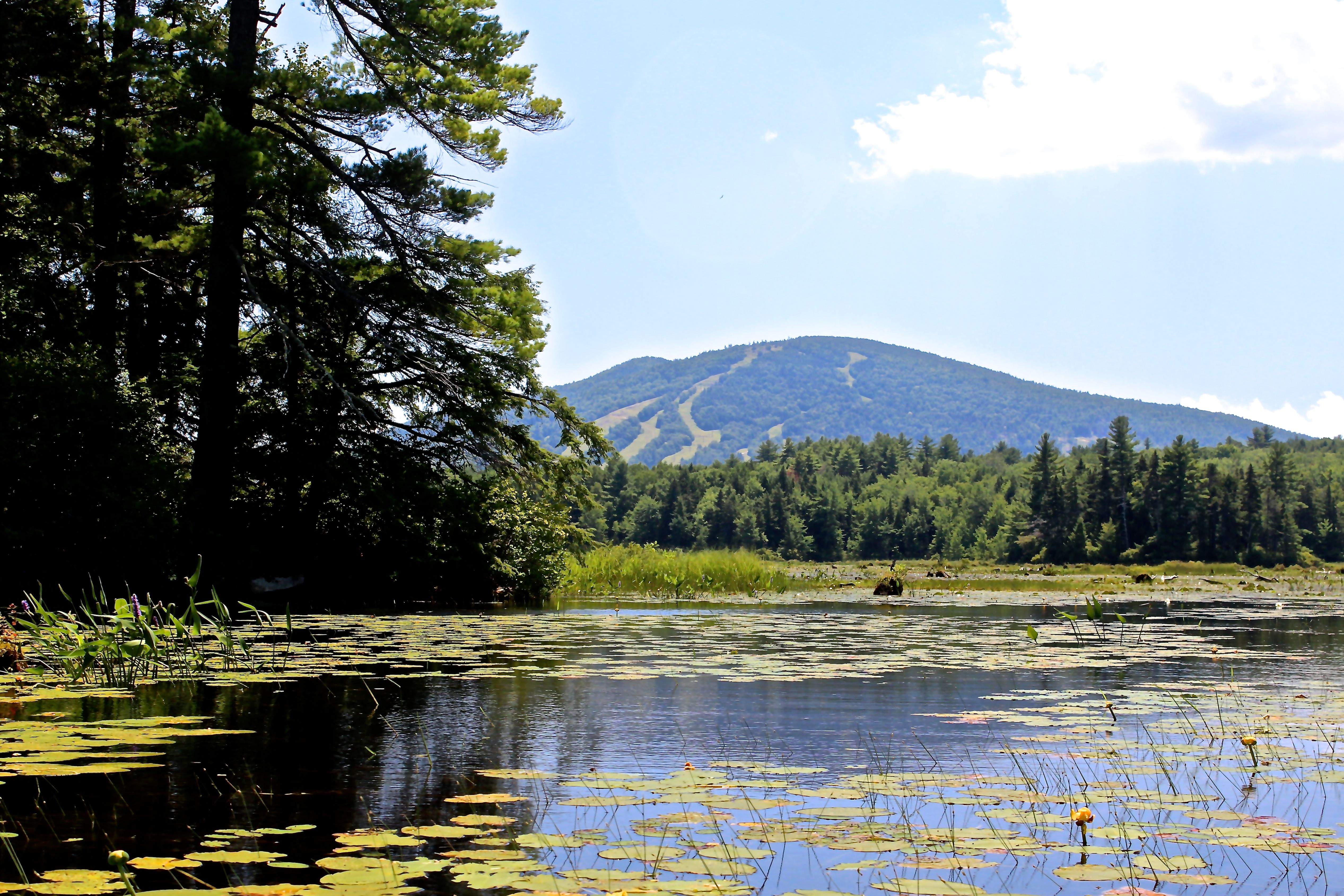
From the beginning, this mountain has formed the backdrop–our relationship began here at a Halloween party in ’86 (I was an olive, he was a duck hunter); we hosted our wedding reception here in ’90; we’ve skied, snowshoed and hiked both on trail and off (including the town boundary, which was rather challenging) and know its ups and downs intimately; it’s part of our daily view from camp; it’s a beacon from other vantage points so we always know where home is when we see it on the horizon.

blessed 2

My guy is full of surprises and he got me again this morning. When we were dating, he would occasionally use duck tape to leave a message in his apartment window so I’d see it on my way to work. This morning, I found this on a piece of plexiglass. The. best. gift. in. the. world. My guy! I am blessed. We both are.

Goodbye Spring, Hello Summer

Sometimes the words slide out with little effort and other times, they seem to hide in the wings, waiting backstage. So it is on this last day of spring.

Whoa. Maybe I’m not sure what to write because I’m not ready for spring to end. I’m not sure spring is ready either–it was 44 degrees at 6 a.m. and even now, sitting in the shade, I’ve got goosebumps from the breeze..

But say goodbye to spring I must. I’ve spent the past two days savoring its final moments and mosaic colors. Along the way, I’ve seen some cool things.

waspwasp 2

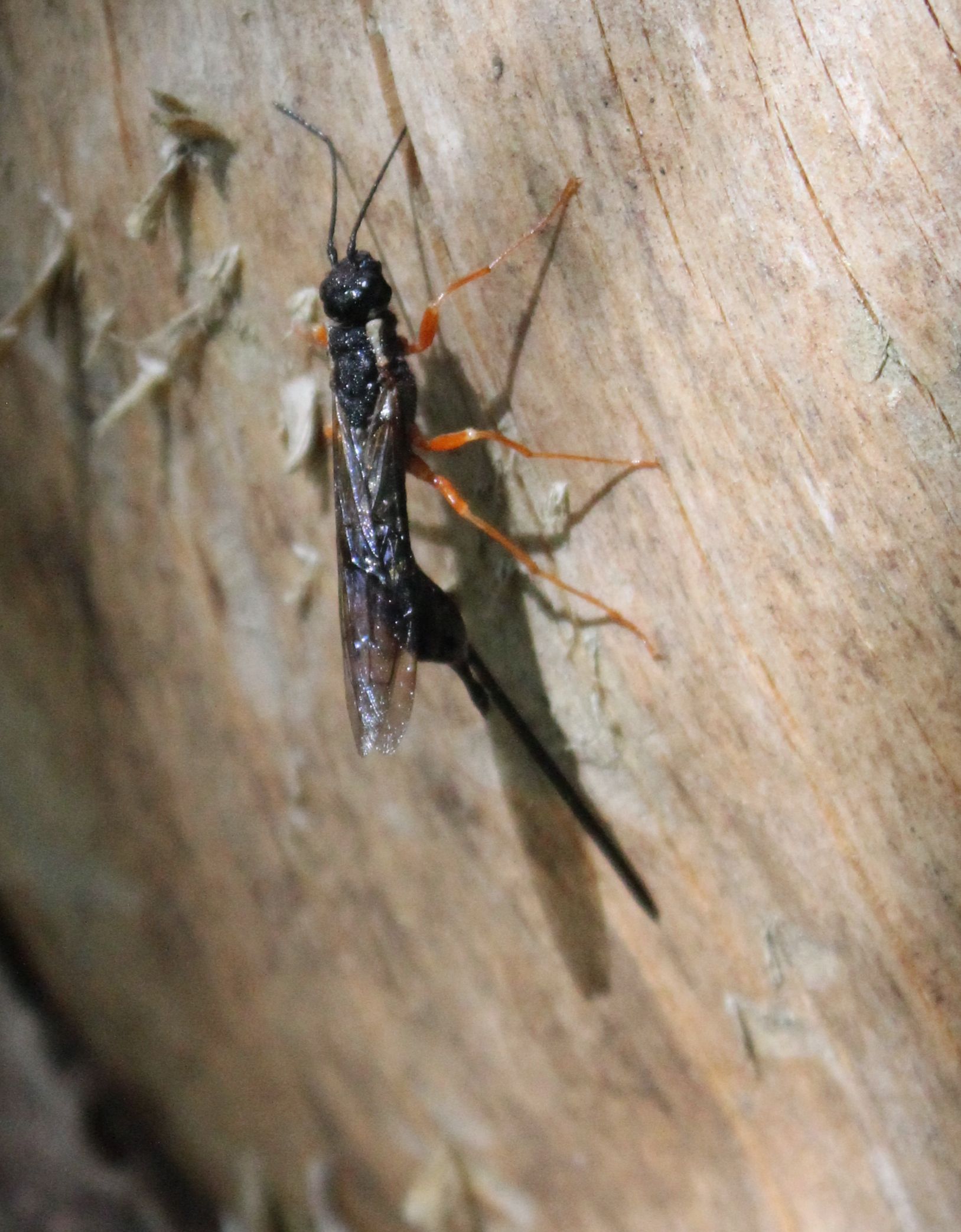
I came across this ichneumon wasp on the base of a hemlock girdled by a beaver. Because of the long, needle-like ovipositor (that looks like a nasty stinger, but usually isn’t–though she is a wasp), I think this is a female. She’s possibly searching for a place to inject her eggs, which will then feed on other insect larvae.

 beaked leaf

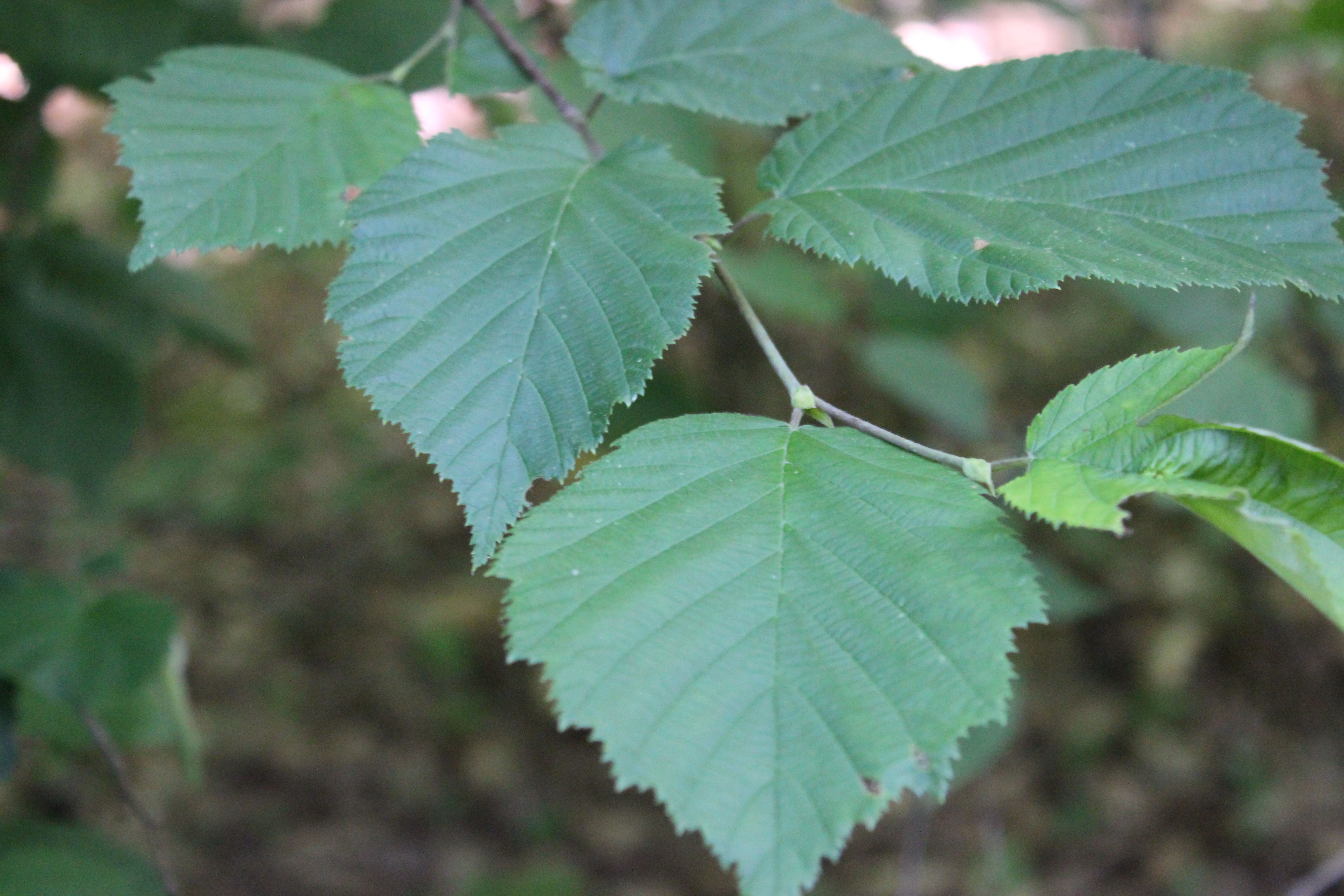
As the season unfolded, I’ve been training my eyes to focus on leaf characteristics. This one is easy to pass off as a beech. But, its saw-blade teeth tell me to check below the leaves.

beaked hazelnut

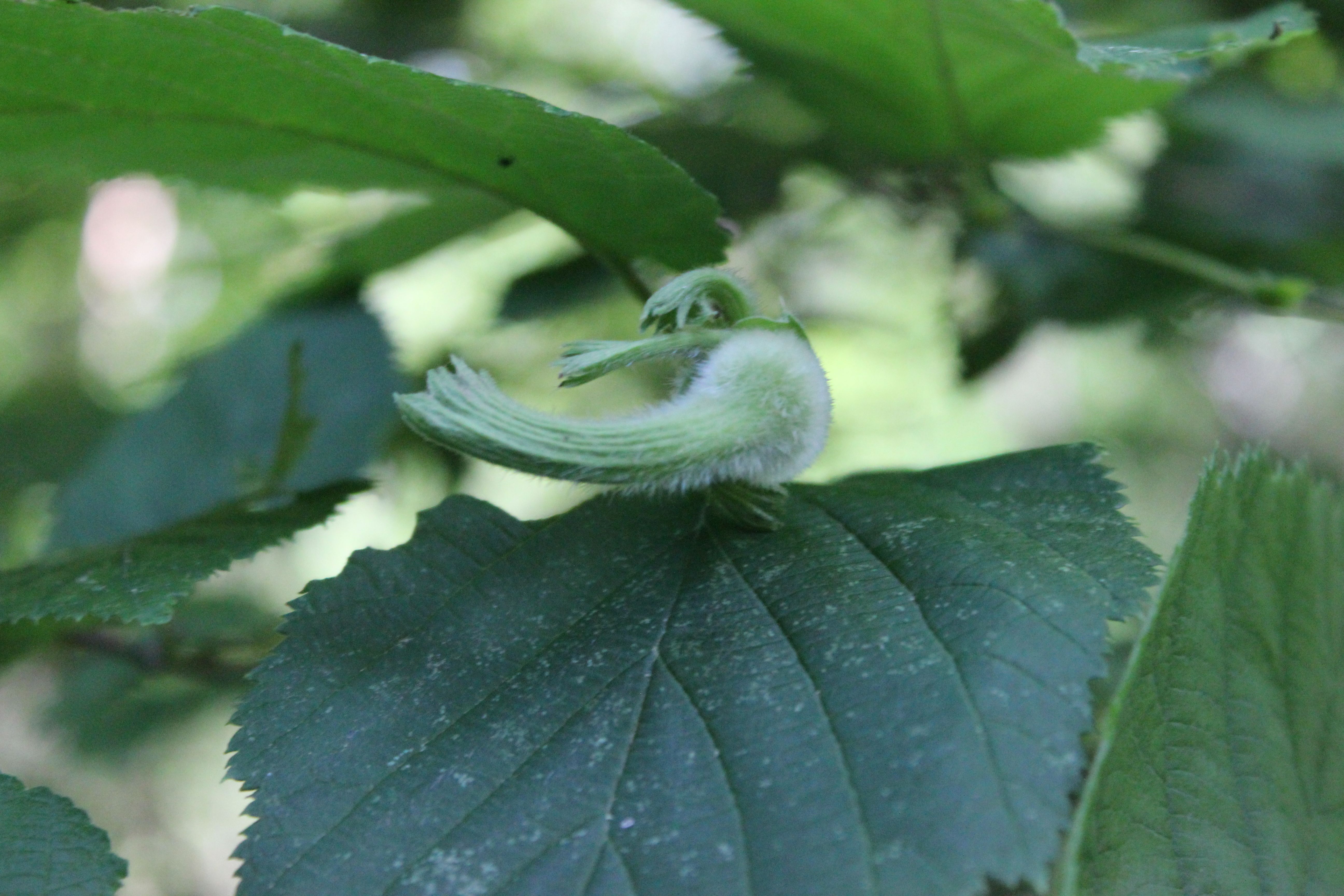
Beaked Hazelnut, a shrub that produces hairy husks containing the nut (think filbert) .

beaked hazelnut 4

Double beaked. They grow singly or in groups up to ten or so.

beaked five

Dangling like baubles, the fuzzy balls will entice squirrels, chipmunks, birds and yes, humans.

red pines

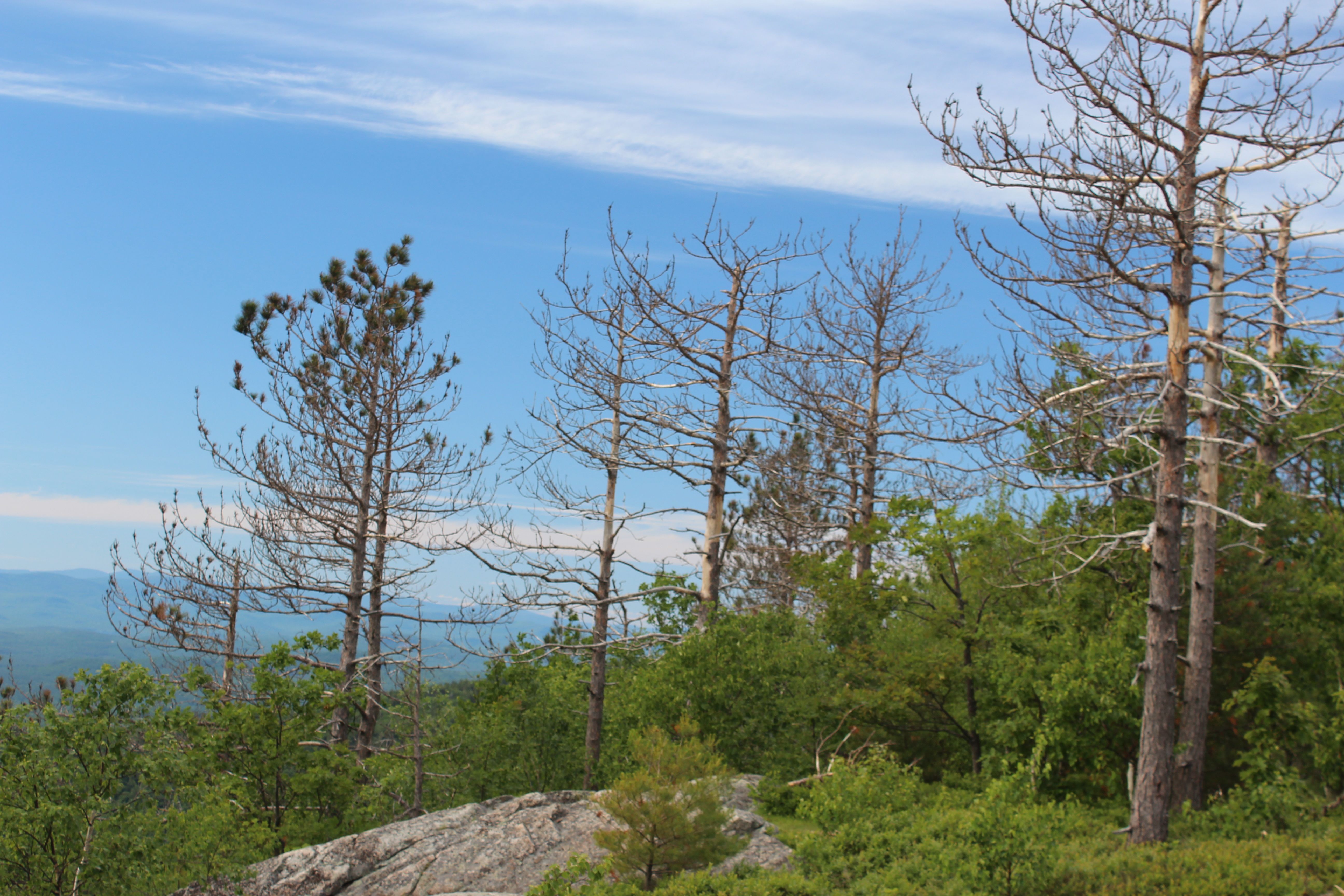
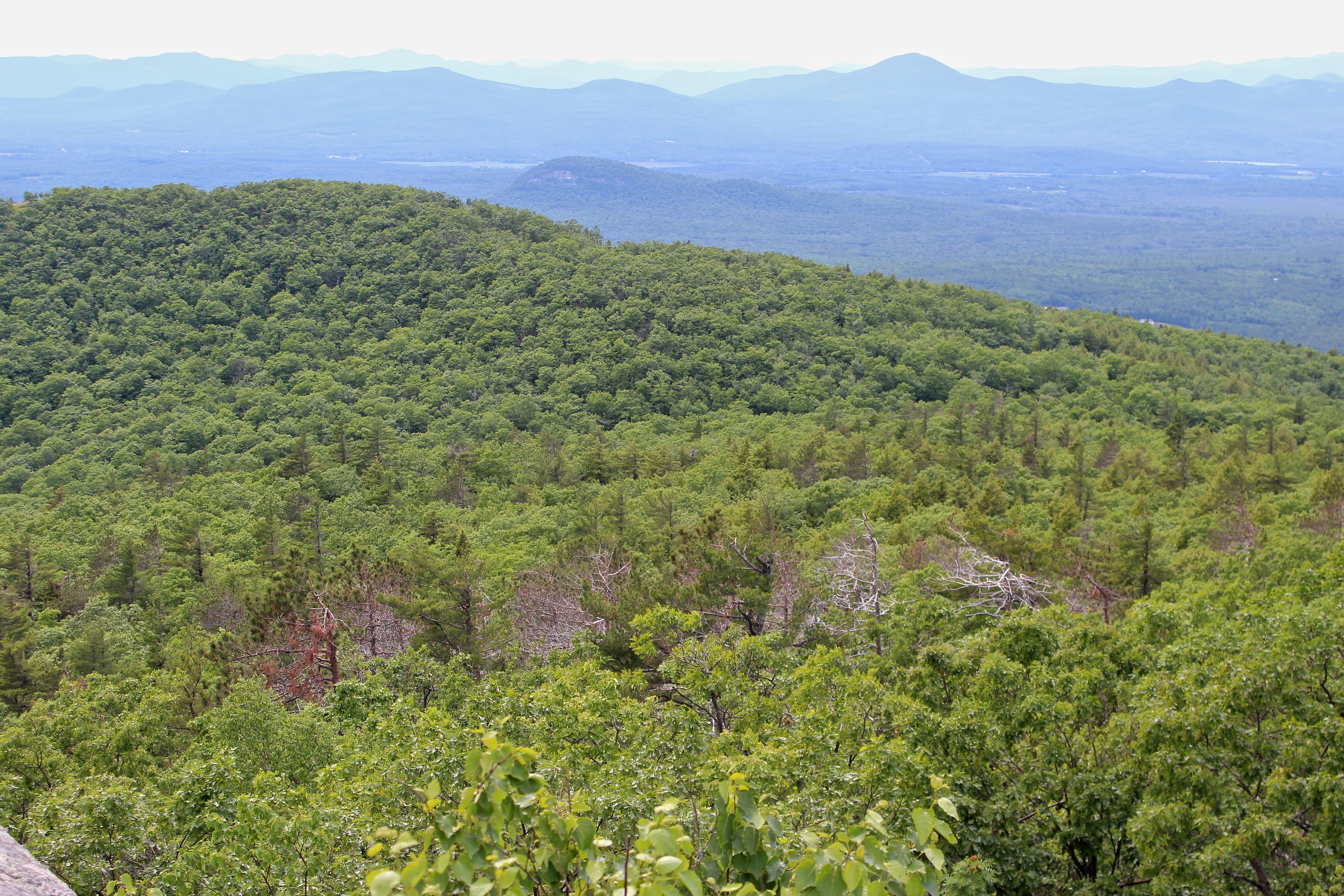
Sadly, not every part of the picture is pretty. The red pines at the summit of Pleasant Mountain are dying off. I spoke with a forester from the White Mountain National Forest about this today and his thought was that it might be red pine scale insects. Yeegads.

red pine 2

My first thought had been weather, but the trees below the summit have also been affected. It’s time for me to contact the state forester and ask his opinion.

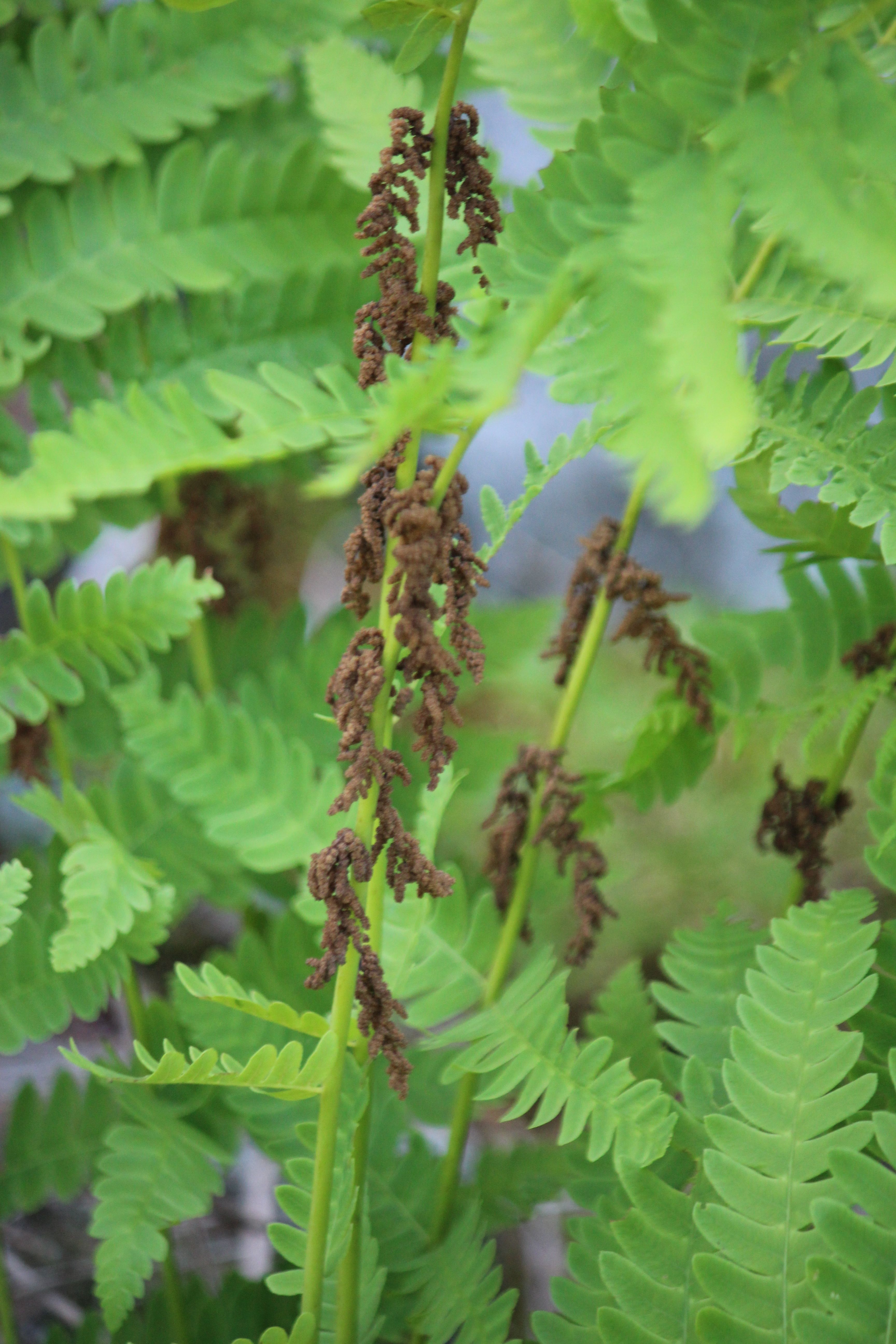
cinn fern

The fertile fronds of the cinnamon fern have spread their spores and are now withering. Soon, I’ll have to search to find any evidence that they ever existed.

inter fern

The same holds true of the interrupted fern, though the gap that will be left once the fertile middle pinnae fall off will be rather obvious.

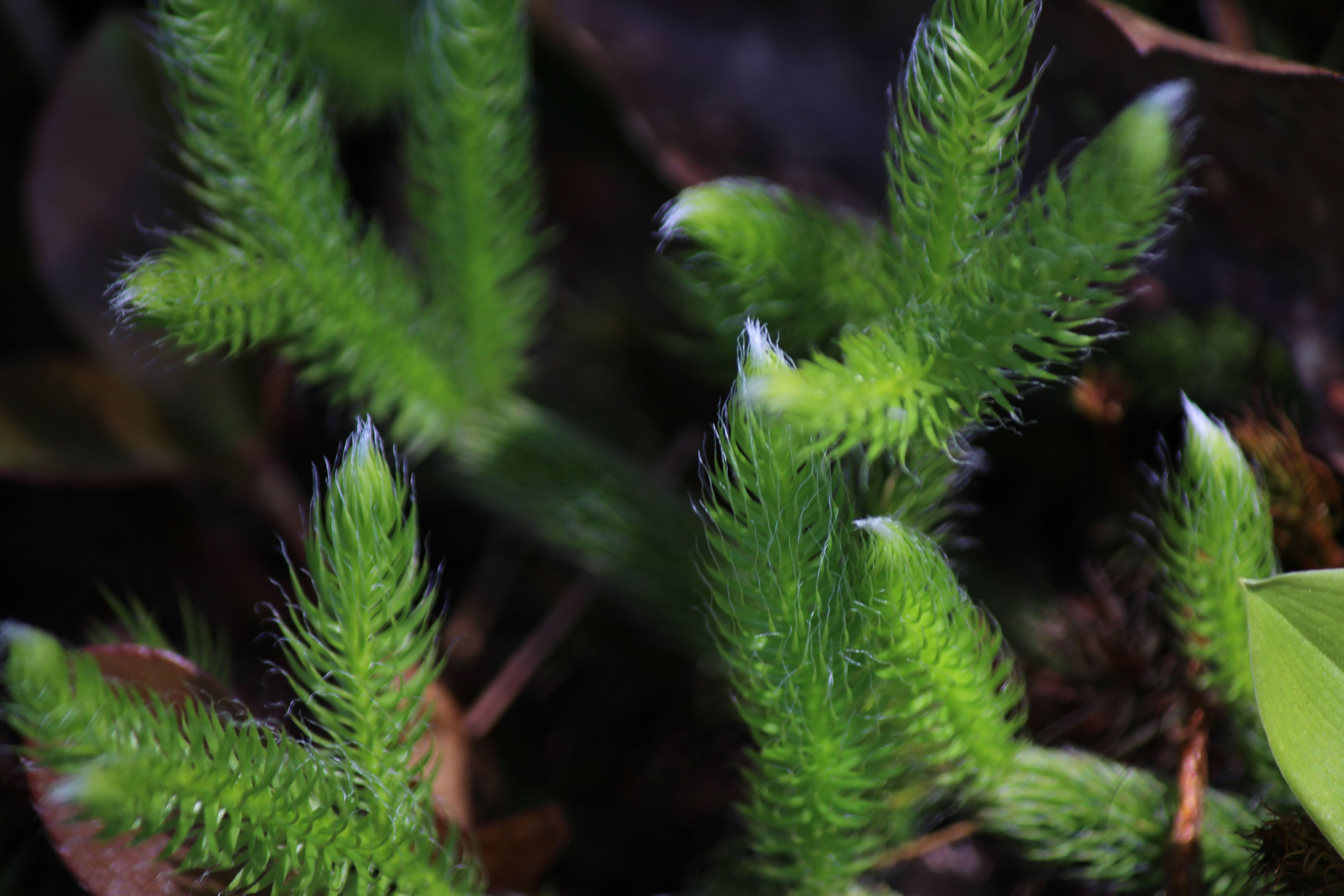
running club moss

Long white hairs top the tip of running clubmoss.

running 2

Candlelabras are forming, preparing to release numerous spores. Like the ferns above, it’s difficult for me to comprehend that this life form that creeps along the ground was once the size of trees. Mind boggling for this brain.

lady bug

On to simpler things. A ladybird beetle.

hawk 2

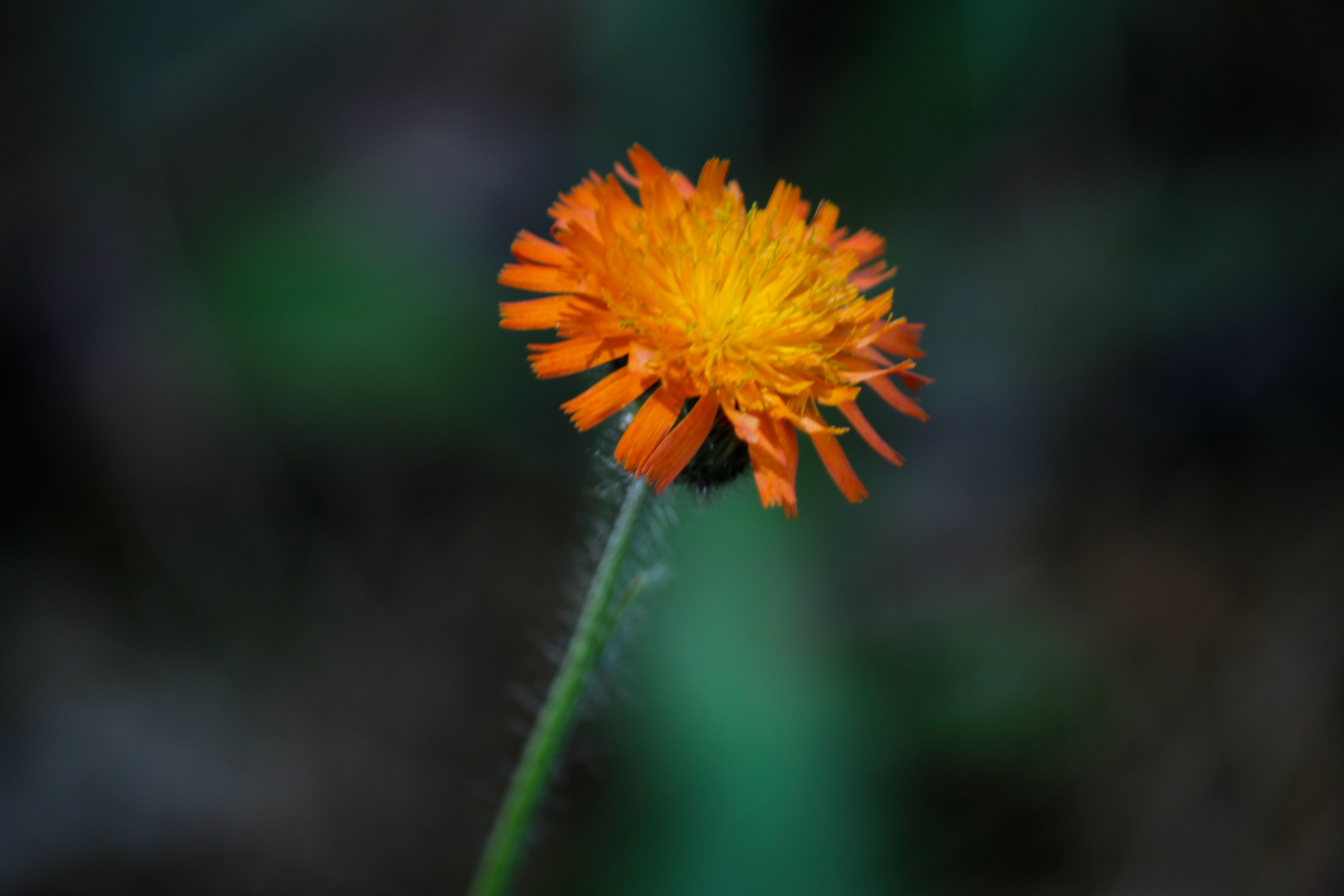
Orange Hawkweed, aka Devil’s Paintbrush.

dragon 1

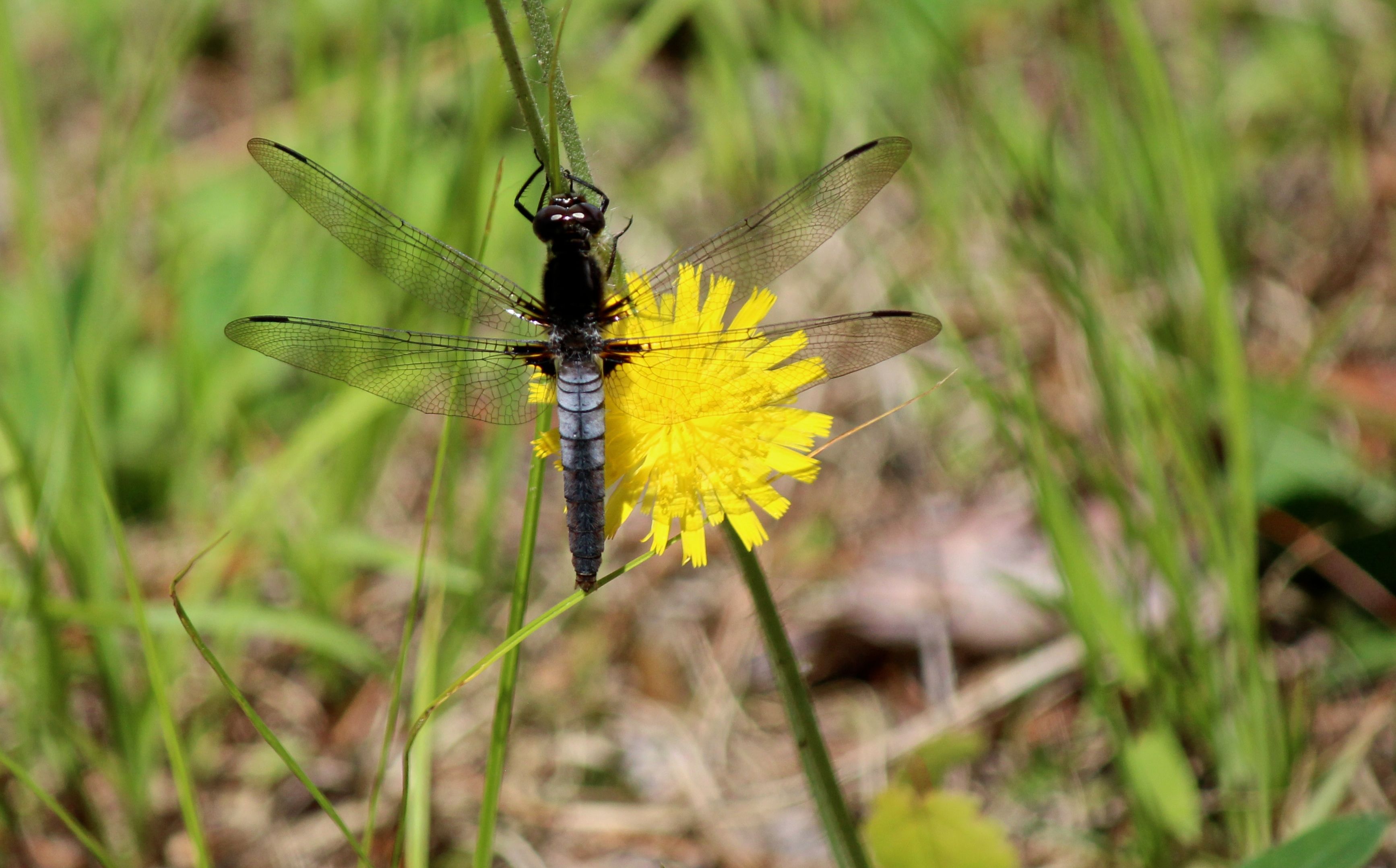
I think this is an Eastern pondhawk dragonfly, but if you know better, please tell me. My other thought–blue dasher. Either way, like all dragonflies, there’s beauty in its venation and color. Plus, those dragonfly eyes.

blue flag iris reflection

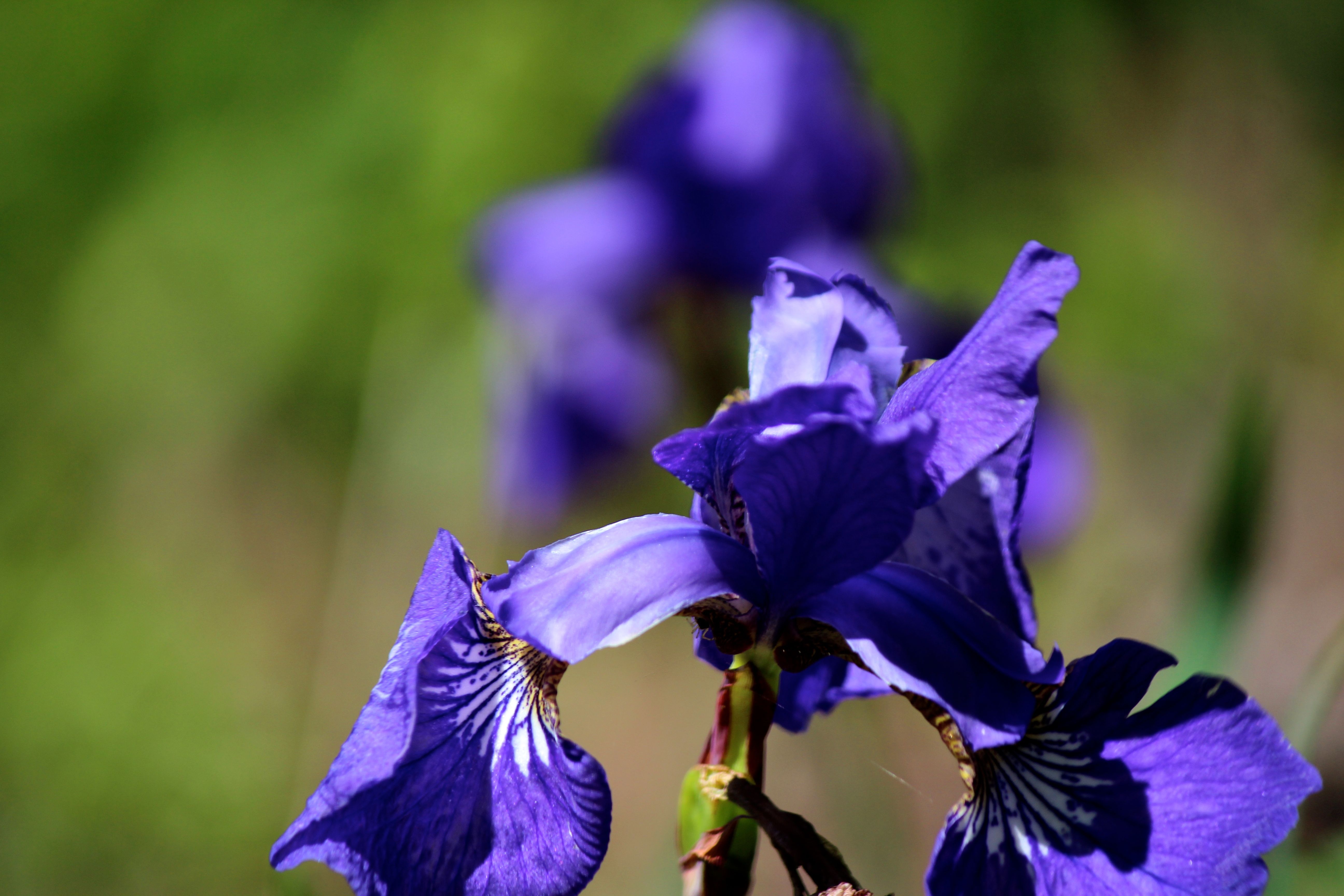
The Blue Flag Irises

bf iris

are making a final statement,

heron

while a great blue heron forages for fish near an abandoned beaver lodge.

daisy 1

Daisies speak to the season to come.

another season

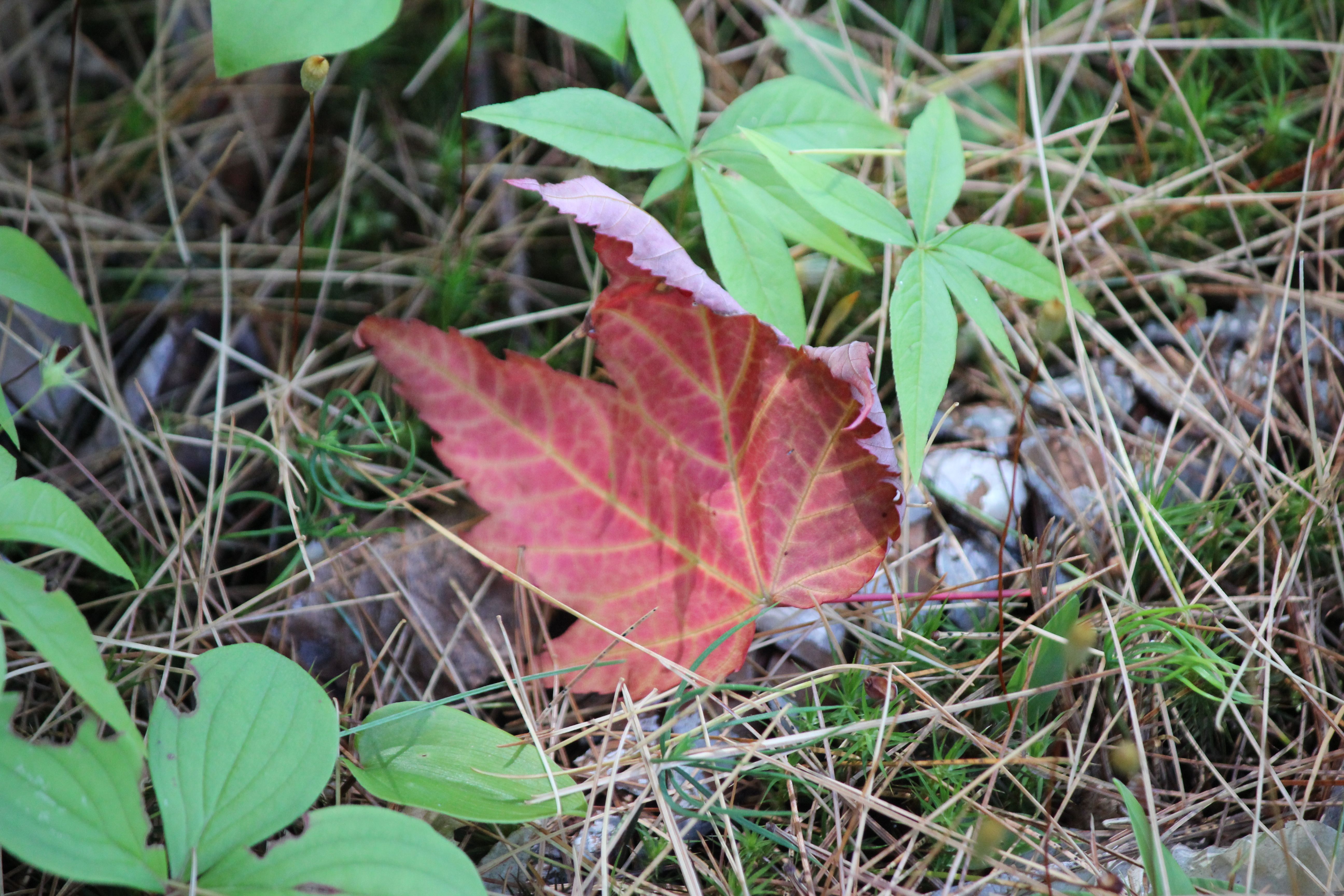
It’s only a day away . . . oops. A red leaf found today. What’s with that? Maybe the pine needle cast has all of nature confused.

mt washington

Thanks for joining me on this last peak at spring. I’m looking north now as the summer solstice is on the horizon.

Book of May

book

Book of May

The book of May is actually any book by Edwin Way Teale. I read A Naturalist Buys an Old Farm several years ago and felt like I was tramping along the farm paths right beside him and his wife, Nellie. Maybe it’s because my Mom’s name was Nellie, though she preferred to be called Nell and I’ve always loved that name. It’s that and more–he welcomes me into their world.

It’s the sense of solitude and peace and wonder that come through his writing. It’s the realization that he didn’t have all the answers either and that was just fine. On the second to last page he writes, “Given our outlook and our interests, it has been our closeness to nature, our daily existence on the edge of wildness that has made the most profound impression. Here we bought sunrises and violets and whippoorwills as well as woods and pastures. If you wonder if this life’s original sweetness did not wear away as time went on, if this life did not become more tame and dull with closer acquaintance, I have news, and the news is good. After a decade and a half, this life is still as satisfying, still as near the heart’s desire, the last minute as fine as the first. Our acres remain filled with freshness and surprise as though we were visitors, newcomers, rather than long-time owners of the land.”

As I typed that paragraph, I thought of my friends, Jinny and Will, and their love for their land (that I covet) and how their daily encounters are filled with freshness and surprise.

Currently, I’m reading Springtime in Britain and traveling along on the hedge-lined roads with Edwin and Nellie. As is my habit, I turn up the bottom corners of pages that contain words, sentences, even paragraphs that sing to me. I’ve also been known to write in margins.

From Springtime in Britian: “The song of a bird may be an enticement for a mate. It may be a warning to trespassers on its territory. But why so musical? Would not barring notes or guttural sounds or shrill and piercing whistles achieve as well these ends? Why does the enticement and the warning have to be so melodious, so moving, so beautiful? All we can say with our sense of wonder aroused, is that it, like the delicate perfume of the wildflower, is part of nature’s endless employment of beauty to achieve its utilitarian ends.”

My May Day Celebration comes to mind, but what I also love is that this man who knew and understood so much, questioned everything and acknowledged wonder.

A Naturalist Buys an Old Farm, 1974, and Springtime in England, 1970, by Edwin Way Teale. They are difficult to come by, unless you know the proprietors of Bridgton Books, who will do their best to locate any title.

A Message in the Sand

We were together all day, but in my mind our Mondate didn’t officially begin until we ate lupper at a small harbor-side restaurant on Commercial Street in Portland. Fish. Fresh fish–always a treat. So lupper it was at about 3:30 pm, such was the day. I’m willing to bet you’ve never heard of lupper before. I have–occasionally. It goes well with a Maine IPA. Lupper–lunch and supper. OK, so it’s late and I’m tired. After dining, we drove to Crescent Beach State Park in Cape Elizabeth–a combo of sandy beach and the rocky coast of Maine.
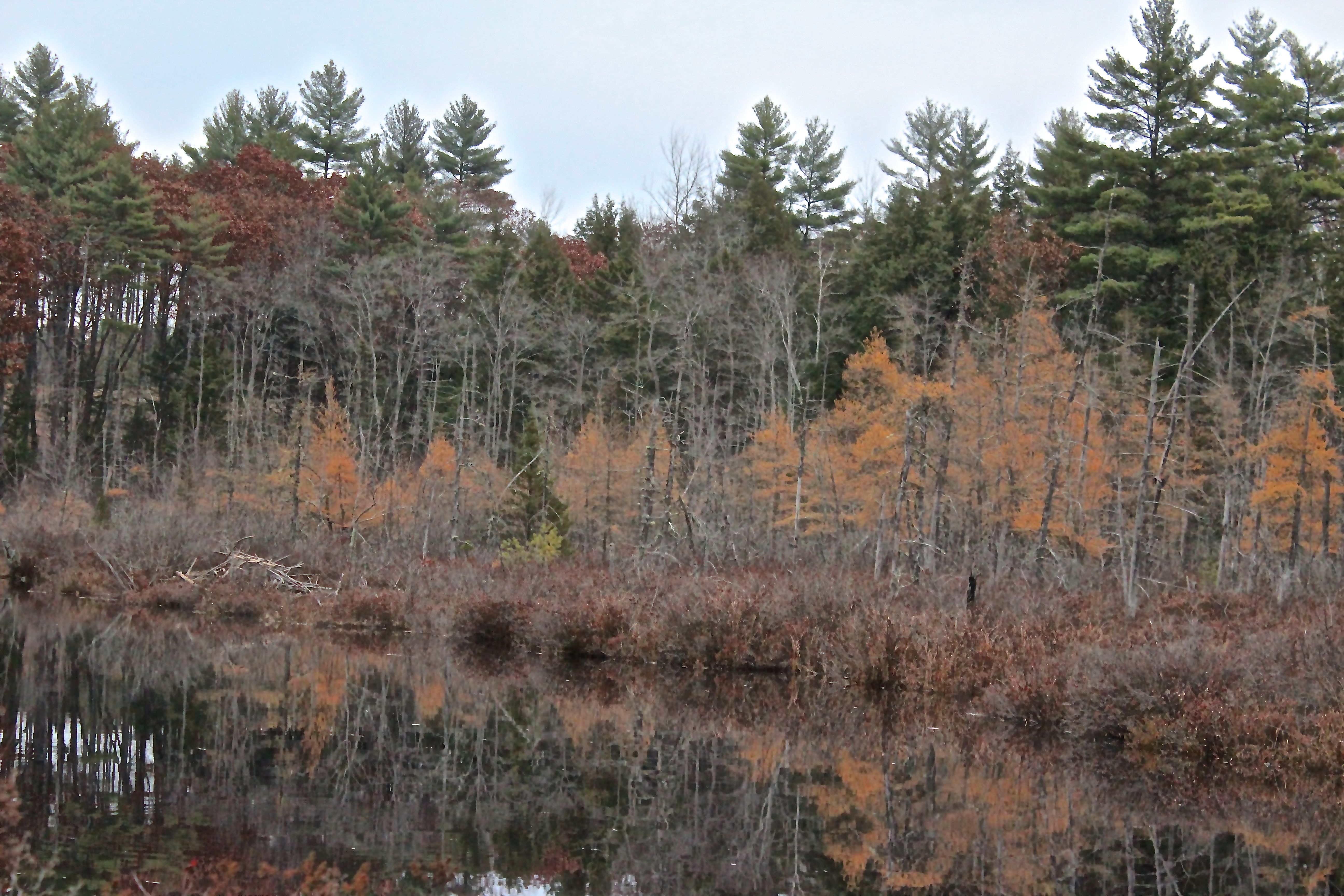
park sign

So true. And not something I always heed. I can’t tell you how many things I’ve collected over the years.

speckled 1

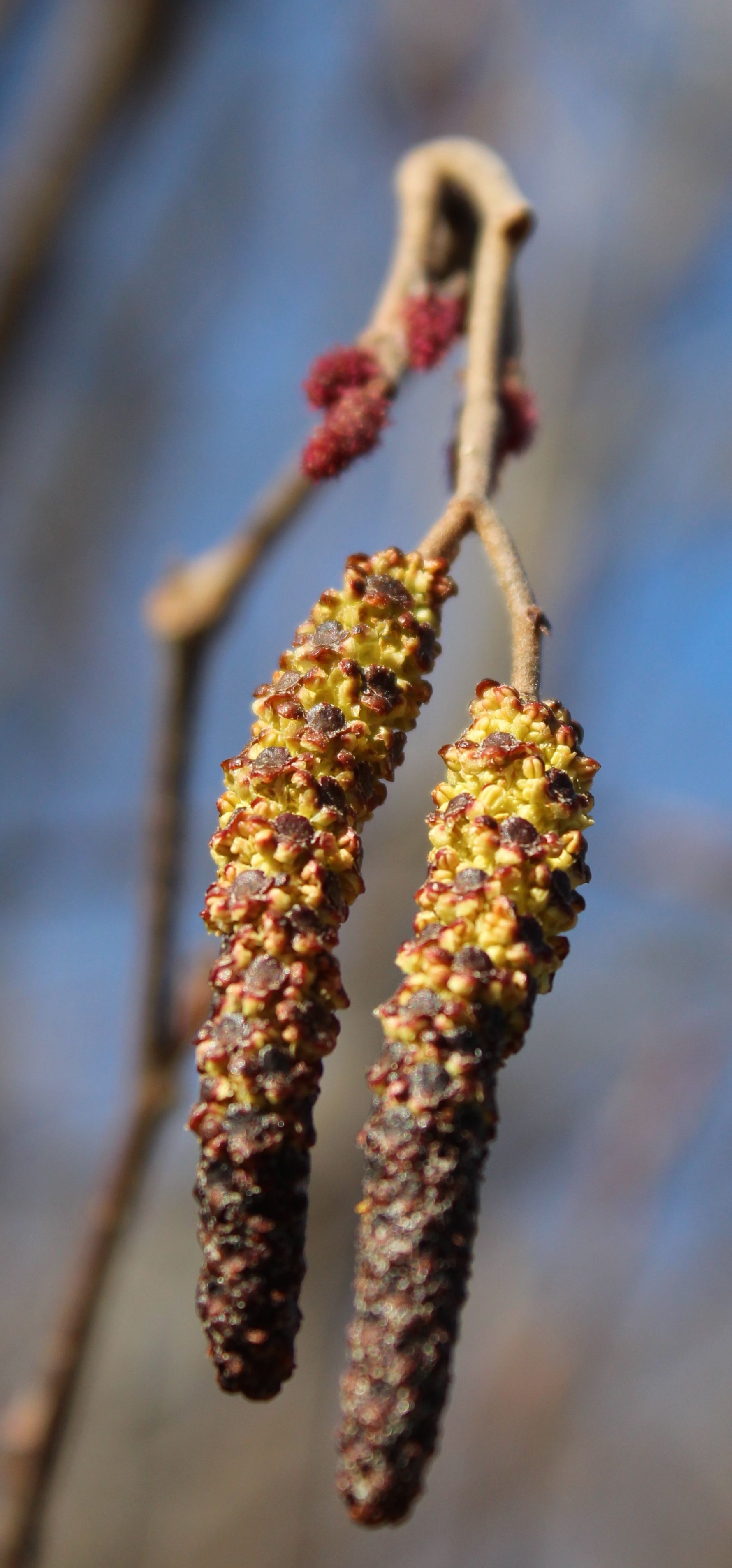
We had to park by the gate and walk in. Along the way, the Speckled Alders let us know that spring has sprung at the coast. Still a week or two away in western Maine, but here, the catkins are singing with joy. The shift has begun–from burgundy to yellow.

speckled 2

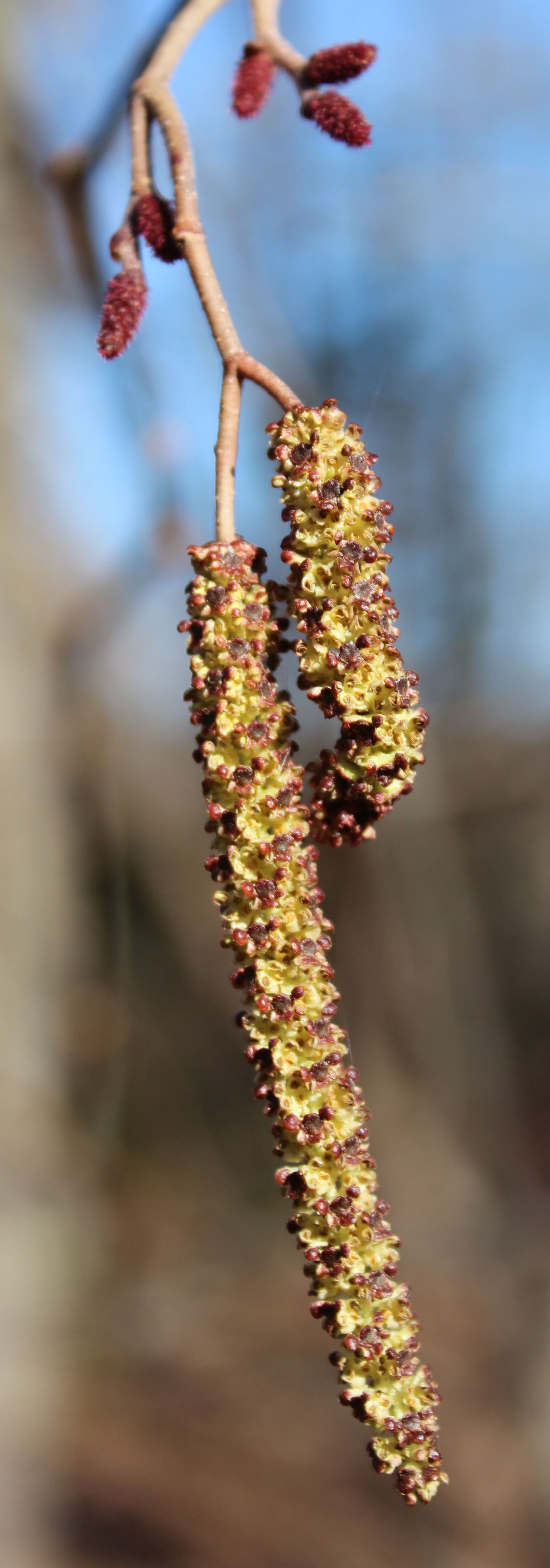
Dancing in the breeze, these distended male catkins send their pollen a-flying.

speckled 3

Meanwhile, just down the stem, the rather petite females, red in color, stand quietly nearby–ready to receive. OK, enough of the birds and the bees.

beach 1

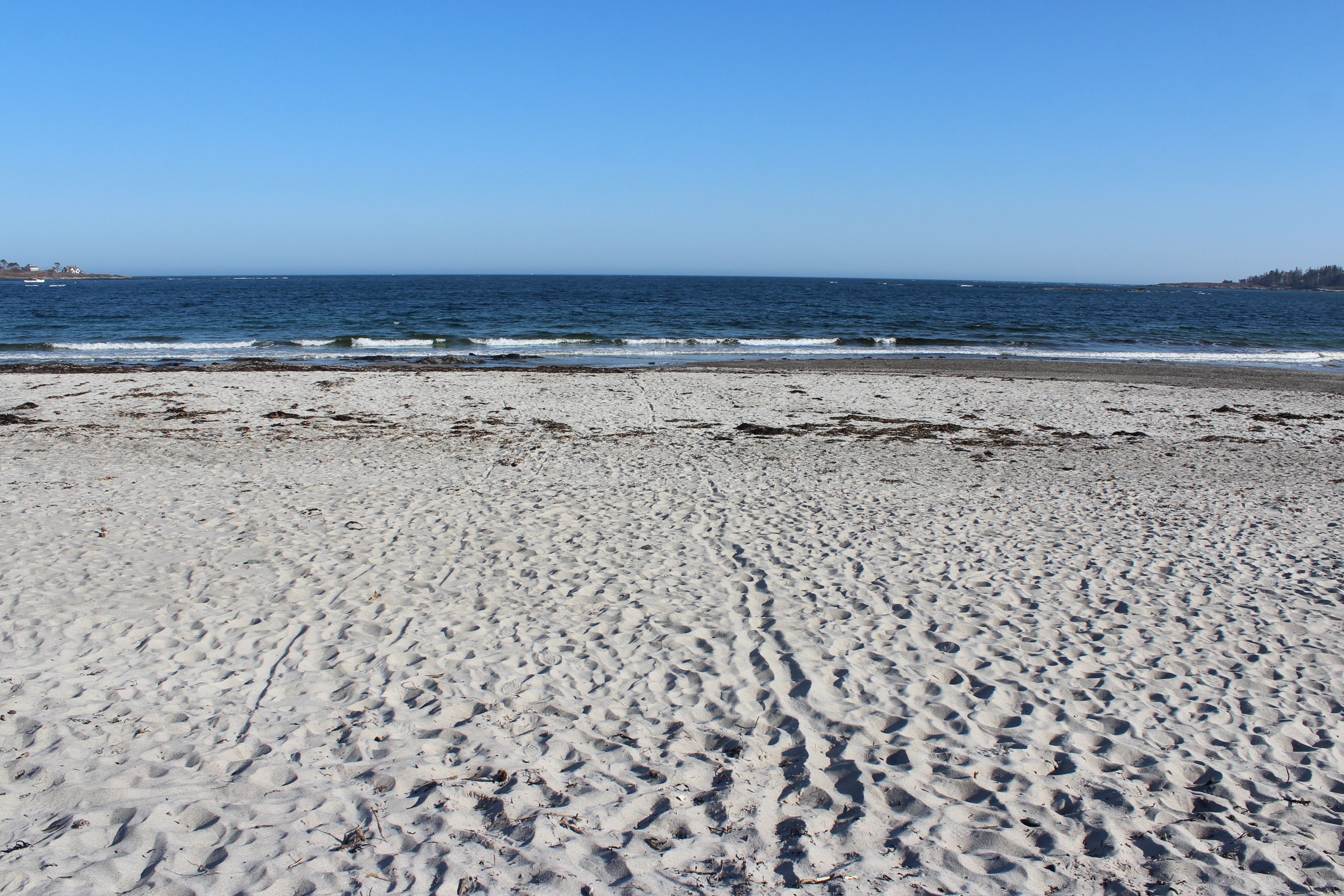
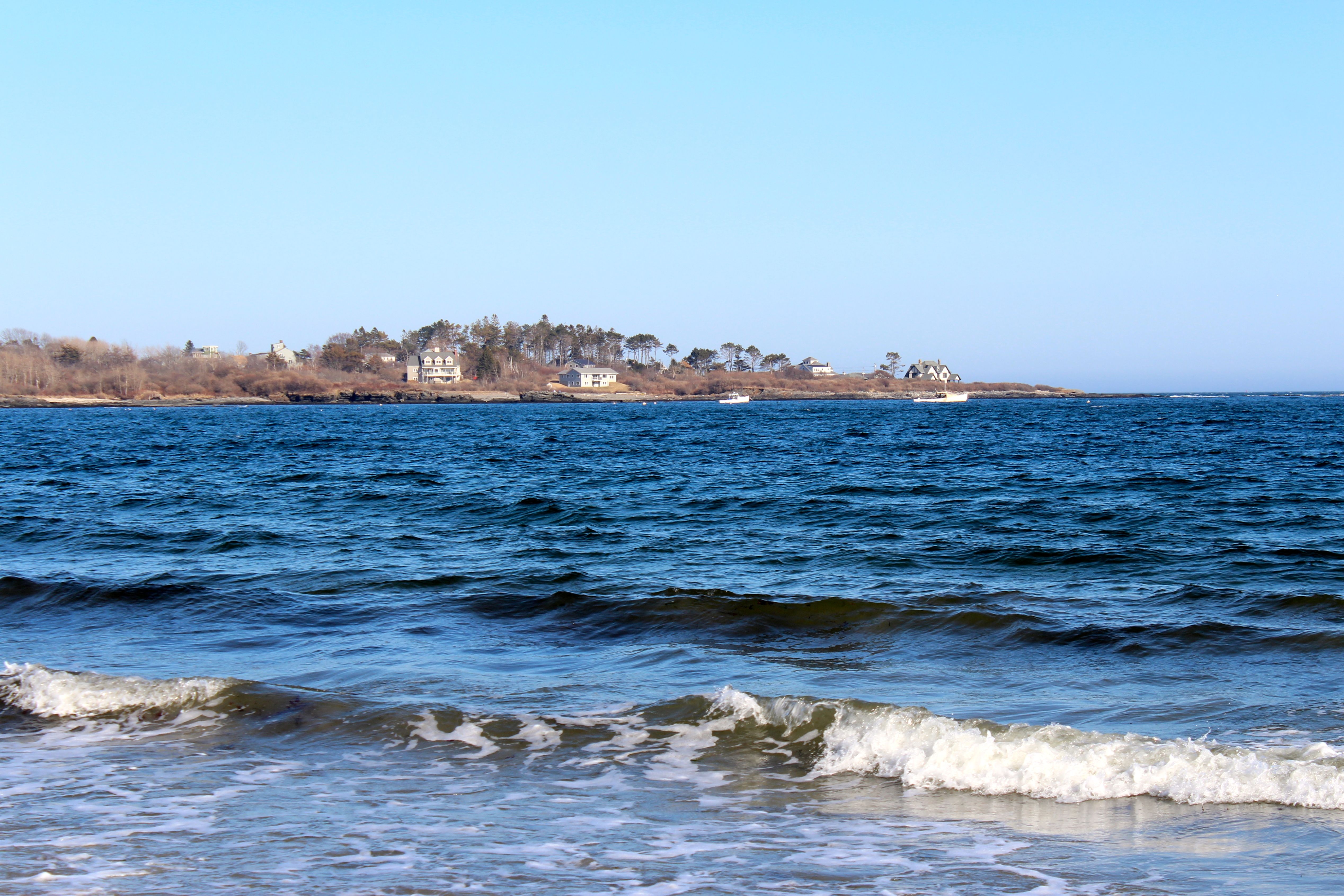
The beach, the Atlantic Ocean, McKenny Point to the left and Richmond Island to the right.

The point

McKenny Point.

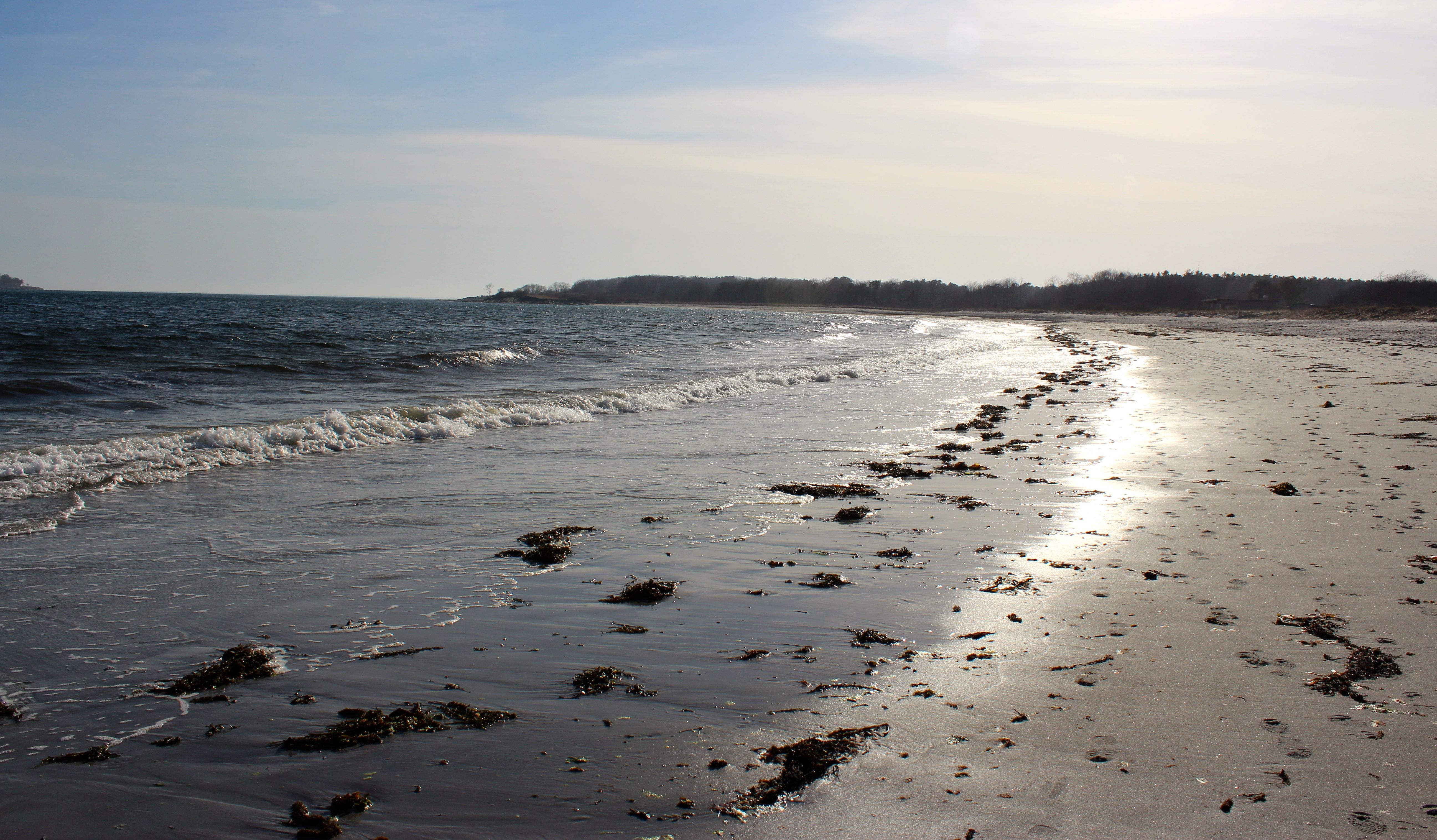
late afternoon

The crescentness of the beach. So I made up another word. It’s what I do–the liberty of the word smith.

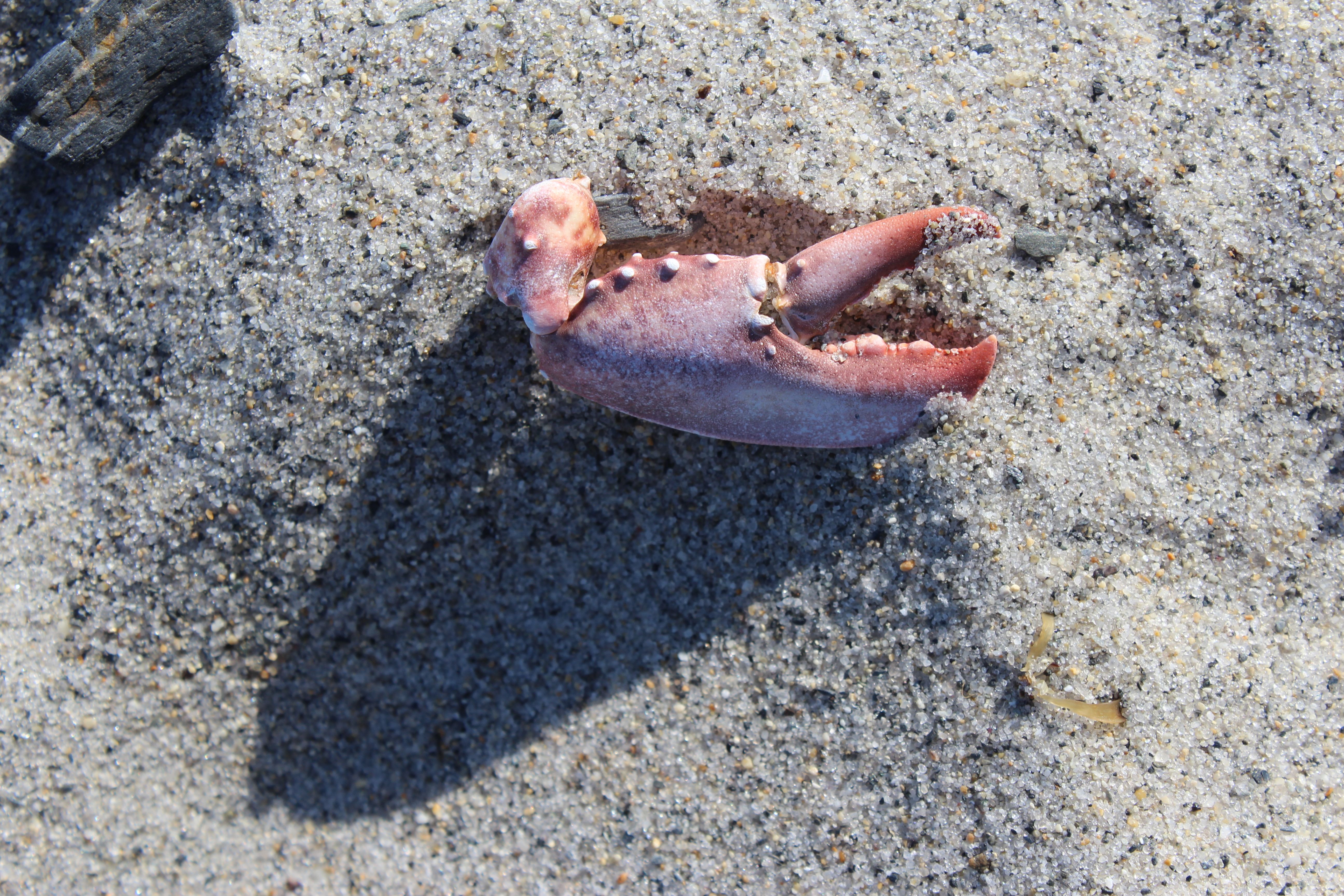
lobster claw

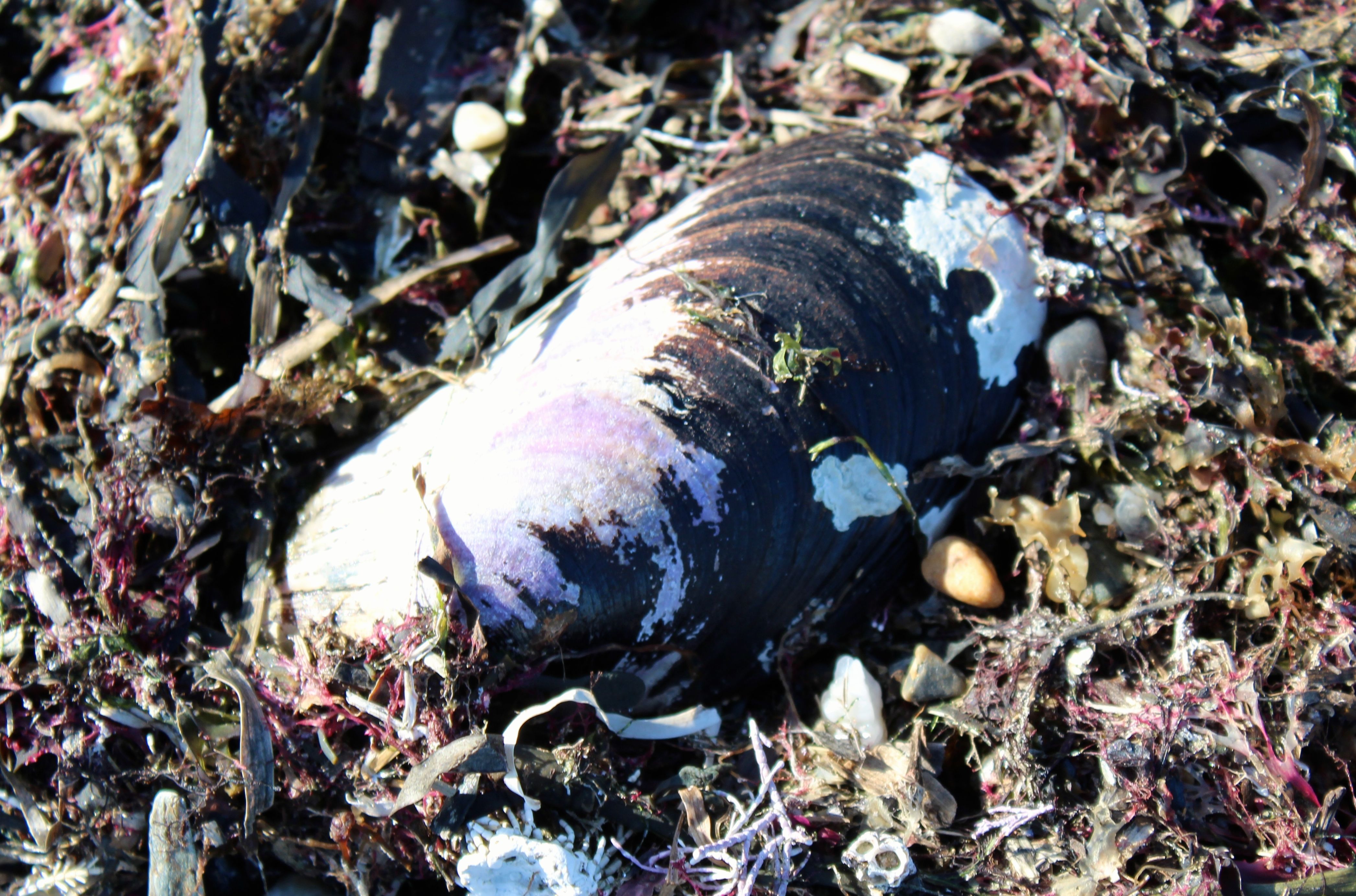
Take only pictures. mussel shell

I did. And in the process, my childhood along the Connecticut coast kept calling to me. Memories of collecting mussels from among  jetties and using them as crab bait–many a crab we caught.

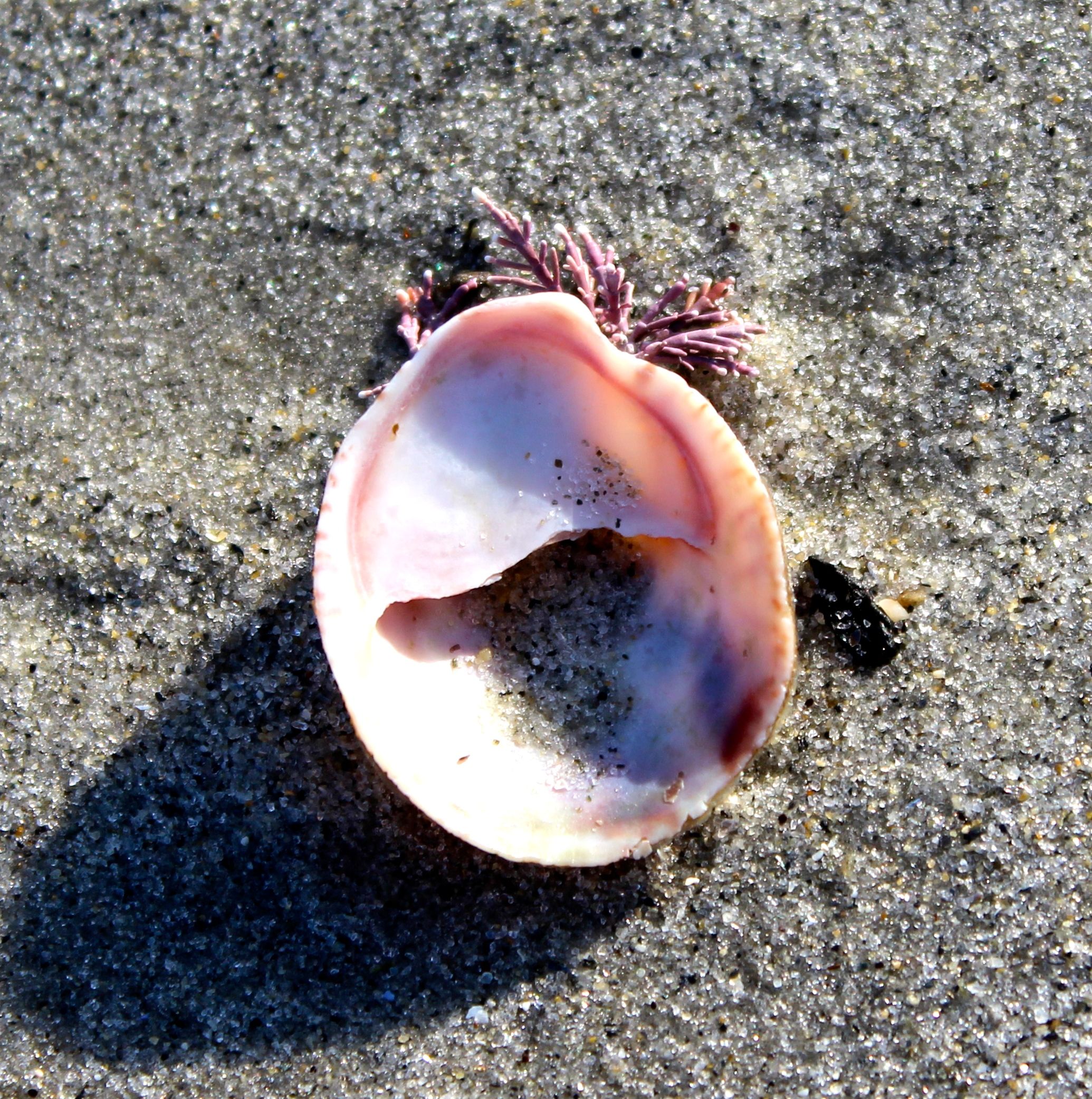
quahog shell

And quahog shells. These we learned to feel for under our feet. But the empty shells also became the canvas of art projects. Here in Maine, and I haven’t actually seen these,  there are historic middens of quahog and oyster shells. Actually, I remember a pile in Guilford, CT, at Chello’s Oyster House. Or were those oyster shells?

seaweed

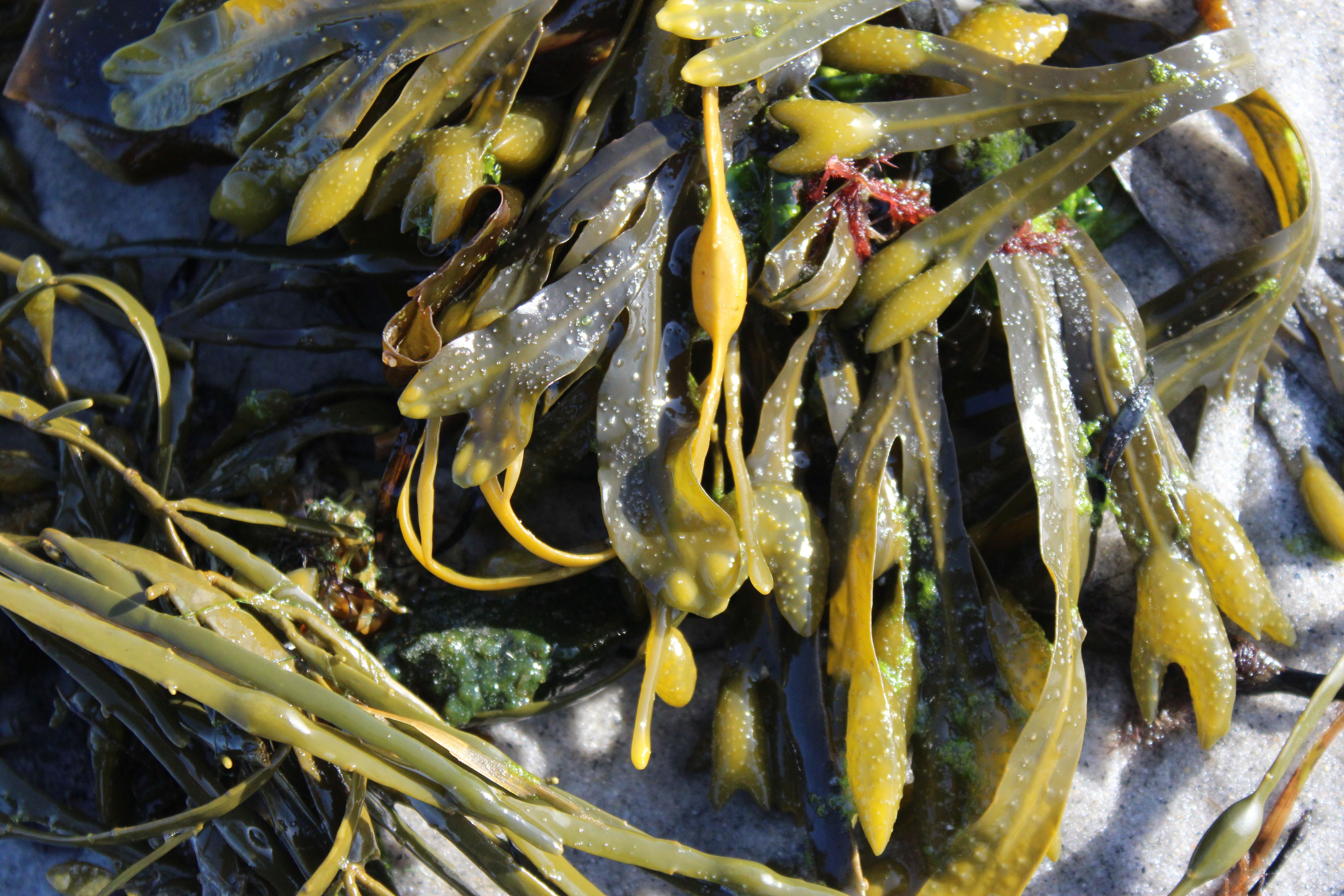
Seaweed salad. How many, many hours we used to spend popping seaweed bubbles–the precursor of bubble wrap?

slipper shell

The common slipper shell–formerly the home of a sea snail.

razor clam

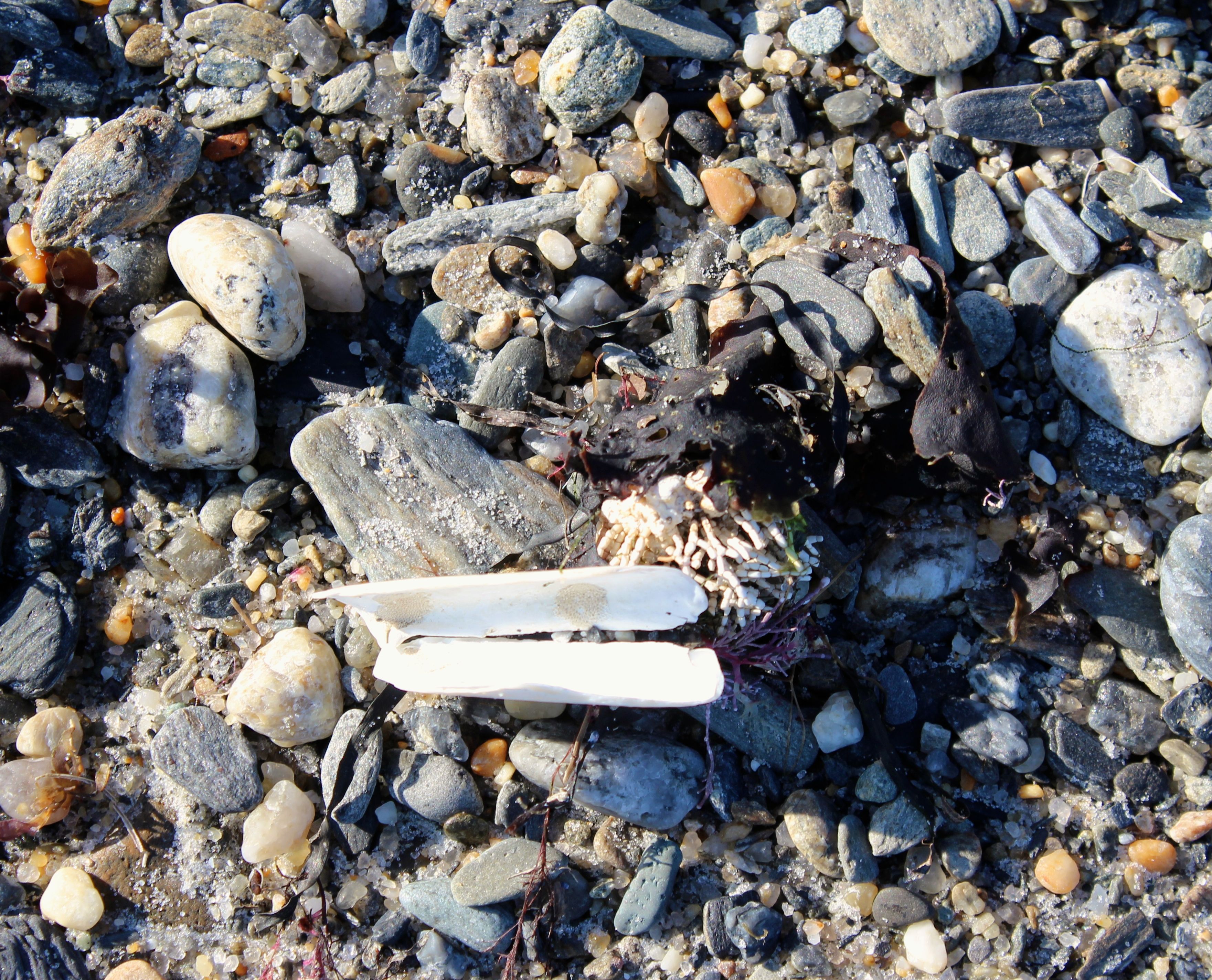
Razor clams. This one is empty, but I remember finding them whole when mucking about at low tide was my common habit.

crab meat

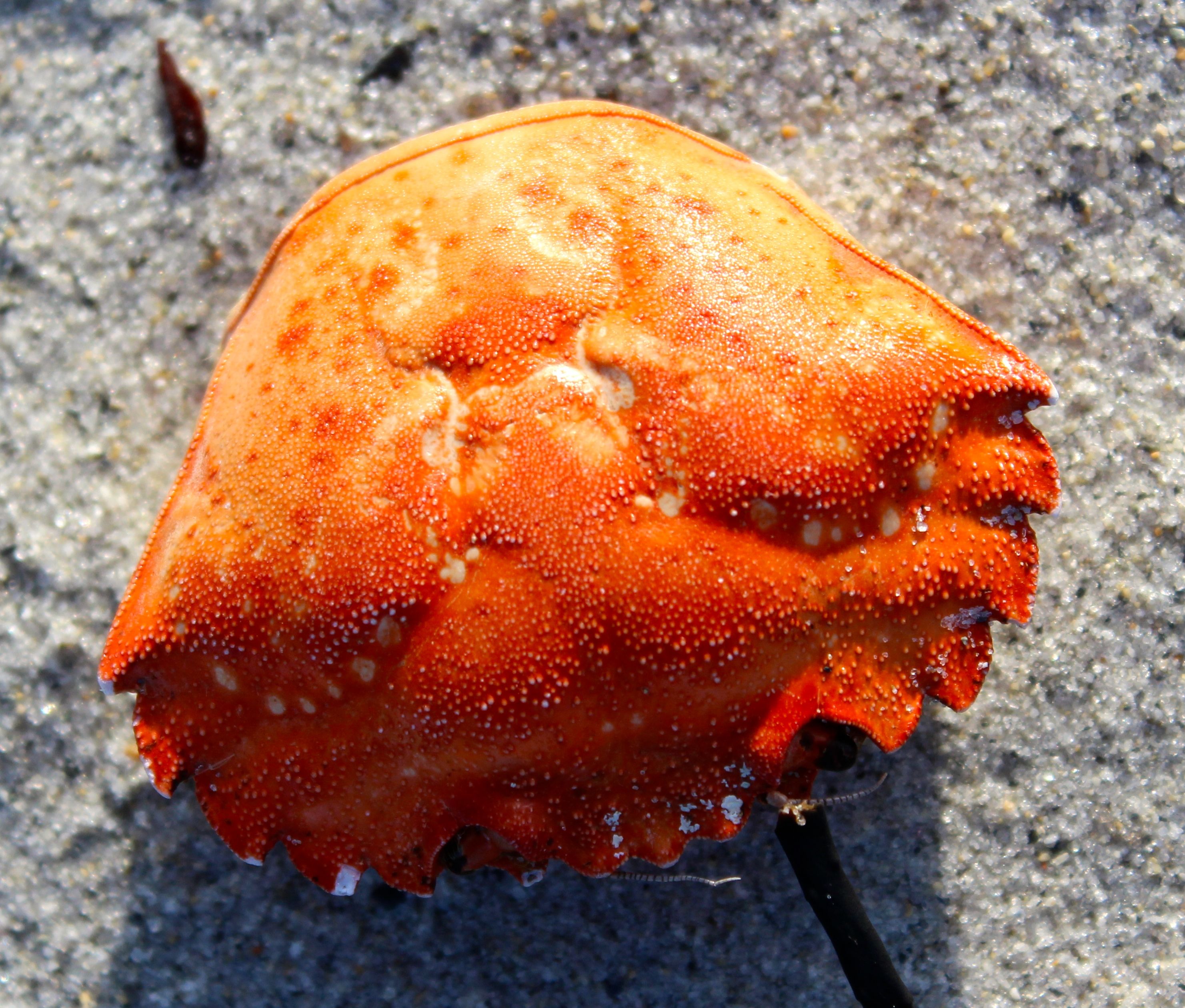
Let’s hope someone enjoyed a little crab meat supplied by this arthropod.

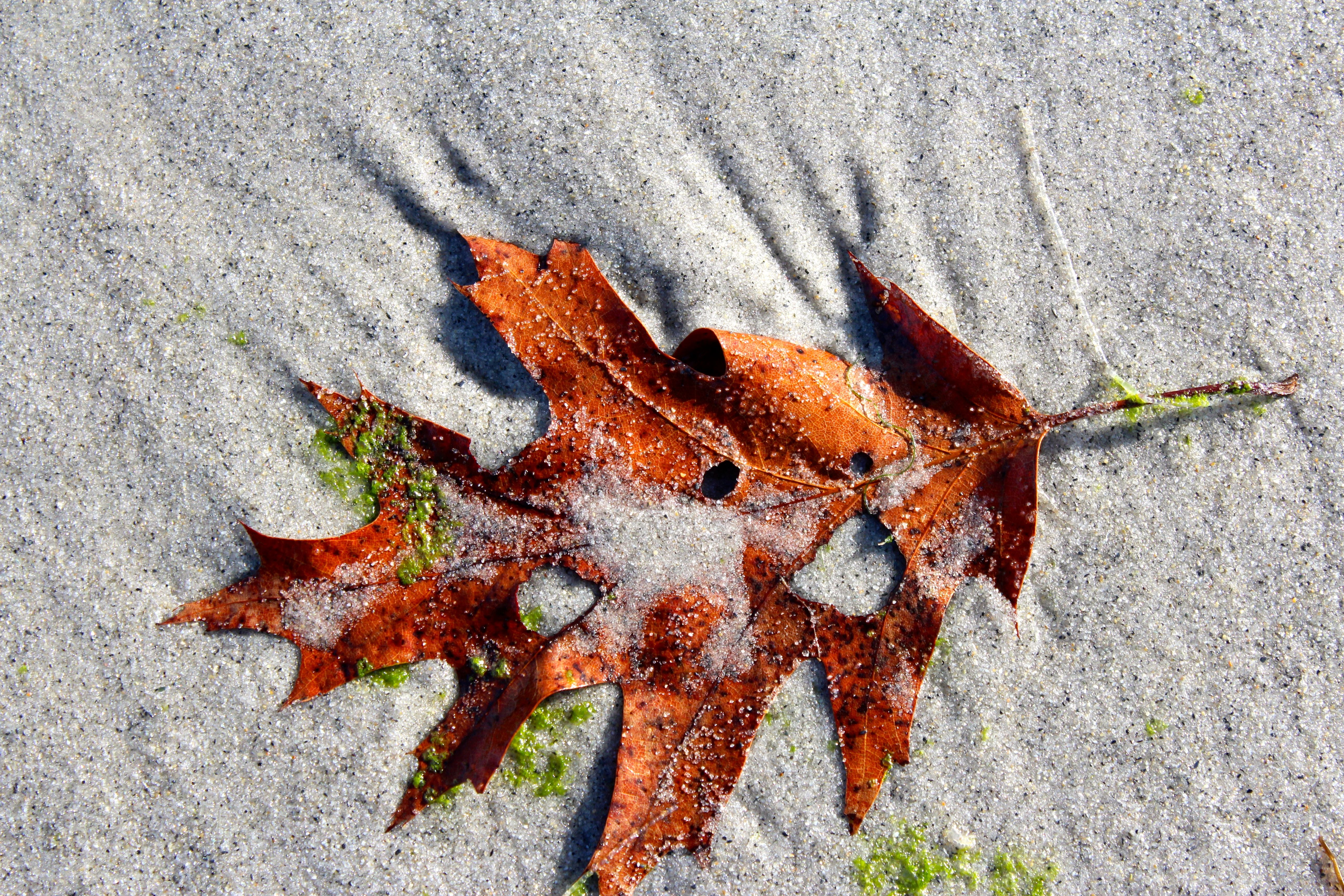
oak leaf

A reminder that it isn’t all seashells and seaweed. The  ubiquitous red oak also shares this place.

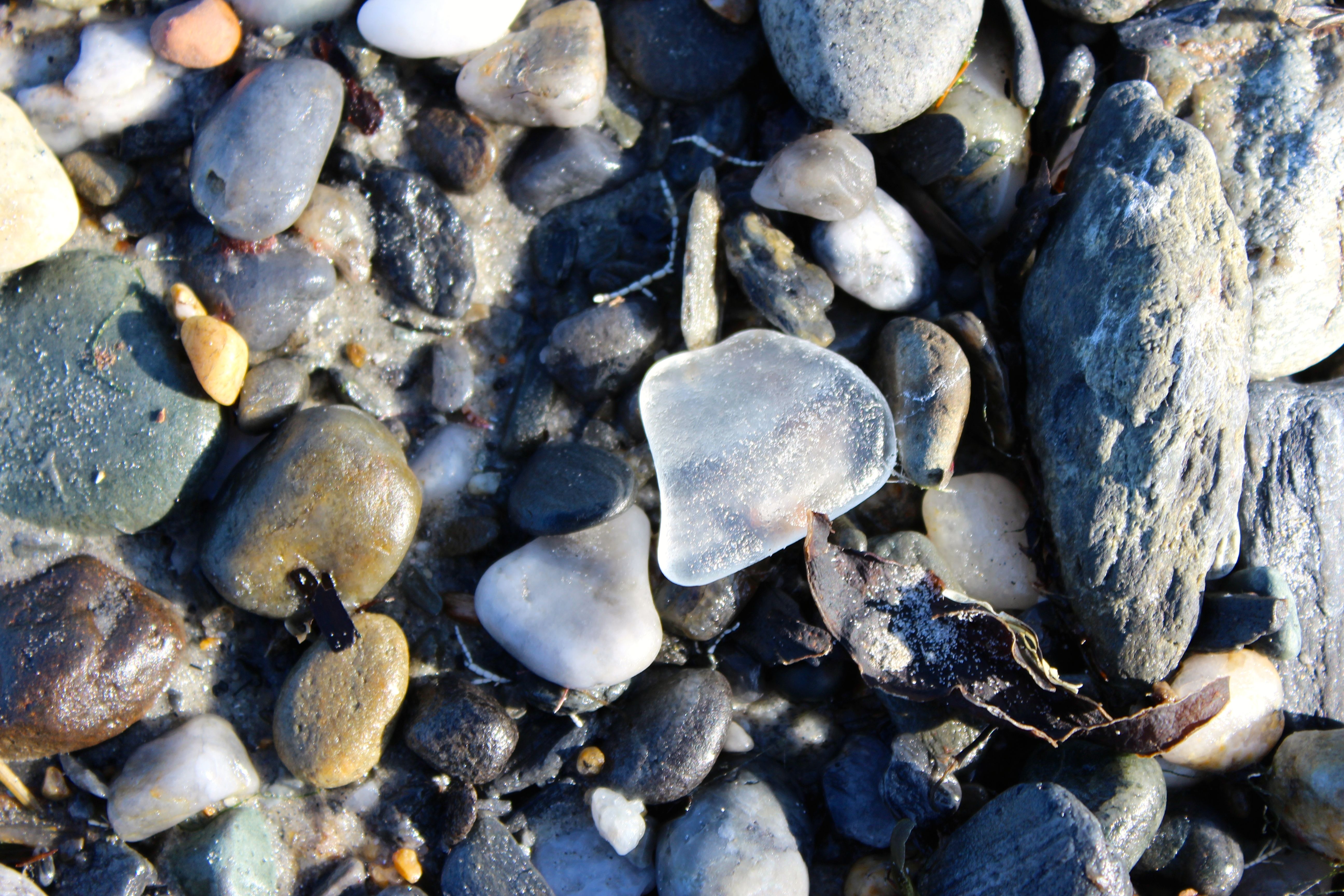
seaglass

Remember the sign at the beginning of this beach walk? The one stating that trees, shrubs, flowers, wildlife, grasses and rocks are part of the park and need to be left there? It didn’t mention sea glass. Yes, I will happily share this sample with you–all you need to do is ask.

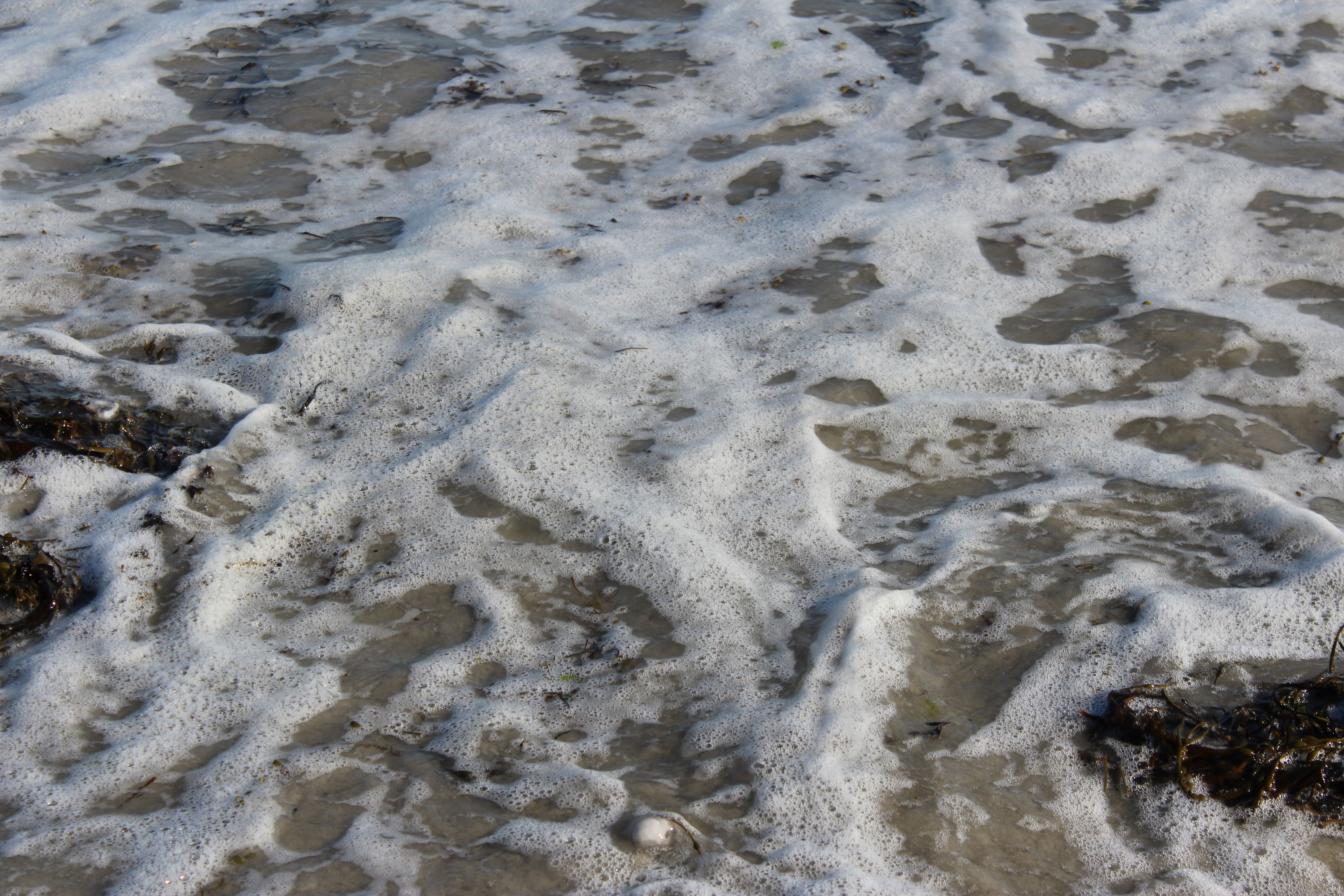
foamy water

Looking around, I was mesmerized by foamy water.

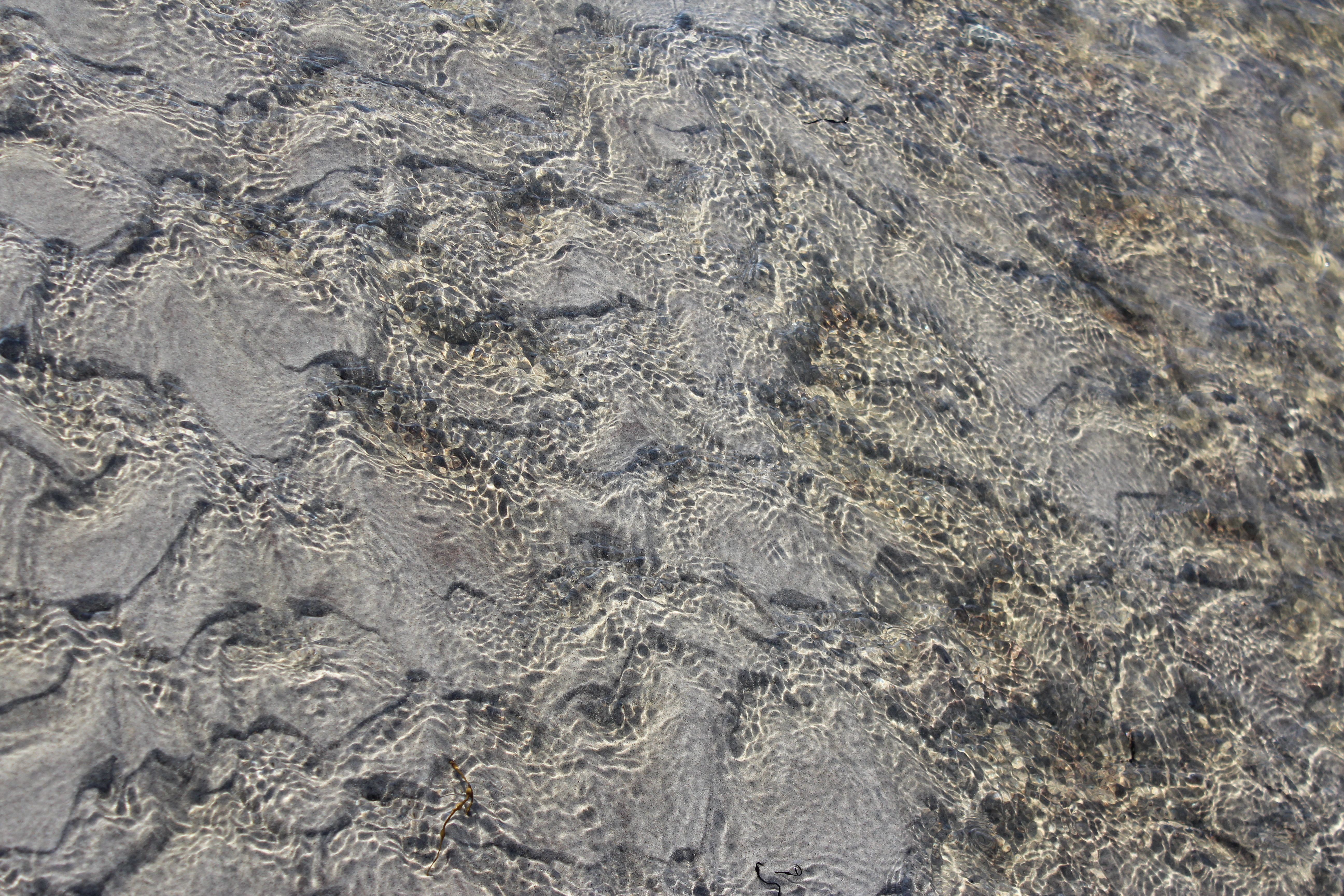
water and sand design

Designs in the sand.

rock layers

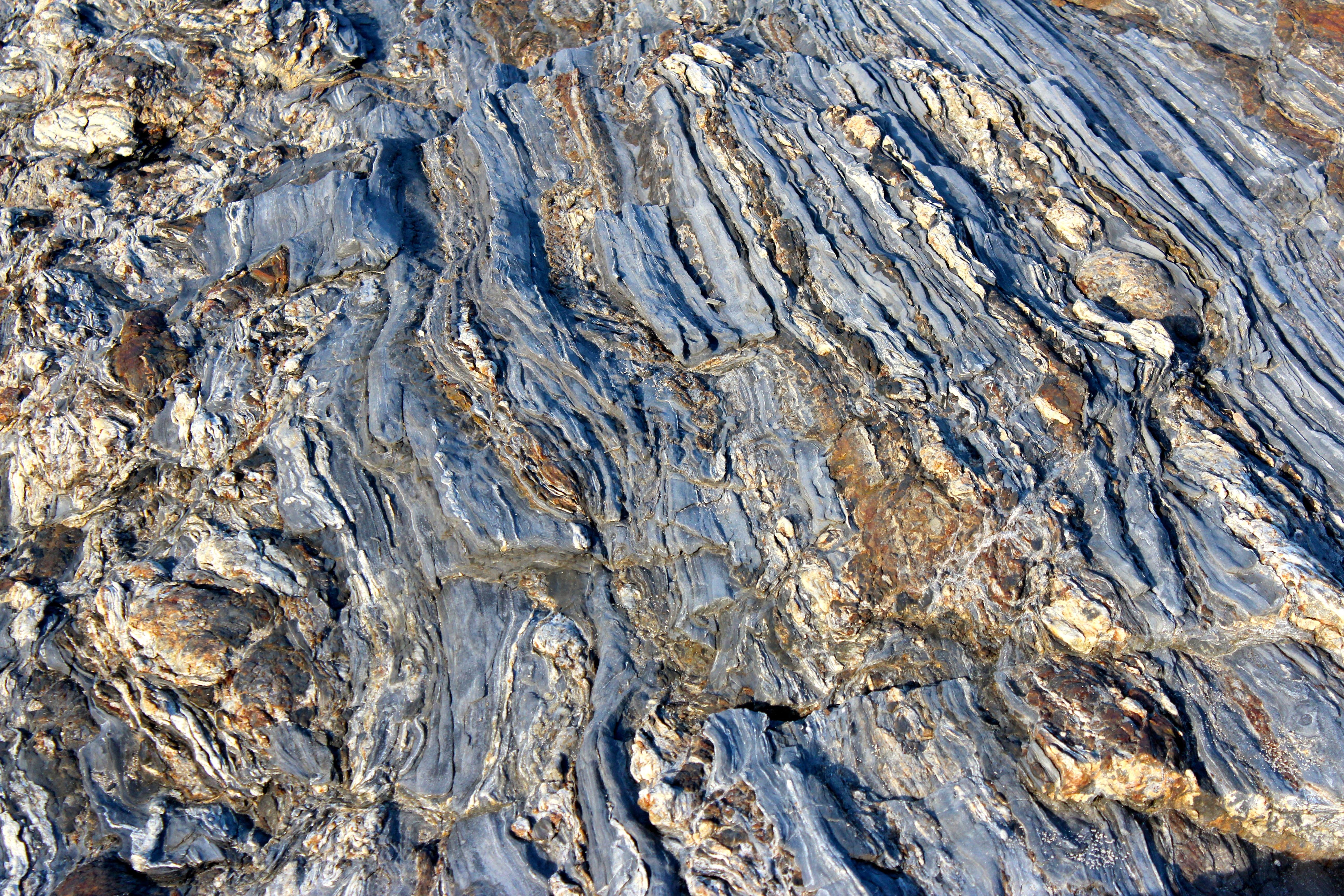
Layers of rocks.

wave action

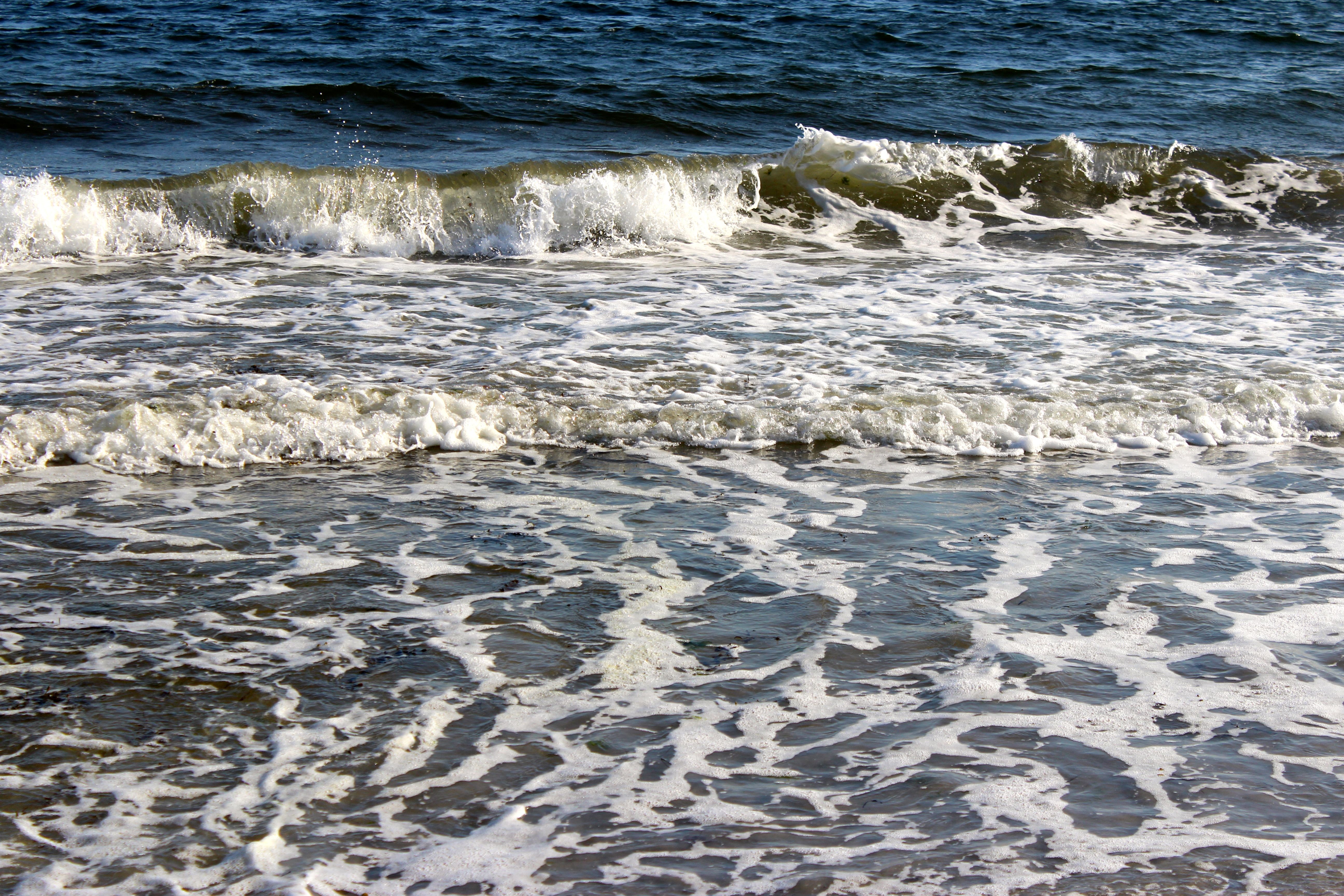
Breaking waves.

fence

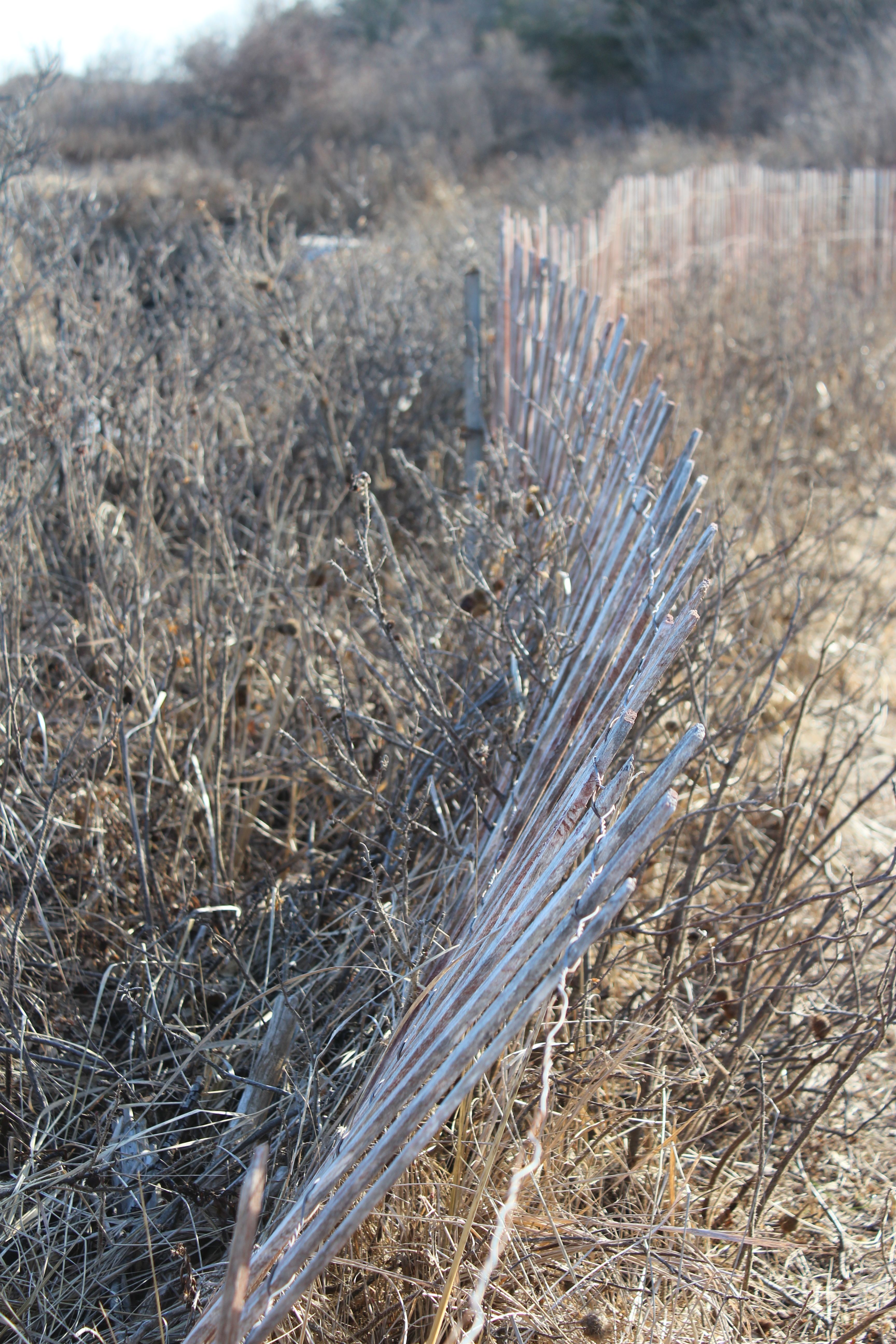
A snow fence.

bird tracks

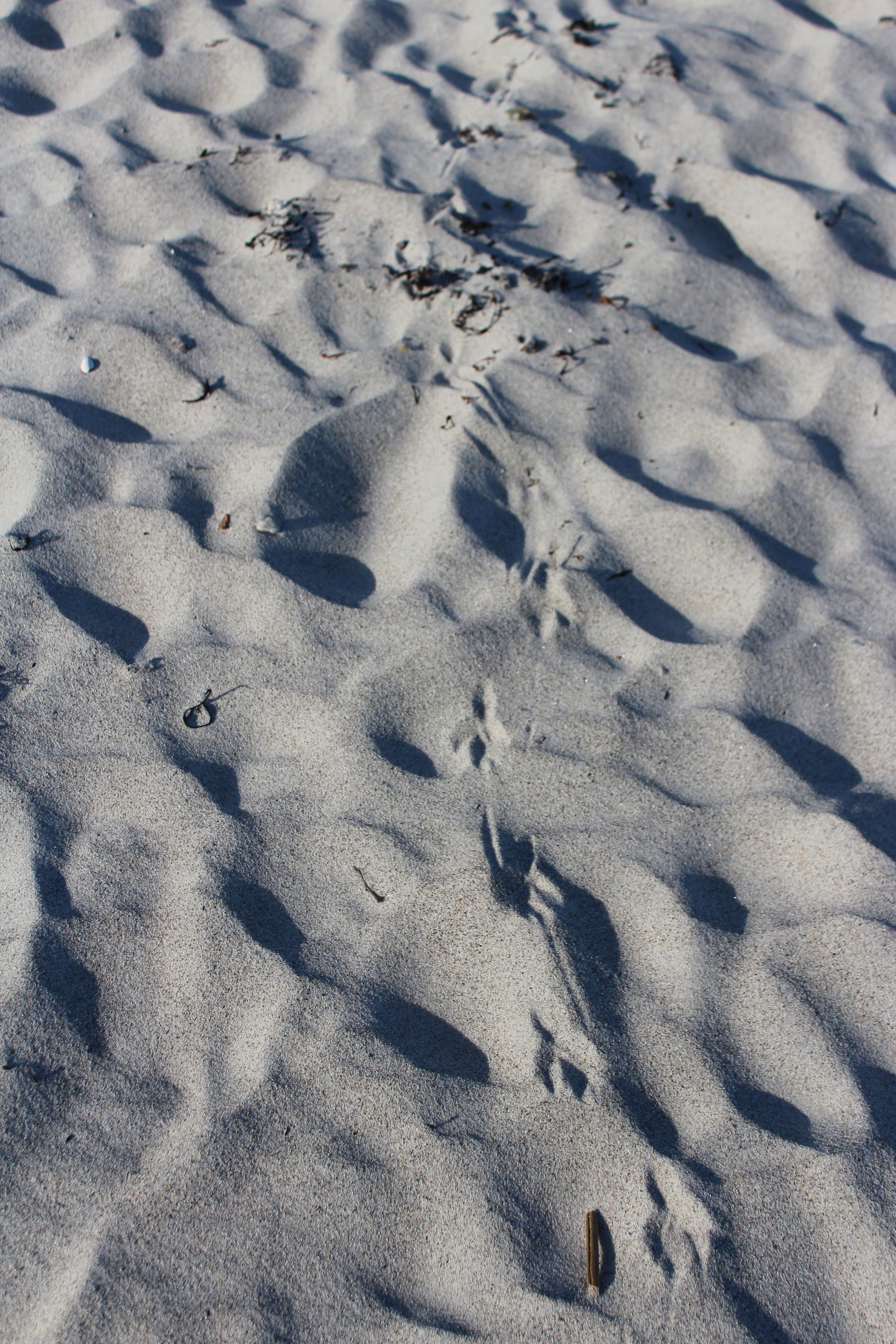
And bird tracks.

island and rocks

We were almost at the end of our visit.

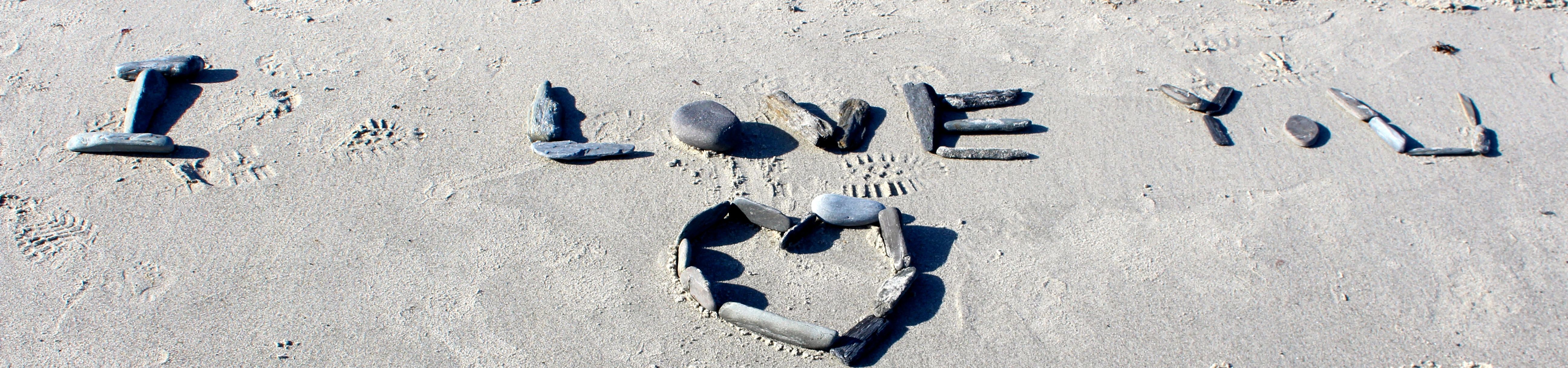
I lOve you

Someone else created this message on the beach, but it was Monday, a Mondate, and we just happened to be there. It didn’t matter that our date was late. What mattered was the message in the sand.

Always something to wonder about–thanks for happening along.

Bark Eyes

powerline

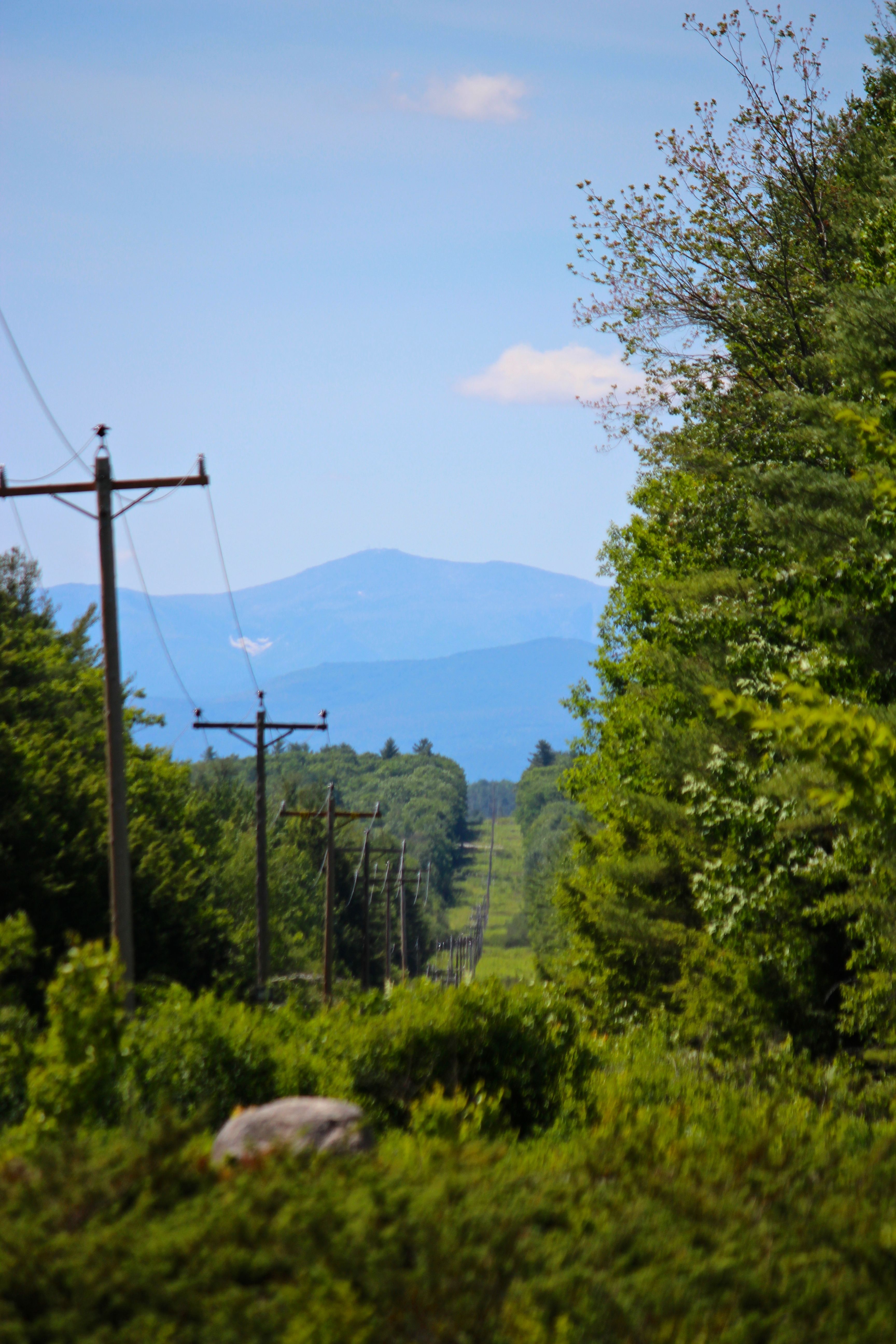
Looks Like We Could Walk to Mount Washington

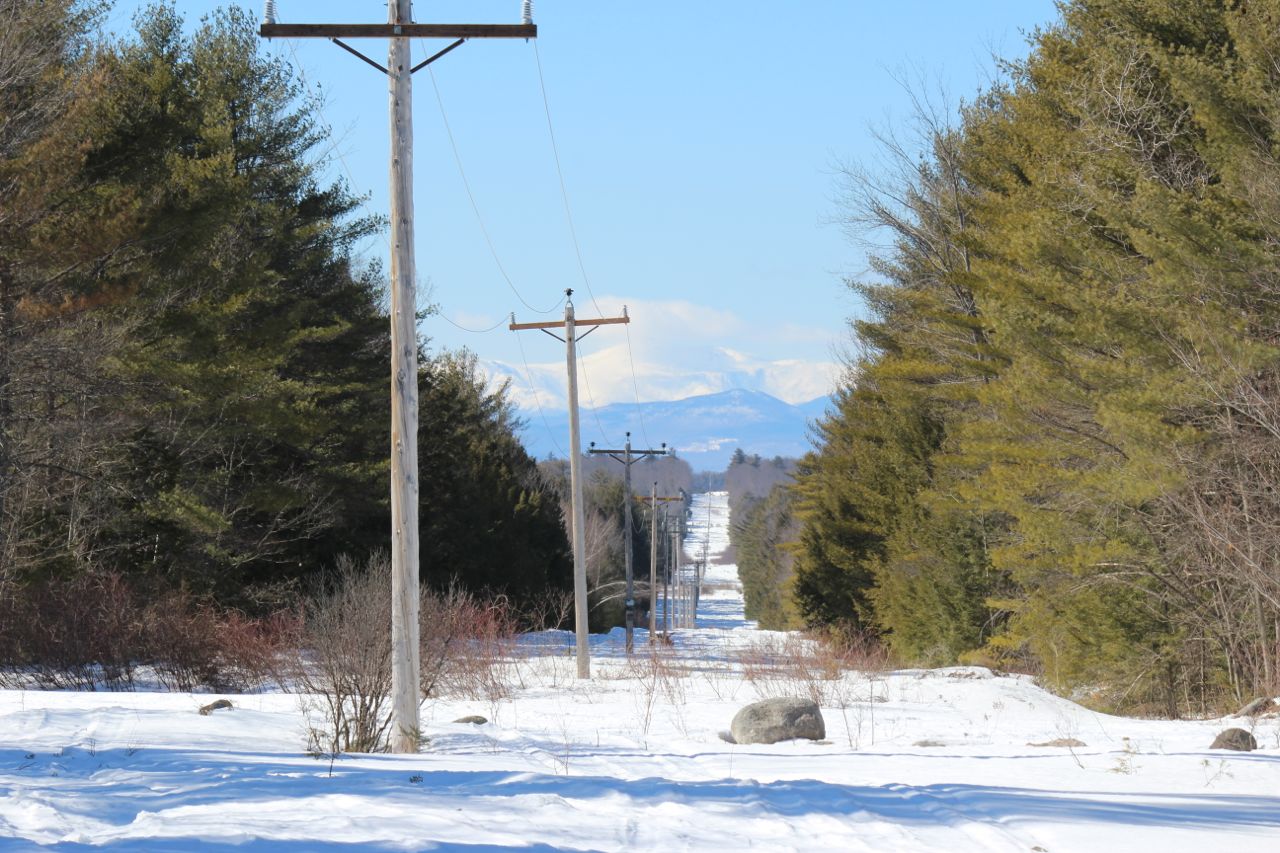
Though it was a blustery day, the wind wasn’t much of a bother in the woods beyond the power line. I crossed the snowmobile trail and slipped into my peace-filled mode.

pine

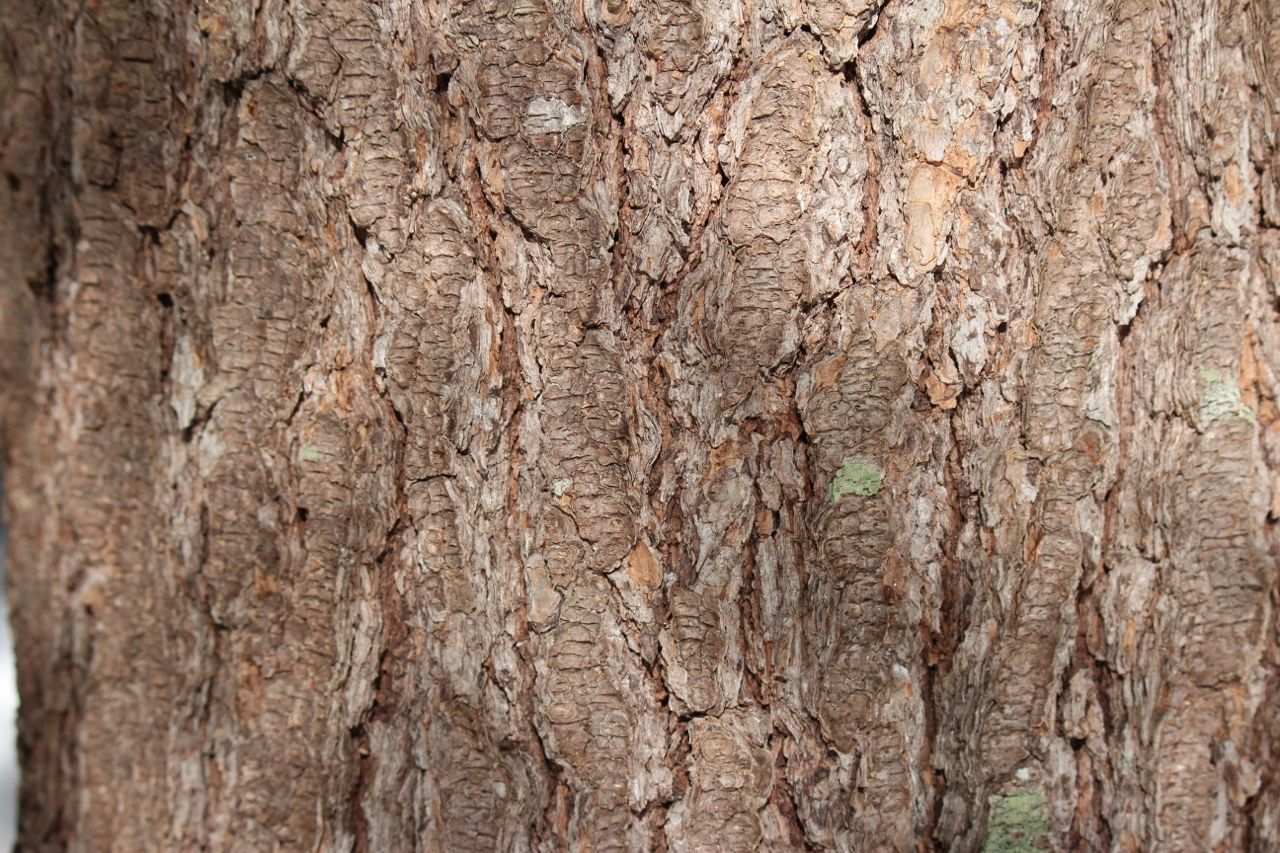
Until a couple years ago when I was working on my capstone project for the Maine Master Naturalist Program, I didn’t know a lot about tree bark. Since then, I’ve been developing my bark eyes. Seriously, I have a difficult time driving down the road–my distraction isn’t a cell phone. It’s tree bark.

pine sketch

I like the pattern visible on the plates of Eastern White Pine–its numerous horizontal lines remind me of writing paper. Hmmmm . . .

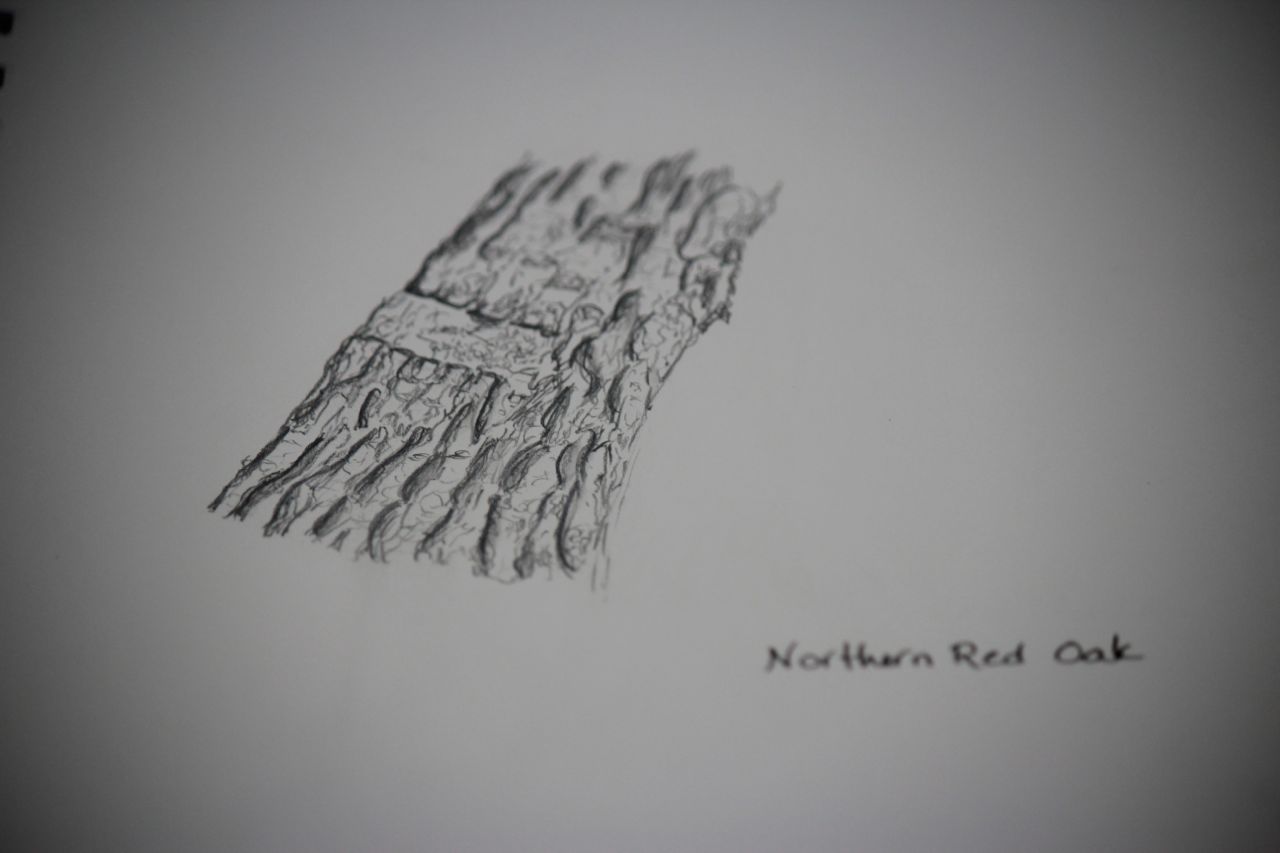
What better way to get to know it than to sketch it. One thing I’ve learned over the years about sketching is that it doesn’t have to be exact. Only God is perfect–thank goodness I don’t have to aspire to that goal. So my sketches represent what I see.

red oak

red oak sketch

The red inner bark of Northern Red Oak is visible through the furrows. In older trees, the flattish furrows look like ski tracks coming down the tree.

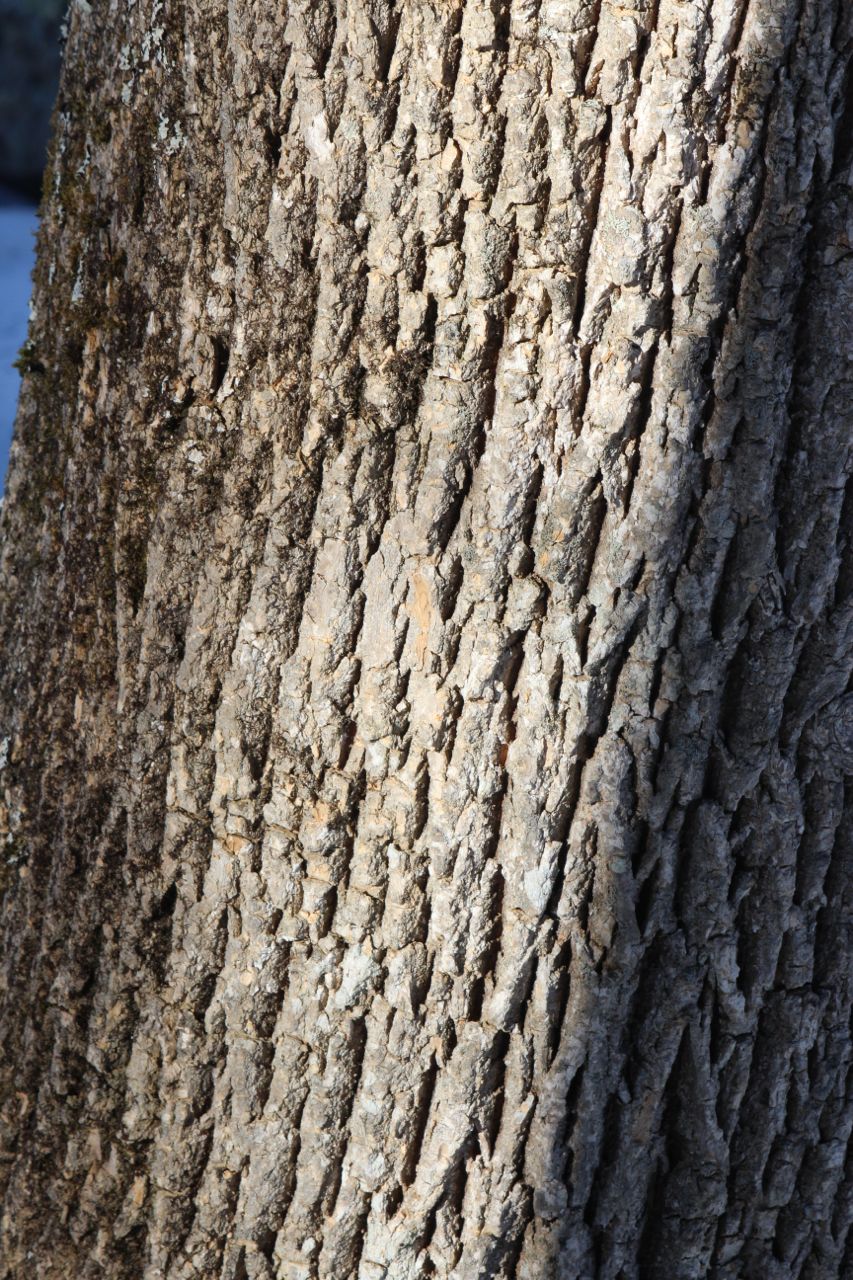
ash

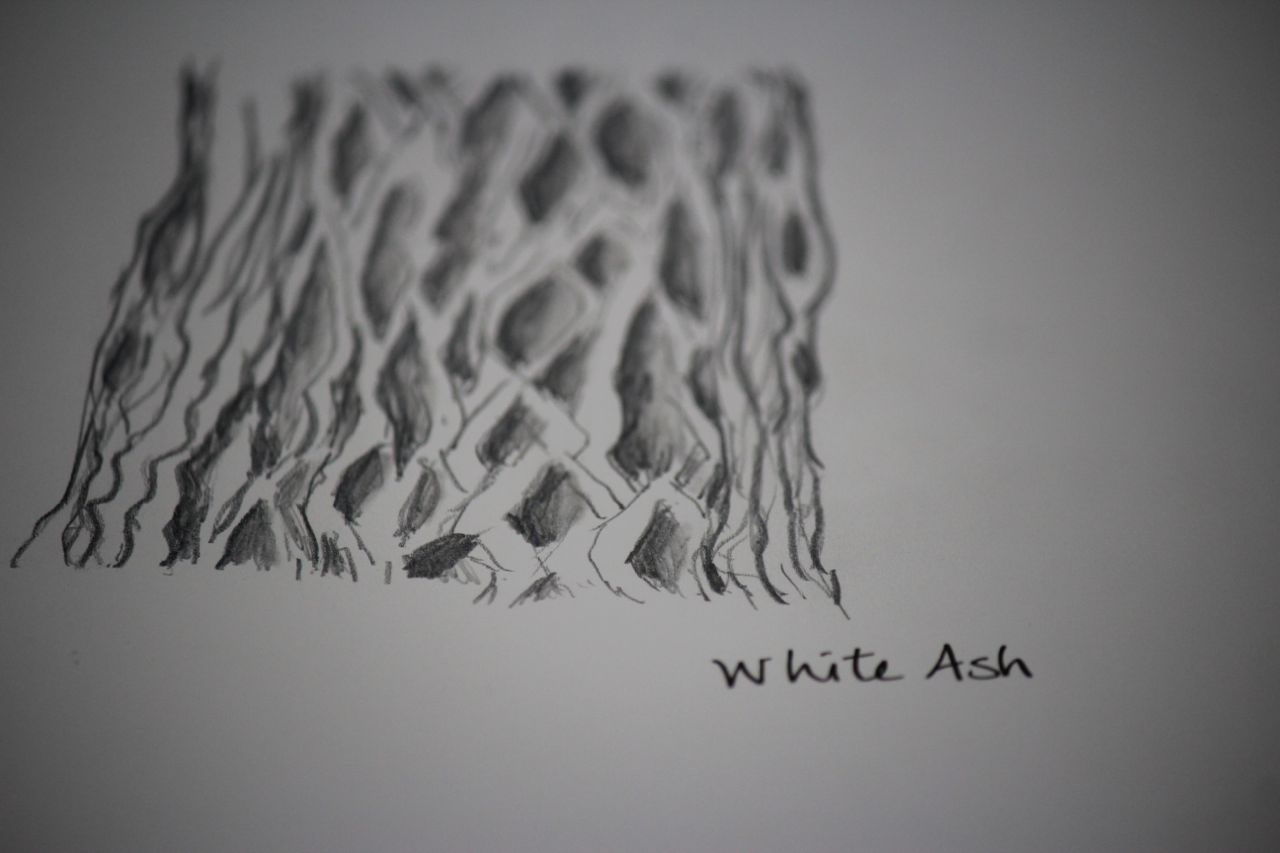
Do you know this one? Can you see the diamond shape? Some people see a letter A. Others see the rind of a cantaloupe. I guess, whatever works for you is the best way to describe it.

white ash sketch

White Ash it is. I feel like we’re not only on a texture tour of trees, but also a color tour :-)

Last one for today before I share a few other cool things that I discovered.

red maple

This one always catches my eye. No only is it known for the color of its twigs, flowers and fall foliage, but look at the bark. Do you see the bull’s eye pattern in the cracks? Bull’s Eye Target on Red Maples is caused by a fungi that only affects this species. Most Red Maples in our area display the target. It doesn’t appear to kill the tree–immediately.

red maple sketch

Though the snow is still deep, it’s getting more and more difficult to move–crusty on top and then, whoosh, suddenly I sink in–snowshoes and all.

porc tree

As I tromped along, my eyes were drawn to the area under a large hemlock that I’ve visited many times this winter. At first there was activity there, and then nothing, until today that is.

porc cut

The porcupine had nipped the branches and you can see the incisor marks on this one. The fallen branches become prime deer food.  Deer had been under the tree. I took a photo of their tracks and scat but, alas, the wrong camera setting and it was overexposed.

Also seen under this tree, a spot where a red a squirrel paused on a branch to strip a white pine cone–and let the scales and leftover cob fall to the ground. Another cafe in the woods.

  porc scat and cone

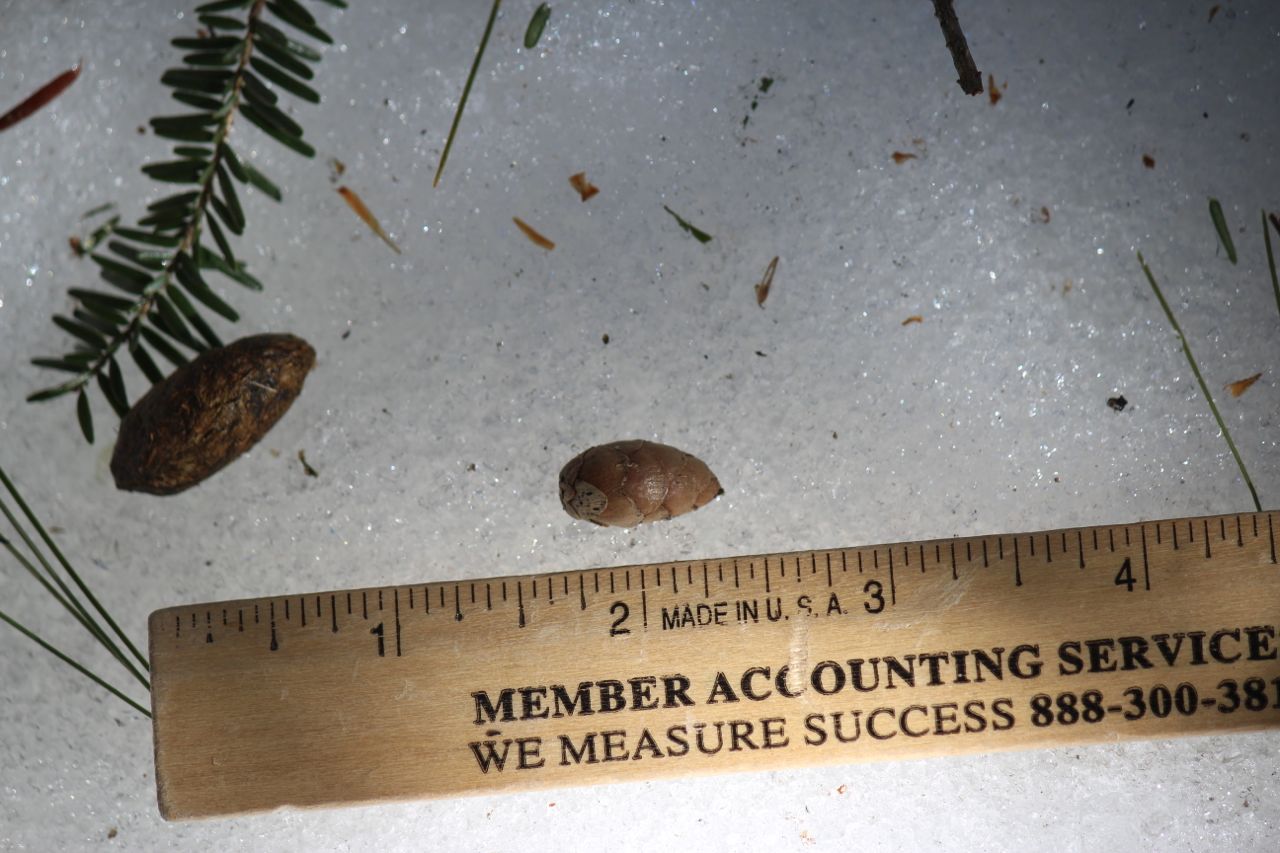
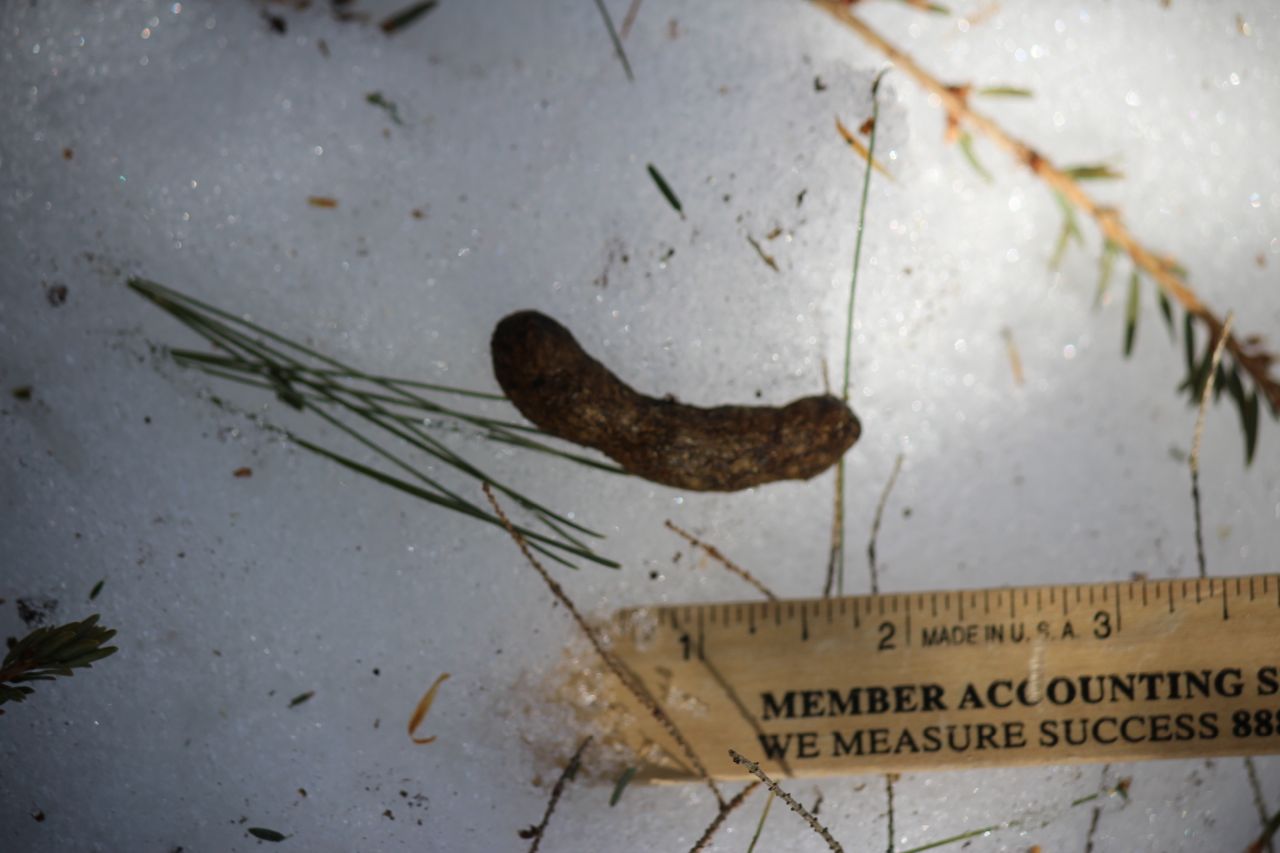
Porcupines scat as they eat. Under this tree, I found some of the largest porcupine scats I’ve ever seen. The one photographed here is normal size, but I wanted to show it beside a hemlock cone. They do look similar until you get up close and personal. While the scat is woody, the cone has scales.

large porc scat

I couldn’t resist sharing this one. One rather large porcupine scat.

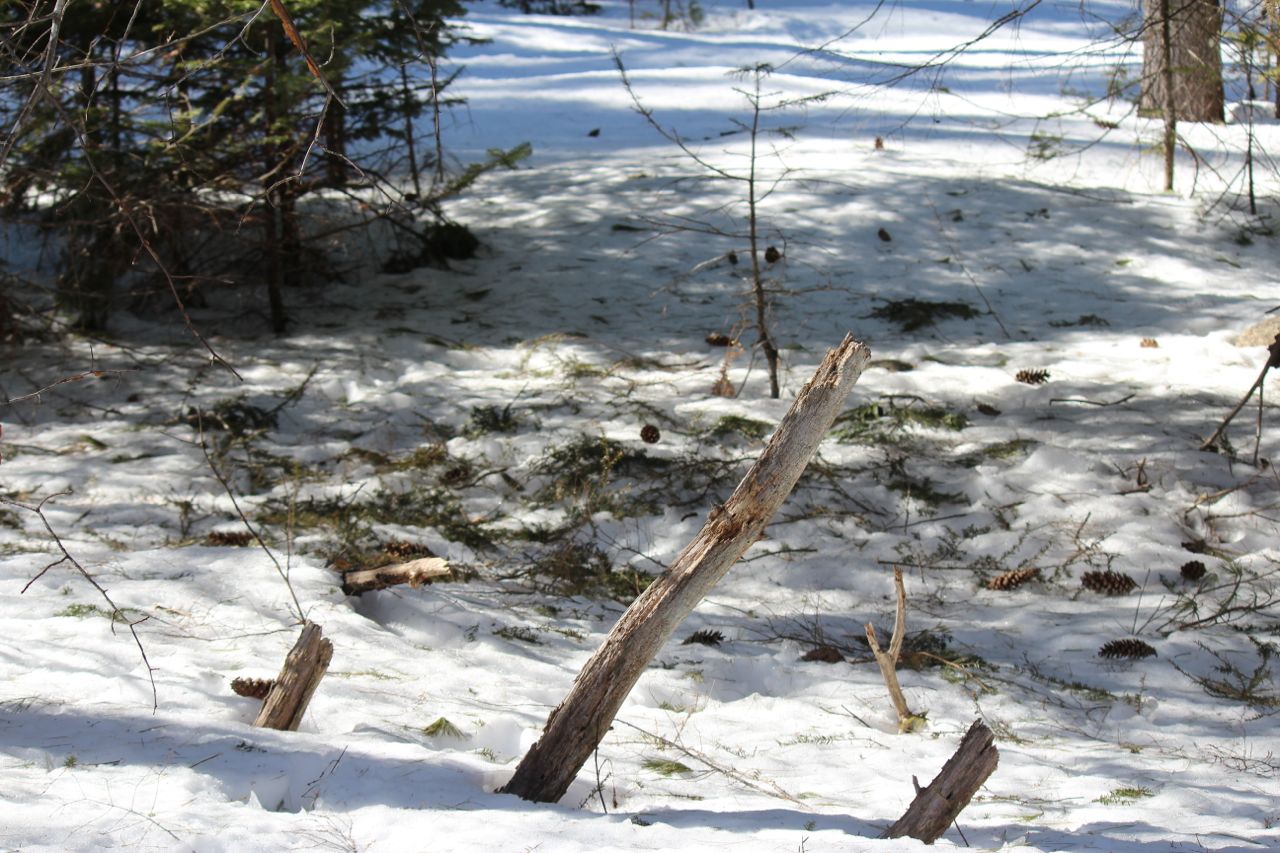
hare gnawing

I hope you are still with me. A mystery that I think I’ve solved. Unfortunately, the tracks were diluted by the recent warm temps we’d had but I had a general idea of the movement this critter made.And there was no scat–I looked around as you can imagine.

hare 3

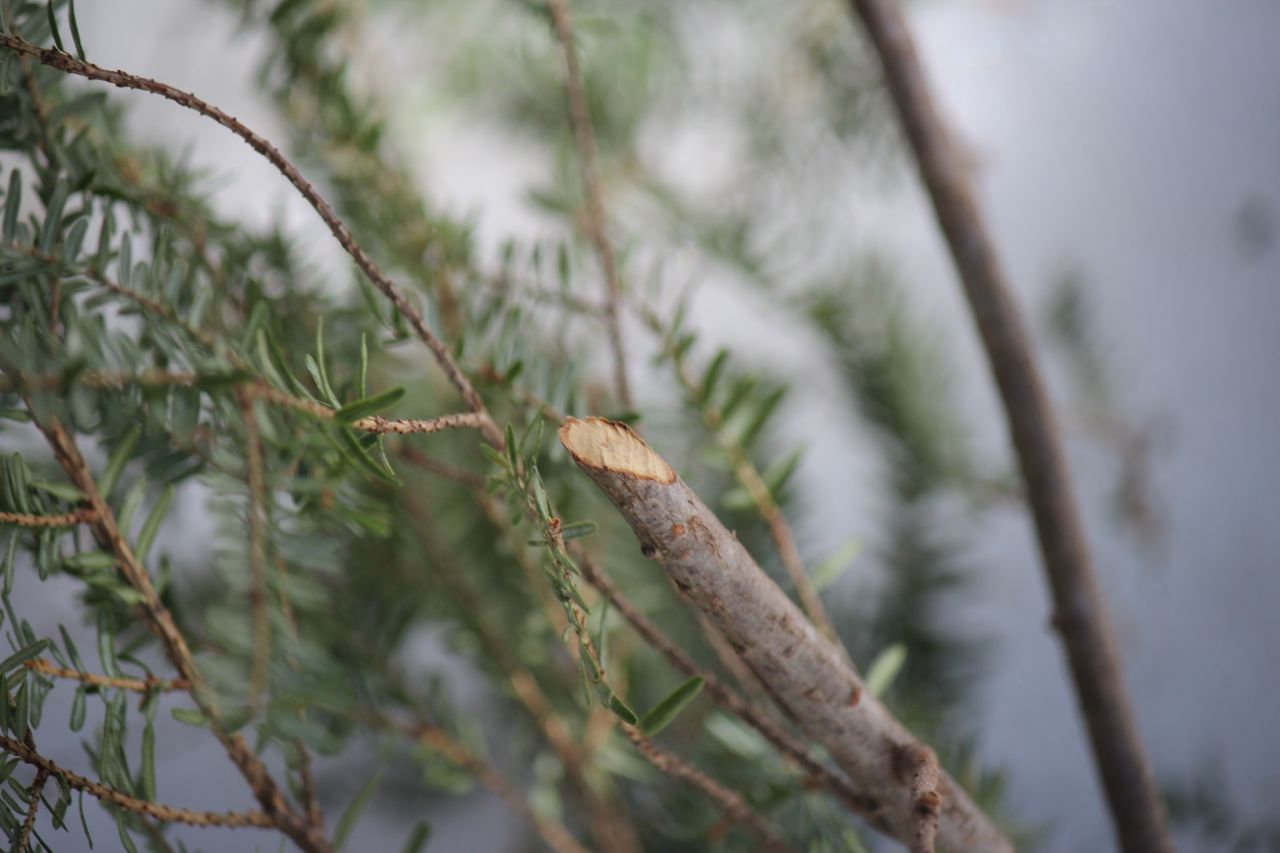
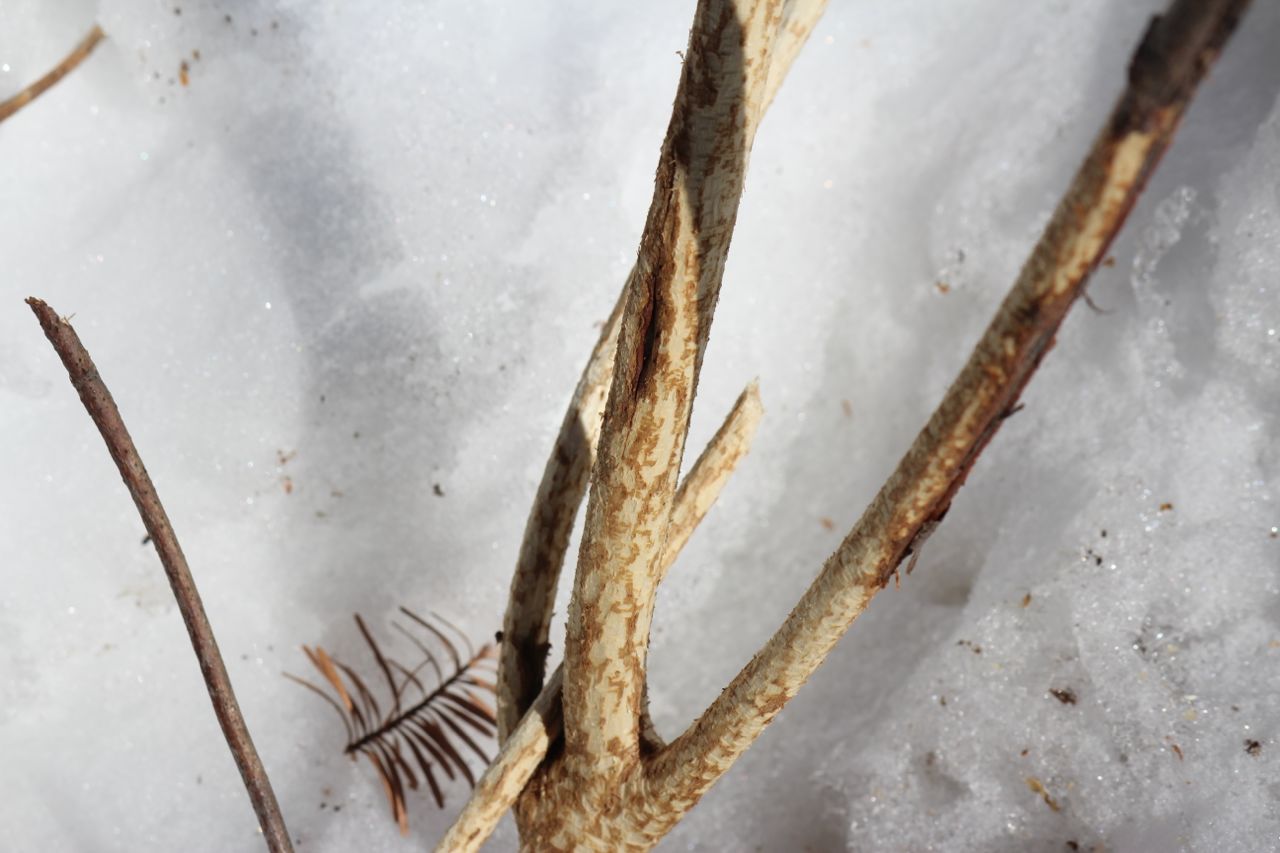
A closer look. Did you notice that the work is all toward the base of the saplings?

hare 4

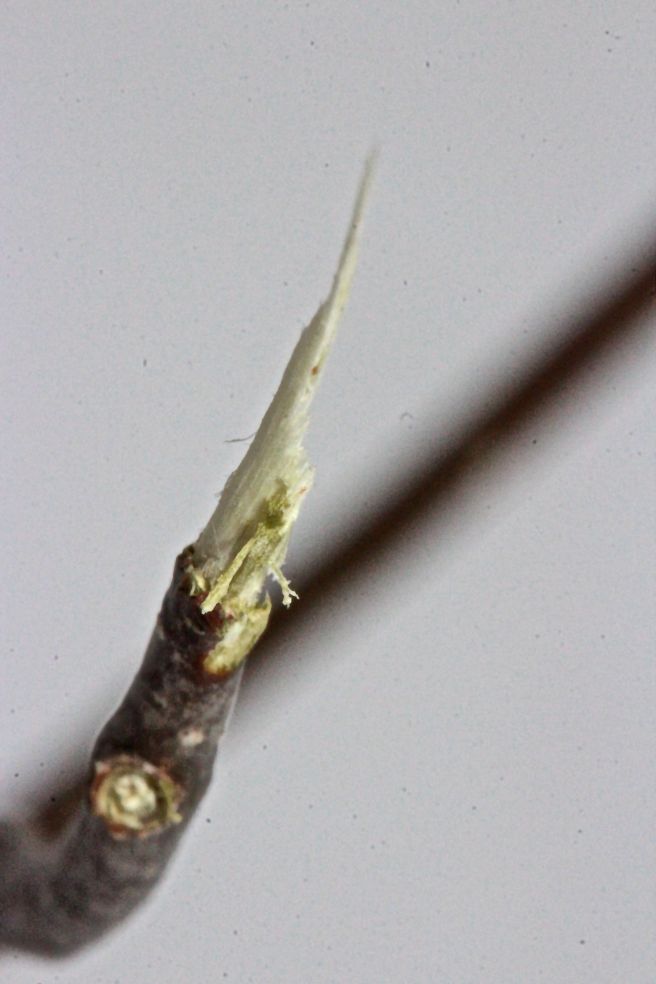
Final clue–an angled cut. Rather clean cut, unlike those made by ungulates (deer and moose). This critter has sharp teeth. And we can thank it for our ability to move on the snow. What is it? Any guesses?

As you wander, take some time to wonder about the bark in front of you. I’ll keep sharing more as my bark eyes continue to develop.

Sit Spot and Beyond

sit spot

I promised myself I won’t write every day, but it’s addictive. And I promised myself that I’ll try to sketch tree buds this year–as the season begins to change. We’ll see how long this lasts. But today was the perfect day to spend some time outside at my sit spot. Sketching. Sunshine. Soft Snow.

drawings

A start.

birch trees

And then I took off on my snowshoes to get up close and personal with the birch trees.

Paper birch catkins

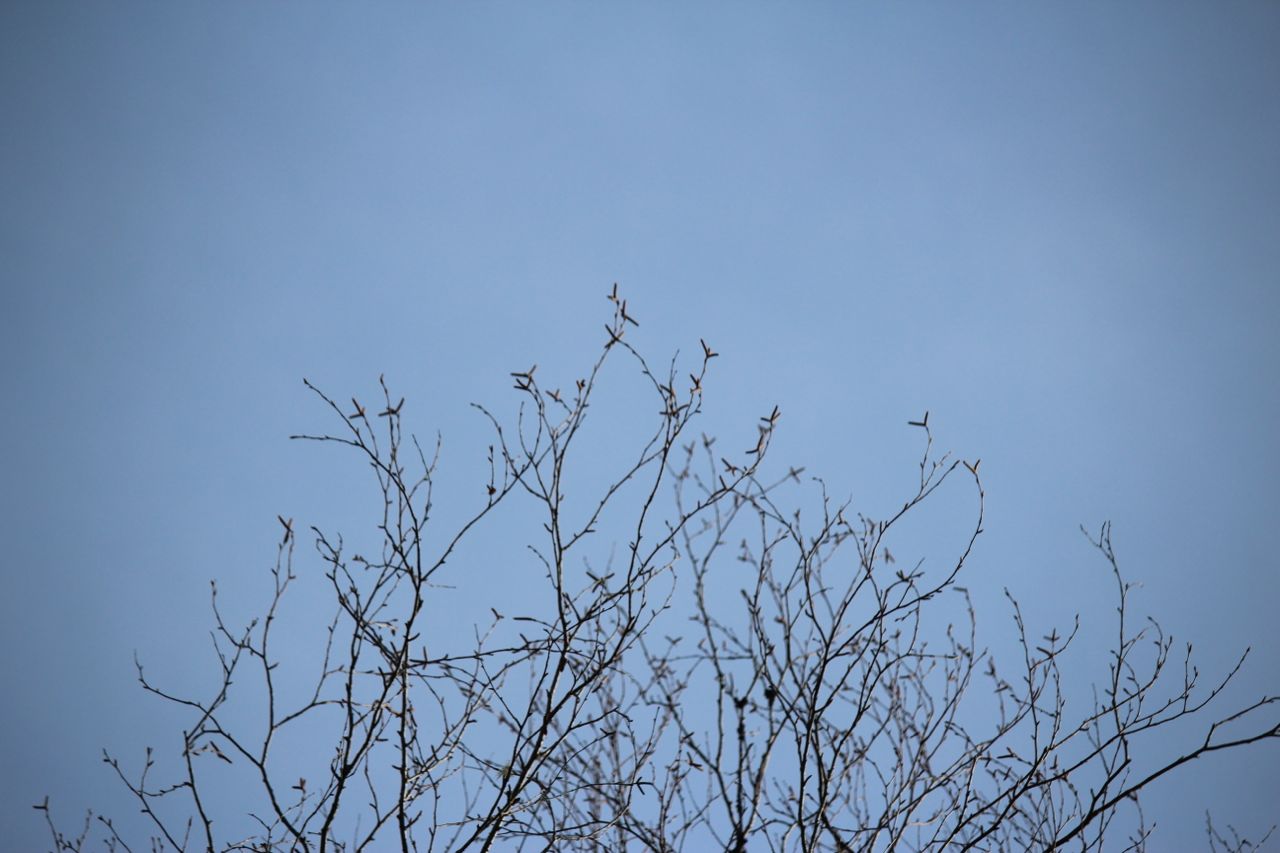
Paper (aka white) Birch catkins usually come in groups of three.

yellow birch1

Yellow Birch buds are long, pointed and hairy. Encountering these trees means it’s time for a scratch and sniff test–wintergreen.

gray birch

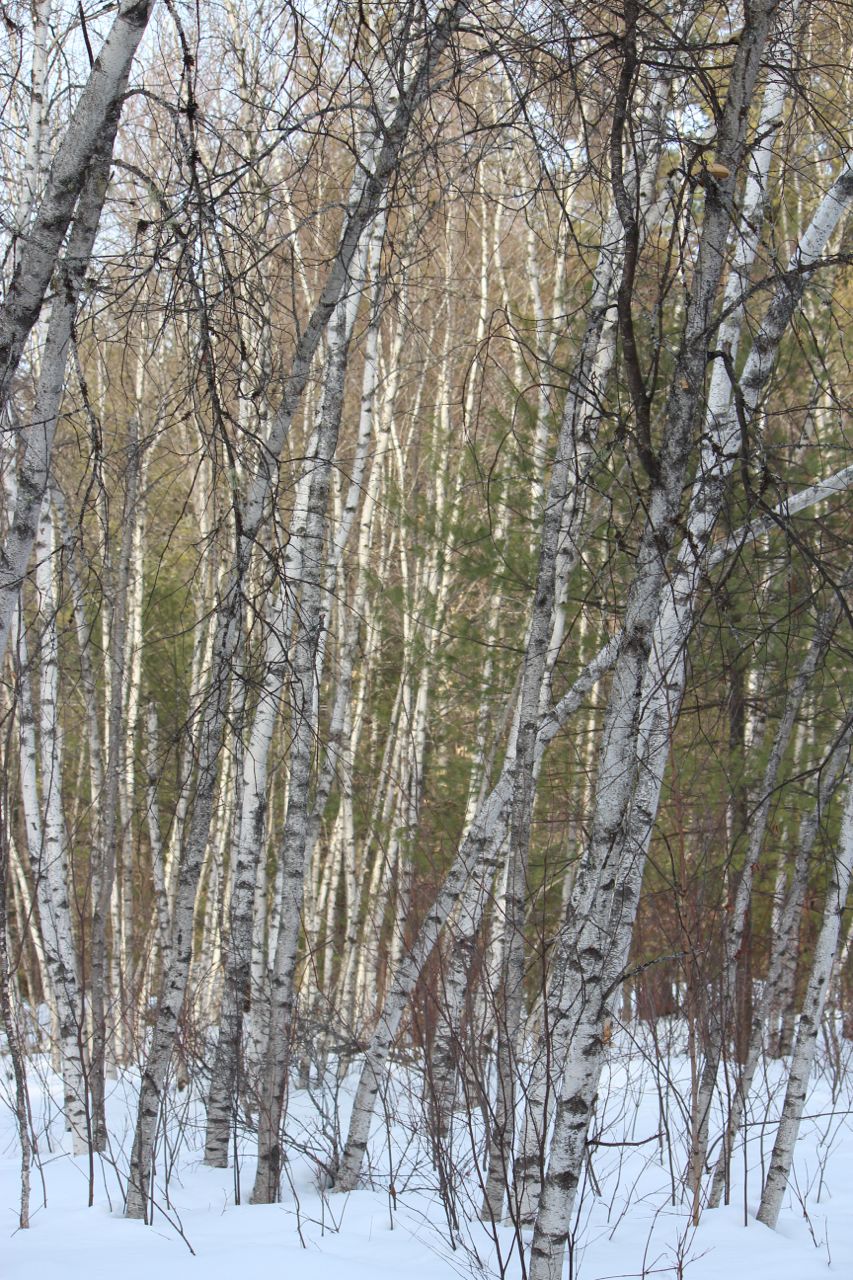
Gray Birch (which some also call white) is actually dull grayish-white. The lines or lenticels, which help the tree exchange gases, give it a dirty appearance. The bark doesn’t peel like a Paper Birch or Yellow Birch. And it often features those triangular-shaped chevrons at the base of its branches or branch scars. Gray Birches are known to lean and their short, slender branches bend toward the ground. In my brain, it’s easy to differentiate it from Paper Birch, but then again, there are hybrids. I haven’t figured that one out yet.

birch polypores

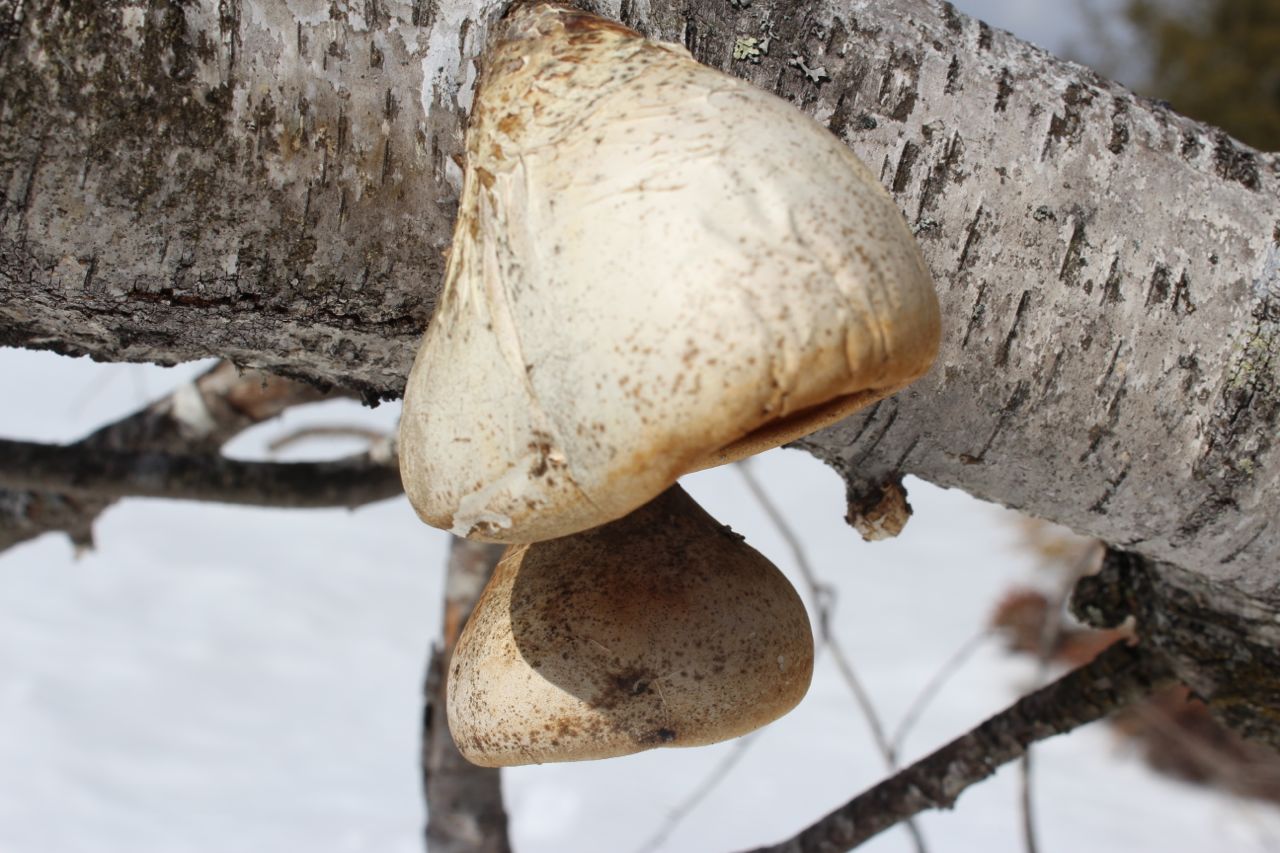
Birch Polypores doing what they’re supposed to do. I love how they’ve oriented themselves so that even after the tree snapped, they are parallel to the ground, thus allowing their spores to drop.

bp

This is one of the most common bracket fungi. It looks like nothing else and only grows on birches. Though an annual, the fruiting body exists for several years.

vernal pool

Before heading home, I stopped by the vernal pool on our neighbors’ land. We were given the opportunity to purchase some acreage from them three months ago, including this special spot, but alas, it wasn’t in the cards for us. I worry about what will happen to this special place. For as long as I can, I’ll continue to visit it. Hard to believe right now, but it won’t be long before the wood frogs, salamanders and spring peepers return here to mate and deposit their eggs.

I don’t want to see winter go, but there’s always the next season to look forward to and wonder about.

Thanks for joining me again and I promise not to write every day. I wonder if I’ll keep that promise.

Milling About

snow waves

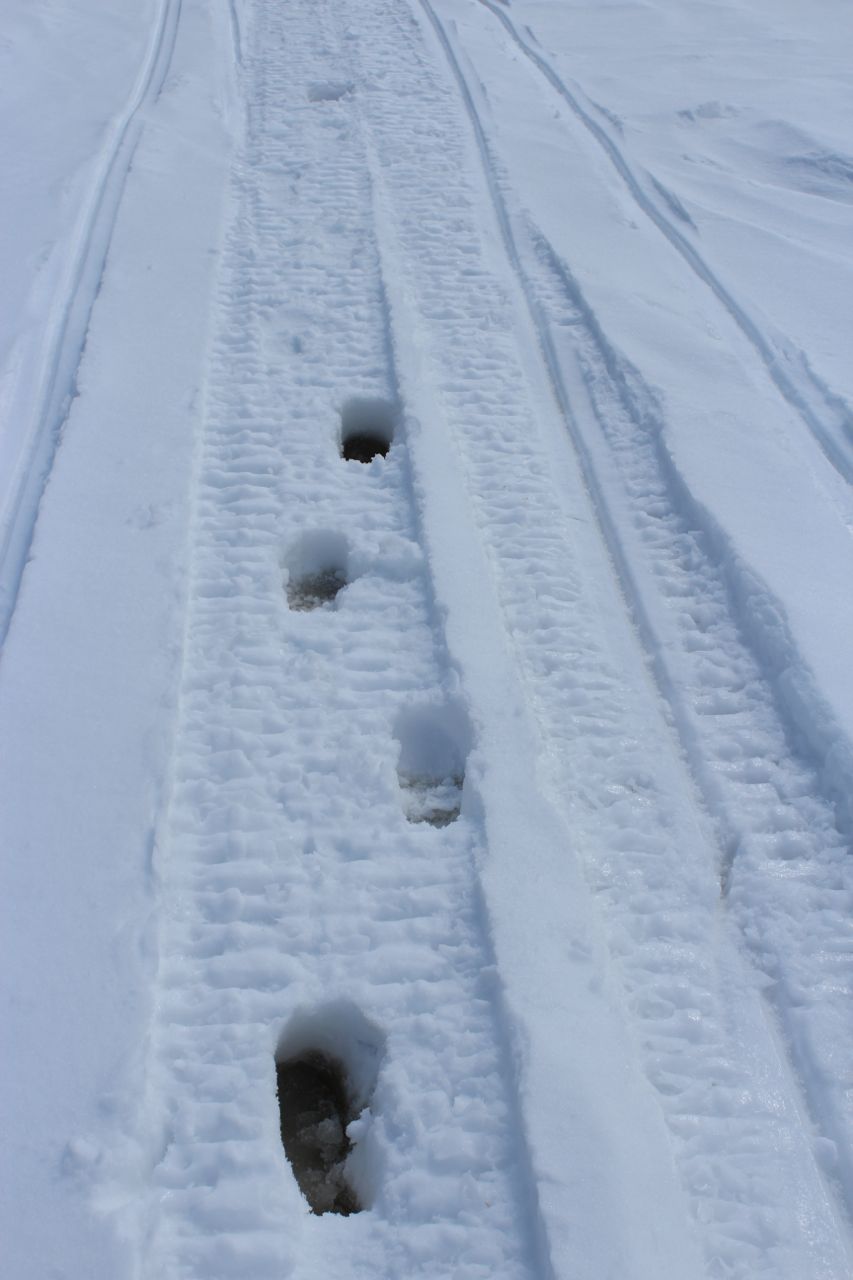
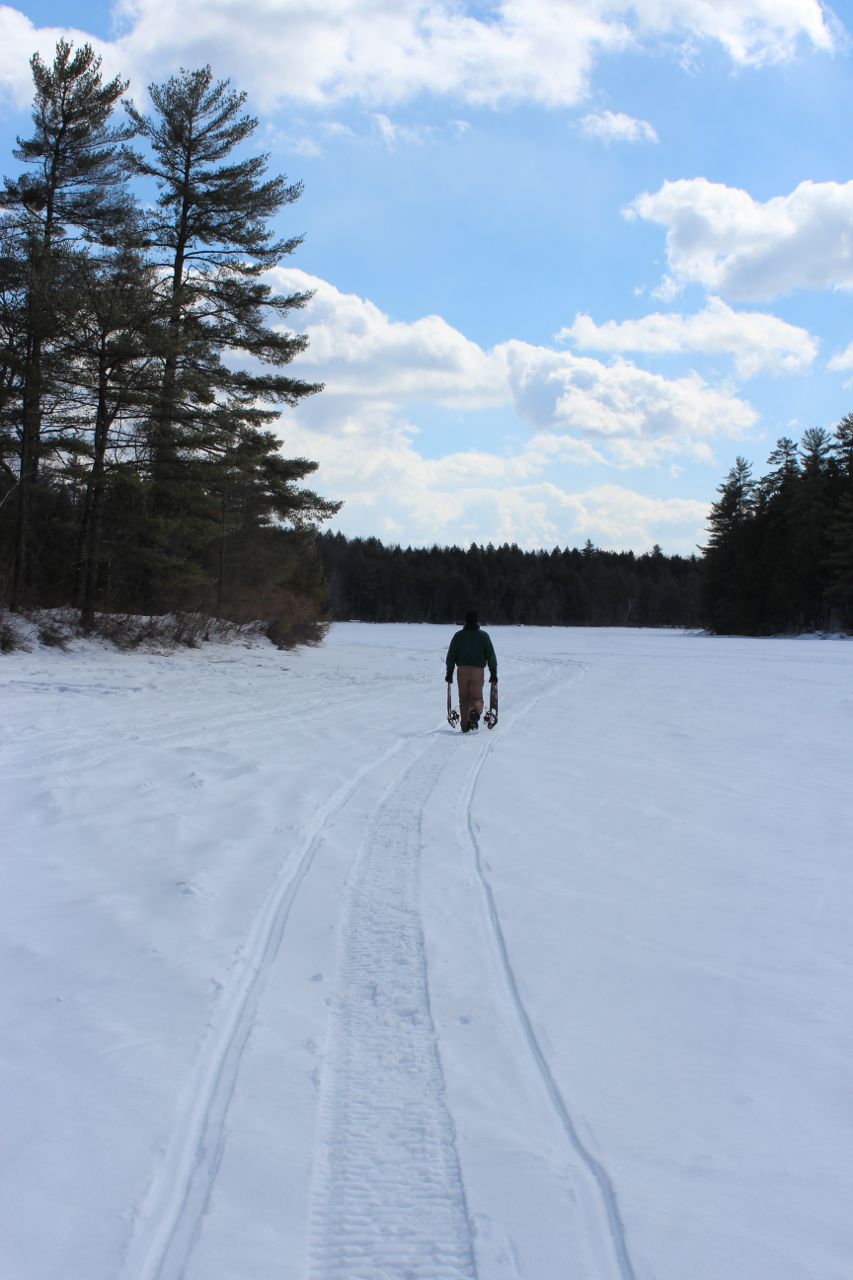
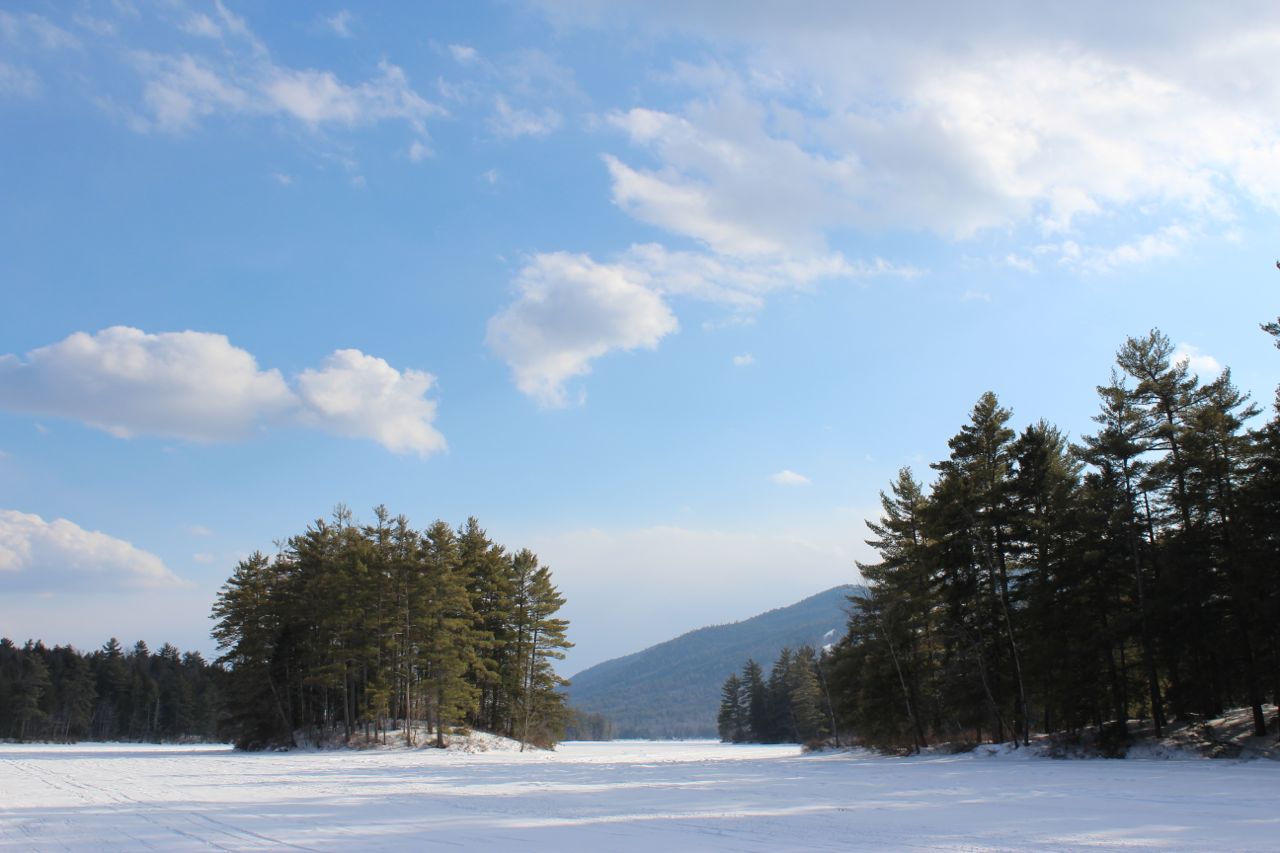
Today’s tramp found us heading north on Moose Pond again. The pond is covered in snowmobile tracks and snow swirls like these.

coyote print

Though we sink into the snow, this coyote had no problem moving along.

snowshoes

Snowshoes were a must for both of us. Our intended destination was Rueben Bennett’s saw mill–or at least the remnants of it. I’d been there about a year and a half ago with the current land owner and another friend, and wanted to show my guy. A couple of men who lived in the Old City neighborhood I wrote about yesterday, may have worked at the mill.

beaver lodge

We were almost to the outlet of the brook when we saw that this beaver lodge is active. Notice the breathing hole at the top. We moved away quickly so as not to add any more stress to them.

 cat tails

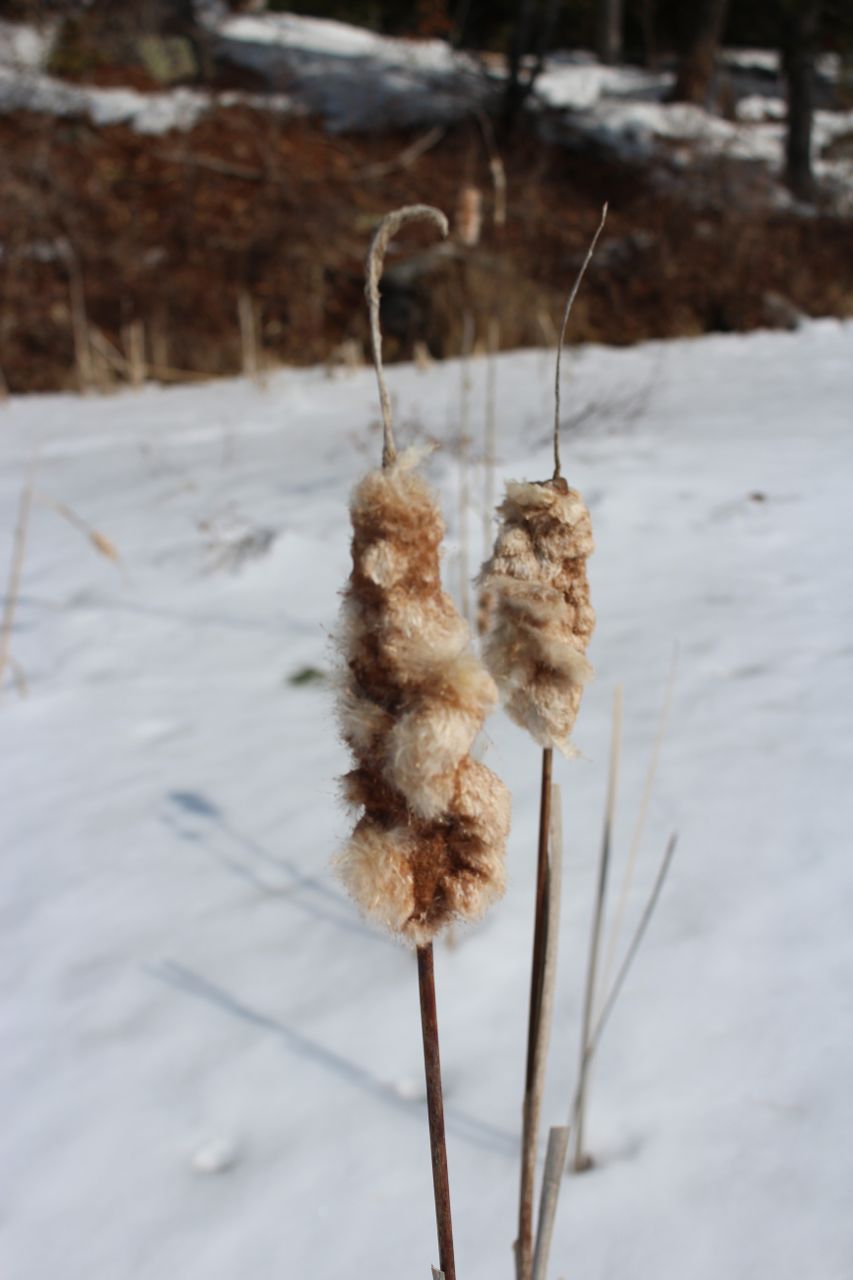
It looks like the fluffy seeds of these cattails are still emerging. It won’t be long before the Red-winged Blackbirds are perching on them.

stream

Following the stream, we kept looking for the rocks left from the mill site.

liverwort

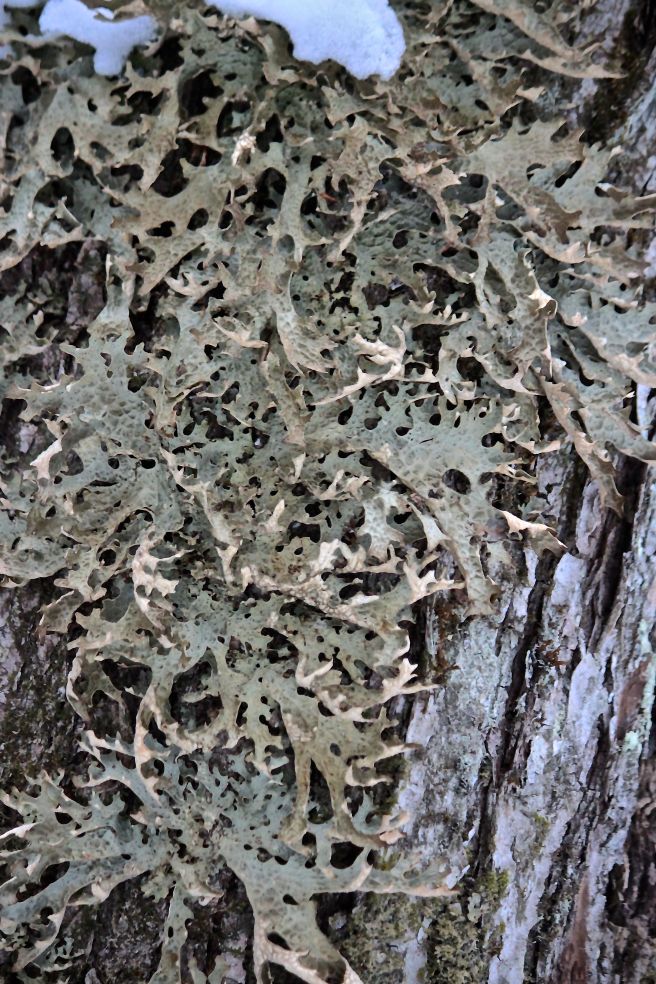
Along the way, I spotted this lungwort or lung lichen. It’s one of my favorites because when it’s dry like this, it’s light in color and very brittle. But after a rain storm, it turns bright green and is quite pliable. And it’s got that lettuce leafy look to it. Some describe it as a lung tissue appearance. I’ll stick with the lettuce, thank you very much. Lungwort is an indicator species for a rich, healthy ecosystem. Always a good find.

chaga

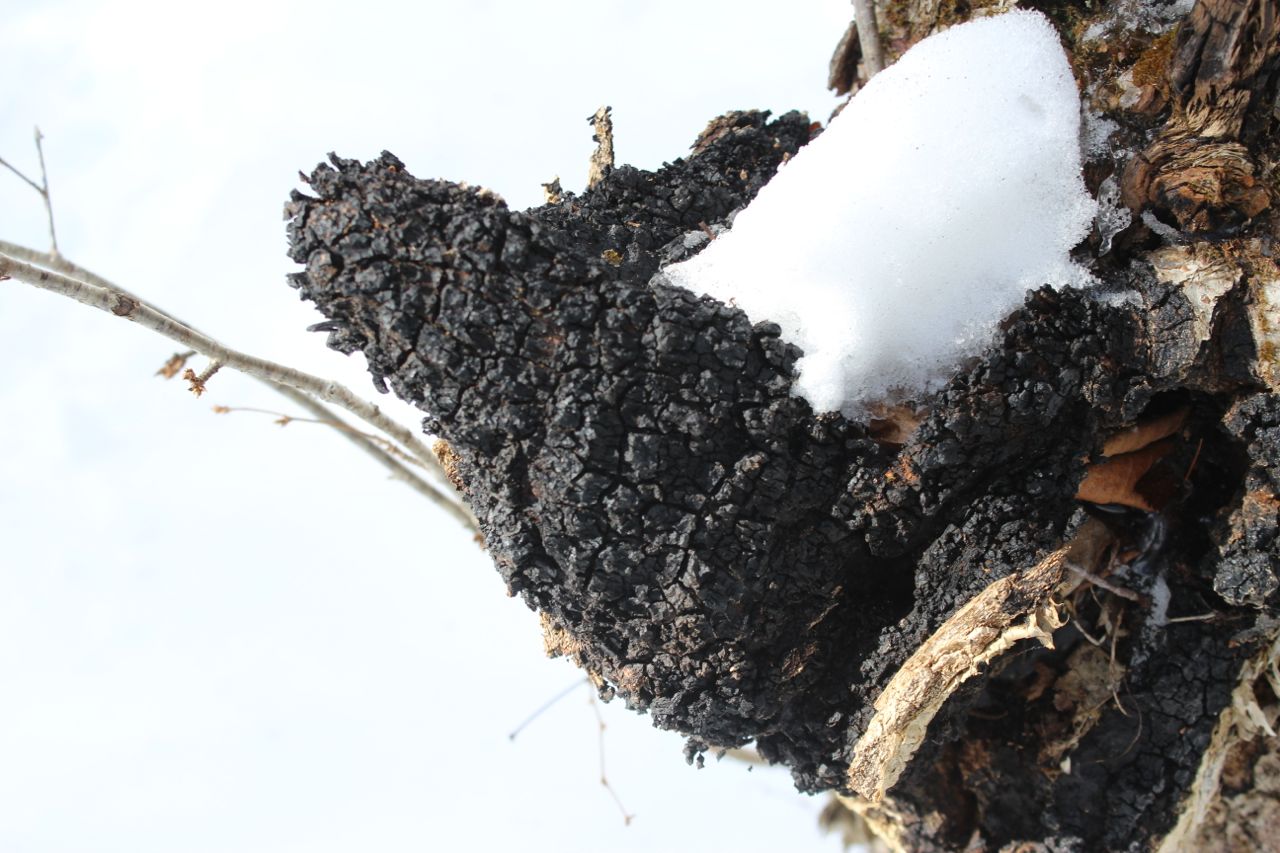
I’m not a mushroom expert, but I do know that this is Chaga. Another good find.  Unlike most other  hard, woody fungi, Chaga is coveted for its nutritional and medicinal benefits. If you want to know where this one is, you’ll have to follow our breadcrumb trail. I recently learned that the Siberians call it the “Gift from God” and the “Mushroom of Immortality.” To the Japanese, it is “The Diamond of the Forest,” and for the Chinese, “The King of Plants.” A mighty good find. It’s still there.

red maple swamp

We looked high and low for the mill site. At last we came to this Red Maple swamp and decided that perhaps it was Duck Pond, and we’d gone too far.

old City up the hill

Old City is located right up the hill. I was almost certain we were in the right place, but our search turned up nothing.

examining the erratic

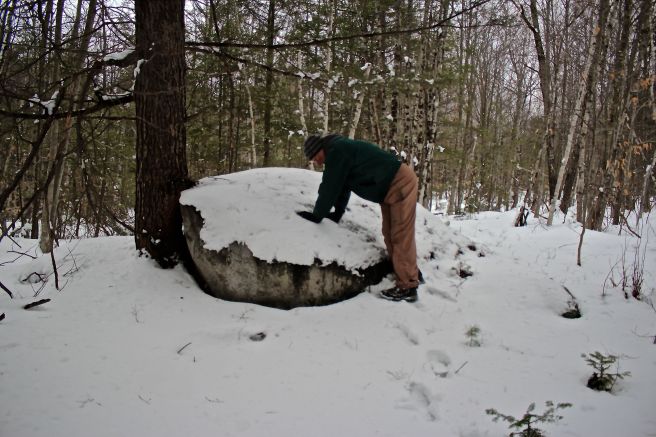
We examined this rock to see if it was a glacial erratic or had been moved here for some reason. I vote for glacial erratic.

slush

After three hours of tramping about, we started for home. The wind was cool at our backs, but someone took of his snowshoes and you can see that it’s getting a bit slushy on the pond.

heading home

What’s that line about walk beside me and be my friend. I know it looks like I’m always following, but that’s not the case all the time. I do like to pause frequently and take photos to remember and ponder at a later time.

It turns out that we were milling about in the wrong area. I should have looked at my friend’s Web site prior to today’s adventure. She almost always has her GPS handy and had posted the exact location. I knew it didn’t feel quite right, but I was so certain it was closer to Old City than it actually is.

Oh well. A destination for another time.

Thanks for joining me for today’s wonder-filled discoveries.

To Old City and Back

Leaving camp

From camp. To Old City. Bridgton to Sweden. Via Moose Pond.

Toward Black Mtn

The temp was about 40 degrees, but with the brilliant sunshine, it felt even warmer. We reminisced about kayaking and rowing as we headed north on the pond.

Mink 1

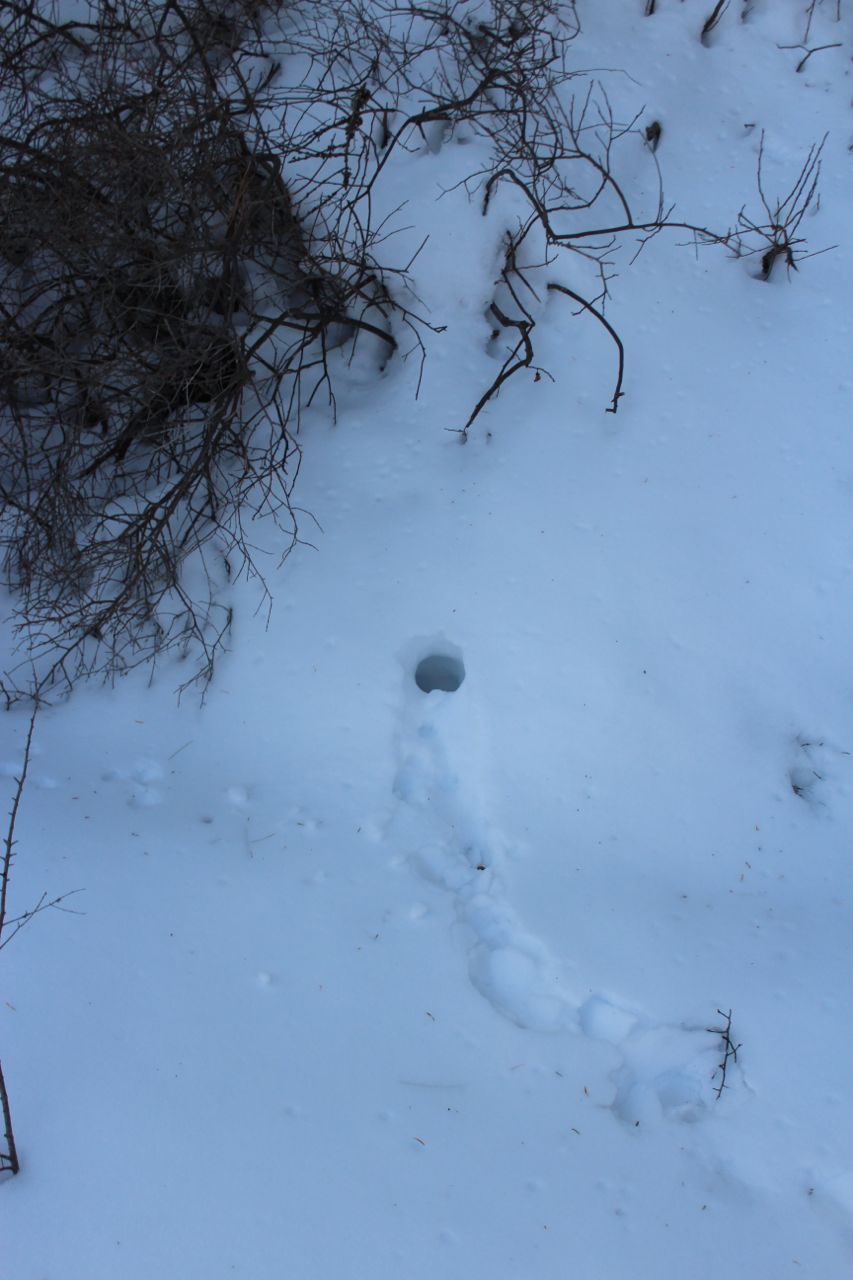
Beside one of the islands, a mink had made numerous trails and holes.

Mink 2

I love it when a critter behaves like it’s supposed to. In this case, the prints are on the slant that the weasel family is known for. A mink is a small mammal with a long body and short legs. It has partially-webbed feet, an adaptation to a near-aquatic habitat. A few years ago, an acquaintance and I were helping with the Moose Pond watershed survey. We were sitting on some rocks by the shore, with a dock in front of us, as we jotted down notes. Much to our surprise, a mink came up from under the rocks by the dock. We starred at it, it starred at us. We had cameras. Did we take a photo? Nope. Another one for the mind’s eye.

Mink3

Bound and slide. Like otters. I still want to be an otter in my next life, but minks do have fun too.

following tracks

Tracks tell the story about behavior, but it’s often a guessing game. I think I got this one right. Homo sapiens. Male. About 6 feet tall. Handsome. Puts up with a lot.

finding a seat

He borrowed a resting spot while I examined those mink tracks and holes. There were tons of holes.

on the trail

At the northernmost end of the pond, we followed the snowmobile trail toward Old City. Today it’s a wooded snowmobile trail around the base of Black Mountain in Sweden, Maine, but during the 19th century a road passed by at least six homesteads. All were reportedly occupied by young men who chose not to live at home–perhaps increasing their status as eligible bachelors. Their names included Cushman, Farrington and Eastman, among others–names long associated with Sweden and Lovell. (Sweden was originally part of Lovell)

foundation

The area was abandoned at some point after the Civil War, but foundations like this one remain. This may have belonged to P. Farrington or J. Edgecomb, but I’m thrown off because it occurs on the wrong side of the current “road.” That doesn’t mean the road was originally in the same spot.

stone walls

Stone walls, like this one near the I. Eastman property, formed boundaries to keep animals in or out. I suspect this guy was a major landowner.

stone wall 2

I’m fascinated by stone walls. Not only are they beautiful and functional, but they also represent a tremendous amount of labor. And the stones have their own story to tell about the lay of our land in New England.

color in the woods

I’d been looking at tracks, trees (always looking for bear claw marks on beech trees and quizzing myself on bark) and stones. On the way back, this touch of color caught my eye. Red Pine bark is among my favorites. Then again, I haven’t meet a tree I didn’t like. And the contrast with the hemlock needles, beech leaves and touch of blue sky gave me pause.

vine?

This also caught my eye. Last fall, a friend had sent me a photo of a beech tree with a similar case of strange scars. I didn’t know what it was, so I sent it on to a forester I know. He sent it on to someone in the invasive insect department at the state level. It all boiled down to what they thought was wounds from bittersweet vine being wrapped around the tree at one time.

vine 2

That made sense then. Today, I dunno. As I looked around, I noticed the same phenomenon on other beech trees. But I didn’t see any evidence of vines nearby. Of course, there’s still a lot of snow on the ground, as my guy can tell you since he chose not to wear snowshoes. The area had been logged at some point. But, I’m just not sure.

heading back to camp

Back on the pond and heading toward Bridgton and camp. Shawnee Peak and Pleasant Mountain provide the perfect backdrop. Yesterday, my guy took one of our grand-nephews for another ski lesson. The young’un skied straight over moguls on the Pine, slipped off the trail into the woods several times and fell a kazillion times. On the ride home this tired seven-year-old said that his younger brother probably spent the day playing Xbox. When asked if he wished he’d done the same, he remarked, “No, this was the most fun day I’ve ever had in my ENTIRE life.” I can hear my mother-in-law guffawing in heaven. :-)

islands and mountain

Only another mile to go before we rest. Thanks for wondering along with us on today’s wander.

Looking At This, That and the Other Thing

boundary

I’m not the only one to cross boundary lines. You can see a deer run passing between the trees.

Acres and acres of land behind us are maintained under the Maine Tree Growth Tax Law that was enacted in 1972. This law allows landowners to create a productive woodland, while supporting the wood products industry. They must develop a management plan, which includes periodic harvests. For the last two years, a lone logger has been harvesting trees on much of the land which is owned by one person. While I complain about some timber projects, this one seems to be well executed. And the deer love the opportunity to find lots of browse as a result.

deer browse

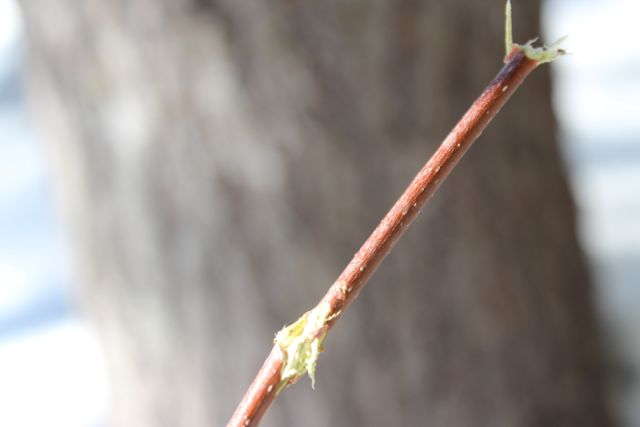
Red Maples that have been cut will stump sprout, thus providing lots of munching opportunities.

red maple bud

They don’t all get consumed in one day, fortunately. These Red Maple buds are beginning to swell. If the deer don’t eat them, it will be fun to watch the transition over the next two or three months.

another boundary marker

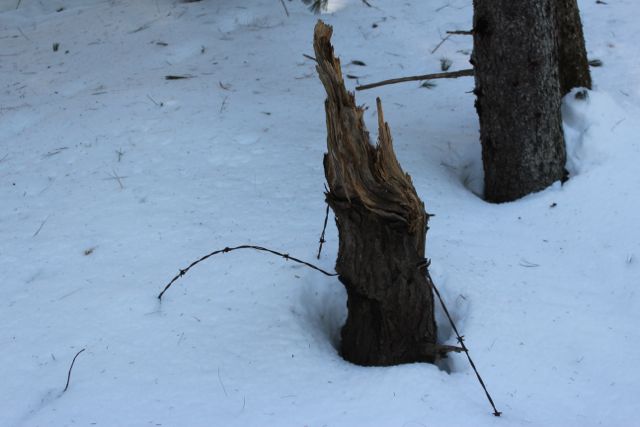
While poking about looking at this, that, and the other thing, I found more evidence that this land once had an agricultural use before reverting back to forest. Barbed wire served as a boundary beginning in the late 1800s.

balsam 1

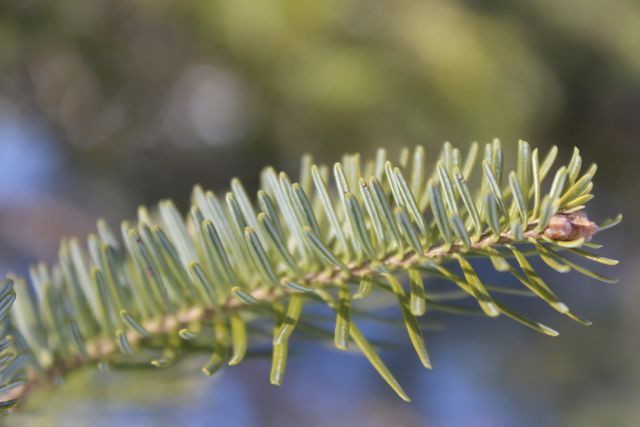
In parts of the woodland, the evergreens are now the most abundant trees. The needles on the balsam firs caught my eye today. Normally, they lay rather flat, but suddenly I noticed that some were standing upright, showing off the two white lines or stomata on their undersides.

balsam 2

Typically, balsam fir has dark green needles that are blunt-ended and about an inch long. Some of the ends feature a small divot or notch. The silvery whitish lines on the lower surface are the stomata (pores). In today’s sunlight, the needles had a bluish hue as they stood up. What’s up? Why are they standing on end?

spruce 2

Spruce, on the other hand, have shorter needles with pointed ends. They feel prickly to the touch. Everything seemed normal with them.

hemlock

And then there’s the ever dainty hemlock with its half-inch long needles. Guess what? It also has two lines of stomata on its underside. So . . . don’t let that be the defining factor when you are trying to figure out what tree you’re looking at. Notice how the needles are attached, their length, their feel and the overall look (GISS) of the tree. Oh, there’s more, but save it for another day.

sugar maple

I was excited to find this Sugar Maple. The bark on a Sugar Maple tends to twist as you look up the tree. At least to my eyes.

sugar maple borer

And when I walked around, I found evidence of the sugar maple borer–the line that is left looks like a frowning mouth. I know I’d certainly frown if something named a borer attacked me.

pileated1

Whenever I see a fresh pile of wood chips created by a pileated woodpecker. I have to investigate.

pileated scat

And I wasn’t disappointed. Pileated woodpecker scat! :-) It’s filled with insect exoskeletons, since that’s why the woodpecker excavates the tree.  A few weeks ago I spent some time at Holt Pond Preserve in South Bridgton with a fourth grader who was working on a school project. We found some of this scat. She wasn’t particularly impressed but took it to school anyway. I hope she wowed her teacher and classmates. This morning, I met with a GLLT docent and the first thing I did was pull out my scat collection. After she guessed at each one, which I keep in separate petri dishes, she looked at me, grinned and said, “I don’t think anyone has ever shown me their scat collection before.” What can I say. My social skills are . . .
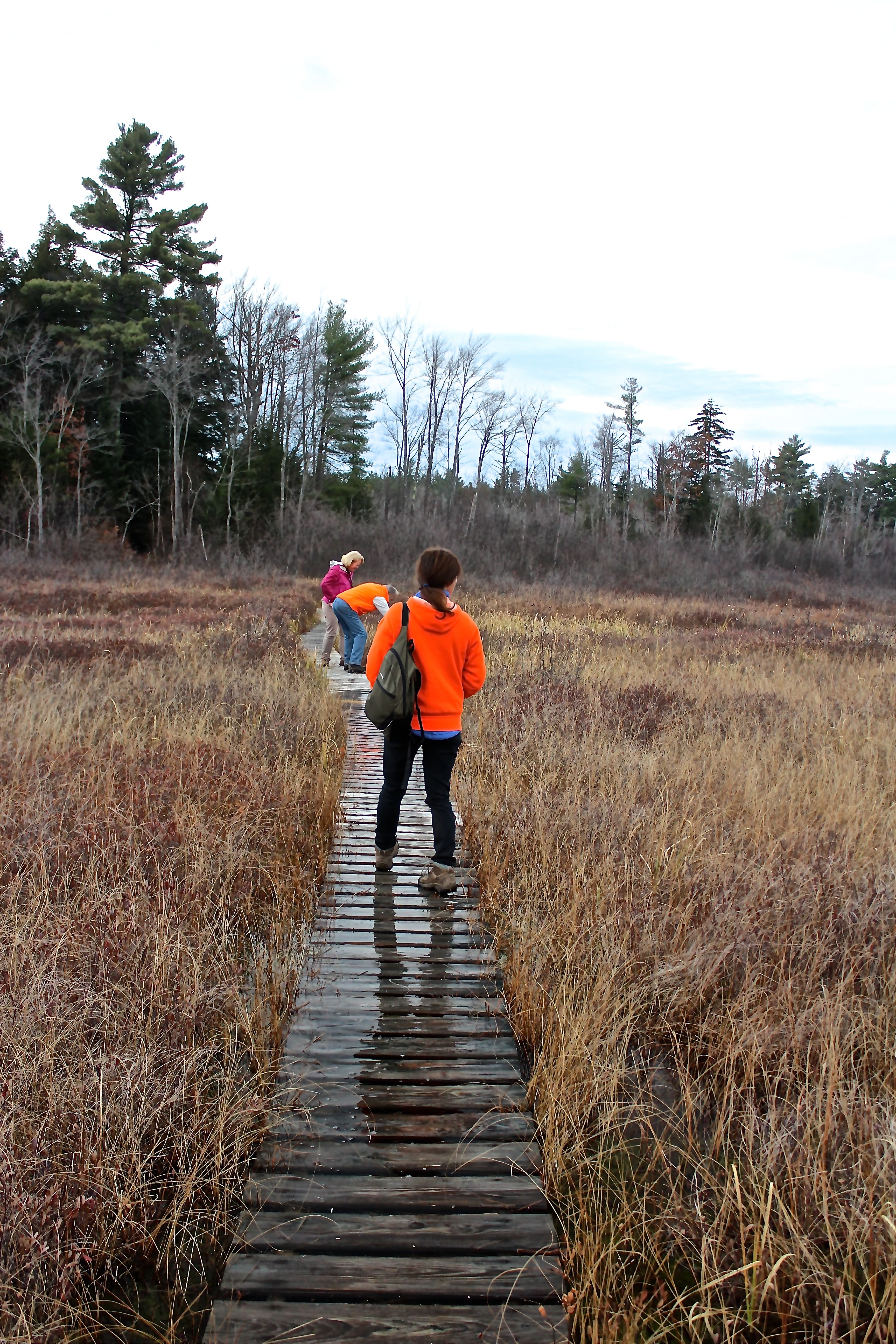
deer and squirrel, hemlock cover

I’ll end with this photo. Life happened here. A deer bedded down under a hemlock tree. And sometime later, a red squirrel climbed the tree while holding an Eastern White Pine cone, which it proceeded to strip in order to eat the two little pine nuts at the base of each scale on the cone. And you thought I was showing you more scat, I bet.

Thanks for joining me today on this wonderful wander.

You’d Better Look Out: Santa’s Reindeer May Be Watching

santa

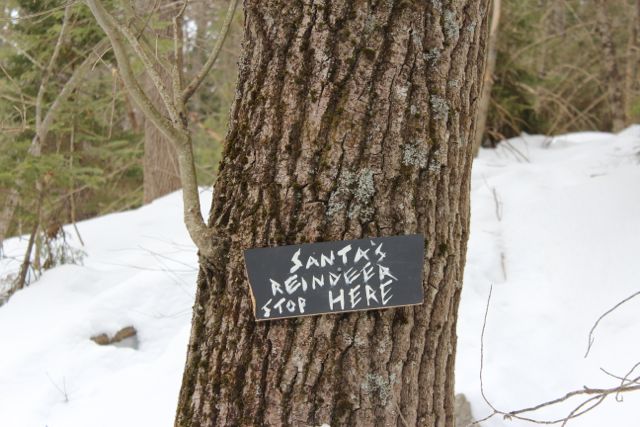
Apparently, Santa’s reindeer frequent the area. Of course they do. Isn’t he always making a list and checking it twice because he needs to know if I’ve been naughty or nice?

Cape

This morning, I revisited Robinson Woods, owned by the Cape Elizabeth Land Trust, with two other Maine Master Naturalists. A funny thing happened on the way to the forum . . . as we stood in the parking lot looking at materials in my tree notebook, two other women who had just completed a nature walk with elementary school students, came over and asked what we were doing. Feeling rather smug, I replied, “We’re Maine Master Naturalists.” I was about to go on when one woman immediately said, “So am I.” Gadunk. Turns out she was in the first class of the program, which graduated in 2012. We’d found another member of the tribe.

shagbark hickory

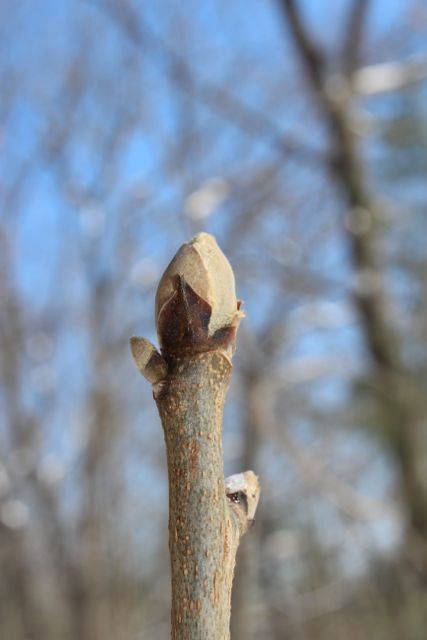
Last week, my friend and I found this young tree with buds. We keyed it out and were pretty sure it was Shagbark Hickory, but we couldn’t see any parent trees. Well, today we found them not too far away.

shagbark

Shagbark hickory is found most frequently in southern Maine. Those who named this one got it right–certainly shaggy with those long, loose plates.

shagbark 1

Because it is strong, tough and flexible, historically it was used to manufacture tool handles, carriages and wagon wheels. My hardware store owner husband tells me those are made of resin today. Shagbark Hickory is  now used for wood pallets, pulp and firewood.
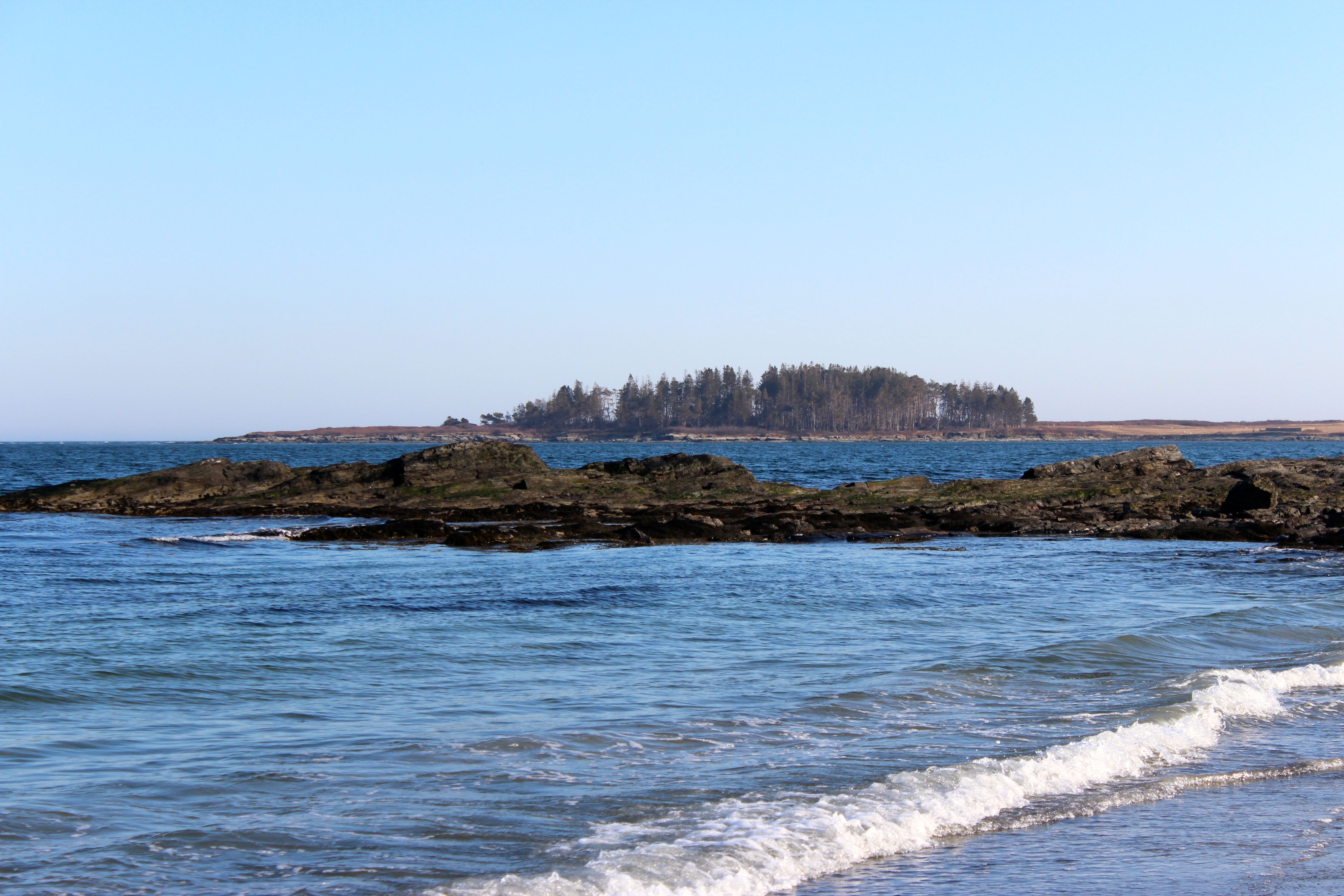
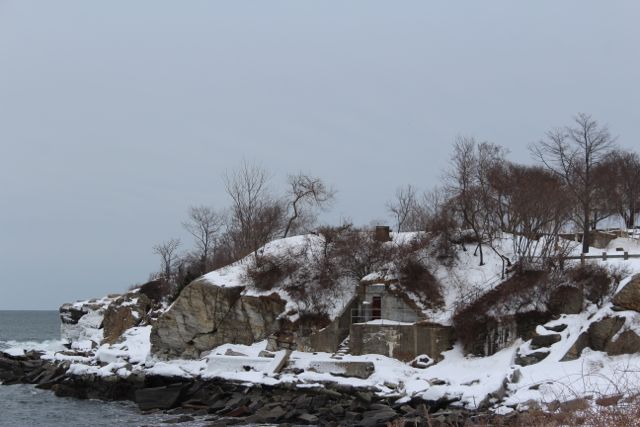
lighthouse

After leaving the preserve, I drove down the road to Fort Williams Park, home of Portland Headlight, to eat my PB&J. I do eat other food occasionally–honest. Popcorn. With grated cheddar cheese.

According to the Cape Elizabeth town Web site, “On April 13, 1899, President McKinley named the one-time subpost of Fort Preble, Cape Elizabeth’s first military fortification, Fort Williams. Named after Brevet Major General Seth Williams, Fort Williams grew to be a tremendous military asset during World War II. Besides protecting the shoreline of Cape Elizabeth, the infantry and artillery units provided the Harbor Defense for Portland. After the war, many of the forts in Casco Bay were closed, including Fort Williams, which traded in its defense of the coast for caretaker status and Army Reserve accommodations. Fort Williams was officially closed and deactivated on June 30, 1963.” I was four and a half years old.

castle

The Goddard Mansion still stands on the property. It’s not in great shape certainly, but was the home of Colonel John Goddard and his family during the 1800s. As youngsters, our boys loved to explore the nooks and crannies of this property that overlooks the fort.
hideaways

More remnants of the fort. You’d better watch out, because Santa might be hiding in there.

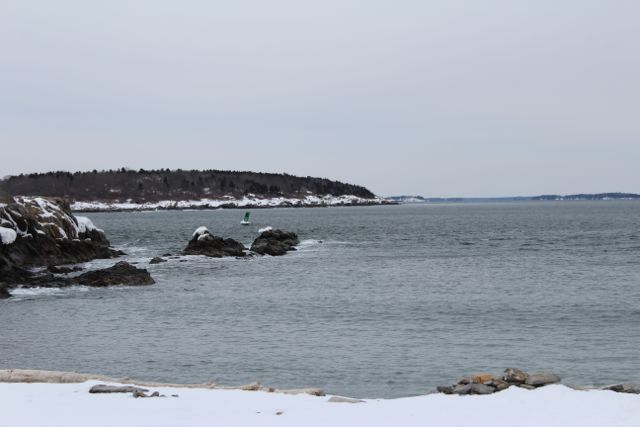
water

One last look at the water before heading west.

Thanks for wondering along with me today . . . and Santa.

Mountain Mondate

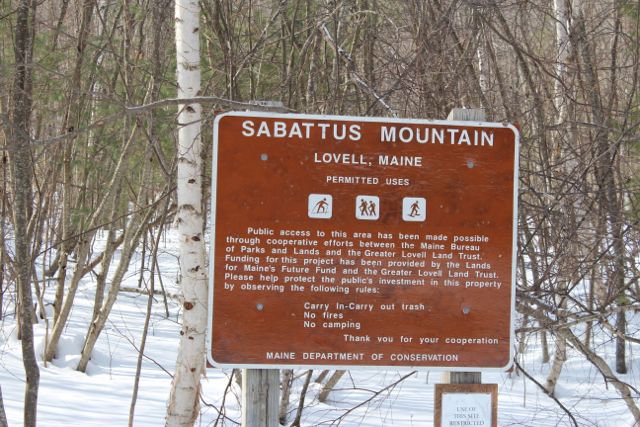
Sabattus Mtn sign

Our Monday date took us to Sabattus Mountain in Lovell this morning. It’s an easy trek offering great views, lots of wildlife activity and a decent workout in a short amount of time.

trail sign

Which way should we go? I ask myself that question over and over again. Habit took us up the right-hand trail, but in hindsight, maybe we should have mixed it up this time. A life lesson?

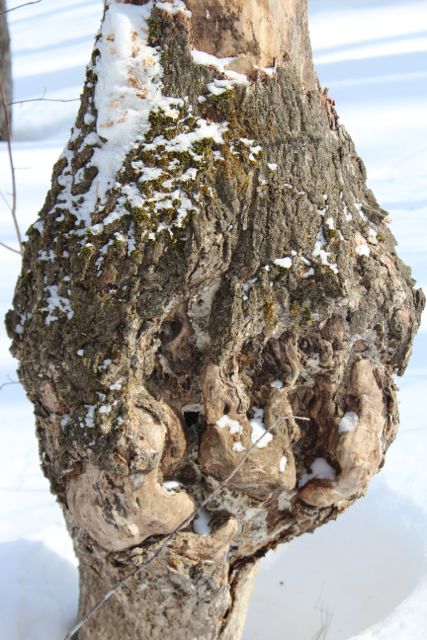
burl

Check out this burl. Over and under and around, oh my!

transition 1

I stood at this spot on the trail and looked down–Lots of beech, hemlock, birch and maple in the mix.

transition 2

And then I turned to look up the trail. Oak, pine and hemlock dominated the scenery. A transition point.

growing apart

Speaking of transitions, this hemlock grew apart after a couple of years. With two rather than one terminal leaders growing side by side, they eventually found their way back together.

and together again

Here they are woven back together–it’s almost difficult to tell that the two have become one. It made me think of our relationship as we trekked up the mountain. Maybe this tree didn’t really grow apart, the two parts just respected each other as their life together began and they allowed each other to continue growing in their own way, knowing that they needed to stay together ultimately because being united and supportive is what it’s all about. And maybe I’m reading way too much into a natural occurrence.

porcupine 1

A porcupine tree. Lots of porcupine activity in the hemlock grove both on this trail and on the way down.

porc trail

A well-traveled porcupine trail.

fire tower

The concrete stanchions that once supported a fire tower. Apparently, the tower was removed in 1963.

bench 1

Perfect spot for a hot cocoa break.

oake and pine

Eastern White Pine and Northern Red Oak–looks like the oak is ahead in the race to the sun right now. I wonder if that’s how it will play out over the years.

buried bench

And then there’s the other bench at the summit. We couldn’t actually sit on this one.

bobcat 1

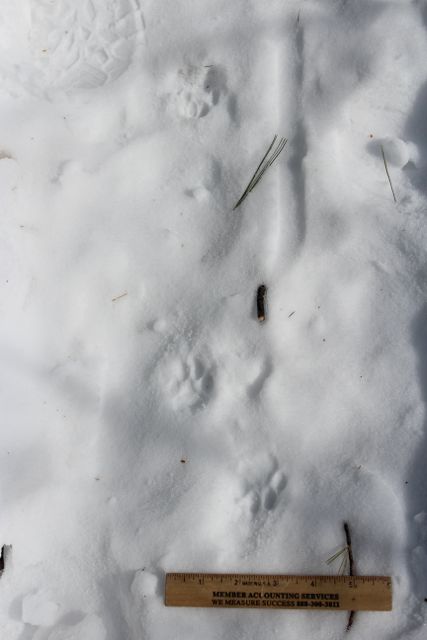
Heading along the ridge, we found these prints that always excite me. This critter had traveled to and fro before going off trail. Notice the “C” shape between the toes and the pad. C is for cat. Yup, a bobcat. And it was at some point in the last six hours or so, because we’d had a dusting of snow. These were fresh. Yippee!

bobcat2

A bobcat is a “perfect” walker. Ah, perfection. But really, it places a front foot down, and as that foot moves forward, the hind foot steps into its place. I think you can see that here–it looks like it might be two feet sharing almost the same space.

bobcat dinner?

Breakfast? The bobcat obviously snatched some little brown thing–or tried to. This was just off the man-made snowshoe trail and right by the ledge. I was a bit surprised that the cat had followed the trail for as long as it had. They usually cross our trails and have their own corridor. But, it sure makes for easier traveling to follow where others have gone before.

old oak

This old oak has seen better days. Amazing that it’s still standing.

support of a friend

But then I looked up. We all need the support of a friend. In this case, the friend is a white pine. They may compete for sunlight, but apparently they can count on each other occasionally.

heading down

Heading down. Transitioning again. There were a zillion snowshoe hare trails. And  mice. And squirrel. Good feeding grounds for a bobcat.

lunch 3

We finished up our trek before we were hungry for lunch. But, when hunger struck we ate PB&J sandwiches beside Kezar Lake.

Thanks for wondering along on this wander through the Maine woods.

Preying Predators

weasel tracks

It took me many years to understand the patterns of mammal tracks. Sometimes they still confuse me, although as I often say, when I’m alone I’m 100% correct.

weasel 1

I noticed these weasel tracks when I was about to climb over a stone wall. One print is slightly behind the other, which is typical of the Mustelidae family.

weasel hole

And then I found this hole in the snow covering the stone wall. The weasel tracks led directly to it. A warm home? An entrance to life among the rocks? A weasel’s diet includes mice and other small rodents, e.g. squirrels and shrews. I know that red squirrels frequent the area and often use the tree on the left as a feeding site.

mouse tracks

Look what else I found by the stone wall. A mouse hole and tracks.

bounding deer

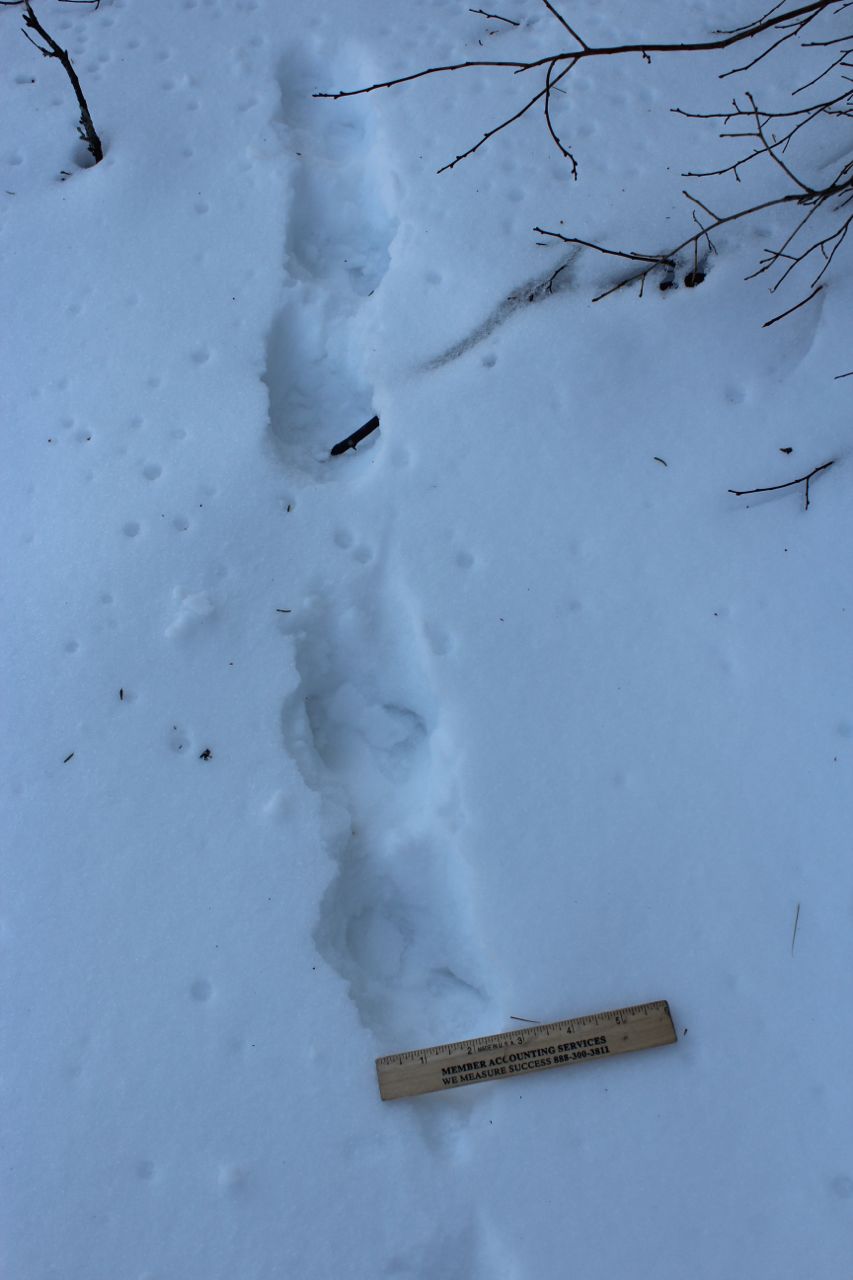
Continuing on, I came across the deep pattern of a deer that had bounded through the snow a couple of days ago. The afternoon light makes it difficult to see, but I put my trusty six-inch ruler down for perspective.

deer traffic light

I have to wonder if there is a traffic director who determines which way the deer should travel. This was one of many intersections.

coyote

And then I found coyote tracks. I was in snowshoe hare territory when I first noticed these. It had walked on snowshoe tracks I made previously. I remember years ago thinking when I found mammal tracks on mine that the predator was stalking me. Now I know better . . . I think. It’s taking advantage of the trail I’ve already packed so it doesn’t waste energy, especially in this deep snow. Animals will use the trails of other animals as well.

Now for a couple of fun photos.

snow face

A snow face. Looks rather like an ogre.

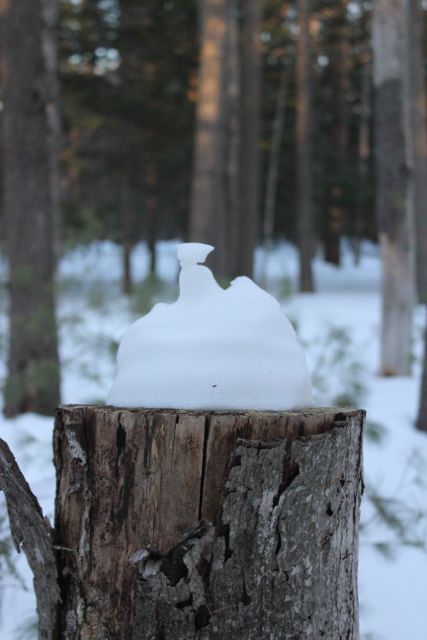
stump topper

Followed by a stump topper.

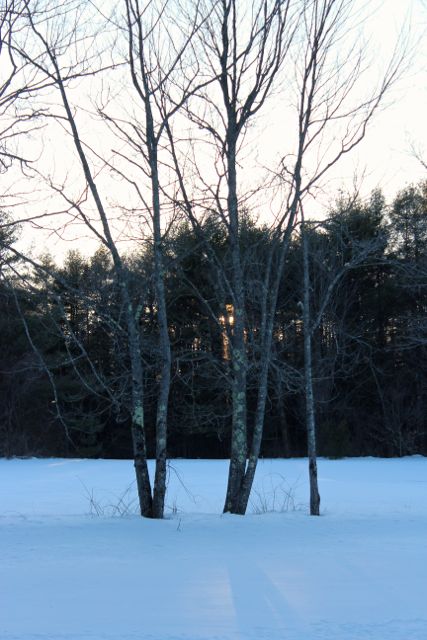
reflection

And then the sun’s subtle reflection silhouetting the red maples as I approached home.

Yet again, you’ve wondered along with me and I appreciate it.