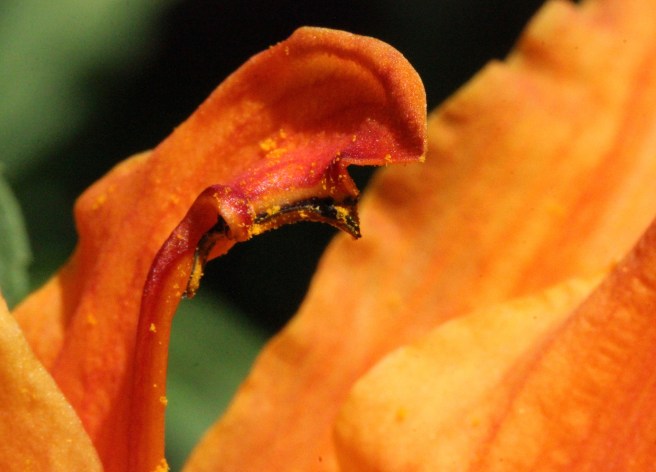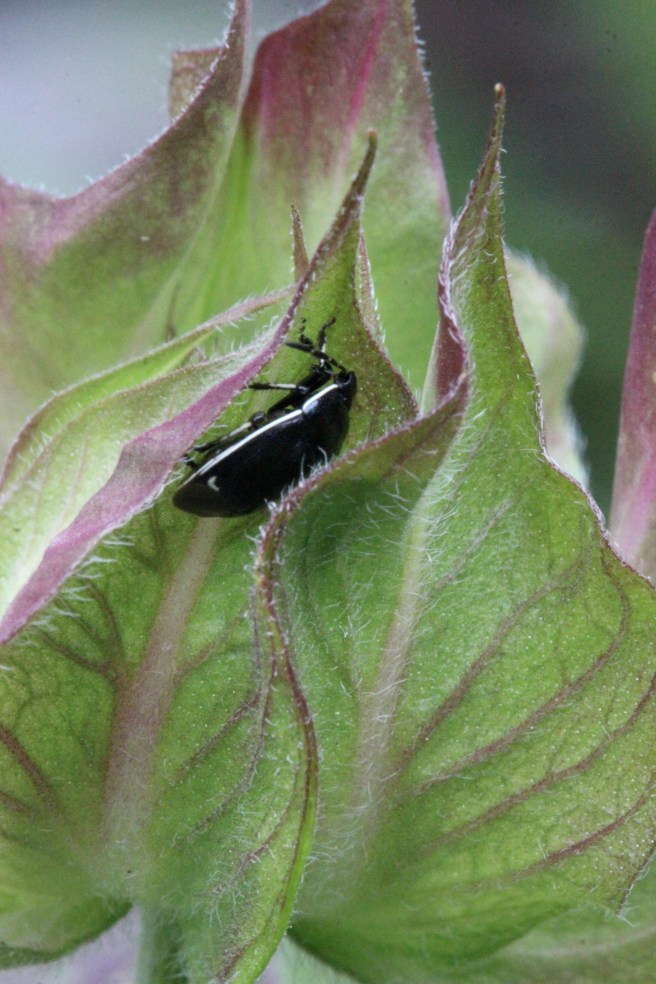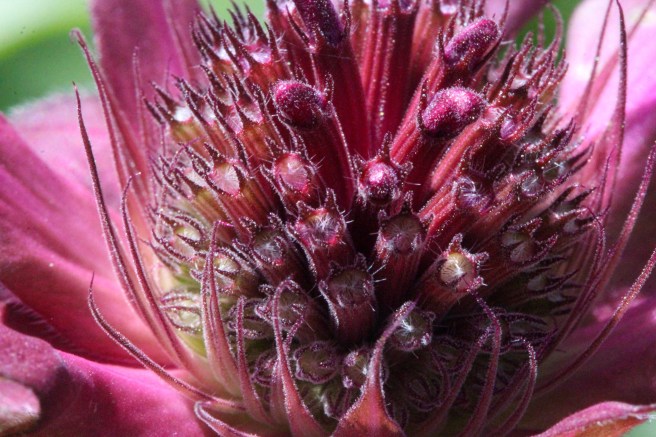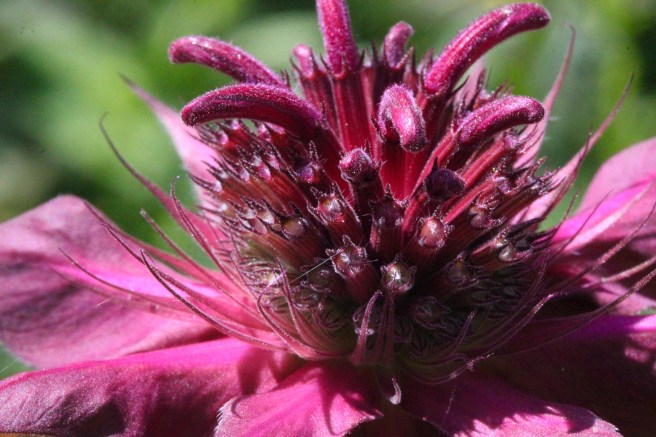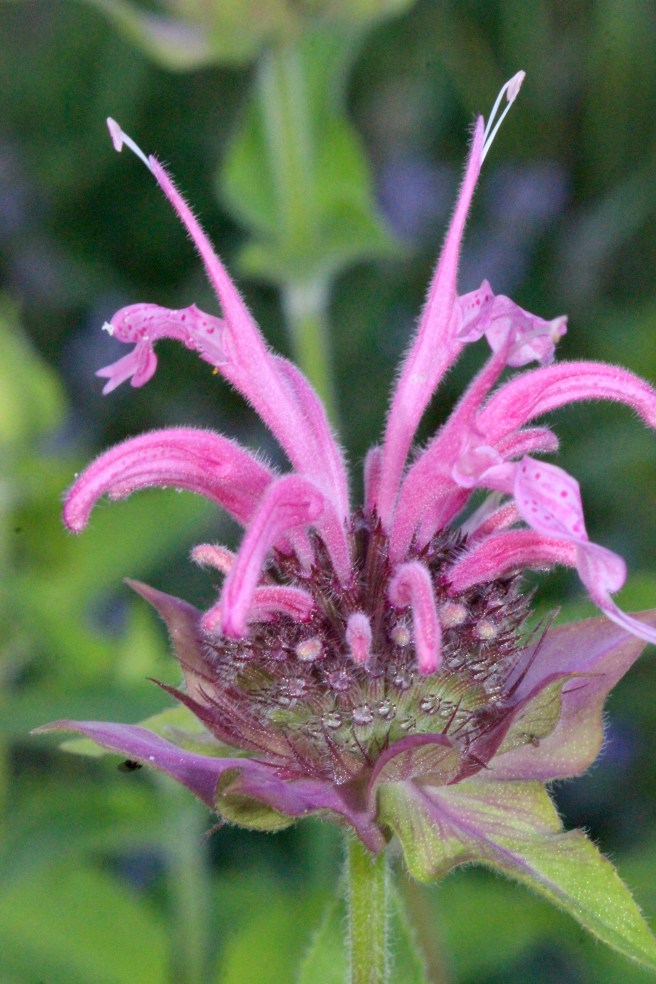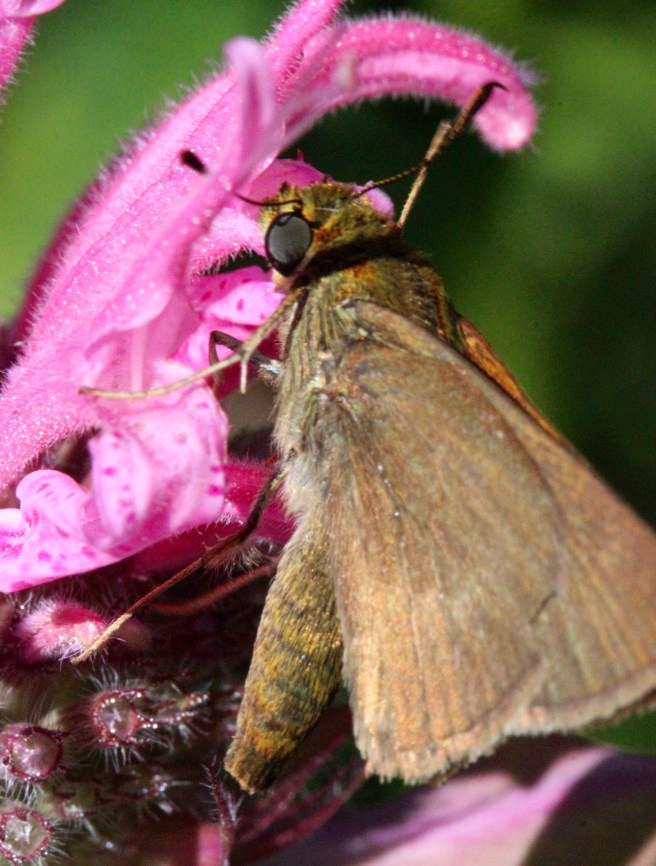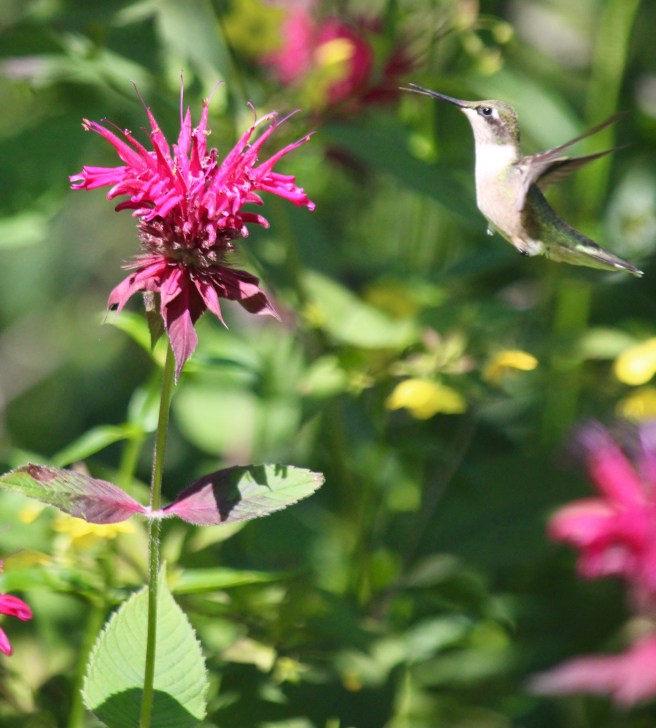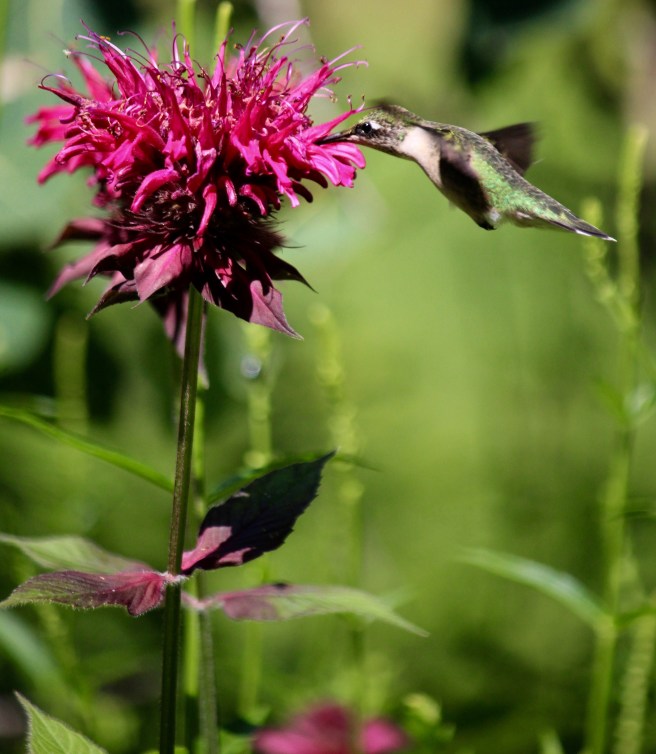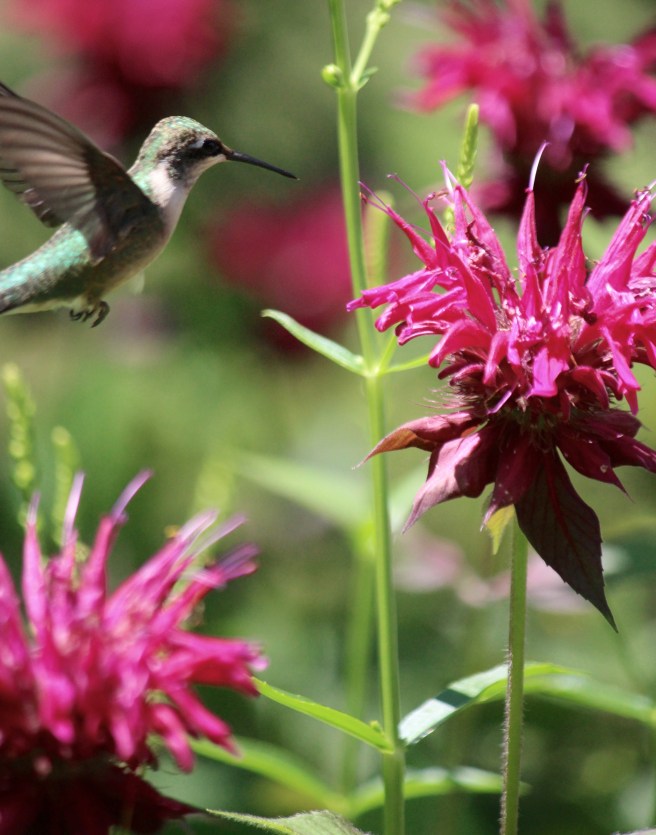
Smack Dab In Front Of Me


Sometimes I’m amazed at the wonders that are right before my eyes. OK, more than sometimes.
c-flower

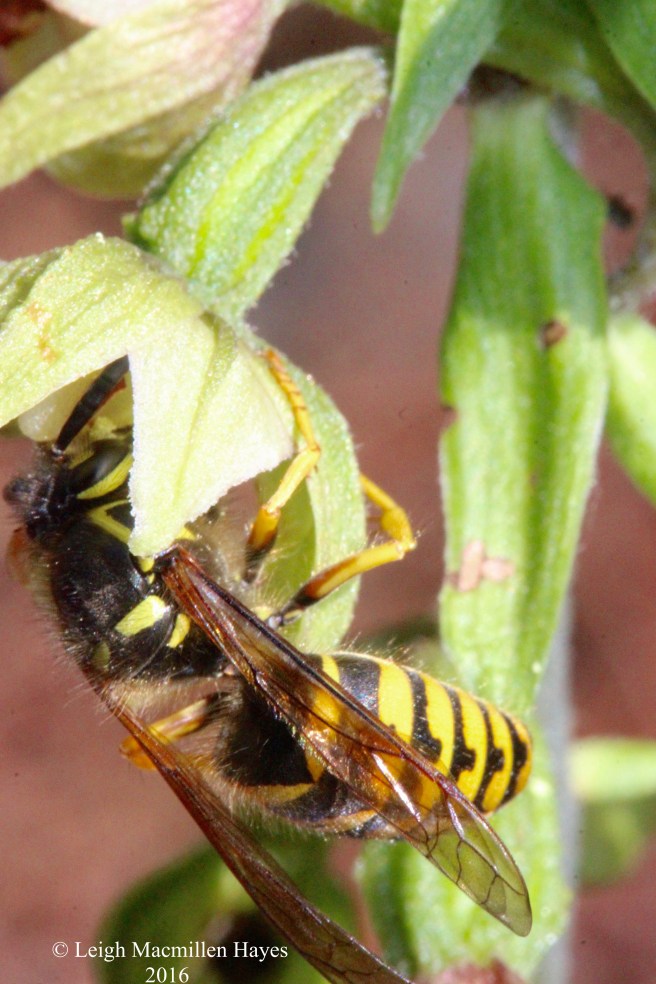
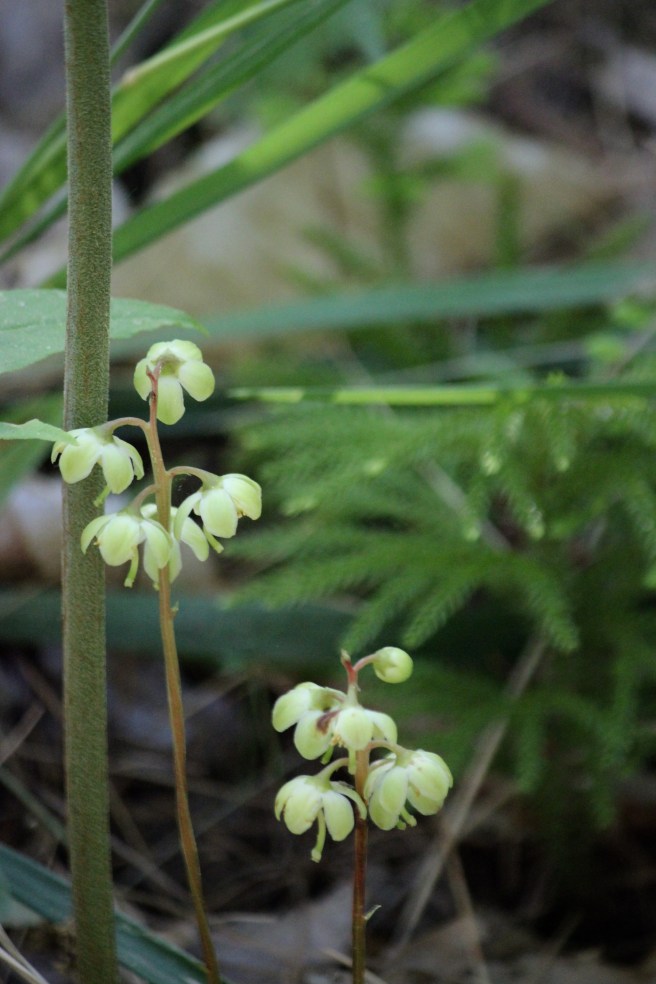
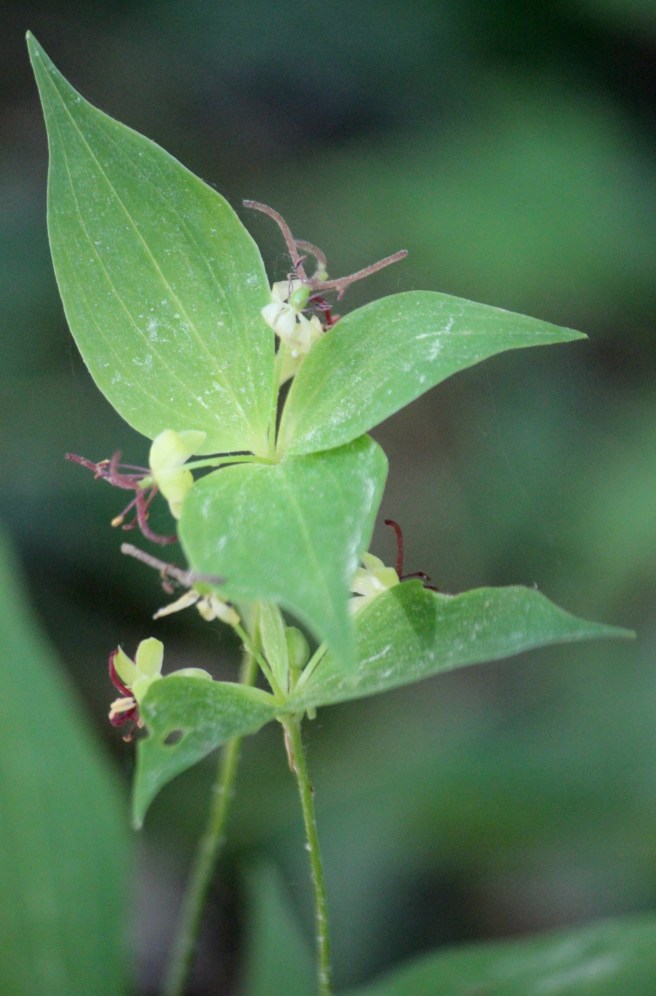
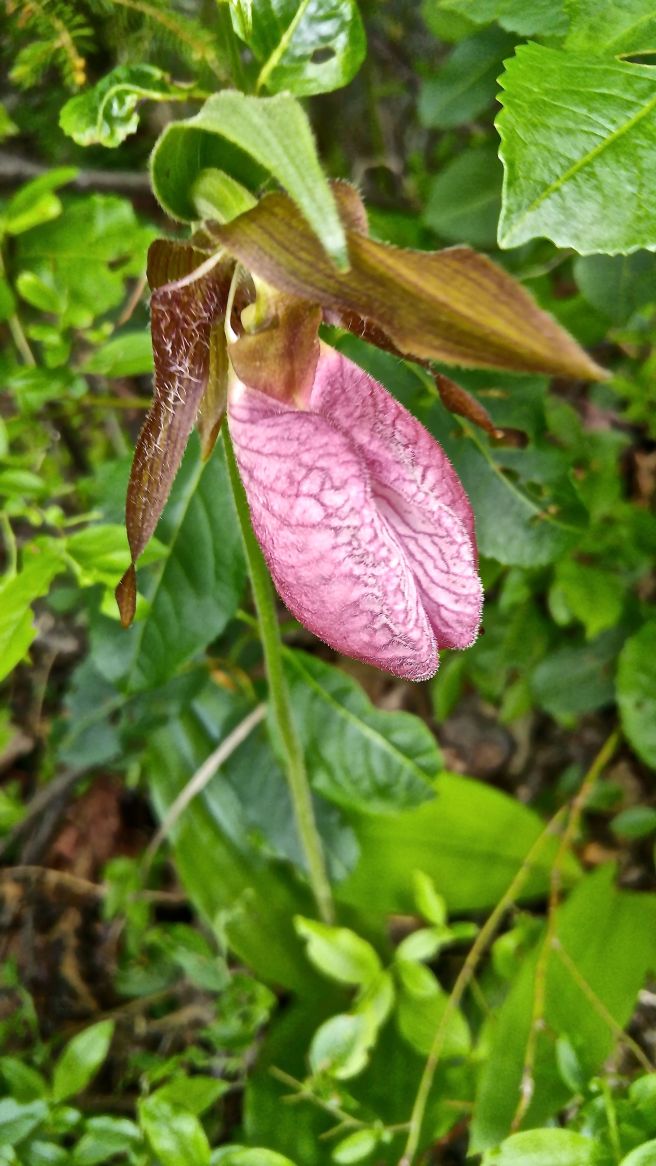
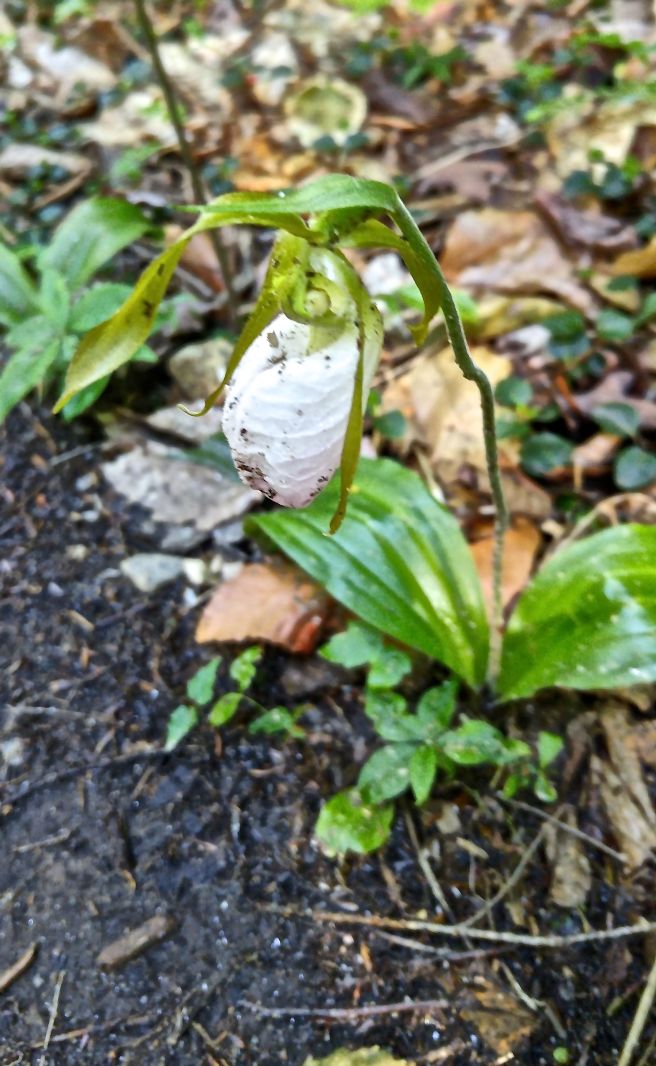
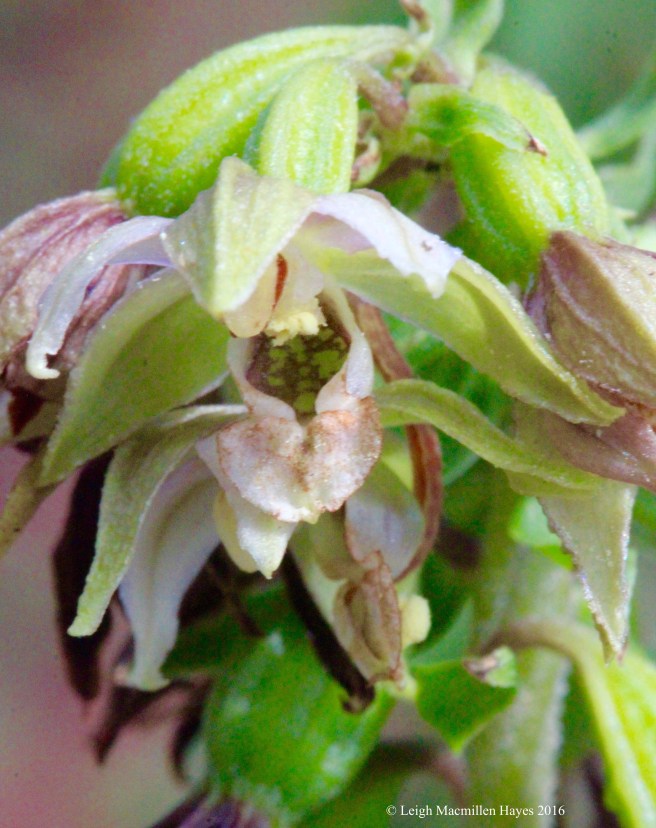
For the past two years, I’ve noticed this plant as I sat on my porch rocker. The greenish-yellow flower tinged with purple doesn’t last long, but it’s delicate in form. If you look closely, you may see that it’s shaped like a slipper. The pouch of a lady’s slipper? No, but it is a member of the orchid family, thus the similar structure. This is a helleborine, which is actually a non-native.
c-helleborine stem

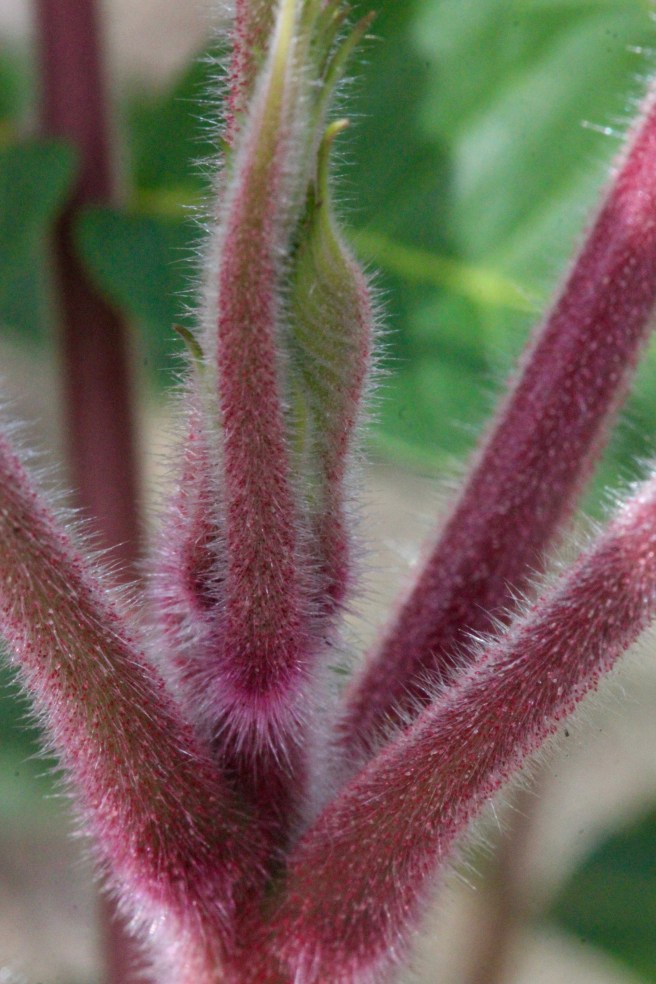
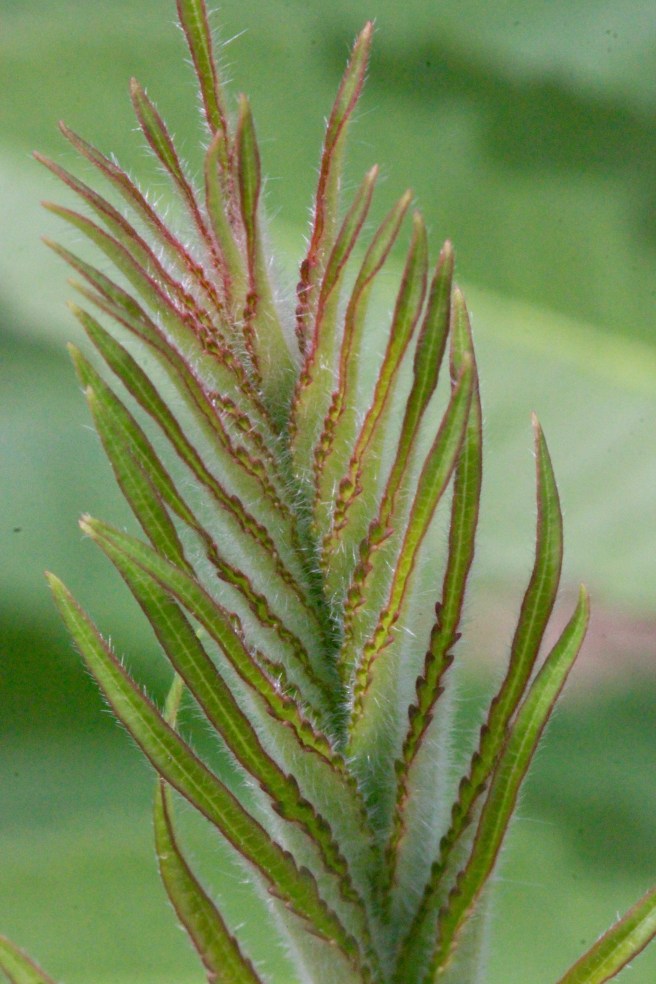
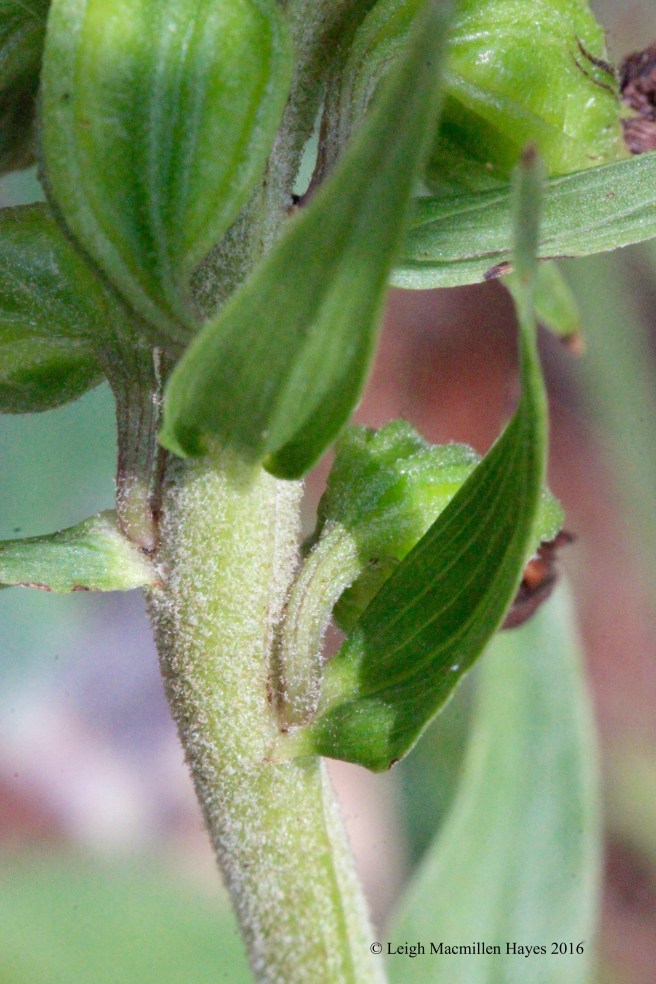
The hair-covered stem almost looks like it’s been coated with powder. With clasping leaves and that thick fuzzy stem, I keyed it out to Epipactis helleborine, aka broad-leaved helleborine. Strong and beautiful.

c-Rabbit-foot clover 1

Another non-native that is especially common along roadsides right now is rabbit-foot clover. I love this common name for it does look like the good-luck charms we used to have as kids–which were supposed to be a rabbit’s foot. Were they really taken from rabbits? Left or right, front or back?  Which pocket where you supposed to carry it in? And did it actually bring good luck? I don’t know, but the feathery structure and tad of pink among the white and green makes this flower appear as something more unique than common. Delicate and dainty.

c-Queen 1

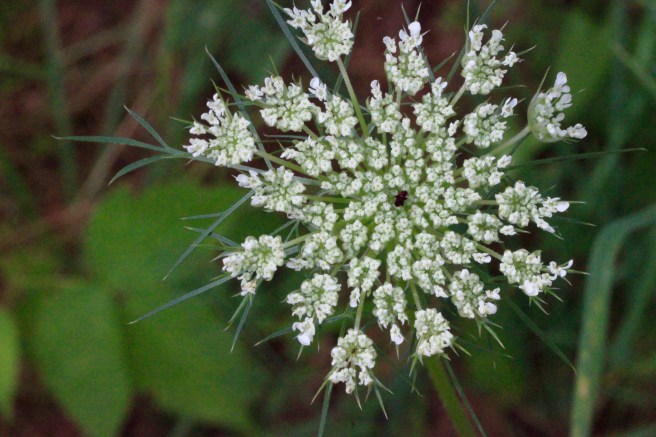
A third non-native that I see blooming everywhere right now–Queen Anne’s Lace. Apparently, Queen Anne liked to work with lace and the red dot that you see in the center of the inflorescence represents the blood that dripped when she accidentally pricked herself with a needle. After the flower finishes blooming, its spoke-like branches curl inward and form a “bird’s nest” structure while the seeds develop. Legendary and intricate.

c-ant on pearly everlasting

Finally, a native. The flowers of pearly everlasting. And an ant. Notice its body color–shining iridescent in the sunlight. Yes, even ants can be worth a view. And while these flowers may look huge, think about the size of an ant. I just happened to be in their faces. Three cool things about pearly everlasting. First, the white “petals” are actually bracts that surround the yellow disk flowers. (Bracts are usually green and leafy.) Second, the flowerheads do look like pearls and those white bracts remain so that  even after the central disk flowers wilt, the pearl structure continues to exist. (They look great in dried flower arrangements.) And third, the lance-shaped leaves are cottony and have an aqua-white or silvery tinge that makes them stand out among green-leaved plants.  Unforgettable and forevermore.

c-dewdrops

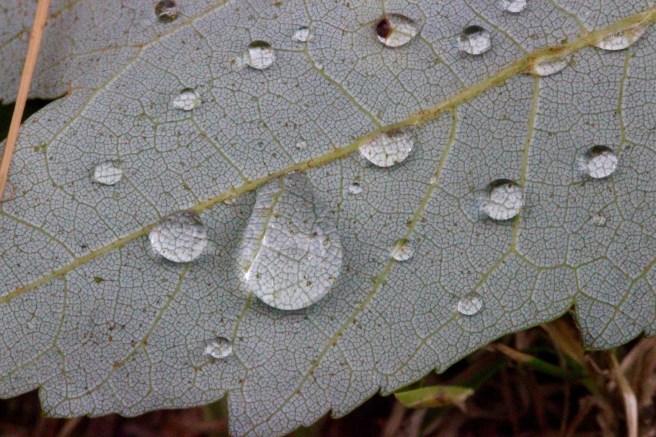
Morning dew glistened like tiny beads on a sensitive fern frond this morning.
c-fertile 2

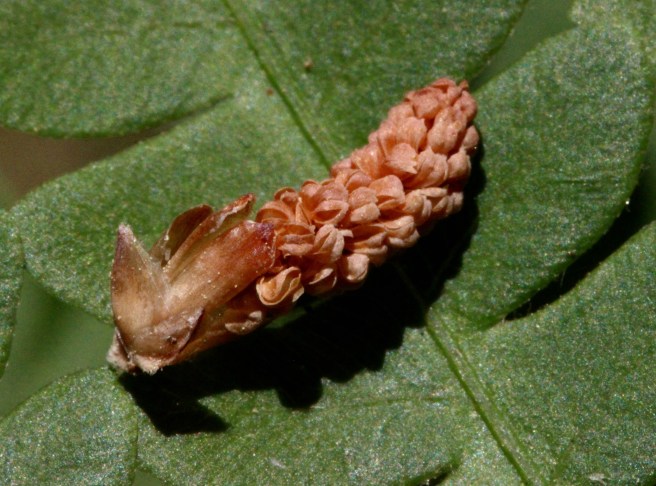
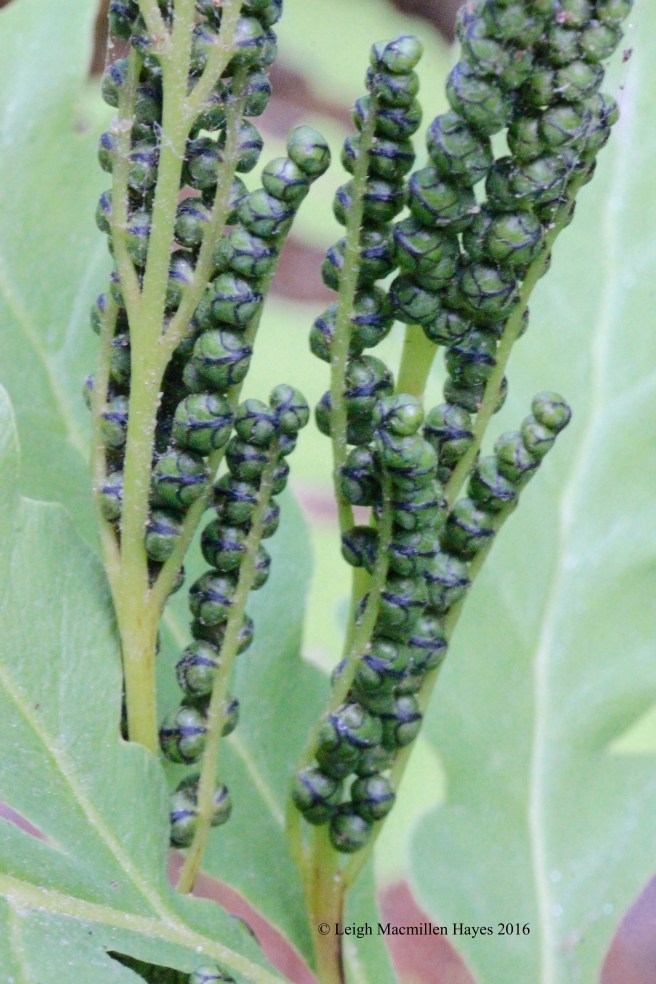
But one of my favorite finds later in the day was the fertile stalks of sensitive ferns. Check out the beadlike structure that houses the spores. These will stand tall all winter, turn a burgundy brown and after the spores are finally released, they’ll take on a lacy look. Notice how the beads appear on one side of the stalk. They look like they could be made of polymer clay. Prolific and creative.
c-damsel love

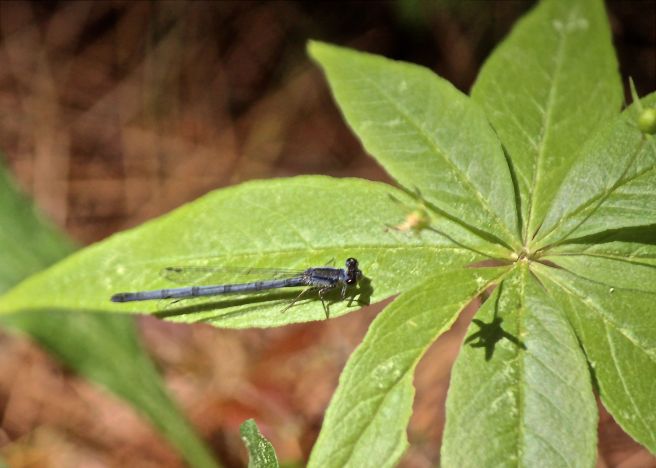
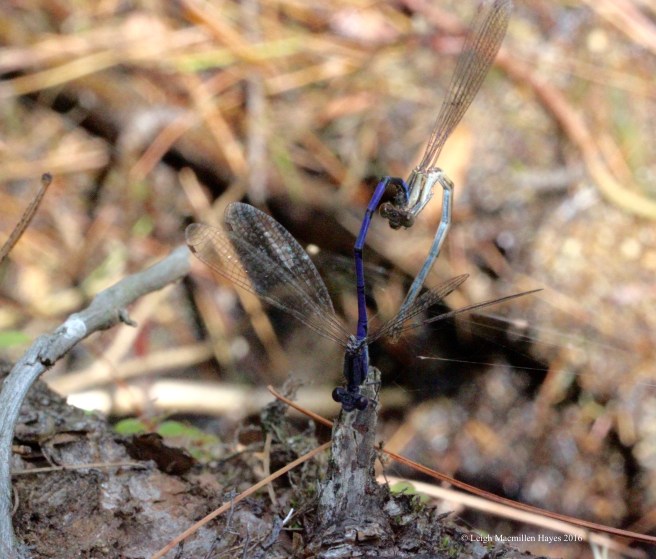
As I was looking about, a pair of marsh bluets demonstrated their mating behavior. He is the darker one and has grabbed onto her thorax behind her head with the claspers at the tip of his tail. She actually has species-specific grooves intended for this. And she has apparently decided he is the one for this moment because she’s lifting her body toward his to form the heart-shaped wheel, meaning she’s ready to receive his sperm. He’ll first check to see if she’s received any sperm from another male, which if discovered, he’ll remove before inserting his own. Once the mating is over, he’ll guard her to make sure no other males happen along. Curious and crazy.
c-whitefaced meadowhawk 2

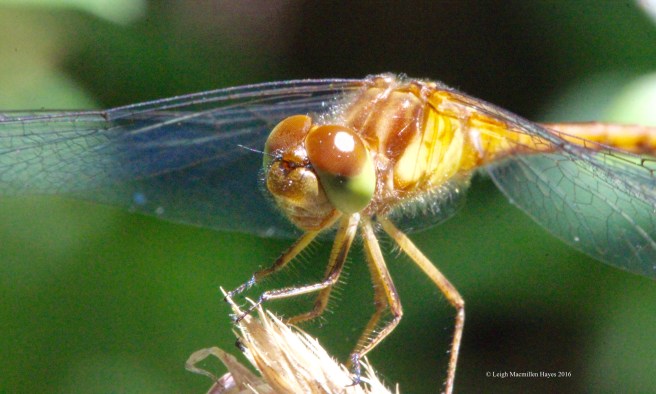
One of my favorite in my face experiences today occurred when this white-faced meadowhawk dragonfly let me enter its personal space. It posed for moments on end and then flew off, only to return for another face-to-face meet and greet. The face of a young one is yellow to begin and changes to white as it matures. While the adult male has a red body, females and young males are yellowish brown. So this is one of the latter two. I swear it smiled at me. I certainly smiled back.

We were smack dab in each others faces–the better to see you, my dear.
 

Our I Dos

Twenty-six years ago we both said, “I do.” And those two little words have stuck with us ever since.

t-road

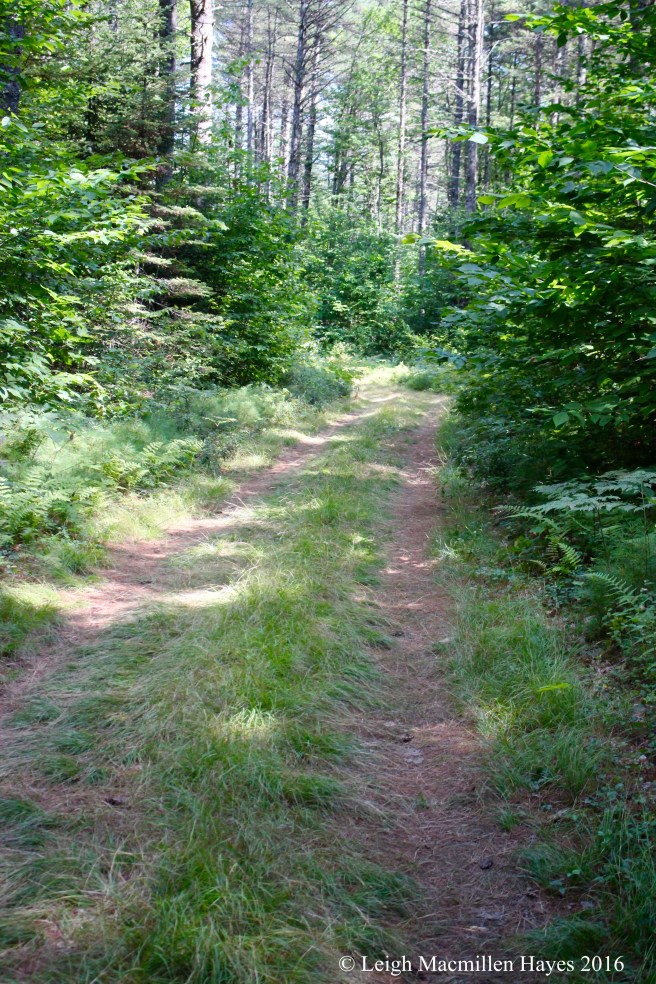
The road has had a few bumps and turns, but relatively speaking, it’s been an easy path to follow.

t spider web

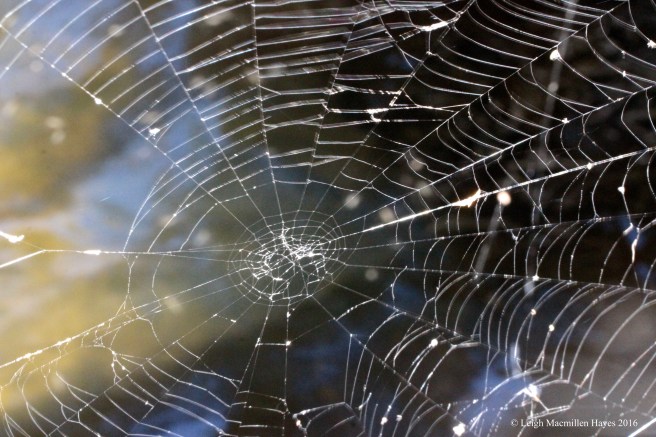
Sometimes the web we’ve woven has torn, but we’ve learned to mend it when necessary.

t-birds nest fungi

We’ve filled the nest and watched our sons disperse, and welcomed them home again.

t-orchid pollinator

We’ve found fulfillment  . . .

t-pollen

and tried to share it with others.

t-wings

We’ve each grown wings and let the other fly.

t-pleasant mtn

We’ve cherished the beginning of our journey and give thanks for all the uphill moments.

sunset 3

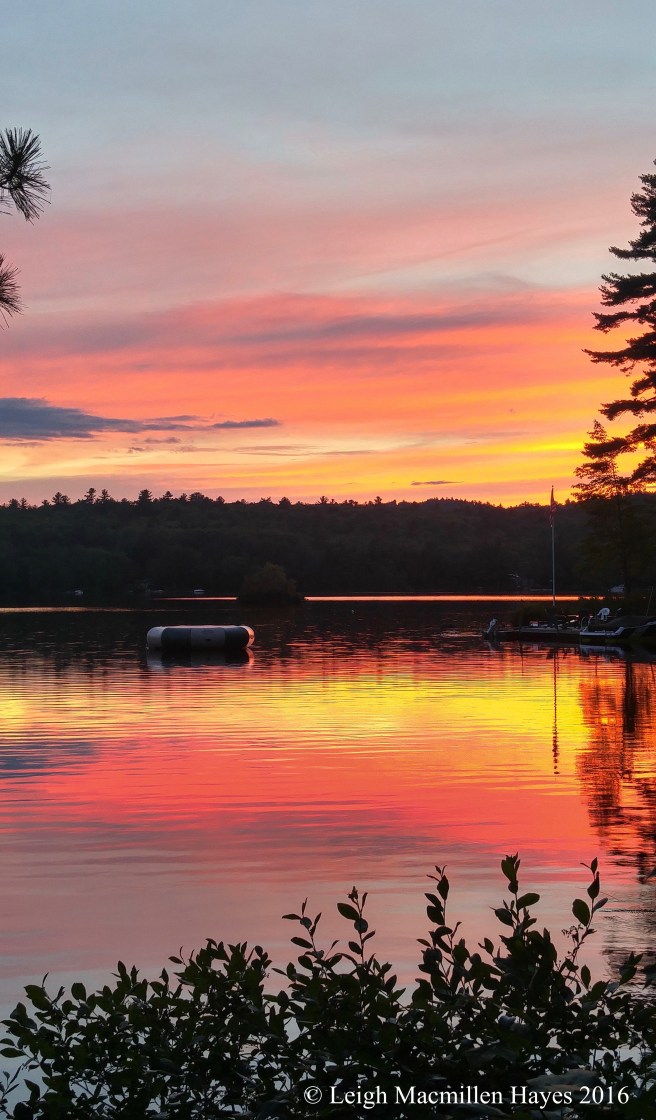
At the end of the day, we don’t know what the future holds, but we appreciate the past.

Happy Anniversary to my guy. If I had to do it all over again, I’d still say, “I do.” And I know you would too.

Samplings of Wonder

The day began with a journal hike along Perky’s Path, a trail in the Greater Lovell Land Trust’s Heald and Bradley Ponds Reserve. It was a first for us–a journal walk that is, and we had no idea how it would turn out. But our fearless docents, Ann and Pam, did a wonderful job of listening to the voices of those gathered and knew when it was time to stop and when it was time to move on again.

h-LMH

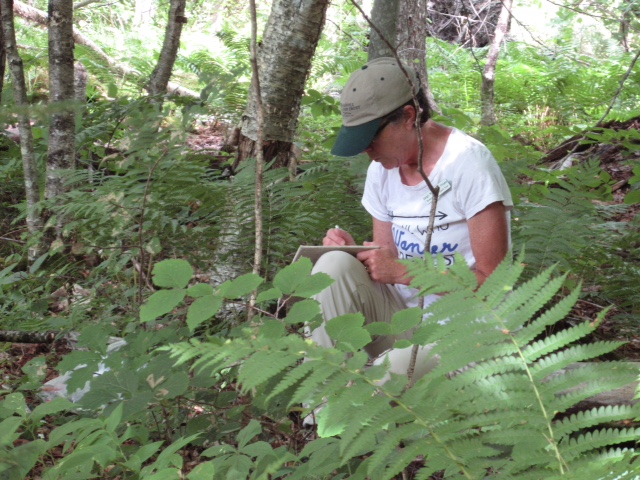
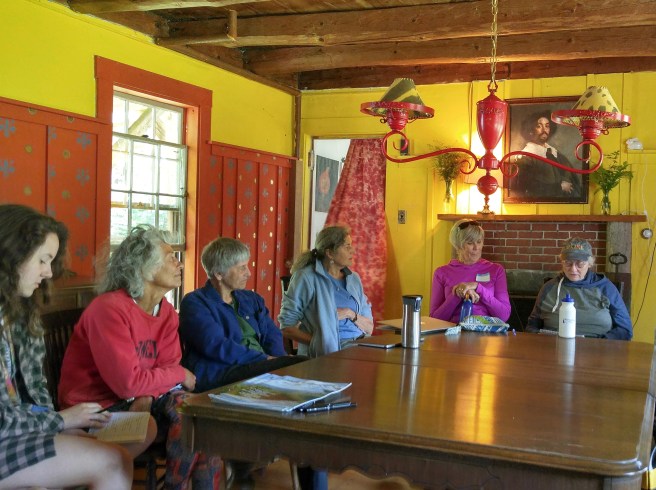
Each of us got lost in the world around us as we sat. We looked. We listened. We contemplated. We wrote. We sketched. We photographed. I know that I was so intent on sketching that I never realized Pam took this photo until she sent it to me. Thank you, Pam.

h sampling

Ever since I’ve started looking at the natural world through my macro lens, I haven’t taken as much time to sketch, so today was a welcome excuse to do so. And to color. Since my Aunt Ruth gave me colored pencils at least 50 years ago, those have been a favorite medium. I no longer have the gift from her, but my guy replenishes my supply when necessary.

IMG_2706 (1)

Our group was small, seven in total. We all admitted that small is good for this sort of activity.  And we came away thankful for the experience of making time to notice.

h beetle

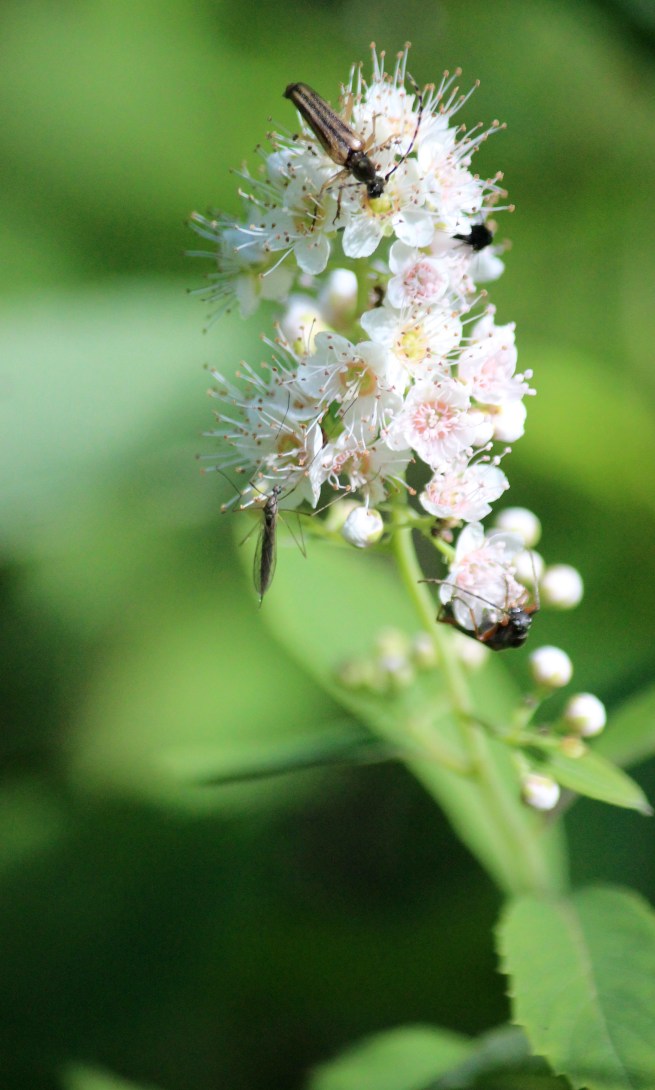
And then I walked to the summit of Hawk Mountain with Jinny Mae–on a trail that may seem rather sparse in offerings, but actually proved to be quite rich. This banded longhorn beetle didn’t really like being the center of attention. His focus was on steeplebush pollen and I kept getting in his face. So–he did what flying insects do–and flew off.

h fern indusium

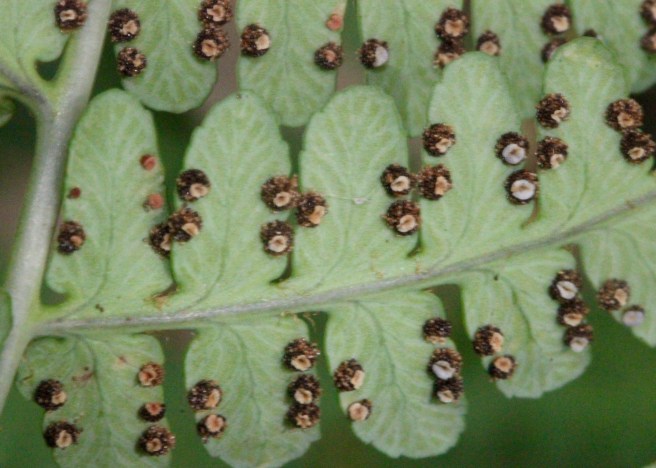
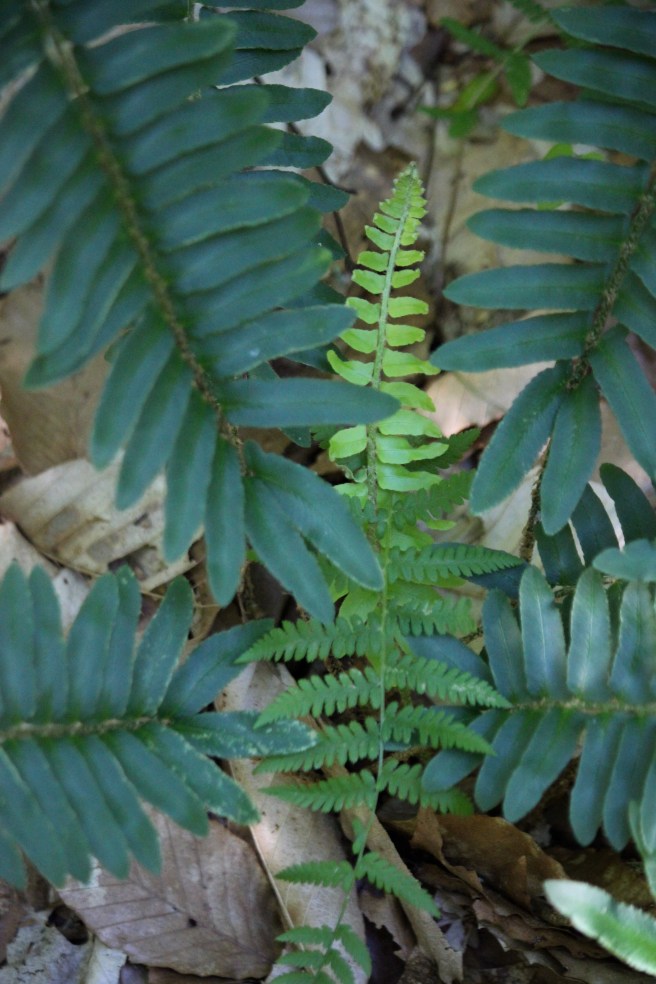
We were excited to discover several clumps of marginal wood ferns and some even with the indusium still intact. The indusium is a membranous covering that protects the sporangia inside the spore cases until they are ready to leave home on a dry day. In this case, the indusium is kidney shaped. As the sporangia ripen, they push the covering off and dust-like spores fly off in a wee cloud, breaking free to set down their own roots.

h white oak

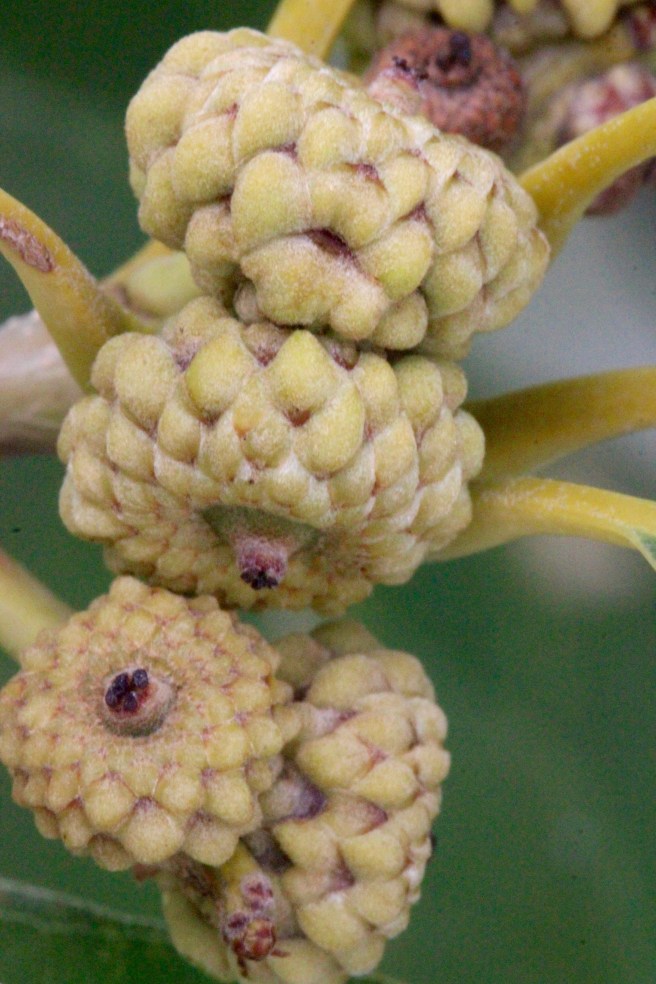
Here, both Northern red and white oak grow side by side. It was the white oak’s fruiting structure that called our names. The immature acorns growing in pairs are both warty and hairy, but their structure is more reminiscent of a miniature pine cone at this stage. They should mature by fall.

h stag stalk

And then we celebrated the one who is all hair and color . . .

h stag leaves

and distinct shapes and

h stag leaf

a combination of all three.

h stag flower

Staghorn sumac. The king of the mountain.

h berries 2

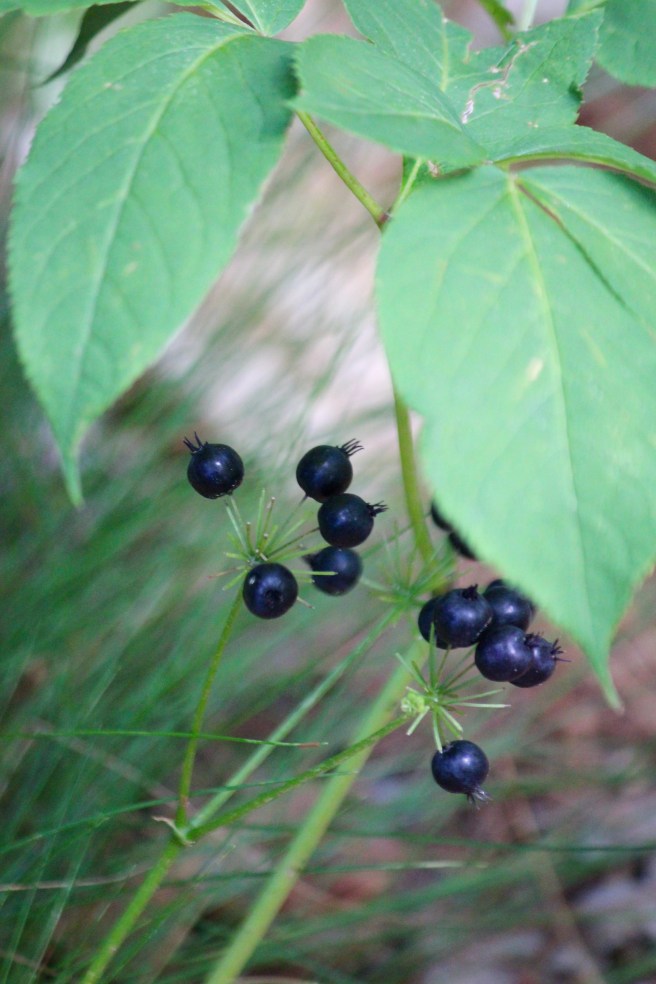
Little things excited us and the twin fruits of the Hairy Solomon’s Seal that tried to hide beneath the leaves didn’t escape our focus. Or our cameras. Sometimes we are sure that we share all the same photos.

h indian pipe

One of our final stops as we headed down the trail–to worship the heads-up version of a fertilized Indian pipe. While most flowers nod when fertilized, Indian pipe chooses to be different. It wins in my wonder department.

I’ve only shared a few finds from today’s wanders. Just a smattering or a sampling. All worth a wonder.


Searching for the Source of Sweetness

I wore down a path between gardens today as I traipsed from one to the next and back again. But if air space is anything like lawn space, then those who visit the garden via flight have created their own well-worn passageways as they also search.

w-post face scrub

My mission was to see the hummingbird again. But, this little guy, no longer than a half inch, stood atop a false dragonhead yet to bloom and waited to be noticed.

w-face scrub

He even took the time to scrub his face as I watched.

w-double or triple daylily

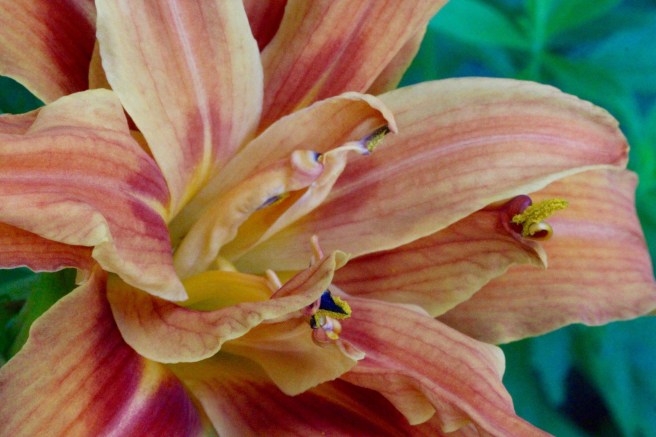
Continuing my wander, I stopped by the daylilies and made a discovery. We’ve lived in this house for more than two decades and I never realized until today that we have some double daylilies. The previous owners had green thumbs and we’ve benefited from the fruits of their labor. But how had I missed this before? I know we have double daffodils, but loved my new find. Especially as this past weekend, my friend Beth invited us to her hundred acre wood and her mom showed us their daylily gardens. Beth’s mom, Mary, talked about hybridizing the lilies and so she’ll know best about this.

w-lily pollen

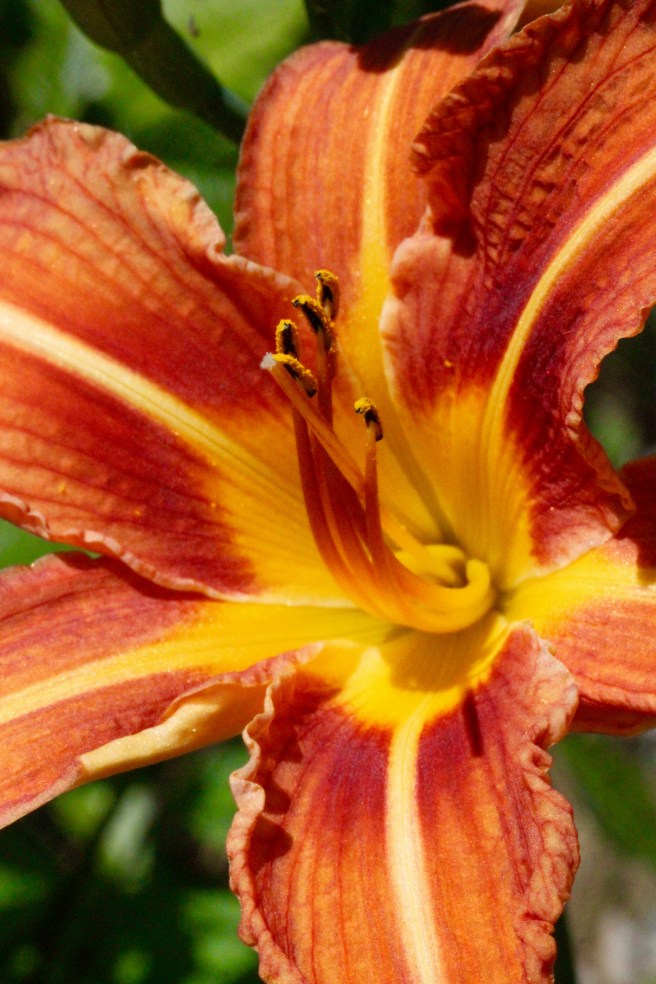
When I revisited the flowers later in the day, the sun shone brilliantly on them, enhancing their orangeness. Correct me if I’m wrong, but what I think has happened is that the petal formed along the stamen and imbedded the anther, thus it looks like a petal with grains of pollen. Crazy cool. And beautiful. And yummy.

w-fritillary1

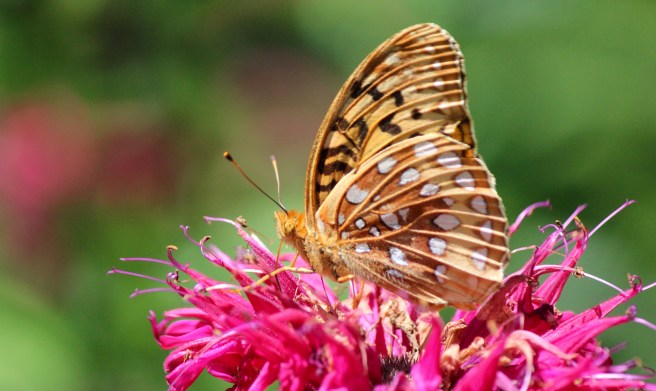
That wasn’t the only shade of orange worth wondering about. And it was no mistake the this fritillary butterfly chose the beebalm on which to land.

w-frit 2

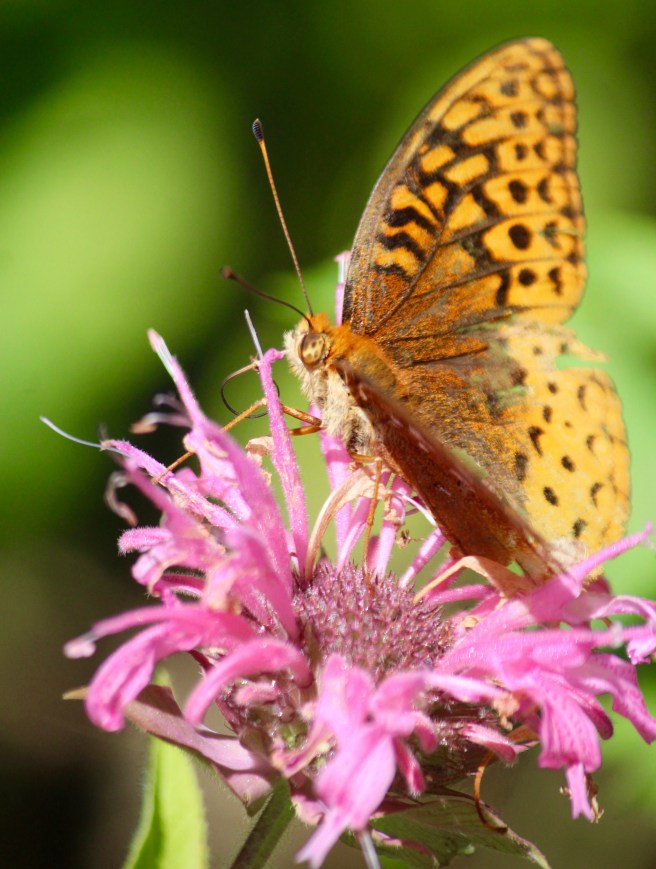
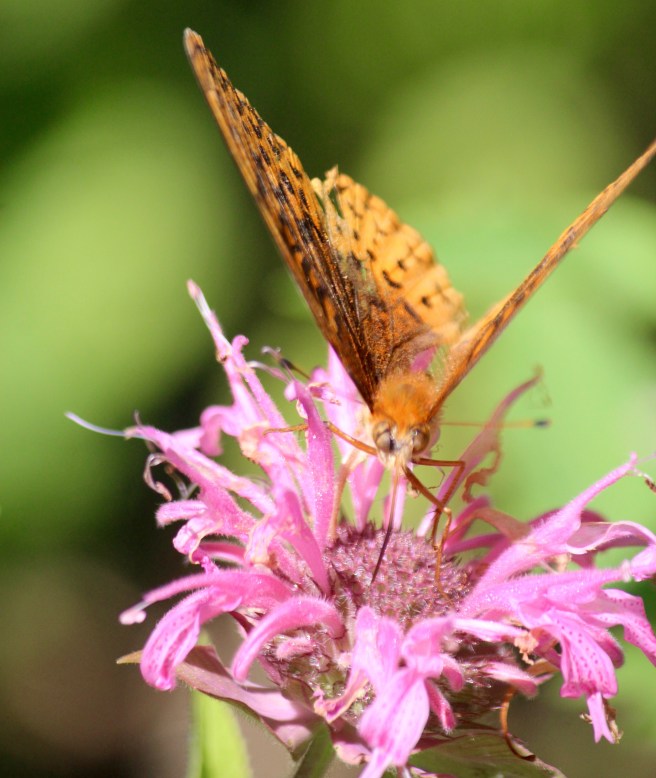
Check out its mouth. A butterfly feeds through a coiled mouth part called a proboscis. When not in use, the proboscis recoils and is tucked into position against the butterfly’s head.

w-frit 3

Since the proboscis is narrow and straw-like, it allows the fritillary to extract sweet nectar from tubular-shaped flowers. Suck away, dear fritillary.

w-hummoth 1a

The fritillary wasn’t the only beebalm visitor with a coiled proboscis.

w-hummoth 3

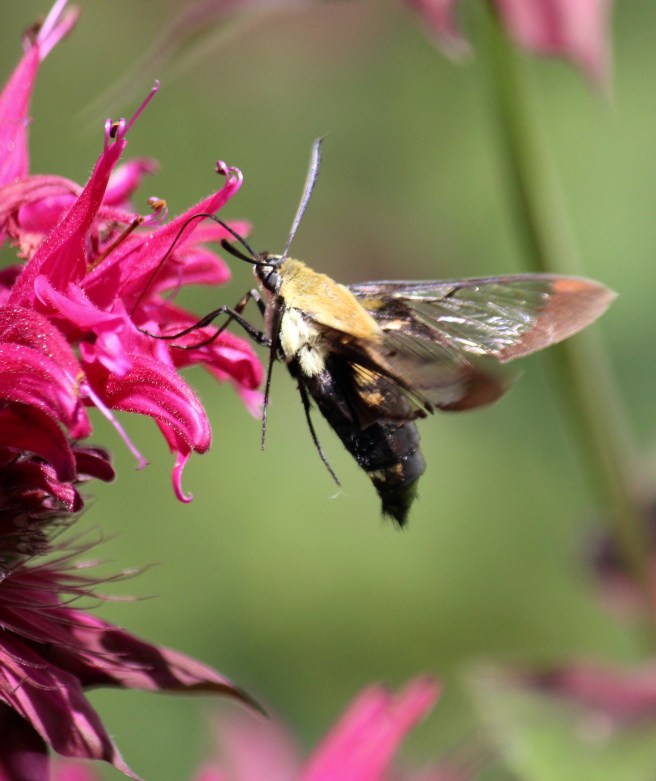
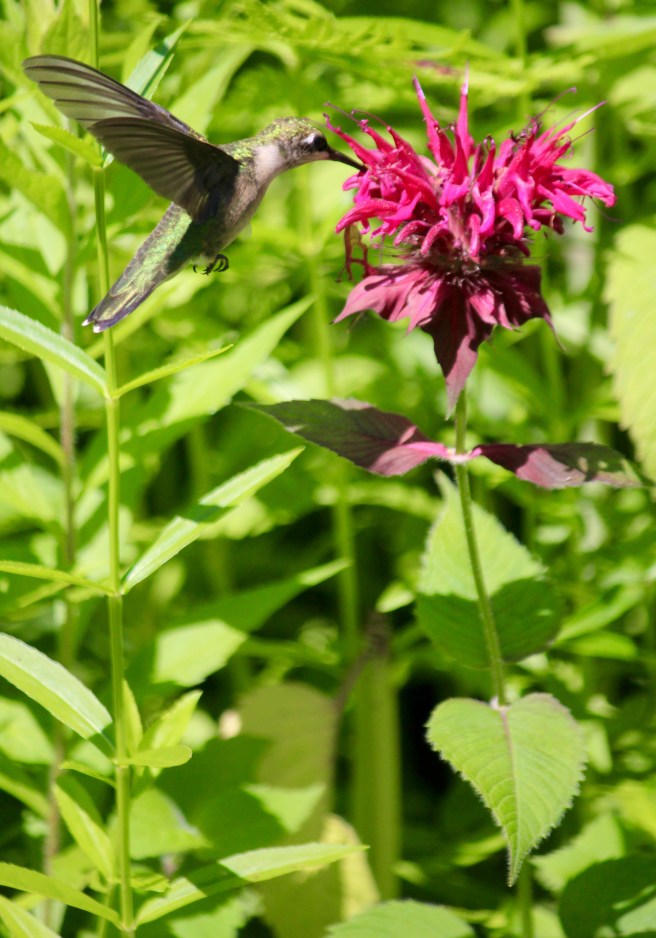
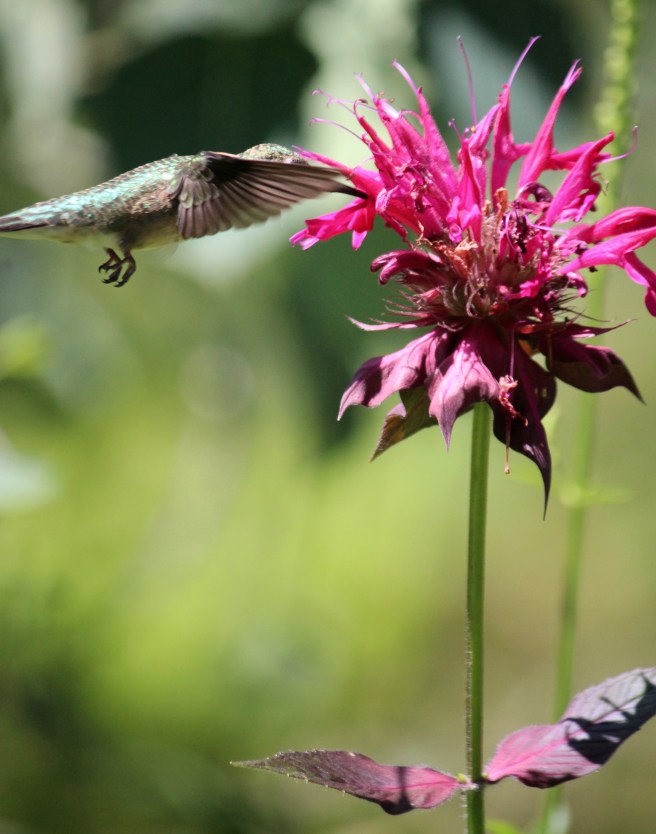
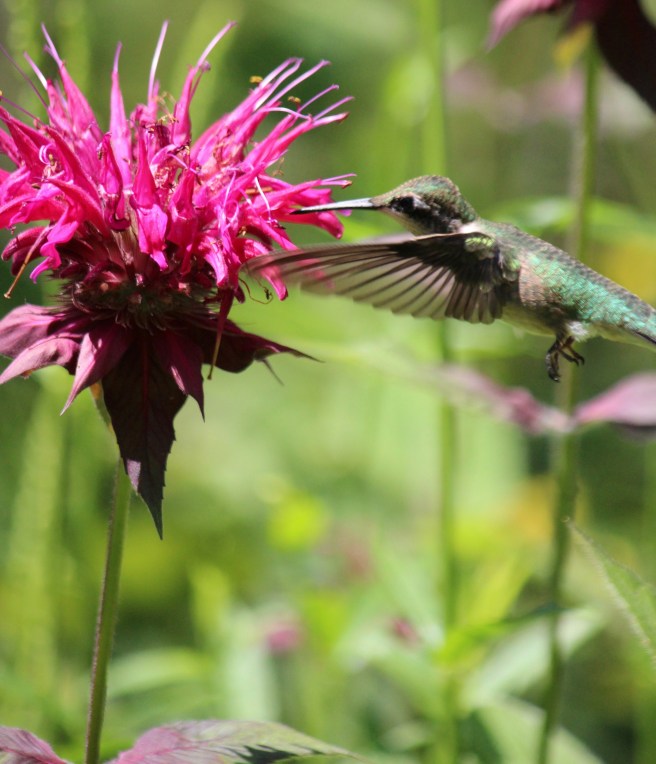
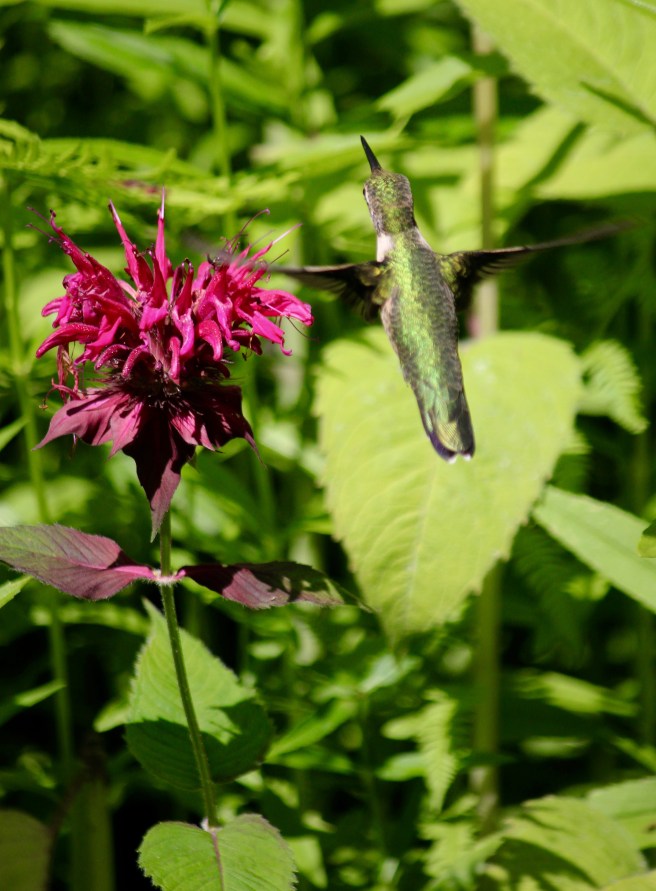
I actually heard it before I looked up and saw this moth. It sounded like a hummingbird and flapped its wings as fast or nearly as fast as a hummingbird and shared the name hummingbird. This is a hummingbird moth.

w-hummingbird moth 1

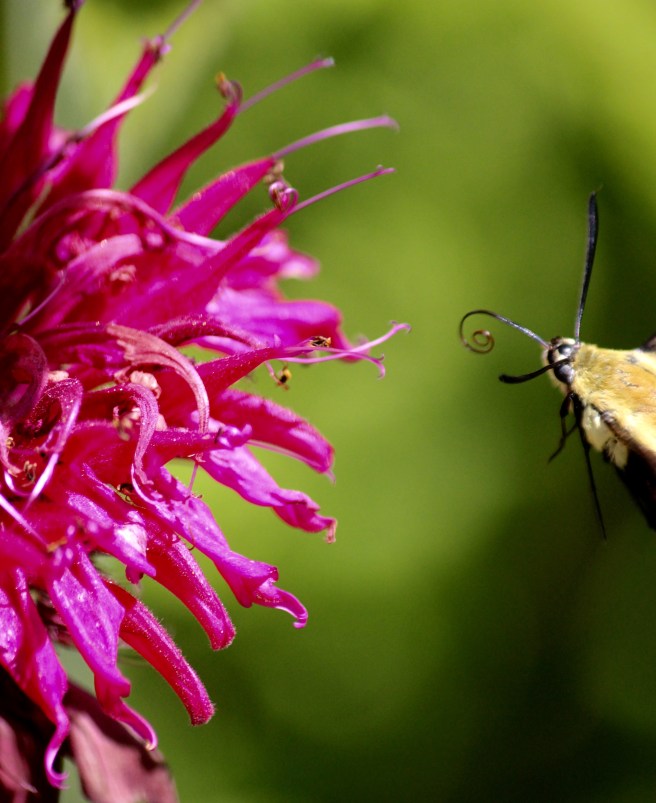
Notice how the proboscis begins to unfurl as it approaches the flower.

w-hummoth 3a

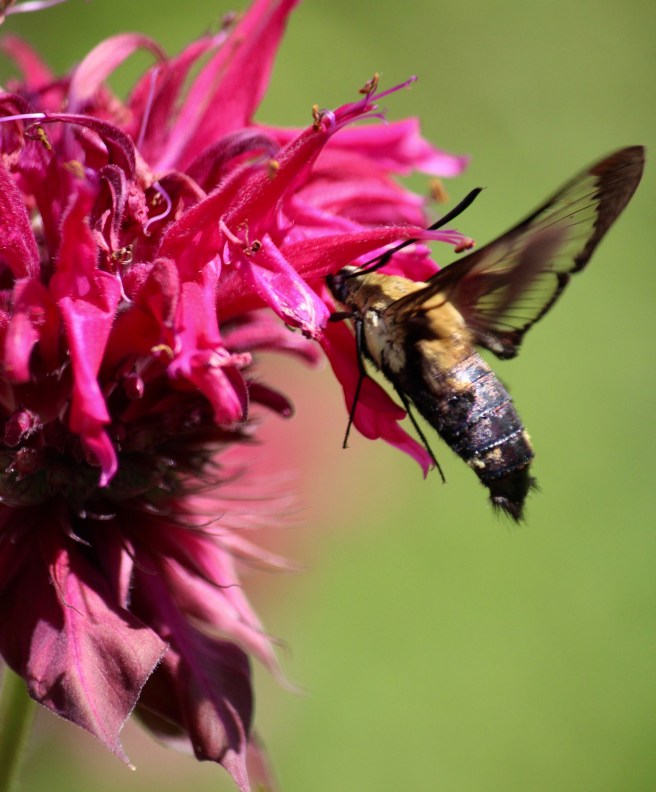
While it hovers, it probes.

w-hummoth 4

Searching deep for the source of sweetness, where others can’t reach.

What’s So Special About Bee Balm?

I have childhood memories of ugly red bee balm plants surrounding a maple tree in our front yard. In addition to being ugly, what really bothered me about this flower was the smell. The scent tickled my nose in an unpleasant manner and gave me an instant headache.

b1

And then I grew up. Well, I suppose that’s questionable, but what did happen is I came to appreciate the showy flower and aromatic scent. (Funny thing is, an infusion of crushed, boiled bee balm flowers apparently treats headaches–I should have used it to treat the very symptom it caused. It has many other medicinal uses as well.)

b5

This summer, like others, I waited in anticipation.

b3

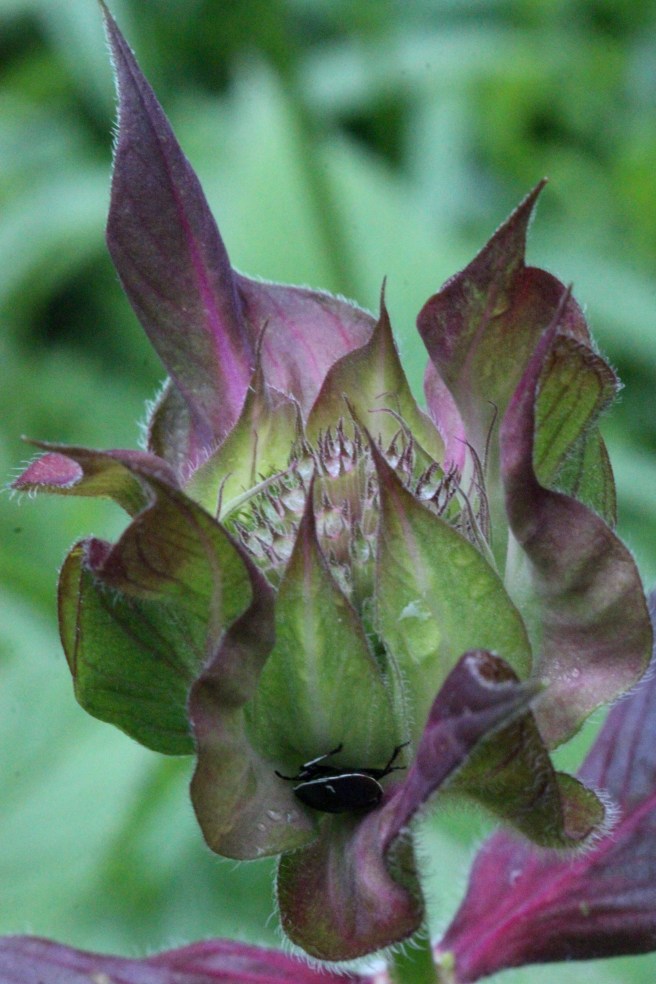
Even before it bloomed, its leafy bracts showcased a fluid beauty.

b4

And those leaves set at right angles to the square stem offered a crossroads where color and texture met.

b7

Finally . . .

b8

with the aid of raindrops

b2

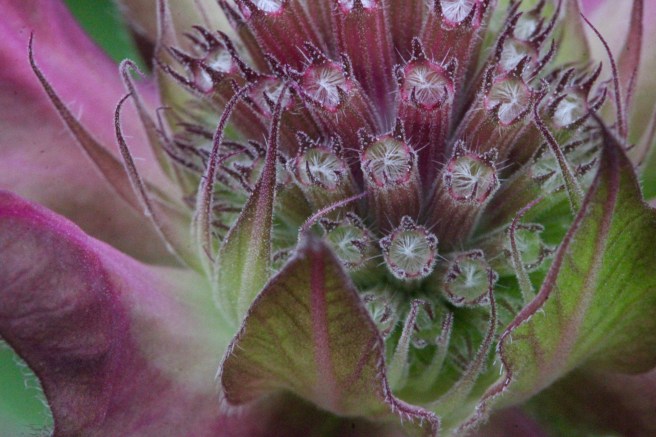
and sunshine, the bracts pulled away and revealed star-capped tubes nestled within.

b9

Ever so slowly, flowers began to emerge.

b10

With a hat reminiscent of a jester, they crowned the plant.

b12

Stamens projected from the tubular upper lip, while below, three slender lips provided a landing pad for visiting insects seeking nectar-filled sweetness.

b15

Like me, the pollinators’ eyes shone brightly

b24

as they sought

b24a

fulfillment.

b11

I’ve spent many moments starring–in awe and wonder–at the structure, simple yet complex, and all of its idiosyncrasies.

b16

And I know I’m not the only female who stops by to soak in the glory of this old-fashioned perennial.

b17

b18

b25

b26

b20

b27b28

b22

b29

b21

What’s so special about bee balm? Everything.

P.S. This one is for you, Jinny Mae, because you, too, are special.


Hewnoaks

This morning, the Greater Lovell Land Trust and Charlotte Hobbs Memorial Library in Lovell co-hosted a poetry workshop conducted by poet Judith Steinbergh of Brookline, Massachusetts. The setting: Hewnoaks Artist Colony.

It’s always a special treat to listen to Judy and others read poetry, wander the grounds which overlook Kezar Lake, and share with like-minded people.

Sixteen of us found our voices this morning. Or tried to. Here’s my attempt:

h-hewnoaks 1

Hewnoaks

h-raindropsMG_1835

Where raindrops jiggle

h-backs of leaves (1)

and leaf backs glow,

h-pine needles

pine needles dangle

h-pine coneIMG_1867

and new cones land,

h-pepperbushIMG_1836

shrubs sway

h-ferns

and ferns dance,

h-queen anne's lace1

flowers blossom

h-seeds 1IMG_1841

and seeds fly,

h-feather

feathers pause

h-driftwood (1)

and driftwood poses,

h-white caps 2 (1)

white caps form

h-waves 2 (1)

and waves crash.

h-poets 1 (1)

Hewnoaks, where poets write

h-poets 2 (1)

as the north spirit renews our souls

h-poets 3 (1)

with each gust of fresh air. ~LMH

h-Listening to Ann (1)

Later we gathered inside, out of the wind, to share our offerings–each one a gift.

Thank you, Judy. And Anna. And Ann ;-)


Wondering About Nature’s Complexity

As I sat on the porch of our camp this morning, three wafts of smoke blew up from the ground along a pathway to the water. And my heart swelled. Earlier, I’d been out between raindrops taking some photos and my eye was drawn to that very spot. My photos didn’t come out so well, but I believe what I was looking at were bird’s nest fungi. They were cup-like in shape and some were filled with minute eggs, while others were covered in an orangey blanket.

I suspect it was the latter that caught my attention from the porch. It had started to rain and this fungus depends on rain for dispersal of its egg-like capsules that contain the spores. The hydraulic pressure of a raindrop falling into the nest causes the capsule to spring forth, emitting spores in a puff. I could have sat there all day waiting for it to happen again, but . . .

1 hawkweed

there were other things to look at and wonder about. The bird’s nests weren’t the only ones ready to send forth new life. While the hawkweed seeds embraced the raindrops, they waited for a breeze to send their young into the greater world.

2Oleander aphids on milkweed

And then I returned home, where I found some other cool things. It all depends upon your point of view, I suppose, but check out these Oleander mites on the underside of a milkweed leaf. They are so named because they also like Oleander.

4ant milking aphids

Those weren’t the only aphids wandering about. The little gray dots on this leaf are actually another form. So here’s the scoop on ants and aphids. While aphids suck the sugar-rich fluids from their host plants, the ant strokes (milks) the aphids with its antenna to get them to secrete waste (honeydew), which has a high sugar content. And we all know that ants love sugar. Honey-dew just took on a whole new image.

3cranefly

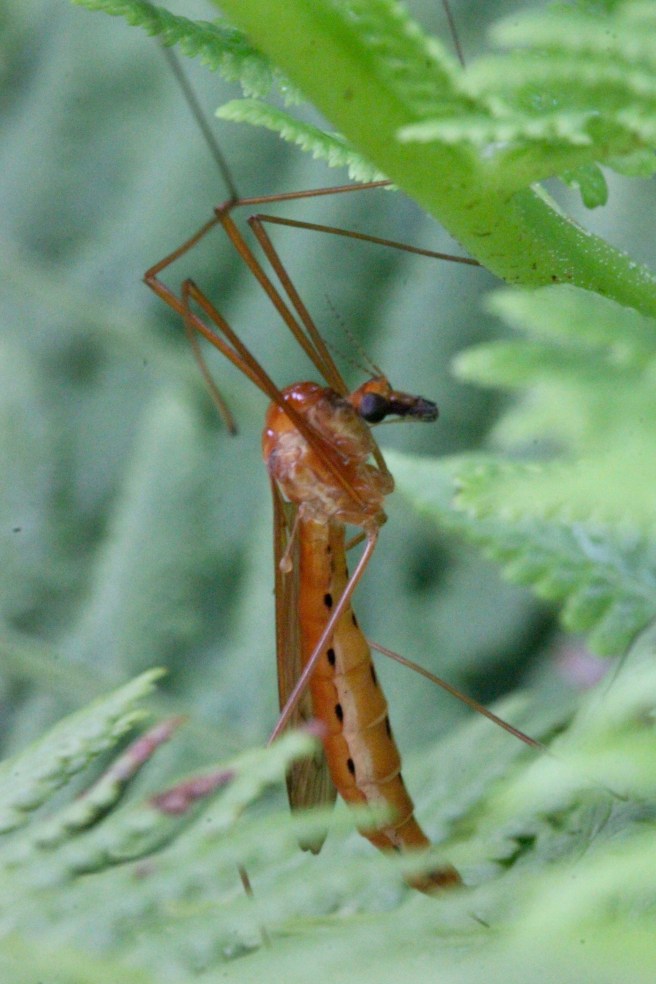
Tucked under the lady ferns, I found a cranefly. I’m always searching for orange in support of our young neighbor who was recently diagnosed with leukemia. When I started posting a photo a day in his honor, I didn’t realize how important it would become to me–making me think about all that he and his family are enduring on a daily basis. He is in remission, but still undergoing treatment and will need a bone marrow transplant. This cranefly almost became today’s post, but a daylily dragon won out for Team Kyan.

5mystery

So dear reader, I enjoy teaching you, but now need you to teach me. I found this under another leaf on a shrub. And I often see the same thing stuck to our house. It reminds me of a caddisfly case. What is it?


7daylily

No mystery here. But still, the complexity . . .

8mallow

enhanced by raindrops.

c9omplex world

Nature is complex, but oh so worth a wander. And certainly worth a wonder.

Thanks for stopping by today.

Almost Heaven

The other day, a friend sent me the following Emily Dickinson poem.

A Service of Song
Some keep the Sabbath going to church;
I keep it staying at home,
With a bobolink for a chorister,
And an orchard for a dome.

Some keep the Sabbath in surplice;
I just wear my wings,
And instead of tolling the bell for church,
Our little sexton sings.

God preaches,—a noted clergyman,—
And the sermon is never long;
So instead of getting to heaven at last,
I’m going all along!

Emily Dickinson

b-cathedral 1

Today, being Sunday, I decided to visit a cathedral in the woods, where branches arched over the path and sunspots flitted along the center aisle.

b-Christmas and NY ferns

All were welcome here, where youth and elders embraced visitors. (Christmas ferns and New York fern)

b-Equisetum 1

Ancient stories were offered up by those who long ago learned to adapt to change. (Equisetum)

b-Sweet Pepperbush

Any who sought fulfillment found it. (Sweet pepperbush)

b-Wild Sarsapirilla 1

Family members . . . (Wild sarsaparilla)

b-bristly sarsaparilla

demonstrated their differences. (Bristly sarsaparilla)

b-Marginal 1a

New life was offered . . .

b-Marginal Wood fern1

even to those waiting along the margins. (Marginal wood fern)

b-St. John's wort

And the saints watched over all present. (St. Johnswort)

b-Bald Pate summit 2 (1)

At last, I reached the altar.

b-Hancock 1

One transept offered views to the left.

b-Foster Pond Lookout (1)

And the other to the right.

b-Emerald 3

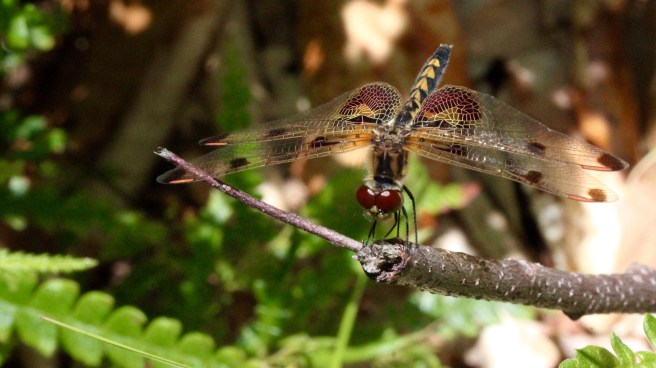
But it was the light on the stained glass windows that provided the most wonder. (American Emerald dragonfly)

b-Calico 2

b-Calico 5

b-Calico 6

b-Calico 7

b-Calico 4

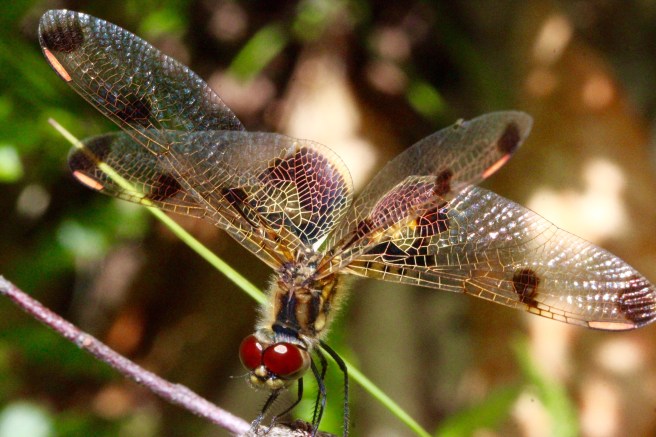
On this daily journey in heaven, I’m thankful for graces offered each moment I worship creation. (Calico pennant)

Sluggish Moments

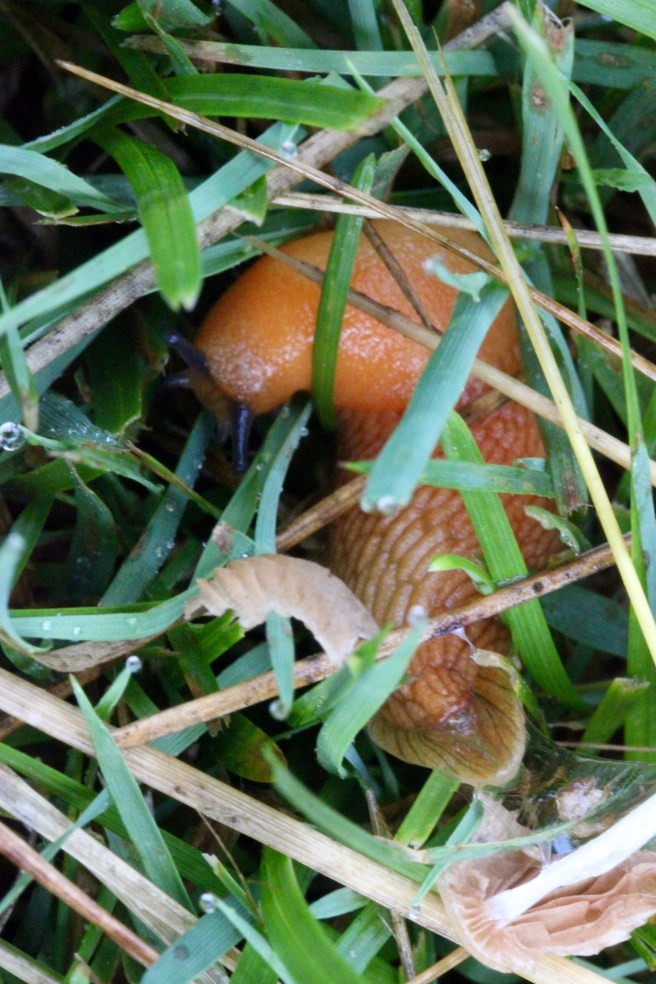
It’s not every day that someone shares time with a slug, but this morning that’s exactly what I did. It had poured until about 5:30am, so the conditions were prime.

4

Actually, I was hunting for a spring peeper that frequents one garden and the grasshoppers that live in another, when a spot of orange caught my attention. And so I bent down for a closer look.

3

A slug is like a snail without a shell, which makes it vulnerable to dehydration. That’s why we only see them foraging on rainy or cloudy days. I suppose we should think of slugs as weather predictors, much the same way common polypody indicates the temperature. Of course, if you look under leaf cover in the garden, you’ll surely find them as well, no matter what the weather is. Cool and damp conditions prevail in their world view.

1

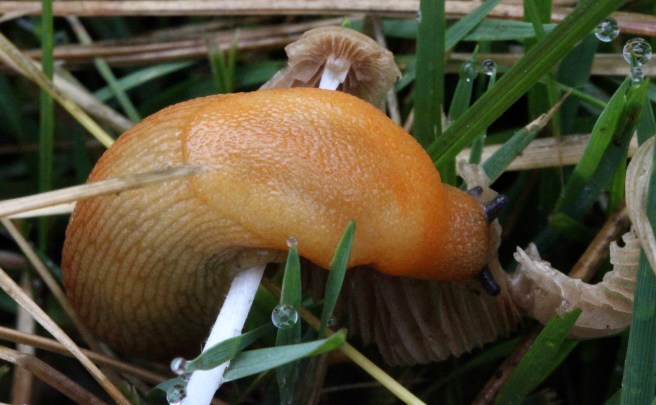
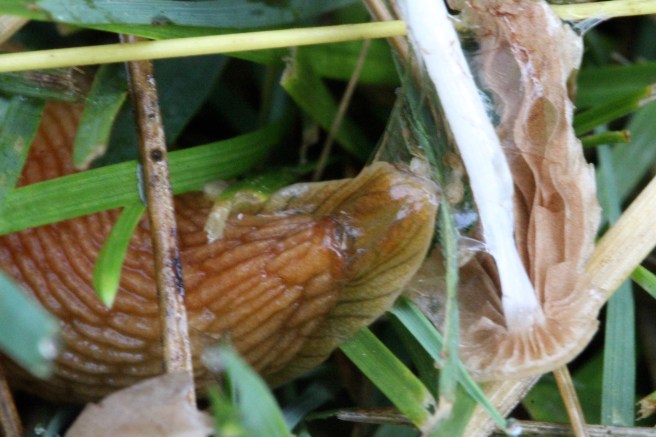
As Mr. Slug munched on a mushroom at my feet, I admired the pattern on his back and thought about my past experiences with slugs. I’ve licked their backs because I’d heard that they release a chemical which works like a natural anesthetic, thus providing a cure for toothaches. The numbness did last for a short period of time. That being said, my nursing friends encouraged me to stop because slugs may also carry parasites. And so I did.

6

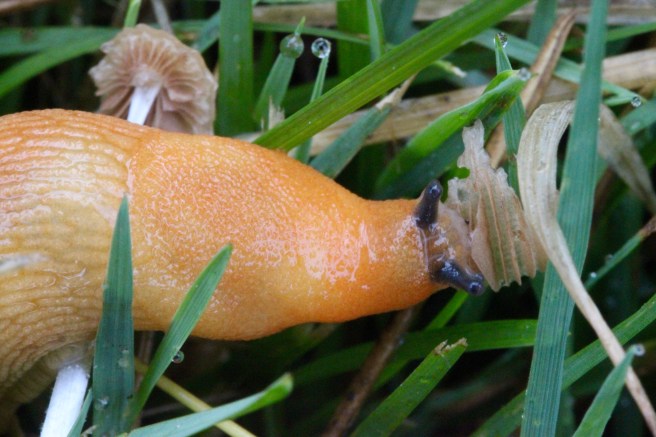
Since I was upclose and personal, I could see Mr. Slug’s two short antennae and even shorter eye stalks. Then there was his accordion-shaped mouth that he used to grasp and shred plant material. At first I thought he sucked it in, but as I watched, I could see the chewing motion.

7

Being a mollusk like a clam or oyster, one might think about sautéing slugs. Or not. Really, I’m surprised my parents never tried that. Dad always sacrificed some beer so Mom could pour it into a tin pan in the garden to attract slugs. It worked–better for her than the slugs who thought they’d found the holy grail only to instead meet their fate. A perfect marinade. Thank goodness Mom and Dad didn’t think of that. But really, though slugs do have a bad reputation because they eat plant material in our gardens, they also play an important role as decomposers–of fungi and lichens and dead insects and plant material, all of which they turn back into soil.

10

And here’s another curious thing about slugs–their mode of transportation. Remember their vulnerability to dehydration? Well, in order to move along they must create a slimy mucous. And so a chemical reaction occurs in their bodies causing them to secrete a sticky, slippery substance. That probably helps in keeping their predators, like toads and snakes and birds, at bay. Once they’ve moved on, it dries up.

9

This morning, after we’d spent about a half hour together, Mr. Slug decide it was time to move on–toward the garden. It’s raining again as the sun sets and he’s probably slip sliding away across the yard in search of another feast.

ant

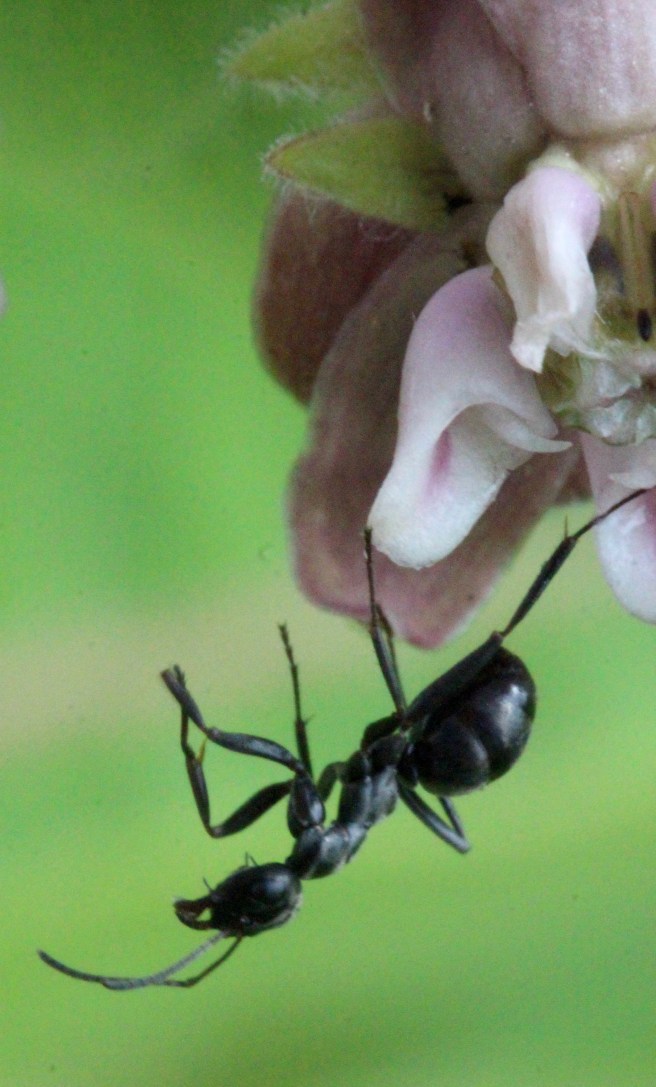
Because you stayed with me through my slug praise, dear reader, I thought you’d enjoy stopping by to wonder about a few pollinators like the ant that visited the milkweed. Did you know that insects get their feet caught in the sticky pollen sacs of the flower? They have to twist and turn as this one did while trying to get out. In the process, their feet get covered with pollen that they carry to the next flower.

bee

Pollinators come in all shapes and sizes, but I found one who looks like it wears a Halloween costume on a daily basis.

pollen

And this final pollinator of the day–loves to get totally immersed in its job.

I never did find the spring peeper today, and only one grasshopper, but my moments spent wandering and wondering were hardly sluggish.

Capturing Wonder

I’m envious of friends who own acres and acres of land with layers of trail loops that provide a diversity of habitats for exploration. But then I remember that beyond our six acres there’s a vast forest that I’m welcome (well, I think I’m welcome–it’s not posted and in Maine that generally means I may trespass) to tramp through. For the most part, that’s my late fall to early spring playground. But we also live within walking distance of a large woodland park where I spend an equal amount of time. Of course, I tend to get greedy about it and think of it as my own. That’s how it felt this morning when I wandered there after church without encountering another soul. I went in search of wonder. And I found it both there and back at home.

rice 2

Everywhere I walked, or so it seemed, rice krispies lay scattered at my feet.

rice krispie

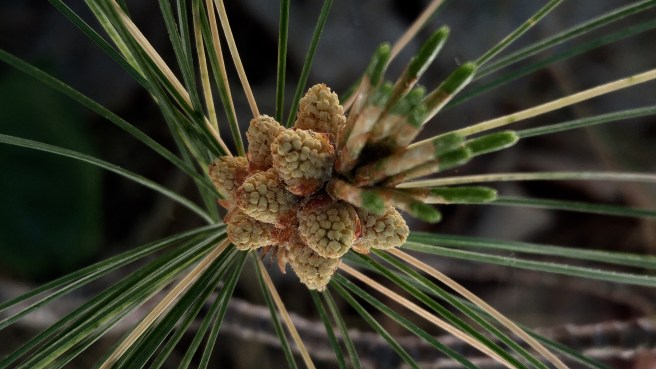
They are the newly fallen male pollen cones of our white pines. And yes, they are the size of rice krispies. Once mature, their sacs split open, sending pollen wafting through the air where some of it actually finds the female seed cones. And much of it covers our vehicles, driveways, lawn furniture and window sashes, like a coating of yellow snow. When their mission is completed, they turn brown and fall to the ground. Eventually, they’ll disintegrate, adding to the richness of the forest floor. Worth a wonder.

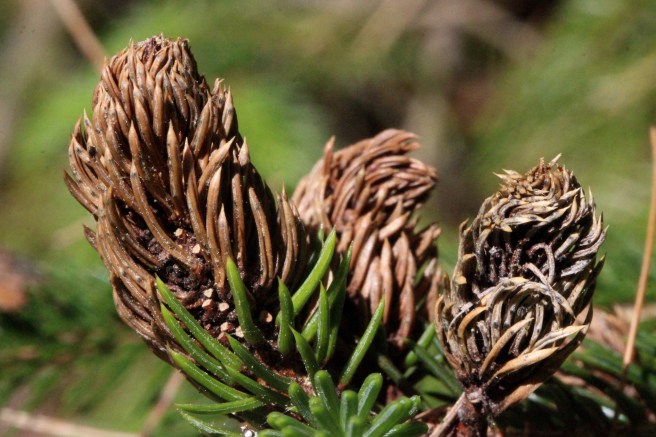
spruce gall

Further along, I encountered the rather cone-like shape that adorns the tips of spruce trees. These brown, prickly galls were caused by the Eastern spruce gall adelgid, which is closely related to aphids. Will the tree die? Perhaps. Certainly, it’s disfigured.

Eggs are laid in early spring and emergent nymphs begin feeding at the base of tender new shoots. The gall forms as they feed and completely encloses them like a warm, protective covering–keeping predators and diseases at bay. The galls I noticed are older as they are dried out. But typically, the nymph emerges from the gall in August, molts and flies to another branch to start the cycle again. The adelgids are parthenogenetic, meaning only females occur, reproducing without males. They typically produce two generations each year, with the latter overwintering as partly grown females. Worth a wonder.

mullein 4

And then I came to a dry, sunny spot where common mullein stands tall, this one almost as tall as me. According to lore dating back to Roman times, it is said that the stems were dipped in tallow to make torches–either for witches to use or to be used against them. Thus, some know it as hag taper. Others refer to it as candlewick plant because the dried leaves and stems were used to make lamp wicks.

mullein 2

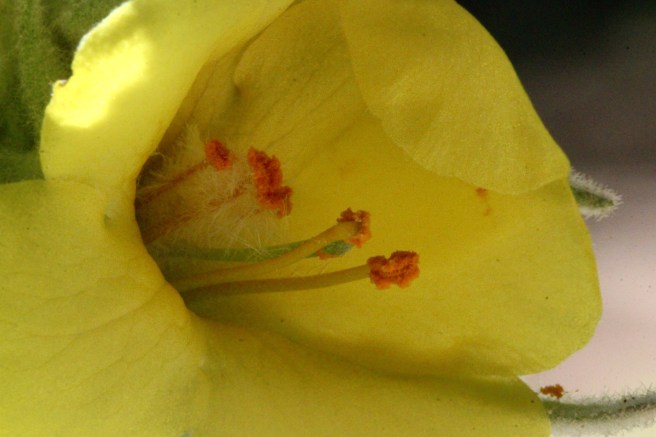
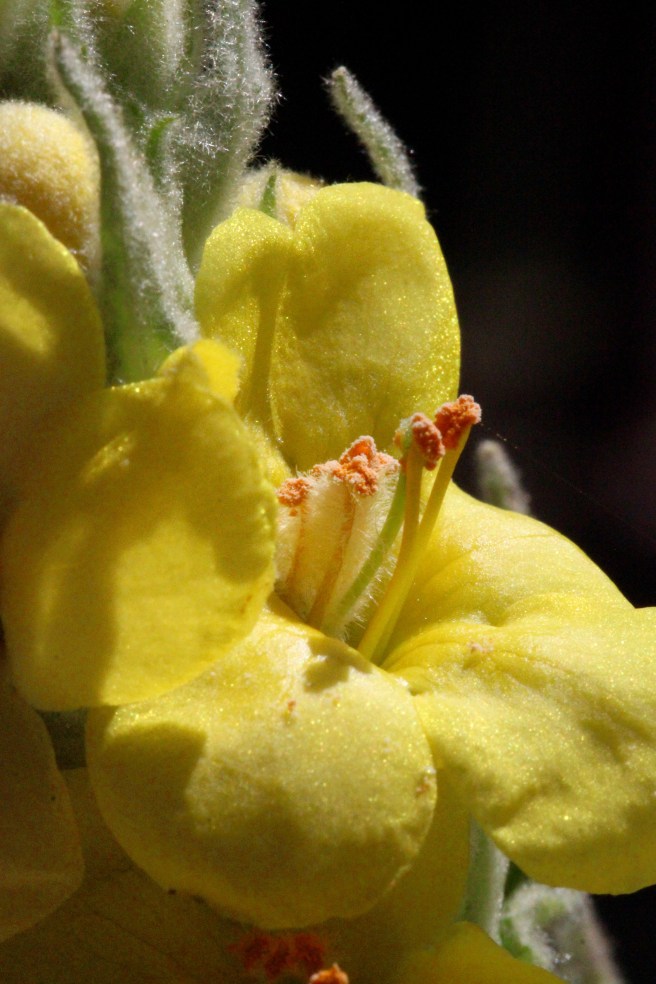
It seems to me that it’s hardly common at all given its uses and structure. Over the course of the summer, five-petaled yellow flowers will bloom randomly in a dense,  terminal cluster.

Though it’s also called flannel leaf and bunny’s ear for its wooly leaves, they aren’t the only hairy spots. Check out those three upper stamens, short and extremely woolly. Apparently, they contain a sap that lures insects to the plant. The longer and smoother two lower stamens serve a different purpose. They produce the pollen that fertilizes the flower. Worth a wonder.

Goat's beard seedhead

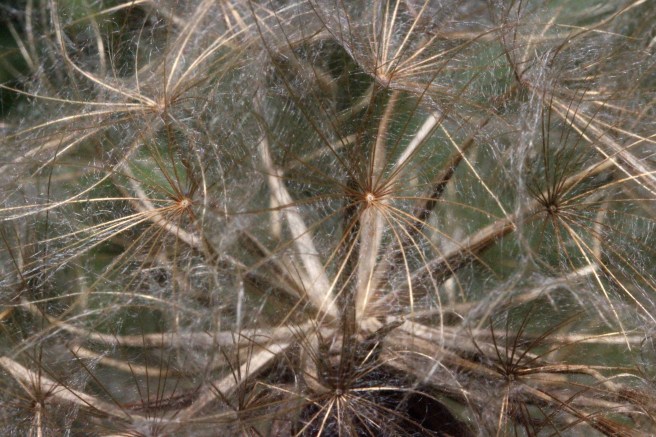
As I headed out of the park via a different trail than I’d entered, I was stopped in my tracks by a plant that stood about three feet above ground. I think this was my favorite find of the day. I have so many favorites that it’s hard to choose one. But just maybe this is the one.

Meet meadow salsify, aka meadow goatsbeard. The latter name refers somehow to the fluffy seed head. Though there were not goats nearby for me to examine the similarity, these were beside a donkey pasture. (And donkeys are known to protect goats from predators.) The feathery down that will become parachutes during dispersal is finer than the finest spider web. And perhaps more beautiful. Worth a wonder.

Day lily--perfect.jpg

On my way home, I stopped to admire my neighbor’s day lilies–the first blossom of the season for this perfect flower.

milk 0

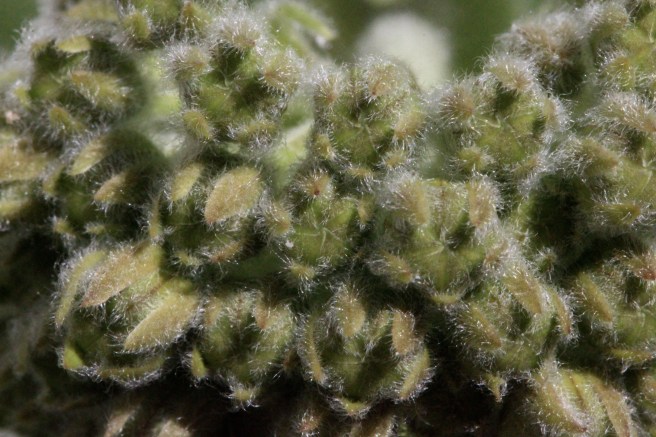
Back at home, it was the fuzzy coating of another summer flower that grabbed my attention.

milk 4

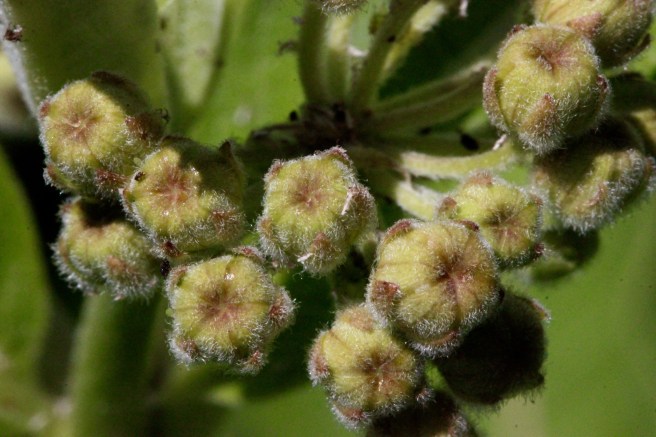
The flowerhead offered a show featuring a variety of presentations.

Milkweed 1

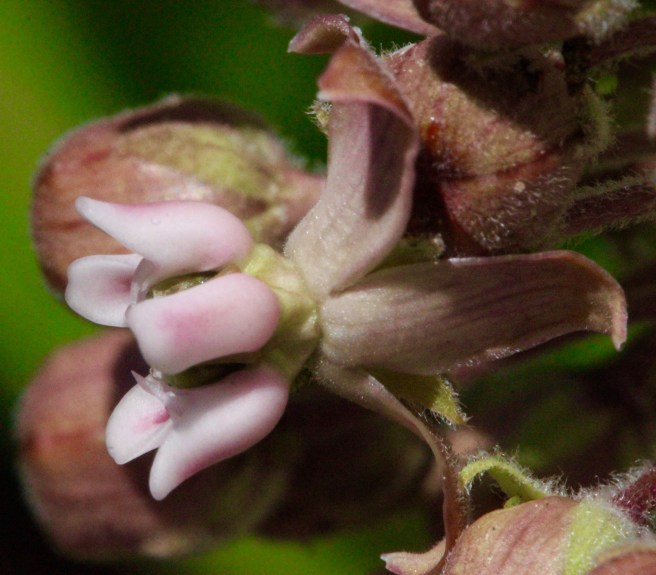
Ever so slowly, the pinkish flowers of common milkweed are beginning to open.

milkweed 2

In my mind, it’s an example of another hardly common common plant.

milkweed 5

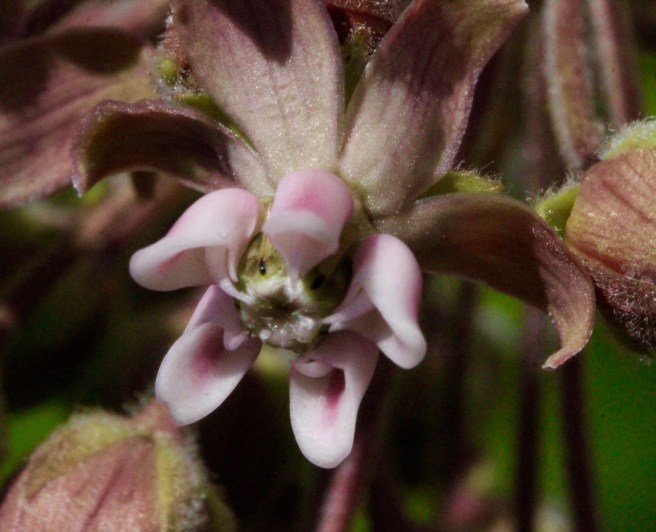
The flowers are complex and invite a closer look. Overall, they droop in a globe-like umbel. What you see here is five upright hoods, each with a pointed, incurved horn.  Surrounded by those hoods are the fused column of stamens and heads of the styles–where the magic happens.

Since there is no scent yet, the insects don’t seem to have discovered it, but they will. It will nourish many with its nectar and pollen and provide shelter and hiding spots for others. I promise to keep an eye on it and all its visitors because it also is –worth a wonder.

I’m thankful that each day offers new opportunities to capture wonder.


Fun with Focus

I must confess. I’m a stalker. Of flowers and ferns and leaves and twigs and buds and bark and insects and birds and mammals and tracks and scat and cycles and systems. Of nature. Every day. All day long.

Sometimes I circle round and round, checking on the activity of a particular area over and over again–all the while mentally noting any changes. Minute by minute, day by day, week by week. I can’t help myself. My stalking is addictive. As it should be.

multiflora1

Right now, one of my focal points is the multiflora rosa that blooms in our yard. Yes, we can get into all the reasons why this invasive shouldn’t grow here, but I, too, am an invasive species–my ancestors arrived on a boat, possibly bringing some seeds or roots with them.

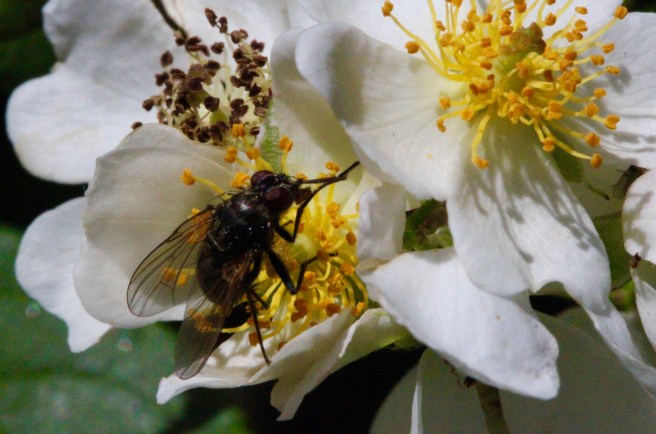
fly on multiflora rose

Multiple species pollinate the massive display.

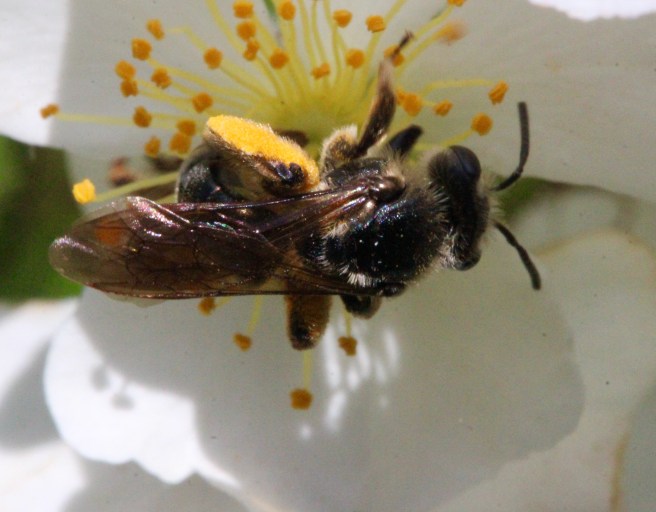
bee on multi

Their pollen sacs bulge as they quickly move from anther to anther.

sawfly larvae

Meanwhile, sawfly larvae munch their way across leaves.

saw 2

Sawfly is another word for wood wasp–certainly makes sense. But right now, their larvae look like caterpillars. Very hungry ones.

spring peeper1

And because I took time to look, I noticed. When I first spied this little guy about the size of a nickel, I thought it was either a small snail or a dried up leaf that. Curiosity pulled me in closer–thank goodness. Located about three feet above ground, this spring paper hid from predators all day, waiting to munch on insects and spiders tonight. I know this shot is sun drenched, but do you see the X on its back? Its name–Pseudacris crucifer–breaks down to Pseudo (false), acris (locust) and crucifer (cross bearer).

grasshopper

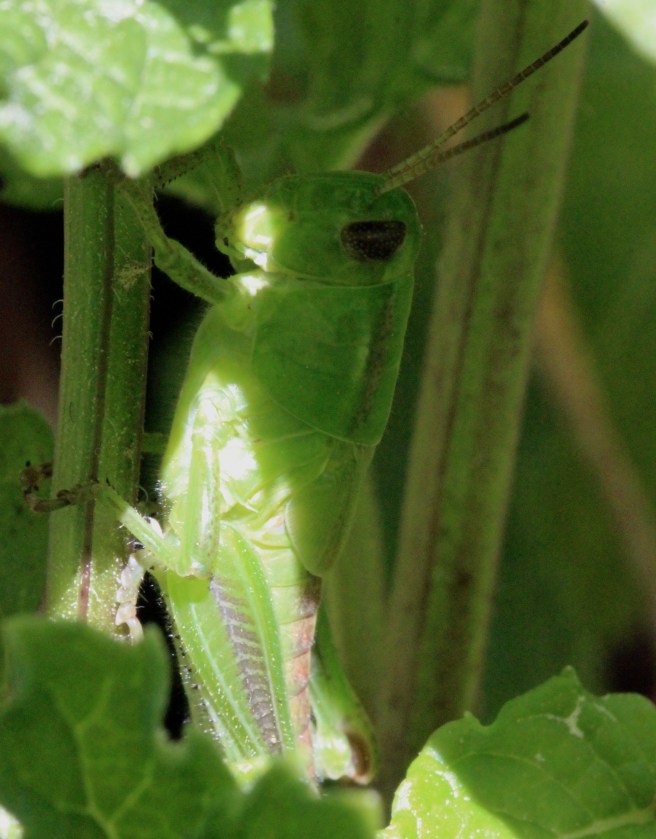
I’ve also been stalking the grasshoppers again, much as I did last year. Every day, I’ve noted that they are a wee bit larger–measuring almost an inch. But today, I found a giant among them.
Heal all

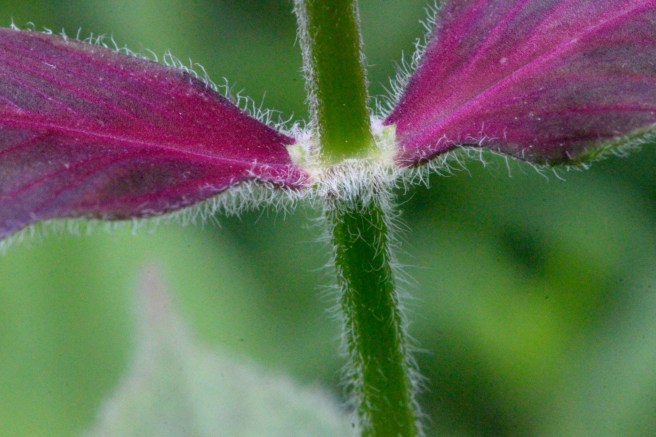
Then I went further afield, but to another familiar spot that I frequent. Heal-All blooms there with its square stem and whorls of florets.

heal all 2

The upper part of each floret provides a darker hood over the lower fringed landing platform. I’m surprised I didn’t see any action today. But don’t worry. I’ll keep  stalking.

Lady fern spores

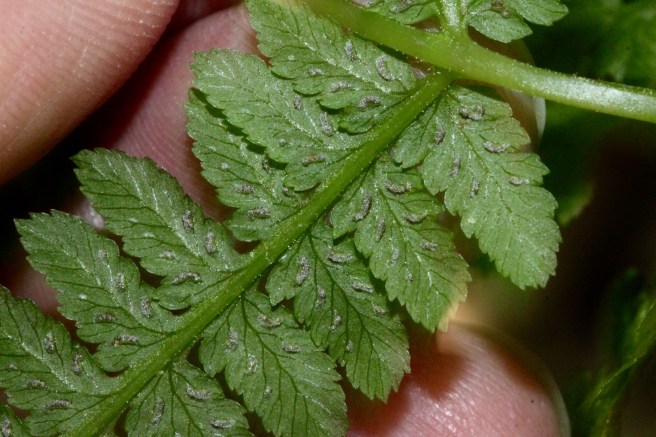
The ferns also drew my attention, like this lady fern, with its graceful appearance and sori in the shape of eyebrows.

hayscented fern

Hay-scented fern offers another lacy look, but the size and shape of its spore cups at the margin of the underside make it easy to recognize. Look underneath. Always.

cinnamon fern 1

While I’m focused on ferns, here’s a clue to differentiate a cinnamon fern from an interrupted fern once if it doesn’t feature a spore stalk. Cinnamon ferns have obvious hairy underarms. Do you see the tuft of hair at the rachis?

interrupted fern

Not quite the same for an interrupted fern. I love the hunt.

royal 2

Cinnamon and interrupted ferns are both members of the Osmundaceae family, which also includes royal fern, so named for the fertile frond topped with a crown.

royal crown

Bead-like in structure, the capsules have evolved from their aqua-green color a couple of weeks ago to a rusty shade. Eventually, they’ll turn dark brown after releasing their spores.

exoskeletons

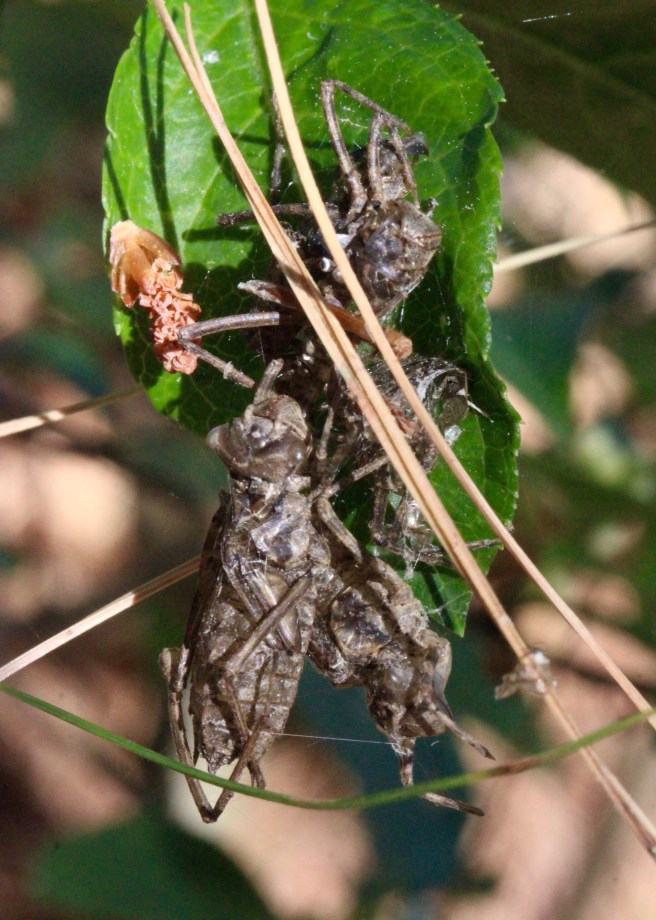
Because I was near water when I spied the royal ferns, I also had the joy of once again stalking exoskeletons that remain where dragonflies emerged. Such a special monument to their metamorphosis.

American toad

And  . . . young American toads hopped all about at my feet.

turtle 2

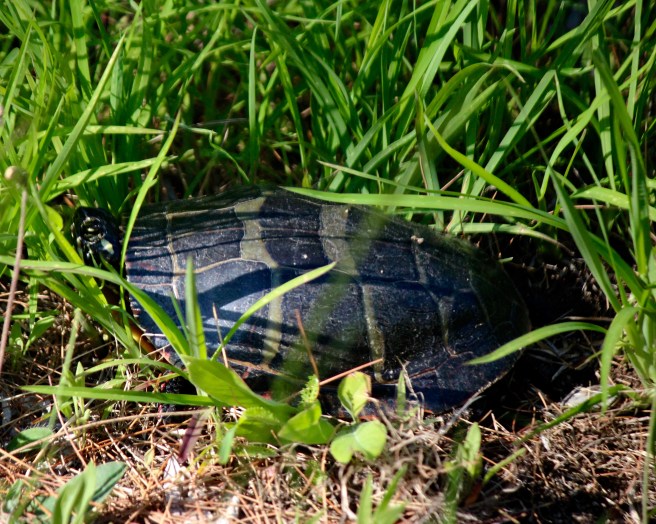
But one of my favorite focal points of the day–a painted turtle. She had her own mission–to lay eggs. After I saw her, I noticed another and so I did what any good stalker would do, I circled about the area looking for others. Only the two. But that was enough.

I’d made the two-hour round trip to Portland this morning to pick up my macro-lens that had taken two months to repair–0r so they say. As I got used to using it again, I found myself having fun figuring out the focus. I’ll continue to stalk and continue to learn–on so many levels.


From Bare to Bear on Burnt Meadow Mountain

Back in October 1947, catastrophic wildfires erupted throughout Maine during what became known as “The Week Maine Burned.”

It hadn’t rained for 108 days and the dry woods were like tinder. Here in western Maine, Fryeburg, Brownfield and Denmark thought they had a fire under control, but overnight a strong wind blew and gave it new life. About 2,000 acres burned by the next night as the fire spread to the edge of Brownfield.

With the winds continuously shifting, town folks began to panic. Farmers either turned their livestock loose or herded them to neighboring towns. Others packed as many belongings as they could and evacuated.

By morning, most homes and public buildings in Brownfield were mere piles of ash. Stately places including the Farnsworth Place where Dr. Philo Farnsworth, a pioneer in the field of television, spent his summers, had burned. Churches, schools, the post office, Grange hall, library and town hall all went up in smoke–only twenty houses survived. In the end, 85% of the town was destroyed, including a mountain trail.

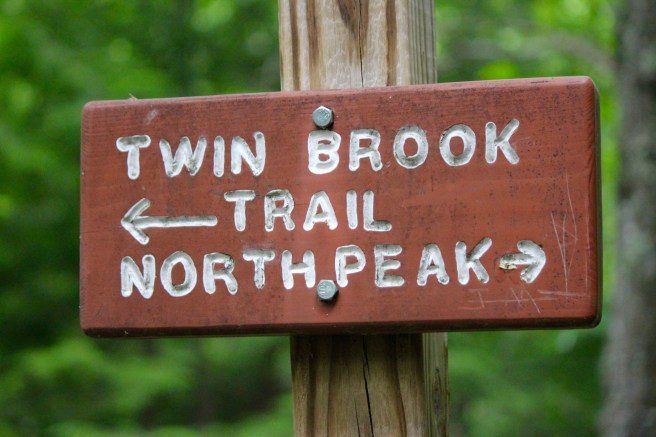
Today, Marita and I ventured to Burnt Meadow Mountain for a loop hike. It used to be that one had to hike up and back on the same trail, now known as the North Peak. Though that’s the shortest way up and back (about an hour each way), I for one, am thankful to the Friends of Burnt Meadow Mountain, who sought landowner permission to create a loop and spur–Twin Brook Trail and Stone Mountain Trail.

trail sign

From the parking lot and kiosk, it’s a bit of a climb to reach the trail split. We followed the blue blazes of the North Peak trail, which though it is shorter, is also the more difficult of the two.

white pine 1

Immediately we noticed that the white oaks that grow at the bottom of the mountain play host to numerous leaf miners and other insects.

white oak gall

Some are decorated with pronounced galls. I always think about how a bud protects the whisp of a leaf all winter long, and how hairy it is as it slowly unfolds and then–kaboom–the insects have to survive too. And they do. Until something eats them. And their energy passes up through the web, where it’s enhanced at each level by sun and air and rain and . . . even when life doesn’t look so good, it is.

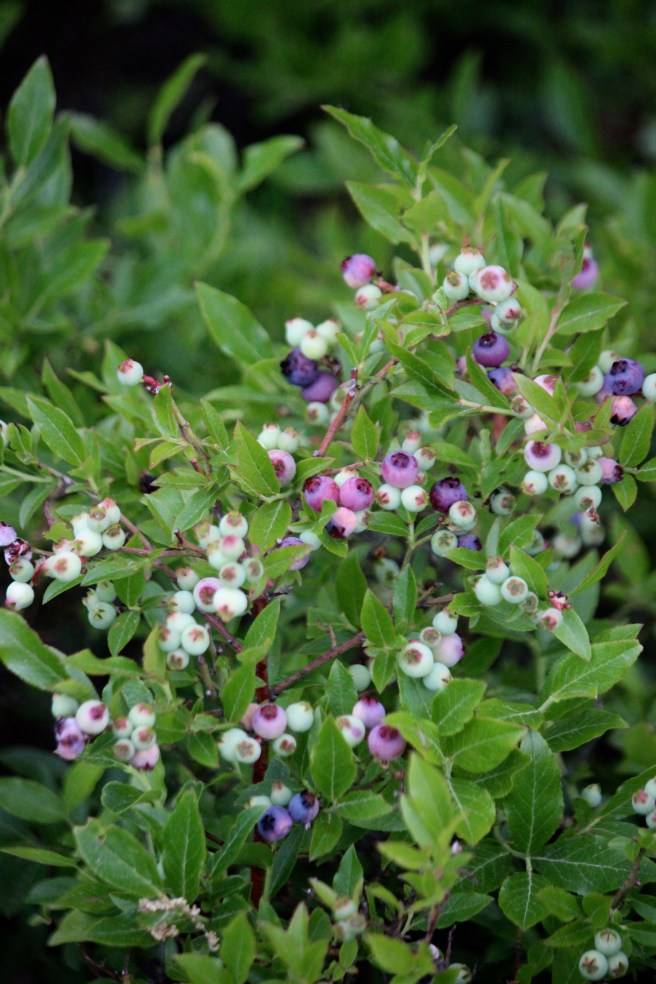
Blueberries

As we climbed, the blueberries became more prolific. And bluer.

spreading dogbane

Spreading dogbane showed forth its tiny pink bells.

ph rocky ascent (1)

And the trail became a scramble. If I said we scampered up the ledge quickly, I’d be telling a fib. (Do people still tell fibs?) Near the summit is a section of hand-over-hand climbing. It doesn’t really last long, but in the moment it seems like forever.

ph view on way 2 (1)

And so it invites a pause to take in the view to the south and east.

ph summit view 5 (1)

The relatively flat summit is rather barren–in memory of those 1947 wildfires.

ph summit view3 (1)

We were glad it was cloudy as there are no shade trees at the top.

ph summit view 2 (1)

Our view included Stone Mountain and the saddle between it and Burnt Meadow Mtn.

ph red pine 3 (1)

Normally in the landscape, red pines stand tall and proud. At the summit, however, their scrubby form presents their features at eye level–bundles of two needles, pollen cones and older seed cones. Young red pines typically germinate and grow only after forest fires or some other event that causes tree loss.

Eastern Towhee 2

Eastern Towhee

While we took a break, an Eastern Towhee sang its metallic yet musical “drink your tea” song.

ph view on way down 4 (1)

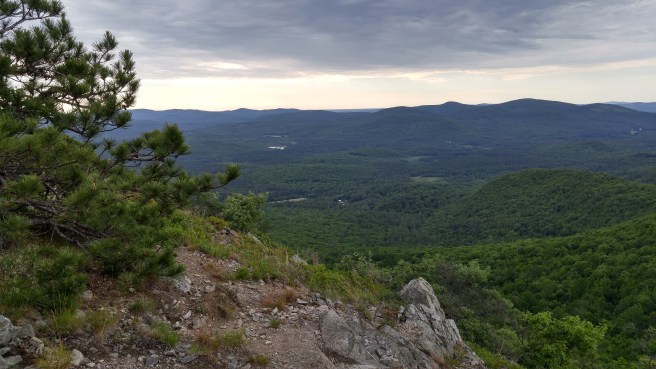
Descending via the much longer, but a wee bit easier Twin Brook trail, we were treated to mountain views to the west.

driftwood

And driftwood. Oops. Wrong setting. But still, mountain wood can be as beautiful as ocean wood.

ph bear 5

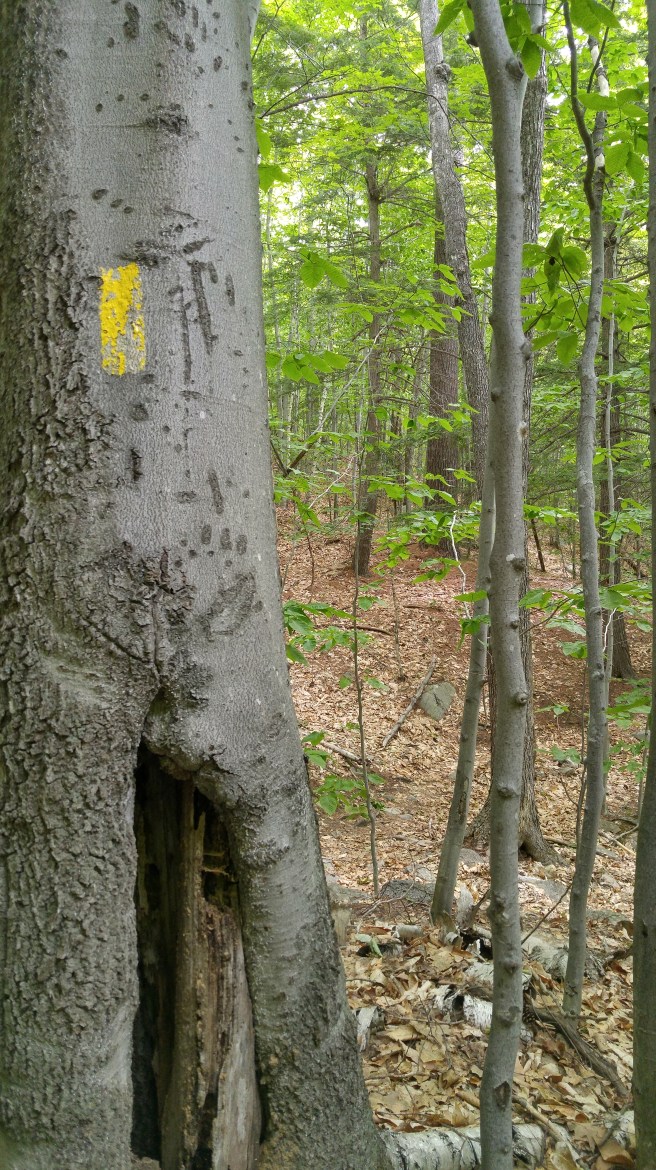
One of our pleasant surprises was the discovery of bear claw marks on rather small beech trees. Perhaps made by even smaller bear cubs who scampered up and down a year or two ago, leaving their marks much the way we left our own today without knowing it.

ph bear 2

Further along, the hole in this older beech stopped Marita in her tracks. We noticed saw dust on the ground below. And numerous bear claw marks on the bark above.

bear 3

Another oft visited tree.

From bare to bear, Burnt Meadow Mountain in Brownfield is worth the trek. (You probably thought we saw a bear today. No such luck, but my guys and I encountered a bear on the North Peak trail on a summer day years ago. It seemed content to lumber along about fifteen feet from us–probably full of blueberries.)


Lonesome Mondate

My guy has worked way too many hours in the last few weeks, including this past weekend, so today we ran away. Well, he went for a run early this morning while I dilly dallied around the house. And then we ran away.

plly 1

Our destination was our favorite breakfast place, though we went for lunch today–Polly’s Pancake Parlor in Sugar Hill, New Hampshire. As we walked toward the door, we noticed a family standing outside chatting and laughing. Hello neighbors! Yup, we were almost two hours from home and our neighbors from down the road had just finished breakfast. “We passed you on your run,” they said to my guy–equally surprised to see us there.

Lunch was the combo sampler–three small pancakes with sausage for him and thick, crispy bacon for me, followed by three more pancakes and full bellies. Good thing we only make this a once-a-year habit. I’d planned to only order the plain batter with blueberries because of all the choices that’s my favorite, but I have to say that the gingerbread and chocolate chip was also yummy.

ph-lupine fest 1 (1)

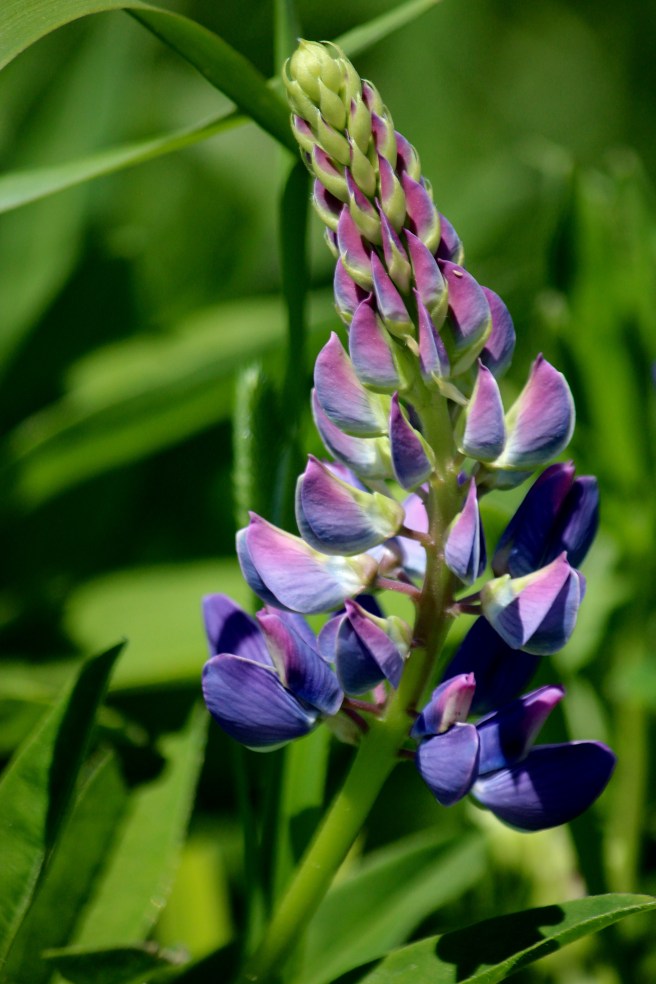
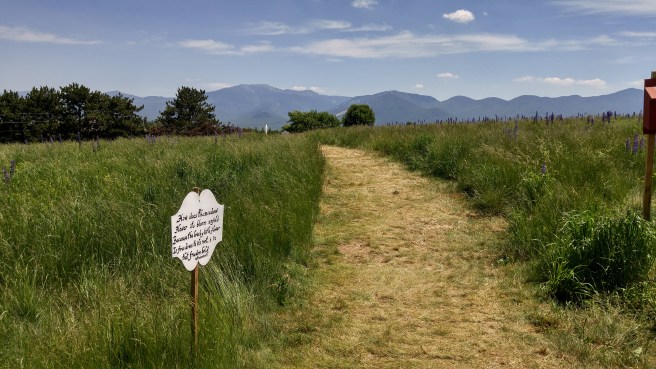
And then we moved on to the lupine fields. Actually, lupines bless the fields throughout town, but the Sugar Hill Sampler Lupine Fields feature trails with poetry along the way.

lupine sign

Such simple words of wisdom ring true

lupine 7

amid the beauty.

ph-lupines 4 (1)

The actual lupine festival occurred two weeks ago,

ph-lupines 2 (1)

but our timing wasn’t so off.

lupine 10

Color and structure wrote their own verses.

ph-tree1

A few more miles down the road, we started up a trail that appeared relatively flat in the land of giant yellow birch trees.

xylophone1

One of the brook crossings danced to the beat of its own song

xylo 2

interpreted by my guy who channeled his inner Tom Hanks as he moved across the xylophone to the beat of  “Heart and Soul” featured in the 1988 movie “Big.” So be it.

maple 2

A few months ago when I presented a workshop on tree bark, a colleague asked me about mountain maple, which I didn’t know existed. Since then, I’ve been paying attention–at least to the leaves, which I found today. Please don’t ask me what the bark looks like. That’s for a future lesson.

trill2

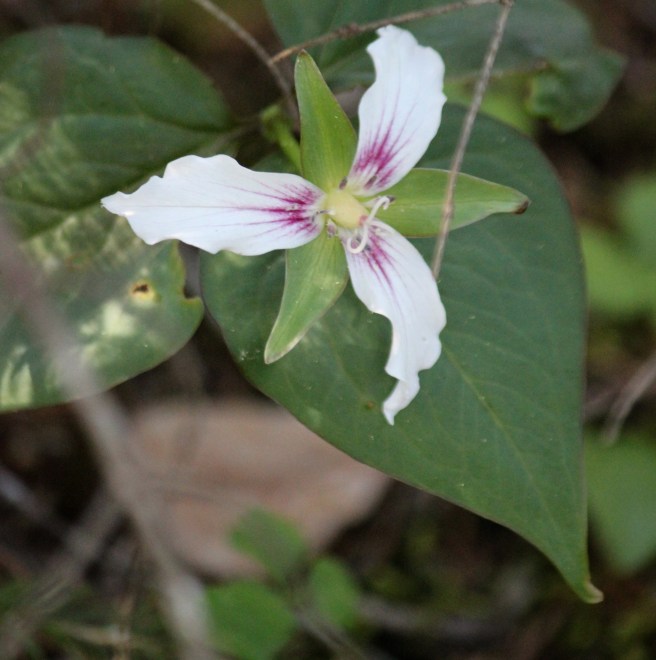
And though most have gone by, we found one painted trillium to add to my collection of a trillion trillium photos.

ph-mud (1)

After a steady climb among rocks and roots, we reached level land and bog walkways–thanks to the AMC employees and volunteers who worked on new passageways. Talk about getting into your work–check out the mud on this guy and he wasn’t the only one. We met others who had worked for the AMC 30 years ago and were volunteering their time and expertise to complete the trails that we all may enjoy. I hope there was a chilled beer at the end of their day because they were all muddy and sweaty, but smiled as they worked and suggested ways for us to bypass the mud.

salamander1

We slipped off the trail (not literally) and found today’s special find–Eastern newts in a couple of stages.

sally 1

Growing older, the eft began to resemble adults. Don’t we all! Eventually.

lake view 1

Cannon Mountain formed part of the backdrop. For me, Cannon has always evoked a childhood memory. About 50 or more years ago, as my family traveled up the tram to the summit we looked toward Canada and my parents mentioned that our next-door neighbors, the Mansfields, were on their way to Canada, which we could see. I saw the Mansfields’ station wagon. I swear. And every time I pass this way, that memory jumps to the forefront. Once I mentioned it today, my guy and I started sharing past memories as we made our own.
ph Lonesome Lake hut (1)

At last we reached the  Taj Mahal and paused to use the bathroom.

ph mts 4 (1)

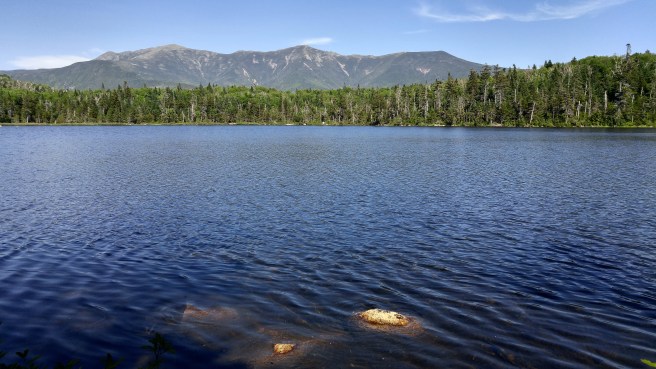
We were beside Lonesome Lake and had a splendid view of Mt Lafayette and Franconia Ridge as spring came to a close for 2016.

bog trail

ph-bog (1)

Our journey continued around the lake before we headed back down the trail–for scent and sound think balsam pillows and the banjo plunks of green frogs.

We were hardly lonesome on this trail that is described as tranquil and heavily travelled. We will attest that it is both and loved the hike to Lonesome Lake on today’s Mondate.


Paying Attention

When she invited me to join her for a walk down a dirt road, I knew Jinnie Mae and I would make some wonderful discoveries, but had no idea what begged to be noticed.

j-ebony 15

We cruised along at a faster pace than normal as we chatted . . . and then . . . we slowed . . . down. And that’s when the world poured forth its graces.

j-ebony 18

Beside a small stream, we were in the land of numerous ebony jewelwing damselflies, their metallic green bodies, beady black eyes and jewel-outlined wings showing brilliantly as they flitted about.

j-jack1

We noticed Jack-in-the-Pulpit growing strong, proud and tall,

J-swamp candle

swamp candles lighting up the water,

j-heal all 3

heal-all beginning to bloom,

j-pyrola 2

and waxy-petaled pyrola flowers with styles curved below like an elephant’s trunk.

j-beaver 2

We stopped by a beaver pond and decided they have moved on,

j-beaver 4

but their works were still evident.

j-beaver 3

Though the lodge may be abandoned by beavers,

j-lodge 1

it appeared that someone had stopped by.

j- royal 6 (1)

On the other side of the beaver dam, royal ferns decorated the stream in their shrub-like manner.

j-royal 2

Their fertile fronds posed like crowns above their heads, bespeaking their royalty.
j- royal 5 (1)

With their unique structure, there is really nothing else that resembles the royal fern.

j-ebony3

Because we were once again by the water, we realized the jewelwings were abundant–though they seemed more blueish in color here than further down the stream. Was it the lighting?

j-ebony 13

Beside the tranquil stream, they flittered and fluttered, their wings like sails over iridescent bodies, and occasionally they settled on vegetation for a photo call.

j-spider 2

Others also settled.

j-cuke1

We pulled ourselves away–or actually, Jinnie Mae gently nudged me away and we continued our journey back, certain that we’d see sights we missed on the way down the road. There were Indian cucumbers with multiple flowers–the most I’d ever seen . . . until Jinnie May pointed out that it was really two plants. Oops.

j-cuke 2

But still, we found one with at least four blossoms, all in various stages.

j-butterfly1

She told me we’d probably see an Eastern black swallowtail.

j-butter 3

And we did.

j-spotted winter

Though it’s not time for spotted wintergreen to flower yet,

j-spotted 1

we found its seed pods atop tall stalks. For me, this was a plant I don’t believe I’ve ever seen before. (According to Maine Natural Areas Program’s Rare Plant Fact Sheet, Chimaphila maculata is threatened in our state and has an S2 ranking) Will I see it in other places now that I’m aware of it? Time will tell.

j-winter 1

We noticed tender new wintergreen leaves, but it’s the berries that made us turn back for a closer look.

j-winter 2

The scarlet berries matured last summer, survived the winter without being eaten (they taste like wintergreen in the summer, but lose their flavor and sugar count over the winter months) and have now become enlarged.

j- trailing 2 (1)

What really stopped us in our tracks–trailing arbutus. Last month, we were wowed by its gentle white and pale pink flowers. They’ve since faded to a rusty tone.

j- trailing 6 (1)

And some have transformed into swollen round seed pods.

j- trailing 8 (1)

The sepals have curled away to reveal the white fleshy fruit speckled with tiny brown seeds. It was well worth getting down on our knees to look through a hand lens–especially since ants, chipmunks and mice find these to be a delicacy so they may soon disappear.
Paying attention with and without a hand lens on a delightful spring day–we were once again thankful for the opportunity to notice . . . and to wonder.


Bathing in the Forest

Yesterday, a friend handed me an article she’d clipped from The Washington Post entitled “Walking in Forest Changes You” written by Meeri Kim that referenced a Japanese practice called Shinrin-yoku. “Coined by the Japanese Ministry of Agriculture, Forestry and Fisheries in 1982, the word literally translates to ‘taking in the forest atmosphere’ or ‘forest bathing’ and refers to the process of soaking up the sights, smells and sounds of a natural setting to promote physiological and psychological health.”

Kim states: “Over thousands of years of human history, we have effectively become an indoor species. Particularly for those of us trapped in the cubicle life, often the only times we regularly step foot outside is for our daily work commute or to run errands . . . a number of scientific studies emphasize that reveling in the great outdoors promotes human health. Spending time in natural environments has been linked to lower stress levels, improved working memory and feeling more alive, among other positive attributes.”

I know that I can’t literally share the sounds and smells of our gardens, yard and woodland with you, but I invite you to imagine the softness of pine needles, crunch of dried leaves and sponginess of moss beneath your feet, the smell of pine interwoven with must and mud, and the sensation of a strong breeze, hot sun and cool shade. May you hear branches creaking in the wind, leaves fluttering, occasional mosquitos buzzing and songs of the oven bird, red-eyed vireo, chipping sparrow and white-throated sparrow who calls, “Old Sam Peabody” over and over again.

Join me in a garden/yard/forest bath:

y-anemone 1

y-bee

y-frit 6

y-black-eyed1

y-grass green 2

y-milkweed

y-blueflag1

y-hawkweed

y-berries1

y-cowpath

y-pollen 11 (1)

y-barred

y-club 1

y-view 2

y-sheeplaurel3

y-hum4

y-moss1

y-damsel 10

y-nightshade

y-daisy 2 (1)

Happy wandering. Happy wondering. Happy bathing.

Your Royal Iris

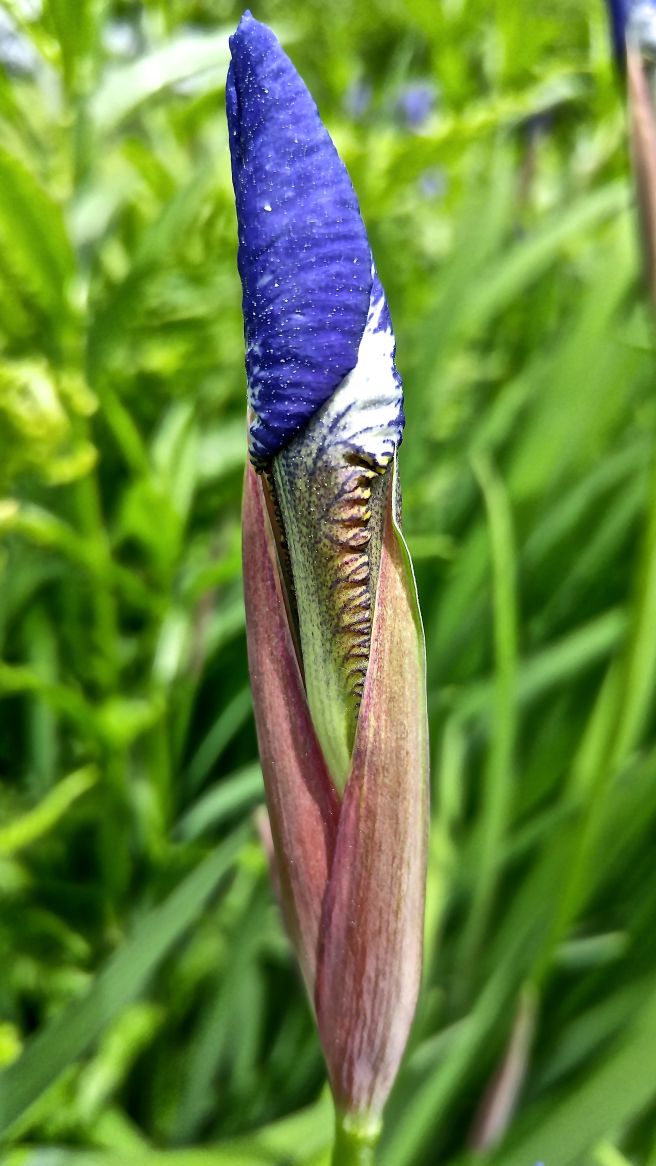
Since the first iris of this year bloomed on the anniversary of my mother’s birthday at the end of May, I’ve been honoring the elegant flowers in our gardens.

first iris, 5:31:16

The first bloomer was a German bearded variety, apropos for Mom since her mother was a German immigrant.

irispist1

Today I decided to take a closer look. I hope you’ll be as wowed as I was.

iris1

This eye-catching bloom has been revered forever and shows up throughout history. The Goddess of the Rainbow was named Iris and it was the inspiration for the fleur-de-lys that once appeared on the French flag and still adorns Canada’s Providence of Quebec flag. Royalty have been known to use the pattern in their special attire. It’s no wonder.

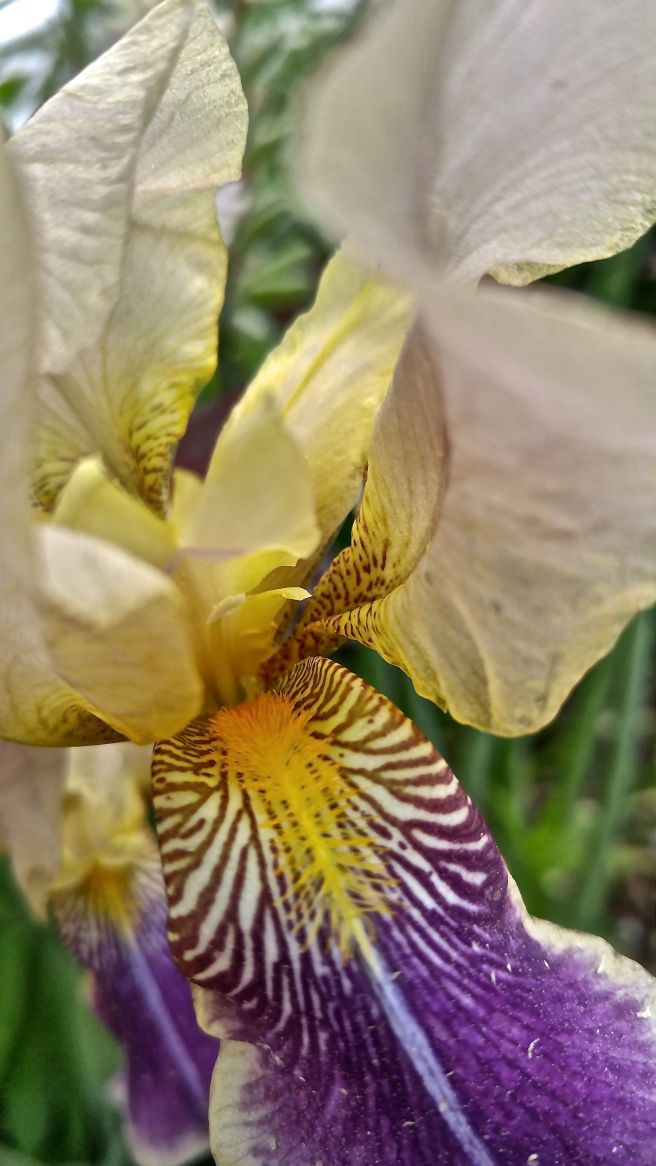
iris beard1

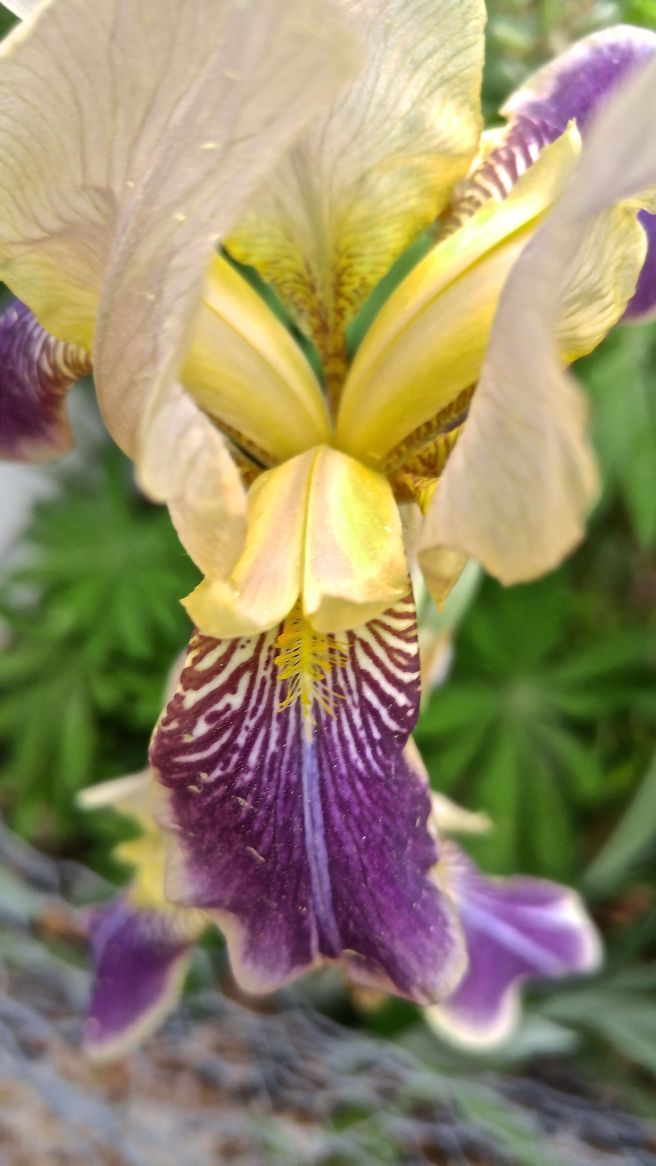
I’m thinking that it might also be called the trinity flower because its parts appear in multiples of three. Beginning from the bottom up, there are three bearded sepals that look like petals. Next are the three stemmed true petals that remind me of a queen’s ruffles.

iris 2

The three theme continues with petal-like stigmas that receive the pollen and send it down the stalk of the pistil known as the style to the ovary.

irisstamen2

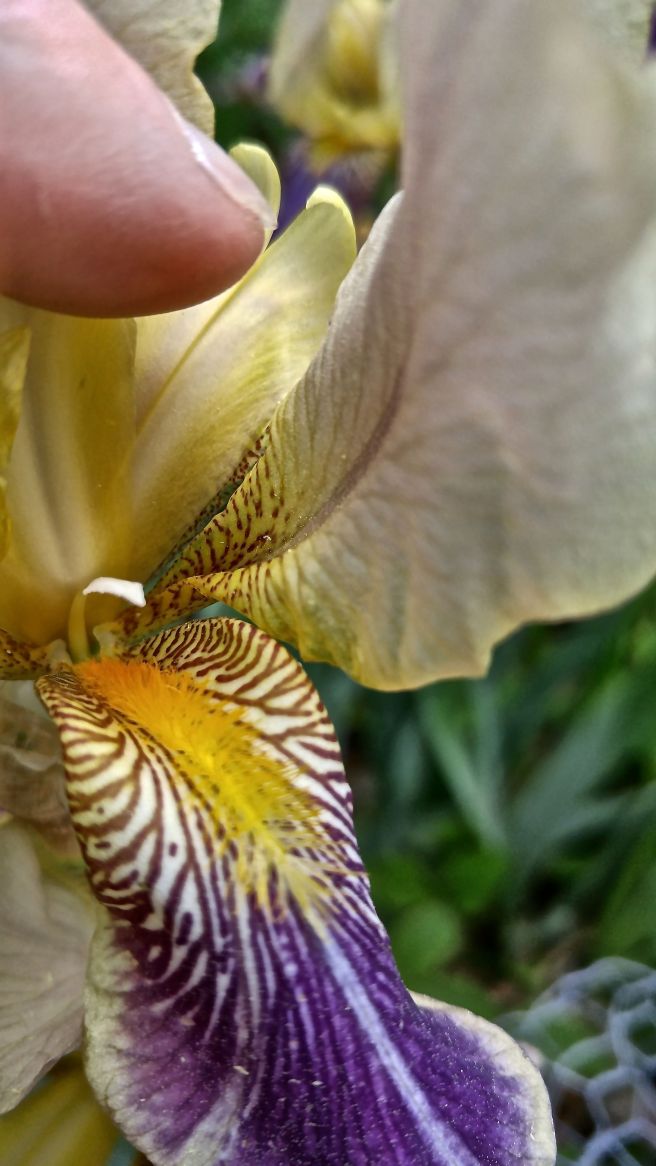
And tucked under each stigma is a stamen with pollen-bearing anthers. You have to lift a stigma in order to see one.

iris stamen 4

Since the stamen are hidden, how can a pollinator possibly find them? With ease if it follows the dramatic runway aglow with light.

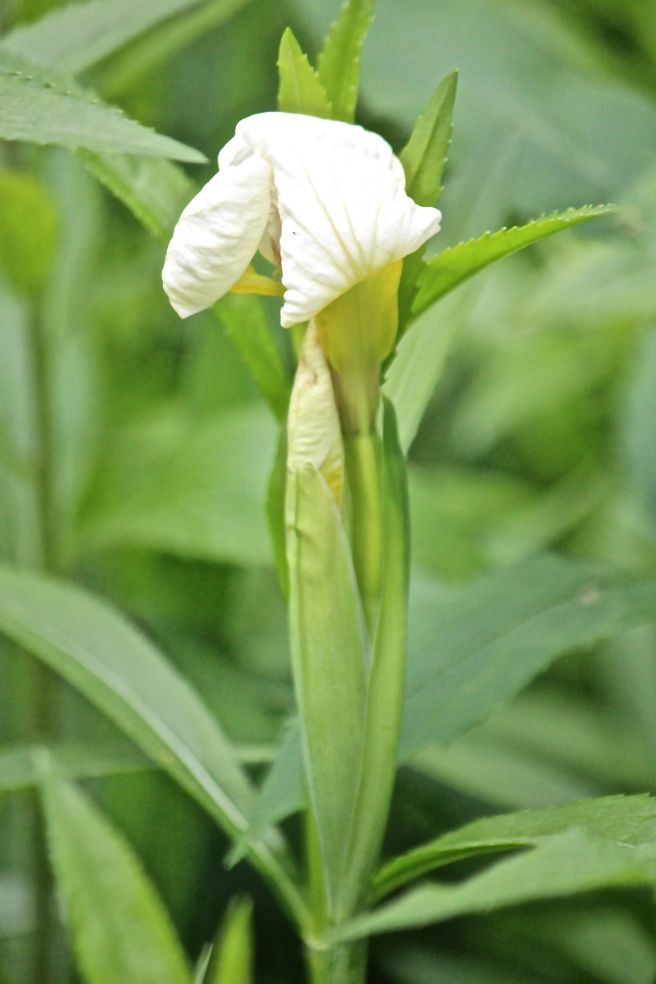
white wrap 2

We’ve also been blessed with two beardless varieties including this white species that was wrapped with grace two days ago.

white wrap

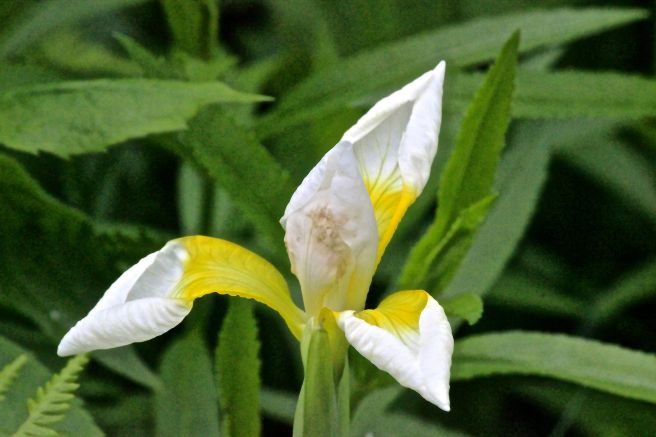
Within an hour it began to unfurl.

white unfurl2

The three showy sepals were the first to open.

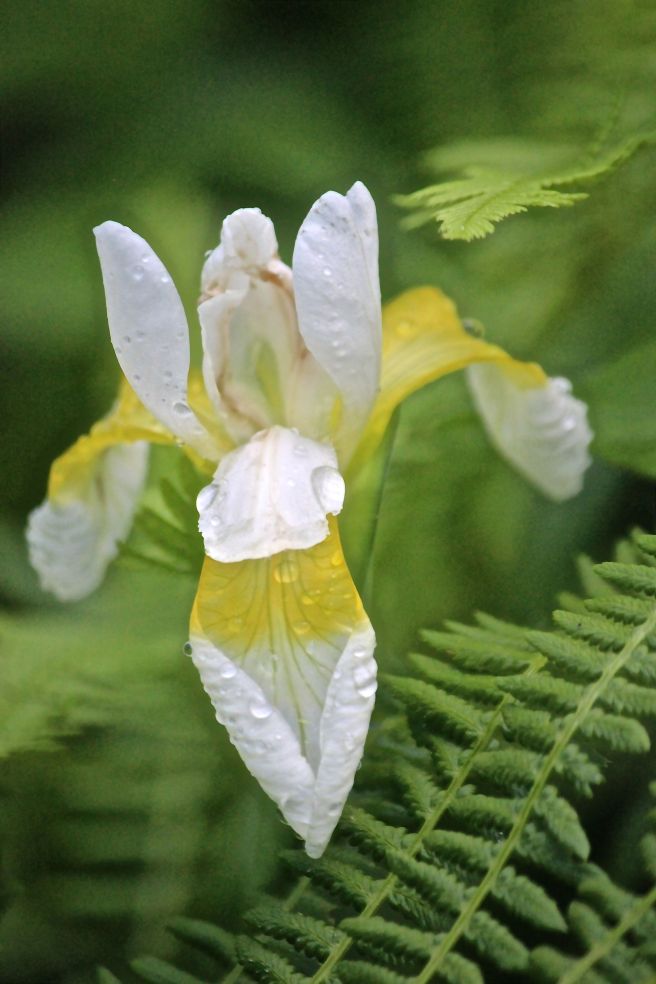
white 2

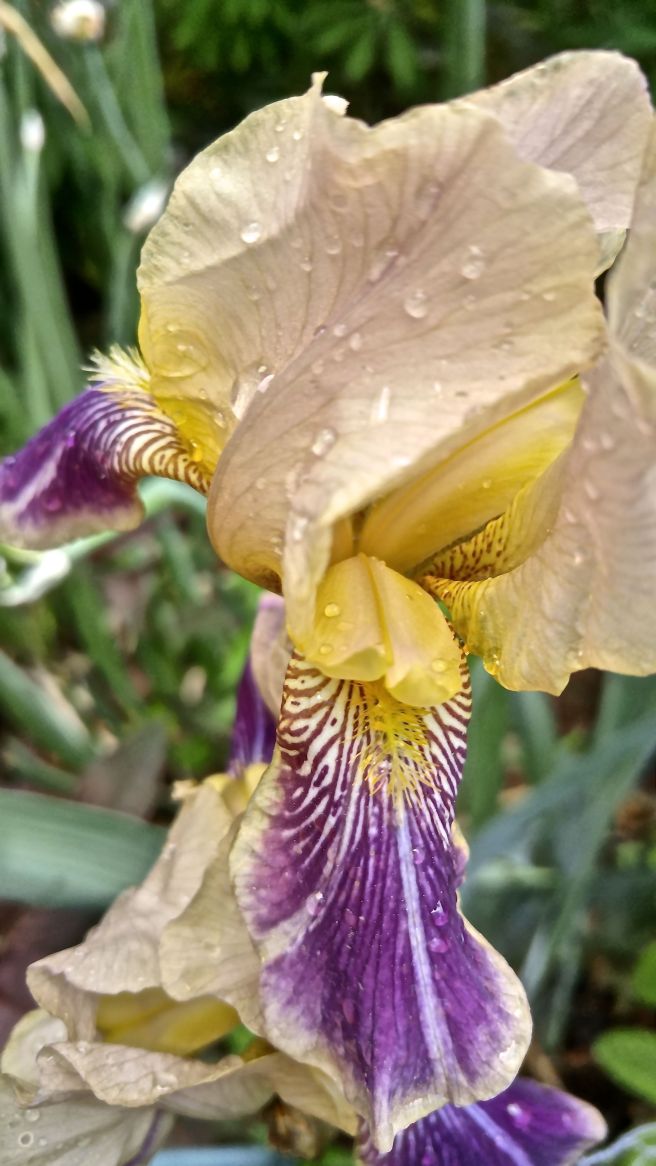
This morning, raindrops further enhanced its delicate beauty.

white1

As I smiled at it, I’m sure it returned the favor.

blueflagwrap

And then there’s the second beardless–the blue flag iris.

blueflag5

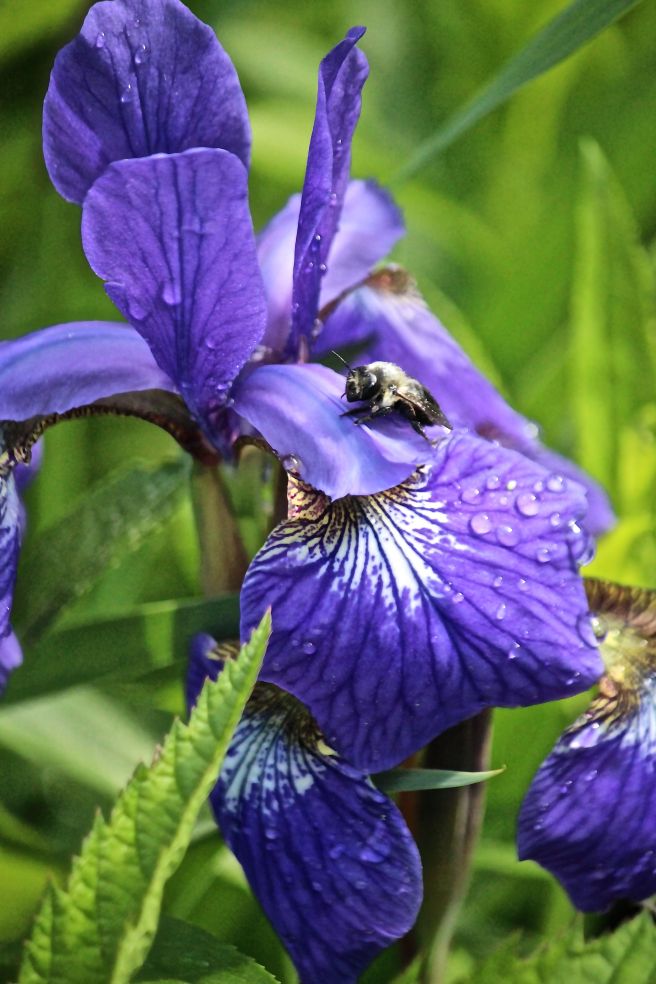
Like its white kin, this species prefers moist areas–such is our yard.

blueflg7

The runway veins reminded me of the tree of life spreading forth joy and hope.

blue pistils1

The three true petals stood upright on this particular flower, while the three stigmas covered the three pistils.

blueflagsta2

Not only am I in awe of the hidden pistil, but the fringed edge of the stigma also amazes me.

blueflagsta1

Before today, I never looked this closely at an iris.

blueflag2

I wasn’t the only one, though he does seem to be a bit off course.

blueflag3

Maybe he was letting the raindrops dry before following the runway.

blueflag6

Thank you to the iris for providing today’s wonder and may you be known forevermore as “Your Royal Iris.”


The Main(e) Exotics

If you’ve traveled with me before, you know that I often frequent the same trails. And so it was today. Oh, there was a change-up in the early morning hours when I joined a couple of members of the Lakes Environmental staff to oversee a volunteer project by the Rotary Club. Rotary members from around the state and beyond (think Argentina) spent four hours clearing a new trail we’d laid out at LEA’s Maine Lake Science Center. They provided humor and hardwork hand-in-hand.

And then a friend and I drove to LEA’s Holt Pond Preserve where everything was in exotic mode.

oak g 3

One of our first finds was an apple oak gall about the size of a golf ball. So, the apple oak gall female wasp (yes, there is such a species) crawled up the tree trunk of a Northern red oak in early spring and injected an egg into the center vein of a newly emerged leaf. As the larvae grew, it caused a chemical reaction and mutated the leaf to form a gall around it that provided sustenance.

oak g 5

Recently, the wasp drilled its way out and probably found a mate.

oak gall 1

All that remained–wispy fibers.

blue 3

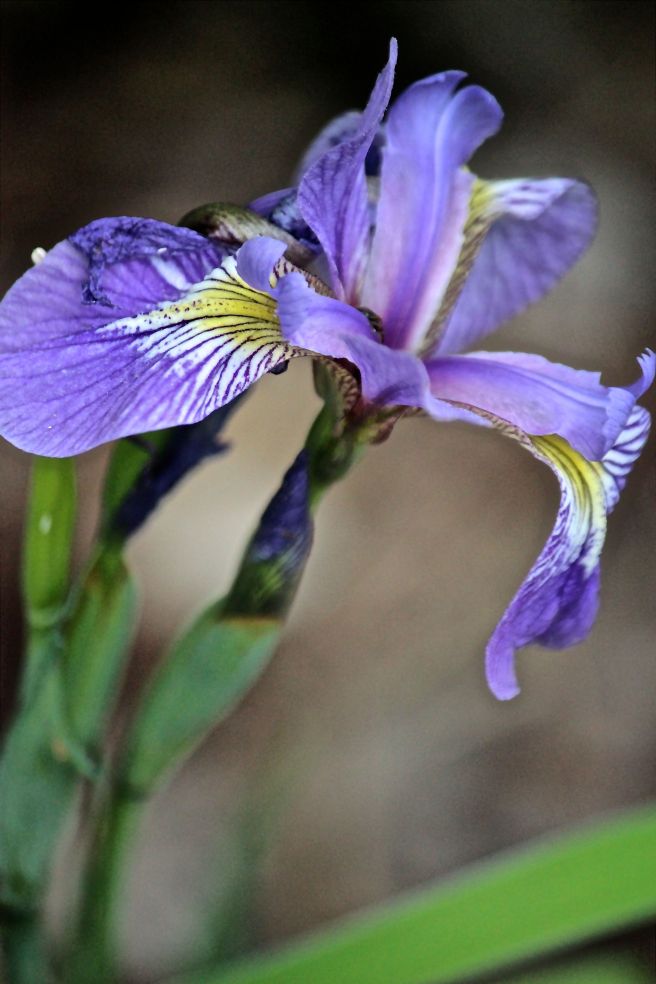
Along the first boardwalk in the red maple swamp we found Northern blue flag iris in bloom. Flag irises are wild irises that tend to grow in boggy areas. Unlike the irises that grow in our gardens, they don’t have beards. The venation of the gracefully downturned sepals was intense–the better to attract pollinators.

snake2

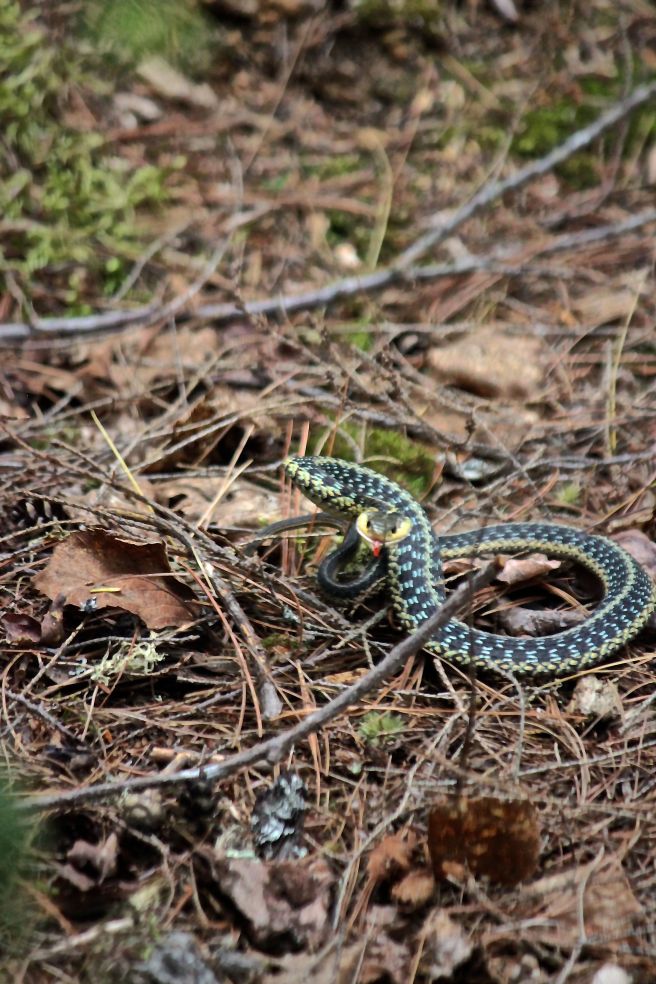
We moved from the swamp to the first hemlock hummock and chatted about natural communities when suddenly we realize we were being hissed at.

snake 10

Its coloration threw us off and beautiful though it was, the hairs on the back of our necks stood on end. Apparently we made it feel likewise. And so we retreated. We retraced our steps and decided to complete the same loop in the opposite direction. When I got home, I looked it up and realized that it was a common garter, but really, there didn’t seem anything common about it in the moment.

hemlock v

Because we backtracked, we were treated to fresh and older hemlock varnish shelf fungi that  we may not have seen otherwise.

hemlock v 6

We know where they’re located. F0r big $$ we might (MIGHT) show you.

park 1

Later on, as we left, we recognized a friend’s vehicle in the parking lot. Our question–did he see what we saw?

pitcher 9

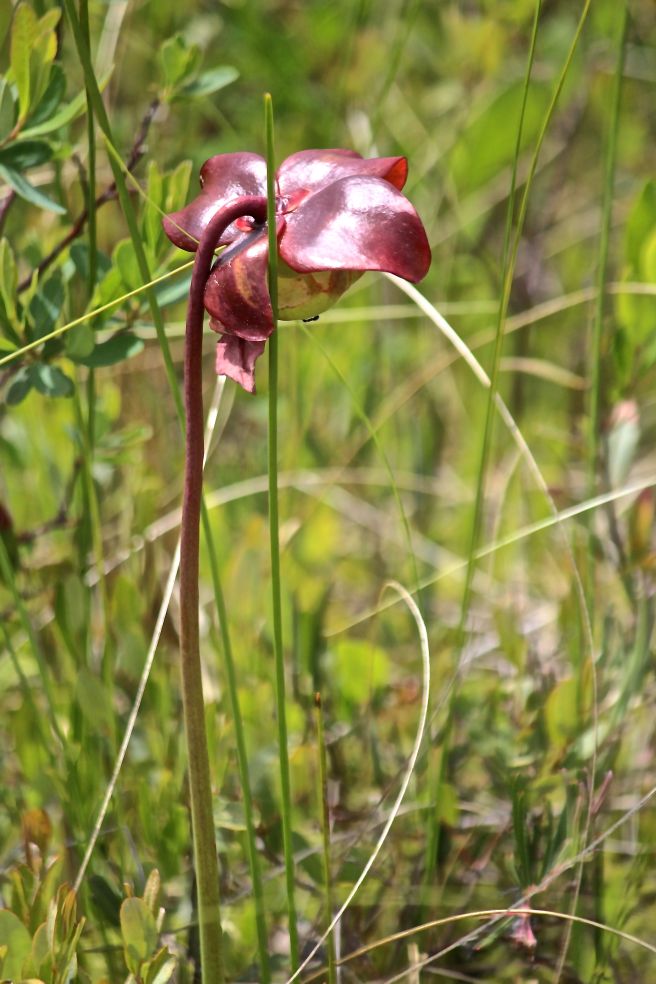
Throughout the preserve we found one of our favorite plants that in my book is the most exotic of them all.

pitcher 3

The carnivorous pitcher plant obtains nitrogen and phosphorus by eating insects. Its oddly shaped leaf forms a unique pitcher partly filled with water and digestive enzymes. The spout is a hairy landing platform for insects attracted by its red venation and nectar glands. Imagine this: An insect crawls to the edge of the leaf, aka pitcher, slips on the downward-sloping hairs and plunges into the liquid below where enzymes and bacteria break it down. Any chance for escape are zapped by those stiff hairs. Oh my.

pitcher & sundew1

The pitcher plant isn’t the only carnivorous plant that thrives here. Check out the glistening tentacles of the sundew intended to capture small insects like a mosquito. Should one land on the tiny leaf, its feet become ensnared in the sticky secretion and the end is eminent. YES! Within mere minutes the tentacles curl around the victim and suck the nutrients out of it. Go sundews. Go pitcher plants.

sheep 4

Only beginning to bloom was sheep laurel with its deep crimson-pink flowers. Located below the newly emerged leaves, each flower has five sepals, with a corolla of five fused petals and ten stamens fused to the corolla. Beauty and danger are also encompassed here–it contains a chemical that is poisonous to wild animals, thus one of its common names is lamb kill.

exo 1

Because we were beside the pond, we thought to look for dragonfly exoskeletons and weren’t disappointed.

broad-tailed shadow dragonfly

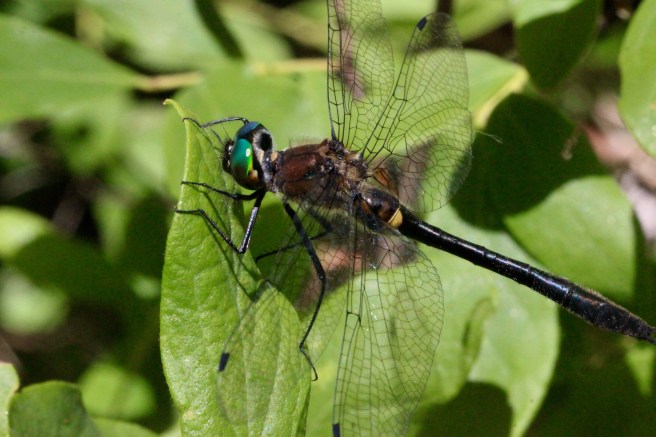
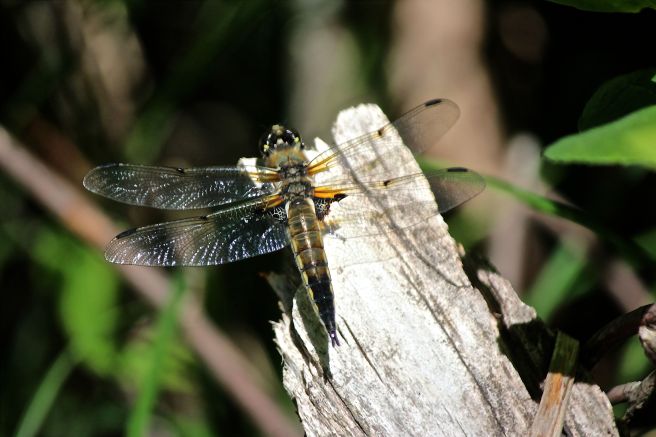
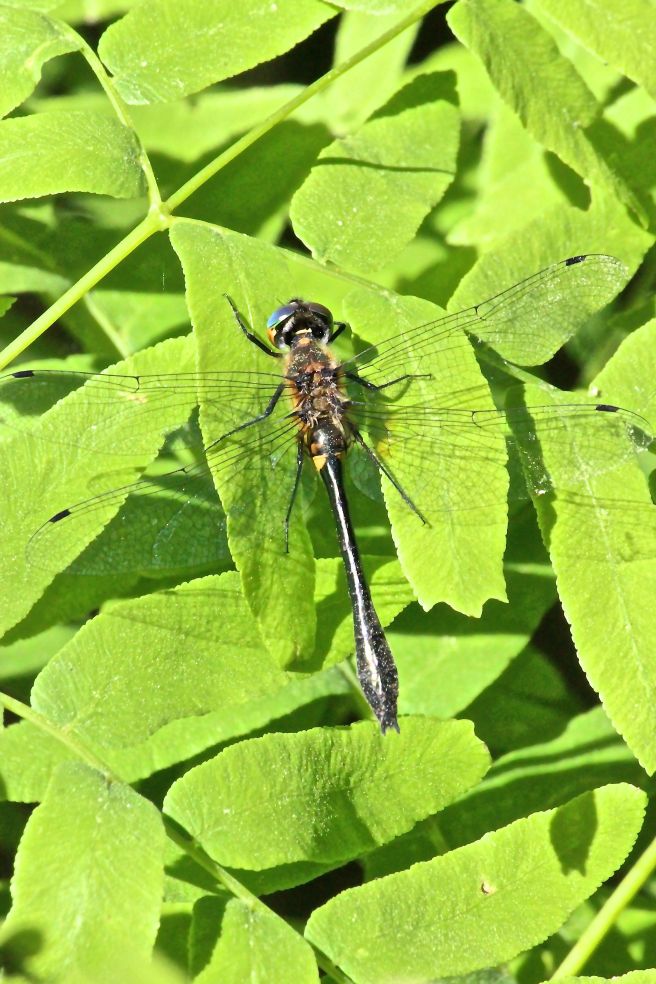
And the dragonflies themselves were worth our attention. I’m not sure my ID is correct, so help me out if you know better, but I think this is a broad-tailed shadowdragon and if that’s true it is one that Maine is paying attention to because it only occurs in one or two states.

beaverpond clubtail dragonfly

Another that I name without certainty–beaverpond club tail.

ebony 2

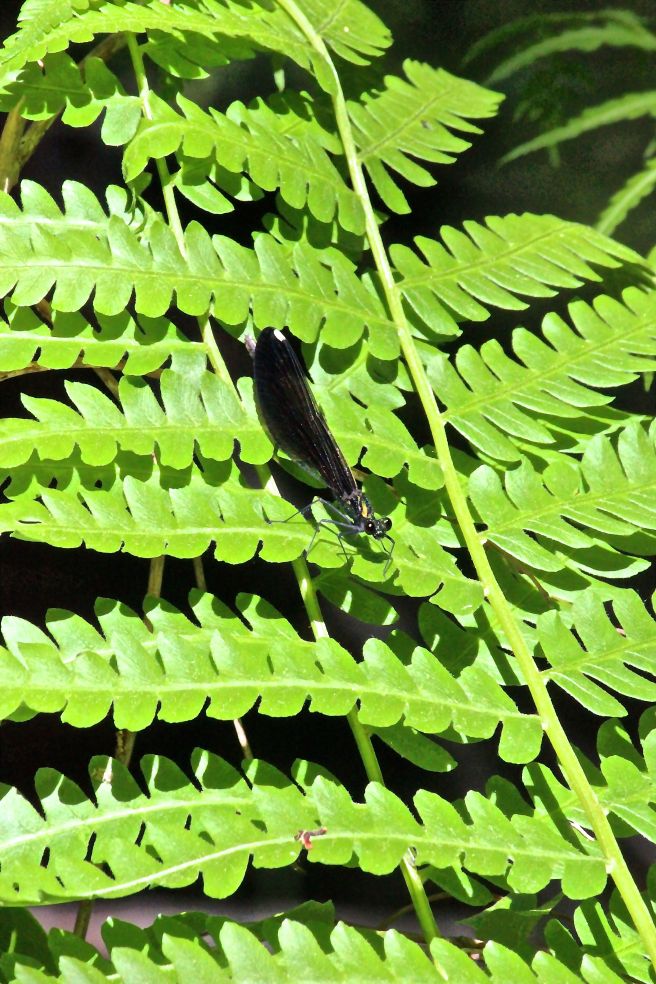
I’m much more confident about my ID of this ebony jewelwing damselfly.

cuke 7

We found a double-decker Indian cucumber root that displayed flowers in varying stages. The yellow or green-yellow flowers drooped below the upper leaf whorl and as is their custom, were slightly hidden. Each flower had three long, brown styles in the center that curved outward and the stamens were magenta.

LEA boats

Among the unnatural offerings, a few boats to explore the river and pond. Though we noted a couple of paddles and one pfd, we highly recommend you bring your own.

LEA 2

Some extra duck tape is also a good choice just in case. ;-)

HP view1

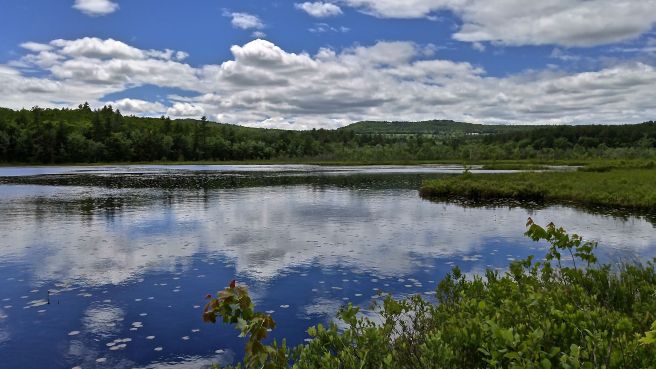
Like the ever-changing reflection, life changes constantly at Holt Pond. The more I look, the more I realize how exotic life is in Maine. Who knew?

Be Together Mondate

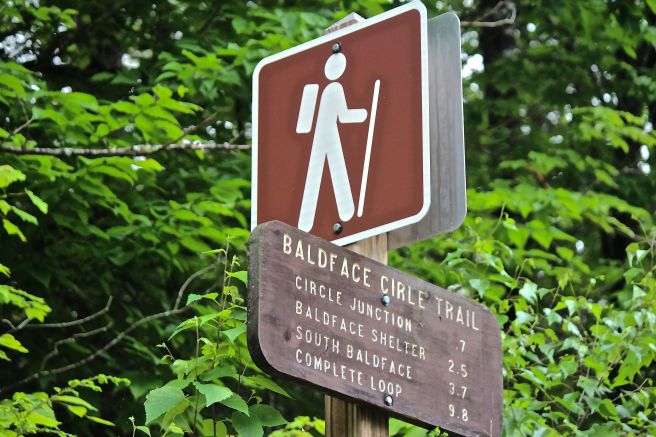
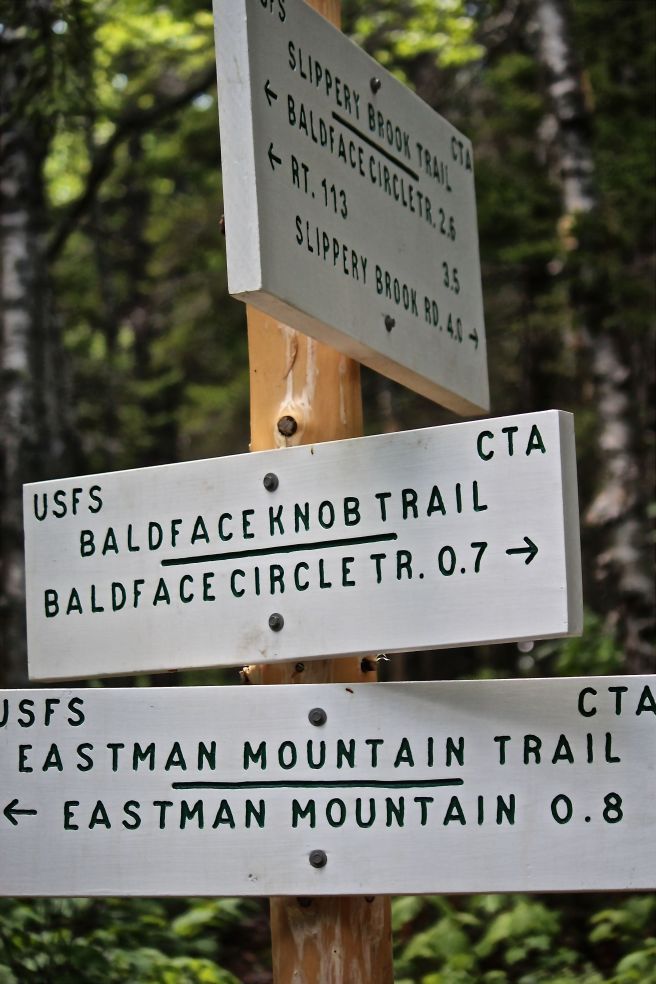
It took us a while to get our act together this morning, but by 10:30 we were finally at the trailhead for the Baldface trails off Route 113 in Evans Notch. Okay, so true confession, I did not want to hike these trails. For thirty years I’ve managed to avoid them, but my guy promised me this morning that if I wasn’t comfortable we could turn back at any point.

b-start sign

And so our Mondate began.

b-ph emerald 3

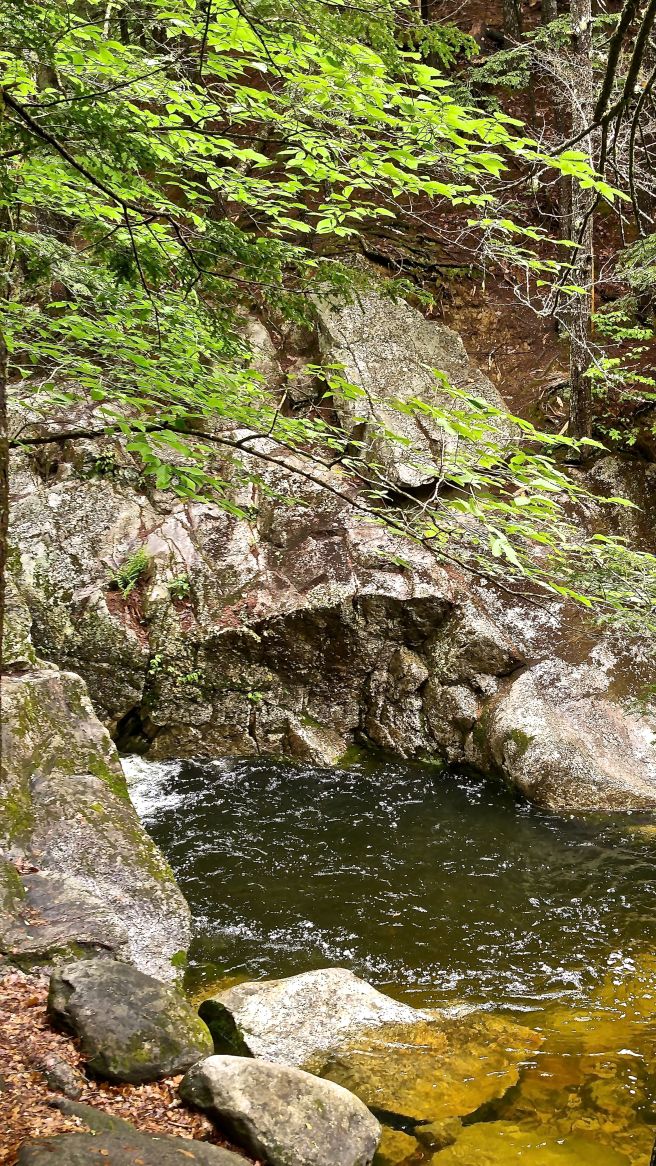
The first .7 miles were familiar to us as we’d passed this way many times in the past, often with friends or family in tow. The destination, Emerald Pool. A forever nippy Emerald Pool.

b-ph emerald 2

We stood above the pool today and shared memories of past visits. And the people that made those visits memorable.

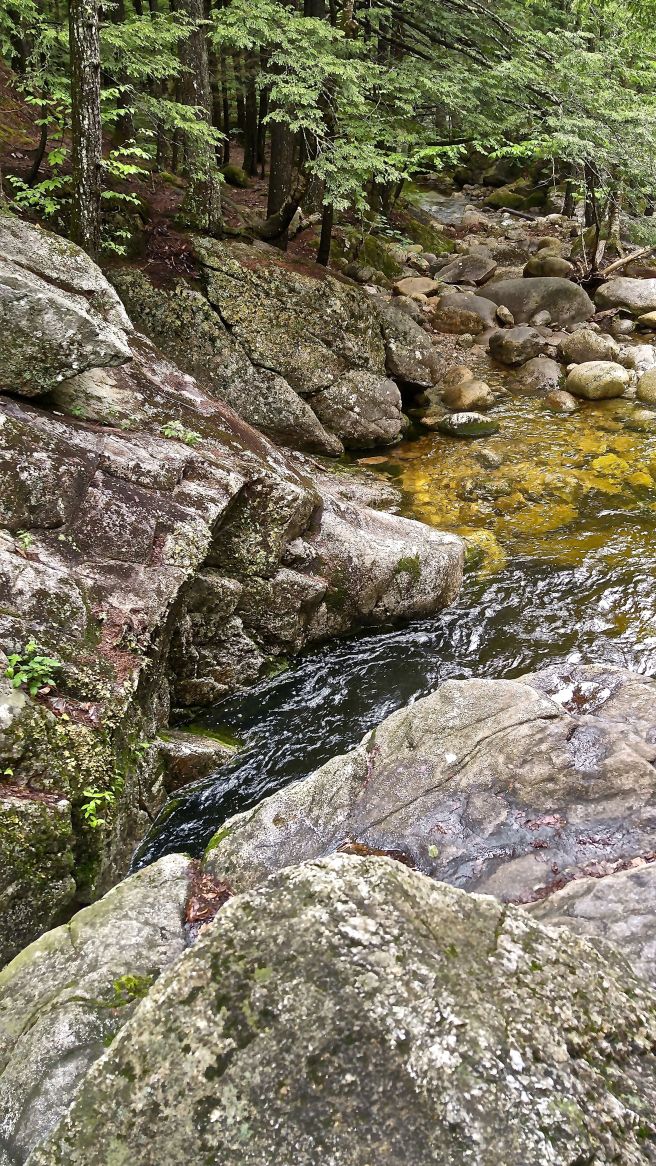
b-ph emerald above

Even the water above the pool provided hours of entertainment in days gone by.

b-ph emerald above 2

Today, it was the water’s force and volume, increased since last night’s rain, that gave us pause.

But we couldn’t pause for long. We had a mountain to conquer. And so, we headed back to the main trail and at the junction followed the Baldface Circle Trail . . . until it disappeared before our eyes. We backtracked but couldn’t figure out what we’d done wrong, except that we couldn’t see trail blazes anywhere. And so we retraced our footsteps until the trail petered out again. And then we decided to bushwhack and climb uphill because it only made sense that we’d find our way. At last, success–we found yellow blazes and an obvious trail. But . . . we didn’t know if we were on the Circle Trail or Slippery Brook Trail.

Our plan had been to hike up the first and down the latter. Out came the map and compass and we were fairly sure we were on the latter trail. To be certain, we hiked a wee bit, until we came to the brook. Yup. So, decision time. Turn around and head back to the other trail or continue on because we’d already come so far. We continued on. Plan B when we didn’t even know we had a Plan B.

b-ph brook 3

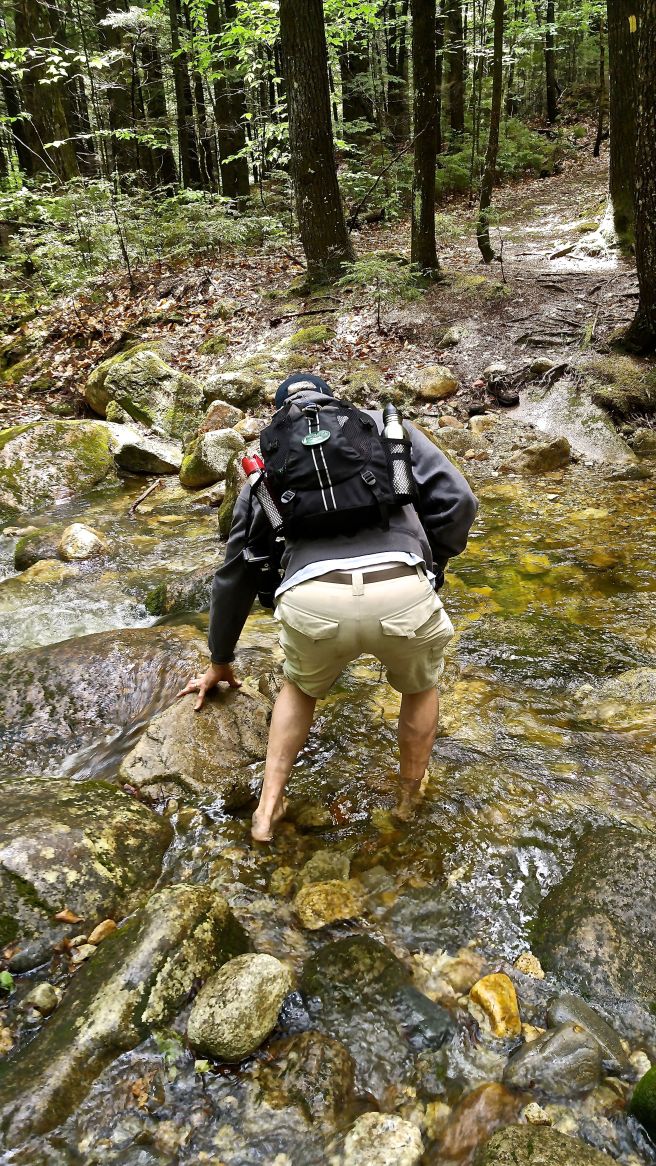
And Slippery Brook held its own tribulations. The water–oh how it flowed. It didn’t bother my guy and within seconds he stood on the other side grinning back at me. Meanwhile, I hemmed and hawed. And hawed and hemmed. How in the world? I thought perhaps I should return to Emerald Pool and wait for my guy to complete the round trip. He wasn’t buying that. Neither was I, truth be told. But sometimes my head gets the better of me. He knew that. And so he dropped his pack, took off his boots and sloshed through the cold water to grab my pack.

b-ph brook crossing 2

I didn’t have a choice. I had to follow him. And so I did. Of course, this guy knows I’ll follow him anywhere.

b-lunch rock

We continued on the Slippery Brook Trail and a delightful trail it was. I kept waiting for the bald face to show, but it wasn’t to be. The worst part, if there was one, would be the mosquitoes. It poured last night and the trail was rather wet, but still, it provided a pleasant climb. We paused for lunch beside a stream where the mosquitoes abated.

b-ph mayfly1

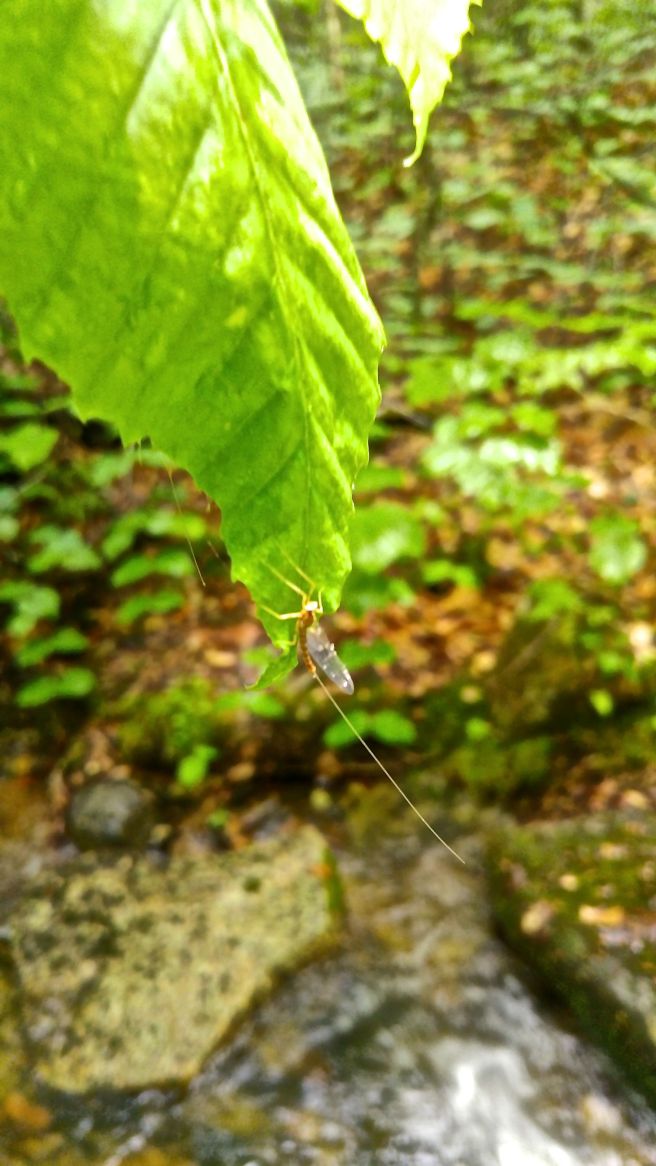
One of the things I like about stopping for lunch, besides eating because I’m always hungry, is taking time to notice. Mayflies.

b-mtn maple1

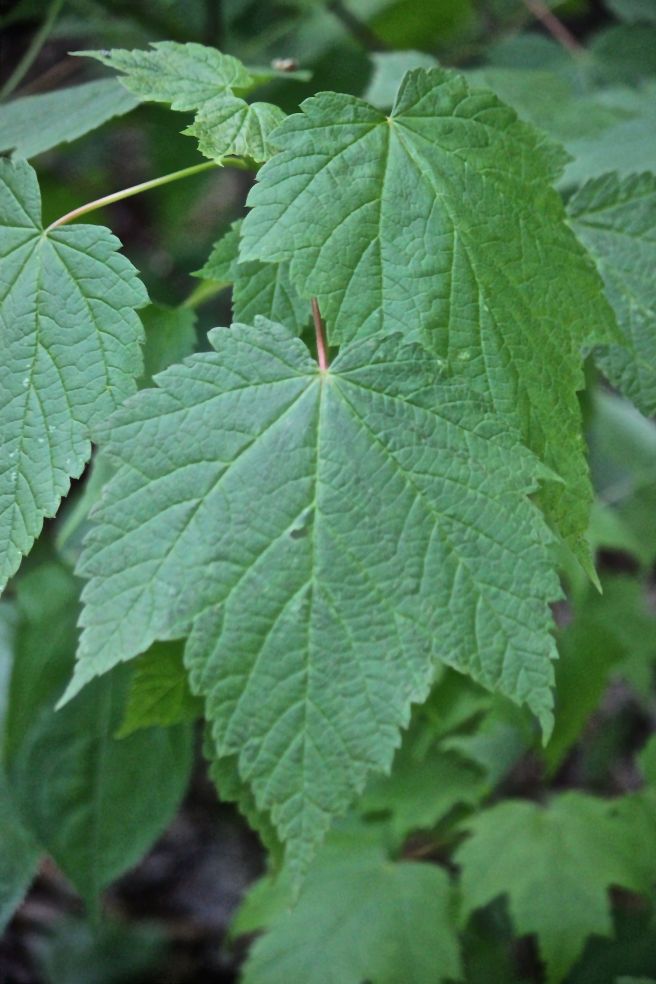
The deeply impressed veins of mountain maple leaves.

b-sugar maple

And u-shaped lobes of sugar maples.

b-dogwood

Dogwood.

b-beech fern1

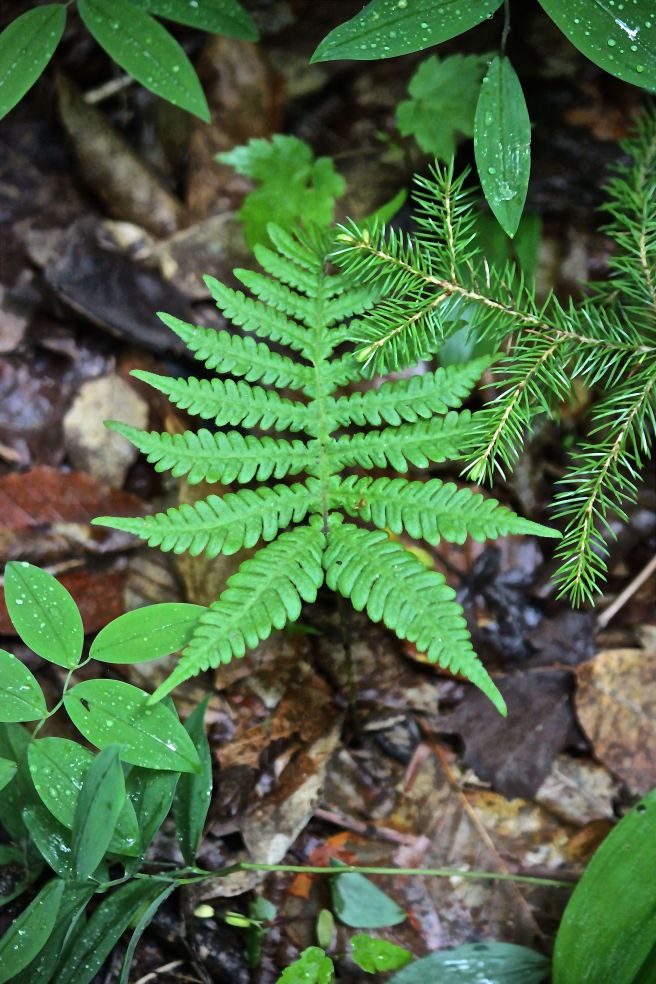
And beech fern.

b-bunch:hobble

Following lunch, we continued to climb and noticed things like the great pretender–a bunchberry posing as a hobblebush flower.

b-ph moose works

And moose works carving the greenery.
b-halfway sign.jpg

At last we reached our halfway point at 3.5 miles. I kept wondering–where is the bald face that I’ve been dreading? The Slippery Brook Trail was a delight, be it long, with no bald rocks in sight.

While we climbed, I’d not only noticed my surroundings but also planned my funeral. I know who I want to conduct the service and he’s out of town this week. I figured that was OK. My guy would just have to delay it for a bit. And I thought about who might come and how the different folks would interact with each other. It’ll be a celebration of life, of course. And people should be encouraged to get outside and notice. Maybe they could go on a group walk.

b-yellow clintonia.jpg

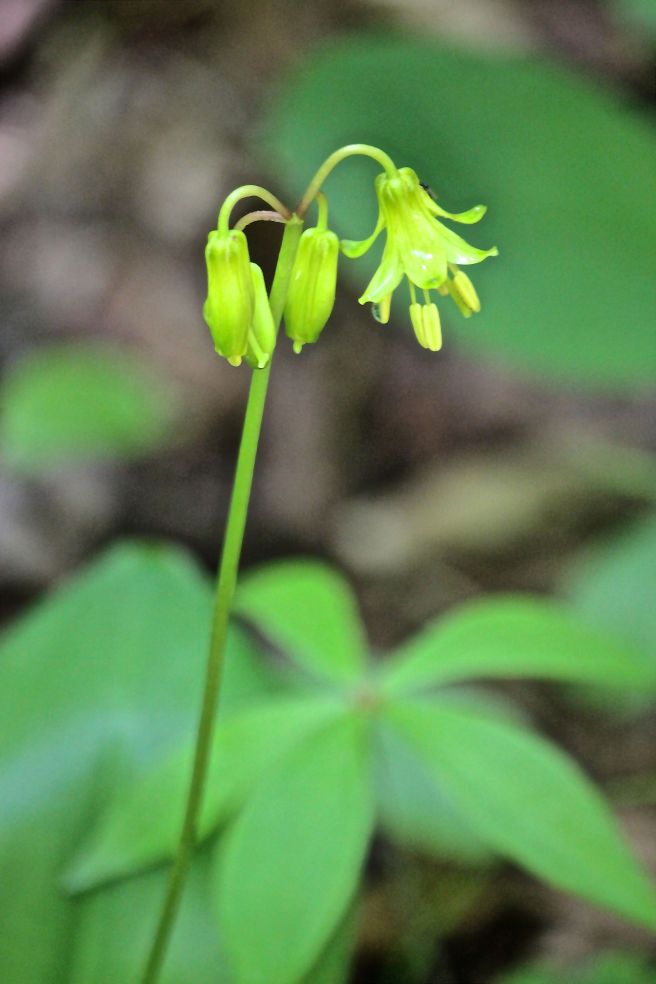
And then we followed the Baldface Knob Trail where the yellow clintonia grew in such abundance that my guy actually started to ID it. I’ll make him a naturalist yet. ;-)

b-lady's x2

Equally abundant were the lady’s slippers.

b-ph trail up

And then we met my nemesis. But really, it wasn’t so bad. All that worry for naught. I could do this. If we decided to hike down this way, I would survive.

b-ph first view

At last we reached our first vantage point with the world we normally inhabit spread out beyond.

b-ph hiking up

It just kept getting better, and cooler and windier–a relief for our sweaty bodies. But . . . the black flies increased significantly. I swallowed a few. All that swarmed must have been males because they didn’t bite. But they certainly were annoying.

b-ph Pleasant Mtn

As we approached the top of the Baldface Knob we recognized our neighborhood with Pleasant Mountain in the backdrop.

b-ph panoramic

A 180˚ panoramic provided half of the picture. I thought I caught the other half, but it’s not to be. South Baldface was behind us and completely doable. We decided to save it for another day because it was getting late and we weren’t certain about the trail before us.

b-ph chokeberry

Among the selections at our feet, chokeberry

b-summit mtn ash

and mountain ash.

b-hummer 3

At eye level–a hummingbird moth who moved in supersonic speed.

b-hiking down 1

And then we followed the path down.

b-ph forever view

The world stretched before us

b-ph hiking down 3

to infinity and beyond. My guy insisted that parachutes were available at this spot, but they must have been previously claimed because I couldn’t find one . . . anywhere. And believe me, I looked.

b-ph heading down

It all seemed so innocent from the top, but really, it was a scramble. A major scramble that lasted a long time until we got back into the hardwood forest. Our footing–precarious and often wet. We both have a fear of heights in open spaces. My guy has forever had such a fear–my own is newly developed and I know not its source. Oy vey. We were in over our heads, but had no choice. I kept thinking about a rescue mission, but I don’t think they show up for those who whine. We practiced our crab walks, slid and skidded and hugged rocks and trees as we made our way down this precarious trail.

b-ph lichens1

The lichens were beautiful and we got to see them up close and personal. We also practiced our trust jumps. Yup, several times my guy positioned himself to catch me as I jumped. Remember my funeral plans on the way up. I was preparing as we climbed and facing the inevitable as we descended.

b-ph lady 2

Finally, we were rewarded with a more even trail–sort of–and lady’s slippers.

b-ph chandler 5

About a mile before the trailhead, we followed a spur to Chandler’s Gorge.

b-phdirty lady

On the way out, I realized I wasn’t the only dirty lady.

Oh, and we found where we zigged rather than zagged at the start of the trail. Honestly though, we both realized that if we’d hiked up the Baldface Circle Trail, we probably would have turned back. So as luck would have it, we went the right way.

Since we were on stable ground, I mentioned my fears to my guy. He admitted he’d had the same. And when I said I was sure we’d both fall when I jumped down and he caught me several times, he said at least we’d be together.

Be together on a Mondate. That’s what it’s all about.


The Big and the Small of the Hundred Acre Wood

As my friends know, I’m not one to say no to an invite to explore their land. And so this afternoon’s adventure found me spending time with Beth on the 100 plus-acre property she, her husband and parents call home in Oxford County.

b-view 2

Their sense of place begins with a field of wildflowers yet to come, the entry to their wood lot and a view of Ragged Jack Mountain. My sense of excitement to explore their place was heightened by this jumping off point.

b-Maine trail

Trails loop throughout the property and the family has taken the time to name and label all of them.

b-pine 4

We wandered along and suddenly Beth noted that we’d reached their champion pine. I looked at a small spruce before us and wondered what all the fuss was about. Then she pointed to my left.

b-pine 2

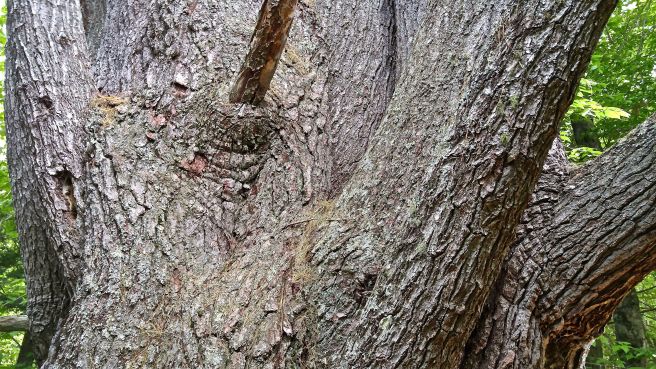
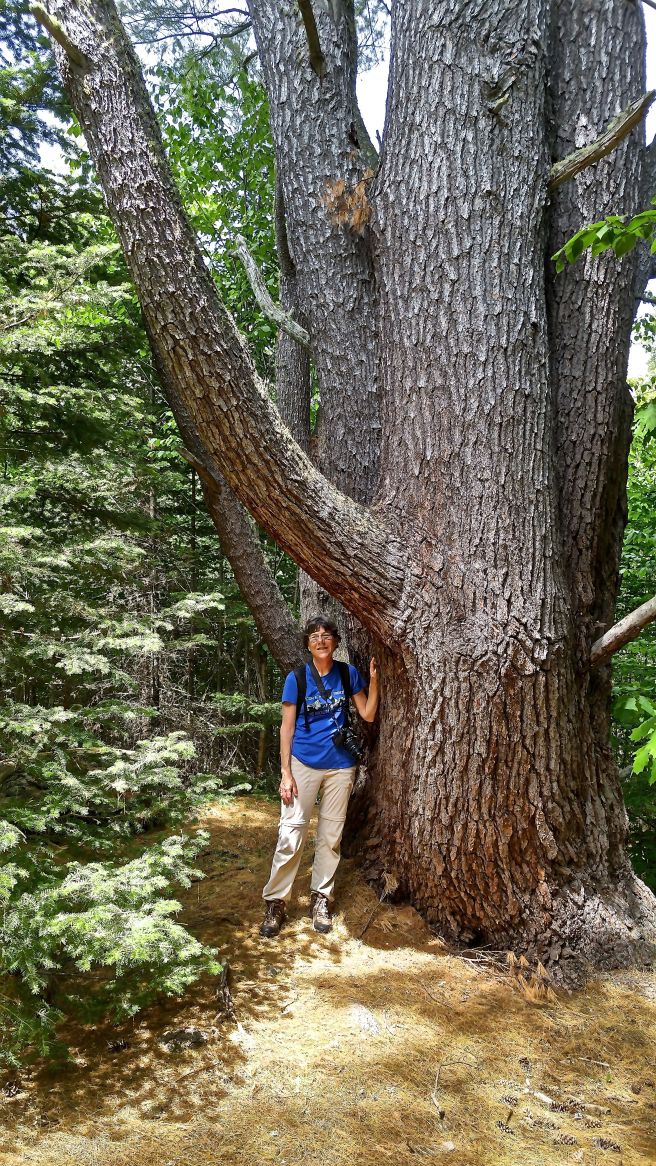
One massive Eastern white pine gallantly towered over us. At some point in its early life the terminal leader was injured–perhaps by a weevil or weather. But . . . this tree carried on and continues to do so. I felt like we were standing below a giant in the woods.

b-pine bark

It’s characterized by layers upon layers of bark.

b-pine 3

And it’s wider than any tree I’ve ever seen. Here are the stats on this champion: According to Beth, it towers 108 feet tall, is 256 inches in circumference (21.3 feet) and has a crown of 15.75.

b-pine 1

Yup. It’s big. Or rather, BIG!

b-dam:lodge2

We weaved our way along the trails and Beth shared favorite spots with me as she told tales of her experiences with this land and water.

b-mora 1

Mara, Beth’s springer spaniel, shared her own tail. She was happiest when mud and water provided opportunities to play. We had to wonder other times when she cowered behind us or tried to hide between Beth’s legs. What did she sense that we weren’t aware of? We did hear a few critters, including baby grouse that Mara visited, and saw the tracks of moose and deer, plus coyote and fox scat, and maybe even bobcat scat, but our only official mammal sightings were red squirrels.

b-pond

Among Beth’s sharings was this spot she refers to as the Accidental Pond. Accident or not–it’s enchanted.

b-split granite

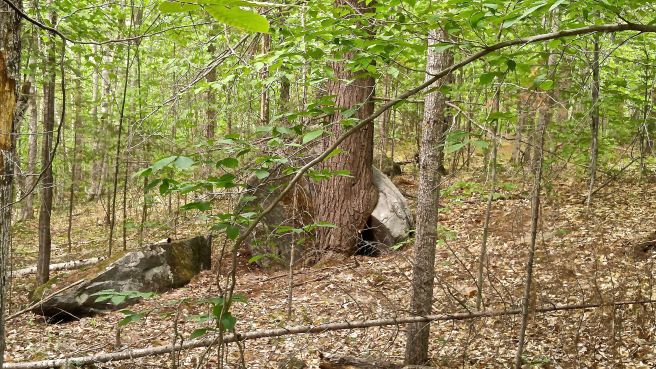
Here and there throughout the woods, she pointed out glacial erratics. This one we particularly wondered about. What came first? The rock split on its own or the hemlock caused the split?

b-bracken 1

Those were the big things, but we were equally wowed by all the small stuff we saw along the way, like this bracken fern just beginning to unfurl.

b-cinnamon ferns

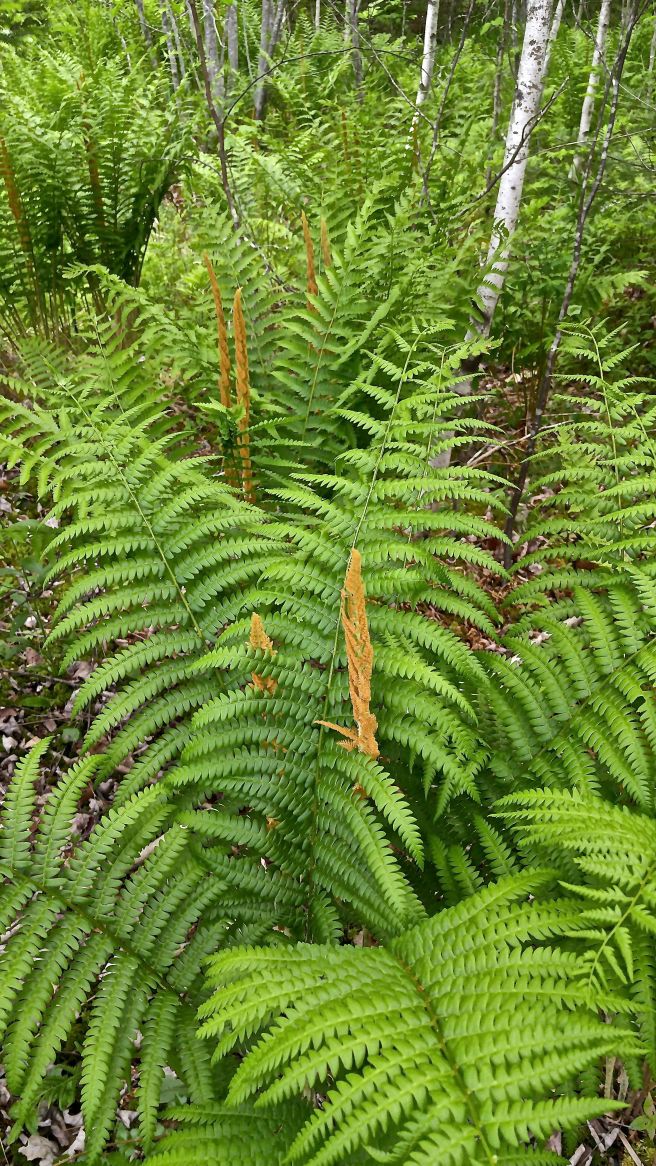
Several times we wandered in the land of the cinnamon fern, where the separate fertile fronds sport the cinnamon color for which they are named. It won’t be long before those fertile fronds bow down to the earth and the large, arching sterile fronds are all that will remain.

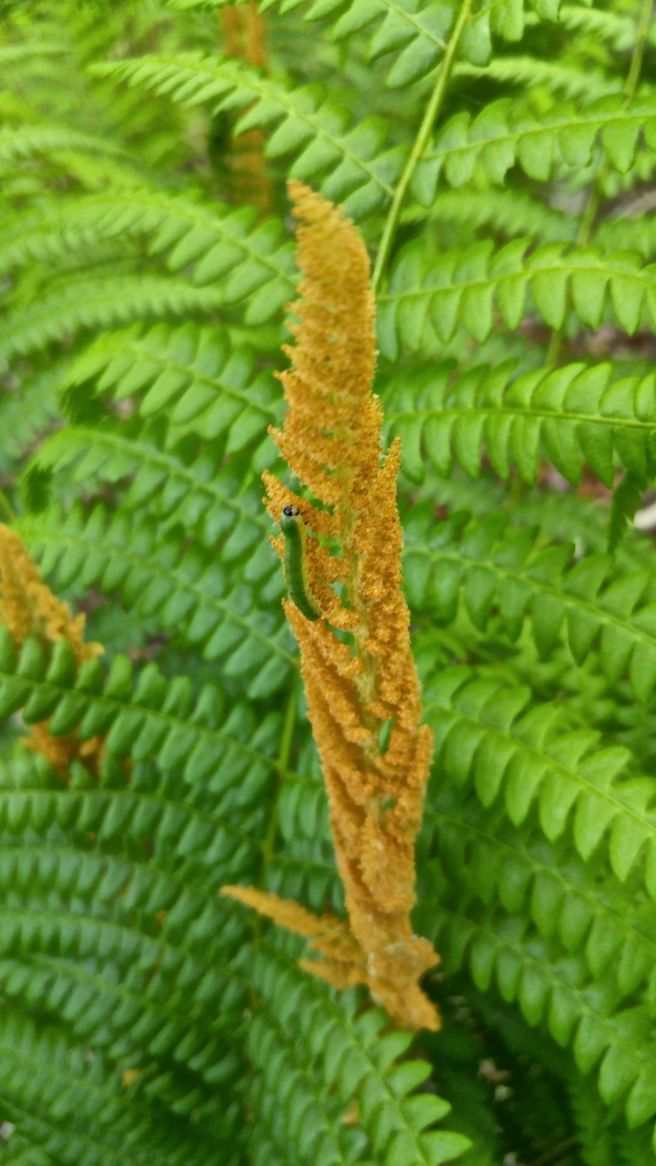
b-caterpillar 2

And then something else caught our attention–a green caterpillar on the fertile frond.

b-caterpillar 1

We weren’t sure who it was, but we saw it on several stalks. Always something to wonder about.

b-royal

Royal fern also offered a display, especially beside the brook. Look closely and you might find the fertile frond “crown” on this one. It’s a rather “Where’s Waldo” presentation, but it’s there.

b-gilled 1

We found some gilled mushrooms we also couldn’t identify, but appreciated their existence.

b-lady 3

The lady’s were in bloom.

b-lady's slipper

Take a look at those hairs.

b-web 3

And it’s spider web season so we paused and admired the work of an orb weaver who built a spiral wheel-shaped web.

b-spider web

Also among our sightings, a well-built high-rise structure woven among the remains of winter weeds.

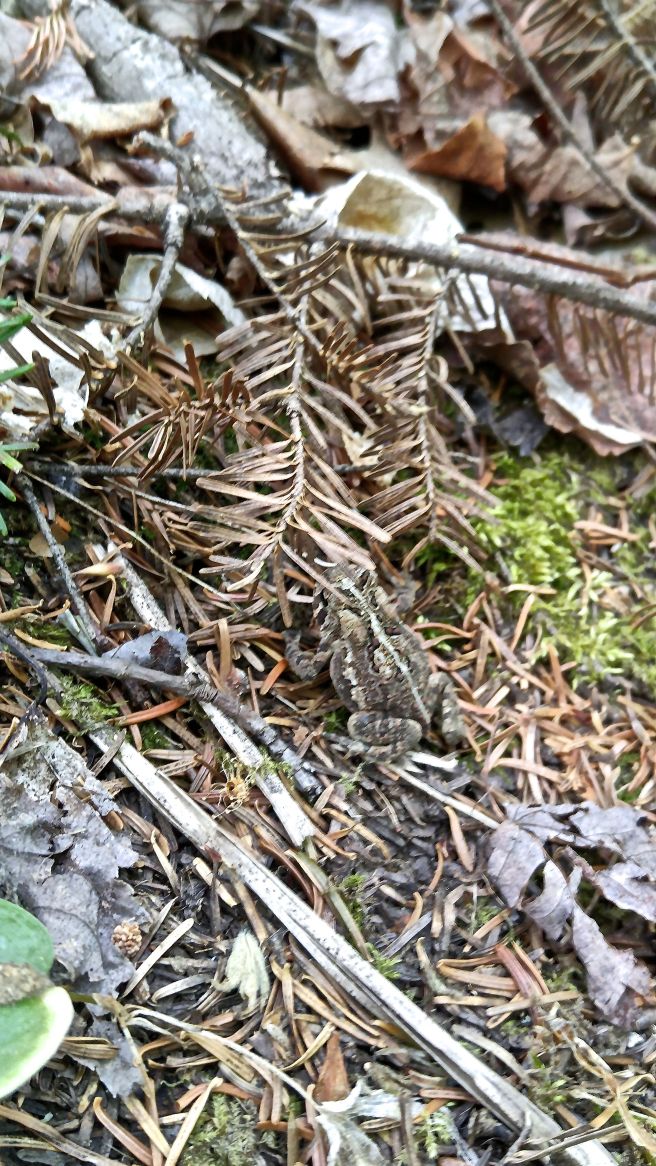
b-toad 3

Camouflage is everything. Just ask the American toad.

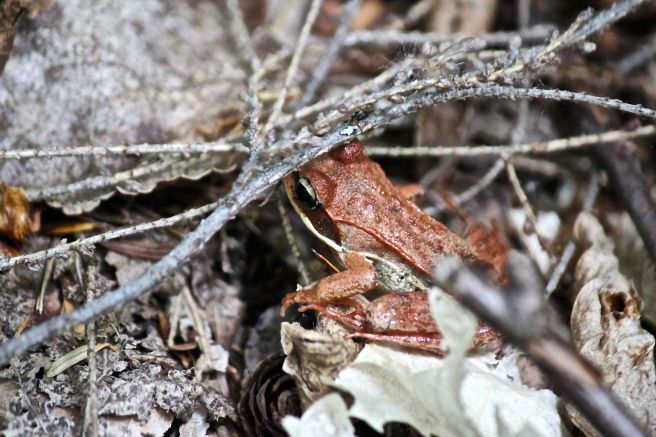
b-wood frog 1

We found the wood frog easier to spot.

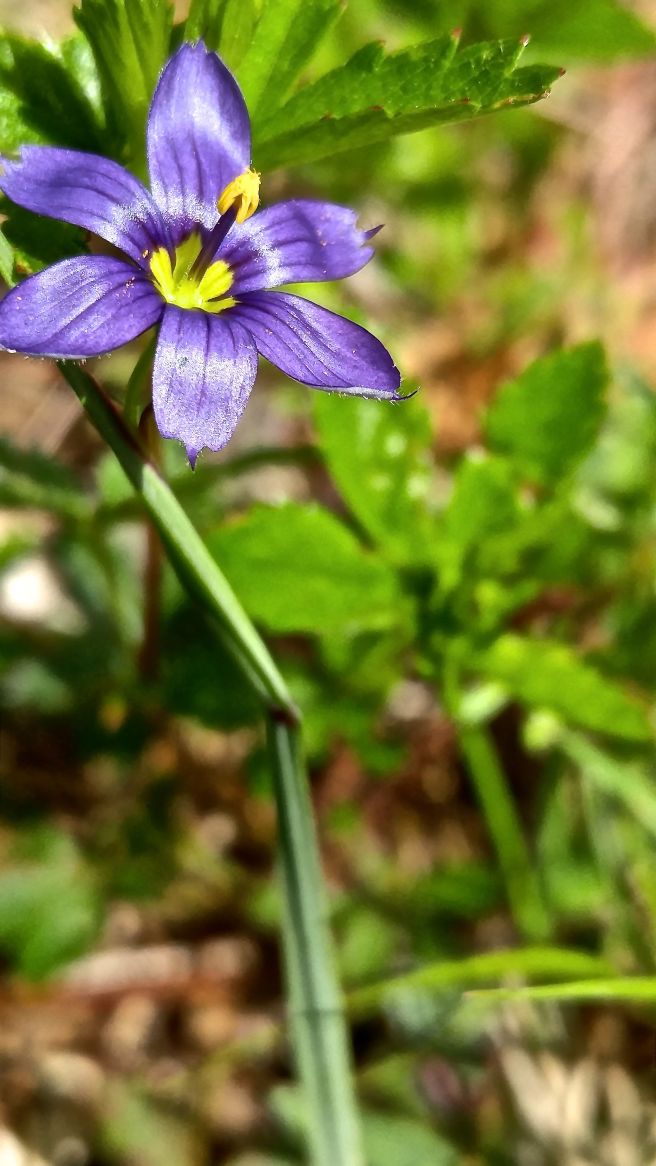
b-blue-eyed grass1

But I had my eye on the blue-eyed grass.

b-blue 5

These are the shy ones. They only keep their eyes open if the sun is shining. On a cloudy day it’s almost impossible to recognize them.  And they love damp open woods, slopes and stream banks so it’s no wonder we found them today.

The big and the small . . . Beth’s property has it all. And this was only a sampling from her hundred acre wood. Winnie the Pooh and his friends–they too, would love this place.


Slippers fit for a Princess–including Cinderella

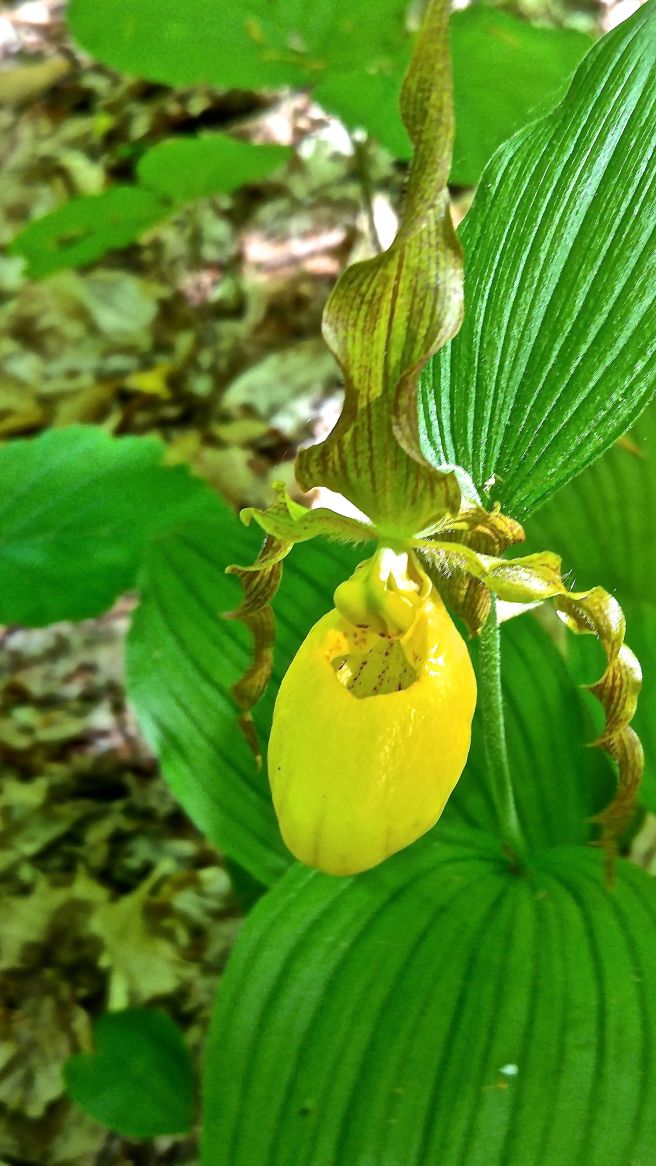
My day was bookmarked by slippers so beautiful that I think Cinderella would trade in her glass shoes for one of these. The question is–which one?

p-ph lady y 14

A young friend who has made it his career to search the woods for orchids and fungi introduced a small group of us to these this morning. I’d met this variety previously, but not in this particular location. We oohed and aahed as we encircled the plant–paying reverence. Though we didn’t curtsy, our respect was tinged with awe.

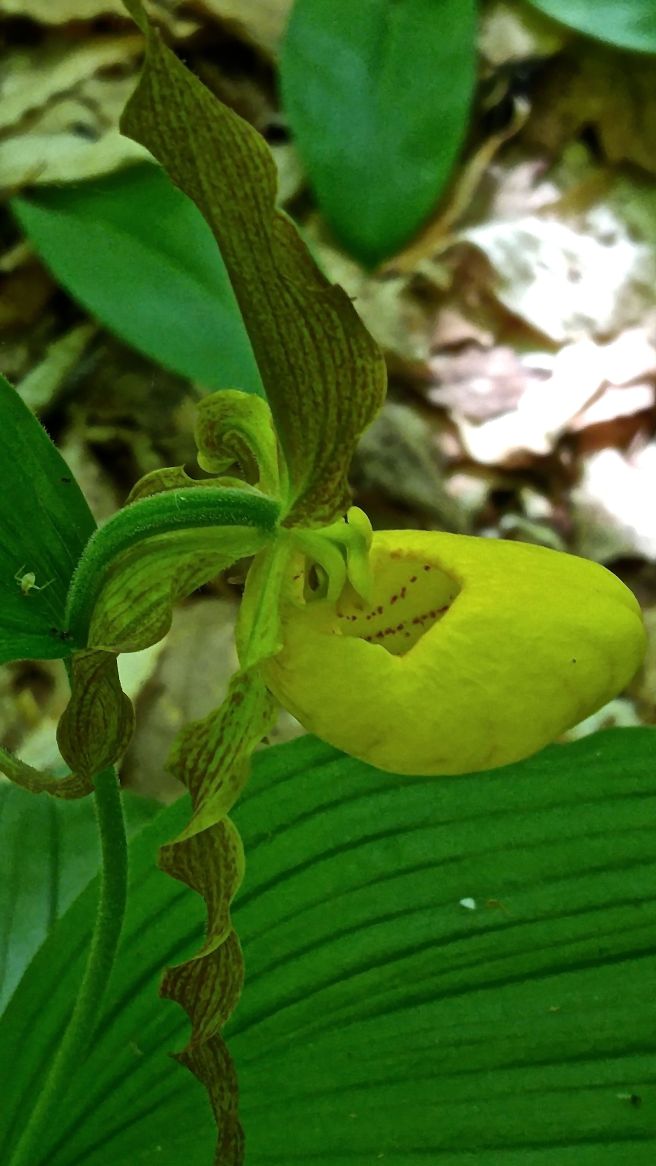
Members of the Orchid family, lady’s slippers feature the typical three petals in an atypical fashion. The pouch (or slipper or moccasin), called the labellum, is actually one petal–inflated and veined.

p-ph lady y 3

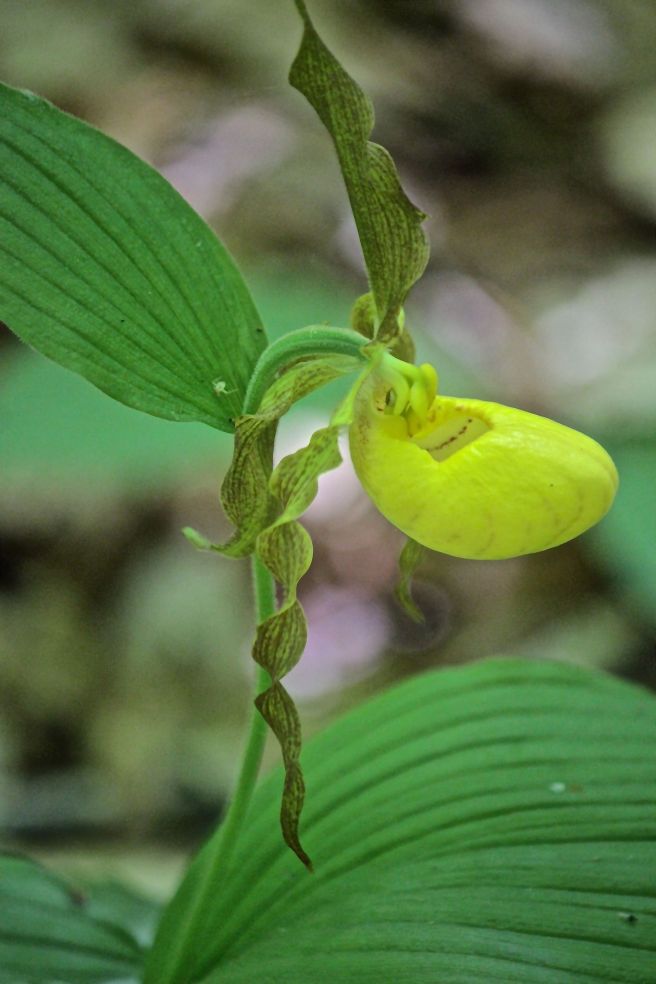
With a purplish tint, the petals and sepals twist and turn offering their own take on a ballroom dance. From every angle, it’s simply elegant.

p-ph lady y 7

Peeking inside, we noticed the runway–meant to attract pollinators.

p-lady 2

Bees follow the runway into the inflated lip, where they quickly discover that nectar is not available. Because of the one-way opening, their exit is not easy.

p-lady 4

In order to escape, they must depart through the back of the lip, where they brush against the stigma and deposit pollen from a nearby flower visited previously.  Simultaneously, as is the way with flowers, the bee picks up a new pollen packet from the anthers to share with other flowers. Due to the lack of nectar, however, bees don’t frequent the species and few lady’s slippers produce fruit. I didn’t see a single bee near this beauty.

p-ph lady 6

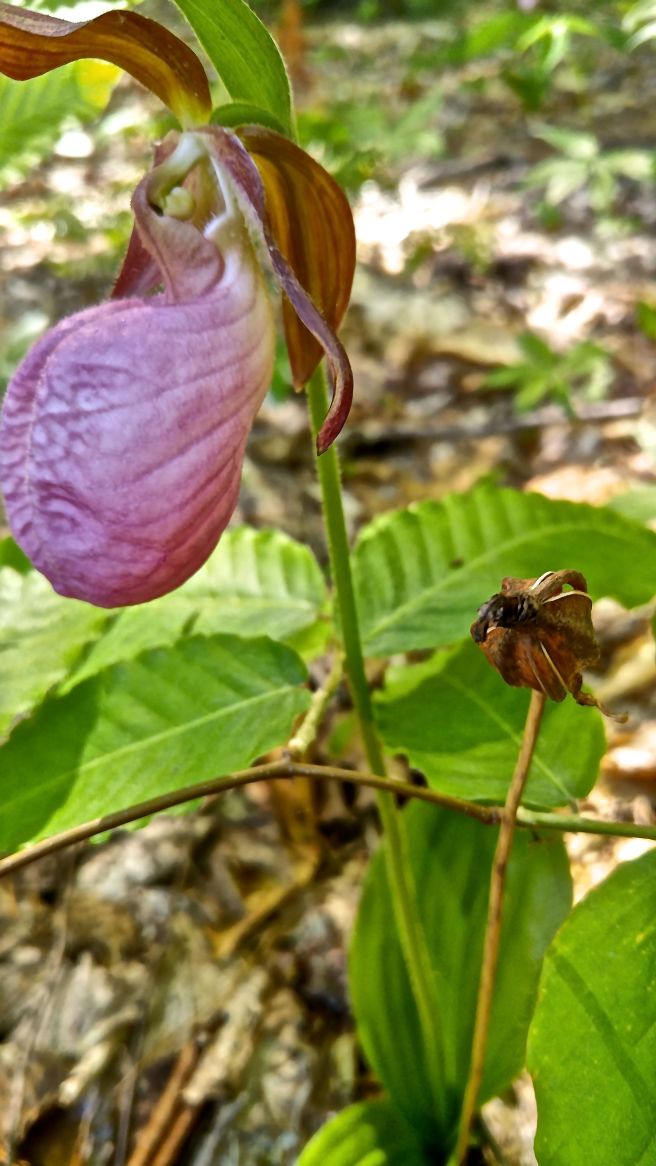
This afternoon I was invited to spend some time visiting friends and exploring their property where pink lady’s slippers bloom prolifically. While the yellow shoe is situated parallel to the ground, the pink shoe dangles downward. Overall, it reminds me of a lady holding out her skirt as she bows before the queen.

p-ph lady 7

It’s a symbiotic relationship with a fungi that helps the lady’s slipper germinate. And then, it still takes a few years for the germinated seed to produce leaves and about 3-5 years before it produces a flower. Once established, however, it may live for 20-30 years or more.

And do you see what I see? To the right of this particular flower? A woody pod. A seed pod, indeed. And a rare find.

p-ph lady 3

Despite the lack of pollinators and fruits, a single capsule contains thousands of seeds. The presence of lady’s slippers indicates rich soil.

p-lady 1

So which slipper do you think Cinderella would choose? Though I’ll never consider the pink as ordinary,  I’ve a feeling the golden slipper would be the one that fits her best.