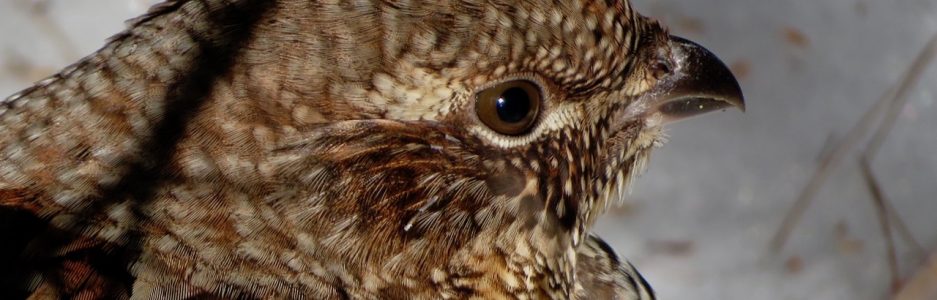
Three articles by moi:
Maine
Celebrating the Vernal Equinox
We fell asleep to winter and awoke early this morning–eager to celebrate the vernal equinox.
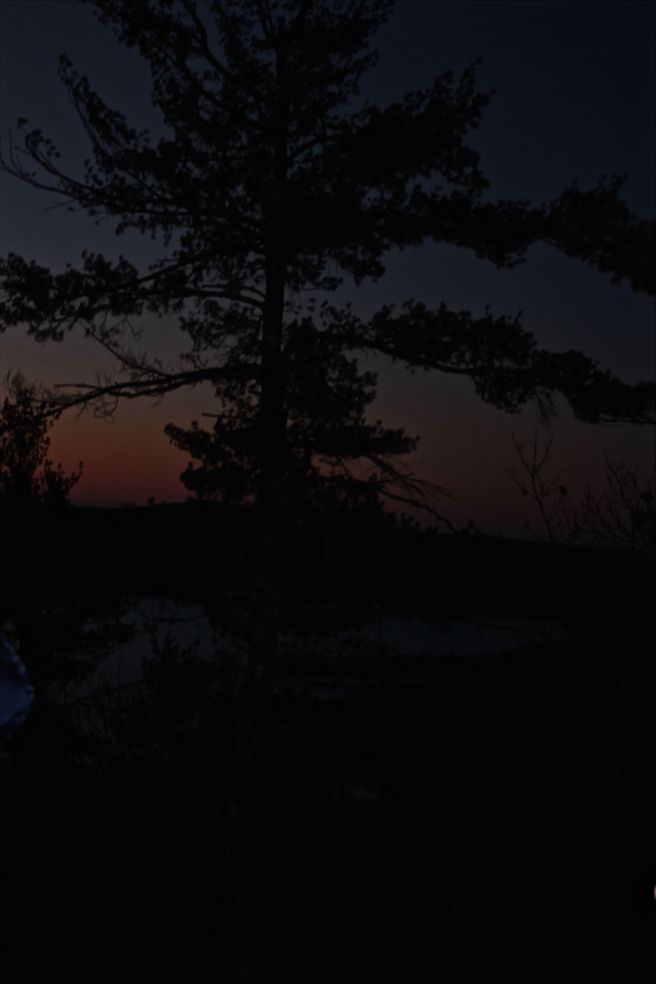
It was dark and cold (15˚) with a brisk breeze when we joined others for a 6am hike up Bald Pate sponsored by Loon Echo Land Trust.
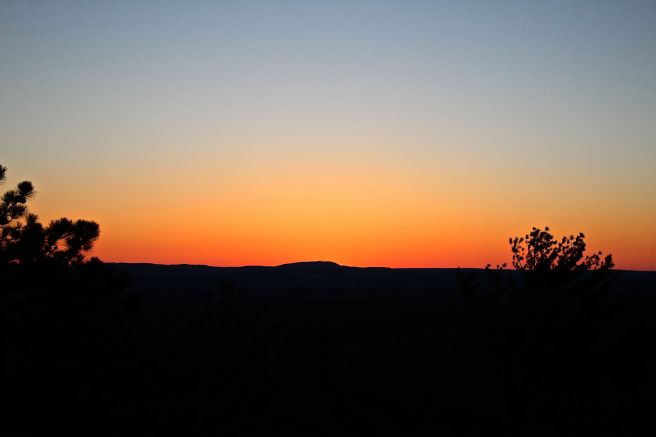
While we waited at the summit and tried to stay warm, we were treated to hot cocoa and amaretto cake. YUM!
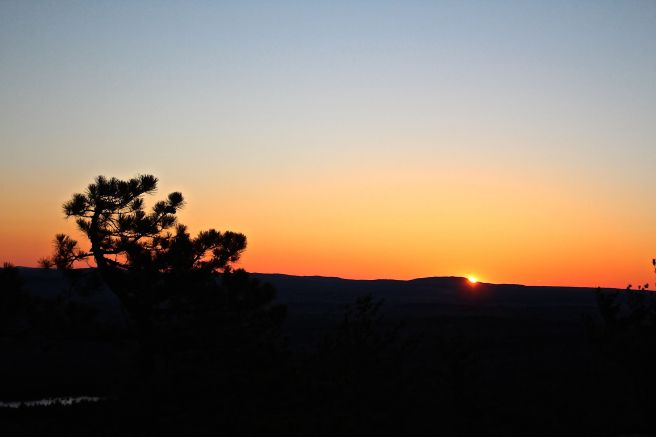
And then . . .

the sun shone upon this first day of spring.

After church, I made a quick visit to the vernal pool where ice is still the name of the game.

And after lunch, we headed off on another adventure. At first we followed an old road, which was tricky business.
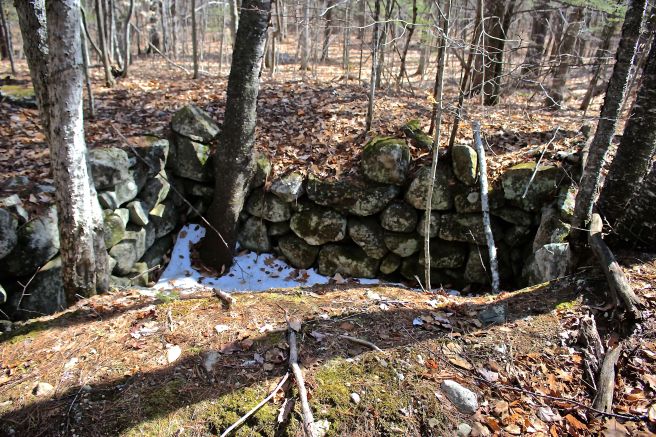
Though at least six foundations are located along this road where young men carved out a living prior to the Civil War, we allowed ourselves time only to stop at one. We were on a mission.

We turned north at the power line and trudged up and down hills in search of a brook.

That direction didn’t feel quite right, so we followed our noses and turned into the woods.

And then we stumbled upon a property line that was posted. We love the fact that in Maine one can walk upon any property that isn’t posted. This one was recently marked and so we respected the landowner’s wishes.

That is, until we got to a point where we decided to trespass after all. Our journey took us past meandering streams,
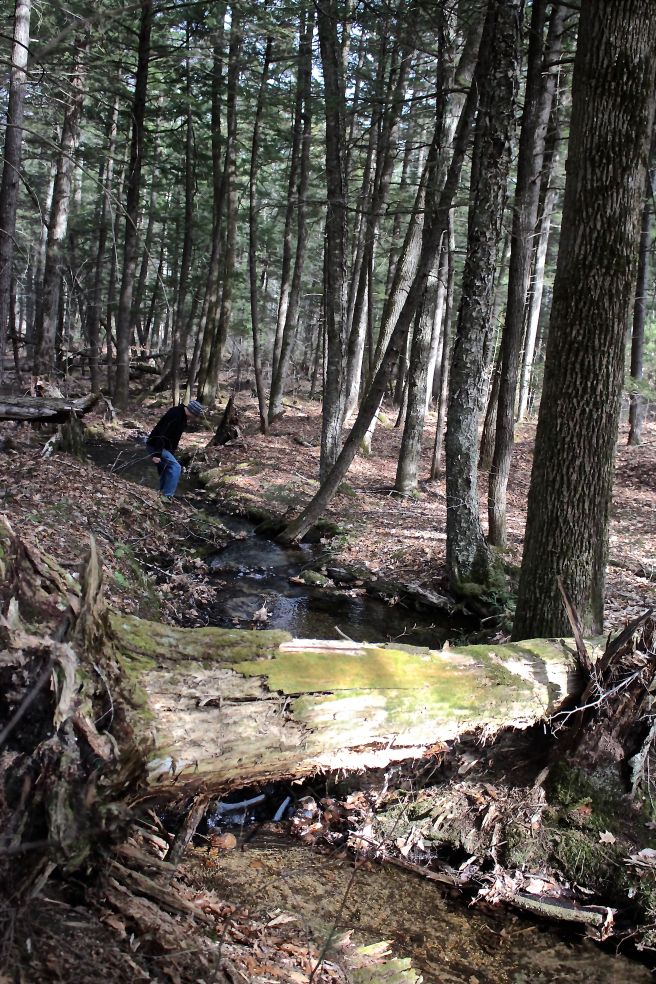
stepping across others,

slogging through boggy areas,

and tripping among the understory.

We saw where a deer had rubbed its antlers,

another enjoyed fine dining, and

a third said goodbye as it returned from whence it came.

We found common polypody fern (Polypodium vulgare) indicating that the temperature was higher than it had been earlier in the morning.

This was our view of polypody when the temperature was much lower on Bald Pate.

We passed a porcupine den.

And then we came upon downed hemlock branches and
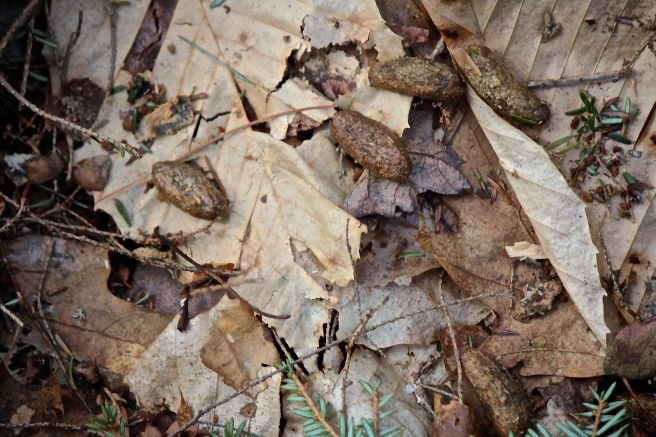
fresh scat.
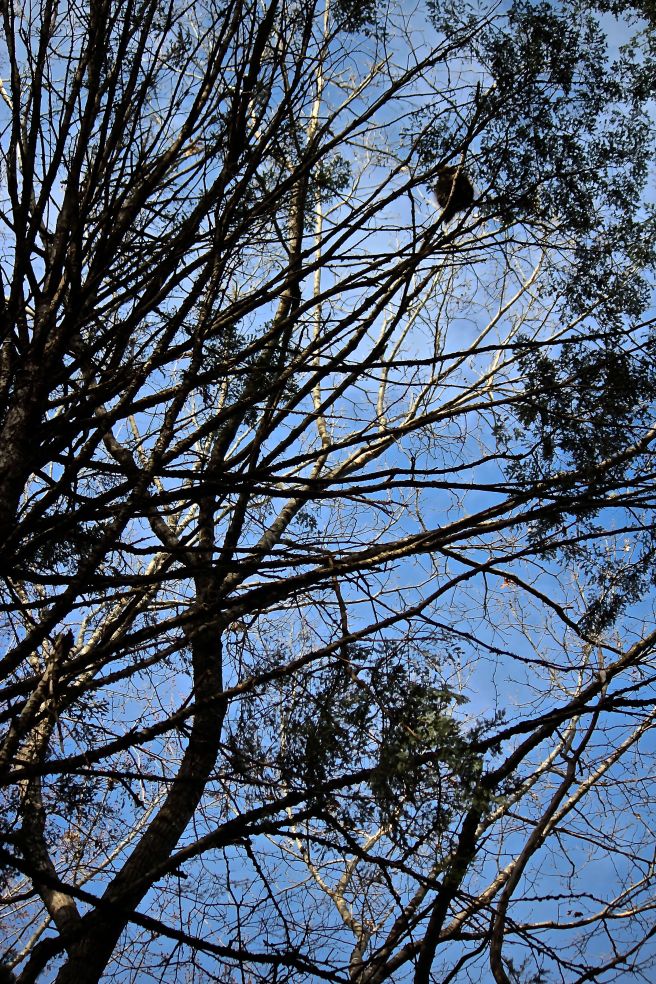
I looked up.

He looked down.
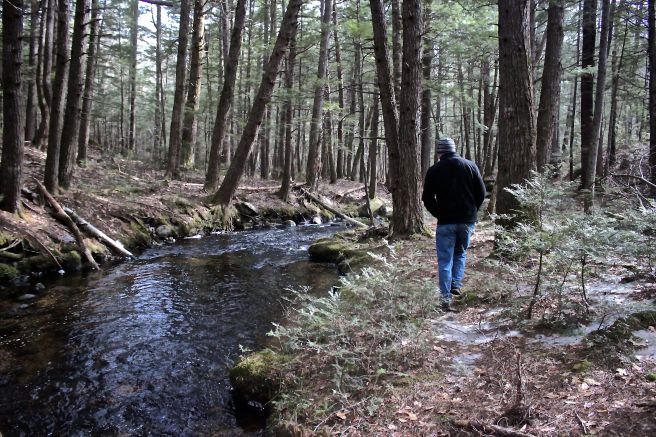
Finally, we found ourselves walking along a game trail beside a brook–feeling like we might just be on the right track.
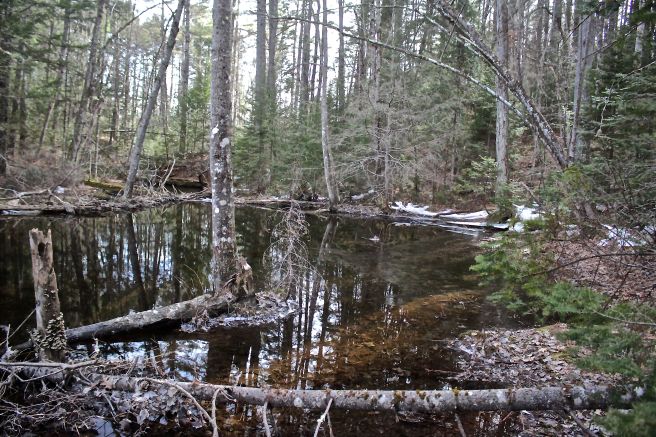
Where the brook widened into a pond, we knew we were in the right place.
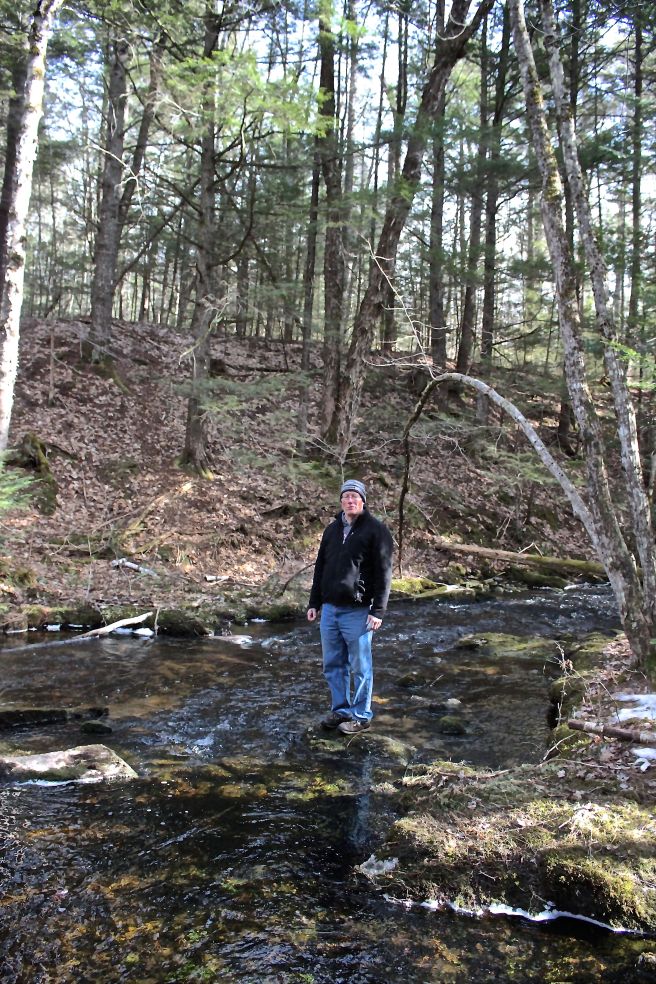
Just below the pond, my guy stood in the middle of the brook, excited about our find. We’d attempted to locate this spot a year ago and missed it by a long shot.
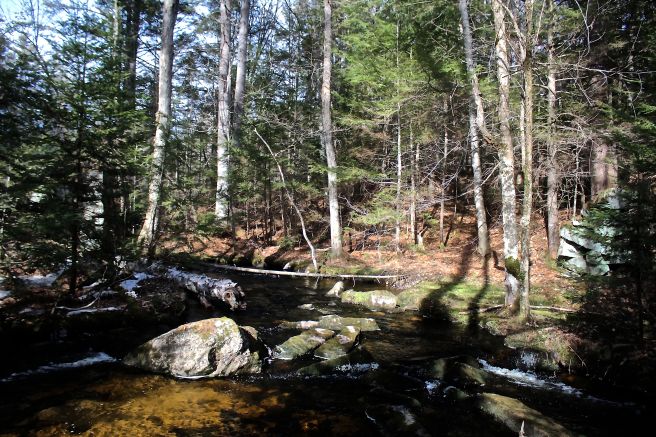
According to the 1858 map of Oxford County, we were at the sight of R. Bennett’s sawmill. I’d first visited two years ago with my friends, Sue and Janet. It’s actually located on Sue’s land. We’d come in from her home on my first visit, but today we came via Old City.
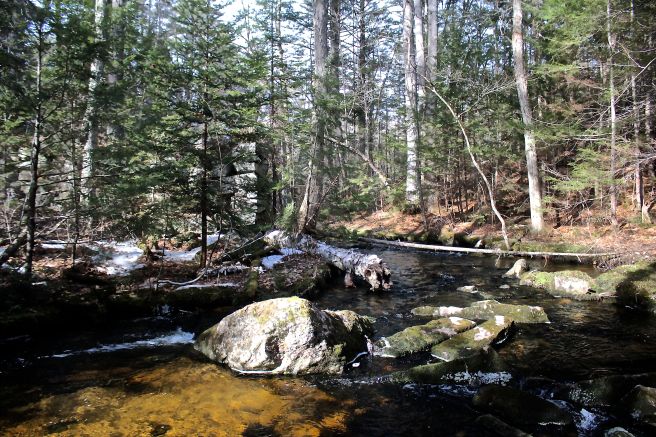

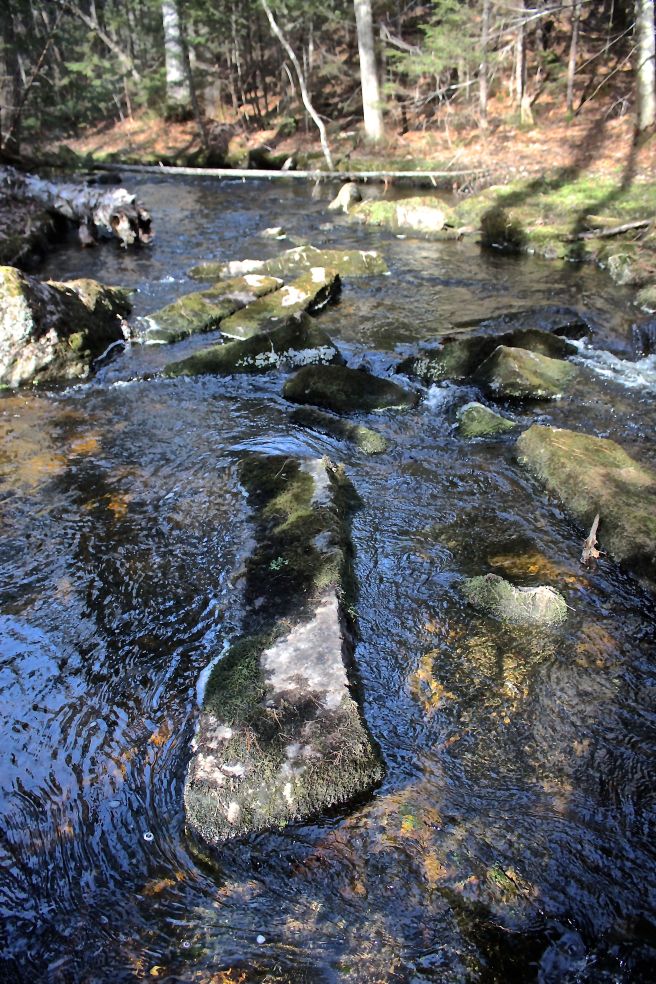
A year ago, my guy and I snowshoed in search of this sight but never found it so we were gleeful about today’s success.

Our intention had been to search for the mill until 3:30. We found it just after 4pm. And rather than try to follow the stream back, we decided to bushwhack in a more westerly direction. On a hill above the mill we found a foundation made of drilled stones that are neatly hidden by moss and ferns and assume it was part of the mill.
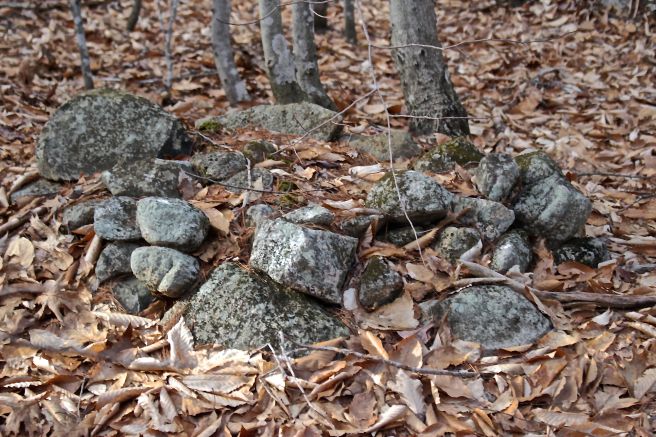
Our bushwhack continued until we finally emerged by a rock pile beside Old City Road. Its circular formation had me thinking water well.
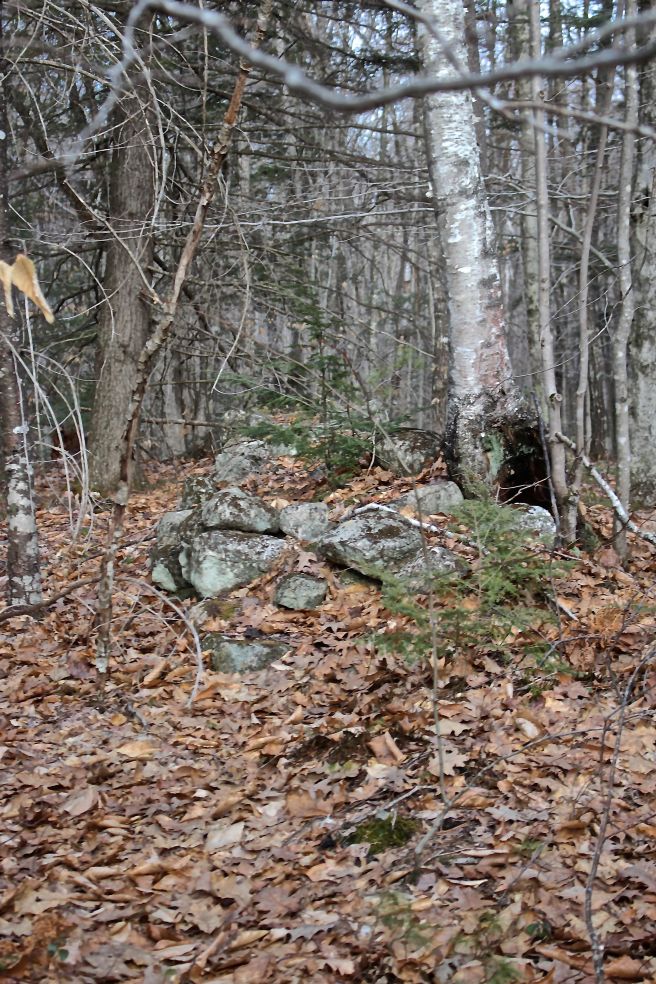
Will we ever find it again? That’s always a question, but now we know to walk along the road until we reach the last double-wide wall and then turn at the well.

I liked the ghost-like effect of my guy walking back on the road–reminiscent of the men who once lived here and worked these woods. I followed my guy out and both of us occasionally felt the suction of mud. Occasionally one foot was drawn into the earth as if it intended to stay behind. We finally returned to our truck at 6pm (so much for our intention to be home by 4:30), our celebration of the vernal equinox complete.
Leaping Mondate
My guy happens to be Irish so it seemed only appropriate that I propose to him today following the example that St. Brigid set when she struck a deal with St. Patrick. Yes, we’ve been married for 25+ years, but I proposed anyway.
And he accepted. So today’s Mondate found us at Roberts Farm Preserve in Norway. Norway, Maine, that is.
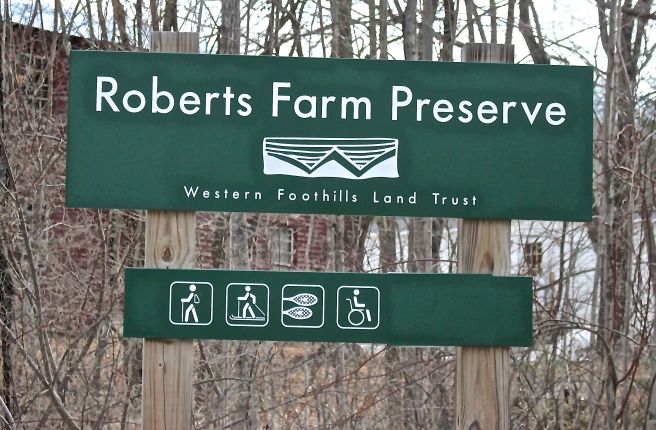
In her book, Hikes and Woodland Walks in and around Maine’s LAKES REGION, my friend Marita Wiser states that the preserve was “farmed by the Pike and Roberts family for 200 years.” She adds, “The property was purchased by the Western Foothills Land Trust in 2007.”

Though the trails are mostly maintained for Nordic skiers, we didn’t see any today.
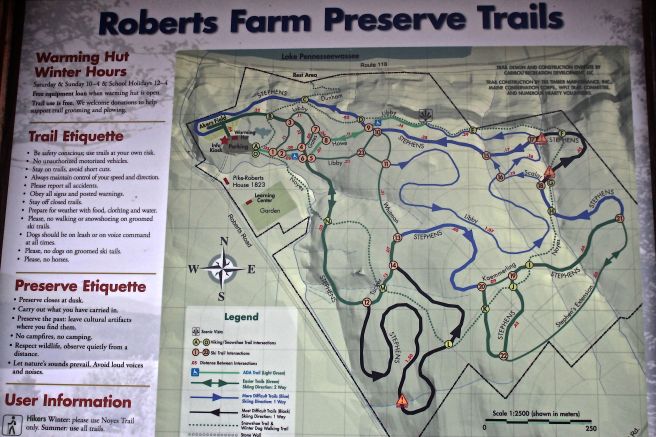
Had it been open to skiers, we wouldn’t have been able to do what we did–follow the network of trails around the perimeter of the property.
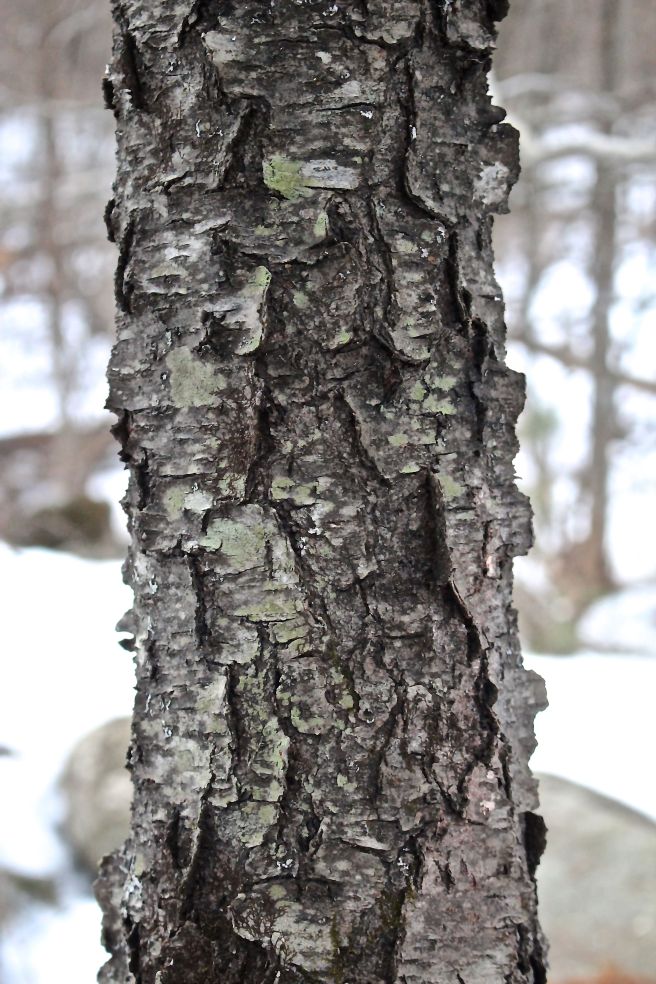
We’d only walked a few feet when I had to pause–the burnt cornflake look of black cherry bark insisted upon being noticed.
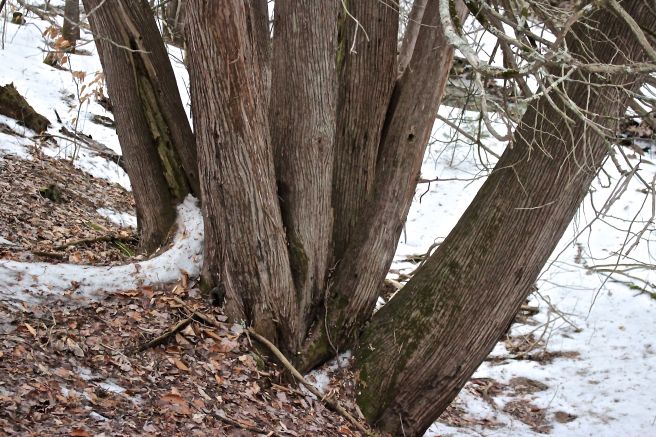
Visiting here a couple of times previously, one of the things I’d come to like about it is the opportunity to gush over Northern white cedar bark.
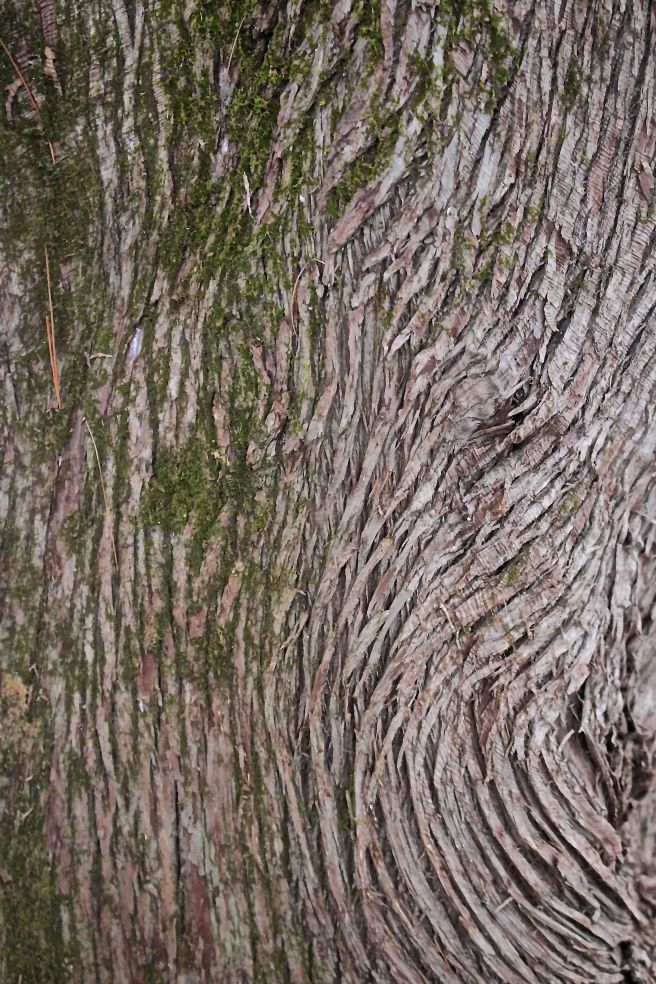
I love its red-brown color, sheddy strips that intersect in diamond formations and habit of spiraling left and then right with age. In his book BARK, Michael Wojtech states of the cedar: “In the 1500s, the native Iroquois showed French explorers how to prevent scurvy using a tea made from the bark, which contains vitamin C. The name arborvitae means ‘tree of life.'”

Equally beautiful are its flat sprays of braided, scale-like leaves.


Since I’m on the topic of tree bark, I have two others to share, including this one–the red inner bark of Northern Red Oak made a stunning statement.

Displaying its shaggy presentation was the hop hornbeam.


My heart leaped (appropriate movement for today) when I saw these papery fruits on the ground–hop hornbeam is named for its fruiting structures that resemble hops.
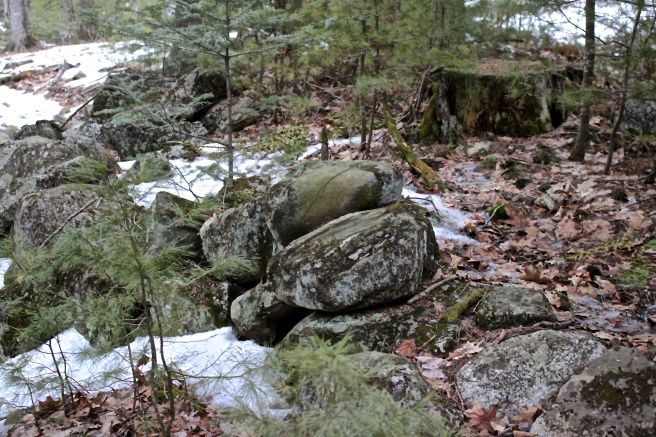
Stone walls crisscross the preserve and provide evidence of its former use as a dairy farm.
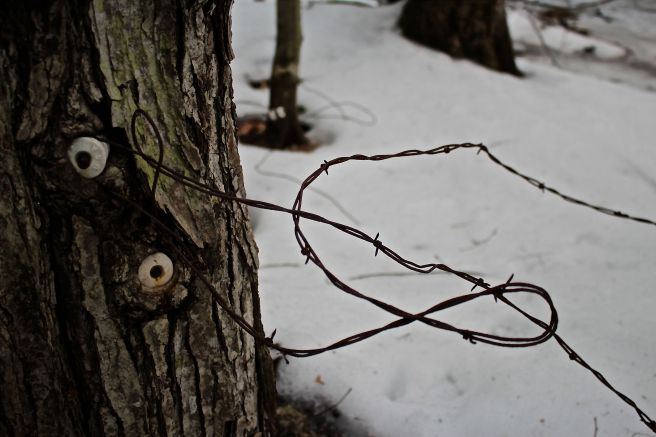
Barbed wire adds to the story.
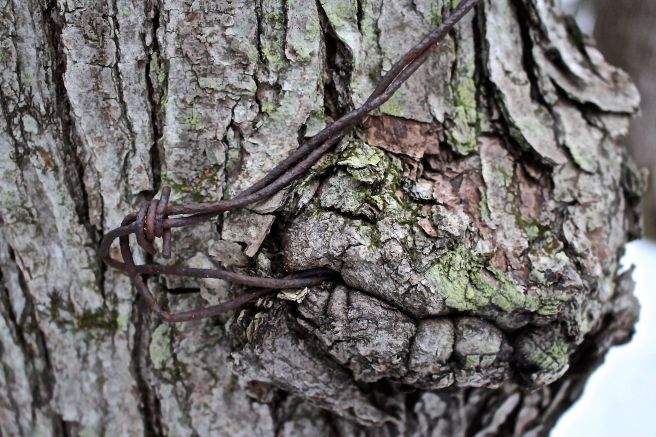
Installed long ago, this tree formed a grimace in response.

Along the edge of some walls stand much happier trees–those that were allowed to grow tall and wide in the sun, like this Eastern white pine. Perhaps it provided a bit of shade for Roberts’ Jerseys.
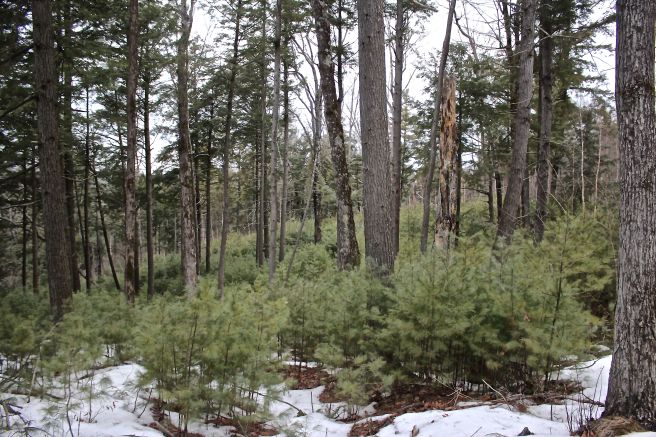
The land was farmed until 1968. Since then, it returned to woodland, was sold and logged and sold another time–finally to the land trust. Generational gaps are visible throughout. This is the perfect place to take some youngsters and ask them to locate a white pine that matches their age.

We cross several streams that I’m sure sustained the farm and its inhabitants. Today, they sustain the wildlife that wanders here, including deer.
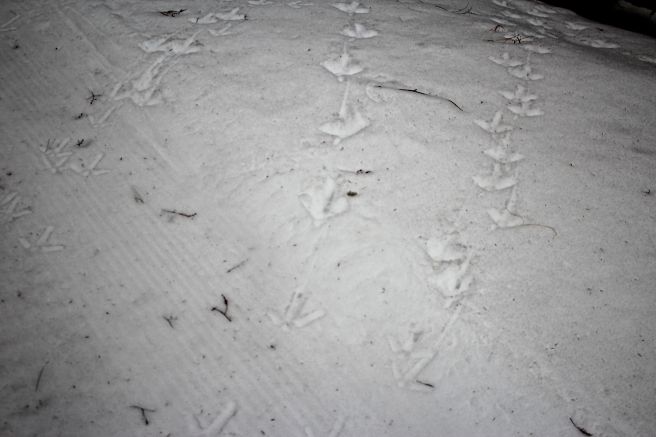
We realized there had been a recent turkey trot and

vole convention.
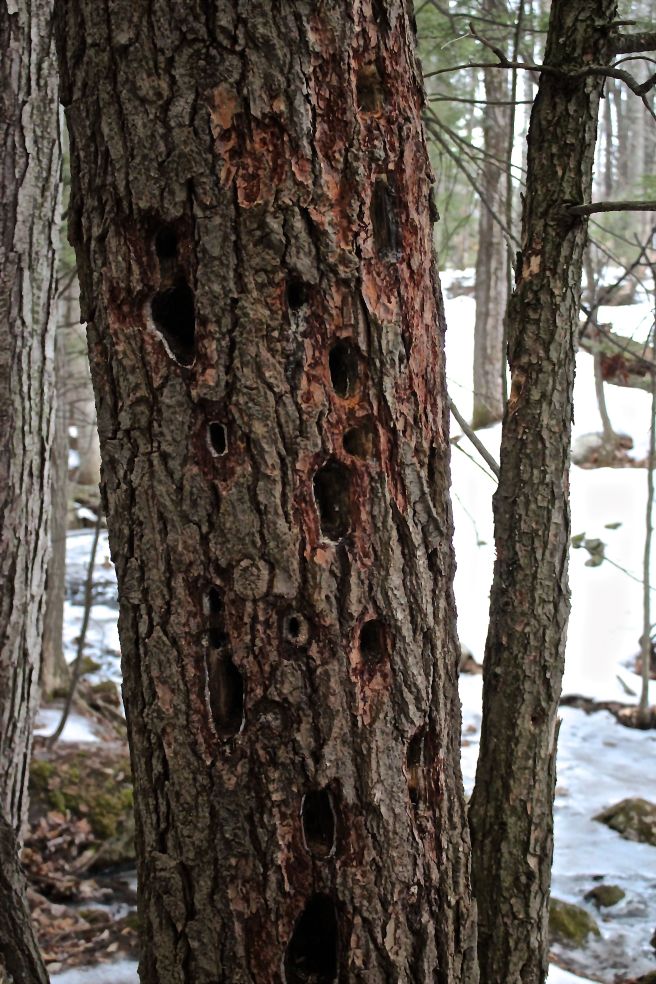
Birds also have played a major role in this community. This pileated woodpecker-created condominium has been around for a while.
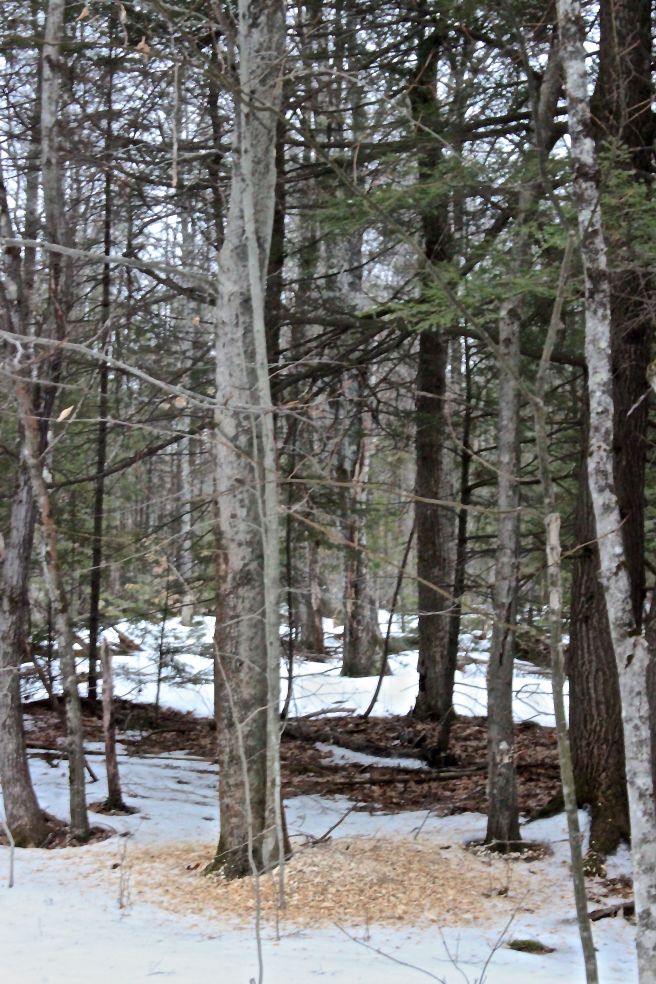
From the trail, I spied the largest pile of wood chips I’ve ever seen and of course, had to investigate.
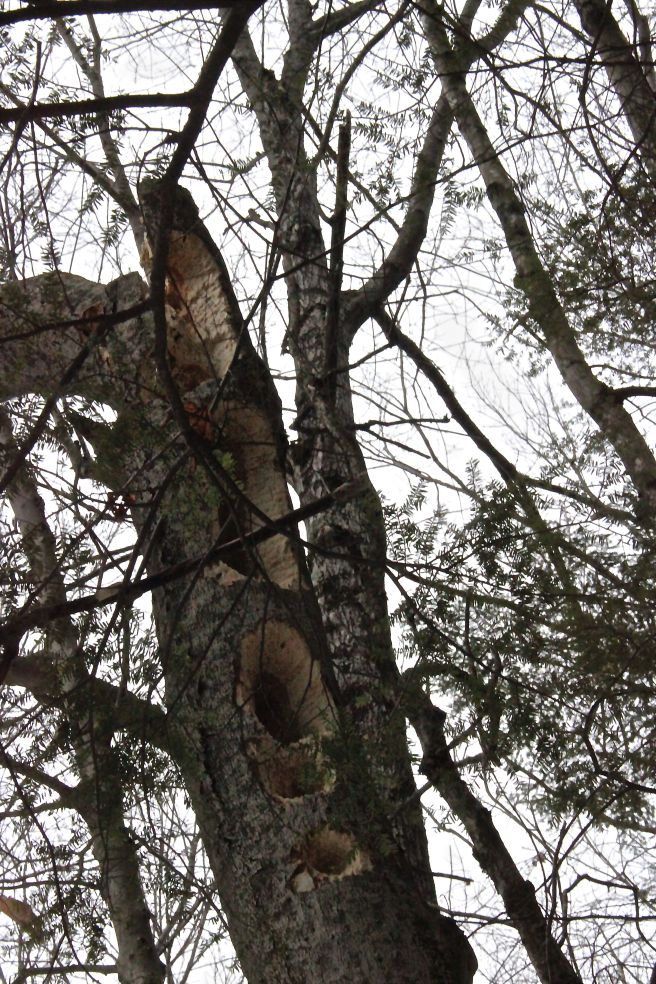
The old beech was recently excavated for new condos.

Below, the wood chip pile was a couple of inches deep.


The best part–lots of scat cylinders filled with insect body parts. Good stuff to see.
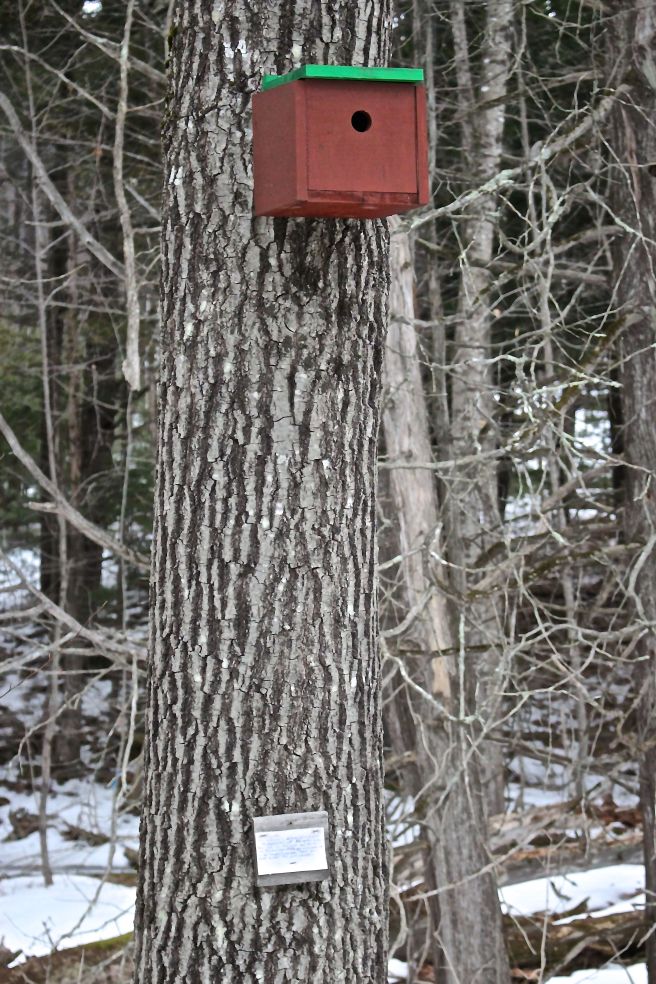
Pileated woodpeckers aren’t the only ones in the building industry.
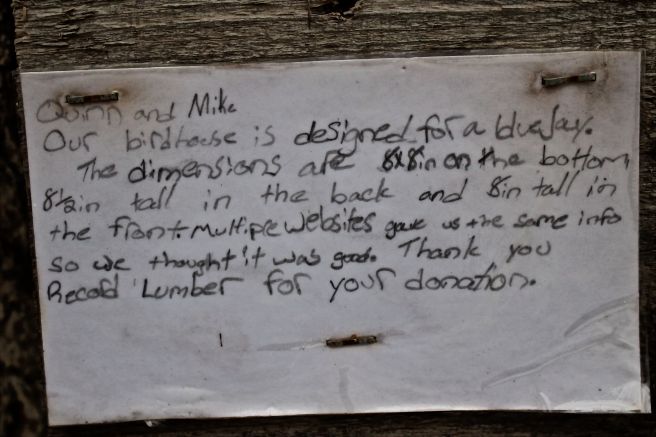
I think you’d agree that Quinn and Mike did a fabulous job constructing this birdhouse.

In several open areas we spotted the winter display of common mullein.

Its crowded performance of two-parted capsules atop a tall, fuzzy stem made it easy to identify.


The pointed prickly bracts of thistles also offered a winter show.

Lungwort tried to hide on the backside of an ash tree, but I found it. I only wish we’d had rain, or better yet, snow, recently, because I love the neon green that it becomes once it is wet.

Be careful what you wish for. Though the day was sunny at the start, it began to rain as we ate our sandwiches on lunch rock overlooking Lake Pennesseewassee, aka Norway Lake.
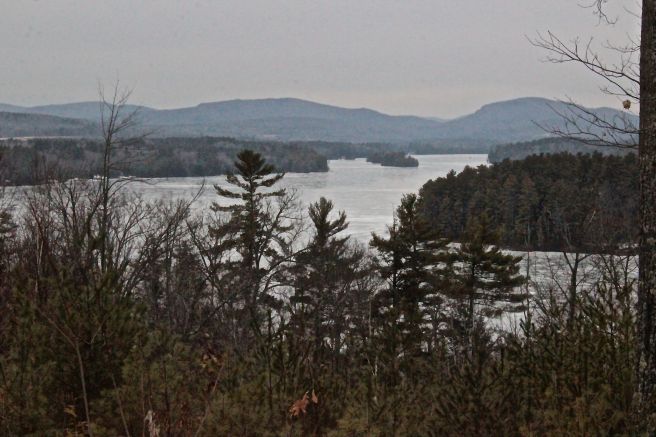
It wasn’t a downpour, but enough that it encouraged us to eat quickly and move on.

Well, I didn’t move far. Within steps, I found a shrub I was seeking yesterday–beaked hazelnut.

It’s a member of the birch family and features catkins–the male flowers that will release pollen this spring to fertilize the shrub’s delicate red female flowers.
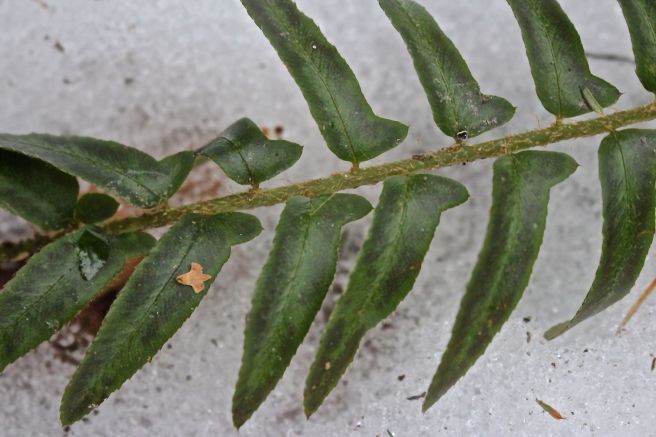
Another quick find–Christmas fern–one pinnae topped with a birch fleur de lis.


Typically, during the winter there is only one trail open to hikers. Today, however, we figured it would be OK to walk on the ski trails because they are either icy or bare. It was definitely a micro-spike kind of day, which has been more the norm this year.

Other than birds and squirrels, we saw no wildlife. But we did stumble upon the “Painted Cows” created by Bernard Langlais in 1974 and gifted to the land trust by Colby College and the Kohler Foundation.
We had planned to explore the inner network of trails, but the cold raindrops drove us out. Despite that, I think my guy enjoyed himself as much as I did. And he was extremely patient each time I paused. Sometimes he even gave me a heads up–I took that to mean he didn’t mind that I had to stop, wonder and photograph. This is one Leap Date I hope we don’t forget.
Gallivanting Around Great Brook
It’s been a couple of months since Jinny Mae and I last checked in on the doings in the Great Brook neighborhood off Hut Road in Stoneham, Maine.

Forest Road 4 isn’t plowed in the winter. That’s OK. We welcomed the opportunity to admire our surroundings as we hiked above the brook. So much to see that is so often missed as one drives.

Though the temperature was on the rise, the blueness of a few paper birch trees reminded us that it’s still winter.

We found sphagnum moss looking a bit frosty but cheering us on with its pompoms.

On more than one yellow birch, chaga offered its medicinal qualities in quantity.

We came upon a special relationship–a yellow birch and a white pine. Rooted in this place, they embrace and share nutrients.

Forever conjoined, they dance through life together.
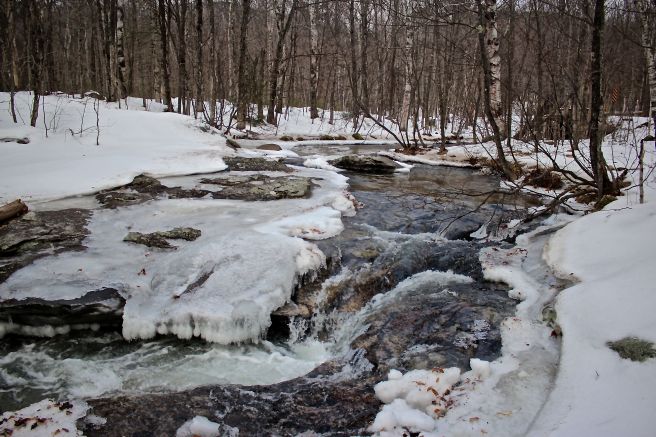
Finally beside the brook, we couldn’t see the rocks below very well, but watching the water race over them gave us a better understanding of the forces that have smoothed their surfaces.

In a few more months, we’ll stand here and wonder where all the water went.

But today, it was the ice formations that we couldn’t stop admiring. Bubbling water below and dripping ice above, each adding to the other and both constantly changing.

So much variation on the same theme as coursing water freezes into ice while at the same time carving into the rocks below.

Looking beneath, we noticed pedestals shaped like elephant legs providing support to shelves above.

Occasionally, we saw crystalline turrets, translucent arches and frozen chandeliers of castles captured in ice.

Sometimes, it seemed like ballerinas danced on their tippy toes. That’s what water really is, isn’t it–a dance through time with changing tempos along the way?

We crossed Great Brook and then paused for a moment as we decided which trail to follow. We took the road less traveled by. I laughed when Jinny Mae referenced Robert Frost’s poem. My former students don’t read this, but that was one of the poems they had to learn and recite. And my guy–poor soul–knows it through association. Actually, he’s a better soul for that reason.

So you may not see it, but Jinny Mae and I did–an owl hidden in the ash bark. Not a live owl, mind you. Well, that depends on your perspective, I suppose.

Within minutes, we knelt to admire Selfheal or Heal All (Prunella vulgarism) and its hairy calyces.

We stood by the survey marker sign and realized it had been attached for many years.

Perhaps 51 years!
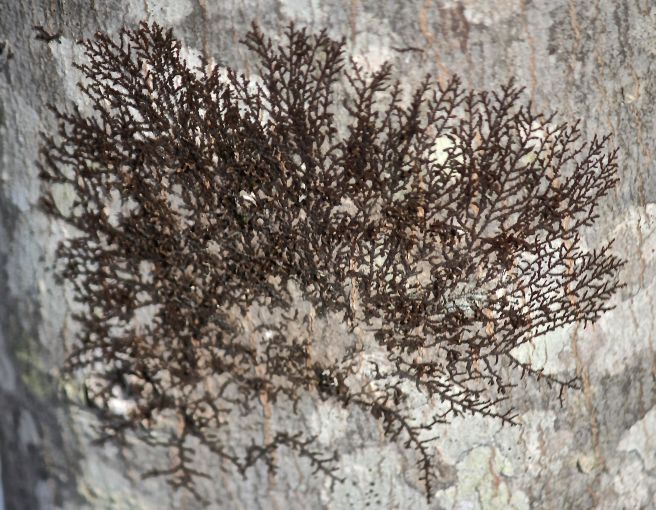
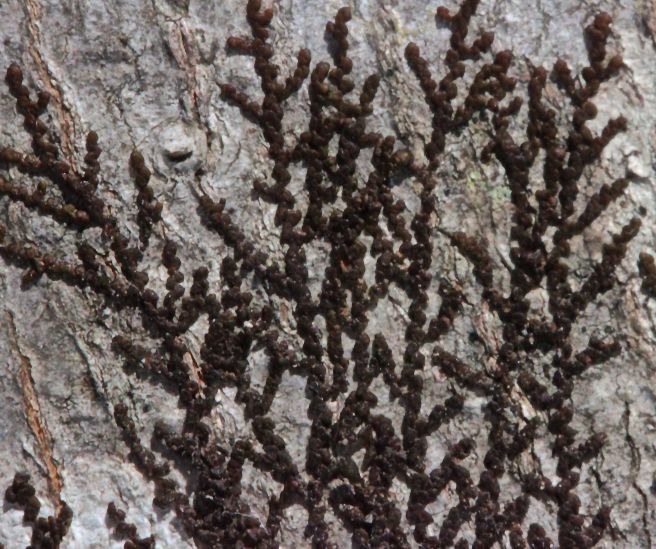
On a red oak, we pause to look at the reddish-brown liverwort–Frullania. There’s history in this species–dating to the earliest land plants. No matter how often we see it, and we see it often, we feel privileged.
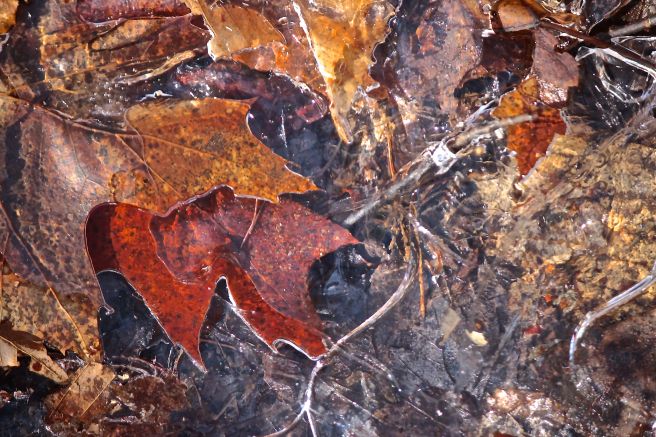
The trail switches from snow to ice to water and back again. Ice covered leaves draw our appreciation.
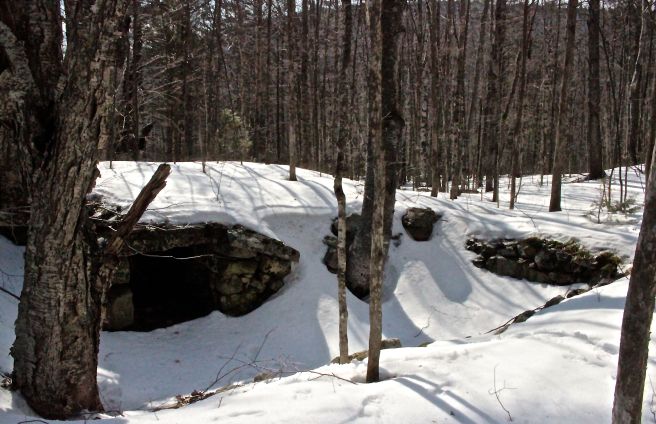
In the neighborhood, we pause to check on the local families.
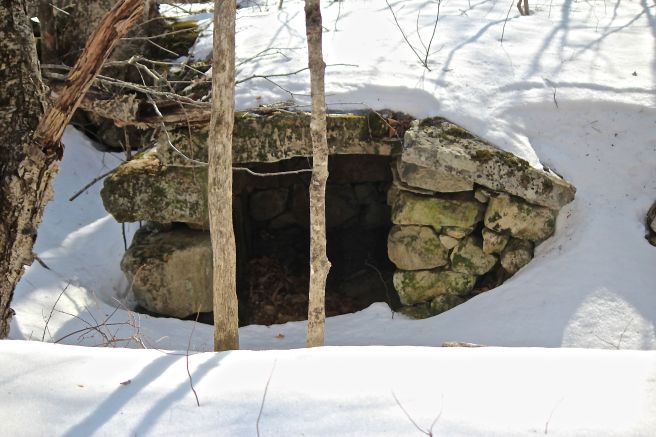
I climb down to the root cellar and discover that the porcupines haven’t visited all winter. Old scat still present in there, but nothing new.

Moving up the colonial road, we come to the second residence.

Atop the mantel grows an old yellow birch. Like any TV screen above the fireplace, it offers an ever-changing display.

We moved toward Shirley Brook, where we were once again in awe of ice.

Water and ice: a relationship in constant flux–at the moment.
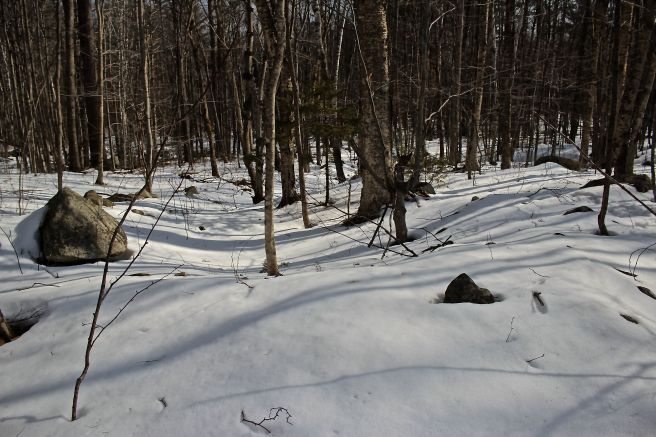
Beside the brook is a stream that’s currently dry. We look edat the snow-covered stonework that crosses over it and realized we need to return and try to figure out what the structure might have been and why it was built here. Stuff like this adds to the intrigue. Man-made. When? Why?

Poor Jinny Mae. She had to wait for me constantly as I shifted from one lens to the next. But check out this spider.

We are the queens of bushwhacking and love discovering the stories hidden in the woods. In this neighborhood, lots of stone walls tell part of the story. Rock piles enhance the chapters.
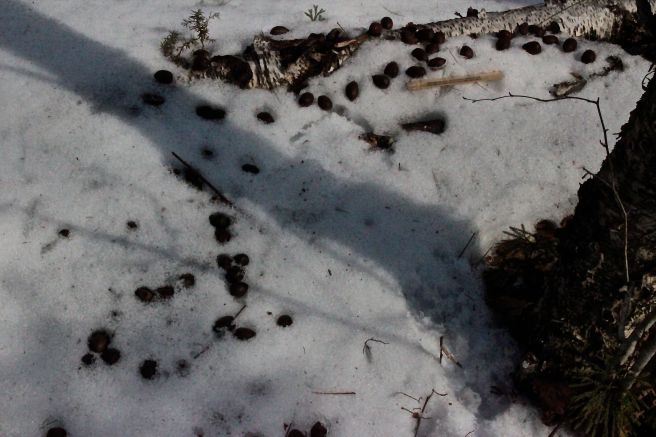
And then we found more. Fairly fresh moose scat insisted upon our attention. We’d noted that there were some old snowshoe hare runs and we found some moose browse on a nearby striped maple, but we were surprised that there weren’t many fresh tracks. Where have all the mammals gone?
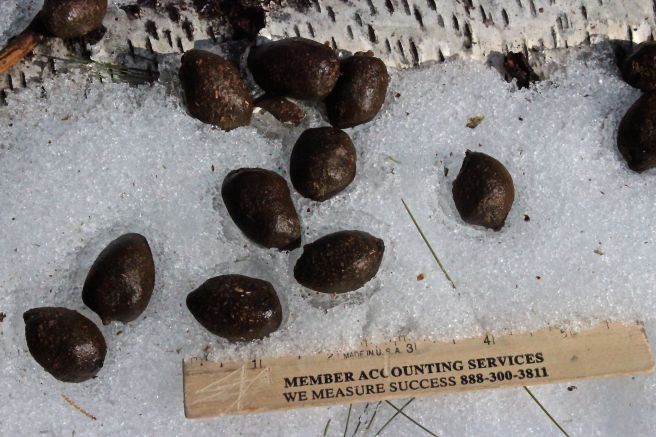
This scat is some of the biggest moose scat we can recall seeing. A few gems followed me home.
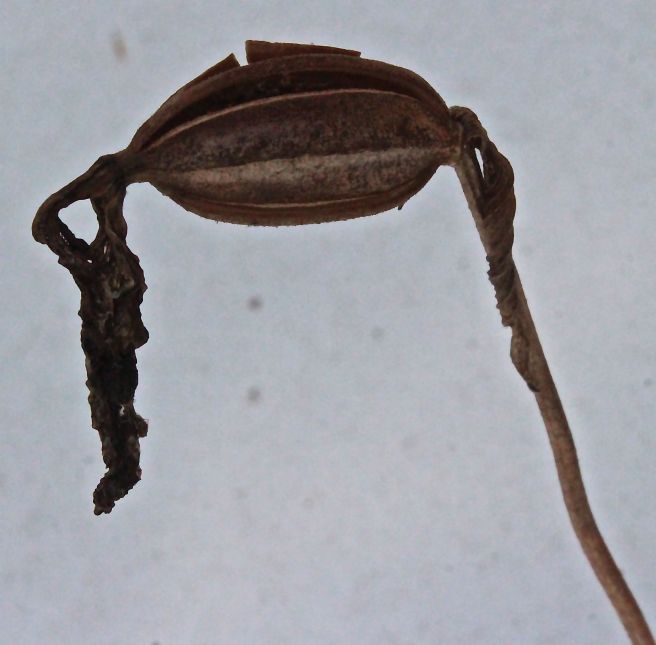
And then we happened upon something neither of us have seen before–at least that we are aware of. We had our ideas about what winter weed this is, but since we haven’t encountered it before our sense of wonder kicked in.
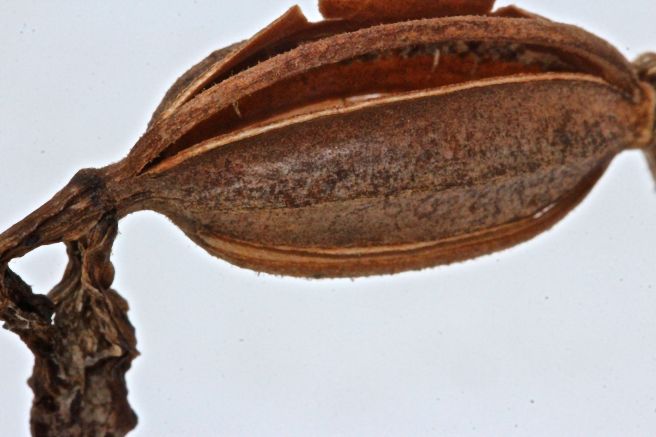
Back home, I looked it up in Weeds and Wildflowers in Winter by Lauren Brown. The capsule is woody and about two inches long. As you can see, it’s closed at both ends, but opens along slit lines–six in all, actually.

At the back end, a long, curved bract.


And at the front, the slipper gone by. Yup–Lady’s Slipper (Cypripedium acaule). And the reason we didn’t recognize it–because it’s a rare find in the winter woods. Wow.

We’re on our way out when we spotted these marks on beech bark. We’d looked and looked because we know this is bear territory.

Compared to other bear trees, these claw marks are newer than most I’ve seen. Jinny Mae was as excited about the find as I was. I’d told her earlier as we scanned the trees that my guy has come to an unconfirmed scientific conclusion that bear claw marks appear on the northern side of trees. This one didn’t let us down. Based on the location of the sun that’s grew lower in the sky, these are on the northwestern side of the tree.
At last it was time to drive home.
Gallivant: go from one place to another in the pursuit of pleasure or entertainment. Over five miles and almost five hours later, we were thankful for the opportunity we shared today to gallivant around Great Brook.
Moi–Bull in a China Shop
Several inches of fresh snow topped with freezing rain two days ago and the world is transformed. I couldn’t decide whether to wear snowshoes, micro-spikes or neither. I choose micro-spikes, which seemed a good choice at the start, but not long into my 3.5 hour tramp through the Greater Lovell Land Trust’s John A. Segur Wildlife Refuge off Farrington Pond Road, I wished I chosen the snowshoes. At times the snow was soft, but other times it sounded as if glass was breaking as I crashed through it. Broken shards slide across the glazed surface. I was the bull in a china shop.
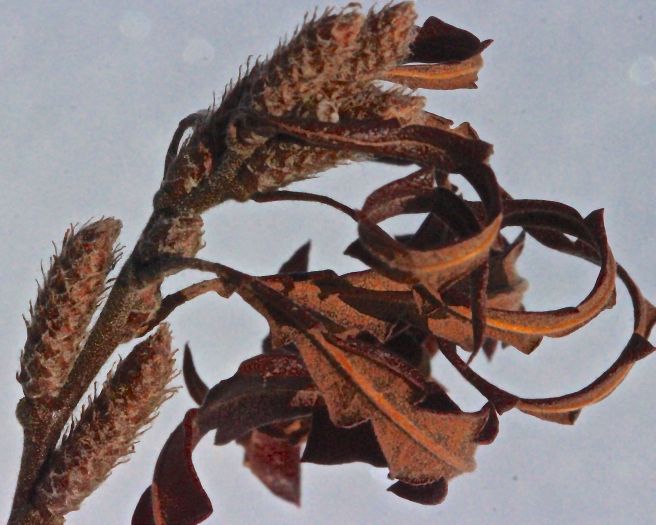 From the parking lot, I decided to begin via the blue trail by the kiosk. It doesn’t appear on the trail map, but feels much longer than the green trail–possibly my imagination. Immediately, I was greeted at the door of the shop by sweet fern, aka Comptonia peregrina (remember, it’s actually a shrub with foliage that appear fern-like). The striking color and artistic flow of the winter leaves, plus the hairy texture of the catkins meant I had to stop and touch and admire.
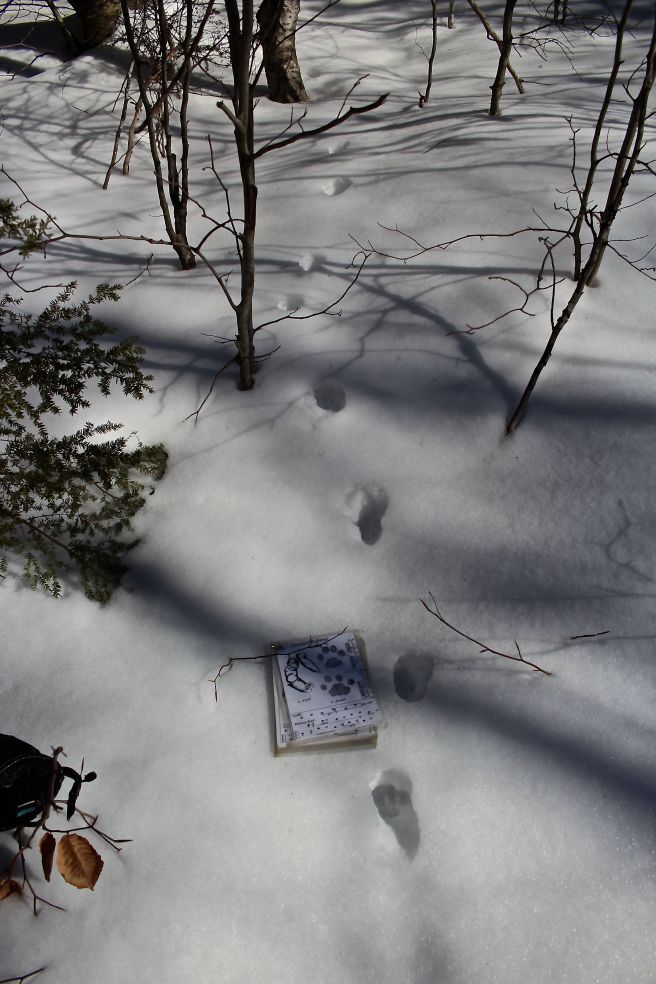 And only steps along the trail another great find–bobcat tracks. This china shop immediately appealed to moi.
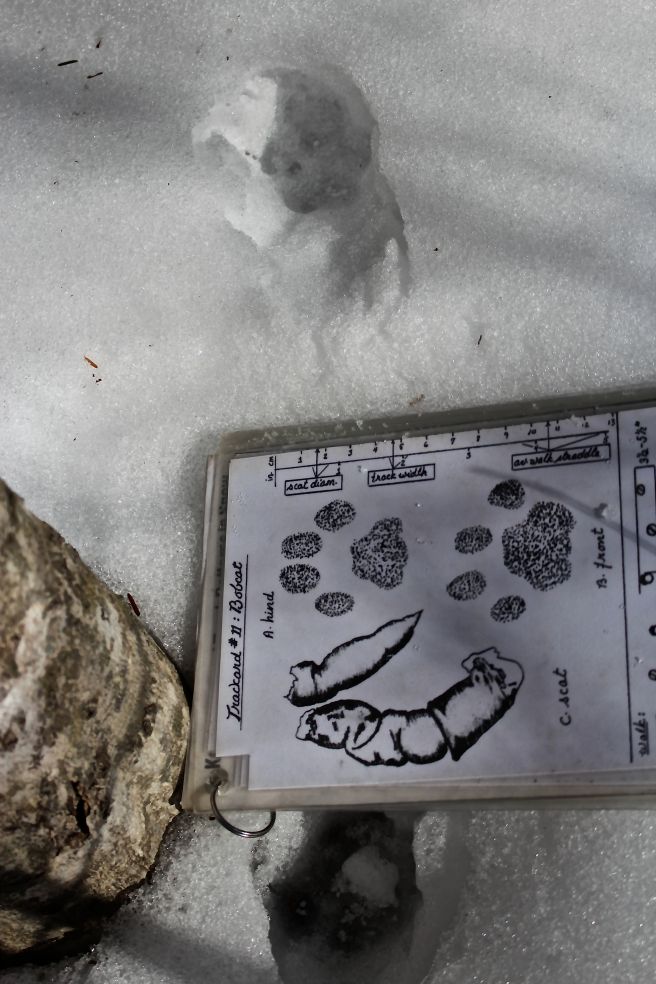 My Trackards slid along the glassy surface, so it was difficult to show the print size. But . . . it is what it is. The bobcat crossed the trail a couple of times and even came back out to explore squirrel middens.
 When I got to a ledgy spot, I decided to explore further–thinking perhaps Mr. Bob might have spent some time here. Not so–in the last two days anyway.
 The best find in this spot–red squirrel prints. A few things to notice–the smaller feet that appear at the bottom of the print are the front feet–often off-kilter. Squirrels are bounders and so as the front feet touch down and lift off the back feet follow and land before the front feet in a parallel presentation. In a way, the entire print looks like two exclamation points.
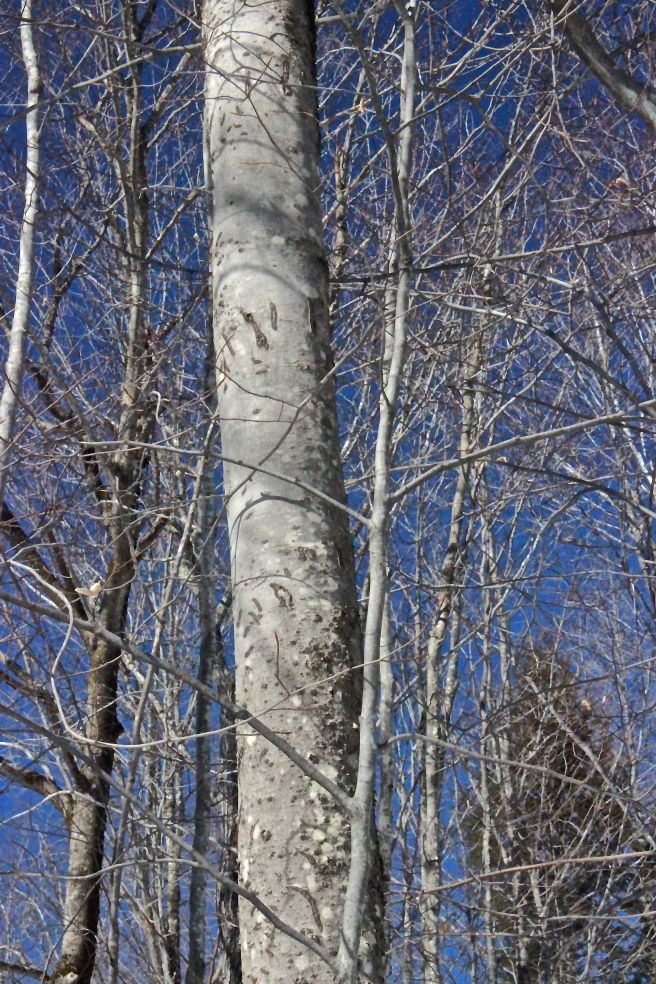 As I plodded along, my eyes were ever scanning and . . . I was treated to a surprise. Yes, a beech tree. Yes, it has been infected by the beech scale insect. And yes, a black bear has also paid a visit.
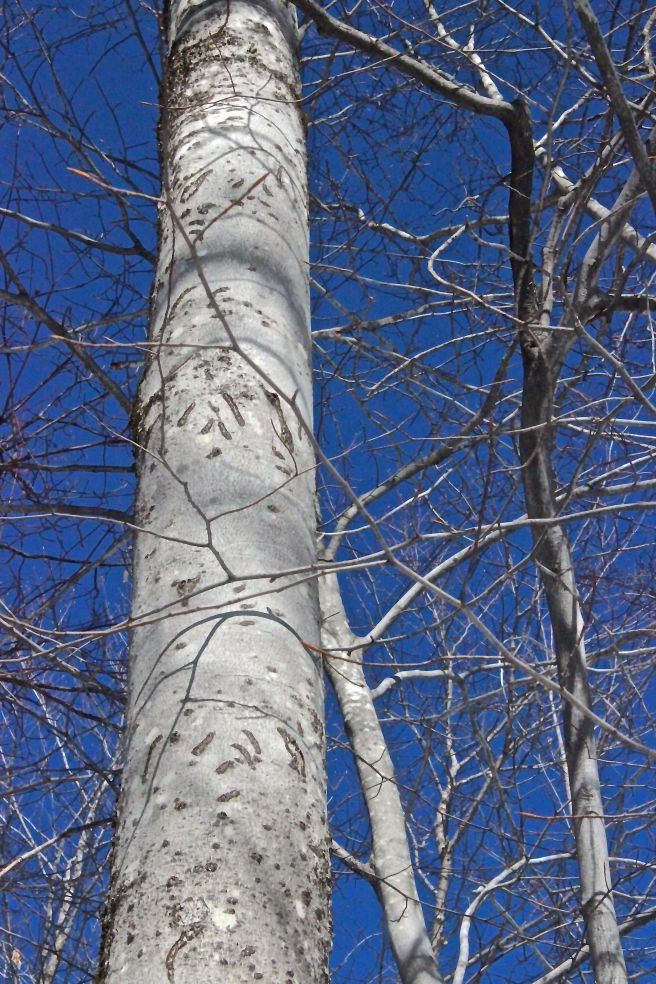 One visit, for sure. More than one? Not so sure. But can’t you envision the bear with its extremities wrapped around this trunk as it climbs. I looked for other bear trees to no avail, but suspect they are there. Docents and trackers–we have a mission.
 And what might the bear be seeking? Beech nuts. Viable trees. Life is good.
 Exactly where is the bear tree? Think left on red. When you get to this coppiced red maple tree, rather than turning right as is our driving custom, take a left and you should see it. Do remember that everything stands out better in the winter landscape.
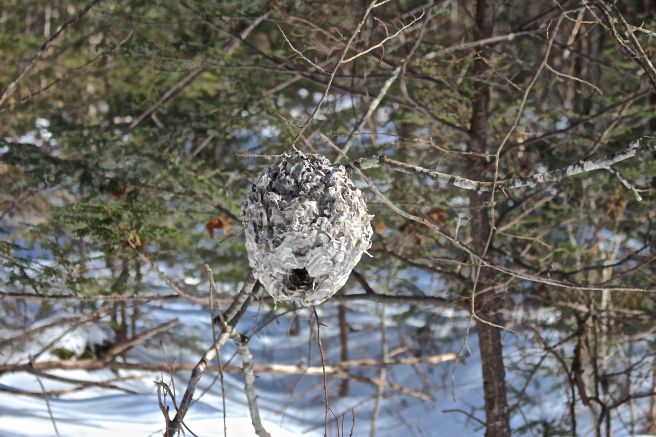 As delicate as anything in the china shop is the nest created by bald-faced hornets.
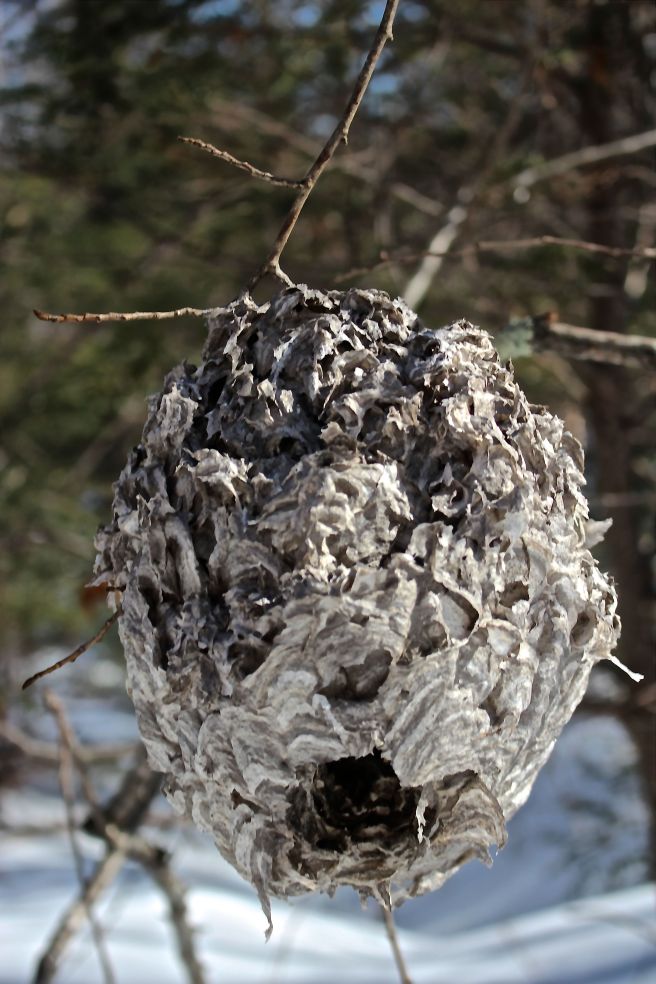 Well, it appears delicate, but the nest has been interwoven with the branches and twigs–making it strong so weather doesn’t destroy it. At the bottom is, or rather was, the entrance hole.
 Witch hazel (Hamamelis virginiana) grows abundantly beside younger beech trees. Though the flowers are now past their peak, I found a couple of dried ribbony petals extending from the cup-shaped bracts. China cups? No, but in the winter setting, the bracts are as beautiful as any flower.


I have to admit that I was a wee bit disconcerted when I reached a point where the blue trail and green trail split and it wasn’t at a point that I remembered. But I lumbered on and was pleasantly surprised when I reached the field I recognized–approaching it from the opposite side than is the norm. And later on, I realized that where the blue trail again joined the green trail was a shortcut. We need to get an accurate map made of this property, but I also need to spend more time familiarizing myself with it. At last I reached Sucker Brook.
 With the Balds in Evans Notch forming the backdrop, the brook is home to numerous beaver lodges, including these two.
 Layers speak of generations and relationships.
 Close proximity mimics the mountain backdrop.


Old and new efforts mark return attempts.
 And sometimes, I just have to wonder–how does this tree continue to stand?
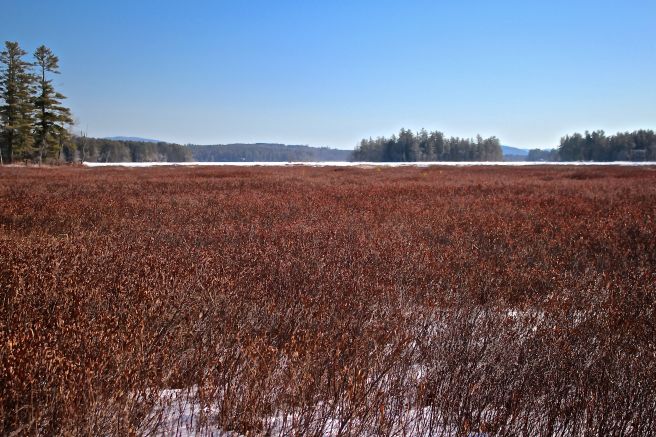 Leatherleaf fields forever.
 Spring is in the offing.
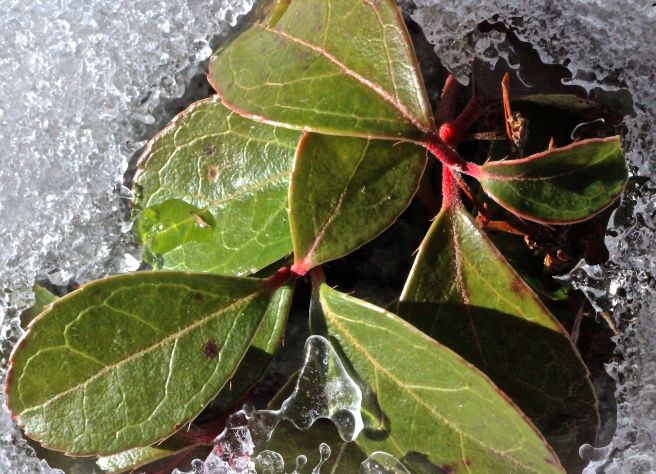 Wintergreen offers its own sign of the season to come.
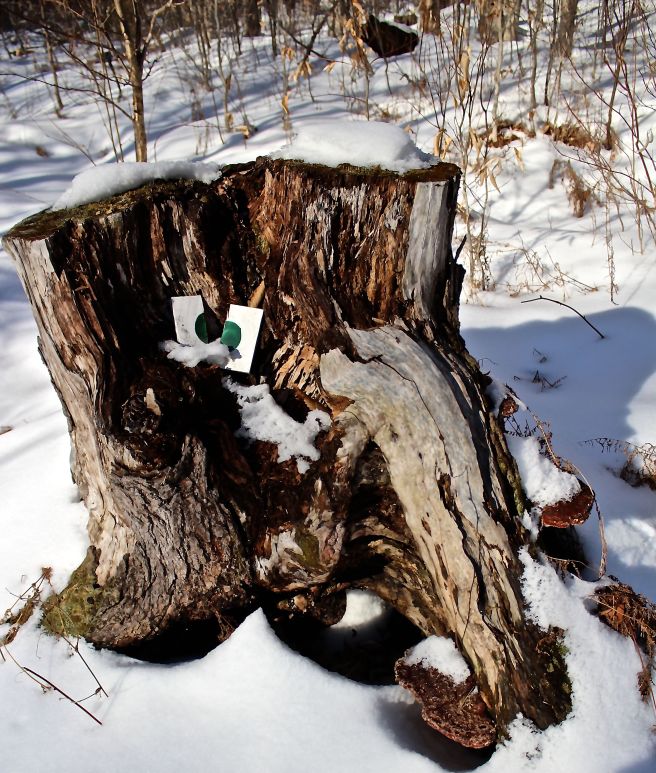 In the meantime, it’s still winter and this hemlock stump with a display of old hemlock varnish shelf (Ganoderma tsugae) caught my eye. By now, I was on the green trail.
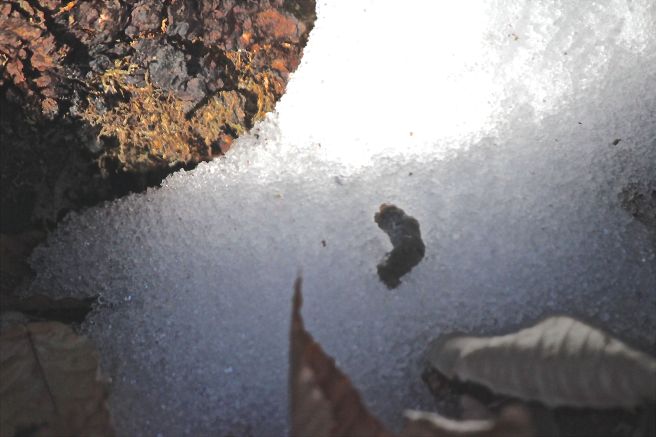 But it’s what I saw in the hollow under the stump, where another tree presumably served as a nursery and has since rotted away, that made me think about how this year’s lack of snow has affected wild life. In the center is ruffed grouse scat. Typically, ruffed grouse burrow into snow on a cold winter night. Snow acts as an insulator and hides the bird from predators. I found numerous coyote and bobcat tracks today. It seems that a bird made use of the stump as a hiding spot–though not for long or there would have been much more scat.


On the backside of the stump, more ruffed grouse scat white-washed with uric acid.
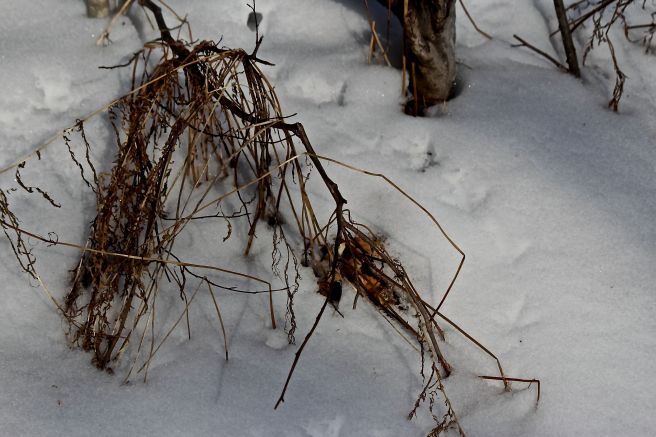 Apparently it circled the area before flying off.


Moments later I startled a ruffed grouse in a tree while I observed turkey tracks. Though their prints and scat appear to be similar–turkeys are soooo much bigger in all respects.
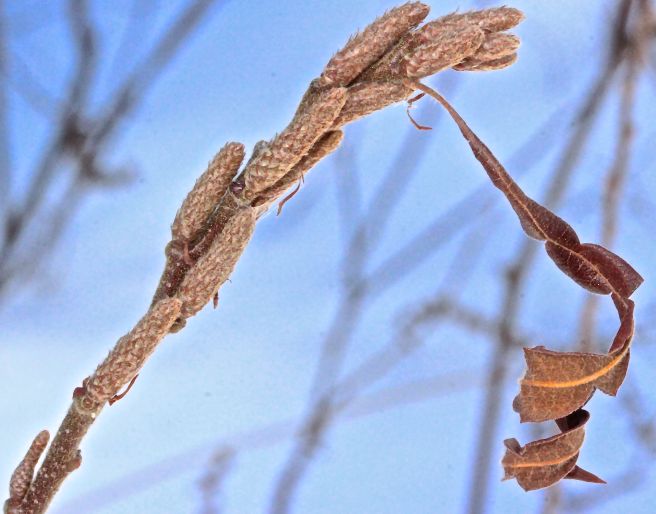
My trek ended in the same manner that it began–with sweet-fern offering a graceful stance despite my bull in a china shop approach.
Mondate By the Bay
After lunch at Gritty McDuff’s in Freeport (haddock sandwiches and a brew–no PB & J today), my guy and I found our way to Wolfe’s Neck Woods State Park on Casco Bay. So, here’s the good, but scary part. We’ve been there before, but not in a long while–and neither of us had any recollection of it. That means today’s visit was like going there for the first time all over again. (Our dementia is setting in.)

Trails follow the coast and circle back to the Harraseeket River, passing through a variation of natural communities. We trekked over all but the North Loop before we ran out of time. Actually, we finished up a wee bit after the park was officially closed for the night and were glad to find the gate still open.
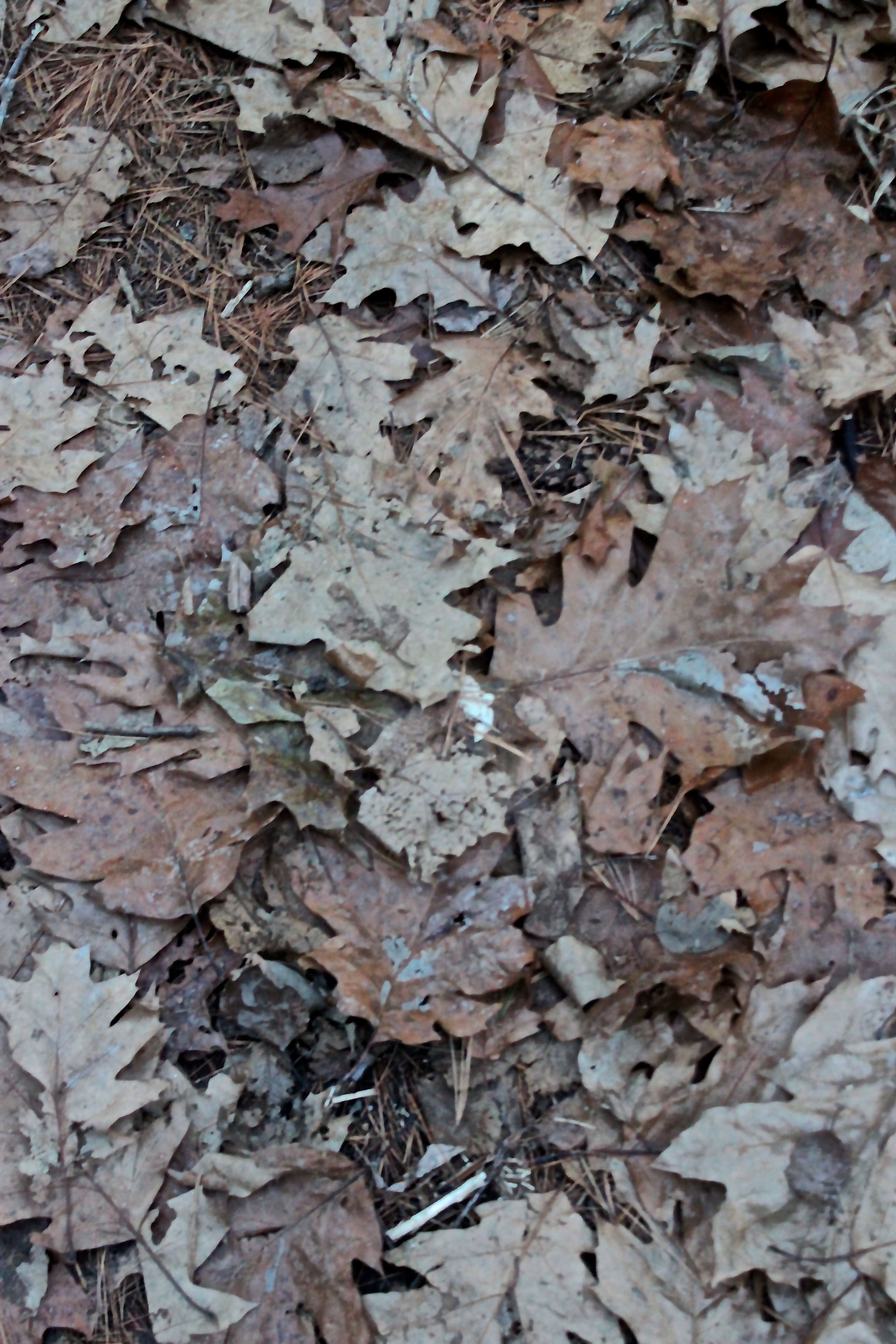
By the forest floor, it was easy to name the predominate hardwood trees in any given area from Northern Red Oak to

American Beech to

Big-tooth Aspen. Spruce, hemlock, pine and fir also fill this more than 200-acre forest given to the State in 1969 by Mr. and Mrs. Lawrence M.C. Smith.

Sometimes the path was packed dirt that made for easy walking.

In other places, a stone pathway had been carefully laid out before us.

And no woodland trail is complete without an array of roots and rocks.

One of the noticeable features of this location is the number of uprooted trees.

The wind enjoyed a serious game of tic, tac, toe, three in a row or dominoes with this event. Here’s hoping that no one planned a picnic that day.
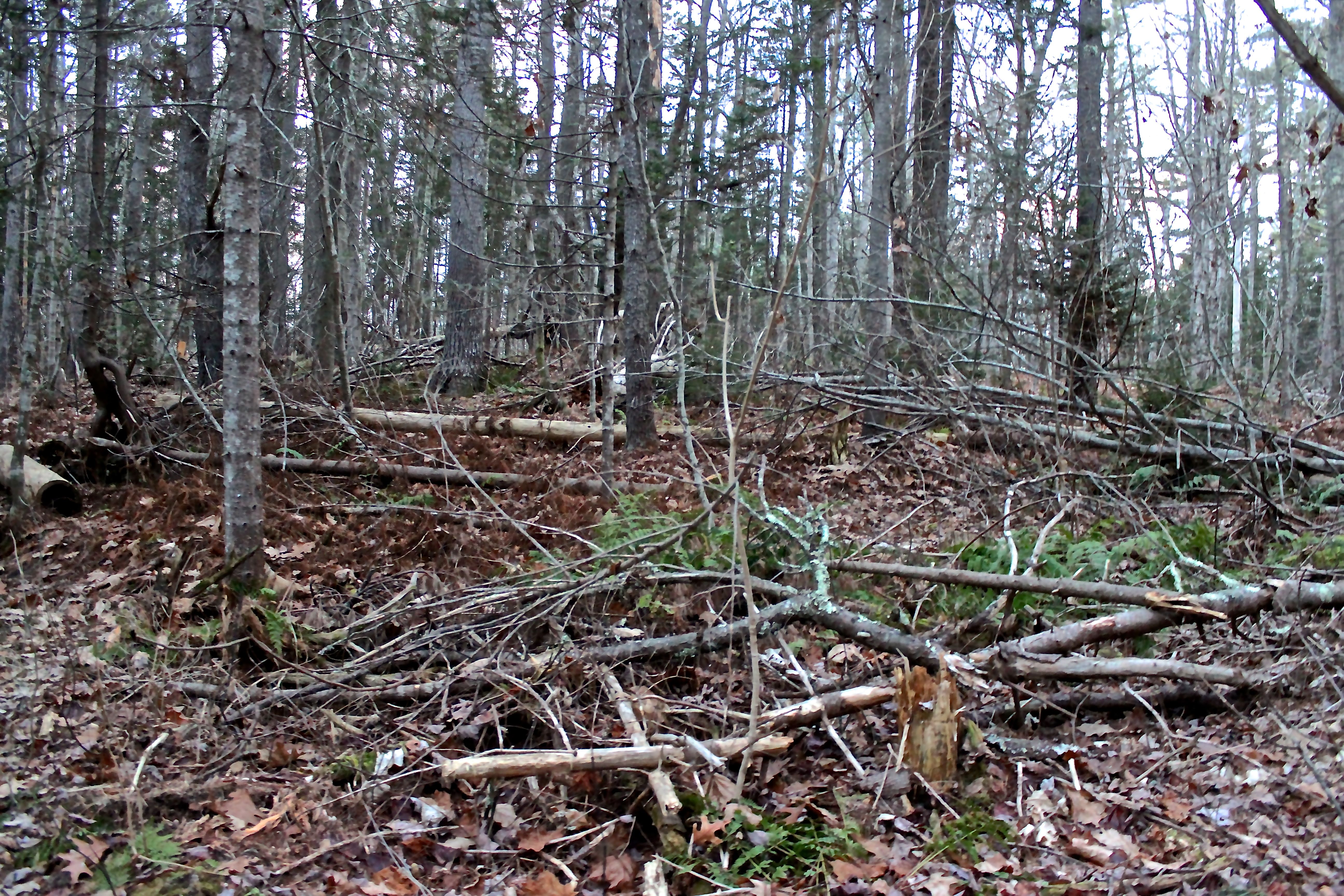
And in other spots, it looked like the gale force winds of both summer and winter beat upon the landscape.

Always on the lookout for interesting sites, my eye was drawn to the wavy inner bark of this old birch. It could be locks of Rapunzel’s hair. Of course, I also see a mermaid swimming in the slightly darker wood. Isn’t that what a naturalist is supposed to see?
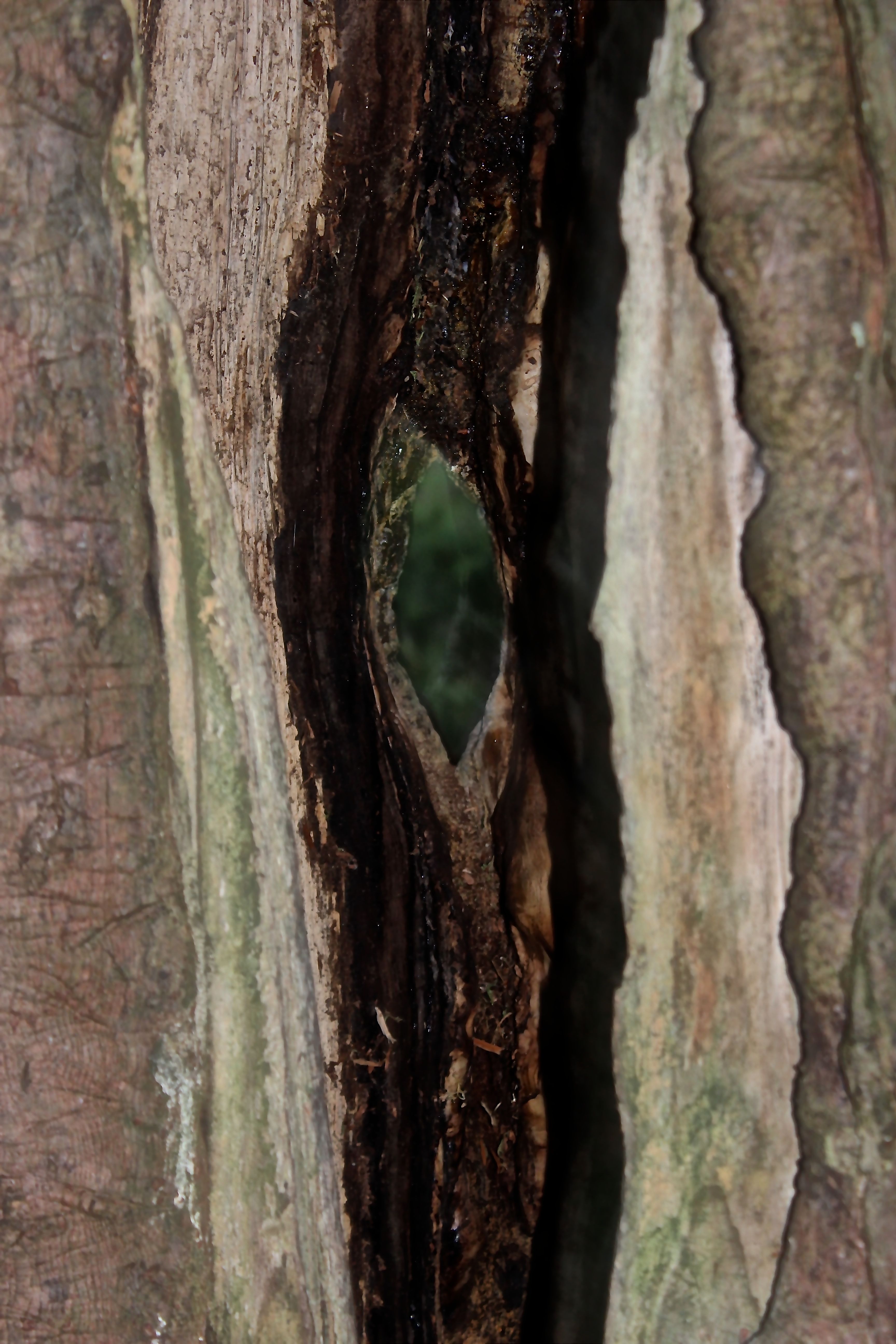
And then there was the hemlock-green sideways-turned eye–taking a different view of the world.
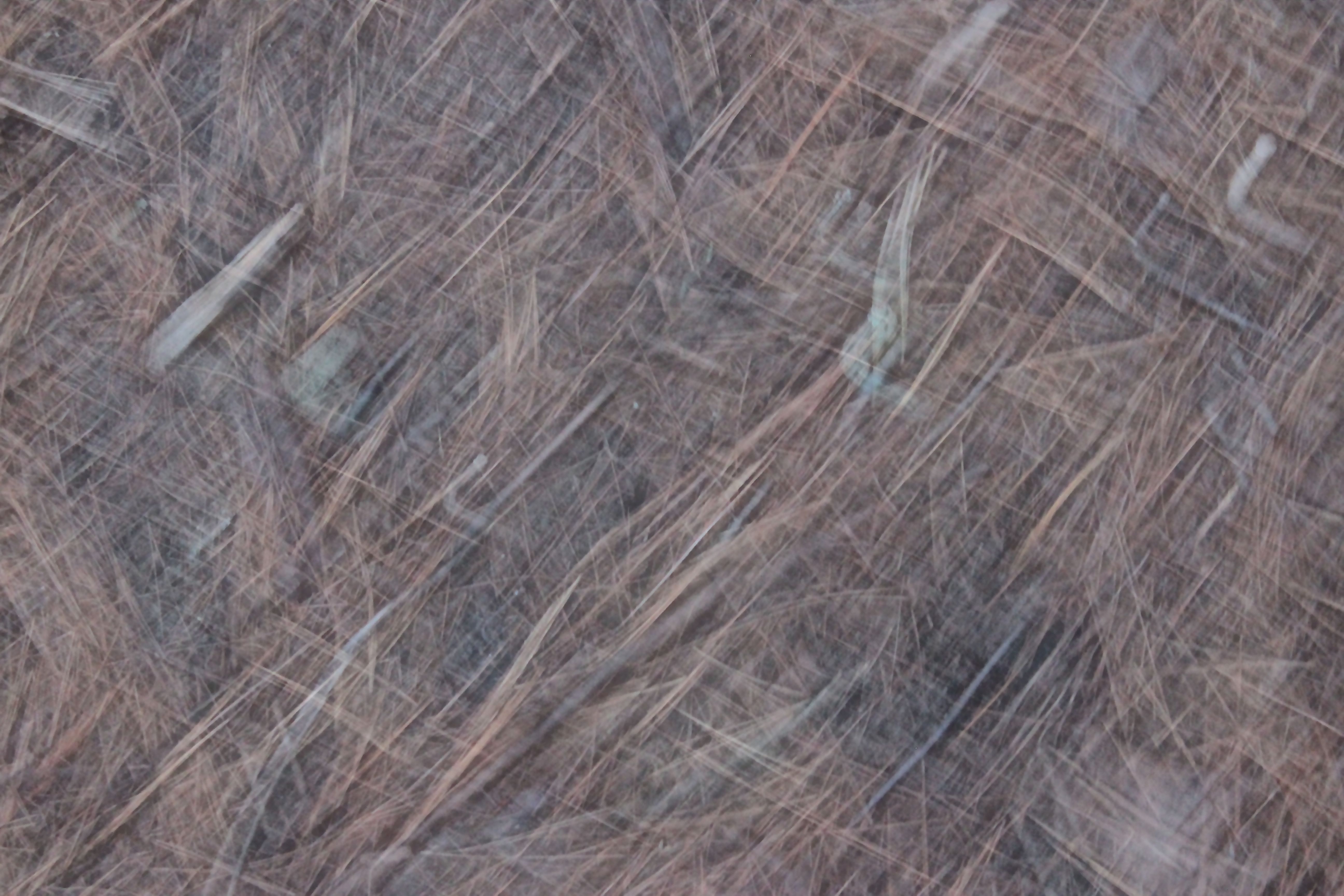
While I’m sharing some interesting shots, I thought I’d include this one–of pine needles. It was getting dark and I chose the wrong setting, but I like the artsy texture of it–tweed-like in appearance.

And the most interesting of all. My guy–he could pass for the invisible man.

Of course, we were beside Casco Bay, so we spent time exploring the coast line as well.

My knowledge of the island names is less than limited, but it did appear that those in the distance were floating on water–a mirage.

As part of the park, Goggins Island is an Osprey sanctuary. Though I respect that, I do have to wonder about the human impact on the bird’s mating season. We’ve seen Ospreys build nests atop telephone poles over highways and bike paths with successful births despite the continuous noise and disturbance. But . . . a sanctuary certainly provides an extra layer of protection.
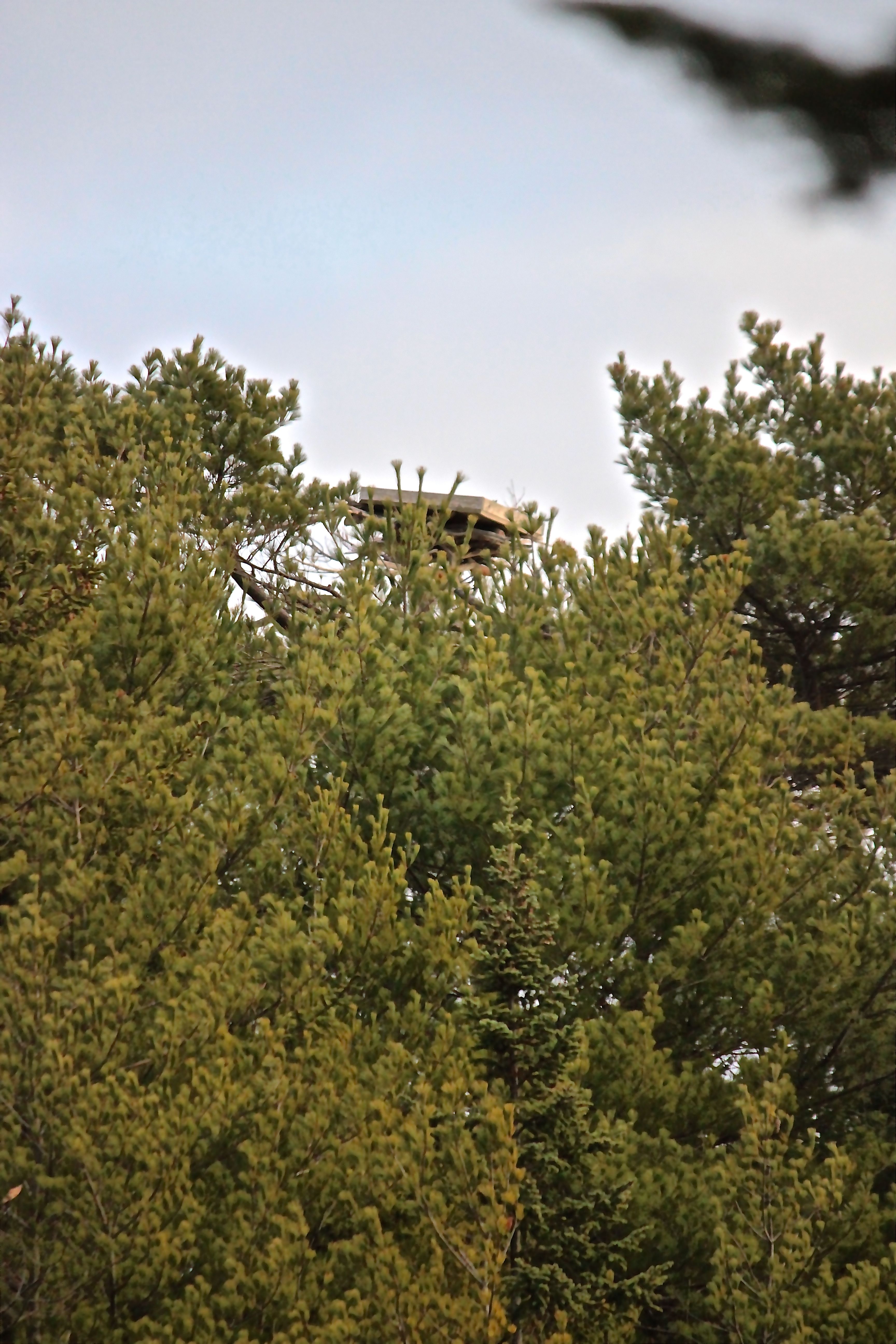
We could only spot one cock-eyed nesting platform on the island–with no nest on it.
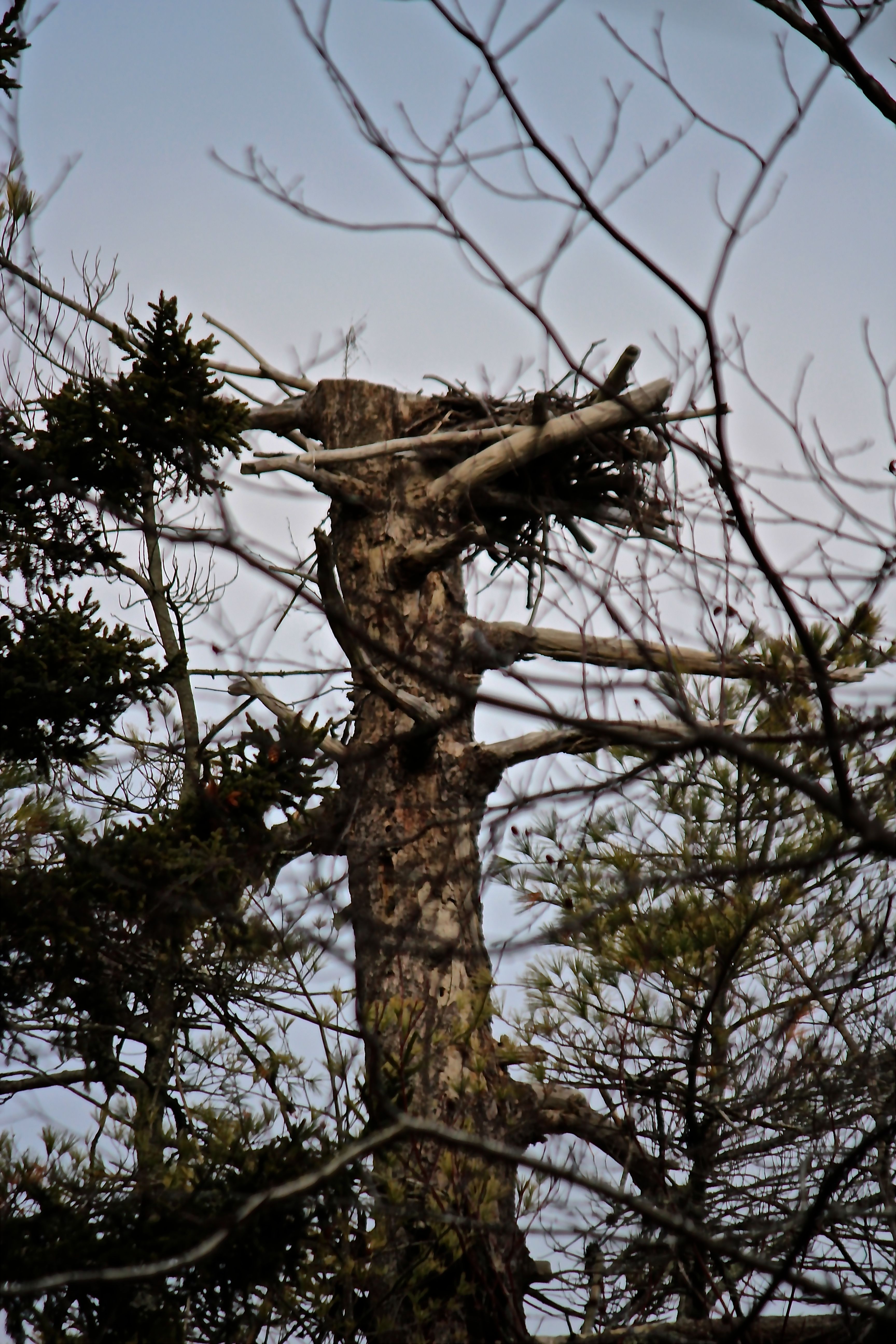
We did spy a bird-made nest on the mainland, and rather close to the trail. Just saying.
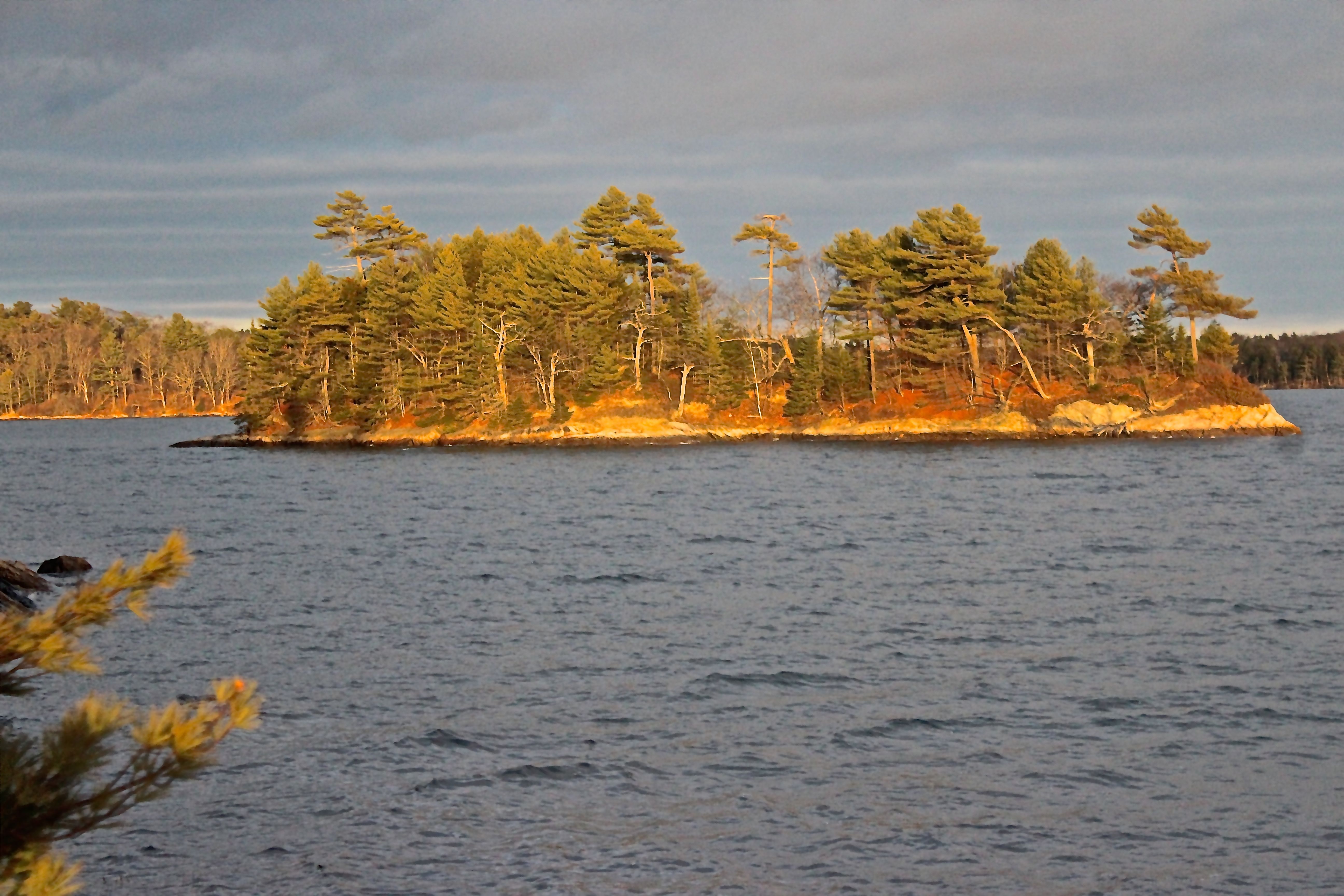
All nests are abandoned now as the birds flew to South America in September–with plans to return next year to this golden paradise where they’ll mate again. Ospreys are monogamous and repeatedly use the same nest site. That’s the amazing piece to me.

The rocky coast of Maine includes the lighter colored granite pegmatites and darker metamorphic rocks with their repetitive flattened layering.

I found it intriguing how each layer before us mimicked the next–from the rocks to the ocean waves to the islands to the clouds in the sky.

And then it was time to bid adieu. The setting sun where the forest meets the bay–Casco Bay. On. A. Mondate.
Black Friday My Way
Shopping on Black Friday is the perfect tonic following a Thanksgiving feast. And so I was excited that my friend, J.M., agreed to join me for the venture–and even happier that she offered to drive.
Our destination–the MDT store in Fryeburg. Everything we needed under one sky roof.
The first department we visited was decked out in shades of red.
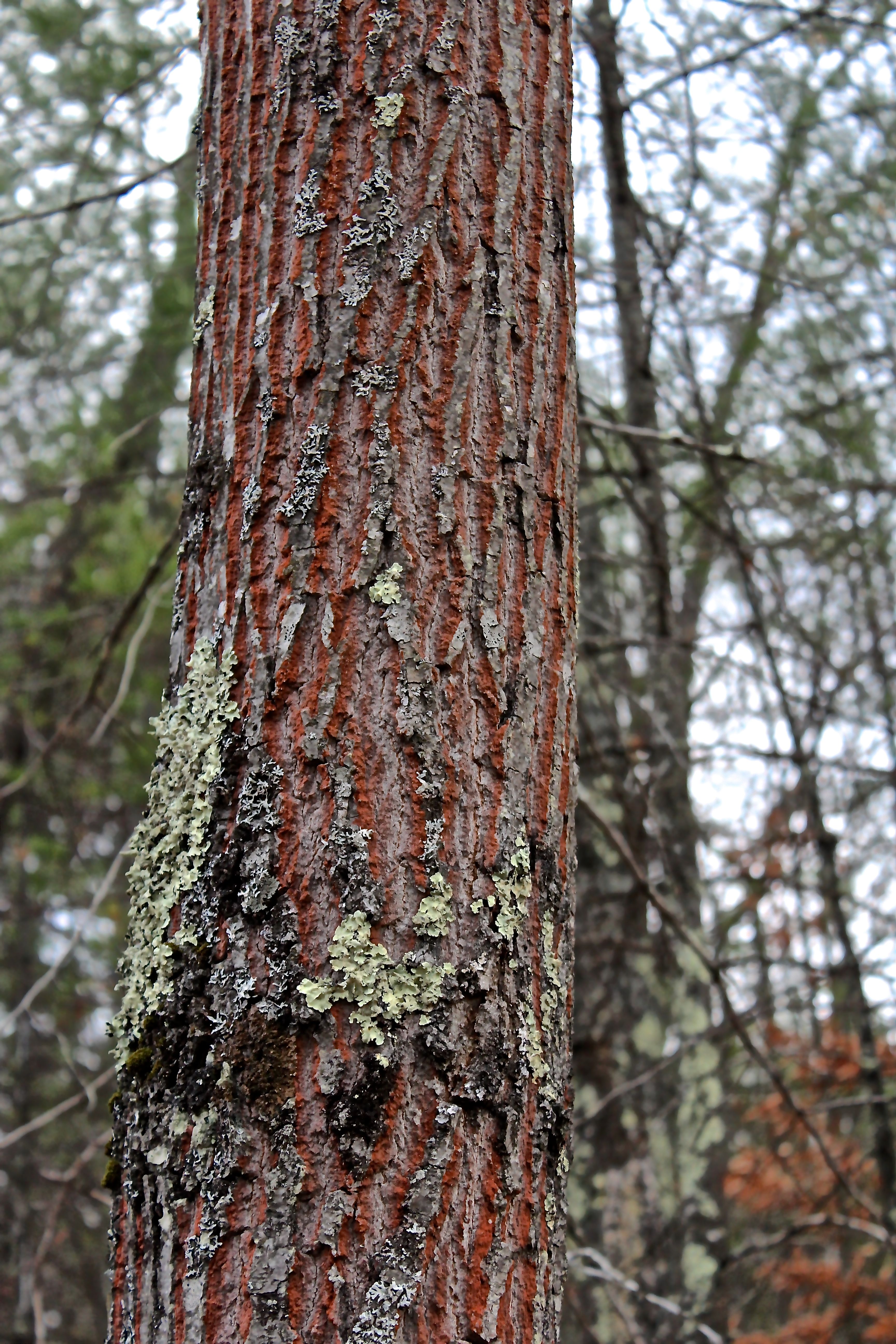
The rusty inner bark of this Northern Red Oak practically jumped out at us. How could we resist such temptation? Add it to the cart.
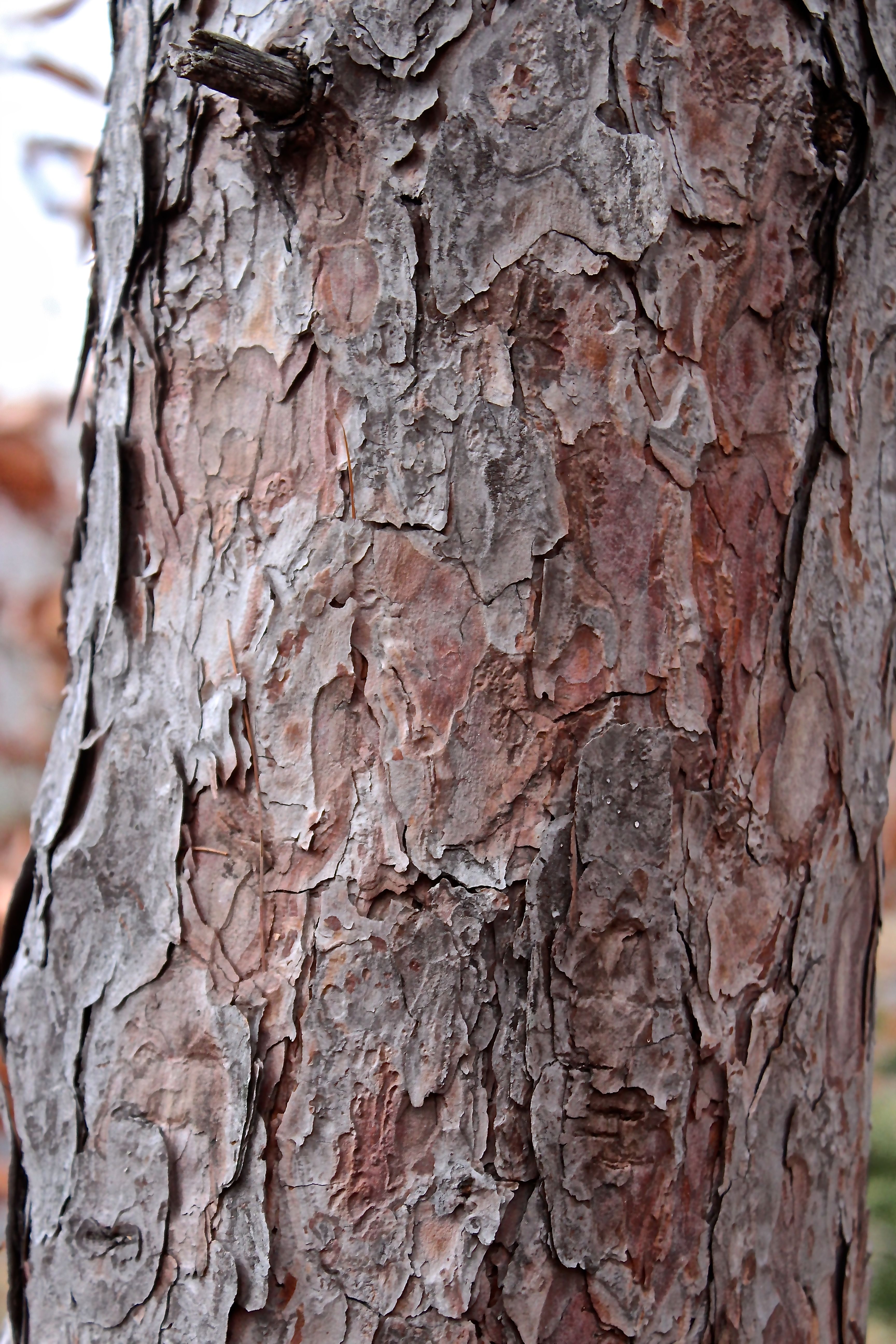
Sometimes the display made us stop and wonder.

We hunted about to make sure our identification was correct before we settled on Pitch Pine rather than Red Pine. Both share similar bark, but the former has three long needles, while the latter sports two. The correct coupon in hand, we continued on our way.
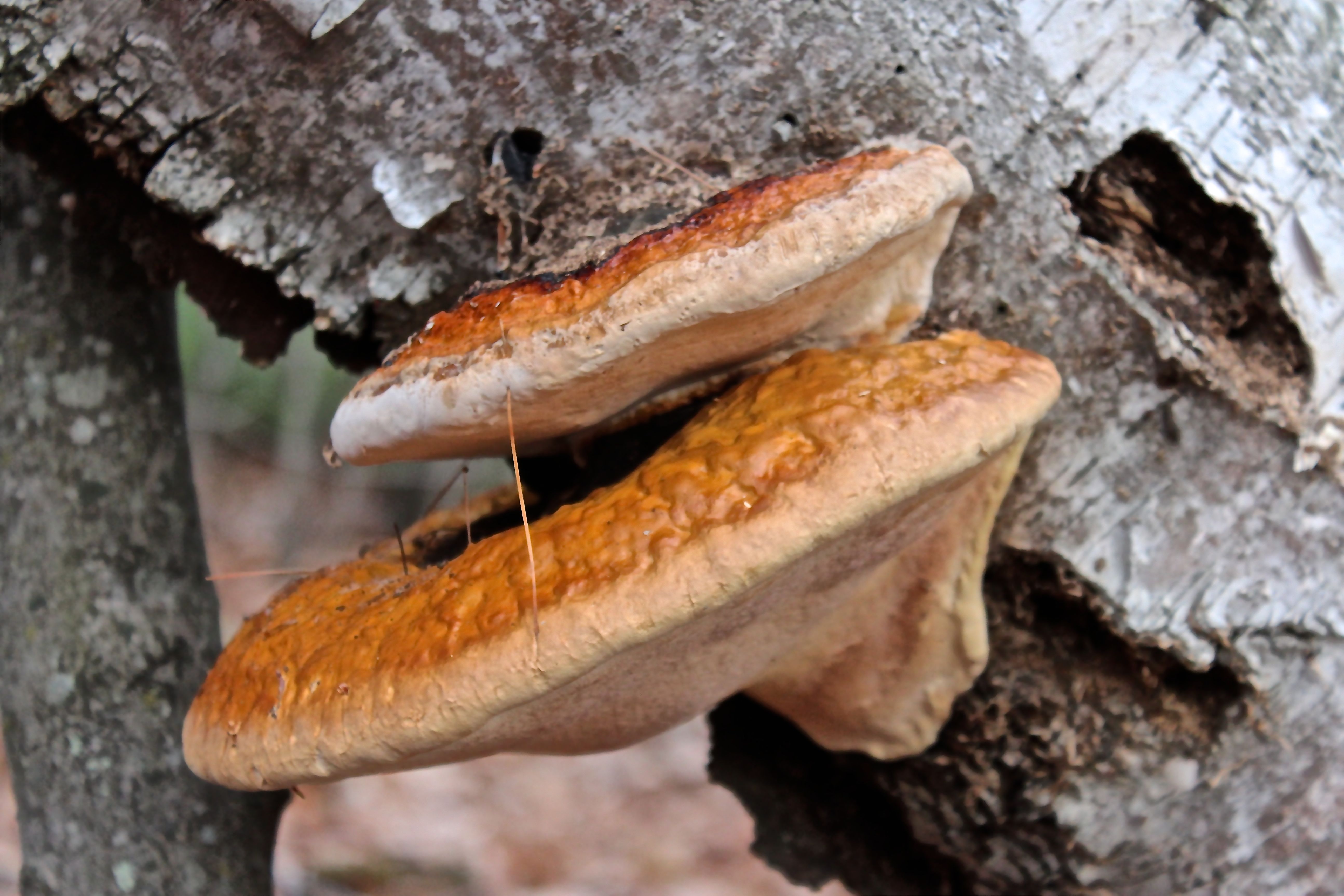
Red-belted Polypores pulled us from the main aisle to admire their construction. Talk about an exclusive offer–woohoo!

And we couldn’t resist the raspberry red pyramid of the Staghorn Sumac. A taste of Sumac Lemonade danced in our heads while we continued shopping.

About a year ago, I’d told J.M. about a salmony hue in the winterscape. As we came upon this item, she understood what I meant about the color. And I was thrilled to discover that they had plenty in stock–I had no idea that White Oak grows in Fryeburg. I’m slowly adding towns to my list–where it grows and where it doesn’t grow.

The free-form structure spoke of a dance performance. And then we realized that we were in a wind tunnel. Even though it wasn’t windy at the moment, the marcescent leaves have retained their fluid shape.
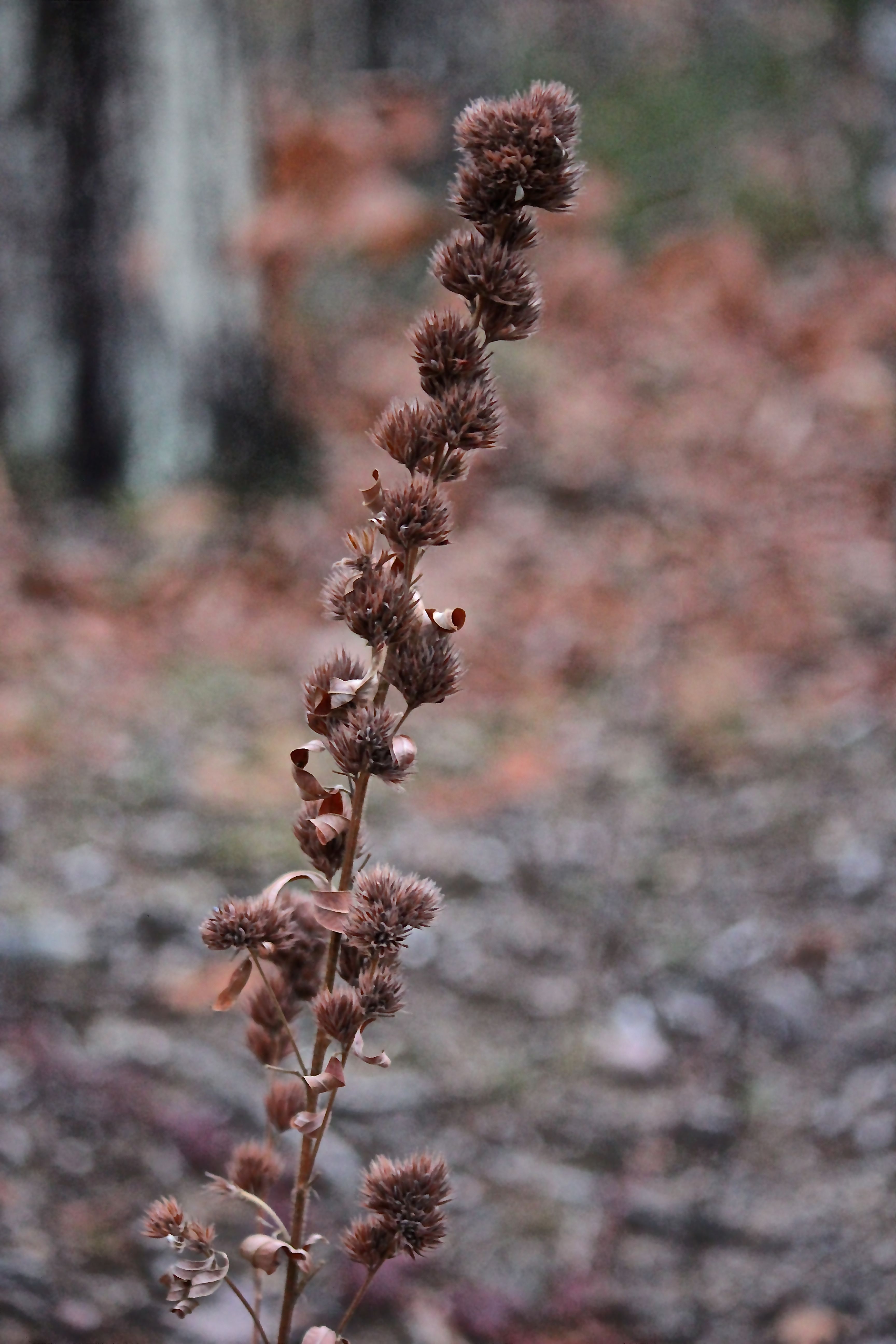
We also found variations of red in Bush-Clover, which is a typical species of this place, though we didn’t realize that at the time.
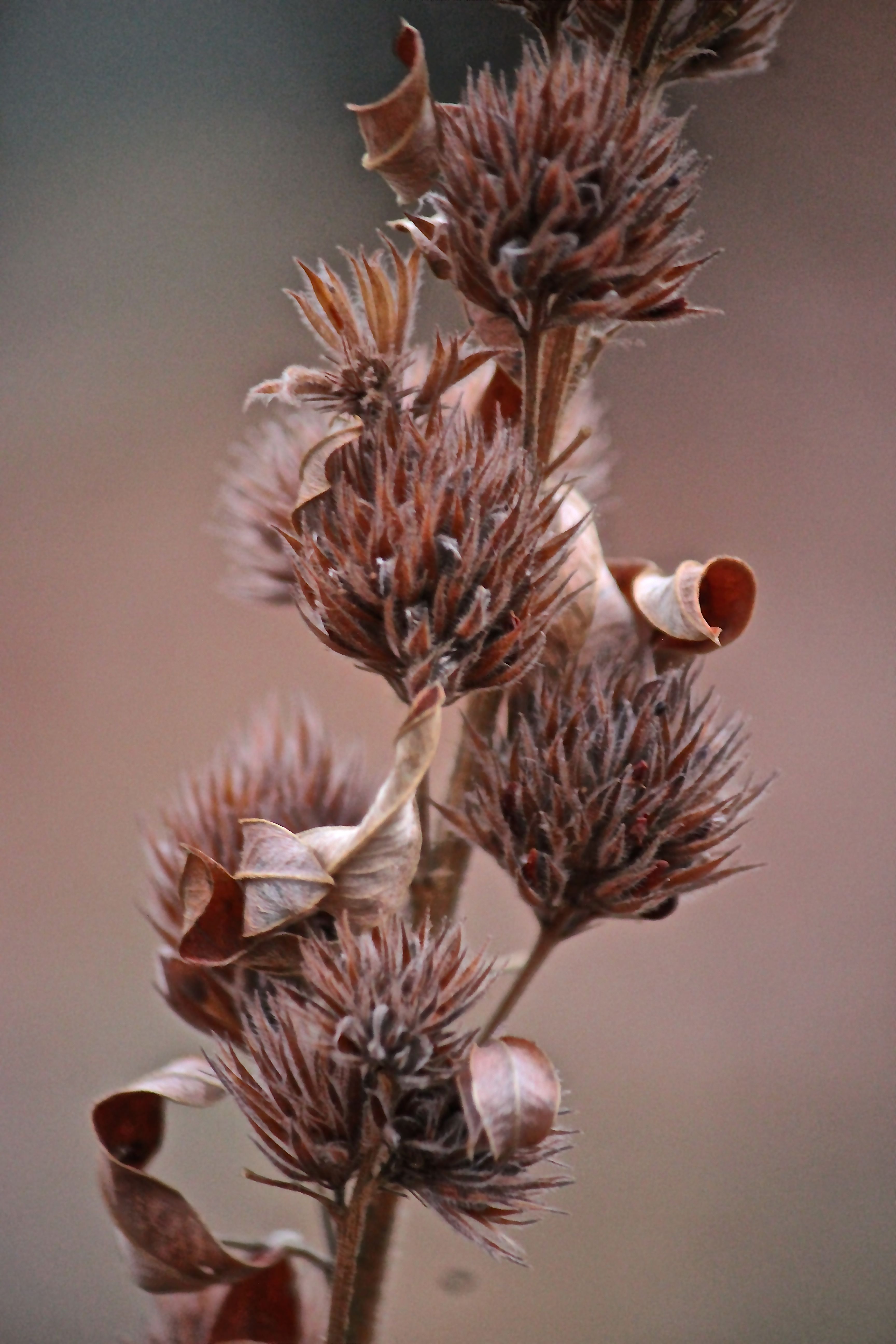
From the Bush-Clover, it was an easy transition into the texture department where more bargains awaited.
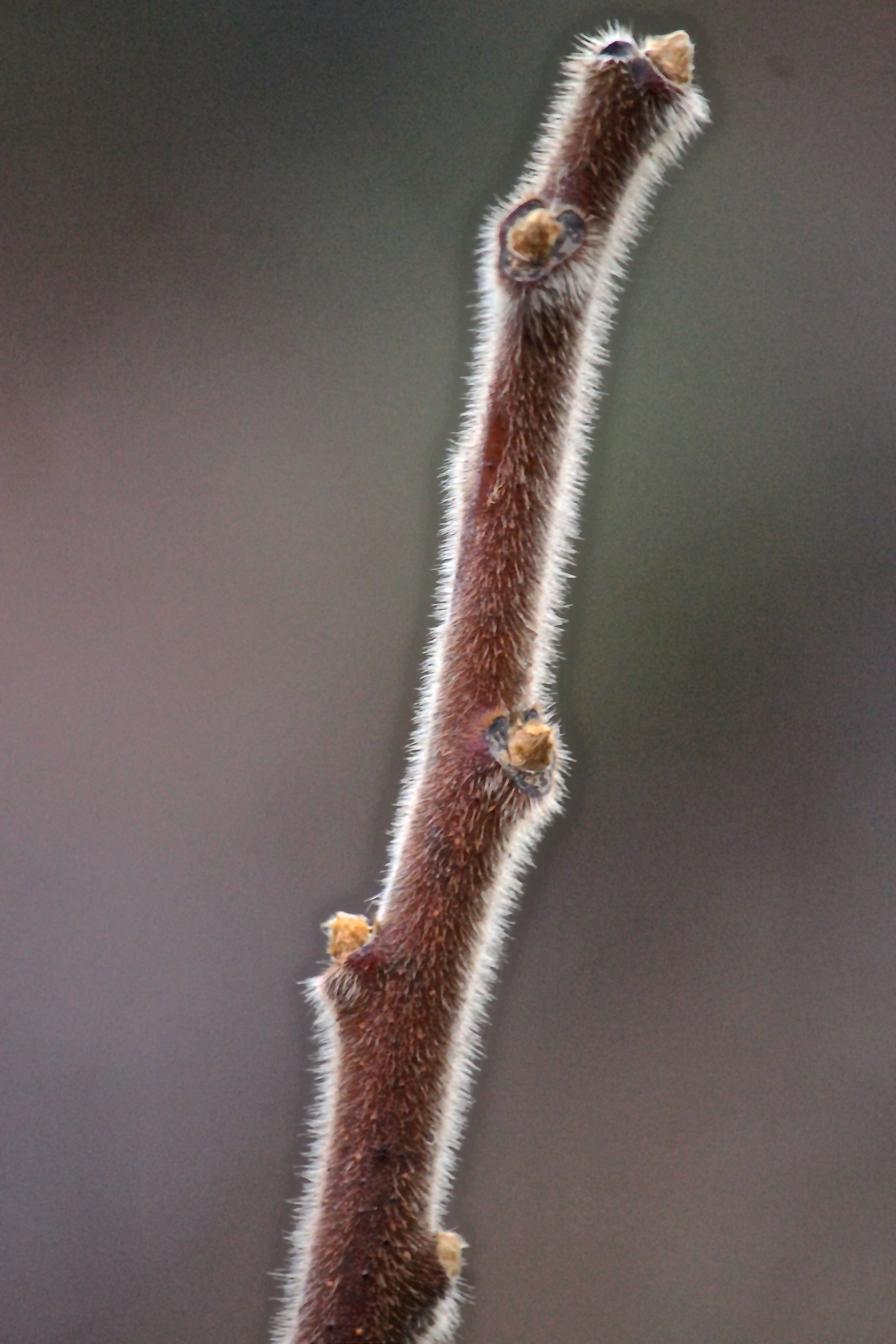
The velvety feel of the Staghorn Sumac warranted a caress. Having grown up with Poison Sumac, it always strikes me as odd to be so enamored with a member of this family. But I am.
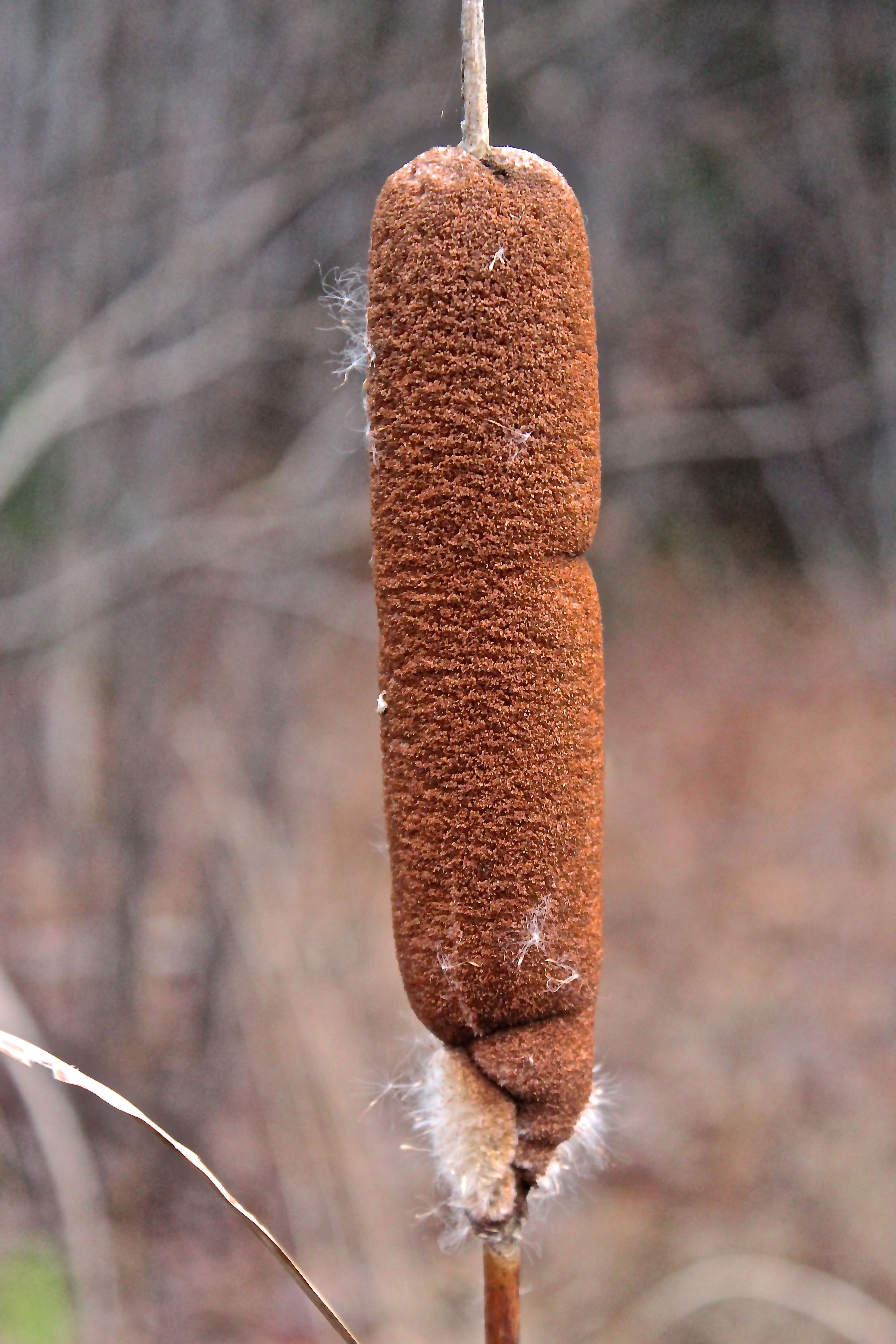


We stepped into the next aisle and found these corn-dogs on a stick. Cattails get their common name from their end-of-season fluffy spikes or tails. Need insulation or mattress stuffing? Check out aisle 6. From food to shaving cream to antifreeze, this is a bargain you don’t want to dismiss.

There’s even a two-for-one sale.

In contrast, though graceful in appearance when leafed out, the formidable thorns of a locust tree seem to serve as a warning sign–hands off the seed pods. Not exactly what I’d call a sweet deal.
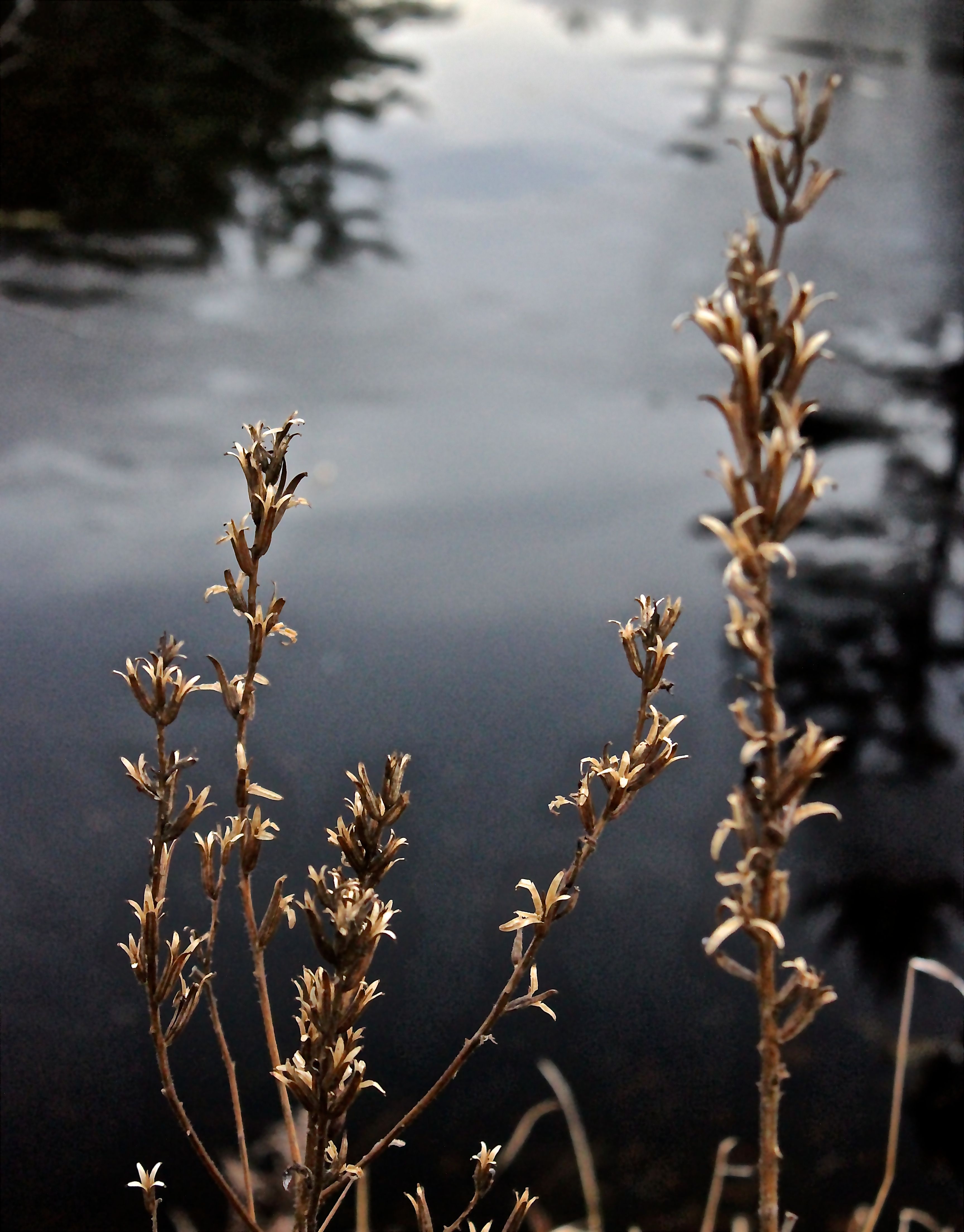
Impulse items drew our attention as well–those things we didn’t need but couldn’t resist. The spiraling of the Evening Primrose seed heads and

the curling leaves of the Sweet-Fern’s leaves begged to be noticed.
The light was starting to wan as we made our final purchases before heading home.
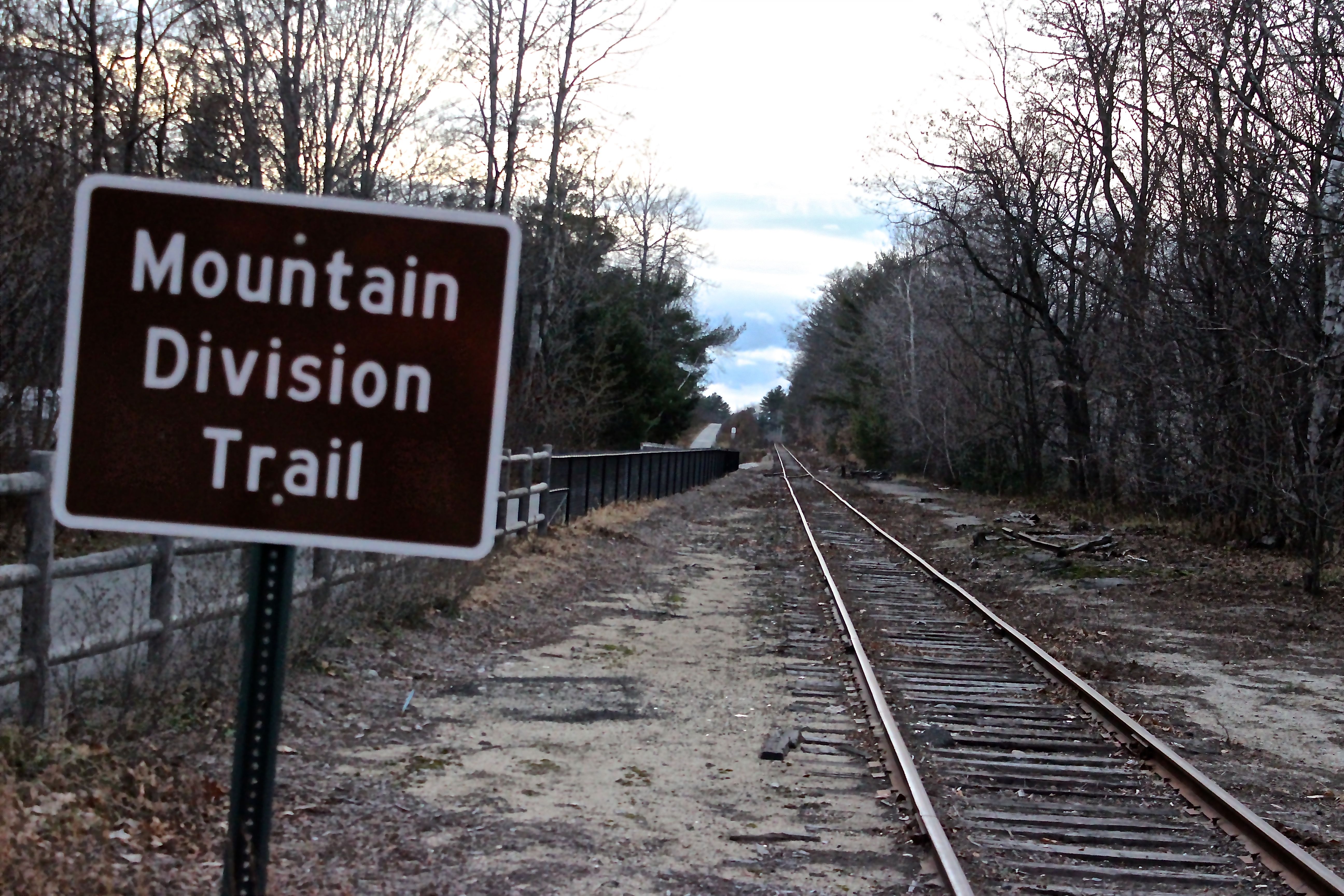
Our shopping trip along the Mountain Division Trail, a 4-mile long section of the rail trail in Fryeburg, had come to an end. But we were guaranteed free shipping for those purchases we couldn’t cart home.
J.M. and I bagged some exclusive specials as we hand picked the near endless stream of deals and discounts on this Black Friday. We knew we’d come to the right place . . . to practice our shopping expertise.
Trending Blaze Orange
Donning our blaze orange, eight of the Greater Lovell Land Trust‘s docents joined me today for an exploration along the trail to Otter Rock at the Heald and Bradley Ponds Reserve.
Our destination was the Otter Rock spur, not very far, but it’s amazing how long it can take us and we were impressed that we actually reached our goal.
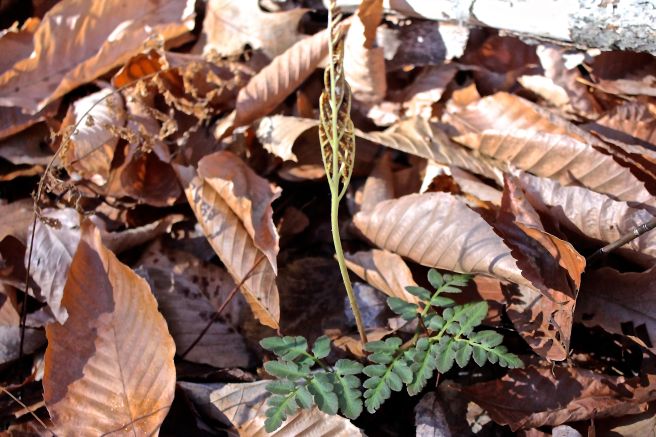
Along the way we stopped to admire the blunt-lobe grape ferns and their separate fertile stalks, some still intact.

And then we looked up. We’d been talking about tree bark, and right before our very eyes were four members of the birch family.

Paper Birch (Betula papyrifera) features chalky white bark that often peels away in large sheets. The peeled bark reveals pink or orange tints, only partially visible here, but evident on other trees in the neighborhood.

To the left of the Paper Birch stands a Yellow Birch (Betula alleghaniensis), with its curly ribbon-like strips of bronze or yellowish-gray bark giving it a shaggy appearance.

And to its left the one that excited us most, Black Birch (Betula lenta), sporting gray bark with long, horizontal lenticels. All trees have lenticels, but they are more obvious on some than others. These slits allow for the exchange of gas so the tree may breath.
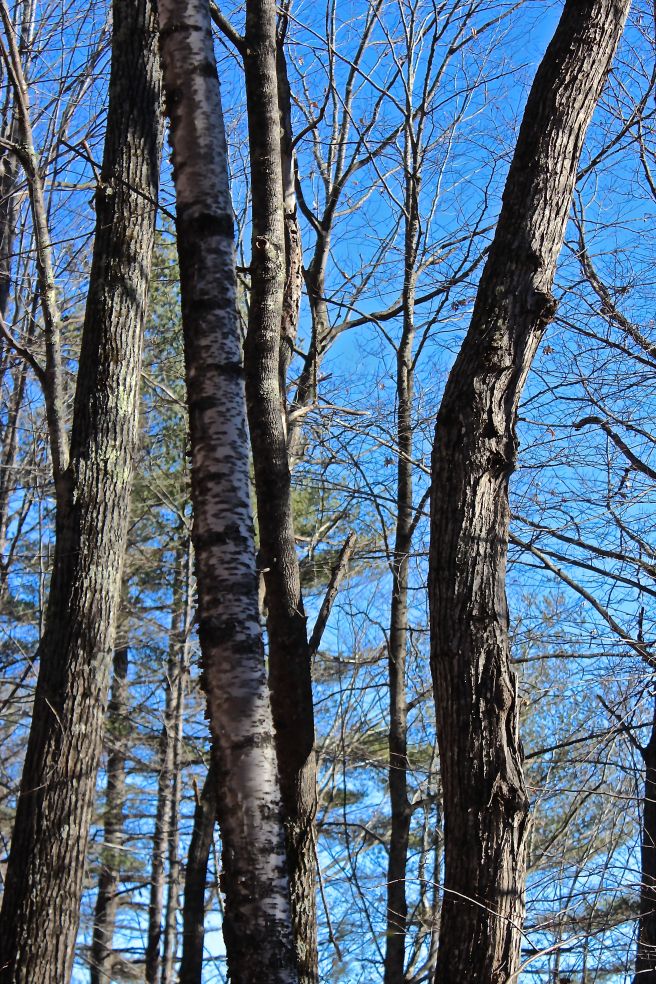
Last in the family line-up, a Gray Birch (Betula populifolia) showing off its almost dirty appearance and chevrons below the former branch sites.
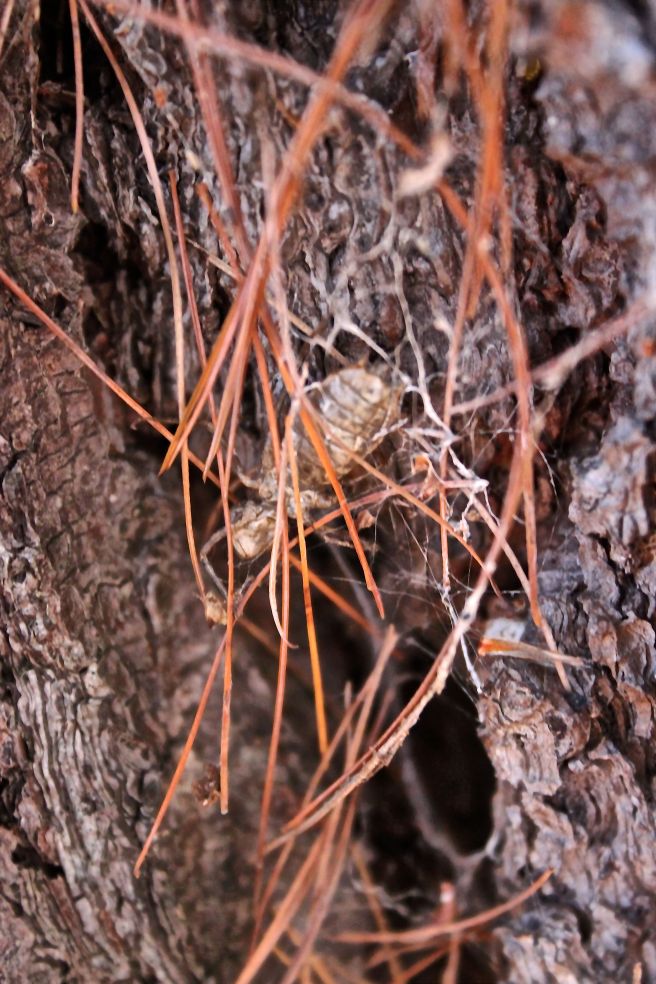
At Otter Rock, we found dragonfly nymph exoskeletons still clinging to tree bark

and rocks.

Our discovery of shells made us wonder and smile about others who have passed this way.

Now that the leaves are gone, we delighted in the knowledge that there is so much more to see, including Witch Hazel.
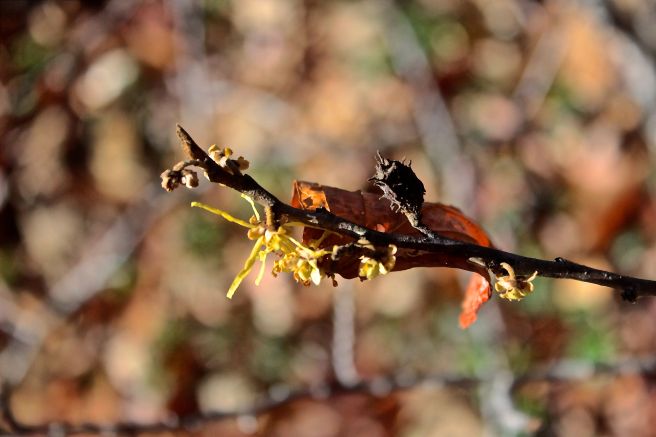
We examined one of the few remaining ribbony flowers, the scalpel-shaped buds, fruiting bodies, asymmetrical leaves and a spiny gall all on one branch.

Our very own Witch Hazel Expert, Docent Bob, demonstrated the way the seeds pop–referencing Henry David Thoreau’s discovery of this phenomenon.
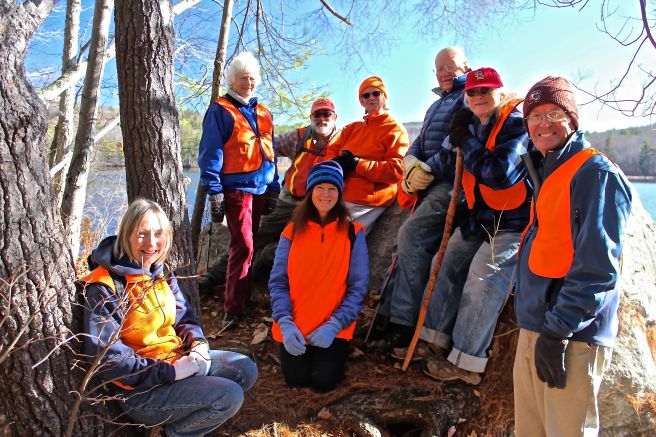
Before we headed back to the main trail, the group posed for a photo call. They all look so sporty in their blaze orange.

A few more finds as we walked back to the parking lot: remnants of a wild raisin (Viburnum cassinoides), so named because the shriveled fruits that remain look like raisins;

Black Cherry bark (Prunus serotina), easily identified by the small scales that curl outward like burnt cornflakes or potato chips;

and Northern Red Oak leaves displaying holiday colors.

Though most of us parted company just beyond the mill stream, a couple of us continued on to the John A. Segur Wildlife Refuge off New Road.
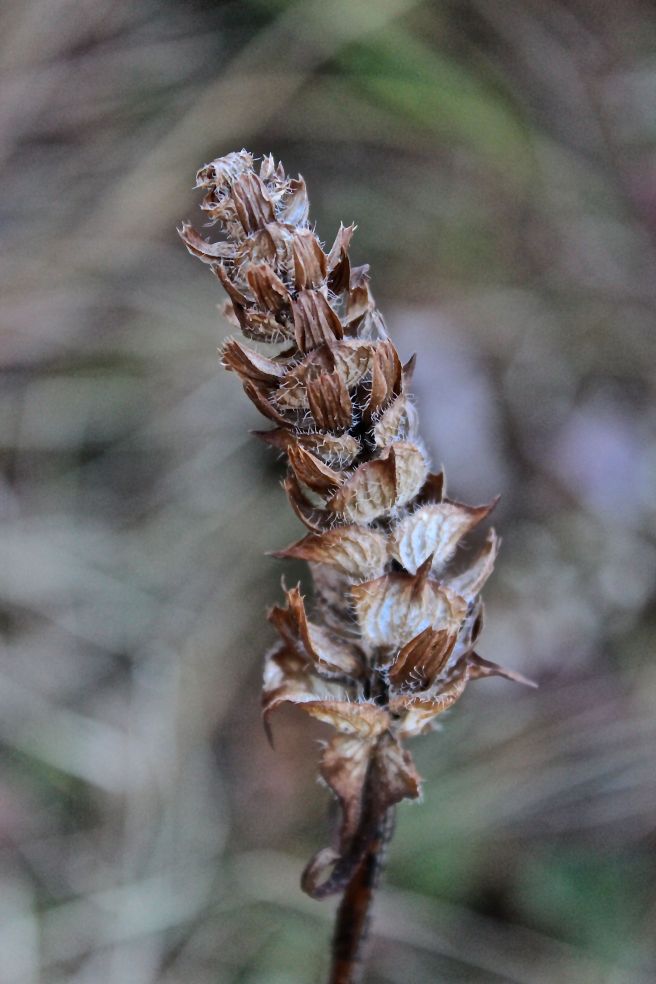
We focused our attention on winter weeds, a topic for our January 9th walk. On this old logging road, some of the Selfheal or Heal-all (Prunella vulgaris) stands at least a foot and a half tall. As pretty as it is in the summer, it’s still a sight to behold in its winter structure.

Another to look forward to is the Evening Primrose (Oenothera biennia). Its fruits are four-parted capsules arranged in a spike at the tip of the stem, looking rather like flowers themselves.
There’s more to see, but I don’t want to give it all away.

My last stop for the day was a loop around the Chip Stockford Reserve. I wasn’t the only one trending blaze orange. The glow of the late afternoon sun cast an orange hue across the beech leaves.
November in western Maine. We’re happy to don our blaze orange and get out on the trails.
Work We Must Mondate
Today was a day made for some writing/editing work and yard work, but . . . my guy and I managed to squeeze in a hike–yesterday.
Last week, our friend, Dick B., excitedly shared with us a hiking location we’d never explored–Notch Mountain in Porter. He had recently walked the trail with the Denmark Mountain Hikers, a local group that ventures off each Friday.
So it was, we followed Dick’s directions and drove to Porter in search of the trailhead. An easy miss, but we spied the wood kiln he spoke of as we drove past it and turned around at the Hiram town line, knowing we’d gone too far. Backtracking, the trailhead was across from Clemons Point Road and the kiln.
.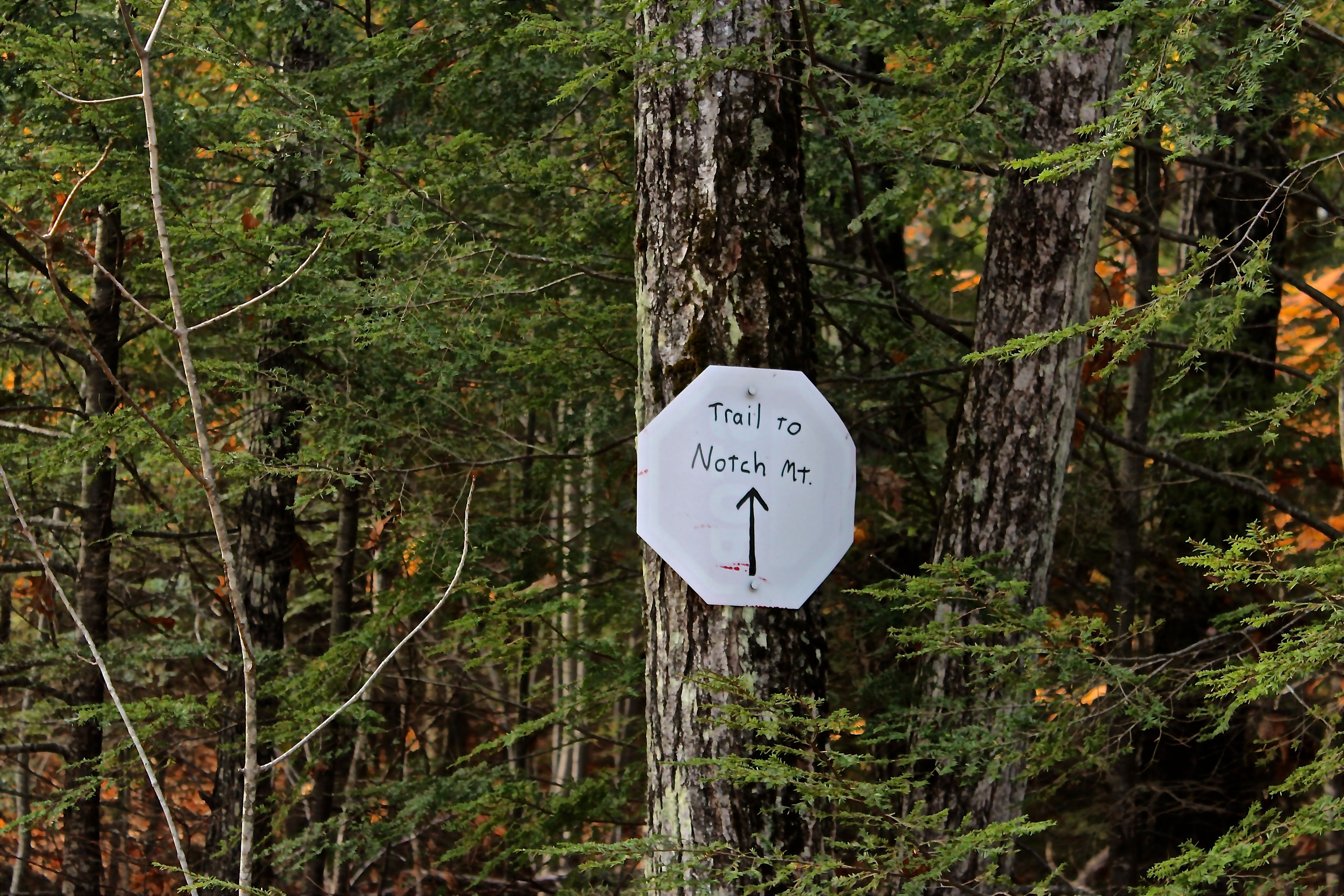
The sign–about twenty feet in from the road. Unassuming to say the least.
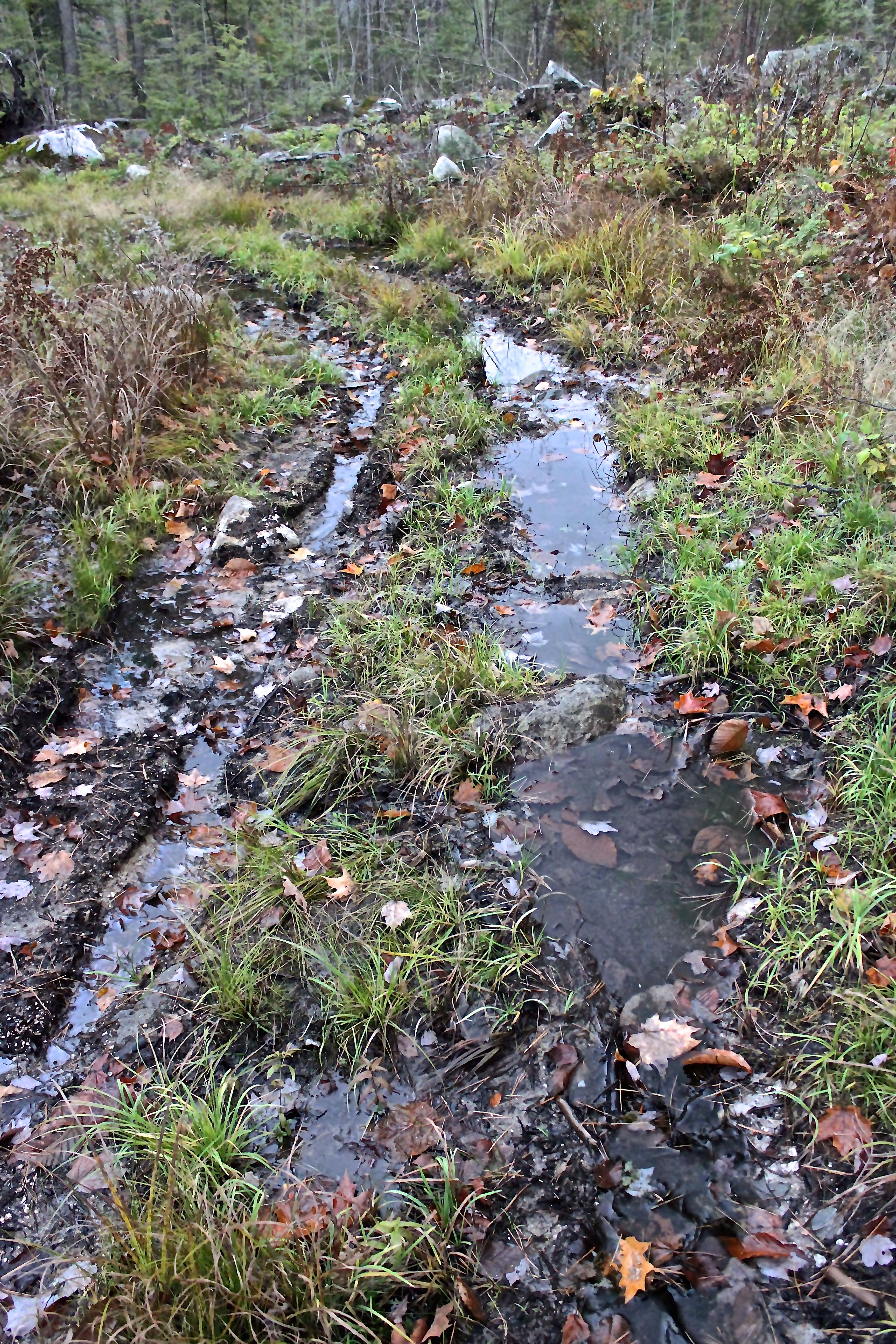
As we played dodge the water and looked at the slayed trees, we turned to each other and grimaced. What was Dick thinking?

But we journeyed on and the muckiness abated. Then, this foundation practically jumped out at us.

We weren’t sure exactly what we were looking at, but felt that this was a large house and there was either an attached barn or large shed, or the other structure was located quite close to the house.

Buried beneath the leaves, bricks indicated a chimney on an outside wall.

We discovered what may have been a tool shed–a separate, three-sided room.

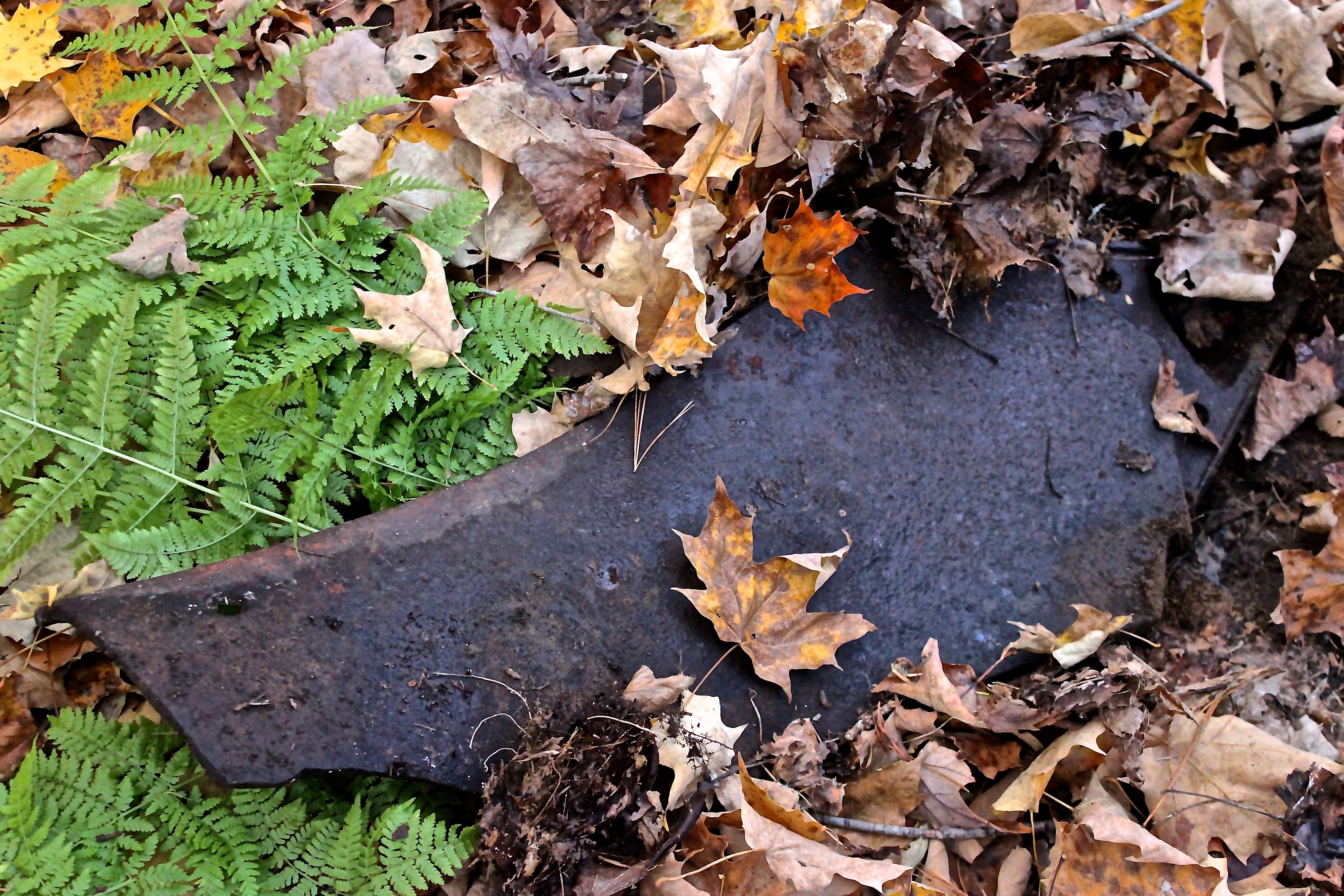
Indeed, we even found a few tools, including a plow, which became significant as we continued to explore along the trail.

In the barn foundation, I like how one stone is wedged between the other two. It offers a reflection of how these rocks came to be in this place. The minerals, like quartz and feldspar, that are an essential part of granite’s make-up, interlock like pieces of a jigsaw puzzle. The end result: granite is one of the strongest and most durable rocks.
Using the plug and feather method practiced in the 19th century, small holes were hand drilled every six or seven inches across the stone. Two shims, called feathers, were placed in the hole and a wedge or plug was hammered between them. The farmer probably built this house in the winter when his farming duties weren’t as plentiful. And by drilling then, ice formed in the holes and helped to complete the work of splitting the granite. He and his family would have used a stone boat or sledge pulled by oxen to move the stones into place.

A little further along, we came upon a massive wall of medium-size stones. This farmer must have cleared many, many acres, thus producing an incredible stone potato crop. And then moved them all so he could plow. My fingers twinge and my back hurts just thinking about all the work involved–makes our yard work look so easy.
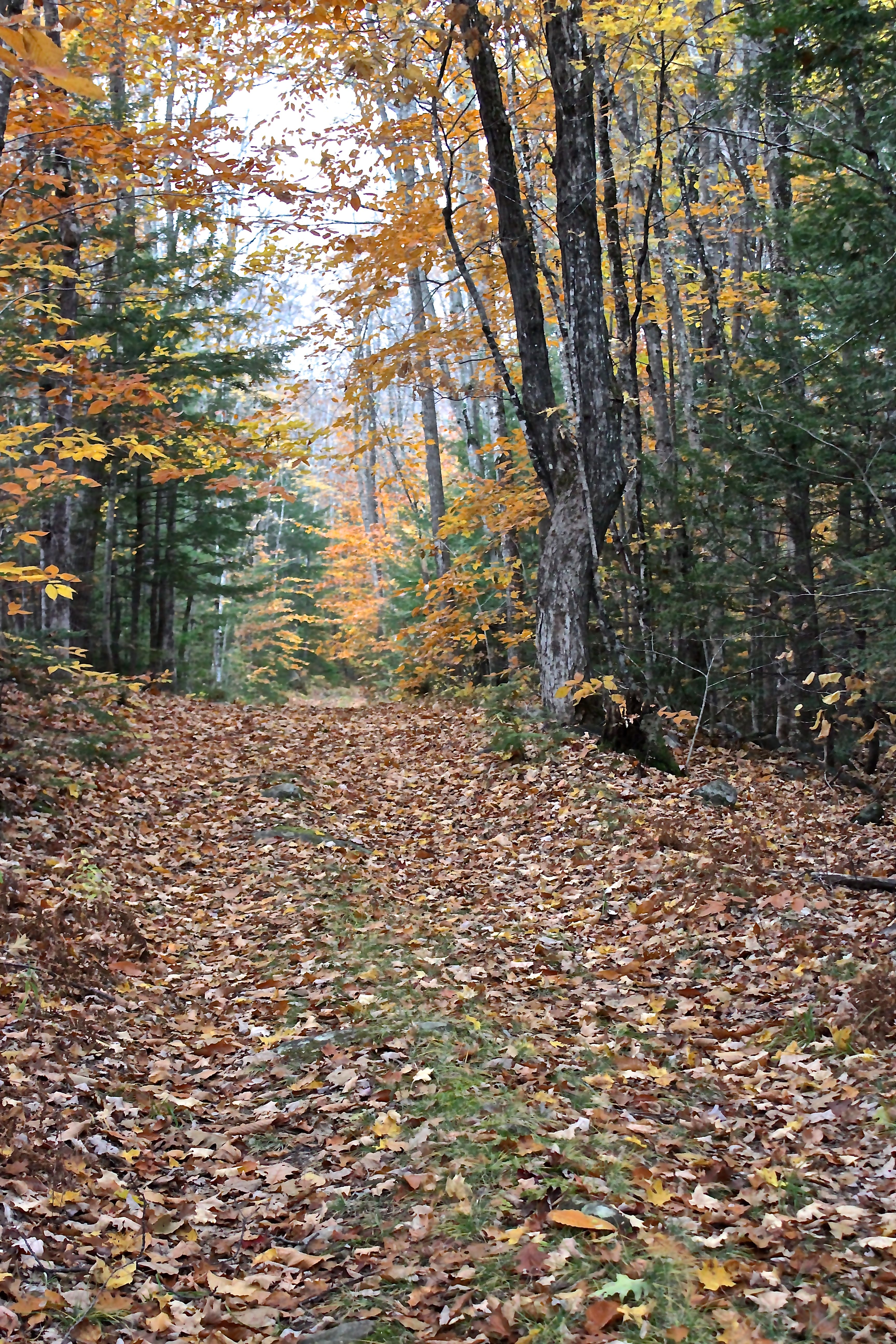
On either side of the trail were stone walls, indicating this was more than a logging road at one point in time.
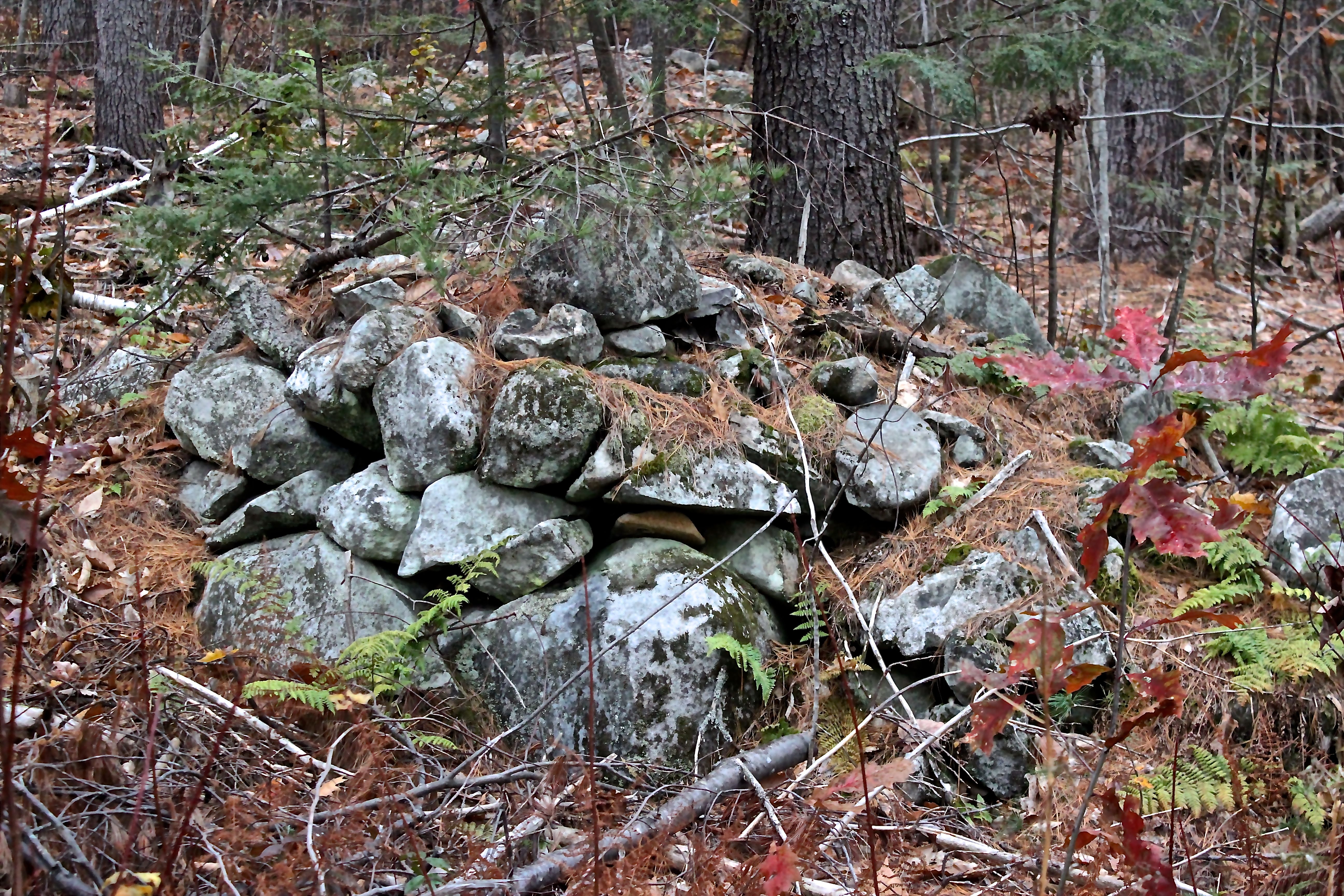
Throughout the woods, we found more piles of rocks, some with small stones and others, like this with medium-size stones. Rather than quilting bees, this family must have enjoyed stone bees–an exercise to remove as many stones from the ground as possible.
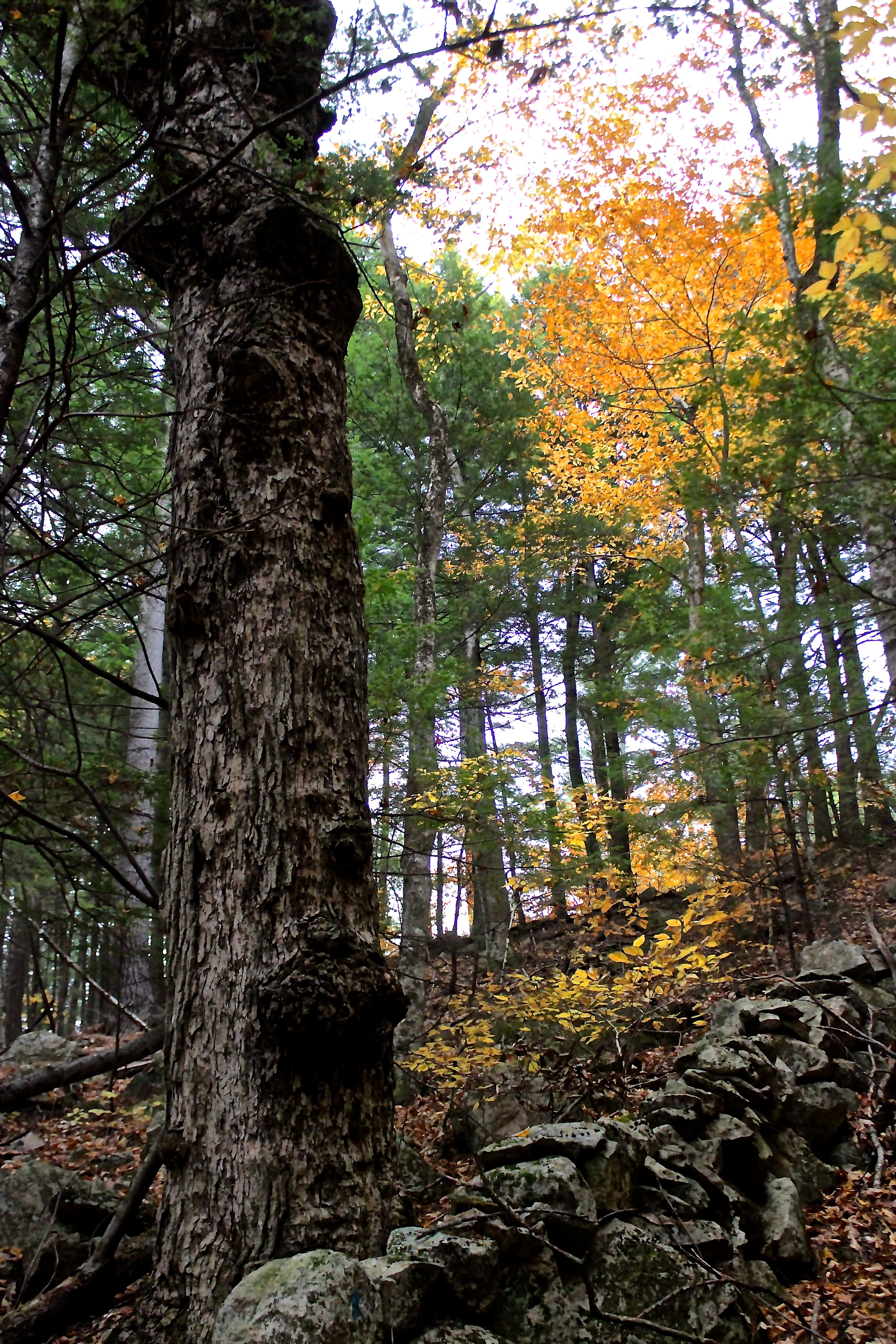
The stone wall frenzy is evidenced all along the trail. Sometimes double-wide garden walls, and other times single walls, also called farmer or pasture walls that were built as boundaries, and to keep animals from destroying crops.

Dick had mentioned the Wormwood cemetery, but we were still surprised when we happened upon it.

b. Jun. 20, 1828; d. Oct. 27, 1860
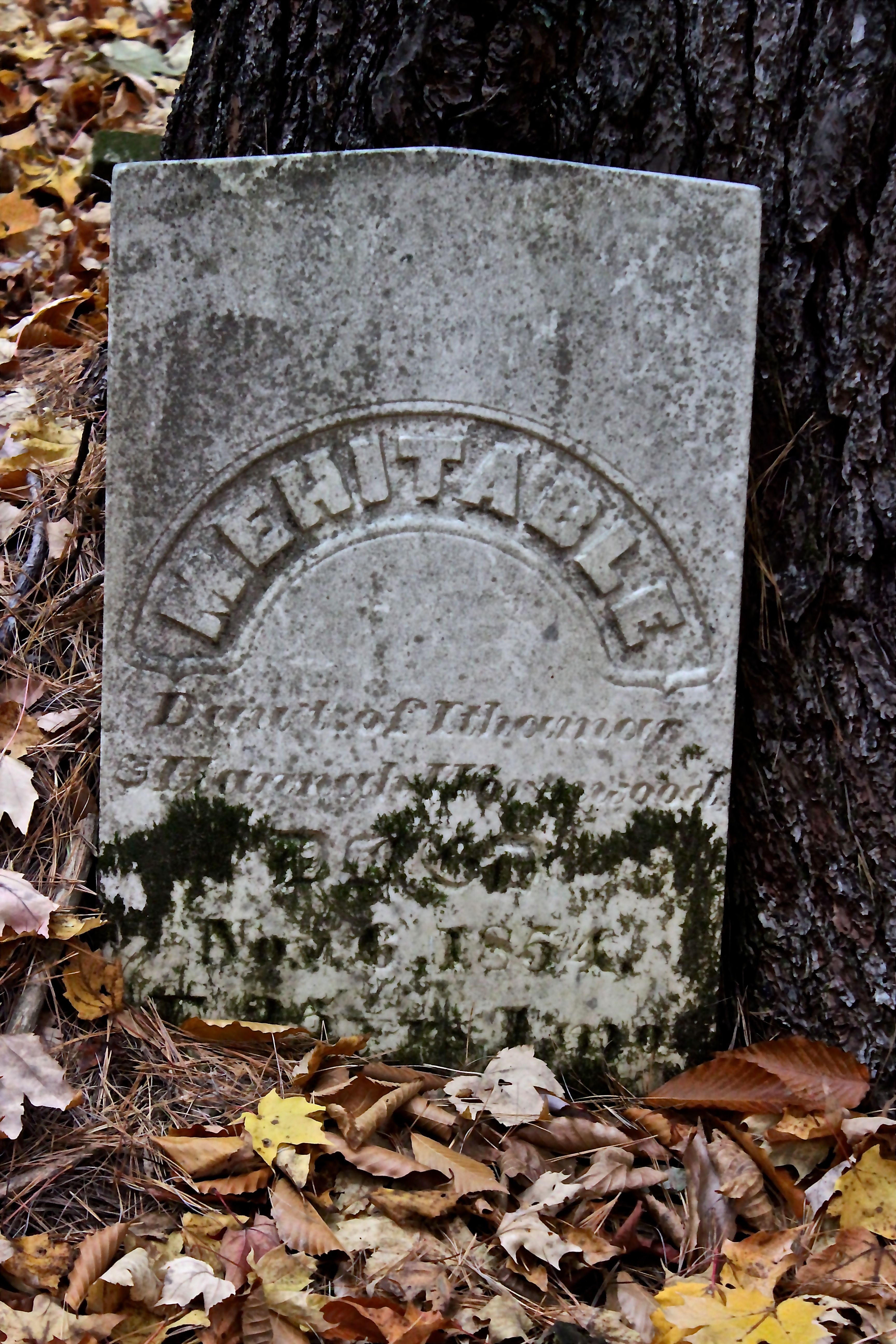
b. Oct. 16, 1825; d. Nov. 27, 1851

b. 1826; d. Dec. 27, 1851
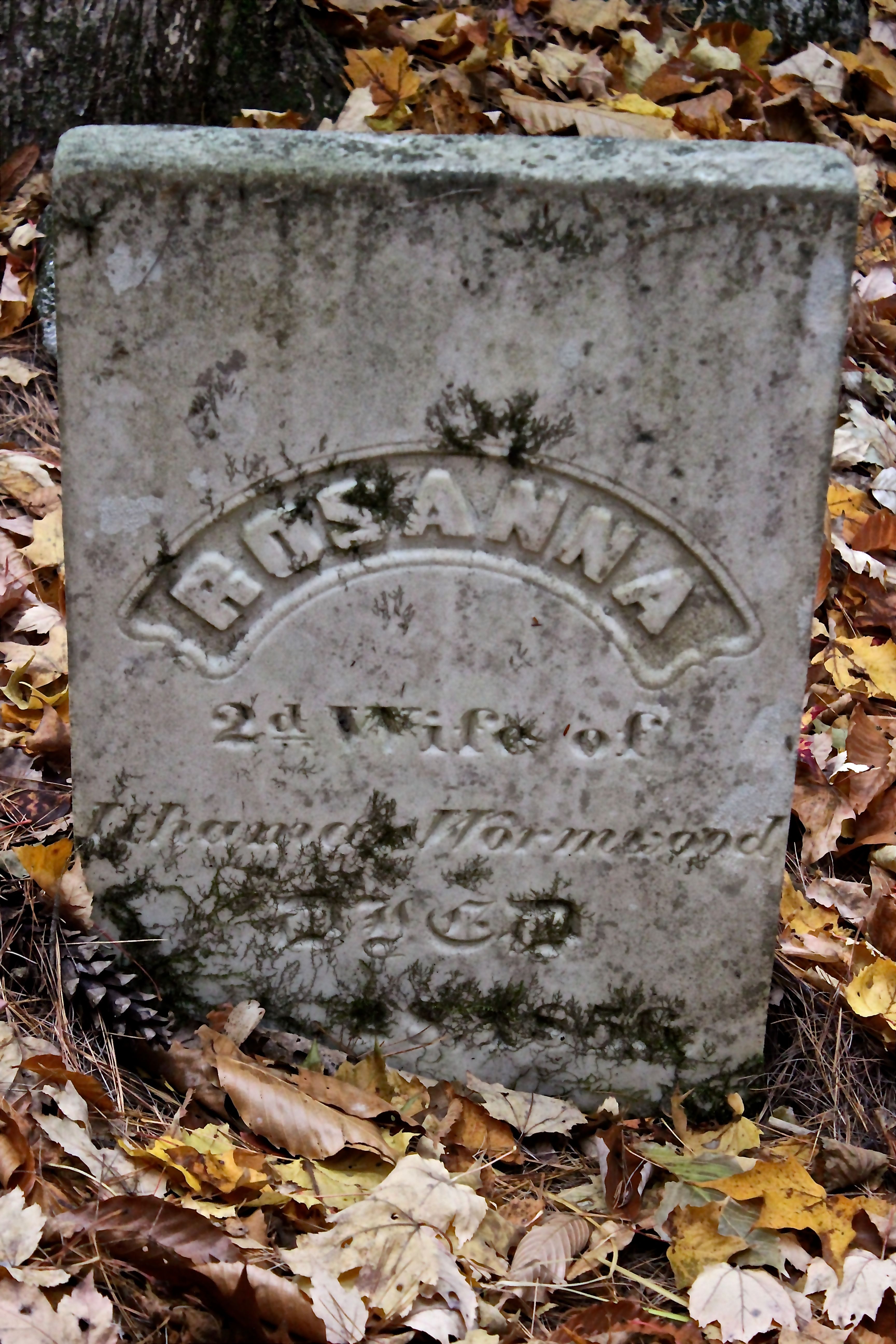
Rosanna Warren Wormwood, 2nd wife of Ithamar Wormwood
b. Oct., 1791; d. Feb. 28, 1856

Hannah and Ithamar Wormwood (b. May 29, 1791; d. Jul. 16, 1865). Two-year-old Jason Fly was also buried here.
Apparently the Flys were related to the Wormwoods, which makes sense. I suspect that there are other foundations to be discovered, but I was with my guy–Mr. Destinationitis, and so we continued toward the summit.

As we climbed, we noticed glacial striations on rocks (aka snowmobile etchings),

beech trees that think they are contortionists,

and a mix of white and Northern red oak leaves.
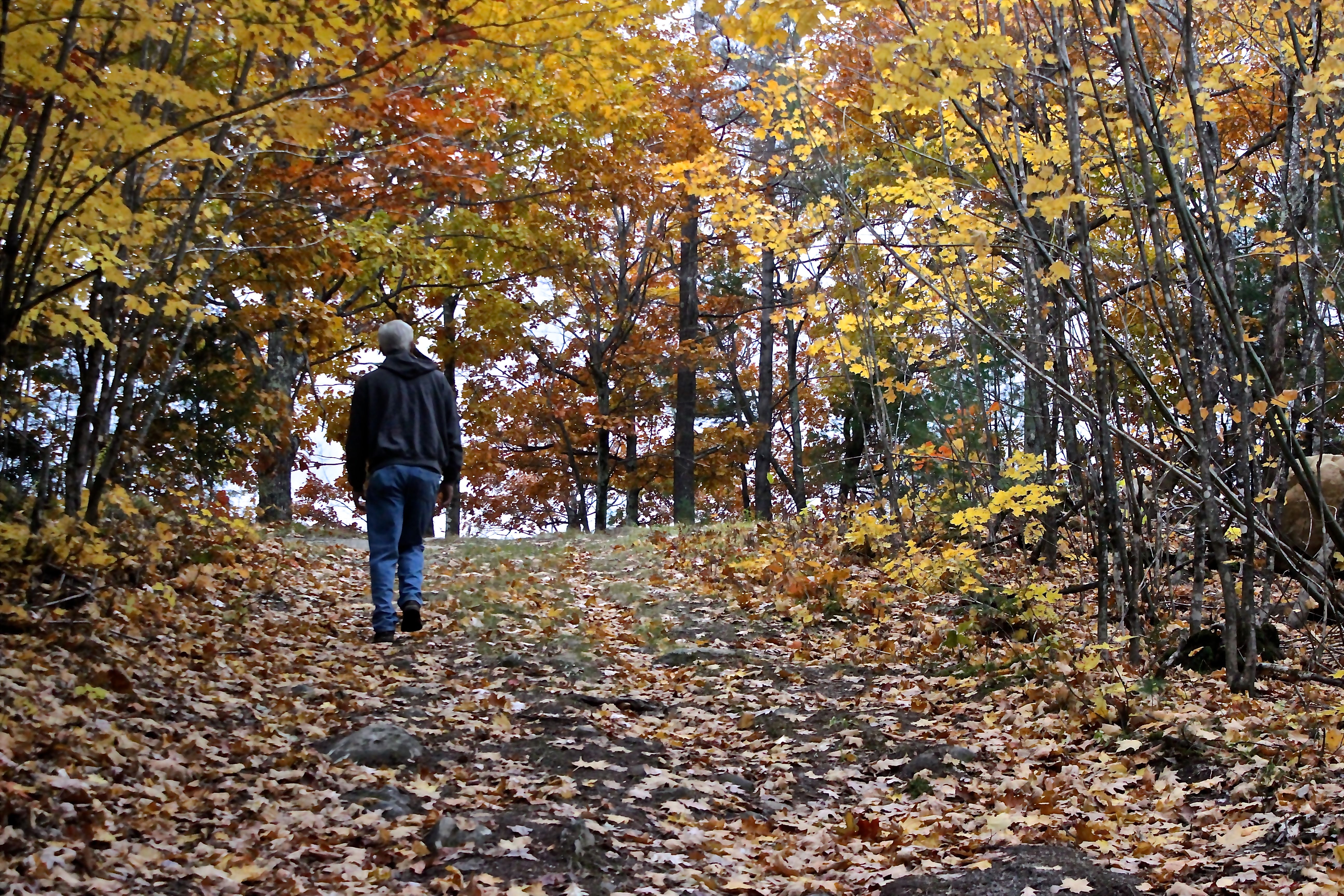
Then the summit came into view.
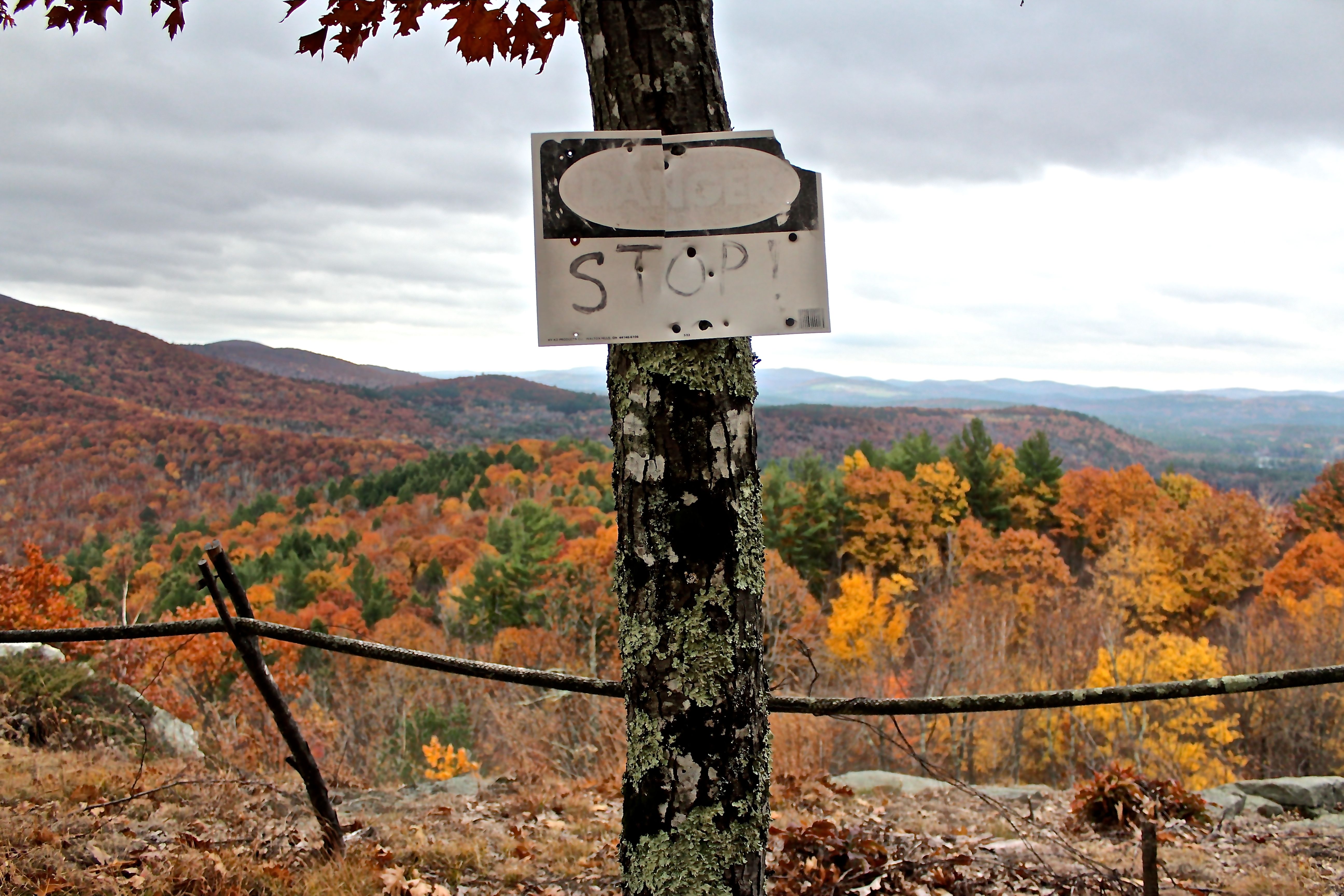
Thank goodness for the faded stop sign

and the fairy who watches over all who step too close to the edge.

As the rain clouds gathered, we ate our PB&J sandwiches, this time topped off with Halloween candy and views of Clemons and Little Clemons ponds.
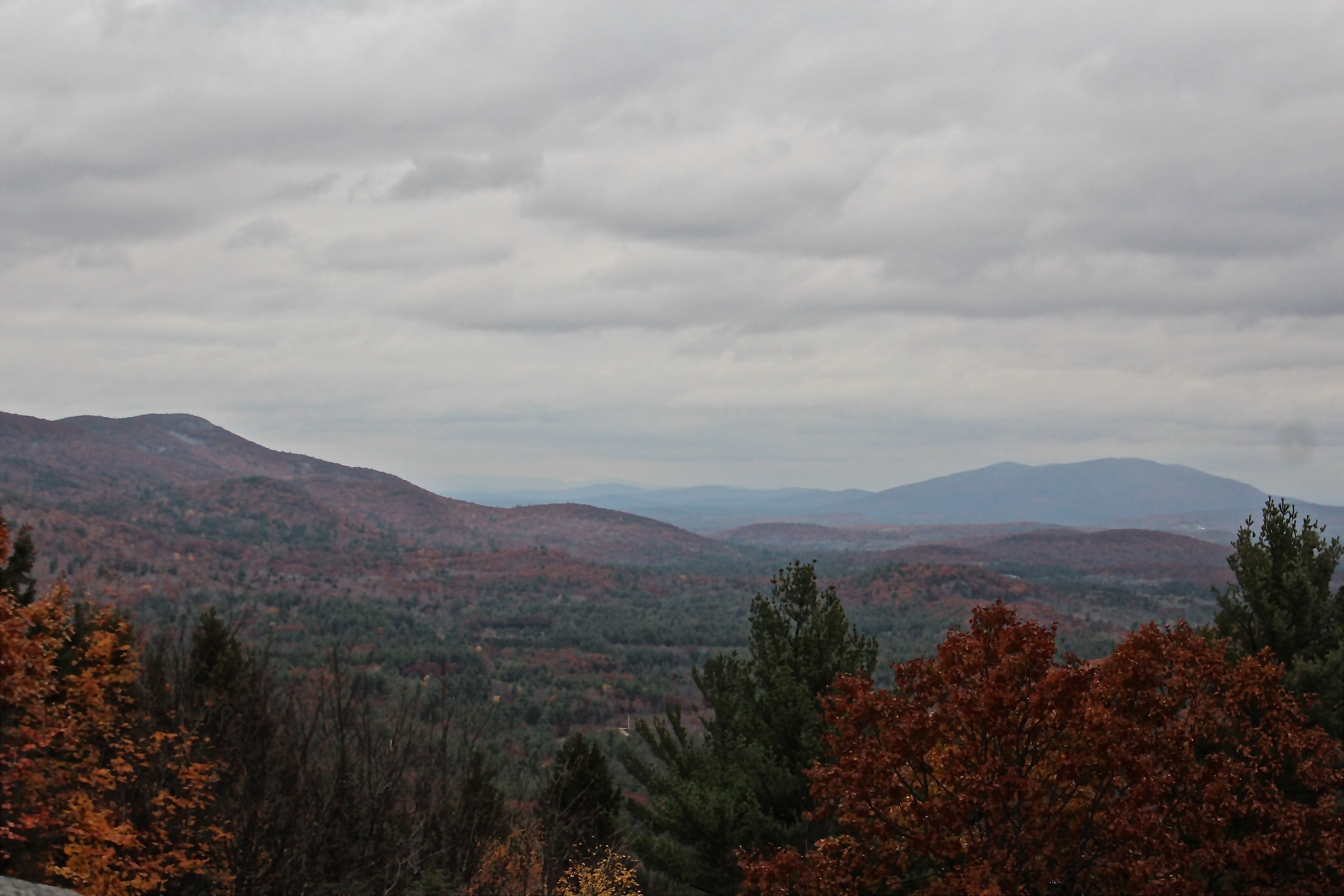
Burnt Meadow Mountain and Pleasant Mountain formed the backdrop.
We hiked down among rain drops, but the sun shone once we arrived home.
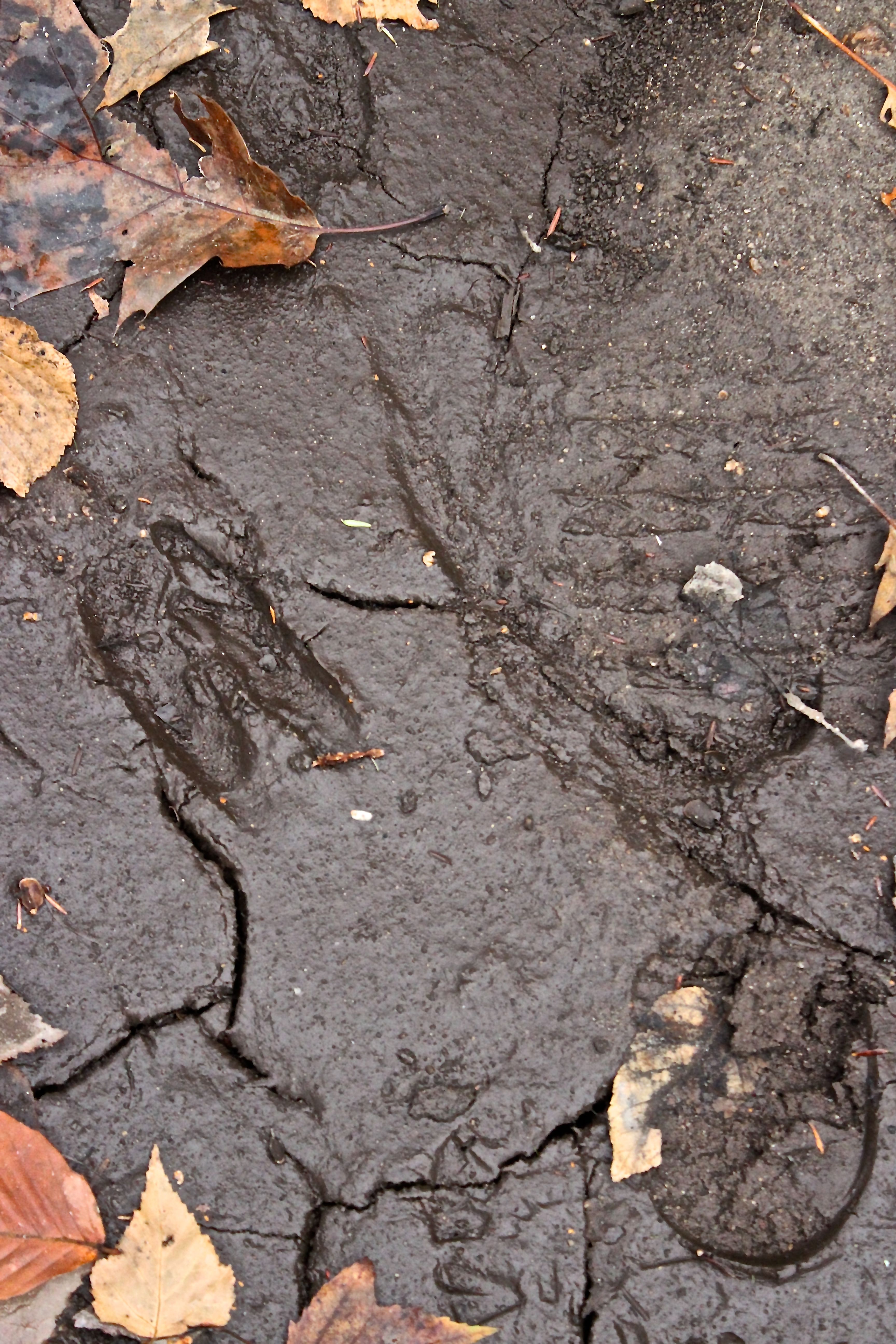
I was restless and didn’t want to deal with yard work, so I went for a walk and came upon evidence of the hunter and the hunted.
Today, while our work continued, I had the opportunity to escape to Pondicherry Park for a stewardship committee meeting–now that’s my idea of a great meeting place.
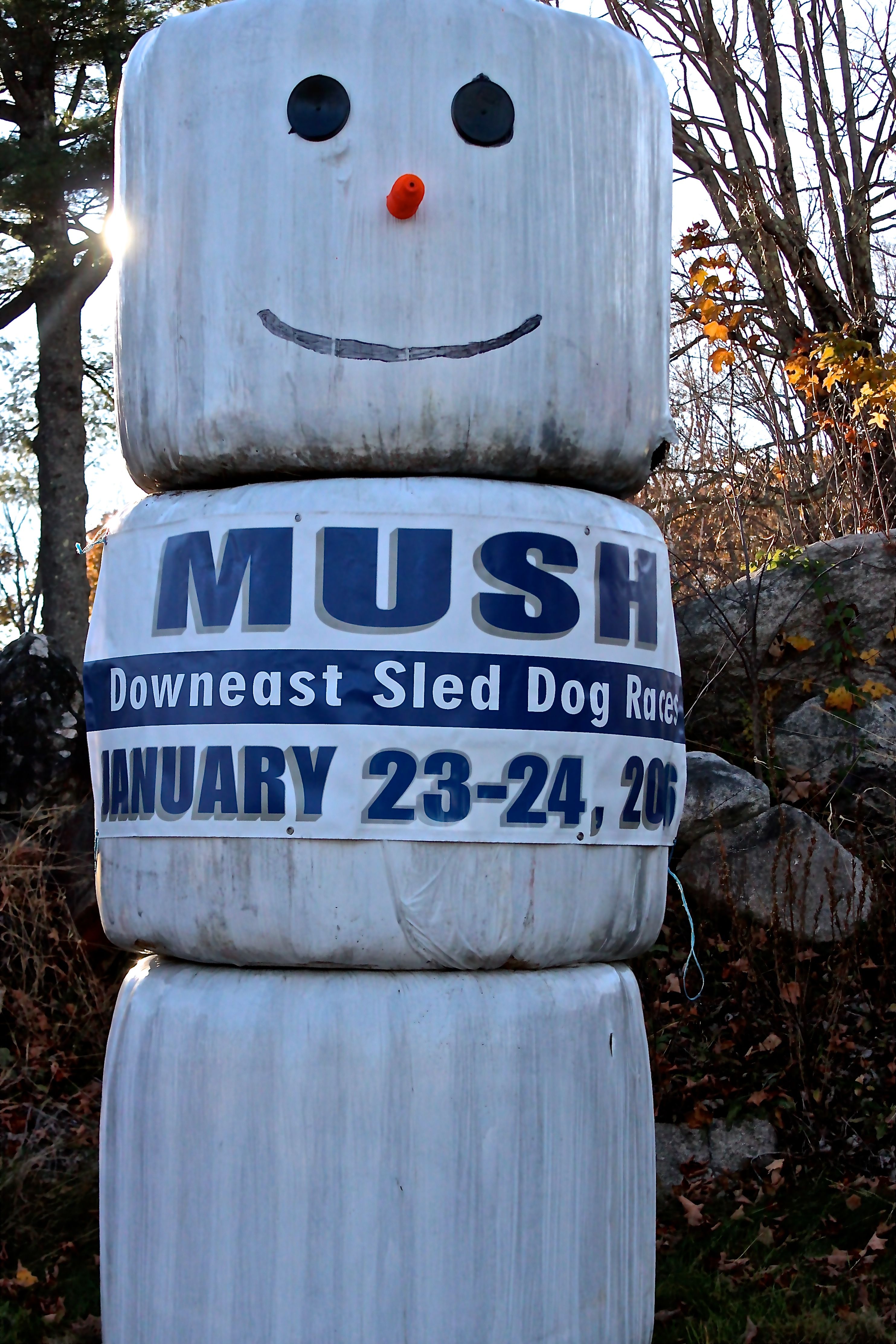
On my way, this guy reminded me that the next season is right around the corner (literally).

And in the park–still plenty of color to reflect upon.
We know we have to work, whether to earn a living or maintain a home, but we do love our opportunities to explore new and old places. Thanks for sharing this one with us, Dick. It warrants further exploration to wander and wonder.
Three-Season Mondate at Back Pond Reserve
OK, so it wasn’t three seasons all packed into one Monday date, but walking up the Mountain Trail at GLLT’s Back Pond Reserve in Stoneham today brought back memories of previous visits by my guy and me.
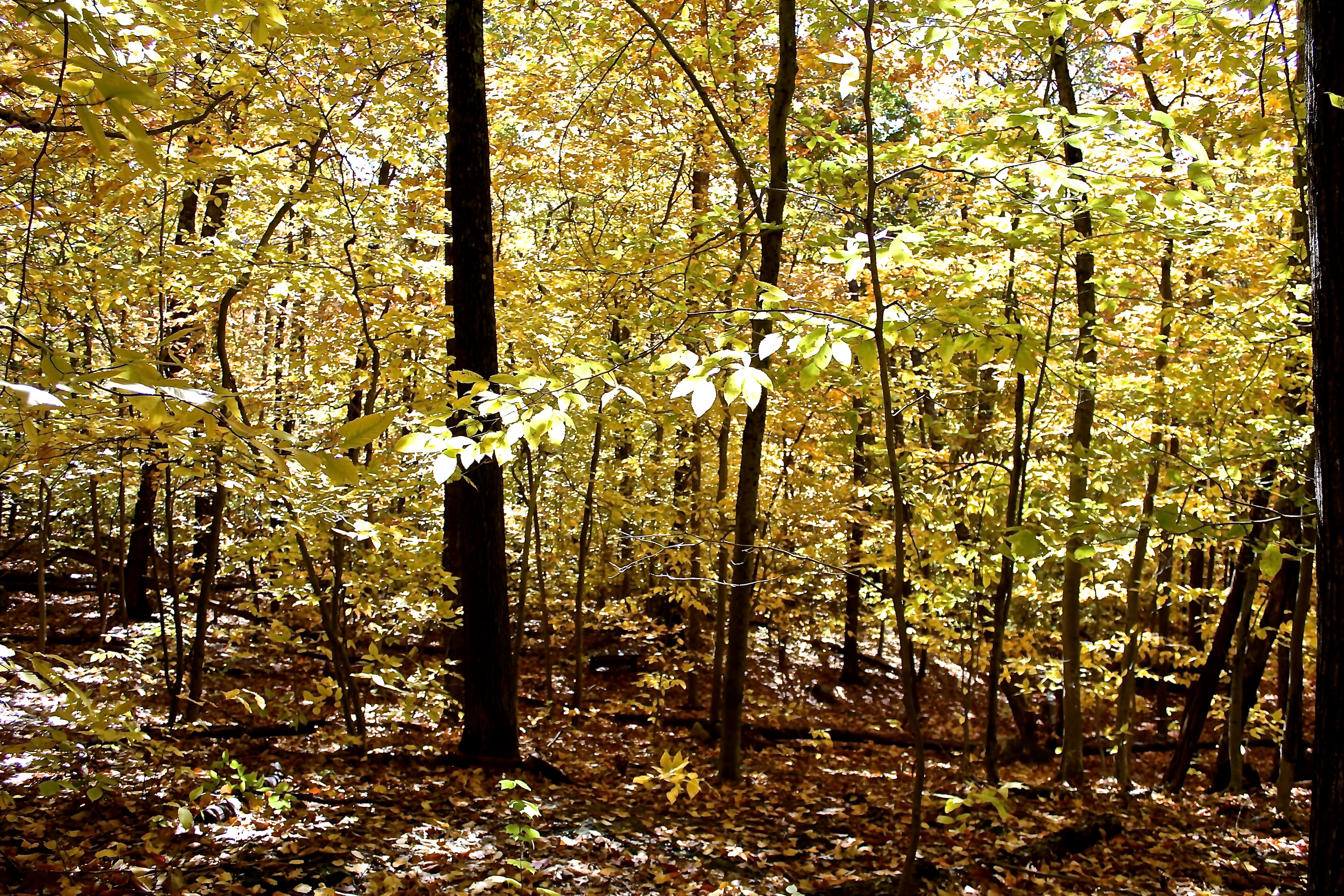
The woods are awash in golden-green yellows right now, especially where the trees include beech, big-tooth aspen and striped maple.

Climbing higher, variations of red join the carpet display.

We were surprised by how quickly we reached the summit, which is what got us recalling previous visits. Today, the water of three of the Five Kezars sparkled while Pleasant Mountain stood watch in the background.
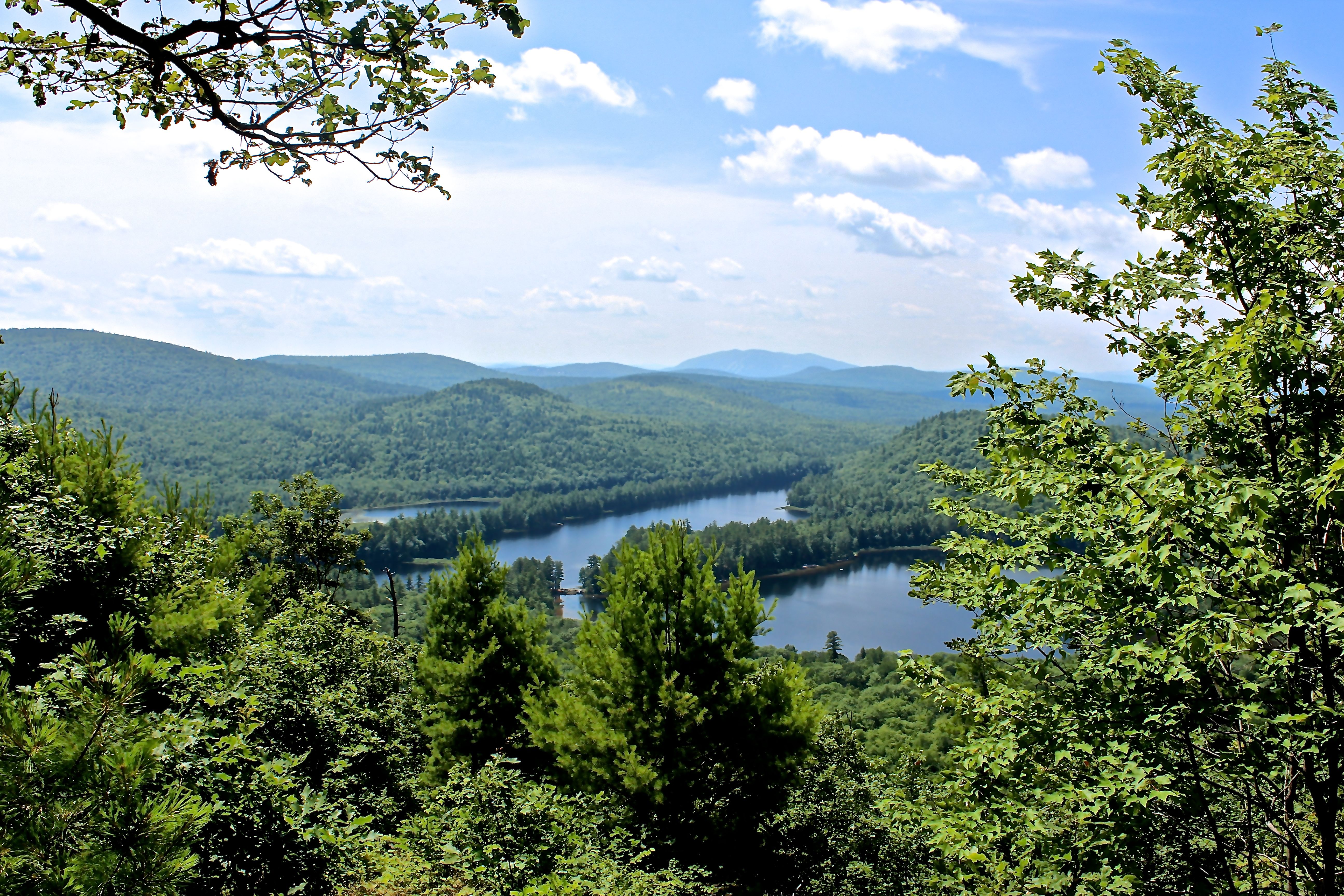

As I looked through my photo files, I realized we have never hiked this trail in the spring. In the summer there are wildflowers to make us pause, and winter finds us exploring mammal activity–thus our treks are slower.
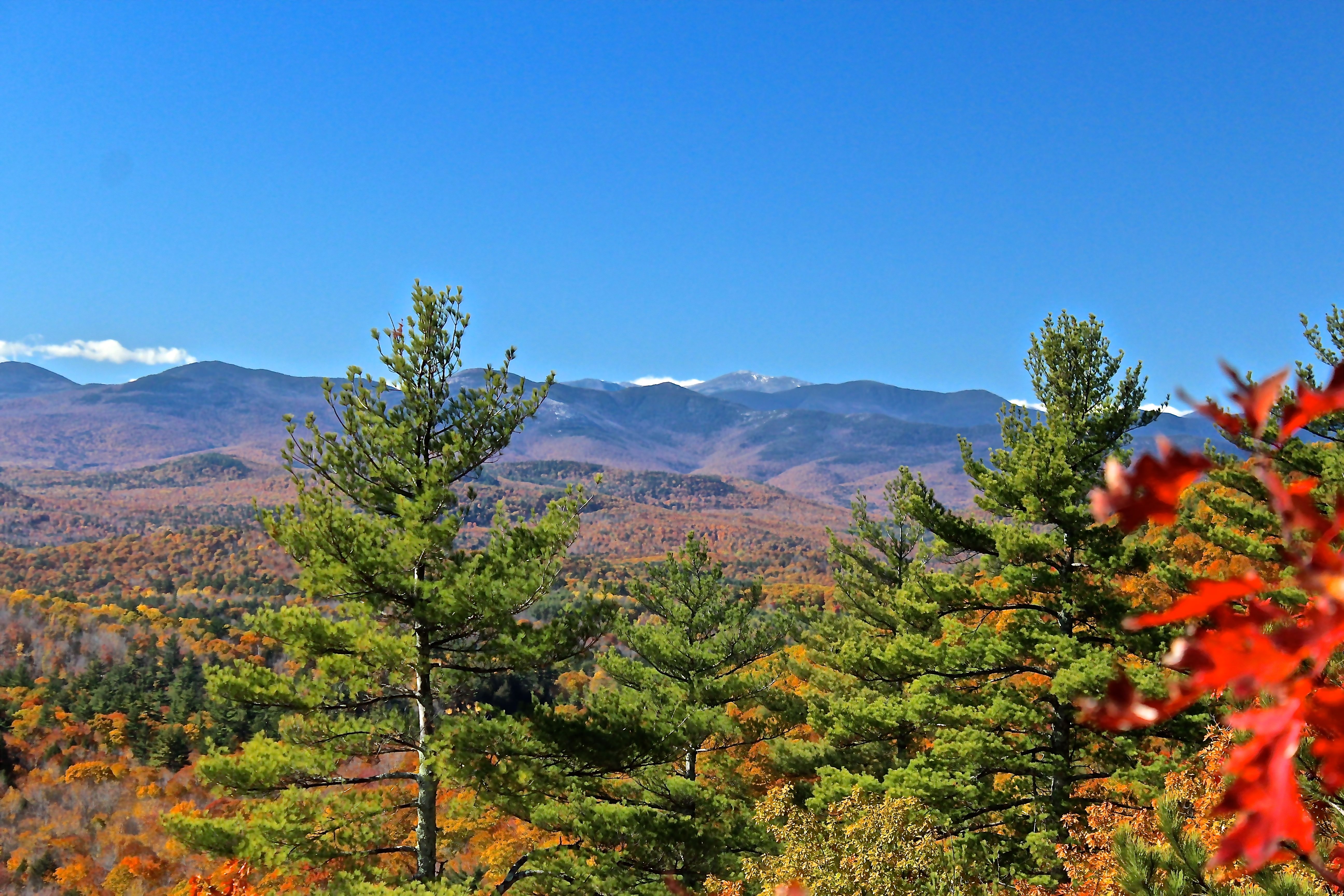
Today’s view included snow on Mount Washington, the grayish-white mountain located between the pines.

As we enjoyed the view, we topped off our PB&J sandwiches with the last couple of truffles we had purchased at Ganong Chocolatier in St. Stephen, New Brunswick, earlier this month.

And water, of course.

Instead of letting the arrows confuse us, we turned 180˚ and followed the connector trail between the Mountain and Ron’s Loop. It’s not on the map yet and still needs some work, but it’s full of surprises–only a few of which I’ll share right now.
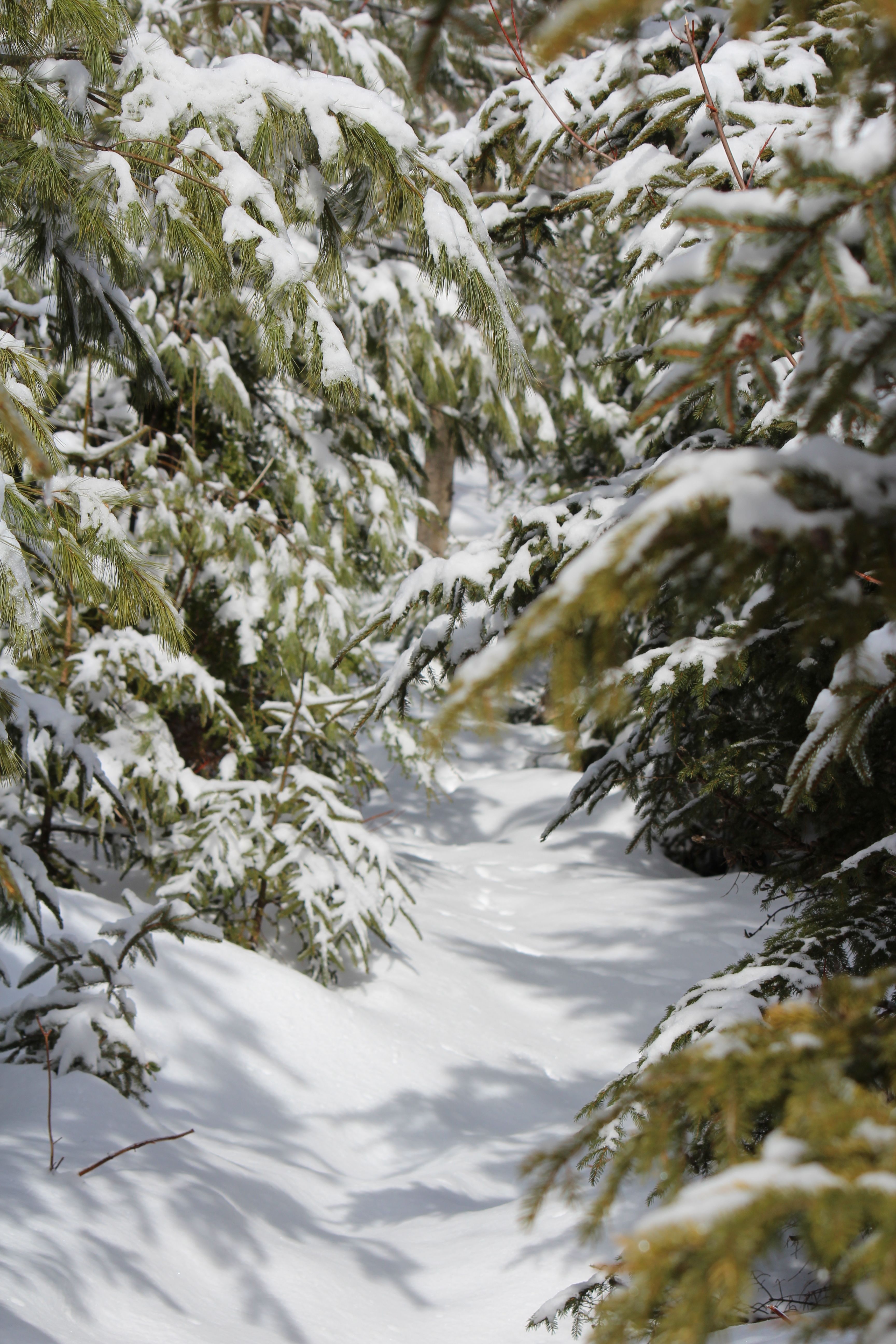
We’ve always enjoyed this trail and today realized that though it’s much easier to follow than it was a few years ago, many trees have blown down along the way.
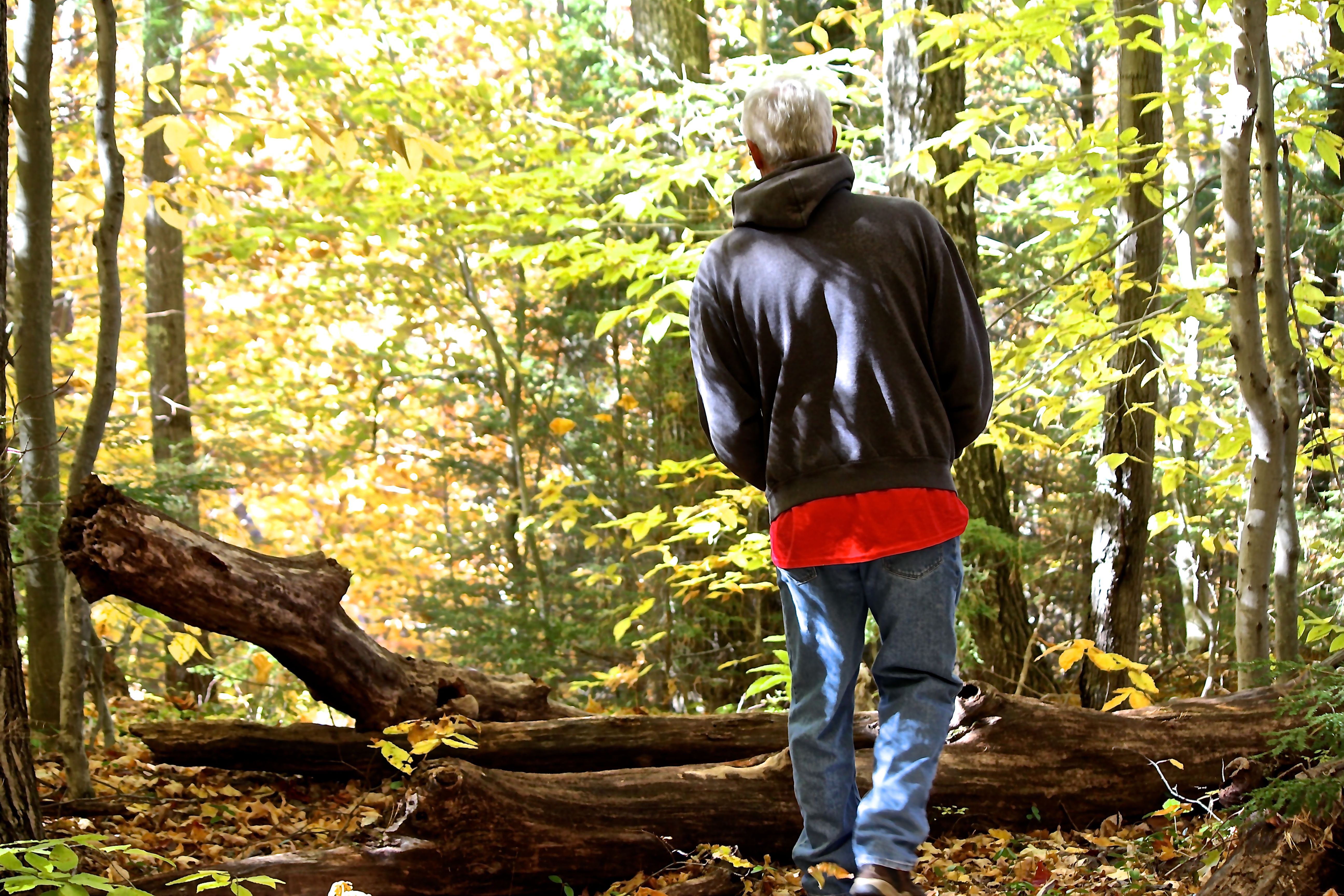
They’re easy enough to climb over. If you go, do know that there are two or three mucky spots along this trail as well, but again, easy to get around.
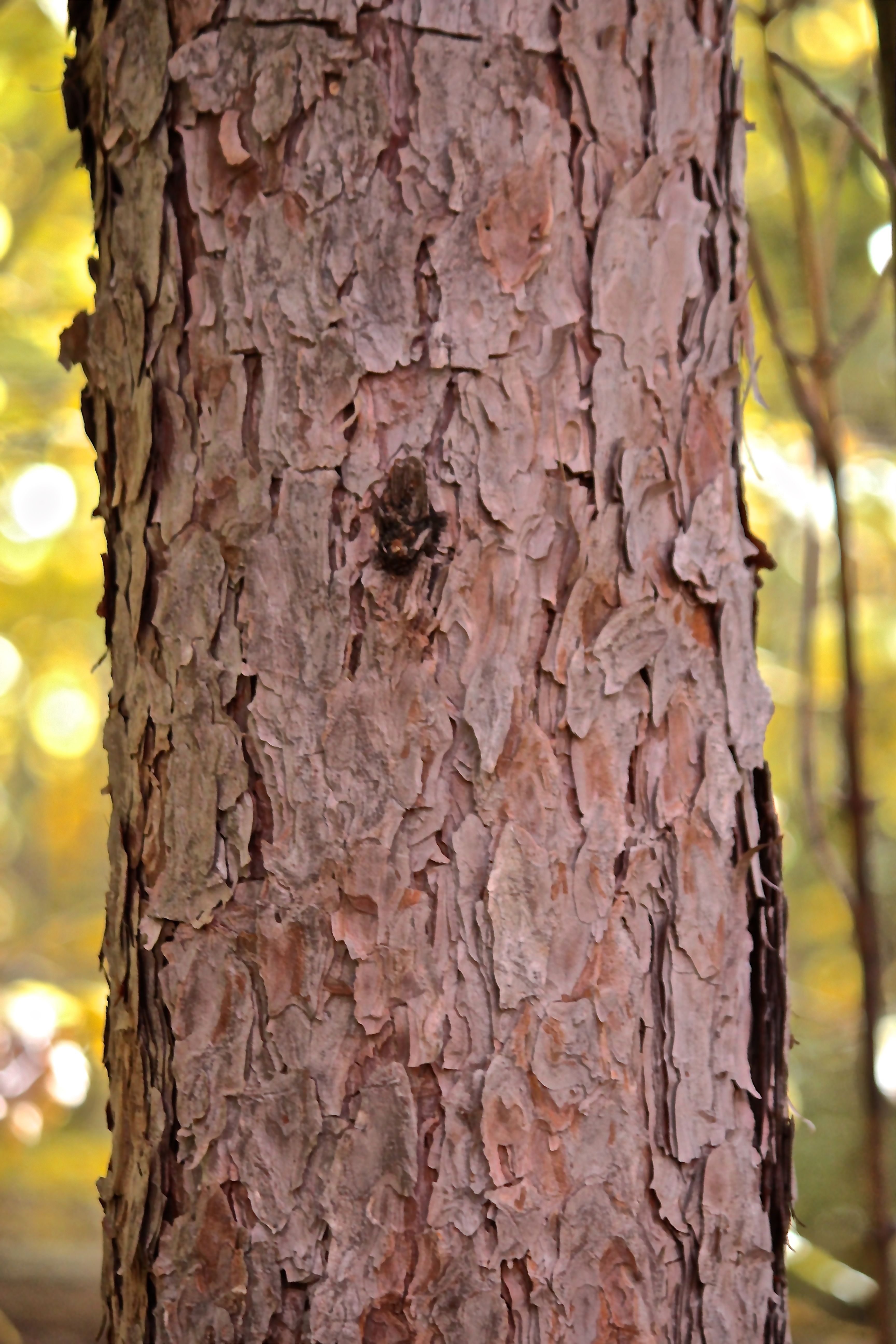

This lone red pine always makes us wonder. Perhaps it found its way here via a seed on a skidder?
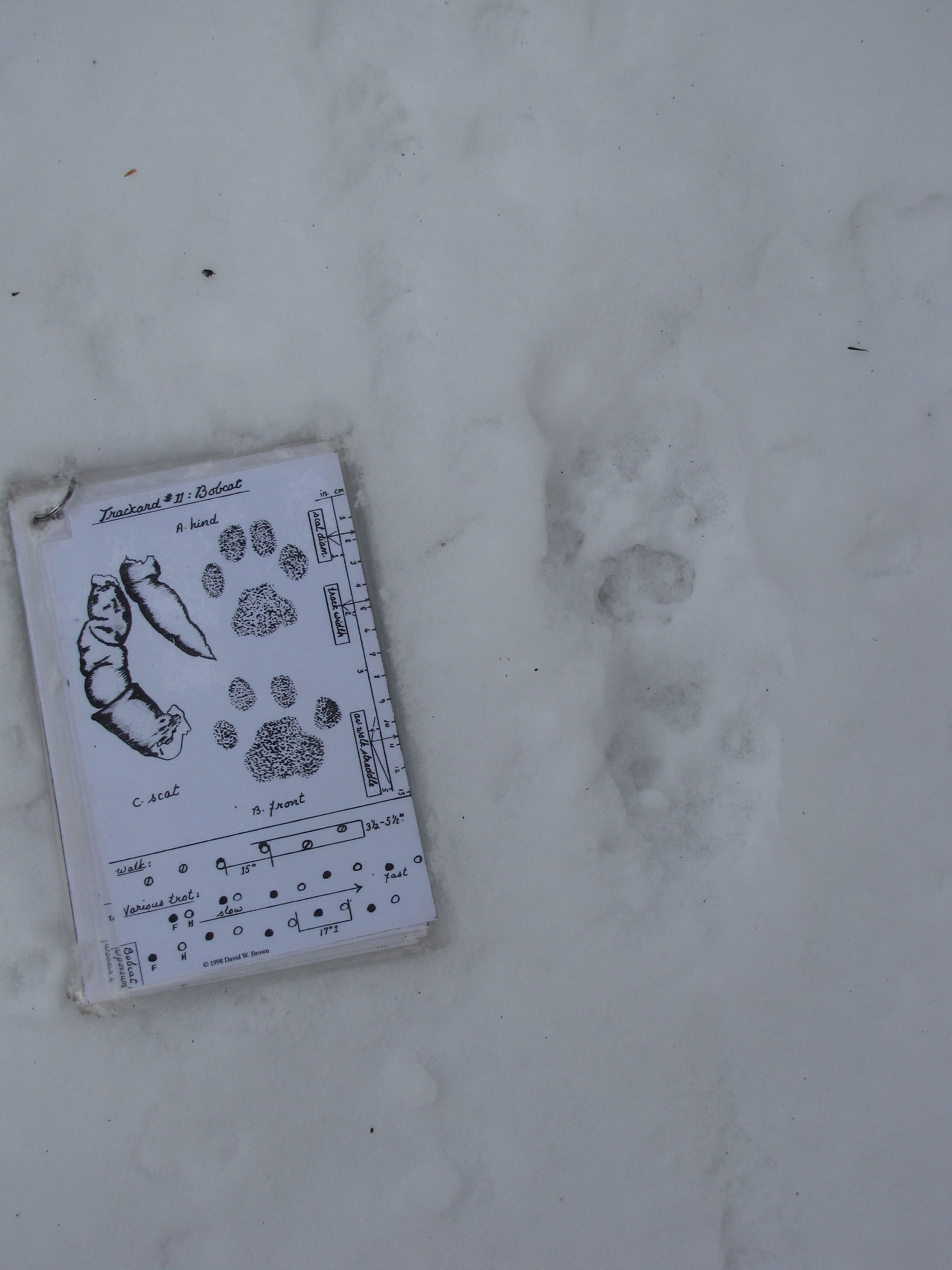
Today we found moose tracks, plus red fox and coyote scat. If there was bobcat scat, it was obscured by the leaf litter, but we know they frequent this area.

We also know the bobcat’s favorite meal lives here–we saw this guy in early March and of course, always see his prints on winter treks.


A couple of fun finds along the way–artist’s conk, crowded parchment and an old lion’s mane.


The bridge on Ron’s Loop is all decked out with autumn colors–a contrast to its winter coat.
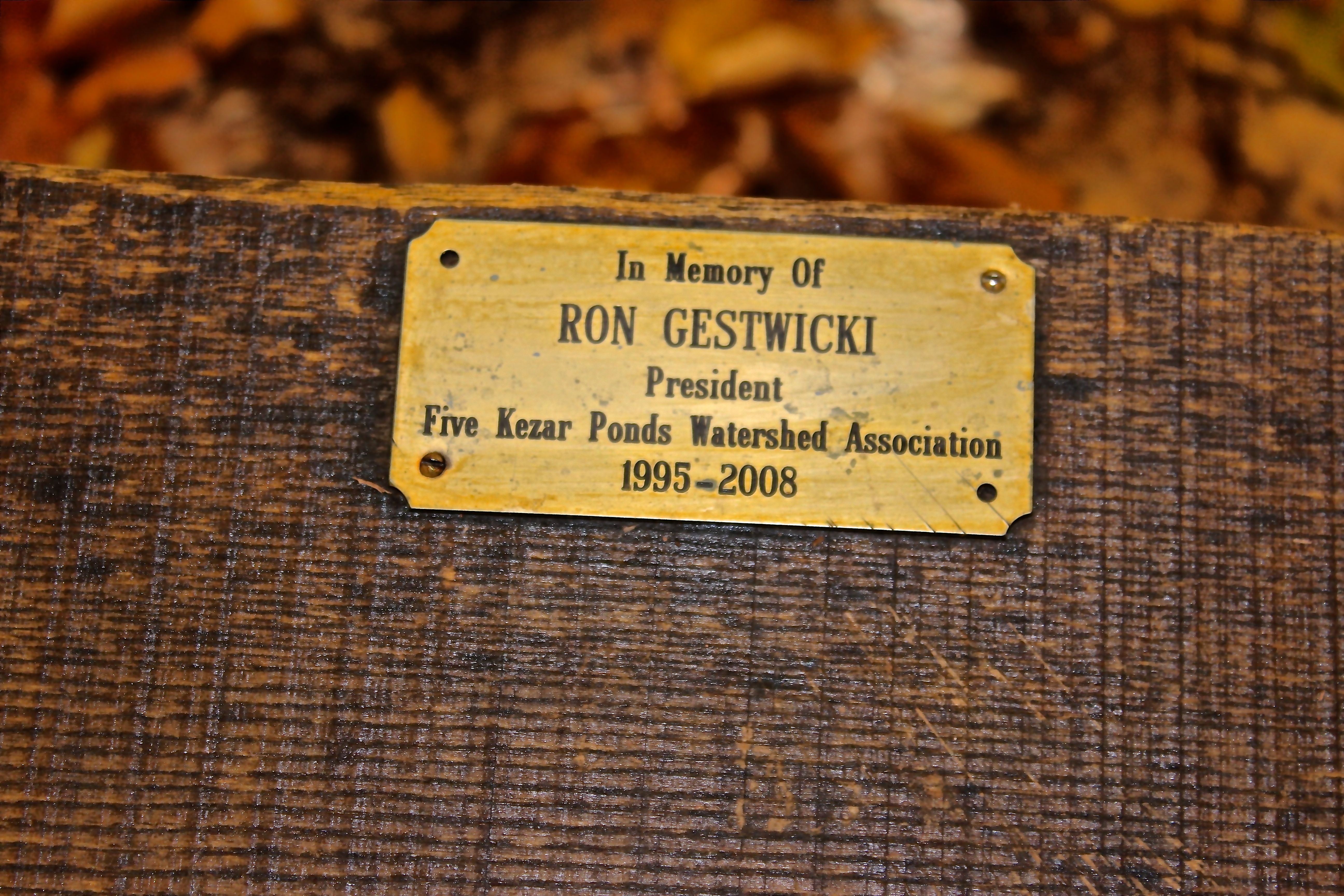
We’re forever thankful to Ron for his leadership and foresight,
even when we can’t see the plaque that honors him.
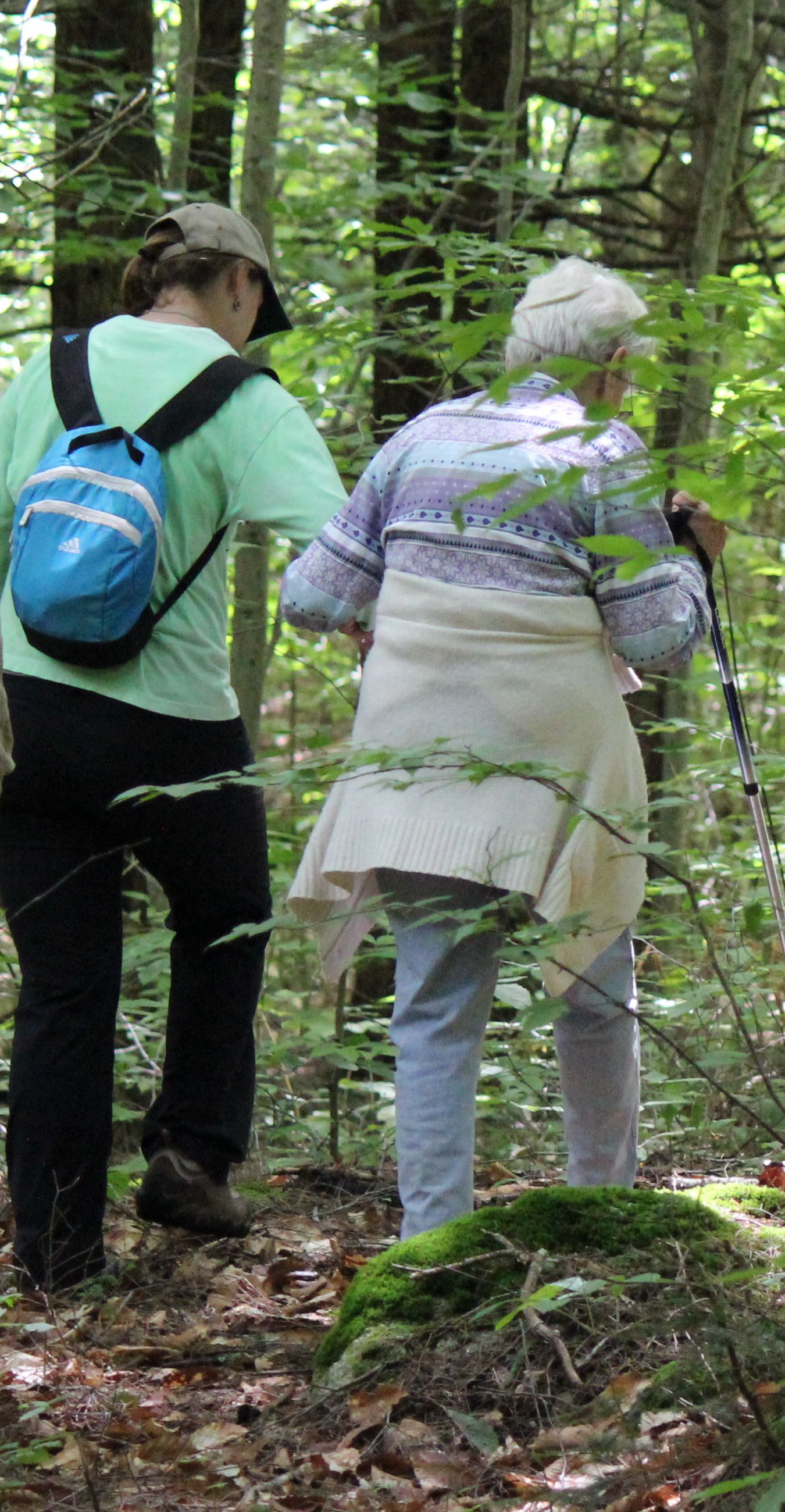
We met no other people on the trail today, but one of my fondest memories dates back two years when one of GLLT’s interns, Kendra, offered her arm to Jewell for a safe journey. Once upon a time, Jewell was Kendra’s Sunday School teacher and on this summer day, Kendra was Jewell’s guide.

As we walked into the parking area of Ron’s Loop, we noticed that someone had left behind a water bottle. If it’s yours, it’s still there. 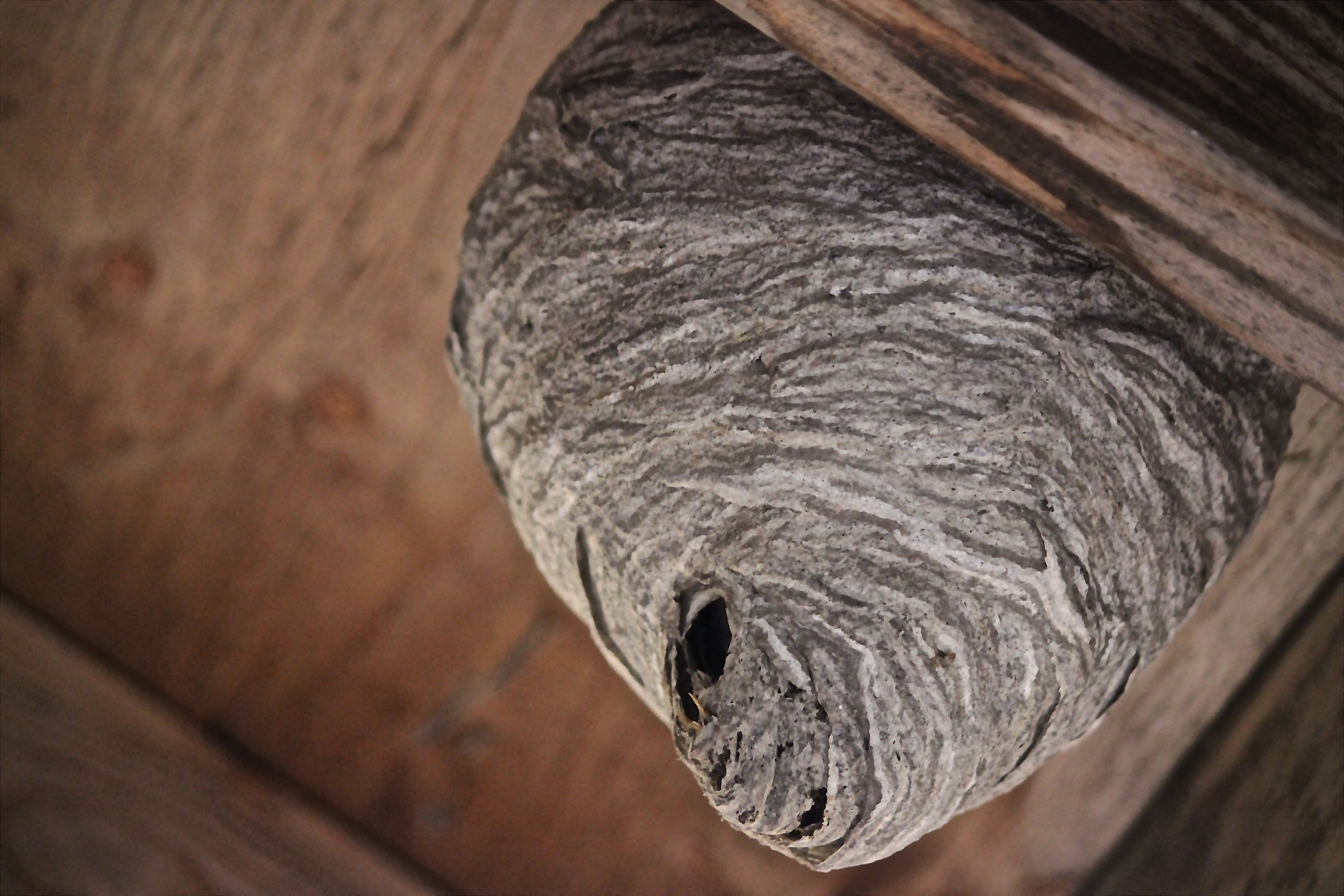
Each time we visit, we take a moment to check out the wasp nest at the kiosk.

We can’t remember when we first noticed it, but it’s been there for a while.
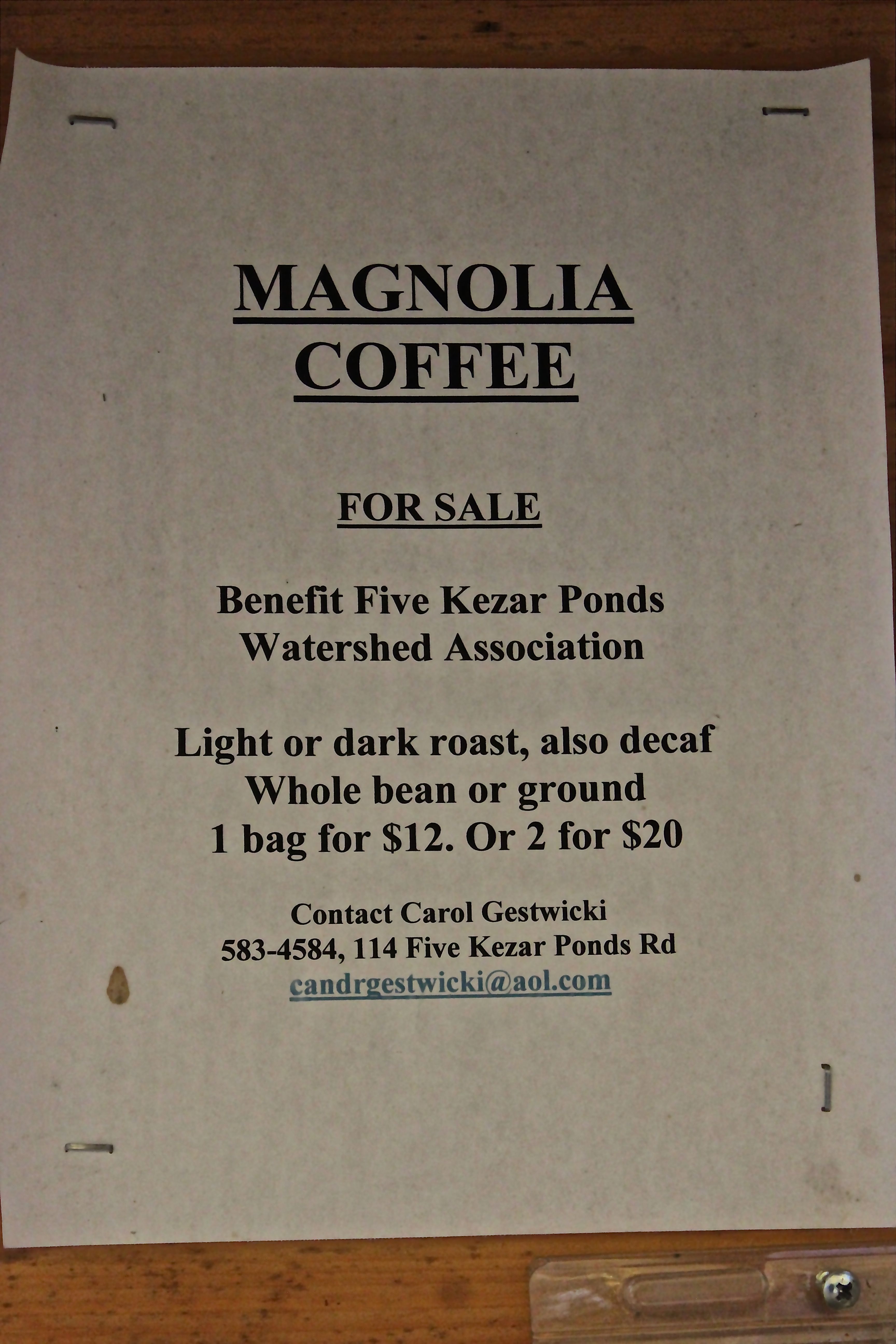
One last thing to note before we walked back to the Mountain trailhead where our truck was parked–Magnolia coffee. Wish I’d ordered more than one this past year. Dark roast.
One Mondate–three seasons. And now the quest is to turn it into a four-season destination. Stay tuned.
Book of October: Reading Rural Landscapes

There are many reasons why I love living in western Maine, and the fact that I can walk into Bridgton Books, an independent bookstore, and be handed a book that shop owner Pam Ward thinks I would enjoy is one of them. Pam was so right.
Reading Rural Landscapes by Dr. Robert Sanford, professor of environmental science at the University of Southern Maine, is a perfect follow-up to Tom Wessels book, Reading the Forested Landscape.
Sanford takes us one step further in looking at the remnants in the woods. Here in western Maine, I often stumble upon stone walls, barbed wire, foundations, mill sites and other evidence of life gone by. All of this appears in places that seem so far away from civilization. How can it be? Did people actually live in these out of the way places? Why?
Sometimes, it’s difficult to imagine that the make-up of the neighborhood was completely different from what we know. We forget that following the Civil War many people left the area for greener fields and less of that good old stone crop. We forget that numerous farms once decorated our landscape. We forget that all the trees we love, didn’t exist.
Reading Rural Landscape’s size (5″x8″) means it fits easily into a backpack and has become one of the guides that I often carry. Sanford includes information about plants and trees at homesites, transitions that occur after fields have been used for pasture or agriculture, examinations of house, barn and outbuilding foundations, mill sites and early commerce, indications of rural roads from farming and stagecoach to logging and trolley, the meanings of stonewalls and barbed wire, plus cemeteries and symbols on gravestones.
Sanford includes a glossary, chapter notes that are as interesting as the chapters, and an extensive reference section. For $19.95, this is a valuable resource.
Ultimately, Sanford encourages stewardship of the land–protection of these historical places. He also encourages us to support those who continue to farm the land and work in the forests in sustainable manners.
Reading Rural Landscapes: A Field Guide to New England’s Past by Robert Sanford, PhD, published 2015, Tilbury House Publishers
Book of September
Our friends, Ben and Faith Hall, recently invited us to their summer camp to share their Maine place with us. We hiked and wondered and chatted for several hours, but it was what they showed us at the start of our visit and the end that really bookmarked the day–their friend Bob swam up to the dock and smiled at us. Oh, I know, that sounds like life the way it should be at the lake–friends pulling up to the dock to visit. But this is no ordinary friend. This is a fish. And after our hike, Faith pulled out several books Ben has written for their grandchildren–filled with photographs of stone pictures he creates to tell a story. Ben is quiet and humble and incredibly talented. Below is a pdf of his book about Bob. Please click on the link and enjoy. It’s only eight pages long, but well worth a look. (I hope you are able to open this as it’s a pdf) Thank you for letting me share this, Ben.
Renewing the spirit
My guy and I drove to the central Maine town of Madison this morning to join Master Naturalist Kate Drummond on a walk that combined the natural and historical context of a trail beside the Kennebec River.
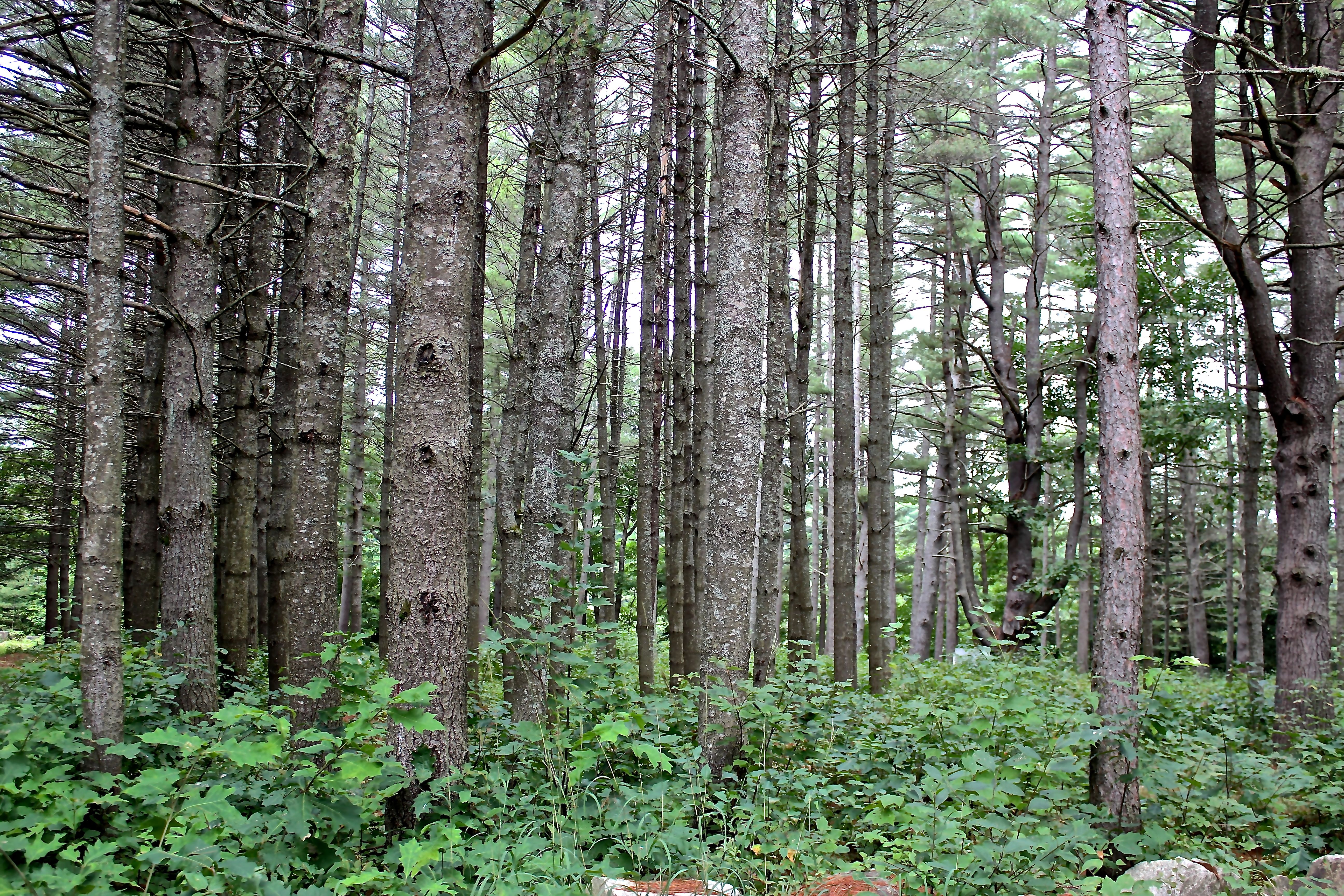
The Pines, as this area is aptly named, once served as an Abenaki settlement.

Kate began by sharing the history of Father Sebastien Rasle, who lived among the Abenakis, learned their language and converted them to Catholicism. For more than thirty years in the late 17th/early 18th century, he served as a Jesuit missionary and built at church here. Father Rasle educated the children and developed a dictionary of the native language. He also helped keep the English at bay when they tried to encroach upon Indian lands–until that fatal day–August 23, 1724.
While Father Rasle had earned the respect of the Abenakis, the English militia was wary of him. They combined forces with the Mohawk Indians to destroy the village and killed at least 80 Abenakis and Father Rasle 300 years ago today.
And so it was that Kate chose to honor Father Rasle and the Indians he lived amongst by sharing the trail with local townspeople (and us–from two hours away) to tell his story and recognize the natural elements that were a part of their daily life.
Kate is a high school chemistry teacher, so captivating her audience is a part of her makeup. To begin, she asked us to stand still for a minute and listen, look, be in the moment. After we shared our observations, she took us back in time, to imagine what the area looked like three hundred years ago.
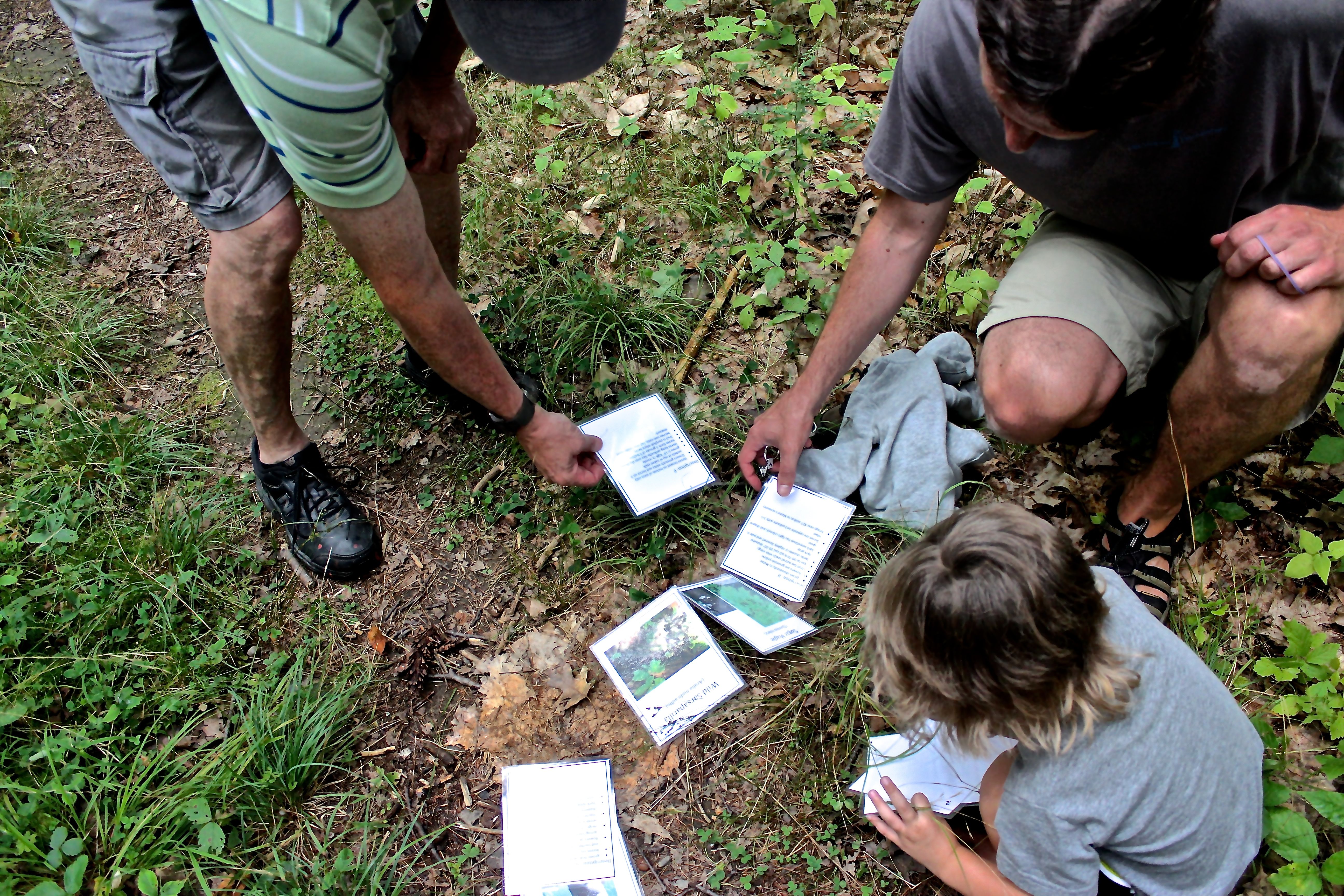

And then our real work began. We were given a set of cards and had to match the photos to the card listing cool facts about a particular species. Thankfully, there was no quiz at the end, but I suspect this group would have passed with flying colors–everyone was equally engaged.
We found some cool finds along the way:

Our first was a mystery. This speckled red ball, about the size of a jawbreaker, had us puzzled. We found several on the ground beneath Northern red oaks and Eastern white pines. Cutting one open, it looked rather fleshy and we could see what appeared to be an insect, but we still weren’t sure. And when we later found an empty acorn apple gall, we realized it was the same size. Well, a quick Google search for “large speckled red ball beneath oak” revealed acorn plum gall. It’s the home of a wasp species that uses this as a nursery. The grub slowly eats the gall’s tissue and metamorphs into a pupa before changing into a small wasp that eats its way out through a hole. This particular gall grows at the base of the acorn cup.

A red maple and a sugar maple stood side by side, making for a lesson on leaf id. Red on the left, sugar on the right. Red–more teeth, or as Kate said, R=rough. Sugar–a U between the lobes, and as Kate said, Sugar has a U in it. It’s their sap that the Abenakis knew.

Though we didn’t see any fresh sign of beaver activity, we knew by this statue that they’ve been here in the past. I love that those who actually cut the rest of the tree down to prevent it from falling across the path, had the foresight to leave the beaver works for all to see. The beavers were important to the Abenakis for a variety of reasons, including as food, tools and warmth.
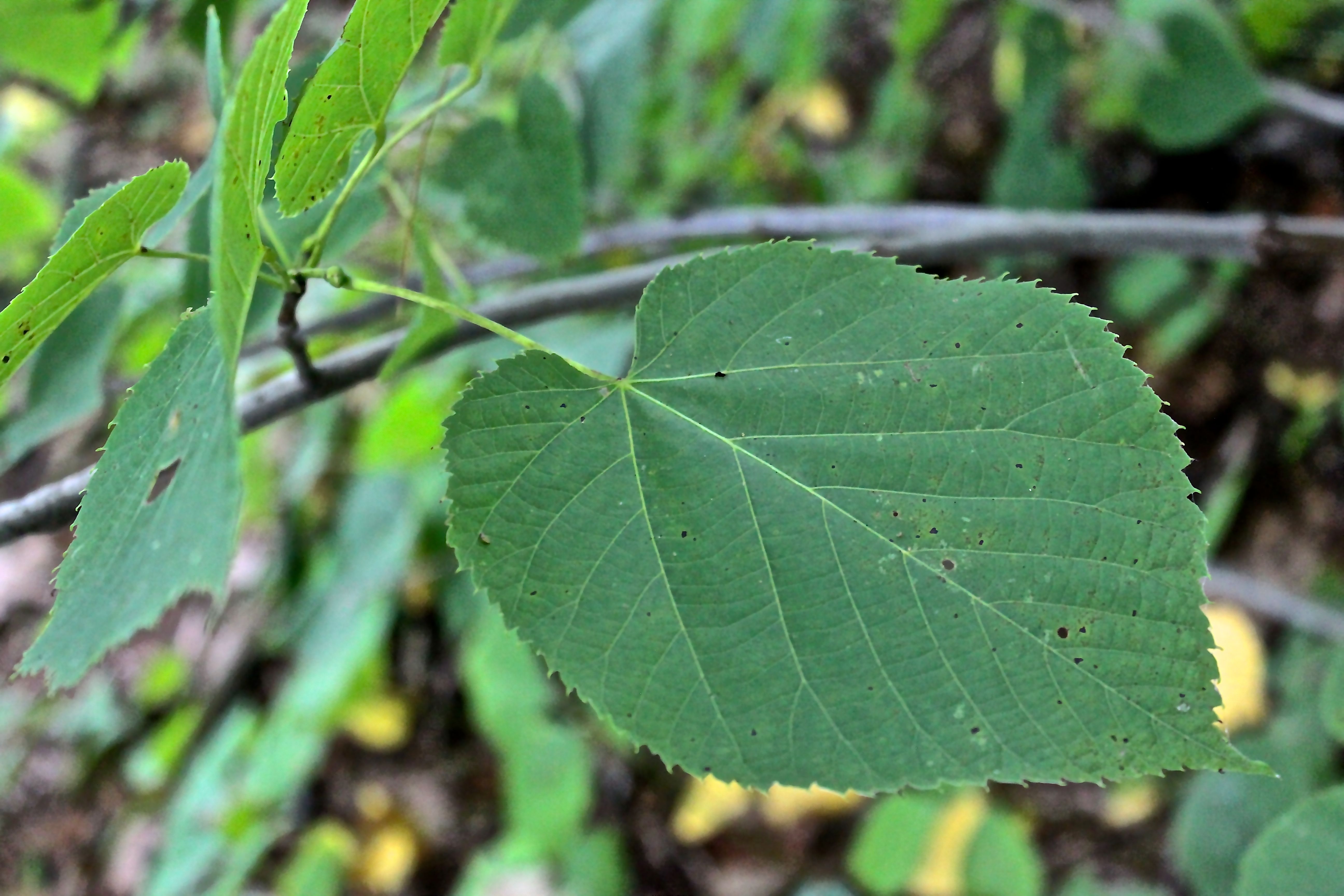
The asymmetrical base of the basswood tree makes it easy to identify. It was the bark, though, that was of prime importance all those centuries ago–the stringy fibers were used to make line or rope.
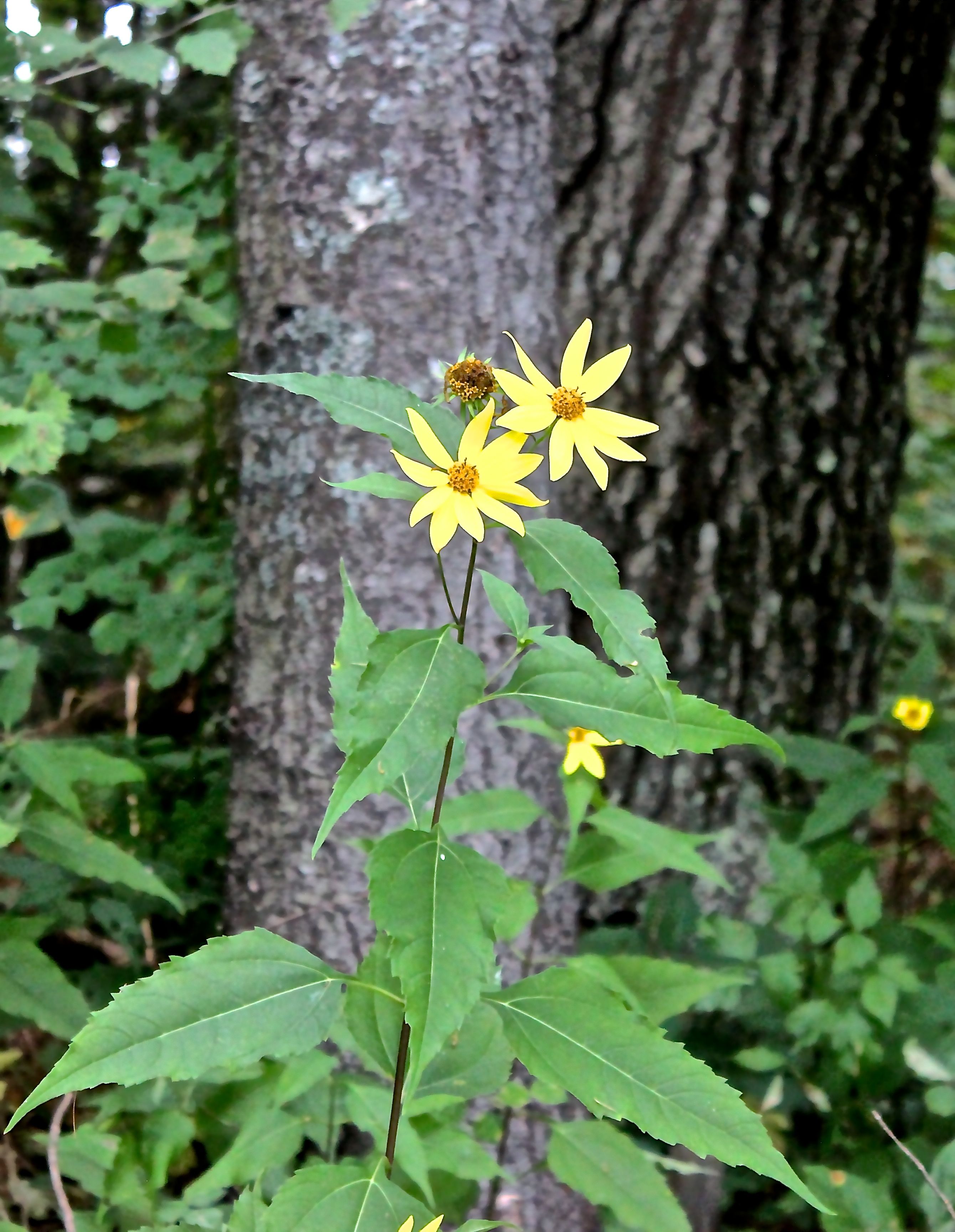
In bloom were the Jerusalem artichokes. In Notes on a Lost Flute: A Field Guide to the Wabanaki, author Kerry Hardy writes, “Peeking out of the woods at Old Norridgewock are Jerusalem artichokes, the penak [ground nut]of the Abenakis who lived here. I believe these plants must be descendants of those grown here centuries ago.” How cool is that? The plants tubers are edible.

On this day of reflection, remembrance and revelation, they shown brilliantly, perhaps a sign that reconciliation is possible.

We spent some time beside the Kennebec where eels and alewives were important food sources.
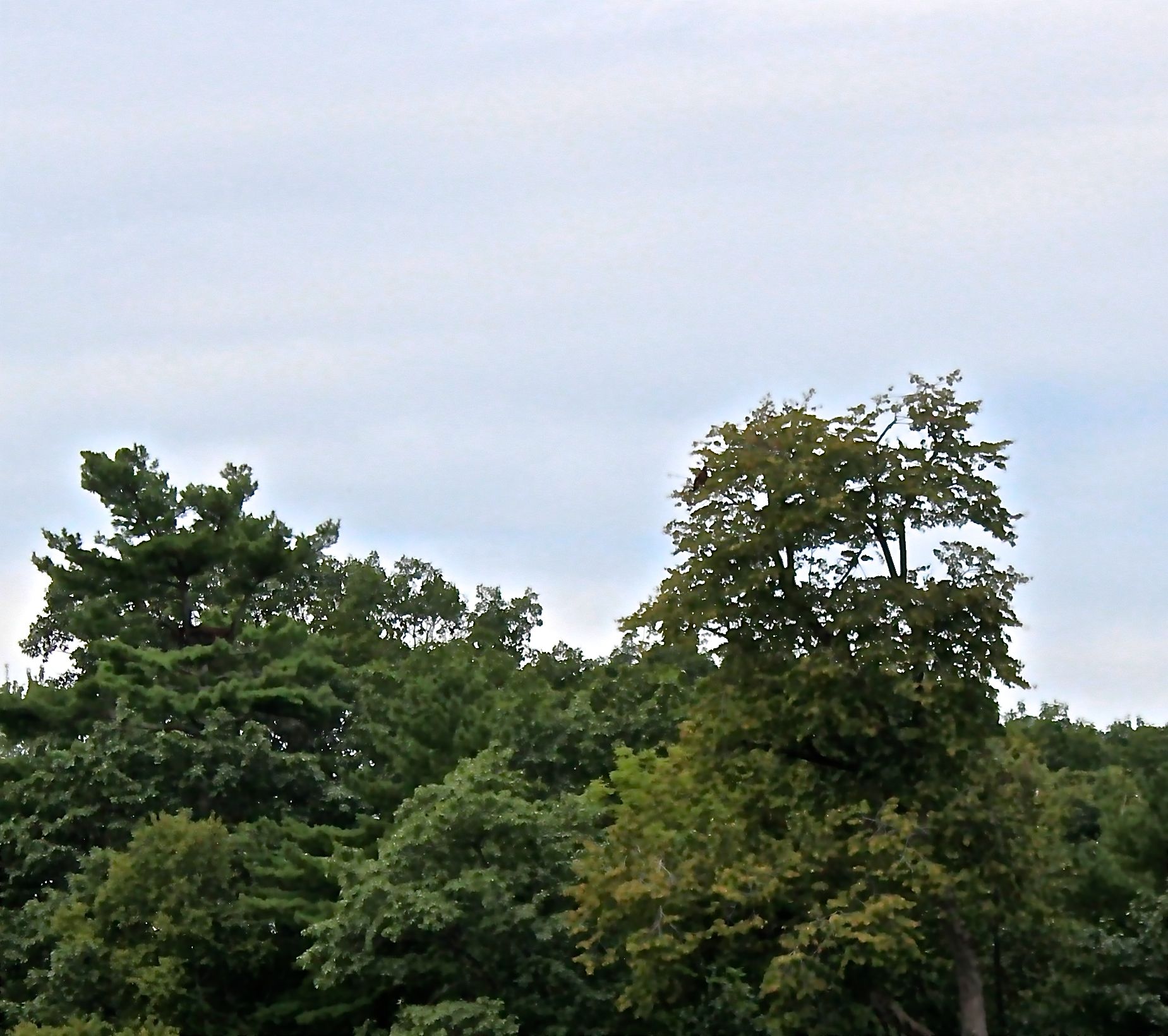
And an immature bald eagle let us know of his presence. He’s in the oak on the right, while his nest is toward the top of the pine on the left.


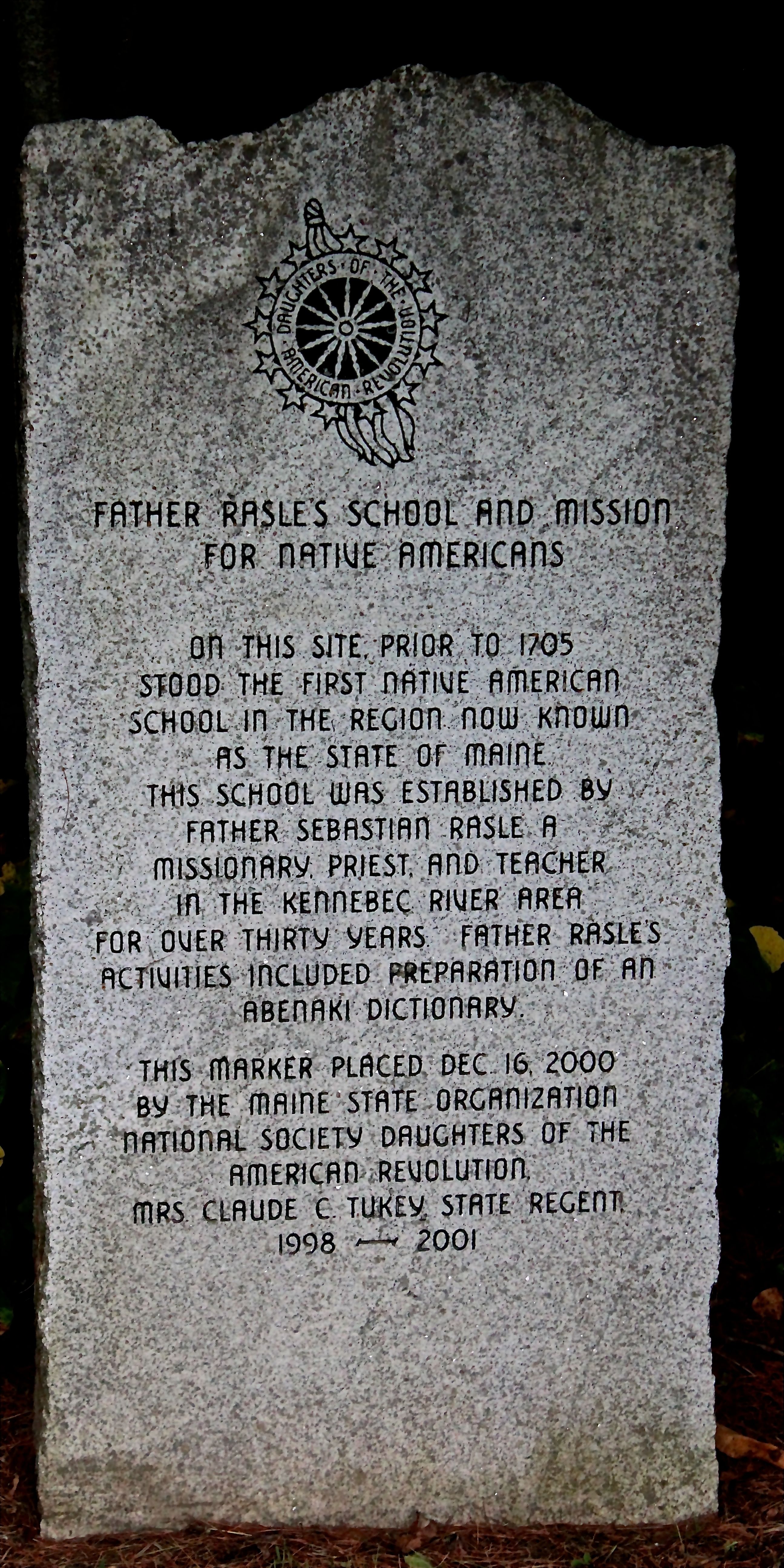
It is Kate’s hope that more people will want to learn about the history of this place. Kudos to her for embarking on renewing its spirit.
A Baggywrinkle of a Mondate
We learned a new word on today’s Mondate–baggywrinkle. I love how saying it makes my mouth work. Say it five times fast and I guarantee it will put a smile on your face. Might cause a few baggy wrinkles to form, but it will be worth the fun.
What does baggywrinkle mean? Read on.
Our Mondate took a different tack today–you might say we were coming about in Portland Harbor.
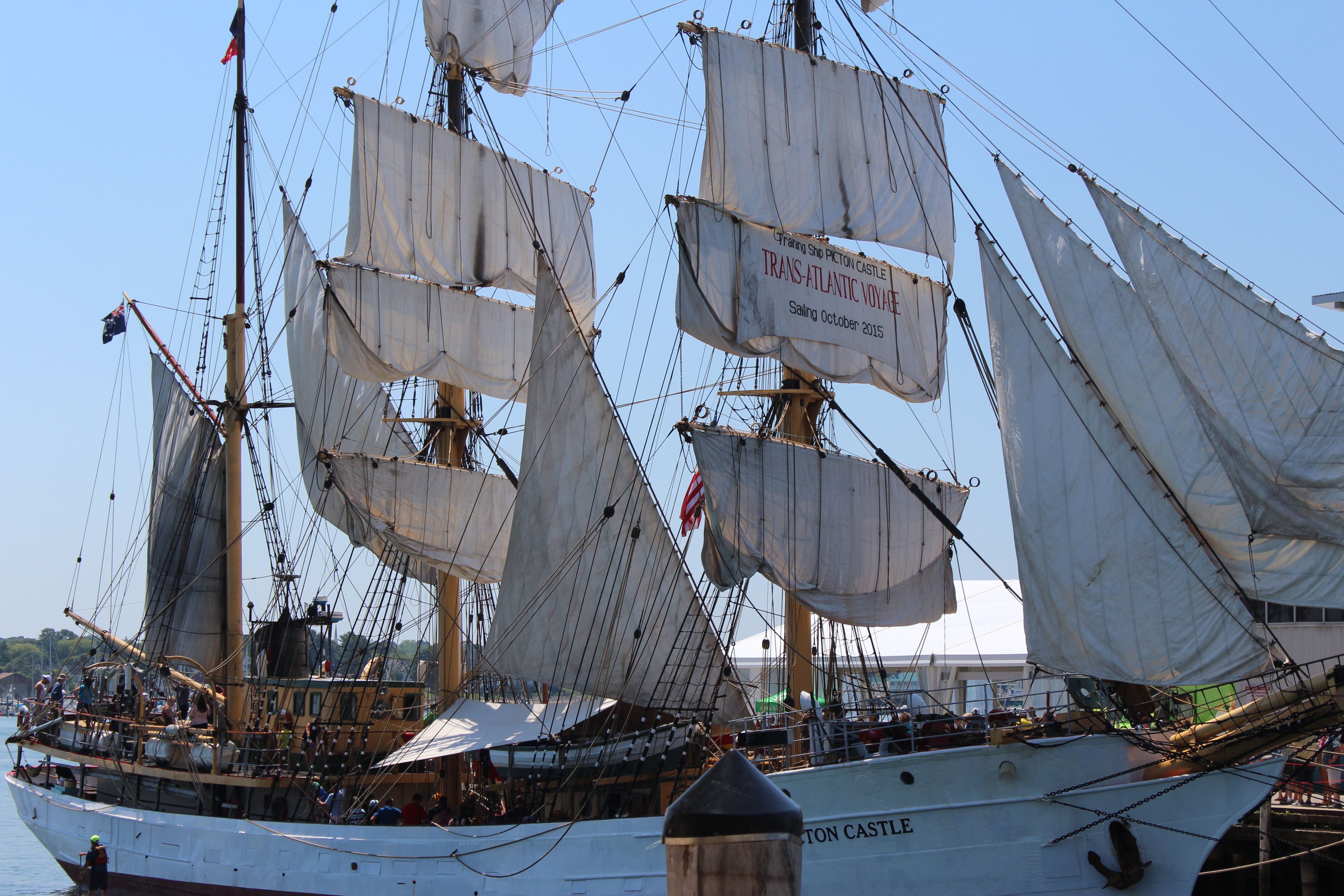
Tall Ships Portland 2015 is a celebration of the 150th anniversary of the completion of Fort Georges.

The fort is in the background, center right of the Downeast Duck.

This year also marks the maiden voyage of the first square-rigged tall ship built in the U.S. in 110 years. Introducing the Oliver Hazard Perry–a self-contained experiential school. Am I too old to go back to school?

Another view of the OHP.

We boarded some of the boats and were filled with admiration.

I have to say that I have enough of a problem holding onto one line when I sail, never mind a zillion.

Or hoisting acres of sailcloth.

El Galeón Andalucía, a replica galeón class vessel is the only one in the world sailing these days. Her design dates back to the late 16th century when these fabled merchant vessels and war ships made up the early European navies.
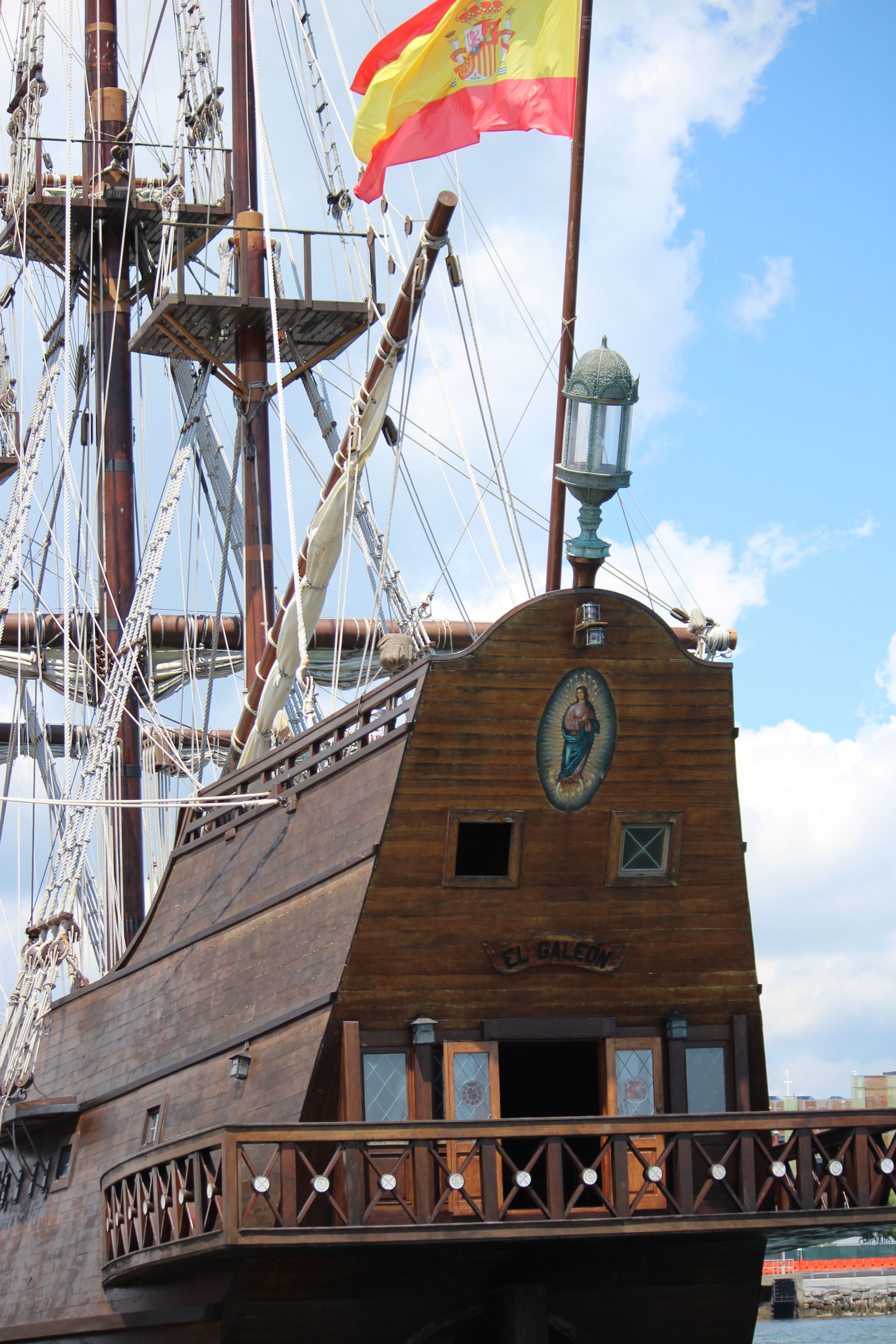
A stern view.
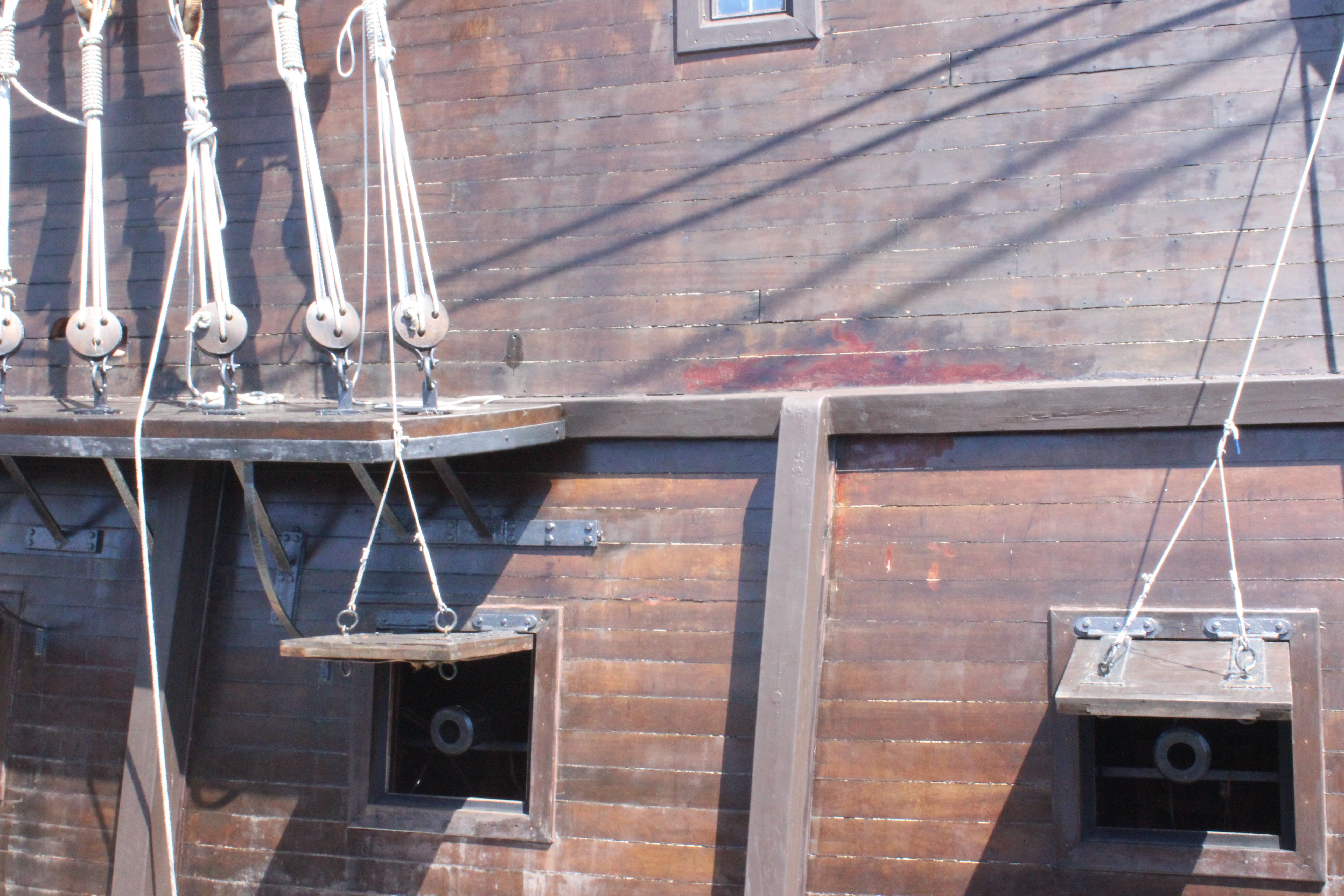
Ready. Aim. Please don’t fire.
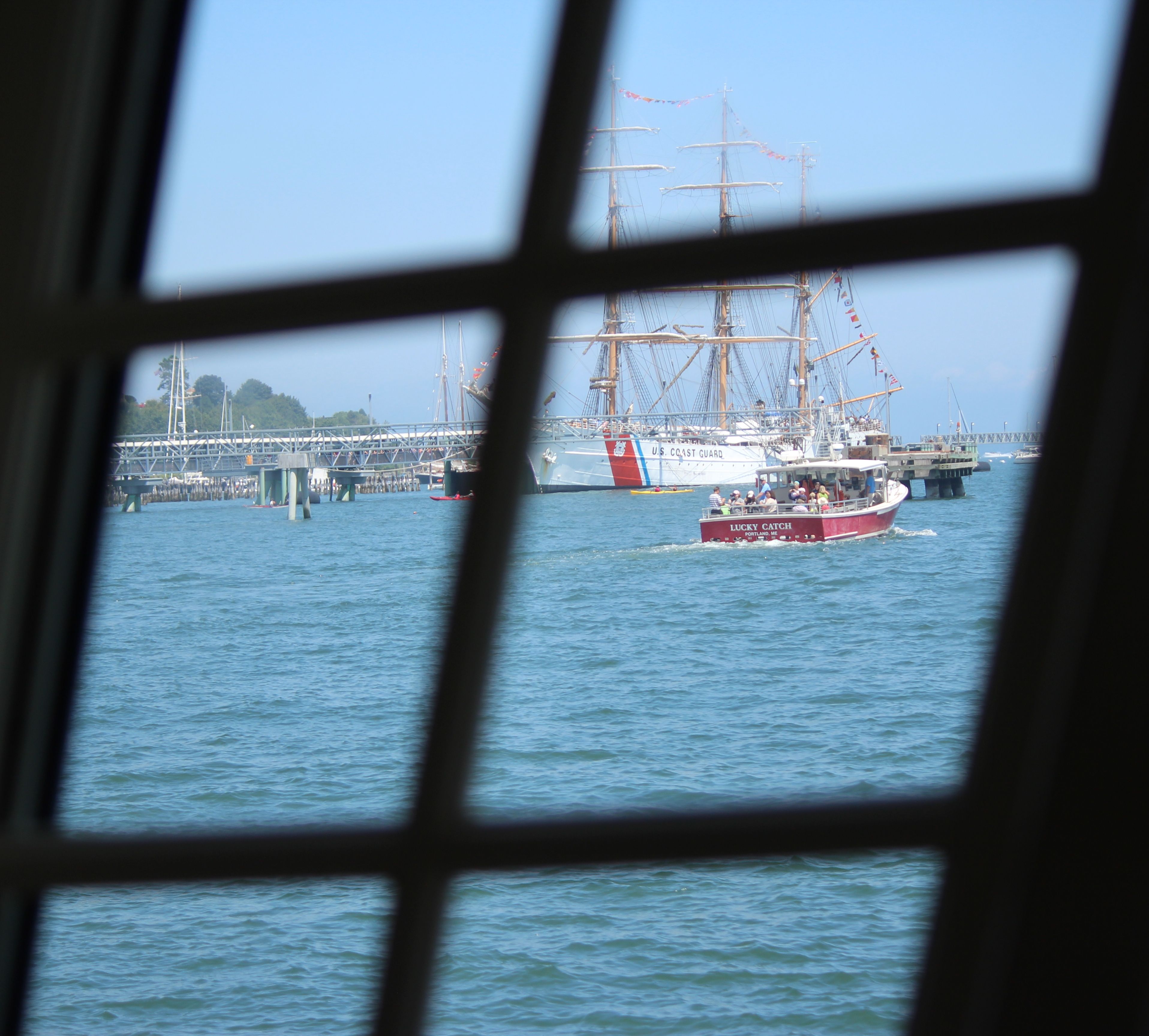
The one I really wanted to see came into view from below deck on the Oliver Hazard Perry.
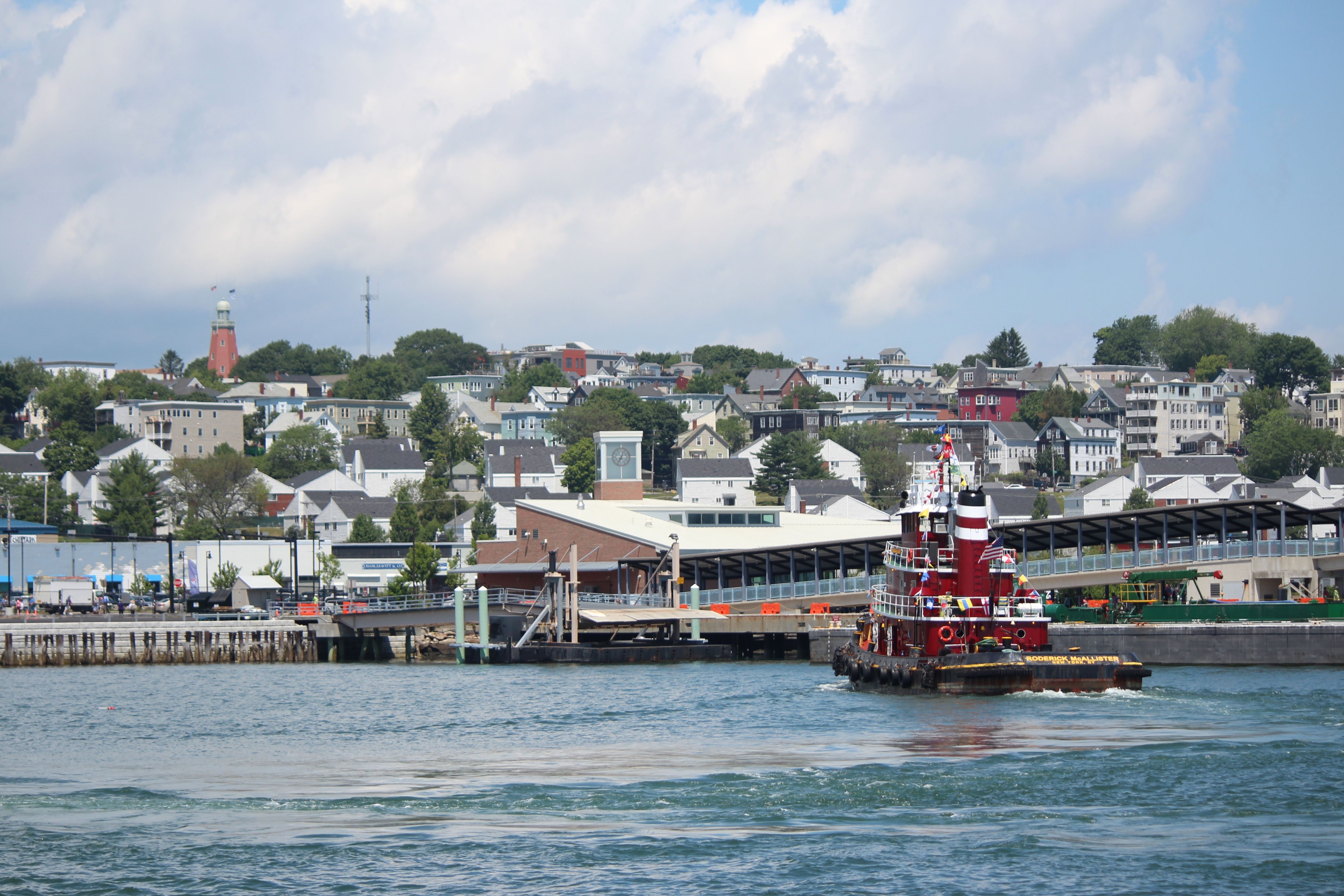
So we walked along the working waterfront.
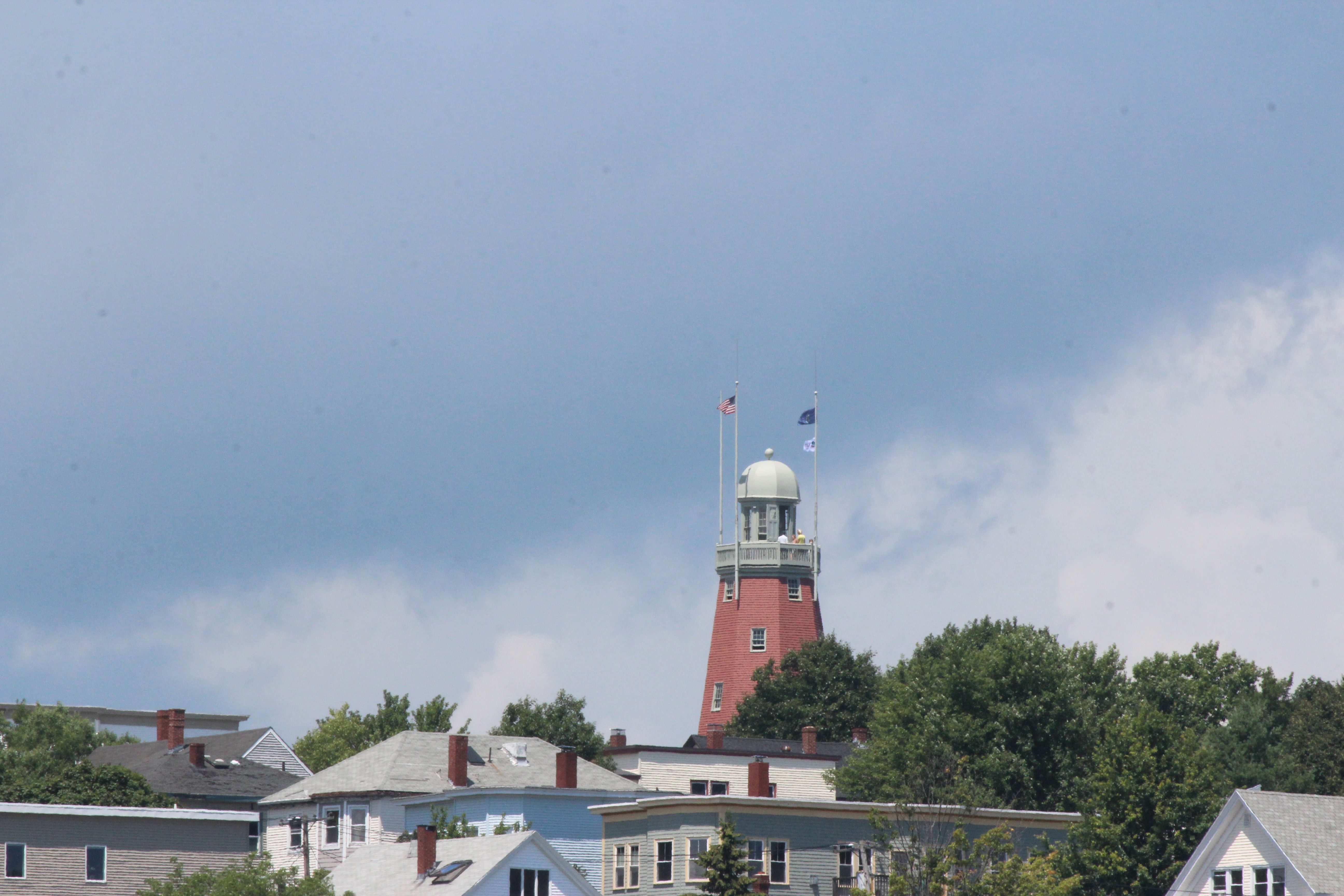
And observed the Portland Observatory from a distance.
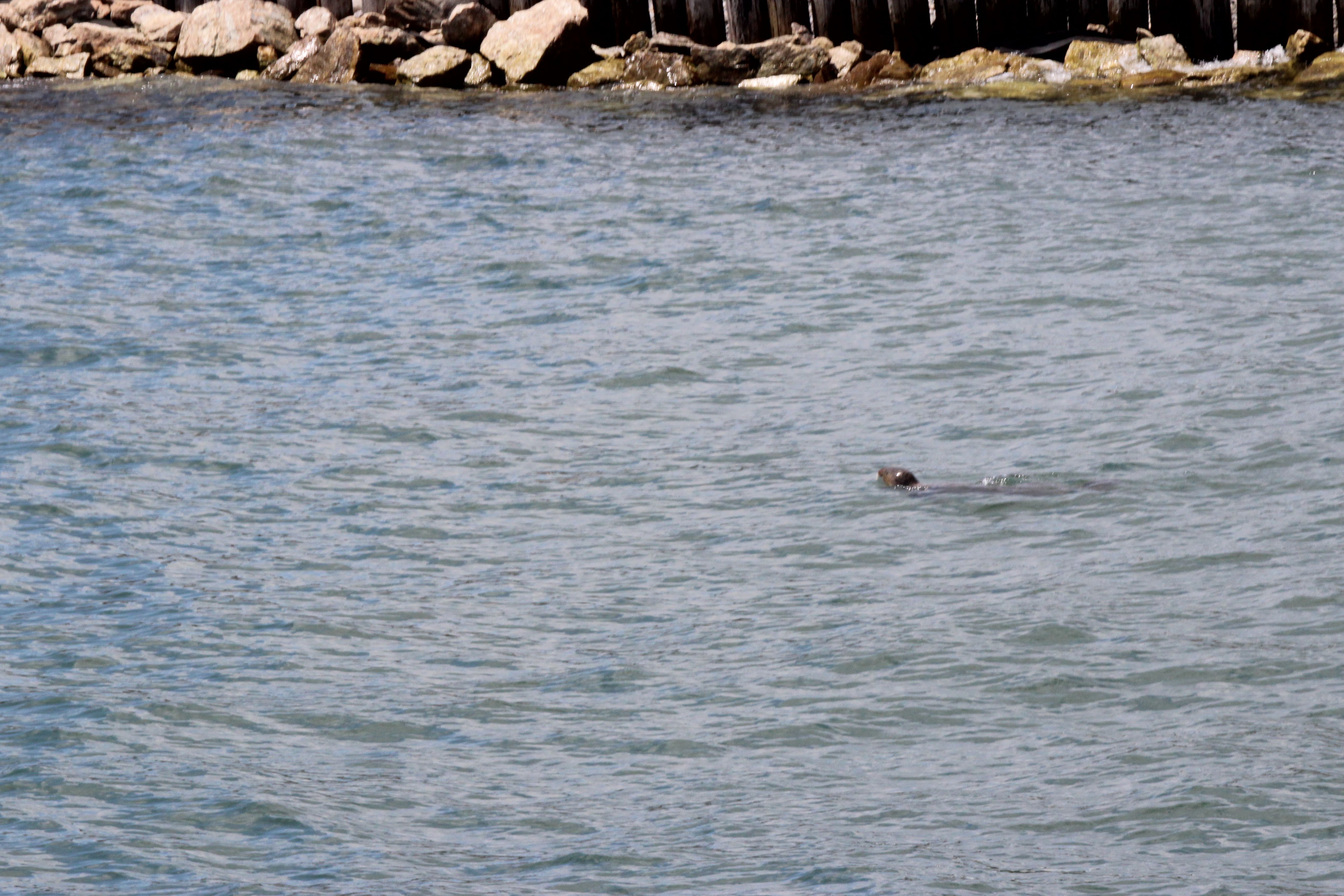
Standing in line for almost an hour was worth the wait–a harbor seal.

A young osprey on a nest.

And finally the gold(en) eagle. I’ve always wanted to see one–especially this one.

Her stars and stripes pledged her allegiance in the ocean breeze.

Till today, I’d only seen her in the distance–sailing up Long Island Sound from New London, Connecticut.

But finally . . . up close and personal in Maine waters.

Like the winds that propel her, she has her own fluid beauty.

Flag messages speak her language.

A million ropes and cables and masts–so much to learn. On the Coast Guard Academy Web site I found this information: Built at the Blohm + Voss Shipyard in Hamburg, Germany in 1936, and commissioned as Horst Wessel, Eagle is one of three sail-training ships operated by the pre-World War II German navy. At the close of the war, the ship was taken as a war reparation by the U.S., re-commissioned as the U.S. Coast Guard Cutter Eagle and sailed to New London, Connecticut, which has been its homeport ever since. Eagle has offered generations of Coast Guard Academy cadets, and more recently officer candidates, an unparalleled leadership experience at sea.
I didn’t know that. No wonder I feel a connection in so many ways–sailing, Connecticut and now I learn that the boat has a German origin. My maternal grandmother was born in Hamburg.

The question of the day and apparently the number one question always: What is that seaweedy looking stuff on the cables? How did it get there? Why is it there? Does it keep birds at bay?
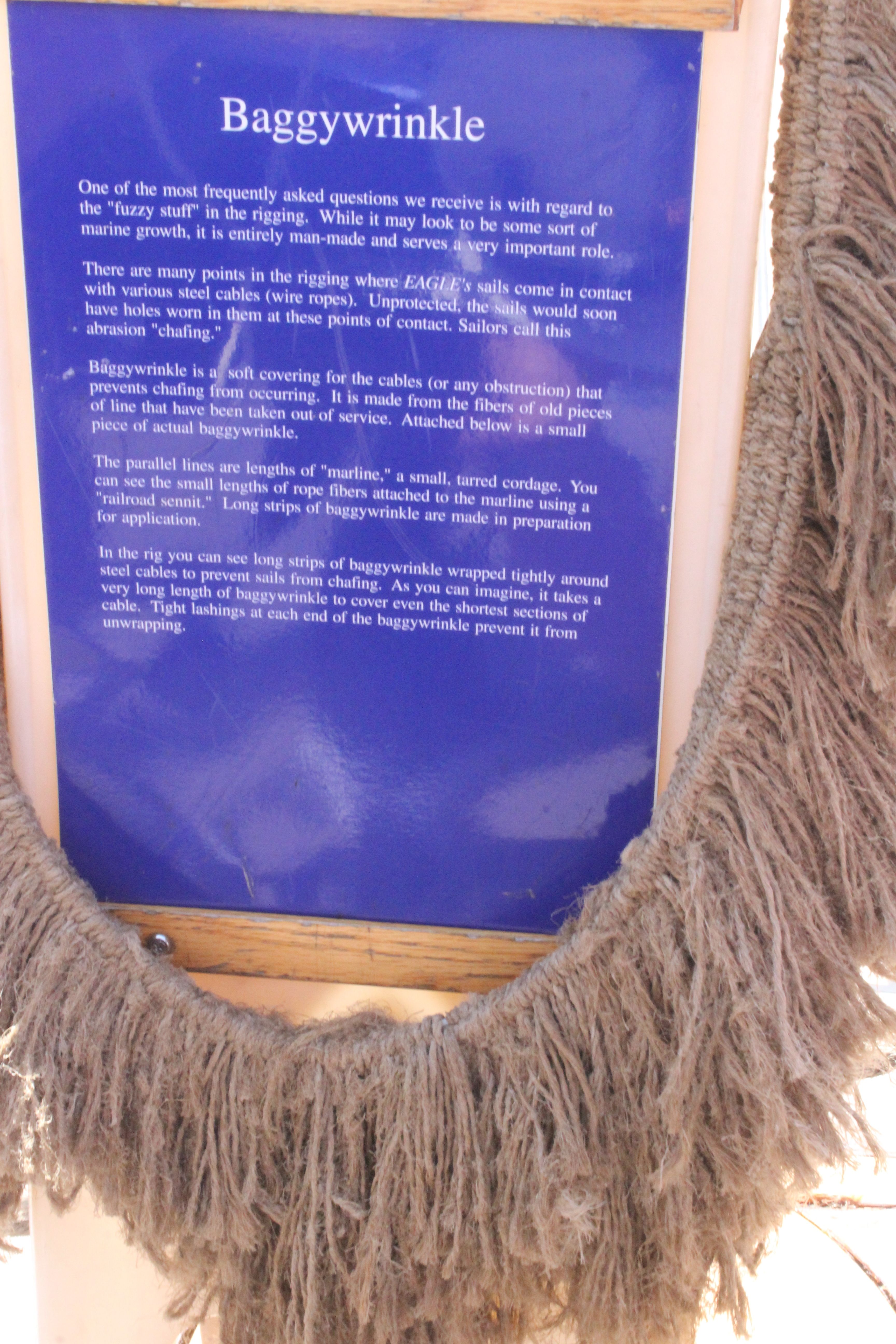
That, my friends, is baggywrinkle. Think about the winds shifting suddenly during a tack. Sails slap against the rigging. In a big blow, they rip. Not so with baggywrinkle. Baggywrinkle is old rope that’s been unraveled, cut to length and then rewoven to cover the cables and protect the sails from chafing. Kind of like how we use vaseline.
Baggywrinkle. Baggywrinkle. Baggywrinkle. Baggywrinkle. Baggywrinkle. :-)
What Would Jinny Mae See?
My friend, Jinny Mae, was recently blindsided by a dreaded diagnosis. It has slowed her down significantly, but today she was with me in spirit as I walked along the Homestead Trail/Gallie Trail at Heald and Bradley Pond Reserve in Lovell, and then headed to the summit of Amos Mountain.
What would Jinny Mae see? That became my mantra along the way. I love to explore with her because she makes me slow down and take a closer look. She asks questions. She is incredibly knowledgable about the natural world. And even more so about the historical context of our area.
So . . . this one is for you, Jinny Mae.
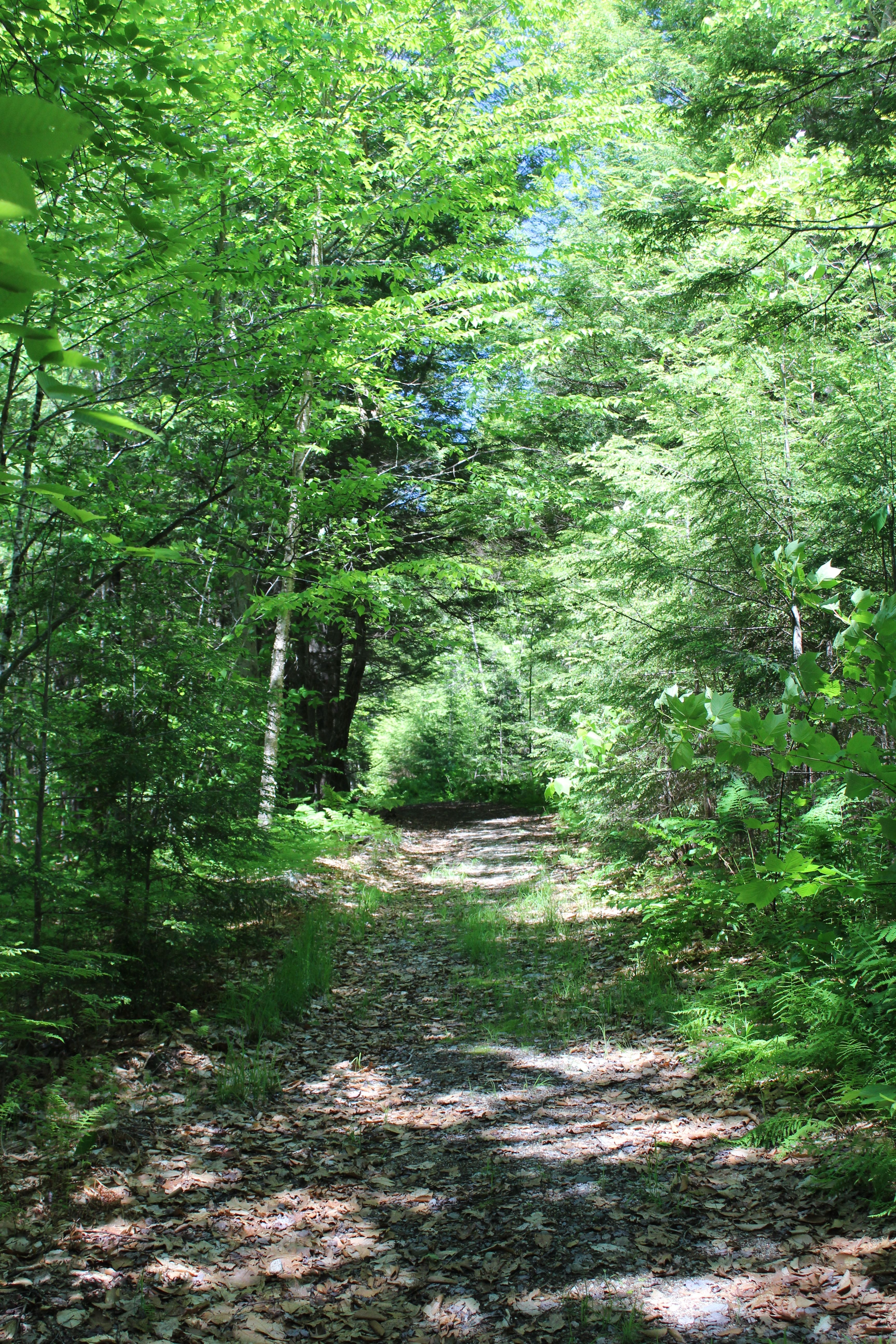
It was a beautiful afternoon and the mosquitoes were almost non-existent. I felt Jinny’s presence in the breeze that kept the biting insects at bay.
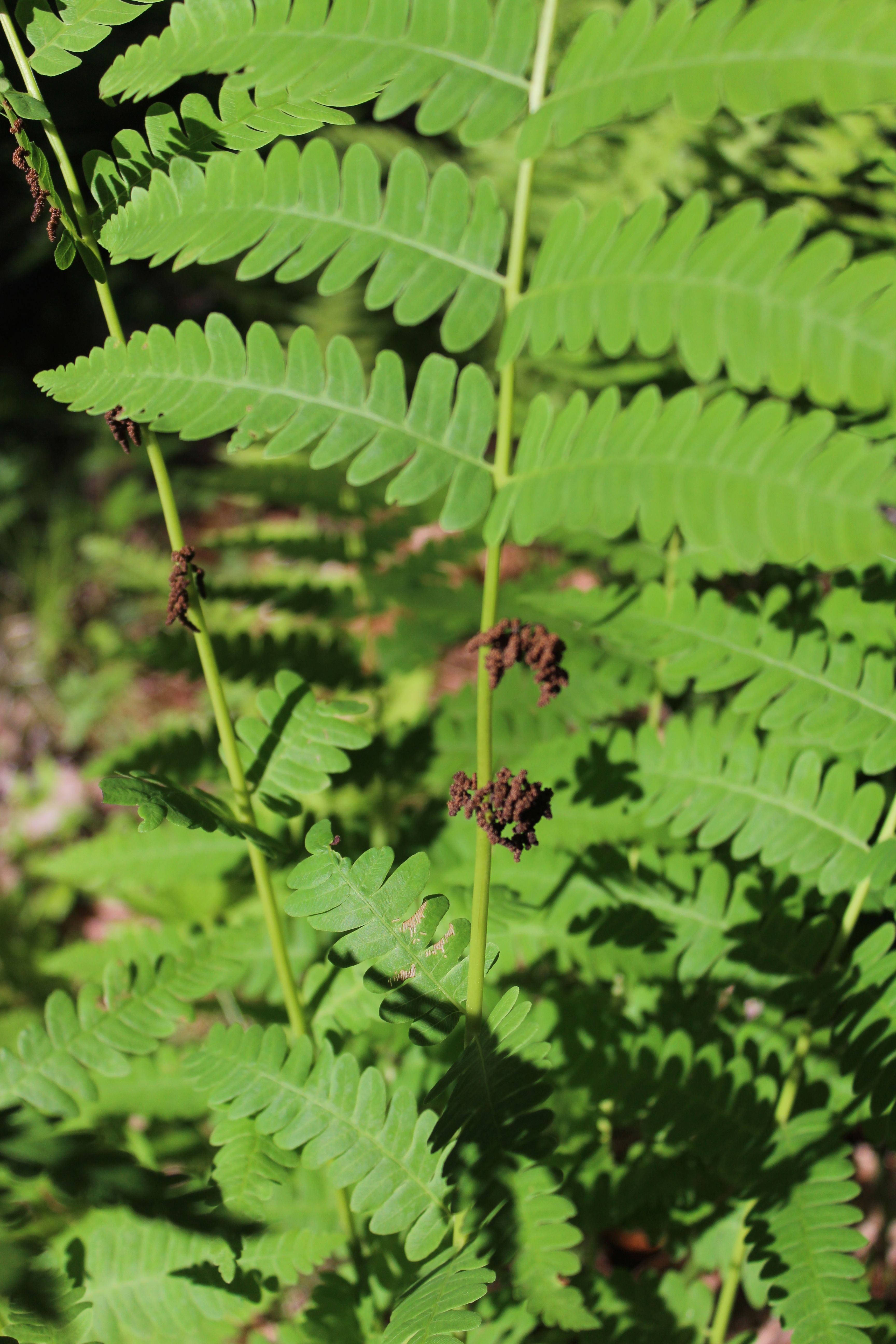
And I knew the Interrupted Fern would draw her in for a closer inspection.

As would the fertile frond of a Cinnamon Fern–and a dragonfly.


She’d love the juxtaposition of a young Bracken Fern beside an older one.

Then there was the wooly texture of the Common Mullein leaves begging to be caressed.

Jinny Mae and I have explored these foundations before, so I needed to stop by again.

And I knew that she’d marvel at how this hemlock tree has grown among the rocks and bricks.
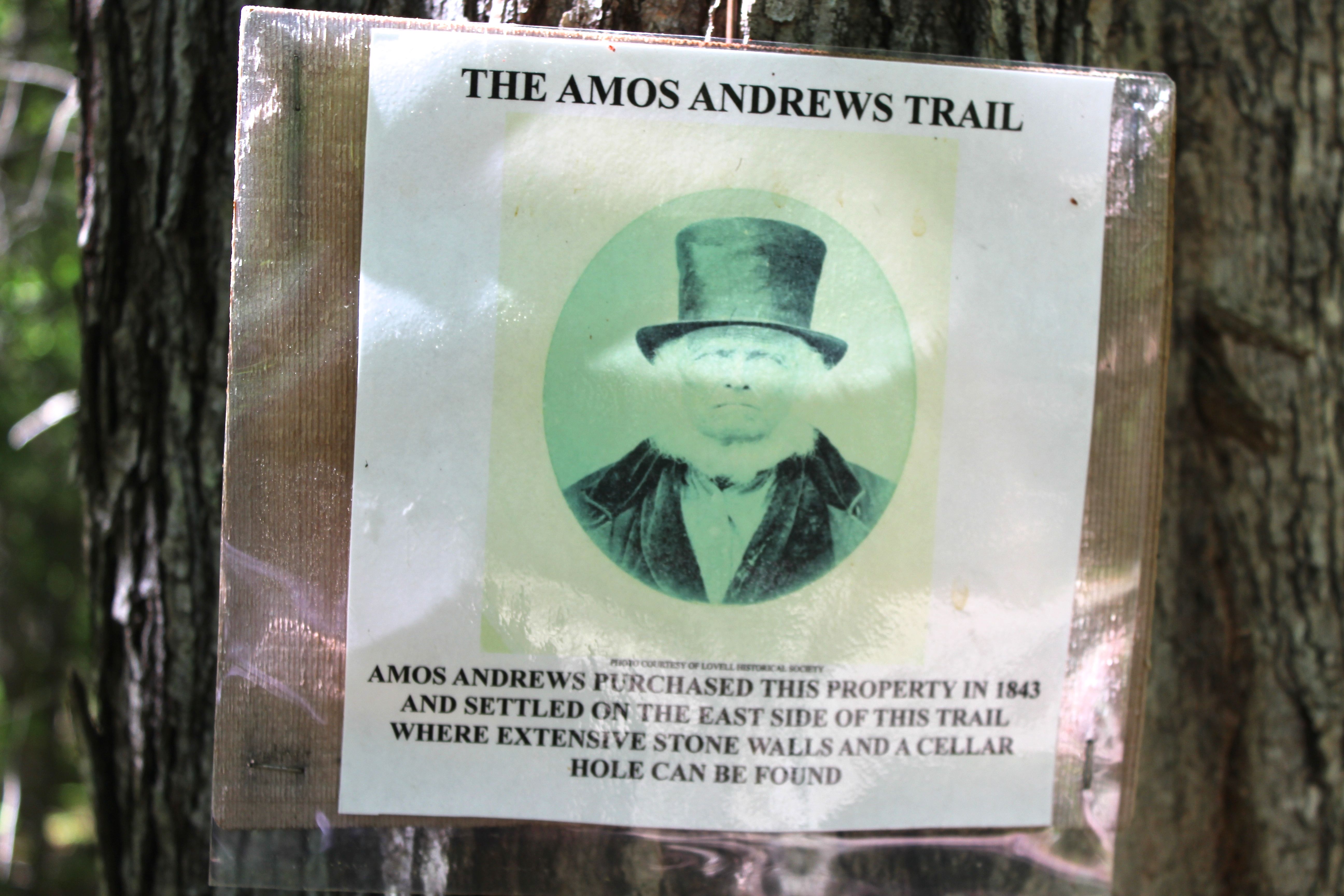
The Homestead Trail comes to an end at the handicap-accessible picnic area. And here the Amos Andrews Trail begins.
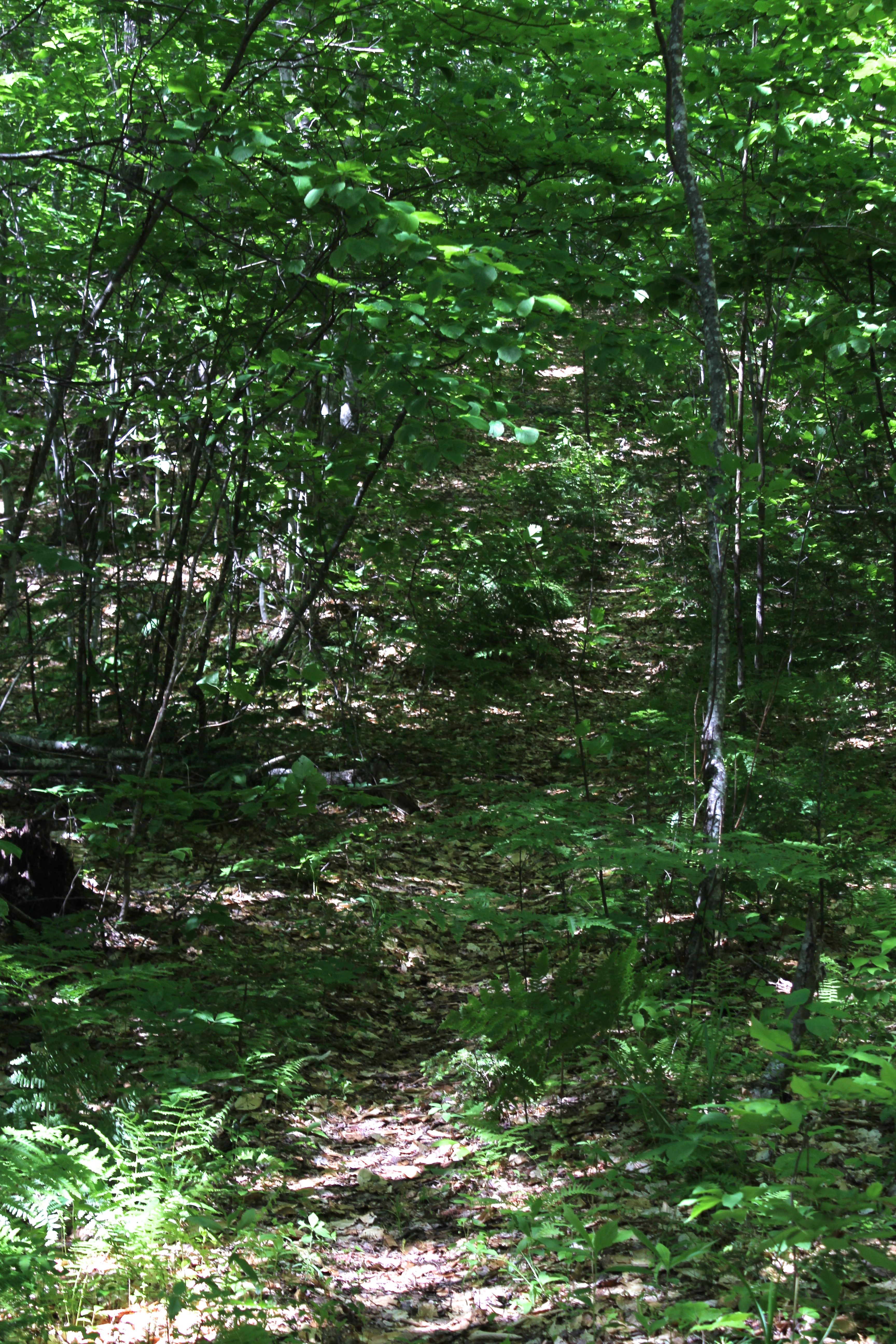
It’s a bit of an uphill climb, though not steep. For Jinny Mae, I’m thinking positive thoughts that her experience will be uphill all the way. Chin up, girl. You can do this. You’ve already amazed me with your attitude. May I strive to be half the person you are.

There’s more to see like this Maple Leaf Viburnum,

the three-angled seed pod of Wild Oats,

flowering Indian Cucumber Root,

terraced stonewalls,
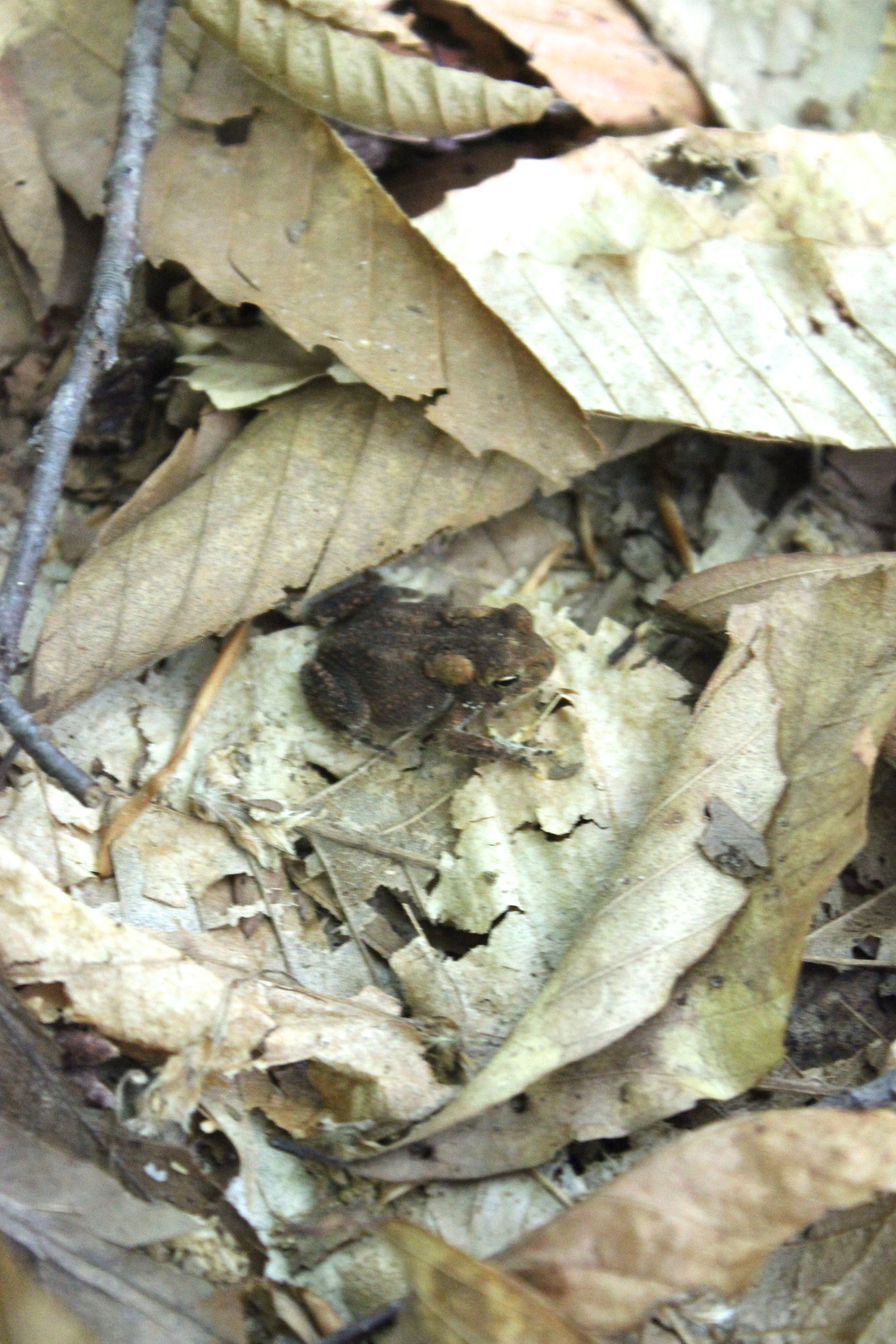
and a young American toad.

At last I reached the summit.

Again, I looked around and wondered what Jinny Mae might see. Despite its camouflage, I knew she’d find this walkingstick insect. The woman has eagle eyes.


Maybe a more apt description is dragonfly eyes–with 30,000 lenses, they can see all the way around.
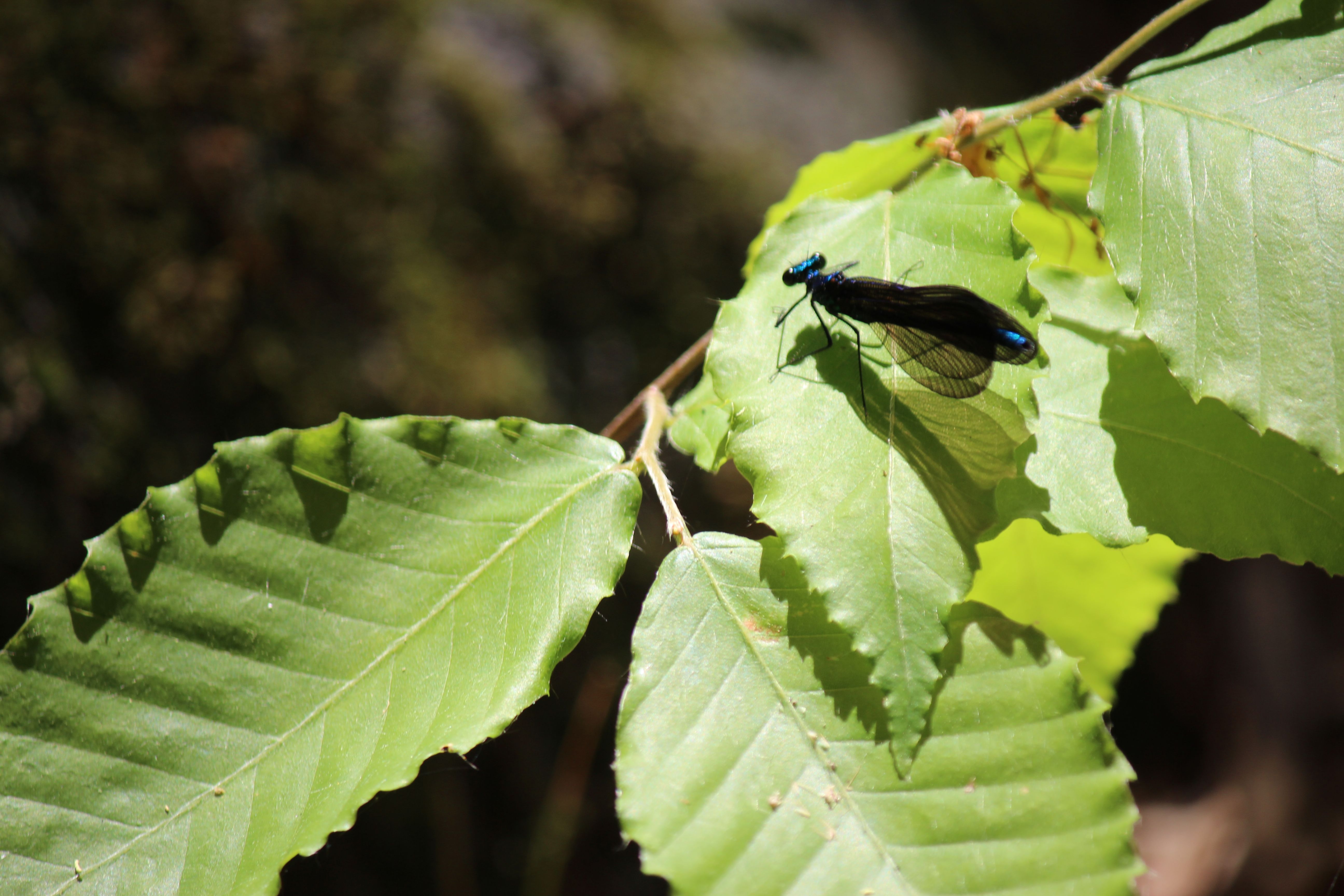
Not to be overlooked, a damsel fly.

Wandering about, I found Wild Strawberries

and Raspberries in bloom.

But I saved the best for last. Wild Red Columbine. I can hear Jinny’s happy sigh. I was going to pick it. Kidding.
She’ll be happy to know that I arrived back at my truck three hours later. Another three hour tour–somehow that always happens when we explore together, so I knew for sure that she was channeling this hike.
Here’s to you, Jinny Mae. I know you would have seen even more than I found along the way, so I can’t wait to hit the trail with you again.
Never Call It Just A Dandelion
I lent out my copy of a book by a similar title: Never Say It’s Just A Dandelion by Hilary Hopkins so I don’t have it in front of me to check her notes.

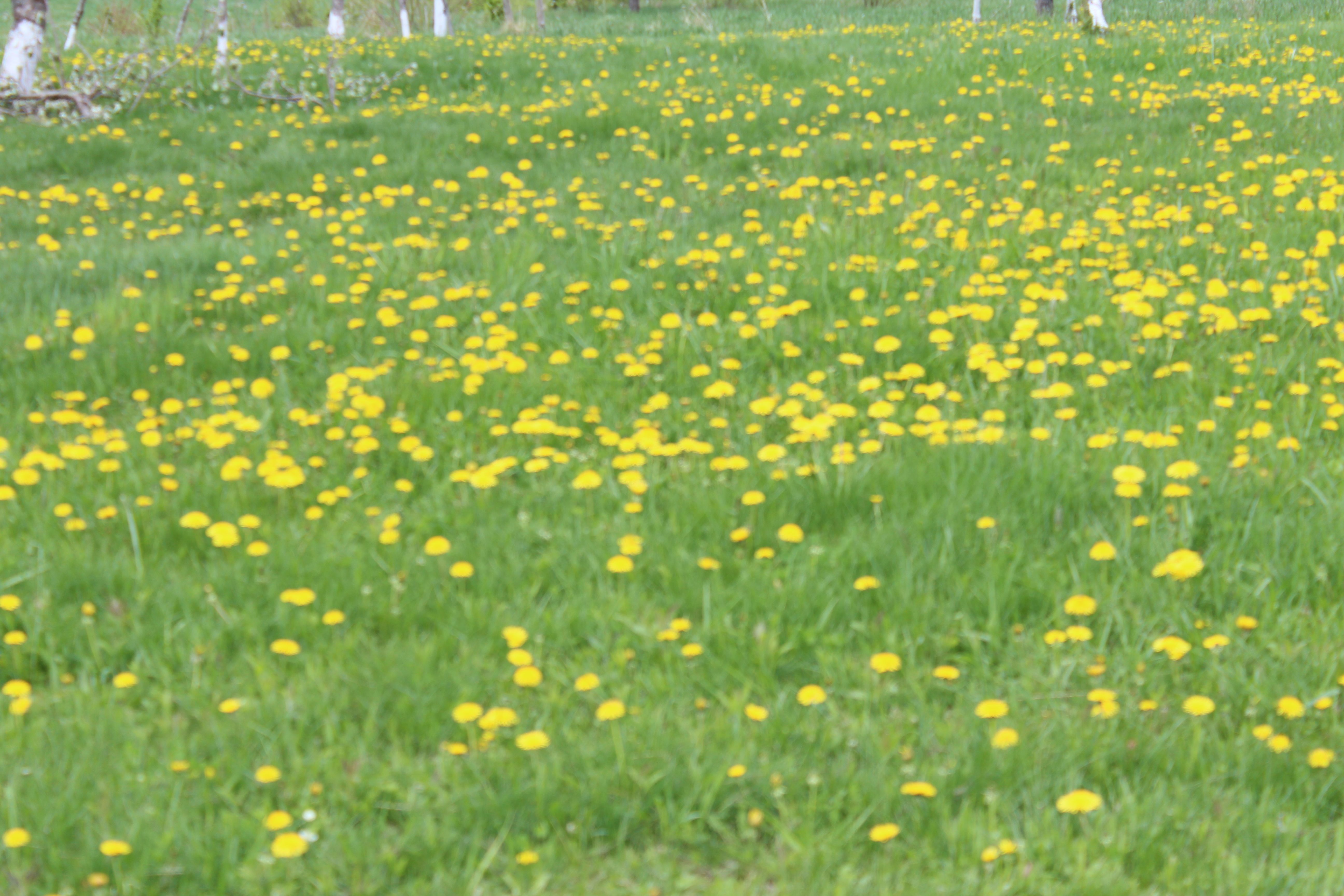
This field of dandelions that I saw at Viles Arboretum in Augusta during a Maine Master Naturalist field trip yesterday inspired me to take a closer look at the species that brightens our backyard.
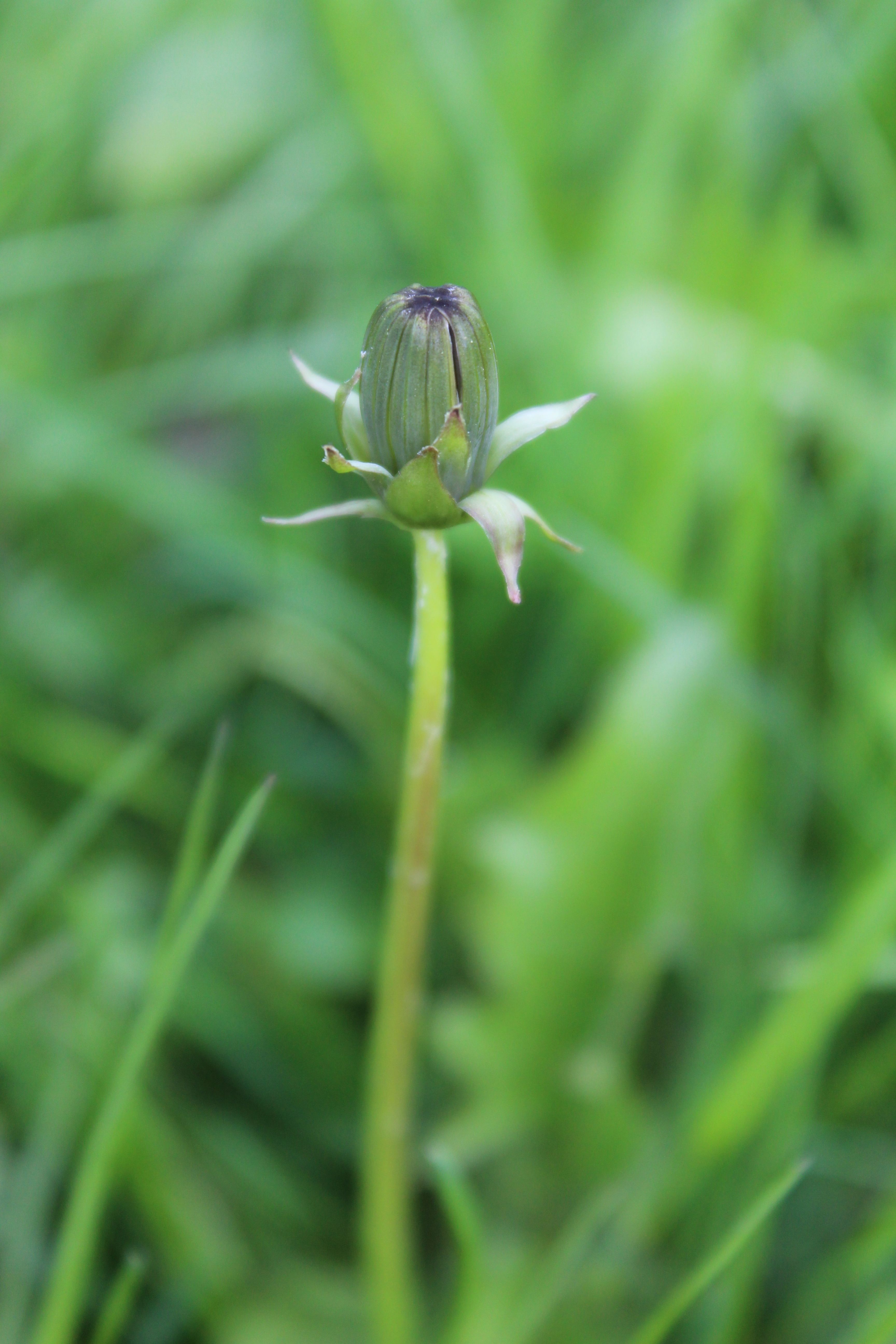
While some green bracts turn downward to keep insects at bay, others protect the developing flower.

One ray at a time

it begins to open.
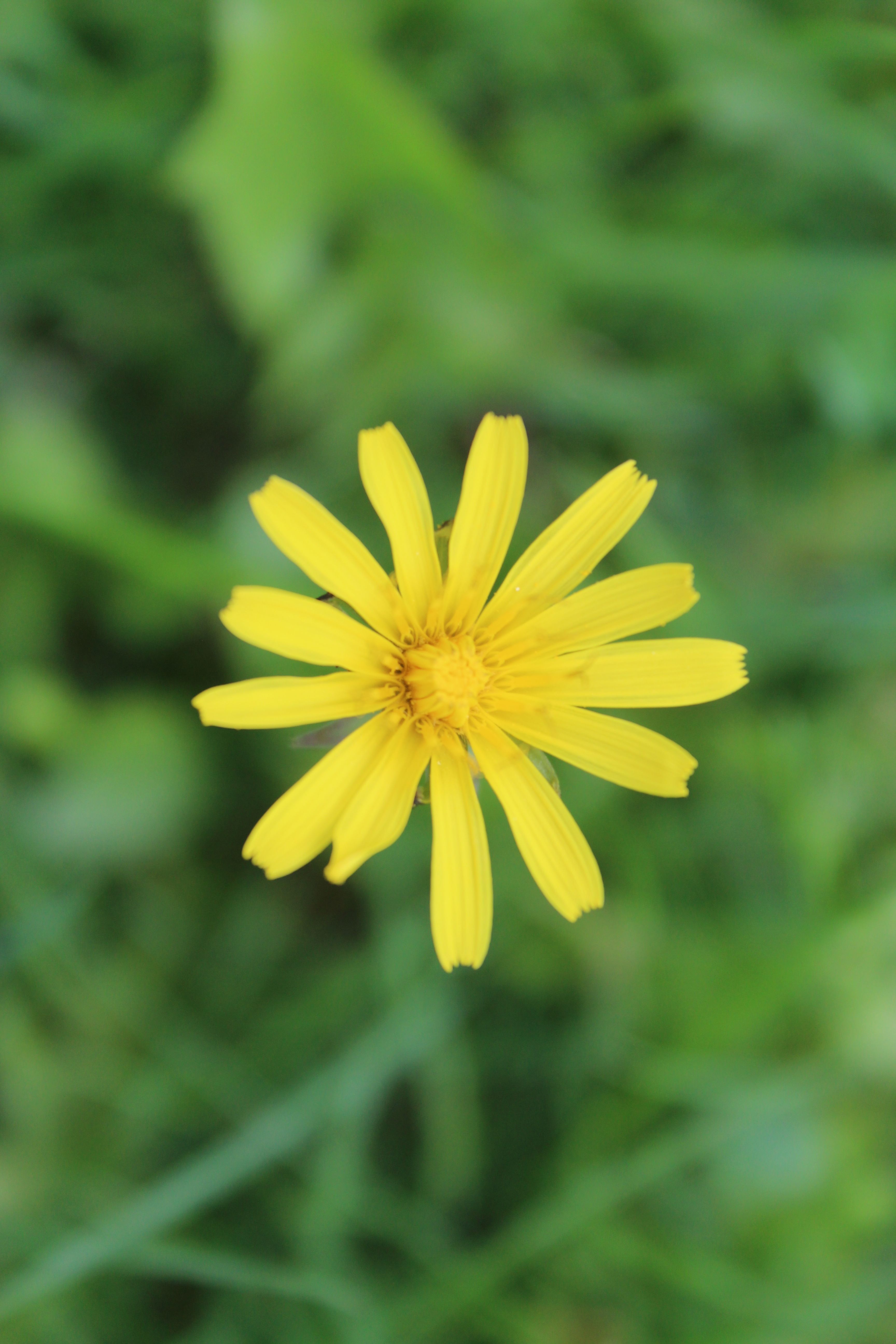
Notice how every ray is notched.

I brought one in to take a closer look at the notches. Each has five “teeth” representing a petal and forms a single floret.
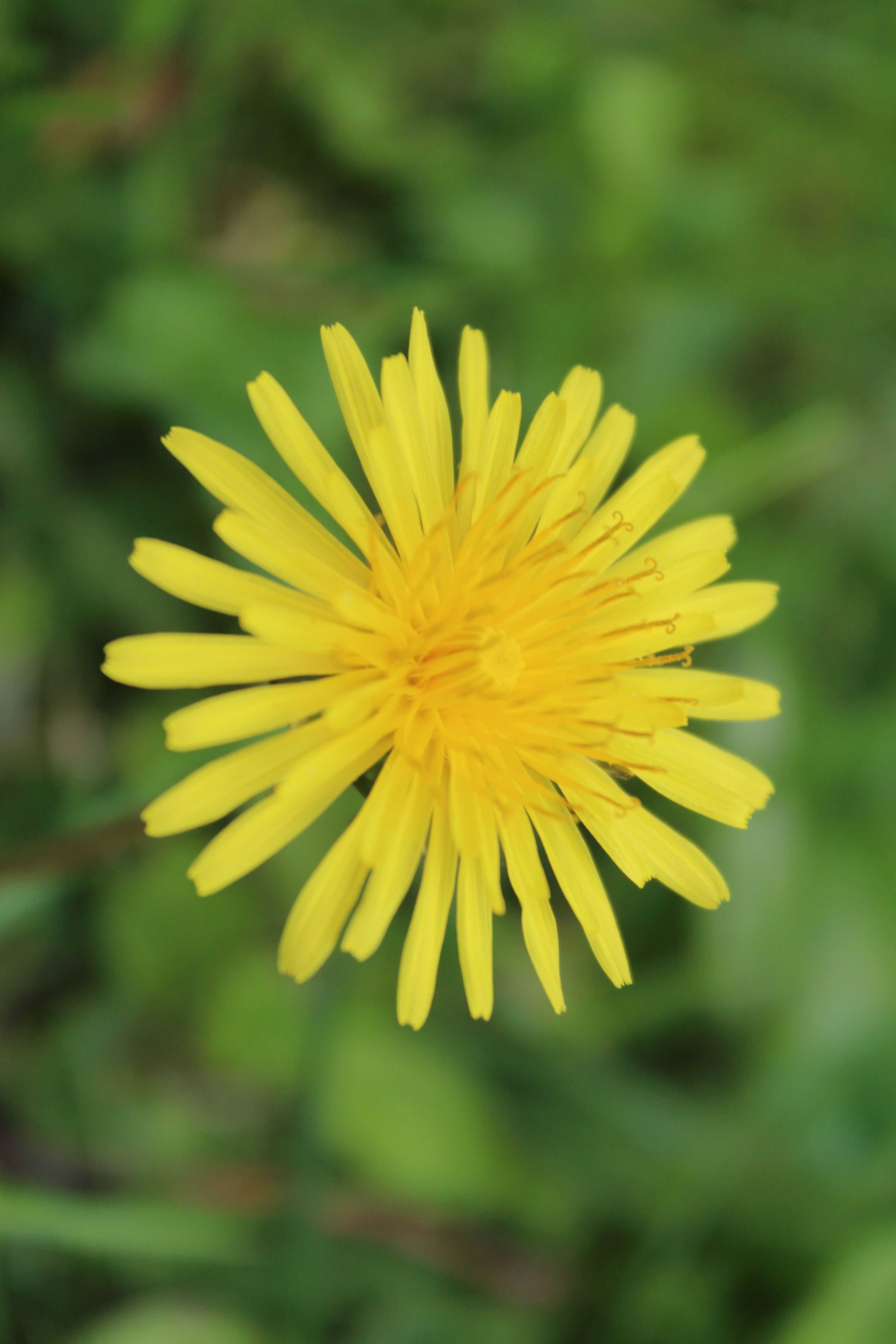
Fully open, the bloom is a composite of numerous florets.
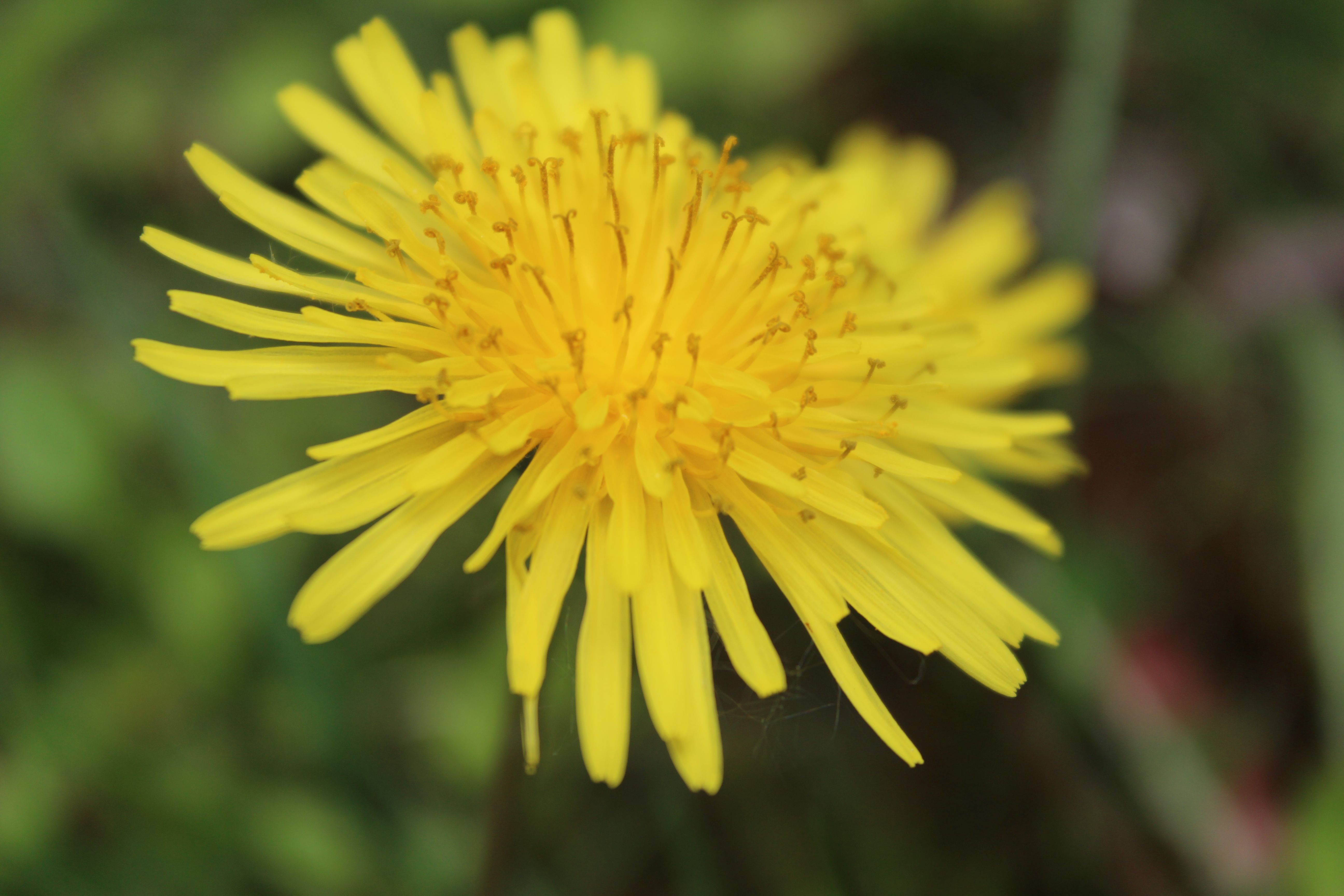
Each stigma splits in two and curls.
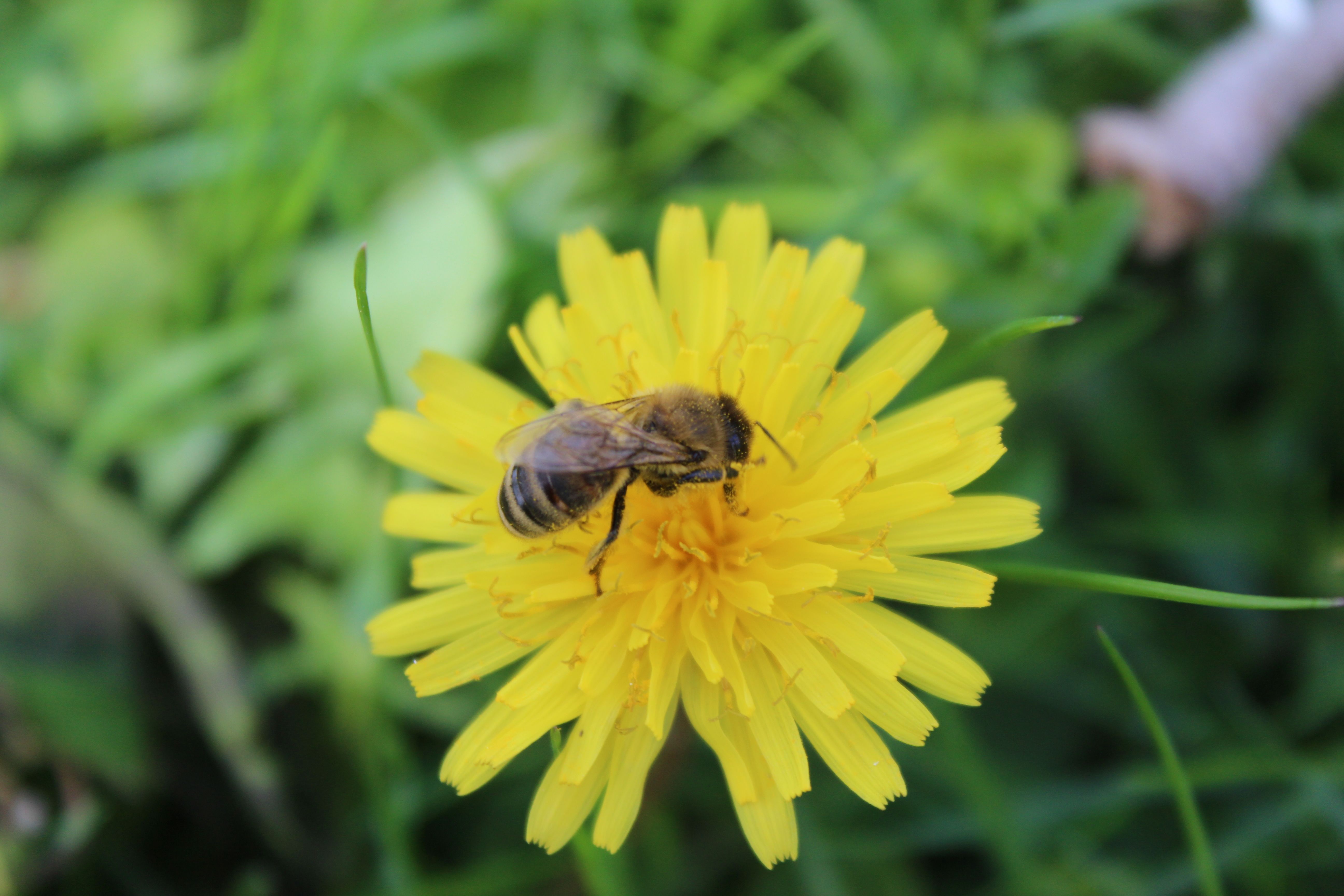
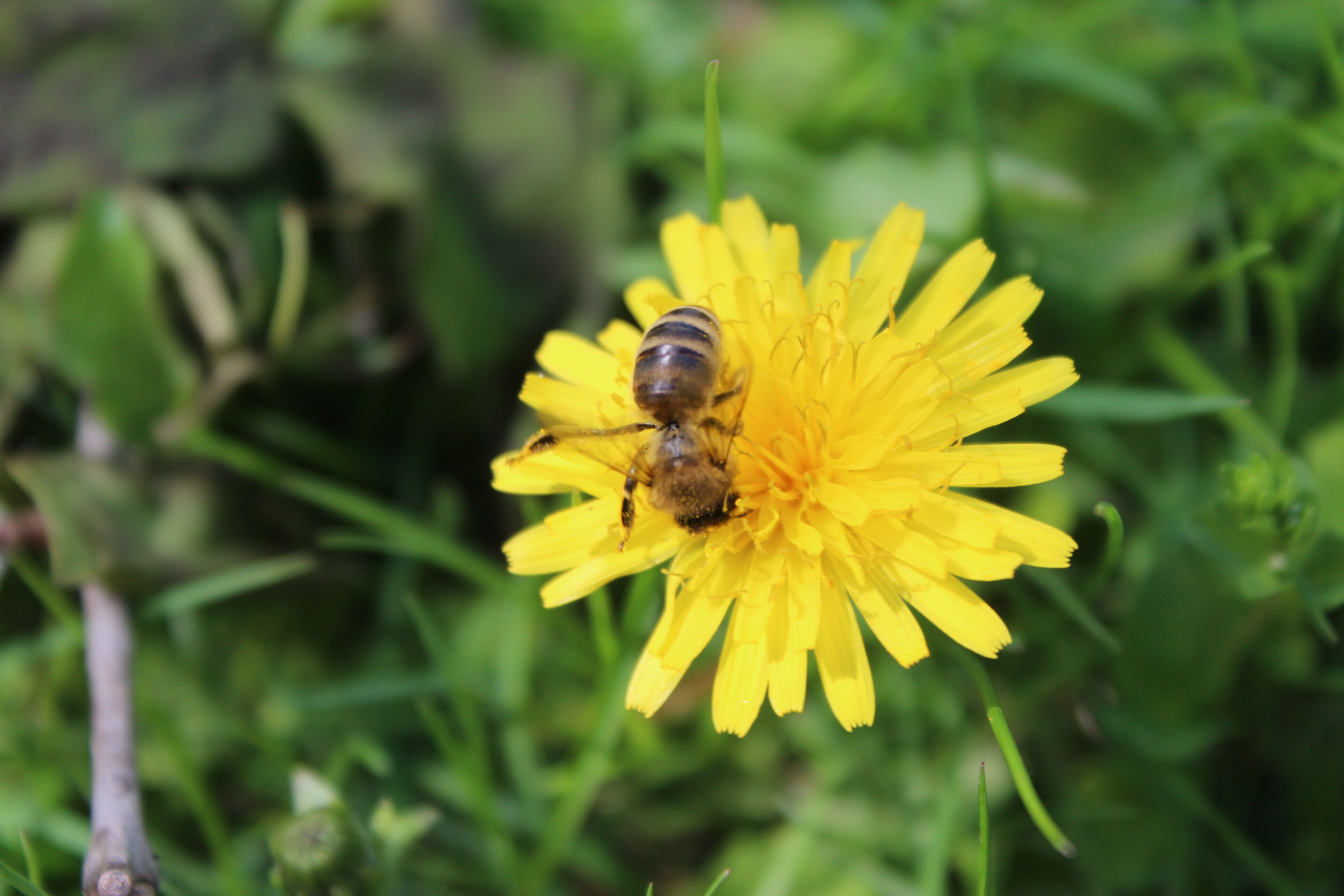
Bees and other insects seek the nectar.

A seed grows at the base and fine hairs form a parachute.

In time, the bloom closes up and then turns into a fluffy ball of seeds waiting for you or the wind to disperse them.

Though you may not be able to see it here, each seed is covered with tiny spikes that probably help it stick to the soil when it lands.
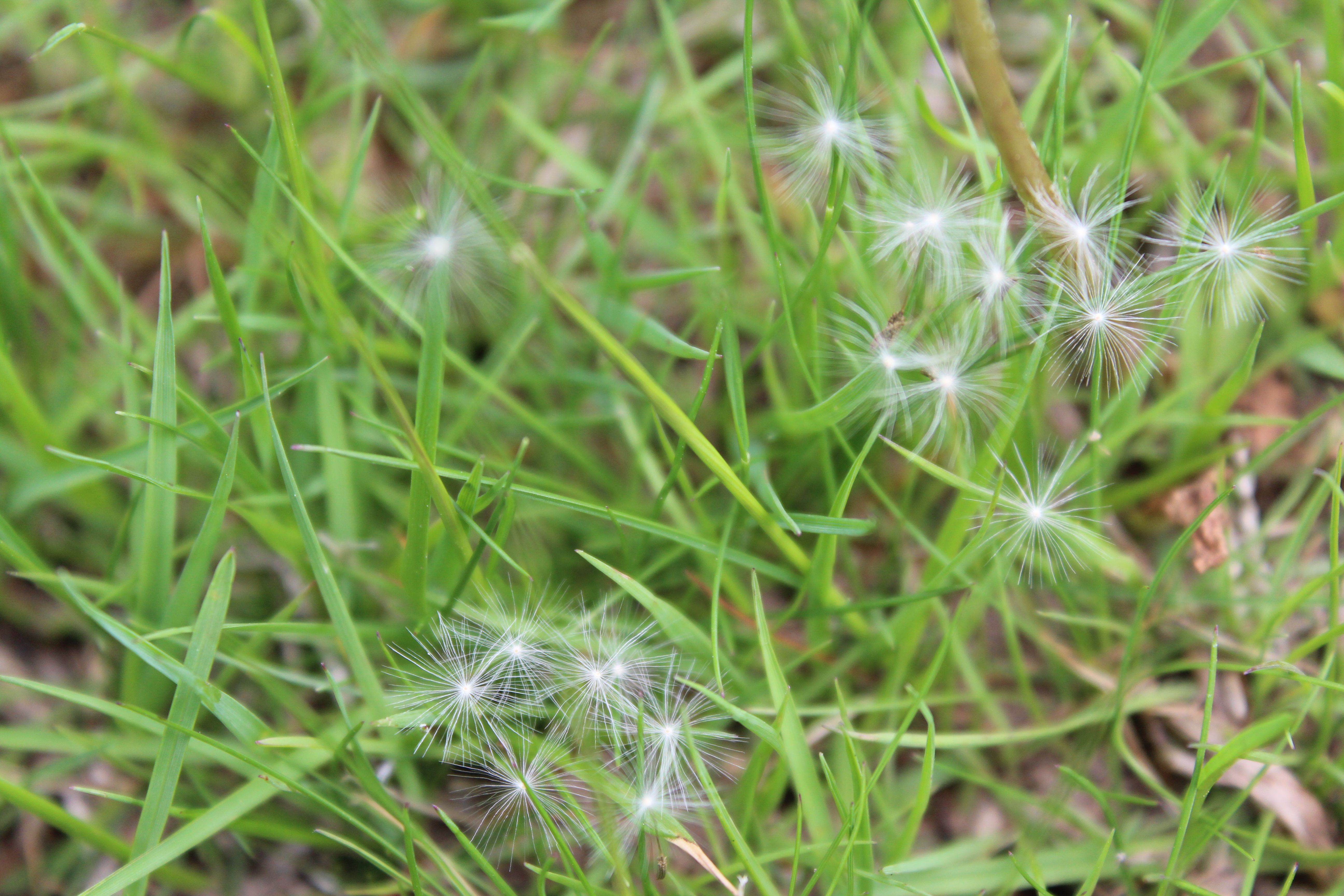
The yellow carpet will continue to change in our backyard

one seed at a time.
Who knew a Common Dandelion (Taraxacum officinal) could be something to wonder about? Emily Dickinson did:
The Dandelion’s pallid tube
Astonishes the Grass,
And Winter instantly becomes
An infinite Alas-
The tube uplifts a signal Bud
And then a shouting Flower,-
The Proclamation of the Suns
That sepulture is o’er.
Emily Dickinson
Soaking Up Solitude
It just so happened that my guy and oldest son had to work today and our youngest is exploring Chicago for a few days before heading home for the summer. So, on this Mother’s Day, I did what I do–went for a hike by myself.

Thanks to the efforts of Loon Echo Land Trust, and the people who support this organization, there is a network of trails that loop around and over Bald Pate in South Bridgton. Initially, the land was purchased from a paper company to protect it from becoming the site of a TV tower. The Bald Pate Mountain Preserve encompasses 486 acres and has 6.7 miles of trails. I covered most of them today.

The Moose Trail was at times dry and other times wet. Though this sign directs hikers to the Beech Thicket, really, much of the lower part of the mountain is covered in beech–an indication that the land was previously disturbed.

Along the way, I found Woodland Horsetail, an Equisetum. The whorled branches apparently reminded those who came before of a horse’s tail.
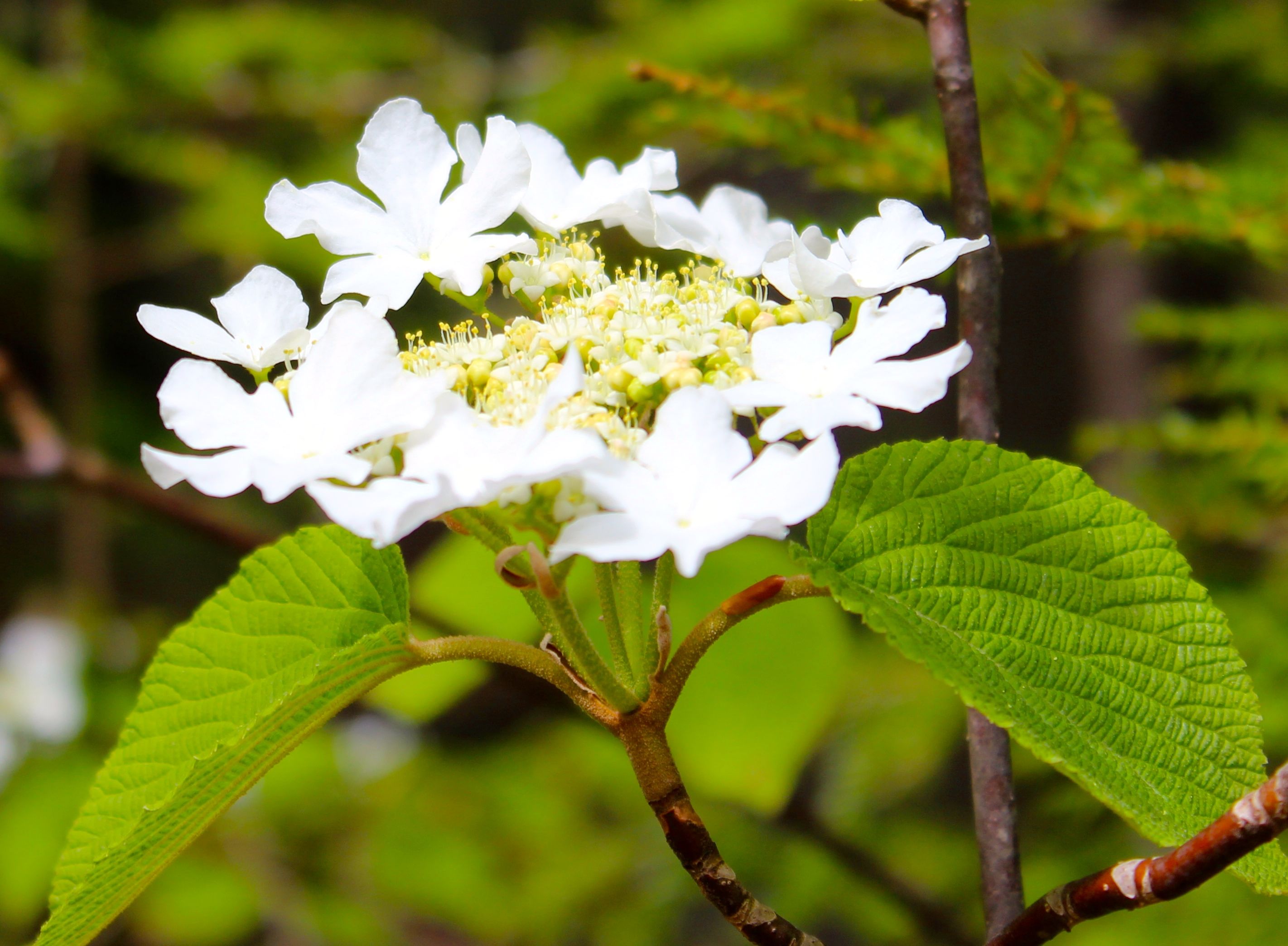
A few Hobblebush Viburnums were in full bloom. One of the extraordinary things about this plant is that the showier outer rim of flowers are sterile, while the inner flowers have both stamens and pistils. Today’s lesson–male flower part, stalk is called filament, pollen producing sac at tip is the anther, together they form the stamen(stay men); pistil–female flower part, the stigma at the top receives the pollen, which is sent down the style, a tube-like structure, leading to the ovary, where the potential seeds or ovules are located. (She’s a pistil) Phew! Got through that discussion.
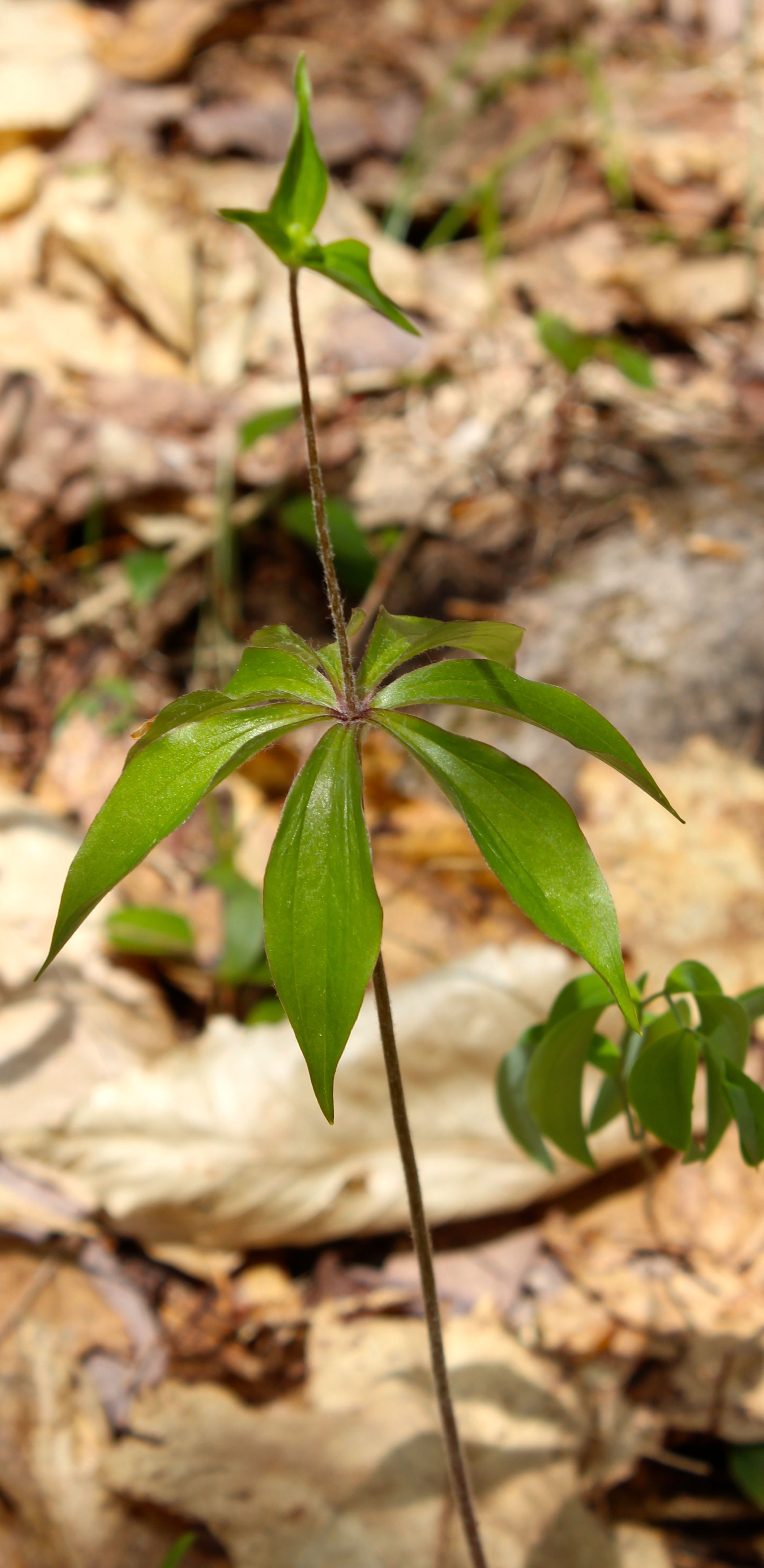
Indian Cucumber Root is the double-decker of the plant world. When it has two tiers, such as this one, it has enough energy to produce a flower. And the root is edible. This I know first hand. I’m not the forager some of my friends are, but the root really does taste a bit cucumbery.
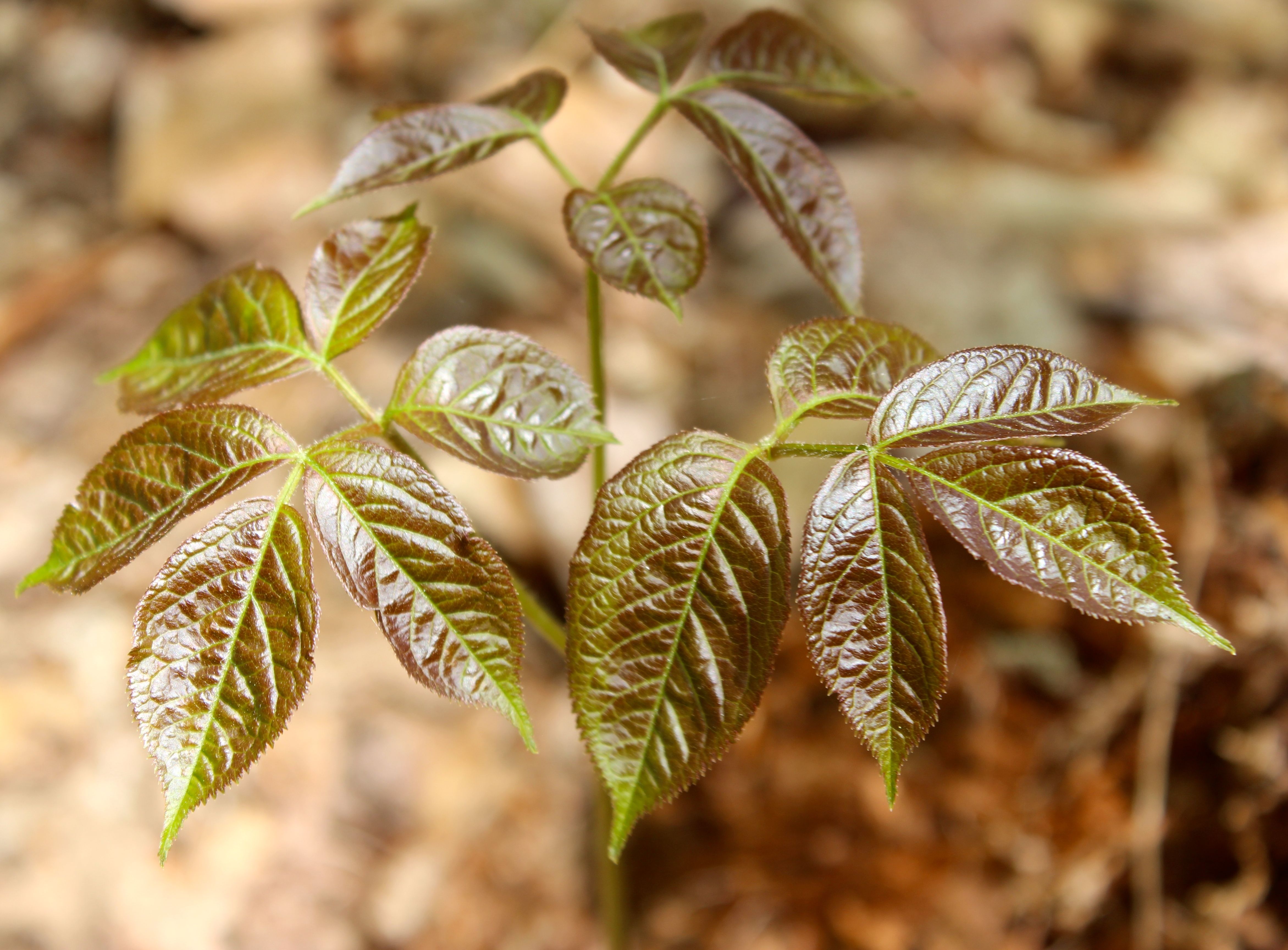
Another plant with an edible root, Wild Sarsaparilla was used as a tonic and was the source of root beer–until we learned how to make it out of artificially flavored syrup.

I followed the squiggly trail marker to the summit, hiking from the Moose Trail to the South Face Loop Trail and continuing past the Pate Trail. The trail is well marked and maintained. On the climb up, I kept looking for my favorite signs.
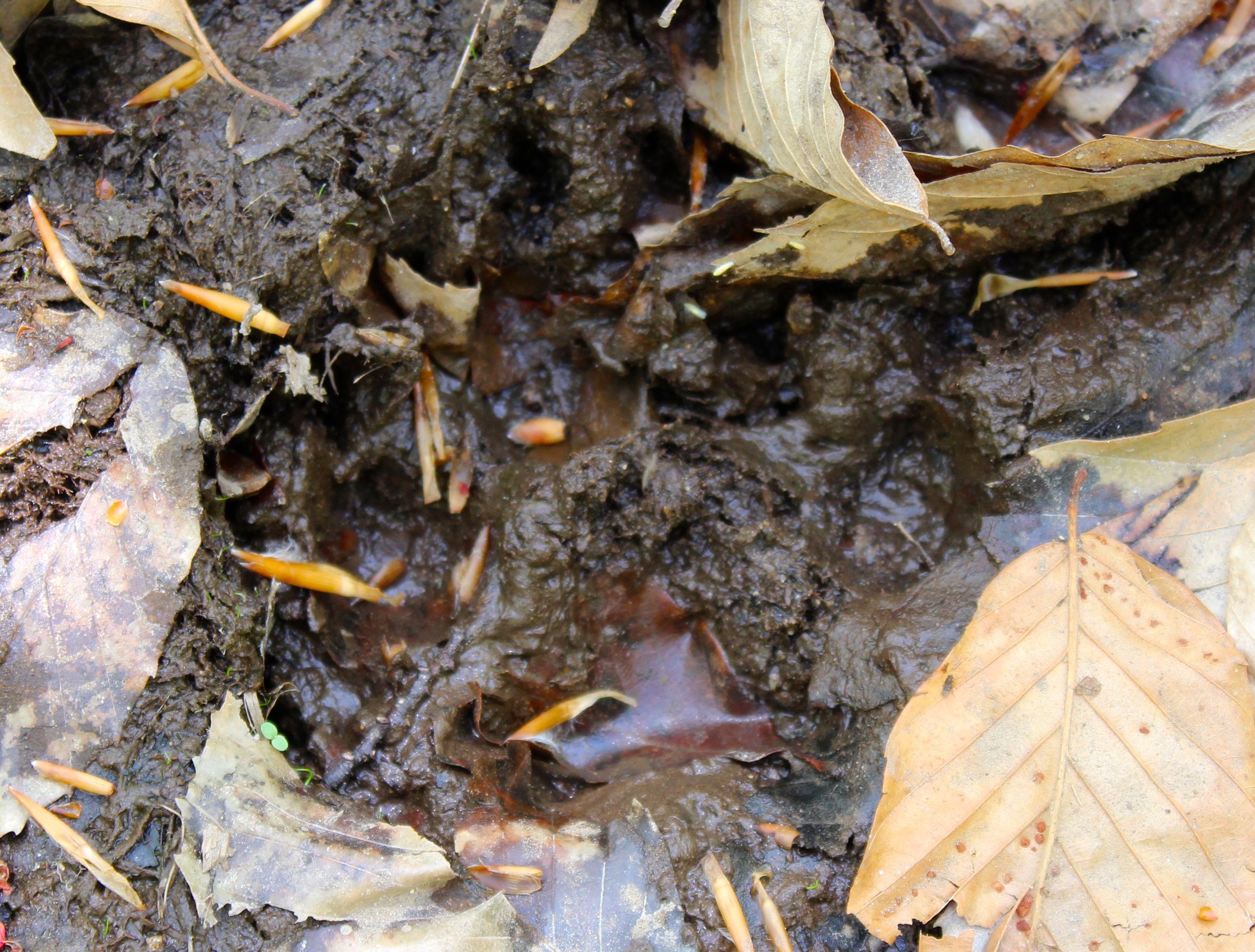
Found some. Bobcat prints in the mud.
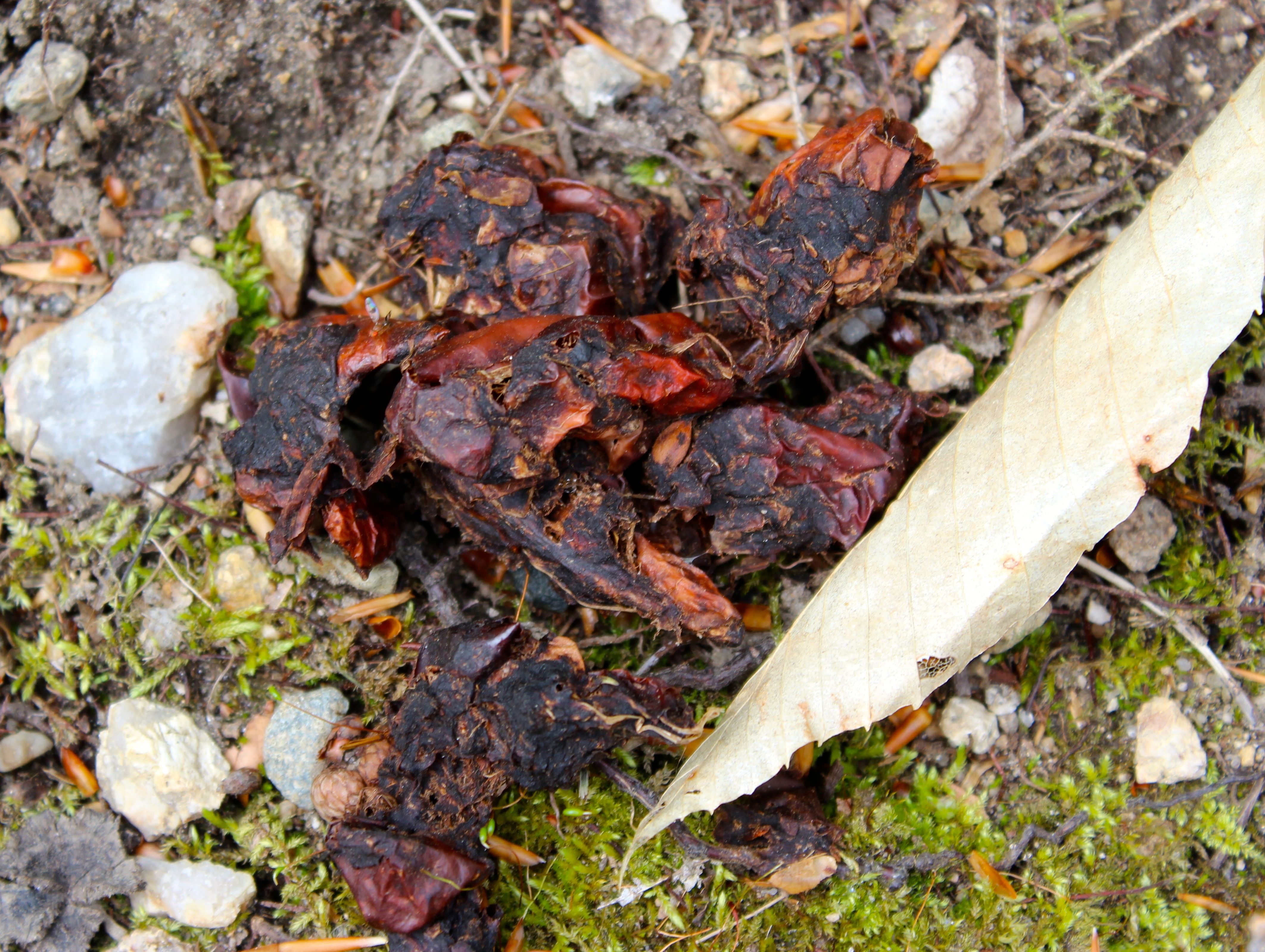
Coyote scat filled with apple skin and seeds. The property abuts an orchard. In fact, at Five Fields Farm, winter activities include snowshoeing, cross-country skiing and dog sledding on a network of trails through the orchard and onto the preserve.

A coyote print dried in the hardened mud.

And a garter snake slithered away from me. I actually saw another later on.
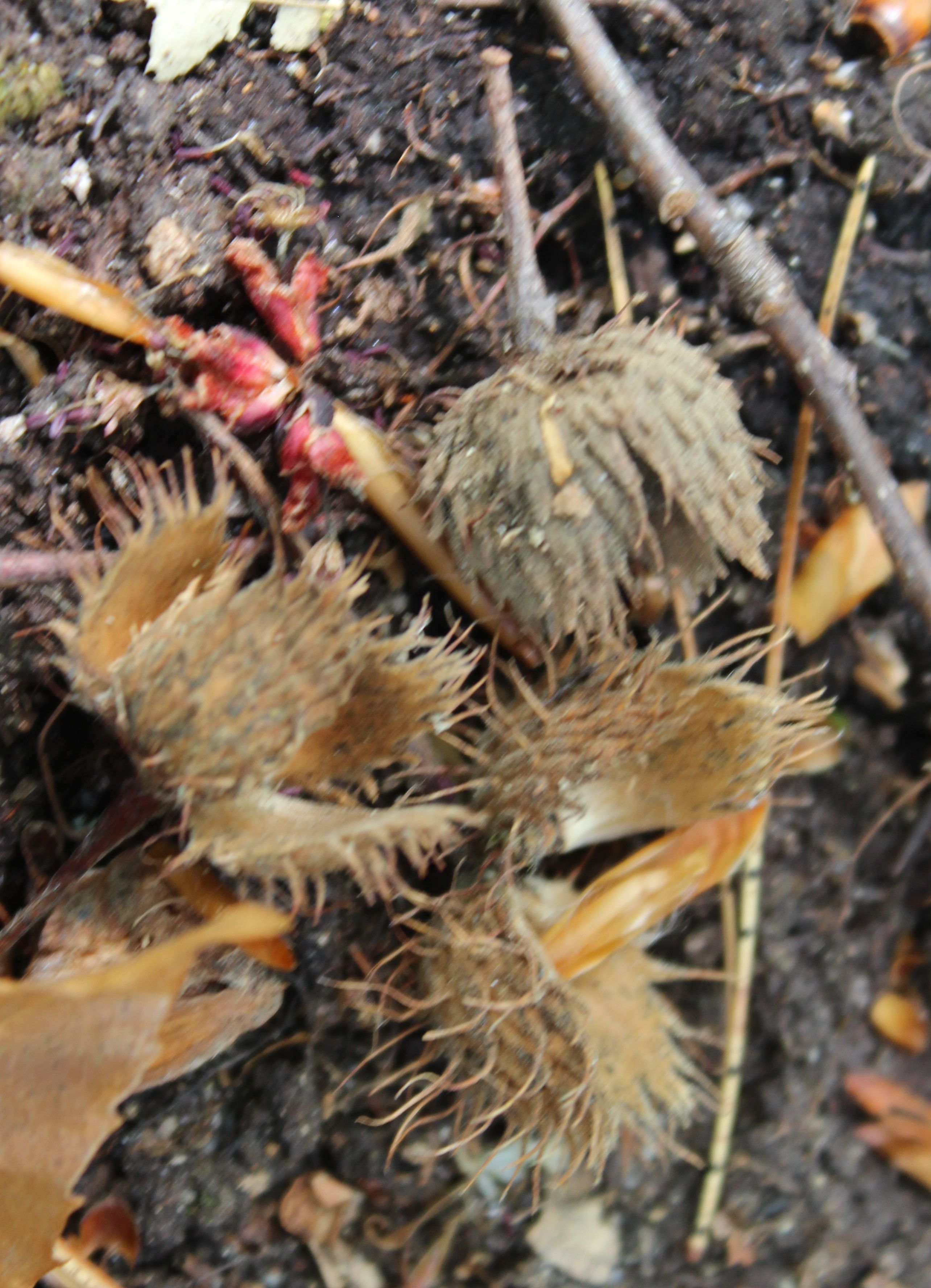
I found beech nuts on the trail, but no bear claw marks, which surprised me considering the number of mature beech trees. And interestingly, while some of the beech trees suffer from infection due to the beech scale insect, many are quite healthy.
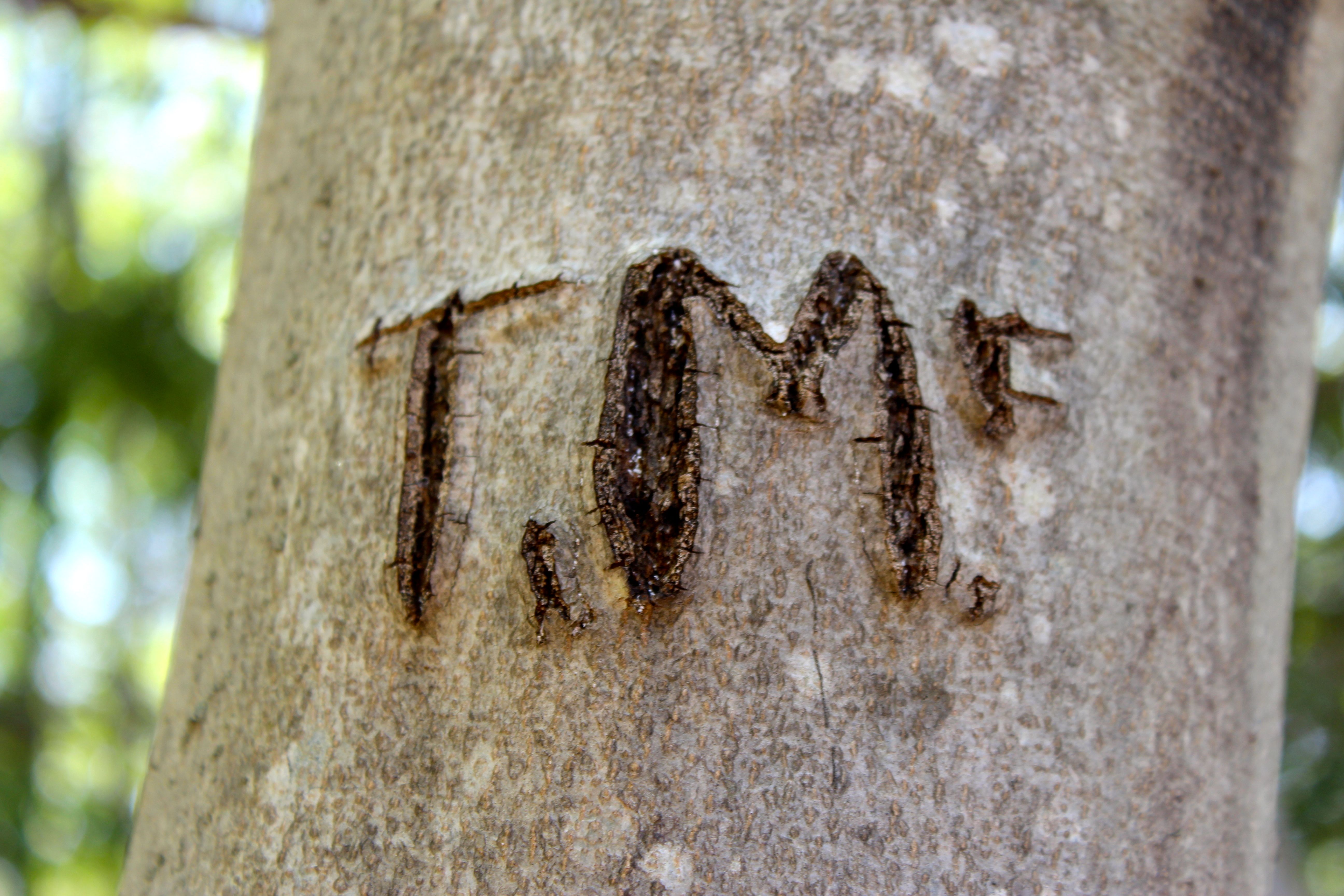
One black bear did carve its initials into bark. We only raise intelligent black bears in these parts.

Ascending via the backside of the ledges, I soon came to the view of Peabody Pond and Sebago Lake beyond. The only other people I saw was a family of five at the summit.
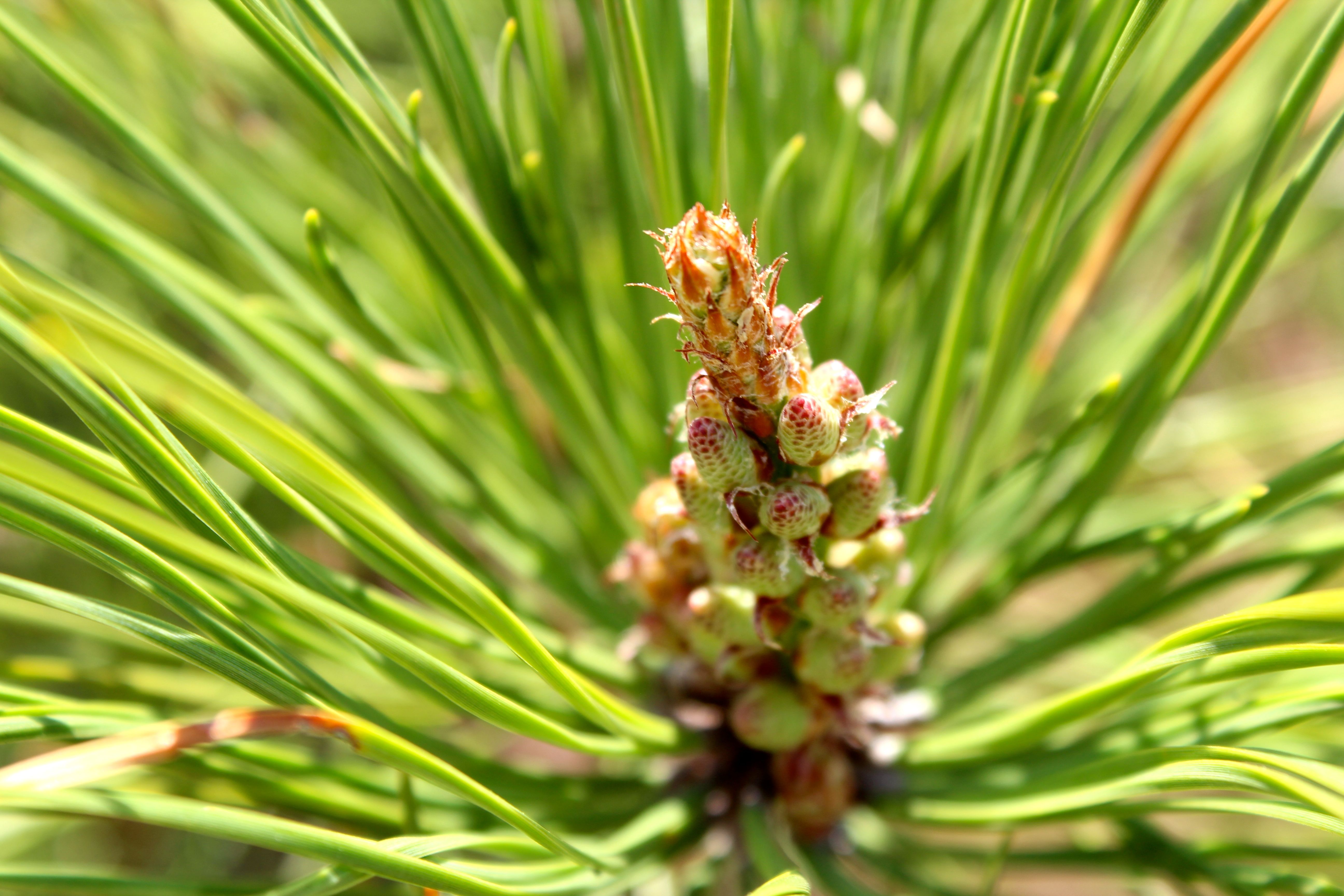
Pitch Pine trees are the most fire resistant in Maine and the summit features a community of these.

While White Pines have a bundle of five needles, Pitch Pines have three in a bundle.
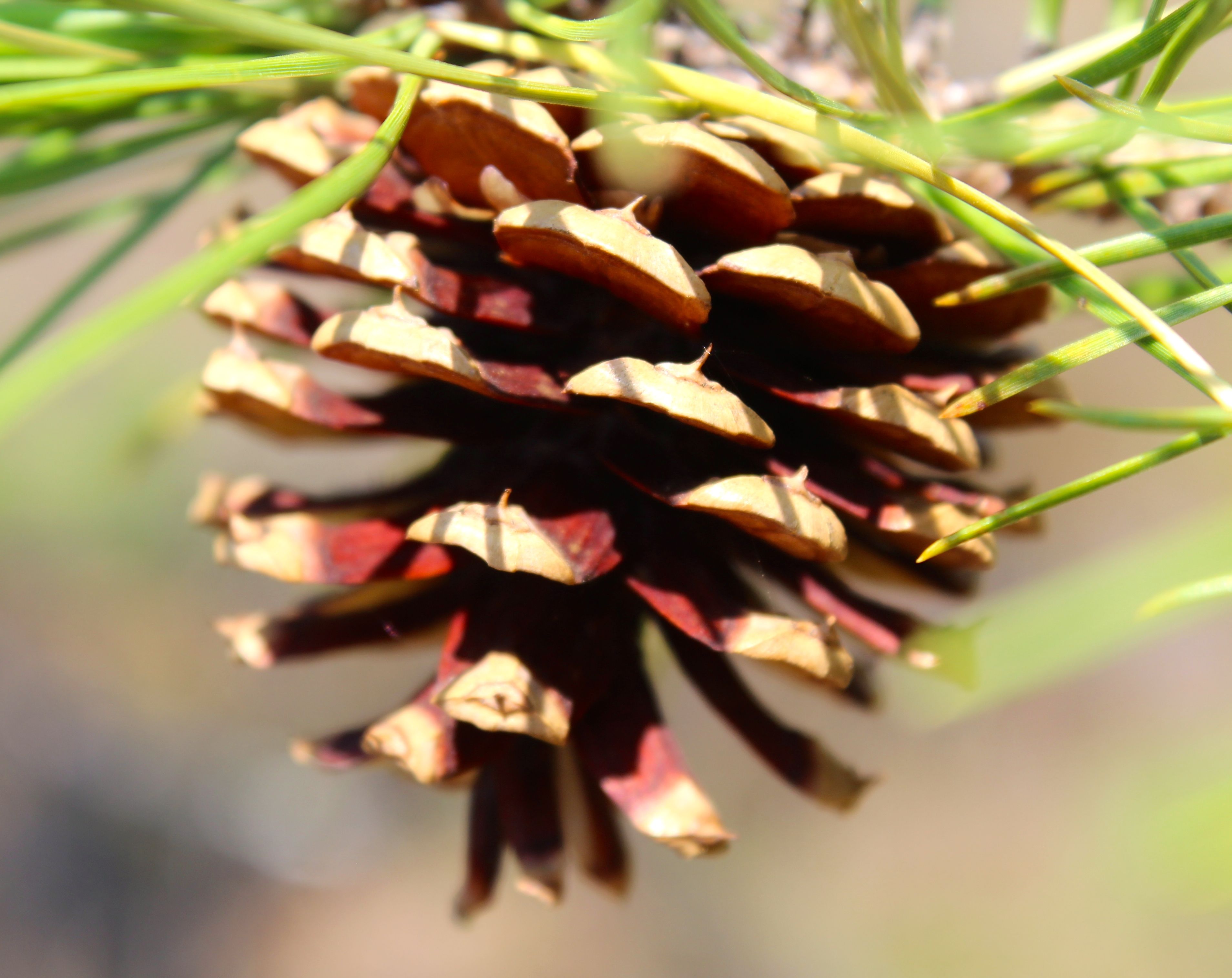
And prickly-scaled cones.

The “bald” mountain top is the reason I am who I have become. Being outside and hiking have always been part of my makeup, but when our oldest was in fifth grade, I chaperoned a field trip up this mountain that changed everything. The focus was the soils. And along the way, Bridie McGreavy, who at the time was the nature educator for Lakes Environmental Association, sat on the granite surrounded by a group of kids and me, and told us about the age of the lichens and their relationship to the granite and I wanted to know more. I needed to know more. That was the beginning and I give thanks to LEA, Loon Echo Land Trust, the Greater Lovell Land Trust and Maine Master Naturalist Program for continuing my education.

There was so much more to see, like this view of Foster Pond from the Foster Pond Lookout Trail.

And these bell-shaped flowers. I’ll be back when they turn to fruit. There will be plenty to pick.
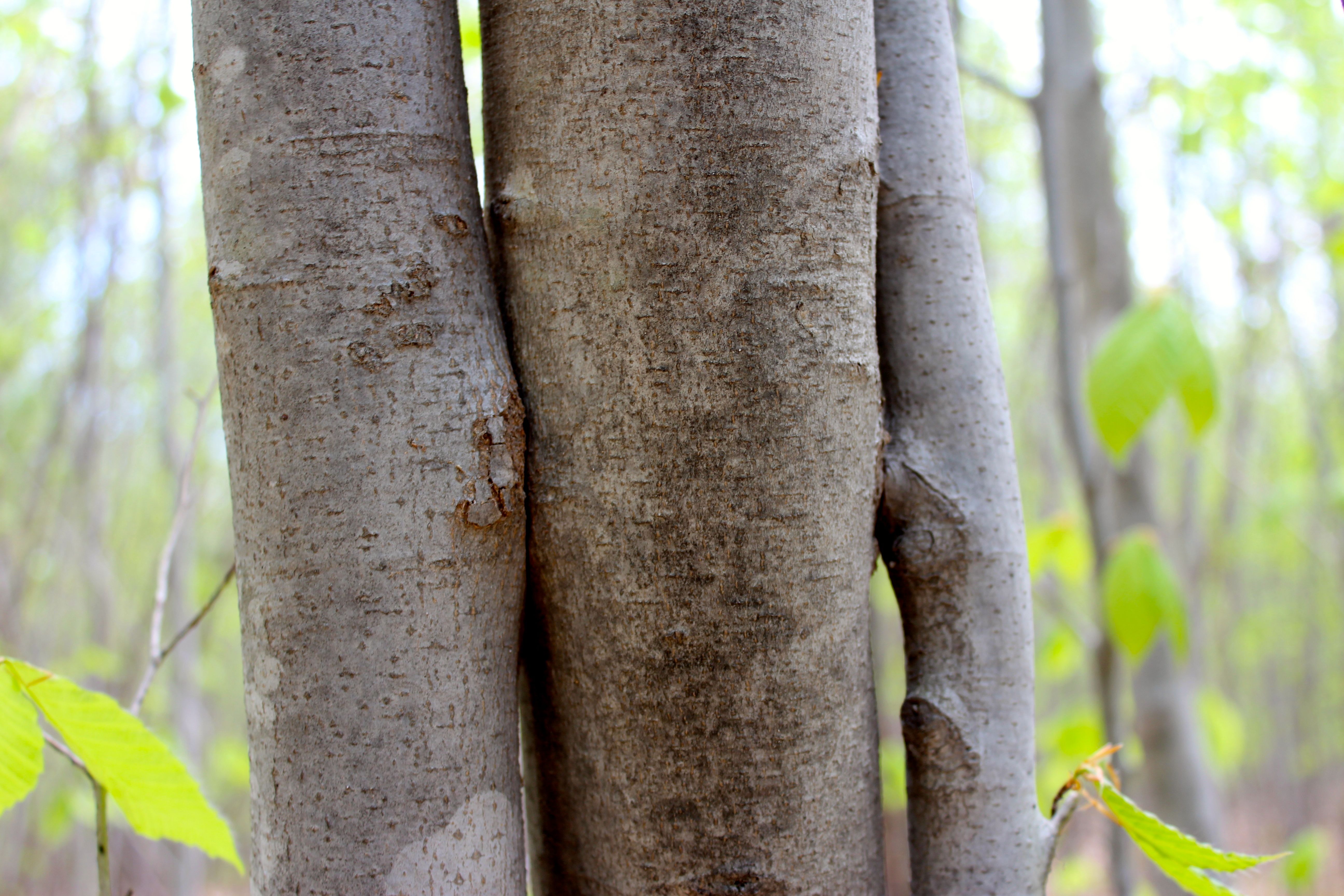
I may have been soaking up my alone time (or maybe that was just sweat–it was hot), but my thoughts were of my three guys.
Happy Mother’s Day to all. As one of my college friends wrote the other day, “whether we are mothers to children, aging parents, pets, or all of the above, we deserve to celebrate!!” Love that sentiment, BMD :-)
And I love that you’ve taken the time to wonder along with me. See, I wasn’t alone after all.
This Lady’s Delight
There’s something about the Chip Stockford Reserve on Ladies Delight Road in Lovell that keeps pulling me back. I think it’s the history associated with this property that fascinates me. And the questions it raises.
From the start, there is a cellar hole and barn foundation. 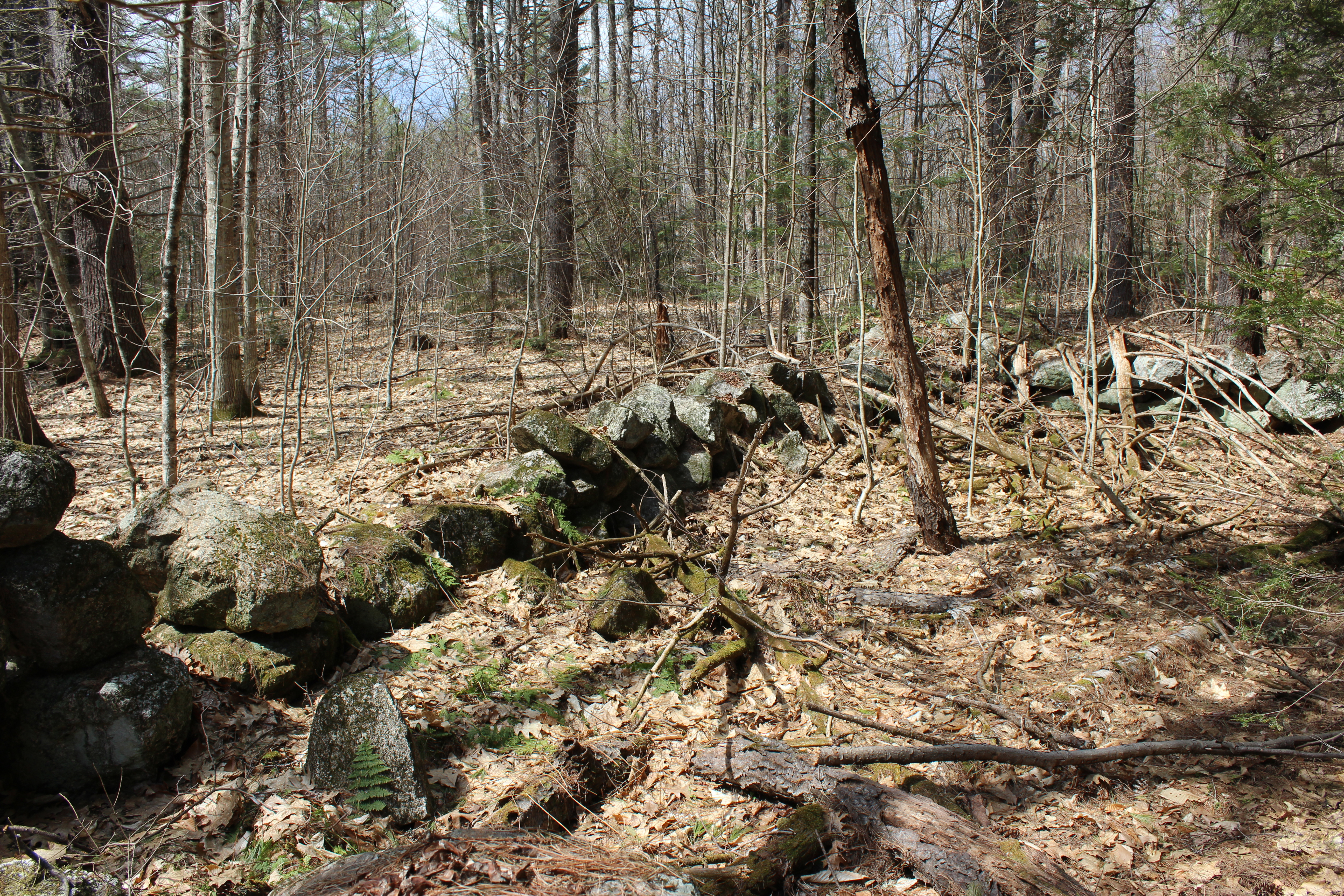
About seven years ago, during a visit to the Lovell Historical Society, I learned that Eldridge Gerry Kimball had purchased 200 acres on January 31, 1880 from Abraham E. Gray.
Various journals from that time period include entries about driving cattle over to the Ladies Delight pasture, picking cranberries over by The Pond, as they called Kezar Lake, picking apples, driving sheep to pasture, picking pears, mowing oats and trimming pines.

Today, it’s the huge pasture pines, stonewalls and a couple of foundations that tell part of the story. I’ve also heard that this area was used as a cattle infirmary. According to local lore, diseased cattle were brought to Ladies Delight to roam and die, thus preventing disease from spreading to healthy cattle.
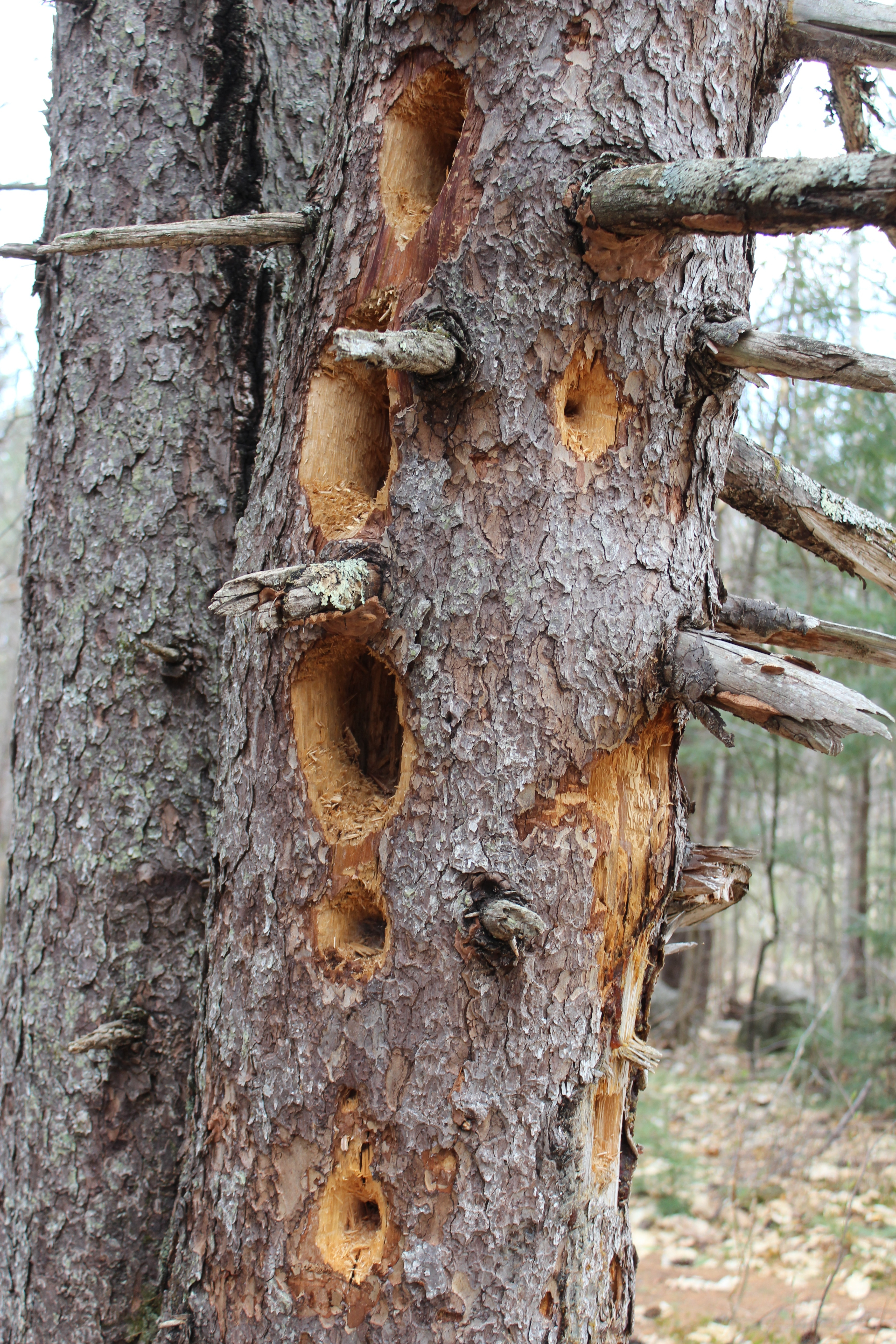
The big old pines provide investigation for others.
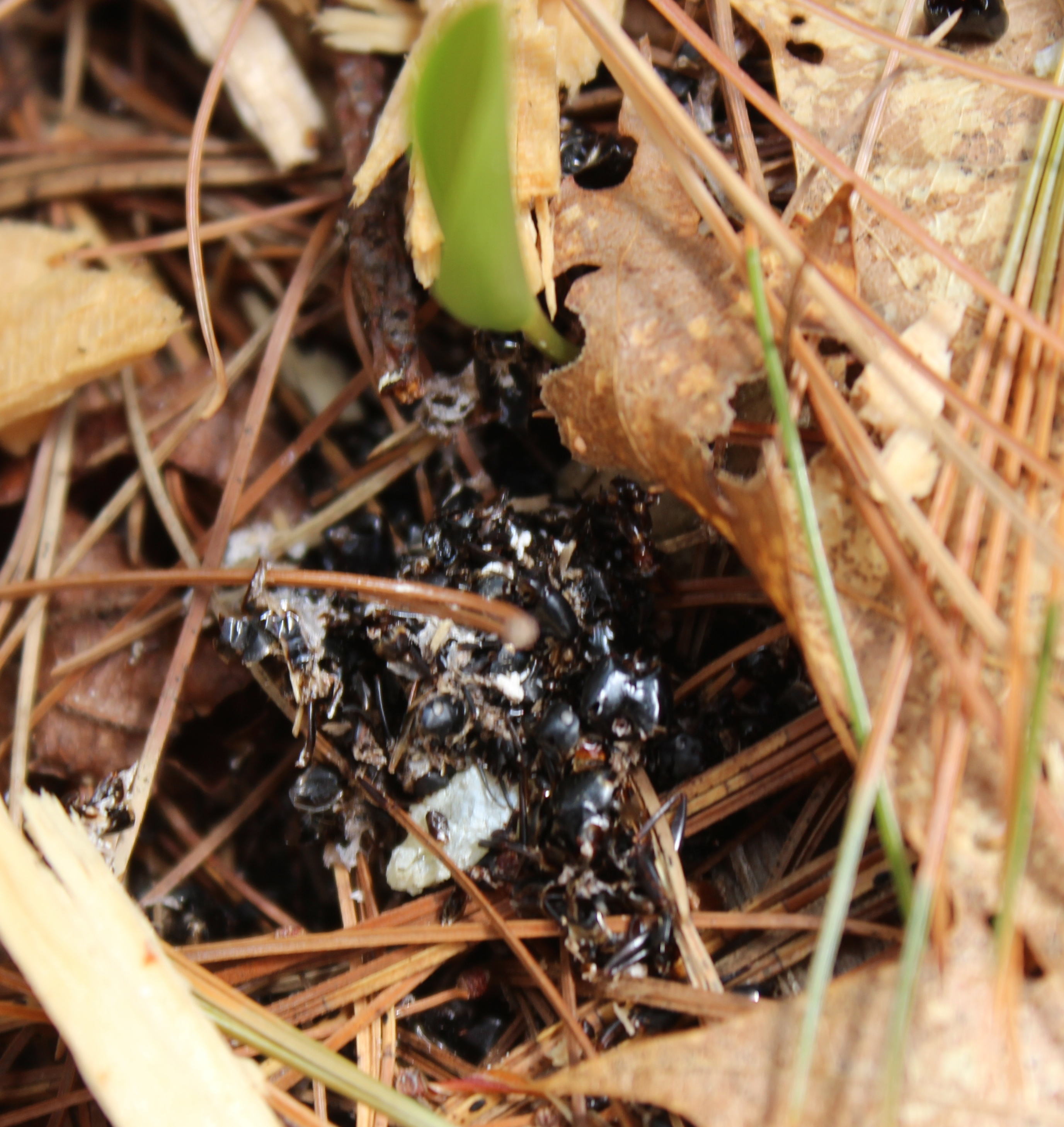
Who sometimes leave presents. Can you see the ant bodies?

Yup, that’s snow. I took this photo in December because I was impressed with the stock pile of cones a red squirrel had made.

It took me a few minutes to locate the tree today. I wanted to see what the midden looked like and wasn’t disappointed. In trying to find the tree, however, I developed an appreciation for the red and gray squirrels who cache their food and then return to it. Of course, if a gray squirrel doesn’t remember where it stored an acorn, then a turkey or deer may find a treat, or a tree may grow. No matter how you look at it, it’s all good. As for me, I need to learn how to use our GPS.
Another story about Ladies Delight hill is that this is the place where people would come to picnic in the 1800s. Did the women get dressed up to enjoy a day out, a break from their farming duties? I have visions of them wearing long dresses and bonnets and carrying picnic baskets. But could they really afford a day away from their chores?

The blue trail loops around the 155-acre reserve, and a spur trail (red) leads to the vantage point–a view of Lower Bay on Kezar Lake and the White Mountains.

A bench at the outlook was placed in memory of Chapman “Chip” Stockford, a founding officer of the GLLT who lived in the neighborhood.

Spring color–more subtle than fall foliage.
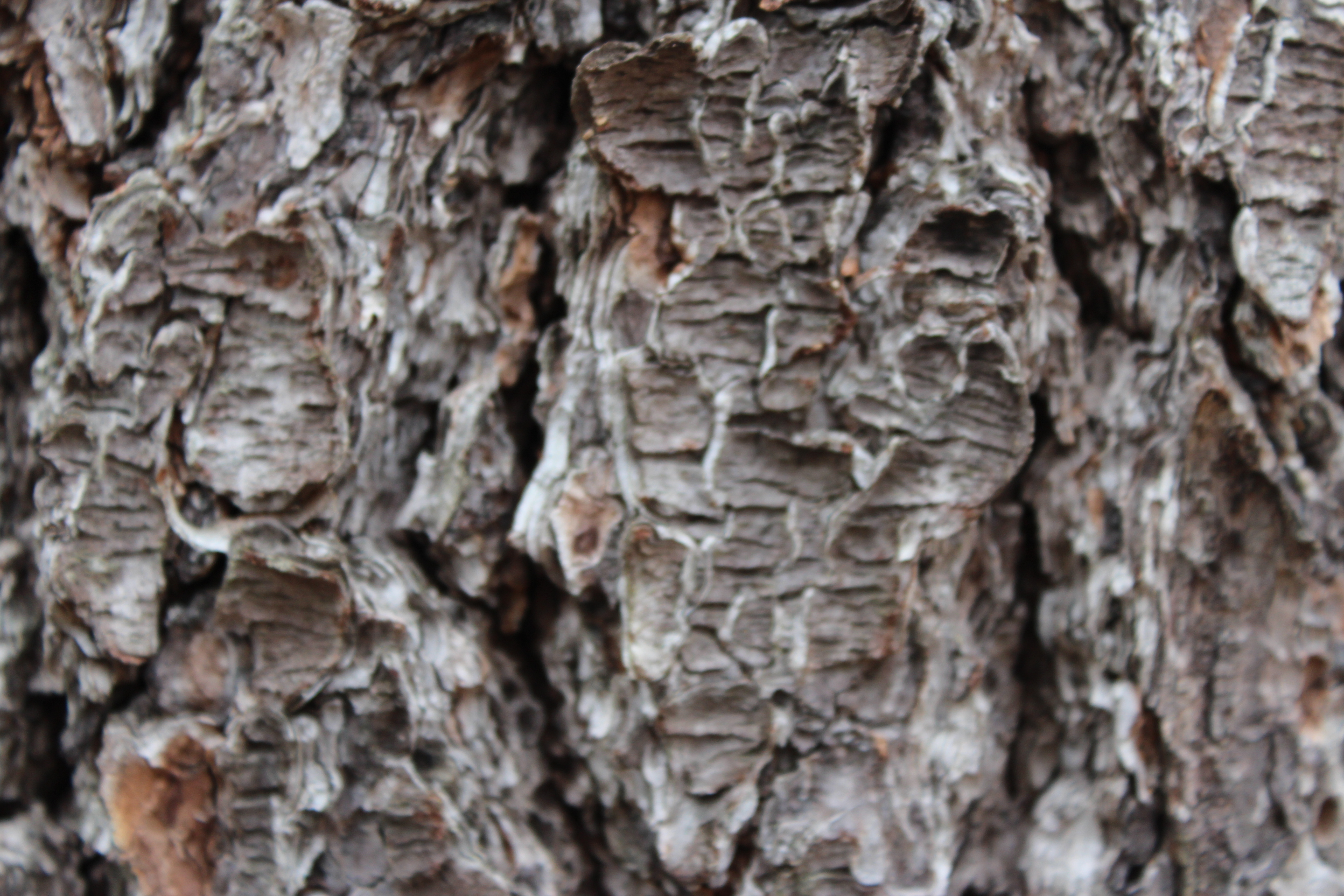
On the short spur between the red arrow and the outlook, the variety of trees offers a study in bark. Eastern White Pine–with horizontal lines on the scales.

Flaky, cinnamony-gray (is that a word?) scales of Eastern Hemlock.

Ash’s diamond-shaped furrows.
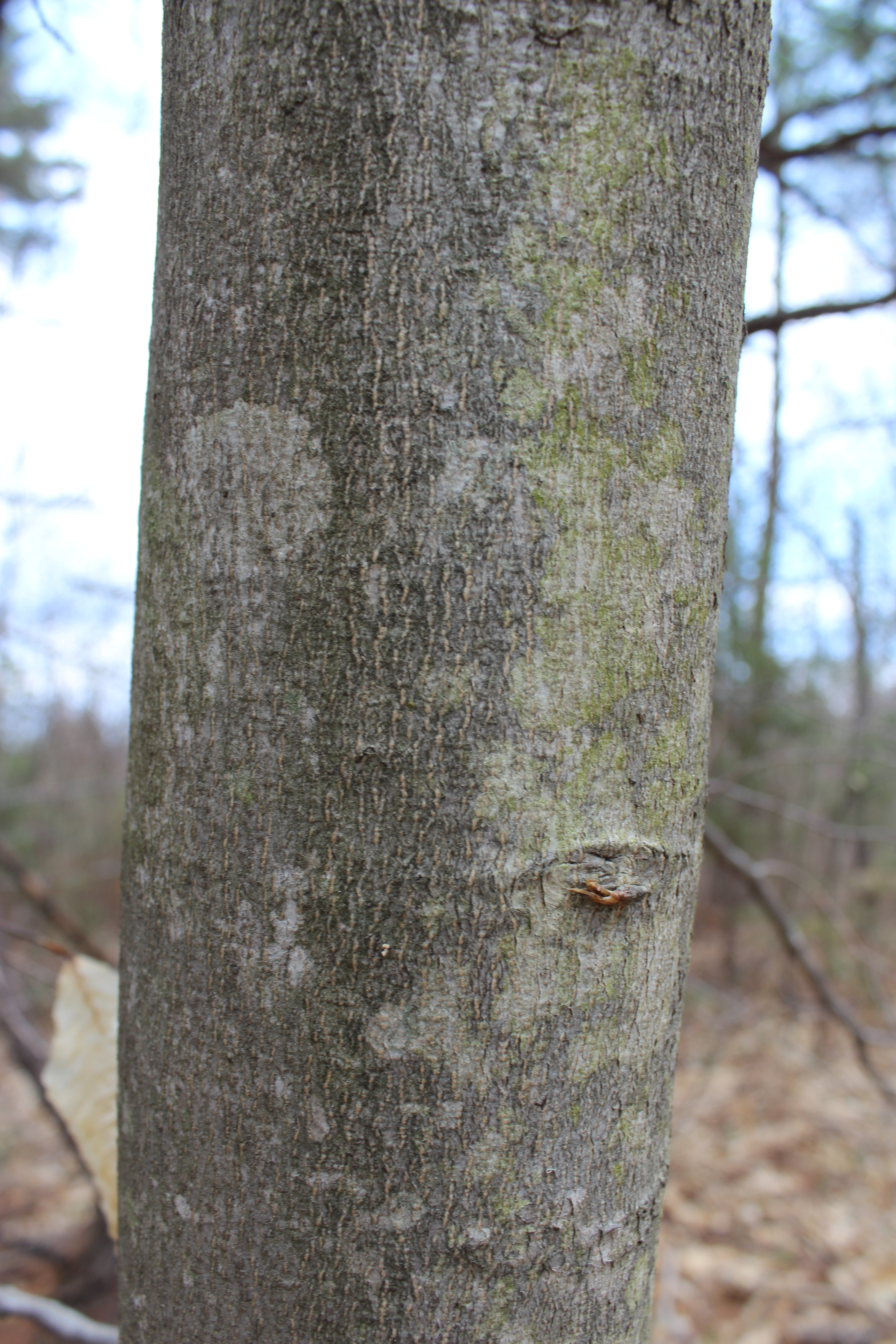
And the smooth, silvery-gray American Beech–with some blotches of lichen adding a dash of green and white.

Hop Hornbeam’s shaggy strips.
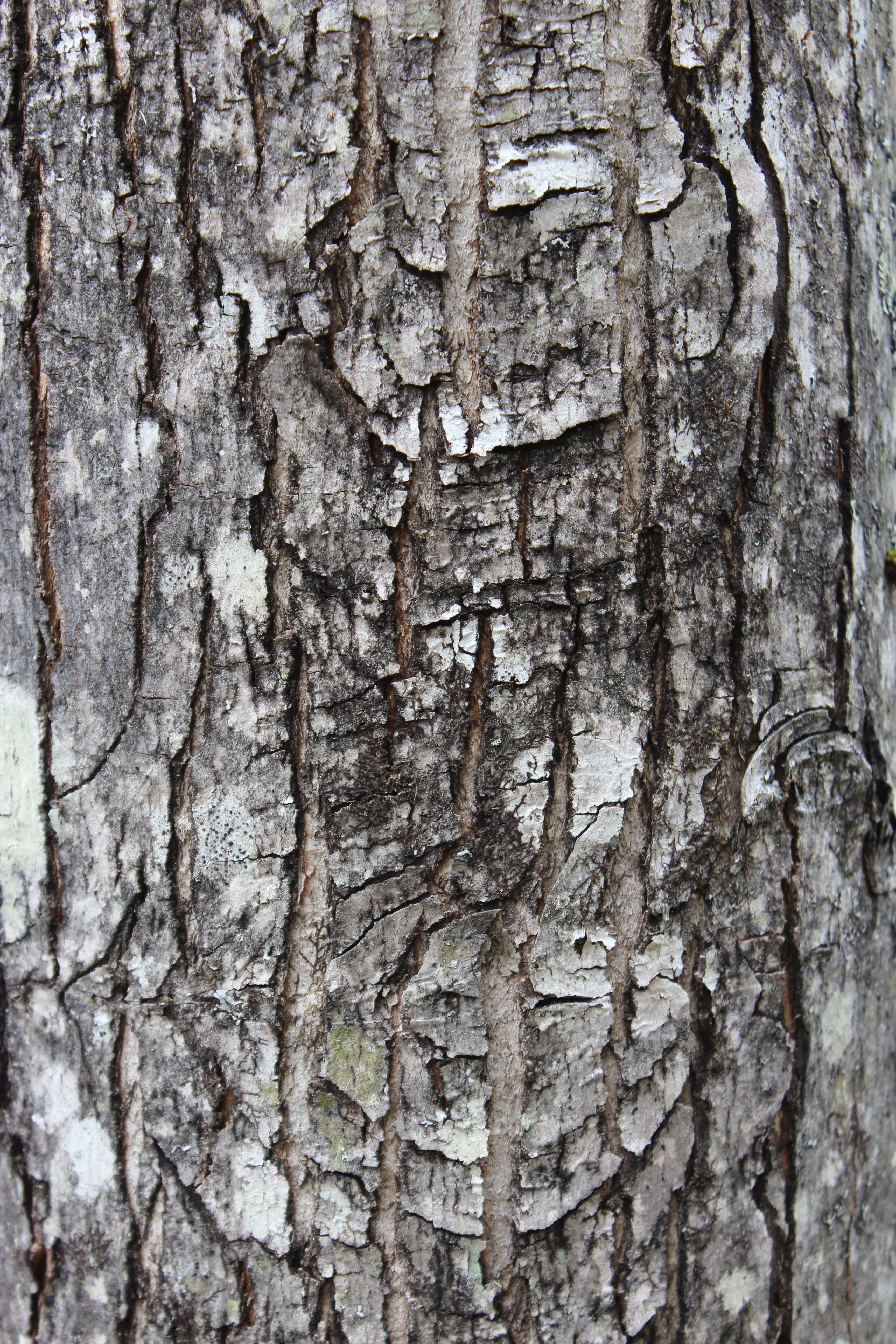
And the bull’s eye target on Red Maple.
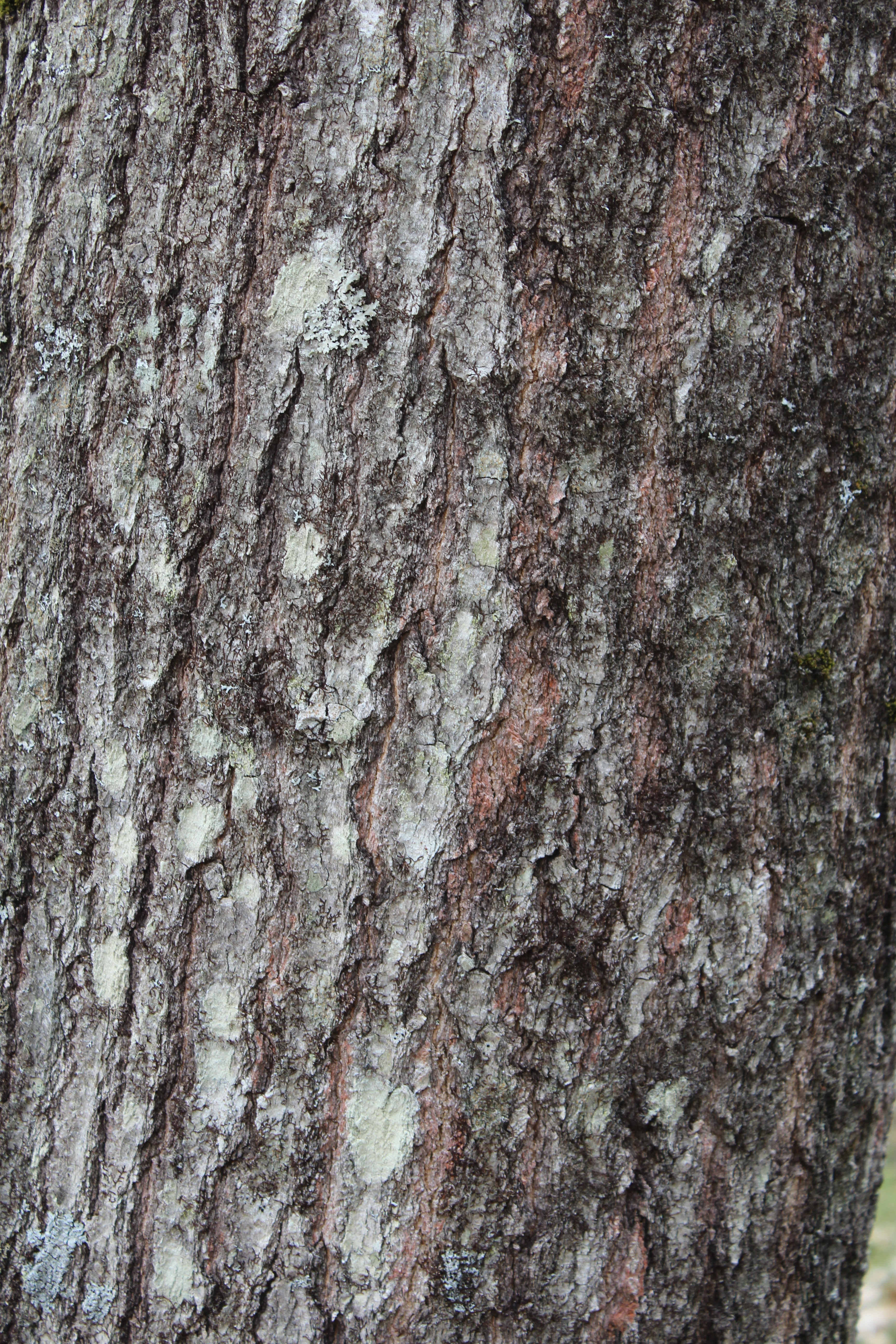
Finally, the flattened ridges of ski tracks that run down a Northern Red Oak.
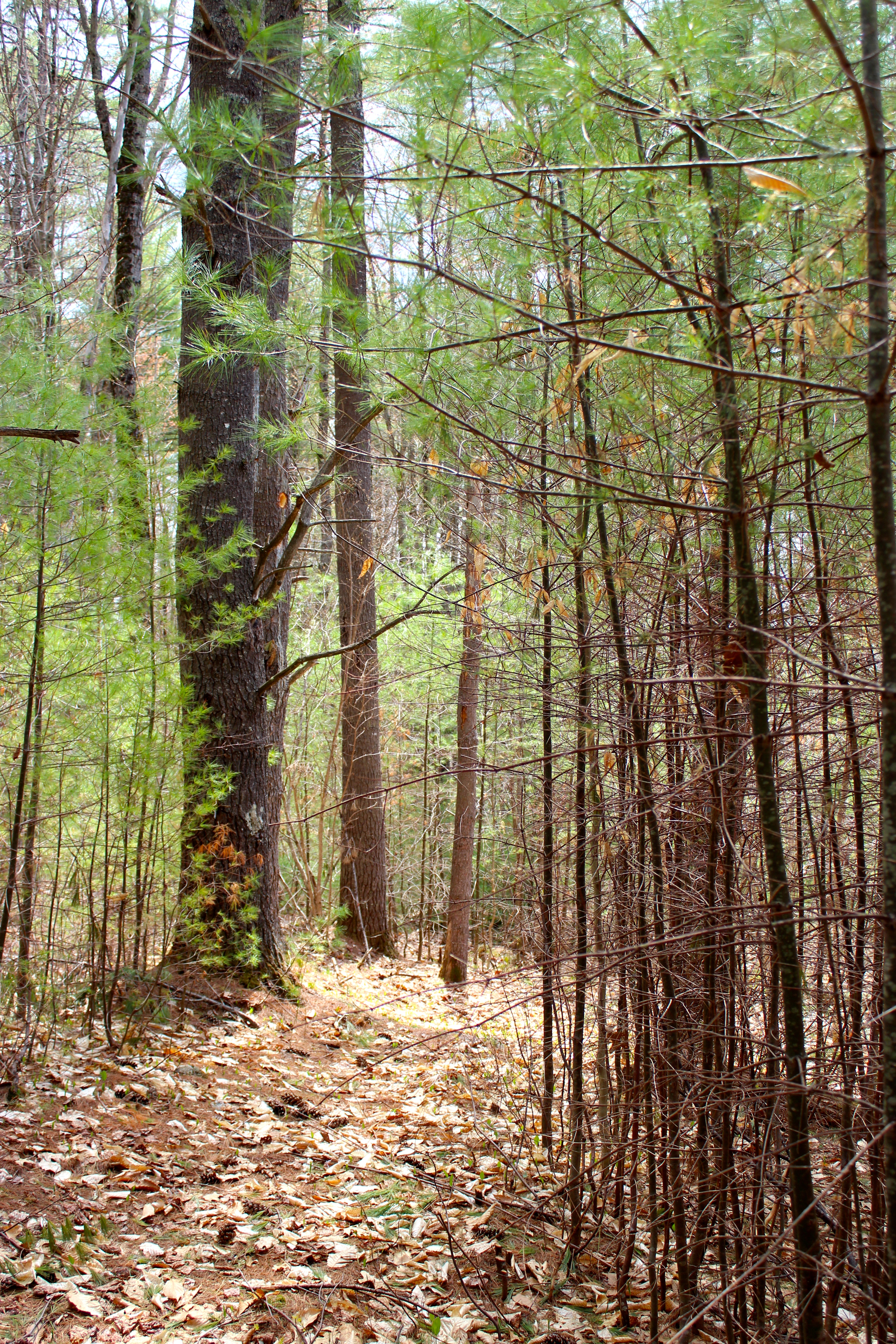
Back on the blue trail, the sun poked through the clouds, shining on pines that represent a variety of ages.
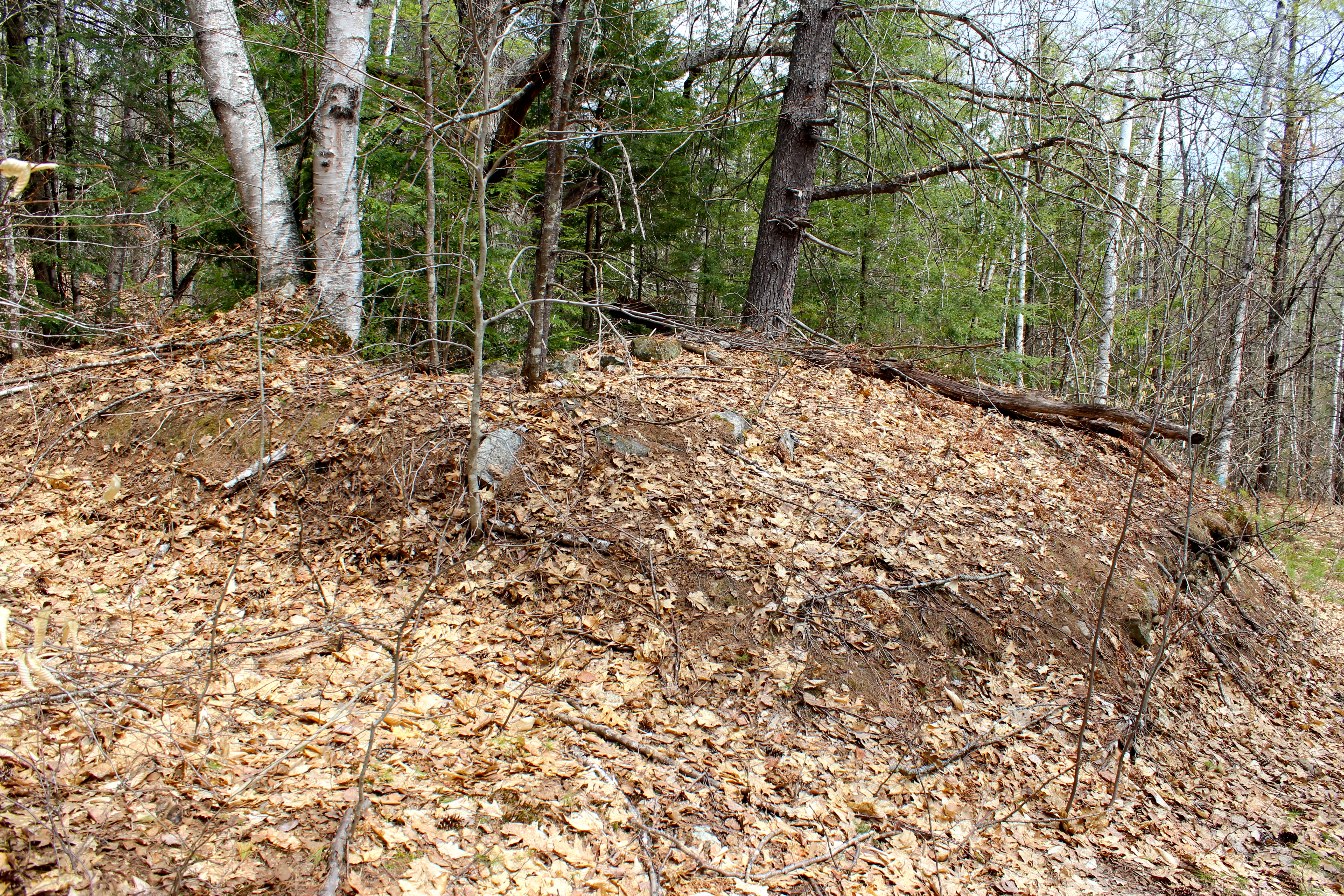
I’m not sure who lived in the house above this cellar hole, but it’s always fun to visit and wonder.
In her book, Blueberries and Pusley Weed: The Story of Lovell, Maine, Pauline W. Moore wrote that Ladies Delight, “was not named for the view. Nor because it made a delightful walk for ladies to take on a Sunday afternoon or because it was covered with wonderful blueberries . . . (It was) named in sarcasm because women who tried to live in two houses built there could not endure the loneliness and isolation.”
Was this one of the houses?

It’s been a long time since any vegetables were stored in this cellar.
As I was told at the historical society, the bridge across The Narrows wasn’t yet built when the ladies lived there, so the only way to get to the other side was walking across the ice.
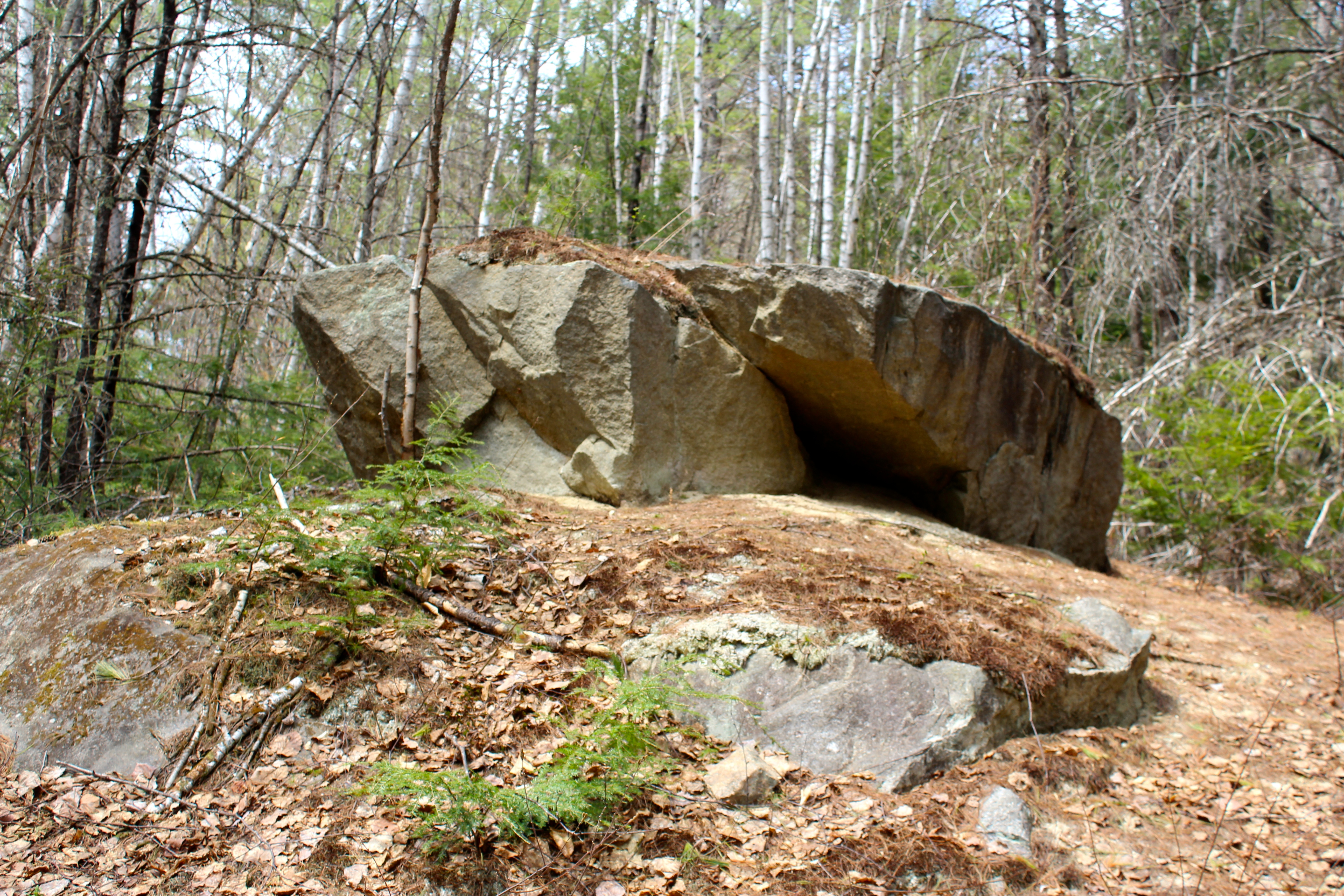
No visit to Chip Stockford is complete without a visit to The Rock. Today, I startled two grouse that flew up from behind it.

Dust bath? Nest site?

A few more things to see as I headed out. Sweet fern, which is really a shrub.

Baubles on pine saplings.

Young Paper Birch bark.

Swollen Striped Maple buds.

And a phoebe nest under construction.
This lady was delighted to have time to wonder and wander. Thanks for taking a look.
May Day Celebration
And just like that, it’s May. May Day. Memories of our sons quietly delivering flowers to neighbors and friends flashed through my mind this morning. I’ve a feeling they choose not to remember, but at the time they loved sneaking up to doors, depositing small baskets of flowers and then dashing away.
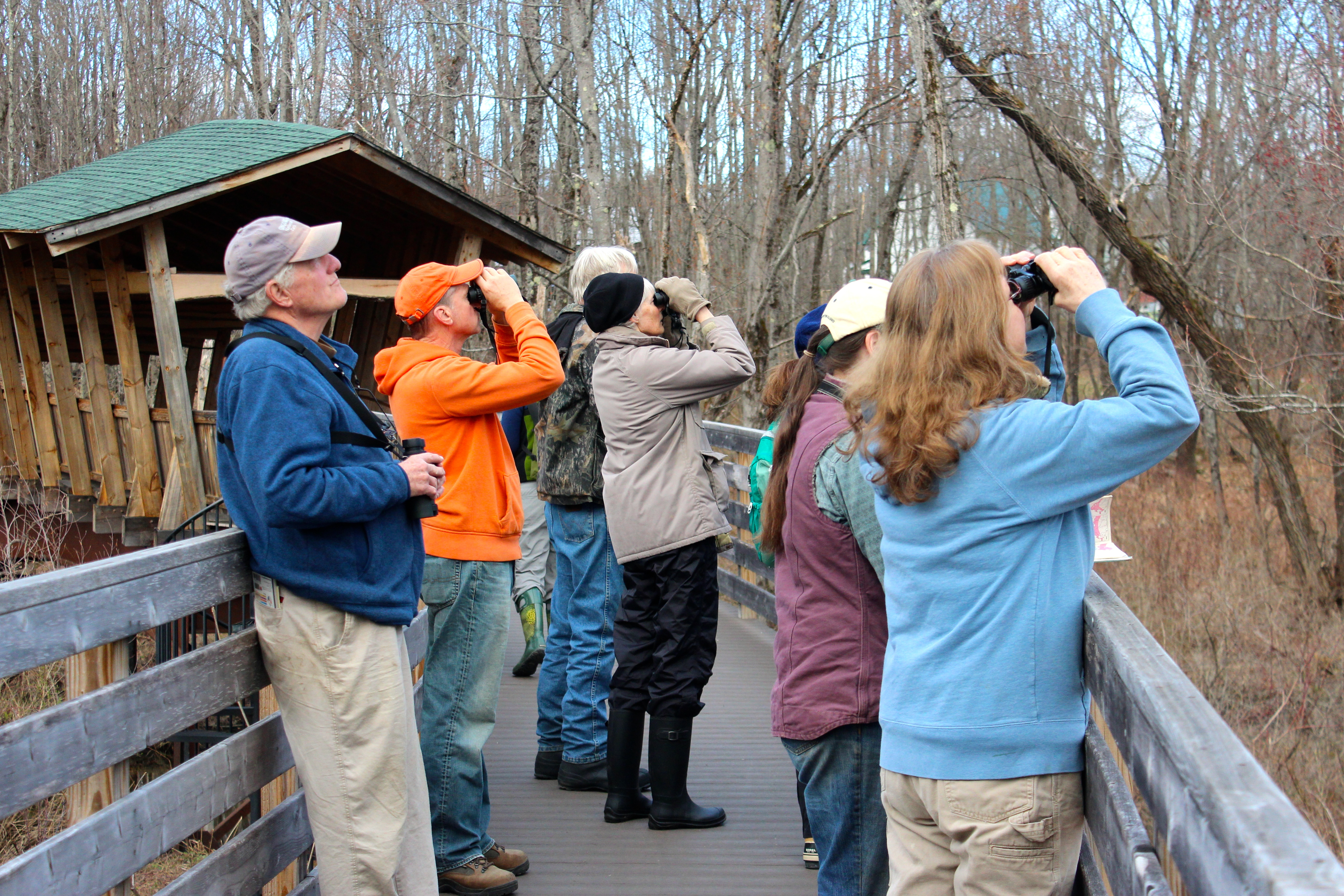
For me, the fun began this morning when I joined a small group intent on birding at the Bob Dunning Memorial Bridge. Chickadees, Red-winged Blackbirds, Pine Siskins, Waterthrush, Mallards, Yellow-rumped Warblers, Goldfinches and a few others were singing and flitting about.

The bridge, itself, is worth viewing from any vantage point.
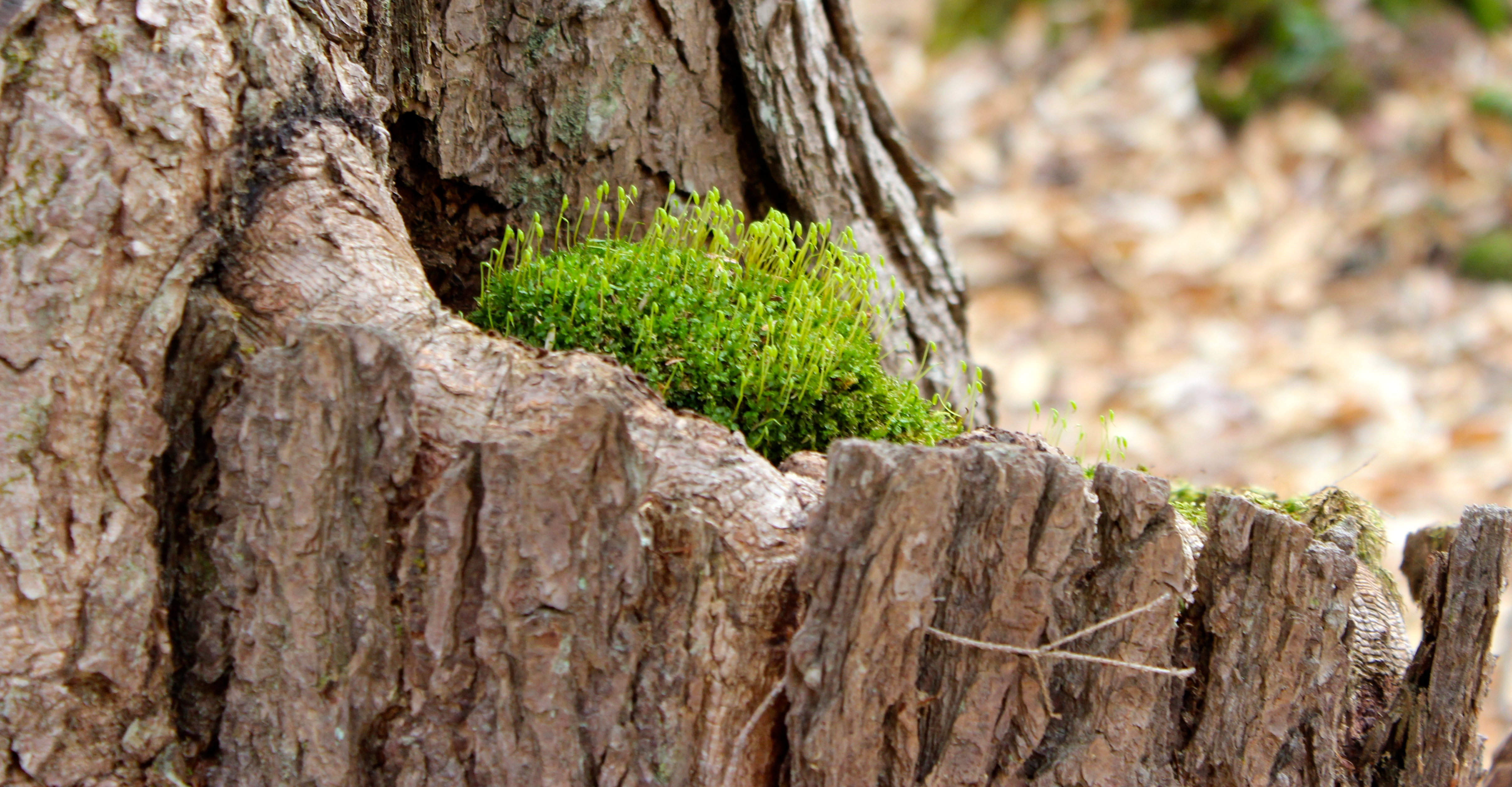
And then I drove to Sweden (Sweden, Maine, that is) to join a couple of friends on a tramp through the woods.

Along the way, this May Day basket presented itself.

Moss covered rocks and stumps bring to mind my father and his Scottish heritage. The faeries or fair folk, as they prefer to be known, quietly present themselves in areas like this. Some day, I may share the fairy tale I wrote a few years ago.
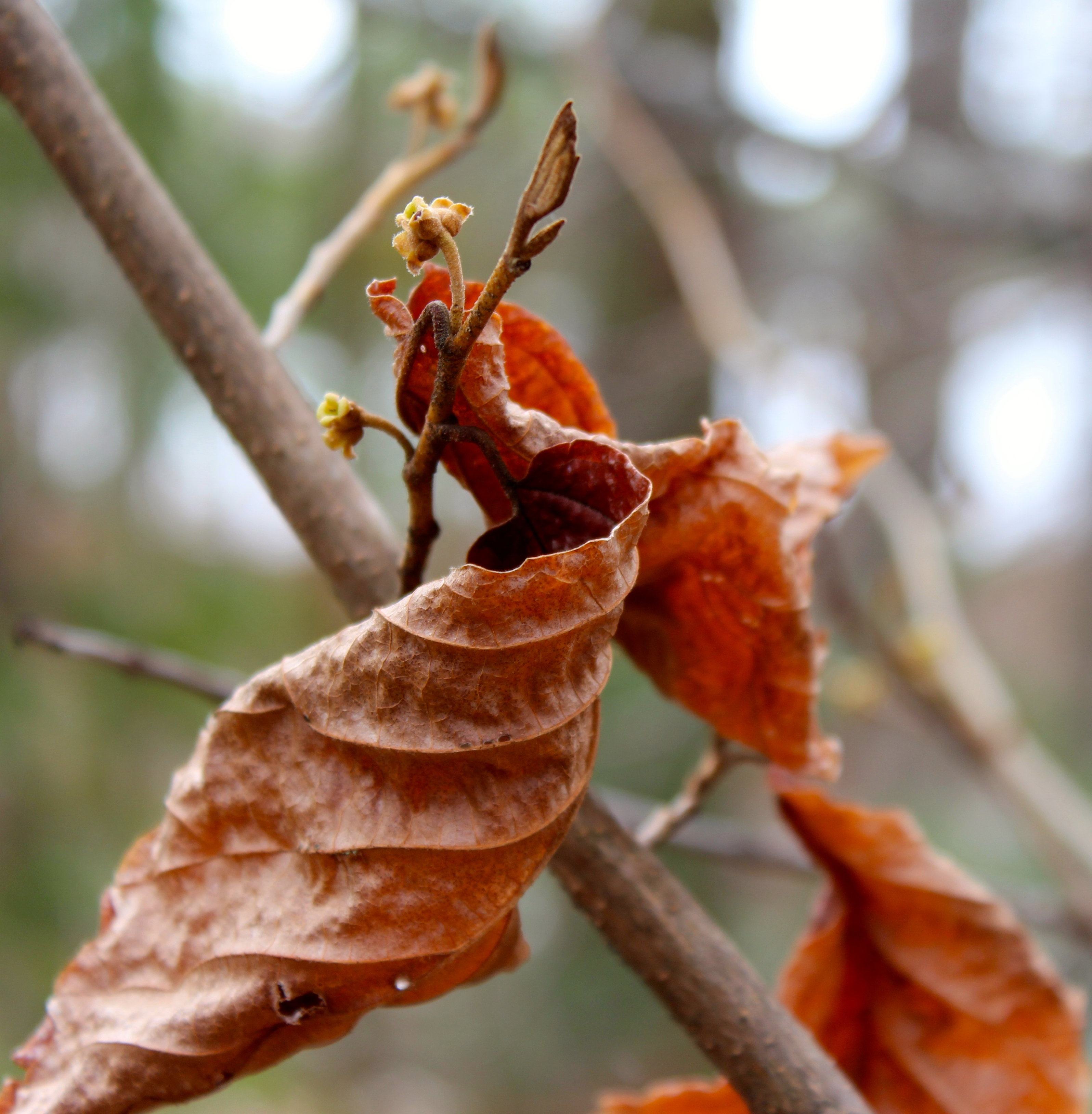
The Witch Hazel still holds its leaves.
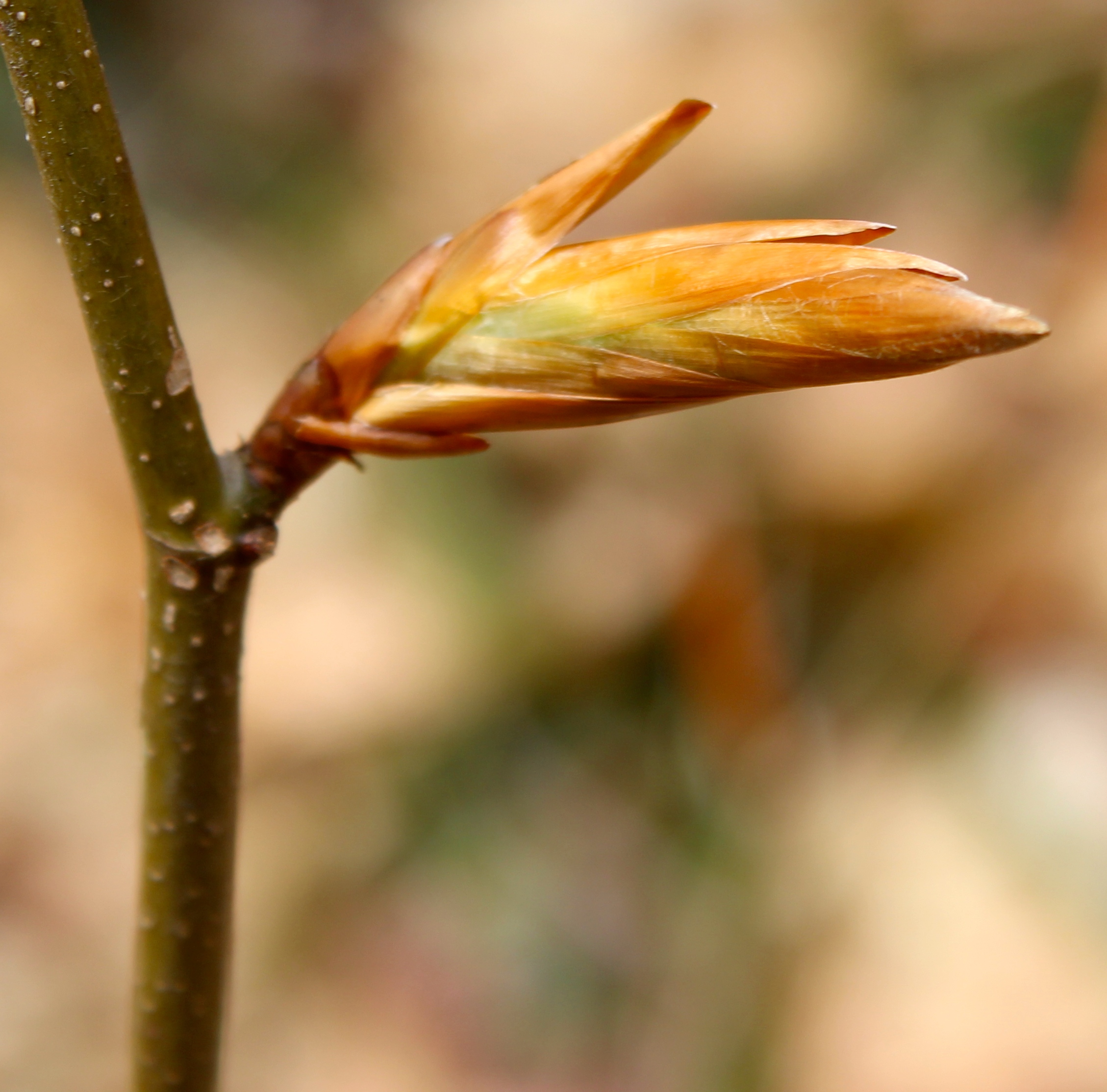
As do most American beech trees, but this one is beginning to leaf out.

The insects don’t stand a chance against the methodic hammering of the pileated woodpecker who created these holes.

At the base of the tree, the reason for the pileated’s work was revealed; sawdust created by carpenter ants. This tree must hum before it drums.

I actually stopped talking, ever so briefly, when I saw this.

How in the world?
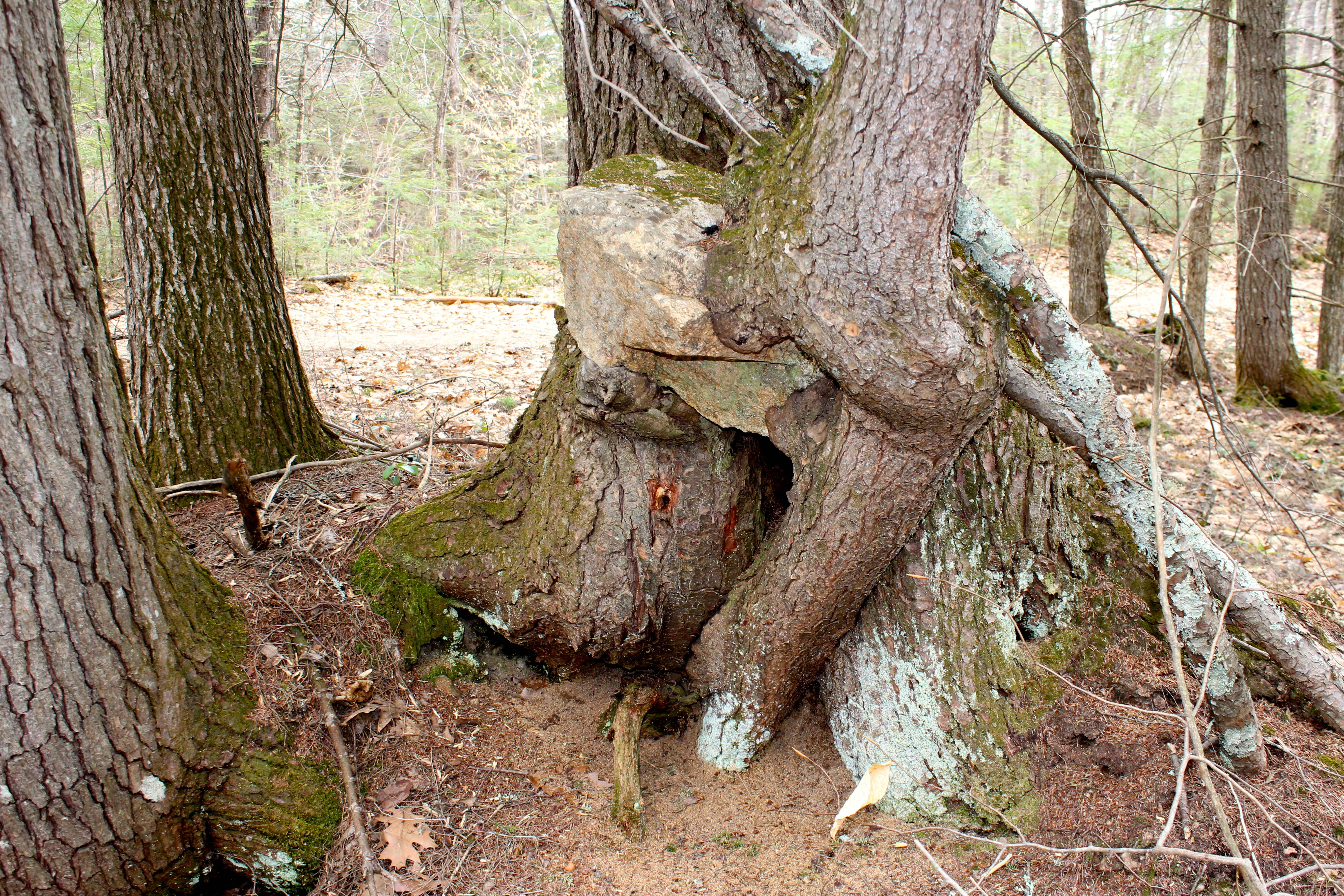
We think we know, but what are your thoughts?

Meanwhile–a tree grows around a rock.
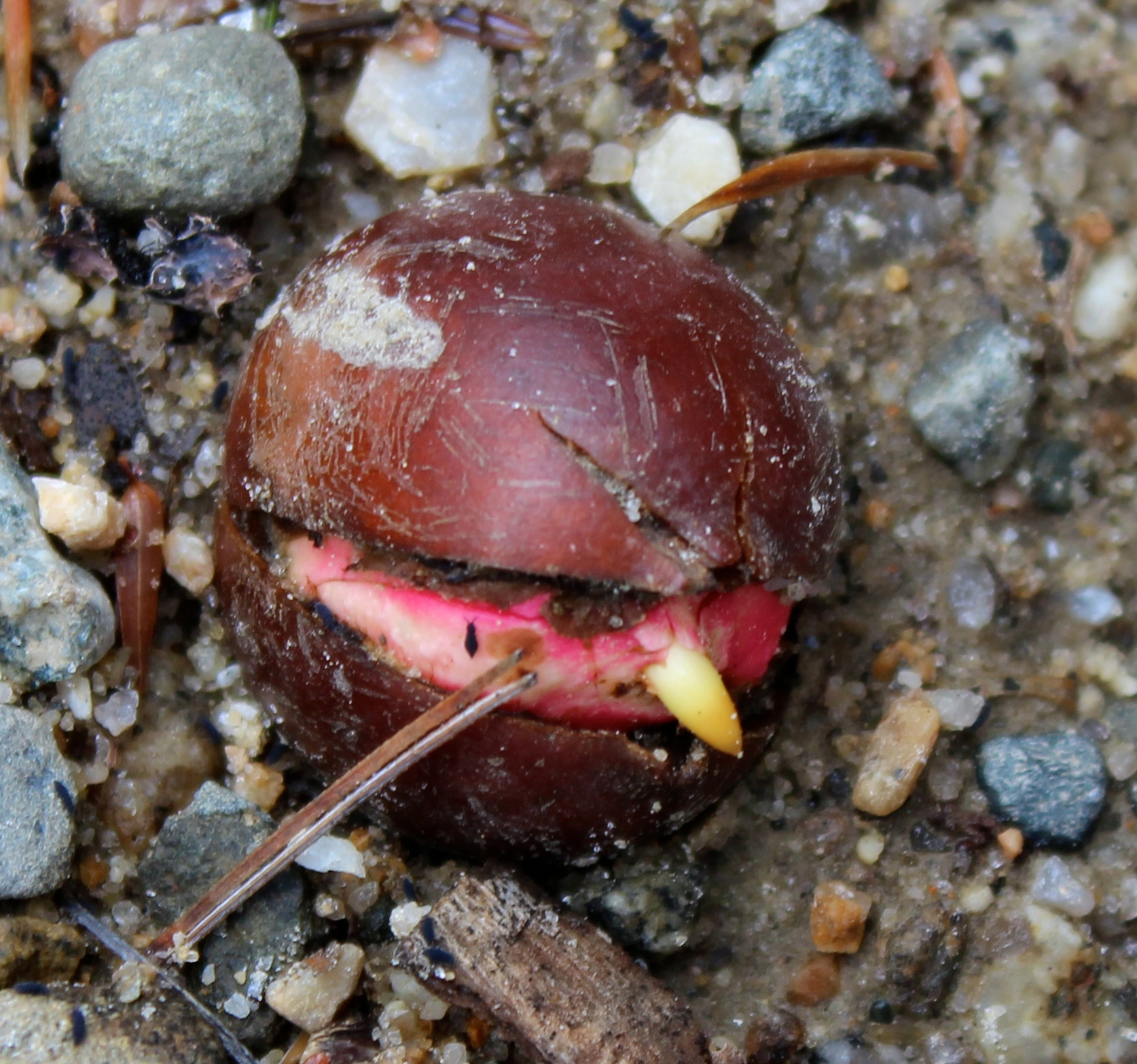
One of my favorite wonders of today. A red oak acorn germinating on the gravelly road–not exactly a quality site to begin life.

False Hellibore shines brightly,

slowly unfurling its smooth-edged, pleated leaves,

beside Powers Brook as it meanders by on its way to Stearns Pond.
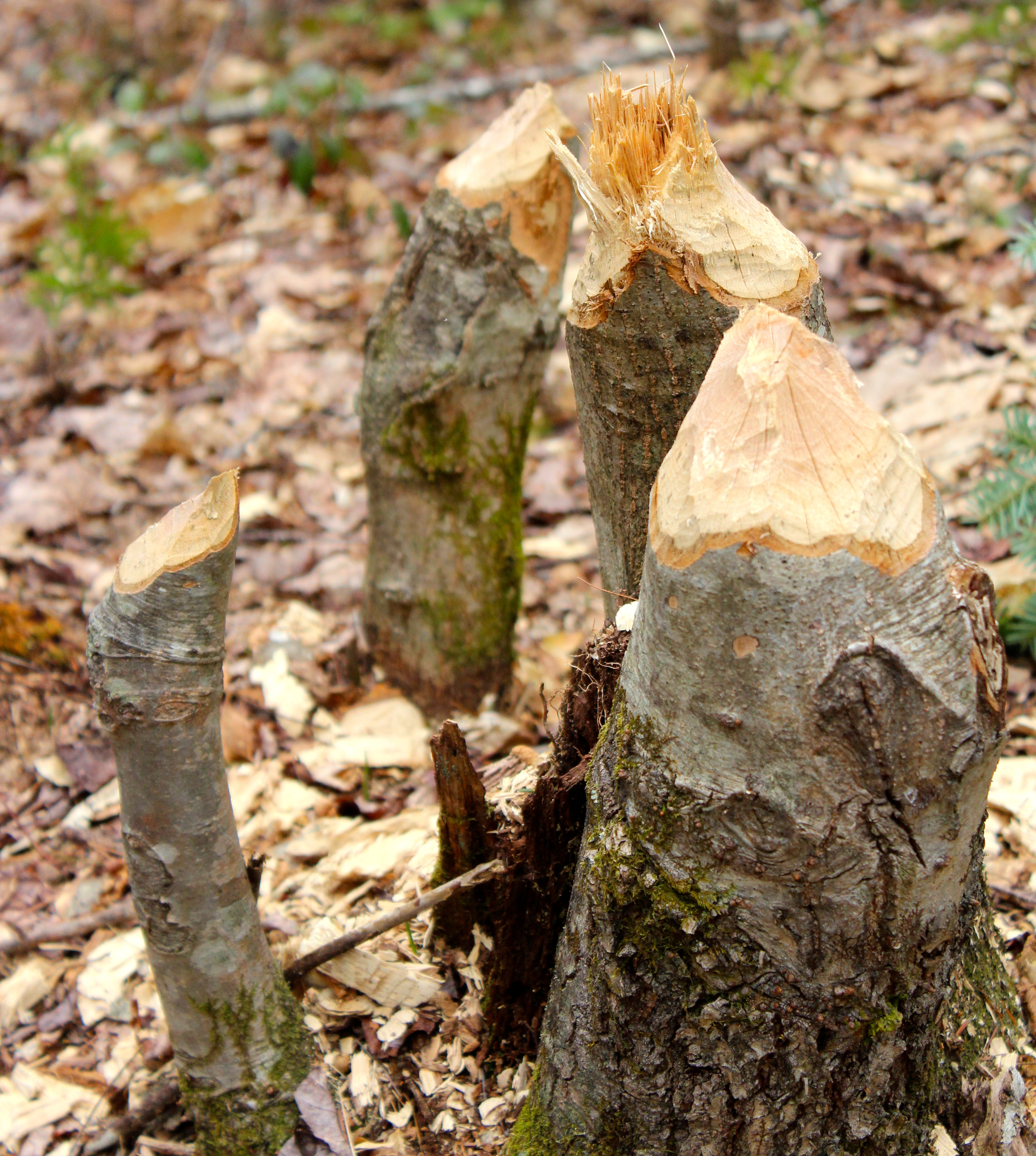
It was a day of this and that, including beaver works.
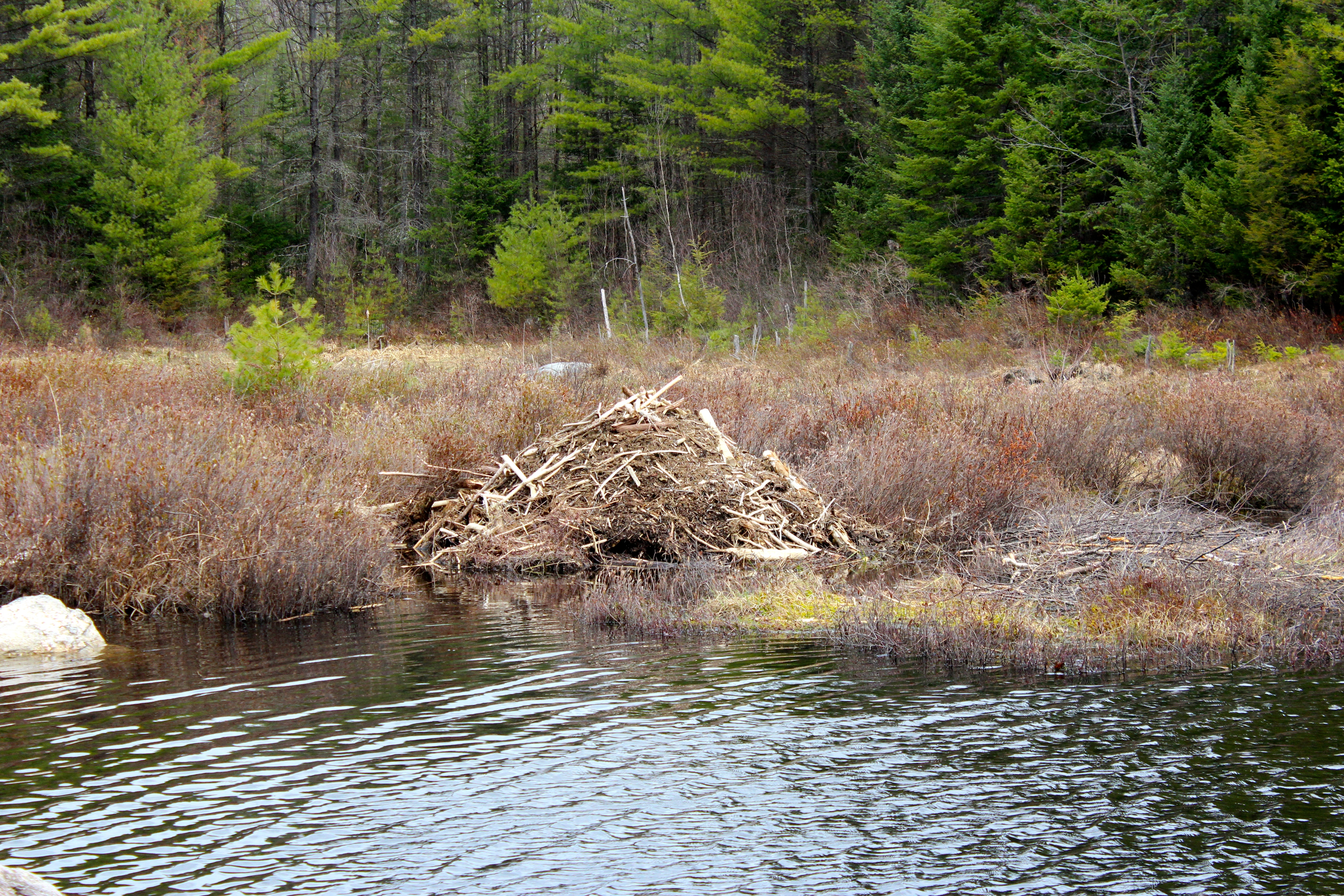
The lodge.
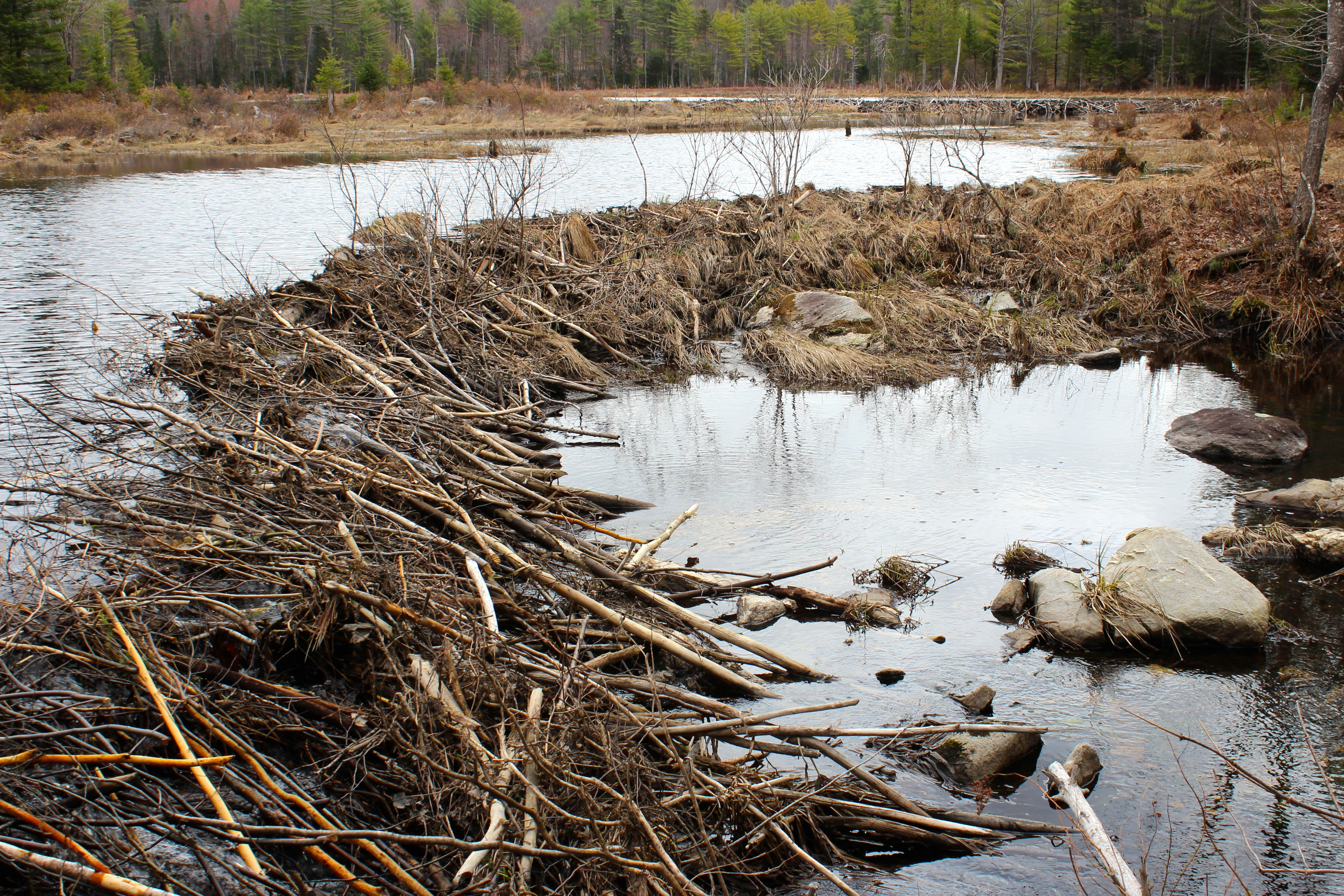
And two large dams, the second being in the background to the center right.

It’s May Day and we noticed that Canada Mayflower is beginning to leaf out.
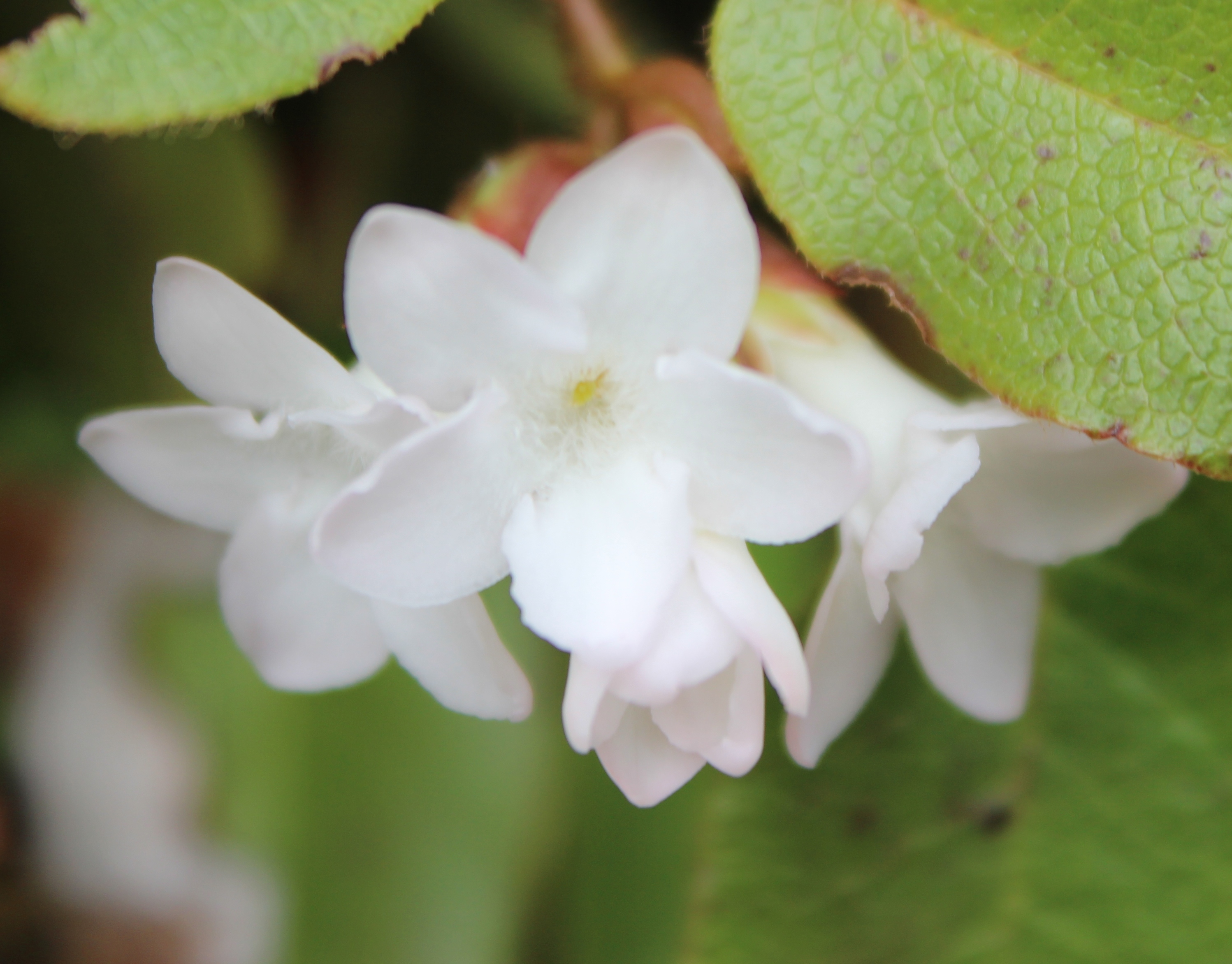
But . . . we’ve been paying attention to Trailing Arbutus, aka Mayflower, whenever we tramp, and today–blossoms

accompanied by that delicate sweet scent.
A reason to celebrate. Happy May Day.
Gifts from the Land

A friend and I met at the Heald and Bradley Ponds Reserve in Lovell this morning. I only just noticed that this sign places Bradley Pond first–I’ve always heard it the other way. Funny how your mind reads what it thinks is there. At least mine does. Makes the job of editing a slow process–for good reason.
I love that the sign shows three peaks, as there are three peaks here–Whiting Hill, Flat Hill and Amos Mountain. Our mission today, however, was to check out the saw mill site off Slab City Road and walk to Otter Rocks.
We completed said mission and chuckled that it took us less than three hours to walk the short distance out and back. But the gifts we received along the way were many.
To begin with, it was an absolutely gorgeous spring morning.

Water raced over the dam at the mill site. Timber long played an important role in Lovell, as in other towns throughout New England. And water provided the power at the saw and grist mills before steam engines were put to use.
In her book, Blueberries and Pusley Weed, The Story of Lovell, Pauline W. Moore wrote: “Slab City (so named because when the mills were running, the slab or outside of the logs was piled high on either side of the road), had two cooper shops and two stave mills as late as 1881, representing the period when one mill produced the staves and a cooper put the barrels together.”
Robert C. Williams, author of Lovewell’s Town, adds, “In 1840, Benjamin Heald built a sawmill in the area east of Kezar Lake known locally as Slab City–a common New England term for the lumbering area of a town–in order to produce shook, the thin boards used to make barrel staves. Slab referred to the outside cuts of logs with bark that piled up unused by the roadside. Shook mills soon abounded in Lovell, and barrel staves went off to the Caribbean, especially Havana, Cuba, to produce barrels that could be filled with molasses and rum.”

This mill site features a combination of quarried stone and cement. On the Lovell Historical Society’s Web site, there are several photos of mills in the Slab City area.

I wonder about the efforts to quarry the stone, move it to the brook, and build the dam. I also wonder about other things–like this cherry tree that grows out of the sloped land, dips down toward the water and then reaches skyward. Enviable perseverance.

Here’s a look at the mill pond above the dam.
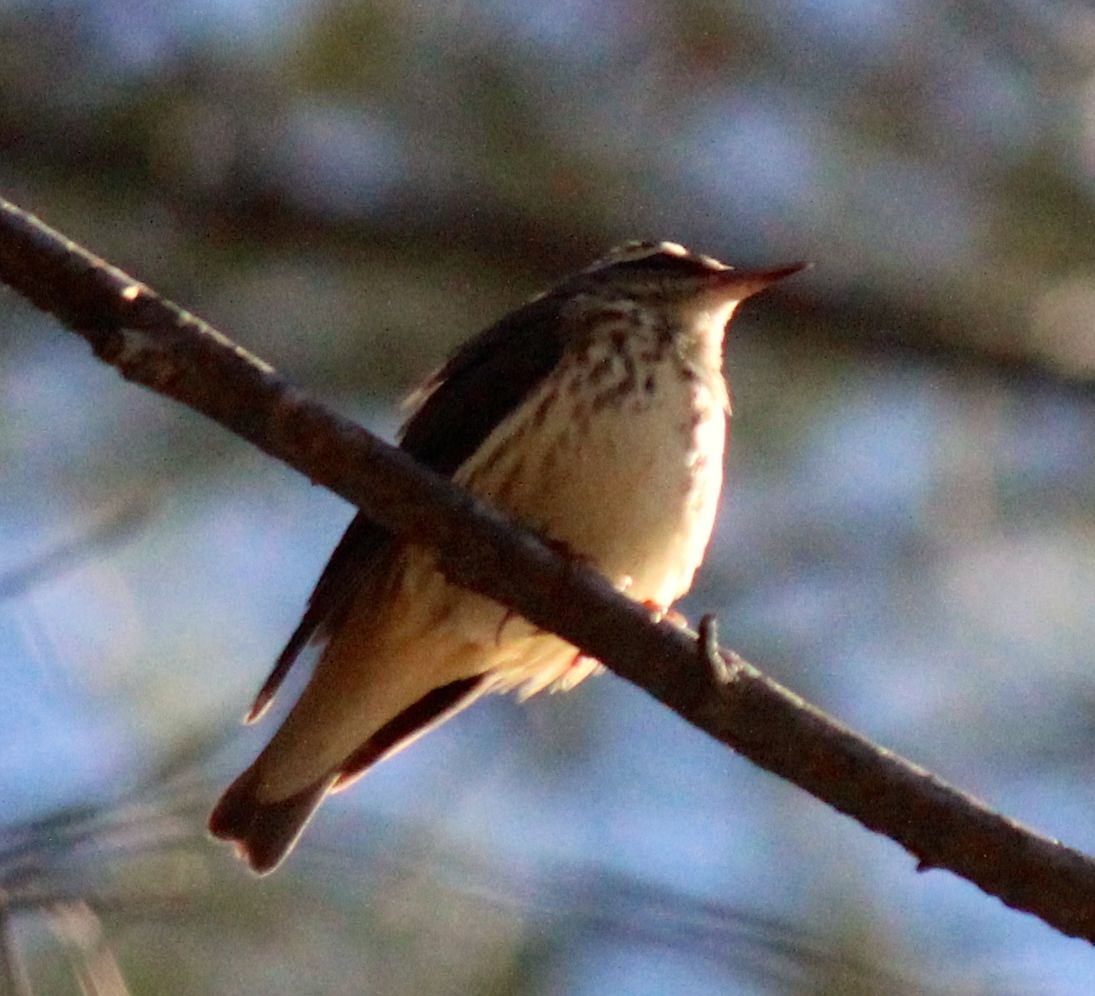
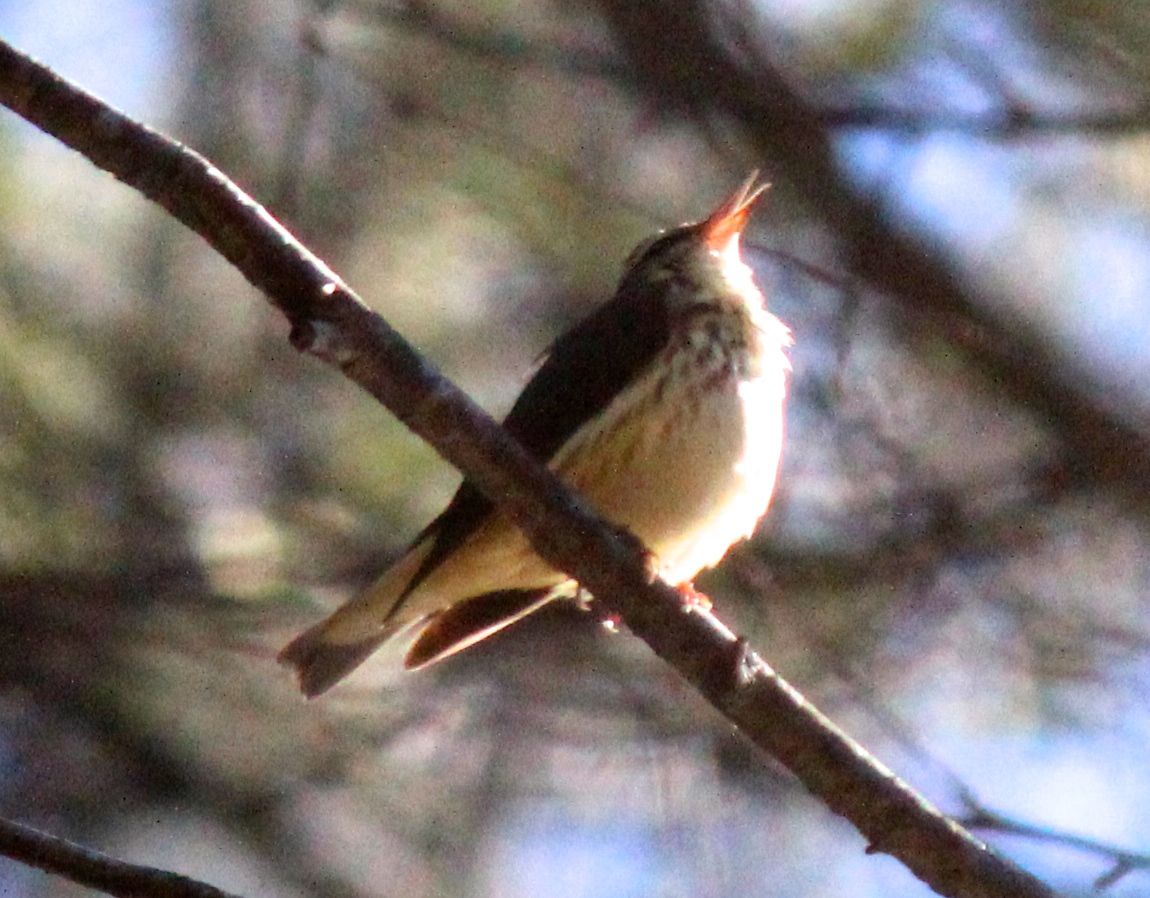
And then there was the gift of song as this warbler sang to us from a branch above. Or is it a Louisiana Waterthrush?

And an evergreen fern, matted from a long winter’s rest.
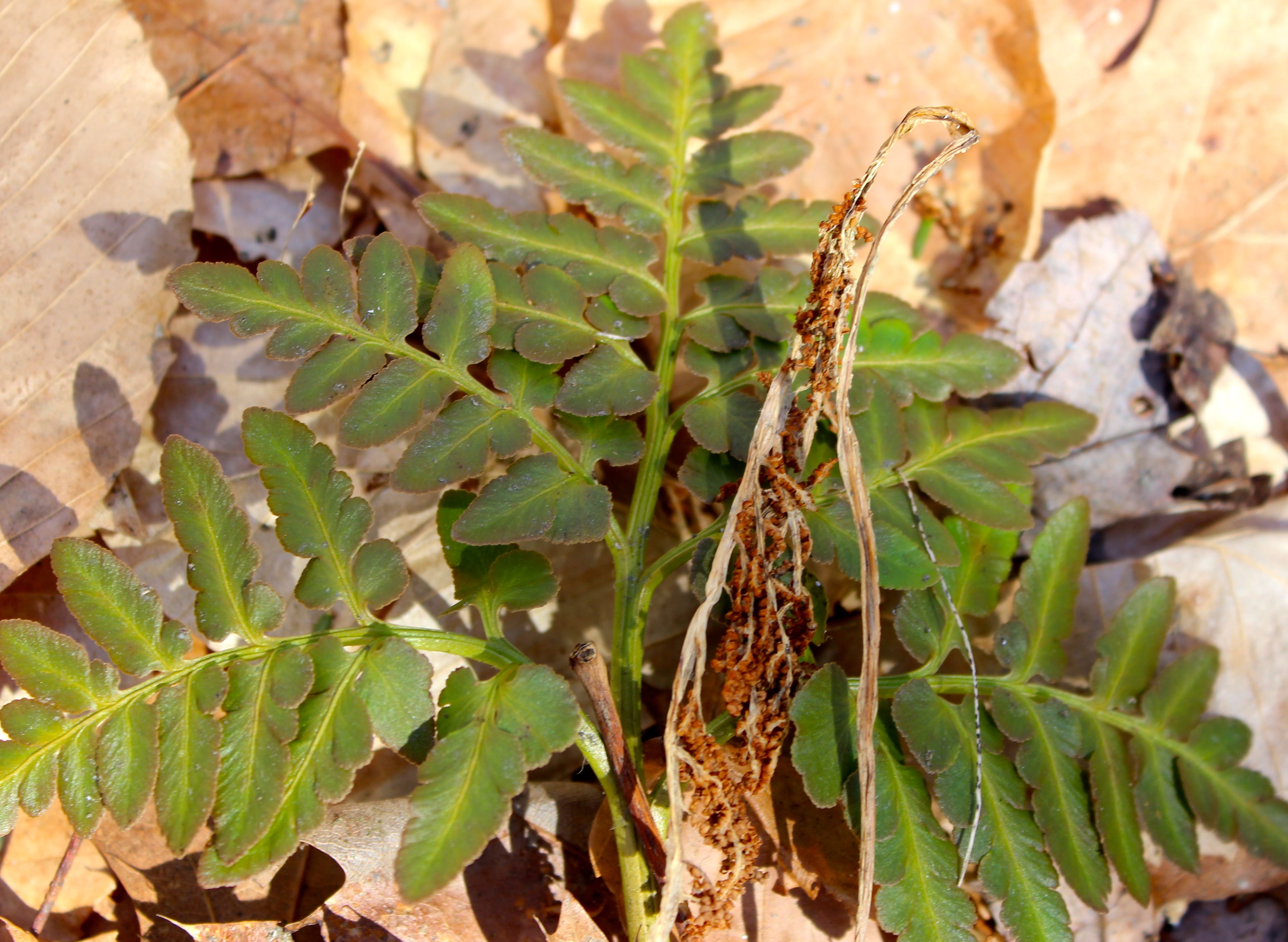
Plus grape fern and its old fertile frond, for which it derives its name because the sporangia have a grape-like appearance when they are fresh.

The third fern gift of the day–Christmas fern, so named because each leaflet looks like a Christmas stocking or Santa in a sleigh behind his reindeer.

I didn’t notice any fern fiddleheads, but the snow only melted this past week. There’s still so much to look forward to.
I’ve been watching beech tree buds for at least a month. What I noticed today is that most buds are still wrapped up in scales and retain their cigar shape. On saplings, however, it’s a different story. Along the path, several were unfurling. Perhaps because of their smaller size, they want to be first to leaf out, thus taking advantage of any available sunlight before the larger trees form a canopy above them. Just a thought.
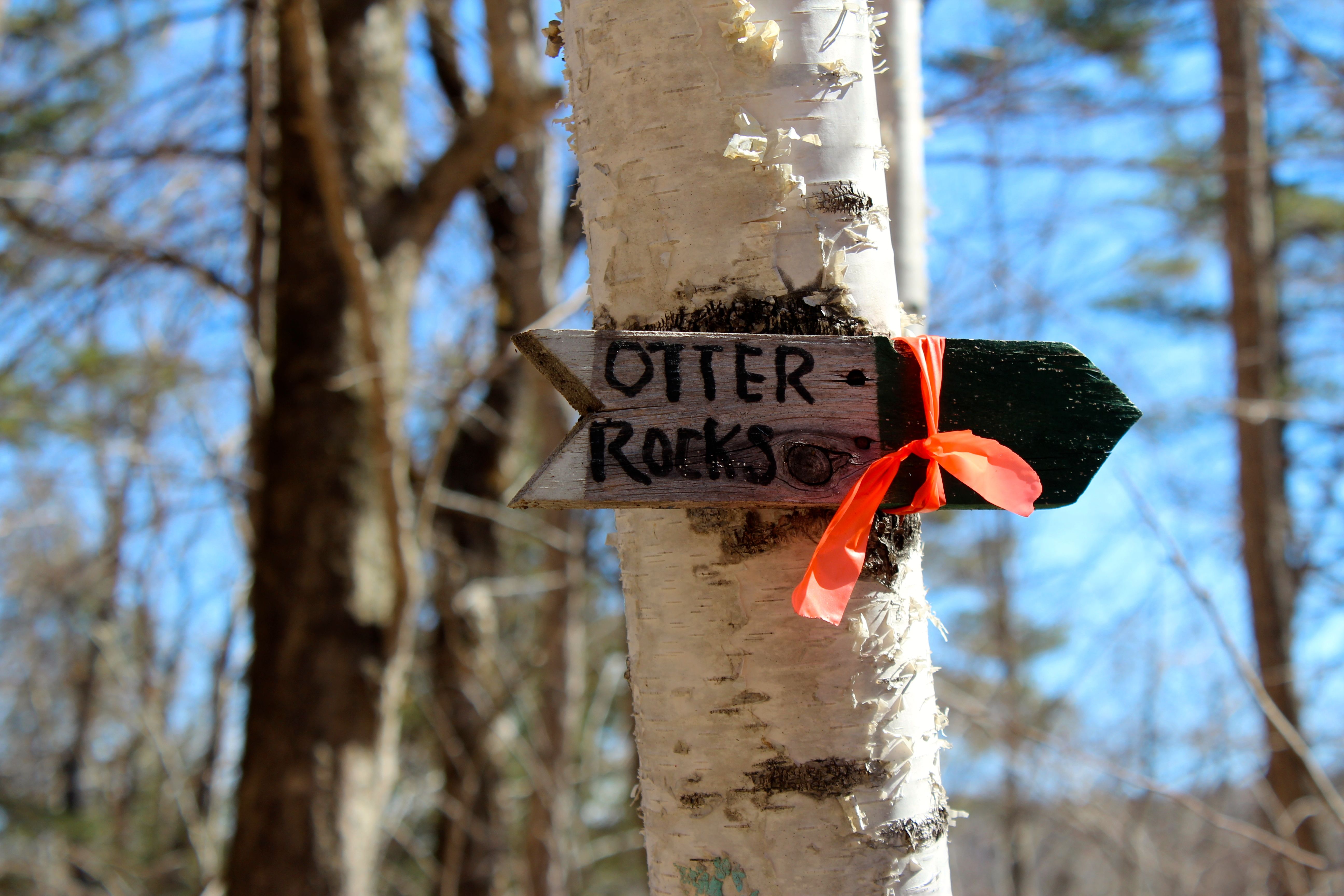
Our destination–Otter Rocks.

I’ve not had the privilege of seeing otters here, but plenty of other things revealed themselves today.

The melting ice fooled us only momentarily. On first glance, it looked like egg masses, but proved to be small masses of ice floating on the surface.
Though you can’t see it here, we watched a kazillion aquatic macro invertebrates swim about.
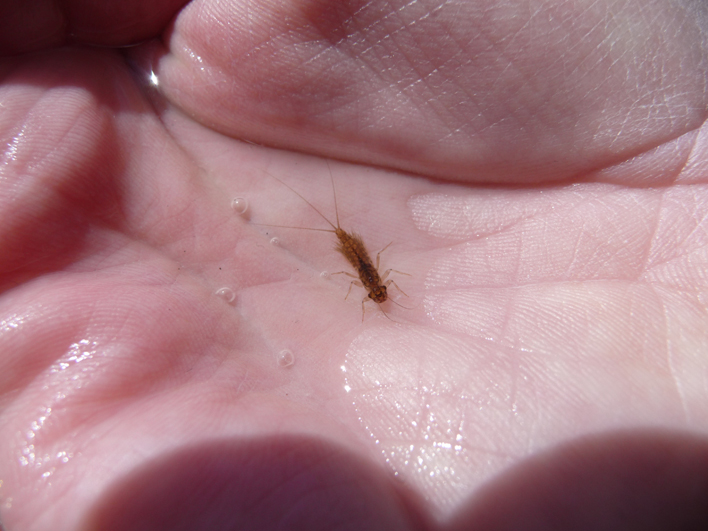
I scooped a few into my hand and my friend, Jinny, snapped this photo of a Mayfly nymph with three cerci or tails. (Thanks J.M.)
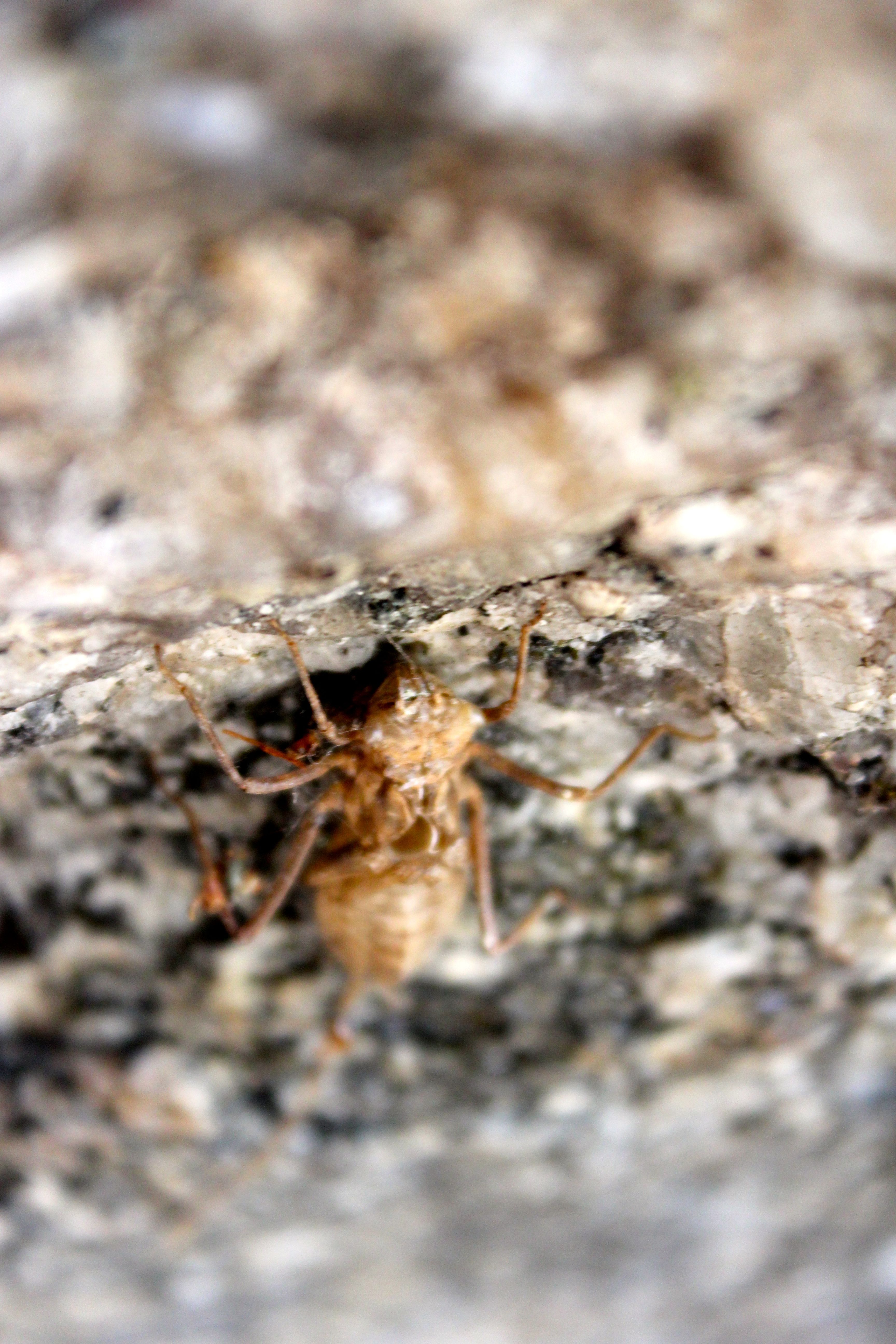
On otter rock itself, there are exoskeletons from hatchings that occurred in previous years.

It was difficult to pull ourselves away and we have plans to return with sketch books and food and cameras and maybe even some wine–to spend some time taking in all that this lovely spot has to offer.
For today, we needed to wend our way back up the trail. There were still a few more moments of wonder to be had.
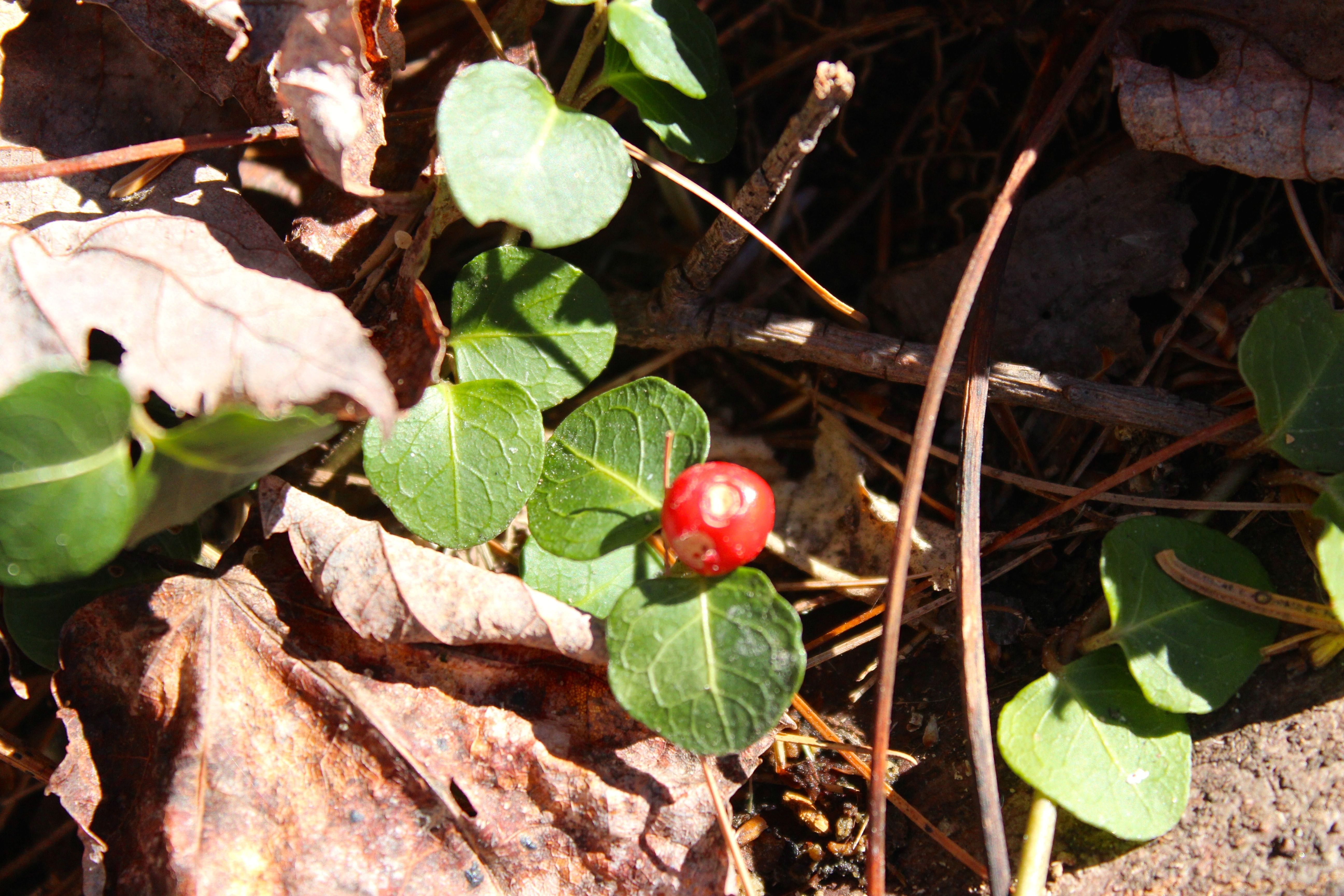
Take, for instance, the partridge berry with its opposite evergreen leaves and berries with two spots on the surface, a result of the fusion of two ovaries. This plant produces two white flowers, one with short pistils and long stamens and the second just the opposite. In order for a berry to form, both flowers have to be pollinated. Nature has it all figured out. Why don’t I?

A princess pine club moss shows off its upright spore-producing candelabra or strobili. Funny thing about club mosses–they aren’t mosses. I guess they were considered moss-like when named. Just as the mills take us back in time, so do these–only much further back when their ancestors grew to 100 feet tall during the Devonian Period. They make me feel so small and insignificant. And yet, I’m thankful for the opportunity to be in awe of them.

Again the insignificance makes itself known–as this tree dies, it provides life–for carpenter ants, pileated woodpeckers, mosses, lichens and tinder polypore or hoof fungus. And probably so many more species.
On a nearby tree, the fruiting bodies of the tinder conks grow at the base, giving them a true hoof-like appearance. Giddy-up.
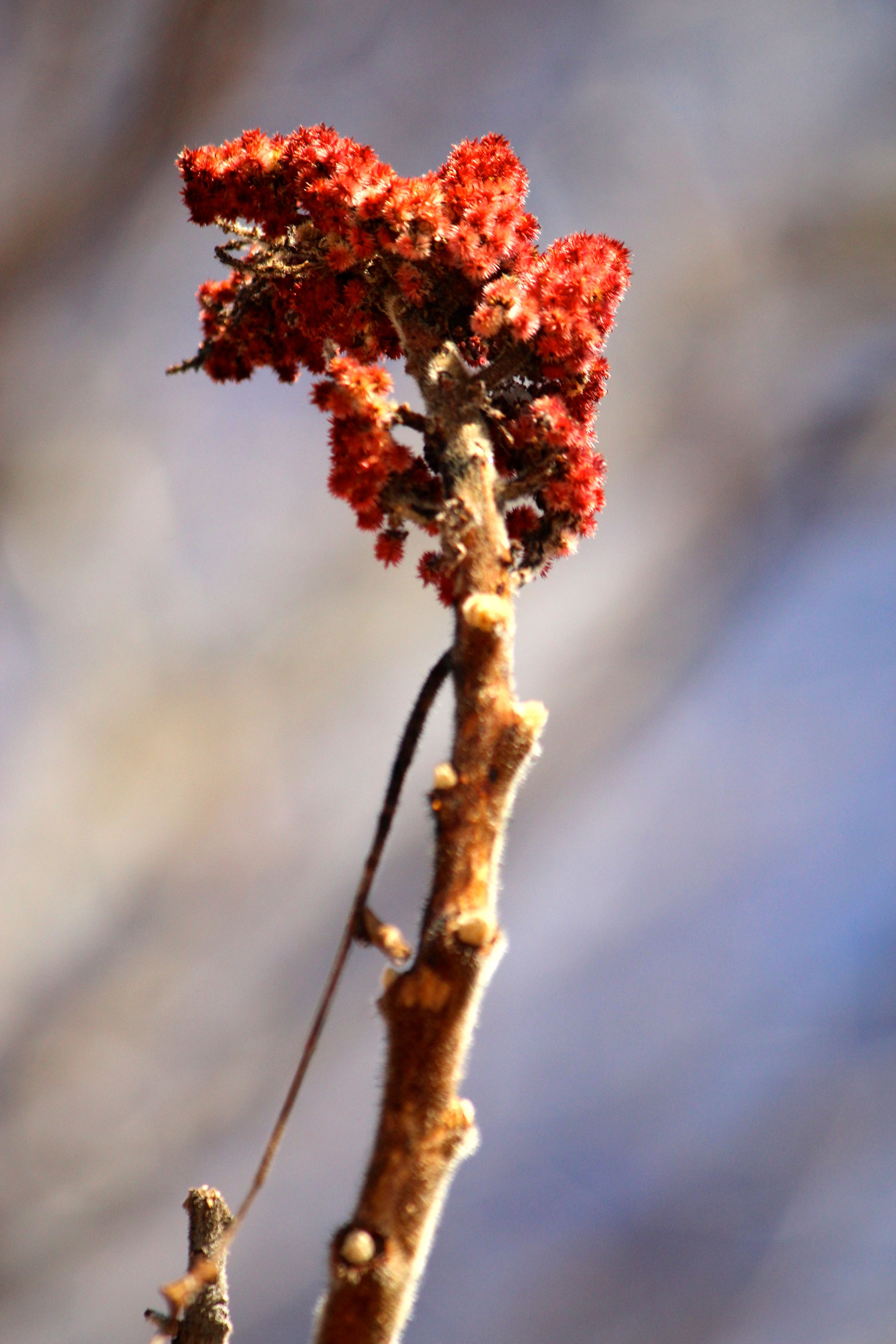
We were almost back to my truck when we saw a clump of staghorn sumac shrubs. I grew up in the land of poison sumac, so it’s taken me a while to warm up to this species. But the hairy red fruits are a work of art in their own right. Plus, they provide food to wild turkeys, ruffed grouse and others.

Some people make tea from the summer berries. I, um, can’t bring myself to try it.

Check out the hairy antler-like growth pattern. So maybe I won’t seep the fruits for tea, but I can certainly enjoy the other features staghorn sumac offers up.

And though not all of my posts include tree bark, I like it when they do. In this case, Northern White Cedar (Thuja occidentals). The lines of the bark follow the shape of the tree.

And its leaves are flat and scaly–reminiscent of princess pine.
My friend, Jinny, and her husband Will, are forever naturalists. He wasn’t with us today, and doesn’t often trek with us, but I suspect that he was channeling our adventure. They own many acres and know their land intimately. Sometimes they invite me along to walk their trails and wonder with them. Together, we learn.
And they get me. I know this because every so often they give me gifts from their land.
Today, I was the recipient of two gifts.

Trail blaze on a downed tree? No, Green Stain (Chlorociboria aeruginascens). In his book, Fascinating Fungi of New England, Lawrence Millman writes, “The stain was once used for Tunbridge ware–decorative wooden objects inlaid with strips of colored veneer.” I’d much rather have this piece of wood.
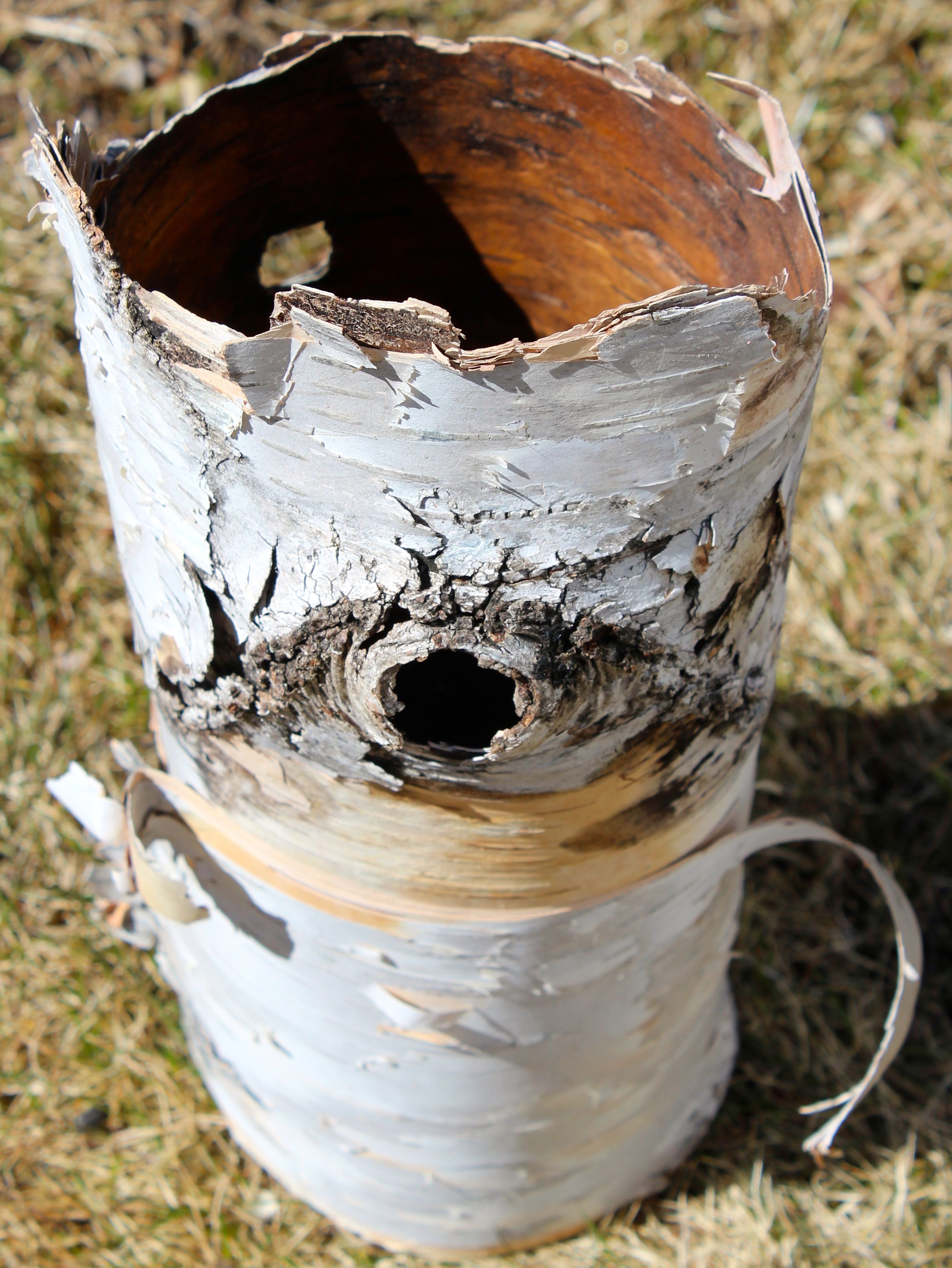
The other present is an intact piece of paper birch bark–peeling, chalky white outer bark, orangey inner bark, a hole where the branch was and a fu manchu over the branch hole. Perfection.
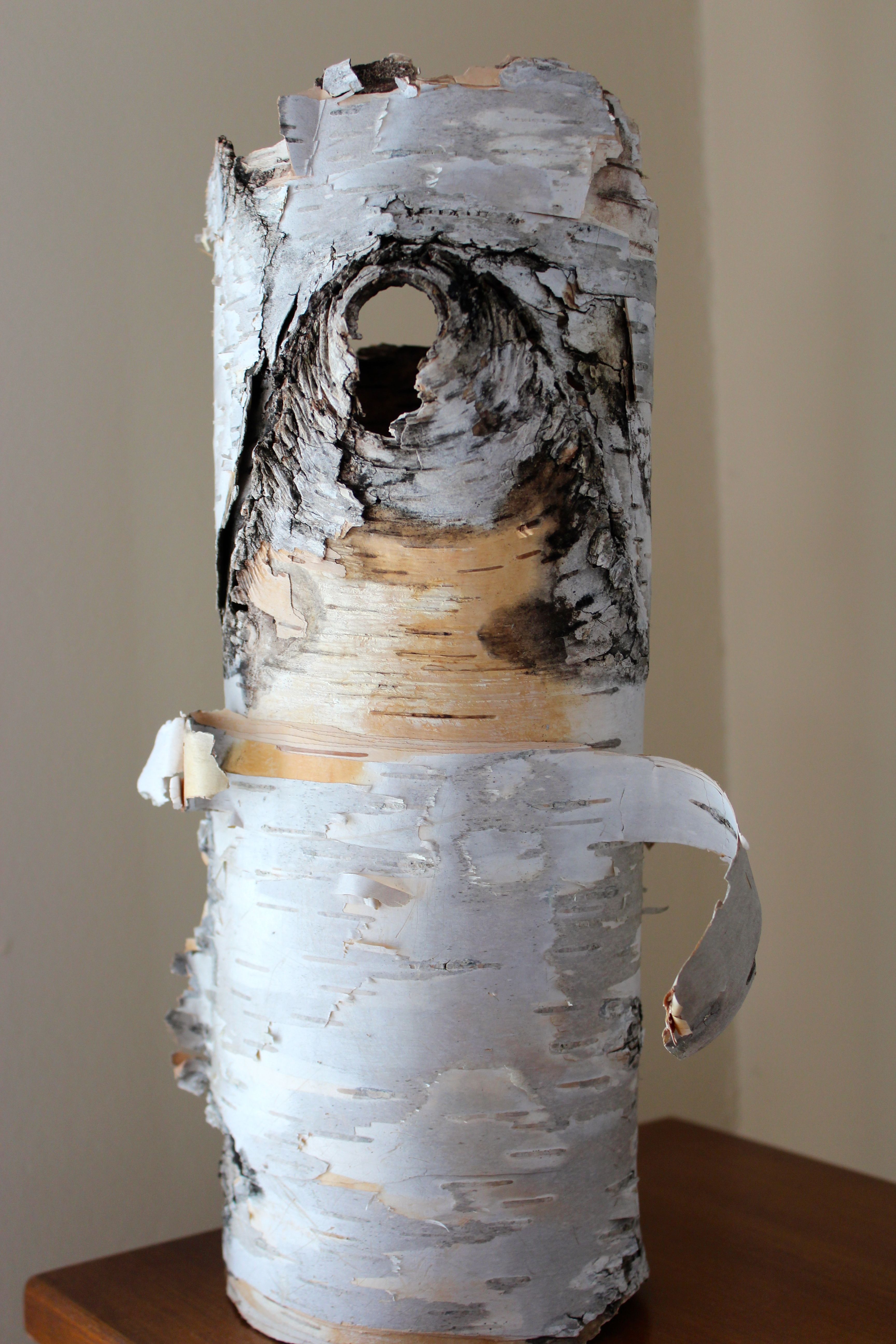
It will certainly be a useful teaching tool, but in the meantime, it’s earned a spot on top of the bookcase in the summer kitchen.
One last gift from the land.
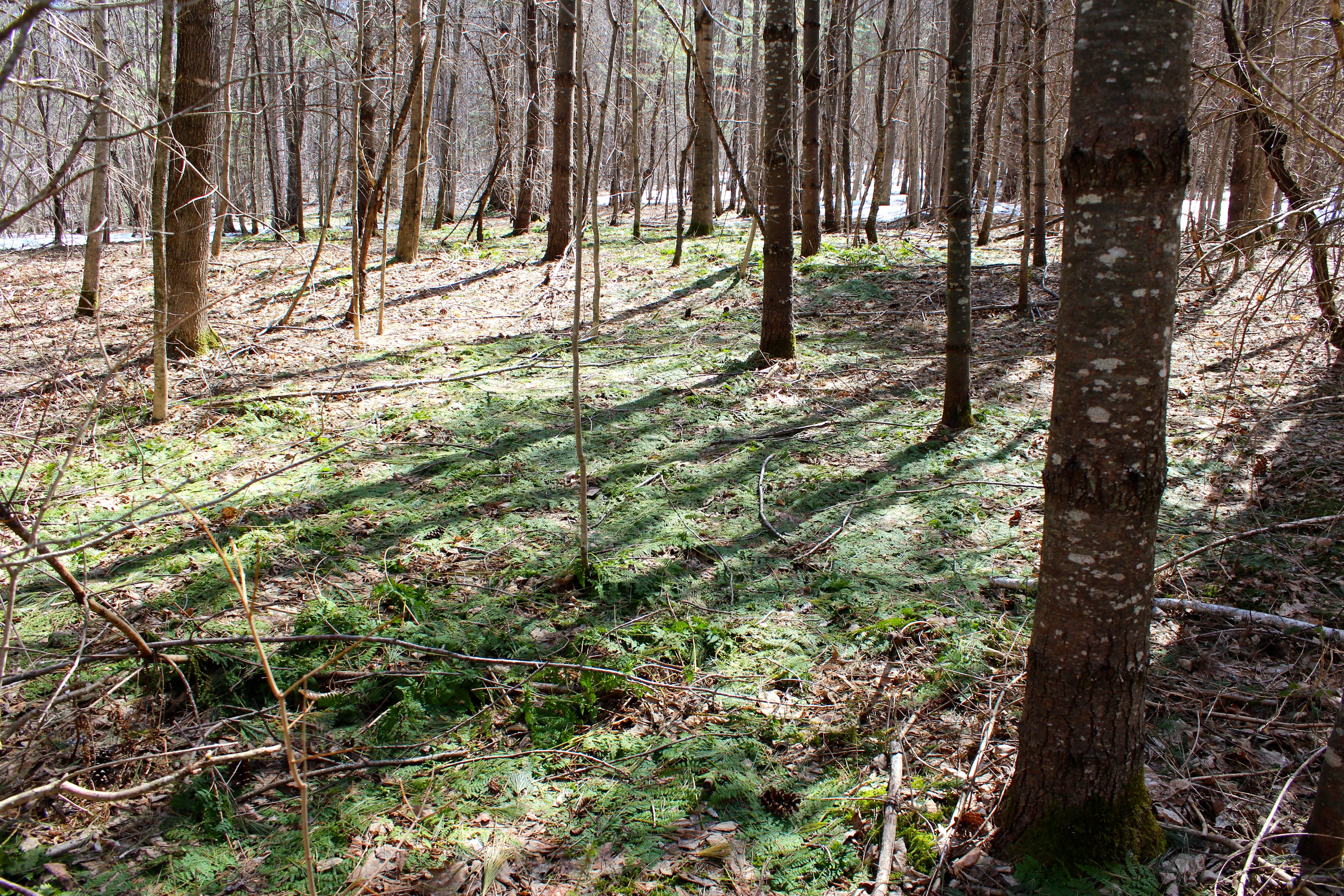
These evergreen ferns, matted from a winter under snow, invoke a touch of spring fever.
It was a short wander with a lot of wonder. Thanks for joining me.
 wondermyway