Book of April: Take a Wetlands Walk

Those of you who have followed me on the trail or through wondermyway for a while know that I’m not only drawn to mountaintops, but wetlands as well. And I have a few that I frequent including several vernal pools, Holt Pond Preserve, Perky’s Path, and Brownfield Bog.

w1

Book of April

Therefore, when I spotted Take a Wetlands Walk by Jane Kirkland at Maine Audubon’s Nature Store a few years ago I wasn’t surprised that it jumped into my hands and dragged me to the checkout. Since it’s April and the snow is slowly melting in western Maine, and some afternoon in the near future I look forward to receiving an email announcing our local Big Night celebration, it seemed apropos that I should feature Take a Wetlands Walk as the book of the month.

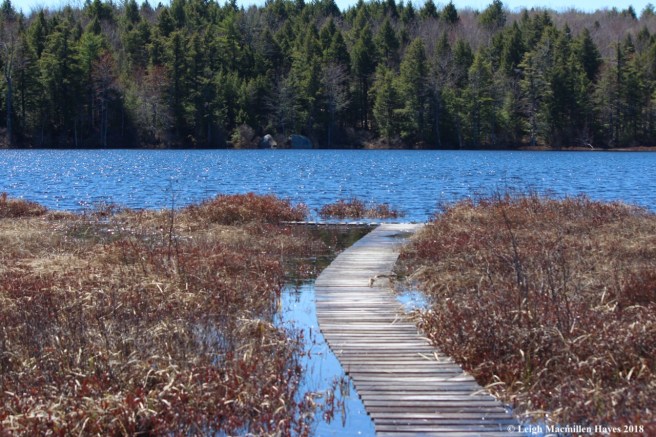
w-Holt P 2

Holt Pond boardwalk

This is a children’s book and I like how the author divided it into three sections, using a phrase often heard at the starting line.

Get Ready–encourages kids to gain a better understanding of wetland terminology in an easy to understand manner. In fact, it’s as if the author is sitting beside you, so conversational is the tone.

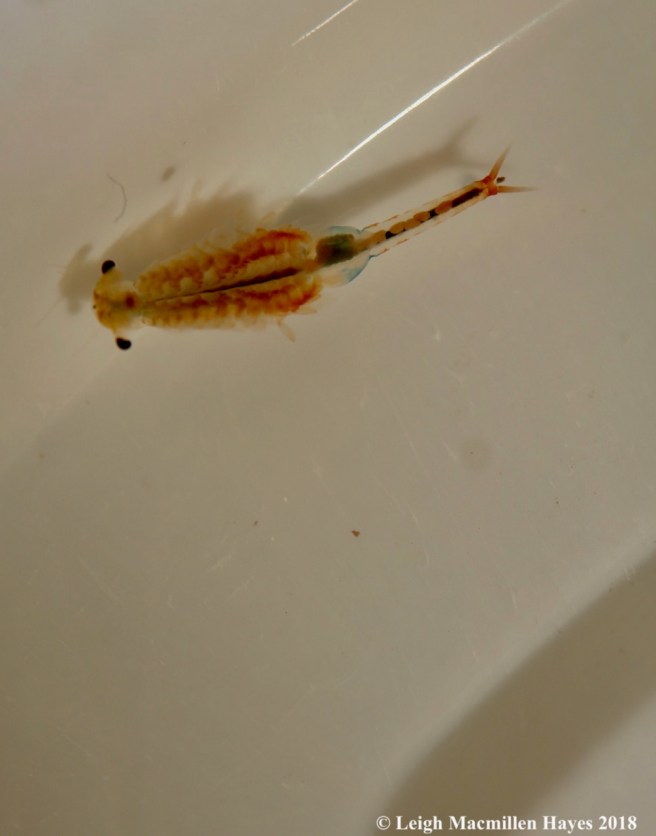
w-fairy shrimp

Fairy Shrimp

w-tadpoles

Tadpoles

w-wood frog

Wood Frog

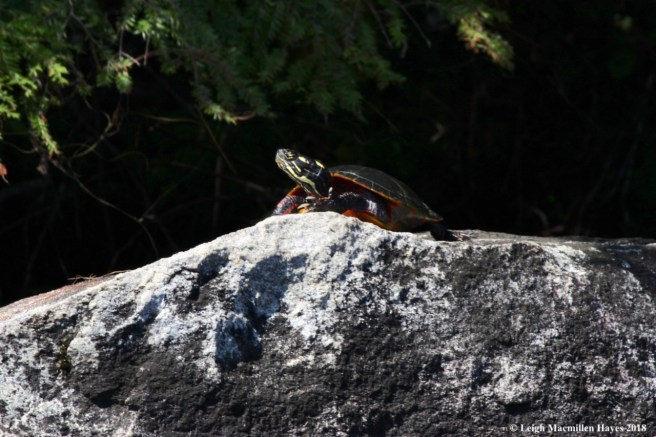
w-painted turtle

Painted Turtle

w-water snake 1

Water Snake

w-water snake 2

Water Snake (notice his tongue)

Get Set–introduces amphibian and reptile species associated with wetlands.

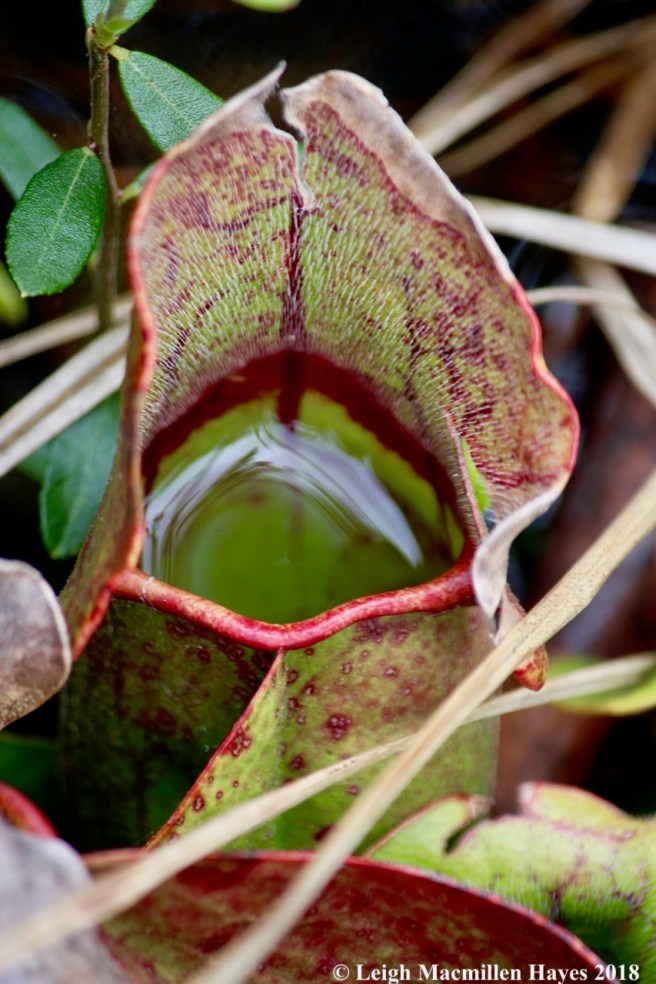
w-pitcher plant

Pitcher Plant

Go!--sends the children outside to read the signs of nature and jot down their observations.

w-Holt Pond quaking bog

Quaking Bog at Holt Pond

In the Go! section, Kirkland describes what the kids might discover in such places as bogs, estuaries, salt marshes, freshwater marshes, streams, rivers, lakes, vernal pools, swamps, and the Everglades.

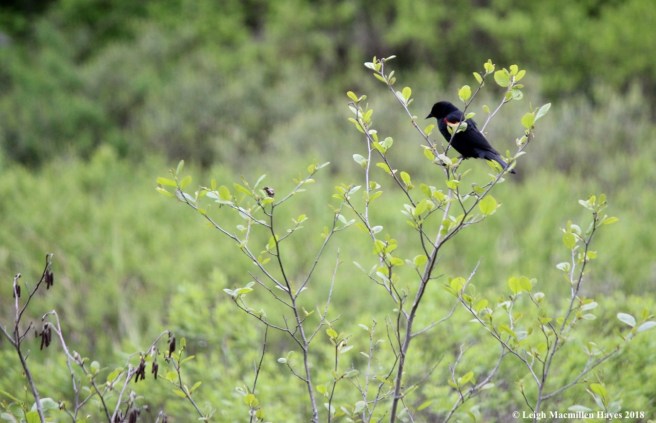
w-Red-winged Blackbird

Through sidebars, illustrations, and photographs, Kirkland touches on many topics related to wetlands, but constantly encourages further research, including of course, heading out the door. She also includes a wee bit of information about citizen science projects and wetland careers.

w-pileated woodpecker

Pileated Woodpecker

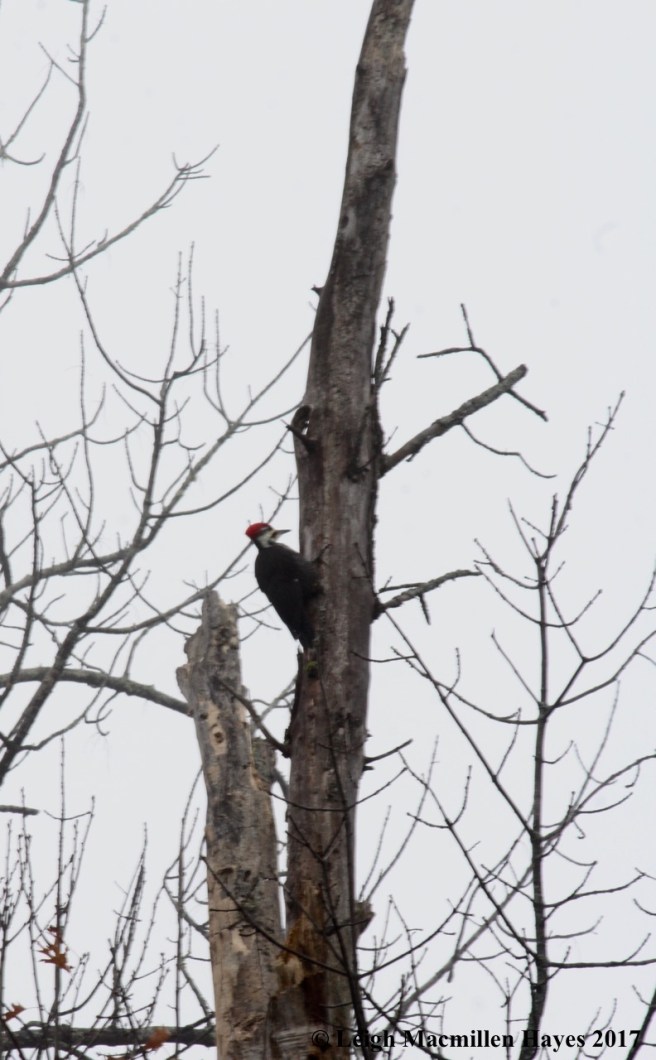
Each time she first uses a technical term, she adds a pronunciation key. One of my favorites: The Pileated Woodpecker (Py-lee-ata-id or PILL-e-ate-id). I prefer the latter, but occasionally hear the former uttered. “You like to-may-toes and I like to-mah-toes!”–Although in that sense, I prefer the former tomaytoes.

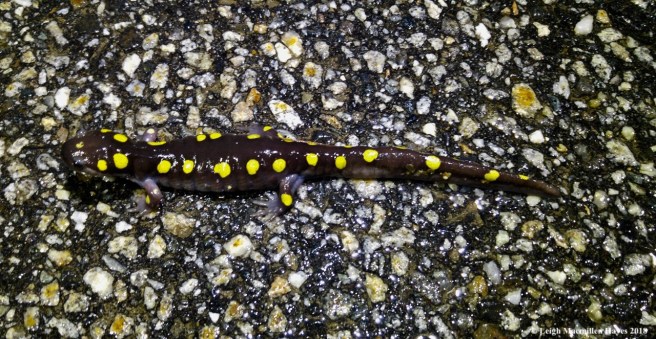
w-spotted sallie 2

Spotted Salamander

Throughout, Kirkland shares personal experiences as well as those of her acquaintances. Finally, she includes pages filled with photos to help you identify birds, plants, reptiles, amphibians, mammals and insects related to wetlands.

w-pond dipping

Pond Dipping

Yes, this is a children’s book, but adults can also benefit from reading it. And then heading outside.

Get Ready, Get Set, Go! Pick up a copy of Take A Wetlands Walk and visit your nearest wetland.

Take a Wetlands Walk by Jane Kirkland, Stillwater Publishing, 2011

Hunkered Down

Three nor’easters in two weeks. Such is March in New England. The latest delivered over twenty inches of snow beginning yesterday morning. And still the flakes fall.

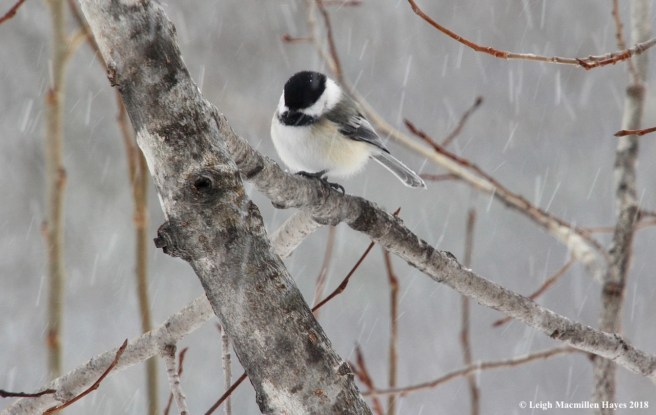
p-chickadee

But staying inside all day would be much too confining and so I stretched my legs for a few hours before giving my arms another workout with driveway cleanup duty. It was much more fun to explore and listen to the chickadees sing.

p-snow on trees

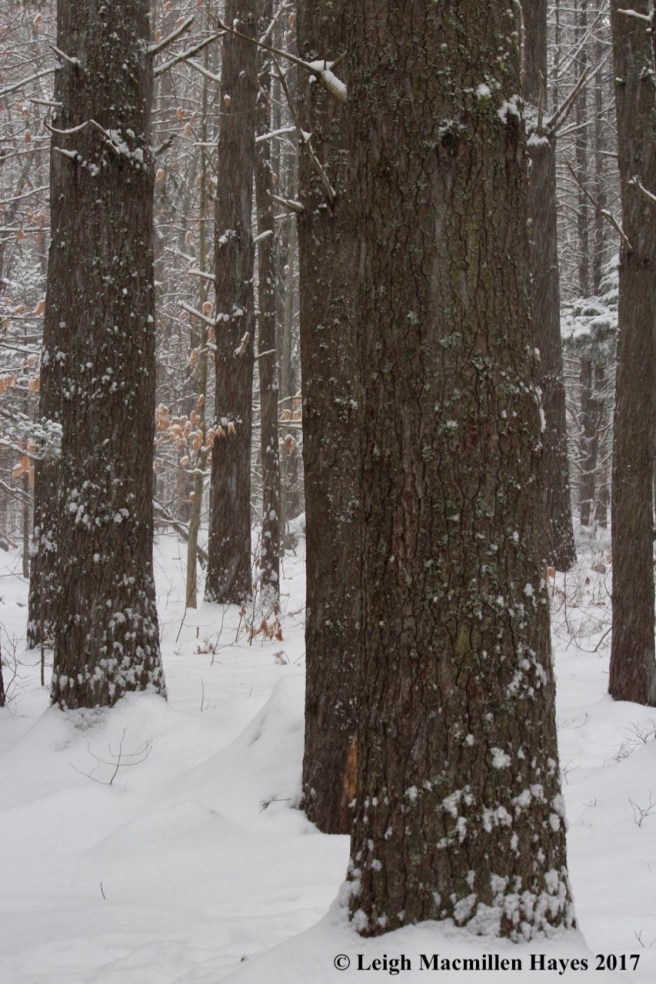
There are a few places in our woods that I find myself stopping to snap a photo each time a snowstorm graces our area. The stand of pines with their trunks snow coated was one such spot yet again. And tomorrow the scene will transform back to bare trunks and so it was one I was happy to behold in the moment.

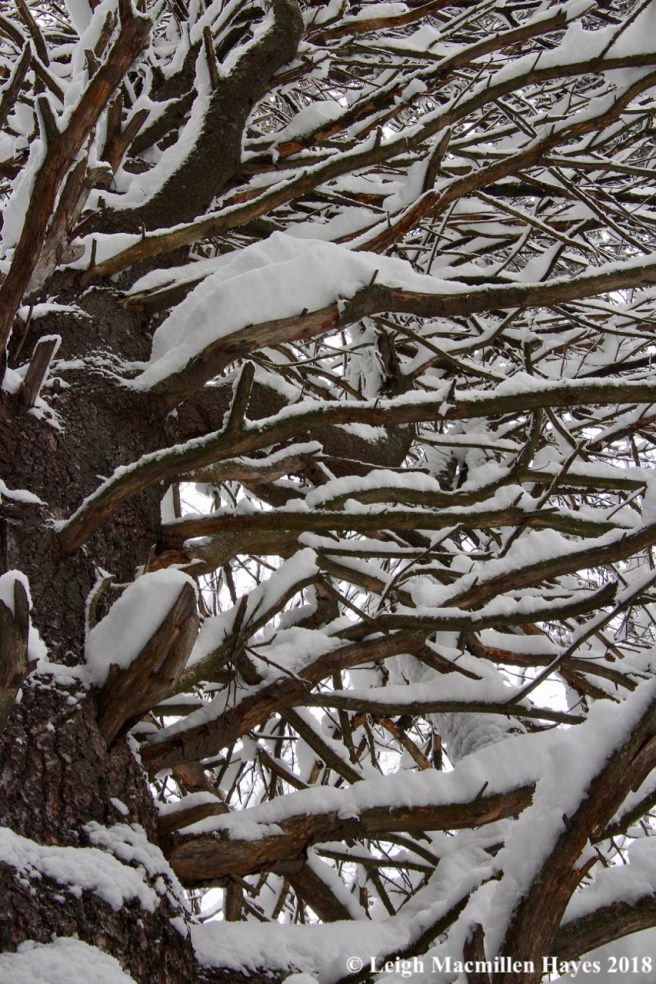
p-snow on limbs

As was the older pine that grows beside a stonewall along the cowpath and perhaps served as the mother and grandmother of all the pines in my forest–bedecked in piles of flakes, her arms reached out as if to embrace all of her offspring.

p-snow on insulators

With the snow so deep, I felt like a plow as I powered through under the insulated insulators.

p-snow on park sign

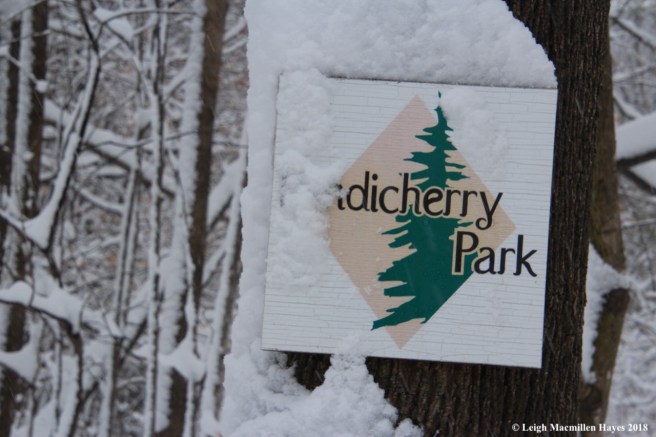
Finally, I reached one of the entryways to Pondicherry Park and while I love being the first of the day to leave my mark, I’d secretly hoped someone had trudged before me. But . . . a few steps at a time meant taking frequent breaks to rest and look around.

p-snow on tree trunk

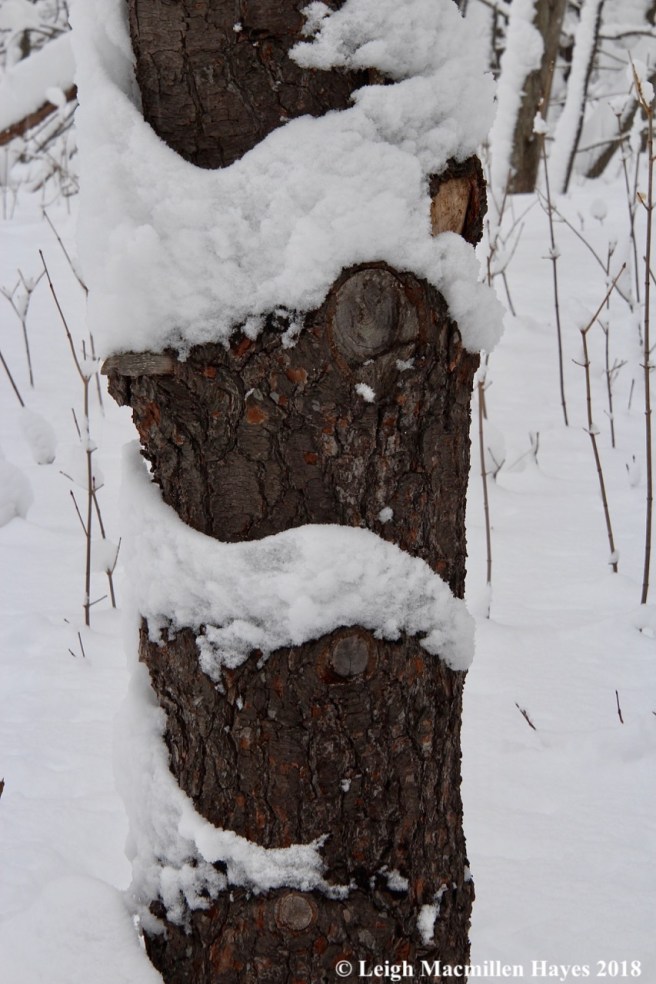
Again, it was the snow’s manner of hugging tree trunks that drew my awe.

p-snow on tree trunk 2

Sometimes it reminded me of giant caterpillars climbing into the canopy.

p-snow on roots

Even the roots of a downed tree took on an artistic rendition.

p1-snow on bittersweet

And that most invasive of species in these woods, bittersweet, offered curves worth appreciating–ever so briefly, of course.

p-snow on fences

Snow blanketed fences of stone and wood.

p-snow on bridge

Enhanced the bridge.

p-snow on bench

And buried a bench.

p-Stevens Brook

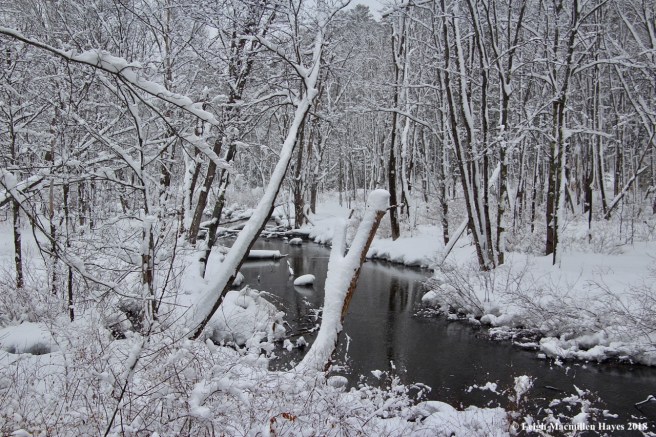
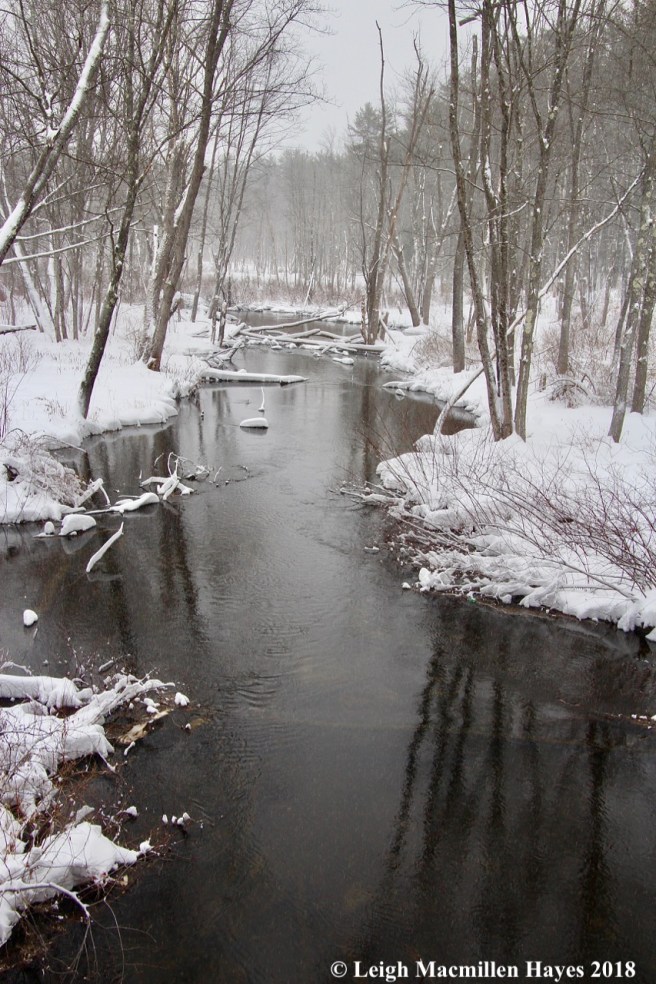
Beside Stevens Brook, it looked as if winter still had a grasp though we’re about to somersault into spring.

p-snow on trees reflected

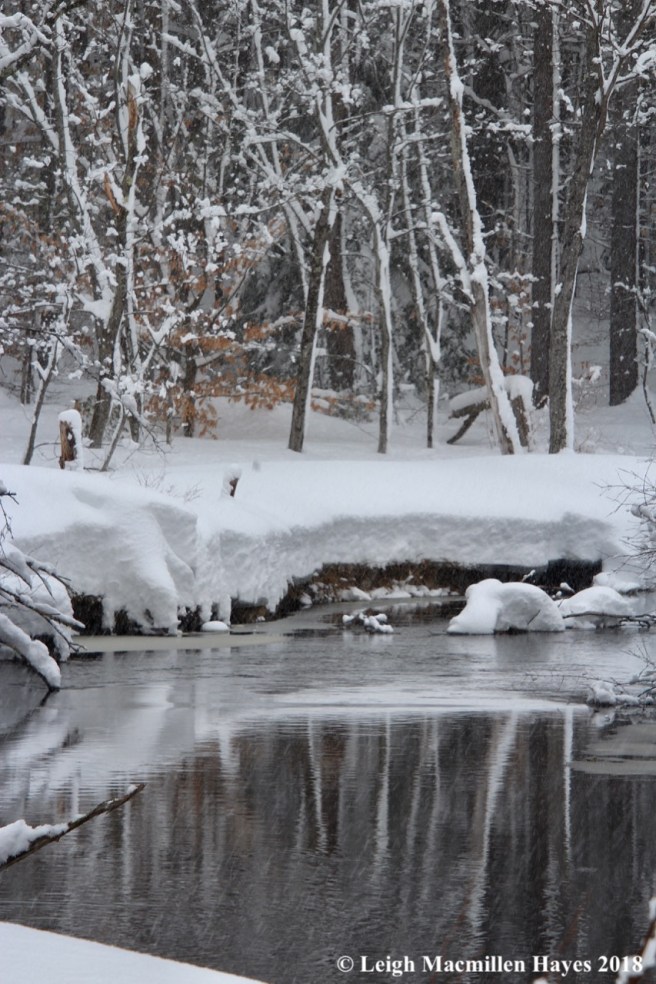
And the reflection in Willet Brook turned maples into birches.

p-kneeland spring

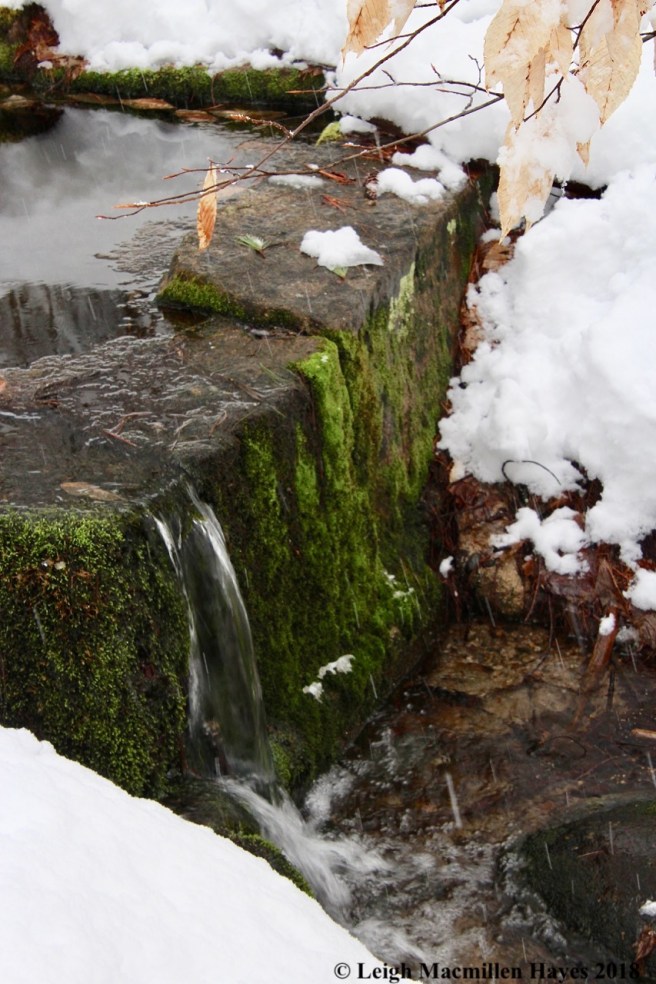
At Kneeland Spring, water rushed forth in life-giving form and the sound was one we’ll soon hear everywhere as streams and brooks overflow.

p-mallards 1

I went not to see just the snow in its many variations, but also the wildlife. I found that like me, the squirrels and deer had tunneled through leaving behind troughs. And the ducks–they didn’t seem at all daunted by the mounds of white stuff surrounding them.

p-mallards 2

In fact, one female took time to preen.

p-mourning dove

I found mourning doves standing watch.

p-Robin

And heard robins singing.

p-snow spider

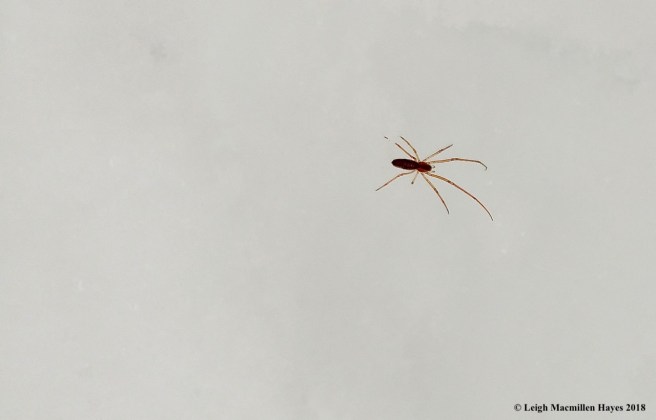
And because I spent a fair amount of time looking down, I began to notice life by my feet, such as the snow spider–an indicator that the thermometer was on the rise. It lives in the leaf litter, but when the temp is about 30˚ or so, it’s not unusual to see one or more. Today, I saw several. And wished I had my macro lens in my pocket, but had decided to travel light.

p-winter stonefly

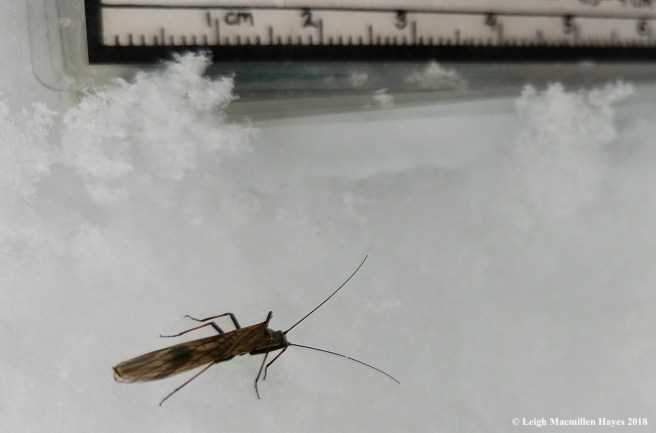
Winter stoneflies were also on the move. They have an amazing ability to avoid freezing due to the anti-freeze in their systems.

p-winter dark firefly 2

I also found a winter dark firefly. While the species is bioluminescent, I’m not sure if this one was too old or not to still produce light.

p1-snow on me

At last the time had come for me to head home for not only was the snow still falling, but so was the sky–or so it felt each time a clump hit my head as it fell from the trees.

p-final photo

We’ve got snow! In fact, we’ve got snows! And in reference to a question an acquaintance from Colorado had asked yesterday–“Are you hunkered down?” My answer was, “No, Jan, I’m not. Nor is the world around me. In fact, except for the shoveling, I relish these storms as winter holds on for just a wee bit longer.”


Angels Among Us

As March continued to roar in like a lion, I stepped into the park this morning and was embraced by beauty. Snowflakes, white and pure and eternal drifted my way. Though I was alone, I wasn’t.

p1

For within each flake I felt millions of wings brush against my face–reminding me of those I know who are at the moment downtrodden and have hurdles to conquer. Some may be tiny, others immense, but all were angelic in nature.

p3

As the flakes gathered together, they enhanced the reflection of harmony . . .

p8

and illumination.

p9

They brought Heaven down to earth . . .

p17

and reminded me that even in the darkest hours I hope my friends remember that grace surrounds them.

p18

May they find healing energy,

p24

creativity,

p13

and unwavering strength–both inner and outer.  Support is everywhere and often floats softly about while carrying a bigger presence.

p15

May they realize they are surrounded by so many angels offering comfort, reassurance and encouragement,

p15a

while looking so ordinary that at times they may not be recognized.

p10

May they maintain a sense of balance going forward,

p12

and let the flakes soften any rough edges.

p7

May they listen carefully . . .

p6

and hear whispers in the breeze that I trust will tickle their beings.

p4

May they hear the universe sing (or occasionally quack),

p2

its song as sweet or maybe sweeter than that of the cardinal.

p19

And at the end of the day, may they follow the tracks home, no matter how big . . .

p5

or small.

p20

May they continue to look up as the flakes fall and know that our friendship is a privilege I honor.

p21

May we all recognize the angels among us, innocent and yet brilliant. Even on a days when a nor’easter blows through. Or especially then.

P.S. I was going to dedicate this post to Jin, and Tom, and Cris, and Bob, and Ronny, and Becky, and Bev, and Pammie, and Rosemary,  and so many others. I do dedicate it to them, but really–to everyone for I may not know what you face day in and day out. May you all persist and be strong.


Bogging with Barb

Passing off a copy of the book, From Grassroots to Groundwater, about how two small Maine towns fought Nestlé and won, was the perfect excuse to head to Brownfield Bog. I told Barb I didn’t mind driving to her home or somewhere nearby to give her the book because I’d then go exploring and she welcomed the opportunity to do the same.

b2-Kathy's sign

As we began our journey, I asked if she knew Kathy McGreavy. Of course she did. I mentioned that Kathy walks in the bog daily and we might encounter her. Of course we did. Kathy and “her friend” were just coming out after walking their dogs and so we chatted for  bit. Our discussion included mention of the sign Kathy made last year as her capstone project for the Maine Master Naturalist Program. It’s an incredible piece of artwork and as she’s learned, I’m not the only one who thinks so. Recently, she discovered that a woodpecker had taken to pecking it and so the bottom is now protected with a piece of plexiglass. Crazy birds.

b1-Bog view from the road

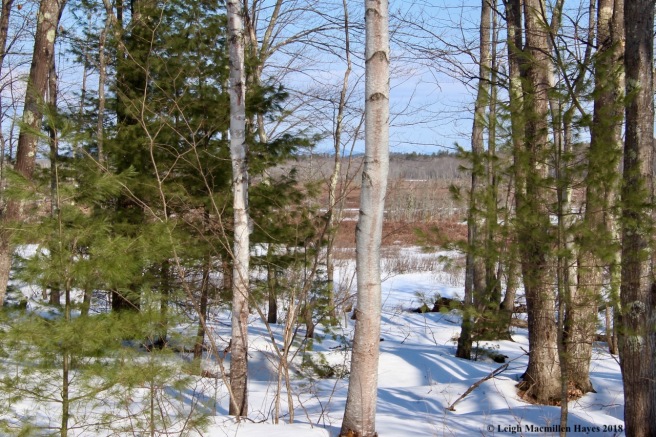
Eventually, Barb and I said our goodbyes to the McGreavys and walked down the unplowed road where I did warn her about my obsession for stopping frequently to take photos. It began from the start–when we spied the bog through the trees and noticed the contrast of colors and layers.

b3a-pussy willows

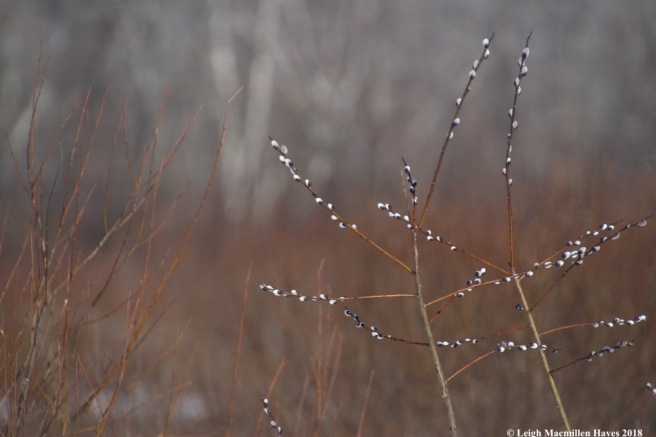
And then–specks of white were ours to behold.

b3-pussy willows

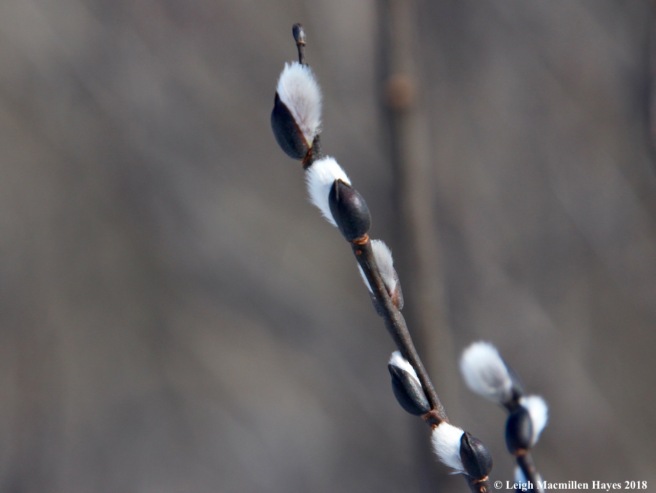
Pussy willows. Was it too early she wondered. No–in fact, I spotted some a year ago on February 23 at Lakes Environmental Association’s Holt Pond Preserve.

b4-red-winged blackbirds

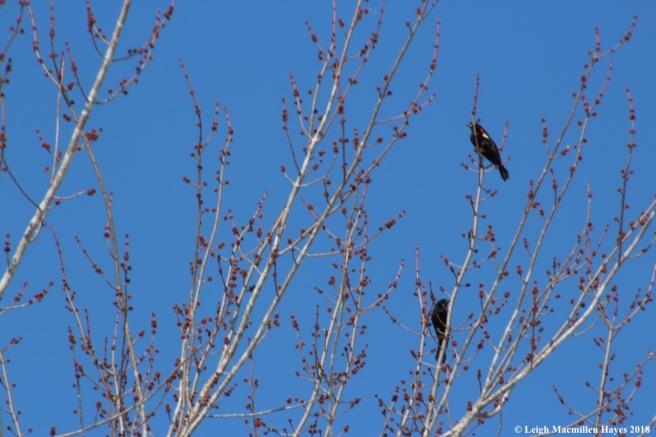
Our next reason to stop–the red and yellow shoulder patch or epaulet providing their name: Red-Winged Blackbirds. Again, Barb asked if it was too early. This time, I referenced Mary Holland for the February 27th entry in her book Naturally Curious Day by Day has this headline: Returning Red-Winged Blackbirds Survive Cold Temperatures and Few Insects. Bingo.

b5-water obstacles

Sometimes our stops were to contemplate our next steps–especially when it came to the water that covered the cobble stones on the road.

b6-Barb charges through the water

But sometimes you just have to go for it. And we did. As the morning continued, we ventured through deeper water and plowed ahead knowing that we would need to dry our hiking boots out when we arrived home.

b7-bird's nest

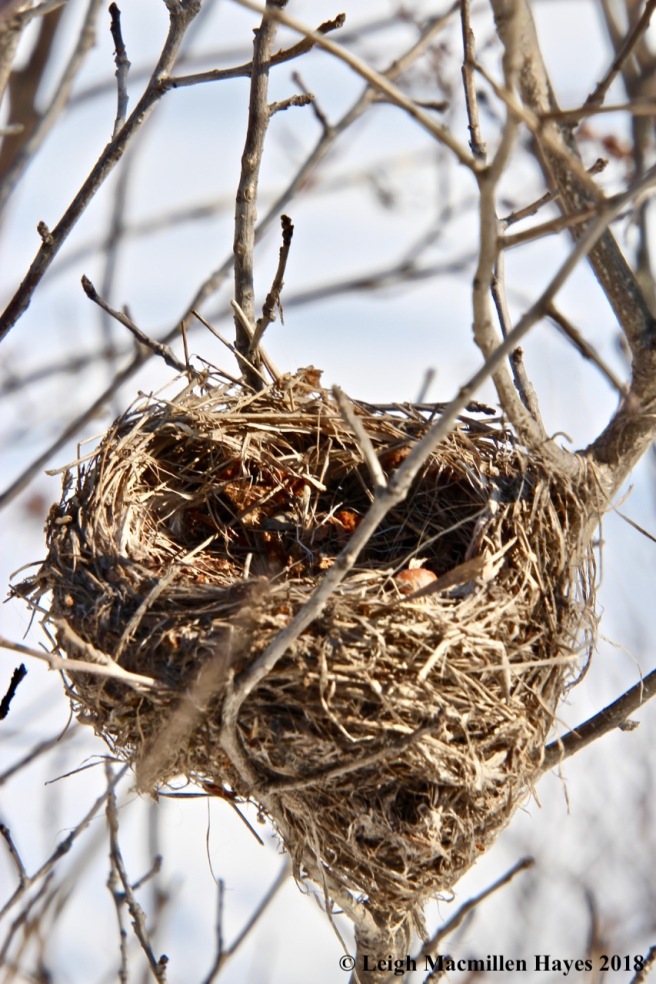
We found a bird nest and wondered about its creator. We did note some acorn pieces inside, so we think it had more than an avian inhabitant.

b8-beaver lodge

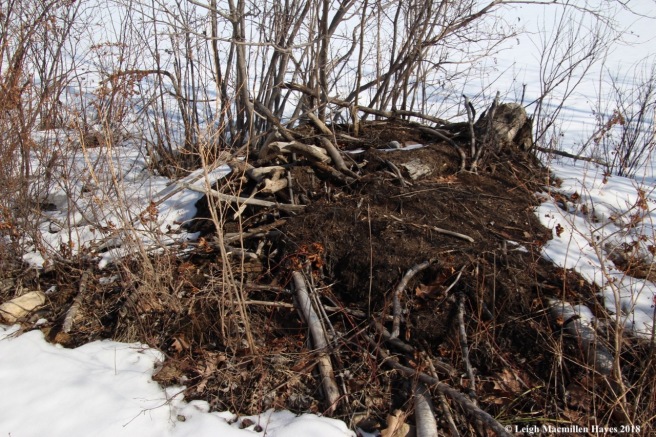
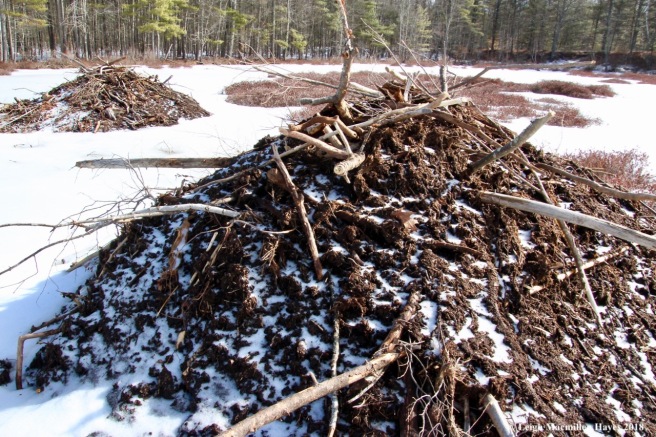
And we paused to look at an old beaver lodge. The mud looked recent but none of the sticks were this year’s additions so we didn’t know if anyone was home.

b9-map in the snow

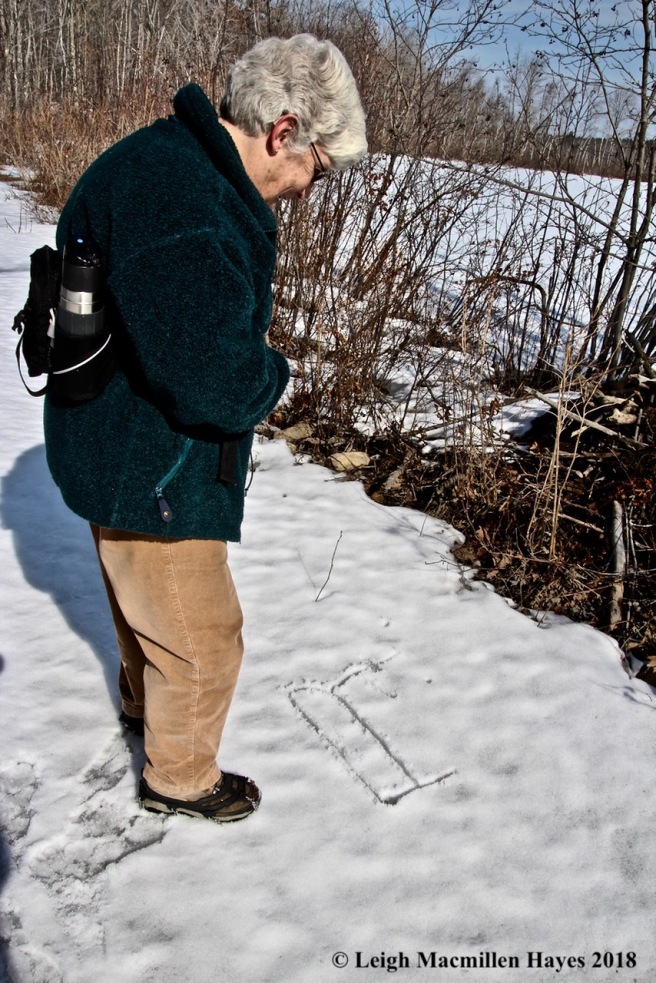
All along, we’d been talking about places we’ve hiked and other topics of interest to both of us. We even learned that we’d both worked in Franklin, New Hampshire, just not at the same time. But speaking of hikes, with her finger, Barb drew a map in the snow and now I have another trail to check out soon with my guy. Should I forget the way, I’ll just reference this map. ;-)

b10-raccoon prints

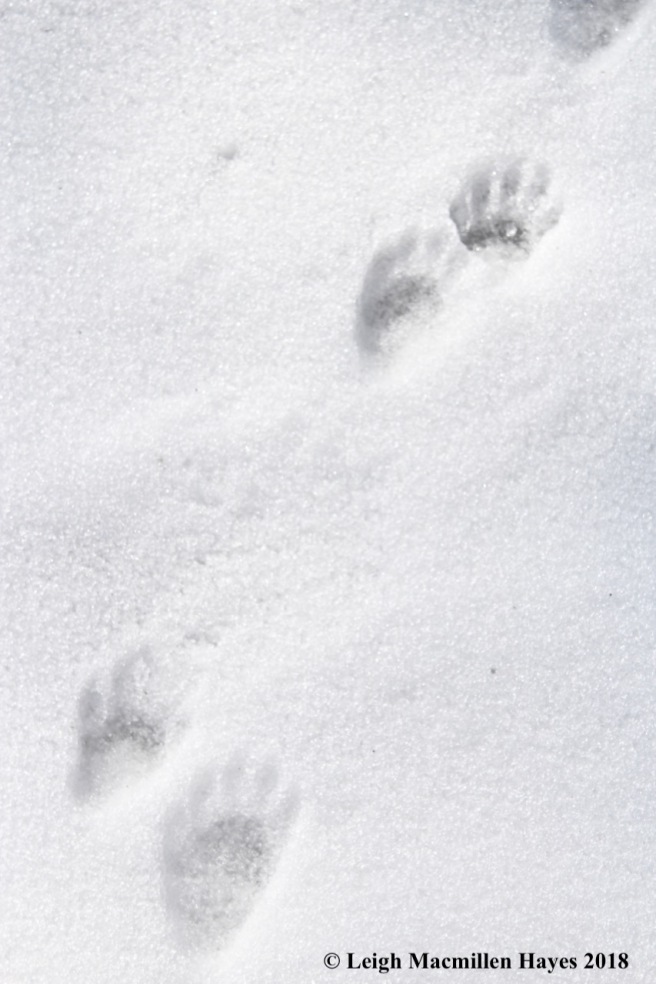
Because we were near water, though most of it still frozen, and the temp was high (actually, too high–in fact, it felt HOT as it soared into the upper 60˚s today), we weren’t surprised to find this set of prints created recently by a raccoon. I love the hand-like appearance and opposite diagonal of each two feet. Can’t you just see him waddling through–in your mind’s eye, that is?

b11-the bog

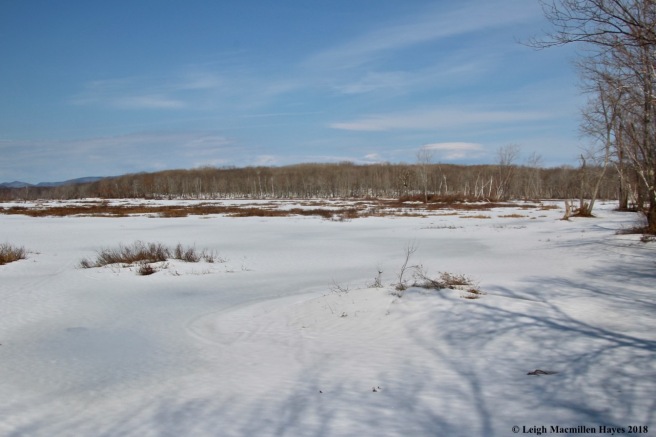
Our turn-around point offered an expansive view of the bog. As much as we may have wanted to head out onto it, we sided with caution and kept to the edge of the shore.

b12-winterberry

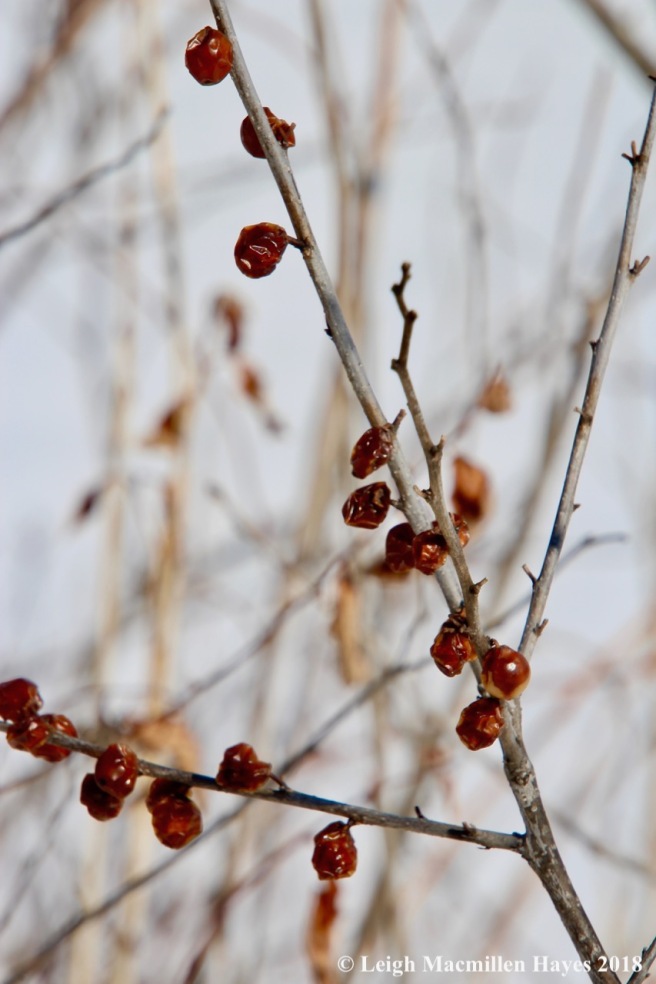
On the way back, there were other things to admire as there always is even when you follow the same route: winterberries drying up;

b13-rhodora

rhodora’s woody seed pods and flower buds swelling;

b14-willow gall

and the pinecone-like structure created with leaves by a reaction to a chemical released by the larva that allows a gall gnat midge to overwinter on the willows.

b16-carrion-flower tendrils

And then we stumbled upon a plant neither of us knew. With it’s long stem and curly tendrils, we were sure it was a vine.

b15-carrion-flower

Upon arriving home, however, I wondered about the umbel structure that had been its flower and now still held some fruits. A little bit of research and I found it: Carrion Flower (Smilax herbacea), which apparently smells rather foul when it’s in bloom and thus attracts carrion flies as its pollinator. Now I can’t wait to return and check it out in the next two seasons. Any excuse to get back there.

b17-bog to Pleasant Mountain

At last the time had come to say goodbye to the bog and then goodbye to each other. Thanks Barb, for giving me an excuse to go bogging with you. It was indeed a treat.

Brain Share–Naturally

I was thankful I’d thrown my winter coat into the truck for I had a feeling it would be a better choice than a vest given the group I’d be traveling with this morning. And sure enough, though the sun felt warm, a breeze added a chill to the air. Plus, I knew we wouldn’t travel far and would spend much of our time standing around.

r0-life on a rock

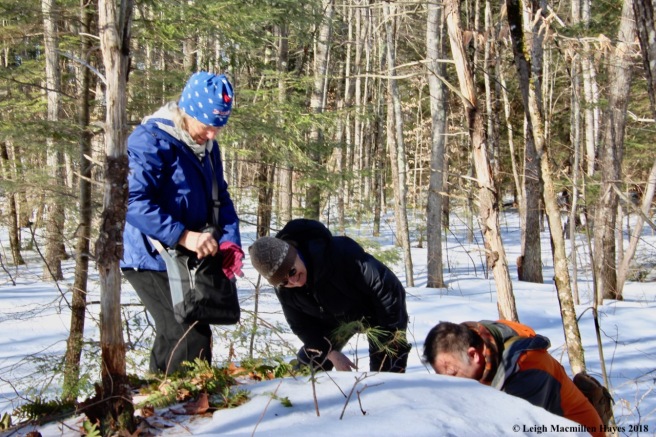
Well, not exactly standing, for as Maine Master Naturalists, we’ve been trained to get down for a closer look. Our first stop–to check out the life on a rock that was revealing itself as the snow slowly melted. Karen is on the left, an Augusta grad, and Sarah and Anthony to her right, both South Paris grads.

r0a-polypody

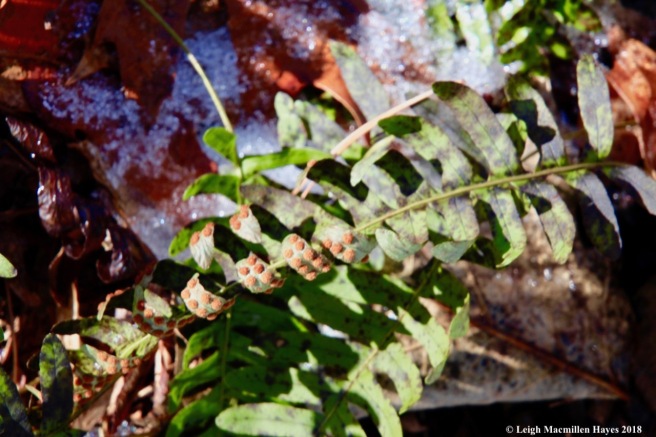
The focus of our attention was common polypody, a fern with leathery leaves and spherical spore clusters on the underside. Rocks are their substrate and they often give a boulder a bad-hair day look.

r1b-speckled alder

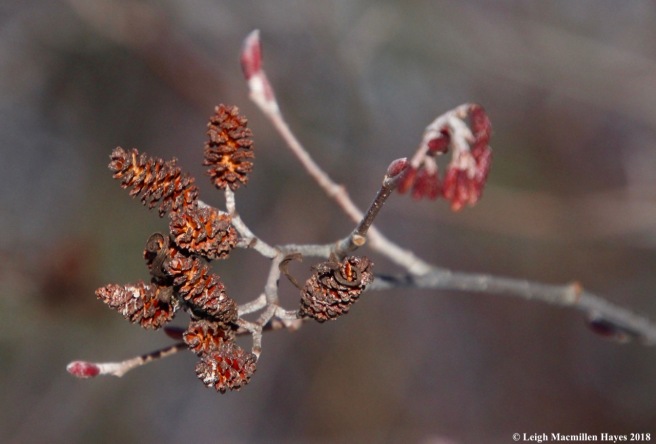
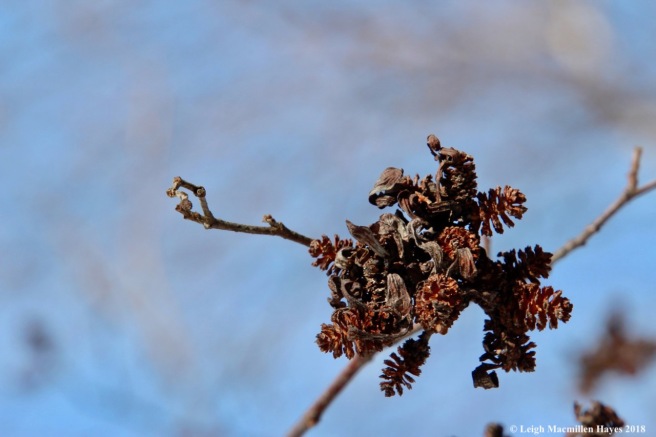
Moseying along, we reached a point where we knew we wanted to spend some time–at a wetland beside one of the Range Ponds (pronounced Rang) at Range Pond State Park in Poland, Maine. Because it likes wet feet, we weren’t surprised to find speckled alder growing there, but what did throw us for a loop was the protrusions extending from last year’s cones.

r1a-speckled alder

It was almost like they had tried to flower atop the cones and all we could think of was an insect creating a gall. Indeed, it appeared that the cones were also experiencing a bad hair day. After a little research, it may be alder tongue gall–resulting from a fungus rather than an insect infecting the female catkins. Apparently, the tongue-like growths are green to begin, but transform to orange, red and finally brown. It was certainly a new one for the four of us.

r2a-leatherleaf and sphagnum moss

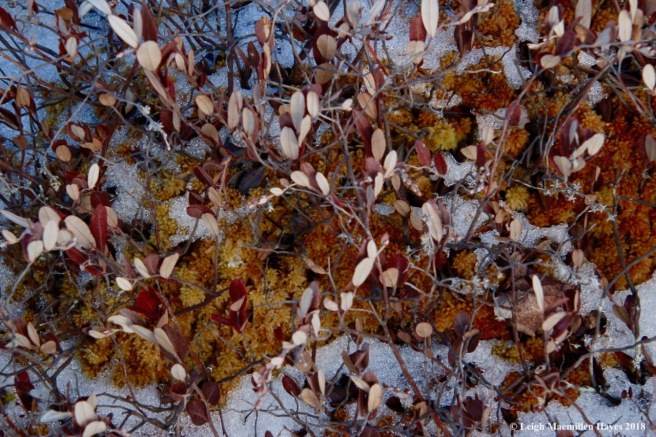
On we moved down to the wetland where the snow surprisingly held us for most of the journey and we didn’t leave behind too many post holes. Leatherleaf and sphagnum moss showed off their winter hues at our feet.

r4-cranberries

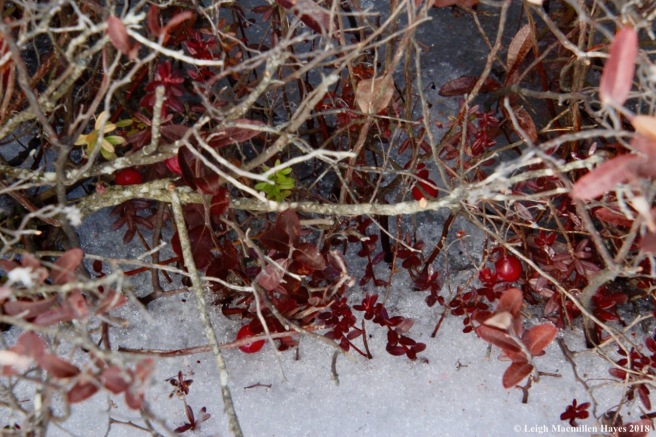
We also spied cranberries hiding underneath.

r3-cranberries among the leatherleaf

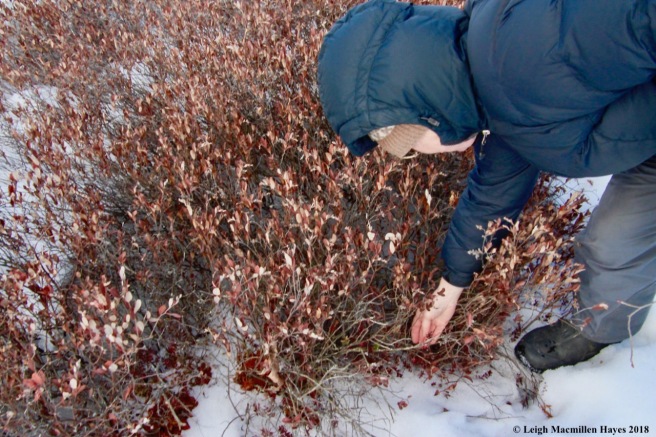
And sampled them. A few were tart, while others had fermented.

r1-two lodges

In the middle of the wetland, two well built lodges stood tall. They had fresh wood and had been mudded in the fall. One did look as if the vent hole had been enlarged, so we wondered if anyone still lived there. We heard no noises, but had to assume that we were bothering the residents so we didn’t stay long.

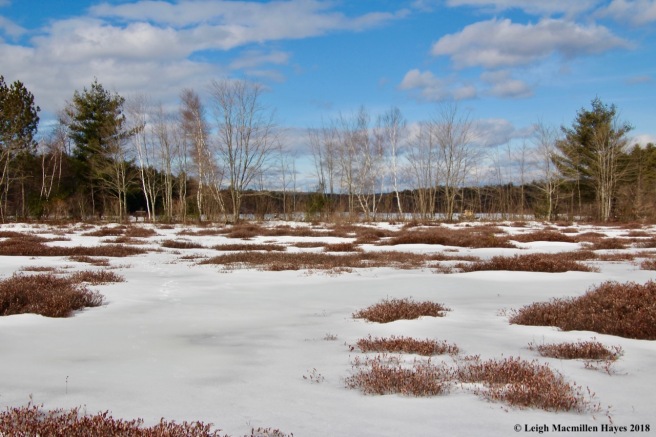
r2-wetland and pond beyond

One last view of the wetland and pond beyond, then we turned and walked toward the opposite side.

r5-bird nest

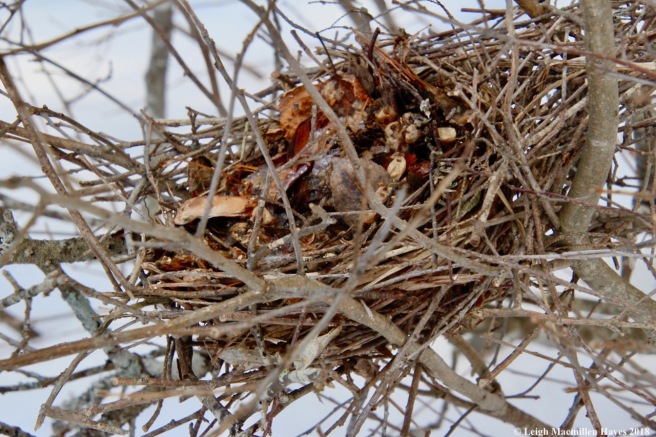
Just before climbing uphill, we spotted a bird nest in the winterberry shrubs. It was filled with dried berries, and we again made an assumption, that a mouse had cached its stash for the winter and maybe dined there in peace and quiet while the nest was covered in snow. That’s our story and we’re sticking with it. Whose nest it was prior to the mouse? We don’t know, but it was made of twigs. If you have an answer, please enlighten us.

r6-bone

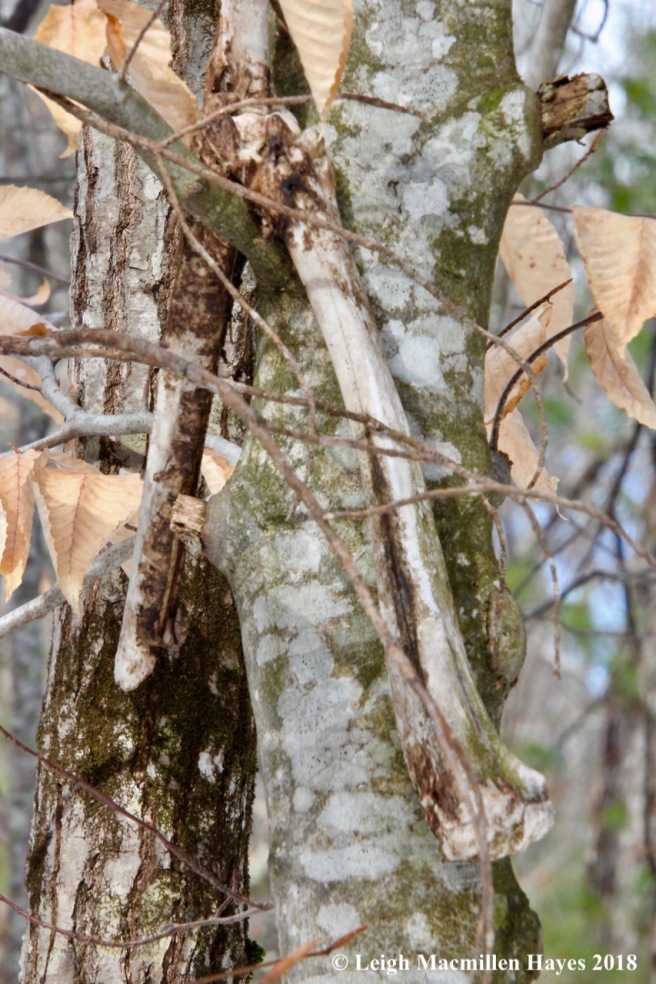
Back up on an old railroad bed, we again stopped frequently, including to talk about the beech scale insect and nectria fungus that moves in and eventually kills the trees. And then something else came to our attention–it wasn’t a broken branch hanging down like an upside-down V on the beech tree. No indeed. It was a bone. A knee bone. And it had been there for quite a while given its appearance.

r7-Introduced Pine Sawfly pupal case

Because Anthony was with us and he’s our insect whiz, we spent a lot of time learning from him–including about the pupal case of an introduced pine sawfly. The sawfly had already pupated and in this case no one was home.

r8-Introduced sawfly pupal case

As the morning went on, we became quite adept at locating more cases of other sawfly species, including one that wasn’t yet opened. We each channeled our ten-year-old selves as we tried to be first to find the next one. But really, Anthony won for he had insect case eyes.

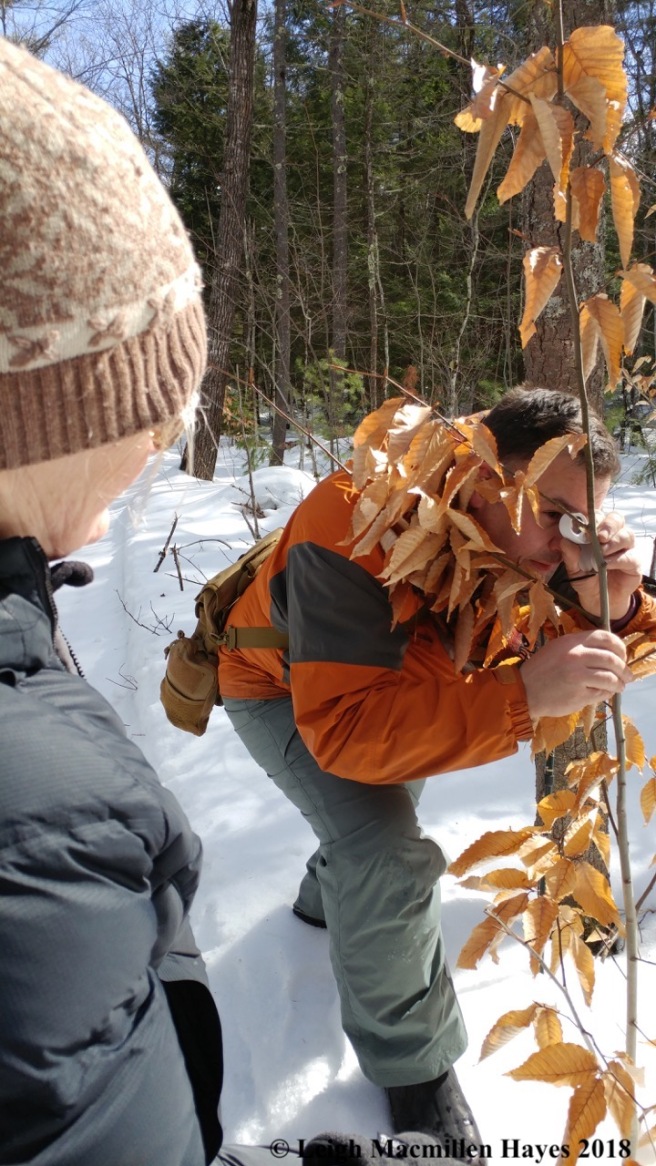
r9-going in for a closer look

And eyes for other things as well.

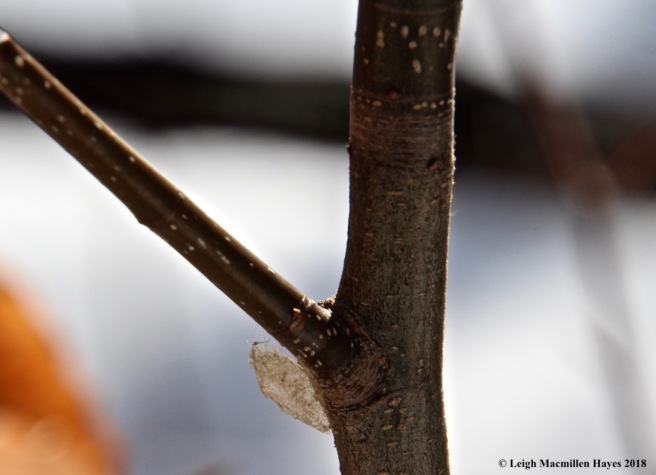
r10-old spider web case

This time we examined a delicate, almost lacy structure under a branch on a young beech. Anthony suspected a pirate spider, which tickled our fancy for we imagined them raiding the goods of others. But later he e-mailed with another option: “The old spider egg case could also be from an orbweaver of the araneidae family.” Either way, we were happy for the sighting; for taking the time to slow down and notice.

r11-beech leaves

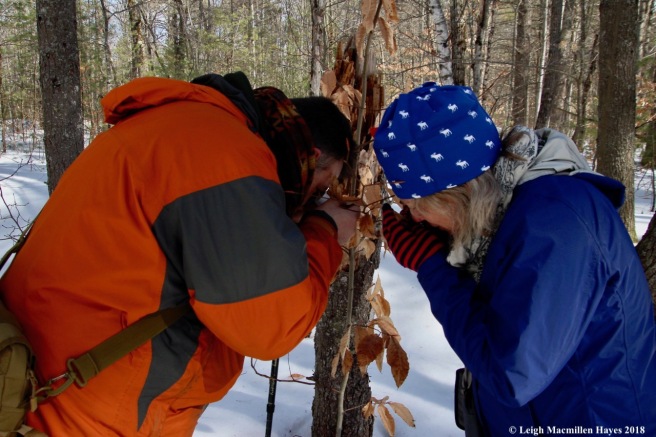
And there was more. Sarah had to leave us a wee bit early, so she missed our finds on the backside of beech leaves.

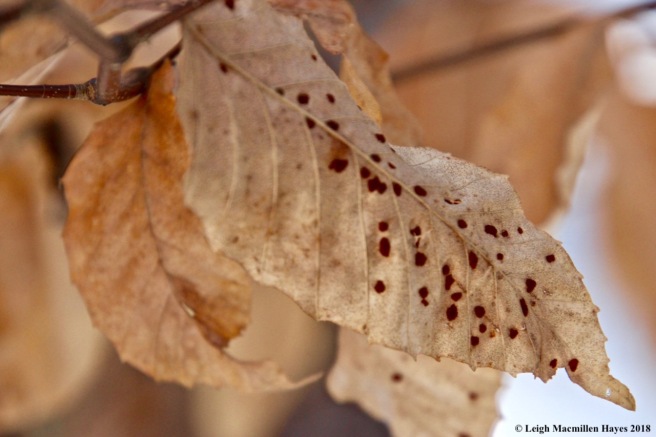
r12-maroon dots on beech leaves

They were dotted with raised bumps that under our hand lenses reminded us a bit of the sori on common polypody.

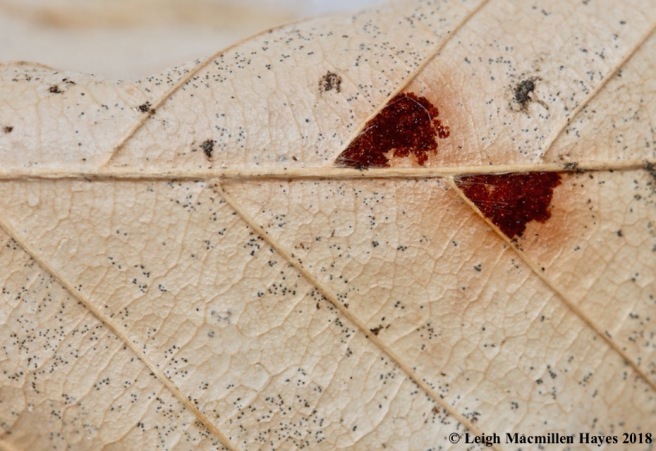
r13-maroon dots on beech leaves

Leaf rust? Was it related in any way to the splattering of tiny black dots also on the leaves? We left with questions we haven’t yet answered.

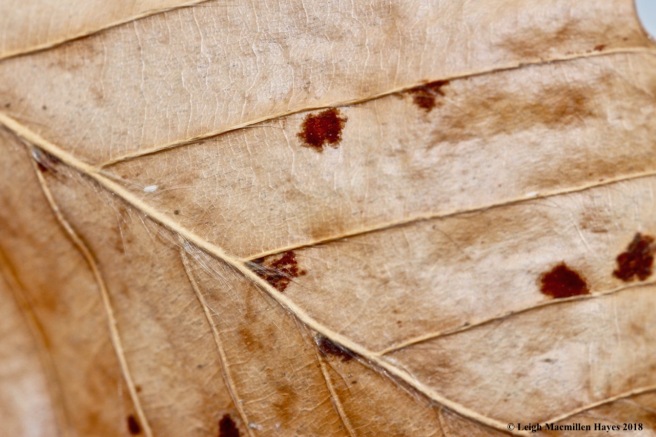
r14-hair on beech leaves

Taking a closer look did, however, remind us of how hairy beech leaves are–do you see the hairs along the main vein? And that reminded us of how the tree works so hard to protect the bud with waxy scales all winter, keeping the harsh conditions at bay. In early spring, slowly the leaves emerge, ever hairy, which strikes me as an adaptation to keep insects at bay, and then . . . and then . . . it seems like every insect finds a reason to love a beech leaf and in no time they’ve been chewed and mined and you name it.

r15-oak gall

We made one more discovery before heading out–a gall formed on oak twigs. Do you see the exit hole? It’s in the shape of a heart–apparently the insect that created the gall loved the oak.

r15-pine tube moth

As we made our way back to the parking lot, I kept searching all the pine trees because I wanted to share an example of the tube created by a pine tube moth. Of course, there were none to be found, but as soon as I arrived home, I headed off into the woods for I knew I could locate some there. Bingo.

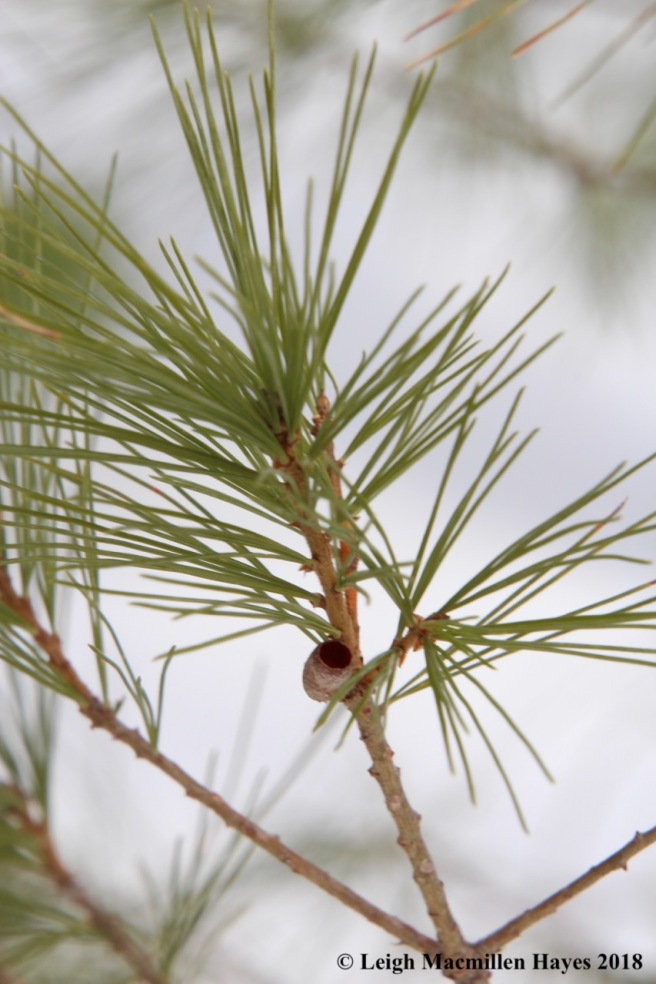
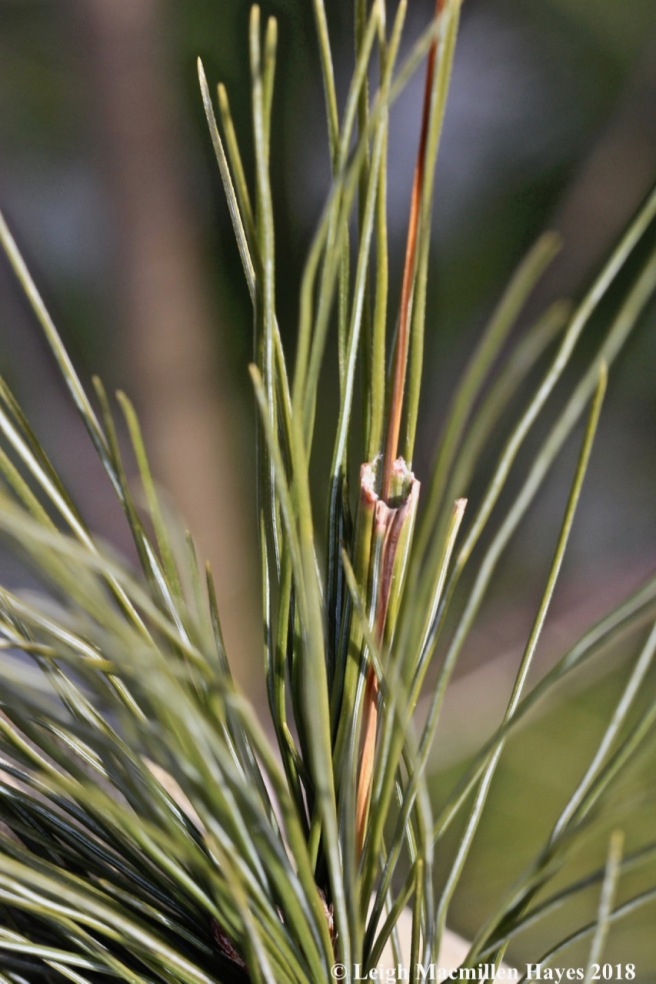
Notice how the lumps of needles are stuck together in such a way that they formed a tube. Actually, the tube is a tunnel created by the moth. The moth used silk to bind the needles together, thus forming the hollow tube. And notice the browned tips–that’s due to the larvae feeding on them. Eventually the overwintering larvae will pupate within the tube and emerge in April. Two generations occur each year and those that overwinter are the second generation. Fortunately, they don’t seem to harm the trees–yet.

Three and a half hours later we hadn’t walked a great distance, but our findings and learnings were many and we talked about how we’d added more layers to our understanding. Now if only we can remember everything. Thanks to Karen, Sarah and Anthony for sharing your brains me with–naturally.

P.S. Lewiston MMNP grads, et al, I’ll be in touch. Look for a doodle poll soon so we can get out and do the same. Or if you want to take the initiative, please feel free to go for it.


The Books of February: The HIDDEN LIVES of OWLS & OWLS of the NORTH

“Who cooks for you?” was the question I heard being asked as I fell asleep last night. And “Who cooks for you all?” the response I awoke to this morning.

‘Tis the season for owl mating calls, in this case Barred Owls, and therefore the season to promote two books about some species that hoot in our neighborhoods.

o-The Hidden Lives of Owls

The first, The HIDDEN LIVES of OWLS: The Science and Spirit of Nature’s Most Elusive Birds by Leigh Calvez, provides a fun and informative read. Perhaps I like it so much because we share a name and an interest in nature. But really, it’s the stories she tells about her experiences in the night world that make me feel as if I’m sitting on a tree stump or rock wall beside her–waiting and watching.  Listening and learning.

Calvez begins her book with silhouettes for eleven owls and a list that includes the scientific name of each, overall length, and wingspan.

s-screech owl 2

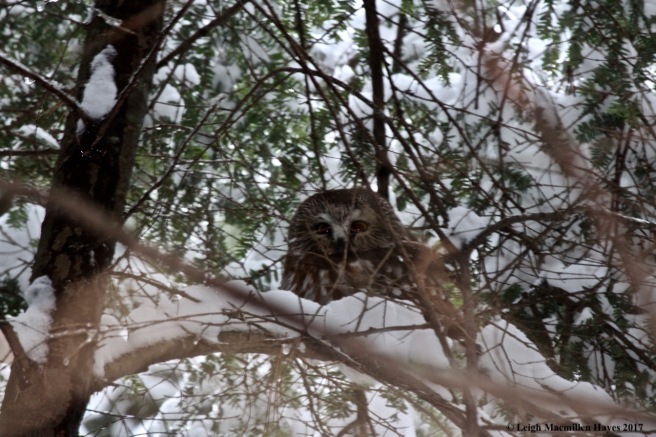
The first chapter is about Northern Saw-whet Owls, a new favorite for me since I was honored with the opportunity to meet one at the end of 2017 as I snapped my way through a thicket of hemlock trees, twigs breaking with each movement. Despite all the noise, this owl flew in and our eyes connected. Like Calvez, that sighting quivered in my mind and heart as I tried to remain calm and maintain my focus. I felt like a little kid wearing big girl boots, such was my excitement.

It’s through Calvez that I learned the origin of this bird’s name: the rasping call reminding those who named it of the sound made when “whetting” or sharpening a saw against a file.

And did you know that within mated pairs of these little birds, minute members of the owl family as they aren’t much bigger than a robin, the female sits on the nest for an almost one-month incubation period, while the male dutifully brings food? He actually continues this process even after the young’uns fledge, while momma goes off to the spa in order to regain her strength (or start another brood).

Since she first became fascinated by owls, Calvez had the good fortune to travel to a variety of locations and learn from others–as well as from the owls. She delved into the science of the species and the spirit of some individual birds; her stories are all tucked into this 205-page book. While some are species we may not see in the Northeast, for she writes about those she most familiar with in the Northwest, there’s still plenty to be gained from reading this book.

The book ends with the following: “Notes from the Field: Insights from an Owl.” I wish I could share it with you, but don’t have permission to do so. Let me just say–this list and the silhouettes and comparisons at the beginning make the book well worth the purchase. And the stories in between, filled with wit and wisdom, make it well worth the read.

o-Owls of the North

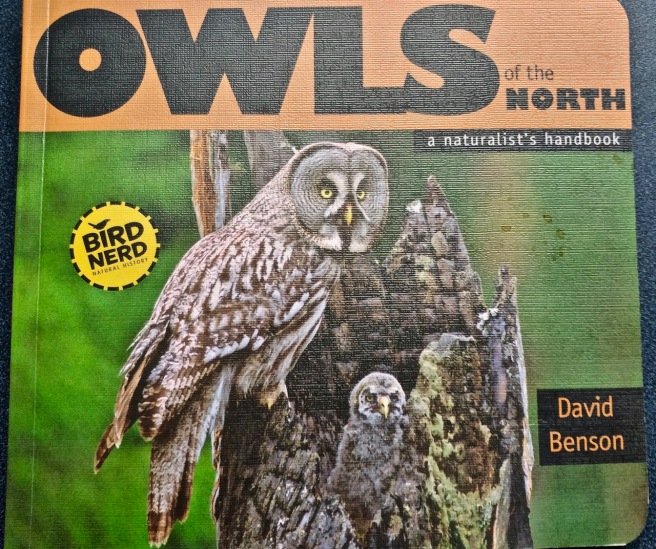
The second book, which I purchased the same day, is OWLS of the NORTH: a naturalist’s handbook by David Benson.

This book is more of a guide, filled to the brink as it is with photographs and facts about ten owls. For each species, Benson includes a global map and quick list of the following: description, range, size, wingspan, other names, diet, a brief personal story about an experience with the particular owl, identification, sounds, habitat, food, hunting, courtship and nesting, juveniles, and behavior. Almost every page features one or two action shots.

And then there are the sidebars, highlighted within an orange box on each of the odd-numbered pages. One included information about pellets, whitewash and skulls.

o-owl pellet

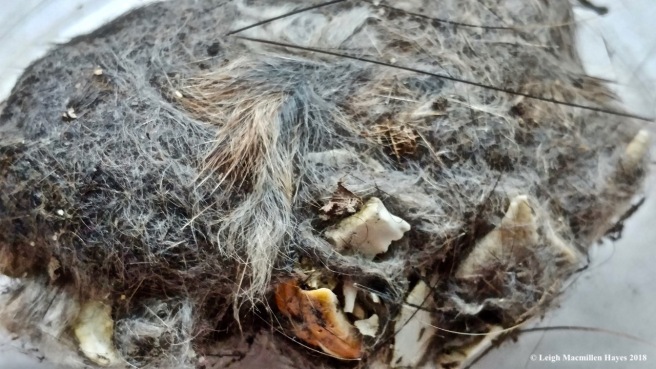
Of course, that reminded me that I have an owl pellet in my collection of all things natural. I found it in March 2016 at Brownfield Bog. According to Benson’s sidebar: “Owls usually swallow their prey whole. An owl catches a mouse, kills it with its talons or by biting its neck and then bolts the whole thing down. Much of the mouse is not very digestible though–the bones, fur and other tough parts don’t provide much nutrition. These are compacted together in the owl’s digestive tract. Then, about six hours after the meal, a pellet of these indigestible parts is coughed up and it drops to the ground beneath where the owl is roosting.”

o-pellet critters--voles

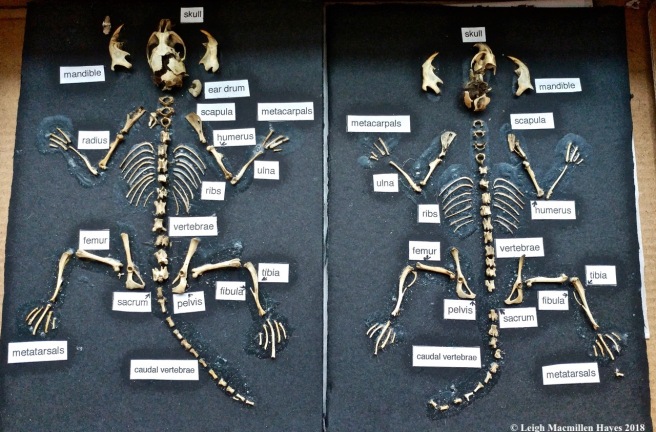
I’ll probably never dissect the pellet I found, but did dissect one for the Maine Master Naturalist Course–and determined that the owl had consumed two voles. (Don’t look too closely for I know that I put a couple of bones in the wrong place–nobody’s perfect.)

We have an Owl Prowl coming up at the Greater Lovell Land Trust and I’m trying to learn as much as I can. The two books, The HIDDEN LIVES of OWLS by Leigh Calvez and OWLS of the NORTH by David Benson, have proven to be valuable resources. I purchased both at Bridgton Books, an independent book store.

If you want to learn more, I encourage you to check out these books, join us for the Owl Prowl, or step outside–tis mating season and the calls can be heard. You might even think about responding. Go ahead–give a hoot.

The HIDDEN LIVES of OWLS: The Science and Spirit of Nature’s Most Elusive Birds by Leigh Calvez, published 2016, Sasquatch Books.

OWLS of the NORTH: a naturalist’s handbook by David Benson, published 2008, Stone Ridge Press.

Hardly Monochrome

My world always takes on a different look following a storm and today was no different. Yesterday we were graced with a foot of fluffy snow. And so it was with joy that I strapped on my snowshoes.

p1-window art

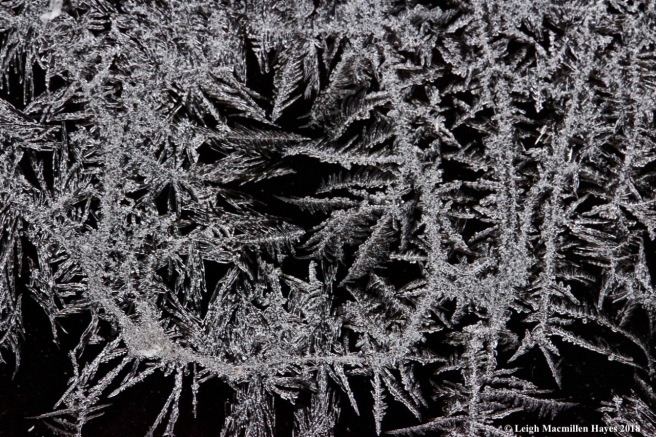
As I passed by the barn, I noted fresh porcupine tracks, but it was a window on the attached shed that drew my awe. I’ve seen the frost resemble ferns, flowers and trees before, but today’s display reminded me of moss.

p2-stonewall

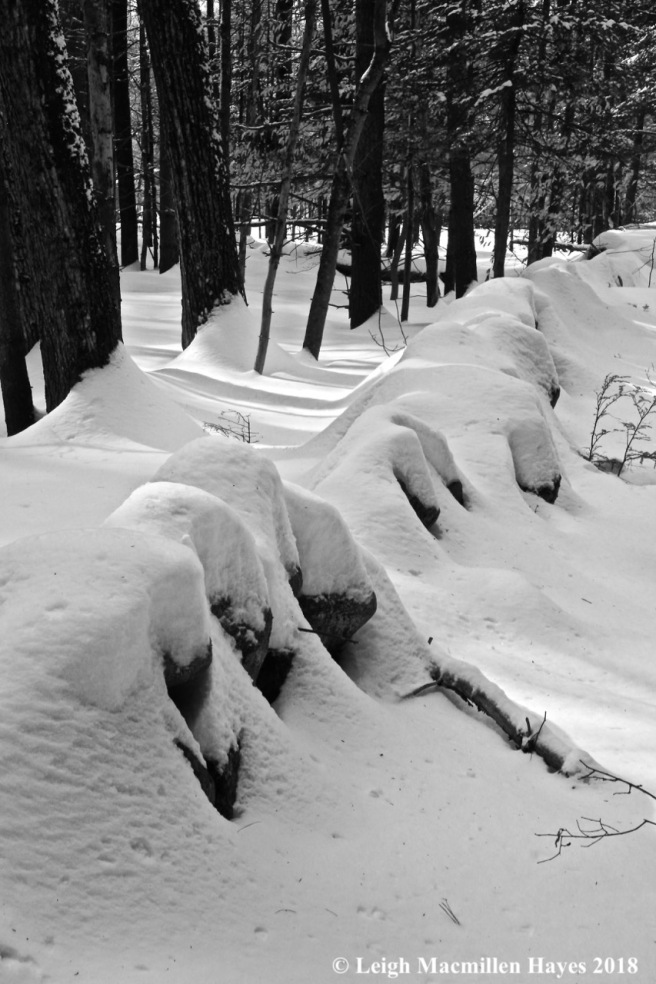
Marshmallows seemed to have capped the stonewall along the cow path.

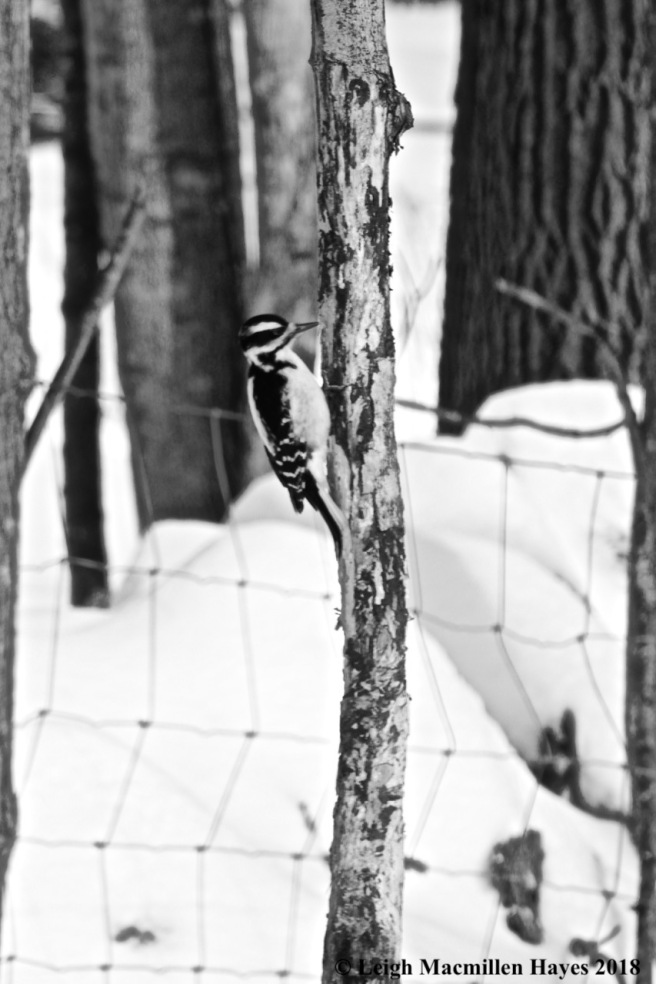
p3-hairy woodpecker

Into Pondicherry Park I headed and immediately was greeted by the sound of a hairy woodpecker chiseling away.

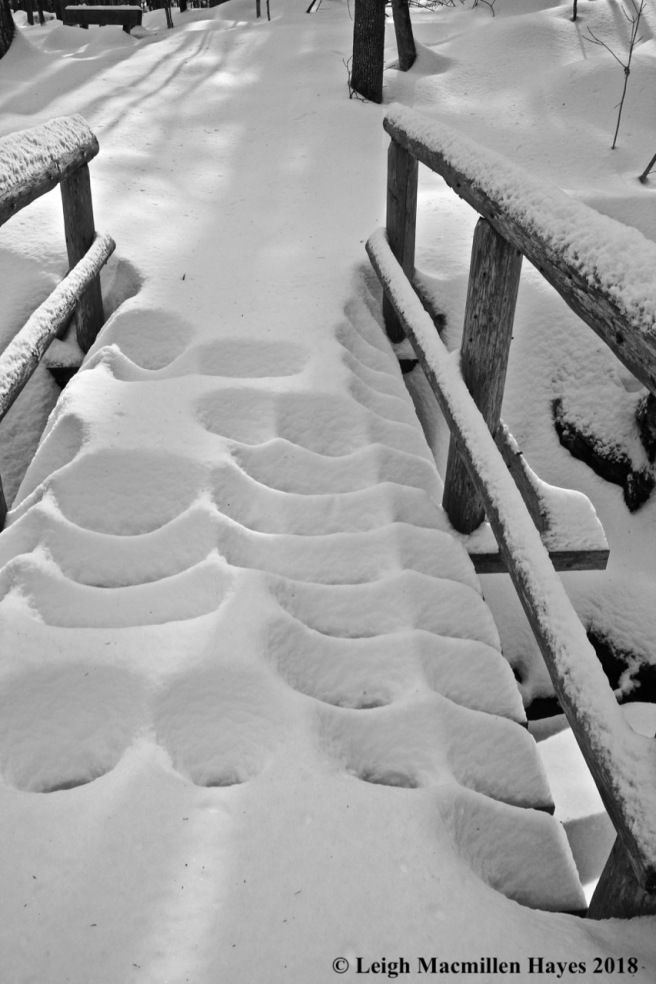
p4-bridge

The park receives a lot of visitors each year, but on this day I was tickled to be the first to make tracks.

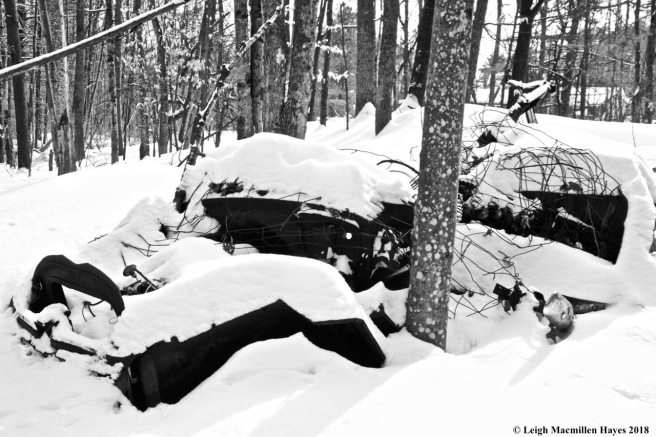
p6-vehicle

My goal was to join others at Lakes Environmental Association’s Maine Lake Science Center for a tramp along the Pinehaven Trail, but we decided to go off trail at times to see what we might see.

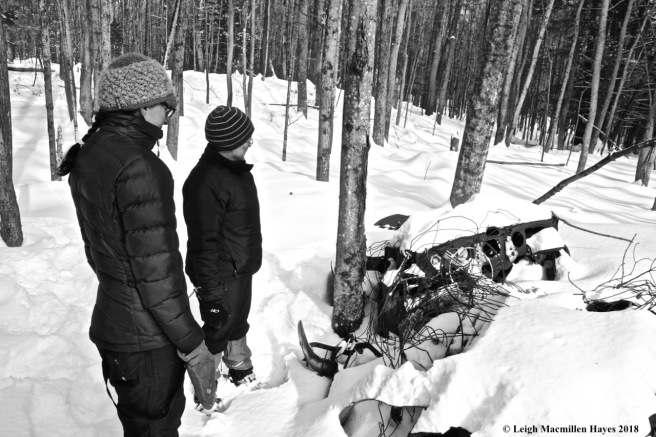
p7-Anne and Alanna

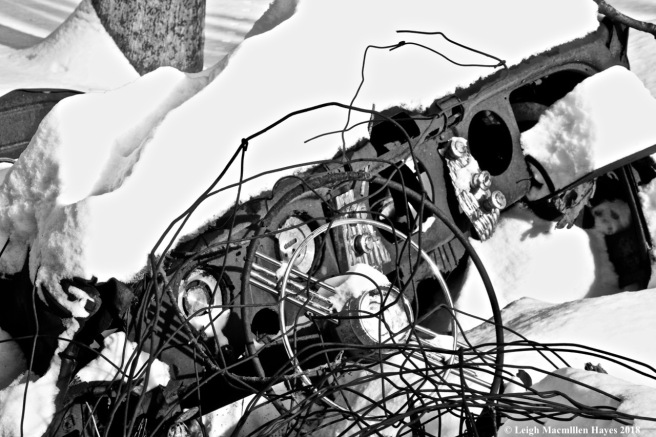
I had the extreme pleasure of exploring with these two fine women, Alanna, LEA’s education director, and Anne, chair of LEA’s environmental education advisory committee. So we wondered about this vehicle. Its age. How and why it ended up where it was. We had no answers, but the squirrels and mice didn’t seem to mind its presence for their tracks led in and out. We did note some tangled fencing added to the mix.

p8-fencing

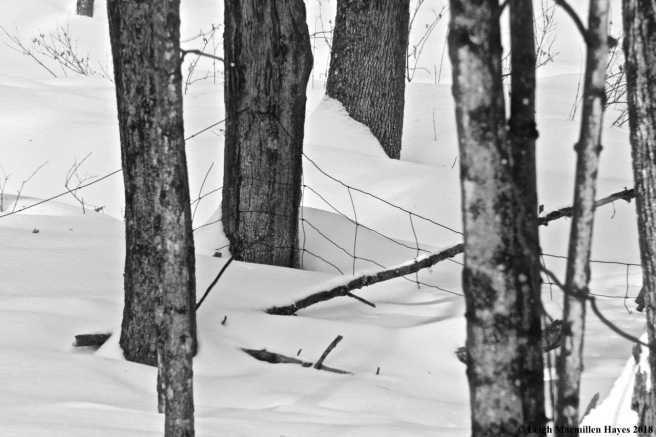
But it made sense because we were on land formerly used for farming and Alanna pointed out a section of fencing that a tree had embraced behind us.

p9-steering wheel and radio

We were busy chatting, but had we paused, perhaps we would have heard tunes pouring forth from the radio. Then again . . . maybe not.

p10-boardwalk

I spent an hour with them and then departed via the boardwalk below the science center building. It’s one of my favorite places.

p12-polypody fern

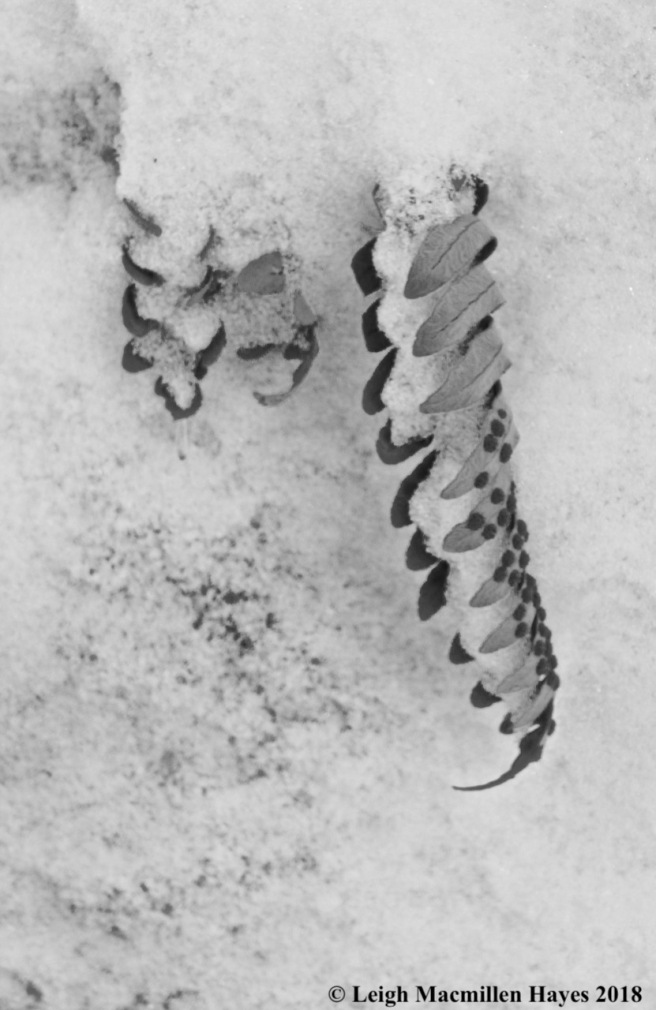
And no venture forth is complete without stopping to admire the polypody fern that dangles from a boulder, curled up as it was because of the cool temps.

p13-mossman surrenders

A wee bit further I almost passed by Moss Monster for he was hiding under his winter blanket and all that showed forth was a small balsam held tightly in his hand. I wished him sweet dreams until we meet again.

p13-tinderconk

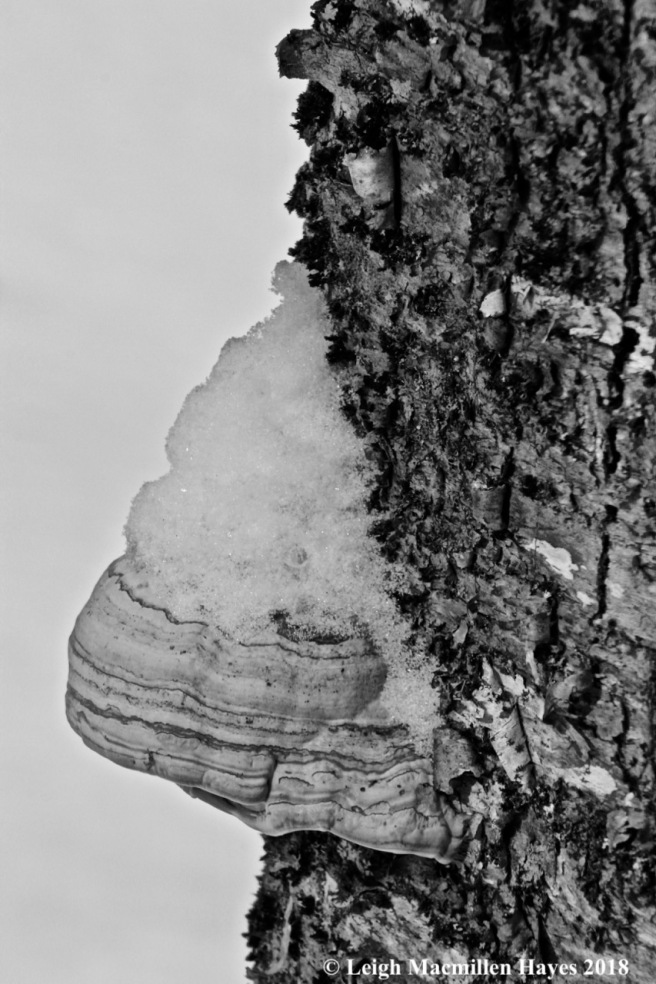
Just as I moved from the boardwalk back into Pondicherry Park, I spied several tinder conks upon a yellow birch, their lines reminding me of oyster shells and a yearning I’ve had recently to spend some time at the ocean surfaced again. I love the woods, but do need that salt air fix every once in a while.

p14-Owl?

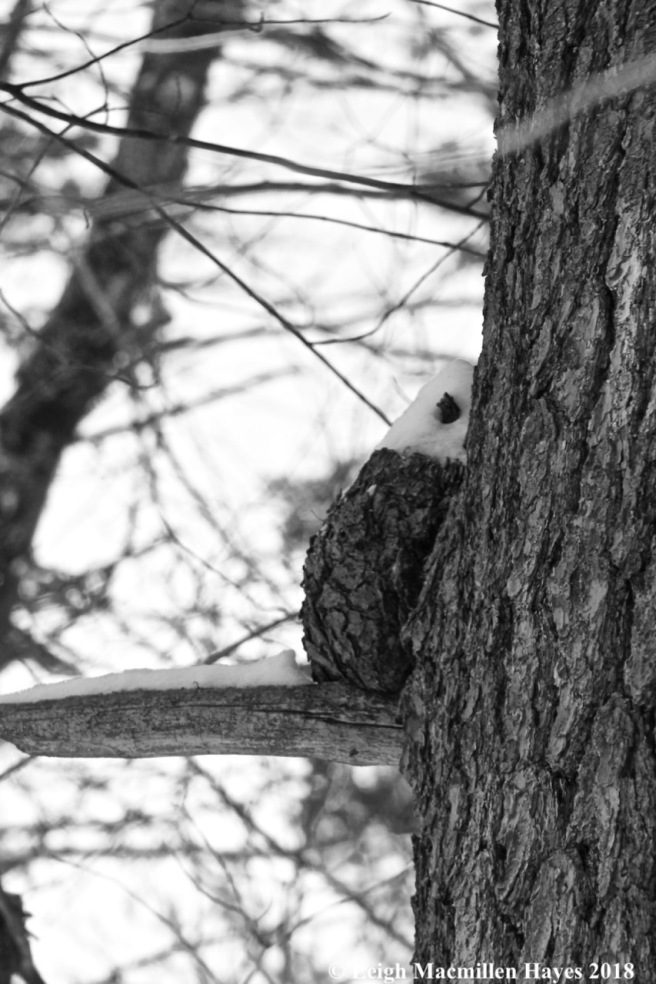
Slowly, I made my way beside Willet Brook and then Stevens Brook–looking about to see what I might see. And then I stopped. Could it be? Nope. As much as I wanted to spy an owl, all I found was a burl topped with snow upon a white pine trunk. It sure looked like a bird sitting on a branch. Wishful thinking.

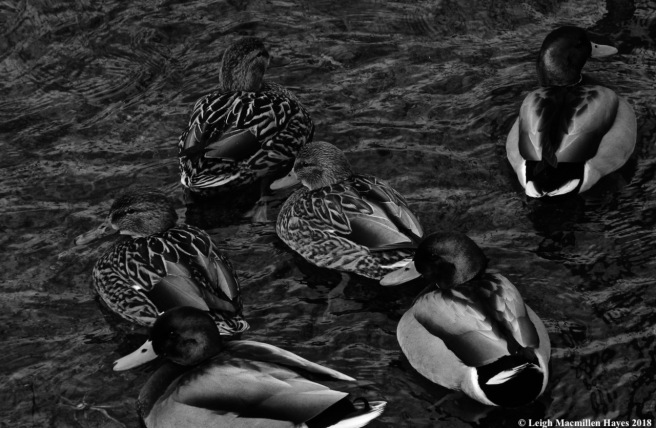
p14-male mallards

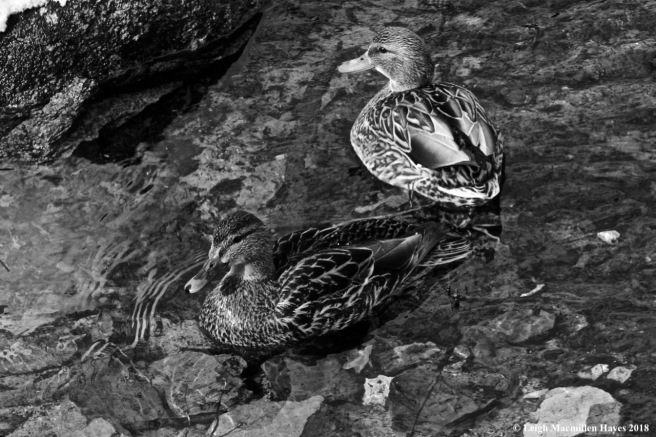
I did find other birds, though, in the form of mallards.

p15-male:female mallards

There were plenty of them and I could have watched all day as they treaded water and occasionally nipped each other or gave chase.

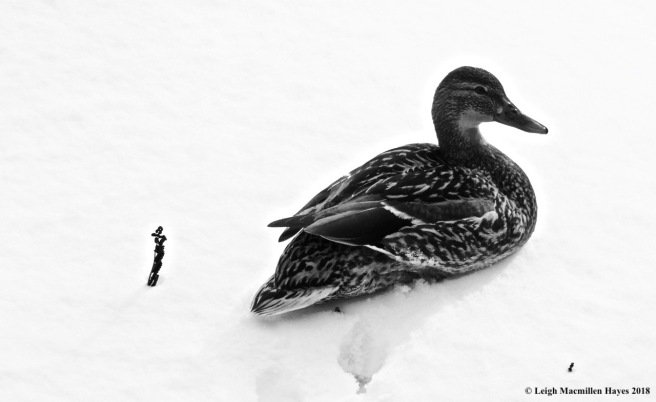
p16-male mallard on snow

One handsome guy moved onto a snow bank and appeared to smile over his companions for a few minutes–king of the hill.

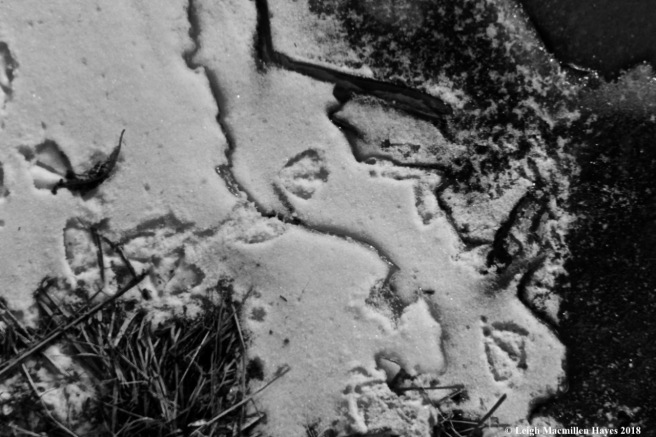
p17--duck prints

And then they all moved off, but left behind their prints–just for me ;-)

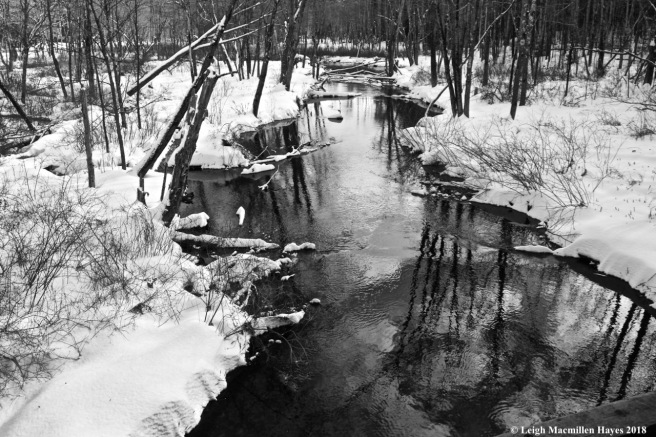
p18-Stevens Brook

My lunch break miraculously turned into a three hour tour that I chose to illustrate in black and white, with shades of gray in between. It was a lovely day enhanced by all that snow. And hardly monochromatic.

Satiating Our Curiosity at Long Meadow Brook Reserve

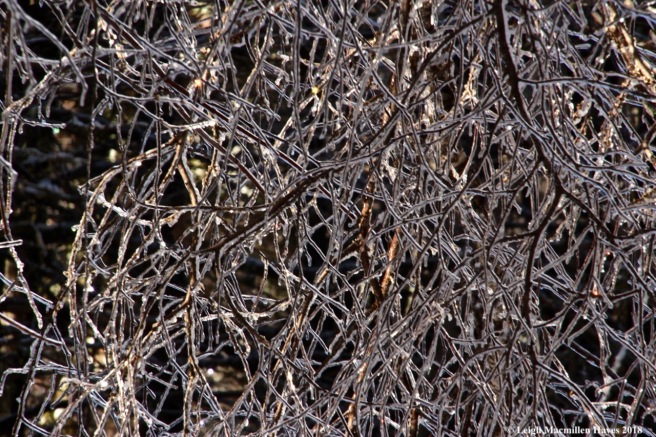
Two weeks ago I traveled the trail at the Greater Lovell Land Trust’s Long Meadow Brook with several friends and much of our wonder was captured by intermingling lines.

l-ice lines

All felt quite magical on that crisp January day as the encrusted twigs and buds offered a brilliant display.

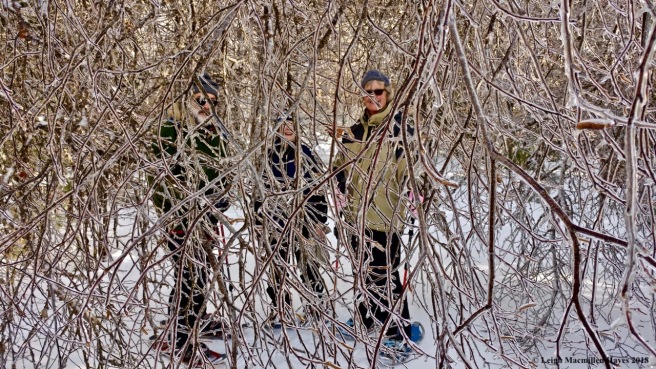
l-snowbirds in the ice castle

It was made even more special because two of the three with whom I tramped were snowbirds who experienced the awe of our winter world. Despite all their layers, they  felt like royalty living in an ice castle, glass slippers and all. (Don’t be fooled into thinking those are snowshoes strapped to their boots or winter hats rather than crowns.)

l-Long Meadow Brook 2

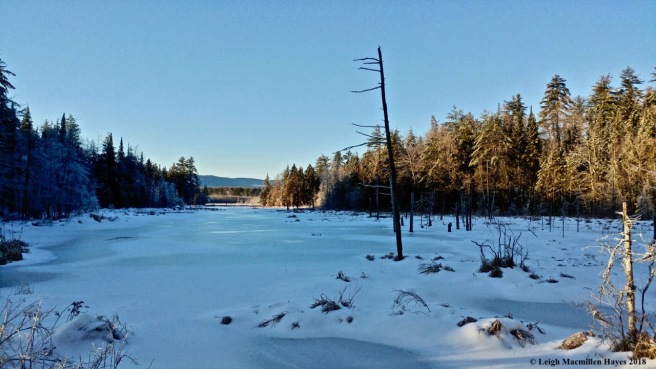
We made our way to the dam by the brook as the sun shifted lower and shadows lengthened. It didn’t matter for the sky was clear and we celebrated exploring the winter world of Lovell.

l-porky den 1:25:18

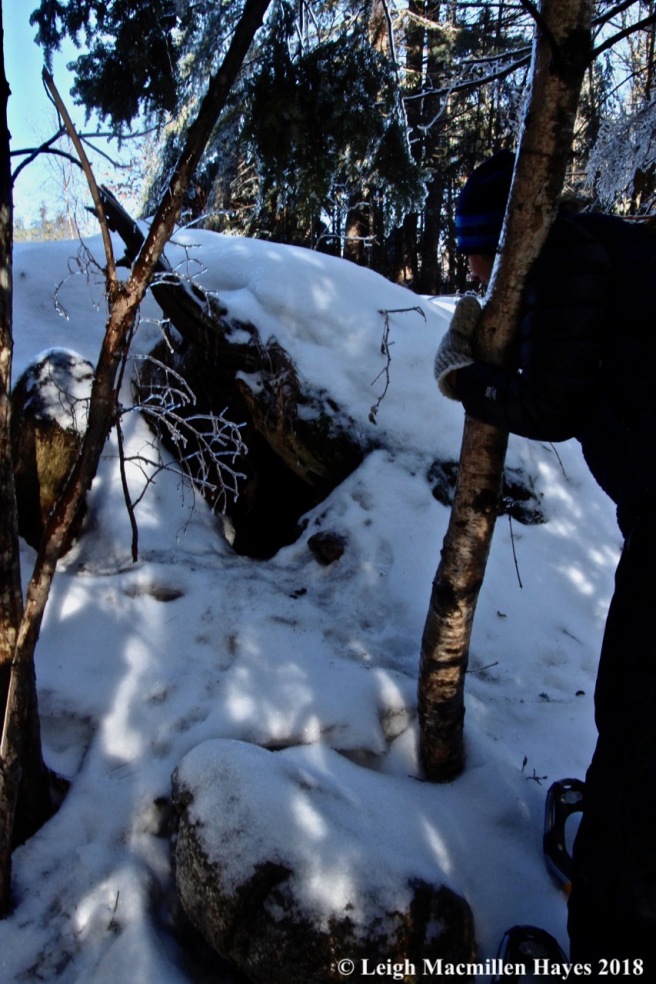
And then we backtracked a bit before crossing a property under conservation easement with the land trust and visited a porcupine condominium located in a large stump dump. The porkys didn’t let us down and we found prints leading into and out of seven or eight entry ways, along with downed hemlock twigs and scat. All perfect porcupine sign.

l-squirrel 1

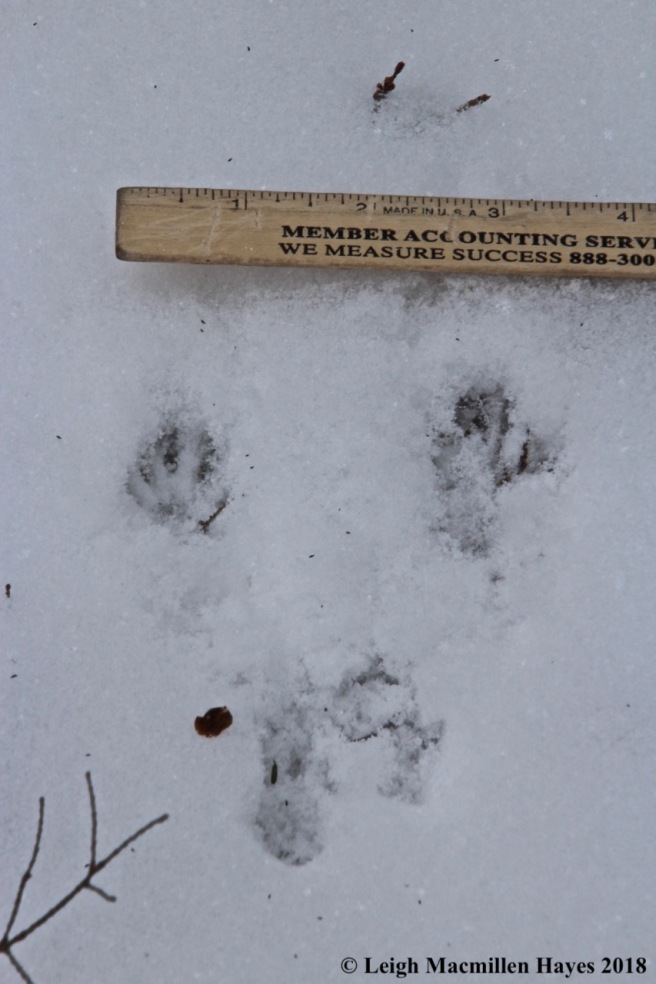
Since then, we’ve experienced a variety of mixed winter weather, but this past weekend a couple of inches of snow fell, making for great tracking conditions, such as this group made by a red squirrel, the two smaller feet being its front feet, which landed first, before the larger hind feet swung around and landed in front–the typical pattern left behind by a hopper or leaper. Its toes pointed toward my ruler, thus indicating the direction of travel.

l-chipmunk prints 1

Because it had been warm over the weekend, chipmunks made a brief appearance–rather than being true hibernators, they are light sleepers and will move about in the chambers within their tunnels. Occasionally, during a thaw, they’ll even venture out to forage for fresh seeds.

l-chipmunk prints 2

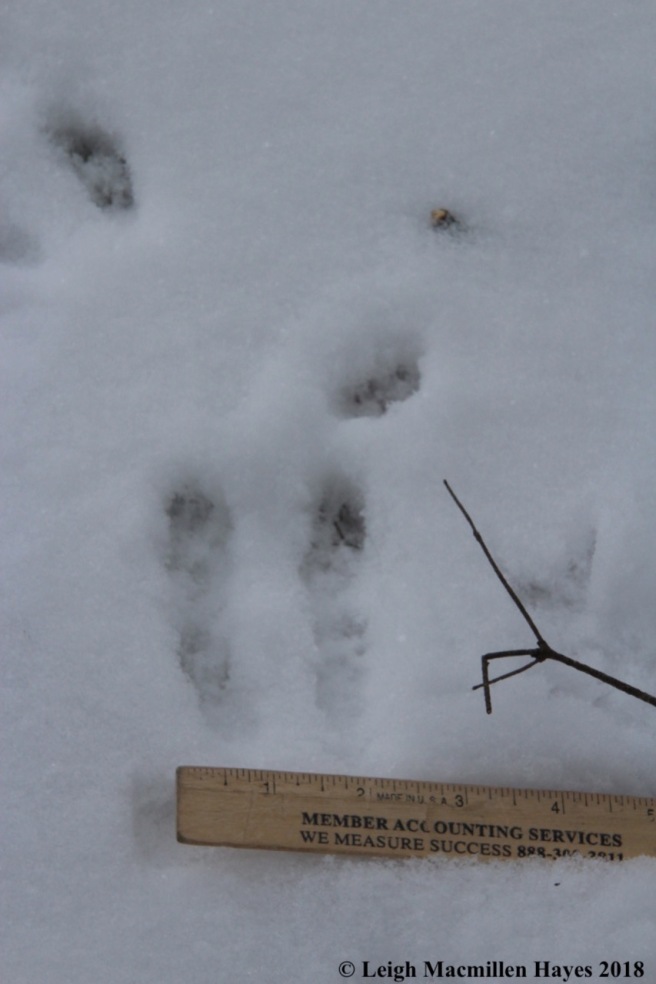
Notice how the straddle is about two inches, while the red squirrel above exhibited a straddle of about three inches. Straddle being the measurement from the outside of the left hind foot to the outside of the right hind foot. In case you are wondering, the measurement for gray squirrels is about four inches.

l-coyote track

And then I came upon tracks so fresh that I was certain I might spy the two coyotes who traveled before me, but as is most often the case, I didn’t see them.

Following the snow, we had another downpour and everything changed. But then the temperature dipped again.

l-few Tuesday Trackers

And so today when the GLLT’s Tuesday Trackers took to the trail at Long Meadow Brook Reserve, we were sure we’d find a plethora of well-made tracks. Only two problems. One: by the time Kathy, Dick, Mary, Russ, and I arrived, it was snowing lightly. And two: not too many mammals had been on the move in the last day or so. At least not in that neck of the woods.

l-Long Meadow Brook 1

We beelined (sort of, for we did stop to look at deer tracks) down to the old beaver dam hoping for otter sign or that of other weasels. Nada. Instead, we took in the view to the north.

l-Long Meadow Brook south

And then to the south.

l-beech leaf 2

And headed toward the porcupine condo. But along the way, a couple of other things caught our attention, including a beech tree getting a head start on the next season.

l-pitch pine 3

And a pitch pine that was the gnarliest any of us had ever seen. Pitch pine needles, in bundles of three, grow on the branches but may also sprout on the trunk–a unique feature making for easy identification among the evergreens. But so many? On branches?

l-junco

At last we reached a field where we welcomed sunshine to warm us up and noticed a few feathered friends. More than one junco scratched some bare ground in search of seeds.

l-squirrel pattern

As we crossed the field we rejoiced to have the track pattern of a gray squirrel to admire. Small things made us happy.

l-lorax tree

And then, at the top of one of the stump dumps we stood in awe of the Lorax tree. Only several branches had small fans of needles left; all the rest having been devoured by the local residents living below.

l-porky hemlock twigs

As we made our way into the hemlock grove to take a closer look, we spied what we believed to be a bobcat track based on straddle and stride, the latter being the distance from the toes of one print to the toes of the next print in the zigzag line. The overall impressions were a bit diluted indicating they were a few days old, but we’ve seen the same in this area before and the measurements led us to that conclusion. We also spotted downed hemlock twigs featuring the characteristic 45˚angled cut made by a porcupine.

l-porky tracks?

By this time, our group had increased by two when Alice and Saranne joined us for the trip into the porcupine haven.

l-porky den:stump dump

We peeked into holes, but suspected the homemakers had entered inner chambers.

l-porky tracks 2

We did find telltale tracks filled with the morning’s flurries, but still demonstrating their pigeon-toed pattern. And we saw that the bobcat had checked the holes as well before it moved on.

l-porky hole:hoar frost

We decided to move on as well, climbing up onto the stump dump, but with a word of caution to watch out for steam holes. Hoar frost surrounded the holes and gave us further reason to believe that indeed the condo was occupied.

l-porky tracks around downed limb

The very branch under which we saw one hole had fallen from a white pine. All around it were more porcupine prints.

l-porky chews

As for the white pine’s needles–think of them as dinner. The same was true of a bent red oak branch and its buds. A little variety in the diet.

l-bench

We too were ready to eat and so we headed out.

Another three hour tour and our curiosity was satiated at Long Meadow Brook Reserve and the adjacent property.  A couple of benches await at Long Meadow Brook should you want to pause and take in the wonders yourself.


Winter Reins

While snowstorms are my favorite winter weather events, I don’t always get what I want. Such was the case today. Only a few days ago, as I checked Weather Underground for updates, it looked like we’d receive 4-6 inches of snow. But, the closer the day drew, the lesser the snow amount and more the chance for mixed precipitation.

i-hemlock

Such mixed precip brings its own frosty coating, layering branches with icy crystals.

i-sheep laurel

Even the springy look of the sheep laurel was enhanced by its temporary trimmings.

i-goldenrod

While the goldenrod appeared to shout out its name despite its winter form.

i-intersection of sensitive fern and steeplebush

And steeplebush found a couple of friends offering support among the sensitive fern fronds.

i-witch hazel

The day’s glaze outlined the wavy margins of withering witch hazel leaves still holding fast.

i-home

And my world slowly transformed. I couldn’t resist the opportunity to watch the changes occur.

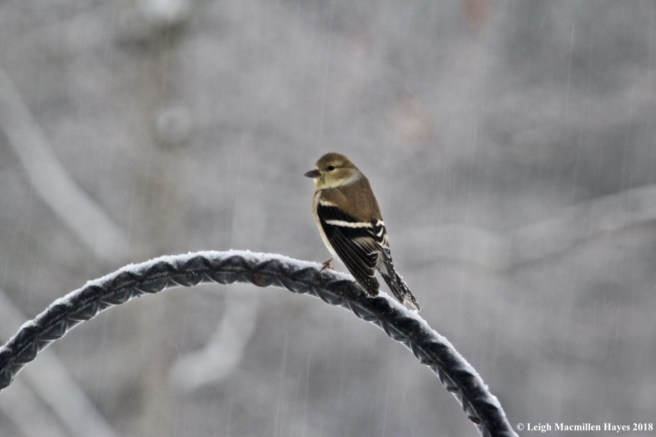
i-goldfinch1

As for the backyard birds, they just kept coming, from goldfinches to . . .

i-white-throated sparrow

white-throated sparrows,

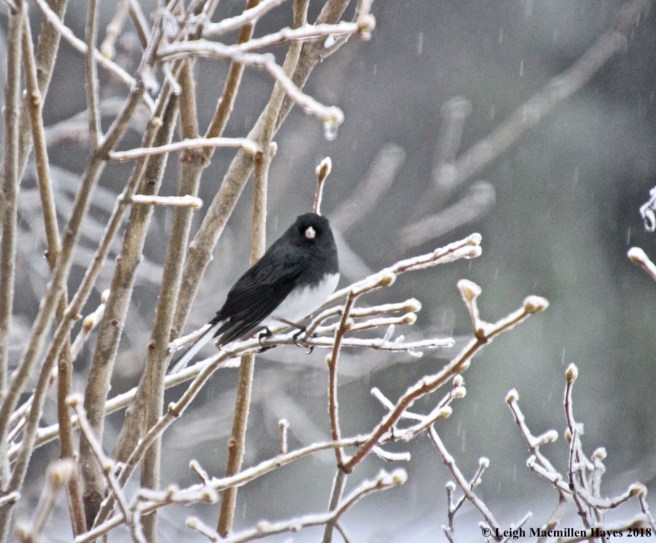
i-junco 1

juncos,

i-junco 2

and more juncos,

i-male cardinal

Mr. cardinal . . .

i-female cardinal

and the Mrs.,

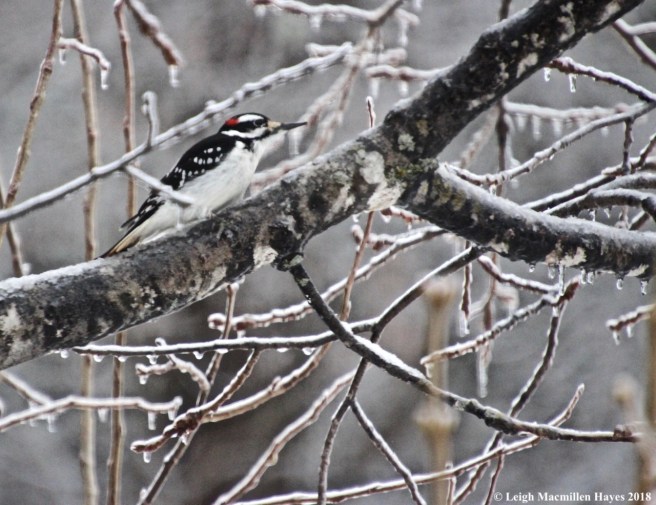
i-hairy woodpecker

plus a male hairy woodpecker,

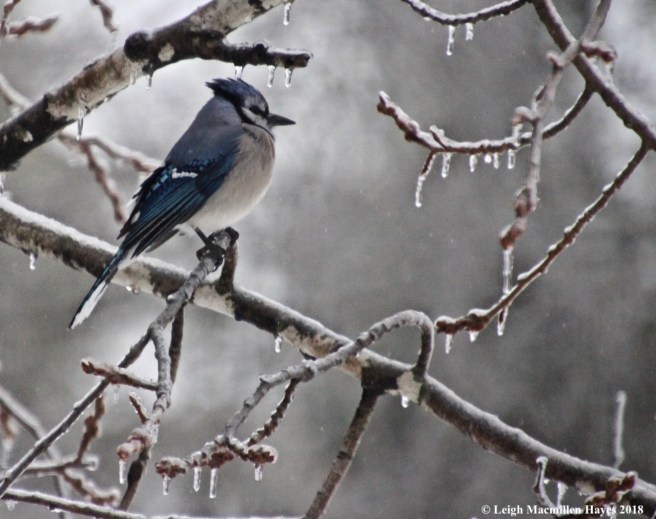
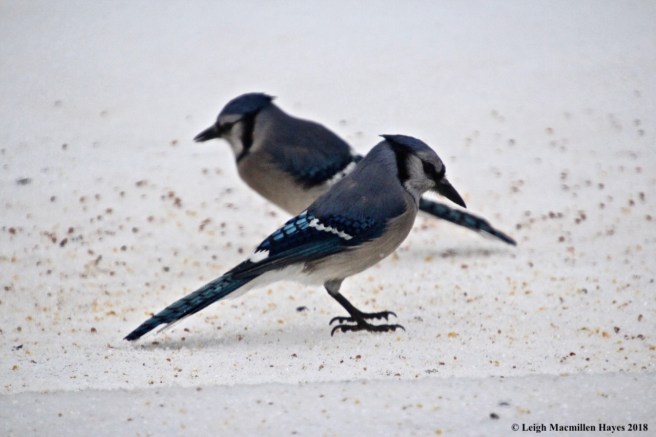
i-bluejays and icicles

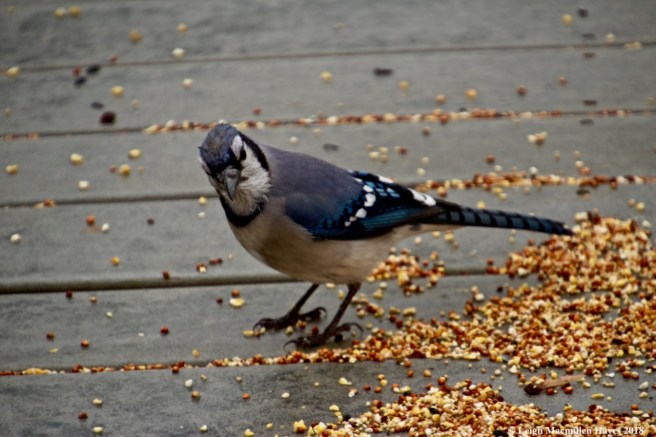
and any number of bluejays.

i-blue jays 1

There were more visitors as well, including a purple finch, a couple of chickadees, and a flock of turkeys. All, like these bluejays, studied either the feeders or the seeds I’d spread on the ground . . . contemplating I suppose.

i-blue jays 2

And then making a choice. Over and over again.

i-hydrangea 1

As the day wore on, the icicles grew longer and last summer’s hydrangea flowers glowed below their frozen outwear.

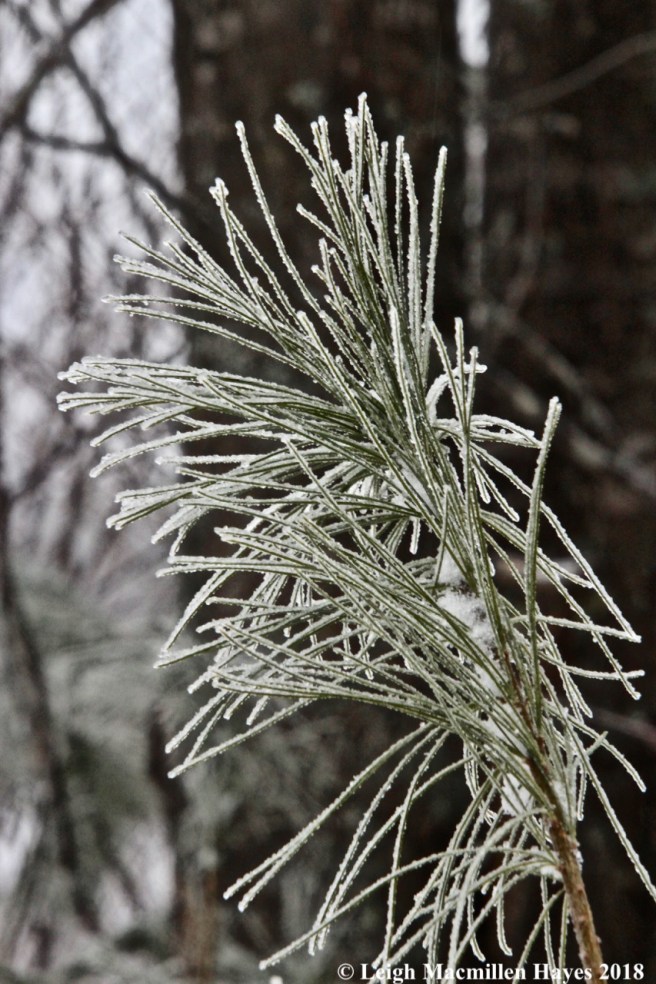
i-white pine

In the morning, the white pine needles sported only a thin layer of ice.

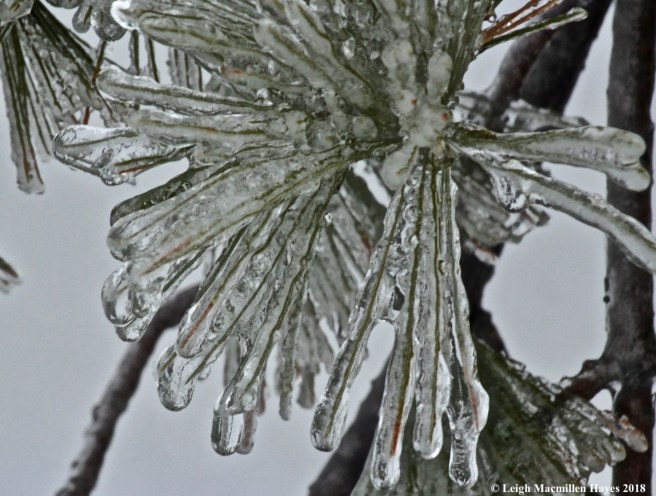
i-white pine 1

But by the afternoon, they began to sag beneath the weight of their heavy blankets.

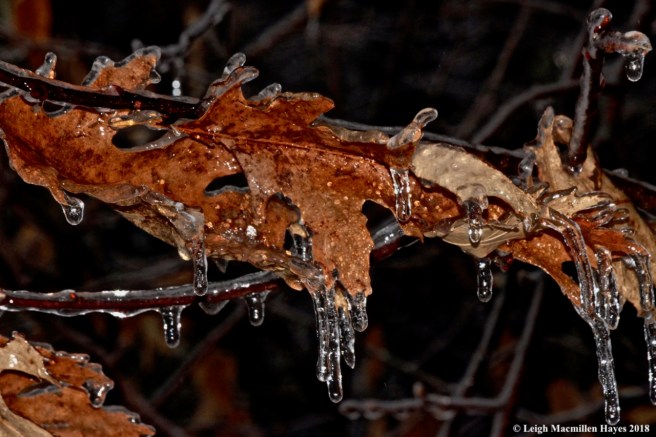
i-red oak 1

The bristly points of marcescent red oak leaves grew into long rounded fingers dangling below.

a-aster

Yesterday’s flower brackets looked more like a cluster of tiny bioluminescent jellyfish today.

i-still sleeting?

It was a day of constant change creating its own beauty.

Periodically, like me, the goldfinch checked on the weather.

As the ice turned to sleet and then rain, he and I both knew that winter still reins.

Winter Reflections

My world is always transformed during a snowstorm and even the day after. So it was that yesterday about four inches of the fluffy white stuff drifted down and created a wonderland effect.

a1-snowflackes on Queen Anne's Lace

Even this morning, the individual snowflakes were still visible in their crystalized form (and I kicked myself for not packing my macro lens.)

a2-coyote and red fox tracks

I began the day with a slow journey from home to Pondicherry Park, with the intention of meeting a hiking group. Along the way, I realized that others had trekked before me. Two red foxes and a coyote had crossed paths, forming an X that mimicked the X pattern in their individual footprints. (The bigger prints from upper left to lower right being the coyote; and the smaller prints from lower left to upper right being the two foxes.)

a3-red fox with chevron

In almost direct registration, a hind foot of the fox landed on snow previously packed down by the front foot, so what you see are the two prints. The top print was a bit fuzzy in formation for so much is the hair on the fox’s foot. Despite that, toe nails, toes and the chevron pad at the back, plus the X formation between toes and pad seemed obvious.

a4-Stevens Brook

As I made my way through the park, the morning light on Stevens Brook drew me off trail to the frozen edge. And ice along the bank indicated the change in water levels since the heavy rain of a few days ago.

a5-Bob Dunning Bridge

At last I reached the gateway to town, which is also the gateway to the park–the Bob Dunning Memorial Bridge. I have a great fondness for this bridge on many levels, including memories of Bob who passed away suddenly at least ten years ago, the barn-raising community effort to build it, and the fact that each beam represents a different tree, bark included. You can learn more about it by reading my previous blog post: Barking Up A Bridge.

a6-snow on bridge

And each time I walk across it, it seems to offer up something different. This morning, it was how the snow coated the railing. I think the artistic side of Bob would have approved.

a7-AMC group at bridge

On the other side, I met up with a group of seven women. Led by AMC volunteer JoAnne Diller, our intention was to tramp through the park following all the outer loops, including a link on the Lake Environmental Association‘s Pinehaven Trail at the Maine Lake Science Center. Along the way we visited with each other, enjoyed the beauty that surrounded us, and got some exercise.

a10-Stevens Brook

And then we returned to the bridge and parted ways. I choose to follow the inner trails home, pausing first to enjoy the color of Stevens Brook from the bridge’s center.

a8-mallards

And no winter visit to the park is complete without taking time to watch the ducks–and listen as well.

a8a-mallards

They gather by the dozens, some to rest while others seemed to be in constant motion.

a12-ice skirt

Before following the trails leading west and toward home, I returned to the scenic overlook where ice skirted a tree–again indicating that the water was recently much higher.

a13-eddy

In the same spot I watched water swirl in a small eddy and am amazed that I’m not still standing there–mesmerized as I was by the action.

a14-yellow birch sculpture

But my stomach was growling and so I continued on–stopping to admire another of nature’s wonders–a yellow birch that germinated atop an old pine stump and today stands as a sculpture of one member of the community supporting another despite their differences. Hmmmm.

a15-bench awaiting visitors

The trail I followed home was less traveled than the others and the snow a bit deeper because it hadn’t been packed down. When the park was first created by Lakes Environmental Association and  Loon Echo Land Trust, the AMC did some trail work and part of their offering was this bench. Though it hasn’t recently supported a weary traveler or one who just wants to set for a time, I trusted that day will soon come again.

a16-AMC bridge

I crossed the bridge near the bench, which was also built by the AMC crew. And from there, I headed home to lunch, but not without offering a smile of gratitude to JoAnne for continuing to volunteer to lead walks for the AMC and giving us all an excuse to enjoy the company of each other in this beautiful place.

a17-Saco Old Course

Later in the day I found myself in Lovell for a quick errand and the light was such that I felt the need to spend a little time beside the Old Course of the Saco River just down the road in North Fryeburg.

a18-Saco Old Course

The scene is never the same, nor is the light. What may have seemed monochromatic was hardly that.

a19-church

As the sun began to set, the water still harbored reflective moments.

a20-setting sun

And it transformed some reflections from crisp representations into impressionistic paintings.

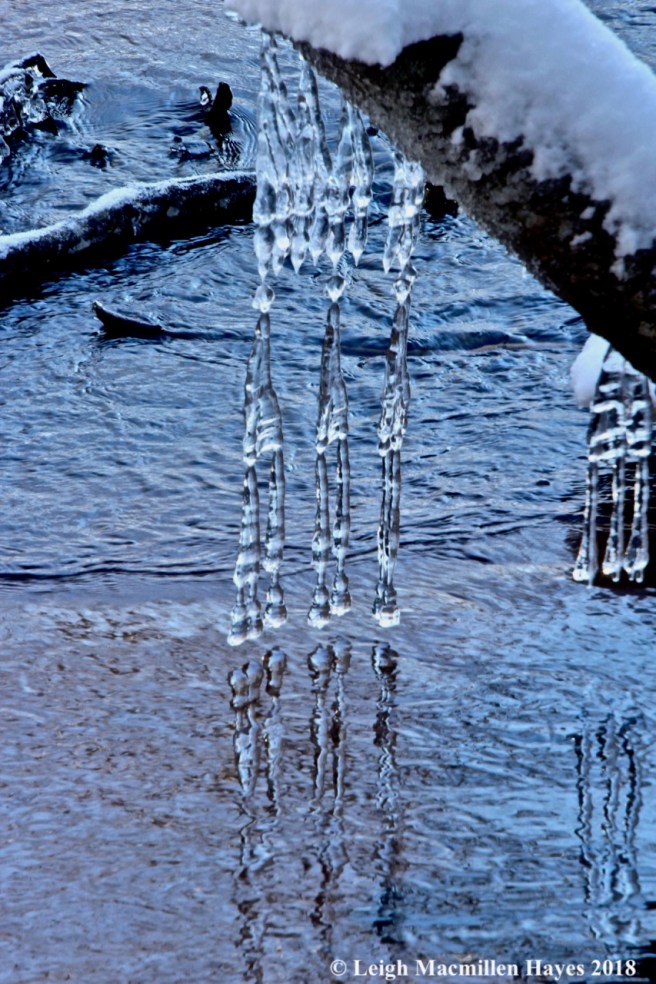
a11-ice chimes again

At the end of the day, however, my favorite reflection of all was one spied along Willet Brook in Pondicherry Park by Eleanor, a member of our morning AMC trek.

a9-ice chimes

Winter chimes. Winter reflections.


Melt Down

After a few weeks of extreme cold, January did what it always seems to do–cranked up the thermometer. That might have been okay except that with the warm temps (40˚s and above) came the rain. And with the rain came the fog. And with both disappeared the snow.

j1-soggy bluejay

And so our deck was clear, except for the bird seed, of course. And a rather bedraggled bluejay. I’d noted in the past few days that all of the birds are much skinnier than I remembered, given that they didn’t need to puff out their feathers and insulate themselves from the cold.

j2-squirrel feast

The gray squirrels also came by, their mouths like vacuums as they scoffed much of the sunflower seed supply.

j3-squirrel feast 2

They, too, offered a rather bedraggled appearance, but the rain didn’t stop them from getting their fill.

j4-snow thaw and debris

And then, the rain ended, clouds moved swiftly southward, arctic wind gained strength, temperature dropped dramatically, and sun shone brilliantly. Abruptly, the thaw ended. That was fine with me for I was afraid we’d lose all of our snow cover. As it was, we lost well over a foot in the past two days. And what’s left was riddled with natural debris.

j6-vernal pool

I decided to check on the vernal pool, curious about its condition. As expected, it was still frozen, but with that yellowish brown ice of warmer days.

j7-leaves embedded in ice

Fallen leaves remained entrapped in the thin, mosaic layer.

j10-ice on ruts

Nearby, I found open water in many places; some of it with thin ice designs decorating the edges.

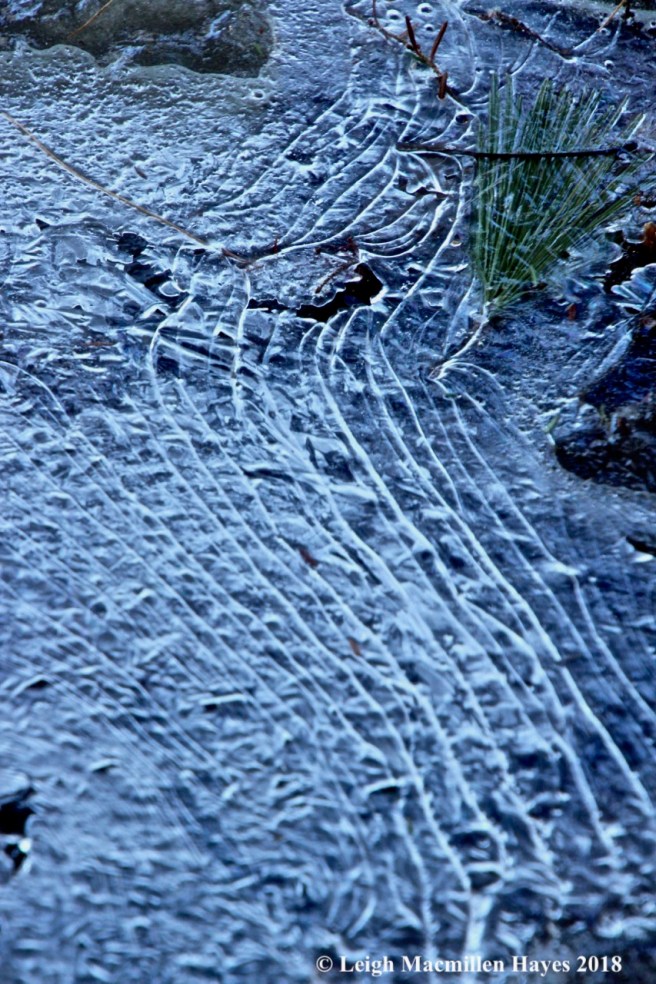
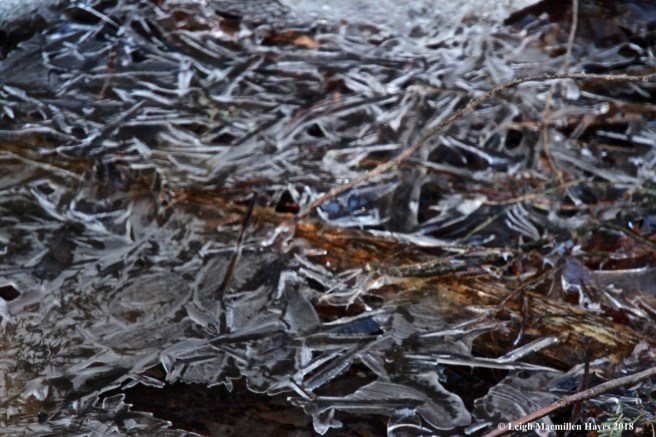
j25-ice

Ice forms in various ways . . .

j11-ice forms

and these three offerings were a few feet of each other.

j8-squirrel tracks

I discovered the ice as I followed red squirrel tracks created when the snow was a wee bit softer. By the time I moved across it had started to freeze again and though my snowshoes made a lot of noise and got a wee bit wet and frosty, I was thankful for them as they made my tramp easier.

j9-squirell prints

The beauty of the squirrel prints was that their toes and toe nails showed. It’s a rare occasion when conditions are just right for good prints.

j12-my squirrel cache

My next destination was to check on the creator of the tracks. And I felt as if a sun spirit was doing the same. Meanwhile, the squirrel chatted at us from a nearby tree.

j14-cones exposed but not touched

The top of its pile had been exposed, but I suspected the cones hadn’t been touched. Instead, the snow had melted off of them. I think he’s saving this pile for another rainy day.

j15-midden exposed

In the meantime, he has been busy as demonstrated by a midden slowly growing near another of his stashes.

j16-turkey prints

I decide to let him feast in peace, and instead followed some turkey tracks to another location.

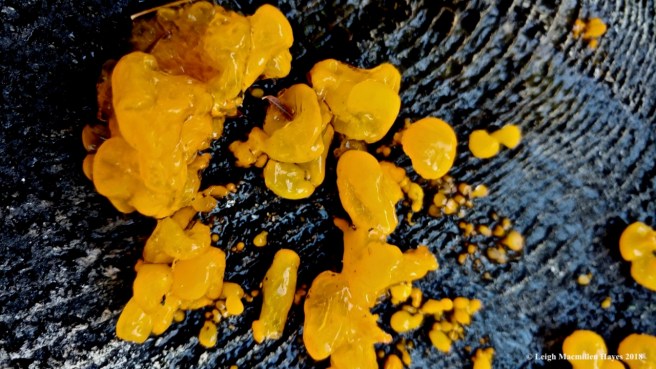
j11-witches butter fungi

Along the way, it was the witches butter on an old pine stump that gave me pause. It’s also called orange jelly fungus and some say it looks like a brain. I wish I’d seen this small patch more recently, because I wondered if it had grown under the snow or if the melted snow and rain had affected it. Either way, it’s always a fun find and especially now as it adds a dash of color to our somewhat monochromatic landscape.

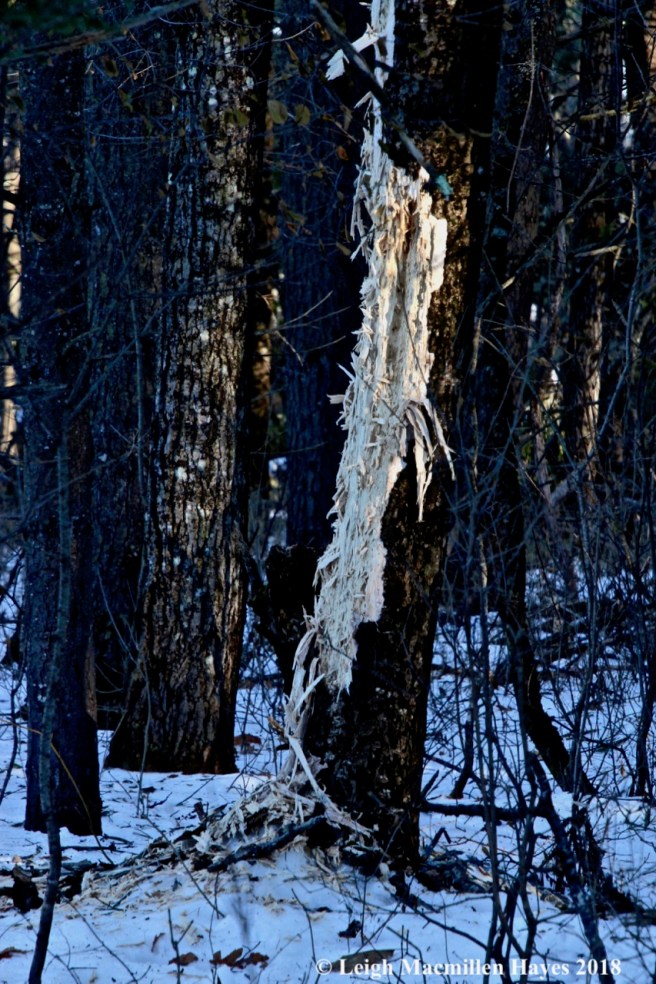
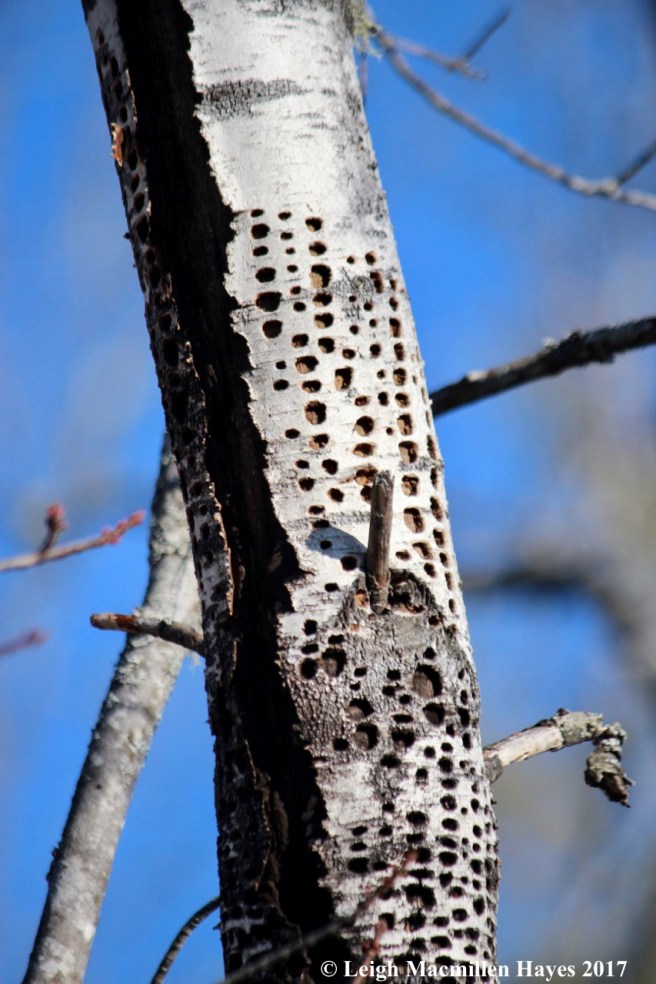
j17-pileated tree

My next great find was a pileated tree. I last saw it a few weeks ago, but it seemed to me that even more chiseling had taken place.

j18-pileated tree

At first, when I saw the gray wood above, I thought it might have been older work.

j19-pileated tree

And that the newer work was much lighter in color. Do you see the chisel mark? Just imagine the head banging that went into this masterpiece.

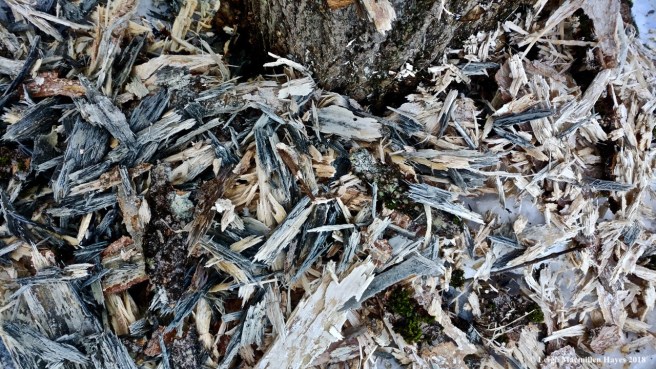
j20-pileated debris

Like the squirrel, a growing pile below added to the story. For me, it was the realization that the gray wood was excavated at the same time as the lighter wood. My new theory, the gray wood had been caused by a fungus or rot of some sort and then the insects followed and finally the woodpecker. If you know otherwise, please enlighten me for I want to understand. Of course, I looked for scat, but came up empty handed. Drats.

j21-second vernal pool

At last I reached a second vernal pool, though the going was a wee bit difficult given the conditions. This one was more open than the first.

j22-ice melting

And on this winter day that began with the tail end of a heat wave, but had chilled significantly, a watery reflection was a fun treat.

j23-sun setting behind vernal pool

On my way home, I made one more stop at the first vernal pool while the sun began to set behind it. I trust it will freeze up again, probably tonight.

What surprised me was how much had melted in the last two days. And from the looks of photos I’ve seen posted by others today, my neck of the woods shows only a wee bit of the January thaw.

We’ve had a melt down. Now it’s time for a freeze up.  Back into winter we shall go–thankfully.


Oh Baby!

It’s so cold outside that probably the smart thing to do would be to stay snuggled within, but I couldn’t.

a-bluejay with seed

After all, the birds were on the move, though they were a bit puffed up, a normal behavior when the temp is below zero. Their feathers help insulate them from the cold (and my hands understand that as they were tucked inside down-filled mittens). Fluffing up traps as much air as possible, thus keeping our avian friends warm.

s-robin

Their feathers are also waterproofed with an oil coating, a good thing on this not only frigid, but also slightly snowy day.

s-frost around squirrel homes

As I wandered, I noticed that the squirrels and maybe other small mammals had decided not to venture forth and found plenty of evidence that they were huddled inside. Ice crystals formed in holes beside trees, and . . .

s-frost by stone walls

openings in stonewalls . . .

s-frost again

reminded me of the feathery display on our windows on cold winter mornings. These were the mammals’ windows–such as they are.

s-stained glass

And speaking of windows and ice, which has lasted longer than usual following the Dec 23rd storm, everywhere branches reminded me of stained-glass leading highlighting the picture of our winter world.

s-red maple buds

But, here’s the thing about ice. Like feathers, it also serves as an insulator, keeping leaf and flower buds along tree branches protected from the cold. Oh, they have waxy coatings, but the ice adds another buffer.

s-beech bud

Some of the sights I saw today made me chuckle, like the beech bud poking through one of the tree’s marcescent leaves.

s-pinecone on maple

And a maple pinecone.

s-saw-whet owl 1

But my favorite find of all flew in while I was making my way rather nosily through a dense patch of hemlocks. Another where’s Waldo moment. Do you see it?

s-saw-whet owl 2

Yes, a Northern Saw-whet Owl! A first for me in the wild.

s-saw-whet 3

We shared about ten minutes together and it was definitely an “Oh baby!” occasion (which I reported to Jean Preis for our local Bird Count).

And with that, I’m proud to say, “It’s a boy!” The bird, I’m not sure. But I’m a great aunt to Baby Bud who was born at 12:24 this morning. May he develop a sense of wonder about the natural world and a love for winter.

The owl was the icing on the cake on this special day–Oh baby!


Counting Birds

In the name of citizen science, Kathy McGreavy and I ventured forth at 8am this morning as the temperature hovered just above zero.

c1-map

Our eyes were on the birds within view along a route outlined in orange. Up and down roads we journeyed, stopping periodically to jump out of the truck and focus our binoculars on our feathered friends and then keep track of them on the list provided. At the same time, other groups traveled different routes within the circle and also tallied their discoveries.

c6-junco 1

Together, we saw blue jays, crows, robins, tufted titmice, a female cardinal, brown creeper, some chickadees, and lots of juncos. We also enjoyed driving down roads less traveled and reveled in the ice and snow-coated scenery before us.

c3-robin 1

At noon, Kathy had to depart and so I headed home for a quick lunch before venturing out again to finish up our tour. And at Salmon Point boat launch I was rewarded with more robins.

c4-northern flicker

But my favorite spy of the day, two northern flickers at the outlet where Stevens Brook flows into Long Lake. I first spied one and then two on the trunk of a red maple. After a few minutes they flew below to dine on winterberries. But I wondered–northern flickers in December? They weren’t on the list, nor were they rare; just not typical winter visitors in western Maine.

c7-female downy woodpecker

Seven and a half hours later, back at home, which was out of our part of the quadrant, a female downy woodpecker enjoyed some frozen suet. I couldn’t include it on the final report, but still . . .

c7-white-throated sparrow

The same could be said for the white-throated sparrow that I frequently spot amongst the junco flock that partakes of our feeding station.

Participating in this citizen science project is great fun and I’m thankful it’s a winter tally for I can ID most of the species I see. Were it to occur in summer when all those warblers breed in this northern territory, my bird brain would be more challenged.

c2a-CMP dam

Another benefit of said participation is the opportunity to visit places such as the old dam on Stevens Brook during the winter season.

c2-otter slides

Because I was there, I saw tons of otter sign including numerous slides. A huge grin covered my face.

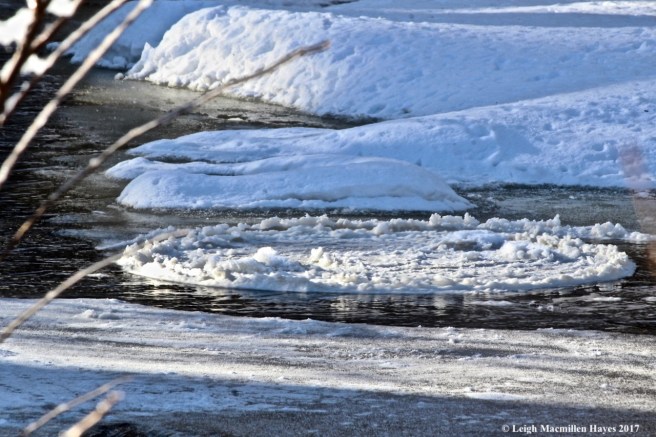
c5b-ice disk in Stevens Brook

And then, there was a certain rare sighting lower in the brook that drew my awe.

c5-ice disk 1

We had a form to complete for rare finds. But . . . it was for rare bird finds. Would my northern flickers suffice? I wasn’t sure and so filled in the information to be on the safe side. But . . . that which I saw in the brook itself was probably rarer.

An ice disc.

According to Mary Holland’s recent post about such on her Naturally Curious blog: “An ice disc is a large disc of ice spinning in a river. It’s thought that this relatively rare natural phenomenon is likely caused by cold, dense air coming in contact with an eddy in a river, forming discs ranging anywhere from 3 to 650 feet in diameter.

While eddies contribute to the spinning, they are not the only cause. If they were, small discs would spin faster than big discs, and this is not the case. Discs of all sizes rotate at roughly the same rate. One would also expect that discs in still water, where there aren’t any eddies, wouldn’t start spinning, but they do.

The melting of the ice disc contributes to its spinning as well. When an ice disc starts to melt, the melted ice water is denser than the ice, and thus sinks below the disc. This movement causes the water to spin, which in turn spins the disc.”

Common and rare–and another fabulous day spent participating in the Audubon Society’s Christmas Bird Count for 2017.


Unexpected Gifts

While vegetables roasted in the oven for the black bean soup that will be consumed during our Christmas gathering, I stepped outside to get some fresh air on this snowy day.

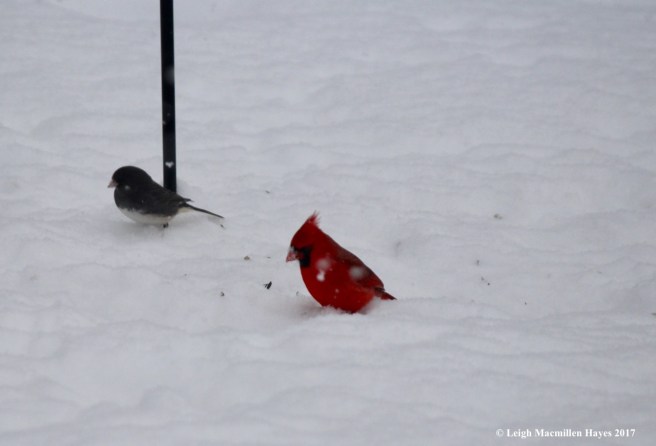
c-junco and cardinal

The bird feeders and ground beneath are always more active during storms and today was no different. At least forty juncos accompanied by one white-throated sparrow have been repeat feeders and occasionally the male cardinal invites his female friend along. Tufted titmice, goldfinches, chickadees, a downy woodpecker, nuthatches and bluejays rounded out the flock.

c-into the woods

Though conditions are expected to change by morning, with an ice storm in the forecast, today’s gift was fluffy and light as it embraced me in silence.

c-hemlock baubles

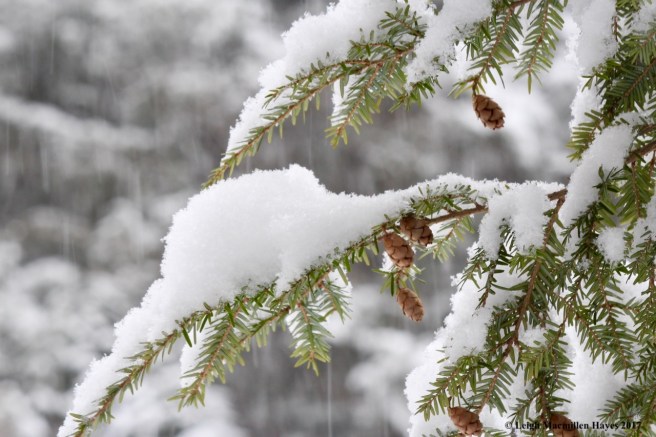
Because of that fluffiness, it built up quickly, bedecking branches with puffy clouds of white.

c-star-flake

And then, when I stepped into a darker world where the hemlocks grow in a dense grove, I began to notice something.

c-spider garland 3

On every branch of every tree . . .

c-spider garland 2

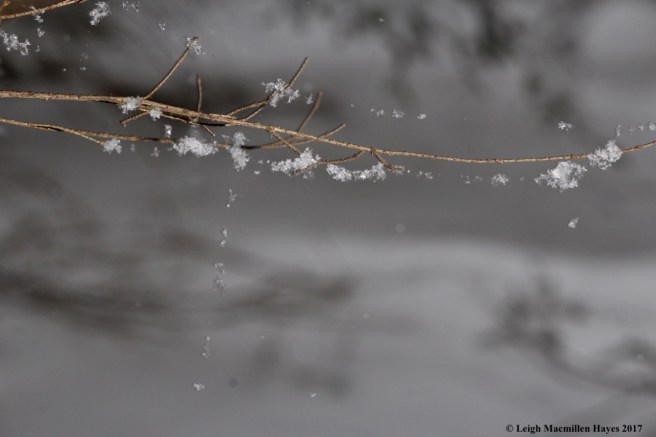
snowflake garlands . . .

c-spider garland 1

danced. And I was reminded of a story I used to read to my nephew and niece when they were babes–it was based on a legend about a poor family who had no decorations for their Christmas tree. As the tale goes, while the children slept, spiders spun webs of silver around the tree’s branches. The next morning, the family awoke to a Christmas tree sparkling with silver webs. Today’s webs were such and I was richer for the experience.

c-cheddar cheese

I’m also richer for other gifts, such as Washington State University’s white cheddar cheese;

c-ornament

an ornament created with birch seeds and their fleur de lis bracts placed between mica sheets from Mount Apatite in Auburn,

c-heartwood

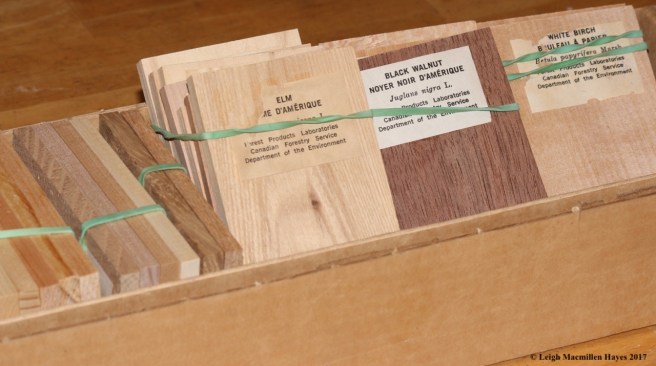
a box filled with heartwood samples all labeled,

c-Santa's visit

and just a few minutes ago a lengthy e-mail from someone who had read the article entitled “digging for roots” that I wrote for the winter issue of Lake Living magazineThe gentleman who sent the note had gone out of his way to visit my guy’s store and ask for my address. He wanted to share his own experiences of dipping into the past and suggested a few avenues my guy and I might follow with our search for ancestors.

I’m totally blown away by these unexpected gifts. And forever blessed.


Black Friday Shopping Extravaganza

I somehow slept in and totally missed the early bird specials today, but still by midmorning I found my way to the store of my choice.

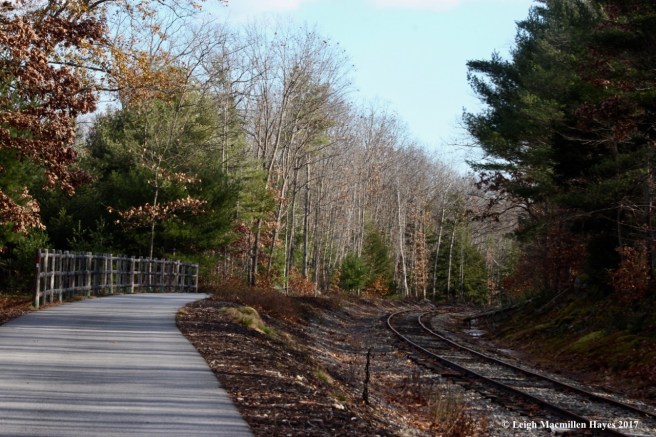
b1-trail sign-cross the threshold

It had been two years since I’d stepped over the threshold into the MDT shop and I’d forgotten what great selections it had to offer. While the last time I approached from the Fryeburg Information Center near the Maine/NH border, today I decided to use the back door and entered by the Eastern Slopes Airport.

b8-the main aisle

Beginning along the main aisle, I was delighted with the display before me. And lack of customers. Oh, I passed several groups, some in a hurry as they ran, others chatting amiably with friends or relatives, but all quite friendly and courteous. Even dogs were well behaved and therefore welcome.

b2-choice of colors--sweetfern 1

Immediately I had decisions to make. Which shade did I want?

b3-shapes,

And would I prefer a different style or shape?

b12-red oak 1

Had I thought about brown and bristly?

b13a-white oaks

Or did I like salmon and rounded?

b13-red oak on line

Though I preferred the salmon color of the white oak, I did like how the red oak leaves dangled in hopes of being plucked by a customer. And if not a customer, then perhaps the wind.

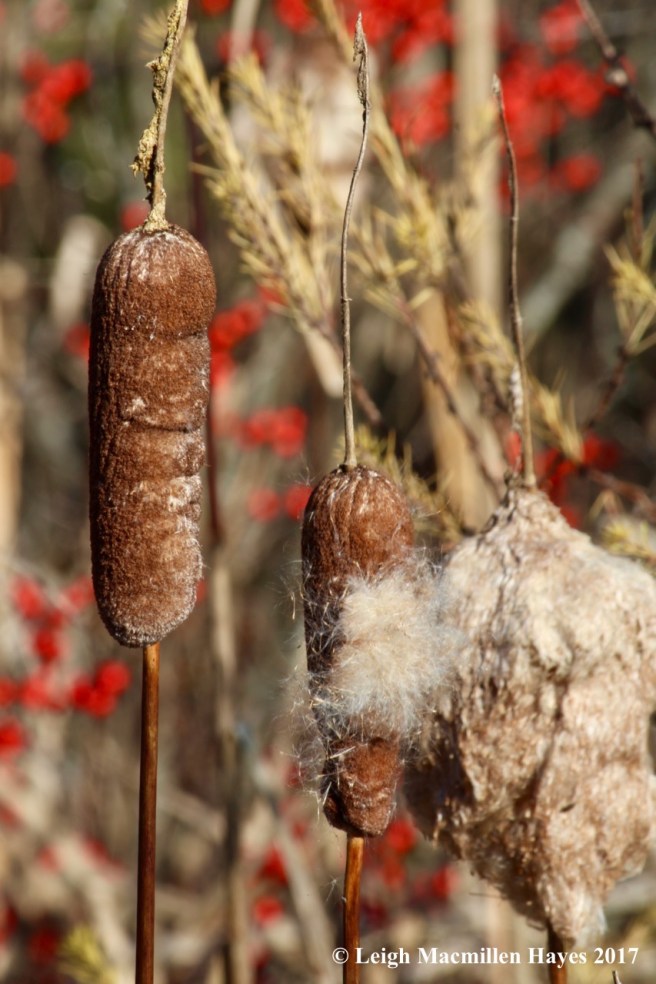
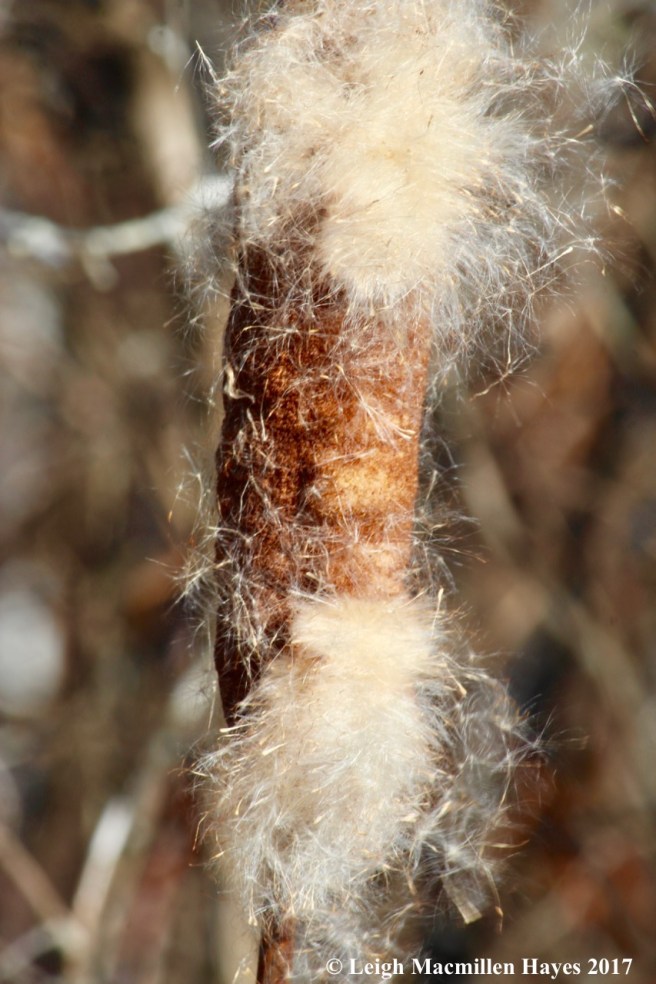
b11-cattails

In aisle five I found some cattails ready to explode into the future.

b11-cattail sparkles

Their tiny, parachuted seeds reminded me of sparklers on the Fourth of July, but because today is the day after Thanksgiving, I suspected these fireworks were intended for New Year’s Eve.

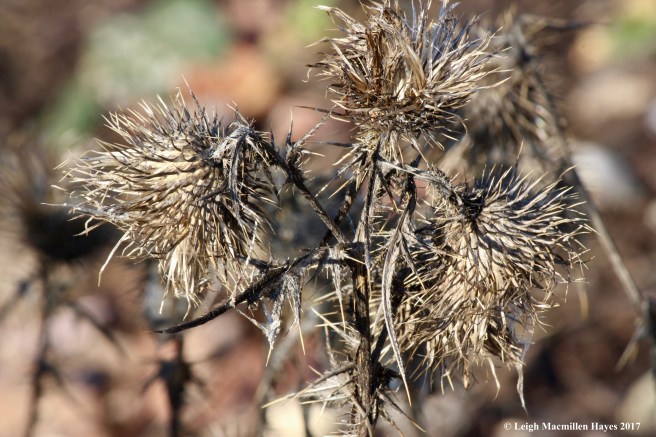
b6-autumn thistle

It seemed that everywhere I looked, the store was decked out with hues of silver and . . .

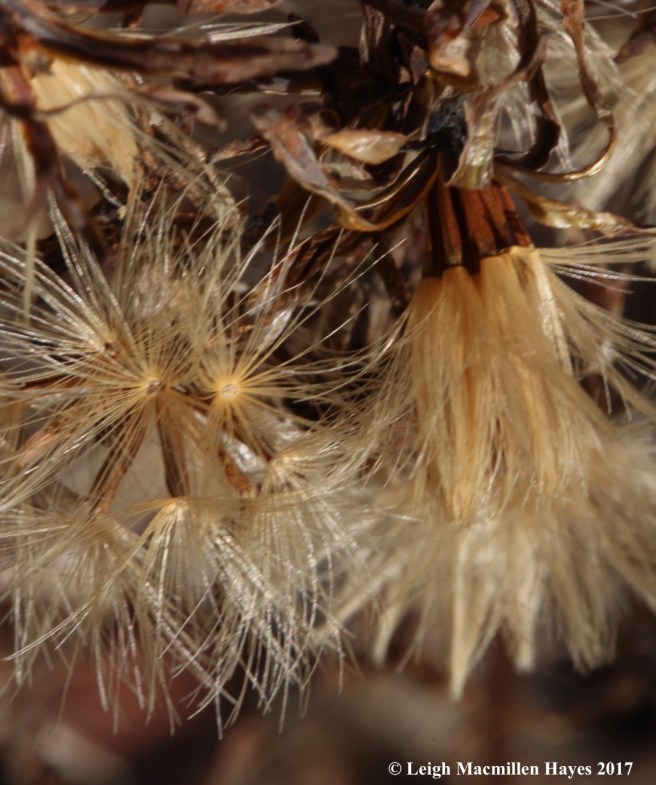
b4-aster display

gold.

b5-brown lacewing

And while admiring the golden decorations, I discovered I wasn’t the only one looking. A brown lacewing had heard there were deep discounts to be had.

b12-birch beer

As one should when one is spending an exorbitant amount of time (and perhaps money, though in this case no cash or credit was part of the deal), rehydrating is a good thing and the birch had been tapped for just that purpose. It’s been a long time since I enjoyed the unique taste of a birch beer, but thanks to a sapsucker it was on the menu at the snack bar.

b7-bench

And what better place to sit and sip, than on a bench in aisle 6.

b3a-winterberries

Refreshed, I was again ready to shop till I dropped. Everywhere I looked, the Christmas decorations impressed me.

b14-red oak Christmas decorations

The season’s colors enhanced the merchandise.

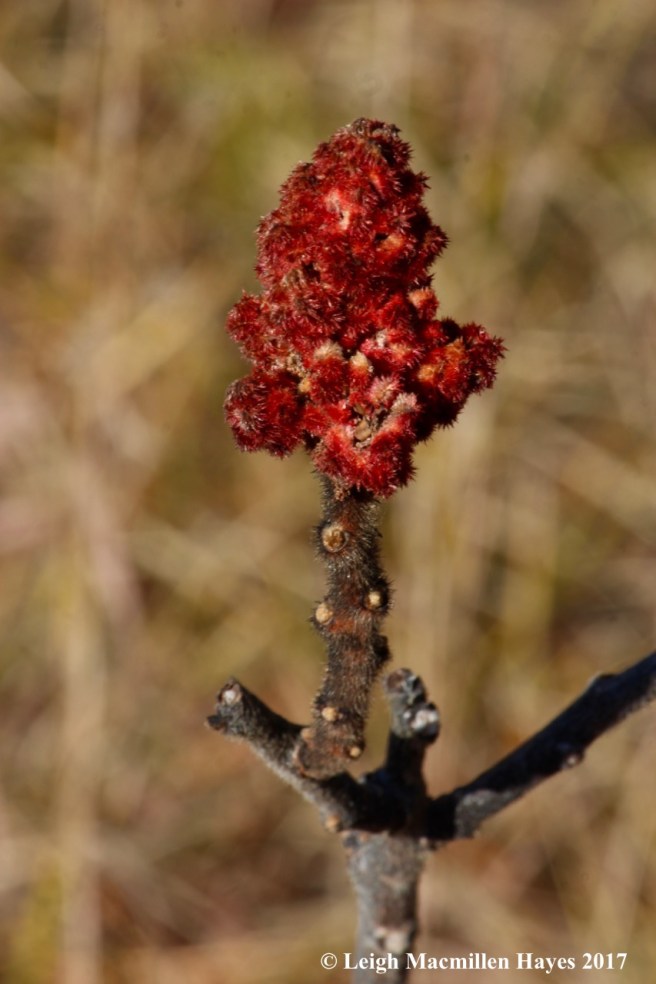
b19-Sumac decorations

And all ornaments were handsome in their own way.

b9-tamarack gold

As is always part of my shopping adventure, I didn’t know what I was looking for when I entered the store. But as soon as I saw this display, I knew I had to have it.

b10-tamarack 2

Its label was lengthy–tamarack, larch, hackmatack. Call it what you want, it’s our only deciduous conifer for it looses its needles in the winter. But first, the needles turn from green to gold and announce their presence.

b15-pitch pine trunk

Also in abundance as this shop–pitch pines. It’s so easy to confuse a pitch pine with a red pine, but a few identifying tips help. The unique thing about this tree is that not only do the stiff, dark yellow-green needles grow on the branches, but they also grow on the trunk. If you spy a tree that you think may be a red pine, scan upward and if you see green needles along the trunk, then you’ve discovered a pitch pine.

The name, pitch, refers to the high amount of resin within this tree.

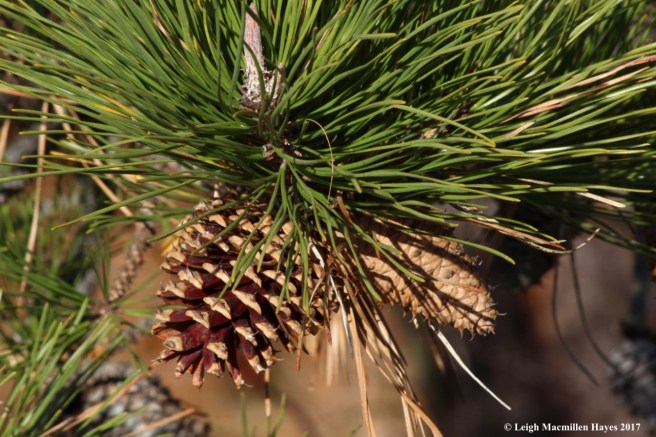
b16-pitch pine cones

It’s the needles of pitch pine that also add to its identification for they grow in bundles of three, like a pitchfork’s tines.

As for their cones, you can barely see the stalk because they tend to be clustered together, but their key feature is the rigid prickle atop each scale tip.

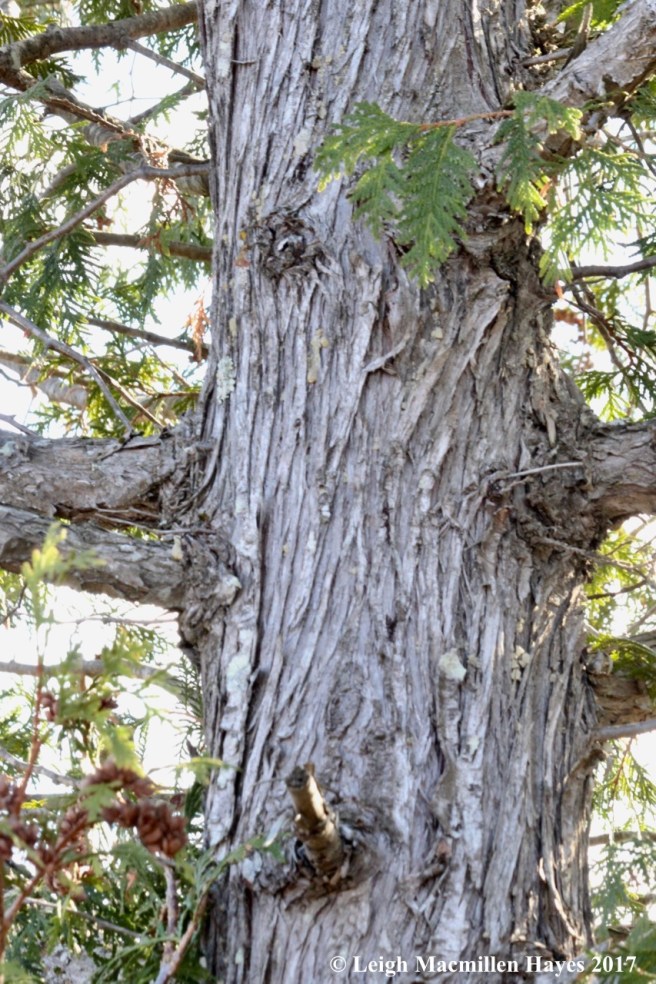
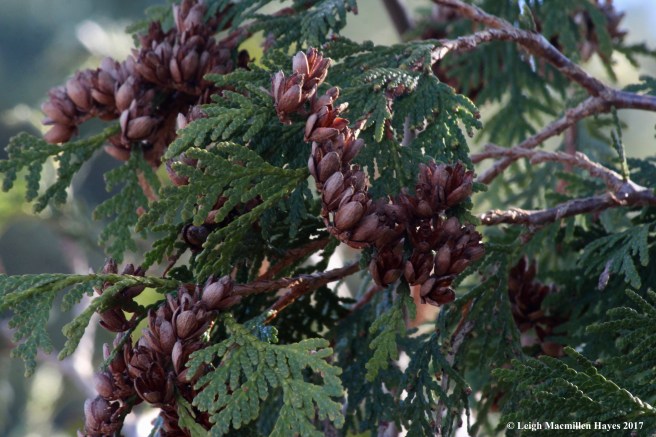
b20-Northern White Cedar

I was nearly at my turn-around point of three miles when I realized I was standing beside a row of doorbuster deals.

b21-northern white cedar leaves and cones

I couldn’t resist feeling the scale-like leaves of the northern white cedar. I had to have this item.

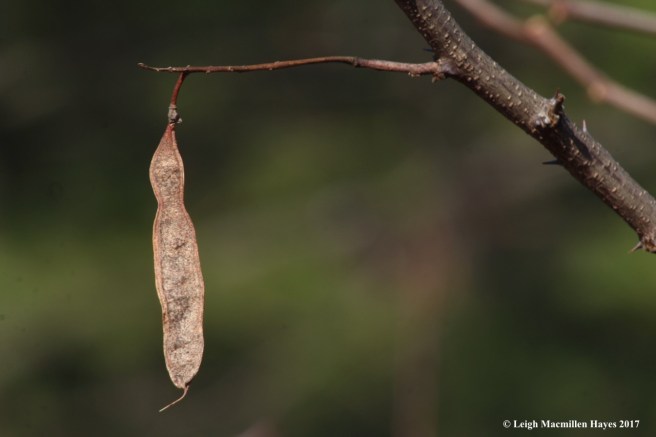
b17-black locust bark

I did find one thing I decided to leave on the shelf–for the spines of the black locust would have pricked my fingers, I’m sure.

b18-black locust seed pod

Apparently, others did purchase this, for only one fruit pod remained.

b25-heading back

At last, I was on my way back up the main aisle with hopes to make a bee-line out, but had a feeling something around the bend would stop me in my tracks.

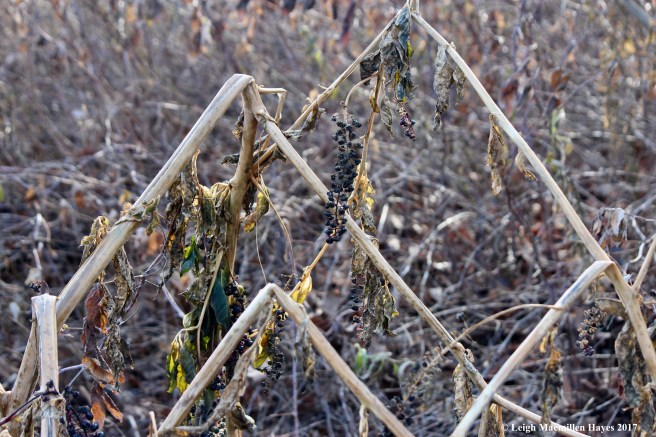
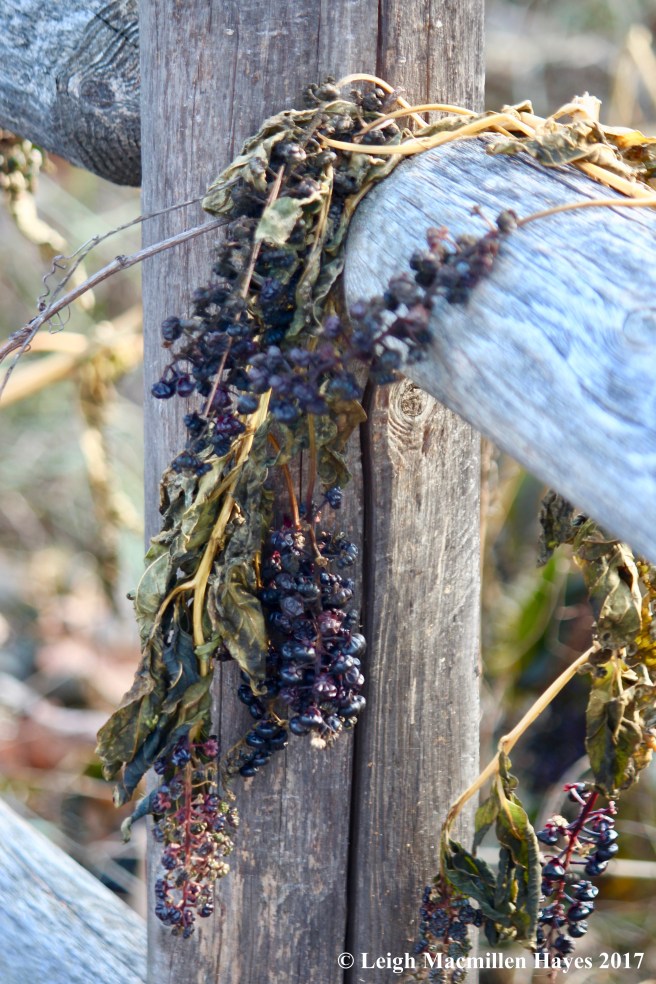
b23-pokeberry geometric display

Sure enough–the pokeberry display was both geometric . . .

b23-pokeberry artistic display

and artistic in a dramatic sort of way.

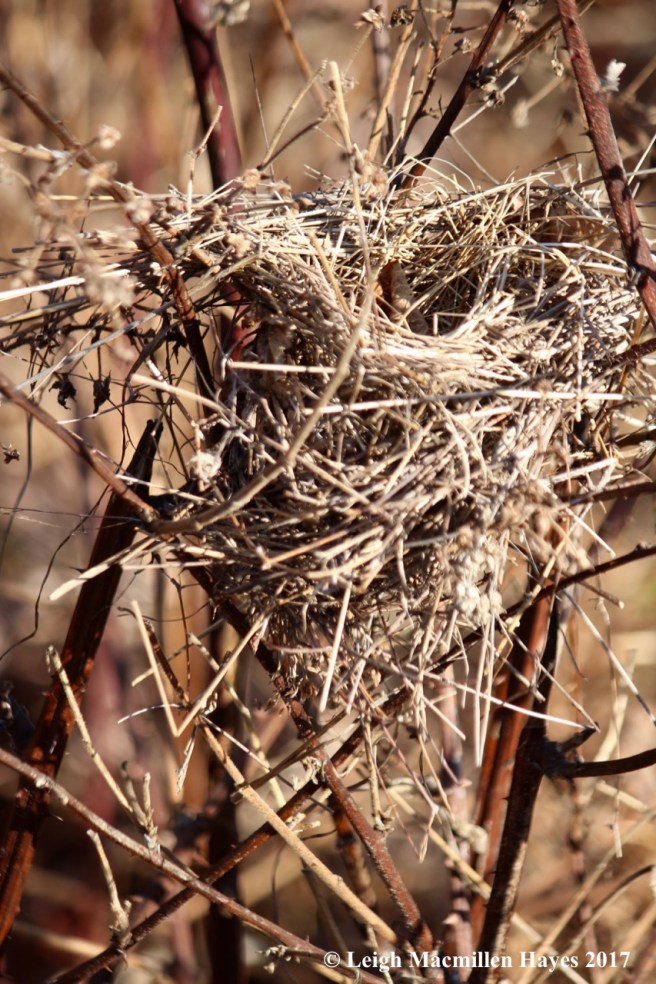
b27-bird nest

As I continued on, I saw and heard birds flitting about and thought about the fact that I need to visit this shop more often, particularly in the spring and summer for the various habitats made me think that birding would be spectacular. And then I spied a nest attached to some raspberry bushes. I knew not the species that made it, but hoped some small brown critter might use it as a winter home and so it remained on the shelf.

b26-heading back 2

At last, I’d raided enough aisles. My cart was full to the brim and my brain overwhelmed. I guess I’m not really a “shop-til-you drop” kind of gal. It was time to wind along the trail and end my Black Friday shopping extravaganza.


New York by Nature

Having grown up in a small town outside of New Haven, Connecticut, I used to be quite knowledgeable about city ways, but these days woodland trails are more to my liking. Stepping out of our comfort zone and onto the streets of Manhattan and Brooklyn this past weekend, I was sure I’d be a nervous wreck. The last time we’d ventured there, our sons were six and eight, and my knuckles white as I gripped their hands.

N-NBC

That was then. Maybe it was because we didn’t have young ones in tow, or because I decided to embrace the moment and smile at each person I was able to make eye contact with, this time was different. Even some cold rain didn’t stop us from enjoying the city’s vibe . . .

N-bakery

including all its colors and flavors.

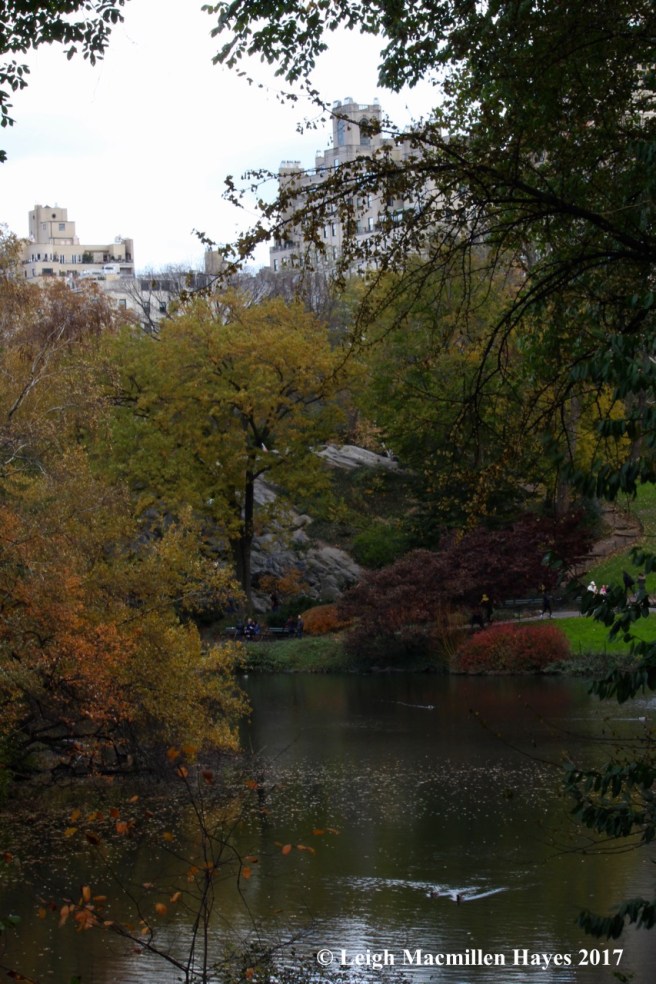
n-Central Park meets autumn

On a new day, the autumnal tapestry was like deja vu all over again, since we’d already experienced fall foliage over a month ago at home.

n-London Plane sycamore hybrid 1

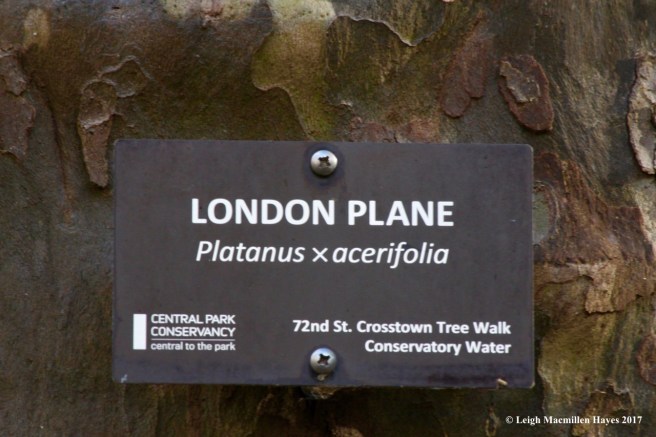
Even tree bark displayed variations of color, some that I thought I knew, until I found one with a name plaque.

n-London Plane

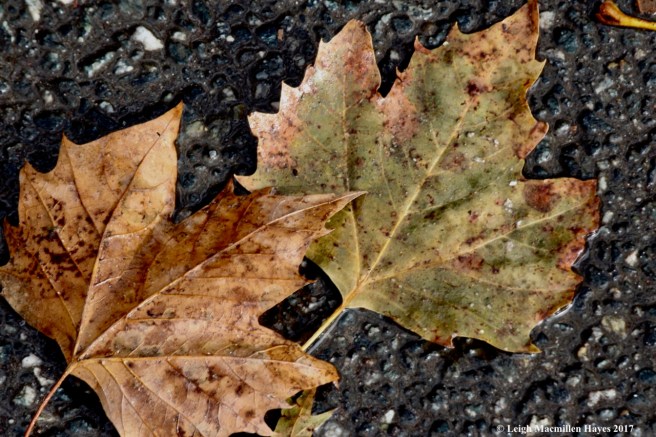
London Plane? Sycamore had been my first choice. It turns out that London Plane is a hybrid developed over 300 hundred years ago from the native  sycamore and oriental planetree.  And it was used as an ornamental to line streets . . . or park paths.

n-sycamore leaves1

Its scientific name, acerifolia, came from its maple-like leaves. I knew I’d learn plenty in the Big Apple, but didn’t expect trees to be among the lessons.

n-elms intermingling 2

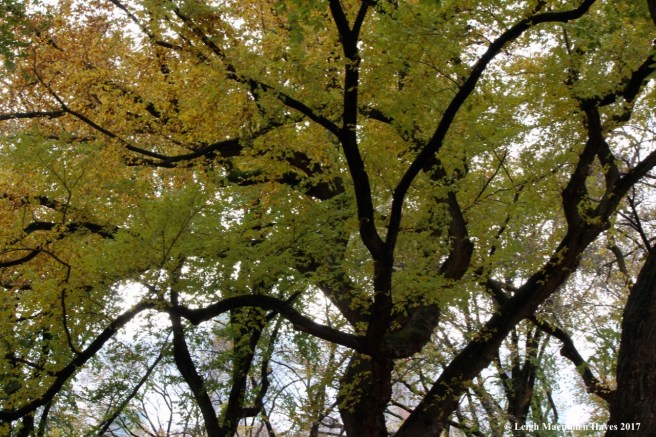
As we walked through Central Park, street vendors displayed their works below, while American elms gracefully danced across the canopy above.

n-Central Park 1

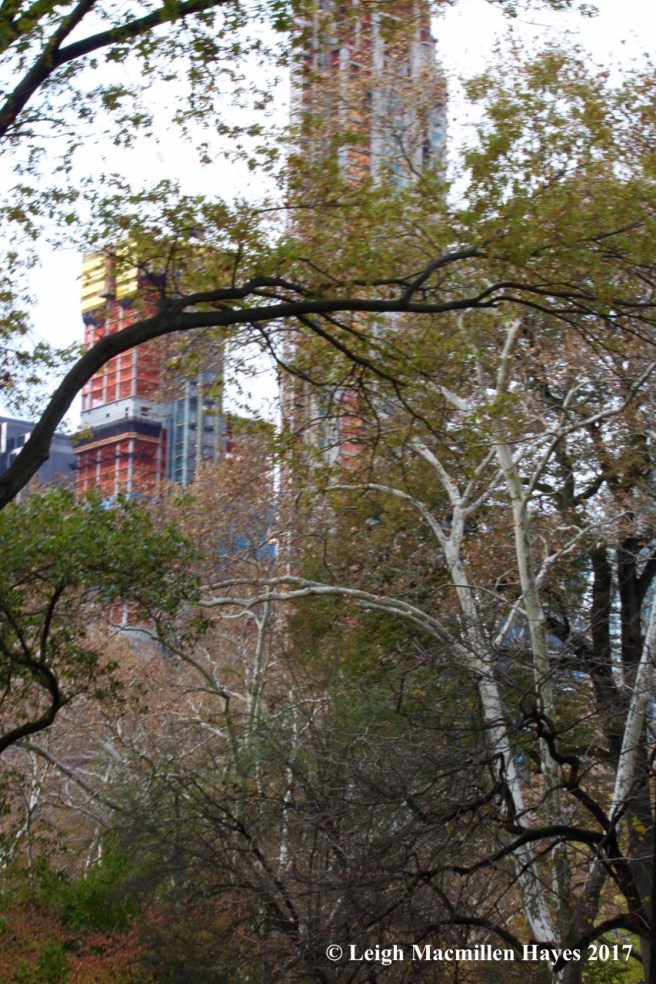
And buildings magically arose from the rocky substrate.

n-trees and buildings

We zigged and zagged and made our way about, though I had to depend on my guy for directions. I can find my way out of the woods, but even though there were maps throughout the park and the city streets are set in a grid, I was completely disoriented at each intersection.

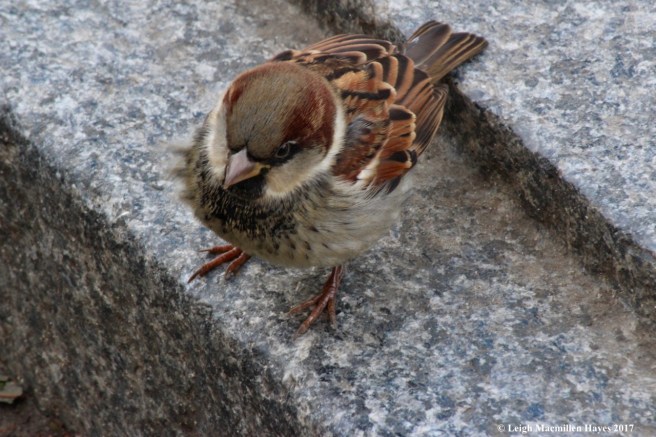
n-house sparrow 2

Perhaps it was because I was more taken with the little things. Even seeing house sparrows felt like a treat.

n-house sparrow 1

They were so tame.

n-Canada goose

I felt right at home among the Canada geese and . . .

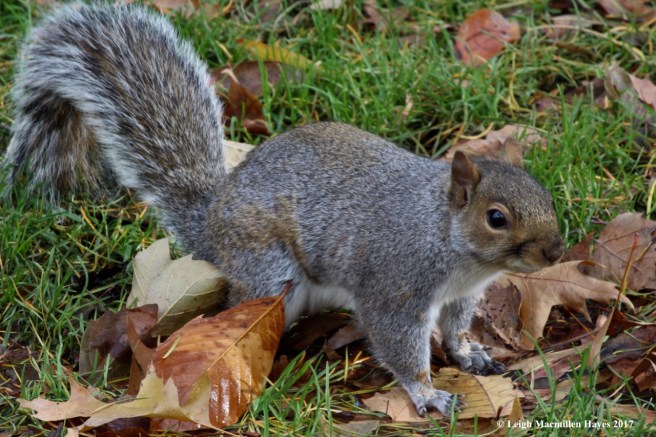
n-gray squirrel 1

gray squirrels.

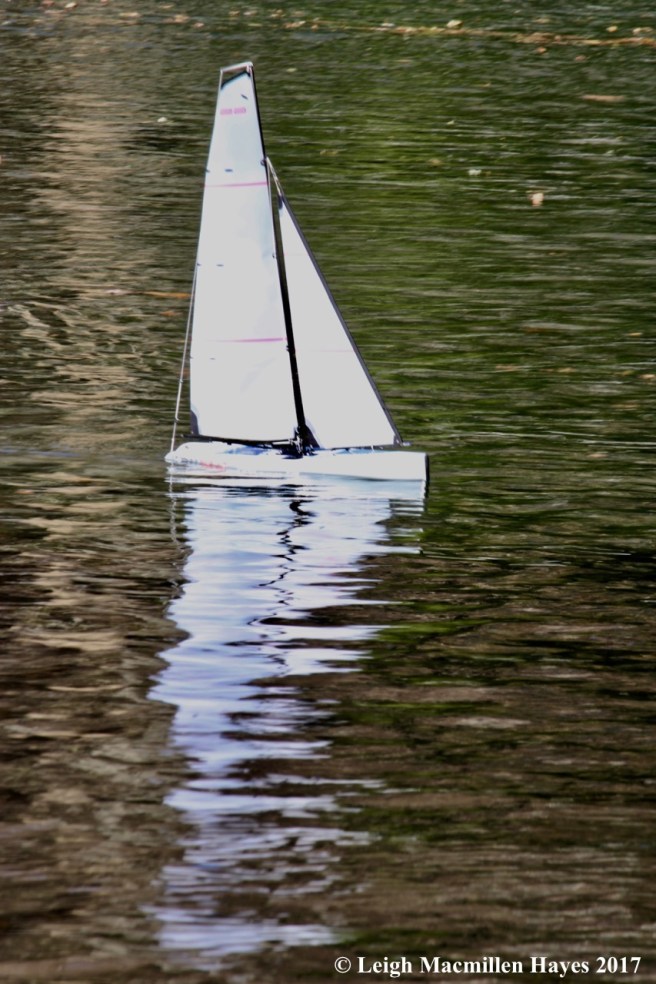
n-Stuart Little

We immediately recognized Stuart Little as he tacked back and forth.

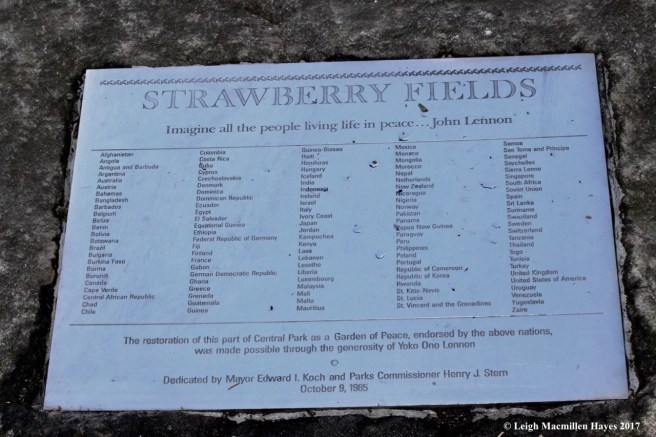
n-strawberry fields forever

And then we wound our way around again, pausing by Strawberry Fields–and imagined. If only.

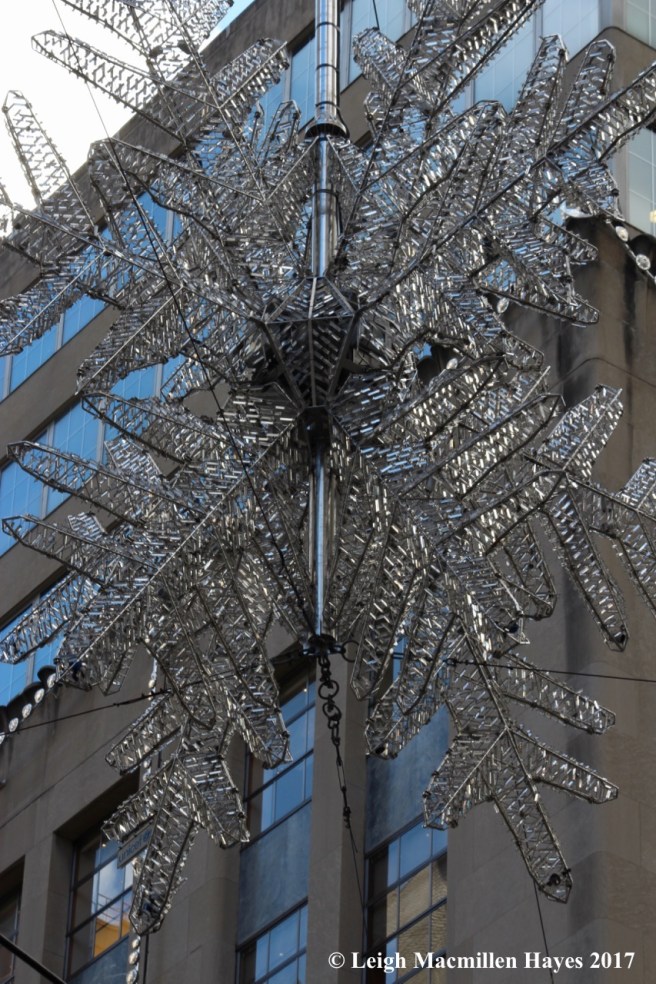
n-snowflake by Cartier

Back on the streets, we were dazzled by snowflakes . . .

n-Christmas lights 2

and Christmas lights.

n-Pat's Place

And then it was time to cross over to Brooklyn where we found a tour guide stepping out of his brownstone.

n-cement tracks

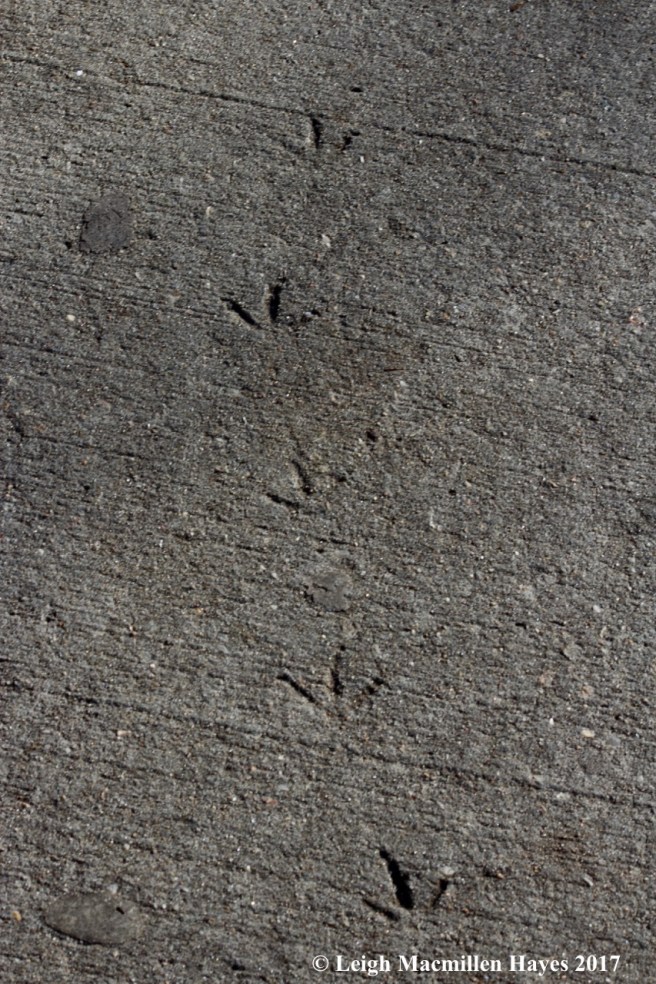
Like others before us, with him we pounded miles and miles of pavement and left behind our own tracks.

n-World Trade Center 1

He took us to the World Trade Center, which we viewed with awe . . .

n-9:11 memorial

and Ground Zero, where we felt the presence of so many as we remembered.

n-SoHo

Soho was our next destination, and though we didn’t shop, the architecture was enough to fill our minds with abundance . . .

n-architecture 1

and variety.

n-Wicked sign 1

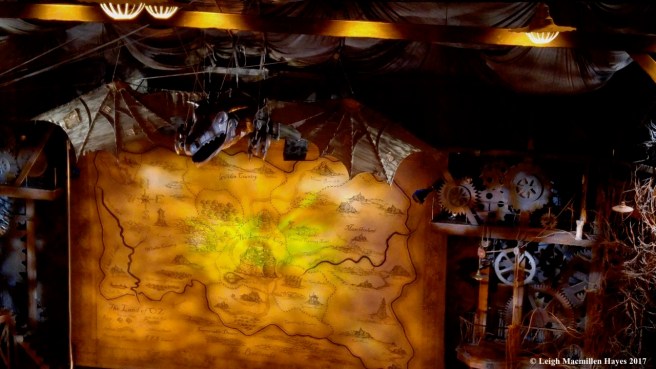
No visit to NYC is complete without taking in a performance and my guy, who is the world’s biggest fan of The Wizard of Oz, chose WICKED.

N-Wicked set 2

I won’t say it was my favorite show, but the set, costumes, acting, dancing, and singing were all well worth the experience. He thoroughly enjoyed it.

n-Rock center 4

Another must do is Rockefeller Center–or at least the ice rink. We didn’t skate, but enjoyed watching people take a spin, some more agile than others.

n-Rockefeller tree 1

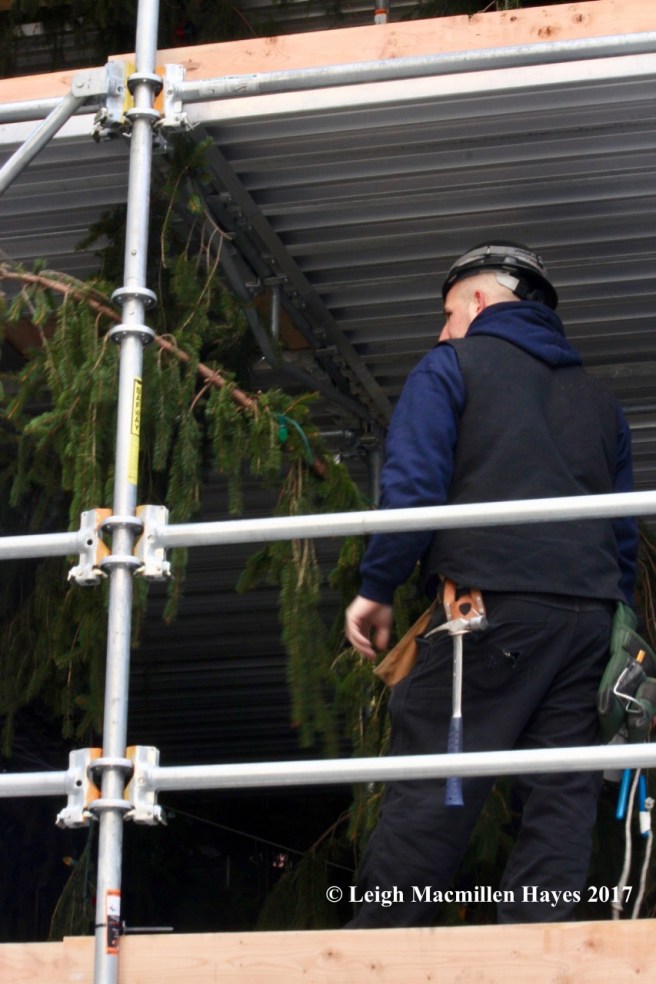
Overlooking the rink, but encased in scaffolding stories high, a transformation was in the works . . .

n-Rockefeller 2

from a Norway Spruce discovered in State College, Pennsylvania, to the Rockefeller Center Christmas Tree.

n-toy soldier 2

Watching over all were the toy soldiers. And if you have ever wondered if they come alive after most of the world that gathers in New York goes to bed, they do. We know this first hand for we heard them. Our hotel room was located nearby and at about 2am we were awakened each night by an instrumental performance that had a symphonic sound. We couldn’t hear anyone in adjoining rooms. And we never heard a peep outside of Radio City Music Hall, so it had to be the toy soldiers and angels that surrounded the rink–and you have to become a believer.

n-Grand Central Station

At long last, it was Monday morning and time to head back through the terminal of Grand Central Station to make our way up the northeast corridor.

n-Allen, Pat and Tim

But . . . we left with fond memories and promises to return for somehow we who live in rural Maine raised a city boy.

Posing from left to right, my guy, our youngest and one of his roommates who also hails from Maine.

They’re both comfortable by nature in New York City.


Snow White Magic

Our first official snow storm of the season left us with about an inch of the white stuff that makes me rejoice. And upon waking this morning and peeking out the window, the sight of porcupine tracks looping around the yard brought a smile to my face.

m-porcupine trail 1

I love the first snow storm for even though I have seen signs of the critters that pass this way, their tracks confirm my convictions. Over the years, I’ve come to recognize the prints and trail patterns, but as the snow gets deeper the tracks sometimes become more difficult to decipher. This one was easy due to its pigeon-toed sashay.

m-porcupine prints

And then the individual prints, especially those that crossed the deck, showed the large foot pad and five toes with nails extended. A friend in Poland, Maine, sent me a couple of photos of the critter that crossed her deck this morning. She ID it herself, but wanted confirmation–for it was an opossum and a first for her.  I found my first opossum prints last December and wonder if I’ll have that opportunity again. Anything is possum-able.

m-worm and junco prints

Since the porcupine had drawn me out (and I noted that it disappeared under the barn–of course), I decided to head off into the woods. But before I left the yard, I spotted junco tracks–and . . .

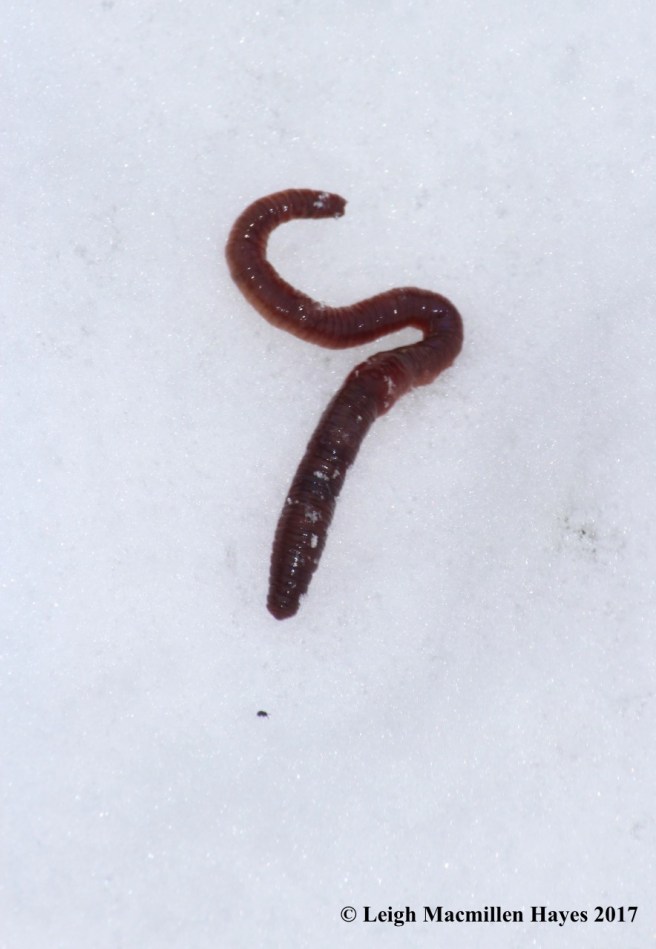
m-worm

a couple of worms–frozen upon the snow. Juncos don’t eat worms; they look for fallen seeds. And so it seemed that the bird flew off before quite reaching the C-shaped worm. And this other worm was about a foot away from the first worm. Robins were in the yard last week, and I can only hope that they returned today for a frozen dinner awaited.

m-snow art 2

Into the woods I trudged, and the ever-changing colors and designs at my feet reminded me of works of art.

m-snow art 1

Some were palettes of mahoganies juxtaposed against white. A variety of textures gave the scene relief, much like an inlaid mosaic.

m-snow art intersections

Others embodied interconnections; a mingling of lines outlined for emphasis.

m-rock people

Along the cow path, I noticed the rock people for the first time, their mouths gaping open.

m-snow fleas

The minute snow fleas would hardly sustain them.

m-morning light

As it does, my trail crossed the line, where power seemed to originate with its source . . . the sun.

m-Mount Washington

And in the opposite direction, it flowed from pole to pole and onward . . . as if powering the mighty mountain.

m-pine sapling

My journey continued into the land of the pines and their saplings, momentarily coated with decorative baubles.

m-mini oaks

And the red oak saplings I’ve been watching looked more festive than ever.

m-squirrel tracks

I was on a mission and soon found what I was looking for. Some tracks that looked like exclamation points led me to another source of sustenance that I wanted to check on.

m-squirrel cache growing

The red squirrel’s cache had grown taller in the past week, but . . .

m-squirrel dining room

many pine seeds had been consumed in the refectory. All that remained were scales and cobs to show a number of dinners consumed.

m-squirrel rocks

The dining hall extended beyond the reaches of the cache, for every table available was a table used.

m-squirrel dinner in the future

As I walked back toward home, I discovered another table awaiting a guest.

m-beech sunshine

I was almost home when I stood under a beech tree. As winter embraces me, I find that their marcescent leaves create their own golden glow and warm my soul.

m-British soldier

One more sweet peek offered a tiny touch of red to today’s fading winterscape–for the British soldier lichens’ red caps announced their minute presence.

m-snow drops

And then this afternoon, I joined a few friends for a gallivant across the Wild Willy Wilderness Trail beside Province Brook in South Chatham, New Hampshire. And the snowdrops created their own works of art announcing that the meltdown was on.

m-pinwheel 1

As we walked, we noticed delicate parasol-shaped fungi fruiting.

m-pinwheel gills

Their common name is Pinwheel Marasius, but in my mind the shape of the umbrella-like top above the wiry stem looked like a parasol and so I called it such. But to add to the confusion, I first called it carousel. Word association might get me there eventually, but it wasn’t until I looked it up in Lawrence Millman’s Fascinating Fungi of New England, that I realized my confusion. One of the fun facts from Millman is worth quoting: “Resurrection! Shriveled and inconspicuous, Marasmius species are rarely noticed during dry weather, but after rainy periods the tiny fungi revive–hence the nickname ‘resurrection fungi.'” And if not rain, then snow will make them rise again!

m-liverwort magic 1

The water from the melting snow highlighted other lifeforms along the Wild Willy Wilderness Trail. Bazzania liverwort grew abundantly, but one in particular gave us pause . . .  for it glowed. And no matter what position we stood in to look at this worm-like beauty, it continued to glow as if it had a golden halo surrounding it. We had no answers–only questions and wonder.

m-glue fungi

Another find that had been marked with tape, for it too was special–a broken branch attached to a young tree. I’m stepping out on a limb here–pun intended, but I believe this was an example of a glue crust fungus that glues twigs together. Seriously? Yes.

m-Bob, Janet and Pam

It was getting dark when we finally found our way to Province Brook and marveled at the water and ice forms. It was also getting close to the moment when we’d need to say, “See you later,” to Bob and Pam, for they’ll be heading to warmer climes soon. But we know they’ll be back for a winter adventure and then before we know it, spring will be here. And then, we hope the brook will be full with spring run-off from all the snow that is in our future. Until then, see you later we also said to much of the snow for it had almost disappeared.

m-ice works 1

But the ice art will continue to grow.

m-Province Brook 1

And the snow white magic will capture our minds again . . . one flake at a time. And with it, the wonders of the world will continue to be revealed.


Firsties

A week ago, I joined friends Marita and Marguerite Wiser for a hike up Albany Mountain from Crocker Pond Road. At the summit, we searched for a loop leading off from the left that I’d been told about, but couldn’t find it. There were cairns leading to the right, but we didn’t see any to the left.
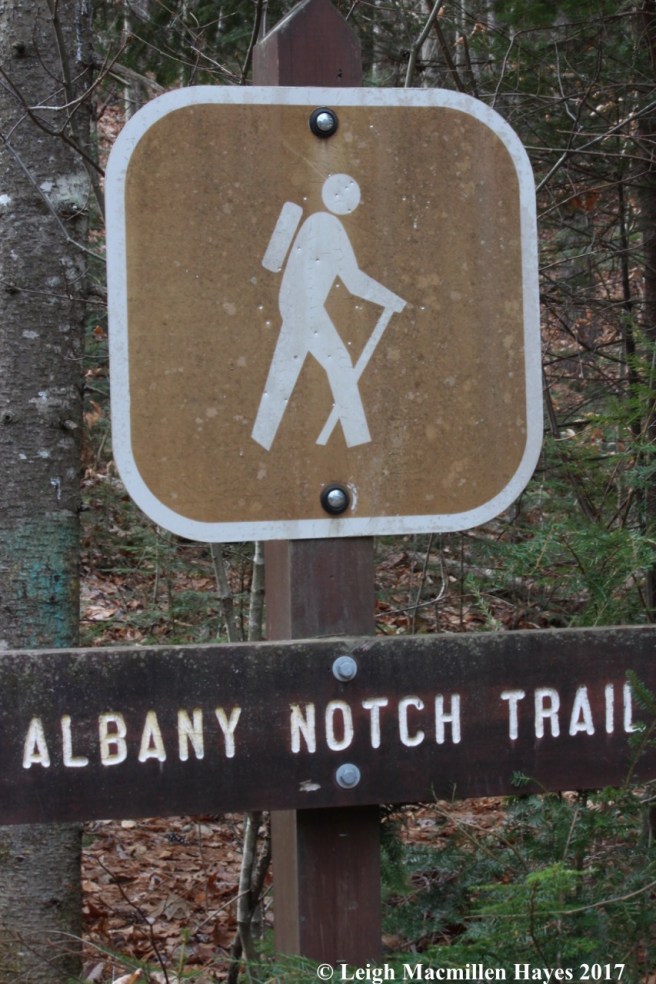
a1-trail sign

And so today, my guy and I headed back up the mountain with a quest in mind–to find the loop. For you see, this week when I again questioned the friend who’d told me about the summit loop, I was assured it was there and we just needed to follow the cairns to the left.
a2-ice on beaver pond

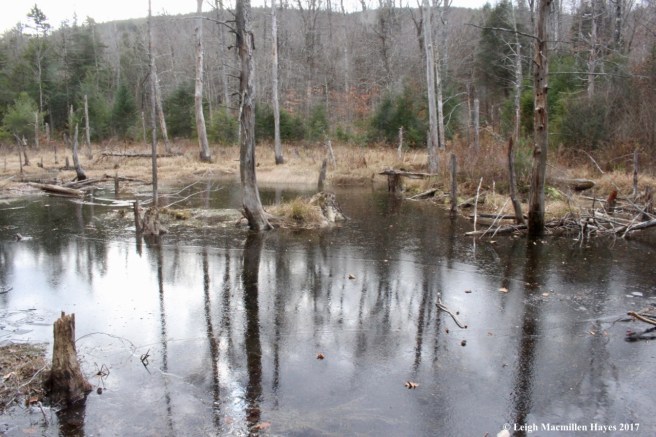
Not far along the trail, we reached the old beaver pond, which was open water last weekend, but coated in a thin layer of ice today. A first for us this season.
a3-dam crossing

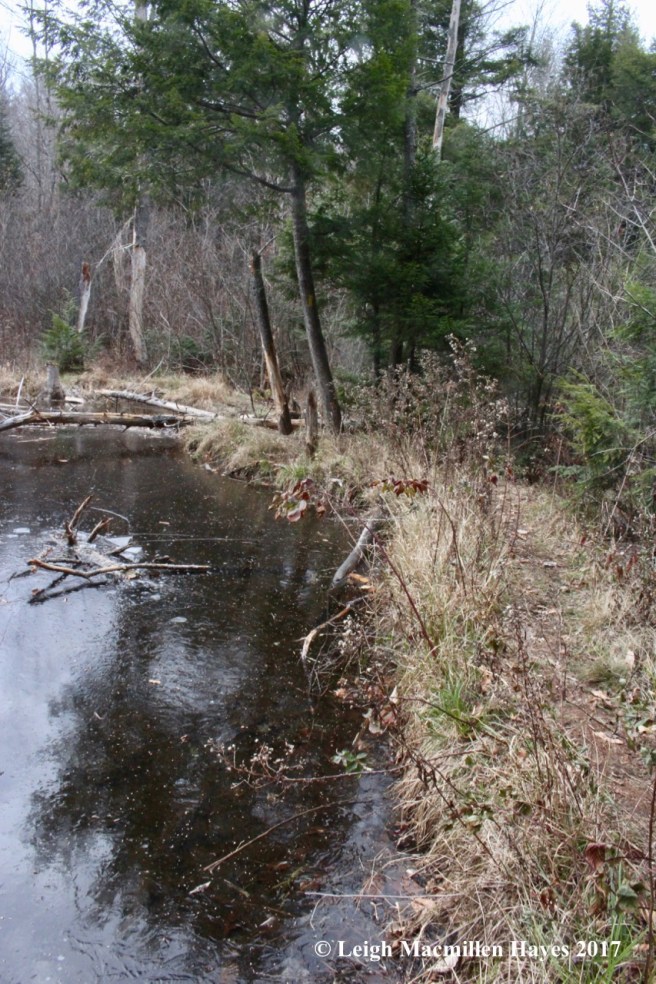
We crossed the old beaver dam, made a wee bit easier because of the freeze.

a4-3 in 1 trees

And then we began climbing. Suddenly, I spied a red pine. A lone red pine. A red pine worth inspecting, for I suspected this was bear territory and thought perhaps the tree would show evidence of a past climb since it was the only red pine in the immediate area–bears like something different like a lone red pine. There were no signs of claw marks, but we did wonder about the resources shared by the pine, red maple and beech–a trinity of brethren in these mixed woods.
a5-ice

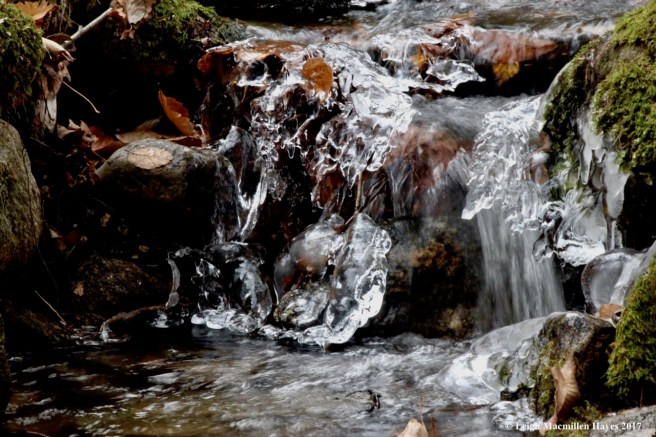
Moving upward, like all streams this month, water flowed with passion and because of the sudden drop in temperature this past week, ice formed upon obstacles. We slipped off the trail to admire its every rendition.
a6-more ice

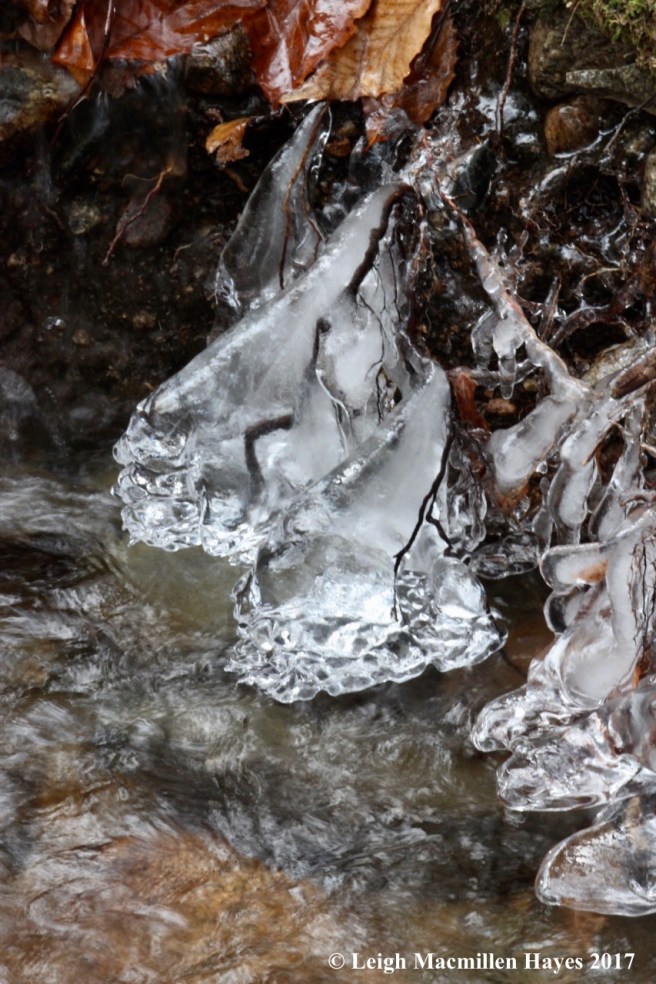
Each coated twig offered its own fluid art.

a8-ice spirit

But my favorite of all was the ice spirit who watched over all as his beard grew long.
a9-ice needles

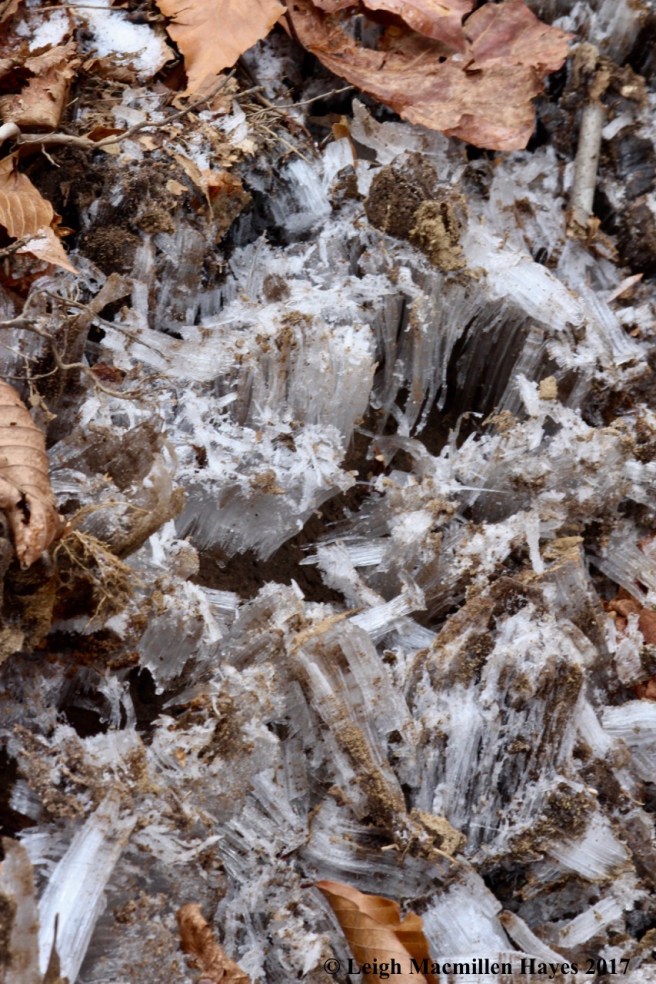
Back on the trail, conditions changed as well and ice needles crackled under our feet, adding to the crunch of dried beech and maple leaves.
am1

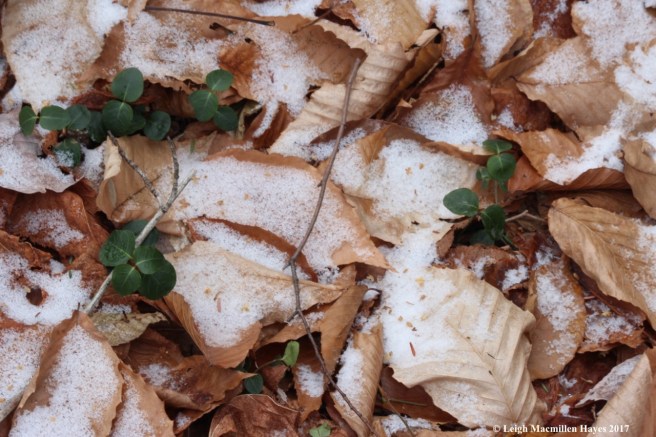
We weren’t far along, when we spied snow–another sight that made my heart sing on this brisk November day.

a10-SNOW

For us, it was the first snow of the season and we hope it bespoke the future.

a11-snow on the leaves

The higher we climbed, the more snow we saw, though really, it was only a dusting. But still–we rejoiced.

a12-new steps

Eventually we came upon some new trail work. Actually, last weekend, we’d chatted with the creator of such steps; and on our trip down, I’d asked him about the summit loop because we hadn’t found it. He said there was no such thing. But my friend insisted on such when I told her this info.

a13-climbing higher

On we climbed, reaching bald granite where sometimes conditions were slick. I’d brought my microspikes, but the trail wasn’t difficult and I never did pull them out of the pack. Still–better to be safe than sorry.
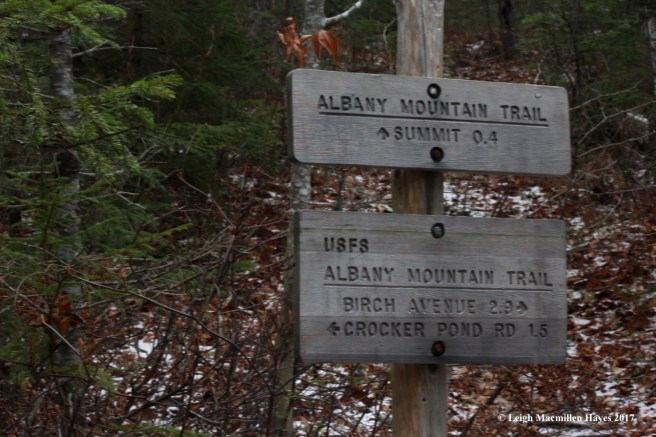
a14-Summit sign

At 1.5 miles, we reached the junction. And headed upward to the summit.

a19-ledge 1 view

About one tenth of a mile along, we turned right and followed a spur trail out to a ledge where the view west offered a backdrop featuring the White Mountains.

a16-first ledge and my guy

We suspected the summit loop may have taken off from this point, so my guy went on a reconnaissance mission to the left–to no avail.
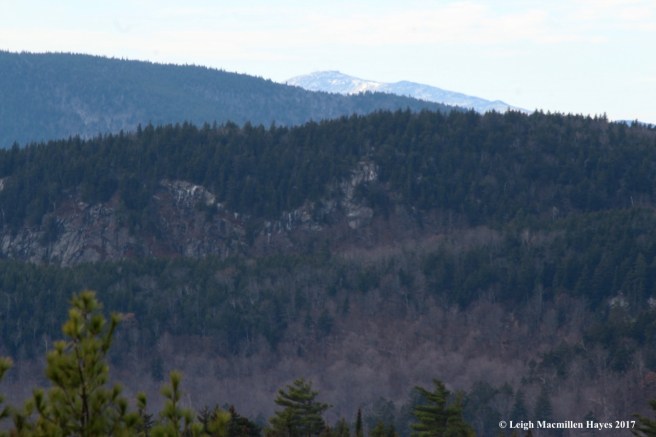
a20-Mt Washington

But we did enjoy the view–including the summit of Mount Washington.

am3

Then we went in search of the mountain sage. Given the condition of its glasses, however, we suspected it was feeling a bit bedraggled from the recent wind. Or maybe it had tried to find the loop as well and was just plain tired from coming up short.

a21-lunch rock view

On to Albany Mountain summit we marched. And then we sat on a clear spot upon the granite to dine on . . . none other than the famous PB&J sandwiches (mine with butter, of course). Our view was framed by red pines and spruces.

a23-red pine needles

As it should, the red pines exhibited the look of chimney sweep brushes.
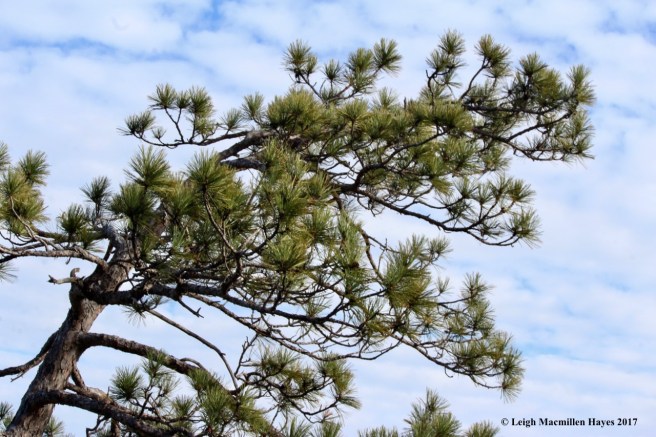
a22-red pine

One bent over, its leader long influenced by the northerly winds.
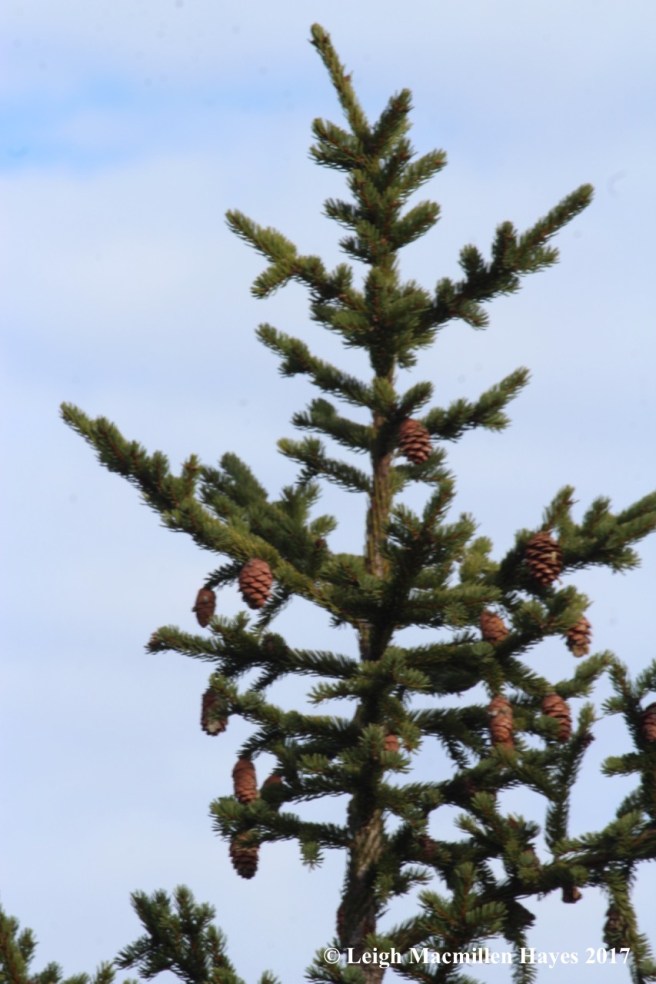
a23-spruce

Even a spruce known for its spire-like stance had performed the wind dance.
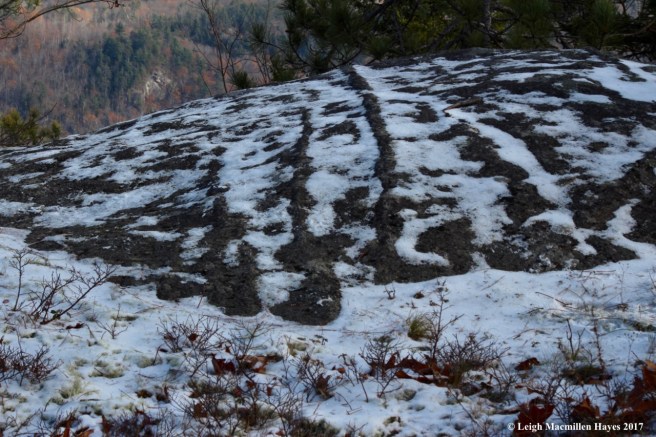
am4

After lunch, we poked around to the left, in search of cairns for the said loop . . . and found none.
am5

There were cairns to the right, however, which the Wisers and I had followed for a short distance last weekend. Today, we decided to see where they led. Cairns gave way to flagging.

am6

And flagging gave way to more cairns.
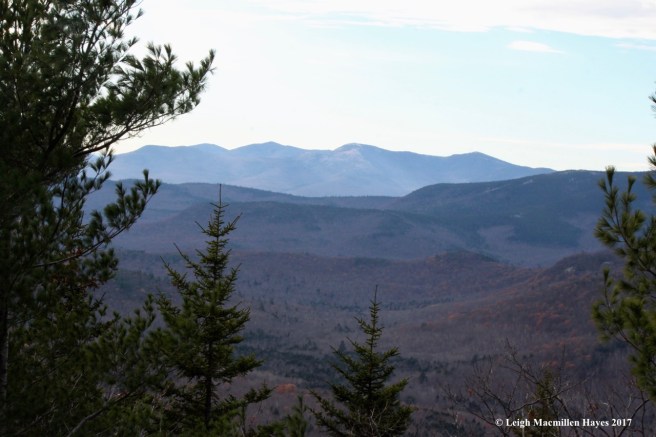
a24--views of balds from other trail

Meanwhile, the trail gave way to more views–of the Baldfaces.

a25-crossing the ledges

The trail seemed to circle around to the left, but then it turned right. Eventually, we met two young men and asked them if we were on the loop. We learned they’d spent the day exploring the top and knew of no loop, but informed us that we were on a spur. Funny thing is, they were from Texas and Wisconsin.

a26-view toward Pleasant Mtn

And they were right. About a half mile later, we reached the end of the cairns and the end of the spur and another panoramic view–with Keewaydin Lake in the foreground and our beloved Pleasant Mountain in the back.
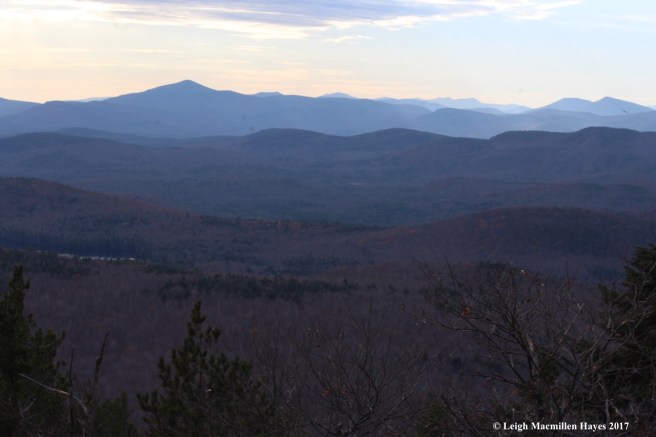
am7

Again Mount Kearsarge greeted us with its pyramid formation and we stood for a while watching a bald eagle circle below us.
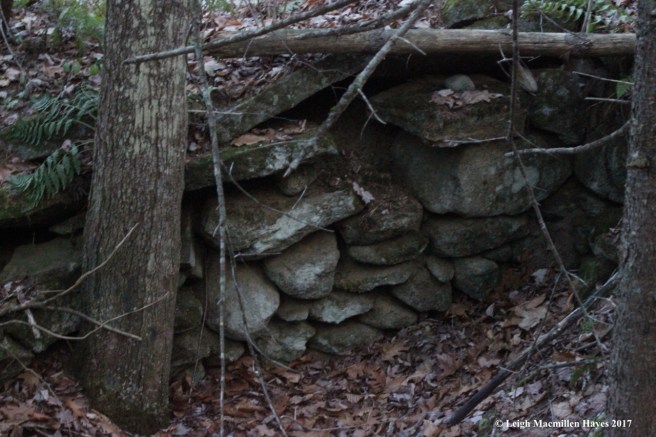
a27-foundation at trailhead

Our trip down the mountain passed quickly for it was my guy that I followed and within 45 minutes we were at the trailhead. Run much? While he went to the kiosk to double-check the map, I spied a foundation I’d previously missed. Who lived here? Was it the Crockers for whom the road was named?
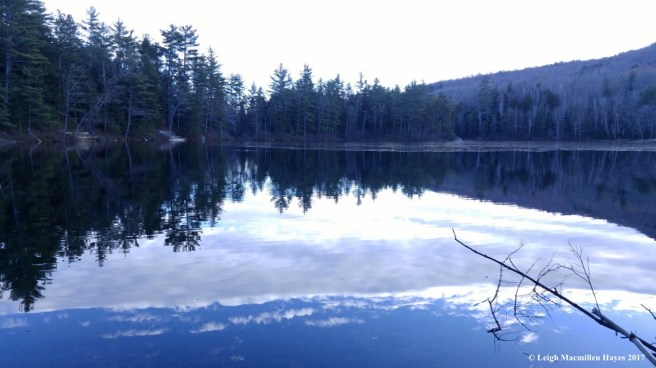
a30a-Crocker Pond

Back in the truck, and because I was driving, we drove to the end of the road and I hopped out to look at Crocker Pond, which was partially coated in ice.
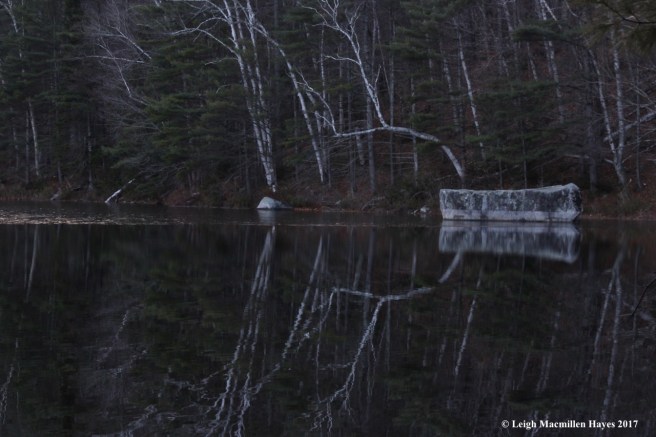
a28-Crocker Pond--backwards C

But it was a backwards reflection that really gave me pause for the birch trees seemed to spell the pond’s initials–backwards and upside down of course. CP. Humor me here. ;-)

a35-Patte Marsh

And then I drove down another forest road to Patte Marsh, which was almost completely covered in ice.
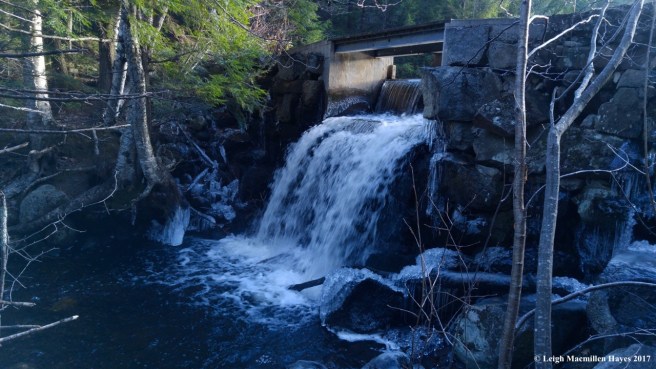
a32-dam at Patte Marsh

Its formations were varied below the dam.

a31-sky reflection and ice

But my favorite of all was upon the pond, where the sky was reflected on a wee bit of open water and ice that reminded me of the eagle in flight.

We didn’t find what we’d gone in search of and may just have to try again (oh darn), but it was a day of firsties for us–first ice-covered ponds, first snow, first time on the second spur trail. Definitely a first rate day for a hike.

P.S. Thanks for continuing to stick with me. Please feel free to tell your family and friends about wondermyway. And encourage them to click the “follow” button. I’d appreciate it if you’d help me increase my readership. You never know what you’ll read here because I never know what I’ll write. Even when I think I know, I don’t. The end result is always a wander and definitely a wonder.
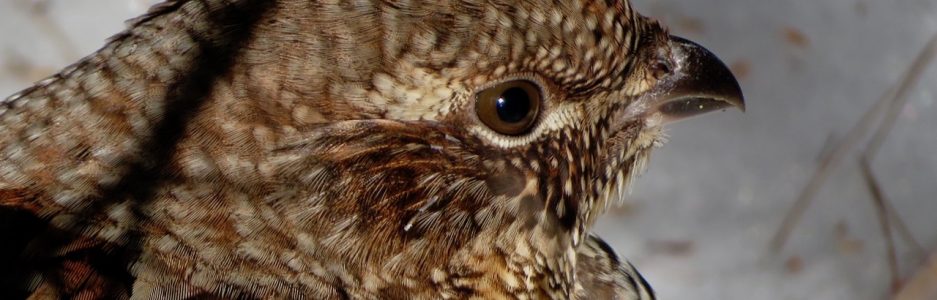


Time Well Spent

Time. I never seem to have enough of it. Time with my guy. Time with our sons. Time with family. Time with friends. Time to explore. Time to reflect. Time to write. Time to sketch. Time to be . . . in tune with the world around me and my own soul.

b-pileated 1

And so today, when I heard a pileated woodpecker as it worked on a dead ash tree by one of the stonewalls, I decided to take a break from my own work and give it the attention it so loudly demanded.

b-pileated 2

Its a repeat visitor to that tree; along with crows and hawks and smaller birds as well. The tree can no longer create its own source of food, but it continues to provide for others, be they bird, insect or mushroom. And I suspect that it secretly shares its knowledge of the world with the younger ash it towers over–to the right. As for the pileated, his time at that tree came to an end . . . for the moment. He’ll be back–probably soon.

b-ash tree 1

Because I stood below and no longer need to look up, I turned my gaze downward. And then had to pause. What had happened? Who had visited? And scraped the ground right down to the roots? And left a pile of leaves and sticks and other debris at the edge? A mushroom foray? An acorn frenzy? I looked for hair and found none. Turkey? Squirrel? Porcupine?

b-ash tree 2

And at the base of the next old ash, similar behavior.

b-scat 2

Returning to the first tree, I discovered that what looked like dirt was actually little pellets of scat . . . tiny scat. Tons of scat. A latrine. Did perhaps a meadow vole live somewhere nearby and a predator went after it? I did also suspect that there may have been a bunch of mushrooms that were harvested and in the process the vole’s latrine was exposed. I’m not sure if I’ll ever really know, but since I had stopped to look, I noticed something else.

b-pigskin poison puffball (Earthball)

Tucked near the base of the tree and relatively untouched by whatever had spent some time clearing the area, was a pigskin poison puffball, so named for its outer skin that feels like a football. (In his book, Fascinating Fungi of New England, Lawrence Millman writes: “historical note: footballs used to be made of pigs’ bladders, not pigskin.”) The dark spore mass within seemed to reflect the ashen color of the tree beside which it grew.

b-pelt lichen1

I should have returned to work then, but the puffball discovery and my wonders about the latrine made me want to poke about some more. Since I’d missed the puffball, what else hadn’t I noticed. A few steps to the left upon another tree root–a pelt lichen with many fruits, aka many-fruited pelt. I first discovered this lichen upon Bald Pate Mountain a few years ago, but didn’t know that it grew here–right under my nose.

b-many-fruited 2

Its smooth brown lobes shone brightly due to all the recent moisture, but it was the reddish-brown apothecia or fruiting forms that I found so intriguing. They’re described as saddles, and I suppose if you look at one from the right angle, yes, you can see the saddle-like structure.

b-field dog lichen

On the next tree, another pelt known as dog lichen–apparently named because its fruits reminded someone of dog ears.

b-spring tails 1

The algal component of a lichen goes into food production during rain, and so I continued to peer around. But first, a clump of Indian pipes caught my attention and upon them I noticed springtails doing their thing–springing about in search of food. Their diet consists of fungi, pollen, algae and decaying organic matter. Springtails are among the most abundant of insects, but because they are so small, they often go undetected unless you see them on snow in the winter.
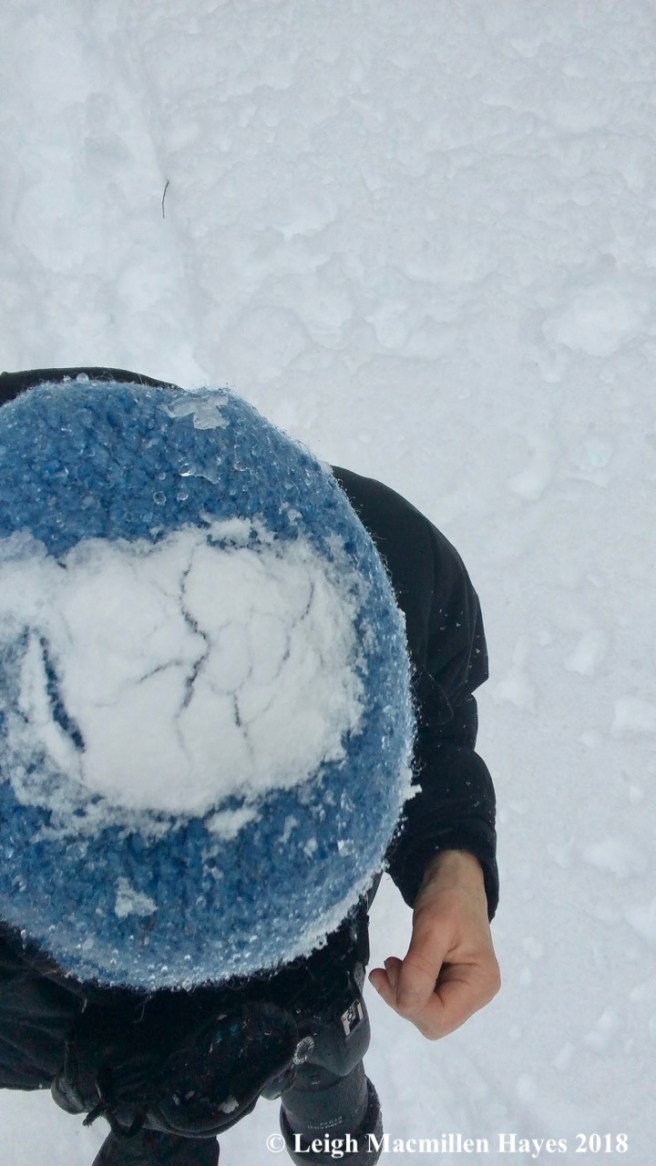
b-mealy pixie cups

And then back to the lichens it was. I found mealy pixie cups in great number growing on a stonewall.
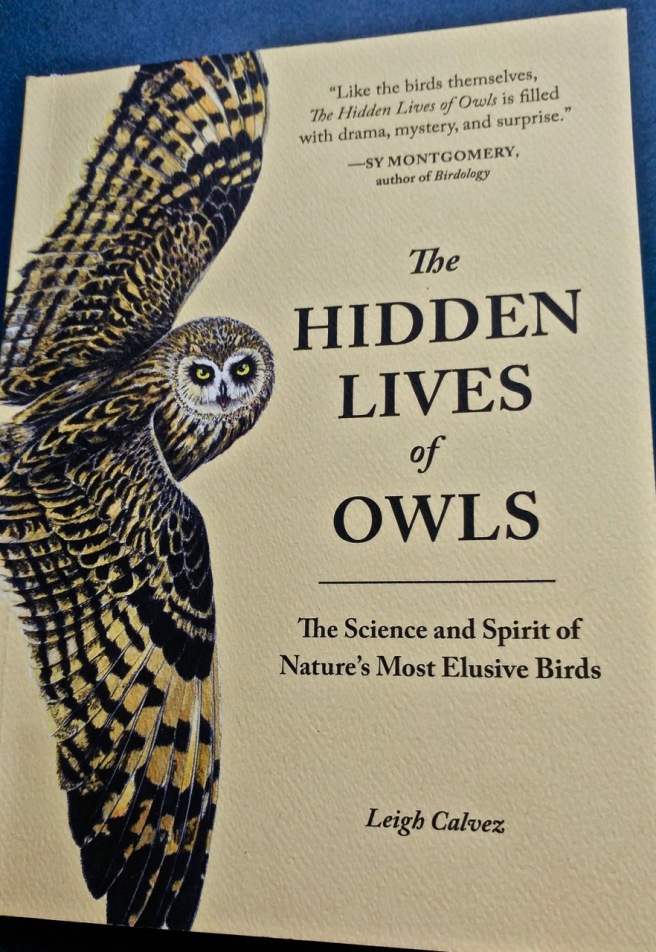
b-pixie cups fruiting

And one large patch looked like it was going to produce another, for so prolific were its fruits of tiny round balls.

b-lichen design

Also among my great finds, were the lichens decorating branches that had fallen to the ground in our recent wind storm. I loved the picture they painted with variations on a theme of color . . .

b-foliose and fruticose

and form.

b-lichen 3

My favorite of all reminded me of so many things–a rose in bloom, waves echoing forth with ripples, and even a topographical map.

Alas, I was short on time and needed to head in, but my finds–were the greatest. Even a wee bit of time spent wondering is time well spent.


Anybody Home?

Only a few days ago we felt like we were melting as we complained about the muggies and buggies, but those temperatures are now only memories and it’s beginning to feel like fall in western Maine. And so my guy and I bundled up before we followed a trail and did some bushwhacking this morning, exploring a property Jinnie Mae and I had visited only a week and a half ago.

m1-lodge

It was to the beaver lodge that we first made our way, noting all their old works near the water’s edge.

m2-lodge 2

But, we were disappointed that we saw no evidence of new work and it didn’t appear any winter prep was yet occurring. Were the beavers still about? Or had some parasites in the lodge forced them to move on?

m3-infinity pool1

We hoped not for they’ve worked hard in the past to create a home with an infinity pool that would be the envy of many.

m1a--otter scat

We did note that they’d had recent visitors who left behind a calling card in the form of a slide and scat–otter scat, that is.

m5-doll's eye

And we spied the fruits of a former flower that graced their neighborhood–doll’s eye, aka white baneberry.

m4-dam 1

As we circled around the pool, we commented that the dam seemed to be in excellent shape and held the water about five feet above the stream below. But again, no evidence of new wood.

m7-dam works

Despite that, it’s an impressive structure. While some landowners might be upset to have beavers changing the landscape, we happen to know this one and she takes great pride in their works.

m9-dam 2

We stood for a while, indulging in our own admiration while wondering where the beavers might be. Of course, it was close to lunch time for us, and not an active time for them if indeed they were home. Possibly we were misinterpreting the view.

m8-beaver pond

After some time of quiet reflection, we made our way back, crossing the stream just below the dam.

m13-quiet reflection

And then we continued along the old logging road (recently bush hogged, eh Brian? Well done), and bushwhacked some more, crossing another stream to find our way to another reflective spot along the brook.

m12-rookery 2

This time, our destination was that of another stick builder–great blue herons.

m11-rookery

Their spring/early summer nests are equally impressive. I hadn’t visited this spot since April, when the herons were actively setting up home. And I’m not sure it was a successful breeding season for them, but even if it was, they wouldn’t have needed these homes today. The nests will remain–available for grabs next year by those who return.

m16-jack in the pulpit

After a snack by the brook, we pulled ourselves away knowing it was time to head to our own home. Our wildlife viewings had been nil, but we spied a jack-in-the-pulpit in fruit, and that plus the doll’s eye were enough. And the time spent wondering about the critters.

m20-cosmos

Back at our truck, we decided to check on the insect action in the gardens at our friend’s home. Only the bumblebees seemed to be active.

m19-hickory feast

But we saw plenty of activity of another kind–a cache of hickory nut shells at the base of the tree, and really . . . everywhere nearby.

m18-hickory bark

Shagbark hickory is more common south of this spot, so it was a treat to take a closer look.

m17-hickory

Its alternate leaves are compound, consisting of five serrated leaflets usually (sometimes there are seven).

m18-hickory 2

And of those five, the three terminal leaflets on each twig are the largest.

m21-view of Balds

Once again, it was time to leave this beautiful spot where the fields and forest flow into the mountains. And where the beavers and heron share the place without too much human intervention. Though not a soul was home today, we trust all will return when the time is right.