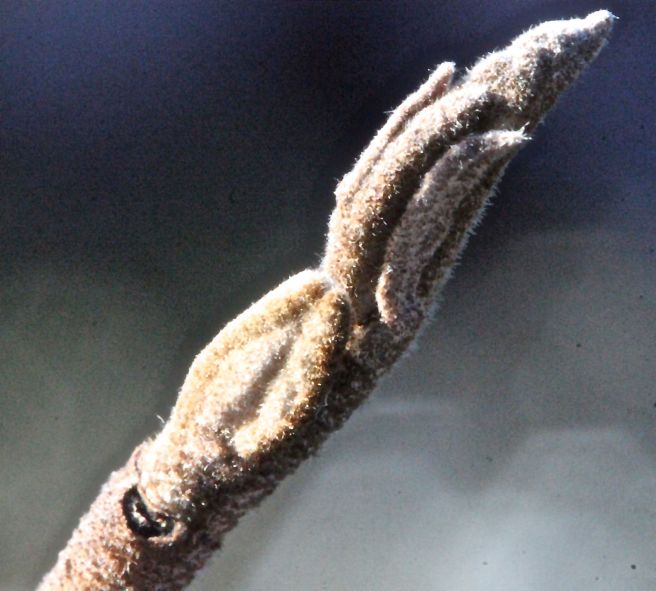
Beulah’s Mystery

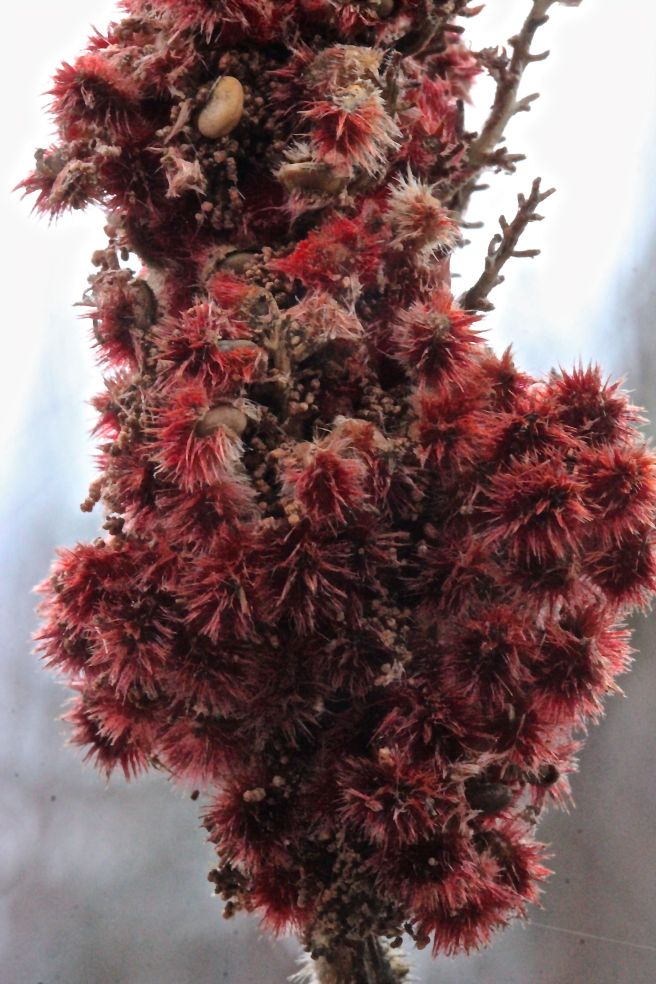
One of the fun happenings in my life is that friends send me nature photos and ask me to help them ID a species. Sometimes I know immediately what it is and can ask them questions to help them get to the answer. Other times I’m as stumped as they are. Thus was the case today, when I drove to Brownfield to look at a tree growing in the field beside an old farmhouse.

t-beulahs 2

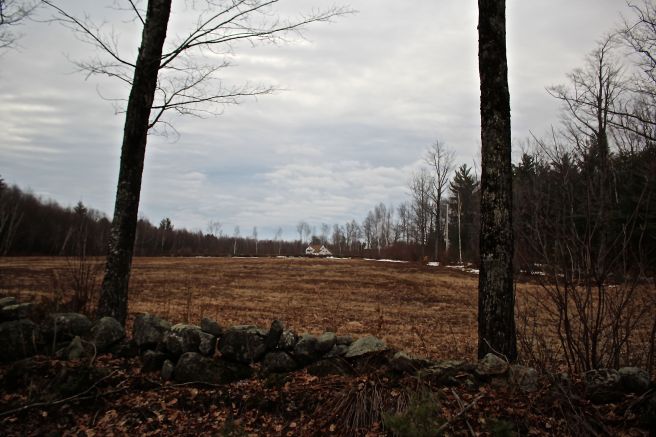
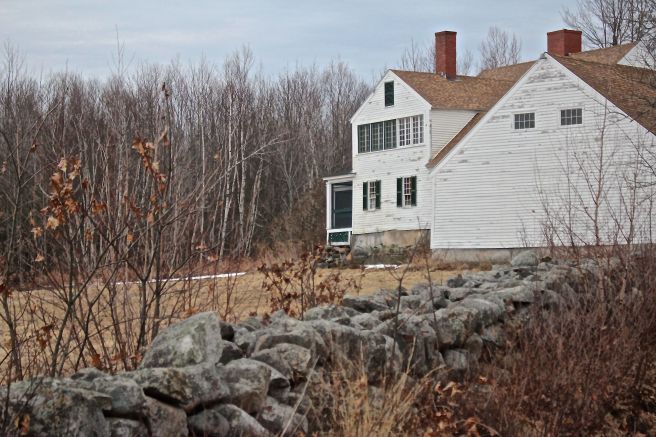
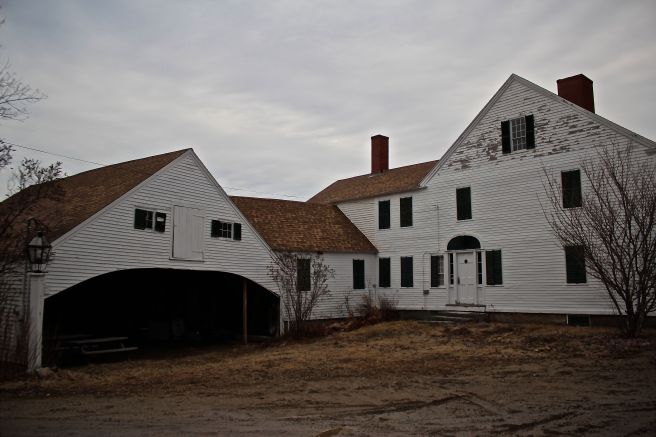
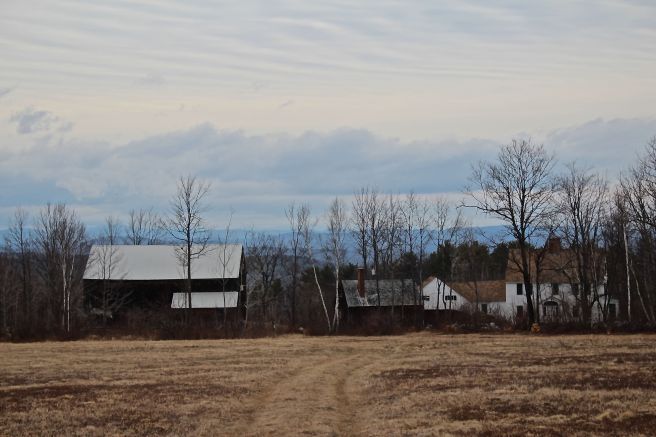
Beulah’s farmhouse, to be exact. My friend’s brother recently purchased it and the adjacent barn. Though the farmhouse is a fixer-upper, Beulah’s sign looks as if it was created yesterday.

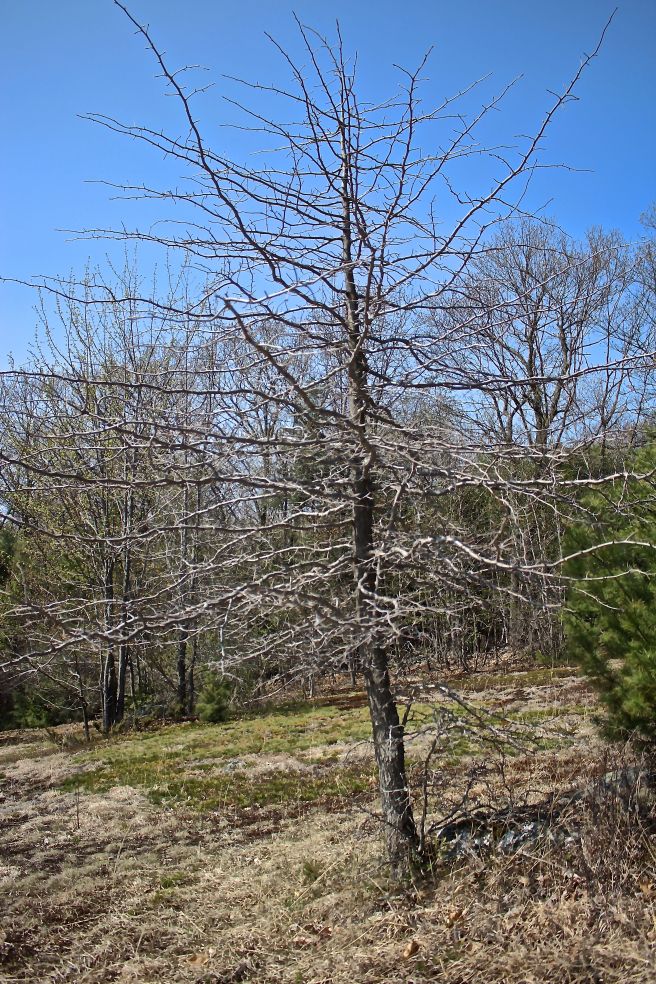
t-tree1

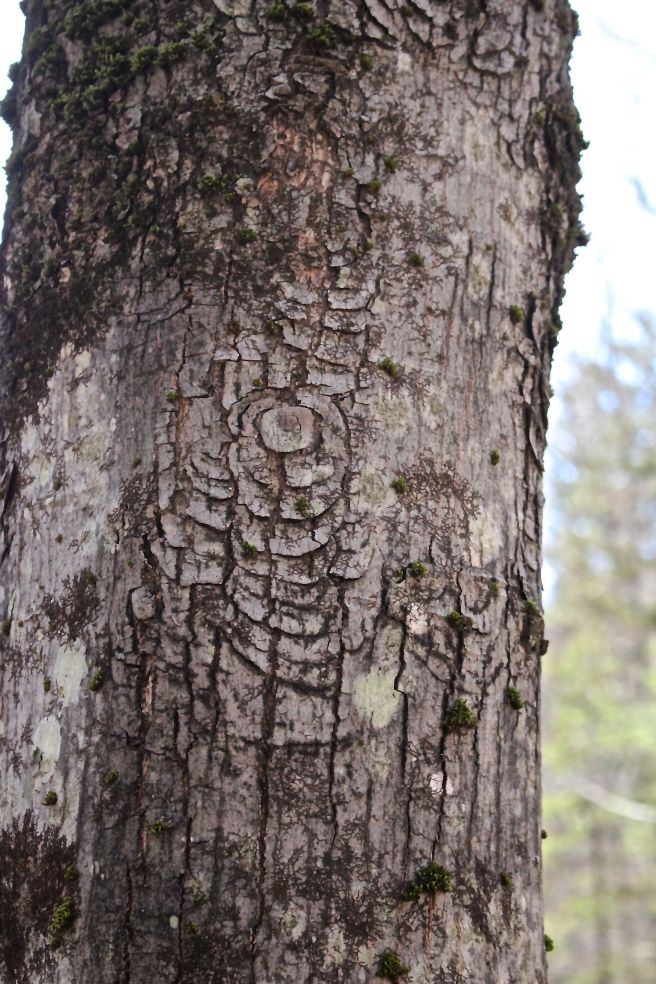
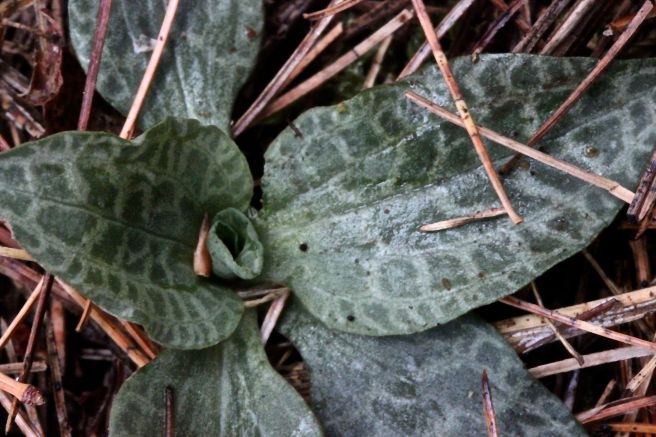
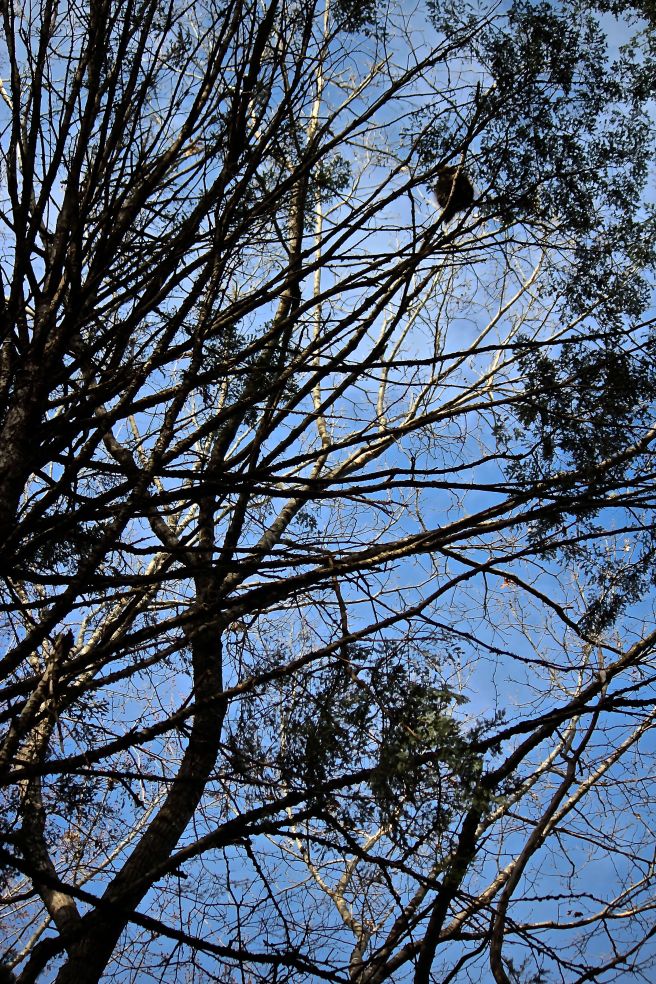
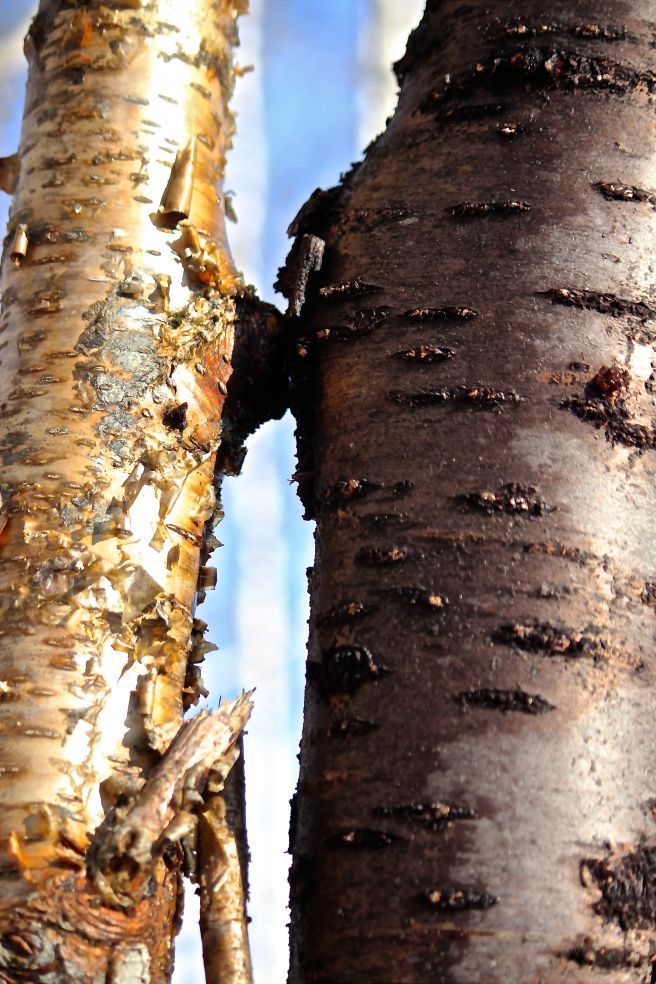
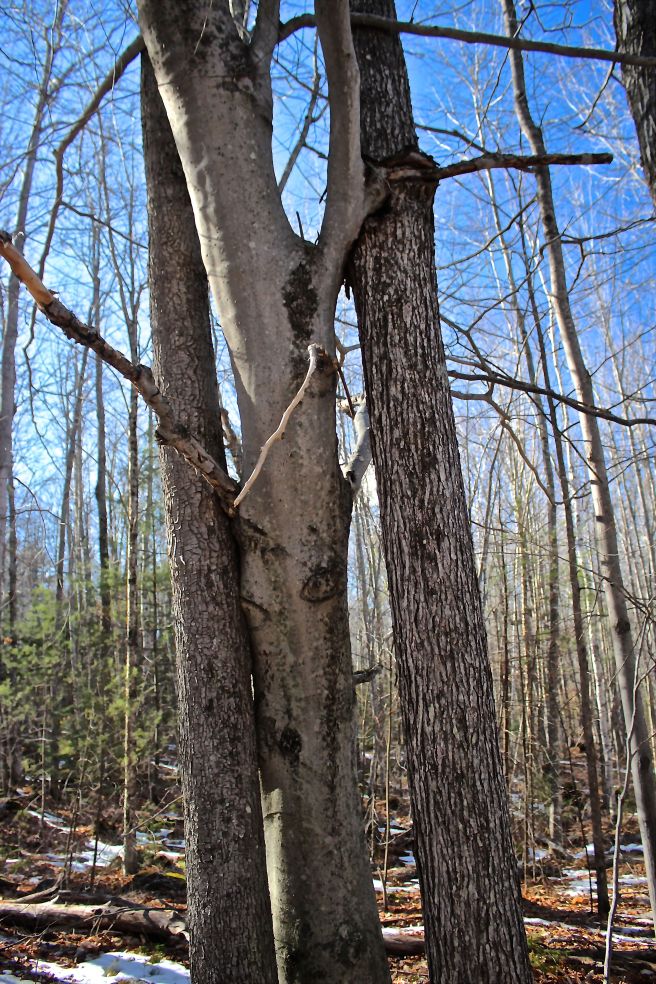
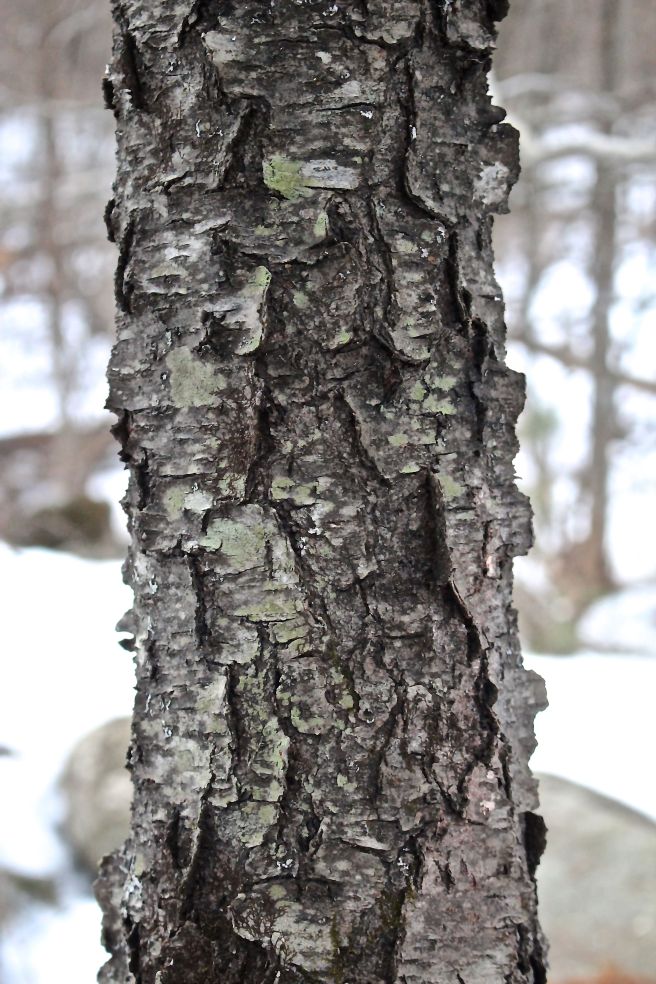
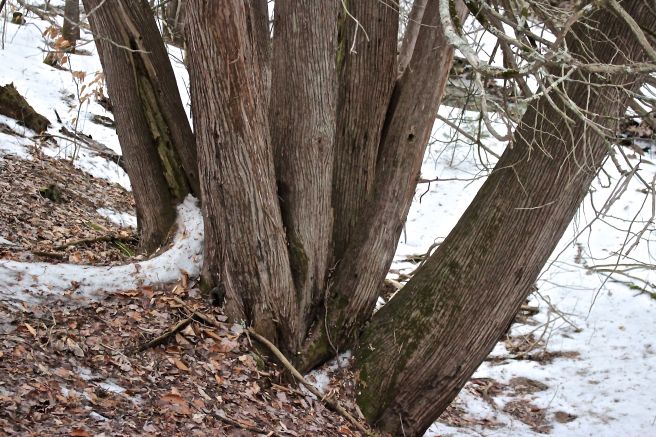
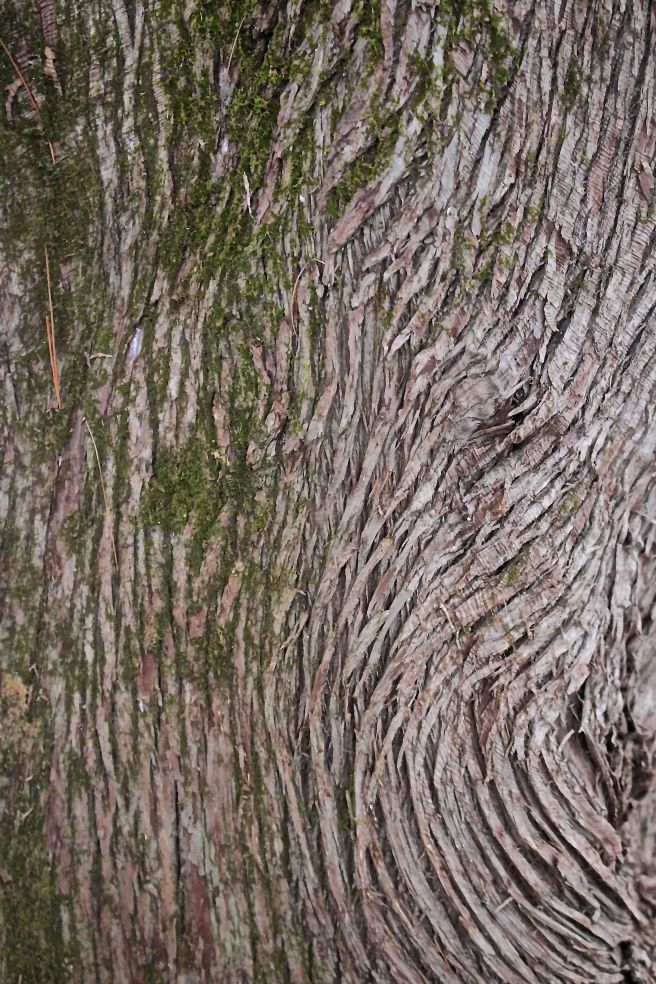
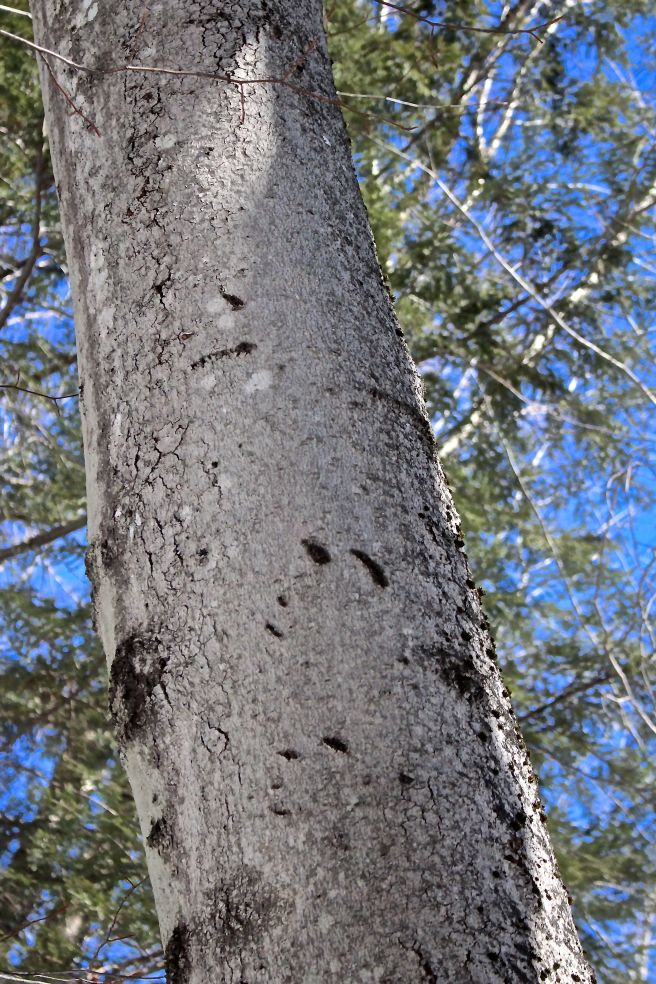
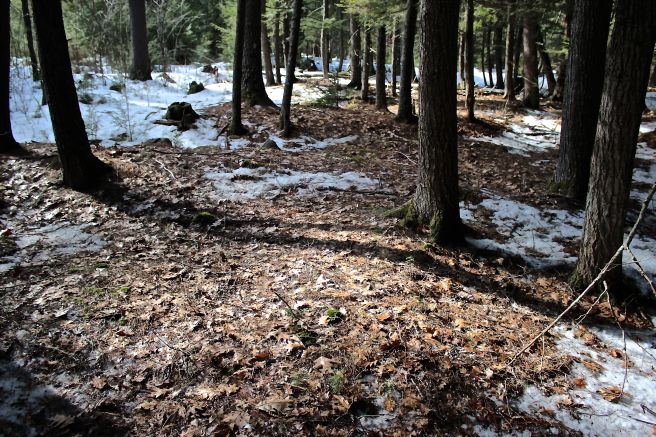
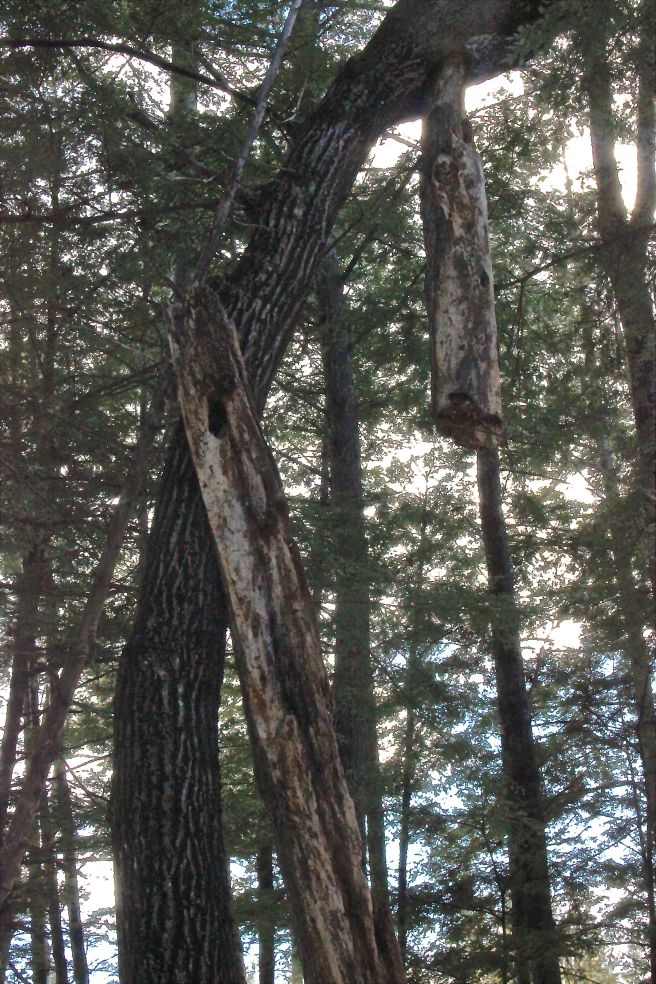
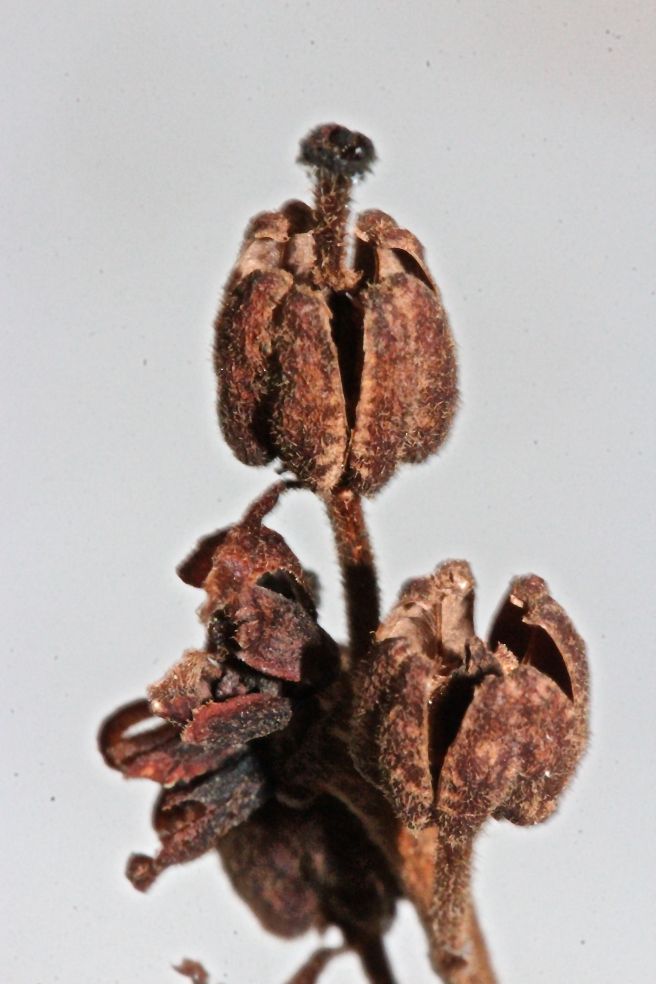
This is the tree. If you know it right off, my hat goes off to you. I was in my Forest Trees of Maine mode and kept looking at it from that perspective. It’s overall appearance didn’t match what I know. We began with the key and slowly (painfully slowly as the black flies swarmed us–mind over matter, mind over matter), worked our way through the choices, two by two.

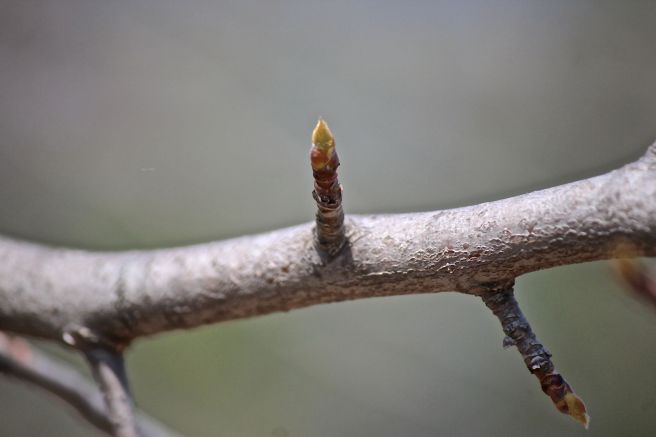
t-dwarf shoots

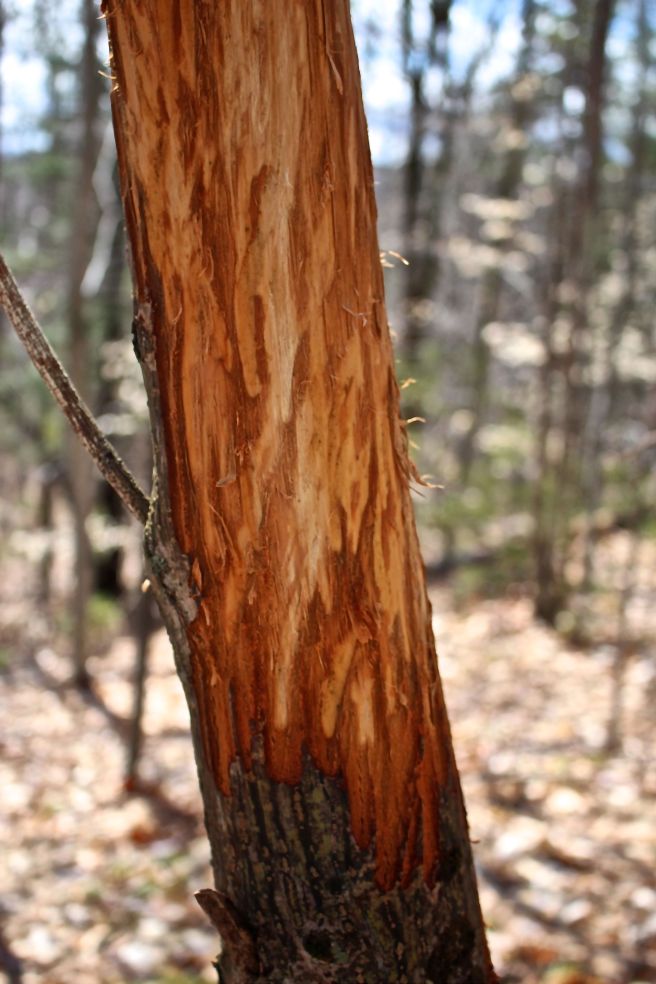
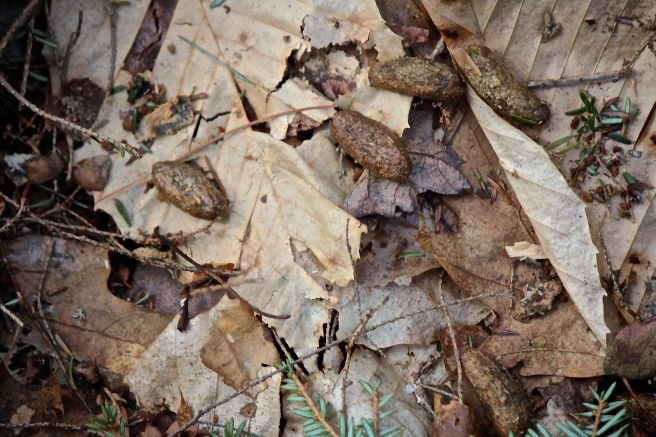
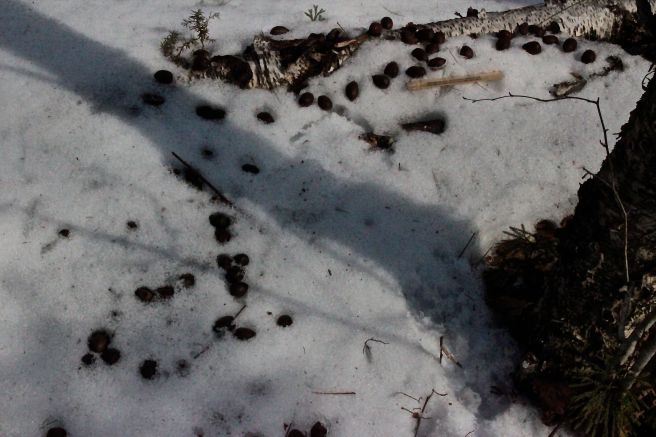
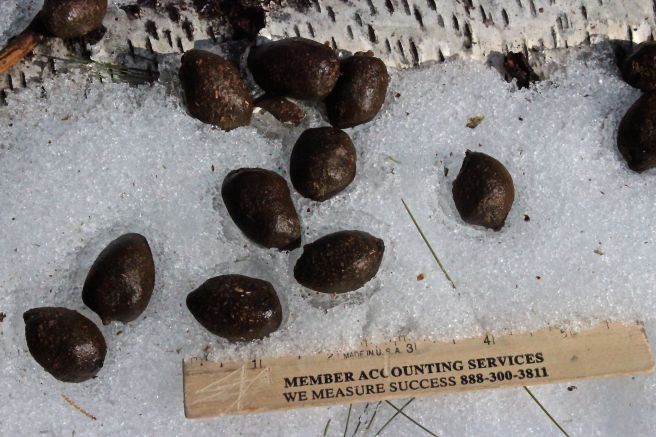
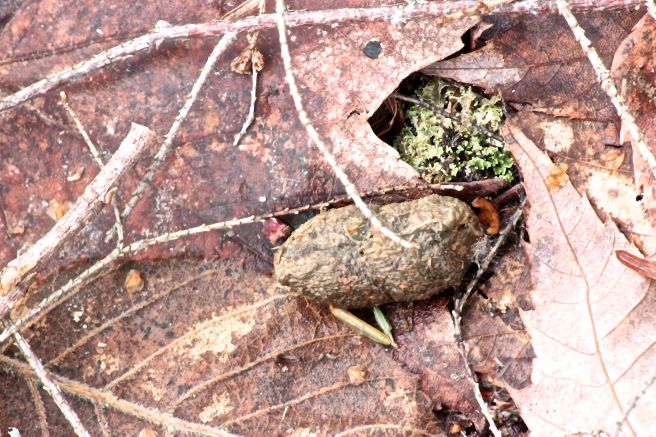
Because it’s not in leaf yet, we used the Winter Key. With each question, we paused to examine the tree–looking at the alternate leaf shoots, hairy scaled buds, pith, bark–every detail. We considered its location in the middle of a farm field, where the land sloped slightly and was rather dry. We also looked at the ground and found decaying leaves as well as deer scat. As I suspected, it wasn’t in the key. So I came home and scoured other books. I think I reached the answer and that the deer scat is actually a clue. Do you know? Now you may say so.

t-porky den

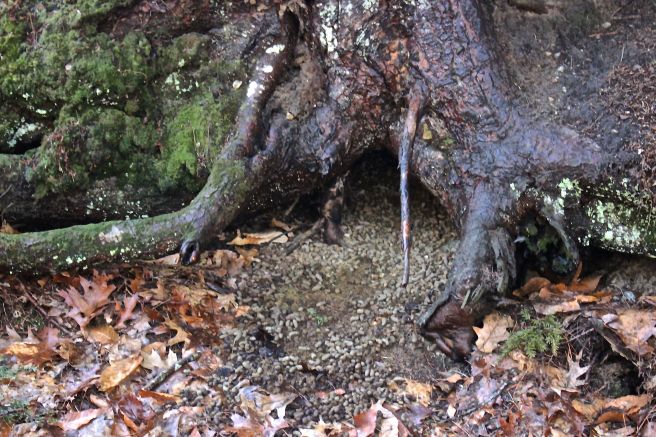
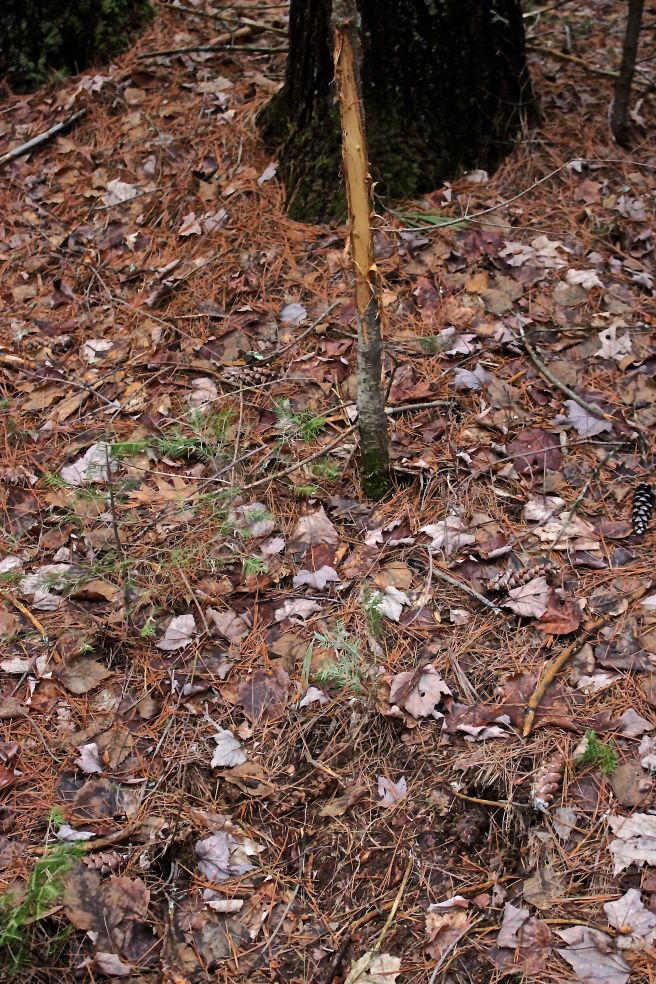
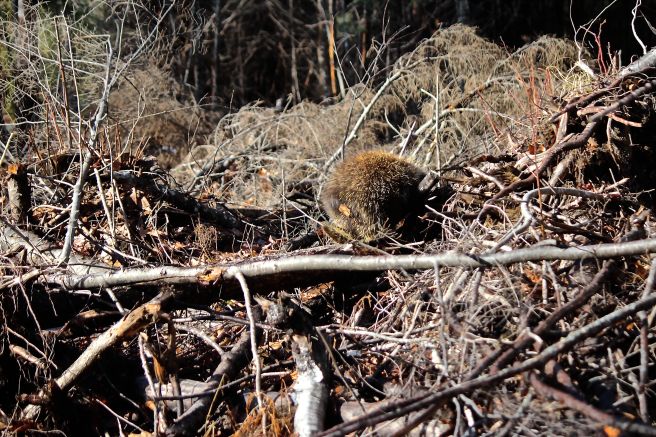
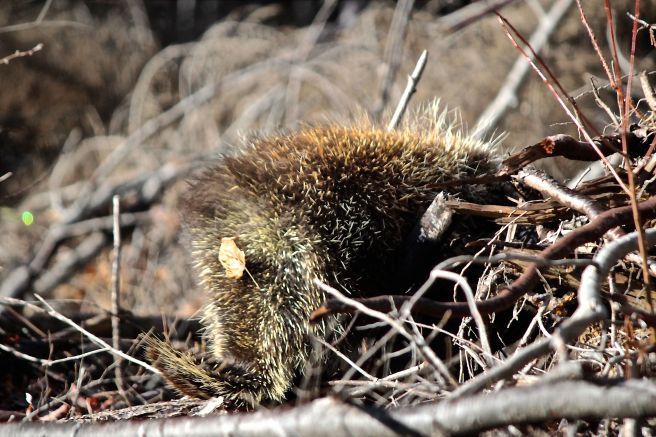
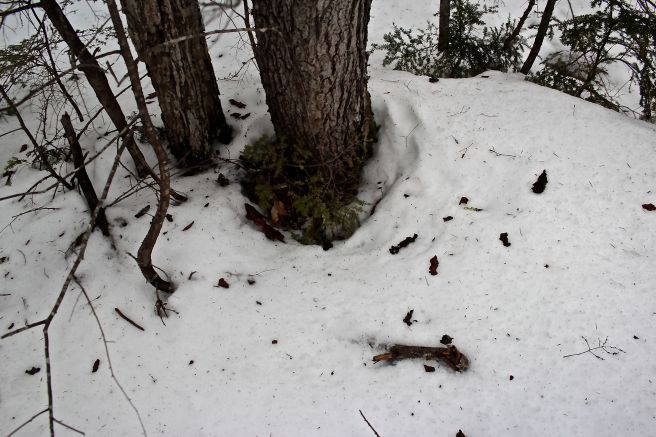
On our way to see one more cool thing, we paused to look at a den located beside the old foundation. Though much of the scat has since been removed, plenty of it and numerous quills painted the picture of who’d created this pigpen.

t-critter 2

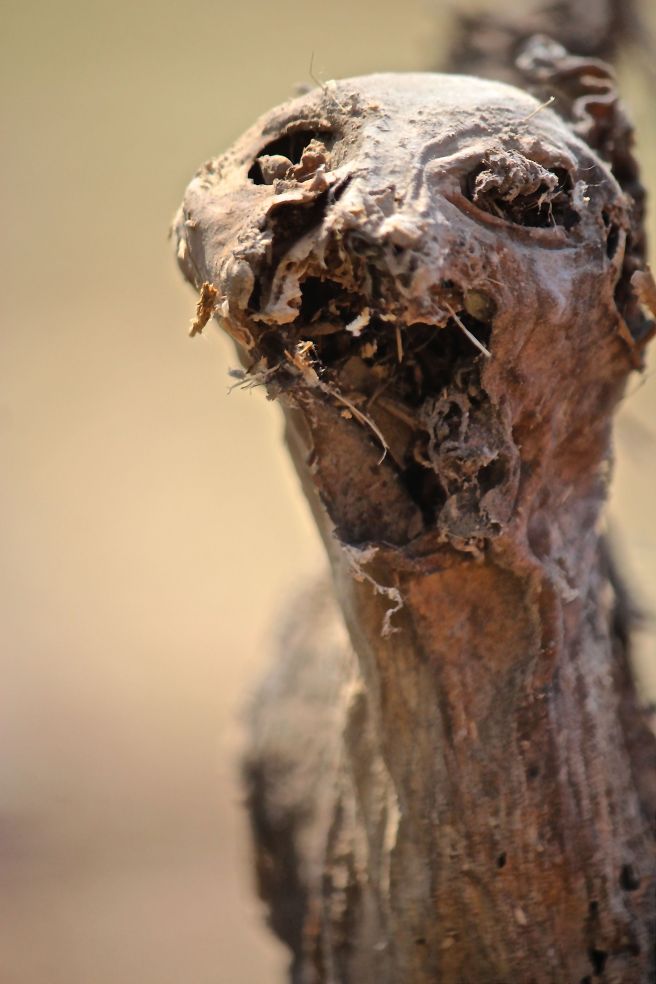
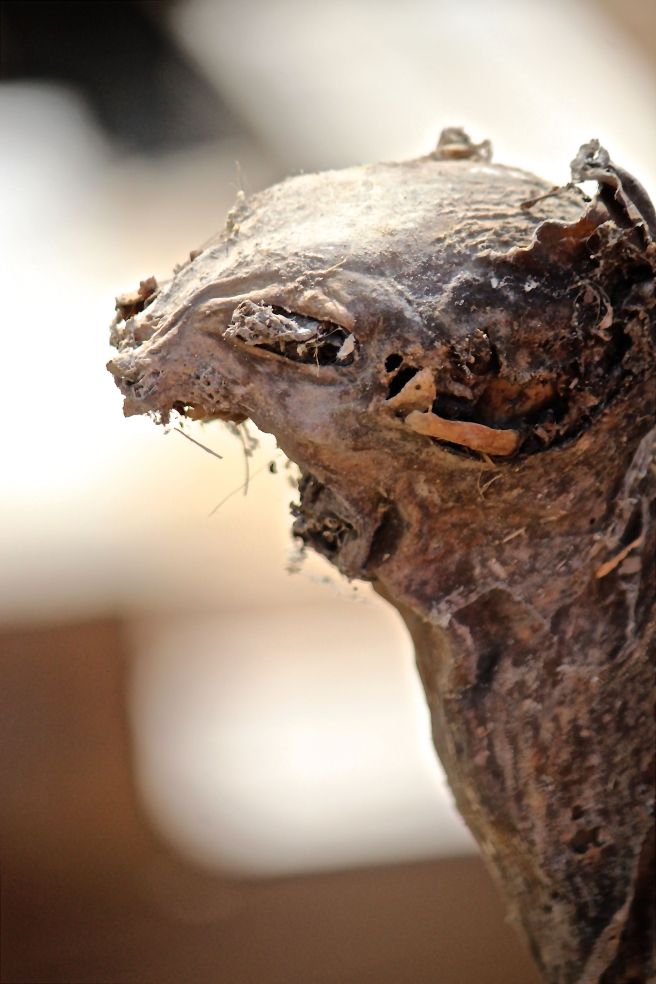
And then they had one more mystery item to show me. I hope this doesn’t freak you out. It’s part of many renovations in old farmhouses–a dried-up animal carcass. The front of the face was missing, but as we say, eyes in the front, born to hunt.

t-critter 1

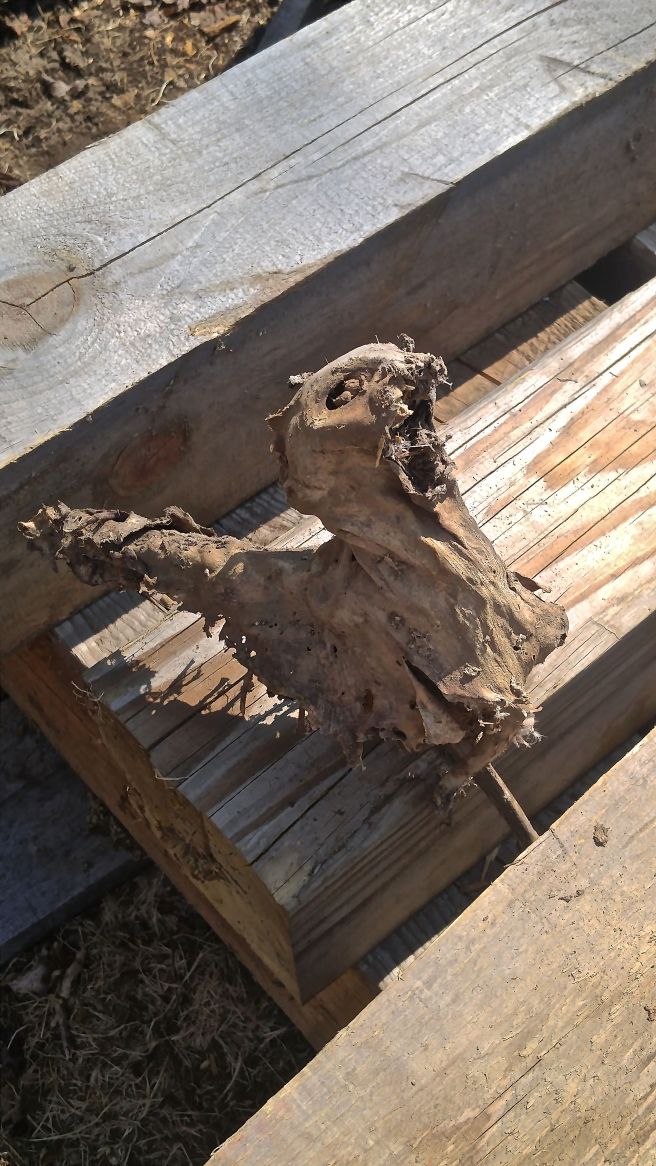
A side view of this handsome critter. Can you see the ears?

t-critter 4

Talk about all skin and bones.

t-critter pads

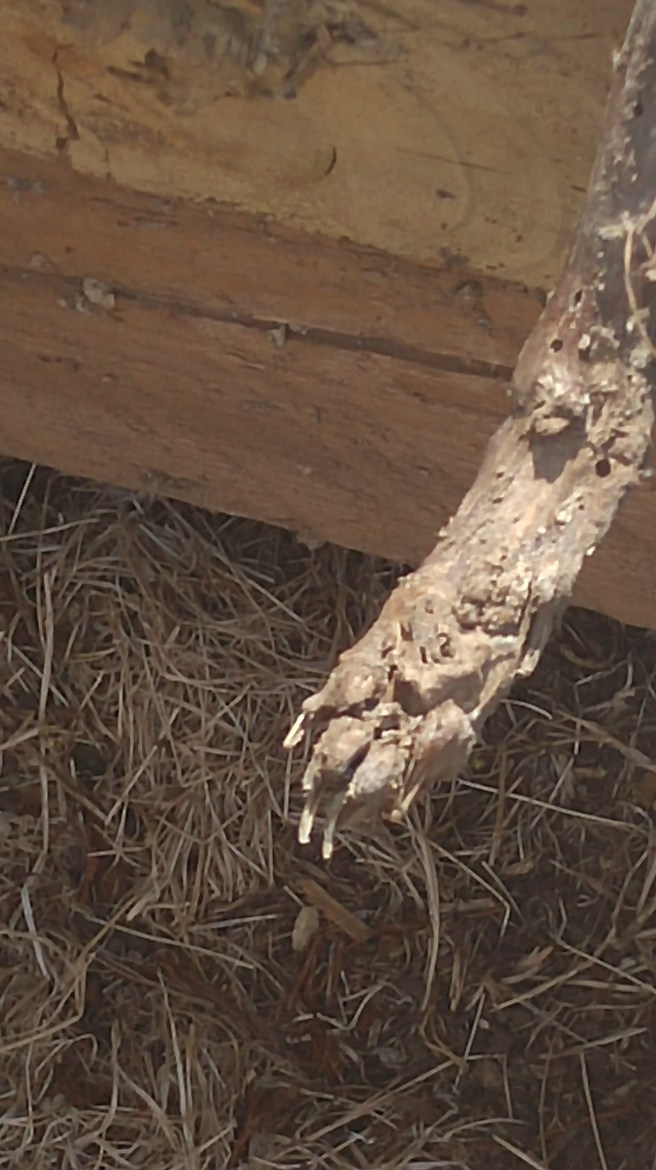
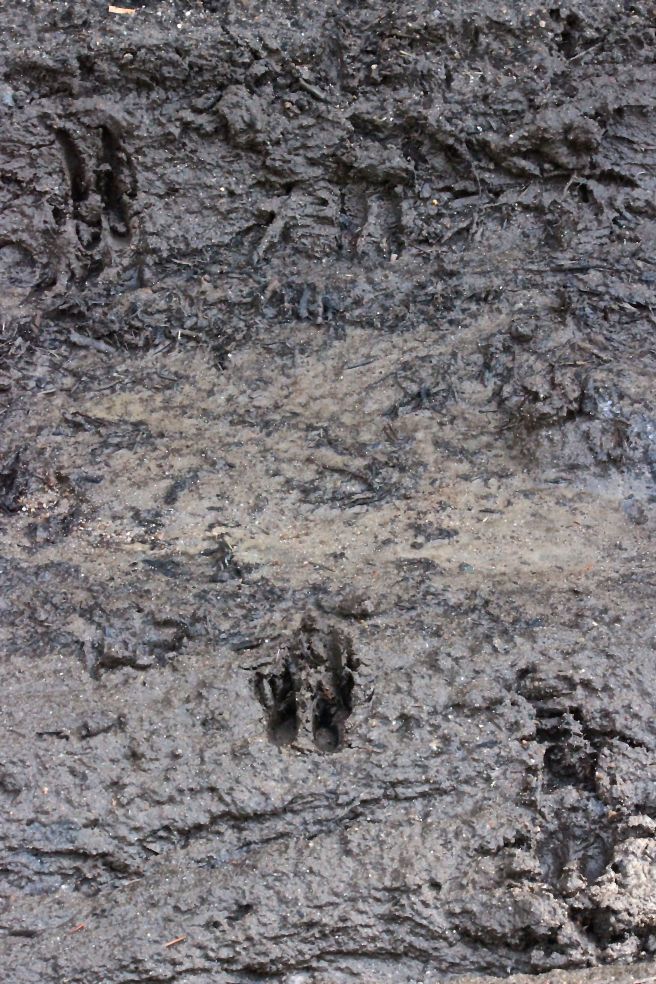
And then the foot pads and nails. Four toes, nails, about the size of a nickel. Do you know?

t-bog sign

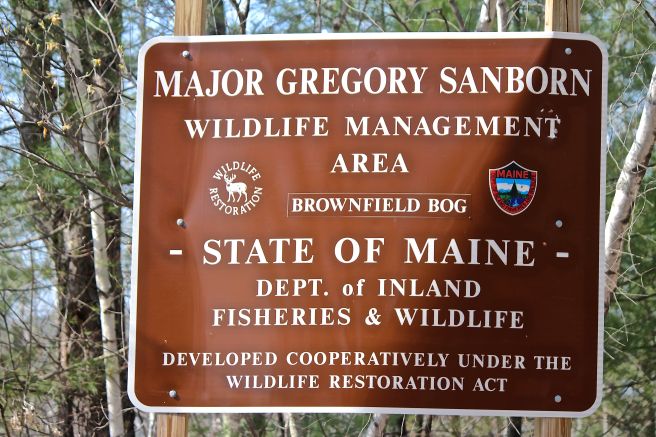
Because I was in the neighborhood, I visited Brownfield Bog and continued my afternoon exploration. (Yeah, I had work to do, but playing hooky for a couple of hours is allowed once in a while if I don’t abuse the privilege–ah, the life of a freelancer.)

t-red oak emerging

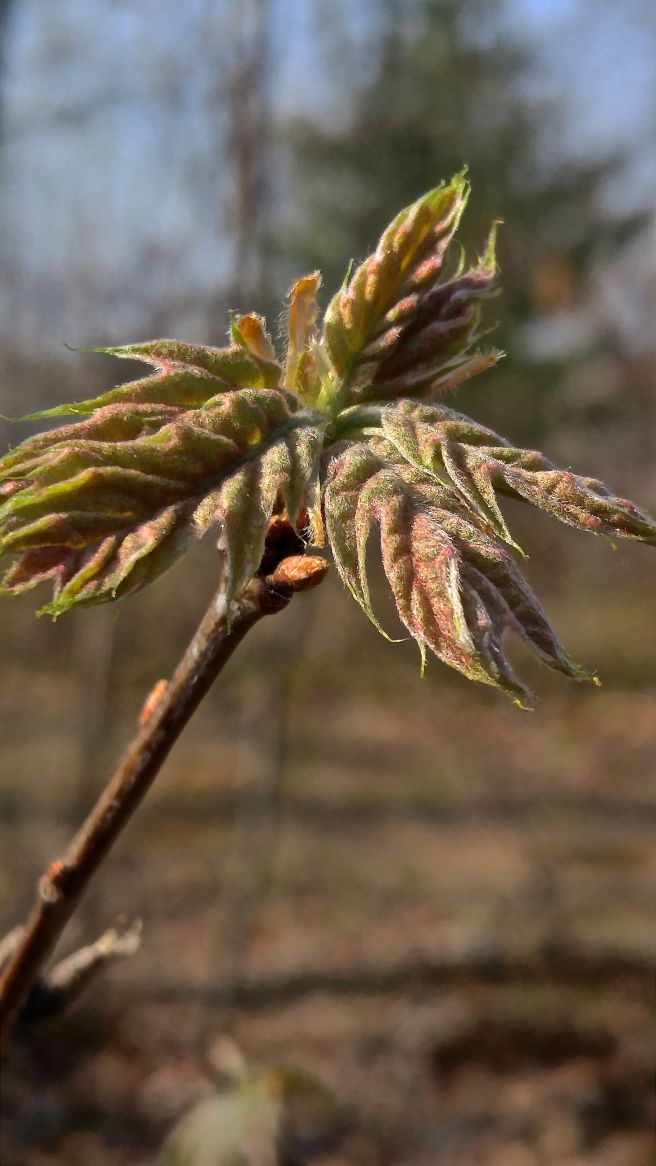
I remember suddenly becoming aware of spring colors about thirty-five years ago, when I taught  school in New Hampshire by the convergence of the Pemigewasset and Merrimack Rivers. Until then, I’d never realized that tree leaves emerge in a variety of colors–they all weren’t suddenly green. (BTW– do you see the spittlebug? )

t-red oak mini leaves

In a quickness equal to fall foliage, spring colors may not be as flashy, but their subtle beauty deserves notice.

t-gray birch 2

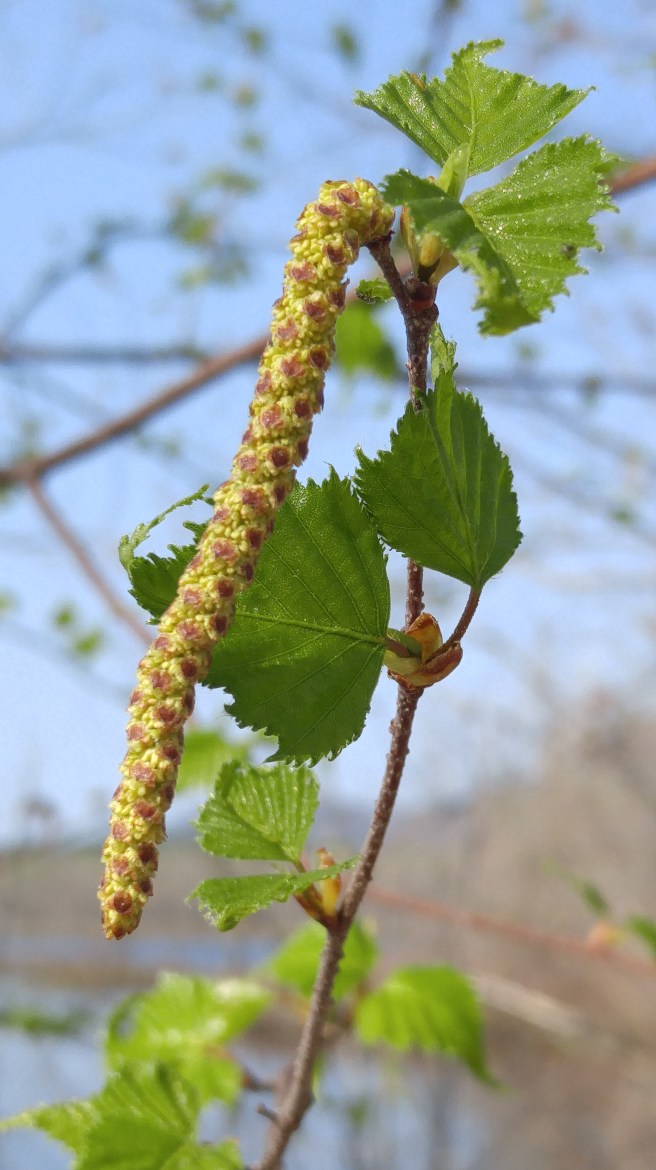
And those leaves that are green offered their own reasons to stop me in my tracks as I took in the details–in this case the double-toothed elephant’s trunk. What? Notice the shape and outer margin of the leaf.

t-gray birch 4

The lovely elongated catkins demanded a glance that lasted more than a second.

t-willows cat1

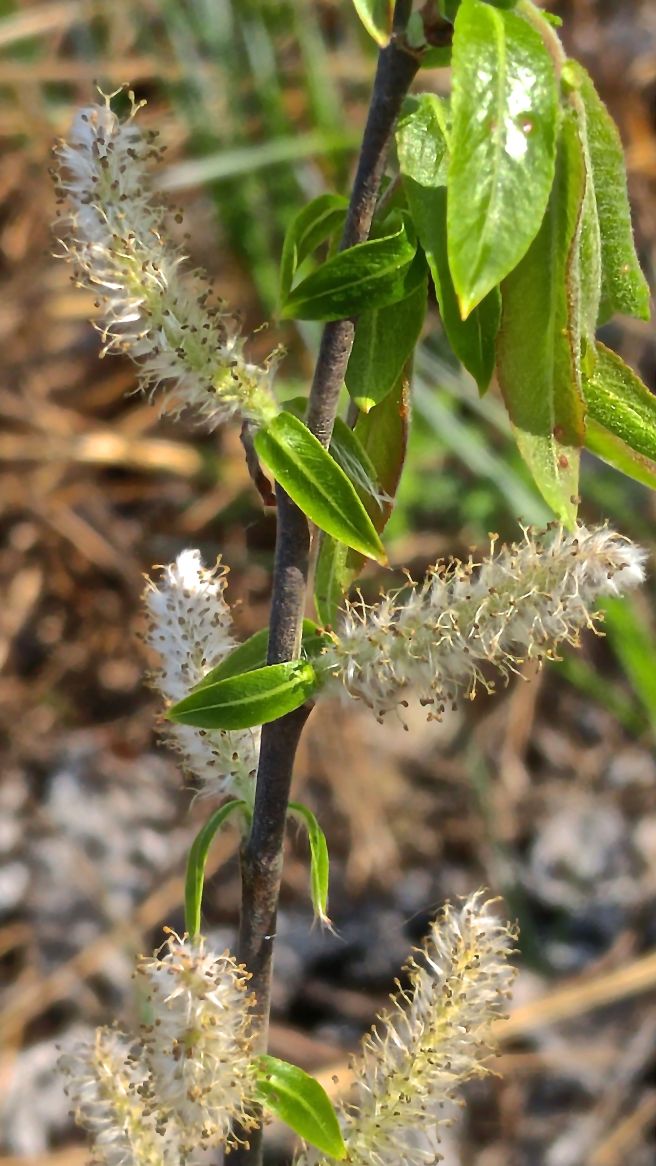
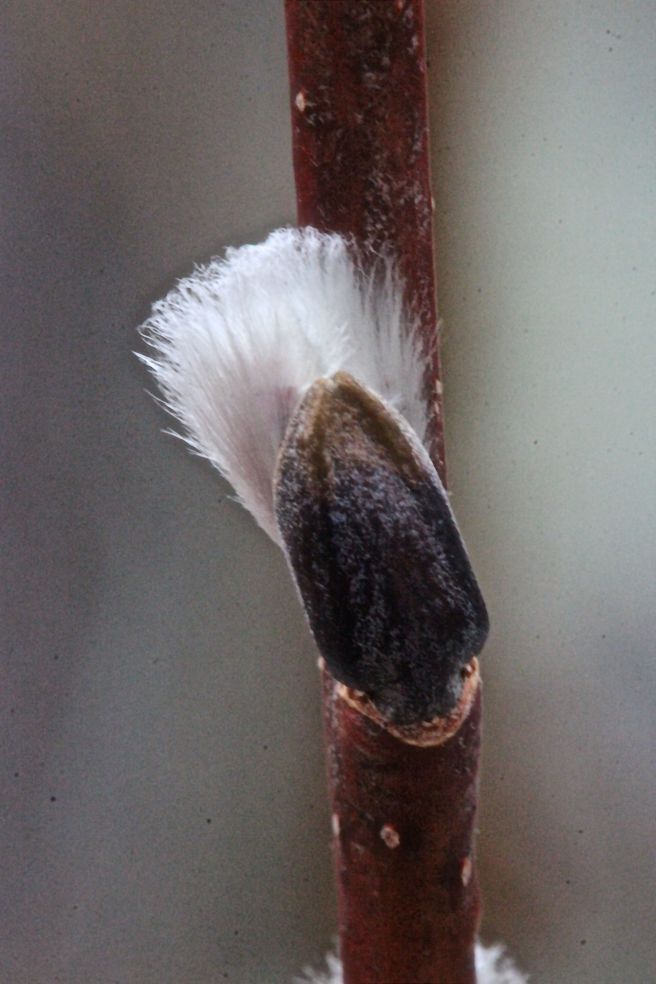
Adding a festive fuzziness to the celebration of spring was another set of catkins.

t-willow gall

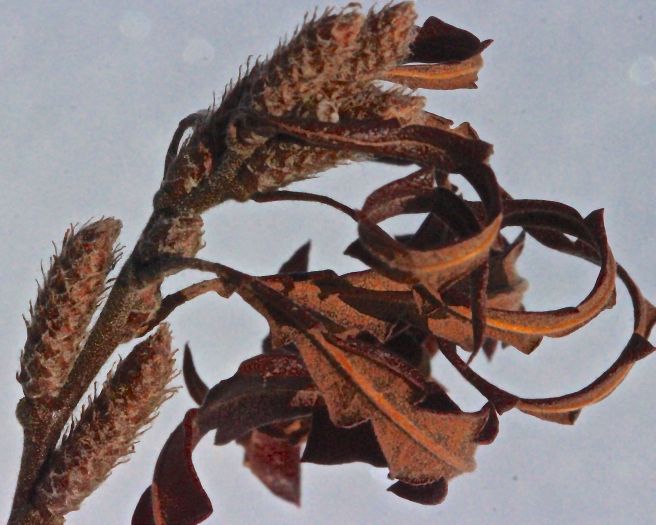
Unwittingly, this shrub also played host to a gall gnat midge that overwintered in a structure created by the reaction to a chemical released by the larva–what would have been leaves were forced to harden into a pine cone look alike.

t-bog colors 2

The subtle colors graced the meadow,

t-pleasant

were reflected in the bog,

t-river

and blessed the Saco River.

t-baltimore 2

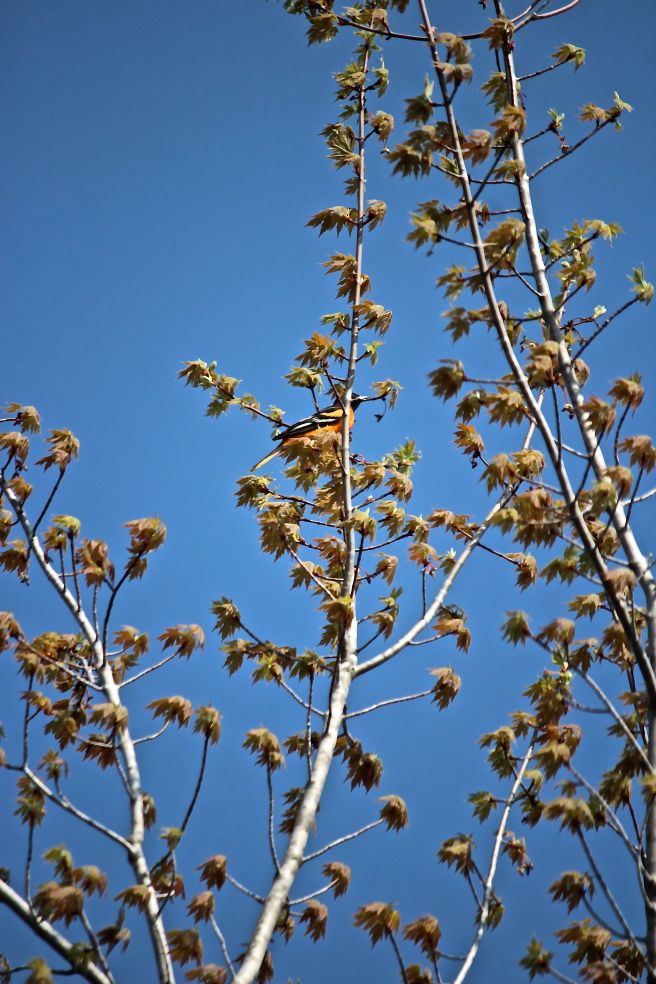
There were bits of flashy color–do you see who was feeding on the upper branches?

t-rhodora 1

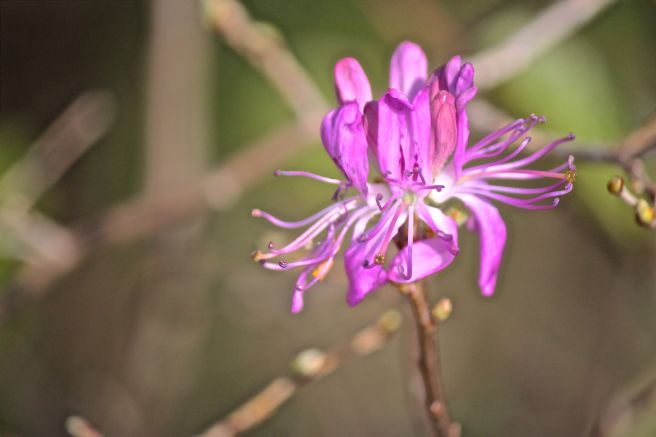
And this spring beauty exploded with love and life.

At the end of my journey, I was grateful to P&K for an excuse to step away from my desk and check out the mystery standing in Beulah’s field. Especially as it led me further afield.

Our Place

h-tom2

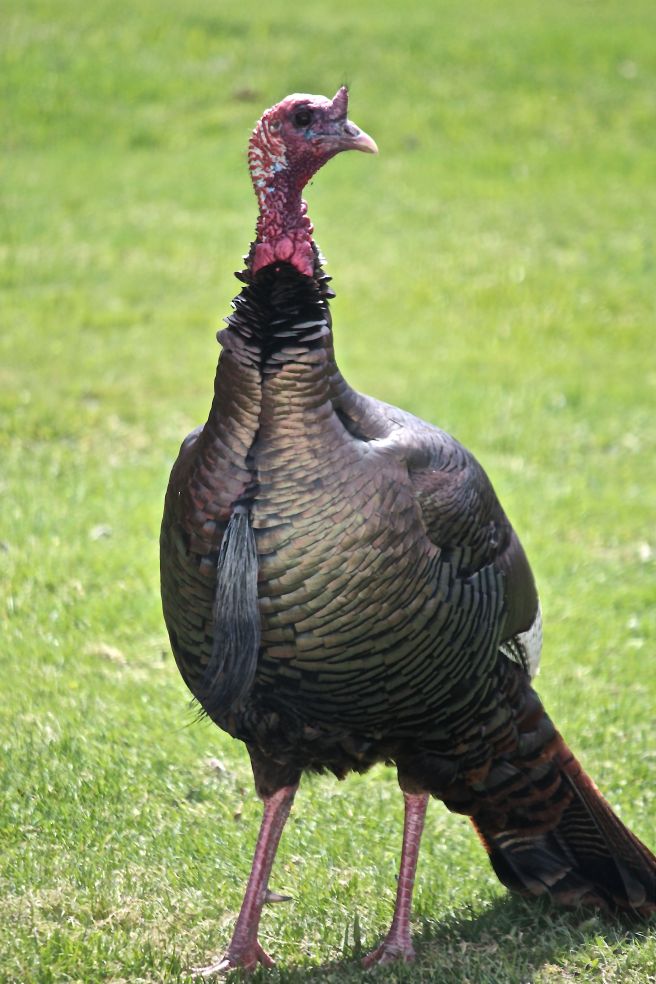
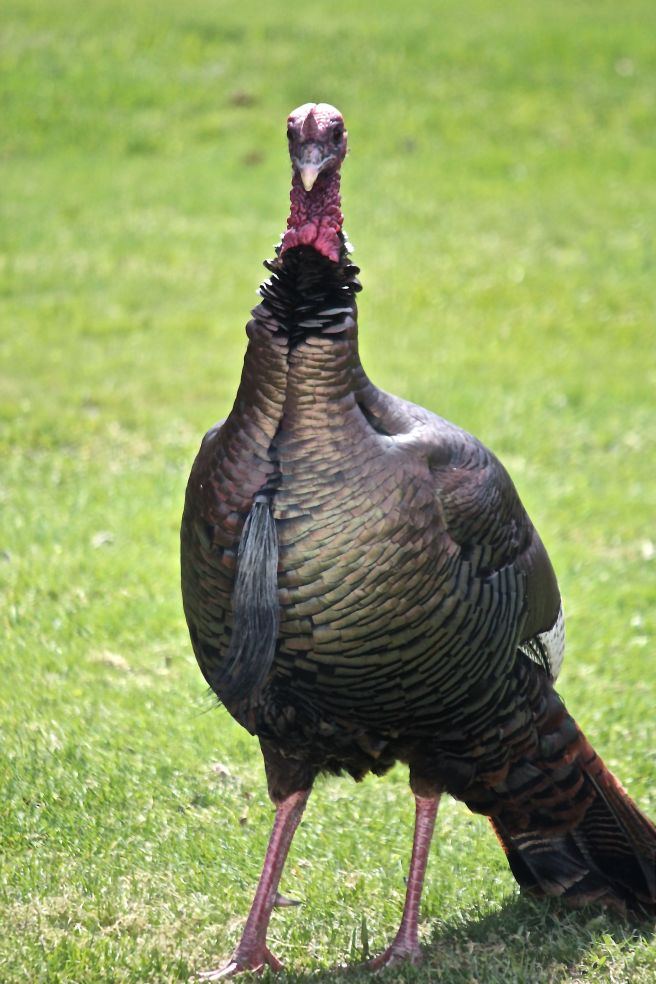
Gooble. Gooble. Gooble. Gooble. Gooble. Gooble. Gooble. Seriously . . . is all that noise necessary? Apparently it is. Mr. Tom felt the need to awaken us at this morning’s first light with his non-stop gobbling–his way of calling the hens to join him. Disclaimer: I didn’t take this photo until later in the day. In all his ugliness, I have to say that he really is a handsome fellow.

h-female turkey

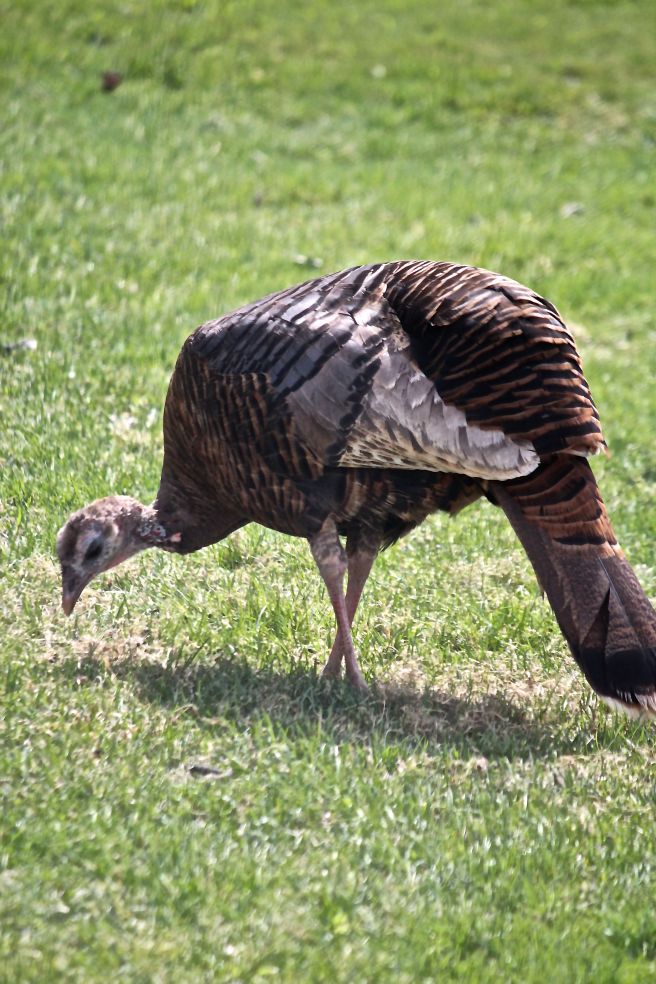
The hens who hang out with him don’t appear to care, but maybe they’re just playing coy.

p-little saco sign

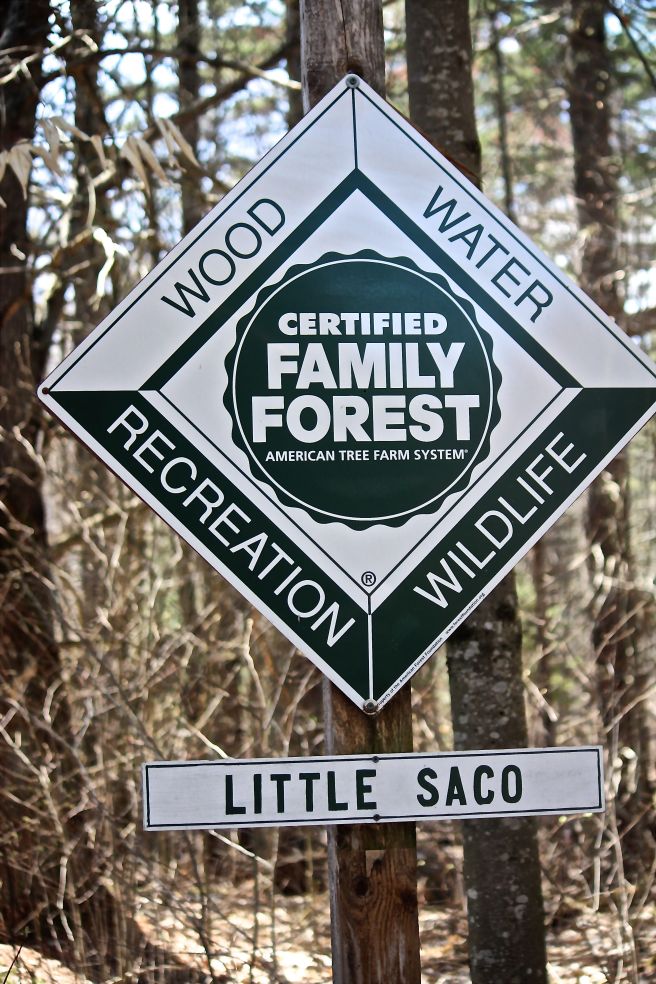
We left them to the bird seed scattered on the ground and drove to Farnsworth Road in Brownfield for a hike up Peary Mountain. The trail is located on private property and we’re thankful that it’s open to hikers. Much of it is a snowmobile trail as well.

p-Little Saco

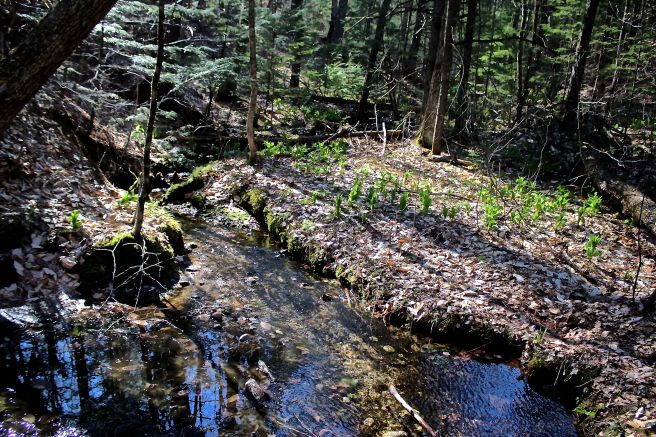
The Little Saco flows over moss-covered rocks beside the lower part of the trail.

p-false 4

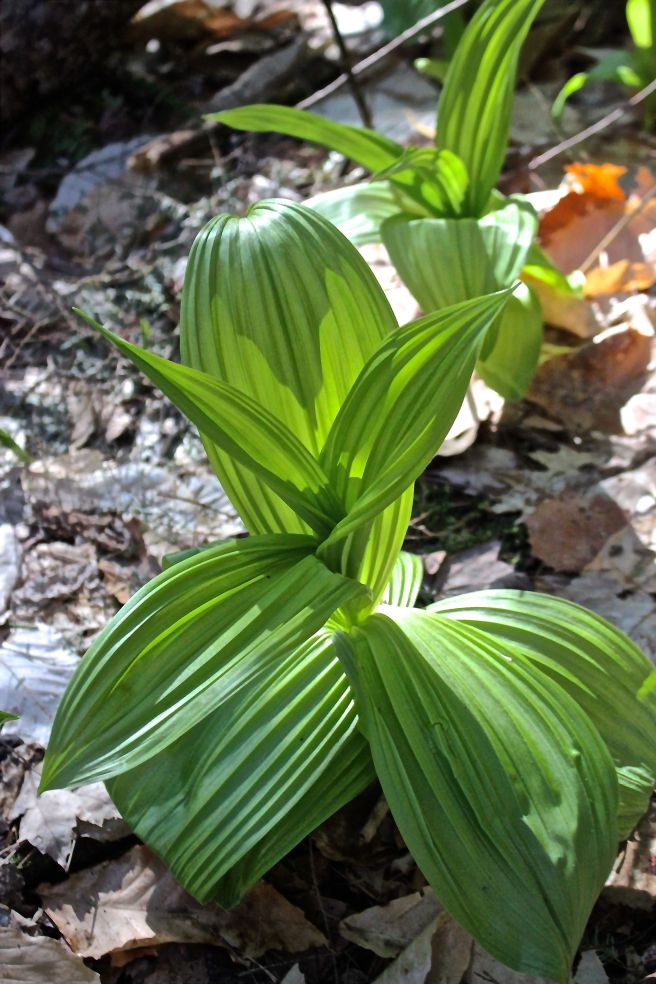
As we followed it, bright green growth in the damp soil warranted a closer look.

p-false hellibore 2

A true sign of spring–false hellebore with its corrugated leaves.

p-striped 2

There are plenty of other signs, including the pink and green striped maple buds. I’m missing my macro for these moments of early glory, but so it is.

p-beech 1

While some beech trees still have a few marcescent leaves clinging until they can no more, I noticed a few buds beginning to burst.

p-summit sign

At a stone wall, the trail suddenly turns 90˚ to the left.

p-fdn 2

But in the opposite direction–the remains of an old foundation.

p-fdn ledge 2

And above, a ledge from whence the stones presumably came.

p-porc scat

The ledge continues to provide a dwelling–for critters like the porcupines who keep the hemlocks well trimmed.

p-bluets

As we climbed to the top, delicate bluets showed their smiling faces.

p-bench view1

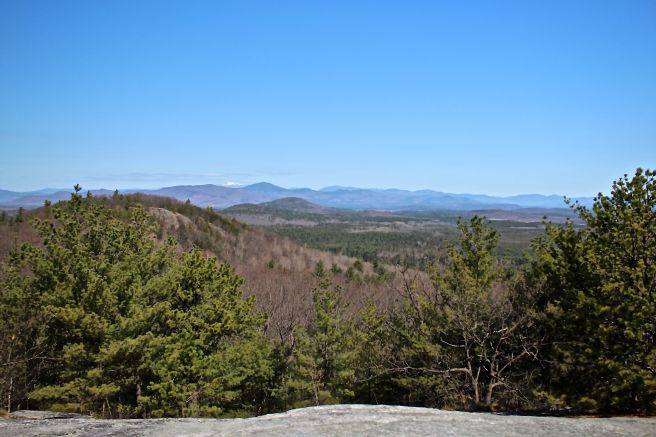
And then we emerged on the 958-foot summit, where the bench view is glorious. The small mountain was named for Admiral Peary. Apparently, his mother’s family, the Wileys, lived in neighboring Fryeburg. Upon graduating from Bowdoin College in 1877, Peary lived in Fryeburg and conducted survey studies of the area for a couple of years, before moving to DC and later leading an expedition to the North Pole.

p-mount wash

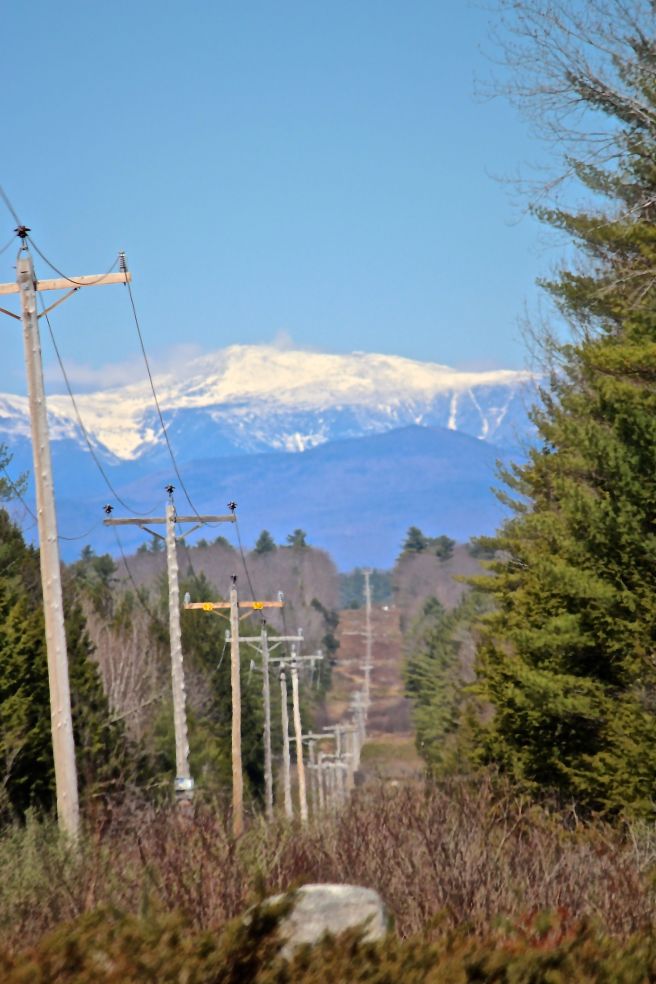
If you’ve seen similar views of the big mountain, its because it’s part of our place.

p-my guy view

I followed my guy along the ridge line to the end–where the view turned homeward.

p-pointing

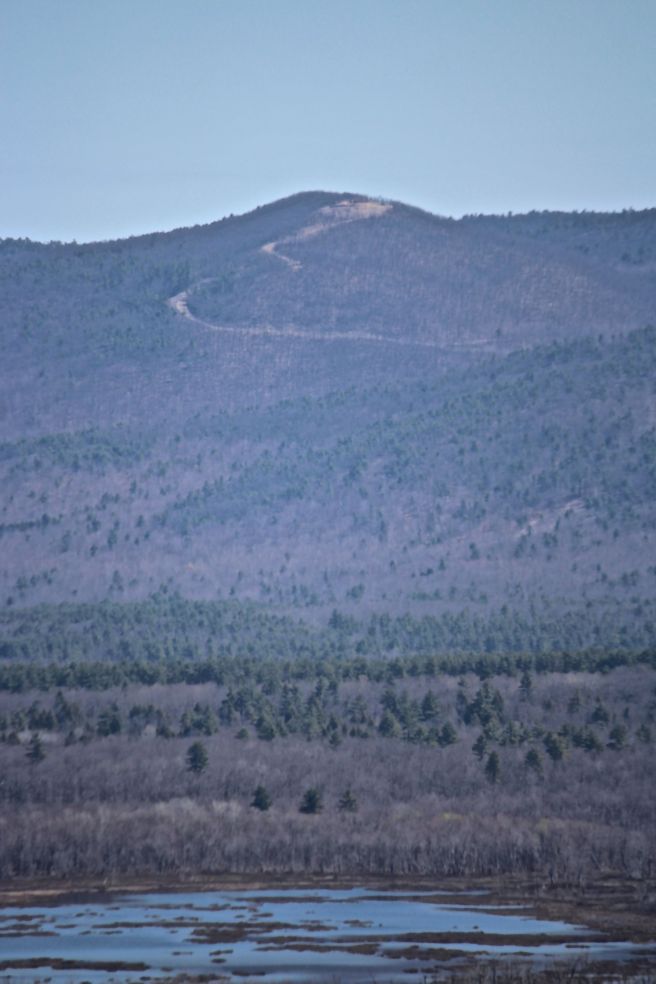
My guy made a point of recognizing landmarks from Mount Tom and Lovewell Pond along the Saco River to Pleasant Mountain and Brownfield Bog.

p-Pleasant 2

If you look closely, you’ll notice a horizontal line just below the bog–that’s the Saco River. And the little mountain to the left of Pleasant Mountain–Little Mountain in West Bridgton.

p-Pleasant Road1

The only part of the view that we don’t get–the new road that was constructed up the backside of the mountain within the past year. It worries us. And that is why we appreciate the efforts of Loon Echo Land Trust for protecting most of the rest of the mountain.

b-pitch pine

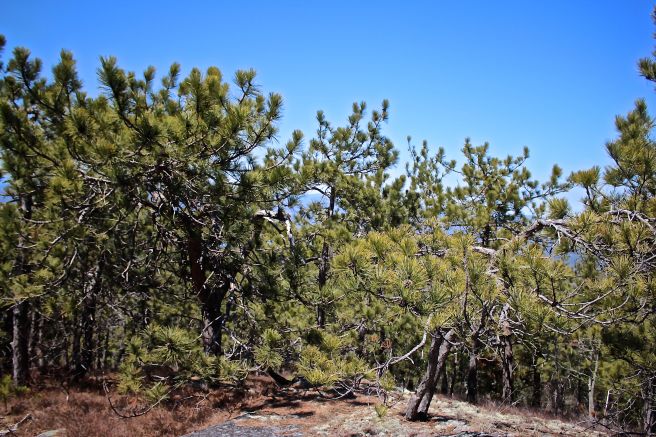
We headed home for lunch and to pull out the lawn furniture.* And then we parted ways, my guy to attend a celebration of life for an old friend, and me to climb Bald Pate. My purpose–to look at the pitch pines and jack pines.

b-pitch 2

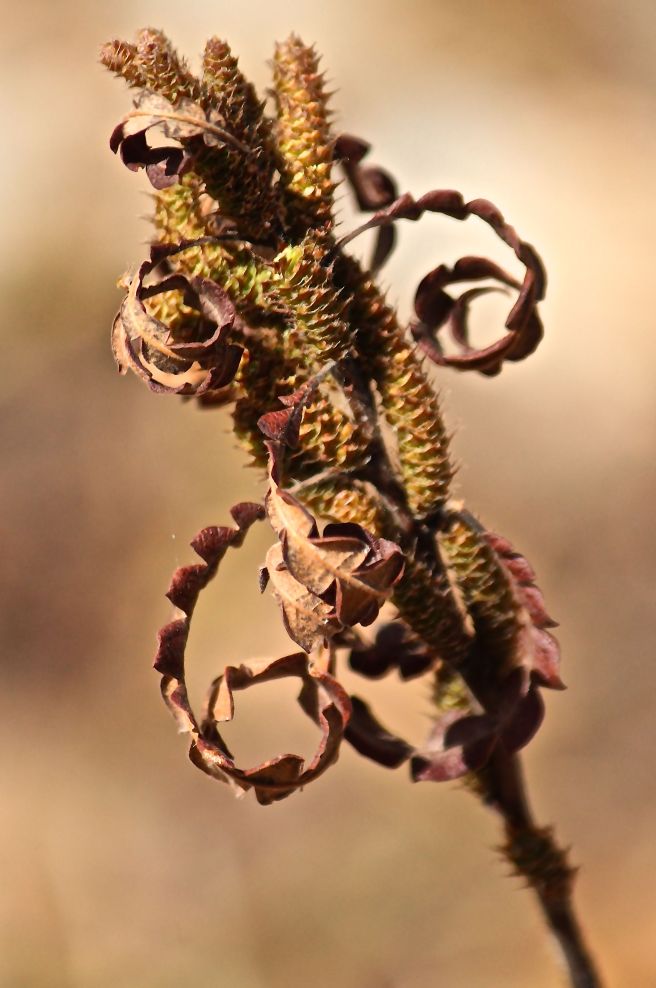
In bundles of three, the stiff needles surround the male pollen bearing cones on the pitch pine.

b-jack pine1

Jack pine features two needles per bundle–think Jack and Jill.

b-peabody & sebago

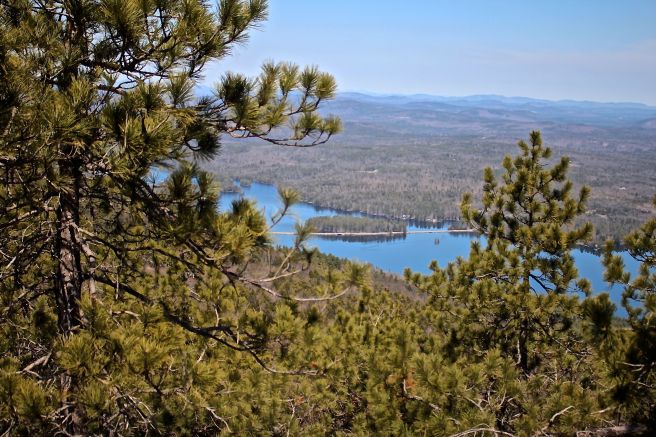
From the summit, I paused to take in the view of Peabody Pond and Sebago Lake beyond. It doesn’t matter how often I climb to the top of this 1,100-foot mountain, the view is ever changing.

b-mount wash1

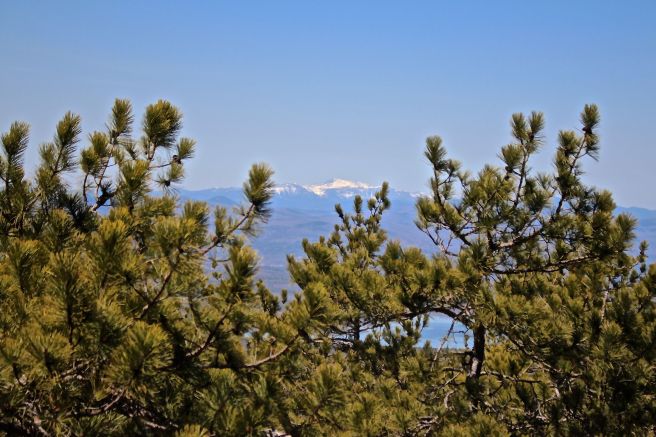
And again, I could see Pleasant with Mount Washington in its saddle. This time, however, I was on the opposite side looking at the front of Pleasant Mountain. You may wonder about the road–it leads to two cell towers near the Southwest Ridge summit.

b-sweet fern 1

As I made my way to the Foster Pond Lookout, I stopped frequently to enjoy the ever-artful presentation of sweet fern.

b-blueberries

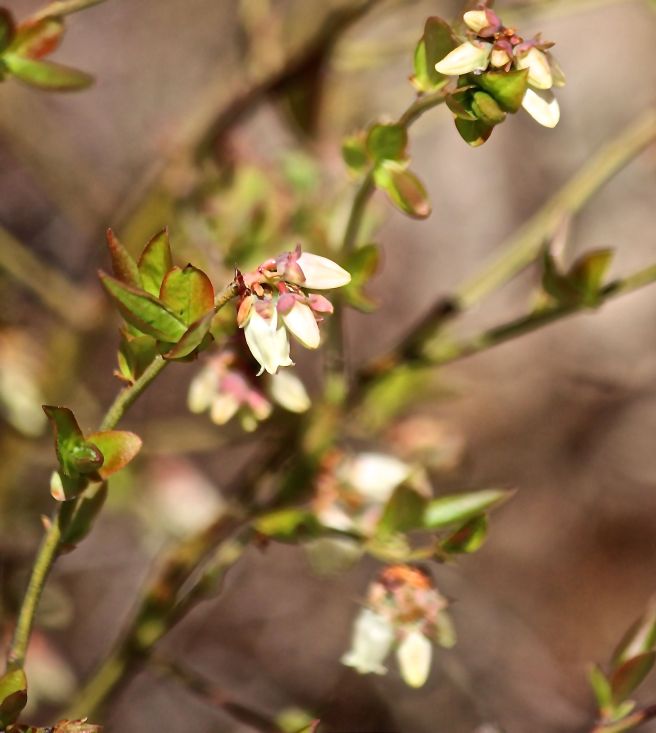
And I noticed another sweet offering that many of us will enjoy this summer–blueberry plants in bloom.  A year ago next week, I saw the same on this very mountain. Seems early, but I think they’re well protected in a sunny spot.

b-foster pond 2

I’m sure had my guy been with me, he would have named a color chip that matched Foster Pond–perhaps turquoise blue best described it in that moment.

b-bird treat 1

Heading back to my truck, I noticed some bird treats dangling from the trees. Perhaps our turkeys will fly to South Bridgton.

h-tom 3

Apparently not. Back at home, Tom had returned. He’s a frequent visitor to our place. And we’re frequent visitors to the area beyond our backyard. It’s all really his place and our place.

* If you live in our area, expect at least one more snowstorm. It always snows once we pull out the lawn furniture.


The Big, The Little and Everything In Between

I stepped out of the shower after a walk around town with friend Marita and heard someone chatting away on the answering machine. Maybe it’s because I didn’t have my glasses on, though what that has to do with it I don’t know, but I couldn’t ID the voice. The male yammered away about something in the snow and it had come last night and I had to get there quickly. For some reason I thought it was our eldest and I  wondered what it was that needed my immediate attention. So, I cautiously picked up the phone and said hello. The voice on the other end continued talking desperately about me going somewhere. “Who is this?” I asked. It was friend Dick and I should have recognized his voice, but maybe not having glasses on is like not being able to taste if your nose is stuffed. Or maybe I’m overthinking as usual. Dick, however, was not overthinking or overreacting. He was excited and knew I would be as well. He was standing in a friend’s yard about a half mile from here and looking at bear tracks in the snow.

b-bear 7

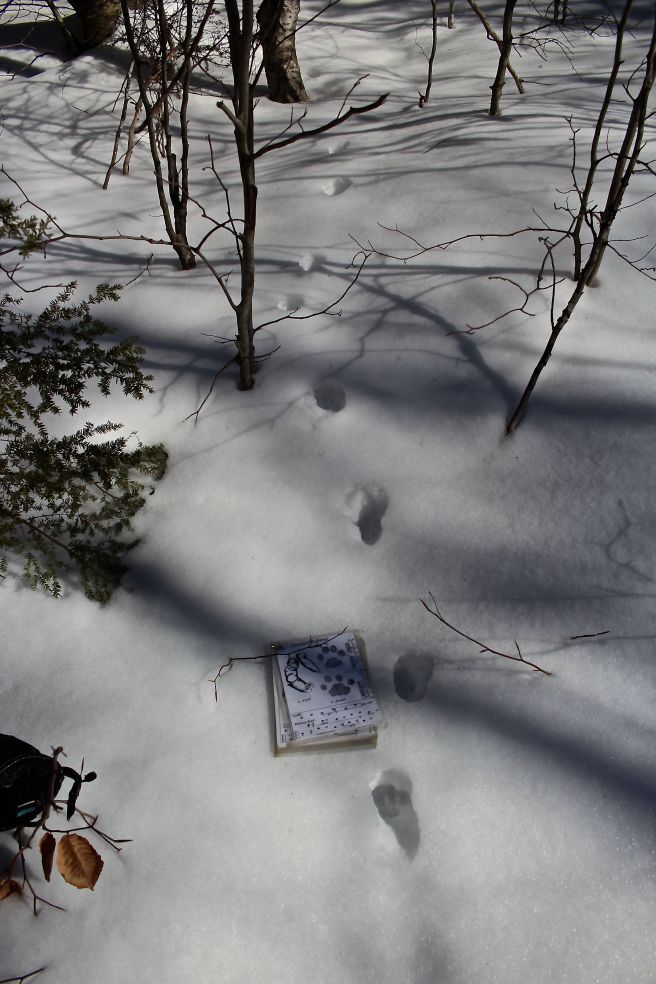
As he knew he would, he had me on the word “bear.” His voice was urgent as he insisted I stop everything and get to his friend’s house. “I just need to dry my hair and then I’ll be right there,” I said. Deadlines loomed before me but bear tracks won my internal war. Dick suggested I just wrap a towel around my head. Really, that’s what I should have done because my hair has no sense of style whether wet or dry, so after a few minutes I said the heck with it and popped into my truck, camera and trackards in hand.

b-bear2

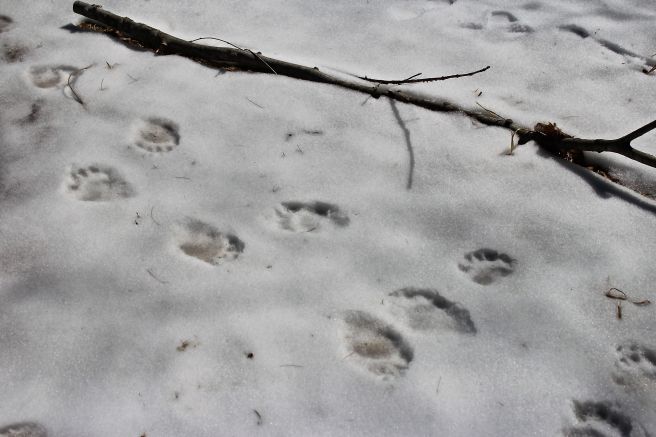
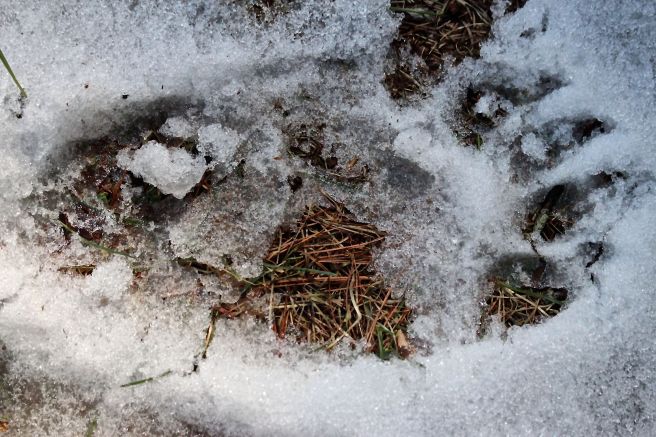
Yup–bear tracks. Classic, beautiful bear tracks. Even nail marks above the toes.

b-pigeon toed

And the pigeon-toed gait.

b-bear 9

My heart be still. The bear certainly wasn’t.

b-bear fence

It trampled a garden fence.

b-bear 4

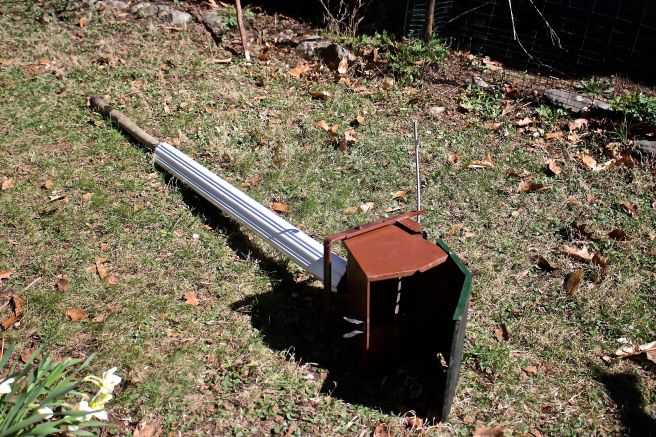
And yanked down a suet feeder that dangled from a wonderful rigging at second story height designed to keep the raccoons from stealing it. We couldn’t find the actual feeder.

b-feeder1

It toppled another feeder and consumed all the sunflower seeds. Oh, the squirrels may have helped, but apparently the feeder was stock full. Not any more. We looked for hair but found none.

b-trot

One of the mysteries to us was why did the bear suddenly trot. I’m now wondering if it was startled at some point and ran away.

b-bear 6

Before leaving, I enjoyed one more look. How sweet it is. And how thrilled I was to have seen it–especially knowing that it wouldn’t last long. The. Big.

b-feathers in circle

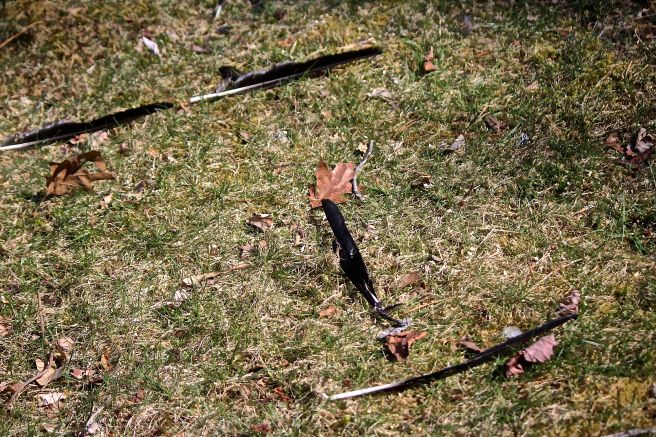
When I arrived home, I knew I needed to work, but figured a quick walk to check on the vernal pool was a great way to celebrate the bear tracks. And on my way–feathers. Long black feathers.

b-feather 1

Most were about a foot long.

b-feather 2

They appeared to be torn out rather than cut.

b-bird head

I know the neighborhood cats hang around our bird feeders all day–ever hopeful. But I don’t think they got this crow. I’ve a feeling a hawk was the culprit. The. In. Between.

b-snow on mount

It’s my neighborhood, so I always cast an eye toward the Mount. The. Big. Again.

b-vp1

The water level seems about the same as last week and a wee bit of Tuesday’s snow still decorated the  western shore.

b-tadpoles 3

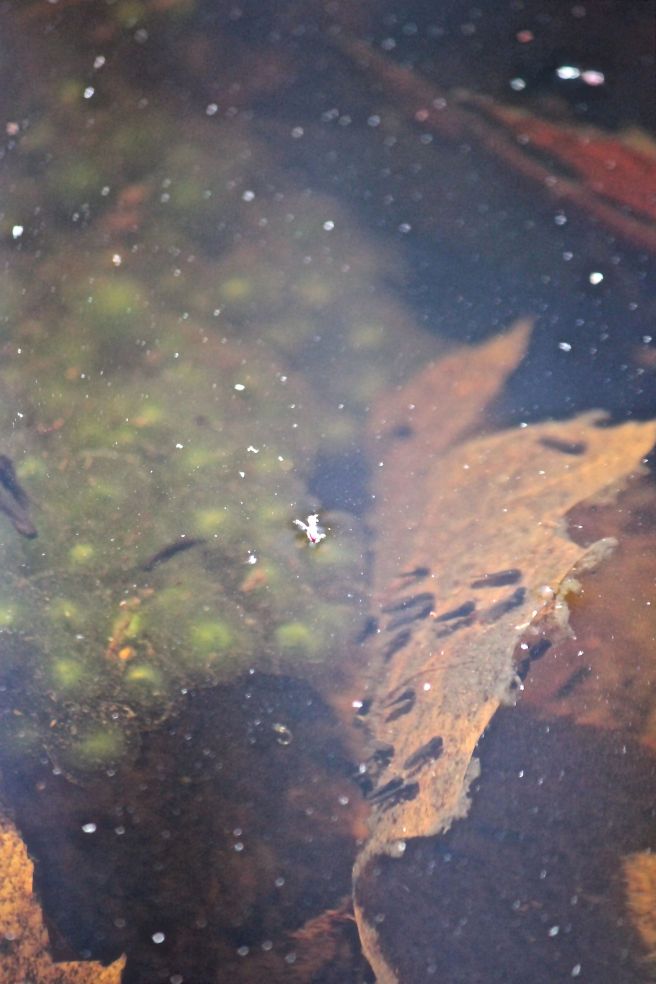
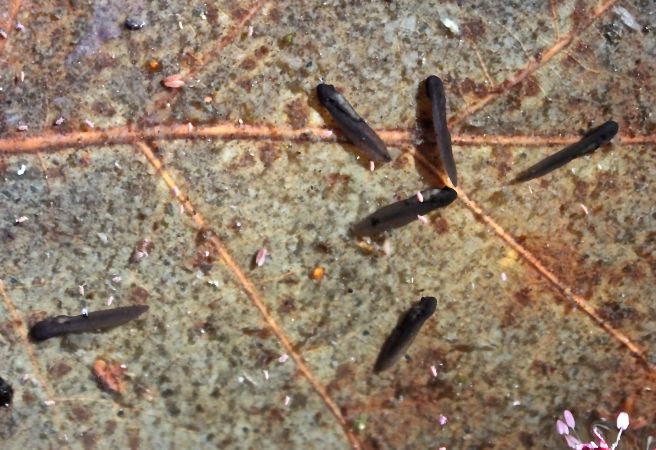
Though the lighting wasn’t great at that hour, it was obvious that the tadpole population had increased.

b-sally1

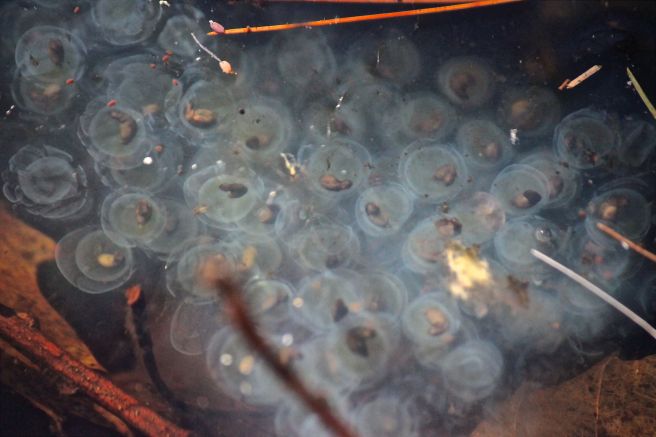
And the salamanders continued to grow within their protective covering. The. Little.

b-woody1

I did finally settle down to work. And then it was lunch time. My guy and I weren’t the only ones dining.

b-woody lunch 1

After I finished two assignments and before I walked to a meeting, I decided to visit the pool again and capture the action in the late afternoon light. But first, an examination of the woodchuck’s feeding site. Yup, those leaves were nibbled.

b-woody lunch 2

And so were these. The. In. Between.

b-vp no snow

And then it was back to the pool, where the snow had melted. But, I have to share a finding along the way. Or rather, a non-finding. I intended to grab the crow head because I wanted the skull. Not. It wasn’t in the path where I’d seen it in the morning. I poked around and couldn’t find it anywhere. Who stole it? Maybe one of those darn cats.

b-tads 7

In the warmth of the sun at the eastern side of the pool where most of the egg masses were laid, the population continued to increase.

b-tads 10

I felt the same glee about all of these little critters as I felt about the bear tracks earlier in the day.

b-tads on sallies

Tadpoles and salamanders. I may not see bears tracks every day, but for a brief moment in time, I’m honored to watch the transformation that takes place in the vernal pool. The. Little. Times. Two.

Giving thanks for the ability to wonder. The Big. The Little. And Everything In Between. Especially Everything.

From Peak to Shining Peak

Maybe we’re a wee bit crazy. Maybe there’s no maybe about it. My guy and I climbed Pleasant Mountain again, only this time we took a much longer route than yesterday.

p-Bald sign

After leaving a truck at the Southwest Ridge trail, we drove around the mountain and began today’s trek via Bald Peak. It’s always a good way to get the heart beating, but then again, any of the trails up the mountain will accomplish that mission.

p-bald stream 2

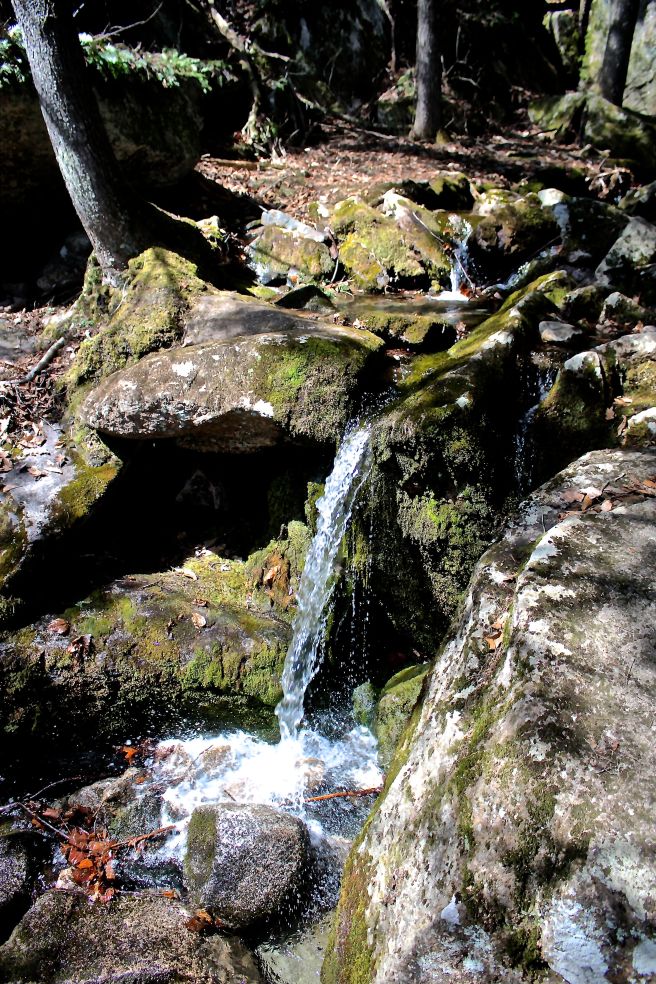
One of my favorite features of this path is the voice of the stream–water rippled with laughter as it flowed over moss-covered rocks before splashing joyously below.

p-Sue's Way signs

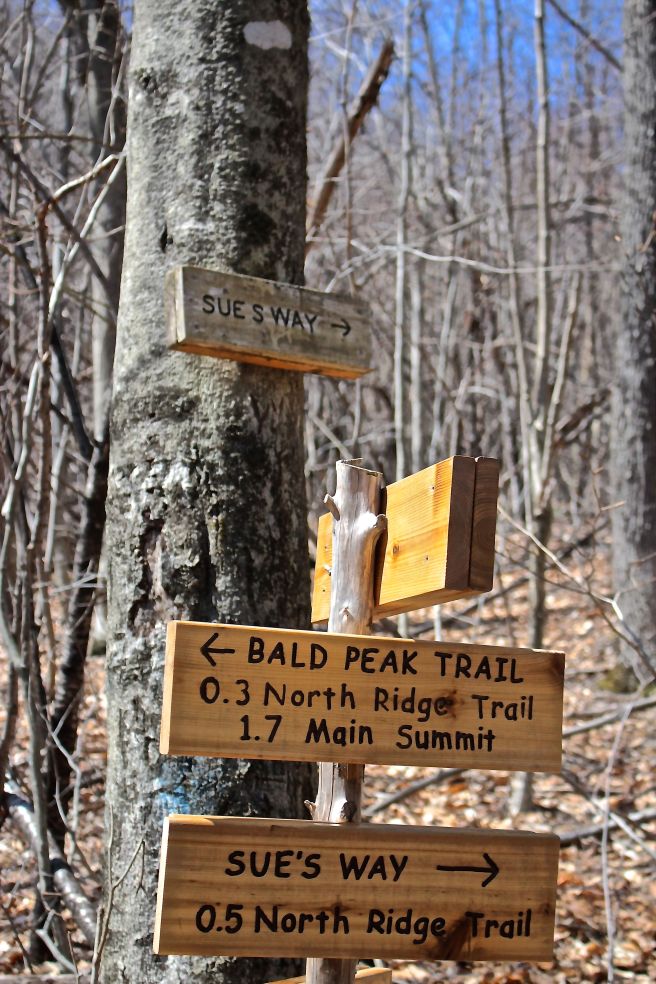
And then we turned right onto Sue’s Way. We never knew Sue, but are thankful for this path carved in her honor.

p-Sue's snow on East

Across the ravine, snow still clung to the East slope at Shawnee Peak Ski Area.

p-Sue's porky

Oaks, beech, hemlock and yellow birch form most of the community, feeding the needs of their neighbors–including porcupines.

p-Sue's 2

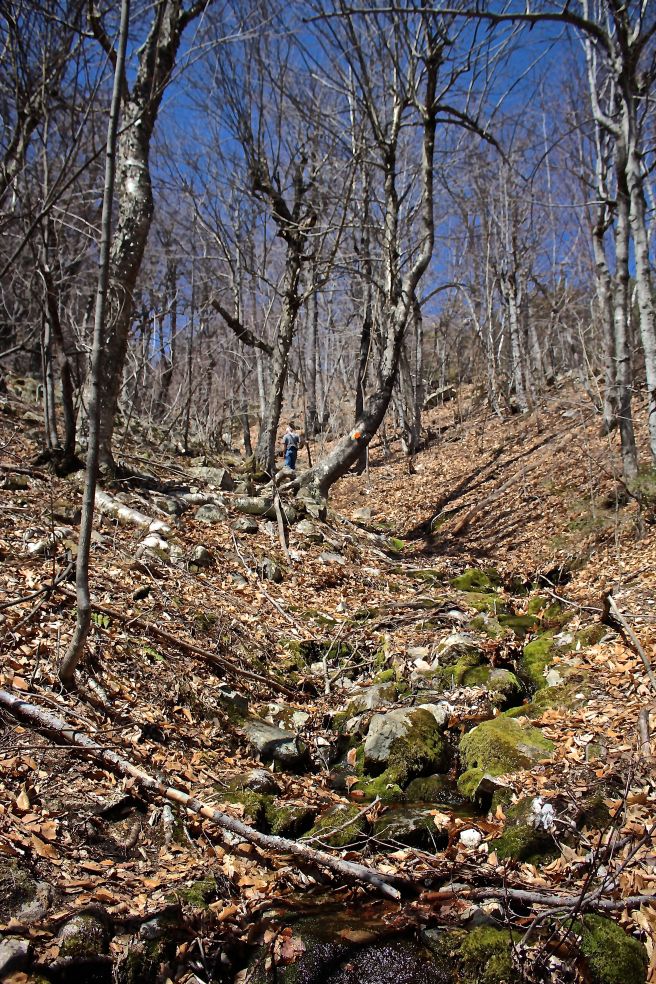
We followed the trail as it embraced another stream and watched the landscape change.

p-Sue's polypody

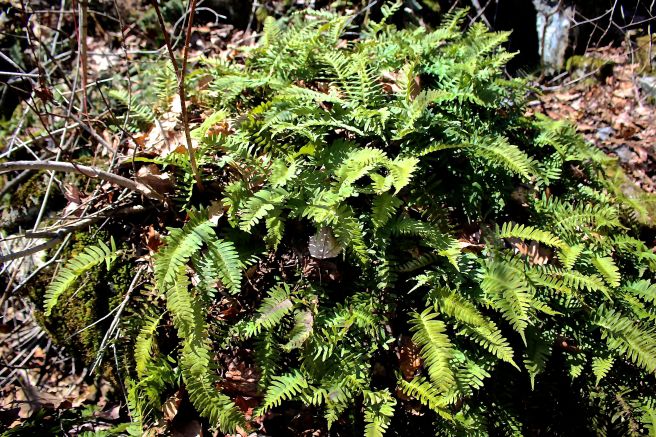
Eventually, we were in the land of large boulders and ledges, all decorated with common polypody and moss–an enchanted forest.

p-shawnee chair

At the top of Sue’s Way, we detoured to our first peak–Shawnee Peak.

p-shawnee

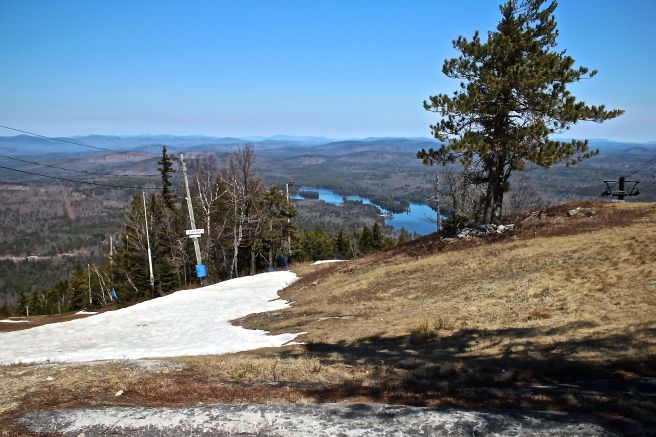
Splotches of snow signified the end of a season.

p-Shawnee chair 1

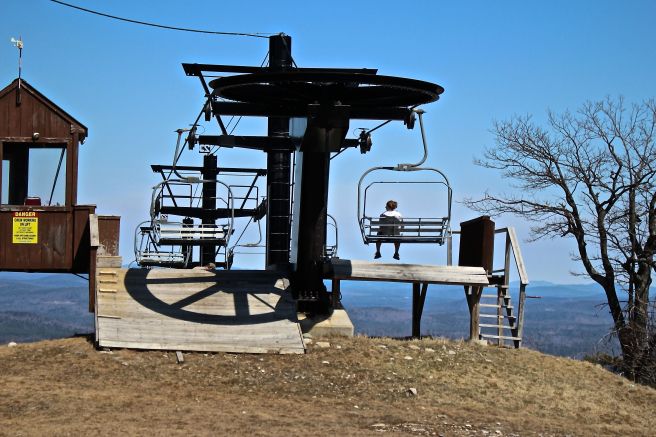
The Pine chairlift silently rested, its duty accomplished until it snows again.

p-shawnee ski chair 2

And in the shack, the back of ski chair spoke of past adventures and adventurers.

p-signs by mtn

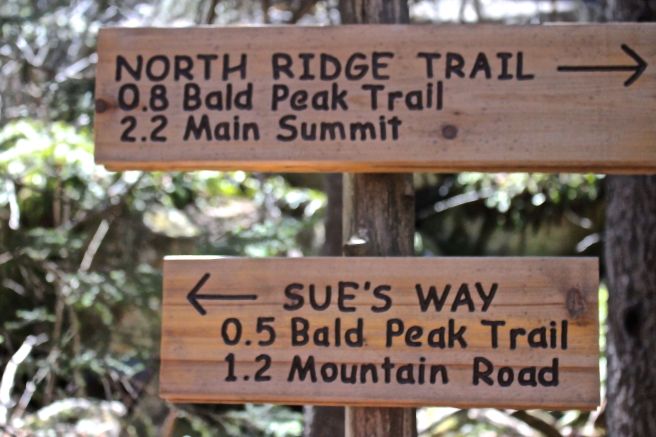
From there, we followed the North Ridge Trail to our first official peak.

p-north peak trail ice1

Despite today’s warmth, ice still reflected movement frozen in time.

p-north peak pines

North Peak has always been one of my favorite spots on this mountain. In the land of reindeer lichen, blueberries and dwarfed red pines, we ate lunch–day two also of ham and  Swiss. This is becoming as much of a habit as climbing the mountain.

p-Mtn W from lunch rock

When we stood up on lunch rock, our view included the master of all New England mountains glowing in the distance.

p-north peak

In a few months, the treasures of this place will give forth fruitful offerings.

p-ridge line

With North Peak behind, our view encompassed the rest of the peaks.

p-Bald Peak, Mtn W and Kezar Pond

Continuing down and up again, we heard plenty of quaking coming from a vernal pool about one hundred feet off the trail. And then we were atop Bald Peak, where Mount Washington again showed its face, with Kezar Pond below.

p-bald peak causeway

The other side of the trail offered a photo opp of the Route 302 causeway that divides the north and middle basins of Moose Pond.

p-ft again

Our decision today was to hike the mountain in a backward fashion as compared to our normal routes, so we approached the main summit from the Firewarden’s Trail.

p-summit crowd

Once again, many others also took advantage. We did chuckle because except for one guy, of all the people we encountered, we were the oldest. The youngest–a baby in a backpack.

p-SW sign

At the junction below the main summit, we began to retrace yesterday’s footsteps on the Southwest Ridge Trail.

p-SW mayflower

The sunny exposure made this the warmest of all trails and the Trailing Arbutus prepared to make its proclamation about the arrival of spring.

p-SW Hancock

Near the teepee, I felt compelled to capture the ponds again. Another beautiful day in the neighborhood.

p-SW 2

After chatting with a family at the teepee, we began our descent. Of course, someone was mighty quicker than me.

p-SW 3

Where no trees grow on the bedrock, cairns showed the way.

p-SW mnts

Before slipping into the forest again, I was thankful for the opportunity to capture the  blue hue of sky, mountains and ponds.

p-cairns final turn

We made our final turn at the three cairns and

p-SW final

followed the path down–though we did begin to think that maybe they’d moved the parking lot.

p-LELT

Over six miles and four hours later, we had Loon Echo Land Trust to thank once again for protecting so much of the mountain and maintaing the trails. We reminisced today about how our relationship began at a halloween party held at the ski area thirty years ago and the number of treks we’ve made along these trails since then. Whether hiking to the ledges or teepee, making a loop or walking peak to peak on a sunshiny day such as this–it never gets old.


Following In The Footpath Of Others

Rain marked this morning’s dawn, but that didn’t daunt our group of six. We donned overcoats, gloves, hats and waterproof boots knowing that we’d encounter mud along our intended route.

And so we met near the former site of the Methodist church in the northeast corner of Sweden–Sweden, Maine, that is. Our intention was to follow the snowmobile trail for a couple of miles and visit foundations and a few other historic sites along the way.

s-you are here map

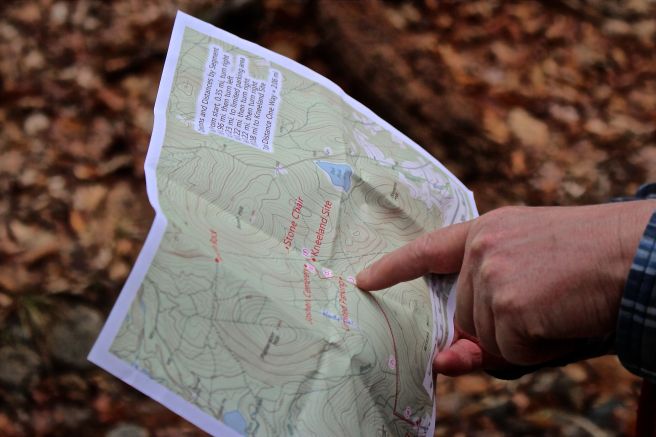
Maps dated 1858 and 1880 show a network of roads that served the scattered neighborhoods of this town. The trails we were about to walk on follow the footpaths and wagon tracks of earlier people. These were once town roads. We happened to be in the presence of the president of the Sweden Historical Society and she gave us copies of the maps to help us gain a better understanding of our destination. She also printed out a topographical map so we’d have no excuse for getting lost.

s-following trail in

With the sun suddenly shining upon us, we laughed at ourselves as we moved along because we traveled at breakneck speed. Well, for us anyway–1.8 mph when we were moving. Note the phrase: “when we were moving.”

s-stream to Patterson 1

Along the way, we paused to admire the streams that flow toward Patterson Brook and

s-vp 1

checked on life in a potential vernal pool.

s-stream 2-mill site

While we find water so mesmerizing, I couldn’t help but wonder about its potential here for the early settlers.

s-stream 3

Several times we found stone walls on either side of the streams and didn’t know how to interpret their meaning. That was OK–we appreciated not having all of the answers.

s-stream 4

The opportunity to partake of the beauty among friends old and new was enough.

s-cheyenne

Even four-footed friends.

s-single:double wall

The stonewalls, both double and single in structure, indicated that the land had been cultivated. We tried to make sense out of the sudden switch from single to double and back to single in a short distance, but really, they didn’t necessarily build walls according to our expectations of what life must have been like–a single wall meaning keep the farm animals in or out and the double being a garden wall–lots of times it was probably just plain common sense and a need to get rid of the stones that rose with the frost.

s-drilled rock

Eventually, we climbed over the wall and headed up toward this monument. Dave, who lives in this neighborhood and knows these woods well, encouraged us to ponder.

s-drilled rock 2

Why was the top of the rock split off intentionally and then left there?  Was it intended for a foundation stone? Was the neighborhood abandoned before this piece was used?

s-town line 1

We wandered further through the woods and came to the Sweden/Waterford town line. Two stone walls less than ten feet apart mark the boundary. Waterford to the left and Sweden to the right. (Did I get that right, Linda?–my left and right?)

s-town line

Orange paint also marked the boundary line.

s-kneeland foundation

We’d crossed into Waterford and stopped for a break at the Kneeland (1858)/Kimball (1880) residence, a rather large foundation with a center chimney.

s-fdn rocks, squirrel table

Apparently, we weren’t the only ones who paused here for a snack.

s-hidden brook

And then we crossed the snowmobile trail once more and began bushwhacking again. Though you see only tree shadows, leaves and moss here, it wasn’t what we saw, but what we had the honor to hear that made us stop–an underground brook. It felt like we’d stumbled upon a secret spot.

s-stone chair 2

Dave led us uphill to another special spot a friend of his discovered years ago–the stone chair. You have to wonder about this. We’re in the middle of nowhere that was once somewhere. Below this is a large hole in the earth, possibly a foundation of sorts. And beside, a skidder trail. So, who built the chair?

s-stump by chair 100:50

Atop the foundation of sorts was this cut stump–we surmised it was cut about fifty years ago and that it was about 100 years old at that time.

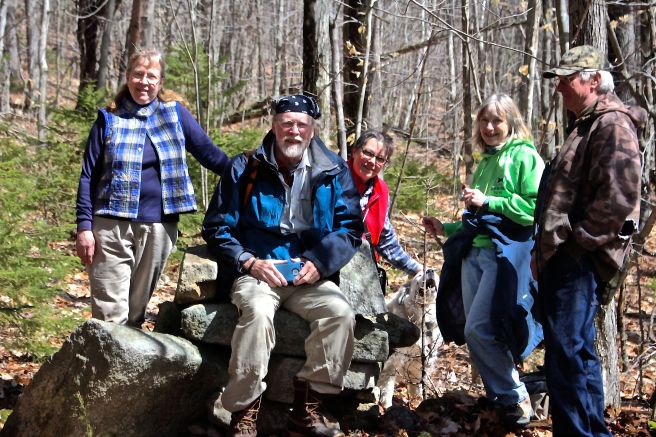
s-group 1

It really doesn’t matter. What matters is sharing the discovery.

s-chair and Sophie

Another four-footed friend also thought it was rather special.

s-cable

Not too far from here we found something else that spoke of logging.

s-goshen 2

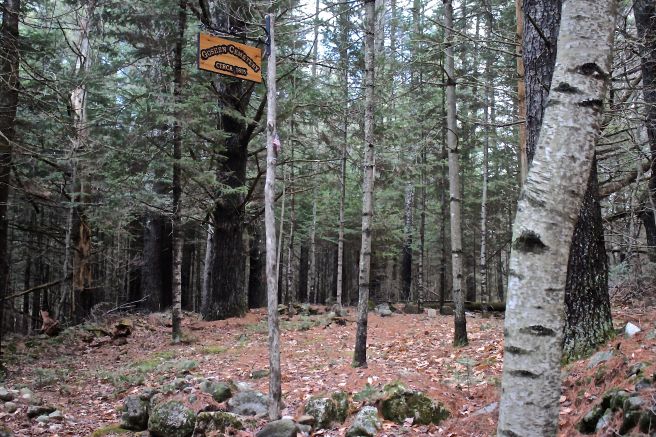
We continued our bushwhack to another site of importance–and came upon it from the backside.

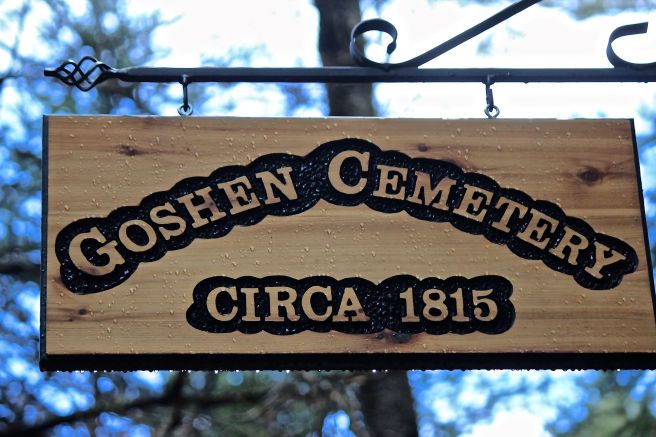
s-goshen sign 2

The Goshen Cemetery, circa 1815. Notice the raindrops and blue sky. A few drops fell in the middle of our walk and then it cleared again.

s-goshen cem 3

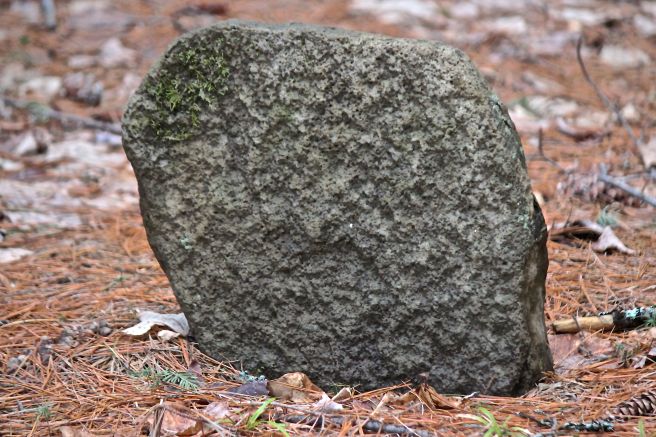
The cemetery contains stones that had been buried under the duff, but when discovered, were uprighted in spot.

s-goshen stone 2

s-goshen tomb stone

The tombstones are unmarked and as far as I know, two theories exist–an epidemic struck the neighborhood and those who died needed to be buried as fast as possible, or these were the tombs of the residents from the town’s poorhouse.

s-goshen sign 3

One thing we do know for certain. The bears like the sign and it has been remade several times and posted higher and higher in hopes that they’ll leave it alone.

s-bark art 1

Those were our historical finds, but we also made time to enjoy our surroundings, beginning with artwork created naturally.

s-beech elephant

I always say that beech bark doesn’t remind me of elephant skin, but today–elephant legs and feet, for sure.

s-downy rattlesnake plantain

Peaking out from the leaf litter, downy rattlesnake plantain showed off its white-veined leaves. Stained glass windows come to mind whenever I spy this. And though its the commonest of the rattlesnake plantains, I’m always in awe.

s-checkered rattlesnake

We also nearly stepped on its cousin, checkered rattlesnake plantain. I do have to say that if I were in charge of the world, I’d switch their names.

s-artist conks

We found artists conks and

s-hemlock shelves 1

old hemlock varnish shelves.

s-porcupine den

We know where the porcupines denned,

s-moose:striped maple

moose browsed,

s-pileated 1

woodpeckers dined,

s-deer rub

deer rubbed their antlers,

s-deer rub:paw

and pawed the ground. Do you see it at the bottom of this photo? It’s a scrape meant to communicate information to other deer.

s-flying squirrels 1

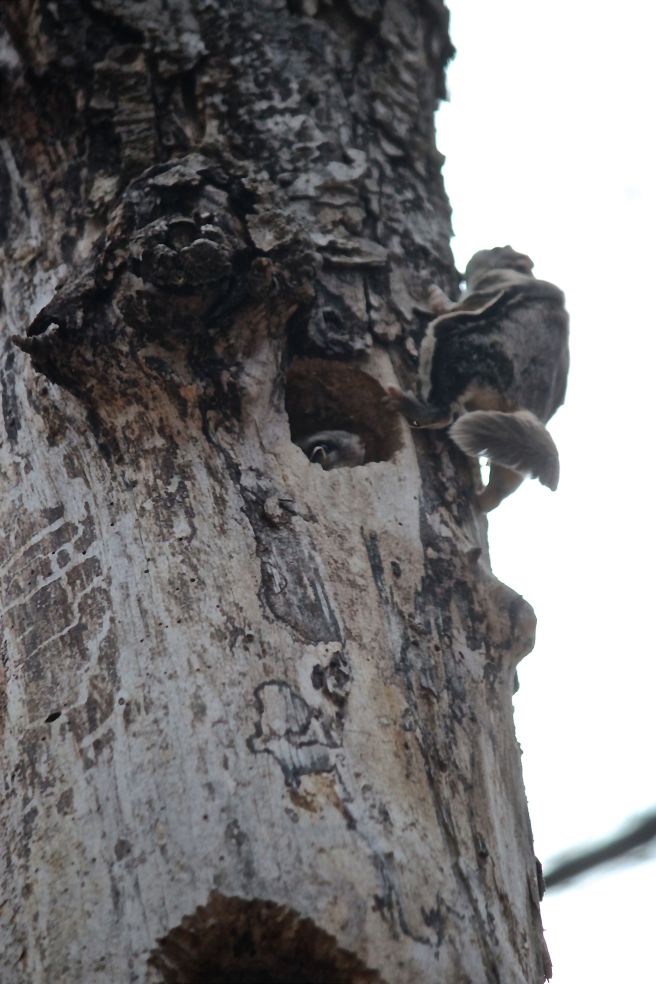
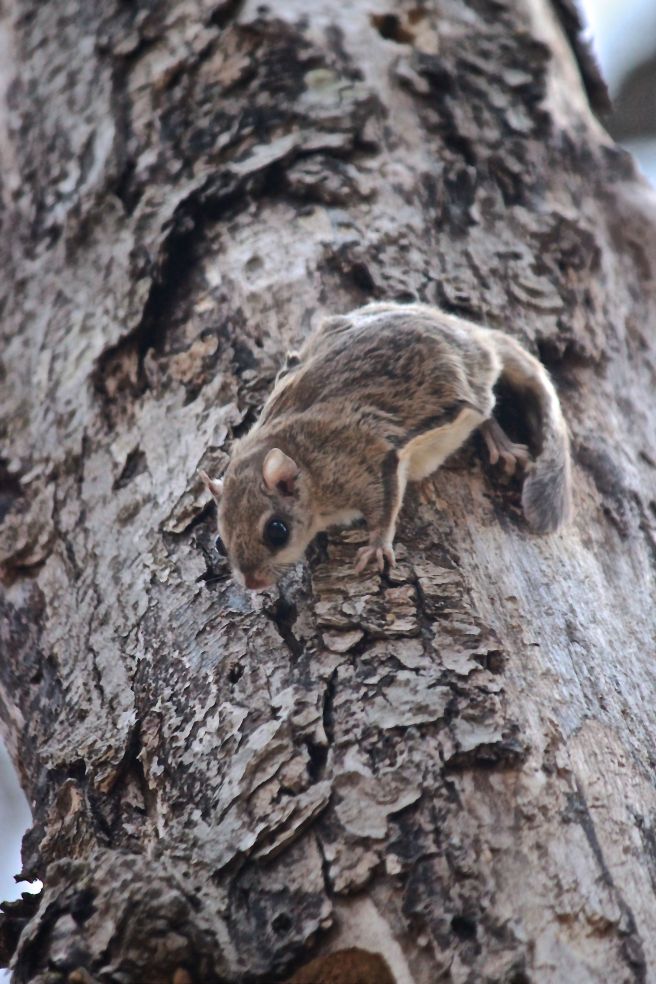
But one of my favorite sights of the day–the flying squirrels that scampered up an old snag. Notice the flat tail–a rudder.

s-fs 2

And the flap on its side, that furry membrane that stretches from the wrist to ankle–a parachute of sorts for gliding from tree to tree.

s-fs 4

And those bulging eyes–the better to see in the dark.

s-heading home

Four hours and almost six miles later, we followed the trail out, thankful for the opportunity to spend time wondering together and follow in the footpath of others.


Temporarily Giving a Dam

Another frigid morning and a dusting of snow set the scene for the Greater Lovell Land Trust docents and me as we tramped about the woods today.

b-trail

Hiking up a trail, it suddenly occurred to us that we were zooming–not exploring in our usual slow pace. Blame it on the cold. Blame it on the fact that we had a mission and I had a time frame.

b-pond 1

We knew of the beaver activity in these woods and were eager to take a closer look at their recent work. Oh darn. Such a task.

b-roadway dams

A couple of small dams stopped us in our tracks.

b-beaver log

And then we slowed down and began to notice.

b-chew and hole 1

Debarked logs and holes caught our attention.

b-beaver hole 2

Fairly fresh holes where a beaver recently came up for air.

b-lodge 1

Through the trees we spied the lodge.

b-beaver works 1

Cut saplings spoke of food and construction,

b-beaver works 3

while carved statues dotted the landscape.

b-beaver works 2

Hieroglyphics marked many a tree base.

b-beaver works 4

We saw signs of success,

b-beaver trees

near success,

b-tree falls wrong way

and potential failure–this one fell away from the pond and was hung up on other trees.

b-catkins

While circling the pond, we paused to offer admiration–of the speckled alder catkins,

b-ice on stream

ice works,

b-burl 1

burls,

b-yellow birch, hemlock

and relationships.

b-lodge 2

We reveled in a close-up view.

b-channel 5

And recognized more activity in broken ice and air bubbles.

b-beaver path to channel

With discerning eyes, we recognized a pathway and water channel,

b-tracks over log

and wondered about melted snow that possibly indicated recent action.

b-beginning of main dam

Dam construction occurred in a variety of ways and created more than one shallow pond.

b-dam crossing

An obligation I had ended our exploration sooner than is our norm. On our way out, we crossed a small dam–thankful that we’d taken time to ponder and wonder about these ponds that serve as pantries and highways. Though our visit was as temporary as this change in the landscape may be, we were happy to have the opportunity to give a dam.


Wondering Beside Willard Brook

I dragged my guy along for a wander in the Hut Road neighborhood today and we made Willard Brook the center of our attention.

That being said, our journey began at Great Brook. I parked by the gate that isn’t open yet due to  road conditions–not realizing that the only other vehicle belonged to a friend, who kindly left us a note we found under the windshield wiper as we drove away hours later.

The wind was wild and we felt it rattle our bones while we walked along Forest Service Road #4. That just meant a fast walk to the start of our adventure.
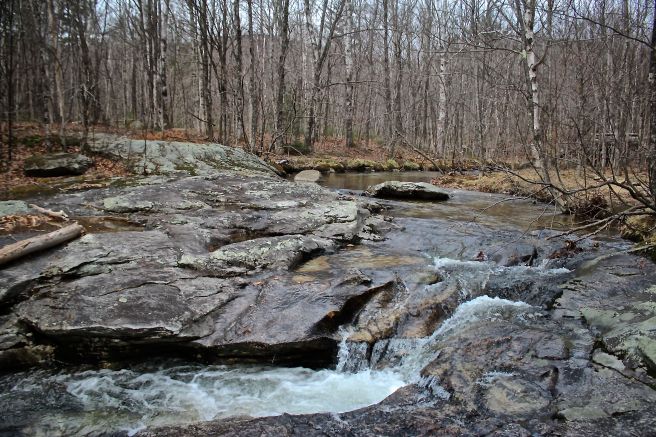
h-Great falls

The beauty of this spot never ceases to take my breath away.
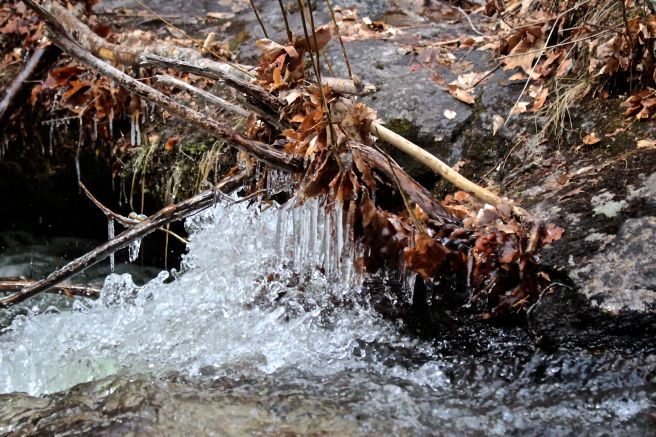
h-ice

But we didn’t pause long because that wind was cold and icicles helped tell the story.

h-map

Lately, when I’ve tramped about in this area, I’ve been on the Great Brook Trail to start, but I contacted a few folks in the past two days because they’ve made comments on previous posts that indicated they have some understanding of the Native American presence that once existed here. And perhaps still does.

Stoneham_Hut_Road_1858_12-06-2015

My friend, Jinny Mae, had intended to join us today, but that didn’t work as planned. She and I have explored this area a couple of times in the past few months and she’s my GPS techie, as well as a talented historian and naturalist. The above map is from a section of the 1858 map of Stoneham she posted. (Thanks JM for letting me borrow this without asking.)

Stoneham_Hut_Road_1880_12-06-2015

As Jinny Mae indicates on her blog, this is from the 1880 map and there’s been a change in ownership of the neighborhood homes.
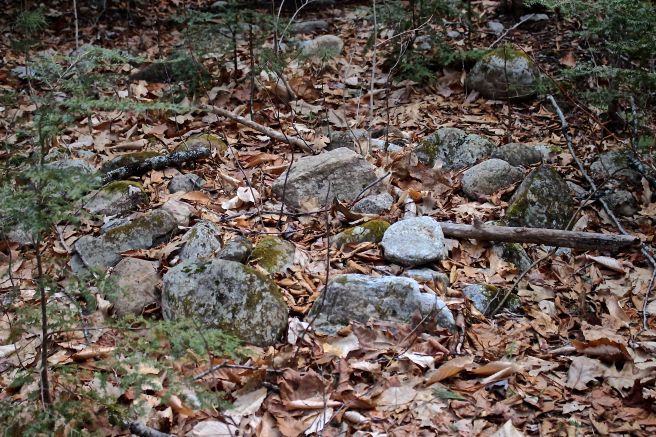
h-stone pile beside willard

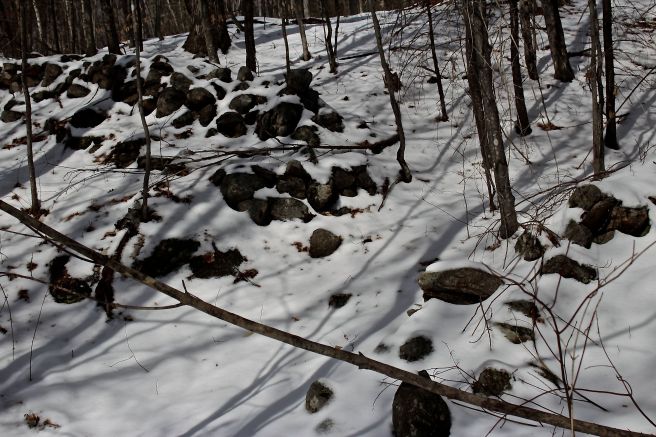
We chose a different route than the one she has outlined in red. Ours led to Willard Brook. Just before the snowmobile bridge, we turned right and began to follow the brook. I realized immediately that I’d been here before. Part of my quest was to take a look at stone placement and think about it not as Colonial only, but also as Pre-colonial or Native American. And so, I paused at every rock formation I found, including this circular configuration beside the brook. Current day fire pit? My guy didn’t think so. I don’t know.

h-stove 2

As happens in our woods, we suddenly found ourselves visiting an old camp. Debris is scattered about. This particular piece from a stove front caught my guy’s attention. He was born in Taunton, Massachusetts, and immediately recognized this as coming from The Weir, an industrial section of town. If memory serves him right, there were at least three stove companies in that area.

h-mailbox

My favorite will always be the mailbox, truly a tribute to snail mail.

h-yellow birch

Our intention had been to follow the brook north, but we let an already traveled trail lead us instead. Soon we came to another landmark I remembered, the great yellow birch. An old yellow birch. Very old. I led a bark workshop yesterday and this is one of the trees we talked about. Yellow birch can live to be 200 years old, much longer than any of their relatives. I don’t know the age of this monument, but I do wish I could hear the stories it has to tell of this land.

h-colonial road

We turned left and followed the former road to Willard Brook. Colonial road or older?
h-stone wall turtle

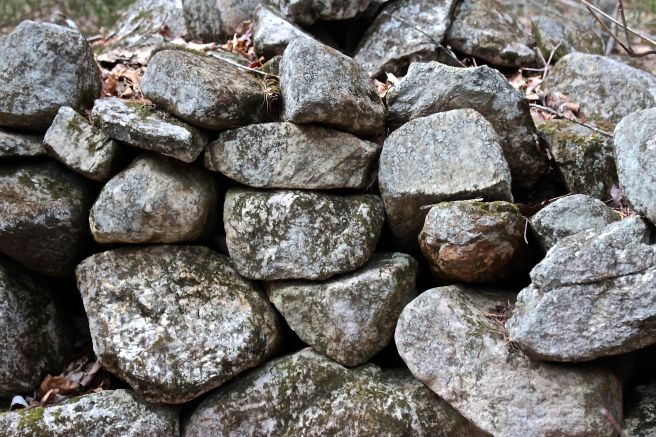
I’ve learned from others to look at the shapes incorporated into stone walls and fences. I may be making this up because I’ve had an affinity with turtles since I was a young child and own quite a collection even to this day, but I see a turtle configured in this wall. Planned or coincidence? Worth a wonder.

h-stone wall 2, turtle

Potentially another in this section of the same wall, but at the same time, this part seems more consistent in structure.

h-Willard 1

We ate the quickest lunch in our hiking history because our fingers were so cold. Even winter temps didn’t seem to bother us as much as today’s temp and wind chill. Lunch rock  sat beside Willard Brook with Speckled Mountain above.

h-entering neighborhood

And then we backtracked up the road and I took my guy up to the Hut Road neighborhood. He’d not visited this particular community before, so was happy to make its acquaintance.
h-1st fdn

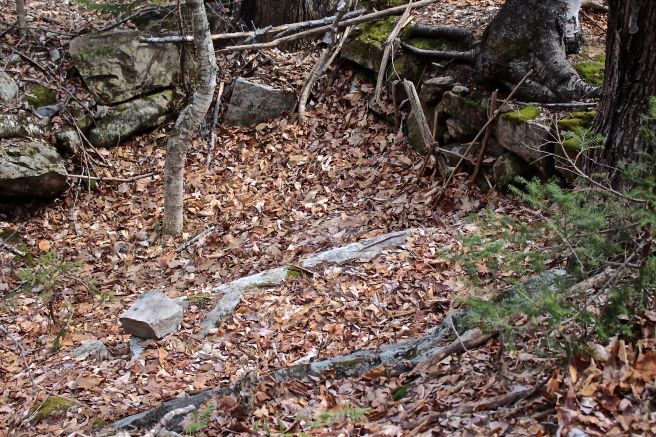
Our first encounter was with the Willard homestead of 1858; later known as the McKeen homestead of 1880.

h-wall on hill, balancing

As we moved up the hill to another foundation, we passed by this stonewall, where I wondered about the difference in stone size. A balancing act perhaps?
h-fdn 2 and chamber

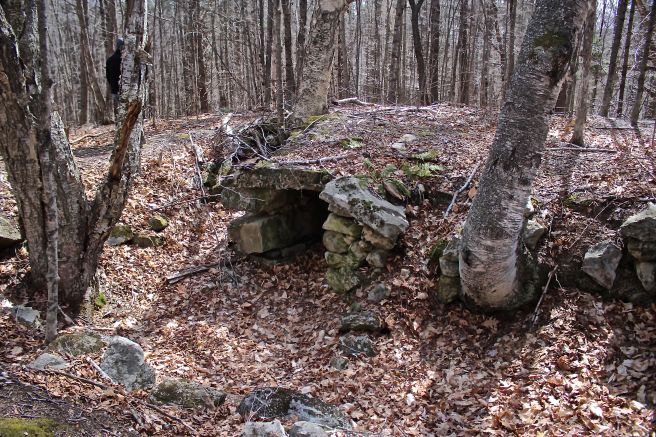
Homestead #2 belonged to the Durgins in 1858 and Rowlands in 1880. It’s one of my favorites because of the stone chamber within. Which came first–the stone chamber or the rest of the cellar? Was the entire cellar considered a root cellar?

h-chamber interior

Hence, a closer look. Oh yes, and the porcupine scat pile is still there in the back right-hand corner, but none of it is fresh. Darn.
h-chamber stones 1

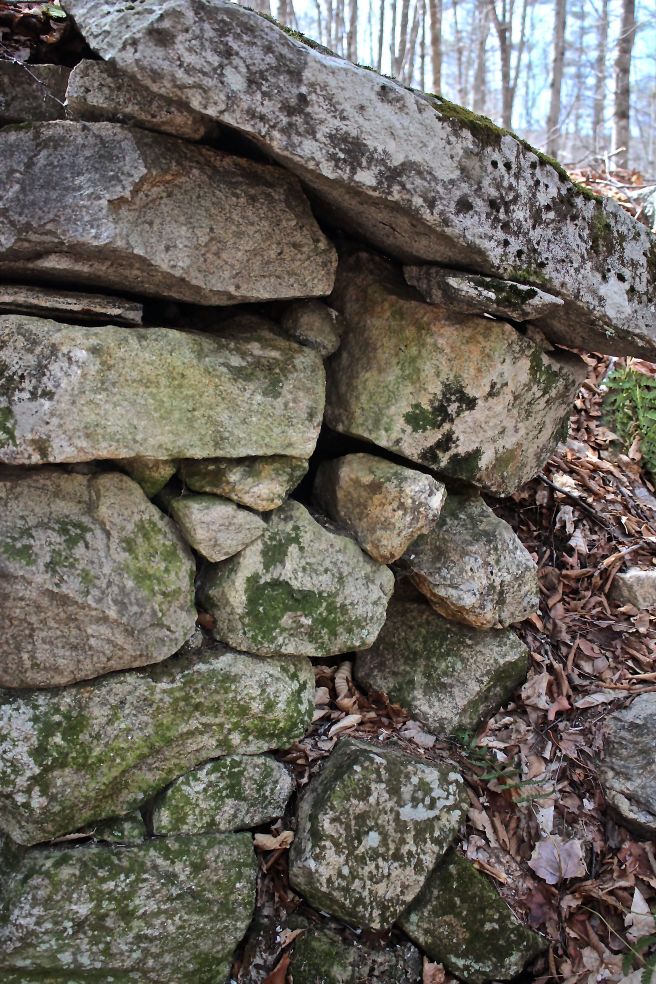
On the outside of the chamber’s edge that connects with the cellar–again my imagination took over. Perhaps my turtle’s head is the large blocky rock bottom center. Or is it a smaller version in the rocks above. Am I seeing things that are not there? Overthinking as my guy would suggest?

h-chamber back

Perhaps in the back wall?

h-chamber int 2

And in the side? Again, I see a face peering out at me just up from the bottom center/left. Do you see it?
h-rock pile 2

h-stone 5

h-stone pile 4

h-stone pile 3

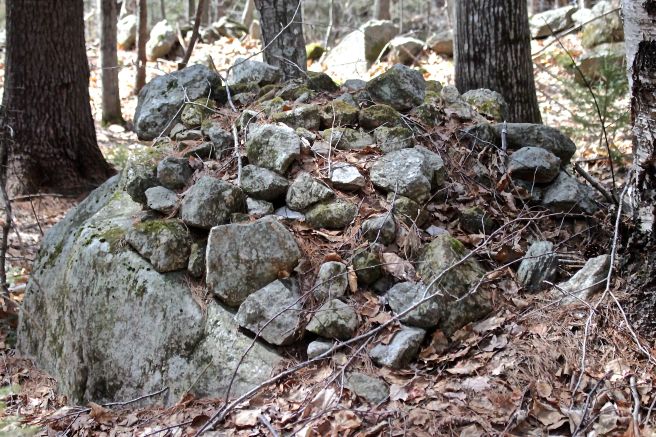
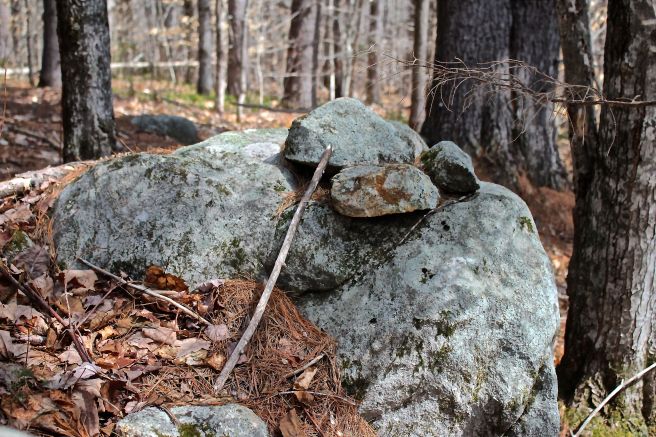
While I was busy photographing stone piles in the woods and wondering about their significance, my guy followed his nose and made a discovery that has eluded Jinny Mae and me for months.

h-tombstones 1

Just like that he found the cemetery.

h-Sarah Dergin

Sarah, daughter of Anna and Ephraim, is the first tombstone. She died in 1858 at age 22.
h-Mary Dergin

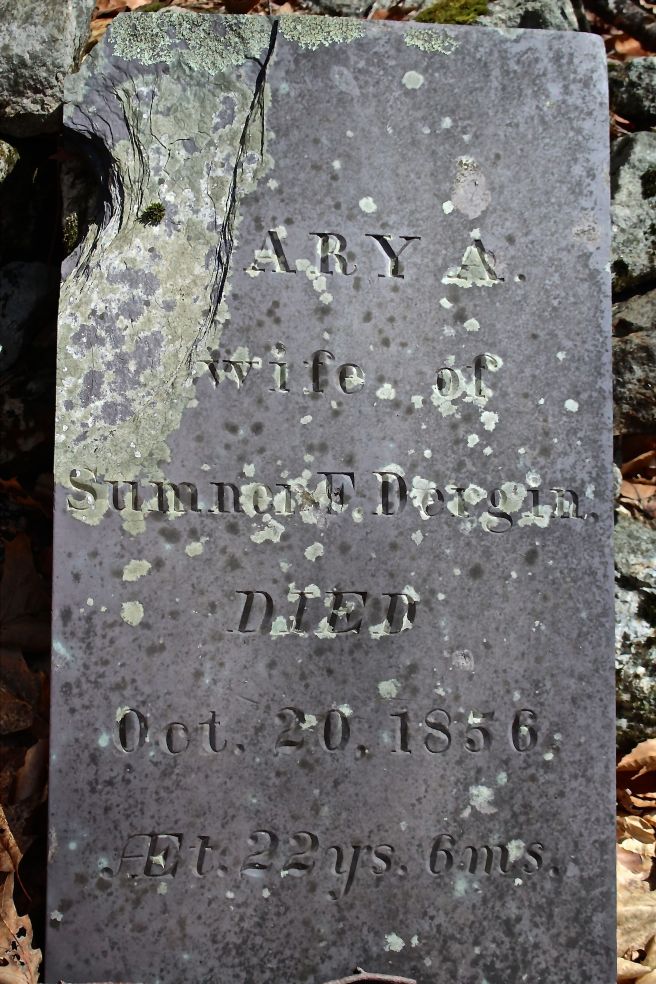
Beside her, Mary, wife of Sumner Dergin, who died before Sarah–in 1856. She, too, was 22 years old. As best I can tell, Sarah and Sumner were siblings.

h-Ephraim Durgin

And Ephraim, Sarah’s father, who died in 1873 at age 81. Notice the difference in stone from the two girls to Ephraim? Slate to cement. And the name spelling–Dergin and Durgin. As genealogy hobbiests, we’ve become accustomed to variations in spelling.

I found the following on RootsWeb:

8. ANNA3 FURLONG (PATRICK2, JOHN1) was born 1791 in Limerick, Maine, and died 1873 in Stoneham, Maine. She married EPHRAIM DURGIN June 18, 1817 in Limerick, Maine14. He was born April 13, 1790 in Limerick, Maine, and died in Stoneham.

Children of ANNA FURLONG and EPHRAIM DURGIN are:
i.OLIVE4 DURGIN, b. 1811, Stoneham, Maine; m. DUNCAN M. ROSS, April 11, 1860, Portland, Maine.
ii.SALOMA DURGIN, b. 1813.
iii.ELIZABETH DURGIN, b. 1815.
iv.SALLY DURGIN, b. 1817.
v.SUMNER F. DURGIN, b. 1819, Of Stoneham, Massachusettes; m. MARY ANN DURGAN, July 11, 1853, York County, Maine; b. Of Parsonsfield, Maine.
vi.CASANDIA DURGIN, b. 1821.
vii.EPHRAIM DURGIN, b. 1823.
viii.FANNY DURGIN, b. 1825.

Sarah isn’t listed above. But . . . Sally and Sarah were often interchangeable.
h-cemetery view-Durgin

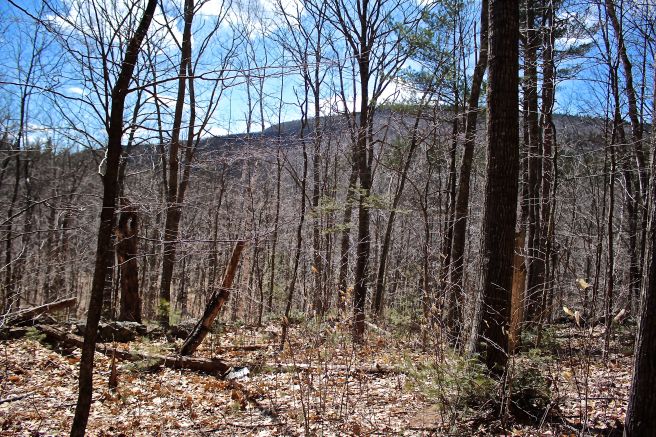
Though only these three stones stand upright, leaning against a wall, this potentially was a large cemetery. And the view–Durgin Mountain.

h-down from cem

Rather than backtrack again, we decided to travel cross-country back toward Willard Brook.

h-bog

At the bottom of the hill, the area was filled with sphagnum moss and cinnamon and interrupted fern.
h-bear scat

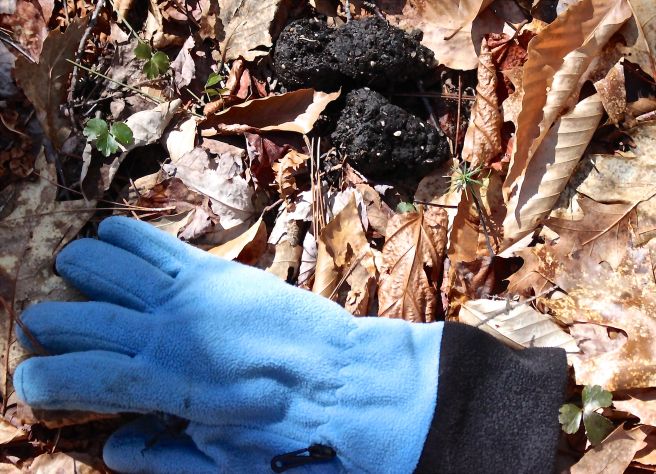
Though I didn’t find any bear trees today, I did find bear scat ;-)

h-moose scat

And plenty of moose sign.

h-red maple

The red maples offered numerous examples of the bull’s-eye fungi that I told yesterday’s workshop participants to notice. I encouraged them to develop bark eyes. Meanwhile, I’m working on my stone eyes. (not stoned!)

h-willard dry bed

As we traipsed across the landscape, my guy recognized the large yellow birch we’d come upon earlier. And then we followed the walls down to Willard Brook where bushwhacking became the name of the game. Sometimes we found ourselves moving cautiously along the rocks in a dry section of riverbed–the overflow.

h-rock slide by Willard

I kept my eyes open for stone treatments and found this twenty-foot rock slide that didn’t look natural. I have no idea what it represents.

h-wheels

One of the things I continue to notice and love about the woods around us–no matter how far from civilization you think you are, you never are. Notice the wooden wheel spokes.
h-trees and rocks beside willard

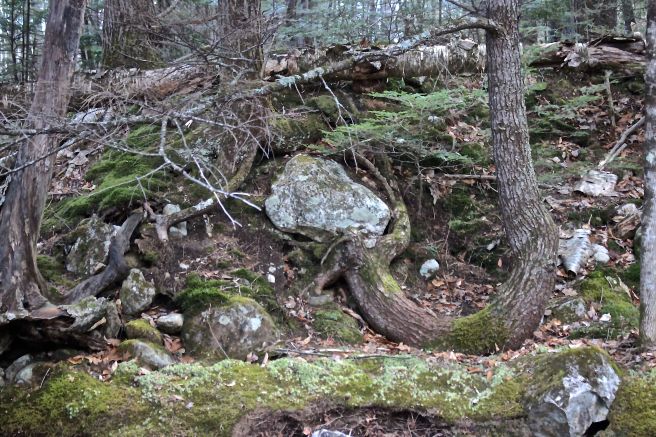
I also noticed the trees and rocks across Willard, where the water’s rise and fall over the years has carved out a unique landscape and each entity is intertwined with the other.

h-2nd bridge

Eventually we came out at the spot where we’d headed off the snowmobile trail and decided to turn right and follow it toward Evergreen Valley.

h-cairn

Though the walk was nice and the wind not so strong, we got to this modern-day cairn and felt we’d gone far enough. We turned back and bushwhacked down to Willard Brook.

h-scouting willard

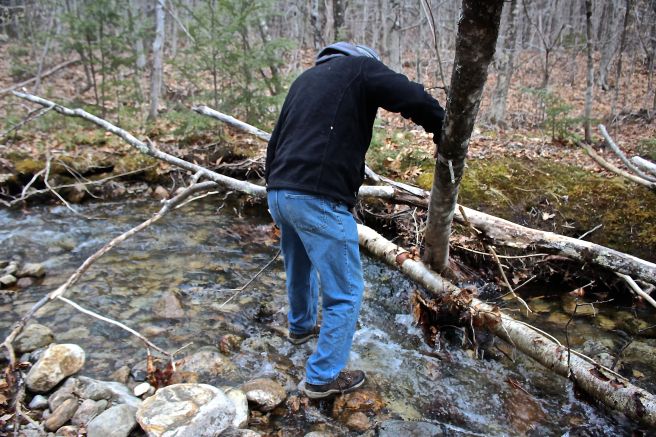
Like Lewis, my guy scouted for a crossing. Like Clark, I followed.
h-brook crossing

Our spot to ford the brook looked easier than it was. He crossed first and landed without issue. Me too–um, almost. Only one foot slipped. His comment, “Good thing your hiking boots are waterproof.” My response, “Yeah, but my socks aren’t.” Oh well. I’ve had wet feet before and will again. When I finally took my boot off at home, I was surprised at how drenched the sock was.

h-great brook on way back

We made our way through balsam fir saplings and hobblebush and a variety of other species and turned away from Willard assuming we’d eventually encounter Great Brook again. Success.

h-great structure 2

I’d been told to pay attention to Willard for Native American sites, and found this beside Great Brook. I have no idea what it represents.

h-3rd fdn central chimney

And lo and behold as we headed back to our starting point, we found ourselves at a third foundation–a rather large one with a center chimney between two cellar holes and an addition behind it. It’s where the school probably stood in 1858 and A. Gray’s home in 1880.

h-fnd 3 chimney

Bricks still top the central chimney.

h-final

Just like that, we were back at our starting point–looking at it from the opposite side of the brook.

Thanks to all those I bugged about what to look for as we tramped about today. And thanks again to Jinny Mae for her talent. I can’t wait to share this trail with you again.

We’d wandered for hours and found plenty to wonder about–especially along Willard Brook.



Book of the Month: TREES and SHRUBS of NORTHERN NEW ENGLAND

Sometimes the biggest gems arrive in the smallest packages. Such is the case with this month’s book–and this isn’t an April Fools’ Day joke, though I did briefly consider posting an upside-down photo of the cover.

t-book

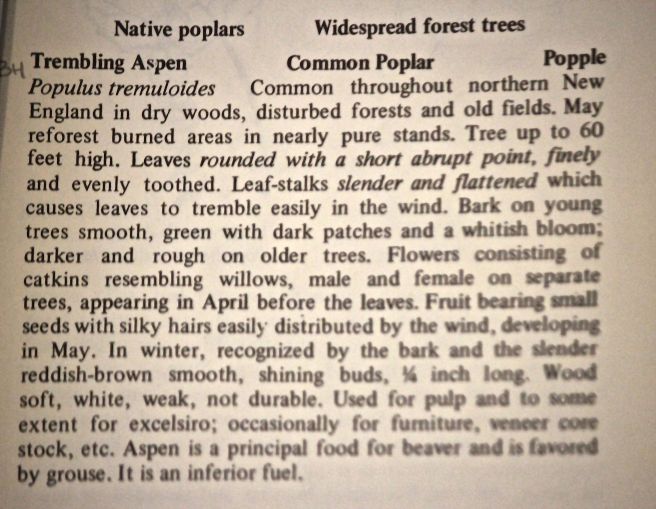
I picked up this copy of  TREES and SHRUBS of NORTHERN NEW ENGLAND at a book swap during the Maine Master Naturalist Program’s first conference this past year. This third edition was compiled by Frederic L. Steele, Chairman of the Science Department, St. Mary’s-in-the-Mountains, Littleton, NH, and Albion R. Hodgdon, Professor of Botany, University of New Hampshire, Durham, NH, and published in 1975 by the Society for the Protection of New Hampshire Forests.

One of the things I like about it is that it measures 4.5 x 7 inches and fits easily into my pack. Plus, it includes more shrubs than many of my current books.

t-leaves

And check this out from the introduction: “In the preparation of this guide, the authors have received help and encouragement from a number of people. The following, in particular, should be mentioned . . . Mrs. Priscilla Kunhardt and Miss Pamela Bruns have done the illustrations . . . ” Mrs. and Miss! Ah, what happened to those days?

t-quaking description

The descriptions are not lengthy, but enough for a quick reference. I choose the Trembling Aspen, which I’ve learned as Quaking Aspen (I know–that’s the problem with common names say my Latin-oriented friends) because two are located right out the back door. They are the trees of life in our yard.

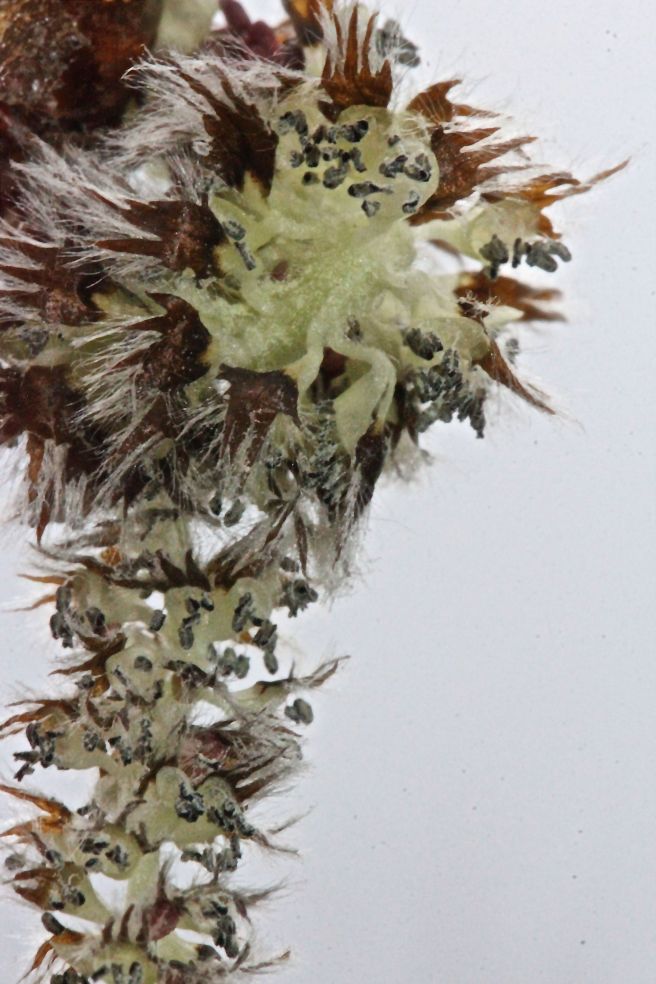
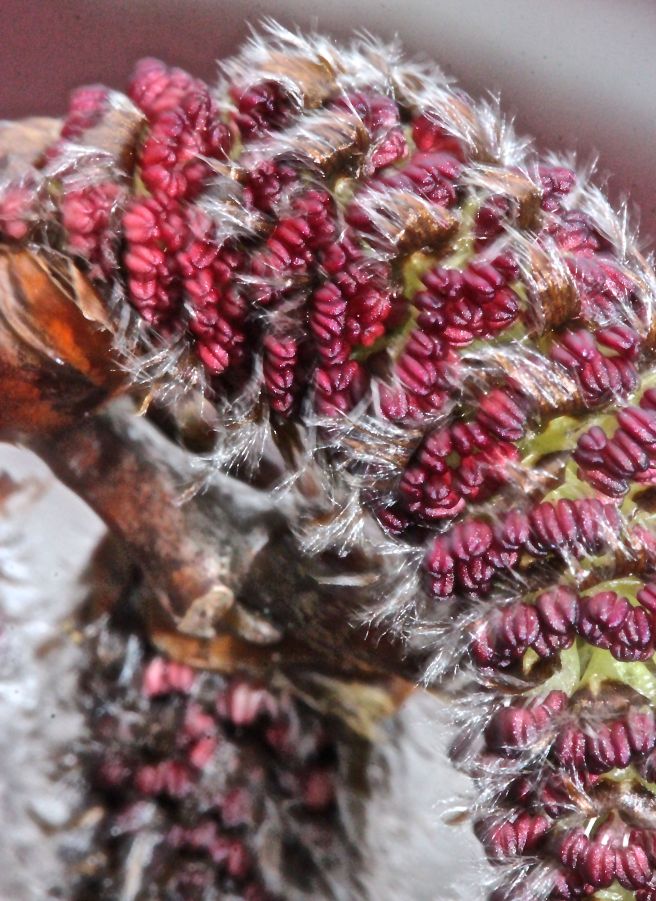
t-catkins forming

Catkins slowly emerge from waxy-coated buds

qa 1

and grow longer with lengthening days.

qa 5

Tufts of hair adorn tiny seeds.

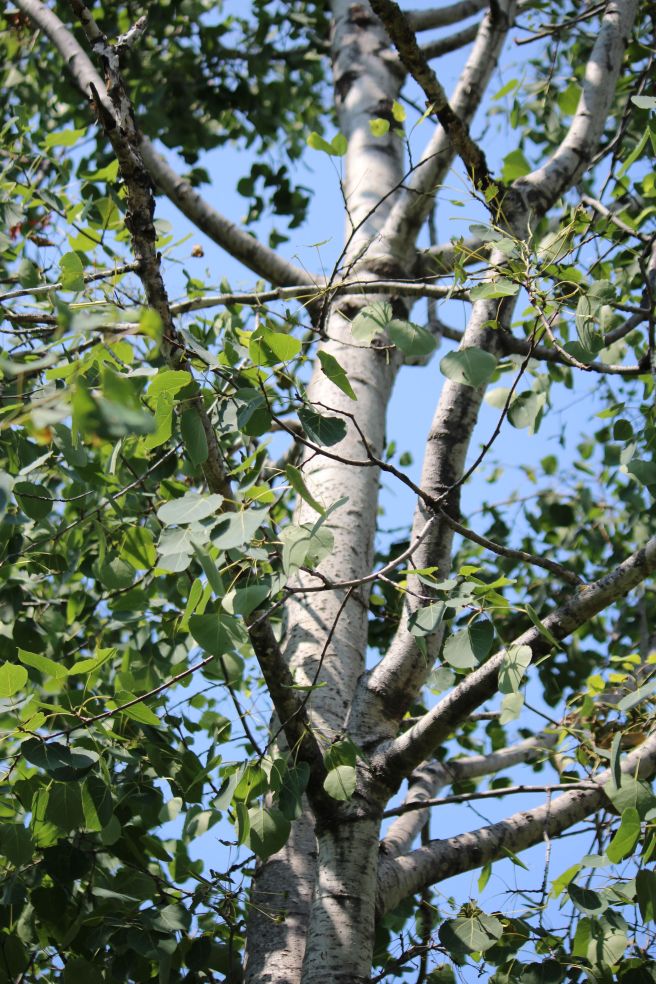
T-summer

Soon, leaves on flat stems quake in the breeze,

t-caterpillars

until visitors arrive.

t-leaf eaters

Very hungry caterpillars.

t-porky

They aren’t the only ones. Porcupines nip off branches.

t-leaf

Eventually, leaves that survive fall to the ground.

t-hairy woodpeckers

All year long, birds visit to dine

t-cardinal

and view the world.

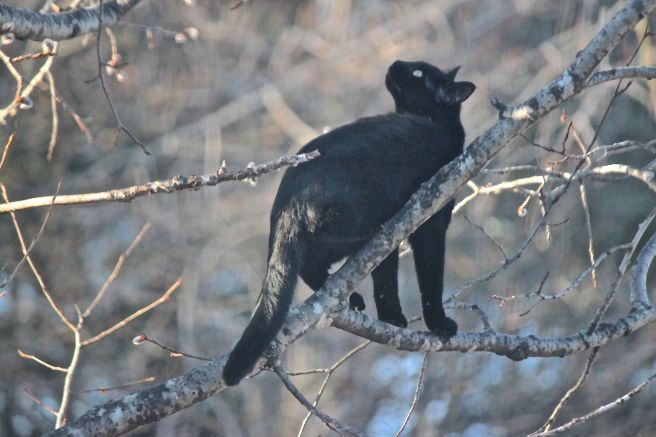
t-cat

The world looks back.

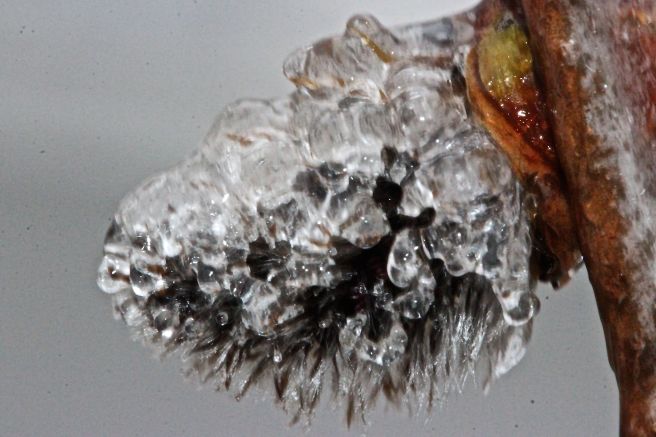
t-ice

Ice slowly melts

qa 2

and life continues.

TREES and SHRUBS of NORTHERN NEW ENGLAND doesn’t include photos, but that’s OK because I have my own. Instead, as any good guide, it’s a jumping off place. So many books, so much different information–and sometimes guides contradict each other. Just the same, I love to read them and then to pay attention. For me, it’s all about forever learning. And wondering.

TREES and SHRUBS of NORTHERN NEW ENGLAND, by Frederic L. Steel and Albion R. Hodgdon, Society for the Protection on Northern Forests, 1975.

Wet Feet at Brownfield Bog

When I suggested to Marita that we explore Brownfield Bog this afternoon, she wondered  how much water we might encounter on the road. And so we wore boots. Marita donned her Boggs, while I sported my waterproof hiking boots.

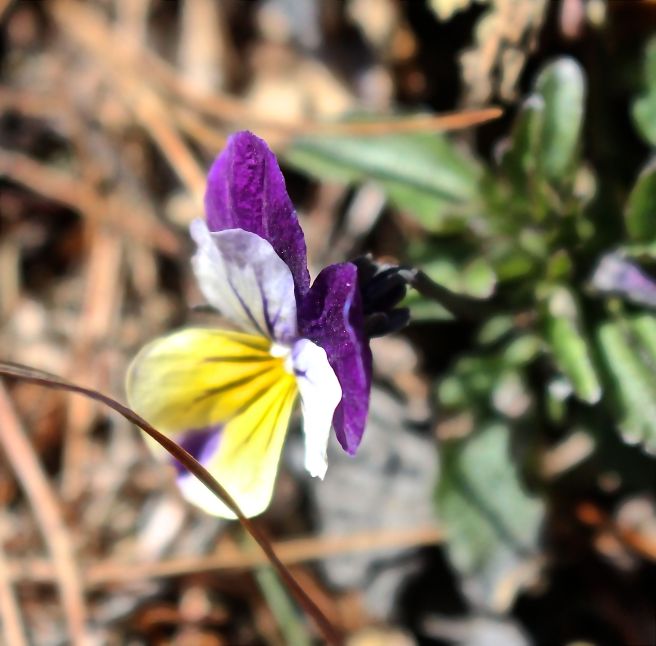
b-johnny jump up

Until we got there, we didn’t realize that the privately-owned road leading into the bog isn’t open yet, but thought we’d park at a driveway near the beginning and leave a note. The owner came along, whom she knew, and graciously invited us to park  near his home and cross through his woods down to the bog road. He and his wife share a piece of heaven and I took only one cheery photo to remind me of their beautiful spot and kind hospitality.

b-river road literally

And then on to the bog it was. Just after the gate, we realized that we couldn’t walk to the Saco River–literally a river road.

b-bog 1

But this is a bog, where all forms of life enjoy wet feet.

b-willow 2

From pussy willows to . . .

b-speckled alder 1

speckled alders,

b-cranberry

cranberries,

b-red maple 2

and flowering red maples–wet feet are happy feet and they all thrive in seasonally flooded places.

b-ducks 1

We kept scaring the ducks off, but know that there were wood ducks among the mix. They, of course, know the importance of wet and webbed feet.

b-lodge 2

b-beaver tree

b-beaver scent mound

And by their lodges, tree works and scent mounds, we knew the beavers had been active–another wet-footed species. We did wonder about the survival rate of those that built beside the road–seems like risky business given the predators that travel this way.

b-pellet

Speaking of predators, check out the orange rodent teeth among all the bones in this owl pellet.

b-bog 2

On this robin’s egg kind of day

b-pleasant mtn

with Pleasant Mountain sandwiched between layers of blue,

b-field 1

the breeze brisk at times and the sun warm always,

b-water over road on way back

the flow of water didn’t stop us.

b-wet feet

Waterproof boots and wool socks–the perfect combination to avoid wet feet. Well, maybe a wee bit damp, but five hours later and I just took my socks off.


Celebrating the Vernal Equinox

We fell asleep to winter and awoke early this morning–eager to celebrate the vernal equinox.

b-dark

It was dark and cold (15˚) with a brisk breeze when we joined others for a 6am hike up Bald Pate sponsored by Loon Echo Land Trust.

b-sun begins

While we waited at the summit and tried to stay warm, we were treated to hot cocoa and amaretto cake. YUM!

b-sunrise1

And then . . .

b-sunrise 3

the sun shone upon this first day of spring.

b-vernal pool

After church, I made a quick visit to the vernal pool where ice is still the name of the game.

b-wet road

And after lunch, we headed off on another adventure. At first we followed an old road, which was tricky business.

b-1st fdn

Though at least six foundations are located along this road where young men carved out a living prior to the Civil War, we allowed ourselves time only to stop at one. We were on a mission.

b-powerline1

We turned north at the power line and trudged up and down hills in search of a brook.

b-stream crossing

That direction didn’t feel quite right, so we followed our noses and turned into the woods.

b-posted 1

And then we stumbled upon a property line that was posted. We love the fact that in Maine one can walk upon any property that isn’t posted. This one was recently marked and so we respected the landowner’s wishes.

b-meandering stream

That is, until we got to a point where we decided to trespass after all. Our journey took us past meandering streams,

b-stream crossing 2

stepping across others,

b-wetland 1

slogging through boggy areas,

b-bushwhack

and tripping among the understory.

b-deer rub

We saw where a deer had rubbed its antlers,

b-deer scrape

another enjoyed fine dining, and

b-deer skull

a third said goodbye as it returned from whence it came.

b-polypody 2

We found common polypody fern (Polypodium vulgare) indicating that the temperature was higher than it had been earlier in the morning.

b-polypody 1

This was our view of polypody when the temperature was much lower on Bald Pate.

b-pork den

We passed a porcupine den.

b-porky tree

And then we came upon downed hemlock branches and

b-pork scat 1

fresh scat.

b-pork in tree 1

I looked up.

b-pork in tree

He looked down.

b-game trail beside brook

Finally, we found ourselves walking along a game trail beside a brook–feeling like we might just be on the right track.

b-mill pond

Where the brook widened into a pond, we knew we were in the right place.

b-on a rock

Just below the pond, my guy stood in the middle of the brook, excited about our find. We’d attempted to locate this spot a year ago and missed it by a long shot.

b-mill site1

According to the 1858 map of Oxford County, we were at the sight of R. Bennett’s sawmill. I’d first visited two years ago with my friends, Sue and Janet. It’s actually located on Sue’s land. We’d come in from her home on my first visit, but today we came via Old City.

b-b mill 3

b-b mill 2


b-bmill stones brook

A year ago, my guy and I snowshoed in search of this sight but never found it so we were gleeful about today’s success.

b-fdn near mill.jpg

Our intention had been to search for the mill until 3:30. We found it just after 4pm. And rather than try to follow the stream back, we decided to bushwhack in a more westerly direction. On a hill above the mill we found a foundation made of drilled stones that are neatly hidden by moss and ferns and assume it was part of the mill.

b-rock pile?

Our bushwhack continued until we finally emerged by a rock pile beside Old City Road. Its circular formation had me thinking water well.

b-double wall

Will we ever find it again? That’s always a question, but now we know to walk along the road until we reach the last double-wide wall and then turn at the well.

b-ghost

I liked the ghost-like effect of my guy walking back on the road–reminiscent of the men who once lived here and worked these woods. I followed my guy out and both of us occasionally felt the suction of mud. Occasionally one foot was drawn into the earth as if it intended to stay behind. We finally returned to our truck at 6pm (so much for our intention to be home by 4:30), our celebration of the vernal equinox complete.


The Borrowing

My friend, Dick, sent me the following message yesterday: “from a novel, Northwest Angle by Krueger … who has a series which relates to the Objidwa (sp) of the upper parts of Michigan …

‘What’s a Mide?” — ‘A member of the Grand Medicine Society,’ Stephen explained. ‘A healer. Somebody who understands the harmony of life and how to use nature to restore harmony when it’s been lost.” p246

“Belongs.” Meloux (a very senior shaman type of the Native American ‘Mide’ of the Objidwe) seemed to consider the word. “I believe no one belongs to anyone else. You, me Waaboozoons, we are all dust borrowed for a little while from Grandmother Earth. And even that dust does not belong to her. She has borrowed it from all creation, which is the Great Mystery, which is Kitchimanidoo. And if you ask this old man, I would say that another way to think about Kitchiimanidoo is as a great gift. Kitchimanidoo is not about keeping. Nothing belongs to anyone. All of creation is meant as a giving.” p 269

While I haven’t read the book or any of Krueger’s works, these words resonated with me as I moved about this morning.

m-vp

My first stop was a visit to the vernal pool, where the ice is beginning to melt.

m-vp, birch seeds

I looked for insects and found instead birch seeds and scales–meant as a giving.

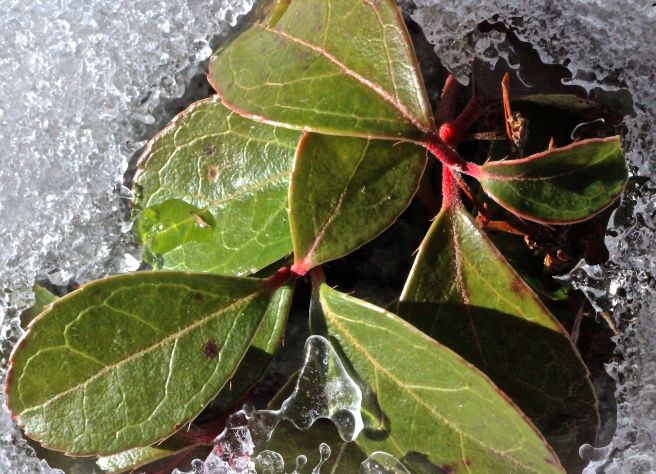
m-berries

Wintergreen berries remained prolific below the power lines. While this fruit is traditionally browsed by a variety of mammals, I had to wonder if its location is the reason it was left untouched–poisoned by the herbicides Central Maine Power uses to keep the land clear. What was meant as a giving revoked.

m-leaves thru ice

Not all was bad as I followed the trail for a distance and enjoyed the beauty that has begun to emerge.

m-sphagnum color

The pompom heads of sphagnum moss contrasted brilliantly beside the running clubmoss.

m-trail light

Looking back, I noticed that today’s sunlight was captured in yesterday’s raindrops–certainly a reason for thanks-giving.

m-mount 1

And before me–man and nature in the eternal struggle for harmony. An example of borrowing.

m-pollen?1

Before I turned onto a logging road, a puddle caught my attention.

m-pollen?2

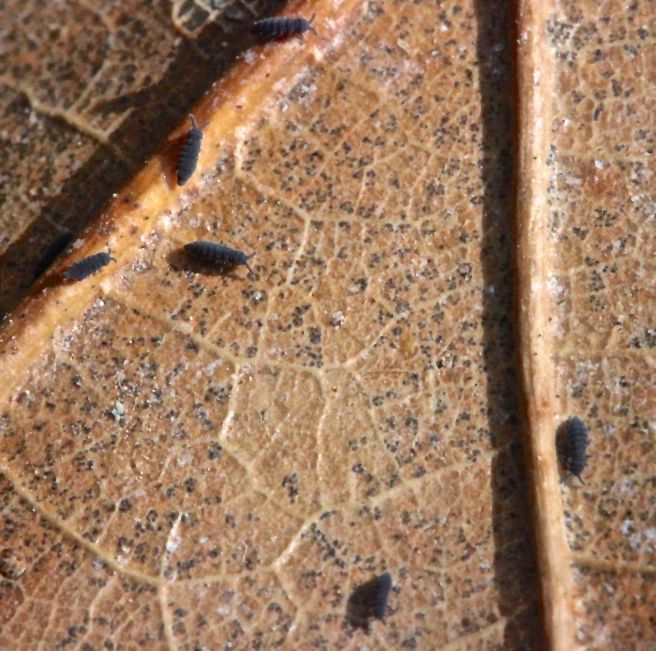
My first thought was pollen, but as I approached, I realized the little dots were moving about much like spring tails because .  . . they were spring tails. So my learning increased as I noted their color and the fact that there are aquatic members of this family. Another giving received.

m-pin cherry warts 2

On recent treks, my bark eyes have been confused about two trees–black birch (aka sweet or cherry birch) and pin cherry. As youngsters, both feature reddish-brown bark. What has thrown me off is the association with other birch trees, including the yellow birch that grows behind this specimen. Today, I made a point of noticing–the warty orange lenticels, lack of catkins and no wintergreen scent. These are three features that helped point me toward pin cherry. Black birch bark features long, thin lenticels, catkins common to birch trees and when scraped, that delightful wintergreen smell.

m-pin cherry:birch1

Despite the fact that they are not of the same family, certainly they’ve found a way to give to each other and live in harmony. A lesson.

m-porky

Just beyond the birches, in one of many stump dumps along this logging road, something caught my eye.

m-porky 1

A porcupine worked over the bark of a fallen hemlock tree. I stood for several minutes and watched. Either it wasn’t aware of me or I didn’t pose enough of a threat.

m-porky again

The leaf caught on its backside made me chuckle and wonder why we don’t see more of that.

m-porky like

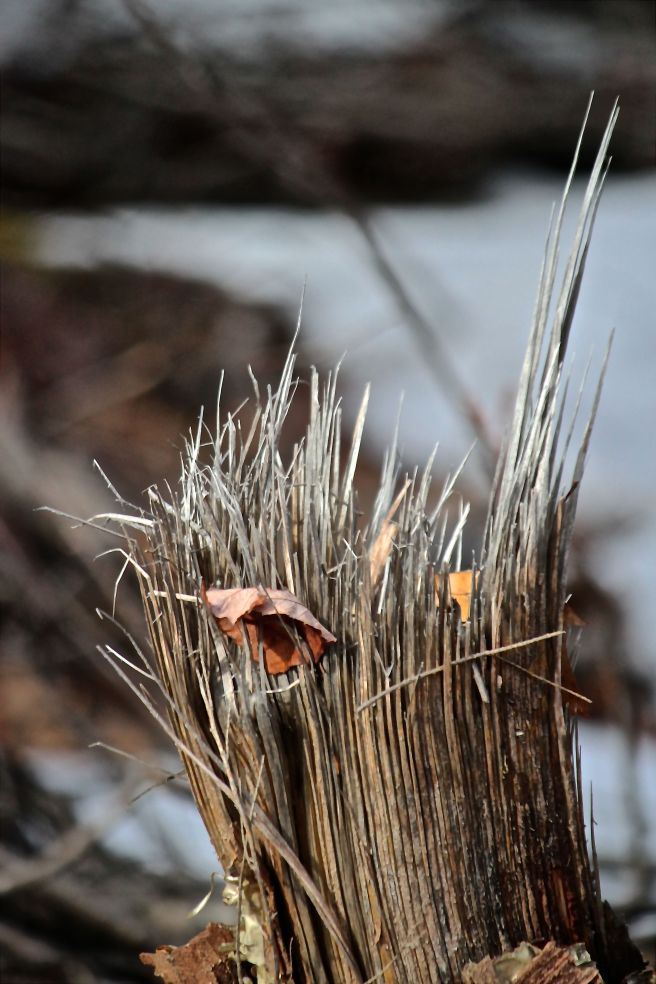
I’m amazed that I saw it at all in this land that has been chopped up over the course of the last three years. Notice how leaves are similarly stuck to this shredded tree stump.

m-porky tree 3

m-porky tree 2

m-porky tree

Behind were the trees that have received the porcupine’s recent attention. While the logging is destructive, it helps heat homes, provides income to at least several people including the logger and landowner, and creates new habitat and food opportunities for wildlife. Change is difficult and I’d grown to love these woods the way they were, but they were that way because of prior cuttings. A borrowing.

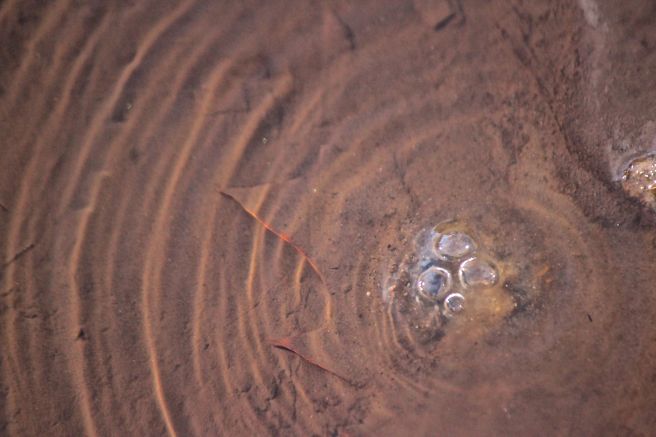
m-bubbles

Most of the logging road was a combination of puddles and mud. At times, air bubbles rippled as I moved through and I was reminded of my youth years spent feeling for clams in the mudflats of Clinton Harbor on Long Island Sound. The memory itself was a giving.

m-deer 2

Like the deer that frequent this land, my boots got stuck in the muck. Sometimes, it seemed like I was being sucked in and told to stand still. But my mind wandered on and I followed it.

m-trail conditions

Going forward in time, I’ll be curious to watch the reflections in the puddles change as the pioneer species move back in and regenerate this land. The harmony.

m-spirit

In the end, as always seems the case, I was on the receiving end of the giving and grateful for the borrowing as the spirit of Grandmother Earth shared a few tidbits of the Great Mystery.


Spotlight on Sabattus

Following this morning’s Greater Lovell Land Trust trek at Chip Stockford Reserve, where we helped old and new friends form bark eyes as they examined various members of the birch family, my feet were itchy. Not in the scratchy sort of way–but rather to keep moving.

It was a lovely day for a hike and Sabattus Mountain in Lovell was my destination. I love this little mountain because it offers several different natural communities and great views.

s-com 1

Though there are a few softwoods on the lower portion of the trail, it’s really the land of a hardwood mix.

s-downed twigs

About halfway up, the neighborhood switches to a hemlock-pine-oak community. It was then that I began looking for downed hemlock twigs in an array at the base of trees. I’ve found them here before, and today I wasn’t disappointed.

s-porky chew 3

The twigs had been chewed off and dropped by a porcupine as evidenced by the 45˚-angled cut and incisor marks. Though red squirrels also nip off the tips of hemlock twigs, they do just that–nip the tips. Porcupines cut branches.

s-porky cliff

Downed branches usually mean scat, but I searched high and low and under numerous trees that showed signs of activity and found none. A disappointment certainly.

s-pippipsewa

My search, however, led me to other delightful finds that are showing up now that most of the snow has melted, like this pipsissewa that glowed in the afternoon sun. As is its habit, the shiny evergreen leaves look brand new–even though they’ve spent the winter plastered under snow and ice. A cheery reminder that spring isn’t far off.

s-Pleasant 1

At the summit, I got my bearings–the ridge of Pleasant Mountain and Shawnee Peak Ski Area to the southeast.

s-mount tom & kezar pond

To the southwest, the asymmetrical Roche Moutonnée, Mount Tom, visible as it stands guard over Kezar Pond in Fryeburg.

s-Kearsarge 2

And to the west, Kezar Lake backed by Mount Kearsarge in New Hampshire. I wanted to venture further out on the ledge, but some others hikers had arrived and I opted not to disturb their peace.

s-summit wind

Instead, I sat for a few minutes and enjoyed the strong breeze offering possibilities as it floated over the summit and me.

s-porky cuts1

Crossing the ridge, I left the trail and found more porcupine trees, including this young hemlock that had several cuts–look in the upper right-hand corner and lower left hand. A number of younger trees along this stretch will forever be Lorax trees.

s-golden moonglow1

On the outcrop of quartz, I paused to admire the golden moonglow lichen–it’s almost as if someone drew each hand-like section in black and then filled in the color, creating an effect that radiates outward.

s-polypody patch

I was pleasantly surprised to find a patch of polypody ferns on what appears to be the forest floor but was actually the rocky ridge. Notice how open-faced it is, indicating that the temperature was quite a bit warmer than what I’d seen on cold winter days.

s-polypody sun

Sunlight made the pinna translucent and the pompoms of sori on the backside shone through.

s-glacial 1

The trail doesn’t pass this glacial erratic, but I stepped over the logs indicating I should turn left and continued a wee bit further until I reached this special spot.

s-porky scat 1

Its backside has been a porcupine den forever and ever. Nice to know that some things never change.

s-hemlocks and oaks

After returning to the trail, I followed it down through the hemlocks and oaks. This is my favorite part of the trail and though it’s a loop, I like to save this section for the downward hike–maybe because it forces me to slow down.

s-fairies 1

For one thing, it features the land of the fairies. I always feel their presence when here. Blame it on my father who knew of their existence.

s-fairies 2

I had a feeling a few friends were home–those who found their way into a fairy tale I wrote years ago. I left them be–trusting they were resting until this evening.

s-community transition 1

As swiftly as the community changed on the upward trail, the same was true on my descent.

s-birch bark color

On our morning trek, we’d looked at paper birch, but none of the trees we saw showed the range of colors like this one–a watercolor painting of a sunset.

s-birch bark 1

This one shows the black scar that occurs when people peel bark. The tree will live, but think about having your winter coat torn off of you on a frigid winter day. Or worse.

s-black birch 1

Off the trail again, I paused by a few trees that I believe are black birch. Lately, a few of us have been questioning black birch/pin cherry because they have similar bark. The telltale sign should be catkins dangling from the birch branches. I looked up and didn’t see catkins, but the trees may not be old enough to be viable. This particular one, however, featured birch polypores. So maybe I was right. I do know one thing–it’s not healthy.

s-pines 2a

And then I reached a section of trail that I’ve watched grow and change in a way that’s more noticeable than most. I counted the whorls on these white pines and determined that they are about 25 years old. I remember when our sons, who are in their early twenties, towered over the trees in their sapling form. Now two to three times taller than our young men, the trees crowded growing conditions have naturally culled them.

s-birch planter

Nature isn’t the only one that has culled the trees. Following their selection to be logged, however, some became planters for other species.

s-3 trees

Nearing the end of the trail another view warmed my heart. Three trees, three species, three amigos. Despite their differences, they’ve found a way to live together. It strikes me as a message to our nation.

Perhaps our leaders need to turn the spotlight on places like Sabattus. It’s worth a wonder.


To Bear Trap and Back

A change of plans today meant I had time for a trek to Narramissic Farm and the historic bear trap in South Bridgton before the rain began.

N-view from road

From Ingalls Road, where I decided to park, I took in the view of the front fields and house.

N-Narramissic Road

Narramissic Road is passable, but I wanted to slow down and soak it all in.

N-pussy willow 1

From pussy willows to

N-staghorn

fuzzy staghorn sumac, I was thankful I’d taken time for the noticing.

N-house & attached barn

The Bridgton Historical Society acquired the 20-acre property in 1987 when it was bequeathed by Mrs. Margaret Monroe.

N-house

Turning the clock back to 1797, William Peabody, one of Bridgton’s first settlers, built the main part of the house.

Peabody sold the farm to his daughter Mary and her husband, George Fitch, in 1830 and they did some updating while adding an ell.

N-barn front

The Fitches had a barn erected that has come to be known as the Temperance Barn; historical records claim it to be so named “because it was raised without the traditional barrel of rum.”

N- barn face

Both the barn and the house are in need of repair, but I couldn’t help but wonder about what mighty fine structures they were in their day. While today, a visit to the farm feels like you’re in the middle of nowhere, during its heyday it was located in the center of somewhere–at the junction of two roads that have since been abandoned.

When Mrs. Monroe purchased the property in 1938, she named it Narramissic, apparently an Abenaki word for “hard to find” because it reflected her long search for just the right piece of real estate.

N-blacksmith shop

A blacksmith shop is located between the house and Temperance Barn, and beside the trail I chose to follow through another field and off into the woods.

N-garden wall 1a

Massive stone walls indicate the fields had been plowed.

N-rock uplifting

Even today, “stone potatoes” continue to “rise” from the ground, making them one of the farmer’s best crops.

N-pearly 2

My destination was two-fold: the quarry and bear trap. But along the trail, I stopped to smell the roses. Or at least admire the beauty of pearly everlasting in its winter form.

N-gray birch litter

Several trees had snapped in the season’s wind, including a gray birch that scattered scales and seeds as it crashed to the ground.

N-gray fruit seeds

But . . . because the top of the tree was no longer in the wind zone, a surprising number of catkins continued to dangle–all the better for me to see. Notice the shiny seeds attached to the scales.

N-gray birch generations

The tree speaks of generations past and into the future.

N-jelly 2

Further along, I found a wavy and rubbery jelly ear (Auricularia auricla) beside a gray birch seed.

N-sign 2

Finally, I reached my turn-off.

N-quarry 1

N-feather 2

This is the spot from which the foundations for the buildings were quarried so long ago, using the plug and feather technique that was common in that time.

N-common toadskin 2

Life of a different sort has overtaken some of the stones–common toadskin lichen covers their faces.

N-common toadskin 3

In its dry form, it looks perhaps like the surface of a foreign planet, but this is another lichen that turns green when wet–allowing the “toad” to become visible.

N-bishop's face in ice

Speaking of becoming visible, I noticed the bishop’s face topped with a mitre as water dripped off the rocks and froze. My thoughts turned to my sister–she doesn’t always see what I see, but maybe this one will work for her.

N-young beech

Heading back out to the main trail, I startled a snowshoe hare and of course, didn’t have my camera ready. As I turned toward the bear trap, I continued in the land of the beech trees. Most are too young to produce fruit, but I looked for larger trees and, of course, checked for claw marks.

N-beech slashes

The best I found were slashes–probably caused by another tree rubbing against this one.

N-initials

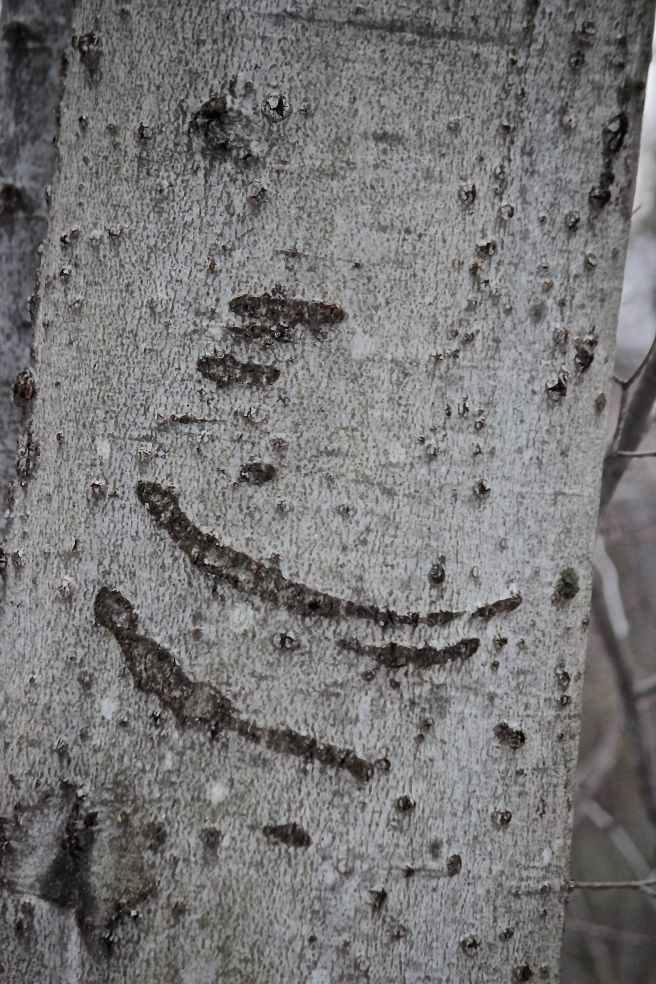
Oh, and some initials carved by one very precise bear.

N-No parking

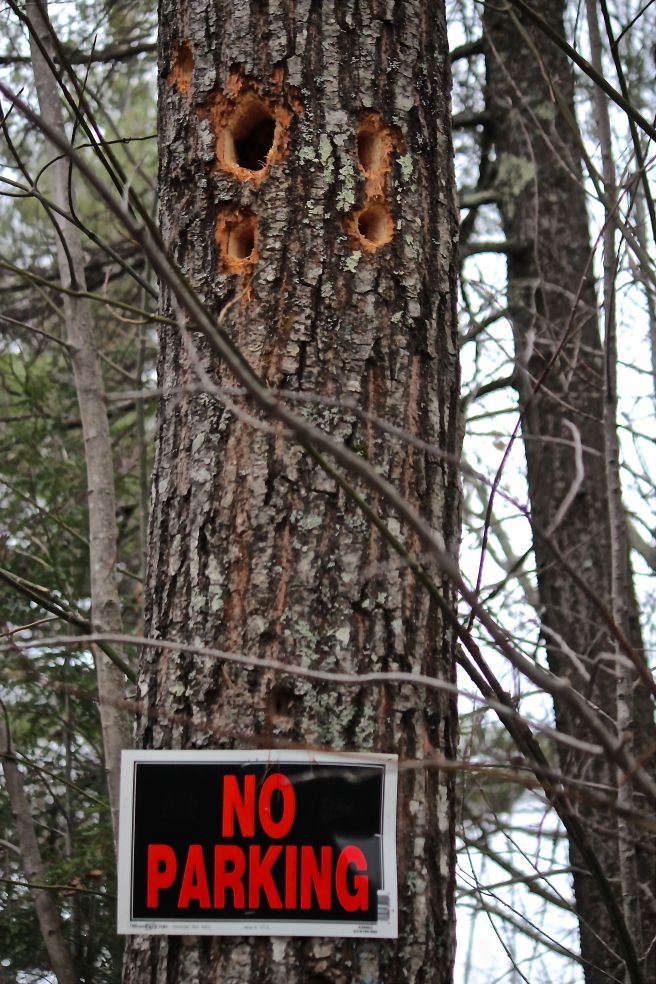
I was almost there when I encountered a “No Parking” sign. A new “No Parking” sign. On a trail in the middle of nowhere that used to be somewhere. The pileated woodpeckers obviously ignored it. Me too.

N-BT1

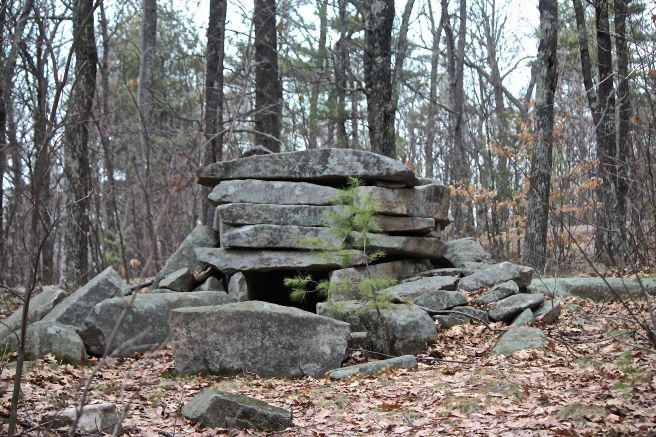
At last, Bear Trap! According to an August 17, 1963 article in the Bridgton News, “Enoch Perley, early settler of South Bridgton, built his first house in 1777 and brought his bride to their new home in 1778. [I believe this was at Five Fields Farm.]

As Enoch acquired livestock, he was much troubled by depredations from bears. He built a bear trap on the hill back of his first home . . .

Tradition says that four bears were caught in this trap–not enough! So Mr. Perley later had an iron bear trap made which took care of eight bears. Without a doubt, many were disposed of by him personally. A story is told that in an unarmed encounter with a bear and two cubs beside a wood road at dusk, Mr. Perley allegedly strangled the mother bear with his garters . . .”

N-bear trap 1

The article continues, “The bear trap is built of stone. A large stone door is suspended and as the bear takes the bait, he trips the lever and is caught in the stone enclosure.”

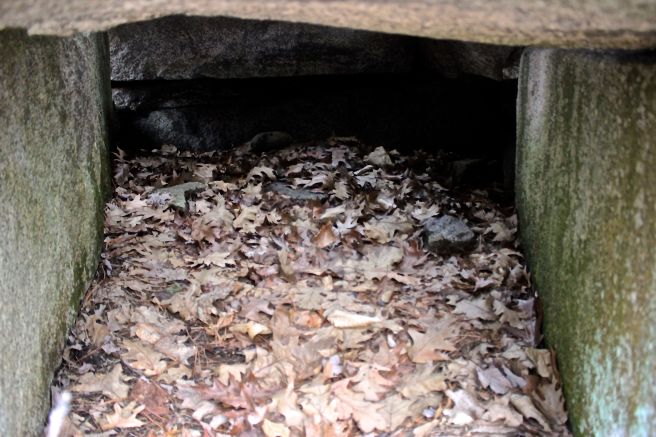
N-BT inside

I looked inside and found no one in residence. In a December 1954 issue of the Bridgton News, a brief article states: “The old stone bear trap on the mountain in South Bridgton known as ‘Fitch’s Hill,’ unused for more than one hundred years, has been reactivated by Dr. Fred G. Noble and Gerald Palmer and put in readiness to capture a bear.” As the story goes, they never did succeed.

N-BT back view

A side view.

N-BT*back side

And a rear view. A few years ago there was talk of moving this monument because land ownership had changed. I hope it stays put because its authenticity would be lost in a move.

N-pine scale?

Just below the trap, I noticed a white hue decorating only one of a bunch of young pine trees. I can’t say I’ve ever seen this before or venture a guess about its origin. I’m waiting to hear back for our district forester–maybe he has some insight.

N-heading back 1

As I headed back down the trail and the barn came into view, I spied a single red pine thrown into the mix of forest species that have taken over this land.

N-red pine

Ever on my bear claw quest, I checked the bark of this tree. Though beech provides an easy display of such marks, it’s not the only species of choice. Among others, single red pines that appear to be anomalies have been known to receive a visit.

N-hare

There was sudden movement as I approached the pine and then what to my wondering eyes should appear, but a second snowshoe hare! It paused long enough for me to snap a photo. Do you see it? Also known as the varying hare, its fur is still white.

Behind the tree, I found where it had been dining and defecating.

N-Pleasant Mtn ridge

N-farm view from back

As I crossed the upper field, the ridge line of Pleasant Mountain and ski trails at Shawnee Peak made themselves known to the west. And beyond the farmhouse, the White Mountains.

And then,

N-shagbark hickory

and then . . .  an oversized bud captured my attention as I walked back down the road.


Shagbark hickory isn’t a common species around here. But, Jon Evans of Loon Echo Land Trust had recently told me some mature trees were found on a property in South Bridgton that is under conservation easement. (We actually may visit them tomorrow). The bulbous, hairy bud scales and large leaf scar made even the young trees easy to identify. Curiously, according to Forest Trees of Maine, the wood “was formerly used in the manufacture of agricultural implements, axe and tool handles, carriages and wagons, especially the spokes and rims of the wheels.” That fits right in with the neighborhood I’d been visiting.

N-mud season

One final view–yup, it’s mud season in western Maine. But still worth a trek to bear trap and back. Thankfully, the rain held off until my drive home.


Same Old is New

Same old, same old. Sometimes it feels that way as we travel familiar trails and recognize members of the community. And so it seemed today.

a-fdn 1

We paused to check on a few neighbors along the Homestead Trail at the Greater Lovell Land Trust’s Heald and Bradley Ponds Reserve, but no one was home.

a-signs

And so we decided to climb to the summit of Amos Mountain.

Along the way, I realized we weren’t the only ones exploring this property–several times we saw where a mink had bounded across, even enjoying a short downward slide in the midst of its journey.

a-summit view

From the summit, Kezar Lake stretched before us as we ate our PB&J sandwiches and Girl Scout cookies–Lemonades™.

a-whiting to pleasant

And another view, Whiting Hill in the center foreground and a peek at our beloved Pleasant Mountain, visible just to left of the center pines.

a-stonewalls 1

On the way down we decided to explore the stonewalls for a bit, at times terraced and following the contour of the mountain.

a-bear 3

And that’s when the same old started to change. Yes, we found another bear tree.

a-bear 4

And on what side of the tree should we find the claw scars? Why the north of course, adding to our unscientific theory that bears climb trees on this side. Typically, the northern side is the uphill side. Our mission is to continue to pay attention to this–tough job that we choose to accept.

a-stonewalls 4

Sometimes the walls appeared to enclose pens.

a-stonewalls 6

And other times they opened–perhaps to pastures?

a-northern white cedar

As we wandered and wondered about the walls the farmer had created and why, we noticed other things we’ve somehow missed upon previous visits, including this northern white cedar tree.

a-stonewall fdn

In what today appears to be the middle of nowhere, a small foundation. House? Shed? Sugar shack?

a-red-belted polypore

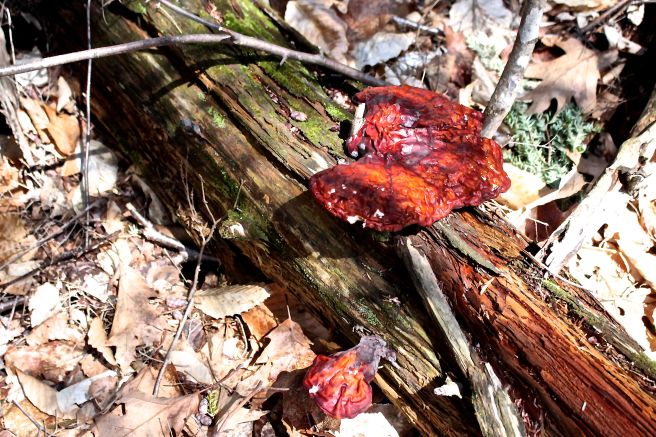
We climbed a hill to see what was on the other side and found this red-belted polypore (Fomitopsis pinicola) growing on an Eastern white pine. In Lawrence Millman’s Fascinating Fungi of New England, he says this is “apparently not a picky fungus. F. pinicola has been recorded on more than 100 different species of tree hosts.”

a-stonewall last

The snow had softened since we first started so we did some slipping and sliding as we followed another stonewall back to the trail.

a-3 birch

And then my brain kicked into birch tree mode. These woods are filled with paper, gray and yellow birch. And next week, the GLLT will host a “Which Birch Is It?” walk about the birches and their relatives.

a-yellow bark

The ribbony curls and whorls of yellow birch bark are signatures of this tree that can change in color from silver to yellow to reddish brown and circle back to silver again in old age. Did you know that a yellow birch can live to 200 hundred years, unlike its cousins, the gray birch and paper birch? Gray birch live about fifty years and paper reach a ripe old age of somewhere between 50 and 150 years.

a-yellow 4

Another cool fact about yellow birches: the interior of dead branches begin to decay quickly, even while still on the tree; eventually reduced to mush, the trees rid themselves of these non-productive limbs quite easily with the help of wind. Look for tubes of outer bark  filled with rotting wood on the ground.

a-birch stitch

Also becoming visible as the snow melts, paper birch bark from downed trees. It seems curious that the lenticels resemble stitches, especially considering that Native American’s built sturdy, lightweight canoes from birch bark; the bark was stretched over a framework of white cedar, stitched together and sealed with pine or balsam resin. All the components exist in these woods.

a-tripe 1

Back on the trail, a few other things revealed themselves, including smooth rock tripe (Umbilicaria mammulata). No matter how many times I see this, it’s never the same old.

a-tripe 4

In great contrast to the smooth upper surface is the coarse pitch black of the underside reminding me of fresh tar–kind of like what town crews are using to fill pot holes right now.

a-tripe 3

The greenness of the upper side was witness to the melting snow.

a-liverwort

Similarly, lungwort displayed its dryer gray presentation because it lacked moisture.

a-heading out

As we continued down the Gallie Trail, bypassing the Homestead, it seemed that we were back in the land of the sameness.

a-speckled catkins 2

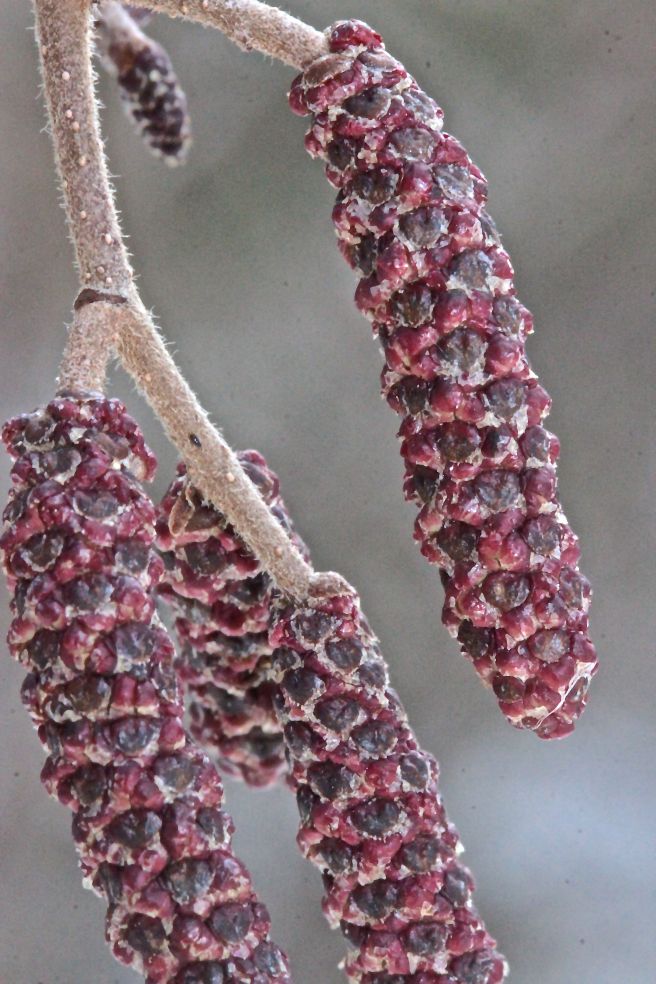
But . . . speckled alder, a member of the birch family, is about to come into its own. While the burgundy brown male catkins hang from the ends of twigs, smaller female catkins await the release of pollen.

a-speckled leaf

Speckled alders are pioneer species–that first step in natural transition of farm land or logged land back to forest. In this instance, it’s both of the former.

And that’s not its only claim to fame. Speckled alders are nitrogen fixers. Atmospheric nitrogen absorbed by bacteria live in nodules on the alder roots and change into a form of nitrogen plants can utilize as fertilizer, thus fertilizing fields that may have been depleted of nitrogen by years of farming. Its leaves are also rich in nitrogen, so when they fall they help to fertilize soil. For some reason, this one chose to hang on, but its moment will come. In the meantime, it offers grace in form and design.

a-gumdrop 2

Equally graceful, the hairy bracts and seed head of Black-eyed Susans (Rudbeckia hirta) found near the parking lot.

It’s all always been here. It’s all the same, day in and day out and yet it’s all new. Change is the only constant–offering moments of wonder.


Leaping Mondate

My guy happens to be Irish so it seemed only appropriate that I propose to him today following the example that St. Brigid set when she struck a deal with St. Patrick. Yes, we’ve been married for 25+ years, but I proposed anyway.

And he accepted. So today’s Mondate found us at Roberts Farm Preserve in Norway. Norway, Maine, that is.

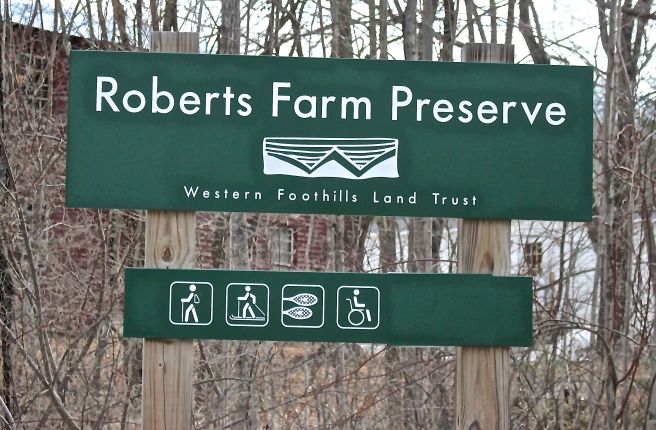
R-sign

In her book, Hikes and Woodland Walks in and around Maine’s LAKES REGION, my friend Marita Wiser states that the preserve was “farmed by the Pike and Roberts family for 200 years.” She adds, “The property was purchased by the Western Foothills Land Trust in 2007.”

r-parking

Though the trails are mostly maintained for Nordic skiers, we didn’t see any today.

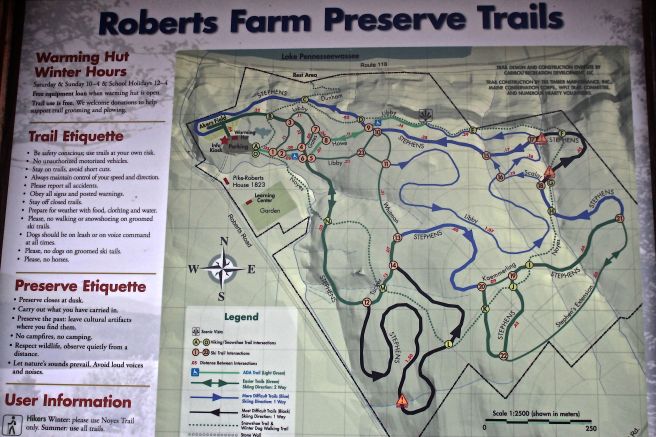
r-trail map

Had it been open to skiers, we wouldn’t have been able to do what we did–follow the network of trails around the perimeter of the property.

r-cherry bark

We’d only walked a few feet when I had to pause–the burnt cornflake look of black cherry bark insisted upon being noticed.

R-Northern White Cedar

Visiting here a couple of times previously, one of the things I’d come to like about it is the opportunity to gush over Northern white cedar bark.

r-northern white bark2

I love its red-brown color, sheddy strips that intersect in diamond formations and habit of spiraling left and then right with age. In his book BARK, Michael Wojtech states of the cedar: “In the 1500s, the native Iroquois showed French explorers how to prevent scurvy using a tea made from the bark, which contains vitamin C. The name arborvitae means ‘tree of life.'”

r-northern white leaves

Equally beautiful are its flat sprays of braided, scale-like leaves.

Since I’m on the topic of tree bark, I have two others to share, including this one–the red inner bark of Northern Red Oak made a stunning statement.

r-hop hornbeam bark

Displaying its shaggy presentation was the hop hornbeam.

My heart leaped (appropriate movement for today) when I saw these papery fruits on the ground–hop hornbeam is named for its fruiting structures that resemble hops.

r-stone wall

Stone walls crisscross the preserve and provide evidence of its former use as a dairy farm.

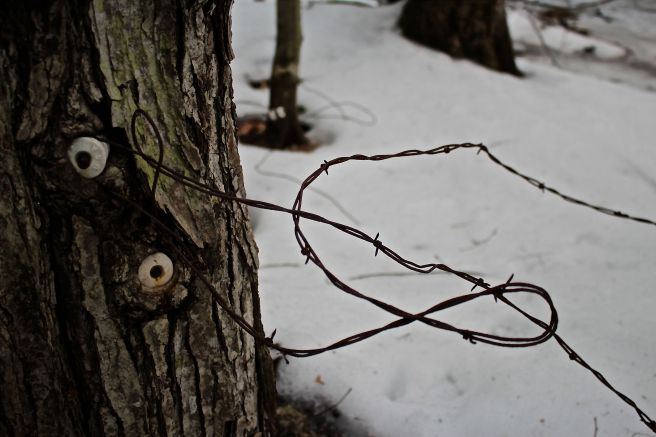
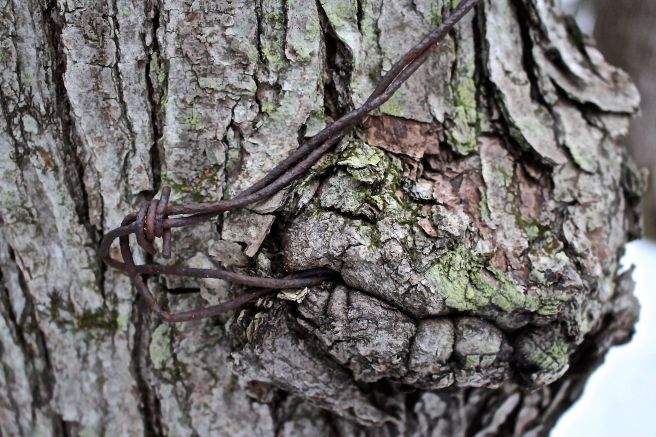
r-barbed wire

Barbed wire adds to the story.

r-barbed wire grimace

Installed long ago, this tree formed a grimace in response.

r-large pine

Along the edge of some walls stand much happier trees–those that were allowed to grow tall and wide in the sun, like this Eastern white pine. Perhaps it provided a bit of shade for Roberts’ Jerseys.

r-generation gap

The land was farmed until 1968. Since then, it returned to woodland, was sold and logged and sold another time–finally to the land trust. Generational gaps are visible throughout. This is the perfect place to take some youngsters and ask them to locate a white pine that matches their age.

r-brook 2

We cross several streams that I’m sure sustained the farm and its inhabitants. Today, they sustain the wildlife that wanders here, including deer.

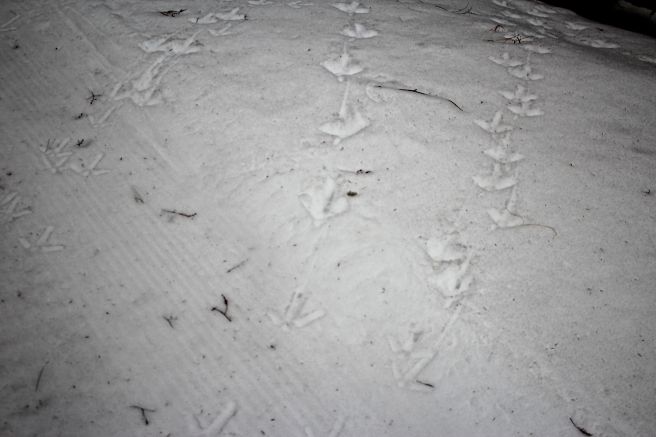
r-turkey trot

We realized there had been a recent turkey trot and

r-voles 1

vole convention.

r-pileated condo

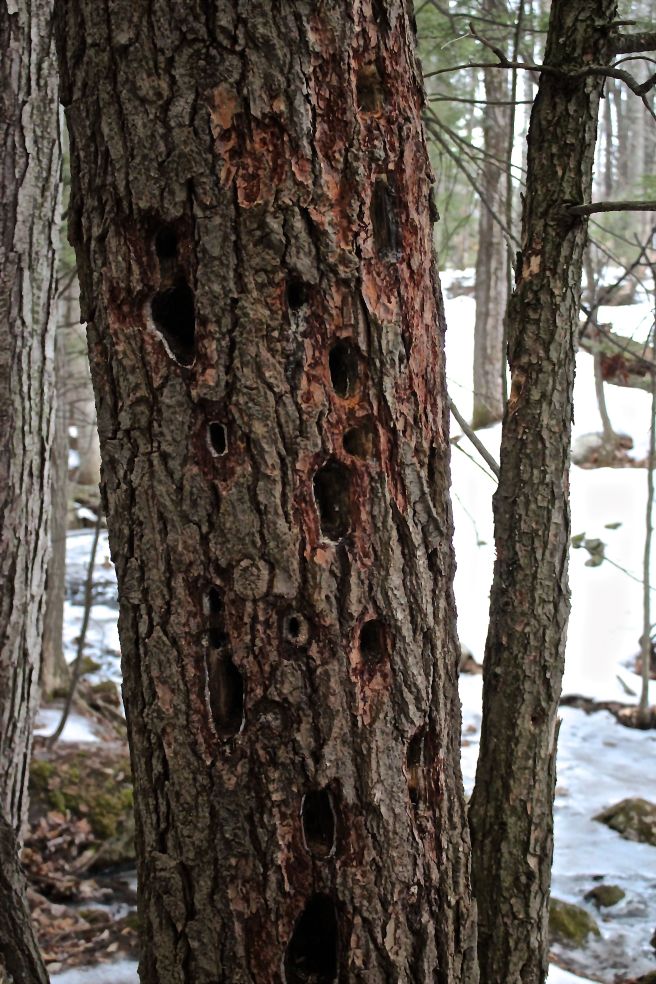
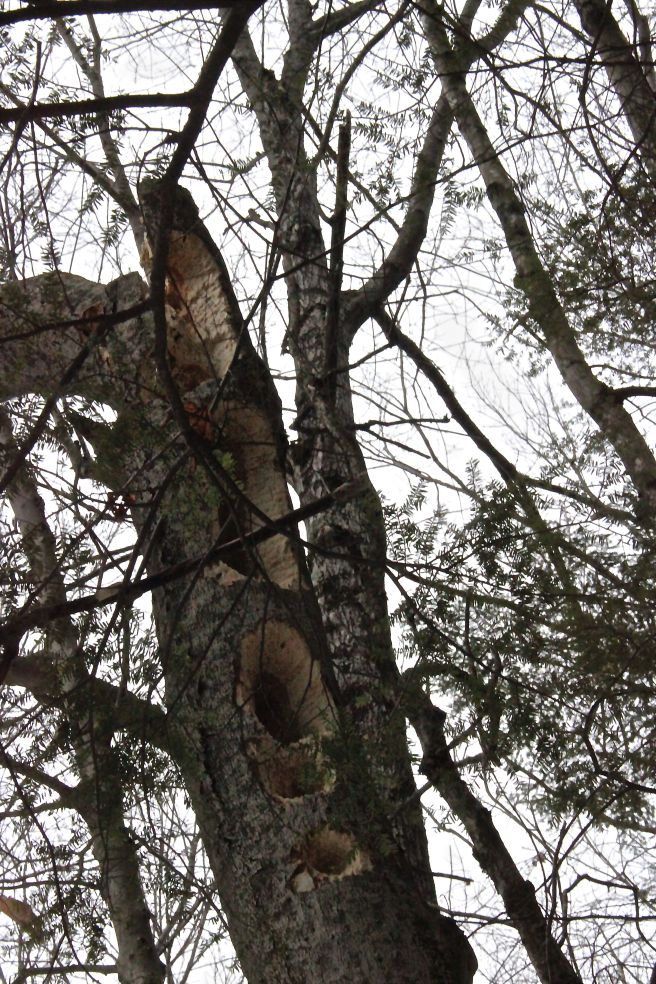
Birds also have played a major role in this community. This pileated woodpecker-created condominium has been around for a while.

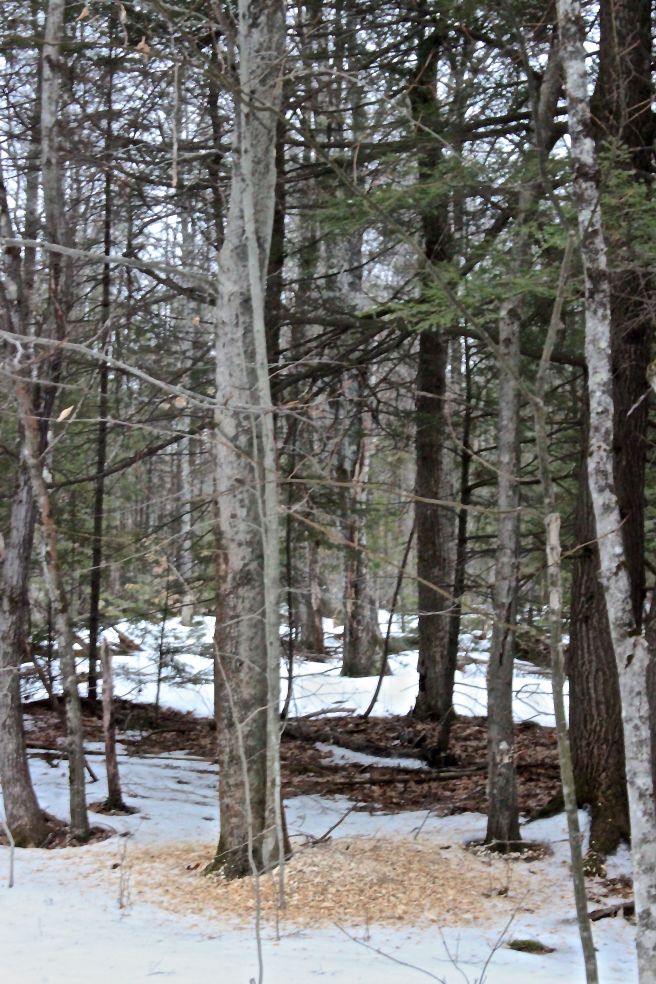
r-pileated pile

From the trail, I spied the largest pile of wood chips I’ve ever seen and of course, had to investigate.

r-pileated tree

The old beech was recently excavated for new condos.

r-pil pile 2

Below, the wood chip pile was a couple of inches deep.

r-pileated scat 1

r-pil scat 2

The best part–lots of scat cylinders filled with insect body parts. Good stuff to see.

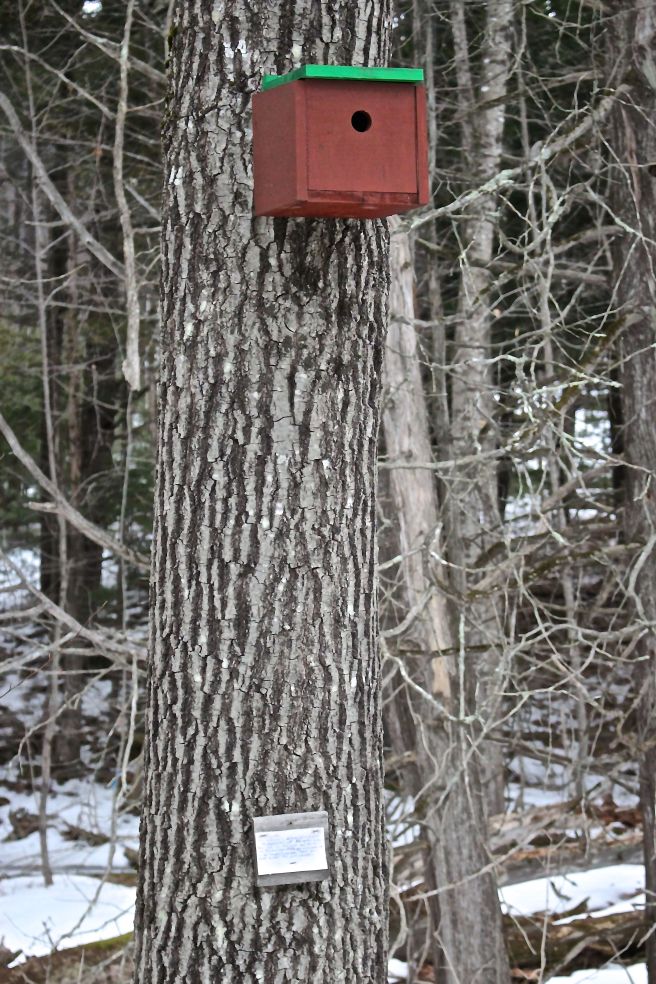
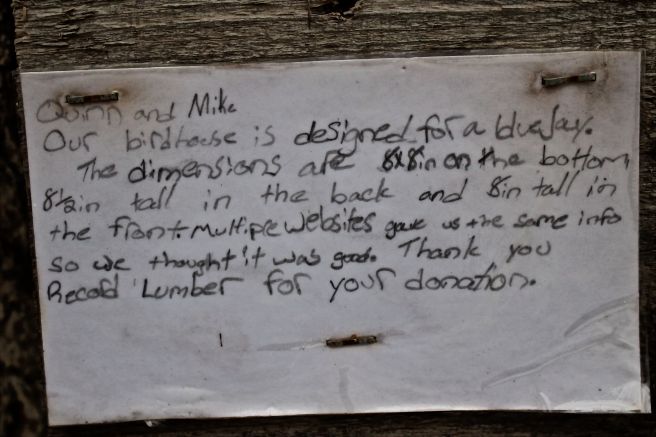
r-birdhouse

Pileated woodpeckers aren’t the only ones in the building industry.

r-birdhouse sign

I think you’d agree that Quinn and Mike did a fabulous job constructing this birdhouse.

r-mullein capsules

In several open areas we spotted the winter display of common mullein.

r-mullein 2

Its crowded performance of two-parted capsules atop a tall, fuzzy stem made it easy to identify.


The pointed prickly bracts of thistles also offered a winter show.

r-lungwort on ash

Lungwort tried to hide on the backside of an ash tree, but I found it. I only wish we’d had rain, or better yet, snow, recently, because I love the neon green that it becomes once it is wet.

r-lunch rock

Be careful what you wish for. Though the day was sunny at the start, it began to rain as we ate our sandwiches on lunch rock overlooking Lake Pennesseewassee, aka Norway Lake.

r-lake 1

It wasn’t a downpour, but enough that it encouraged us to eat quickly and move on.

r-beaked bud

Well, I didn’t move far. Within steps, I found a shrub I was seeking yesterday–beaked hazelnut.

r-beaked hazel

It’s a member of the birch family and features catkins–the male flowers that will release pollen this spring to fertilize the shrub’s delicate red female flowers.

r-christmas fern

Another quick find–Christmas fern–one pinnae topped with a birch fleur de lis.

Typically, during the winter there is only one trail open to hikers. Today, however, we figured it would be OK to walk on the ski trails because they are either icy or bare. It was definitely a micro-spike kind of day, which has been more the norm this year.

r-painted cow

Other than birds and squirrels, we saw no wildlife. But we did stumble upon the “Painted Cows” created by Bernard Langlais in 1974 and gifted to the land trust by Colby College and the Kohler Foundation.

We had planned to explore the inner network of trails, but the cold raindrops drove us out. Despite that, I think my guy enjoyed himself as much as I did. And he was extremely patient each time I paused. Sometimes he even gave me a heads up–I took that to mean he didn’t mind that I had to stop, wonder and photograph. This is one Leap Date I hope we don’t forget.


Gallivanting Around Great Brook

It’s been a couple of months since Jinny Mae and I last checked in on the doings in the Great Brook neighborhood off Hut Road in Stoneham, Maine.

H-Forest Road 4

Forest Road 4 isn’t plowed in the winter. That’s OK. We welcomed the opportunity to admire our surroundings as we hiked above the brook. So much to see that is so often missed as one drives.

h-paper birch blue

Though the temperature was on the rise, the blueness of a few paper birch trees reminded us that it’s still winter.

h-sphagnum

We found sphagnum moss looking a bit frosty but cheering us on with its pompoms.

h-chaga

On more than one yellow birch, chaga offered its medicinal qualities in quantity.

h-yellow and white partners

We came upon a special relationship–a yellow birch and a white pine. Rooted in this place, they embrace and share nutrients.

h-yellow birch:white pine

Forever conjoined, they dance through life together.

h-GB1

Finally beside the brook,  we couldn’t see the rocks below very well, but watching the water race over them gave us a better understanding of the forces that have smoothed their surfaces.

h-GB south

In a few more months, we’ll stand here and wonder where all the water went.

h-ice drips& bubbles

But today, it was the ice formations that we couldn’t stop admiring. Bubbling water below and dripping ice above, each adding to the other and both constantly changing.

h-ice 2

So much variation on the same theme as coursing water freezes into ice while at the same time carving into the rocks below.

h-ice pedastle support

Looking beneath, we noticed pedestals shaped like elephant legs providing support to shelves above.

h-gb ice castle

Occasionally, we saw crystalline turrets, translucent arches and frozen chandeliers of castles captured in ice.

h-sets of ice feet

Sometimes, it seemed like ballerinas danced on their tippy toes. That’s what water really is, isn’t it–a dance through time with changing tempos along the way?

H-GB

We crossed Great Brook and then paused for a moment as we decided which trail to follow.  We took the road less traveled by. I laughed when Jinny Mae referenced Robert Frost’s poem. My former students don’t read this, but that was one of the poems they had to learn and recite. And my guy–poor soul–knows it through association. Actually, he’s a better soul for that reason.

h-tree owl 2

So you may not see it, but Jinny Mae and I did–an owl hidden in the ash bark. Not a live owl, mind you. Well, that depends on your perspective, I suppose.

h-heal all

Within minutes, we knelt to admire Selfheal or Heal All (Prunella vulgarism) and its hairy calyces.

h-survey sign

We stood by the survey marker sign and realized it had been attached for many years.

h-survey marker

Perhaps 51 years!

h-frullania 1 on red oak

h-frullania 2

On a red oak, we pause to look at the reddish-brown liverwort–Frullania. There’s history in this species–dating to the earliest land plants. No matter how often we see it, and we see it often, we feel privileged.

h-leaves and ice

The trail switches from snow to ice to water and back again. Ice covered leaves draw our appreciation.

h-fnd 1a

In the neighborhood, we pause to check on the local families.

h-fdn 1 chamber

I climb down to the root cellar and discover that the porcupines haven’t visited all winter. Old scat still present in there, but nothing new.

H-Fdn 2

Moving up the colonial road, we come to the second residence.

h-fdn 2 yellow birch on mantel

Atop the mantel grows an old yellow birch. Like any TV screen above the fireplace, it offers an ever-changing display.

h-brook upland

We moved toward Shirley Brook, where we were once again in awe of ice.

h-water and ice1

Water and ice: a relationship in constant flux–at the moment.

h-brook structure

Beside the brook is a stream that’s currently dry. We look edat the snow-covered stonework that crosses over it and realized we need to return and try to figure out what the structure might have been and why it was built here. Stuff like this adds to the intrigue. Man-made. When? Why?

h-spider 3

Poor Jinny Mae. She had to wait for me constantly as I shifted from one lens to the next. But check out this spider.

h-stone piles 1

We are the queens of bushwhacking and love discovering the stories hidden in the woods. In this neighborhood, lots of stone walls tell part of the story. Rock piles enhance the chapters.

h-moose scat 1

And then we found more. Fairly fresh moose scat insisted upon our attention. We’d noted that there were some old snowshoe hare runs and we found some moose browse on a nearby striped maple, but we were surprised that there weren’t many fresh tracks. Where have all the mammals gone?

h-moose scat 2

This scat is some of the biggest moose scat we can recall seeing. A few gems followed me home.

h-lady's slipper

And then we happened upon something neither of us have seen before–at least that we are aware of. We had our ideas about what winter weed this is, but since we haven’t encountered it before our sense of wonder kicked in.

h-lady's slip pod 2

Back home, I looked it up in Weeds and Wildflowers in Winter by Lauren Brown. The capsule is woody and about two inches long. As you can see, it’s closed at both ends, but opens along slit lines–six in all, actually.

h-lady's bract at base of pod

At the back end, a long, curved bract.


And at the front, the slipper gone by. Yup–Lady’s Slipper (Cypripedium acaule). And the reason we didn’t recognize it–because it’s a rare find in the winter woods. Wow.

h-bear 1

We’re on our way out when we spotted these marks on beech bark. We’d looked and looked because we know this is bear territory.

h-bear NW

Compared to other bear trees, these claw marks are newer than most I’ve seen. Jinny Mae was as excited about the find as I was. I’d told her earlier as we scanned the trees that my guy has come to an unconfirmed scientific conclusion that bear claw marks appear on the northern side of trees. This one didn’t let us down. Based on the location of the sun that’s grew lower in the sky, these are on the northwestern side of the tree.

At last it was time to drive home.

Gallivant: go from one place to another in the pursuit of pleasure or entertainment. Over five miles and almost five hours later, we were thankful for the opportunity we shared today to gallivant around Great Brook.
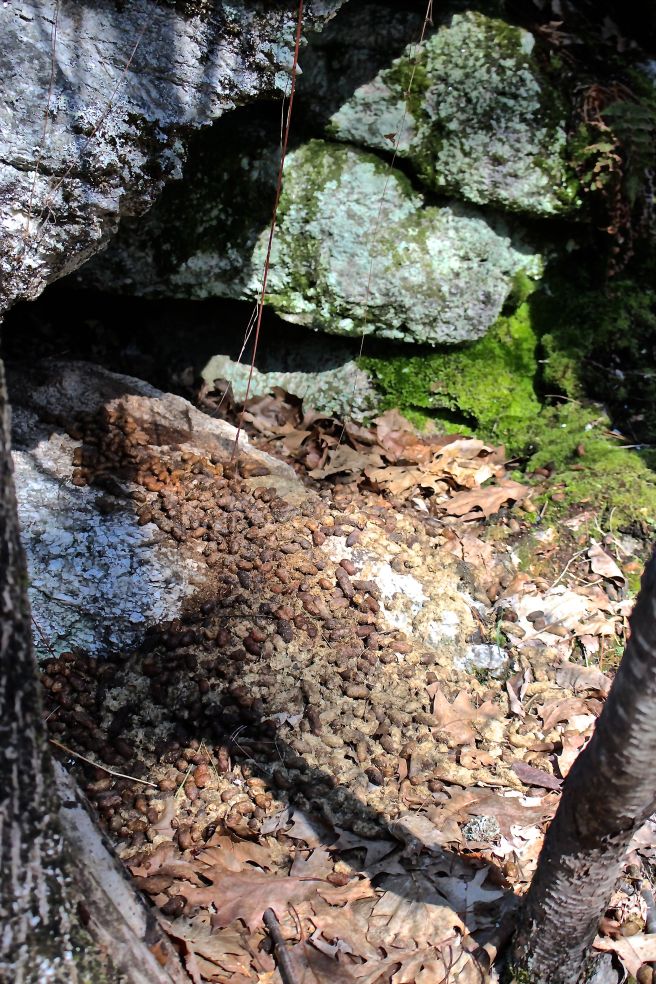


Community-centered Mondate

While it wasn’t the first Mondate I wrote about, one of our early Mondates in the past year occurred at the Greater Lovell Land Trust property we headed to today–Back Pond Reserve in North Waterford/Stoneham.

m-eagle 1

On our way we were forced to stop by Bear Pond for a regal sight.

m-Ron

And another regal sight along the trail–I’ve given thanks to Ron before and I know I’ll thank him again (RIP Ron) for his foresight in encouraging the greater community to protect the water quality of the Five Kezar ponds by purchasing and placing “The Mountain” area in conservation easement.

m-climbing view

As we climbed through the beech/oak forest, I paused to take a photo. Lo and behold, my camera didn’t work. I was certain I’d charged the battery, but it wouldn’t click. I tried a back-up battery to no avail. Frustration set in, but my guy reminded me that I could always take photos with my phone. I’m not one-hundred percent convinced that I’ve mastered phone photos, but decided it was better than nothing. This meant, however, less time focusing on photos and more time focusing on us. And that got me thinking about time. We were on a bit of a time crunch today, but the more important thing was that we were spending our time together doing what we love doing–hiking and being in each other’s presence. We spend so much time worrying about all that needs to be done and making money to do those things. But really, in the end will that matter? I don’t think so. I think it will be far more important that we learn to appreciate what is around us and figure out how to share that wealth with others. It won’t always have a monetary value attached because as they (whoever they are) say, “Money isn’t everything.” Is money anything? It certainly doesn’t grow on these trees. Or does it?

m-community changes trail conditions

Though there was snow underfoot for most of the beech/oak community as we climbed, under the hemlocks it was a different story.

m-bare summit

And when we reached the summit of The Mountain Trail, nothing but bare ground due to its southwest orientation.

m-summit phone

We sat on a rock and enjoyed the sun while absorbing the view below and beyond. With the  phone I captured the moment.

m-view

And then I pulled out my camera again. Determination is the name of my game. Turns out I’d been wearing mittens as we began and my big muffs must have hit the wrong setting–creating a 10-second time lapse. Had we wanted to pose for a photo we would have been all set but that’s not our style. Hardly a selfie in our photo album. It is curious to notice the difference in color and wider range of the phone photo. But I prefer my Canon.

m-trailing arbutus

Near the summit, trailing arbutus announced its future plans.

m-connector trail

While trail maps show The Mountain Trail and Ron’s Loop, we long ago learned by chance that the two are connected via a trail down the backside. Today we reminisced about the first time we ever traveled this route and how we struggled to find our way. Though it still has its share of obstacles, it’s now much more obvious.

m-no snow under hemlock

The community changed from evergreens to hardwoods with occasional evergreens. And with that, the snow conditions also changed. We paused below this hemlock to admire the subtle transition.

m-hare

And we recalled our delightful experience of observing a hare in this very spot almost a year ago.

m-snowshoe hare scat

Today only tracks and scat alerted us that hares live in the neighborhood.

m-bobcat 1

Hare tracks weren’t the only ones we saw. All along the trail, though not quite as clear, we recognized that a bobcat had made a pass.

m-first bear tree

We also recognize dmarks we’ve previously admired on some old beech trees.

m-bear claw marks.jpg

I could almost feel the claw grasping the bark–both front and hind visible here. But there’s so much more going on with this tree. It hosts a community of visitors from big black bears to minute beech scales that cause the bark to develop cankers around its invasion. And in between–other insects and woodpeckers.

m-bear tree variety of life

It’s a tree of life even as it reaches toward death. Eventually it will fall and we will no longer celebrate its bear claw marks, but as it decays, it will leave a legacy on which these woods depend. The cycle of life. The work within the community.

m-pileated.jpg

Another beech down the trail displayed its form of the same gift.

m-broken bridge crossing

We reached the first of the crossings–this one still on the connector trail that once served as a snowmobile trail. For as long as we’ve traveled this way the bridge we were about to cross has been broken.

m-new bear tree

Though conditions were good, with my camera working again, my journey slowed. My guy accused me of searching for bear trees. And he was right. And I was further rewarded. I found one neither of us recalled seeing before.

m-new bear 2

m-new bear 1a

One foot atop another. Upward mobility in search of sustenance.

m-beech nut 2

It’s here for the taking.

m-yellow birch scales and seeds

At last, we found our way onto Ron’s Loop, where we turned right at the bridge and continued on. The community changed and here we found the fleur de lis and winged seeds of yellow birches settling onto their community of choice–moss upon a boulder.

m-fungi community

Creating a dense bouquet is the violet-toothed polypore community– a reminder that there’s beauty in age.

m-lonely pine

And beauty in singleness.

m-deer browse 2

We’re in the neighborhood where deer browse red maples.

m-raccoon prints

And raccoons venture forth on semi-warm winter nights.

m-raccoon diagonal

We rejoiced in recognizing the alternate-angled pattern of the trail they leave behind.

m-birch polypores

There were always surprises. Birch polypores decorated this paper birch that masked its condition with a healthy appearance.

m-brook

Despite my caution, we made several successful brook crossings.

m-my guy's prints

And I followed my guy to the end of the Earth–well, at least to the end of the trail–though I suspect he knows I’d follow him anywhere. He’s a good guy. Actually, he’s a great guy.

m-map.jpg

We paused at the kiosk to check the map. Imagination is a necessity–no kidding. For this moment you must connect the summit of The Mountain Trail to the far end of Ron’s Loop–thus re-creating the connector trail between the two.

m-5 kezar ponds road

Suddenly we are back on 5 Kezar Ponds Road headed toward our truck.

m-hornets nest

And here we found remnants of another community that is integral in the overall system of life.

As we drove home, we paused again by Bear Pond and the bald eagle didn’t let us down. Though the ice fishermen and women weren’t about today, it knew this community to be prime hunting grounds.

As for us, our hike was quick today because we had our own community efforts to join–he had a Lions Club meeting and I had a Maine Master Naturalist board meeting. We do our best to provide support in any way we can. It’s important to us to be community-centered–even on a Mondate. And by the way–the Lions are always looking for contributions to support their eye-sight programs; and the Maine Master Naturalist Program is still accepting applications for its Tier One course being offered from May-Sept this year in Bridgton, Farmington and Mount Desert Island.


Celebrating a Year of Wonder-filled Wanders

One year ago today I invited you to follow me into the woods. More specifically, I invited you to wander and wonder with me. I had no idea where the path would lead, but that didn’t seem to bother you. Occasionally I got fake lost, as was the case today, but still you read on. And other times I gave you the wrong information, but you quietly corrected me and continued to read. Thank you for your time, curiosity, encouragement and endless wonder. This one is for all of you.

b-woody1Check out this tree that I pass by each time I step into our woodlot. My guy and I were commenting on it just the other day–he tried pushing, but it stood firm. This morning, fresh wood chips indicated that the pileated woodpecker had paid a visit in the last 24 hours.

b-woody tree 2It’s a well-visited tree. What will the woodpeckers do when it finally does fall? Two things. First, they’ll continue to visit it because apparently it’s worthy of such. And second, they’ll find other trees; there are several others just like this.

b-powerlineI was feeling a bit grumpy when I headed out the door, but finding the recent woodpecker works and emerging from the cowpath onto the power line where I was captured by the whitegreenbluegray of the world as I looked toward Mount Washington put a smile on my face. My intention was to walk along the barely used snowmobile trail as far as I could. I wasn’t sure if open water would keep me from reaching the road, which is a couple of miles away, but decided to give it a try.

b-cat following deerJust because that was my plan doesn’t mean that’s what happened. Maybe that’s what I love best about life–learning to live in the moment. This moment revealed the spot where deer sunk into the snow just off the snowmobile trail and a bobcat floated on top.

b-cat following deerSoft snow made for distorted prints. And these prints made for a quick change of plans.

b-cat:voleI turned 180˚ and found more tracks on the other side of the snowmobile trail. And so began today’s journey into the woods. I was feeling proud of myself for backtracking the animal–following where it had come from rather than where it had gone so I wouldn’t cause unnecessary stress. Yet again, I stress out all the mammals because of my constant movement–and so many I don’t see because they hear me coming. Anyway, I followed the bobcat for quite a while, noticing that it continued to follow the deer and even crossed over a couple of vole tunnels that already have their spring appearance. It’s much too warm much too soon.

b-cat-2 printsWhat I discovered is that this mammal was checking out stumps and along the way circled around them. And then it seemed that there might be two because suddenly I was following rather than backtracking. So much for that plan. What I do like is how this photo shows the mammal’s hind foot stepping into the same space the front foot had already packed down–direct registration, just a little off center.

b-cat nurse logIts prints are in the bottom right-hand corner, but then it appeared to walk across the top of this nurse-log. After that, I had to circle around looking for the next set of prints.

b-no snowUnder some of the hemlocks, there was little to no snow. Eventually I lost the bobcat’s trail, which is just as well.

b-widowmaker1I didn’t realize until I looked up that I was still in familiar territory.

b-widowmaker 2I first spotted this widow maker 20+ years ago. It never ceases to amaze me.

b-deep snowI decided that rather than return to the snowmobile trail, I’d continue deeper into the woods. I had an idea of where I’d eventually end up, but if you’ve traveled these woods with me recently (Marita and Dick can vouch for this), you’ll know that the logging operation has thrown me off and not all of my landmarks are still standing. It’s that or they just got up and moved. Anyway, I was lost for about an hour, but continued moving slowly through sometimes deep snow (relatively speaking this winter) and other times puddly conditions. It was a slog to say the least. My friend, Jinny Mae, had warned me about water hidden beneath the snow and I found it. More than once.

b-brit 2I also found other cool stuff. British lichen bearing bright red caps.

b-hemlock yearsA hemlock wound that indicated the last time this land was logged. I counted to 25. That makes sense.

b-hemlock cone:seedsA hemlock cone and seeds on a high spot of snow–not the usual stump, log or branch, but still a high spot. Apparently the red squirrel that had gone to all the work of taking the cone apart to eat the seeds had been scared away. Perhaps it will return, or another, or I’ll be admiring hemlock saplings in a few years.

b-porcupine scatPorcupine scat below another hemlock.

b-porky twigAnd a few snipped off twigs–porcupine style.

b-hemlock debrisA mystery perhaps. I love a mystery. So, scattered on the snow–bits of hemlock bark.

b-hemlock 2aAnd an apparent path up the tree. But . . . look up. This tree is dead. I don’t think this is porky work.

b-hemlock 2Could it be that where the bark is missing a woodpecker has been at work?

b-striped maple browseI found fresh browse on striped maple–that had been previously browsed based on the scars.

b-deer browse red mapleAnd red maple that had received the same treatment.

b-witch hazel browseWitch hazel was not to be overlooked. I think this is the longest deer tag I’ve encountered–to date.

b-scat 2You may not appreciate this, but I couldn’t resist. So . . . to whom does it belong? Either a coyote or bobcat. It’s filled with hair and I’m leaning toward the latter. Of course, I want it to be the latter.

b-doggy bagI, um, brought some home in a doggy bag. Not all of it, mind you, because it is a road sign to others. I’m not sure how they do it, but members of the same family can apparently identify gender, health and availability by such works. And members of other families may read this as a territory marker. There was a copious amount, so it could be that the same or two animals used this spot. Just sayin’.

In case you were wondering, I did find my way out–another three+ hour tour. As I slogged along, I recalled a spot I often returned to for quiet contemplation. I can no longer locate it because so much has changed as this area has been logged for the past three years. But . . . I came to the realization today that I don’t need one spot. Any will do. That being said, I pulled out my camp stool, colored pencils and journal back at my sit spot by the edge of the cowpath.

b-deer run:sit spotIt’s right beside a deer run. In the past two years, the deer visited this spot, but I’ve noticed much more activity this winter. The stone wall is hardly an obstacle. And the junipers–prickly as they are to me, the deer seem to enjoy them.

b-sheep 1One thing I did notice that I don’t understand. The sheep laurel that grows here has recently been browsed.

b-sheep2Deer tracks below it and the nature of the work lead me to believe that the ungulates fed on it. Hmmm . . . I thought that sheep laurel was poisonous to wildlife. But then again, deer are browsers, not staying in one spot long enough to consume a large amount so perhaps it doesn’t affect them if they eat a bit here and there. If you know otherwise, please enlighten me.

b-spring tailsAnother thing–yes, if you look closely at leaves, you’ll find them. These hot chili peppers don’t appear just on the surface of snow. They are snow fleas, aka springtails. With their spring-loaded tails they can catapult themselves an inch or so. We never look for them once the snow melts, but they are still abundant on organic debris. They’re easiest to locate on leaf litter, but also can be seen on soil, lichens, under bark, decaying plant matter, rotting wood and other areas of high moisture as they feed on fungi, pollen, algae or decaying organic matter.

b-pine sap 2Though it was warm under the sun, my fingers were getting cold as I sketched, so I packed up to head home. Back in our woodlot, I decided to follow a deer trail rather than my own. And to them I give thanks. Beside a hemlock tree, pinesap’s woody capsules called out. I’d found some at the start of winter–along the cowpath. And now a second patch. It really does pay to go off my own beaten path.

b-Indian pipe 1While pinesap has several flowers on one stalk, a few feet later and I came upon Indian pipe, which has one flower (now a woody capsule) atop its stalk. Notice how hairy the pinesap is compared to the Indian pipe.

b-goblets 1I’m afraid this photo is a bit fuzzy, but I’m still going to use it because it’s too dark to head out and take another. These cup lichens serve as my pixie goblets to all of you who have stuck with me for this journey–both today’s and the past year. Thank you so much. The year flew by and I’m a better person for this experience. Well, I think I am. What has made this past year so special is the paying attention. The slowing. The recognizing. The questioning. I’ve learned a lot and I trust you’ve learned a wee bit as well. Who knows where the path will lead me next, but I sure hope you are along to wander and wonder.

To you, I raise these goblets!


Moi–Bull in a China Shop

Several inches of fresh snow topped with freezing rain two days ago and the world is transformed. I couldn’t decide whether to wear snowshoes, micro-spikes or neither. I choose micro-spikes, which seemed a good choice at the start, but not long into my 3.5 hour tramp through the Greater Lovell Land Trust’s John A. Segur Wildlife Refuge off Farrington Pond Road, I wished I chosen the snowshoes. At times the snow was soft, but other times it sounded as if glass was breaking as I crashed through it. Broken shards slide across the glazed surface. I was the bull in a china shop.

SB-sweet fern begin blue trailFrom the parking lot, I decided to begin via the blue trail by the kiosk. It doesn’t appear on the trail map, but feels much longer than the green trail–possibly my imagination. Immediately, I was greeted at the door of the shop by sweet fern, aka Comptonia peregrina (remember, it’s actually a shrub with foliage that appear fern-like). The striking color and artistic flow of the winter leaves, plus the hairy texture of the catkins meant I had to stop and touch and admire.

SB-bobcat1And only steps along the trail another great find–bobcat tracks. This china shop immediately appealed to moi.

SB-bob 3My Trackards slid along the glassy surface, so it was difficult to show the print size. But . . . it is what it is. The bobcat crossed the trail a couple of times and even came back out to explore squirrel middens.

SB-rocksWhen I got to a ledgy spot, I decided to explore further–thinking perhaps Mr. Bob might have spent some time here. Not so–in the last two days anyway.

SB-red squirrel printThe best find in this spot–red squirrel prints. A few things to notice–the smaller feet that appear at the bottom of the print are the front feet–often off-kilter. Squirrels are bounders and so as the front feet touch down and lift off the back feet follow and land before the front feet in a parallel presentation. In a way, the entire print looks like two exclamation points.

SB-bear 1As I plodded along, my eyes were ever scanning and . . . I was treated to a surprise. Yes, a beech tree. Yes, it has been infected by the beech scale insect. And yes, a black bear has also paid a visit.

SB-bear 1aOne visit, for sure. More than one? Not so sure. But can’t you envision the bear with its extremities wrapped around this trunk as it climbs. I looked for other bear trees to no avail, but suspect they are there. Docents and trackers–we have a mission.

SB-beech nut1And what might the bear be seeking? Beech nuts. Viable trees. Life is good.

SB-right on red maplesExactly where is the bear tree? Think left on red. When you get to this coppiced red maple tree, rather than turning right as is our driving custom, take a left and you should see it. Do remember that everything stands out better in the winter landscape.

SB-nest 2As delicate as anything in the china shop is the nest created by bald-faced hornets.

SB-nest 3Well, it appears delicate, but the nest has been interwoven with the branches and twigs–making it strong so weather doesn’t destroy it. At the bottom is, or rather was, the entrance hole.

SB-witch hazel flowersWitch hazel (Hamamelis virginiana) grows abundantly beside younger beech trees. Though the flowers are now past their peak, I found a couple of dried ribbony petals extending from the cup-shaped bracts. China cups? No, but in the winter setting, the bracts are as beautiful as any flower.

I have to admit that I was a wee bit disconcerted when I reached a point where the blue trail and green trail split and it wasn’t at a point that I remembered. But I lumbered on and was pleasantly surprised when I reached the field I recognized–approaching it from the opposite side than is the norm. And later on, I realized that where the blue trail again joined the green trail was a shortcut. We need to get an accurate map made of this property, but I also need to spend more time familiarizing myself with it. At last I reached Sucker Brook.

SB-lodges and Evans NotchWith the Balds in Evans Notch forming the backdrop, the brook is home to numerous beaver lodges, including these two.

SB-lodge and layersLayers speak of generations and relationships.
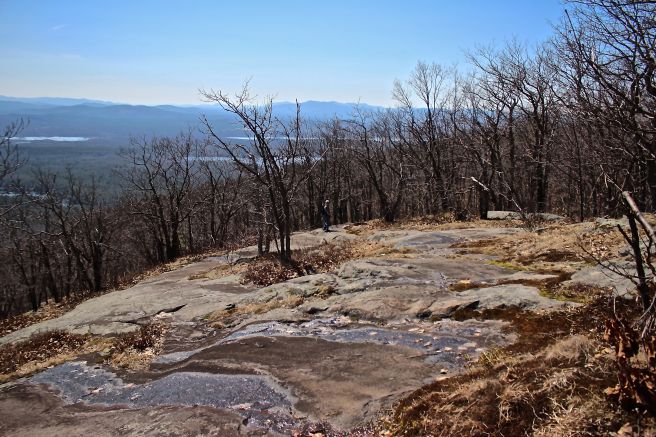
SB-two lodges 1Close proximity mimics the mountain backdrop.

Old and new efforts mark return attempts.

SB-cove beaver treesAnd sometimes, I just have to wonder–how does this tree continue to stand?
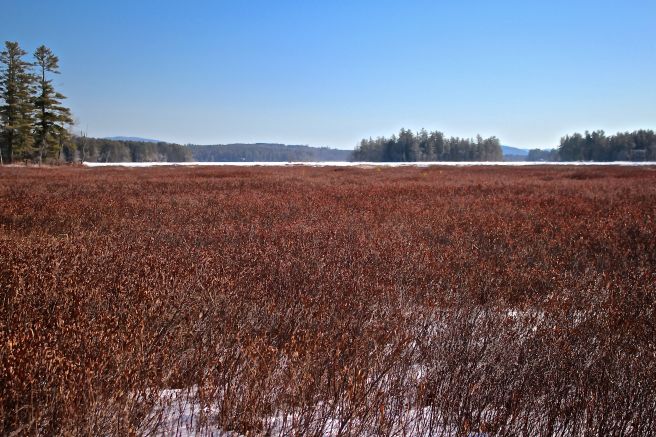
SB-near outlet leatherleaf fields foreverLeatherleaf fields forever.

SB-leatherleaf budsSpring is in the offing.

SB-wintergreen 2Wintergreen offers its own sign of the season to come.
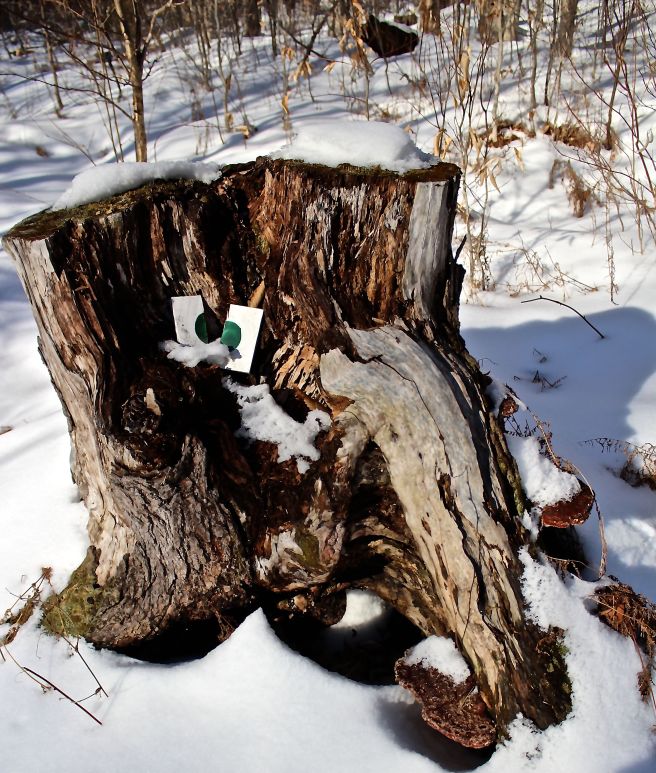
SB-hemlock stump et alIn the meantime, it’s still winter and this hemlock stump with a display of old hemlock varnish shelf (Ganoderma tsugae) caught my eye. By now, I was on the green trail.
SB-grouse 2But it’s what I saw in the hollow under the stump, where another tree presumably served as a nursery and has since rotted away, that made me think about how this year’s lack of snow has affected wild life. In the center is ruffed grouse scat. Typically, ruffed grouse burrow into snow on a cold winter night. Snow acts as an insulator and hides the bird from predators. I found numerous coyote and bobcat tracks today. It seems that a bird made use of the stump as a hiding spot–though not for long or there would have been much more scat.

On the backside of the stump, more ruffed grouse scat white-washed with uric acid.

SB-hemlock grouse printsApparently it circled the area before flying off.

Moments later I startled a ruffed grouse in a tree while I observed turkey tracks. Though their prints and scat appear to be similar–turkeys are soooo much bigger in all respects.

SB-sweet fern end of green trail

My trek ended in the same manner that it began–with sweet-fern offering a graceful stance despite my bull in a china shop approach.


Shades of Blue Valentine

I coveted a friend’s hat yesterday–especially when she said she’d crocheted it the night before. And so I was thankful when she sent me the pattern last night. My plan had been to whip up a hat for myself, but after leading two fun hikes, I did all I could to keep my eyes open while watching British comedies.

b-blue hat 1

This morning, however, I pulled out a skein of blue wool I’d been saving for something special and wound it into a ball. Then I started to follow the pattern. Ah, but my ability to complete something exactly as planned went missing from my make-up long ago and be it recipe or pattern, in no time I make it all my own, never to be repeated again. Sometimes, especially when it comes to a recipe, that’s a good thing.

b-hat 2

The finished product looks more like a toilet paper cover my mother might have made, but I rather like it. And so I wore it as I piled on the layers to head outside.

b-thermometer

According to the thermometer, it was a balmy +5˚. The wind chill was another factor indeed. It certainly felt invigorating.

b-feather branch

One of my first delightful finds was a small feather caught on a tree branch. I didn’t see any others, so I’m not sure what happened, but that downy fuzz looks so soft and warm. Hardly worth shedding.

b-hat branch

My hat was not worth shedding either, but several times the branches snatched it. I do believe the tree spirits approve.

b-turkey 2

Everywhere I ventured, it seemed the turkeys had been before–their oversized prints pointing the way.

b-turkey sashay

At times, the pattern they created gave the effect that they’d sashayed along–as if they owned the place.

b-turkey frozen

And other times I found their signatures frozen in place–for the time being.

b-junco 2

Other patterns also caught my attention–like the prints of dark-eyed juncos. These little snowbirds hop along on the ground as they feed, so their tracks are often visible in our mixed-coniferous forest.

b-junco 3

At the beginning of tracking season when we didn’t have much snow on the ground, my friend Jinny Mae and I were momentarily confused by these. Now they are imprinted on our brains.

b-junco 4

Two-by-two, they remind me of teardrops. Between hops, toe drags are visible.

b-mouse1

Looking rather similar and thus causing confusion are the prints of white-footed or deer mice. I can’t tell you which of the bounders left these behind, but the tail mark down the middle indicates it was one of these two.

b-snow & ice

Among the zillion things that I love about winter is the color blue caused by light absorption. Light waves travel into the icy grains and are scattered among them before being reflected back to us. While we see white snow when sunlight bounces off surface layers, the color blue is apparent when more red light is absorbed by the grains. It clarifies the feel of this brisk day. The sound of the snow creaking and crunching beneath my feet also indicated the temperature–COLD.

b-witch hazel bud

But . . . warmer days are coming–eventually. Until they arrive, the scalpel-shaped bud of witch hazel survives despite its lack of waxy scales for protection.

b-witch hazel 2

Like hobblebush, however, it has a hairy coating that must provide some warmth. I have to wonder if the little hairs absorb the sun’s rays.

b-deer heart 2

Shades of blue even outlined this print–though there’s also an appropriate wisp of rose surrounding the shape.

Most people see red on St. Valentine’s Day. I favor blue. Happy deer-heart day!