Election Day Tramp

It always strikes me that no matter how often one travels on or off a trail, there’s always something different that makes itself known–thus the wonder of a wander.

And so it was when Pam Marshall, a member of the Greater Lovell Land Trust, joined me for a tramp at the John A. Segur Wildlife Refuge West on Farrington Pond Road this morning. She had no idea what to expect. Nor did I.

13-puff balls to pop

It was misty when we met, but neither of us was daunted by the weather. Ever so slowly, we made our way over the wet leaves, roots, and rocks, pausing frequently–especially each time we saw puff balls. How can one resist poking or squeezing them to watch the spores waft out like smoke. The skin of mature puffballs split prior to releasing spores. And we . . . we helped the process a wee bit.

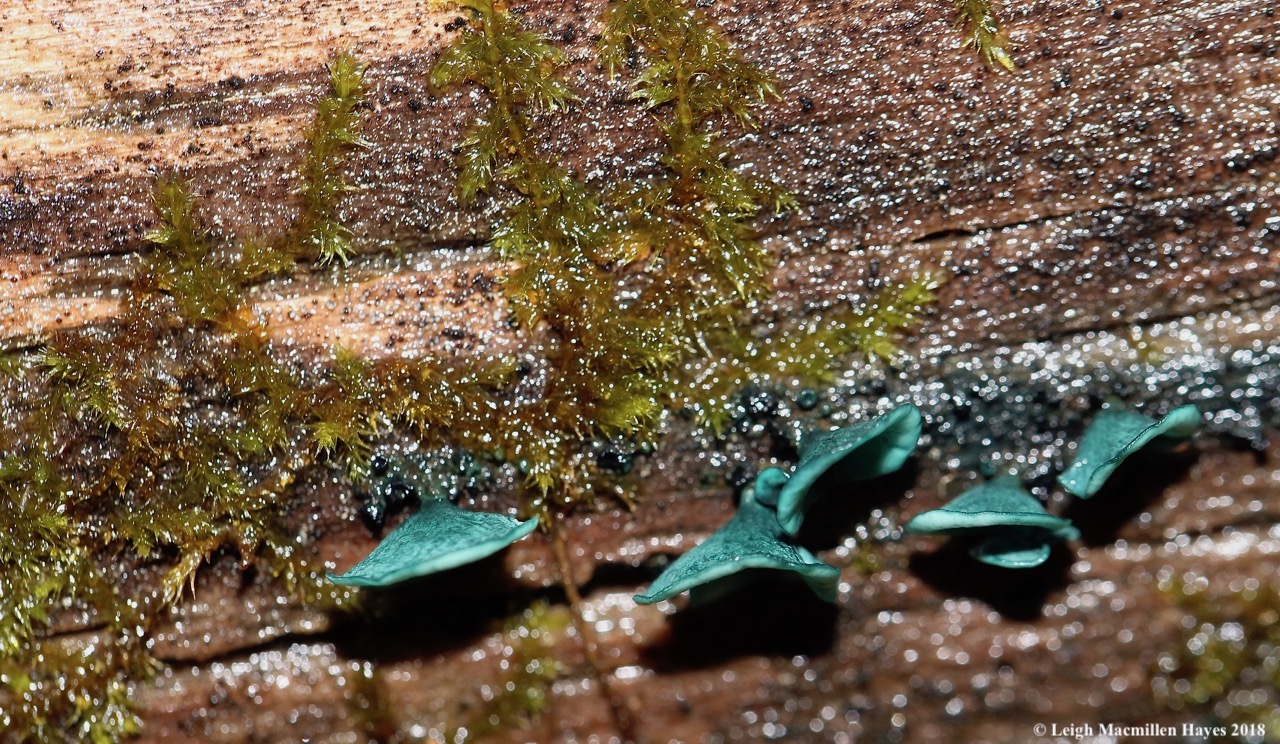
20-blue stain fruiting

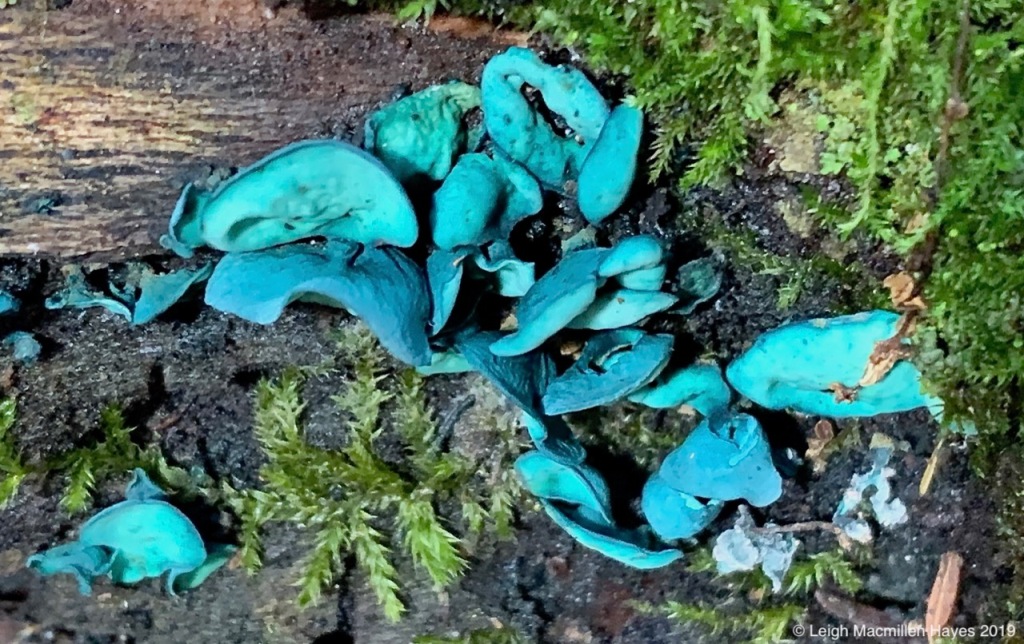
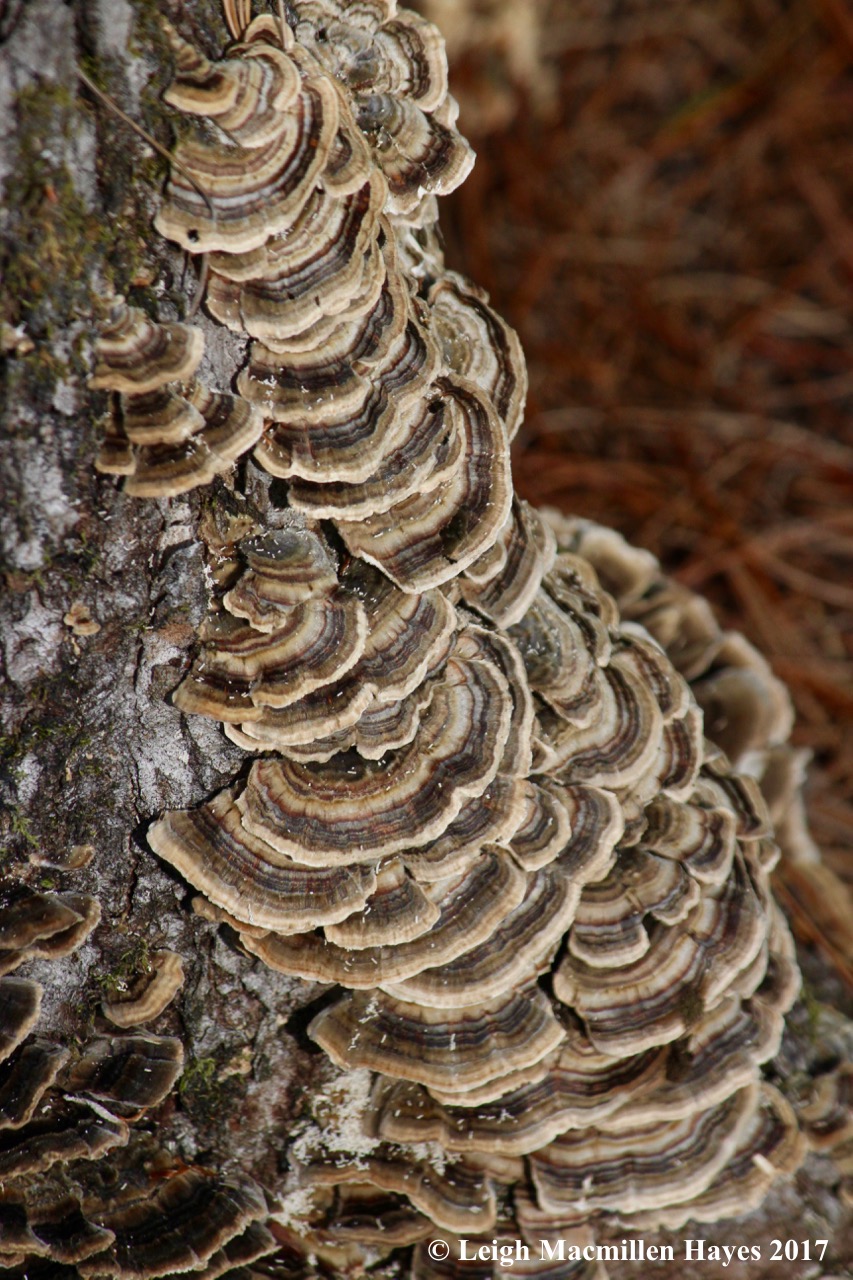
Green stain fungus also drew our attention. Its fruiting bodies were minute, but well worth wet knees for a closer examination.

19-hexagonal-pored polypore

With Pam in the lead for most of the way, she kept finding cool stuff, like this hexagonal-pored polypore.

1-Sucker Brook Outlet

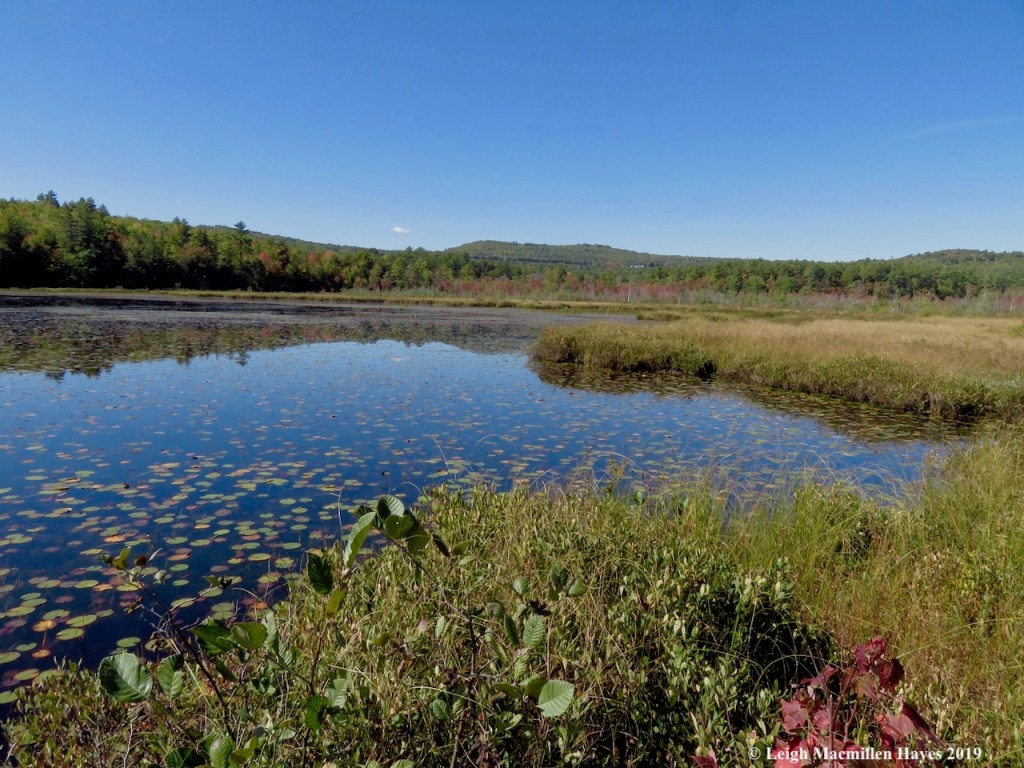
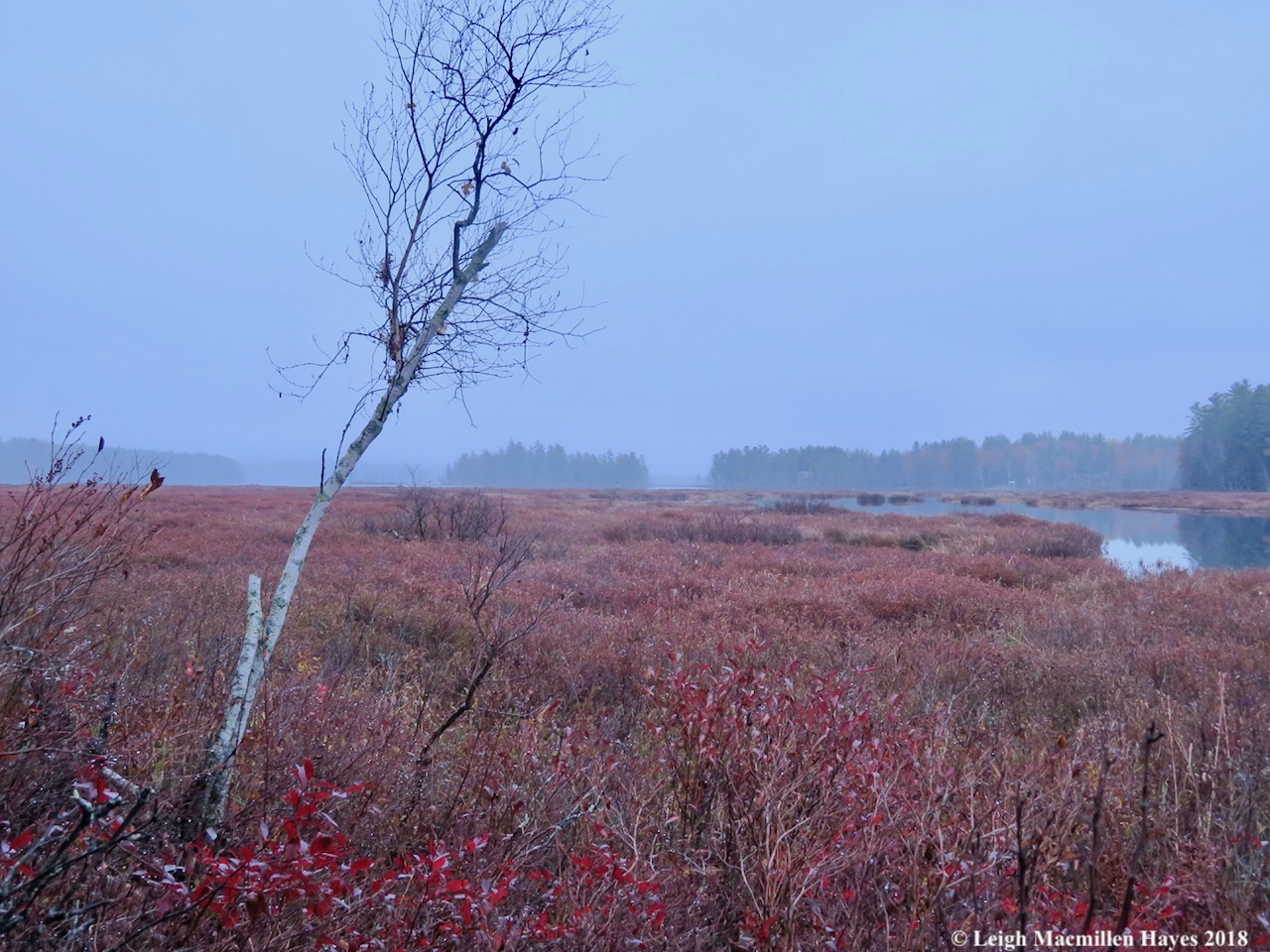
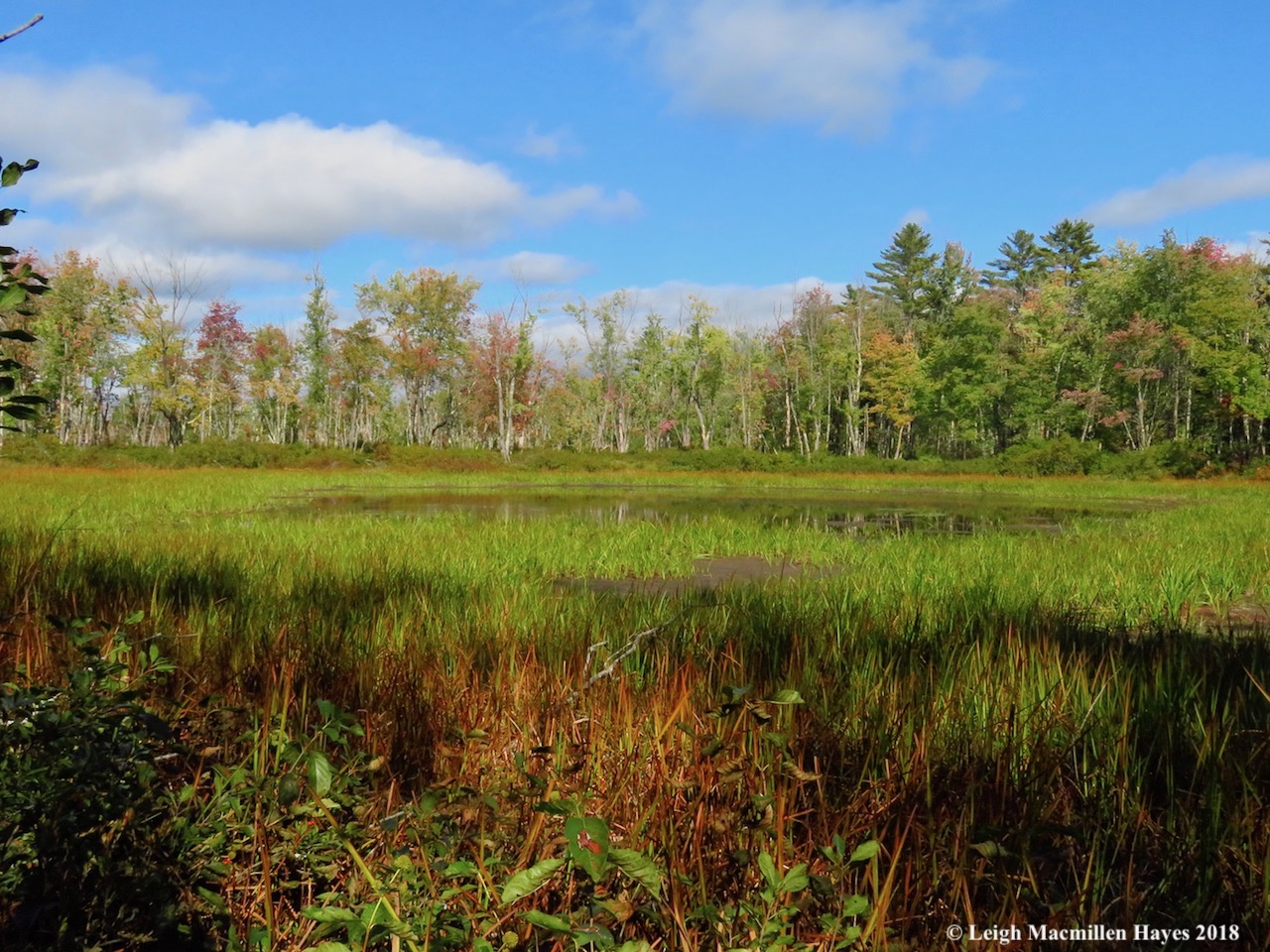
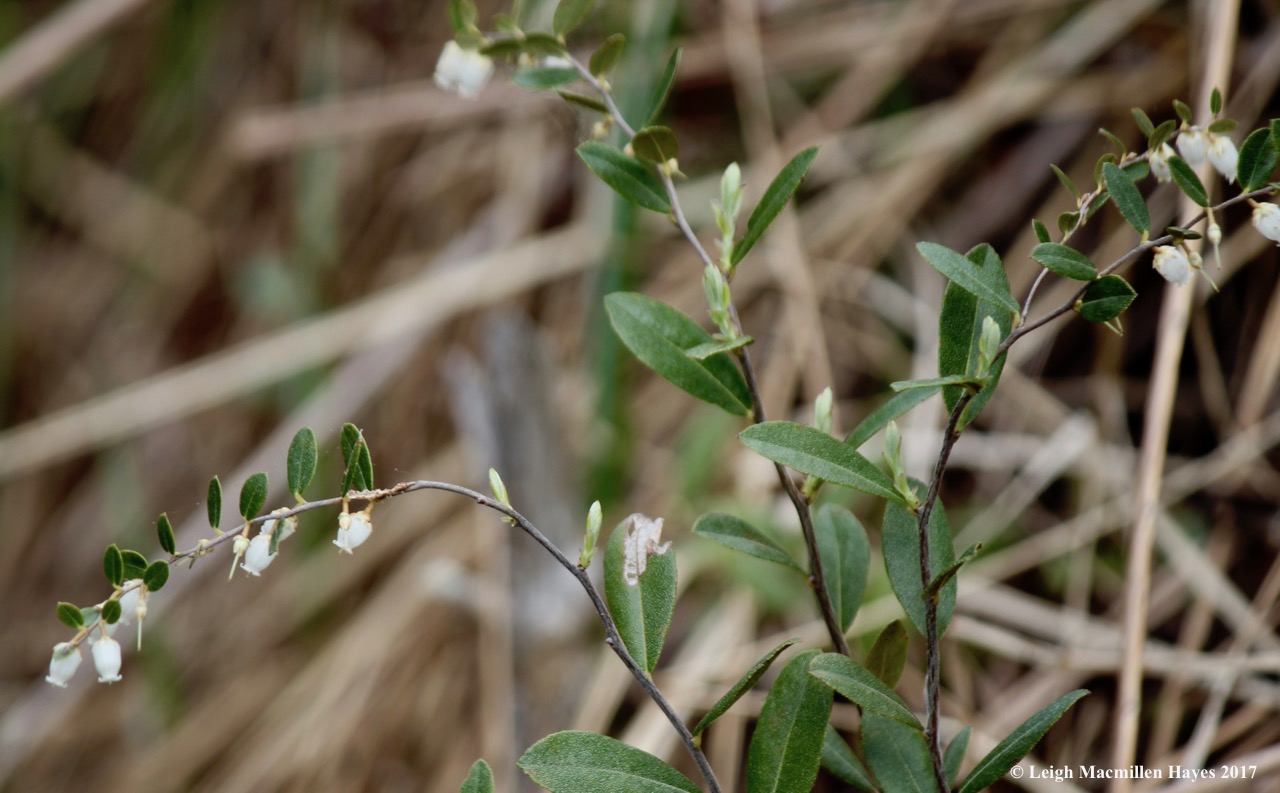
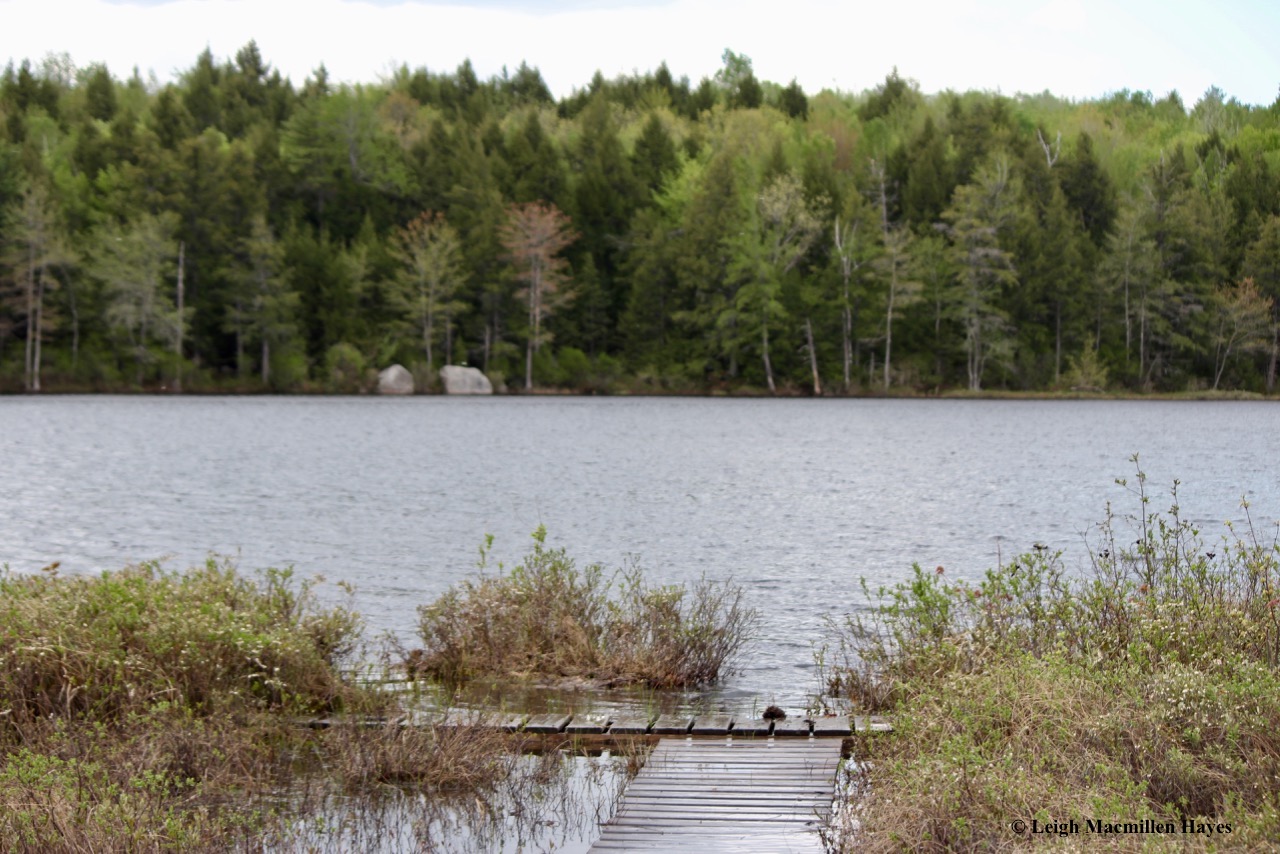
It took us a while, but we finally reached the wetland by the Sucker Brook Outlet where blueberry, maleberry and leatherleaf shrubs added color to the otherwise gray day.  For a while we stood under the protection of a large hemlock and took in the scene in silence.

2-Silhouettes on Lower Bay and cotton grass

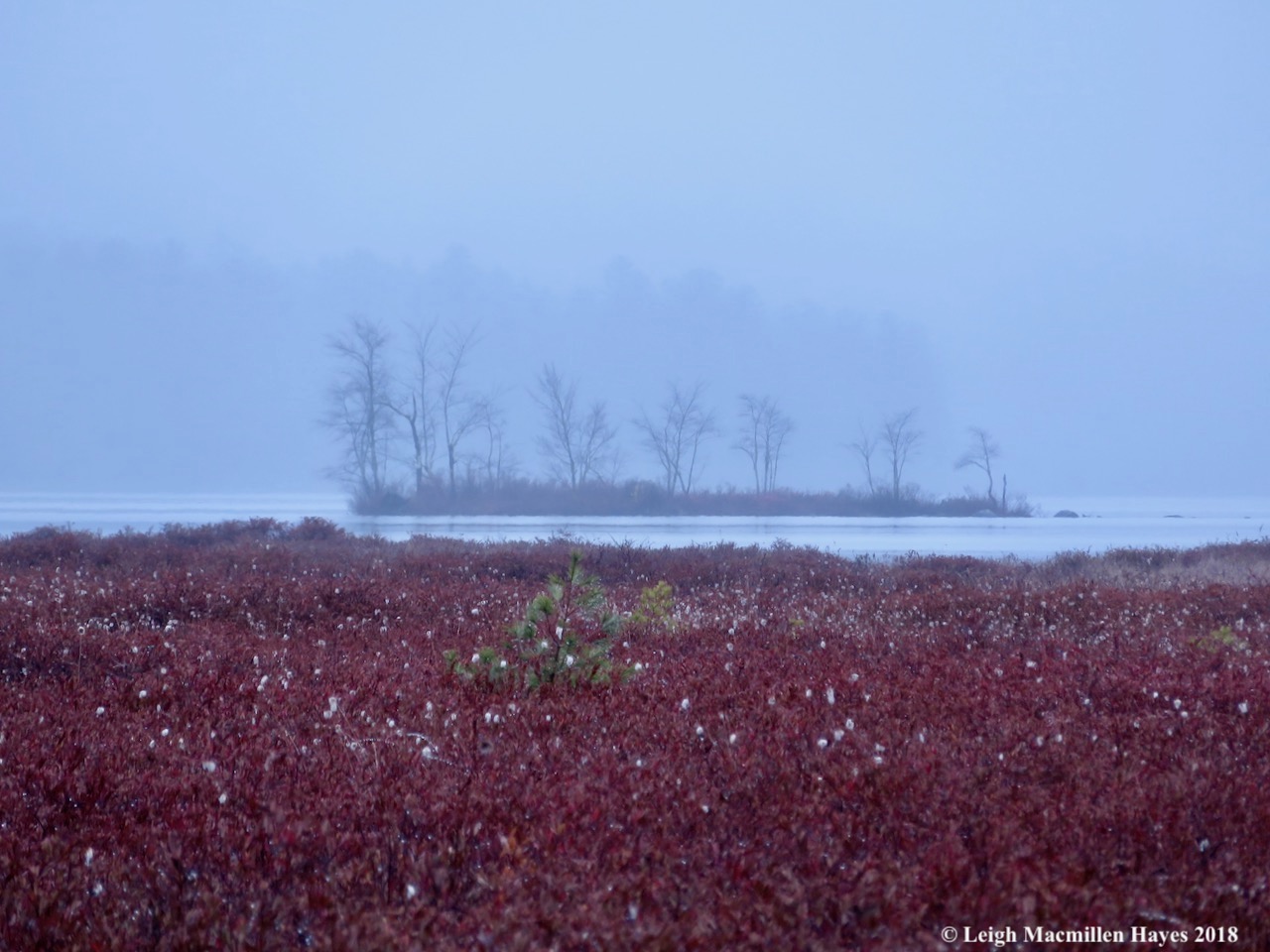
From our vantage point, an island in Kezar Lake’s Lower Bay looked like a ghost ship. And in the foreground, cotton grass still touted its tufted heads.

3-beaver lodges

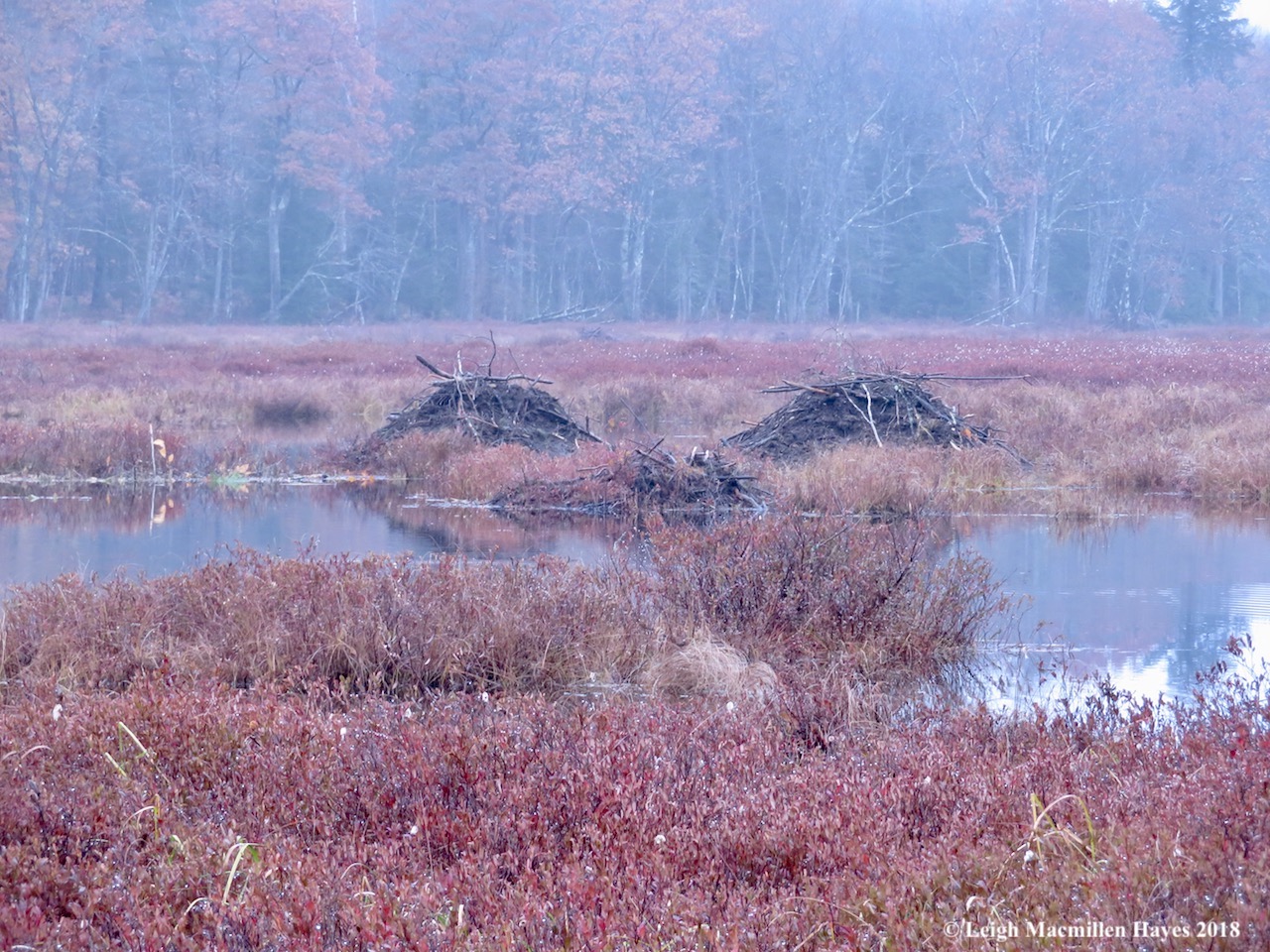
At our feet we could see some aquatic plant roots floating in the water, a beaver treat, and trusted by the mud on the lodges that there had been recent activity. Perhaps they rested indoors before planning to spend time later in the day preparing for the cold months ahead.

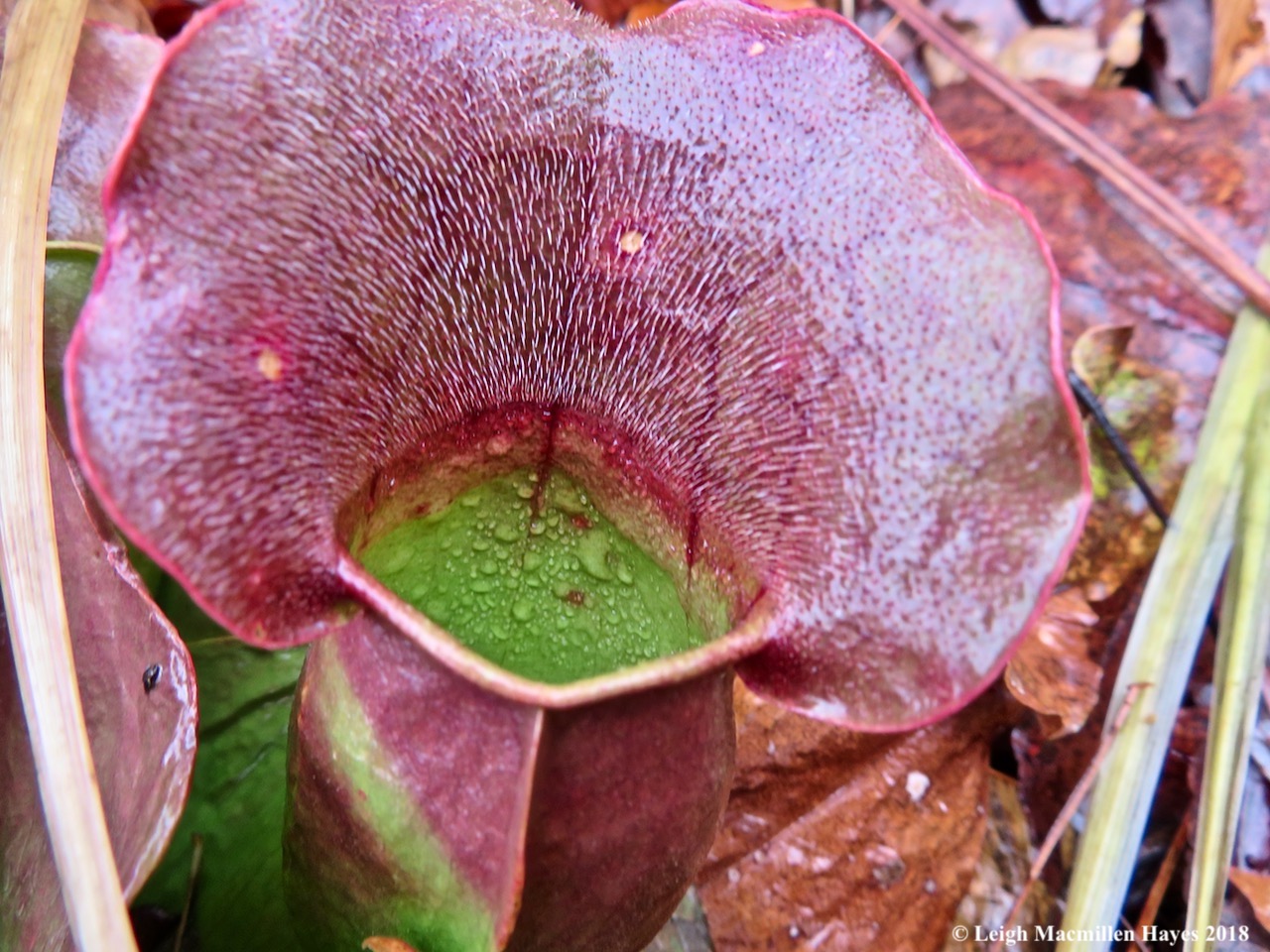
4-Pitcher Plants

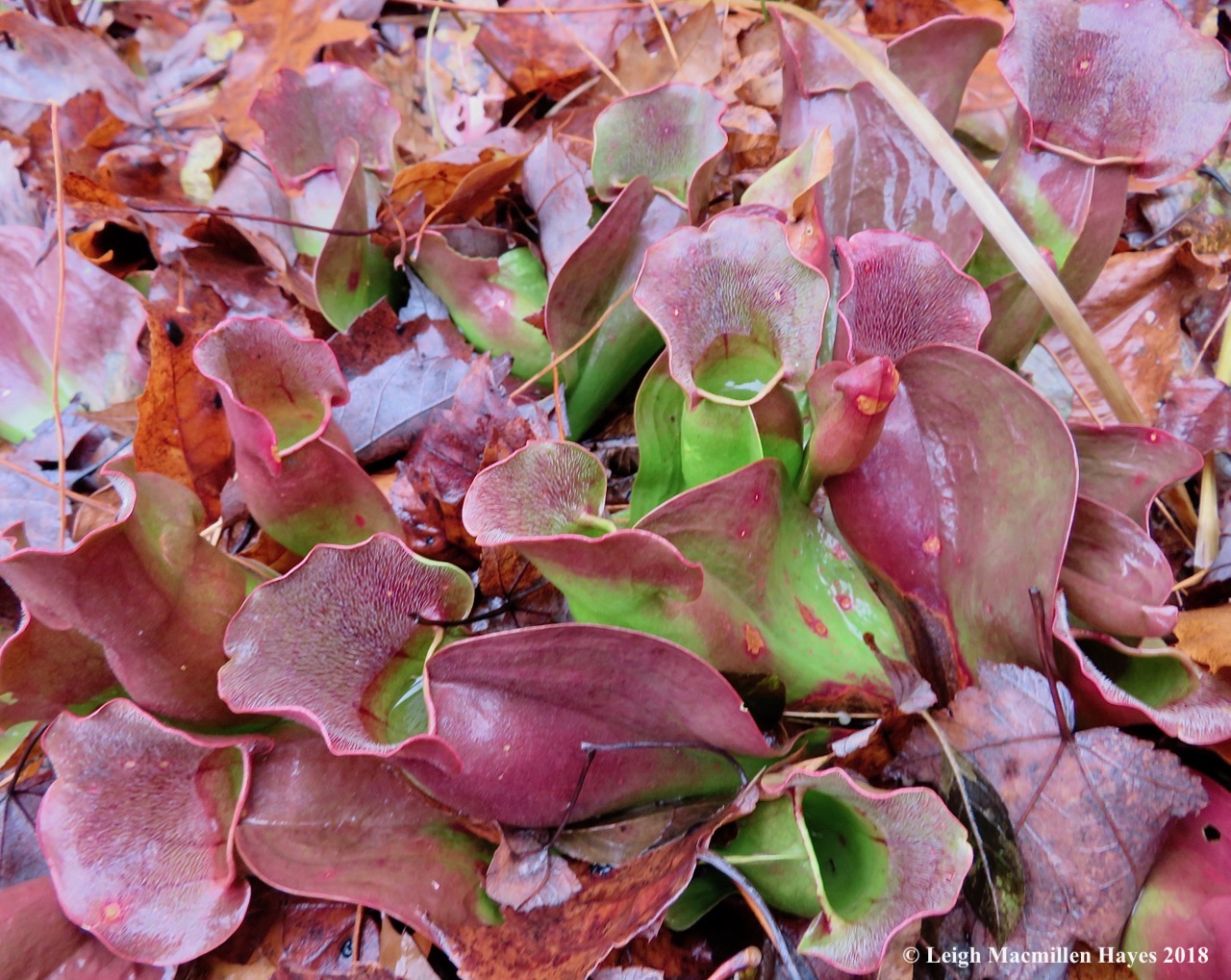
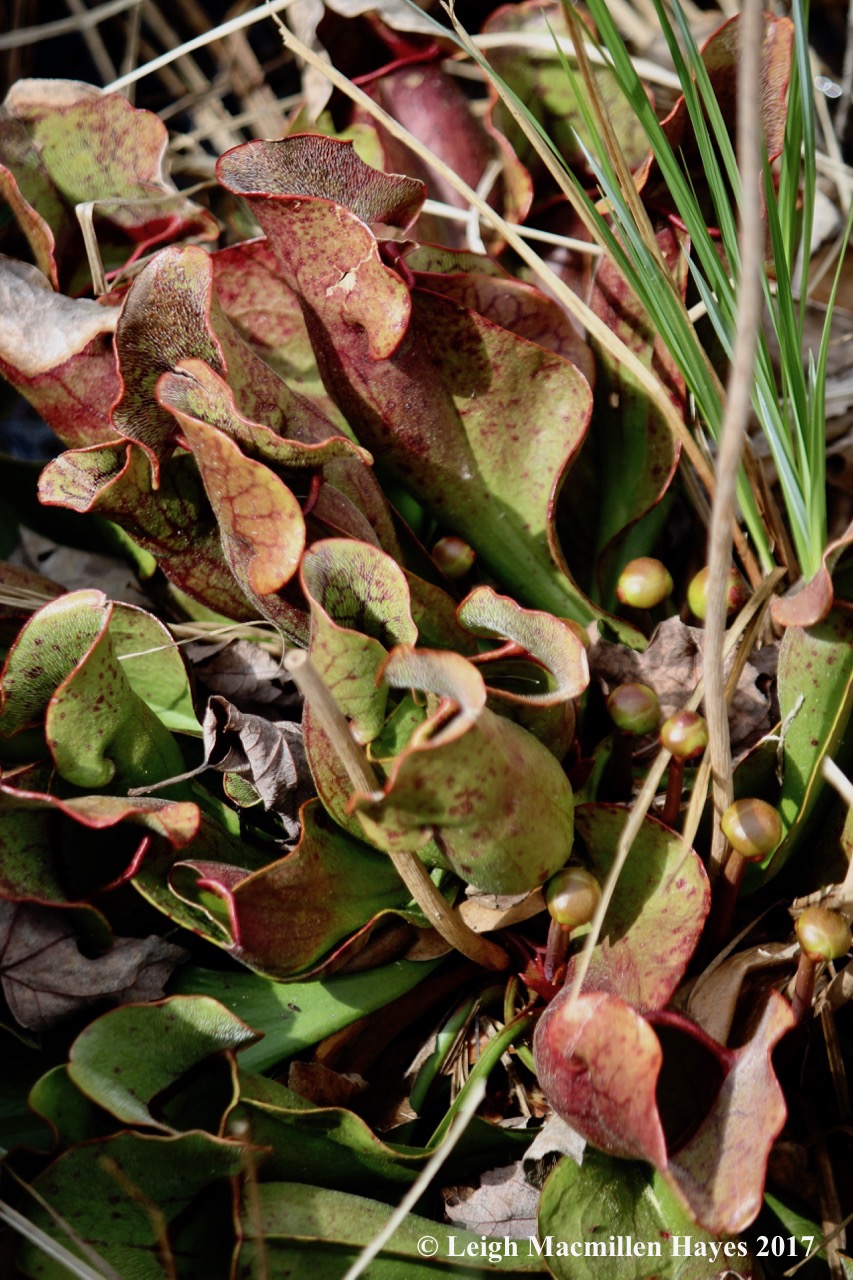
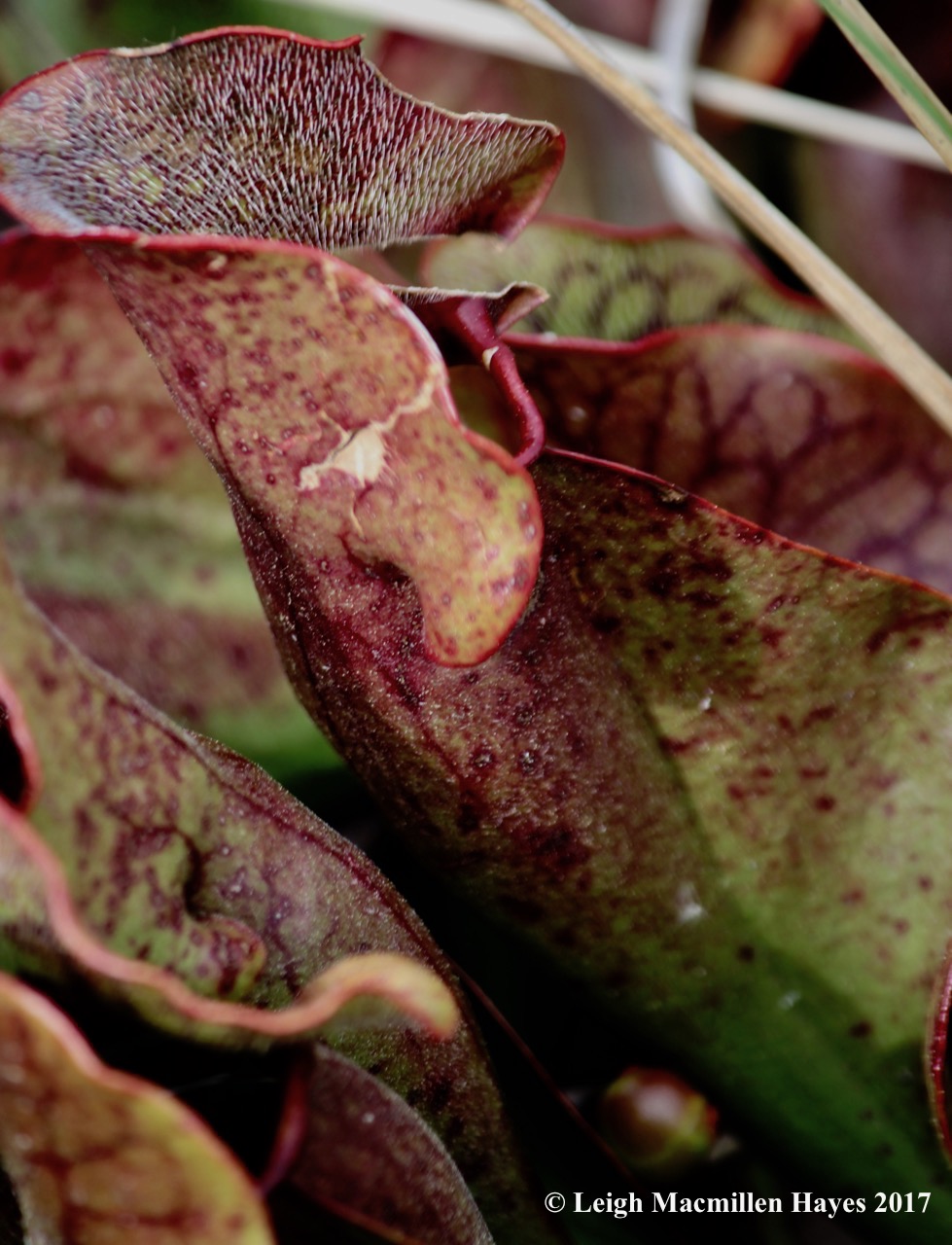
After a while and because I knew they were there, I took Pam along the edge of the brook for a short distance to locate several pitcher plants. Someone once photographed them in their young green form and described them as rare. While helping Dr. Rick Van de Poll, principal of Ecosystem Management Consultants (EMC) in Sandwich, New Hampshire, set up study plots at Lakes Environmental Association’s Highland Lake Reserve in Bridgton during July 2017, we had to watch where we stepped to avoid crushing pitcher plants. It was a perfect time to ask Rick about the green color. Were there green pitcher plants in Maine? And if so, were they rare? He explained that it was just a matter of sunlight and age, all would eventually take on a redder hue in veins and then overall leaf coloration as they matured.

5-pitcher plant runway

This morning, we found some sporting brighter red leaves.

6-spiders within and webs above

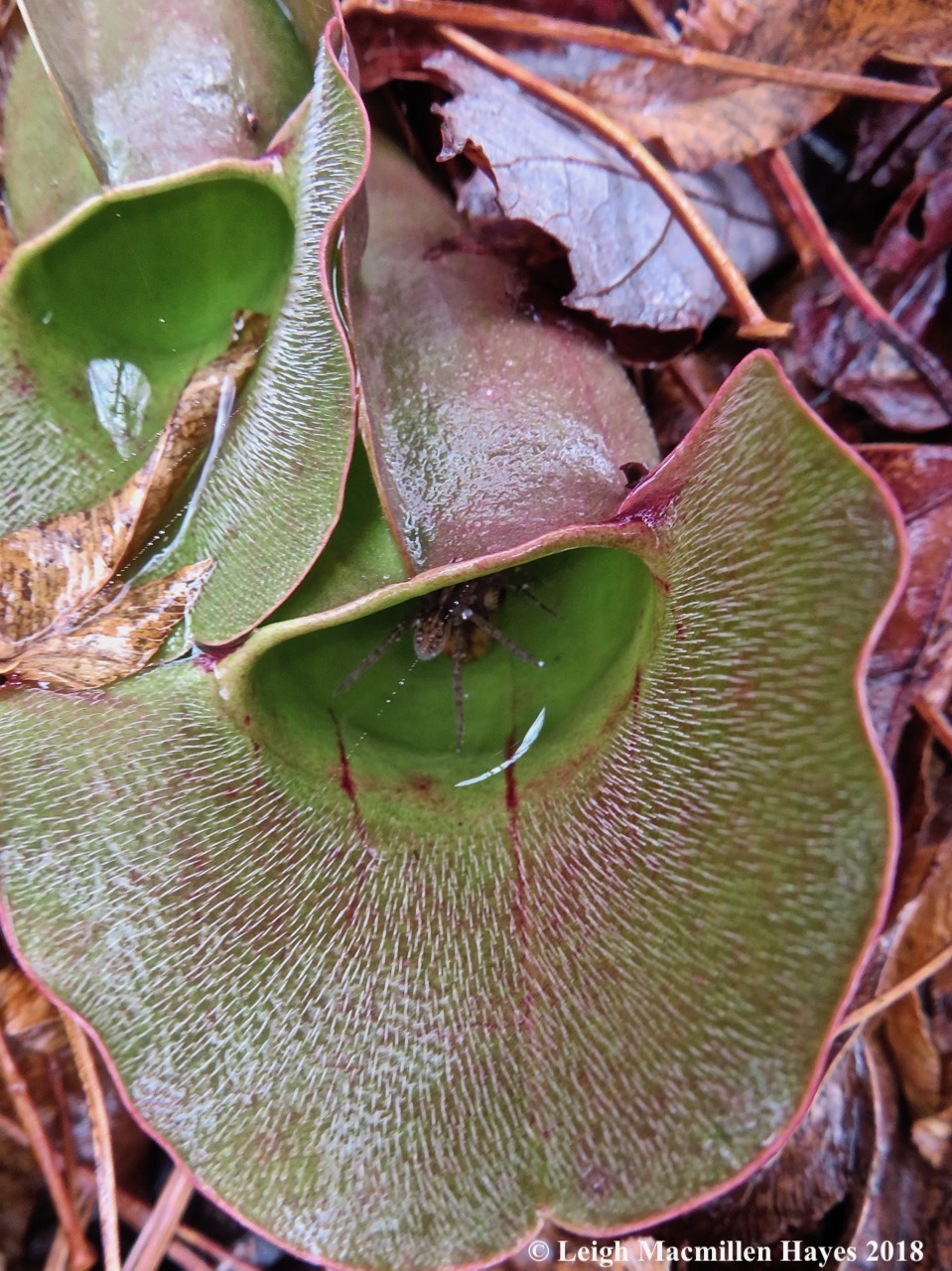
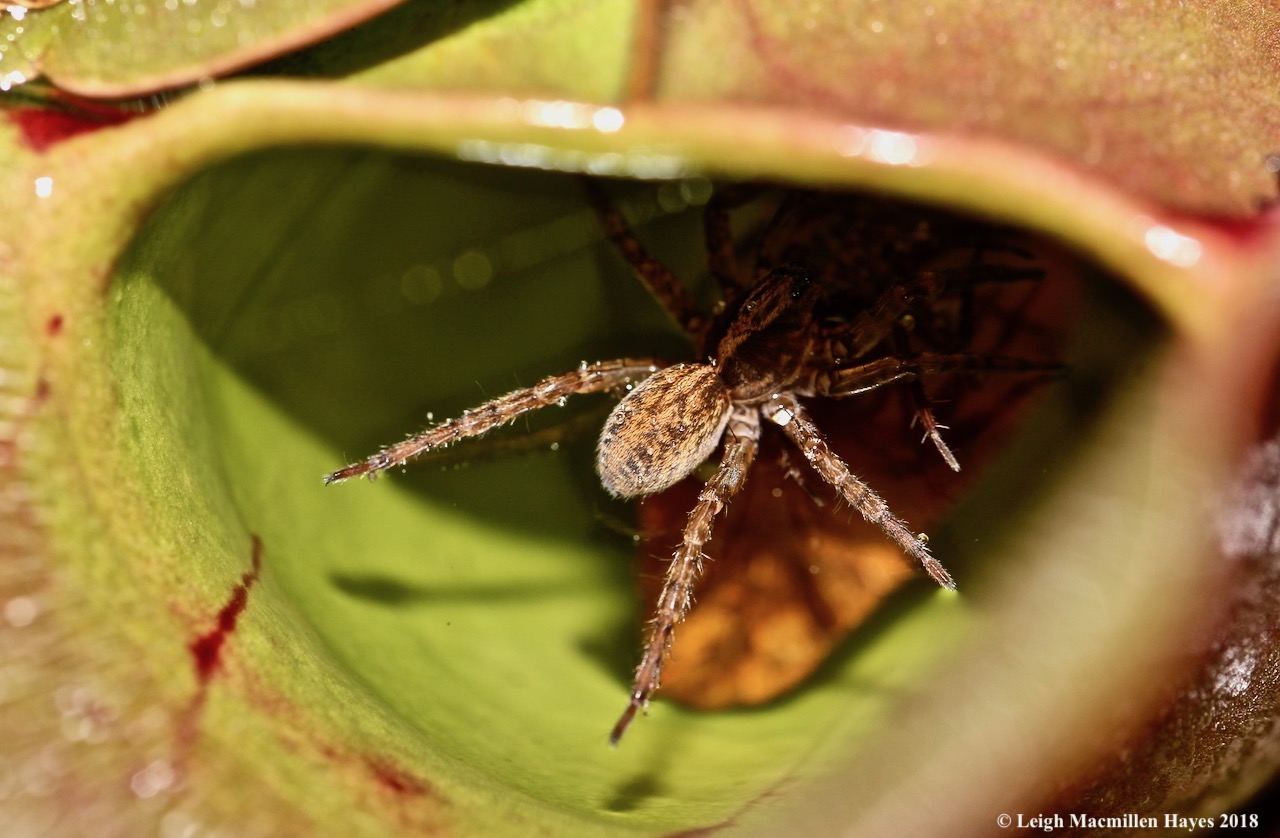
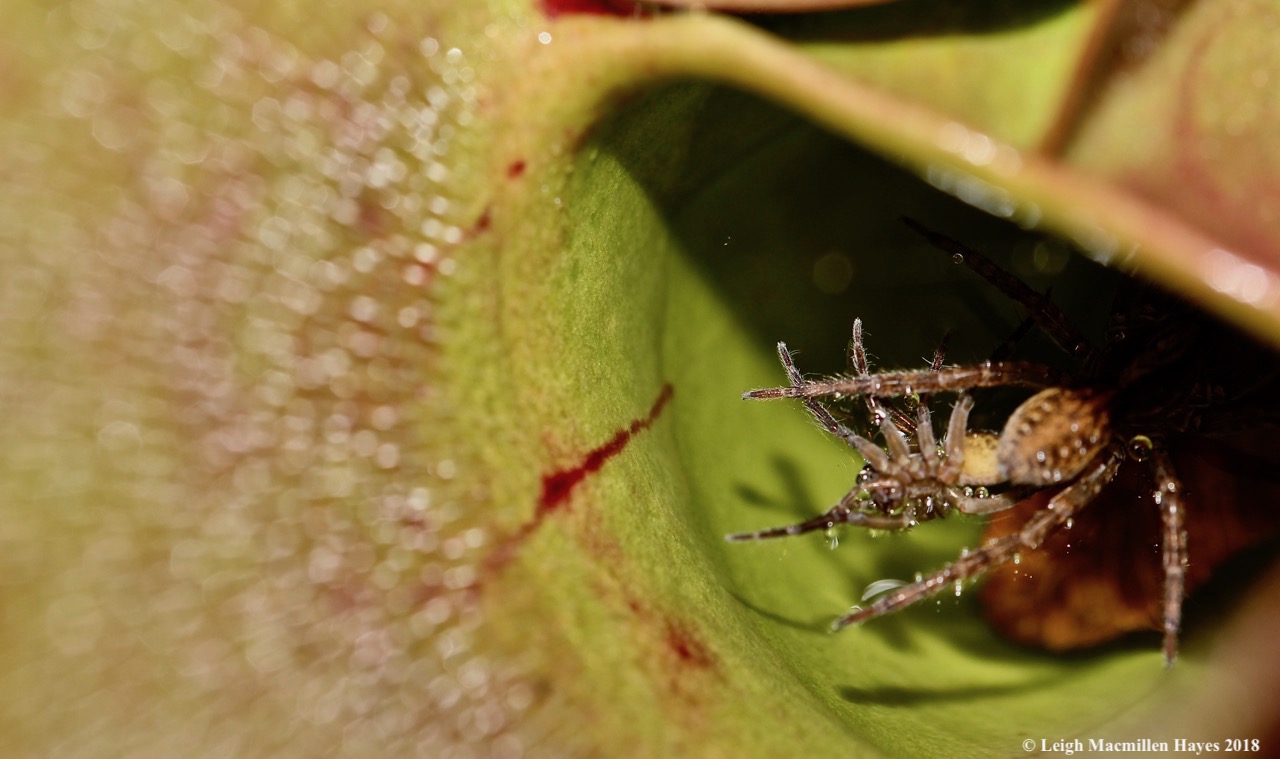
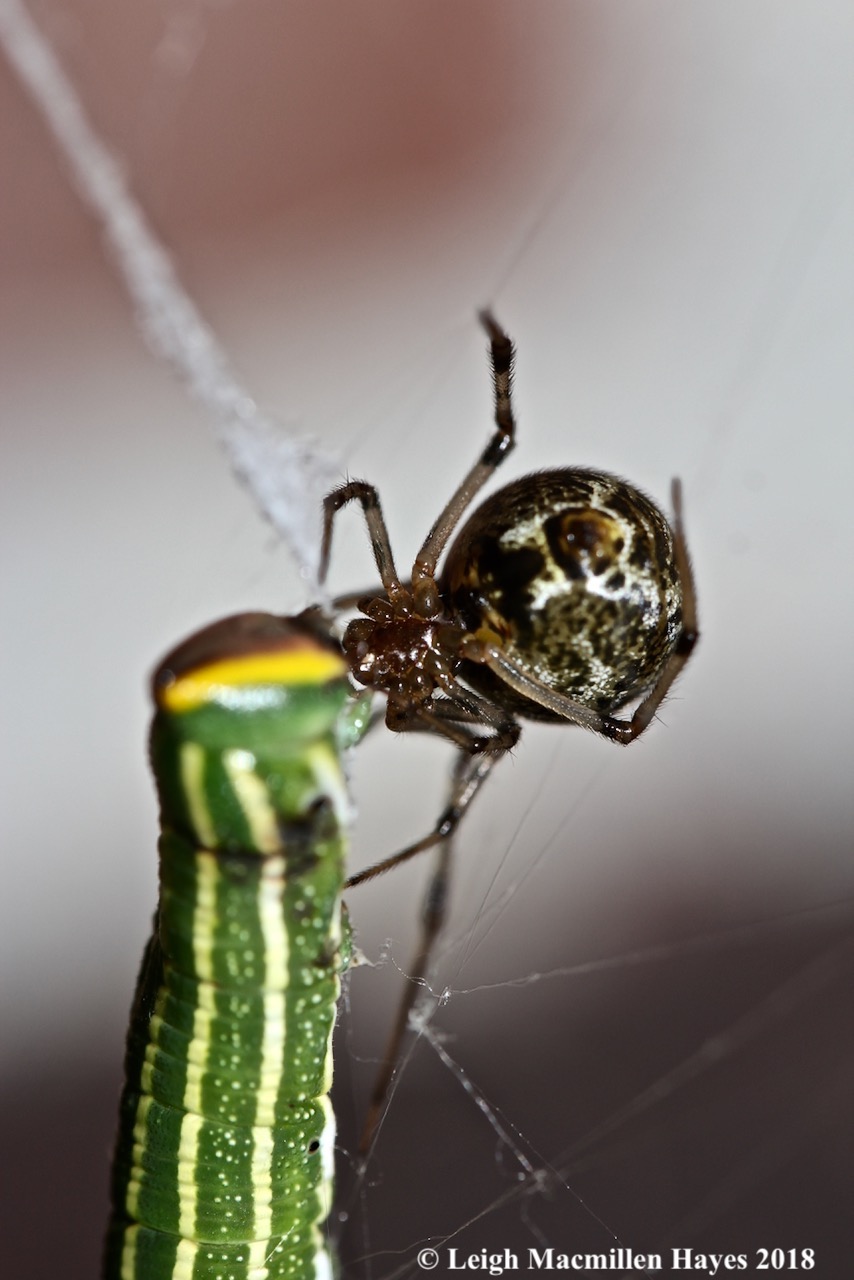
And another plant that was duller in color. Since we were in the locale where the green plant had been discovered, I trusted that it was beginning to show its age. It was the duller one that drew most of our fascination. Carnivorous pitcher plants obtain nitrogen and phosphorus by eating insects. Their oddly-shaped leaves form a pitcher partly filled with water and digestive enzymes. The spout is a hairy landing platform for insects attracted by red venation and nectar glands. Imagine this: an insect crawls to the edge of the leaf, aka pitcher, slips on the downward-sloping hairs and plunges into the liquid below where enzymes and bacteria break it down. Any chances for escape are zapped by those stiff hairs. Do you see what we saw? A spider web across the top of the leaf? And within?

8-larger spider manuevering the smaller one

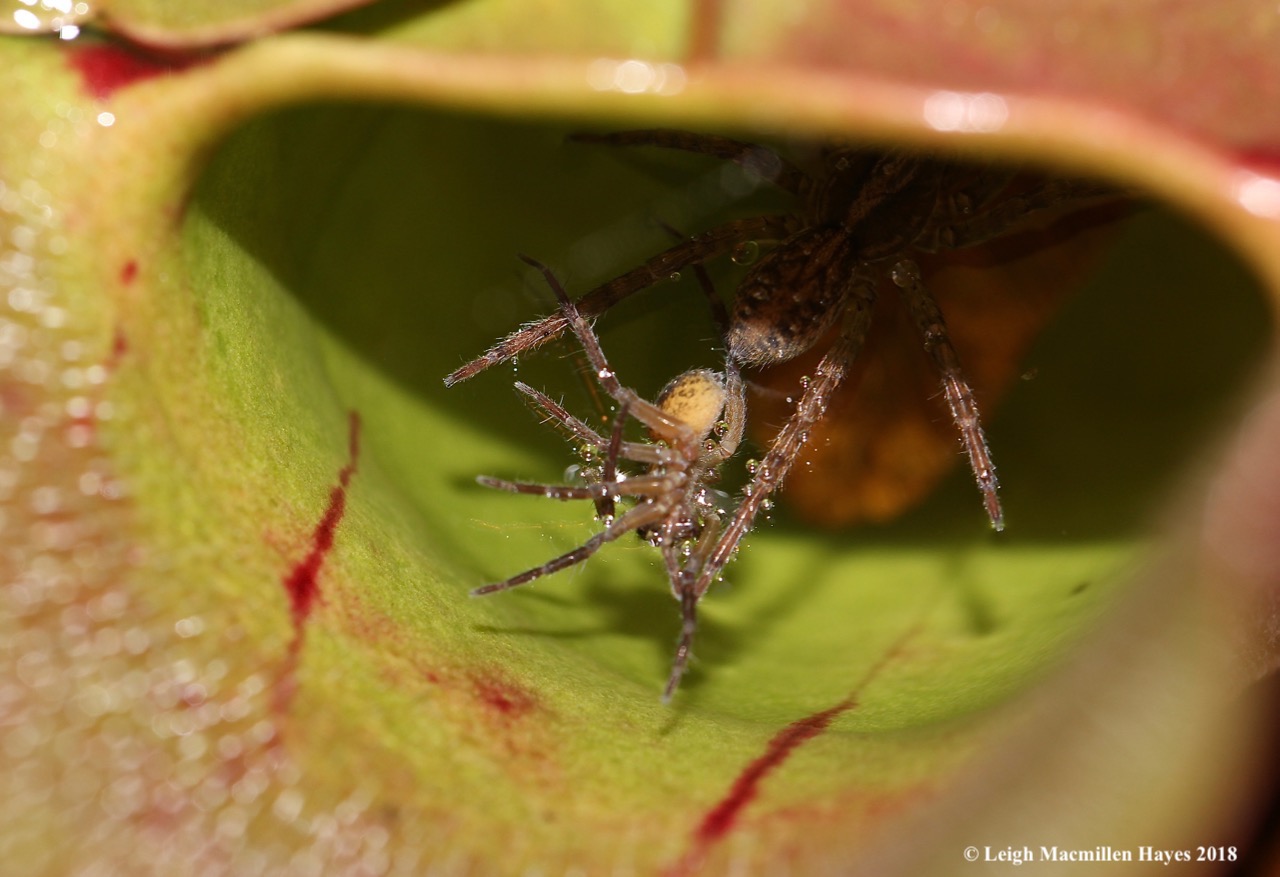
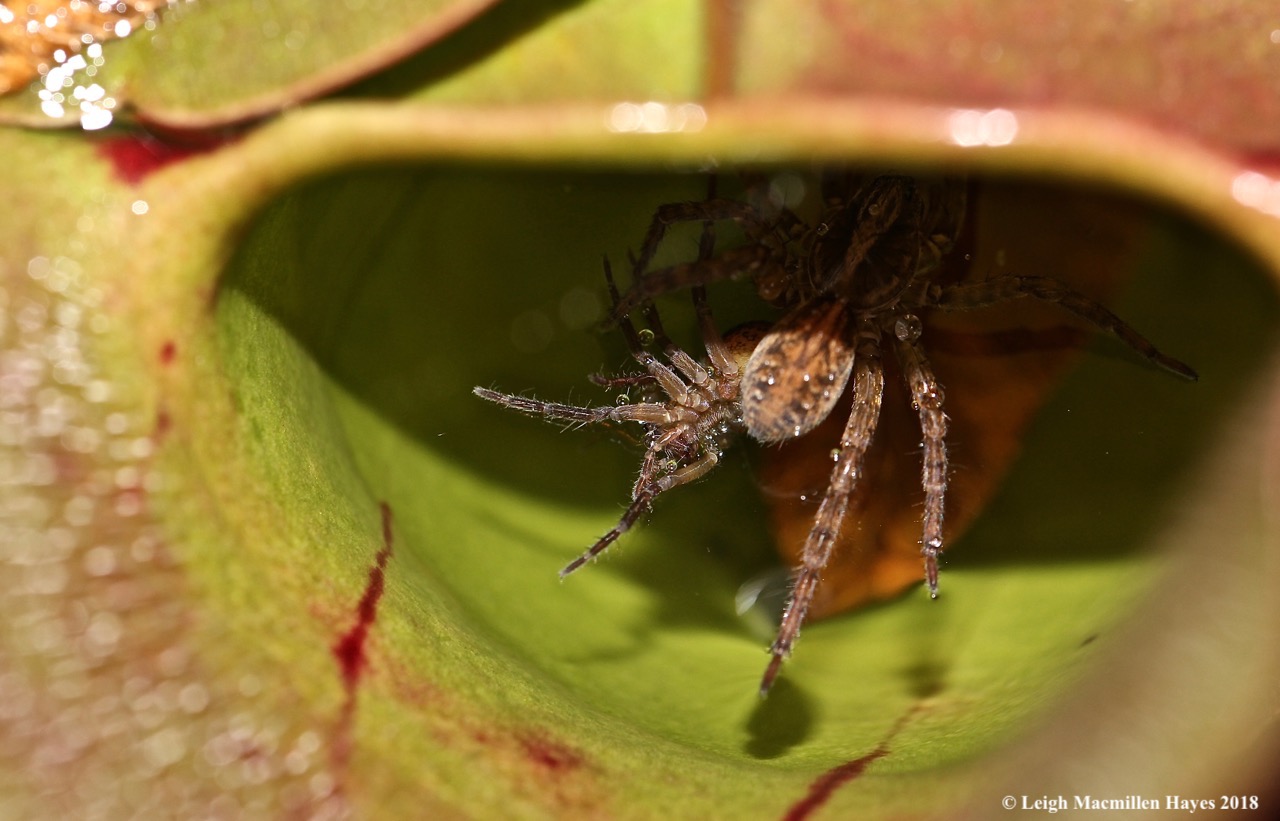
Dueling fishing spiders.

9-pulling it under its body

And so we watched.

10-and out again

The larger one continuously manipulated the smaller one, which appeared to be dead. Back and forth under its body, it kept moving the smaller kin.

11-and back under

Was it trying to eat the other? One last meal before it too succumbed to the plant? Was it trying to move past the dead spider so it could try to climb out? Should we save it?

12-let 'em be

In the end, we left the action with questions in our minds and didn’t interfere.

7-watching the spider action

Except, that is, to take photographs and make a film. Again, our knees were wet and we didn’t care.

14-pigskin puffball 1

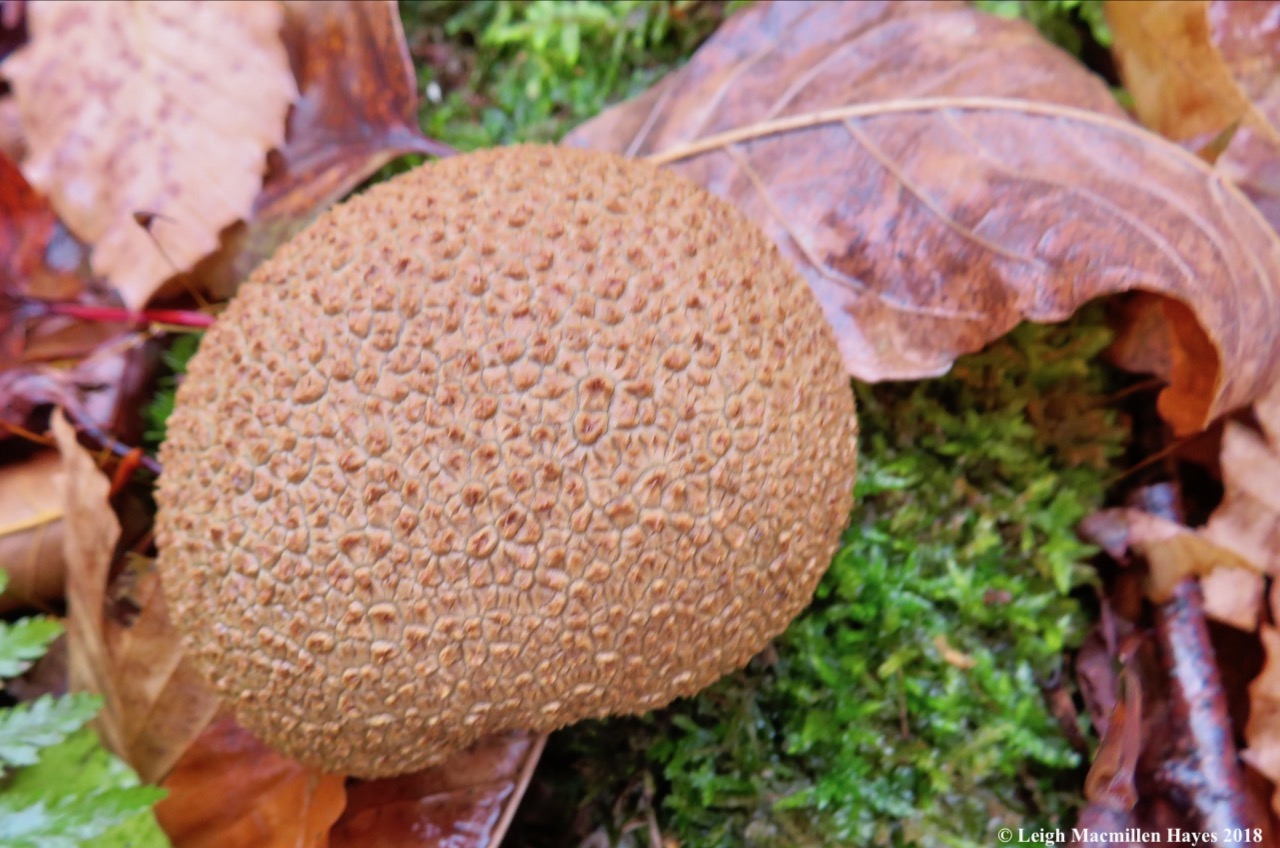
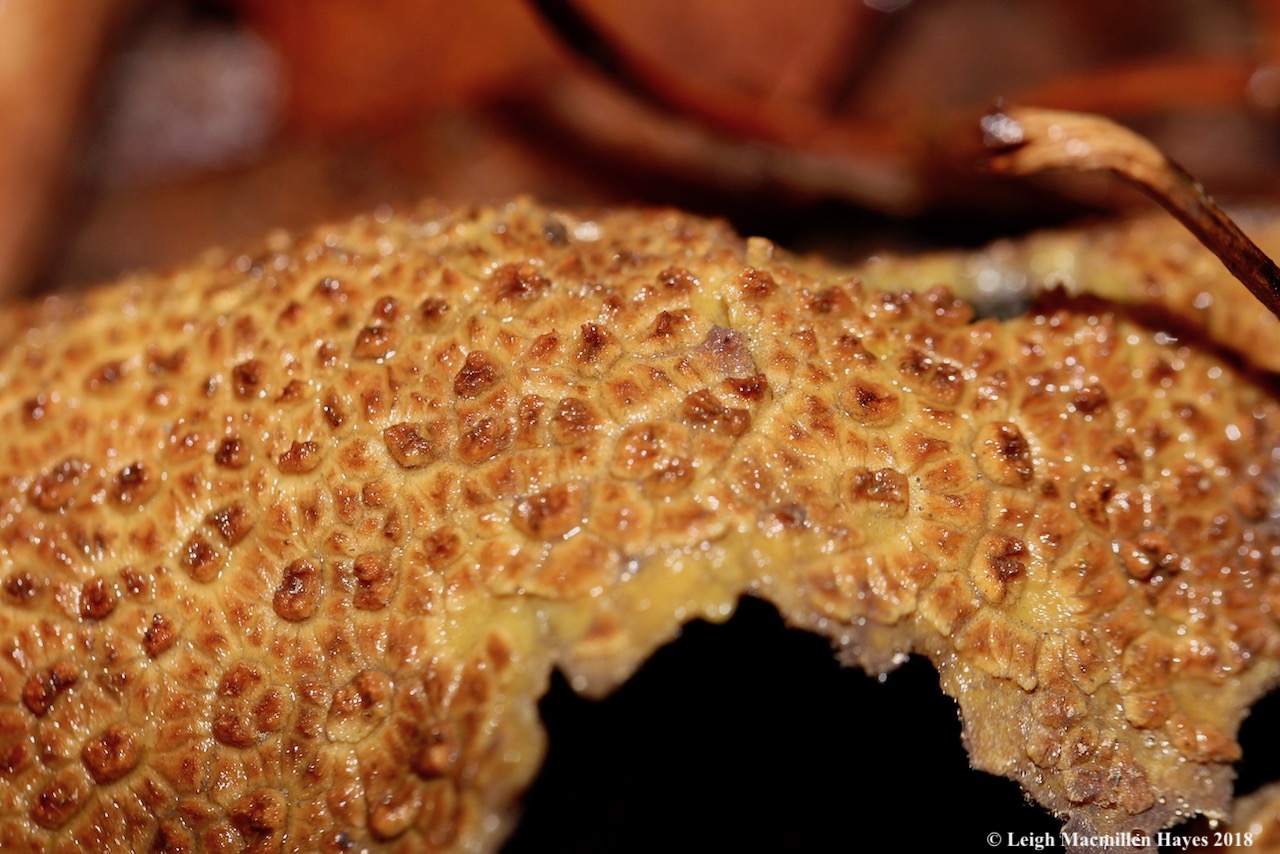
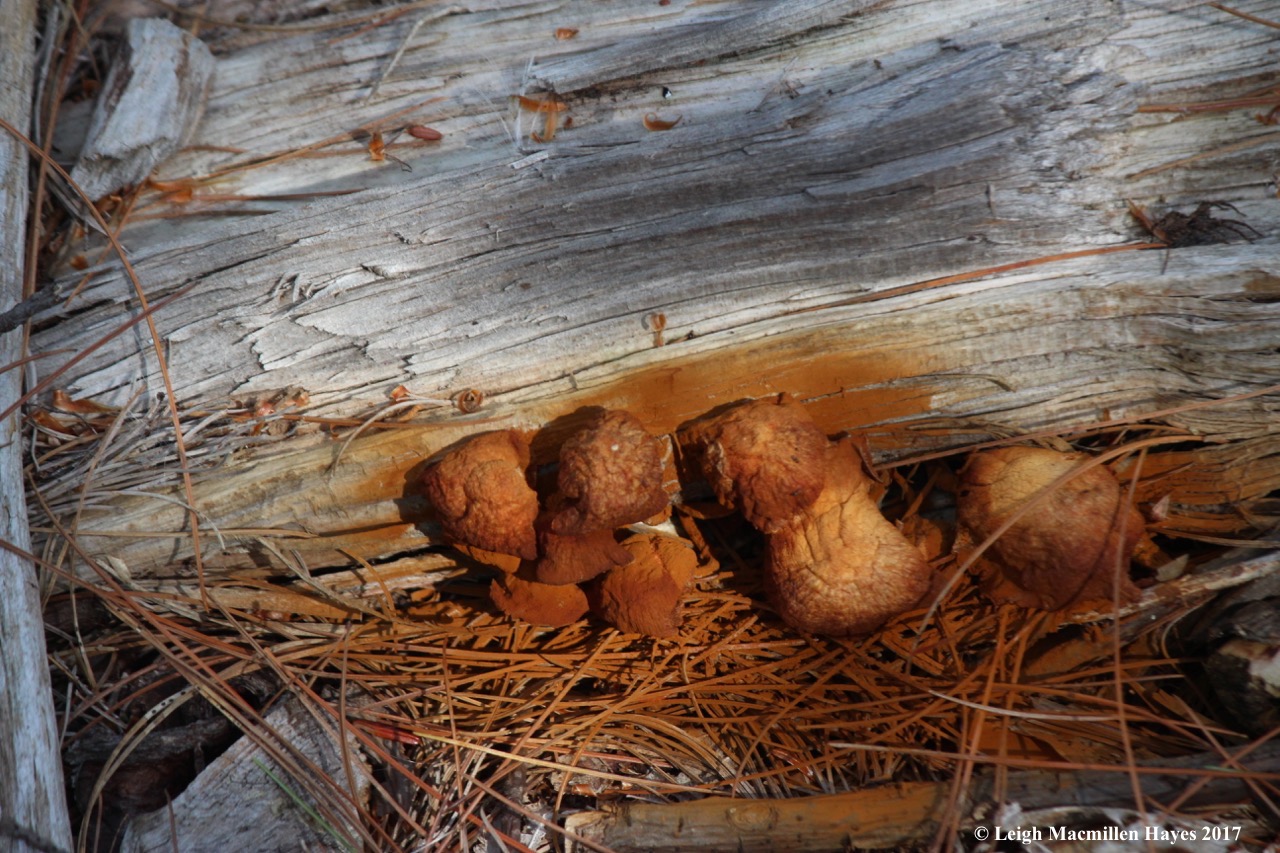
Back on the trail, we found an area where Earthballs decorated some old lumber slash. Their warty outer skin drew our attraction.

15-skin of pigskin

Another common name for Scleroderma citrinum is Pigskin Poison Puffball. Since it’s football season, it’s good to note that footballs used to be made of a pig’s . . . bladder and not its skin, though historically they were called pigskins. Rather than feel leathery, these seemed more rubbery, thus the reference I guess.

15-popping pigskin

And because they were puffballs, they invited a poke.

16-an explosion of spores

From a couple of slits, mature blackish spores erupted. I had to chuckle for no matter with whom I share a trail, puffballs always invite the same reaction–pick up a stick and give it a jab. And each time we share the same moment of glee. And our inner child is released one more time. Thankfully.

18-insect within pigskin

Of course, we found ourselves on our knees yet again when Pam spied something within an Earthball that had exploded prior to our visit. Upon closer inspection, it turned out to be an inanimate insect that looked like it was covered in spores. Canary in the coal mine?

25-Pam and the bear scat

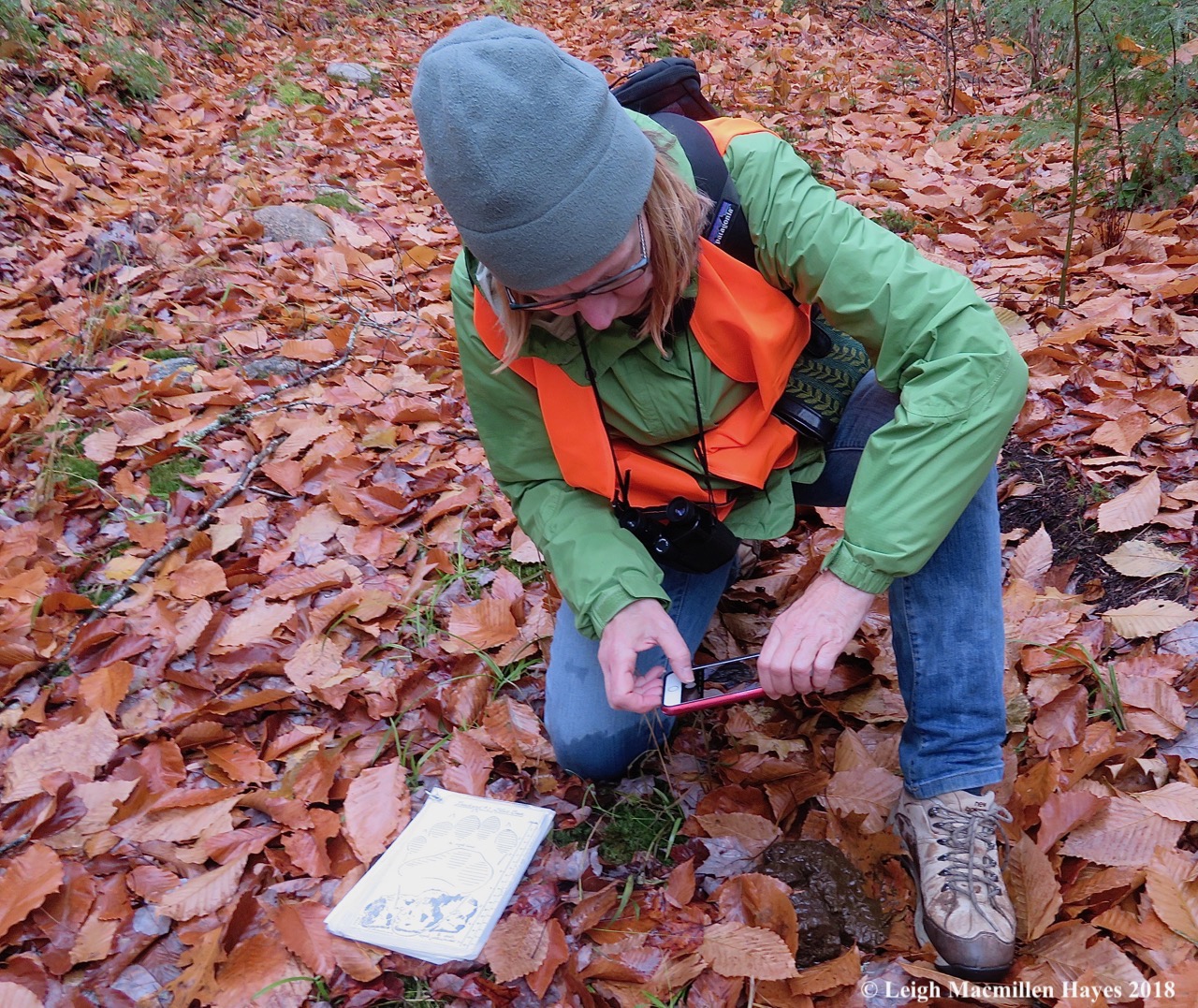
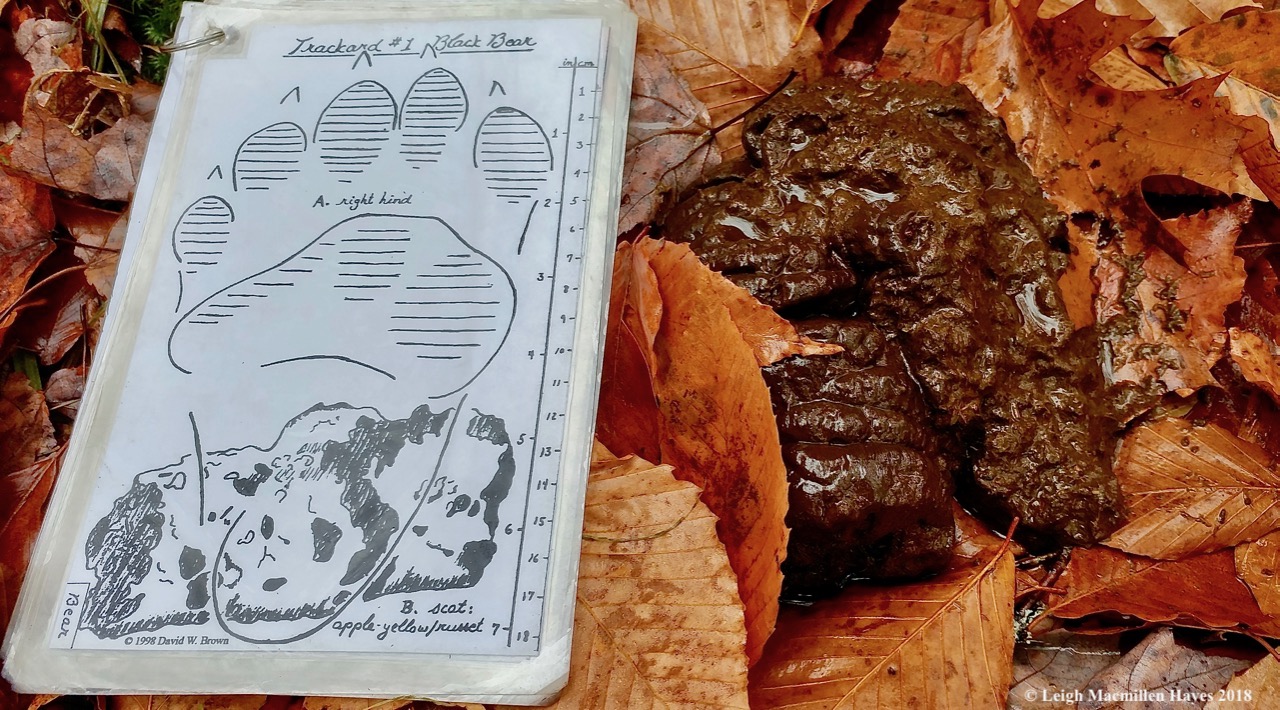
Our next great find was of a different sort and I had to pull the Trackards from my pack while Pam got down for another upclose and personal look. Notice her knee?

22-bear scat

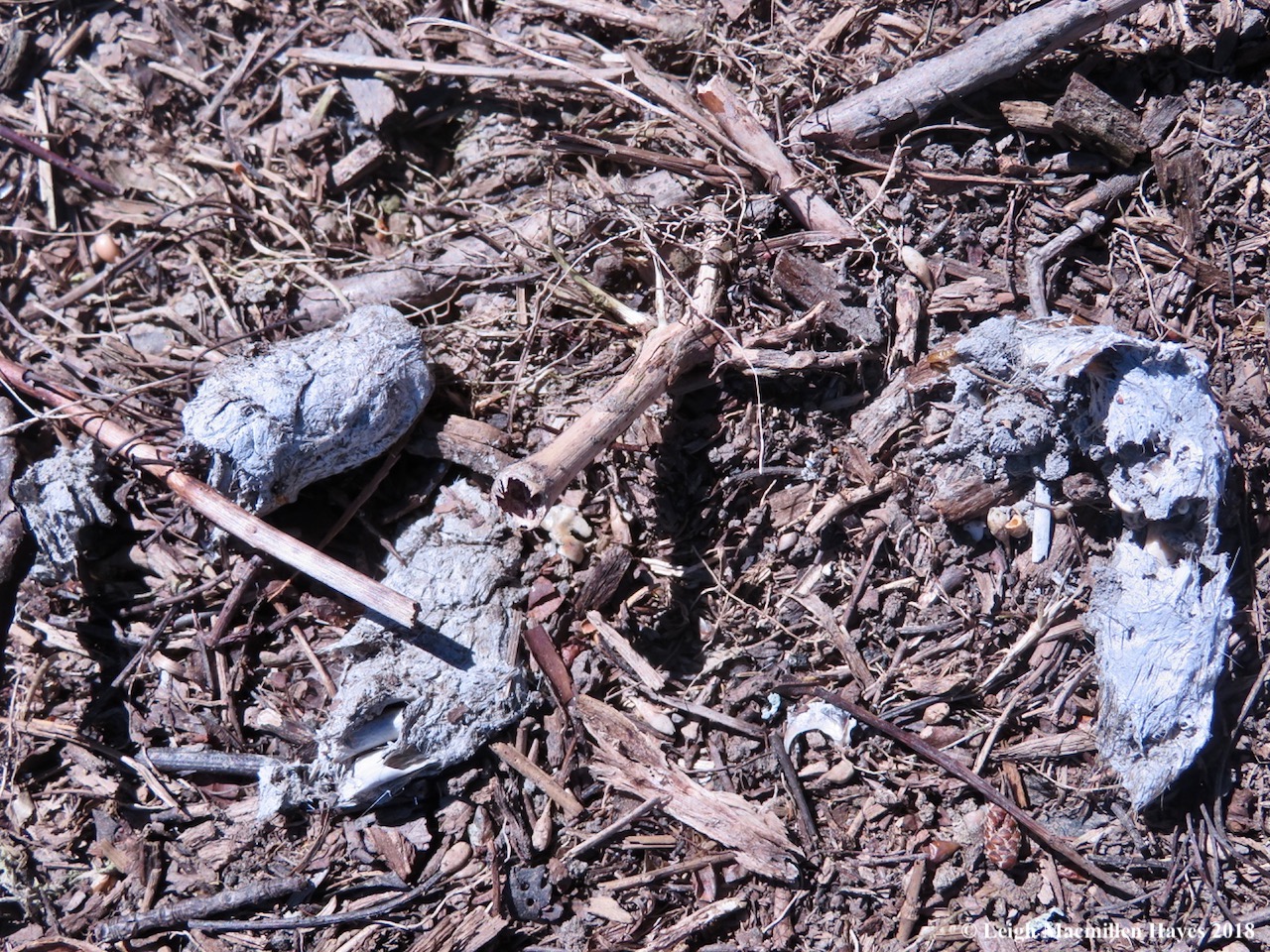
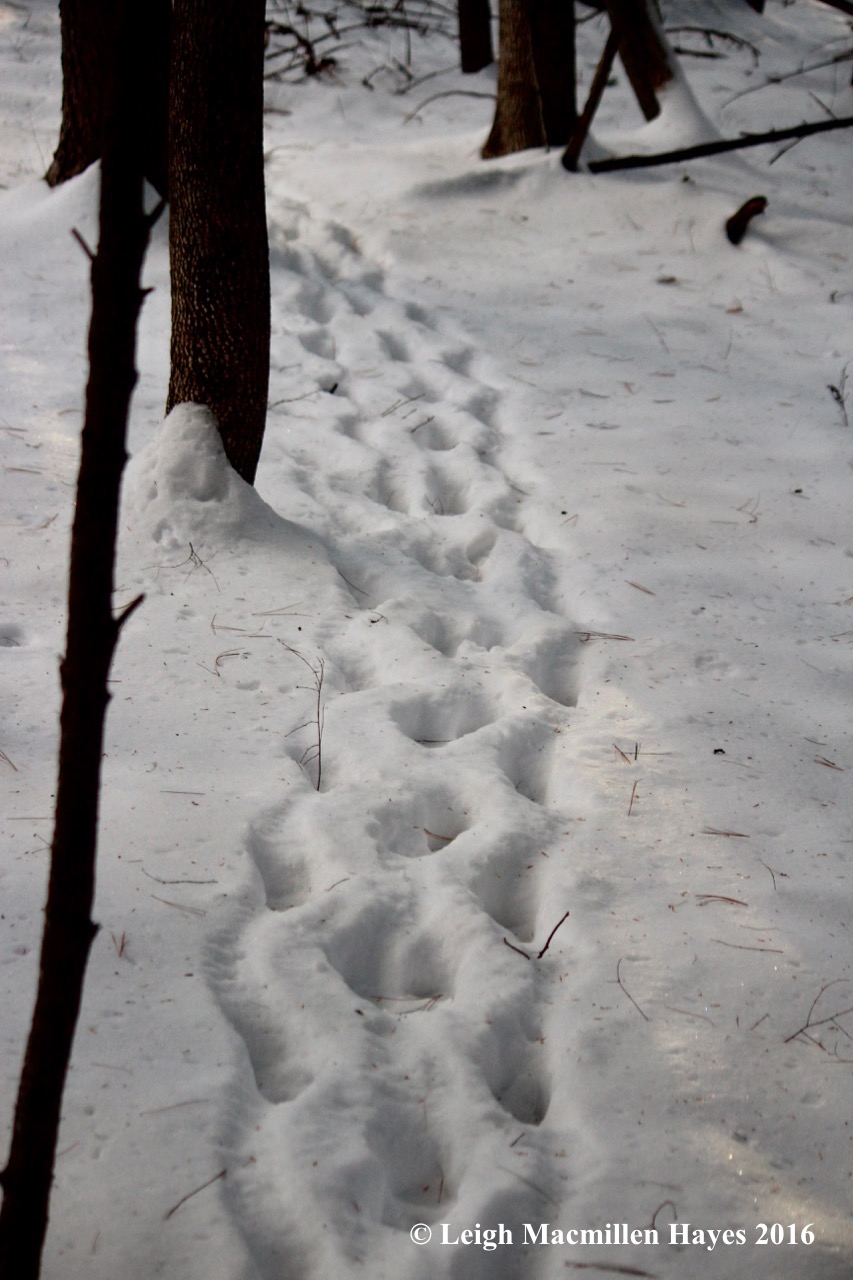
Black bear scat! Indeed. Cylindral and large. We looked for tracks, but conditions were such that we didn’t find any. The scat was enough for this day.

24-Tamaracks

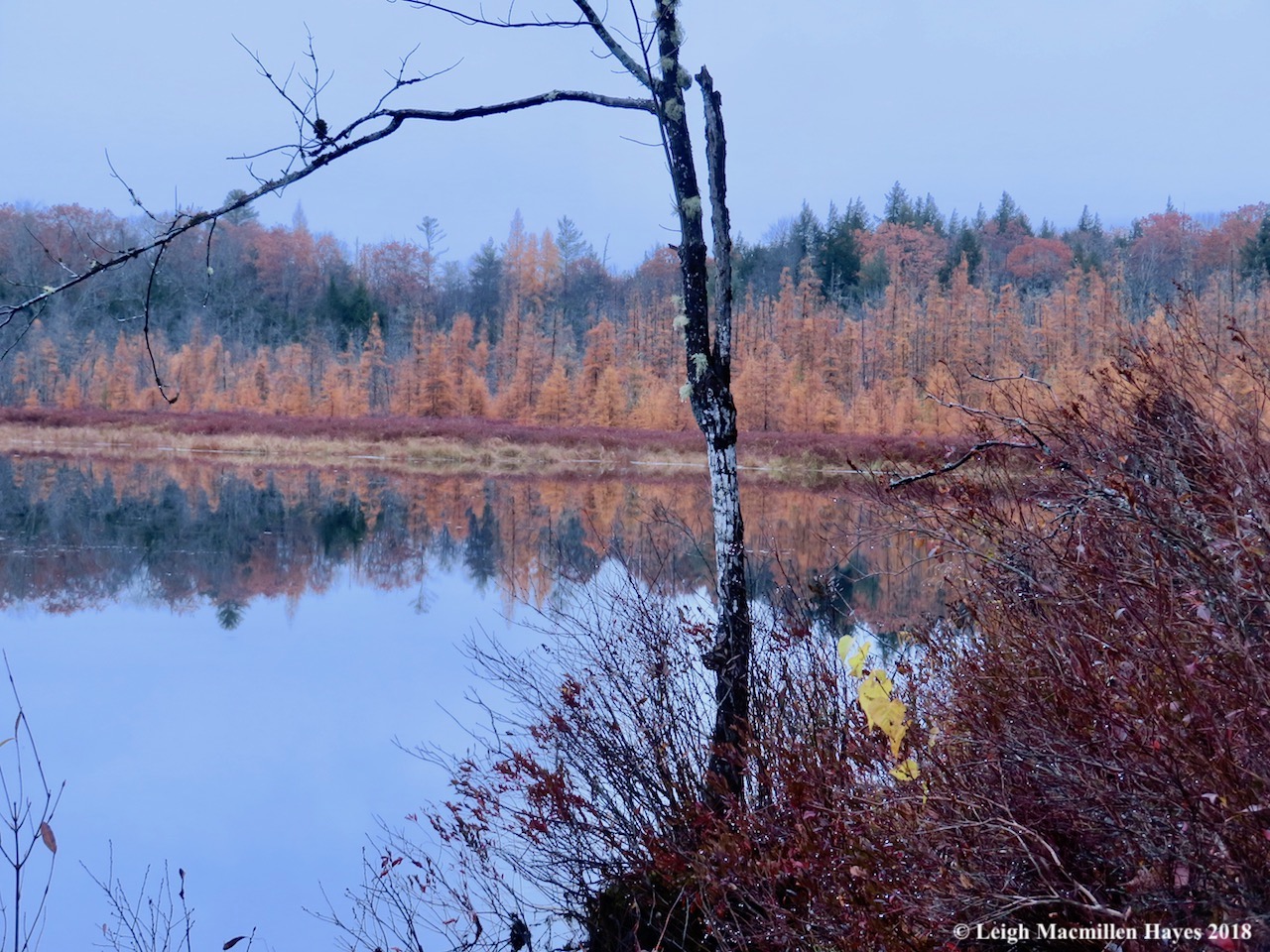
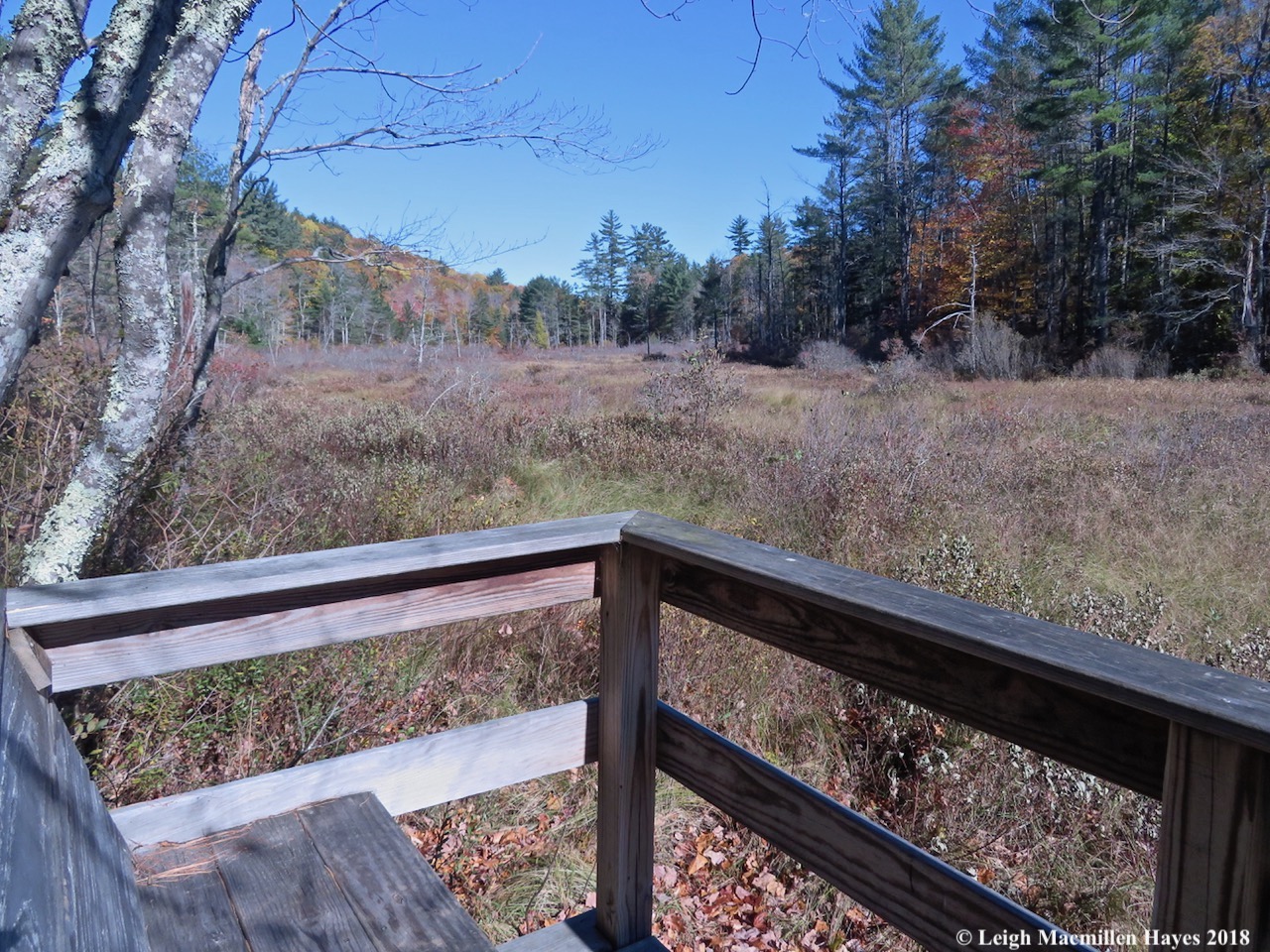
If you go, we strongly encourage you to follow the green trail all the way to the bird/wildlife viewing point along Sucker Brook. Today, the tamaracks on the shore to our right added a tone of bright beauty to the overcast day.

25-Sucker Brook--beaver lodge

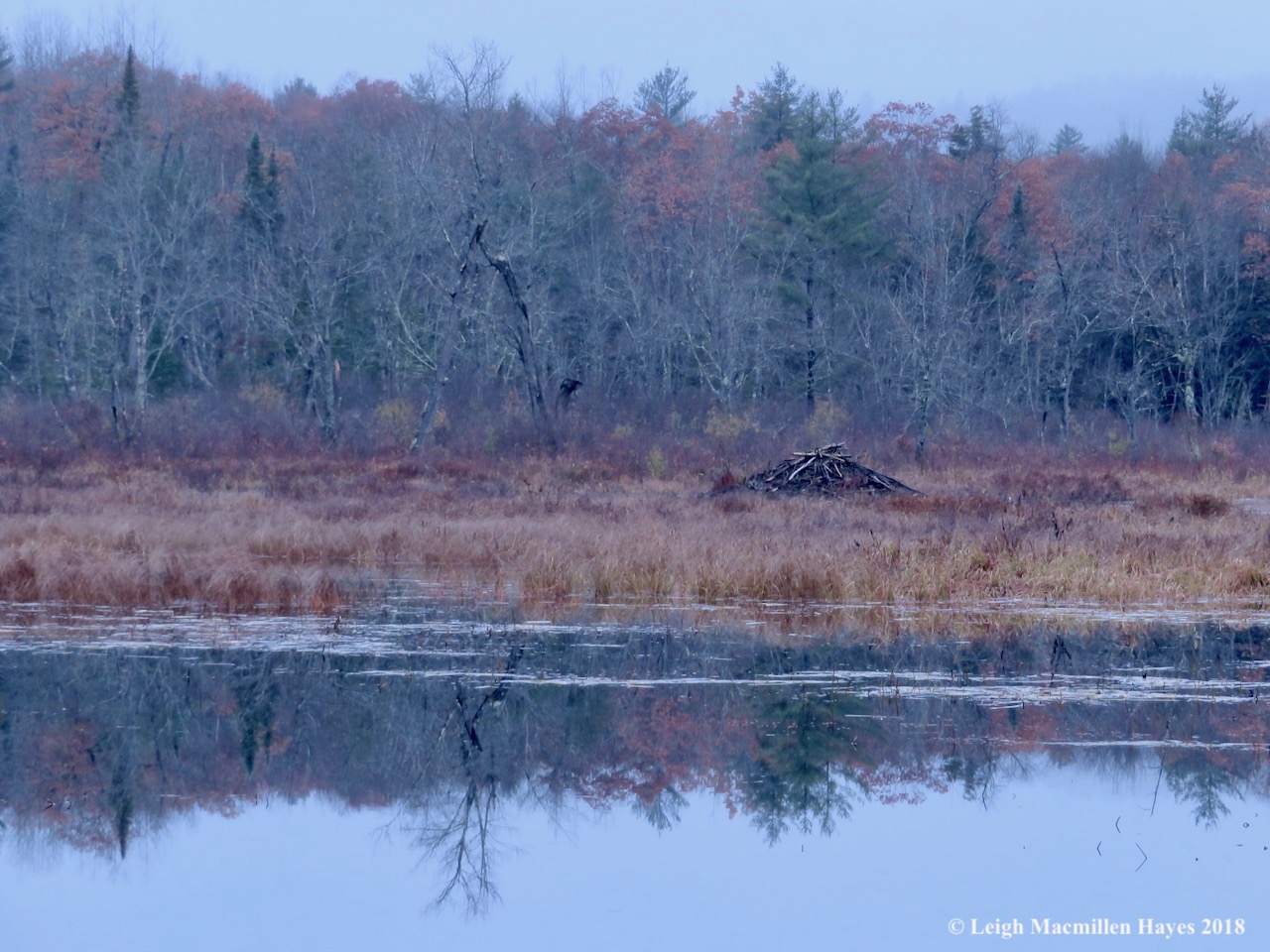
And another old beaver lodge also looked like it had received a mud treatment. We could see some beaver chew sticks in the water by the edge of the brook and so we knew again that there had been recent activity. It just means we’ll have to return for another visit if we want to catch some action–perhaps earlier in the day.

In the meantime, we let the view point become our turn-around point and quickly (sorta) followed the blue trail back for we both needed to move on to the rest of our day.

But . . . despite the mist and occasional raindrops, we elected to tramp. And were delighted with the results. Here’s hoping the rest of the day goes like that.


Bishop Cardinal Reserve: Where (Wo)Man and Nature Intersect

Perhaps we should have tiptoed and tried to silently pass through the woods much the way a fox or bear might, but that is not our habit. And so on today’s Tuesday Tramp for the Greater Lovell Land Trust, we chatted and wondered aloud as we hiked along the  trails of Bishop Cardinal Reserve on the upper side of Horseshoe Pond Road in Lovell. Consequently, our wild mammal sightings were non-existent. Despite that, we saw soooo much.

9-docents Bob and Pam

Our team was small this morning, with only docents Bob and Pam joining me, but still we made plenty of noise as we looked about.

4-bear pole

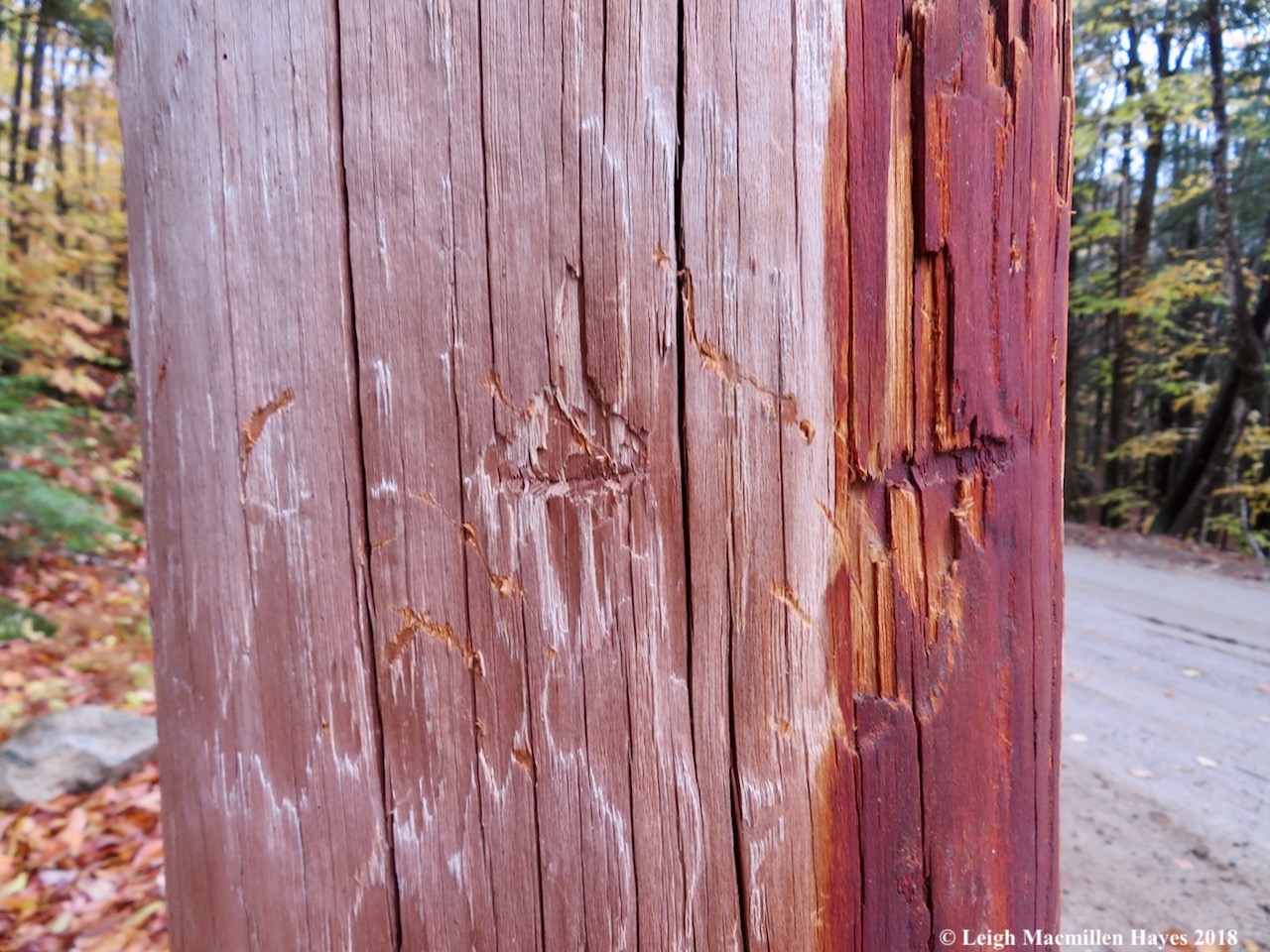
The first sign of mammal and human interaction, of course, was the telephone pole beside the trailhead. If you’ve traveled with me either literally or virtually before, you know how I LOVE a telephone pole. It’s not the fact that such brings electrical power and other modern day amenities to our homes, but instead the realization that bears are attracted to them and like to leave a mark as they claw and bite at the anomaly in the forest surroundings. I always check for hair left behind, but today was disappointed to find none.

5-scratches on bear poles

Despite the lack of hair, there were a few newer scratches worth celebrating.

6-spider

And a small spider tossed into the mix. The temperature was on the chilly side as the wind blew, but not cold enough to begin the process of accumulating glycols in its blood (e.g., antifreeze) that would allow the spider to supercool. By physiologically adapting via special antifreeze compounds, the tissues of some Maine spiders remain unfrozen at temperatures well below freezing, and thus avoid turning into little blocks of ice once winter sets in. Of course, had it been a little bit cooler, this spider probably would have hidden in the leaf litter below rather than trying to send a telegram via the phone pole.

7-bear tree

A little further along the trail, however, we did find more bear sign in the form of claw marks on beech trees. And that raised the question: Do bears only climb beech trees? No. But, beech bark is one of the best to show off their signature scratches.

10-Pam's bear tree 1

After I showed Pam and Bob a couple of trees with claw marks, they began to look about and Pam spied one I’d not noticed before.

10-Pam's bear tree

Congratulations on your First To Find (FTF) Award, Pam! Well deserved.

11-deer skull

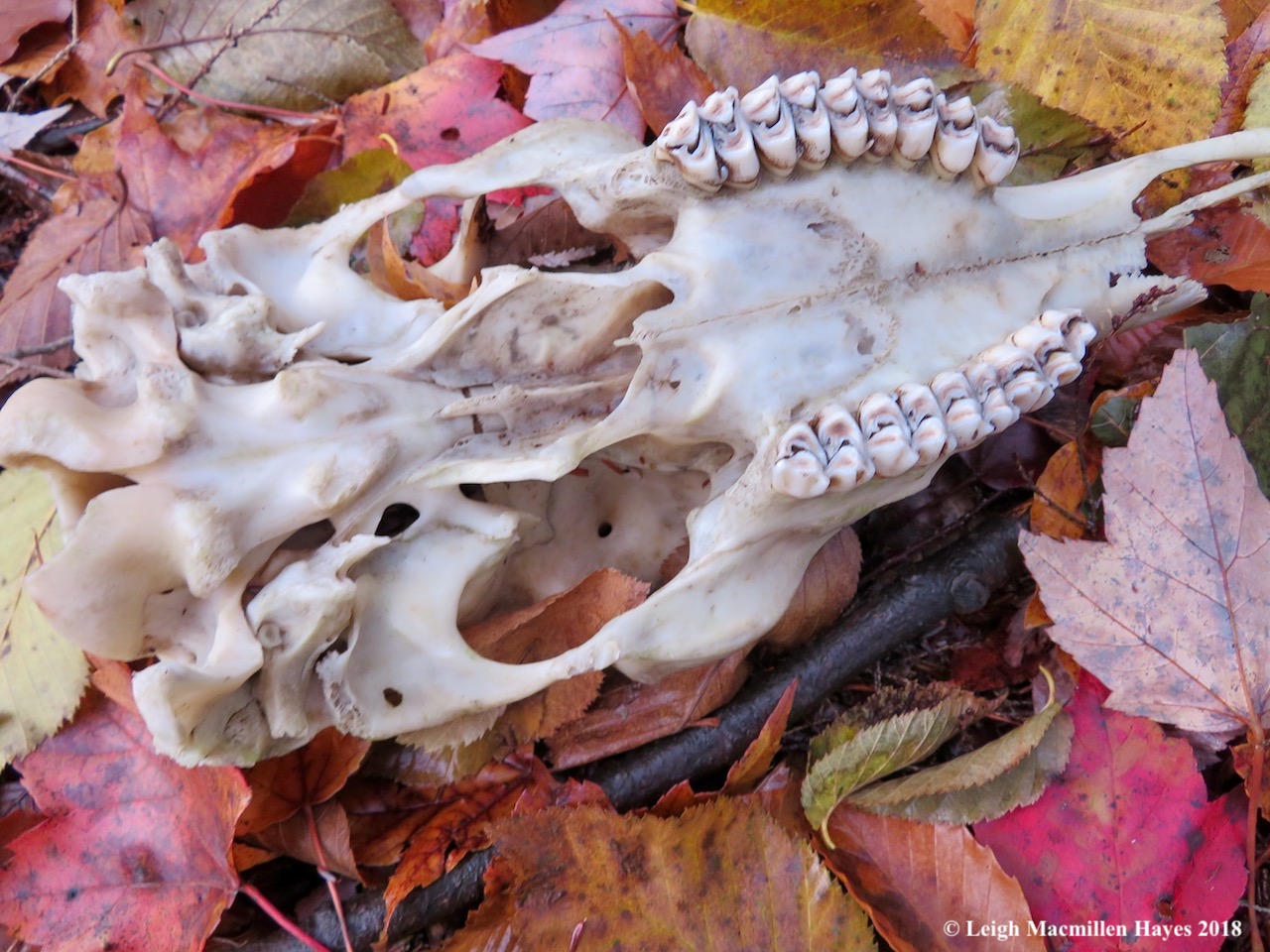
It wasn’t only bear sign that made the walk intriguing. A year and a half ago, this same couple had spied an entire deer carcass along the lower part of the trail. And so when we arrived in the vicinity today, we looked around. And eagle eyes Pam spied half the skull atop the leaves. What had happened to the deer? Human interaction? Old age? It was a rather large skull.

12-herbivore teeth

My, what flat teeth it had. Because herbivore teeth are highly specialized for eating plant matter which may be difficult to break down, their molars tend to be wider and flatter, thus allowing the animal to grind its food and aid in digestion.

13-lower jaw

We looked about for other bones and had to satisfy ourselves with a lower jaw. Had the rest of the skeleton been scattered and we just couldn’t see it below the recent leaf cover or had mice and other rodents dined on the bones from which they sought calcium? Coyotes, bears, and even another deer may also have moved the bones and found their own nourishment. Whatever happened, we knew it had been recycled . . . naturally.

14-coyote scat

And not far away on the edge of a bridge over a stream . . . coyote scat. It was not fresh, but fresher than the deer skull event, and full of hair. On what did the coyote dine? Snowshoe hare? Gray squirrel? Some other delectable offering? We weren’t sure.

15-squirrel storage

Dinner in the woods came in many forms, however, and on a fallen tree about four feet from the ground we found a mushroom turned upside down. Despite recent wind storms, we didn’t think it had blown up to that spot. Instead, a squirrel had set it there to dry. A squirrel’s food pantry is far bigger than a kitchen cupboard. Would it remember where it had placed the mushroom? Probably. Would another squirrel discover and snag it? Possibly.

16-squirrel storage

But there were others set in different spots to dry, so the original cacher might have some success in retrieving the food it had stored.

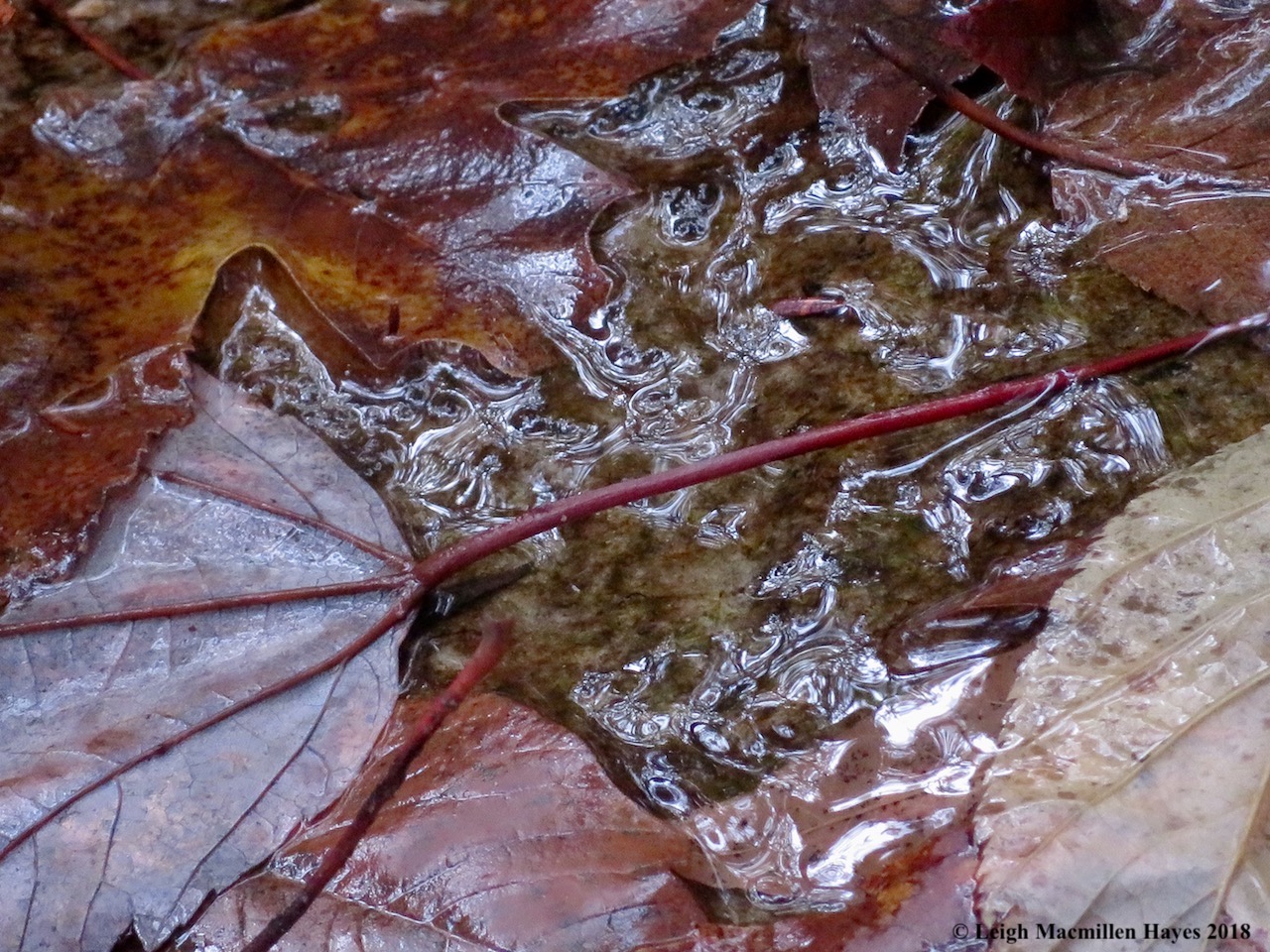
17-icy formation

As our time drew to a close, we noticed patterns in the mushrooms imitated by icy spots in a stream that spoke to the morning’s chill.

18-Horseshoe Pond Road

But the sun had come out and we relished its warmth as we headed back to our vehicles and on into the rest of our days.

16a-man-made wonder

Before doing so, however, there were two more sights to commemorate–the man-made line up of doors found deep in the woods . . .

2-Sand castle

and rain-made castles along the road side.

Bishop Cardinal Reserve–where man and nature intersect.


What the Tree Spirit Knows

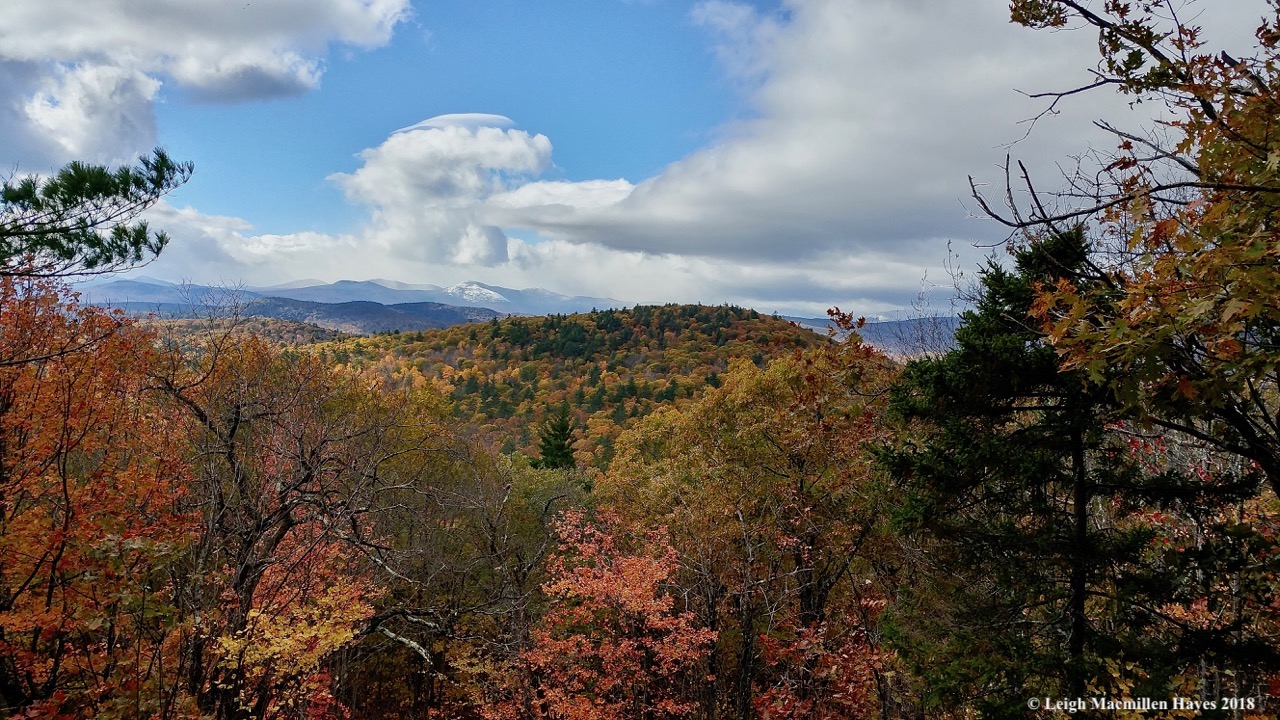
As I drove to Lovell this morning to take a photo for the Greater Lovell Land Trust’s winter newsletter, the crisp outline of a snow-covered Mount Washington made me realize that I had a short, unintended hike in my immediate future.

1a-Flat Hill view

Yesterday, I’d climbed the Flat Hill Trail at the Heald and Bradley Ponds Reserve to take another photo for the newsletter–that one of the view from the summit of snow falling in the White Mountains. This past summer, staff and volunteers of the land trust had made some trail changes and opened several views, the one from Flat Hill being the most dramatic and the foliage, snow and sky enhanced the opening. But . . . today’s view was different and I knew I needed to capture it again.

Page 3 a

So . . . after a staff photo shoot at the Kezar River Reserve of Stewardship Associate Dakota, Associate Director Aidan, and Office Manager Alice, I headed north.

1-voss sign

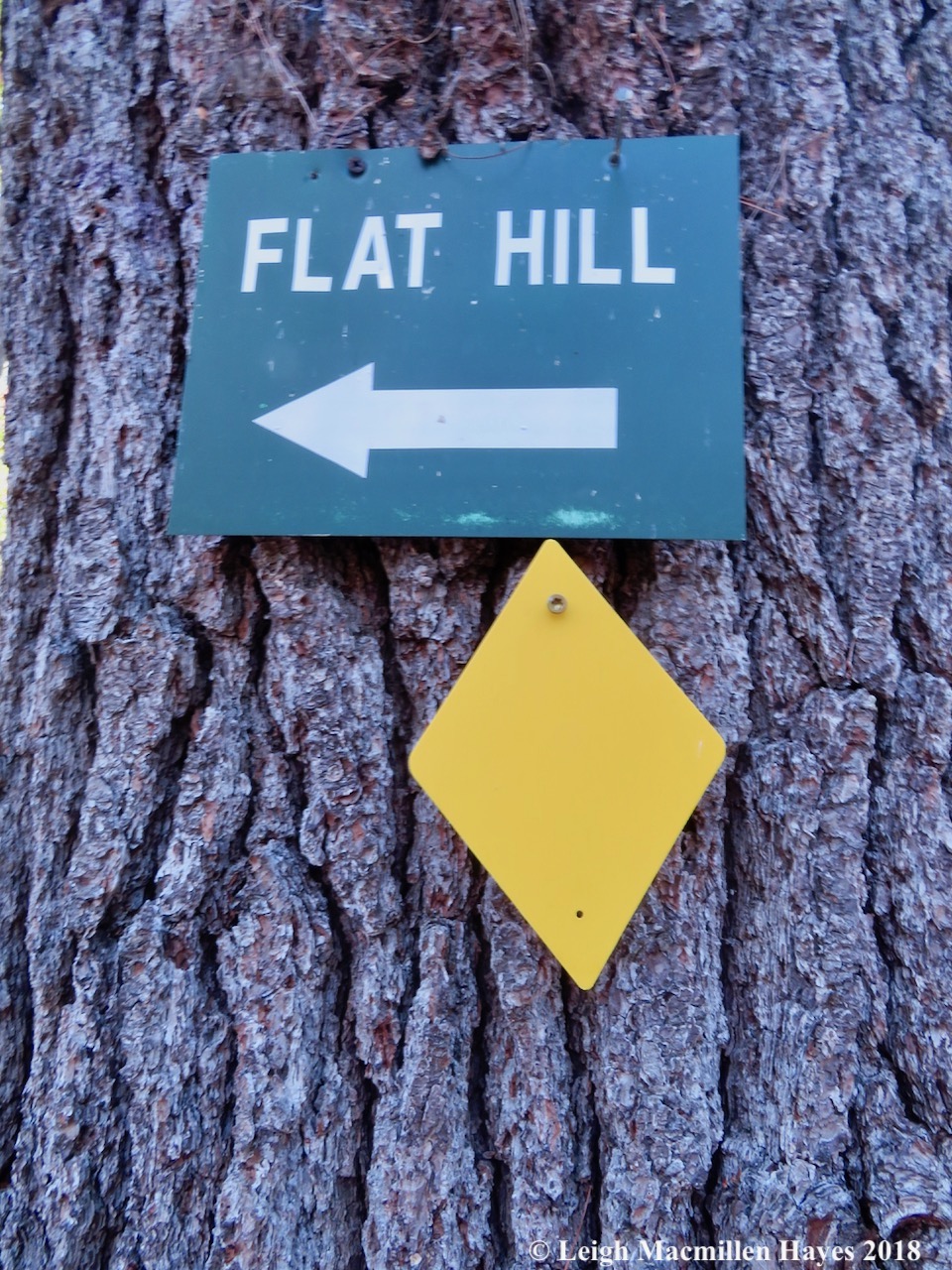
And laughed at myself for yesterday I never noticed the yellow Voss blazes that had been mounted to mark the trail. The hope is that eventually all the trails will be signed with different colored diamonds that will ease navigation.

2-big tooth aspen

It’s a trail I know well, even with a new backwards S curve about two thirds of the way up that erased a steep and slippery portion and so instead I focused on those sights at my feet. While many leaves had already begun the long process of decomposition as they slowly break down and give nutrients back to the earth from which their trees grew, a few still sparkled like gems, including this Big-Tooth Aspen, aka poplar.

3-sugar maple

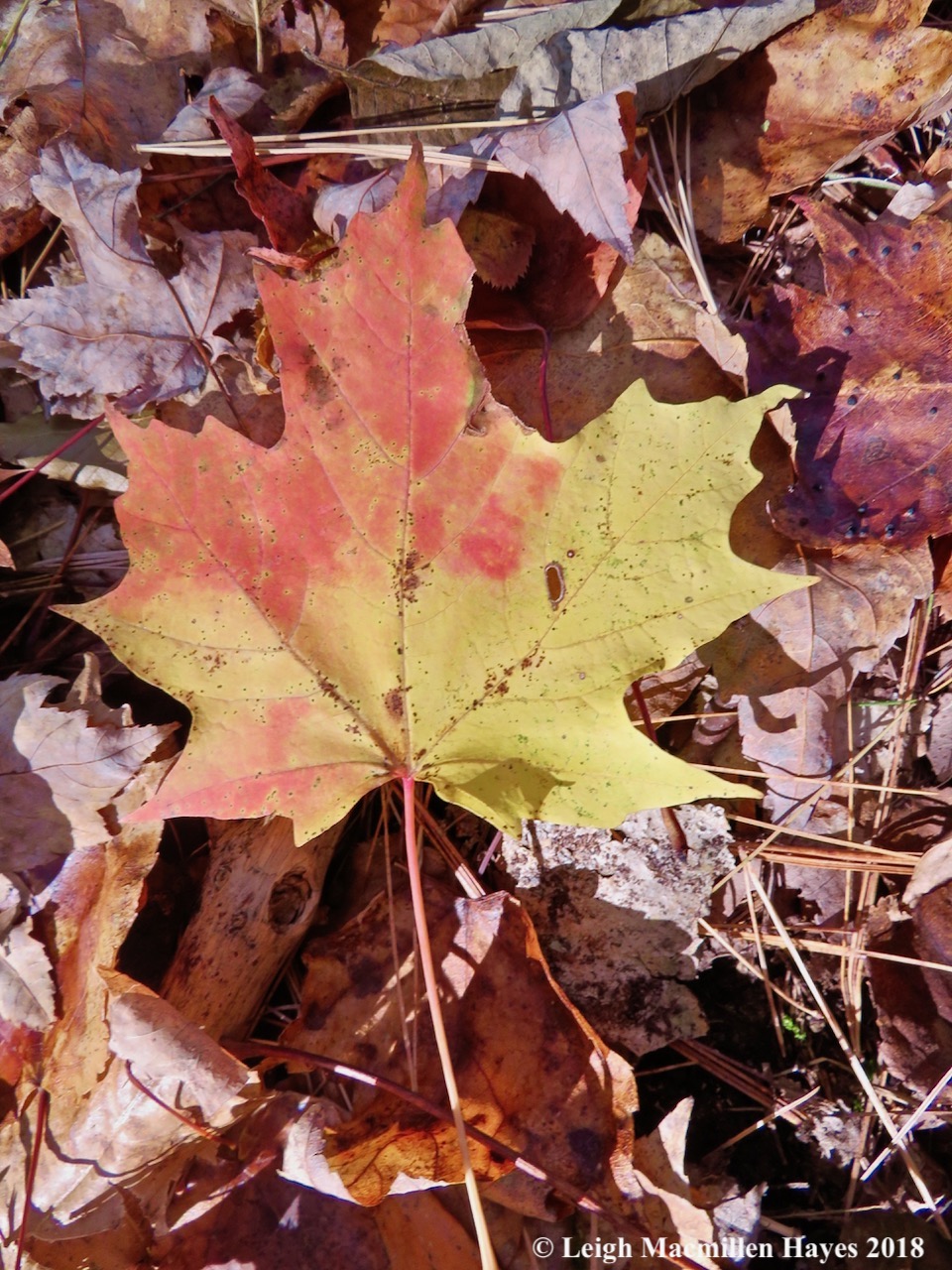
I was thrilled to discover Sugar Maple, defined by the U shape between its pointed lobes;

4-red maple

its V between lobes and toothier cousin, Red Maple;

5-striped maple

and even toothier kin, Striped Maple, known ’round these parts a goosefoot because its shape is similar. Some of us also refer to it as nature’s toilet paper for it’s large, soft, and easy to identify. You wouldn’t think of confusing it with poison ivy.

The curious thing about the Maple family, like all families in our northern New England forests, is that while the shape and color of the leaf helps us specify the family origins, each leaf within the family is different–whether in color or flaws or insect bites or galls. But despite their differences, they are all family.

6-large red oak

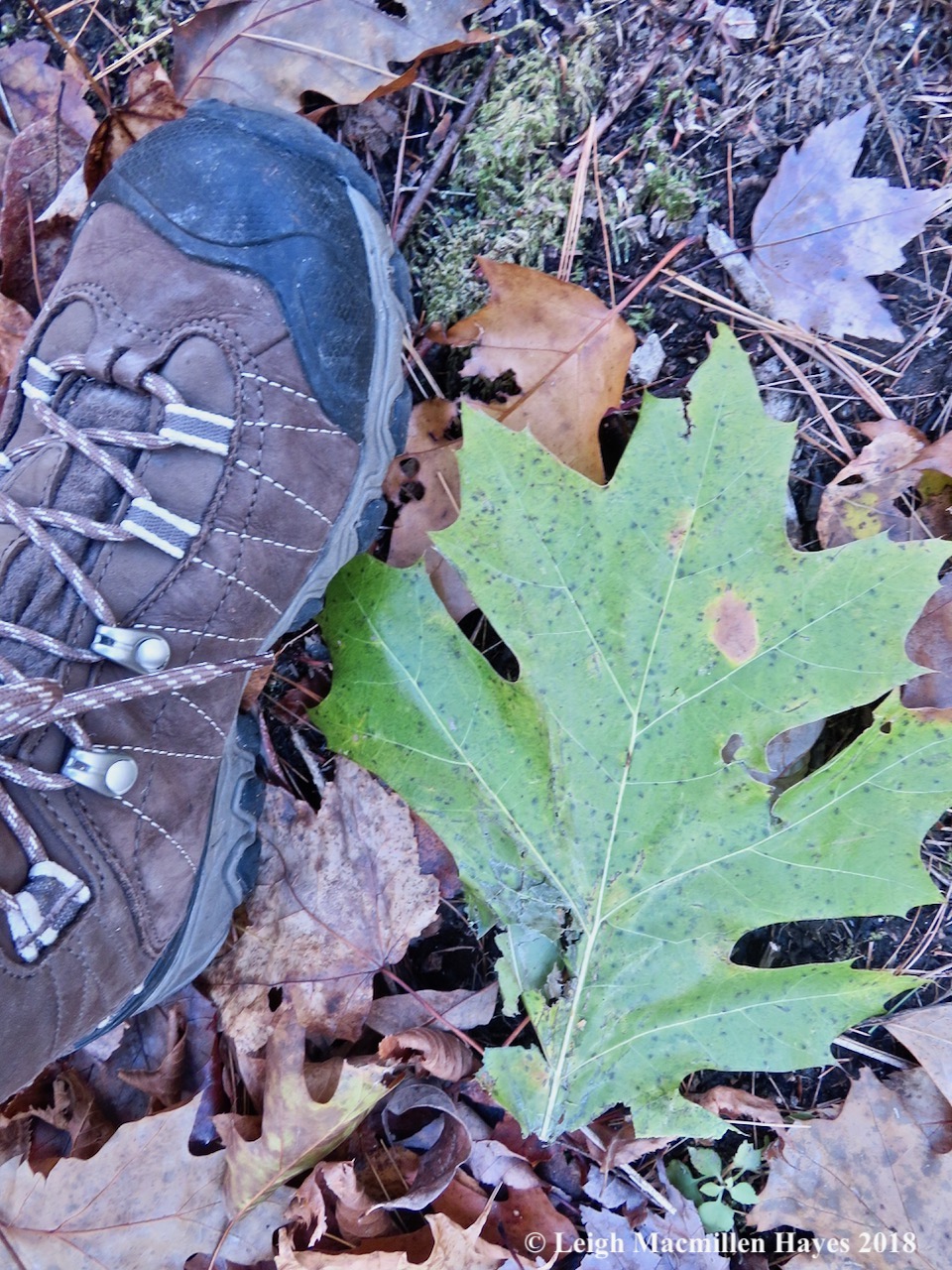
With the Striped Maple, I thought I’d found the largest species of the day, but a few more steps toward the summit revealed a rather large Northern Red Oak leaf.

7-even larger basswood leaf

And then the biggest of all–Basswood. My hiking boots are size 8. And the leaf–also a size 8, with an asymmetrical base. That must prove a challenge when trying to find the right fit.

13-polypody ferns

Focusing on the leaves took my mind off the climb and within no time I’d reached the summit where Polypody ferns in their evergreen form decorated the northwestern corner of an otherwise bald rock.

14-red maple flower and leaf buds awaiting
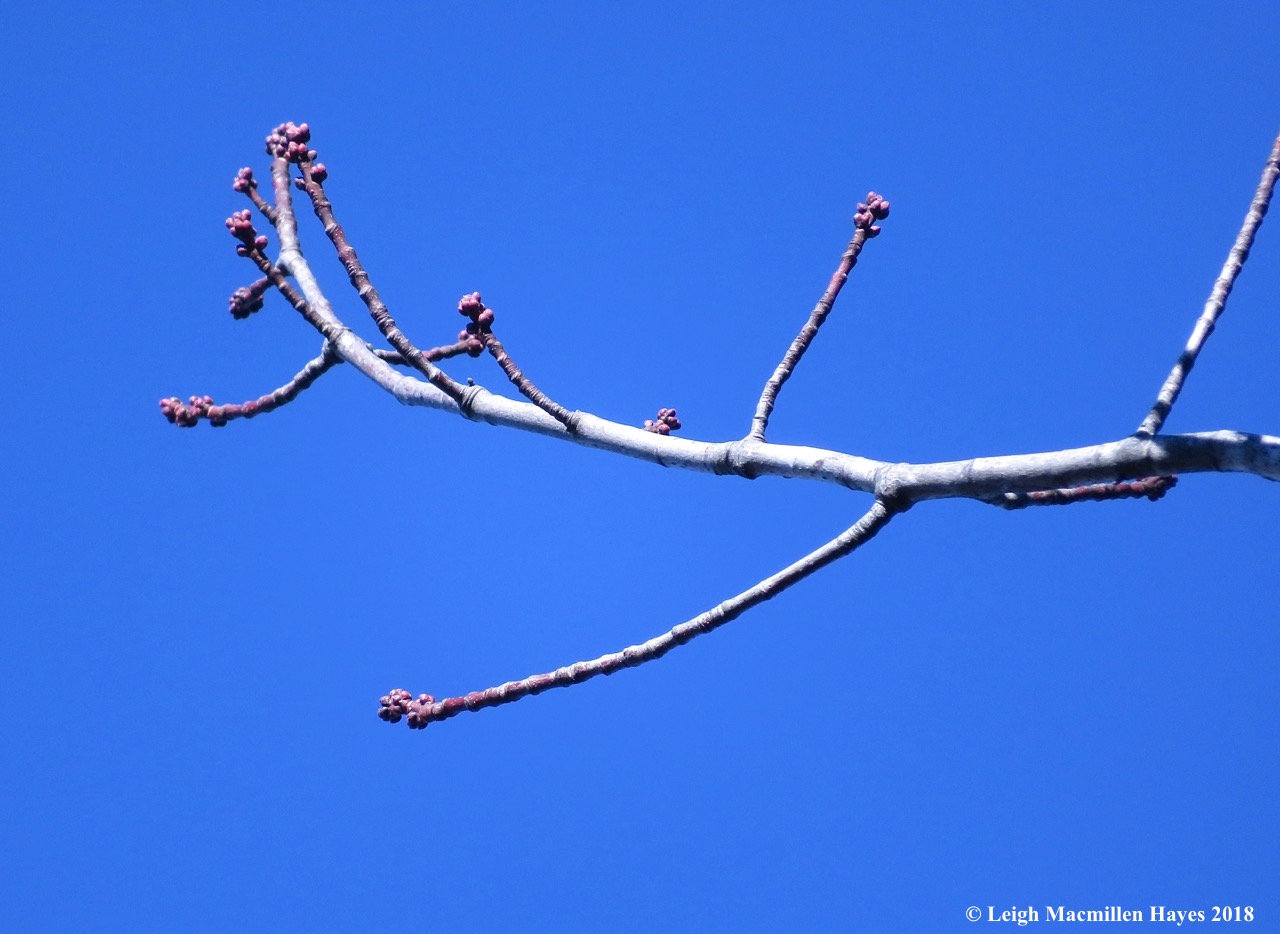
From the ferns where I’d planted my feet, I looked skyward and noticed the leaf and flower buds of a Red Maple, all tucked inside their waxy scales. It was the right place to be for as the north wind blew and my cheeks turned rosy red, I looked to the west.

9-Baldfaces to Carter Dome

Yesterday’s view had been transformed. No longer was it snowing from the Baldfaces to Carter Dome, with Mount Washington the whitest of all, posing between them. But still, it was chilly.

10-telescoping in on Mount Washington

A slight push on the camera lever and I pulled the scene a wee bit closer.

16-Perky's Path

At last I pulled myself away and hiked down, but so delightful was the morning, that I knew my newsletter work would have to wait a few more minutes at the intersection with Perky’s Path, for I felt the calling.

17-wetland--old beaver pond

It’s a wetland I visit frequently and once upon a time about five years ago it was filled to the brim with water because beavers had dammed it for their convenience.

18-suds reflect leaf

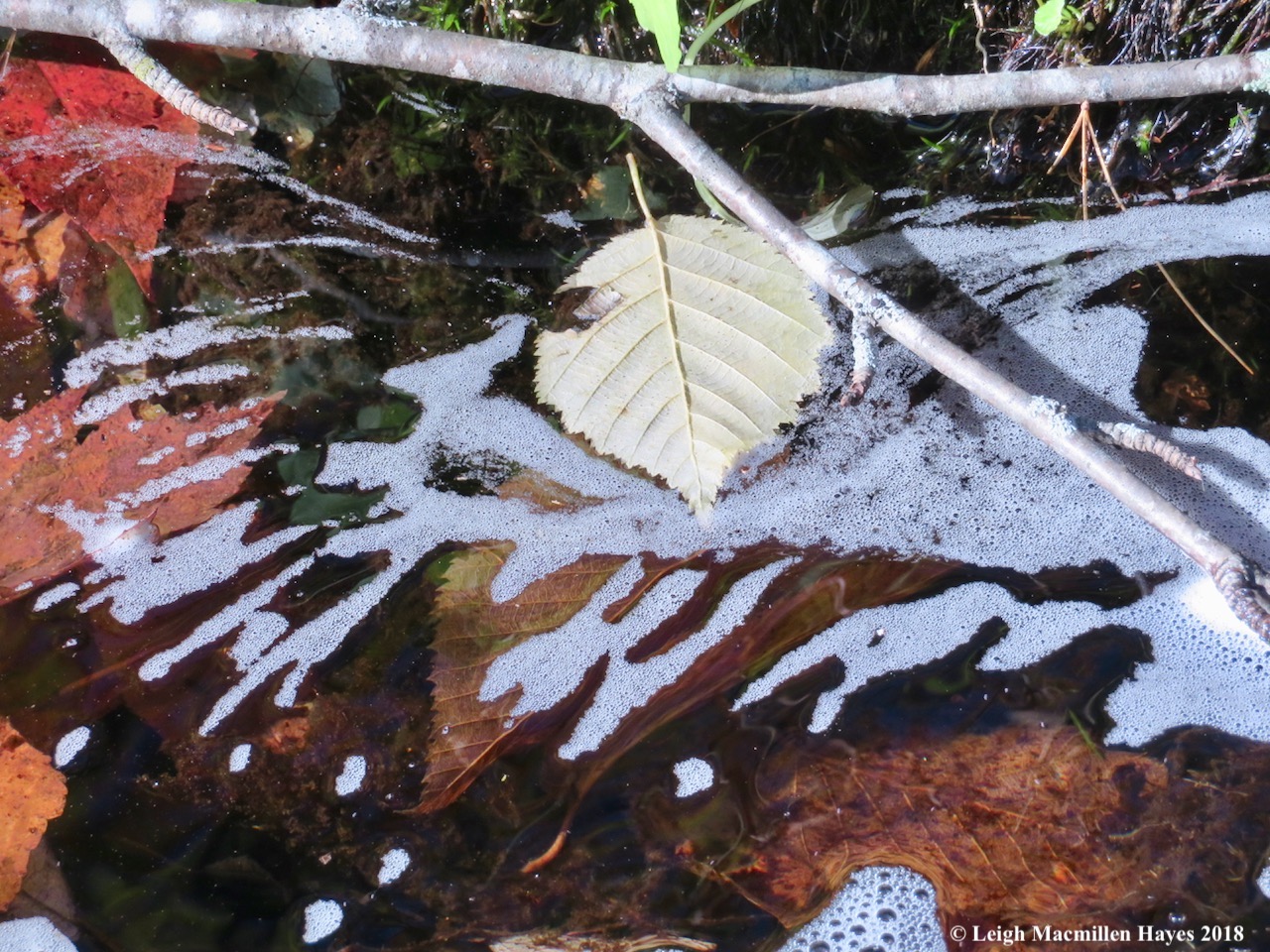
The only water today was found in a small stream that flowed through, its origin at Bradley Pond and terminus at Heald Pond. I stopped at the rock stepping path to admire what the water had to offer, including suds forming their own rachis or mid-vein from which side veins extended, a sideways rendition for the birch leaf caught between twigs.

19-view from the rock

In the middle of the stepping stones is a large flat rock. It was there that I settled in for a while, enjoying the feel of its sun-absorbed heat and the sound and views offered as the brook flowed slowly forth.

21-view from the bench

At last I pulled myself away and continued toward the bench that overlooked the wetland. All was quiet on this brisk day, but its a place of life and love and change.

22-back to the wetland

From there I continued to circle the old beaver pond to the point where I knew it had formerly been dammed. Climbing over and around moss-covered rocks, and into former stream beds, I made my way to the edge of what I used to call an infinity pool for the water was once at the dam’s upper level.

23-view from the beaver dam

Once I reached the dam, making my way one step at a time, for it was rather tricky footing at times, I discovered life on the other side. For all the years I’ve been involved with the land trust, I’d never seen this edge from this view. My surprise included the almost bald rocks.

25-coyote scat full of bones

Stepping from boulder to boulder, I made my way into the wetland a wee bit, but along the way realized someone had visited prior to me. Actually probably almost a year prior given the conditions of the scat left behind. Based on its shape, size, and inclusion of multiple bones plus lots of hair, I suspected a coyote had feed on a hare.

26-spider view

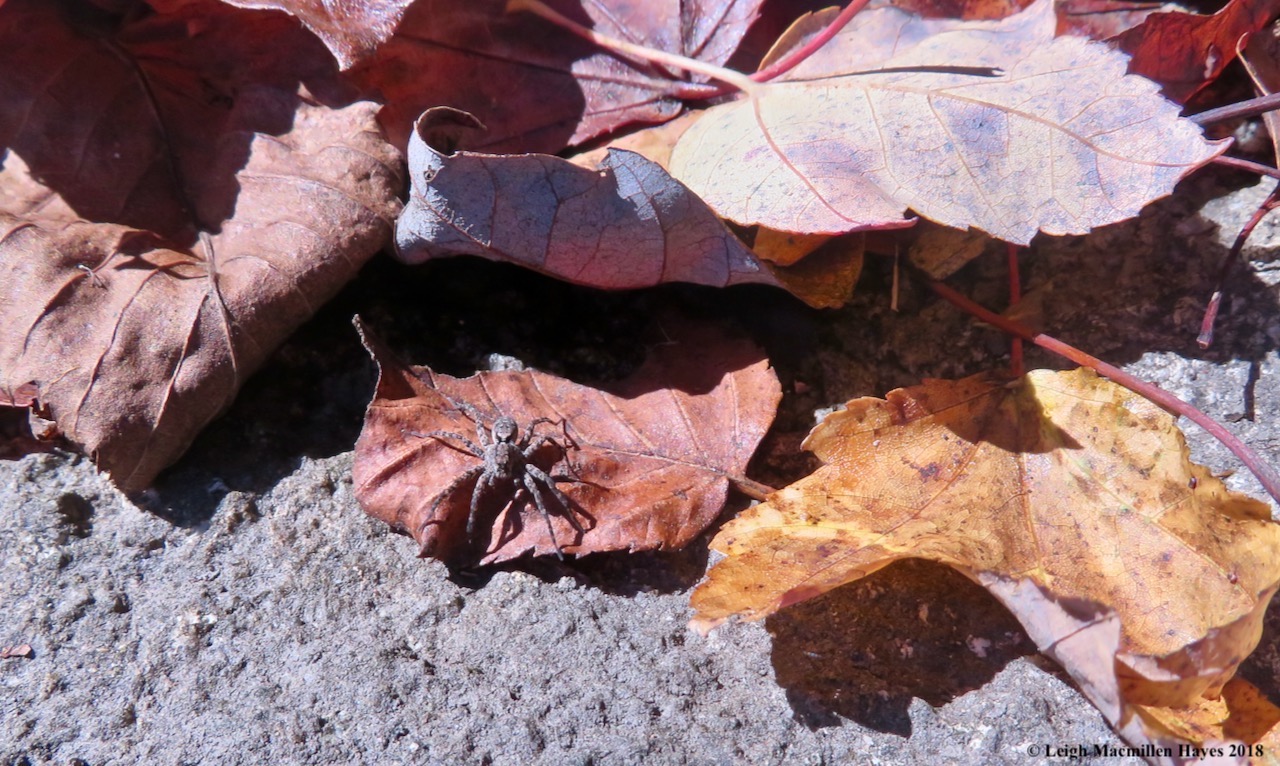
The coyote and I weren’t the only ones who knew of this secret place. A wolf spider darted in and out among the leaves, more afraid of me than I was of it.

27-spatterdock

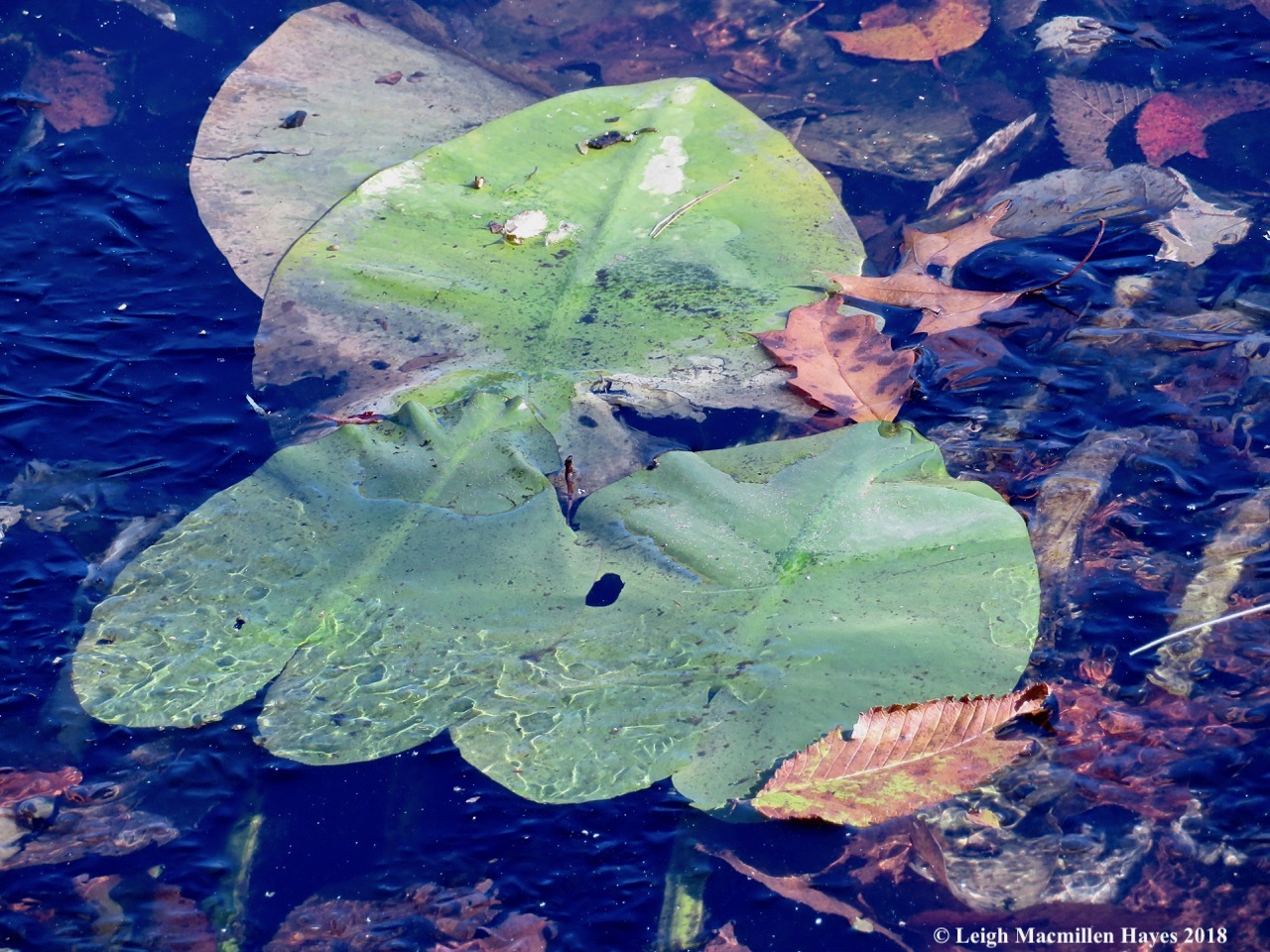
And then I discovered something that perhaps they both already knew: the water supported a small colony of Spatterdock, a plant that will need to be added to the list of flora for this property. Do you see the ice on the Micky Mouse ear leaves?

28-ice

Ice had also formed around a fallen log, its swirls portraying a high-heeled boot that certainly might be appropriate in an ice sculpture but not on ice.

28-tree spirit

All of what I saw the tree spirit already knew. And yet, it allowed me to make discoveries from my feet to the sky.

29-Mount Washington summit

And every layer between. I know he’s not there anymore, but can’t you imagine Marty Engstrom on top of Mount Washington?


Yo, Brooklyn!

Past visits to New York City have always included museums and shows, but this weekend we followed a bit of the familiar path and sometimes took the trail less touristy in an attempt to get to know the area better.

2-Manhattan in the fog

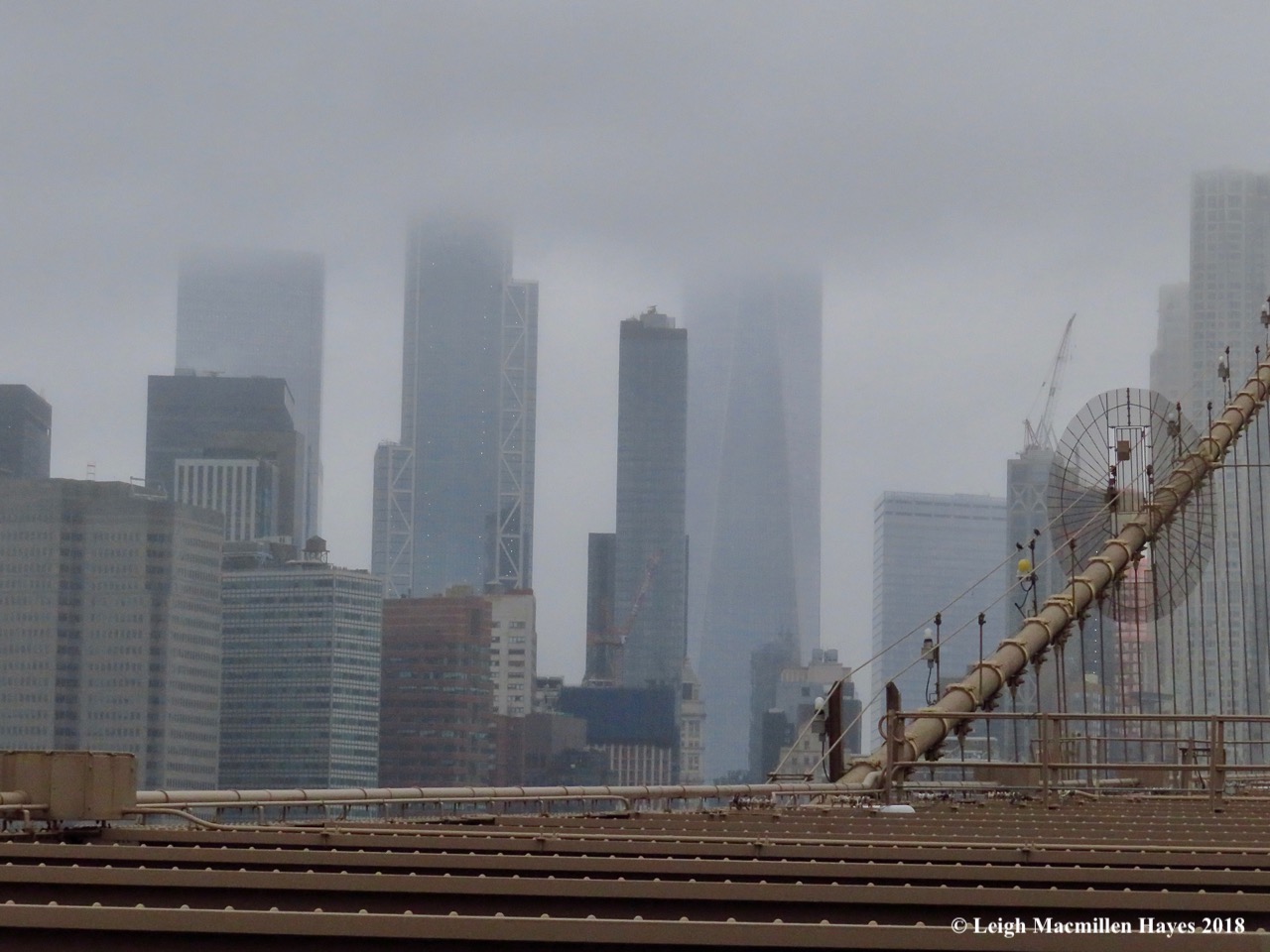
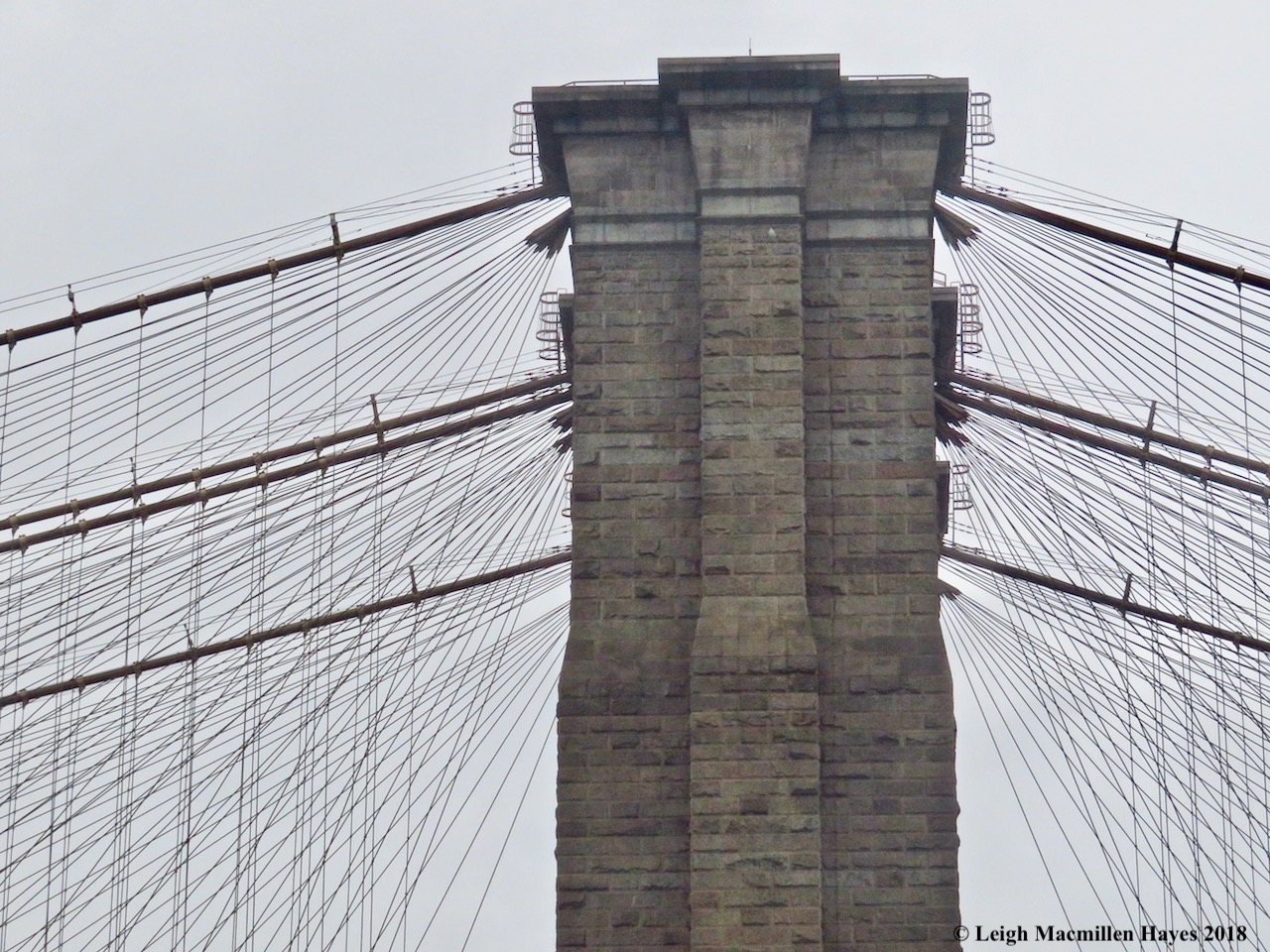
Saturday afternoon, following our arrival via a bus from Worcester, Mass., we walked across the Brooklyn Bridge to Manhattan, which was a bit veiled in fog, thus softening  ordinarily crisp lines.

1-Brooklyn Bridge

Begun in 1869 and completed by 1883, the bridge spans the East River and connects the boroughs of Brooklyn and Manhattan.

3-bridge like a spider's web

Among the throngs of people who walked or rode bicycles across, we all wove strands of thread that fit easily into the web long ago created. Some of us paused suddenly here and there, as the arachnid tried to take hold, while others tried to maneuver along the silken dragline writing messages with their feet much the way Charlotte may have within her web.

6-wildlife on the bridge

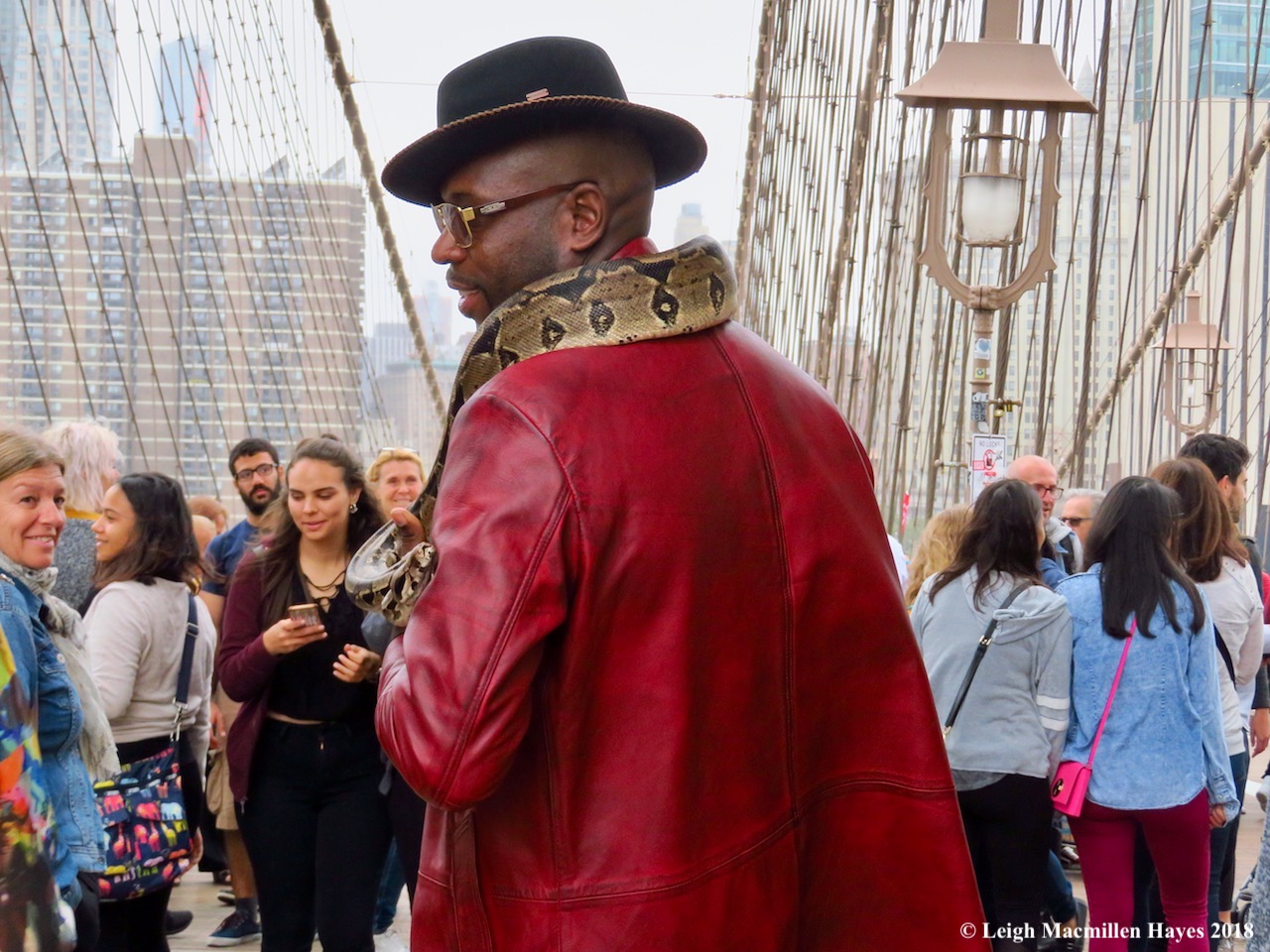
And a few got caught up by the constrictors waiting at the center.

7-onto the streets of Manhattan

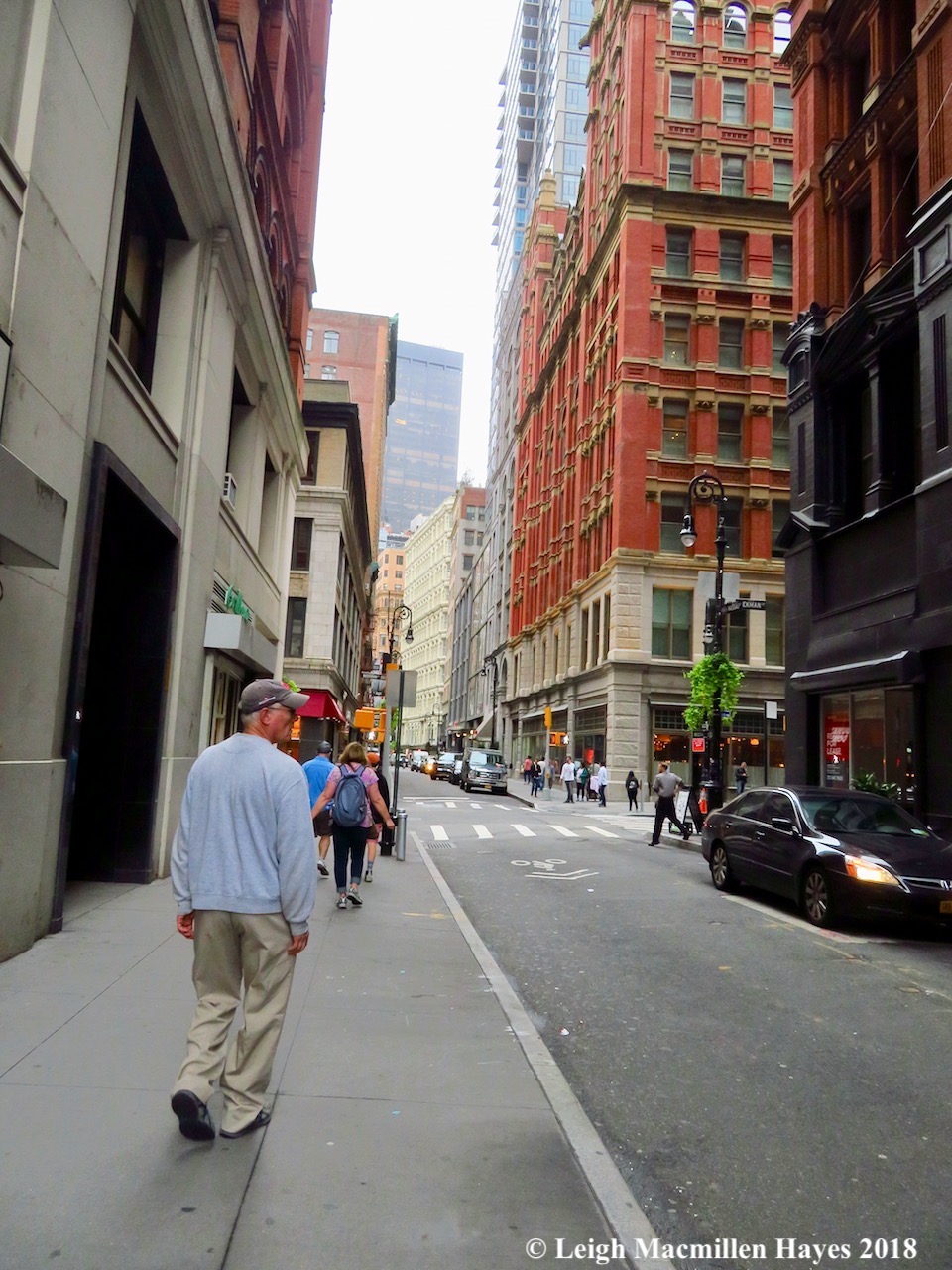
At last we emerged on the other side, where our attention was diverted by the architecture and colors.

8-New York Stock Exchange

Often, it was the interaction of today and yesterday that drew our notice, joined together as they were with a global reference.

9a-entrance door to St. Patrick's

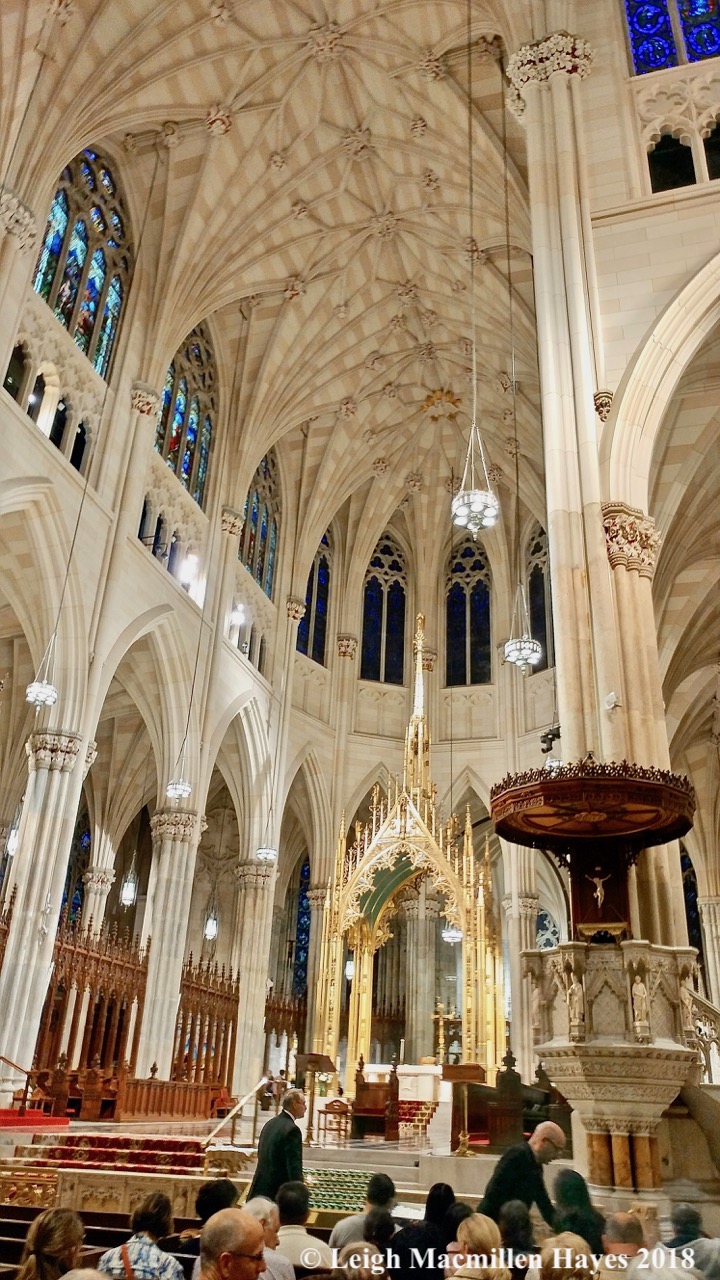
Eventually, we passed through the doorway of St. Patrick’s Cathedral . . .

9-St. Patrick's Cathedral

where many have gathered for centuries to light candles in memoriam of those who have passed from this layer of life to the next and prayed for the future.

11-view from Central Park

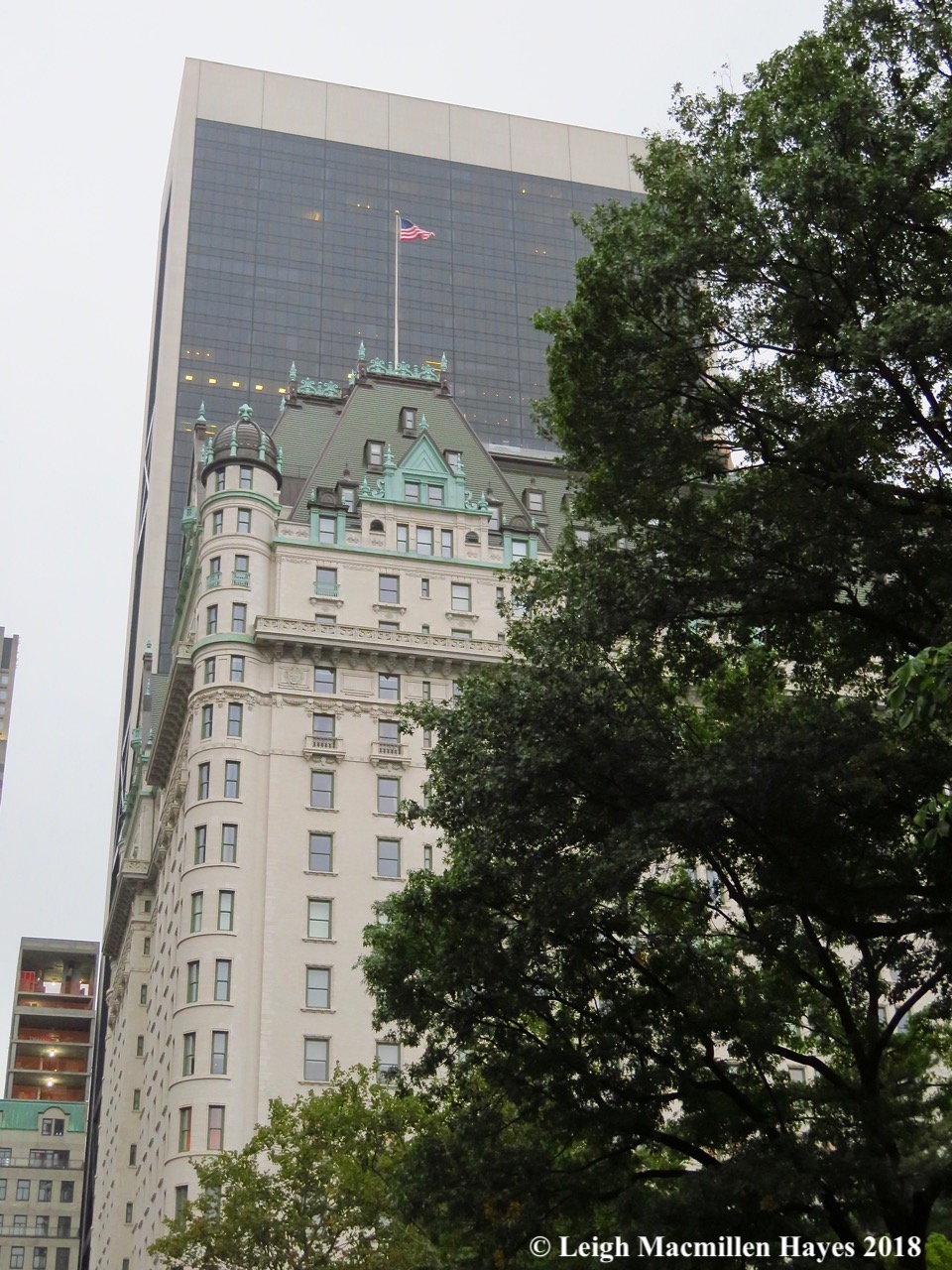
And then we slipped into Central Park, where we were again struck by the architecture, especially as juxtaposed against the artificially landscaped natural world.

13-goldfish

As we watched the Mallards and Canada Geese, one of our biggest moments of awe was for a goldfish–the largest we’d ever seen.

Eventually, we boarded a train and found our way back to Brooklyn, where a quiet evening awaited.

14-the bridges from below

Sunday morning found us passing below the Brooklyn Bridge, where we could glimpse  the more “modern” Manhattan Bridge in the distance.

15-skyline from the promenade

Again, the skyline was muffled, but its edges softened.

16-spider web again

And once more we looked with wonder at the web construction.

17-river boat NYC style

Ever so slowly, we moved away even as a paddlewheeler representing the south made its way north.

18-cormorants and gull

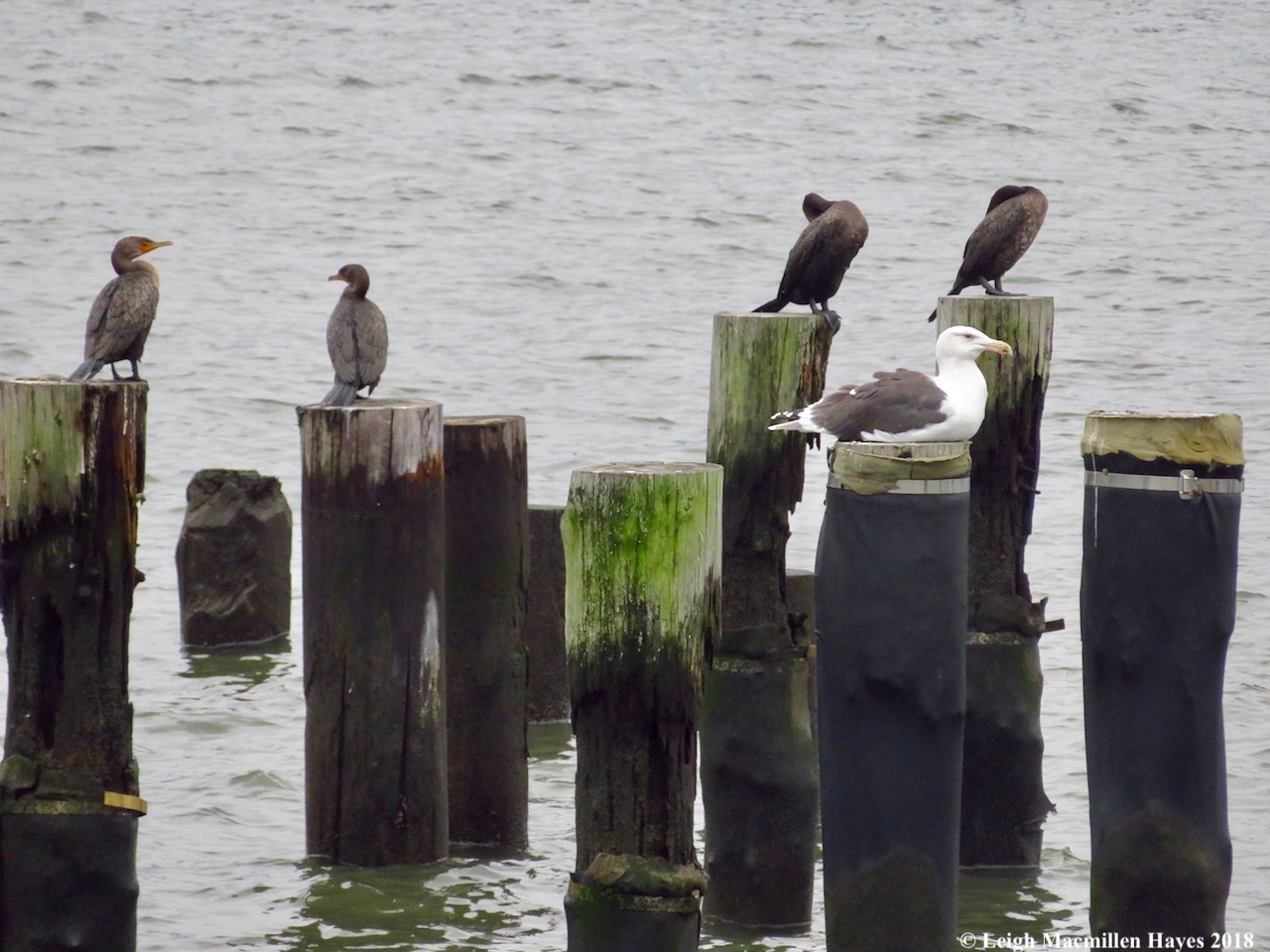
Despite our thrill at watching water taxis, tour boats, jet skis, sailboats, powerboats, and even a police boat move up and down the river, the local Cormorants and a Herring Gull took it all in stride.

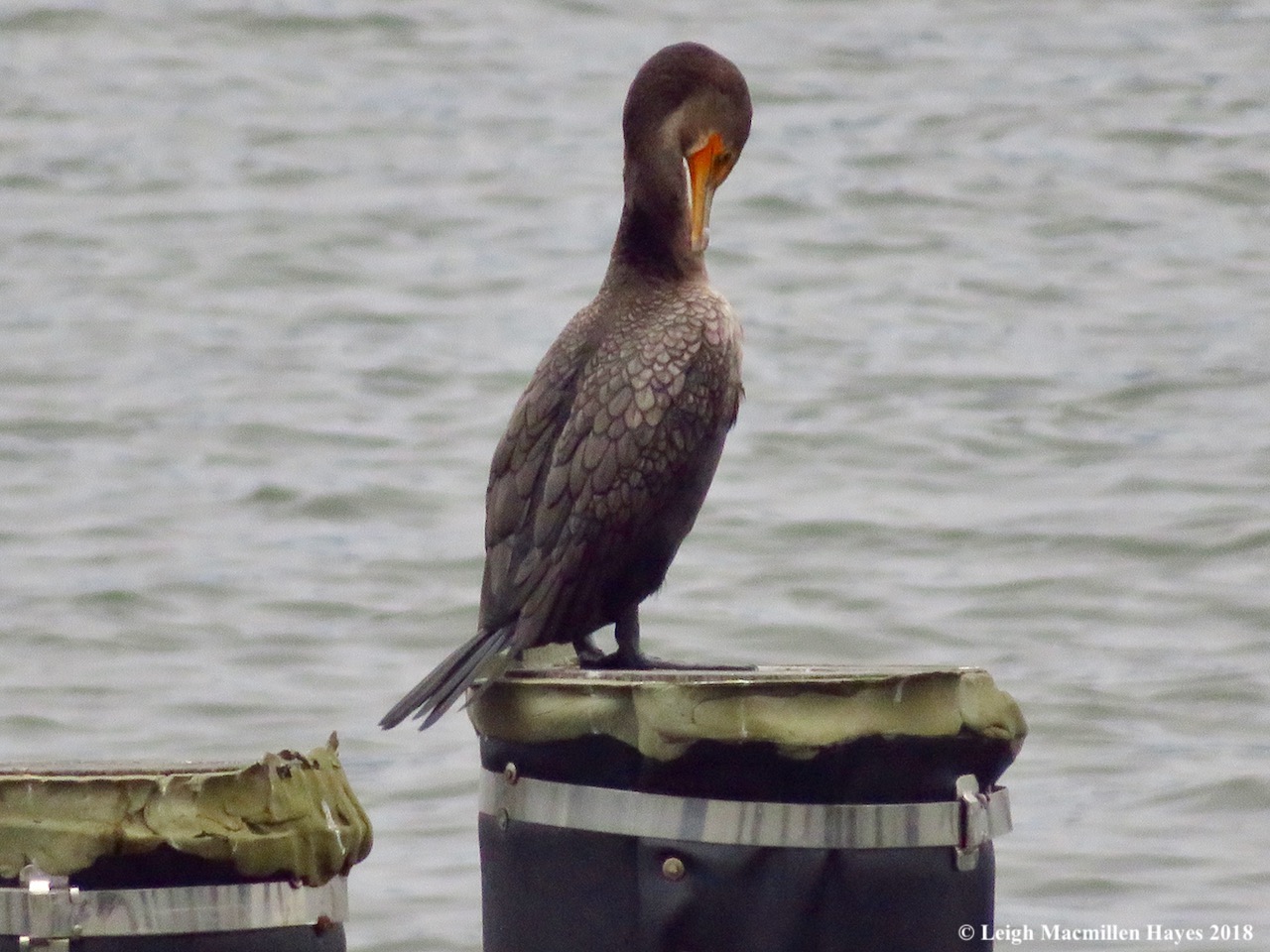
19-cormorant preening

After all, they had feathers to preen.

20-Canada Goose

And the Canada Geese–a grassy park to foul. The irony was that no dogs were allowed, but the geese made themselves quite at home.

22-offices of many sorts

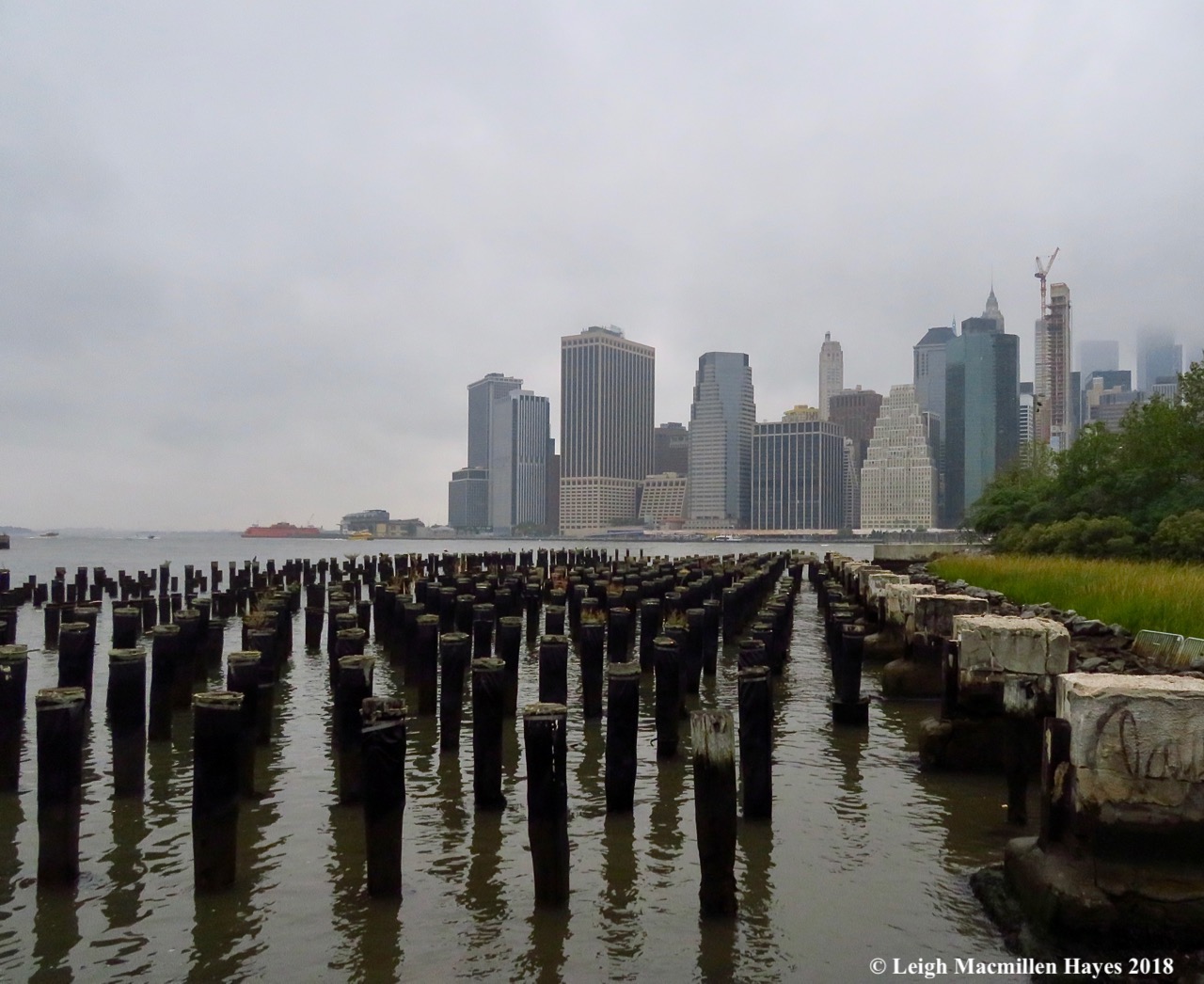
Above the Cormorant/Gull condos, Lower Manhattan gave way to the harbor, and we enjoyed the view from the Brooklyn Heights Promenade.

26-Lady Liberty

Our perch included the sight of Lady Liberty as she greeted all.

24-Queen Mary 2

And another grand lady, the Queen Mary 2. The last time I saw the QM, it was a previous rendition and she’d anchored in New Haven Harbor (Connecticut) in the summer of 1979. My father, sister, and I drove into the city to catch a view and then we followed the route Queen Elizabeth, who had arrived in town for a very brief visit, would take before departing from Tweed New Haven Airport. Crowds lined the route and we practiced our best QE wave. Humoring us, some waved back. We did glimpse the queen as her motorcade eventually drove by and that was enough to fulfill our Anglophile envy.

27-water tank in Brooklyn Heights

But, this weekend we were in Brooklyn to admire New Yorkers, (and we knew the queen wasn’t on the boat), so we pulled our point of view back to the area around us, which included a mosaic structure worth noting. Watertower is actually a sculpture created by Brooklyn artist Tom Fruin. He used plexiglass and steel in 2012 to represent one of the icons of our nation–a water tower.

29-playing fields on the piers

From pier to pier we followed the promenade beside the river, noting natural places and sports fields filled with athletes of many talents as they played games or worked out.

30-Brooklyn Heights

Eventually, we circled back and then climbed up into Brooklyn Heights, enjoying our meander through a beautiful neighborhood.

31-sycamore tree

And my guy, he became a pro at identifying Sycamore trees for so prolific do they grow in that neck of the woods.

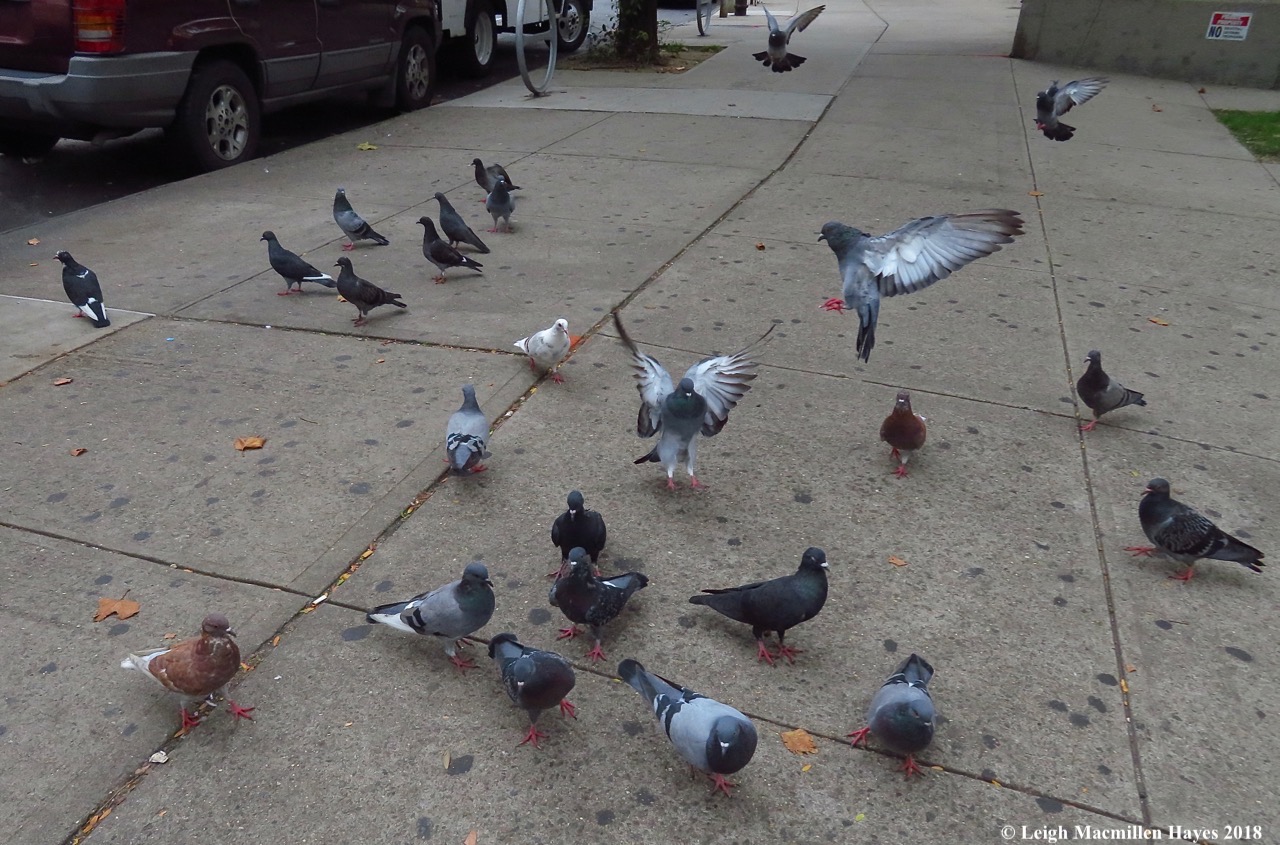
33-pigeons

And then, and then we encountered a flock of happy pigeons. Yes, we were in New York City and all pigeons are happy there. It has something to do with peanut kiosks perhaps?

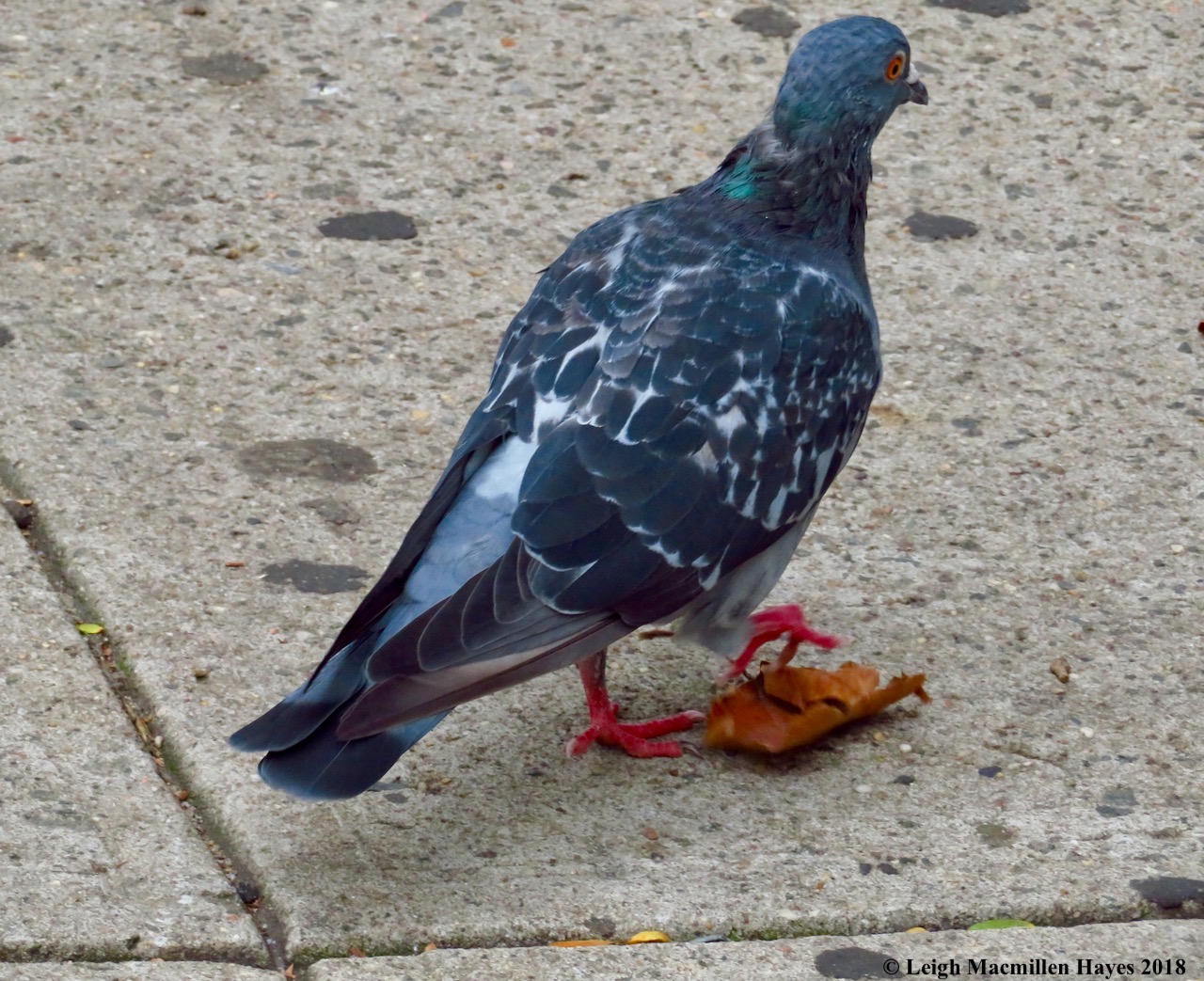
35a-pigeon

There were the typical blue-gray birds with two dark wingbars,

35-pigeon

rusty red version,

34-pigeon

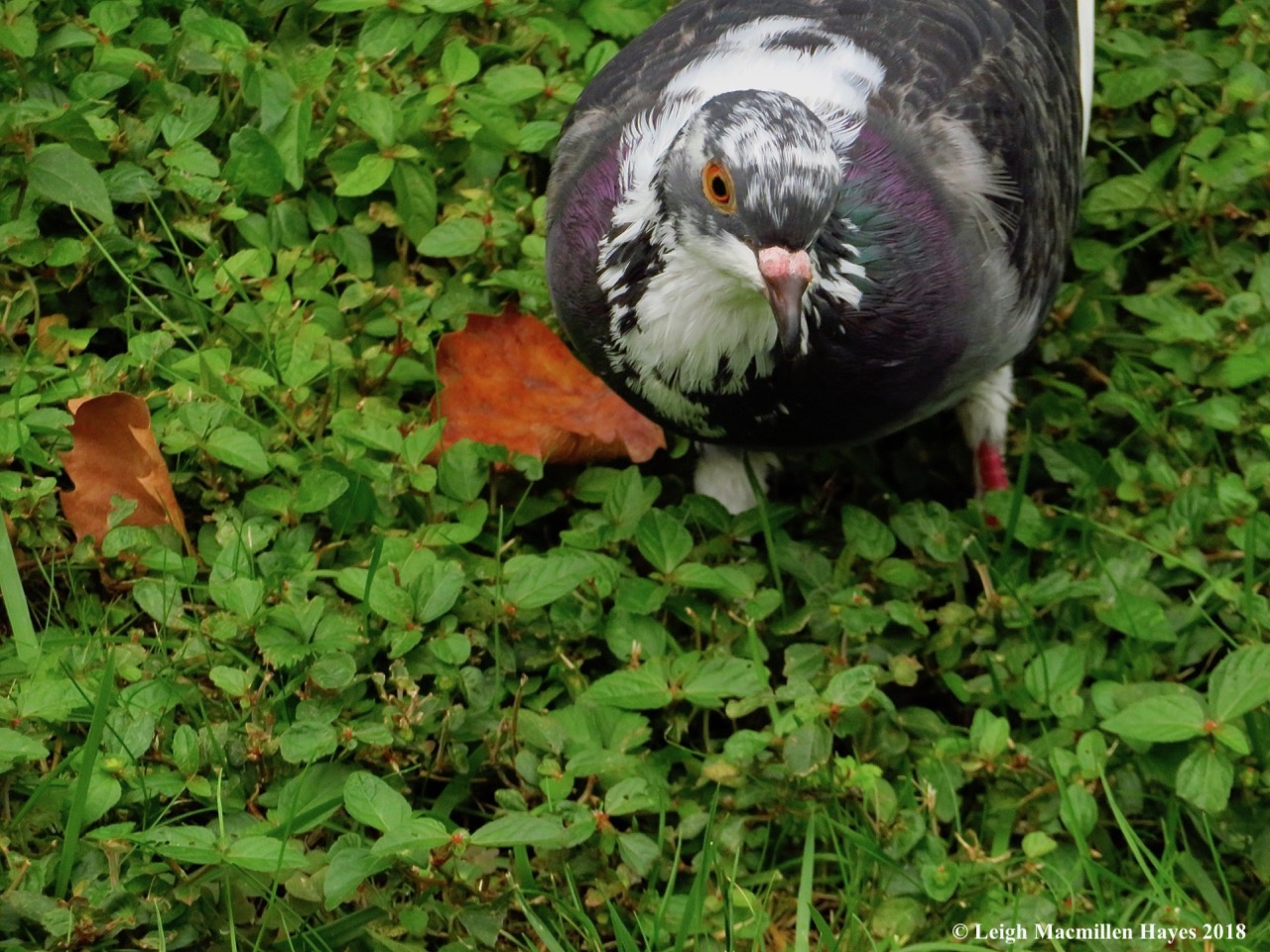
those spotted or mottled,

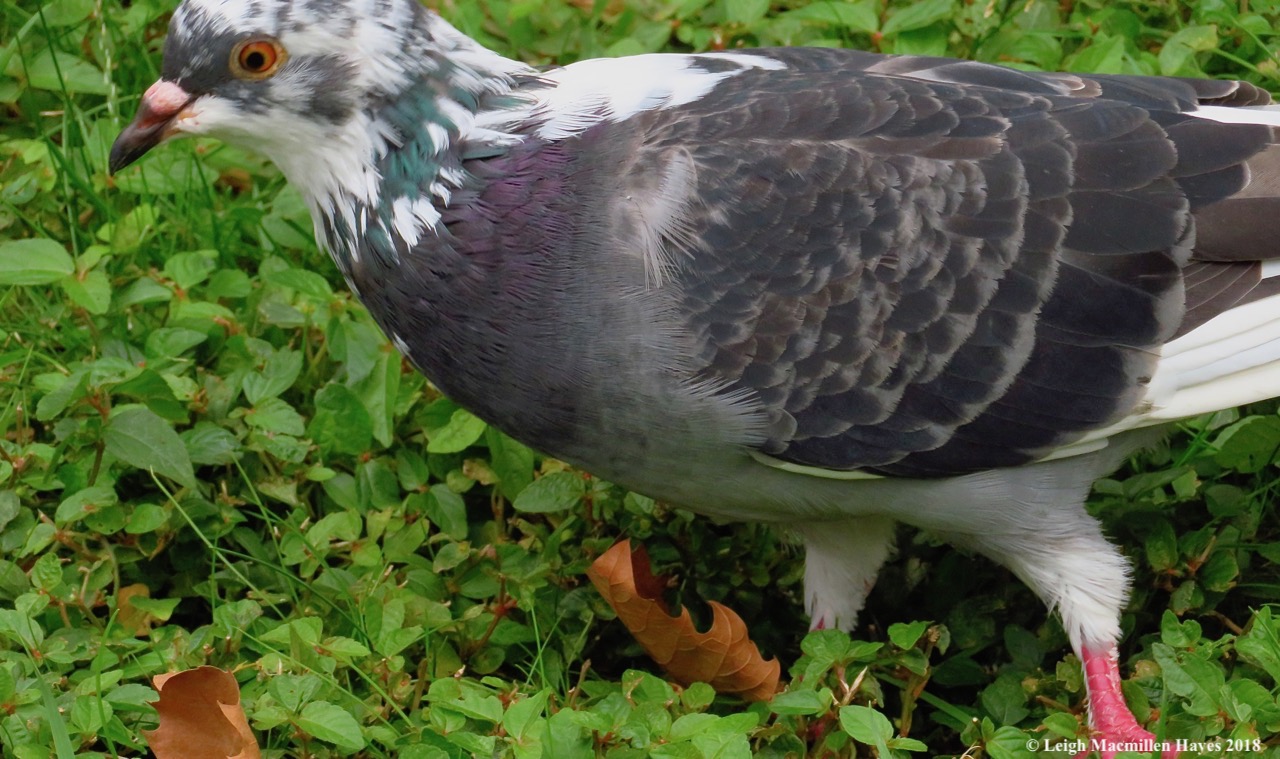
36-pigeon

and even pale among the gang.

34a-piegon

But really, have you ever taken the time to look at those iridescent colors?

39-piegon

Or that sweet face?

40-maidenhair tree, ginko

At last we left our pigeon admiration behind and continued on, noting another tree not in our familiar category–the Maidenhair or Gingko Tree.

41-maidenhair leaf

Its fan-shaped leaves showed off the carotenoids that had been hidden all summer by the green pigment. Fall was slowly embracing the city, but it hadn’t arrived in full yet.

42-barber shop

As we moved from a more residential to commercial area, we were surprised to find a barber shop open on a Sunday morning. Given that I’d recently written about barber shops for Lake Living, it was fun to peek inside. And note how many men waited. But, in this city where many work late each day, it made sense that they’d make time on a Sunday morning for a hair cut.

43b-hardware

Eventually, our wanderings led us to a hardware store. And not just any kind of hardware store . . .

43-True Value

for it was an independently-owned True Value, much like my guy’s.

43a-entering the hardware store

And since one of our reason’s for visiting the city was to celebrate his 65th birthday, I followed him in.

45-fig in the garden

Lunch found us eating a slice of pizza from a local pizzeria. It was OK; better than what we find in Maine, but not quite what I remember from my childhood in Connecticut. We did eat in the “garden” where figs grew! I wasn’t quite sure how that related to pizza. But . . . we were in New York.

42-intential grafitti

New York . . . a city where graffiti is understood.

44-my guy.jpg

Our day ended with dinner at a small neighborhood Italian restaurant, Santa Panza, where we quietly celebrated my guy’s birthday with the most delicious dinner.

40-rotating statues of Miss Brooklyn and Miss Manhattan

As this morning dawned, it was time for us to look out the window of our hotel and say goodbye to the two ladies who’d waved us in and would wave us out. Miss Manhattan and Miss Brooklyn rotated continuously at the intersection of Flatbush Avenue and Tillary Street.

According to a Brooklyn Public Library’s website: “Miss Manhattan sits haughtily with her right foot atop a chest of money (or jewels?); in her right hand she holds a winged globe reminiscent of a cross-bearing orb, an ancient symbol of authority; a peacock, flashiness and luxury incarnate, is by her side. (The peacock, in the belief system of the Ancient Greeks, also represented immortality/eternity.) The bows of three ships hint at the status of Manhattan as an important port and an international trade hub. She is all dignity, privilege and hubris.

Miss Brooklyn’s demeanor could not be more different. Her expression is gracious, introspective and calm; she is surrounded by a church spire (Brooklyn to this day counts more houses of worship than any other borough); a lyre and a child with a book (a reference to the borough’s patronage of culture and education). The book on the child’s lap is massive. It must be a Bible, another reference to the borough’s spiritual thrust. Her head is adorned with a laurel wreath. In her hands she holds a tablet with the Dutch inscription “Ein Drach Mackt Maght” (“In Union there is strength”), a hint at the Dutch origins of Brooklyn and at the fairly recent New York City consolidation of 1898.

The granite maidens originated on the Manhattan Bridge, but these sculptures were installed on a pedestal at their current location about a year ago. For us, they were our home monuments much as Pleasant Mountain serves as our home mountain. Not only did they welcome us and send us on our way, but we knew where we’d lay our heads for the night as we approached.

43-Yo

At last, our brief city adventure came to an end, but we trust we’ll return.

Yo, Brooklyn! Yo Miss Manhattan and Miss Brooklyn. Thanks for the welcome. Until we meet again . . .


A “Fen-tastic” Afternoon

I was on a reconnaissance mission this afternoon for next week I’m leading some middle school students into a wetland and talking about forest ecology before sharing the joy of foraging with them.

1-Into the jungle

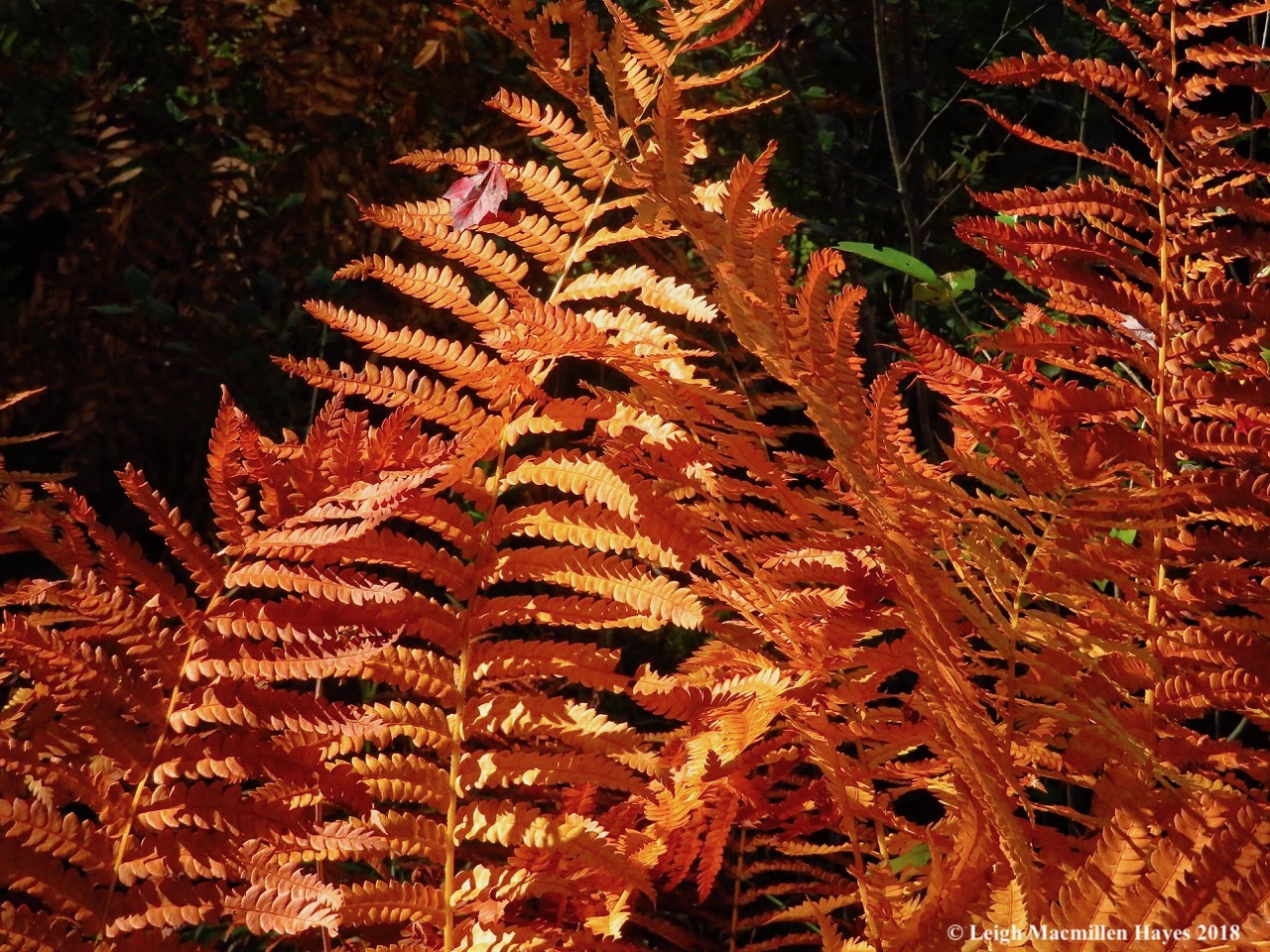
To reach the wetland, it was like walking through a jungle where the ferns grow tall, their fall coloration enhancing the scene. Cinnamon Ferns are a species that easily grow in medium to wet soils in part shade to full shade. The moist, rich, acidic soils, I walked through were much to their liking.

1a-cinnamon fern

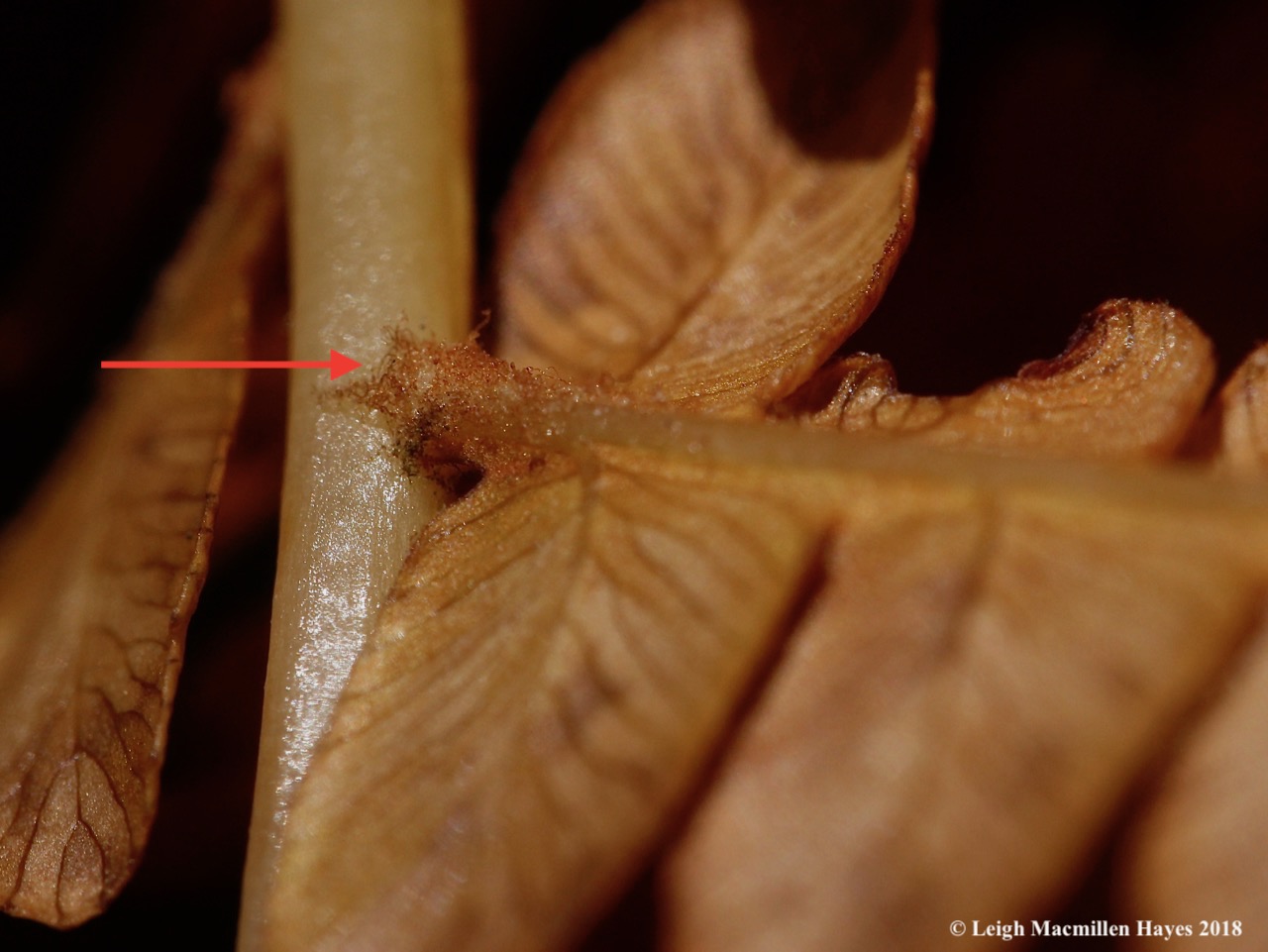
It appeared that they were named for their autumn presentation, but really it refers to the cinnamon-colored fibers found near the frond bases.

1b-hairy underarm

Because they look so similar to their relatives in the Osmundaceae family, the Interrupted Fern, I looked to the back of the frond for confirmation. Sure enough, where the pinnae (leaflet) met the rachis (center stem), a tuft that we refer to as the hairy underarm was present.

2-kettle

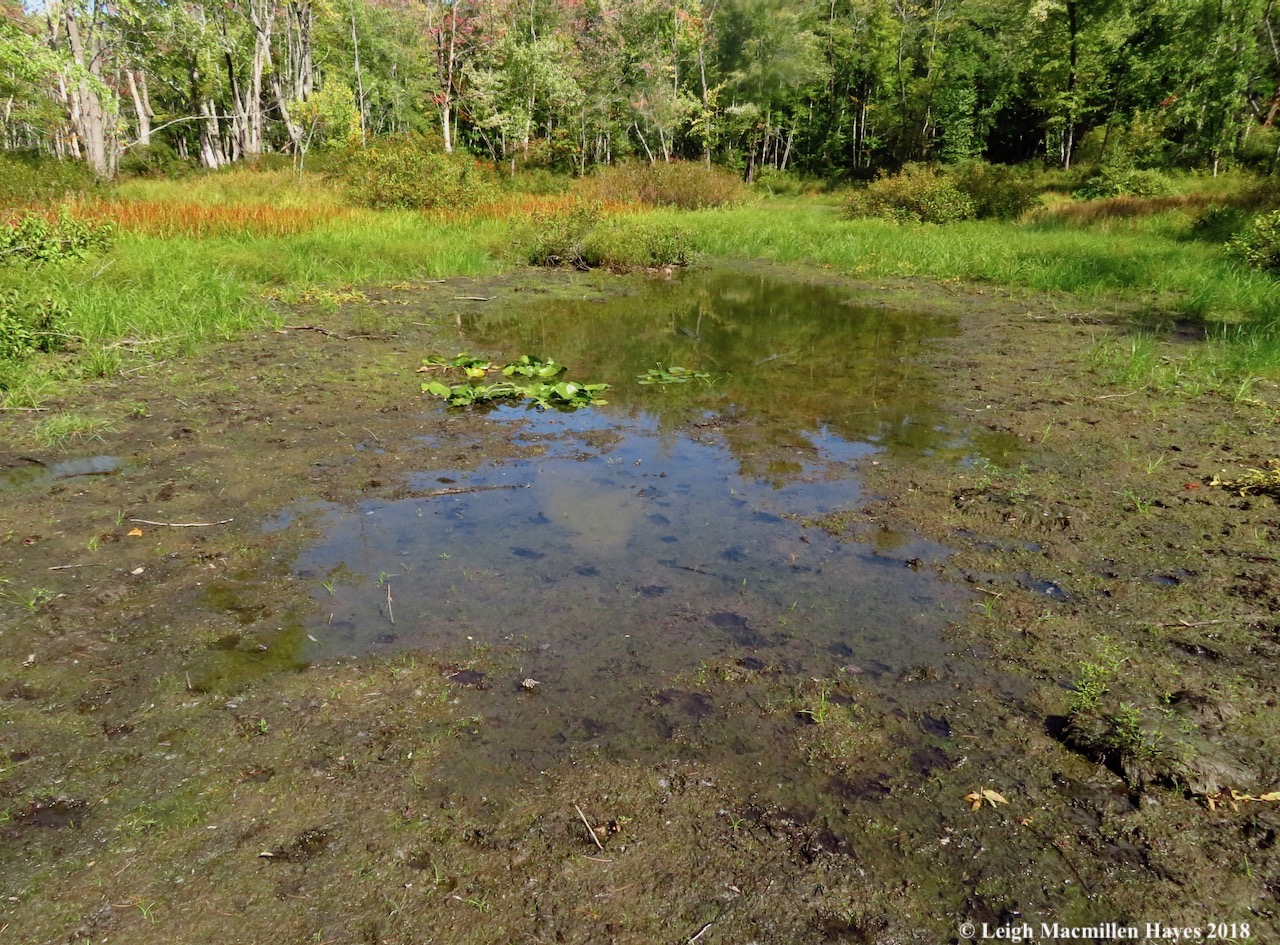
Onward I continued, not sure what the moisture situation might be. So, in the past, I’ve paused by the kettle hole, but never actually entered it. All that changed today and my plan is to take the students into this special place. A kettle hole is a basin created when a large block of glacial ice was left stranded and subsequently melted in place, producing a basin or depression. These basins fill with water up to the depth of their surrounding water table, which currently happens to be rather low.

3-white face meadowhawk

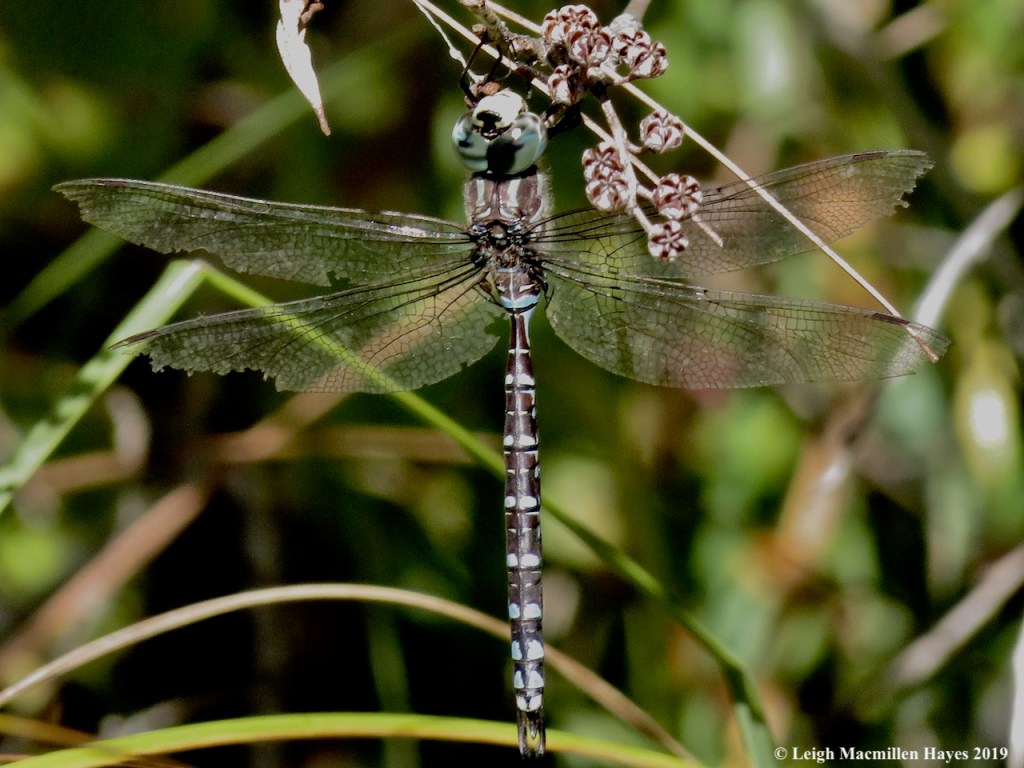
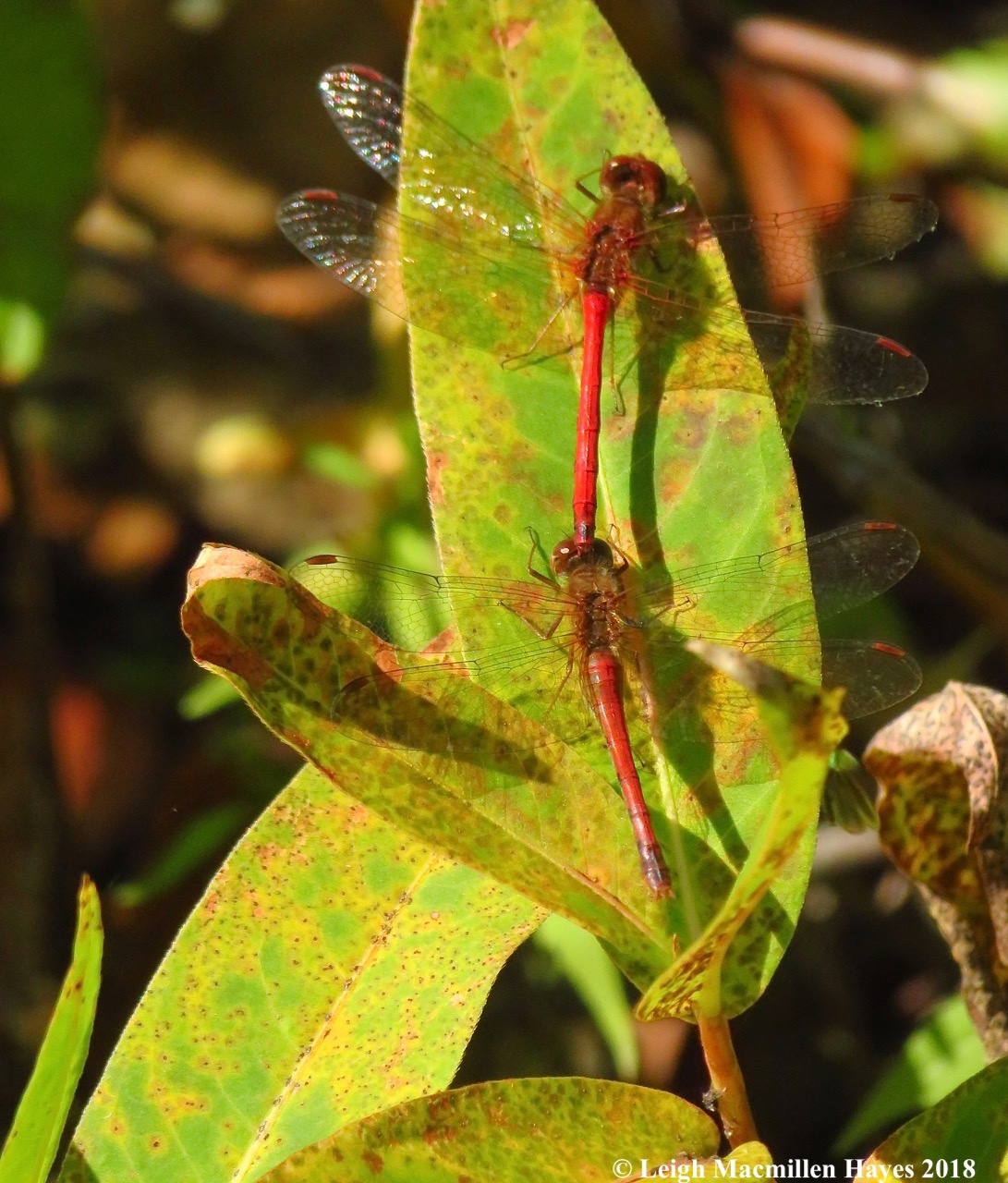
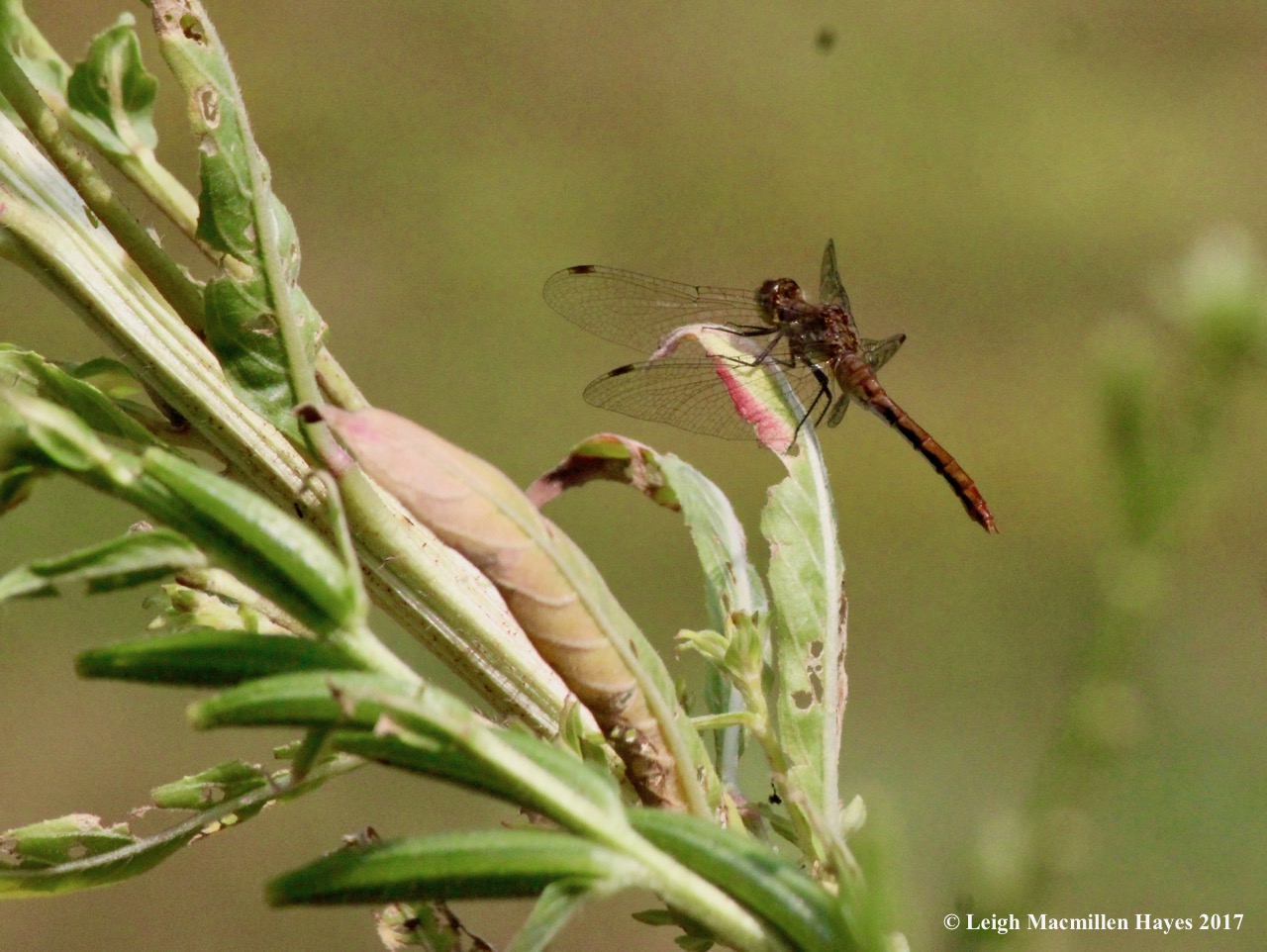
Because the temperature had risen after a damp, chilly start to the day, the meadowhawk dragonflies flew . . . and landed. This one was a White-faced Meadowhawk, aptly named for that face.

4-white face meadowhawk abdomen markings

Its abdomen markings of dark black triangles also help in identification.

4b-autumn meadowhawk dragonfly

Flying in the same airspace where the Autumn Meadowhawks, with their light-colored legs. All other meadowhawks have dark legs.

4c-autumn meadowhawk love

Love was in the air and on the leaf as a pair of Autumns took advantage of the warm weather to canoodle in the sunlight.

4c-dragonfly love everywhere

They weren’t alone.

7-kettle 2

What I learned as I explored was that the kettle was actually a double pot for a second one had formed behind the first. Notice the layered structure of the area from trees on the outer edge to shrubs to grasses and flowers to water.

5-mammal tracks

And everywhere–deer and raccoon tracks crisscrossed through mud and water.

5a-racoon and bird tracks

Bird tracks also joined the mix among the raccoon prints.

6-six-spotted fishing spider

And because I was interested in learning who lived there, I had to pay homage to the six-spotted fishing spider.

8-spatterdock leaves and root

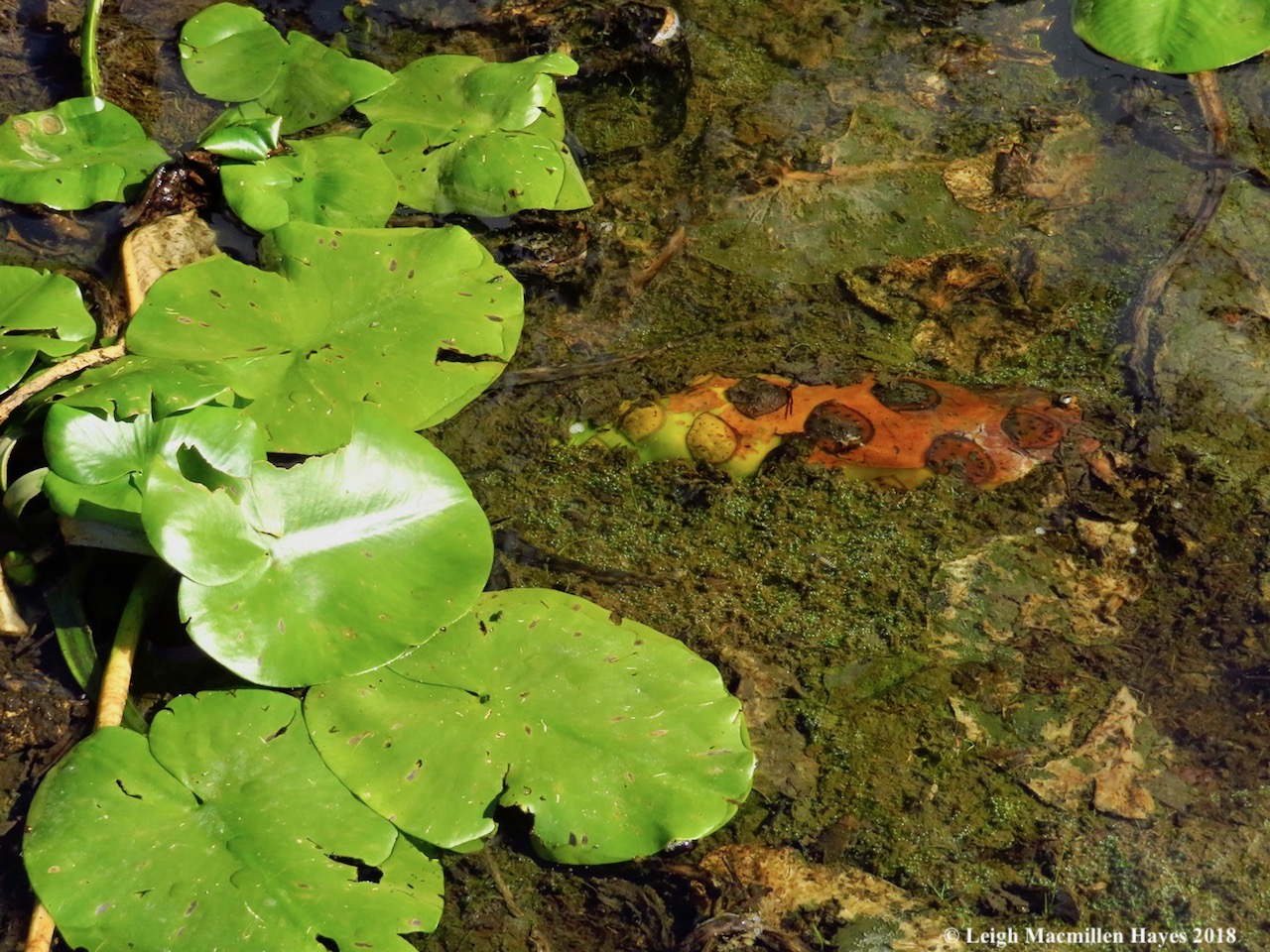
The spider flirted with me as he moved quickly among the spatterdock leaves that sat in the wee bit of water left in the center of the kettle.

9-another kettle

I finally left the kettle only to discover another and again the formation of layers.

10-green teal ducks

The water was a bit deeper and a family of Green Teal Ducks dabbled.

11-bottoms up

Bottoms up!

12-my destination

It took some time and steady foot placement as I climbed over downed trees hidden by winterberry and other shrubs, but at last I reached my intended destination, a cranberry bog.

13-cranberries

And then I spent the next hour or so filling my satchel for so abundant were the little gems of tartness. The best where those hidden among the leaves–dark red and firm were they.

14-some nibbled cranberries

As I picked, I realized I wasn’t the only one foraging. It appeared that either chipmunks or squirrels also knew the value of the flavor–though they only nibbled.

15-October colors layered

Occasionally, or even more often, I looked up to take in the colors and layers that surrounded me–from leatherleaf bronze to blueberry red to Gray Birch and Red and Silver Maples with a few White Pines in the mix.

16-buttonbush

Buttonbush added its own color and texture to the scene.

17-finding my way out

At last I decided to find my way out. (Sorta for I did get a wee bit disoriented.)

18-royal fern fertile fronds

Among the offerings were ferns of a different kind–though still related to the cinnamons I’d seen earlier. The Royal Fern’s fertile crown had months ago shared its spores with the world and all that was left were salmon-colored structures.

21-buttonbush galore, but more

I picked my way carefully and eventually found one of the kettles. And . . . drum roll please . . .

22-two sandhill cranes

two Sandhill Cranes. Others can tell you better than I how long the Sandhills have returned to this area, but it’s been for a while now and some even saw a nesting pair this past summer. My sightings have been few and so it’s always a pleasure.

23-sandhill cranes

I stood still as they moved about and they didn’t seem to notice my presence.

24-sandhill cranes

While they foraged for roots, another also watched.

25-great blue heron

The Great Blue Heron was cautious as they strolled in his direction.

29-bald eagle

And then . . . and then . . . in flew a Bald Eagle. And out flew the heron.

30-cranes flew out

The cranes waited a couple of minutes and then they flew, bugling on the wing.

And I rejoiced. Oh, I still had to find my way out and did eventually cross through a property about a quarter mile from where I’d started. But, all in all from kettles to cranberries to birds, it was a Fen-tastic afternoon as I explored an outlet fen.


Our Home is Their Home

As I sit in my rocking chair on the camp porch, the cicadas still buzz, with chirps of crickets thrown into the mix and somewhere in the background a constant trill from another. Tree frog? Perhaps, but it seems to carry on for longer than usual. Grasshopper? Maybe. And then there is the occasional call of the loon.

1-camp

What truly attracted my attention earlier today, however, were the other members of the household. Whose home this is, I think I know. Or rather, I thought I did. I thought it belonged to my guy and me. But really, I should have known better for it has never just housed the two of us. There were the boys growing up, and family, and friends, and renters, even. Actually, the latter three knew it before the boys. (Oops, I suppose I should call them young men, mid-twenty-somethings that they now are.)  But, through all these years, it has also housed many others. And so today, I got acquainted with some of its other residents. Rather than the mammals that we know also share the space, e.g. mice, squirrels, and bats, it was the insects and arachnids that I checked out.

2-cicada exuviae

My first find along the foundation was an exuvia of one I listen to day and night–that of a cicada. In their larval stage, cicadas live down to eight feet underground. When the time comes to metamorphose into winged adults, they dig to the surface, climb up something, in this case the foundation, and molt. The  emerging winged insects leave behind their shed skin, aka abandoned exoskeleton or exuvia. It’s a rather alien looking structure, with the split obvious from which the adult emerged.

3-cruiser 1

The cicadas weren’t the only aliens along our foundation. It seemed like every few feet I discovered a dragonfly exuvia dangling from the porch floor and now encased in spider webs.

3b-cruiser

One of the cruiser exuviae had dropped to the ground below. But still the structure remained intact. And I now realize that my next task is to head out the door once again in the morning and collect these beauties, the better to understand their nuances.

4-cruiser hiding

I found cruisers hiding under the logs . . .

6-cruiser and cast off spider

and even one tucked in by a basement window that had a shed spider exoskeleton dangling from it.

6a-lancet clubtail dragonfly

There were others as well, but nowhere did I find the exuvia of the one with whom I’ve spent the most time, Sir Lance(t) Clubtail. I suspect his shed skin is attached to some aquatic vegetation for he spends so much of his time by the water, even today, pausing only briefly to rest on the dock ladder.

7-bag worms and pupal case of a pine sawfly

There were other species to meet, including the most interesting of structures, those of the evergreen bagworm cases. I assumed that the young had already emerged, but their homes consisted of material from the trees on which they fed, e.g. pine needles. They struke me as the terrestrial form of the aquatic caddisflies.

And beside the two bagworms was a small, rounded brown case–the pupal case of a pine sawfly. The sawfly had already pupated and in this case no one was home.

8-pine sawfly caterpillar on screen

Oh, but they were and have been for a few weeks. I first realized we had an infestation when what sounded like the drip-drop pattern of a summer rain on a perfectly sunny day turned out to be little bits of green caterpillar frass falling from the trees. Everything was decorated. And then I began to notice the caterpillars–many falling out of trees and landing on the surrounding vegetation, and the house. As would be expected, they climbed toward the sky, hoping, I suppose, to reach the top of the trees. Good luck with that.

9-pine sawfly caterpillars

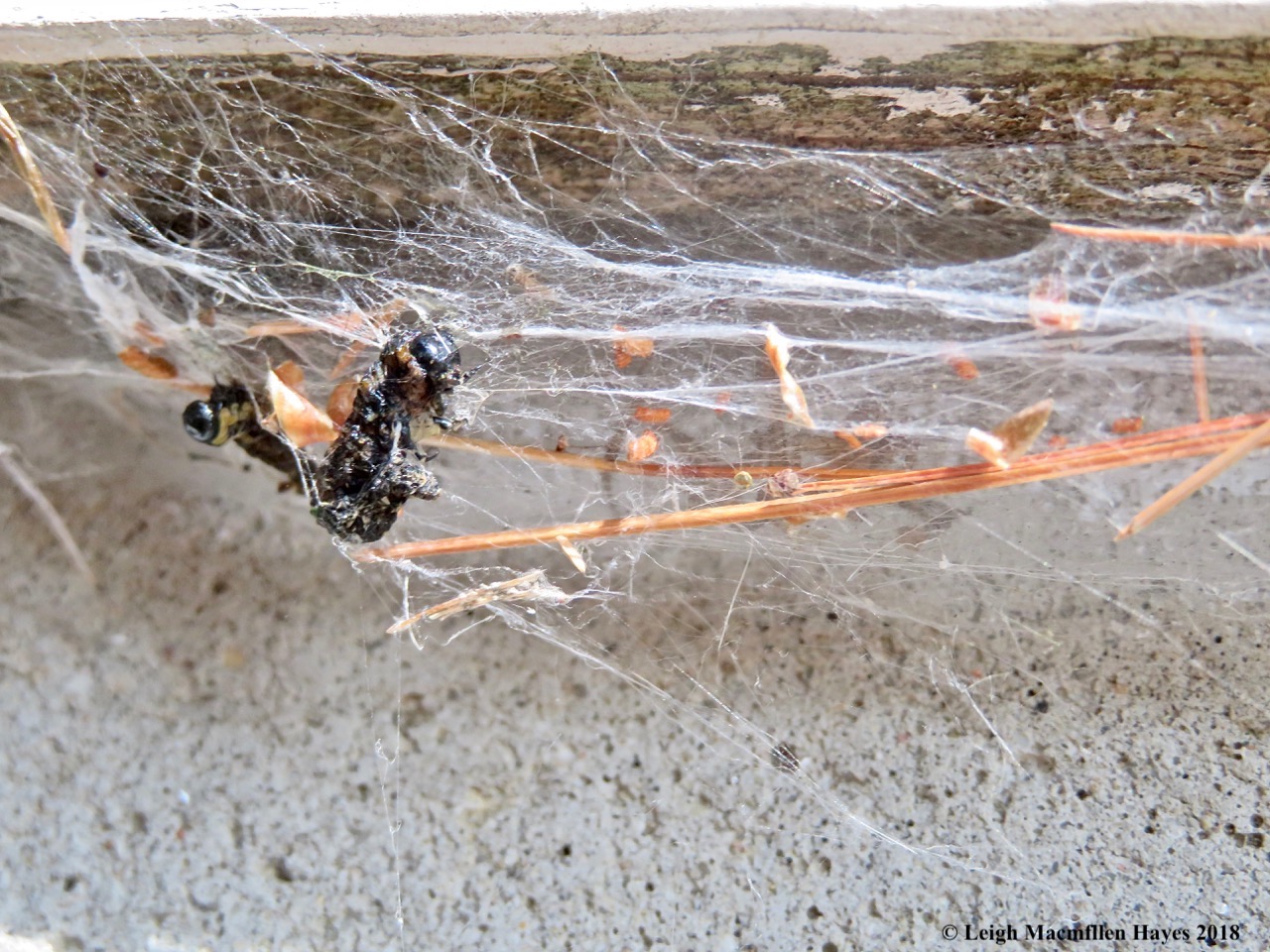
Some didn’t make it above the foundation, where they encountered spider webs and soon had the juices sucked out of them. Such is life. And today, a winter flock of birds including chickadees, nuthatches, goldfinches, hairy woodpeckers, young robins, and even a brown creeper flew in and some fine dining took place. The raindrops have nearly ceased.

10-Northern Pine Sphinx

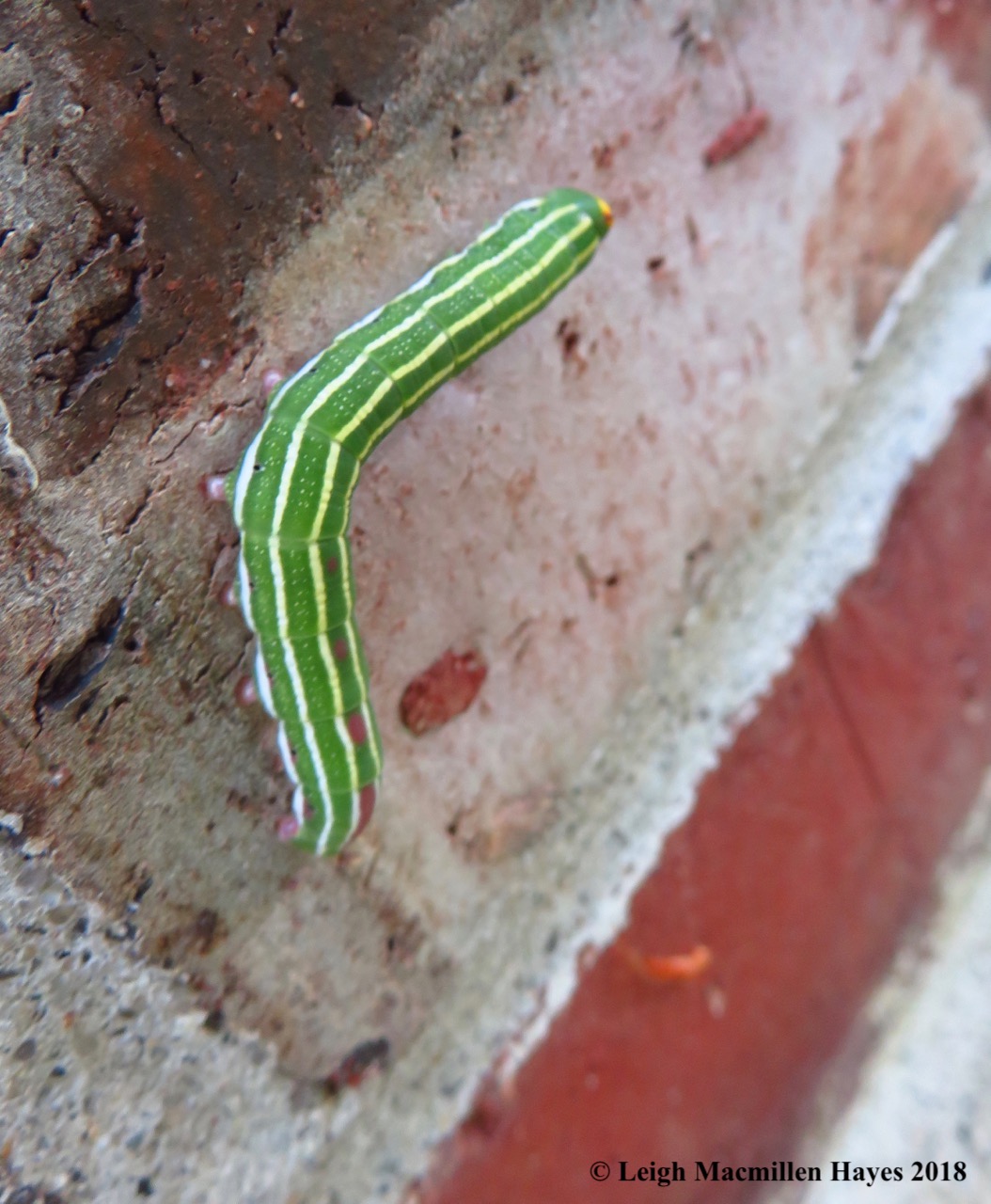
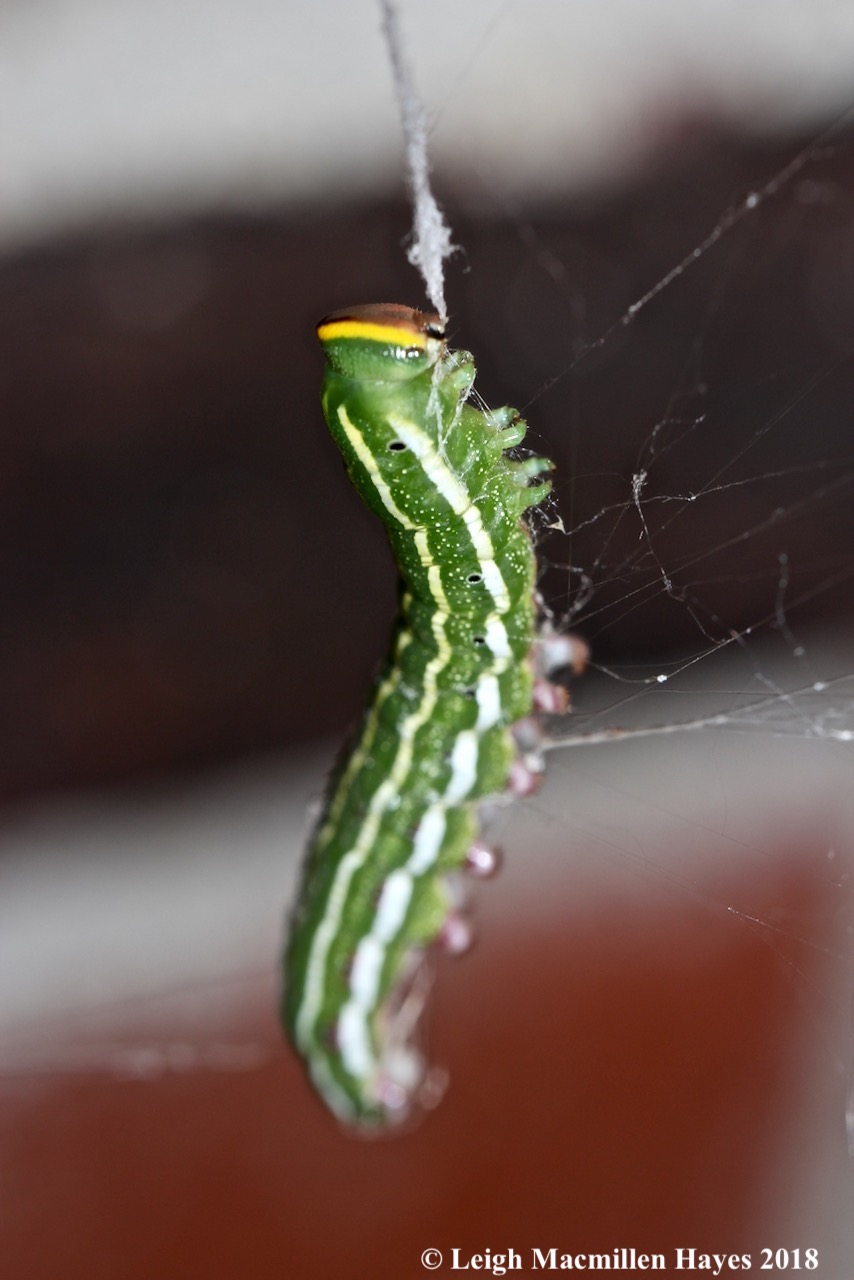
That wasn’t the only pine-eating caterpillar to make its home here. On the chimney, I found a northern pine sphinx caterpillar moving full speed ahead.

11-orbweaver

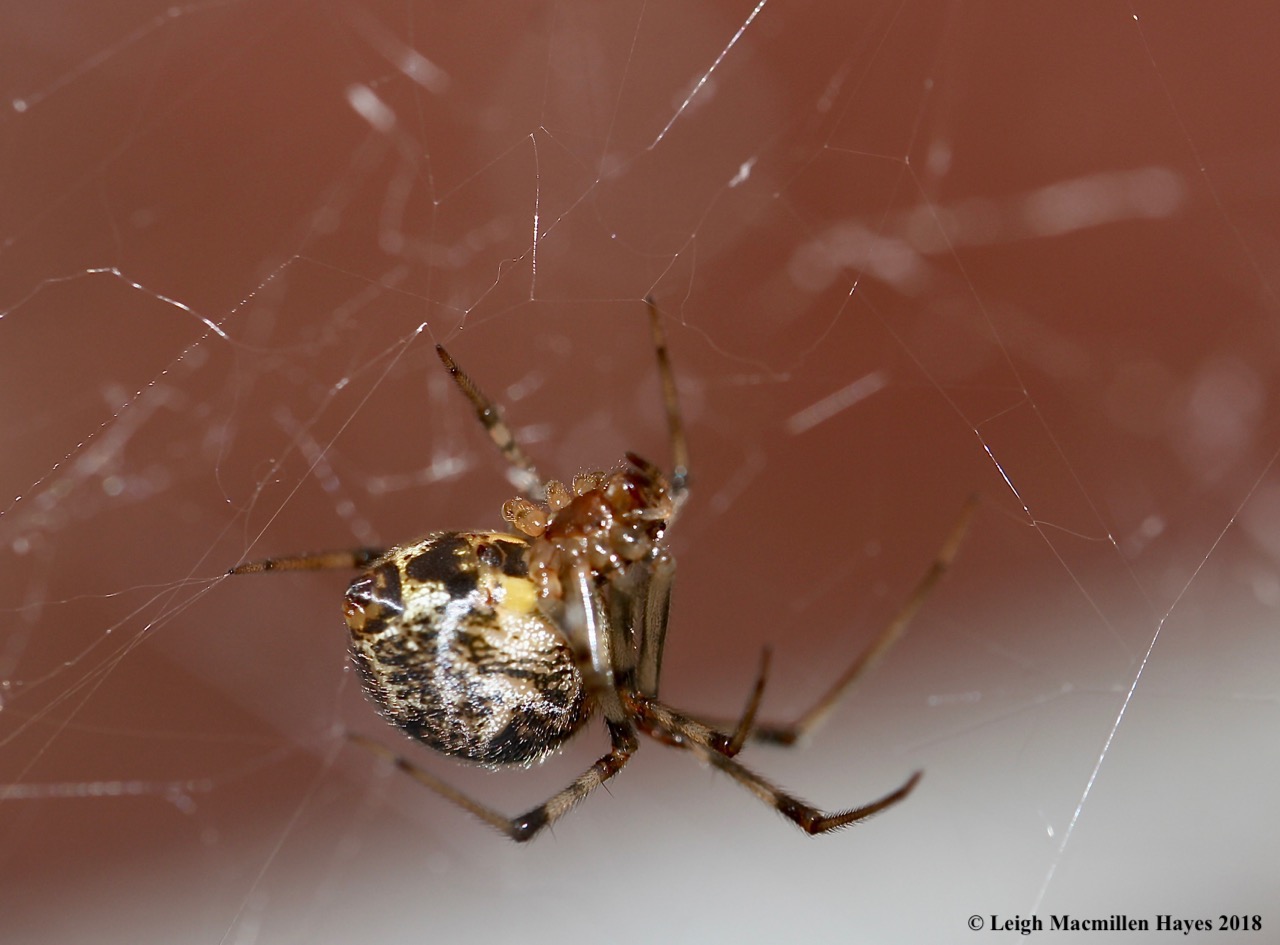
And around the bend, where the chimney meets the camp, an orbweaver spinning some silk in the hopes of fine dining.

14a-calico pennant dragonfly in web

One meal had obviously been consumed–a calico pennant dragonfly. I’d seen a few of those on the vegetation a few weeks ago, but none recently. Apparently, one flew too close to the building. The only way I could ID it was by its wings for the head, thorax and abdomen had been eaten. But the wings have no nutritional value.

11a-Northern Pine Sphinx 2

A short time later I returned to the chimney in hopes of locating the northern pine sphinx caterpillar again. I did. And he wasn’t. He’d apparently turned the sharp corner on the chimney and met his fate.

13- Northern Sphinx 4

Eye to eye. I’m amazed at the size of the insects that find their way to her web. It’s not like they are attracted to it. Instead, they come upon it quite by surprise and she makes fast work of their mistake.

14-pine tree spur-throated grasshopper

Rounding the corner back toward the porch door, one last insect drew my attention. And again, it was related to the pines, such is the local community: a pine tree spur-throated grasshopper on one of the logs that forms the outer wall of our wee home.

Our home is their home and we’re happy to share the space with them. Provided, of course, that they leave space for us to live as well. So far, all is well.


The Ayes Have It

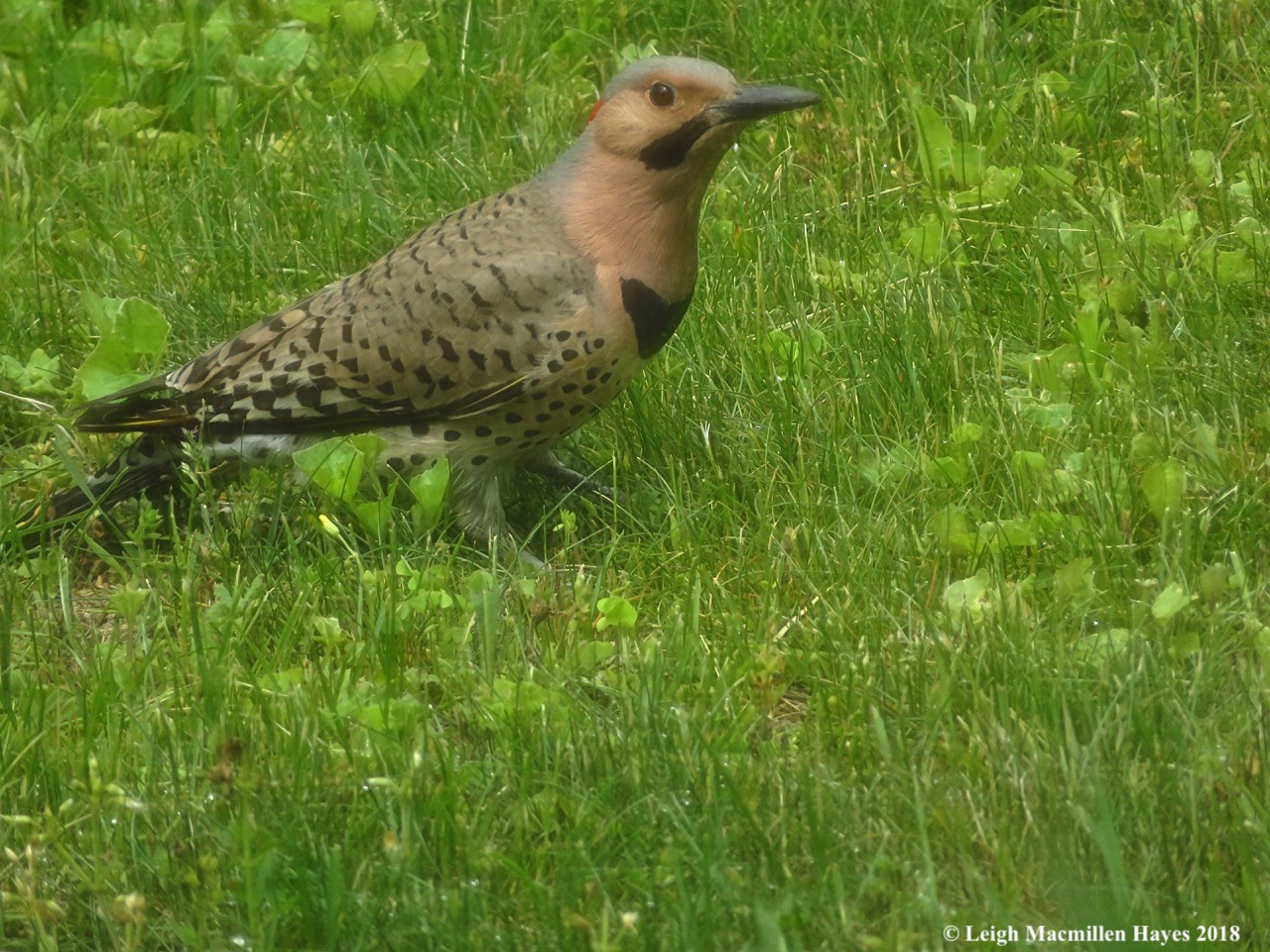
I knew I was blessed when I spied a Northern Flicker in the backyard early this morning. This is the one woodpecker that doesn’t behave like a typical family member for it forages on the ground rather than a tree trunk.

e1-northern flicker

From the kitchen window, I watched this guy for a while as he looked for food. I knew it was a male because of the so called black mustache on either side of its bill. But . . . it was the bird’s eyes I was most curious about . . .and their placement on the side of its head.

e2-flicker feeding

Like mammals, birds with eyes on the side are born to hide . . . from predators. His field of vision, therefore, was wide and the ants on the ground were the ones who needed to scurry and hide.

e4-tachinid fly

After dining for a while, the flicker flew off and I stepped out the door–in search of other  sets of eyes to behold–like the red ones of a tachinid fly,

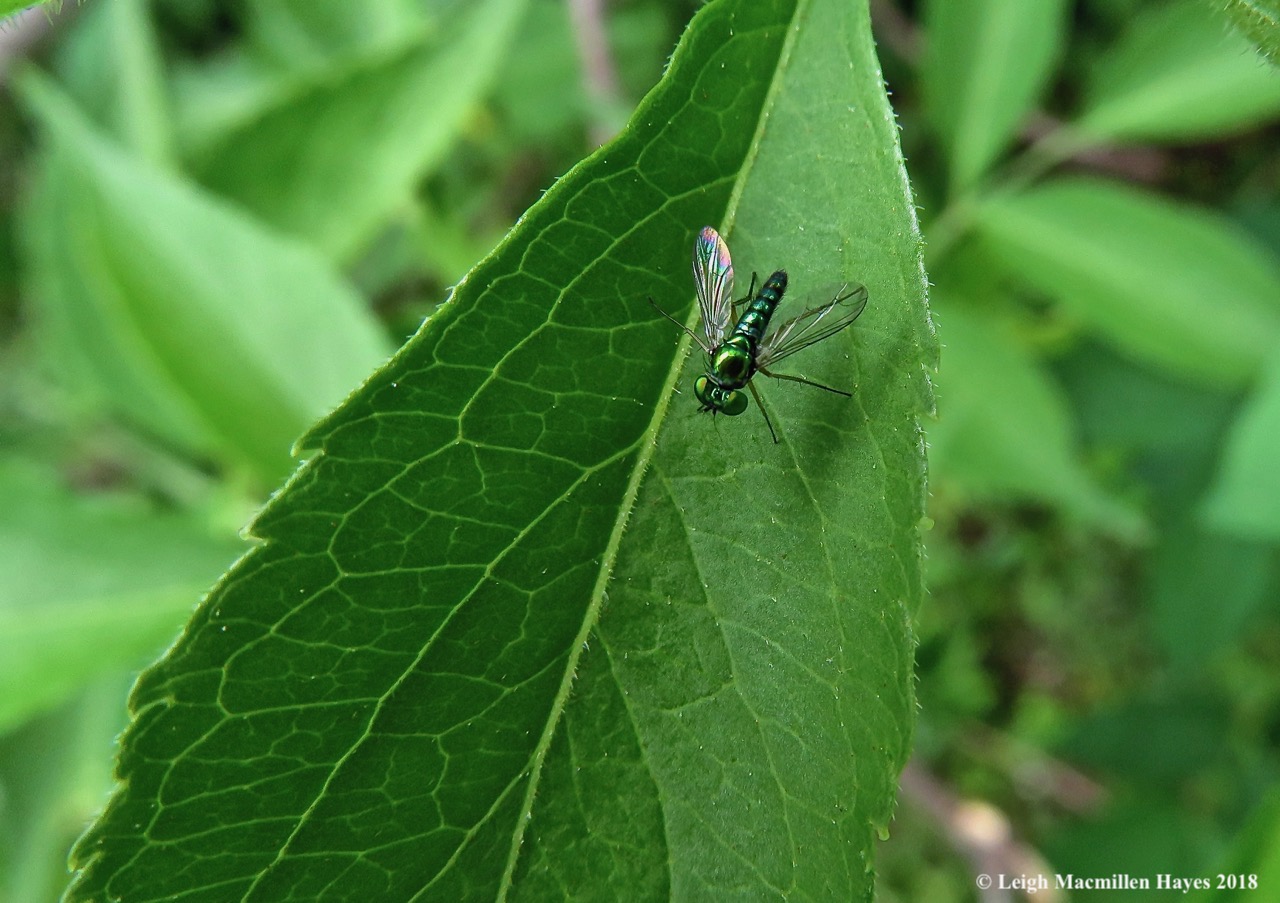
e8-long-legged fly

and metallic green on a long-legged fly. Like the flicker, flies also have a wide field of vision due to the fact that they have compound eyes. Each eye consists of thousands of individual visual receptors, or ommatidia, (singular ommatidium) (om·ma·tid·i·um, äməˈtidēəm.) Each hexagonal-shaped ommatidium (think honeycomb) is a functioning eye in itself. With thousands of eyes on the world, it’s no wonder flies and other insects see us coming–especially when we have a flyswatter in hand.

e7-green and brown stink bug

I kept looking and among the elderberry shrub leaves I found a strikingly beautiful green and brown stink bug, or shield bug, if you’re looking for a more pleasant name. Like all insects, it featured those compound eyes, but I was struck by how tiny they were. Apparently, it was enough to see movement and kept trying to hide from me.

e8-stink bug eyes

Despite its efforts, I could zero in on it even after walking away and returning.

e9a-song sparrow

Eventually I moved my focus to Pondicherry Park, where a variety of eyes greeted me, including those of a Song Sparrow.

e7a

What did he seek? Insects and other invertebrates, such as weevils, leaf beetles, ground beetles, caterpillars, dragonflies, grasshoppers, midges, craneflies, spiders, snails, and earthworms.

e11-slug eyes

What about a slug? I suspected the sparrow would enjoy such and today was a decent slug-like kind of day. But, how does a slug see?

A slug has two pairs of retractable tentacles on its head. The upper, optic tentacles, feature light-sensitive eyespots on the ends. And just like a deer can move each ear independent of the other, slugs can do the same with each eye-stalk. Another cool fact: an eye stalk can be re-grown if something attacks it.

e11a-spider eyes

Further along, I found a wolf spider hanging out on last year’s fertile frond of a sensitive fern. Did you know that spiders have eight legs AND eight eyes? Two of them are large and prominent–the better to see you with.

e11-ebony jewelwing

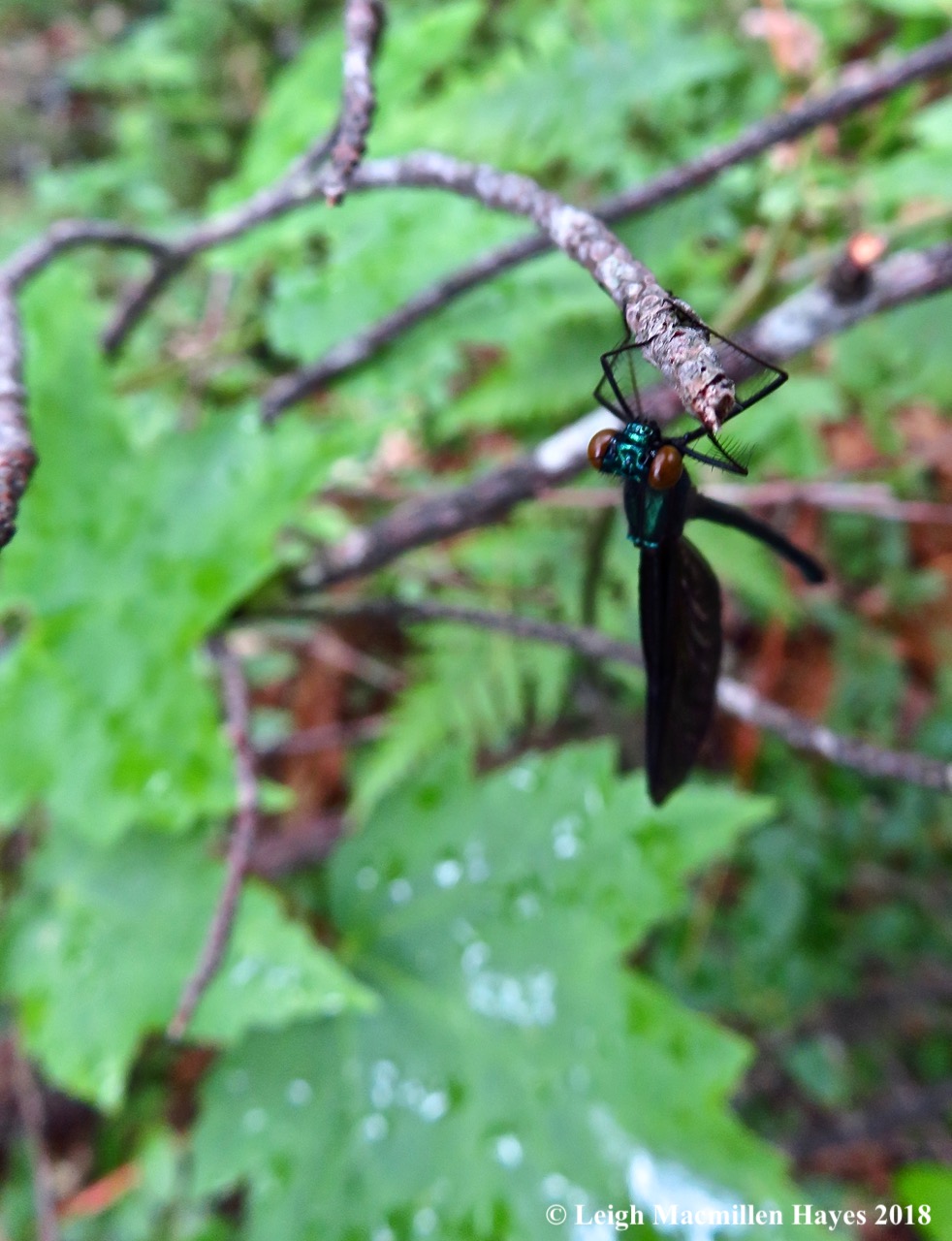
As I continued to look for the sparrow’s prey, I discovered an ebony jewelwing that I determined had just emerged for it posed as I took numerous photographs. Usually, they flit about like woodland fairies. Unlike its larger dragonfly cousins who have eyes in front in order to hunt, the damsels’ are on the sides. Though zoom-and-swoop attacks may not be possible for the damselfly, it can see all-round–including above and behind– giving it control of its airspace.

e12-barred owl

My wander continued and then I heard a sound and saw some action in a tree about thirty feet off trail. And just like that, in what felt like a miracle of miracles, I realized I was in the presence of the wise one.

With his eyes in front, a Barred Owl is born to hunt. For several minutes we starred at each other and I was honored by his presence. Of course, I hoped he might cook for me tonight, but he let me down. Possibly he had others more in need of supper than I was at the time.

In the end my vote was aye in favor of all the peepers I’d met along the way, both in the yard and the forested park, for I knew that the eyes had it.


Hunkered Down

Three nor’easters in two weeks. Such is March in New England. The latest delivered over twenty inches of snow beginning yesterday morning. And still the flakes fall.

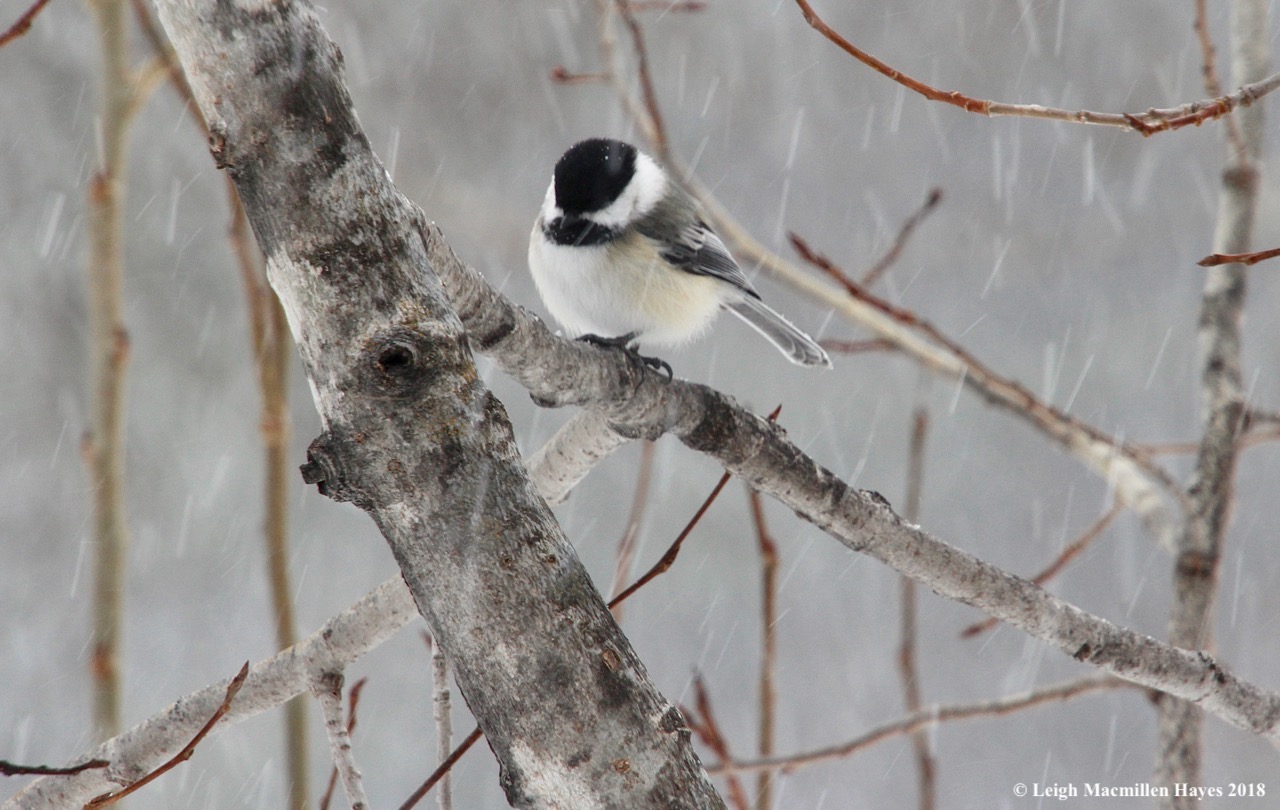
p-chickadee

But staying inside all day would be much too confining and so I stretched my legs for a few hours before giving my arms another workout with driveway cleanup duty. It was much more fun to explore and listen to the chickadees sing.

p-snow on trees

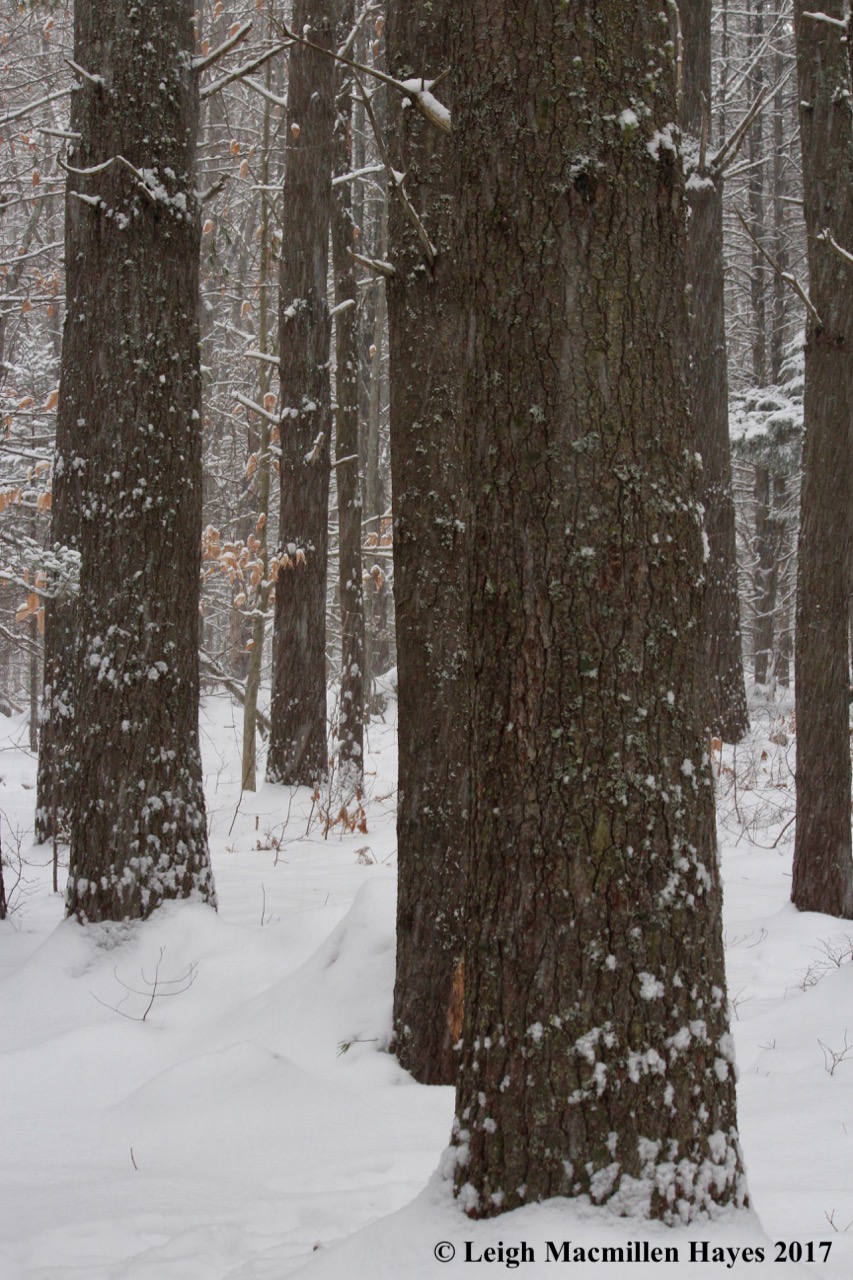
There are a few places in our woods that I find myself stopping to snap a photo each time a snowstorm graces our area. The stand of pines with their trunks snow coated was one such spot yet again. And tomorrow the scene will transform back to bare trunks and so it was one I was happy to behold in the moment.

p-snow on limbs

As was the older pine that grows beside a stonewall along the cowpath and perhaps served as the mother and grandmother of all the pines in my forest–bedecked in piles of flakes, her arms reached out as if to embrace all of her offspring.

p-snow on insulators

With the snow so deep, I felt like a plow as I powered through under the insulated insulators.

p-snow on park sign

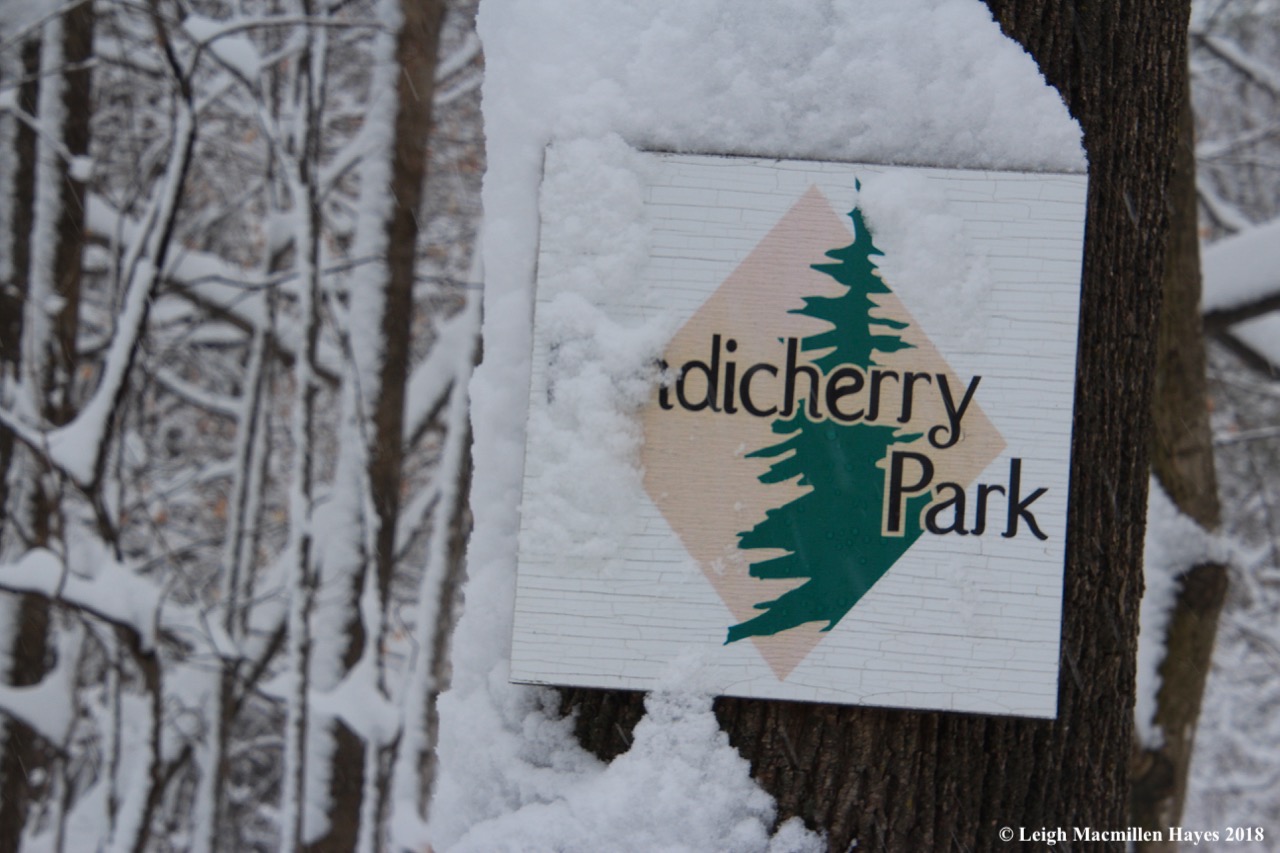
Finally, I reached one of the entryways to Pondicherry Park and while I love being the first of the day to leave my mark, I’d secretly hoped someone had trudged before me. But . . . a few steps at a time meant taking frequent breaks to rest and look around.

p-snow on tree trunk

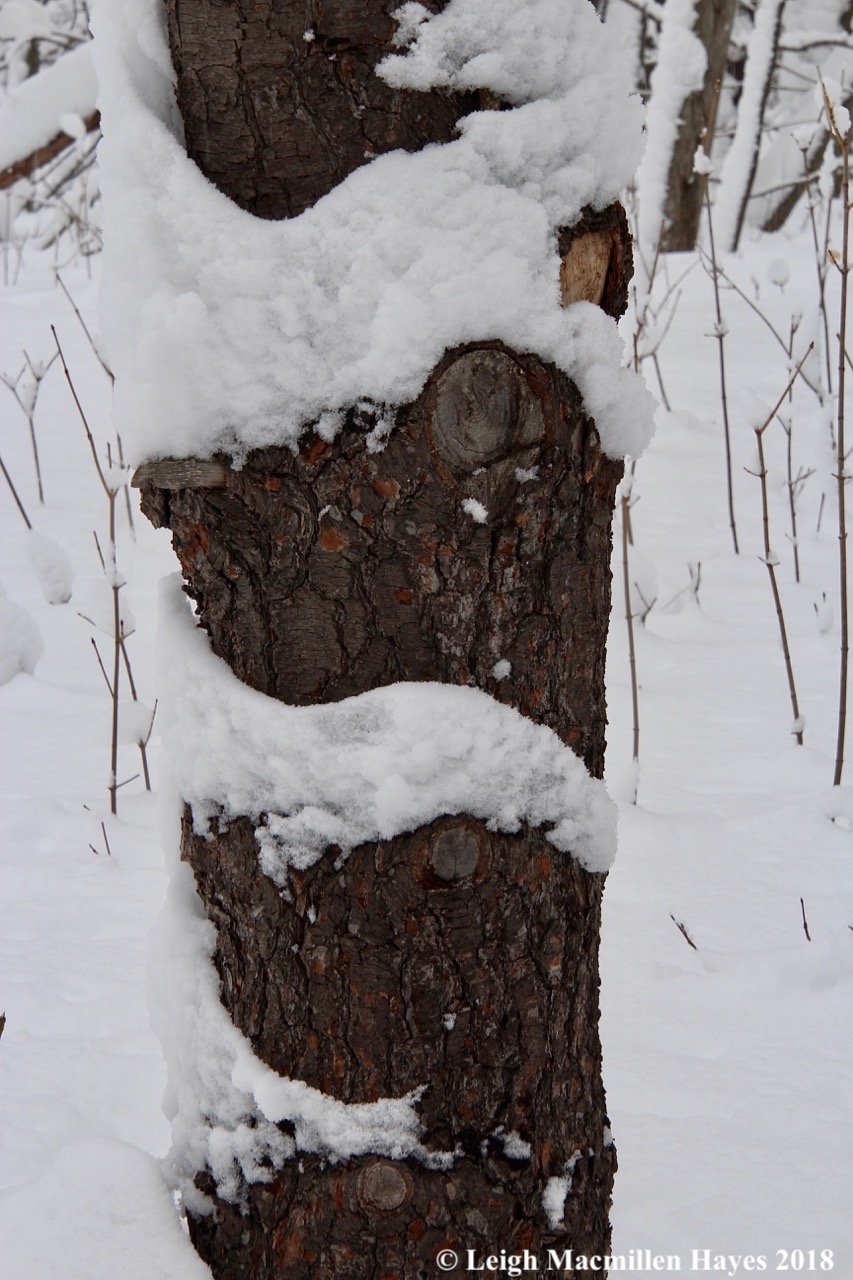
Again, it was the snow’s manner of hugging tree trunks that drew my awe.

p-snow on tree trunk 2

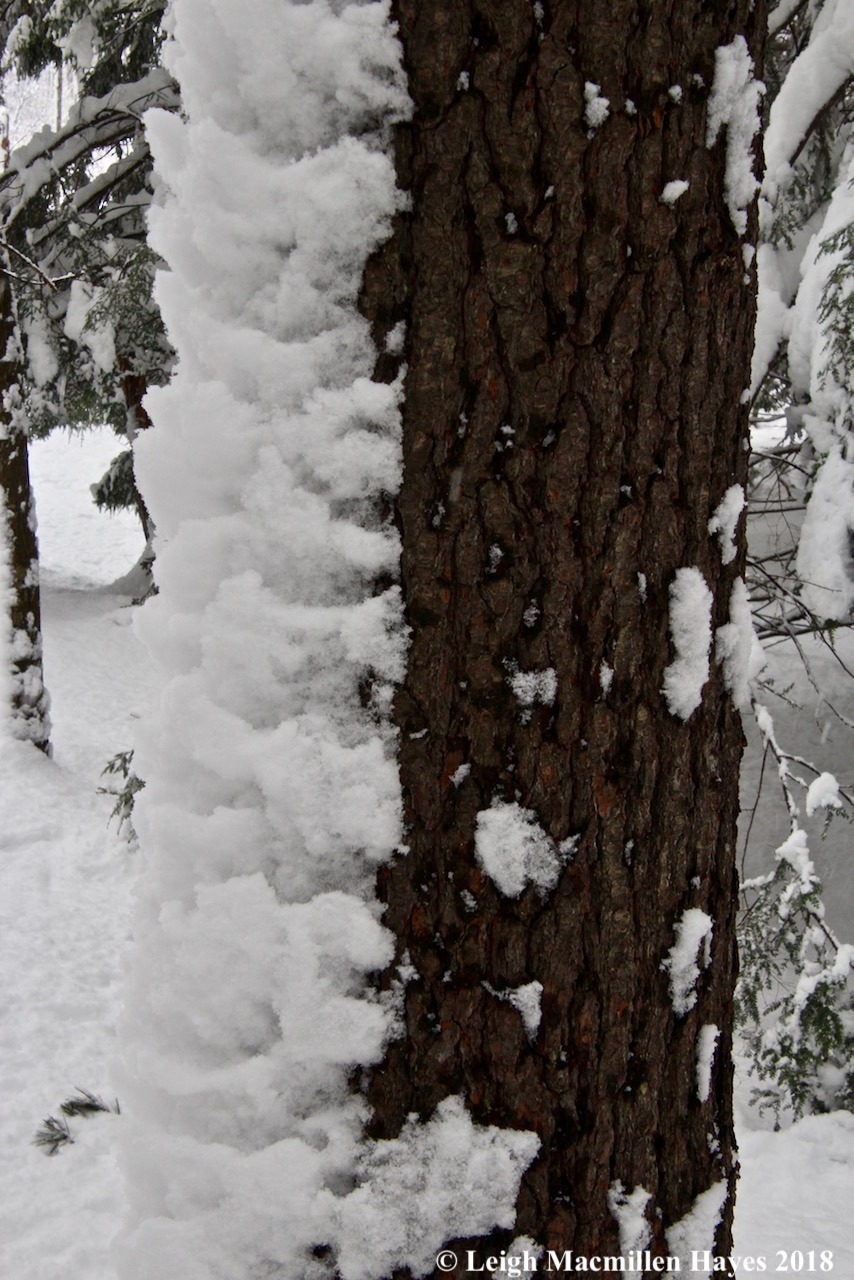
Sometimes it reminded me of giant caterpillars climbing into the canopy.

p-snow on roots

Even the roots of a downed tree took on an artistic rendition.

p1-snow on bittersweet

And that most invasive of species in these woods, bittersweet, offered curves worth appreciating–ever so briefly, of course.

p-snow on fences

Snow blanketed fences of stone and wood.

p-snow on bridge

Enhanced the bridge.

p-snow on bench

And buried a bench.

p-Stevens Brook

Beside Stevens Brook, it looked as if winter still had a grasp though we’re about to somersault into spring.

p-snow on trees reflected

And the reflection in Willet Brook turned maples into birches.

p-kneeland spring

At Kneeland Spring, water rushed forth in life-giving form and the sound was one we’ll soon hear everywhere as streams and brooks overflow.

p-mallards 1

I went not to see just the snow in its many variations, but also the wildlife. I found that like me, the squirrels and deer had tunneled through leaving behind troughs. And the ducks–they didn’t seem at all daunted by the mounds of white stuff surrounding them.

p-mallards 2

In fact, one female took time to preen.

p-mourning dove

I found mourning doves standing watch.

p-Robin

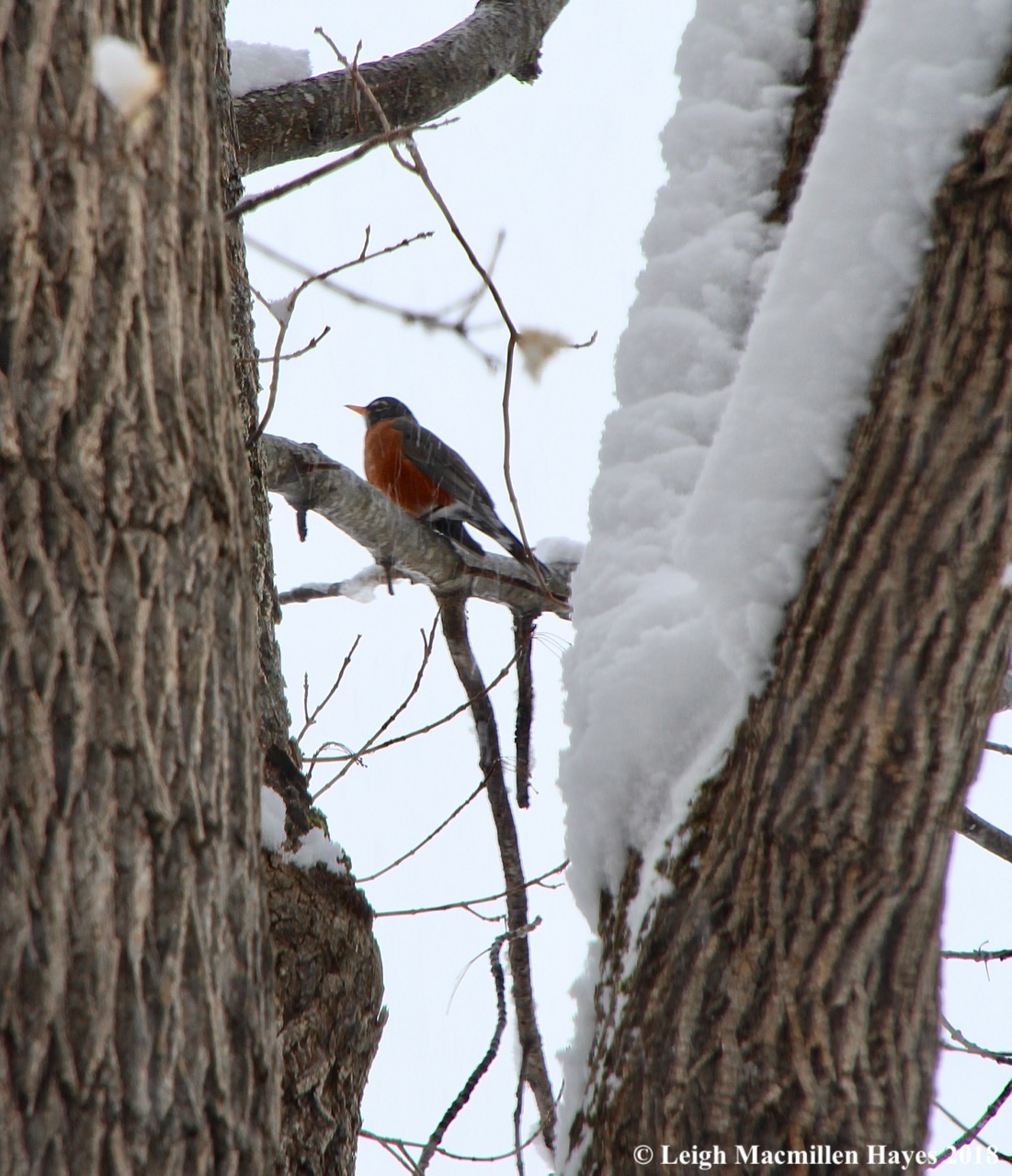
And heard robins singing.

p-snow spider

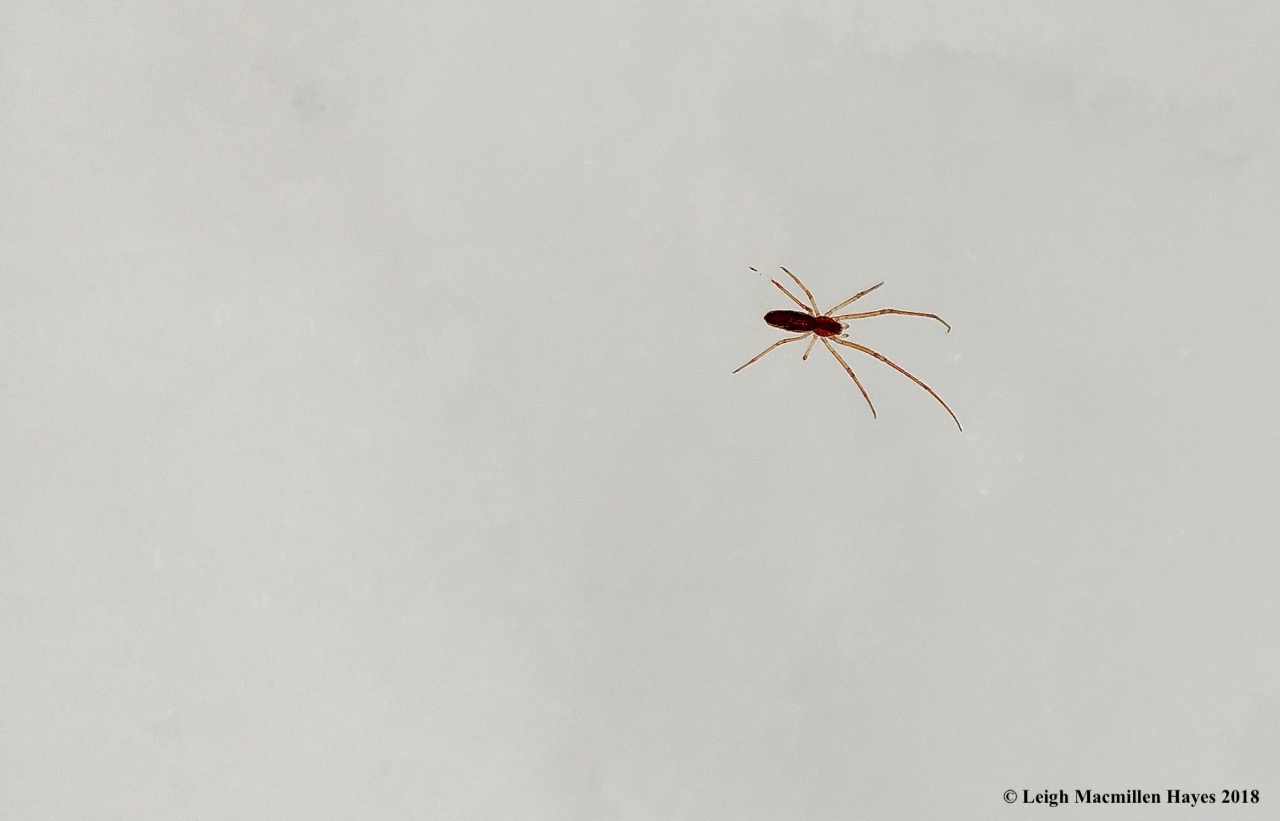
And because I spent a fair amount of time looking down, I began to notice life by my feet, such as the snow spider–an indicator that the thermometer was on the rise. It lives in the leaf litter, but when the temp is about 30˚ or so, it’s not unusual to see one or more. Today, I saw several. And wished I had my macro lens in my pocket, but had decided to travel light.

p-winter stonefly

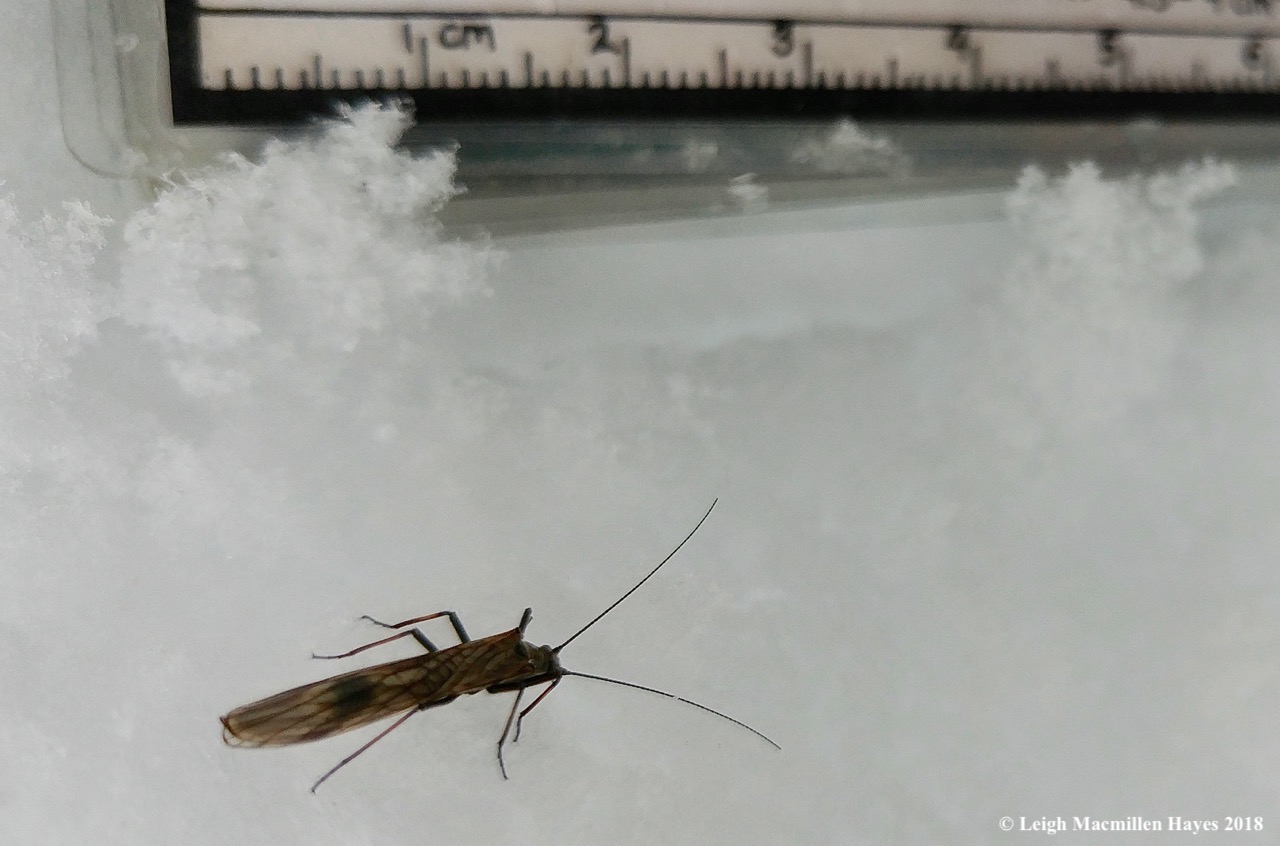
Winter stoneflies were also on the move. They have an amazing ability to avoid freezing due to the anti-freeze in their systems.

p-winter dark firefly 2

I also found a winter dark firefly. While the species is bioluminescent, I’m not sure if this one was too old or not to still produce light.

p1-snow on me

At last the time had come for me to head home for not only was the snow still falling, but so was the sky–or so it felt each time a clump hit my head as it fell from the trees.

p-final photo

We’ve got snow! In fact, we’ve got snows! And in reference to a question an acquaintance from Colorado had asked yesterday–“Are you hunkered down?” My answer was, “No, Jan, I’m not. Nor is the world around me. In fact, except for the shoveling, I relish these storms as winter holds on for just a wee bit longer.”


Unexpected Gifts

While vegetables roasted in the oven for the black bean soup that will be consumed during our Christmas gathering, I stepped outside to get some fresh air on this snowy day.

c-junco and cardinal

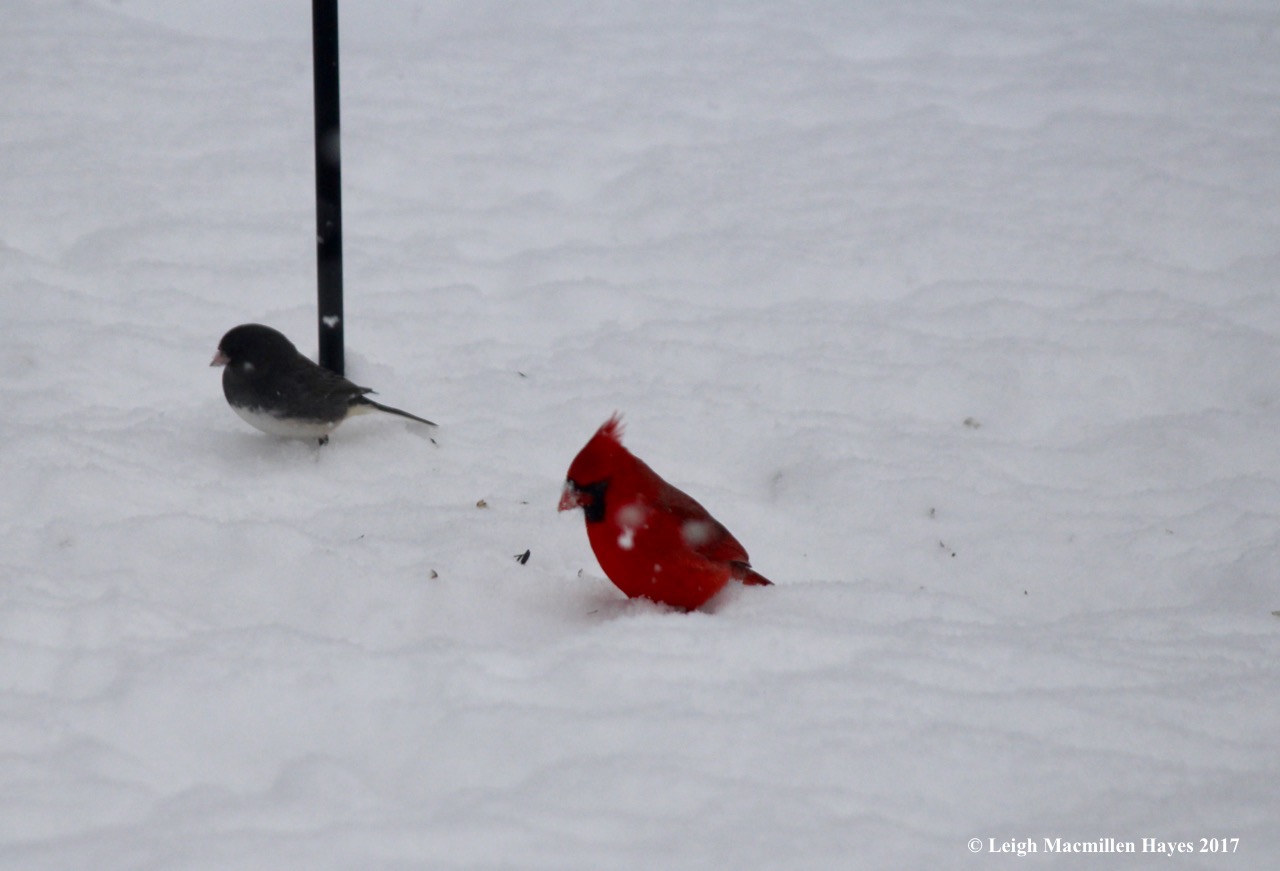
The bird feeders and ground beneath are always more active during storms and today was no different. At least forty juncos accompanied by one white-throated sparrow have been repeat feeders and occasionally the male cardinal invites his female friend along. Tufted titmice, goldfinches, chickadees, a downy woodpecker, nuthatches and bluejays rounded out the flock.

c-into the woods

Though conditions are expected to change by morning, with an ice storm in the forecast, today’s gift was fluffy and light as it embraced me in silence.

c-hemlock baubles

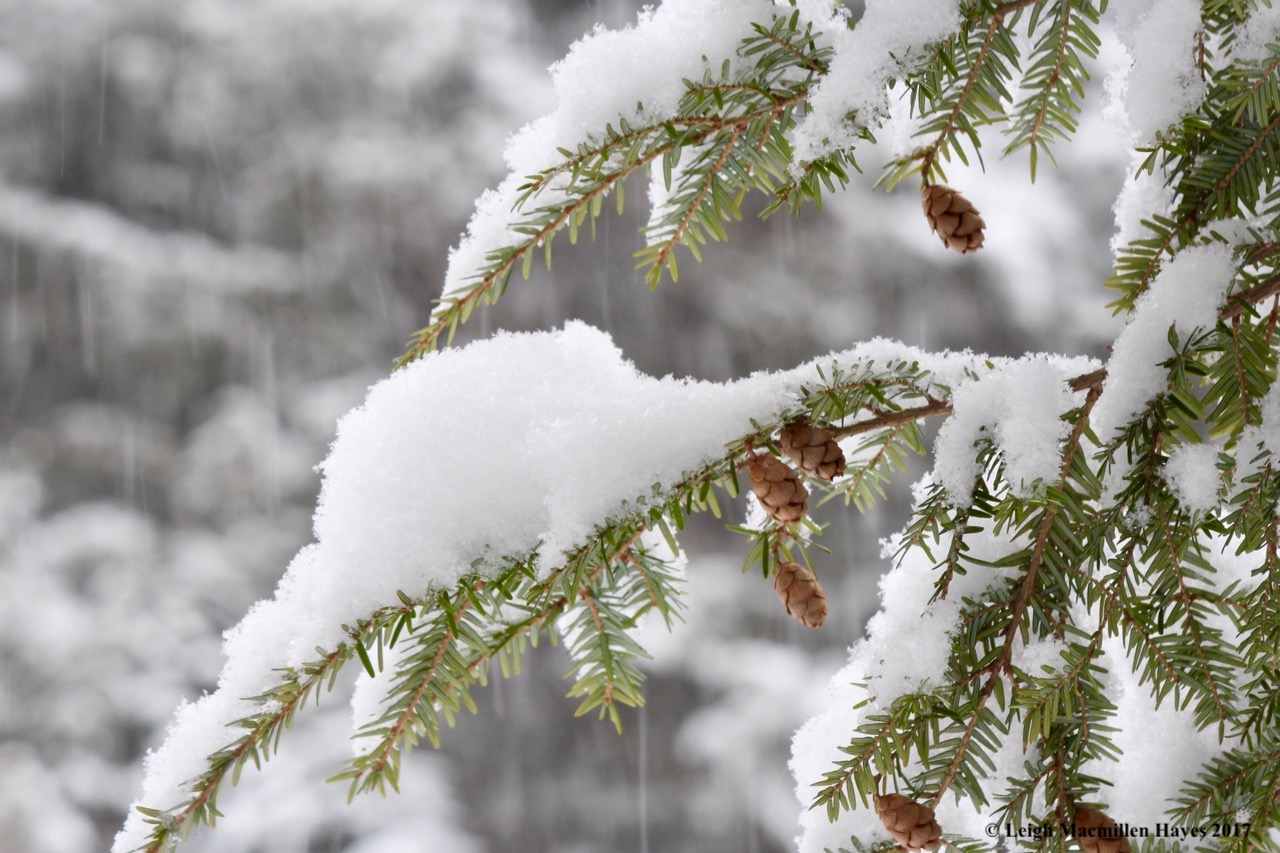
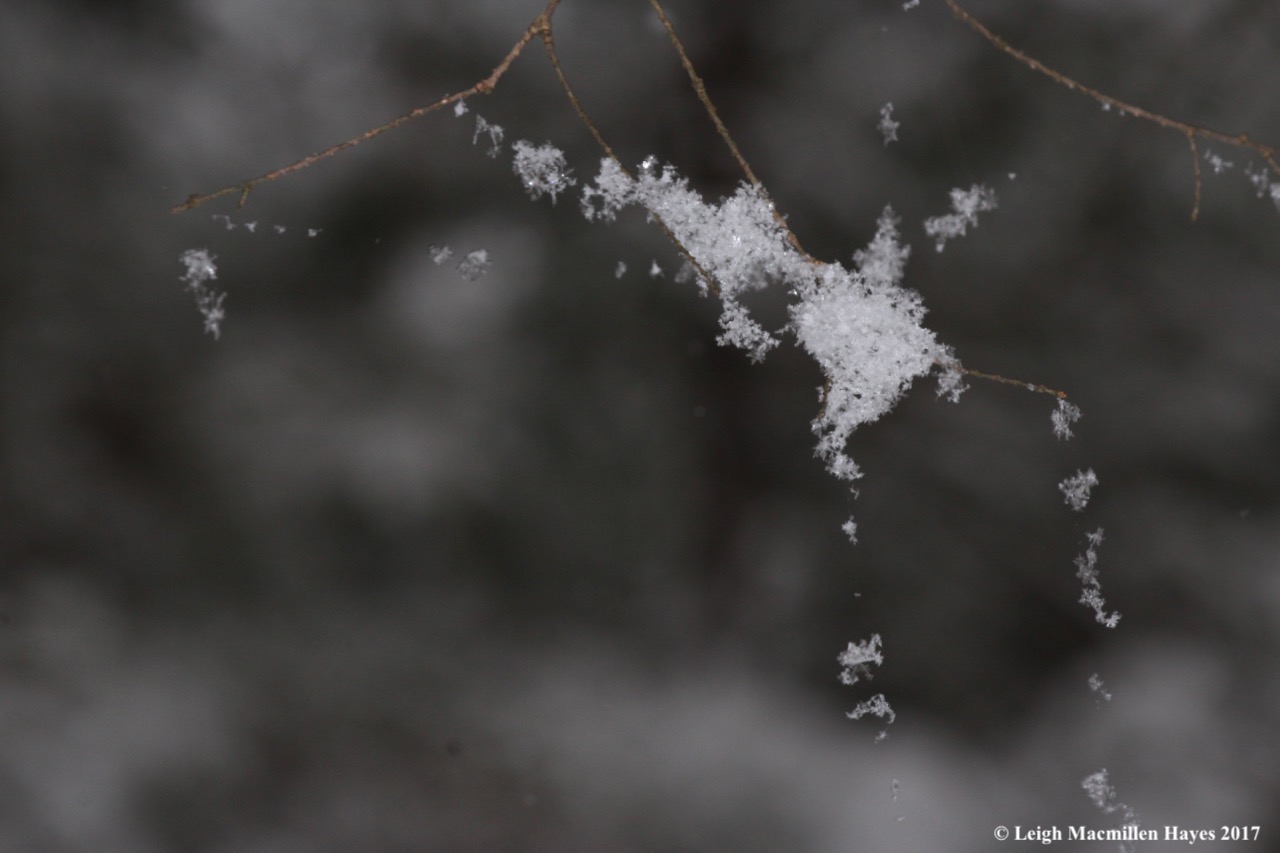
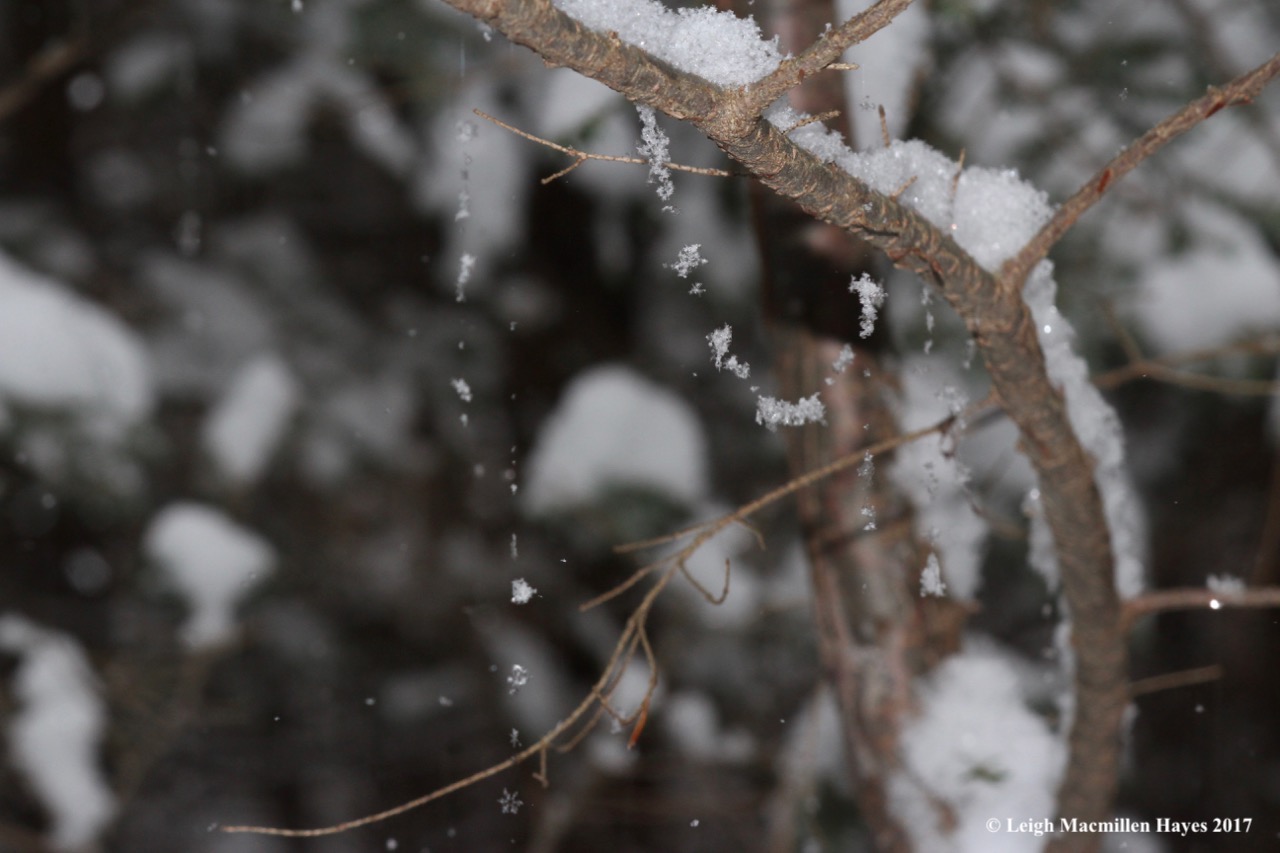
Because of that fluffiness, it built up quickly, bedecking branches with puffy clouds of white.

c-star-flake

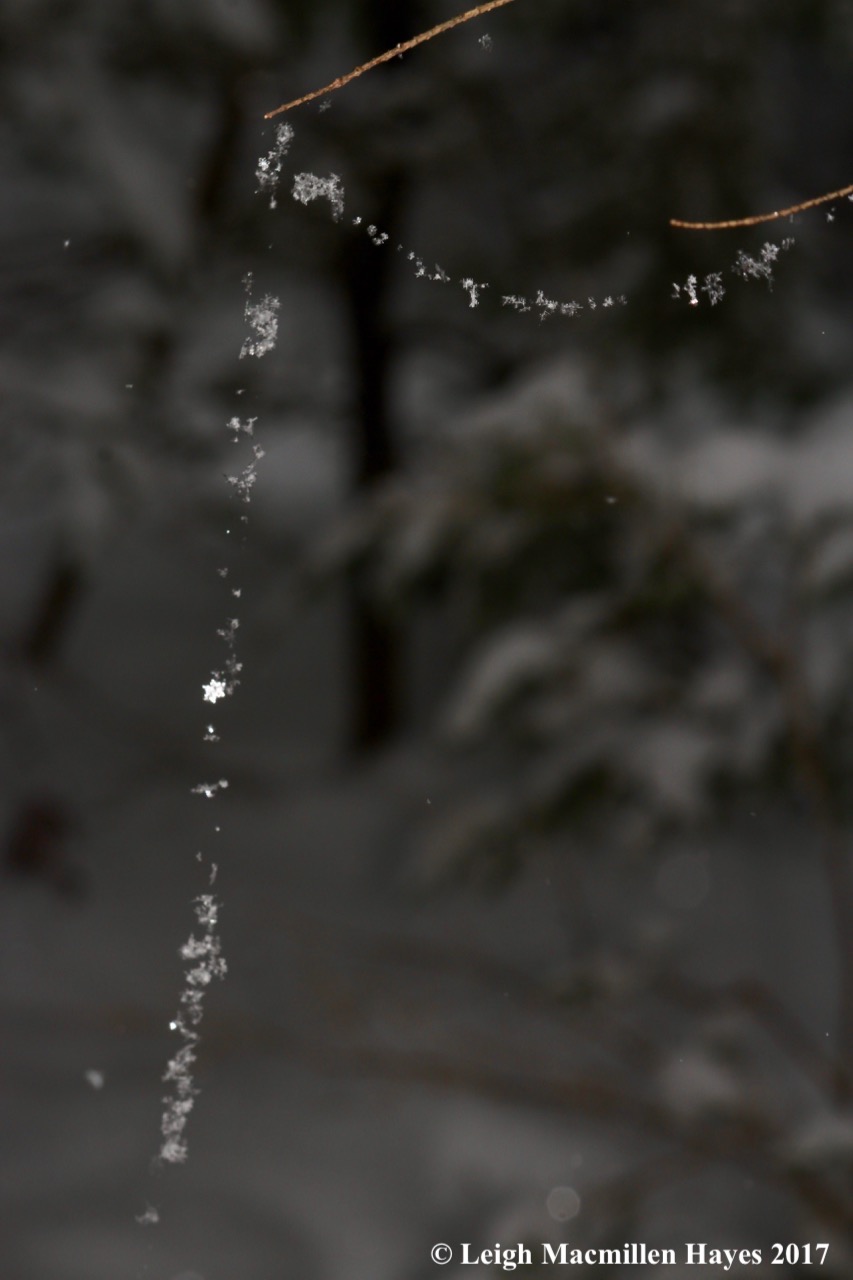
And then, when I stepped into a darker world where the hemlocks grow in a dense grove, I began to notice something.

c-spider garland 3

On every branch of every tree . . .

c-spider garland 2

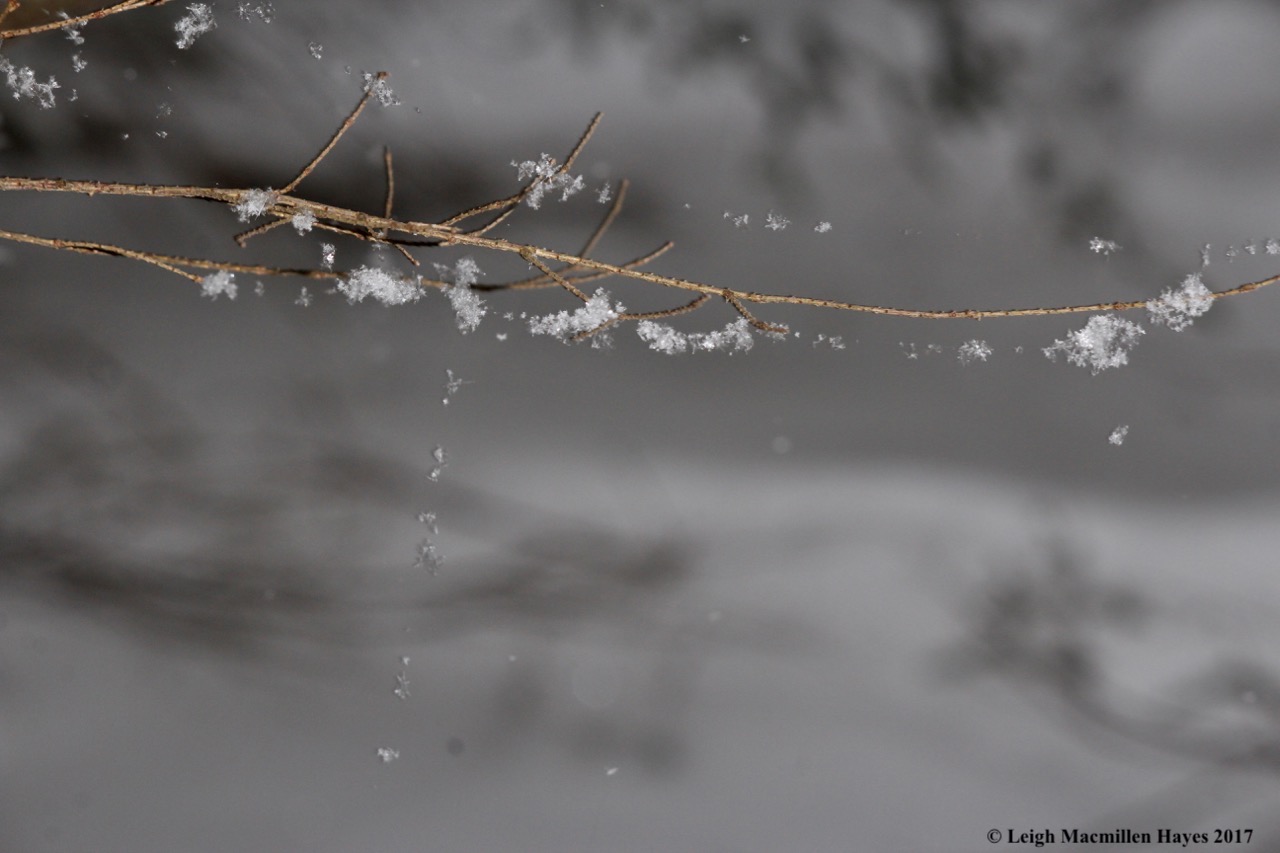
snowflake garlands . . .

c-spider garland 1

danced. And I was reminded of a story I used to read to my nephew and niece when they were babes–it was based on a legend about a poor family who had no decorations for their Christmas tree. As the tale goes, while the children slept, spiders spun webs of silver around the tree’s branches. The next morning, the family awoke to a Christmas tree sparkling with silver webs. Today’s webs were such and I was richer for the experience.

c-cheddar cheese

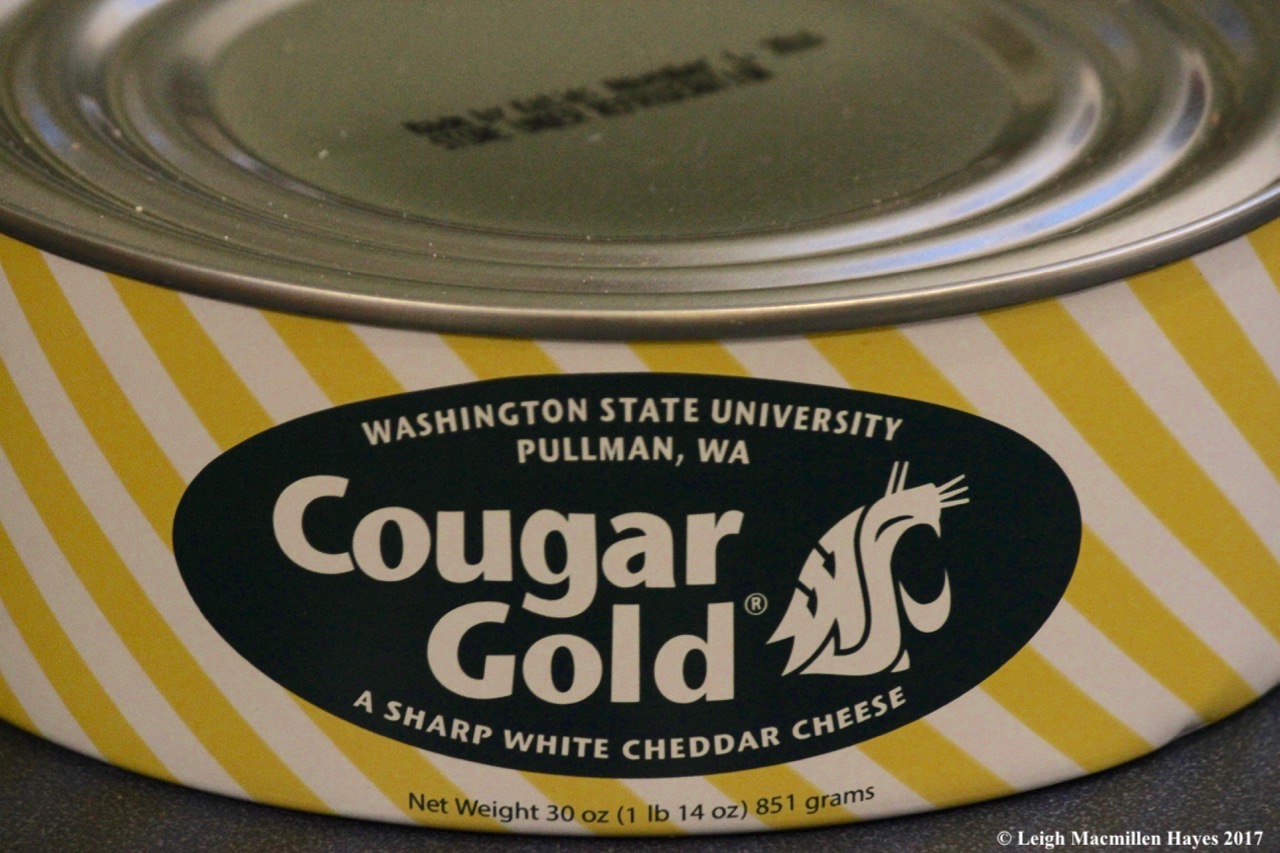
I’m also richer for other gifts, such as Washington State University’s white cheddar cheese;

c-ornament

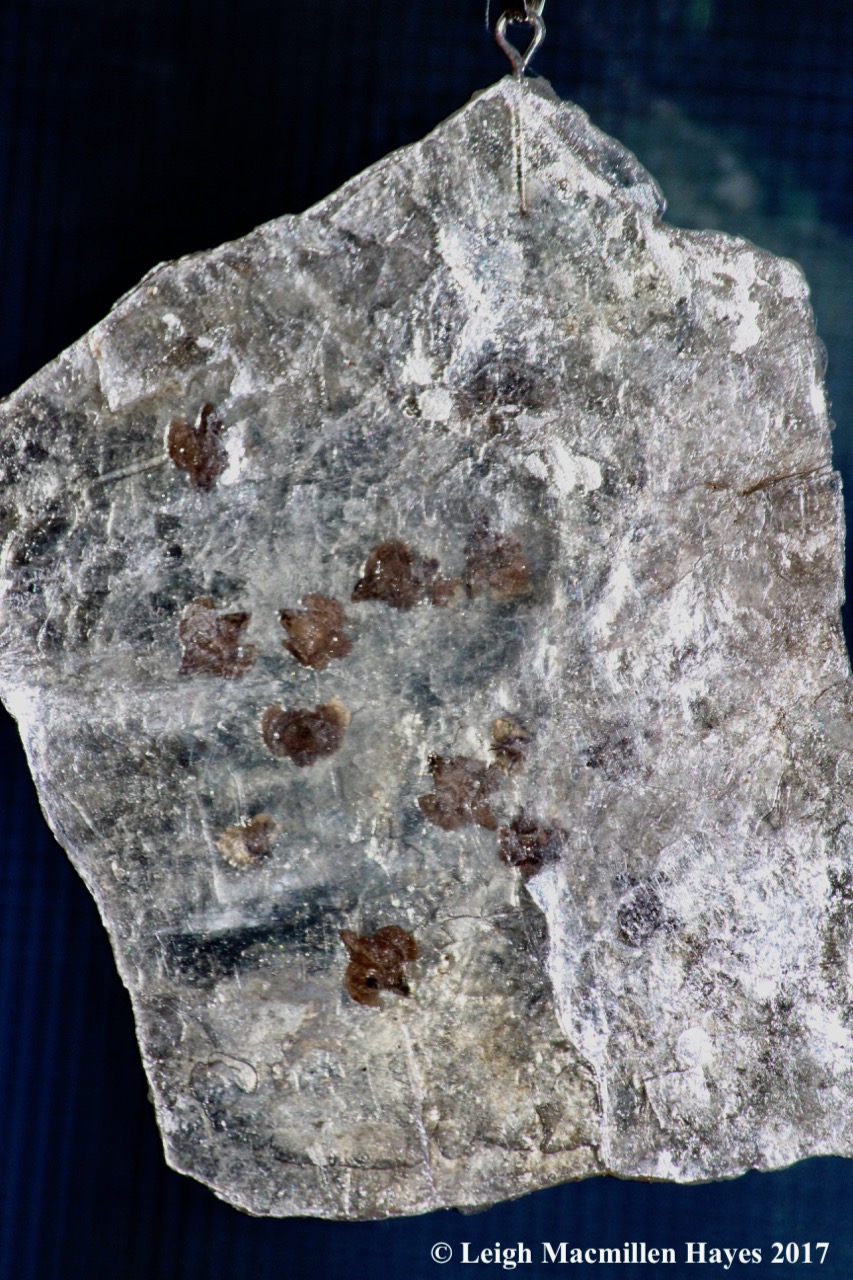
an ornament created with birch seeds and their fleur de lis bracts placed between mica sheets from Mount Apatite in Auburn,

c-heartwood

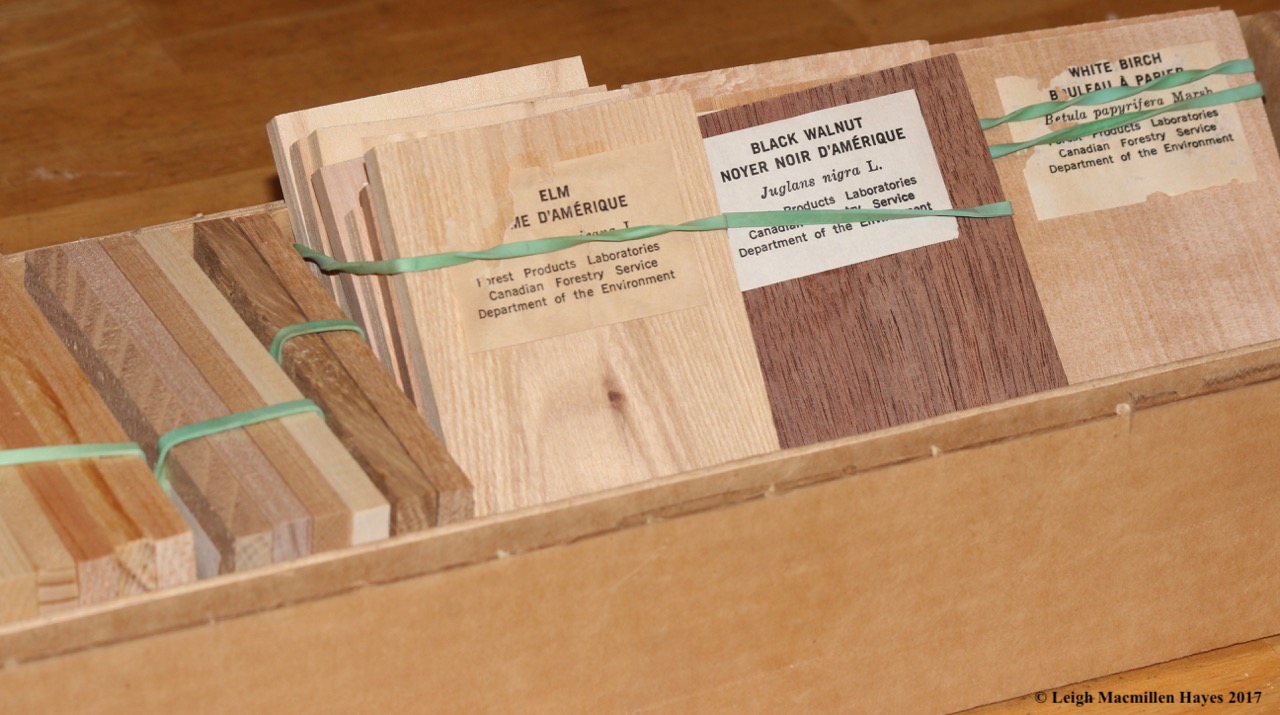
a box filled with heartwood samples all labeled,

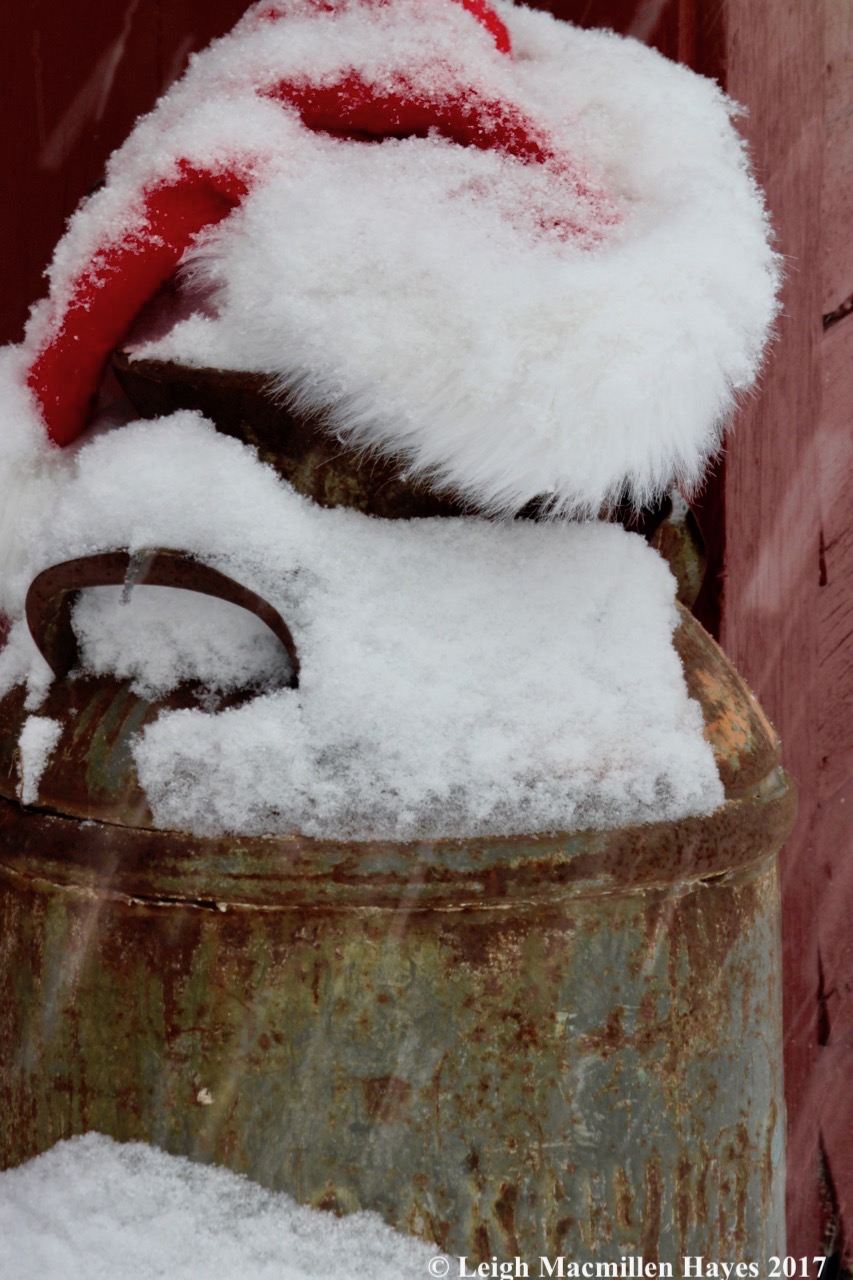
c-Santa's visit

and just a few minutes ago a lengthy e-mail from someone who had read the article entitled “digging for roots” that I wrote for the winter issue of Lake Living magazineThe gentleman who sent the note had gone out of his way to visit my guy’s store and ask for my address. He wanted to share his own experiences of dipping into the past and suggested a few avenues my guy and I might follow with our search for ancestors.

I’m totally blown away by these unexpected gifts. And forever blessed.


Continued Wandering into the World of Wonder

I’ve spent most of the last two years wandering, not even taking time to seek the answers I thought I sought.

c-ichnueomon wasp female

But along the way, I’ve seen so many incredible things that have been placed before me from the female ichneumon wasp with a disc on her cerci and her body throbbing as she injected her eggs into an insect larvae on tree bark  . . .

i-helleborine wasp 1

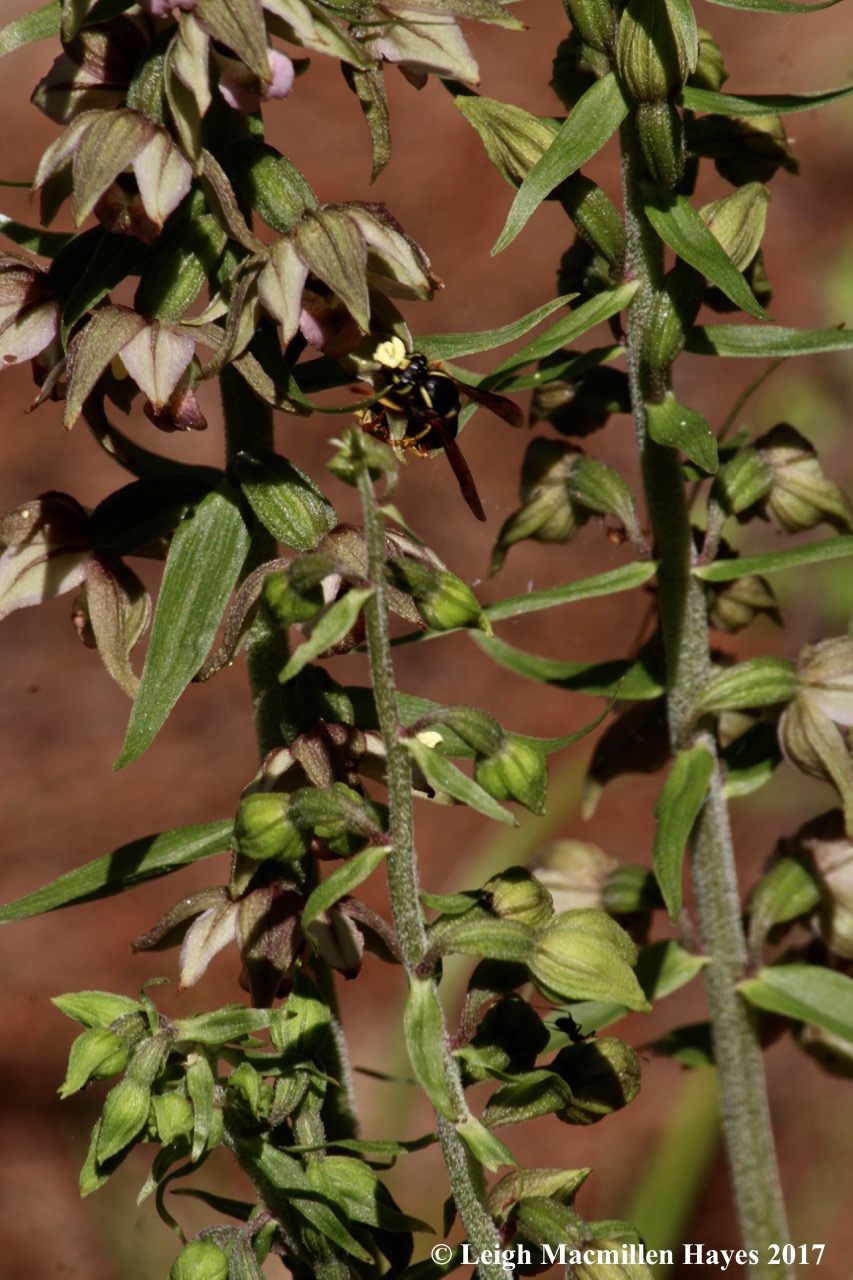
to a yellow-nosed wasp, so named by me for the pollen that was stuck to its antennae after it visited a helleborine flower . . .

i-dragonfly and exoskeleton 1

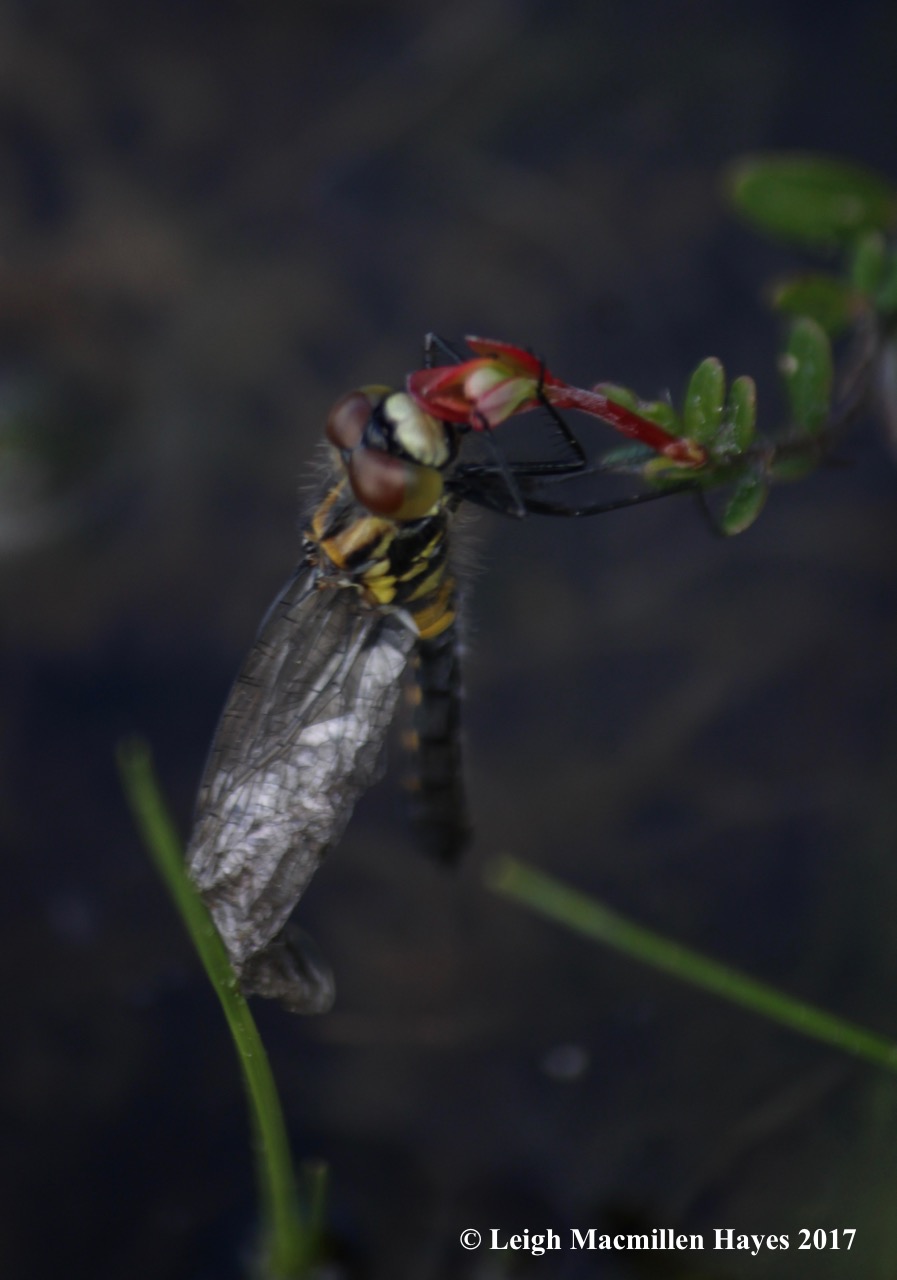
to a dragonfly emerging from its exuviae . . .

p16-fold looking toward lighthouse

to the folds of the earth at Pemaquid Point . . .

c-geology folds

and Mount Chocorua . . .

h-pond-quaking-bog

to fall colors reflected on Holt Pond . . .

r-crescent-view-2-1

and throughout Raymond Community Forest.

p-a future embraced

The answers are wrapped up in the promise of blossoms to come . . .

l-dandelion seed head

and seeds on the fly.

p-today-in-and-out

It’s recognizing the swish of a porcupine’s trail in the snow . . .

m-opossum-print-2

or the realization that a track I’d never seen before was visible in our woods—that of the opossum.

artist conks

And it’s all enveloped in the knowledge that mycelium cover the earth and through the process of decomposition break down most matter (all matter that matters, but not things we’ve created such as our ubiquitous plastic or even this computer).

l-wood fern with sori

It’s the realization that the Earth was formed eons ago and that the word eon refers to geologic time and that plates collided and continue to do so and pressures form and rocks develop. And plants like ferns . . .

l-princess pine

and club mosses were once dominate species and as tall perhaps as our trees. It’s this and so much more.

i-lady beetles canoodling

And all of this brings me to faith. And I realize I do believe in a spiritual being. But my spiritual being is not imbedded solely in the Trinity of Father, Son and Holy Spirit. It’s more than that. In all times, we’ve found people to emulate and follow. The Bible offers one such example and its writers were brilliant. For Jesus was a common person who came into this world in a way I’ve yet to understand. Was Mary really a virgin? Or was she a young woman free of sin? Or?

i-damsel larvae

According to the stories, for that’s what they are, or perhaps they are tales, sagas, lore passed from one generation to the next until all was eventually jotted down and probably revised many times over and edited by publishers, Jesus was a carpenter. A common man. With wise thoughts and perceptions. I know many such people. And so, I think that the Bible offers an example or a way to live. And a way to think. And a way to behave. But, I don’t think it should be taken literally. I don’t know how the universe was created, but it’s too simple to merely state God created it in one day or even one week.

i-baskettail, common baskettail 1

I also don’t understand those thin places where one can see both this side of life and the other side of heaven—if that’s what thin places means. But I do know that I’m intrigued by the concept. Maybe I’ve experienced such without the realization. And maybe I need to practice awareness and be more open to offerings.

i-ambush and bee 2

I have discovered that heaven and hell remain the same, whether I walk through the red doors at the church entrance and partake in communion and fellowship or find my way along a wooded path where other revelations occur before my eyes. And so, after all these years, while I embrace a church service, I’ve learned to leave guilt behind on those Sundays I choose to worship outdoors rather than in.

i-moth

In either case, I’ve so much more to learn. So many things not yet recognized; so many questions not yet formed.

i-hoverfly1

And so today, I invite you to continue the journey with me—into this world of wonder. May the answers slowly reveal themselves, while the questions never end.


Lingering at Long Meadow Brook

It’s Tuesday, which means time for a tramp through the woods–especially if you are a docent for the Greater Lovell Land Trust. We take our job seriously, filling our bags with field guides, hand lenses, binoculars, cameras, water, humor and wonder. The latter two are the key components and thankfully we’re all comfortable enough with each other to tell corny jokes and laugh at our misidentifications as we explore the natural world through curious eyes and minds, while sharing a brain.

l1-white spores 1

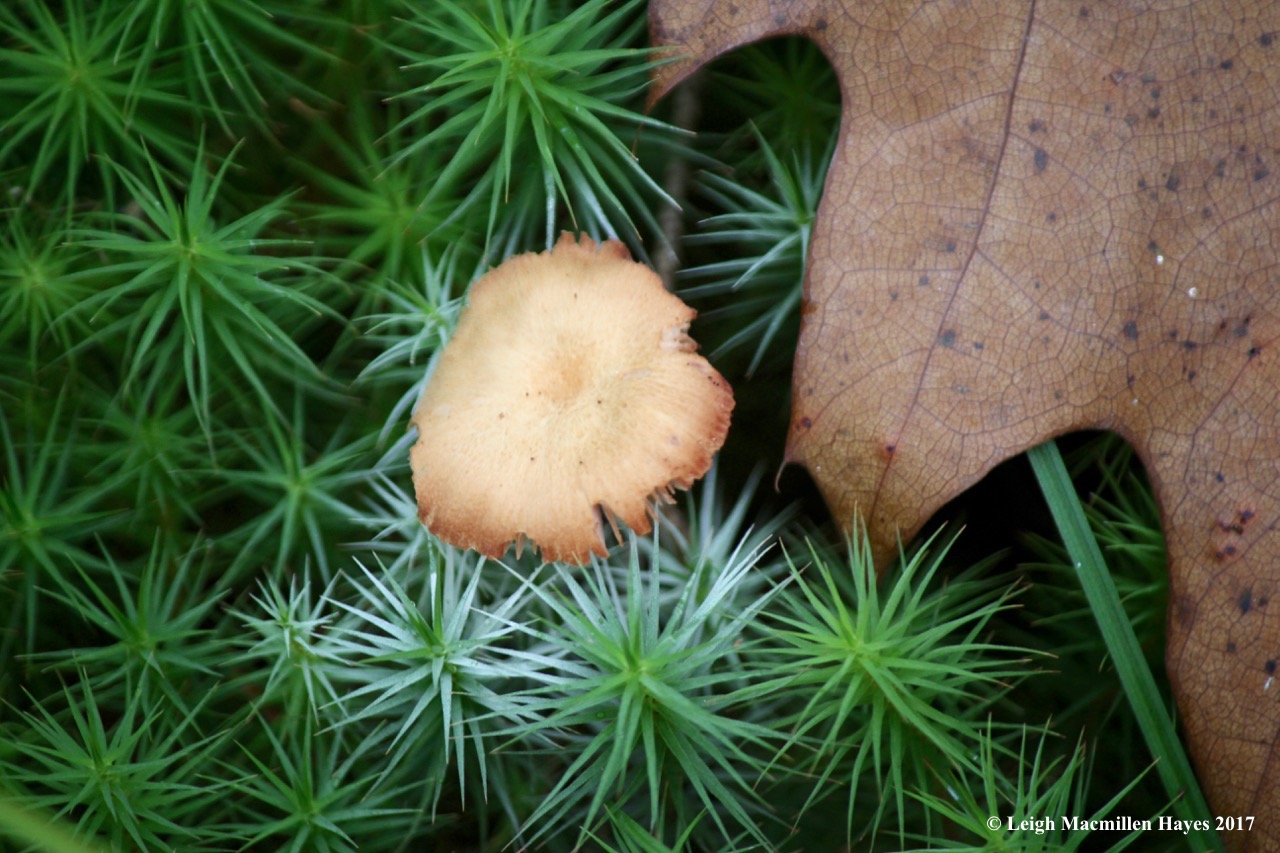
And so today, though our intention was to look for fall wildflowers, we had much more to notice along the way, like the white spores of mushrooms decorating the surrounding haircap mosses.

l2-funnel spider 1

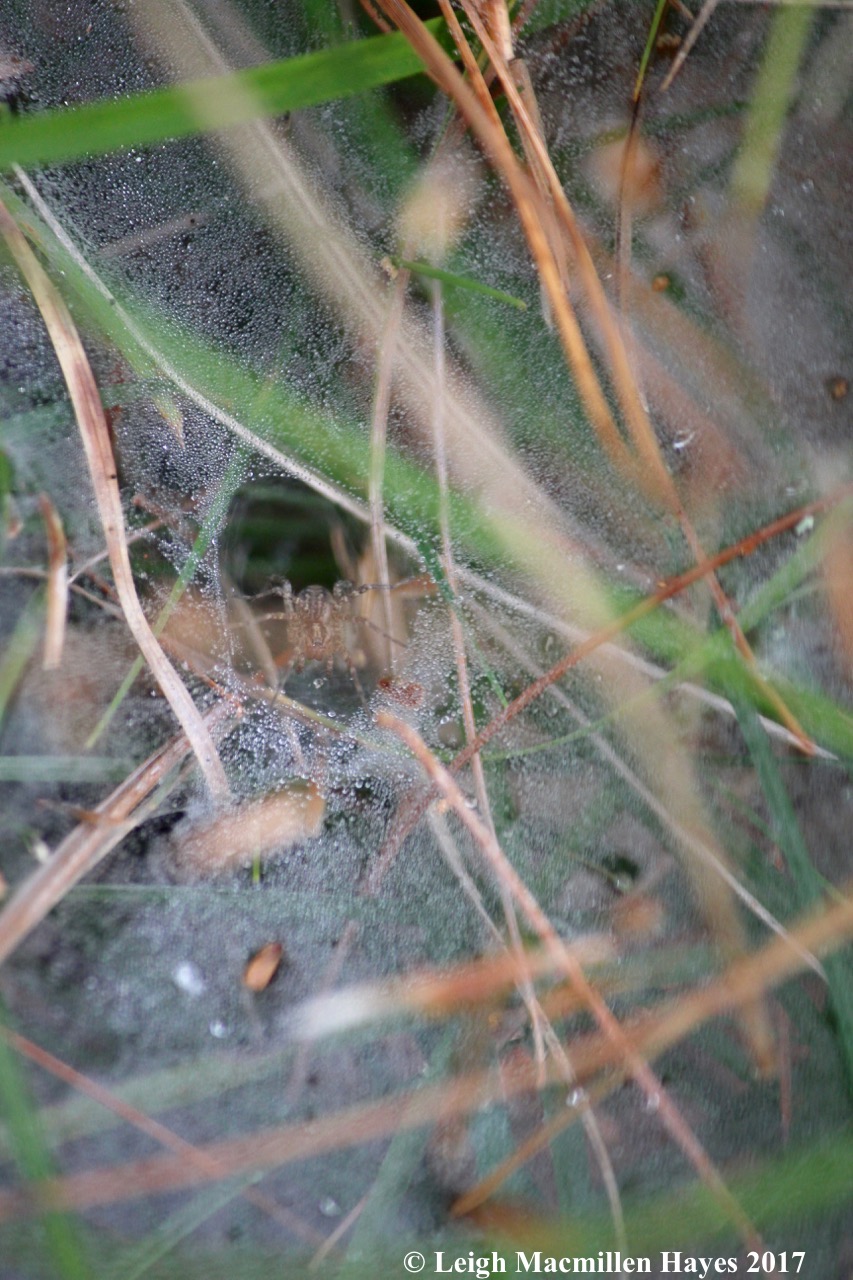
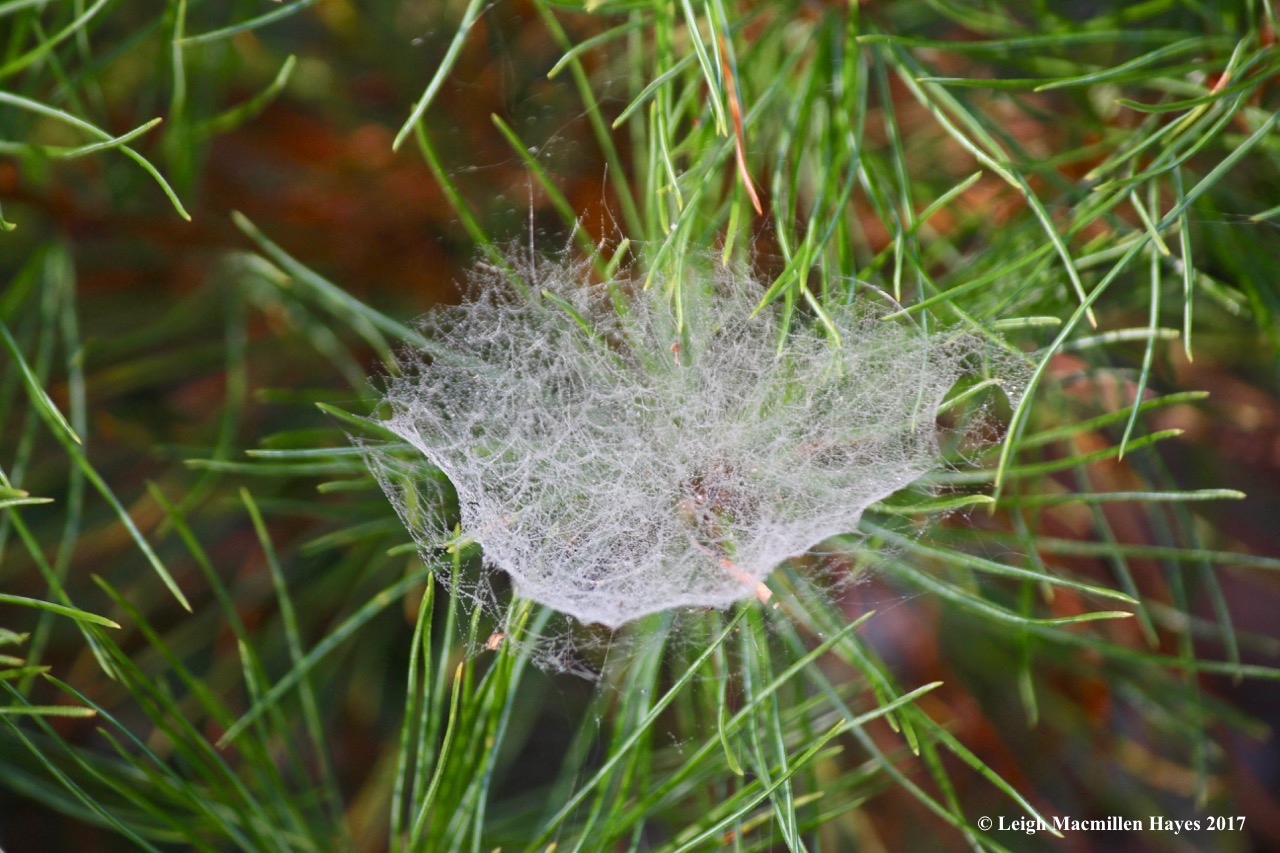
And there were funnel sheet webs to examine, given that the morning fog left them dew covered and easier to spot.

l3-funnel 2

Though we wanted to take a closer look at the creators of such fine work, and tried gently touching webs with pine needles, our antics obviously vibrated more than your ordinary bug might, and the spiders ran into their funnels to hide.

l4a-cup and saucers

As we’d driven to the Long Meadow Brook Reserve, we’d spotted a field of medium-sized white pines decorated with webs and were thrilled to find the same on saplings.

l5-cup and saucer web 1

The bowl and doily spider is another member of the sheet species, and it builds webs that consist of two intricate parts. Above is the bowl, an inverted dome, and below, the lacier doily. The spider hangs upside down beneath the bowl, but above the doily, waiting for dinner to drop in.

l6-looking at spider webs

Trying to see the tiny bowl and doily spiders requires getting down on all fours and looking through a hand lens for they are only about 3-4 millimeters in length. We did and were successful in our efforts.

l4b-cup and saucer on bristly sarsaparilla

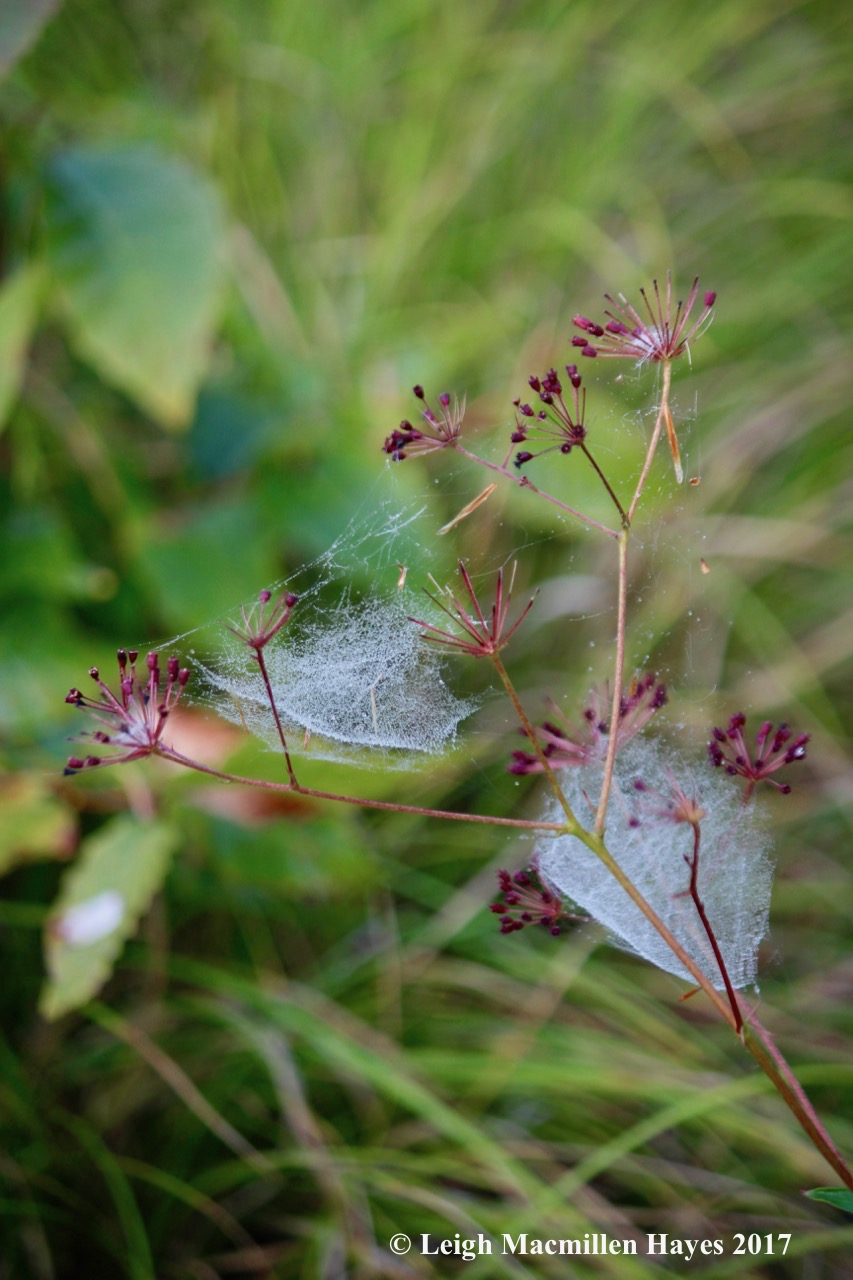
It seemed today that nothing escaped spider activity, including the gone-by fruits of bristly sarsaparilla.

l4-orb web 1

Equally delightful in the making was an orb web outlined in dew, larger droplets highlighting each spoke, with smaller ones on the sticky silken spirals.

l1b-pilewort

In several openings, pilewort grew in abundance.

l1a-pilewort field

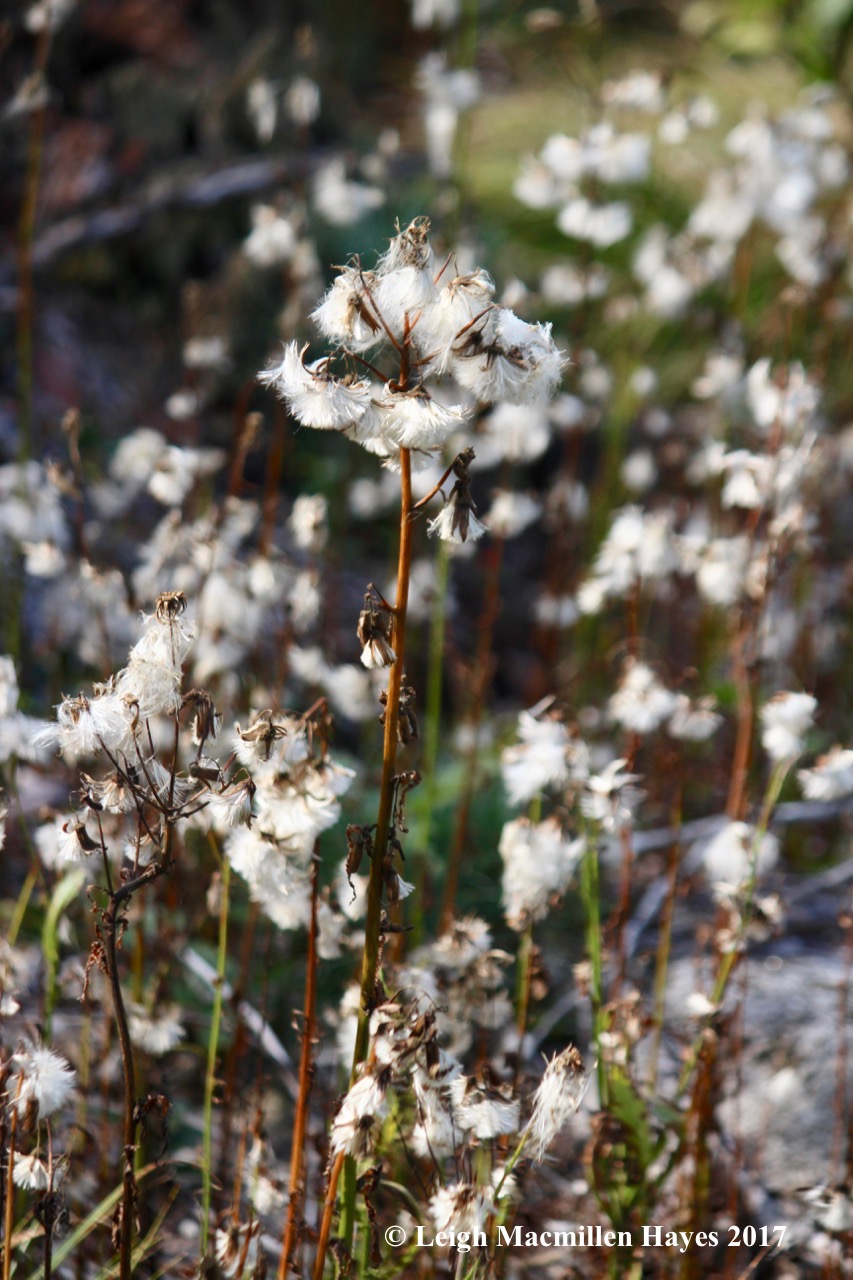
Like a field of cotton, its dandelion-like seedheads were prolific.

l1c-pilewort seedhead

But really, I preferred the seed display to the petal-less flowerhead that emerges from the cylindrical cluster.

l7-pine cones 1

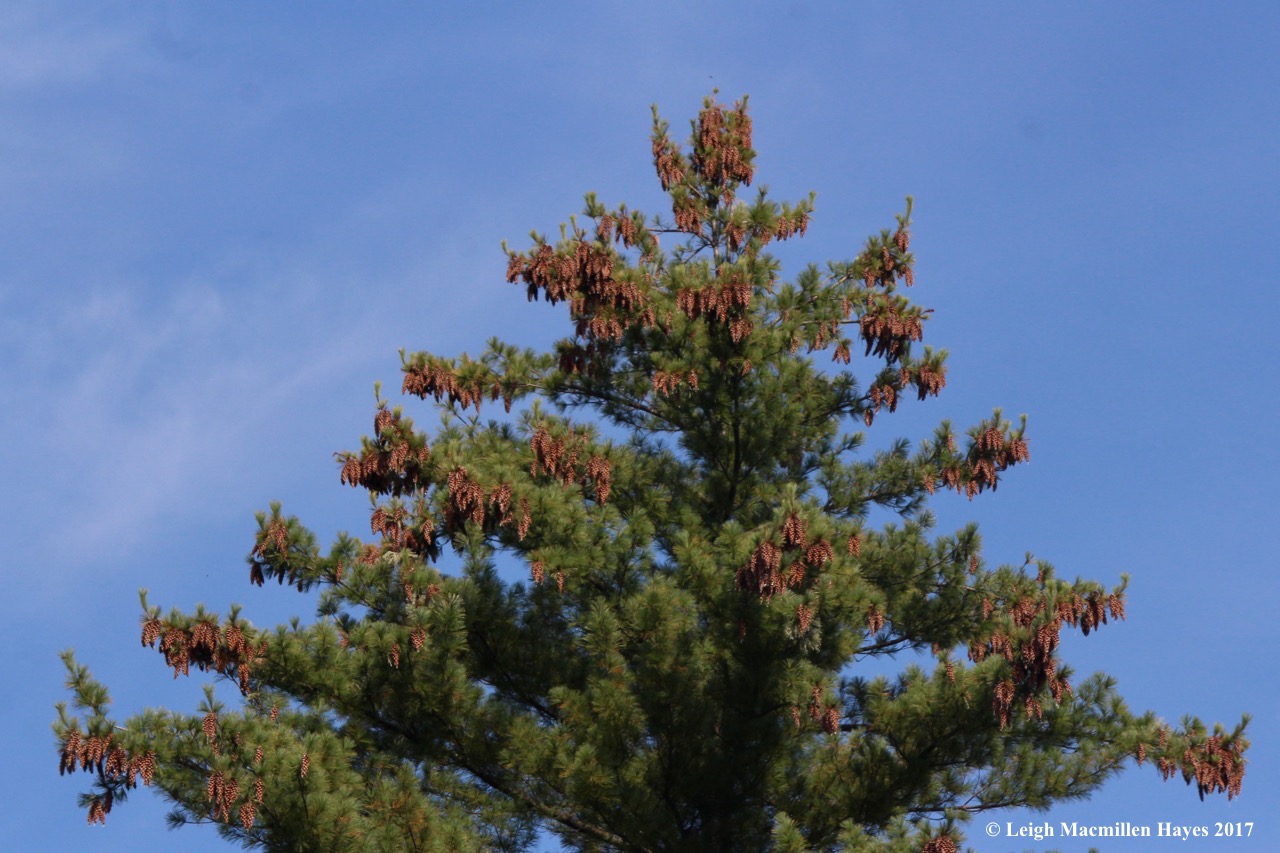
Also prolific were the female cones atop the white pines, their brown color indicating they were in their second or third year of development, having been wind pollinated by  tiny male cones. The pollen cones fall of trees within a few days of decorating our vehicles, outdoor furniture, and naked female seeds with yellow dust. If you think back to spring and all the little rice krispies that decorated the ground below white pines, you’ll know that you were looking at male cones. The seed cones typically form on the uppermost branches, so that the tree won’t pollinate itself from below, but can receive pollen blowing in the breeze from another tree.

l8-pokeweed 1

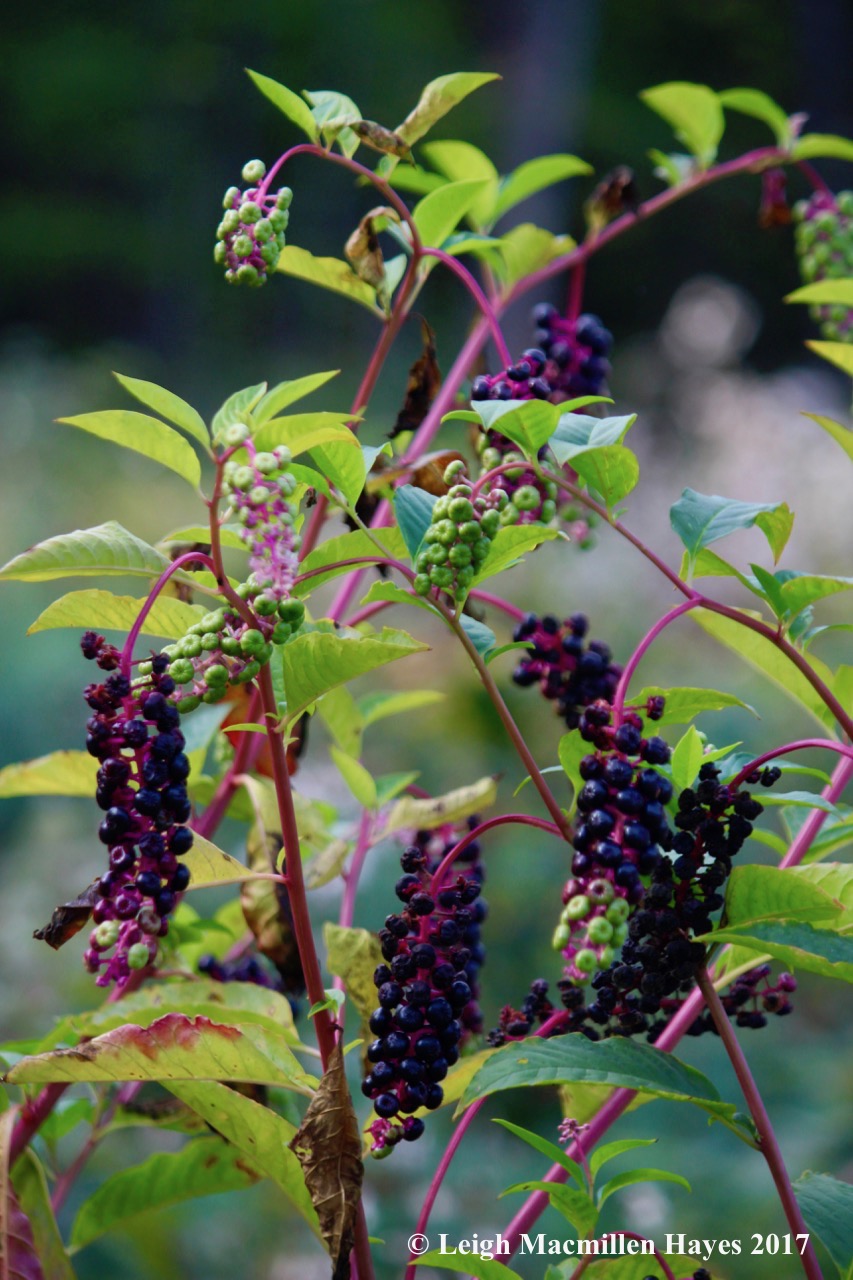
We’d looked high to see the cones, and then drew our eyes lower and thrilled with the sight of one of our tallest perennials.

l9-pokeweed 2

At first we only spied one pokeweed growing in an opening, but then began to spot others in flower and . . .

l11-pokeweed 3

fruit.

l29-blueberry

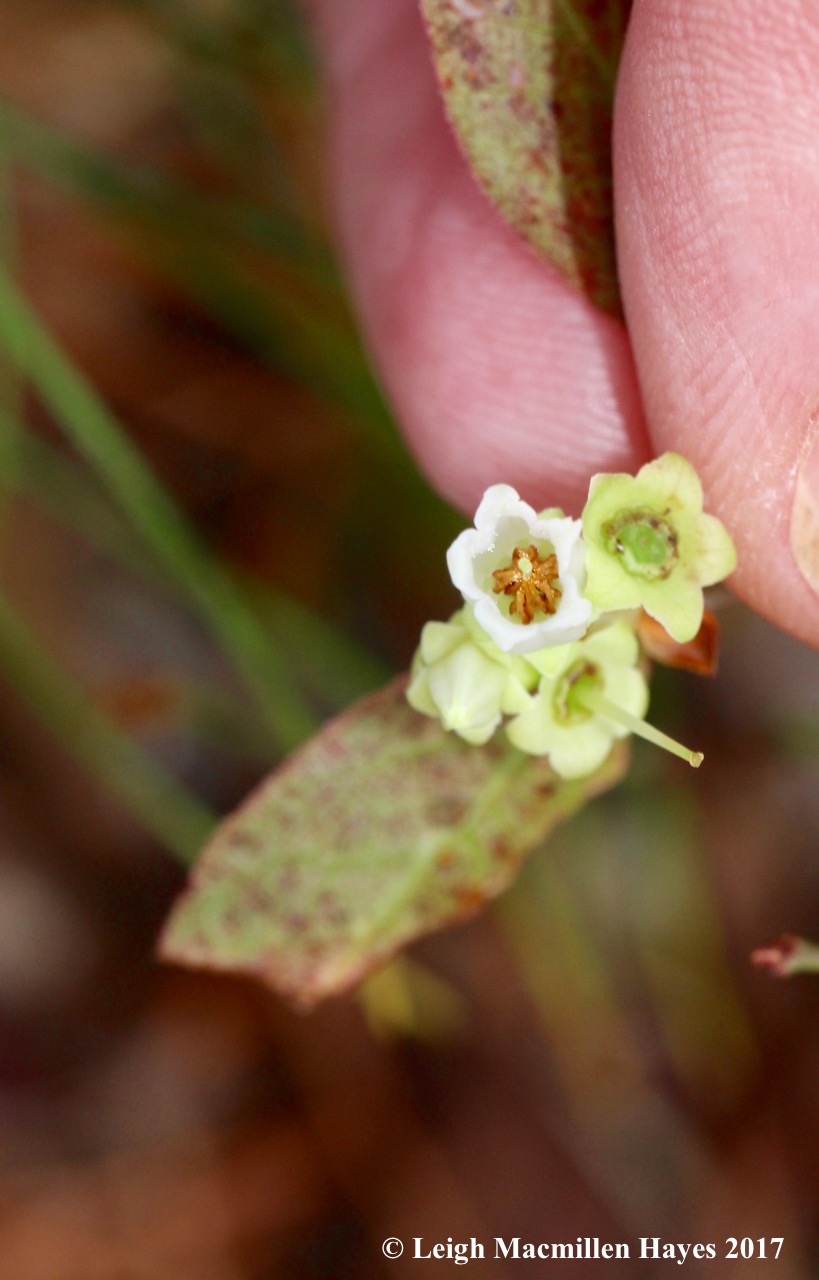
Another one of our surprises–still flowering blueberries. The plants themselves didn’t look too happy . . .

l13-blueberry flowers

and we wondered if there would be enough energy or time for the fruit to form.

l14-cinnabar-red polypore

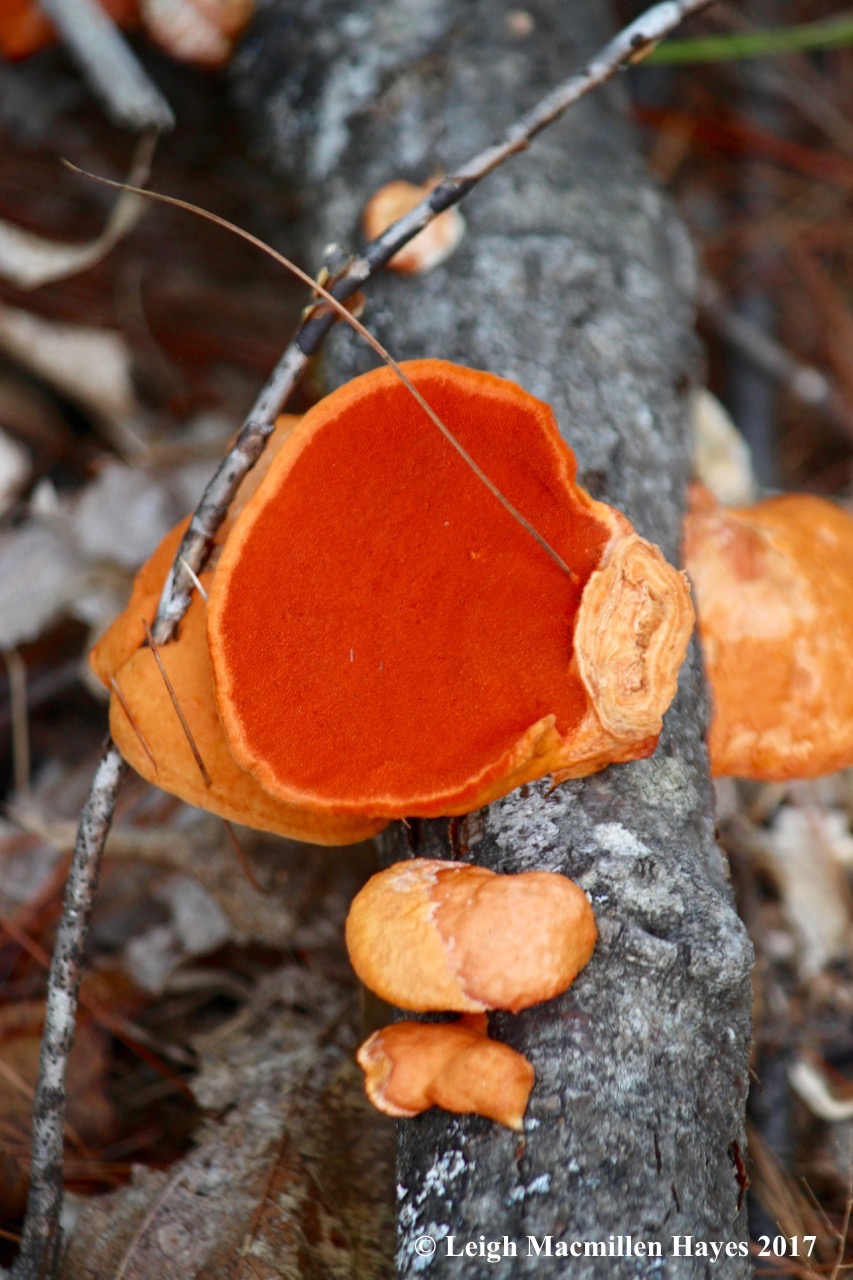
As we ambled along, we found cinnabar-red polypores,

l18b-turkey tails1

turkey tails,

ll18a-gilled polypore

and polypores know for their . . .

l18-labyrinth of pores

underside labyrinth of pores that look like gills.

l20a-brown spores 1

And we found another type that had spread brown spores.

l19a-mystery hole

Making our way down to the brook, we were stumped by a pile of dirt, small hole about one-half inch across and chewed mushroom. We remain stumped, so if you have a clue, we’ll listen. It was a messy dooryard so we didn’t suspect a chipmunk, plus the hole wasn’t wide enough. Voles eat vegetation. Could it be? Was it even made by a mammal?

l22-white oak

Along the same route, we made another fun find. White oak saplings.

l23--white oak 2

White oak grows in surrounding towns–Fryeburg, Sweden, Brownfield, Waterford, but not in Lovell or Stow, where this property was located. So, how did it arrive? Two theories–it was on a skidder trail, so could have come in on a machine; or perhaps via airmail from a bird. Long ago, white oaks grew in this area, but were used for barrel making. And because their acorns contain less tannin than that of a Northern red oak, mammals devour them quickly, thus making it more difficult for the trees to regenerate.

l23-LMB 2

It took us a while, but finally we reached the old beaver dam and culvert by the brook, where the fall foliage was subtle at best, but still beautiful. We walked (if you can call it that) for 2.5 hours and covered all of .95 miles. It was hot and muggy, so we felt like we’d covered 9.5 miles, but as always were thankful for our time spent lingering at Long Meadow Brook.


From wet to sweat

“Will I need waders?” I asked before we departed from the Lakes Environmental Association’s office  early Wednesday morning.

Dr. Rick Van de Poll looked down at my hiking boots and said, “No, you should be okay if you don’t mind getting muddy.”

l1-into the fen

And so, LEA teacher/naturalist Mary Jewett and I joined him to begin a two-day survey of LEA’s Highland Lake Preserve. The 325-acre property was the gift of the David and Carol Hancock Charitable Trust. Except for two logging roads, there are no trails.

Our first destination was in the middle of the fen. OK, so Mary and I should have known better because we know how much it has rained this summer. But really, it was quite hot that morning and our feet did get wet.

In fact, she found a deep hole on the way in.

l1-fen plot

Once reaching the plot, our tasks were several.

l1-flag

We helped delineate the boundary with measuring tape and flagging, the first being 10 meters by 10 meters, and then found the center, thus creating four quarters.

l1-Rick 1

Under Rick’s patient guidance and teaching, we began to survey the site, section by section, while he recorded our findings.

l1-measuring trees

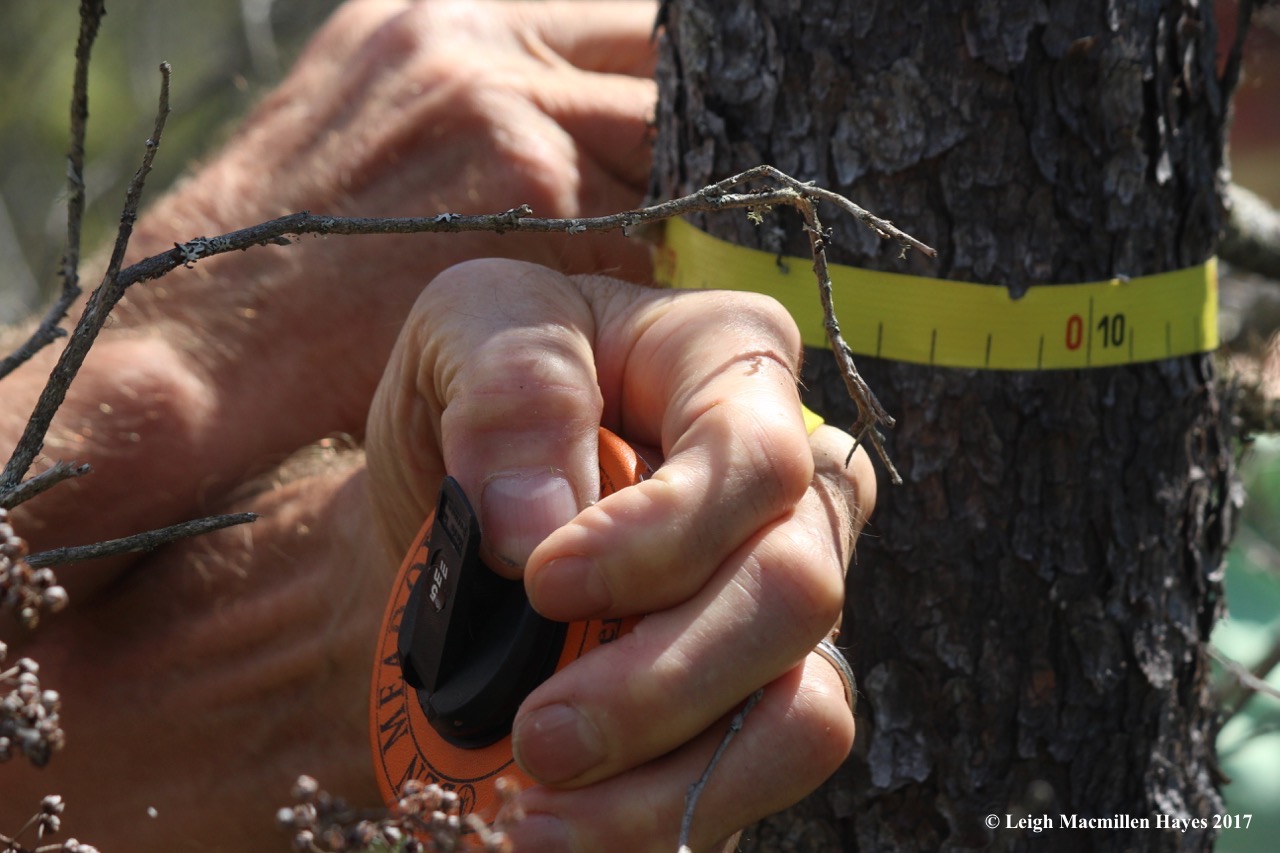
Trees were first and needed to be measured to make sure they were trees after all, and not considered saplings.

l1-rhodora 1

Layer by layer, including shrubs,

l1-tamarack

seedlings,

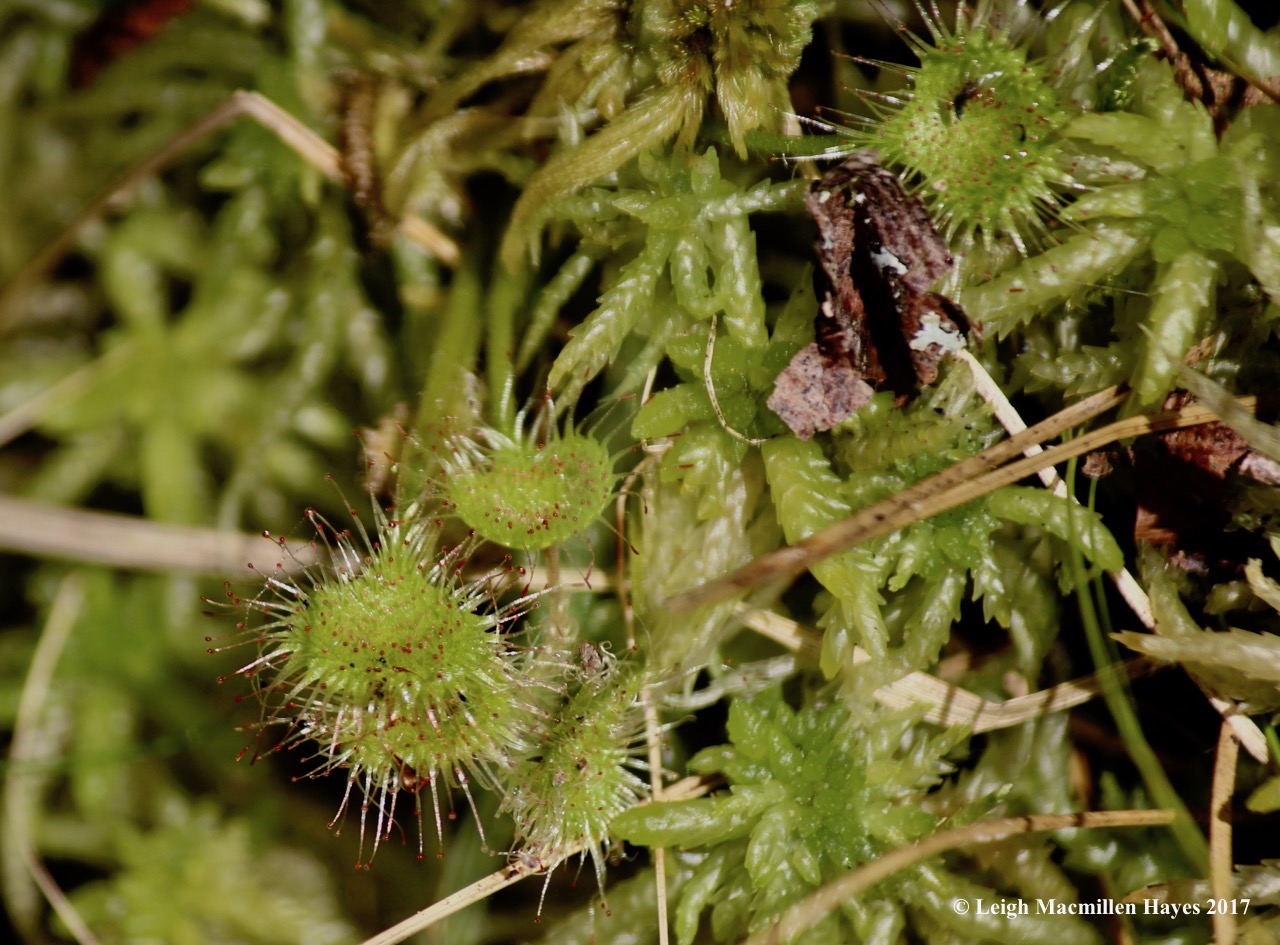
l1-round leaf sundew 2

and herbaceous ground cover,

l1-round-leaved sundew 1

we made our way down.

l1-wasp pupa on hornworm 1

Along the way, other discoveries presented themselves, including wasp pupae on a hornworm,

l1-garden spider 1

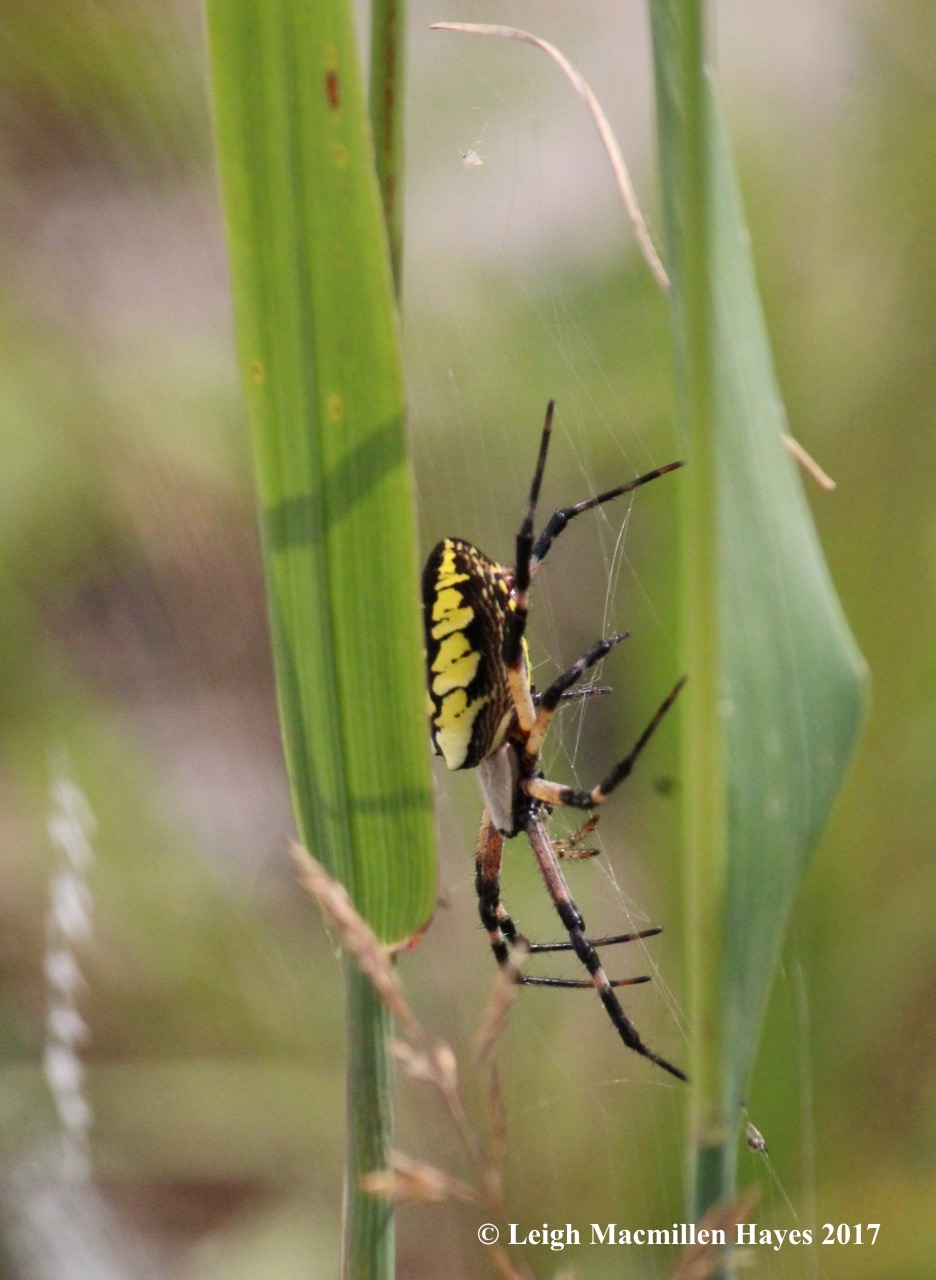
black and yellow garden spiders,

l1-garden spider 2

weaving their signatures,

l1-eastern pondhawk

eastern pondhawks,

l1-eastern pondhawk 1

up to the measure,

l1-green frog

and of course, green frogs.

Swamp Thing

Four hours later I found a deep hole as we departed that plot. We slogged out, water swishing in our boots, and quickly ate lunch.

l2-hemlock plot

And then it was back into the woods for the afternoon, this time a hemlock grove. On the way, we marked off a site for Thursday’s work, before reaching our destination for the afternoon.

l2-surveying the site

This plot was 10×20 meters and so within we had nine smaller plots to examine in the same manner.

l2-squirrel bites

Though we identified all the species from top to bottom, we also noted more cool finds like squirrel chews on a striped maple,

l2-glue crust fungus

a crust fungus that acts like a glue and attaches dead wood to live,

l2-spotted wintergreen

and spotted wintergreen, listed as S2 meaning this: “Imperiled in Maine because of rarity (6-20 occurrences or few remaining individuals or acres) or because of other factors making it vulnerable to further decline.”

l3-plot 3 (1)

I had to miss the Thursday morning session due to a GLLT hike, but met Rick and LEA’s education director, Alanna Doughty, as they finished their lunch. I think they extended it a few minutes as I was a wee bit late. This time, Alanna and I sat on the tailgate of Rick’s truck as he drove down a logging road–I, of course, held on for dear life, while she nonchalantly acted like it was a walk in the park. The best part of the ride was the smell of sweet-fern that our feet occasionally dragged over. And then our march began with a short trek through a wooded forest, before we reached the highbush blueberries and other shrubs that acted like hobblebush and made for careful movement.

l3-black and red spruce 3 (1)

The first afternoon site was in a black spruce bog and for once, I could confidently differentiate between black and red as they stood side by side–both by their colors, the black having a blueish hue, while the red was more yellowy-green, and their gestalt.

l3-cinnamon and chain ferns

One of my favorite learnings from that plot was the difference between cinnamon fern and Virginia chain fern. Again, they were easy to ID by their colors, the cinnamon already dying back. But notice the similarities.

l3-chain fern

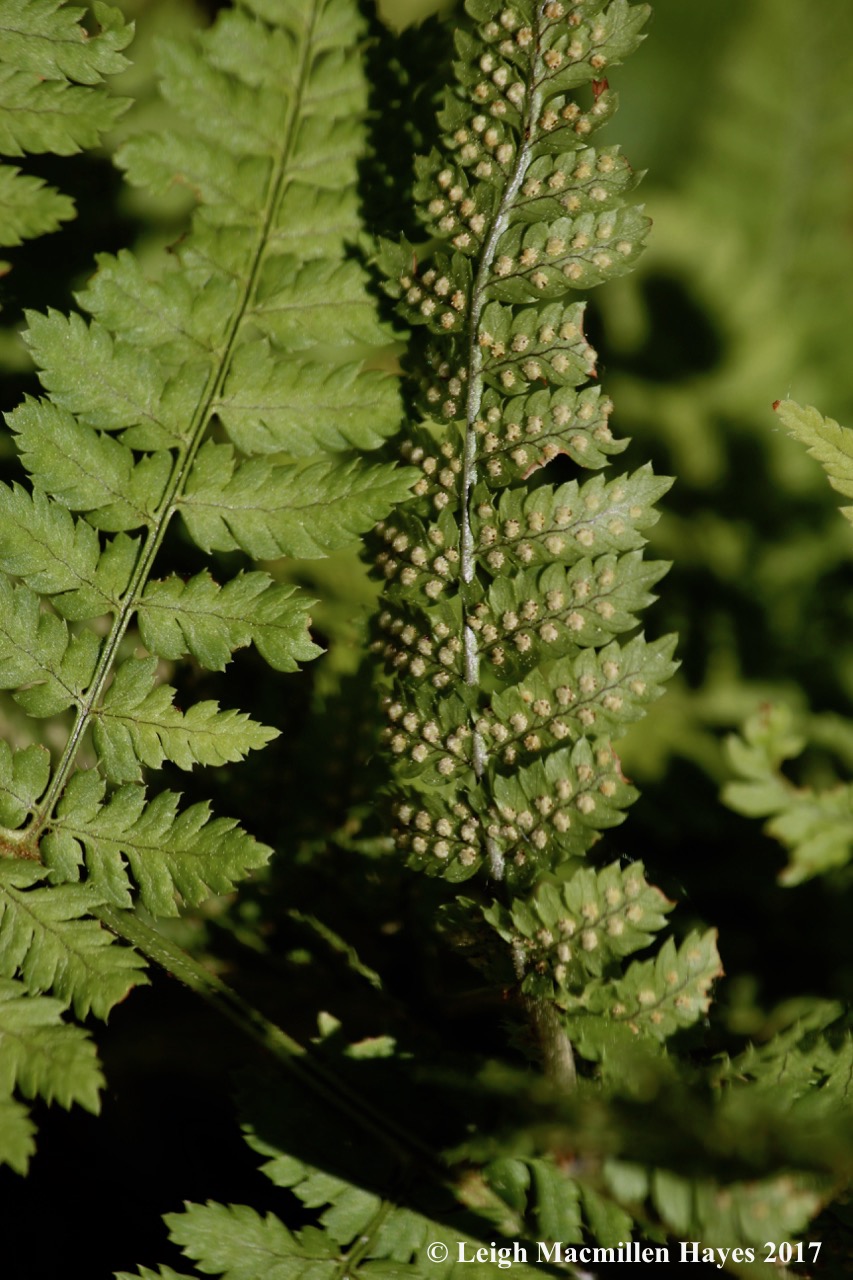
And then we looked at the back side. While cinnamon has a separate fertile frond that forms in the spring and then withers, chain fern’s sporangia are oblong and on the underside.

l3-chain spores 2

The area was thick with the chain ferns and our every movement meant spores flew through the air.

l3-pitchers (1)

Every movement also meant we had to watch our every step, for so numerous were the pitcher plants. It was a great opportunity to ask Rick about the color of these–I’d been told that green is rare, but he said it’s just a matter of sunlight and age, all eventually take on a redder hue in veins and then overall leaf coloration as they mature.

l3-pitcher plants

Their flowers were also plentiful in this lush space.

l3-chanterelle waxy cap 1

Among other things, Rick is a fungi expert (and an overall fun guy with corny jokes–the mark of a teacher), and so our learnings were plentiful, including these chanterelle waxy caps.

l4-plot 4 (1)

After making our way back out through the tangle, we hopped back onto the tailgate for a short ride and then headed off into a mixed forest for the final 10x 20 plot.

l4-deer skull

Our cool finds in this one included a much gnawed skull,

l4-orchid

and spotted coral-root.

l4-bristly clubmoss

I also learned to ID one clubmoss–bristly tree so named for its bristly stem.

l4-back up the road

It was dinner time when I again held on for dear life as we drove up the road. To say we were sweaty, stinky, hungry and pooped would be an understatement. By the same token, I think I can speak for Mary and Alanna to say that we were more than grateful to have spent so much time learning from Rick. From wet to sweat–it was well worth the effort.


Bee Kind

Because I have the good fortune to be involved with the Greater Lovell Land Trust, I spend my summers attending talks and walks on a variety of topics. Prior to this week, we learned about lichens, bryophytes, pileated woodpeckers, fungi, flowers, ferns, medicinal plants, peat bogs, wild turkeys, and land conservation. And then last night our focus turned to pollinators and the pollinated.

Guy Pilla, a beekeeper from Fryeburg, Maine, gave an informational talk on the art of beekeeping, followed by a question and answer period, and the crème de la crème –honey tasting. How often have you had a chance to taste Tupelo honey?

w-Guy 1 (1)

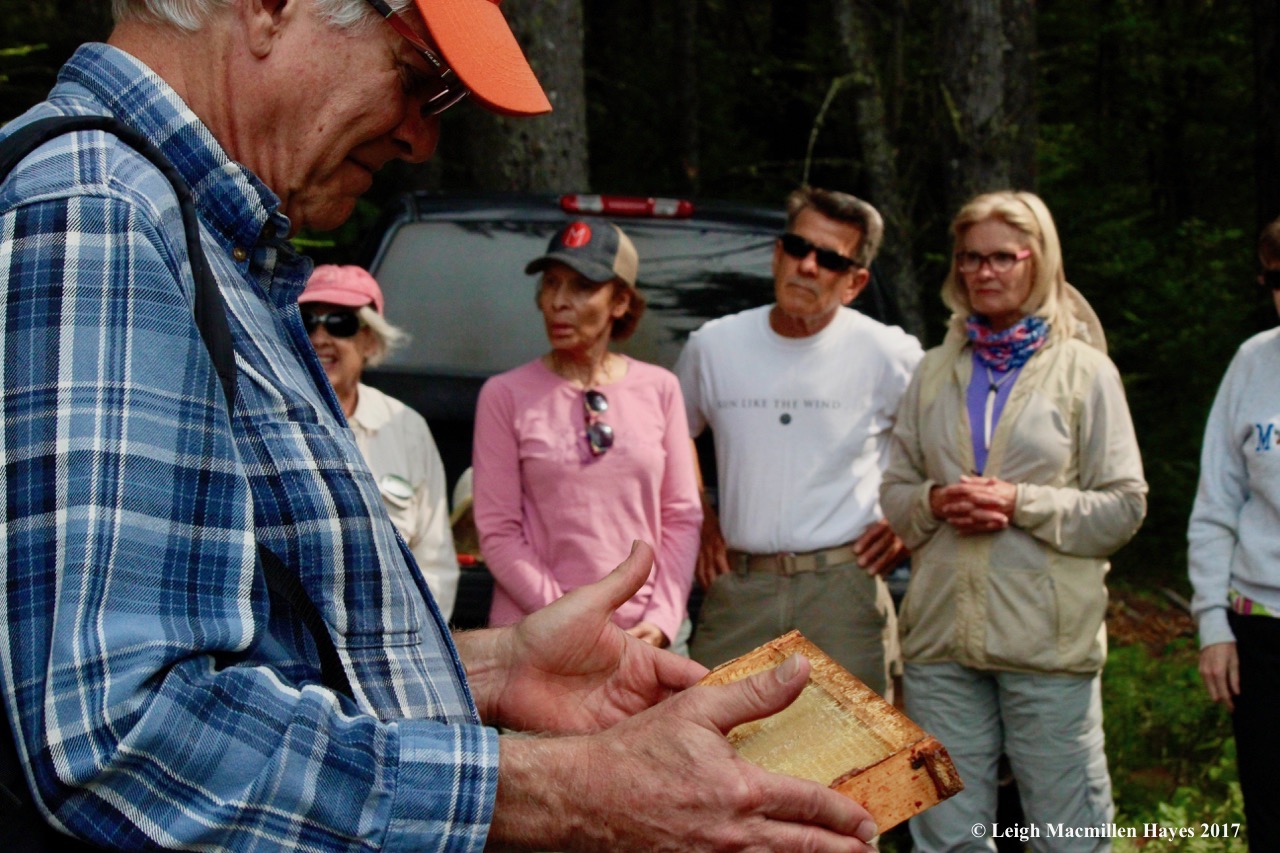
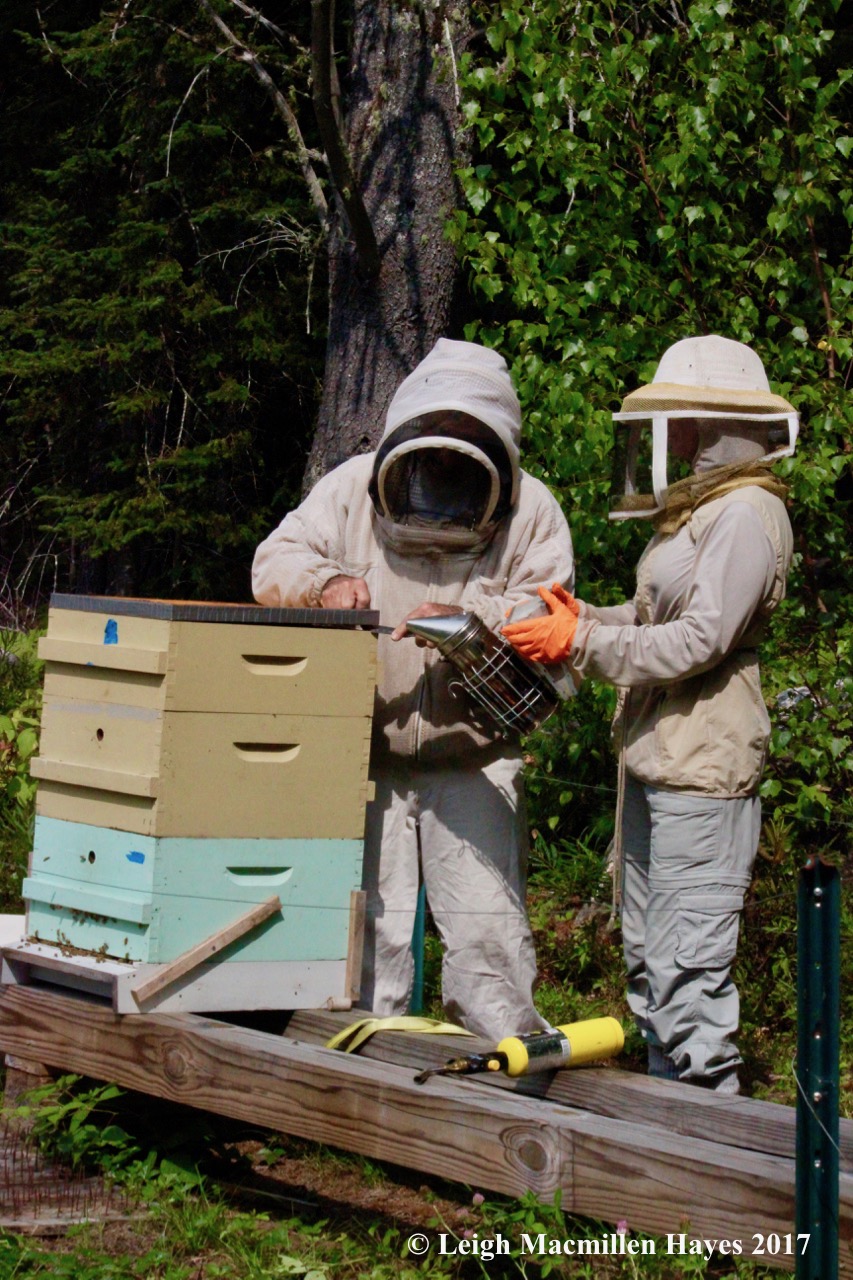
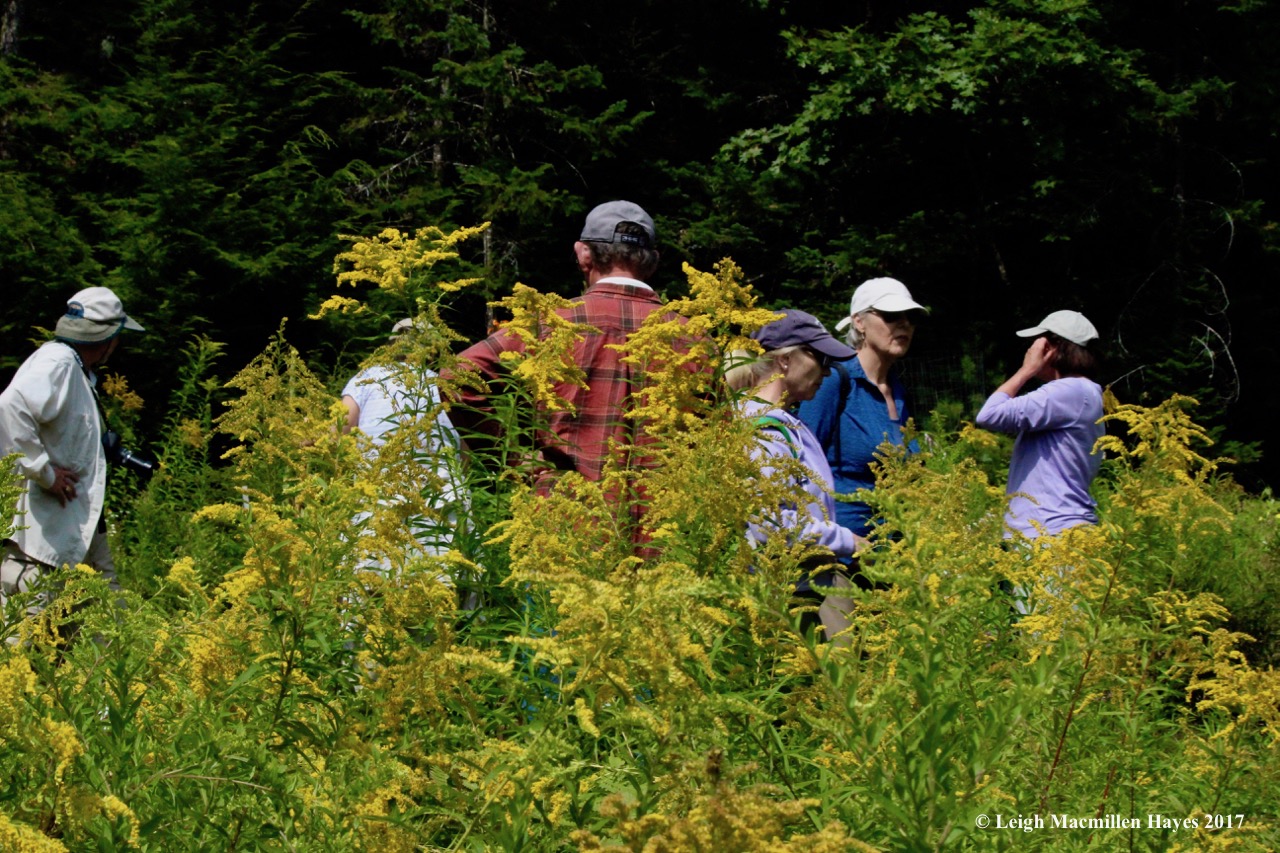
This morning we met up with Guy again, as he took us to a hive he has set up on private property under conservation easement with the land trust. Twenty-six of us gathered around to listen, watch, and wonder.

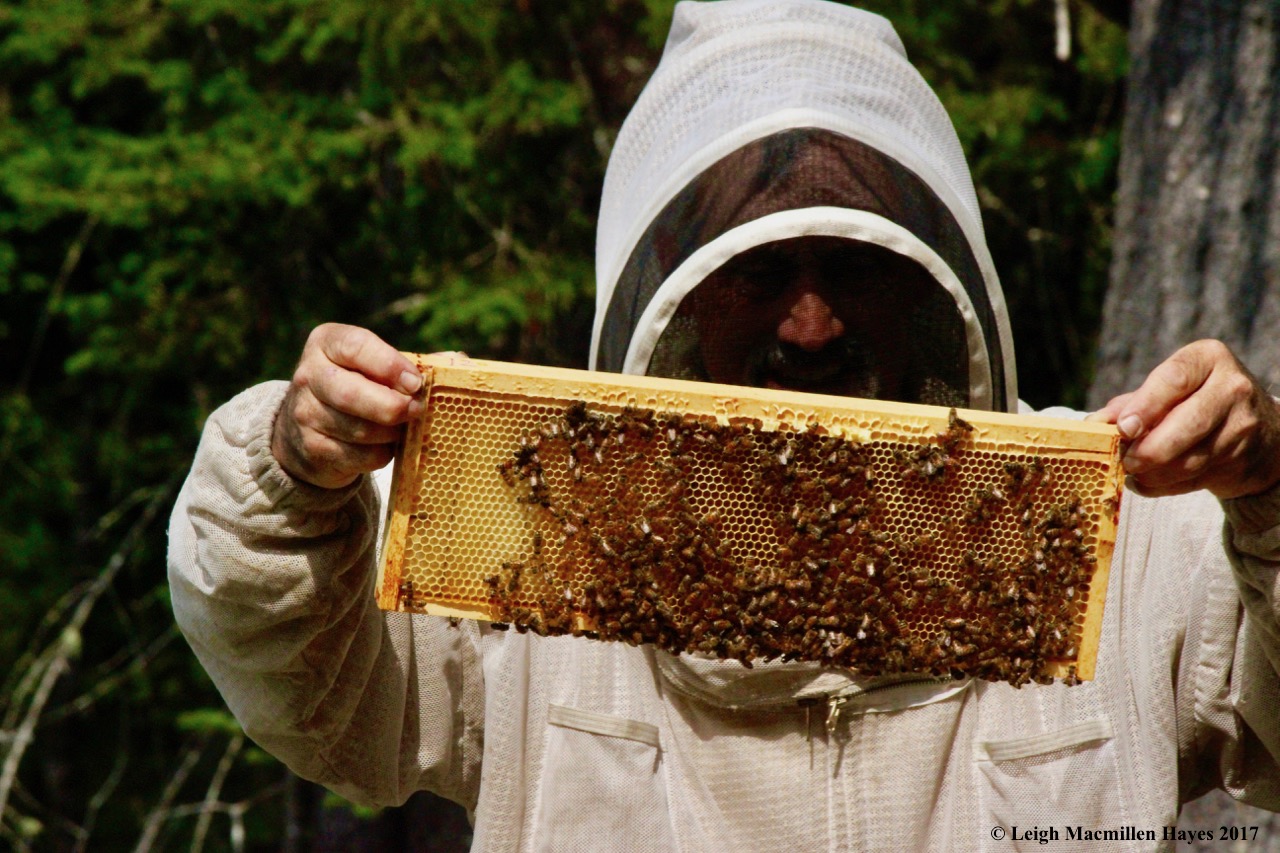
w-showing the frames

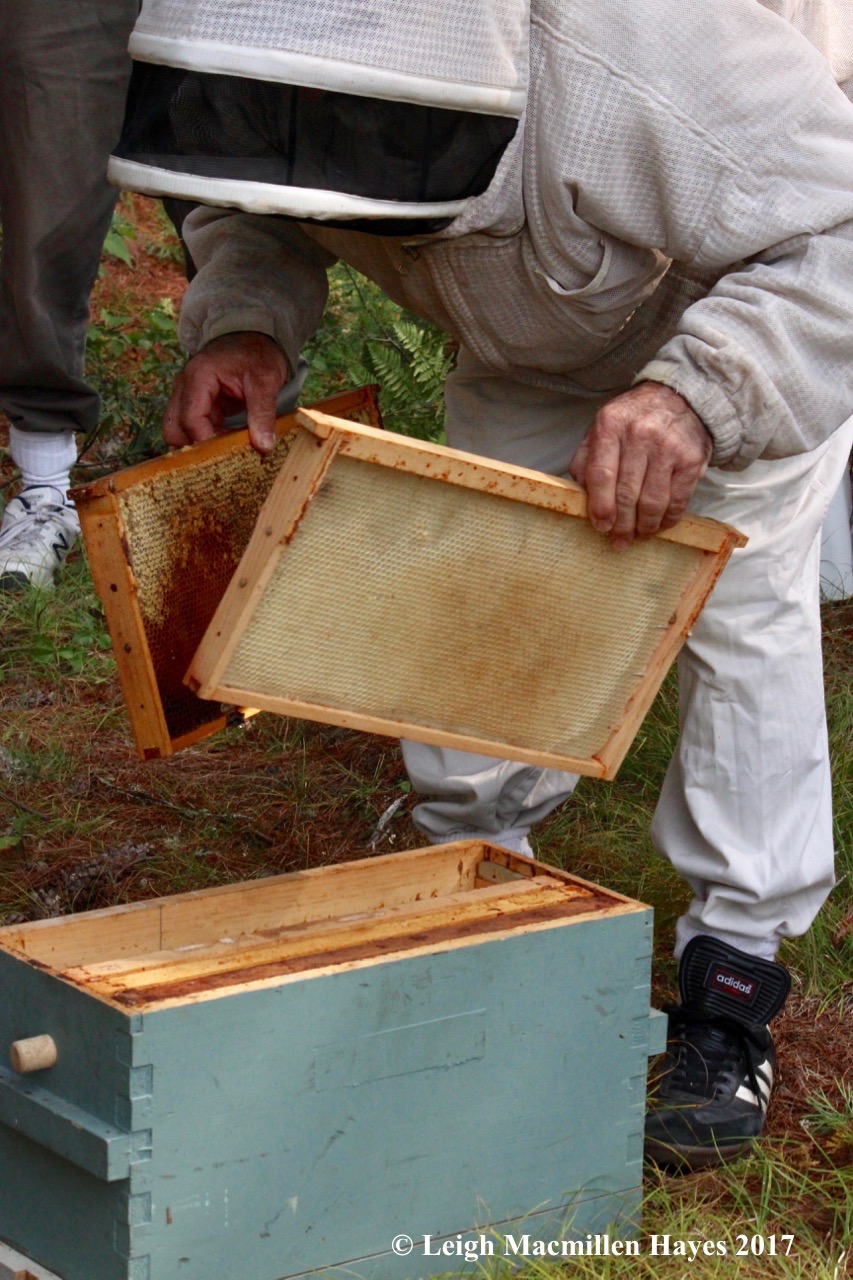
In his alien costume, Guy passed around frames, giving us an opportunity to look at a range of cells as he explained about spacing for honey expansion, storage and more. We learned about the good and the bad of beekeeping, but mostly the good.

w-Gary looking at frame

As frames were passed around, we noted variations and the fact that some were lightweight and others heavy.

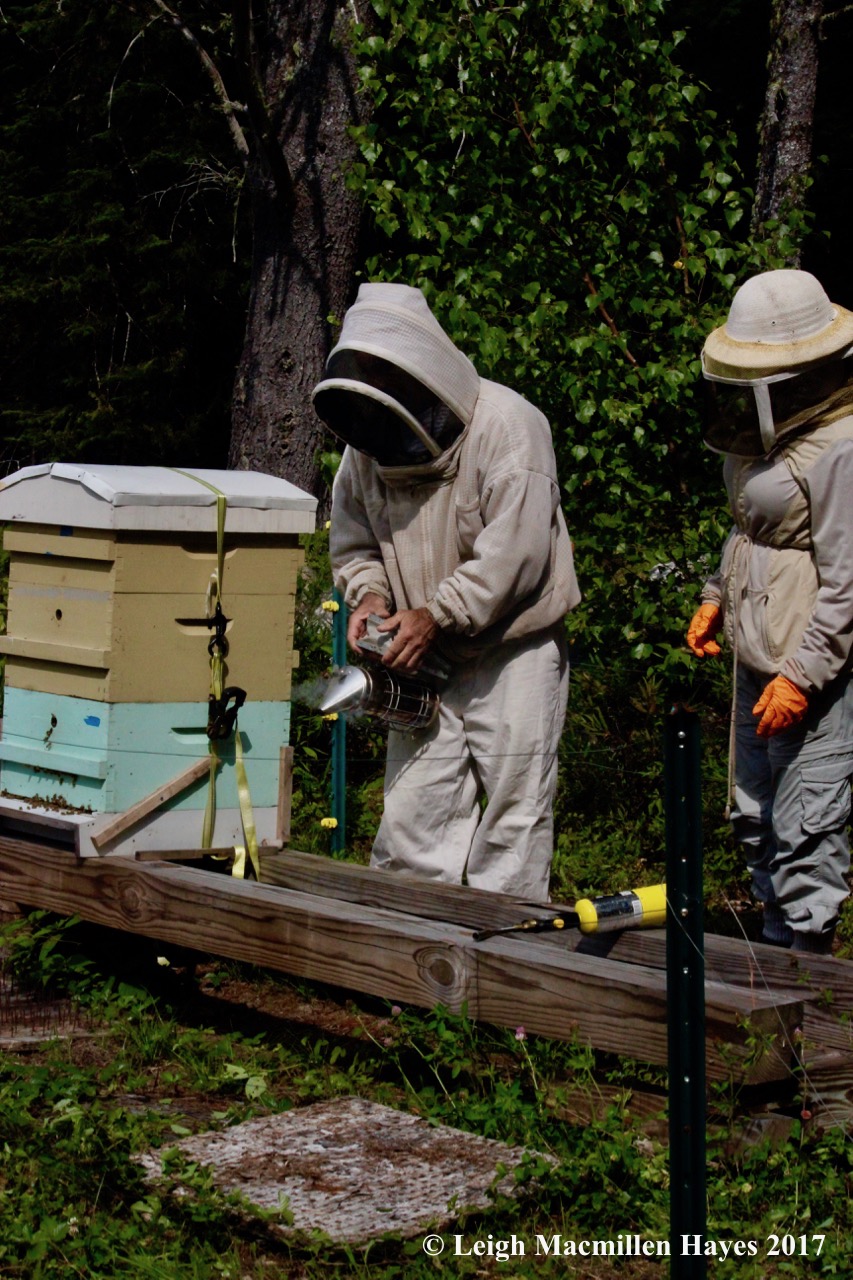
w-hive--bear precautions

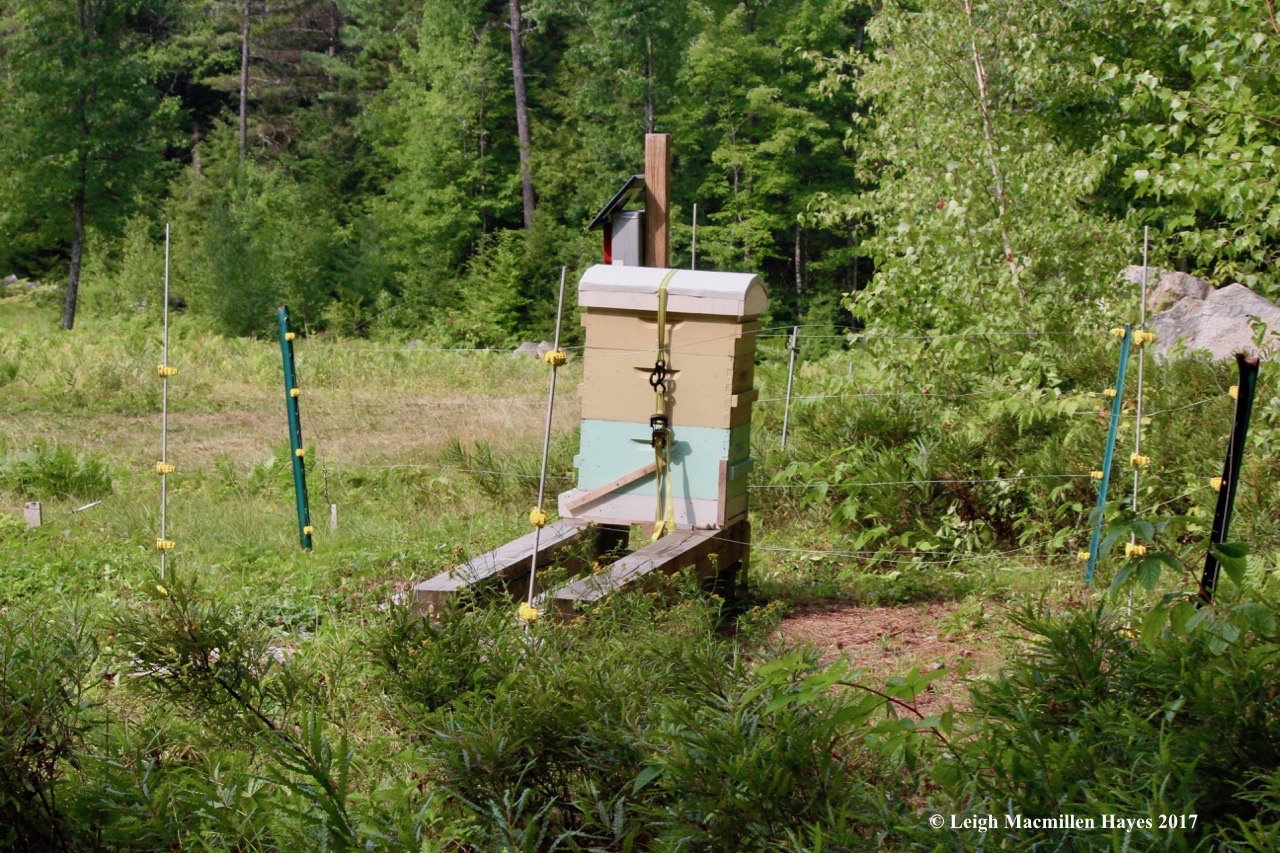
At last it was time for Guy to open the hive. Notice the electric fence surrounding it? And the fact that it’s strapped down. Bear defense. And we know there’s at least one in the area.

w-dressing like a beekeeper

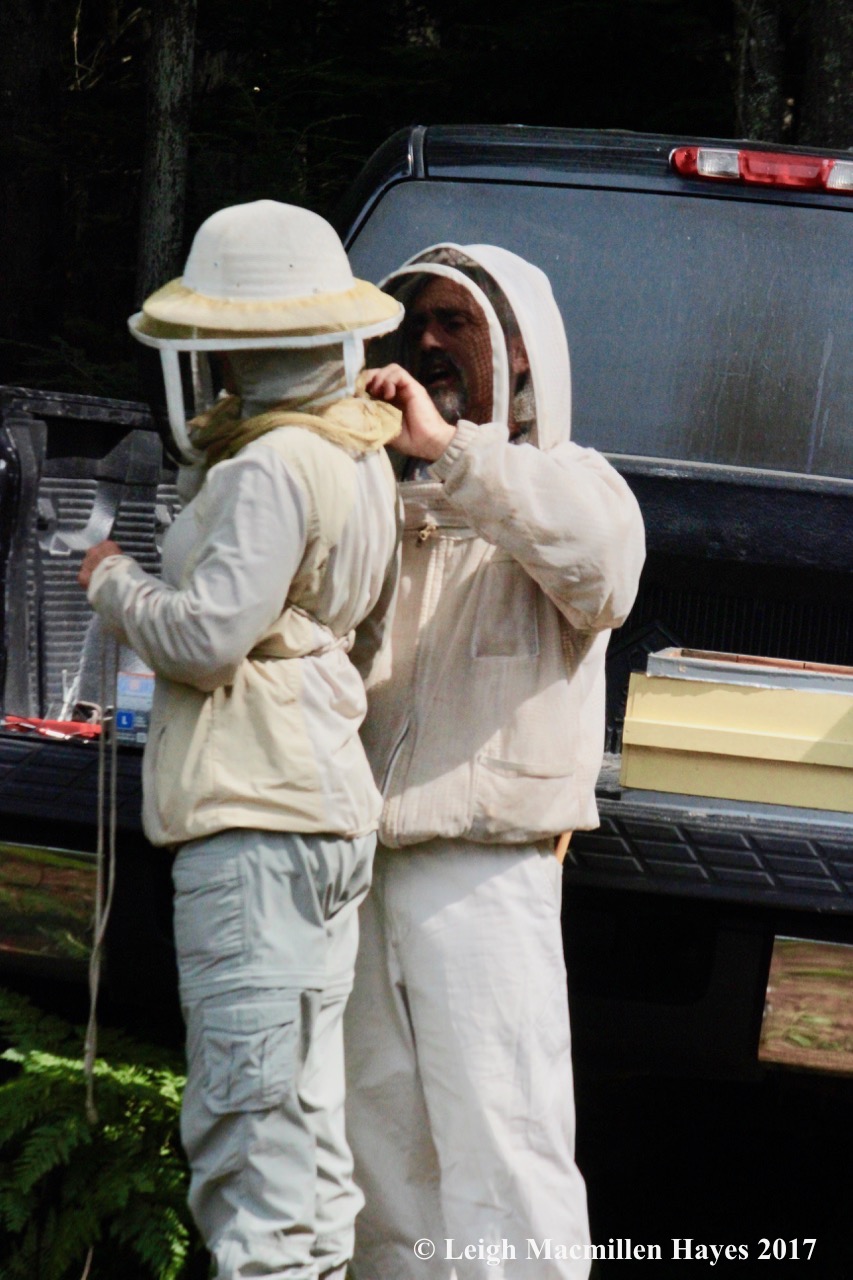
And then he walked through the crowd and chose Mary to be his assistant. She donned a hat and veil to protect her face and neck, and took on the look.

w-testing the smoker

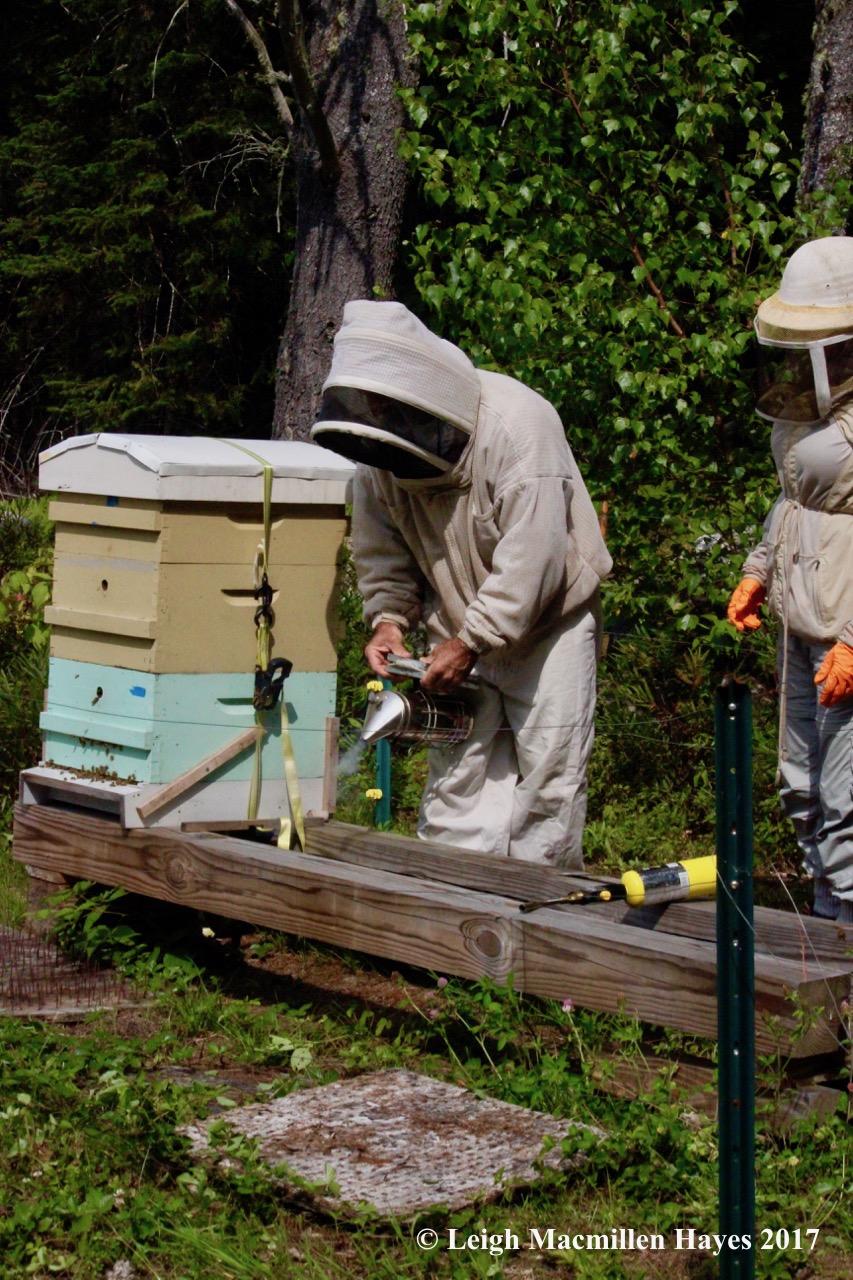
Into the bee yard, she followed Guy. If you look closely, you’ll see two platforms on the ground and might notice that the one directly below the hive has nails sticking up (the other is turned upside down because Guy only has one hive at this location this year). Those are to deter skunks, another predator. As Mary watched from behind and the rest of us watched from a few feet away beyond the fence (and out of the bee line), Guy ignited the smoker he’d filled with pine needles.

w-smoke coming out of smoker1

It took a few minutes, but finally, smoke puffed out.

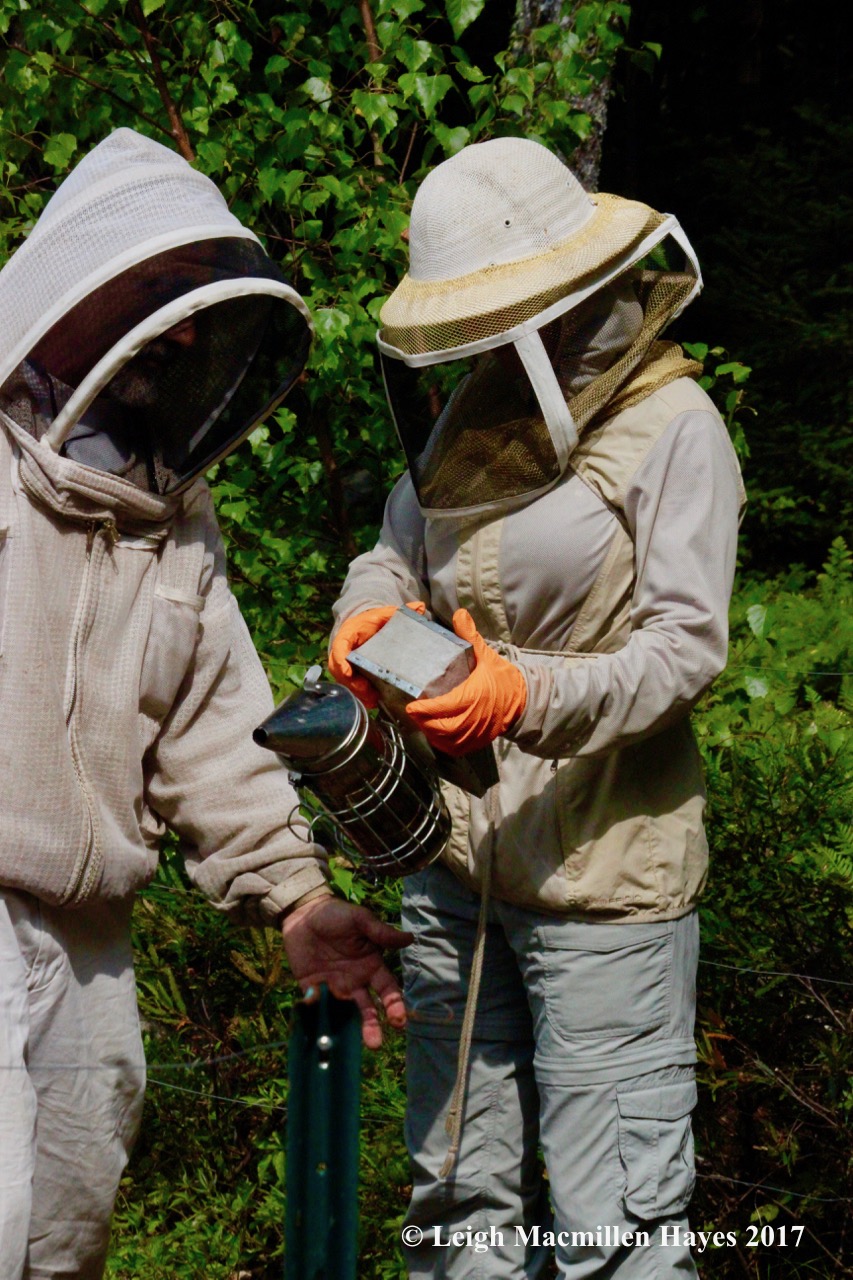
w-Mary practices the smoker

He then passed it to Mary, and her task was to press the bellows and create smoke. The smoker is an important line of defense.

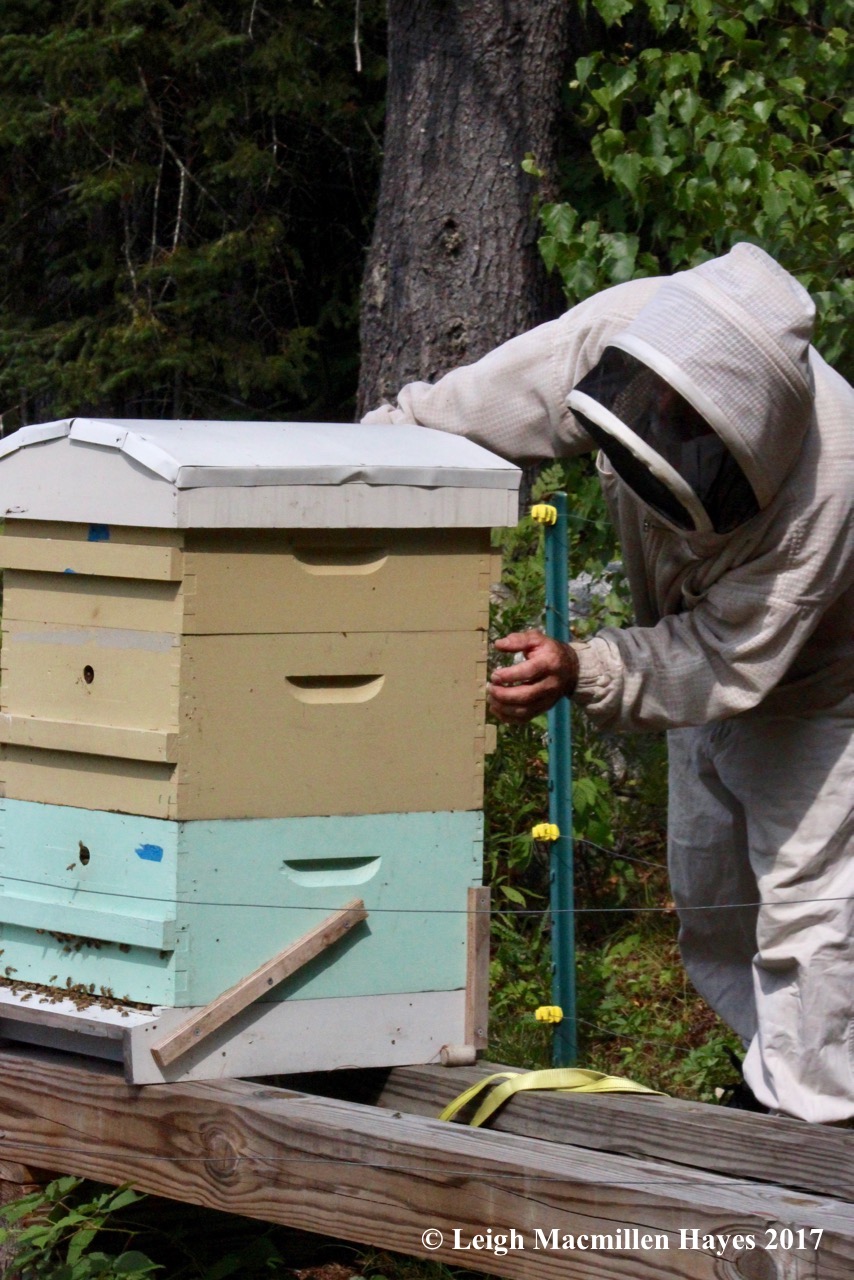
w-preparing to open the hive

As we continued to watch, Guy took the straps off and explained the construction of the hive with one super stacked atop another in a vertical fashion. Though he ordered his equipment, he refashioned some of it including the roof, designed to let wet weather flow off rather than gather in puddles on the top of the structure.

w-Mary uses the smoker

As Guy wedged a hive tool into the bee glue (a resin-like propolis), Mary got ready to use the smoker. Smoke fools the honeybees into thinking a wildfire is nearby, thus prompting them to eat more honey in case they need to move to a new location.

w-showing off his bees

And with honey in their bellies, they become more docile. Note that Guy isn’t wearing any gloves. Usually he does, but Mary wore his gloves this morning and he trusted all would go well and the bees would remain calm. He was certainly calm, but spoke of his early days in the beekeeping business and how sometimes he would jump. Bees sense fear behavior exhibited by heavy breathing and that’s when stings occur. Having been stung recently after some youngsters received stings, I thought I was remaining calm, but apparently my breath spoke for me.

w-hive levels

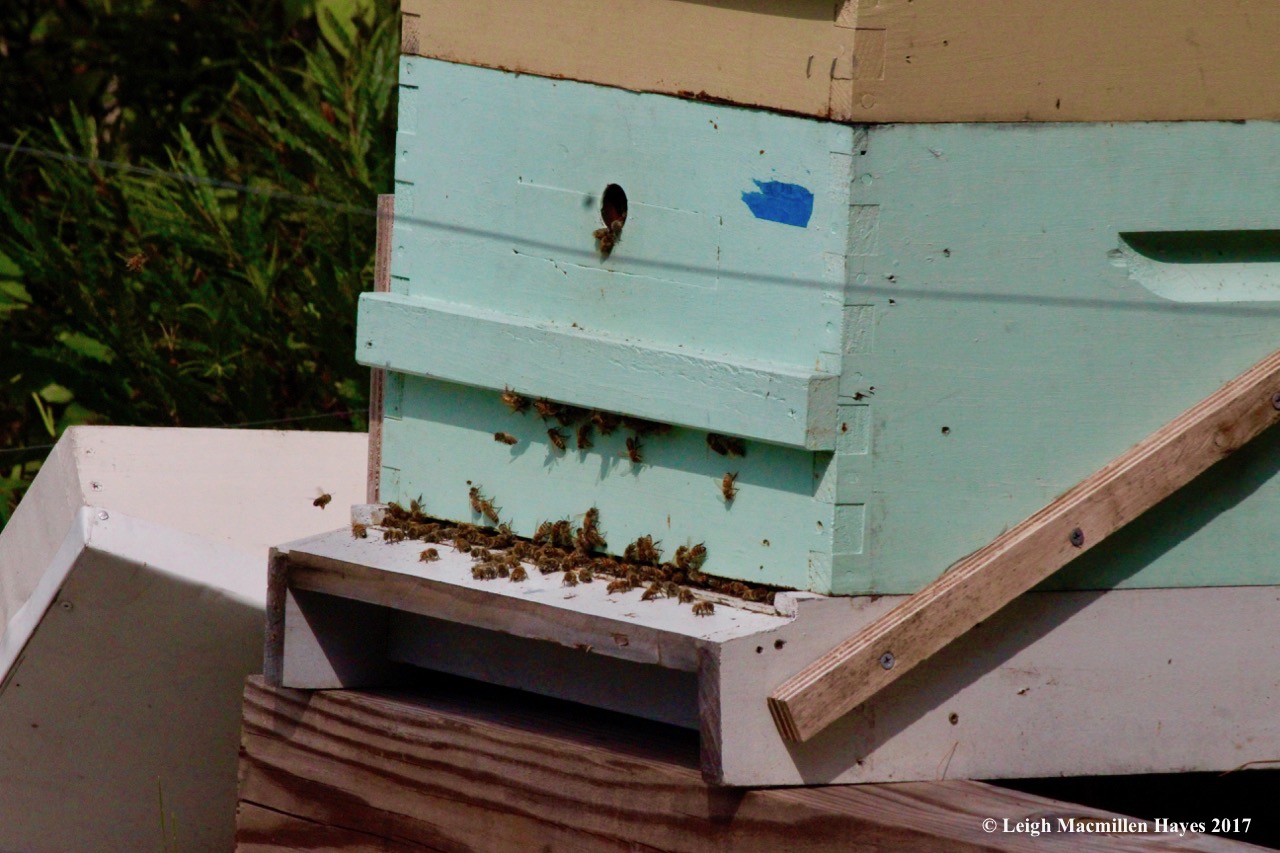
We learned so much from Guy last night and today–about their various jobs as male drones, queens, and female workers who really do so much of the work. The workers clean out old material from inside the cells, attend to the queen, carry dead bees or larvae outside the hive, guard the hive’s entrance, fan at the entrance during the hot weather to keep the inside temperature down and to circulate fresh air throughout the hive, receive nectar and pollen,  store it away in cells, nurse newly laid egg, and seal cells around larvae at the appropriate moment. After doing all of this for about three weeks, they’ll earn the rights to collect nectar and pollen for about six. And then . . . they’ll die of exhaustion. Indeed.

w-wandering among the flowers

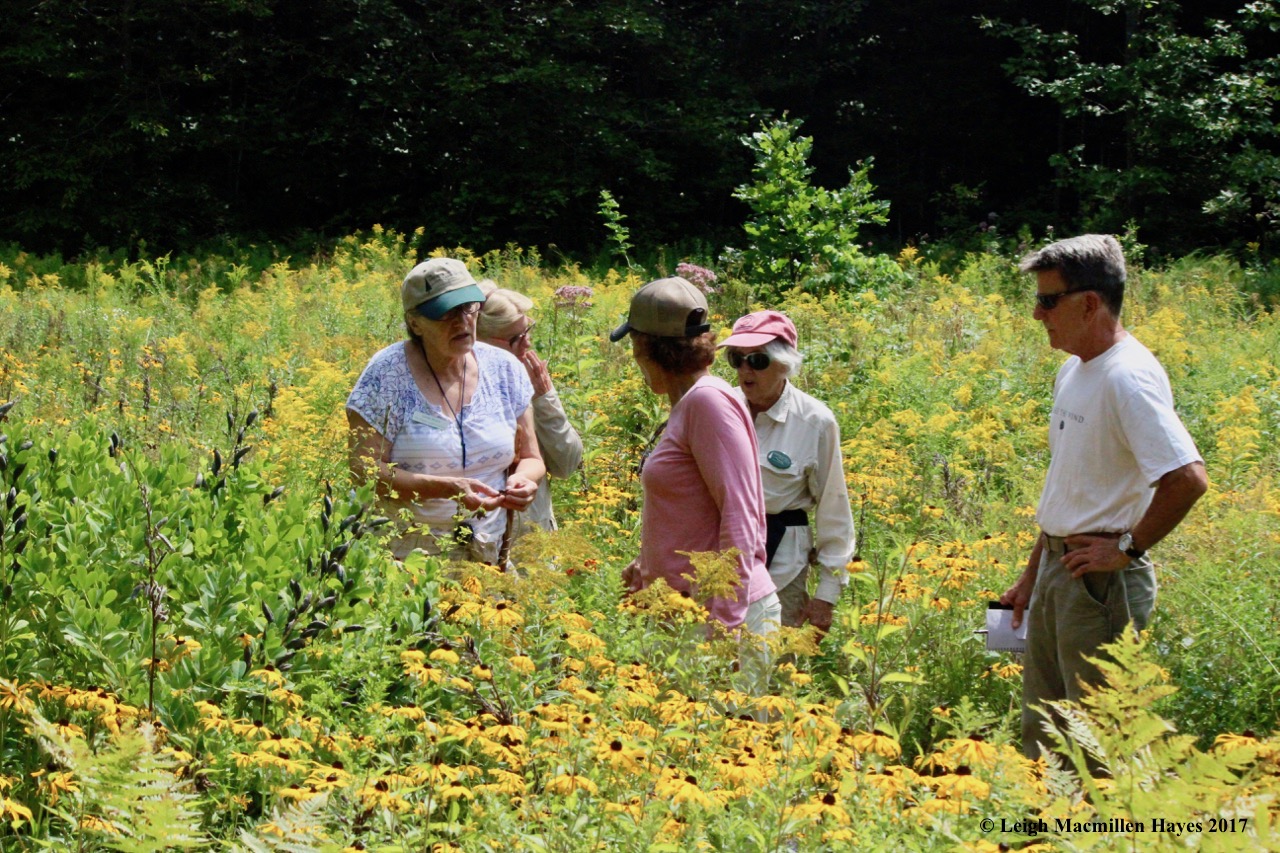
After our time at the hive, one of the land owners, Linda, took us on a mini-tour of the 100-hundred-acre property. Her goal was to take us to a flower meadow she and her husband have created. Originally, it was a garden with raised beds, but Linda has been collecting wildflower seeds from roadsides in Maine and New Hampshire and sowing them in the meadow.

w-learning from Linda

Today we were wowed by the results.

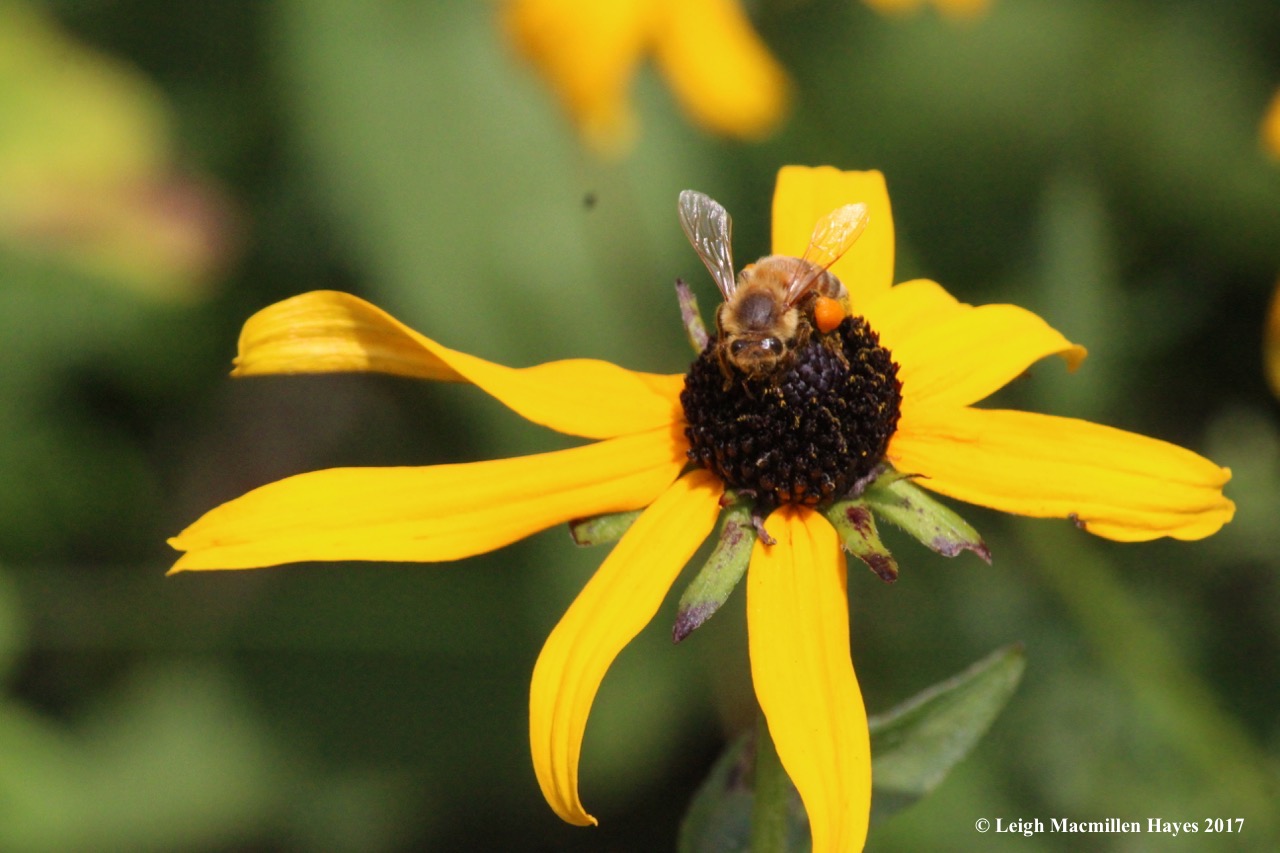
w-honey bee 1

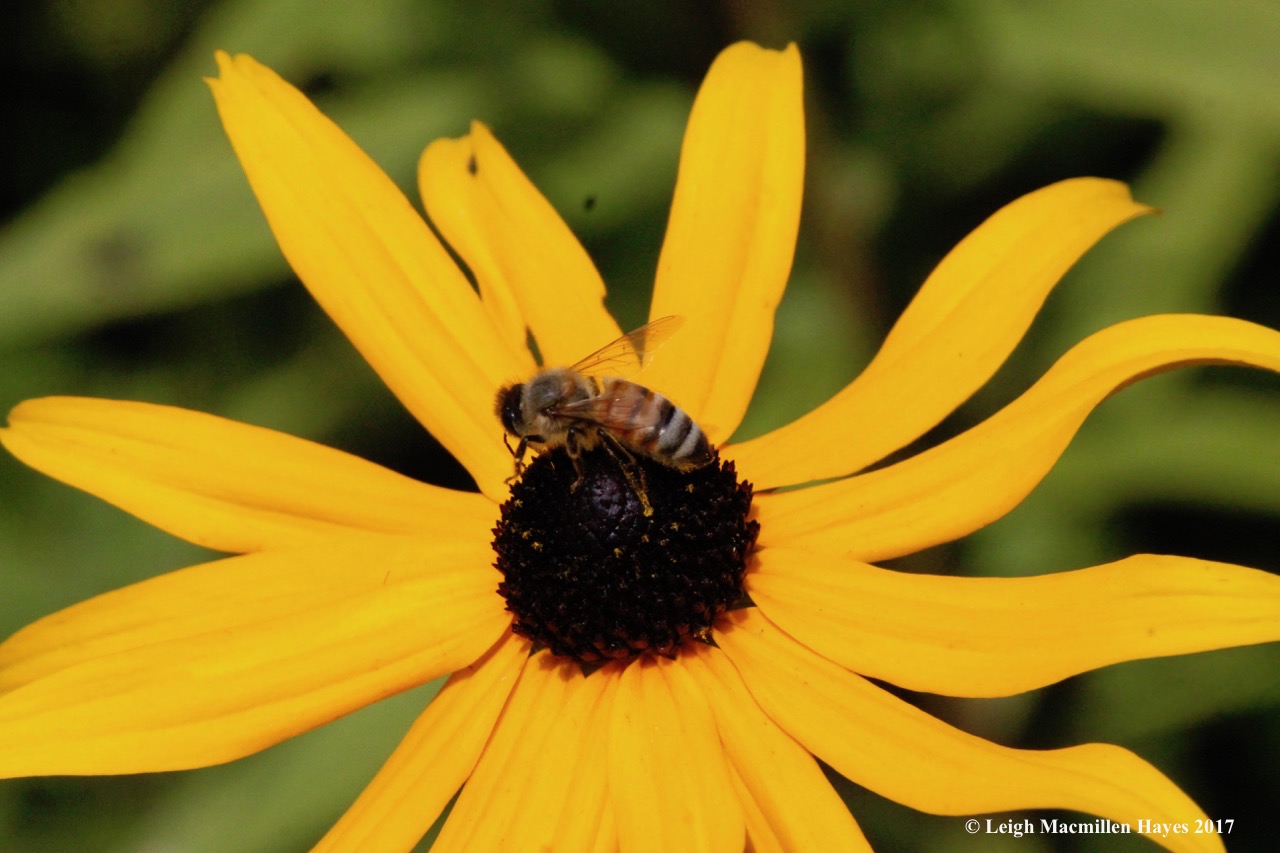
And so were Guy’s honeybees.

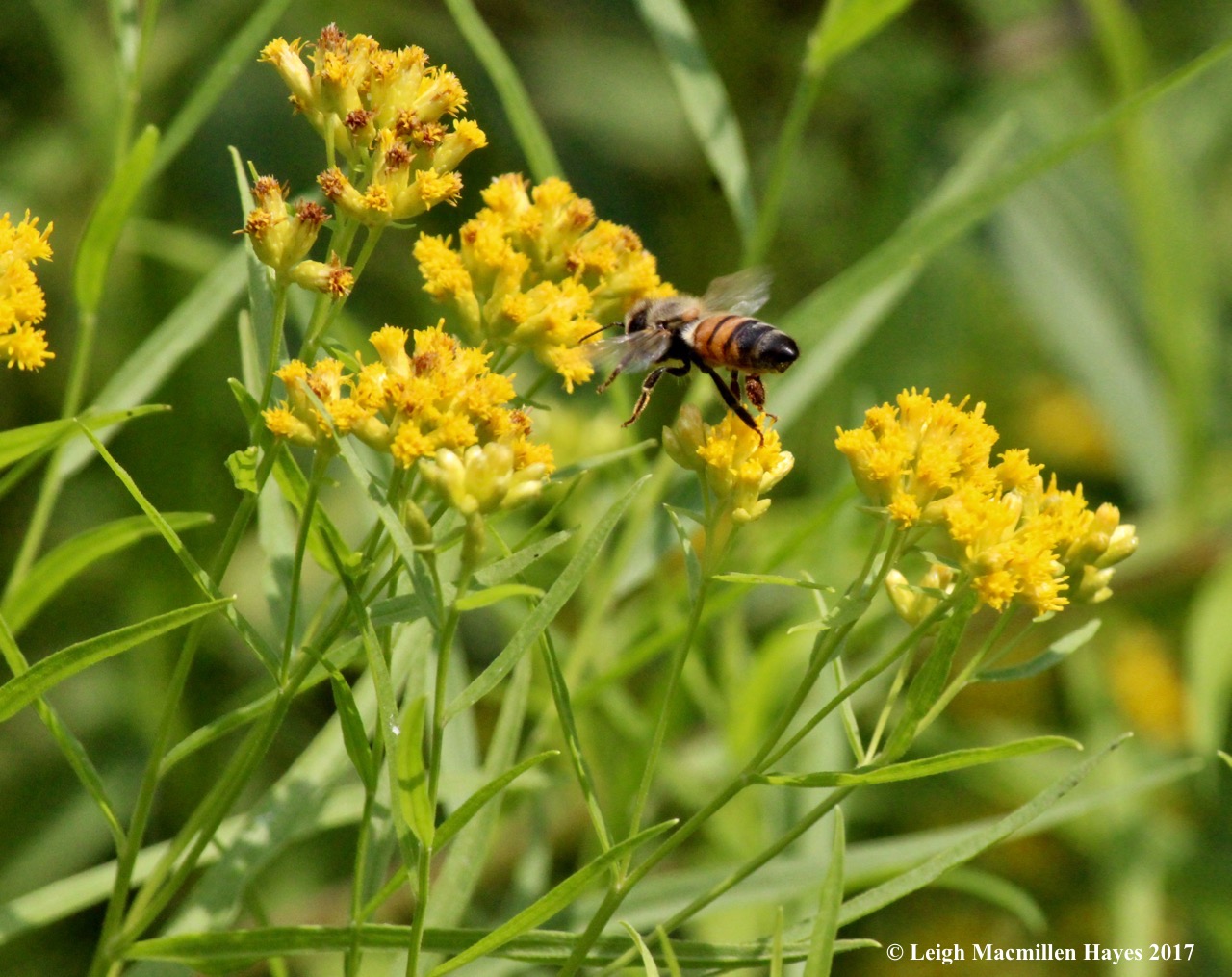
w-honeybee on the move

They were on the move everywhere we looked.

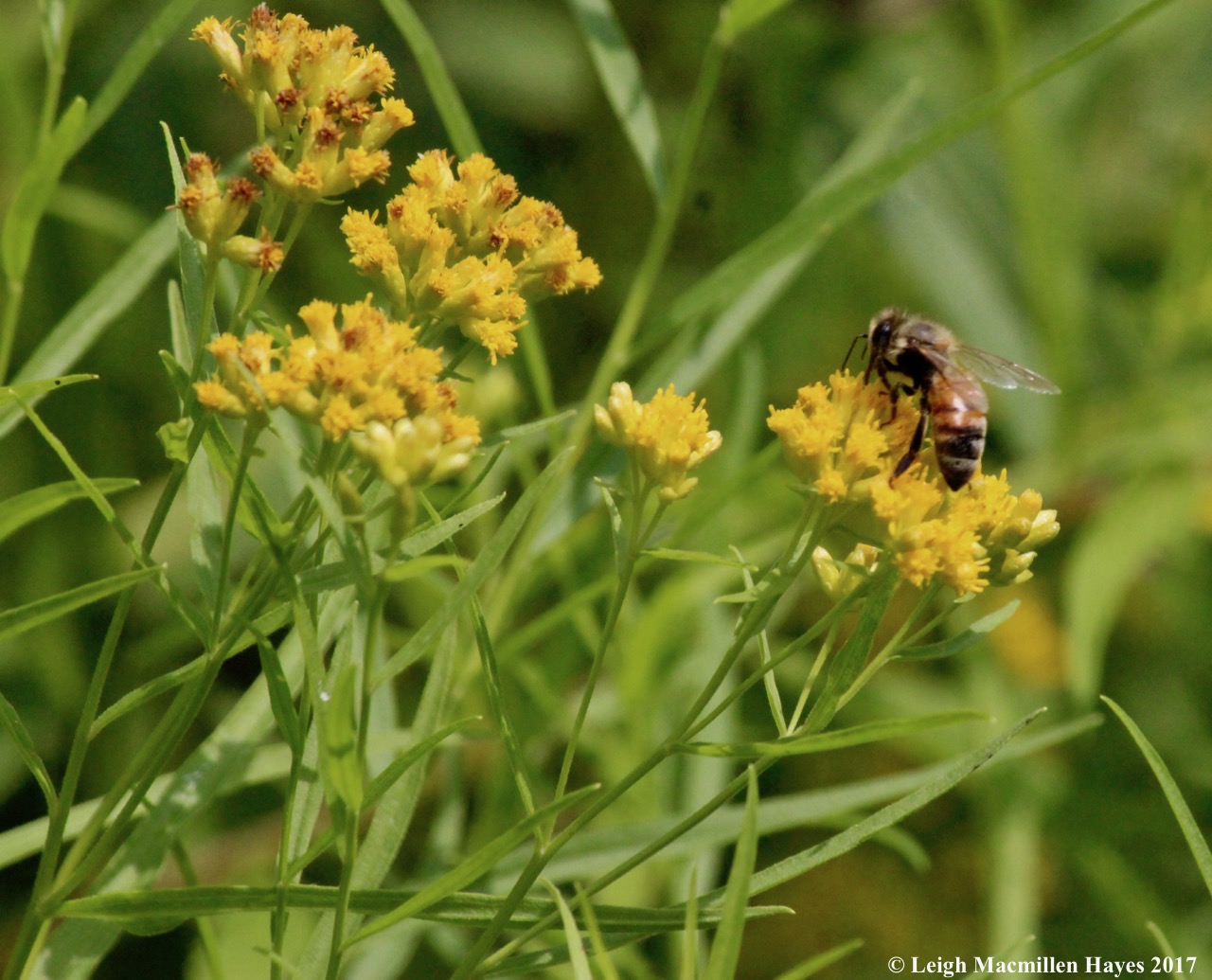
w-bee using probiscus for honey

We watched as they sucked nectar with their proboscis mouth part.

w-bumblebee on Joe Pye Weed

Bumblebees also took advantage of the sweet offerings.

w-bumble with loaded pollen baskets

And filled their pollen baskets with the goods.

w-frittilary 1

Not to be left out, a fritillary was among those seeking reward.

w-male meadowhawk

And because we were there, we saw meadowhawk dragonflies on the prowl, he being red . . .

w-female meadowhawk

and she similar but brown.

w-Guy in the field (1)

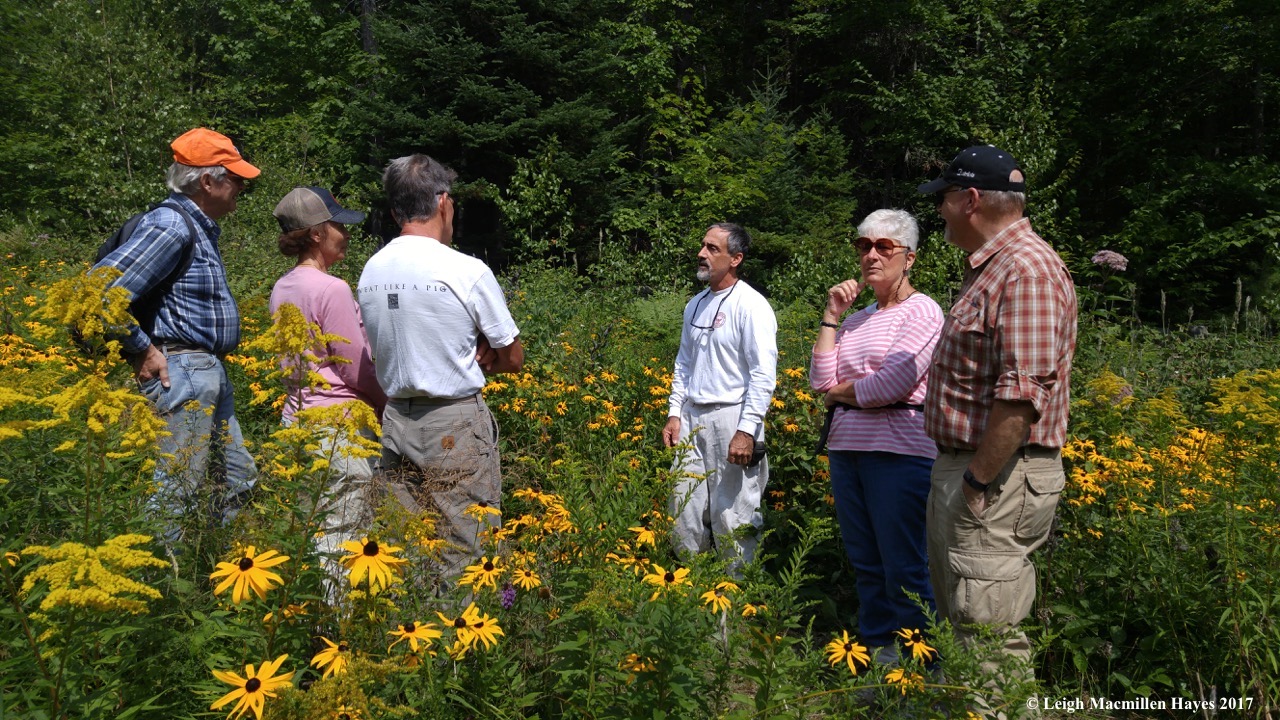
Guy was tickled to see his bees at work and share his knowledge to all as we listened.

w-linda by her flower meadow

Linda was thrilled to see so many enjoying what she and her husband, Heinrich, had created.

w-Aa, gs 1

And speaking of Heinrich, just before we left he had one more insect to share.

w-Aa, garden 2

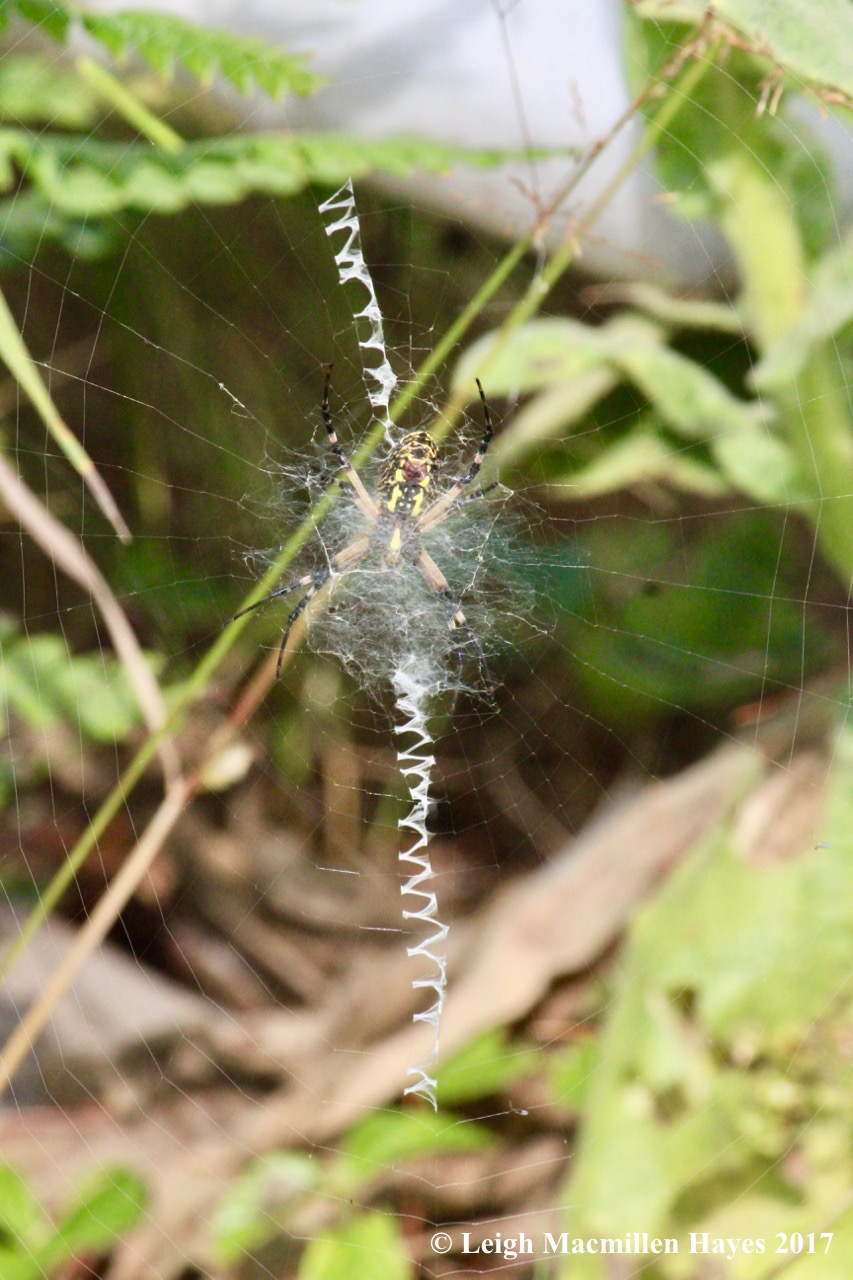
An orb spider known as a yellow and black garden spider or argiope aurantia had built its web near the greenhouse. I used to see these in our gardens frequently, but haven’t lately. Of course, I say that and tomorrow I’ll spy one.

w-Argiope aurantia, garden spider 4

In my brain, this is the smartest spider of them all for they create a web consisting of a series of concentric circles divided into sectors by lines that radiate out. And in the center–that amazing zigzag pattern, which is called a stabilimentum and perhaps intended to attract other insects. Or maybe its a message written in code and intended for a certain pig named Wilbur. This is Maine after all.

w-honey bee 2

We do know one message we learned in the last 24 hours: Bee kind–to one another for we’re all interconnected and we need each other to survive. And that includes letting the undesirables flourish in our yards, including the dandelions. Do so and watch them and just maybe you’ll realize they are desirable after all.

(Two final notes: Support your local beekeepers. Guy’s honey is available at Spice and Grain in Fryeburg; but really, you should buy honey from your area. And if you are interested in learning more about beekeeping, look for your local chapter of the Maine State Beekeepers Association.


Reverence Beside Holt Pond

There was a time when I’d either shout for my parents to kill a tiny spider in my bedroom or walk around the numerous apartments I lived in with my hands clenched, pacing until I built up enough nerve to do the critters in.

h-Holt Pond boardwalk

And today . . .

h-carpenter ants1

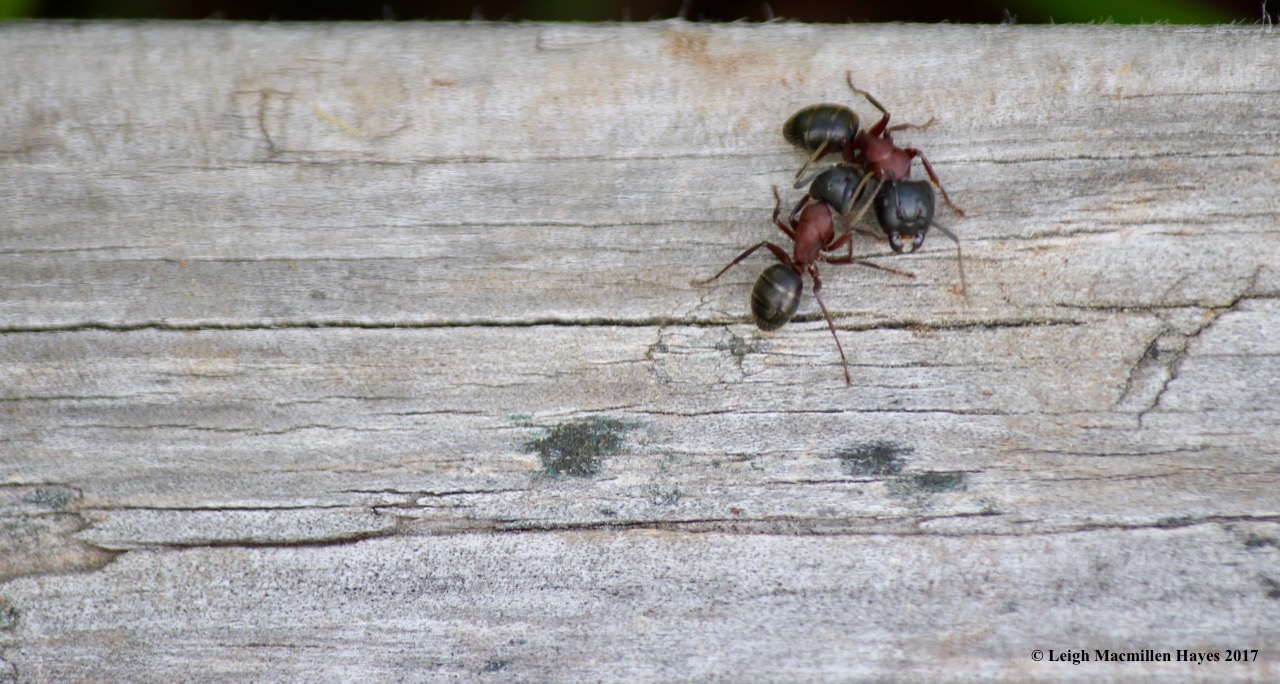
I stopped to watch carpenter ants dance with each other and was amazed by their mandibles, very large mandibles–the better to chew wood and create connecting tunnels in their nests.

h-lady beetles 1

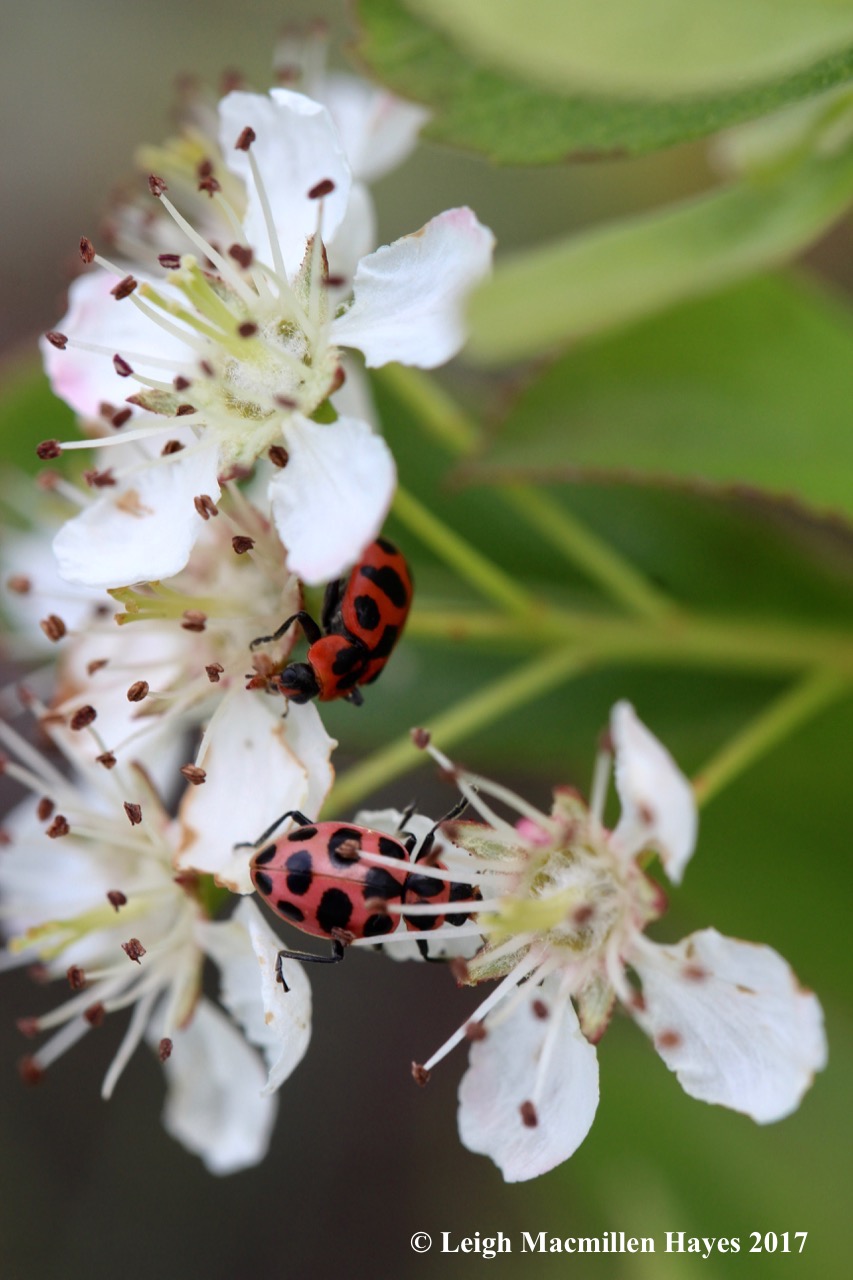
I admired convergent lady beetles feeding on pollen and nectar in the absence of prey.

h-wandering glider dragonfly

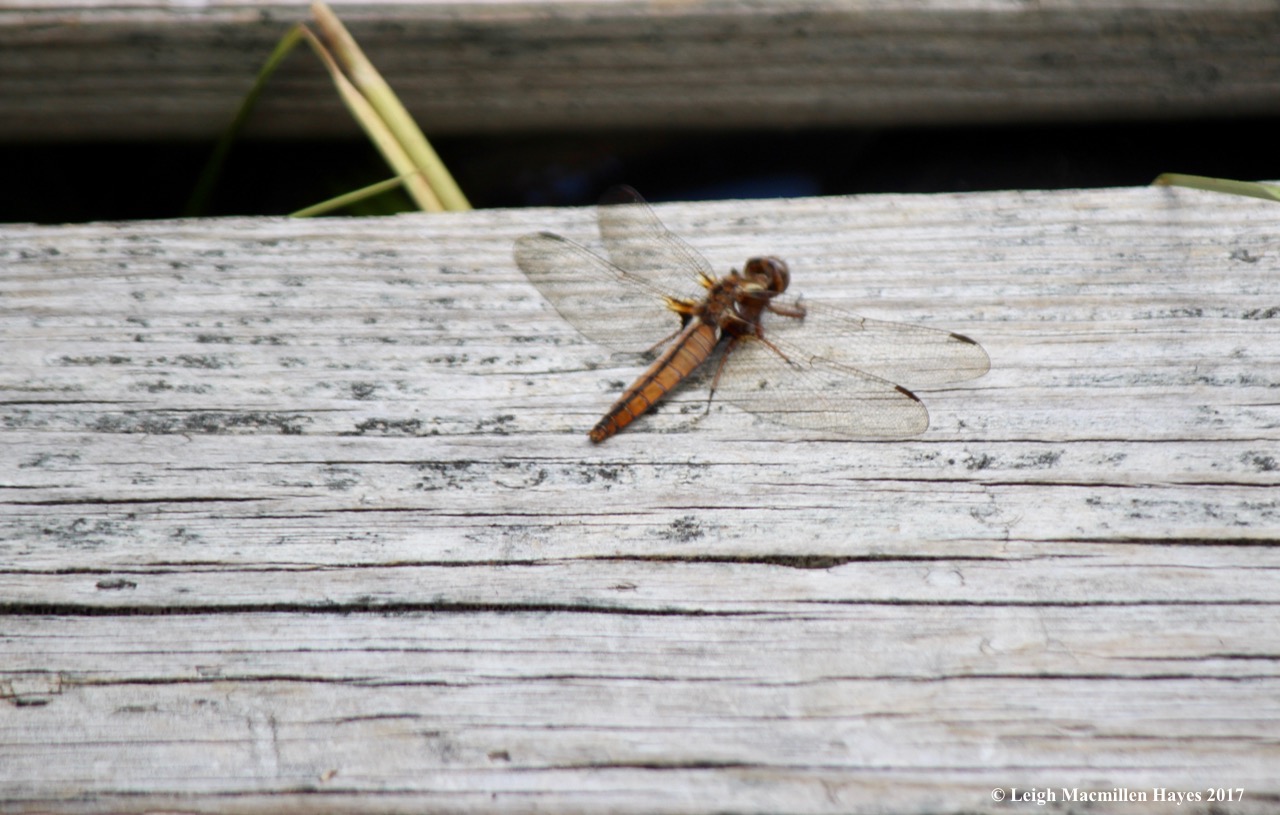
And celebrated the first dragonflies of the season.

hpp-boots

In hopes of seeing others, I got my boots wet.

h-dragonfly emerging

Thankfully, it was well worth it and I wasn’t disappointed as I had the opportunity to watch one dry its wings out before taking flight.

h-dragonfly nymph 1

Because I was beside water,  I knew to look for exoskeletons,

hp-dragonfly exo 2

and wonder about the transformation that took place.

hp-bog rosemary

But, it’s not just insects that were worth a wow moment. Bog rosemary bloomed.

h-blue flag iris 1

I spied my first blue flag iris of the season.

h-pitcher plant 1a

And awaited the blooms of pitcher plants.

h-cinnamon fern 2

The cinnamon fern’s fertile fronds also begged to be noticed.

h-royal fern

The same was true for the royal fern,

hp3-interrupted fern 1

and interrupted–all three members of the Osmundaceae family who, like me, don’t mind wet feet.

hp-tea bridge

As I moved through this wetland, I welcomed occasional glimpses of sun and warmer temps. But thanks to the coolness and breeze, the mosquitoes didn’t bother me–that and the fact that I finally started using Skeeter skidaddler, an all natural bug repellant made in Windham, Maine. (I bought it at my guy’s store a few years ago and have encouraged him to purchase more.)

h-tadpoles 1

Eventually, I left the trail and followed Grist Mill Road for a while, when what to my wondering eyes should appear in the newly created trenches–tadpoles galore.

h-aquatic larvae on rock

And aquatic insects climbing a rock as they prepared for their own metamorphosis.

h-veery 2

My intention was to follow the road all the way back to my truck, but at a side trail (the tire highway for those of you who know), I decided to retrace some of my steps and check on the dragonfly at the quaking bog. As I walked, I heard a spiraling song in the distance and then when I approached the bog boardwalk the veery showed its face–a sweet moment indeed.

h-red winged blackbird at quaking bog1

The red-winged blackbirds also sang, and my heart sank when I spied one near the dragonfly.

hp-dragonfly 5

But all was well and still he clung–in limbo. My hope is that his wings finally dried and predator he became, but I’ll never know for finally I had to leave and let nature take its course.

h-water spider 1

During my second visit, however, I had a chance to spy another who isn’t an insect, but is still worth a wonder–a water spider. I found it curious that there were dragonfly wings in the water. Oh my. Related to the spider’s presence? I don’t know.

And then I reminded myself that spiders aren’t insects, but both are invertebrates.

If you look back at the carpenter ants, you’ll see that they have a head, thorax and abdomen. And the thorax is where the three pairs of legs are attached. You can see it on the dragonfly as well. Insects also have eyes, antennae and mouthparts–like the ants’ mandibles. Most insects also have wings.

Spiders, however, have two main body parts–a combined head and thorax (or cephalothorax), and an abdomen. Their eyes, mouthparts and four pairs of legs are all part of the cephalothorax. Unlike insects, they can’t chew and they don’t have wings.

Insects belong to Insecta and spiders to Arachnida.

But in my book both are worth a wonder and so today I’m glad I had a chance to revere them.


Walking with Ursula

No matter when or where I walk, Ursula Duve is always along. She sees what I see, smells what I smell, feels what I feel, tastes what I taste and knows way more than I’ll ever know.

h-Ursula 2

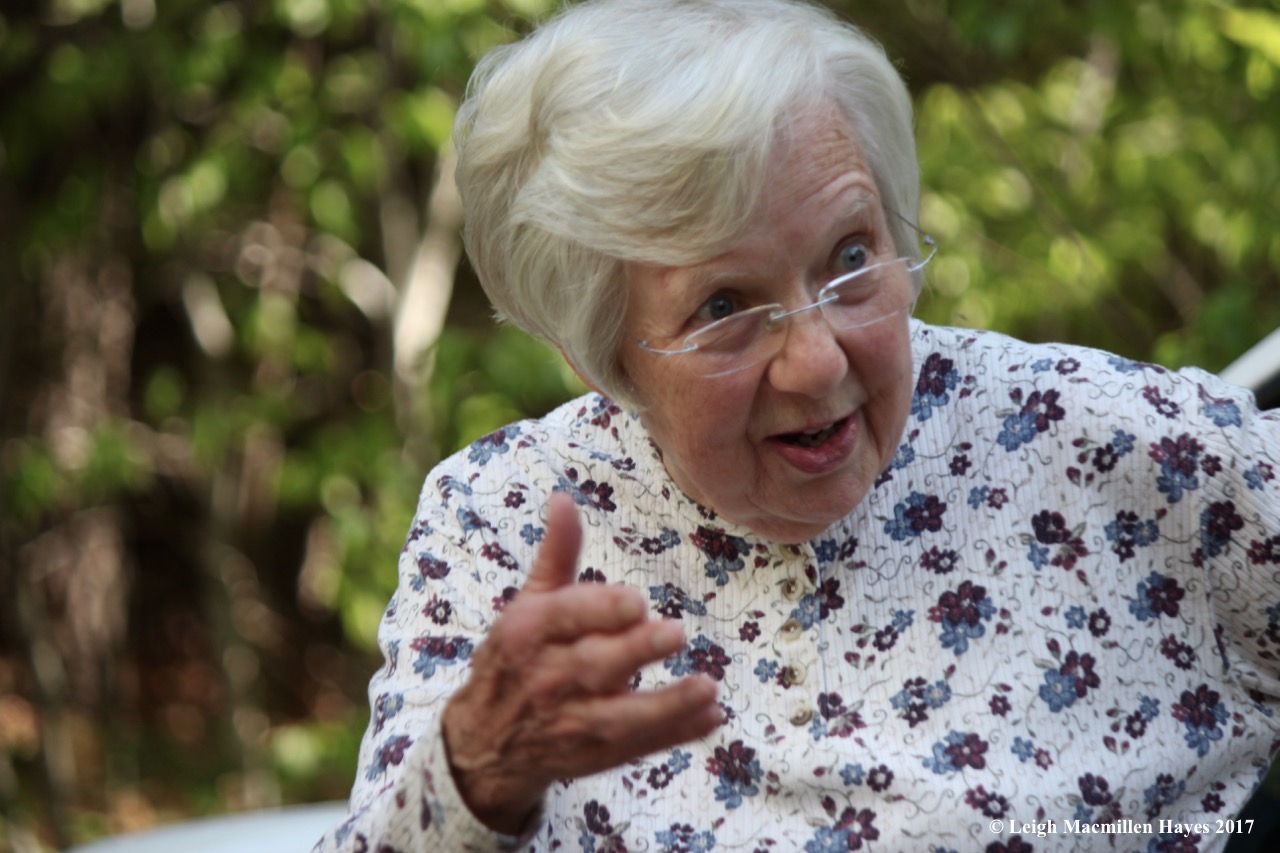
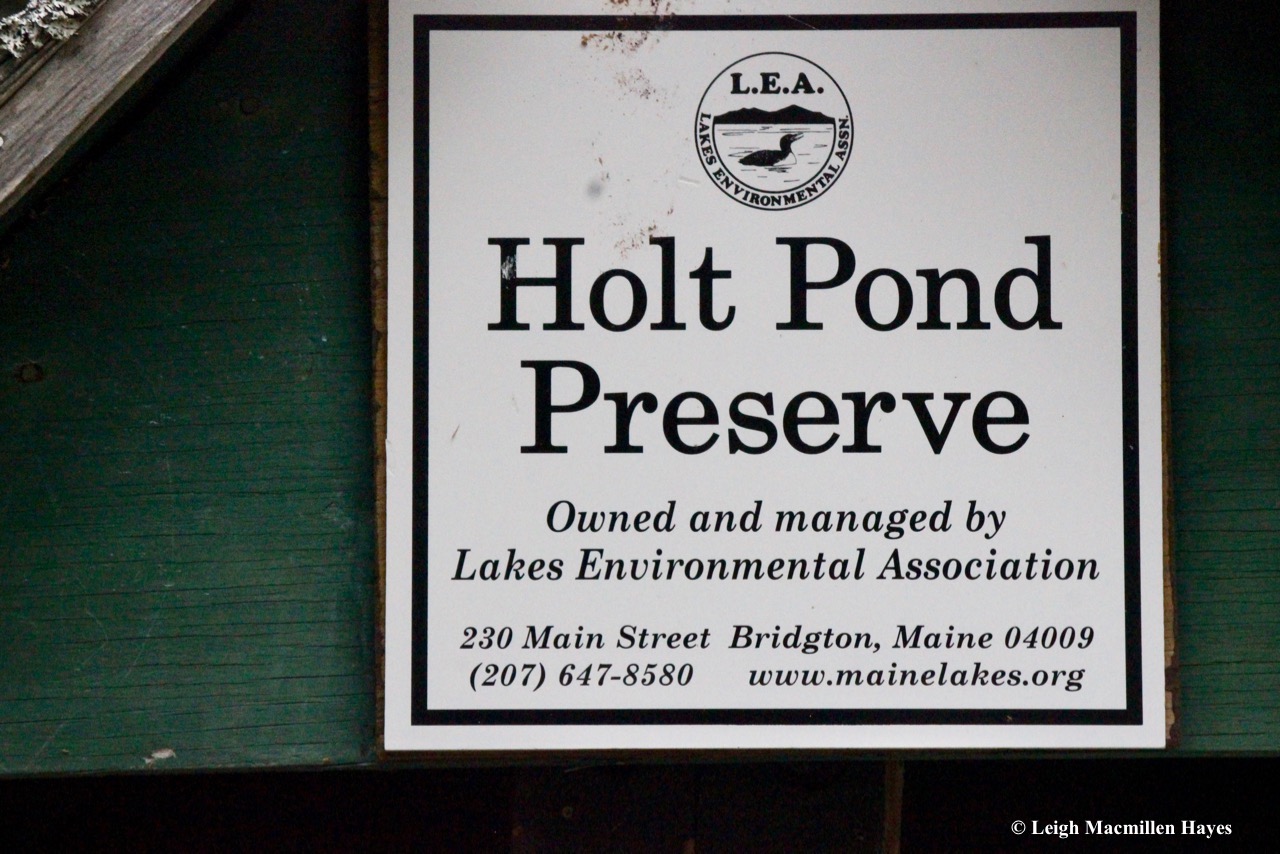
And so it was today that a bunch of us followed this delightful little woman as she led us down the trail at Lakes Environmental Association’s Holt Pond Preserve.

h-sign

We gathered in the parking lot, where the black flies tried to swallow us whole. But, we got the better of them and practiced mind over matter. Of course, bug spray and our flailing arms helped–or at least made us feel as if it was worth the effort.

h-wild oats 1

After an introductory greeting from LEA’s teacher/naturalist Mary Jewett, we stopped frequently as Ursula shared stories of plants and life. You see, she was born in Hamburg, Germany, and grew up during WWII so she has quite a few memories flowing through her system, but as she reminded us, with the bad comes the good. And the good comes from moments she associates with wildflowers, like this bellwort.

h-painted trillium

Having lived in the United States for 50+ years now, with the last nineteen in Maine, Ursula considers herself a Mainer despite her German accent because she loves it here. And she knows when and where each flower will bloom, such as the painted trillium.

h-chokeberry buds

Even those not yet in bloom drew her attention–this being a chokeberry along the first boardwalk.

h-pitcher 3

One of the finds Ursula enjoys sharing with others is the pitcher plant, a perennial herb with pitcher-shaped leaves. We noted that this particular one sported new flower buds.

h-pitcher flower

And on another, the otherworldly shape of last year’s now woody flower capsule–its job completed.

h-pitcher plant 1

Ursula is as awed as I am by the power of the pitcher plants. Color, scent (that I’ve never smelled) and nectar in glands near the top of the pitcher leaf attract insects. Once inside, those downward-pointing hairs make it difficult to leave. So what happens next? The insect eventually drowns in the rainwater, decomposes and is digested by the plant’s liquid, which turns phosphorus and nitrogen released by the insect into supplemental nutrients for the surrounding peat. Interestingly, no “joules” or units of energy are passed on through this process to the plant itself. The plant gathers its energy through the process of photosynthesis instead.

h-rhodora 1

As we continued, we were wowed once again–this time by the sight of the showy rhodora. Rhodora flowers fully before its leaves emerge and so today they were but small nubs located alternately along the shrub’s branches.

h-rhodora 3

But those flowers–oh my! The rose-purple bloom has what’s considered two lips–with the upper consisting of three lobes and the lower of two. And each produces ten purple-tipped stamen surrounding the pistil, where the pollen will germinate into a many-seeded capsule.

h-leatherleaf

Like the rhodora, another member of the heath family in bloom was the leatherleaf–with bell-shaped flowers formed in leaf axils and dangling below the stem as if it was laundry hung out to dry. One way to differentiate this plant from the highbush blueberries that can be found throughout the preserve, are the alternate, upward-pointing leaves, which decrease in size as your eye moves toward the tip of the stem.

h-honeysuckle 1

Just before we stepped out onto the Quaking Bog boardwalk, Mary pointed out a native honeysuckle. In my memory bank, I couldn’t remember ever seeing it before, and if I had, well . . . I was glad to make its acquaintance again.

h-green frog 2

And then we stepped onto the boardwalk. Folks up front paused to admire a green snake, while those of us in the back noticed a green frog. It stayed as calm as possible in hopes that we wouldn’t see it. Nice try.

H-Holt Pond

Like all ponds and lakes right now, the water level remains high and so walking the boardwalk meant wet hiking boots.

h-quaking bog 2

But that didn’t stop some of us. Fortunately, mine are waterproof.

h-green frog

Just before we stepped from the boardwalk back onto land, I saw that the frog was still there.

h-hobblebush flowers 1

On the trail again, another showy flower called for our attention–hobblebush.

h-hobblebush 1

While some looked fresh, others were beginning to pass and their fruits will soon form. We noted the sterile outer blooms that surround the inner array of small fertile flowers. And a beetle paying a visit.

h-Mayfly1

Speaking of insects, a slight movement on the ground pulled us earthward.

h-mayfly 2

We’d found a Mayfly–perhaps just emerged and its wings drying.

h-Indian Cucumber root 1

In the last wooded section we would cover for the day, we noticed that the two-tiered Indian Cucumber Roots have a few buds. I can’t wait for them to flower soon.

h-goldthread 2

Among the flowers that I’ll always associate with Ursula because she’s the first to have introduced me to them, is the goldthread, so named for its golden-colored root. We usually identify it by its cilantro-shaped leaves, but right now the dainty flowers are not to be missed. What looks like petals are actually sepals and there can be five to seven of them. And stamen–many. Goldthread can feature 5-25 stamen.

h-goldthread 3

Even the number of yellow-and-green pistils can vary from three to seven. Ah nature–forever making us think.

h-dwarf ginseng 1

The other plant I associate with Ursula is dwarf ginseng. Its explosive umbel consists of many flowers. And in this one, a dining crab spider.

h-spring tail wave

Finally, we found our way to Grist Mill Road and headed back toward the parking lot. But even on the road we found something to wonder about when one member of our group pointed to the curvy black design. In the past, I’ve always dismissed it as some sort of mineral associated with the dirt.

h-spring tails on sand1

Today, I learned it was none other than those good old spring tails or snow fleas we associate with late winter, but are really present all year. Something new to notice going forward.

h-Ursula1

At the end of our walk we all gave thanks to Mary and Ursula. We’d come away with refreshers and new learnings.

And we’d been reminded by Ursula that though she and her husband, Wolfgang, can no longer get out as often as they’d like, after sixty years of marriage they still have fun reminiscing about their many explorations together. A goal for all of us to set.

Most often this wildflower and bird enthusiast walks vicariously with me as she reads my blog entries, but today it was my immense pleasure to walk with her. Thank you, Ursula, for once again sharing your love of all things natural with the rest of us . . . and your optimistic philosophy of life.

Oh and a question for Wolfgang, while Ursula walked with us, did you get on the treadmill?

A Boulder Degree

When I began writing this blog in 2015, my intention was to focus on the wonder of the natural world in western Maine. But sometimes, it’s other wonders and points further west (or even east) that grab my attention.

c-Pena Drive 1

And so it was that midweek last week we headed west of our west and landed in Denver, Colorado, for an extra long weekend. All that being said, this photo with the Rockies in the background made it look like it was sunny when we landed. Not so. It even rains in Colorado, though nothing like we’ve experienced in New England this month, and we landed in the mist on Wednesday night. But we made several trips to the airport and Big Sky country enveloped us.

Not only that, but there were prairie dogs everywhere along Peña Drive. OK, so they aren’t in my backyard, thankfully, but they were incredibly cute. We deal with mole mounds, but prairie dog mounds seem to be even more pronounced. Still . . . I smiled with each sighting.

Our home base for the next four nights was a garden suite in the Arvada home of Donevon and Beth–an Airbnb rental. It was clean, comfortable and located between our two destinations: Boulder and Denver. We highly recommend this two-bedroom space should you be in the area. Don’t forget to say we recommended it–and be sure to pet Maggie.

c-to boulder 4

A road traveled often was the one that led us to Boulder and we soon became familiar with the wind farm to the left, which evoked memories of the first wind farm we ever encountered on Prince Edward Island in Canada when our sons were but youngsters. And this past weekend, it was the younger of the two for whom we made the journey.

c-looking toward boulder

His home these past years has been at the base of the mountains, where he’s earned an education on many levels.

c-Pearl Street2

With him, we walked along Pearl Street, mindful always of the artistic endeavors (and similarities to Church Street in Burlington, Vermont).

c-boulder lions

And among it all, one Lion appreciated the work of others who’d built a fountain.

c-peak to peak 2

Then we headed further northwest, toward Estes Park, enjoying the mountain and sky views along the route.

c-Estes Park1

Like Maine, spring was just arriving, adding a contrast from brown and green below to white summits.

c-elk 1

And in the midst of it all . . .

c-elk 2

elk stopping traffic. (Didn’t they know they were supposed to turn to their other right?)

c-Estes 2

We oohed and awed, but had a plane to meet and so we didn’t stay long.

c-16th Street Mall sign

Over the course of our journey we explored Denver as well, where we walked the 16th Street Mall a couple of times.  We lunched and we dined–our companions ever changing, which added to the highlights.

c-16th Street, Denver

In historic terms, 16th is such a blend, though leans more toward the modern than so many back East.

c-union station 1

But, history stood tall . . .

c-union station 2

and lit the way toward the future.

c-tattered 1

No visit is ever complete without a stop at our favorite bookstore–Tattered Cover.

c-aquarium sign

We also made time to learn about the exotic. Or so they seemed to our New England brains.

c-turtle 3 (1)

We viewed an alligator-snapping turtle–a first for us. According to a sign, adult males are known to move very little and in fact, may stay in the same location for up to ten years. There’s a lesson in that, I suppose–about perseverance, which our youngest can certainly attest to.

c-lizard 1

We noted the range of scales,

c-rattle 3

differing in patterns and . . .

c-fish scales 1

size. Those pointed to another lesson about diversity among people and their outer skins that shield inner experiences.

c-spider 1 (1)

While some displays denoted hairy situations,

c-starfish and tropical fish

others demonstrated the creativity that can overcome.

c-starfish 2

There were times when the world looked best from an upside-down position,

c-starfish1

but in the end, stardom ruled.

c-sting rays 10

So did rays of another sort, who flapped their “wings” in forward motion.

c-sting rays 11

And then there was the whisperer . . .

c-sting rays 13

who patiently encouraged slow movement . . .

c-sting rays 14

rewarded with a gentle stroke.

c-tiger 3

In the end, we had our favorites. The sting rays and the king of them all–a least expected resident in the aquarium, a Sumatran Tiger.

c-jellyfish 2

And jellyfish! Bioluminescent sea nettles–the fireflies of the aquatic world. (Memories swam through my mind of glowing night swims in my own youth.)

c-before the grads enter

But our main reason for heading west was to watch Folsom Stadium fill up.

c-the stage is set

The stage was set and bag pipes tuned.

c-grads entering

Ever so slowly, soon-to-be graduates marched in.

c-college of arts and sciences sign

We were most interested in the College of Arts and Sciences.

c-grads seated

When I sent a text message asking, “Where are you?” I received this response: “I’m sitting down and wearing black.” Ah, that boy! Or young man, I should say.

c-where's waldo? he's here!

But, he could not escape his mother’s eye and she found him in the sea of Waldos. Or rather, Buffs. (Have fun looking.)

c-degrees conferred1

A couple of hours and sunshine later, degrees were conferred and tassels moved over.

c-congrats from cousin

But then, a second ceremony for each school, and this for film studies, where his cousin from Denver (and also a CU grad) joined us and offered congratulations.

c-receiving his diploma

After speeches and honors, at last the diplomas were awarded.

c-it's official

And in the wink of an eye, he was done. Fini.

c-our grad

Our grad tolerated his mom–as the sun shone brilliantly.

c-our gang 2

We all gave thanks for Pat’s achievements, from Hannah and Shep, to cousin Christian, our grad Pat, and my guy.

c-congrats class of 2017

The signs . . .

c-be boulder sign

said . . .

c-forever buffs sign

it all.

c-family gathering 1

He did it. And our smiles beamed for our wonder-ful son. Forever a Buff. Congratulations to Pat on your CU Boulder degree. Best. Mother’s. Day. Gift. Ever.

Dear Aunt Ruth

My memories are snapshots of times spent with you and Uncle Bob and all the cousins. I loved visiting your home–whether we drove down the long road and driveway with Dad or walked via the old dump road and skeet field with Mom. Each time we arrived, you welcomed us with grace and your unassuming manner.

I remember sipping lemonade on the back porch, riding the wooden horse, and checking on Dale’s bunnies, especially Peter who soon became Mrs. Peter. I remember lunches at your kitchen table, and the time we bit into our tuna sandwiches only to discover the bread was filled with ants. Why that sticks with me, I don’t know, but we all thought it was funny. I remember family reunions, where food and laughter and aunts and uncles and cousins were abundant. Eventually, it evolved into a musical gathering–such was the talent of the clan.

But most of all, I remember your flower and vegetable gardens and your love of all things natural.

p-kiosk

And so today, as my guy and I ventured to a park we’d never before visited, I took you with us. I wanted to share with you our findings, just as you used to share stories of your gardens and wildlife sightings with us in Christmas cards after I moved north.

p-moose trail

Our first observation–a moose! Well, not really.

p-deer tracks

But we did see evidence of deer and I knew you’d be glad they were running away–leaving your gardens alone. Oh, and those pesky raccoons! Raising eight children didn’t seem to phase you, but those raccoons in the corn field–that did rattle you.

p-gardens on high

The gardens in these woods differ from yours–and right now, given the snow cover, the only ones visible were high up in pine trees, where yesterday’s snow offered nourishment to the mosses and lichens that grow there.

p-locust legume-like seed pod

We did, however, find one similarity–the legume-like seed pod from a locust tree. It’s almost time to sow the peas.

p-apples

In these woods, we also found a symbol of the past–it was once farmland as signified by the apple trees. If memory serves me right, there was a very climbable apple tree beside your driveway.

p-hidden acorn

And then we spied one impossible possibility–an acorn tucked into red maple bark. How did it get there? And will it germinate? If it does, what then?  I trust, you too, would have noticed such and wondered.

p-pratt brook 2

We followed the trails through the woods and sometimes beside the brook for which the property was named–Pratt Brook. It was a bit more bubbly than the creek in your yard, but such is the snow melt right now.

p-artist conks

Along the way, I noted a family of artist conks decorating a tree. And, that, of course, brought to mind the box of colored pencils you (or perhaps it was the cousins, though Neal had no qualms about telling us that our gifts were really chosen by you) gave me long ago. I cherished that box and used those pencils with care. They lasted into my early adulthood.

p-colors 1 (1)

And then my guy gifted me another box, which I again revere. One of my favorite pastimes is to sit and sketch and then add a dash of color. Whenever I do, Aunt Ruth, you are with me.

p-powerline

For a while we followed the power line trail, aka Bear Trail. As you can see, we tramped in the footsteps of many others who’ve traveled this way just today–via skis, snowshoes and hiking boots like us. We were an hour from home and close to the ocean, so the snow level was about six inches compared to at least two feet we walk upon daily. But today’s sun warmed us and initiated a meltdown.

p-spider

I didn’t mind being on the power line for a bit, for it was here that we saw our only sign of wildlife.

p-aster 1

It was also the spot where I knew we’d find wildflowers–and I wasn’t disappointed. Asters like these, and goldenrods, spireas and berries displayed their winter forms.

p-beetle 3

Back into the woods, we were almost done, when we spied this woodwork, carved by bark beetles.

p-bark beetles 1 (1)

And I was again reminded of my past observations when I moved a log and discovered a gnawer on the job.

p-me

The intricate work reminded me of Uncle Bob’s woodworking skills and I knew you’d appreciate that. You’d also appreciate that as I write, my guy is watching a National Geographic show about Wild Scotland.

Thanks for the memories, Aunt Ruth. And thanks for making time for us and showing an interest in all that we did–always as curious about our adventures as those of your brood. You were a remarkable woman and a genuine Yankee whom I was blessed to have as a part of my life.

Fondly, Leigh


Book of March: Upstream

As friends often do, one, whom we fondly call Señora because she was our sons’ high school Spanish teacher, recommended a book to me.

And as I often do, I visited my favorite independent bookstore, Bridgton Books, took a quick look and made a purchase.

m-cover-1

Book of March: Upstream

Upstream by Mary Oliver is a collection of essays, many which she previously published elsewhere. In 175 pages, the essays span a lifetime of writing–but even more so a lifetime of living. And noticing. And contemplating. And wondering. And making connections. And wondering some more. But all the time, believing, even in that which she could not see or quite comprehend.

She speaks to the writing process, a process I have embraced for what seems like forever. Only a few minutes ago I shared with a friend that a final draft is never really final. Each time we return to the words, we find other ways of playing with them.

She speaks to the natural world that she has spent a lifetime observing and recreates it on the printed page with elaborate detail. And so, with each sentence, I travel beside her, whether she wants me to or not, for Ms. Oliver embraces solo moments of exploration. I get that.

She speaks of Emerson and Whitman and Wordsworth and Poe. And actually, about the latter, she turns my head for she writes about him with such compassion.

She speaks of the reality of the universe and reminds us to exist. She is. We are.

She speaks of observing a mother spider and her egg sacs in the cellar of a rented home over the course of several months, and I sense her wonder. As a child, I was afraid of those cellar spiders. As an adult, I’m intrigued by them.

And so today, I took Ms. Oliver with me when I stepped into the woods.

m-fog

It was a snow-eating foggy  sort of day and the dampness grazed my cheeks.

m-preweb-raindrops-and-crosses

As my snowshoes slapped the hardened snow pack, rain drops drew my focus. On this particular pine sapling, I was drawn to the crosses formed by raindrops and needles, which seemed apropos given that today is Ash Wednesday. And then I noticed the spider silk.

m-web-1a

Every where I turned, long beaded strands of miniature raindrops connected one branch to the next.

m-web-connections-2

What I soon realized, however, was that the strands weren’t merely on single trees. Each tree was connected to the next throughout the forest. As I moved slowly about, I inadvertently snapped some of those lines and felt a sense of sorrow for all that work lost.

m-leaf-attachment

And because I was looking, I found other curious sites that I didn’t expect. That is one of the take-away messages of Ms. Oliver’s book–get outside and even if you are searching for something specific that you may not find, it’s what you see along the way that is more important.

m-page

As I often do when a book such as this one pulls me in, I turn back the bottoms of pages to remind myself that there are passages I will want to revisit. If the corner is turned back and back again, as this one, it means there is something to reread on this page and the one to follow.

For me, Upstream is that type of a book. It’s broken into five sections. Ah, the word broken–it doesn’t feel right in that last sentence because there is nothing broken about the book. Perhaps divided is a better word. Or maybe there’s another that will come to me eventually. That’s the thing about the writing process–it’s never final as I said above. Anyway, I found myself relating to each section with a different part of my soul.

m-rain-drop-globe

And give thanks that Ms. Oliver chose to share her reflections in this manner. I also thank Señora for the recommendation.

Upstream by Mary Oliver, Penguin Press, 2016

Forever a Student

Once the rain let up, I donned my Boggs and headed out the door in mid-afternoon, not sure where exactly I was headed. But after reaching the snowmobile trail, I decided to turn south. Since the spring, I’ve been to the vernal pool on the neighboring property numerous times, but not much beyond in that direction.

h-new-bridge

Part of the reason was that a local industry, of which we now have so few, was constructing a new building and had cut off the trail. Oh, I could have bushwhacked around the project, but the other part of the reason is that it’s a heavy tick zone and I normally avoid it come warmer weather. Given the new building, I wasn’t sure what to expect today, but as I passed through the stonewall, I discovered they’d added a bridge over a new water diversion and the trail was open. I’m glad for the small industry, but simultaneously sad that the willows are gone. No more pussy willows in the spring. Or willow galls, though I suppose that’s good news. And who knows, perhaps some viable willow seeds will spring forth in this place–a hypothesis to be tested.

h-artist-conk-top

After crossing behind the building, I moved through an opening in the next stone wall, and felt right at home again–in one of my local classrooms. This is one where I’m often the solo student, as was the case today.

h-artist-conk-2

I revisited an old stump, where art class was about to begin. The underside of the artist’s conk welcomed a sketch, but I left the canvas blank for another day.

h-gate

In social studies class, I took a look at former land uses. The wall opening and split stone gate bars helped me envision the fields that once were cleared. I followed several walls, which switched from single to double and even double-double, or so it seemed as one section was at least six feet wide and a football field long (The New England Patriots are winning in CA right now!). Barbed wire indicated the need to keep animals out and flat land with trees not a hundred years old spoke to the land’s former plowed use.

h-vp

A few minutes later, I moved over an old rock mound and stood before my science teacher–another vernal pool. As I recalled, this one dries out early in the season and grasses and other vegetation grow prolifically here. But unlike the smaller pool closer to home, this one held some water from the recent rain.

h-boots

As any student should, I stepped through the door and sunk my feet into class.

h-cinnamon-fern

Cinnamon ferns reminded me that they keep their fuzziness right up to the end.

h-birdnest-1

I wondered about strips of paper birch dangling from a young sapling and then realized I was looking at the remains of a nest–maybe a vireo.

h-seeds

I questioned how the long-beaked sedge seedheads came to be bent over–by weather or wildlife or just because their time had come?

h-vp-bulrush-a-grass

While bulrushes (actually a grass) offered flowing fountains pouring into the future, their seeds still clung–as did a spider web.

h-vp-steeplebush-web

And more spiders eluded me, though their webs stood strong among the steeplebush capsules.

h-vp-crystal-ballseeds

A few raindrops dangled like ornaments from a holiday decoration.

h-vp-backside-of-sensitive-fern-beads

And bead-like spore structures on sensitive fern’s fertile stalk waited for another day to spread their good news.

h-lichen-or-fungus-2

I finally left the vernal pool, but before heading back down the hallway, small salmon-colored growths stopped me. Lichen? Fungi? I didn’t think I’d ever seen it before and so it was a new lesson.

h-lichen-or-fungus

My first thought–lichen. In a way, it resembled the tops of British Soldiers that grow prolifically here. But my latest thought is red tree brain fungi (Peniophora rufa) . I may be wrong, but that’s what being a student is all about.

h-woodpecker-1

With each new lesson, I was also thankful for those that were reinforced, such as the chisel-like and shredded works of pileated woodpeckers. I used to think such trees were the result of bear activity.

h-woodpecker-2

I’m always awed by the resulting sculpture left behind by those powerful birds–their strong beaks stabbing away at the bark until they’ve consumed a meal of carpenter ants and beetles. Thankfully, their skulls are thick and spongy–allowing their brains to absorb the impact of such repeated drilling.

h-field-succession-layers

At a field, I paused to admire the layers–a testament to field succession. These woods are constantly changing.

h-male-turkey-scat-j

One thing that doesn’t change is the signature of a Tom Turkey–usually offered in straight or J formation.

h-slime-3

h-tubifera-ferruginosa

h-slime-2

At another wetland, I poked around and then my eye focused in on something decorating a fallen tree. A slime mold perhaps? Red raspberry slime? In one rendition it seemed to have a crater-like surface, while another was more flower-like with petals spraying from a center.

h-hemlock-cinnamon

At last I entered a hemlock forest where the cinnamon inner bark stood out on the wet trees. If not for the scales, I realized it would be easy to confuse this bark with that of red oak, but a quick look up the trunk and the answer was obvious.

h-striped-maple-seeds

As I walked back toward home, I looked along parts of the trail I’d skipped while exploring in the woods. And I wasn’t disappointed when I discovered one of the few striped maple trees–still bearing the seeds it produced last year. Why did they cling still? When released, will they be viable?

h-pine-suds

And then, a sight I was hoping for presented itself when I returned to our woodlot. Froth at the base of a pine tree. It’s not unusual and occurs following a rain event such as we’d had all night and morning. I had hoped to see some foam today, and felt rewarded for my efforts. So what causes the tree to froth? Well, like all lessons, there are several possibilities. Maine Master Naturalist Science Advisor Fred Cichocki recently had this to say about it: “I’ve noticed this phenomenon often, and in every case I’ve seen it’s associated with white pine, and always after a dry spell followed by heavy rain. Now, conifers, especially, produce hydrocarbons called terpenes (it’s what gives them their lovely pine, balsam and fir scent). These hydrocarbons are hydrophobic by nature and form immiscible films on water. During a heavy rain, water running down the trunk of a white pine picks up terpenes on the way. Air (having accumulated in bark spaces, channels, etc. perhaps under slight pressure) then “bubbles” through terpene-water films producing a froth. Recall the cleaning products PineSol, and the like. They are made from terpenes, and produce copious bubbles when shaken. One could get the same result directly by shaking terpentine in water, or by bubbling air through a terpentine-water mixture with a straw  . . .  Of course, it may be that other substances (salts, etc.) enhance the frothing.”

No matter how much I have learned on this life-long course, there’s always more. I certainly don’t have all the answers and for that I am thankful. I’m forever a student.


A Color-filled Mondate

The fleeting fall foliage offered the backdrop for our afternoon Mondate.

h-orchard-1

We started with a stop at Five Fields Farm to purchase a pumpkin and enjoy a chat with owners Tom and June Gyger.

h-pond-from-orchard

Their orchard overlooks Holt Pond, that speck of blue among the trees. Because of this year’s drought, the water is lower than ever, but Tom pointed out that during heavy rainstorms they’ve often watched it quickly fill and then lower as the water pours in and then slowly flows down the Muddy River. We need such a storm.

h-bridge

In fact, once we got onto the trail, my guy tested a bridge he’d built in the spring–noting that currently it’s useless because no water flowed below.

h-trail-work

We continued on, turning our hike into a trail clearing activity because this is a trail we steward for Lakes Environmental Association. A few blow downs were easily cleared–by my guy. I worked as well–documenting his good deeds.

h-carpet-2

But really, it was the color that drew our attention.

h-feet-n-leaves

At our feet, a rich carpet covered the forest floor.

h-carpet-5

It’s vibrant variety was pre-determined by the species. Red maple leaves offer shades of red or scarlet, sugar maple leaves vary from brilliant orange to fiery red to yellow, while striped maple, quaking aspen and birch feature only yellow. Ash leaves range from yellow to magenta and beech offers up a golden bronze.

h-maple1

So, how does it work? It’s been dry and many thought that would mean a lack of color this fall. Yes, some trees will dry up and their leaves wither and fall. But for most, it’s a different story as old as time.

h-maple-2

During the spring and summer the leaves worked as food-processors for their trees. Their numerous cells contain chlorophyll or the green coloration. The chlorophyll absorbed energy from the sunlight, which it then used to change carbon dioxide and water to  sugars and starch (think carbohydrates).

h-quaking-aspen

But, also at work alongside the green pigment, yellow and orange carotenoids. As you can see with these quaking aspen leaves, the carotenoids are masked by the greater amount of green coloring for most of their season.

h-sugar-maples-in-breeze

With the change in daylight hours and temperature, the leaves go on strike from processing food. And thus, the chlorophyll breaks down, green color begins to disappear and the yellowish color becomes visible to our delight.

h-red-and-green

At the same time, other chemical changes occur that cause the formation of more pigments from red . . .

h-ash-leaf1

to purple. The red pigment called anthocyanin forms.

h-paint-2-yellows

It’s like being in nature’s paint store.

h-paint-1

And I have to admit that it occurred to me I should spend some time sorting leaves by color  and trying to match them to paint chips so I could better describe the gems before me.

h-paint-reds

OK, so I didn’t dwell on that thought for too long, just long enough to realize that it would need to be a quick assessment before the leaves dry up and all become a shade of brown.

h-pond-6

At last we reached a vantage point from which to view the pond. I often stand across the way on the quaking bog boardwalk, so looking back provided a different perspective.

h-pond-2

And those swamp maples–oh my!

h-pond-4

For this beautiful display to occur, we must have warm sunny days followed by cool nights. The sugar is made in the leaves during the day, but those cool nights trap it there, preventing it from moving into the tree.

h-leaves-in-field

Not only do the colors vary, but the degree of color may also be different from tree to tree or even on one tree. Direct exposure to the sun may turn leaves red on one side of a tree and they may be yellow on the shady side.

h-sky-view

As for clouds and rain, too much in the fall means less red (a bright side of the drought). On those types of days it also tends to be warmer at night, thus changing up the process and providing duller colors. Not so this year, thankfully.

h-leaf-on-hemlock

There was nothing dull about what we saw today, including the presentation of fallen leaves, some captured by their evergreen comrades.

h-maple-web

A few dangled like ornaments hung by spiders.

h-maple-on-fern

Others held on precariously, attached only by a few points.

h-hobble-shadows

And even others portrayed a shadow show.

h-leaves-in-brook-1

At last we reached a small stream, our turn-around point, where all gathered to show off their glory.

h-nessie

We took one last look at the pond while making our way back. And what to my wondering eyes should appear–Nessie. Or maybe I should name her Holtie, the Holt Pond Monster! Do you see her?

My guy–he chuckled at me. He often does that. It’s OK. I know what I saw.

You might say our Mondates are always colorful, but today’s was especially color-filled as we celebrated the work of the leaves.