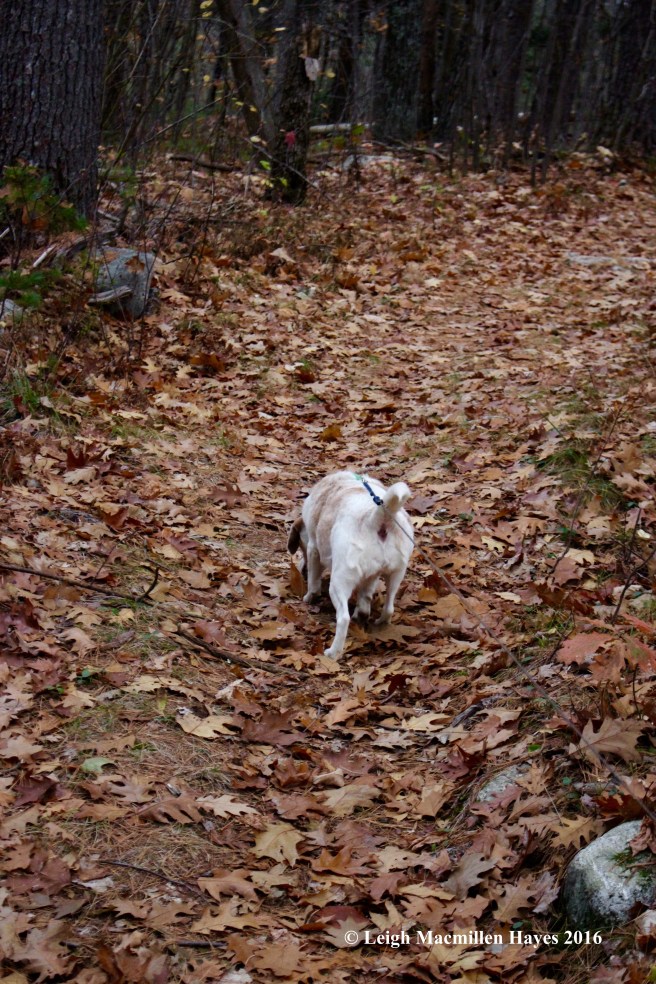
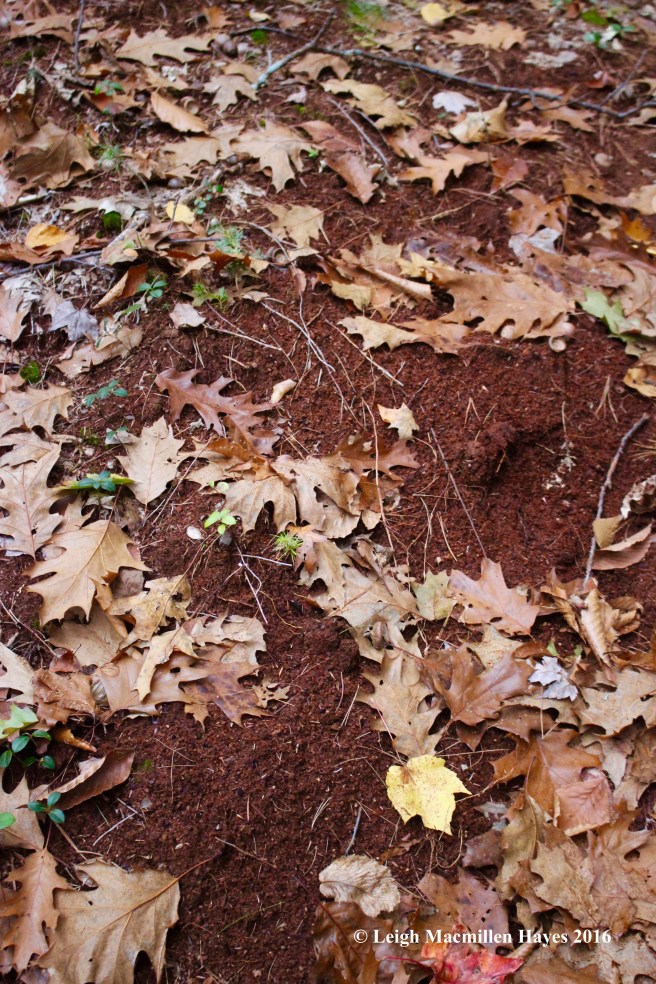
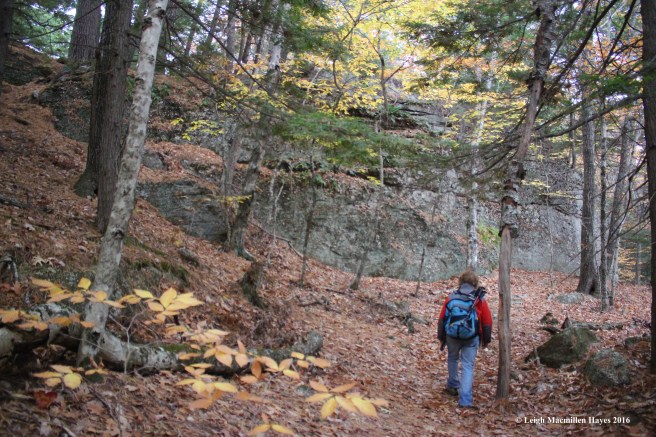
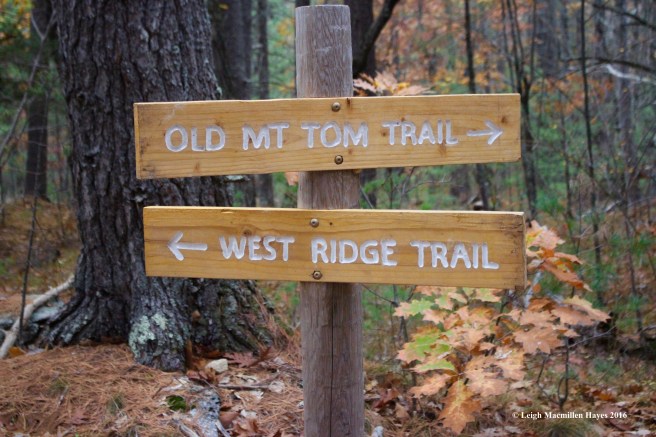
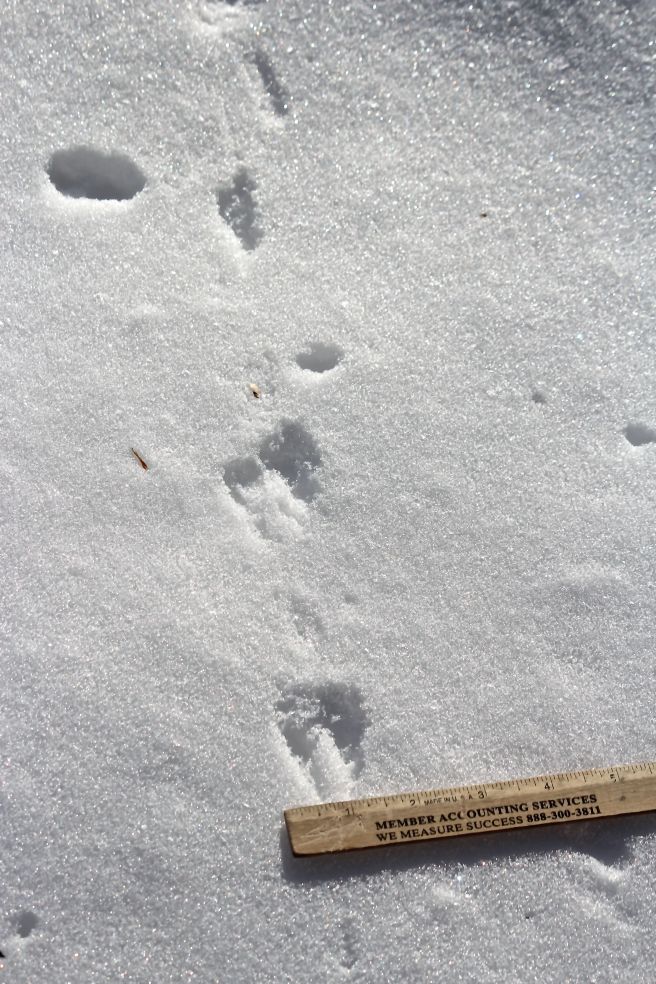
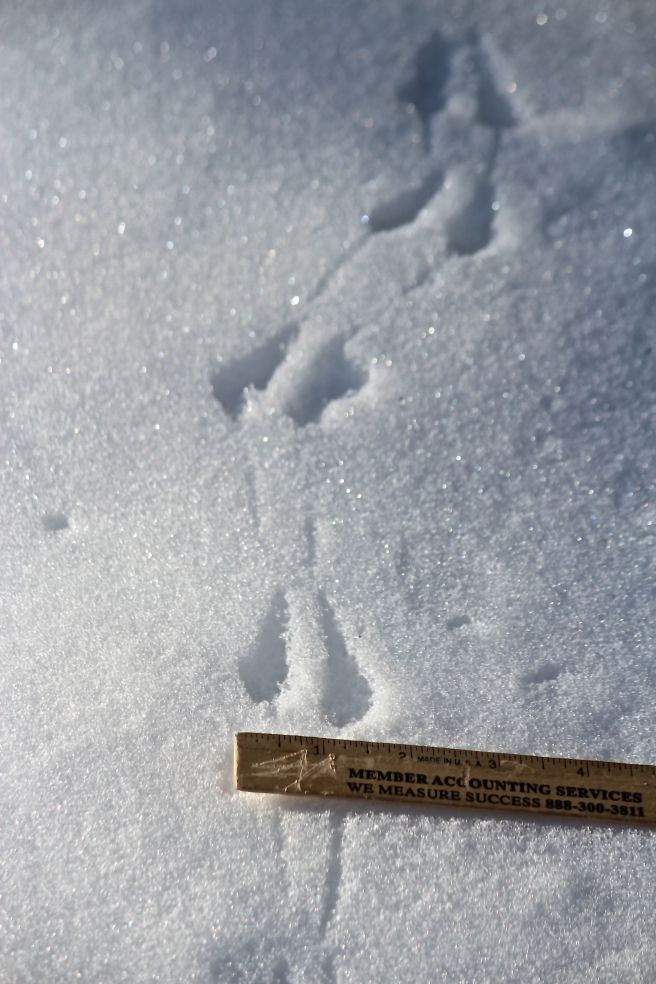
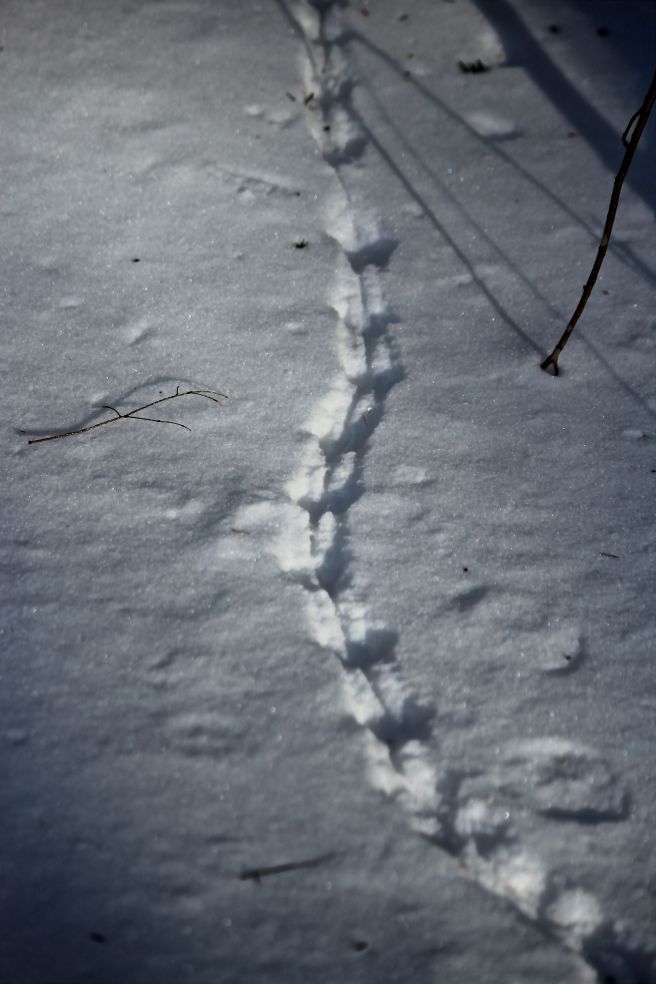
Perley Pond Preserve Presents

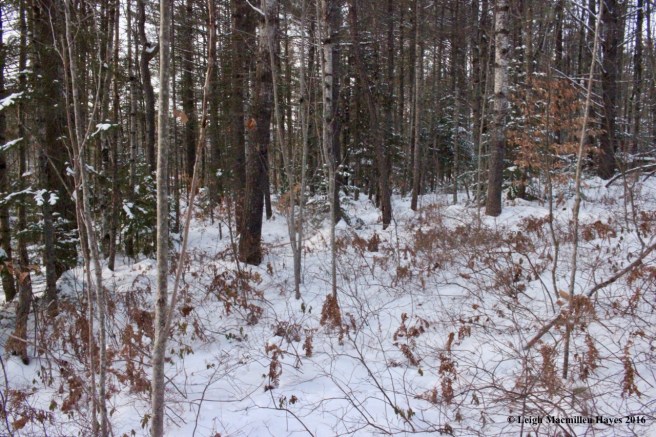
I love to learn and today’s presence offered such as I explored Loon Echo Land Trust’s Perley Pond/Northwest River Preserve in Sebago. I’ll be leading a hike there this Saturday, so if you are so inclined, I hope you’ll come along. But if you can’t, then please read on. (Note: Jon Evans, Stewardship Manager for LELT will be with me on Saturday, and he’ll have so much more to offer about the lay of the land, which was acquired by the trust in 2014. Today marked my first visit to this property.)

p-land-trust-sign-1

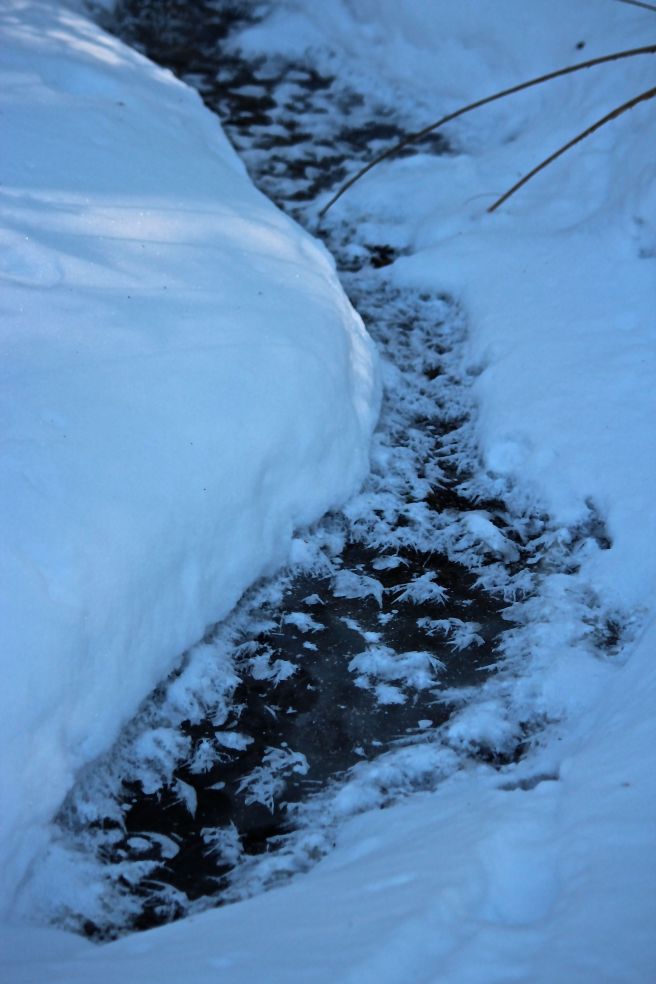
There are three entry points along Folly Road and I began my reconnaissance mission at the first, where I didn’t get far due to a stream not quite frozen, but still found plenty to examine.

p-evening-primrose

Evening Primrose stood at alert in the field just off the road. Tall in stature, its distinctive seed pods peeled back in four parts and small seeds looked like fresh ground pepper on the snow.
p-black-eyed-susan

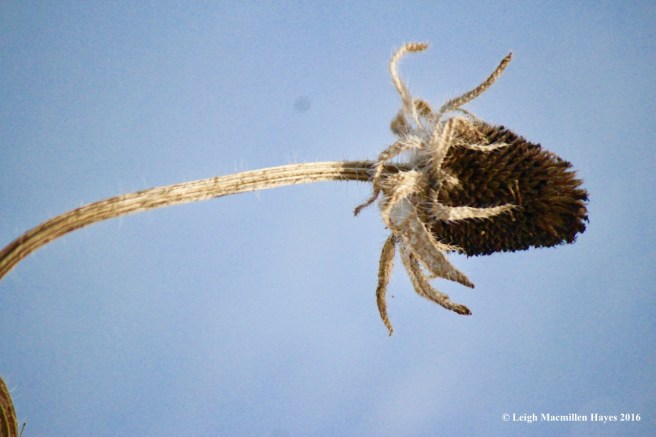
Black-eyed Susans also decorated this space, some leaning over to share their offerings. The hairy bracts and gumdrop shape made these easy to spot.

p-beaked-hazelnut-1

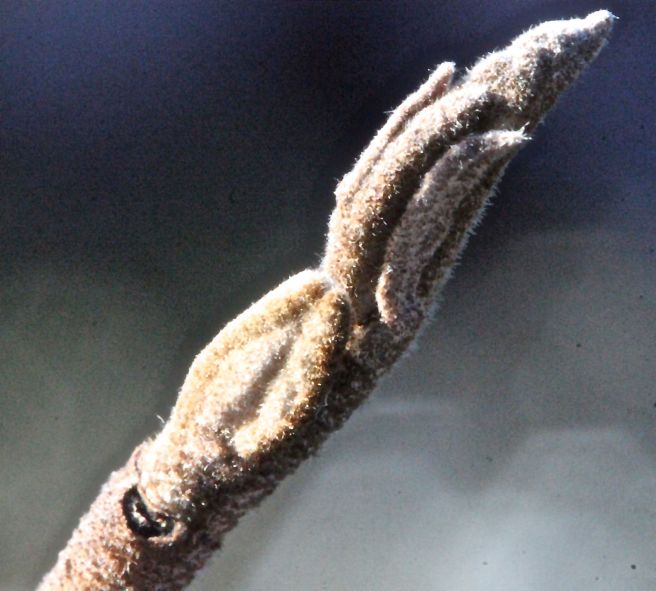
One of my favorite finds in the first section of the property–the hairy twig, catkin, leaf and bud of a Beaked Hazelnut. Just last week I saw the same, well, minus the catkins, in Lovell. And knowing that certain leaves are marcescent, e.g. remain attached to the stem throughout some or most of the winter like oak, witch hazel and especially beech, I was thrown off by this other type. It had me thinking birch and well it should have because Beaked Hazelnut is a member of the birch family. But #1, though a hairy twig like Yellow and Paper Birch, the leaf base wasn’t right for either, and #2, I didn’t recall ever seeing these leaves still dangling in later fall/early winter. The trees taught me a lesson today–the most perfect of gifts–a few Beaked Hazelnut leaves continued to dangle, though most were turning quite dark in hue and I suspected will fall soon, and, I found Gray Birch leaves also clinging. Just when I thought I knew everything, nature proved there’s more to learn. So the gift was a reminder to pay more attention.

p-log-landing

I left that section and walked down the road to a spot where a chain prevents vehicles from entering the old log landing. It certainly didn’t stop the deer who had danced in the night.
p-sweet-fern

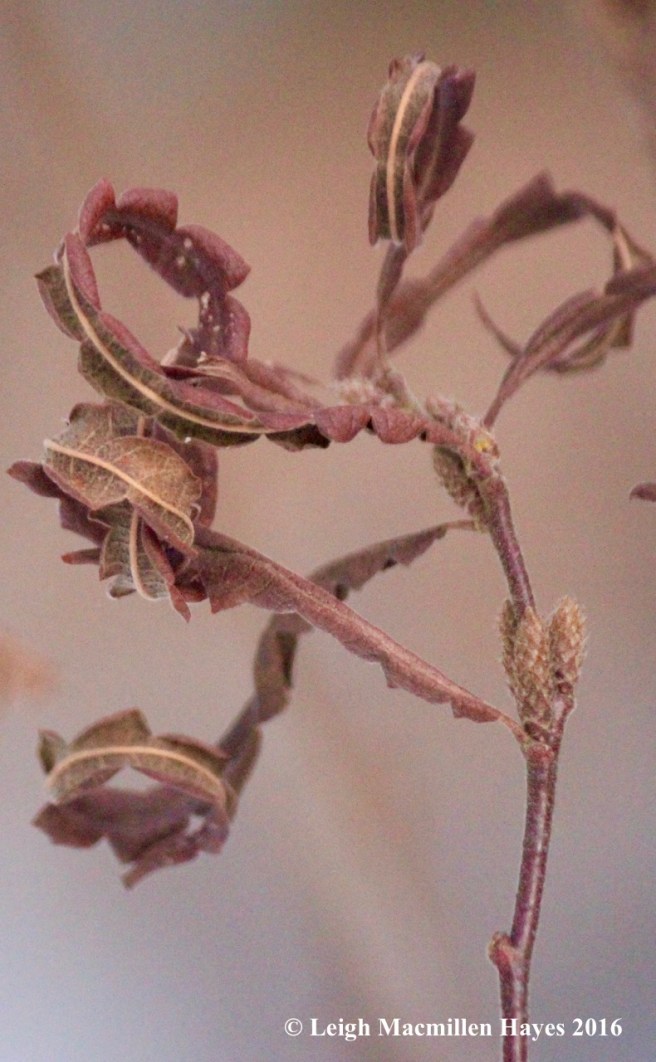
As I moved through the landing, I paused to admire another dancer as witnessed in the fluid movement of Sweet-fern.

p-sweet-fern-catkins-2

Like the Beaked Hazelnut, its catkins were wrapped gifts that spoke to the future.
p-willow-gall

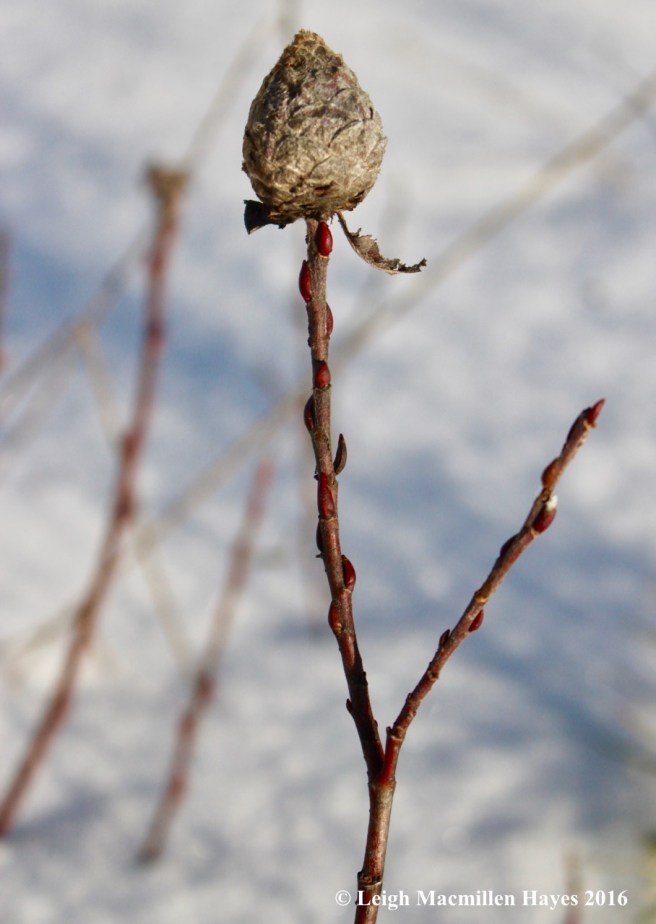
Also in this space, a few willows with their own little packages.

p-willow-gall-1

The willow pine cone gall was created in the summer by a gall gnat midge. The larva stage secreted a substance on the stem that caused the willow to go into overdrive–resulting in a multi-layered chamber composed of hardened material that would have been leaves, but alas, the stem growth was arrested. Inside that hairy structure resides the wintering larva, nice and snug for the winter. It will metamorphose into a gnat when warm weather arrives.

p-fir-christmas-tree

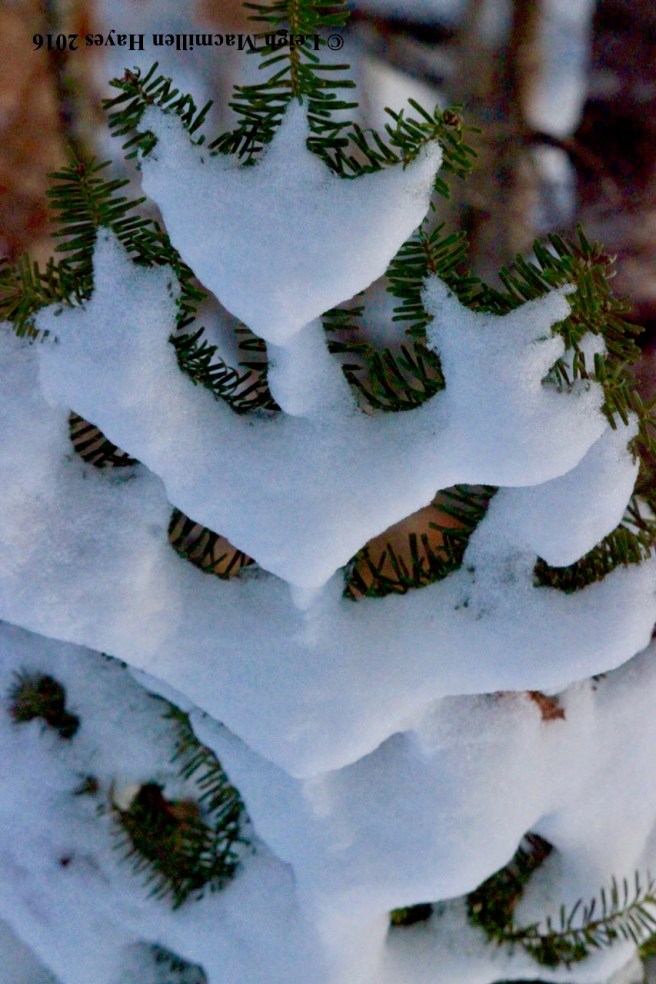
As I walked along I noticed Christmas tree patterns among the firs.
p-fir Christmas Tree1.jpg

It was a simple case of an upside-down look. Once flipped, in my brain anyway, the seasonal symbol was obvious.

p-ornaments-big-tooth-on-fir

And the ornaments dangled–in the form of Big-toothed Aspen leaves and White Pine needles,

p-ornament-lichen1

Northern Camouflage Lichen,

p-ornament-pileated

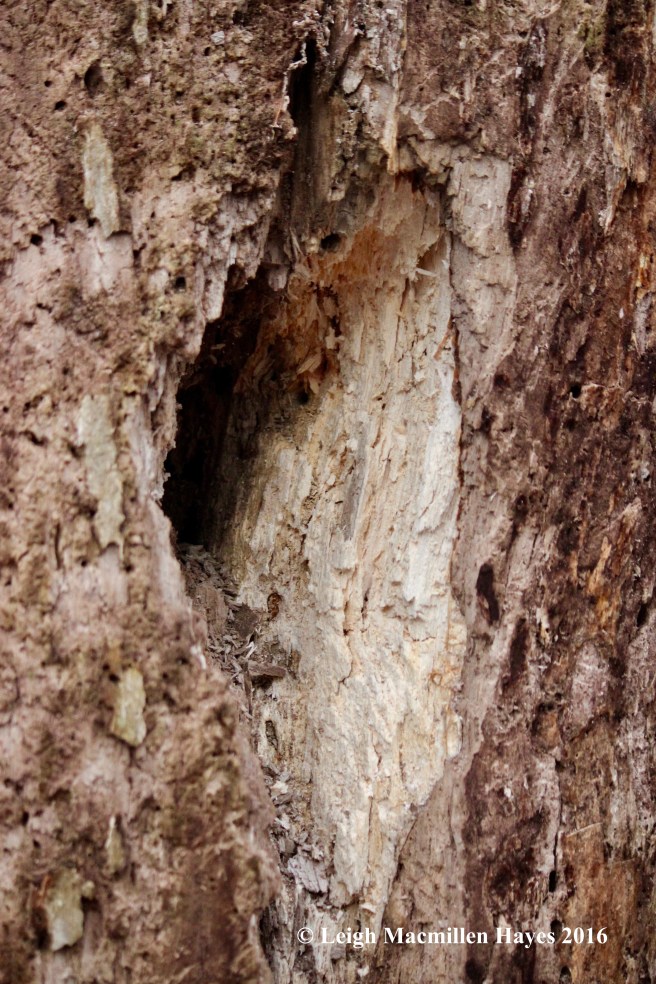
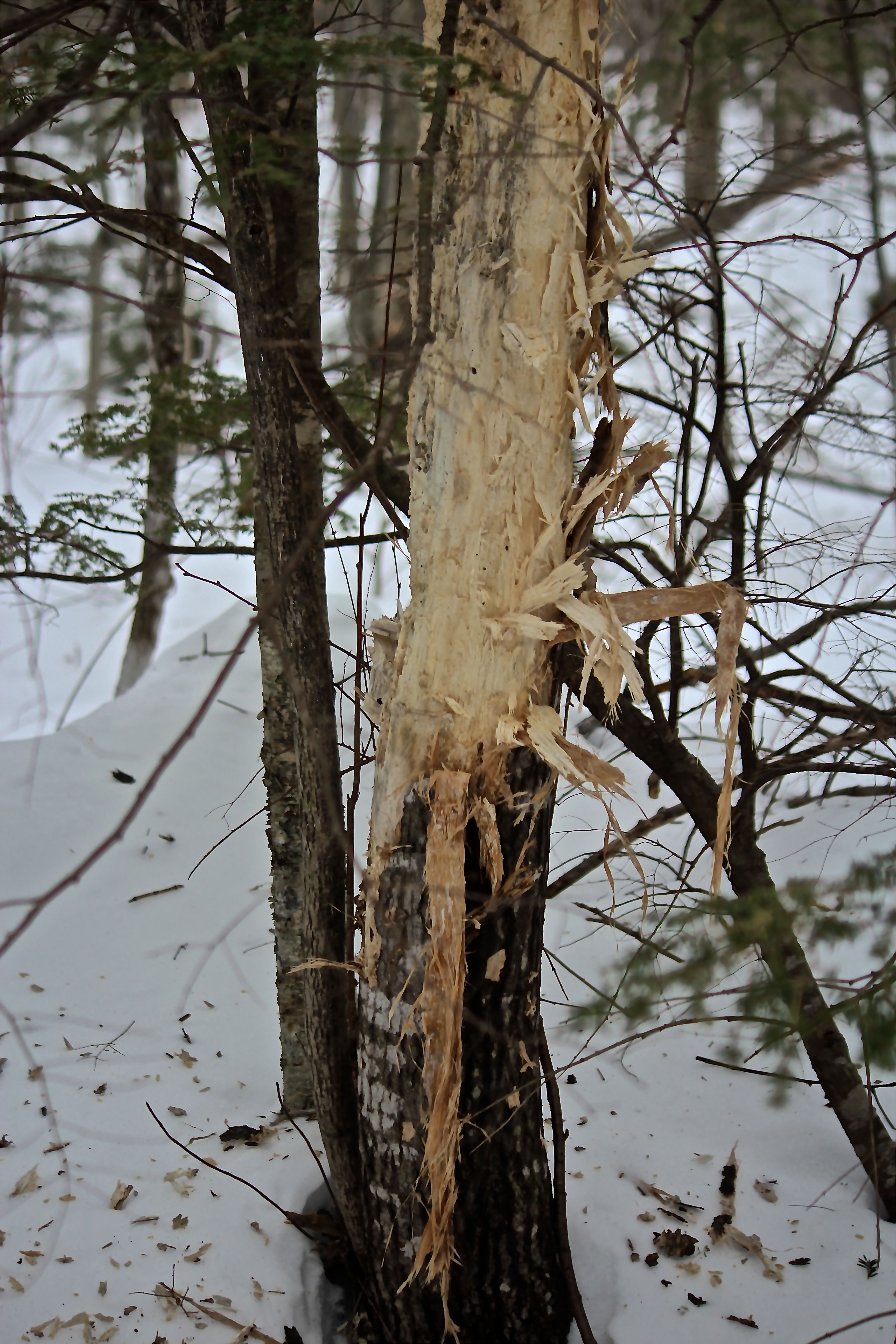
and shredded bark created by . . .

p-ornament-pileated-works

a Pileated Woodpecker in search of food.
p-ruffed-grouse

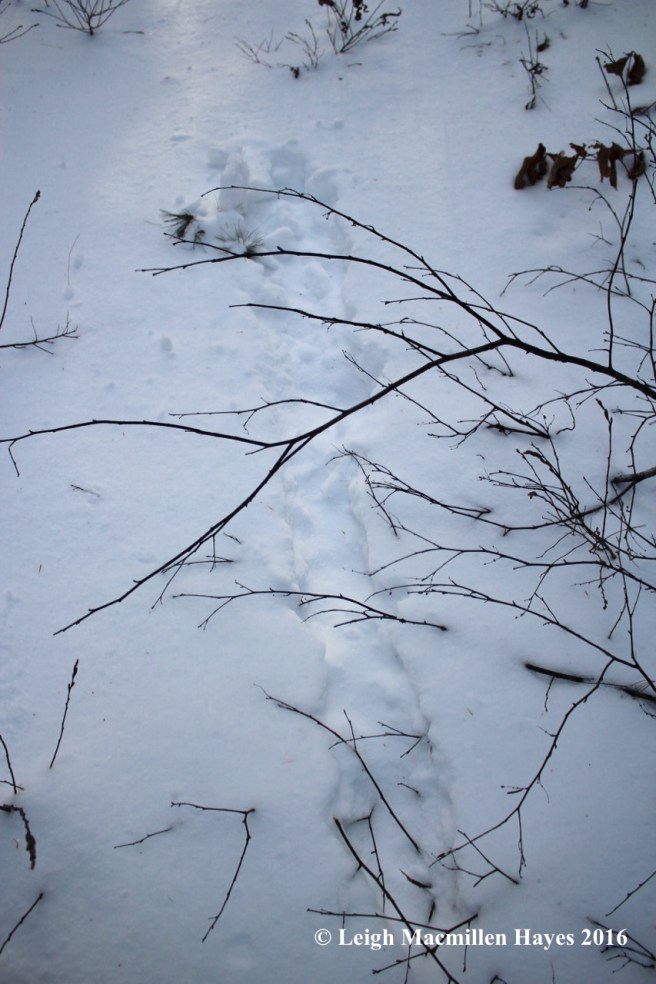
I felt my good fortune to find a spot where a ruffed grouse had tunneled.

p-big-tooth-burl

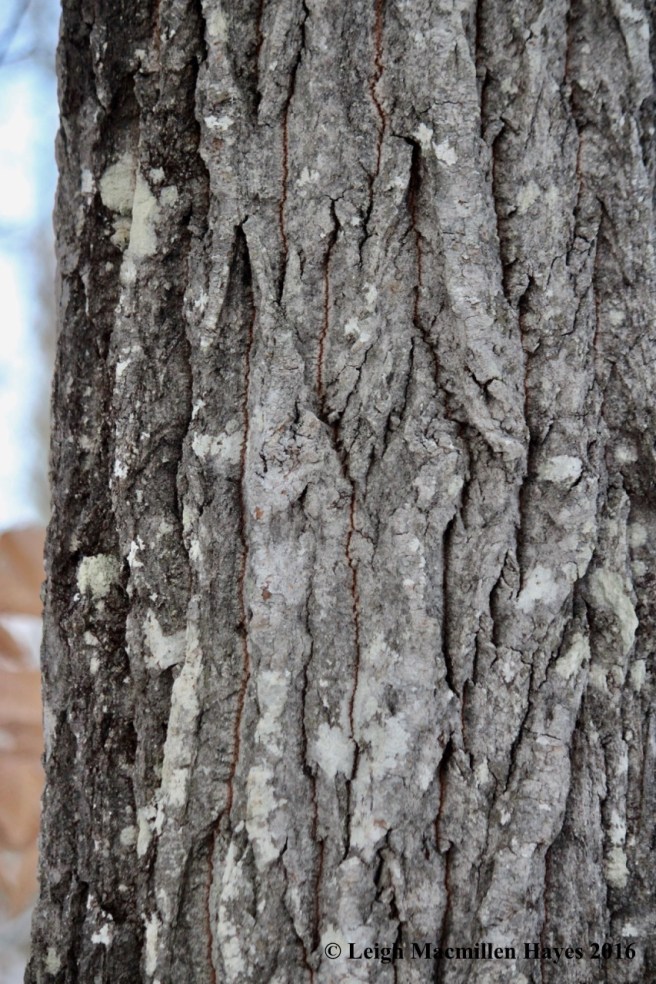
And then I was stopped by a burl. Like a gall, this was created by insects.
p-big-tooth-bark-1

The tree of choice featured lower gnarly bark that resembled a Northern Red Oak.
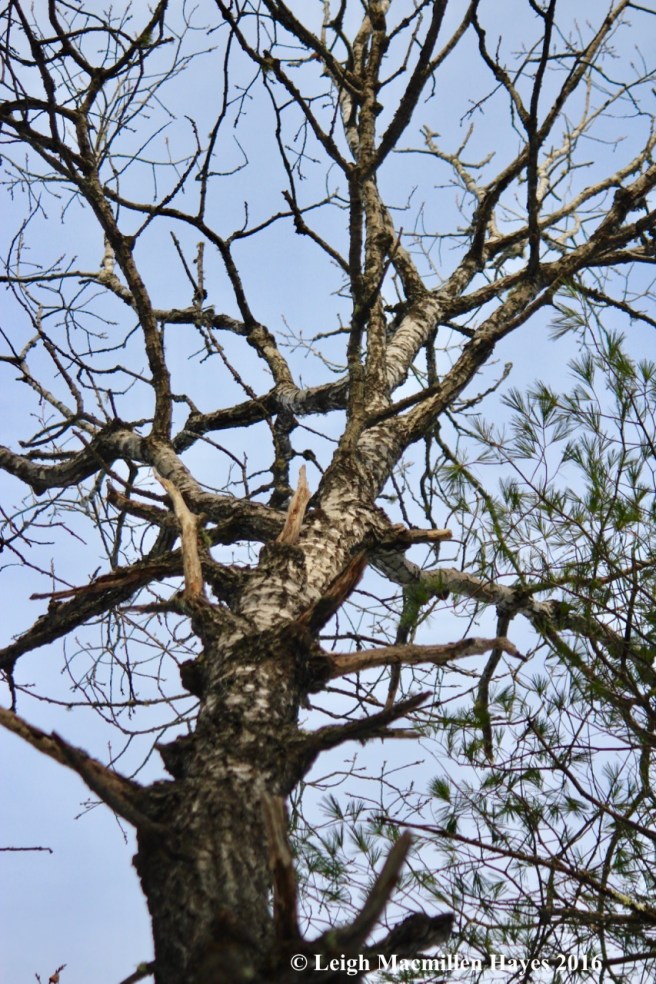
p-big-tooth1

But a peek toward its crown revealed a birch–the two-fer one gift: Big-toothed Aspen.
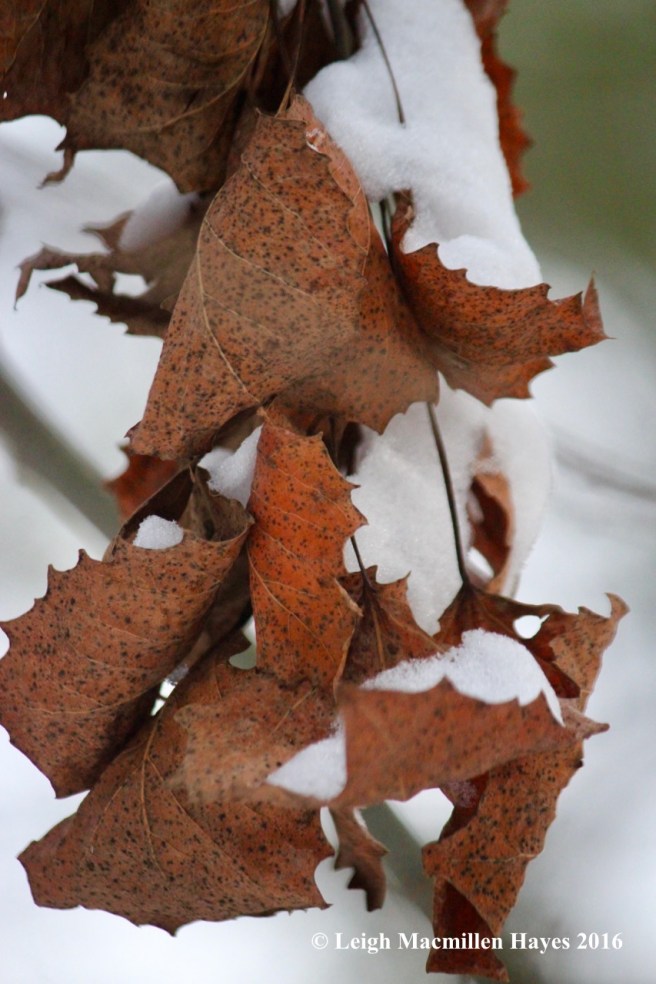
p-big-tooth-leaves

Its leaves, oh my, another  temporarily “marcescent” variety–showing off the big teeth for which it received its common name.
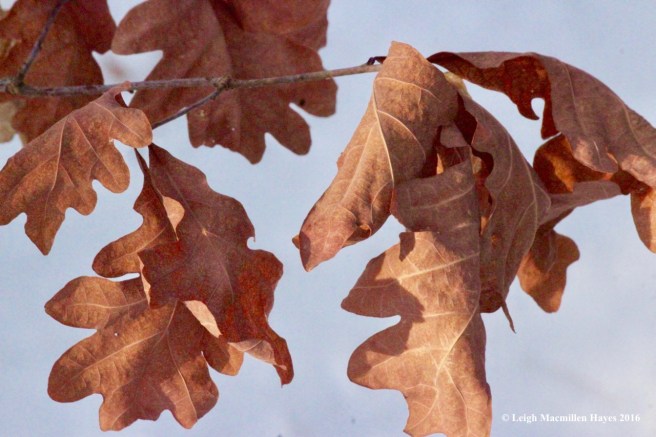
p-white-oak-leaves

Speaking of leaves, there were numerous renditions of White Oak–another dancer that seemed to freeze in motion.

p-red-pine-heart

Here and there among the offerings, Red Pine. This particular one showed my love for it where a branch had broken off. Do you see the wee heart?
p-red-pine-geometry

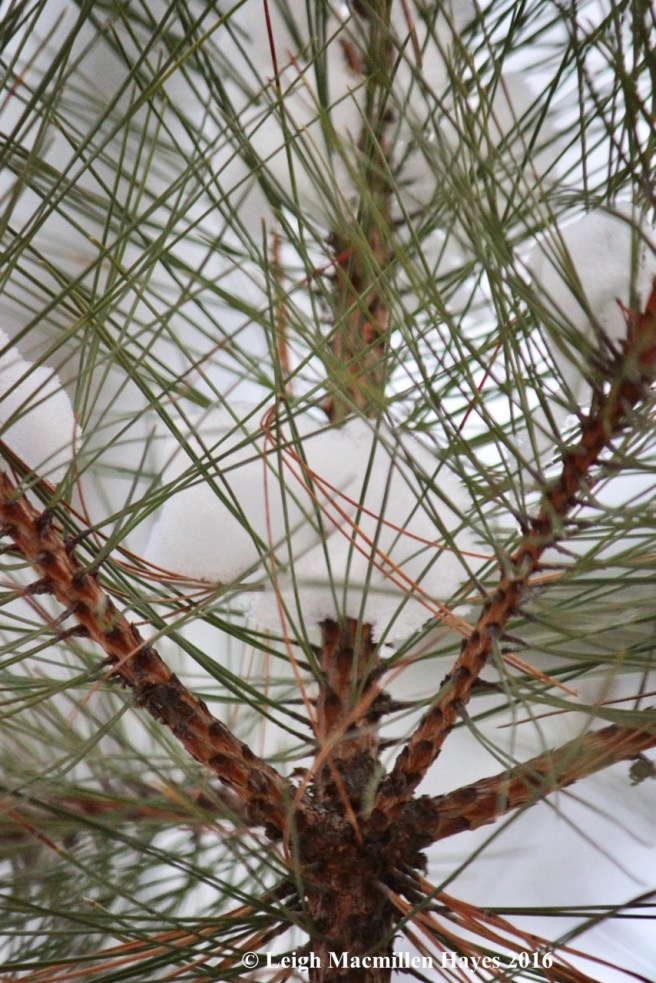
While mature Red Pines feature bark that reminds me of a jigsaw puzzle, I found some younger trees, their structure speaking to geometry.

p-piscataqua-sign

Continuing on along the logging road, I wondered if perhaps I’d gone astray. Suddenly, I found myself in Piscataqua County–miles and miles from home. I knew I was in unknown territory, but was I really that far from home? More than my usual fake lost?  Or someone’s sense of humor?

p-owl-1

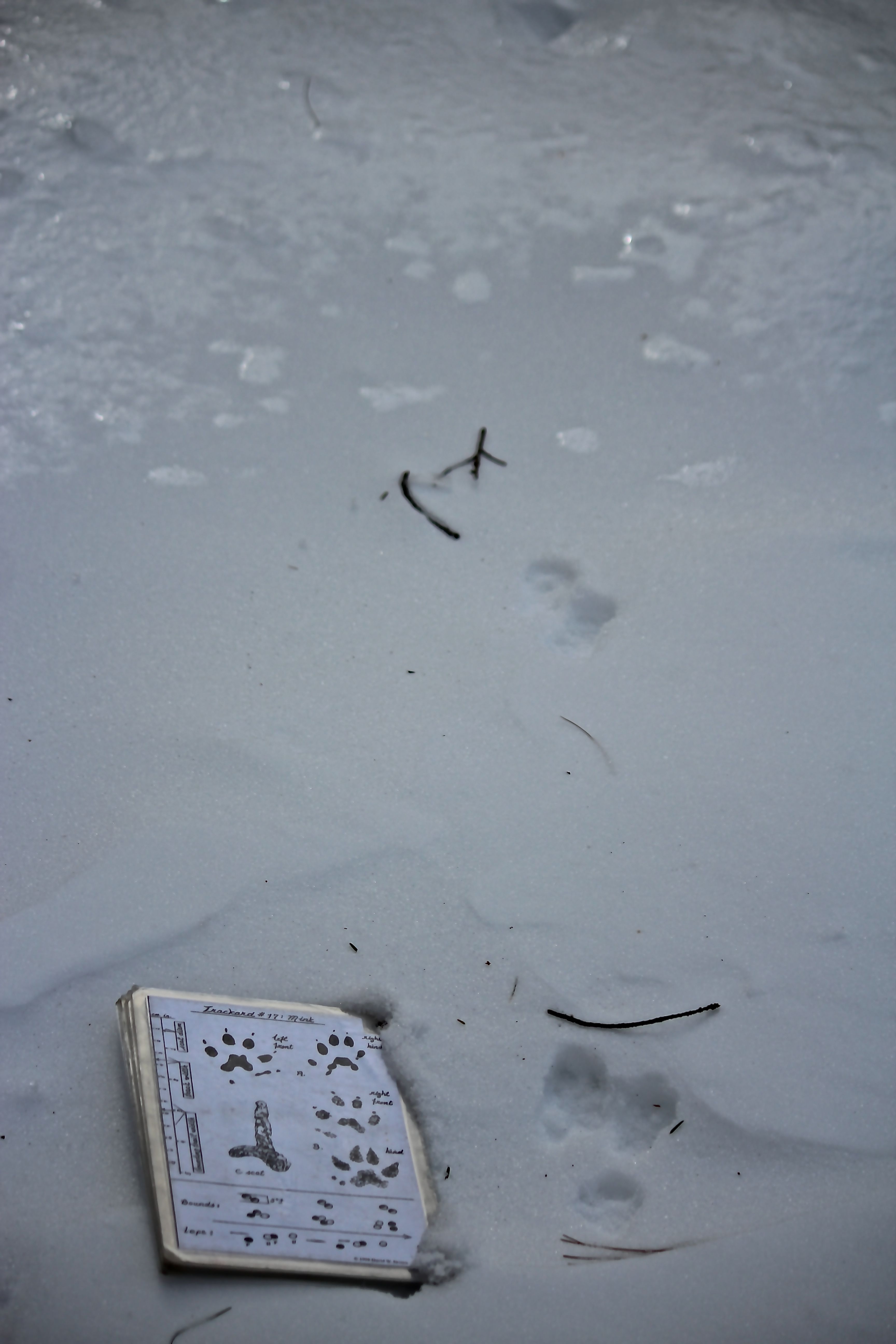
Maybe so. Certainly I was in the land of owl feet.
p-coyote

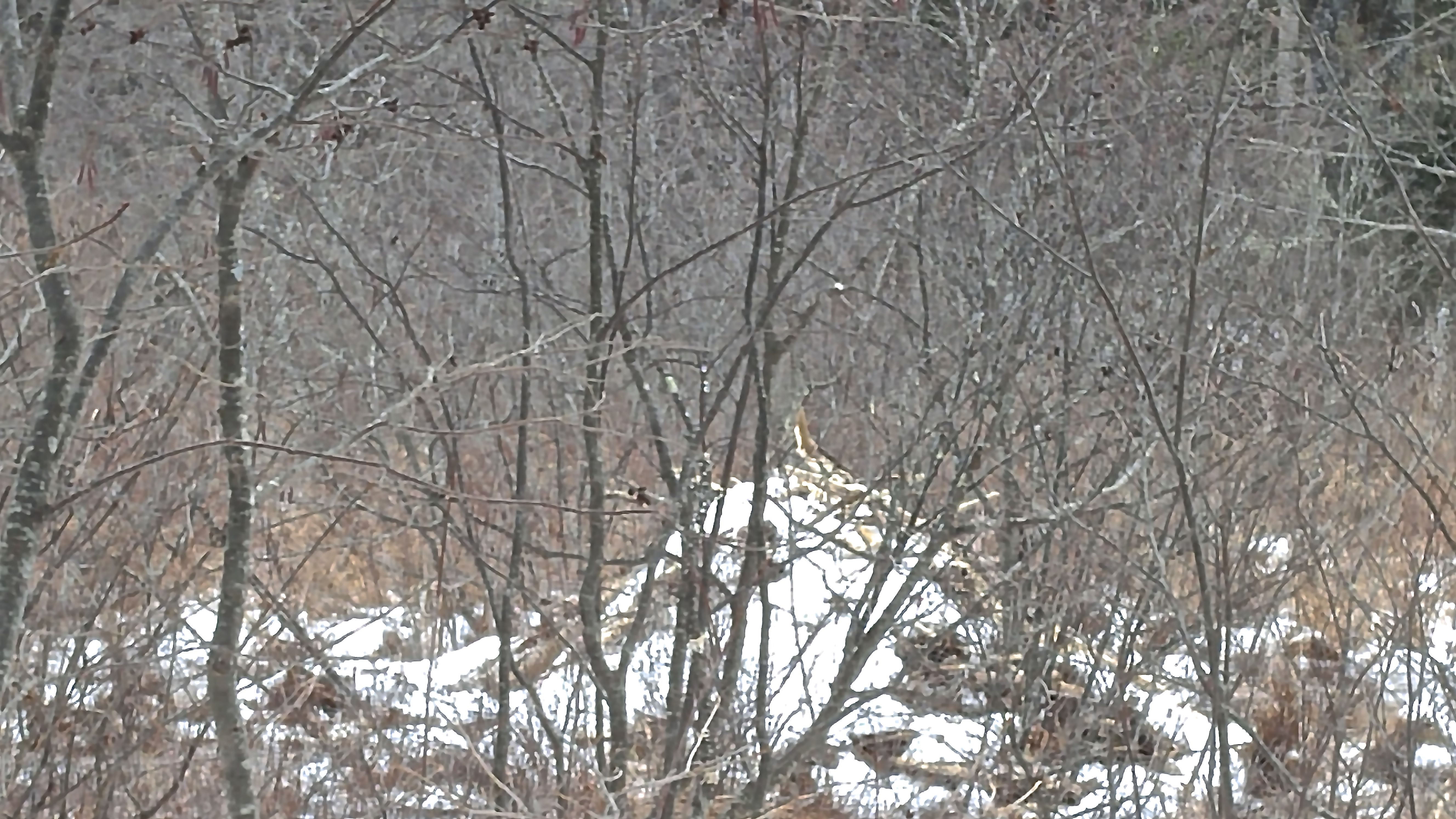
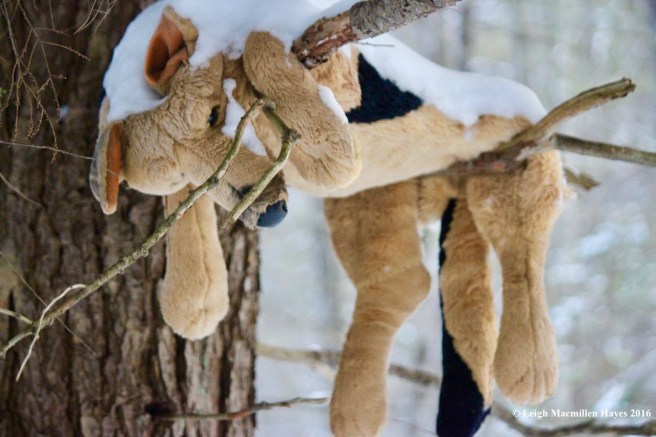
And a tuckered coyote?

p-bushwhack

It was at this point that I headed off trail, made easy by underbrush.
p-deer-tracks

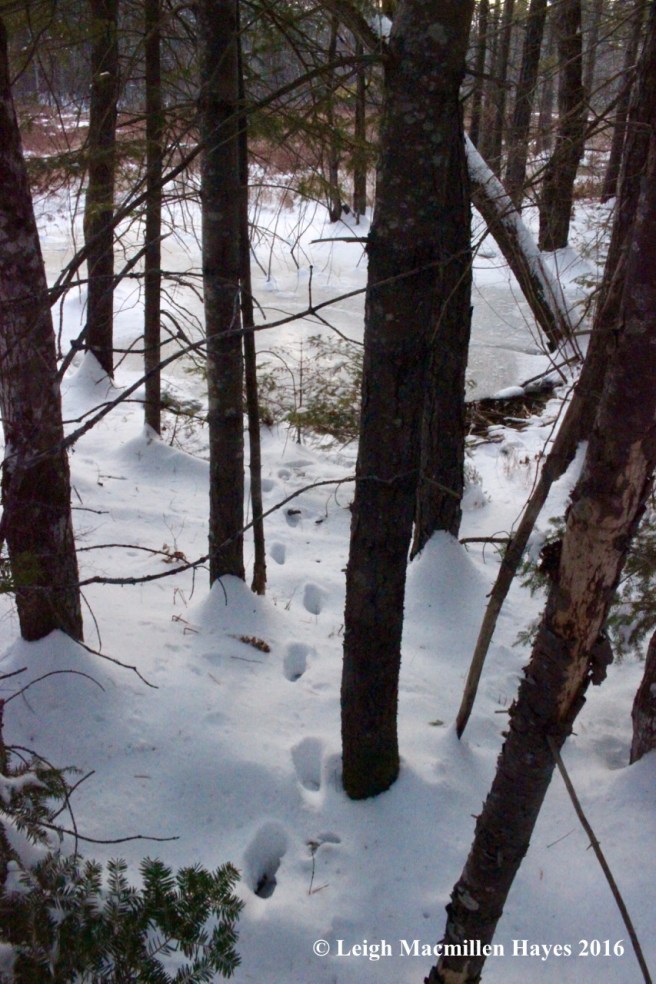
Deer tracks led me to another wonder-filled gift.
p-northwest-1

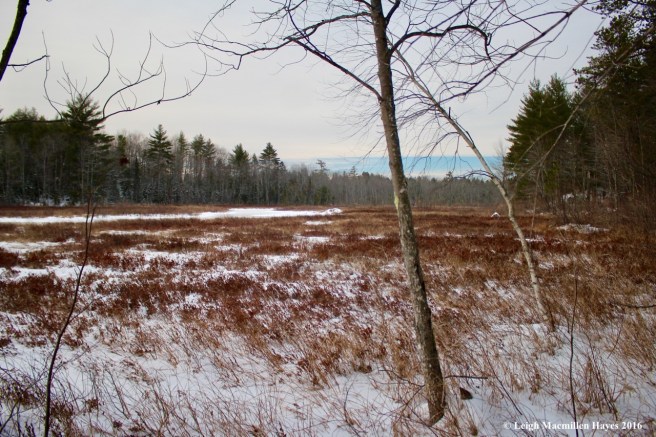
The wetland and Northwest River, one of the namesakes for this place.
p-pitch-pine-bark1

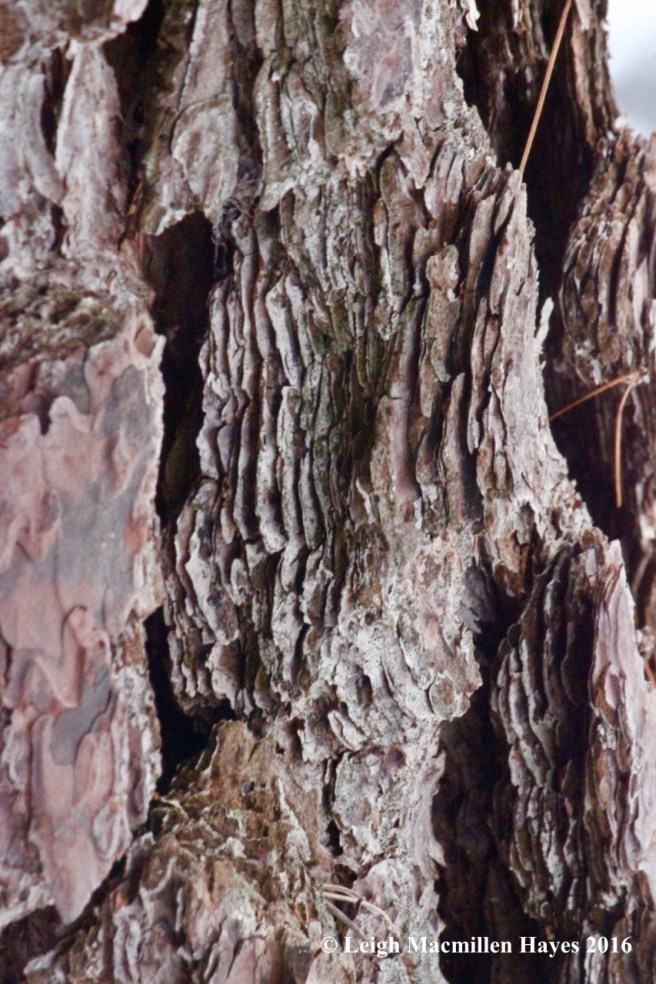
It was here that another lesson presented itself–the layered bark made me realize I was viewing Pitch Pine growing beside the bog. My understanding was that these grew on ledges or rocky outcrops. But here was one with wet feet. And so I later consulted Bogs and Fens by Ronald B. Davis (I highly encourage you to add this title to your Christmas wish list) and discovered that not only does it grow in dry woodlands, but also “in swamps and at the edges of fens and bogs.” (Additional note: Pitch Pine Bogs are listed as S2:  “Imperiled in Maine because of rarity (6-20 occurrences or few remaining individuals or acres) or because of other factors making it vulnerable to further decline”; thus another reason to give thanks to LELT for preserving this place)

p-pitch-pine-1

p-pitch-pine-needles

Pitch Pine needles present themselves in bundles of three–perfect for this time of year–ahhhh, the Trinity.
p-rhodora-1

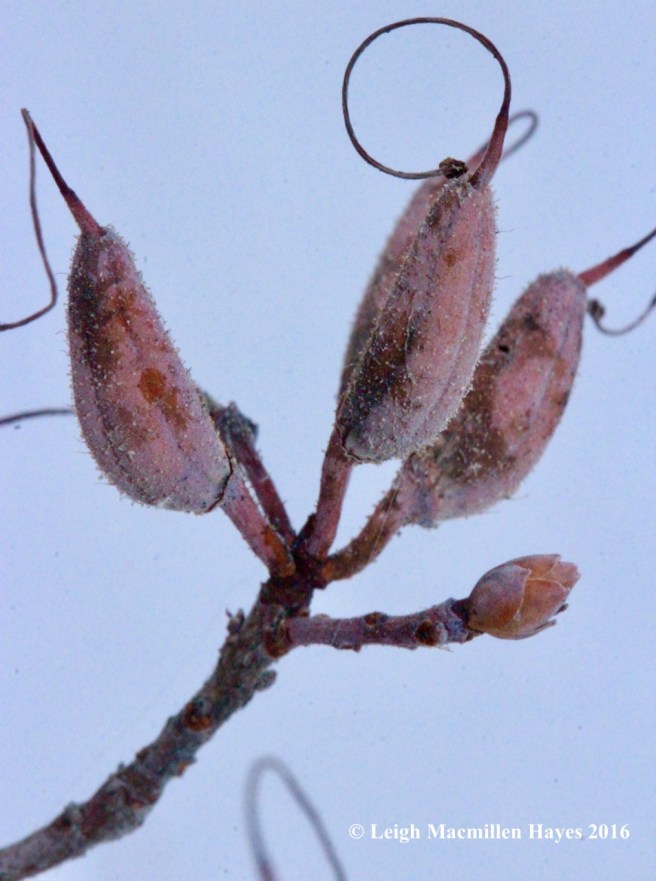
Rhodora

p-leatherleaf-1

and Leatherleaf added to the winter ornamentation.
p-ice-break-through

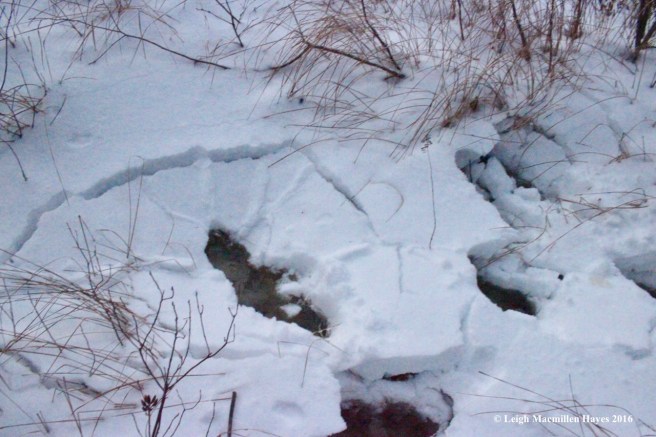
In my attempts for “the perfect photo,” I broke through the ice several times. I’d been post-holing through about seven or eight inches of snow all afternoon sans snowshoes because it was quite easy to move about in the fluffy stuff, but when I reached the edge of the water, the snow had insulated the thin ice cover and . . .  crash, crackle, crunch, I sunk in to the top of my Boggs and even a wee bit over.

p-trail-back

On my way back down the logging road, I realized how my own tracks were much more varied than that of the deer who’d passed before me.

p-land-trust-boundary

And then I came to a boundary sign. Opps. Guess I went beyond the land trust’s property, though thankfully no signs deterred me from trespassing.
p-perley-pond-1

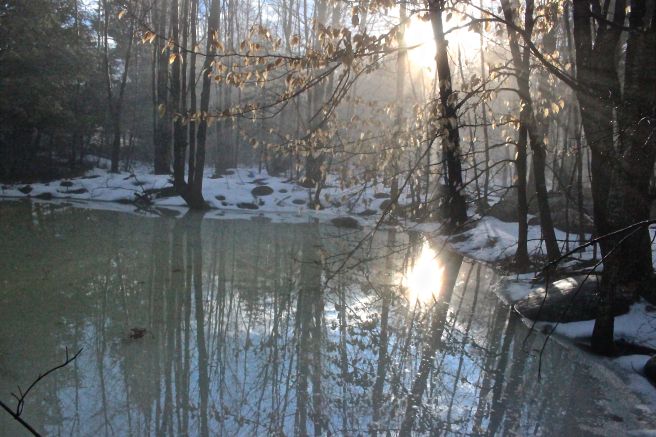
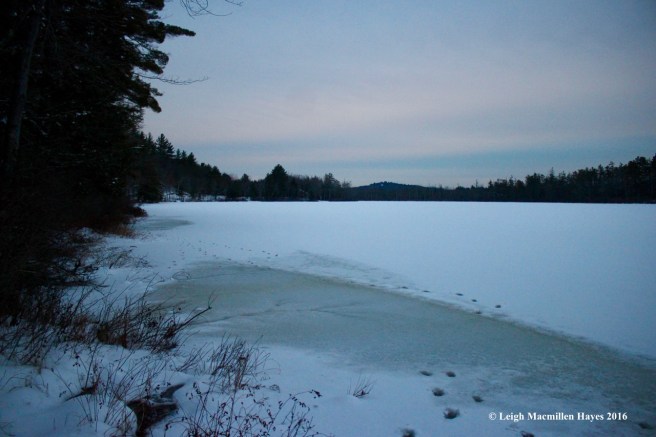
And a wee bit further down Folly Road, I stopped at Perley Pond, part of the namesake for this property–and part of the reason for my presence for the presents presented.
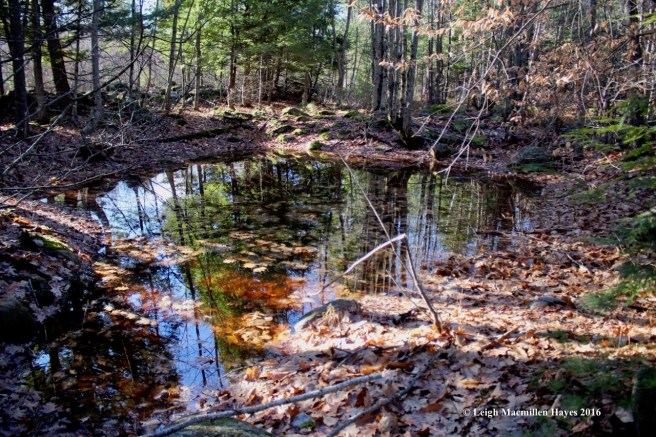
Walking With(out) Kyan

One of these days I’ll get to explore the route I traveled today with my young neighbor, Kyan, who is recovering from a blood marrow transplant. In the meantime, I took him along with me in spirit.k-1

Our first stop–the frog pond, aka vernal pool, that we both love. After all the recent rain, it has once again filled with water.

k-2

As I stood before it and thought about spring moments spent observing the wood frogs that use this pool as a breeding place, I wondered if I’d see any action. I wasn’t disappointed–springtails and mosquito larvae. When I return with Ky in tow, I’ll pull out the small shovel I carry so we can scoop these up for a closer look. Of course, he’ll probably need to remind me to do that. Such is age.

k-3

And then I retraced my steps, dodging puddles at first because I had my hiking boots on. Oh, they’re waterproof, but suddenly the water is deep in spots. I’m not complaining–by any means!

k-4

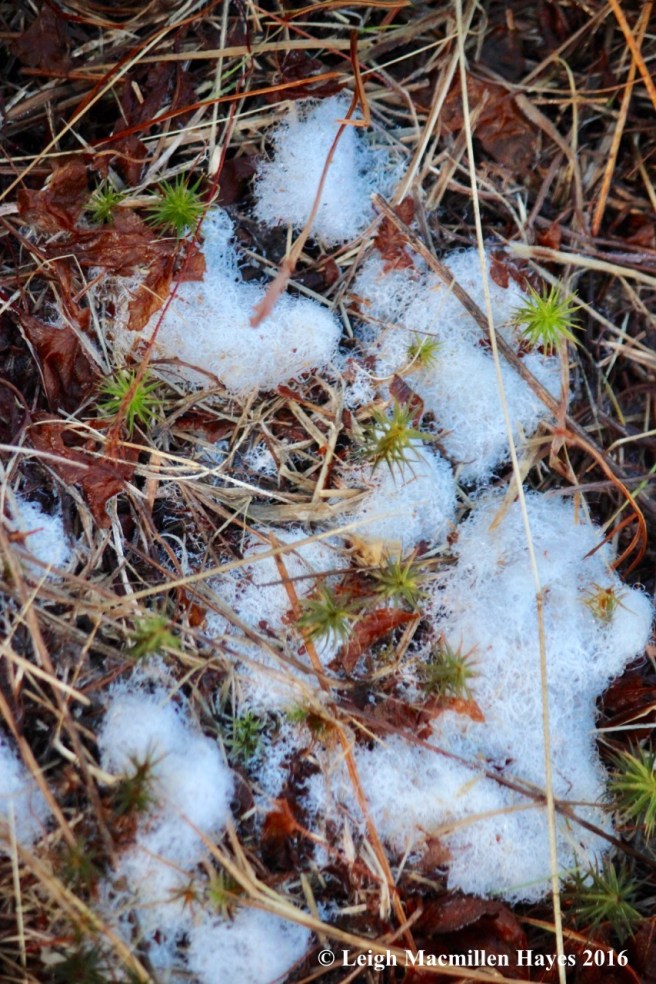
Rather than my woodlot trail, I decided to cross the field that Ky’s grandfather owns as I headed home to change into my Boggs. And so I happened upon a mystery. What was this white stuff? Fur? No. Fungi? Maybe. Stay tuned? I hope you will. Had Kyan actually been with me, I’ve a feeling he could have told me right off.

k-5

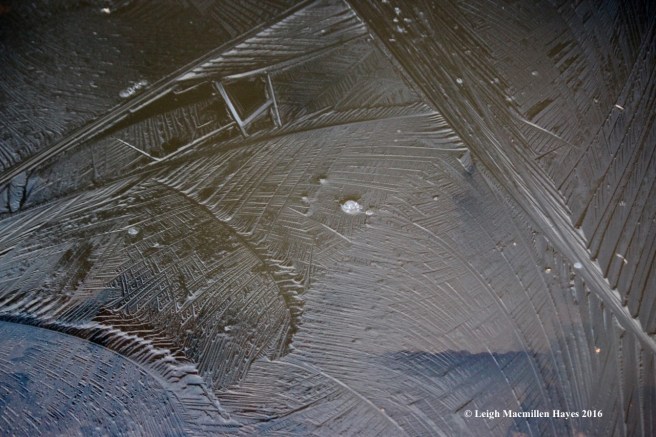
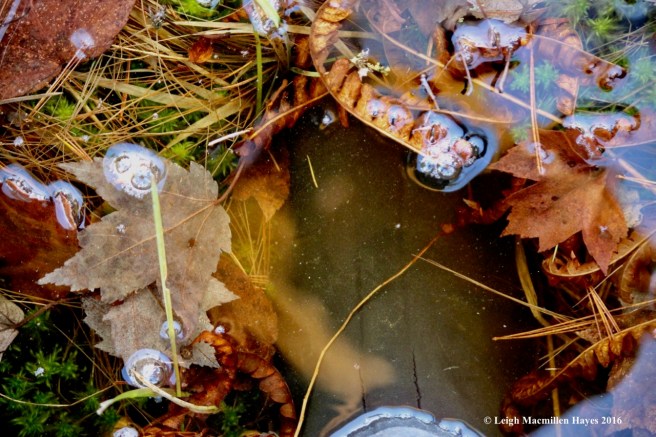
Back on the trail, where the puddles were shaded, nature presented its artistic flair.

k-6

I trust Ky would have appreciated the various forms the ice took. Had he been with me, we could have stomped our feet through the ice and felt its thickness. But then again, he may not have wanted to ruin such beauty.

k-7

k-8

k-9

That being said, over the course of several hours, I found plenty of puddles that were ice free and walking through them was the easiest mode of travel. Plus . . . who doesn’t love to jump in a puddle, right Ky?

k-10

Had Ky been with me, we would have marveled at all the tracks left behind by creatures who passed in the night or early morning hours.

k-11

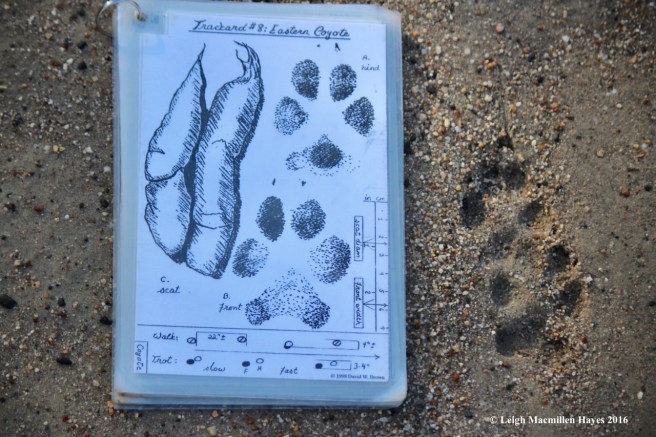
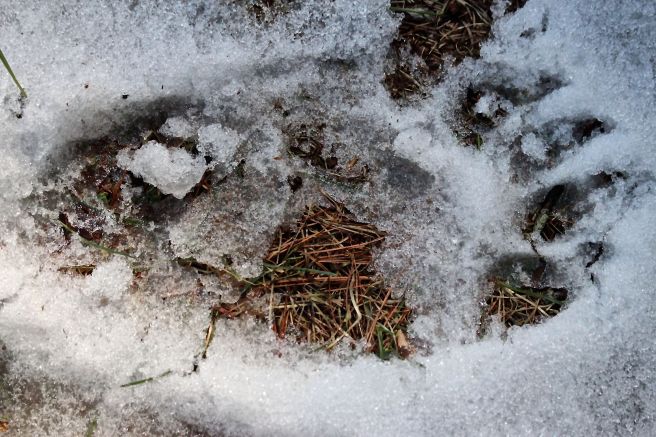
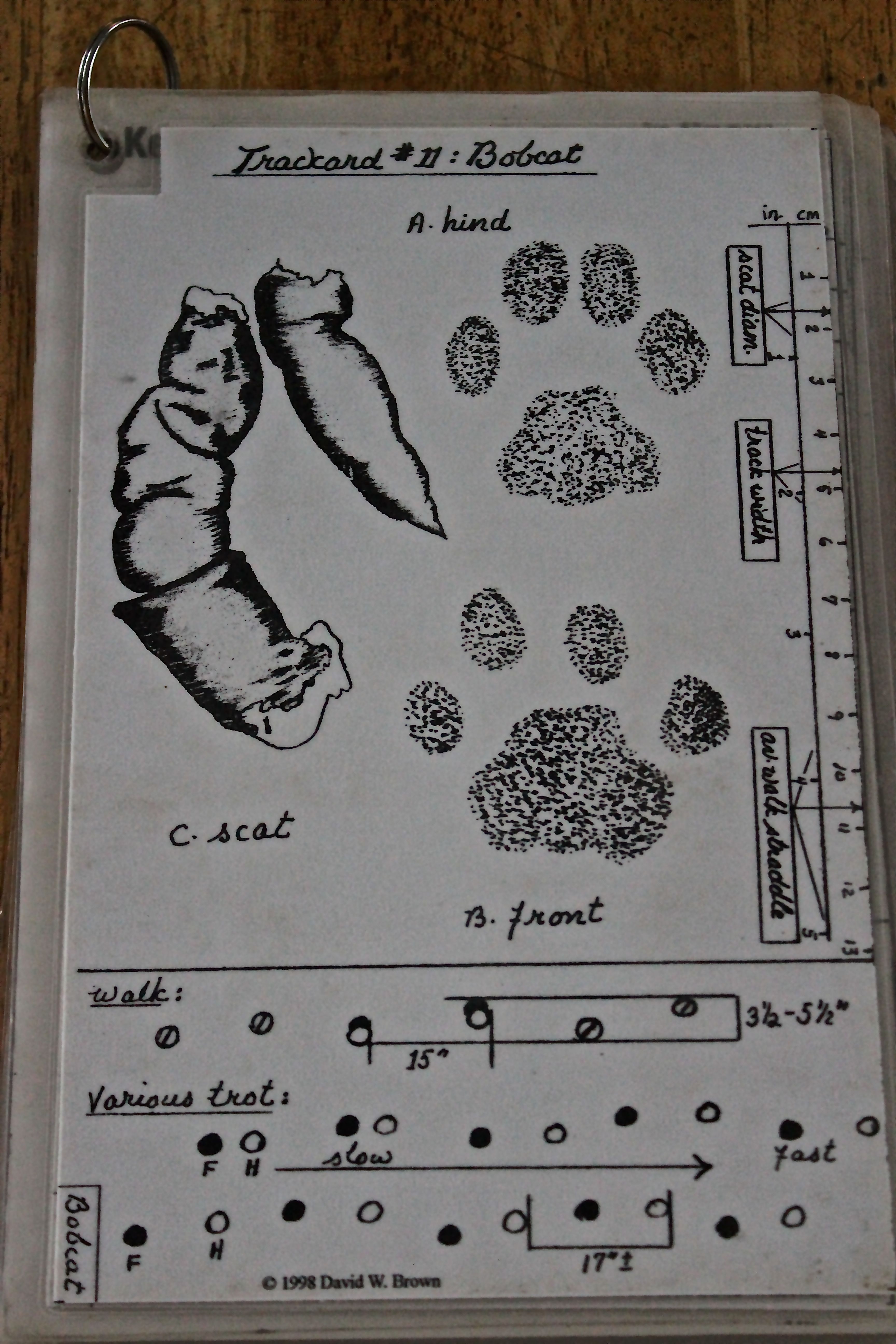
And I’d have shown him how to make a positive ID of a print, in this case–Eastern Coyote. We’d have looked at the key characteristics, like the winged ball of the pad, the x between toes and pad, the symmetrical front toes and inward facing nails. And I would have shared my Trackards with him so we could both better understand how the critters with whom we share this space move about.

k-12

In this case, it appeared there were several coyotes and they shared a brief tussle.

k-13

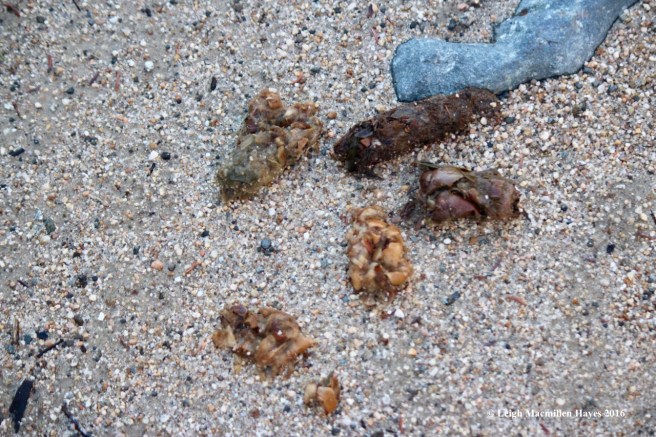
We’d have looked at the contents of coyote scat, of which I saw tons. Ky would have reminded me that the apple skins meant the coyote visited the neighborhood orchard.

k-14

k-15

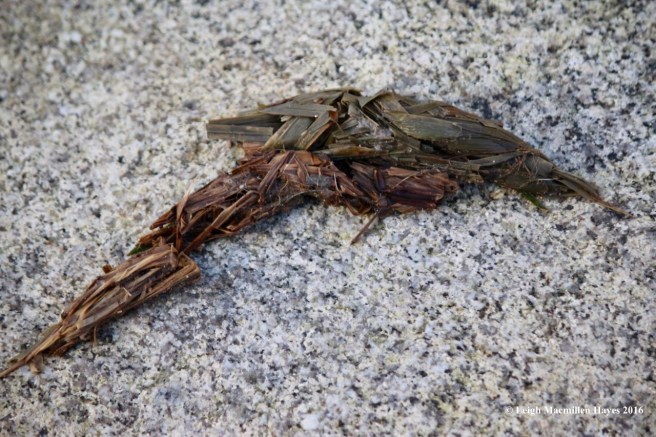
And I would shared with him that the grassy scat meant perhaps one of the coyotes had an upset stomach. If you are grossed out by the scat, please forgive me. But . . . it’s natural. It’s a sign. It tells a story. And Ky is 12. Then again, I’m in my late 50s–and I LOVE scat.

k-16

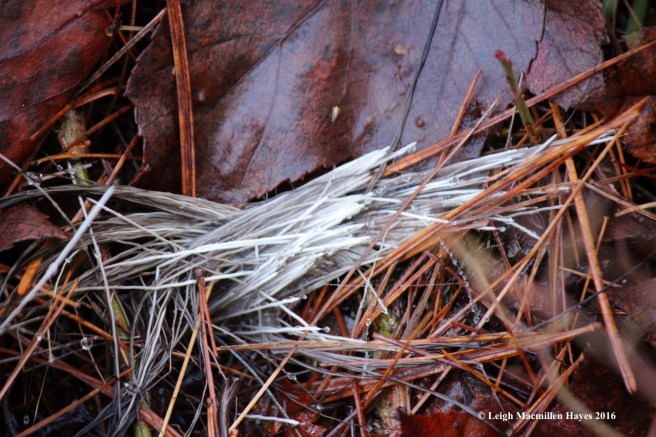
Had Ky been with me, we’d have wondered about the swatch of hair deep in the woods. And maybe we would have looked around more than I did to search for other signs of why the hair was left behind.

k-17

Had Ky been with me, we would have noted numerous deer tracks as well. And coyote tracks in the same vicinity.

k-18

We’d have seen where the deer browsed.

k-19

And where one rubbed its antlers–perhaps leaving an important scent for others to note.

k-20

Had Ky been with me, we would have seen some downed hemlock twigs.

k-21

And known to look for their comma-shaped scat.

k-22

Had Ky been with me, we would have found a bunch of puff balls or stink bombs.

k-23

And most definitely we would have poked them with our feet and watched the spores flow out like a cloud.

k-24

Had Ky been with me, we would have noticed the little things, like a peeled acorn stuck in a tree and wondered how it go there.

k-25

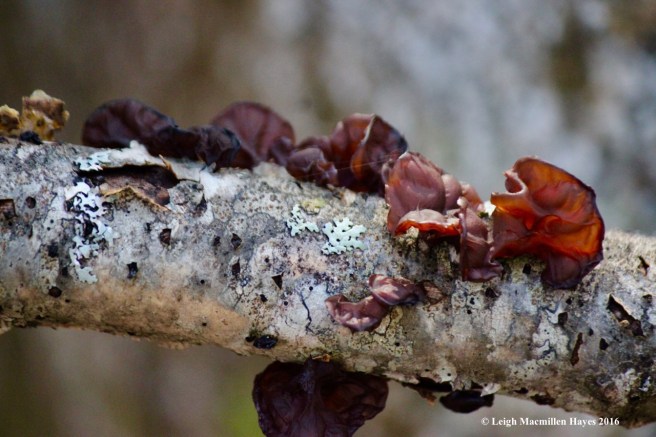
We would have enjoyed not only the sight of the Auricularia auricula-judae or brown jelly fungus, but also it’s other common name–wood ear because indeed it does resemble an ear.

k-26

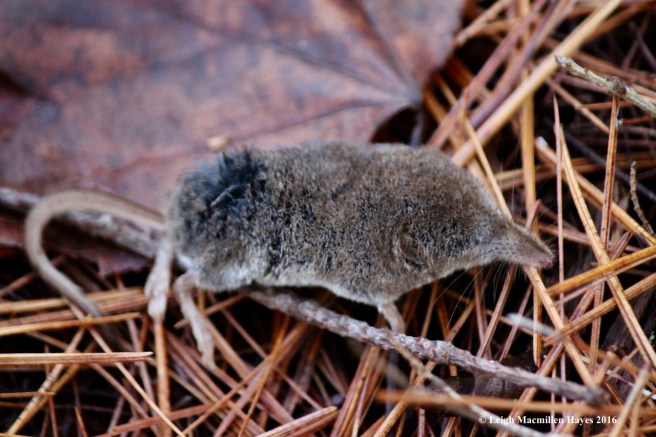
Had Ky been with me, we would have felt bad for the wee shrew that took one for the family’s sake. Despite releasing a toxin that prevented his predator from consuming him, he still died from the attack. But perhaps his siblings and parents will not be attacked by the same predator–a lesson learned. Maybe. And we would have marveled at what a long nose he had and what tiny ears.

k-27

Had Ky been with me, we might have bushwhacked, only getting fake lost on our way home. If he wasn’t comfortable doing that, however, we most certainly would have turned back and followed the trail.

k-28

And finally, had Ky been with me and we had bushwhacked, he might have noted some white fluff on the ground, the same as what I saw in the field earlier. And then he would have noticed the source.

k-29

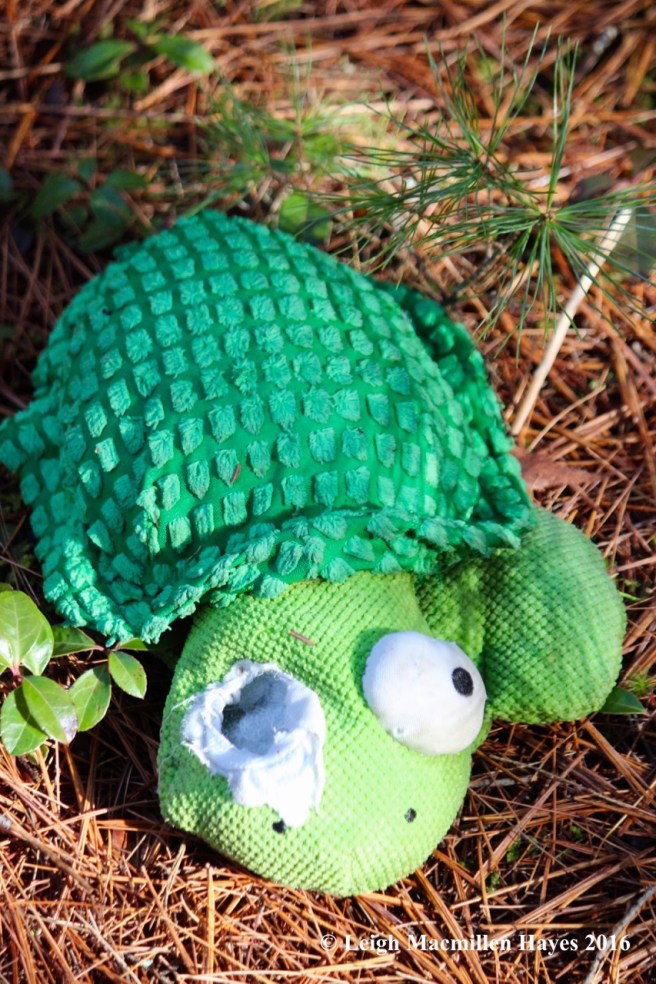
One never knows what one might discover deep in the woods. Had Ky been with me, would he have recognized Myrtle? Was it a dog toy at one time? If so, how did it find its way to the middle of nowhere? I know–it walked. But really, it was over a half hour from home and the terrain not easy, yet I found no other stuffing. Of course, it could have traveled a different route than I took.

At the beginning of today’s journey I’d thought about seeking out the color orange again in honor of Ky, but perhaps he’s tired of orange. And it was much more fun looking for things I thought Ky might appreciate had he been beside me. I know he’ll see things I’ve never noticed and I can’t wait to learn from him. Perhaps soon we can venture together, maybe once the ground is frozen and snow falls. Or in the spring.

One of these days, I will surely walk with Kyan.


Ho-Ho-Ho Ho Hoing Away

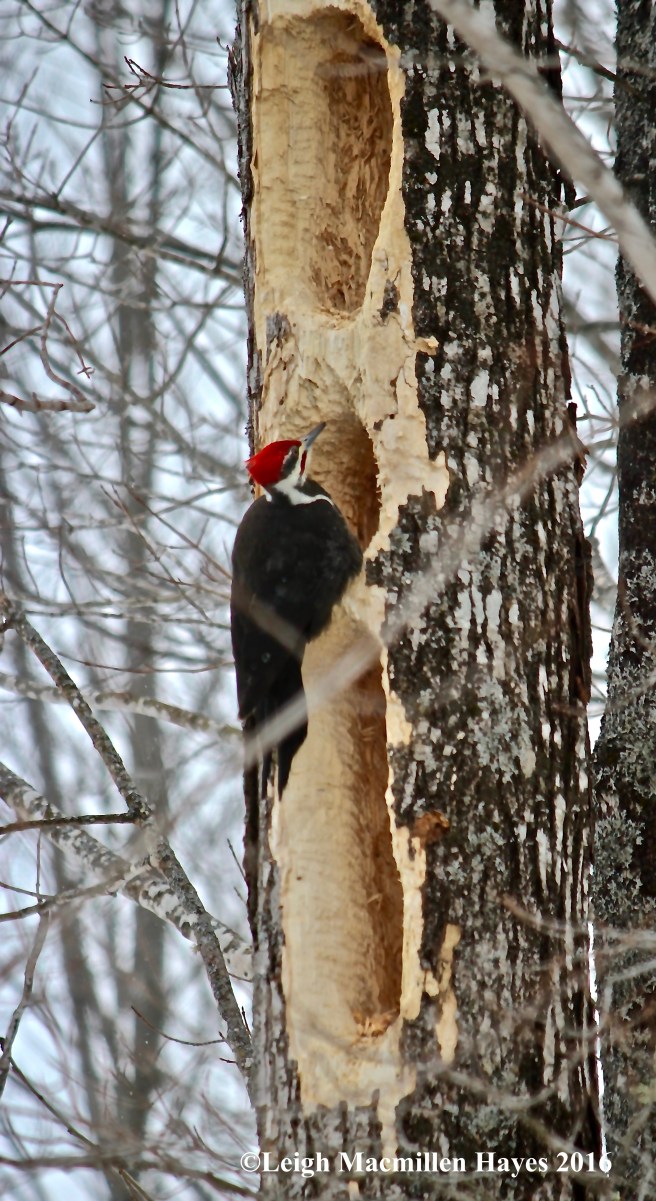
I remember a time when a Pileated Woodpecker sighting was rare. And now, it’s a daily event, but one which I still feel blessed to experience.

h-pileated

Stepping out the door this afternoon, I immediately heard one hammering and realized another was drumming in a nearby tree. Within minutes, a third flew in and birds #2 & 3 sang their eerie tune as they approached #1. He chased the couple and they flew off, their flight strong, and marked with slow, irregular woodpeckery flaps.

h-woodpecker-hole-1

After watching #1 for a bit, I went in search of woodpecker happenings scattered throughout our woodlot. Though they’ll eat lots of wood-boring insects and occasionally berries, seeds and suet, carpenter ants are their mainstay. Better in a woodpecker’s stomach than our home. Sometimes the holes they create are about six inches across and almost as deep.

h-woody-condo-2

h-woody-condo

And those holes became homes for other critters occasionally, so when friends and I see trees such as these, we think of them as condominiums providing living quarters perhaps for small birds and little brown things (mice). Included in these condo units are some smaller round holes, created by the Hairy and Downy Woodpeckers that also live in our neighborhood.

h-wood-chisel

Occasionally I come across trees such as this one that hadn’t been so much excavated as chiseled. Woodpeckers are just that–peckers of wood. They don’t eat the wood. But to get at their preferred food, they must hammer, chisel and chip the bark.

h-woodchips

At the base, always a scattering of wood chips. I, of course, cannot pass up any opportunity to search through the chips in hopes of locating scat. I was not rewarded with such a find today.

h-hole-in-snag

Leaving dead snags encourages woodpecker activity. They become prime locations to forage, roost and maybe even nest, though I hardly think this snag was large enough to serve as the latter.

h-pinesap

While I was out there, I did stop to admire a few other sights including the now woody structure of pinesap;

h-winterberry

winterberries contrasted against the wee bit of snow that still graces patches of ground;

h-deer-tracks

deer tracks indicating we’d had visitors during the night;

h-violet-upper

h-violet-toothed-under

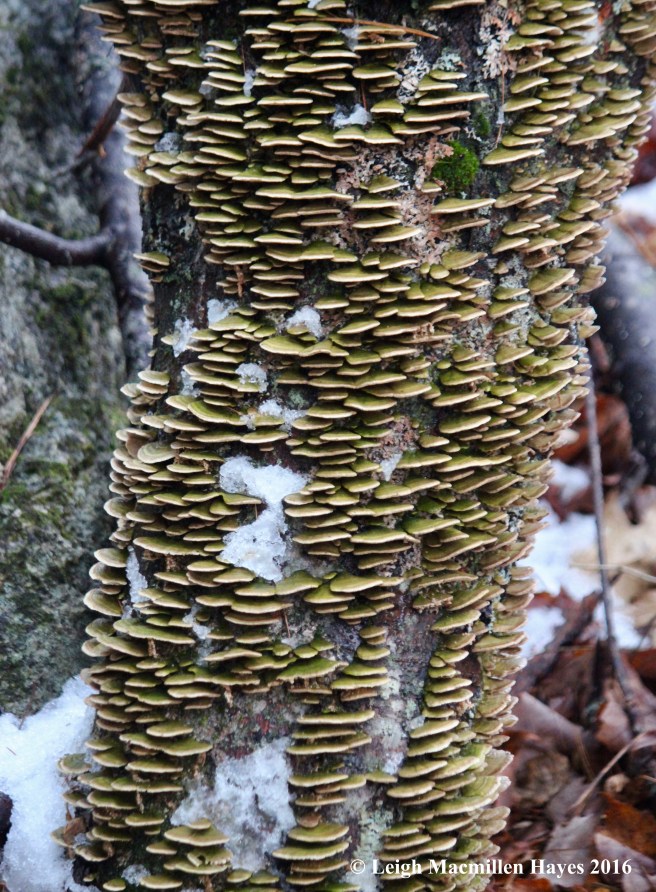
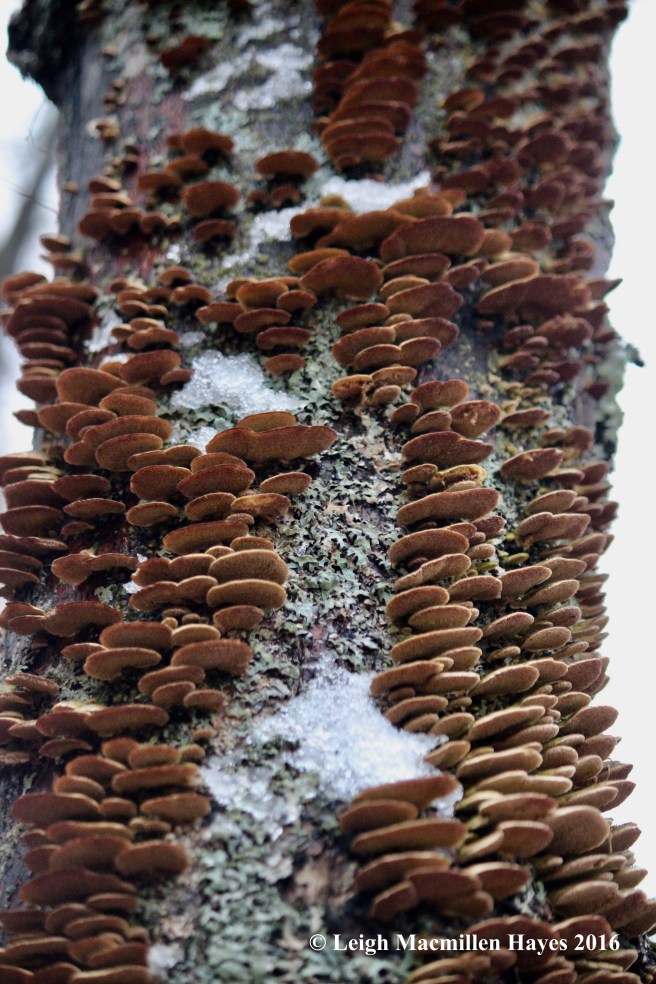
and a tree skirt of violet-toothed polypores. They are rather like the Lays Potato Chips of the natural world. You can never have just one. (Note: I’m not talking about eating them, but rather how they grow.)

h-woody

It’s been said that Pileated Woodpeckers are skittish. That’s not always the case. I’ve stood beneath one for over twenty minutes, the bird intent on its work and seemingly oblivious to my presence.

The next time you are in the woods and hear the ho-ho-ho ho ho, ho-ho-ho ho hoing that reminds you of that cartoon character, Woody Woodpecker, take a look around. You, too, might be blessed. And don’t forget to check for scat. ;-)

Finding Our Way on Mount Tom in Fryeburg, Maine

I ventured this afternoon with my friend Marita, author of  Hikes and Woodland Walks in and around Maine’s LAKES REGION, along with her daughter’s beagle, Gracie, on a new trail in Fryeburg.

t-preserve-sign

Mount Tom, a Roche Moutonnée, is an asymmetrical hill with a gently sloping up-ice side that has been smoothed and polished by a glacier. The other side is abrupt and steep–the down-ice side where the rocks were plucked off, leaving a more cliff-like appearance. As Marita noted, its most impressive view is from a distance, but today we sang its praises from up close. We’ve both hiked a 1.5 mile trail to the summit for years, but recently The Nature Conservancy developed a new trail that we were eager to explore.

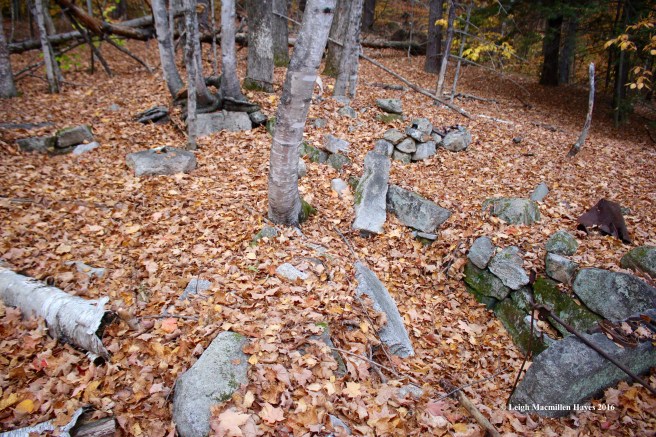
t-fdn-1

Within seconds I was exclaiming with joy. A huge, and I mean HUGE foundation shared the forest floor. Note the outer staircase to the basement.

t-center-chimney

And the large center chimney.

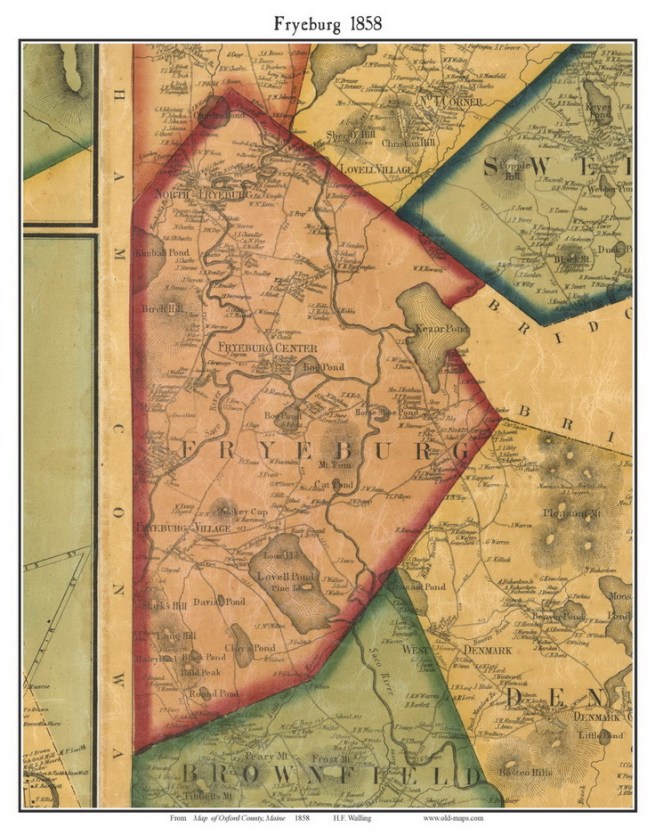
t-fryeburg-1858-map

On an 1858 map, I found that A.H. Evans owned a home in about this vicinity, but I don’t know if this was his. Or any more about him. It will be worth exploring further at the Fryeburg Historical Society.

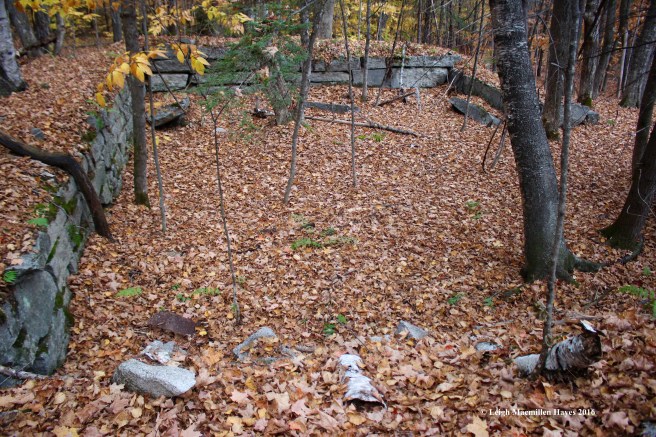
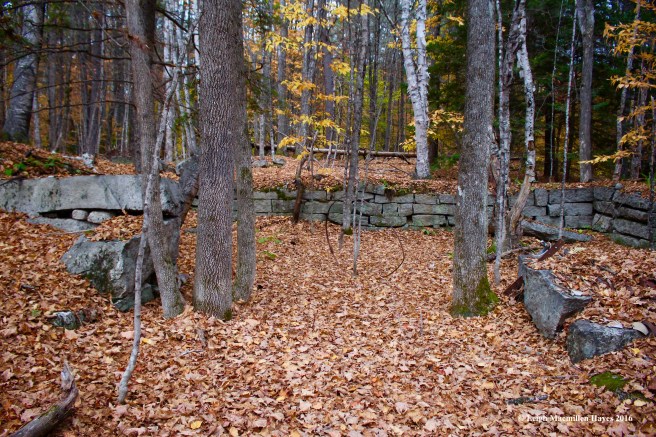
t-house-connected-to-barn

The house extended beyond the basement.

t-barn-1

And was attached to an even bigger barn.

t-barn-2

Ash trees grow beside the opening, but I wondered if we were looking at the manure basement.

t-trail-blaze

Finally, we pulled ourselves away and returned to the trail. Well, actually, we tried to return to the trail but couldn’t find it. So we backtracked, found this initial blaze and again looked for the next one. Nothing. Nada. No go. How could it be?

t-marita-and-gracie

That didn’t seem right, so we decided to follow our noses, or rather Gracie’s nose, and sure enough we found the trail. If you go, turn left and cross between the house and barn foundations.

t-gracie

After that, for the most part, we were able to locate the trail, but it was obscured by the newly fallen leaves and could use a few extra blazes. Gracie, however, did an excellent job following the scent of those who had gone before and leaving her own.

t-saw-dust

The path took us over a large mound of sawdust, something I’ve found in several areas of Fryeburg.

t-color

The predominate trees were beech, white and red oaks, thus providing a golden glow to the landscape.

t-ledges-1

And then we came to the ledges. Bobcat territory. Note to self: snowshoe this way to examine mammal tracks.

t-ledge-island

The trail was situated to provide a close up view of the ledge island, where all manner of life has existed for longer than my brain could comprehend. Life on a rock was certainly epitomized here.

t-intersection

We continued our upward journey for over 2.3 miles (thanks to Marita’s Fitbit for that info) and eventually came to the intersection with the trail we both knew so well.

t-summit-sign

From there, we walked to the summit where the views have become obscured by tree growth.

t-pleasant-mtn-from-summit

But . . . we could see the long ridge of Pleasant Mountain in front of us,

t-kezar-pond

Kezar Pond to our left,

t-richardson-1

t-richardson-farm

and the Richardson Farm on Stanley Hill Road to our right.

t-ladys-slipper-pod

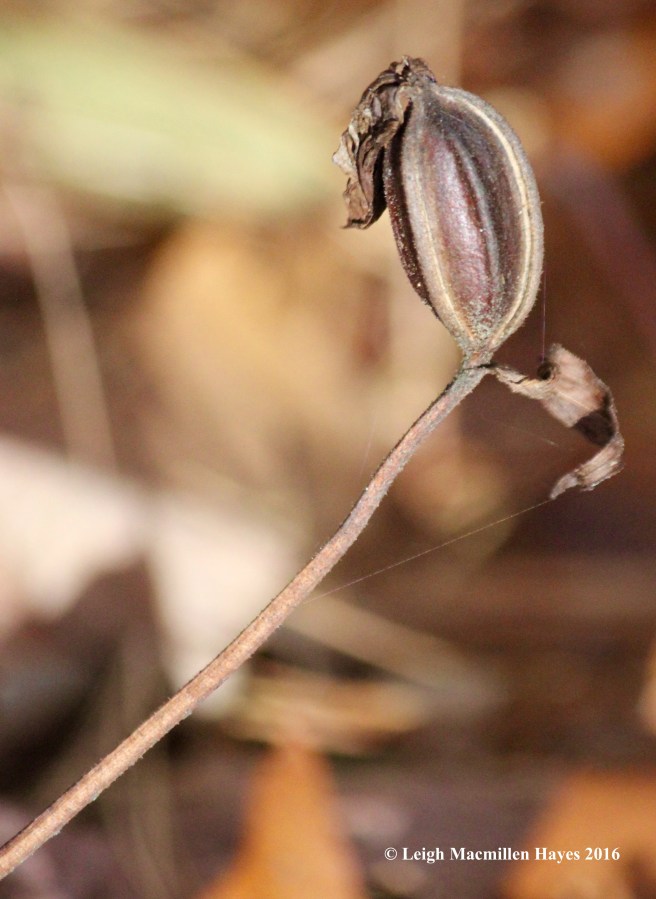
Also along the summit trail, the woody seedpod of a Lady’s Slipper. Ten-to-twenty thousand seeds were packaged within, awaiting wind dispersal.

t-mt-tom-house

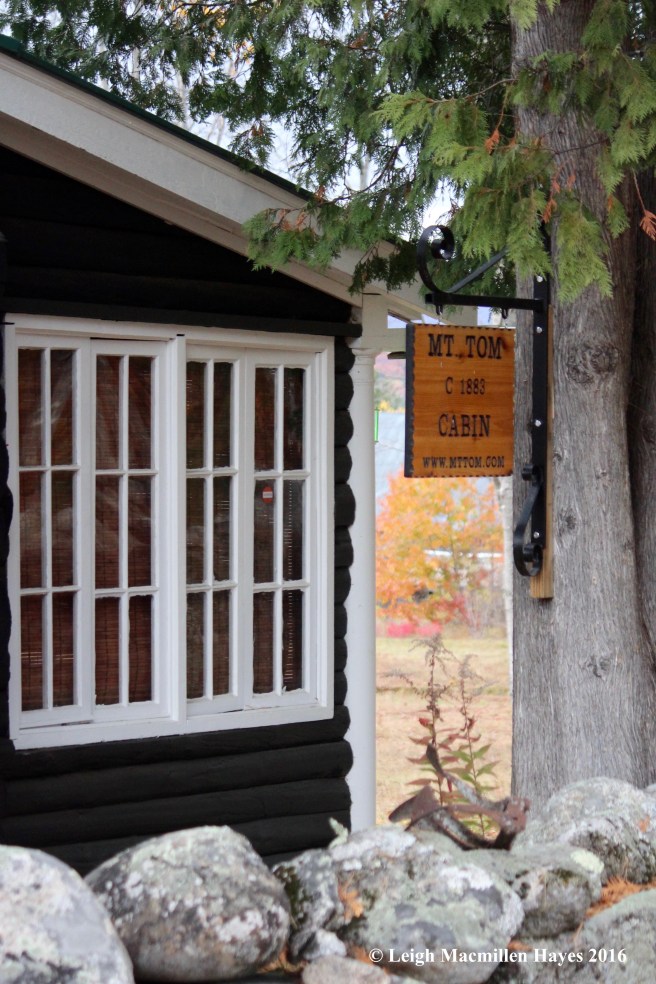
We decided to follow the old trail down, which passes through a hemlock grove and then suddenly changes to a hardwood mix. Both of us were surprised at how quickly we descended. And suddenly, we were walking past some private properties including the 1883 Mt. Tom cabin.

t-northern-white-cedar-bark

t-northern-white-cedar

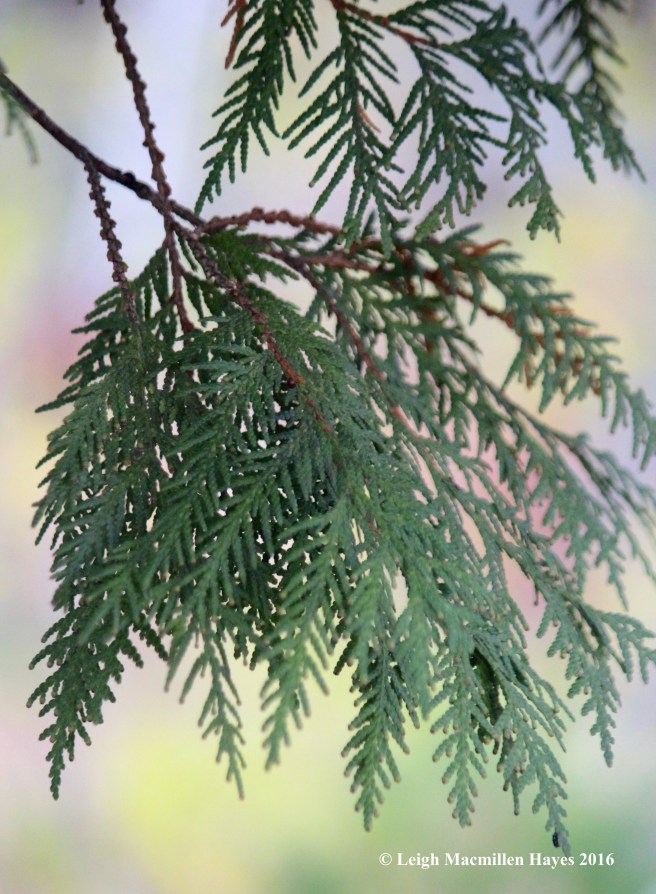
The cabin sign was actually attached to a Northern White Cedar tree. I’m forever wowed by its bark and scaly leaves.

t-flag

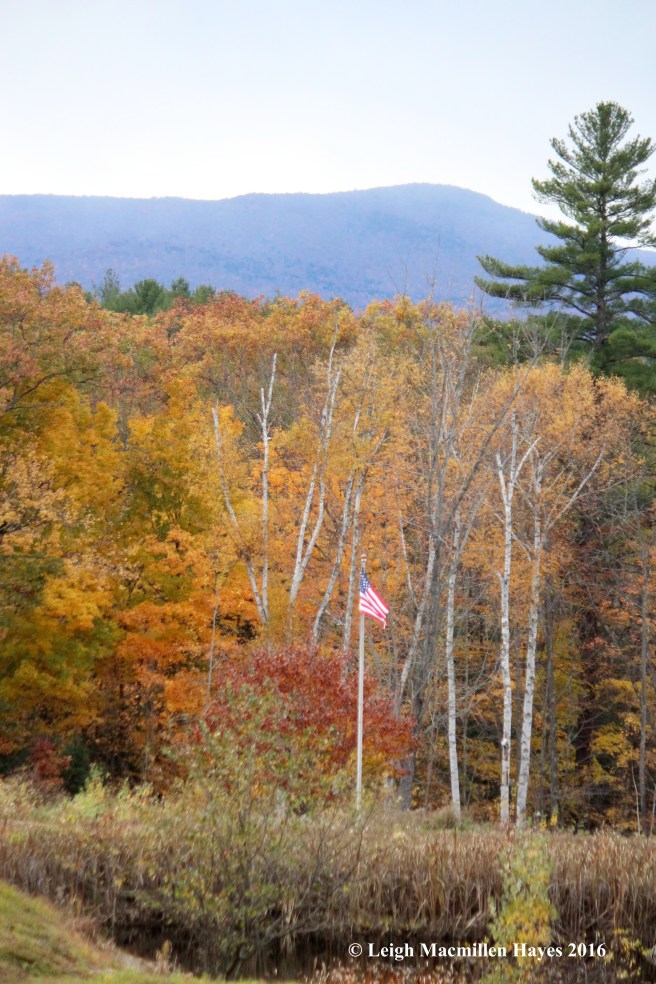
In the field beyond, Old Glory fluttered in the breeze.

t-barn

And just before Menotomy Road, we spied Mount Kearsarge in the distance.

t-menontomy-cemetery

Since we’d taken the loop trail approach rather than an out and back on the same trail, we had to walk along Menotomy Road, so we paid the cemetery a visit and checked out the names and ages of those who had lived in this neighborhood.

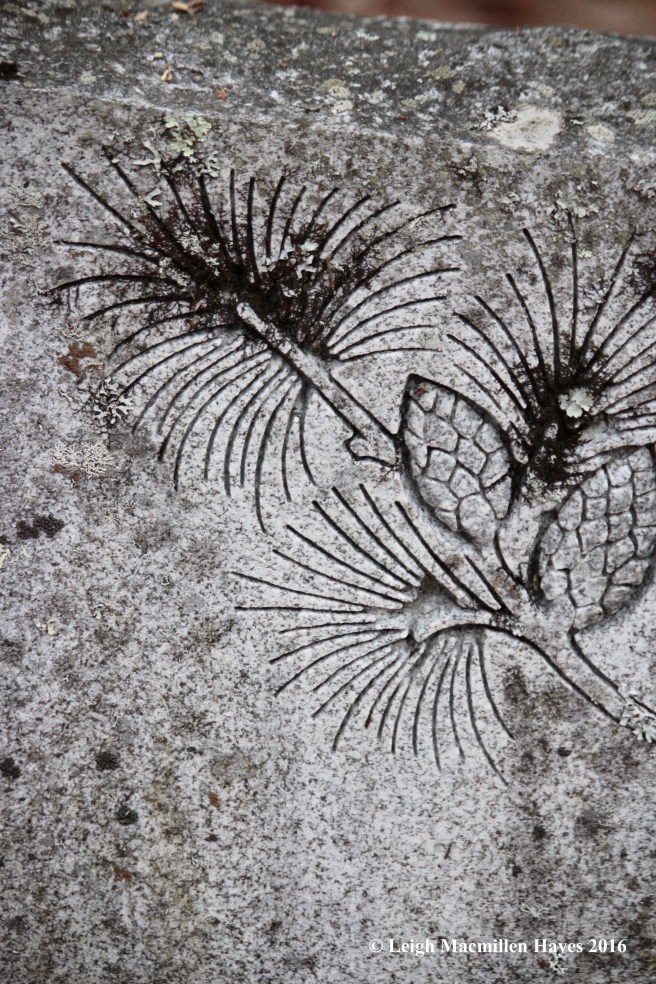
t-pine-on-grave-stone

One of the older stones intrigued me with its illustration. I think I would have enjoyed getting to know these people.

t-menotomy-pumpkins

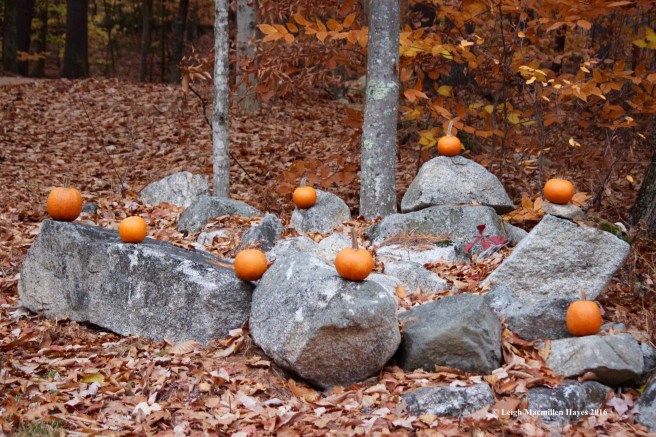
As we continued on, I was reminded of recent adventures in Ireland  and the realization that we notice more when we walk along the road rather than merely driving by. We both admired this simple yet artful pumpkin display.

t-menotomy-road-1

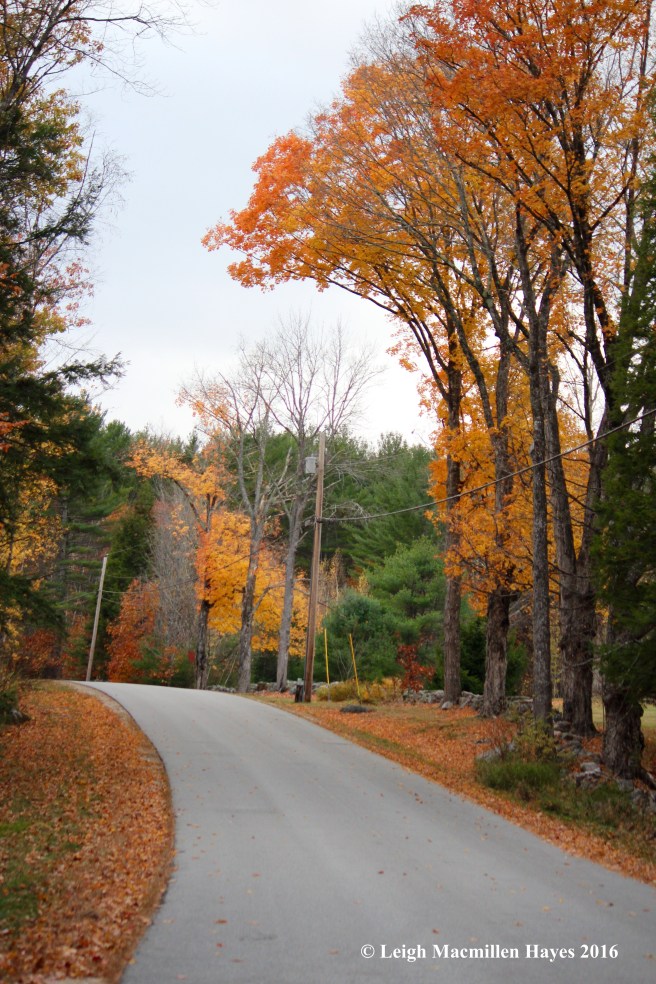
If you go, you might want to drive to the old trailhead, park your vehicle and then walk back to the West Ridge Trail. We parked at the latter and had to walk the 1.5 back at the end, when it seemed even longer. But truly, the road offers its own pretty sights and the temperature was certainly just right, even with a few snow flurries thrown into the mix, so we didn’t mind. We were thankful we’d found our way along the new trail and revisited the old at Mount Tom. And I’m already eager to do it again.


Cloaked By The Morning Mist

You remember the nursery rhyme, “Rain, rain, go away, come again some other day, we want to go outside and play”? Well, it finally rained yesterday and today, and many of us have greeted it with open arms. And we certainly didn’t let it stop us from going out to play.

u-eaton-1

This morning, I joined a group from the Upper Saco Valley Land Trust for  a hike in South Eaton, New Hampshire. Had I not been racing for time, I would have stopped every twenty feet to snap a photo, but I did pause beside Crystal Lake.

u-road-1

After getting lost for a few minutes because I didn’t pay attention to the directions, I found the property. Eleven of us headed down Paul Hill Road, led by Jesse Wright of USVLT, and Nancy Ritger, senior naturalist with the AMC.

u-big-tooth-raindrops

We paused to examine a variety of offerings, including the flat stems of the quaking aspens. It was the raindrops on the big tooth aspen, however, that drew my focus. One of the things Nancy spoke about as she had everyone feel a flat aspen stem, is how that very stem aids in photosynthesis.

u-big-tooth

The leaves tremble or quake, giving each more time in the sunshine–individual leaves, no matter where they are attached to the tree, share in unshaded glory for split seconds as those above them flutter. And, in the case of aspens, both sides of the leaf work to make sugar and release oxygen.

u-beaver-lodge

We spent a long time beside a beaver pond and pondered various aspects of it. We could see the lodge and beaver sticks in the water–that made sense.

u-retainer-2

But why a significant wall on at least two sides?

u-cut-stone-in-water

And a split stone by the water’s edge? What else had happened here? Jesse told us that there are numerous foundations that we didn’t have time to locate today, so we knew that though it seemed as if we’d traveled to the middle of nowhere, this place was once somewhere.

u-moose-track

And to the local moose, it still is as evidenced by the prints we found in mud.

u-raindrop-lichens-2

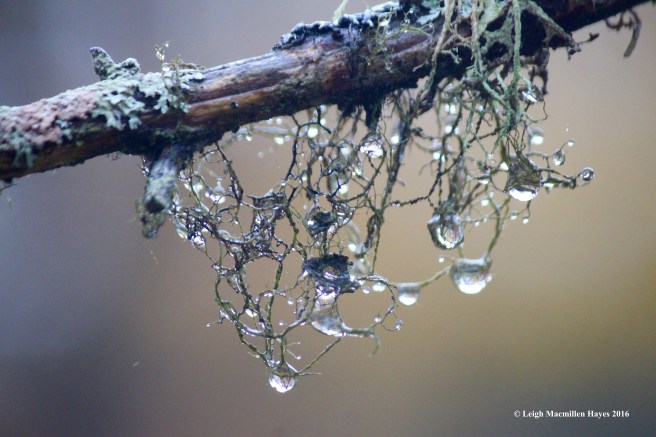
Our attention also turned upward as we admired raindrops dangling from fruticose lichen (think fruit-like branching).

u-raindrops-on-pond

Suddenly, the rain increased so Jesse asked if anyone wanted to turn around and received an overwhelming vote to continue on.

u-larch-2

One of my favorite discoveries was a couple of larch trees. Larch or tamarack is our only deciduous conifer. Huh?

u-larch-1

Like deciduous trees, the larch needles turn yellow each autumn and fall to the ground. Another cool fact: needles grow on stout pegs that look like wooden barrels.

u-pileated-and-ants

We paused beside ash trees and tree stumps, and enjoyed the view of this pileated woodpecker excavation of carpenter ant tunnels–their favorite prey.

u-candy-lichen

In the log landing that did become our turn-around point, we noted the early succession growth of Eastern white pines and sweet fern (not a fern). But again, we looked to our feet for the best views.

u-candy-lichen-1

Candy lichen is a crustose (think–flattish or crust-like) lichen with green to bluish-green coloration.

u-candy-2

Its fruiting bodies, however, are candy-pinkish disks atop stalks, even reflected in the raindrops.

u-cemetery-entrance

Our journey back to parked vehicles passed quickly, indicating we’d not traveled all that far in two and a half hours. That’s normal when you take time to notice. Before departing, Jesse showed me a cemetery on the abutting property.

u-cemetery-small-stones-2

Small, unmarked stones made me think of a Civil War-era cemetery in Sweden, Maine–perhaps a sudden illness of young children called for quick burials.

u-cemetery-currier-plot

One section was portioned off by split granite.

u-cemetery-curriers-1

The Currier plot. A side road we’d passed by was named for the family.

u-cemetery-lichens

The crustose lichens were intriguing on Rhoda Lodolska Currier’s stone. Rhoda died at age 26.

u-cemetery-octavia

Her sister, Octavia, lived to be 53.

u-cemetery-nancy-leavitt-90-years

Most impressive was the age of Nancy Leavitt, her stone located just outside the Currier plot. Nancy died at age 90.

u-vireo-nest

As we walked out, Jesse spied a cup-shaped vireo nest built in the fork of a beaked hazelnut. Life continued to circle in these woods.

u-undulating-color

And the autumn color undulated, mimicking the land. The sun tried to peak out for a few minutes when we arrived at our vehicles, but we were all appreciative of the rainy day wonders we’d found along the way.

u-eaton-3

And back in Eaton, a quaint New England village located beside Madison and Conway, New Hampshire, and the Maine border–beauty cloaked by the mist.

Thanks to Jesse, Nancy and the Upper Saco Valley Land Trust for a fine morning spent wandering and wondering.


In Constant Flux

Ever so slowly, the world around us changes.

h-starting-point

Sometimes it’s as obvious as the leaves that fall.

h-bee-on-flower-1

And other times, it’s a bit more subtle, evidenced by the bees that have slowed their frantic pace as they make final collections.

h-leaf-carpet

Mid morning, I headed down the cow path in search of other signs of change.

h-oak-branches-1

As I walked along, I began to realize the interdependence of all. Under the northern red oaks–many  chopped off twigs.

h-porcupine-works

The angled cut and empty cap indicated the work of porcupines seeking acorns.

h-leaves-on-hemlock

I found maple leaves pausing on hemlocks,

h-pine-needles-on-spruce

pine needles decorating spruce trees,

h-leaves-in-puddles

and occasional puddles offering a rosy glow. Eventually, all of these leaves and needles will break down and give back.

h-life-on-rock-1

I found life on a rock, where lichens began the story that was added to by mosses. The creation of soil was enhanced by a yearly supply of fallen leaves and needles gathered there. And then a seed germinated, possibly the result of an earlier squirrel feast.

h-orange-peels1-1

I found orange peel and many other fungi aiding the process of decomposition so that all the fallen wood and leaves will eventually become part of the earthen floor.

h-forest-succession-3

I found a healthy stand of trees and ferns competing for sunlight in an area that had been heavily logged about ten years ago.

h-deer-and-bobcat-prints

I found evidence of those who spend their lives eating and sleeping in this place.

h-aster-seeds

I found seeds attached

h-seeds-on-the-fly

and those on the fly–heading off in search of a new home.

h-witch-hazel-flowers-galore

I found the last flowers of fall

h-witch-hazel-1

exploding with ribbony blooms.

h-power-and-nature

After bushwhacking for a few hours, I found the snowmobile trail, where man and nature have long co-existed.
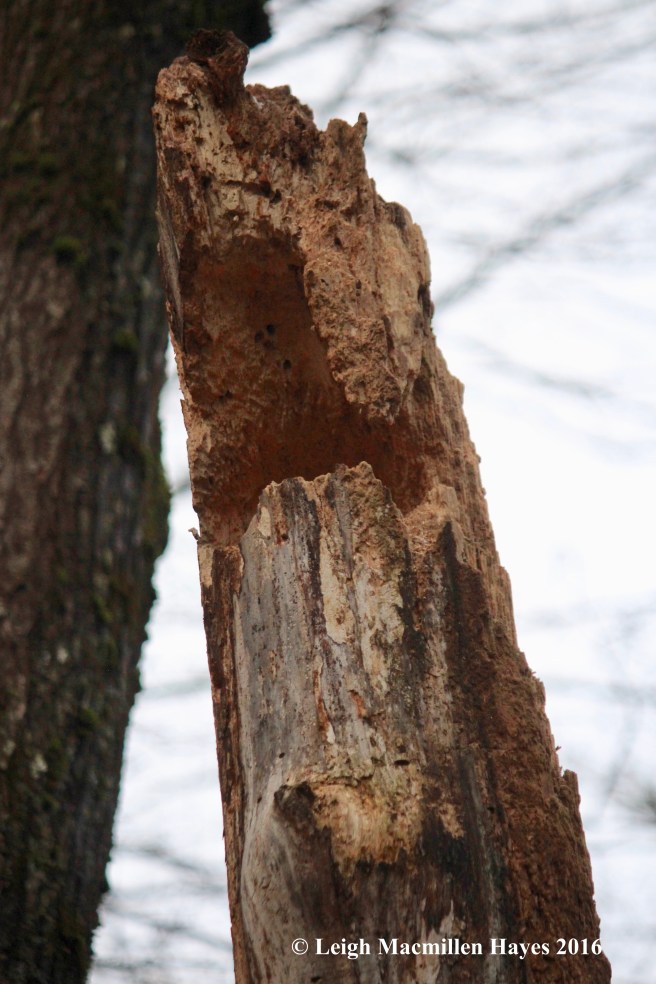
h-home-2

At last I found my way across the field rather than through our woodlot, thankful for the opportunity to take in the colors of the season one more time.

At the end of the day, I’m once again in awe as I think about how we, and all that we share this Earth with, are dependent upon each other and the abiotic forces that surround us.

And with that comes the realization that the scene is in constant flux and so am I.


The Big, The Little and Everything In Between

I stepped out of the shower after a walk around town with friend Marita and heard someone chatting away on the answering machine. Maybe it’s because I didn’t have my glasses on, though what that has to do with it I don’t know, but I couldn’t ID the voice. The male yammered away about something in the snow and it had come last night and I had to get there quickly. For some reason I thought it was our eldest and I  wondered what it was that needed my immediate attention. So, I cautiously picked up the phone and said hello. The voice on the other end continued talking desperately about me going somewhere. “Who is this?” I asked. It was friend Dick and I should have recognized his voice, but maybe not having glasses on is like not being able to taste if your nose is stuffed. Or maybe I’m overthinking as usual. Dick, however, was not overthinking or overreacting. He was excited and knew I would be as well. He was standing in a friend’s yard about a half mile from here and looking at bear tracks in the snow.
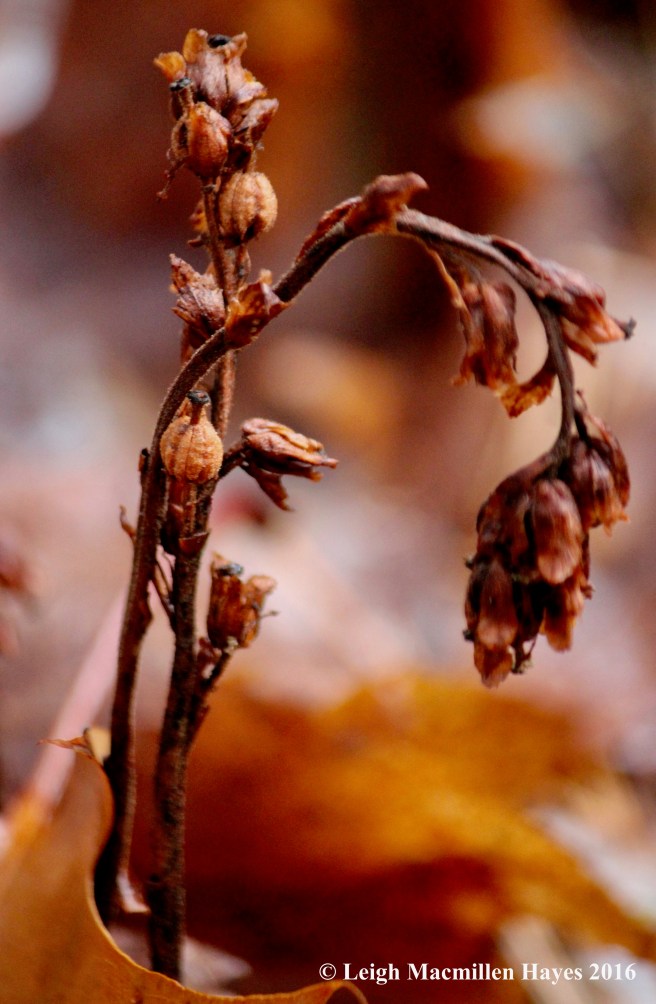
b-bear 7

As he knew he would, he had me on the word “bear.” His voice was urgent as he insisted I stop everything and get to his friend’s house. “I just need to dry my hair and then I’ll be right there,” I said. Deadlines loomed before me but bear tracks won my internal war. Dick suggested I just wrap a towel around my head. Really, that’s what I should have done because my hair has no sense of style whether wet or dry, so after a few minutes I said the heck with it and popped into my truck, camera and trackards in hand.

b-bear2

Yup–bear tracks. Classic, beautiful bear tracks. Even nail marks above the toes.

b-pigeon toed

And the pigeon-toed gait.

b-bear 9

My heart be still. The bear certainly wasn’t.

b-bear fence

It trampled a garden fence.

b-bear 4

And yanked down a suet feeder that dangled from a wonderful rigging at second story height designed to keep the raccoons from stealing it. We couldn’t find the actual feeder.

b-feeder1

It toppled another feeder and consumed all the sunflower seeds. Oh, the squirrels may have helped, but apparently the feeder was stock full. Not any more. We looked for hair but found none.

b-trot

One of the mysteries to us was why did the bear suddenly trot. I’m now wondering if it was startled at some point and ran away.

b-bear 6

Before leaving, I enjoyed one more look. How sweet it is. And how thrilled I was to have seen it–especially knowing that it wouldn’t last long. The. Big.

b-feathers in circle

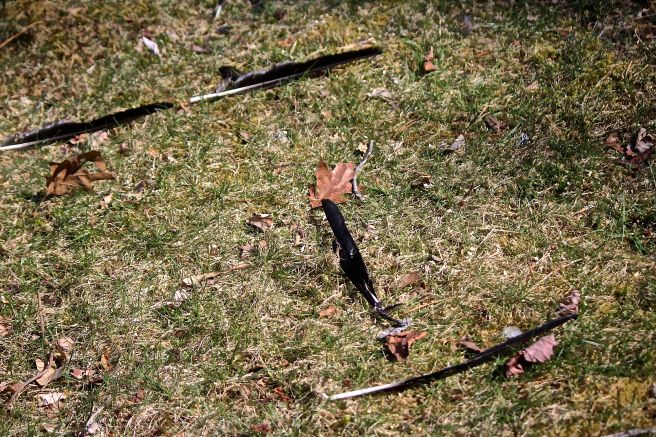
When I arrived home, I knew I needed to work, but figured a quick walk to check on the vernal pool was a great way to celebrate the bear tracks. And on my way–feathers. Long black feathers.

b-feather 1

Most were about a foot long.

b-feather 2

They appeared to be torn out rather than cut.

b-bird head

I know the neighborhood cats hang around our bird feeders all day–ever hopeful. But I don’t think they got this crow. I’ve a feeling a hawk was the culprit. The. In. Between.

b-snow on mount

It’s my neighborhood, so I always cast an eye toward the Mount. The. Big. Again.

b-vp1

The water level seems about the same as last week and a wee bit of Tuesday’s snow still decorated the  western shore.

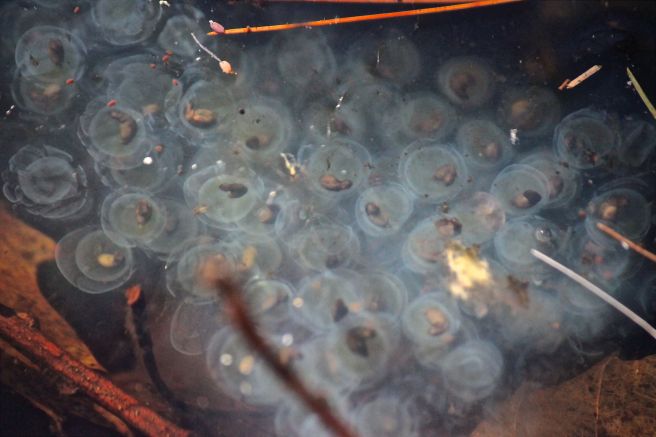
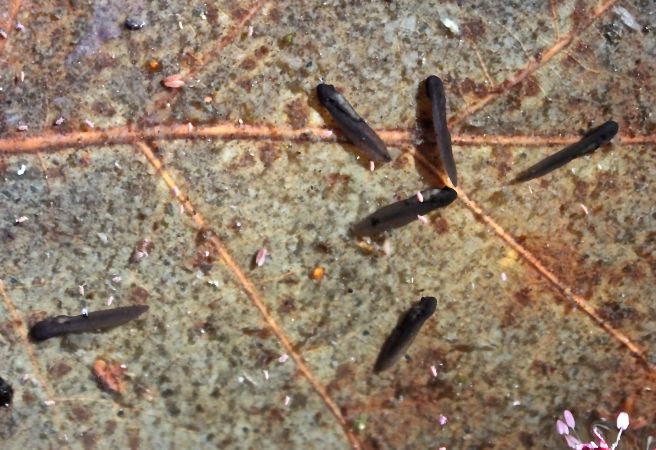
b-tadpoles 3

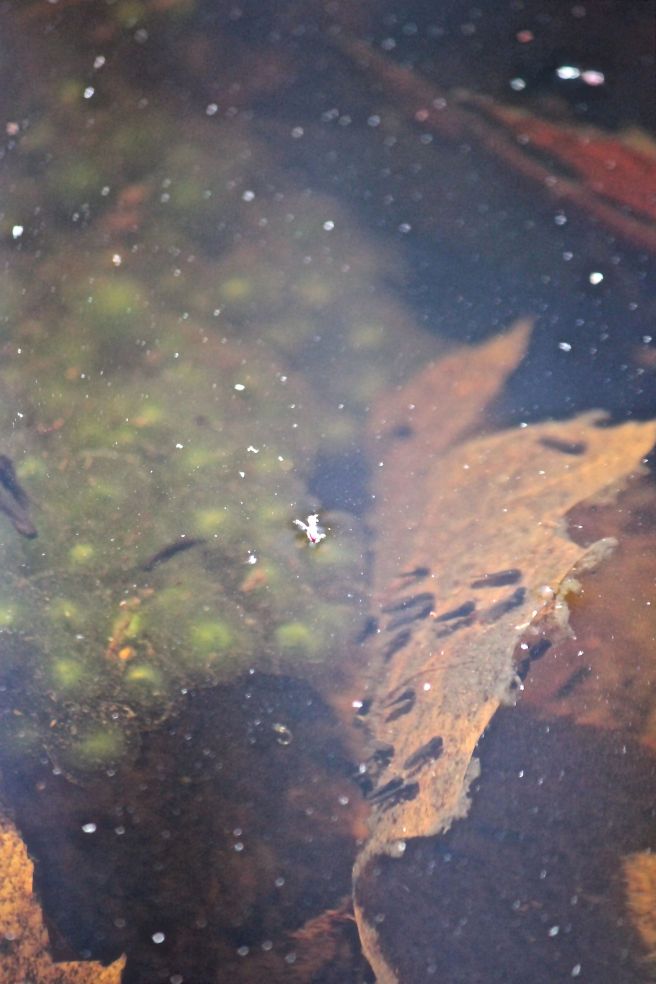
Though the lighting wasn’t great at that hour, it was obvious that the tadpole population had increased.

b-sally1

And the salamanders continued to grow within their protective covering. The. Little.

b-woody1

I did finally settle down to work. And then it was lunch time. My guy and I weren’t the only ones dining.

b-woody lunch 1

After I finished two assignments and before I walked to a meeting, I decided to visit the pool again and capture the action in the late afternoon light. But first, an examination of the woodchuck’s feeding site. Yup, those leaves were nibbled.

b-woody lunch 2

And so were these. The. In. Between.

b-vp no snow

And then it was back to the pool, where the snow had melted. But, I have to share a finding along the way. Or rather, a non-finding. I intended to grab the crow head because I wanted the skull. Not. It wasn’t in the path where I’d seen it in the morning. I poked around and couldn’t find it anywhere. Who stole it? Maybe one of those darn cats.

b-tads 7

In the warmth of the sun at the eastern side of the pool where most of the egg masses were laid, the population continued to increase.

b-tads 10

I felt the same glee about all of these little critters as I felt about the bear tracks earlier in the day.

b-tads on sallies

Tadpoles and salamanders. I may not see bears tracks every day, but for a brief moment in time, I’m honored to watch the transformation that takes place in the vernal pool. The. Little. Times. Two.

Giving thanks for the ability to wonder. The Big. The Little. And Everything In Between. Especially Everything.

Mondate Fix

I have bad camera karma as my guy can tell you and last week my Tamron
SP 60MM F/2.0 Di II 1:1 Macro decided to quit. I know not why. But, we were headed south for today’s Mondate, so we detoured into Portland hoping for a quick fix. Not to be. Two or three weeks they said. ARGH!

p-Grog

C’est la vie. As my nephew once responded about thirty years ago when he was a little tyke, “La vie.” We didn’t get to see him today, but if his ears were burning it’s because we met up with his parents at the GROG in Newburyport. I needed a sister fix–and a sister hug. Thanks lmacbud and docbud ;-) And thanks also for the chocolate chip cookies. I’m amazed they survived the trip home. Guess we were full.

p-board 1

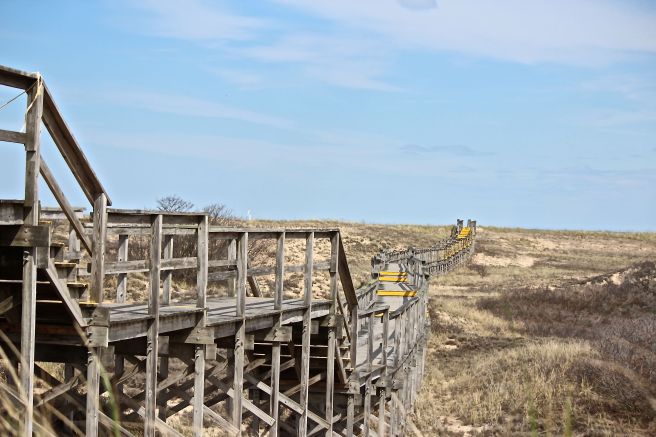
After we parted ways, my guy and I drove out to Plum Island, an 11-mile barrier island off the shore of Newburyport and Newbury, and home to the Parker River National Wildlife Refuge. Most of the parking areas along the salt marsh were closed and so we headed back and walked along the board walk in the Salt Pannes Wildlife Observation Area.

p-dunes to ocean

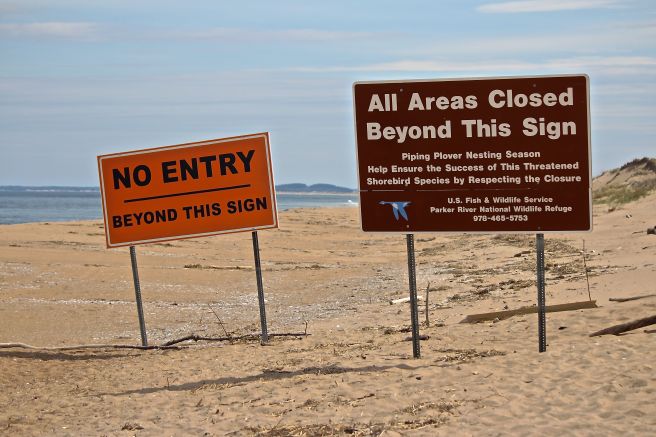
Due to the fact that it’s plover nesting season, we eventually reached a stopping point. According to the refuge’s Web site: “The Atlantic coast population of this small shorebird was listed as threatened on the Federal Endangered Species List in 1986. As with so many other species in decline, plover populations plummeted primarily due to habitat disturbance and loss. Plovers arrive to breed and nest on the refuge beach beginning in late March. Refuge management efforts focus on minimizing human-caused disturbance by restricting public access to the refuge beach during this critical time.”

p-cranberry

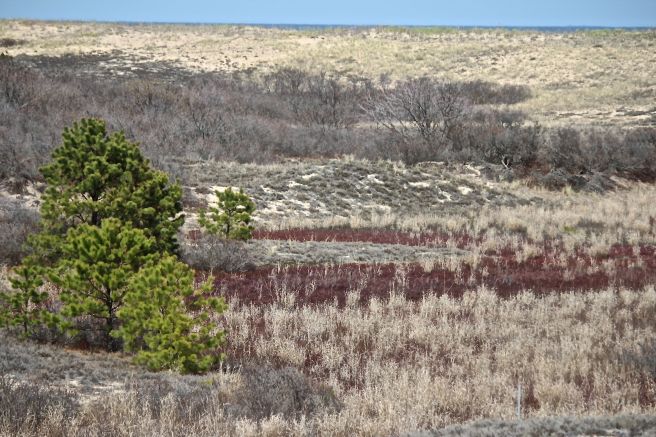
As we stood there, we realized that there was a small cranberry bog below. And we found a little sign that listed a couple of interesting facts: 1. the bog’s sphagnum moss sits atop sand. I look at wet or damp sphagnum every day and had no idea it could survive on sand; 2. like a vernal pool, the bog is used as a breeding pool and in this case by a rare and elusive amphibian–the Eastern Spadefoot Toad. I was itching to get down there and explore, but . . .

p-pine

we paused for a few more moments and then followed the board walk back.

p-board 2

Again we stopped and this time we could follow a board walk all the way to the beach. As I walked, I wondered about the crooked mile but came to the conclusion that it follows the lay of the land–or rather dunes we were crossing.

p-signs1

To our right, our movement was restricted. I suspect Rachel Carson would have approved of these signs. In 1947, the U.S. Fish and Wildlife Service published a booklet Ms. Carson wrote about the refuge.
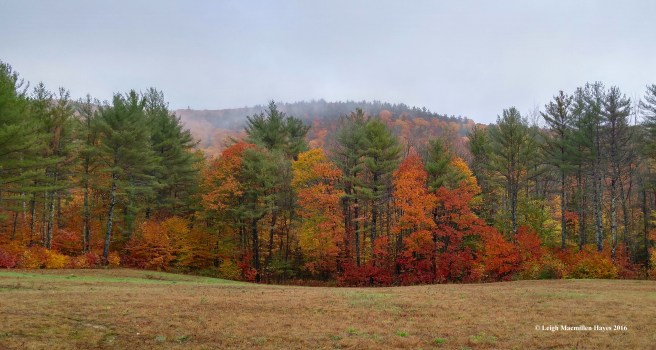
p-beach right

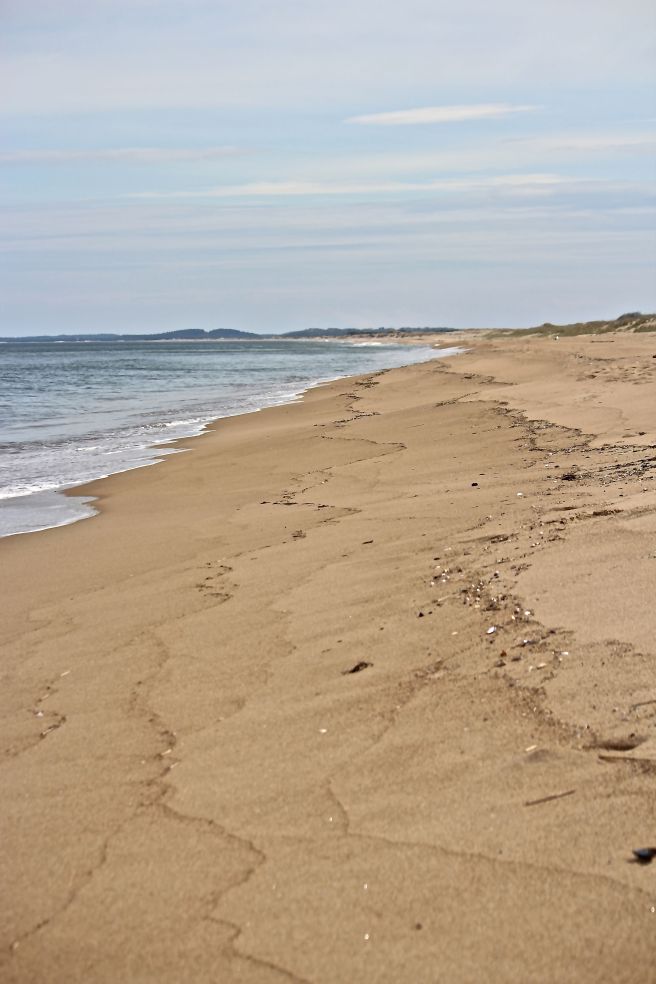
We walked to the water’s edge and looked south. The stretch of beach invited exploration, but we don’t always need to get what we desire.

p-mg2

Nearby, my guy found a piece of drift wood to sit upon.

p-ocean1

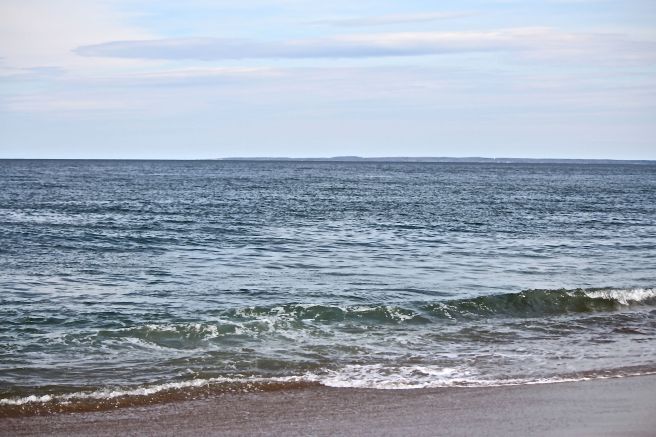
In no time, he was mesmerized.

p-bird 2

p-bird 1

I needed to follow in the tracks of others.

p-crab1

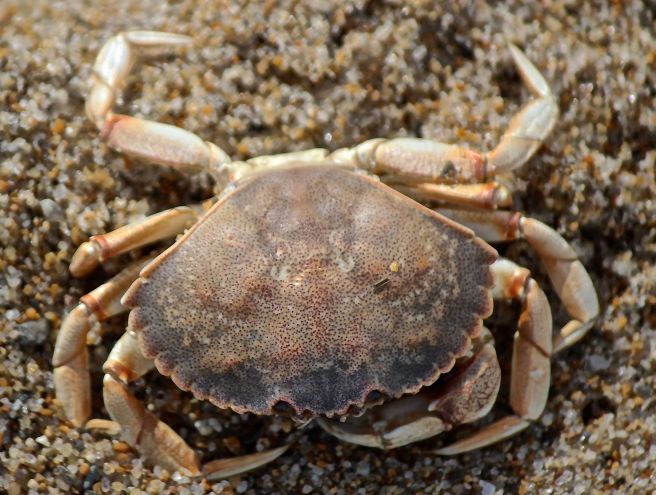
A day beside salt water always evokes memories of my childhood spent exploring the Connecticut coast. How many times did I stick a line attached to a clothespin down into the jetty in Clinton harbor to catch crabs?

p-m & r1

How many mussels did I use as crab bait? How many broken razor clam shells sliced my feet?

p-seaglass

How many pieces of sea glass did I collect?

p-clam1

And how many clam shells became Christmas presents?

p-ocean 3

We couldn’t stay long and know that there is so much more to see and wonder about in this special place. Before leaving, we filled the innermost recesses of our lungs with salt air and then returned to the board walk.

Suffice it to say, for this Mondate, we got our fill of fixes.


The Borrowing

My friend, Dick, sent me the following message yesterday: “from a novel, Northwest Angle by Krueger … who has a series which relates to the Objidwa (sp) of the upper parts of Michigan …

‘What’s a Mide?” — ‘A member of the Grand Medicine Society,’ Stephen explained. ‘A healer. Somebody who understands the harmony of life and how to use nature to restore harmony when it’s been lost.” p246

“Belongs.” Meloux (a very senior shaman type of the Native American ‘Mide’ of the Objidwe) seemed to consider the word. “I believe no one belongs to anyone else. You, me Waaboozoons, we are all dust borrowed for a little while from Grandmother Earth. And even that dust does not belong to her. She has borrowed it from all creation, which is the Great Mystery, which is Kitchimanidoo. And if you ask this old man, I would say that another way to think about Kitchiimanidoo is as a great gift. Kitchimanidoo is not about keeping. Nothing belongs to anyone. All of creation is meant as a giving.” p 269

While I haven’t read the book or any of Krueger’s works, these words resonated with me as I moved about this morning.

m-vp

My first stop was a visit to the vernal pool, where the ice is beginning to melt.

m-vp, birch seeds

I looked for insects and found instead birch seeds and scales–meant as a giving.

m-berries

Wintergreen berries remained prolific below the power lines. While this fruit is traditionally browsed by a variety of mammals, I had to wonder if its location is the reason it was left untouched–poisoned by the herbicides Central Maine Power uses to keep the land clear. What was meant as a giving revoked.

m-leaves thru ice

Not all was bad as I followed the trail for a distance and enjoyed the beauty that has begun to emerge.

m-sphagnum color

The pompom heads of sphagnum moss contrasted brilliantly beside the running clubmoss.

m-trail light

Looking back, I noticed that today’s sunlight was captured in yesterday’s raindrops–certainly a reason for thanks-giving.

m-mount 1

And before me–man and nature in the eternal struggle for harmony. An example of borrowing.

m-pollen?1

Before I turned onto a logging road, a puddle caught my attention.

m-pollen?2

My first thought was pollen, but as I approached, I realized the little dots were moving about much like spring tails because .  . . they were spring tails. So my learning increased as I noted their color and the fact that there are aquatic members of this family. Another giving received.

m-pin cherry warts 2

On recent treks, my bark eyes have been confused about two trees–black birch (aka sweet or cherry birch) and pin cherry. As youngsters, both feature reddish-brown bark. What has thrown me off is the association with other birch trees, including the yellow birch that grows behind this specimen. Today, I made a point of noticing–the warty orange lenticels, lack of catkins and no wintergreen scent. These are three features that helped point me toward pin cherry. Black birch bark features long, thin lenticels, catkins common to birch trees and when scraped, that delightful wintergreen smell.

m-pin cherry:birch1

Despite the fact that they are not of the same family, certainly they’ve found a way to give to each other and live in harmony. A lesson.

m-porky

Just beyond the birches, in one of many stump dumps along this logging road, something caught my eye.

m-porky 1

A porcupine worked over the bark of a fallen hemlock tree. I stood for several minutes and watched. Either it wasn’t aware of me or I didn’t pose enough of a threat.

m-porky again

The leaf caught on its backside made me chuckle and wonder why we don’t see more of that.

m-porky like

I’m amazed that I saw it at all in this land that has been chopped up over the course of the last three years. Notice how leaves are similarly stuck to this shredded tree stump.

m-porky tree 3

m-porky tree 2

m-porky tree

Behind were the trees that have received the porcupine’s recent attention. While the logging is destructive, it helps heat homes, provides income to at least several people including the logger and landowner, and creates new habitat and food opportunities for wildlife. Change is difficult and I’d grown to love these woods the way they were, but they were that way because of prior cuttings. A borrowing.

m-bubbles

Most of the logging road was a combination of puddles and mud. At times, air bubbles rippled as I moved through and I was reminded of my youth years spent feeling for clams in the mudflats of Clinton Harbor on Long Island Sound. The memory itself was a giving.

m-deer 2

Like the deer that frequent this land, my boots got stuck in the muck. Sometimes, it seemed like I was being sucked in and told to stand still. But my mind wandered on and I followed it.

m-trail conditions

Going forward in time, I’ll be curious to watch the reflections in the puddles change as the pioneer species move back in and regenerate this land. The harmony.

m-spirit

In the end, as always seems the case, I was on the receiving end of the giving and grateful for the borrowing as the spirit of Grandmother Earth shared a few tidbits of the Great Mystery.


Same Old is New

Same old, same old. Sometimes it feels that way as we travel familiar trails and recognize members of the community. And so it seemed today.

a-fdn 1

We paused to check on a few neighbors along the Homestead Trail at the Greater Lovell Land Trust’s Heald and Bradley Ponds Reserve, but no one was home.

a-signs

And so we decided to climb to the summit of Amos Mountain.

Along the way, I realized we weren’t the only ones exploring this property–several times we saw where a mink had bounded across, even enjoying a short downward slide in the midst of its journey.

a-summit view

From the summit, Kezar Lake stretched before us as we ate our PB&J sandwiches and Girl Scout cookies–Lemonades™.

a-whiting to pleasant

And another view, Whiting Hill in the center foreground and a peek at our beloved Pleasant Mountain, visible just to left of the center pines.

a-stonewalls 1

On the way down we decided to explore the stonewalls for a bit, at times terraced and following the contour of the mountain.

a-bear 3

And that’s when the same old started to change. Yes, we found another bear tree.

a-bear 4

And on what side of the tree should we find the claw scars? Why the north of course, adding to our unscientific theory that bears climb trees on this side. Typically, the northern side is the uphill side. Our mission is to continue to pay attention to this–tough job that we choose to accept.

a-stonewalls 4

Sometimes the walls appeared to enclose pens.

a-stonewalls 6

And other times they opened–perhaps to pastures?

a-northern white cedar

As we wandered and wondered about the walls the farmer had created and why, we noticed other things we’ve somehow missed upon previous visits, including this northern white cedar tree.

a-stonewall fdn

In what today appears to be the middle of nowhere, a small foundation. House? Shed? Sugar shack?

a-red-belted polypore

We climbed a hill to see what was on the other side and found this red-belted polypore (Fomitopsis pinicola) growing on an Eastern white pine. In Lawrence Millman’s Fascinating Fungi of New England, he says this is “apparently not a picky fungus. F. pinicola has been recorded on more than 100 different species of tree hosts.”

a-stonewall last

The snow had softened since we first started so we did some slipping and sliding as we followed another stonewall back to the trail.

a-3 birch

And then my brain kicked into birch tree mode. These woods are filled with paper, gray and yellow birch. And next week, the GLLT will host a “Which Birch Is It?” walk about the birches and their relatives.

a-yellow bark

The ribbony curls and whorls of yellow birch bark are signatures of this tree that can change in color from silver to yellow to reddish brown and circle back to silver again in old age. Did you know that a yellow birch can live to 200 hundred years, unlike its cousins, the gray birch and paper birch? Gray birch live about fifty years and paper reach a ripe old age of somewhere between 50 and 150 years.

a-yellow 4

Another cool fact about yellow birches: the interior of dead branches begin to decay quickly, even while still on the tree; eventually reduced to mush, the trees rid themselves of these non-productive limbs quite easily with the help of wind. Look for tubes of outer bark  filled with rotting wood on the ground.

a-birch stitch

Also becoming visible as the snow melts, paper birch bark from downed trees. It seems curious that the lenticels resemble stitches, especially considering that Native American’s built sturdy, lightweight canoes from birch bark; the bark was stretched over a framework of white cedar, stitched together and sealed with pine or balsam resin. All the components exist in these woods.

a-tripe 1

Back on the trail, a few other things revealed themselves, including smooth rock tripe (Umbilicaria mammulata). No matter how many times I see this, it’s never the same old.

a-tripe 4

In great contrast to the smooth upper surface is the coarse pitch black of the underside reminding me of fresh tar–kind of like what town crews are using to fill pot holes right now.

a-tripe 3

The greenness of the upper side was witness to the melting snow.

a-liverwort

Similarly, lungwort displayed its dryer gray presentation because it lacked moisture.

a-heading out

As we continued down the Gallie Trail, bypassing the Homestead, it seemed that we were back in the land of the sameness.

a-speckled catkins 2

But . . . speckled alder, a member of the birch family, is about to come into its own. While the burgundy brown male catkins hang from the ends of twigs, smaller female catkins await the release of pollen.

a-speckled leaf

Speckled alders are pioneer species–that first step in natural transition of farm land or logged land back to forest. In this instance, it’s both of the former.

And that’s not its only claim to fame. Speckled alders are nitrogen fixers. Atmospheric nitrogen absorbed by bacteria live in nodules on the alder roots and change into a form of nitrogen plants can utilize as fertilizer, thus fertilizing fields that may have been depleted of nitrogen by years of farming. Its leaves are also rich in nitrogen, so when they fall they help to fertilize soil. For some reason, this one chose to hang on, but its moment will come. In the meantime, it offers grace in form and design.

a-gumdrop 2

Equally graceful, the hairy bracts and seed head of Black-eyed Susans (Rudbeckia hirta) found near the parking lot.

It’s all always been here. It’s all the same, day in and day out and yet it’s all new. Change is the only constant–offering moments of wonder.


Gallivanting Around Great Brook

It’s been a couple of months since Jinny Mae and I last checked in on the doings in the Great Brook neighborhood off Hut Road in Stoneham, Maine.

H-Forest Road 4

Forest Road 4 isn’t plowed in the winter. That’s OK. We welcomed the opportunity to admire our surroundings as we hiked above the brook. So much to see that is so often missed as one drives.

h-paper birch blue

Though the temperature was on the rise, the blueness of a few paper birch trees reminded us that it’s still winter.

h-sphagnum

We found sphagnum moss looking a bit frosty but cheering us on with its pompoms.

h-chaga

On more than one yellow birch, chaga offered its medicinal qualities in quantity.

h-yellow and white partners

We came upon a special relationship–a yellow birch and a white pine. Rooted in this place, they embrace and share nutrients.

h-yellow birch:white pine

Forever conjoined, they dance through life together.

h-GB1

Finally beside the brook,  we couldn’t see the rocks below very well, but watching the water race over them gave us a better understanding of the forces that have smoothed their surfaces.

h-GB south

In a few more months, we’ll stand here and wonder where all the water went.

h-ice drips& bubbles

But today, it was the ice formations that we couldn’t stop admiring. Bubbling water below and dripping ice above, each adding to the other and both constantly changing.

h-ice 2

So much variation on the same theme as coursing water freezes into ice while at the same time carving into the rocks below.

h-ice pedastle support

Looking beneath, we noticed pedestals shaped like elephant legs providing support to shelves above.

h-gb ice castle

Occasionally, we saw crystalline turrets, translucent arches and frozen chandeliers of castles captured in ice.

h-sets of ice feet

Sometimes, it seemed like ballerinas danced on their tippy toes. That’s what water really is, isn’t it–a dance through time with changing tempos along the way?

H-GB

We crossed Great Brook and then paused for a moment as we decided which trail to follow.  We took the road less traveled by. I laughed when Jinny Mae referenced Robert Frost’s poem. My former students don’t read this, but that was one of the poems they had to learn and recite. And my guy–poor soul–knows it through association. Actually, he’s a better soul for that reason.

h-tree owl 2

So you may not see it, but Jinny Mae and I did–an owl hidden in the ash bark. Not a live owl, mind you. Well, that depends on your perspective, I suppose.

h-heal all

Within minutes, we knelt to admire Selfheal or Heal All (Prunella vulgarism) and its hairy calyces.

h-survey sign

We stood by the survey marker sign and realized it had been attached for many years.

h-survey marker

Perhaps 51 years!

h-frullania 1 on red oak

h-frullania 2

On a red oak, we pause to look at the reddish-brown liverwort–Frullania. There’s history in this species–dating to the earliest land plants. No matter how often we see it, and we see it often, we feel privileged.

h-leaves and ice

The trail switches from snow to ice to water and back again. Ice covered leaves draw our appreciation.

h-fnd 1a

In the neighborhood, we pause to check on the local families.

h-fdn 1 chamber

I climb down to the root cellar and discover that the porcupines haven’t visited all winter. Old scat still present in there, but nothing new.

H-Fdn 2

Moving up the colonial road, we come to the second residence.

h-fdn 2 yellow birch on mantel

Atop the mantel grows an old yellow birch. Like any TV screen above the fireplace, it offers an ever-changing display.

h-brook upland

We moved toward Shirley Brook, where we were once again in awe of ice.

h-water and ice1

Water and ice: a relationship in constant flux–at the moment.

h-brook structure

Beside the brook is a stream that’s currently dry. We look edat the snow-covered stonework that crosses over it and realized we need to return and try to figure out what the structure might have been and why it was built here. Stuff like this adds to the intrigue. Man-made. When? Why?

h-spider 3

Poor Jinny Mae. She had to wait for me constantly as I shifted from one lens to the next. But check out this spider.

h-stone piles 1

We are the queens of bushwhacking and love discovering the stories hidden in the woods. In this neighborhood, lots of stone walls tell part of the story. Rock piles enhance the chapters.

h-moose scat 1

And then we found more. Fairly fresh moose scat insisted upon our attention. We’d noted that there were some old snowshoe hare runs and we found some moose browse on a nearby striped maple, but we were surprised that there weren’t many fresh tracks. Where have all the mammals gone?

h-moose scat 2

This scat is some of the biggest moose scat we can recall seeing. A few gems followed me home.

h-lady's slipper

And then we happened upon something neither of us have seen before–at least that we are aware of. We had our ideas about what winter weed this is, but since we haven’t encountered it before our sense of wonder kicked in.

h-lady's slip pod 2

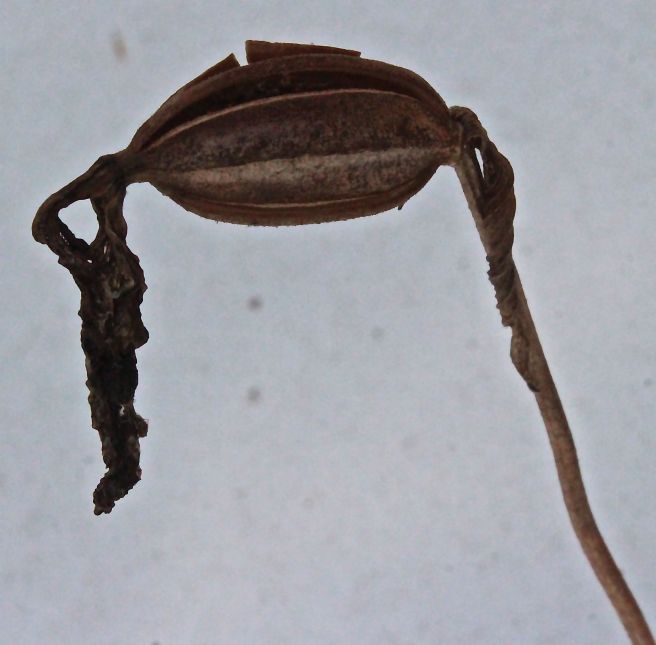
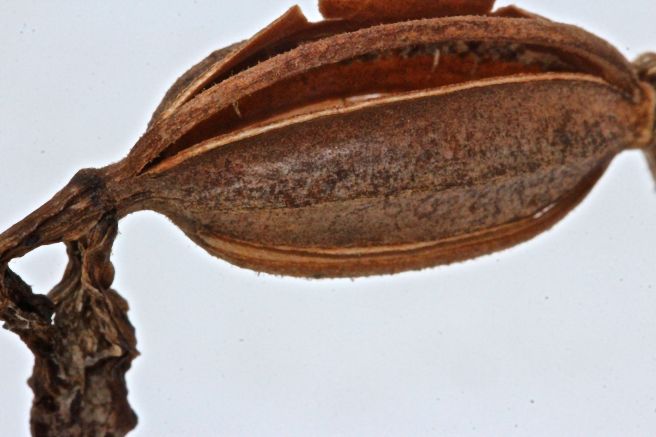
Back home, I looked it up in Weeds and Wildflowers in Winter by Lauren Brown. The capsule is woody and about two inches long. As you can see, it’s closed at both ends, but opens along slit lines–six in all, actually.

h-lady's bract at base of pod

At the back end, a long, curved bract.


And at the front, the slipper gone by. Yup–Lady’s Slipper (Cypripedium acaule). And the reason we didn’t recognize it–because it’s a rare find in the winter woods. Wow.

h-bear 1

We’re on our way out when we spotted these marks on beech bark. We’d looked and looked because we know this is bear territory.

h-bear NW

Compared to other bear trees, these claw marks are newer than most I’ve seen. Jinny Mae was as excited about the find as I was. I’d told her earlier as we scanned the trees that my guy has come to an unconfirmed scientific conclusion that bear claw marks appear on the northern side of trees. This one didn’t let us down. Based on the location of the sun that’s grew lower in the sky, these are on the northwestern side of the tree.

At last it was time to drive home.

Gallivant: go from one place to another in the pursuit of pleasure or entertainment. Over five miles and almost five hours later, we were thankful for the opportunity we shared today to gallivant around Great Brook.


Fleeting Rays of Sunshine

After the past two days of rain and last night’s wild and woolly weather, this afternoon’s fleeting rays of sunshine were most welcome.

f-backyard start

Snow-eating fog enhanced the moment as

f-beech light1

ever-present beech leaves emitted their own specks of light.

f-sun rays 2

And suddenly my world was aglow.

f-bobcat

So was my heart because I discovered that a friend had visited.

f-ear 1

f-ear 2

A fallen oak branch revealed a fun find: jelly ear fungi aka Auricularia auriula.
f-vernal pool2

And the vernal pool offered a reflective stance.

f-droplet embraces world

Within a single droplet, time was encapsulated.

f-tiny droplets

Elsewhere, numerous other droplets enhanced twigs and

f-tiny droplets 4b

hairy bristles.

f-tiny droplets 2

Pine needles displayed their own adornments as

f-white pine

new growth showed its preparation for the days ahead.

f-golden growth

All the while, former growth glowed in the knowledge of previous light while

f-white pine 3-yellow

some knew its days were waning.

f-dangling oak and pine

The same was true for others caught on a downward trend.

f-thorn:glint

Beauty beheld glints of contradiction while

f-ripples 1

messages reverberated outward.

f-first church

A nearby spire gave off its own light filled with hope and direction as

f-waning light 2

the sun’s last rays bounced off gathered clouds.

f-house in fog 2

Fog once again enveloped the field and all who live here.

f-woodpecker hole1

One newly created bright spot captured my attention as I headed in.

f-home ending

Day is done. The fleeting rays of sunshine have moved beyond.


Community-centered Mondate

While it wasn’t the first Mondate I wrote about, one of our early Mondates in the past year occurred at the Greater Lovell Land Trust property we headed to today–Back Pond Reserve in North Waterford/Stoneham.

m-eagle 1

On our way we were forced to stop by Bear Pond for a regal sight.

m-Ron

And another regal sight along the trail–I’ve given thanks to Ron before and I know I’ll thank him again (RIP Ron) for his foresight in encouraging the greater community to protect the water quality of the Five Kezar ponds by purchasing and placing “The Mountain” area in conservation easement.

m-climbing view

As we climbed through the beech/oak forest, I paused to take a photo. Lo and behold, my camera didn’t work. I was certain I’d charged the battery, but it wouldn’t click. I tried a back-up battery to no avail. Frustration set in, but my guy reminded me that I could always take photos with my phone. I’m not one-hundred percent convinced that I’ve mastered phone photos, but decided it was better than nothing. This meant, however, less time focusing on photos and more time focusing on us. And that got me thinking about time. We were on a bit of a time crunch today, but the more important thing was that we were spending our time together doing what we love doing–hiking and being in each other’s presence. We spend so much time worrying about all that needs to be done and making money to do those things. But really, in the end will that matter? I don’t think so. I think it will be far more important that we learn to appreciate what is around us and figure out how to share that wealth with others. It won’t always have a monetary value attached because as they (whoever they are) say, “Money isn’t everything.” Is money anything? It certainly doesn’t grow on these trees. Or does it?

m-community changes trail conditions

Though there was snow underfoot for most of the beech/oak community as we climbed, under the hemlocks it was a different story.

m-bare summit

And when we reached the summit of The Mountain Trail, nothing but bare ground due to its southwest orientation.

m-summit phone

We sat on a rock and enjoyed the sun while absorbing the view below and beyond. With the  phone I captured the moment.

m-view

And then I pulled out my camera again. Determination is the name of my game. Turns out I’d been wearing mittens as we began and my big muffs must have hit the wrong setting–creating a 10-second time lapse. Had we wanted to pose for a photo we would have been all set but that’s not our style. Hardly a selfie in our photo album. It is curious to notice the difference in color and wider range of the phone photo. But I prefer my Canon.

m-trailing arbutus

Near the summit, trailing arbutus announced its future plans.

m-connector trail

While trail maps show The Mountain Trail and Ron’s Loop, we long ago learned by chance that the two are connected via a trail down the backside. Today we reminisced about the first time we ever traveled this route and how we struggled to find our way. Though it still has its share of obstacles, it’s now much more obvious.

m-no snow under hemlock

The community changed from evergreens to hardwoods with occasional evergreens. And with that, the snow conditions also changed. We paused below this hemlock to admire the subtle transition.

m-hare

And we recalled our delightful experience of observing a hare in this very spot almost a year ago.

m-snowshoe hare scat

Today only tracks and scat alerted us that hares live in the neighborhood.

m-bobcat 1

Hare tracks weren’t the only ones we saw. All along the trail, though not quite as clear, we recognized that a bobcat had made a pass.

m-first bear tree

We also recognize dmarks we’ve previously admired on some old beech trees.

m-bear claw marks.jpg

I could almost feel the claw grasping the bark–both front and hind visible here. But there’s so much more going on with this tree. It hosts a community of visitors from big black bears to minute beech scales that cause the bark to develop cankers around its invasion. And in between–other insects and woodpeckers.

m-bear tree variety of life

It’s a tree of life even as it reaches toward death. Eventually it will fall and we will no longer celebrate its bear claw marks, but as it decays, it will leave a legacy on which these woods depend. The cycle of life. The work within the community.

m-pileated.jpg

Another beech down the trail displayed its form of the same gift.

m-broken bridge crossing

We reached the first of the crossings–this one still on the connector trail that once served as a snowmobile trail. For as long as we’ve traveled this way the bridge we were about to cross has been broken.

m-new bear tree

Though conditions were good, with my camera working again, my journey slowed. My guy accused me of searching for bear trees. And he was right. And I was further rewarded. I found one neither of us recalled seeing before.

m-new bear 2

m-new bear 1a

One foot atop another. Upward mobility in search of sustenance.

m-beech nut 2

It’s here for the taking.

m-yellow birch scales and seeds

At last, we found our way onto Ron’s Loop, where we turned right at the bridge and continued on. The community changed and here we found the fleur de lis and winged seeds of yellow birches settling onto their community of choice–moss upon a boulder.

m-fungi community

Creating a dense bouquet is the violet-toothed polypore community– a reminder that there’s beauty in age.

m-lonely pine

And beauty in singleness.

m-deer browse 2

We’re in the neighborhood where deer browse red maples.

m-raccoon prints

And raccoons venture forth on semi-warm winter nights.

m-raccoon diagonal

We rejoiced in recognizing the alternate-angled pattern of the trail they leave behind.

m-birch polypores

There were always surprises. Birch polypores decorated this paper birch that masked its condition with a healthy appearance.

m-brook

Despite my caution, we made several successful brook crossings.

m-my guy's prints

And I followed my guy to the end of the Earth–well, at least to the end of the trail–though I suspect he knows I’d follow him anywhere. He’s a good guy. Actually, he’s a great guy.

m-map.jpg

We paused at the kiosk to check the map. Imagination is a necessity–no kidding. For this moment you must connect the summit of The Mountain Trail to the far end of Ron’s Loop–thus re-creating the connector trail between the two.

m-5 kezar ponds road

Suddenly we are back on 5 Kezar Ponds Road headed toward our truck.

m-hornets nest

And here we found remnants of another community that is integral in the overall system of life.

As we drove home, we paused again by Bear Pond and the bald eagle didn’t let us down. Though the ice fishermen and women weren’t about today, it knew this community to be prime hunting grounds.

As for us, our hike was quick today because we had our own community efforts to join–he had a Lions Club meeting and I had a Maine Master Naturalist board meeting. We do our best to provide support in any way we can. It’s important to us to be community-centered–even on a Mondate. And by the way–the Lions are always looking for contributions to support their eye-sight programs; and the Maine Master Naturalist Program is still accepting applications for its Tier One course being offered from May-Sept this year in Bridgton, Farmington and Mount Desert Island.


Celebrating a Year of Wonder-filled Wanders

One year ago today I invited you to follow me into the woods. More specifically, I invited you to wander and wonder with me. I had no idea where the path would lead, but that didn’t seem to bother you. Occasionally I got fake lost, as was the case today, but still you read on. And other times I gave you the wrong information, but you quietly corrected me and continued to read. Thank you for your time, curiosity, encouragement and endless wonder. This one is for all of you.

b-woody1Check out this tree that I pass by each time I step into our woodlot. My guy and I were commenting on it just the other day–he tried pushing, but it stood firm. This morning, fresh wood chips indicated that the pileated woodpecker had paid a visit in the last 24 hours.

b-woody tree 2It’s a well-visited tree. What will the woodpeckers do when it finally does fall? Two things. First, they’ll continue to visit it because apparently it’s worthy of such. And second, they’ll find other trees; there are several others just like this.
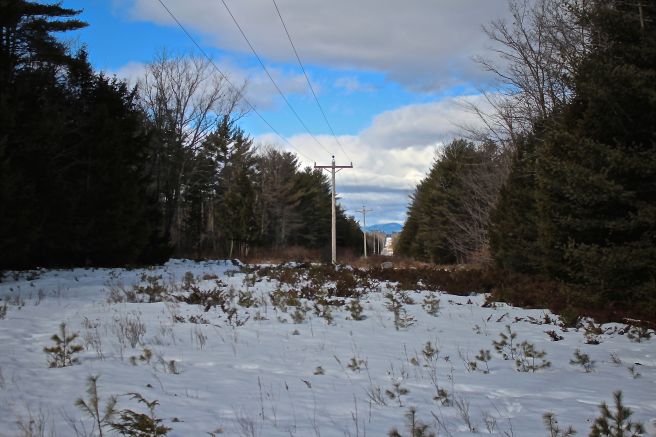
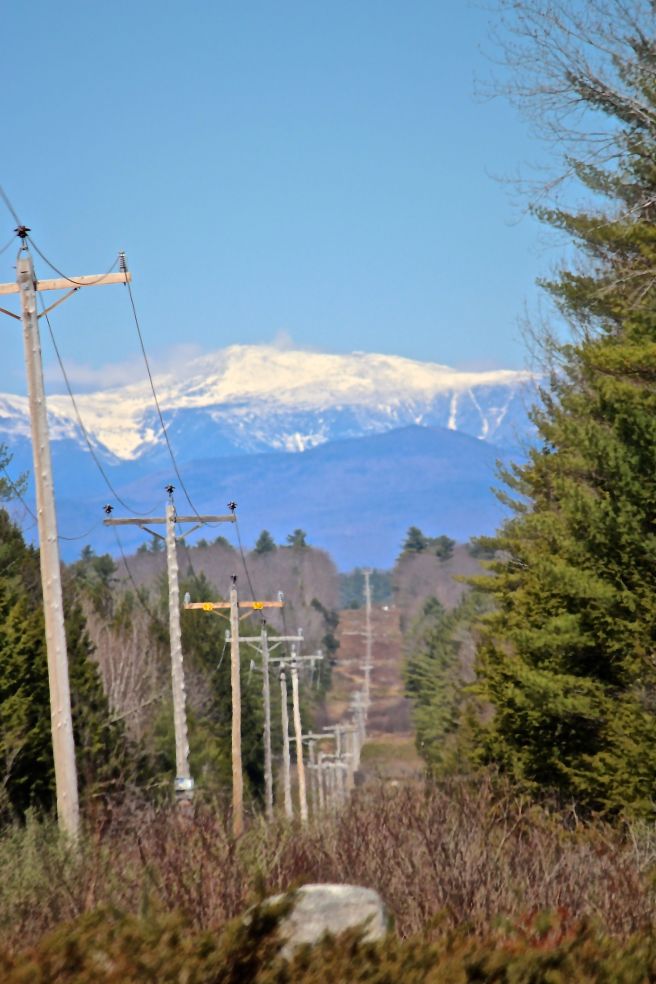
b-powerlineI was feeling a bit grumpy when I headed out the door, but finding the recent woodpecker works and emerging from the cowpath onto the power line where I was captured by the whitegreenbluegray of the world as I looked toward Mount Washington put a smile on my face. My intention was to walk along the barely used snowmobile trail as far as I could. I wasn’t sure if open water would keep me from reaching the road, which is a couple of miles away, but decided to give it a try.

b-cat following deerJust because that was my plan doesn’t mean that’s what happened. Maybe that’s what I love best about life–learning to live in the moment. This moment revealed the spot where deer sunk into the snow just off the snowmobile trail and a bobcat floated on top.
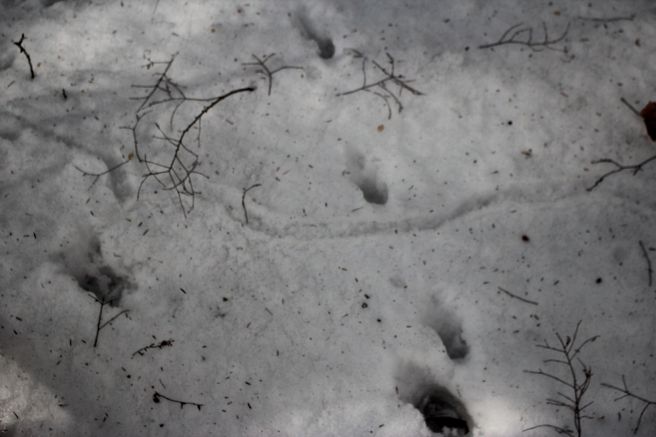
b-cat following deerSoft snow made for distorted prints. And these prints made for a quick change of plans.

b-cat:voleI turned 180˚ and found more tracks on the other side of the snowmobile trail. And so began today’s journey into the woods. I was feeling proud of myself for backtracking the animal–following where it had come from rather than where it had gone so I wouldn’t cause unnecessary stress. Yet again, I stress out all the mammals because of my constant movement–and so many I don’t see because they hear me coming. Anyway, I followed the bobcat for quite a while, noticing that it continued to follow the deer and even crossed over a couple of vole tunnels that already have their spring appearance. It’s much too warm much too soon.

b-cat-2 printsWhat I discovered is that this mammal was checking out stumps and along the way circled around them. And then it seemed that there might be two because suddenly I was following rather than backtracking. So much for that plan. What I do like is how this photo shows the mammal’s hind foot stepping into the same space the front foot had already packed down–direct registration, just a little off center.

b-cat nurse logIts prints are in the bottom right-hand corner, but then it appeared to walk across the top of this nurse-log. After that, I had to circle around looking for the next set of prints.
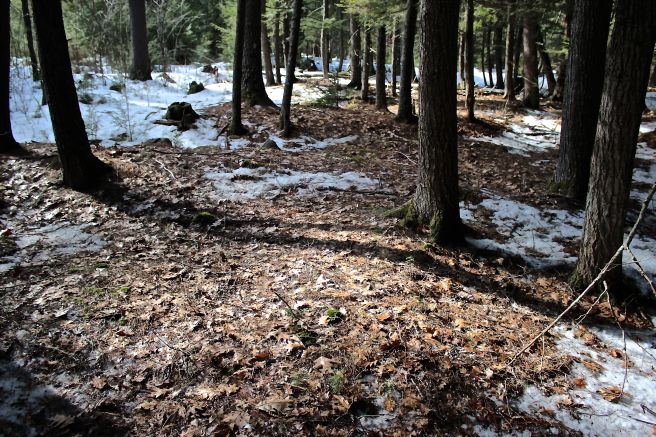
b-no snowUnder some of the hemlocks, there was little to no snow. Eventually I lost the bobcat’s trail, which is just as well.
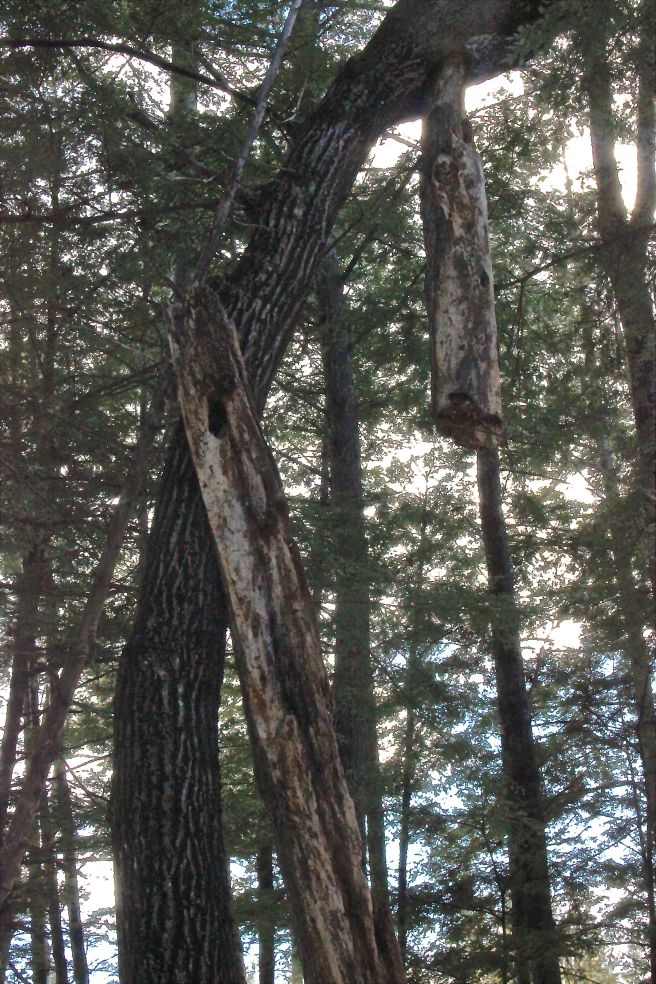
b-widowmaker1I didn’t realize until I looked up that I was still in familiar territory.

b-widowmaker 2I first spotted this widow maker 20+ years ago. It never ceases to amaze me.

b-deep snowI decided that rather than return to the snowmobile trail, I’d continue deeper into the woods. I had an idea of where I’d eventually end up, but if you’ve traveled these woods with me recently (Marita and Dick can vouch for this), you’ll know that the logging operation has thrown me off and not all of my landmarks are still standing. It’s that or they just got up and moved. Anyway, I was lost for about an hour, but continued moving slowly through sometimes deep snow (relatively speaking this winter) and other times puddly conditions. It was a slog to say the least. My friend, Jinny Mae, had warned me about water hidden beneath the snow and I found it. More than once.

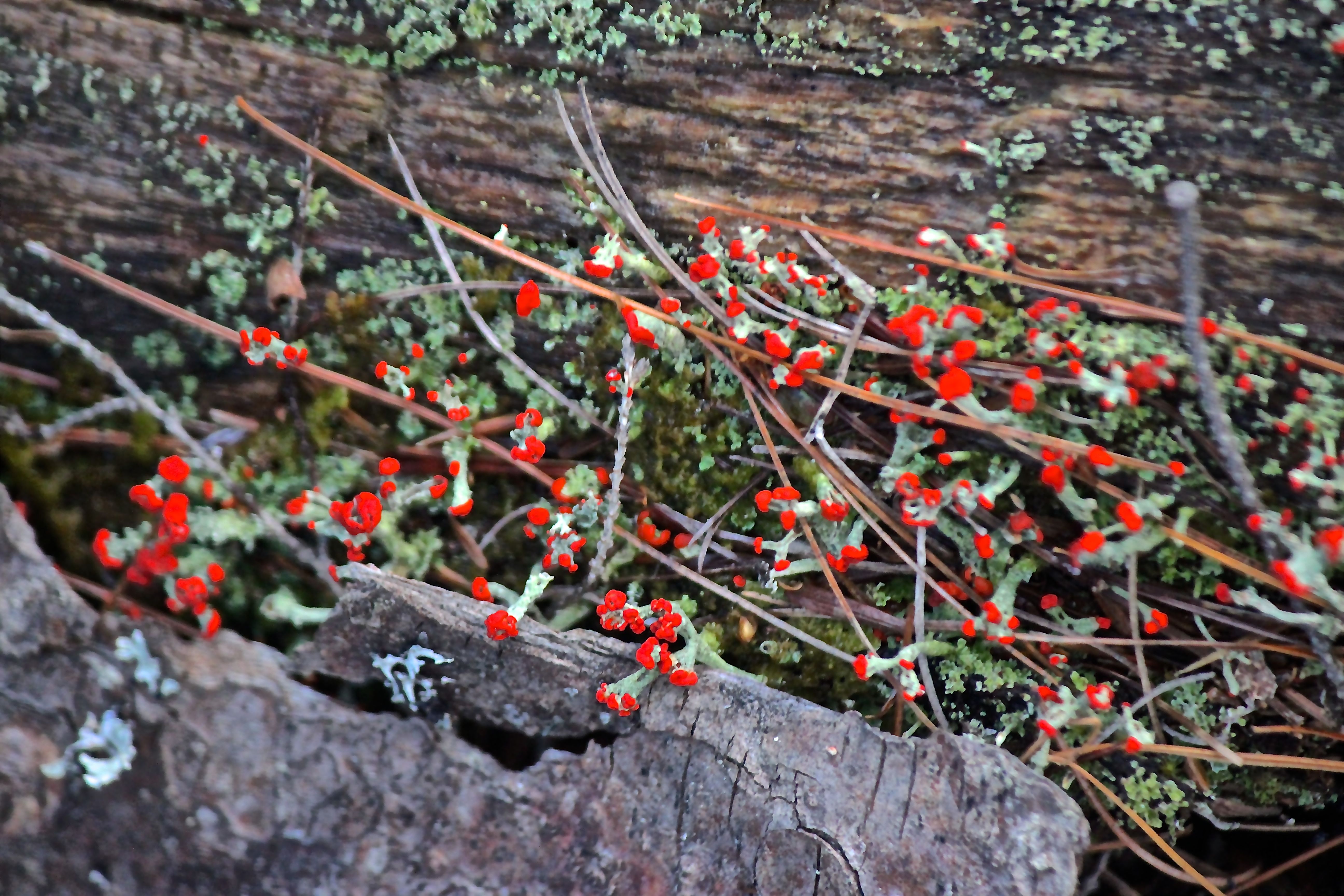
b-brit 2I also found other cool stuff. British lichen bearing bright red caps.

b-hemlock yearsA hemlock wound that indicated the last time this land was logged. I counted to 25. That makes sense.

b-hemlock cone:seedsA hemlock cone and seeds on a high spot of snow–not the usual stump, log or branch, but still a high spot. Apparently the red squirrel that had gone to all the work of taking the cone apart to eat the seeds had been scared away. Perhaps it will return, or another, or I’ll be admiring hemlock saplings in a few years.
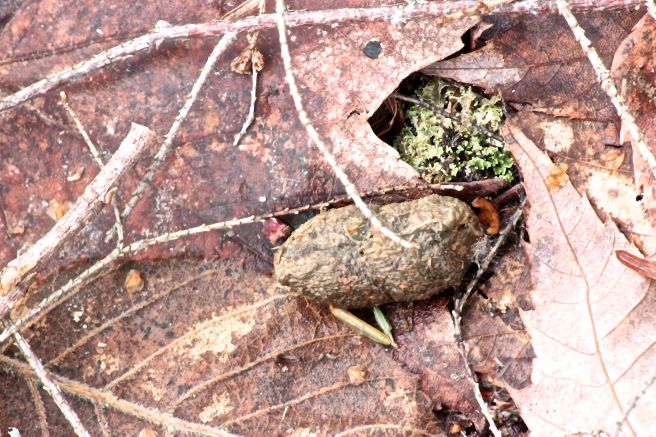
b-porcupine scatPorcupine scat below another hemlock.

b-porky twigAnd a few snipped off twigs–porcupine style.
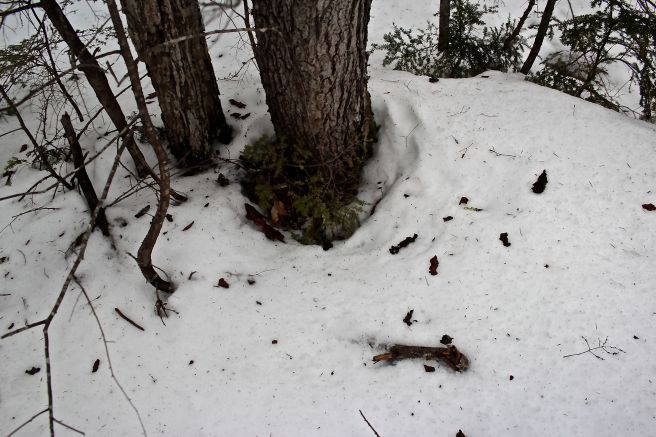
b-hemlock debrisA mystery perhaps. I love a mystery. So, scattered on the snow–bits of hemlock bark.

b-hemlock 2aAnd an apparent path up the tree. But . . . look up. This tree is dead. I don’t think this is porky work.

b-hemlock 2Could it be that where the bark is missing a woodpecker has been at work?
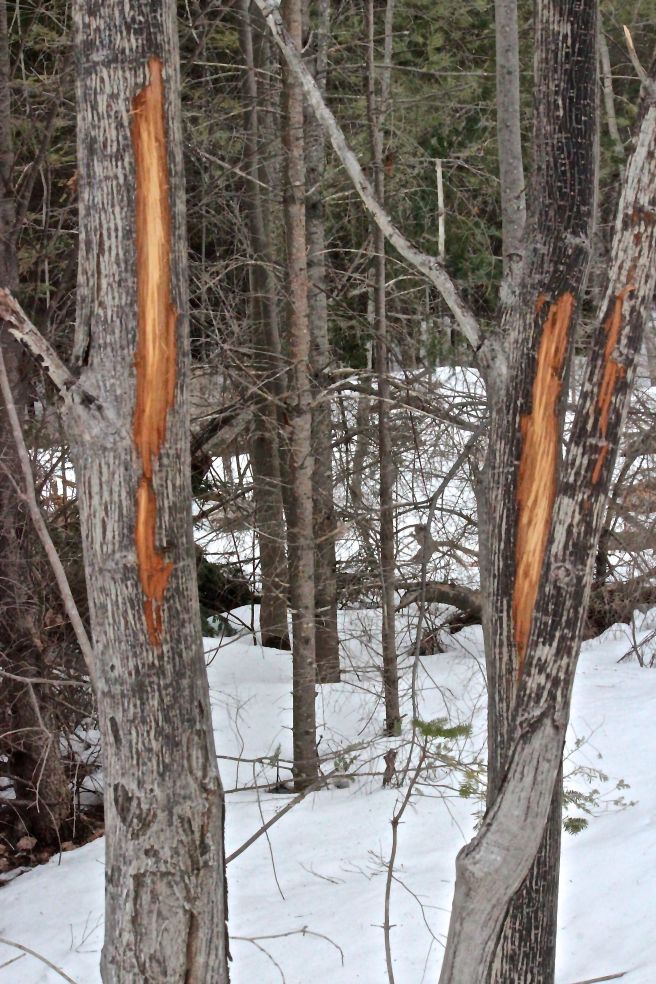
b-striped maple browseI found fresh browse on striped maple–that had been previously browsed based on the scars.
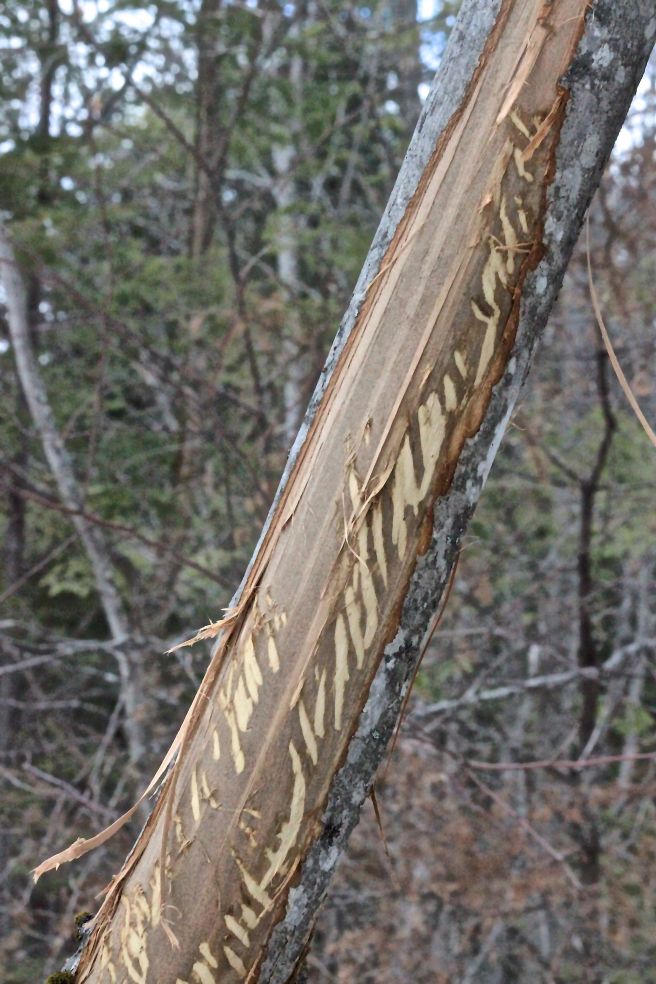
b-deer browse red mapleAnd red maple that had received the same treatment.
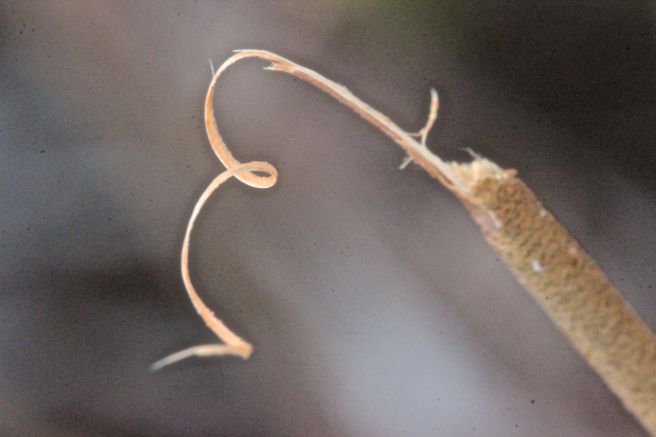
b-witch hazel browseWitch hazel was not to be overlooked. I think this is the longest deer tag I’ve encountered–to date.

b-scat 2You may not appreciate this, but I couldn’t resist. So . . . to whom does it belong? Either a coyote or bobcat. It’s filled with hair and I’m leaning toward the latter. Of course, I want it to be the latter.

b-doggy bagI, um, brought some home in a doggy bag. Not all of it, mind you, because it is a road sign to others. I’m not sure how they do it, but members of the same family can apparently identify gender, health and availability by such works. And members of other families may read this as a territory marker. There was a copious amount, so it could be that the same or two animals used this spot. Just sayin’.

In case you were wondering, I did find my way out–another three+ hour tour. As I slogged along, I recalled a spot I often returned to for quiet contemplation. I can no longer locate it because so much has changed as this area has been logged for the past three years. But . . . I came to the realization today that I don’t need one spot. Any will do. That being said, I pulled out my camp stool, colored pencils and journal back at my sit spot by the edge of the cowpath.

b-deer run:sit spotIt’s right beside a deer run. In the past two years, the deer visited this spot, but I’ve noticed much more activity this winter. The stone wall is hardly an obstacle. And the junipers–prickly as they are to me, the deer seem to enjoy them.

b-sheep 1One thing I did notice that I don’t understand. The sheep laurel that grows here has recently been browsed.
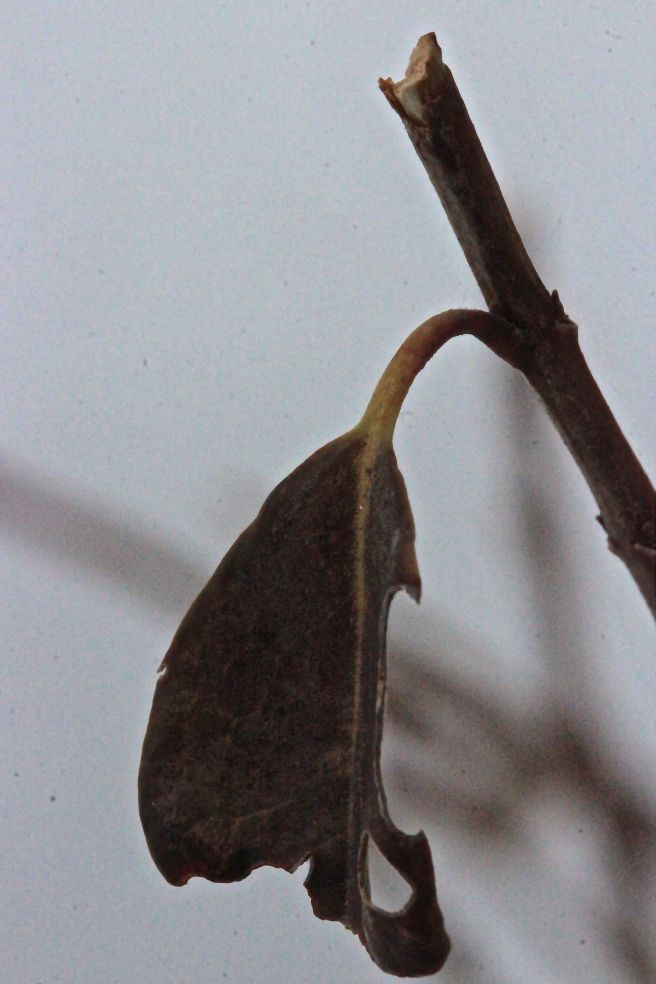
b-sheep2Deer tracks below it and the nature of the work lead me to believe that the ungulates fed on it. Hmmm . . . I thought that sheep laurel was poisonous to wildlife. But then again, deer are browsers, not staying in one spot long enough to consume a large amount so perhaps it doesn’t affect them if they eat a bit here and there. If you know otherwise, please enlighten me.
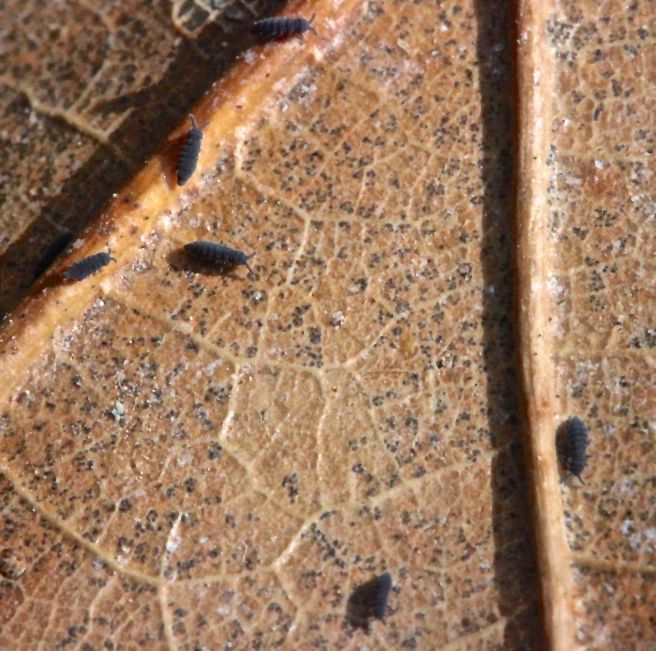
b-spring tailsAnother thing–yes, if you look closely at leaves, you’ll find them. These hot chili peppers don’t appear just on the surface of snow. They are snow fleas, aka springtails. With their spring-loaded tails they can catapult themselves an inch or so. We never look for them once the snow melts, but they are still abundant on organic debris. They’re easiest to locate on leaf litter, but also can be seen on soil, lichens, under bark, decaying plant matter, rotting wood and other areas of high moisture as they feed on fungi, pollen, algae or decaying organic matter.
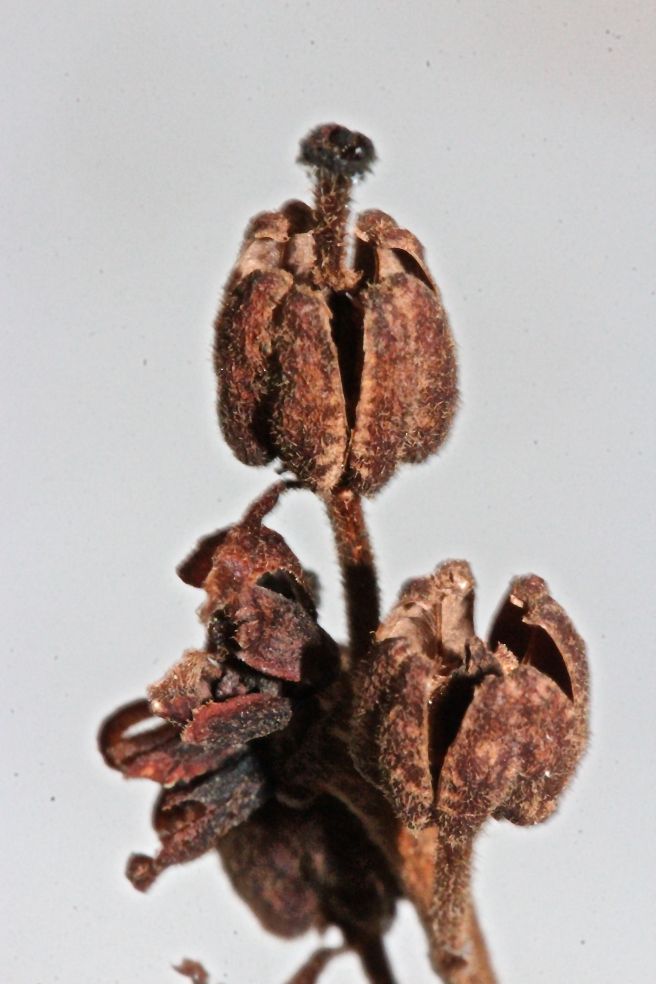
b-pine sap 2Though it was warm under the sun, my fingers were getting cold as I sketched, so I packed up to head home. Back in our woodlot, I decided to follow a deer trail rather than my own. And to them I give thanks. Beside a hemlock tree, pinesap’s woody capsules called out. I’d found some at the start of winter–along the cowpath. And now a second patch. It really does pay to go off my own beaten path.

b-Indian pipe 1While pinesap has several flowers on one stalk, a few feet later and I came upon Indian pipe, which has one flower (now a woody capsule) atop its stalk. Notice how hairy the pinesap is compared to the Indian pipe.

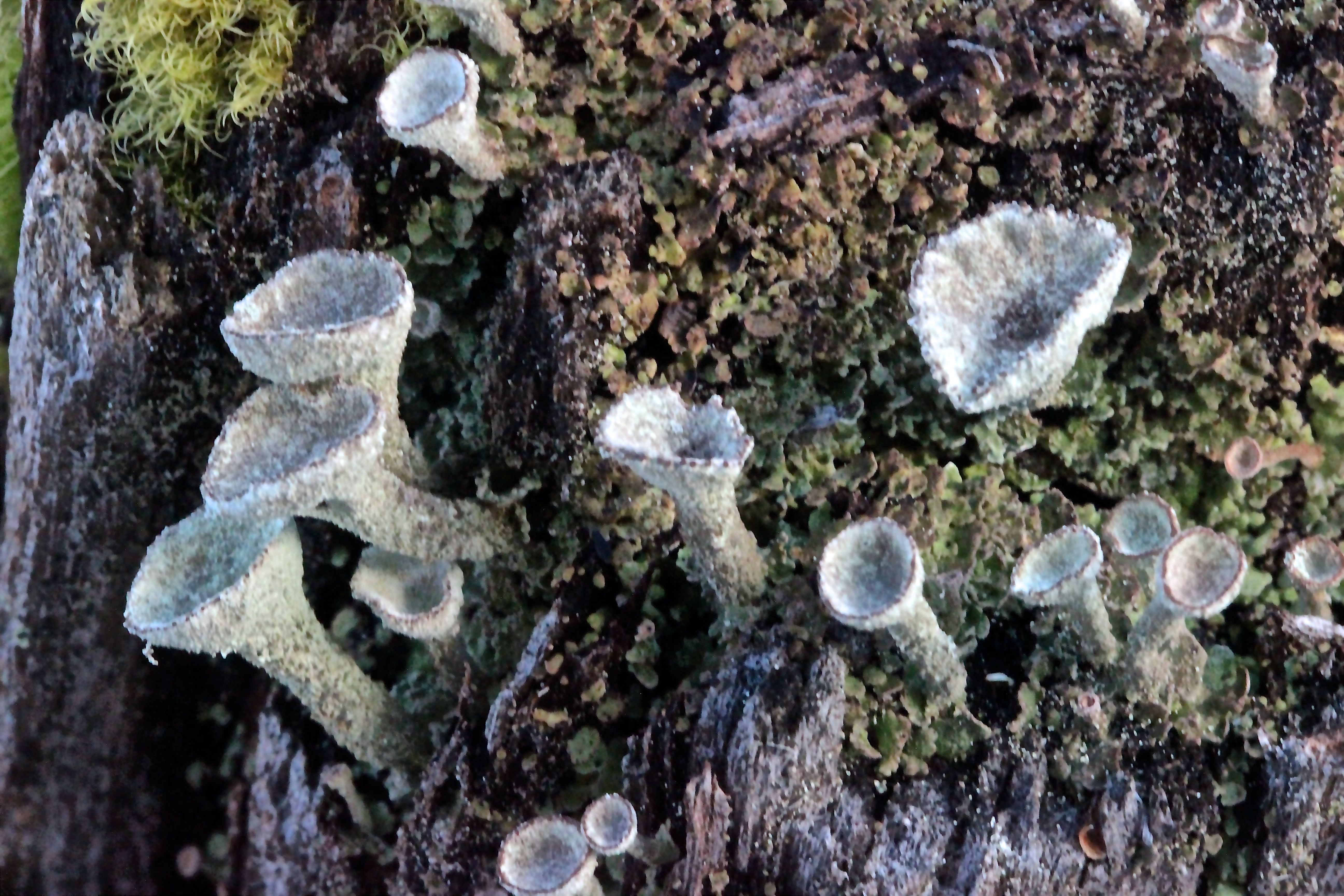
b-goblets 1I’m afraid this photo is a bit fuzzy, but I’m still going to use it because it’s too dark to head out and take another. These cup lichens serve as my pixie goblets to all of you who have stuck with me for this journey–both today’s and the past year. Thank you so much. The year flew by and I’m a better person for this experience. Well, I think I am. What has made this past year so special is the paying attention. The slowing. The recognizing. The questioning. I’ve learned a lot and I trust you’ve learned a wee bit as well. Who knows where the path will lead me next, but I sure hope you are along to wander and wonder.
To you, I raise these goblets!


Moi–Bull in a China Shop

Several inches of fresh snow topped with freezing rain two days ago and the world is transformed. I couldn’t decide whether to wear snowshoes, micro-spikes or neither. I choose micro-spikes, which seemed a good choice at the start, but not long into my 3.5 hour tramp through the Greater Lovell Land Trust’s John A. Segur Wildlife Refuge off Farrington Pond Road, I wished I chosen the snowshoes. At times the snow was soft, but other times it sounded as if glass was breaking as I crashed through it. Broken shards slide across the glazed surface. I was the bull in a china shop.

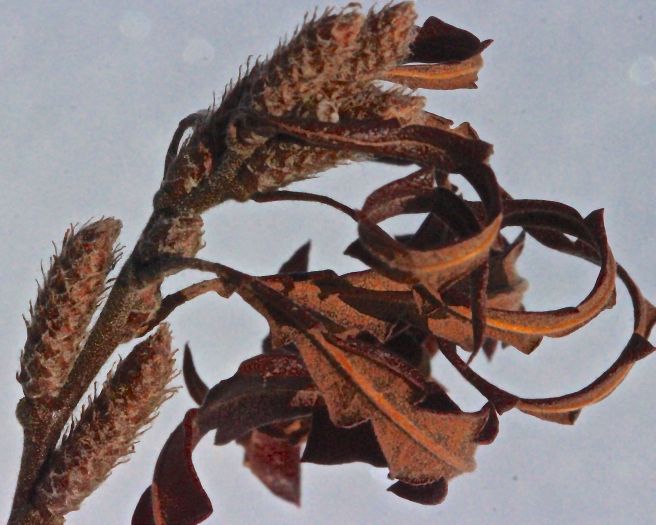
SB-sweet fern begin blue trailFrom the parking lot, I decided to begin via the blue trail by the kiosk. It doesn’t appear on the trail map, but feels much longer than the green trail–possibly my imagination. Immediately, I was greeted at the door of the shop by sweet fern, aka Comptonia peregrina (remember, it’s actually a shrub with foliage that appear fern-like). The striking color and artistic flow of the winter leaves, plus the hairy texture of the catkins meant I had to stop and touch and admire.
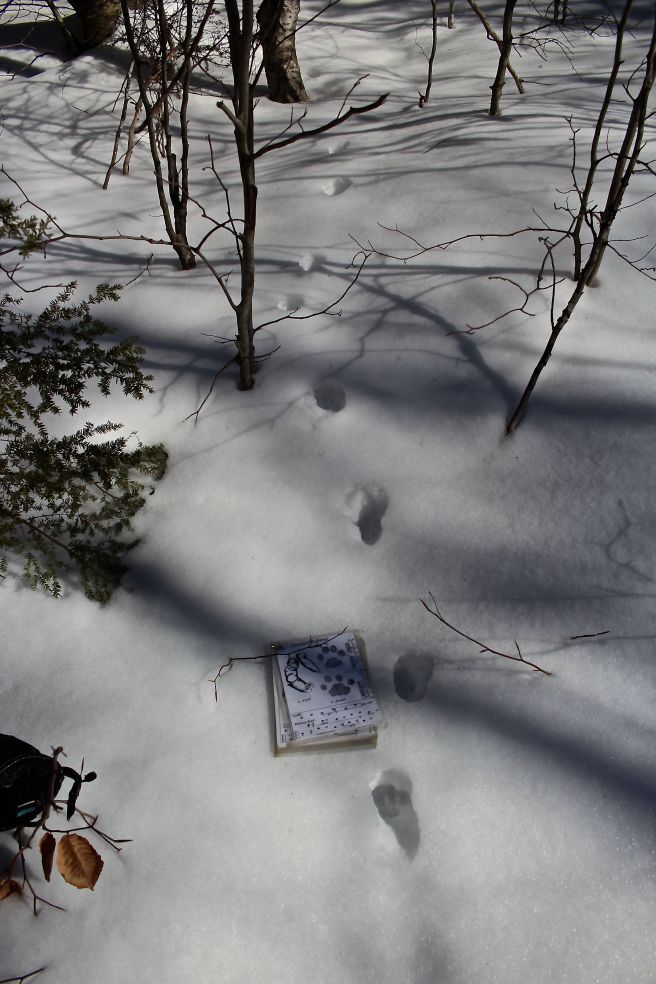
SB-bobcat1And only steps along the trail another great find–bobcat tracks. This china shop immediately appealed to moi.
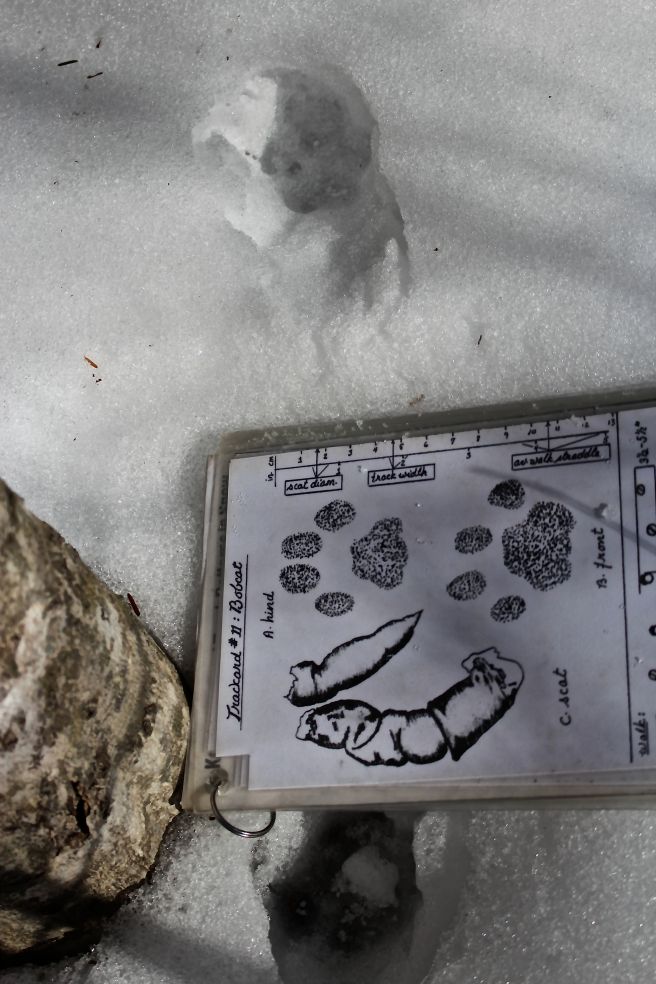
SB-bob 3My Trackards slid along the glassy surface, so it was difficult to show the print size. But . . . it is what it is. The bobcat crossed the trail a couple of times and even came back out to explore squirrel middens.

SB-rocksWhen I got to a ledgy spot, I decided to explore further–thinking perhaps Mr. Bob might have spent some time here. Not so–in the last two days anyway.

SB-red squirrel printThe best find in this spot–red squirrel prints. A few things to notice–the smaller feet that appear at the bottom of the print are the front feet–often off-kilter. Squirrels are bounders and so as the front feet touch down and lift off the back feet follow and land before the front feet in a parallel presentation. In a way, the entire print looks like two exclamation points.
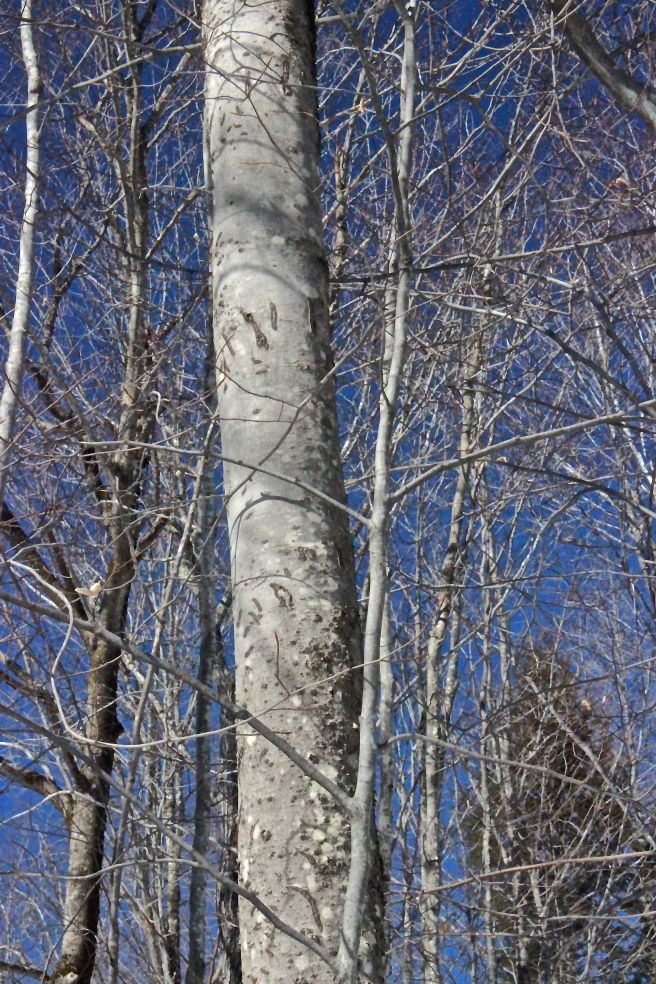
SB-bear 1As I plodded along, my eyes were ever scanning and . . . I was treated to a surprise. Yes, a beech tree. Yes, it has been infected by the beech scale insect. And yes, a black bear has also paid a visit.
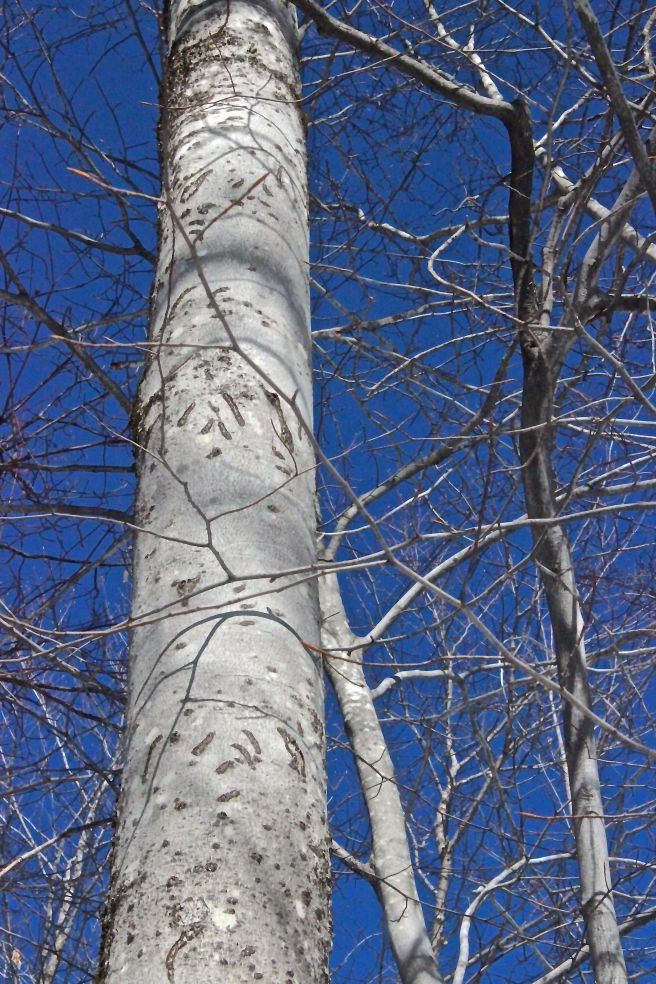
SB-bear 1aOne visit, for sure. More than one? Not so sure. But can’t you envision the bear with its extremities wrapped around this trunk as it climbs. I looked for other bear trees to no avail, but suspect they are there. Docents and trackers–we have a mission.

SB-beech nut1And what might the bear be seeking? Beech nuts. Viable trees. Life is good.

SB-right on red maplesExactly where is the bear tree? Think left on red. When you get to this coppiced red maple tree, rather than turning right as is our driving custom, take a left and you should see it. Do remember that everything stands out better in the winter landscape.
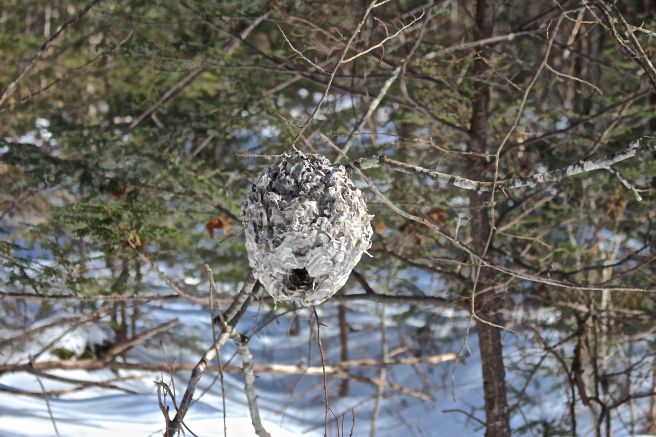
SB-nest 2As delicate as anything in the china shop is the nest created by bald-faced hornets.
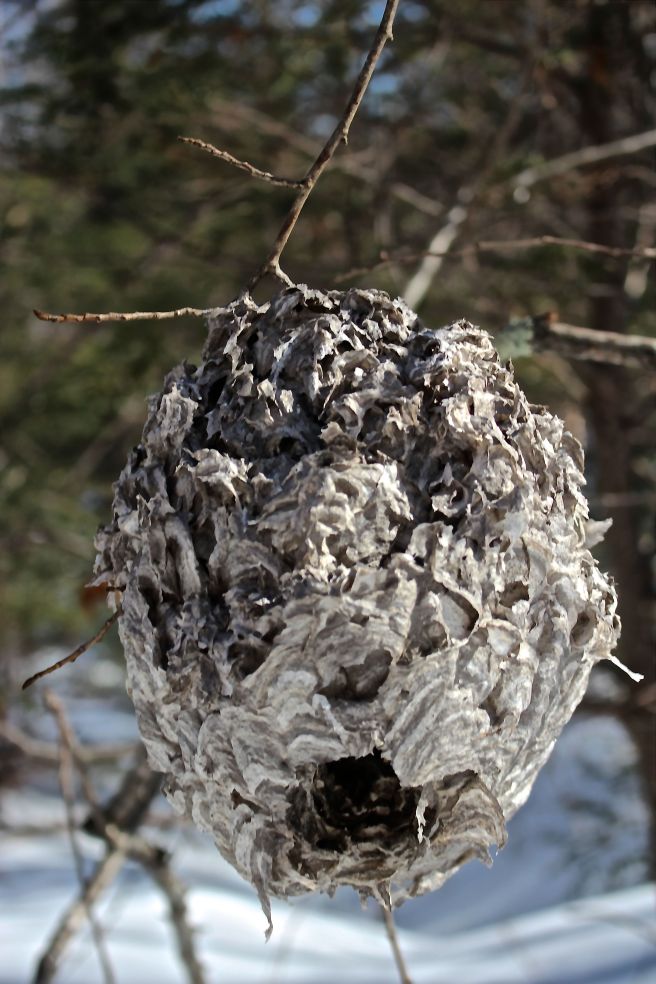
SB-nest 3Well, it appears delicate, but the nest has been interwoven with the branches and twigs–making it strong so weather doesn’t destroy it. At the bottom is, or rather was, the entrance hole.

SB-witch hazel flowersWitch hazel (Hamamelis virginiana) grows abundantly beside younger beech trees. Though the flowers are now past their peak, I found a couple of dried ribbony petals extending from the cup-shaped bracts. China cups? No, but in the winter setting, the bracts are as beautiful as any flower.

I have to admit that I was a wee bit disconcerted when I reached a point where the blue trail and green trail split and it wasn’t at a point that I remembered. But I lumbered on and was pleasantly surprised when I reached the field I recognized–approaching it from the opposite side than is the norm. And later on, I realized that where the blue trail again joined the green trail was a shortcut. We need to get an accurate map made of this property, but I also need to spend more time familiarizing myself with it. At last I reached Sucker Brook.

SB-lodges and Evans NotchWith the Balds in Evans Notch forming the backdrop, the brook is home to numerous beaver lodges, including these two.

SB-lodge and layersLayers speak of generations and relationships.

SB-two lodges 1Close proximity mimics the mountain backdrop.

Old and new efforts mark return attempts.

SB-cove beaver treesAnd sometimes, I just have to wonder–how does this tree continue to stand?
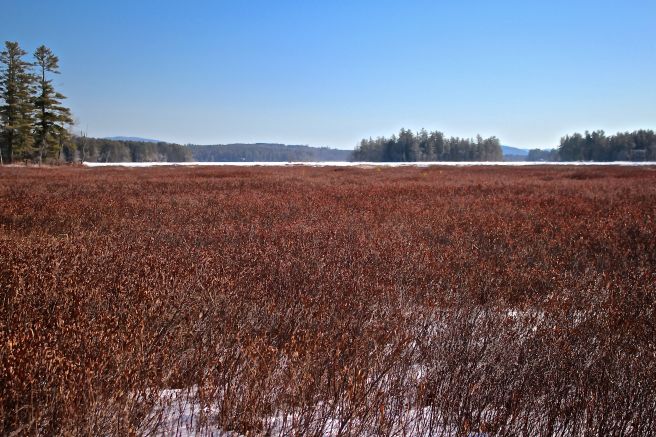
SB-near outlet leatherleaf fields foreverLeatherleaf fields forever.

SB-leatherleaf budsSpring is in the offing.

SB-wintergreen 2Wintergreen offers its own sign of the season to come.
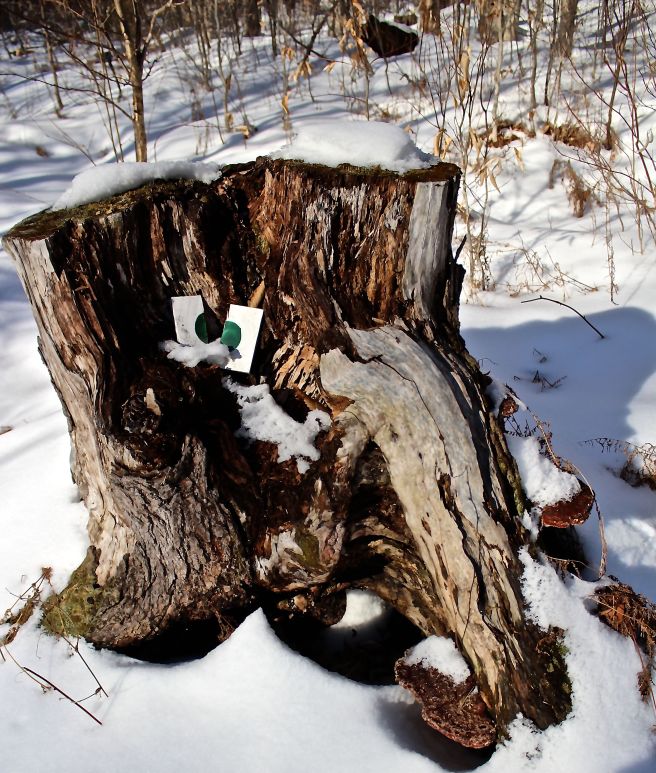
SB-hemlock stump et alIn the meantime, it’s still winter and this hemlock stump with a display of old hemlock varnish shelf (Ganoderma tsugae) caught my eye. By now, I was on the green trail.
SB-grouse 2But it’s what I saw in the hollow under the stump, where another tree presumably served as a nursery and has since rotted away, that made me think about how this year’s lack of snow has affected wild life. In the center is ruffed grouse scat. Typically, ruffed grouse burrow into snow on a cold winter night. Snow acts as an insulator and hides the bird from predators. I found numerous coyote and bobcat tracks today. It seems that a bird made use of the stump as a hiding spot–though not for long or there would have been much more scat.

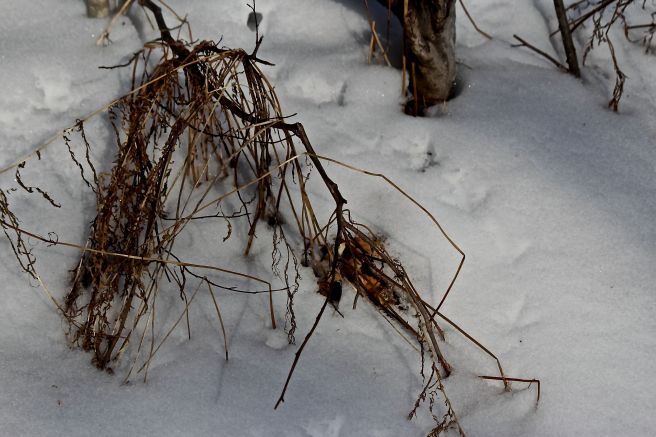
On the backside of the stump, more ruffed grouse scat white-washed with uric acid.

SB-hemlock grouse printsApparently it circled the area before flying off.

Moments later I startled a ruffed grouse in a tree while I observed turkey tracks. Though their prints and scat appear to be similar–turkeys are soooo much bigger in all respects.

SB-sweet fern end of green trail

My trek ended in the same manner that it began–with sweet-fern offering a graceful stance despite my bull in a china shop approach.


Shades of Blue Valentine

I coveted a friend’s hat yesterday–especially when she said she’d crocheted it the night before. And so I was thankful when she sent me the pattern last night. My plan had been to whip up a hat for myself, but after leading two fun hikes, I did all I could to keep my eyes open while watching British comedies.

b-blue hat 1

This morning, however, I pulled out a skein of blue wool I’d been saving for something special and wound it into a ball. Then I started to follow the pattern. Ah, but my ability to complete something exactly as planned went missing from my make-up long ago and be it recipe or pattern, in no time I make it all my own, never to be repeated again. Sometimes, especially when it comes to a recipe, that’s a good thing.

b-hat 2

The finished product looks more like a toilet paper cover my mother might have made, but I rather like it. And so I wore it as I piled on the layers to head outside.

b-thermometer

According to the thermometer, it was a balmy +5˚. The wind chill was another factor indeed. It certainly felt invigorating.

b-feather branch

One of my first delightful finds was a small feather caught on a tree branch. I didn’t see any others, so I’m not sure what happened, but that downy fuzz looks so soft and warm. Hardly worth shedding.

b-hat branch

My hat was not worth shedding either, but several times the branches snatched it. I do believe the tree spirits approve.

b-turkey 2

Everywhere I ventured, it seemed the turkeys had been before–their oversized prints pointing the way.

b-turkey sashay

At times, the pattern they created gave the effect that they’d sashayed along–as if they owned the place.

b-turkey frozen

And other times I found their signatures frozen in place–for the time being.

b-junco 2

Other patterns also caught my attention–like the prints of dark-eyed juncos. These little snowbirds hop along on the ground as they feed, so their tracks are often visible in our mixed-coniferous forest.

b-junco 3

At the beginning of tracking season when we didn’t have much snow on the ground, my friend Jinny Mae and I were momentarily confused by these. Now they are imprinted on our brains.

b-junco 4

Two-by-two, they remind me of teardrops. Between hops, toe drags are visible.

b-mouse1

Looking rather similar and thus causing confusion are the prints of white-footed or deer mice. I can’t tell you which of the bounders left these behind, but the tail mark down the middle indicates it was one of these two.

b-snow & ice

Among the zillion things that I love about winter is the color blue caused by light absorption. Light waves travel into the icy grains and are scattered among them before being reflected back to us. While we see white snow when sunlight bounces off surface layers, the color blue is apparent when more red light is absorbed by the grains. It clarifies the feel of this brisk day. The sound of the snow creaking and crunching beneath my feet also indicated the temperature–COLD.

b-witch hazel bud

But . . . warmer days are coming–eventually. Until they arrive, the scalpel-shaped bud of witch hazel survives despite its lack of waxy scales for protection.

b-witch hazel 2

Like hobblebush, however, it has a hairy coating that must provide some warmth. I have to wonder if the little hairs absorb the sun’s rays.

b-deer heart 2

Shades of blue even outlined this print–though there’s also an appropriate wisp of rose surrounding the shape.

Most people see red on St. Valentine’s Day. I favor blue. Happy deer-heart day!


Book of February: Trackards

  track1

A constant in my field bag is the laminated set of Trackards created by Naturalist David Brown in 1998. I’ve had the good fortune to spend time tracking with and learning from David and continue to do so each time I use his cards.

snowshoe 2

The prints and scat are hand drawn and life size so I can place them beside the sign to help make a determination about which mammal was on the move.

Track 2

No print or scat is too small! You’ll notice that measurements are on the side–helping to determine the size of the print and the straddle (width from outside of one print to outside of other)..

fisher tracks 3

David has also included the mammal’s preferred method or pattern of locomotion, which is also useful in correct identification. In this case, the fisher, a member of the weasel family, moved from a slanted bound to an alternate walking pattern.

track 3track4

Another handy thing–he’s made it easy to locate the particular cards by adding the mammal’s name on the edge.

Bcat_w_card_IMG_2893_edited-2-417x417 TKD_deck_promo_photo_edited-1-274x385

These two photos are from David’s Web site.

David has found a publisher so the Trackards you purchase may look a wee bit different than mine, but the information is still there. And where I have thirteen cards because he made use of the front and back of each, the new decks contain 26 cards.

While you’re at it, take a look at his books. I have the older version of The Companion Guide to the Trackards and plan to order his newest book, The Next Step.

Trackards by David Brown: Don’t leave home without them.

Celebrating the Slush

Another warm day and the snow has turned to slush. Not my favorite condition in January, but it does bring its rewards.

   coyote print 2

X marks the spot–at least that’s the mnemonic device we use to identify members of the canidae family. Can you draw the X in between the toes and the foot pad? In this case, a coyote marched along on the prowl. Check out those nail marks.

coyote checking things out

Some little brown thing must have caught its attention because it did some poking around before continuing on.

coyote and deer

Though I wasn’t wearing snowshoes today, both the coyote and deer followed in my tracks–the easier to move. Which came second after me? The deer. Notice how the print is a bit more muffled and features more debris atop it. The pine needles on the coyote track have been pushed into the print with the animal’s weight.

coyote, this way and that

It wasn’t just my track that it followed. It obviously traveled to and fro in its own tracks.

coyote 2

Sometimes mammals use the tracks of others and sometimes they use their own–where the snow is already packed down. This is almost a perfect record of the forward and back path.

red squirrel, happy feet

An even fresher record made today–red squirrel. This one has happy feet–it avoided the coyote so far.

cone 1

Though my eyes were always on the lookout for mammal sign, other things caught my attention like the spiraling scales of an Eastern white pinecone.

cone 2

As the female cone of the tree, each scale once embraced two winged seeds that nestled near the core. Perhaps the white, tacky pitch on the tips is intended to keep mammals at bay. If that’s the case, I don’t think it works well, because I often see tree stumps piled high with these scales.

mealy pixie cups

Mealy pixie cup lichen also decorate tree stumps. With the snow diminishing rapidly, the minute world of the lichens is reappearing.  As early colonizers, they seem to prefer challenging environments. If nothing else, these goblets appear ready to be shared at a feast.
British soldier

British 2

Maybe the British soldiers will take advantage and each can show off what a fungi he is–especially in that mind-boggling relationship he has with an alga.

January sky

Enough already. I’m finished celebrating the slush and hope that this wintery sky means snow and colder temps are on the way.

Aimless Mission

A friend and I wandered aimlessly today with a mission of finding bobcat tracks. I should know better. Go without expectations.

So, yeah, we didn’t find any prints that were most certainly bobcat. We did find coyote and fox. And plenty of deer, turkey and ruffed grouse. And had great fun exploring while catching up. And taking time to notice and wonder.

rhody 1

While Dick strapped on his snowshoes, I took a look at the rhododendron bush that grows beside the barn. Today’s temp–45˚. A January thaw following last week’s deep freeze. Thus, the leathery leaves looked happy rather than curled inward as they do when the temperature falls. And last summer’s new growth offered a spring palette.

rhody 3

The woody capsules are like flowers unto themselves. I’m just realizing that though we have several rhododendrons growing by the barn and house, I’ve never seen any babies. Once ripened in the fall, the capsule splits open and its many seeds are dispersed by the wind–probably becoming bird food.

  rub1

As we snowshoed about, trying to avoid breaking through ice in this rather swampy woodland, we saw where the deer had eaten red maple buds and bark, as well as where some had bedded down. But one of my favorite finds was a stick. Or so it may appear.

rub 2

It’s a small, half dead balsam fir that served as a signpost. Can you read it? “My name is Buck. Keep out. Unless your name is Doe.” Yes, this is a deer rub created when antlers were pushed up and down, creating tags of bark dangling at either end with smooth wood in between.

uprooted

Then we came upon nature’s classroom–an uprooted tree. As a forever student, it’s a place I like to frequent.

root 1

The tree fell years ago. Did anyone hear it?

root 3 root 4

Among the roots, rocks and dirt, we checked for animal or bird sign and didn’t find any.

root lichen

But the moss, lichen and liverwort garden is exquisite with its variegated colors and textures.

lichens et al

This miniature world resounds with a sign of its own: “Clean Air Here.” Lichens and mosses won’t grow were the air is polluted.

white pine nursery

Other life forms also like this spot and see it as the perfect nursery.

stonewall1

As is common in these woods, we stumbled upon the stone walls and barbed wire that speak to the land’s historical use. Borrowing a line from Robert Frost, this sign once read: “Good fences make good neighbors.”
broken wire

Gone are the days when the wall and wire are set again.

tree wireLong gone.

And so it was that we wandered and wondered along on an aimless mission–not finding the tracks of the bobcat(s) that journey here, but enjoying plenty of other signs along the way.

Shell Pond Speed Date

While our thoughts were (and are) with our family and friends south of us along the Eastern Seaboard as you deal with a major winter storm, my guy and I drove over to Evans Notch for a hike around Shell Pond.

SP-September

Whether you’ve traveled this way before or not–a summer photo might be just the dose you need today.

road 1

We parked near the trailhead for the Leach Link Trail because Stone House Road is never plowed beyond that point. Others had skied, walked and snowmobiled before us, but no one seemed to be snowshoeing so we left ours behind. As it turns out, that decision was fine. We dug some post holes in a few drifts, but other than that, we really didn’t need them. I did, however, use micro-spikes–and am glad because it’s a rather wet trail and we encountered lots of ice, much of it just a few inches below the snow.

Stone House gate

Thanks to the owners of the Stone House for putting much of the land under conservation easement with the Greater Lovell Land Trust and for allowing all of us to travel the trails–whether around the pond or up Blueberry Mountain and beyond.

Shell pond loop sign

Before the airfield, we turned onto the Shell Pond Loop trail. It’s blazed in yellow and easy to follow. Some trees have come down, but we got over or around them. We took care of a few today and the rest will be cleared by summer.

beaver works

Of course, some trees were intentionally harvested. We found these beaver works near the beginning of the trail where the brook opens into a small wetland.

beaver lodge 2

beaver lodge 1

On top of the lodge, you might be able to see the lighter color of fresh additions to the structure. This was the first of three.

beaver lodge 3

Lodge number 2 is toward the far side of the pond.

beaver view

But it’s lodge number 3 that I’d stay at. It’s worth a payment of a few extra saplings to get a room with that view.

pileated work

The beavers aren’t the only one making changes in the landscape. Pileated woodpeckers in search of food do some amazingly shaggy work on old snags.

trail debris

Winter debris covers much of the trail. Strong winds have brought much of this down.

yellow and hem yellow birch & hemlock

And two of the most prominent trees make themselves known among the debris. A hemlock samara beside a yellow birch fleur de lis and a hemlock needle atop a more complete fleur de lis flower of the birch.

Shell Pond 1

Shell Pond takes on an entirely different look in the winter. We could hear the ice whales singing as we ate our PB&J sandwiches and sipped hot cocoa.

mink

mink tracks 1

While we ate, we noticed a mink had bounded through previously. I’m always thankful to have David Brown’s Trackards in my pack.

cliffs 2

cliff flow

Continuing on the trail found us taking in views of the cliffs, which we don’t normally see so well once the trees leaf out.

ostrich 3 ostrich 4 ostrich fern 1

Before continuing through the orchard, I wandered closer to the brook in search of this–the fertile fronds of the ostrich fern that give it its common name because they resemble plume-like ostrich feathers. Come spring they’ll release their spores.

 airfield 2

The sun tried to poke out as we crossed the wind-blown airfield.

stone house 2

From the field, we always admire the Stone House and its setting below Blueberry Mountain.

 snowshoe 2

Walking back on the road, we spotted a classic snowshoe hare print. Most of the tracks we saw were filled in by blowing snow, but these were textbook perfect.

pole 4

And then . . .

pole attack

And then . . .

pole numbers

And then . . .

bear hair 1

And then . . .
bear hair

And then . . . on our way back down the road, I introduced my guy to the wonders of telephone poles. We found several sporting chew marks, scratches and hair. Yup . . . bear hair. Black bear. Even the shiny numbers were destroyed on one of the poles. Of course, my guy was sure someone would come along and ask what we were doing as we inspected one pole after another. I was hoping someone would come along and ask what we were doing. Bear poles. Another thing to look for as you drive down the road–think tree bark eyes, winter weed eyes and now, bear pole eyes.

bear paw

I took this photo on the Shell Pond Loop trail a year and a half ago. Oh my.

Those of you who have traveled this way with me before will be amazed to know that we finished today’s trek in just over three hours, even with the added walk down Stone House Road. Yup, not an advertised three hour tour that turns into six. Hmmm . . . Apparently it can be done–I just need to get Mr. Destinationitis to join our treks for a Shell Pond Speed Date.