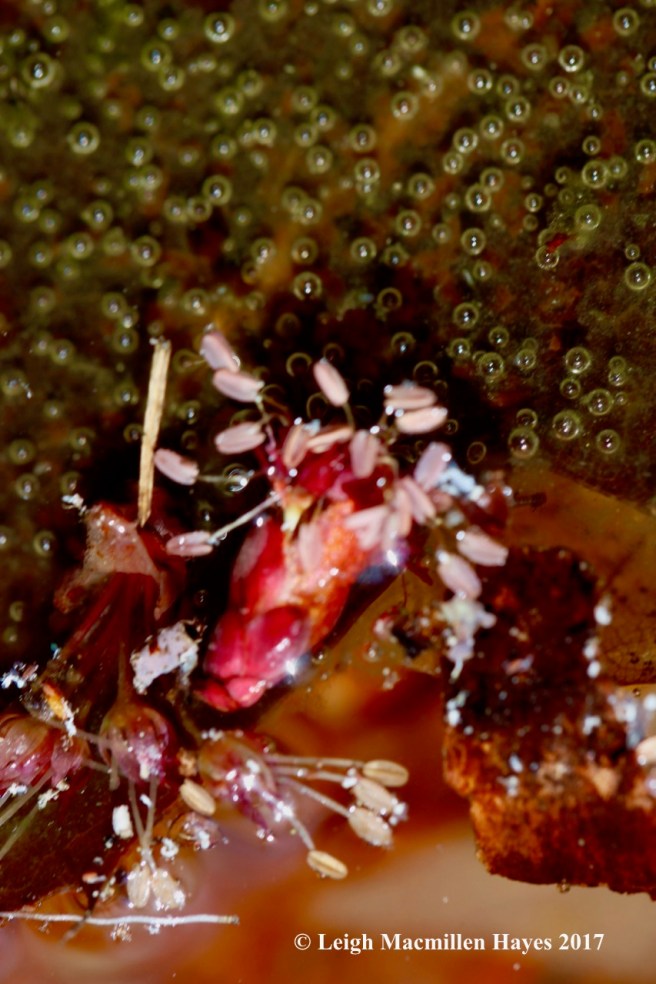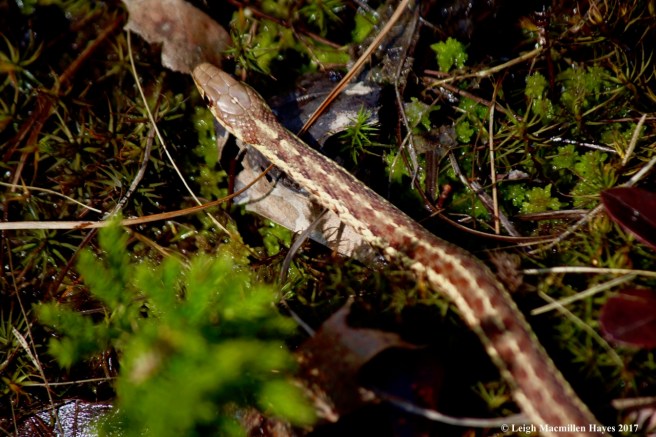
Sallie Savers Celebrate Big Night with LEA

The initial email was sent by Mary Jewett of Lakes Environmental Association in Bridgton, Maine, on Tuesday:

Hello everyone!

Many amphibians have already crossed and laid eggs but there are still some waiting in the woods. Tomorrow evening looks like it will be perfect conditions for an amphibian migration and I would like to get a group together to go out with me. My plan would be to meet at the office at 8pm. With sunset being at 7:40 I really wouldn’t want to start any earlier since the frogs and sallies won’t move when it’s light out.

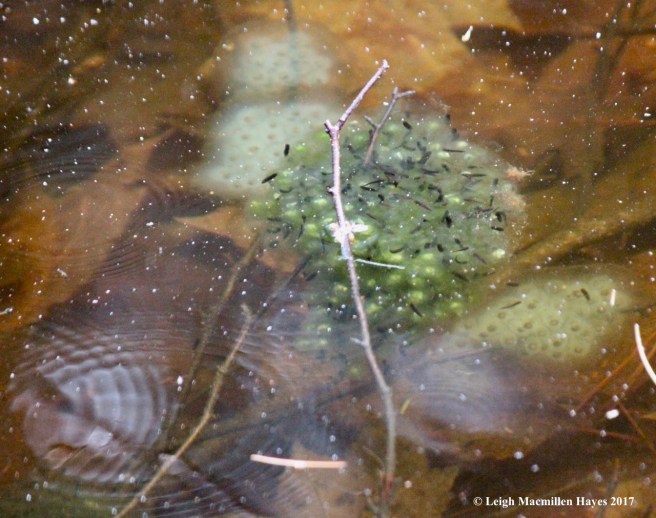
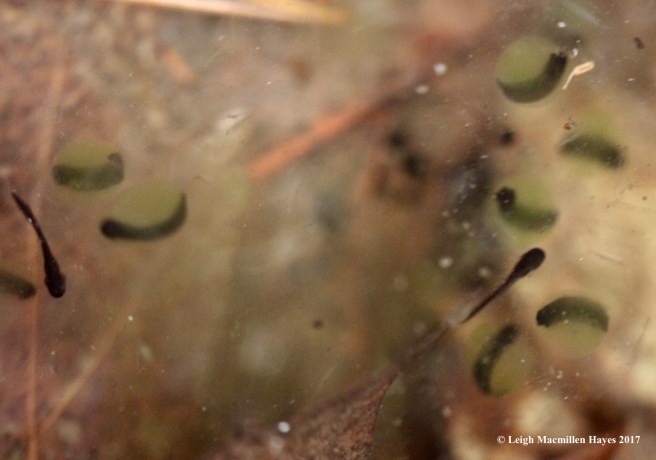
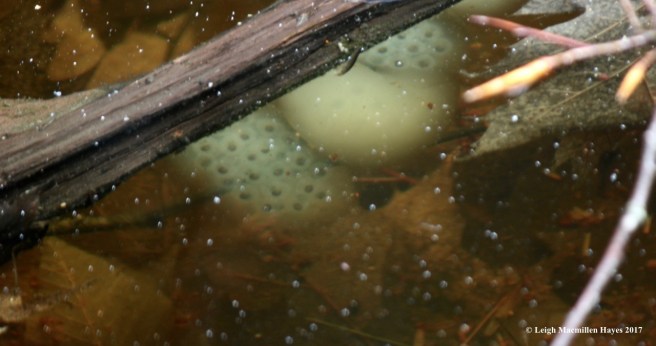
I want to get an idea of who would be able to come out with me. I have a reporter and videographer coming out from the Bangor Daily News and they would like to get shots of actual people (not just me) and possibly get some quotes from participants. I know that it’s tough to get out with kids since it starts so late but I hope that we can get a diverse group. We also may have the opportunity to check out egg masses that are already in the water!

And then this afternoon, Mary sent this follow-up message:

I have heard from a handful of people who are able to come out tonight so I’m going for it. Here are some details:

Meet at the LEA office building (230 Main Street) at 8pm
We will caravan up to the Masonic Hall and walk to Dugway Road from there.
Bring high powered flashlights/headlamps
Wear warm clothes and rain gear. It looks like the rain may be pretty heavy when we are out there. Good for amphibians but not so great for people trying to stay dry.
Wear reflective clothing if you have some. I have vests available if you don’t have your own.
Do not wash your hands with soap or put on hand lotion or hand sanitizer.
I have spoken to the police and they are going to try and send someone out. They have a training program this evening so we might not see them. This makes it extra important that kids stay with their parents at all times!

b3-amphibian crossing sign

And so we did just that–met at the LEA office first, and then moved on to the Masonic Hall to park before beginning our journey into the wet and wild world of the amphibians.
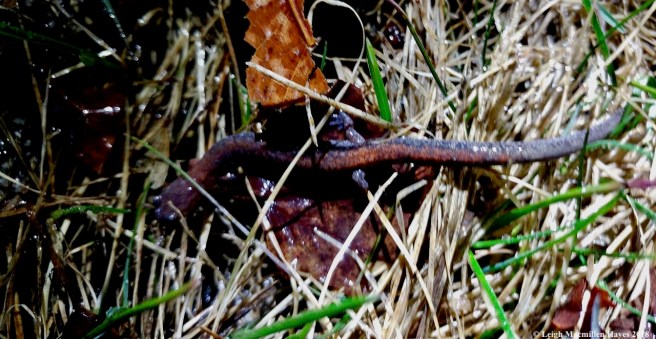
b1-redbacked

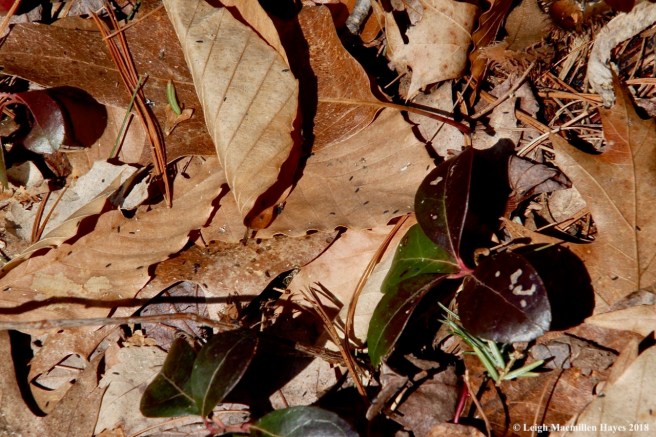
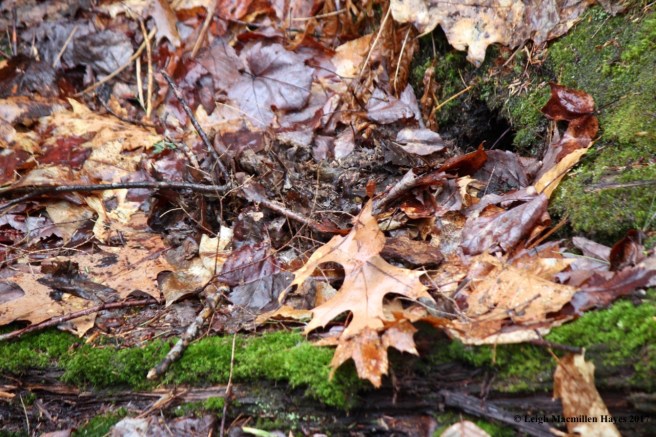
Right away, we noticed worms. And even better, a red-backed salamander. Red backs don’t use vernal pools to mate, but they sure do love rainy nights that offer great opportunities to roam about seeking food.

b2-red backed salamander

We crossed the field from the Hall to Memory Lane, our eyes ever looking for more redbacks, but instead we noted a kazillion worms, each the size of a young snake. And then, after only a few minutes on the road another redbacked graced us with its presence.
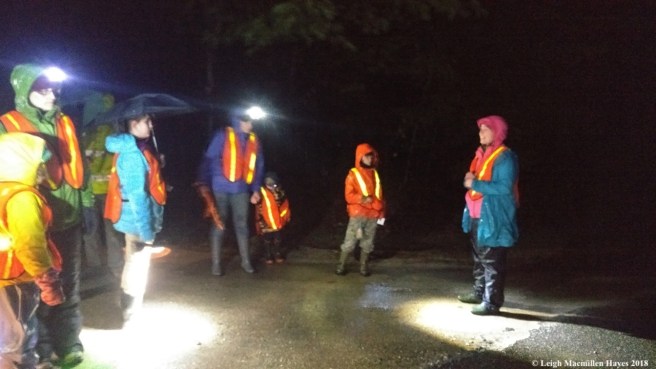
b4-Mary explains rules of the road

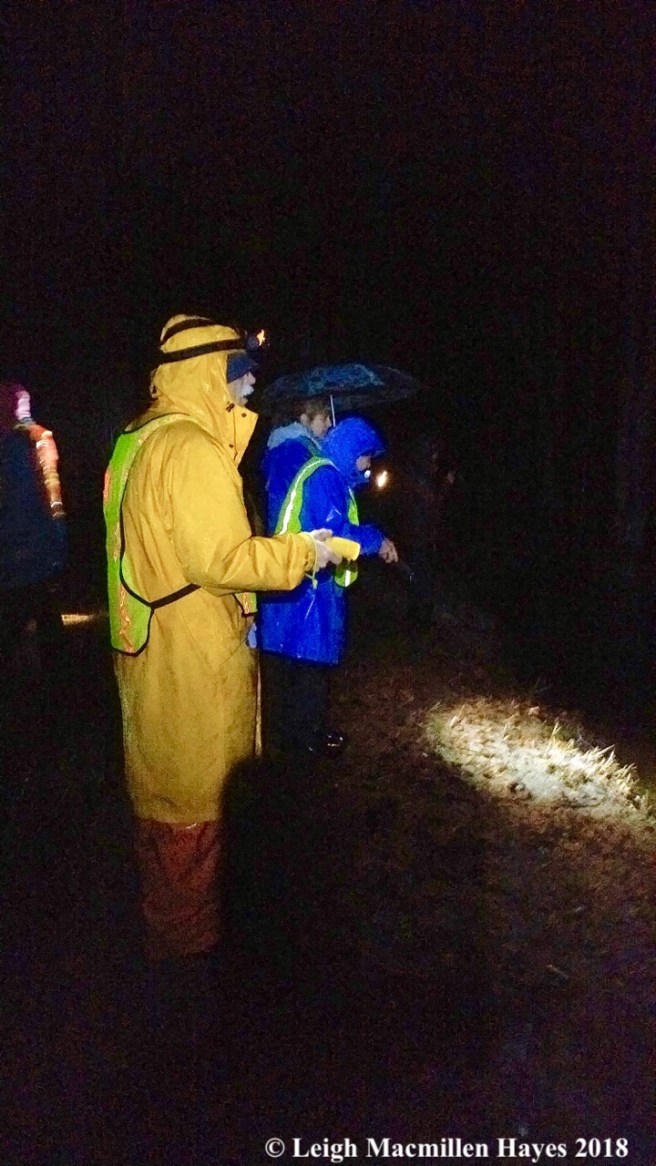
Finally, we reached Dugway Road, our destination, and Mary took a few minutes to remind folks of safety rules. Some years the Bridgton police are able to join us and either shut the road down or at least slow traffic. Such was not the case tonight and so it was important that our crowd of at least twenty ranging in age from four years old to 70+ be cautious.

b4-walking the road

And then the real fun began. We spread out across the road with flashlights and headlamps, walking with care as we tried to notice the little things in life who chose this night to return to their natal pools in order to mate.

b6-spring peeper

Right away, the good times got rolling as we began to spot spring peepers. Really, it was those with eagle eyes who spotted the most, which wasn’t easy given the asphalt conditions. Though we knew better, we did have to wonder if the amphibians chose this road because it provided good camouflage.

b5-first catch- spring peeper

Being the first of the night, Mary demonstrated the fine art of capturing the peeper, explaining first that her hands were damp and had no soap or cream upon them.

Outstretched hands of one of the younger set awaited a transfer.

b5-pass off

The mission was to help the peeper get to the other side of the road. Typically, once captured, we transport them to the side in which they were headed.

b5-final pass off

The release was made into the youngster’s hands and then onward the child holding frog went. Lucky for the frog, there was a culvert at the side and that seemed like the safest place to release it.
b14-into the vernal pool

Further down the road, the songs of the wood frogs and peepers were almost deafening. As we looked into the vernal pool that was still half covered in ice, there was some movement, but the frogs all continued to sing despite our presence, unlike what happens when we approach a pool during the day and they dive under the leaf cover for a few minutes.
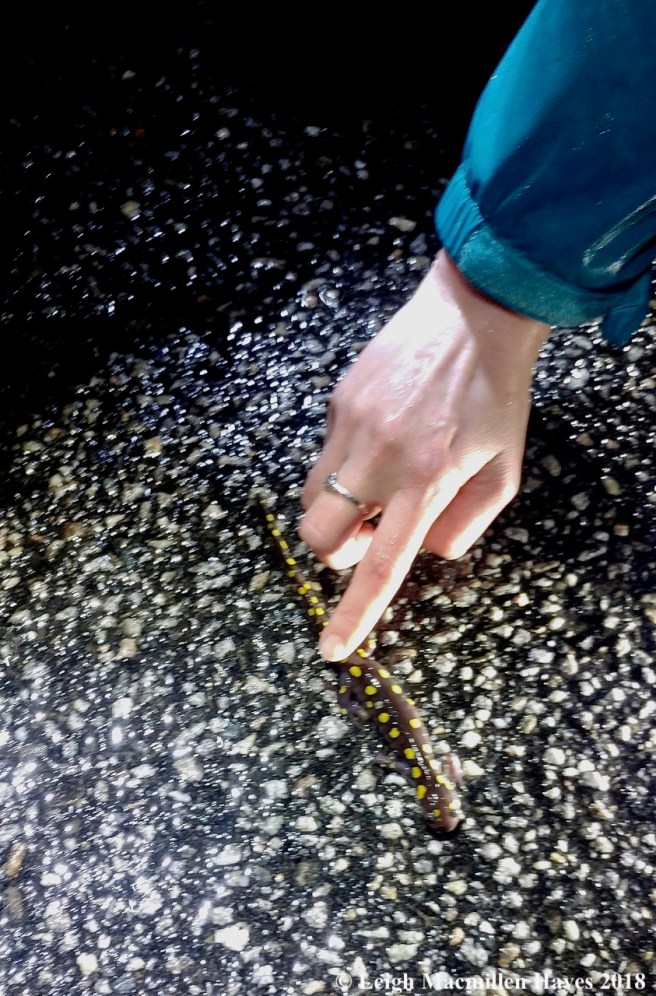
b7-spotted salamander

We found enough peepers, but the stars of the night were the spotted salamanders.
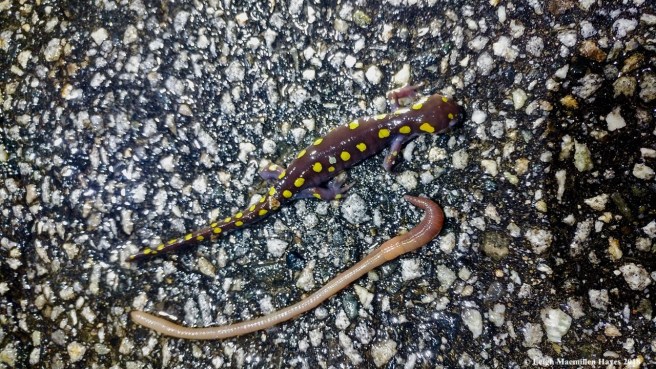
b8-sally and worm

The youngest among us picked up one of the ubiquitous worms that marked the night and laid it down beside a sallie.
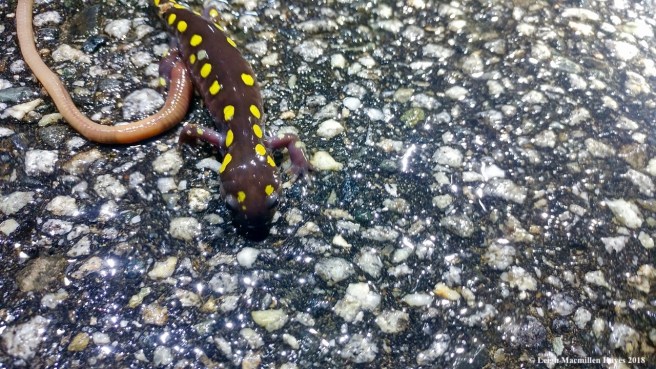
b9-sally eyes

Sallie didn’t care. It was on a mission and just wanted to move on without our interference. There was only one thing on its mind and we suddenly stood between it and that goal.

b12-salamander

It had a dance to perform before the sun rose and we had a heck of a nerve for getting in the way. I’m always in awe of these creatures who spend at least 11.5 months under the leaf litter and maybe a week or two in the pool. Our rare chance to catch a glimpse of them is on such a rainy night as tonight.

b10-sally on card

Our intentions were in their favor. We only wanted to help save them from the vehicles that passed by.
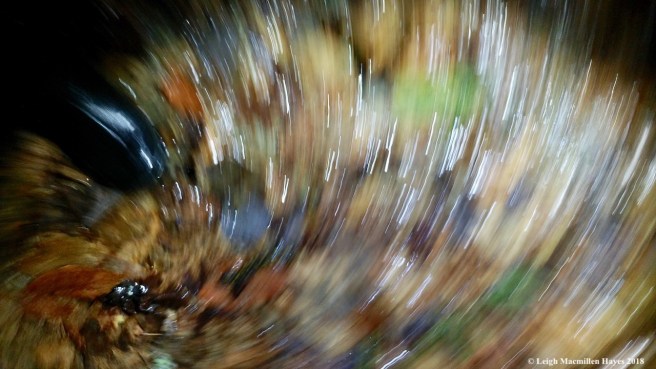
b11-sally's world

In the end, though, I had to wonder–is this what the salamander’s world looked like as we scooped it up and helped it across.

Possibly, but still, it’s always a thrill for tots, tweens, teens, and all the rest of us to celebrate Big Night with the Lakes Environmental Association. We are the Sallie Savers.
Dear Earth

Dear Earth,

In your honor, I decided that on this Earth Day I would head out the back door and travel by foot, rather than vehicle.

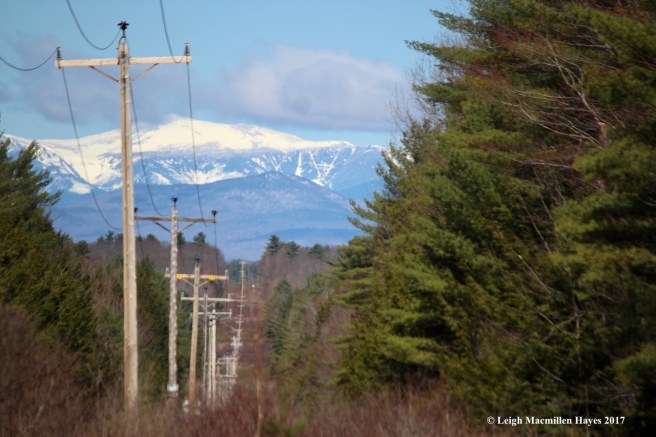
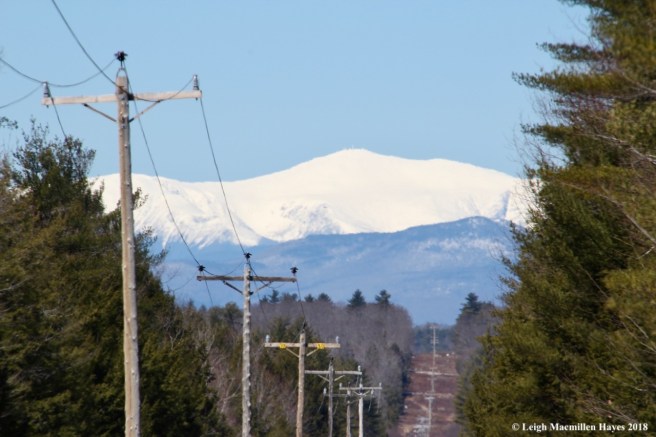
e1-Mount Washington

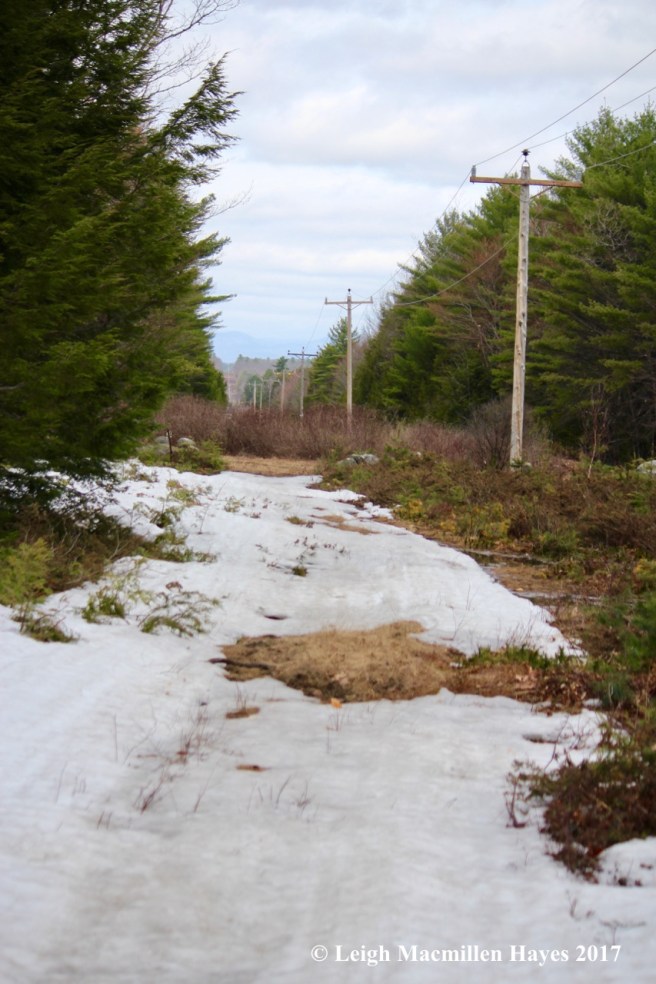
My journey led me down the old cow path to the power line right-of-way and much to my delightful surprise, Mount Washington was on display. It was so clear, that I could even see the outline of buildings and towers at the summit. Thank you for providing such clarity.

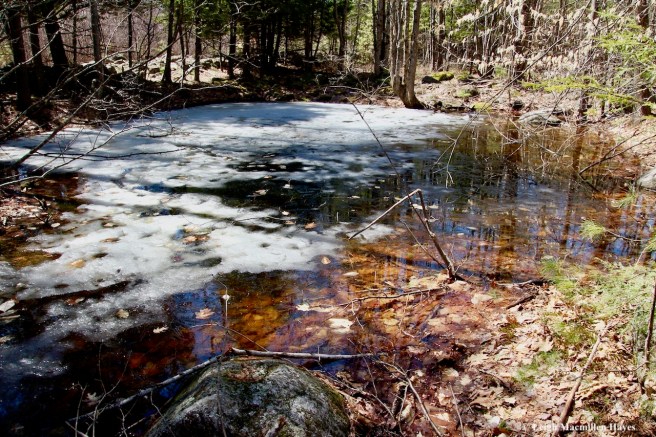
e2-vernal pool

Rather than walk to the mountain, I turned in the opposite direction and found my way to the vernal pool, where ice still covered a good portion. You know, Earth, as much as I want this to be a significant vernal pool because it does usually have two qualifiers (and only needs one): more than forty wood frog egg masses or more than twenty spotted salamander egg masses, I know that it is not. I believe it was created as part of the farm based on the rocks at the far end, not exactly forming a retaining wall, but still situated so close together in a way that I haven’t found anywhere else in my extensive journeys of the hundreds of acres behind our house. Plus, it dries up much too quickly to be a natural pool. And each year I’m surprised to find wood frogs, their egg masses, spotted salamander spermatophores, and their egg masses, given that the water evaporates before the tadpoles finish forming. If these species return to their natal vernal pool, Earth, then how can that be since no one actually hopped or walked out as a recently matured adult? Or were these frogs on their way to another pool and they happened upon this one? You know me, Earth–lots of questions as I try to understand you better.

e4-dorsal amplexus

Whatever the answer is, each year you work your magic and on a visit yesterday afternoon, I spied a male wood frog atop a female in what’s known as amplexus, aka, mating. According to Maine Amphibians and Reptiles, edited by Malcolm L. Hunter, Aram J.K. Calhoun, and Mark McCollough, “When mating, the male clings tightly to the females back. Visible contractions of the female’s body signal the onset of oviposition, at which time the male’s hind feet are drawn up close to the female’s vent. As the eggs are expelled, the male releases sperm into the water and strokes the egg mass with his hind feet, which presumably aids in distributing the sperm more evenly.” I looked this morning, but didn’t find any sign of eggs. Don’t worry, Earth, I’ll keep looking because perhaps they were there but hadn’t absorbed water yet.

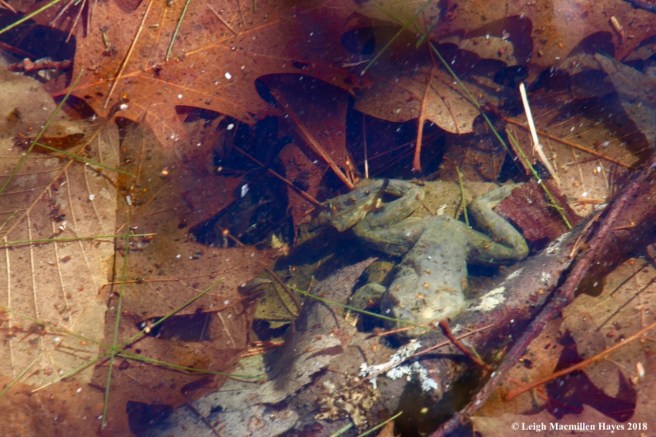
e5-dead frog

One other thing I saw yesterday that greatly disturbed me was a dead frog in the water. Last year I also found such. My concern is that it was caused by a virus, but perhaps it was old age. Or some other factor. I do have to confess, though, Earth, I intervened and removed the body from the pond. I know, I know, it’s all part of the cycle of life, and I should leave nature to its own devices, but disease was on my mind and I didn’t want others to be affected. I may have been too late. Only time will tell.

e7-leaf variety

When I arrived this morning, I’m happy to report that I didn’t see any dead frogs. For the longest time I stood upon a rock–you know the one I mean, Earth, for you’ve invited me to stand there before. It’s sunny in that spot and the frogs know it well, for that is where they’ll eventually deposit their eggs. As I waited, I looked down at the leaves on the pool’s bottom and noticed how they offered a reflection of the trees above, beech and oak and maple and pine and hemlock. All still displayed their winter colors, but when the pool does dry up, they’ll turn dark brown and form a mat that will provide nutrients for the plants that colonize the area. You’ve got a system, don’t you Earth.

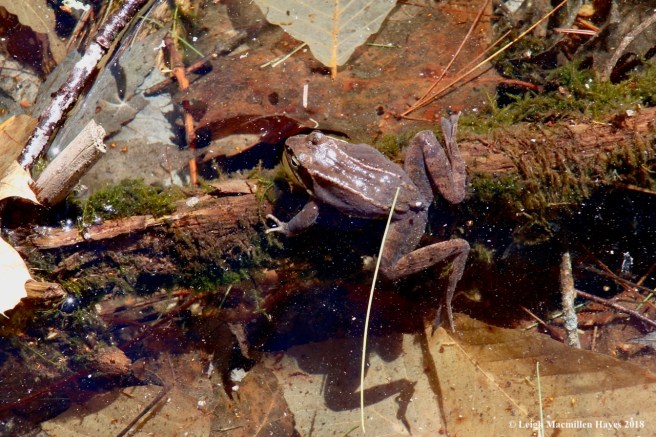
e8-frog 1

I knew if I stood as still as I could, I would be rewarded. While beech and oak leaves, the last to fall from their trees, danced somersaults across those already on the ground and matted by the past winter’s snow, red and gray squirrels chatted and squawked, and chickadees sold cheeseburgers in their songs, my eyes constantly scanned the pool. And in a flash, a frog emerged from under those leaves.

e8-wood frog 1a

For a while he floated, allowing the breeze to push him to and fro within a two square-foot space. But then he decided to climb atop a downed branch. Perhaps he was trying out a calling sight to use once I left.

e9a--wood frog 3

And then, there was another. And after that another. Yesterday I saw a total of six. Today only four. But that doesn’t mean the others weren’t hiding until I left, right Earth? I hope that’s what it meant. One thing you have taught me via the frogs is patience. If I stand still long enough at least one will swim to the surface. And they, too, are patient as they wait: for me to leave; for the gals to come. Well, maybe when the gals do come they aren’t all that patient.

e10-mosquito larvae

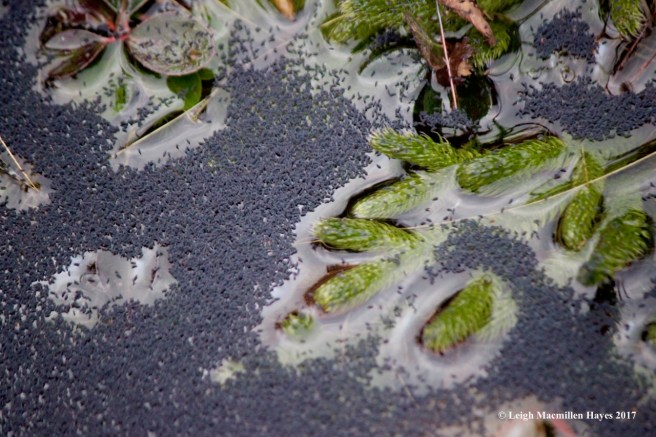
I actually returned to the pool a second time today and more of the ice had melted. While in the late morning I couldn’t see any insects on the move, in the early afternoon I eyed thousands of mosquito larvae. Everyone moans about mosquito larvae, Earth, but . . . they provide food for salamanders and the adult form for birds. I’m just trying to look on the bright side.

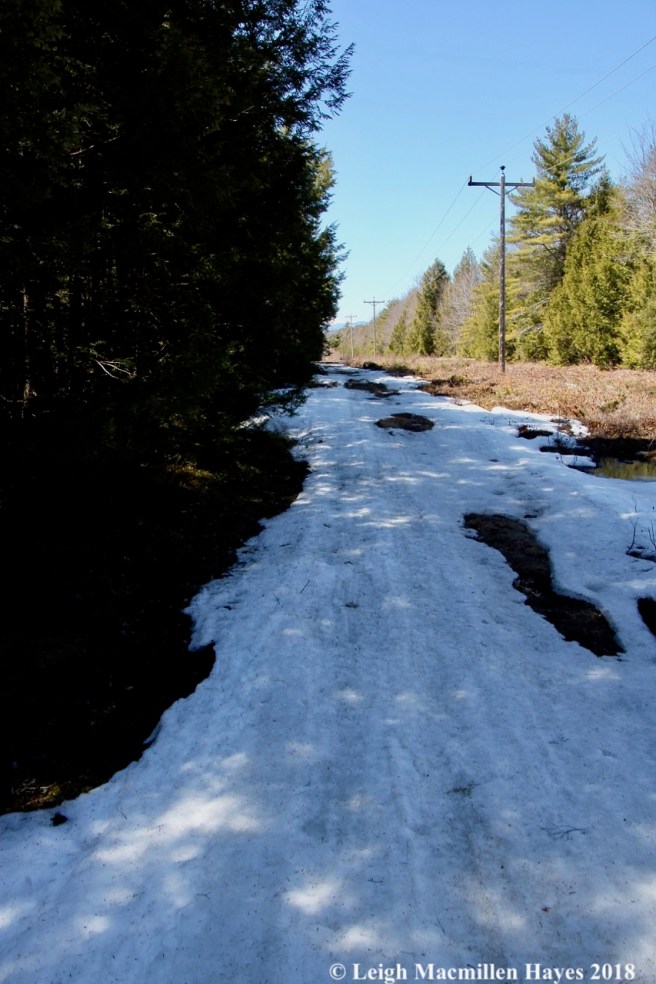
e11- snowmobile trail

This afternoon, I waited and waited for the frogs to emerge, but either my eyes didn’t key in on them or they decided to wait until I left. So . . . I finally did just that, and did head toward Mount Washington after all, following the snowmobile trail. As you well know, Earth, it was a bit tricky between the snow, soft mud, ruts and rocks exploding from your earth.

e11a-boots

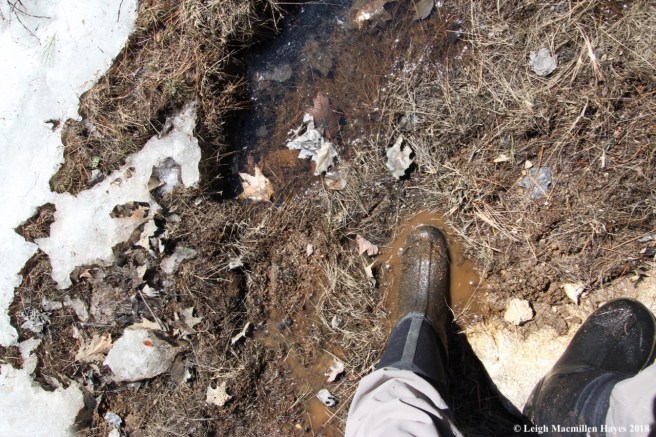
My right foot managed to fall through the icy snow into a hidden rut filled with water that covered my Bog boots. And then my left foot found some mud that squelched with glee. Or was that you squealing with delight, Earth? I had one wet sock, but ventured on.

e11b-Mansion Road

At the junction, I turned to the west, following the log road and remembering the days of yore when my guy and I, as well as neighbor Dick Bennett, used to work up a sweat on a winter day following a snow storm, for it was our duty to you, Earth, to release the snow from your arched gray birch trees. And then, a few years ago, the road became the main route to the timber landing/staging area again, and all of those trees we’d worked so hard to protect year after year were cut to make way for machinery. As much as my heart broke, it does give me time to watch forest succession in action, and I gave thanks that you have such a plan in mind.

e14-deer dance

It also provided a blank stage upon which the does danced and left behind their calling cards.

e12-buck

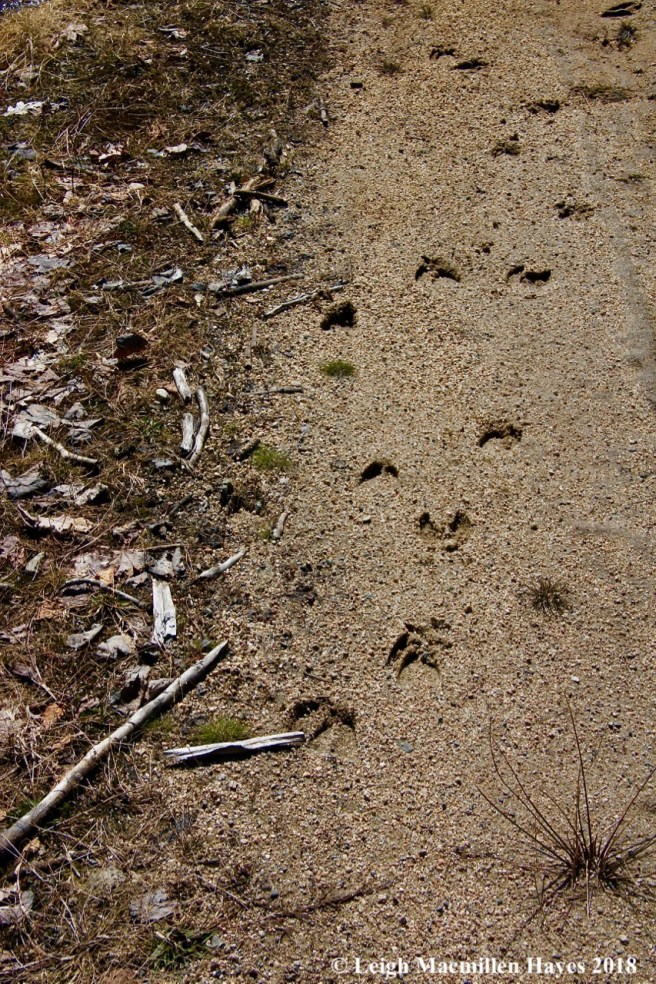
And Buck sashayed each partner across the floor. The deep dew claw marks and cloven toes indicated he’d made quite an impression.

e11c-coyote scat

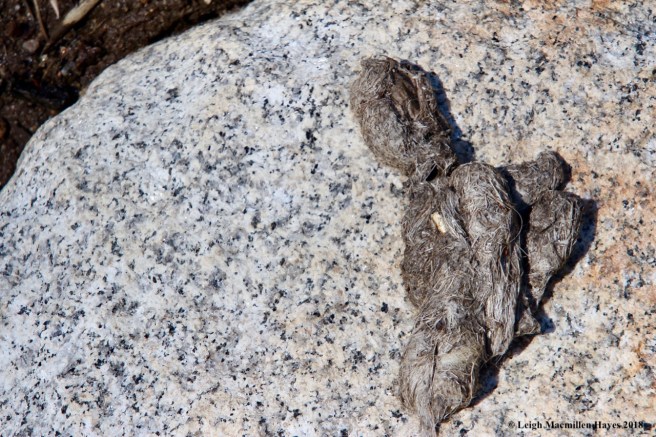
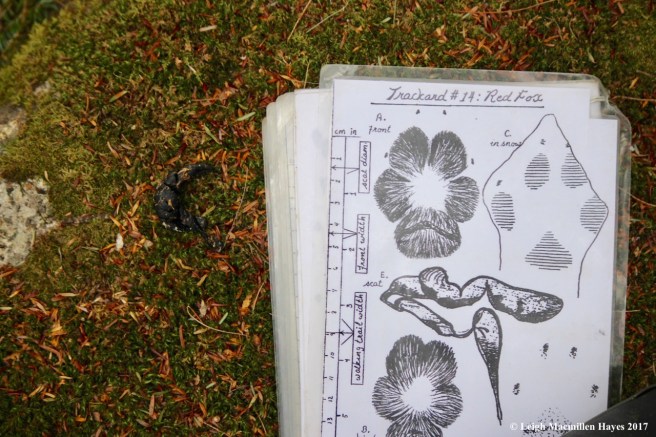
All along the way, upon raised rocks in the middle of the “road,” coyote and fox scat was prominent and in the sandy surface I also found their prints.

e18-vernal pool near landing

At the left-hand turn that led to the landing, I was surprised when I shouldn’t have been, for suddenly a million “wrucks” filled the air. I knew the water was there but it had slipped my mind. Thank you for the song of many more wood frogs. Thanks for filling my ears with joy.

e15-wood frog egg masses

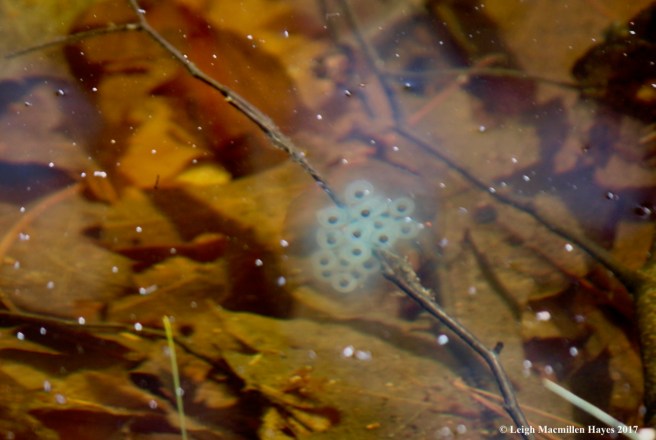
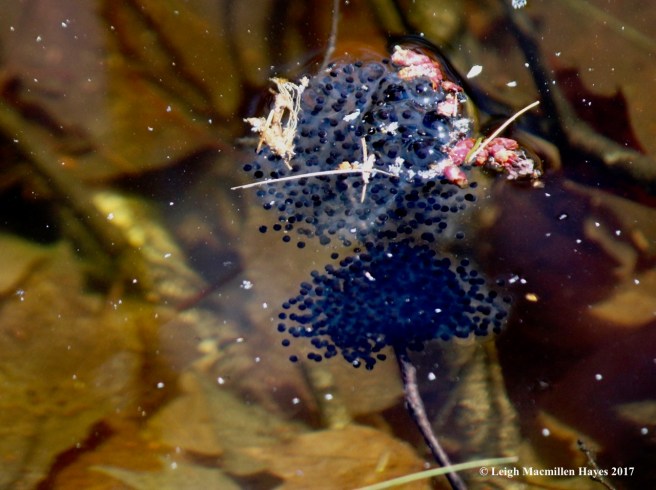
And the chance to spy their good works. Thankfully, you make sure that life continues. At least in the form of wood frog egg masses.

e17-wood frog egg mass

I loved their gelatinous blob-like structure, all bumpy on the outside they were. Actually, I believe what looked like one mass, was several, but I didn’t dare step in to check and disturb the frogs that hid below.

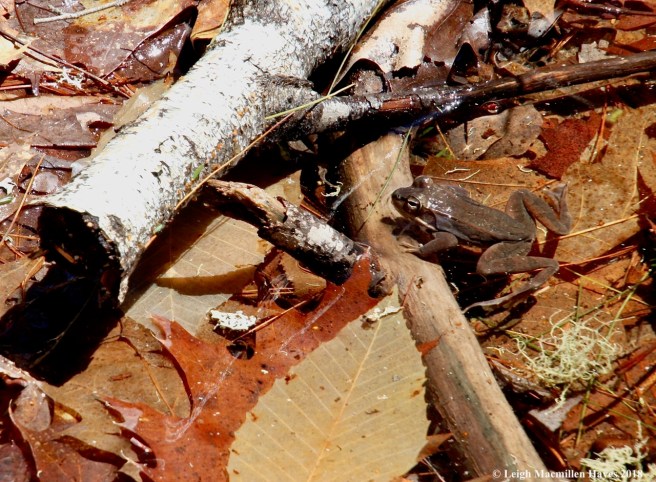
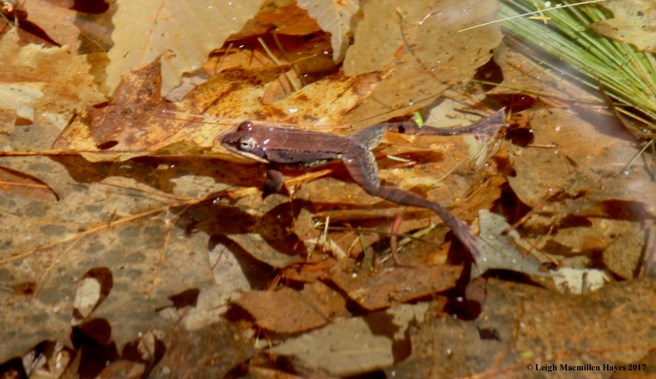
e16-wood frog 5

Again I stood as still as possible, and again I was rewarded. For a bit I thought that the frog before me had no arms, but then I realized that they were just plastered to its sides.

e19-wood frog under log

A squirrel sounding bigger than itself caught my attention briefly and I turned unexpectedly. When I turned back, the frog was no longer at the water’s surface, but appeared below a downed gray birch. For a while the two of us remained still. I hoped another frog or two or three or three thousand would pop up, but that wasn’t your plan, was it? It’s okay. One was enough.

e21-log landing

I finally left my one, oops, I mean your one frog alone and continued on to the log landing, noting all the mammal tracks and looking for other signs. There was more scat, but I was disappointed not to find bobcat or moose prints. Where were you hiding them? I suspect the moose had moved to the swamp below.

Rather than go much further, for major ruts from the logging equipment were filled with water, I turned around just beyond the landing and headed back across it. Twenty-five years ago it was a much smaller clearing with a few pine trees. Over the years, I’ve watched it change and the mammal activity as well. And then, about five years ago it was converted back to a landing and I can’t wait for it to fill in again, but my desire and your plan are not necessarily the same, are they?

It all seemed like so much destruction, but I had to remind myself that I am part of the equation, with my own needs for power and wood and food and everything that you provide. And cuts do bring about a change, sometimes for the better, for the trees and the mammals and the birds and the plants and the decomposers and the consumers and all who call this place home. Am I convincing you, Earth? Am I convincing myself?

e22-frog 7

As I passed by the lengthy vernal pool again I decided to revisit the egg masses. I stood on the rock and slowly scanned the area. No frogs. On second glance, there was one right beside the rock on which I stood. And it looked like the same one I’d seen previously. I wondered why. Why didn’t I scare it? Was that you, Earth, taking a peek at me?

e23-Mourning Cloak butterfly

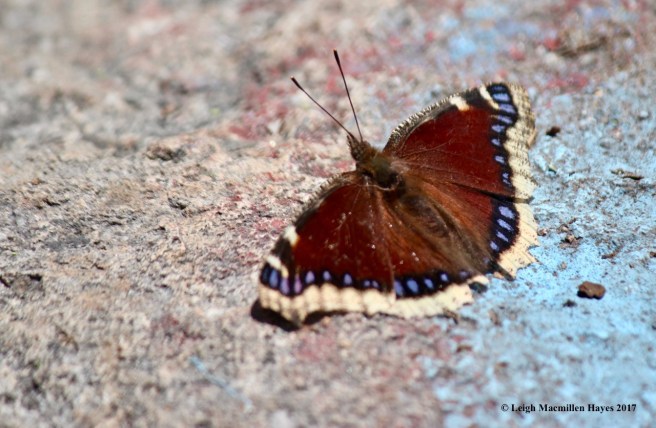
I had one more surprise on my journey–the first butterfly of the season, a mourning cloak. With its wings closed, it wasn’t all that attractive.

e24-mourning cloak

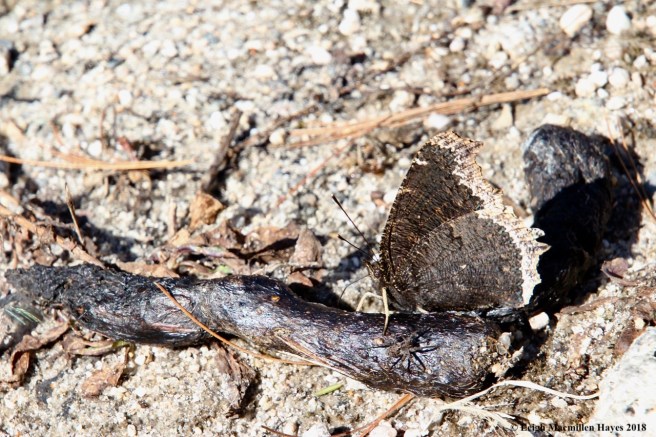
But upon opening them, I saw its beauty hidden within–another lesson, eh Earth? Oh, and your sense of humor. For yes, that was coyote scat on which the butterfly sucked as it sought amino acids and other nutrients. A fly also dined. Yum.

What a day, Earth. Your day. Dear Earth Day. May I remember to treat you so dearly every day.

Sincerely,

wondermyway


Craning My Neck

I’ve spent a lot of time thinking about living in the moment lately, a concept that really drove itself home during the years that my mother dealt with dementia and I was forced to realize that each time I left the room, my return was a new visit; a new adventure. And now, so many friends are dealing with issues that make every second precious and I realize once again the importance of slowing down and noticing and making the most of being present. Now.

f1

Such was the case this afternoon when I joined two friends who had pulled in from their winter home in Florida this week. We met at one of the parking lots for the Mountain Division Trail in Fryeburg, Maine, a rail trail that makes one feel like you could walk to the White Mountains in a matter of miles. But, to get back to the moment, the original plan had been to travel the trail with two different friends and then one had to back out and I found out that the Florida friends had returned and so I invited them to join the other and me, and then my other friend had to back out and so it was the Florida duo and me. And it was so fabulous to spend time with them that we walked rather quickly, which completely surprised me when I thought about it for I know that they love a slow journey. But we had much to catch up on and because the trail is paved we didn’t have to think about foot placement and perhaps that’s what spurred us on.

f2-tamarack 1

At last, however, it was spurs that stopped us, for one of them spied a branch with upward facing cones and little spurs and she wondered what it was. The cones certainly looked like hemlock cones. But why were they upright? And what happened to the needles? When I explained that it was a tamarack, she again questioned it for she’s always been here in the autumn when the needles are a brilliant yellow and she thought those needles stayed on all winter. Not so, I explained, for a tamarack (larch, hackmatack–take your pick of common names) is our only deciduous conifer in northern New England. The golden needles fall the same as maple leaves.

f11-pussy willows

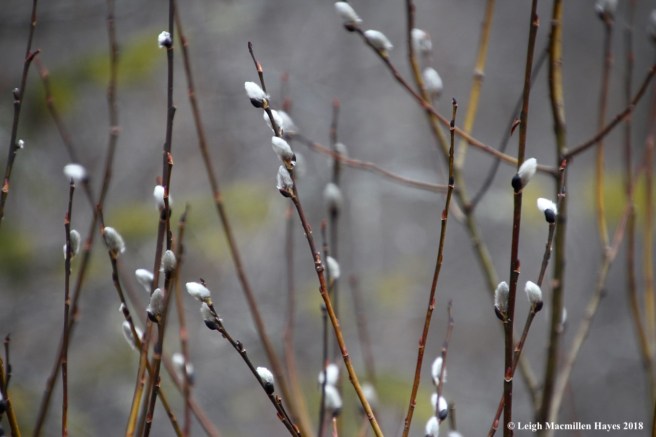
We also put on the brakes when she spied pussy willows–a sure sign of spring in their Zen-like presentation.

f20

Onward we marched, catching up on past months. But then, as the day would have it, first he had to turn around and head back to the parking lot and then a short time later she had to do the same. And that got me thinking about how the walk had evolved. I was sorry that the two I had originally planned to share the trail with couldn’t join me, but equally thankful for the two with whom I did travel. Living in the moment means embracing a change in direction.

f3-evening primrose basal rosette

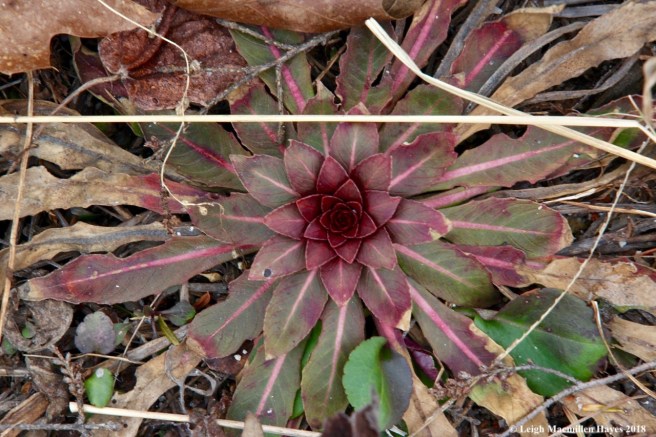
The rail trail is four miles long in one direction and I turned around at the 2.5 mile marker. On my return, I was entirely surprised by the offerings that had escaped my attention previously, like the beauty of an Evening Primrose’s basal rosette.

f4-pitch pine cone

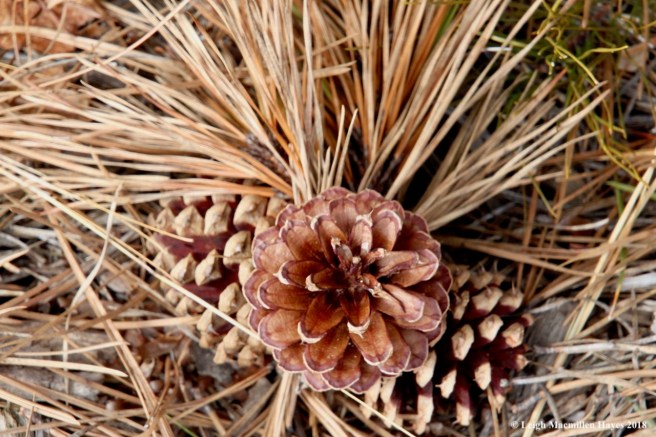
It’s fractal fashion was reflected in the pitch pine cones I spotted on the ground and surrounding trees.

f5-pitch again

The pitch pines always draw my fancy and I was especially intrigued by the past, present and future–as I tried to live in the moment. It’s not as easy as it sounds for we so often get caught up in what was or what could be.

f8-red oak

The past produced fruits long since deployed.

f10-speckled alder catkins

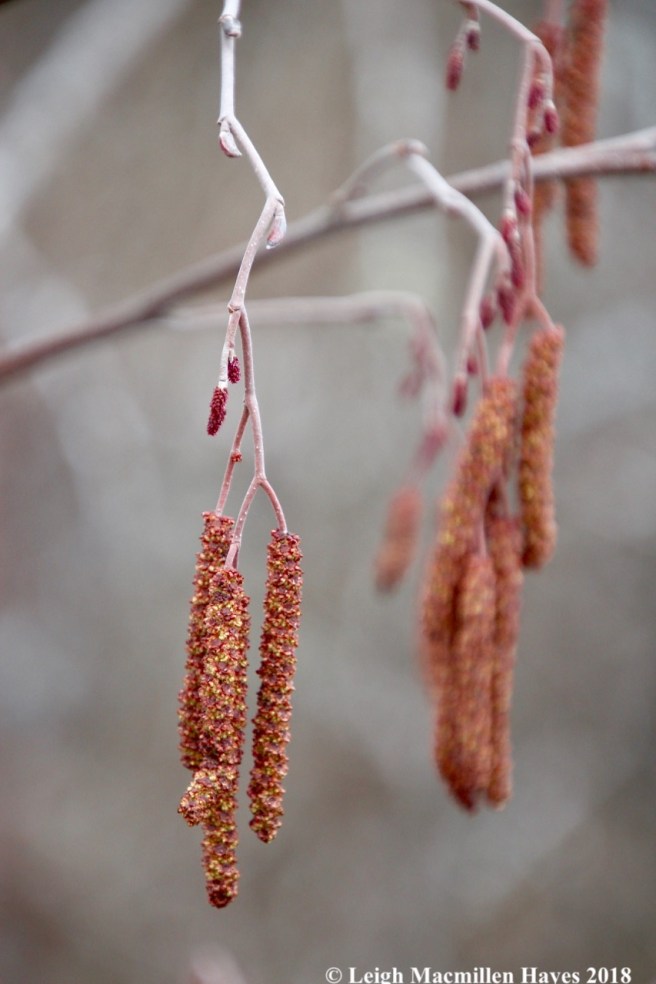
The future grew longer before pollinating the shorter.

f7-trailing arbutus in bloom

But in the moment–I spied the first blossoms of Trailing Arbutus.

f9-spotted salamander spermatophores

My return journey was much slower than the first leg, for there was so much to see. Included in the expedition was an examination of a small vernal pool. And what to my wondering eyes did I see? Spotted salamander spermatophores–those little chunks of sperm left behind by males atop cauliflower-shaped platforms.

f14-wood frogs quaking

As if that wasn’t enough, further on I heard a familiar quack and knew wood frogs were active though I couldn’t see them.

f15-wetland

And still further I discovered a wetland I’d never noticed before. Spring peepers sang from the far edges. It was all a surprise for on the walk out I’d told my friends from Florida that I hadn’t seen or heard any vernal pool action yet.

f15a--chipmunk

I just need to spend more time listening and waiting and letting it all play out before me, the same as the chipmunk that was sure I couldn’t see him.

f16-Canada geese

After a three-hour journey, I found my way back to the truck and then decided to take some back roads home. As I passed through farmland where cornfields are prolific, I noticed movement. I so wanted the movement to be another bird, but it was a huge flock of Canada Geese that attracted my attention. Again, I had to live in the moment and enjoy what was before me.

f17-sandhill cranes

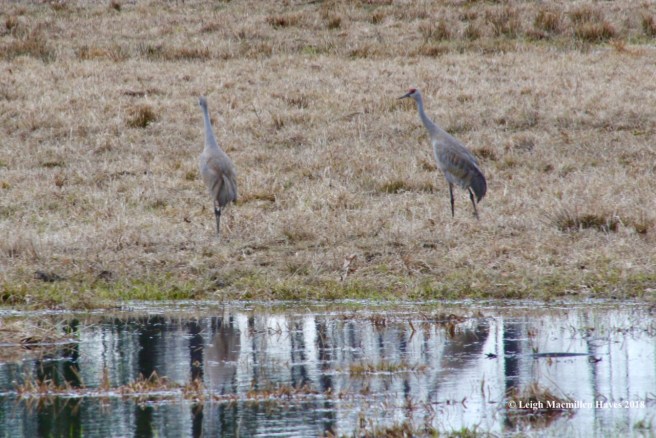
And then I turned into the harbor, and was pleasantly surprised for suddenly my eyes cued in on those I sought who stood tall.

f17a--sandhil cranes

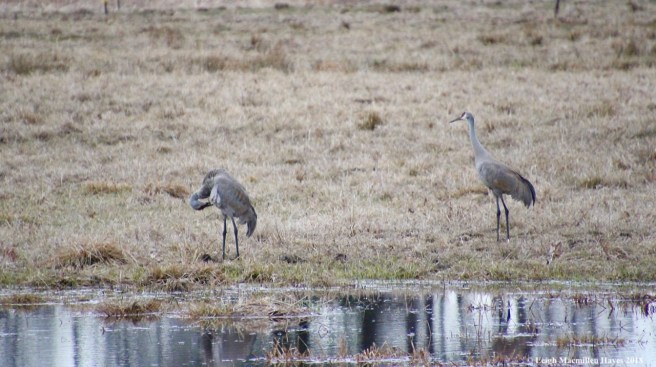
And preened.

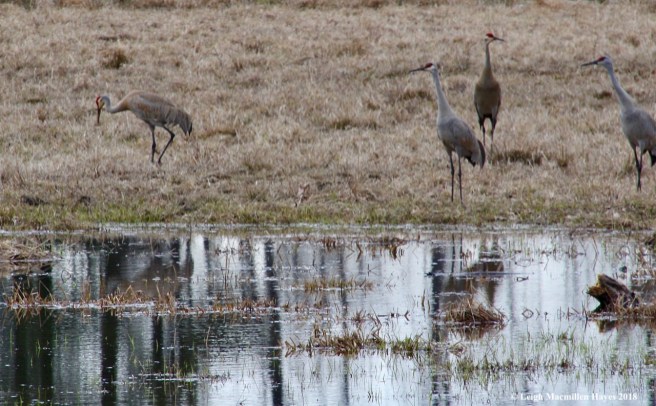
f18-sandhill cranes

And craned their necks. Sandhill Cranes. In Fryeburg, Maine. They have returned to the harbor for at least  the past five years, probably more and I’ve had the privilege to hear them fly over several times, but today was the first time I was honored to see them. Thank you, Parker, for the tip.

I craned my neck and gave thanks for the moments spent in their presence and lifted up several people who will benefit from a dose of this medicine–Tom, Jinny Mae and Lifeguard Wendy: this one is for the three of you.


Eyes of Wonder

On the first and third Tuesday of each month since the snow first flew in 2017, I’ve had the privilege of tramping through the woods with our Tuesday Trackers group. As it happened this month, we were also able to tramp together today–the fourth Tuesday.

Each week, the participants vary as they come when they can. But no matter who shows up, by the end of our two-four hour exploration, we are all wiser for the experience–and filled with gratitude for the opportunity to spend a winter morning in the Maine woods. We are also grateful for the wonder that is right in front of us, not only materializing in the form of mammal tracks, but all manner of things that make up the web of life.

j1-otters romping across the snow

Usually the age of our attendees ranges from 50-something to 80-something. But today we were joined by four little otters who reminded us what it’s like to be a child again as they bounded across the snow’s crust, and rejoiced at the sight of any and every little thing that presented itself from squirrel and chipmunk holes to fungi.

j2-squirrel prints

Of course, we were there to track and though most prints were bleached out from the sun’s March rays, we did find a few that showed well their finer points such as toes.

j14-measuring straddle

And with any discernible prints, the kids reminded us to take time to measure straddle, in this case that of a gray squirrel. We also found what we believed was a bobcat track based on the round shape of the somewhat melted print and the stride.

j3-ice and water

Most of us began the journey with snowshoes, but soon joined the kids and shedded them as we moved from frozen snow to bare ground and back again. And then we discovered water. Actually, a few of us were a wee bit behind, when one child ran up to her mom and said, “A vernal pool.” If it does turn out to be a vernal pool, we feared it will dry up too soon, but that doesn’t mean the amphibians won’t take advantage of the spot in a few weeks. It was half covered in ice, which offered a challenge because two of the boys wanted to break through it with a stick. The third boy did break through–much to his dismay. But as his calm mom said, ” Well, now he’ll know next time.” (Juli–I can’t help but smile–you are the best.)

j4-helping hands

Fortunately, for his sake, we came upon a maple tree with a huge burl on which he sat while others on the journey came to his aid and squeezed a gallon of water, or so it seemed, out of his socks. His mom had an extra pair of mittens in her pack and those covered his toes for the rest of the trek. He wore his boots, of course. While we were there, we wondered about burls and tried to remember what created them. I suggested insects and another thought perhaps fungi. It turns out we were both correct. They may also be caused by bacteria or a virus. What the young lad sat upon was a reaction of the tree to the infestation which resulted in abnormal growth due to changes in the tree’s hormones. Think of its vascular system as a twisted ball of yarn.

j5-sucker brook outlet into Kezar Lake's Lower Bay

After the sock ringing and mitten fitting episode played out, we turned around to take in the beauty of the Sucker Brook Outlet at the Lower Bay of Kezar Lake for we were on the John A. Segur East Wildlife Refuge on Farrington Pond Road.

In the distance, one lad spied a beaver lodge. You might see it as a brown dot on the snow-covered ice directly above a swamp maple snag in the center of this photo.

j6-wintergreen and spring tails

We also looked at our boots, where we rejoiced in the site of wintergreen plants evolving from their magenta winter coats. And spring tails jumping about on the leaf litter like performers in an unorganized circus.

j9-squirrel table

Upon a downed birch tree, a certain young lady found the perfect spot to set up a dinner table for a squirrel. She was kind enough to include a dessert treat by stuffing pieces of a wintergreen leaf into an acorn cap.

j10-ice bridge

Much to the delight of the younger set, they next discovered an ice bridge and took turns walking across it. The rest of us decided to pass on that opportunity, sure that we’d ruin the effect.

j11-tree stump examination

Getting up close and personal was the theme of the morning and everything drew their attention and ours, including a decaying trunk of a hemlock that was downed by a lightning strike several years ago.

j12-tree holes

Because we were curious, we noted holes of the tree’s decayed xylem, the system of tubes and transport cells that circulate water and dissolved minerals. One of the boys decided to see if it worked and poured water onto the stump, which immediately flowed into the holes. We’ve viewed tree stumps and rings many a time, but this was the first time we recalled seeing the holes. No tree stump will go unobserved on our path from now on.

j13-lodges reflect mountains

Our turn-around point was at another spot along Sucker Brook where three beaver lodges reflected the mountains in the backdrop.

j21-beaver lodge

A few of us walked across the ice for a closer look because one appeared to serve as this winter’s home site. We trusted the family within included their own young naturalists.

We were certainly thankful for our time spent with four children who allowed us to look at the world through their eyes of wonder.

(On behalf of Joan, Dave, Steve, Dick, Jonathan, and I, we thank you, Caleb, Ellie, Aidan and Wes. Oh, and your mom as well, or especially–thank you Juli. We’re all in awe of you and the gifts you’ve passed on to your kids.)


Did You See What I Saw?

Aimless wanders are among my favorite and today was such when I headed out the back door. Rather than follow any trail or even in my own former footprints, my direction changed with many a whim.

p-pileated woodpecker holes

Porcupine tracks first caught my focus and I followed them to a hemlock that is slowly being consumed–on a nightly basis. Just beyond, I noticed a dead snag that was once a healthy pine had some fresh wood chips surrounding its base. A pileated woodpecker had worked above, but there were also two new holes near the bottom. I’ve watched pileateds work from the ground, but it still seems amazing that they’d take such a risk. And they do–frequently.

p-pileated scat

Scat left beside those particular excavations were filled with insect body parts. A while later I came upon another well-drilled tree and discovered scat filled with bittersweet seeds.

p-fisher prints

Right near the pileated works, I spied a set of prints that made my heart flutter. Might I find a kill site? Did a porcupine meet its demise?

fisher track

The five tear-drop shaped toes and diagonal of paired prints, plus great strides between sets informed me that I was following a fisher. I thought perhaps it might lead me to a porcupine den other than under our barn, but no such luck. Instead it led me to another set of tracks and then disappeared into thin air. I’m not sure how the fisher’s story ended. Then again, I rarely read a complete chapter for any of the mammals I track.

p-raccoon track 2

That’s okay, for where the fisher left me hanging at the end of a page, a raccoon picked me up. And along a double-wide stonewall I traveled with it.

p-turkey hens and tom

The raccoon tracks led to turkey tracks and I felt as if I knew the creators for I was probably a quarter of a mile from home and they’ve been spending the nights high up in the white pines of our woodlot and part of their days consuming bird seed in our yard. Ten hens and one tom are they.

t-vernal pool

The turkey tracks led me to a favorite spot–the vernal pool, where I noticed deer had also paid a visit. I crossed over, thankful that the ice was still frozen, and followed the deer.

p-bounding deer 2

They led me to a grove of gray birches that grow among the pines, beech and red maple. And in one opening below a bent tree, catkins had rained seeds and scales shaped like fleur de lis upon the snow. And a snowshoe hare leaped.

p-deer beds 1

The hare led me to more deer and turkeys. Again, I climbed a double-wide wall and while reflecting on the size of the field this plot formerly was for it had been plowed many moons ago, I noticed the deer had also paused. To my left were four beds, those icy looking impressions left behind by their warm bodies.

p-deer beds 2

And to my right five more. There was actually one at my feet, making a total of ten. I find beds all the time, but I’m not sure I’ve ever found them upon a wall before–all in a row.

p-deer scat and hemlock cone

The wall is located under a hemlock grove, and so it was no surprise to discover hemlock cones beside deer scat. Deer dine on hemlock bark and buds and their scat mimics the size, shape and color of a cone, often with a dimple at one end and nipple at the other. That the color should be similar makes sense, but I’d never thought about the similarity with the size and shape. As my guy would say, I’m overthinking.

p-squirrel 2

I continued to follow the deer’s lead when I thought I heard a slight noise above. It wasn’t the chatter I usually associate with a red squirrel. This one was so busy pulling scales off a pinecone to get to the two seeds imbedded within each, that it hardly noticed I stood watching.

p-squirrel 3

For about ten minutes he allowed me to watch him work.

p-squirrel cache:midden

A glance around and I knew that time and again he’d dined in the same area, turning a fall cache of cones into a winter midden of scales and cobs.

p-vole tunnels

It was near the squirrel haven that I began to notice vole tunnels–a sight I didn’t expect to see so soon. Voles spend the winter mainly in the subnivean layer–between the snow and ground. Under the hemlocks, the snow depth was shallow and the vole’s travels revealed.

p-moose and deer intersection

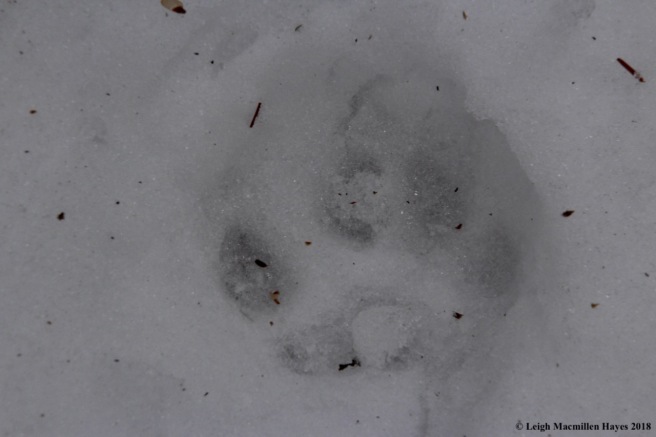
Of course, I was still following deer tracks, for really, this is their home site, aka yard. The place where they eat and sleep, with well packed runs leading from one to the other. And secretly (though it’s no longer a secret since I’m about to reveal it) I hoped to find an antler. Or two! I found none–yet this year. But . . . I did spy a track of another sort. A couple of moose also passed through, their prints so much larger than that of the deer.

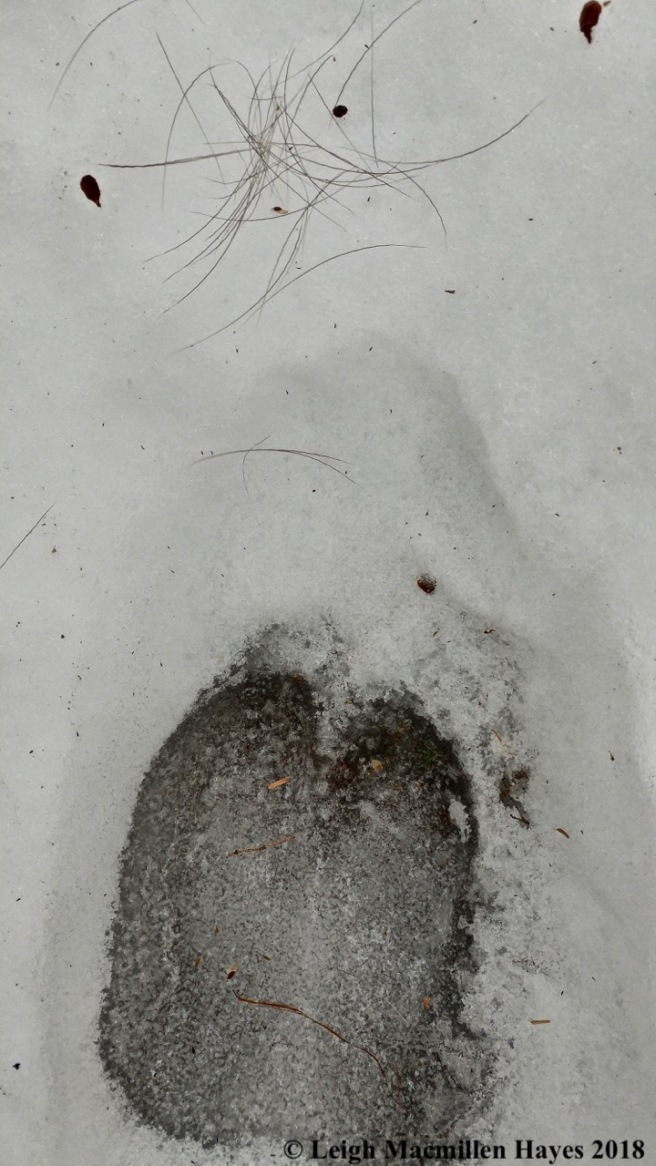
p-moose print and hair

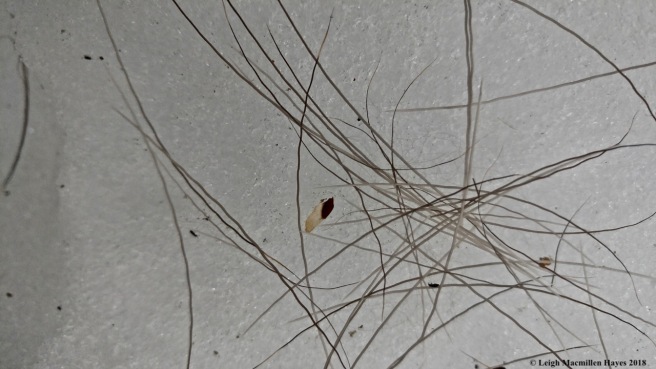
Consequently, I found a shed of a different sort for by some of the moose prints I noticed hair. It may have felt a bit wintery today, but tomorrow the temperature should rise into the 40˚s. Spring is on its way.

p-moose hair

I wasn’t the only one who wanted to take a closer look at the hair–a couple of spring tails, aka snowfleas, were also checking it out.

p-bobcat

I let the moose be my turnaround point and followed a different route home. And had the pleasure of discovering bobcat prints. I also saw fox tracks. The only prints I didn’t find for the perfect walkers were coyote, which surprised me. All in all, it was an extremely successful wander.

p-spectacles on ice

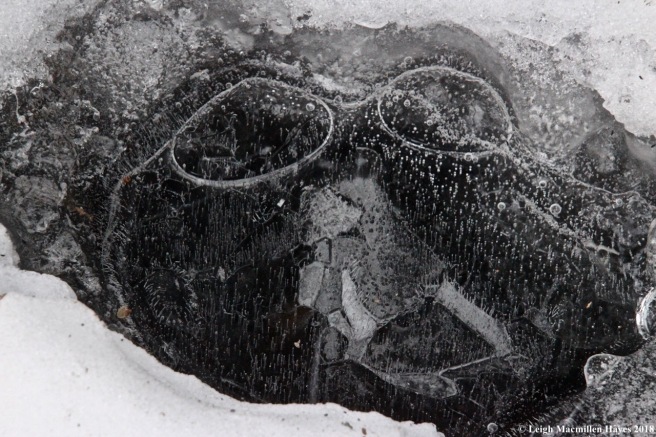
Made even better when I realized I wasn’t the only one looking. “Did you see what I saw?” asked the bespectacled ice goddess. “Indeed, I did,” was my reply.


Melt Down

After a few weeks of extreme cold, January did what it always seems to do–cranked up the thermometer. That might have been okay except that with the warm temps (40˚s and above) came the rain. And with the rain came the fog. And with both disappeared the snow.

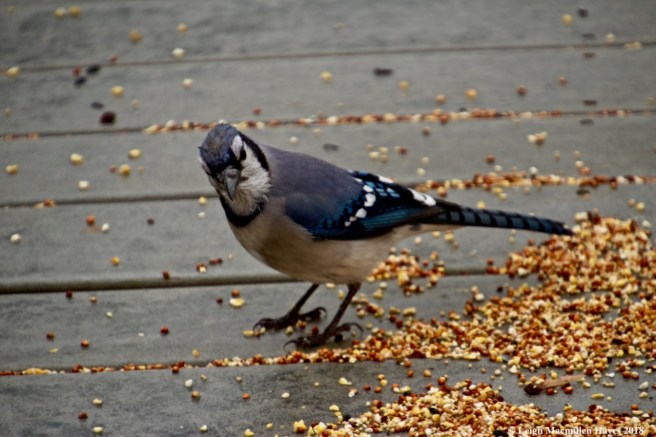
j1-soggy bluejay

And so our deck was clear, except for the bird seed, of course. And a rather bedraggled bluejay. I’d noted in the past few days that all of the birds are much skinnier than I remembered, given that they didn’t need to puff out their feathers and insulate themselves from the cold.

j2-squirrel feast

The gray squirrels also came by, their mouths like vacuums as they scoffed much of the sunflower seed supply.

j3-squirrel feast 2

They, too, offered a rather bedraggled appearance, but the rain didn’t stop them from getting their fill.

j4-snow thaw and debris

And then, the rain ended, clouds moved swiftly southward, arctic wind gained strength, temperature dropped dramatically, and sun shone brilliantly. Abruptly, the thaw ended. That was fine with me for I was afraid we’d lose all of our snow cover. As it was, we lost well over a foot in the past two days. And what’s left was riddled with natural debris.

j6-vernal pool

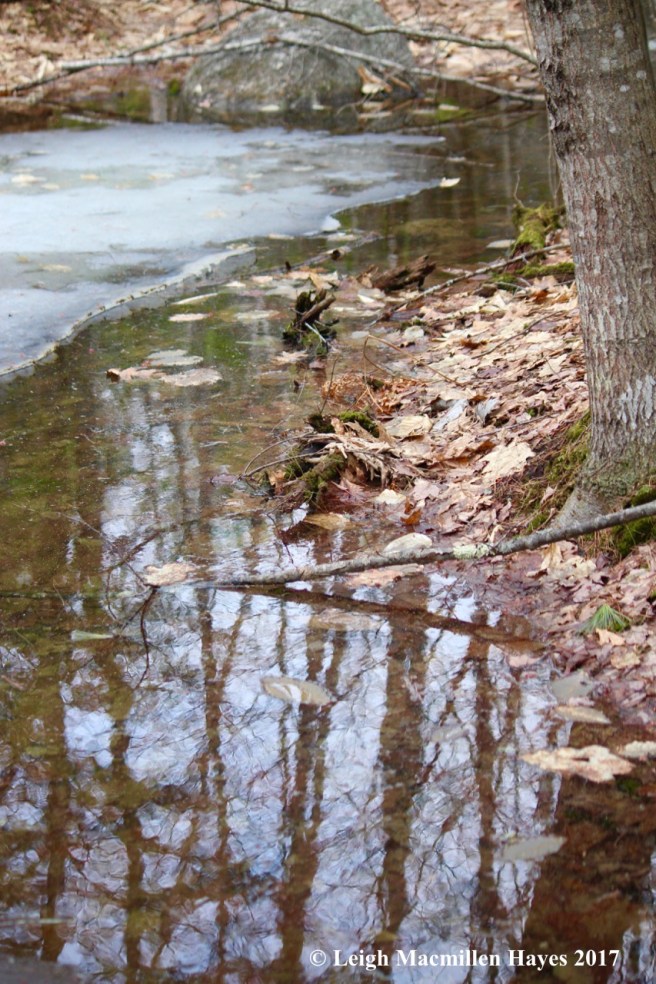
I decided to check on the vernal pool, curious about its condition. As expected, it was still frozen, but with that yellowish brown ice of warmer days.

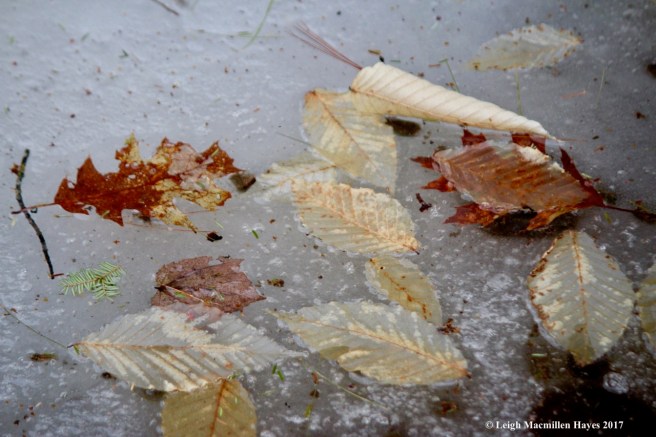
j7-leaves embedded in ice

Fallen leaves remained entrapped in the thin, mosaic layer.

j10-ice on ruts

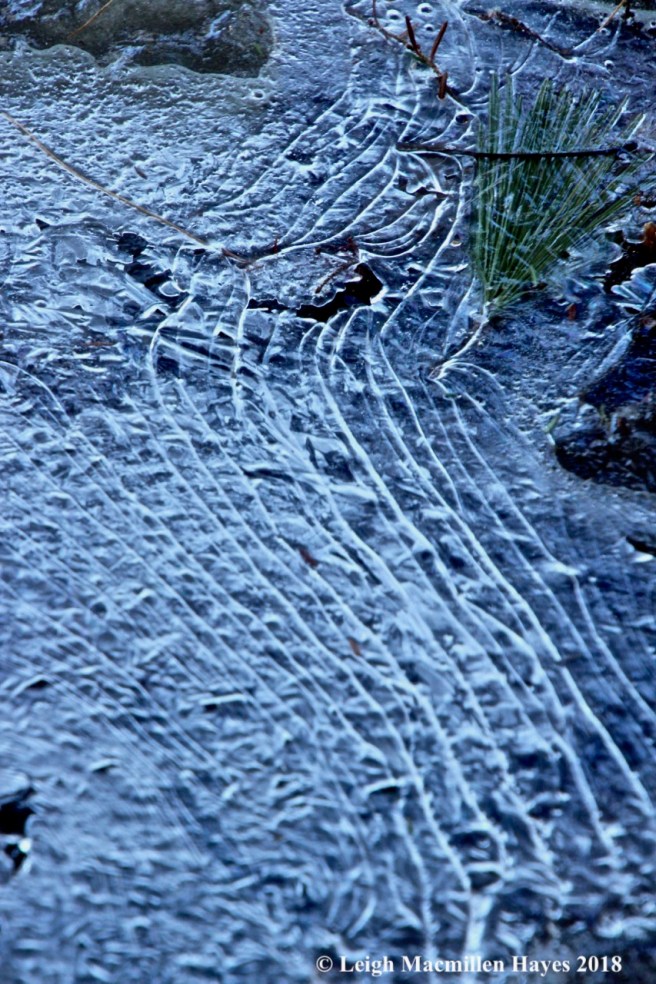
Nearby, I found open water in many places; some of it with thin ice designs decorating the edges.

j25-ice

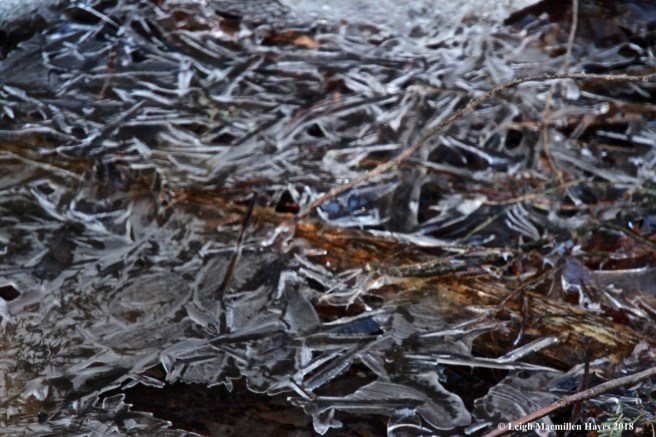
Ice forms in various ways . . .

j11-ice forms

and these three offerings were a few feet of each other.

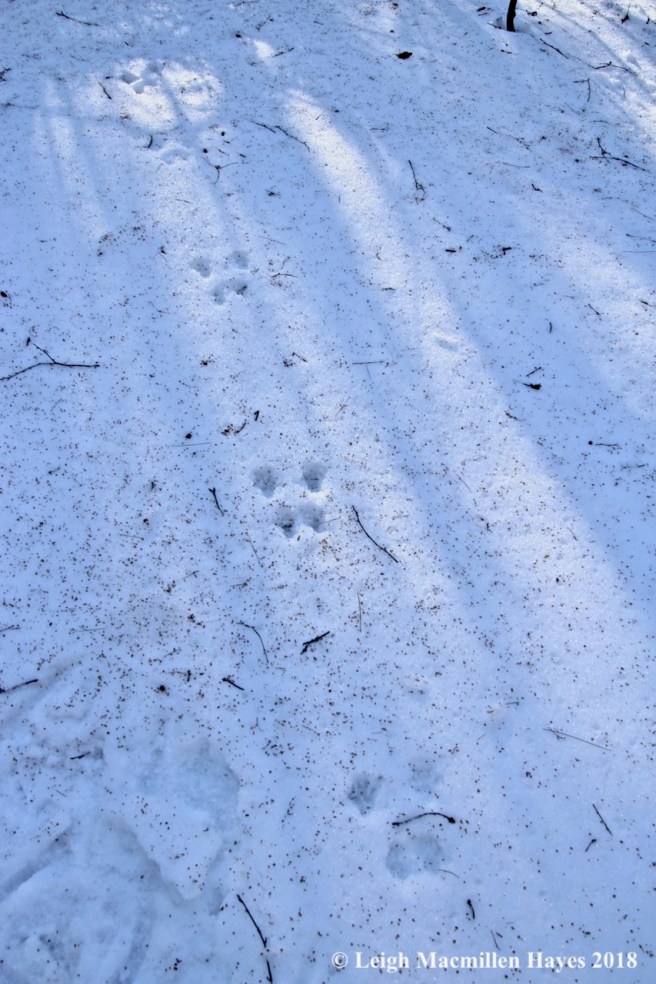
j8-squirrel tracks

I discovered the ice as I followed red squirrel tracks created when the snow was a wee bit softer. By the time I moved across it had started to freeze again and though my snowshoes made a lot of noise and got a wee bit wet and frosty, I was thankful for them as they made my tramp easier.

j9-squirell prints

The beauty of the squirrel prints was that their toes and toe nails showed. It’s a rare occasion when conditions are just right for good prints.

j12-my squirrel cache

My next destination was to check on the creator of the tracks. And I felt as if a sun spirit was doing the same. Meanwhile, the squirrel chatted at us from a nearby tree.

j14-cones exposed but not touched

The top of its pile had been exposed, but I suspected the cones hadn’t been touched. Instead, the snow had melted off of them. I think he’s saving this pile for another rainy day.

j15-midden exposed

In the meantime, he has been busy as demonstrated by a midden slowly growing near another of his stashes.

j16-turkey prints

I decide to let him feast in peace, and instead followed some turkey tracks to another location.

j11-witches butter fungi

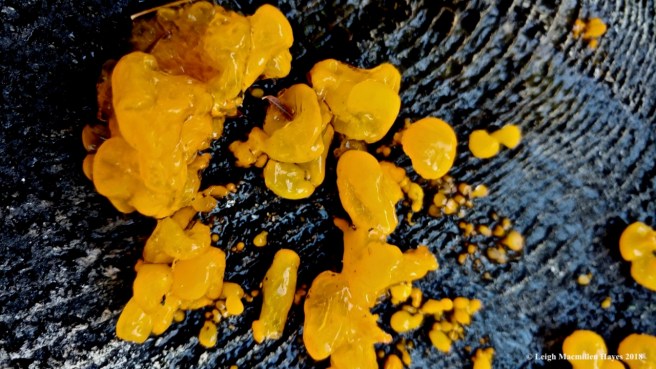
Along the way, it was the witches butter on an old pine stump that gave me pause. It’s also called orange jelly fungus and some say it looks like a brain. I wish I’d seen this small patch more recently, because I wondered if it had grown under the snow or if the melted snow and rain had affected it. Either way, it’s always a fun find and especially now as it adds a dash of color to our somewhat monochromatic landscape.

j17-pileated tree

My next great find was a pileated tree. I last saw it a few weeks ago, but it seemed to me that even more chiseling had taken place.

j18-pileated tree

At first, when I saw the gray wood above, I thought it might have been older work.

j19-pileated tree

And that the newer work was much lighter in color. Do you see the chisel mark? Just imagine the head banging that went into this masterpiece.

j20-pileated debris

Like the squirrel, a growing pile below added to the story. For me, it was the realization that the gray wood was excavated at the same time as the lighter wood. My new theory, the gray wood had been caused by a fungus or rot of some sort and then the insects followed and finally the woodpecker. If you know otherwise, please enlighten me for I want to understand. Of course, I looked for scat, but came up empty handed. Drats.

j21-second vernal pool

At last I reached a second vernal pool, though the going was a wee bit difficult given the conditions. This one was more open than the first.

j22-ice melting

And on this winter day that began with the tail end of a heat wave, but had chilled significantly, a watery reflection was a fun treat.

j23-sun setting behind vernal pool

On my way home, I made one more stop at the first vernal pool while the sun began to set behind it. I trust it will freeze up again, probably tonight.

What surprised me was how much had melted in the last two days. And from the looks of photos I’ve seen posted by others today, my neck of the woods shows only a wee bit of the January thaw.

We’ve had a melt down. Now it’s time for a freeze up.  Back into winter we shall go–thankfully.


Book of January: Winter World

It seemed only apropos as a blizzard intensifies that the January Book of the Month be Bernd Heinrich’s Winter World: the ingenuity of animal survival.

w-Winter World by Bernd Heinrich

In this very readable book, biologist and illustrator Heinrich takes us into the depths of animal adaptation that allows even the tiniest among us to deal with the elements in order to avoid freezing to death. Of course, some do. And others become food.

A main theme of the book is the yellow-crowned kinglet, a bird Heinrich describes as weighing as little as two pennies. I’ve only had the honor of observing these tiny birds a couple of times, but daily watch other birds puff out their feathers to insulate their bodies from the frigid temps we’ve experienced this winter.

w-snow on pines

The bird frenzy was crazy at the feeders all day today. And the blizzard conditions drew me outside for a while on a quest of my own to see what else I might observe. Other than lots of snow, I didn’t see much. A few chickadees flew in to check on me as they worked on hemlock cones–in their attempt to release seeds. And I startled a ruffed grouse, which in turn startled me.

w-no Mount Washington in sight

But really, the wind was strong and view at times quite limited.

w-gray birch

One of the curious things that Heinrich doesn’t address in this book is the affect of a changing habitat on survival. With all the snow and ice we’ve had, gray birches everywhere have bent with their burdens. I know this area to be frequented by snowshoe hares, but suspect that will change as the birches die and red maples take their  place.

w-deer tag

It’s also an area that the deer pass through, not stopping to rest for it’s a bit wet at times, but certainly pausing to browse.

w-deer rub

And leave behind their scent.

w-vernal pool

Nearby exists my favorite vernal pool. In chapter 13: Frozen Frogs on Ice, Heinrich addresses the chemistry that allows the wood frogs and peepers who will sing from this pool in the future to become frost-tolerant. “When the first ice crystals begin to form on or in the skin of a wood frog, it sets off an alarm reaction. Skin receptors relay the message of freezing to the central nervous system (CNS), and the CNS activates the adrenal medulla to release adrenaline into the bloodstream. When the adrenaline circulates to the liver, it there activates the enzymes that convert the liver’s stores of glycogen to glucose. In the wood frog, this response is massive and before the ice reaches the cells they become packed with glucose that acts as an antifreeze . . . in about fifteen hours, the frog is frozen solid except for the insides of its cells. Its heart stops. No more blood flows. It no longer breathes. By most definitions, it is dead. But it is prepared to again revive at a later date.” As he says, the wood frogs (and hibernating bears) are “biological marvels that challenge the limits of our believes of what seems possible.” 

w-goldenrod gall

There’s so much more in his book, including chapter 14: Insects: From the Diversity to the Limits, in which among other things he discusses the goldenrod gall fly larva that is “physiologically specialized to overwinter.” 

While I was out and about, I checked on the red squirrel cache I’ve been keeping an eye on. No action of any kind today. In fact, most critters seemed to have hunkered down to wait out the storm, huddled together in ground or tree holes and dens. Sometimes in the quiet of a snowstorm I meet deer, but not so today. With the wind whipping through the trees, large plops of snow whooshed off of hemlocks and pines, while shards of ice crackled and fell. A few times I felt like Chicken Little as a chunk hit my hat. All of that was reason enough to find a cozy spot.

w-blizzard of 2018

Finally, it was time for me to do the same. To return home, brew a cup of tea, and reread Bernd Heinrich’s book. It’s one of my favorites, although I also love The Geese of Beaver Bog, The Trees in My Forest, and A Year in the Maine Woods. (Note: my least favorite is Summer World. Not sure why, but try as I might, I can’t get through it.)

w-a smile and a wink

Winter World literally and figuratively makes me smile.

Winter World: The ingenuity of animal survival by Bernd Heinrich, published 2003, HarperCollins Publishers, Inc.

Power-filled Mondate

It may not have been a hurricane, but the storm that began as Philippe, left its mark as it whooshed through New England. Along its path, the world darkened. We lost power about 1am, but it was restored by the time we awoke this morning. And yet, many may be without electricity for days.

Our tentative plan had been to hike, but we realized last night that we’d need to consider Plan B. And when the sun shone this morning, we were rather oblivious to the havoc caused by downed trees and flooding. We did check the weather report, however, and saw that there would be a few showers and the wind would continue to blow. So, Plan B it was–yard work between rain drops.

For my guy, that began with work on the back screen door for a bang we’d heard in the night turned out not to be the grill or furniture sliding off the deck, but rather the door banging against a bench. And after that, it wouldn’t shut properly.

o2-bee on lavendar

While he worked on the door, I headed into the kitchen/cottage garden, which had become quite overgrown due to my lack of a green thumb. While my intention was to put the garden to bed, some flowers like the lavender needed to remain for they still invited visitors.

o3-spring tails

As I poked about, cutting some plants back, I made a few discoveries, including the sight of snow fleas or spring tails climbing a stalk.

o1-bird nest fungi 1

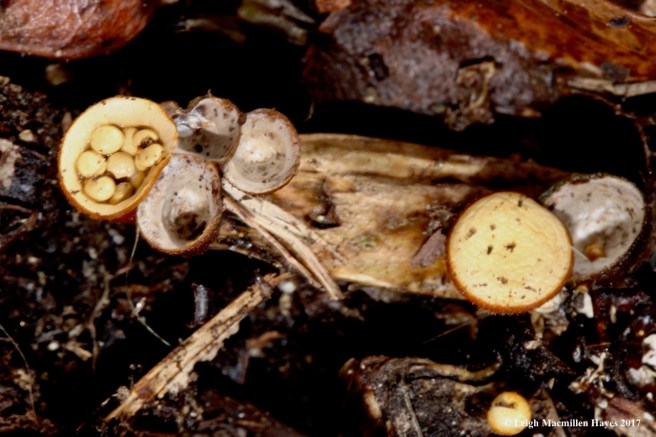
And buried beneath, I unearthed bird’s nest fungus, which look like such for which they were named, only in miniature form for they are no more than a quarter inch in height or diameter. Nestled inside the nests, like a bunch of eggs in a basket, are the fruiting bodies that await drops of water in order for their spores to spring out and find their own substrate on which to grow.

o5-beebalms last bloom

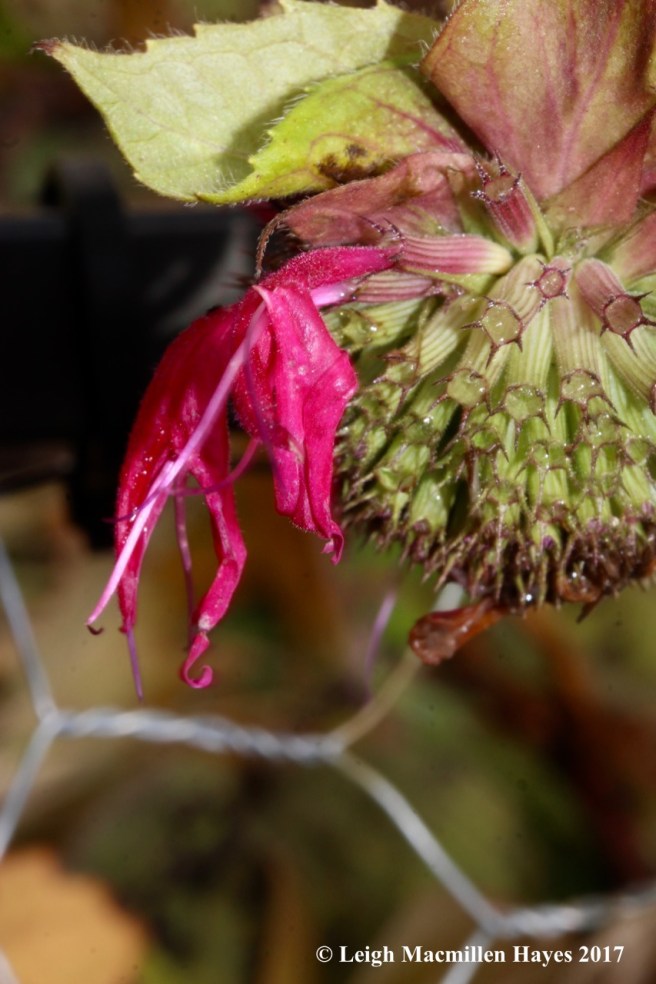
And then I approached the beebalm, where a few blossoms still bloomed on this late date.

o4-meadowhawk 1 on bee balm

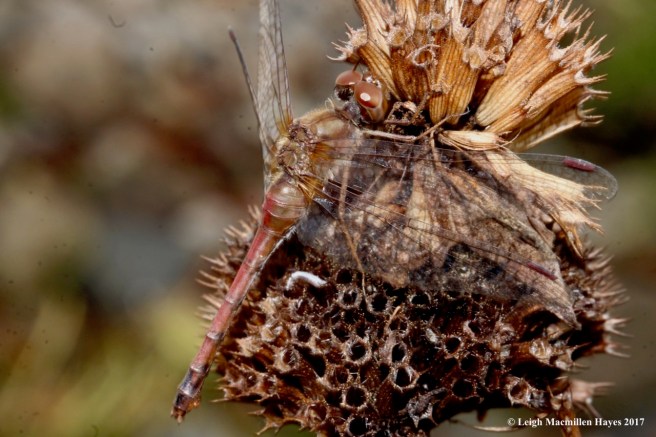
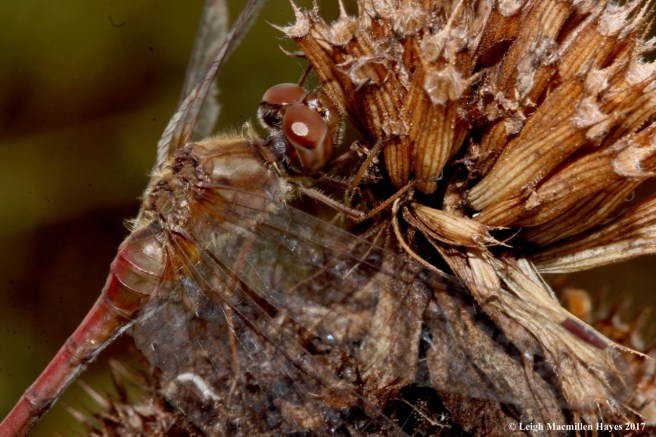
Most of the beebalm had long since gone to seed, and today one structure became a resting spot as the wind blew. A male autumn meadowhawk seemed to hold on for dear life.

o6-meadowhawk 2

Of course, I took advantage of his moments of rest to take a closer look at the divine body structure . . .

o7-meadowhawk 3

from a variety of viewpoints.

o8-meadowhawk 4

Gender determination is based on the terminal appendages. Male dragonflies have three, known as claspers, which they use to grasp and hold a female during mating. The upper or from this view, outer appendages, are called cerci, while the lower, or middle appendage, is the epiproct–meaning its the appendage situated above the anus. Females have only a pair of cerci, and I’m not sure of their purpose. That beebalm still stands–in hopes he’ll return again.

o9-quaking aspen buds and leaf scars

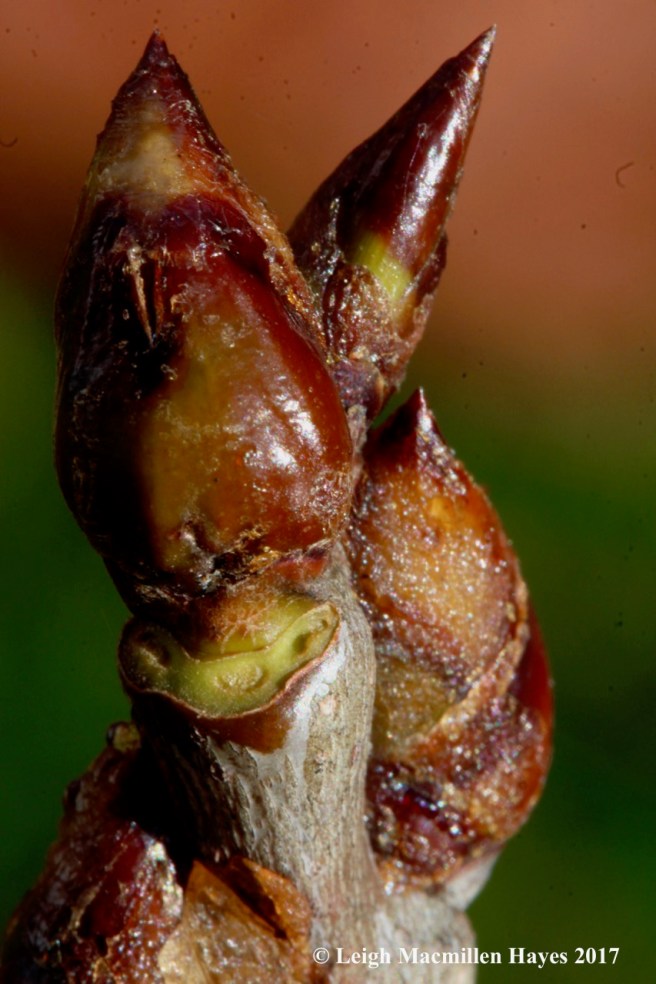
As I continued to work and observe the world around me, my guy found one project after another to complete–each of which required a trip to the hardware store. Hmmmm. And so, I too, decided to go for a trip–into the woods. Donning my blaze orange vest and hat, and knowing that I wasn’t going far, I took off. My first stop was at a branch below the quaking aspen that had fallen in the night. Though it had reached its end of life, the waxy bud scales and leaf scars were a sight to behold. The smiley-face leaf scar showed where the stem or petiole of this past year’s leaf broke from the branch. As the leaf pulled away, it severed the vessels through which water and food moved. The dots within the scar indicate where those vessels had been connected and are known as bundle scars.
o10-pathway in woodlot

In our woodlot, my trail was littered with pine cones and branches, but that was the extent of tree damage.

o13-selfie

I found puddles that invited me in.

o11-jelly ears

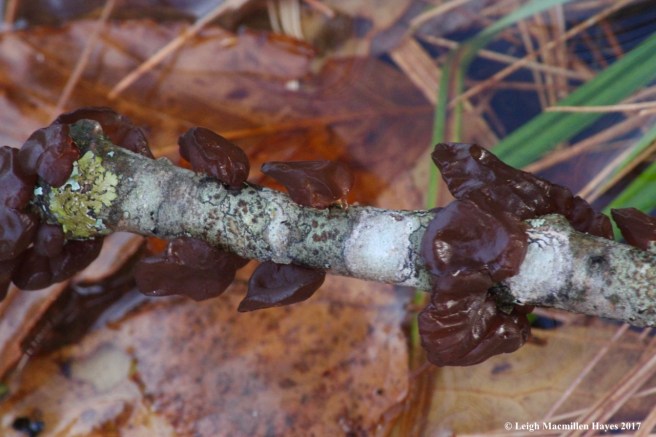
Some branches, decorated with a variety of lichens and jelly ear fungi also found their way to the puddles.

o12a-vernal pool

At last, I reached the vernal pool and was surprised to find it only partially filled.

o12-vernal pool leaves

Atop and within it, the mosaic of broad leaves and needles formed a tapestry of shape and color–in the moment.

014-goldenrod bunch gall 1

Nearby, I paused by a goldenrod that sported a bunch, rosette, or flower gall, for really, it resembles all three.

o15-goldenrod bunch gall 2

The Goldenrod Gall Midge, which is a tiny fly, laid an egg in a leaf bud, hatched into grub form, and prevented the stem from growing, though the plant continued to produce leaves that formed a tight cluster.

o16-maple samara between milkweed pods

I finally made my way home, and turned to other gardens on the eastern side of the house, where milkweed pods also needed to remain standing. I even left the sugar maple samara because I thought it was a fun place to land.

o-17-aphids on milkweed

Also at home on the milkweed were a hundred aphids all clustered together.

020-monarch chrisalys

But the best find of all–the delicate remains of a monarch butterfly chrysalis. I had no idea it was there, but presume it housed one of the monarchs that consumed my attention a few weeks ago.

Just after we headed in, my sister-in-law called to say her sump pump had conked out. Off my guy went again.

It wasn’t the hike date we’d hoped for, but our day was filled with power tools and powerful insects and power-filled love.


Book of June: Bogs and Fens

My wish was granted when I asked for a copy of Bogs and Fens: A Guide to the Peatland Plants of the Northeastern United States and Adjacent Canada by Ronald B. Davis for Christmas.

b-bogs and fens cover

The idea for this book came from many years spent by Davis as a biology and Quaternary studies professor at the University of Maine and Colby College, plus his services as a docent at the Orono Bog Boardwalk in Orono, Maine.

Since I spend a lot of time tramping through a few favorite bogs and fens as well as visiting others, this seemed like the perfect guide to help me better understand the world of these special communities. And then I realized that on our own property grows some of the vegetation associated with these wetlands. With them right under my nose, what better way to learn?

Davis begins by describing the occurrence and indicator species of peatlands and then he goes on to give a lesson on the ecology of wetlands, including a description of peat, fens and bogs. A bibliography is provided for further reading and terms are defined.

What really works for me though, is the species descriptions, which he’s taken the time to divide into their various layers–trees, tall shrubs, short and dwarf shrubs, prostrate shrubs, herbaceous plants and ferns. Within each section, a specific plant is described, including its Latin name, common names, family, characteristics such as how tall it grows, number of petals, fruit, if any, etc., and its occurrence–whether in a fen, bog, dry hummock or other. All in all, he features 98 species, but also mentions 34 comparative species and includes an annotated list of 23 additional trees, shrubs, herbs and ferns that may grow in one or more community. And finally, the book ends with a description of pathways and boardwalks worth visiting.

b-sphagnum moss

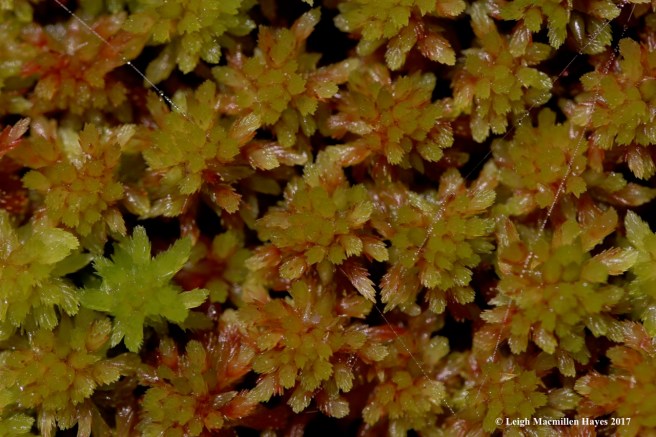
And so this morning, I walked out back to look at our wetland, where the sphagnum moss’s pompom heads were crisscrossed by spider webs donned with beads of water.

b-sundew 2

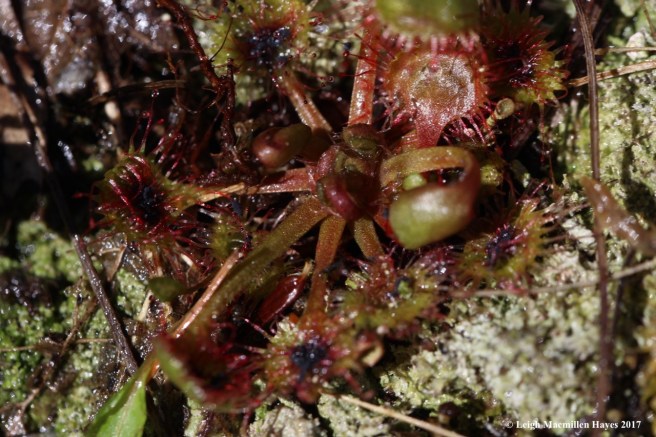
It’s there that the round-leaved sundews grow, which I only discovered last year. Notice those bad-hair day “tentacles” or mucilaginous glands and the black spots upon the leaves. Dinner was served–in the form of Springtails or Collembola–their nutrients being absorbed by the plant to supplement the meager mineral supply of the sphagnum community.

b-sundew flower forming

And in the plant’s center, the flower stem begins to take shape. This summer, it will support tiny white flowers that will turn to light brown capsules by fall.

b-sheep laurel

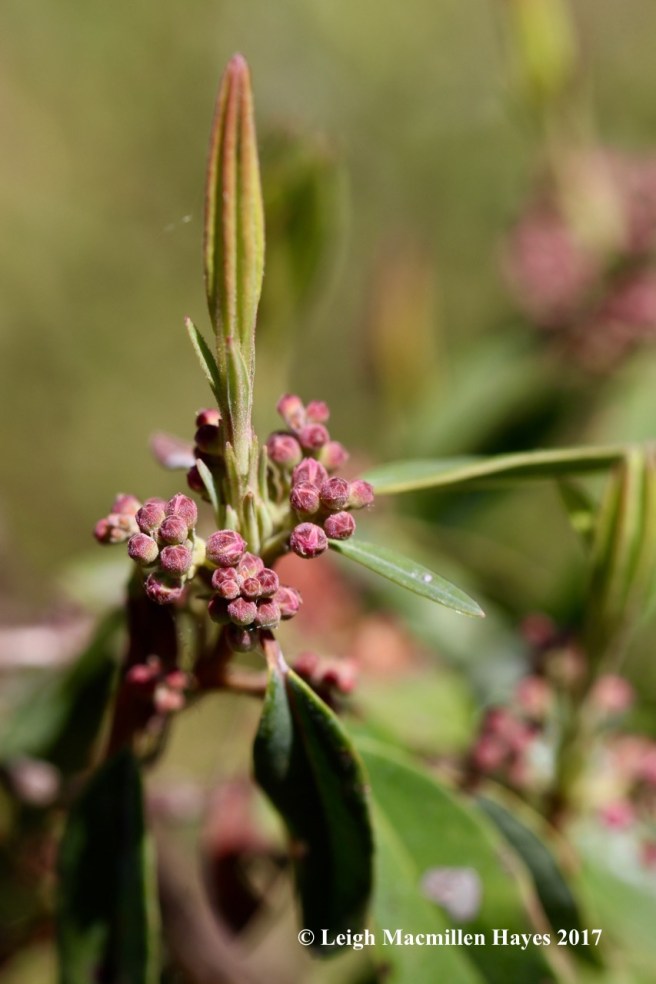
Sheep laurel also grows in this place, its new buds forming in the axils below the newly emerged leaves. I can’t wait for its crimson flowers to blossom. Its flowers provide an explosion of beauty, and yet, danger lingers. This small shrub contains a chemical that is poisonous to wild animals, thus one of its common names is lambkill.
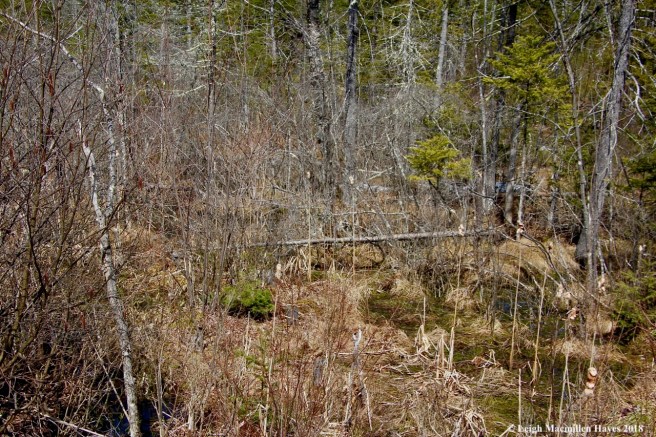
b-steeplebush leaves

Another short shrub is the rosy meadowsweet or steeplebush with its deeply toothed leaves.

b-steeplebush

Being only June 1st, it’s too early to flower, but last year’s steeple-like structure still stands tall in the landscape.

b-lowbush blueberries

Low-bush blueberries grow here as well and it’s only now that I realize I need to return and study these some more for Davis differentiates between velvet-leaved blueberries and common low-bush. I assumed these were the latter, but according to his description, the leaves will tell the difference. Apparently velvet-leaved, which I’ve never heard of before, feature “smooth-edged, alternate leaves, and bear fine, short hairs on the underside, edges and along veins of the upper side,” while low-bush leaves “have a finely serrate edge and a lack of pubescence, except rarely a sparse pubescence along the veins.” The next time I step out there, I will need to check the leaves to determine whether we have one or both species.

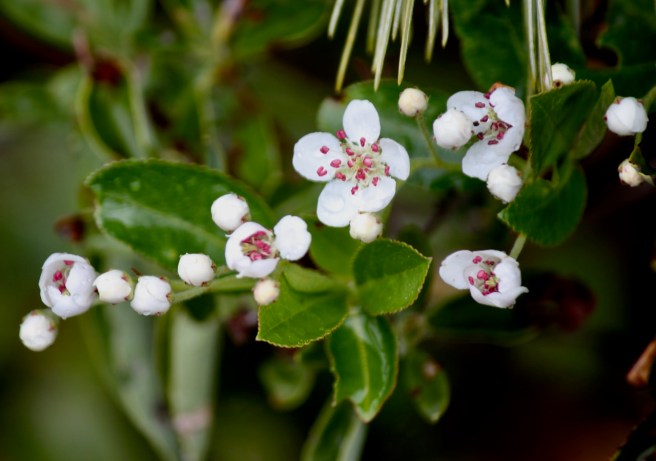
b-black chokeberry1

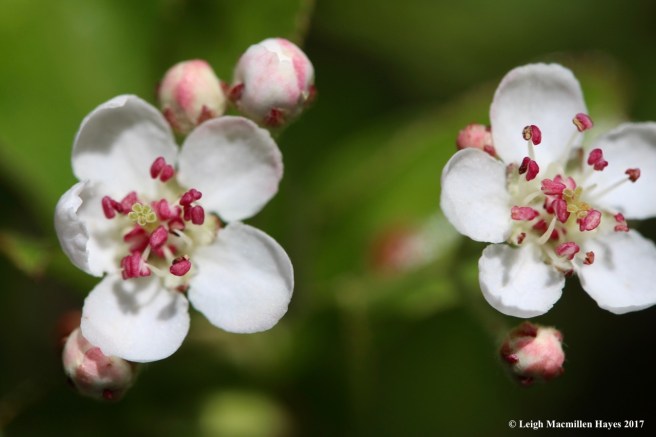
Of course, my favorite at the moment is the black chokeberry because the flowers provide a wow factor.

b-black chokeberry and ant

I’m not alone in my fascination.

b-water scavenger beetle larvae

Because I was nearby, I walked to the vernal pool, where a wee bit of sunlight highlighted another fascination of mine–my most recent discovery of water scavenger beetle larvae. Check out those heads and eyes.

b-tadpoles 1

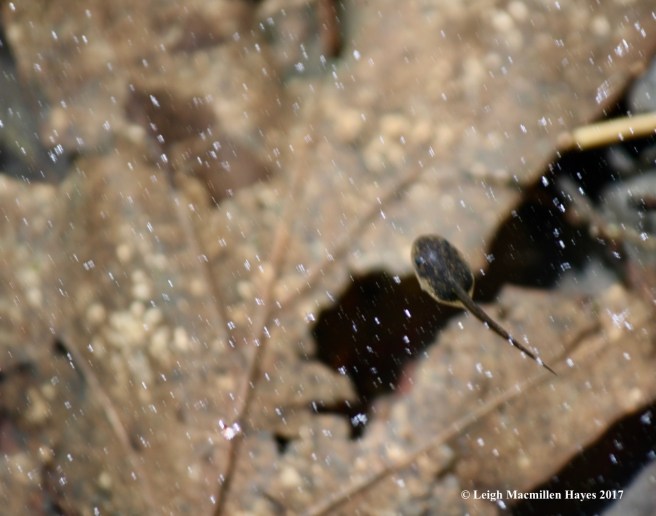
Today, the tadpoles weren’t as shy as the other day and so they let me get up close and personal.

b-tadpoles 2

I’m holding out hope that the pool doesn’t dry up before they are able to hop away. Already, I can see their frog form beginning to take shape. This is a shout out to one of the Books of May: Vernal Pools–A Field Guide to Animals of Vernal Pools.

But back to the Book of June, and really the book of all summer months–Bogs and Fens by Ronald B. Davis. It’s heavy as field guides go and so I don’t always carry it with me, but it’s a great reference when I return to my truck or home. I appreciate its structure and information presented in a format even I get.

Bogs and Fens: A Guide to the Peatland Plants of the Northeastern United States and Adjacent Canada, by Ronald B. Davis. University Press of New England, 2016.

My copy came from Bridgton Books, my local independent book store.

This Land Is . . .

My land. I’m sure of it. I don’t own it all, but I walk it often because it’s not posted and I know it well. Well, only just so well. It’s constantly offering me new learnings.

o-Mt Wash

And so once again, out the back door I ventured, intending to head north toward the land of snow–haha. My sister asked the other day if we still had snow. We don’t have any on our land, but this is our view from the power line right of way–yup–we’ve got snow ;-) (in our view).

o-tick

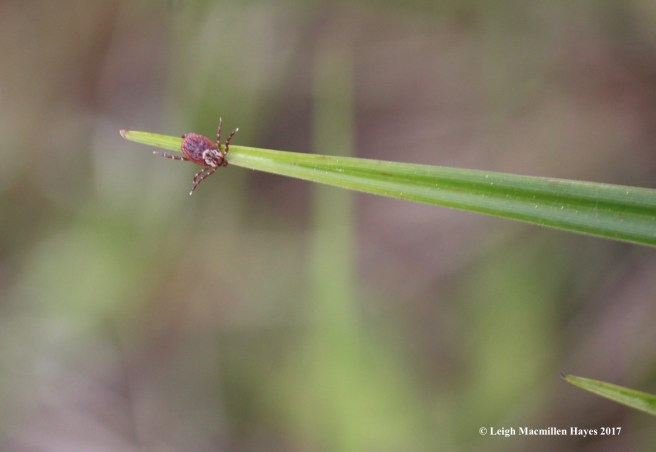
I changed my mind about the direction, however, when I saw numerous dog ticks on the tips of grass as I crossed our neighbor’s field. Though they aren’t the purveyors of diseases such as Lyme disease, Babesiosis, and Anaplasmosis, seeing them still unnerved me and I decided to head in the opposite direction where it isn’t so grassy. Of course, that’s where the deer ticks live. Nightly tick checks are a must every day.

o-early yellow rocket 1

It was in the opposite direction that I was caught by surprise. Behind a local business, where the land had been disturbed a year ago, a wall of yellow greeted me.

o-yellow rocket 3

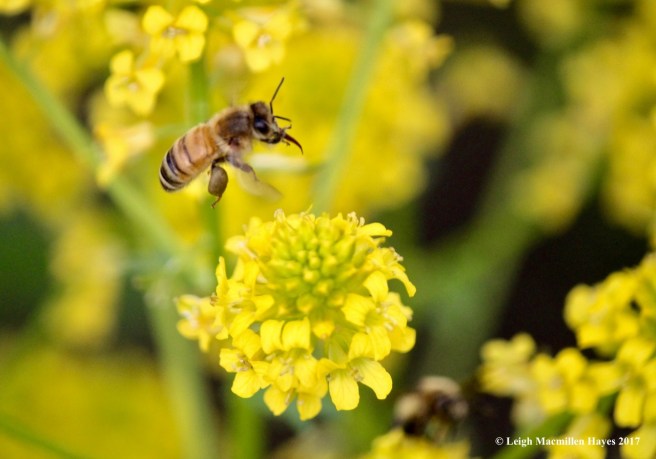
It was a sea of early yellow-rocket that is common along roadsides and fields. Apparently this one spot was the cat’s meow for it to grow so prolifically.

o-bee 3

What was more prolific–the sound.

o-bee 1

Bees and other insects hummed as they worked,

o-bee 2

filling their pollen sacks to the brim.

o-fritillary 1

Even a fritillary butterfly enjoyed the goodness within.

o-fringed 2

Those weren’t the only wings I saw. It was a complete surprise to also discover gaywings or fringed polygala growing deeper in the woods.

o-turkey print

Walking along, I flushed a couple of deer and a ruffed grouse. And though I didn’t see or hear any turkeys, I knew they’d been there by their signature prints.

o-tadpole 1

And then I slipped off the trail to stop at a vernal pool that I don’t often visit. The water is shallow, but tadpoles are growing.

o-tadpole 2

A week or two ago after they’d just emerged, they were easy to spot as they clung to their egg masses or swam by water’s edge. But they are maturing and I had to stand still or they’d disappear under the leaf cover.

o-water scavenger larvae

While standing there, I spotted another resident I didn’t immediately recognize–the larval form of a water scavenger beetle. According to A Field Guide to the animals of Vernal Pools,  “they are poor swimmers and will hang from the water surface (where they obtain oxygen) or hide in vegetation to await prey.” That all makes sense given their body structure.

o-sugar ant?

On the way back, another insect stopped me. I think they were sugar ants with a white thorax. But why were they on beech leaves? Then again, every insect seems to like beech leaves. I guess I don’t think of them as being sweet, but . . .

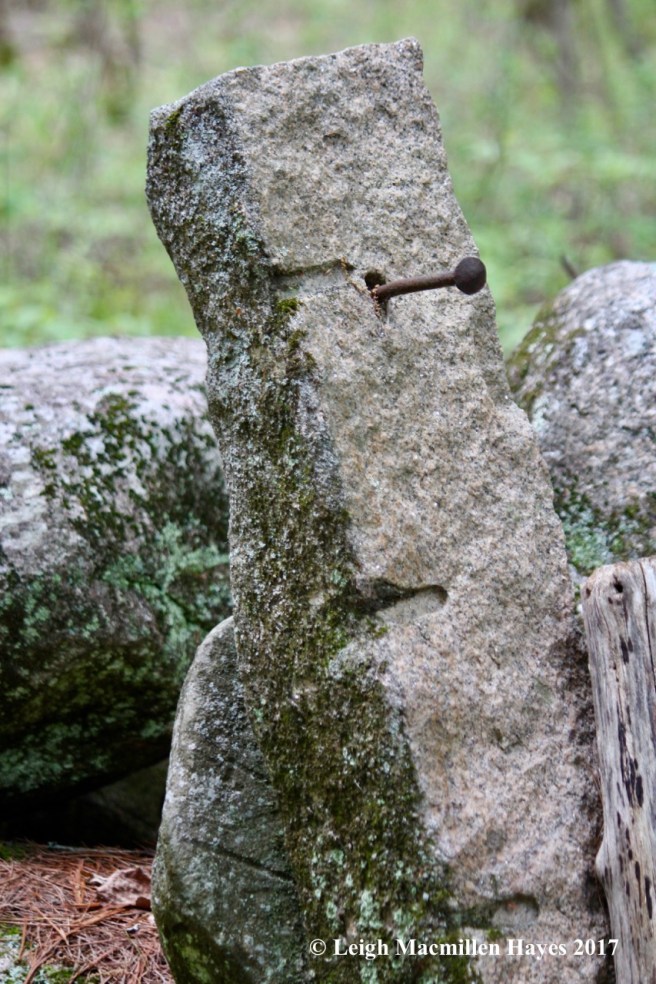
o-old gate in wall

As I headed home, I paused by an old wall and gate. This land was farmed in the late 19th and early 20th centuries. The walls formed boundaries for animals and are owned by numerous neighbors I’ve never met. Thankfully, they let me and others cross–though few will do so until hunting season begins in the fall.

Anyway, it all got me thinking about who owns the land. And then I knew the actual answer. The plants. The trees. The flowers. The insects. The amphibians. The birds. The mammals. They all own the land. We are mere visitors. I thank all of nature for letting me trespass and gain a better understanding of its various life forms.
This land isn’t my land. And it wasn’t even made for you and me. But I have great reverence for it. And for those who have protected it.

Happy Memorial Day.

Sharing My Site

I count myself among the fortunate because pollen doesn’t keep me inside during its high season. Nor do the bugs or rain. Mind you, I do my fair share of complaining–after all I am human. At least I think I am, though I was honored to be called an ent yesterday. (Thanks Cyrene.)

Enough of that. Let’s head outside to see what we might see.

IMG_5267

True confession. I took this photo yesterday, but didn’t have time to write. Finding this jack-in-the-pulpit beside a granite bench by my studio was a complete surprise.

IMG_5741

Today’s journey began in the front yard where sugar maple samaras dangled below full-grown leaves. Their presence will soon offer presents to the world below.

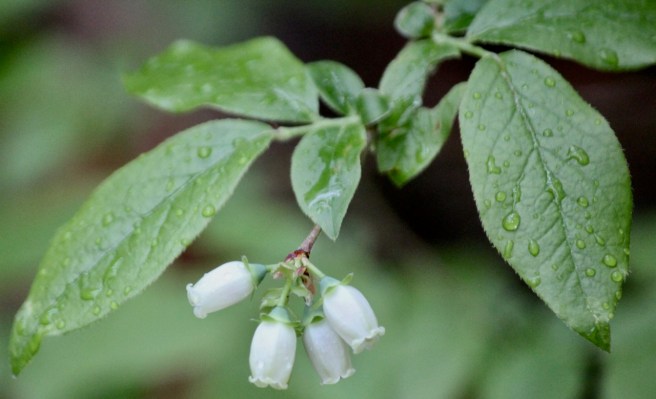
IMG_5302

My next stop was beside another secret giver of gifts–blueberry flowers.

IMG_5301

And then I stepped into the woodlot, where a single striped maple which was the bearer of a deer antler rub last year and scrape (upward motion with lower incisors) this past winter, had something else to offer.

IMG_5480

Below its almost dinner-plate size leaves–flowers. Happy was I to find these little beauties.
IMG_5287

Perhaps . . . just maybe . . . there will be more striped maples offering their bark to those in need.

IMG_5517 (1)

Moving along, I stopped at the opening of the cowpath to admire baby hemlock cones when something white and bubbly caught my attention. My first spittle bug sighting of the year. An adult spittlebug whips up some slimy froth to cover its eggs in late summer and the nymphs cover themselves while feeding in the spring–and so I concluded that I was viewing a nymph’s locale.

IMG_5327

Emerging under the power lines, the community changes. It’s here that the land is especially wet and species one might find in a bog grow–such as the black chokeberry shrub. These also like rocky ledges, but such is not the case in this spot.

IMG_5532

I was thankful to find it for those flattened bright pink anthers brightened this damp day.

IMG_5696 (1)

Heading north, I sloshed through the deep puddles on a quest to find the sundews I discovered growing in this area for the first time last fall.

IMG_5703

No such luck, but I did welcome the sight of the candy lichen fruits exploding from their crustose base. And then . . . and then . . . what did I see (but only when I looked at the photograph on my computer, and so now I know where they are located)? The round-leaved sundews–do you see them in the bottom right-hand corner? These are carnivorous plants (think Venus Flytrap) and their prey consists of small insects. Already, I can’t wait to make their acquaintance again.

IMG_5583

I turned around and headed south–on my way to the vernal pool. But before passing through a stonewall, I had to look at the bunchberries in bloom.

IMG_5581

Normally, a bunchberry plant has two-sets of leaves. But . . . when one is mature enough to grow a third set, typically larger leaves (perhaps to capture more energy) than the first two sets, it produces four white bracts that we think of as petals but they are actually modified leaves. The flowers are in the center–tiny as they are.

IMG_5680 (1)

And because I was in the neighborhood, in the land of mosses, reindeer lichens, Canada Mayflowers and wintergreen, trailing arbutus (aka Mayflower) spoke up. Its flowers were slowly transforming from white to rust and I shouldn’t rush the season, but I can’t wait to see its fruit again.

IMG_5586

At last I reached the vernal pool and realized I wasn’t the only visitor. What perfect hunting ground it proved to be for the . . .

IMG_5593

phoebe. I cheered for its insatiable insect appetite.

IMG_5596 (1)

Because the day was dark, it was difficult to see tadpoles, but I did note that many spotted salamanders were still forming. I also noted that the water level has dropped a wee bit–hard to believe–and where yesterday I found a few egg masses a bit high and dry, today they were gone. Something enjoyed eggs for dinner.  Scrambled or otherwise, I’m not sure.

IMG_5625

Back on the trail and at the next stone wall, interrupted fern showed off its fertile pinnae near the middle of the blades. It’s called interrupted because of the interruption in the blade. Again, this is an inhabitant of moist to wet forests and so it was no surprise to find it growing there.

IMG_5609

A fertile blade, such as this, may have two to seven pairs of middle pinnae.

IMG_5619

The globose sporangia is bright green when young, but darkens to tan or black as it matures.

IMG_5362 6.10.27 PM

On the other side of the wall, I spied some more flowers.

IMG_5360

These were the elongated loose clusters of black cherry trees, that open when the leaves are fully developed.

IMG_5636

One that flowers and fruits before its leaves are fully developed is the red maple.

IMG_5630

And fruits and fruits . . . need I say more?

IMG_5375

Though the wind blew, the samaras weren’t yet ready to let go and set down their roots. It won’t be long though, I’m sure.

IMG_5403

Finally returning home, I passed by the granite bench once more and was still stymied by the site I saw about a half hour after discovering the jack-in-the-pulpit yesterday.  It had been consumed. I suspected the woodchucks that live under the studio. Either that or a bear came along and I missed it.

And so ended today’s tramp. Thanks for traipsing along with me to visit these sites out our back door. I especially welcome those who are homebound with allergies, like my friend Jinny Mae. She gave me the inspiration to take a look today–to be her eyes for the moment and share my sight.

April Showers bring . . .

May showers!

v-green yard

It feels like it has rained every day for the past week, but the grass is certainly green.

v-pool (1)

And the vernal pool full. Between today’s downpours I visited it a couple of times, so excited by my findings.

v-wood frog eggs developing

The wood frog eggs had turned green with a symbiotic algae and I could see the tadpoles developing inside.

v-tadpoles 2

The green coloring made the their eggs contrast with the salamander masses. I was thrilled to see movement among the green and realized that . . . drum roll please . . .

v-tadpoles 6

my babies were slowing hatching. Of course, they are mine–even though the frog pond is located on a neighboring property. I’ve been an expectant mother for several weeks, and now . . . I’m nervous about the future, as any parent would be.

v-tadpoles 1

Will my babies survive? Will they have an opportunity to transform into their terrestrial forms?

v-tadpoles 7

Or will the pond dry up too soon as it has the last few years? I guess I’ll be forced to continue to stop by. Oh darn! One thing I have noted since the ice melted: I’ve yet to see a predacious diving beetle and there are hardly any mosquito larvae flipping about. That’s good for the tadpoles on one end of the spectrum and not so good on the other. To be food and to eat food.

v-sallie eggs 1

I also wondered, will the  white and opaque masses of the spotted salamander eggs turn green like they are supposed to–also dependent on a symbiotic algae?

v-hole 4

After checking on my wee ones, I walked the pond’s perimeter and noticed activity at a spot I’ve been keeping an eye on in the southwest corner. Well, not current activity, but recent. For the first time this year, a hole has been excavated.

v-hole 3

It’s the same hole that was excavated last year. Darker debris was piled in front.

v-hole1

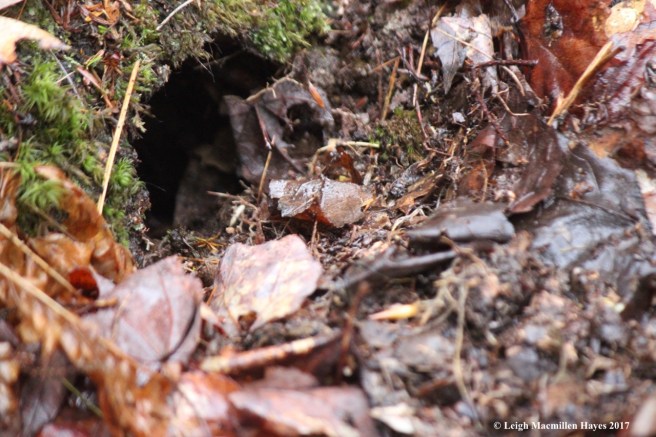
At about three or so inches across, I wondered who owned it. Too small for foxes, and certainly too wet. Too big for chipmunks and a dirty dooryard. Could it be a mink? Do they leave a messy dooryard? I found the same hole excavated last year, but never any other evidence of the maker. I’ll continue to check for any other signs.

v-raindrops

My eyes reverted back to the pool, where raindrops and reflections created an artistic display.

v-maple dust lichen

And then I pulled myself away, frozen were my fingers. The greenness of the world continued to show its face everywhere I turned from the maple-dust lichen to . . .

v-white pine

young white pines, their candelabras growing long,

v-maple leaf and samara

red maple samaras upon old leaves,

v-cherry 1

and cherry flowers developing.

v-mayflower1

What do April showers bring? Mayflowers (trailing arbutus), of course,

v-Canada mayflower 2

Canada mayflowers,

v-tulip 1

and garden May flowers.


Books of May: Vernal Pools

I had two books to choose from and couldn’t decide which one to promote as the Book of May, and so . . . I chose both.

And it seems only right that both should be presented, for though they aren’t about the flowers or birds or leaves that are making our days brighter, they are about one of my other favorite May events. Yes, we celebrate Big Night in April, that night or those nights, when amphibians cross the roads as they return to their natal vernal pools to continue the life cycle. But it’s in May that so much growth occurs within those pools and if we take the time to notice, we can watch it all happen–changing daily. And the more we understand what we are looking at, well . . . the more we get it. (“Stating the obvious again, Mom,” our two twenty-something sons would say if they were to read this. But they don’t so I can get away with it.)

Enough said. The May Books of the Month are . . . the following:

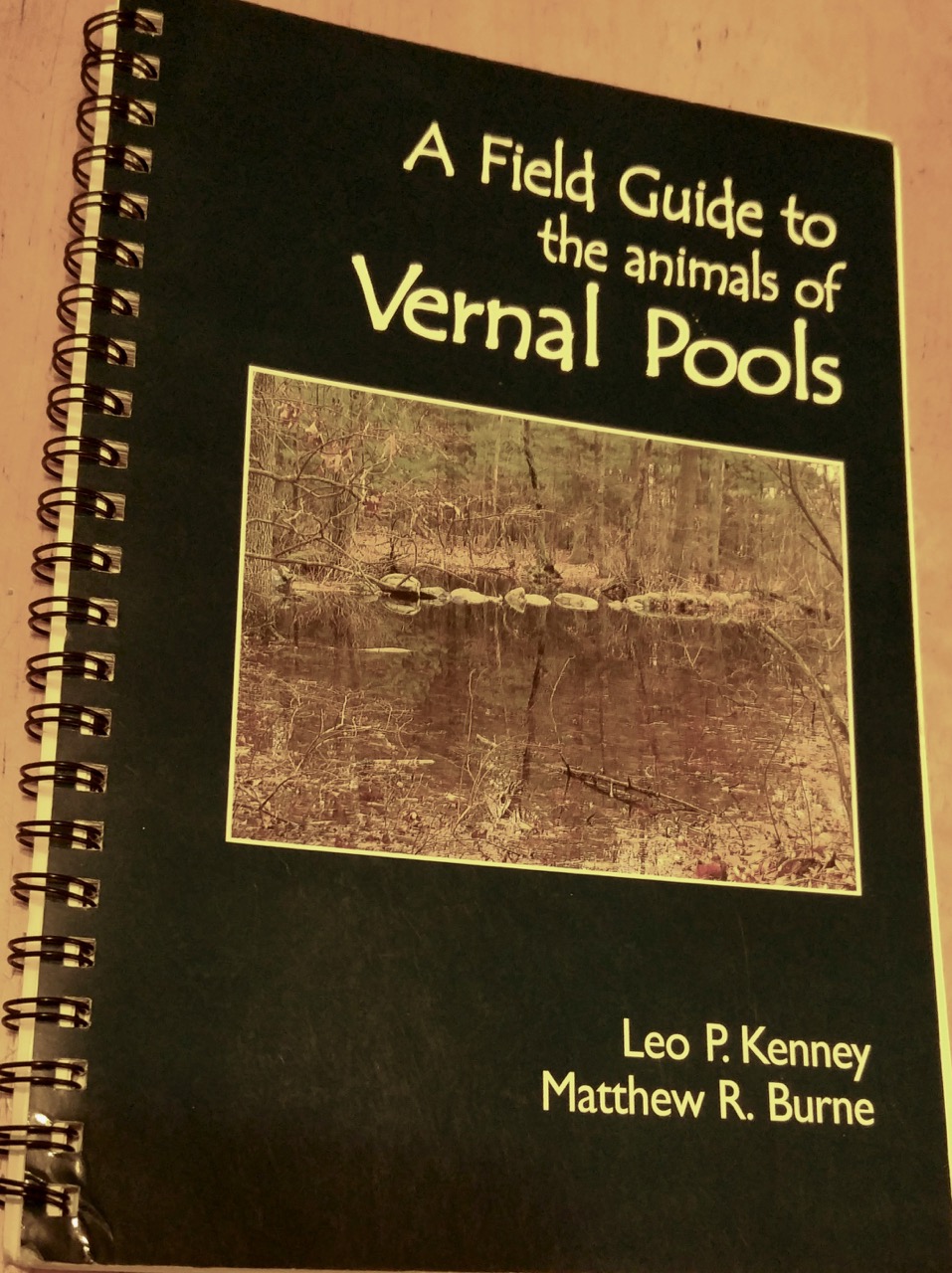
A Field Guide to the animals of Vernal Pools

and

s-MAAR (2)

Maine Amphibians and Reptiles.

The former, A Field Guide to the animals of Vernal Pools by Leo P. Kenney and Matthew R. Burne, is about 8″ x 5″ and fits easily into any pack I decide to carry. Its pages are glossy, so I don’t worry too much about it getting ruined if I get it wet. And though it was written to represent Massachusetts, most of the species described match what Maine vernal pools have to offer.

s-MAAP frogs:toads (1)

After an introduction to vernal pools, their indicator (obligate) species, protection, importance and human impacts upon them, there is a pictorial guide to the adult amphibians and reptiles. This is a quick and easy reference, and especially useful when trying to determine the difference between species, e.g. bullfrogs and green frogs or leopard frogs and pickerel frogs. Besides frogs, it includes salamanders, snakes and turtles.

s-MAAR sallies (2)

And then there are more descriptive pages for each species. These have helped me over the years to gain a better understanding of what I’m looking at.

s-sallie eggs 1

Even today, when Jinny Mae and I discovered these spotted salamander eggs, I loved that we could see that gelatinous matrix that surrounded the individual eggs.

s-wood frog eggs

And the book has helped me recognize the difference between those salamander eggs and these wood frog eggs.

In the field, there’s so much more to see, including the invertebrates that inhabit the pool, and ever so slowly I’m learning to identify them as well–you know, predaceous diving beetles, damselfly larvae, water scorpions, backswimmers, water striders . . . the list goes on. Each of them is featured in the back of the book with a photograph and paragraph or two describing their larval and adult forms.

Maine Amphibians and Reptiles, edited by Malcolm L. Hunter, Aram J.K. Calhoun and Mark McCollugh, is my at-home reference book. Well, sometimes it goes for a ride in my truck, but usually, it’s left at home because it’s larger and offers a much more in-depth take on amphibians and reptiles, their habitats and conservation. Besides a photo gallery, each amphibian and reptile that makes its home in Maine is featured, with thorough descriptions, taxonomic status, distribution, reproduction, habitat, diet, and interactions with people and other animals. There are sketches and maps to further enhance the information presented. And it’s all quite readable.

s-MAAR recordings 2 (1)

One of the best features of this book (and unfortunately, mine is cracked) is the CD at the end. Yes, you can actually listen to the individual species so that when you hear them in the day or night, you might begin to recognize them, much as you would a bird, by their voices before you spy them.

In the past few years, the vernal pool that I study frequently, has dried up before the amphibians have matured. I find solace in the fact that even when the pool dries up, the species growing there still provide nourishment and pass on energy to their consumers.

But . . . maybe this year will be different. We had a lot of snow, and now a lot of rain. Maybe this will be the year the amphibians and insects that reside in the pool will actually mature and hop or fly out.

It all begins with MAY.

The Books of May:

A Field Guide of the animals of Vernal Pools, by Leo P. Kenney and Matthew R. Burne, available through the Massachusetts Division of Fisheries & Wildlife’s Natural Heritage & Endangered Species Program.  (Curiously, the copy I own was from the third printing in MAY 2009)

Maine Amphibians and Reptiles, edited by Malcolm L. Hunter, Jr., Aram J.K. Calhoun, and Mark McCollugh, The University of Maine Press, Orono, 1999. (I purchased my copy at Bridgton Books.)

Water Works

With rain drops come life and rebirth. And so it seems as our world explodes with the return of birds and vibrant blossoms of daffodils in the garden. The grass is, well, grass green–a brilliant green with hues of gold or purple, depending on the time of day. And ever so slowly, tiny leaves emerge on the maples and aspens.

w-rookery

But it’s life in and around water that captured most of my focus today. Following a prehike for a Greater Lovell Land Trust walk, I had the opportunity to check on a heron rookery. A friend and I stood hidden among the trees.

Rookeries are one of my favorite places to hang out. By the same token, I seldom do because its important not to disturb these giant birds during their nesting season. But–today’s visit, like all of my rookery visits, was for a citizen science project affiliated with Maine Inland Fisheries and Wildlife: the Heron Observation Network or HERON, counts on volunteers to count on heron–their nests, number of birds, number perhaps sitting on eggs, number of fledglings, etc.

w-heron incoming

We frequently see Great Blue Herons flying overhead or fishing in ponds and lakes, but it’s watching them come into their nests, in their pterodactyl form, that I find so wild.

w-heron standing

And then they stand. Tall. Silent. We do the same.

w-heron on nest

Watching. Listening. Wondering.

w-reflection

All the while, we have time to reflect and enjoy the reflected.

w-beaver lodge

And notice–cut saplings piled horizontally, an anomaly in this space . . . or is it?  More than herons call this place home.

w-hobblebush

At last we need to bushwhack back, but pause a few times to appreciate other forms of life that spring forth near the water, including this hobblebush.

w-snake 1a

And a garter snake, its movement catching our attention. And then it froze in place, in hopes we wouldn’t notice.

w-vp

Back on the homefront, I moseyed out to the vernal pool. As I approached, I noticed a lack of sound, but did see movement when I was only steps away.

w-wood frog eggs

I was thrilled to note signs of previous action as the number of wood frog egg masses had increased.

w-sallie eggs

The same was true of the spotted salamander eggs, though the number in each clump seemed quite minimal. The opaque outer coating was clearly visible, that gelatin-like mass that surrounds these eggs.

w-frog eggs?

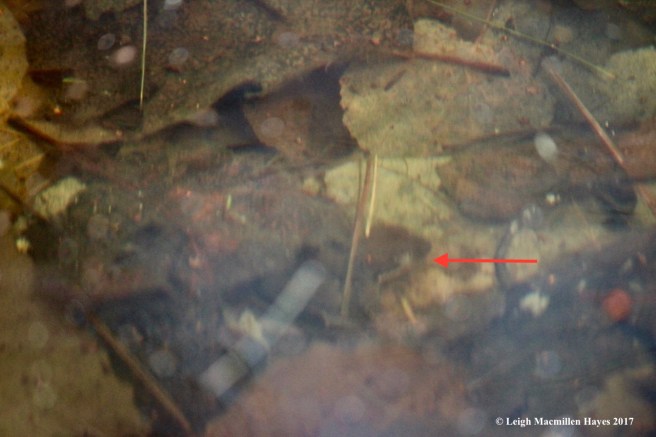
As I admired all the dropped red maple flowers that decorated the water, I spied something else. Or at least I think it’s something else. Perhaps mere bubbles floated atop the dried leaf, but I suspected eggs of another kind. I’ve never before noticed spring peeper eggs and wondered, could these be such? Here’s hoping Loon Echo Land Trust’s biologist, Paul Miller, will chime in.

w-spring peeper eggs in mix?

From what I’ve read in A Field Guide to the animals of Vernal Pools by Leo P. Kenney and Matthew R. Burne, “tiny peeper eggs may be deposited in small clusters or as single eggs attached to aquatic vegetation.” I placed a red arrow on this photo pointing to a couple more. And there are others in the photo, hiding in a “Where’s Waldo” fashion.

w-water strider and mosquito larvae

Circling around the pool, I noted some mosquito larvae and a few water striders.

But I also came upon one disturbing sight. A dead frog. Only a week ago, a friend in Cumberland discovered four dead frogs in a pool. In an e-mail exchange, Dr. Fred Cichocki explained to her, “Chytrid fungus is one potential and troubling cause of amphibian deaths. Another, and one we should all be aware of and be on the lookout for (especially in southern Maine) is ranavirus. It mainly affects woodfrogs (why no one knows) and primarily in the tadpole stage, where there may be 99+% mortality! The obvious symptoms are hemoragic lesions in the abdomen, and a behavior much like whale beaching, where the infected tadpoles swim onto the shore, turn belly up and expire en masse. Definitive identification requires either DNA sequencing or Electron Microscopic examination of tissue to reveal the characteristic virus particles. Once a pond or pool has ranavirus in it, it is probably impossible to erradicate (except maybe through frog attrition.) Ranavirus epidemics occur worldwide and are spreading, especially here in the Northeast.”

My dead frog was an adult. As were my friend’s. At the pool today, I was once again reminded that nature happens. And that it isn’t always pretty. Thankfully, I did spy a couple of live frogs.

w-snake 5

As I walked away from the pond, another garter snake.

w-snake 2

It was on the hunt.

Life and rebirth–the keys to spring. And sometimes, death so others may eat. But other times, death for reasons unknown. These aquatic sites offer an amazing biodiversity–and leave me with questions and understandings. Water works–I’m just not always sure how.


Into Focus

Sunshine. Spring sunshine. Need I say more. No, but I will as I bring the focus to two of my favorite watering holes.

h-Mount Wash

Of course, a visit to my first pond isn’t complete without a pause to recognize the power and the powerful.

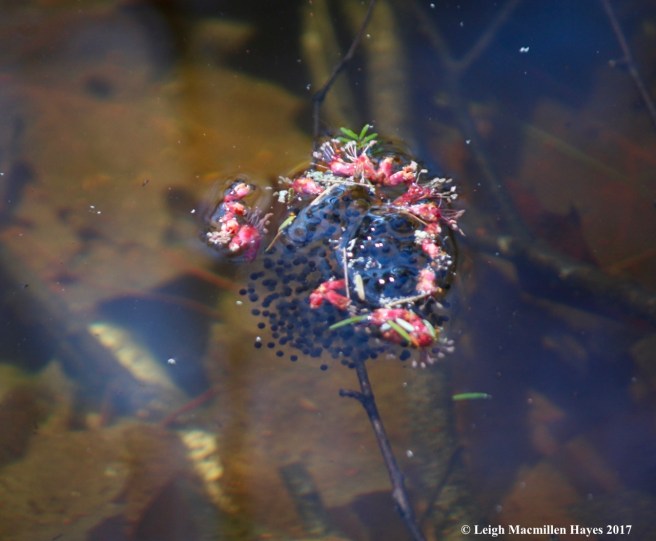
h-wood frog eggs 1

As I approached the vernal pool, I heard not a sound. But, my heart filled when I spotted a clump of wood frog eggs.

h-wood frog 1

When our sons were youngsters, we always called it the frog pond rather than the vernal pool. And so it is . . . both.

h-willow pollination

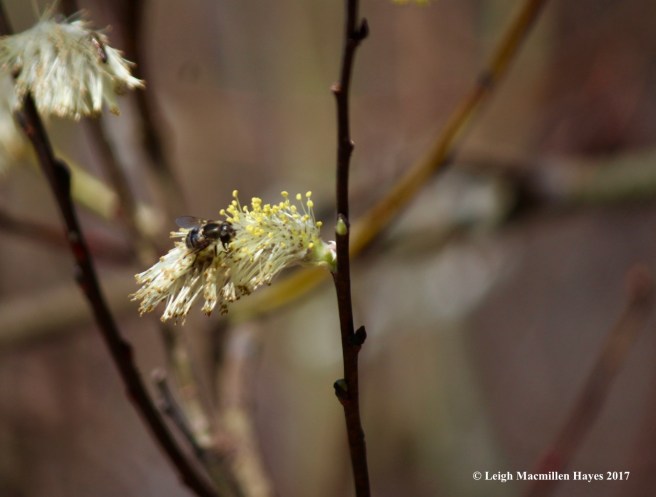
After an hour spent in the pond’s midst, I drove to another–Holt Pond–where I decided to park on the corner of Perley and Grist Mill Roads. I wasn’t sure of the conditions on Grist Mill Road and figured that provided the perfect excuse for a walk and an opportunity to take in the sights along the way. Stepping out of the truck, pussy willows called to me . . . and to their pollinators.

h-queen anne's lace

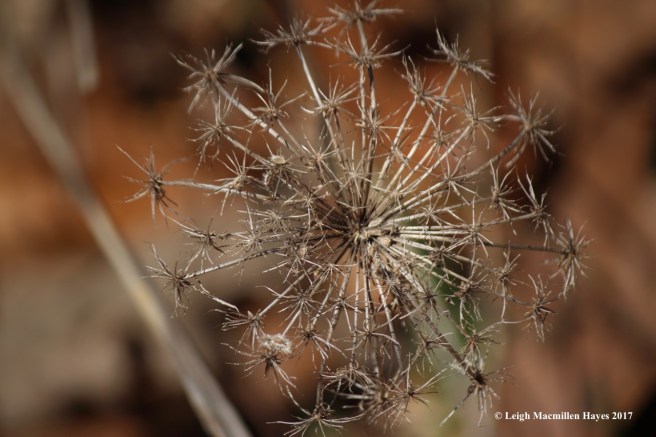
And on the corner, a dried Queen Anne’s lace displayed its fireworks formation.

h-sensitive fern frond

There were sensitive fern fronds, their beads still encapsulating many cases containing dust-like spores.

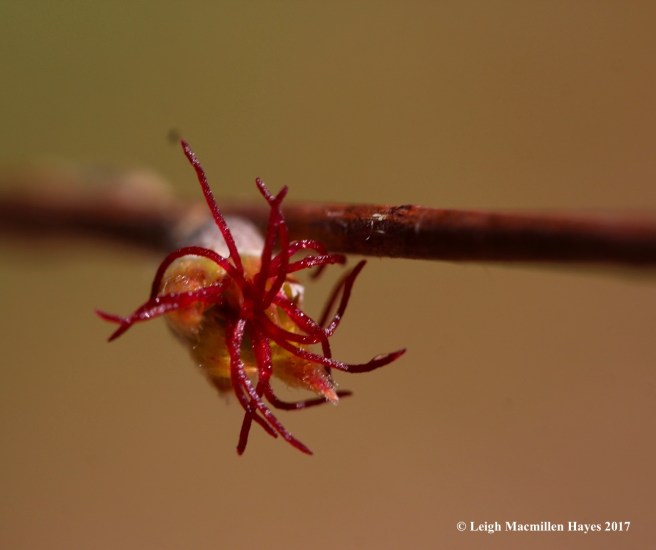
h-beaked hazelnut

And I even found a few beaked hazelnuts still showing off their minute magenta flowers.

h-Grist Mill Road

I knew by my observations that I’d made the right decision to walk in–both in my findings and in the road conditions.

h-beaver works1

After following the initial trail and climbing over the stonewall, I was about to step onto the first boardwalk when I realized the beavers had been busy.

h-board walk-first section

The water was high as I quietly moved along the board walk, but not too high.

h-pitchers under water1

Although in some cases pitchers were submersed in the wet goodness.

h-speckled alder 1

The speckled alders didn’t mind for they love wet feet.

h-Muddy River

I stepped out to the Muddy River and listened to the chickadees sell cheeseburgers galore.

h-beaver lodge

And then I turned in the opposite direction to admire the beaver lodge and winter feeding pile beside it.

h-Boardwalk through red maple swamp 1

On the next boardwalk, the beauty of the red maple swamp surrounded me again.

h-Red Maple Swamp 1

Layers and colors spoke to the community and season.

h-red maple in swamp

And standing like sentries were the red maples for which it is named.

h-moose scat

It was here that I found evidence of another visitor, albeit this past winter–moose scat.

h-blueberry bud

And noted the swelling buds of highbush blueberries–their season in the offing.

h-Quaking Bog 2

After passing through the woodlands a couple of times in between the swamp journey, I at last reached the quaking bog and Holt Pond.

h-cranberries

Beside the board walk, last autumn’s cranberries floated in the water.

h-pitcher 2

And more pitcher plants showed off their hairy entrance ways.

h-pitcher flower

Withered pitcher plant flowers dangled in their woody fashion–as beautiful in death as in full bloom.

h-Holt Pond south

By the time I reached the T on the boardwalk, I was standing atop it, but in six inches of water–thankful for my rain boots.

h-Holt Pond to Five Fields

And thankful for the opportunity to stand there on a gorgeous spring day as I looked toward Five Fields Farm.

h-Canada Geese

In that very view–two Canada geese. I wondered if they’d found a nest site.

h-dragonfly exoskeleton 2

Also in view, last year’s dragonfly exoskeleton that bobbed in the water flowing over the boardwalk.

h-cinnamon crosier 1

On the way back, I stopped once again. My first photo call was an ostrich fern that I didn’t realize grew there. See why you should walk in rather than drive? That photo didn’t come out so well, but I was standing in an area filled with cinnamon ferns and suddenly realized I was looking at my first crosiers of the season.

I was actually down by a stream beside the road when I found these. A truck came along and the driver paused. He and his friend thought I was fishing and were going to ask what I’d caught. “Only photos,” I said playfully.

h-garter snake 1

Upon returning home I decided to visit the frog pond one more time, thinking the lighting would be different. At the end of the cowpath I found a garter snake enjoying the warmth of the sun . . . and probably a few insects.

h-wood frog eggs 2

When I’d walked to the pond this morning, I was surprised at how quiet it was. That changed this afternoon as a chorus of wrucks added music to my day. And another egg mass had been added to the display.

h-wood frog 2

Of course, all quieted down once I arrived, but I waited . . . and realized the pond really is full of life.

I’d spent the day beside my favorite ponds and was well rewarded. I’d also played with my camera settings, avoiding auto-focus all day. I’ve got a lot to learn, but hey, isn’t that what it’s all about?

May I Have This Dance?

Haha. If you know me well, you know I’d rather be a wall flower than step onto the dance floor. I easily managed to avoid all high school dances, except one prom. And then, barely danced at that, probably much to my date’s dismay. After that, so many moons ago, I don’t think I danced again until my wedding–at which time any dear friends in attendance watched with humor at my awkward movements. But today, I felt the rhythm surging through my body.

v-snow on trail

It all began on my way to the vernal pool. Perhaps it was really just a shiver as the breeze blew across the last of the snow, hard packed still along the snowmobile trail.

v-springtails 1

Or maybe it was the depression that held the snowmelt and was covered with an oil slick of sorts . . .

v-springtails 2

which turned out to be a million springtails bopping to their own tunes.

v-trailing arbutus 1

It could have been the sudden sight of so many trailing arbutus plants that got me going.

v-trailing arbutus 2

Certainly I wasn’t the only one excited by those flowers yet to be. (Do you see the springtail on the tip of the bud?)

v-vernal pool

Or it might have been the ever shrinking ice cover at the pool that made my feet tap.

v-vp edge opening

Perhaps it was the fallen beech leaves atop tree reflections that forced me to sway.

v-leaf offerings

Or the way the hemlock, oak, maple and beech leaves intermingled.

v-spermatophores

What I do know is that there was no stopping me once I spotted spotted salamander spermatophores atop leaves in several open sections–the sperm being located at the top of the cauliflower-shaped platforms.

v-frog 1

And then I saw something swim under some leaves that really got me rocking. Do you see the face of the wood frog, hiding as best it could?

v-fox scat beside vernal pool

As I began to circle around the dance floor, I noticed an offering of scat that made me think a red fox had sashayed beside the pool.

v-sharp-shinned hawk feather?

On my own sashay home, I discovered that there were other dancers in the midst–this one possibly a sharp-shinned hawk.

v-woodpecker feather

And after that a woodpecker.

v-junco feather?

And then a junco.

v-red maple flowers 1

Along the cowpath, the red maple flowers blushed as I might were I to get all gussied up in a flowing dress.

v-red maple flowers 2

Much the way a suitor might wink, so much has happened so quickly. Within the past week the snow melted almost entirely away and winter released its hold on me. Now I’m ready to groove with the choreography of spring’s rhythm. I hope you’ll join me on the dance floor.

May I have this dance?


A Good Mourning Mondate

A good mourning? Indeed it was. Yesterday we celebrated Easter and the resurrection. Today we celebrated an opportunity to climb our favorite mountain.

p-Mountain stream

And so we parked the truck at Loon Echo Land Trust’s Ledges Trail parking lot on Mountain Road in Denmark and then walked 1.5 miles back to the trailhead we chose to make our ascension up Pleasant Mountain. Along the way, mountain streams quickly moved the meltwater downward toward Moose Pond, where it will mingle with the lake water and eventually find its way to another stream and then the Saco River and finally out to sea. And whether via future raindrops or snowflakes or even fog, traces of the same water molecules may again find their way down these streams.

p-bald peak trail

At last we reached the trail head for the Bald Peak Trail, where less than a week ago Marita and I had to climb over a tall snowbank to reach the path.

p-ice chunk

As we climbed and paused to admire the water flowing beside us, I noted differences between last week and today, including the shrinking of an ice chunk tucked under a rock. Ever so slowly, it joined the forces of downward motion, as if letting go was meant to happen with care.

p-Needles Eye

And then at the spur, my guy and I turned left to Needles Eye. Some ice and snow still covered parts of the path, but it was much easier to negotiate than last week. And he did. I followed him, but didn’t need to step into the chasm since I’d just been there. (wink) Instead, I climbed below to try to capture the world above.

p-returning from Needles Eye

And then I rejoined my guy and wished I’d taken a photo of this section last week for today’s conditions didn’t reflect the same treacherous stretch Marita and I worked our way across.

p-snow on trail

We continued up the trail, where snow and ice were more prevalent. Though we had micro-spikes in our pack, we managed to avoid wearing them. And only once did I completely sink in–just below Big Bald Peak. I actually went up to my thigh, so deep was the snow. And cold. But I was hot, so it felt refreshing.

p-pileated scat

But before we reached the sharp left turn on Big Bald Peak, we noticed tons of chips at the base of a hemlock tree. Such a discovery invited a closer look–and I spied the largest pileated woodpecker scat I’d ever seen. Later on, when we were almost at the Fire Warden’s Trail, we saw two hikers on their way down and I quickly realized one was my dear friend Joan–another lover of scat and all things mammalian. Of course I told her what to look for as she and her hiking friend headed down the Balk Peak Trail. And I just received an e-mail from her: “Deb and I saw it! It was huge! She was so excited to see all the little ant bodies!” Indeed.

p-Mt Wash from top of Bald Peak Trail

The wind blew fiercely when we reached Big Bald, where white and red pines framed a view of another big bald–Mount Washington in the distance.

p-view from lunch rock 2 (1)

Not far along the trail, we found lunch rock in a section that offered some protection from the gusty wind. It was the perfect place to enjoy our PB&Js followed by Cadbury Digestives (thanks sis).

p-view from lunch rock

Through the trees, we could again see the mighty mountain to our west.

p-blueberries 1

And at our feet–blueberry buds galore. My guy began to see blue where no blue yet exists–the promise was enough.

p-along ridge line

Walking along the ridge line was like a walk in the park. At times, where the sun didn’t hit the northwest sides of ravines, we found more snow, but more often than not, the trail was neither icy nor muddy.

p-wood frogs

It was in one of the ravines, however, that we heard a song of spring–the wruck of the wood frogs singing from a vernal pool located below. A first for us this year and we were happy to be in the presence of such a sound.

p-fire tower 1

It seemed like in no time, we approached the main summit where the iconic fire tower still stands tall.

p-summit 6 (1)

We took in the view toward Brownfield and beyond.

p-summit toward Washington

And again looked toward Mount Washington.

p-Mt Wash1

Even upon the mighty one, we could see the snow has melted gradually. But our stay wasn’t any longer than a few minutes for the wind was hat-stealing strong and I had to chase mine.

p-hiking down ledges

And so down Ledges Trail we descended in order to complete our loop. Here we rarely saw signs of snow or ice.

p-ledge view 1

The southern basin of Moose Pond stretched before us, most of its surface still covered with the grainy gray ice of spring. Any day now, ice out will be declared, late as it is.

p-tent caterpillars

It was on the ledges that I noticed tent caterpillars already at work.

p-red maple 1

Thankfully, there were more pleasant sights to note, including the first flowers of red maples.

p-striped maple buds

And along the trail below the ledges, plenty of striped maples showed off their swelling buds.

p-acorn

Last summer, the oaks produced a mast crop and those not consumed by the squirrels and turkeys have reached germination. This one made a good choice about a place to lay down its roots–hope burst forth.

p-beaked hazelnut 2

As we neared the end of the trail, I began to notice the beaked hazelnuts and savored  their tiny blooms of magenta ribbons. And we could hear spring peepers. So many good sights and sounds along our journey.

p-mourning cloak 1

On each trail we hiked today, we were also blessed with butterfly sightings. It’s always a joy to see these beauties, who actually overwinter as adults in tree cavities, behind loose bark, or anywhere they can survive out of the wind and without being consumed by predators. They survive by cryopreservation–the process of freezing biological material at extreme temperatures. In Britain, their common name is Camberwell Beauty. In North America, we know them as Mourning Cloaks–so named for their coloration that resembled the traditional cloak one used to wear when in mourning.

I think I may have to stick with Camberwell Beauty for a name, given those velvety brown wings accented by the line of black with azure dots and accordian yellow edge. What’s to mourn about it?

So we didn’t. Instead, we enjoyed a good morning Mondate–and afternoon.

A Wiser Soul

It all began when I stepped out the back door just before six o’clock this morning. From the treeline I heard a barred owl call, “Who cooks for you? Who cooks for you all?” I could have returned to bed then, happy for the opportunity to hear such a wise one.

n-Northern Flicker

Not long after that, as I passed by a window in the butler’s pantry (no, we don’t have a butler, just an old farmhouse), a splash of red on the ground drew my focus–a Northern flicker had stopped by to feed. Notice the subtle curve of its bill? The better to dig up ants and beetles, as is the custom of this ground-feeding woodpecker.

n-water coursing 2

An hour or so later, I met my friend, Marita, for a hike up the Bald Peak trail at Pleasant Mountain. Our destination–not the summit as we had a time constraint–but rather, Needles Eye.

n-beside the brook

Our climb included frequent stops at vantage points to take in the sound and beauty of the place.

n-water art 2

The flow of the living water and its ever changing presentation mesmerized us much as leaping flames do.

n-water art

It spiraled over the rocks like a sculpture in fluid motion.

n-ice hiding

And while so much poured forth and wound its way down the mountain stream,

n-ice at Needles Eye

some remained frozen in time.

n-crossing toward Needles Eye

At the sign pointing toward Needles Eye, we crossed a stream and then worked our way across the short spur to the narrow formation of rocks that water threads through.

I should qualify that. Marita sauntered across the ice and snow, seeking the wee bit of dirt and leaves at the edge of the trail. It’s a steep edge and even on a summer day, I pick my way carefully over rocks and tree roots. Today, my brain suggested I call it good and sit still. But, she’s a good friend, and realizing my trepidation (I’d forewarned her), she spoke to me calmly about each foot placement, and even turned back to demonstrate exactly what I should do, waited patiently as my brain shouted, “Don’t do it!” and my heart said, “I think you can, I think you can,” and offered a hand when necessary.

n-marita 3 (1)

Together, we did it. This photo is Marita’s as I didn’t want to change my camera lens once we stood in the chasm and watched the water fall.

n-inside the needle

On a summer day, it’s a delightfully damp place to rest before continuing up the mountain. Sometimes, there’s only a hint of a stream. Today, it was equally enchanting–perhaps we should have bowed in respect of the beauty and power before us. And just maybe we did.

n-climbing down 2

Returning on the spur, Marita again came to my aid. And then we hiked a bit further up until time forced us to head down again.

n-morning light

The descent seemed easier as the snow had softened a bit in the two hours we’d spent enjoying each other’s company and filling our senses with the sights and sounds surrounding us.

n-vp visit

Back at home, I was pulled out the door again and made my way to the vernal pool. Ever so gradually, the ice is melting.

n-crack across vp

And across the center, a crack divided it in two from east to west, while a line between the sunshine and shade completed the quadrants from north to south.

n-snowfleas 2

Piles of pepper, aka springtails, floated on melted water atop the ice.

n-snowfleas

Others clustered on the open water at the pool’s edge. Other than that, I could see no action. Every day, however, will bring something new so I know I’ll check back frequently.

n-our house:field

Leaving the pool behind, I headed toward the area where I’d heard the barred owl several hours earlier–and I called. It didn’t respond. But, I reminded myself that this morning’s greeting was enough.

n-crocuses1

Returning home again, I couldn’t resist the crocuses that I first noticed yesterday. In the past few days, the snow has receded quickly and with today’s light, these spring beauties finally opened.

n-first daffy--a double

And then, in the garden beside the house, I found one more surprise–a double daffodil blossoming under some leaves. In this season of watching with wonder, my heart was full.

n-Marita

This day will stick with me for its offerings and I’ll be forever grateful to Marita . . .

n-marita 4 (1)

for without her help, I wouldn’t have had the gumption to stand in the Needles Eye. She is a kind and funny and wise(r) soul. And I am blessed by our friendship.

P.S. Two minutes after posting this blog, a woodchuck ran across the deck–headed toward the barn, of course.


All Twigged Out

In preparation for a senior college class I’ll be teaching this week entitled “All Things Spring,” I headed out the door in search of twigs.

t-Mount Wash

Of course, it doesn’t look like spring quite yet. But then again, it does. And on this crystal clear day, the silhouette of the buildings atop Mount Washington were visible.

t-vernal pool

Before I could settle down to the work at hand, I visited the vernal pool, where all was quiet. But, I know the time is nearing. I could smell spring in the air and feel it in the warm sunshine that enveloped me and my surroundings.

t-chick 4

And then I slipped into the gray birch grove to begin my hunt,

t-chick 3

while a black-capped chickadee wondered what I was up to–no good, as usual.

t1-table top (1)

At last, I filled my satchel, but only enough–never wanting to take more than necessary. In fact, since I don’t know how many students will be present, they may have to share.

My plan is to begin with a slide show of flowers and ferns, mammals and birds, and of course, life evolving at the vernal pool (all photos were taken a year ago). I’ll bring some fun things to share, including scat–I sure hope they (whoever they are) think it’s fun.

And then we’ll look at twigs through a hand lens so together we can examine the idiosyncrasies of our common deciduous trees,

t1-sugar maple (1)

such as these sugar maples and . . .

t1-striped maple twigs (1)

a few striped maples.

t-beech

We’ll look at beech,

t-quaking aspen

quaking aspens and several others.

t-opposite

My materials are almost ready, though I still need to pull something together about fern crosiers. Oh my!

t-alternate

I’m nervous, but excited. My hope is to instill a sense of wonder, but maybe no one will show. That would be okay–I’d just quietly slip back into the woods.

Until then, I’m trying not to feel all twigged out.