Happy Bird-day Bird Count

Established in 1900 by an officer of the Audubon Society, the intention of the Christmas Bird Count (CBC) is to monitor the status and distribution of bird populations.

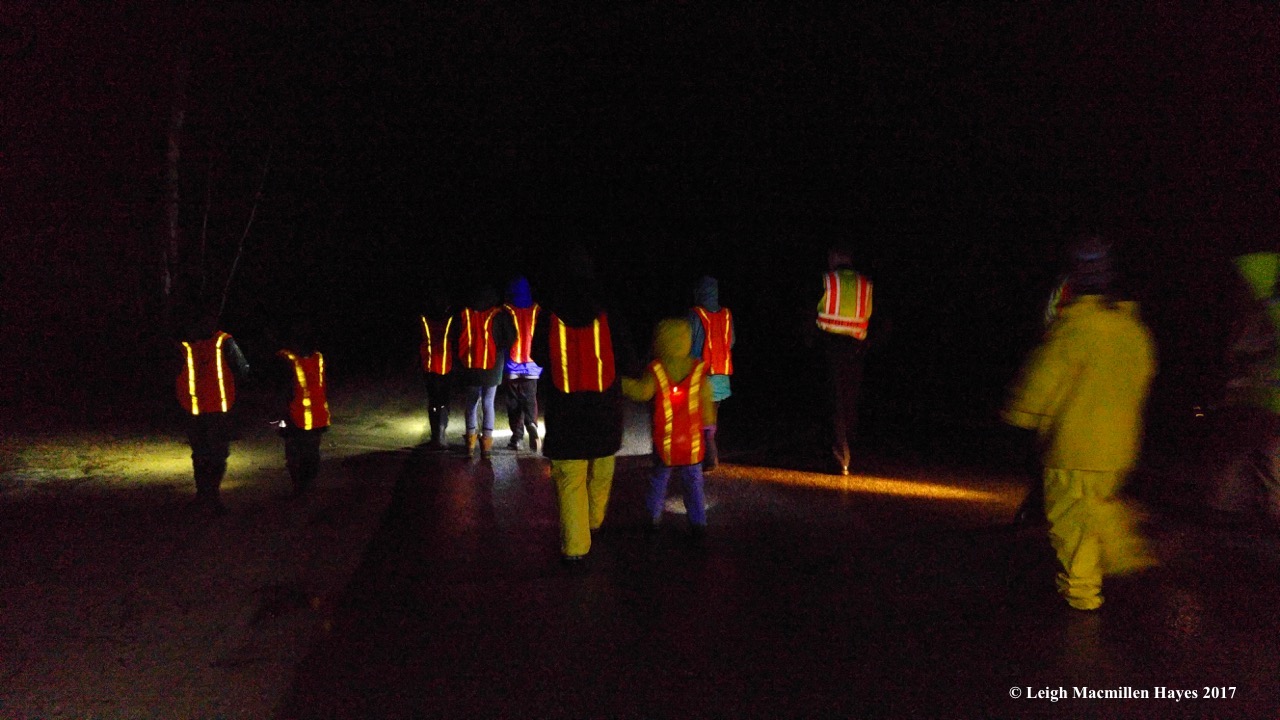
Our local count, known as the Sweden Circle CBC, typically takes place two days after Christmas, unless, of course it snows. Within several weeks prior to the event, organizer Jean Preis rallies volunteers and assigns sections within the circle to leaders and their assistant birders.

I had the good fortune to lead the southeastern section and so at 8am I headed off to begin searching for birds along the road, at backyard or front yard feeders, and just about anywhere within the assigned section. For the first 45 minutes I was alone as planned, and kept blaming my limited sightings on that fact, as well as the brisk morning temperature.

Other than the temp in the teens, I couldn’t say the weather was at fault for it wasn’t all that windy and there was nary a cloud in the sky.

By 9am, I was joined by the rest of my team, Maine Master Naturalist student Juli, and her oldest children, who are naturalists in their own right, Caleb and Ellie.

Juli took over the challenging task of driving, all the while searching for movement. Caleb, Ellie, and I had a much easier task–we just needed to search high and low and if we spotted something, to let Juli know in as gentle a manner as possible so we wouldn’t cause her to jam on the breaks.

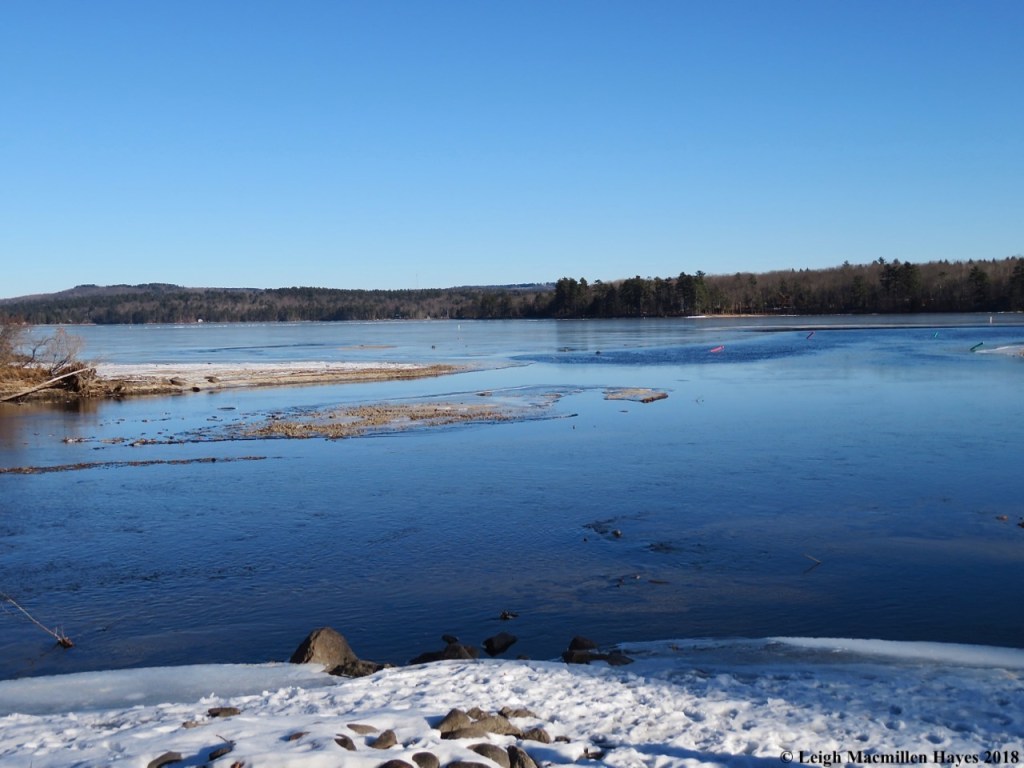
At Plummer’s Landing on Long Lake, we got out of the vehicle, as would be our custom for the rest of the day. Down to the ice we walked, our eyes scanning the surrounding scene as we listened. The only sounds we heard–the wailing of the ice. If you’ve never heard that, it’s almost as good as birding! As for birds near the lake . . . not a one.

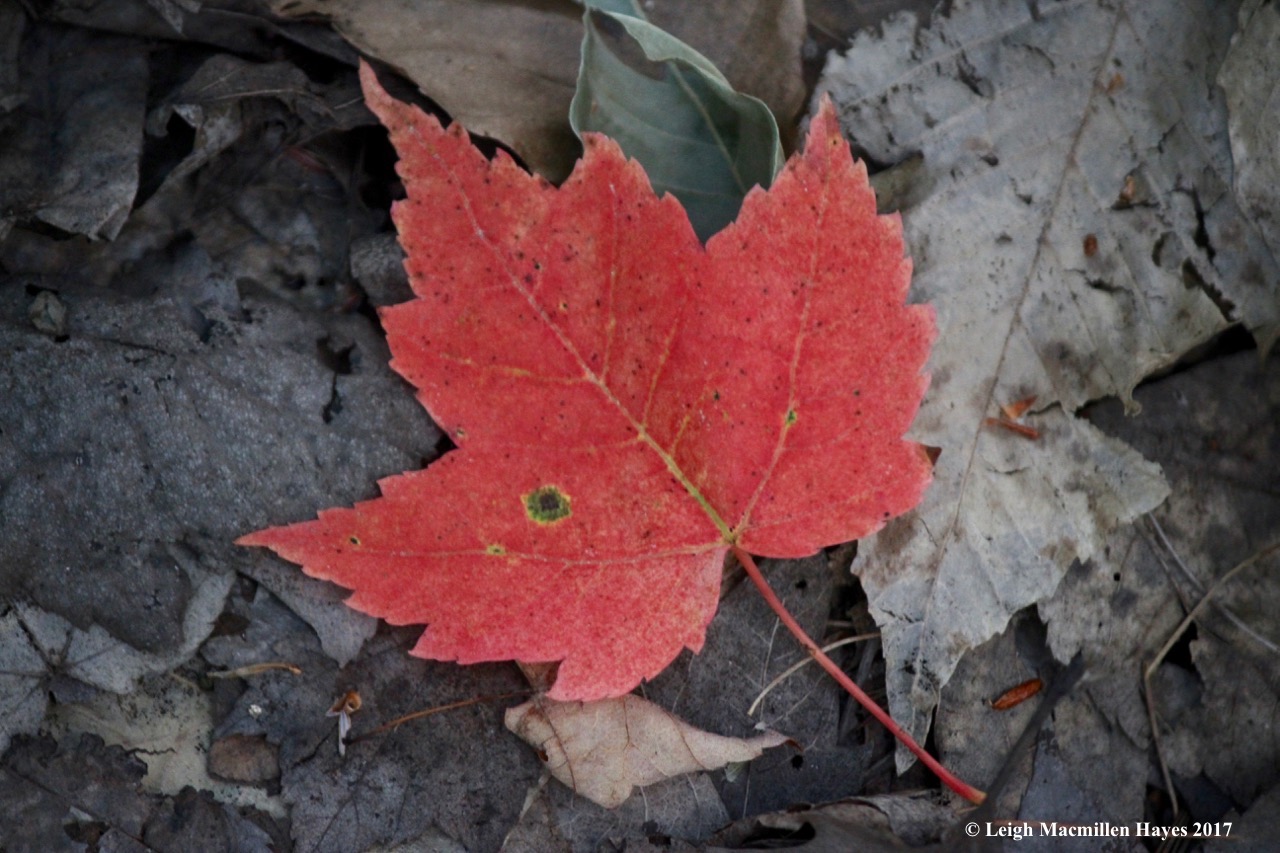
But there was a beautiful red maple tree by the landing that made for a perfect teaching moment–the clock face that helps birders locate a bird someone spies. I pointed to 12:00 at the top, then 3:00 to the right side, 6:00 at the bottom, and 9:00 to the left. Instantly, the kids caught on and for the rest of the day they were able to direct us–that is, when we did spy a bird.

Ever so slowly, we made our way along main roads and back roads and noticed few birds. In a way, I wasn’t surprised for my feeders have had only a few regular visitors this year. And when I’m in the woods, or even on the edge of a field, I’ve seldom seen or heard a bird since November when the snow fell. Before that, juncos were extremely common sights no matter where or how I traveled. Where have they gone?

Despite the lower than usual numbers, I was sure we would see something by the old Central Maine Power dam not far from the Stevens Brook Outlet. But . . . all we heard was the roar of the water.

And all we saw . . .

was water racing toward the lake and . . .

the dancing legs of icicle formations. That was OK because we enjoyed admiring them. Still, we wanted birds to count. To that point, our tally included a few chickadees and a couple of tufted titmice.

Onward we moved, toward the outlet of Stevens Brook into Long Lake where we were certain the open water would provide us with something worth reporting.

All was quite quiet, however, and we didn’t see any waterfowl to note. But then . . . the biggest find of our day let itself be known.

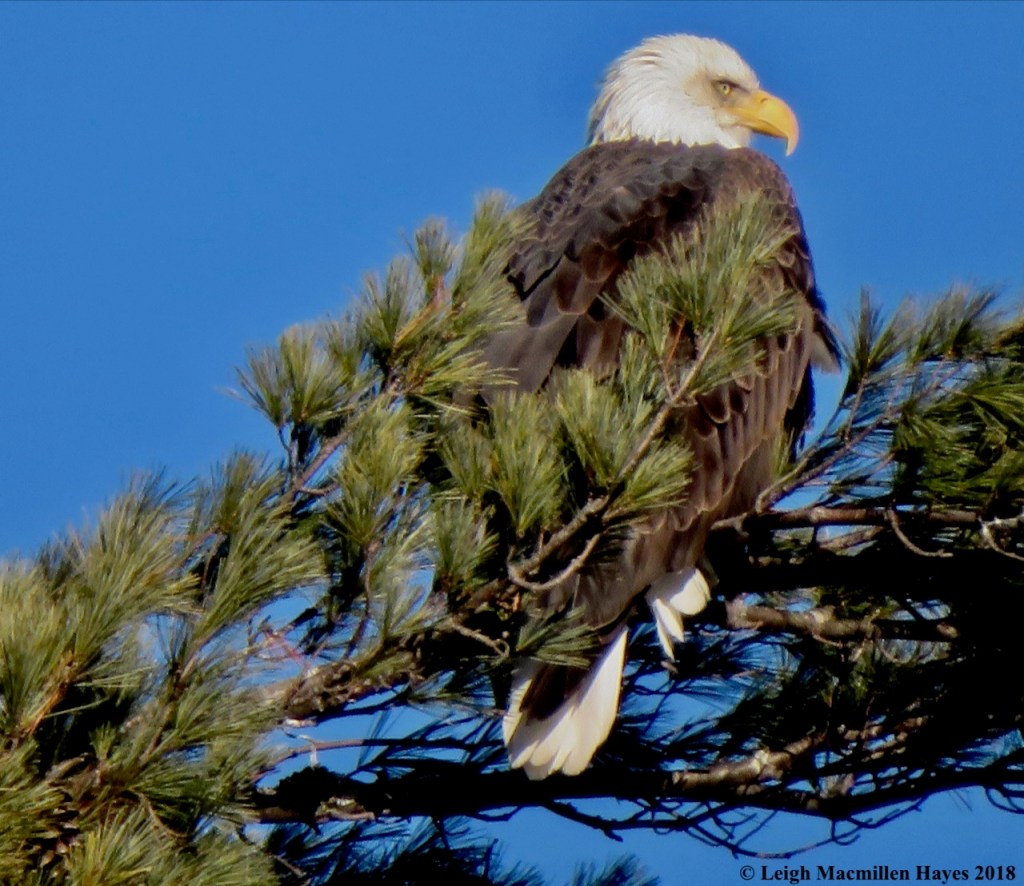
High up in a white pine above the opposite bank of the outlet, a bald eagle sat in wait. We practically danced in the icy parking lot–and knew that no matter what else we might see, we were golden with this discovery.

Eventually, we pulled ourselves away from the eagle, and continued on while looking left and right, up and down. At last, a front yard feeder yielded some more chickadees, a white breasted nuthatch and a hairy woodpecker. Things were picking up. Sorta.

And then as Juli drove down one back road, we spotted five crows in an unplowed driveway. They flew off when we paused, so we continued on down the road. Returning a few minutes later, we again spied the five crows in the same spot. And Caleb, who as a youth hunter has learned the ways of the woods from his dad, knew that where the crows were gathered there must be a carcass. He asked his mom to stop the vehicle while he crossed the road to check the area. Bingo! He encouraged us to join him. Just off the clearing he’d discovered a deer carcass. We weren’t certain how it had come to perish, or why its head was missing, though we had some thoughts on both, but we did notice that many had come to dine. If we’d been more into our tracking mode than our birding mode, we might have been able to write the first two chapters about the manner of death and loss of the head, but we had a different mission on this day.

Another body of water called our names. Last year, I’d seen robins and various other birds in a wetland associated with Woods Pond, so we jumped out at the town beach and stood still to listen and watch. Nada. The ice on the pond, however, was enticing. And though they didn’t have skates, Ellie and Caleb found the conditions to be much to their liking.

Even the clipboard with the field tally didn’t pose a problem as they slid to and fro across the frozen wonder.

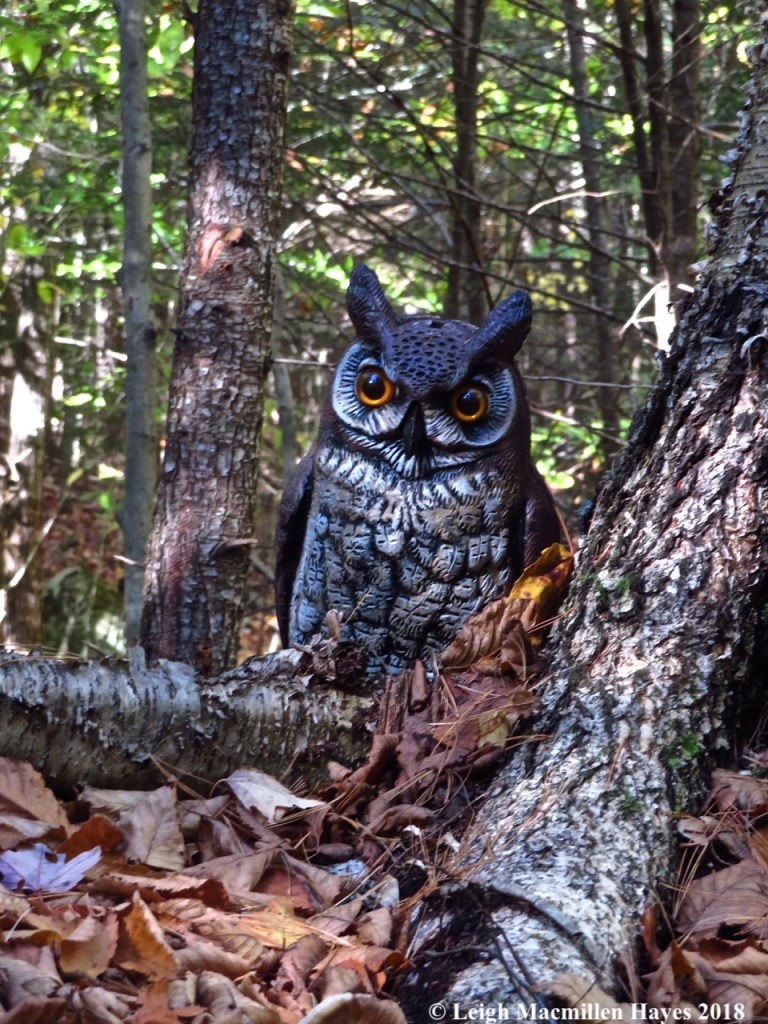
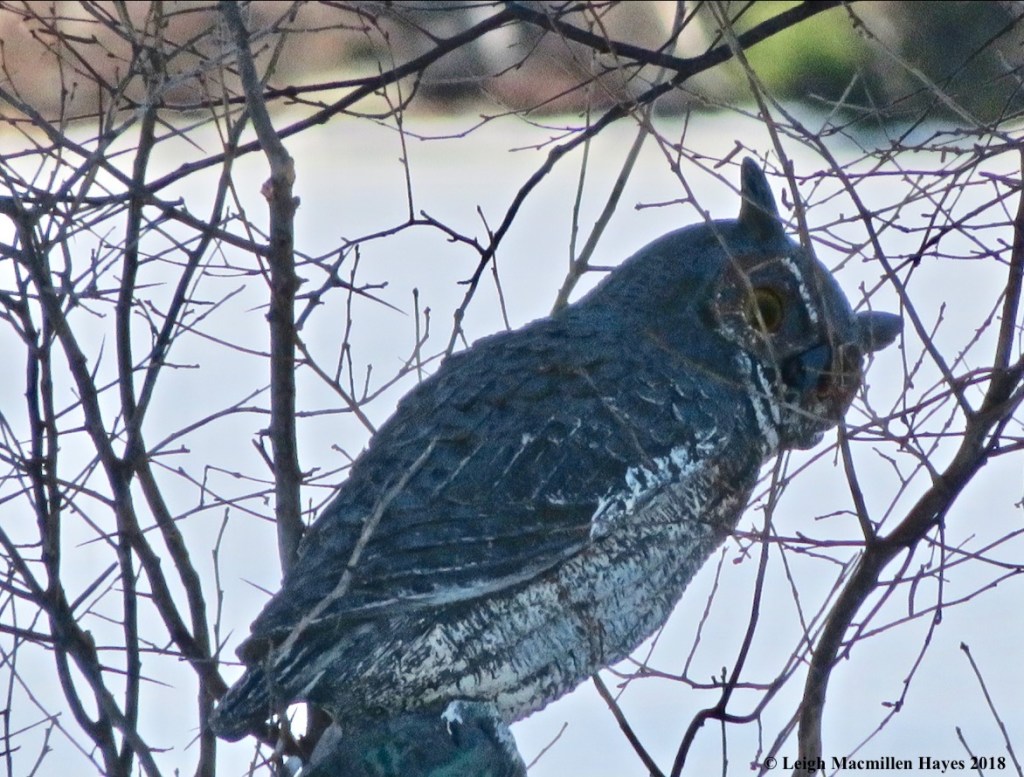
Eventually we moved on and added a couple more chickadees to the list. And then we saw one who was not on the list and though he is native to this land, he’s not typically seen here in winter. So we filled out the Rare Bird Form for the Great Horned Owl Plastica species.

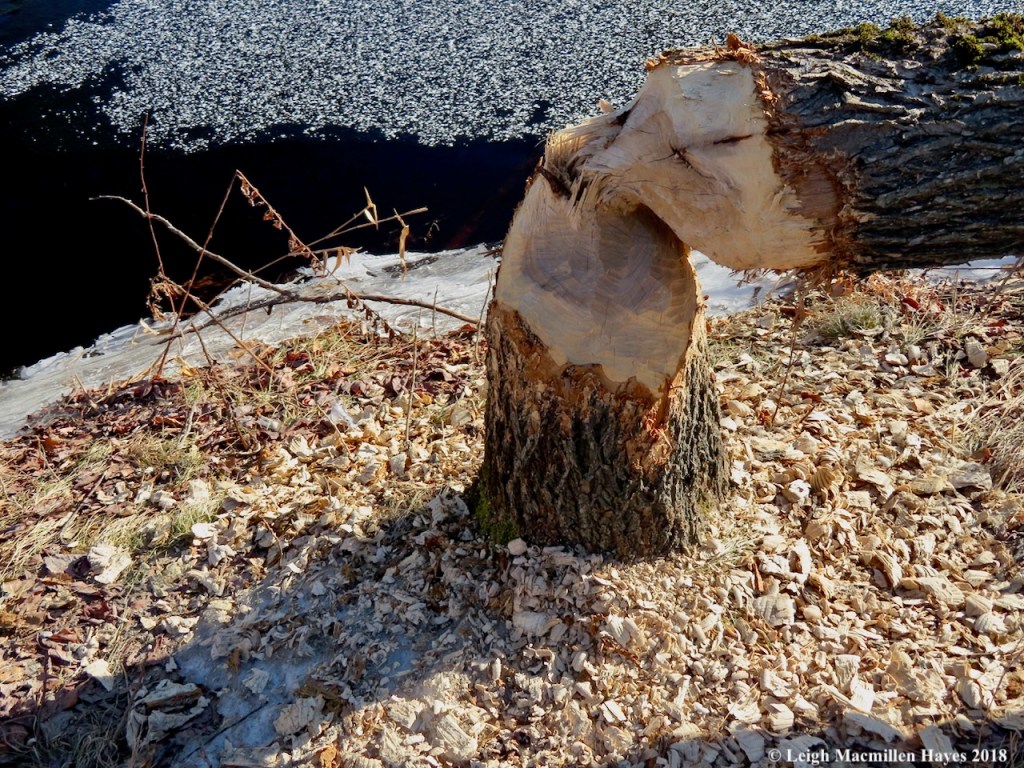
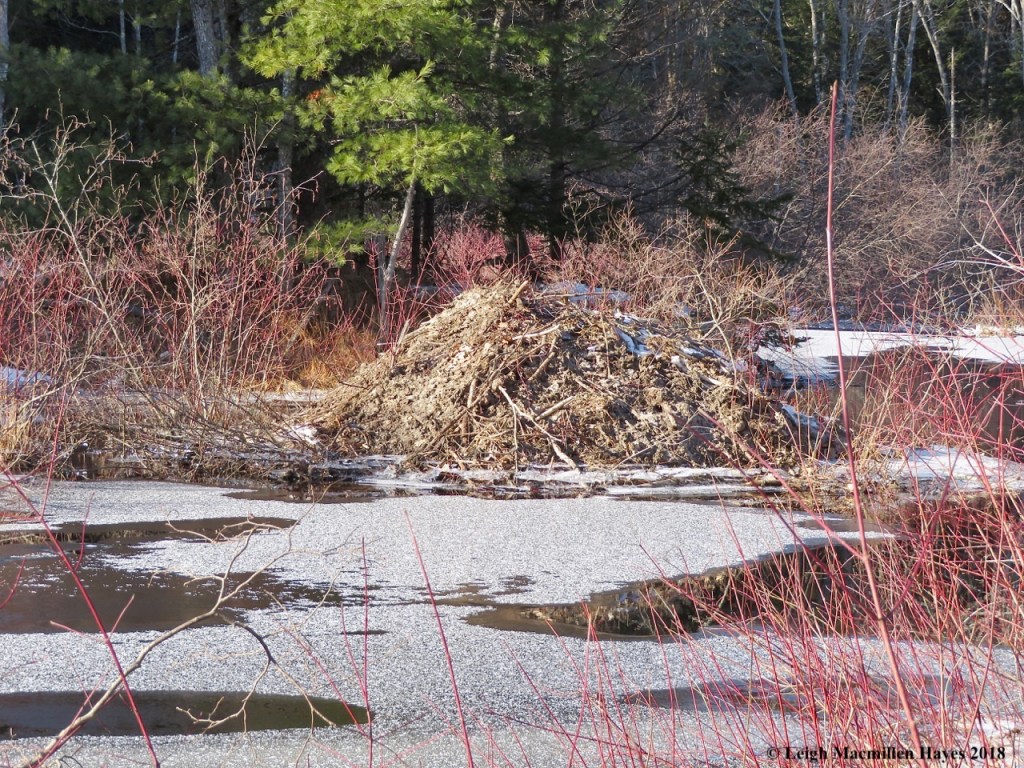
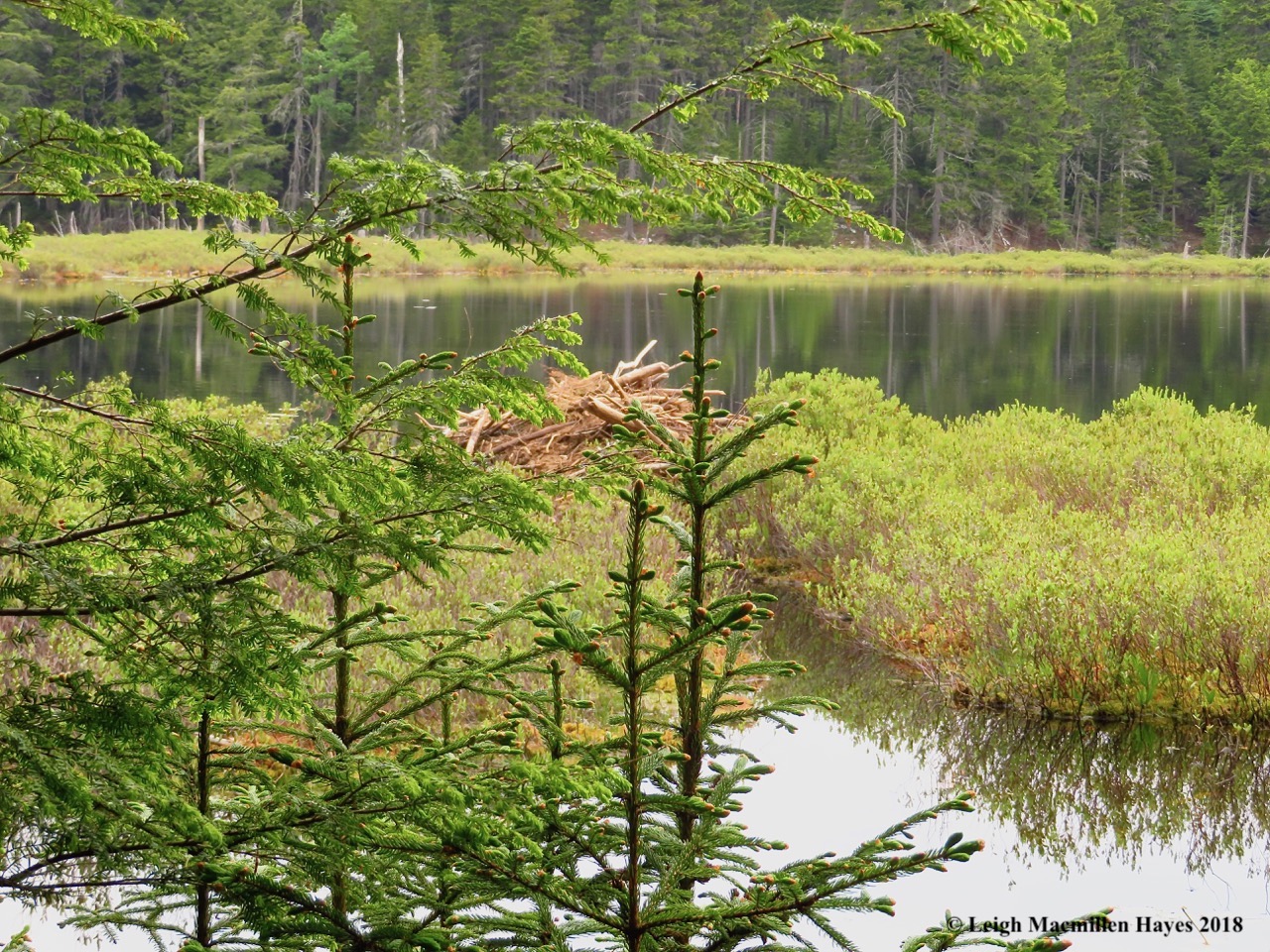
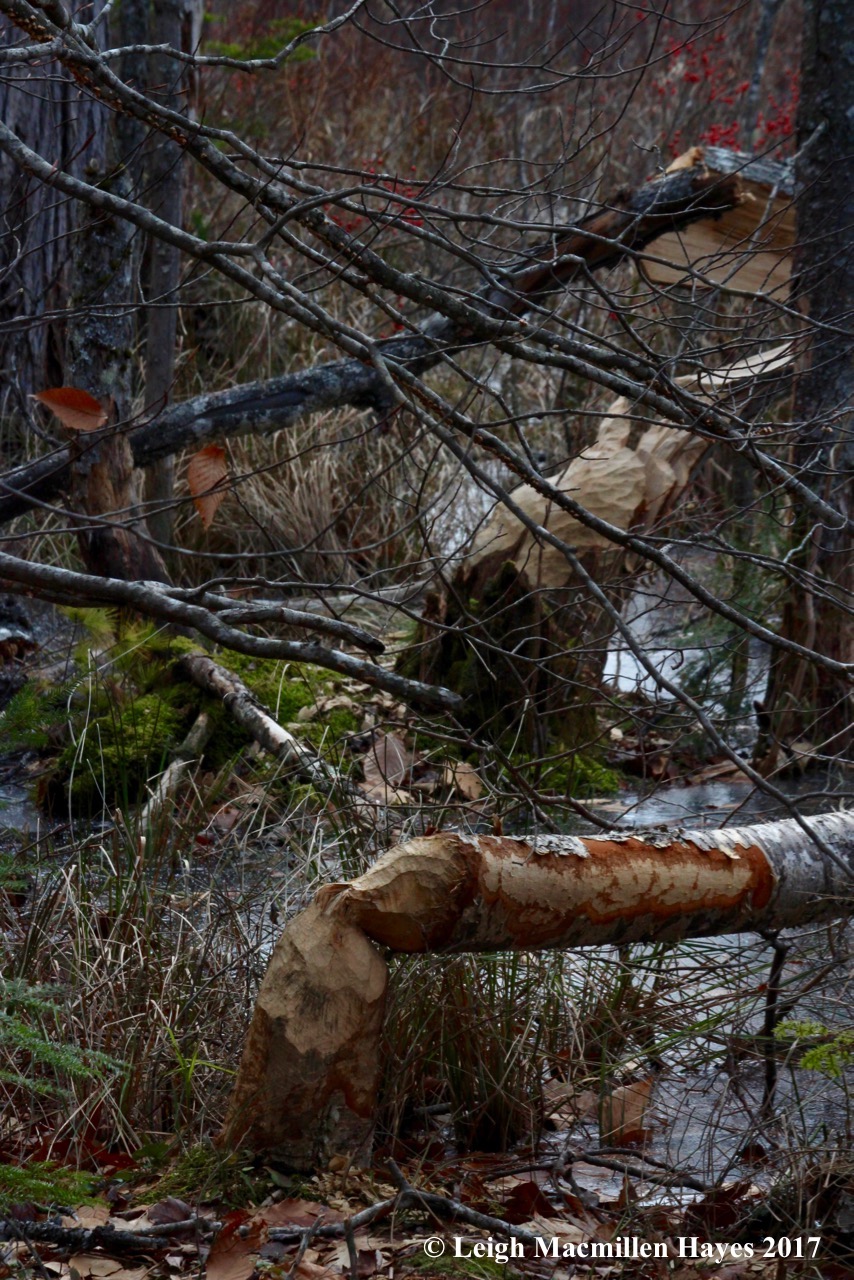
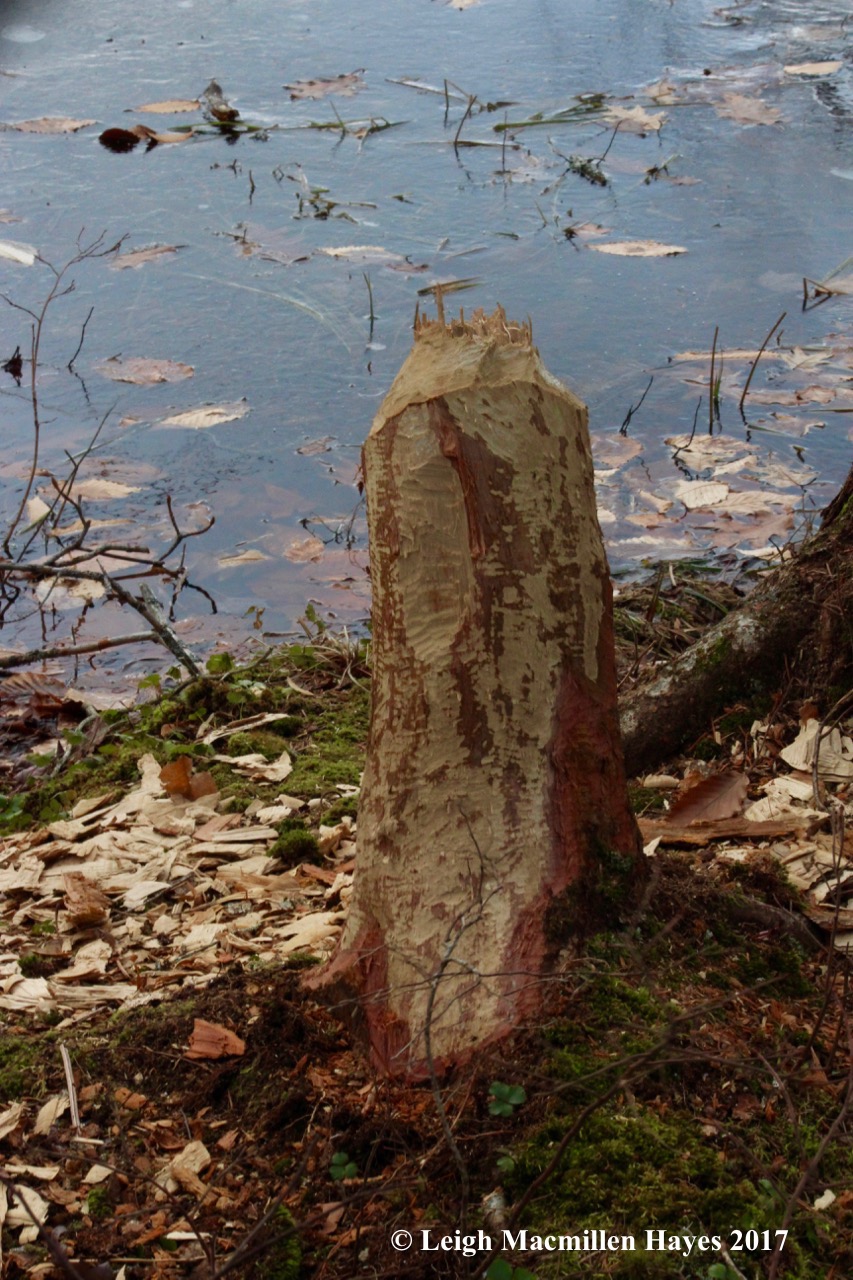
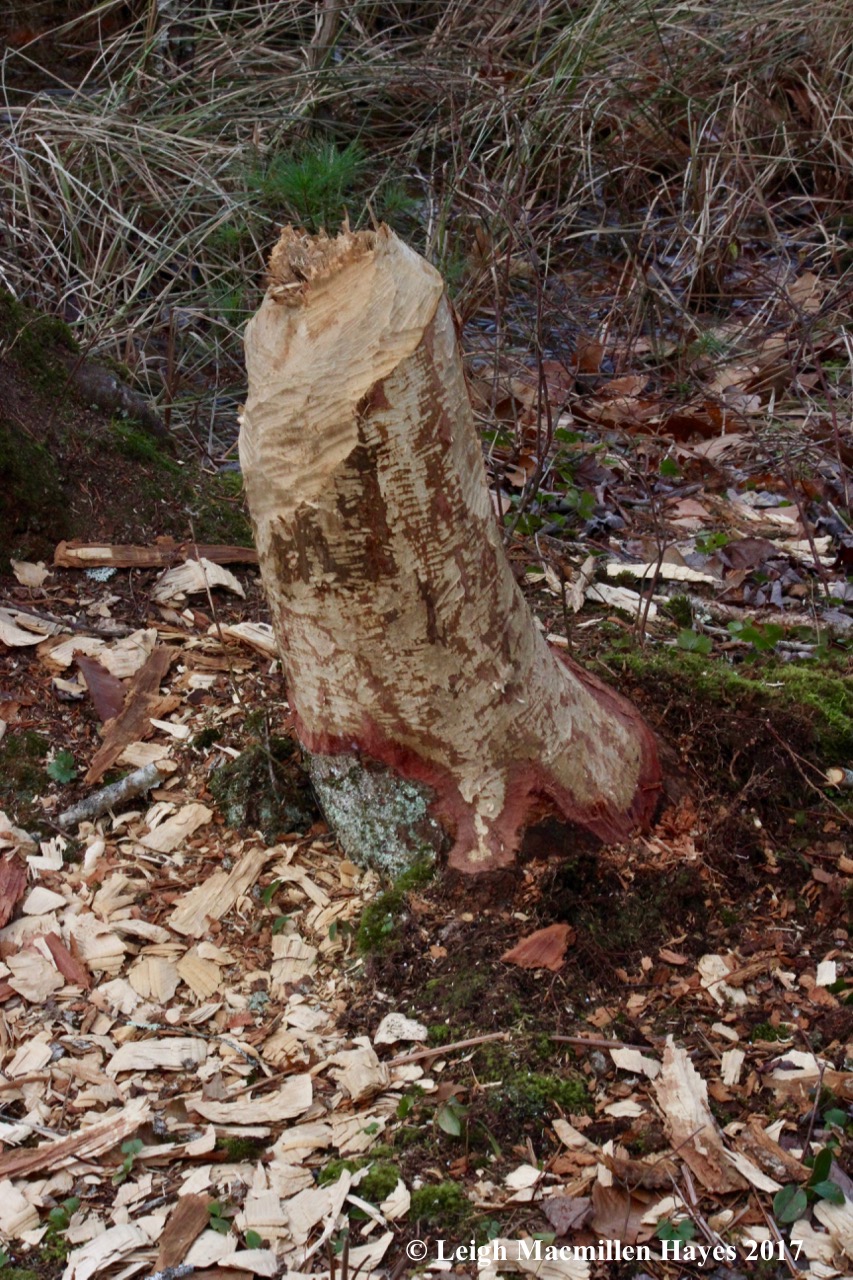
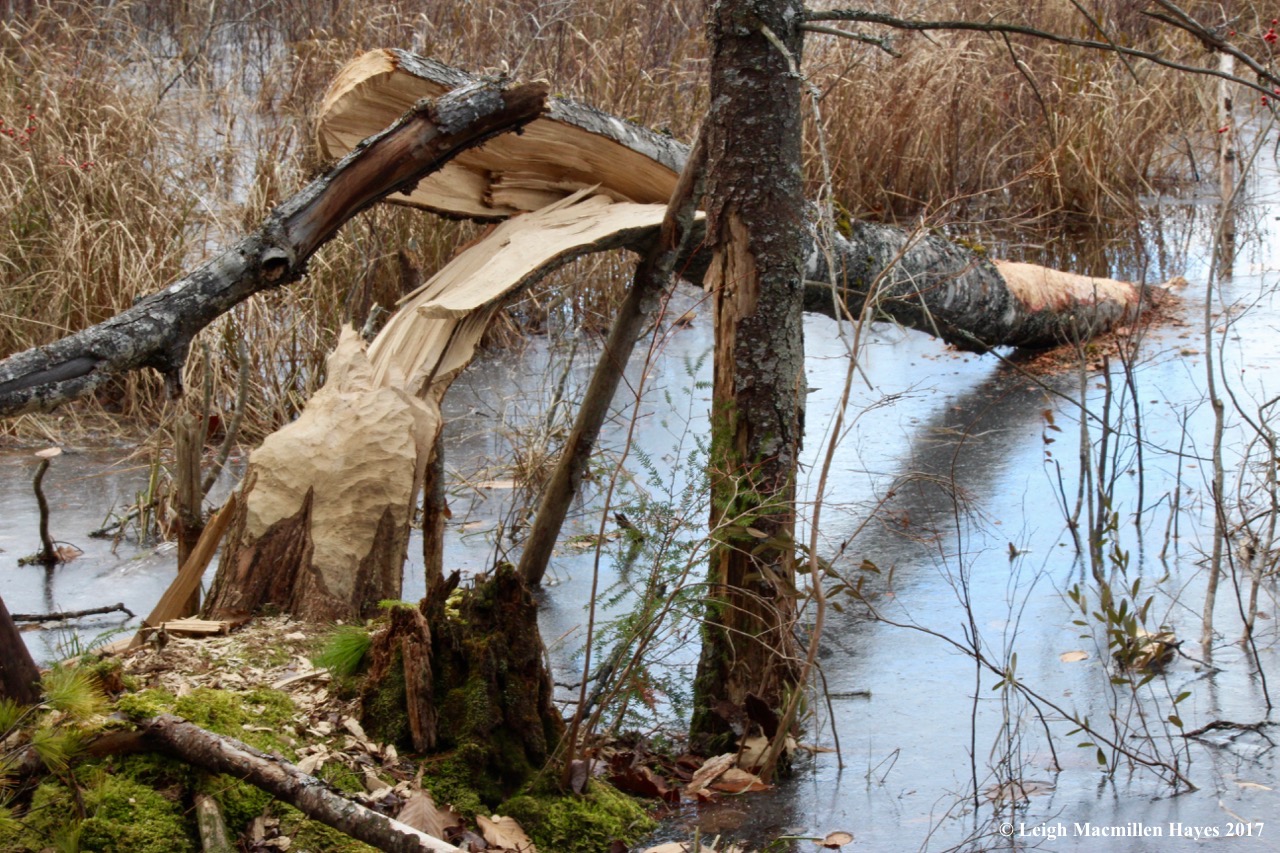
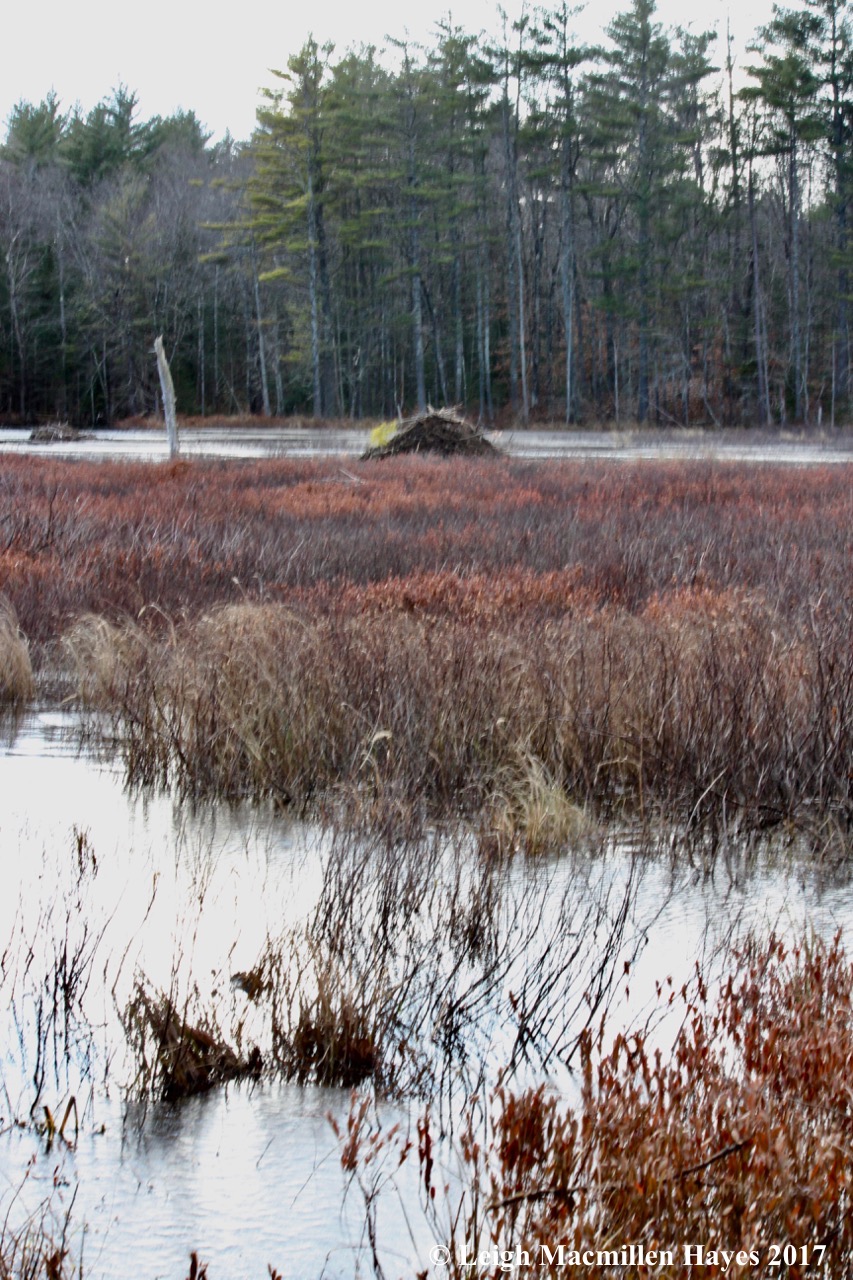
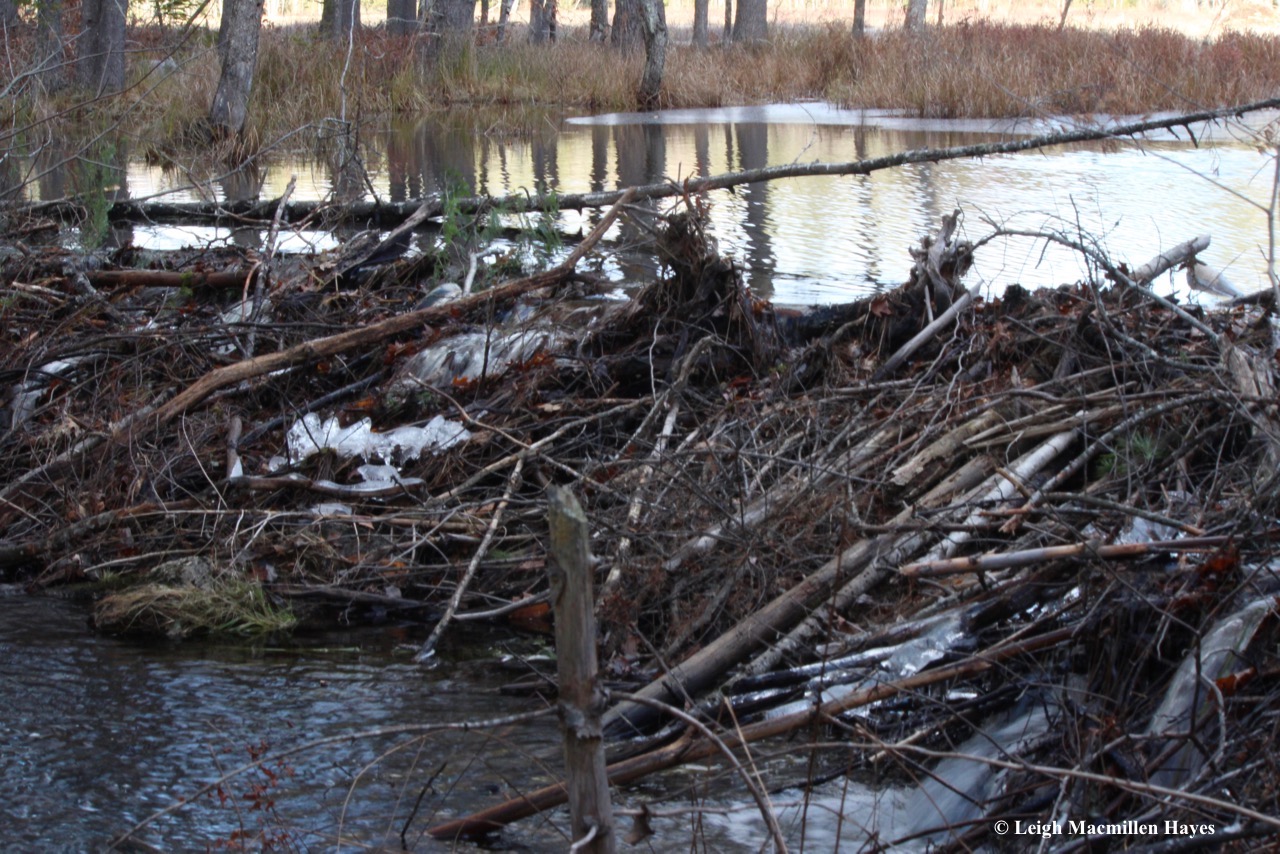
One of our final stops as a group was on what we fondly refer to as the Dump Road. At a swampy area, we thought for sure we’d have some luck. And we did. In the form of beaver works.

Peering across the road in search of birds near the open water, we noticed more beaver works.

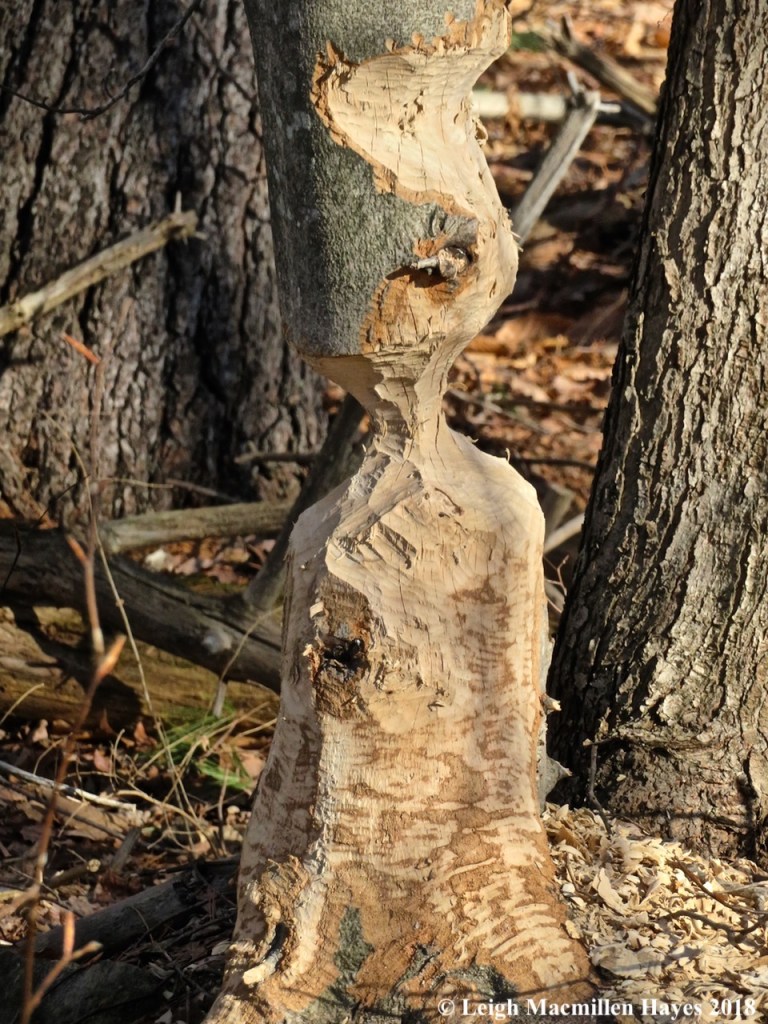
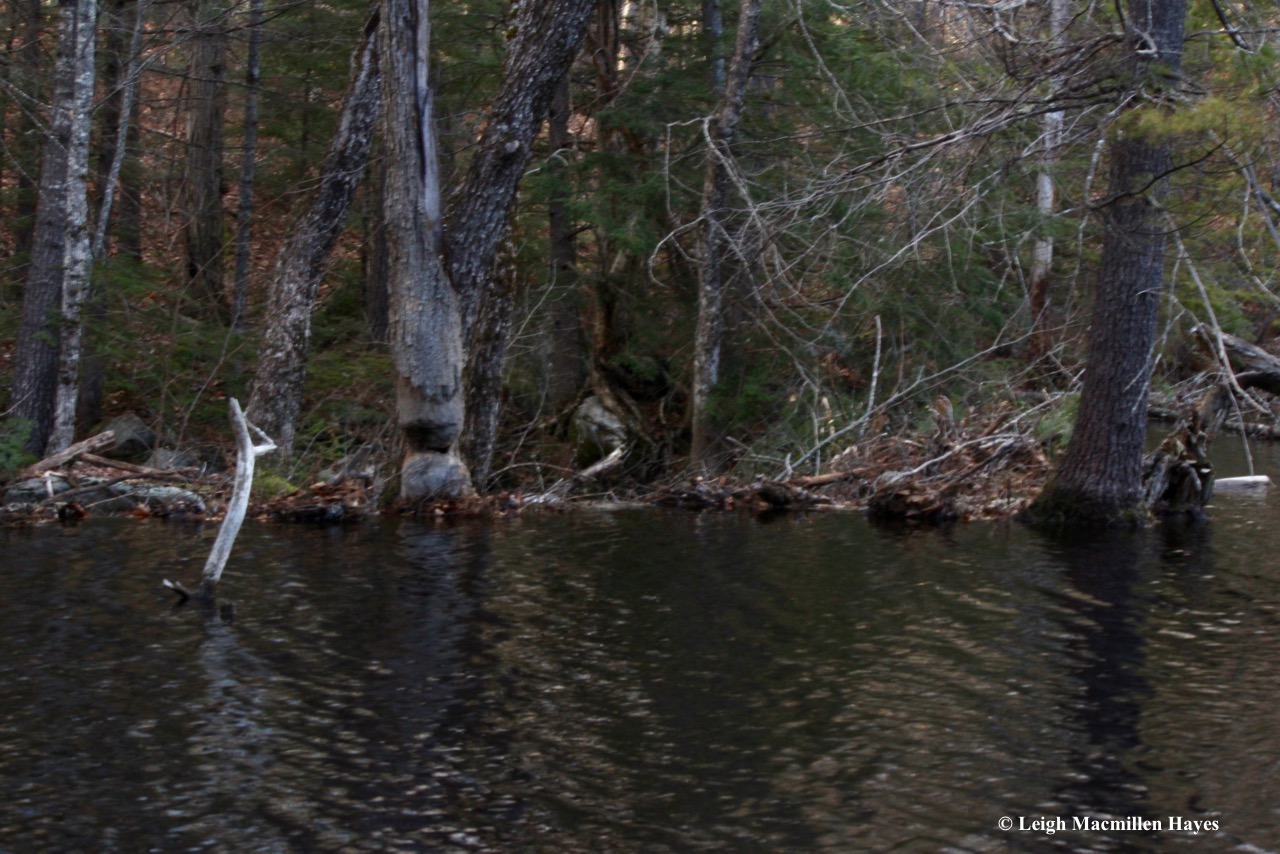
And our luck turned to awe as we admired a beech tree that still stood despite its hourglass shape. Why hadn’t it fallen?

The lodge looked well maintained and we rejoiced to think that it was located close to town and yet we’d never spied it before. Because of the CBC, we’d been given the opportunity to get to know our town just a wee bit more intimately.

After the beaver lodge sighting, Juli and her kids headed home, and so did I . . . for a quick lunch break. And then I journeyed down several more roads, adding a few more dashes to the tally. I found more chickadees, a few more white-breasted nuthatches, and some mourning doves.

Toward the end of the day, I decided to return to the dam, but still . . . stillness in the bird world despite all the sound and movement.

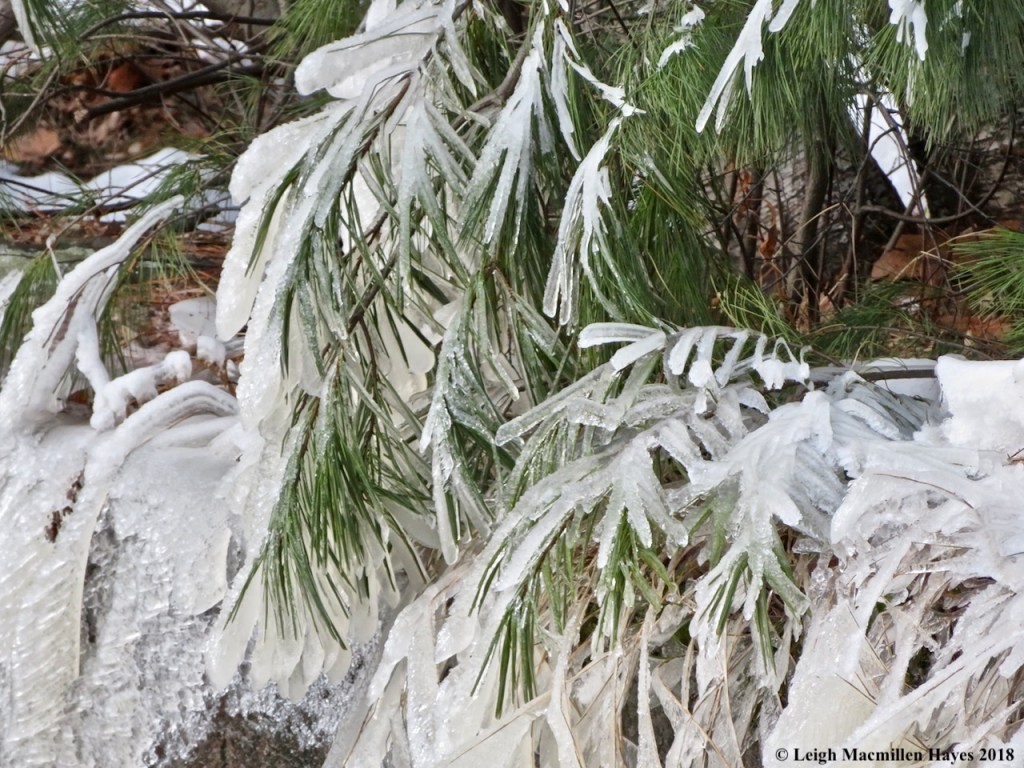
And ice-encrusted needles that looked so featherlike.

By 4pm the CBC had drawn to a close and our offerings seemed so skimpy. I was almost embarrassed to turn in the form, only to discover that most of the other birders in the Sweden Circle had had a similar experience. The Denmark and Fryeburg sections had the most sightings to report, but all in all, the numbers were down significantly. A few of us gathered around Jean’s table to compute the final numbers and wonder why they were so low. Too cold in November? When the snow and cold snap occurred early, did the birds fly elsewhere? Was there not enough food this season? One among us has spent the last few weeks joining the CBC in various locations around Maine, and he said that our experience was not unique.

Despite that, Juli, Caleb, Ellie, and I finished up the day smiling because we had seen an eagle. And today was Juli’s birthday–so it was certainly a wonder-filled present for her on this year’s Christmas Bird Count. Happy Bird-day, Juli!

A Sign of Hope

We’ve entered that season many of us know as Christmas; a time of year when hustle and bustle can so easily overtake our lives. As youngsters, it was our desires, our longings, our yearnings that became the focus of our lives during the month of December. We thought we wanted, in fact needed, that pair of ice skates or that furry hat with the pom-pom balls at the end of the ties. At least, those were my desires when I was ten and eleven years old. 

In fact, I coveted that hat to the point where on Christmas morning I snuck down the hall to the living room and peeked into the gift bag with my name that sat under the tree. I was at once delighted/disappointed. Yes, Mom and Dad had fulfilled my wish and I would look like the other girls at school who donned such; but . . . the moment of surprise was gone and I’d have to feign my excitement. I don’t remember if it ever dawned on me that the hat was just that–an expensive, fancy covering for my head. One I didn’t need given that Mom loved to knit hats for us.

And then there were the Christmases that my guy and I bent over backwards as we tried to create a special day for our sons. And as we all know, the empty boxes were the best toys of all. 

Now, as I take an honest look at my past and wonder about the future, I realize that my attitude has shifted. No longer is it a frenetic, mad dash for the best deal or piece of plastic. My life has taken on the form of slowing down, noticing, watching, even in the darkness. 

And it was in doing so yesterday and today, that I realized something rather special in the ordinary. 

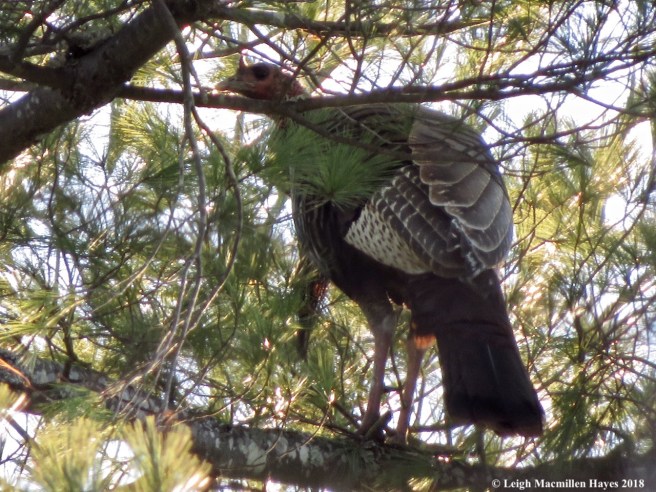
We’ve all become used to seeing wild turkeys on roadsides, in our yards and occasionally even up in the trees they fly to when danger lurks or  nighttime falls. But . . . think about it. Meleagris gallopavo, that fancy scientific name, have been the comeback kids since farms of yore reverted  to forest, thus allowing these large birds to reestablish in their former range. 

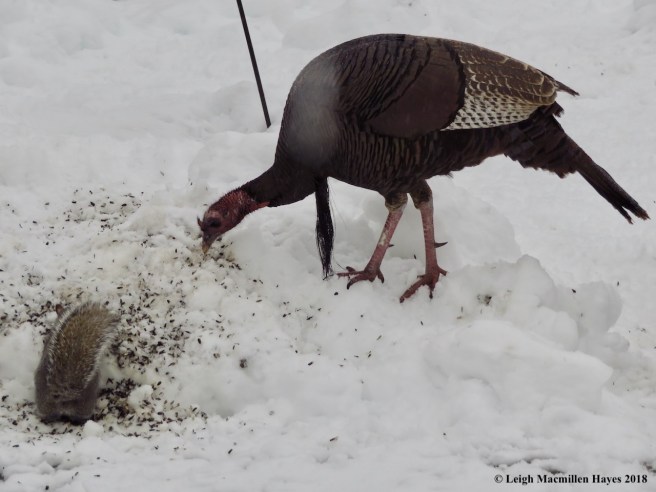
Because I put bird seed in feeders and spread it on the ground, the neighborhood turkeys stop by for an hour or two at least twice a day. 

And they aren’t the only visitors to the feast, for red . . . 

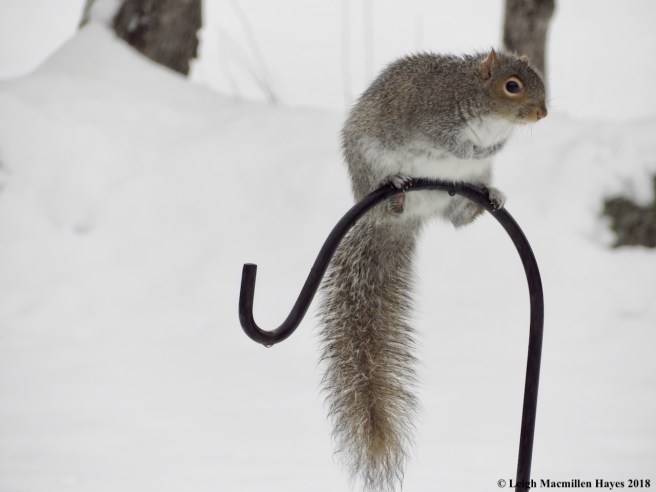
and gray squirrels also take advantage of the free meal. 

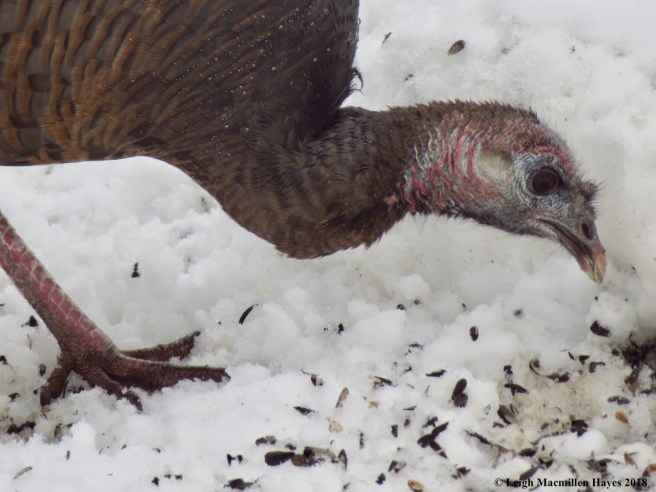
But it was the male turkeys upon whom I focused much of my attention for it occurred to me today that they were unicorns in their own right. Unicorns had a single horn protruding from the center of their heads, right? Okay, so maybe its a snood. But still.

As for their magical powers, have you ever noticed that a male’s featherless head of blue and pink and red raised bumps called caruncles change colors with his moods?

Shifting my eyes to the back of the shanks or leg, the unicorn theme was reiterated in the form of a pointed spur. 

The theme again was repeated behind the toes, where a claw stuck out on its own in the area we might call a heel.

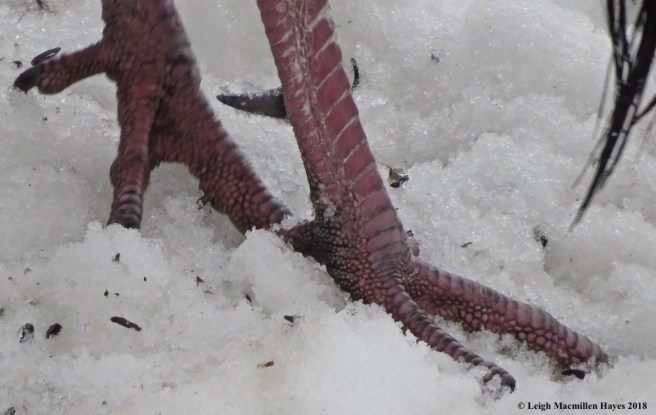
Check out the bottom of that foot, its bumpy surface much like a no-skid sock. Certainly there must be more magical powers protected within.

From behind a window in the back door that served as a bit of a screen, I watched the feeding station without disturbing the activity. The squirrels and male turkeys (their rafter ranging in size from 9 to 13 depending on the hour), devoured the sunflower seeds. 

It appeared to be a blissful co-existence. 

Until it wasn’t. The gray squirrel was the aggressor. 

Every few minutes, it took a flying leap and so did the young jakes and older Tom. 

Simultaneously, other gray squirrels decided to show off their own super powers, such as finally scaling one of the poles. Too bad I hadn’t put a suet feeder on it yet. 

He moved on to the bigger feeder–jumping first onto a baffle intended to keep him out. From there, he reached the top of the squirrel-proof feeder, and . . . um . . . 

proceeded to open the cover of the seed tube. 

The interior must have seemed like manna from heaven. 

Into the inner sanctuary he descended. 

His super powers included his ability to debunk “squirrel proof” and perform a disappearing act–almost. 

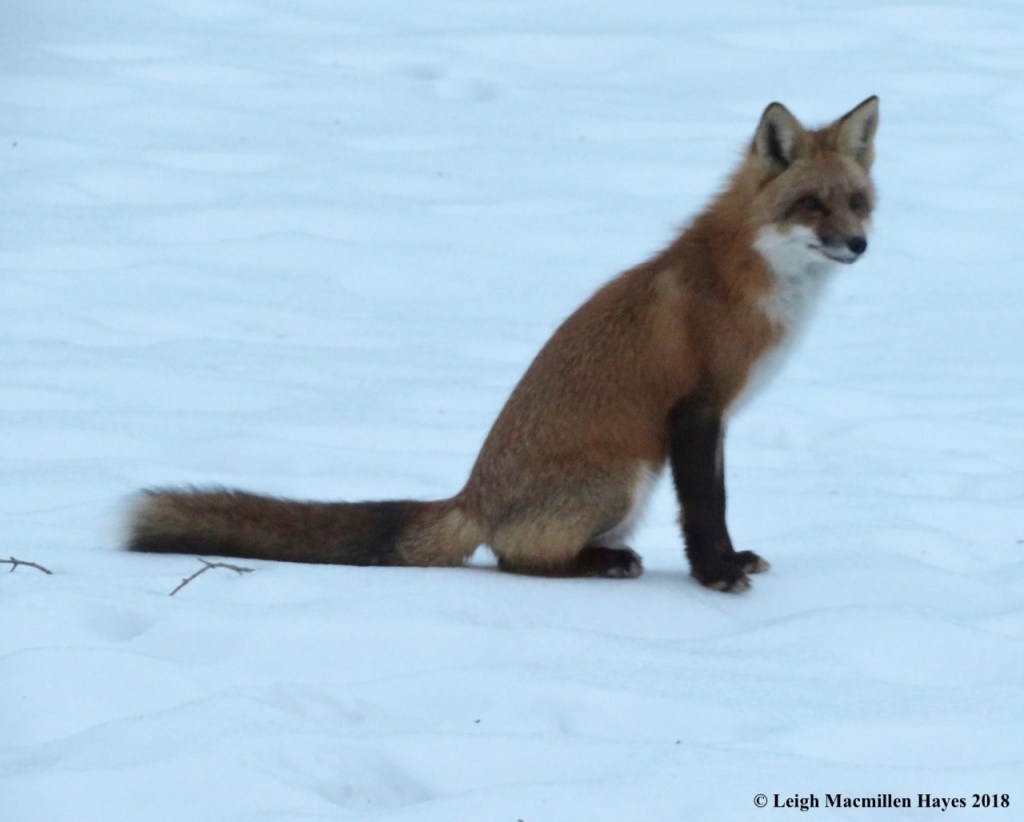
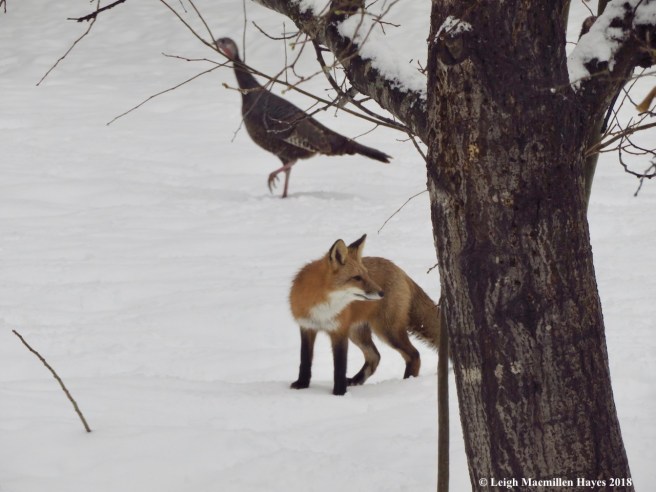
The day continued and so did the turkey and squirrel activity. And then, as the turkeys were moving away, a healthy red fox climbed over the stone wall, walked among the turkeys and paused. The squirrels again performed a disappearing act and were silent for once, but the turkeys didn’t appear threatened. Perhaps the fox was sated for the moment. 

In the case of the turkey, and yes, also the squirrels, we complain there are too many. But, we should give thanks that we’ve created an environment that’s conducive to successful turkey breeding. As for the explosive squirrel population that resulted from last year’s mast production of pine, beech and oak fruits, the red fox is on the hunt. 

At the end of the day, calling a turkey a unicorn is in the eye of the beholder. But, in his own form of handsomeness, he portrays a similar sign of hope.

As the holiday season continues, I hope you’ll also make time to watch . . . and be attentive to other signs of hope. 

I Spy . . .

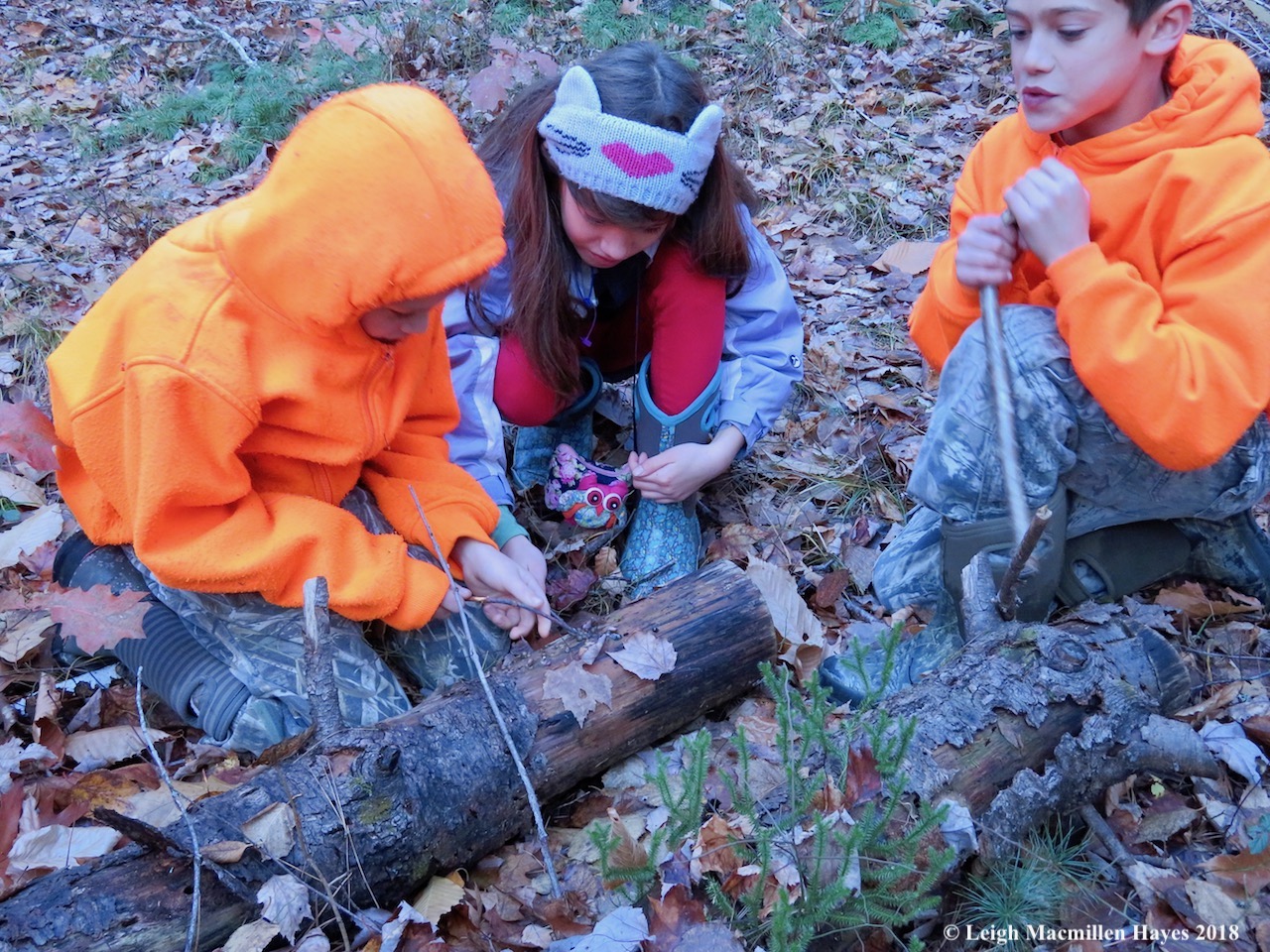
This afternoon’s goal: To find a Christmas Tree to decorate for the Christmas at Ladies Delight Walk on December 1st. For the reconnaissance mission, I joined the Coombs family at the GLLT’s Chip Stockford Reserve.

The Coombs children are homeschooled by their amazing mother, Juli, and though they learn many lessons at home, they are also well educated in the outdoors. In fact, they are among my favorite naturalists.

And they belong to a 4-H Homeschool group that will decorate a tree(s) with biodegradable ornaments prior to the December 1st walk.

1

And so we set off on our tour looking for just the right tree. But . . . as is always the case with this family, there was so much more to see.

2

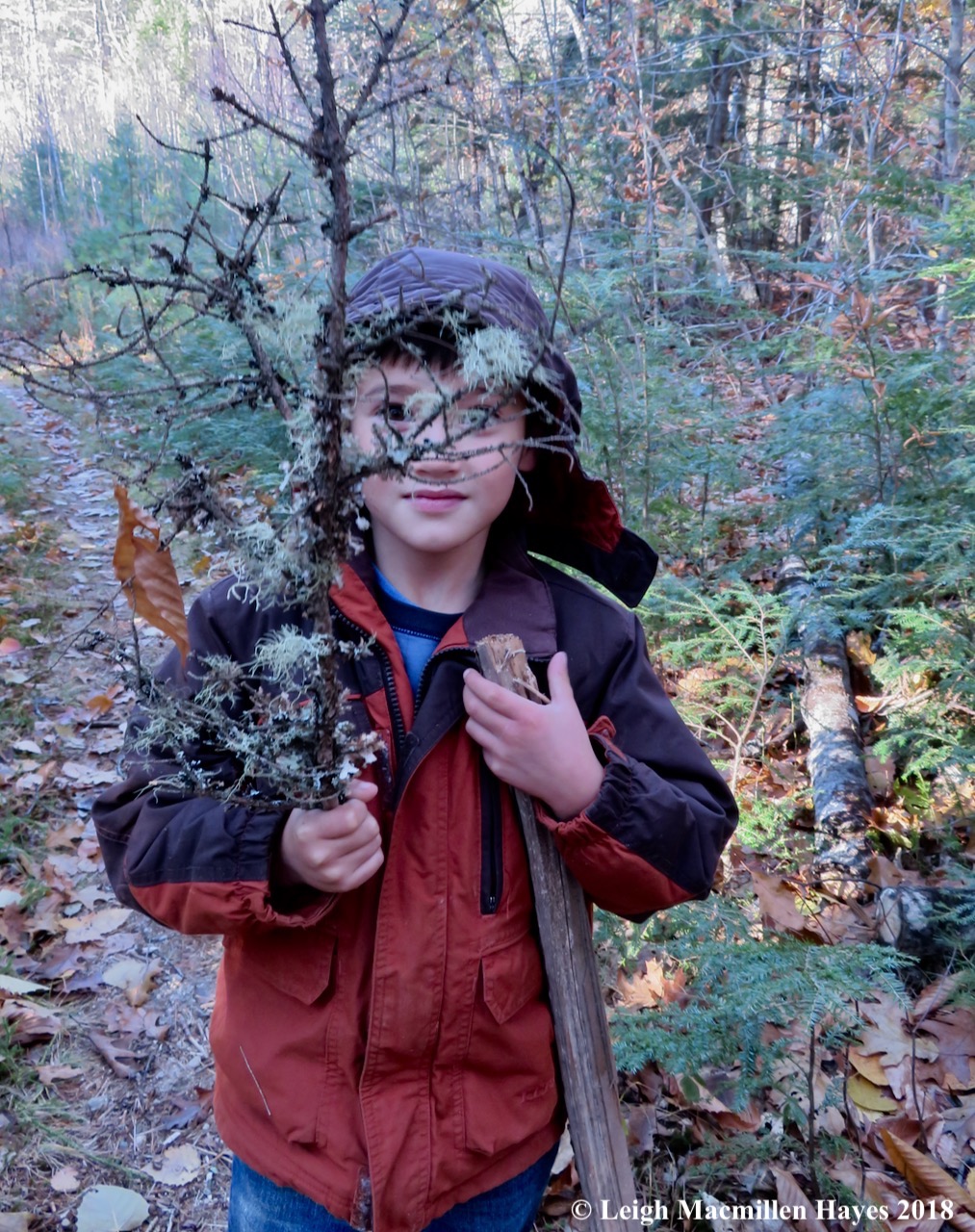
Since Juli is a Maine Master Naturalist Program student, so are her children. And every topic she studies, they study, so it was no surprise to me that six-year-old Wes picked up stick after stick loaded with various forms of lichens.

3

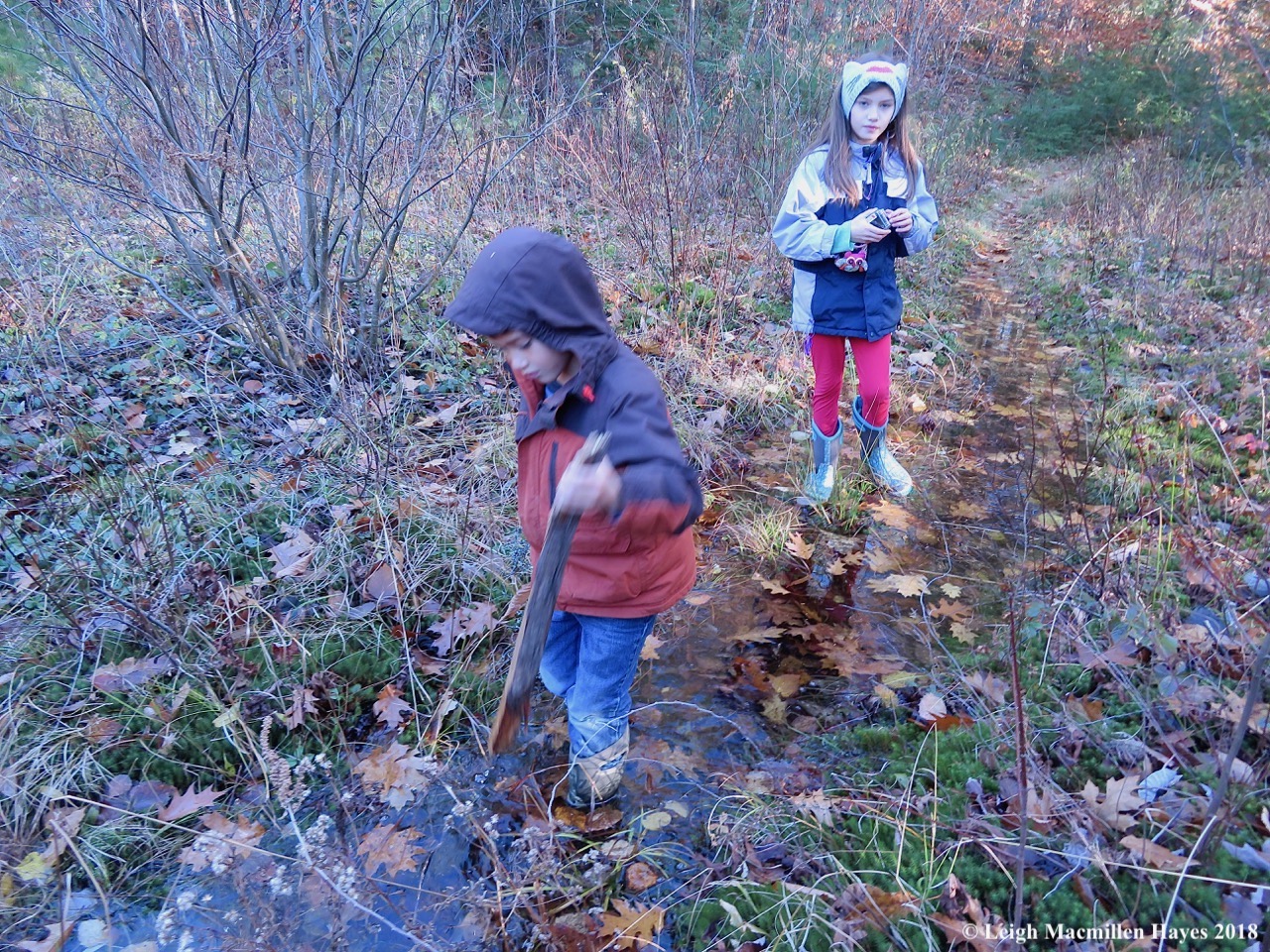
Of course, they are children, ranging in age from six to eleven, and puddles are invitations. The family motto is this: No puddle shall remain unsplashed.

4

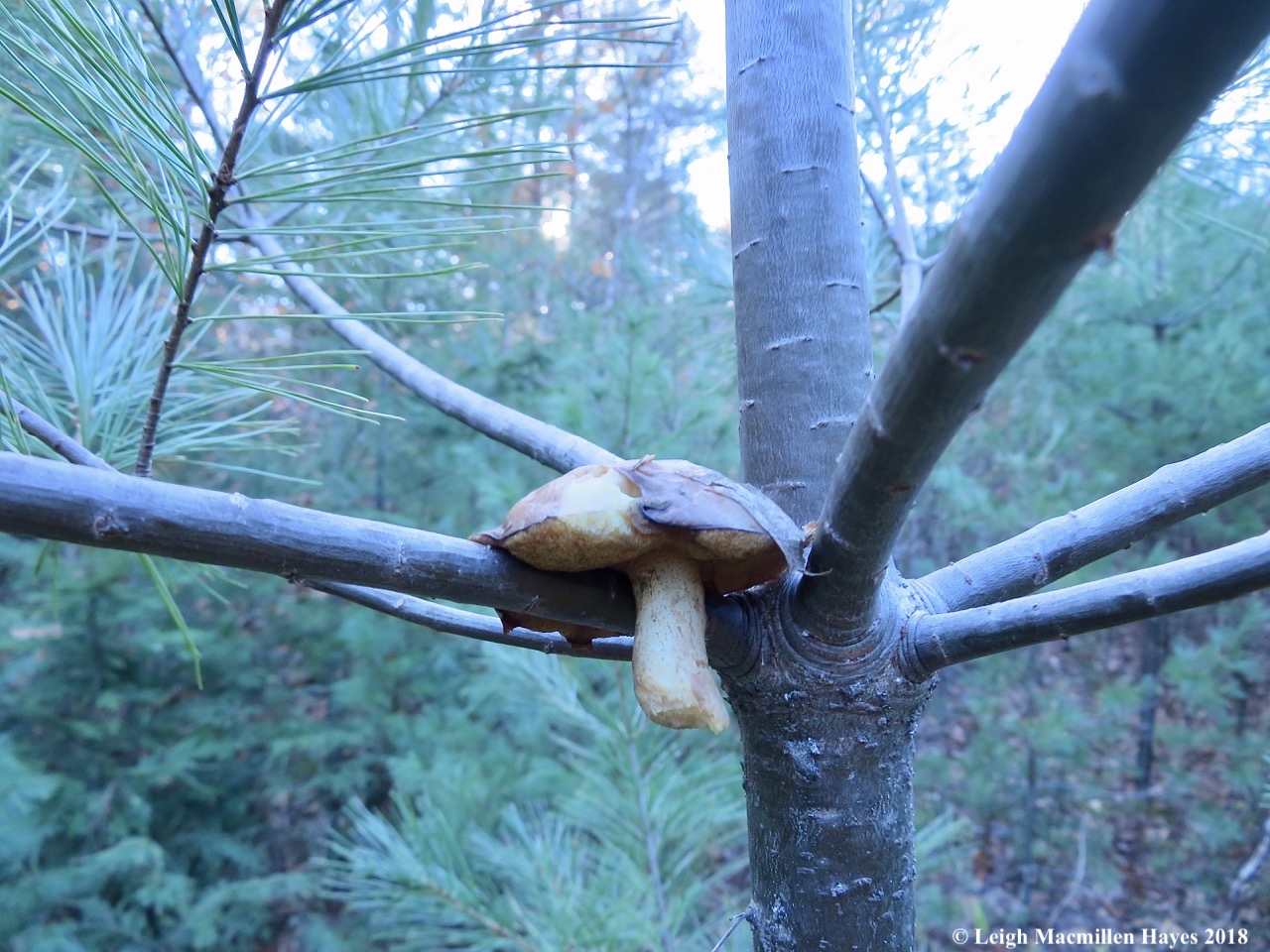
But just after the puddle, at the start of an old log landing, we began to notice something else. A mushroom drying on the whorl of a White Pine.

5

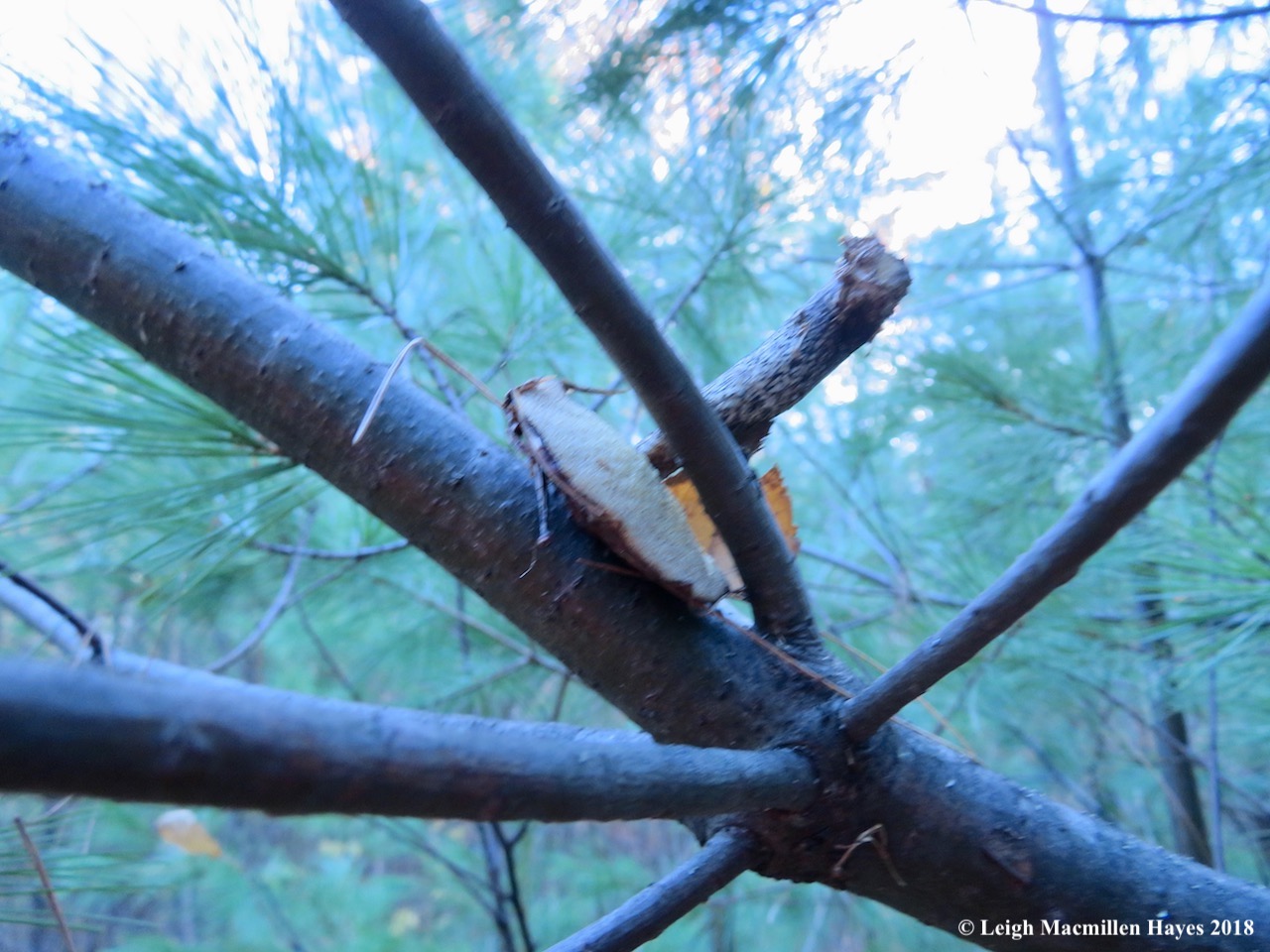
As we stood and looked at the first, someone among us spied a second.

6

And then a third, and so it went. We knew that squirrels dried mushrooms in this manner, but never had we seen so many. It dawned on us that we were standing in a squirrel’s pantry. One squirrel? Two squirrel? Gray Squirrel? Red Squirrel? One Fish, Two Fish, Red Fish, Blue Fish.

7

For a while we paused by an erratic boulder and looked at the lichens that grew atop it. The kids and their mom also checked the sand under and behind it and I told them that the only critter sign I’d ever noticed was that of a Ruffed Grouse sand bath–and I only recognized it as such because I’d startled the two birds and they startled me as they flew off. In fact, on another hike this morning at the GLLT’s Five Kezar Ponds Reserve, friend Teresa and I had startled a grouse and we talked about how the bird’s explosive behavior makes us feel as if we’ve encountered a moose.

Well, just beyond the boulder, as we all chatted and moved about with quick motion, Caleb spotted something and told us to stop. A Ruffed Grouse!

8

It threw leaves about as it sorted through them in search of seeds and buds and we all watched in silence.

9

As we stood or sat still, the bird moved this way and that, making soft clucking sounds the entire time.

10

Ellie stood in front as the bird moved a few feet ahead of her and crossed the trail. I kept looking back at Juli in wonder. How could this be? Why wasn’t it disturbed by us? I’ve spotted Spruce Grouse in higher elevations and they are much “friendlier” or less wary of people, but I’d never been able to get up close to a Ruffed Grouse.

11

Our fascination continued and we noted its feathered legs, making us think perhaps it had pulled on some long johns for a cold winter night.

12

It eyed us and we eyed it back–our minds filled with awe.

13

Think about this: four children and two adults and we were starting to get fidgety because we’d been still for fifteen or more minutes and we had begun to whisper our questions and still . . . it let us watch.

14

And it let Ellie be the Grouse Whisperer for she began to follow it off the trail. Eventually, it climbed up a fallen tree and she knelt down beside, taking photos as it stood less than a foot from her. How cool is that?

15

We were all wowed by the experience, but when Ellie finally turned back, we continued on . . . sometimes running and other times pausing to ride imaginary horses.

16

Or listen to Birch Polypores! Yes, Juli did listen for it’s part of an assignment for the Maine Master Naturalist class. So what exactly does a Birch Polypore sound like? “I couldn’t hear the ocean,” she said with a smile.

17

And what does it smell like? “Wood.”

18

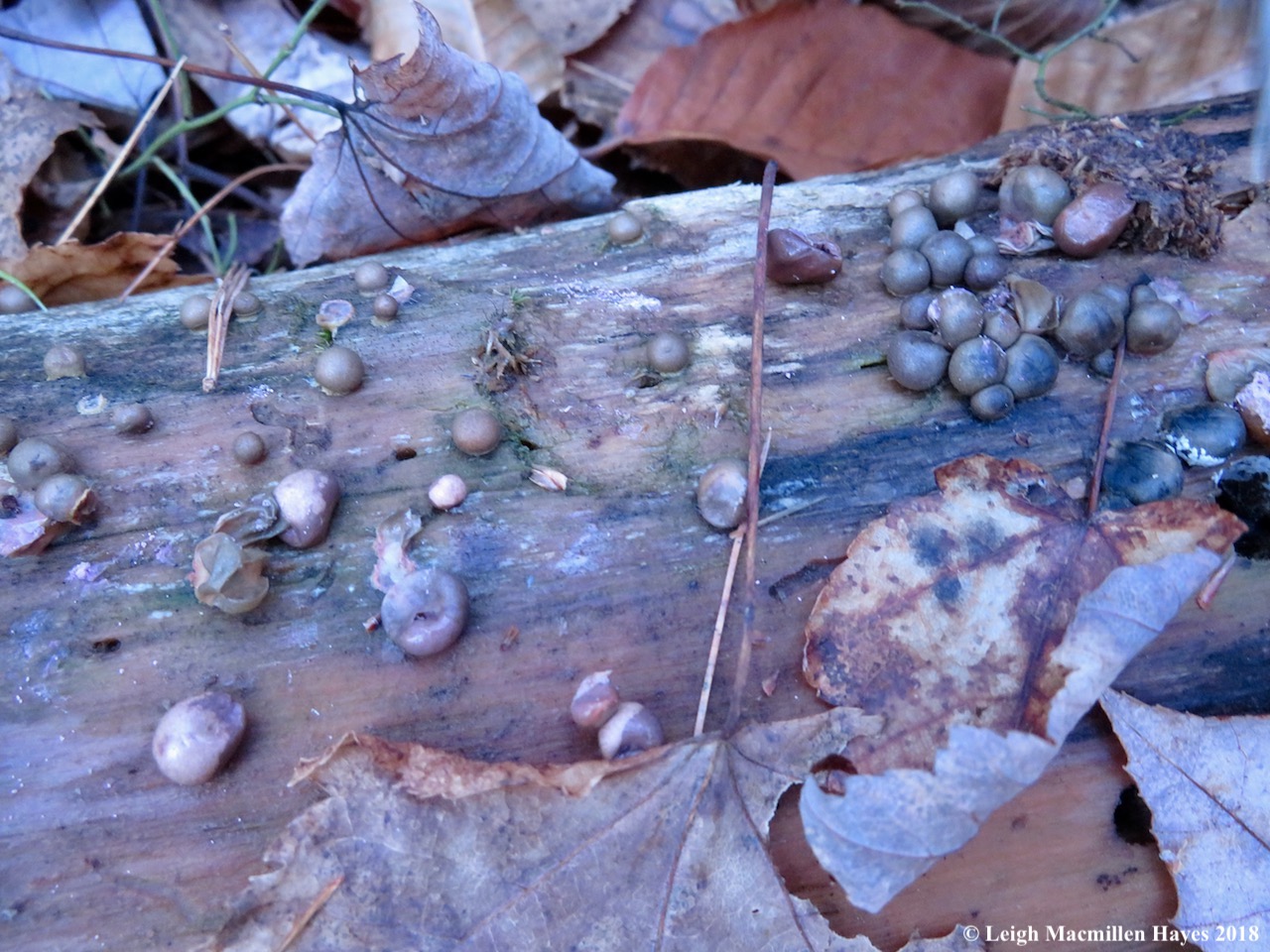
The next moment of glee–poking Wolf’s Milk Slime Mold and watching it ooze.

19

“It’s cool and gross at the same time,” said Ellie.

20

Onward and again, more fungi drying in trees as Aidan pointed out.

22

We even found a few stuck on spiky spruces much like ornaments might be and we reminded ourselves that we were on a mission and still hadn’t found the right tree to decorate.

23

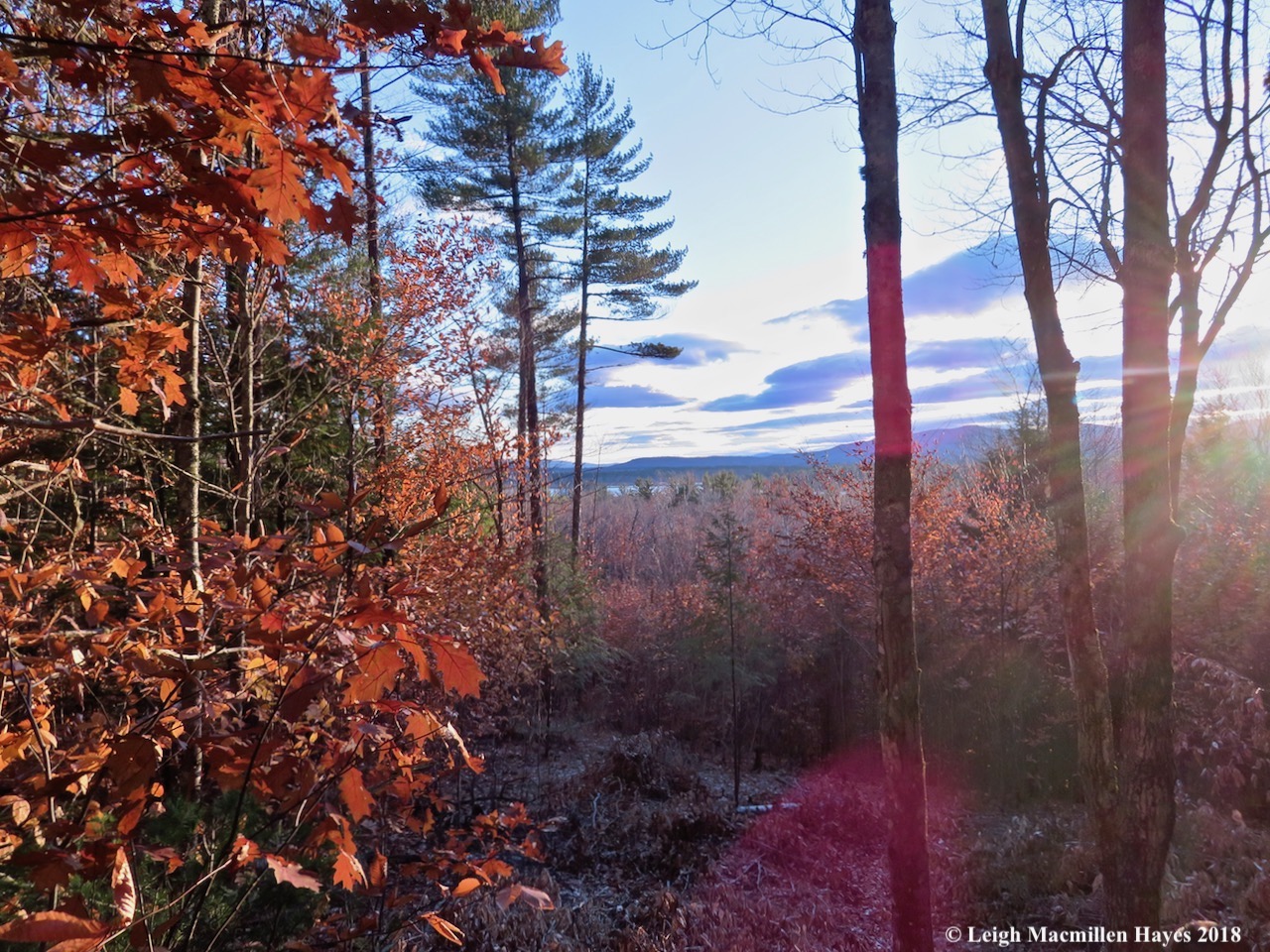
At last, however, we did. And then we made our way out to the spur and recently opened view of Kezar Lake’s Lower Bay and Cranberry Fen, plus the mountains.

24

This became our turn-around point as it was getting cooler by the minute and the sun was setting. We promised Wes we’d look only at our feet as we followed the loop trail down, though occasionally we stopped again to admire more fungi tucked onto tree branches and a set of trees that formed a rainbow arched over the trail.

As for the fungi, we wondered if we were seeing so many because last year’s mast crop of pinecones, beech nuts, and acorns didn’t exist this year. And when the 4-H club returns in a couple of weeks to decorate the tree, will the mushrooms still be there? Will there be more? How long do the squirrels wait before consuming them? So many questions and so many lessons still to be learned.

25

And so many things to spy. We were honored with the opportunity to do just that and my heart smiled with the knowledge that the kids appreciated it as much as their mom and I did.

I spy . . . we spied . . . INDEED!

Oh, and  please join the GLLT for Christmas at Ladies Delight. I have the inside word that there will be hot cocoa and cookies somewhere along the trail.

December 1, 9:30 – noon
Christmas at Ladies Delight: The Maine Christmas Tree Hunt is a fun holiday scavenger
hunt to find decorated trees in western Maine. We’ll search for the decorated tree along the Bill Sayles Loop at the Chip Stockford Reserve and may add a few of our own biodegradable ornaments along the way. Location: Chip Stockford Reserve, Ladies Delight Road, Lovell.
Degree of Difficulty: Easy.

Election Day Tramp

It always strikes me that no matter how often one travels on or off a trail, there’s always something different that makes itself known–thus the wonder of a wander.

And so it was when Pam Marshall, a member of the Greater Lovell Land Trust, joined me for a tramp at the John A. Segur Wildlife Refuge West on Farrington Pond Road this morning. She had no idea what to expect. Nor did I.

13-puff balls to pop

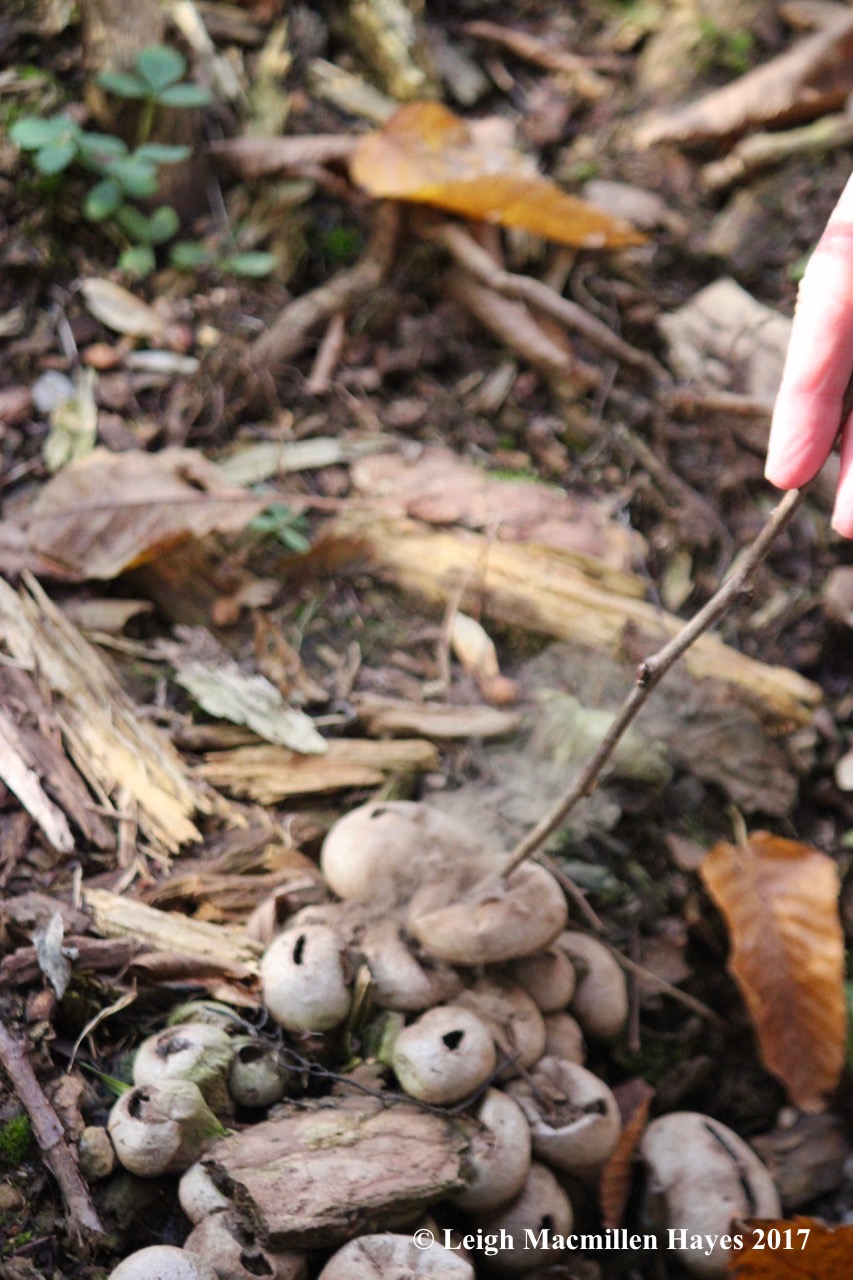
It was misty when we met, but neither of us was daunted by the weather. Ever so slowly, we made our way over the wet leaves, roots, and rocks, pausing frequently–especially each time we saw puff balls. How can one resist poking or squeezing them to watch the spores waft out like smoke. The skin of mature puffballs split prior to releasing spores. And we . . . we helped the process a wee bit.

20-blue stain fruiting

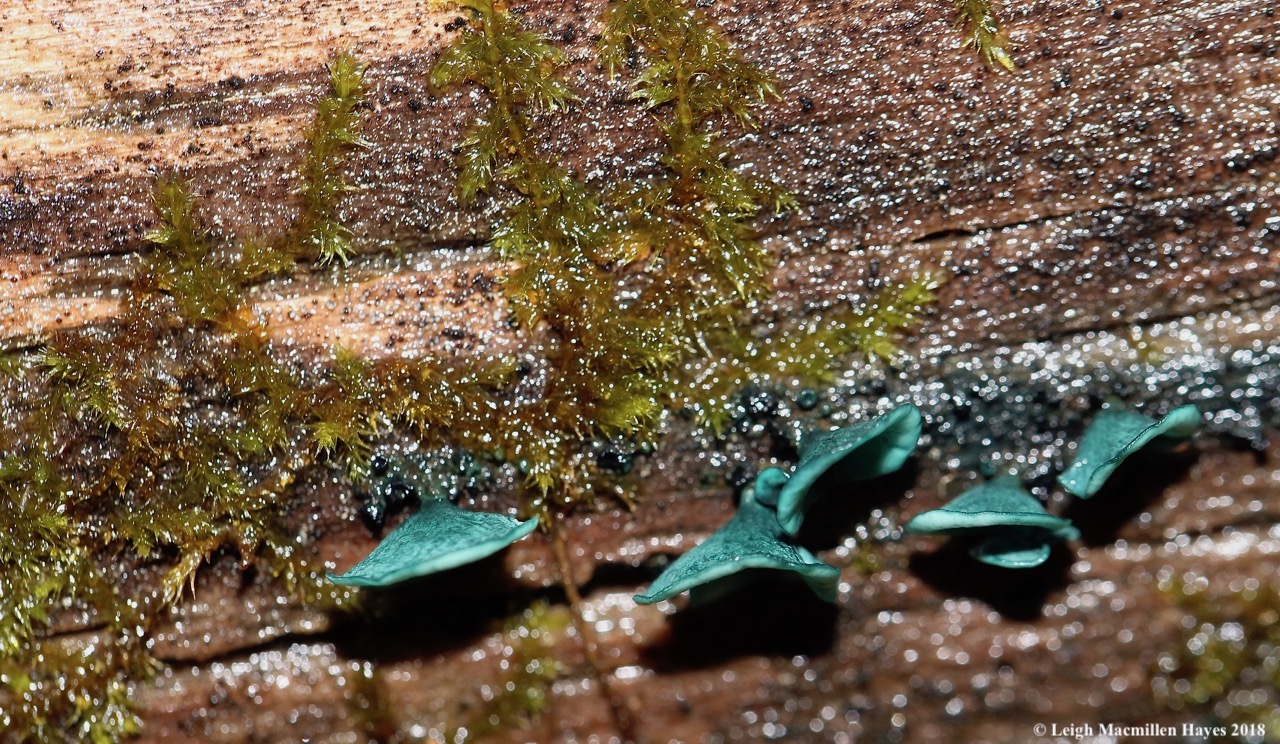
Green stain fungus also drew our attention. Its fruiting bodies were minute, but well worth wet knees for a closer examination.

19-hexagonal-pored polypore

With Pam in the lead for most of the way, she kept finding cool stuff, like this hexagonal-pored polypore.

1-Sucker Brook Outlet

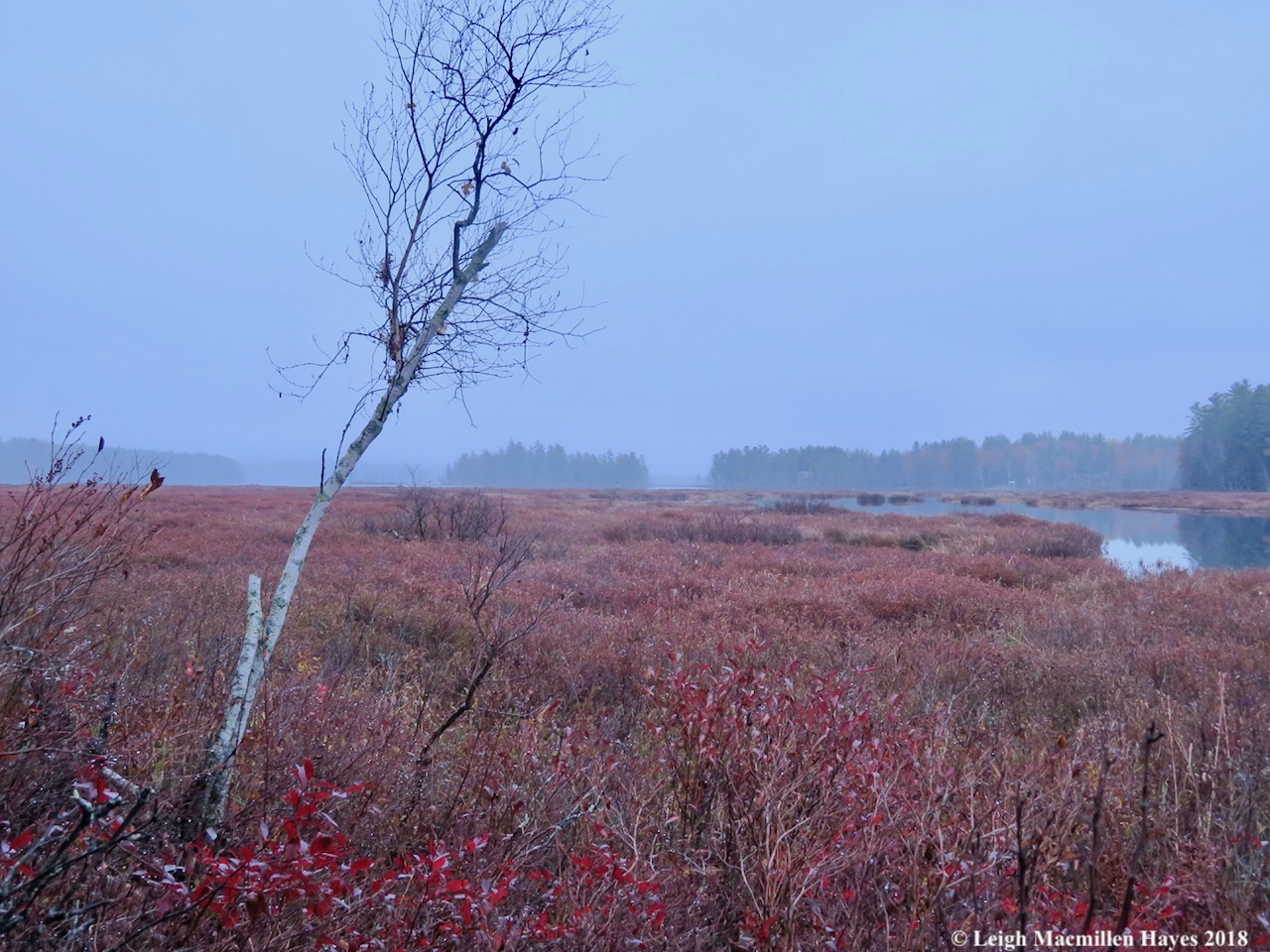
It took us a while, but we finally reached the wetland by the Sucker Brook Outlet where blueberry, maleberry and leatherleaf shrubs added color to the otherwise gray day.  For a while we stood under the protection of a large hemlock and took in the scene in silence.

2-Silhouettes on Lower Bay and cotton grass

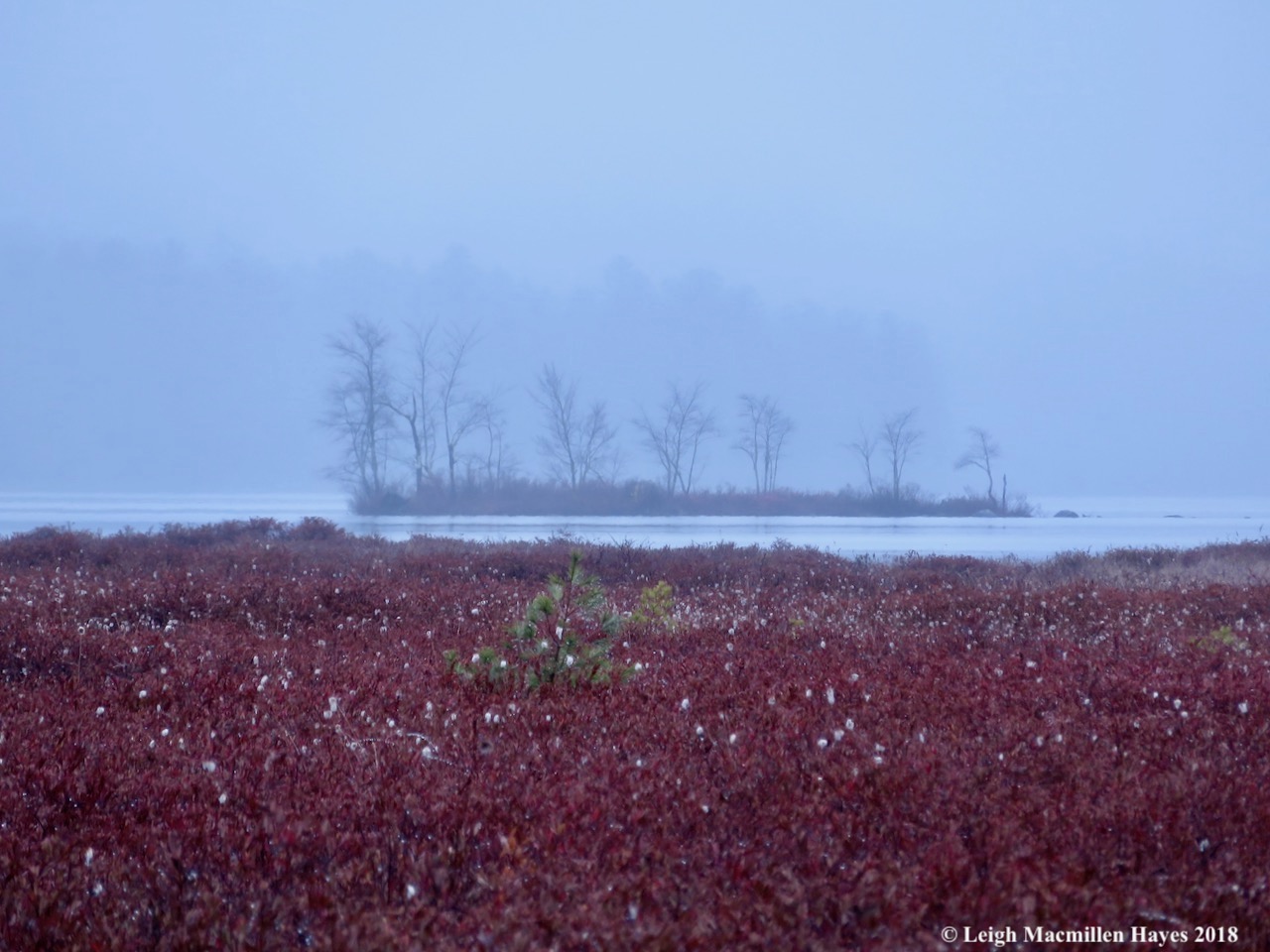
From our vantage point, an island in Kezar Lake’s Lower Bay looked like a ghost ship. And in the foreground, cotton grass still touted its tufted heads.

3-beaver lodges

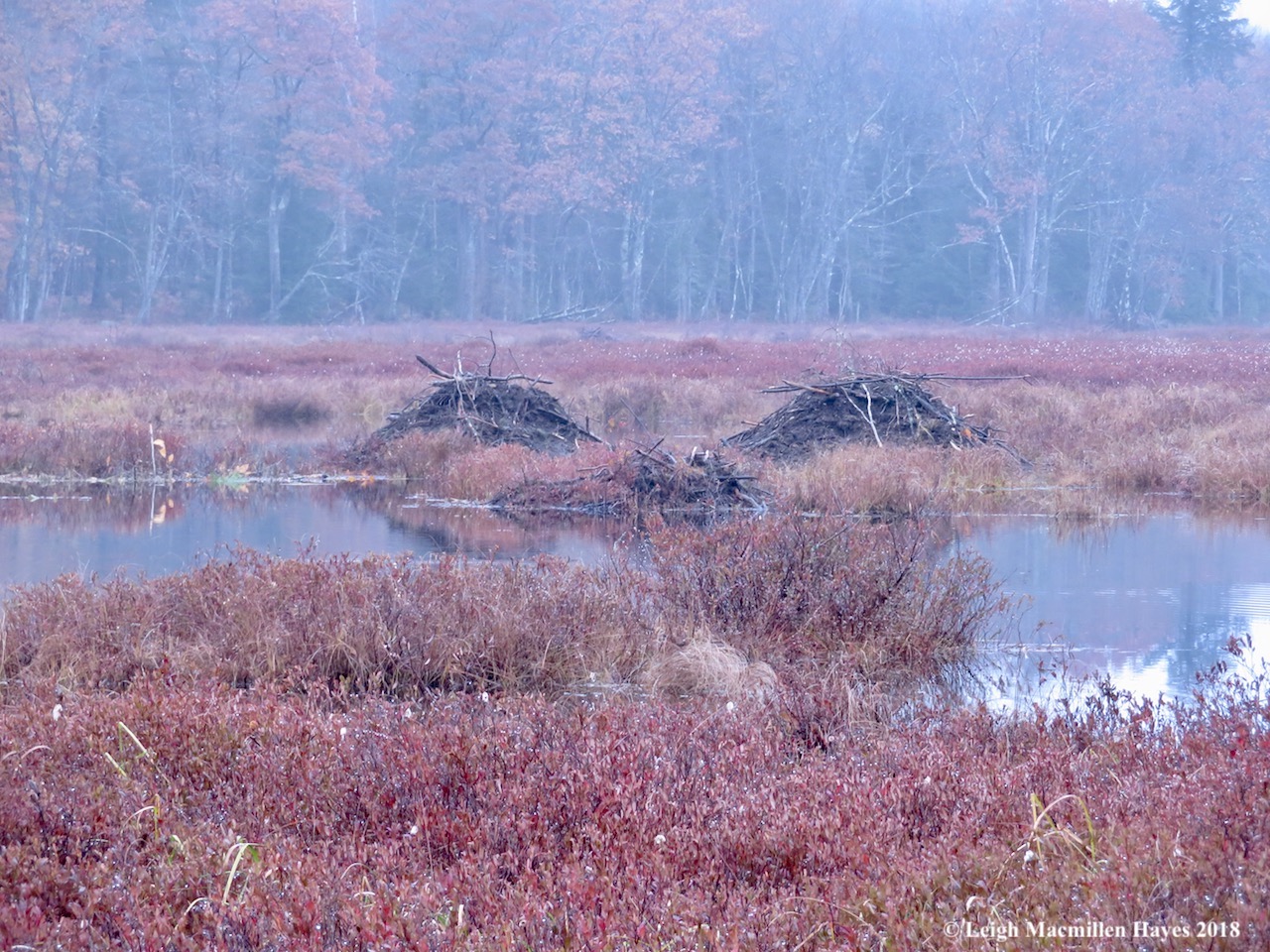
At our feet we could see some aquatic plant roots floating in the water, a beaver treat, and trusted by the mud on the lodges that there had been recent activity. Perhaps they rested indoors before planning to spend time later in the day preparing for the cold months ahead.

4-Pitcher Plants

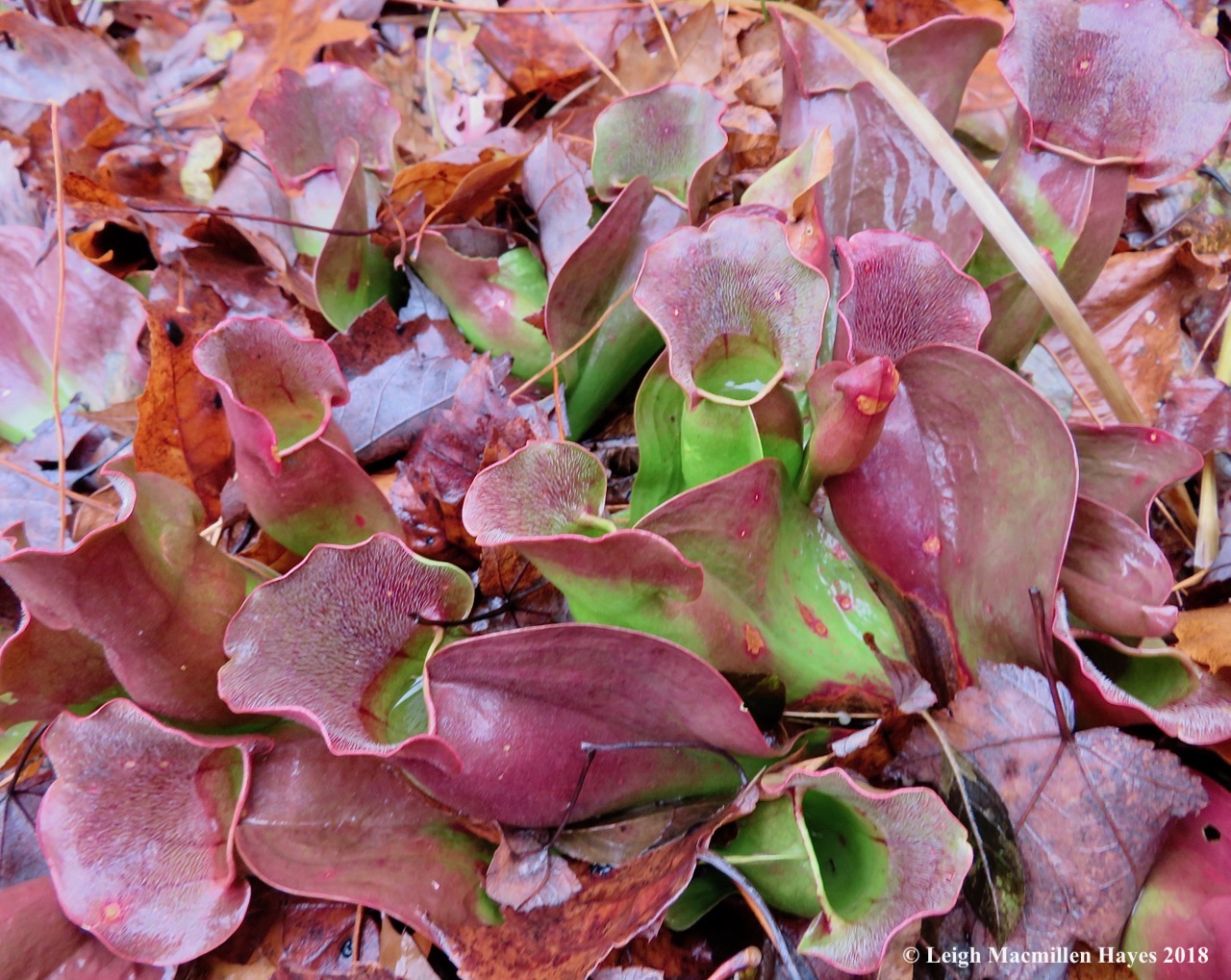
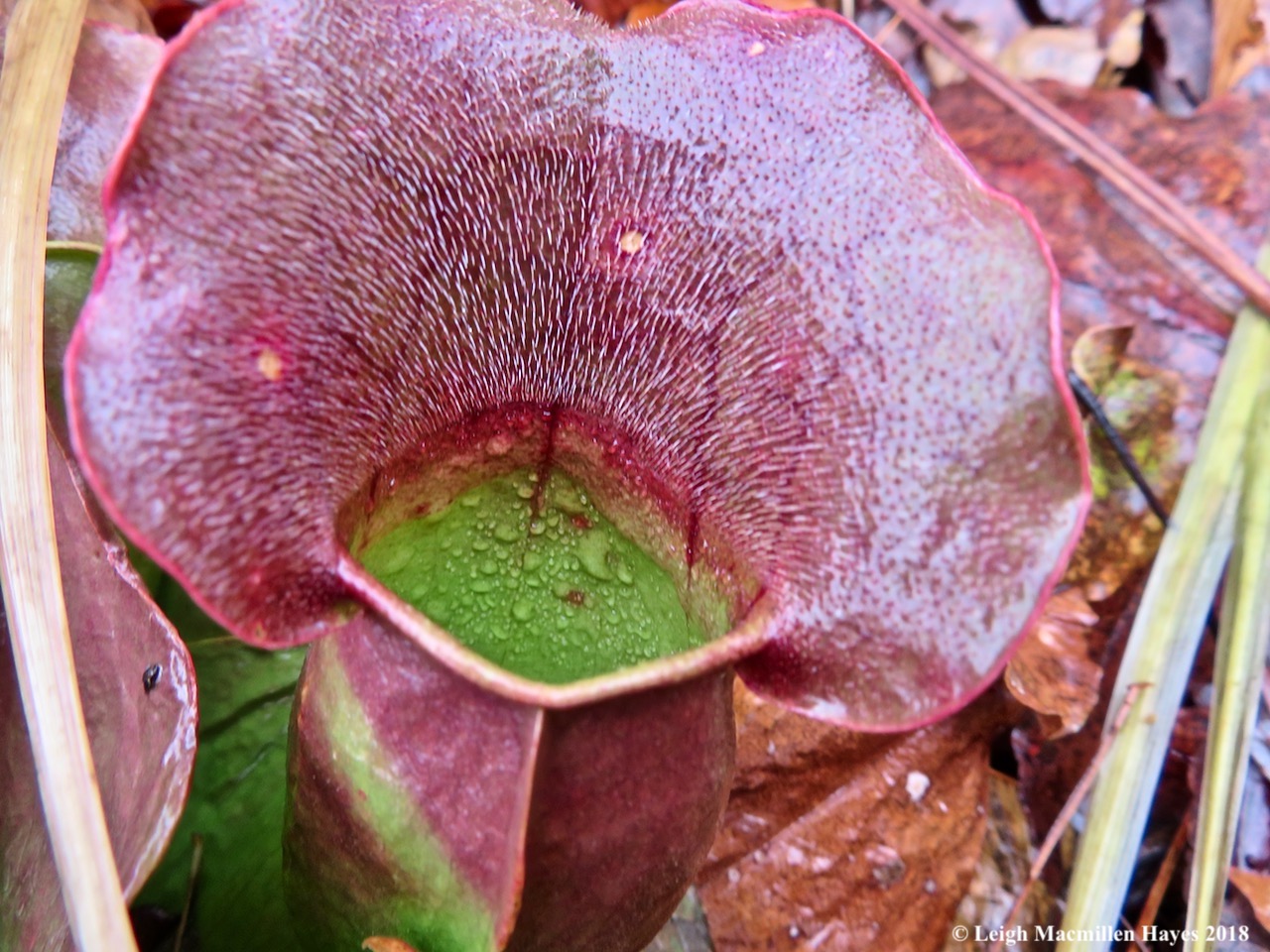
After a while and because I knew they were there, I took Pam along the edge of the brook for a short distance to locate several pitcher plants. Someone once photographed them in their young green form and described them as rare. While helping Dr. Rick Van de Poll, principal of Ecosystem Management Consultants (EMC) in Sandwich, New Hampshire, set up study plots at Lakes Environmental Association’s Highland Lake Reserve in Bridgton during July 2017, we had to watch where we stepped to avoid crushing pitcher plants. It was a perfect time to ask Rick about the green color. Were there green pitcher plants in Maine? And if so, were they rare? He explained that it was just a matter of sunlight and age, all would eventually take on a redder hue in veins and then overall leaf coloration as they matured.

5-pitcher plant runway

This morning, we found some sporting brighter red leaves.

6-spiders within and webs above

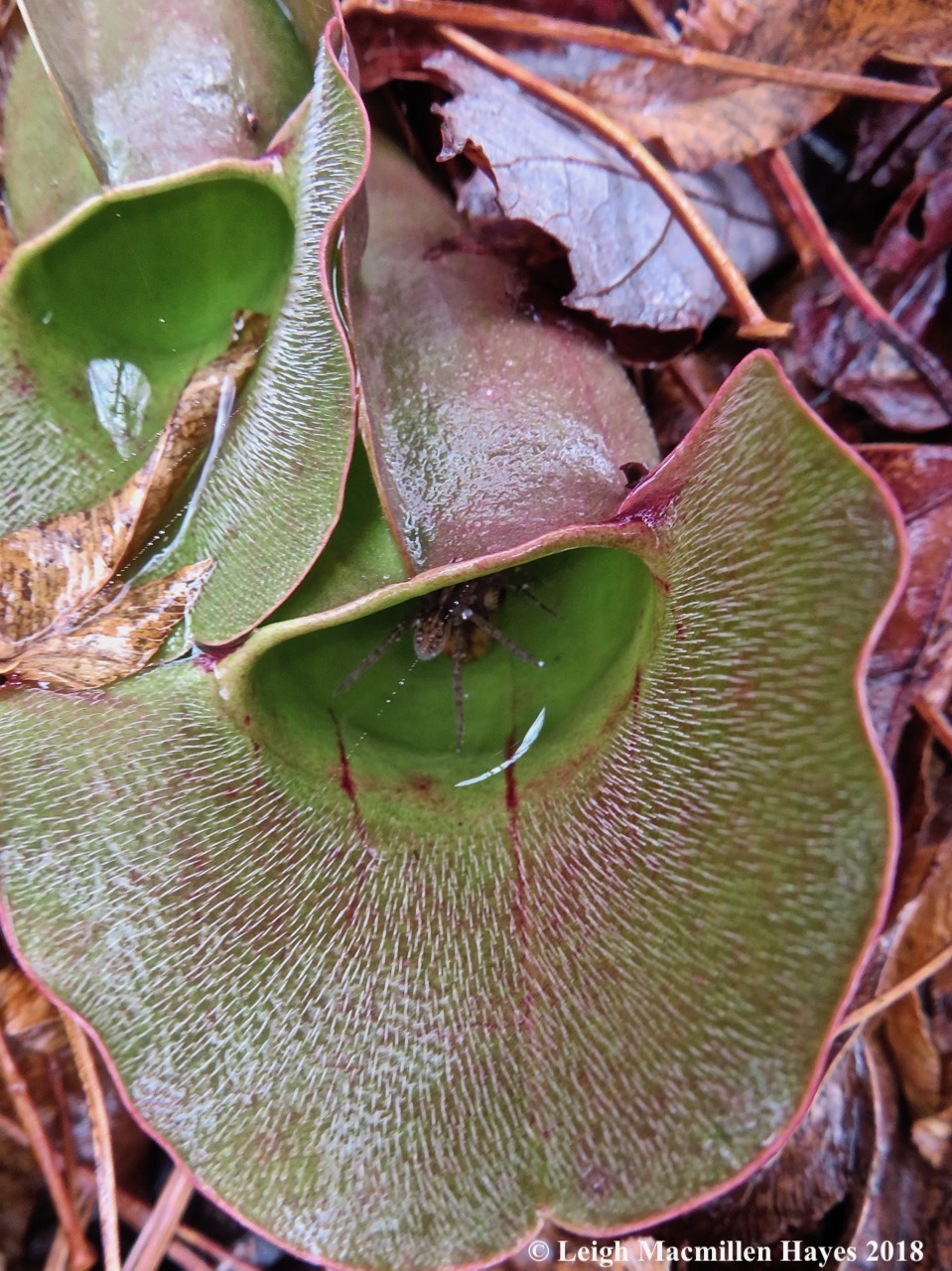
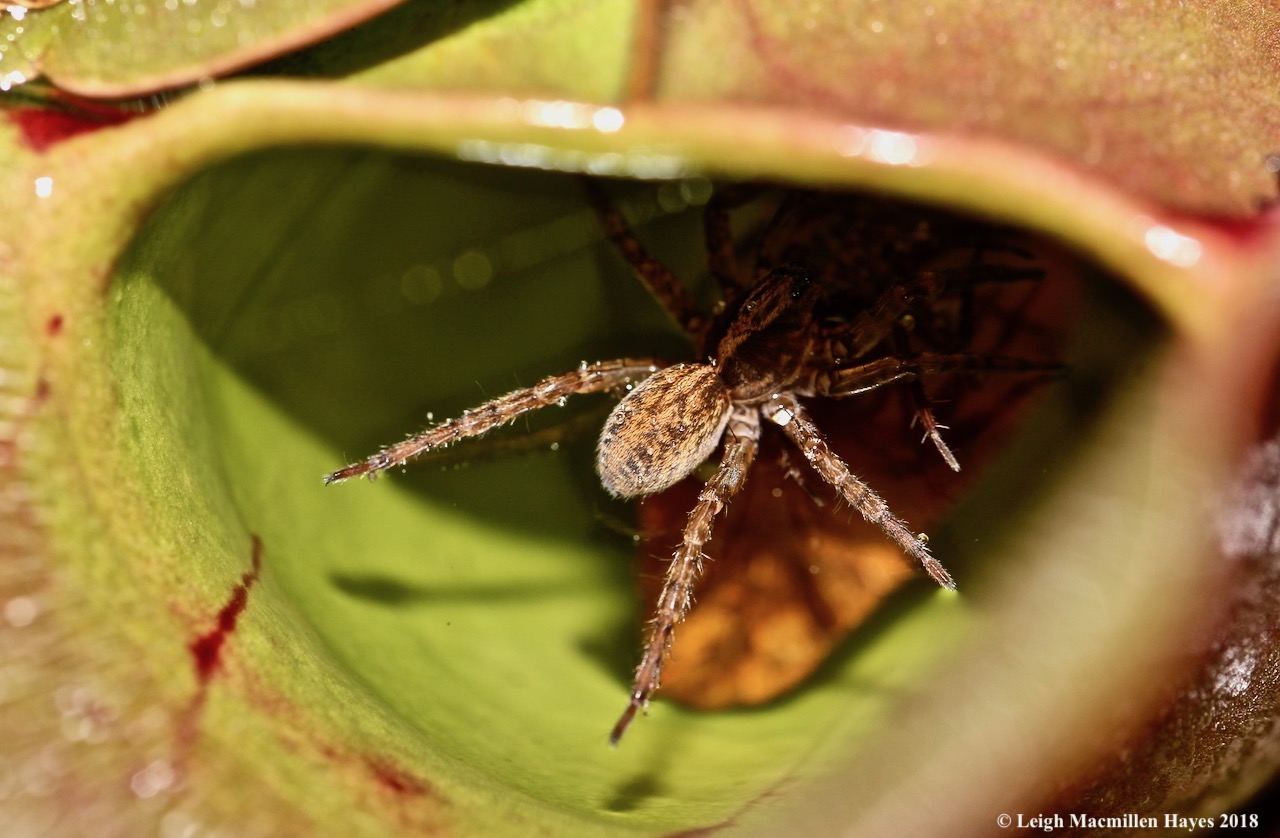
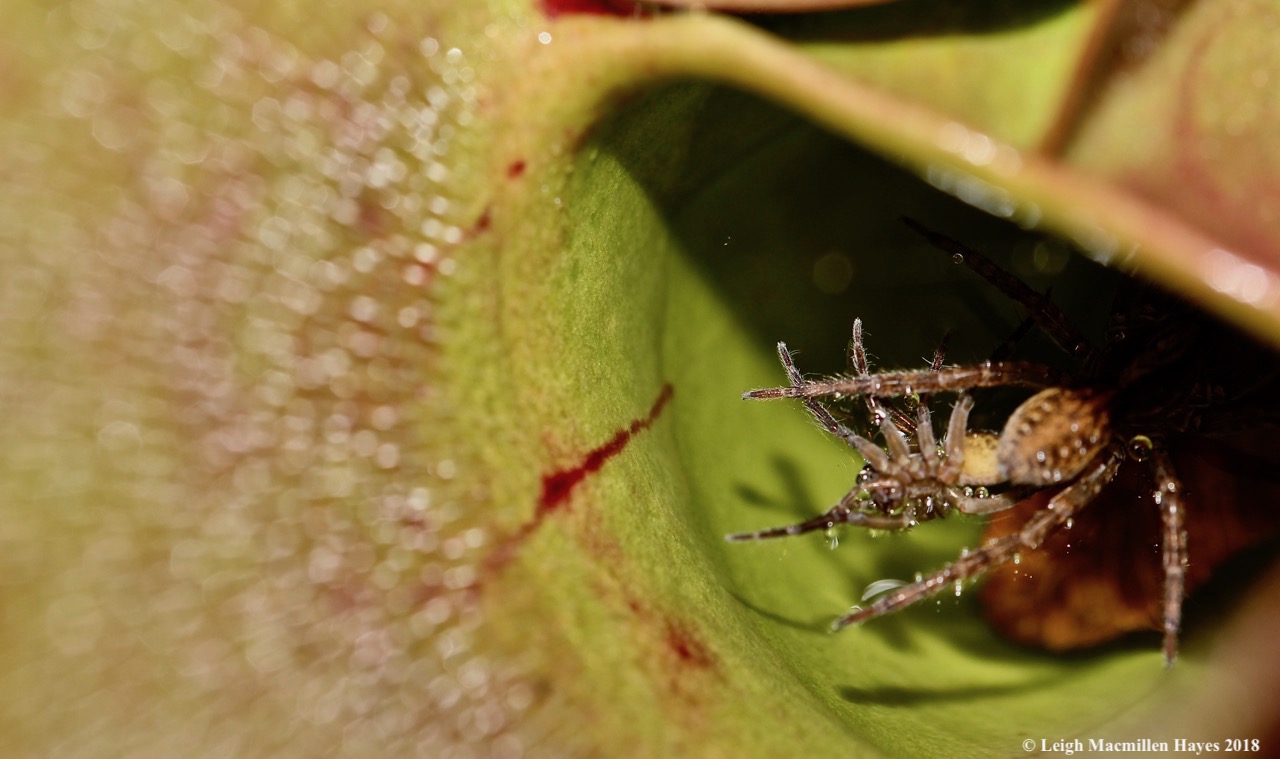
And another plant that was duller in color. Since we were in the locale where the green plant had been discovered, I trusted that it was beginning to show its age. It was the duller one that drew most of our fascination. Carnivorous pitcher plants obtain nitrogen and phosphorus by eating insects. Their oddly-shaped leaves form a pitcher partly filled with water and digestive enzymes. The spout is a hairy landing platform for insects attracted by red venation and nectar glands. Imagine this: an insect crawls to the edge of the leaf, aka pitcher, slips on the downward-sloping hairs and plunges into the liquid below where enzymes and bacteria break it down. Any chances for escape are zapped by those stiff hairs. Do you see what we saw? A spider web across the top of the leaf? And within?

8-larger spider manuevering the smaller one

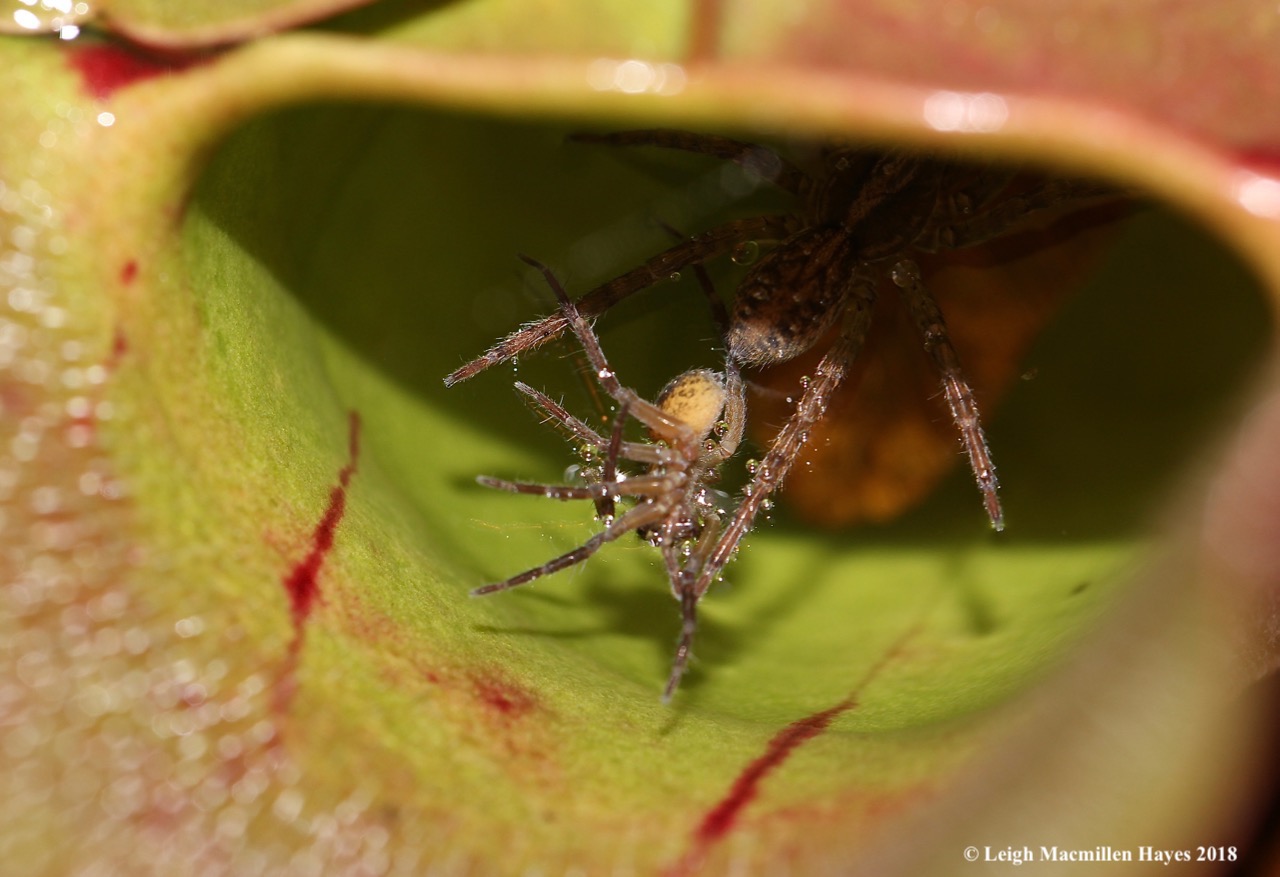
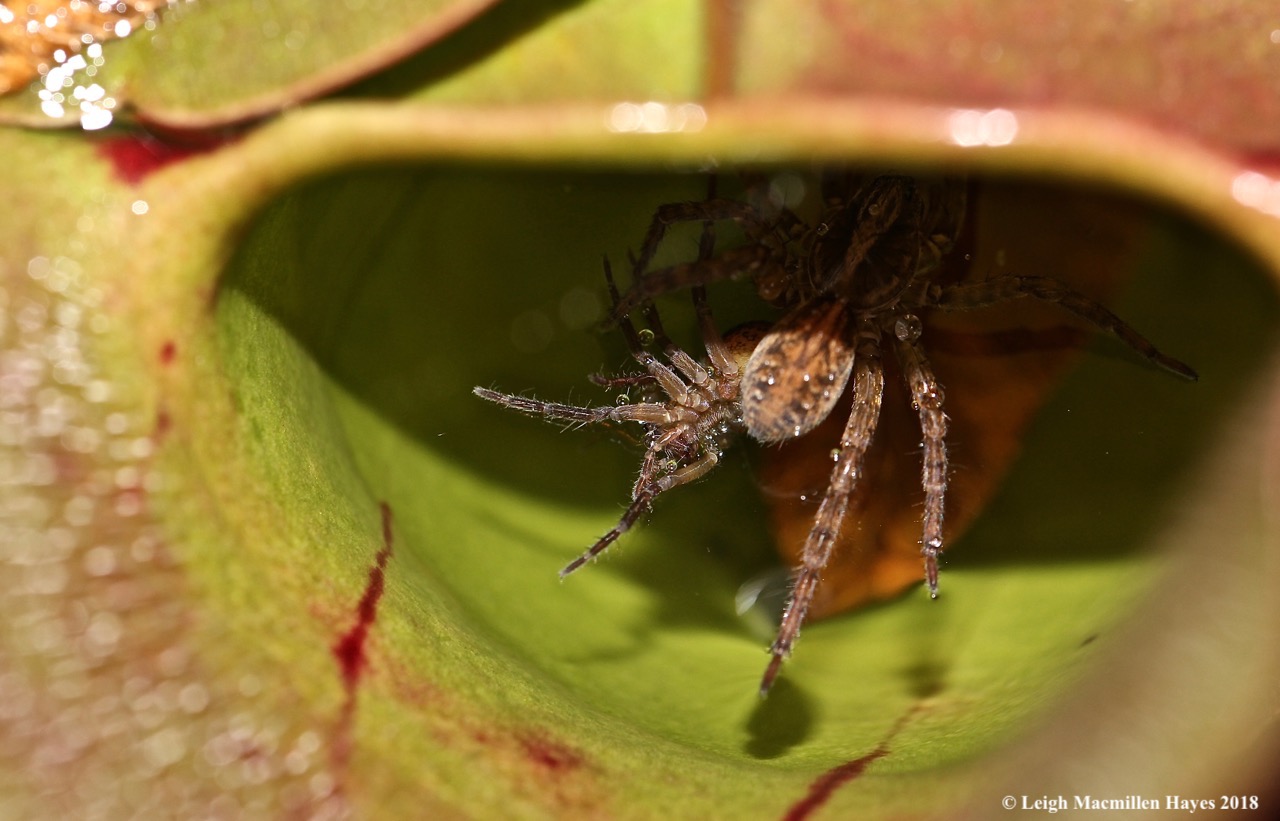
Dueling fishing spiders.

9-pulling it under its body

And so we watched.

10-and out again

The larger one continuously manipulated the smaller one, which appeared to be dead. Back and forth under its body, it kept moving the smaller kin.

11-and back under

Was it trying to eat the other? One last meal before it too succumbed to the plant? Was it trying to move past the dead spider so it could try to climb out? Should we save it?

12-let 'em be

In the end, we left the action with questions in our minds and didn’t interfere.

7-watching the spider action

Except, that is, to take photographs and make a film. Again, our knees were wet and we didn’t care.

14-pigskin puffball 1

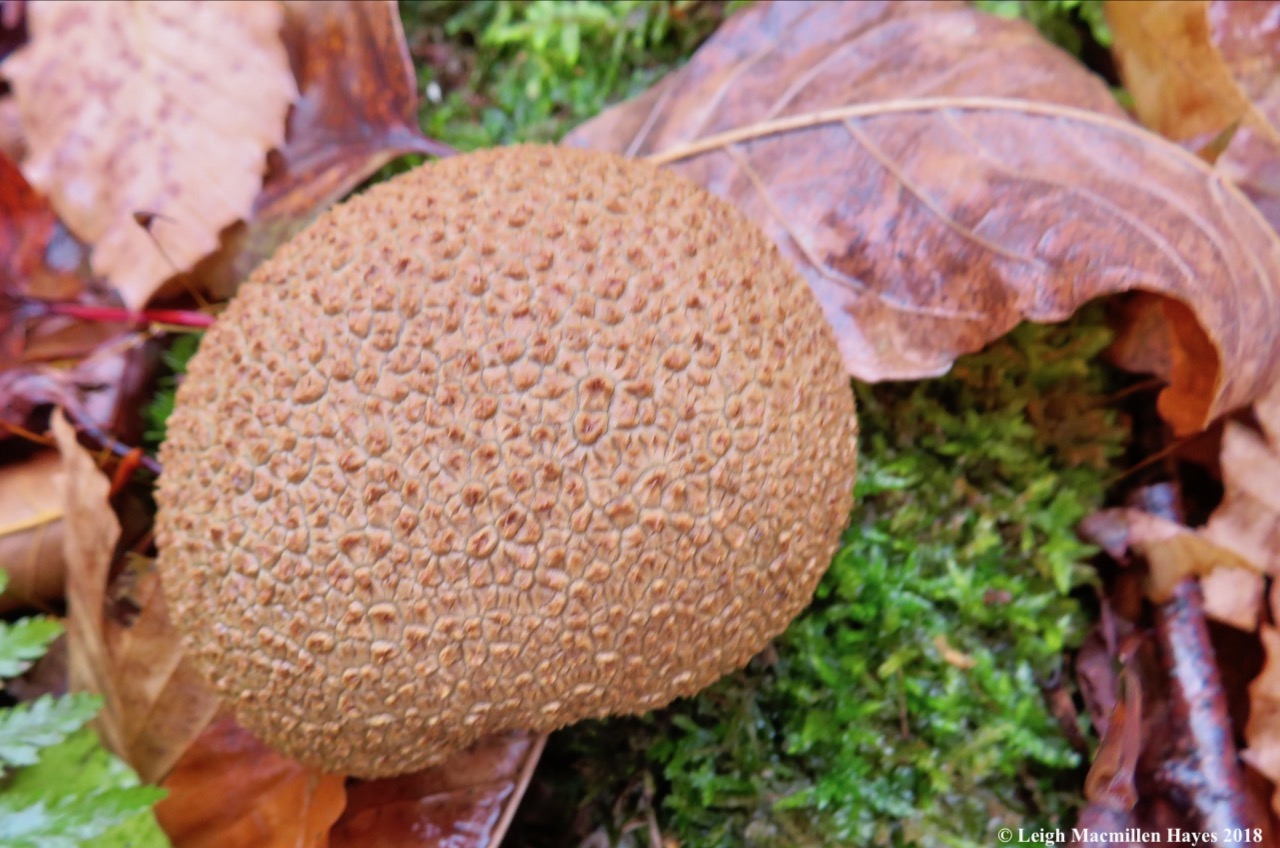
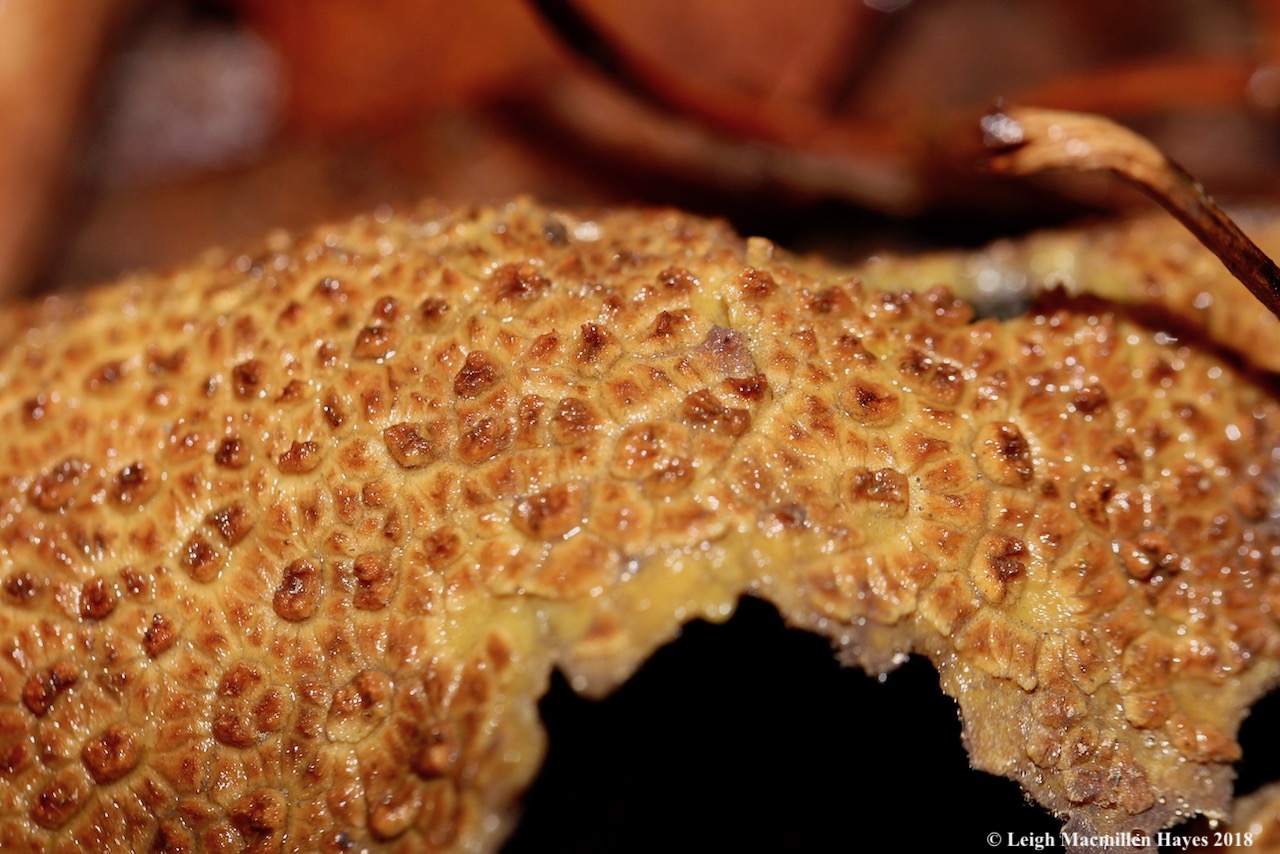
Back on the trail, we found an area where Earthballs decorated some old lumber slash. Their warty outer skin drew our attraction.

15-skin of pigskin

Another common name for Scleroderma citrinum is Pigskin Poison Puffball. Since it’s football season, it’s good to note that footballs used to be made of a pig’s . . . bladder and not its skin, though historically they were called pigskins. Rather than feel leathery, these seemed more rubbery, thus the reference I guess.

15-popping pigskin

And because they were puffballs, they invited a poke.

16-an explosion of spores

From a couple of slits, mature blackish spores erupted. I had to chuckle for no matter with whom I share a trail, puffballs always invite the same reaction–pick up a stick and give it a jab. And each time we share the same moment of glee. And our inner child is released one more time. Thankfully.

18-insect within pigskin

Of course, we found ourselves on our knees yet again when Pam spied something within an Earthball that had exploded prior to our visit. Upon closer inspection, it turned out to be an inanimate insect that looked like it was covered in spores. Canary in the coal mine?

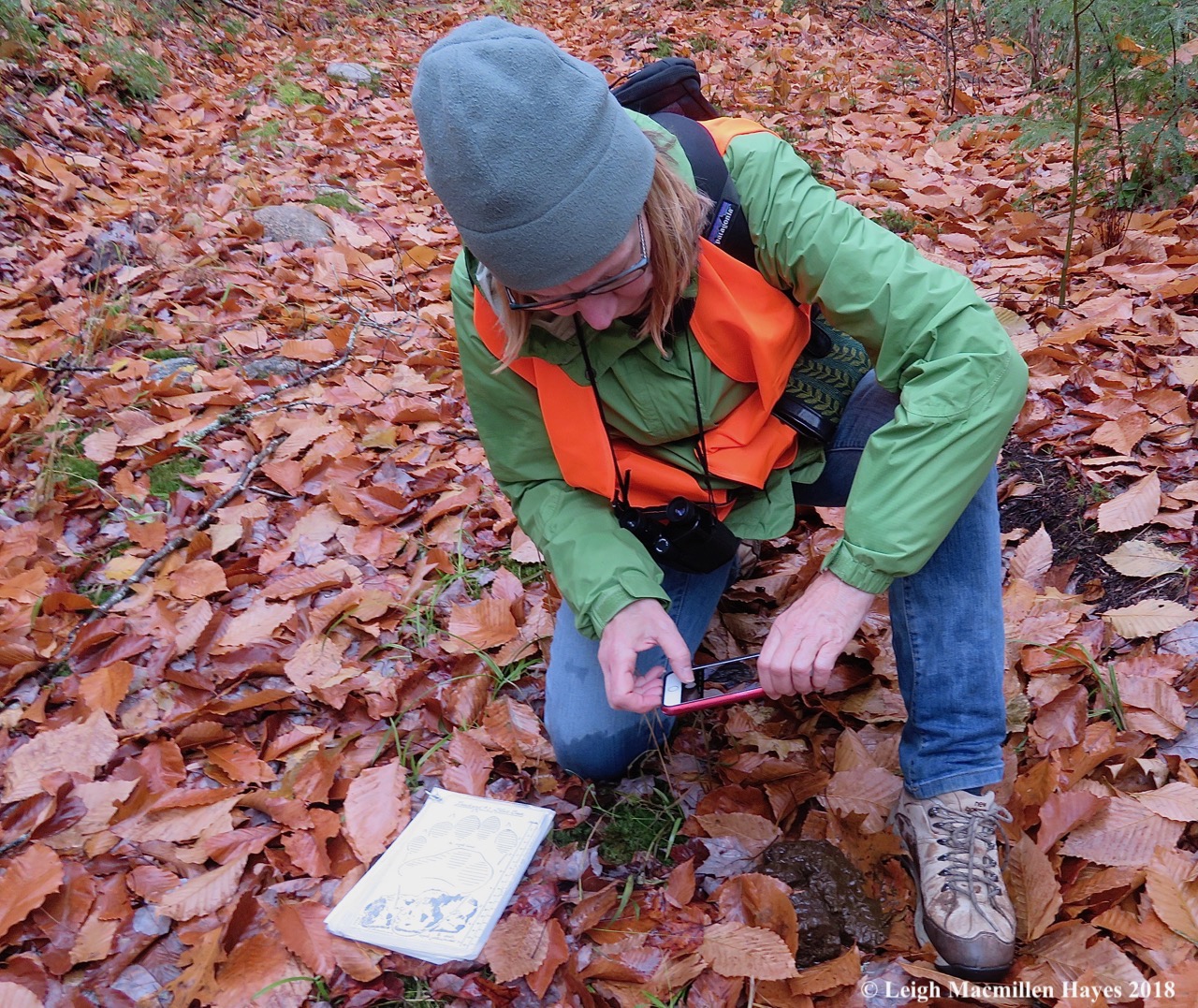
25-Pam and the bear scat

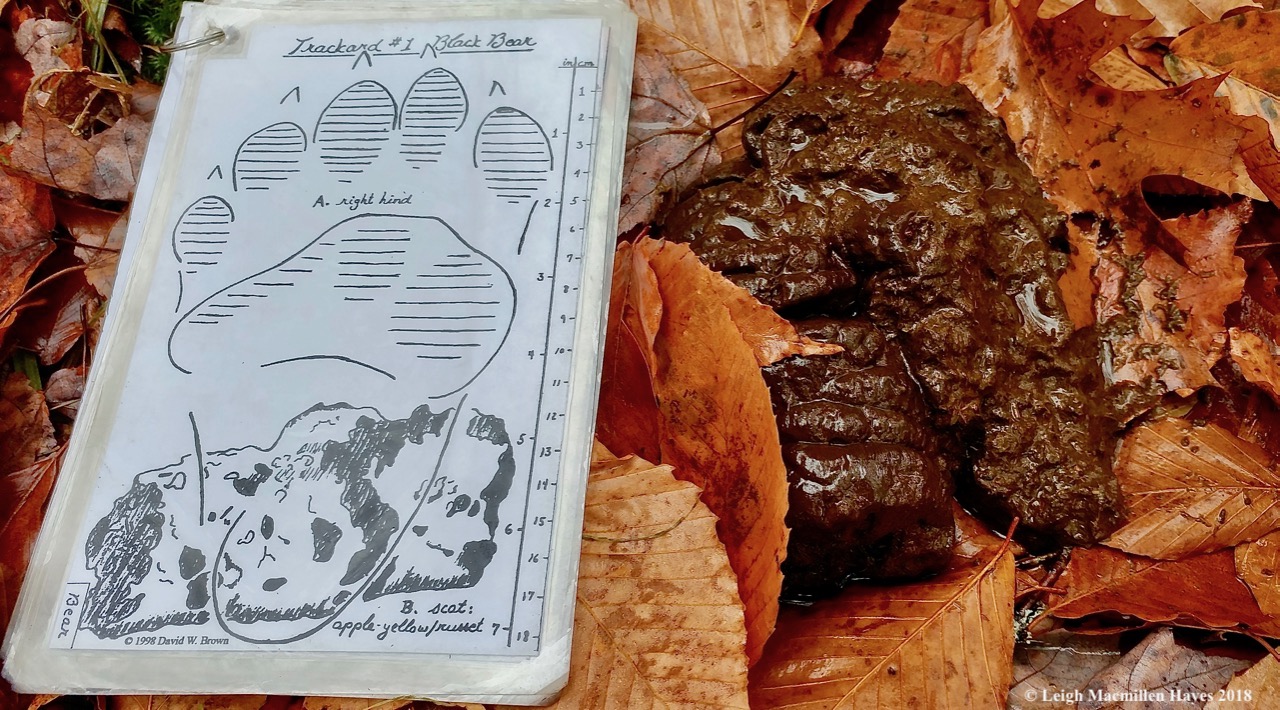
Our next great find was of a different sort and I had to pull the Trackards from my pack while Pam got down for another upclose and personal look. Notice her knee?

22-bear scat

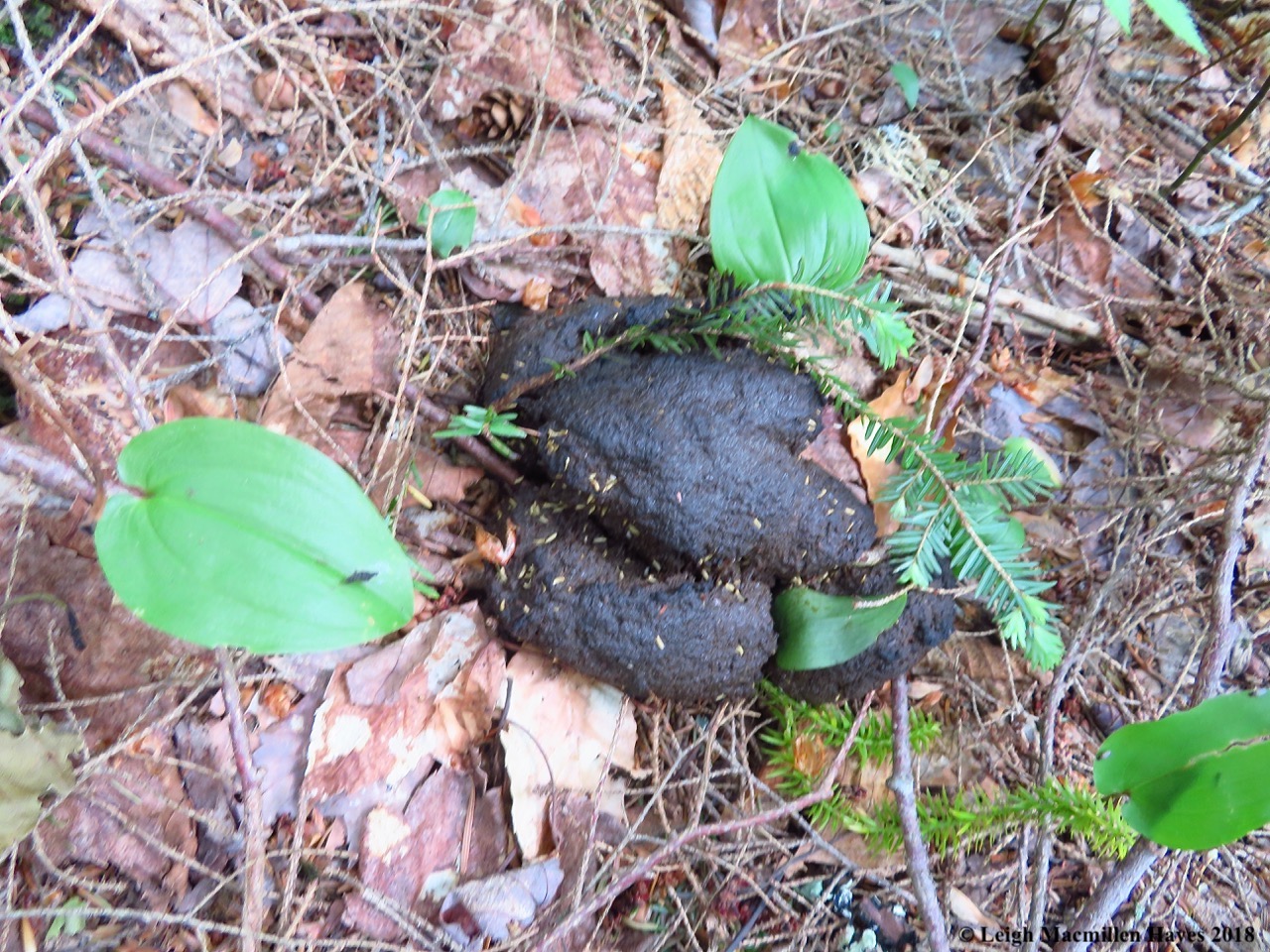
Black bear scat! Indeed. Cylindral and large. We looked for tracks, but conditions were such that we didn’t find any. The scat was enough for this day.

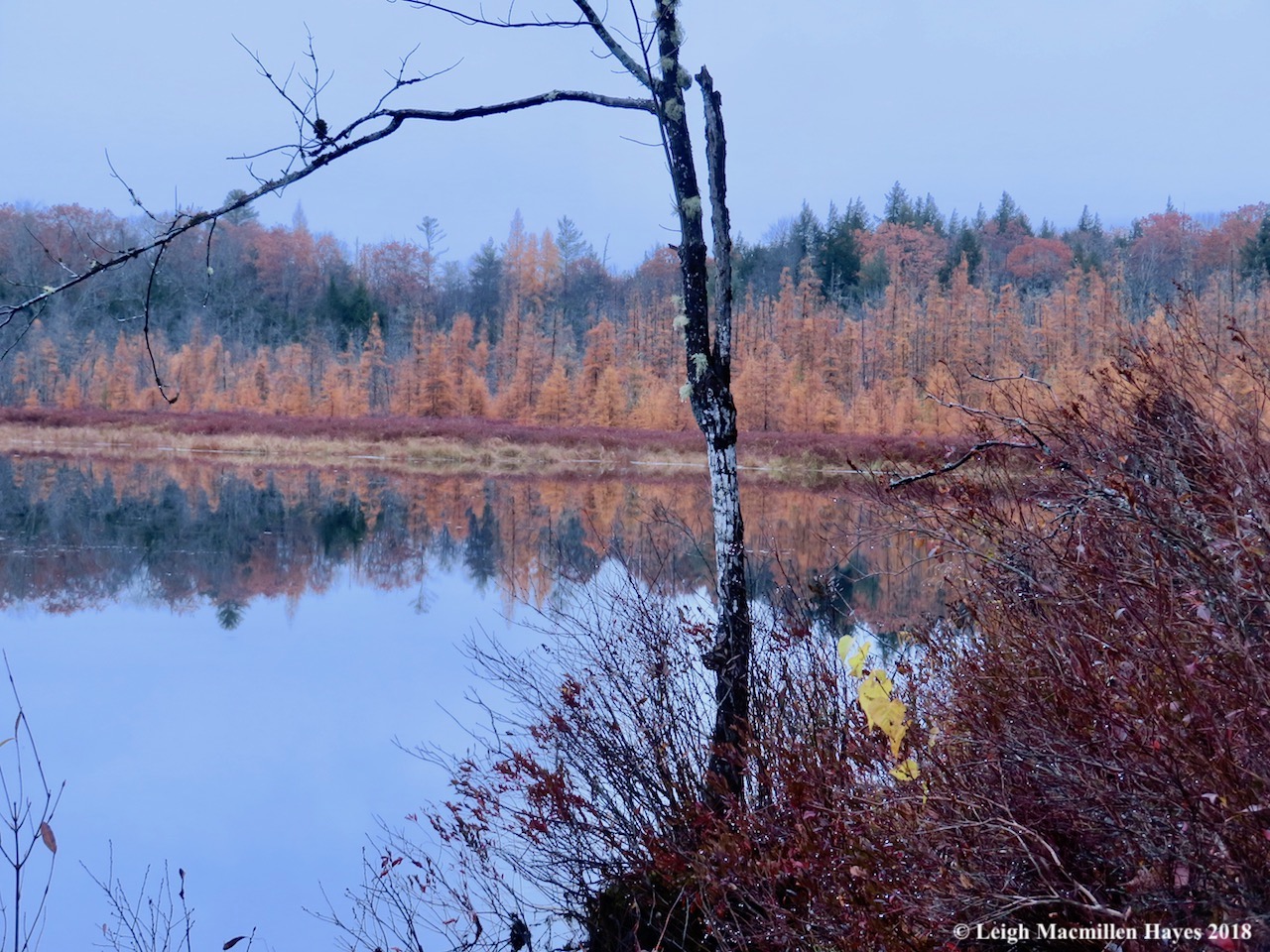
24-Tamaracks

If you go, we strongly encourage you to follow the green trail all the way to the bird/wildlife viewing point along Sucker Brook. Today, the tamaracks on the shore to our right added a tone of bright beauty to the overcast day.

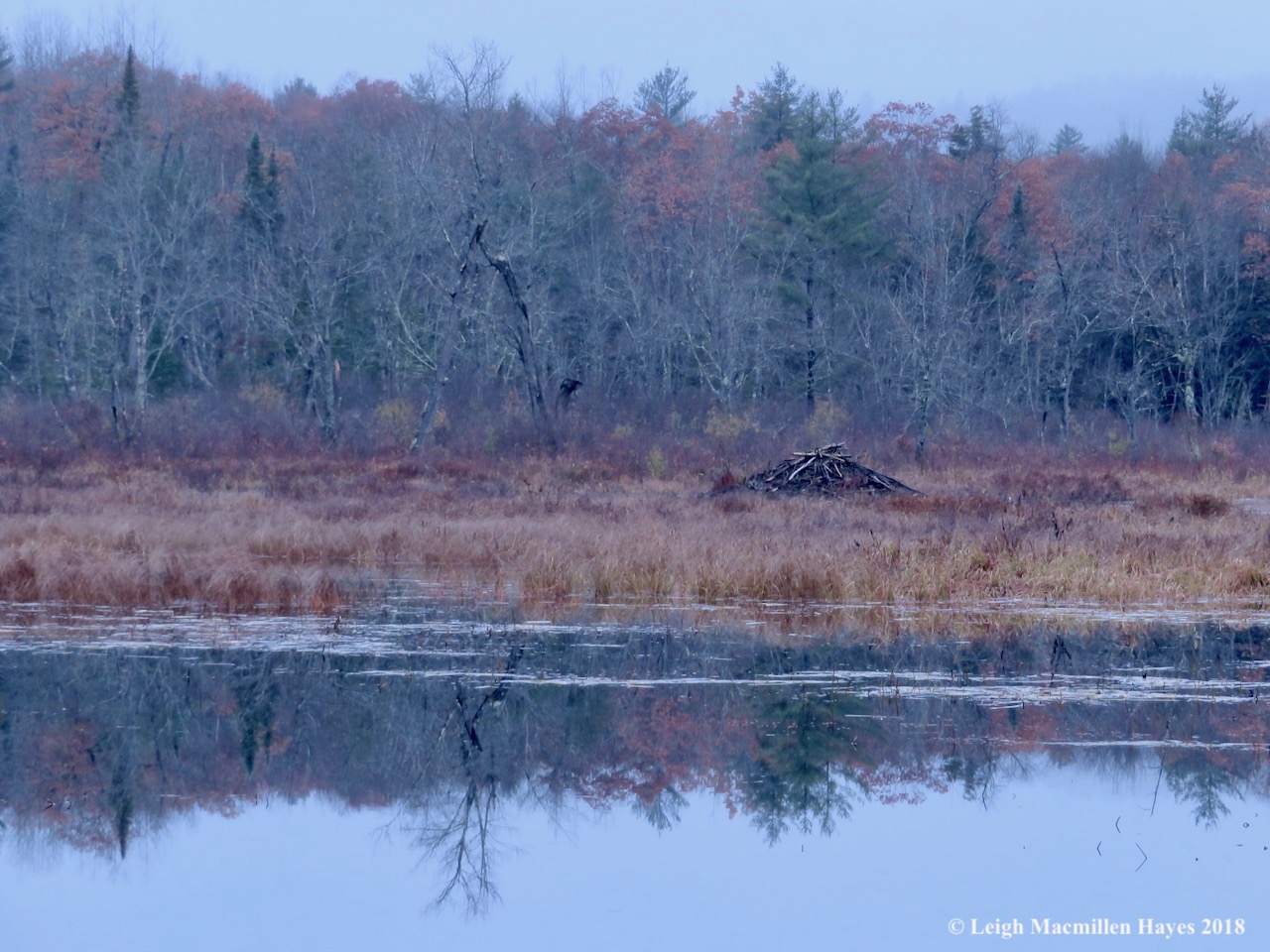
25-Sucker Brook--beaver lodge

And another old beaver lodge also looked like it had received a mud treatment. We could see some beaver chew sticks in the water by the edge of the brook and so we knew again that there had been recent activity. It just means we’ll have to return for another visit if we want to catch some action–perhaps earlier in the day.

In the meantime, we let the view point become our turn-around point and quickly (sorta) followed the blue trail back for we both needed to move on to the rest of our day.

But . . . despite the mist and occasional raindrops, we elected to tramp. And were delighted with the results. Here’s hoping the rest of the day goes like that.


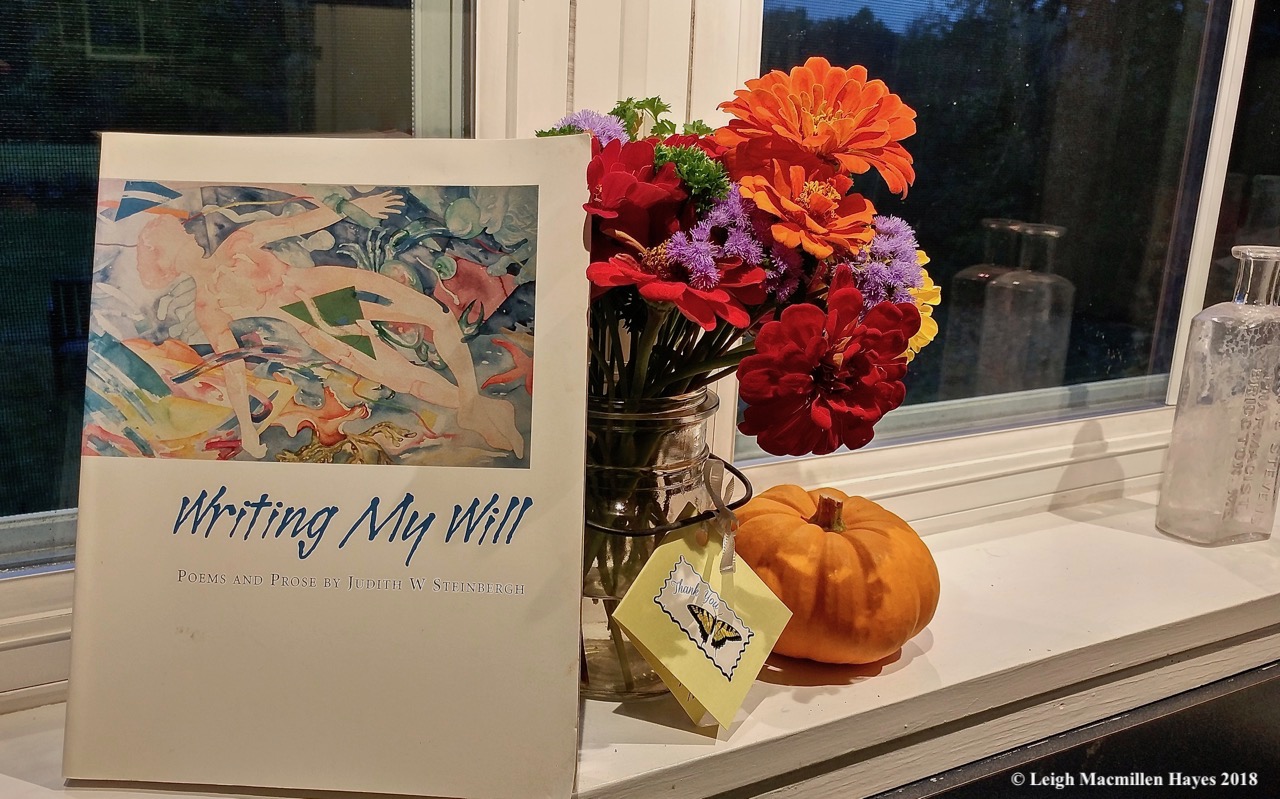
Book of October: Writing My Will

Judy Steinbergh has fed me repeatedly. She’s nourished my body and soul with actual food, but also with her poetry and prose. And recently, she gifted me one of her books entitled Writing My Will.

0

Though it’s her poems about Maine that I love the most in this collection, I feel honored not only to have been the recipient of such a gift, but also to be offered the opportunity to peek into her life and share the path that she’s walked through marriage and motherhood, divorce and death.

17

I hear Judy’s voice even when she isn’t reading to me. And I covet her descriptions and command of lyrical language and imagery, especially as she captures the natural world:

“. . . after speculating on the slap of water, whir of wings,

out of the grainy dusk, some creature bursts

from the forest. Before we focus on its shape,

almost before it can be named,

it twists back, leaps, makes its escape.”

~ excerpt from “Wild Things”

or this one:

“. . . roughs the lake up like the wrong direction of fur

until it is leaping dolphins and whales in rows

until it is sleek stampeding panthers in droves

until we, in our small boats, are driven to shore.”

~excerpt from “The Wind”

1b

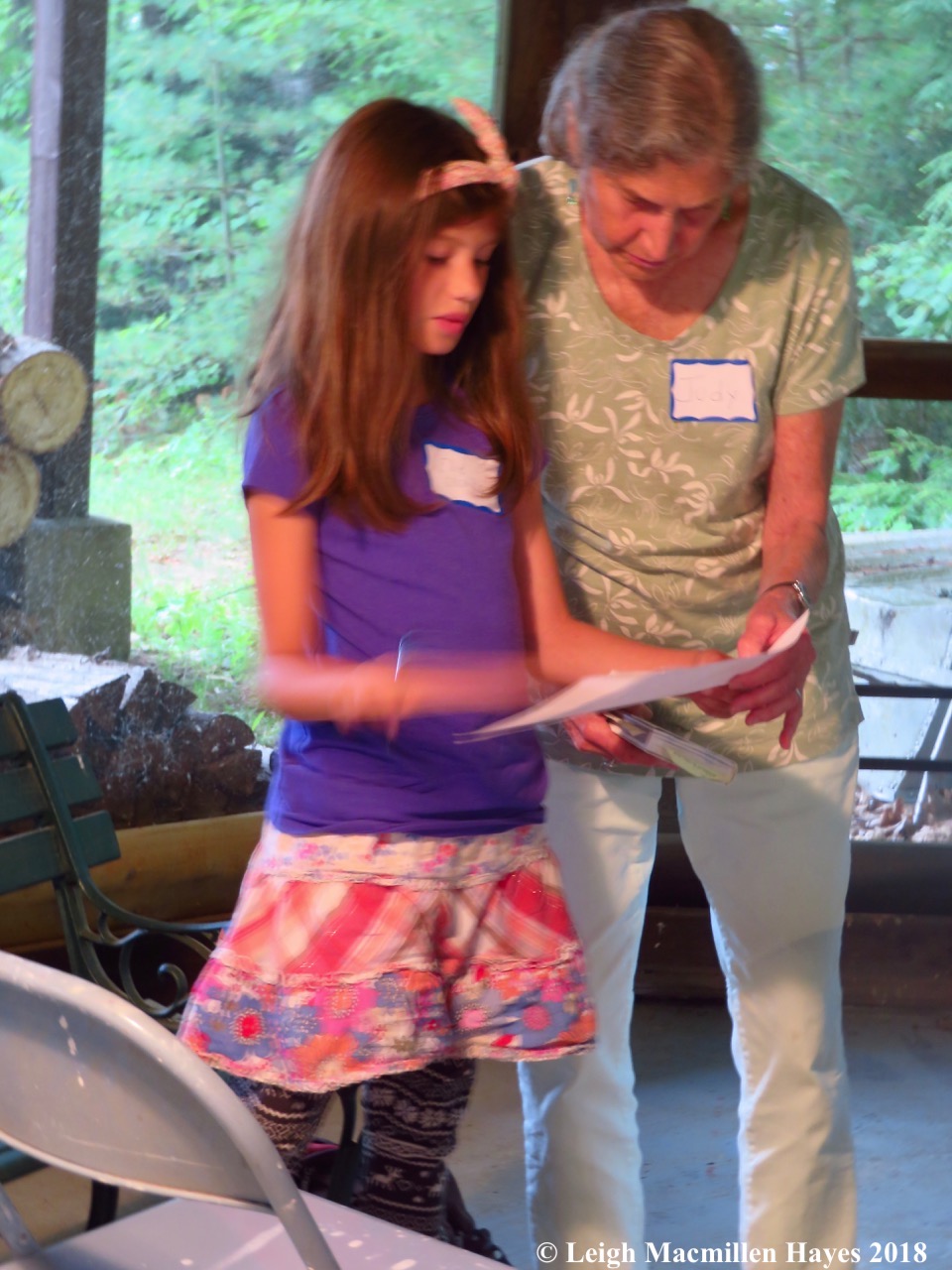
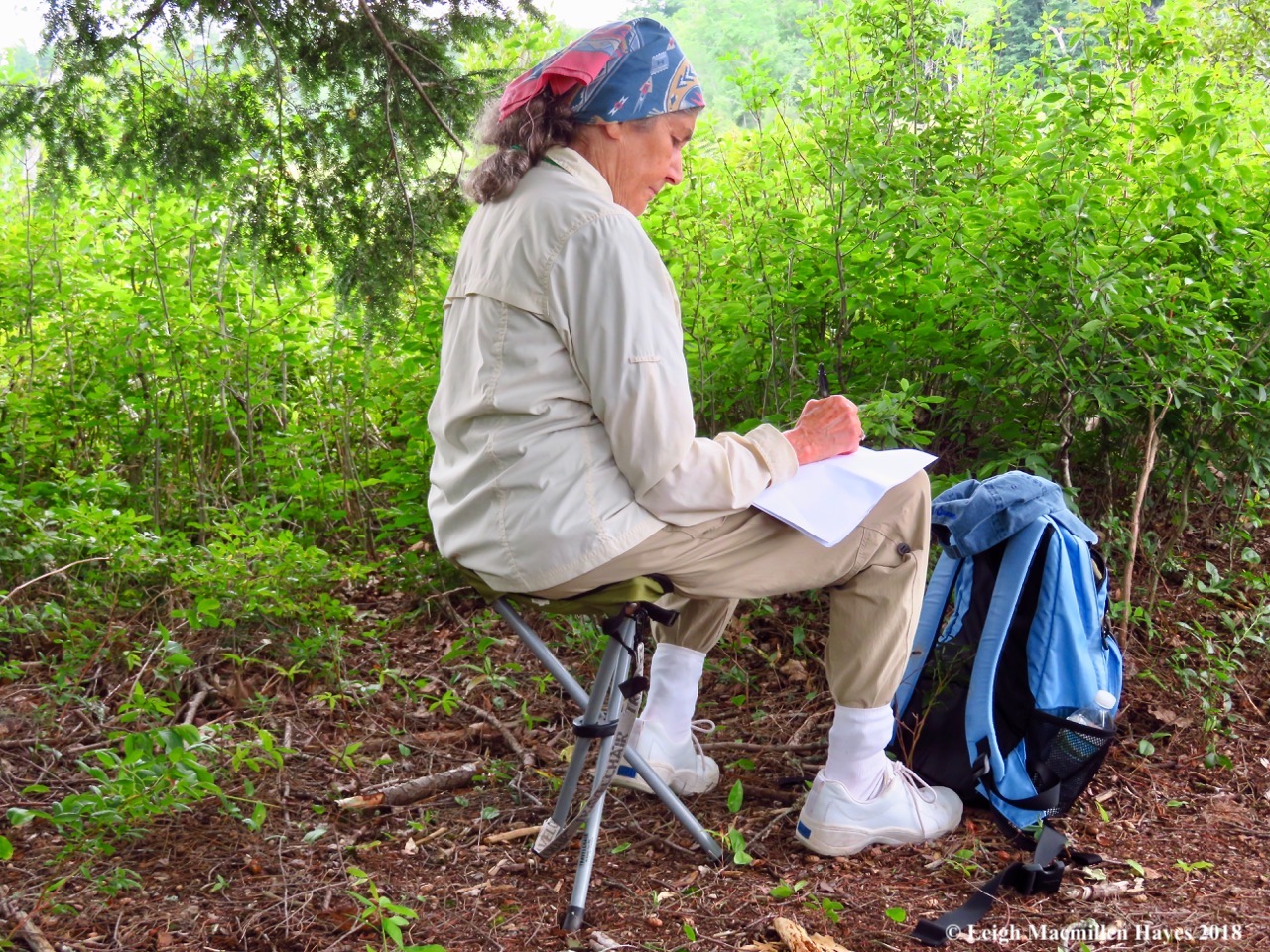
Each summer, she’s gathered her own poems, and those of other landscape poets, and shared them with an intimate group of writers through a workshop co-sponsored by the Greater Lovell Land Trust, Charlotte Hobbs Memorial Library, and Hewnoaks Artist Colony at the Hewnoaks property overlooking Kezar Lake in Lovell, Maine. After talking about rhythm and form, and having us read her works and others, she sends us off to find a comfortable spot in which to contemplate and write.

1a

Poets young and old flock to her and she embraces all with a listening ear and mentoring manner.

1c

And sometimes we travel the path together, either hunting for mushrooms, looking at plants and any of the millions of other things that capture our attention, or spending time writing and sketching.

Judy has written five books of poetry, three poetry teaching texts, and recorded other works. She’s the Poet Laureate for the town of Brookline, Massachusetts. And she teaches and mentors students and teachers for Troubadour, Inc. throughout greater Boston and serves as Poet-in-Residence in various communities.

This particular book, Writing My Will, is an assortment of Judy’s treasures from her family, including her dying mother, to the natural world that embraces her. Based on the theme, she’s divided it into sections: Heirlooms; My Mother Comes Back to Life; What Memories Will Rise; Talking Physics With My Son; This Wild; Meeting the Birthmother; Long  Distance; The Art of Granddaughters; Working on Words; Elegies; Writing My Will.

And it ends with one most apropos for this month:

October Song

Wild asters and the birds whir over

in flocks, Queen Anne’s Lace curls up

by the docks, the tide runs out,

runs out like it hurts, our step

is so light on this earth.

I love these times alone, thinking

about how my children have grown,

and how I come into this age

illuminated, softened

as the marsh’s edge.

And the tide runs out, as forceful

as birth, as if nothing else mattered

but rushing away and rushing back in

twice a day. Our step

is so light on this earth.

We’re given October like a gift, the leaves

on the warp, the light on the weft,

and the gold drips through

like cider from the press; we know,

we know that our lives are blessed.

But the tide runs out, runs out like it hurts,

what were fields of water only hours ago

are meadows now when the tide

is low; our step is so light

on the earth. Wild asters. All

we are sure of is change, that maple

and sumac will turn into flame, this softness

will pass and the winter be harsh

till the green shoots push

up through the marsh. And the tide

rushes in like a thirst and will keep

its rhythm even after our time,

the seasons, too, will repeat

their design. Our step

is so light on the earth.

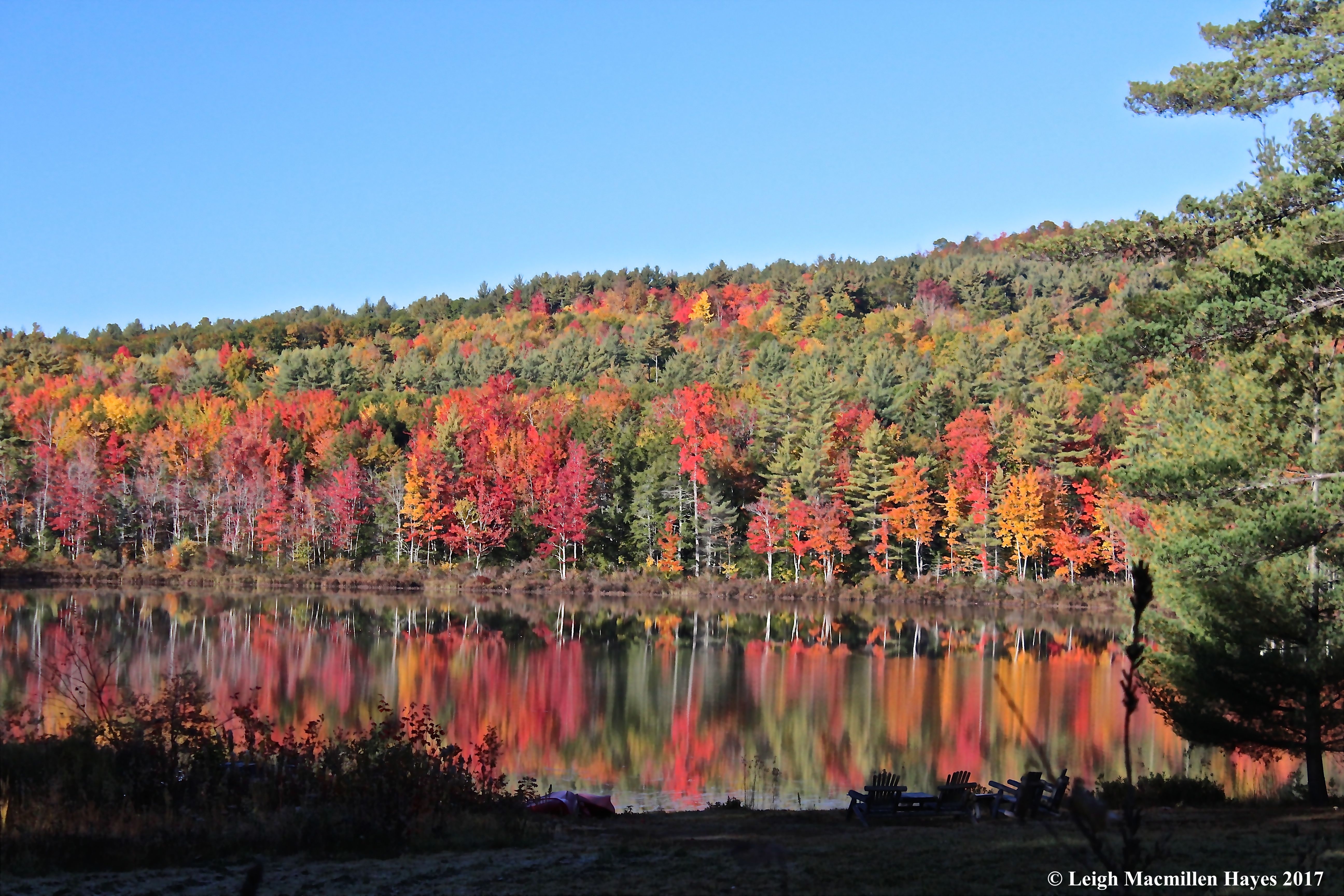
And so, dear Judy, as my thank you for the gift of your book, I want to now share a melody of photos from previous autumns, all taken during Octobers past in your beloved Maine locale when you can’t be here. (Well, maybe one is from the Northeast Kingdom of Vermont–shhhh!)

3

4

5

7

8

9

10

11

12

13

14

15

16

2

“Our step is so light on the earth”

Book of October: Writing My Will–Poems and Prose, by Judith W. Steinbergh, Talking Stone Press, 2001.


A Berry Pleasant Mountain Hike

Thirty-two years ago I moved to Maine (the only place I’ve ever lived where the number of years counts as bragging rights) and Pleasant Mountain quickly figured into my life. The first day I drove past it on Route 302, I was killing time before a job interview and one look at Moose Pond with the mountain looming over it and I knew I very much wanted to live here. A couple of days later, I received the phone call I’d been waiting for and principal Larry Thompson said it was only a matter of formality that my name go before the school board. By the next week, I was packing up in New Hampshire and making my way further north. I’d found a place to live that meant I’d pass by the mountain on my way to and from school each day. And then that October I attended a Halloween party with friends at the ski lodge of what was then called Pleasant Mountain Ski Resort. I was an olive and I met this guy dressed as a duck hunter. Turns out he’d never been duck hunting, but had a great duck puppet and he could turn its head with the stick within. He certainly turned my head!

Thus began the journey with my guy. Our first hike together–up the Southwest Trail of Pleasant Mountain. That first winter, he taught me to downhill ski, well sorta. My way of turning that first time included falling as I neared the edge of the trail, shifting my body once I was down on the snow, begging for the components of a steak dinner, rising and skiing across at a diagonal to the opposite side only to repeat my performance. Dinner was great that night! And well deserved.

Time flashed forward four years, and at noon on August 4, 1990, we were married; our reception in the Treehouse Lounge at the Ski Resort. In all the years since we first met and then were married and beyond, we’ve skied (though I have managed to avoid that concept more recently) together and with our sons before their abilities outgrew mine, snowshoed and hiked and grown only fonder of the place we call home. Our intention yesterday was to climb the mountain in celebration of our 28th anniversary, but the weather gods outpouring of moisture was not in our favor.

Today, however, dawned differently and so mid-morning we made our way with a plan to hike up the Bald Peak Trail, across the ridge to the summit, and down the Ledges Trail. We’d left the truck at the Ledges, ever mindful that the last thing we want to do after climbing down the mountain is to walk 1.5 miles to reach our vehicle.

1-heading up

As I’ve done over and over again in the past 32 years, I followed my guy–over rocks and roots and bald granite faces.

2-Pinesap

Once in a while I announced the need for a stop because my Nature Distraction Disorder ticked into action. In this case, it was Pine-sap, or Monotropa hypopitysMono meaning once and tropa turned; hypopitys for its habitat under a pine or fir. Also called Dutchmen’s Pipe, this is a parasitic plant that obtains all its nutrients by stealing them from the roots of a host tree. It doesn’t enter the host directly, but through a fungal intermediary. And like Indian Pipe, it has no green tissues. It differs from I.P. in two ways, its yellow color as compared to white, and two to eleven flowers versus a single flower. In my book of life, both Pine-sap and Indian Pipe are great finds.

3-Moose Pond below

I didn’t let my NDD get the better of me too often on the way up. It was extremely humid and so we did stop frequently, but also kept a pace that worked for both of us and soon emerged onto the ridge where a look back through the red and white pines revealed a peek of the causeway that crosses Moose Pond.

5-hidden camp

Employing the telephoto lens, I spied our camp hidden among the trees, only the dock and our little boat showing. It’s amazing how obvious all the neighboring camps seemed when viewed from up high.

7-ridge line trail

After the climb up, the ridge always seems a cinch as the pathway wanders through blueberries, pines and oaks.

6-lunch rock

At last we found lunch rock, a place to pause in the shade and enjoy our PB&J sandwiches. We’d packed cookies for dessert, but decided to save those for later. My guy, however, had accidentally unpacked my work backpack and discovered a few pieces of a dark chocolate KitKat–my stash when I’m tired at the end of the day and need a pick-me-up before driving home. It looks like the purchase of another KitKat is in my near future for we topped off the sandwiches with a sweet treat.

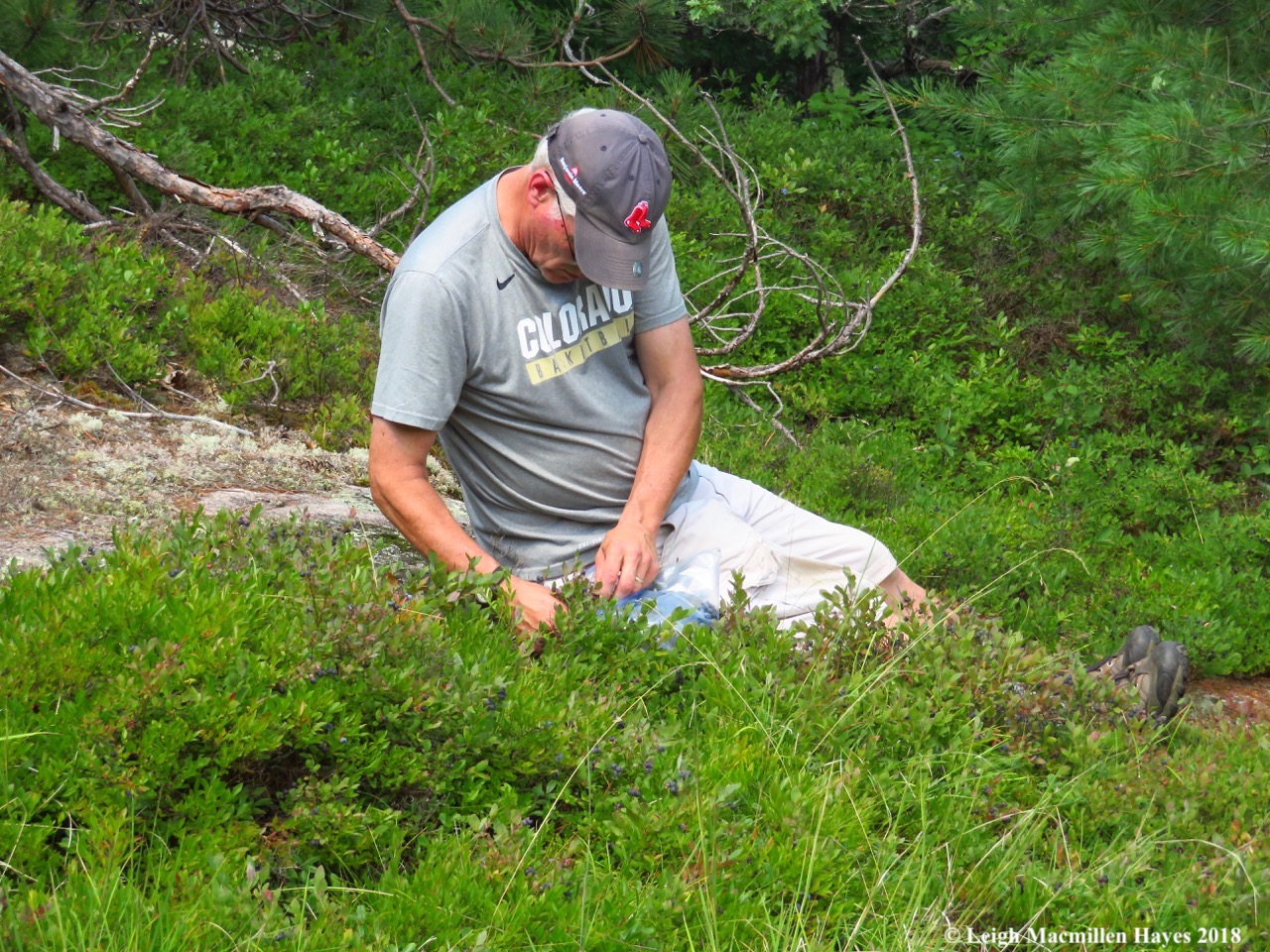
8-picking blueberries

After lunch, my guy’s eyes focused in on one thing only. That is after he moved away from his original spot behind the rock we’d sat upon for our repose. Unwittingly, he’d stirred up a yellow jacket nest and managed to walk calmly away, only one bee stinging his leg.

14-blueberries

While his attention was on the gold at his feet–in the form of low-bush blueberries, I turned my lens in a variety of directions. Oh, I helped pick. A. Wee. Bit.

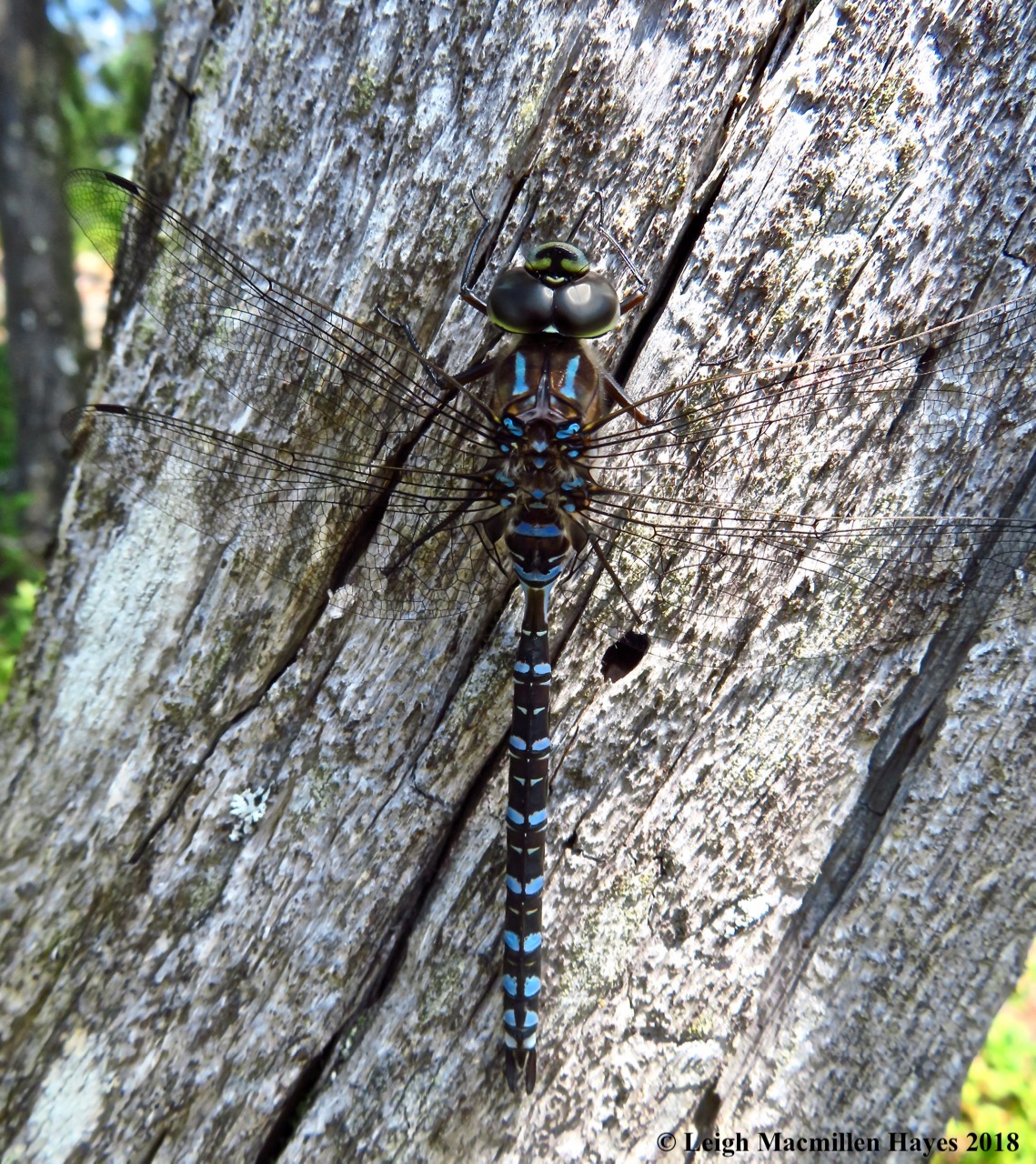
9-Lake Darner Dragongly

But there were other things to see as well and this dragonfly was a new one for me. A few highlights of this beauty: Do you notice the black cross line in the middle of the face. And on the thoracic side stripe, do you see the deep notch?

10-Lake Darner Dragonfly

Both of those characteristics helped in ID: Meet a Lake Darner. Even the male claspers at the tip of the abdomen are key, for they’re paddle-shaped and thicker toward the end. Though he didn’t pause often, Lake Darners are known to perch vertically on tree trunks. I was in awe.

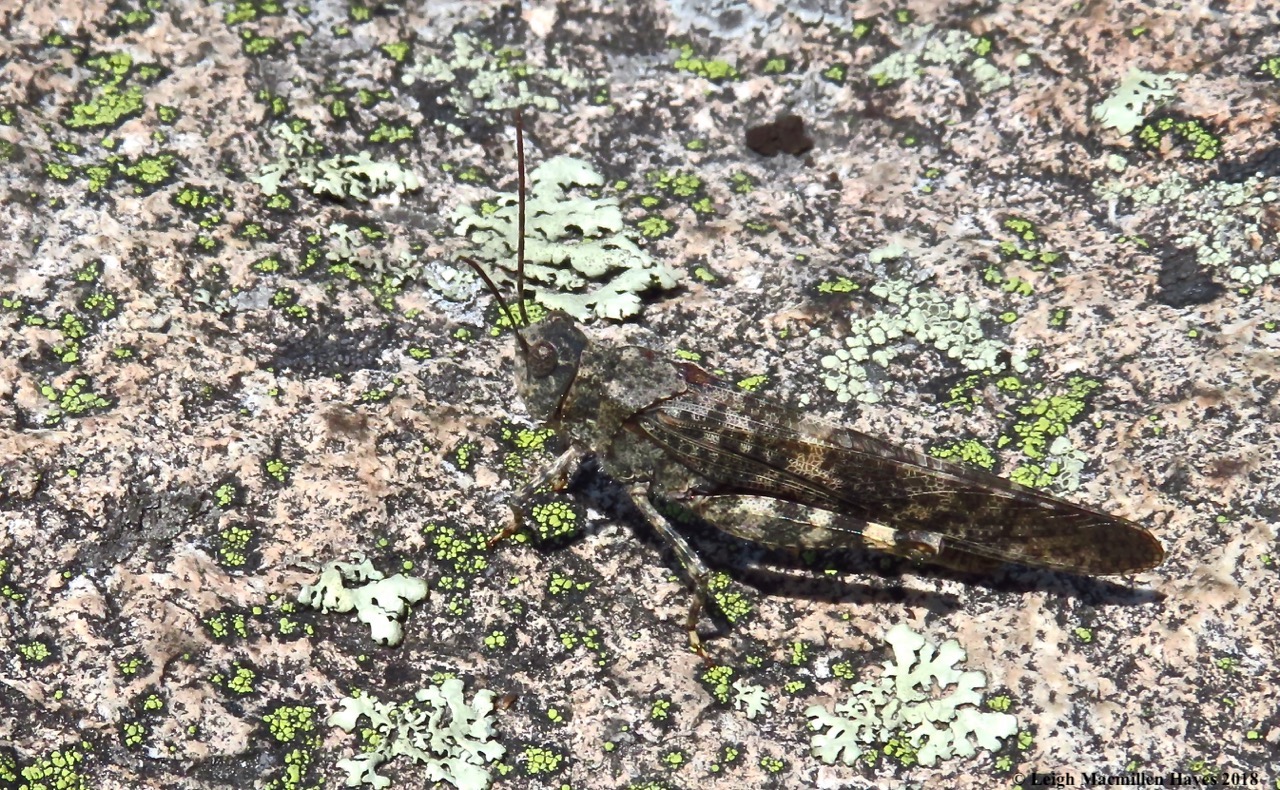
11-grasshopper

All the while we were on the ridge, the Lake Darners flew about, their strong wing beats reminiscent of hummingbirds, so close did they come to our ears that we could hear the whir. And then there was another sound that filled the summer air with a saw-like buzziness–snapping and crackling as they flew. I couldn’t capture their flight for so quick and erratic it was, but by rubbing pegs on the inner surface of their hind femurs against the edges of their forewings, the grasshoppers performed what’s known in the sound world as crepitation. Crepitation–can’t you almost hear the snap as you pronounce the word?

12-coyote scat

It wasn’t just insects that caught my eye, for I found a fine specimen of coyote scat worth noting for it was full of hair and bones. It was a sign bespeaking age, health, availability, and boundaries.

12A

Turns out, it wasn’t the only sign in the area and whenever we hike the trails on Pleasant Mountain these days, we give thanks to Loon Echo Land Trust for preserving so much of it. According to the land trust’s website: “Currently, Loon Echo owns 2,064 mountain acres and protects an additional 24 acres through conservation easements.”

13-picking some more

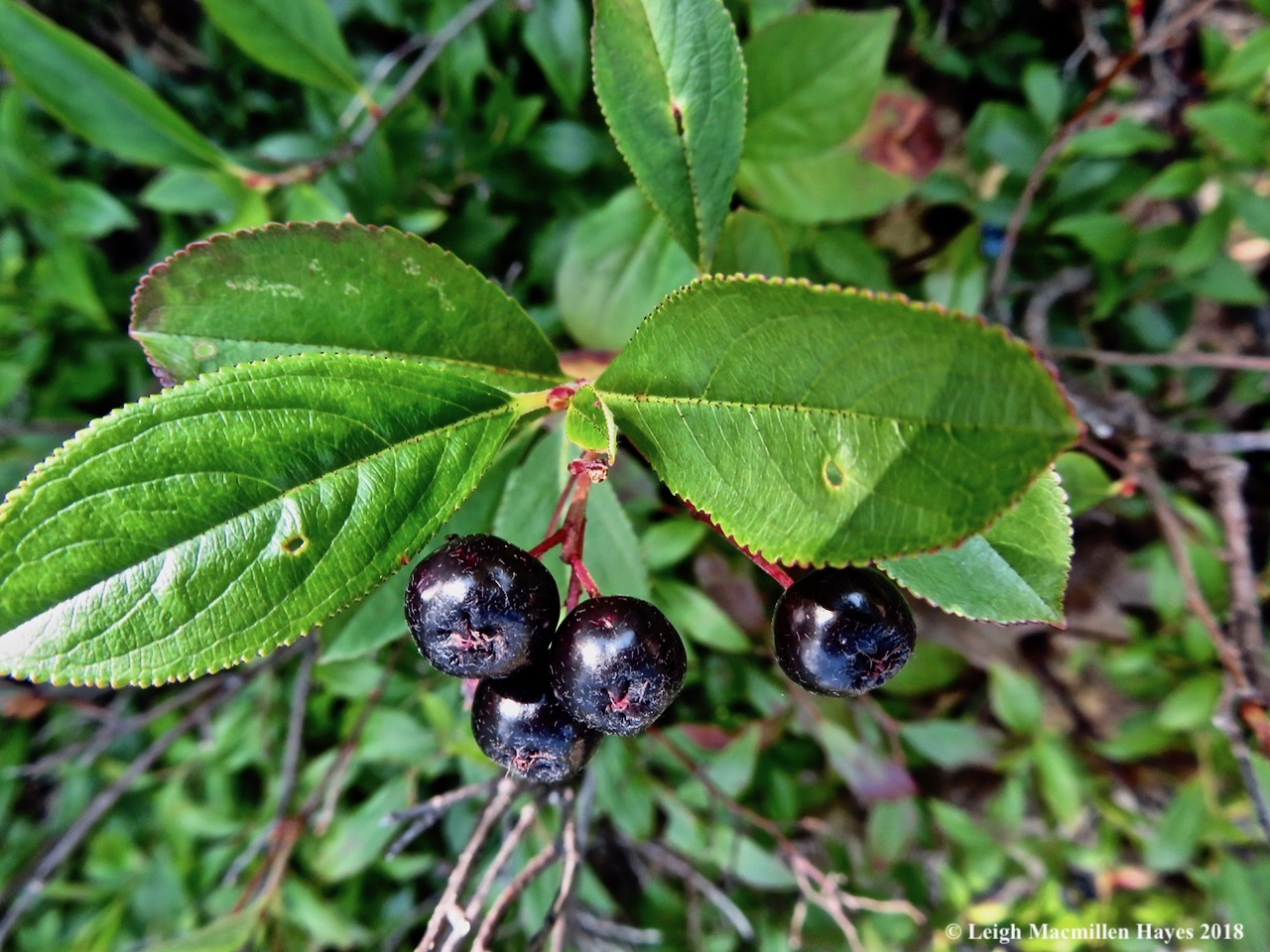
Our time on the ridge passed not in nano seconds, for my guy was intent on his foraging efforts. I prefer to pick cranberries, maybe because they are bigger and bring quicker satisfaction as one tries to fill a container. But, he leaves no leaf unturned. And enjoys the rewards on yogurt or the possible muffin if his wife is so kind, until late in the winter.

15-middle basin of Moose Pond

As we slowly moved above the middle basin of Moose Pond, I found other berries growing there.

14-lingonberries

Among them, lingonberries were beginning to ripen. They grow low to the ground, below the blueberries, and resemble little cranberries. In fact, some call them mountain cranberries. Like blueberries, they like acidic, well-drained soil. For all the leaves, however, there were few fruits and I had to wonder if the birds were enjoying a feast.

16-huckleberries

Huckleberries also grow there, though not quite as abundantly as along our shorefront on Moose Pond. They’re seedier than blueberries, though the local squirrels don’t seem to mind. Both red and gray harvest them constantly as they move throughout the vegetated buffer in front of camp.

17-summit fire tower

It took some convincing, but finally my guy realized that we needed to move on and so we gradually made our way to the summit, where the once useful fire tower still stands as a monument to an era gone by.

18-summit view in the haze

Our pause wasn’t too long for so strong was the sun. And hazy the view, Kearsarge showed its pointed profile to the left, but Mount Washington remained in hiding today.

19-ledges view of Moose Pond's southern basin

The journey down was rather quick. Perhaps because we were so tired, it felt like we just rolled down. But we did stop to admire the view of the southern bay of Moose Pond in Denmark. Our intention was also to eat the cookies we’d packed once we reached this point. Through both bags we hunted to no avail. I remembered packing the cookies under our sandwiches. And then moving the sandwiches to the second pack, but leaving the cookies. Did we accidentally take them out after all? Were they on the kitchen counter? In the truck? The final answer was no on all fronts. We think we must have taken them out at lunch rock and they never made it back into the pack. I had moved the backpacks with great calmness once we discovered the yellow jacket nest. Just maybe the yellow jackets are dining on some lemon cookies. Perhaps it was our unintended peace offering.

20-hiking down following this guy

After a five plus hour tour, filled with blueberries and sweat, I followed my guy down. We’ve spent the greater part of our lives following in each other’s footsteps and it’s a journey we continue to cherish, especially on our favorite hometown mountain.

Here’s to many more Berry Pleasant Mountain Hikes with my guy.


A Slice of Life in the Rookery

We only had an hour and we had a task to accomplish as citizen scientists for Maine IF&W’s Heron Observation Network. Our mission, which we chose to accept, was to count the number of nests, the number occupied, the number not occupied, the number with residents, the number of immature, the number of mature, the number of . . . you get the picture.

h1b-rookery

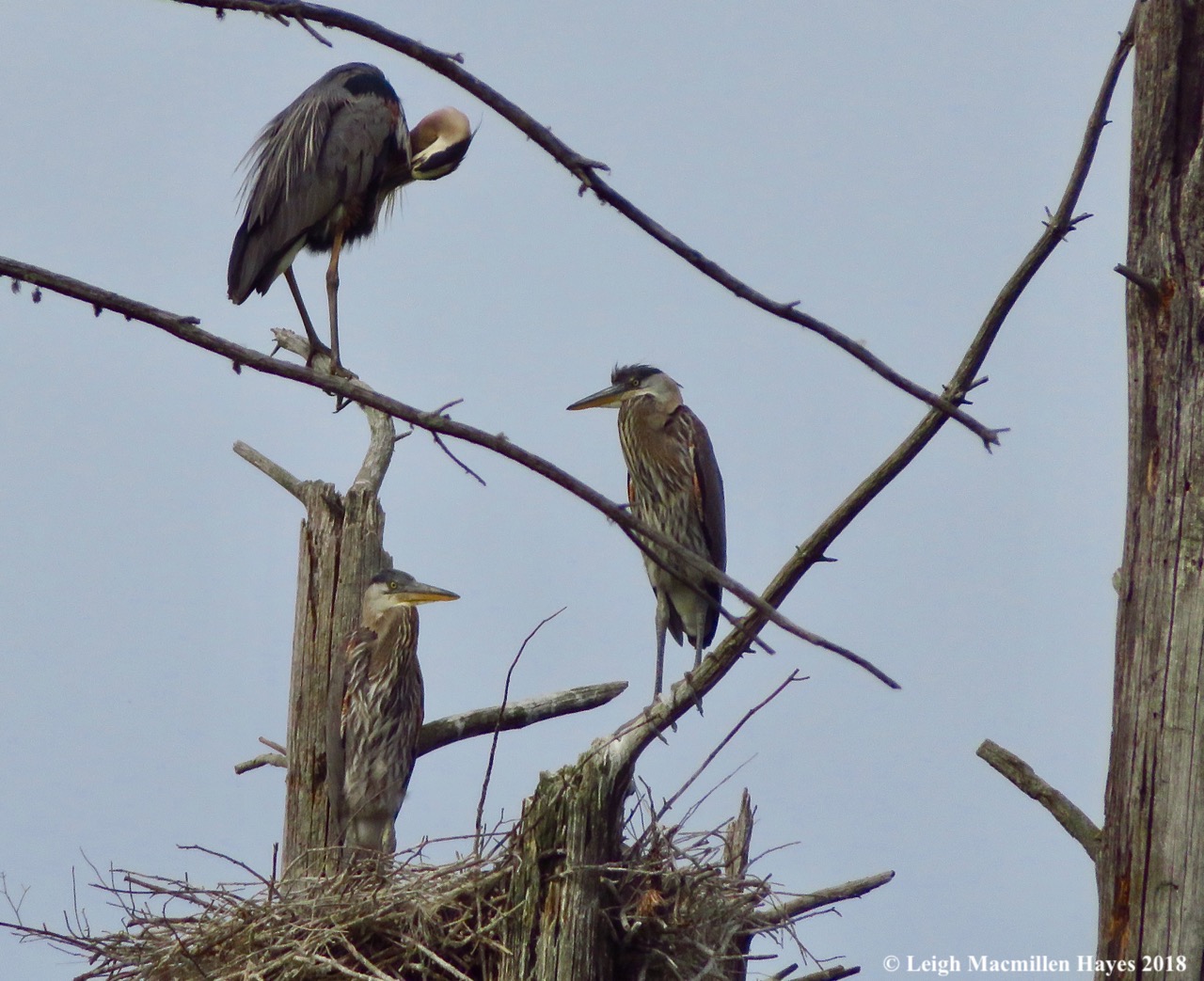
In the past, this was the largest inland rookery in the state and supported 40+ active nests, but over the last few years the numbers had dwindled and today we found only nine. Of those nine, three were inactive. Where have all the birds gone, we wondered.

h1-wood duck

As we started to focus on the scene before us, one member of our team spotted a wood duck surveying the beaver pond from a limb on one of the many old snags.

h2a-heron chick

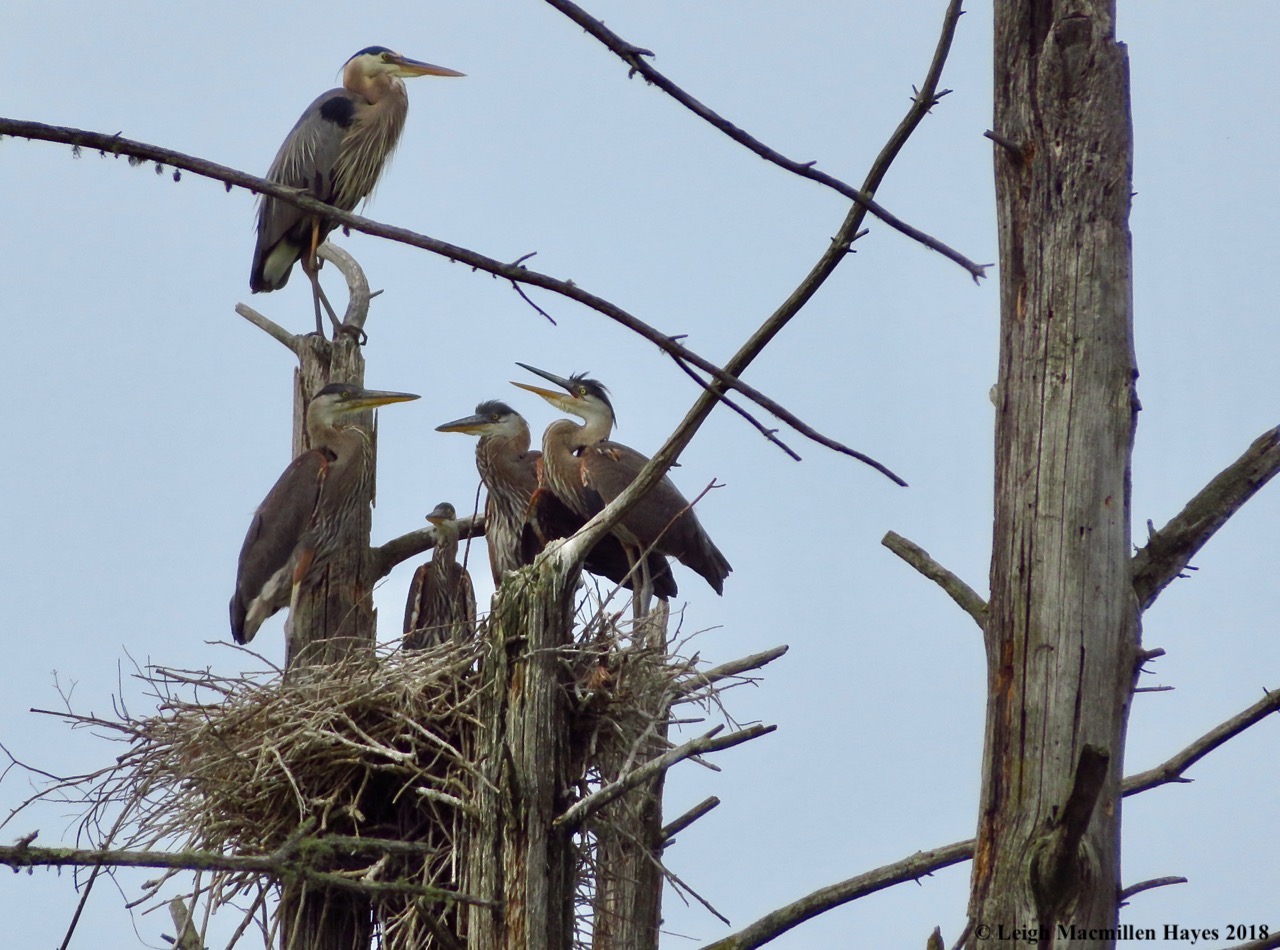
And then we looked upward. Counting isn’t always easy–in fact, it’s never easy. One immature–check. More than one? Well, we could see a lump representing another bird. Was it one lump or two? Over and over again, we counted.

h3-standing still

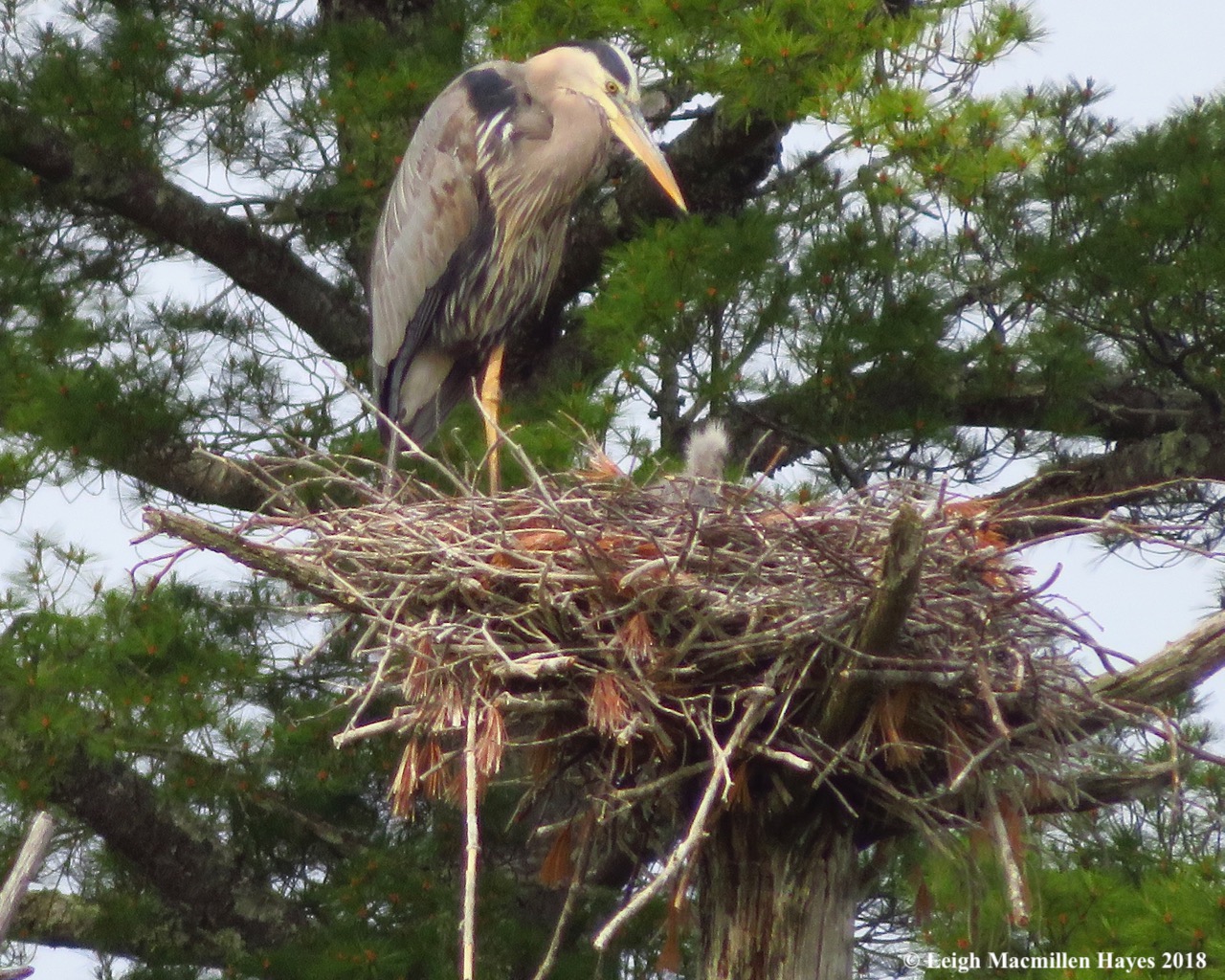
And then there was this nest that was hidden from our sight at first, only because it seemed to blend in with the pine tree behind it. Again we wondered–why was this adult standing on it? Was this a sentry watching over all of the nests why the other parents were off fishing? Usually, though, experience told us that sentrys stood on higher branches–the better to watch for predators.

h29-sentry

Like this.

h2-otter

Suddenly we heard a commotion in the water and noticed action near the beaver lodge. What was it?

h4-incoming

And then the sound of the youngsters crying frantically made us look upward again, where we spied an incoming adult.

h5-landing

The kids exclaimed their excitement because a meal had certainly arrived.

h6-begging for food

We could almost see their smiles as they anticipated the goodness they were about to receive.

h7-what? No food?

But . . . no food was regurgitated despite the kids’ squawks.

h9-meanwhile-mouths have closed

Finally, they quieted down and looked rather disgusted.

h10-preening

And Momma preened.

h11-wood duck family

Back in the pond, a family of Wood Ducks swam among the flowering Watershield.

h12-movement above

And up again, we noticed slight movement in the nest.

h13-a chick with downy feathers

Could it be?

h14-red winged

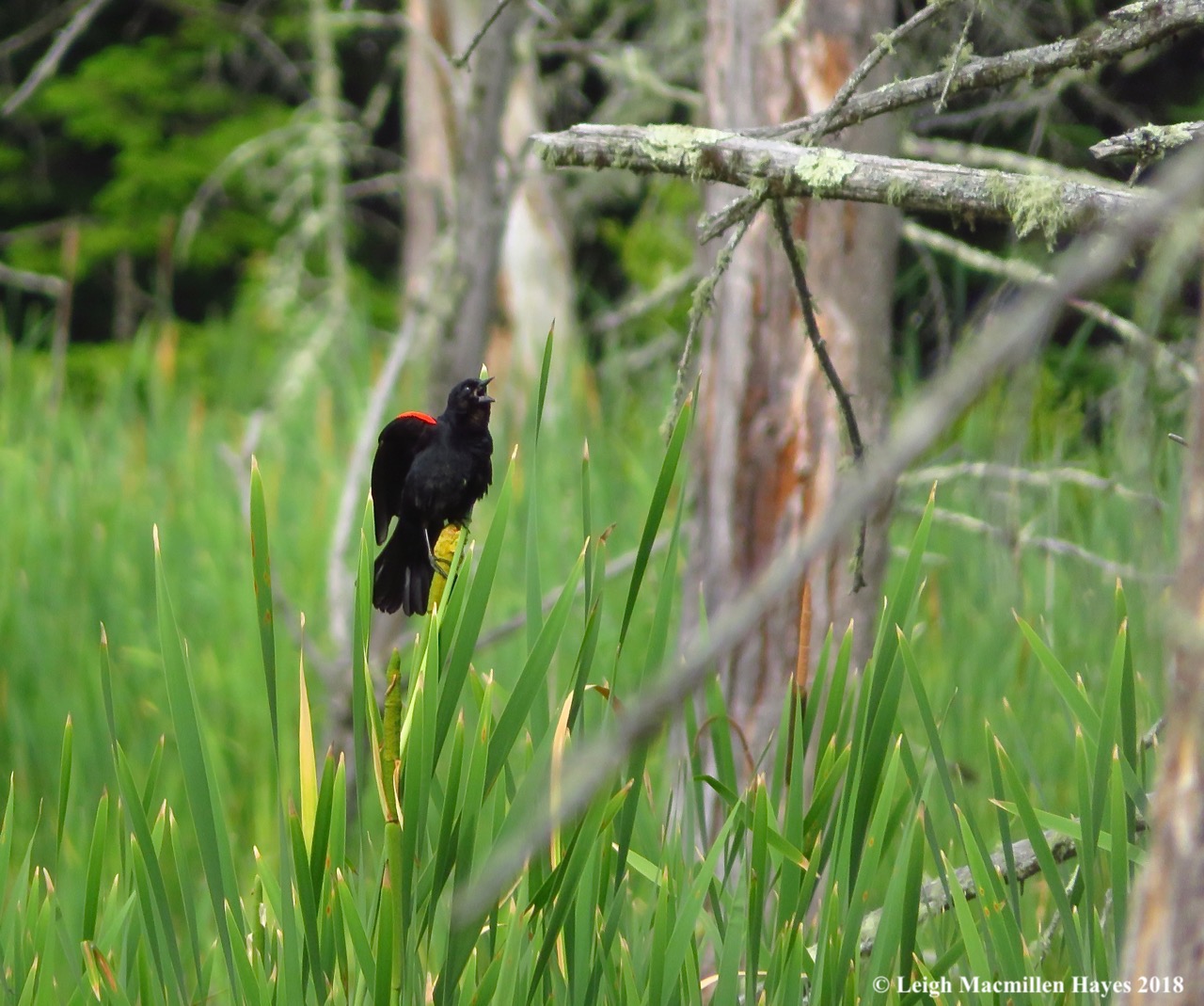
Before we answered the last question, a Red-winged Blackbird paused . . .

h15-singing

sang . . .

h16-did you hear me?

and looked around as if to say, “Did you hear me?” We did.

h17-another incoming

More squawks from above and we saw another adult fly in.

h18-what did you bring?

It seemed Dad had joined Mom and the family was complete.

h19-I'm off

But only for a second, as Mom took off.

h20-snacks?

“Where’d Mom go?” and “What’s to eat?” was all Dad heard.

h21--watching from nearby

She didn’t go far, but like all mommas, she needed a few minutes of time to herself.

h21-baby chick revealed

Meanwhile, back by the pine, that little bit of fluff moved some more.

h22-stretching my wings

And someone else needed to stretch his wings.

h24-otter again

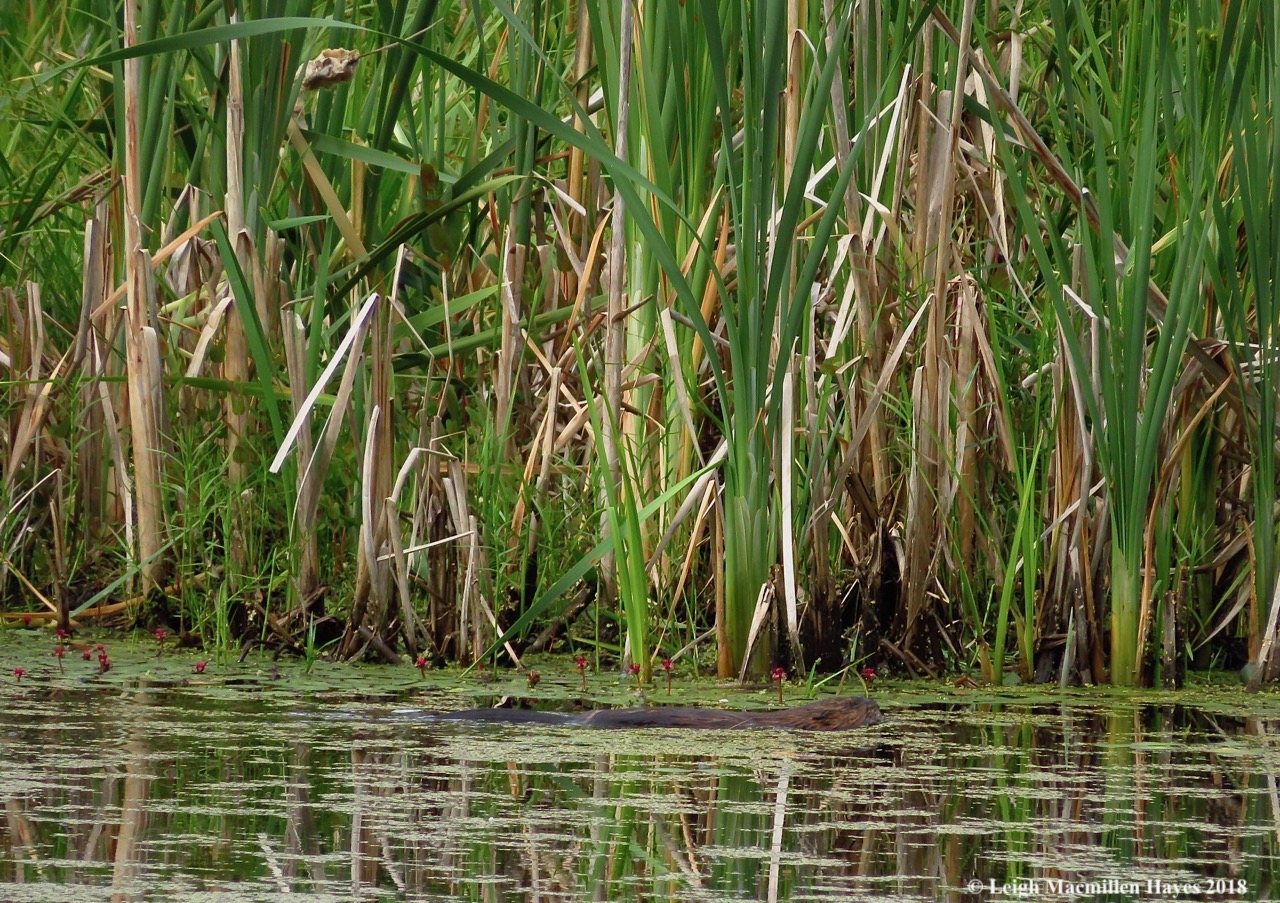
It was like watching a tennis match, for our eyes moved back and forth, up and down–especially when we heard movement in the water again and saw the same something undulating through the water.

h26-water snake

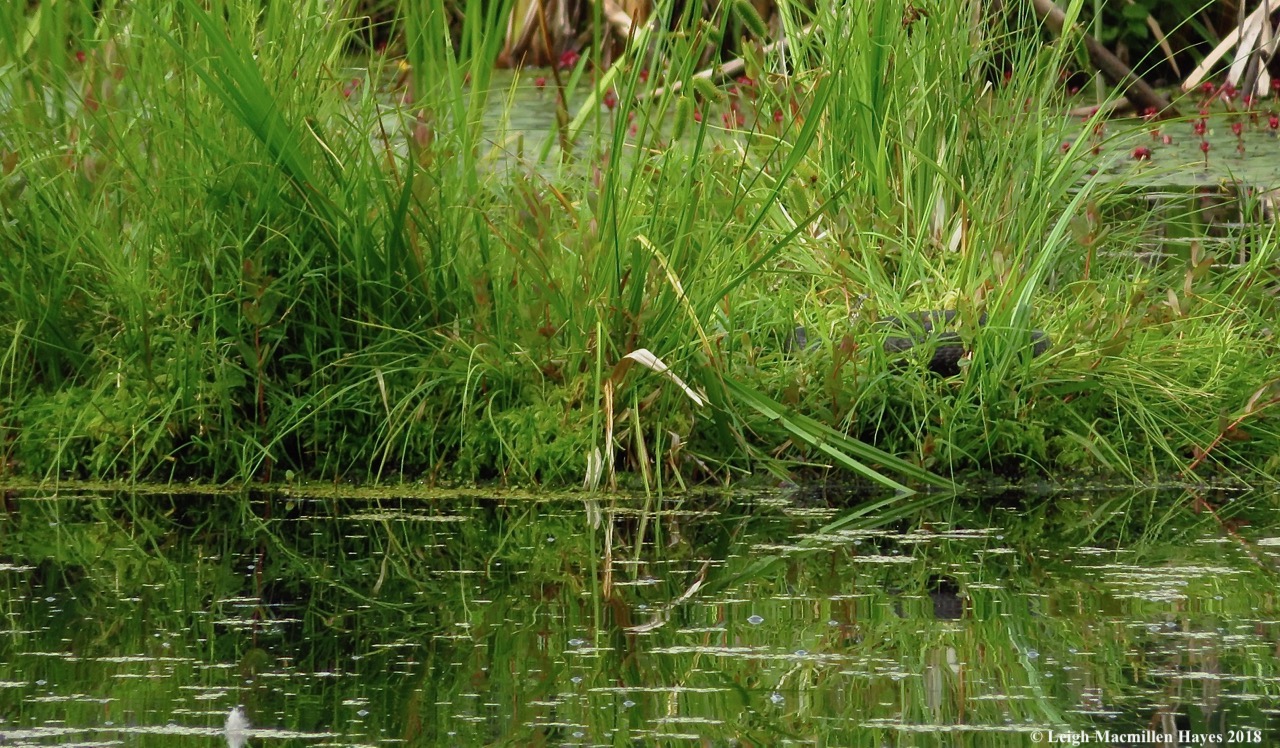
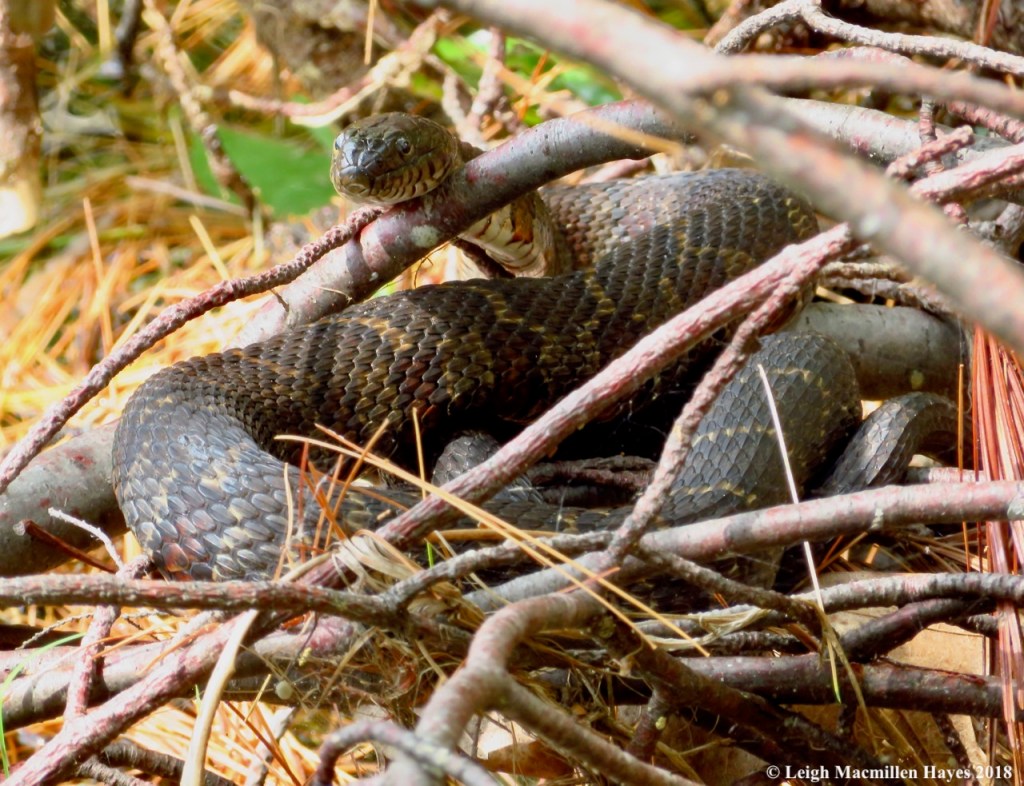
We weren’t the only ones watching all the action from a hidden location–a water snake on a hummock across the way did the same.

h28-don't you have any food?

Skyward, the family unit came together again. And still no food. The kids were getting impatient.

h30-have a stick

And then one parent left briefly and returned–with a stick for the kids to add to the nest, perhaps heron-speak for clean the house first and then you’ll get a snack.

h31-what's he thinking?

“We did it,” they tried to tell her, but Mom had her eyes on something else.

h27-beaver again

Her focus wasn’t on the beavers that swam back and forth below. Oh, and if you think this is the hump that had been making the water boil, you are mistaken.

h32-there he goes again

“Mom, bring back lots of fish . . . pleeeeease,” the kids cried as she took off again. “We’ll even eat frog legs.”

h33-picking twigs

But she had her eyes on other things–sticks from one of the abandoned nests.

h34-got one

She pulled one out.

h36-did you see what he just did?

And the kids looked away and one complained to Dad about all the housework they were expected to do and they still hadn’t received their allowance.

h25-checking us out

Unfortunately, it was time for us to head to work, but our undulating friend returned.

h37-otter

Great Blue Herons, Wood Ducks, Red-winged Blackbirds, Water Snakes, Beavers . . . and a River Otter! A slice of life in the rookery.


The Amazing Race–Our Style, episode five

I’m not sure how it happened, but when we arrived at Route 113 in Fryeburg to pick up our clue we realized we were the first contestants for this episode of The Amazing Race–Our Style.

Consequently, we had a quick decision to make–the main clue referred to the Baldfaces and we recognized the fact that that entailed a challenging climb. Though my cast has morphed into a smelly splint [envision sliced cast up one side and then add two wide strips of velcro], I was relieved that we could take advantage of the Fast Forward clue that mentioned shingles in a white forest.

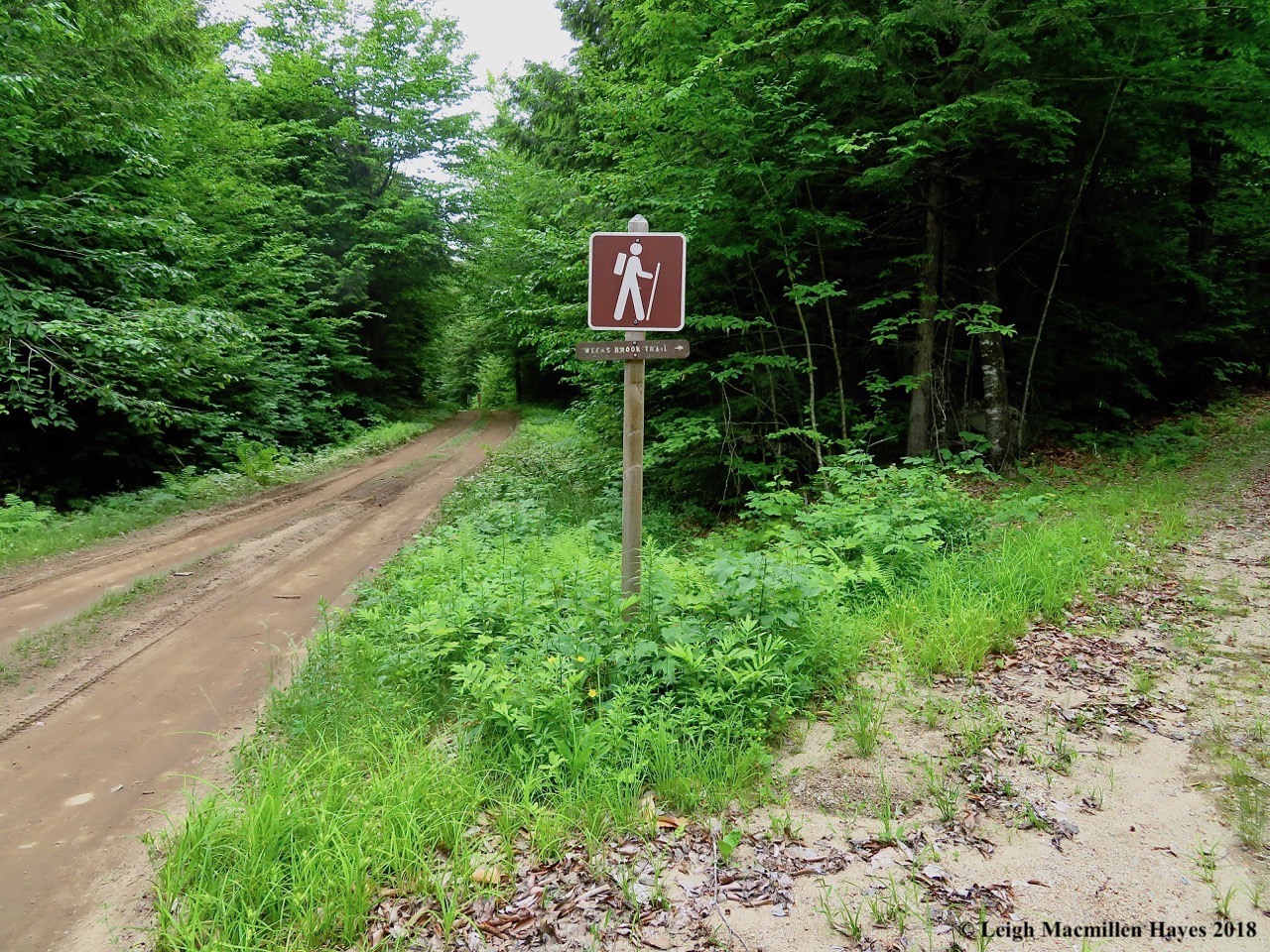
s1-trail sign

We checked the map and located a trailhead for Shingle Pond only a few miles away. BINGO.

s2-heading into the woods

The trail begins along Forest Road 317, but a few curves later heads into the nitty gritty of the White Mountain National Forest.

s8-locating the trail

Toward the beginning we could hear the buzz of logging machinery in the distance, but it wasn’t all that loud and certainly didn’t drown out the not-so-sweet buzzing of the local mosquitoes. Our first real challenge, for one can hardly count those flying buzzers and stingers as an obstacle, but more a way of life, came in the form of staying on the trail. It was blazed yellow, but occasionally we had to slow ourselves and our minds, and look around for some clues. There was only one cairn, which was fine with us, but after that spot we spent several minutes of valuable time looking for yellow in every direction . . . to no avail. Finally, however, my eyes cued in on what appeared to be a worn path between some trees to our right and my guy passed through some muck and logging slash to discover that indeed we had found it. That happened more than once, but each time we paused, scouted and eventually made the right decision. They didn’t promise us easy when we signed on for our own version of the reality show.

s11-crossing Weeks Brook

The path took us across Weeks Brook for which the trail had been named and it was there that we noted a trillion trilliums–all past their prime.

s9-patch cut

Through hemlock groves and mixed forests we hiked, occasionally passing by patches of clearcuts. Our next challenge was to determine the benefits of such habitat. The answer seemed obvious for so much was the bird song–from those I recognized like Ovenbirds, Veerys, and Hermit Thrushes to warblers that we could hear but not see. If we hadn’t been racing against the clock it would have been fun to try to figure out some of the song makers.

s10-browse

We also noted plenty of signs, such as browsed tree buds, that told us moose and deer had foraged in those areas.

s5-wood sorrel

Challenge number 3 required that we locate a few plants and note whether they were edible or not. Wood Sorrel was easy–and most welcome on this sultry day for its a thirst quencher.

s6--Indian Cucumber Root

Indian Cucumber Root was another enticing edible and it grew abundantly in the forest. As pleasing as the flower is above its second tier, it’s not their fruits that appealed to us, but rather the small white rhizomes buried in the ground which offered a cool and crisp cucumbery taste. Even my guy can attest to that.

s7-wild calla

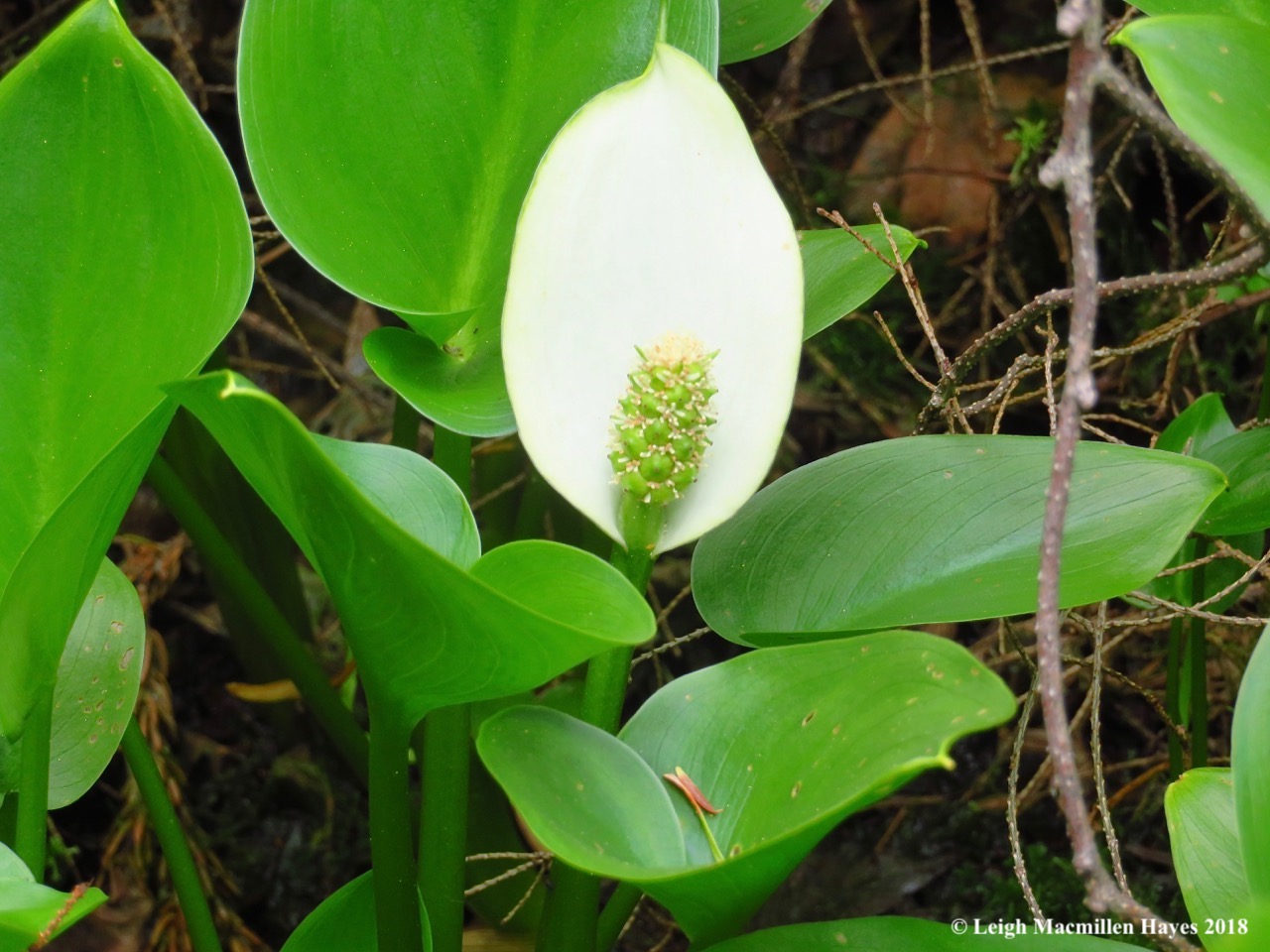
The one herb we didn’t taste test was the Wild Calla or Bog Arum. It’s known to cause severe irritation of the mouth and throat if consumed. We left it be.

s12-lady's slippers

We did find one other plant that we wouldn’t think of eating, but always revere–Pink Lady’s Slippers, in this case a matching pair.

s13-prince charming

And not far beyond–Prince Charming himself. Even his eyes were surrounded by a ring of gold.

s14-Shingle Pond

At last we reached the two-acre Shingle Pond. Though we wanted to be greeted by a moose in the water, we were pleased with all that we saw and heard, including bull, green and tree frogs.

s15-Kearsarge Fire Tower

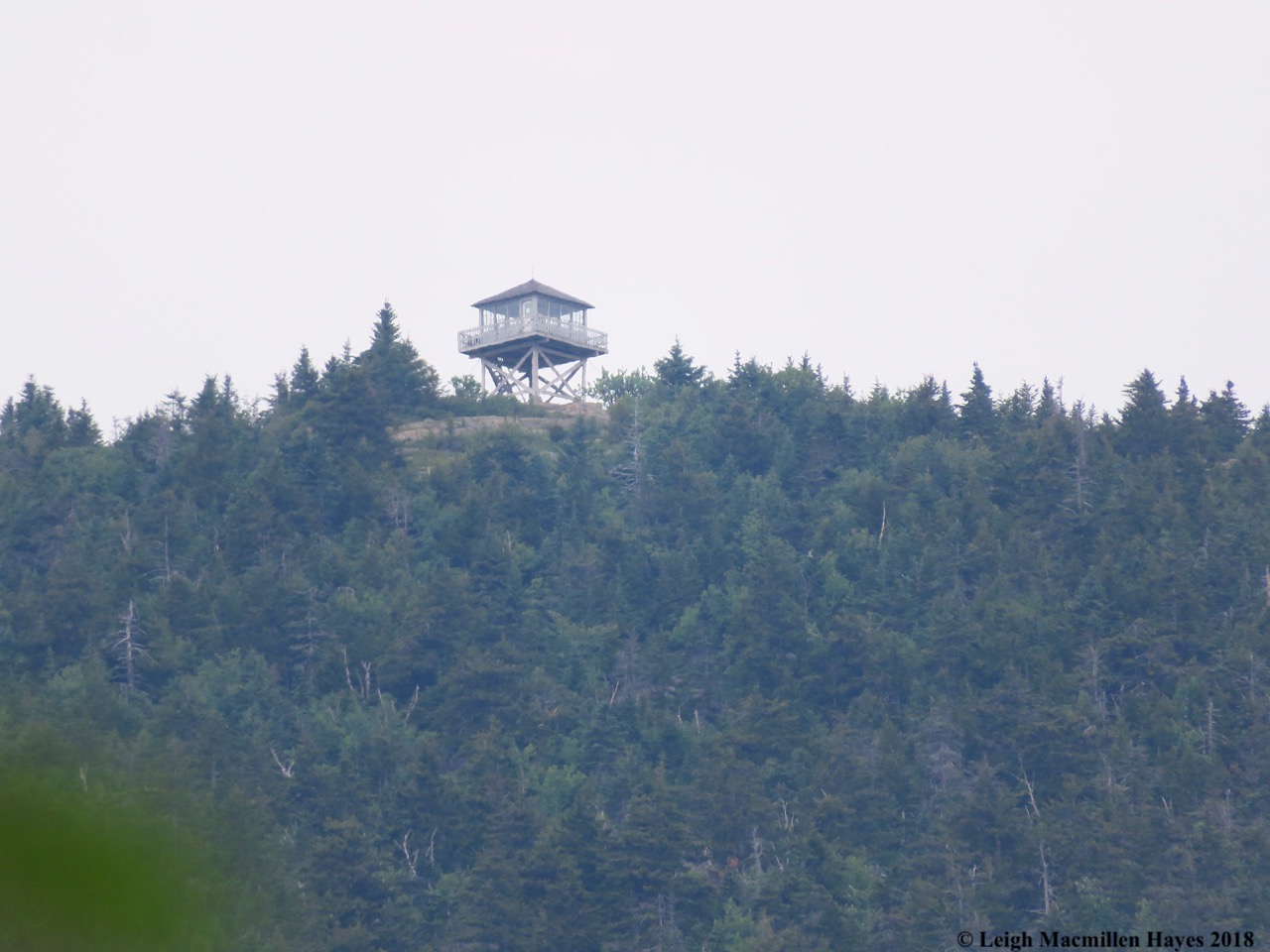
Though we were two miles and lots of ledges below the summit of Kearsarge North, as we ate our PB&J sandwiches created by my guy, the sight of the historic fire tower evoked lots of memories and got us dreaming about our next opportunity to sign the guest notebook.

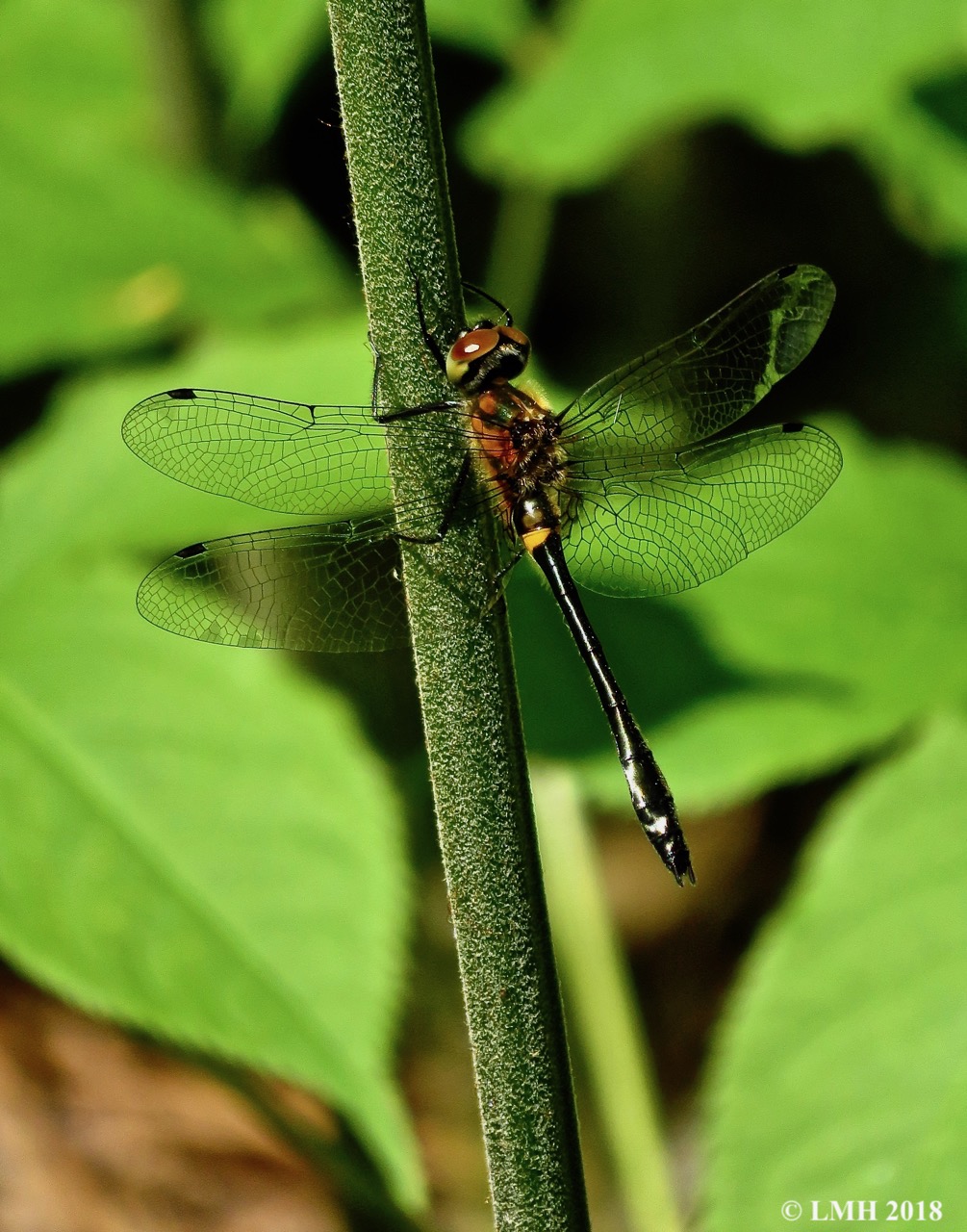
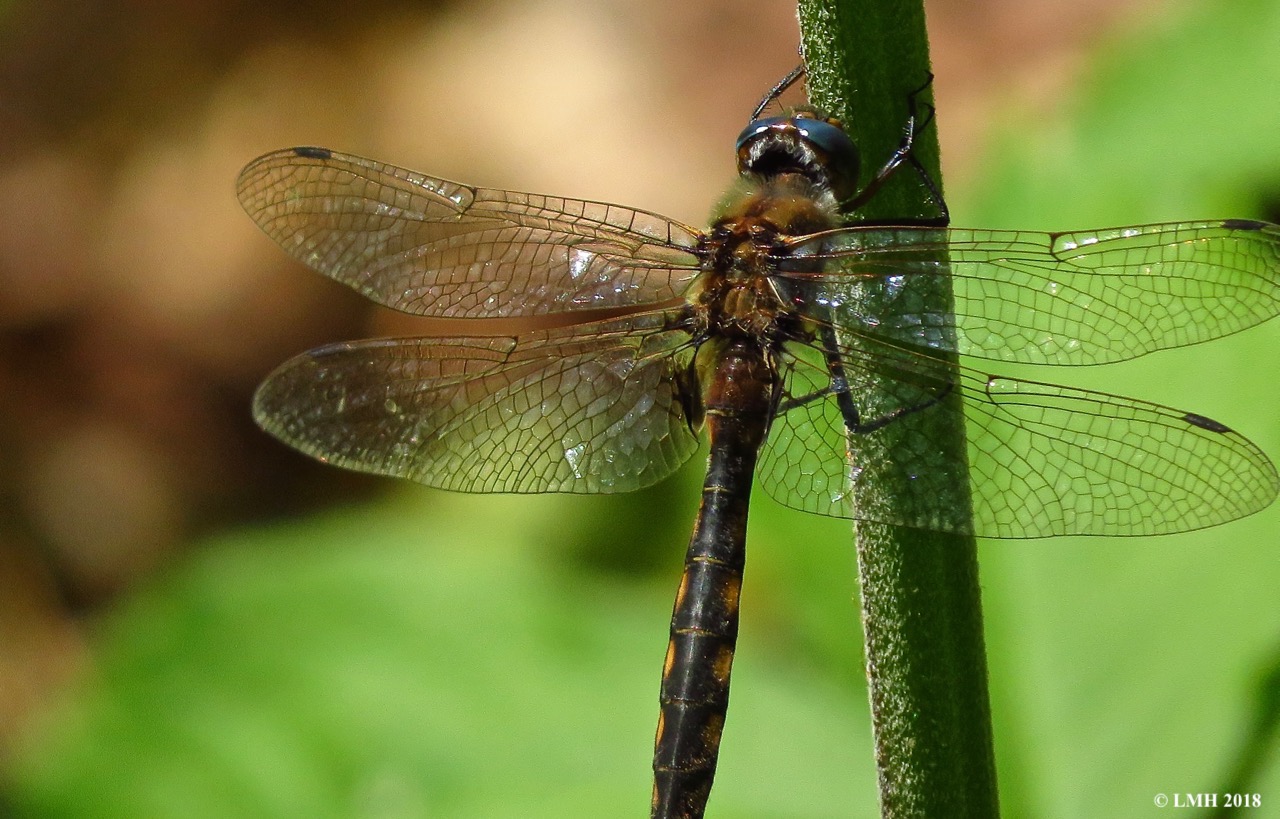
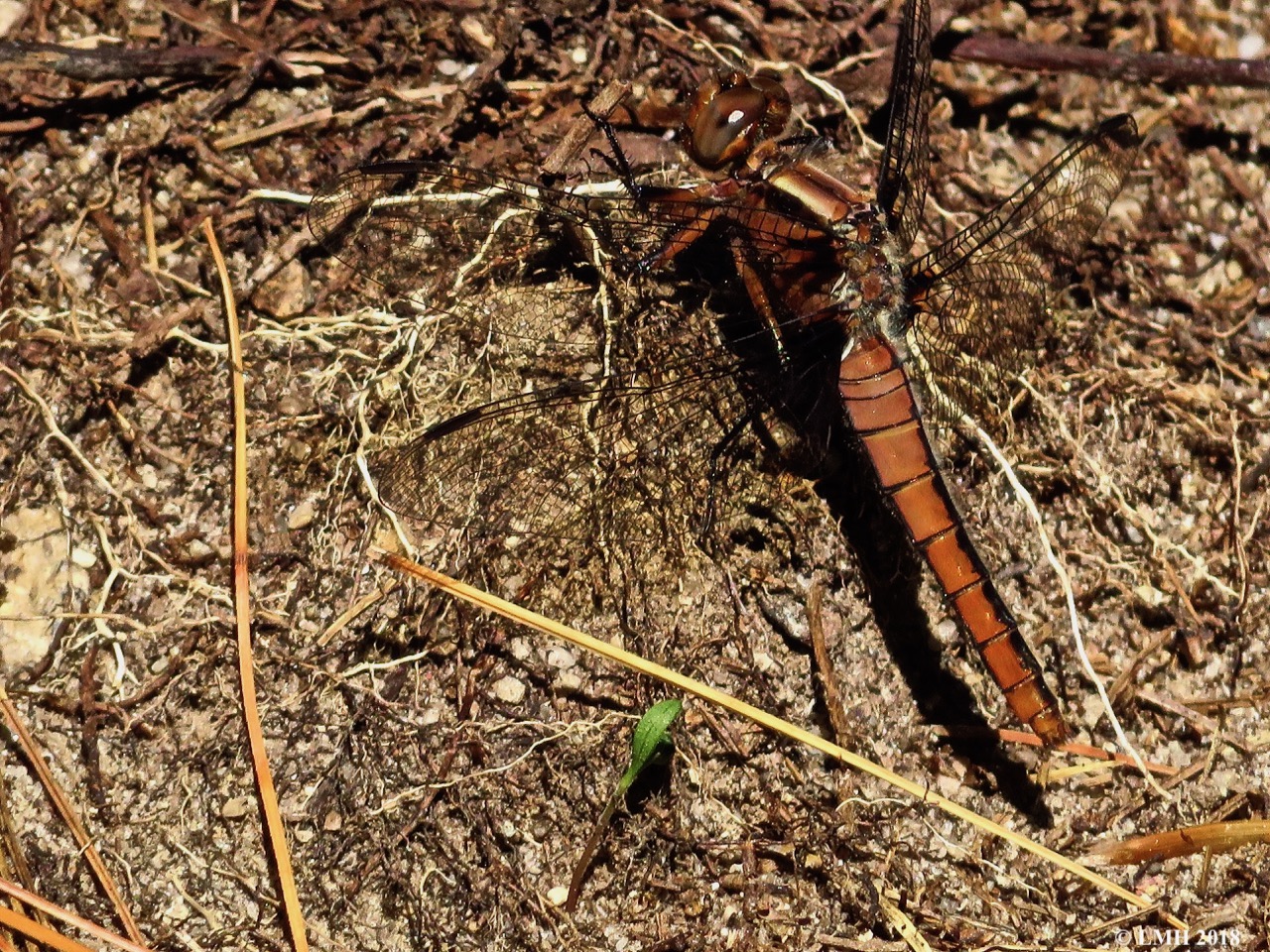
s17-crimson-ringed whiteface dragonfly

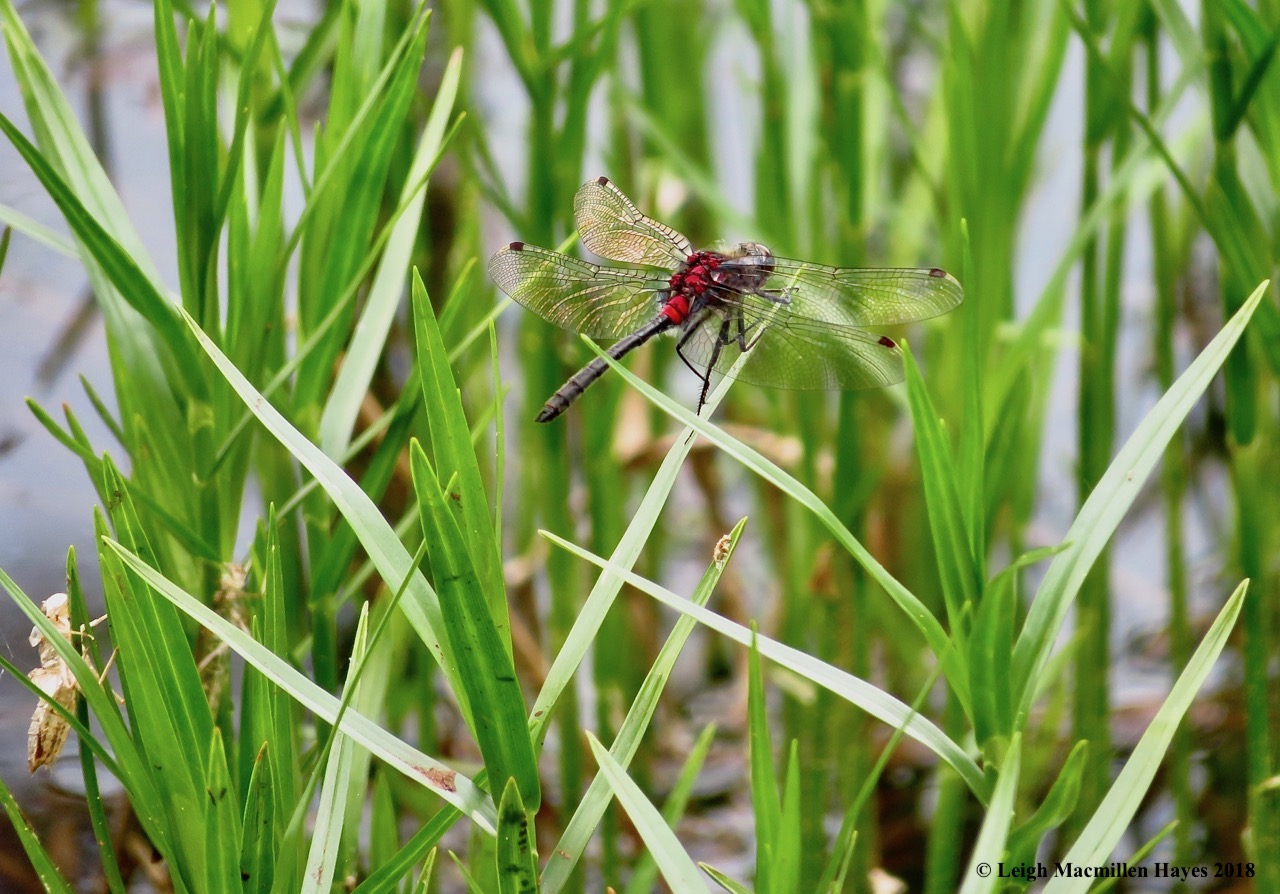
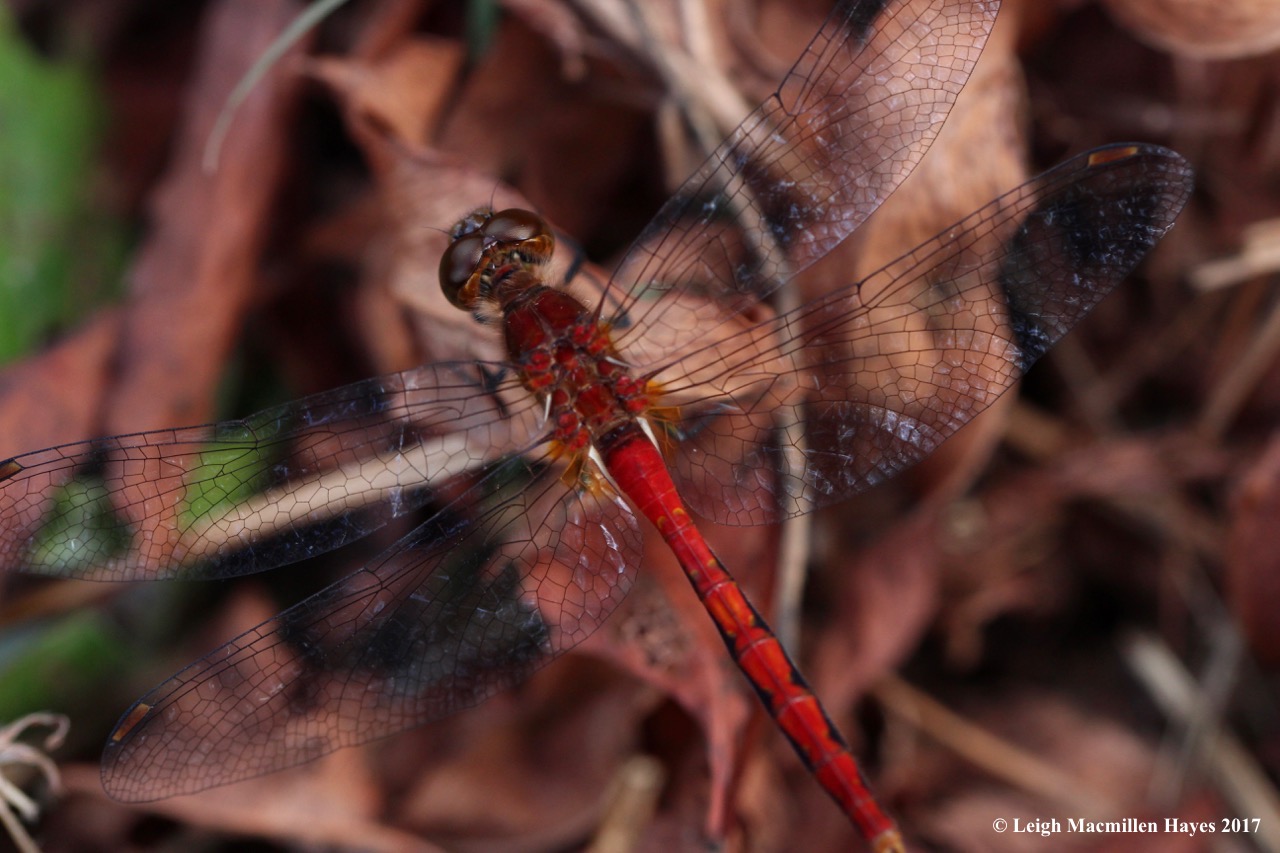
Our task at the pond was to bushwhack around its perimeter and note some of the species who called this mountain pond home. Probably my favorite discovery was the Crimson-ringed Whiteface Dragonfly.

s17b-crimson-ringed whiteface

Over and over again we saw it, that bright red body standing out in contrast to its dark abdomen. There were a zillion dragonflies, many of them darners and clubtails zooming about, but this skimmer had the decency to perch frequently and reveal its finer details.

s17a-bushwhack

As we moved around the pond, we met trees to climb over, under and around.

s18-beaver works

Many were felled by the resident beavers, so we had another who made its home there to add to the list.

s19-beaver lodge

In fact, we found the most recently built beaver abode.

s19a-beaver dam

And the dam that made it all possible.

s20-bear scat

One special sign of wildlife may gross you out, but we were delighted for this pile of scat indicated a bear had passed by earlier this spring. I’d wanted to look for bear trees on the hike up, but these days my eyes are mighty focused on trail conditions. And scat is just as good, if not better than a tree with old claw marks. Well–both are wonderful . . . really.

s21-chicakdee

One other resident was insistent that we take notice and I think we may have paused near a nest tree. When I asked my guy if he could hear the Conway Scenic Train whistle emanating from the other side of the mountains, he said that all he could hear was the chickadee’s chatter.

s22a-Atlantis Fritillary

The return hike down was via the same trail, but when we reached the log landing and later the logging road we had one final challenge to complete–the flutter-by challenge. Who were those beauties that flitted about, gracing the landscape with their presence? For starters, we discovered several Atlantis Fritillaries seeking nectar from eggs and bacon flowers, aka Bird’s-foot-trefoil.

s24-atlantis 2

Once over easy, it was equally beautiful.

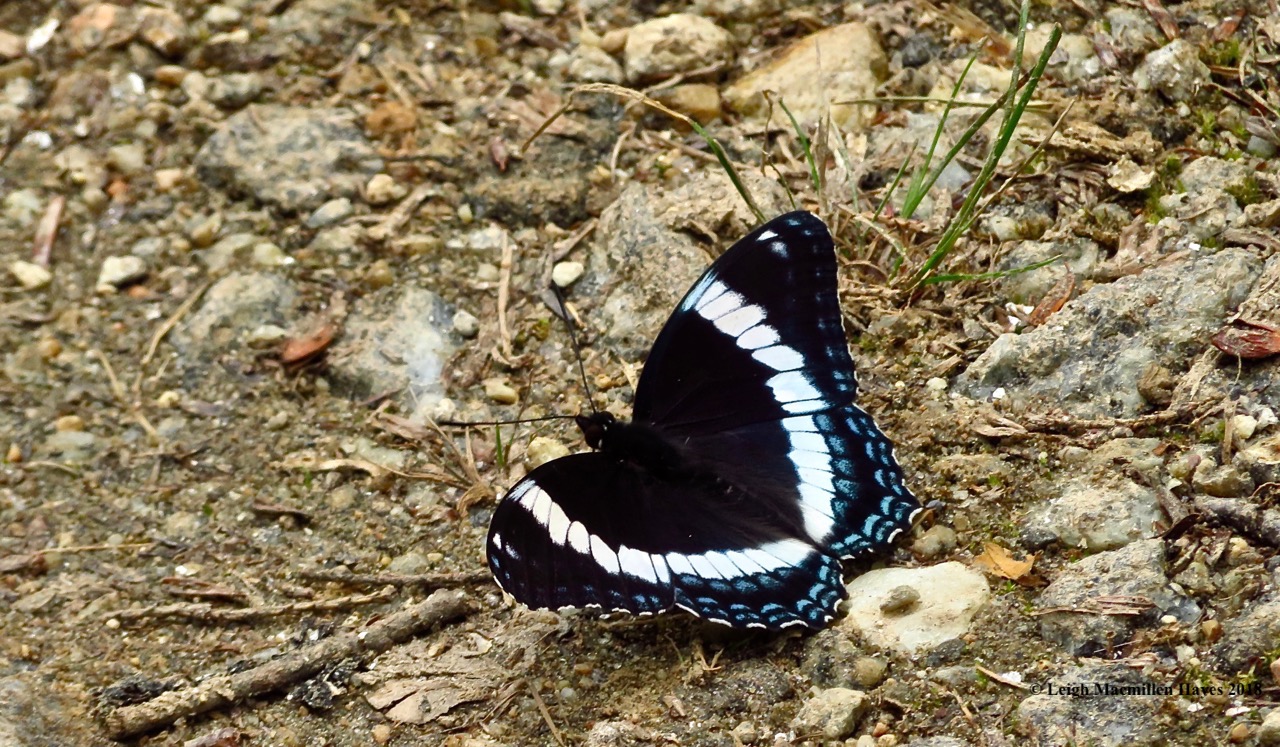
s25-white admiral

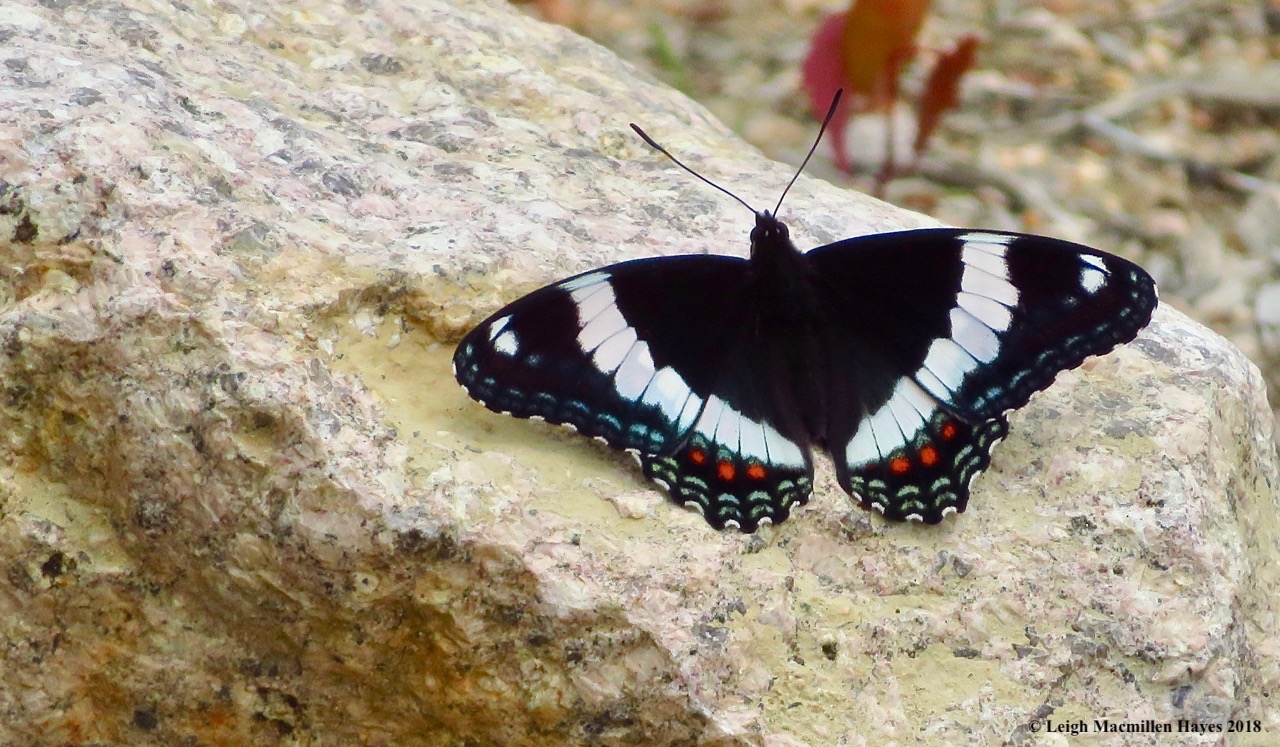
And the learning continued for we watched numerous White Admirals flit from spot to spot. But notice the coloration–including orange spots below its white bars.

s25a-white admiral

This blue version was also a White Admiral. Needless to say, we admired it no matter its variation.

And with that we had successfully completed the fifth episode of The Amazing Race–Our Style. All day we didn’t know our status in comparison to the other contestants, but six miles and four hours later we had nothing to fear. We definitely won this leg for we stood upon the mat at the Pit Stop much earlier than any of the other contestants.

As much as we would have liked to climb the Baldface Circle, it wasn’t in the cards for us today.  And as a final note to today’s journey–I added a few more mosquitoes to the natural history museum forming on the velcro of my splint. It’s a museum, however, that I hope will close soon, for it stinks–literally and figuratively.


The Trail To And Fro

The heron rookery was our destination and so friends Pam and Bob journeyed with me, our expectations high.

M1-KENNEDY'S EMERALD

But as nature would have it, we’d barely walked fifty feet when our typical distraction disorder set in–and the focus encompassed the dragonflies that perched on foliage beside the trail. Our first was a Kennedy’s Emerald, named for Dr. Clarence Kennedy, a renowned Ohio State University professor and odonatologist.

M2-BEAVERPOND BASKETTAIL

Among the same fern patch was a Beaverpond Baskettail. It’s the eyes of this species that appealed to me most for I loved their teal color.

M3-IMMATURE CHALK-FRONTED CORPORAL

Every step we took seemed to produce a new combination of colors and presentations, all a variation on the dragonfly theme, including this immature Chalk-fronted Corporal.

M4-MUSTACHED CLUBTAIL

And their names were equally intriguing, this one being a Mustached Clubtail.

M6- SKIMMING BLUET

It wasn’t just dragonflies patrolling the path and one mosquito at a time reducing the biting insect population–for damselflies also flew. When they weren’t canoodling that is. But canoodle away we said, for each interaction resulted in even more predators of our favorite kind.

M7-GRAY TREE FROG

And then . . .

M8-GRAY TREE FROG

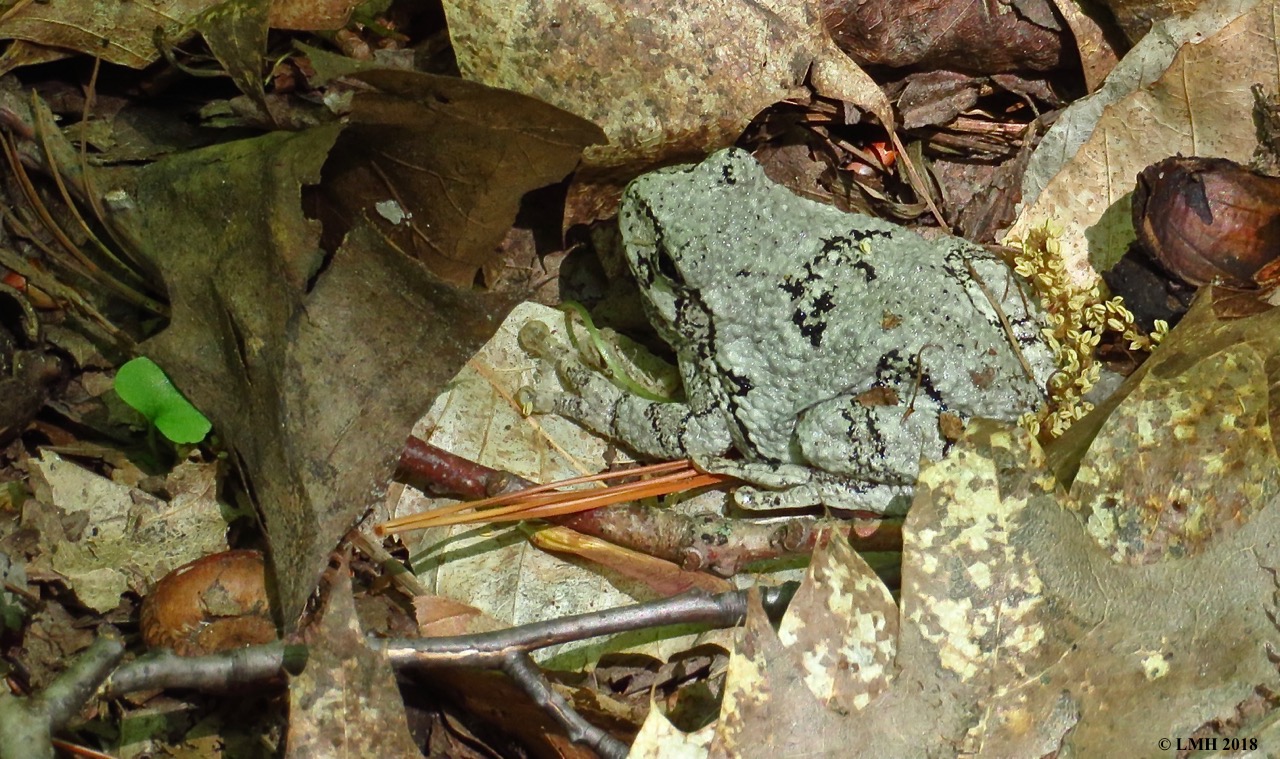
and then we discovered a predator of another kind. And we rejoiced even more because for all the time we spend in the woods, sighting a gray tree frog is rather rare.

M9-EBONY JEWELWING MALE

Not quite so rare, but beautiful in its unique form was the Ebony Jewelwing and her metallic colors. We spied one male with a white dot on his wings, but he escaped the camera lens.

M10-GARTER PARENT

It wasn’t just fliers and hoppers that caught our attention. Movement at our feet directed us to one who preferred to slither through the woods in garter formation.

M11-GARTER BABY

And about a foot away from the parent–one of the young’uns.

M12-ROOKERY SITE

At last we reached our destination and the real purpose for our journey. We were on a reconnoissance mission. Our job was to count nests, young and adults at a heron rookery for the Heron Observation Network of Maine–a citizen science adopt-a-colony network managed for Maine Inland Fisheries and Wildlife by biologist Danielle D’Auria. The project began after a significant decline in the number of nesting pairs of Great Blue Heron was realized in Maine from the 1980s to 2007, and MDIFW listed the bird as a Species of Special Concern.

M13-HERON ROOKERY

Sadly, our count was zero for each category. While last spring the nests were active, something occurred and the colony collapsed before the young fledged last summer. Bald Eagles were the likely suspects of such a decline and as nature would have it, we thrilled with the resurgence of one species at the expense of another. Despite the current failure of the community, we’ll continue to visit each year . . . just in case.

M140WHITE CHALK CORPORALS

But guess what? As we stood there, we noted the activity, or lack thereof, of mature Chalk-fronted Corporals–the female relaxing on the left and male on the right.

M15-DARNER

Every few seconds a Green Darner conducted its own reconnaissance mission.

M17-CANADA GEESE

And then some serious honking from upstream called for our attention.

M18-CANADA GOOSE

And we were reminded of Bernd Heinrich’s book, The Geese of Beaver Bog, for we were in such a place.

m19-immature KENNEDY'S EMERALD

At last, we pulled ourselves away, though I suspect we could have easily spent hours being mesmerized by the magic of the place. Such magic was reflected in the opaque wings of a newly emerged Kennedy’s Emerald dragonfly.

M20-INDIAN CUCUMER ROOT

And on the way back, as often happens, we were privy to sights we’d missed on the way in. So it was that an Indian Cucumber Root displayed its unique flower–nodding pale green petals folded back, like a Turk’s cap lily, and from the center emerged three long reddish styles (think female reproductive parts) and several purplish orange stamens. Those styles gave the flower a unique spidery appearance.

M21-GRAY TREE FROG

And then . . . and then one more time not far from where we’d seen the gray frog on our way in, and mere moments after Pam said, “Where there’s one . . .” we found a second.

The heron rookery was our destination, but the trail to and fro offered so many moments of wonder.

Thank you to the family that conserved this land. Thank you to the wildlife in many forms who call it home. And thank you to Pam and Bob for not only accompanying me, but for insisting that I borrow your lightweight Canon Powershoot SX720HS. I might get hooked.

Kinship With All Forms of Life

I walked today with intent, as I sometimes do, only that intention morphed between the beginning and ending of my journey. You see, I awoke with a need to reach a certain heron rookery that I’ve helped monitor for the Heron Observation Network of Maine during the off-season,  before the owner of the land returns. It’s a bit of a bushwhack to reach the site and in the past, I’ve accompanied Tom for this citizen science effort. Each spring, we’ve visited it at least once to count the number of nests and adults. Sadly, Tom won’t be joining me this year and so I headed off this morning to see what I might see–and be his eyes.

m1-squirrel

They were big eyes to fill–as big as the red squirrel who paused to watch me and then dashed along a stonewall on a mission of its own making.

m2-brook peek

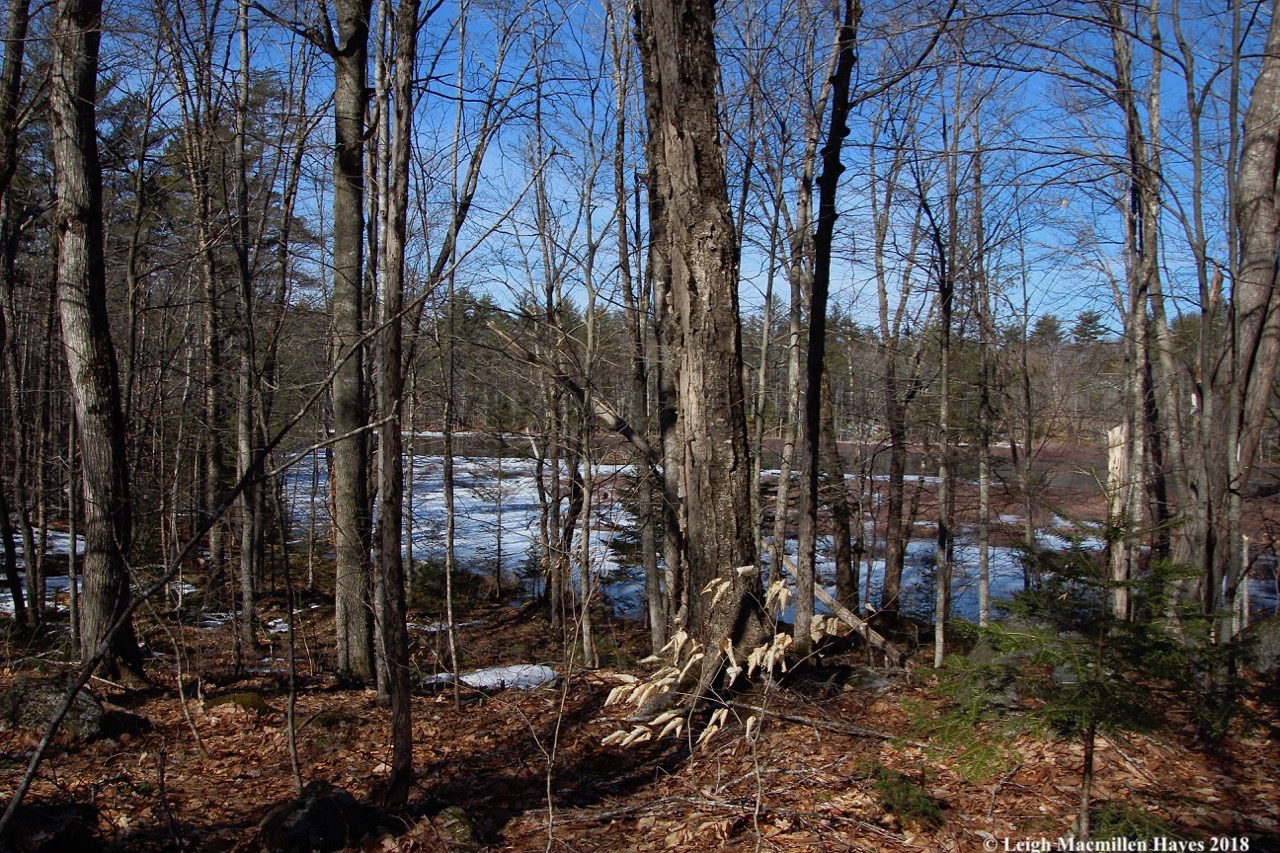
Initially, the journey was a bit of a bee line as I followed a snowmobile trail. It was there that I delighted in the color of the sky and realized that most of the ice had melted on the beaver pond and brook below. I could have headed down to the water’s edge then, but chose to continue toward my destination.

m3-beaver dam inactive

I was almost there, when an old beaver dam forced me to stop. And then I heard a loud crash. I scanned the area and stood still–listening, waiting, wishing.

And then another noise–of movement. Again, I stood still. Nothing.

m4-land bridge

Finally, I arrived at the land bridge that would lead me to the rookery, but . . . my journey stalled and I realized I’d have to save the crossing for another day. Water rushed over the mossy mounds and because I was alone I decided not to risk falling in. As I stood and admired the flow, I thought some more about Tom and the crossing he is making from this life to the next.

m6-more ice bubbles

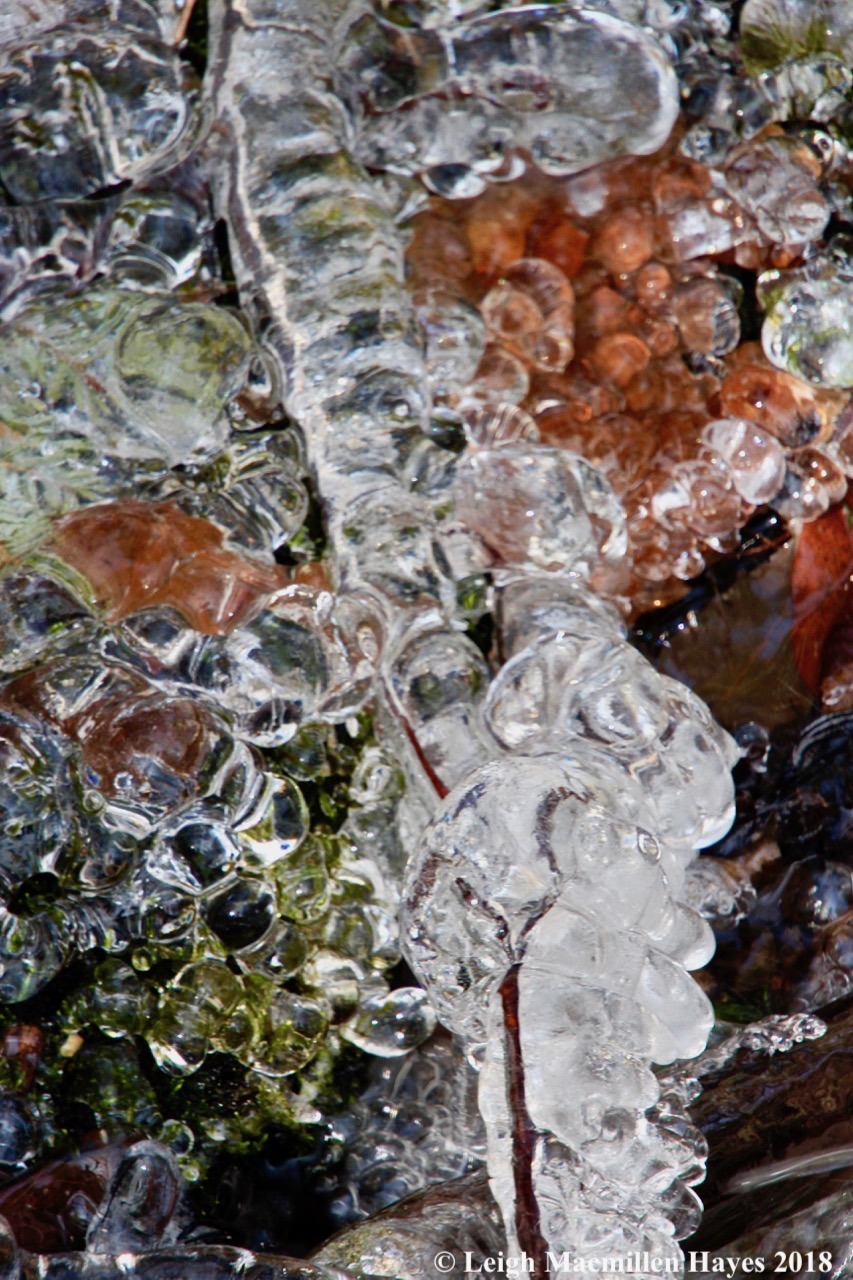
And I thought of his sense of wonder and ability to instill such in others, even over something as simple as ice baubles.

m 5-ice bubbles

I could hear an eloquent explanation flow forth from him about the movement of bubbles within an icicle formed on a branch.

m7-ice fingers

And I knew he would appreciate the artistic rendering before our shared eyes–in this case a wee bit reminiscent of M.C. Escher’s Transformation Prints.

m27-forest

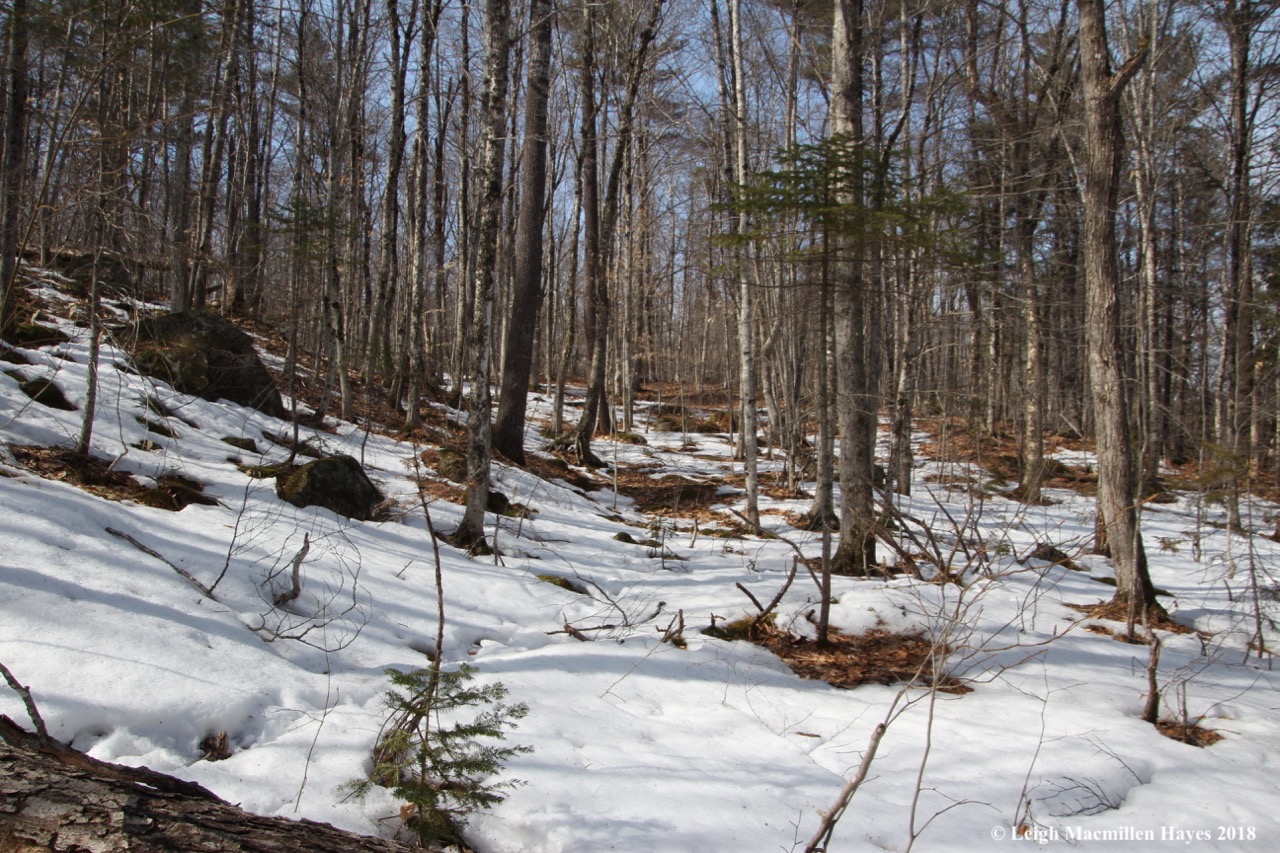
At last I pulled myself away from the crossing I couldn’t make and turned back toward the forest from which I’d come. Tom had a hand in the vision of these woods–as a forester and as the executive director of the Greater Lovell Land Trust. His vision included forest management that would benefit wildlife. From where I stood, I saw turkey, deer, bobcat, and squirrel tracks.

A third time, I heard a sound and knew that I wasn’t alone. We never are, are we?

m8-mergansers

Eventually I made my way to the water’s edge and noted Hooded Mergansers in the distance. Around another bend, I spotted Wood Ducks. Tom would have loved it for birding was also one of his passions.

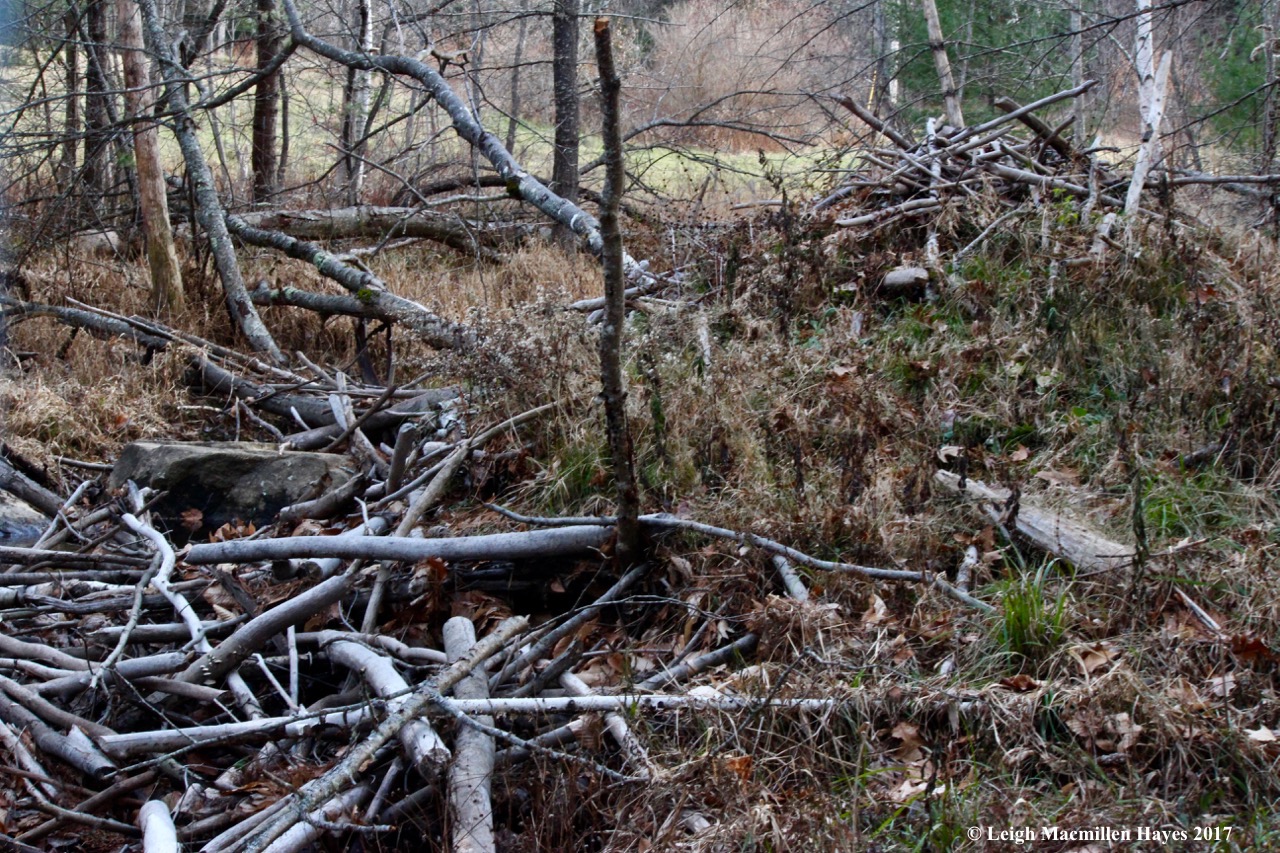
m10-beaver works

Within footsteps I admired the work of another forester who called this place home.

m11-beaver attempt

It seemed he’d sampled some trees and they weren’t to his liking–at that moment. Or perhaps something had startled him and he quickly retreated to the water. Either way, he treated this land as if it were his. For it was.

m12-more beaver

Everywhere, beaver works both old and new decorated the forest.

m18-lodge

And a lodge stood tall still partially surrounded by ice.

m7a-goldthread

But there was more of  the woods to see this day, like goldthread’s evergreen leaves that reminded me of cilantro. And also of Tom’s garden, for which he actually has some seedlings that will be ready to plant in another month and its produce will be enjoyed at a later date by those he loved most. Their dinners will be enriched for one last season by his green thumb.

m13-tiny shell

Next, I spied a tiny, fragile shell that was iridescent on the inside and brown on the outside. It couldn’t be a bird egg. Was it from a snail?  Tom would have known.

m14-holy leaf

And then there was a striped maple leaf like none I’ve ever seen before–almost stained-glass in its offering. It only made sense that it be so hol(e)y for in its life cycle it had provided energy to insects and as it continues to break down it will nourish the earth. Tom would recognize the significance of such–renewal, rather than devastation.

m15-hobblebush

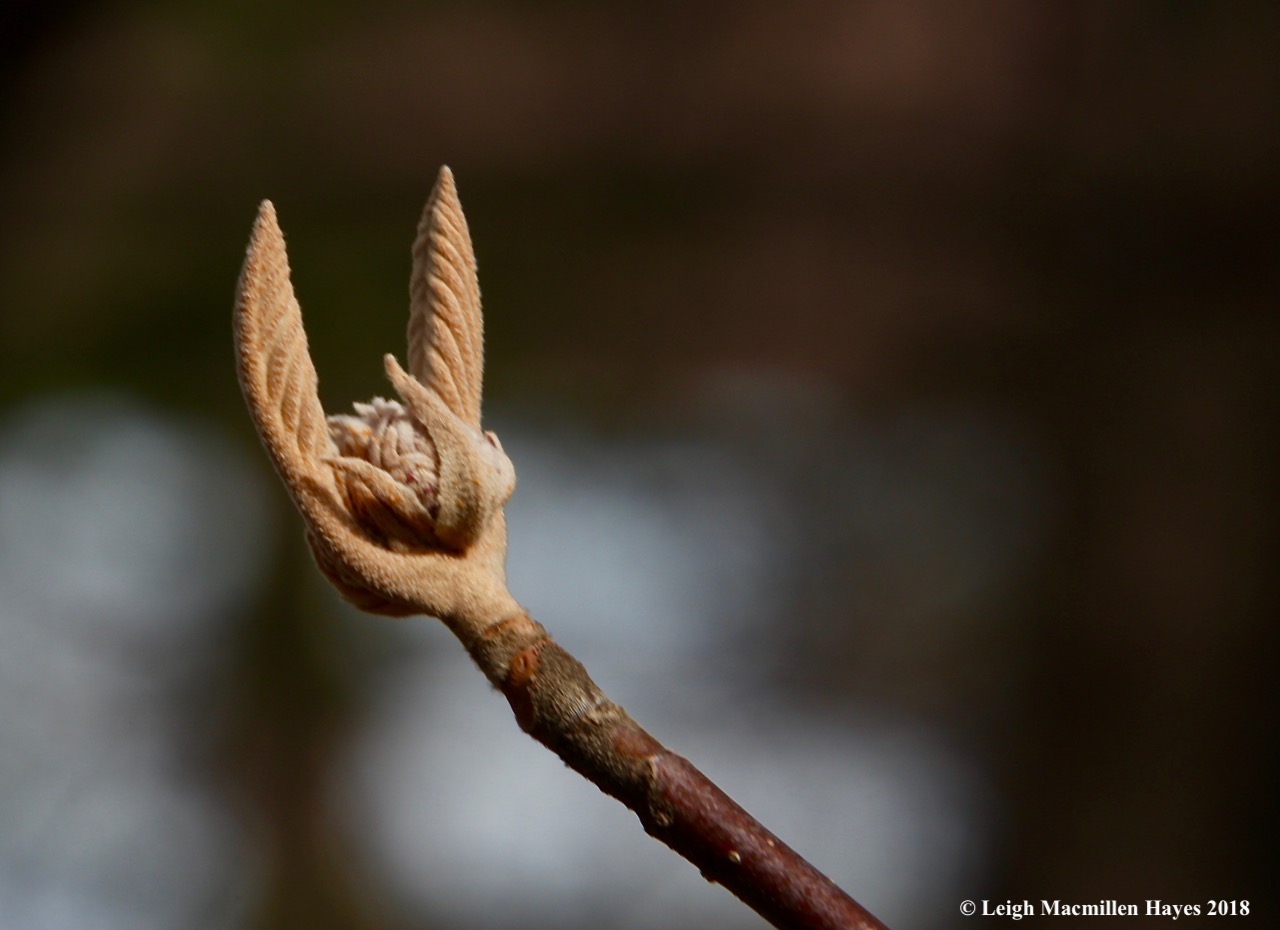
There were other things to note, including a hobblebush flower bud that formed between its praying hand leaf buds.

m21-lungwort

And lungwort that served as an indicator of a rich, healthy ecosystem. Indeed.

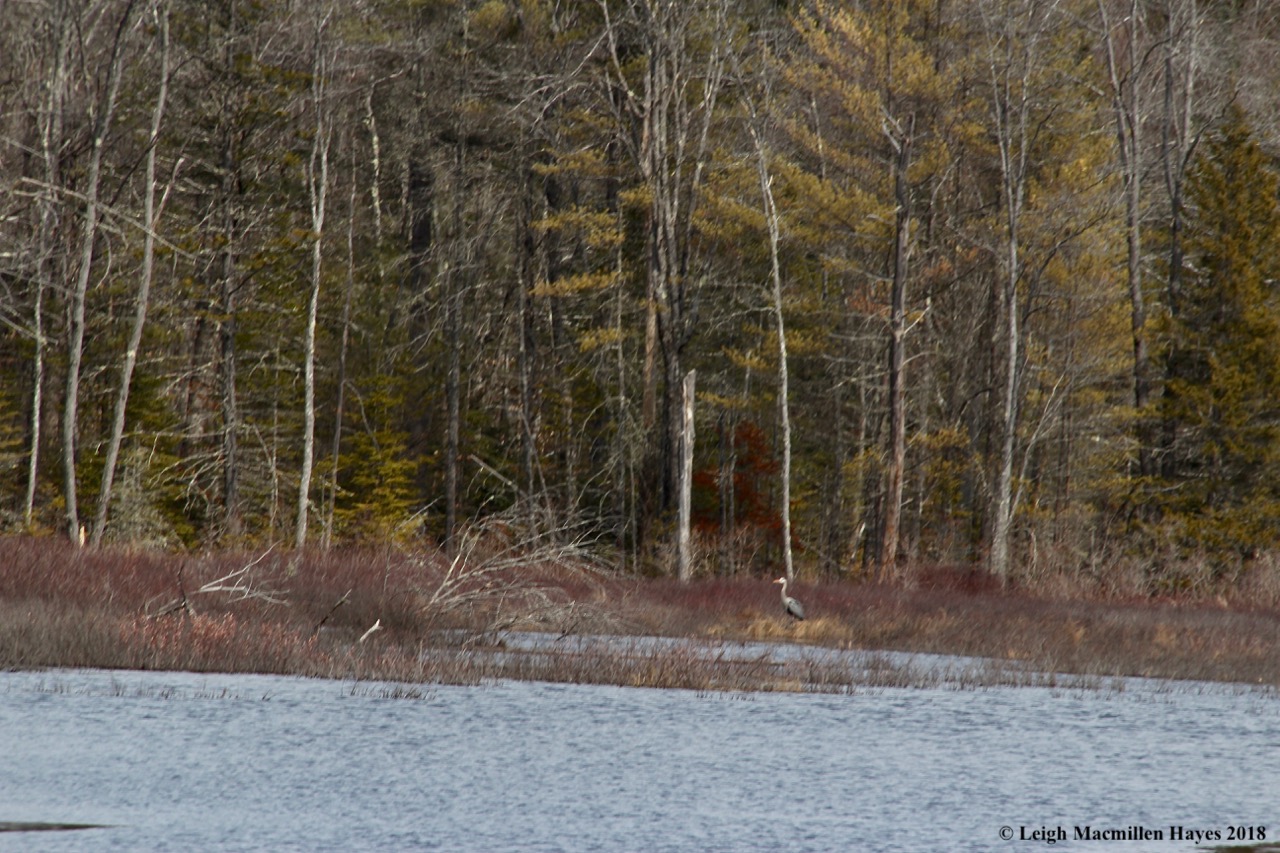
m19-heron

I stood for a long time by the water’s edge, thinking of Tom and then I spied it. A Great Blue Heron flew in and landed across the way. My intention was honored. And Tom’s.

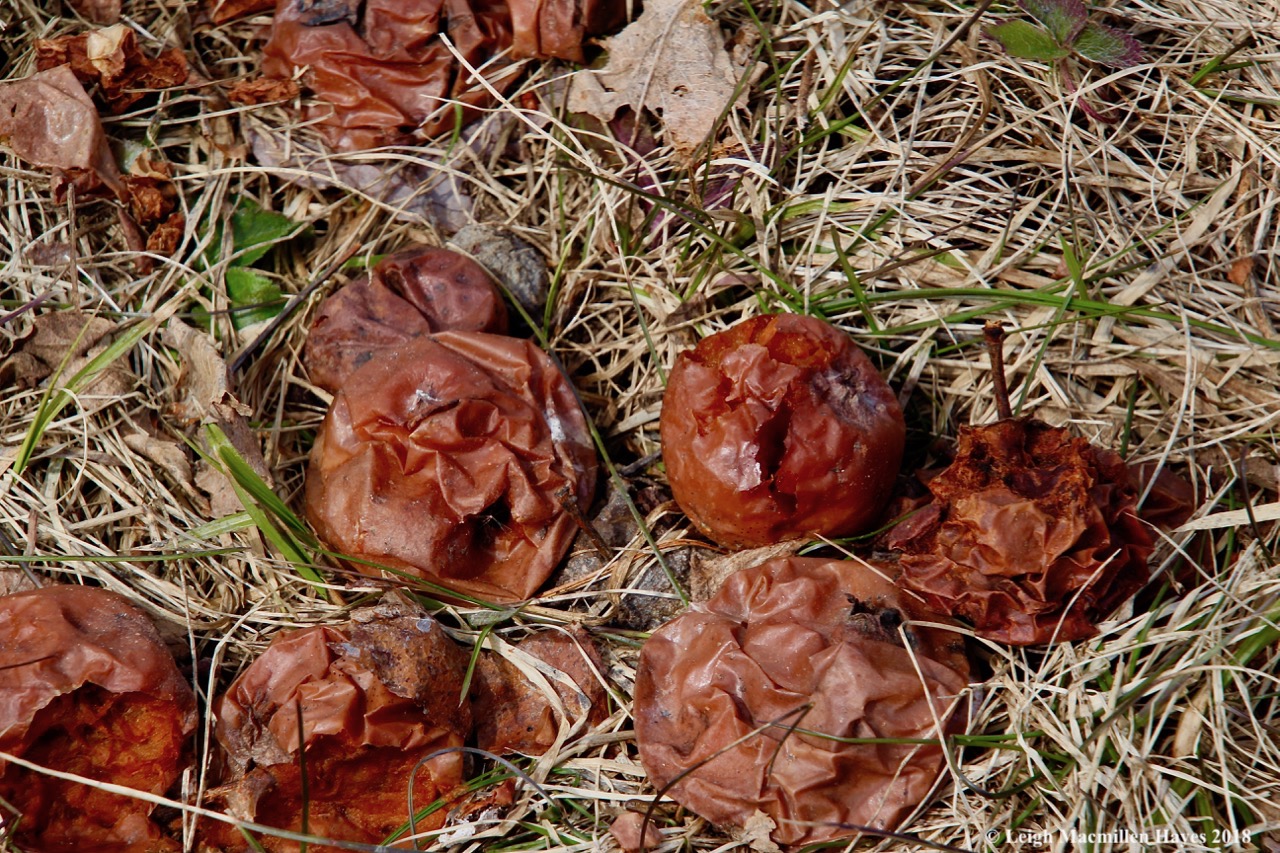
m24-rotten apples

At last I headed back the way I had come and passed through a field where a couple of apple trees grow. As I’d journeyed I had noted scat after scat–some filled with apple chunks and seeds. Of course, I rejoiced because I have an affinity for scat.

But Tom, too, would have rejoiced for what he set out to do so many years ago was to create wildlife corridors–those links of joined natural habitat. For Tom, that’s what it’s all been about–maintaining the ecological processes that allow mammals of all kinds to move and continue to be viable. And for the land on which they traveled to also be viable.

His has been a kinship with all forms of life beginning with the minute, like his shiitake mushrooms and the earth within his gardens and ending with . . . there is no ending, only new beginnings. May Tom’s next beginning be through the eyes of a Golden Eagle. As he soars above us, may he approve of the continued good works of others who try to emulate the legacy he will leave behind.

Godspeed Tom. And thank you.


For the Benefit of All

Living in an area where five land trusts protect land for us and the species with whom we share the Earth strikes me as a valuable reflection of who we are and where we live. Land trusts work with community members to acquire land for permanent conservation through purchases and donations. They also create legal and binding conservation easements that allow residents to protect land holdings in perpetuity, while retaining private ownership. Scenic views, wildlife corridors, flora and fauna, and topography remain, subject only to the whims of nature itself, which is ever-changing.

m1-first lodge

One of the biggest re-designers of the landscape is the beaver. And this afternoon, Jinny Mae and I ventured onto land owned by a friend and under conservation easement by the Greater Lovell Land Trust, to see what changes may have occurred in the past two months since we last visited.

First, we tramped off a logging road and checked on a lodge that was active two years ago. Today, the water level was low and there was no sign of activity. And so we continued on.

m2-pipsissewa

As we climbed up a small incline we stumbled upon a large patch of pipsissewa and had to celebrate our find.

m5-hexagonal pored fungi upperside

Back on the logging road, a tree brought down by one of nature’s recent whims introduced us to a fungi we had not met before–or at least as long as we could remember. And once we saw the underside, we were sure we would have remembered it.

m4-hexagonal-pored

Hexagonal-pored polypore (Polyporus alveolaris) caused us to emit at least six ohs and ahs.

m6-grape fern

Our next discovery–a grape fern. Actually, more than one grape fern once our eyes keyed in on them.

m7-checkered rattlesnake plantain

And then the checkered rattlesnake plantain; and again, once we spied one, we noticed that a whole patch shared the space. We just needed to focus for their presence was subtle amidst the brown leaves.

m8-bees nest 1

Before we met a snake of another kind, Jinny Mae spotted honey combs on the ground.

m8-excavation site

A look about and the realization that a raccoon or skunk had probably excavated the nest.

m9-snake liverwort

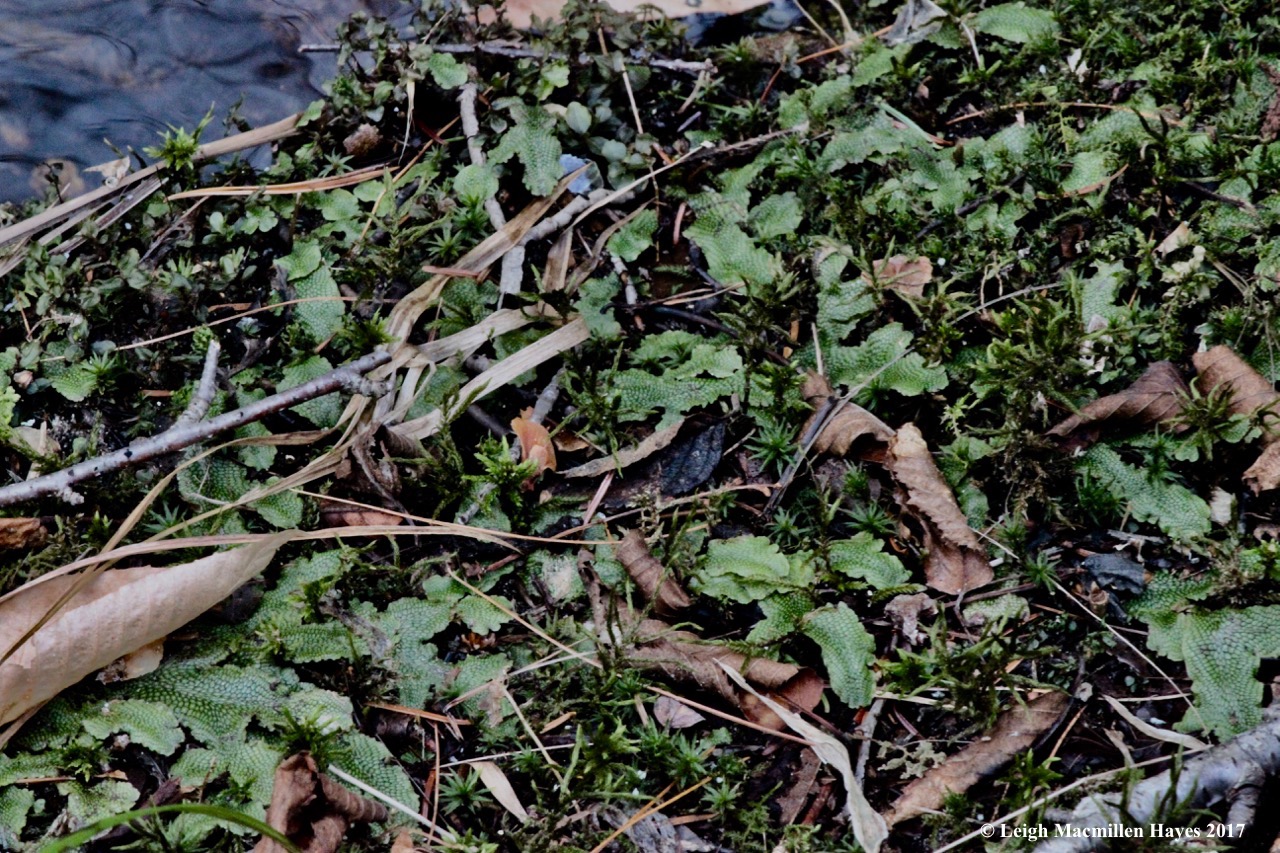
And then we met that other snake. You see, the last time we walked this property, we did see a garter snake. As we began our wander today, we commented that there would be no snakes or toads. But . . . we were wrong. This second snake was a snakeskin liverwort (Conocephalum salebrosum). For us, this was a second in another way for it was our second sighting of the species. Maybe now that we are aware of it, we’ll notice it growing in other places. We do know that its preferred habitat is wet or damp.

m10-umbilicate lichen?

In the same area, but across the brook in a place that we couldn’t reach today due to high water, we saw what looked like an umbilicate lichen, aka rock tripe. The color and substrate threw us off and so we’ll just have to visit again for further study. (“Oh drats!” they said with a smile.)

m11-beaver 1

The liverwort and mystery lichen were our turn-around point. On our way back, we decided to follow the water because we were curious. And within minutes our curiosity was appeased. The beavers we’d suspected might be casually active two months ago, had become incredibly active.

m12-beaver 2

Statue . . .

m13-beaver 3

upon statue . . .

m19-beaver 6

upon statue . . .

m20-beaver 7

upon statue announced their presence. And we acknowledged the fact that they have to turn their heads to scrape off the bark.

m14-beaver 4

Any trees that hadn’t been hauled away had been downed and gnawed upon in situ.

m15-beaver 5

It looked as if this one was a more recent dining adventure for there were wood chips upon the thin layer of ice and a hole showing were the diners had entered and exited the refectory.

m16-oak leaf and ice

Because of the ice, we noted other works of art worth admiring.

m18-lungwort 2

And occasionally, our downward gaze turned upward when we spied trees covered in lungwort worthy of notice.

m21-beaver 8

But really, it was the beaver works that we celebrated the most.

m23-beaver 10

And the fact that thanks to the beavers we learned that the inner bark or cambium layer of a red maple is . . . red.

m23a--not all cuts work in the beavers favor

No matter where we looked, in addition to recent windstorms, the beavers had changed the landscape. The curious thing is that most often the trees landed in the direction of the water, making it easier for them to enjoy their chews of inner bark and twigs in a relatively safe environment, but occasionally, hang ups occurred. And that brought about the question, how is it that most trees are felled toward the water? But not all?

m23a--lodge

While our focus was on the trees along the shoreline, we also kept admiring the water view as well.

m24-lodge

And noted the most recent activity at this particular beaver lodge, including a mud coating to insulate it for the winter.

m28-welcome flag on lodge

We also appreciated that a welcome sign blew in the breeze–in the form of an evergreen branch.

m29-otter scat

And where one finds water and beavers, there are otters. We knew of their presence by the scat left behind in a trail well traveled. Several times we found examples of the same.

m31-main channel open

As the sun lowered while we approached the beaver dam, we quietly hoped to see North America’s largest rodents at work, but settled for sky reflections on water and ice. And the knowledge that by their works and sign, we trusted they were present.

m32-dam1

At last we reached the dam, an expansive one at that. It’s in great shape and so no time had been wasted repairing it. That’s a good thing given that a few flurries floated earthward on this day that felt like winter. There’s food to gather and a home to prepare so work must be efficient.

m33-dam other side

Water trickled through in a few places and ice formed, but the infinity pool created by the dam continued to exist.

m34-brook

And below, the water flowed on–to other beaver dams and otter adventures we were sure. For Jinny Mae and me, our adventure needed to draw to a close. But . . . we made plans to explore again in a few months to see what changes may have occurred–with land owner permission, of course.

As we walked out, we gave thanks for the owners and their appreciation of the landscape and those that call it home today and tomorrow.

From the land comes food and water that benefits the critters who live here and us. It also offers us good health when we take the time to embrace it by exploring, exercising and just plain playing outdoors.

Protection is key. So is education, which develops understanding and appreciation. I know for myself, my relationship with the landscape continues to evolve.

I’m thankful for the work being done to protect the ecosystem. There’s so much I still don’t understand, but with each nugget of knowledge gained, the layers build. Maybe someday I’ll get it. Maybe I never will. Either way, I’m happy for the chance to journey and wonder on properties owned by land trusts and individuals.

Even though we can’t all endow the future of our properties, we can get involved to ensure that these organizations continue to protect land for future generations of humans and wildlife so it will remain in its natural state for the benefit of all.
 

Gifts A Many

I was seranaded three times this morning, first by my guy, then my friend Marita (well, her family cut her short and maybe I helped by quickly thanking her), and finally by Gracie the beagle. The latter was the funniest of all and she managed to get through all the verses. But really, what Gracie wanted was to butter me up in hopes of joining Marita and me for a hike. Sorry Gracie. Maybe next time.

d-sign

We crossed the state boundary a few times as I drove up into Evans Notch. Our plan was to start the day at The Roost, though we weren’t sure we could get there as we didn’t know if the gate on Route 113 had been closed. As we approached the “Welcome to Beautiful Maine” sign, we saw that the gate was open and so on we continued. Until . . . we hit ice. For those who know the road, and the steep ravines to the left as you travel north, you’ll understand why we decided to back up and turn around.

d-morning colors

Back to the sign and gate we went, pulling off for photos because we love the sign and because the field across the way offered an array of colors and more ice.

d-ice layer

It was a case of bad ice and good ice, much like the witches in the Wizard of Oz and WICKED.

d-frost on goldenrod

And the good ice sparkled like winter flowers.

d-Cold Brook 1

The curious thing was that along Cold Brook, which flowed beside the field, there was barely any ice.

d-bear scat

After a few minutes, we headed down the road to the parking lot for the Baldfaces and Deer Hill. The latter was our choice for today. And it turned out to be the perfect choice for early on the trail we found rather fresh bear scat. How sweet is that?

d-leaf bouquet

The trail is flat to begin as it follows the course of a dry river beside the Cold.  Evidence of high water from fall storms was everywhere and it was obvious that the dry section of the river hadn’t always been so. Left behind were displays floral in nature–this one reminded us of a stacked bouquet.

d-Cold Brook 2

Again we reached the real deal–Cold Brook.

d-Cold Brook 3

And stopped to admire the view.

d-Granite and ice

And more good ice.

d-dam

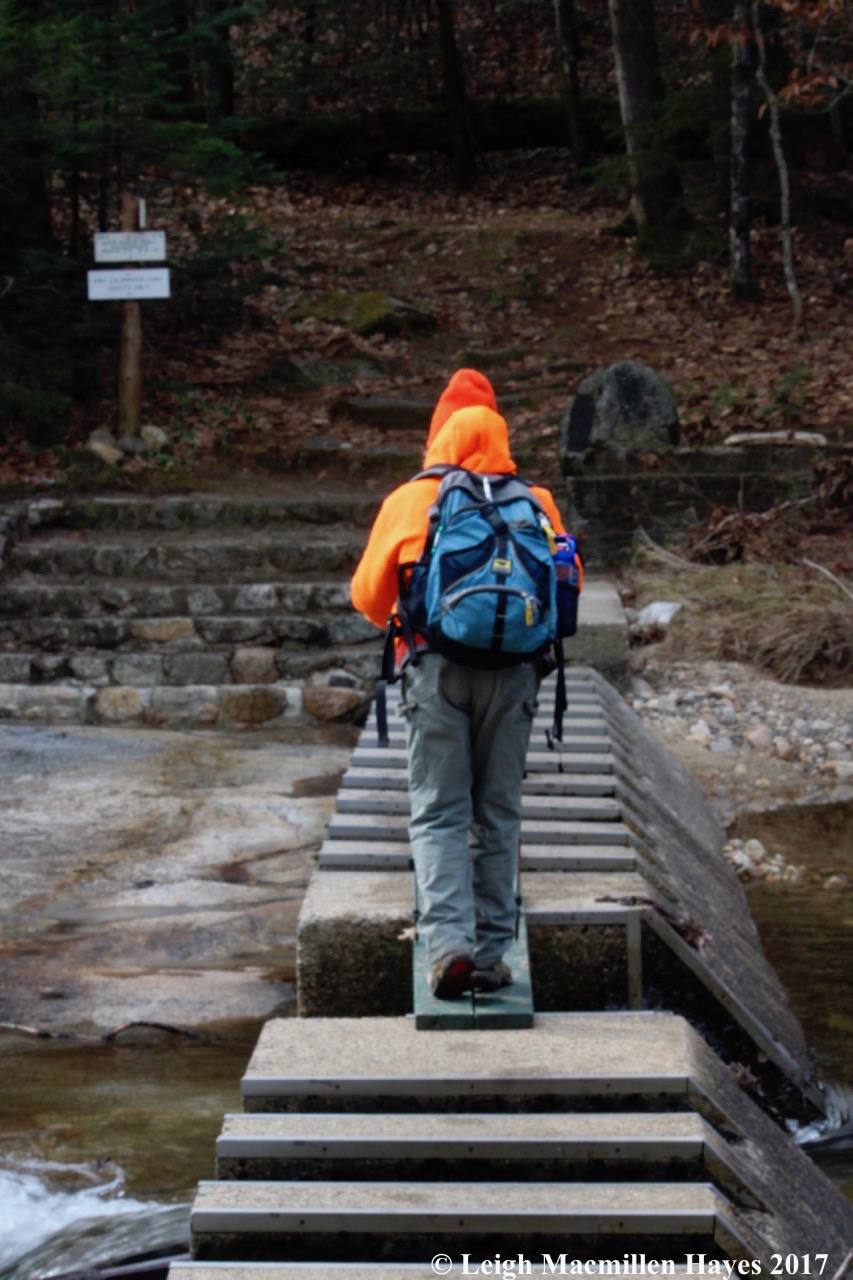
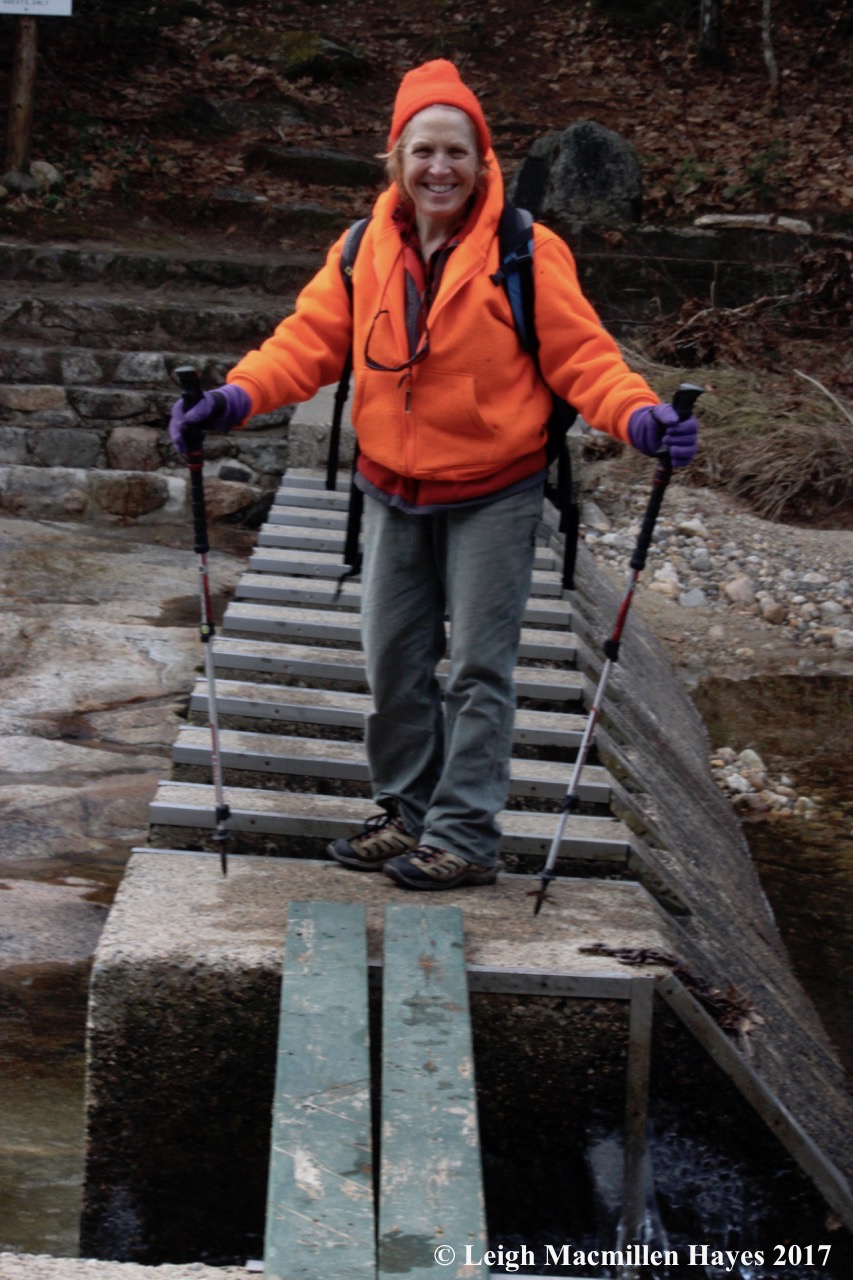
Then it was time to make the crossing. Marita went first and when she got to the other side of the green planks she looked back and said, “You can do this.” She knows me well and that my brain kicks into “No, I can’t,” gear every once in a while. It seemed so simple and yet, at her encouragement, I kept taking deep breathes and finally after what seemed like hours but was only minutes, I put mind over matter and made my way across. And it wasn’t difficult at all.

d-hiking with Marita

The climb up was moderate and we were glad we’d donned our blaze orange on this last day of hunting season. In the parking lot, a hiker had laughed at me and asked if I thought I was going to see a moose. On the trail, we met a hunter who was out with his two sons. And at the summit we heard shots, though coming from a different direction. Yup, we were glad to be wearing blaze orange.

d-whale or frog?

We paused briefly on the climb, and noted that we weren’t alone. At first we both saw a whale, but then I noted a frog–a stone cold frog at that.

d-reaching the summit

We were only following one of the trails on this mountain today, and it wasn’t a long one.  Within the hour we reached the summit.

d-summit signs

Years ago, the signage was confusing, but it seemed much improved. Then again, we only hiked to Little Deer and don’t know about the others.

d-bald faces

From our snack spot, we enjoyed the view of the Baldfaces across the way.

d-Mount Meader

And Mount Meader to the right.

d-biotite plates?

At our feet were biotite (black mica) plates that reminded me of script lichen.

d-feather

And in the ladies room I always find the coolest sights when I pause and look around. Today it was a downy feather.

d-crossing 1

In what seemed like no time, we were back at the dam. Again, Marita went first.

d-crossing 2

She turned back, grinned at me and then watched as I quickly followed. “Yes, I can.”

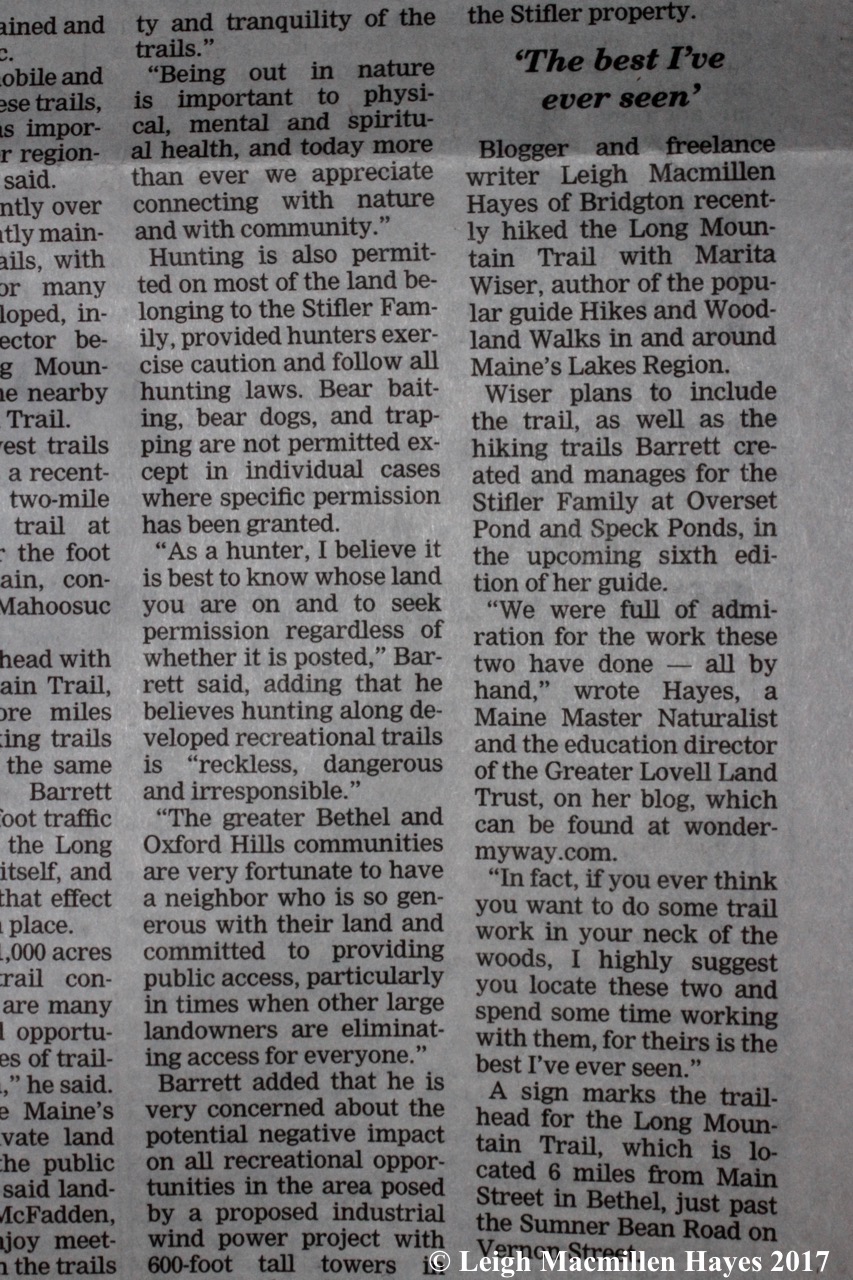
d-Amy's article on Long Mountain Trail

When I arrived home, I discovered cards from family and friends in the mail, as well as a copy of the Bethel Citizen. Thanks to writer Amy Wight Chapman, Marita and I were both mentioned in an article she wrote about Long Mountain in Greenwood.

A few minutes ago, my sister and brother-in-law also called to serenade me.

It’s my birthday and I’ve enjoyed gifts a many–from ice crystals to bear scat to feathers, mixed in with songs and calls and cards and comments from family and friends near and far. I am blessed. Thank you all.


Sunday School

After church this morning, I stepped out the door, passed through openings in a couple  of stonewalls and then down the cowpath, crossed the power line, and ventured into my smiling place. It had been more than several months since I’d pushed the hemlocks aside to enter for it’s a wetland and woodland filled with growth that can make it difficult to meander through without snowshoes. But before winter arrives, I wanted to take a peek and learn what I could along the way.

o-oak saplings

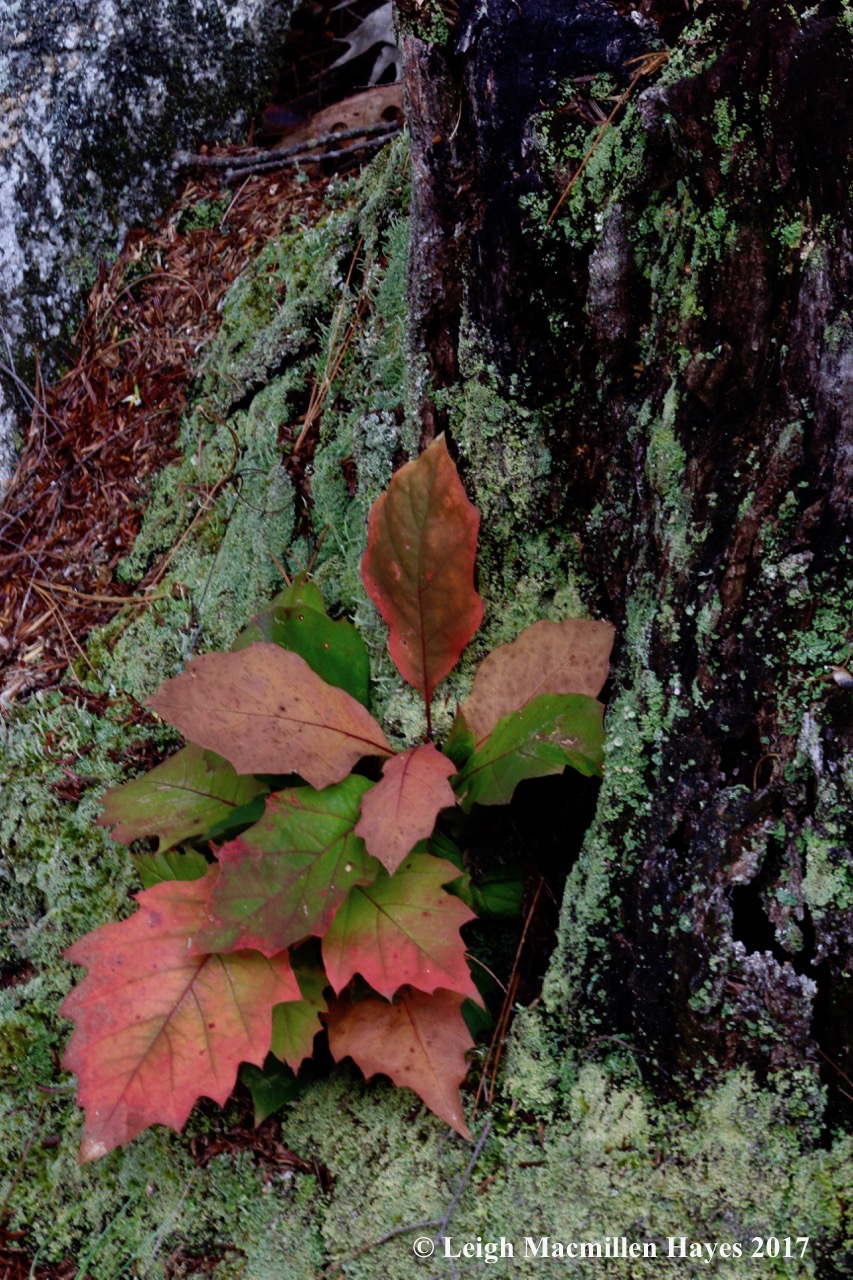
My lessons started early as I noted a couple of red oak saplings growing in the hollow of an old tree stump, their color reminiscent of the Christmas season. Last year’s mast crop (and another for some oak trees this year) meant a plentiful supply of food for weevils, little brown things, squirrels, turkeys and deer. And yet, not all were consumed and so they sprouted. Now my plan will be to wait and watch–and wonder which of this array actually will win the race to adulthood.

o-huge squirrel cache 1

A little bit further into the woods, I spied a huge cache of white pine cones. This made my heart sing, for I love to keep on eye on big caches such as this and watch as they get whittled down over the course of the winter.

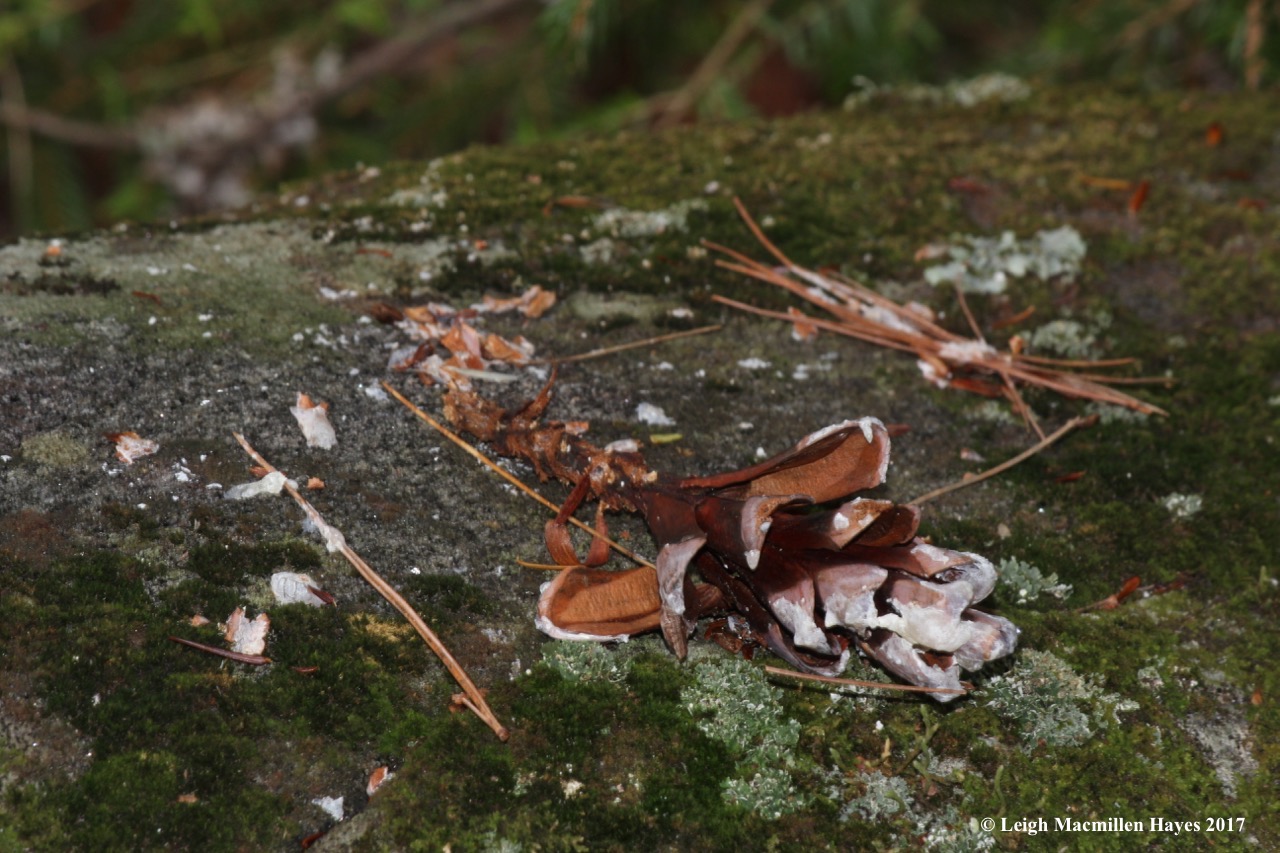
o-pine cones up close

While I stood there admiring the work of the red squirrel who’d filled its larder presumably when the cones were green (and by the way, these cones are two years old, for it takes two years for them to mature atop the pine trees), I thought about the sap that coats them in white. Though the sap is drier now, does it get stuck to their feet. I know that when I come in from a walk through a pine forest, I have sap on my soles, and attached to that may be pine needles or dried leaves. Is it the same for a squirrel? If so, does it wear off like that on my boots? It must because I’ve never seen it on their feet.

o-pine on the cob 1

And what about as they work on their pine-on-the-cobs? Does the sap on the scales come off on  their lips or teeth–much like when we eat something sticky and gooey like peanut butter?

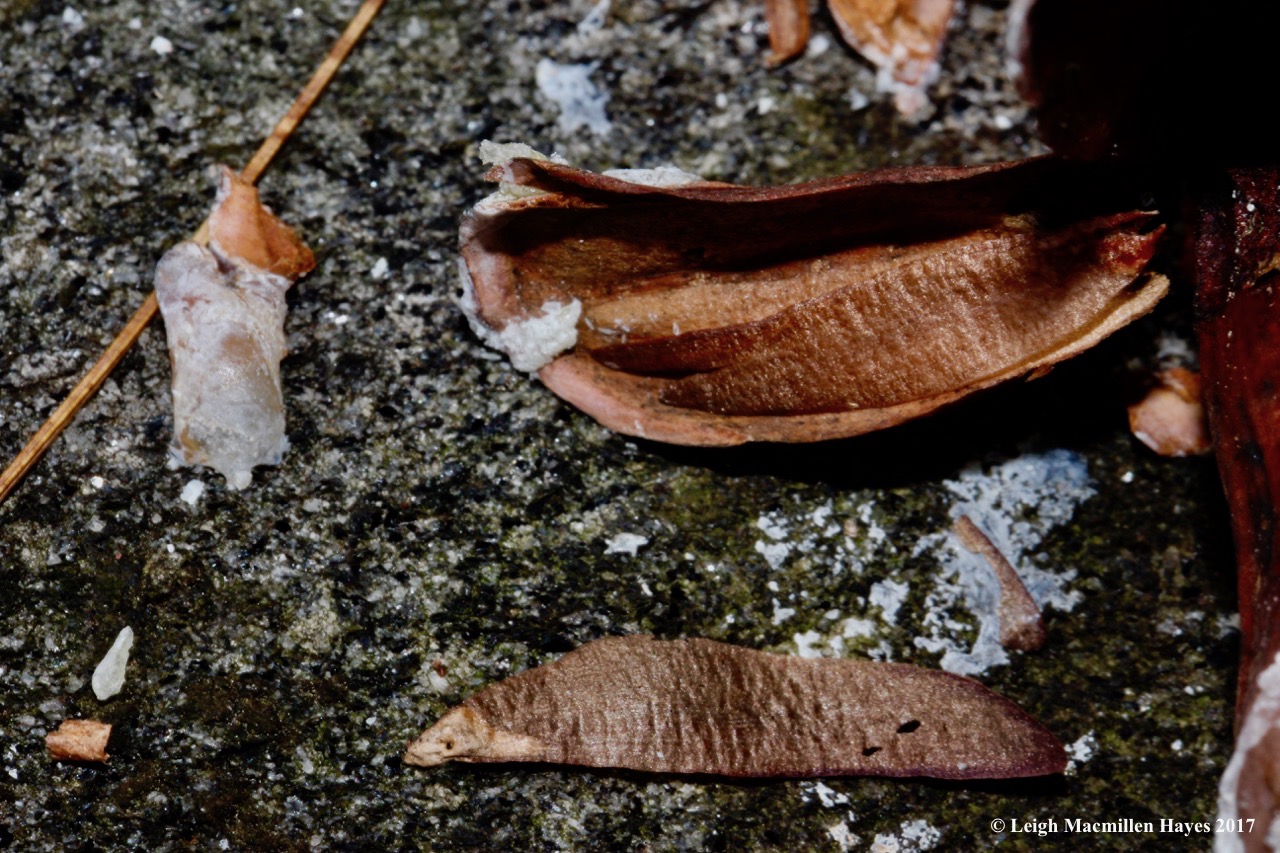
o-pine seeds

It’s a lot of work to get to the two tiny seeds tucked within each scale. They look to be about an inch long, but most of that is the wing (think maple samara). When the weather is warm and dry, pine cone scales open to release the seeds. The squirrel who’d hoarded the stash, had plucked the cones when they were still green and atop the tree–dropping them to the forest floor before they opened so he’d have plenty to eat. And then he had to gather all that he’d dropped into the piles. And now I can’t wait for the coming months–to watch the pile dwindle and middens grow; to see the tunnels he makes in the snow; and just maybe to sit quietly nearby and watch him in action. He was a bit peeved that I was poking about today and let me know with so many chirrs from a branch nearby.

o-porky den?

I finally moved on and saw an uprooted tree I’ve visited on previous occasions. Last year I followed porcupine tracks to this very spot and spied porky within. But when I checked on later occasions, it didn’t seem as if he’d returned. Today, I peeked in and saw water. Even though it looked like a grand home to me, I’m learning that porky knows best.

o-walking in a hemlock grove

At times, I moved quietly upon the duff under the hemlock trees. Frequently, I stopped to listen and look.

o-cinnamon fern leaves1

And then in an opening, I was again in the wet zone where the cinnamon ferns grew abundantly. In curled formation, their leaves added interest to the landscape and a bit of a crunch to my footsteps.

o-cinnamon fern 2

And piled as they were surrounding each plant, I thought back to the pinecone cache. This was food of a different kind, for those leaves will decompose over the winter and nourish the earth.

o-snowberry 1

Continuing on, I came to one of my favorite spots–where the creeping snowberry grew. I hunted under the tiny leaves for the little white berries, but found none. And I’m not sure that I’ve ever seen them, especially in this place, for I suppose that I miss all the action since snow melt always seems to call a halt to such visitations and then I never make my way deep into these woods all summer. I have to assume that the little brown things and birds had a feast. Although, as any teacher knows, one should never assume. Perhaps next year, I’ll make a point of checking on these plants.

o-birch tree in offing

My tramp was a meander, for I knew not what direction each footstep might take me, changing my mind constantly and trusting that if I turned left or right, I wasn’t missing something in the opposite direction. The sight of a beech tree, its leaves ever rattling, did mean that I’d have a chance to move to drier land for a few minutes.

o-equisetum

And then I stepped up onto a rock, where the growth at my feet surprised me for I didn’t realize that equisetum grew in this part of the woods. Always something new to learn.

o-tamarack branch 1

That wasn’t all. As I looked around, a branch with yellow needles by my foot caught my attention.

o-tamarack branch 2

This was the twig of a tamarack tree, with its needles growing in tufts atop little spurs. Had we met before, the tree and me? If so, I couldn’t remember it. Nor could I find it.

o-evergreen hallway

Before me was a wall of evergreens, in a classroom all of their own, for really, these are among my favorite places where learning opportunities present themselves. But, today’s lesson wasn’t about the hemlock, white pine, fir and spruce idiosyncrasies.

o-tamarack tree

And so I scanned the sky, and about twenty-thirty feet away, I found the tree. A tamarack or larch or hackmatack tree, aka Larix laricina, is our only deciduous conifer because unlike all the evergreens, it sheds its needles each fall.

o-moose scat

A few minutes later, I heard movement, and looked up to see . . . no, not the moose that made this deposit last winter, but two flashes of white as a couple of deer bounded off. I think that’s one of my favorite lessons of these woods, for the landscape changes repeatedly and thus offers a variety of habitats for the mammals of western Maine. This is the place where I get to learn the most about them and their behaviors.

o-deer rub 1

Sometimes I’m rewarded with spying the mammal from a distance, but other times I find evidence of its behavior, like this antler rub with frayed bark at top and bottom and smooth wood between.

o-varied habitat 1

I’ve watched the forest succession in these woods for twenty-five years,

o-varied habitat 6

and it’s been logged again more recently.

o-varied habitat 4

With each change, comes more change. And so the mammals move from one spot to another, but they’re still all here–somewhere.

o-varied habitat

I just need to listen and look.

o-turkey tail fungi

It’s not just the mammals and trees that I get to learn about. My studies include among other topics, fungi, of which I’m only a so-so student. But I do know that this is turkey tail, aka Trametes versicolor.

o-Fomitopsis cajanderi  (Rosy Polypore) 2

And then I happened upon a hemlock stump topped with a large, beautiful display outlined in a coffee brown and salmon pink. It took me some work to remember its name. I can tell you where else I’ve seen it for it grows upon a hemlock log at Holt Pond.

o-unknown mushroom 1

Before I forget again, it’s a rosy polypore, if memory serves me right. I only hope my fungi teachers weigh in on this one.

o-logging road 1

At long last, it was time to follow a logging road back to the snowmobile trail.

o-snowberry on sphagnum

Sometimes, I slip back into the woods before reaching the trail, but today I chose to follow it. And what to my wondering eyes should appear, but more creeping snowberry atop sphagnum moss.

o-home sweet home

As I finally crossed the field toward home, I gave thanks for the classroom that is right outside our back door and for the lessons learned in this Sunday School. Now I just have to remember everything, which is why I record so much.


Marathon Mondate

As he’s done every year for the past however many, my guy is training for the Moose Pond Half Marathon, a race around Moose Pond in Bridgton and Denmark that supports the Shawnee Peak Adaptive Ski Program. The race is only two weeks away and so this morning he headed off to run ten miles. And afterward, he said he felt like he could have run the additional 3.1 miles that would complete the race. That being said, we headed west to join our friends, Pam and Bob, on a hike at a new preserve in New Hampshire.

The plan was to meet at the trailhead near Hurricane Mountain Road on the Chatham/Conway town line. We knew the road, but not the spot, and were racing to get there, so of course I drove right by. But . . . I spied Pam sitting in their car in the parking lot and probably burned some rubber as I came to a screeching halt and then quickly put the truck into reverse. Fortunately, my guy didn’t get whiplash. It’s a back road, so not well traveled, thus I could drive backwards for a hundred feet or more without any problem–thus is the way ’round these parts. And one of the reasons we love it so.

m-sign 1

Another is that local land trusts preserve land for the benefit of the species who call this place home, both flora and fauna–and for us so that we, too, may benefit from time spent tramping along trails, making discoveries and forging friendships. The preserve we visited today isn’t quite open, but Pam said she’d heard they plan to open on November 4th. There were no signs on the kiosk or trail maps, but we quickly learned that none were necessary for the route was easy to follow. We were at the Monroe-Lucas Preserve, a 62-acre property donated to the Upper Saco Valley Land Trust.

According to their website: “The land was given to USVLT by Barrett Lucas in honor of his wife, the late Leita Monroe Lucas. Leita’s family has deep roots in East Conway and Redstone, and her father, Ernest “Red” Monroe, also wanted to see the land preserved. Adjacent to the Conway Common Lands State Forest, The Nature Conservancy’s Green Hills Preserve, and the White Mountain National Forest, this parcel builds on an existing network of preserved land, and has wonderful opportunities for future trail development and increased public access. A branch of Weeks Brook also runs through the property, and the property lies within USVLT’s ‘Green Hills’ focus area. The site is also remarkable as the one-time summer residence of the American Impressionist painter Thomas Wilmer Dewing, and his fellow painter and wife, Maria Oakey Dewing. Their cottage, built in the late 1800s, fell into disrepair in the mid-1900s. Now only the chimney remains onsite.”

m-puff ball fungi 1

With Pam in the lead, we started up the trail and within minutes the fun began. She spotted a large patch of puff balls begging to be poked. The spores wafted up and away with hopes of finding the perfect place to grow nearby. We assume they will be successful, for within a fifteen foot area, we found patch after patch and knew we weren’t the first to encourage their spores to blow in the breeze.

m-bobcat print

And then Pam began to spy prints in the mud. First, a moose. Then this bobcat–if you look closely, as we did, you may see the hind pad matted down; above that a raised ridge in the form of a C for cat; and four large toes, the two in the center being asymmetrical. Because it was a muddy substrate, we even saw nail marks, especially above the two center toes. Five feet further, we found deer prints. And so we rejoiced in the foresight of the Monroe-Lucas family to protect this land.

m-Weeks brook flowing 1

A bit further on, we heard the brook before we saw it–a branch of Weeks Brook that borders the property. We all stood beside and let it mesmerize us.

m-weeks brook 1c

We thought about its forceful action each spring and the eons it took to carve into the rocks along its banks.

m-weeks brook baths

We shared visions of a summer day spent sliding down its smooth channels and slipping into the pools below.

m-weeks brook between the rocks

And we marveled at the way it split the granite above . . .

m-weeks brook between 3

and flowed between the shelves.

m-weeks brook bubbles

All the while, it raced to the finish line and we could only assume it made good time.

m-hobblebush flower?

It was beside the brook where the hobblebush grew prolifically and offered a myriad of colors among their leaves and clasping or clapping hands among their buds. Because we were looking, we noticed one flower forming into its globe shape as it usually does in late winter. Was it confused?

m-hobblebush new leaf

And on another, a new leaf.

m-hobblebush 2

Fortunately, most behaved as they should and gave us an autumnal display worth celebrating.

m-hobblebush:hemlock shadows

One even added some shadow play.

m-mount kearsarge

Eventually, we turned away from the brook and followed the trail down. A peak through the trees and we could see Mount Kearsarge across the way.

m-slime mold 1

On a tree stump, we found a couple of fascinating fungi including a slime mold all decked out for Halloween.

m-jelly fungi

And on the same stump, a display of jelly ear fungi.

m-old moose scat

Around the corner was more evidence of moose traffic, though since it was moss-covered, we decided it was a couple of years old. None of us could ever recall seeing moss grow on moose scat before, but it made perfect sense that it would be a suitable substrate. I did wonder how they’d categorize that on a moss ID key–grows on rock, tree, ground, moose scat?

m-pippsisewa

Our moments of awe weren’t over yet. We sent up three cheers for the pipsissewa and its seedpods (Bob, did you take one?),

m-red-belted polypore

and red-belted polypore.

m-frullania 2

And then Bob spied the frullania. The smaller, spider-webby display in the lower right hand corner is Frullania eboracensis, a liverwort with no common name. But the larger mass is known as Frullania asagrayana, so named for a botanist and natural history professor at Harvard University from 1842-1873–Asa Gray.

m-frullania

We all went in for a closer look at its worm-like leafy structure.

m-frullania and muy guy

Even my guy got into the act, much to his reluctance. And he was certain he didn’t need a lesson on how to use a hand lens. Thankfully, he doesn’t read these blog posts, so I can get away with this. Shhhh.

m-uprooted pine 1

Around the next bend, for the trail has enough S curves to make the descent easy, we came upon a white pine long since uprooted. Did anyone hear the crash?

m-uprooted picture frames

It offered a wonderful view–of more red-belted polypores, the root system and rocks, plus several windows on the world beyond.

m-photo frame hand

If you go, watch out . . . Thing of The Addams Family, might be lurking about.

m-Pam holding a huge striped maple leaf, Bob photobombing

Continuing on, we moved out of the hemlock and pine grove and back into the land of the broadleaves, including one with the broadest of them all–a huge striped maple leaf that Pam spotted; and Bob made sure to photo bomb the Kodak moment.

m-cottage sign 2

And then, as the trail evened out, we crossed a narrow gangplank to the location of the original cottage. According to a sign posted there, “Thomas Wilmer Dewing (1851-1938) and Maria Oakey Dewing (1845-1927) were 19th century American painters based in New York City. Maria often painted flowers and garden scenes, while Thomas is known for his figure paintings of aristocratic women, notably ‘Lady in Yellow’ hanging at the Isabella Steward Gardner Museum in Boston. The couple spent their summers at a popular artists’ colony in Cornish, NH, during the early 1900s. The Dewings also lived and painted in a cottage located here on the Monroe-Lucas Preserve for several years.

m-site of Dewing cottage 1

All that’s left is the chimney.

m-cottage stove

And some artifacts.

m-toilet

Including the john.

m-pokeweed

Our final view was a pokeweed still in flower and fruit. Again, we wondered about its timing, while appreciating its offering.

With that, we were back at the parking lot, where Bob informed us that our distance was just over a mile and time two hours–hardly record breaking. And hardly a “quickest to the destination hike” for my guy, but he kept finding stumps to sit upon as we gazed more intently on our surroundings; I think he secretly appreciated our slow pace and the opportunity to rest his legs.

If you want support his effort to raise funds for the Shawnee Peak Adaptive Ski Program, stop by and see him. Any and all donations are most welcome.

Wild Willy Wandering Wilderness

There are times when one wanders down a trail and a certain spirit seems to swirl about in the silence of the wilderness. Such was the feeling today as my friend, Joan, and I joined two other friends to explore their land in South Chatham, New Hampshire.

k-Pleasant Mtn

Before we ventured forth, however, we sat upon their deck and enjoyed the view of my hometown mountain–the ridge of Pleasant Mountain, this being a backside view.

k-sensitive pea 2

And then we paused by one of the wildflower gardens they have created with seeds of unknowns sown at abandon.

k-Sensitive Partridge Pea

Based on its seed pods that split open on both sides, we knew it was in the pea family, but didn’t know its name. Upon arriving home and keying it out, I discovered it’s a sensitive partridge pea, also know as a wild sensitive plant, the perfect tribute to the trail. Notice the pinnately-divided leaves–they fold up when touched, thus the name “sensitive.”

k-three amigos under the arch

Soon after getting acquainted with the sensitive pea, we continued onto the trail that Pam and Bob (the couple on the left; Joan on the right) have carved out of the land, with the help of their nephew for whom they constantly uttered words of praise. One of his artistic offerings to them was an archway formed from beech saplings.

k-steps by Willy

Another offering–steps created from stones found nearby. But where exactly did he find the stones? That remains a secret for so good is his work. It seemed as if the trail had been there all along as it wound its way up and over, down and around, passing by landmarks worth pausing by.

k-black cherry

We saw so much, including bark on young trees that we desperately wanted to be black birch (aka sweet or cherry birch), but was really black cherry. Nearby where pin cherry trees that we easily recognized, but this one seemed a wee bit different and we thought maybe, just maybe it was a black birch. But maybe it wasn’t when I opened Michael Wojtech’s BARK later.

k-black cherry 2

And further along the trail we spied a mature black cherry, its bark we knew for the curled chunks that remind us of burnt potato chips.

k-yellow birch

The curls of an old yellow birch also intrigued us and we noted many, many young and a few old members of this family throughout the property.

k-big tooth aspen

It’s a mixed forest and we had fun searching for the big tooth aspen trees, their bark deceptive with a northern red oak look below and birch look above.

k-hemlock and boulder 2

Other landmarks included a hemlock kissing a boulder and . . .

k-Province Brook hemlock root

another with the longest, thickest root we’d ever seen that arched across the land, creating an opportunity for the fairies that live in such an enchanted forest a chance to do the limbo.

k-coyote scat

We discovered what Pam and Bob already knew–it’s more than fairies that inhabit their place. In the middle of the trail, coyote scat presented itself.

k-deer sign

We found lots of deer scrapes, where in previous years they’ve scraped the bark upward to feed on it. But this was a recent visit with tags at both ends of the action, indicating a rub. Deer rub a tree to clean their antlers of velvet–that soft, vascular skin that grows on their antlers. They also rub trees to mark their territory.

k-garter snake1

And our wildest sighting of all–a garter snake enjoying some late afternoon sun. It never moved as we gawked and finally passed by, so really it wasn’t so wild after all. But Pam and Bob shared stories of other sounds and sightings, for this really is a wild land that abuts the National Forest.

k-Province Brook 2

It’s also bounded by Province Brook, where the water’s flow soothed our souls.

k-Province Brook 3

We were embraced by its reflective color . . .

k-Province Brook 4

and life-giving cadence.

k-spirits 1

And it was there that the water spirit . . .

k-spirits 2

rose and embraced us.

k-wood swirls

We found it wherever we went and recognized it in various forms . . .

k-afternoon light 2

as it wandered beside us.

k-sign

Just as we ended our journey, we noticed the sign–Wild Willy Wandering Wilderness Trail. Pam and Bob had told us its name, in honor of their nephew Willis and his hard and creative work in carving out the trail, but they kept the sign a secret until we finished. Hats off to all three of them and their love of the land and for each other. Joan and I were envious of it all and thankful for the opportunity to be embraced by the spirit of this place and these people.


Home again, home again

Because we’d spent most of the summer at camp and I barely stopped at home, I hadn’t visited my usual haunts in a while. Today, that changed.

o-green cone sap

Into the woodlot I ventured, where green pine cones oozing with sap decorated the forest floor.

o-green cone midden

The remains of those serving as sustenance also lent a bit of color from the center cobs and deseeded scales left behind by red squirrels.

o-Inidan pipe from above

Most of the Indian pipes were past prime, but they remained beautiful with their flowers turned upright since being fertilized.

o-pine sap

The same was true for pine sap, which supported more than one flowerhead per stalk.

o-powerline

Emerging from the cowpath onto the power line, I found conditions to be as expected–anywhere I’ve traveled past such a line this summer, I’ve noticed that Central Maine Power has sprayed. I shouldn’t complain for I depend on that power and understand the need to keep the trees cleared, but it does make my heart cry for all that is lost.

o-sundew sad face

My sundews were among those that had suffered, brown and shriveled were they.
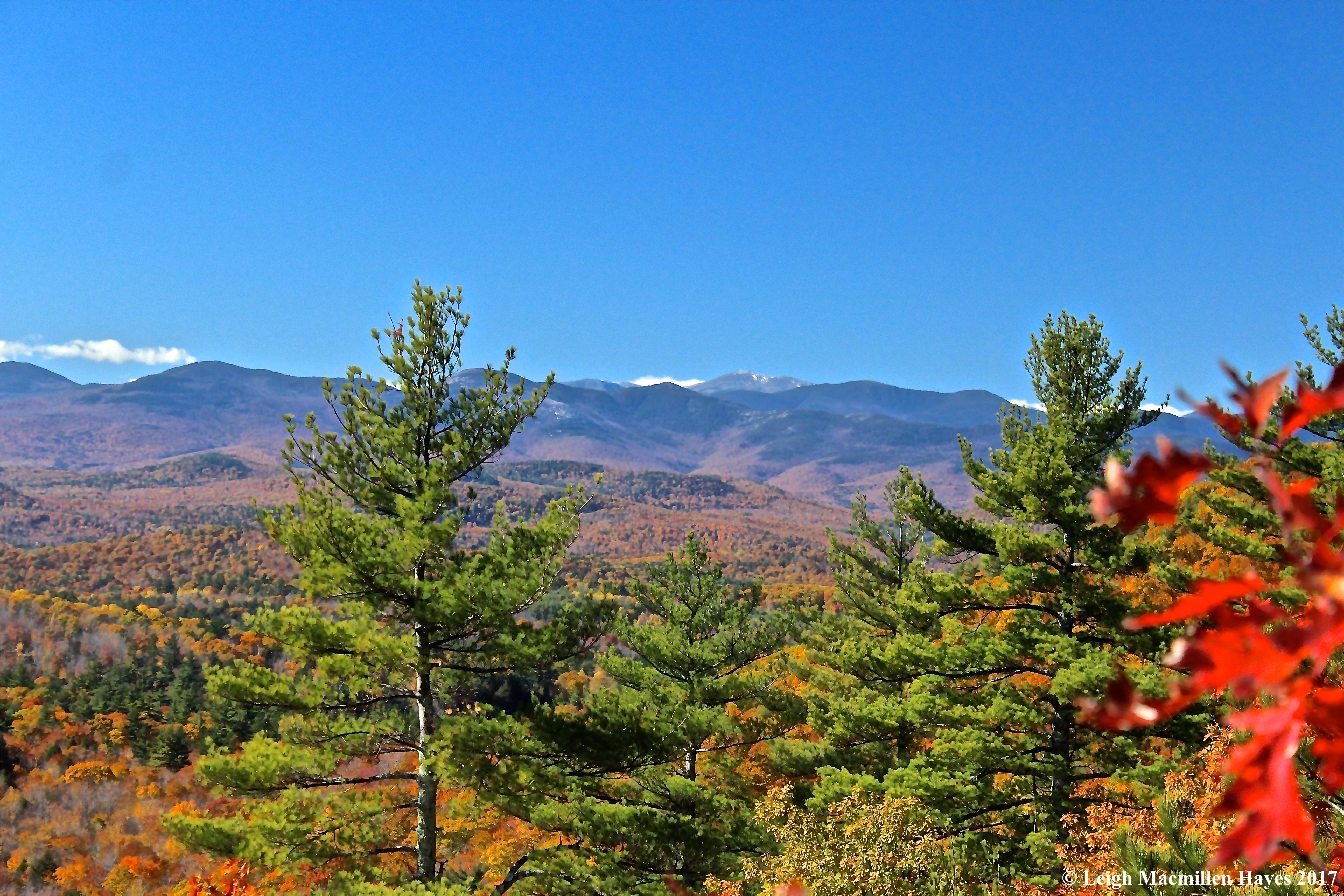
o-juniper

The white pines took a beating as well, but the juniper continued to grow and produce a bounty of fruits.

o-cicada

As I walked, the air buzzed with a chorus of cicadas,

o-field cricket

field crickets,

o-grasshopper

and grasshoppers.

o-red maple cotyledon

A visit to the vernal pool was a must, and in true vp form all was dry, but from the bottom new life sprang forth in the form of red maple . . .

o-vp, quaking aspen

and quaking aspen seedlings. It’s worth a try on their part, but I suspect they’ll be short-lived for soon enough the pool will begin to fill with water from late summer, fall and winter storms yet to be.

o-vp, red leaf

Speaking of fall, some red maples had already stopped producing sugar, thus the chlorophyll disappeared and anthocyanin formed–evident in the red hue.

o-vp feather

I found some other color in a small blue jay feather. I only saw two and didn’t think much of it, until . . .

o-blue jay feathers on stump

I passed by an old stump and did a double take. It appeared a young jay had served as a feast.

o-field succession

My next stop was the field, reached by passing through the two stonewalls that demark the boundary of our extended property. The field belongs to our neighbors’ parents and they recently had it bush hogged. At the western most end stood a fine example of forest succession, from mowed area to wildflowers and shrubs to saplings and finally the forest beyond.

o-small-flowered gerardia

Among the flowers at the edge I found one I hadn’t met before–small-flowered gerardia with delicate, hairy petals and needle-like green leaves bordered in their own shade of purple.

o-steeplebush

Being Sunday, it seemed apropos that the steeplebush reached heavenward.

o-meadowhawk above

As I continued to look around, a meadowhawk flitted about, pausing occasionally.

o-meadowhawk face

I knew if I stood still long enough, it would get curious and let me approach.

o-meadowhawk up close

And I was right.

o-home view

At last it was time to head in. Home again, home again, jiggity jig.


A Boulder Degree

When I began writing this blog in 2015, my intention was to focus on the wonder of the natural world in western Maine. But sometimes, it’s other wonders and points further west (or even east) that grab my attention.

c-Pena Drive 1

And so it was that midweek last week we headed west of our west and landed in Denver, Colorado, for an extra long weekend. All that being said, this photo with the Rockies in the background made it look like it was sunny when we landed. Not so. It even rains in Colorado, though nothing like we’ve experienced in New England this month, and we landed in the mist on Wednesday night. But we made several trips to the airport and Big Sky country enveloped us.

Not only that, but there were prairie dogs everywhere along Peña Drive. OK, so they aren’t in my backyard, thankfully, but they were incredibly cute. We deal with mole mounds, but prairie dog mounds seem to be even more pronounced. Still . . . I smiled with each sighting.

Our home base for the next four nights was a garden suite in the Arvada home of Donevon and Beth–an Airbnb rental. It was clean, comfortable and located between our two destinations: Boulder and Denver. We highly recommend this two-bedroom space should you be in the area. Don’t forget to say we recommended it–and be sure to pet Maggie.

c-to boulder 4

A road traveled often was the one that led us to Boulder and we soon became familiar with the wind farm to the left, which evoked memories of the first wind farm we ever encountered on Prince Edward Island in Canada when our sons were but youngsters. And this past weekend, it was the younger of the two for whom we made the journey.

c-looking toward boulder

His home these past years has been at the base of the mountains, where he’s earned an education on many levels.

c-Pearl Street2

With him, we walked along Pearl Street, mindful always of the artistic endeavors (and similarities to Church Street in Burlington, Vermont).

c-boulder lions

And among it all, one Lion appreciated the work of others who’d built a fountain.

c-peak to peak 2

Then we headed further northwest, toward Estes Park, enjoying the mountain and sky views along the route.

c-Estes Park1

Like Maine, spring was just arriving, adding a contrast from brown and green below to white summits.

c-elk 1

And in the midst of it all . . .

c-elk 2

elk stopping traffic. (Didn’t they know they were supposed to turn to their other right?)

c-Estes 2

We oohed and awed, but had a plane to meet and so we didn’t stay long.

c-16th Street Mall sign

Over the course of our journey we explored Denver as well, where we walked the 16th Street Mall a couple of times.  We lunched and we dined–our companions ever changing, which added to the highlights.

c-16th Street, Denver

In historic terms, 16th is such a blend, though leans more toward the modern than so many back East.

c-union station 1

But, history stood tall . . .

c-union station 2

and lit the way toward the future.

c-tattered 1

No visit is ever complete without a stop at our favorite bookstore–Tattered Cover.

c-aquarium sign

We also made time to learn about the exotic. Or so they seemed to our New England brains.

c-turtle 3 (1)

We viewed an alligator-snapping turtle–a first for us. According to a sign, adult males are known to move very little and in fact, may stay in the same location for up to ten years. There’s a lesson in that, I suppose–about perseverance, which our youngest can certainly attest to.

c-lizard 1

We noted the range of scales,

c-rattle 3

differing in patterns and . . .

c-fish scales 1

size. Those pointed to another lesson about diversity among people and their outer skins that shield inner experiences.

c-spider 1 (1)

While some displays denoted hairy situations,

c-starfish and tropical fish

others demonstrated the creativity that can overcome.

c-starfish 2

There were times when the world looked best from an upside-down position,

c-starfish1

but in the end, stardom ruled.

c-sting rays 10

So did rays of another sort, who flapped their “wings” in forward motion.

c-sting rays 11

And then there was the whisperer . . .

c-sting rays 13

who patiently encouraged slow movement . . .

c-sting rays 14

rewarded with a gentle stroke.

c-tiger 3

In the end, we had our favorites. The sting rays and the king of them all–a least expected resident in the aquarium, a Sumatran Tiger.

c-jellyfish 2

And jellyfish! Bioluminescent sea nettles–the fireflies of the aquatic world. (Memories swam through my mind of glowing night swims in my own youth.)

c-before the grads enter

But our main reason for heading west was to watch Folsom Stadium fill up.

c-the stage is set

The stage was set and bag pipes tuned.

c-grads entering

Ever so slowly, soon-to-be graduates marched in.

c-college of arts and sciences sign

We were most interested in the College of Arts and Sciences.

c-grads seated

When I sent a text message asking, “Where are you?” I received this response: “I’m sitting down and wearing black.” Ah, that boy! Or young man, I should say.

c-where's waldo? he's here!

But, he could not escape his mother’s eye and she found him in the sea of Waldos. Or rather, Buffs. (Have fun looking.)

c-degrees conferred1

A couple of hours and sunshine later, degrees were conferred and tassels moved over.

c-congrats from cousin

But then, a second ceremony for each school, and this for film studies, where his cousin from Denver (and also a CU grad) joined us and offered congratulations.

c-receiving his diploma

After speeches and honors, at last the diplomas were awarded.

c-it's official

And in the wink of an eye, he was done. Fini.

c-our grad

Our grad tolerated his mom–as the sun shone brilliantly.

c-our gang 2

We all gave thanks for Pat’s achievements, from Hannah and Shep, to cousin Christian, our grad Pat, and my guy.

c-congrats class of 2017

The signs . . .

c-be boulder sign

said . . .

c-forever buffs sign

it all.

c-family gathering 1

He did it. And our smiles beamed for our wonder-ful son. Forever a Buff. Congratulations to Pat on your CU Boulder degree. Best. Mother’s. Day. Gift. Ever.

Water Works

With rain drops come life and rebirth. And so it seems as our world explodes with the return of birds and vibrant blossoms of daffodils in the garden. The grass is, well, grass green–a brilliant green with hues of gold or purple, depending on the time of day. And ever so slowly, tiny leaves emerge on the maples and aspens.

w-rookery

But it’s life in and around water that captured most of my focus today. Following a prehike for a Greater Lovell Land Trust walk, I had the opportunity to check on a heron rookery. A friend and I stood hidden among the trees.

Rookeries are one of my favorite places to hang out. By the same token, I seldom do because its important not to disturb these giant birds during their nesting season. But–today’s visit, like all of my rookery visits, was for a citizen science project affiliated with Maine Inland Fisheries and Wildlife: the Heron Observation Network or HERON, counts on volunteers to count on heron–their nests, number of birds, number perhaps sitting on eggs, number of fledglings, etc.

w-heron incoming

We frequently see Great Blue Herons flying overhead or fishing in ponds and lakes, but it’s watching them come into their nests, in their pterodactyl form, that I find so wild.

w-heron standing

And then they stand. Tall. Silent. We do the same.

w-heron on nest

Watching. Listening. Wondering.

w-reflection

All the while, we have time to reflect and enjoy the reflected.

w-beaver lodge

And notice–cut saplings piled horizontally, an anomaly in this space . . . or is it?  More than herons call this place home.

w-hobblebush

At last we need to bushwhack back, but pause a few times to appreciate other forms of life that spring forth near the water, including this hobblebush.

w-snake 1a

And a garter snake, its movement catching our attention. And then it froze in place, in hopes we wouldn’t notice.

w-vp

Back on the homefront, I moseyed out to the vernal pool. As I approached, I noticed a lack of sound, but did see movement when I was only steps away.

w-wood frog eggs

I was thrilled to note signs of previous action as the number of wood frog egg masses had increased.

w-sallie eggs

The same was true of the spotted salamander eggs, though the number in each clump seemed quite minimal. The opaque outer coating was clearly visible, that gelatin-like mass that surrounds these eggs.

w-frog eggs?

As I admired all the dropped red maple flowers that decorated the water, I spied something else. Or at least I think it’s something else. Perhaps mere bubbles floated atop the dried leaf, but I suspected eggs of another kind. I’ve never before noticed spring peeper eggs and wondered, could these be such? Here’s hoping Loon Echo Land Trust’s biologist, Paul Miller, will chime in.

w-spring peeper eggs in mix?

From what I’ve read in A Field Guide to the animals of Vernal Pools by Leo P. Kenney and Matthew R. Burne, “tiny peeper eggs may be deposited in small clusters or as single eggs attached to aquatic vegetation.” I placed a red arrow on this photo pointing to a couple more. And there are others in the photo, hiding in a “Where’s Waldo” fashion.

w-water strider and mosquito larvae

Circling around the pool, I noted some mosquito larvae and a few water striders.

But I also came upon one disturbing sight. A dead frog. Only a week ago, a friend in Cumberland discovered four dead frogs in a pool. In an e-mail exchange, Dr. Fred Cichocki explained to her, “Chytrid fungus is one potential and troubling cause of amphibian deaths. Another, and one we should all be aware of and be on the lookout for (especially in southern Maine) is ranavirus. It mainly affects woodfrogs (why no one knows) and primarily in the tadpole stage, where there may be 99+% mortality! The obvious symptoms are hemoragic lesions in the abdomen, and a behavior much like whale beaching, where the infected tadpoles swim onto the shore, turn belly up and expire en masse. Definitive identification requires either DNA sequencing or Electron Microscopic examination of tissue to reveal the characteristic virus particles. Once a pond or pool has ranavirus in it, it is probably impossible to erradicate (except maybe through frog attrition.) Ranavirus epidemics occur worldwide and are spreading, especially here in the Northeast.”

My dead frog was an adult. As were my friend’s. At the pool today, I was once again reminded that nature happens. And that it isn’t always pretty. Thankfully, I did spy a couple of live frogs.

w-snake 5

As I walked away from the pond, another garter snake.

w-snake 2

It was on the hunt.

Life and rebirth–the keys to spring. And sometimes, death so others may eat. But other times, death for reasons unknown. These aquatic sites offer an amazing biodiversity–and leave me with questions and understandings. Water works–I’m just not always sure how.


Honoring the Earth

It would have been so easy to stay home last night, curled up on the couch beside my guy while watching the Bruins play hockey. After all, it was raining, 38˚, and downright raw. But . . . the email alert went out earlier in the day and the evening block party was scheduled to begin at 7:30. And so, I piled on the layers from a wick-away shirt to Under Armour, a turtleneck, sweater, LL Bean vest and rain jacket. I slipped into my Bogg boots and made sure I had the right gear–smartphone for photos, reflective vest, headlamp and flashlight. With a visored hat on my head to shield my glasses from the rain, I was finally ready. Out the door and down the road I went, headed to the Lakes Environmental Association‘s office for Big Night.

h-Big Night Patrol 3 (1)

I wasn’t the only one crazy enough to attend the party. Our number was about twenty. I think the best part was that we ranged in age from 6 to almost 60, the latter being me–the oldest kid on the block. And in that mix, one teen who was celebrating his 15th birthday (Happy Birthday, Kyle), and several teens who had never attended before but came because one of their crowd was an annual participant. We even had two policemen in the mix–and though their job was to slow traffic and keep us safe, they had as much fun as we did completing our mission.

h-spotted sallie 2 (1)

Said mission–to help spotted salamanders . . .

h-spring peeper 1 (1)

and spring peepers cross the road.

h-redback salamander (1)

We did so for a while and then headed back to our vehicles. Just before reaching the spot where we’d all parked, someone spotted this redback salamander–I smiled because its the symbol of the Maine Master Naturalist Program.

We were wet. We were cold. And we were happy. As nature would have it, Big Night preceded Earth Day–a perfect beginning.

h-candy lichen

Earth Day began appropriately with a board meeting at Lakes Environmental, where among other topics, Dr. Ben Peierls, the new research director of LEA’s Maine Lake Science Center, shared with us his plans for the water quality testing laboratory. Ben addressed us first so that he could drive to Portland and join the March for Science. We continued our meeting, but were thankful for his representation. Meanwhile, directly outside and all around town, another gathering was taking place as many people participated in an Earth Day cleanup.

By the time I left the meeting pleased with all that had been accomplished, I was ready for a solo adventure to find out what the Earth wanted to share with me since most of the snow melted this past week. Despite being another raw day, or maybe because of it, the candy lichen brought a smile to my face. I think one of the cool things about this lichen is that even though its salmon-colored fruits stand atop stalks, this is really a crustose (crust-like) lichen, the bluish-green surface being the actual structure.

h-juniper berries

Near the candy lichen, the bright blue of some berries stood out on the common juniper. They remain on the shrubs all winter and it seemed only a wee bit ago they looked all withered. Today’s offerings were plump and pretty.

h-pine droplets

And then there were the raindrops, each waiting its turn to continue the journey toward the earth. I had to wonder what else it might fall upon before reaching its final destination–each little ball encapsulating nourishment.

h-lambkill

One of the receivers, sheep laurel, which displayed its own new life.

h-trailing arbutus

And at the base, trailing arbutus. One year ago, as I noted in my Earth Day post, it was already in bloom. This seemed a reminder from Mother Earth that we need to practice patience.

h-wild turkey

I continued my mosey, as quiet as could be, and so was startled when one large, exotic bird, and then another, and a third flew off from behind a stone wall. And then I realized they were wild turkeys–who truly are exotic if you take a look at all the colors in their feathers.

h-tinder conks on beech

I’d been on the snowmobile trail, but traveling was difficult given some remaining icy snow and deep ruts filled with water. As if I needed an excuse, I decided to slip into the woods. One of my first delights–tinderconks lining a tree as I looked up.

h-moss covering

But really, it was the thick moss coating at the top of the tree that first drew my attention. Several trees in the neighborhood displayed the same fashion.

h1-woods south (1)

My wander was aimless, taking me through boggy areas . . .

h-snow1

and small sections where snow still blanketed the ground.

h-deer prints in snow

Besides plenty of deer scat, I found prints . . .

h-deer hair

and hair.

h-deer hair bubbles

Raindrops enhanced the hair.

h1-moose scat 1 (1)

And though I suspect they’ve moved toward open water, there was plenty of evidence that the moose had also spent the winter in these woods.

h-moose hair

They, too, have shed hair–preparing for the summer scene.

h-moose maple

A couple of months ago, I’d been concerned that the moose had consumed all the tree buds, but the red maples showed me otherwise.

h1-woods south 2 (1)

At one point, I stood for a while atop a rock and looked to the south.

h1-woods north (1)

And then to the north. It was as I stood there that I heard a repeated sound. It began with a few slow beats, and then a swift series of beats. All seemed muffled. It finally occurred to me that I was listening to a ruffed grouse. Eventually, I followed the drumming and came close to the one beating its wings against a log–the work of a displaying male. I didn’t bother to seek out the actual bird for I knew I’d startle it and it would fly off, so I let it drum in peace, thankful for the opportunity to at least hear it. Really, it was a first for me. Oh, I’ve possibly heard it before, but only today did I recognize it for what it was.

h1-widowmaker (1)

For a while, I was fake lost . . . and then I heard another repeated sound that lead me to a widowmaker and I knew exactly where I was. But where was the maker of the sound?

h-owl 1

In a tree above me.

There were actually two barred owls and I was so thankful for the honor of listening to and watching them on this Earth Day.

I was also thankful for all the privileges bestowed upon me. The privilege of living. The privilege of noticing. The privilege of questioning. The privilege of understanding. The privilege of wandering. And especially, the privilege of wondering. Thank you for your offerings, Mother Earth. I am honored to know you.


Dear Aunt Ruth

My memories are snapshots of times spent with you and Uncle Bob and all the cousins. I loved visiting your home–whether we drove down the long road and driveway with Dad or walked via the old dump road and skeet field with Mom. Each time we arrived, you welcomed us with grace and your unassuming manner.

I remember sipping lemonade on the back porch, riding the wooden horse, and checking on Dale’s bunnies, especially Peter who soon became Mrs. Peter. I remember lunches at your kitchen table, and the time we bit into our tuna sandwiches only to discover the bread was filled with ants. Why that sticks with me, I don’t know, but we all thought it was funny. I remember family reunions, where food and laughter and aunts and uncles and cousins were abundant. Eventually, it evolved into a musical gathering–such was the talent of the clan.

But most of all, I remember your flower and vegetable gardens and your love of all things natural.

p-kiosk

And so today, as my guy and I ventured to a park we’d never before visited, I took you with us. I wanted to share with you our findings, just as you used to share stories of your gardens and wildlife sightings with us in Christmas cards after I moved north.

p-moose trail

Our first observation–a moose! Well, not really.

p-deer tracks

But we did see evidence of deer and I knew you’d be glad they were running away–leaving your gardens alone. Oh, and those pesky raccoons! Raising eight children didn’t seem to phase you, but those raccoons in the corn field–that did rattle you.

p-gardens on high

The gardens in these woods differ from yours–and right now, given the snow cover, the only ones visible were high up in pine trees, where yesterday’s snow offered nourishment to the mosses and lichens that grow there.

p-locust legume-like seed pod

We did, however, find one similarity–the legume-like seed pod from a locust tree. It’s almost time to sow the peas.

p-apples

In these woods, we also found a symbol of the past–it was once farmland as signified by the apple trees. If memory serves me right, there was a very climbable apple tree beside your driveway.

p-hidden acorn

And then we spied one impossible possibility–an acorn tucked into red maple bark. How did it get there? And will it germinate? If it does, what then?  I trust, you too, would have noticed such and wondered.

p-pratt brook 2

We followed the trails through the woods and sometimes beside the brook for which the property was named–Pratt Brook. It was a bit more bubbly than the creek in your yard, but such is the snow melt right now.

p-artist conks

Along the way, I noted a family of artist conks decorating a tree. And, that, of course, brought to mind the box of colored pencils you (or perhaps it was the cousins, though Neal had no qualms about telling us that our gifts were really chosen by you) gave me long ago. I cherished that box and used those pencils with care. They lasted into my early adulthood.

p-colors 1 (1)

And then my guy gifted me another box, which I again revere. One of my favorite pastimes is to sit and sketch and then add a dash of color. Whenever I do, Aunt Ruth, you are with me.

p-powerline

For a while we followed the power line trail, aka Bear Trail. As you can see, we tramped in the footsteps of many others who’ve traveled this way just today–via skis, snowshoes and hiking boots like us. We were an hour from home and close to the ocean, so the snow level was about six inches compared to at least two feet we walk upon daily. But today’s sun warmed us and initiated a meltdown.

p-spider

I didn’t mind being on the power line for a bit, for it was here that we saw our only sign of wildlife.

p-aster 1

It was also the spot where I knew we’d find wildflowers–and I wasn’t disappointed. Asters like these, and goldenrods, spireas and berries displayed their winter forms.

p-beetle 3

Back into the woods, we were almost done, when we spied this woodwork, carved by bark beetles.

p-bark beetles 1 (1)

And I was again reminded of my past observations when I moved a log and discovered a gnawer on the job.

p-me

The intricate work reminded me of Uncle Bob’s woodworking skills and I knew you’d appreciate that. You’d also appreciate that as I write, my guy is watching a National Geographic show about Wild Scotland.

Thanks for the memories, Aunt Ruth. And thanks for making time for us and showing an interest in all that we did–always as curious about our adventures as those of your brood. You were a remarkable woman and a genuine Yankee whom I was blessed to have as a part of my life.

Fondly, Leigh