Book of November: Kaufman Field Guide to Nature of New England

All month I’ve been thinking about which book to recommend and then a recent purchase came to the forefront. Finally. It’s a good thing given that this is the last day of November. 

Here’s the scoop: I was scanning book titles at Maine Audubon’s Gilsland Farm Bookstore and happened upon Kaufman’s Field Guide to Nature of New England. Since I already had National Audubon Society Field Guide to New England on my bookshelf, I wasn’t sure I needed Kaufman’s guide. But my friend Karen Herold highly recommended it and said she preferred it to the other book. I’m am hear to state that I wholeheartedly agree. 
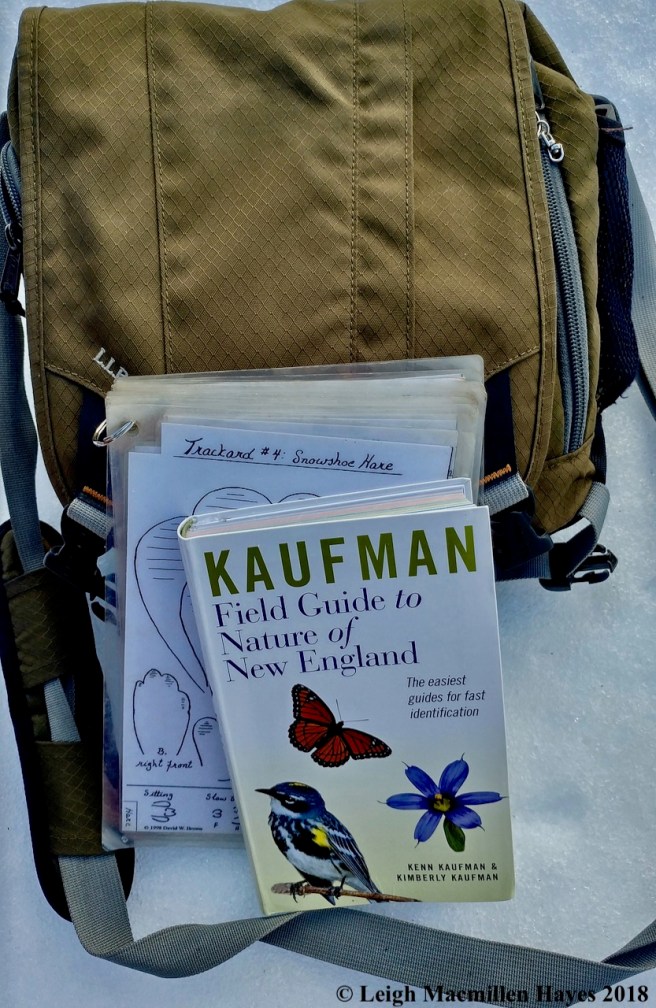
Kaufman Field Guide to Nature of New England was written by husband/wife team Kenn Kaufman and Kimberly Kaufman. Both are naturalists extraordinaire, he being the author of other field guides (which I don’t yet own) and she the executive director of the Black Swamp Bird Observatory in Ohio. 
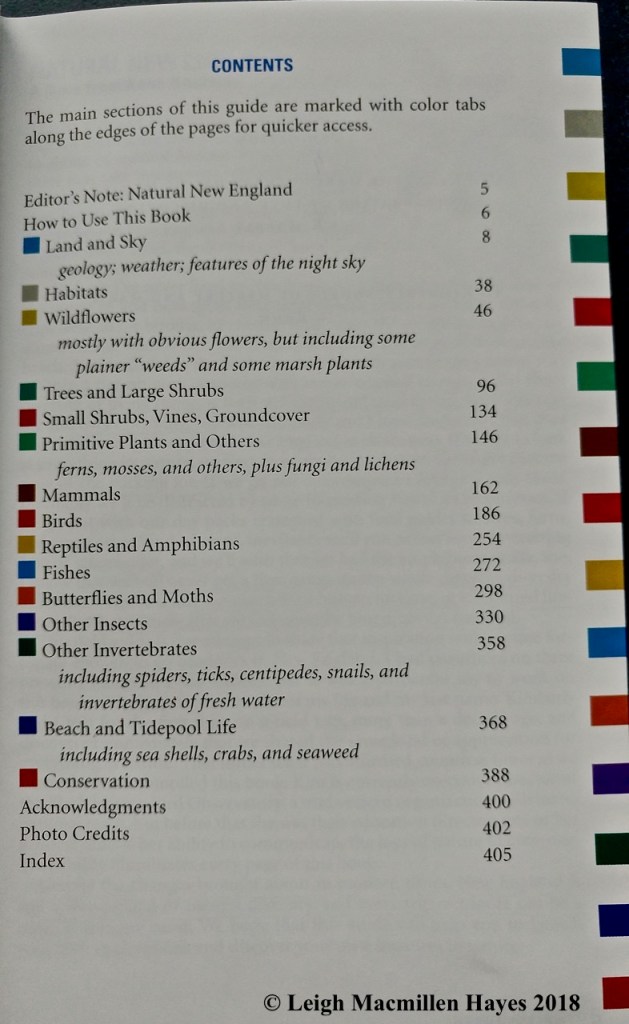
The Kaufmans have color coded each section of the 7.75 X 4.75-inch book, making for easy reference. And though it’s a wee bit heavy (no heavier than the other book), it fits easily into the small pack I carry for explorations of the natural world. Of course, David Brown’s Trackards, accompany it. 
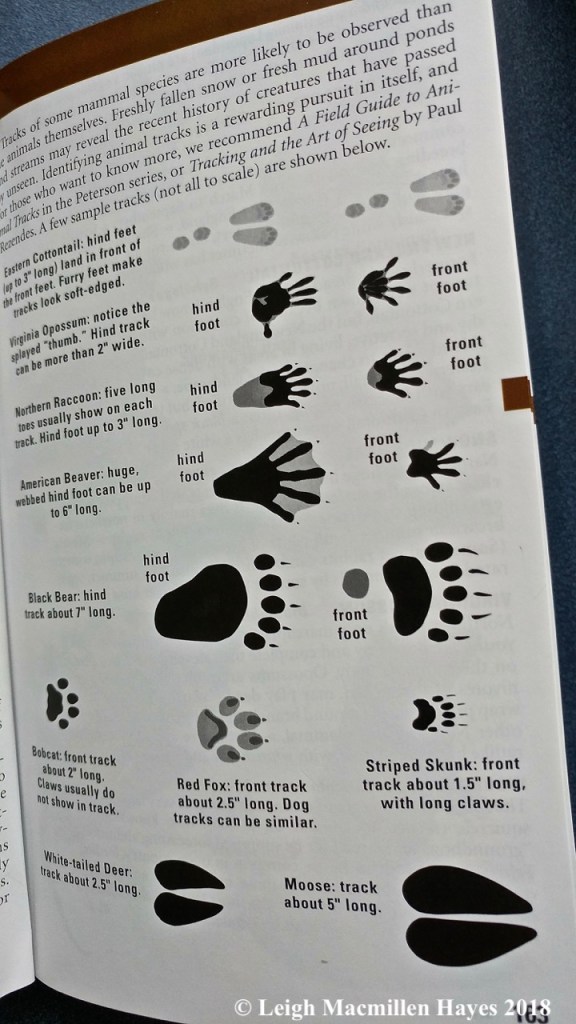
Speaking of tracks, the Kaufmans do offer a few identifying features of such, but they also recommend two other sources: the Peterson Guide to Animal Tracks and Paul Rezendes’ Tracks and the Art of Seeing.  I highly recommend both as well,

plus Dorcas Miller’s Track Finder,
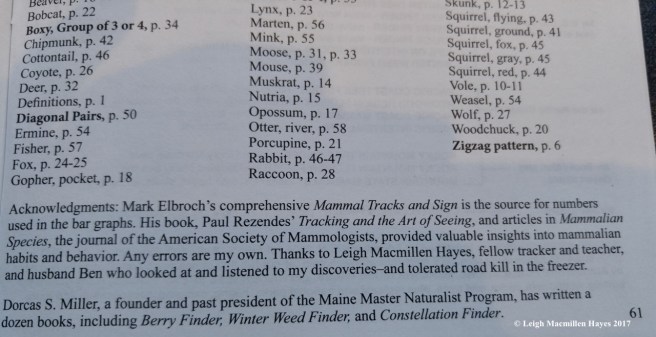
which just happens to include me in the acknowledgements. But . . . 

my go-to guide in the field remains David Brown’s Trackards

Back to the Kaufman guide: I wish I’d had it with me this past summer when I encountered sulphur butterflies puddling on a dirt road in the western Maine town of Fryeburg. First off, the section on butterflies and moths begins with an explanation of their life cycles and the differences between the two, including an illustration of their antennae. 

In addition, a feature I really like is the view of the upper and underside of the wings since . . . 
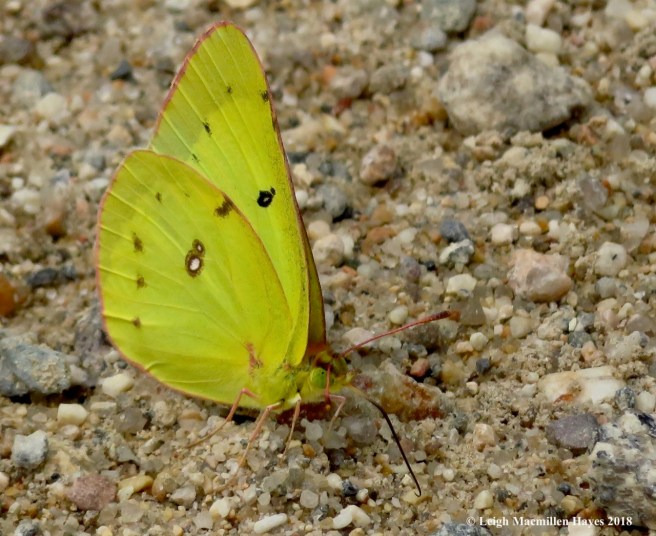
 some butterflies “keep their wings tightly closed above their backs when at rest, 
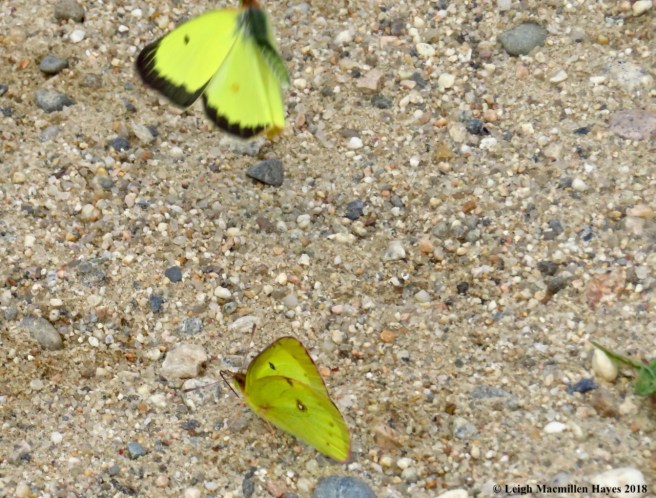
showing their bright undersides mainly in flight,” state the Kaufmans on page 302. 

I could have fluctuated between Clouded Sulphur and Pink-edged Sulphur in my determination, but the description on page 302 reminded me that the latter prefers bogs and blueberry barrens and I was standing in the midst of a farm where milkweed, other wildflowers and hay grew. The other thing that supported my attempt at ID was that though my butterflies did have  pink-edged wings, the dots matched those of the Clouded in the book. 

And since it is now winter, the guide will be handy to pull out when showing others what a critter looks like–especially if we have the joy of spying one. 
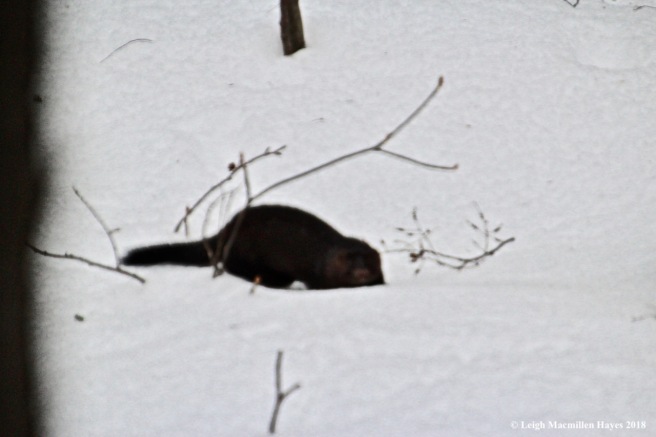
Occasionally that happens, such as on one occasion last winter when a few of us saw this mink. Please forgive the fuzziness–a result of my excitement. 

And had I purchased the book sooner, I could have pulled it out as two friends and I watched an otter frolic in early summer. 

But . . . now I have it and it is the perfect addition to my pack, whether for solo hikes or with others when we question what we’re seeing. 

I think one of the things that I really appreciate about this book is the voice of the authors, which echoes my own thoughts. (And their sweet dedications to each other on page 4.)

In the introduction, Kenn writes, “Once a person goes outdoors with senses attuned to nature, the sheer diversity of living things is both delightful and maddening, both reassuring and overwhelming.” Just this morning, Alanna Doughty, education director of Lakes Environmental Association, and I exchanged an email conversation about the very same thought and gave thanks that we still have so much to learn. 

Kaufman continues, “If we try to look at everything in nature, we find so many things that we never get past the edge of the parking lot.” I chuckled when I read that because my peeps and I have said the same thing, whether I’m tramping with the docents of the Greater Lovell Land Trust or a group of Maine Master Naturalists

Does the book cover every single species to be discovered in New England? That would be impossible–or at least too heavy to tote along on a tramp. “Our intent has been to cover those things that people are most likely to notice, so we have exercised a bias toward the most conspicuous plants and animals.” With that in mind, my suggestion: purchase Kaufman Field Guide to Nature of New England and throw it into your pack. Then purchase any other guide books and refer to them when you get home. 

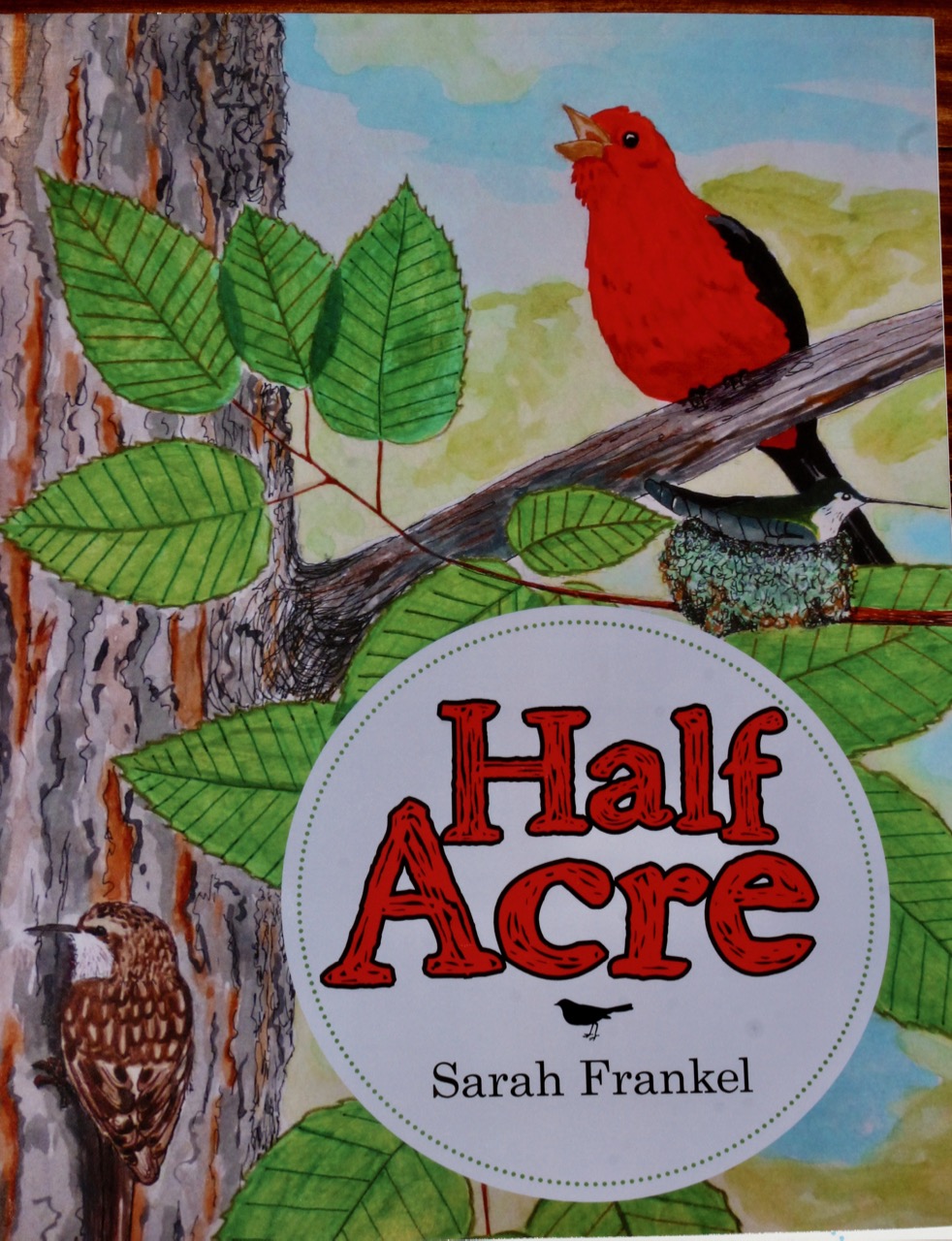
Book of November: Kaufman Field Guide to Nature of New England by Kenn Kaufman & Kimberly Kaufman, Houghton Mifflin Harcourt, 2012.

Childhood Magic

Why did the Greater Lovell Land Trust co-host (or rather tri-host) a hike through Pondicherry Park in Bridgton this morning? Because it’s hunting season, and it didn’t make sense to invite the public on a property that isn’t posted. (Not that we don’t still tramp on GLLT properties in November, mind you, but not on a public walk necessarily.)

And when I asked Jon Evans of Loon Echo Land Trust and Alanna Doughty of Lakes Environmental Association to join me in leading the tramp, they both quickly and graciously agreed to do so. I couldn’t wait because not only would it be a chance to share the special place with GLLT members, but also to bounce off of Jon and Alanna as we shared our knowledge of the natural and historical aspects of the park.

1-Bob Dunning Bridge

But . . . this morning dawned rainy and snowy. Still, we didn’t cancel. And though we knew that not everyone who had planned to join us could because there was more snow in the Lovell area and no power, we were pleasantly surprised to have a small contingent of participants that represented all three of our groups. And really, I love leading smaller groups because it’s so much easier for everyone to participate.

2-Jon giving the bridge history

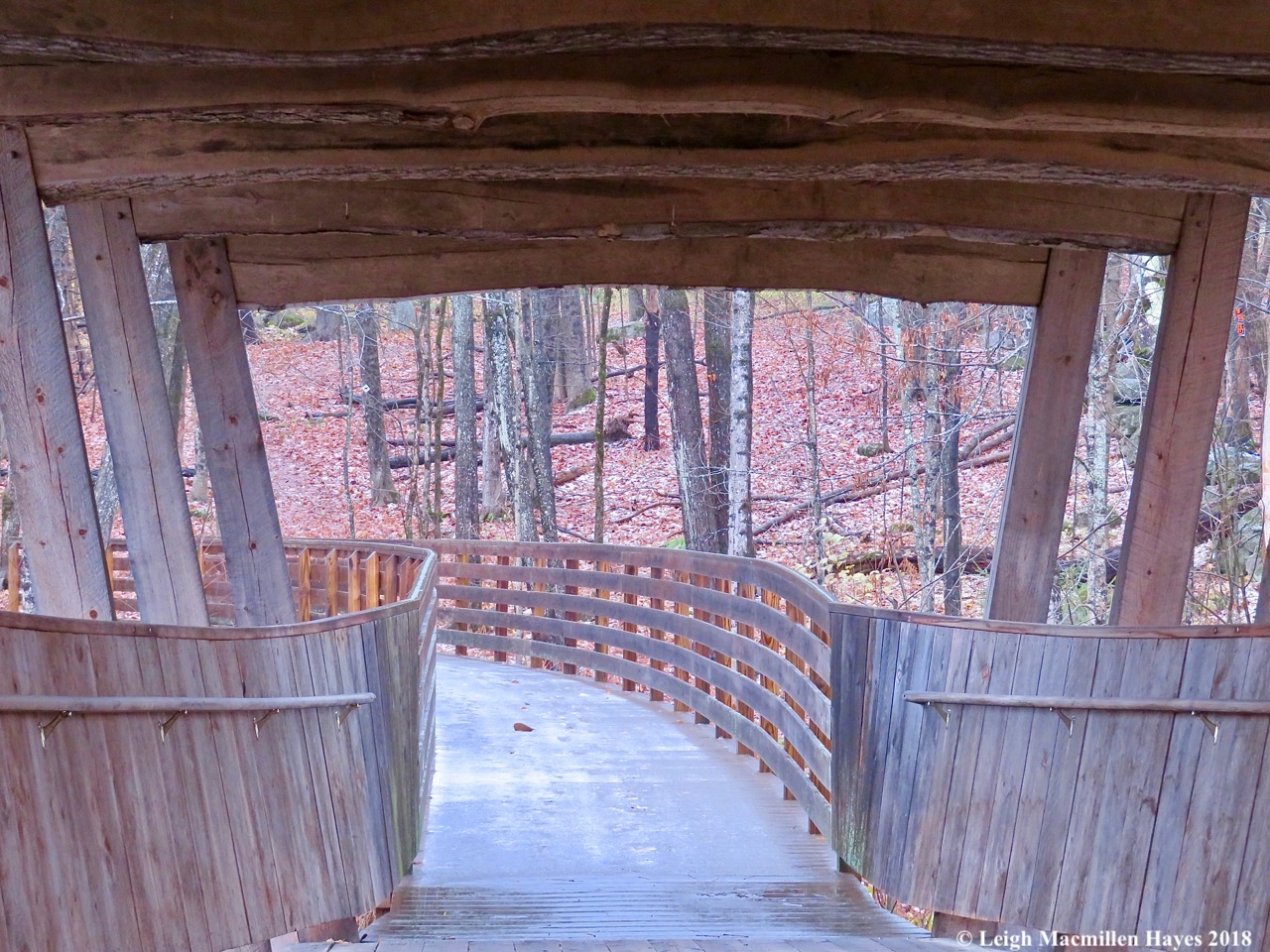
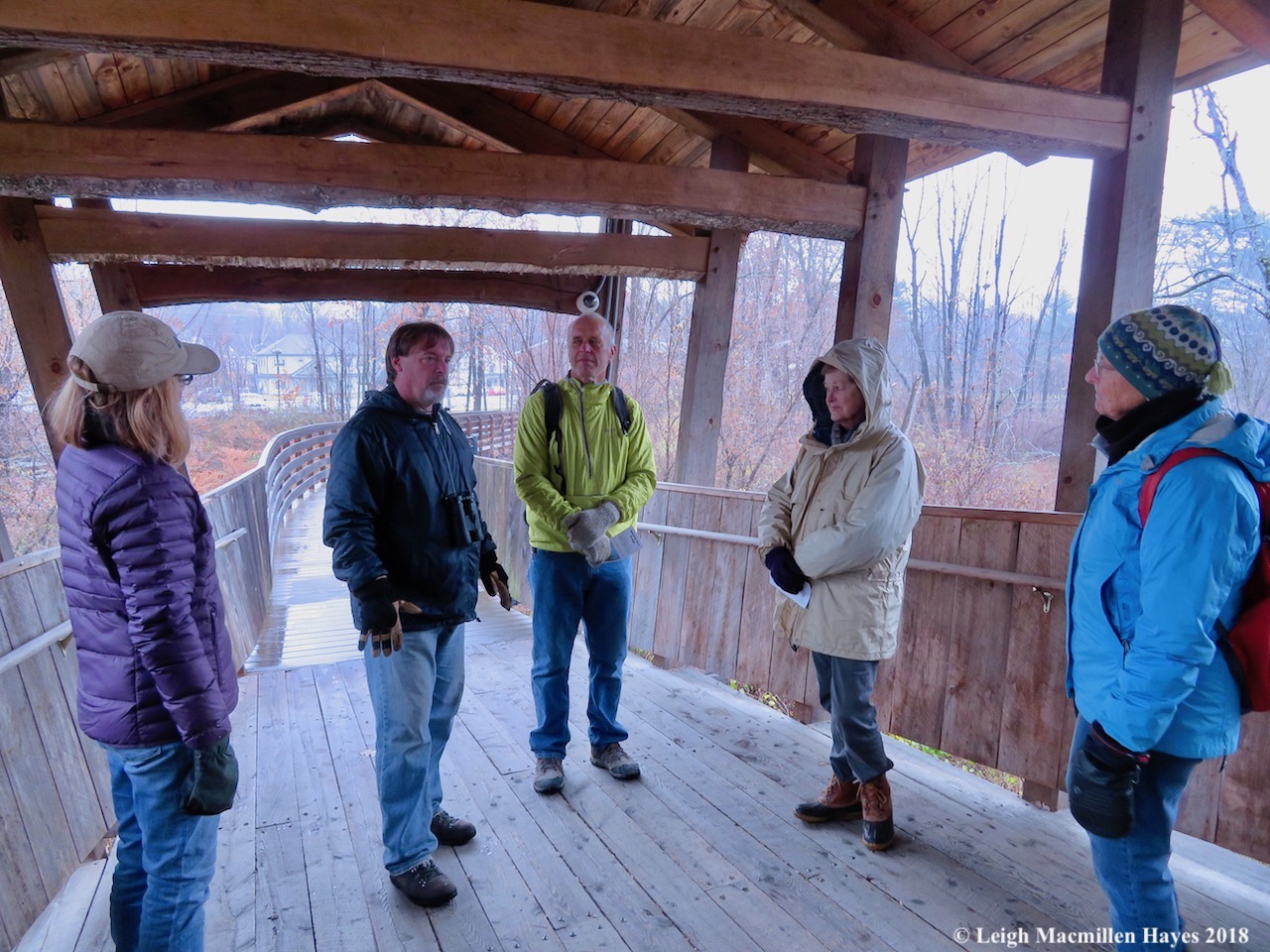
Our group, consisting of Pam, Jon, Bill, Connie and JoAnne, plus Alanna and me, stood for a bit on the Bob Dunning Memorial Bridge, the gateway into the park from behind Reny’s Department Store on Depot Street. As Jon explained, on September 11, 2010, the Bob Dunning Memorial Bridge was constructed in true barn-raising fashion.

3-Stevens Brook

The bridge spans Stevens Brook, the source of power when Bridgton was first founded and for many years thereafter.

4-Bob Dunning Bridge

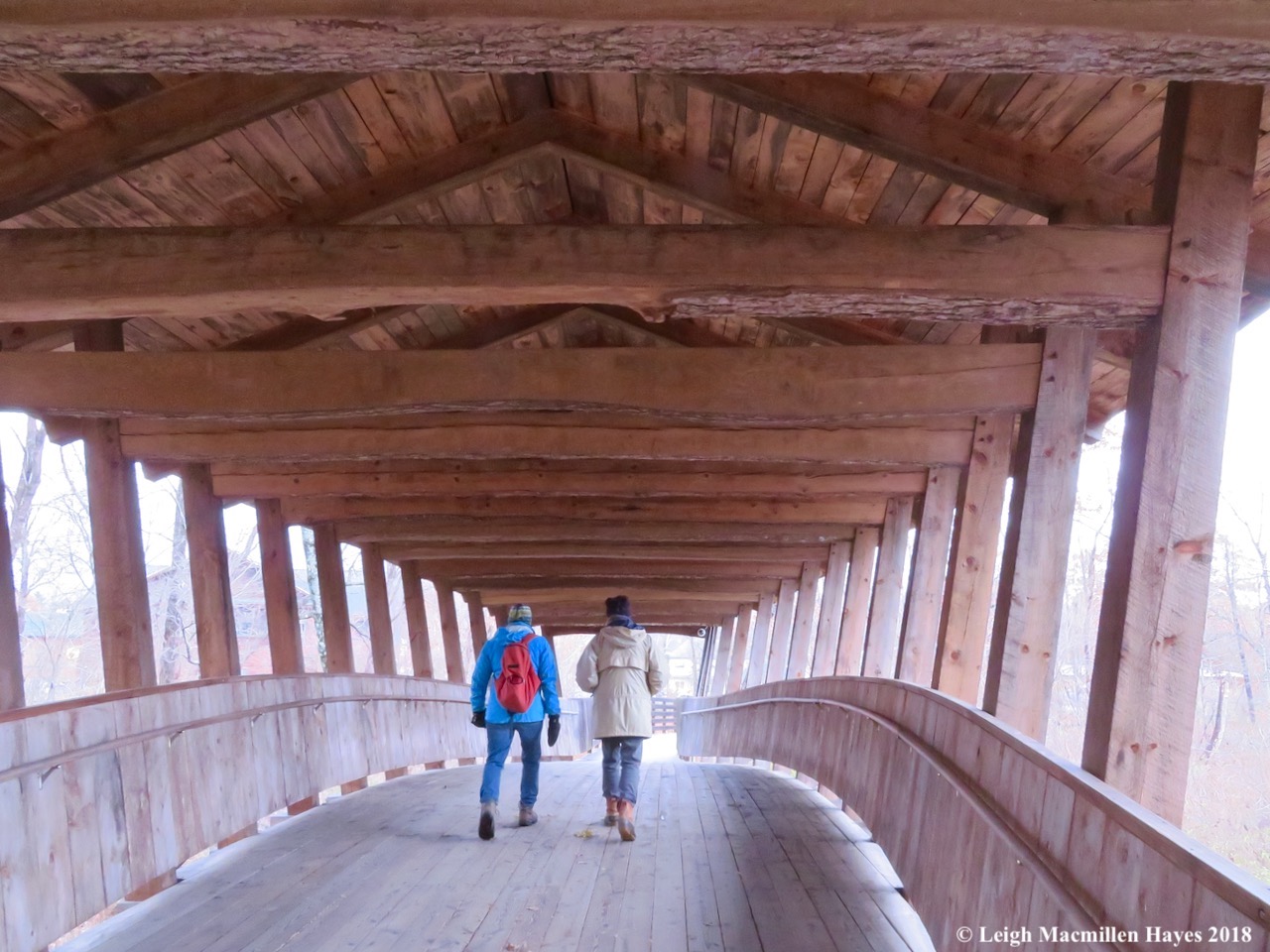
One of the unique things about the bridge is that each tie beam comes from a different tree species, with the bark left on. As I walk across the bridge, my eyes are always drawn to the beams.

Until I took the Maine Master Naturalist class, I recognized only a few species by their bark. But my eyes were opened to the fact that each species has its own presentation, which is true for everything in the natural world. I wanted to know all of them so I set out to teach myself, beginning with the species on the bridge. These became the focus of my capstone project for the class and from that I created a Barking Up A Bridge brochure that is available at the kiosk.

5-sugar and Norway maple leaves

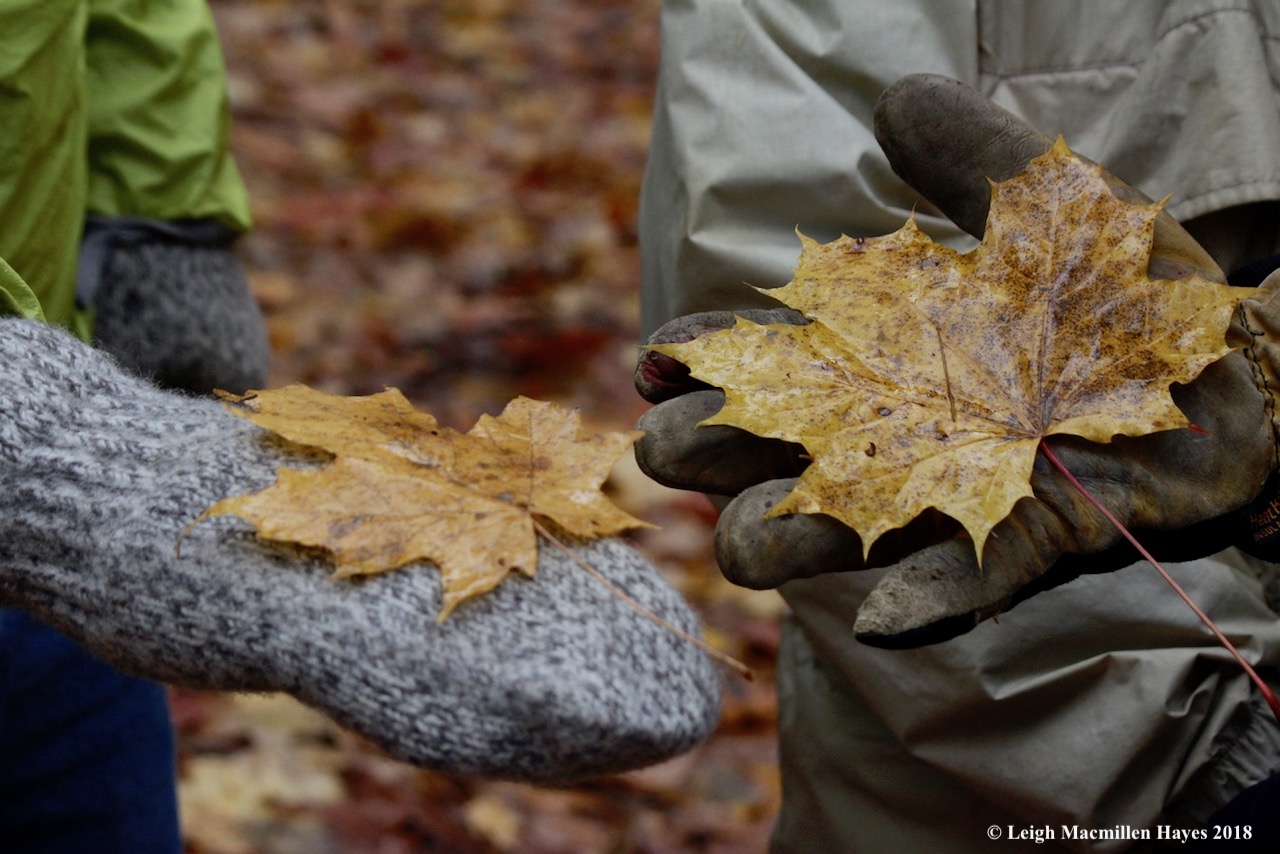
Into the park we finally went, stopping periodically along the way to notice and learn, including the similarities and differences between a sugar maple leaf on the left and Norway maple leaf on the right. Both have the same number of lobes (5) and look so similar, but . . .  the Norway maple leaf, an invasive planted along the main streets as a shade tree after the loss of Elms, is much boxier and more rectangular in shape. Plus, as Jon pointed out, the stem seeps a milky substance, which is a quick way to identify it.

6-pine soap

Our finds included many as we moved along at our usual slow pace, but one thing kept showing its form on pine after pine. Froth. It’s not unusual and occurs following a rain event such as we’d had all night and morning. So what causes the tree to froth? During a heavy rain, water running down the trunk of a white pine picks up the tree’s oils on the way. Air in the bark furrows bubbles through the oily film and produces the froth.

7-pine soap

Conditions were just right for it to occur so we spied frequent examples.

8-tussock moth cocoon

And because we were looking so closely at the bark, we noticed other things like tussock moth cocoons. We also found tube caterpillar moth cocoons created with pine needles and even pulled one apart to take a closer look. And the tiny sawfly cocoons on various twigs.

10-Willet Brook

Eventually, we found our way beside Willet Brook, which flows into Stevens.

11a-JoAnne photographing script lichen

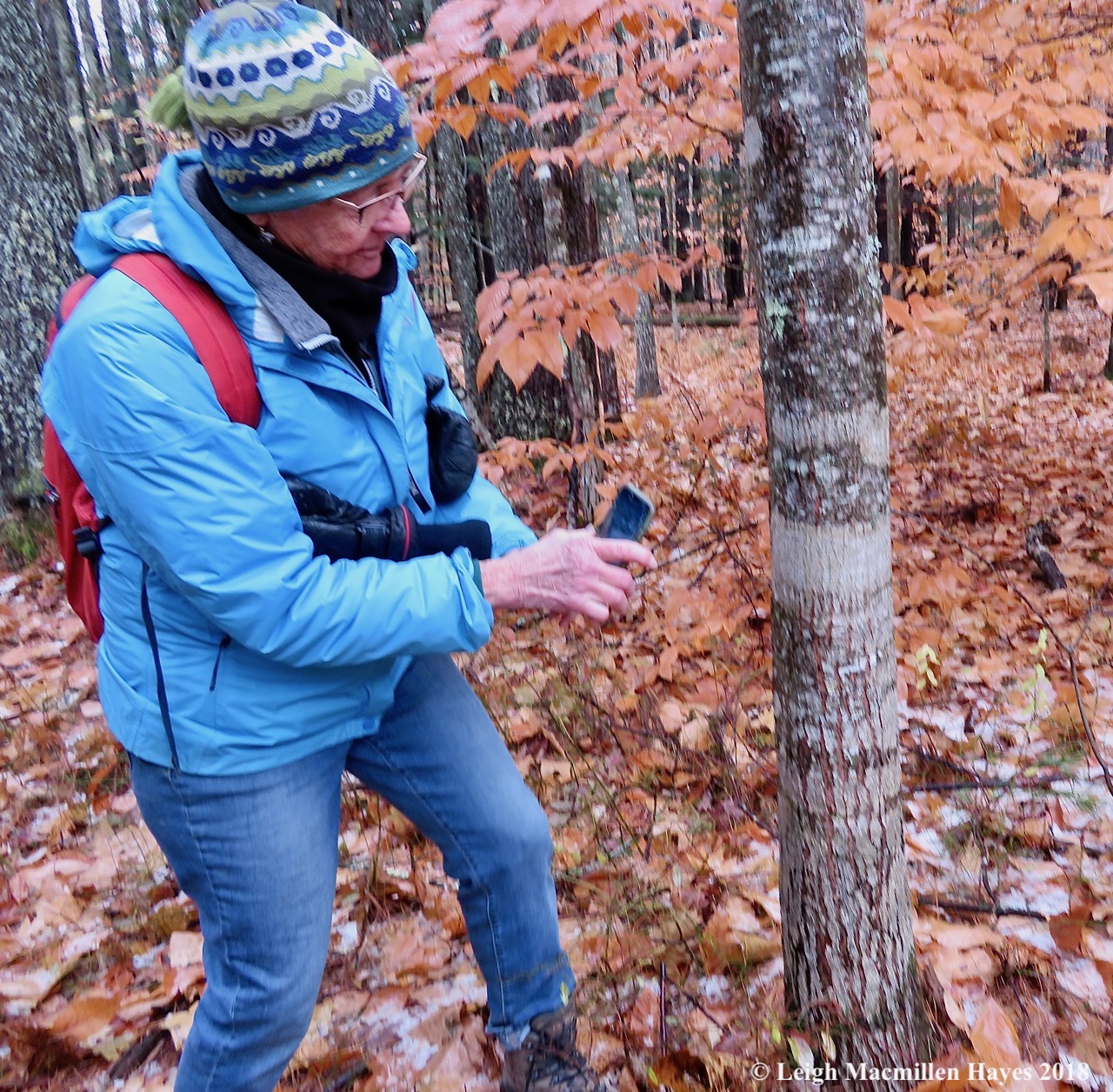
And again, our eyes were drawn to tree bark and crustose lichen in particular. JoAnne snapped a photo of a script lichen that decorated a red oak.

13-crossing onto LEA property

Our intention was to turn away from the brook and cross the boardwalk that leads onto the Lakes Environmental Association’s adjacent property. Before doing so, however, we began to channel our inner child and rolled some logs.

12-baby red-backed salamander

And we weren’t disappointed for we found young and mature red-backed salamanders as hoped. If you roll a log, always pull it toward you so any critters that want to escape can do so in the opposite direction; and always put the log back into place quickly (well, after a couple of photographs, that is.)

14-Maine Lake Science Center Lab

At LEA’s Maine Lake Science Center, Alanna gave us a quick tour of the premises,

15-MLSC Lab

including the lab where various water quality tests are conducted.

16-Connie on the low-impact challenge course

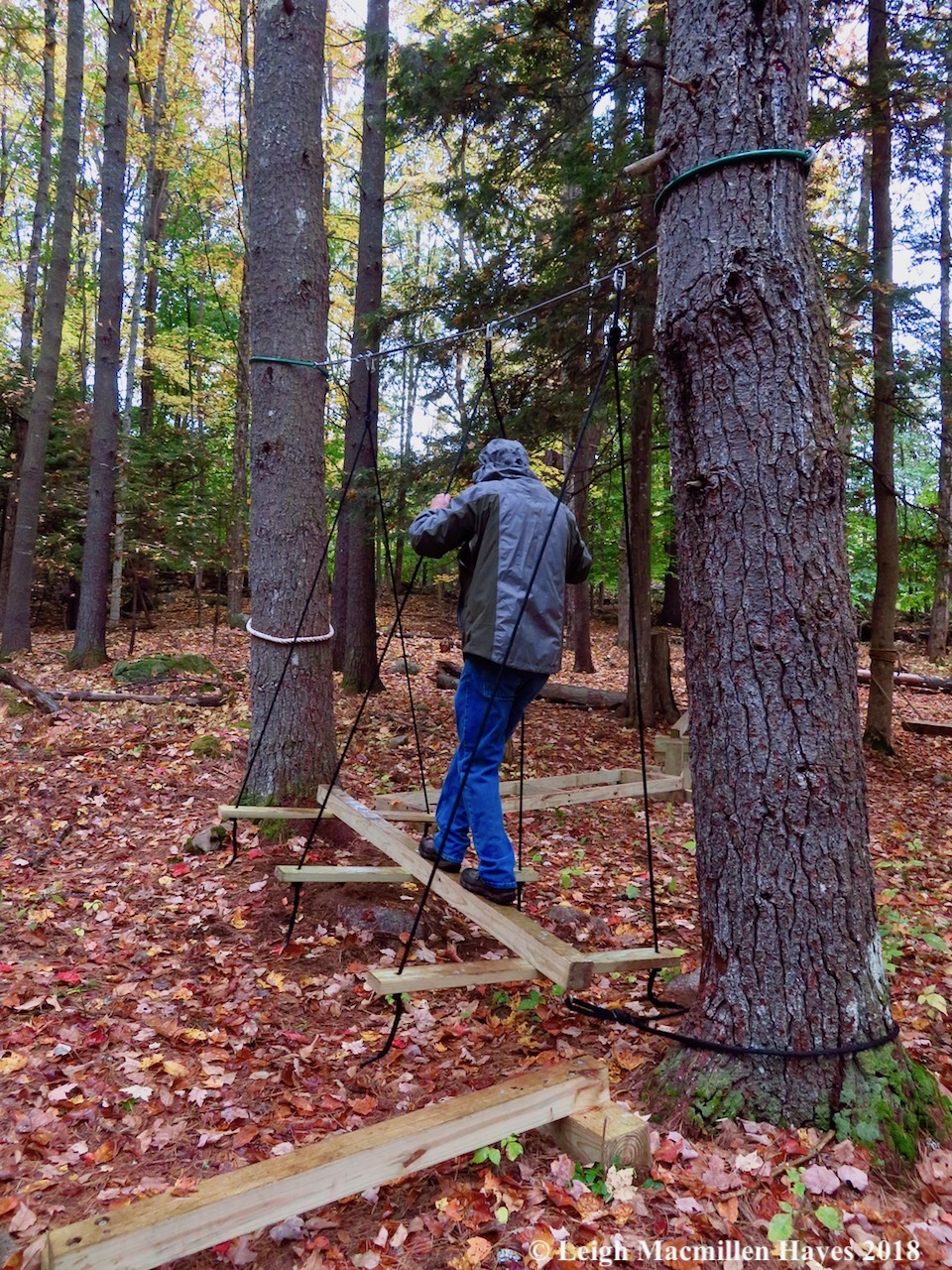
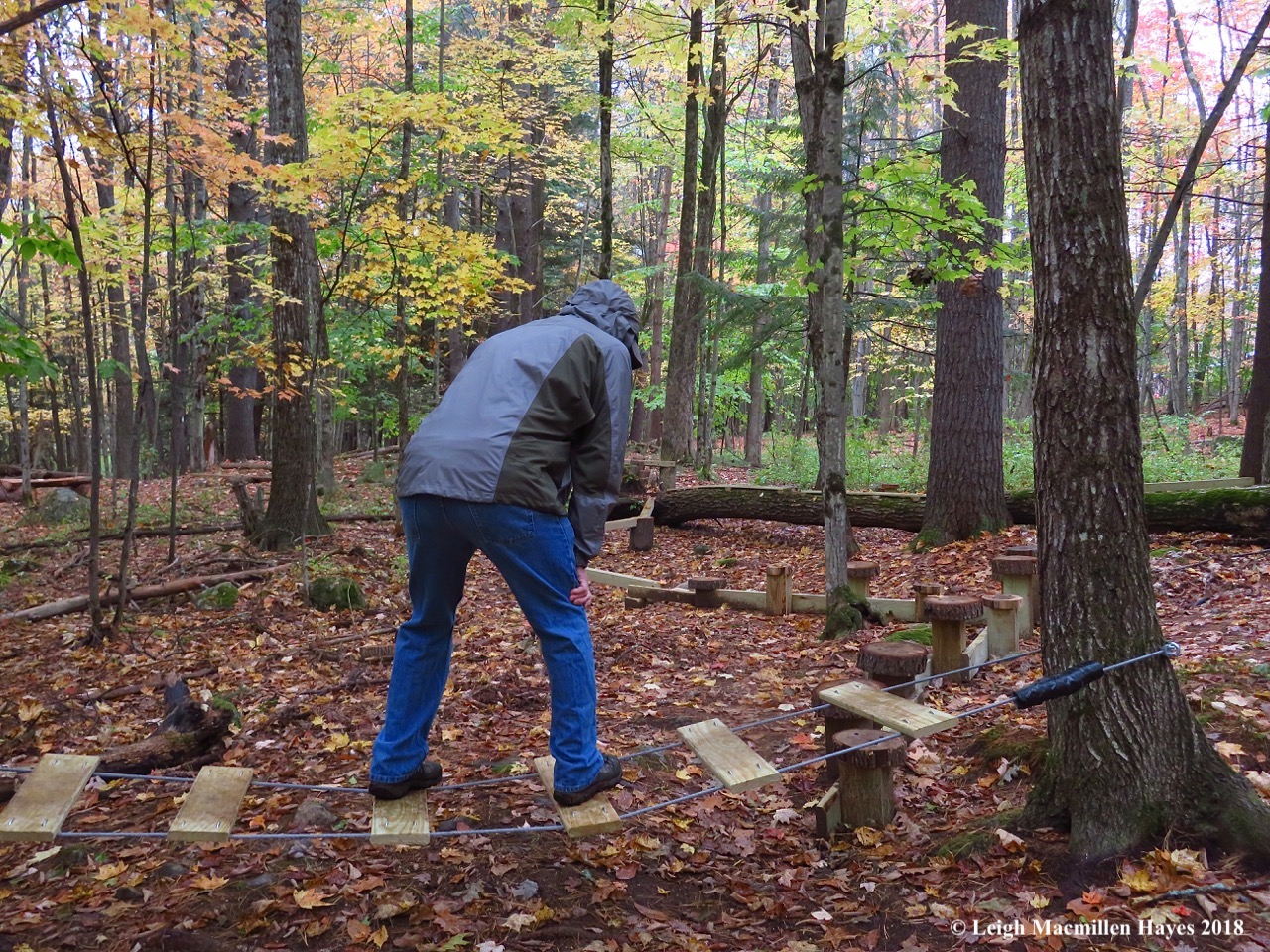
Back outside, we headed up to LEA’s Pinehaven Trail and tried our talent as birds on a wire along the newly installed  low-impact challenge course.

17-Pam and Bill manuevering the wire walk

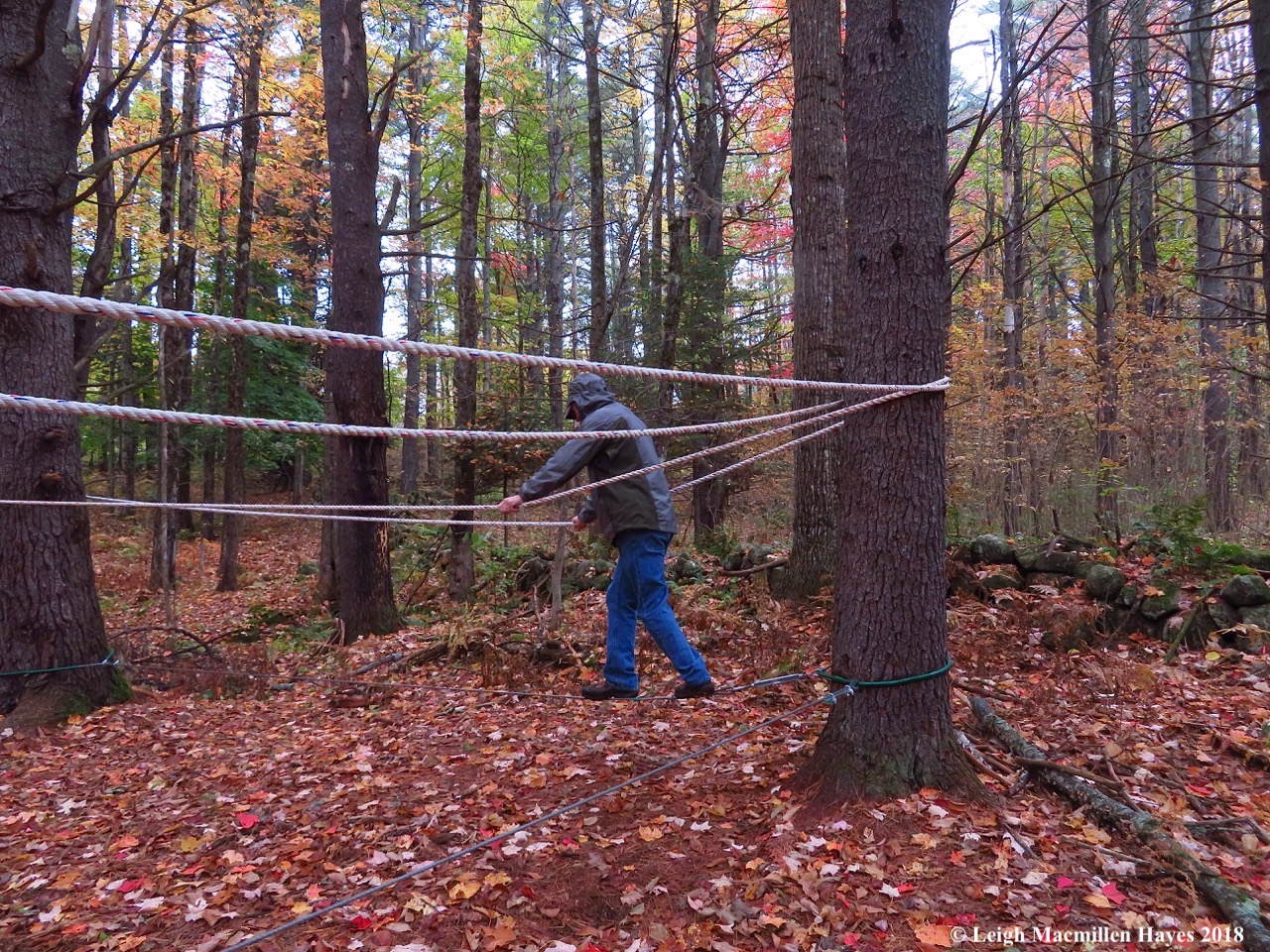
We all succeeded as Nuthatches for none of us fell off. If we’d done it with one hand, we  would have been Barred Owls and if we hadn’t used any hands, we would have been Cooper’s Hawks. But we were happy to be Nuthatches. There are four sets of challenges, each with a variety of activities to complete. Challenge your inner child.

18-watching balsam sticks

Crossing back into Pondicherry Park, we said we’d bee-line back to the bridge, but several times we just had to stop . . . especially when we found Balsam Fir blisters inviting us to poke them with twigs and drop the resin-tipped sticks into calm water.

19-balsam rainbow

We watched with fascination as the essential oil propelled the twig and created a rainbow, again satisfying that child within.

22-crossing back over the bridge

At last, a half hour after our intended finish time of 12:30pm, we found our way back to our starting point, all delighted to have spent time exploring and playing on a rather raw morning.

Thank you again to Jon and Alanna for sharing your knowledge and sense of wonder. And thank you to Pam, Bill, Connie, and JoAnne for coming out to play with us.

23-Chili and Beer

Later in the day, my guy and I drove to Lovell for yet another special event at the VFW Hall: LOVELL’S 1st ANNUAL BOWLS & BREWS fundraiser for the Sunshine Backpack Food Program.

It was a chili cook-off and beer tasting event featuring locally crafted chili and locally crafted beer from Bear Bones and Saco River Breweries. Plus, National Distributors in Portland donated Harpoon and New Belgium beers.

24-Paula and Diane

Diane Caracciolo nailed it and won first place from the judges and as the people’s choice. Her take away was a coveted apron, actually two, designed by local students who benefit from the Sunshine Backpack Food Program. As Paula Hughes, one of the event’s organizers explained, the packs are sent home on Fridays and filled with nutritious, non-perishable, easy-to-prepare food to ensure the kids get enough food on weekends.

At the end of the day, it seemed an interesting juxtaposition to have spent the morning channeling our inner child and the afternoon thinking about children who are so hungry that they can’t enjoy such childhood magic.

If you’d wish to contribute, let me know and I’ll put you in touch with Paula.

Election Day Tramp

It always strikes me that no matter how often one travels on or off a trail, there’s always something different that makes itself known–thus the wonder of a wander.

And so it was when Pam Marshall, a member of the Greater Lovell Land Trust, joined me for a tramp at the John A. Segur Wildlife Refuge West on Farrington Pond Road this morning. She had no idea what to expect. Nor did I.

13-puff balls to pop

It was misty when we met, but neither of us was daunted by the weather. Ever so slowly, we made our way over the wet leaves, roots, and rocks, pausing frequently–especially each time we saw puff balls. How can one resist poking or squeezing them to watch the spores waft out like smoke. The skin of mature puffballs split prior to releasing spores. And we . . . we helped the process a wee bit.

20-blue stain fruiting

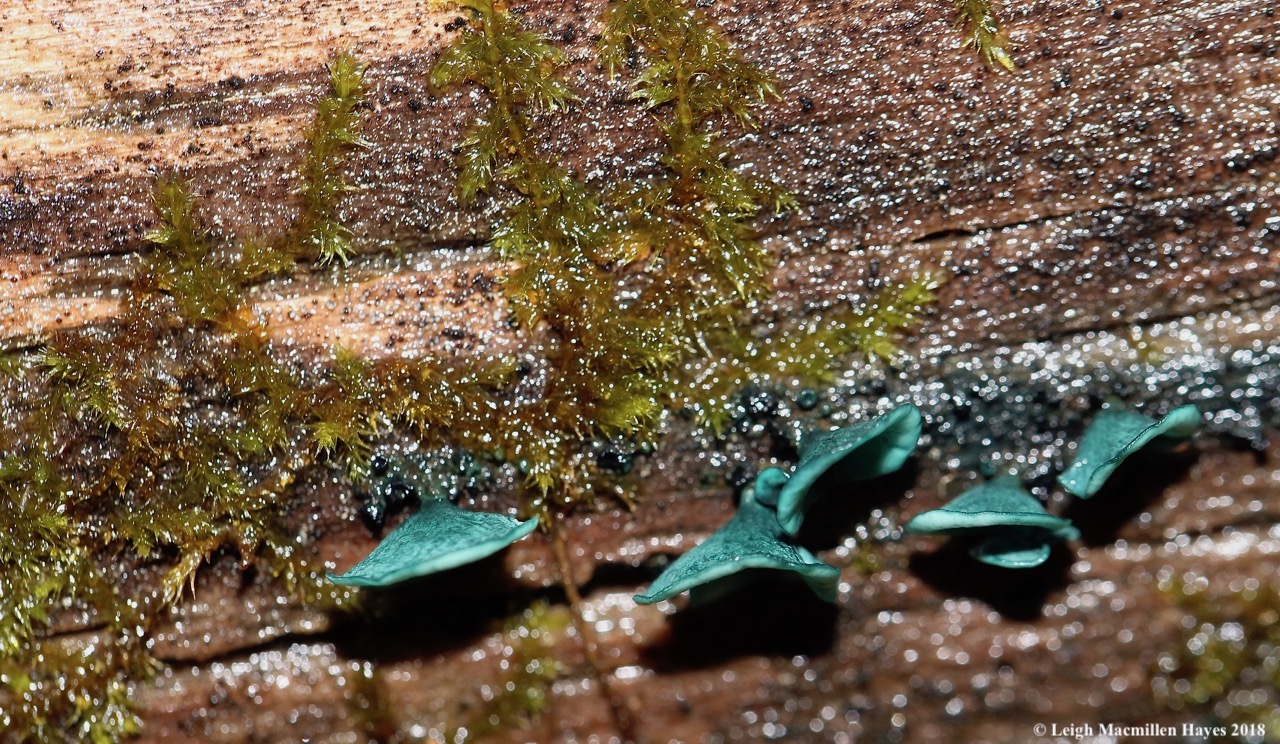
Green stain fungus also drew our attention. Its fruiting bodies were minute, but well worth wet knees for a closer examination.

19-hexagonal-pored polypore

With Pam in the lead for most of the way, she kept finding cool stuff, like this hexagonal-pored polypore.

1-Sucker Brook Outlet

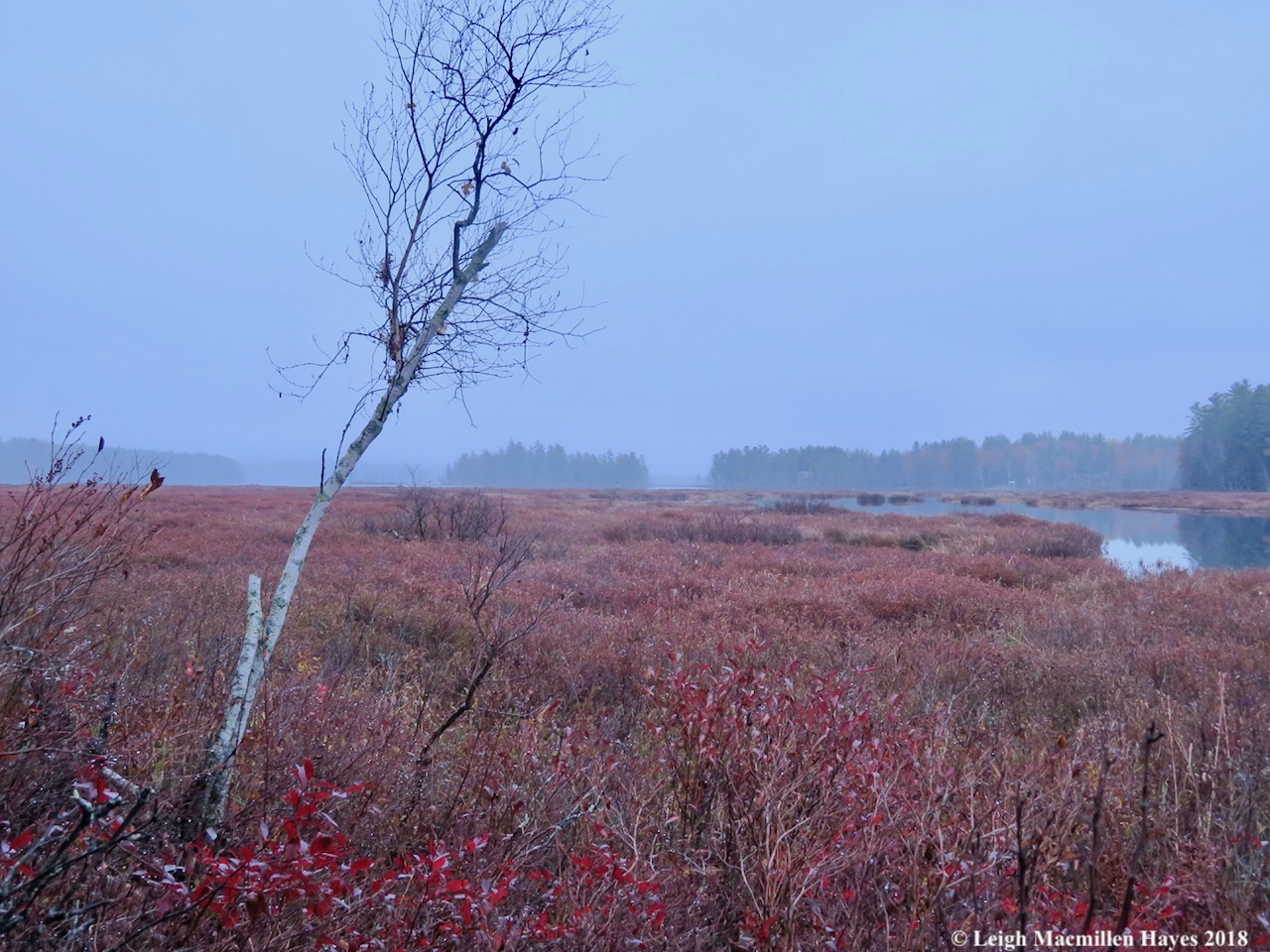
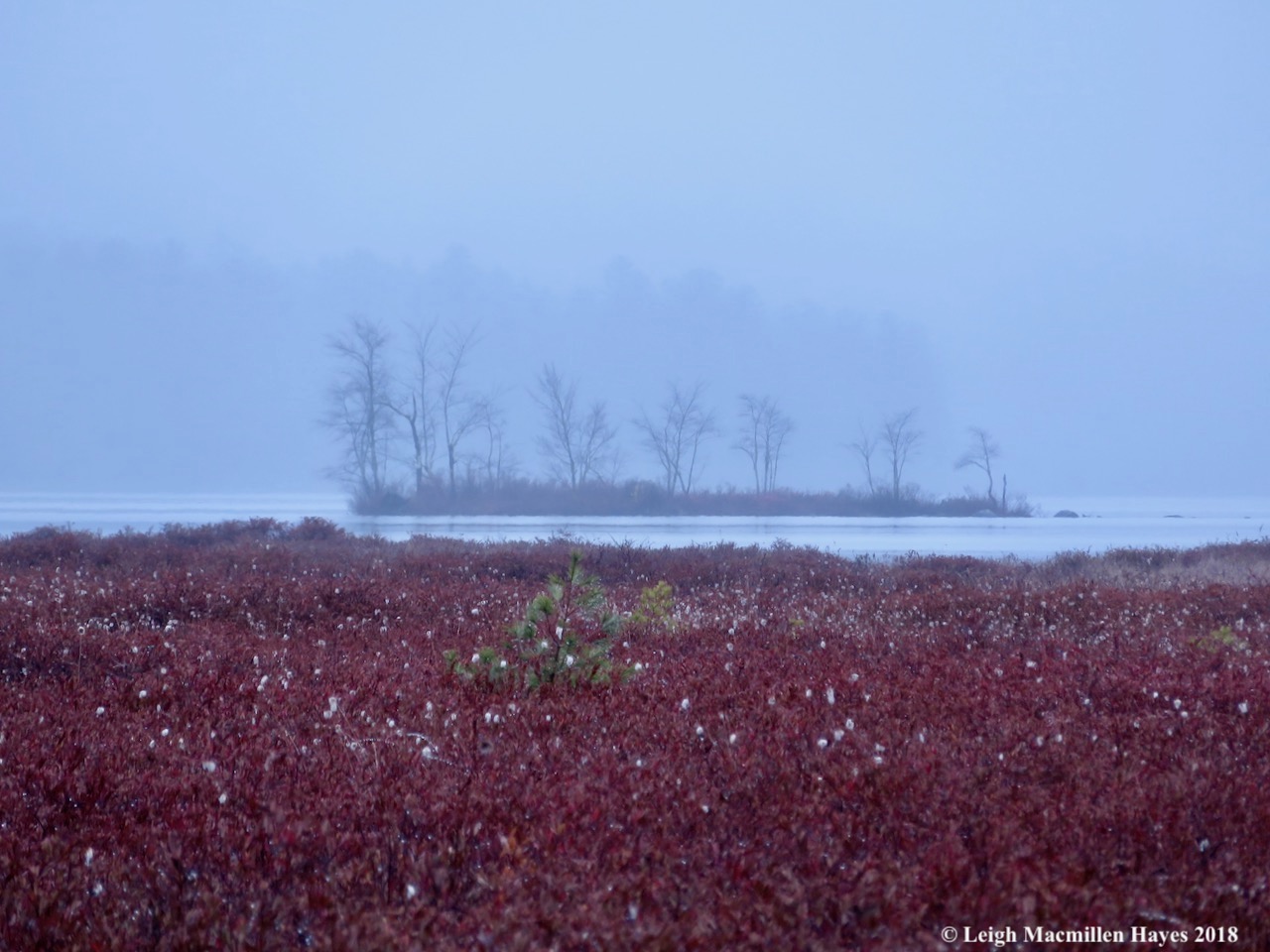
It took us a while, but we finally reached the wetland by the Sucker Brook Outlet where blueberry, maleberry and leatherleaf shrubs added color to the otherwise gray day.  For a while we stood under the protection of a large hemlock and took in the scene in silence.

2-Silhouettes on Lower Bay and cotton grass

From our vantage point, an island in Kezar Lake’s Lower Bay looked like a ghost ship. And in the foreground, cotton grass still touted its tufted heads.

3-beaver lodges

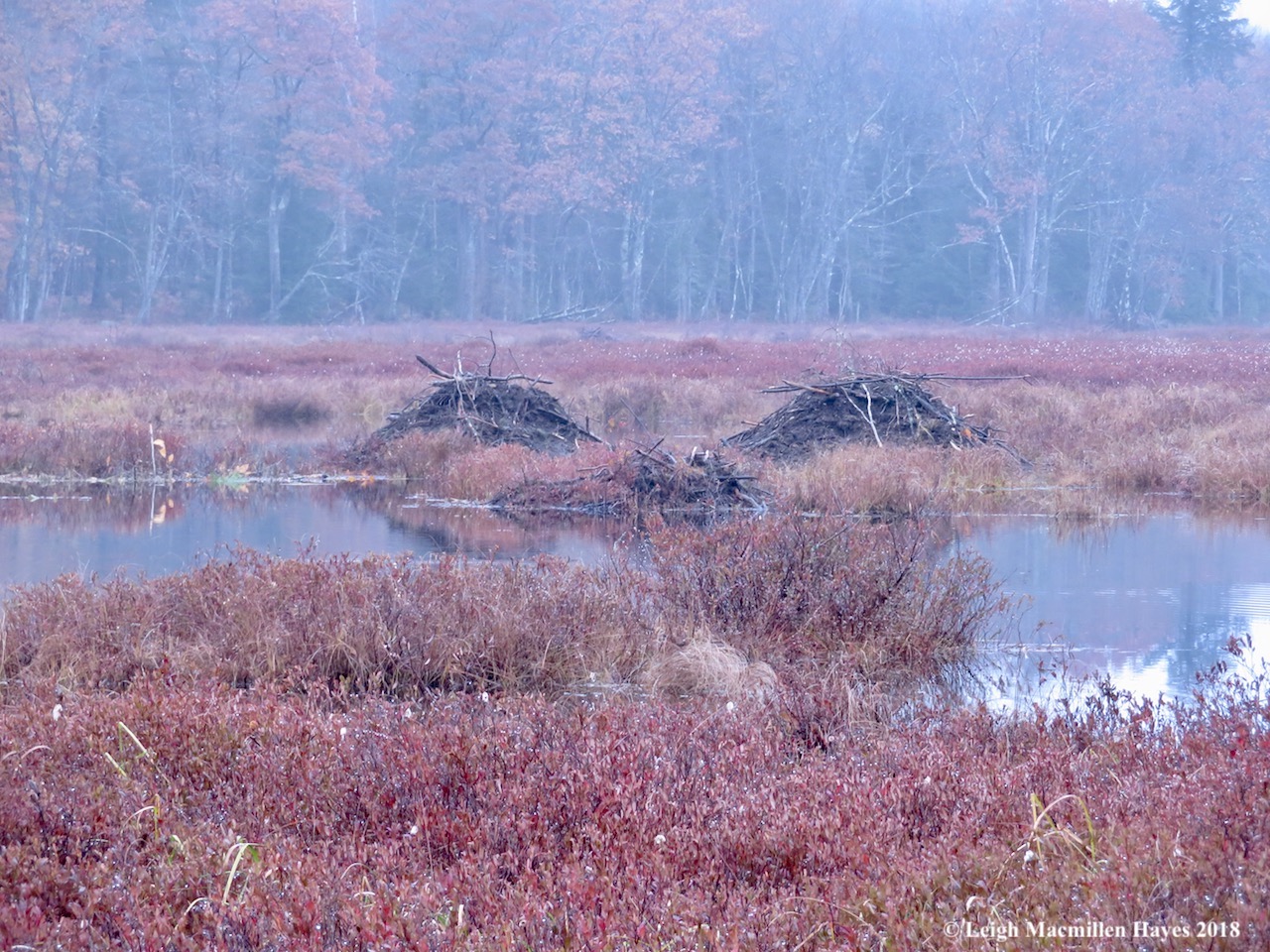
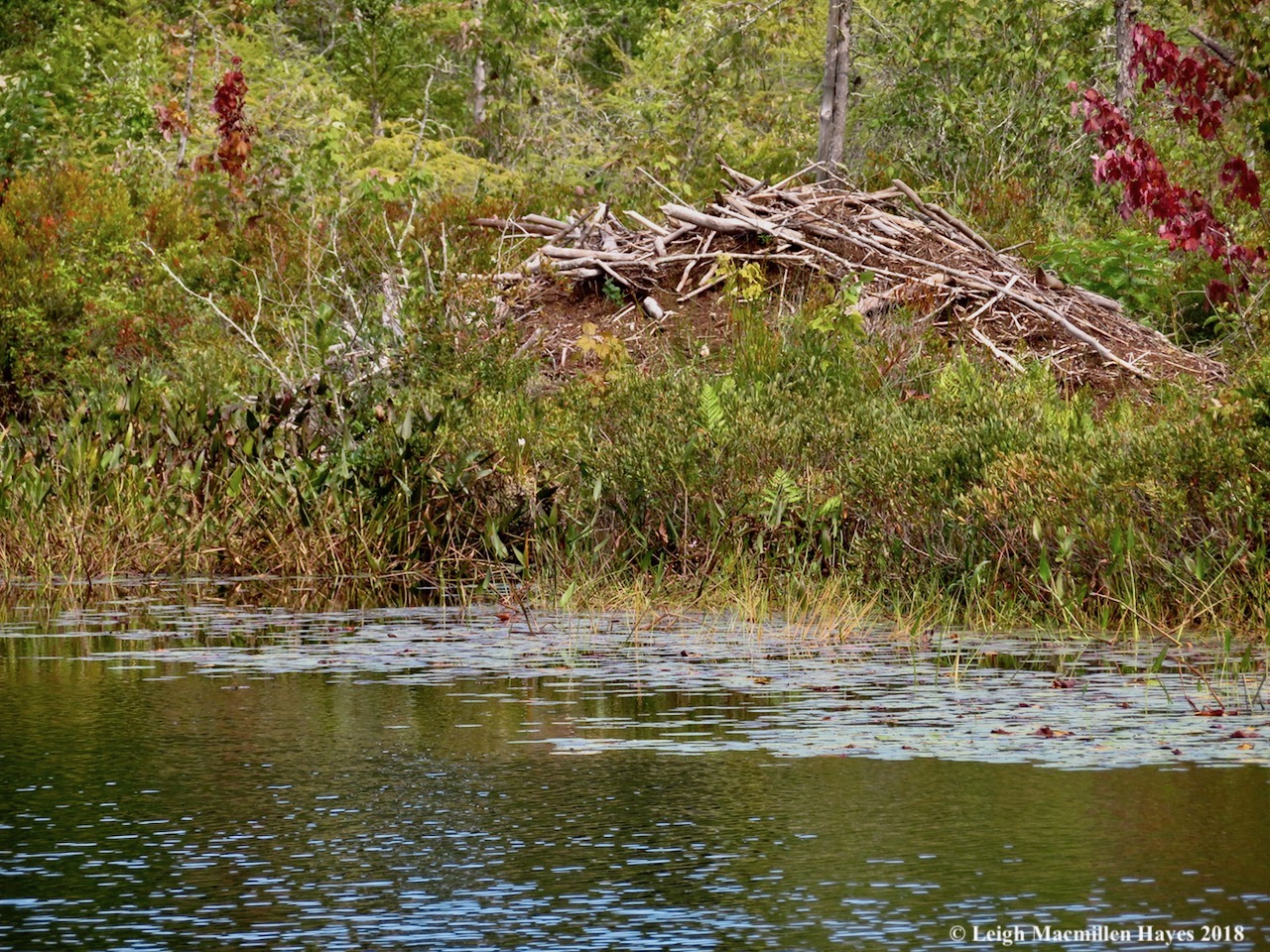
At our feet we could see some aquatic plant roots floating in the water, a beaver treat, and trusted by the mud on the lodges that there had been recent activity. Perhaps they rested indoors before planning to spend time later in the day preparing for the cold months ahead.

4-Pitcher Plants

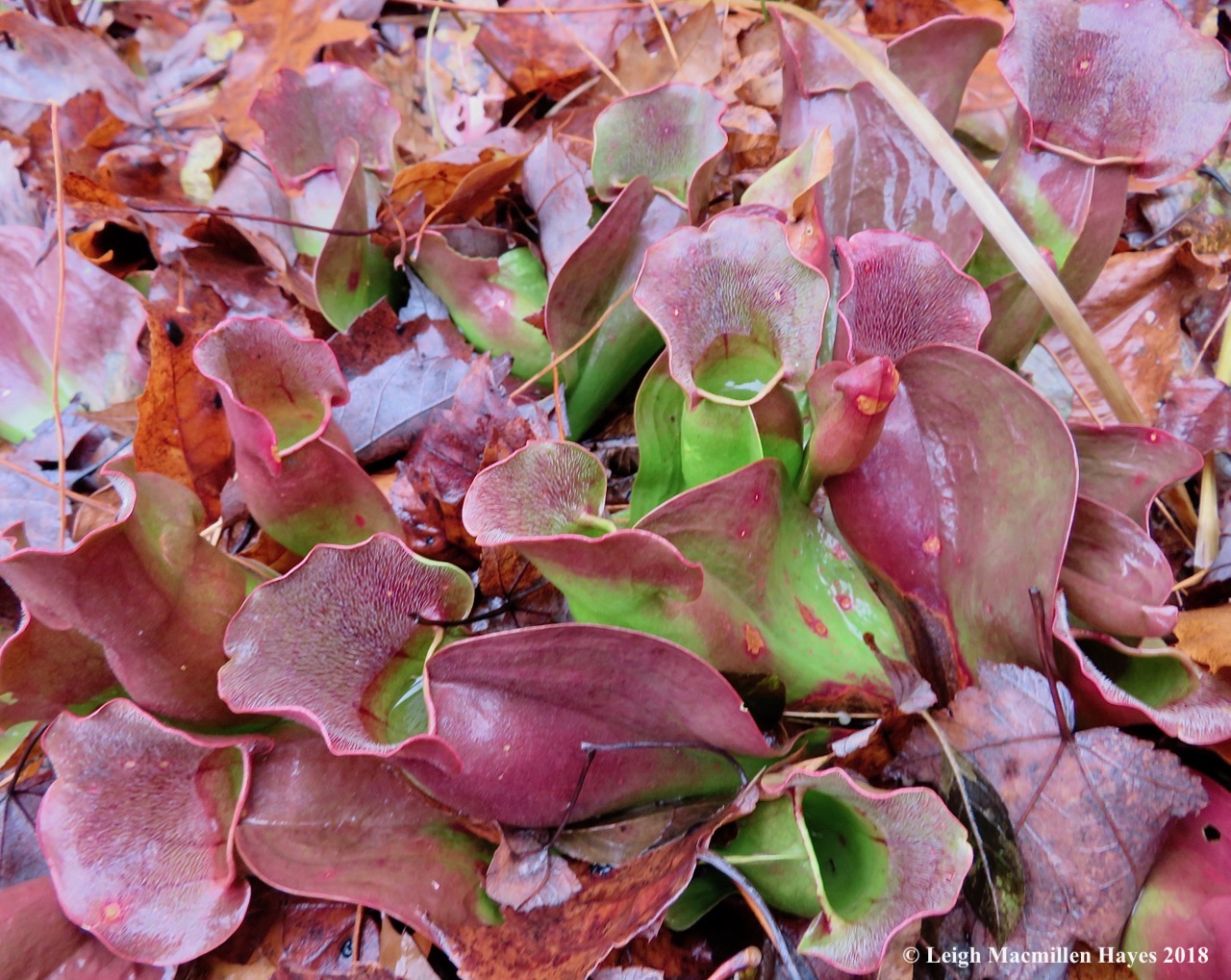
After a while and because I knew they were there, I took Pam along the edge of the brook for a short distance to locate several pitcher plants. Someone once photographed them in their young green form and described them as rare. While helping Dr. Rick Van de Poll, principal of Ecosystem Management Consultants (EMC) in Sandwich, New Hampshire, set up study plots at Lakes Environmental Association’s Highland Lake Reserve in Bridgton during July 2017, we had to watch where we stepped to avoid crushing pitcher plants. It was a perfect time to ask Rick about the green color. Were there green pitcher plants in Maine? And if so, were they rare? He explained that it was just a matter of sunlight and age, all would eventually take on a redder hue in veins and then overall leaf coloration as they matured.

5-pitcher plant runway

This morning, we found some sporting brighter red leaves.

6-spiders within and webs above

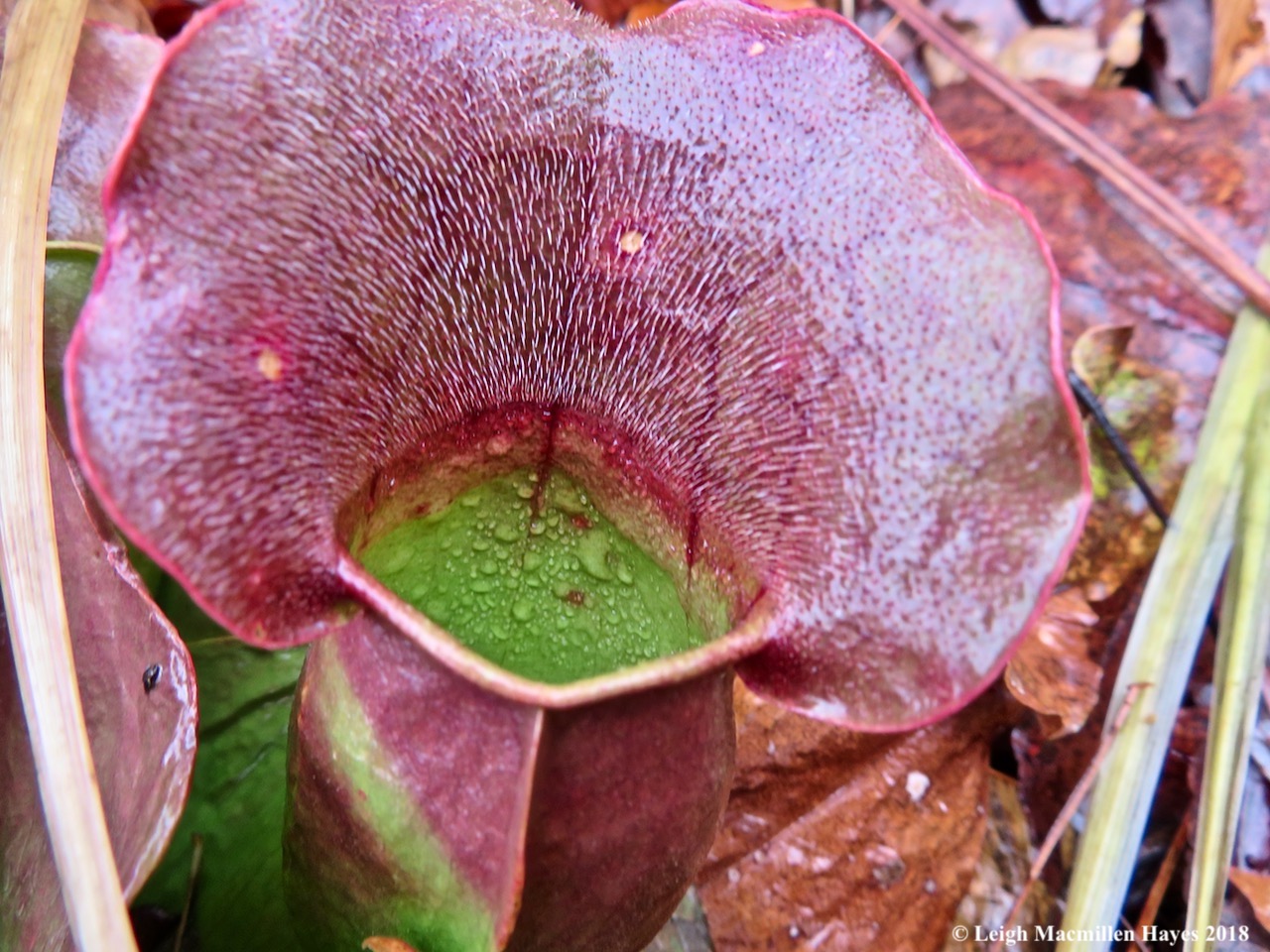
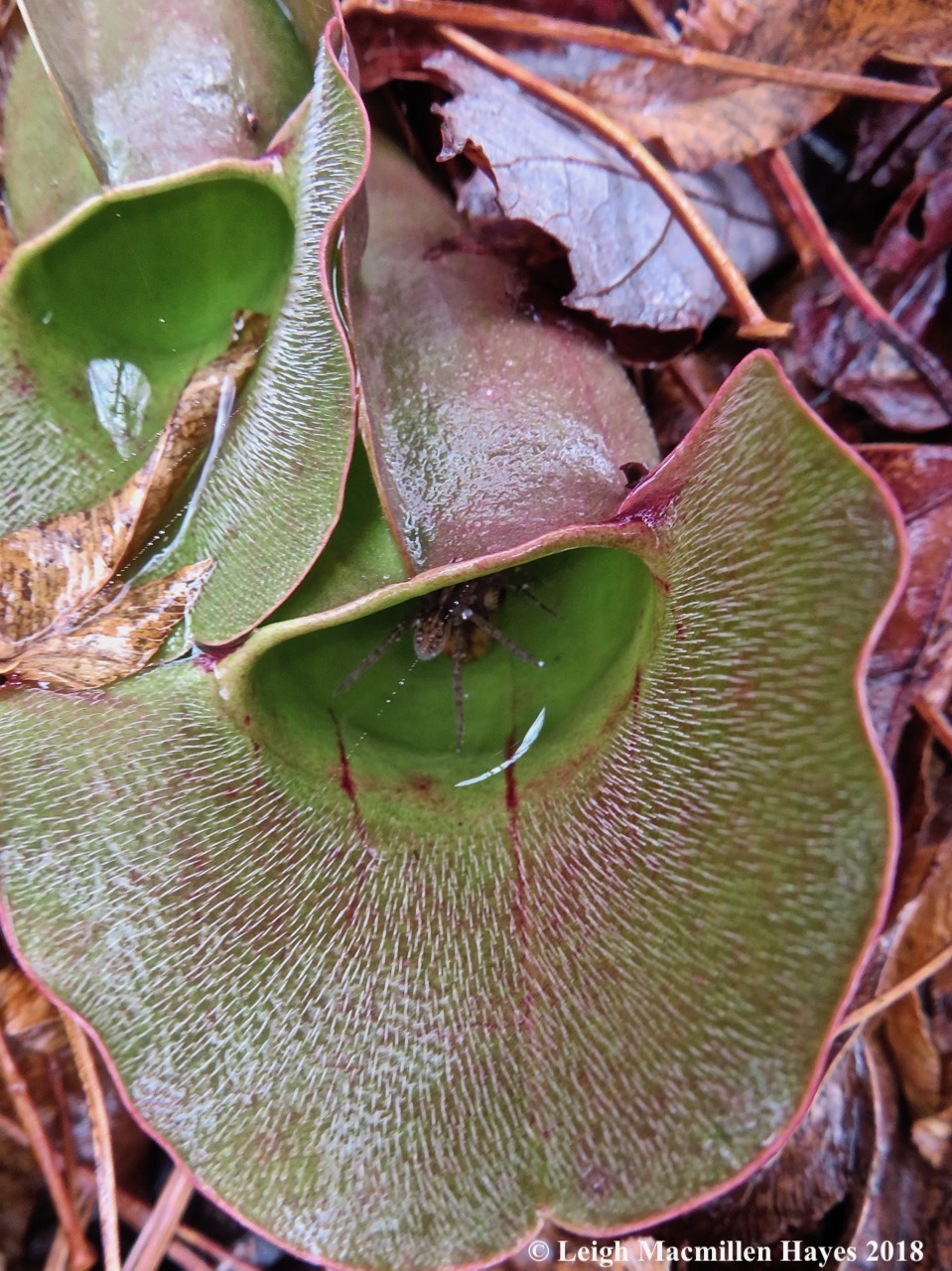
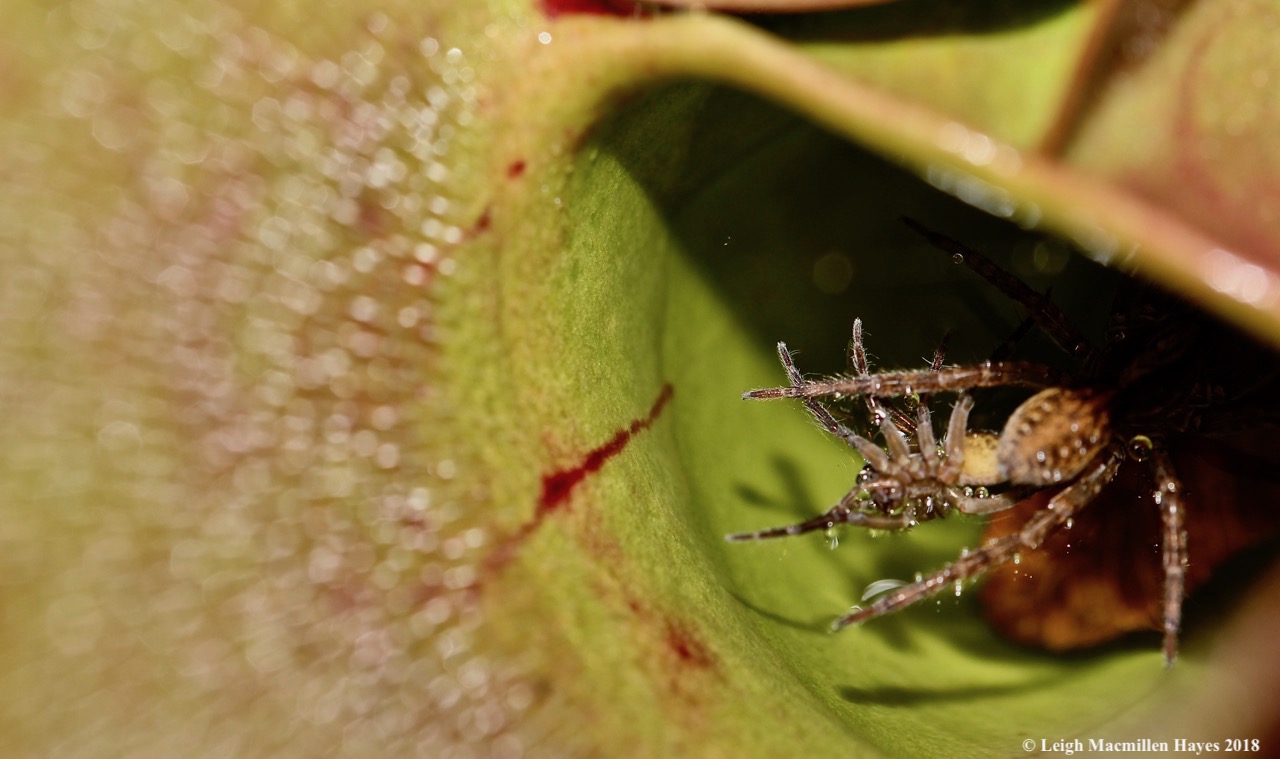
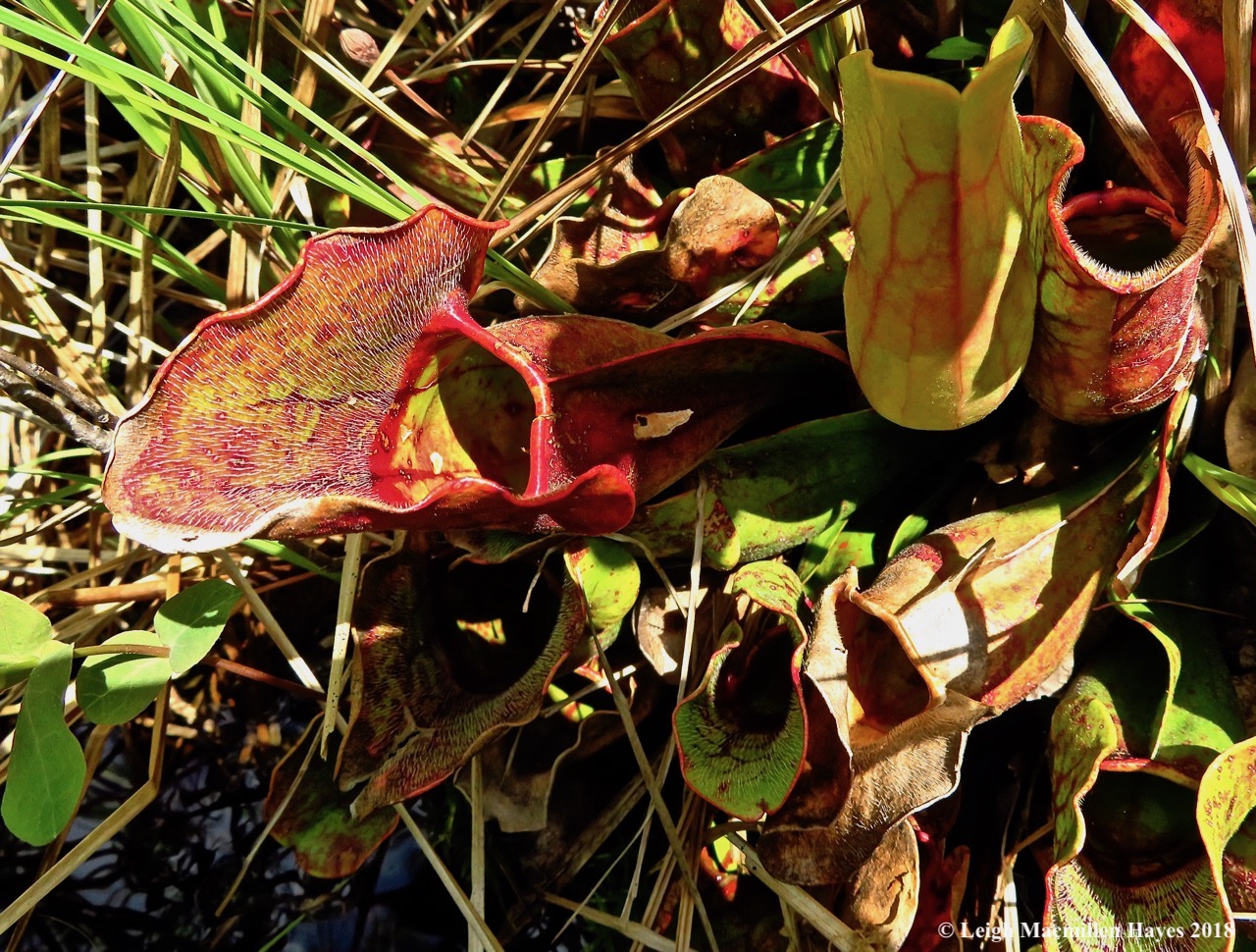
And another plant that was duller in color. Since we were in the locale where the green plant had been discovered, I trusted that it was beginning to show its age. It was the duller one that drew most of our fascination. Carnivorous pitcher plants obtain nitrogen and phosphorus by eating insects. Their oddly-shaped leaves form a pitcher partly filled with water and digestive enzymes. The spout is a hairy landing platform for insects attracted by red venation and nectar glands. Imagine this: an insect crawls to the edge of the leaf, aka pitcher, slips on the downward-sloping hairs and plunges into the liquid below where enzymes and bacteria break it down. Any chances for escape are zapped by those stiff hairs. Do you see what we saw? A spider web across the top of the leaf? And within?

8-larger spider manuevering the smaller one

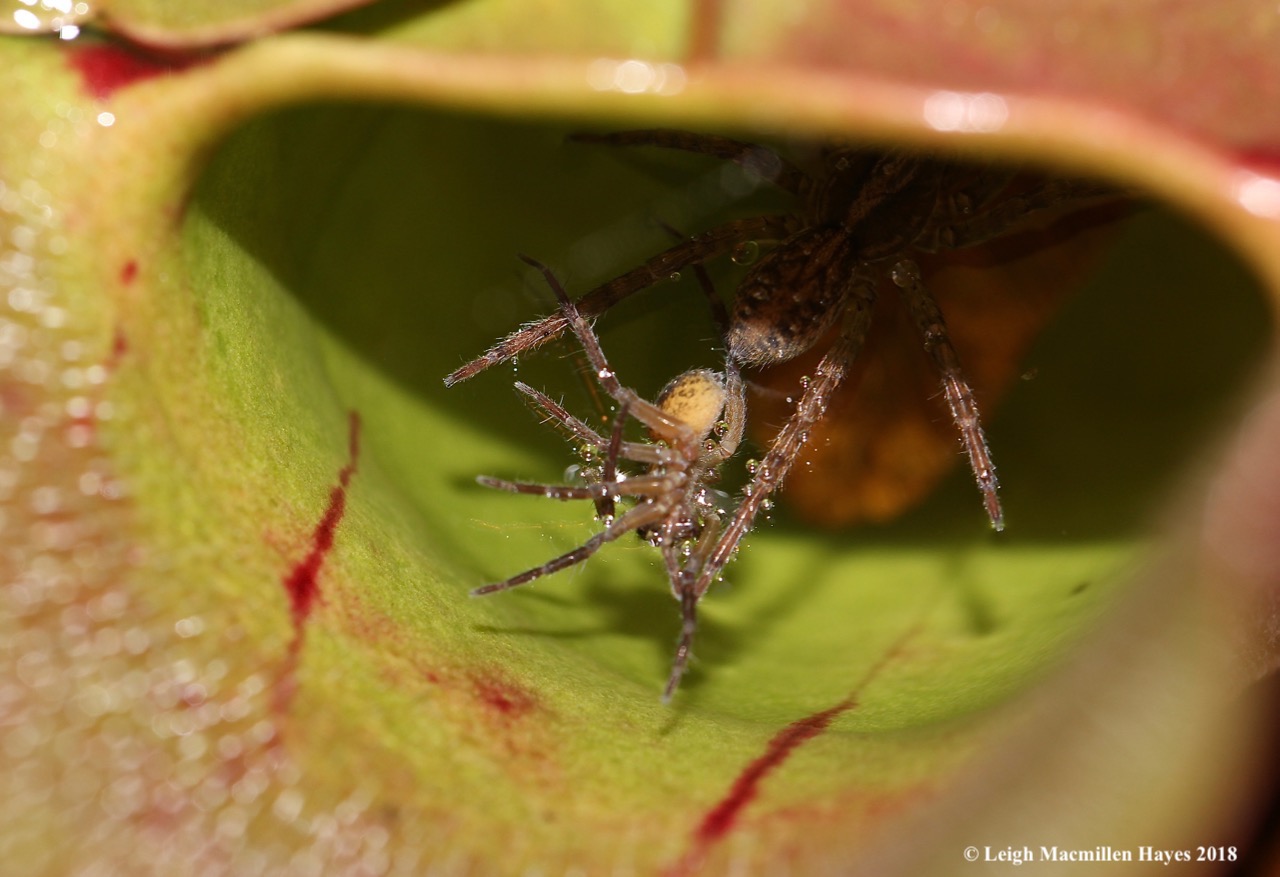
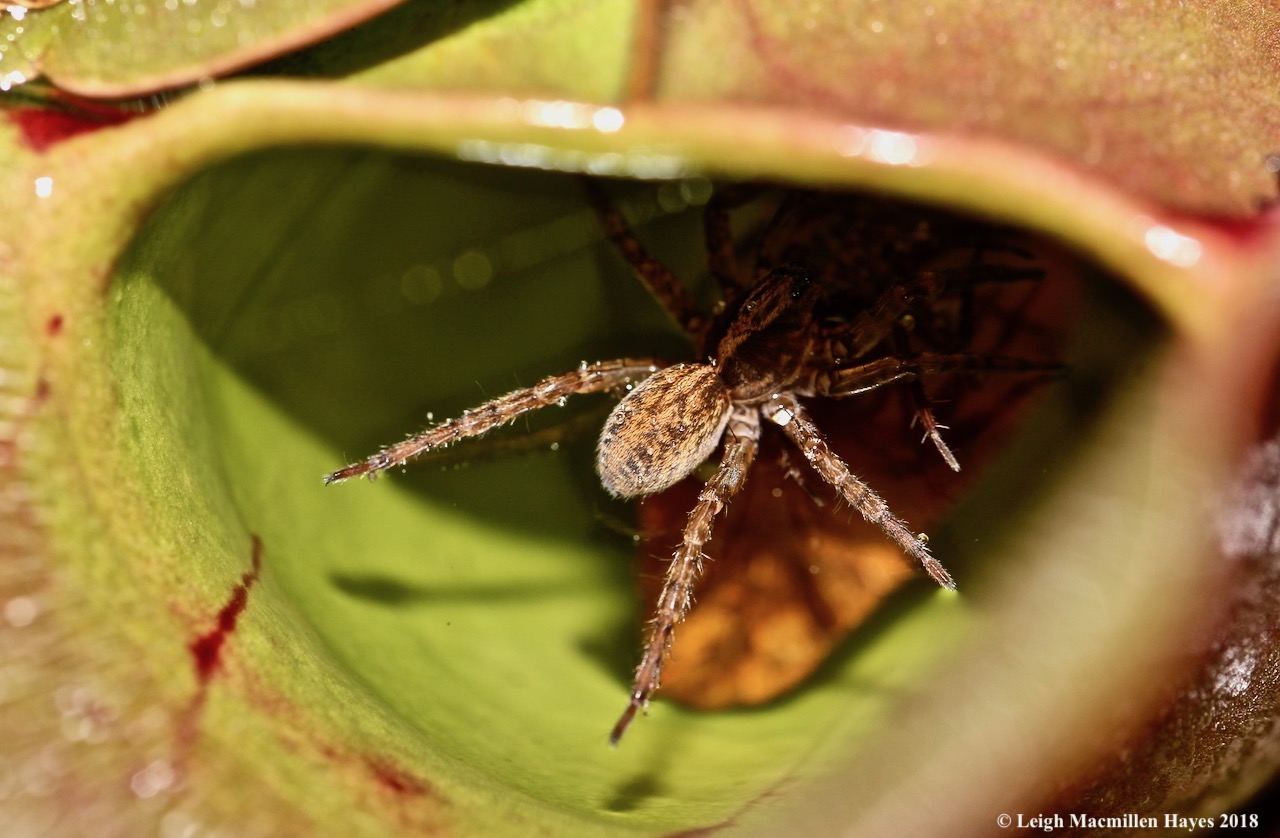
Dueling fishing spiders.

9-pulling it under its body

And so we watched.

10-and out again

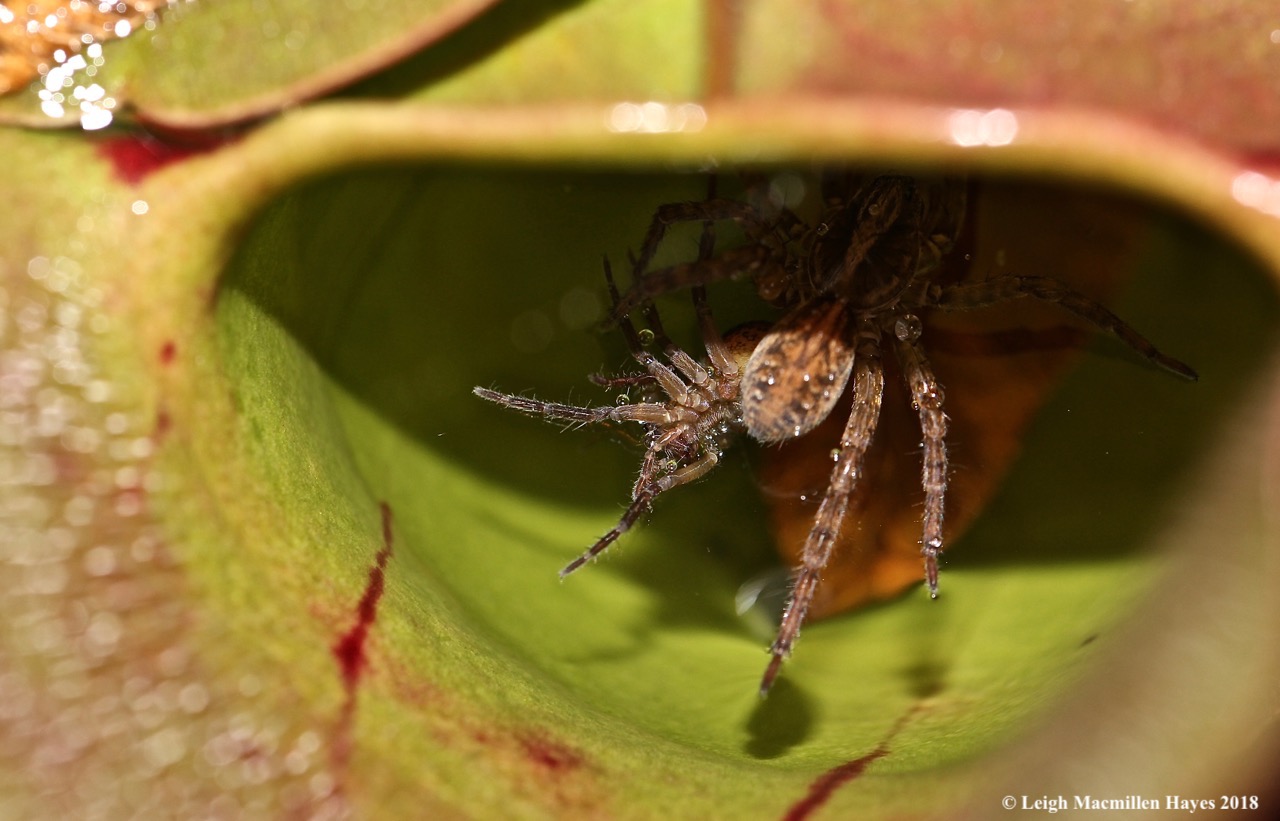
The larger one continuously manipulated the smaller one, which appeared to be dead. Back and forth under its body, it kept moving the smaller kin.

11-and back under

Was it trying to eat the other? One last meal before it too succumbed to the plant? Was it trying to move past the dead spider so it could try to climb out? Should we save it?

12-let 'em be

In the end, we left the action with questions in our minds and didn’t interfere.

7-watching the spider action

Except, that is, to take photographs and make a film. Again, our knees were wet and we didn’t care.

14-pigskin puffball 1

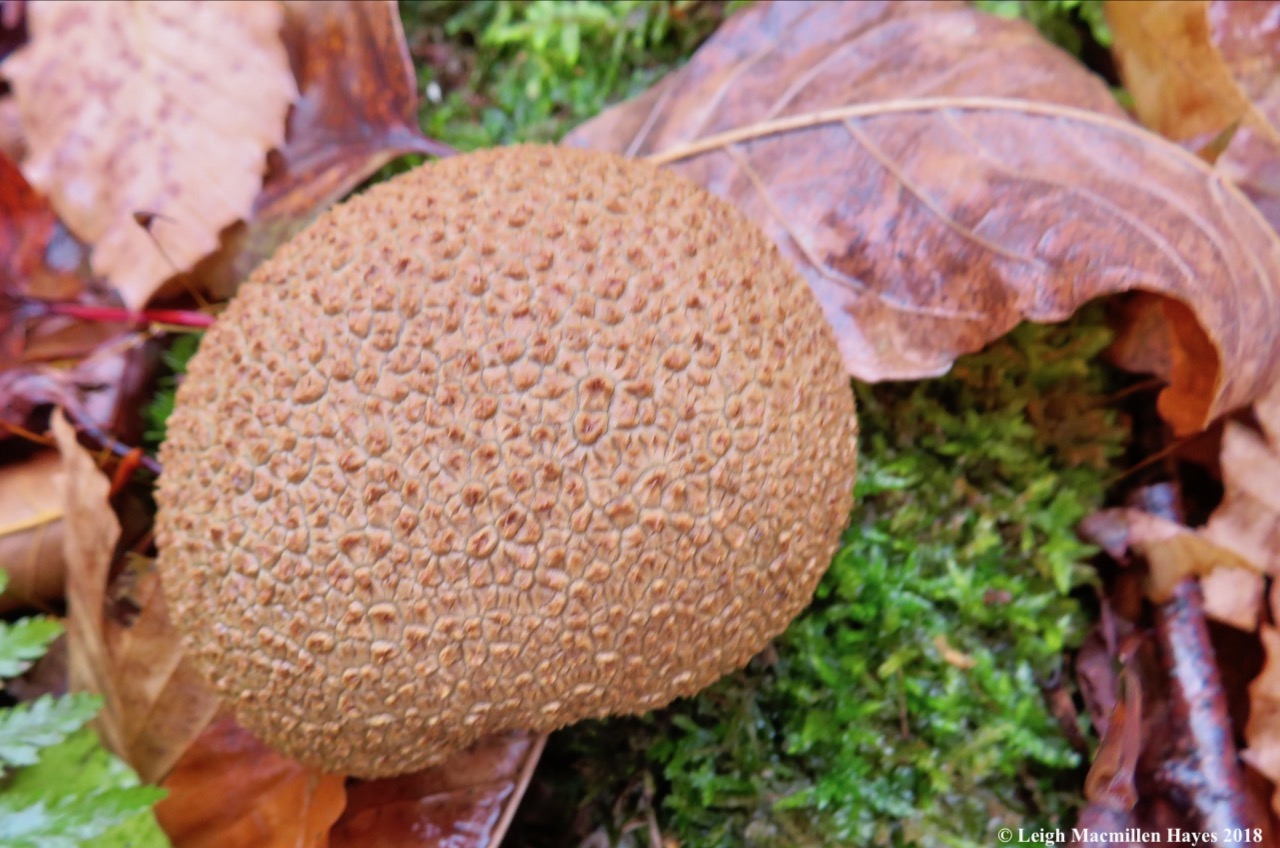
Back on the trail, we found an area where Earthballs decorated some old lumber slash. Their warty outer skin drew our attraction.

15-skin of pigskin

Another common name for Scleroderma citrinum is Pigskin Poison Puffball. Since it’s football season, it’s good to note that footballs used to be made of a pig’s . . . bladder and not its skin, though historically they were called pigskins. Rather than feel leathery, these seemed more rubbery, thus the reference I guess.

15-popping pigskin

And because they were puffballs, they invited a poke.

16-an explosion of spores

From a couple of slits, mature blackish spores erupted. I had to chuckle for no matter with whom I share a trail, puffballs always invite the same reaction–pick up a stick and give it a jab. And each time we share the same moment of glee. And our inner child is released one more time. Thankfully.

18-insect within pigskin

Of course, we found ourselves on our knees yet again when Pam spied something within an Earthball that had exploded prior to our visit. Upon closer inspection, it turned out to be an inanimate insect that looked like it was covered in spores. Canary in the coal mine?

25-Pam and the bear scat

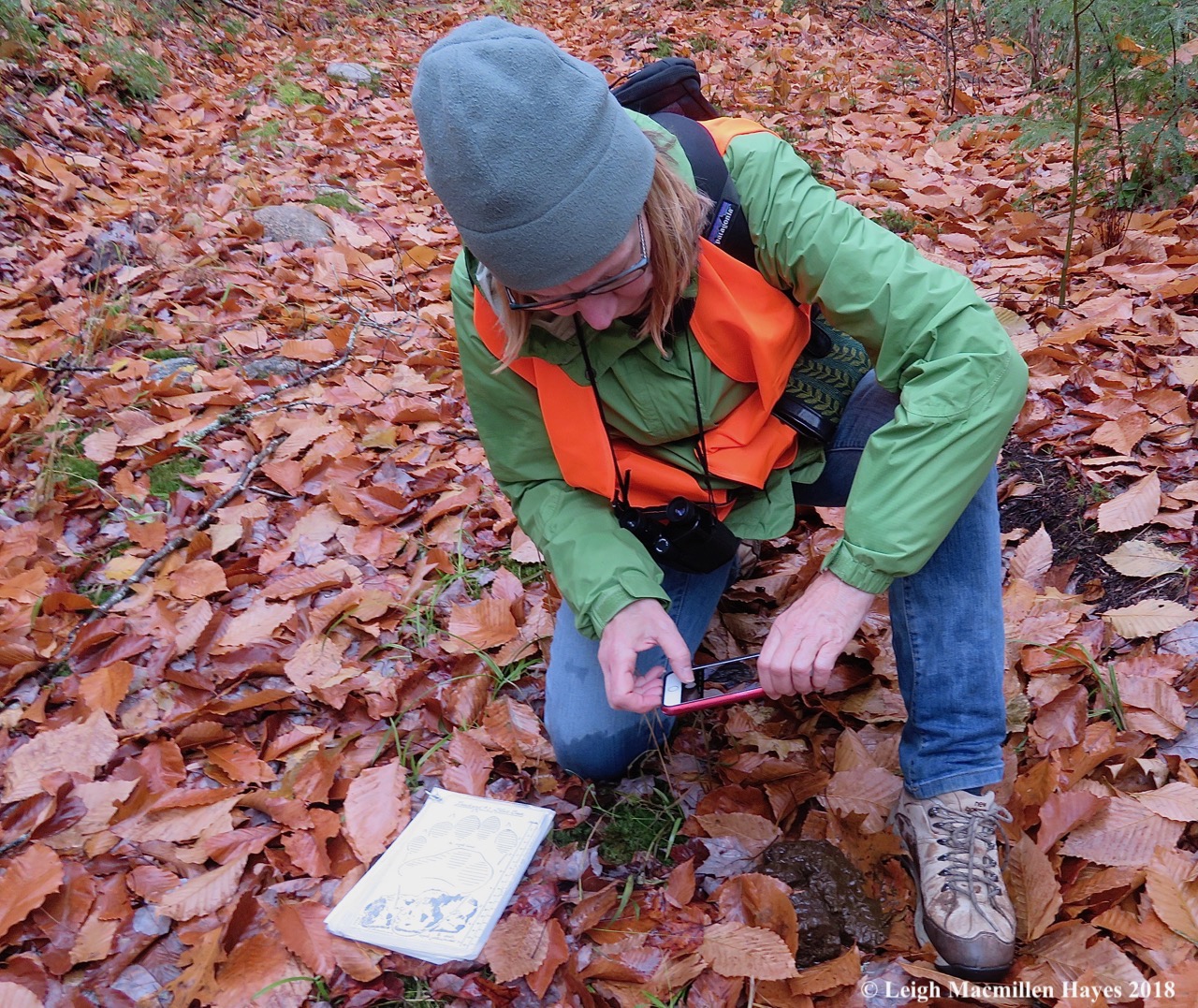
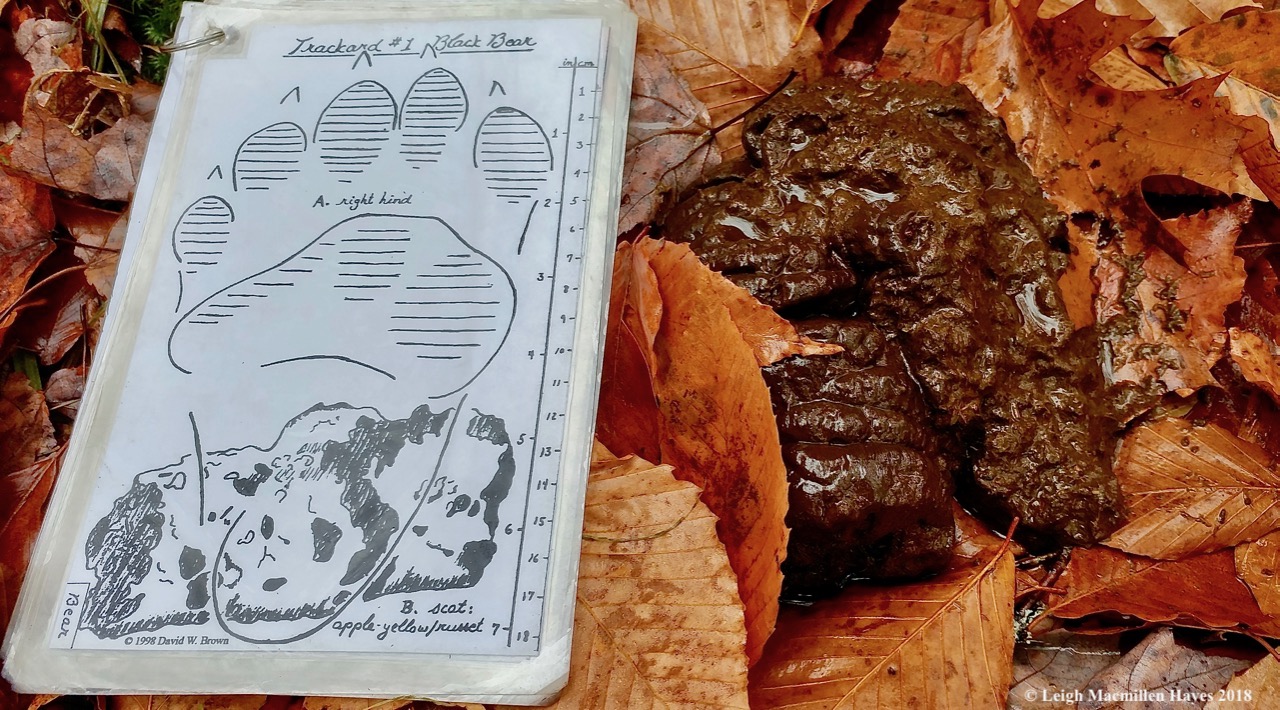
Our next great find was of a different sort and I had to pull the Trackards from my pack while Pam got down for another upclose and personal look. Notice her knee?

22-bear scat

Black bear scat! Indeed. Cylindral and large. We looked for tracks, but conditions were such that we didn’t find any. The scat was enough for this day.

24-Tamaracks

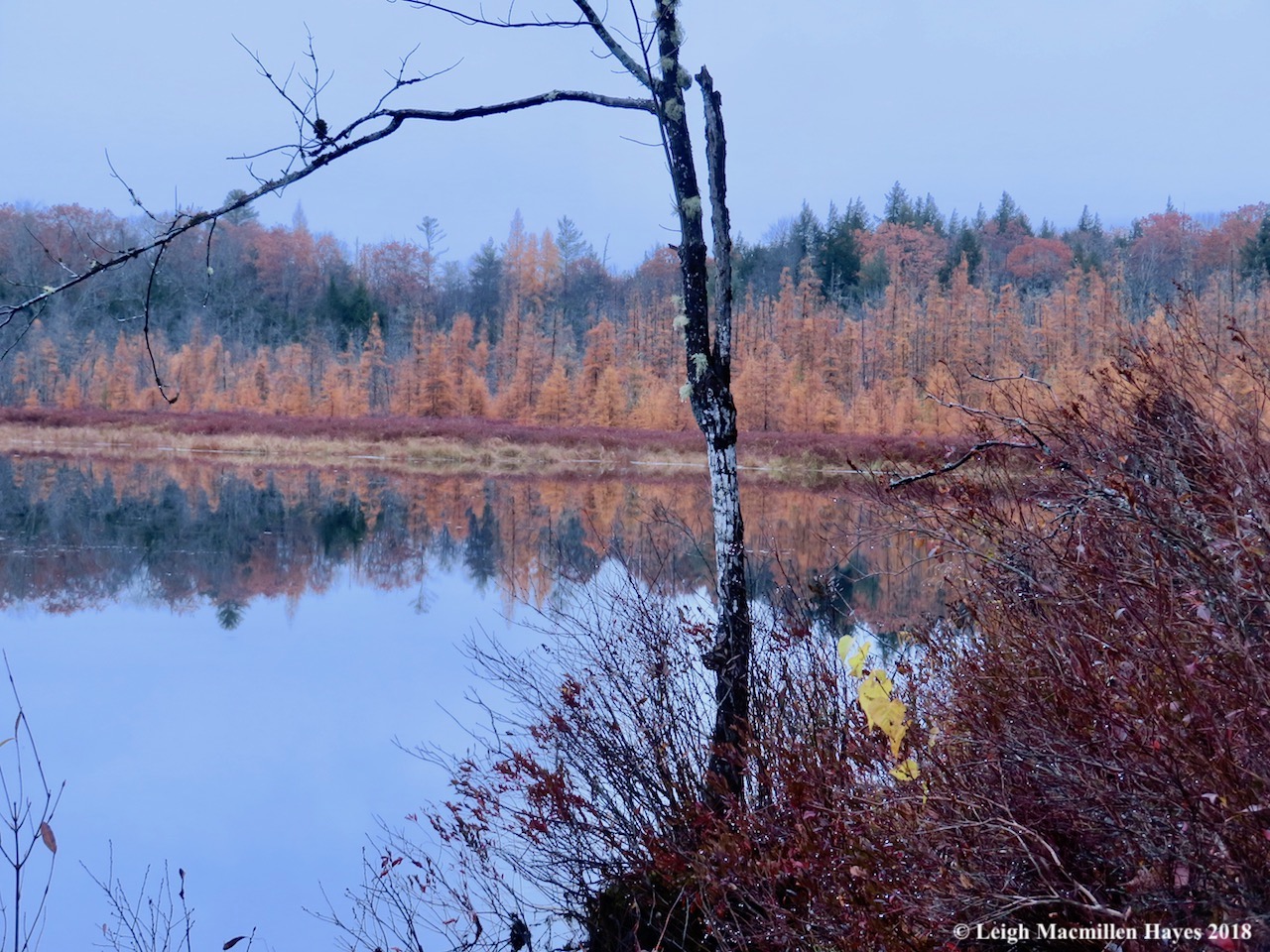
If you go, we strongly encourage you to follow the green trail all the way to the bird/wildlife viewing point along Sucker Brook. Today, the tamaracks on the shore to our right added a tone of bright beauty to the overcast day.

25-Sucker Brook--beaver lodge

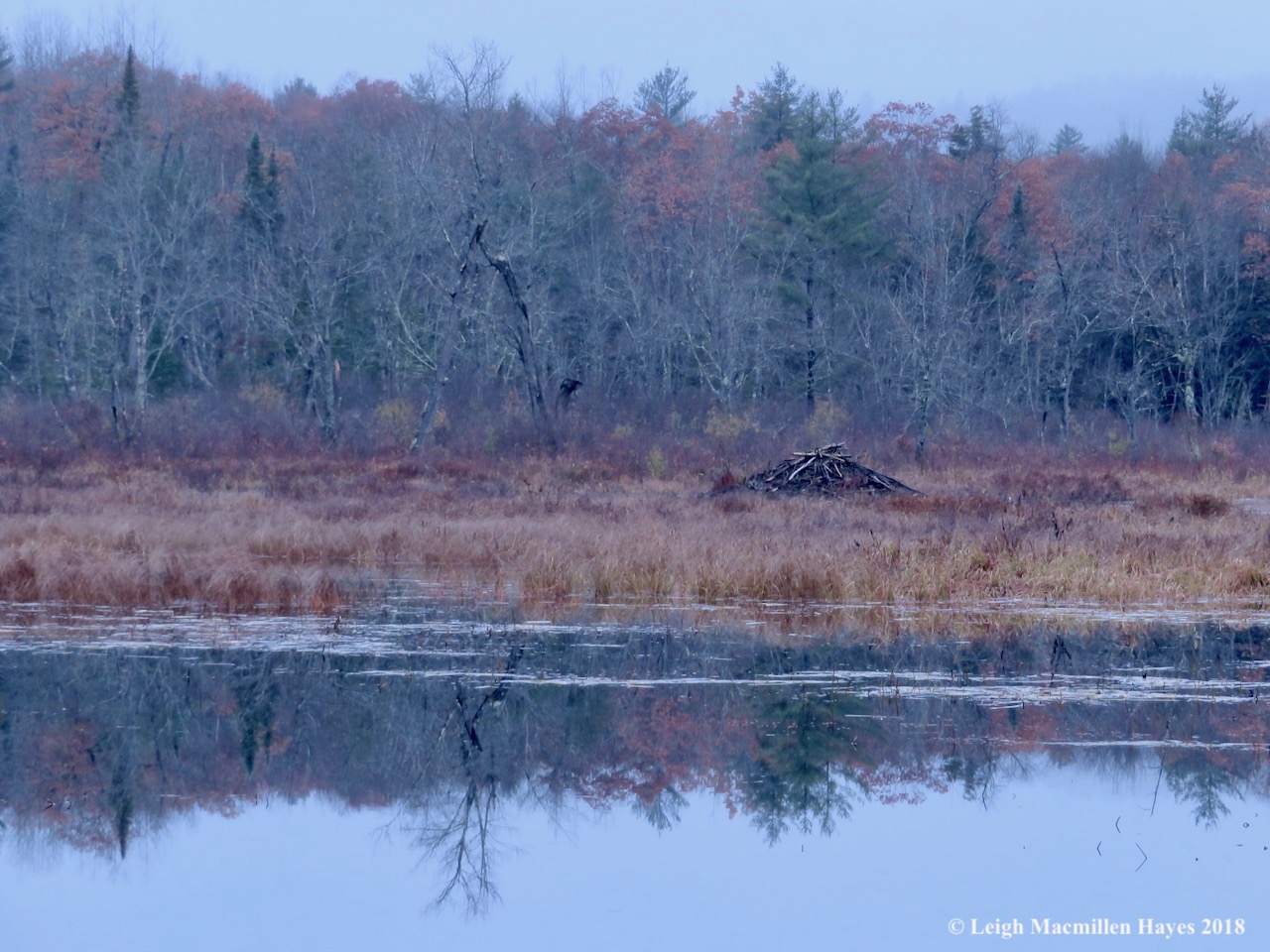
And another old beaver lodge also looked like it had received a mud treatment. We could see some beaver chew sticks in the water by the edge of the brook and so we knew again that there had been recent activity. It just means we’ll have to return for another visit if we want to catch some action–perhaps earlier in the day.

In the meantime, we let the view point become our turn-around point and quickly (sorta) followed the blue trail back for we both needed to move on to the rest of our day.

But . . . despite the mist and occasional raindrops, we elected to tramp. And were delighted with the results. Here’s hoping the rest of the day goes like that.


Mondate Challenge

It was a mere drizzle when we stepped outside and walked to Pondicherry Park, but eventually we needed to pull up the hoods of our raincoats. Our journey was rather quick as we followed first the Snowshoe Hare trail, and then the Pasture Trail, which led us to the Stonewall Loop, where two thirds of the way around, we diverted.

1-crossing onto LEA property

Our main intention had been to cross over the stonewall that marks the park’s boundary and explore the Pinehaven Trail owned by Lakes Environmental Association. It is on this land that the Maine Lake Science Center is located, but there are other cool features as well.

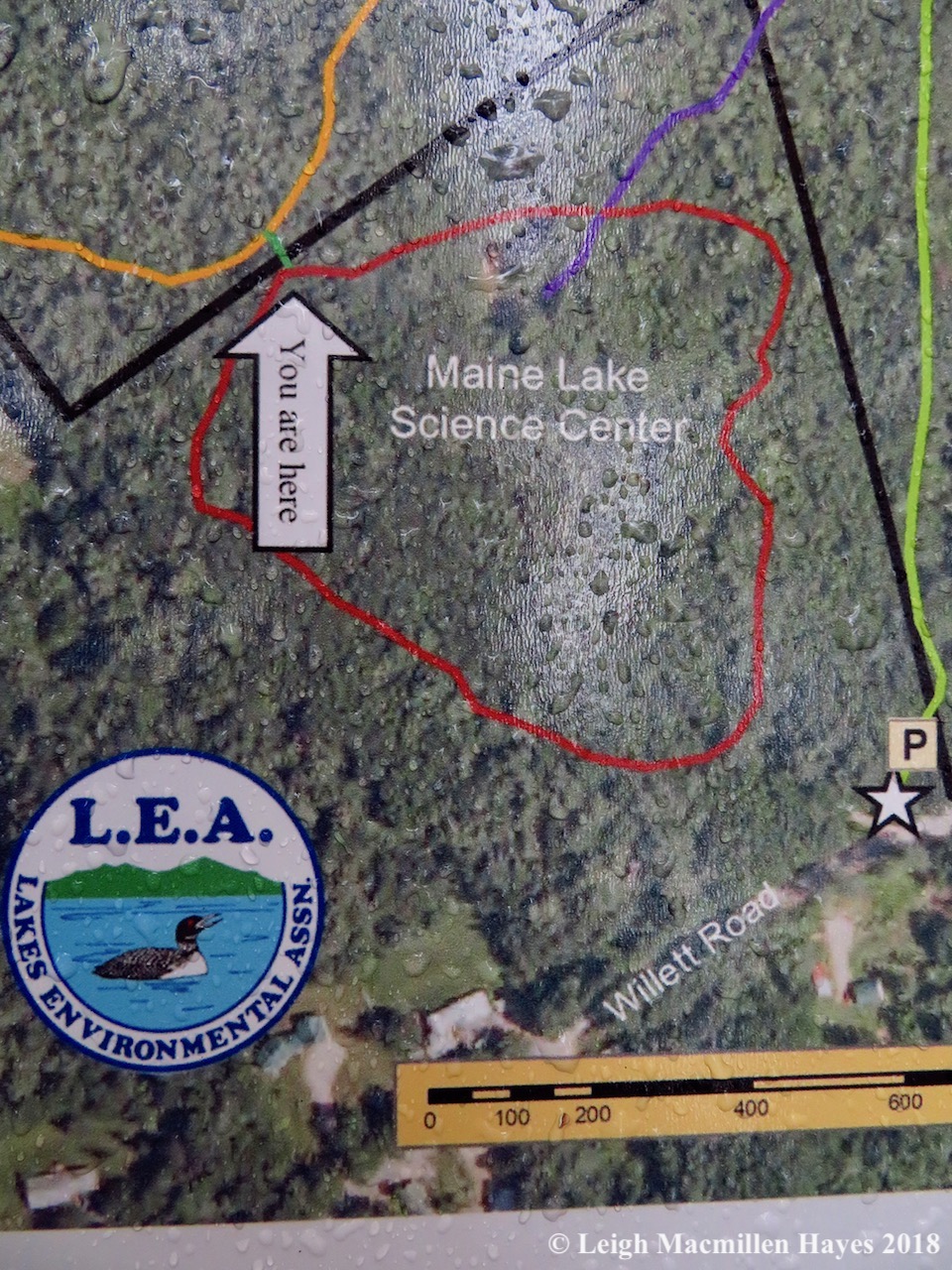
2-You Are Here

As the first sign informed us, we had arrived. And you can see by the moisture that it was raining in earnest.

3-park rules

Funding for the Pinehaven Trail signs and low-element course was provided by LEA Board Member Roy Lambert and his wife Mary Maxwell, summer residents of Bridgton who have made a huge impact on protecting the lakes and ponds we all love. Roy has brought the LakeSmart Program to LEA and Mary has spearheaded LEA’s invasive plant patrols.

Despite the fact that the sign warned us the course is “dangerous when wet,” we decided to test it out. After all, we were accompanied by a leaf as indicated.

4-Birds on a Wire

Broken into four wonderful sets, each offering a variety of activities, we began by becoming birds on a wire.

5-my own nuthatch pose

Though I would have liked to say that I was a Barred Owl or Cooper’s Hawk, being a Nuthatch wasn’t so bad.

6-my guy nuthatch

My guy . . .

7-walking the tightrope

was also a Nuthatch.

8-next set of challenges

Set Two meant getting more practice in the art of walking on a balance beam. It looked so easy, but with each one, the level of difficulty increased a bit as our confidence did the same . . . for the most part.

10-balance beam series

And at first, our eyes saw only a few anomalies in the woods, but once we focused we realized each leg of the course was more involved than first anticipated.

11-swinging beam

The second set found us not only keeping our balance on the beams that zigzagged through the grove, but also on a swinging beam.

12-stepping up

And then we had to step up and up and up.

14-around the white pine

One of my favorite parts was circling the tree like a rock wall climber might do.

15-tree hugger!

In the process, I got to hug the pine, not that I ever need an excuse.

13-bench

My other favorite part of Set Two was the bench. There were other benches along the trail, but I found this one to be the most aesthetically appealing. Even if you don’t want to try out the course, you can walk the trail and sit a bit. You might just see a deer–we did. And in the past I’ve seen other animals including a red fox.

16-Alanna's signs

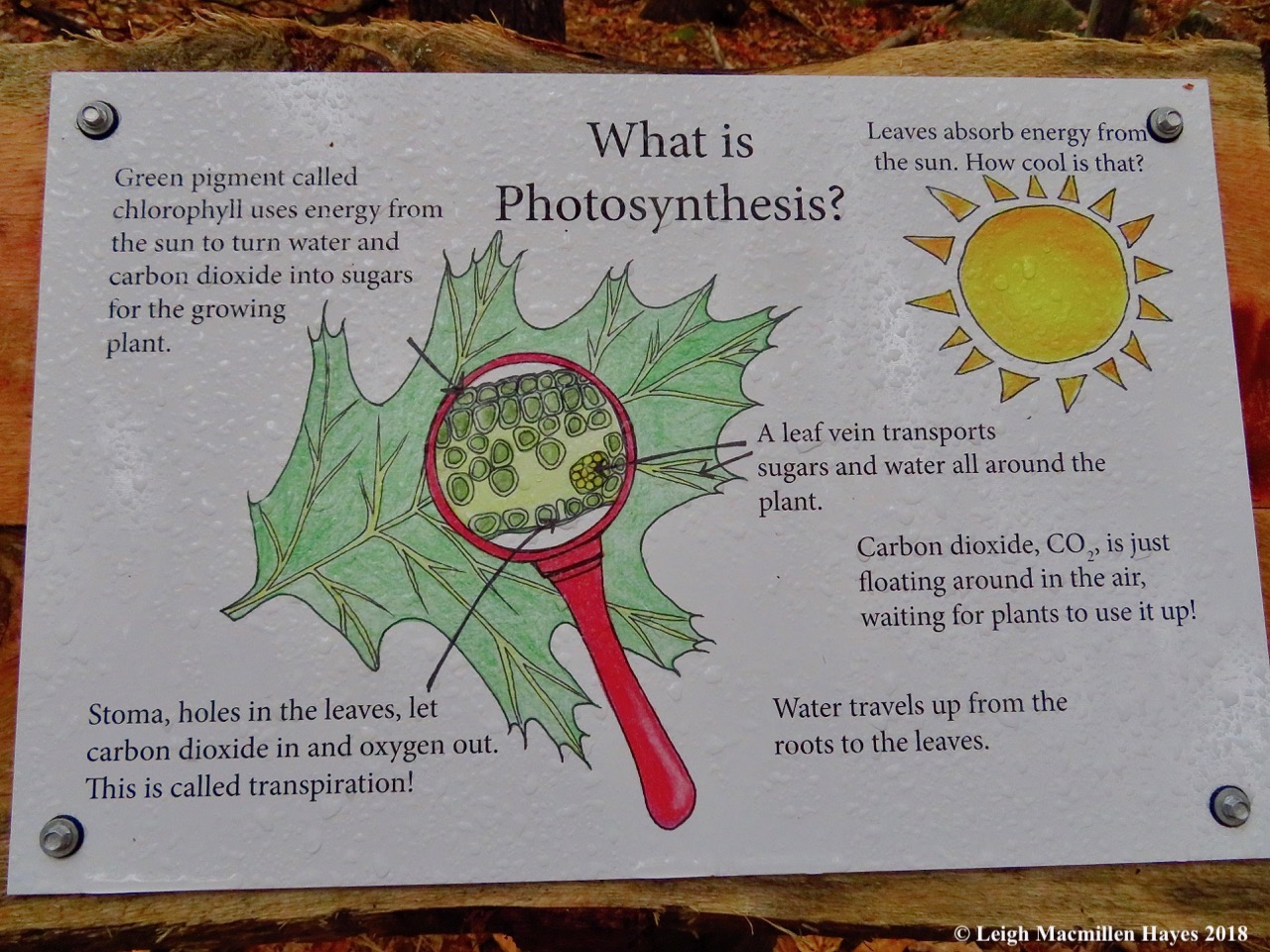
As we walked on, not sure if there were more sets, we spied the first interpretive sign created by LEA’s Education Director, Alanna Doughty, and featuring her explanations and drawings. I LOVE them. And want to decorate my house with them. I didn’t tell my guy that. The other thing I loved about all the signage–it was mounted on rough-edged boards, adding to the natural look. Do I know the creator of those boards? A local box company perhaps?

17-third set

Much to our delight, not much further on we came to Set Three.

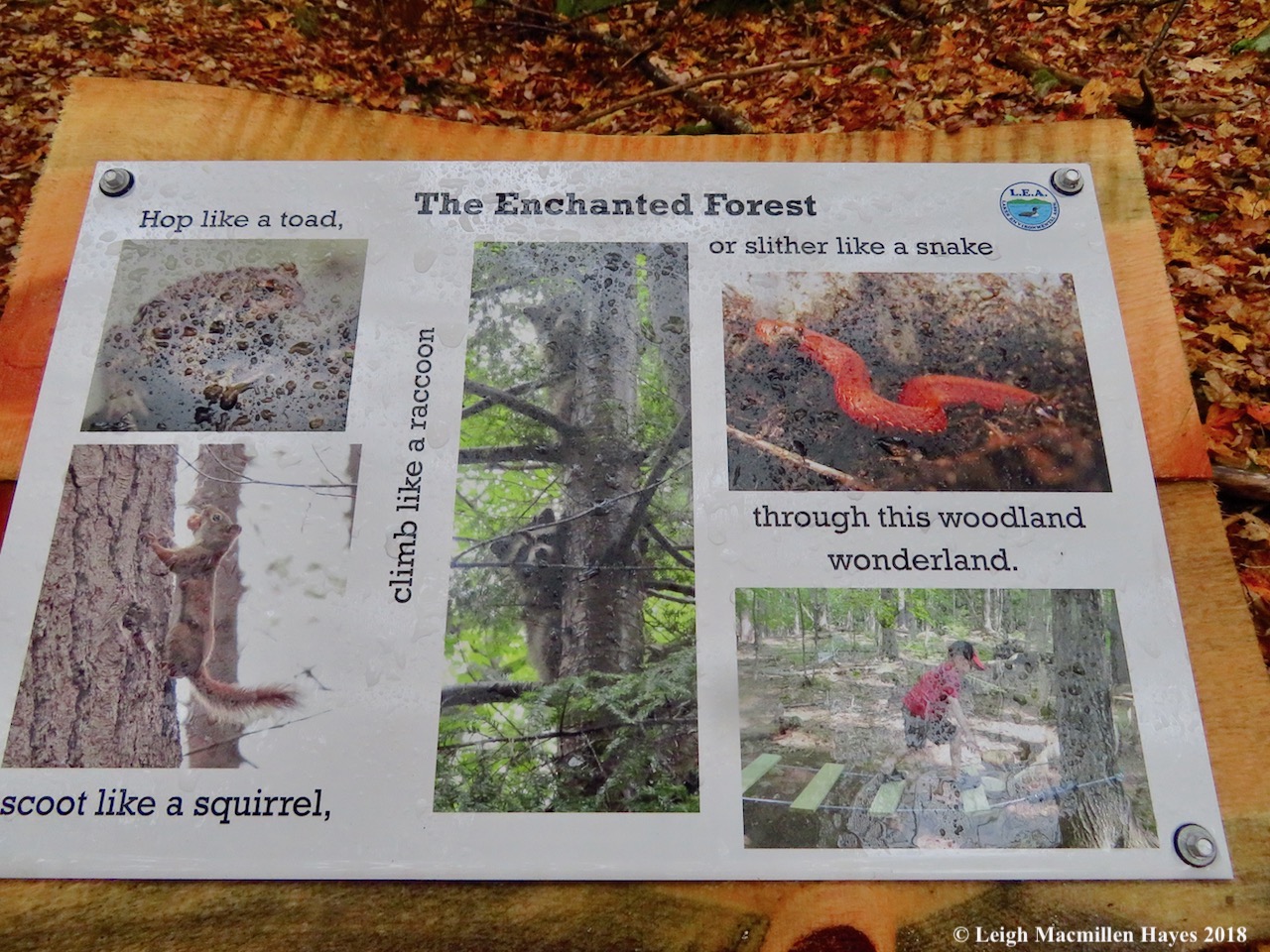
18-Enchanted Forest

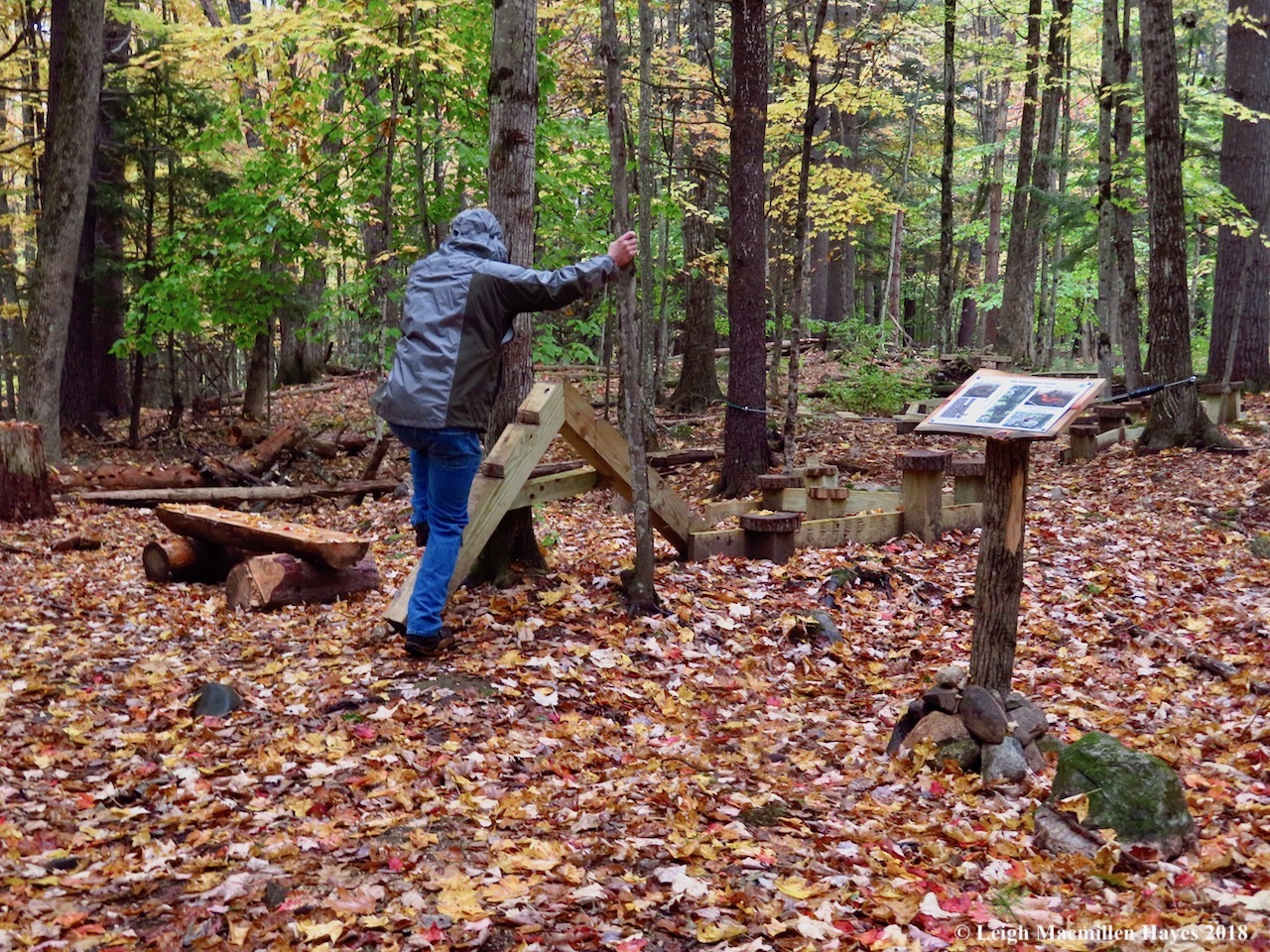
The forest really was enchanted and we found ourselves using all four modes of operation in order to get from one piece of wood to the next.

19-tree cookie steps

There were lots of tree cookies to step on and more balance beams to conquer.

20-hopping along

Sometimes we hopped like toads, who don’t leap as far as frogs with their longer hind legs.

21-a balancing act

Other times we had to channel our inner Cooper’s Hawk as there was no place to put our hands.

22-waiting for the wires to stop swaying

And in doing so, my guy figured out that pausing to wait for the wire to stop swaying made for an easier crossing. He succeeded. (I need to sneak back and practice this one some more as my knees were a tad too shaky.) We suspected that kids run across without giving it a thought. And so our excuse–it was raining.

23-yeegads--getting higher

Though it looked intimidating at first, moving across the log was fun, but I wasn’t so sure about the beam that turned out to be the highest one yet. It felt like crossing a brook and so after he finished I asked my guy to come back and give me a supporting hand. He laughed and asked if I expected him to stand in the imaginary water. Yes! Chivalry at its best. Once I started across while grasping his hand, I felt rather confident and soon let go. At the other side, I rejoiced in my success. And thanked him, of course.

24-clean water

Onward still, we encountered another one of Alanna’s signs, simple yet informative. And still, we were accompanied by a leaf. And no, we didn’t place the leaves on the signs.

This sign struck me as extremely important, not that the others weren’t. But . . . clean water is what the Lakes Environmental Association is all about.

26-Paul Bunyan's Playground

At last we reached the final set, or first if you approach from Willet Road. Again, a leaf ;-)

As for how good would we be as lumberjacks? Well, my guy would pass. I’d almost get there, but I have to work on my log rolling skills.

26a-variety of swings

What I liked about the final set was not only the focus on various types of trees, but also that the same theme was executed in a variety of ways and so we crossed another swinging step bridge.

27-I got this!

Sometimes, the choice to be a Nuthatch or Barred Owl didn’t exist and we had to become Cooper’s Hawks as we had nothing to grab onto while moving forward.

28-now you don't see him

There were opportunities to be apes as well and then disappear around the back sides of rather large pine trees, their girth indicative of the fact that the land had once been agricultural and the trees grew in abundant sunshine after it was no longer farmed. So, do you see my guy?

30-now you do

Now you do! Circling around that tree was as fun as the first and it had ash tree foot and hand holds.

31-Me Tarzan

He Tarzan! And notice how the piece he was about to step onto was set on a log. Yup, it was a foot seesaw. There were several and we really liked them.

32-rope climbing, log rolling

The last set included climbing a rope to the upper deck and then descending the ladder to another and on to a balance beam and then the log rolling. He did it all. I saved the wet log for another visit.

33-Mast sign

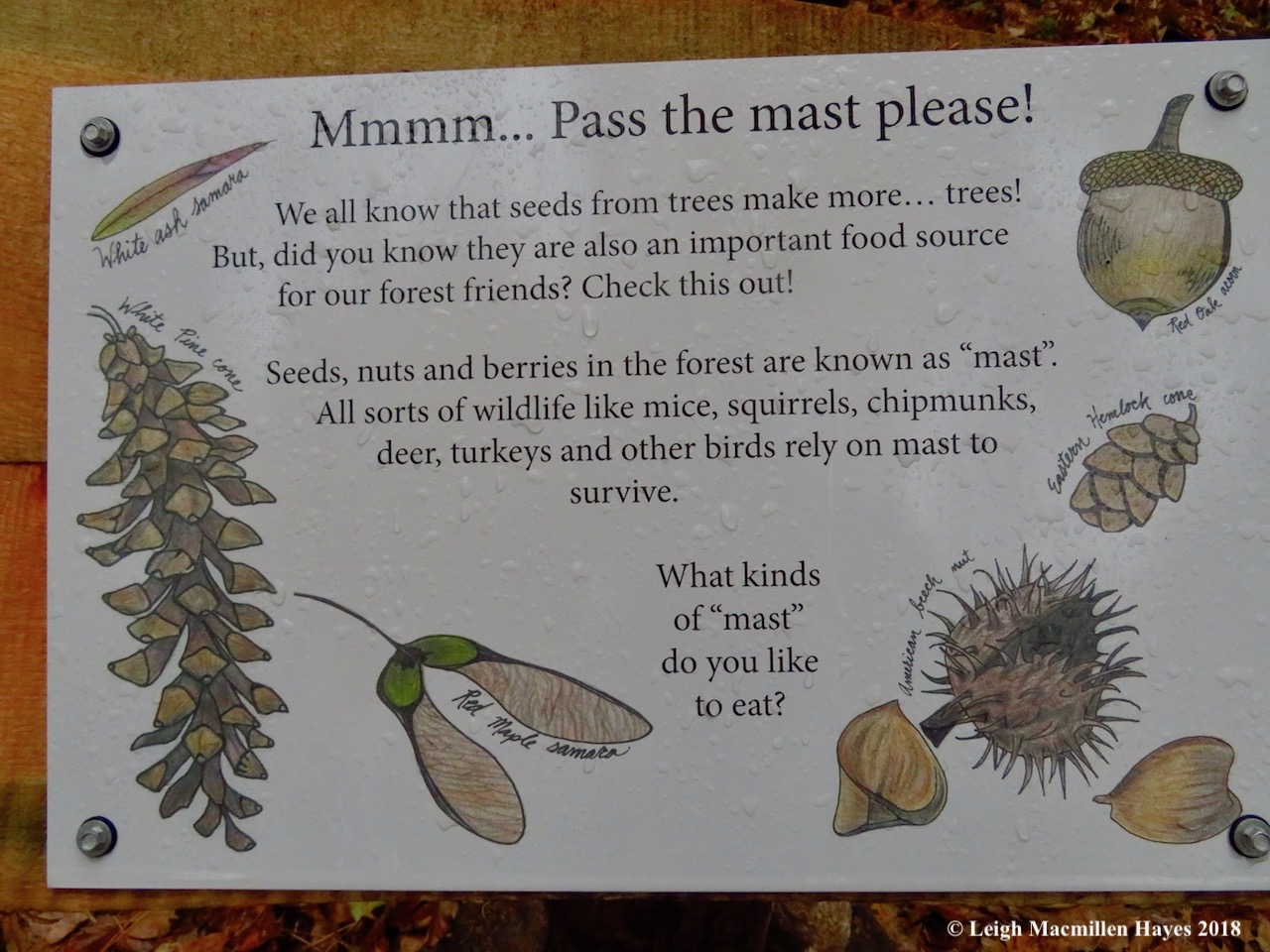
Just beyond the final set was Alanna’s last sign and a hot topic this year since last year’s mast crop of white pine cones, acorns, maple samaras, and beech nuts have meant a banner year for squirrels and mice. Remember, those little rodents don’t have as much food this year and they’ll become food for the predators and nature will try to balance itself once again. Oh, and not only are Alanna’s drawings beautiful but her humor and voice come through in the interpretive signs.

34-across the boardwalk and back into the park

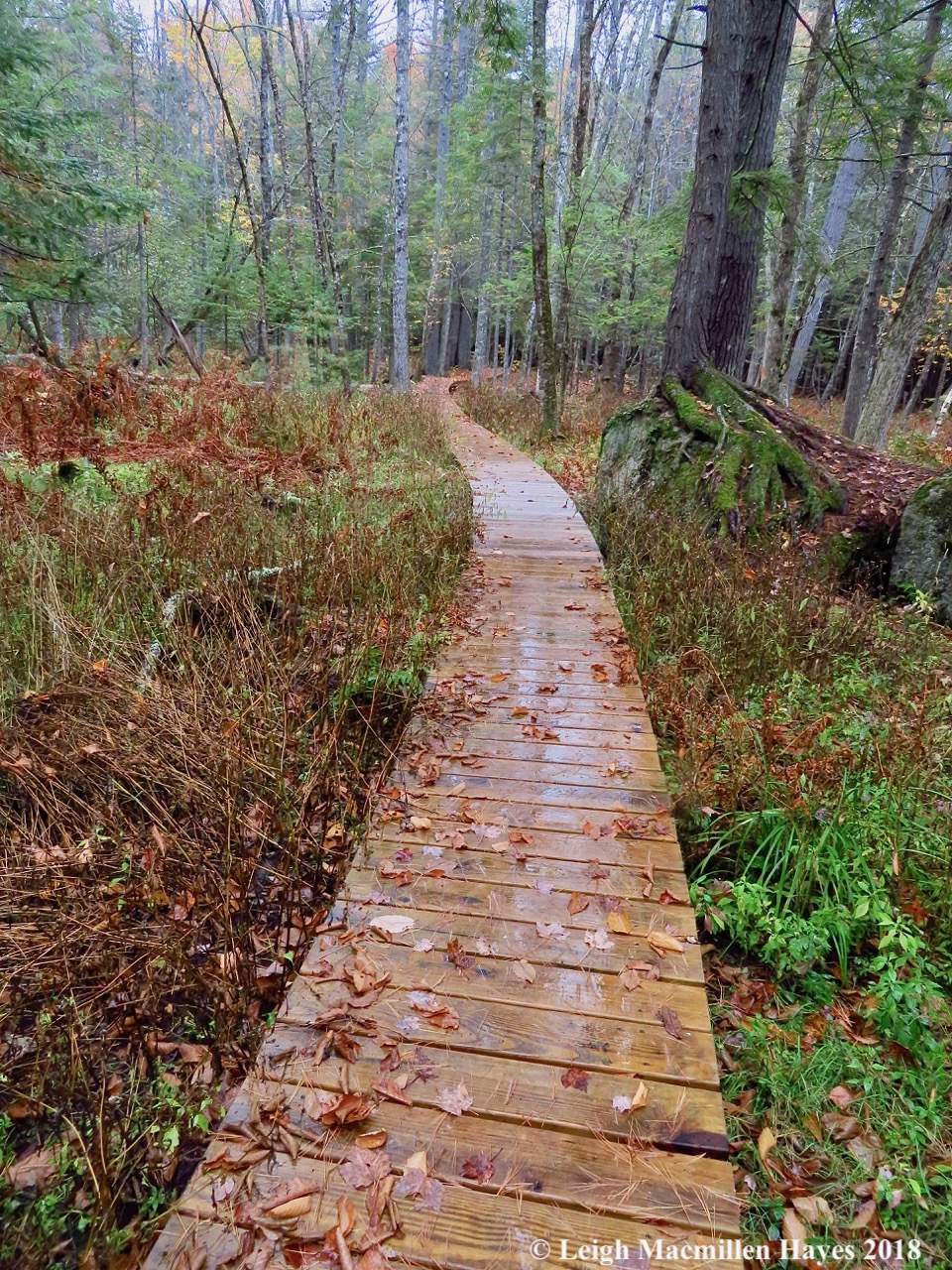
As for us, we had finished our balancing act, crossed the science center’s driveway, followed the second portion of the Pinehaven Trail and wound our way down to the board walk that passes back into Pondicherry Park. From there, we found our way home.

What a blast. I think we were both a bit let down that we’d finished the course.

Thank you LEA, Alanna, Roy and Mary, for providing us with a delightful Mondate Challenge . . . even in the rain.  My guy and I highly recommend the Pinehaven Trail.

Wondering With Jinny Mae

It takes us forever and we like it that way. In fact, today a woman who saw us in our typical slo-mo movement commented, “It’s like you’re on a meditative walk. I always move quickly and miss so much.” Indeed we were and when I travel beside Jinny Mae there isn’t much we don’t see. But always, we’re sure that we’ve moved too quickly and missed something. Then again, we realize that whatever it was that we accidentally passed by this time may offer us a second chance the next time.

1-winterberry

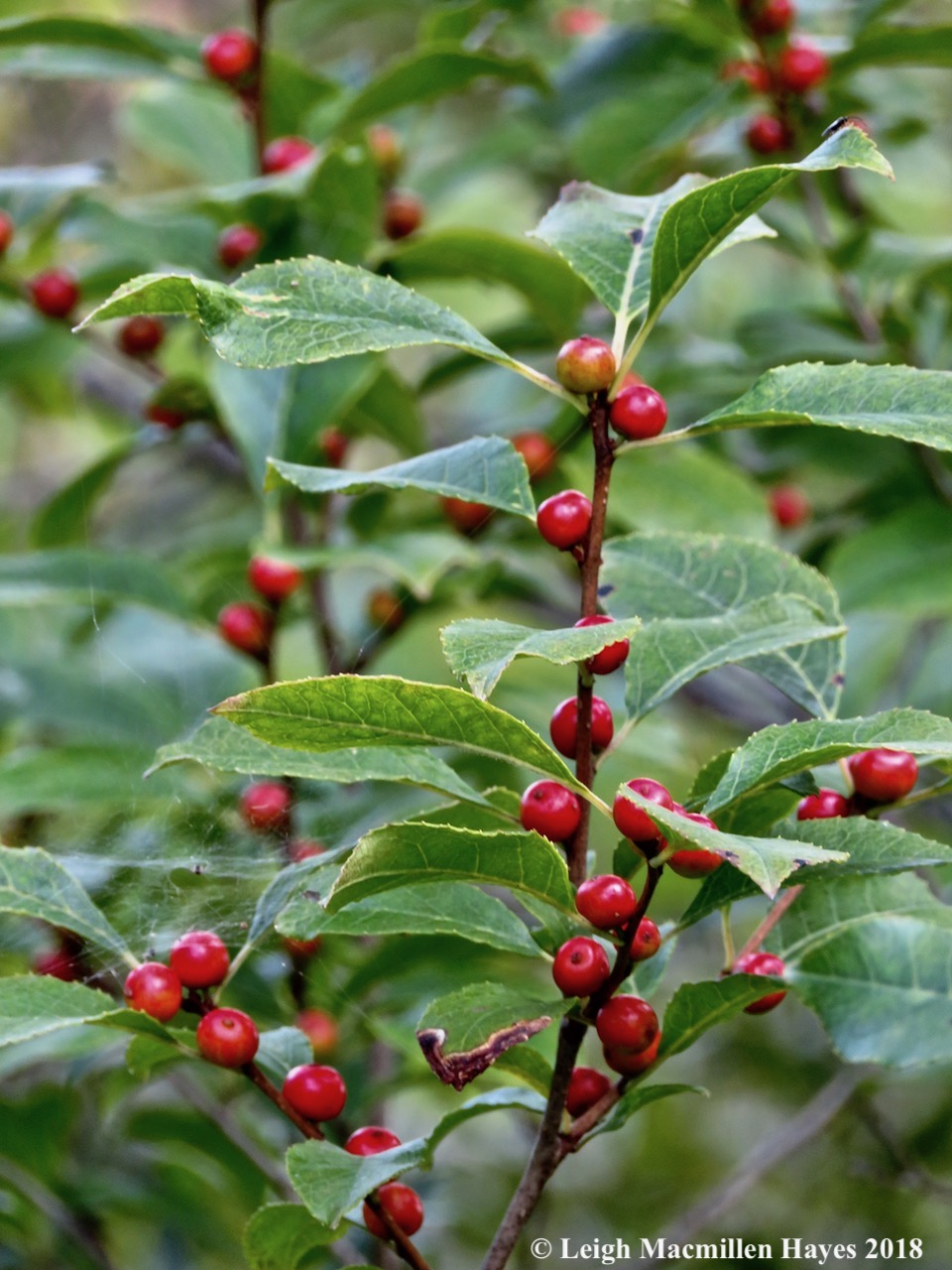
Today’s wonder began with the realization that winterberry holly or Ilex verticillata, grew abundantly where we chose to travel. This native shrub will eventually lose its leaves, but the plentiful berries will last for a while–until they’ve softened considerably that is and then the birds will come a’calling.

2-winterberry

Everywhere we turned, or so it seemed, we found them ranging in color from spring green to shades of red. As summer turns to autumn, the leaves will yellow and eventually fall.

3-winterberry

And then the brightly colored berries that cling to every stem will add color where it’s otherwise lacking in the landscape.

4-winterberry

Even while the leaves still held fast, we found some brightly colored berries that offered a breathtaking view.

5-to Muddy River

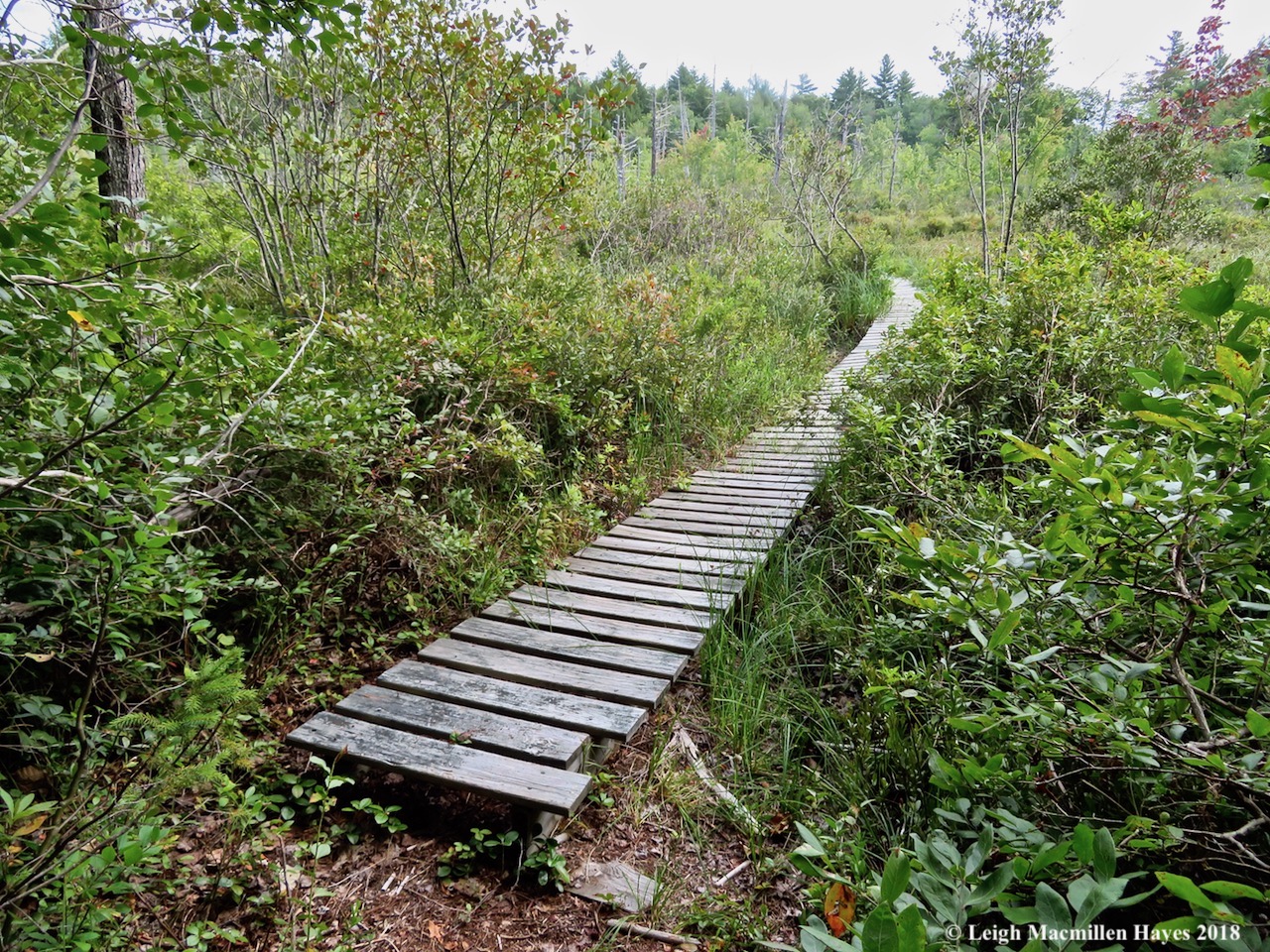
We passed through numerous natural communities, tiptoeing at times, such as on the boardwalks, for we didn’t want to disturb the wildlife around us–no matter what form it took.

9-dragonfly attachment

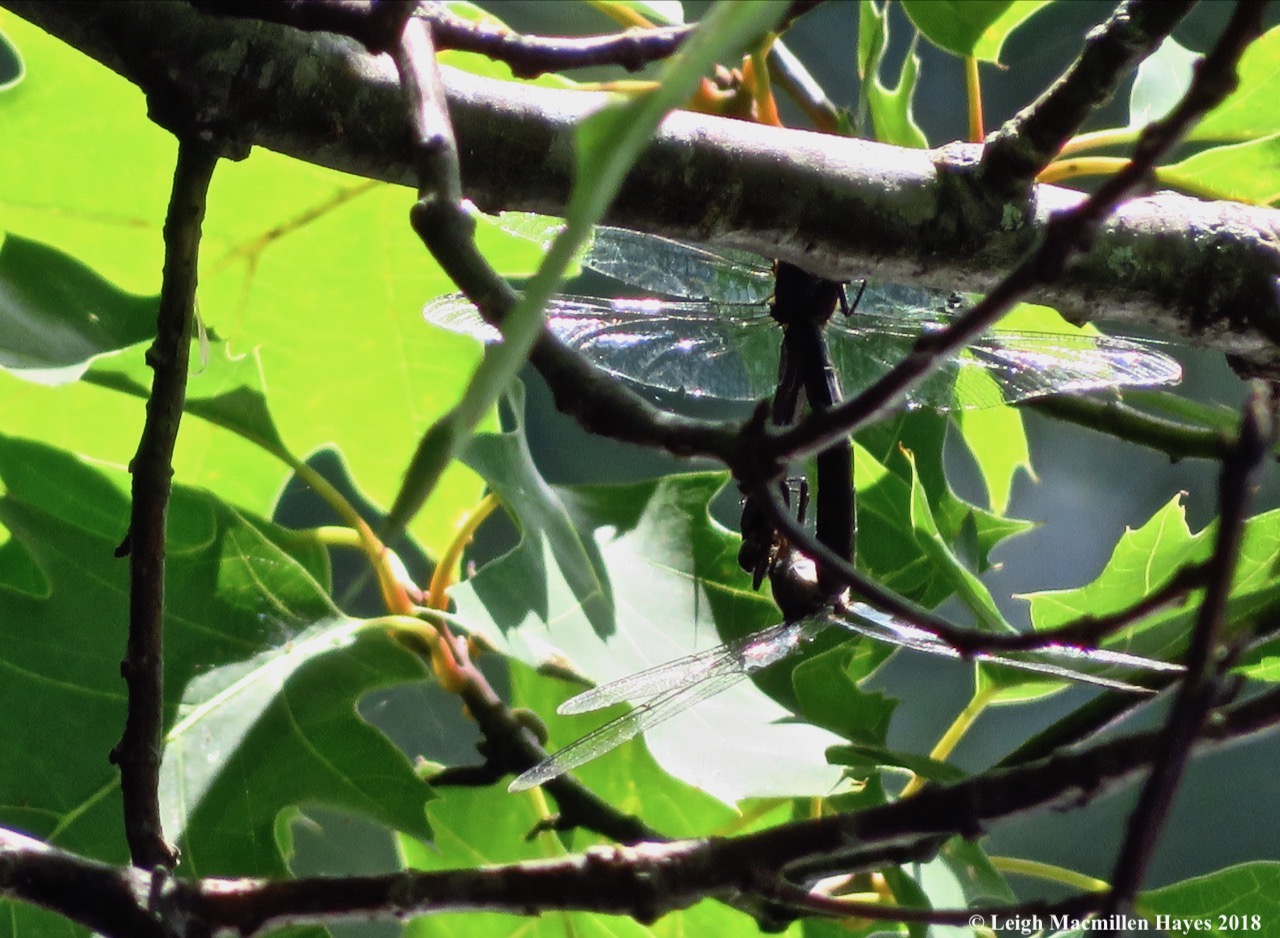
And we rejoiced in spying a cherry-faced meadowhawk couple in their pre-canoodling mode. Can you see how he has used his cerci to clasp the back of her head? His hope is that he can get her to connect in the wheel position and they’ll take off into the safety of the nearby shrubbery to mate.

6-Muddy River

At the river, we began to notice other signs that we’ve once again entered a transition between seasons, for subtle were the colors before us.

7-beaver lodge

Across the river and just north of where we stood, we spotted an old lodge, but weren’t sure anyone was in residence for it didn’t seem like work was being done to prepare for winter. Then again, we haven’t done anything to prepare either, for though the temperature has suddenly shifted from stifling to comfortable (and possibly near freezing tonight), it’s still summer in Maine. And we’re not quite ready to let go.

17-Sheep Laurel

That being said, we found a most confusing sight. Sheep laurel grew prolifically in this place and we could see the fruits had formed from this past spring’s flowers and dangled below the new leaves like bells stringed together.

18- sheep laurel flowering in September

Then again, maybe it wasn’t all that odd that it still bloomed for when I got home I read that it blooms late spring to late summer. I guess we’ve just always noticed it in late spring and assumed that was the end of its flowering season. But then again, it appeared that this particular plant had already bloomed earlier in the season and produced fruit, so why a second bloom? Is that normal?

10-pitcherplant 1

As we continued on, we started to look for another old favorite that we like to honor each time we visit. No matter how often we see them, we stand and squat in awe of the carnivorous pitcher plants.

11-pitcher plant 2

But today, we were a bit disturbed for one that we’ve admired for years on end looked like it was drying up and dying. In fact, the location is typically wet, but not this year given the moderate drought we’ve been experiencing in western Maine. What would that mean for the pitcher plant?

13-pitcher plant flower

Even the flower pod of that particular one didn’t look like it had any life-giving advice to share in the future.

14-Pitcher Plant 4

Fortunately, further on we found others that seemed healthy, though even the sphagnum moss that surrounded them had dried out.

14a-pitcher plant

Their pitcher-like leaves were full of water and we hoped that they had found nourishment via many an insect. Not only do I love the scaly hairs that draw the insects in much like a runway and then deter them from exiting, but also the red venation against the green for the veins remind me of trees, their branches spreading rather like the tree of life. Or maybe a stained glass window. Or . . . or . . . we all have our own interpretations and that’s what makes life interesting.

15-pitcher plant flower 2

Speaking of interesting, the structure of the pitcher plant flower is one we revere whenever we see it because it’s so otherworldly in form. And this one . . . no the photo isn’t sideways, but the flower certainly was. If you scroll up two photos, you’ll see it as it grew among the leaves. The curious thing is that it was sideways. Typically in this locale, Jinny Mae and I spy many pitcher plant flowers standing tall. Today, we had to squint to find any.

16-pitcher flower and aster

She found the sideways presentation and this one. But that was it. Because of the drought? Or were we just not cueing in to them?

20-cinnamon fern

We did cue in to plenty of other striking sights like the light on a cinnamon fern that featured a contrast of green blades and brown.

21-cinnamon fern drying up

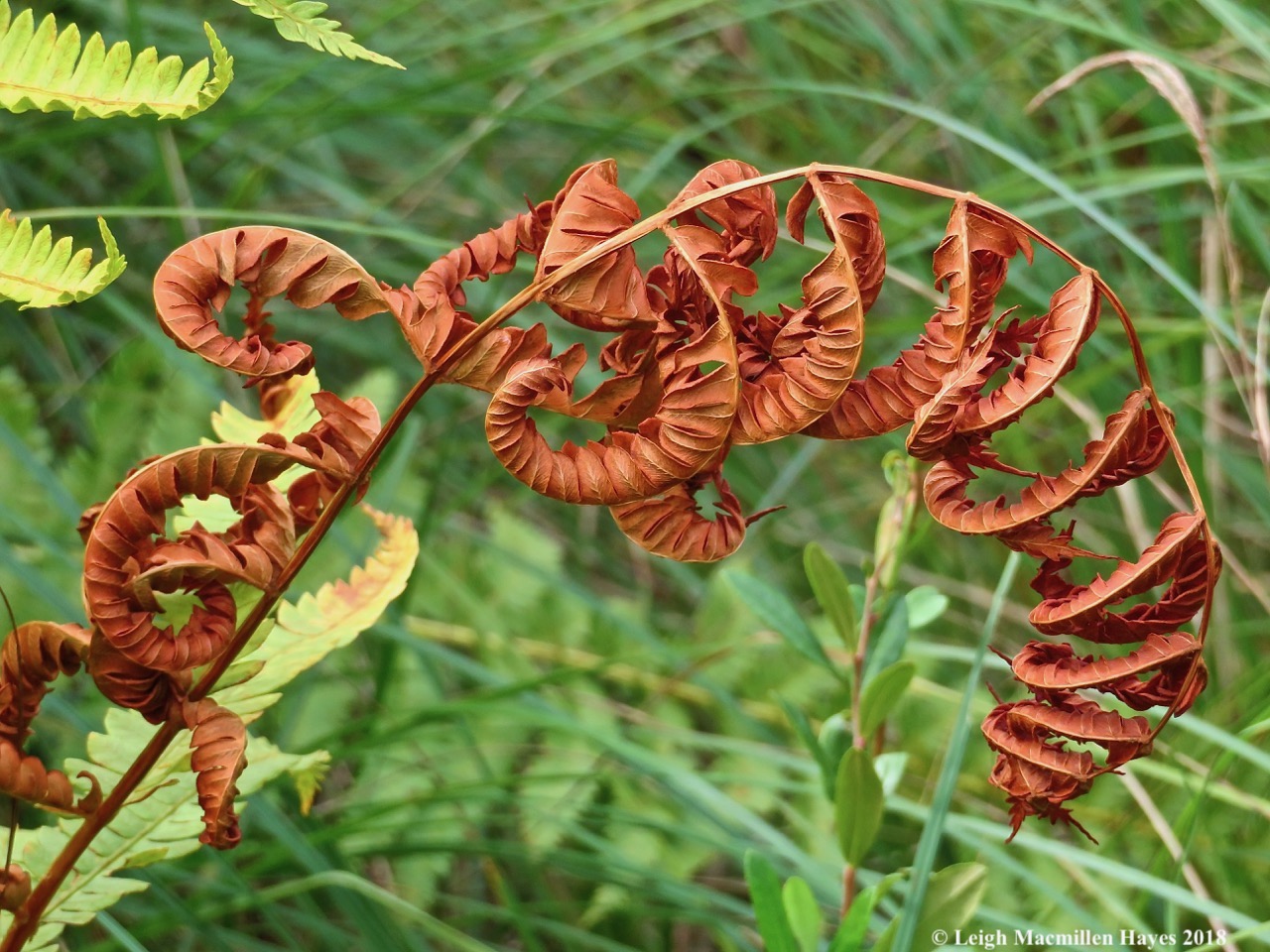
Again, whether the brown spoke of drought or the transition to autumn, we didn’t know. But we loved its arching form dramatically reflected in each pinna.

18a-swamp maple

But here’s another curious thing we noted. We were in a red maple swamp that is often the first place where the foliage shows off its fall colors and while some in other locales have started to turn red, only the occasional one in this place had done so. Our brains were totally confused. Sheep laurel blooming for a second time; pitcher plants drying up and dying; and few red maples yet displaying red leaves?

19-witch's caps or candy corn

We needed something normal to focus on. And so we looked at the candy corn we found along the trail. Some know them as witch’s caps. They are actually witch hazel cone galls caused by an aphid that doesn’t appear to harm the plant. It is a rather cool malformation.

24-white-faced meadowhawk

On a boardwalk again, we stepped slowly because the white-faced meadowhawk kept us company and we didn’t want to startle it into flight.

25-white-faced meadowhawk dining

One flew in with dinner in its mouth and though I couldn’t get a photo face on before it flew to another spot to dine in peace, if you look closely, you might see the green bug dangling from its mouth.

26-New York Aster

All round us grew asters including New York, water-horehound, cranberries, bog rosemary and so many others.

27-Virginia marsh-St. John's Wort

There was Virginia marsh St. John’s Wort,

28-fragrant water lily

fragrant water lilies,

28-jewelweed

jewelweed,

29-pilewort globe

and even pilewort to admire. The latter is so much prettier in its seed stage than flowering. Why is that we wondered.

30-Holt Pond Quaking Bog

Ahhhh, an afternoon of wondering . . . with Jinny Mae. At LEA’s Holt Pond Preserve. In Bridgton. An afternoon well spent. Thanks JM.


Docked

Some days are meant for staying close to home. Such was today–a perfect 10 kind of August day with cool temps at either end and a sunshine sandwiched between.

1-lakesmart award

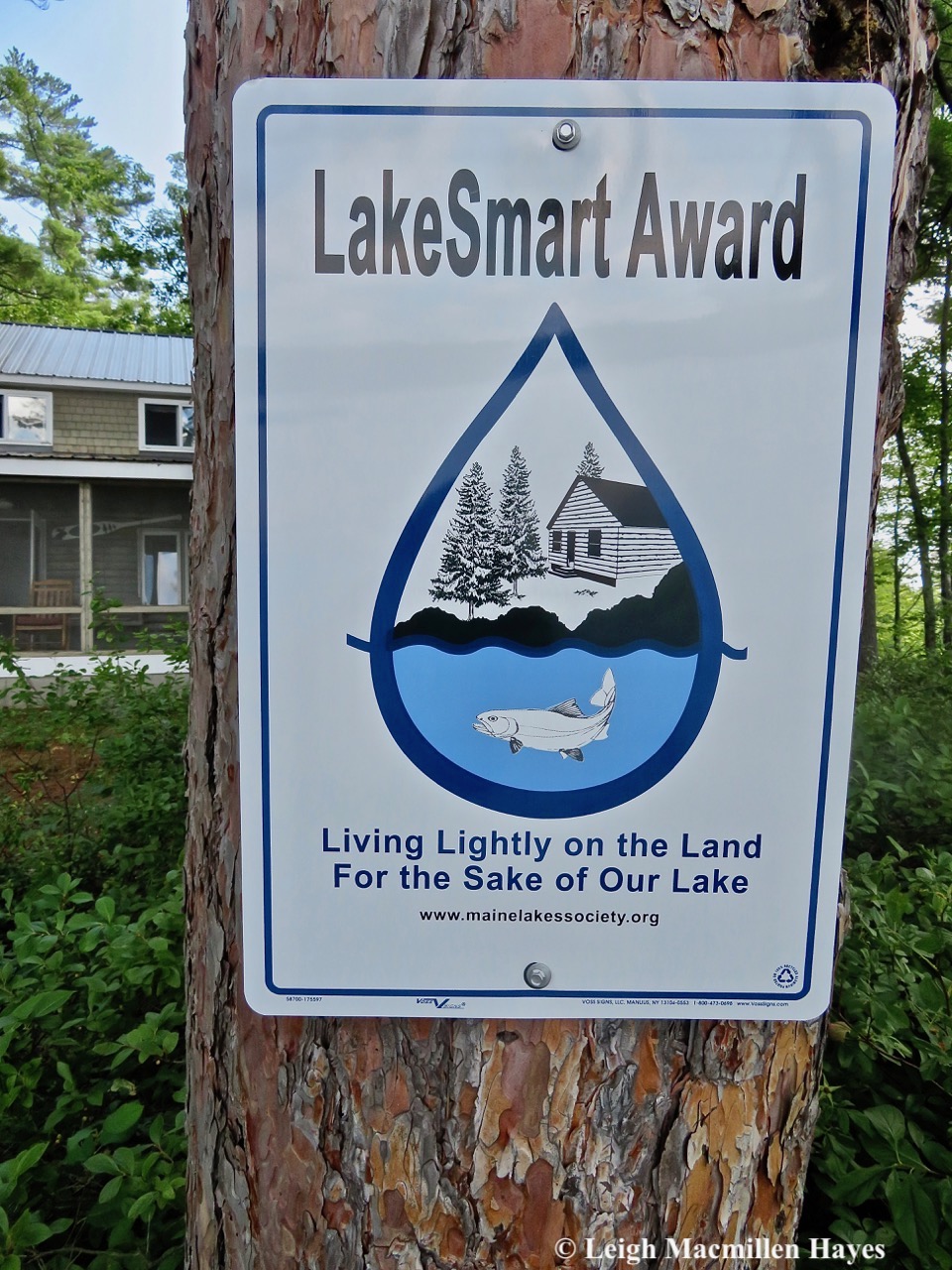
One of the starts to our day was receiving two signs that announced the fact that our camp property is award winning–at least for a LakeSmart Award (don’t check inside for any award winning style or cleaning habits because you won’t find either here). We tipped our hats to Roy Lambert, vice president of the Lakes Environmental Association Board of Directors, and secretary of the Maine Lakes Society Board of Directors. Roy coordinates the local LakeSmart program sponsored by LEA.  He visited camp a few weeks ago and evaluated the surrounding land, then submitted a report. And we waited.

The final conclusion with only a couple of recommendations:

LakeSmart Award Status:
SECTION 1 Driveway and Parking Eligible
SECTION 2 Structures and Septic Eligible
SECTION 3 Yard, Recreation and Paths Eligible
SECTION 4 Buffer and Water Access Eligible
LAKESMART AWARD Award Granted

In his presence, we immediately posted the sign on the red pine by the water’s edge and then walked up the driveway to place one by the road as well.

2-dragonfly love

After Roy left, we settled into the day and discovered others who had settled momentarily, making use of a red oak branch dangling over the water for their canoodling session.

3a-reading

It’s rare that I’ve lounged this summer, but a new-to-me book purchased yesterday at the Lovell Arts and Artisan Fair book sale drew my attention between mini naps.

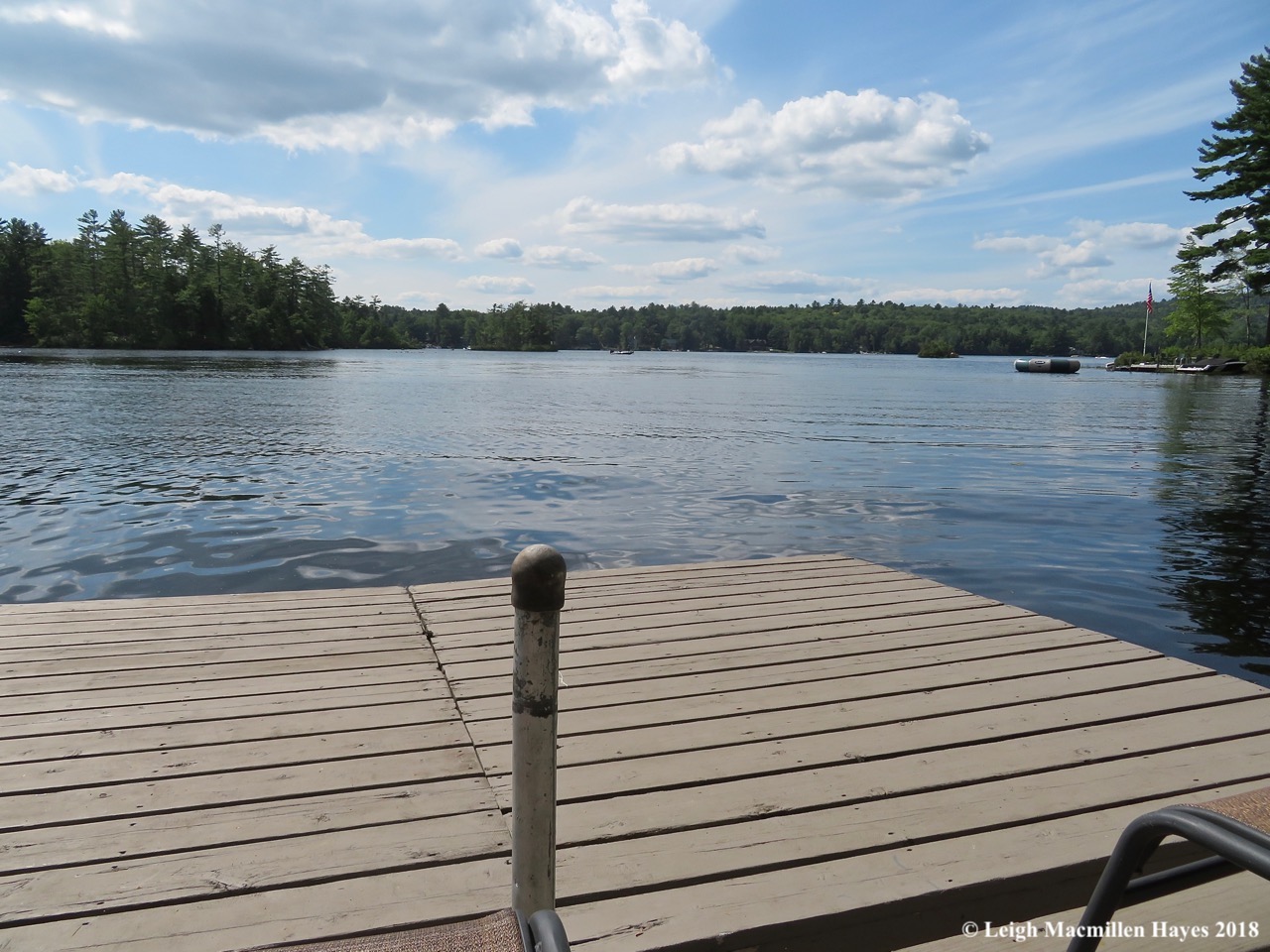
7-dock view

When I wasn’t napping or reading, however, I spent time staring across the pond.

9-dock view

And to the south.

11-bass tournament

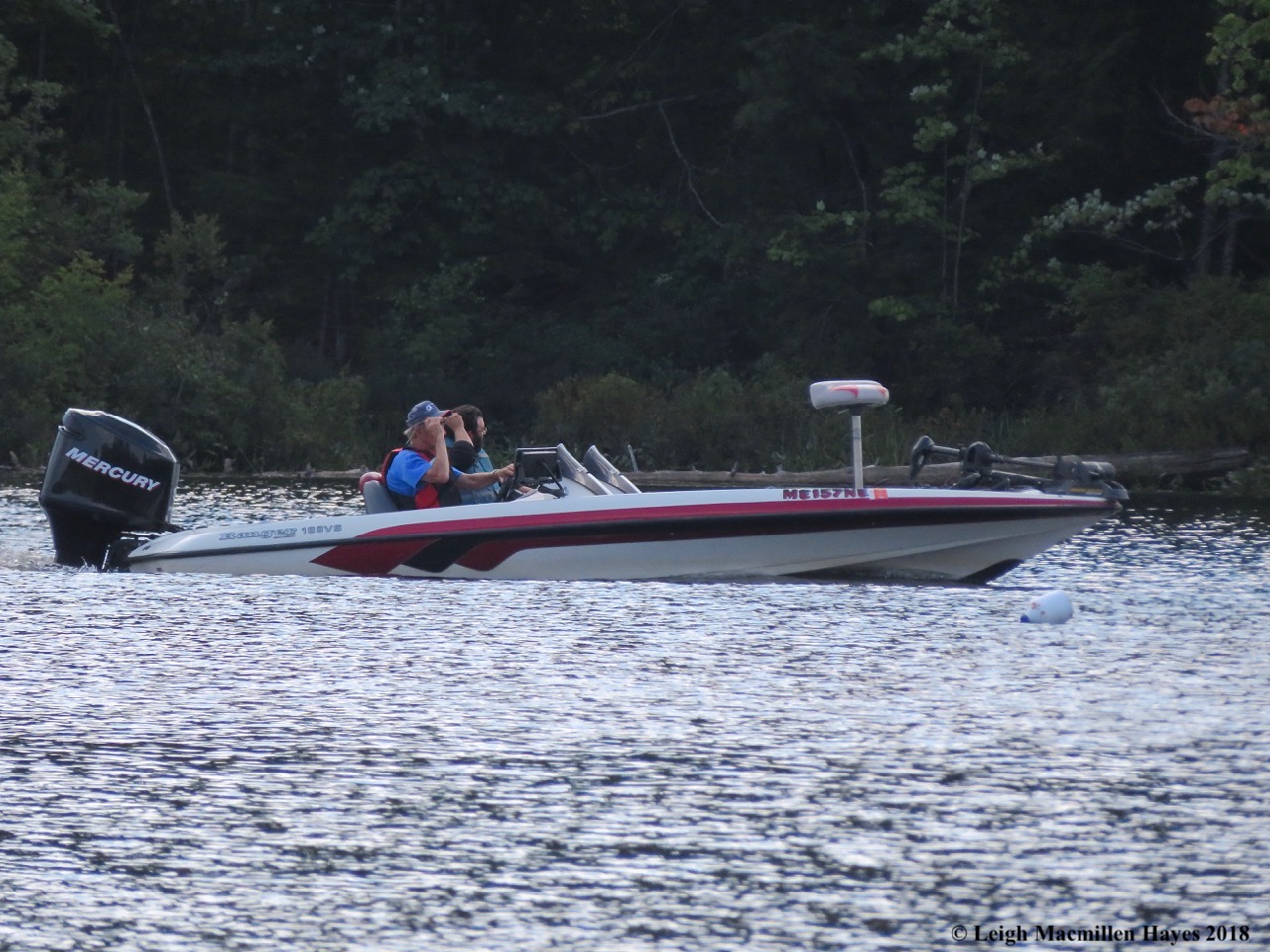
All about there were bass boats for today featured a club tournament. The thing about bass tournaments is that except when the fishermen are zooming to the next best spot, they are quiet as they troll. And I have to thank them for a few weeks ago I wrote to a club president and asked that they please be aware of the parking situation on Route 302. Their trucks and trailers have long blocked our view as we precariously try to pull out onto the busy road. In the past, I’ve asked for help from others, including Inland Fisheries and Wildlife staff and local police, to no avail. But, this time was different. The club president immediately responded to my request and passed the word along to others as well. This morning, there were orange cones blocking cars from parking a certain distance from our road and as we drove to church, we were able to pull out without risking our lives. Thank you Steve and Wayne, and I hope you also had an award-winning day.
3b-oarlock

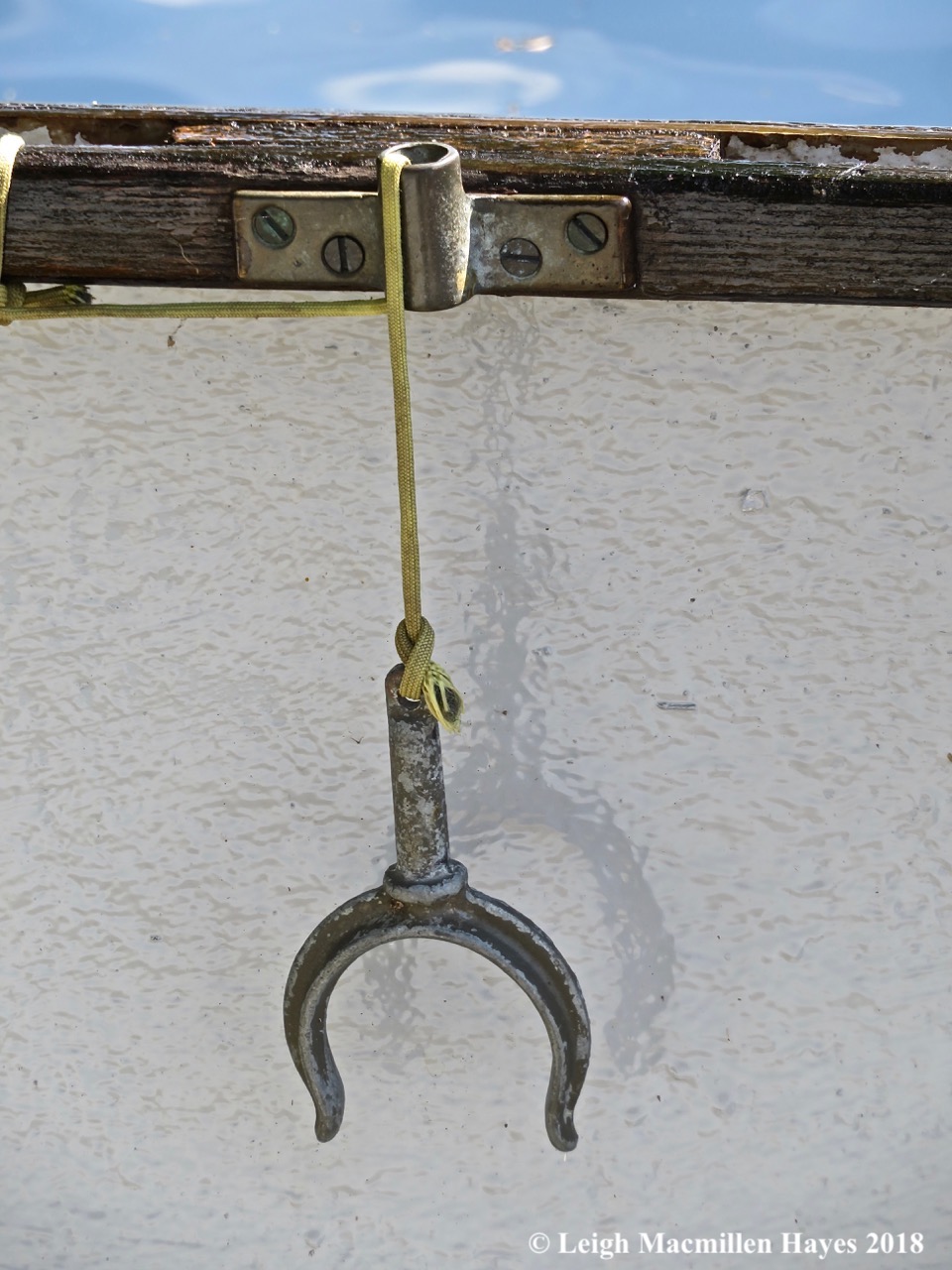
Because of there being more boats than normal on the lake, however, occasionally the waves rippled my way. And beside me, the dangling oarlocks in the S.S. Christmas clanged against the inside of the boat.

10-common loon

The bass fishermen weren’t the only ones seeking a catch and I watched a common loon that spent all afternoon nearby, sometimes looking for a meal, other times preening, and even merely floating.

13-baitfish

Of course, bait fish swam abundantly below my locale–perhaps finding protection in the shadows offered.

4-slaty blue skimmer dragonfly

Also on the hunt, but for insects rather than fish, were dragonflies and damselflies including this Slaty Blue Skimmer, its colors matching the sky reflection on the water.

5-lancet clubtail 1

A Lancet Clubtail I spied on the wood first,

6-lancet clubtail dragonfly

and then on the shrubs in the vegetated buffer.

6a-Swamp Spreadwing Damselfly

And a Swamp Spreadwing Damselfly found a spot to hang below the shrubs and just above the water’s edge.

13a-crawfish skeleton

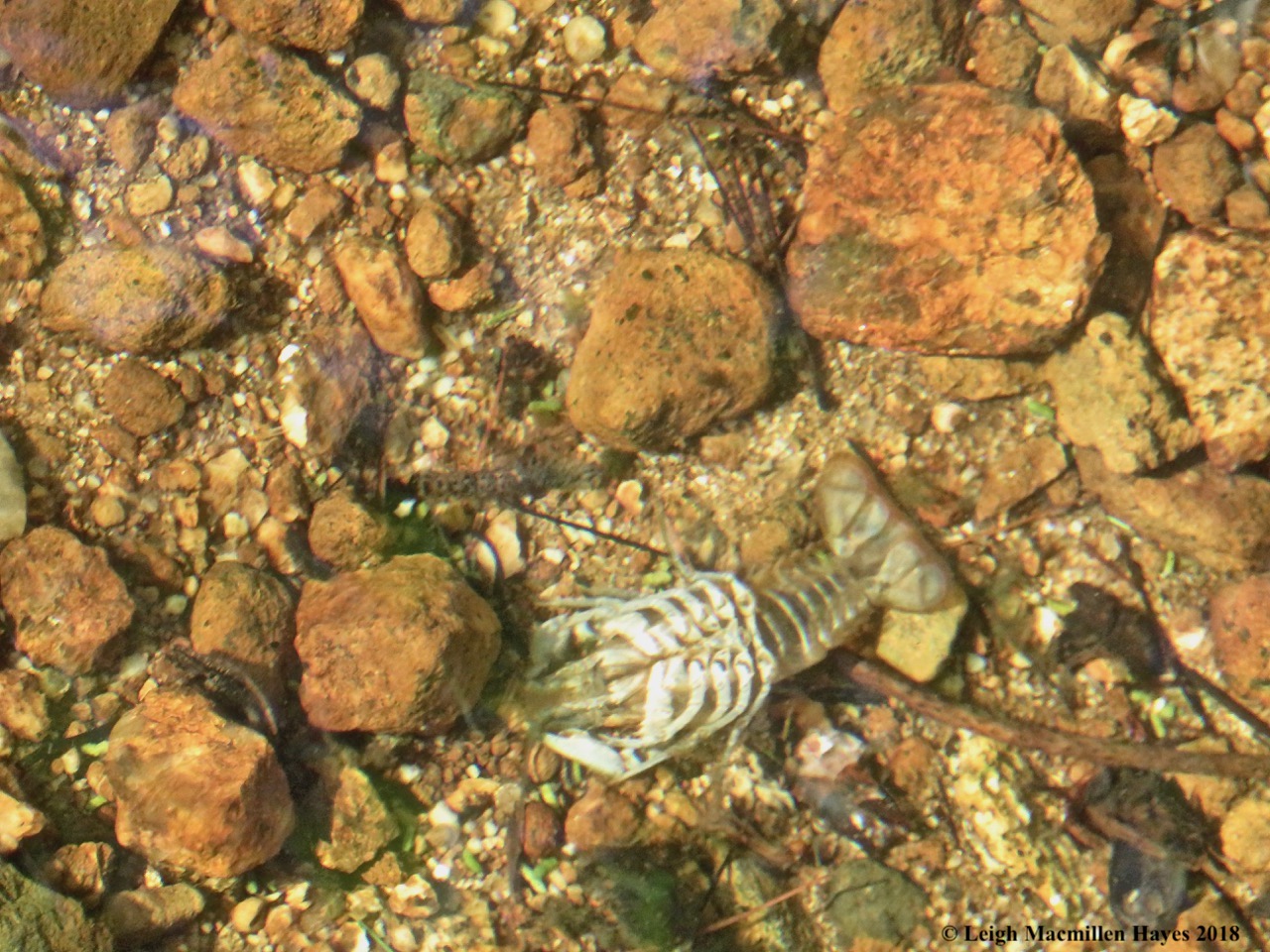
Because I was looking, I also found the carcass of a crayfish, which surprised me for I rarely see one and had to wonder if a heron or another bird dropped the remains of a fine meal.

12-shamrock lily

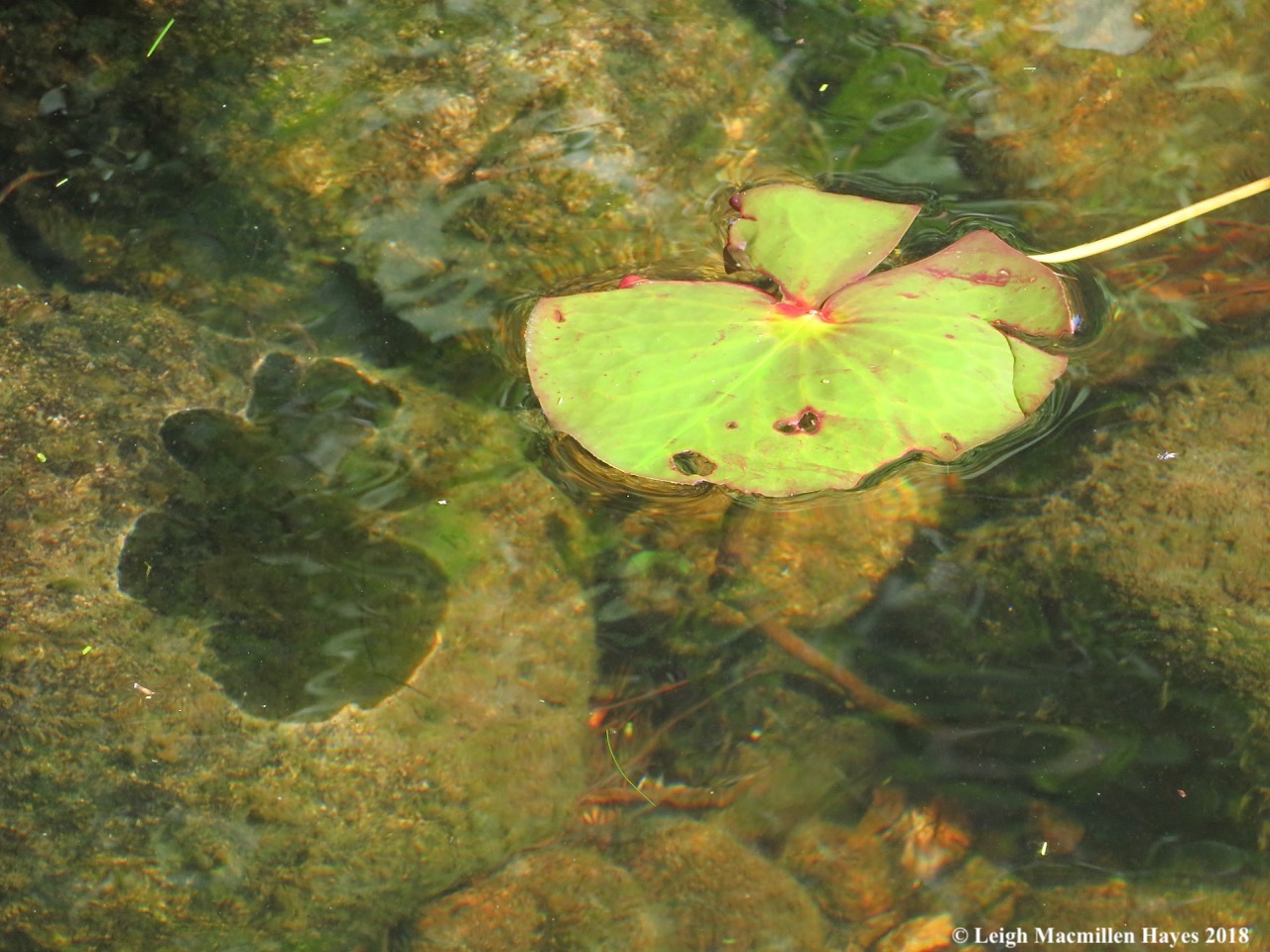
As the wave action continued, the leaf of a fragrant water lily floated by, torn from its base. In the shadow below, it transformed . . . into a shamrock.

14a-water pattern over rock

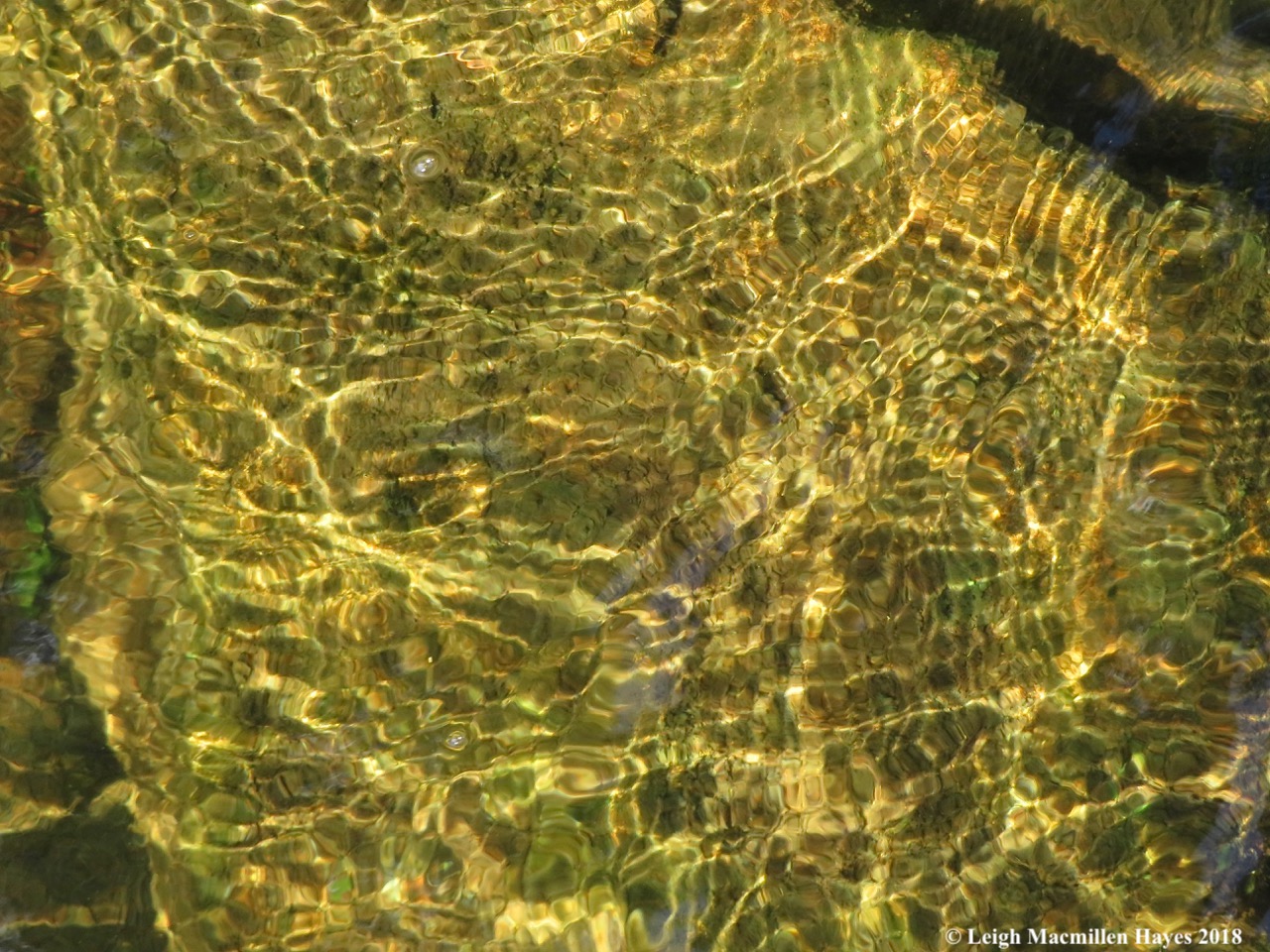
Other transformations also took place as boulders under the water’s surface became works of mosaic art.

15-wave:sky patterns

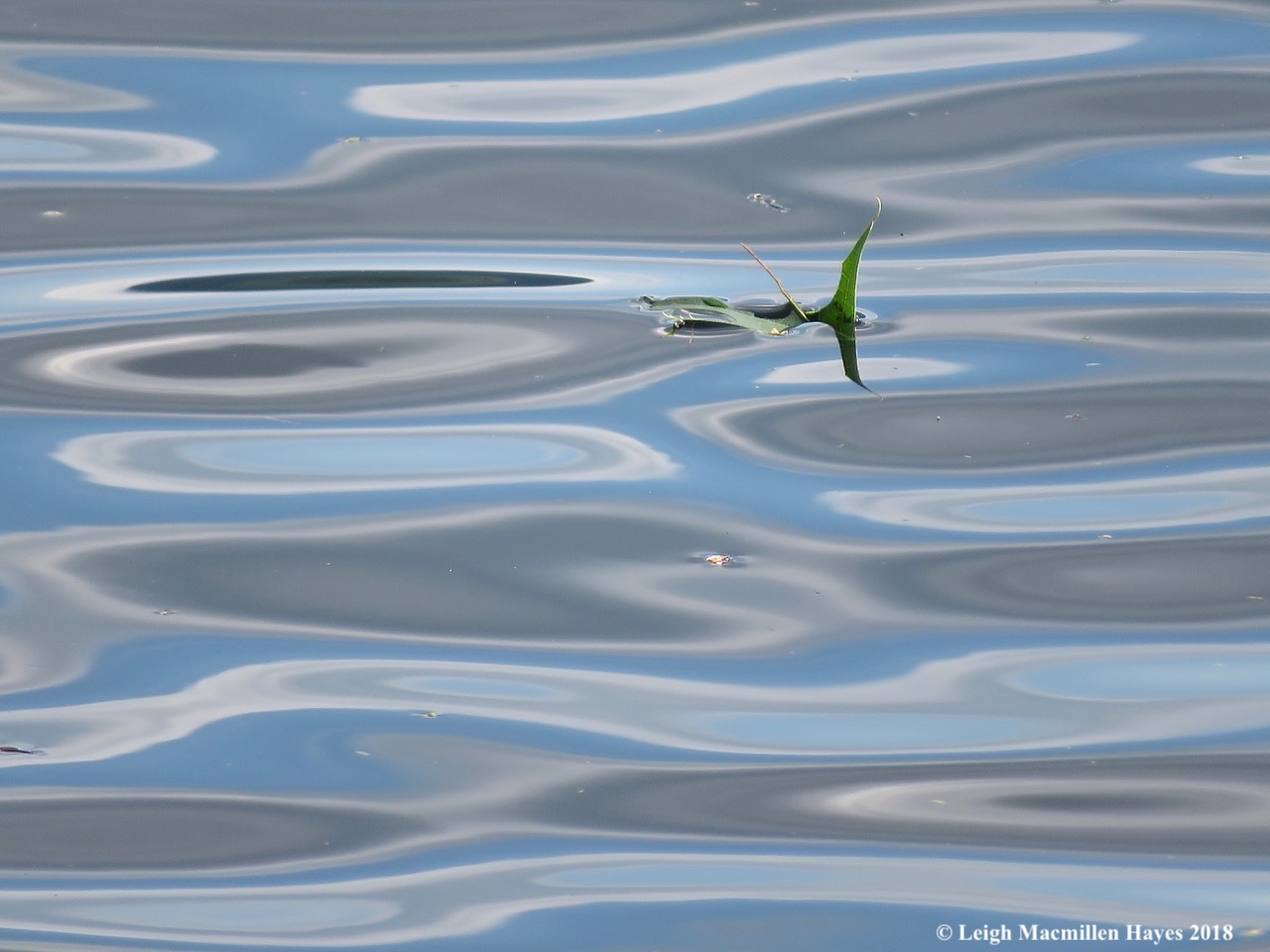
And waves reflected skylight in a more modern polka-dotted form.

17-wave:sky patterns interrupted by leaf

Even that pattern was sometimes interrupted . . . by a passing oak leaf.

20-sunset

At day’s end, it was all about taking the time to be rather still. To read. To write. To swim. To watch. To notice. To think. To wonder. To admire. To be. Docked.


Meals-on-Wings

I wasn’t sure how I would spend the afternoon, until that is, the phone rang. On the other end of the line (what line?) Mary Jewett of Lakes Environmental Association excitedly told me about her adventures last evening exploring one of my favorite Lovell haunts. She’s an avid birder and is currently participating in the Maine Department of Inland Fisheries and Wildlife’s Maine Breeding Bird Atlas.

For this citizen science project, Mary has chosen several areas of Lovell as her block and so she’s getting to know one of my favorite necks of the woods. Last night, she explained, found her kayaking with her boyfriend on a river that passes through a Greater Lovell Land Trust property. As she talked, she started listing off the birds they saw that are not on the species list for that property, thus nudging me to make sure it gets updated. One in particular pushed her excitement button, and that’s when I knew where I was going to spend the afternoon.

She also told me about a most unusual sight that she caught on film–a porcupine swam across the river, passing in front of their kayaks. Who knew? She surmised it had been chased to the water and just kept going.

k7-kezar river

Anyway, within 45 minutes of the phone call, I was at the water’s edge.

k8-canada geese

The bird life was immediately apparent in the form of Canada Geese, their youngsters growing bigger by the day.

k10-mallard duckling

What rather surprised me was that I watched two Mallard ducklings, but never saw their momma, unless she was hiding under some shrubs. I could only hope that was the case.

k21-kingfisher

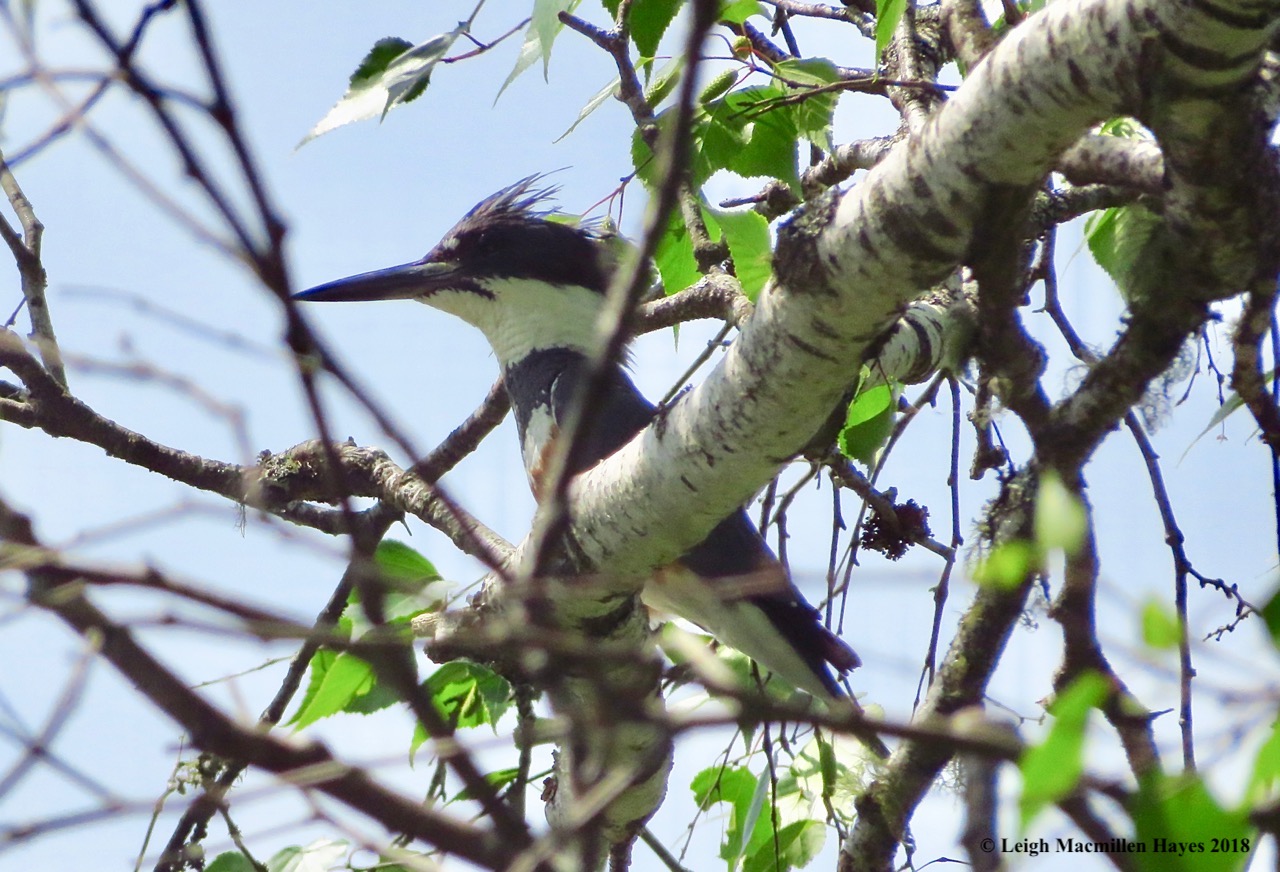
There were Red-winged Blackbirds, the males displaying their bright shoulder patches, and even a Belted Kingfisher who sang his rattling song as he flew above the water looking for a meal.

At last I had dallied long enough, for of course I admired the dragonflies and damselflies, but it was time to bushwhack over to a viewpoint where I could stay hidden as my eyes and ears filled with the sights and sounds of . . .

k11a-rookery

a Great Blue Heron Rookery. It had been on my radar to get there, but other events took priority until Mary’s nudge. The moment I started down the trail I heard the chorus of croaks and knew I was in for a treat.

k12-food

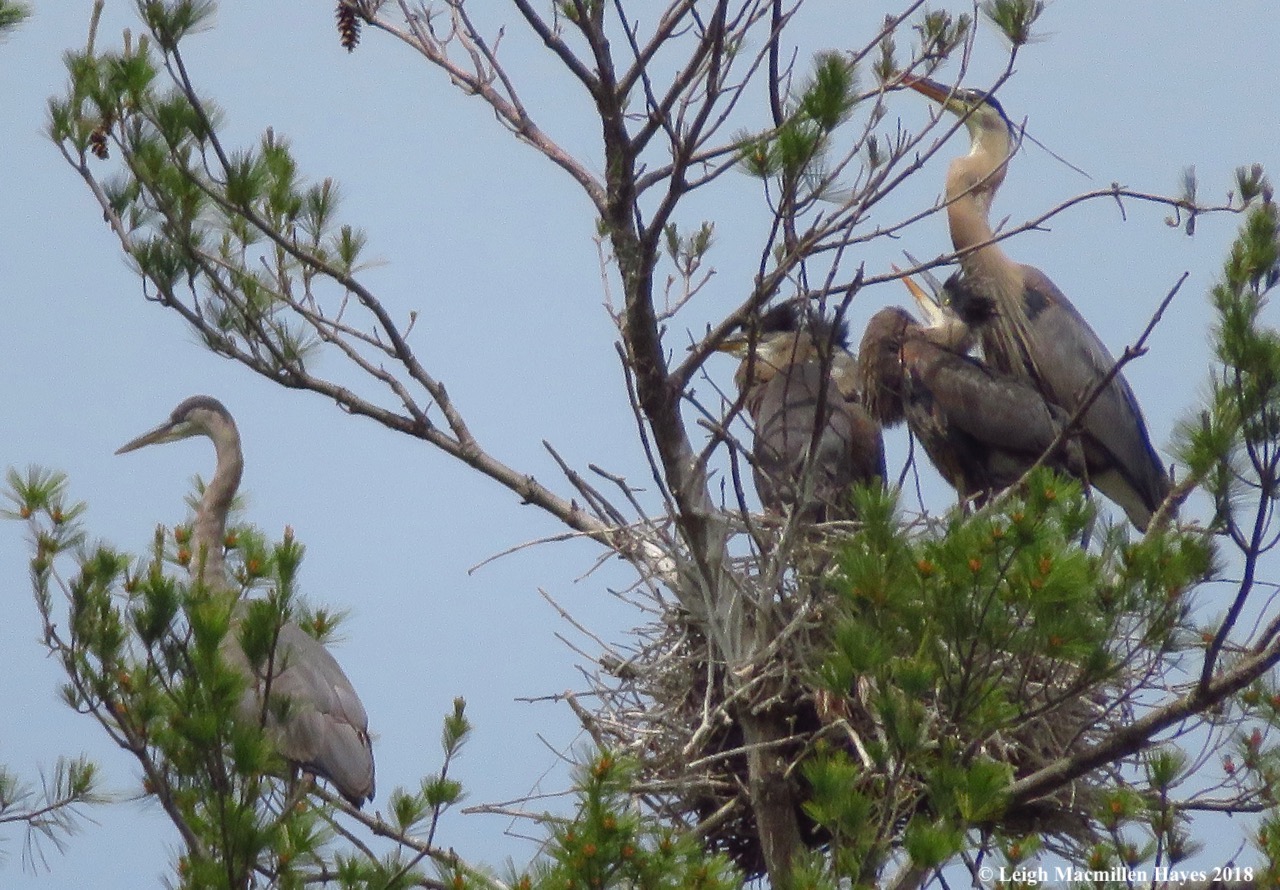
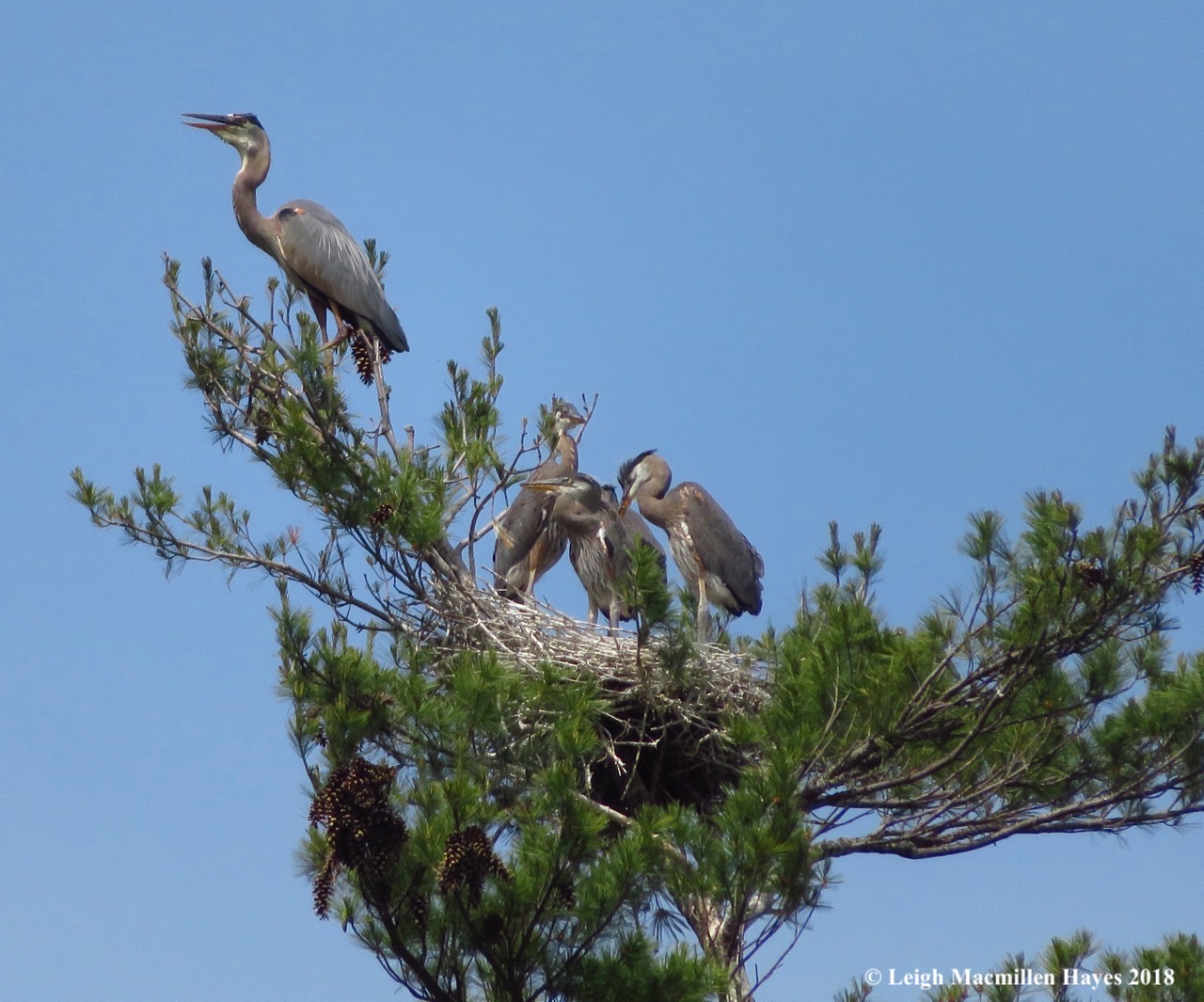
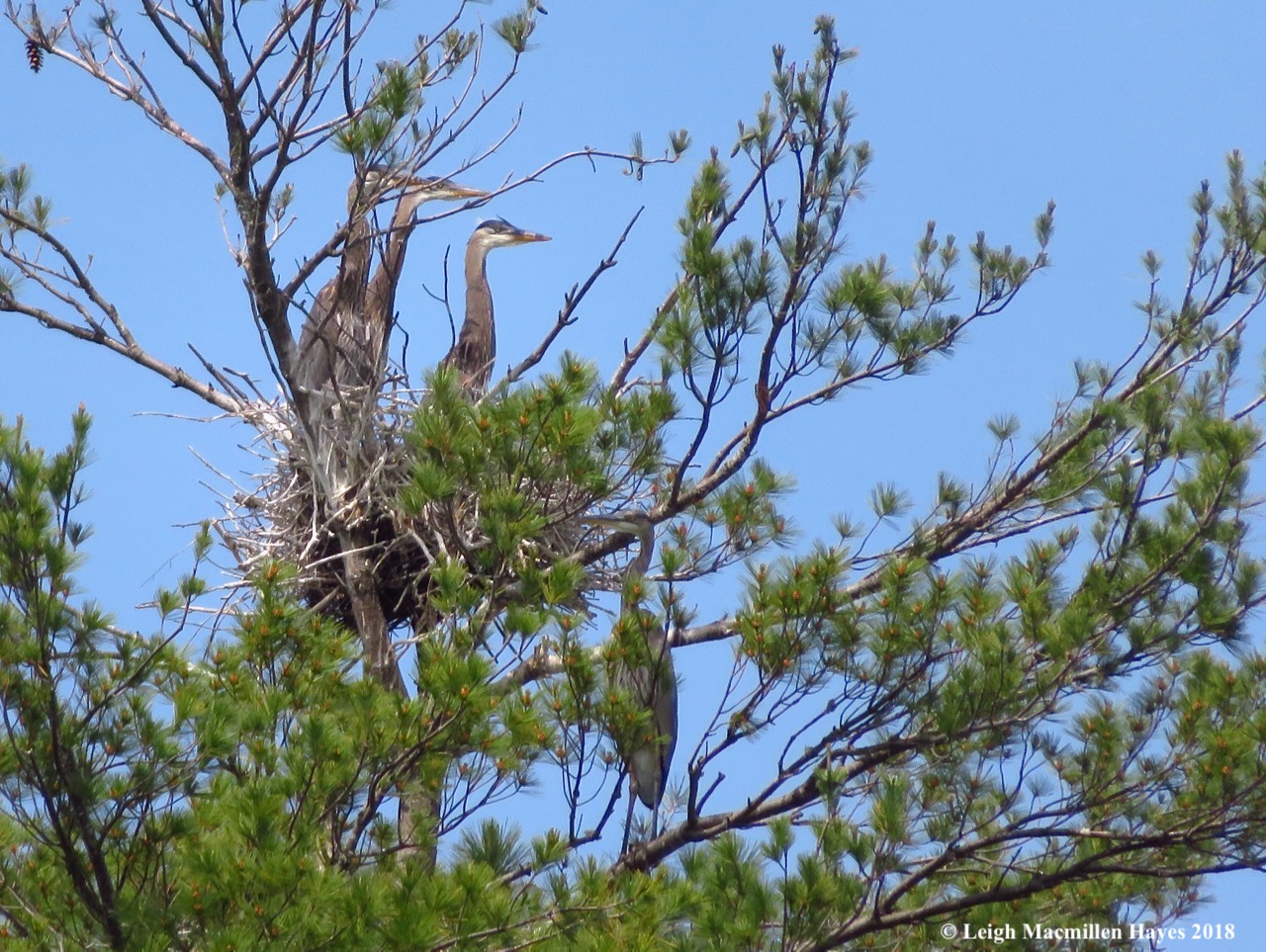
Up high in the pines, those massive birds stood, most upon their large platform nests made of twigs and sticks, and apparently lined with moss and pine needles to soften the interior. If you looked closely at the adult upon the nest, its curved throat appeared to bulge a bit.

k13-food

Both parents are known to provide a meal of regurgitated food. Can you see the adult bending down, its beak meeting the youngster’s? Soon, regurgitating the food will stop and instead small fish will be deposited in the nest and the “little” ones will learn to feed themselves.

k14-next meal

After one was fed, another begged for its share of the picnic. It seemed to look up and say, “Hey, where’s mine?” in true jealous sibling behavior.

k15-sentry

By now you may have noticed that the youngsters have black flattop haircuts. Adult Great Blues have thin black plumes that are swept back of the tops of their heads making for easy ID until the young fully mature. And at least one stands sentry, ever on the lookout for predators like eagles and raccoons.


k17-double decker

Great Blue Herons nest in colonies near wetlands such as this. The group of nests is called a rookery–so named for the colonial nests of the Eurasian rook, a bird similar to a crow, but called a rook because of the sound it makes.

k18-birds everywhere

With my eagle eyes, I had to really focus in on the trees, for not all of the nests were obvious from my vantage point on the distant shore. It’s best if you are to observe to keep your distance and remain quiet and hidden so the birds aren’t disturbed during this fragile time in their life cycle.

k19-i'll be back

With the kids fed in nest one, the parent decided to chat with a neighbor before heading off to gather supplies for the next meal.

k20-don't forget us

And the kids next door waited expectantly–ever anxious for the delivery of their own meals-on-wings.


Otherworldly in Nature

One doesn’t necessarily step into the woods and expect transcendent events to occur, but then again by learning to live in the moment one never knows what to expect. And so it was that I traveled the trail at LEA’s Holt Pond Preserve with my friend Ann this morning–both of us delighted to just spend some quiet time exploring together.

o1-bunchberry

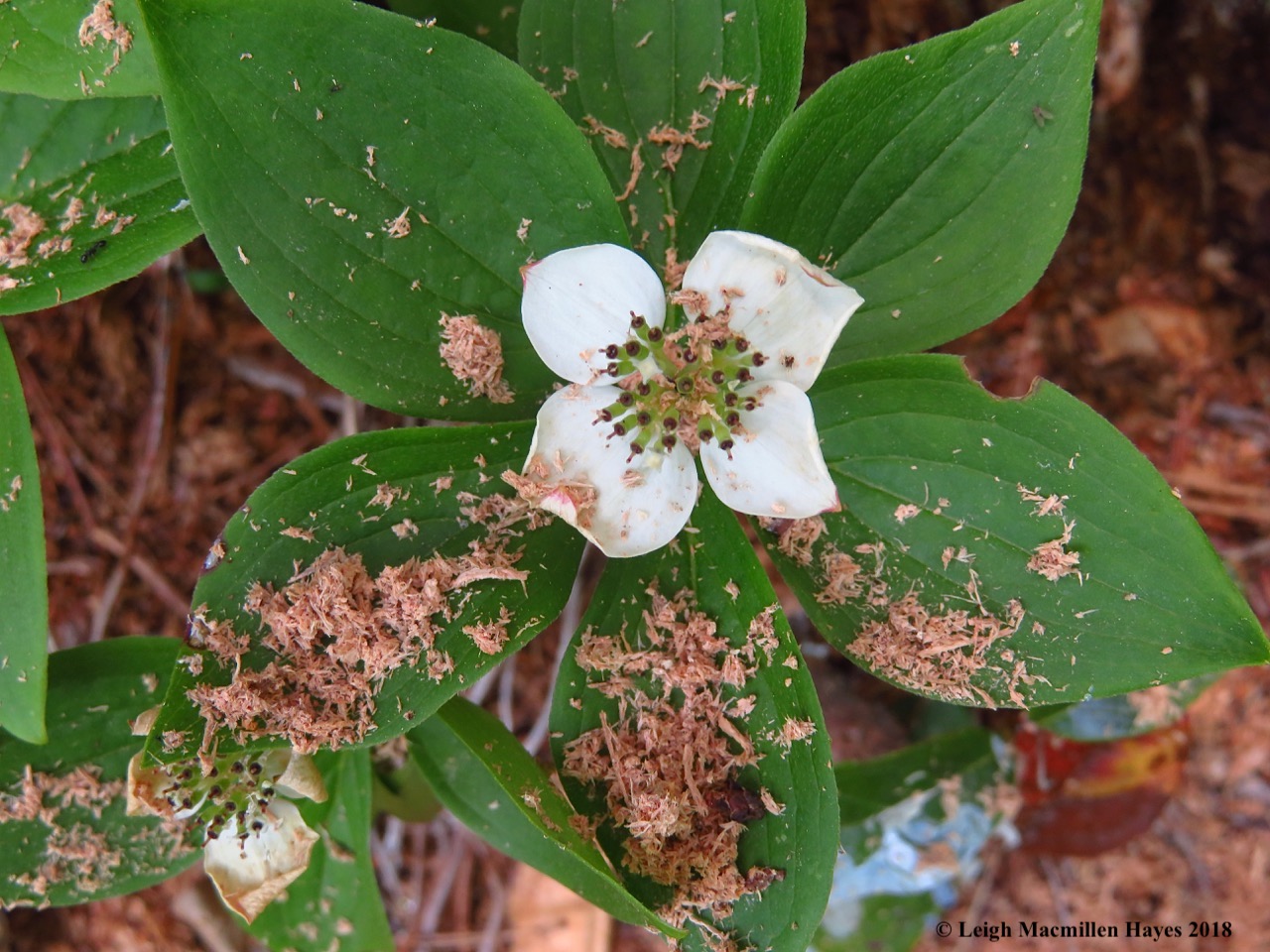
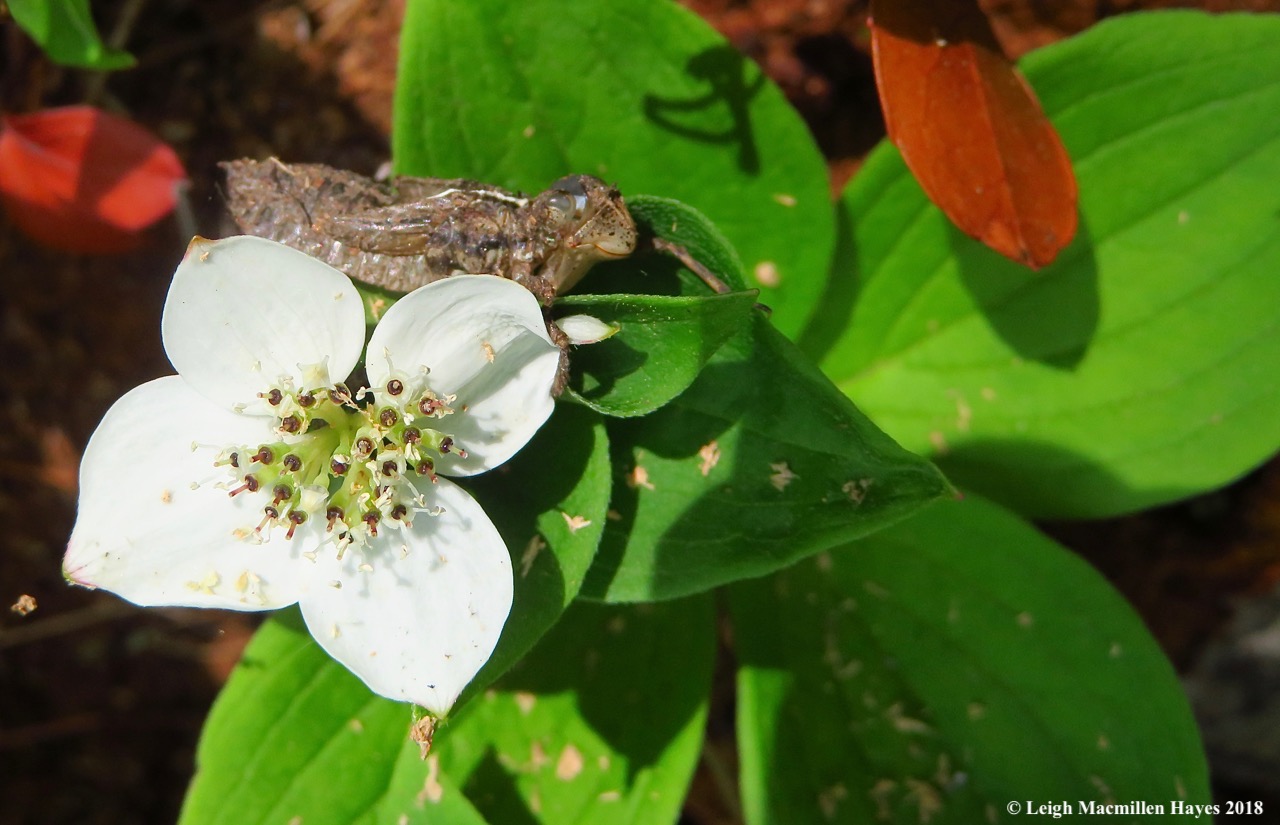
Our tramp began with a pause beside bunchberries because it’s a plant I always associate with Ann due to her trailside teaching about its finer points years ago. Today, as the flowers began to morph into fruit, it was the points of the four white petal-like bracts and green leaves that asked to be noticed in the most subtle of ways for each was decorated with a dewdrop.

o2-red maple swamp

Not far beyond where the bunchberries grew, we stepped onto the first of the boardwalks that provided for a delightful amble through the red maple swamp.

o3-green frog

Just off the edge of the wooden walkway, we spied some eyes starring up at us and realized we were the subject of the green frog’s discontent.

o4-green frog male

His camouflage almost worked as he tried to hide among the sphagnum moss . . .

o5-green frog and insects

but again we found him. How did we know he was a he? By his tympanum (ear), the circle behind his eyes. We really wanted to see him feed and if you look closely, you may see a mosquito and other insects nearby, but he seemed focused on us–in case he needed to defend his territory we supposed.

o6-pitcher plants

A wee bit further we met the first of many of their kind–the incredibly unique pitcher plants with their strikingly beautiful magenta flowers that stood like the wind spinners we used to create as kids.

o7-pitcher plant leaves

In the water below were the pitcher-shaped leaves that gave this plant its common name.

o17-pitcher pitchers

The carnivorous pitcher plant obtains nitrogen and phosphorus by eating insects. Its oddly shaped leaves form a pitcher partly filled with water and digestive enzymes. The spout is a hairy landing platform for insects attracted by its red venation and nectar glands. Imagine this: An insect crawls to the edge of the leaf, aka pitcher, slips on the downward-sloping hairs and plunges into the liquid below where enzymes and bacteria break it down. Any chances for escape are zapped by those stiff hairs.

o8-frosted whiteface dragonfly

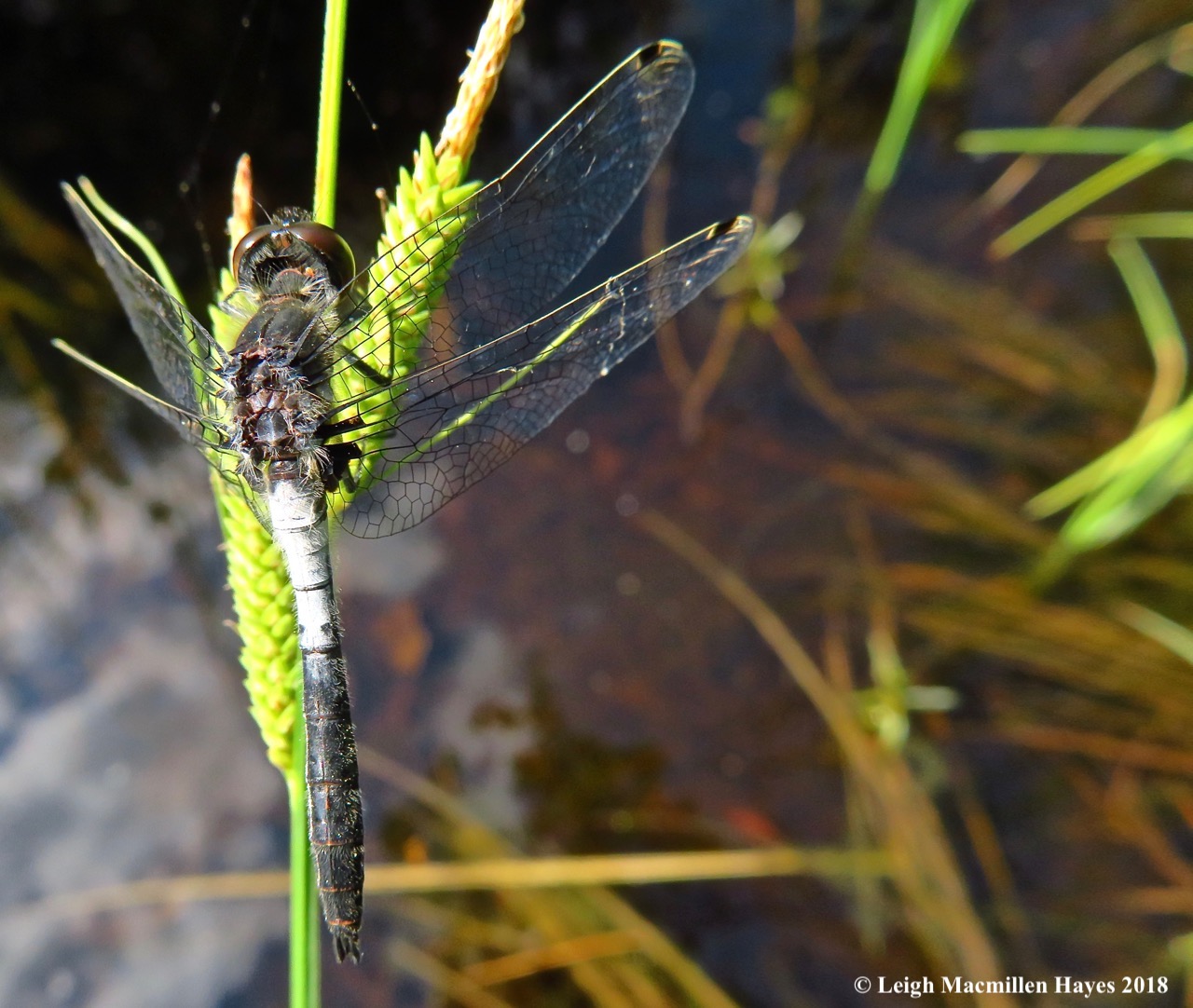
As we paid attention to the plant, damselflies and dragonflies, like this Frosted Whiteface Skimmer, flew in the surrounding airspace. We appreciated that he landed so we could take a closer look at the details of his body, including the golden outline of the upper edge of his wings.

o8-red maple leaf

Moseying along, our next great find was a red maple leaf, which made perfect sense given that we were in the midst of the red maple swamp. What didn’t make sense was the fact that it donned its autumnal coloration, but ours was not to make sense of everything.

08a-muddy river

At last we reached the boardwalk to the Muddy River, where we embraced stillness and listened to the green frogs strum their banjo voices and red-winged blackbirds sing their conk-la-ree songs.

o9-red-winged and painted

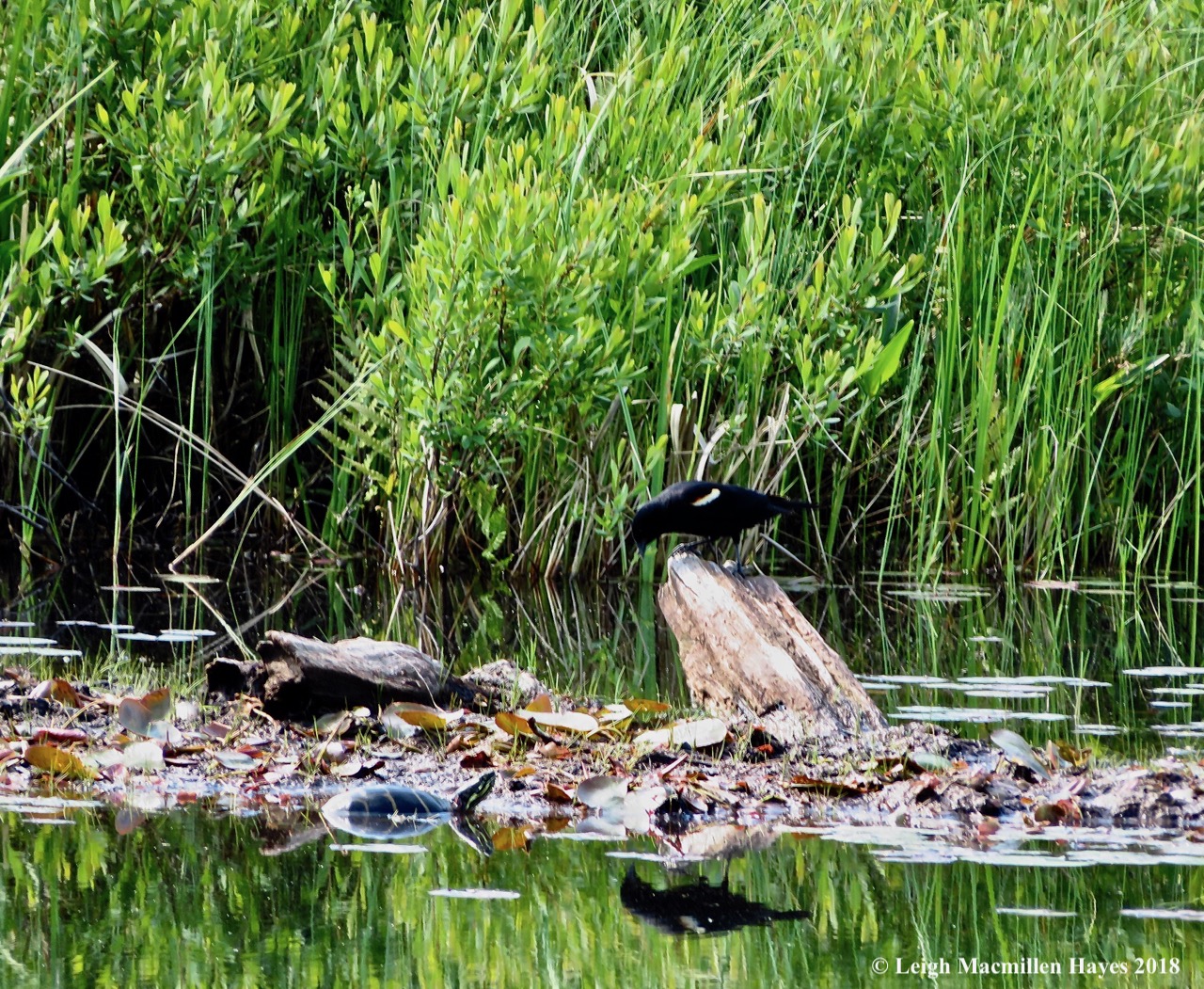
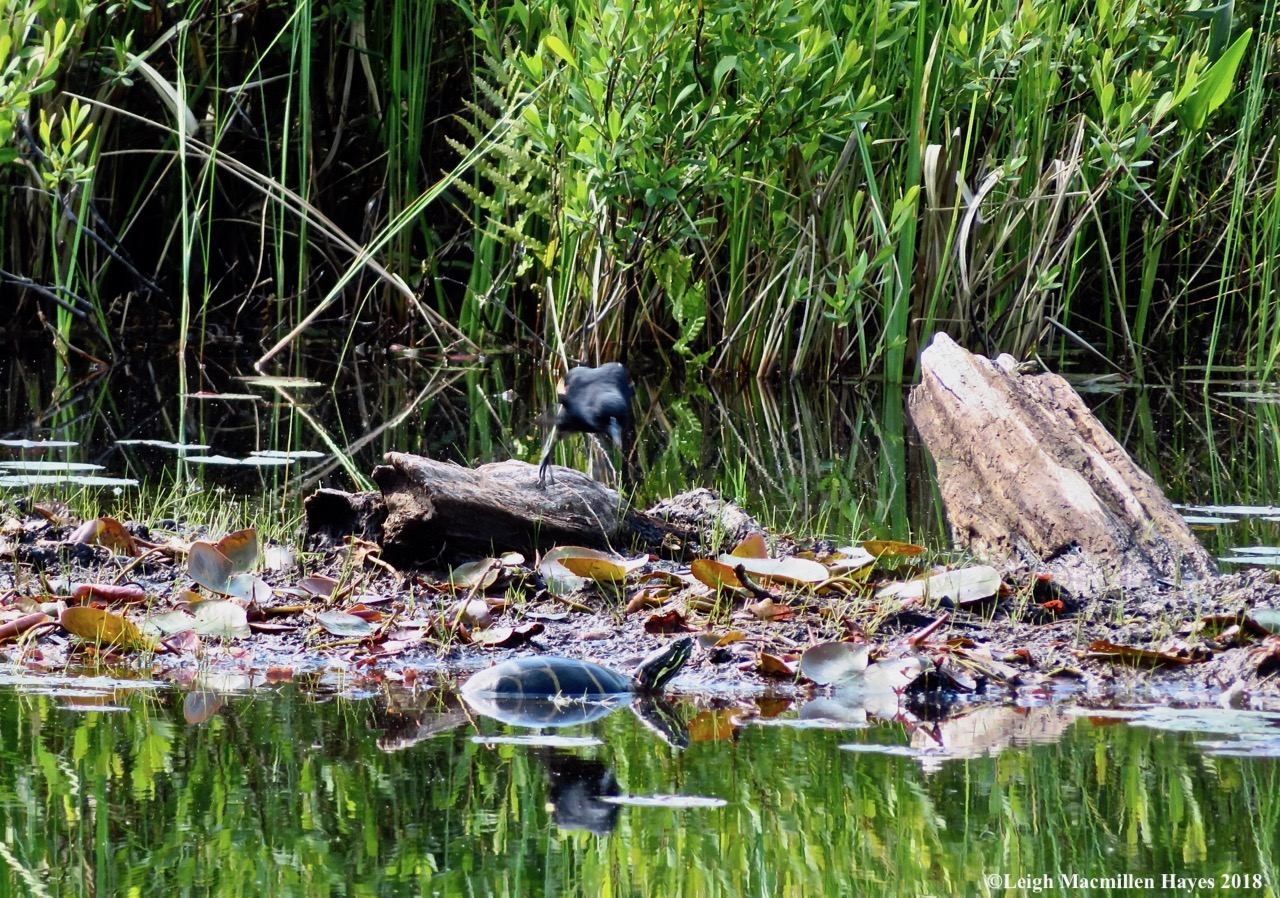
One blackbird, in particular, stood out as if he were the king of the river. We didn’t realize it at the time, but the photographs tell the story for he did have a subject in mind–in the form of a painted turtle.

o10-red winged :painted

Off his high horse he flew, but continued to squawk from a lower pulpit. What did it all mean?

o11red winged blackbird

While we’ll never know, he did seem pleased with a gaze into his own reflection.

o12a-

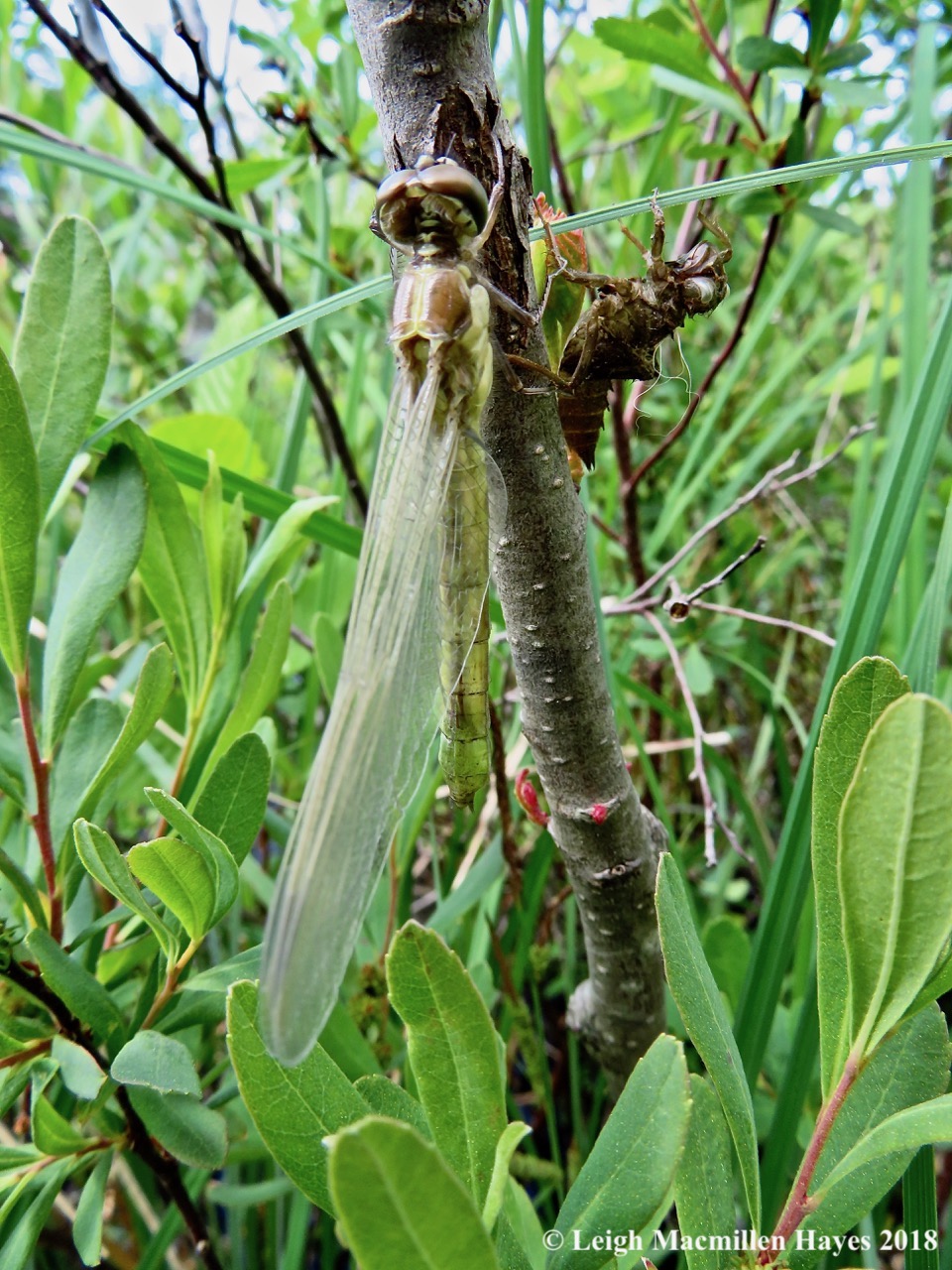
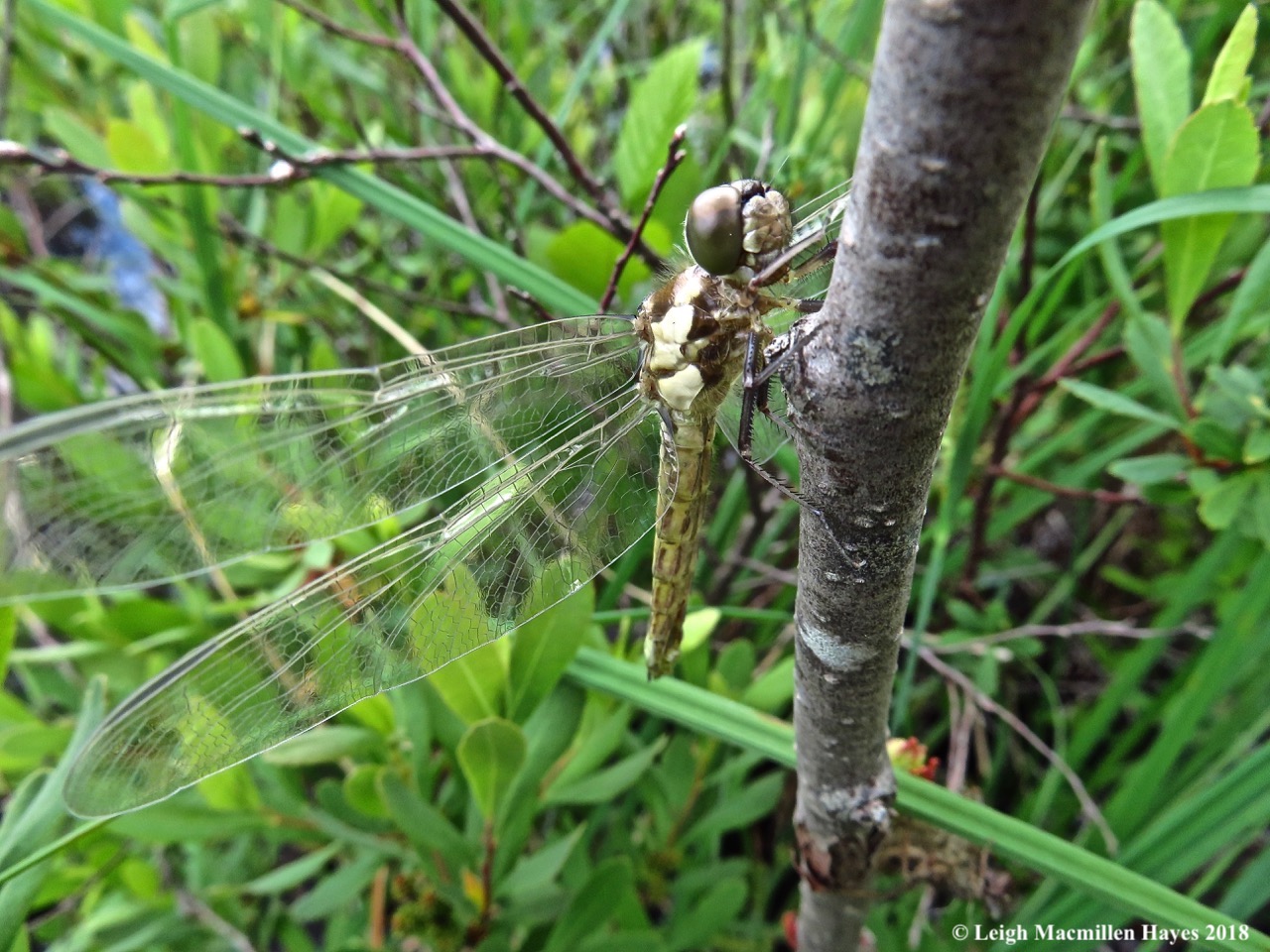
Our gaze also became more focused when we realized we stood in the midst of a newly emerged dragonfly. By its cloudy wings folded over its back damselfly-style and the abandoned exuvia on the other side of its perch did we realize what we were witnessing.

o12b

We felt a sense of caretakers for suddenly it was our honorable duty to stand watch and protect this vulnerable being from becoming prey. With wonder, we watched as it slowly changed position and suddenly spread its wings. For at least an hour we stood sentry and noted the slightest changes while we delighted in how the breeze occasionally fluttered through its wings.

o13-female eastern forktail damsel

Oh, we looked around and spied a female Eastern Forktail damselfly . . .

o14-chalk-fronted corporal

and many a Chalk-fronted Corporal dragonfly among others.

o15-spreading his wings

But our attention continued to return to the subtle beauty before us. How did it know to climb the vegetation? How did it know to emerge? How did it know today was sunny? How could such delicate wings support its meaty body? Where do dragonflies hang out on rainy days? How long would it take before it flew off? Our questions were numerous, but . . .

o15-dragonfly exuvia

in a flash, as I moved in for a closer shot of the exuvia, the dragonfly decided it had posed for enough photos, and Ann and I watched with continued fascination as it flew off. Really, we felt like proud parents who had sent our offspring into the world. And we rejoiced. We had just witnessed one of nature’s greatest spectacles. It wasn’t only thrilling to watch, but was an all-encompassing experience that pulled us in with our sight and minds.

016-pitcher

After such an awe-inspiring opportunity, we couldn’t imagine anything else, but as we moved along the boardwalk through another section of the red maple swamp we again encountered pitcher plants.

o18-pitcher flower

And this time we decided to take a closer look at the flower structure, which was umbrella-like with those five broad and waxy sepals situated above. Unless you physically turn it and take a peek, it’s difficult to see what is going on beneath where five more bright red, oval petals, curved in at the base and covered the ovary.

o19-pitcher anthers

Within, yellow stamens surrounded the base of ovary. Below, a slender style extended from the round ovary and flattened out into an angled yellowish green structure like an inverted umbrella that curved back over the center of the flower. Certainly another novel spectacle for us to behold.

o20-four-spotted skimmer

Along the same stretch we were equally wowed by a Four-spotted Skimmer.

o21-four-spotted face

He gave us the opportunity to take in his mightiness from more than one vantage point.

o25-quaking bog

At last we reached the quaking bog and despite the water that filled our hiking boots, we moved forward toward Holt Pond with some caution. (Think right wrist still in cast.)

o26-caddisfly case

Along the way we discovered an abandoned caddisfly larva case,

o23-blue flag iris

blue flag irises,

o24-green frog

another green frog,

o27-tadpole

and a huge tadpole swimming over the boardwalk.

o28-muskrat works

At the water’s edge, though we sought sundews and could find none where they used to grow in abundance, we did realize someone had come with a different quest and because it seemed the pickerel weed roots had been foraged, we suspected a muskrat.

o29-hp northwest

After enjoying the view and trying to make the bog quake by jumping to no avail, we journeyed on.

o32a-Muddy River

Our walk back via the road passed much more quickly and in what seemed like no time, we were at the parking lot. But I had one more site to show Ann and so we headed down to the Muddy River, our circle completed–though we were a wee bit east of our first river encounter.

o32-canoe

It’s there that LEA has long left a canoe for anyone to use–just bring you own paddles and pfds.

o33-sawdust

And as our walk had begun, so it ended . . . with us again looking at bunchberries. but these were different for they were covered with sawdust and we suspected carpenter ants were busy residents in the pine tree behind them.

o35-exuvia

Because we were looking we were again rewarded as we noticed something else–a dragonfly exuvia.

o36-ghosts

And behind the tree two ghosts stared up at us in awe–completing the picture of this morning filled with the otherworldly so often encountered in nature.


Left-handed Mondate

Yesterday I discovered a male ring-necked pheasant in our backyard–a most unusual sighting. As I watched, he headed over a stone  wall and into our woodlot where he cackled and beat his wings in hopes of attracting a mate. The only responses he received were gobbles from Tom Turkey. And so it went for a while . . . cackle . . . gobble . . . cackle . . . gobble.

This morning we were awakened at 5 a.m. to the same mating calls. Who needs a rooster?

w1

When I stepped out the back door, neither bird was anywhere to be seen or heard.

w2

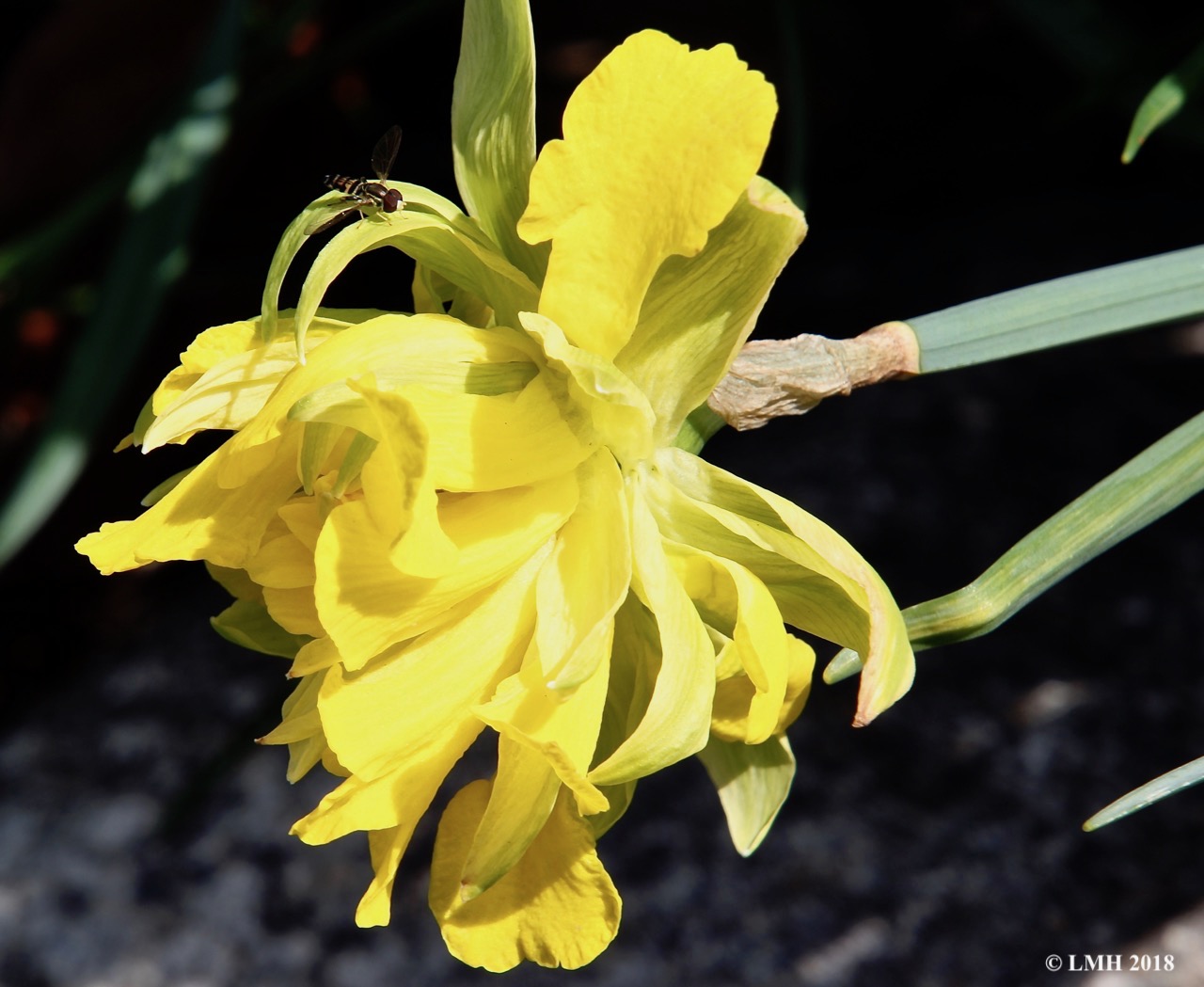
But the double daffodils that came with our house showed off their cheery faces to all who looked.

w3

And by the road, the magnolia we planted about fifteen years ago added its own pastel palette to the scene–however momentary.

w4

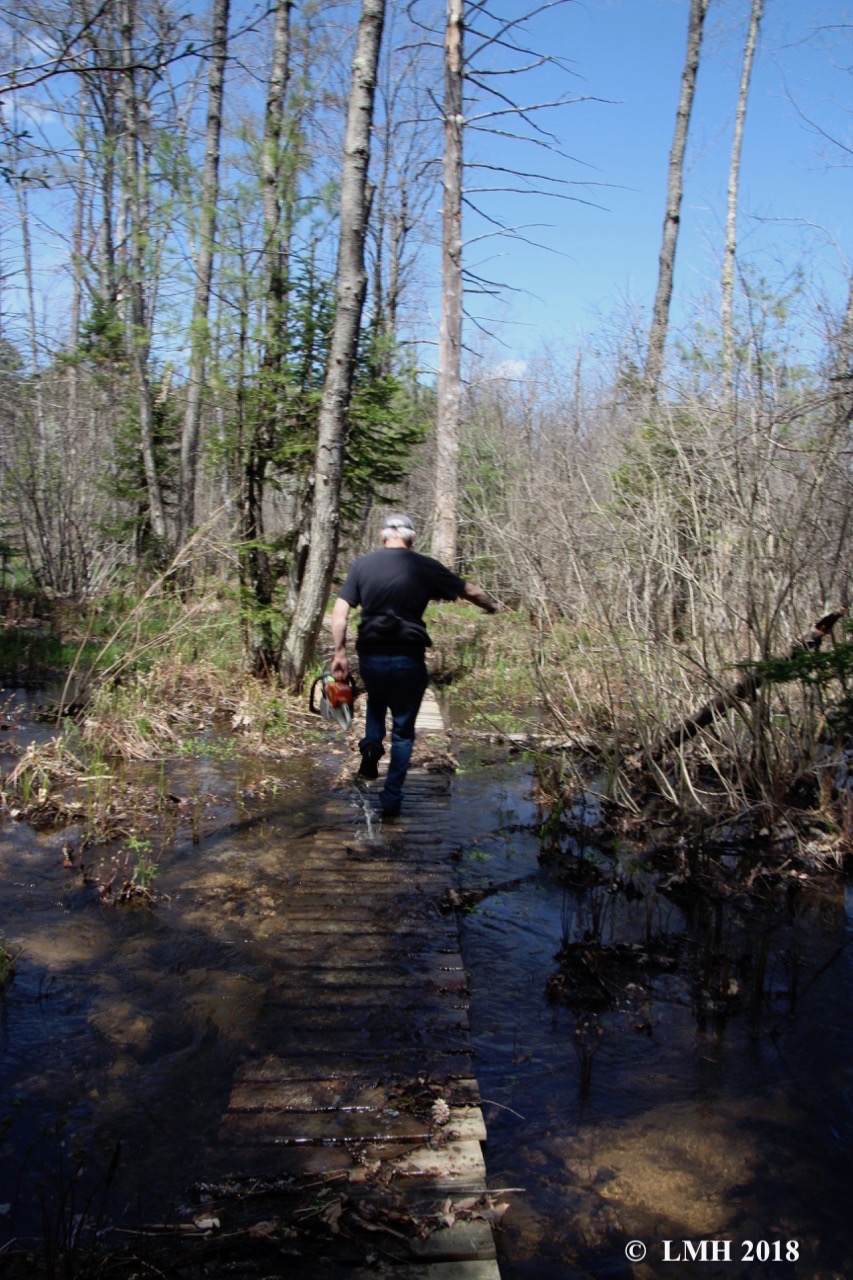
By late morning, we changed our focus from the yard to a woodland a few miles away for today was the day we chose to work on the section of trail we steward at Lake Environmental Association’s Holt Pond Preserve. 

w5

There were trees and limbs to clear. And trimming to be done as well. The last time we were on the Southern Shore Trail, which was only a couple of months ago, we noted a few trees that would need our attention, but today there were between fifteen and twenty.

w11

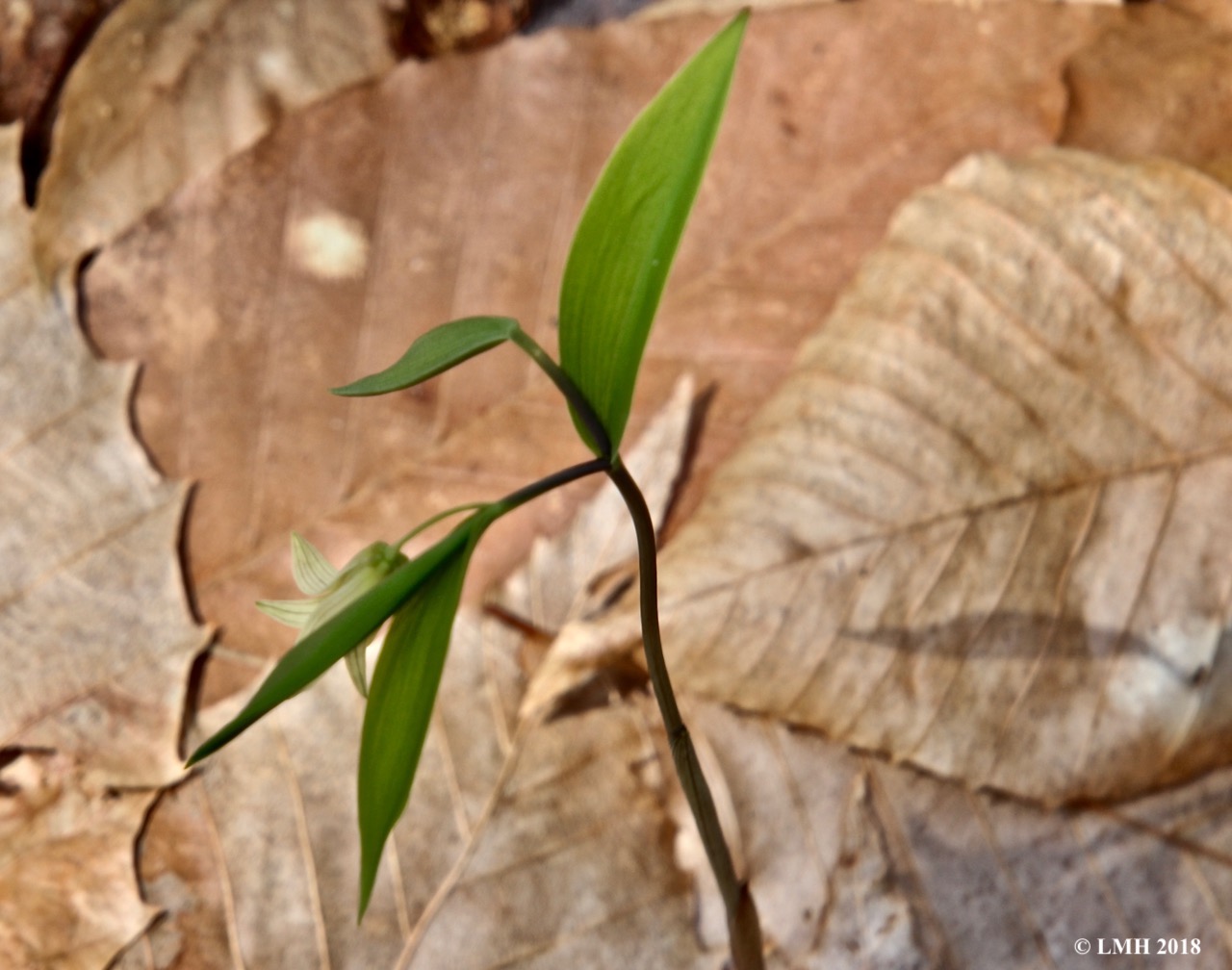
Occasionally, as my guy used the chainsaw and I waited to clean up, I spied old friends like a wild oat or sessile-leaved bellwort in bloom.

w6

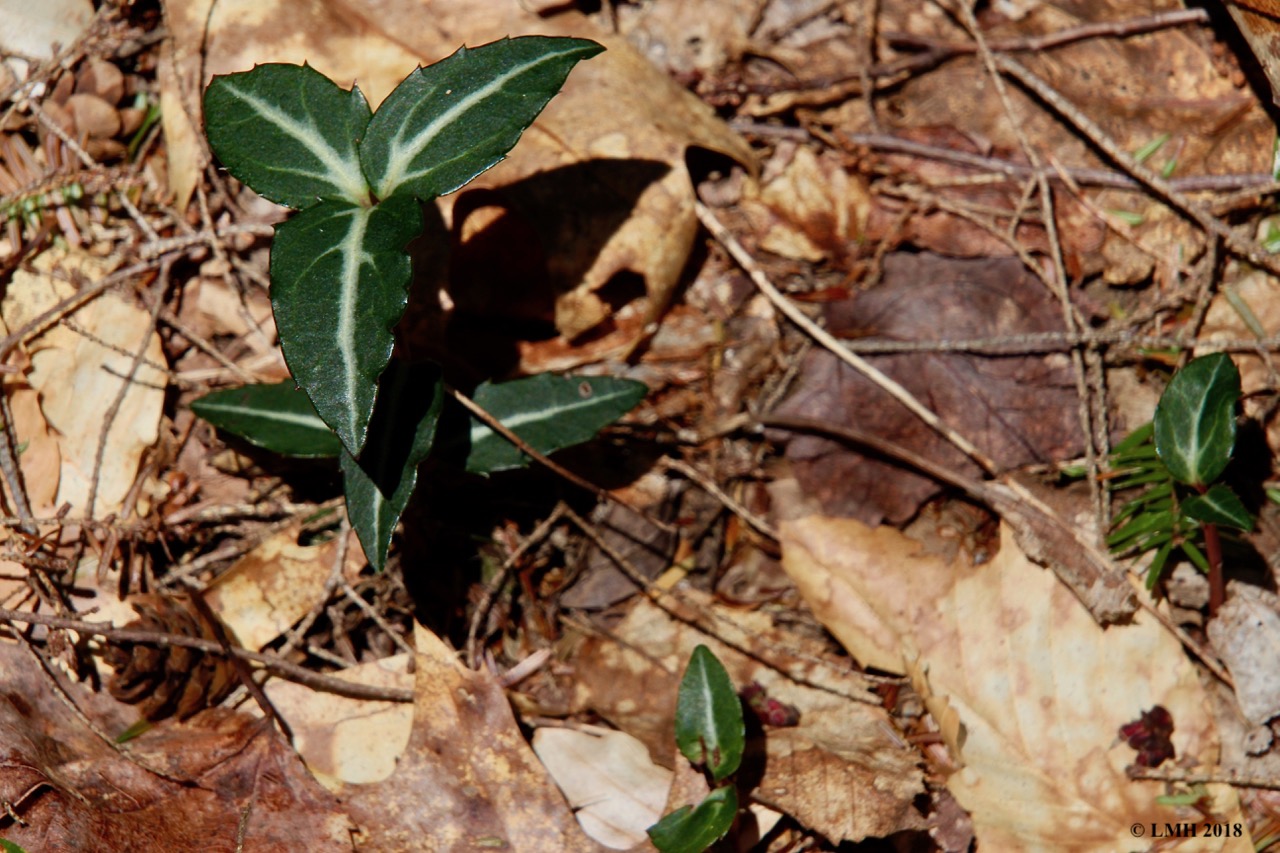
And then I made a discovery that had eluded me in the past–a spotted wintergreen. It was an exciting find for it’s listed as S2 ranking, meaning “Imperiled in Maine because of rarity (6-20 occurrences or few remaining individuals or acres) or because of other factors making it vulnerable to further decline.”

w7

We were close to an outlook by Holt Pond when we saw the spotted wintergreen, Chimaphila maculata, and so we paused to take in the view looking across to the quaking bog as we dined atop a stump.

w10

From there we moved on, making rather quick progress to the “field,” a former log landing where the forest is slowly reclaiming its ground.

w8

As we approached we startled a ruffed grouse and came upon a familiar sight at this spot for the trail through the field has always provided a dust bath for these birds.

w9

And on the edge of the “tub” a telltale downy feather.

w12

Typically, when doing trail work, our turn-round point is the field for that’s what we’d agreed to years ago. Today, we decided to keep going and made a small stream our end point. We shifted a bridge and watched the water striders for a while. Apparently, love wasn’t just in the air, but on the water as well.

W13

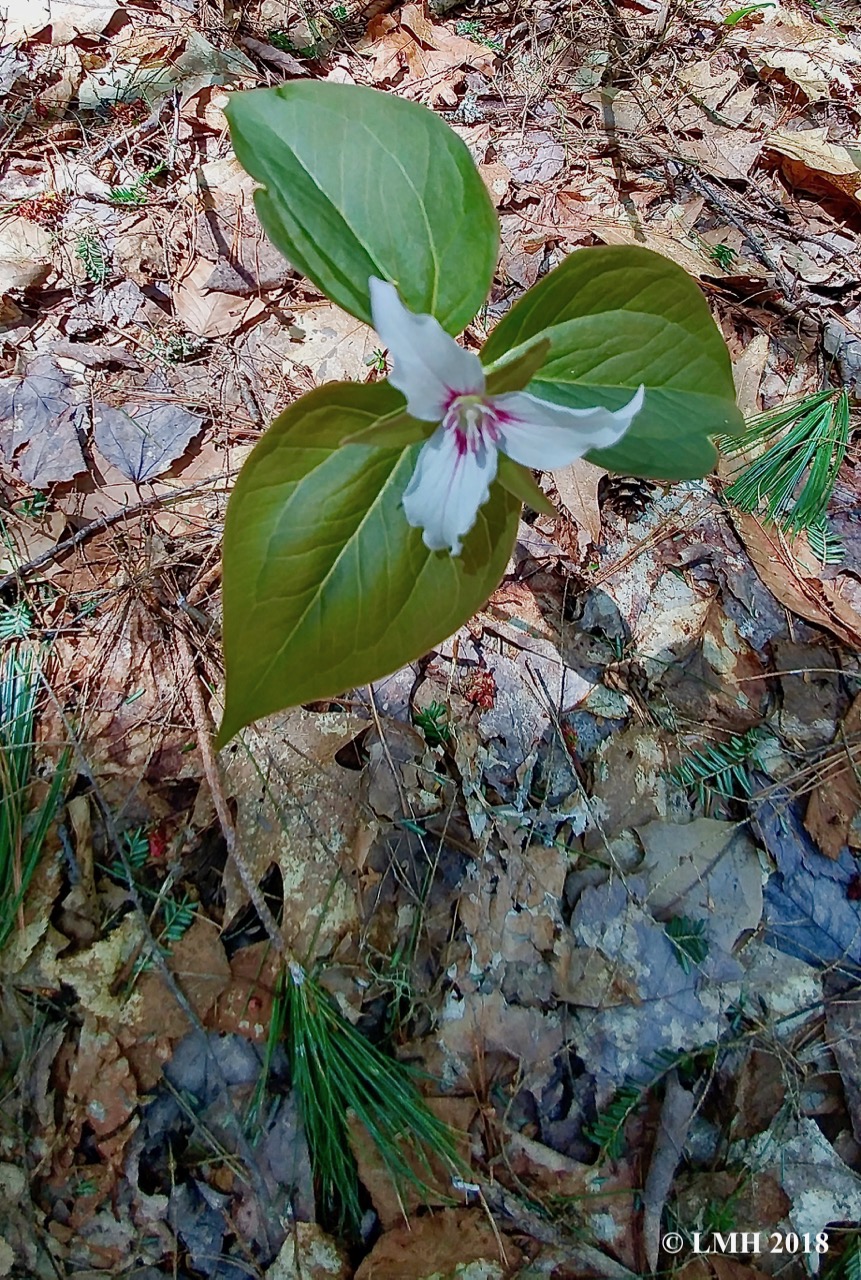
On the way back, I was delighted to discover my first painted trillium of the season. I sensed my guy’s groans for he knows I’ll exclaim over and photograph each one I see–not satisfied until I reach a trillion trilliums.

W14

Oh, and there were fern crosiers to celebrate, especially the scaly spiral of the Christmas fern.

w15

At last we reached the beginning of our section of trail and I told my guy that I wanted to go down by the water for a moment, but not cross the boardwalk because my hiking boots leak. He put the saw down, contemplated the water, and made the crossing. From the other side he suggested I join him since the water wasn’t that deep. Before I did so, however, he asked me to move the saw off the trail and out of sight. As I started to hide it, he crossed back over and said, “I’ll take it in case we need it.” And back again he went, the saw in his left hand for he’s a southpaw. He’d just reached the other side when I stepped on the boardwalk and began to carefully move, ever mindful of my boots . . . until those very boots slipped out from under me. Down I went. Crash. Bam. Smash. On the wood. My right forearm took the brunt of the fall and my camera ended up in the water.

My guy came to the rescue as he lifted me up . . . though first I insisted on the camera being saved. And now I have used the hunt and peck method to type this story for I am a southpaw for the next six to eight weeks as I recover from a fracture to the ulna and radius. That’s how today became a left-handed Mondate.

The camera is also in recovery mode–here’s hoping a rice bath will work wonders.


Sallie Savers Celebrate Big Night with LEA

The initial email was sent by Mary Jewett of Lakes Environmental Association in Bridgton, Maine, on Tuesday:

Hello everyone!

Many amphibians have already crossed and laid eggs but there are still some waiting in the woods. Tomorrow evening looks like it will be perfect conditions for an amphibian migration and I would like to get a group together to go out with me. My plan would be to meet at the office at 8pm. With sunset being at 7:40 I really wouldn’t want to start any earlier since the frogs and sallies won’t move when it’s light out.

I want to get an idea of who would be able to come out with me. I have a reporter and videographer coming out from the Bangor Daily News and they would like to get shots of actual people (not just me) and possibly get some quotes from participants. I know that it’s tough to get out with kids since it starts so late but I hope that we can get a diverse group. We also may have the opportunity to check out egg masses that are already in the water!

And then this afternoon, Mary sent this follow-up message:

I have heard from a handful of people who are able to come out tonight so I’m going for it. Here are some details:

Meet at the LEA office building (230 Main Street) at 8pm
We will caravan up to the Masonic Hall and walk to Dugway Road from there.
Bring high powered flashlights/headlamps
Wear warm clothes and rain gear. It looks like the rain may be pretty heavy when we are out there. Good for amphibians but not so great for people trying to stay dry.
Wear reflective clothing if you have some. I have vests available if you don’t have your own.
Do not wash your hands with soap or put on hand lotion or hand sanitizer.
I have spoken to the police and they are going to try and send someone out. They have a training program this evening so we might not see them. This makes it extra important that kids stay with their parents at all times!

b3-amphibian crossing sign

And so we did just that–met at the LEA office first, and then moved on to the Masonic Hall to park before beginning our journey into the wet and wild world of the amphibians.

b1-redbacked

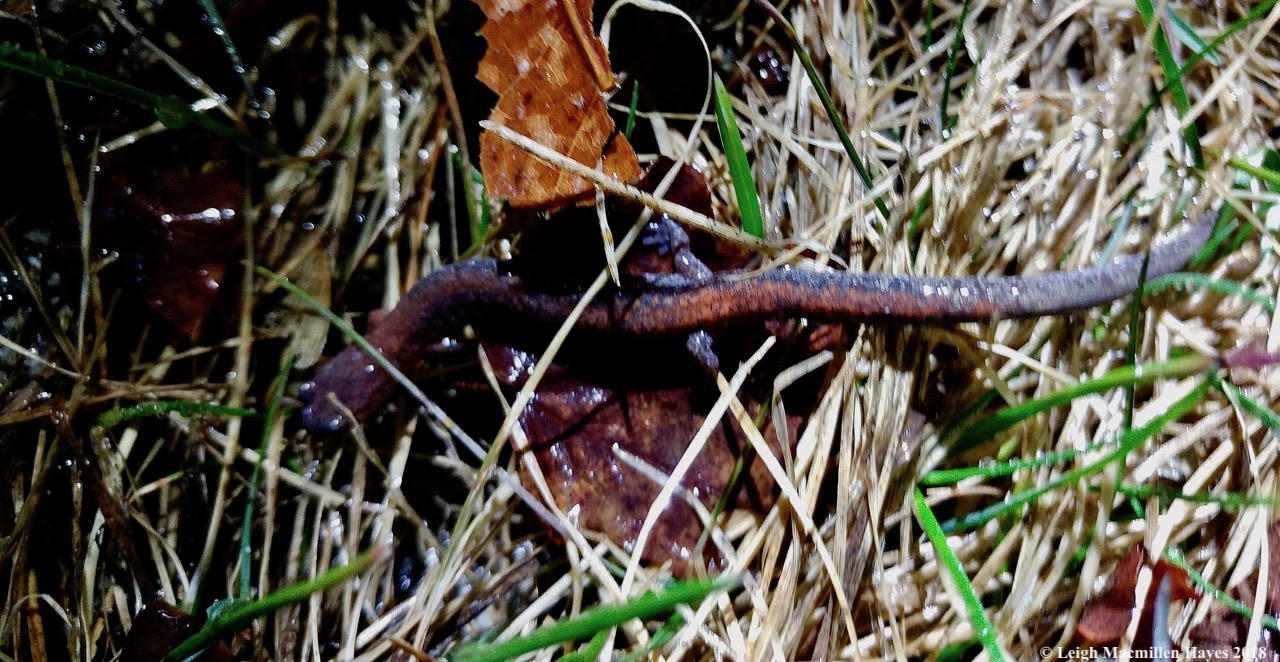
Right away, we noticed worms. And even better, a red-backed salamander. Red backs don’t use vernal pools to mate, but they sure do love rainy nights that offer great opportunities to roam about seeking food.

b2-red backed salamander

We crossed the field from the Hall to Memory Lane, our eyes ever looking for more redbacks, but instead we noted a kazillion worms, each the size of a young snake. And then, after only a few minutes on the road another redbacked graced us with its presence.

b4-Mary explains rules of the road

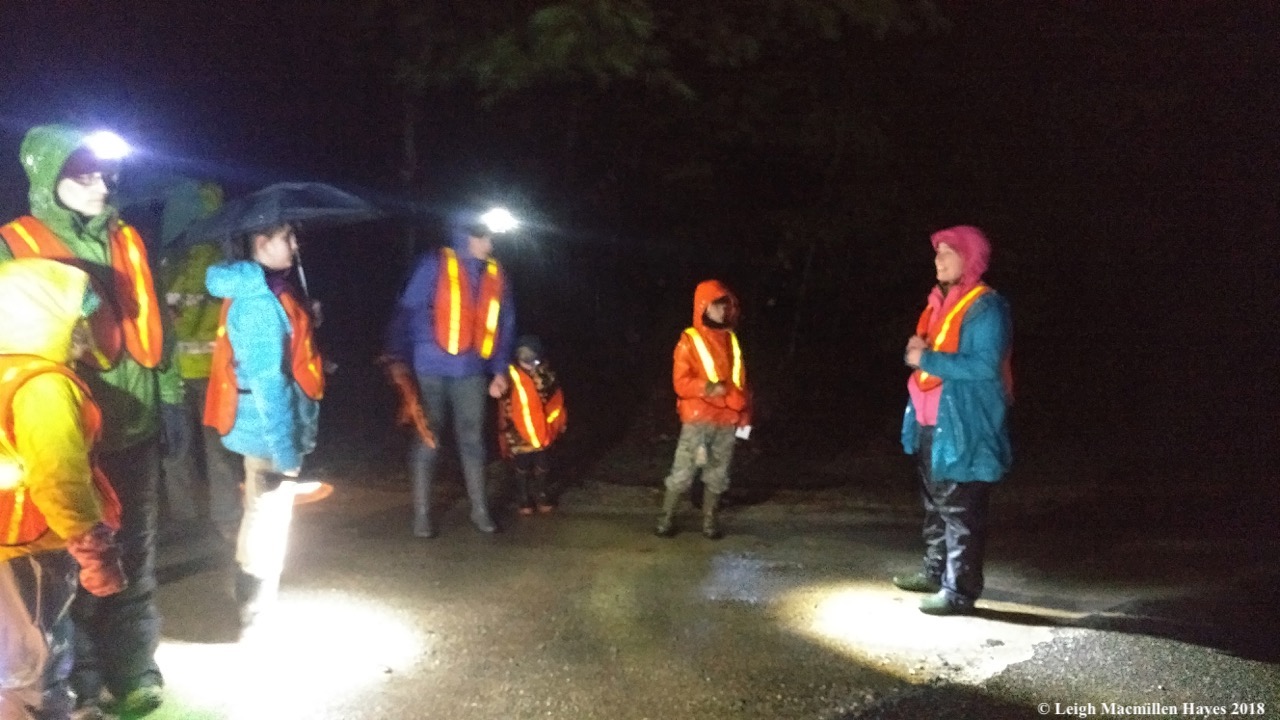
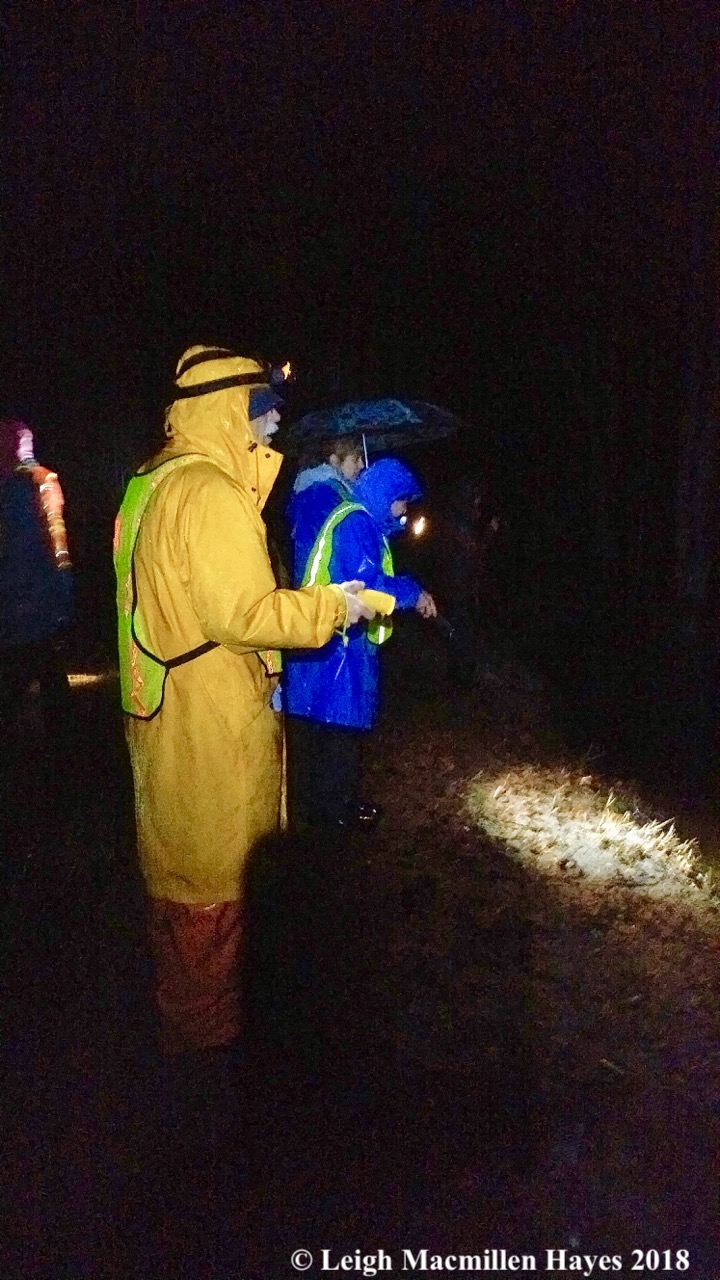
Finally, we reached Dugway Road, our destination, and Mary took a few minutes to remind folks of safety rules. Some years the Bridgton police are able to join us and either shut the road down or at least slow traffic. Such was not the case tonight and so it was important that our crowd of at least twenty ranging in age from four years old to 70+ be cautious.

b4-walking the road

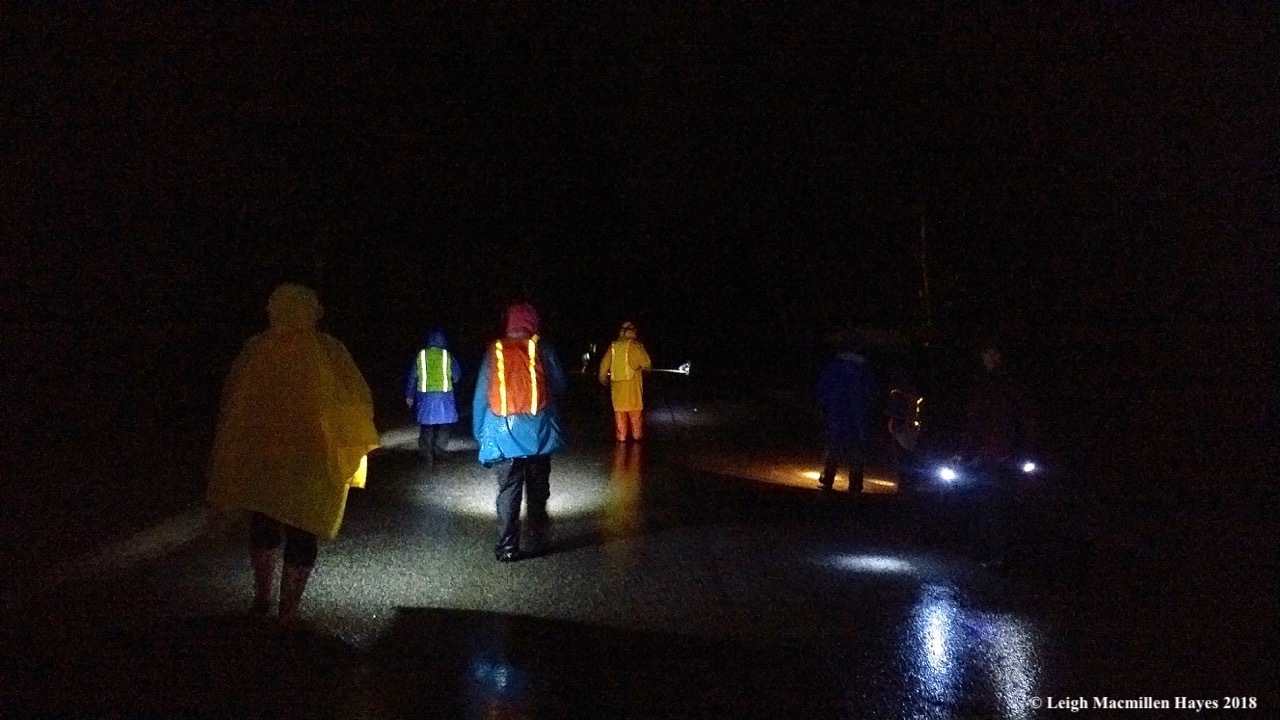
And then the real fun began. We spread out across the road with flashlights and headlamps, walking with care as we tried to notice the little things in life who chose this night to return to their natal pools in order to mate.

b6-spring peeper

Right away, the good times got rolling as we began to spot spring peepers. Really, it was those with eagle eyes who spotted the most, which wasn’t easy given the asphalt conditions. Though we knew better, we did have to wonder if the amphibians chose this road because it provided good camouflage.

b5-first catch- spring peeper

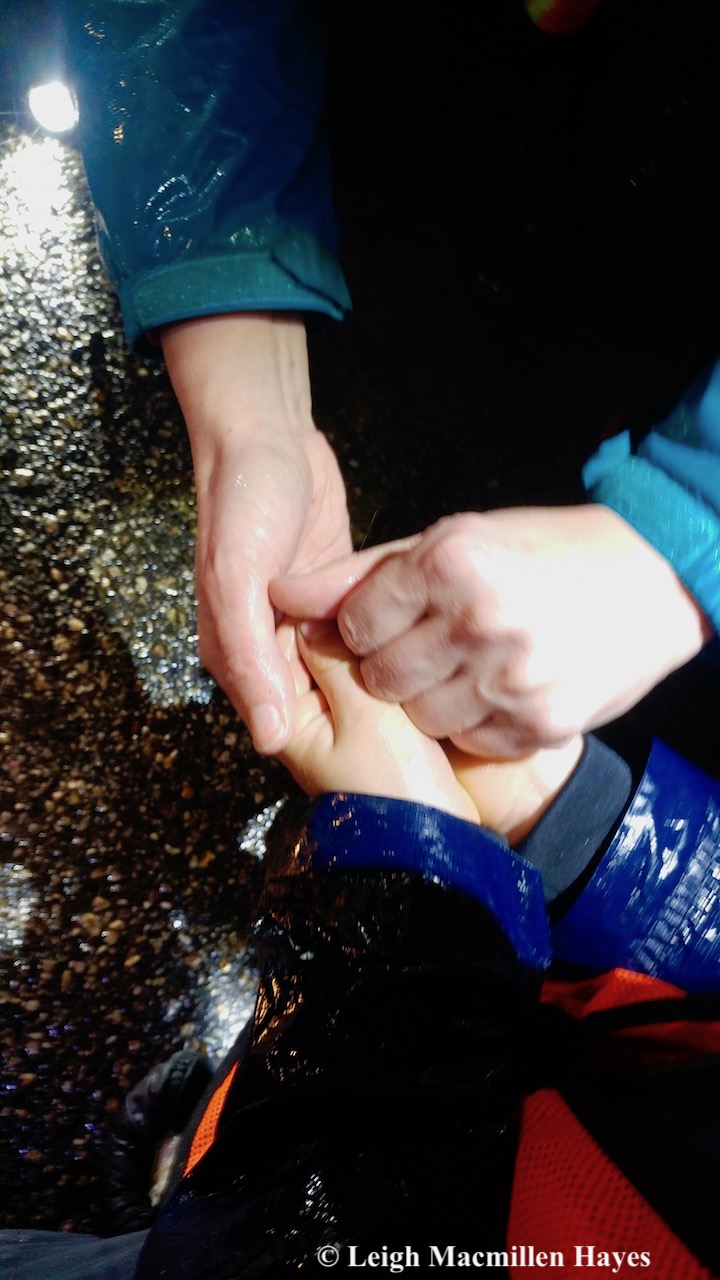
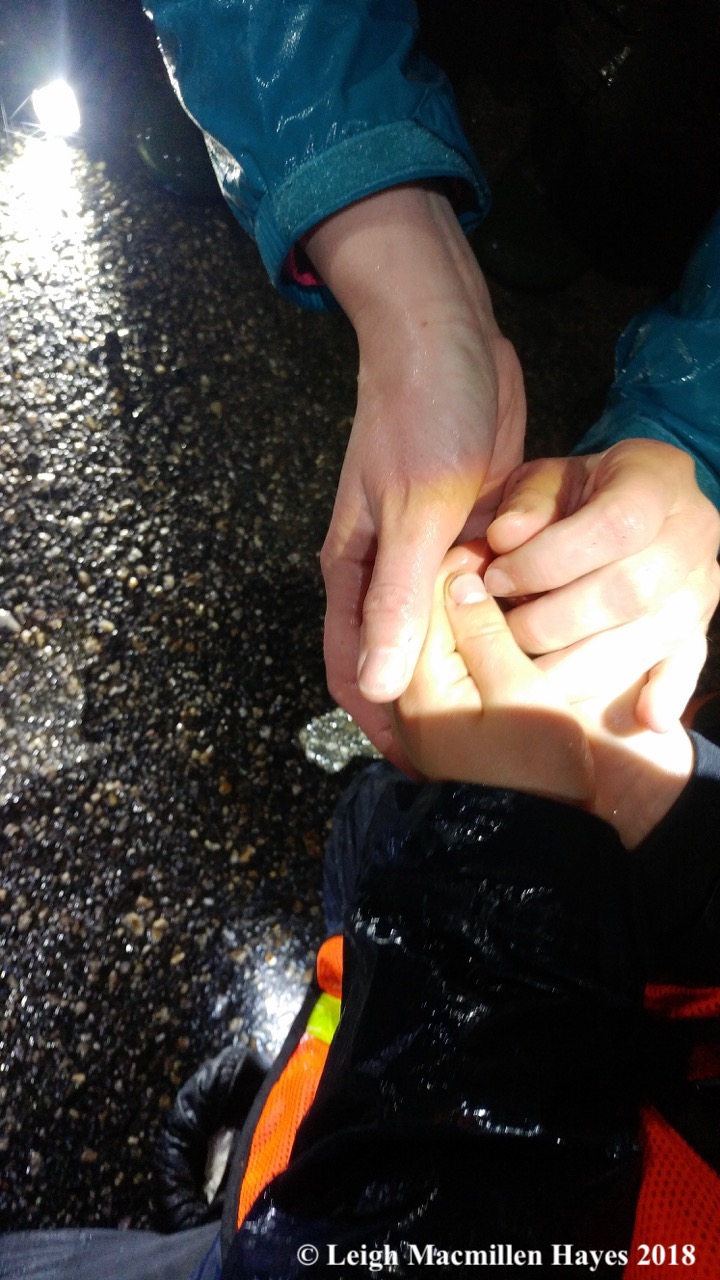
Being the first of the night, Mary demonstrated the fine art of capturing the peeper, explaining first that her hands were damp and had no soap or cream upon them.

Outstretched hands of one of the younger set awaited a transfer.

b5-pass off

The mission was to help the peeper get to the other side of the road. Typically, once captured, we transport them to the side in which they were headed.

b5-final pass off

The release was made into the youngster’s hands and then onward the child holding frog went. Lucky for the frog, there was a culvert at the side and that seemed like the safest place to release it.

b14-into the vernal pool

Further down the road, the songs of the wood frogs and peepers were almost deafening. As we looked into the vernal pool that was still half covered in ice, there was some movement, but the frogs all continued to sing despite our presence, unlike what happens when we approach a pool during the day and they dive under the leaf cover for a few minutes.

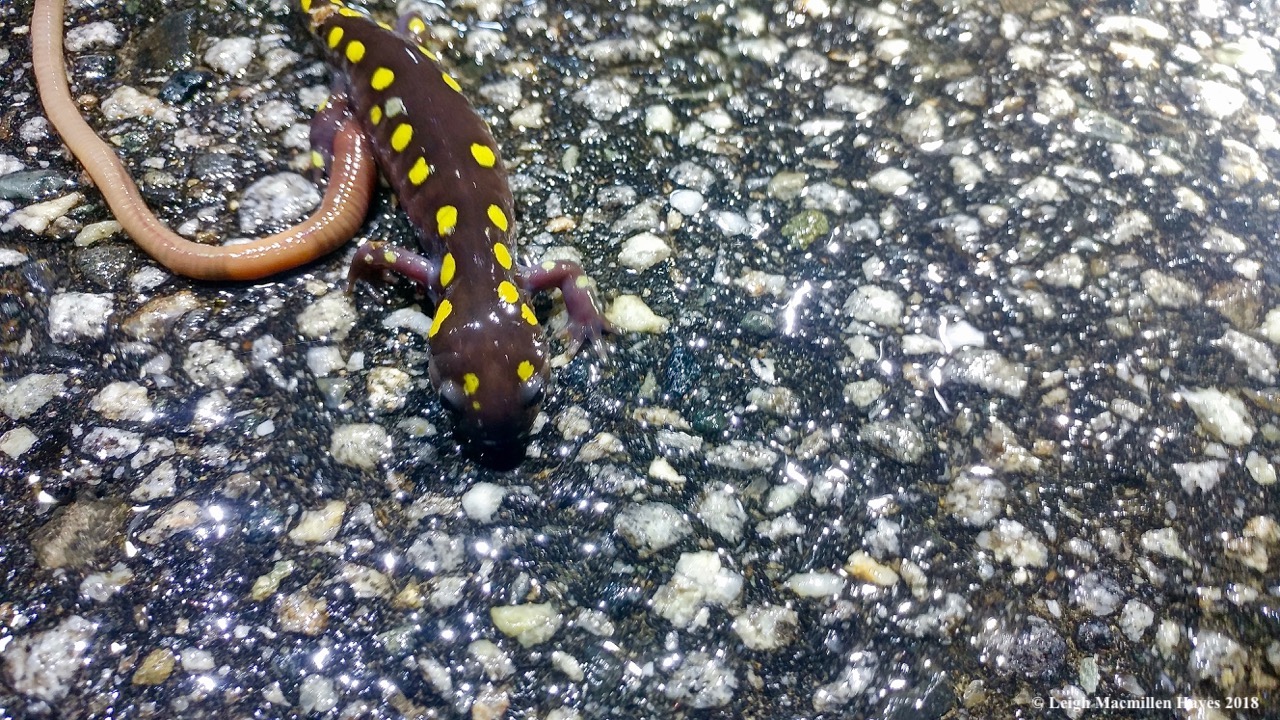
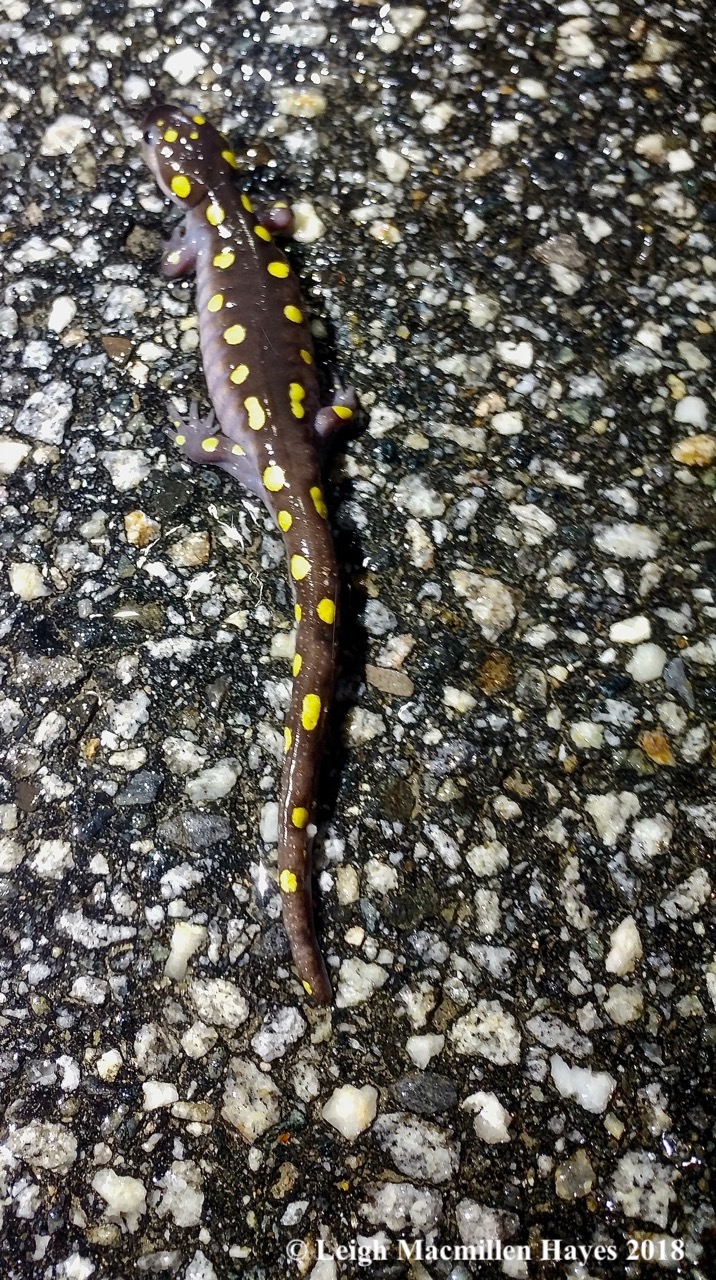
b7-spotted salamander

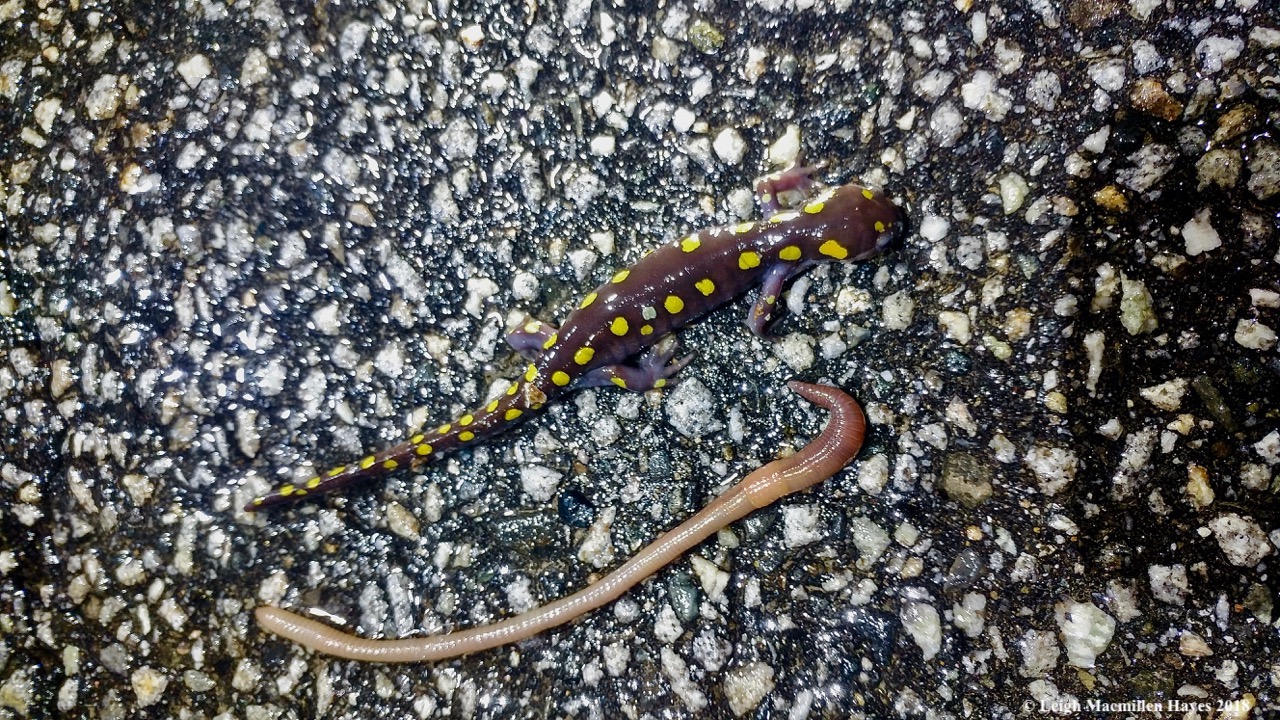
We found enough peepers, but the stars of the night were the spotted salamanders.

b8-sally and worm

The youngest among us picked up one of the ubiquitous worms that marked the night and laid it down beside a sallie.

b9-sally eyes

Sallie didn’t care. It was on a mission and just wanted to move on without our interference. There was only one thing on its mind and we suddenly stood between it and that goal.

b12-salamander

It had a dance to perform before the sun rose and we had a heck of a nerve for getting in the way. I’m always in awe of these creatures who spend at least 11.5 months under the leaf litter and maybe a week or two in the pool. Our rare chance to catch a glimpse of them is on such a rainy night as tonight.

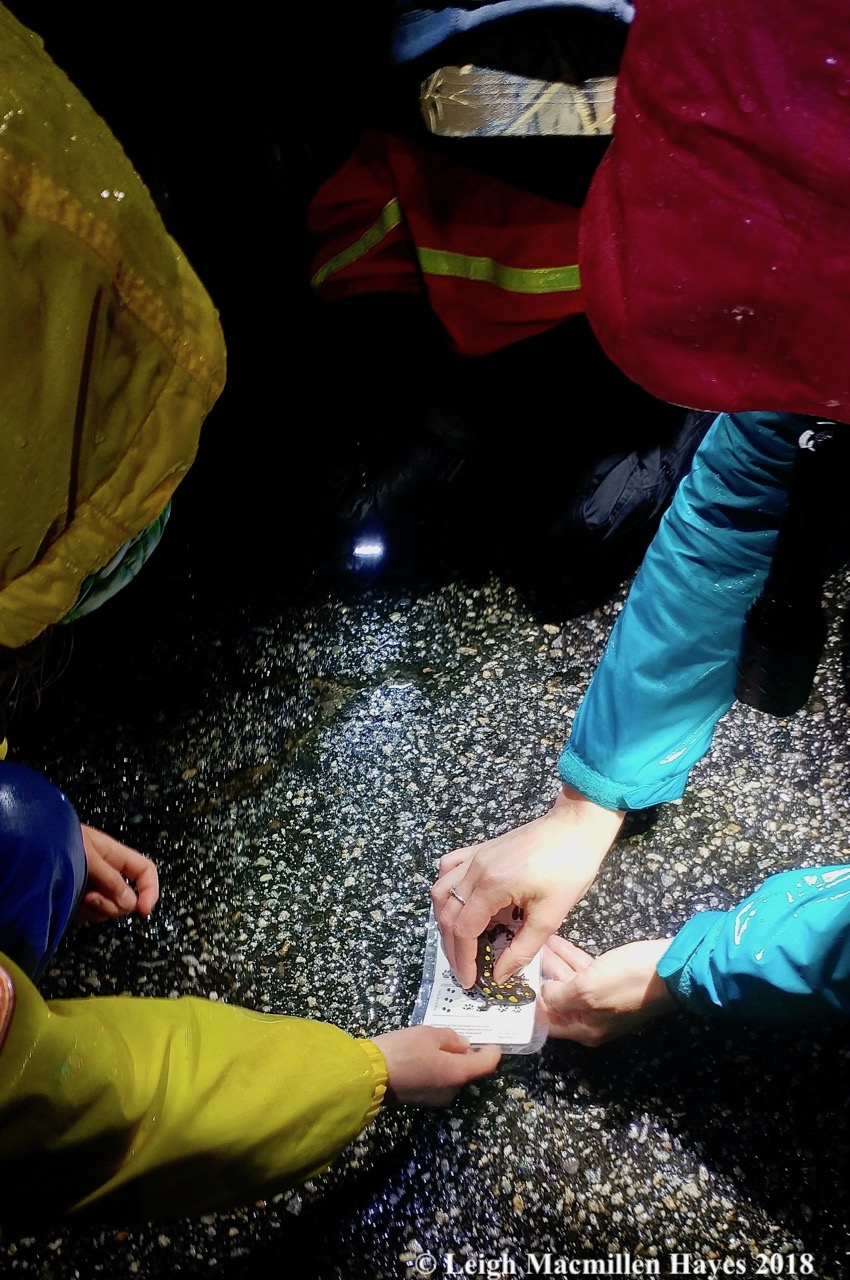
b10-sally on card

Our intentions were in their favor. We only wanted to help save them from the vehicles that passed by.

b11-sally's world

In the end, though, I had to wonder–is this what the salamander’s world looked like as we scooped it up and helped it across.

Possibly, but still, it’s always a thrill for tots, tweens, teens, and all the rest of us to celebrate Big Night with the Lakes Environmental Association. We are the Sallie Savers.

Wondermyway Celebrates Third Anniversary

Three years ago this journey began as a quiet entry into the world of blogging, of sharing my finds and questions found along the trail. And ever so slowly, you joined me to wander and wonder.

So really, today is a celebration of you, for I give thanks that you’ve continued to follow and comment and wander and wonder along, whether literally or virtually.

I absolutely love to travel the trail alone and do so often. But I also love hiking with my guy and others because my eyes are always opened to other things that I may have missed while hiking on my own.

I’m blessed with the community of naturalists with whom I’m surrounded–and this includes all of you for if you’re following along and taking the time to actually read my entries, then you share my interest and awe. And you may send me photos or I may send you photos and together we learn.

t6-cecropia cocoon

Just yesterday, while tramping in Lovell, Maine, with fellow trackers, I spotted a cocoon  dangling from a beech tree. My first thought–Cecropia moth, but I contacted Anthony Underwood, a Maine Master Naturalist who has great knowledge about insects, and learned that I was wrong. He said it looked more like the cocoon of a Promethea moth. “They hang down whereas Cecropia are usually attached longitudinally,” wrote Anthony. And there you have it.

Now I just have to remember it, which is part of the reason I value my post entries. The information has been recorded and I can always plug a key word, e.g. Promethea, into the search bar and today’s blog will come up–jogging my memory.

And so, without further ado, I present to you my favorites of the past year. It’s a baker’s dozen of choices. Some months, I had difficulty narrowing the choice to one and other months there was that one that absolutely stood out. I hope you’ll agree with my selection. I also hope that you’ll continue to follow me. And if you like what you read here, that you’ll share it with your families and friends and encourage others to follow along.

February 23, 2017:  Knowing Our Place

h-muddy-river-from-lodge

Holt Pond is one of my favorite hangouts in western Maine on any day, but on that particular day–it added some new notches to the layers of appreciation and understanding.

March 5, 2017: Tickling the Feet

CE 3

I don’t often write about indoor events, but while the rest of the world was out playing in the brisk wind of this late winter day, a few of us gathered inside to meet some feet.

April 22, 2017: Honoring the Earth

h-spotted sallie 2 (1)

It would have been so easy to stay home that night, curled up on the couch beside my guy while watching the Bruins play hockey. After all, it was raining, 38˚, and downright raw. But . . . the email alert went out earlier in the day and the evening block party was scheduled to begin at 7:30.

May 21, 2017: On the Rocks at Pemaquid Point

p16-fold looking toward lighthouse

Denise oriented us northeastward and helped us understand that we were standing on what is known as the Bucksport formation, a deposit of sandstone and mudstone metamorphosed into a flaky shist. And then she took us through geological history, providing a refresher on plate tectonics and the story of Maine’s creation–beginning 550 million years ago when our state was just a twinkle in the eyes of creation.

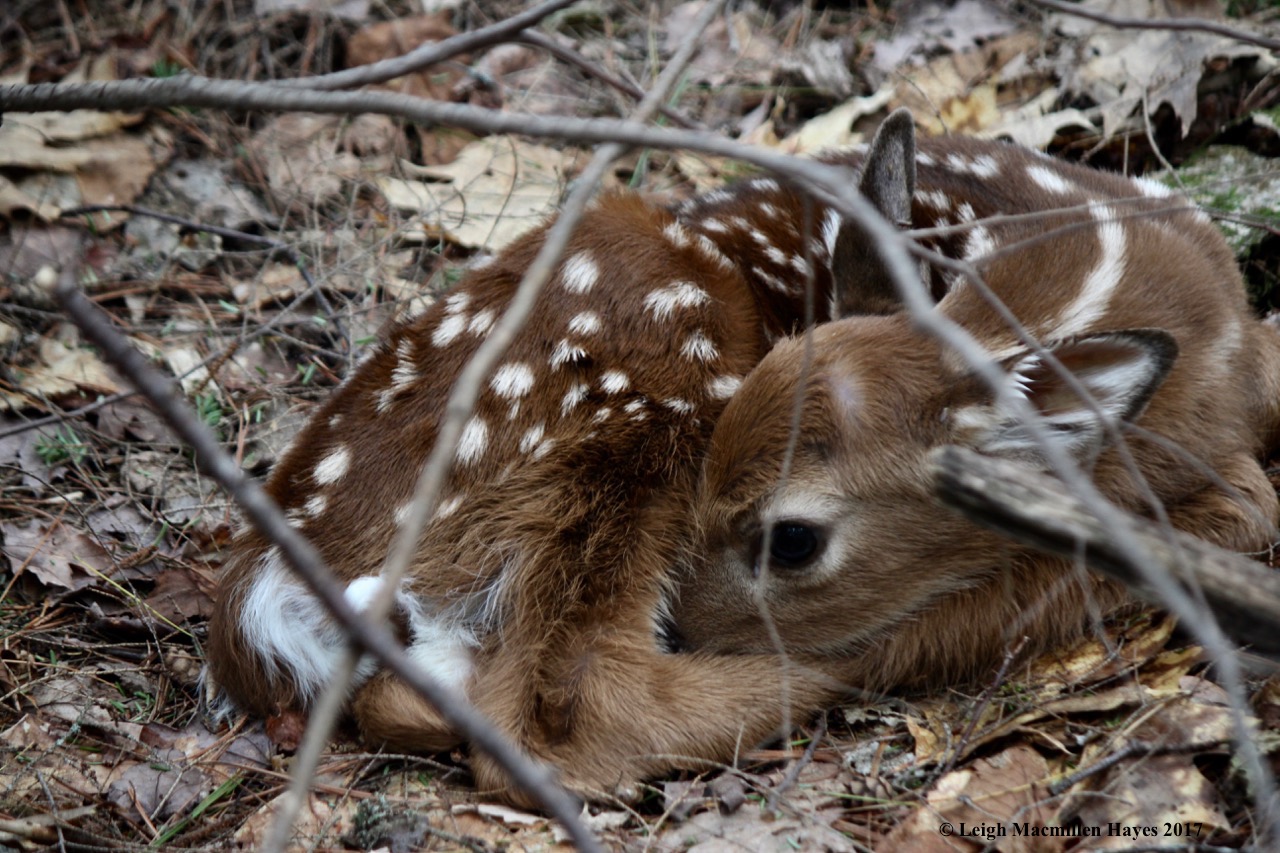
June 9, 2017: Fawning with Wonder

p-fawn 2

Though fawning is most oft used to describe someone who is over the top in the flattery department (think old school brown nose), the term is derived from the Old English fægnian, meaning “rejoice, exult, be glad.”

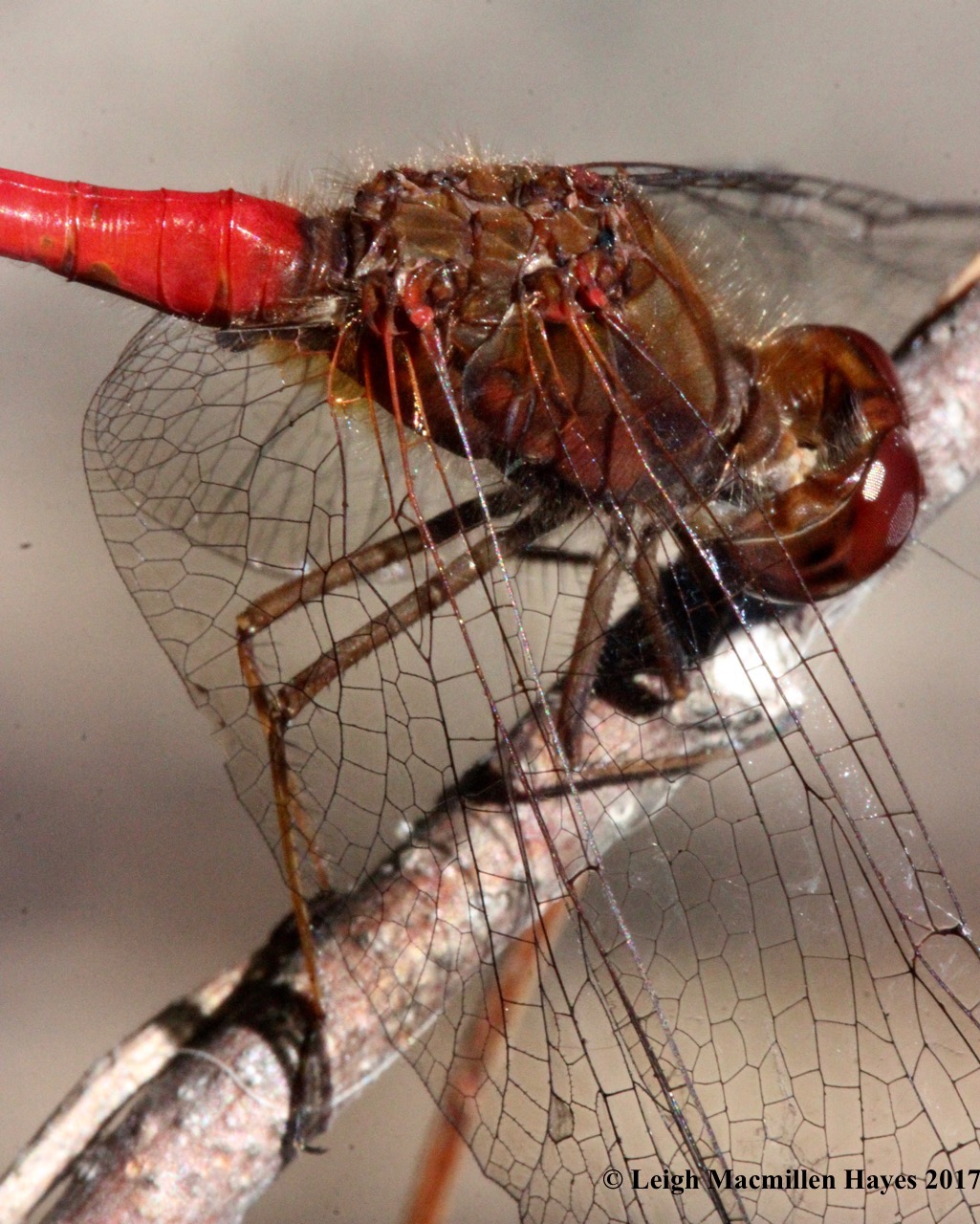
July 3, 2017: Book of July: Flying on the Wild Wind of Western Maine

d-skimmer, yellow legged meadowhawk, wings

My intention was good. As I sat on the porch on July 1st, I began to download dragonfly and damselfly photographs. And then the sky darkened and I moved indoors. Suddenly, and I mean suddenly, the wind came up. Torrential rain followed. And thunder and lightening. Wind circled around and first I was making sure all screens and doors were closed on one side of the wee house and then it was coming from a different direction and I had to check the other side. Trees creaked and cracked. Limbs broke. And the lightening hit close by.

August 6, 2017: B is for . . .

b-bye

Our original plan was to hike to the summit of Blueberry Mountain in Evans Notch today,  following the White Cairn trail up and Stone House Trail down. But . . . so many were the cars on Stone House Road, that we decided to go with Plan B.

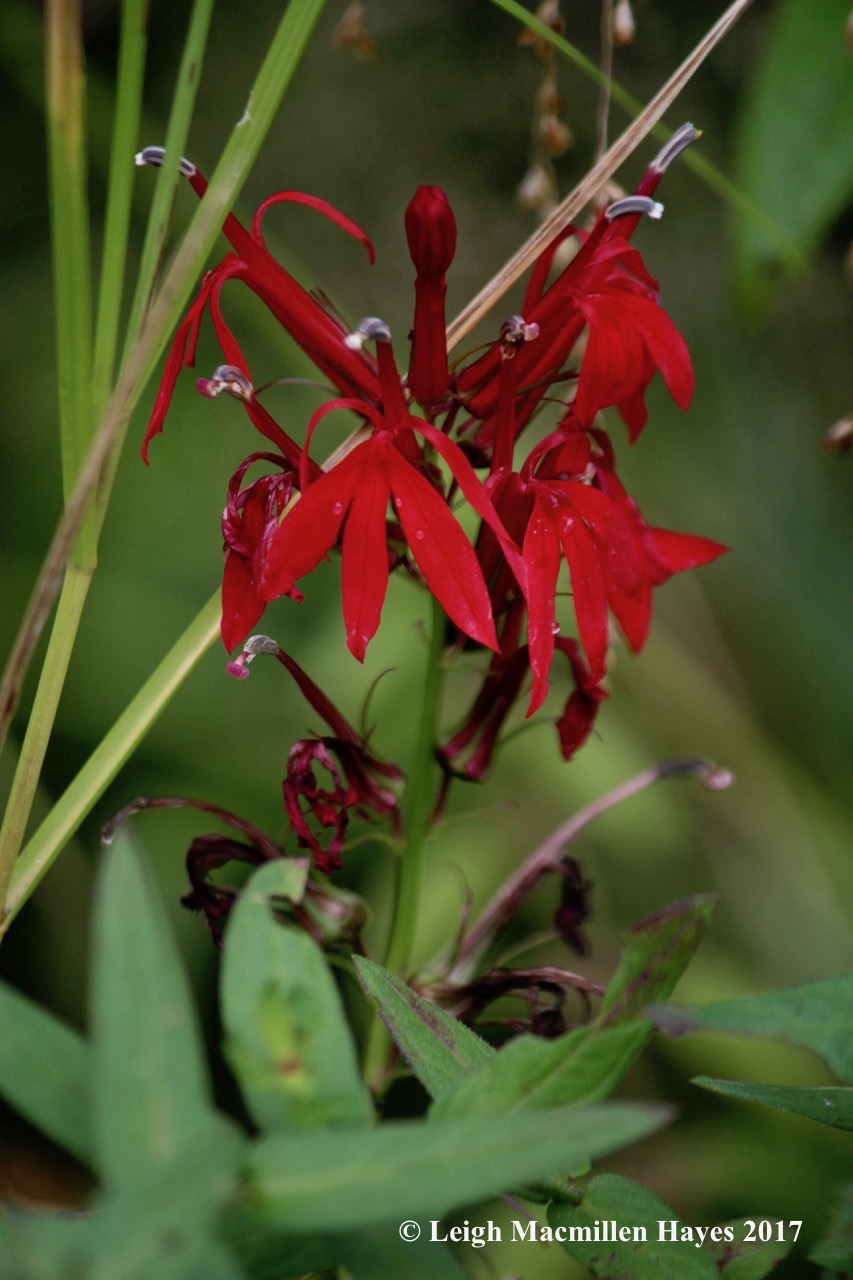
September 15, 2017: Poking Along Beside Stevens Brook

s22-cardinal flower

Raincoat? √

Notecards? √

Camera? √

Alanna Doughty? √

This morning I donned my raincoat, slipped my camera strap over my head, and met up with LEA’s Education Director Alanna Doughty for our reconnaissance mission along Stevens Brook in downtown Bridgton. Our plan was to refresh our memories about the mill sites long ago identified and used beside the brook.

October 5, 2017: Continued Wandering Into the World of Wonder

i-baskettail, common baskettail 1

May the answers slowly reveal themselves, while the questions never end.

November 24, 2017: Black Friday Shopping Extravaganza

b8-the main aisle

At last, I’d raided enough aisles. My cart was full to the brim and my brain overwhelmed. I guess I’m not really a “shop-til-you drop” kind of gal. It was time to wind along the trail and end my Black Friday shopping extravaganza.

December 29, 2017: Oh Baby!

s-screech owl 2

We shared about ten minutes together and it was definitely an “Oh baby!” occasion. But there was more . . .

January 21, 2018: Sunday’s Point of View

p17-Needle's Eye

We arrived home with ten minutes to spare until kickoff.

February 8, 2018: Hardly Monochromatic

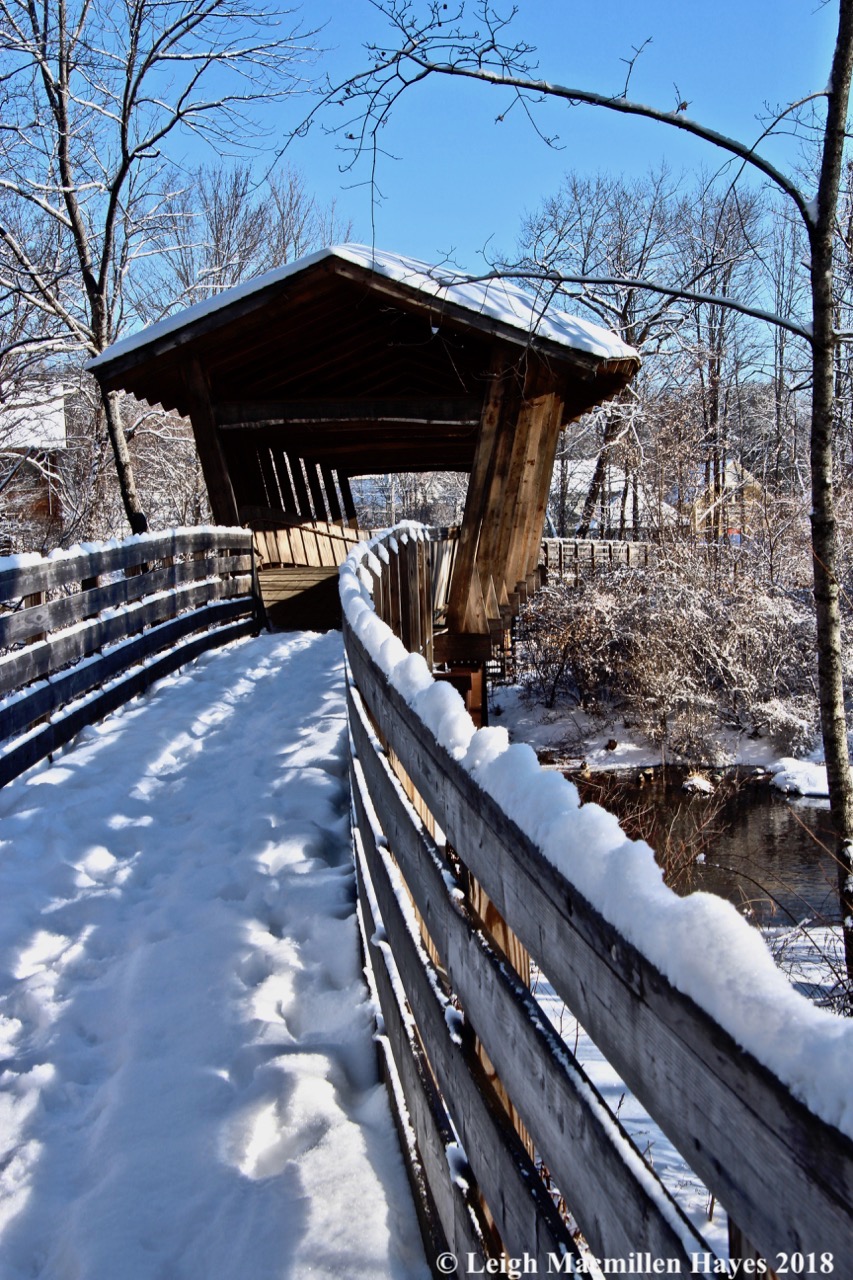
p18-Stevens Brook

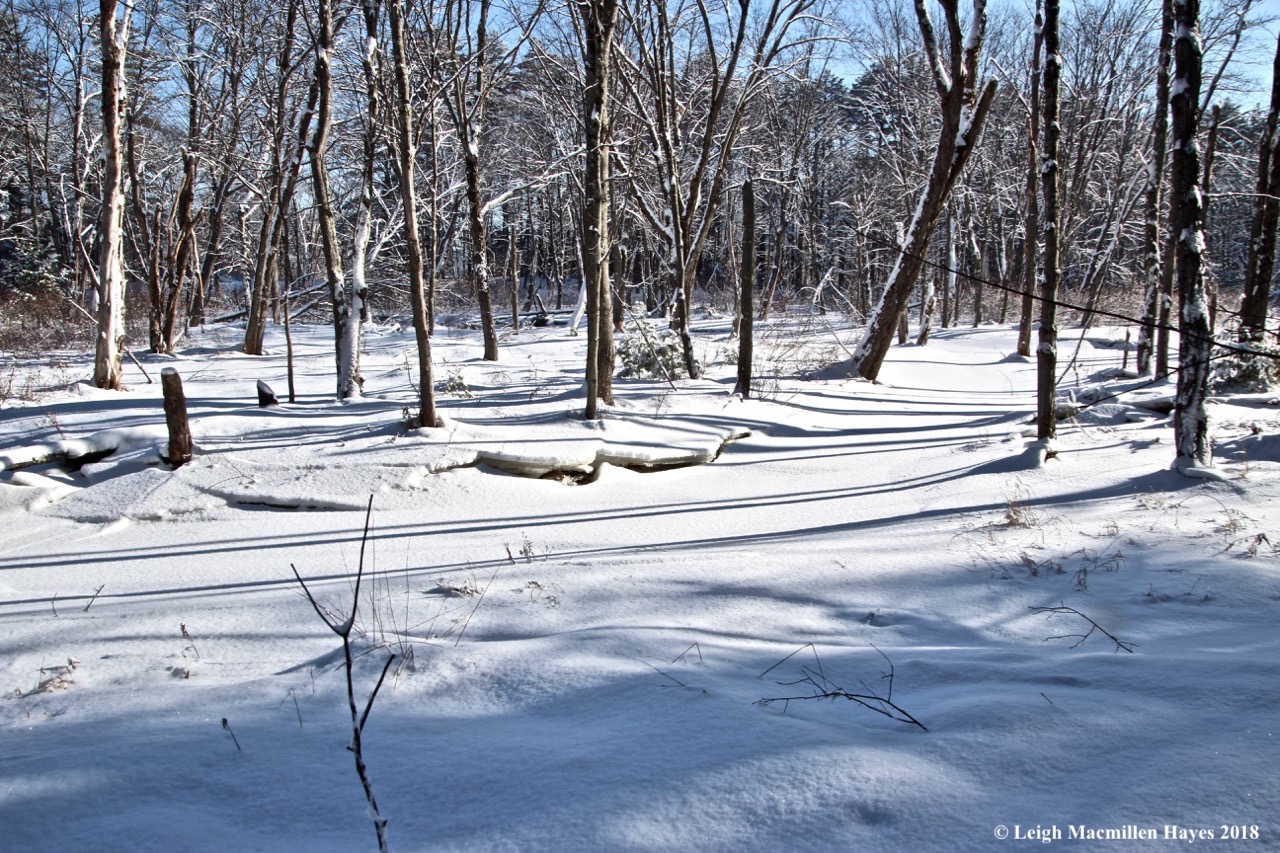
My world always takes on a different look following a storm and today was no different.

To all who have read thus far, thanks again for taking a trip down memory lane today and sticking with me these past three years. I sincerely hope you’ll continue to share the trail as I wander and wonder–my way.

And to wondermyway.com–Happy Third Anniversary!


Hardly Monochrome

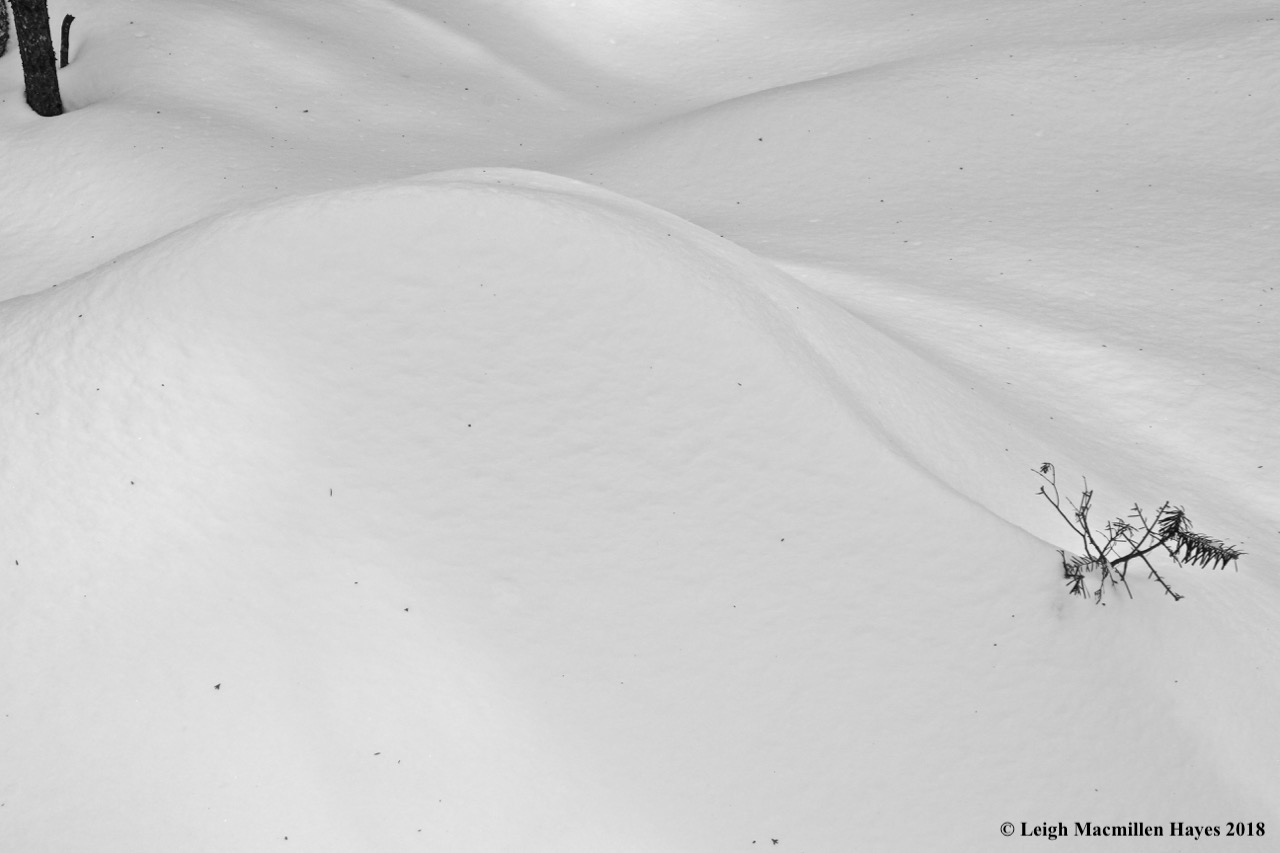
My world always takes on a different look following a storm and today was no different. Yesterday we were graced with a foot of fluffy snow. And so it was with joy that I strapped on my snowshoes.

p1-window art

As I passed by the barn, I noted fresh porcupine tracks, but it was a window on the attached shed that drew my awe. I’ve seen the frost resemble ferns, flowers and trees before, but today’s display reminded me of moss.

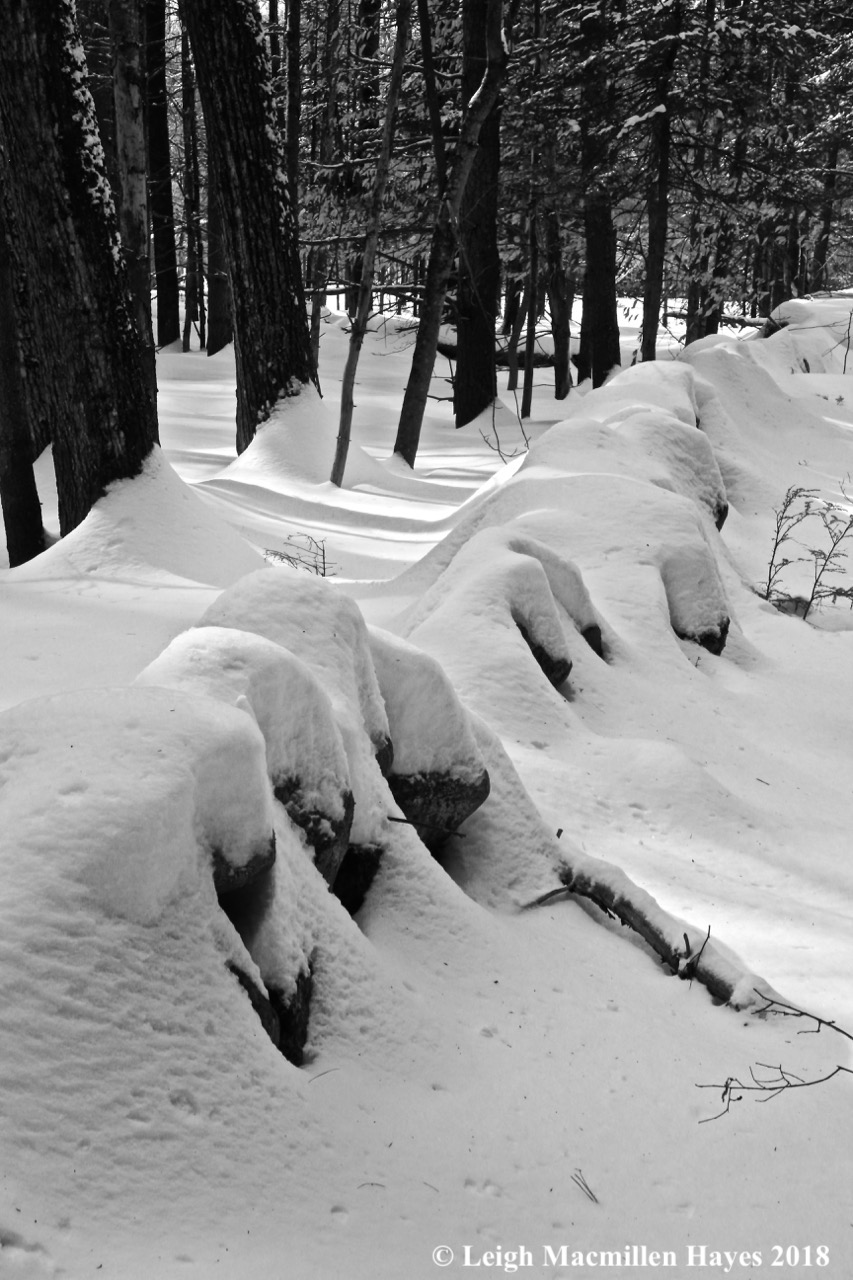
p2-stonewall

Marshmallows seemed to have capped the stonewall along the cow path.

p3-hairy woodpecker

Into Pondicherry Park I headed and immediately was greeted by the sound of a hairy woodpecker chiseling away.

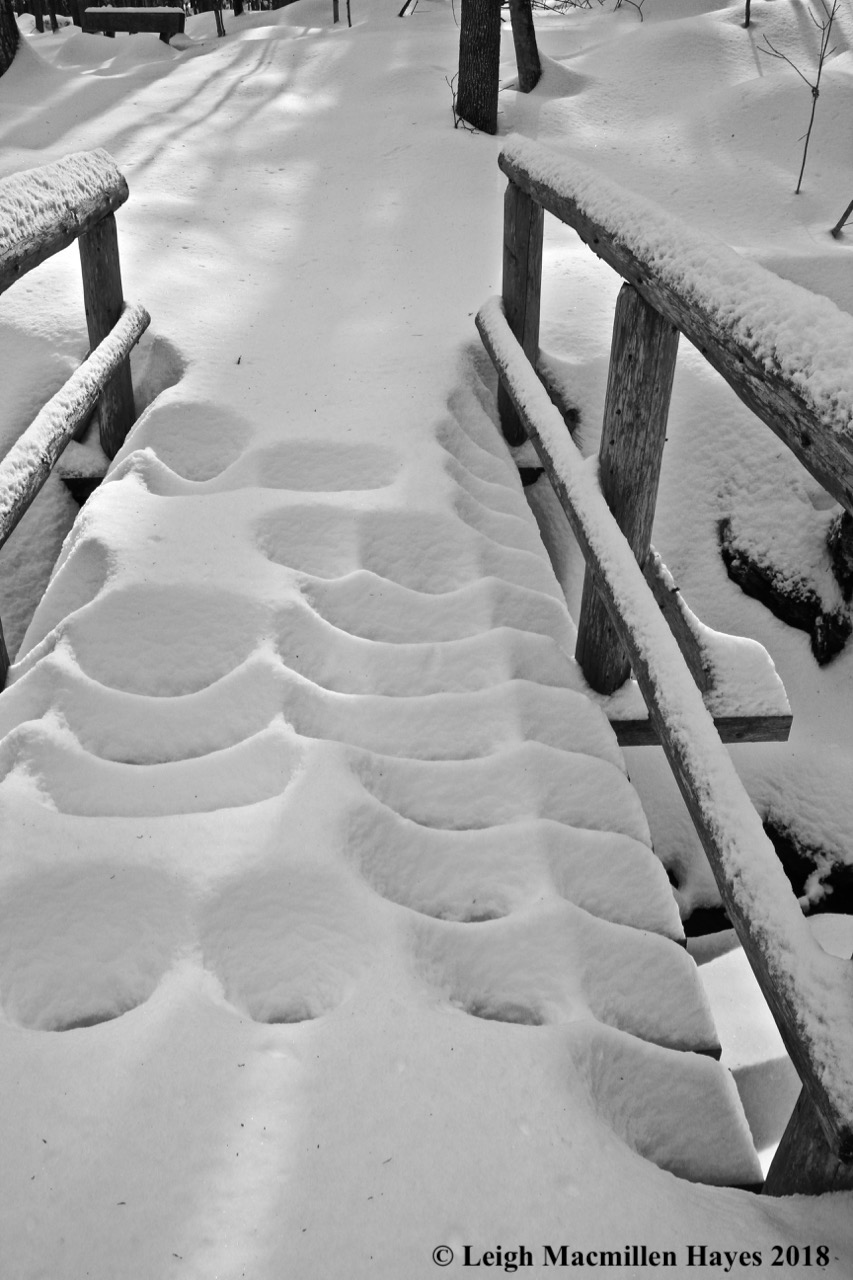
p4-bridge

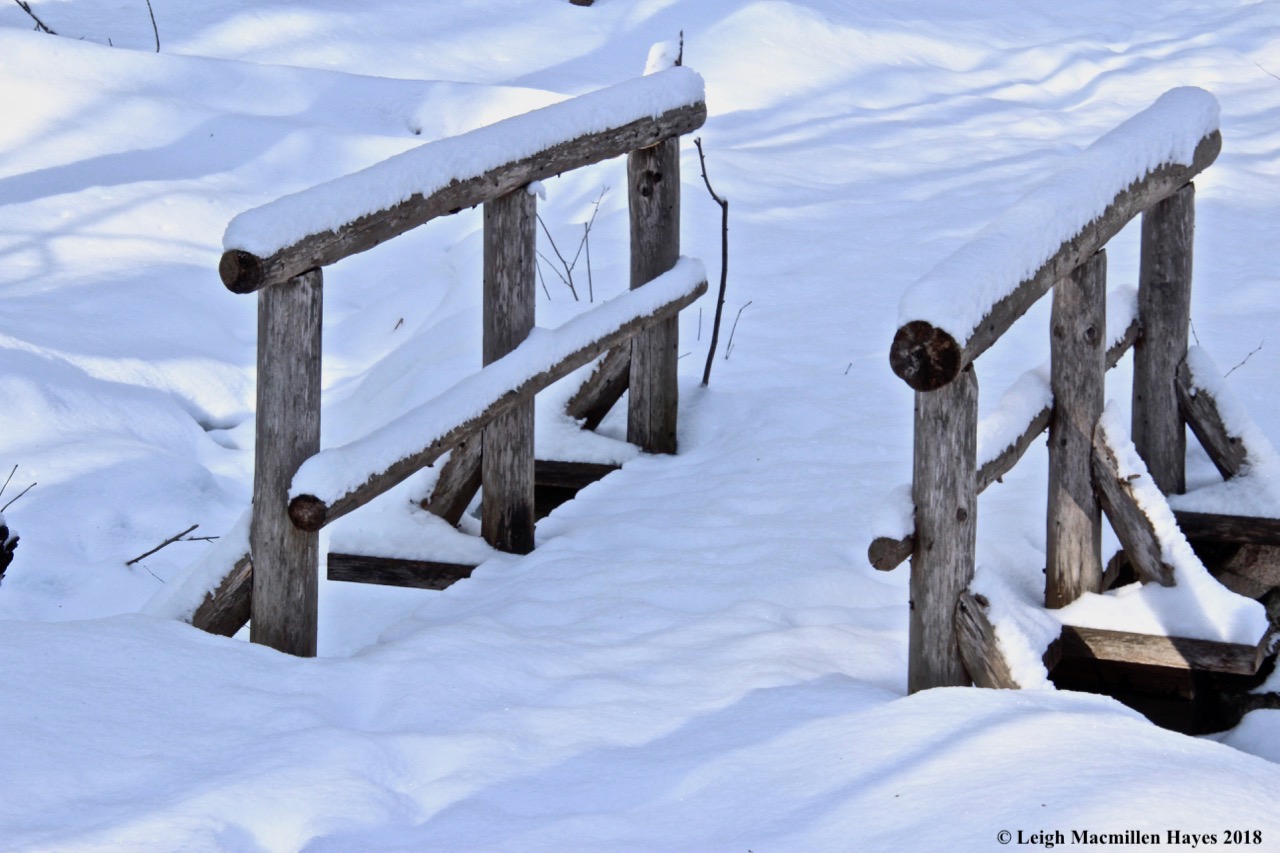
The park receives a lot of visitors each year, but on this day I was tickled to be the first to make tracks.

p6-vehicle

My goal was to join others at Lakes Environmental Association’s Maine Lake Science Center for a tramp along the Pinehaven Trail, but we decided to go off trail at times to see what we might see.

p7-Anne and Alanna

I had the extreme pleasure of exploring with these two fine women, Alanna, LEA’s education director, and Anne, chair of LEA’s environmental education advisory committee. So we wondered about this vehicle. Its age. How and why it ended up where it was. We had no answers, but the squirrels and mice didn’t seem to mind its presence for their tracks led in and out. We did note some tangled fencing added to the mix.

p8-fencing

But it made sense because we were on land formerly used for farming and Alanna pointed out a section of fencing that a tree had embraced behind us.

p9-steering wheel and radio

We were busy chatting, but had we paused, perhaps we would have heard tunes pouring forth from the radio. Then again . . . maybe not.

p10-boardwalk

I spent an hour with them and then departed via the boardwalk below the science center building. It’s one of my favorite places.

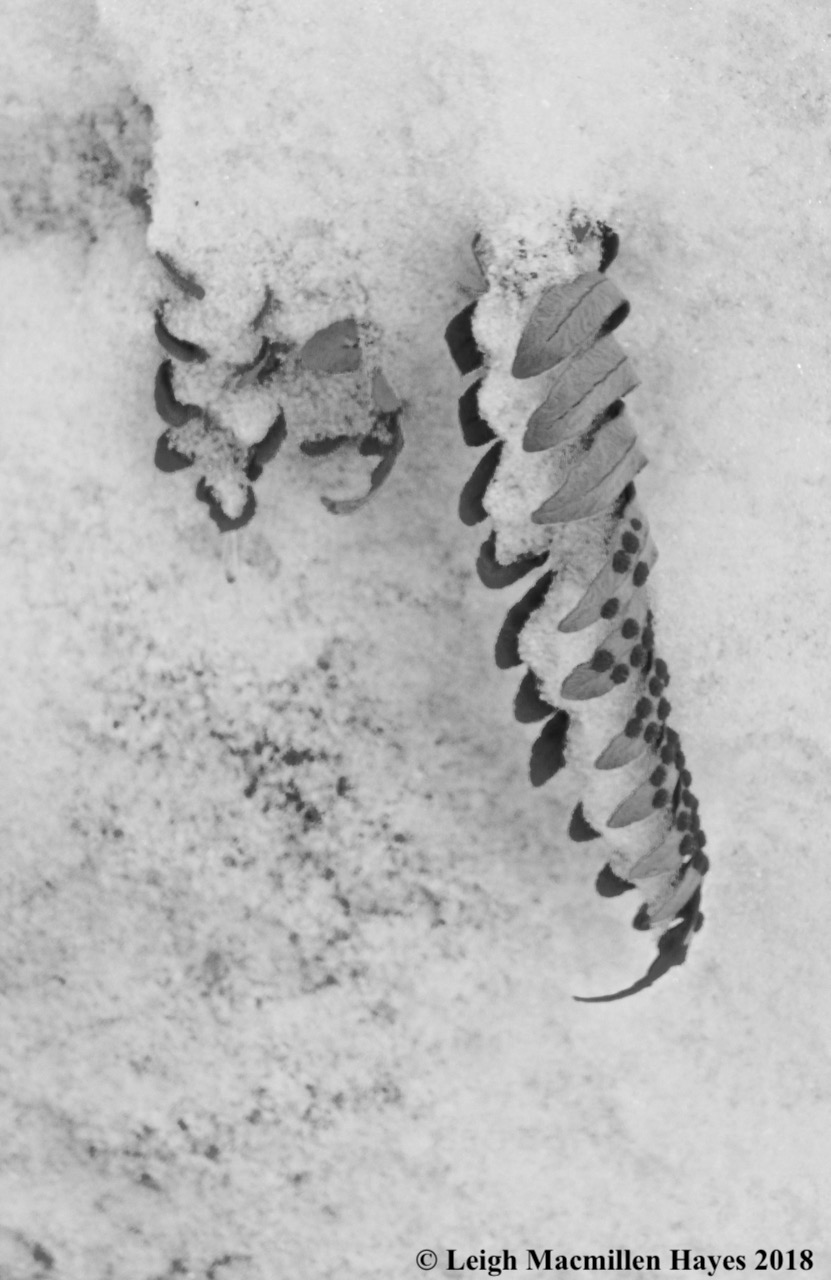
p12-polypody fern

And no venture forth is complete without stopping to admire the polypody fern that dangles from a boulder, curled up as it was because of the cool temps.

p13-mossman surrenders

A wee bit further I almost passed by Moss Monster for he was hiding under his winter blanket and all that showed forth was a small balsam held tightly in his hand. I wished him sweet dreams until we meet again.

p13-tinderconk

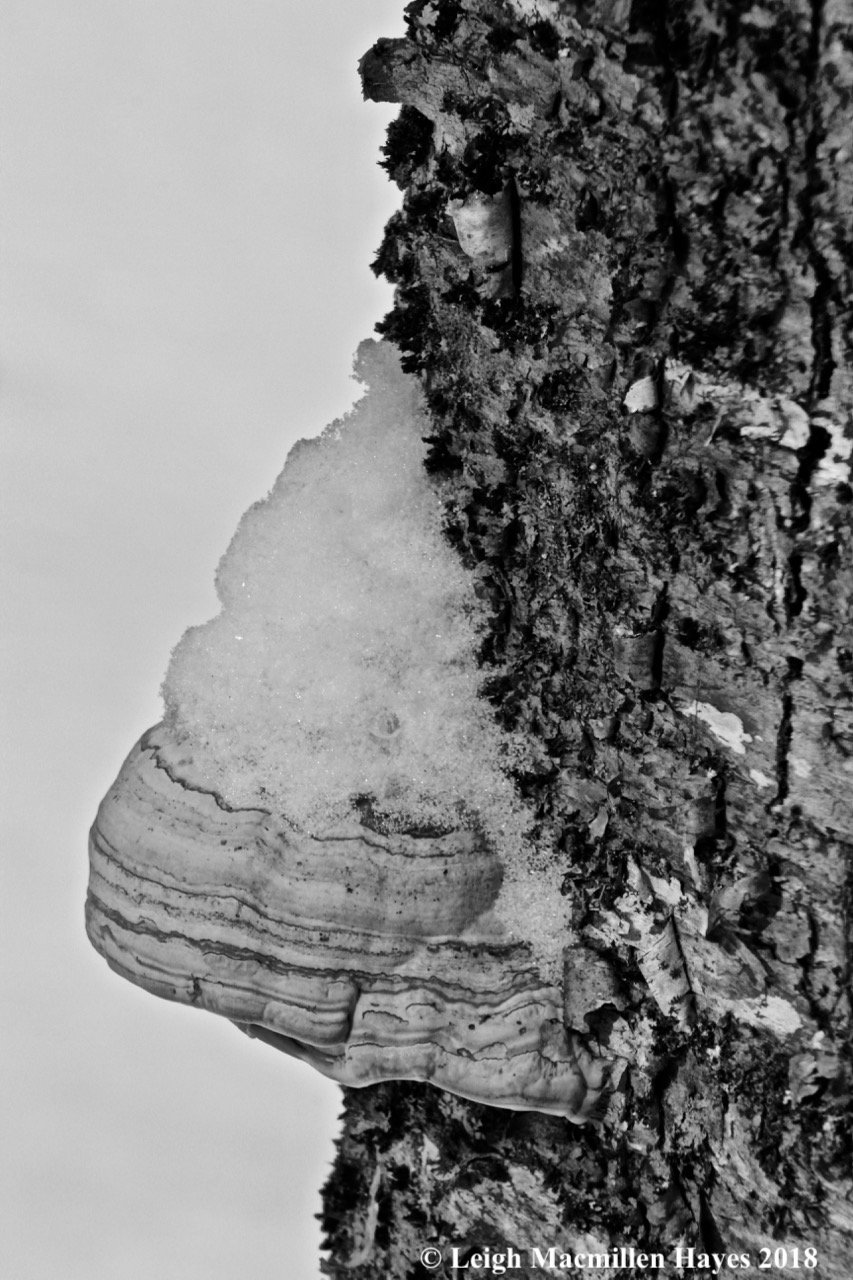
Just as I moved from the boardwalk back into Pondicherry Park, I spied several tinder conks upon a yellow birch, their lines reminding me of oyster shells and a yearning I’ve had recently to spend some time at the ocean surfaced again. I love the woods, but do need that salt air fix every once in a while.

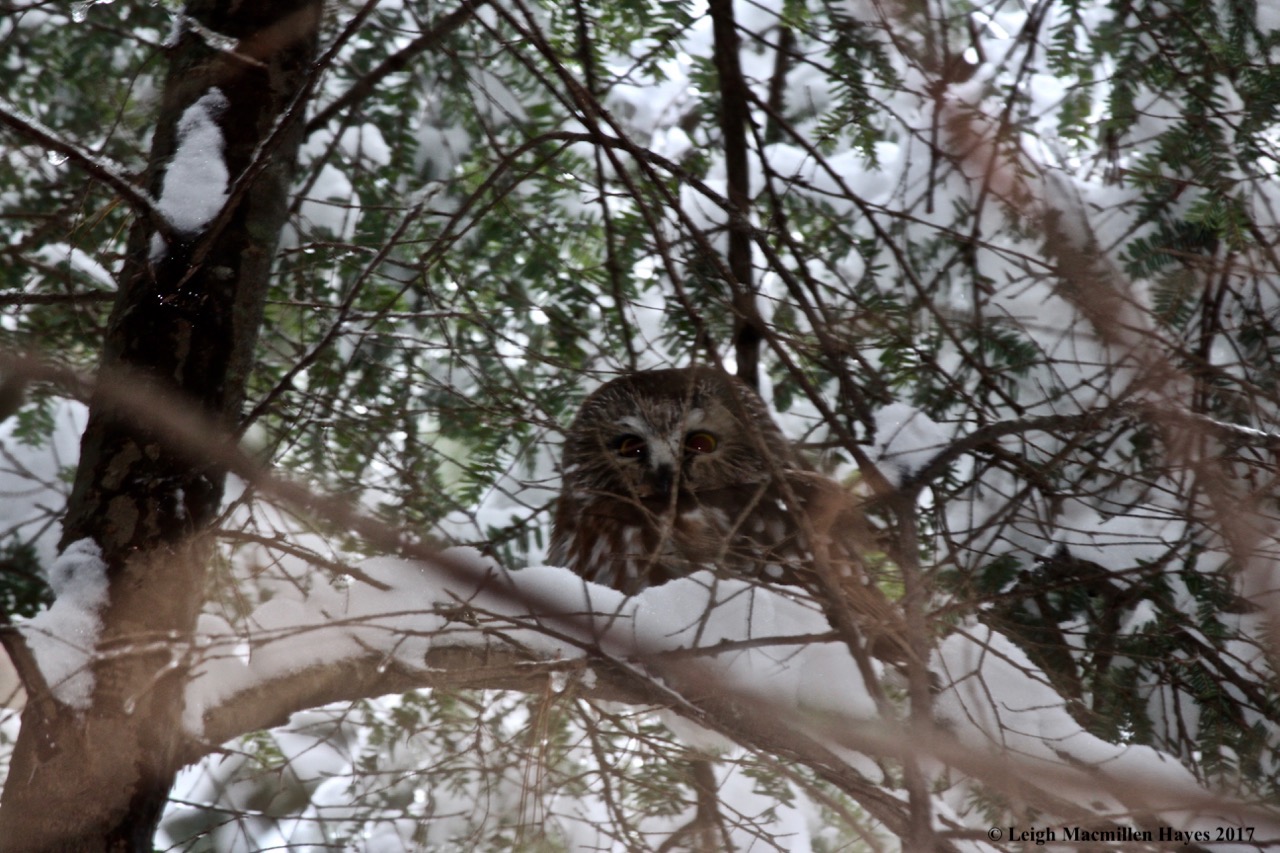
p14-Owl?

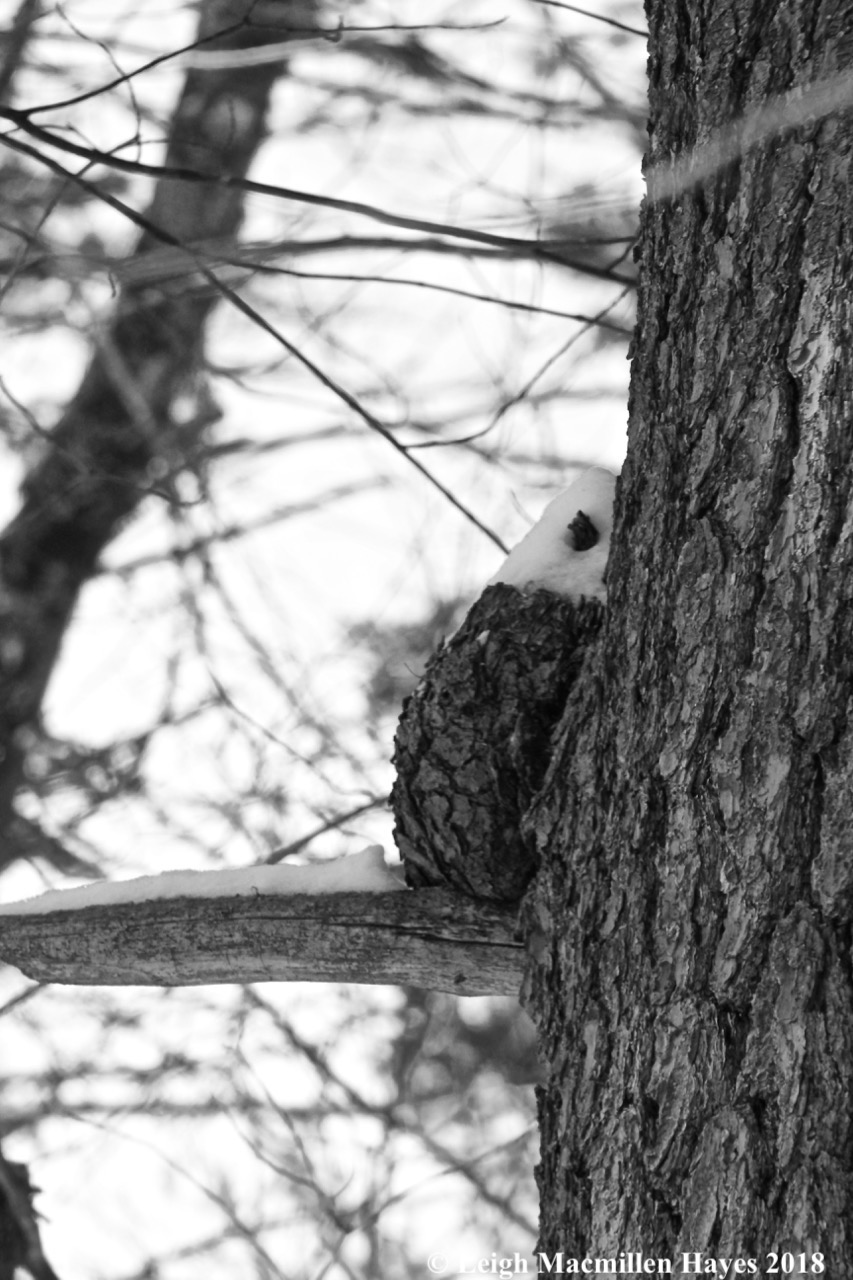
Slowly, I made my way beside Willet Brook and then Stevens Brook–looking about to see what I might see. And then I stopped. Could it be? Nope. As much as I wanted to spy an owl, all I found was a burl topped with snow upon a white pine trunk. It sure looked like a bird sitting on a branch. Wishful thinking.

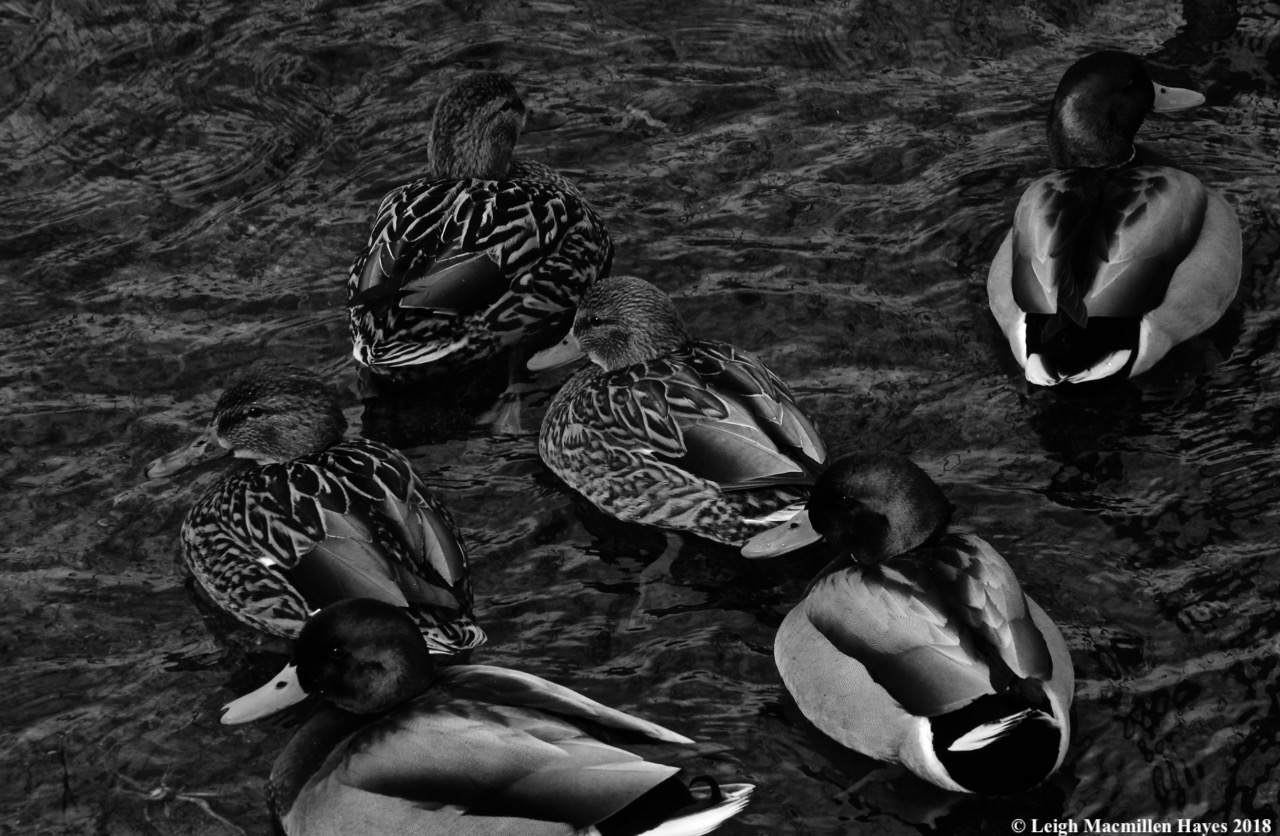
p14-male mallards

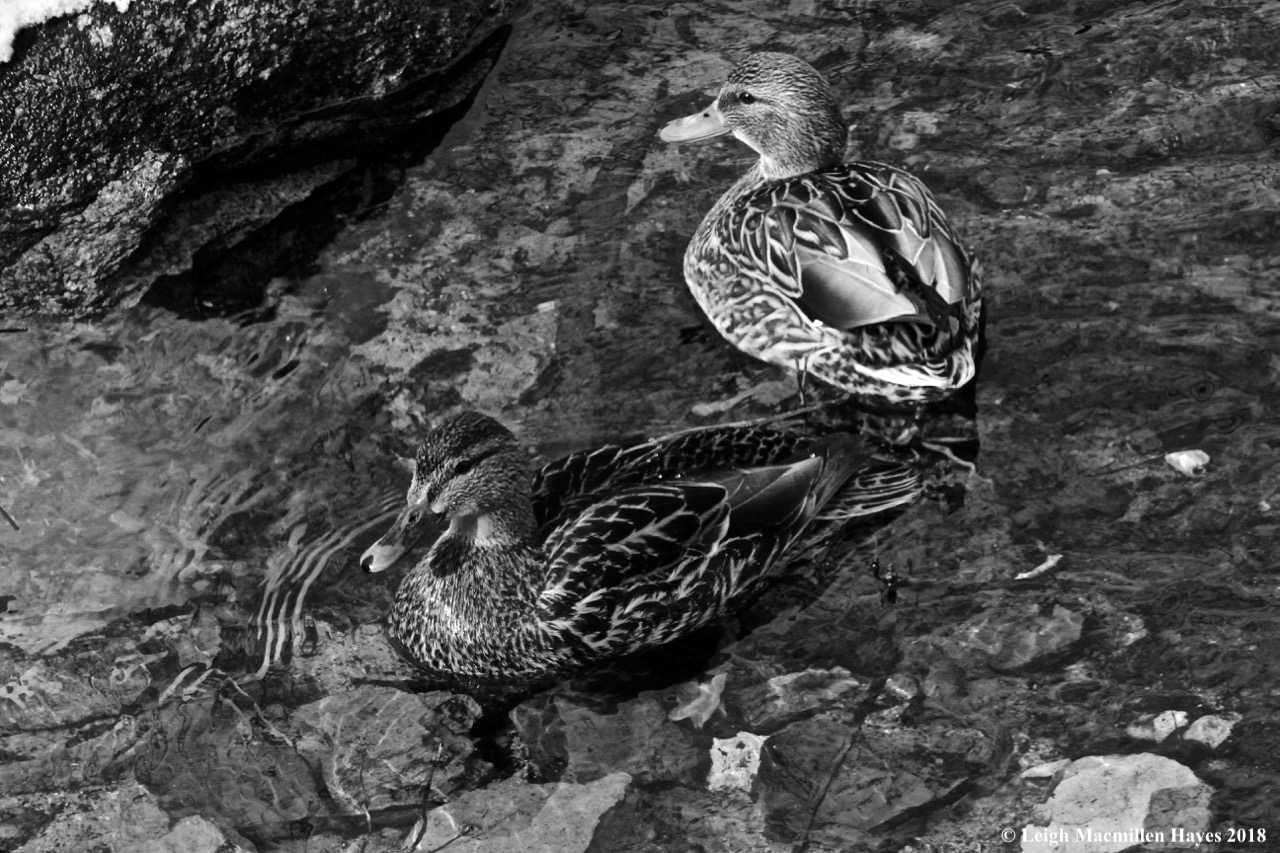
I did find other birds, though, in the form of mallards.

p15-male:female mallards

There were plenty of them and I could have watched all day as they treaded water and occasionally nipped each other or gave chase.

p16-male mallard on snow

One handsome guy moved onto a snow bank and appeared to smile over his companions for a few minutes–king of the hill.

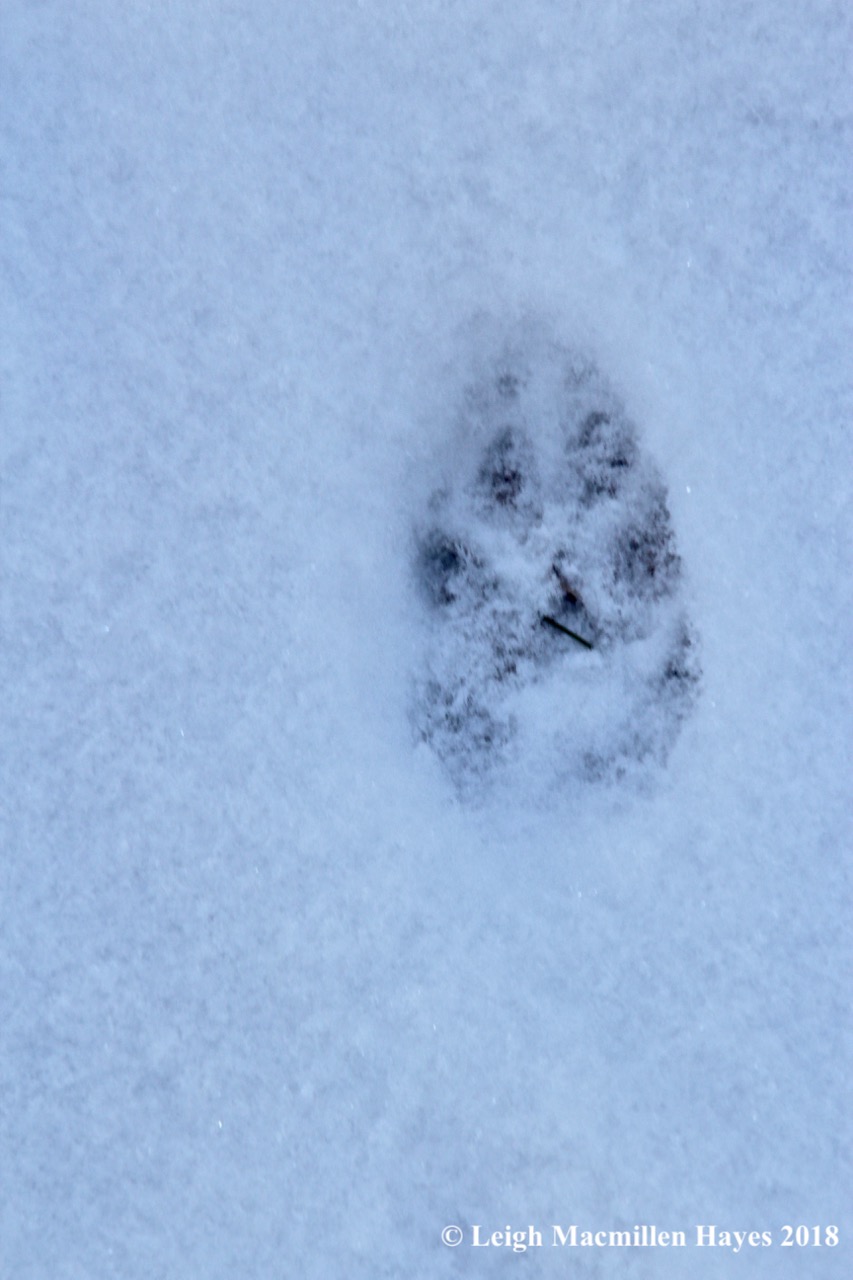
p17--duck prints

And then they all moved off, but left behind their prints–just for me ;-)

p18-Stevens Brook

My lunch break miraculously turned into a three hour tour that I chose to illustrate in black and white, with shades of gray in between. It was a lovely day enhanced by all that snow. And hardly monochromatic.

Winter Reflections

My world is always transformed during a snowstorm and even the day after. So it was that yesterday about four inches of the fluffy white stuff drifted down and created a wonderland effect.

a1-snowflackes on Queen Anne's Lace

Even this morning, the individual snowflakes were still visible in their crystalized form (and I kicked myself for not packing my macro lens.)

a2-coyote and red fox tracks

I began the day with a slow journey from home to Pondicherry Park, with the intention of meeting a hiking group. Along the way, I realized that others had trekked before me. Two red foxes and a coyote had crossed paths, forming an X that mimicked the X pattern in their individual footprints. (The bigger prints from upper left to lower right being the coyote; and the smaller prints from lower left to upper right being the two foxes.)

a3-red fox with chevron

In almost direct registration, a hind foot of the fox landed on snow previously packed down by the front foot, so what you see are the two prints. The top print was a bit fuzzy in formation for so much is the hair on the fox’s foot. Despite that, toe nails, toes and the chevron pad at the back, plus the X formation between toes and pad seemed obvious.

a4-Stevens Brook

As I made my way through the park, the morning light on Stevens Brook drew me off trail to the frozen edge. And ice along the bank indicated the change in water levels since the heavy rain of a few days ago.

a5-Bob Dunning Bridge

At last I reached the gateway to town, which is also the gateway to the park–the Bob Dunning Memorial Bridge. I have a great fondness for this bridge on many levels, including memories of Bob who passed away suddenly at least ten years ago, the barn-raising community effort to build it, and the fact that each beam represents a different tree, bark included. You can learn more about it by reading my previous blog post: Barking Up A Bridge.

a6-snow on bridge

And each time I walk across it, it seems to offer up something different. This morning, it was how the snow coated the railing. I think the artistic side of Bob would have approved.

a7-AMC group at bridge

On the other side, I met up with a group of seven women. Led by AMC volunteer JoAnne Diller, our intention was to tramp through the park following all the outer loops, including a link on the Lake Environmental Association‘s Pinehaven Trail at the Maine Lake Science Center. Along the way we visited with each other, enjoyed the beauty that surrounded us, and got some exercise.

a10-Stevens Brook

And then we returned to the bridge and parted ways. I choose to follow the inner trails home, pausing first to enjoy the color of Stevens Brook from the bridge’s center.

a8-mallards

And no winter visit to the park is complete without taking time to watch the ducks–and listen as well.

a8a-mallards

They gather by the dozens, some to rest while others seemed to be in constant motion.

a12-ice skirt

Before following the trails leading west and toward home, I returned to the scenic overlook where ice skirted a tree–again indicating that the water was recently much higher.

a13-eddy

In the same spot I watched water swirl in a small eddy and am amazed that I’m not still standing there–mesmerized as I was by the action.

a14-yellow birch sculpture

But my stomach was growling and so I continued on–stopping to admire another of nature’s wonders–a yellow birch that germinated atop an old pine stump and today stands as a sculpture of one member of the community supporting another despite their differences. Hmmmm.

a15-bench awaiting visitors

The trail I followed home was less traveled than the others and the snow a bit deeper because it hadn’t been packed down. When the park was first created by Lakes Environmental Association and  Loon Echo Land Trust, the AMC did some trail work and part of their offering was this bench. Though it hasn’t recently supported a weary traveler or one who just wants to set for a time, I trusted that day will soon come again.

a16-AMC bridge

I crossed the bridge near the bench, which was also built by the AMC crew. And from there, I headed home to lunch, but not without offering a smile of gratitude to JoAnne for continuing to volunteer to lead walks for the AMC and giving us all an excuse to enjoy the company of each other in this beautiful place.

a17-Saco Old Course

Later in the day I found myself in Lovell for a quick errand and the light was such that I felt the need to spend a little time beside the Old Course of the Saco River just down the road in North Fryeburg.

a18-Saco Old Course

The scene is never the same, nor is the light. What may have seemed monochromatic was hardly that.

a19-church

As the sun began to set, the water still harbored reflective moments.

a20-setting sun

And it transformed some reflections from crisp representations into impressionistic paintings.

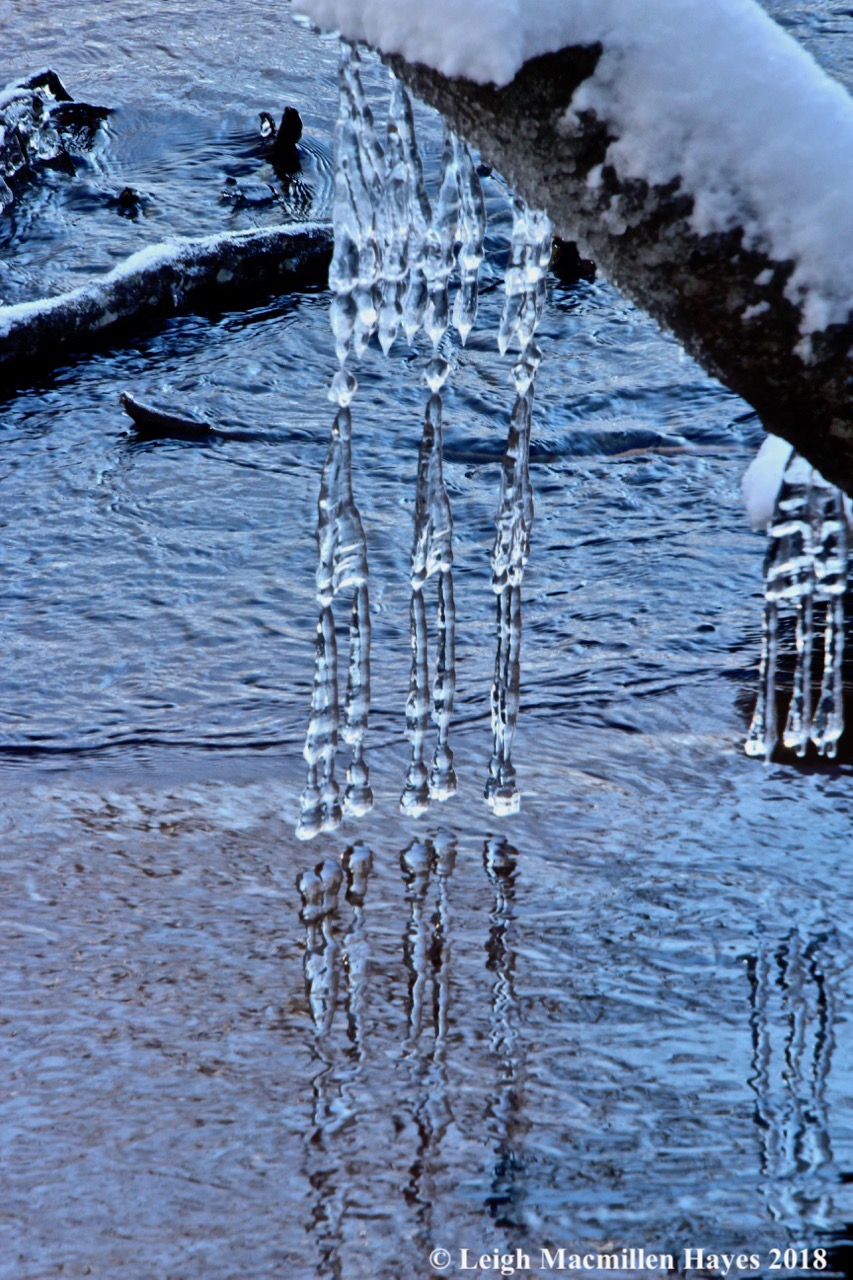
a11-ice chimes again

At the end of the day, however, my favorite reflection of all was one spied along Willet Brook in Pondicherry Park by Eleanor, a member of our morning AMC trek.

a9-ice chimes

Winter chimes. Winter reflections.


Tracker Tales

When I pulled into the Charlotte Hobbs Memorial Library parking lot this morning I didn’t expect any of the Greater Lovell Land Trust’s Tuesday Trackers to be waiting for me given that the temperature was at least -20˚. But, Jo Radner was ready and waiting. She joined me for the drive to the John A. Segur West property on New Road.

Standing in the small parking lot was Stephen Lewis, another diehard participant. And as  Jo and I fiddled with our snowshoes, Heinrich Wurm pulled in.

And so, we four intrepid trampers took off over the snowbank and immediately met some tracks. A little back tracking and attention to details helped us determine a bobcat had crossed the trail. There were red and later gray squirrel tracks, deer, and mice. Most were old for the animals, especially the squirrels and mice seemed to be hunkered down in their holes–certainly a good choice.

j-junco tracks and wing marks

By the time we reached the old log landing at the end of the trail, we noticed lots of junco tracks and their small wing impressions. Seeds aplenty were scattered across the snow. Our conversation soon turned from the little birds to an experience I had this past week when a saw-whet owl flew into a thick stand of hemlocks I was crashing through like a bull in a china shop. I had just finished saying that much to my surprise the bird flew in as I broke through the branches when one would expect a bird to quickly depart, when Steve pointed at something in our midst.

j-mouse discovery 1a

We all moved in for a closer look.

j-mouse discovery 2

A dead mouse splayed on the branch of a gray birch. My brain played with that sight over and over again. Yes, we’d seen numerous crazy mouse tracks left behind by either deer or white-footed mice–it’s difficult to determine which, for both have long tails that leave drag marks between their footprints. Jumping mice hibernate so they could be ruled out.  Jo asked if I could tell which of the other two it might be. I’m happy to say that even well-respected tracker Paul Rezendes, author of Tracking and the Art of Seeing, has this to say, “There are more than 120 different species of North American mice, and about half of them fall under the general rubric ‘white-footed mouse.’ The deer mouse is a type of white-footed mouse, and to me there is not perceptible difference in tracks. There are several anatomical differences, but these change from habitat to habitat. The white-footed mouse measures up to about seven and a half inches long (including its three-and-a-half inch tail) and weighs one-half to one ounce. Its color is gray or light brown to dull orange-brown above, with a white belly, throat, and, as its name implies, feet. The deer mouse is gray to reddish brown on its upper parts, including its tail, and white below, with longer hind feet and a tail usually longer than its body. Both animals have bicolored a bicolored tail.”

j1-mouse 1

Our next question was, “How did it get there?” My mind immediately went to a December 13 entry on page 419 in Mary Holland’s Naturally Curious Day by Day about butcher birds overwintering. Mary discusses how northern shrikes preferred food sources are other birds, mammals and insects. “This tundra-nesting bird comes as far south as New England in the winter, where it preys mainly on mice, voles, and small birds.” She goes on to explain that the bird often kills more than it can consume and leaves some food in the freezer for future feeding adventures. “The manner in which it stores this extra food is what gives it the nickname ‘butcher bird.’ It often impales prey on a thorn, broken branch, or even barbed wire, or it wedges prey into narrow V-shaped forks of branches, where it hangs until reclaimed by the shrike.”

Bingo! I think we figured out what we were seeing and in Mary Holland’s book we have my dear friend, mentor and former LEA and GLLT Education Director, Bridie McGreavy, PhD, to thank for the photo.

We could have turned around then, so thrilled were we, but we hadn’t even reached the wetland. And so, a quick check to make sure everyone was comfortable and on we trekked.

j-deer crossing Bradley Brook

When we found more deer tracks, we decided to follow them in search of beds. At that point we found no bedding areas, but did see that the deer had crossed Bradley Brook.

j-Bradley Brook frozen

It was the first time I’d ever seen the brook frozen over and we took advantage by making our way to the other side.

j-water on lungwort 1

We continued looking for tracks, but found other things as well, including dried lungwort. I mentioned that lungwort, like other bryophytes, will immediately photosynthesize when water is added. Jo wanted proof and so I had her pull out my water bottle and pour it over the leafy structure.

j-lungwort turning green

Within minutes . . .

j-lungwort magic

magic.

j-beaver works 1

As we crossed the wetland, we searched high and low for evidence of wildlife. Up high, chickadees and goldfinches sang from treetops. Down low–not a single track. We did find a few examples of beaver works.

j-beaver works 2

And we thought perhaps the lodges were active.

j-beaver works 3

We hoped.

j-checking the beaver lodge1

But our hope was dashed.

j-beaver lodge 2

No vent hole above and no evidence of life anywhere nearby. Perhaps they’d abandoned this for a second one we spied.

j-stone lodge

Only thing is that the second one also supported no mammal life at the moment, for it turned out not to be a lodge after all, but a boulder covered with snow.

j-beaver dam

Just beyond the boulder lodge, however, we found the old dam, which still stood strong.

j-sharing smiles at the dam

Our smiles were equally strong as we acknowledge what a fine day it had been and this would make the perfect turn around point.

j-Heinrich looking skyward

Jo and Steve took one last look at the brook below and Heiner turned his eyes skyward.

j-heading back

Heading back, we all did the same for we heard military planes flying overhead and could see their contrails.

j-looking north

But it was the cloud formation that really drew our attention.

j-clouds 2

Steve mentioned lenticular clouds and it seemed the perfect explanation given that these lens-shaped structures probably formed after the flow of air encountered Mount Washington.

j-mouse in tree crotch

Our journey back found us going off trail again, and we did find a couple of deer beds, but what will stand out in our brains for this day’s tramp–the mouse with the very long tail and tiny white feet. How it got there, we don’t know for sure, though the shrike story does make sense. What I am sure of is that it will become part of our tracker tales.


Book of November: Half Acre

I am so tickled for my friend and fellow naturalist, Sarah Frankel, who recently published her first book.

IMG_1906

Half Acre is a children’s book both written and illustrated by this talented young lady.

In rhyming fashion, she takes the younger set outdoors to explore her yard, which is a half acre in size. The size, however, is not important because Sarah knows how to look and to wonder. Or maybe in this case, it is important, because she wants others to realize that there are great things to find on their own small plot of land.

And now she and her husband are teaching their young daughter to do the same. Her hope is that the book will encourage others to step outside and notice as well.

In thirty-four pages, Half Acre explores the yard in all seasons and at different times of day. As much as I enjoyed the rhymes, I especially loved the paintings–of birds and leaves, flowers and bees, butterflies and trees, moss and ferns, night sky and nocturnal visitors, and so much more. Can you find the frozen tree frog? You’ll have to buy the book and look for it.

My favorite painting is the last one–with her house in middle, surrounded by snippets from each of the other paintings, like a sugar maple leaf floating in midair. There’s more to this painting though, for Sarah takes the reader through the four seasons at the house–in 8 x 6-inches, she begins with winter on the left and every two inches the season changes,  ending with autumn on the right. I wish I could share that with you, but you’ll just have to trust me and purchase the book. Of course, she used the same scene to introduce her half acre of land, but it really stands out in the final mural framed by small portions of all the other paintings.

IMG_1904

Since I’m on the topic of Sarah, though this isn’t a book, I was the recipient of one of her paintings. For the past four years, it has leaned against the wall on a counter in the butler’s pantry and makes me think of both Sarah and Mom.

Of Sarah because she knows winter is my favorite time of year and she included tracks in the snow, a starry night, full moon and a shooting star. When I was a Maine Master  Naturalist student, Sarah was a mentor. At that time, though she lived in Conway, NH, she worked at Lakes Environmental Association as the Education Director. And so, we’d drive to and from class at Bates College in Lewiston together. On our way home one night, we saw a shooting star. And many times we tramped together on snowshoes, following mammal tracks. I have to share one more fond memory–the spring night that it rained and we tried to dodge the frogs and salamanders as we drove home. Finally, we got out a few times and helped the sallies cross the road. We were tired from class, and it was a long drive home that night, but by helping a few, we forgave ourselves for the ones we’d smooshed.

Of Mom, because Sarah gave me the painting after my mother died at the end of January during the year I was taking the course–I’m forever honored by Sarah’s thoughtfulness.

Interested in purchasing the book and meeting Sarah? She’s got some book events coming up in the North Conway, New Hampshire area:

November 11th from 11am-3pm – A book signing at The Met Coffee House and Gallery during the Bring A Friend Shopping weekend.

December 2nd at 3pm – A book signing event at White Birch Books, the best book store around!

December 7th from 6-8pm – A book signing at the Adults Only Shopping Night at The Toy Chest. Shop for the holidays, get a copy of Half Acre signed for your little ones and pick your own discount on the way out.

December 9th at 10am – Read aloud, book signing and outdoor exploration at the Conway Public Library. What creatures can we find in the gardens and lawn of the Conway Public Library? Come and see for yourself!

I can’t wait to attend one of these, give her a hug, and ask her to sign my copy. And I may have to steal a kid to attend the outdoor exploration at the Conway Public Library.

Is there a young’un in your life? Then I think Half Acre should finds its way onto their book shelf.

Half Acre, written and illustrated by Sarah Frankel, LifeRich Publishing, 2017. And available at www.liferichpublishing.com, or a local independent bookstore.

Autumn Falls With A Smile

It seemed only yesterday the colors were rather on the dull side, not quite offering that magical tapestry we all relish. And then today dawned with a the mix of sun and clouds and occasional raindrops and a breeze and somehow the world transformed.

hp3-Holt Pond1

And I had the good fortune to take it all in at Holt Pond Preserve, where I traveled the trail with two friends. The leaves had gone on strike from their food producing summer job and we rejoiced in the result as they prepared for the dormant season that is on the horizon.

hp1-quaking bog 1

Gold, orange, topaz, crimson, salmon, ruby, gold green, yellow green, gold brown, green brown, gray, white . . .

hp2-swamp maples

even a hint of blue; it was as if we stood in nature’s paint store.

hp4-tire alley

As always when I look at paint chips, I had a difficult time deciding which color to choose.

hp6-tree tops

Stick with a deep red?

hp9-more skyward views

Lean more toward the greens and yellows with a hint of orange and red?

hp7-leaves in brook

Or go with a mosaic–intermixing all that was available?

hp11-button bush

And what about the decorative accents?

hp10-sensitive fern fertile frond

Again, I couldn’t decide . . .

hp13-fireweed

which was my favorite.

hp12-following friends old and new

Nor could my companions, JoAnne and Jen, and so we slowly moved about, filling our hearts and souls with the memory of it all by painting the scene in our minds.

hp17-Grist Mill Road

And smiling at the offerings.

“Autumn, the year’s last, loveliest smile.” ~ William Cullen Bryant

Poking Along Beside Stevens Brook

Raincoat? √

Notecards? √

Camera? √

Alanna Doughty? √

This morning I donned my raincoat, slipped my camera strap over my head, and met up with LEA’s Education Director Alanna Doughty for our reconnaissance mission along Stevens Brook in downtown Bridgton. Our plan was to refresh our memories about the mill sites long ago identified and used beside the brook.

Lakes Environmental Association maintains a trail from Highland Lake to Long Lake, which follows Stevens Brook’s twists and turns and passes by twelve power sites originally surveyed by Jacob Stevens in 1766.

s1-5th power site 1

We skipped the first mile of the trail and slipped onto it from the Route 302 entrance by the Black Horse Tavern, knowing that that will be our entry point for a walk we’ll lead with Bridgton Historical Society‘s Executive Director Ned Allen later this month. Alanna suggested I not pull out my notecards, and rather rely on my memory. Oh my.

As we made our way past the old trestle that once carried coal from the Narrow Gauge railroad to the Pondicherry Woolen Mill at the fourth power site (the other three are located between Highland Lake and the 302/117 intersection), we recalled that the now deceased Reg Fadden used to claim he knew the color of dye because as he walked to school each day he noted the color of the water. Scary thought.

At the fifth power site, we went off trail to look around a bit. The water flowed over the rocks with such force that sometimes we couldn’t hear each other.

s2-5th site-Narrow Gauge trestle bridge

Before us was another former trestle spot–this one being part of the track that carried the train across the brook and on toward Harrison as part of a spur from the main line.

s3-5th site, nurse log

In front of it, large trees placed years ago to prevent anyone from crossing the now gone trestle, served as a nursery to many species. But it wasn’t just what grew there that gave us pause–it was also the textures and lines that seemed to reflect the water below.

s-poison ivy 1

As we walked, we looked at the lay of the land and wondered about mill ponds and berms. We also noted the one plant we wanted to avoid–poison ivy.

s-poison ivy 2

It grows in various forms, but the safe thing to know is that the two opposite leaves have short petioles that attach to the main stem, while the third and leading leaf has a longer petiole. As the saying goes, “Leaves of three, leave them be.”

s7-6th site water power

Site number six is one that we’re not sure we’ll share on our public walk. It’s a wee bit of a challenge to get to and was apparently never developed–though we did note the drop and some stonework on the far bank.

s8-blue-stemmed goldenrod 1

Before we stepped onto Smith Avenue for the next site, a goldenrod shouted for attention. We tried to figure out how many rays it had, but as it turns out, that number can vary from three to five. The flowerhead formed a ladder that climbed up the stem and this is one that we should recognize going forth for its display struck us as being different than other goldenrods. We’ll see if we actually do remember it the next time we meet.

s9-7th site, Lower Johnson Falls 1

As is often the case, it took us about an hour to walk a half mile. At last we emerged onto Smith Ave, by Lower Johnson Falls. The curious thing would be to note which was faster–the water or us. I have a feeling the water might win, but perhaps another time we should test that theory.

s11-coffin shop

For a few minutes we watched and listened and took in the view of the only mill still standing. I suspect this building was constructed in the 1860s as a sash and blind factory. Eventually it became the coffin shop, where Lewis Smith, the town’s first undertaker, built furniture and coffins.

s13-8th site, sluiceway different view

For about a tenth of a mile we walked down Kansas Road and then slipped into the woods again. I think this site is my favorite–site 8 and former home of the Forest Woolen Mill. There were actually two Forest Mills, one on either side of the road and connected by an overhead walkway.

s15-8th site, sluice way from above 2

Today it was the sluiceway that drew most of our attention. First we looked down.

s12-8th site, sluiceway1

And then we climbed down–paying attention to stones, bricks, cement and rebar, all necessary to build a foundation that still stands today.

s17-piece dangling

Well, most of it still stands. We were awed by a piece that appeared to dangle at the edge of the sluiceway.

s16-tree root in sluiceway

And a root that wound its way around the same cement stanchion . . .

s14-hemlock atop cement

which happened to provide the perfect growing conditions for a hemlock.

s18-false Solomon's-seal berries

Crossing Kansas Road again, we ventured on. In a section under the current power lines we found flowers a many. The fruits of the false Solomon’s-seal looked like miniature strawberry and cherry-vanilla candies.

s19-winterberries

As we stepped onto a boardwalk across a wet area, winterberries glowed red and reminded us that the cold season isn’t all that far off.

s20-virgin's bower fruit, feathery plumes

It was there that we spied the feathery-fruited plumes of virgin’s bower,

s21-red-stemmed dogwood

red-osier dogwood berries,

s24-cat-in-nine-tails

and cat-in-nine-tails.

s22-cardinal flower

But our favorites: a cardinal flower still in bloom and . . .

s23-Northern beggar-ticks

northern beggars-tick.

s28-10th site, CMP above

We passed by the tenth power site, knowing we’d return to it on our way back. Instead, we stood below and looked up at the water flowing over the improved dam.

s27-water below 10th site

It was in this section that the brook dropped 25-30 feet and created the greatest power at one time. It was also here that the eleventh site was located and where a penstock once provided a way to get water to a powerhouse in order to furnish local homes with electricity.

s31-Alanna laughing by skunk cabbage

For us, it was a place to make more discoveries and share a laugh as we looked at the huge leaves of skunk cabbage.

s32-first witch hazel bloom

We also spied the first witch hazel flower of the season . . .

s33-maple-leaf viburnum

and a maple-leaved viburnum showing off its subtle fall colors.

s34-milkweed pods

In a spot just above the Central Maine Power substation, we found a garden of wildflowers including milkweed seed pods and . . .

s37-New England aster 2

New England asters offering a deep shade of purple.

s27-chicken of the woods

We also found some chicken of the woods.

s38-honey mushrooms?

And fruiting on the same stump, what I think was honey mushrooms (Armillaria mellea). I know a few fungi experts who occasionally read this, so I know they’ll correct me if I’m wrong with my ID.

s39-Stevens Brook outlet into Long Lake

The second half mile took us just as long as the first, and at last we reached the outlet into Long Lake.

s40-10th site, CMP dam

And then we made our way back, crossing over the bridge at power site 10, which was possibly the spot where Jacob Stevens, for whom the brook was named, built the first sawmill in 1768. We do know that in 1896, the Bridgton Water and Electric Company acquired the site and improved the dam. Eventually it passed on to the Western Maine Power Company and then Central Maine Power. In 1955, it was transferred to the Bridgton Water District. Through all the time, we could only imagine how the reflections changed.

s42-milkweed tussock moth caterpillar

To save time, we decided to walk along Lower Main Street as we made our way back. And to that end, our discoveries continued, for on a milkweed, Alanna first saw the chewed leaf and knew to look for the milkweed tussock moth caterpillar that was filling its belly.

s43-common snowberry

We also saw what I’ve always referred to as popcorn shrub because it reminds me of such, especially when I’m hungry for lunch. But really, it’s common snowberry. And not edible.

s46-northern white cedar bark

And then we found a tree that I didn’t know grew there–and I can’t tell you how many times I’ve run or walked by it: a northern white cedar with its scraggly striped bark.

s44-Northern white cedar 1

As much as the bark, I like the overlapping scale-like blue-green leaves.

All in all, our one mile journey took us just over two hours and we did recall some of the info about the mills without referring to my notecards. But what was even more fun was our wonder and awe as we made new discoveries while poking along beside Stevens Brook.

If you care to join us, the talk by historian Sue Black will be on Wed, September 27 from 5-7pm at LEA’s Maine Lake Science Center and the walk will be the next morning from 9-11. We’ll meet at Bridgton Historical Society on Gibbs Avenue for that. Be sure to register for either or both by contacting Alanna at the following address: alanna@leamaine.org.


From wet to sweat

“Will I need waders?” I asked before we departed from the Lakes Environmental Association’s office  early Wednesday morning.

Dr. Rick Van de Poll looked down at my hiking boots and said, “No, you should be okay if you don’t mind getting muddy.”

l1-into the fen

And so, LEA teacher/naturalist Mary Jewett and I joined him to begin a two-day survey of LEA’s Highland Lake Preserve. The 325-acre property was the gift of the David and Carol Hancock Charitable Trust. Except for two logging roads, there are no trails.

Our first destination was in the middle of the fen. OK, so Mary and I should have known better because we know how much it has rained this summer. But really, it was quite hot that morning and our feet did get wet.

In fact, she found a deep hole on the way in.

l1-fen plot

Once reaching the plot, our tasks were several.

l1-flag

We helped delineate the boundary with measuring tape and flagging, the first being 10 meters by 10 meters, and then found the center, thus creating four quarters.

l1-Rick 1

Under Rick’s patient guidance and teaching, we began to survey the site, section by section, while he recorded our findings.

l1-measuring trees

Trees were first and needed to be measured to make sure they were trees after all, and not considered saplings.

l1-rhodora 1

Layer by layer, including shrubs,

l1-tamarack

seedlings,

l1-round leaf sundew 2

and herbaceous ground cover,

l1-round-leaved sundew 1

we made our way down.

l1-wasp pupa on hornworm 1

Along the way, other discoveries presented themselves, including wasp pupae on a hornworm,

l1-garden spider 1

black and yellow garden spiders,

l1-garden spider 2

weaving their signatures,

l1-eastern pondhawk

eastern pondhawks,

l1-eastern pondhawk 1

up to the measure,

l1-green frog

and of course, green frogs.

Swamp Thing

Four hours later I found a deep hole as we departed that plot. We slogged out, water swishing in our boots, and quickly ate lunch.

l2-hemlock plot

And then it was back into the woods for the afternoon, this time a hemlock grove. On the way, we marked off a site for Thursday’s work, before reaching our destination for the afternoon.

l2-surveying the site

This plot was 10×20 meters and so within we had nine smaller plots to examine in the same manner.

l2-squirrel bites

Though we identified all the species from top to bottom, we also noted more cool finds like squirrel chews on a striped maple,

l2-glue crust fungus

a crust fungus that acts like a glue and attaches dead wood to live,

l2-spotted wintergreen

and spotted wintergreen, listed as S2 meaning this: “Imperiled in Maine because of rarity (6-20 occurrences or few remaining individuals or acres) or because of other factors making it vulnerable to further decline.”

l3-plot 3 (1)

I had to miss the Thursday morning session due to a GLLT hike, but met Rick and LEA’s education director, Alanna Doughty, as they finished their lunch. I think they extended it a few minutes as I was a wee bit late. This time, Alanna and I sat on the tailgate of Rick’s truck as he drove down a logging road–I, of course, held on for dear life, while she nonchalantly acted like it was a walk in the park. The best part of the ride was the smell of sweet-fern that our feet occasionally dragged over. And then our march began with a short trek through a wooded forest, before we reached the highbush blueberries and other shrubs that acted like hobblebush and made for careful movement.

l3-black and red spruce 3 (1)

The first afternoon site was in a black spruce bog and for once, I could confidently differentiate between black and red as they stood side by side–both by their colors, the black having a blueish hue, while the red was more yellowy-green, and their gestalt.

l3-cinnamon and chain ferns

One of my favorite learnings from that plot was the difference between cinnamon fern and Virginia chain fern. Again, they were easy to ID by their colors, the cinnamon already dying back. But notice the similarities.

l3-chain fern

And then we looked at the back side. While cinnamon has a separate fertile frond that forms in the spring and then withers, chain fern’s sporangia are oblong and on the underside.

l3-chain spores 2

The area was thick with the chain ferns and our every movement meant spores flew through the air.

l3-pitchers (1)

Every movement also meant we had to watch our every step, for so numerous were the pitcher plants. It was a great opportunity to ask Rick about the color of these–I’d been told that green is rare, but he said it’s just a matter of sunlight and age, all eventually take on a redder hue in veins and then overall leaf coloration as they mature.

l3-pitcher plants

Their flowers were also plentiful in this lush space.

l3-chanterelle waxy cap 1

Among other things, Rick is a fungi expert (and an overall fun guy with corny jokes–the mark of a teacher), and so our learnings were plentiful, including these chanterelle waxy caps.

l4-plot 4 (1)

After making our way back out through the tangle, we hopped back onto the tailgate for a short ride and then headed off into a mixed forest for the final 10x 20 plot.

l4-deer skull

Our cool finds in this one included a much gnawed skull,

l4-orchid

and spotted coral-root.

l4-bristly clubmoss

I also learned to ID one clubmoss–bristly tree so named for its bristly stem.

l4-back up the road

It was dinner time when I again held on for dear life as we drove up the road. To say we were sweaty, stinky, hungry and pooped would be an understatement. By the same token, I think I can speak for Mary and Alanna to say that we were more than grateful to have spent so much time learning from Rick. From wet to sweat–it was well worth the effort.


Making a Wish–Kyan Style

In May 2016, our young next-door neighbor was diagnosed with acute myeloid leukemia, which attacks immature blood cells. I’ll never forget that day or those following as we watched his parents drive by our house either coming or going to the Barbara Bush Children’s Hospital in Portland, where he underwent two rounds of chemotherapy treatment.

We felt at a loss–what could we do for them while they underwent this life-wrenching ordeal.

Our steps were tiny. First, we tied orange ribbons around the big old sugar maple tree in our front yard and then snuck into their yard and did the same around all the trees that lined their driveway. It was the beginning of saying, “We’re thinking of you.”

We offered to cook a meal and mow the lawn, and even started to head over and do the latter but as it turned out, those were common, every day acts that Bill and Binaca, Ky’s parents, cherished because in that moment life was almost normal again. Sort of.

My next step, since orange is the color that represents leukemia, was to post a photo of something orange found in the natural world on my Facebook page each day. It was a small token, but a way to let Ky, his sister Quinn, and his parents know that they were in our thoughts and prayers. I did notice that though his mother “liked” most, the yuckiest ones were the ones that evoked a comment from Kyan. Typical tween–in a way.

After a spring and summer of ups and downs, the decision was made for a bone marrow transplant. And a donor was located–in the Netherlands. A year ago yesterday, Binaca and Kyan headed to Boston Children’s Hospital to begin the process. That journey was long, for Ky had to be quarantined, and even after they came home, life was different.

I do remember Halloween of last year–I don’t recall how long Ky had been home, but he was given the OK from his doctor to go trick-or-treating, as long as he stayed well covered. It was the first time he’d been with friends since May. When he, his sister and their friends came to the door, the sweetest voice to my ears said from within a Scream costume, “Hi Mrs. Hayes.” I’m not terribly fond of Halloween and costumes–it’s always creeped me out a bit. But for once, I wanted to rejoice and hug that Scream. I didn’t. First, it was a germ thing on his end and he had to be super careful. And second, I would have embarrassed him to pieces.

After that, occasionally I’d see Ky and his family as they rode through the woods on their quad, but he was always covered by a helmet. Still I was happy to see him out. And then this spring, my heart melted when I looked out one day and saw him passing by on his scooter. At first he didn’t go far, but soon he and his sister were off on adventures.

And then last night I received a message from his mom telling me that today he’d be granted a wish from Make-a-Wish Maine and asking if I’d be available to take some photographs. Um, yes!
k-make a wish in progress

When I arrived this afternoon, I was surprised to see so many cars lining their driveway as it was my understanding that this would be a quiet affair at his request when they were in the talking stages of this project. But, the Make-a-Wish people had collaborated with folks from the Sustainable Forestry Initiative to fulfill Kyan’s dream. And all hands were on deck to pull it off.

k-ky's sign

He wanted a cabin of sorts. It began as a treehouse in his mind, but morphed into something a bit larger after he’d watched HGTV’s Tiny Houses. Only, as he said today, he thought it would be much smaller that what the collaborators created. Of course, his mother was hoping for a trip to Hawaii or, being a huge Tom Brady fan, maybe a Patriots game. But this was Kyan’s wish.

k-Bill and Quinn waiting

While his dad and sis waited for Kyan, his mom and his dear friend to return from a birthday adventure to Vermont . . .

k-setting up camp

as quickly as they could, the Make-a-Wish team put everything in order.

k-sweeping house

The floor was swept . . .

k-setting the sign

door locked, banner posted . . .

k-finishing touches

and final sweep made.

k-make a wish and camera crew

And then the waiting . . . his arrival imminent.

k-partnerships

In the meantime, collaborators posed–Kate Vickery, Senior Program Director of Make-a-Wish Maine and Pat Sirois, state coordinator of the Sustainable Forestry Initiative Implementation Committee in Maine.

k-roberta scrugg

For me, it was a fun time to catch up with Roberta Scruggs on the left, Communications Director for the Maine Forest Products Council, who used to work for Lakes Environmental Association.

k-packed driveway

Finally, the moment everyone had been waiting for arrived. Word came that Binaca was in the neighborhood and Bill and Quinn went off to meet her. The rest of us kept our eyes on the driveway as we waited for them to pull up.

k-blindfolded

Bill had blindfolded Kyan (and we later learned that Ky was sure his father had used old underwear to do such), and guided him forward where two Make-a-Wish folks quietly took Kyan’s hands.

k-removing the blindfold

A minute later they told him he could remove the blindfold. And his awe began.

k-kyan reacting

Kyan’s not the kind of kid who’s going to jump up and down. But to say he was thrilled and overwhelmed would be an understatement. And by his father’s T-shirt, can you tell who the superhero is?

k-ky entering

At last Ky entered his new digs.

k-ky from new bed

And peeked out from the loft.

k-ky interview prep

After he’d walked in and out and in again and up and down the two sets of stairs a few times, and around the back, the news teams stepped up–eager for an interview.

k-ky interview 1a

With a smile that never left his face, he answered a myriad of questions.

k-camera crew

For a kid who doesn’t like to be the center of attention, all eyes were focused . . . on him.

k-ky interview 2

All the while, he kept looking back at his “kabin.”

k-ky interview 1

He never once wavered in a response and the smile never left his face.

k-kyan interview 3

But his eyes–oh were they focused.

k-binaca interview 5

His mom was also interviewed and in her usual and beautifully reflective manner recalled the past year and a half.

k-Binaca's look

Sometimes the emotion of the day shown through.

k-binaca interview 1

But the strength of her character and thankfulness for all blessings flowed through her being.

k-binaca interview 4

As her interview continued, Kyan chatted briefly with his dad and then I noticed that he and his sister and his friend and her friend bee-lined into their home. I suspect they were on a mission to find stuff to make the kabin their own.

k-the house awaits

Kyan’s Kabin.

k-wish team 2

The Make-a-Wish Maine crew with Kyan and family.

k-ssf 2

The Sustainable Forestry Initiative crew, Kyan, family and friends.

k-bill showing his thanks

Hugs . . .

k-bill thanking everyone

and handshakes.

k8-couch and bunk above (1)

And a quick peek inside, where a sitting area awaits,

k6-stairway (1)

two sets of stairs lead to two lofts,

k3-Quinn's bed? (1)

and I suspect his sister has claimed one,

k4-Ky's bed and doggy bed (1)

while the other is for him and his dog. (Actually, I’m thinking that when he’s in school, maybe I can meet his mom there–don’t tell. We can start our own klub.)

k-make a wish sign 1

As of August 17, Kyan will be one year into remission.

k-balloons

Certainly a reason to celebrate. And I think I know where Ky’s sleeping tonight.

A Generous Wander

When I donated a guided walk to a recent Lakes Environmental Association fundraiser, I was a wee bit nervous. Would anyone bid on it during the silent auction? And who might bid?

Thankfully, Carol notified me right away that she’d been the high bidder and my relief was immediate. I knew we’d have fun and the offer brought in a few bucks for an organization that has been near and dear to my heart for a long time. She chose the date, time and location. Plus she got to invite some friends along for the journey.

b-Kathy's sign 1

The chosen place–one of my favorites–Brownfield Bog. We started at the shack, where I pointed out Kathy McGreavy’s tiled map. Of course, they were wowed.

b-heron

And then we followed a short spur from the parking lot for the first view of the bog and a great blue heron flew up and then settled again.

b-buttonbush

It was there that they first viewed a buttonbush. Or at least that it first made its presence known, for I think that so many things we see often and they blend into the landscape until that moment when our eyes are opened–and our minds as well.

b-color 1

We followed another spur and noticed a sampling of fall foliage along the bog’s edge. In our minds it was swamp maple, aka red maple–or so we thought for a bit.

b-interrupted fern

At a fork in the road, Carol, Marylou and Sara chose the left-hand turn and so we entered the land of the ferns. It was here that they began to familiarize themselves with royal, cinnamon, interrupted and sensitive–noting features in their forms to tell them apart. While we walked, and at times we walked quickly for the mosquitoes were ferocious, it was fun for me to listen as they quizzed themselves.

b-meadowsweet

In a field at the end of the road, the spireas bloomed and we looked at the branching structure of meadowsweet with blossoms slowly opening in dainty clusters.

b-Saco River 2

When we reached Pirate’s Cove along the Saco River, we paused for a bit.

b-alder-leaf buckthorn 1

It was there that Sara spotted a shrub I couldn’t identify until I arrived home and slowed my brain down.

alder-leaf buckthorn2

The leaves were alternate and simple, with deep veins. But it was the color that stopped us–for it was a deep green, almost bronze on some. And we’d missed the flowers, but the fruits were spherical and when Sara opened one, she found three seeds. Turns out it was an alder-leaf buckthorn. And as far as I remember, it was the only one we spotted. But . . . as I said earlier, our minds were open and let’s hope it made an impact and the memory  lingers.

b-yellow loosestrife

We finally left the river area and as we started back on the road, they asked me to name a flower. I knew when I said its name I was wrong, but I couldn’t pull the real name out of the depths of my brain. So here ’tis–yellow loosestrife.

b-raccoon prints

Making our way back to the main road through the bog, we saw handprints in the mud and knew a raccoon had passed before.

b-Pleasant Mountain 2

Back at the intersection, we turned left and journeyed on, noticing all the pickerelweed and water lilies at the lower layer and changes in vegetation leading all the way to Pleasant Mountain.

b-meadow rue

It was along this route that we stopped most often, sometimes for things we knew like meadow rue

b-steeplebush

and the other spirea, steeplebush–these presenting several renditions of the same theme.

b-elm

We spied an elm tree and reminisced about elms of the past.

b-willow gall

And then a few willow galls shaped like pinecones called to us. This was a new one for them and though I couldn’t remember that the creator was a midge larva, the gall struck them as being a fruit, especially as we broke it open. Had we opened one in the winter, we might have seen the maggot nestled within a chamber at the center of the structure. In the spring a female midge fly lays a single egg in a terminal bud, initiating the gall formation through a chemical reaction causing the leaf tissue to harden into the shape of scales.

b-maleberry 1

I got stumped again when we kept seeing fruits on long stalks, with last year’s growth among the offering.

b-maleberry fruits 2

Once at home, I spent some more time with Michael L. Cline’s Shrubs of the Northern New England Forest, and realized it was a maleberry.

b-witherrod1

Another shrub that was plentiful throughout our journey was the witherod, aka wild raisin, its fruit ovoid in shape, turning blue as they withered.

b-swamp milkweed 1

Adding a splash of fuchsia along the way, swamp milkweed with its upright umbels.

b-silver maples 1

And then the other color that we’d noticed along the perimeter of the bog earlier and thought was red maples. Turns out those trees are silver maples and the ones with the wettest feet seemed to have already shut down their sugar production, thus allowing anthocyanin to form. This happens when sugar gets trapped in a leaf after the chlorophyll is gone and the leaf is exposed to sunlight–the resulting color being reds and purples.

b-silver maple 3

As hot as the day was, these presented a taste of the future. Some years they seem to turn earlier than others and this seems like one of the early years.

b-three amigos 1

At last we reached a turn-around point and these three amigos posed for a photo–Sara, Carol and Marylou.

b-picking blueberries

Of course, we only walked a few feet on our way back when high bush blueberries begged to be noticed. And gathered. And eaten.

b-carrion flower

Our journey back was much quicker, but still we stopped occasionally. Again I was stumped when one in the party spotted this vine. Turns out its the vine and fruit of carrion flower–one that I had never heard of before. (You know what that means.) According to Newcomb’s Wildflower Guide, the green flower is ill-smelling, apparently giving rise to its common name.

b-yellow-legged meadowhawk female

Though the mosquitoes were plentiful, more so at the start than the finish, we didn’t see too many dragonflies and I’m not sure why. But this female yellow-legged meadowhawk did pause briefly.

b-checking out the map

Back by my truck, we stopped again. While Sara went in search of the white and red oak trees and their different leaves, Carol and Marylou studied Kathy’s map as they figured where we’d traveled.

It was a glorious adventure–for me anyway. A casual ramble filled with good cheer and conversation. Thank you, Carol Nugent, for your generosity in support of LEA to make this wander possible. I hope the three of you enjoyed our time together as much as I did and took some of Brownfield Bog home in your hearts.