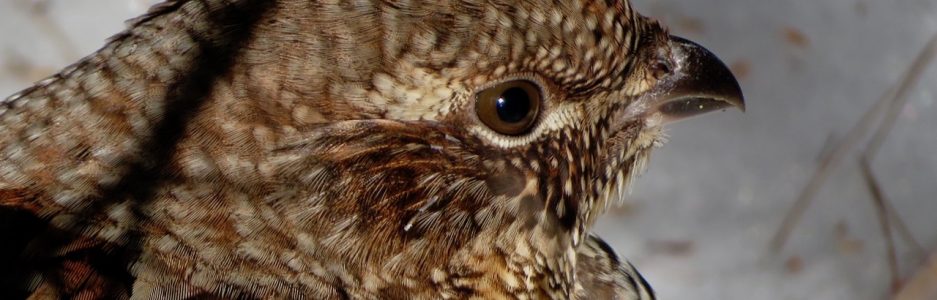
While it wasn’t the first Mondate I wrote about, one of our early Mondates in the past year occurred at the Greater Lovell Land Trust property we headed to today–Back Pond Reserve in North Waterford/Stoneham.
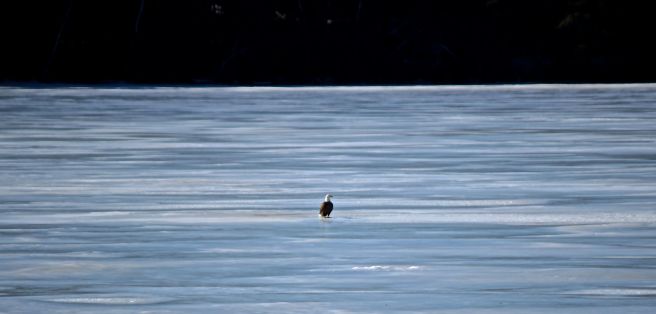
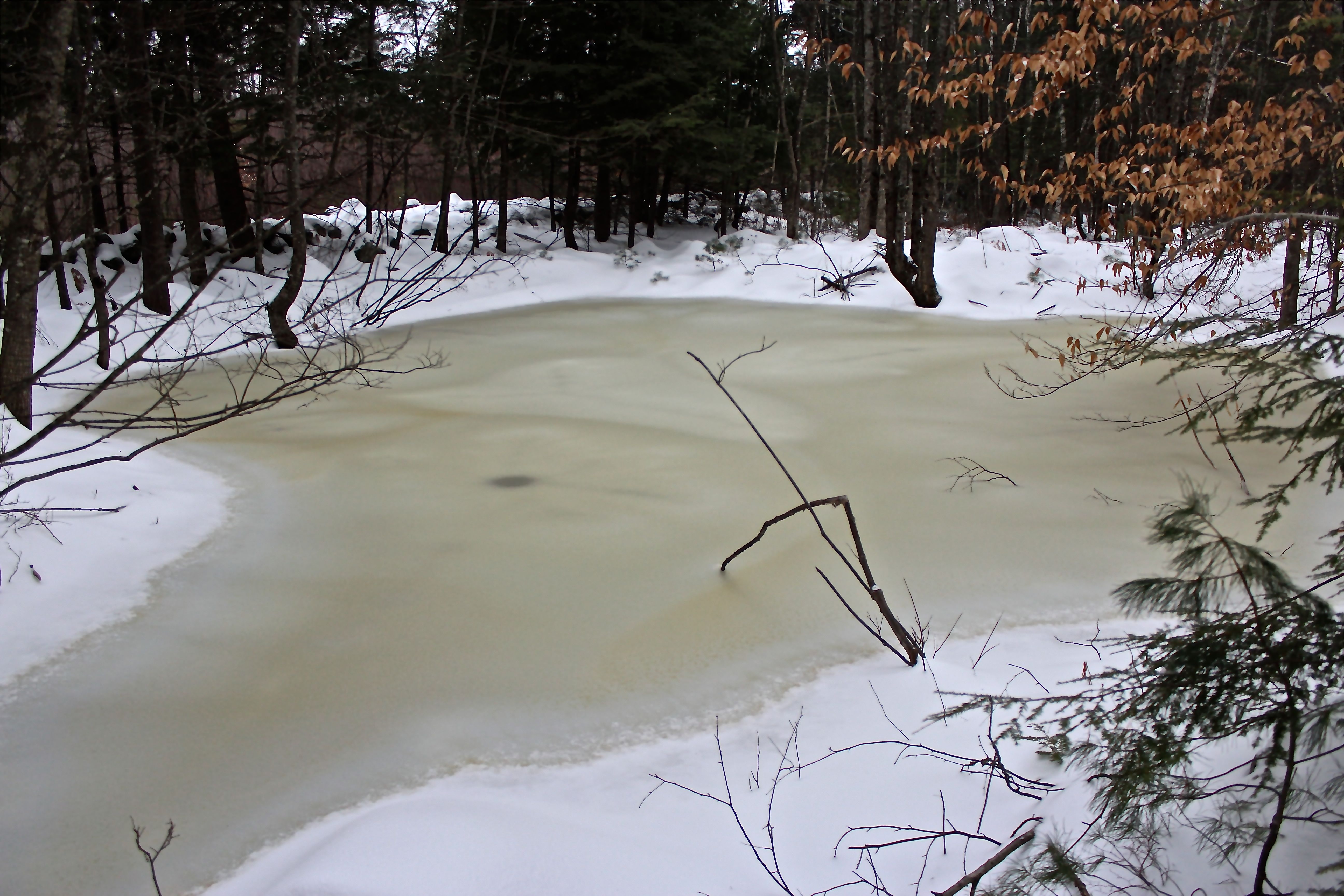
On our way we were forced to stop by Bear Pond for a regal sight.

And another regal sight along the trail–I’ve given thanks to Ron before and I know I’ll thank him again (RIP Ron) for his foresight in encouraging the greater community to protect the water quality of the Five Kezar ponds by purchasing and placing “The Mountain” area in conservation easement.
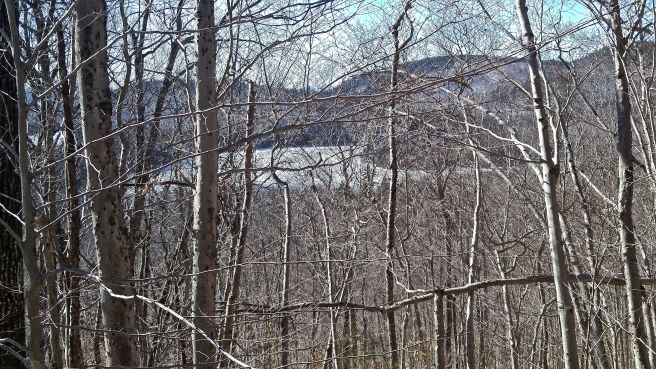
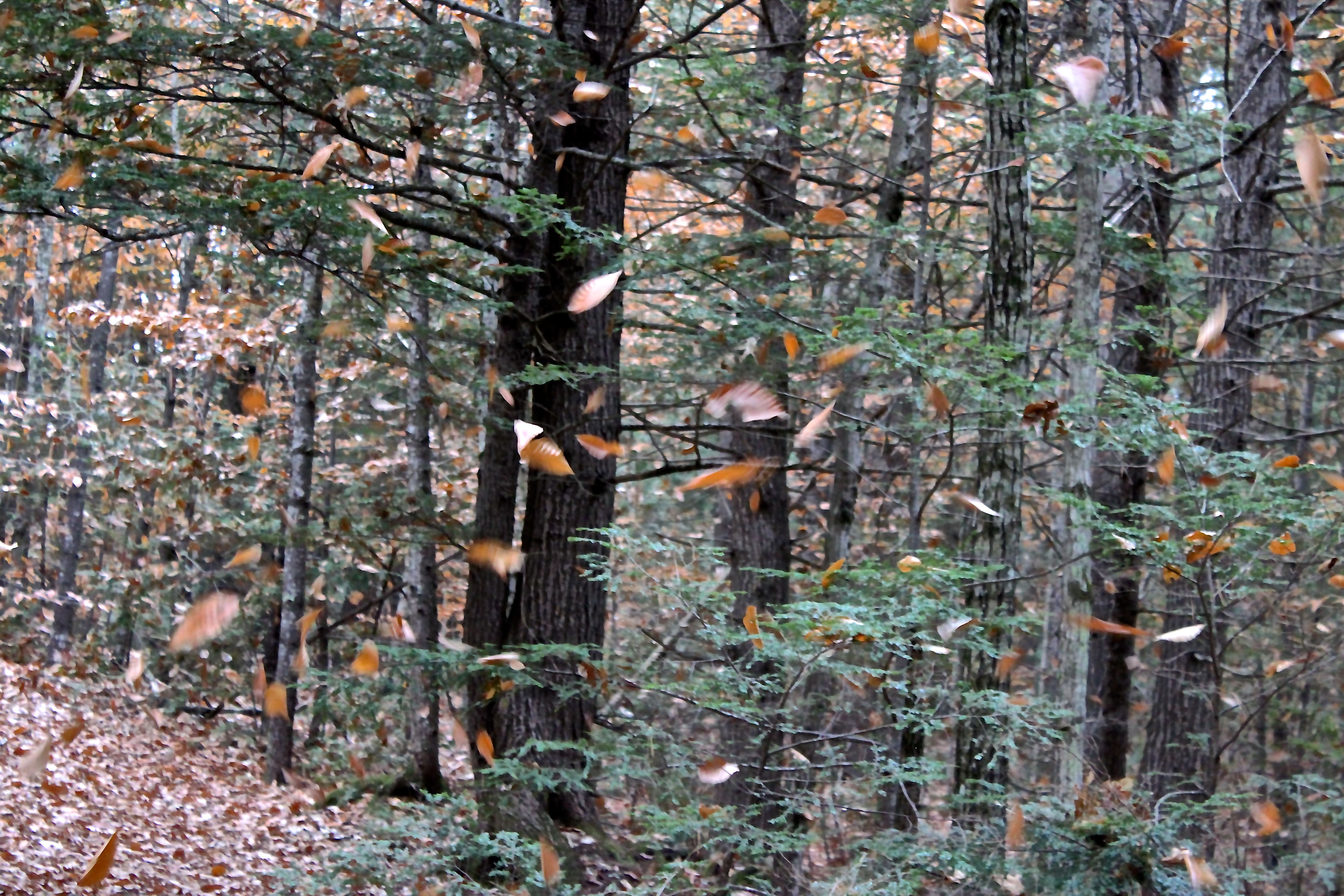
As we climbed through the beech/oak forest, I paused to take a photo. Lo and behold, my camera didn’t work. I was certain I’d charged the battery, but it wouldn’t click. I tried a back-up battery to no avail. Frustration set in, but my guy reminded me that I could always take photos with my phone. I’m not one-hundred percent convinced that I’ve mastered phone photos, but decided it was better than nothing. This meant, however, less time focusing on photos and more time focusing on us. And that got me thinking about time. We were on a bit of a time crunch today, but the more important thing was that we were spending our time together doing what we love doing–hiking and being in each other’s presence. We spend so much time worrying about all that needs to be done and making money to do those things. But really, in the end will that matter? I don’t think so. I think it will be far more important that we learn to appreciate what is around us and figure out how to share that wealth with others. It won’t always have a monetary value attached because as they (whoever they are) say, “Money isn’t everything.” Is money anything? It certainly doesn’t grow on these trees. Or does it?
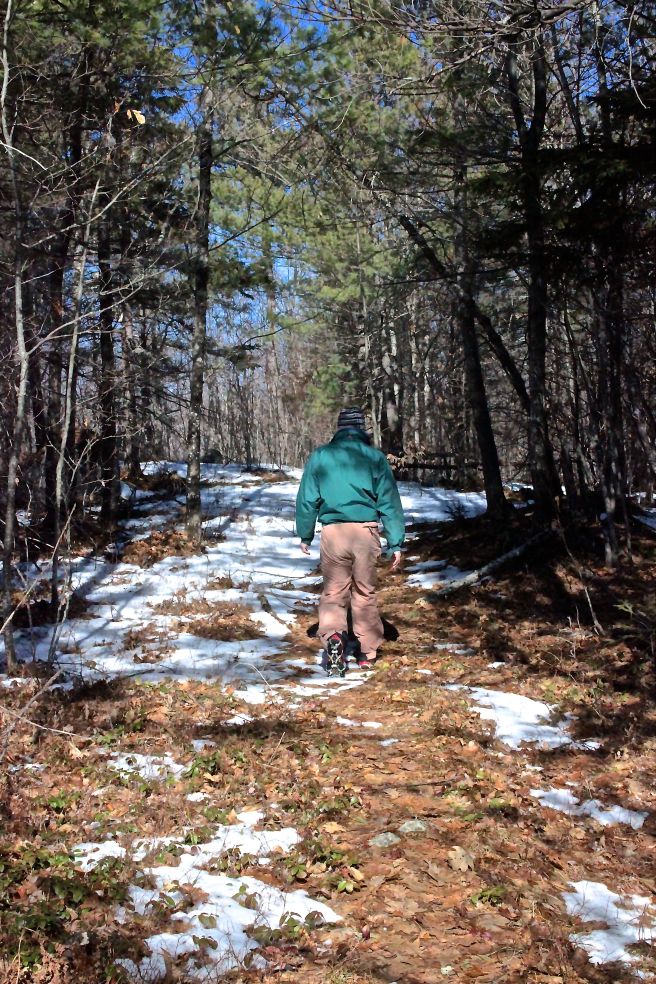
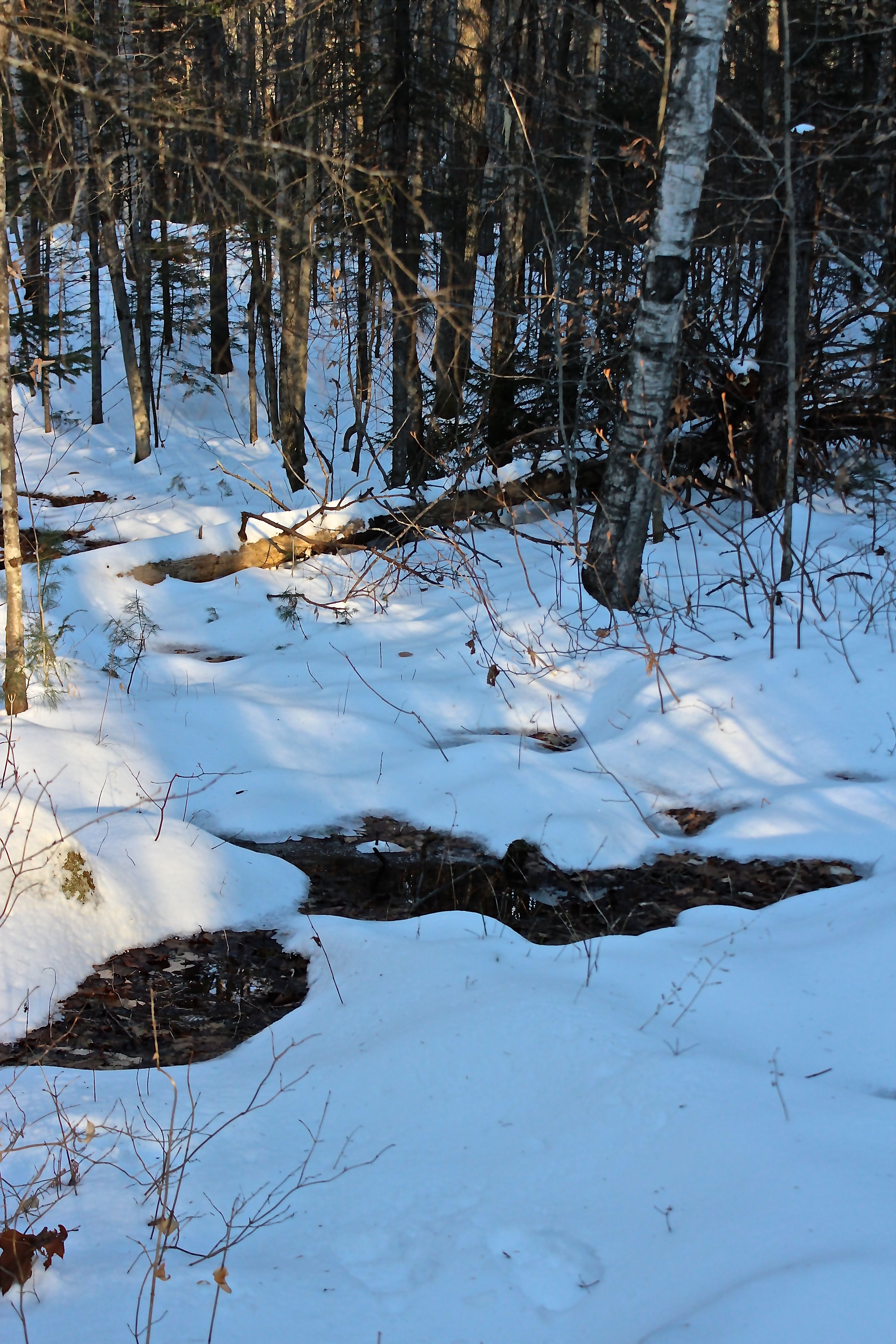
Though there was snow underfoot for most of the beech/oak community as we climbed, under the hemlocks it was a different story.

And when we reached the summit of The Mountain Trail, nothing but bare ground due to its southwest orientation.

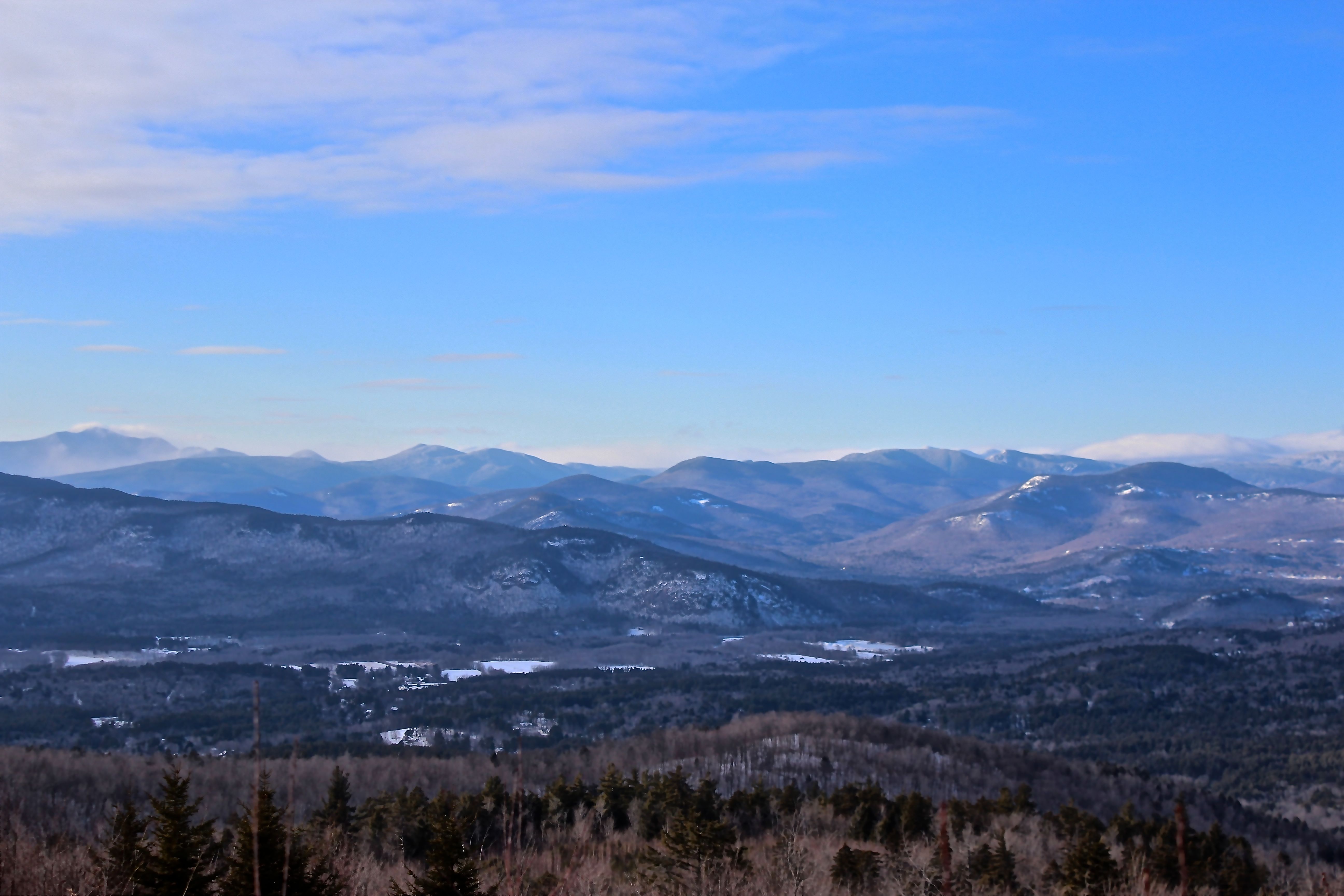
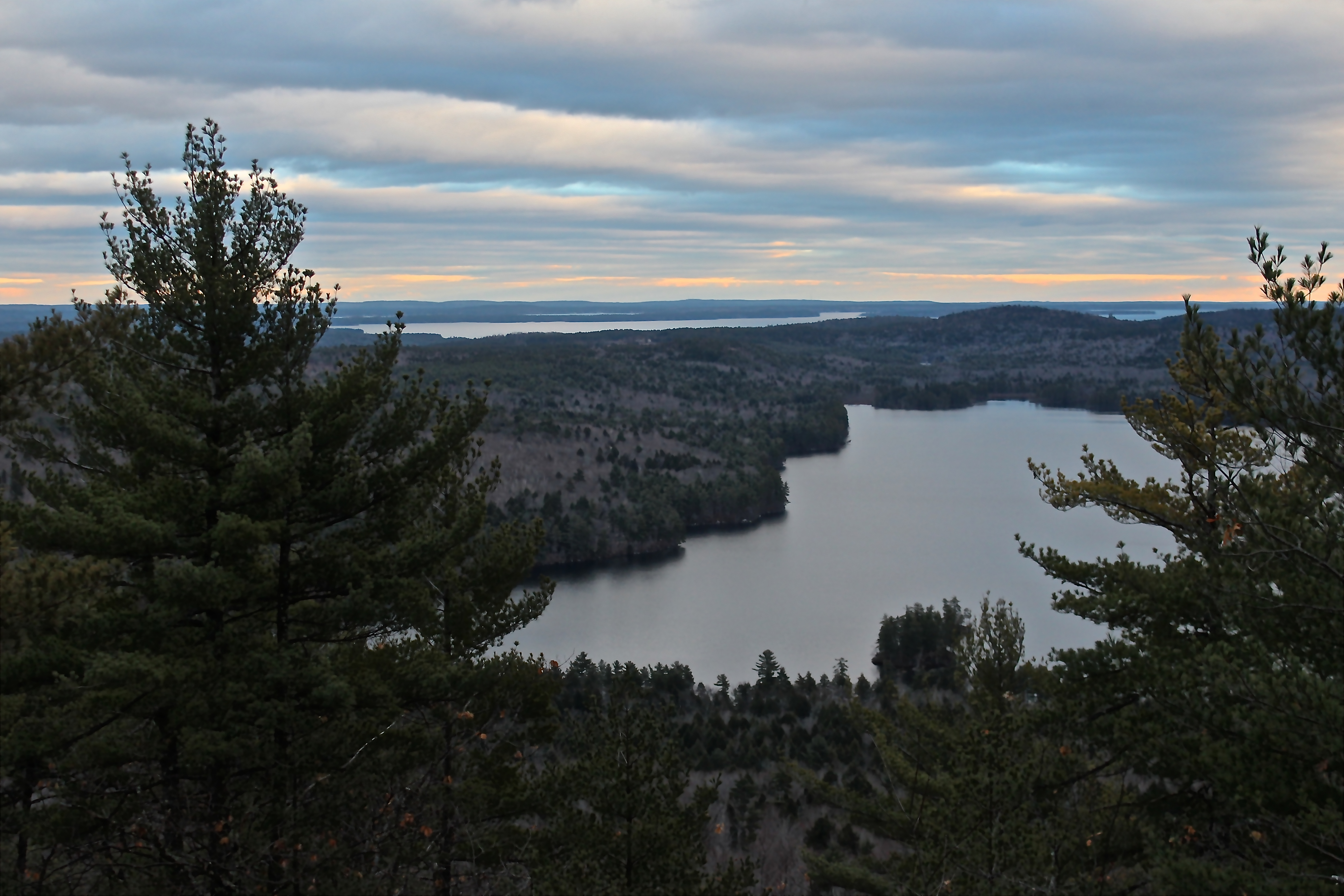
We sat on a rock and enjoyed the sun while absorbing the view below and beyond. With the phone I captured the moment.

And then I pulled out my camera again. Determination is the name of my game. Turns out I’d been wearing mittens as we began and my big muffs must have hit the wrong setting–creating a 10-second time lapse. Had we wanted to pose for a photo we would have been all set but that’s not our style. Hardly a selfie in our photo album. It is curious to notice the difference in color and wider range of the phone photo. But I prefer my Canon.

Near the summit, trailing arbutus announced its future plans.

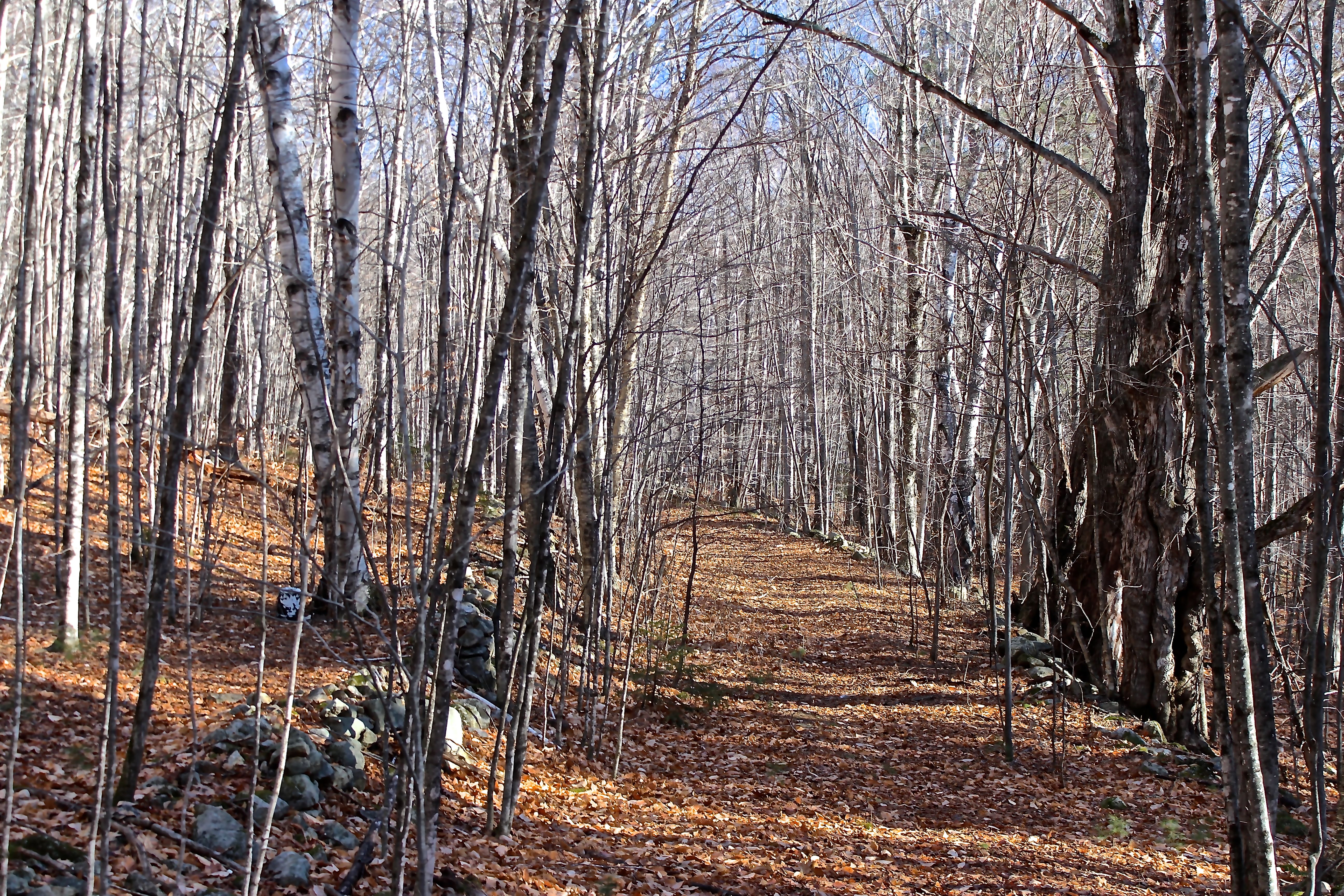
While trail maps show The Mountain Trail and Ron’s Loop, we long ago learned by chance that the two are connected via a trail down the backside. Today we reminisced about the first time we ever traveled this route and how we struggled to find our way. Though it still has its share of obstacles, it’s now much more obvious.
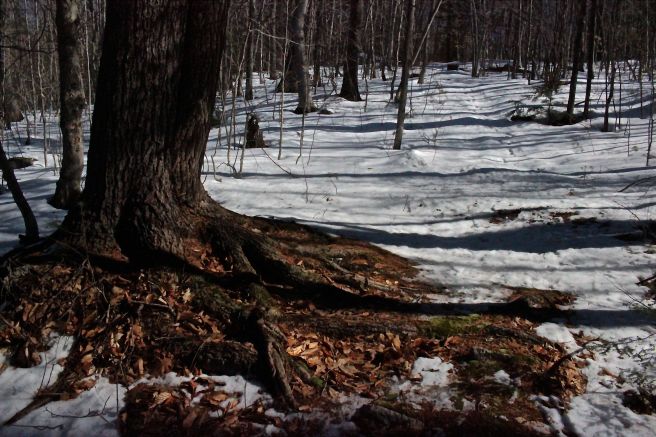
The community changed from evergreens to hardwoods with occasional evergreens. And with that, the snow conditions also changed. We paused below this hemlock to admire the subtle transition.
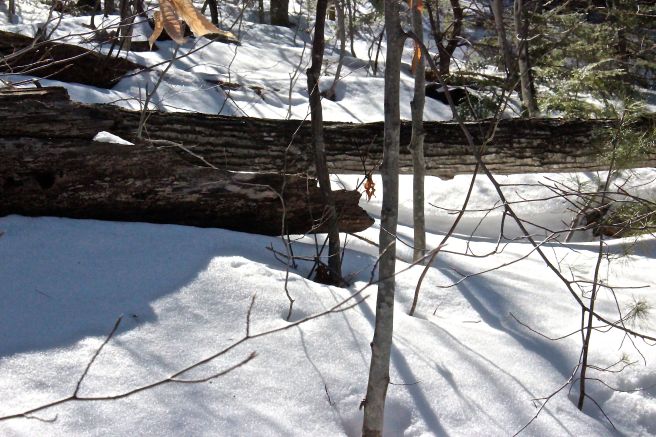
And we recalled our delightful experience of observing a hare in this very spot almost a year ago.

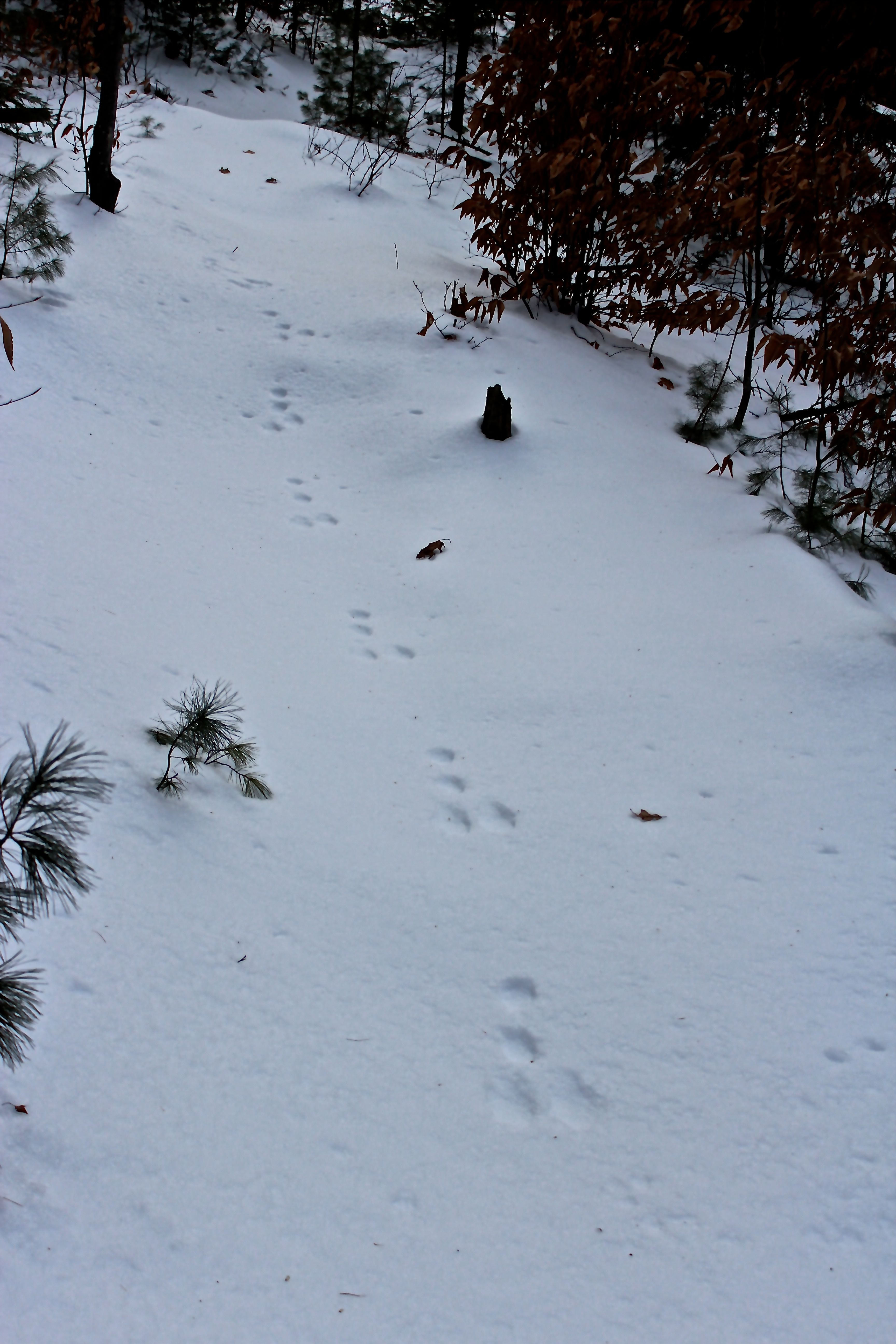
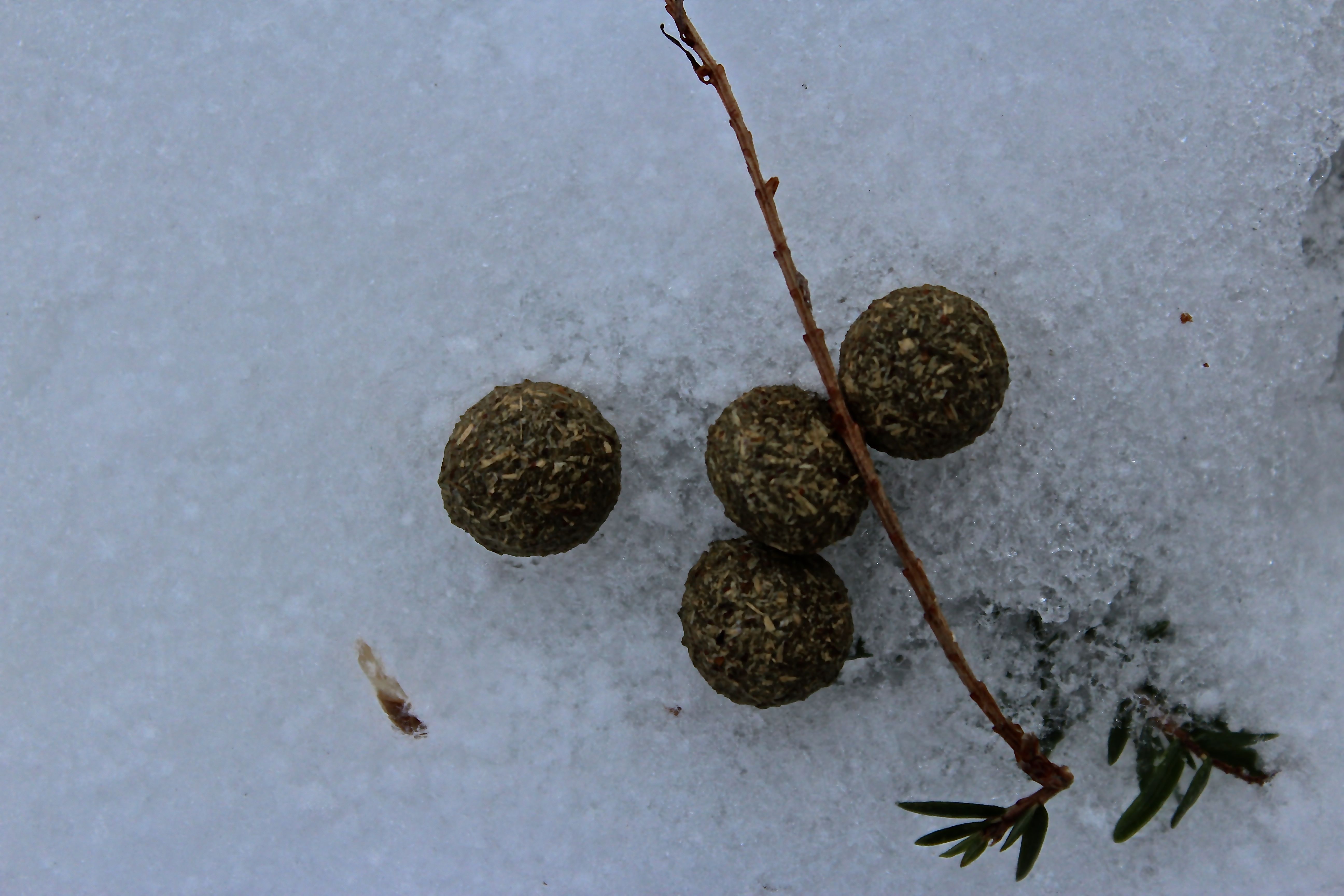
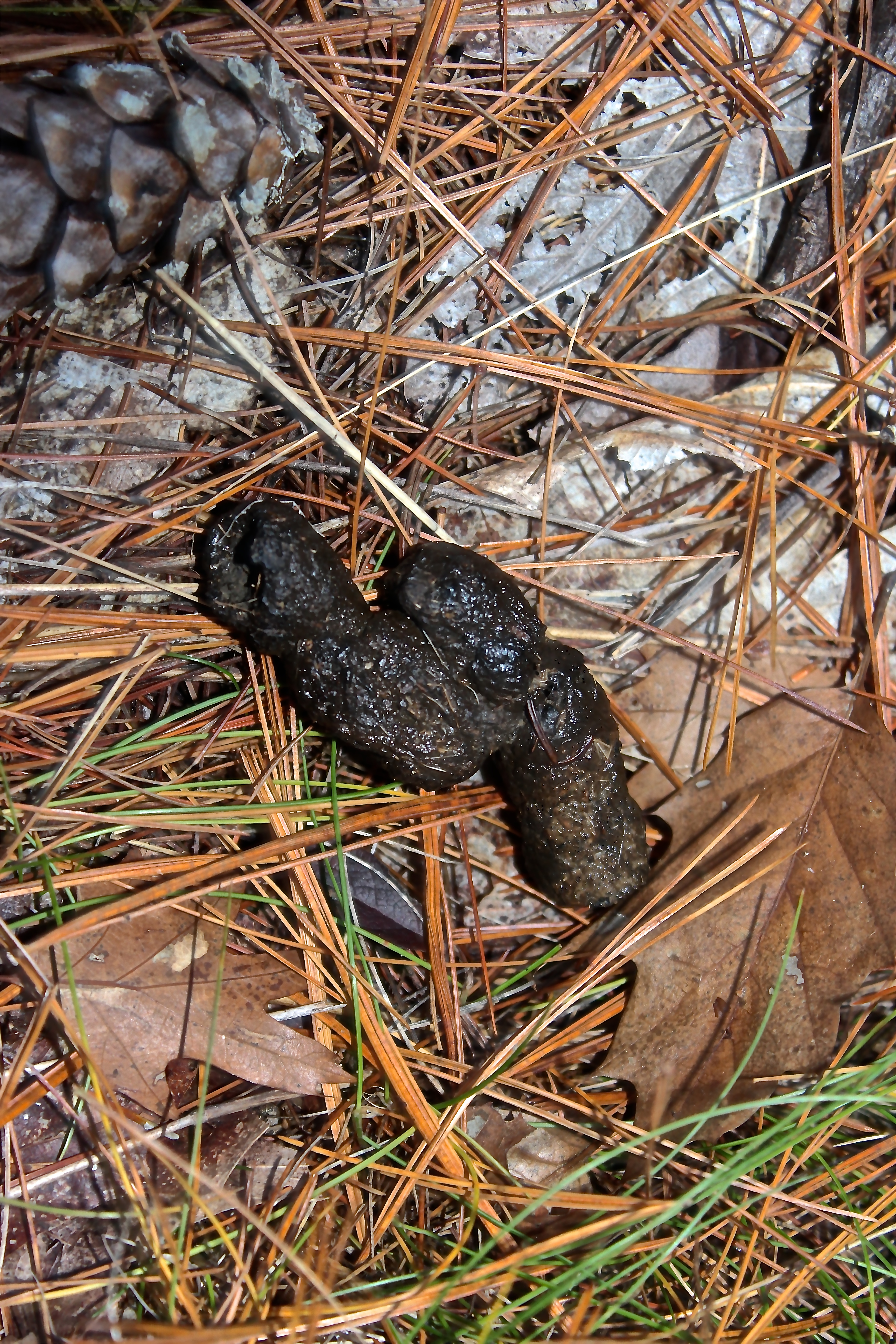
Today only tracks and scat alerted us that hares live in the neighborhood.

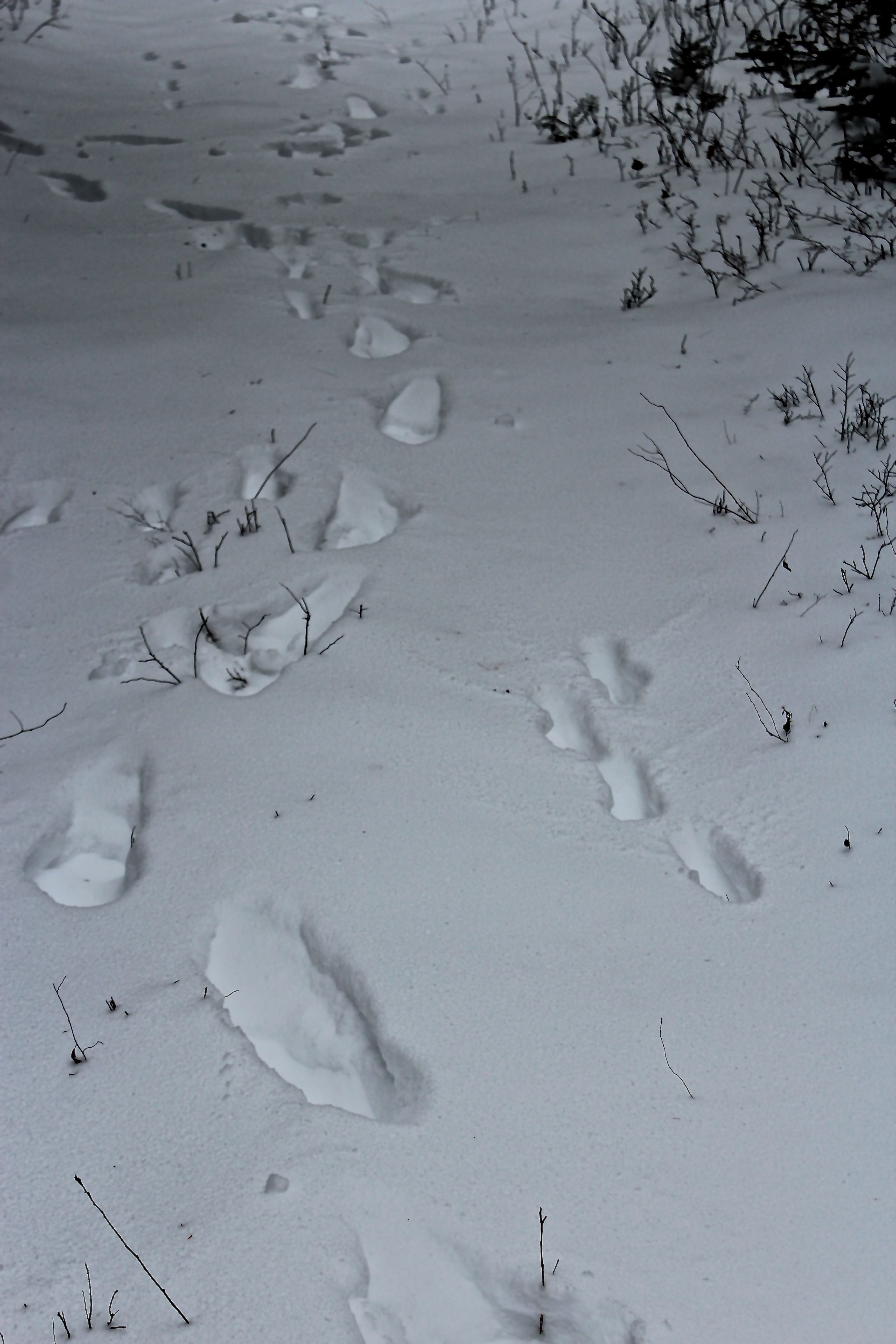
Hare tracks weren’t the only ones we saw. All along the trail, though not quite as clear, we recognized that a bobcat had made a pass.
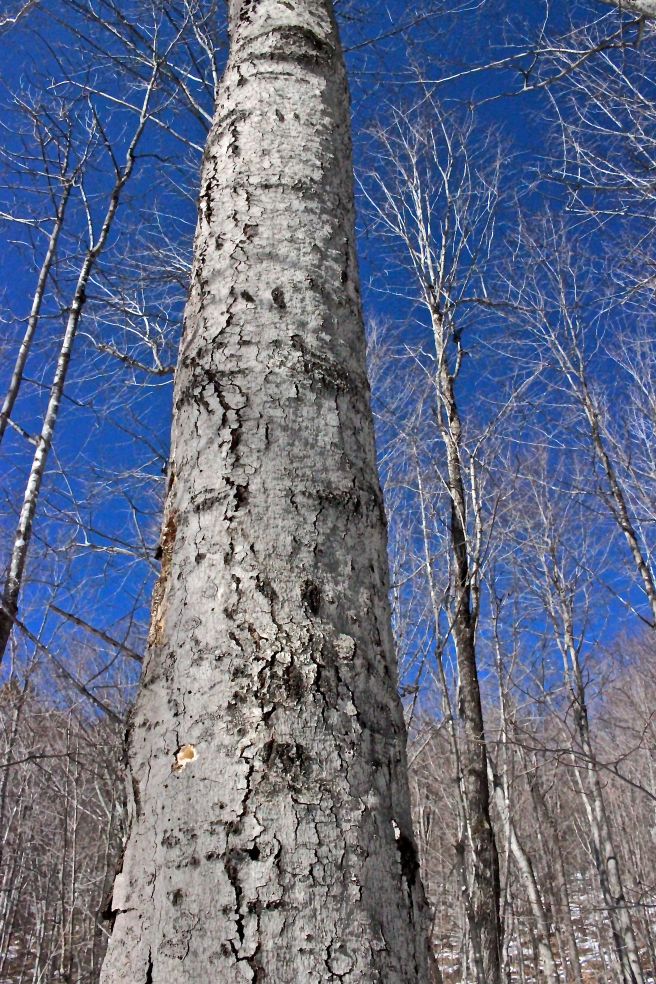
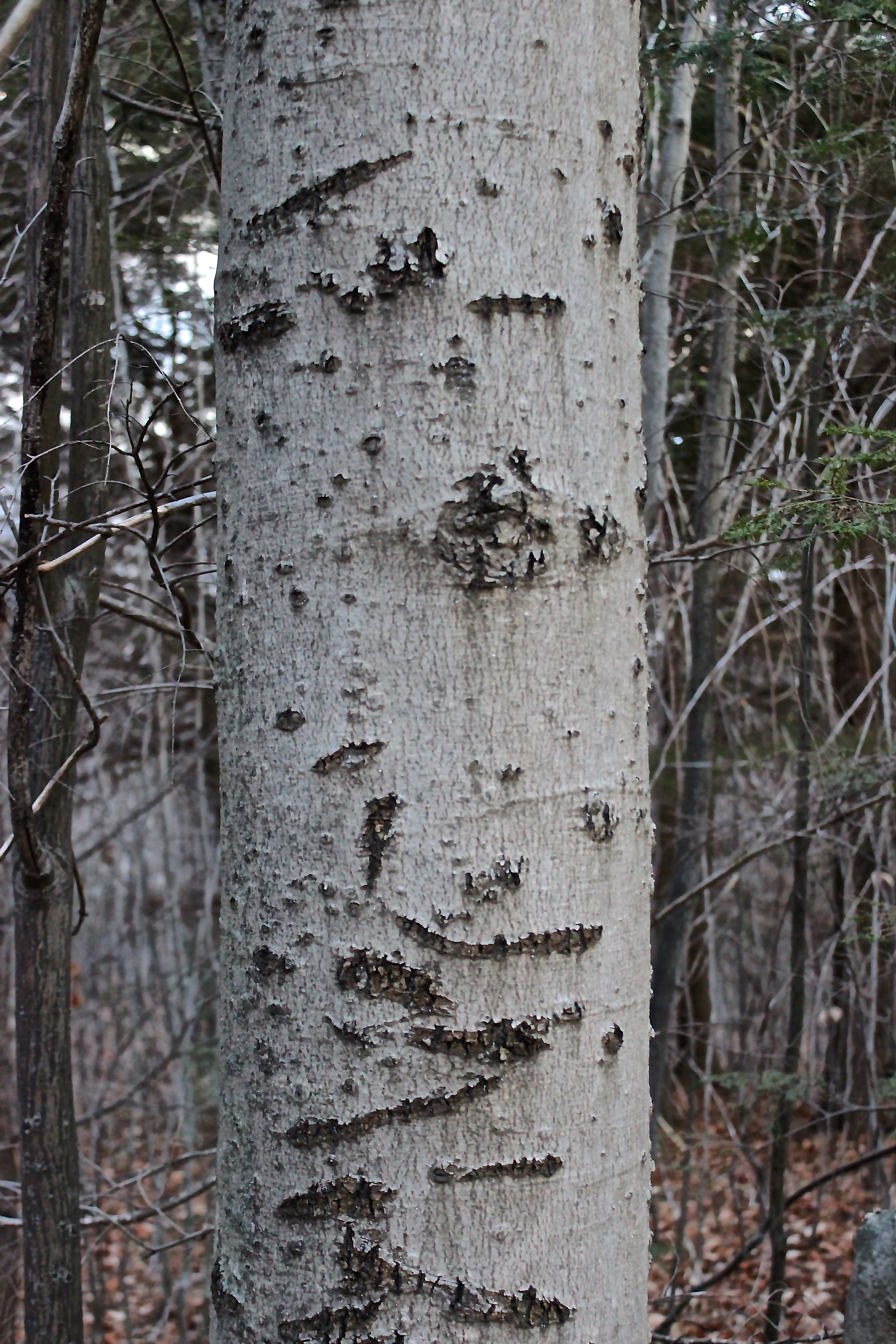
We also recognize dmarks we’ve previously admired on some old beech trees.

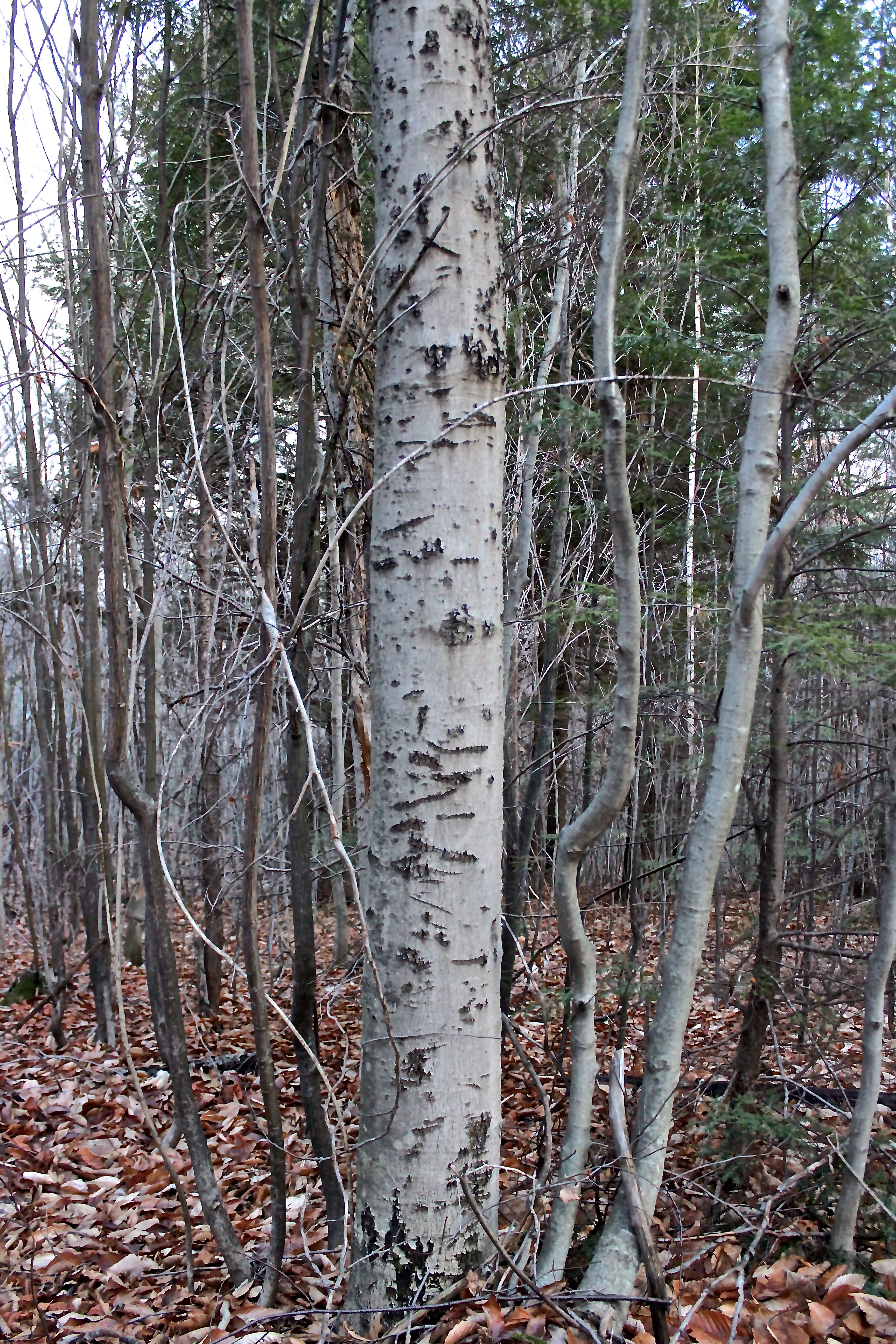
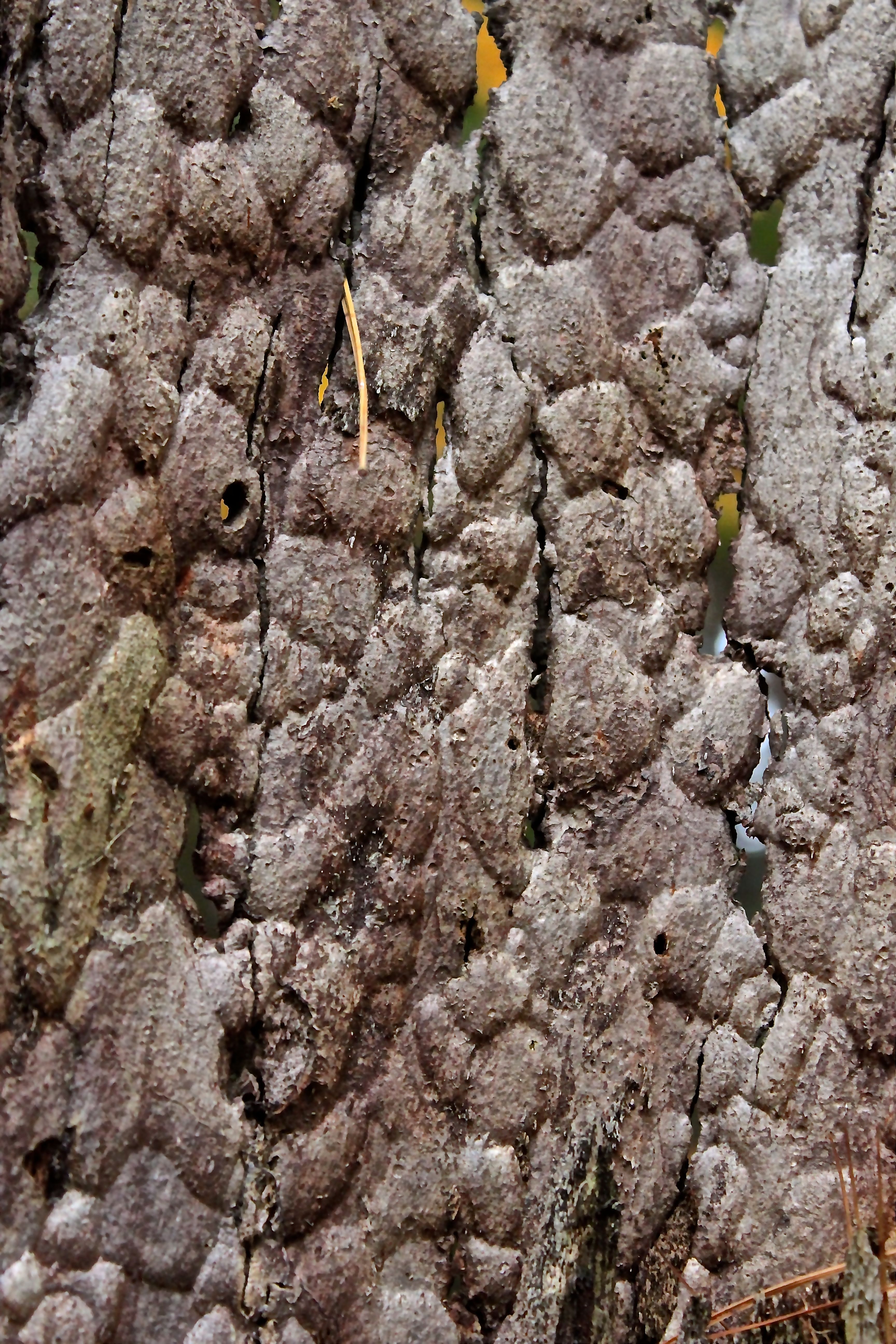
I could almost feel the claw grasping the bark–both front and hind visible here. But there’s so much more going on with this tree. It hosts a community of visitors from big black bears to minute beech scales that cause the bark to develop cankers around its invasion. And in between–other insects and woodpeckers.
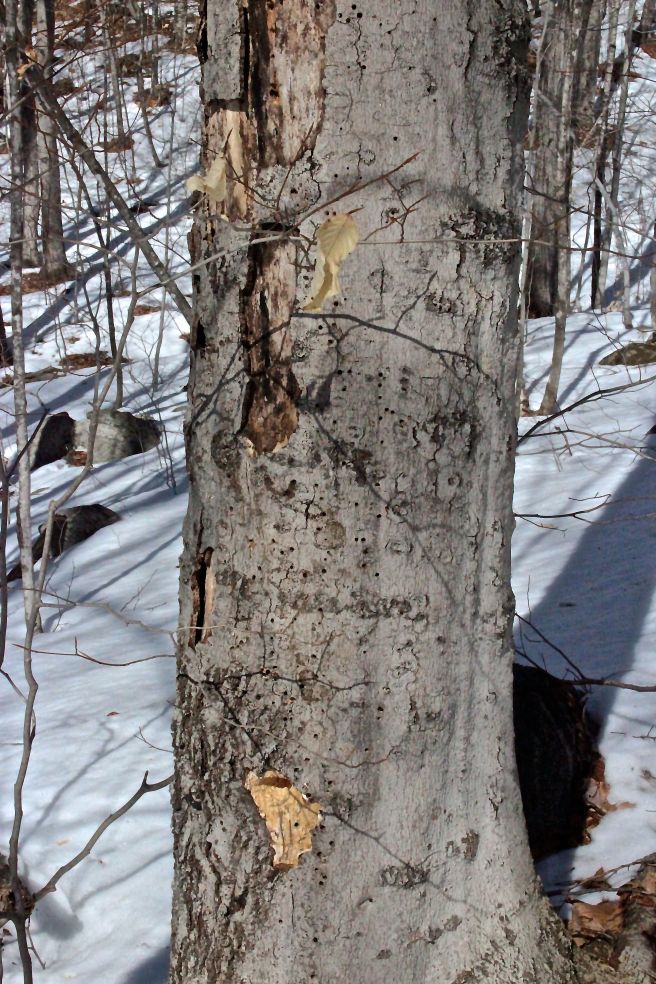
It’s a tree of life even as it reaches toward death. Eventually it will fall and we will no longer celebrate its bear claw marks, but as it decays, it will leave a legacy on which these woods depend. The cycle of life. The work within the community.

Another beech down the trail displayed its form of the same gift.
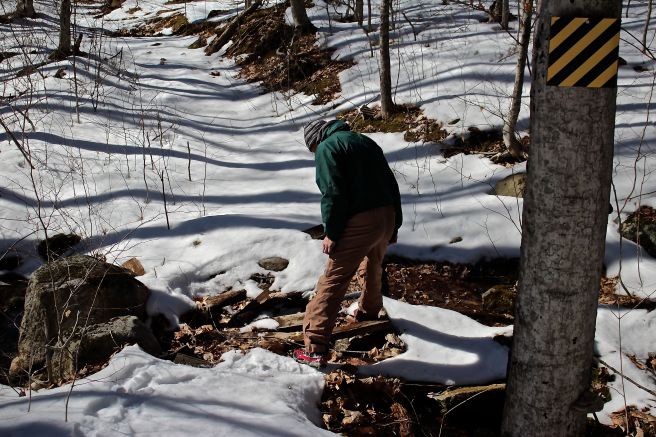
We reached the first of the crossings–this one still on the connector trail that once served as a snowmobile trail. For as long as we’ve traveled this way the bridge we were about to cross has been broken.

Though conditions were good, with my camera working again, my journey slowed. My guy accused me of searching for bear trees. And he was right. And I was further rewarded. I found one neither of us recalled seeing before.
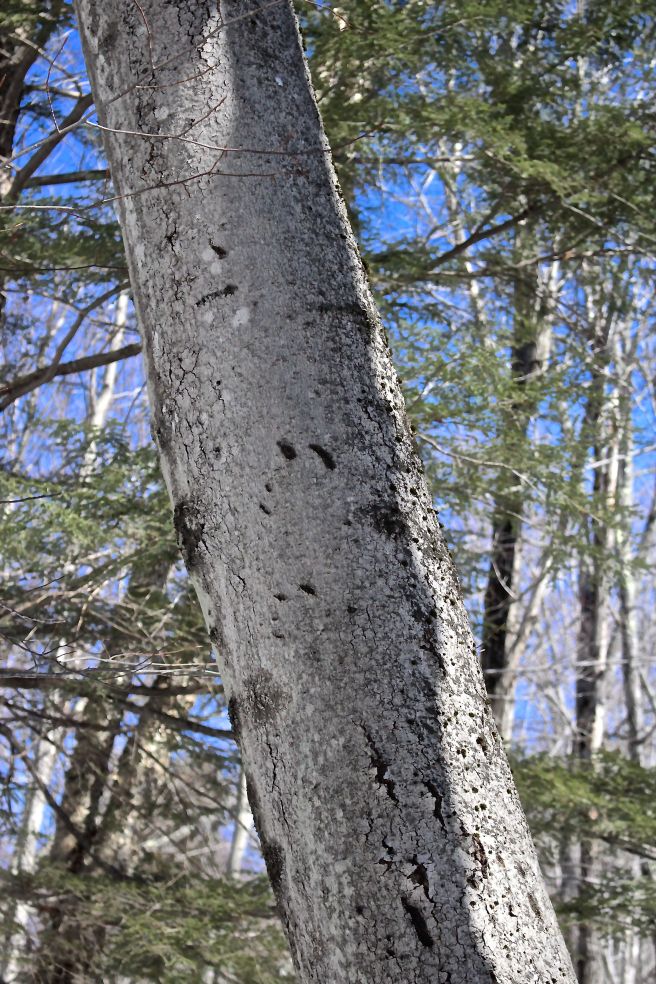
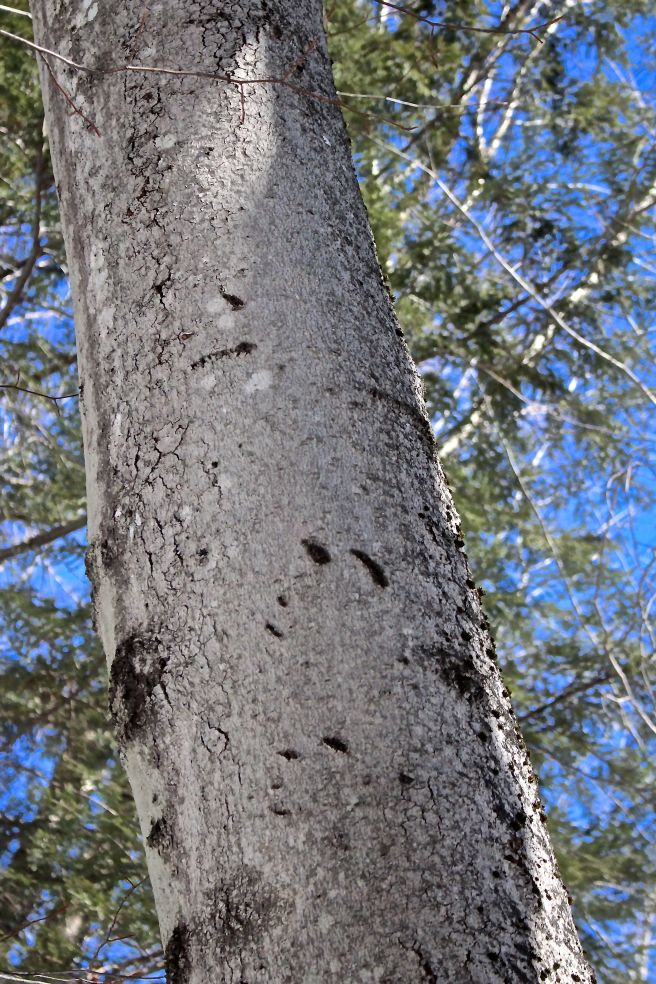
One foot atop another. Upward mobility in search of sustenance.

It’s here for the taking.
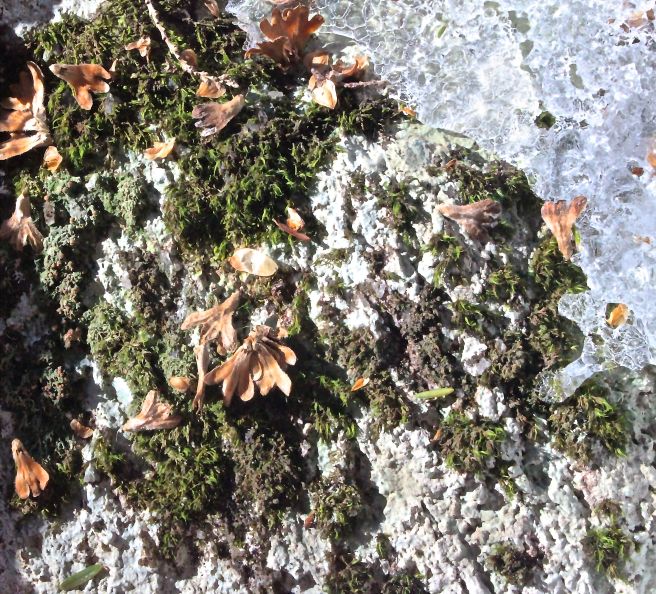
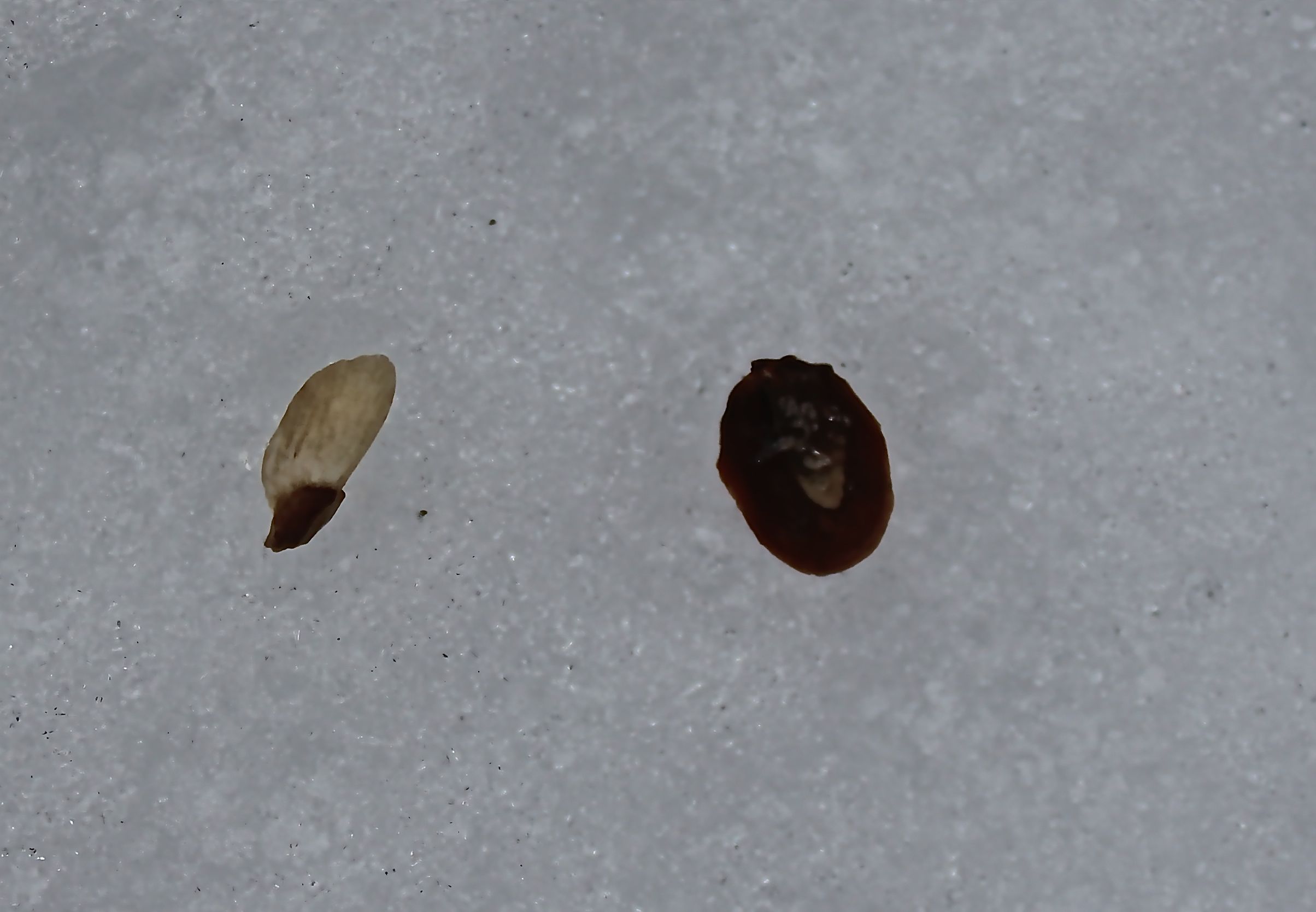
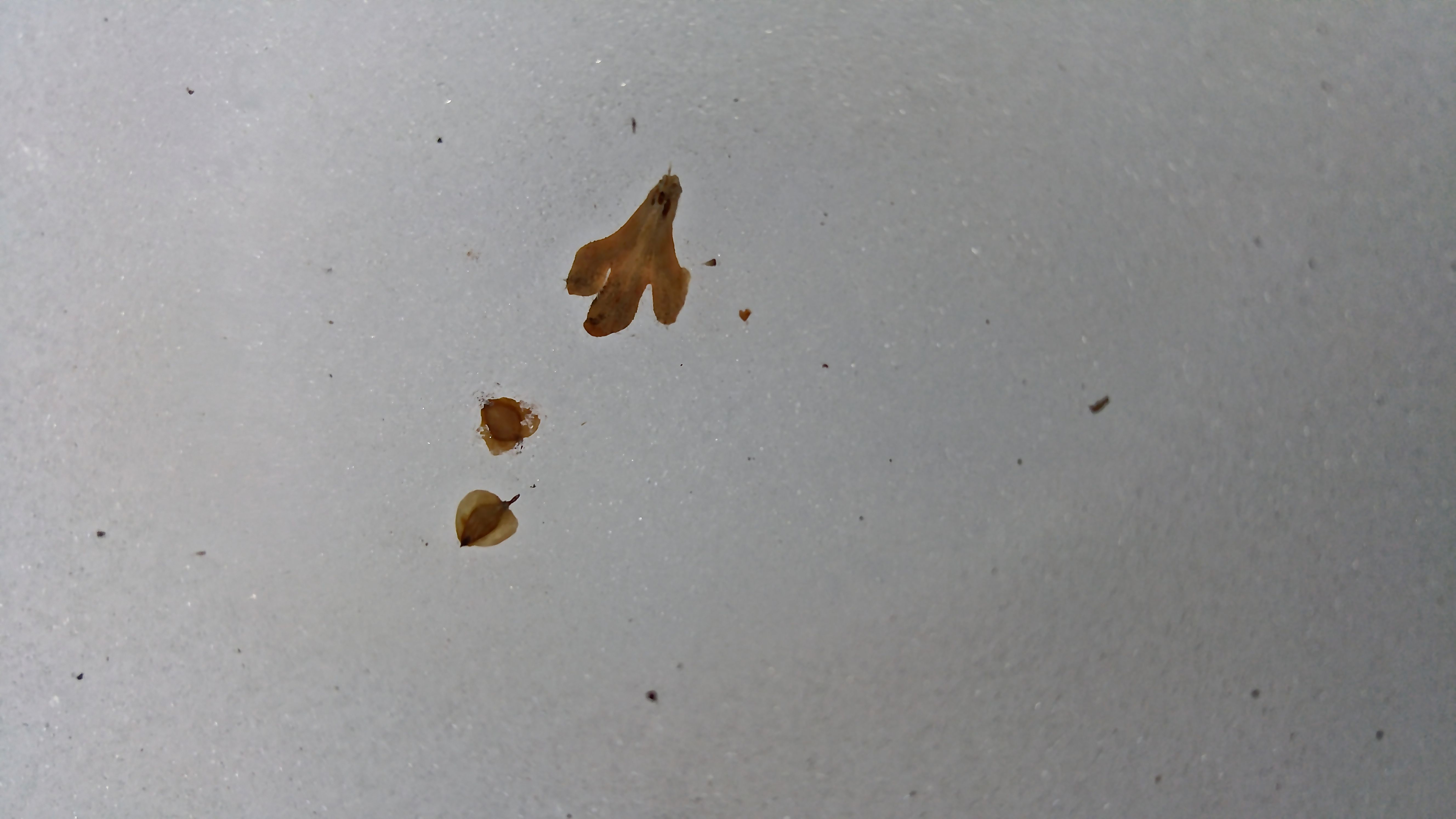
At last, we found our way onto Ron’s Loop, where we turned right at the bridge and continued on. The community changed and here we found the fleur de lis and winged seeds of yellow birches settling onto their community of choice–moss upon a boulder.

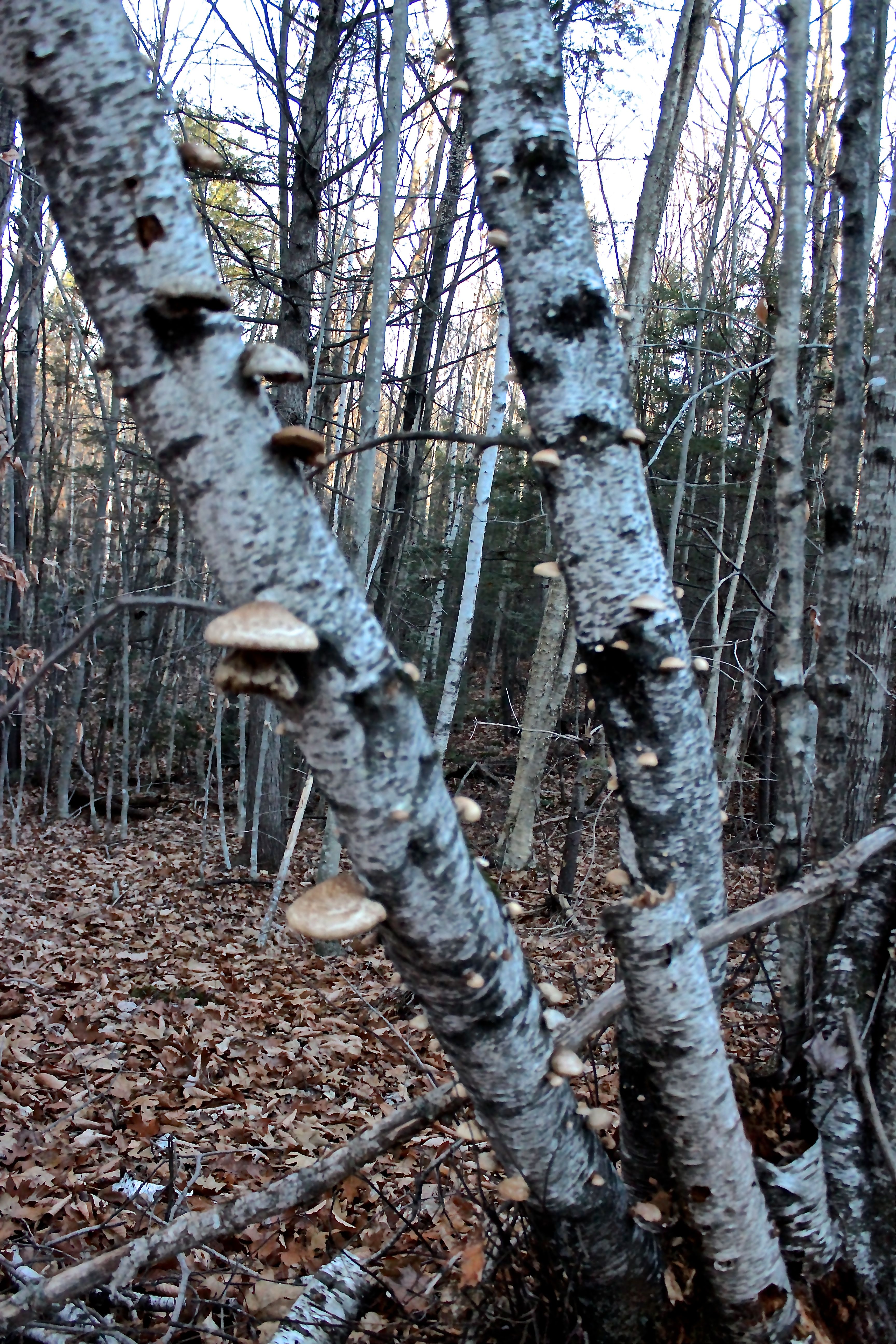
Creating a dense bouquet is the violet-toothed polypore community– a reminder that there’s beauty in age.

And beauty in singleness.

We’re in the neighborhood where deer browse red maples.

And raccoons venture forth on semi-warm winter nights.

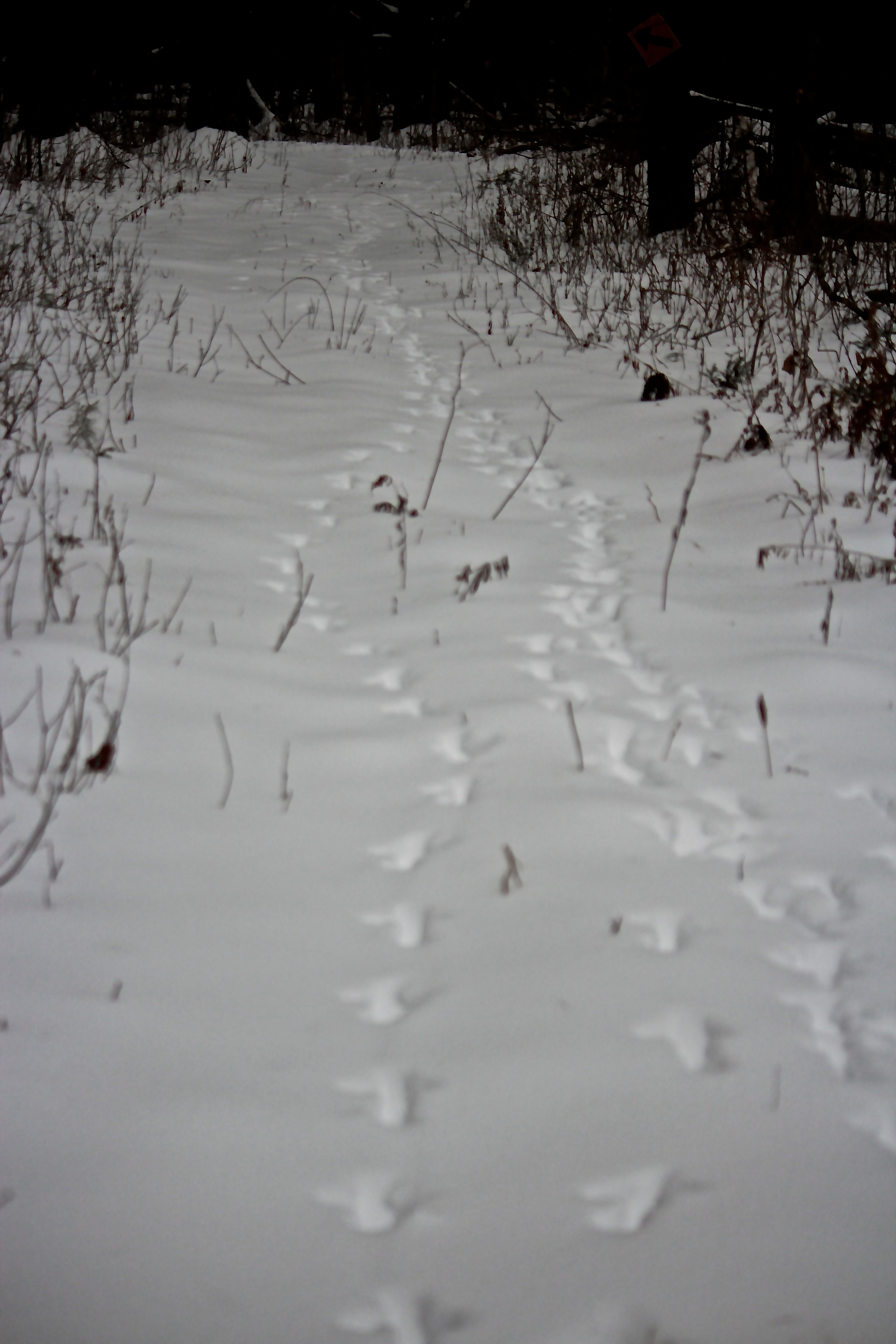
We rejoiced in recognizing the alternate-angled pattern of the trail they leave behind.
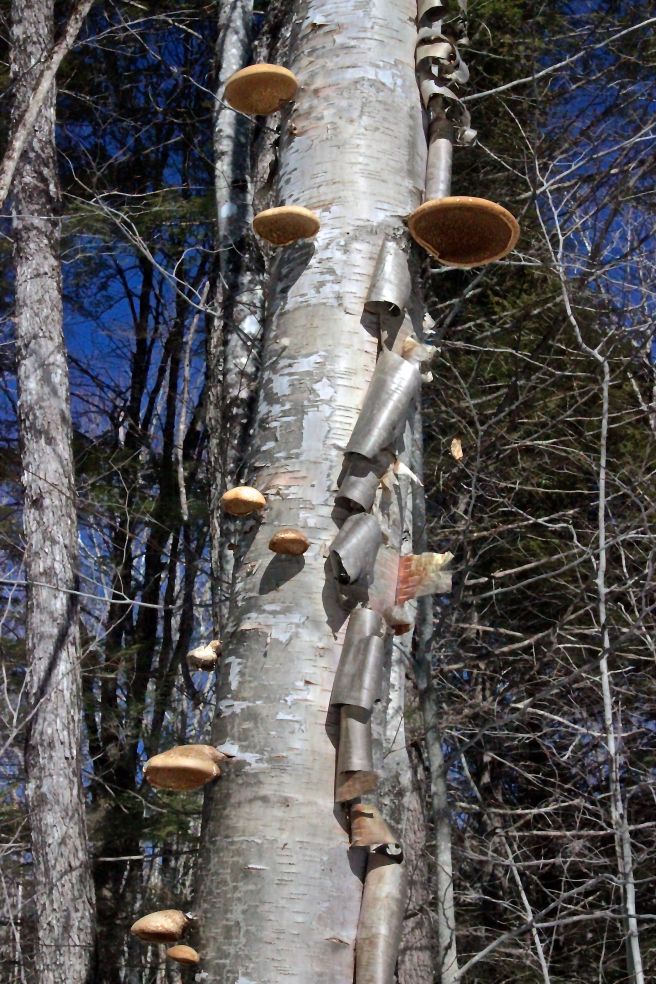
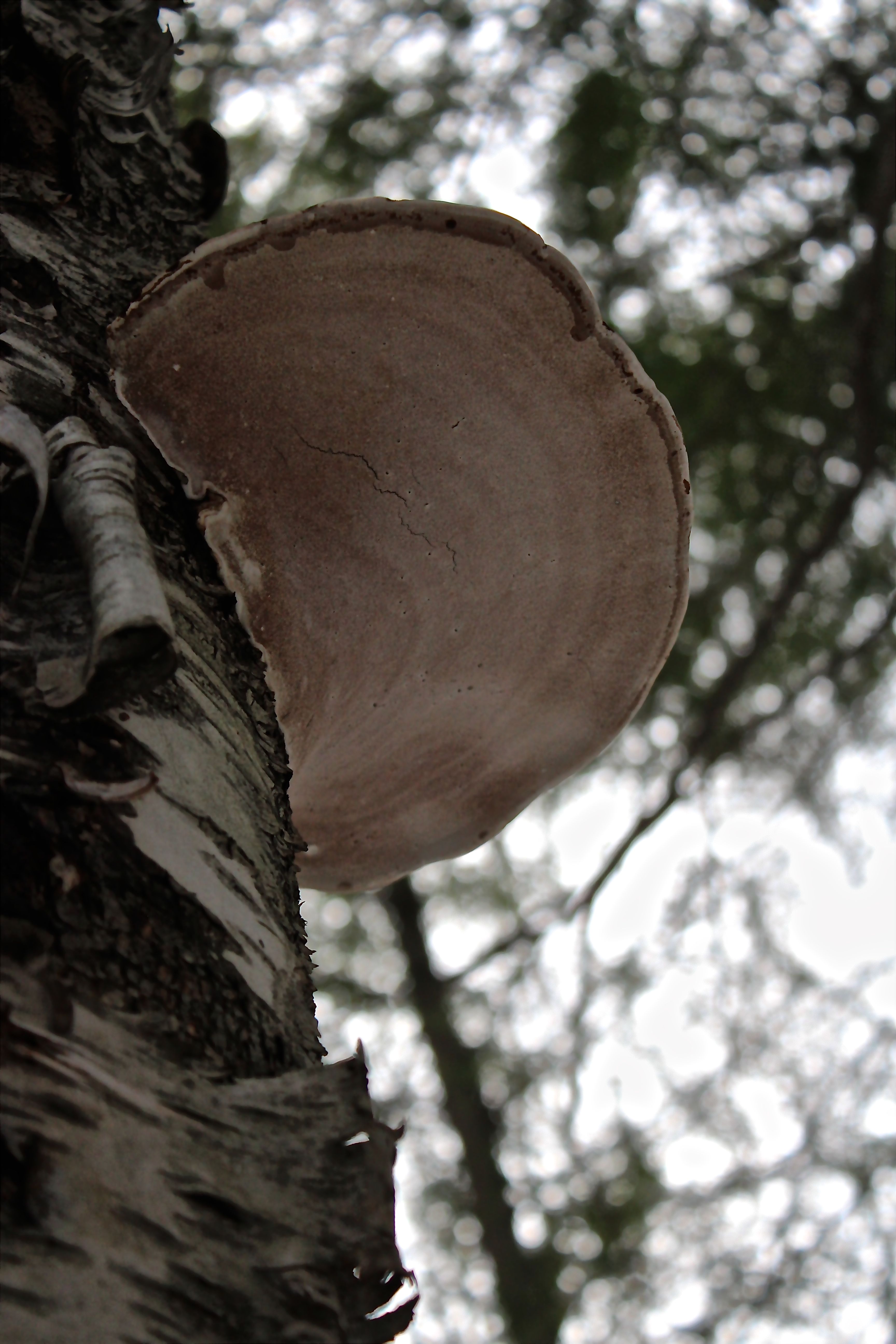
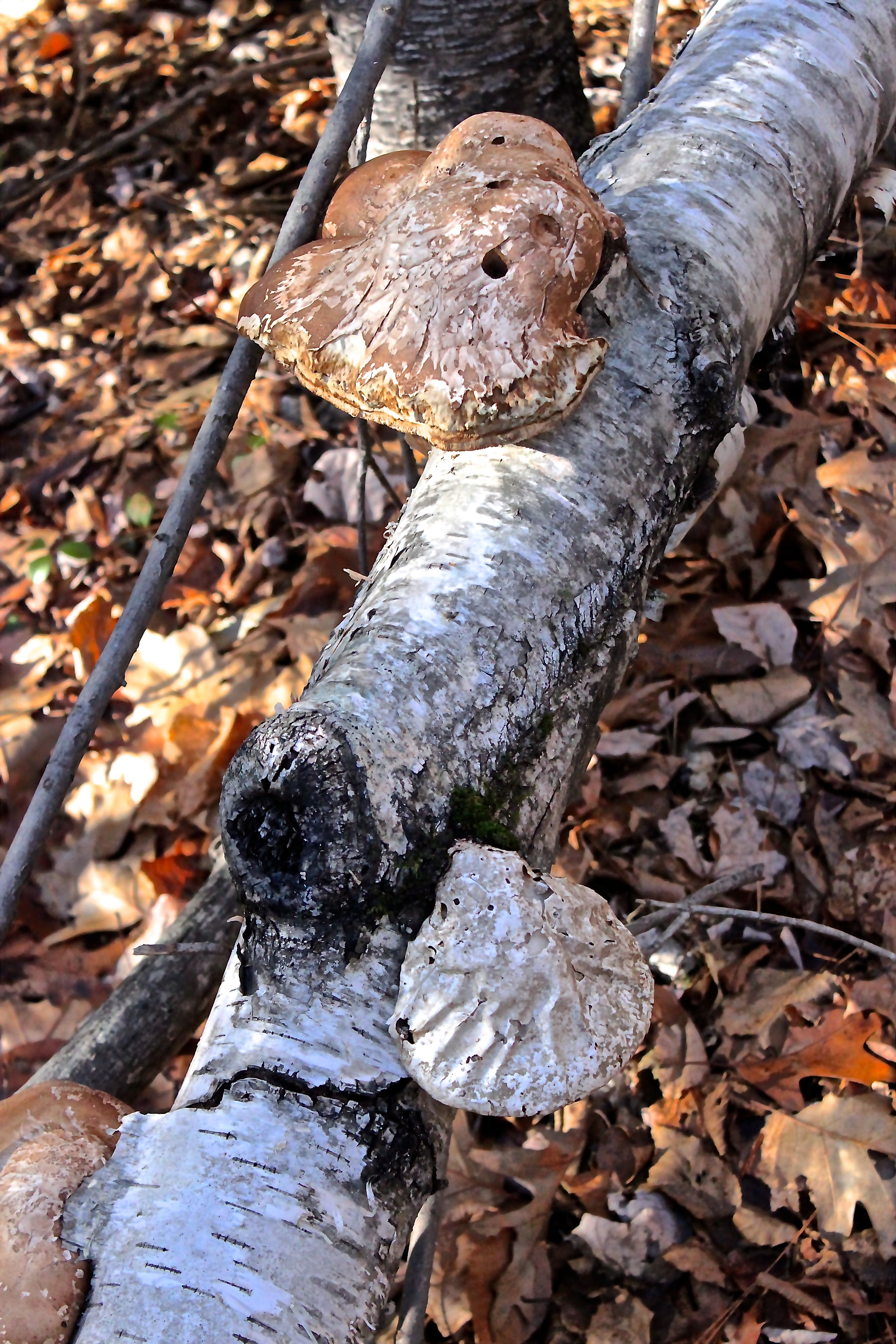
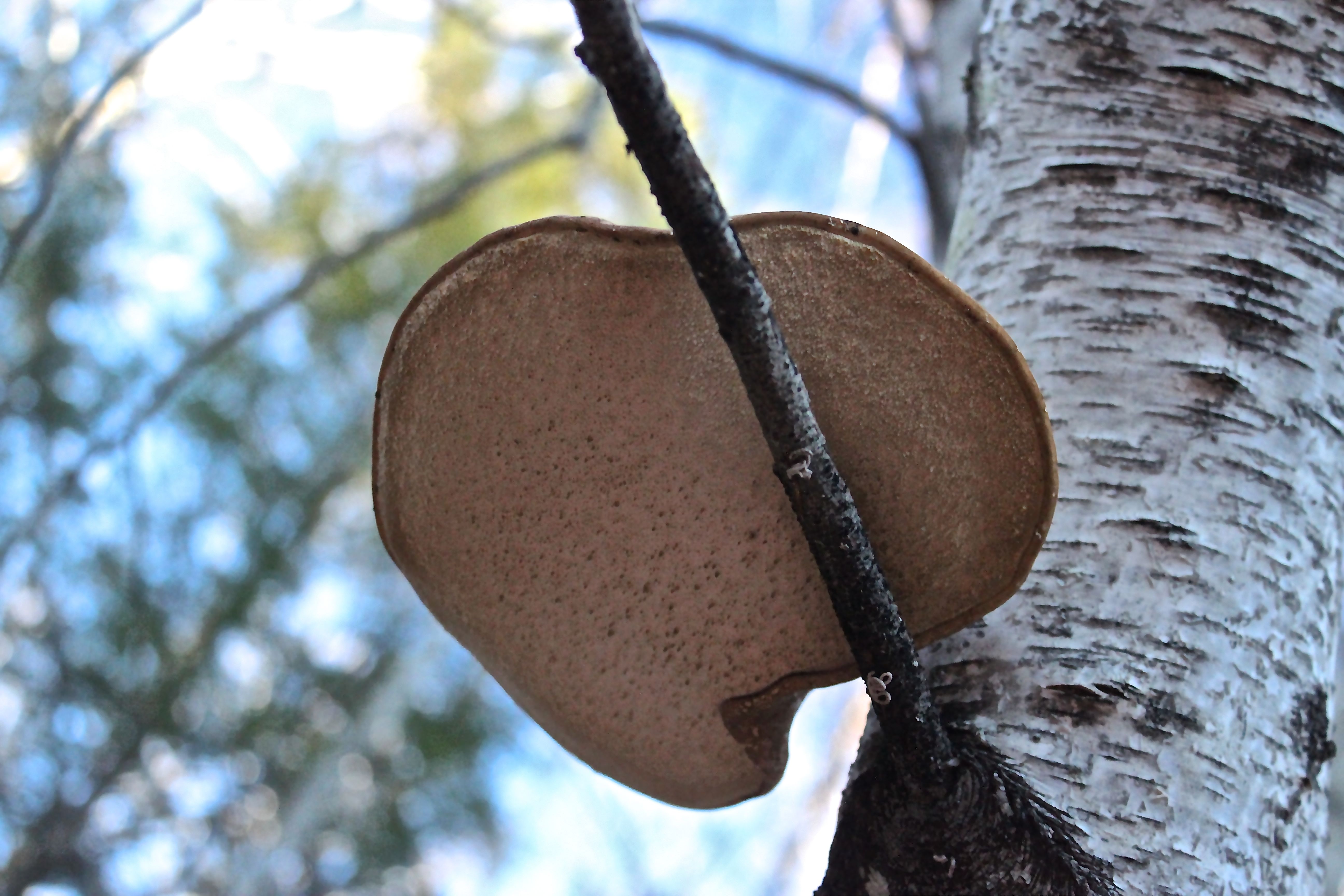
There were always surprises. Birch polypores decorated this paper birch that masked its condition with a healthy appearance.

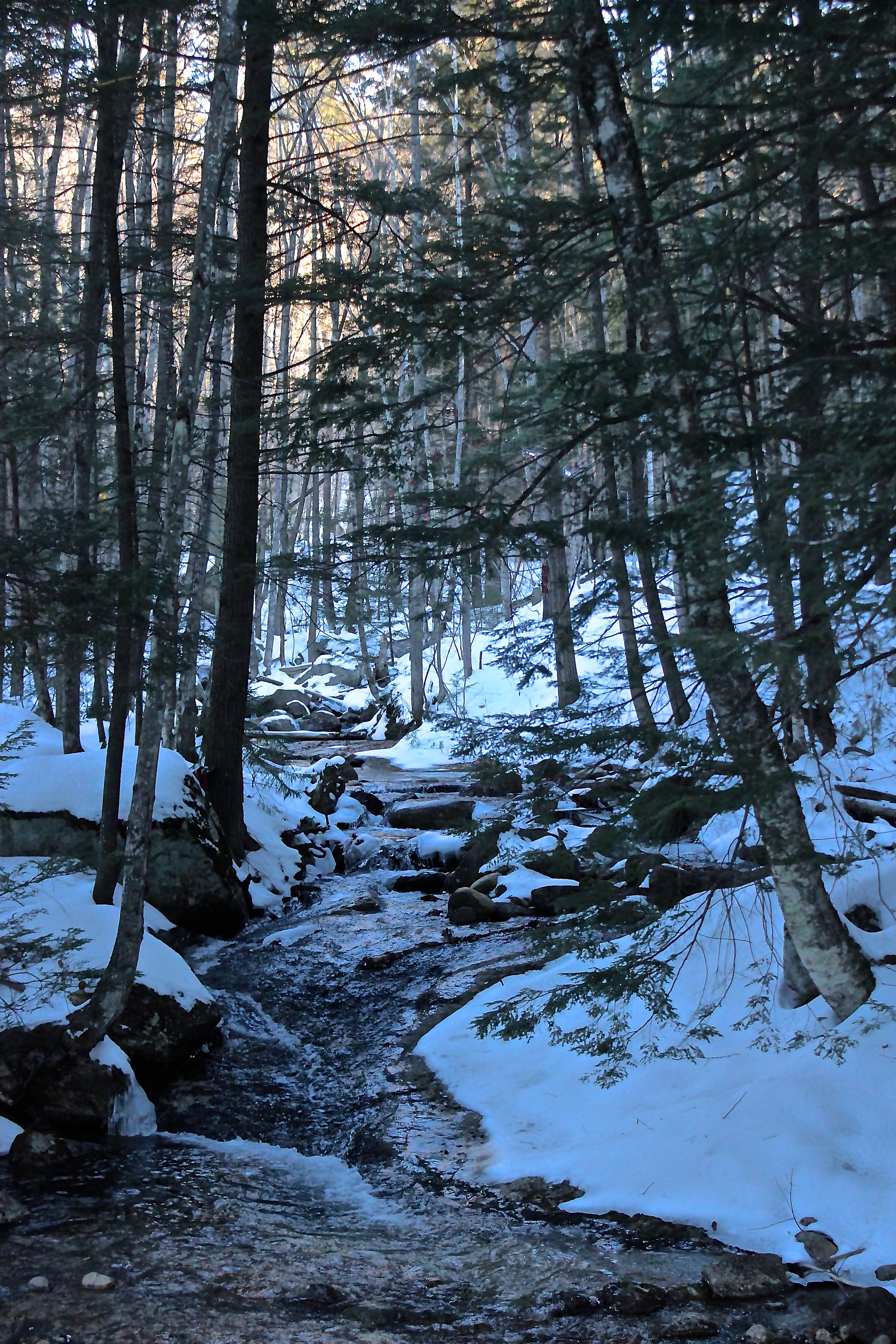
Despite my caution, we made several successful brook crossings.
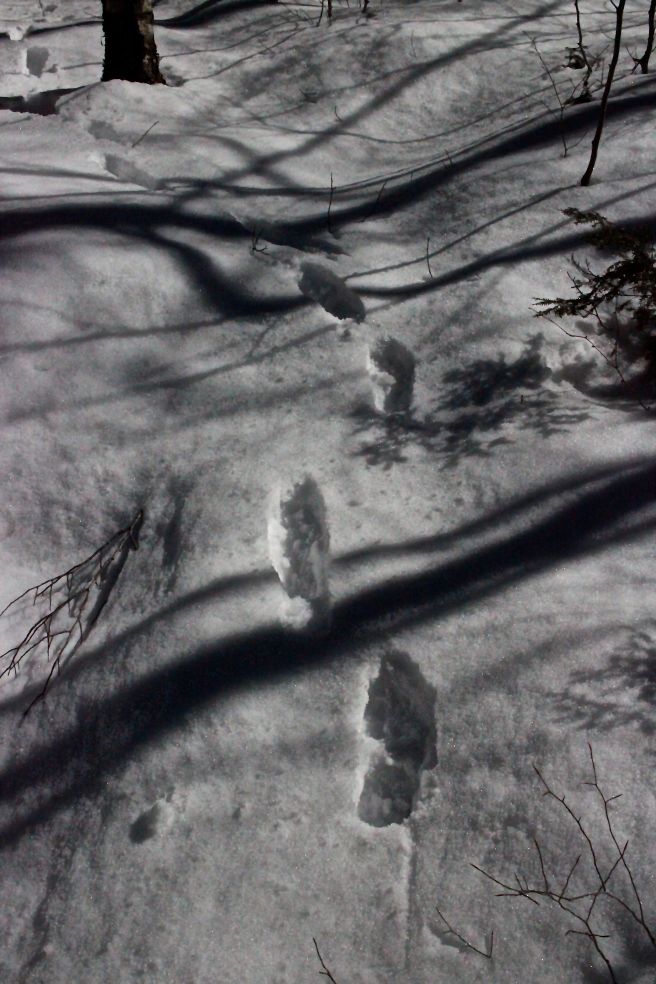
And I followed my guy to the end of the Earth–well, at least to the end of the trail–though I suspect he knows I’d follow him anywhere. He’s a good guy. Actually, he’s a great guy.

We paused at the kiosk to check the map. Imagination is a necessity–no kidding. For this moment you must connect the summit of The Mountain Trail to the far end of Ron’s Loop–thus re-creating the connector trail between the two.
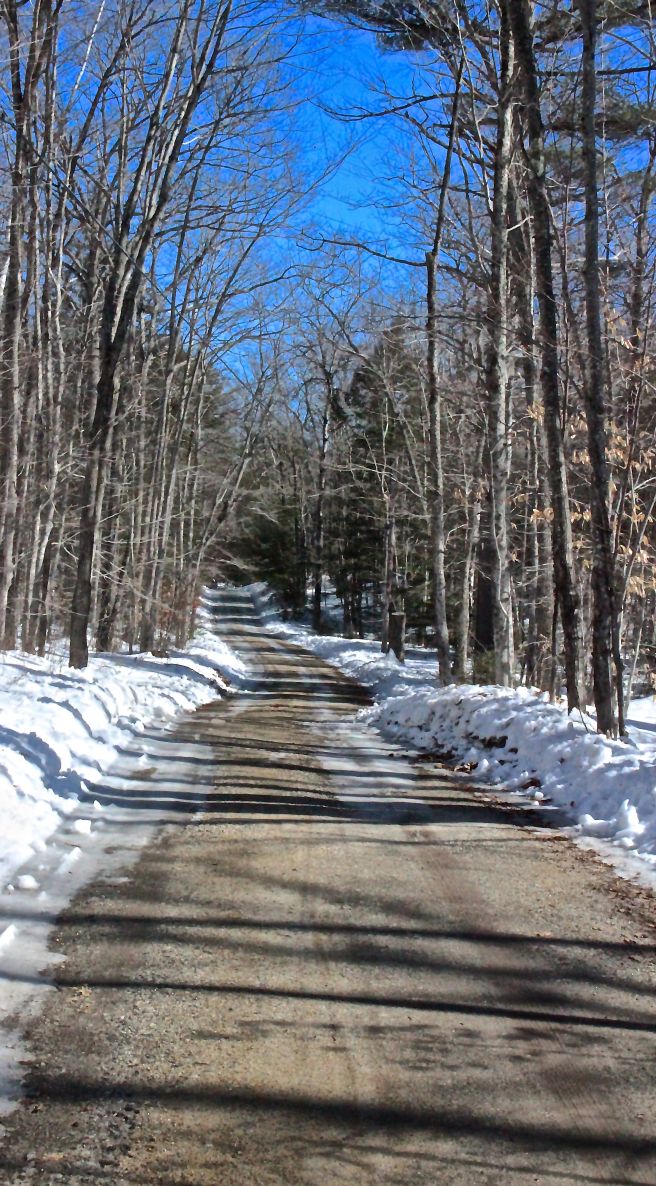
Suddenly we are back on 5 Kezar Ponds Road headed toward our truck.

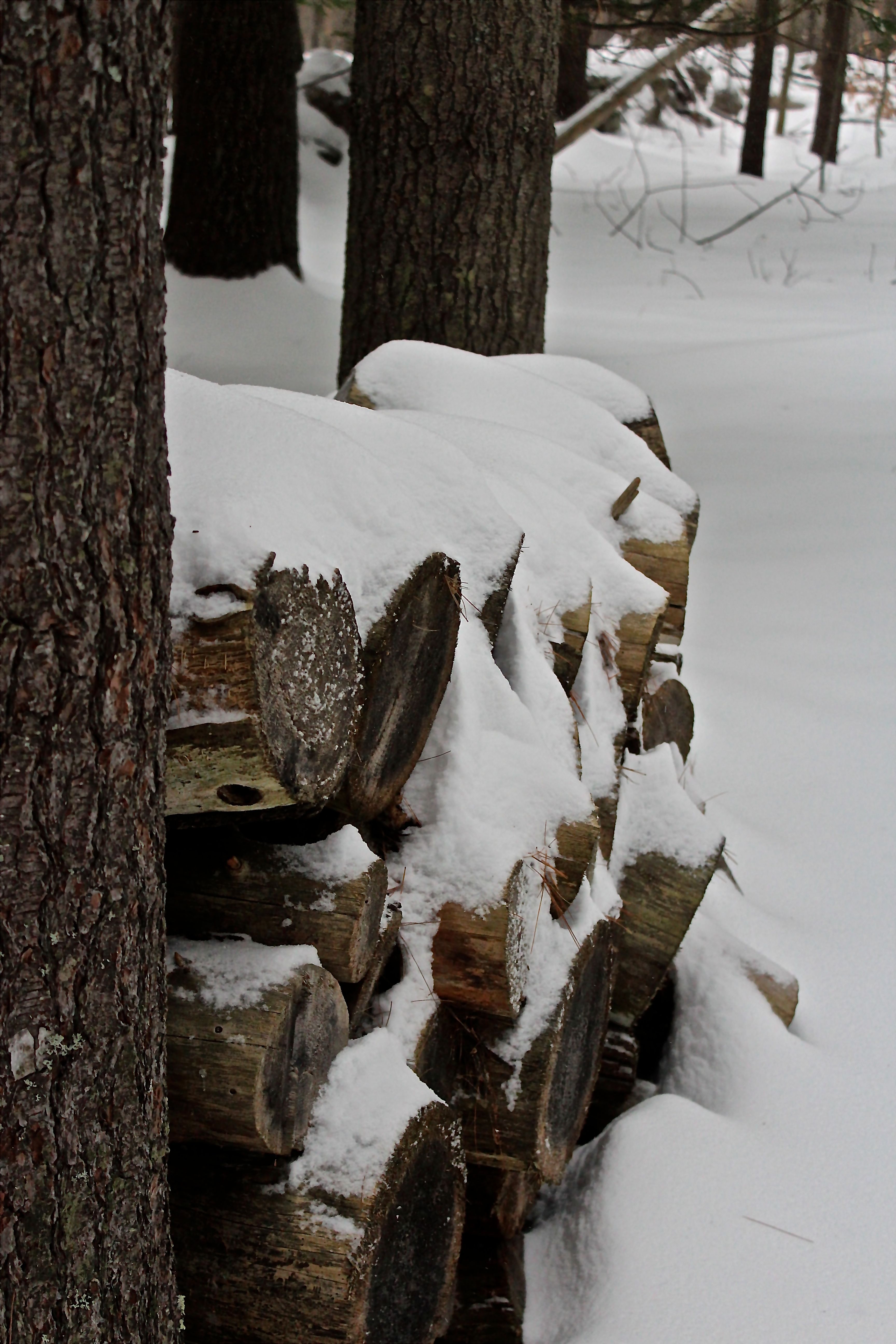
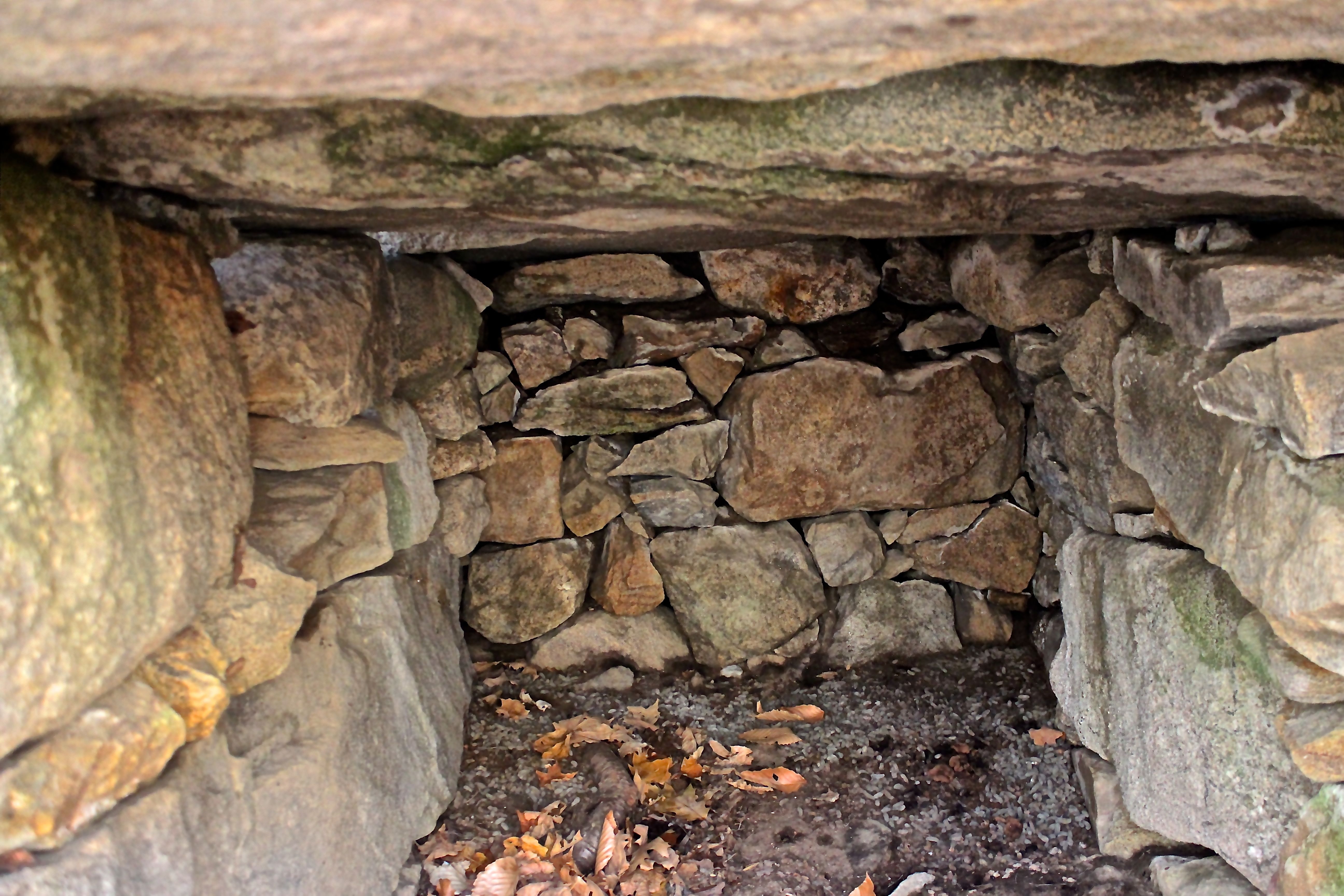
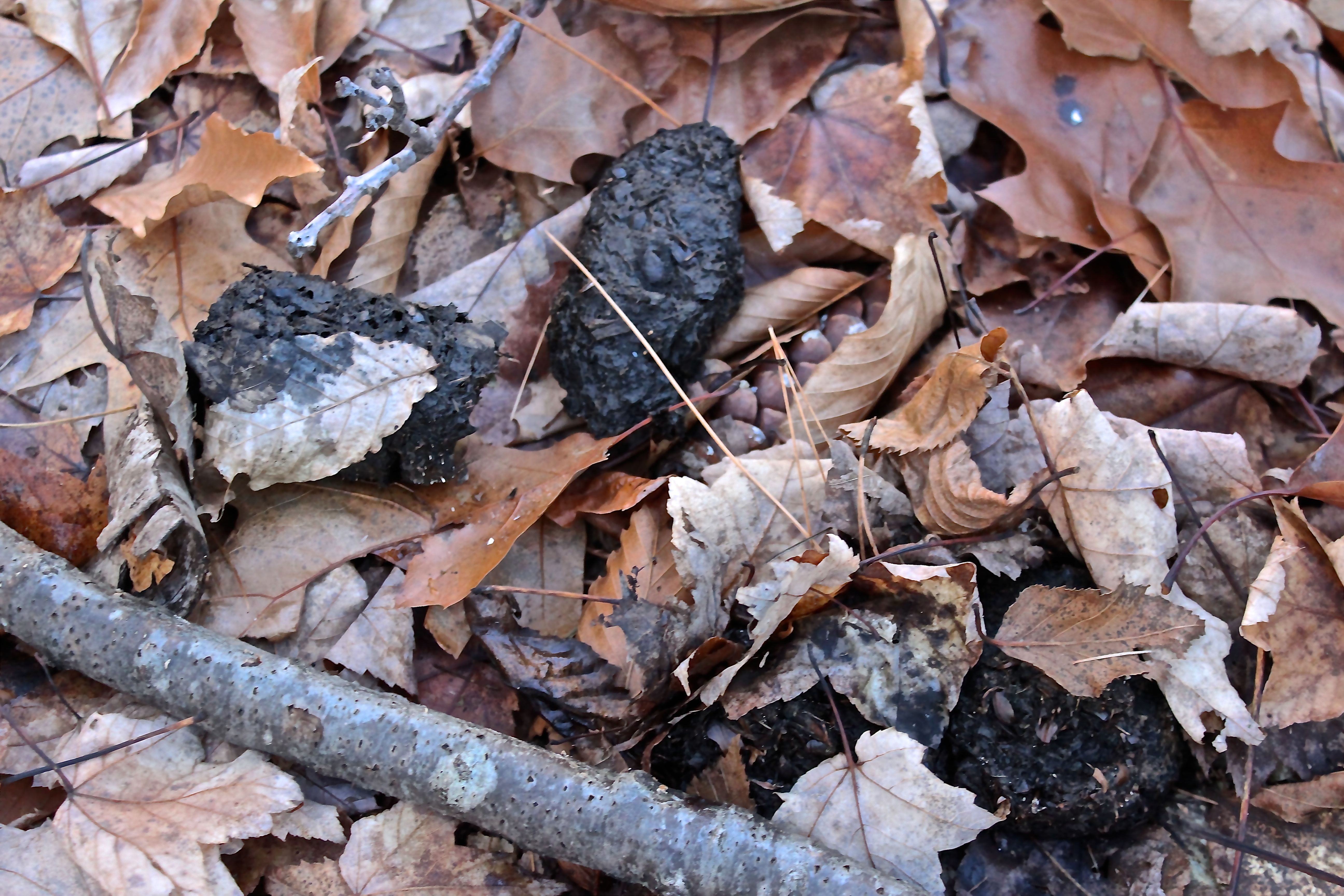
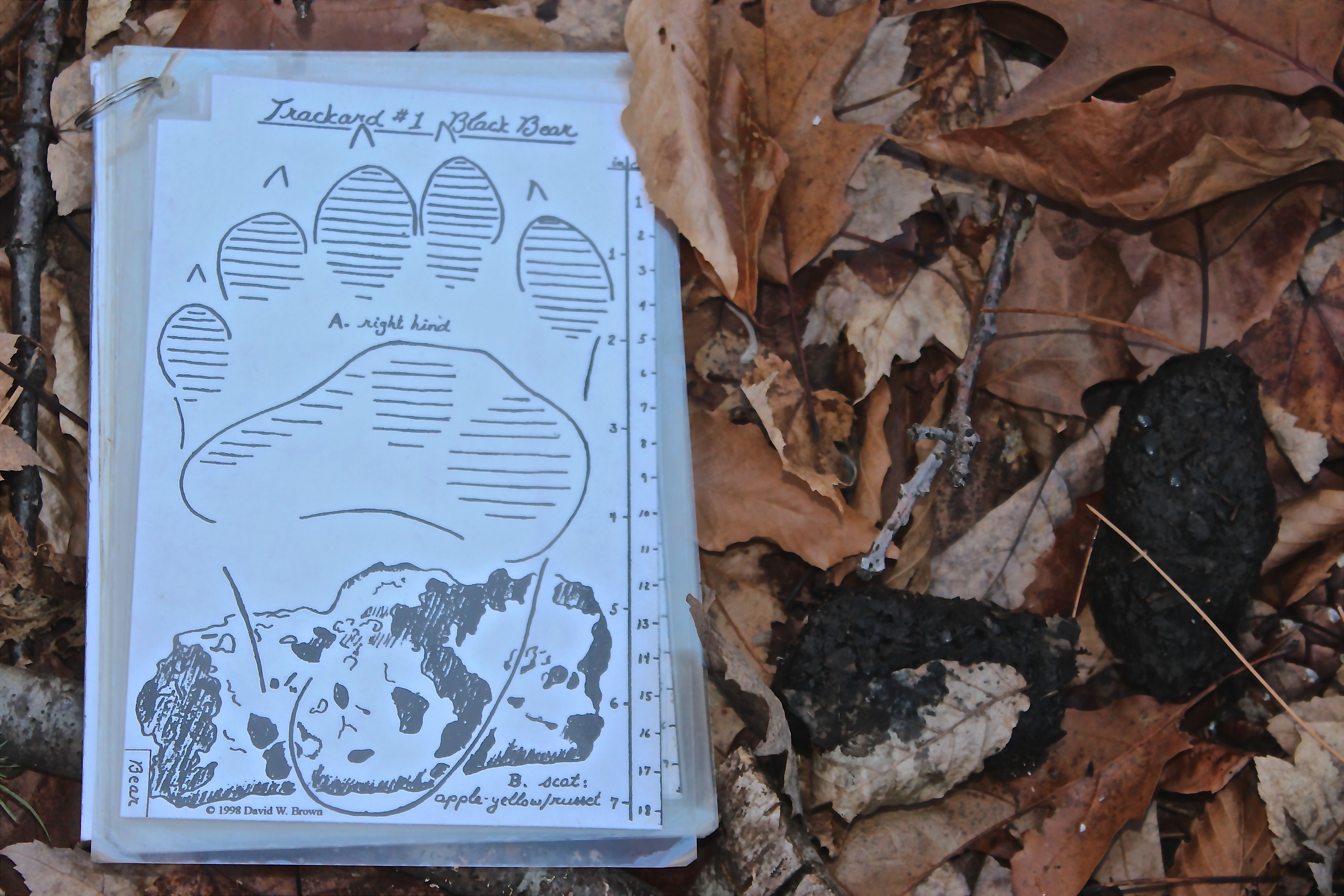
And here we found remnants of another community that is integral in the overall system of life.


As we drove home, we paused again by Bear Pond and the bald eagle didn’t let us down. Though the ice fishermen and women weren’t about today, it knew this community to be prime hunting grounds.
As for us, our hike was quick today because we had our own community efforts to join–he had a Lions Club meeting and I had a Maine Master Naturalist board meeting. We do our best to provide support in any way we can. It’s important to us to be community-centered–even on a Mondate. And by the way–the Lions are always looking for contributions to support their eye-sight programs; and the Maine Master Naturalist Program is still accepting applications for its Tier One course being offered from May-Sept this year in Bridgton, Farmington and Mount Desert Island.
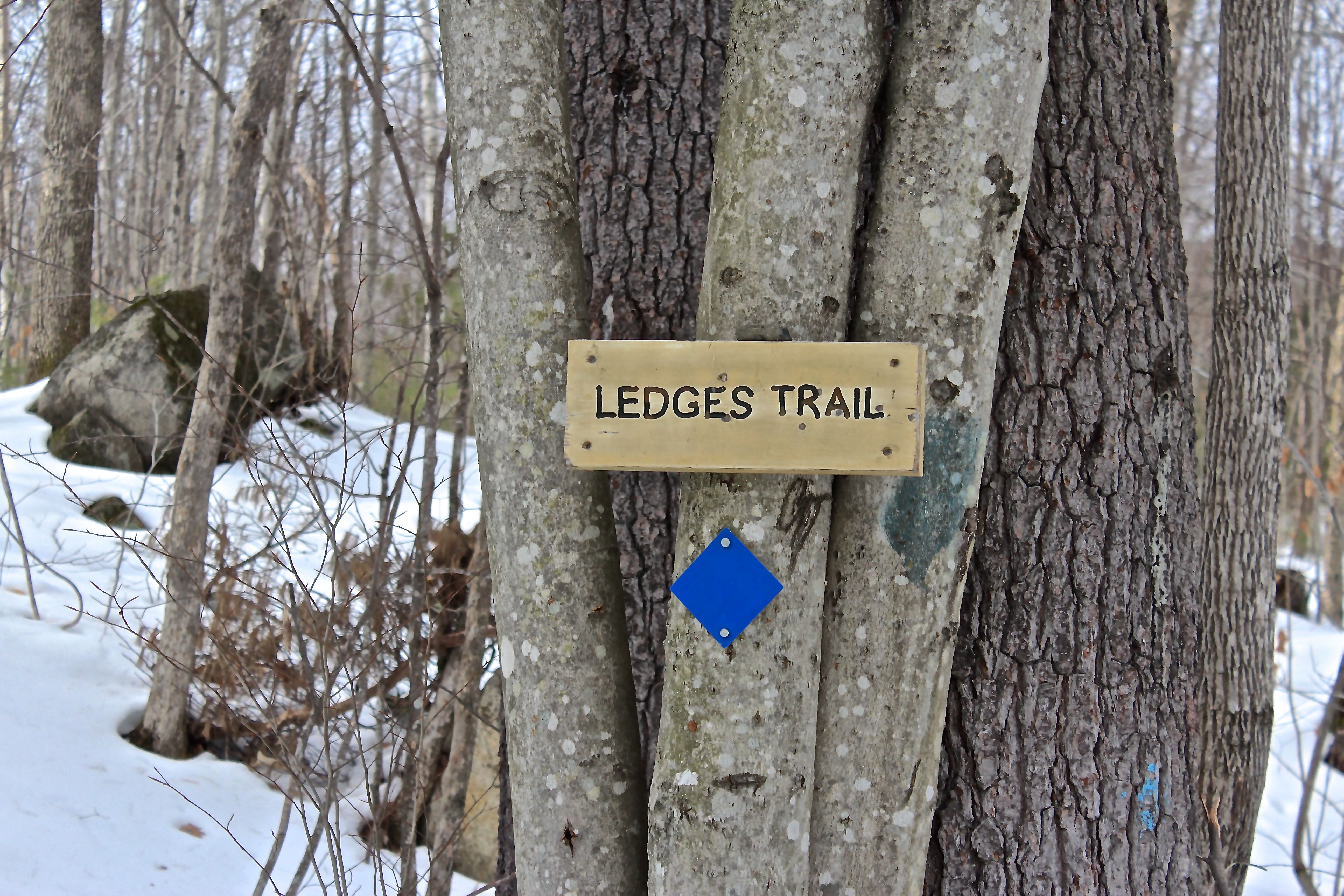
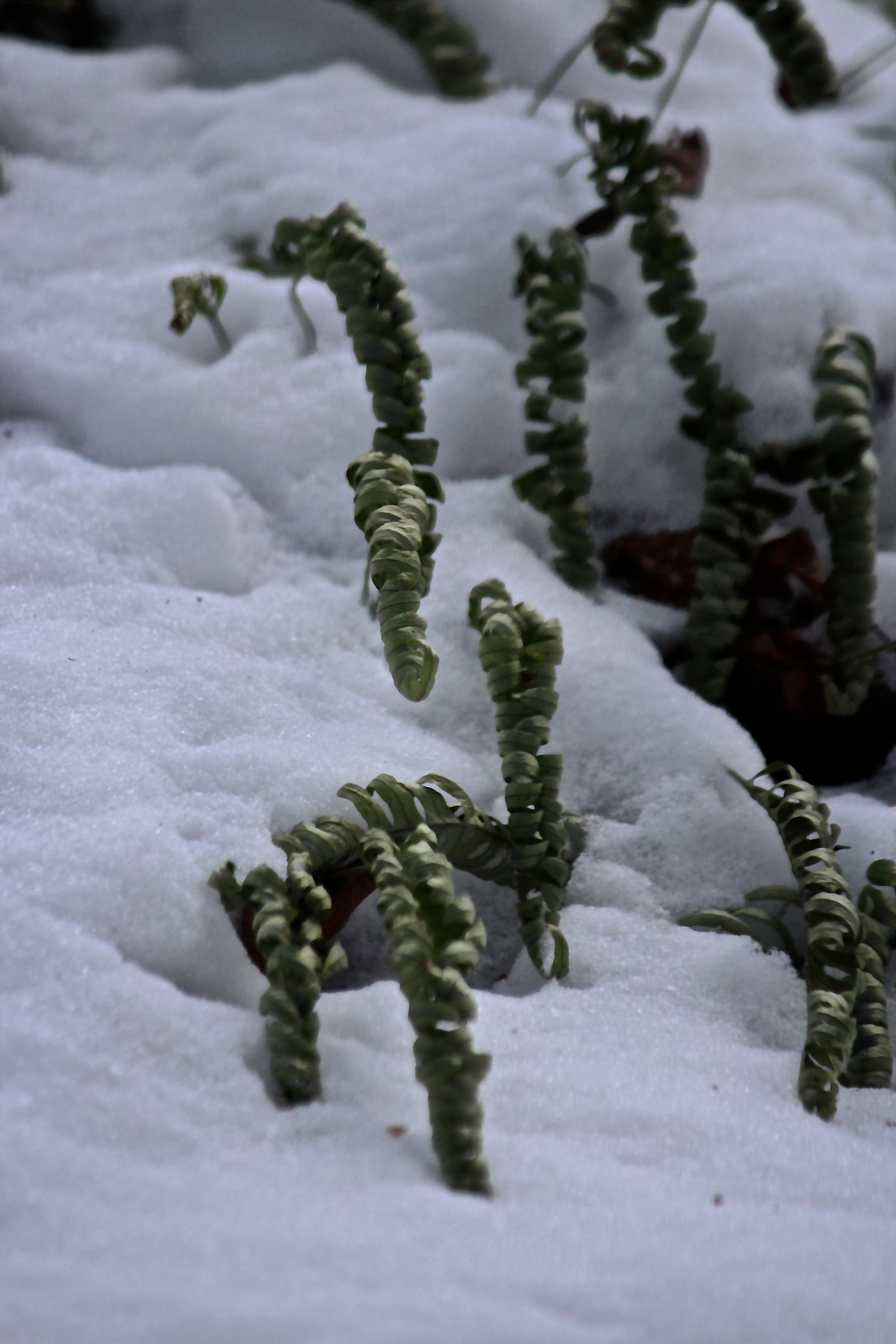
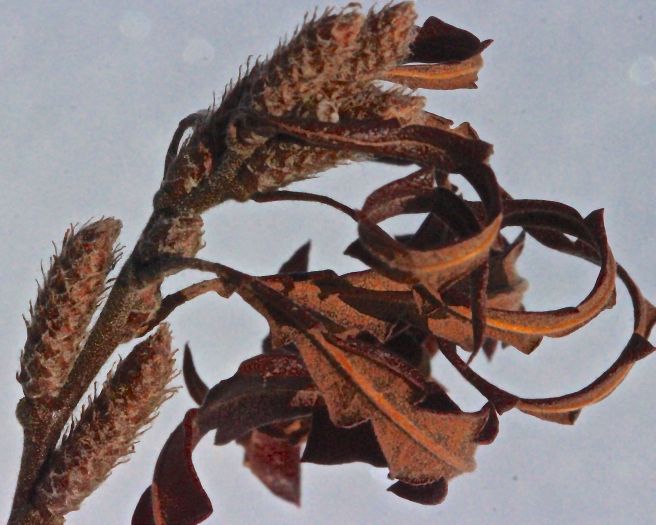 From the parking lot, I decided to begin via the blue trail by the kiosk. It doesn’t appear on the trail map, but feels much longer than the green trail–possibly my imagination. Immediately, I was greeted at the door of the shop by sweet fern, aka Comptonia peregrina (remember, it’s actually a shrub with foliage that appear fern-like). The striking color and artistic flow of the winter leaves, plus the hairy texture of the catkins meant I had to stop and touch and admire.
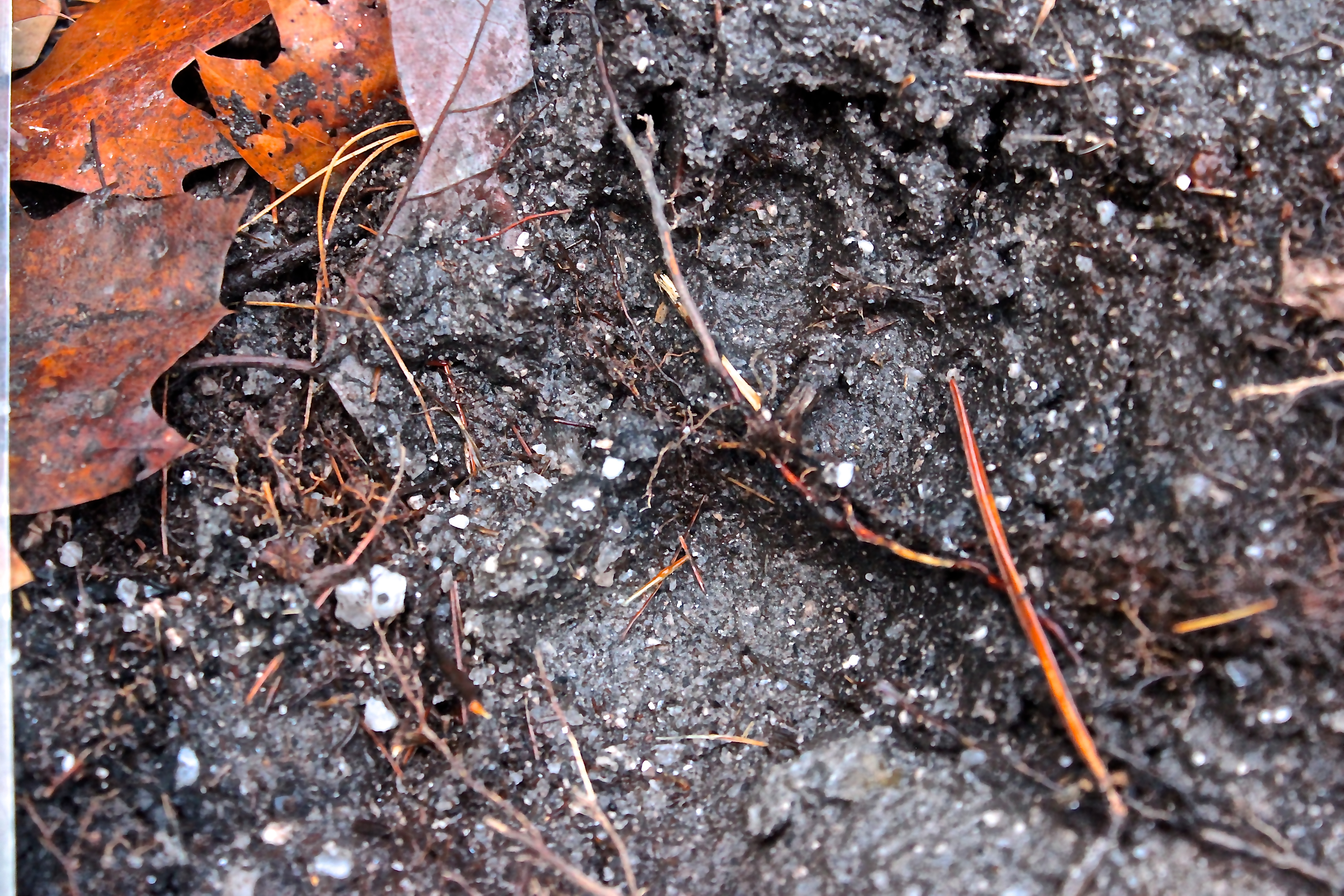
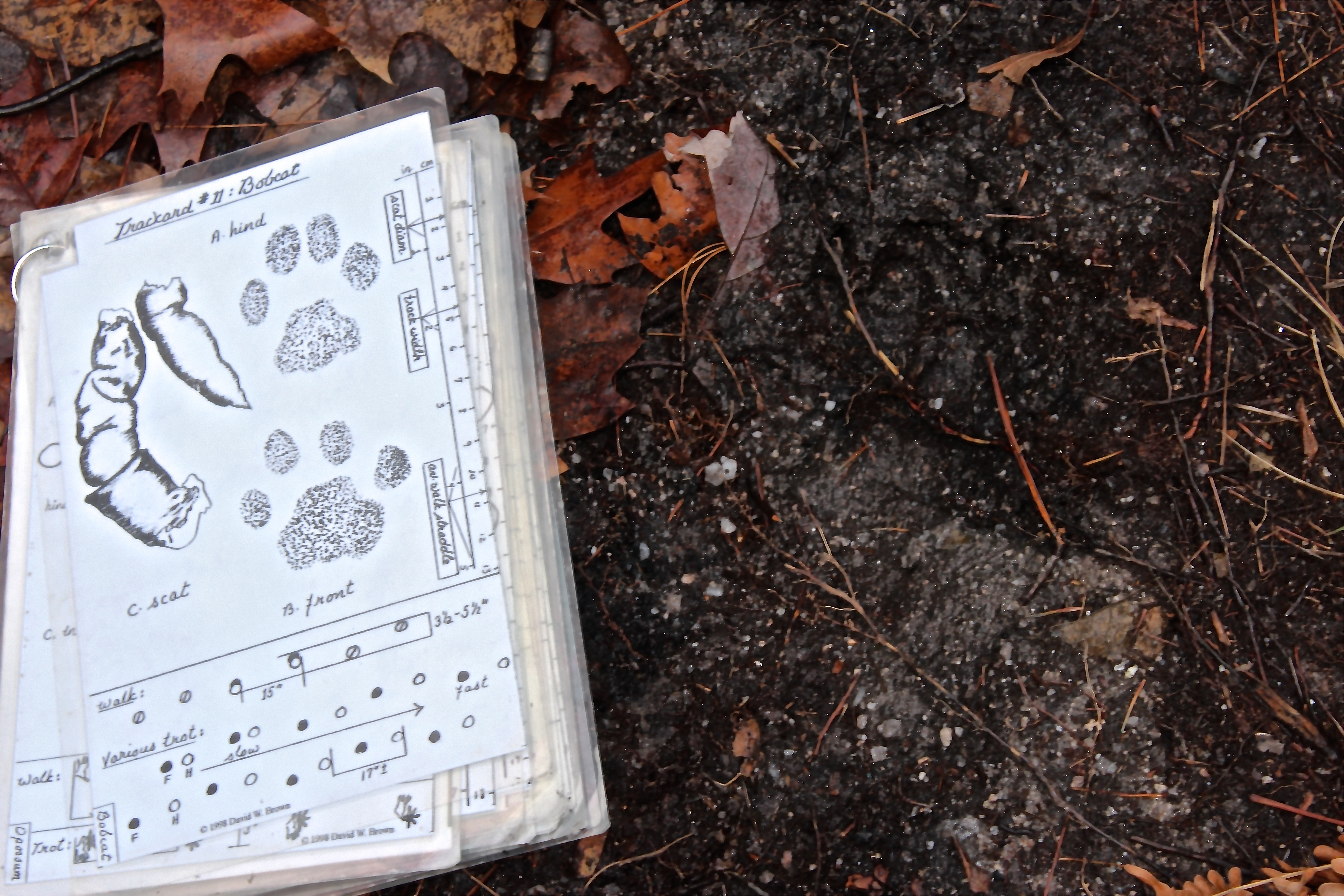
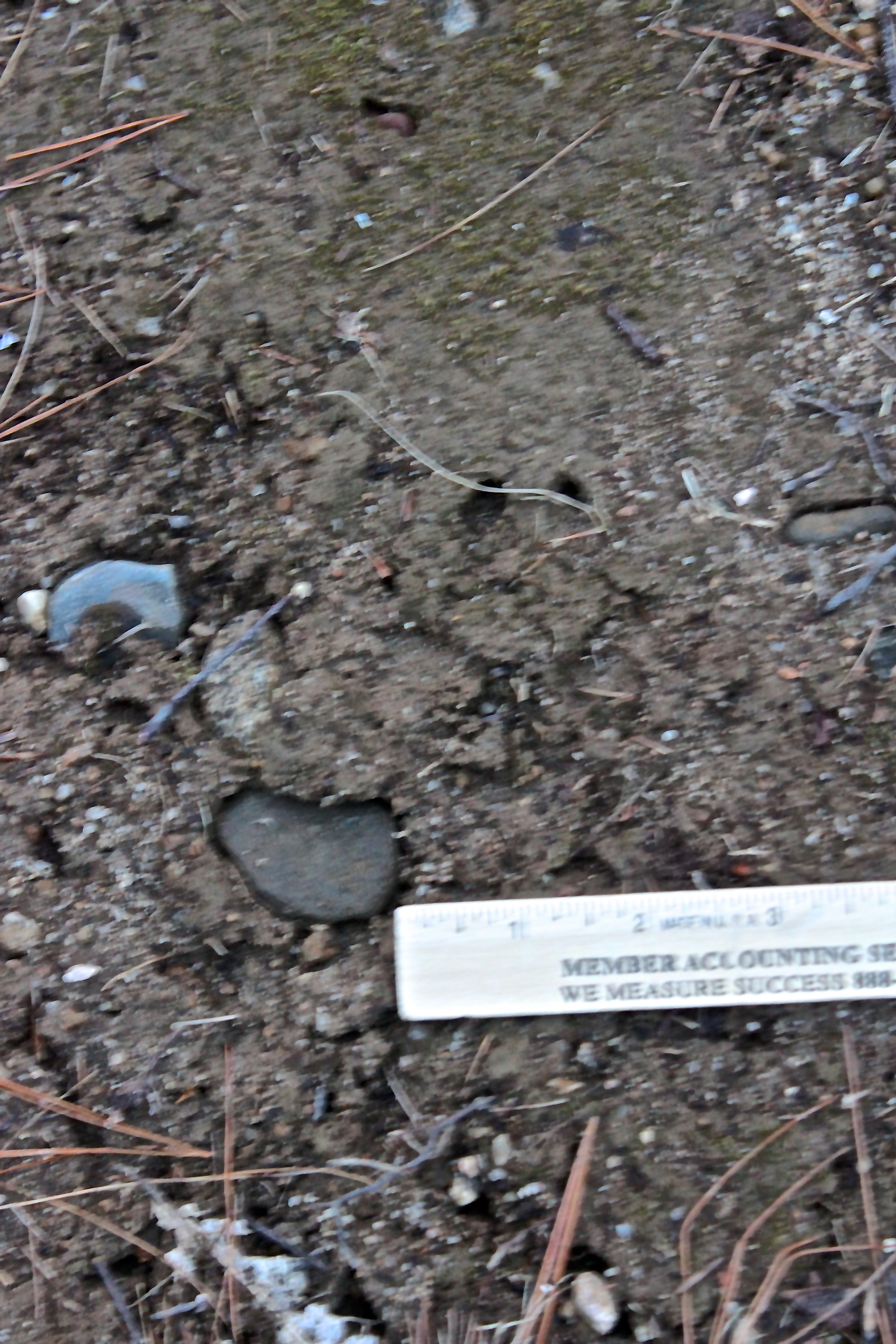
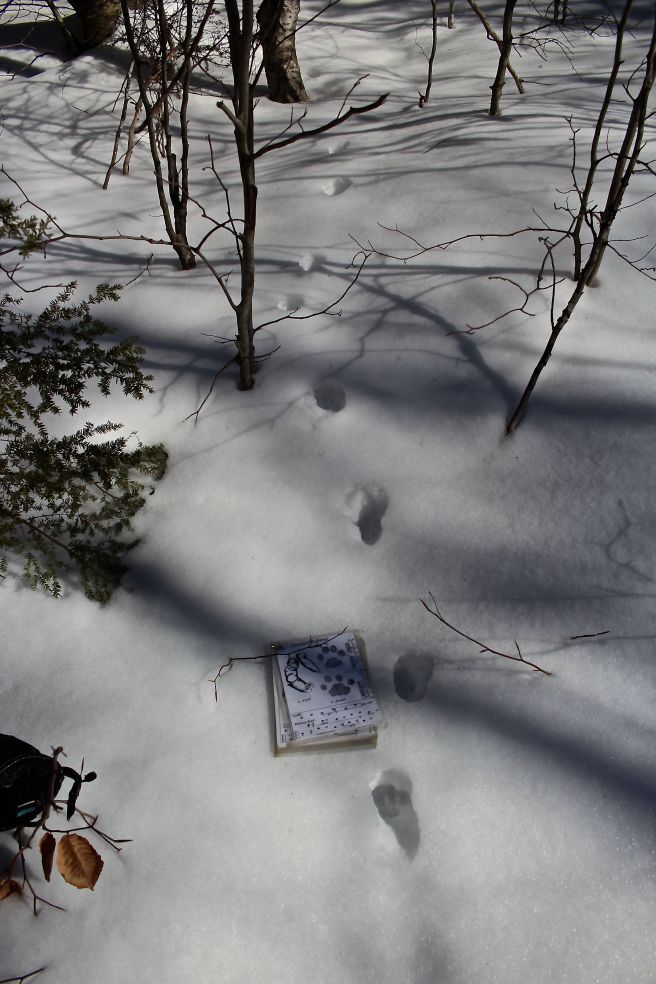 And only steps along the trail another great find–bobcat tracks. This china shop immediately appealed to moi.
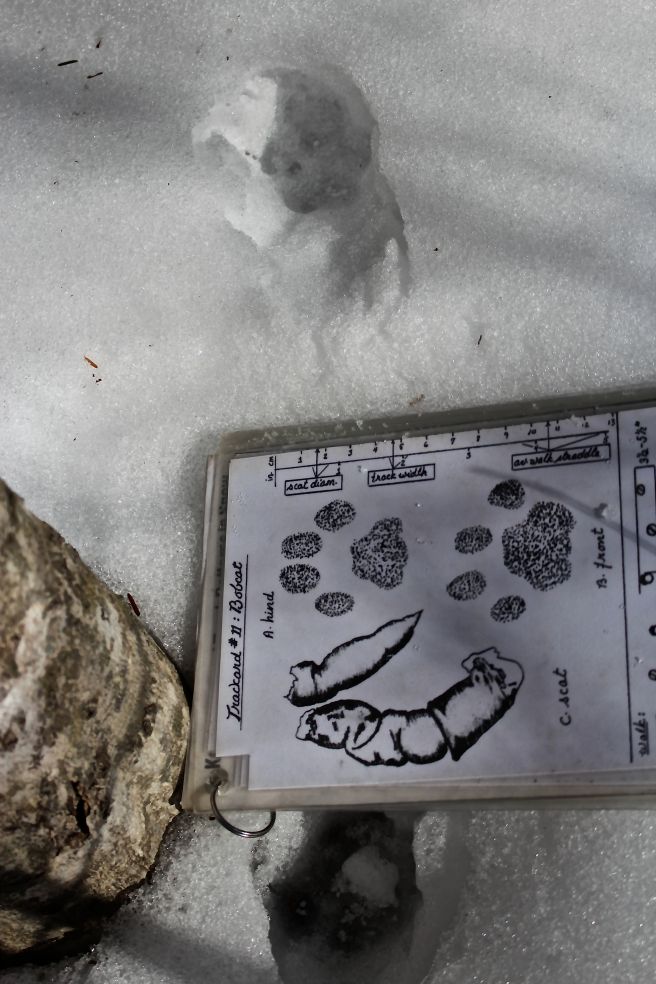 My
My  When I got to a ledgy spot, I decided to explore further–thinking perhaps Mr. Bob might have spent some time here. Not so–in the last two days anyway.
 The best find in this spot–red squirrel prints. A few things to notice–the smaller feet that appear at the bottom of the print are the front feet–often off-kilter. Squirrels are bounders and so as the front feet touch down and lift off the back feet follow and land before the front feet in a parallel presentation. In a way, the entire print looks like two exclamation points.
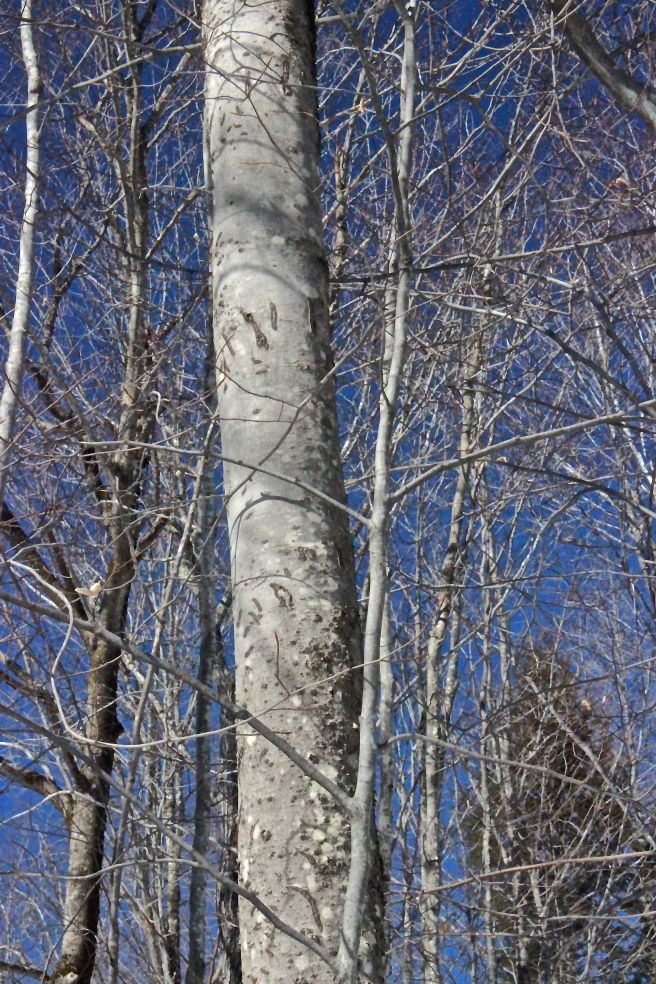 As I plodded along, my eyes were ever scanning and . . . I was treated to a surprise. Yes, a beech tree. Yes, it has been infected by the beech scale insect. And yes, a black bear has also paid a visit.
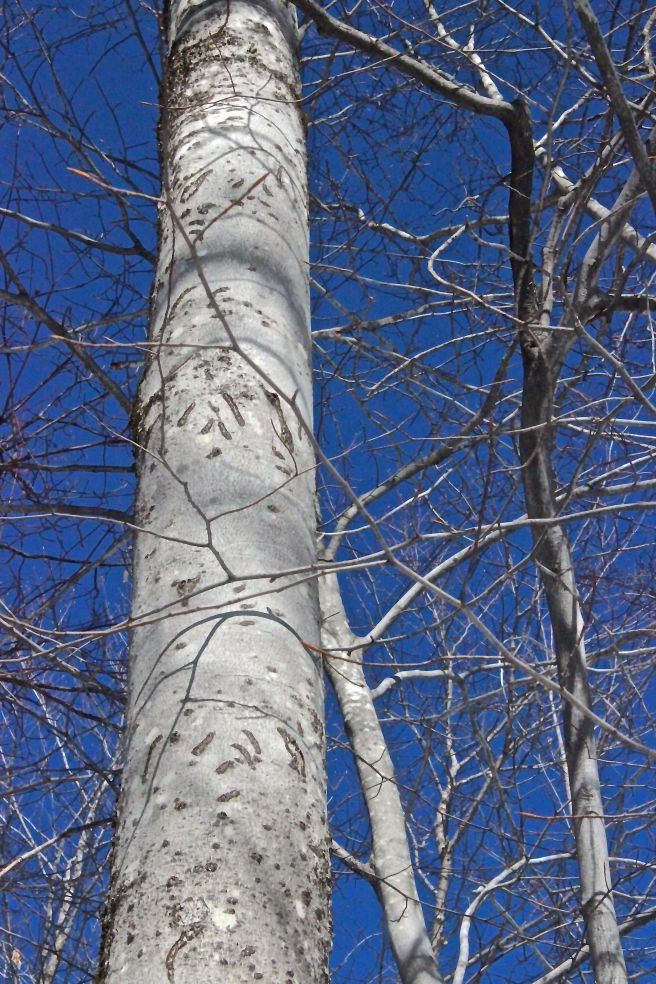 One visit, for sure. More than one? Not so sure. But can’t you envision the bear with its extremities wrapped around this trunk as it climbs. I looked for other bear trees to no avail, but suspect they are there. Docents and trackers–we have a mission.
 And what might the bear be seeking? Beech nuts. Viable trees. Life is good.
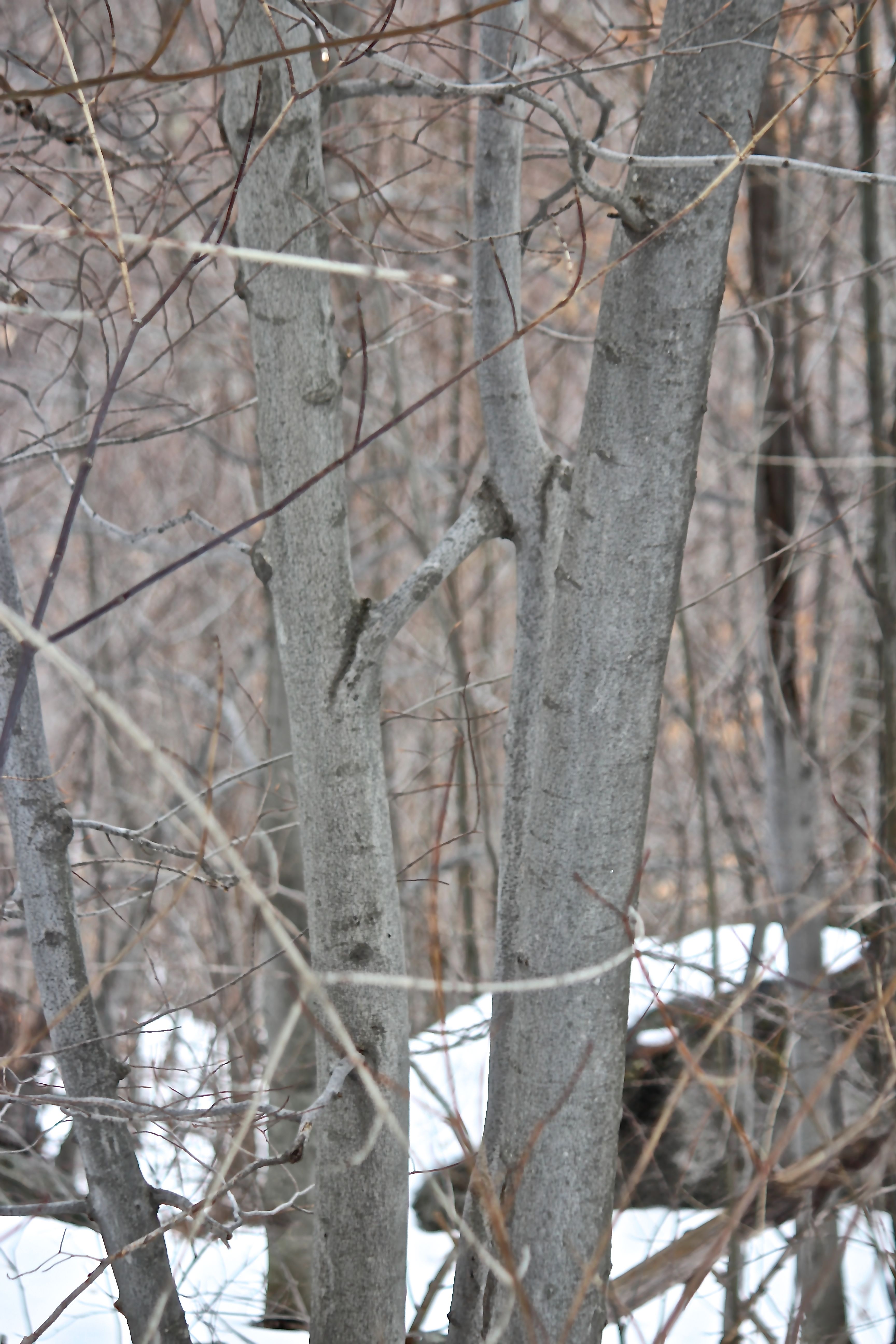
 Exactly where is the bear tree? Think left on red. When you get to this coppiced red maple tree, rather than turning right as is our driving custom, take a left and you should see it. Do remember that everything stands out better in the winter landscape.
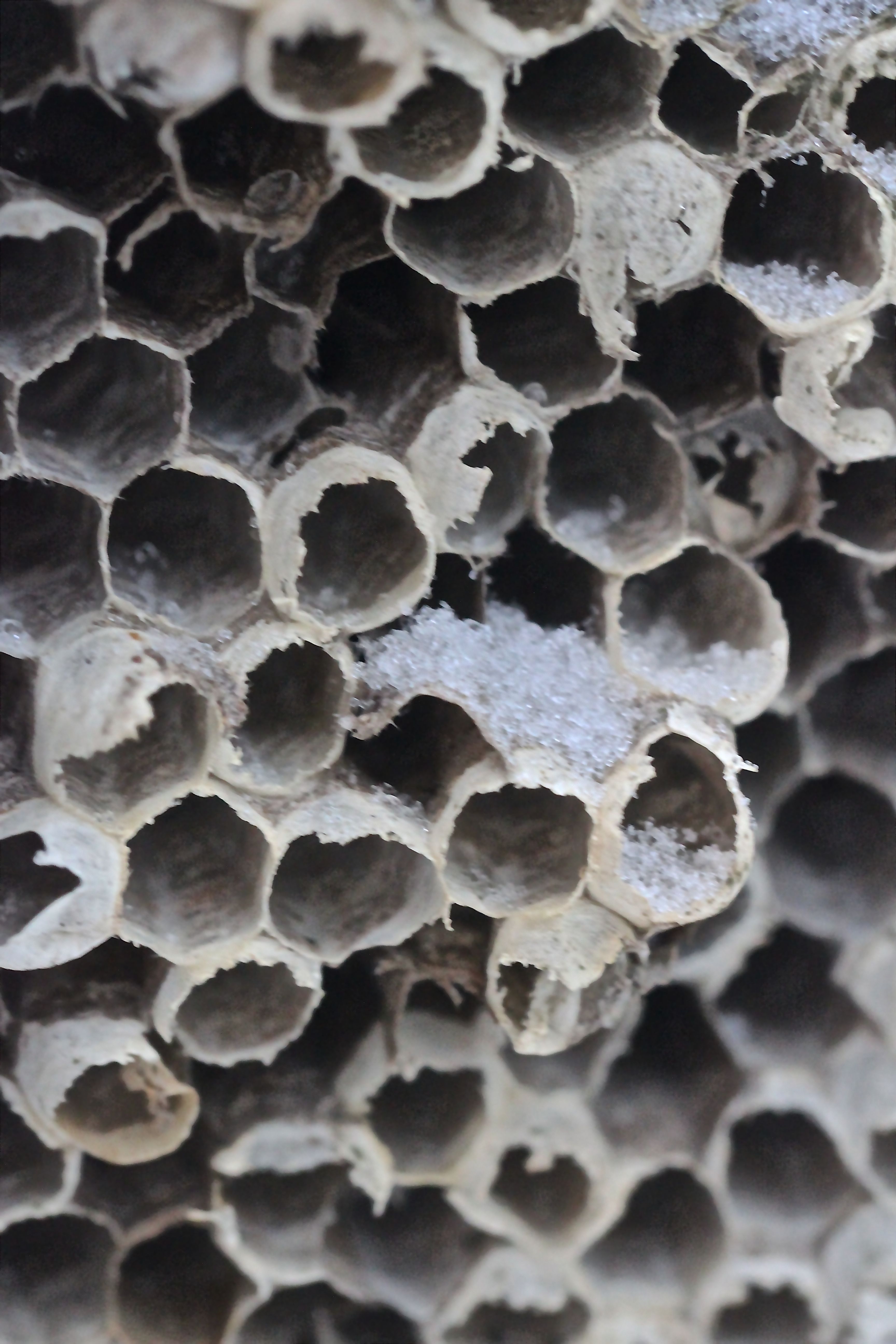
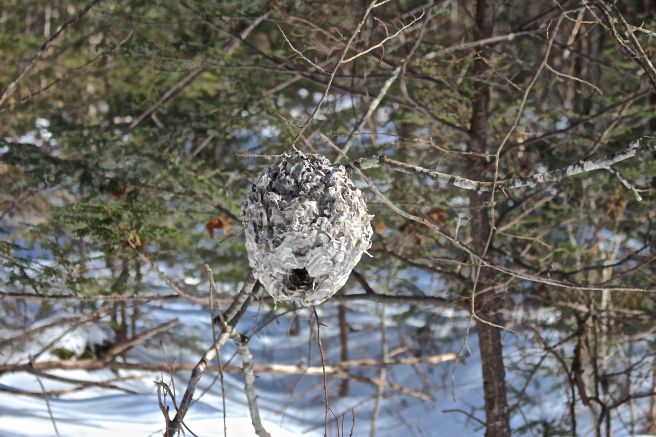 As delicate as anything in the china shop is the nest created by bald-faced hornets.
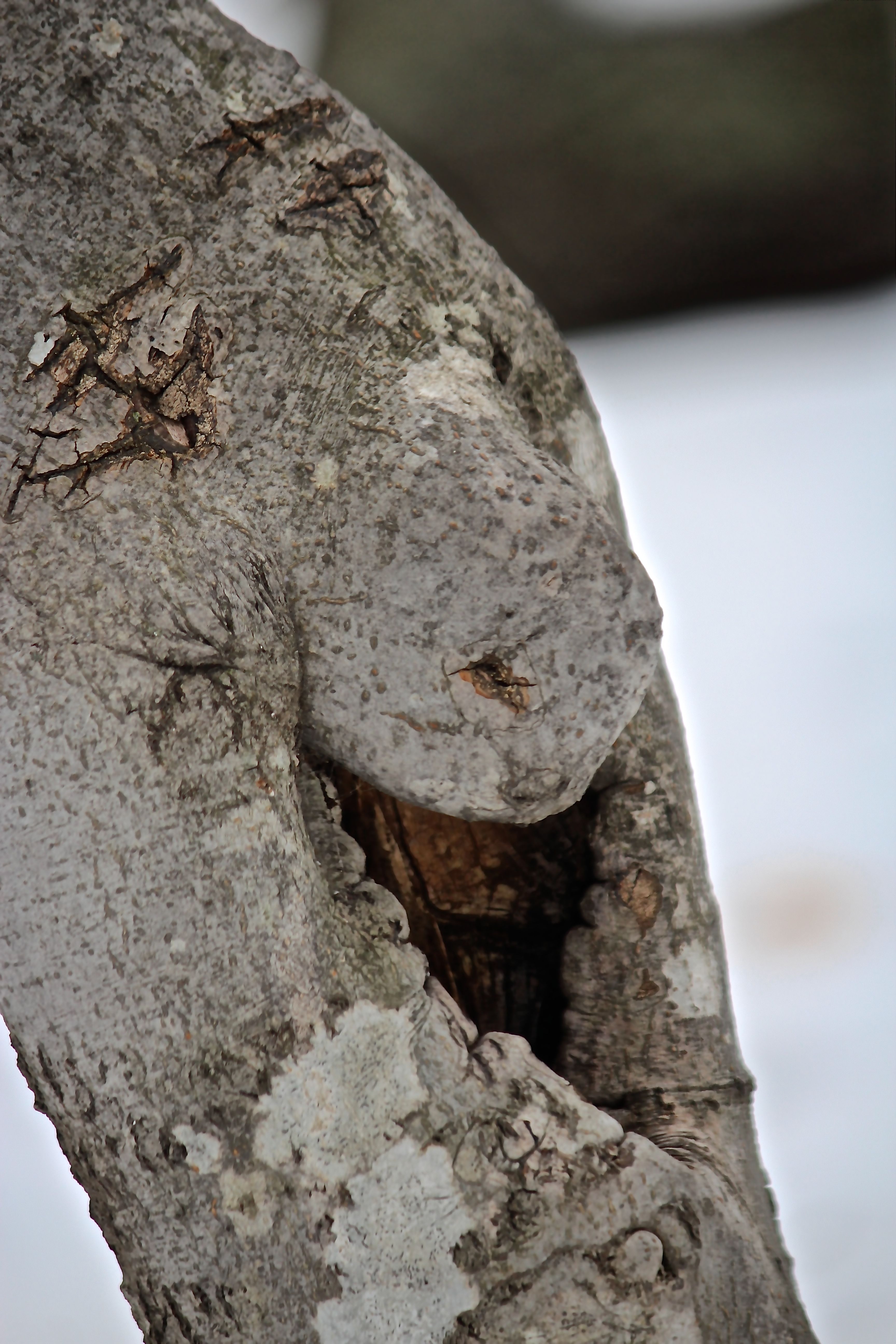
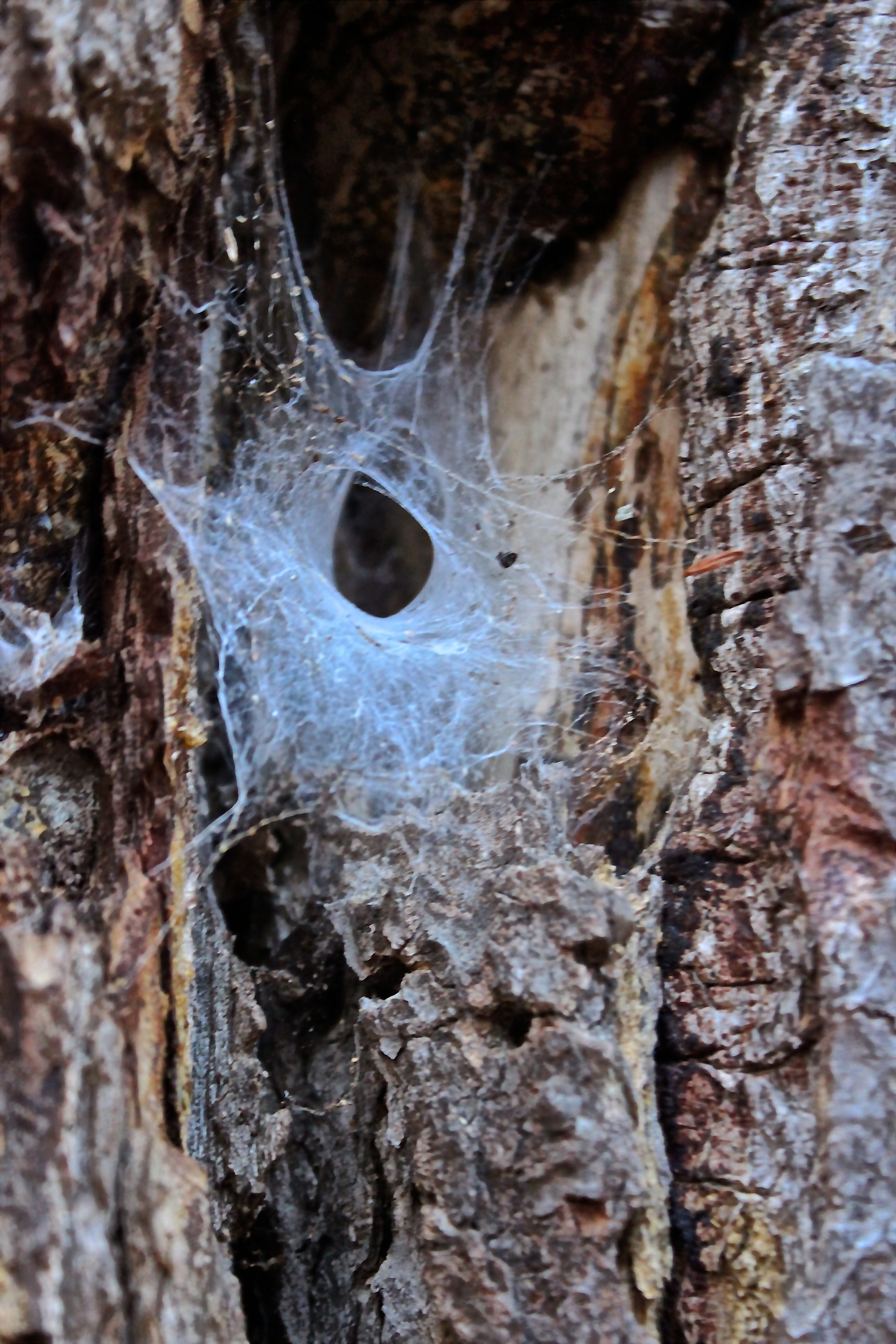
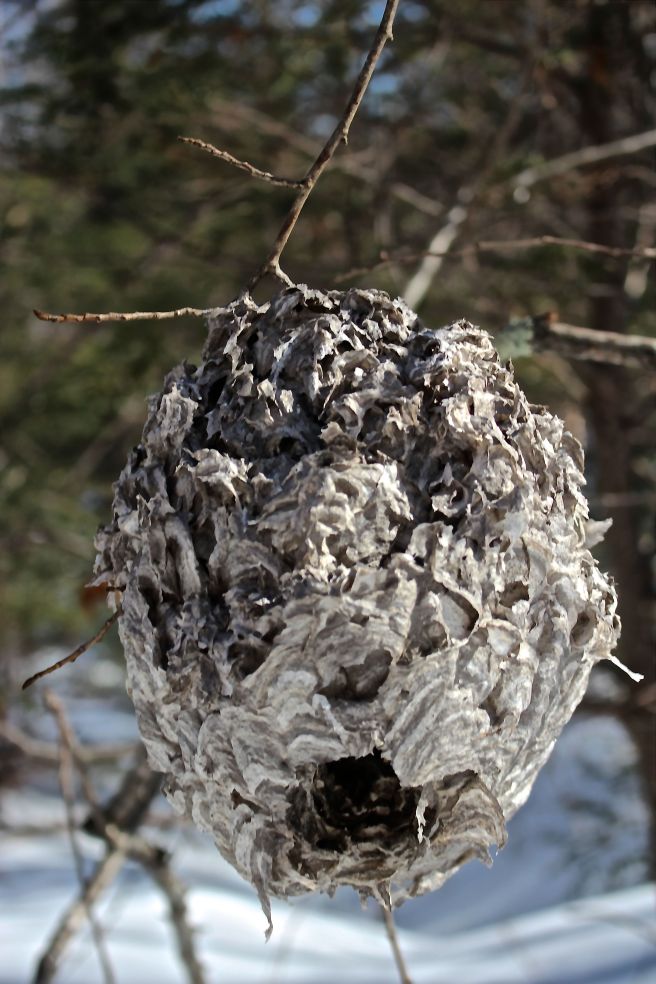 Well, it appears delicate, but the nest has been interwoven with the branches and twigs–making it strong so weather doesn’t destroy it. At the bottom is, or rather was, the entrance hole.
 Witch hazel (Hamamelis virginiana) grows abundantly beside younger beech trees. Though the flowers are now past their peak, I found a couple of dried ribbony petals extending from the cup-shaped bracts. China cups? No, but in the winter setting, the bracts are as beautiful as any flower.


 With the Balds in Evans Notch forming the backdrop, the brook is home to numerous beaver lodges, including these two.
 Layers speak of generations and relationships.
 Close proximity mimics the mountain backdrop.

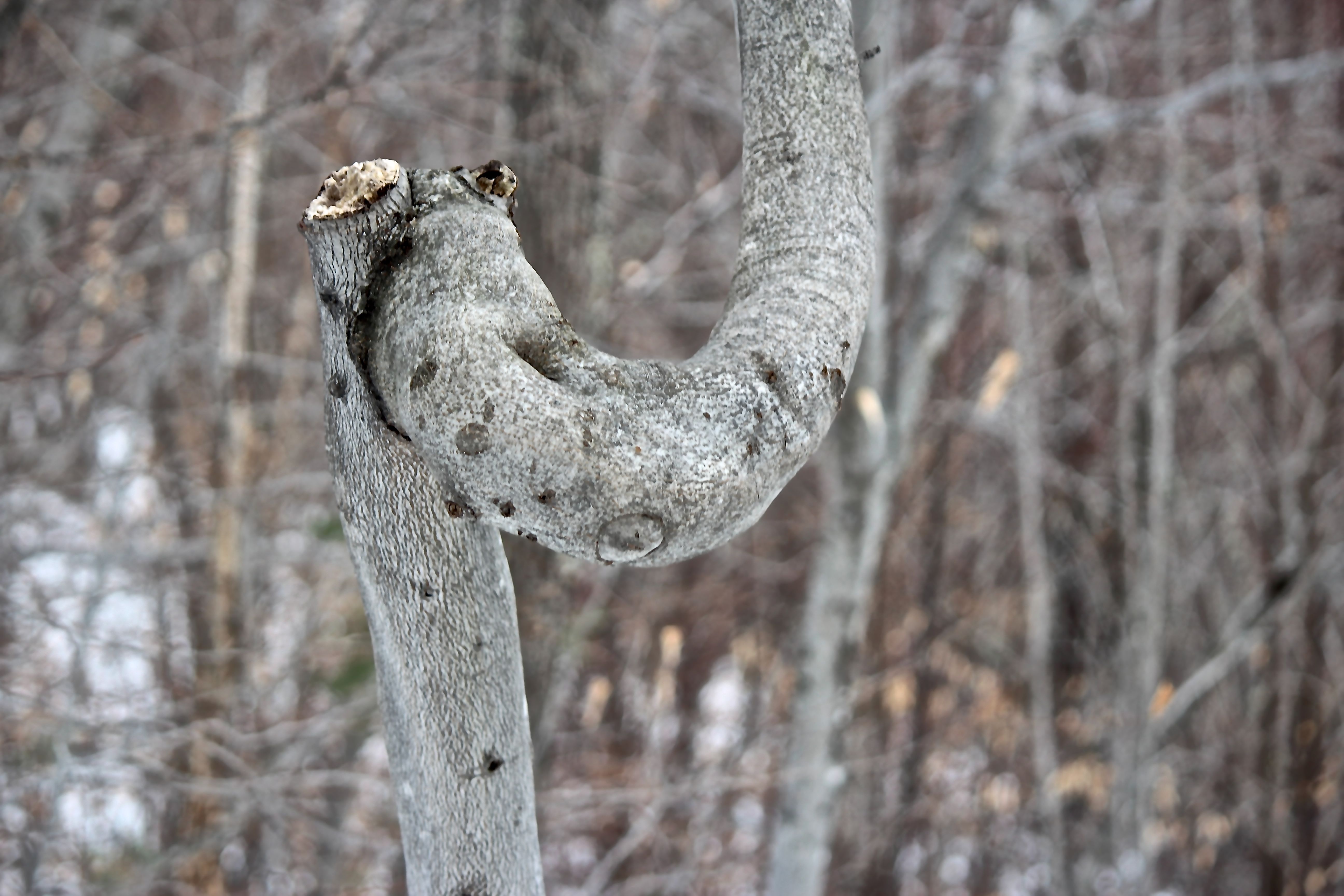
 And sometimes, I just have to wonder–how does this tree continue to stand?
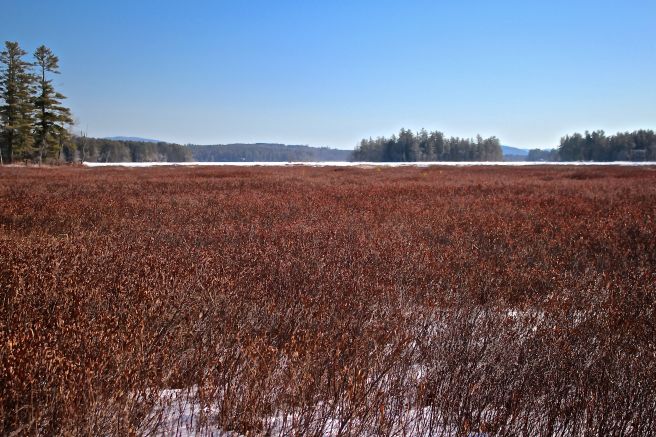 Leatherleaf fields forever.
 Spring is in the offing.
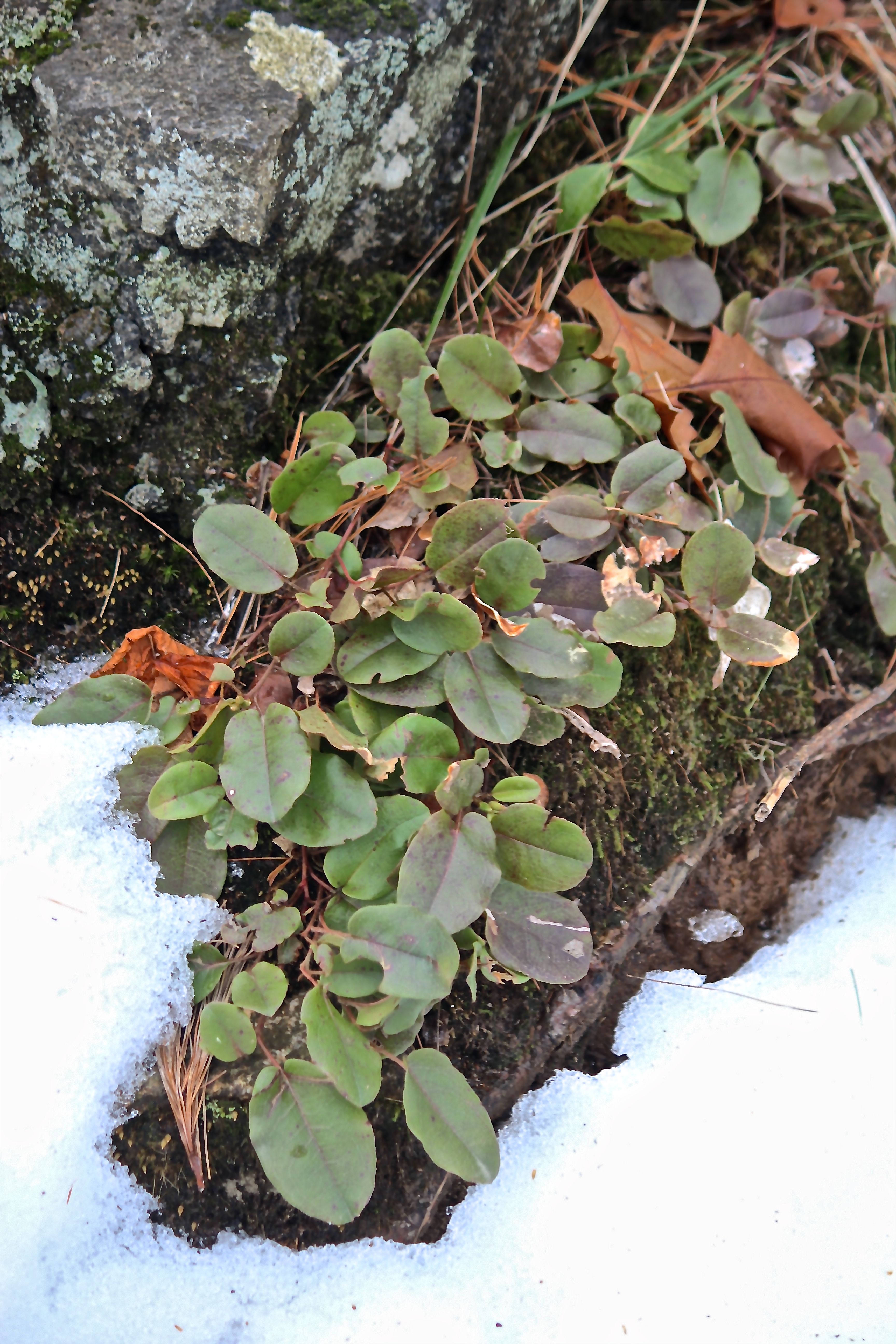
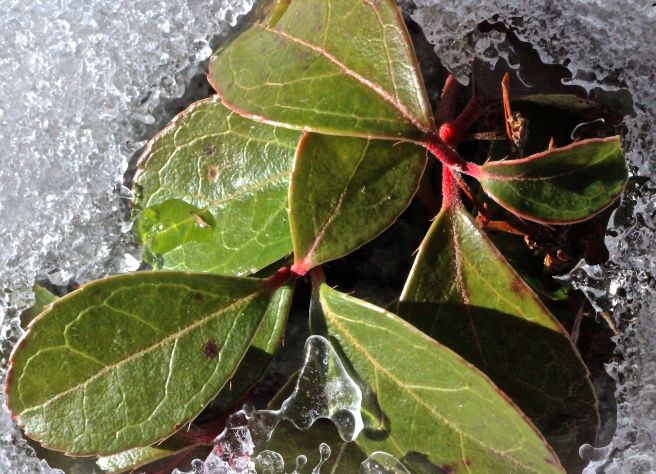 Wintergreen offers its own sign of the season to come.
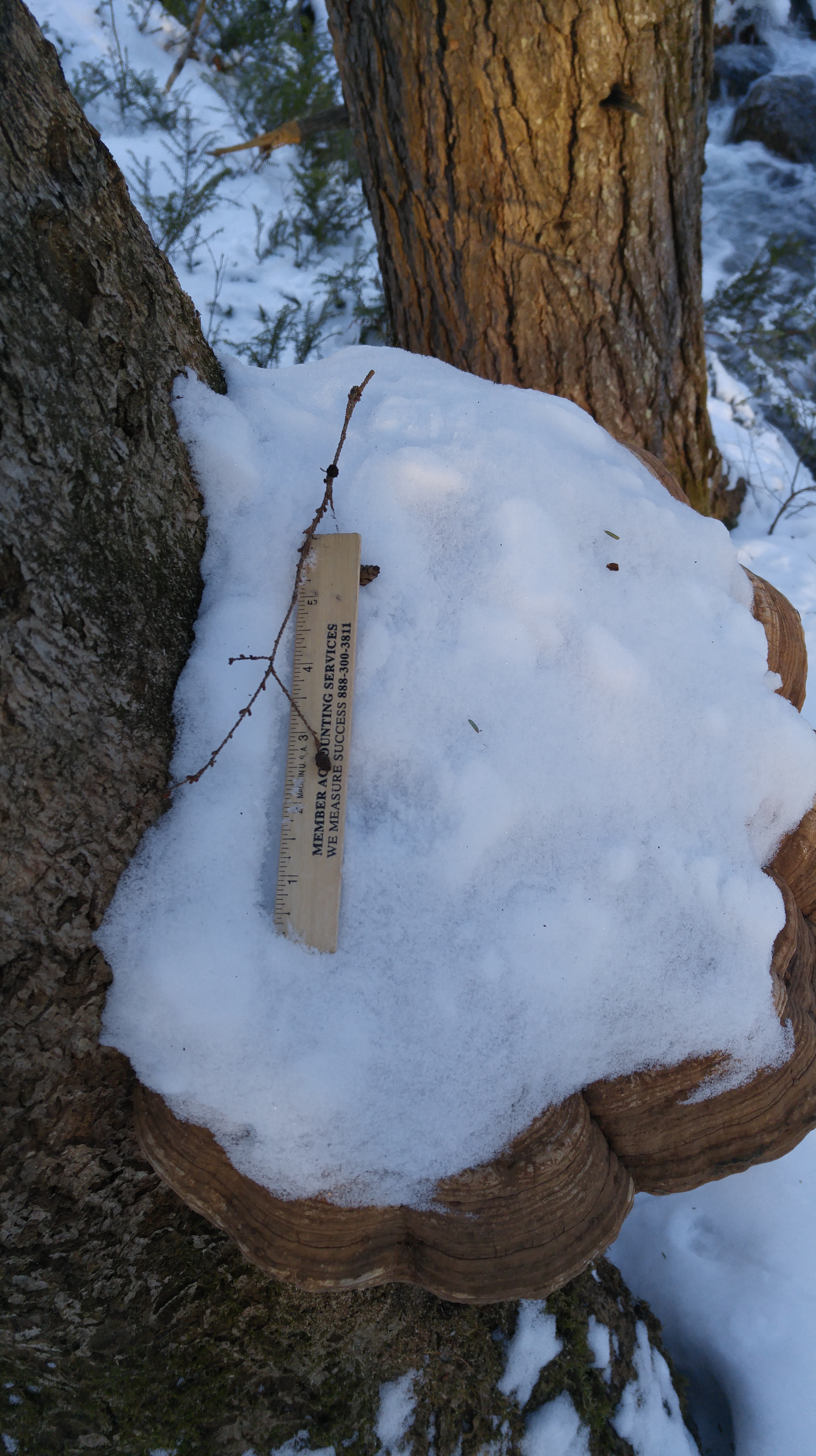
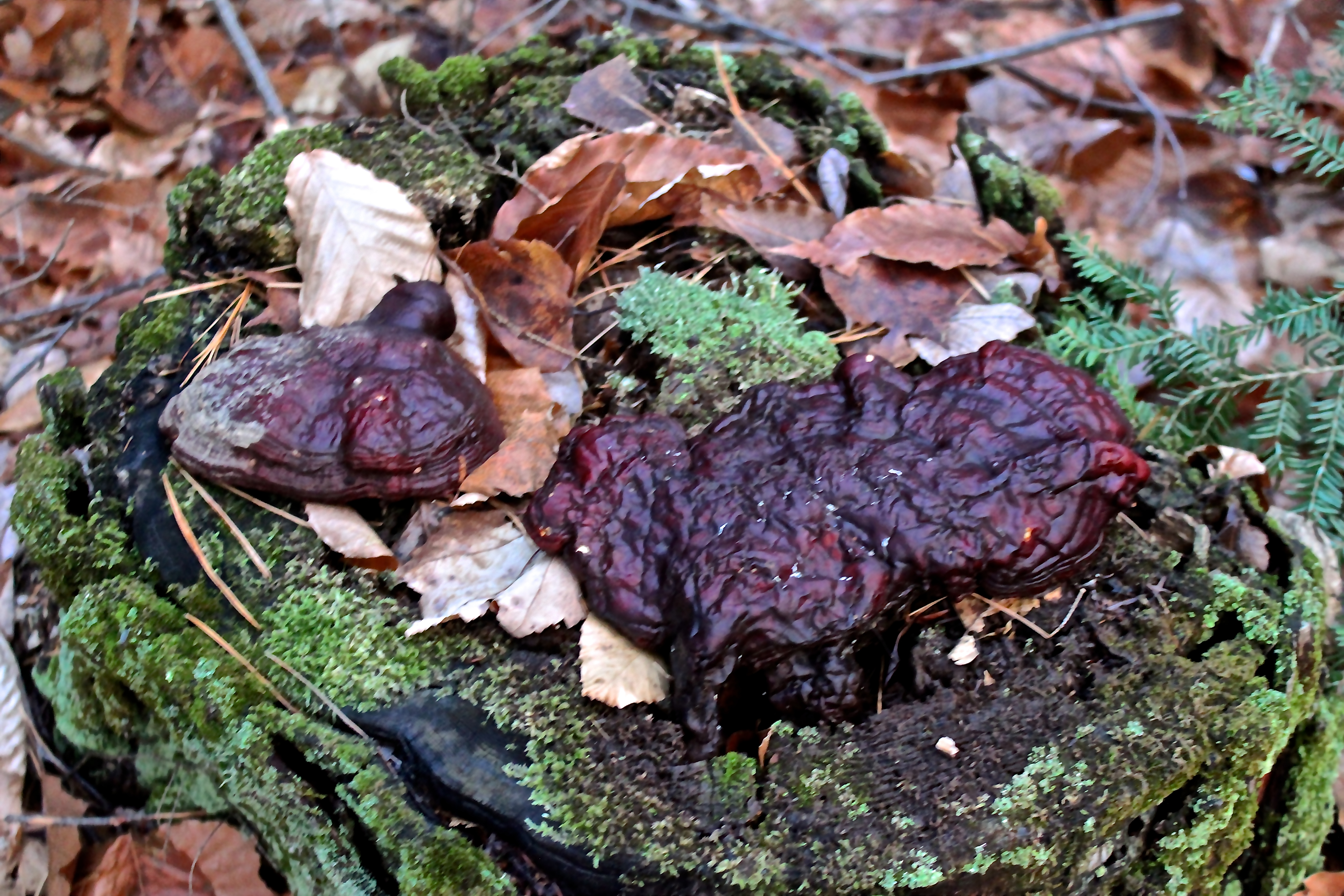
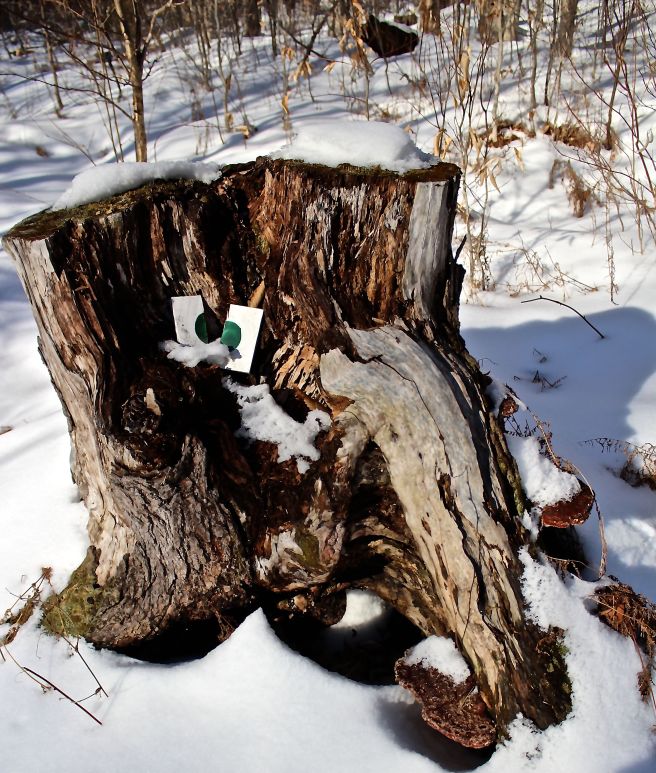 In the meantime, it’s still winter and this hemlock stump with a display of old hemlock varnish shelf (Ganoderma tsugae) caught my eye. By now, I was on the green trail.
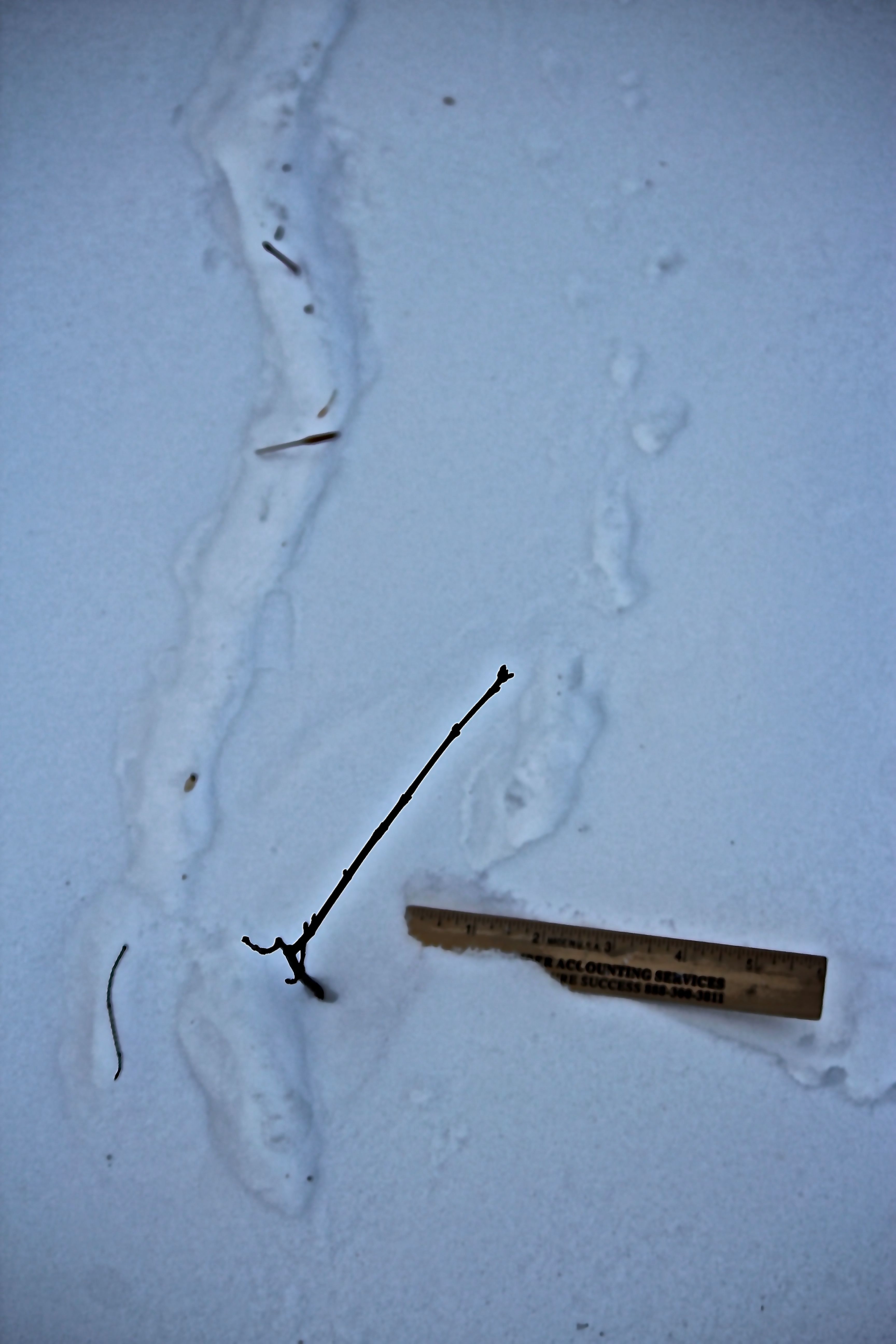
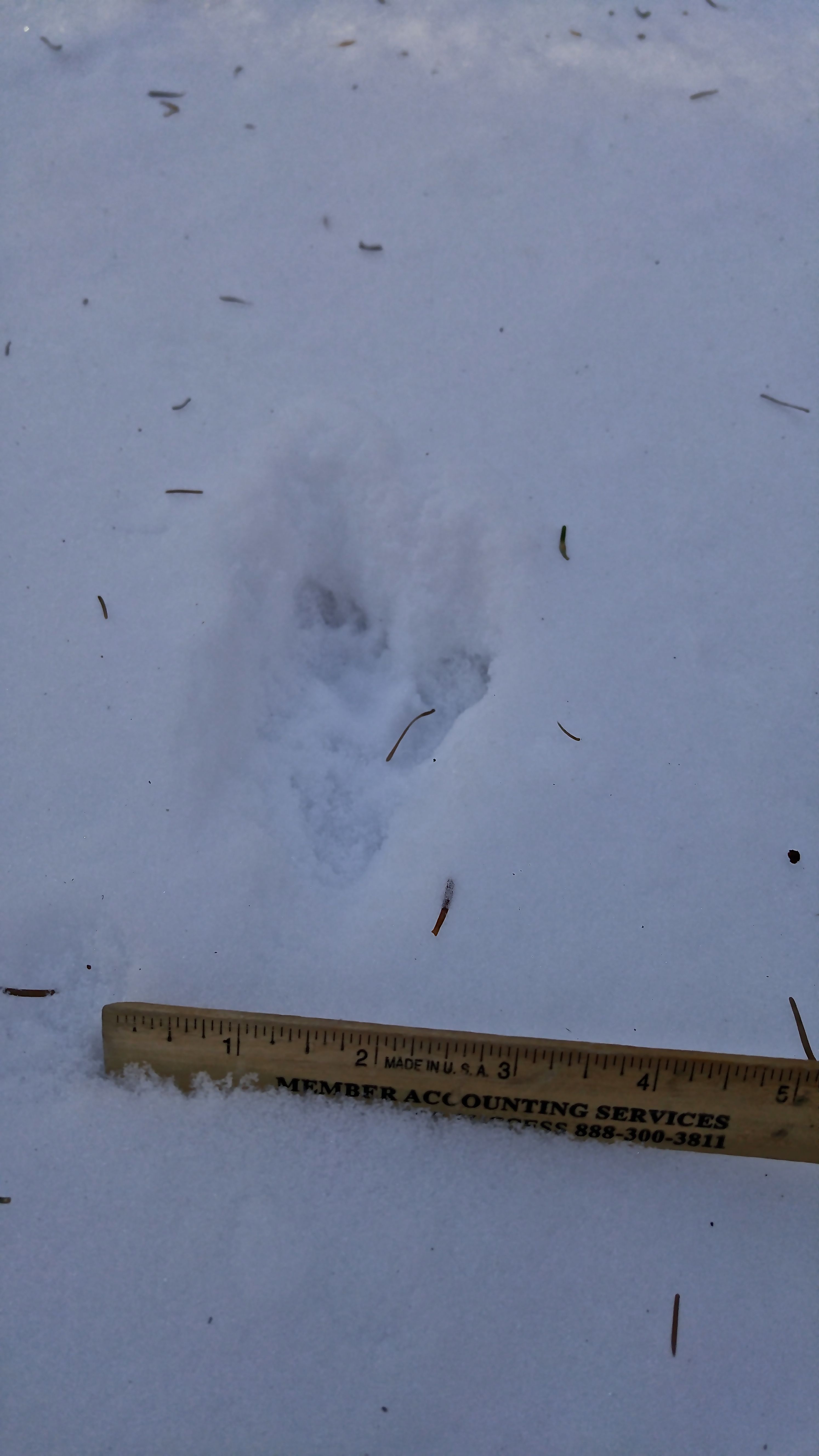
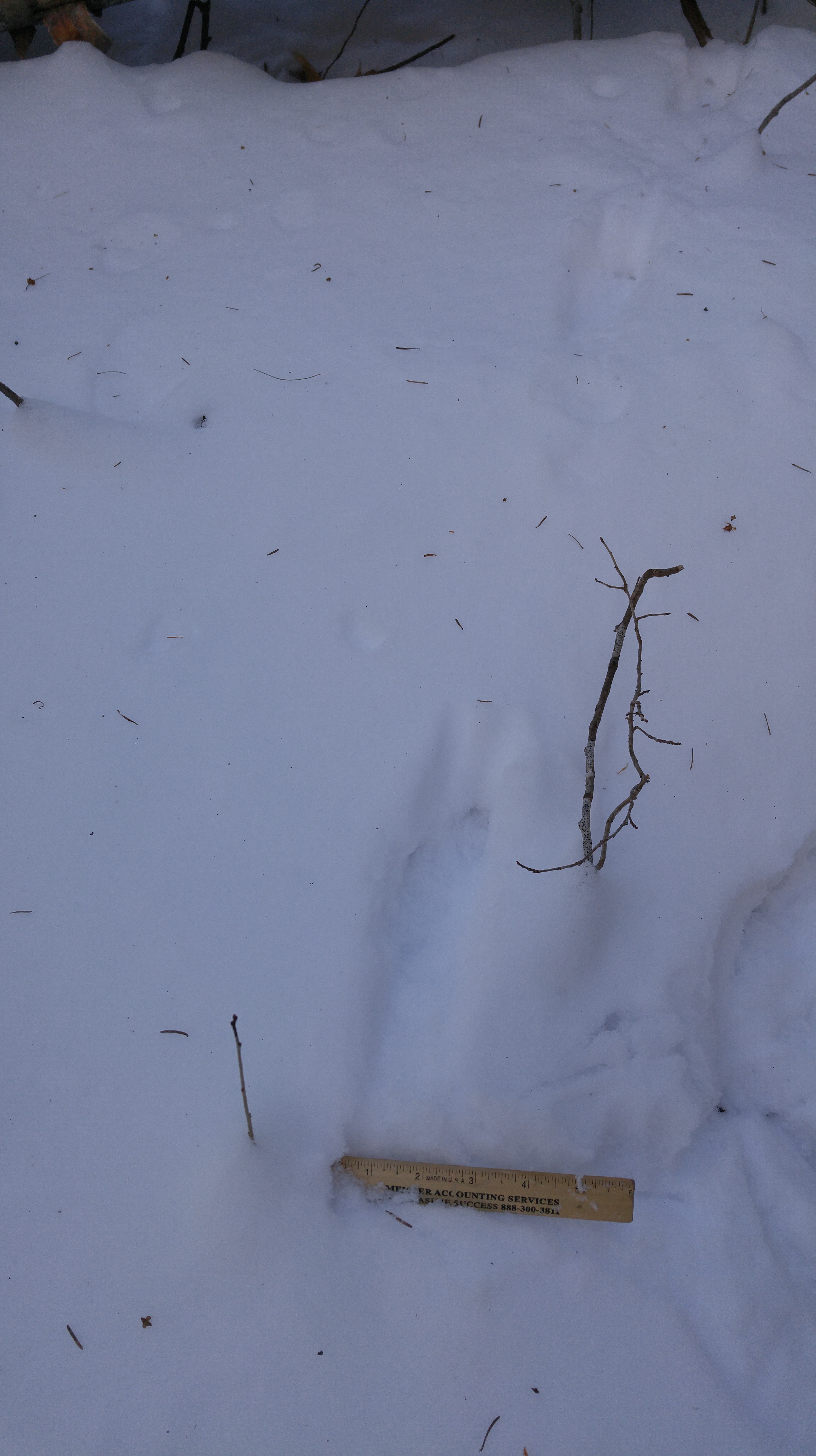
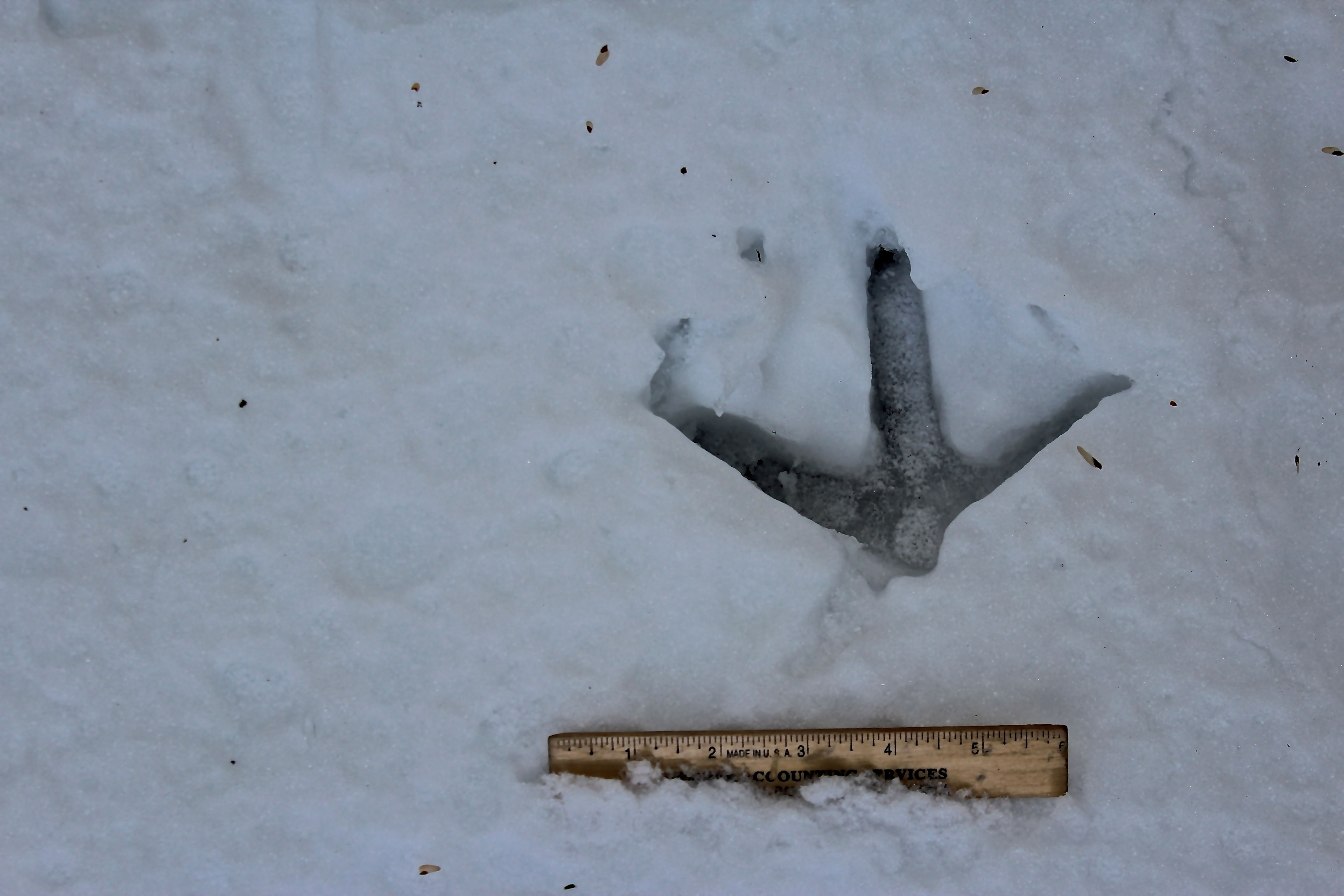
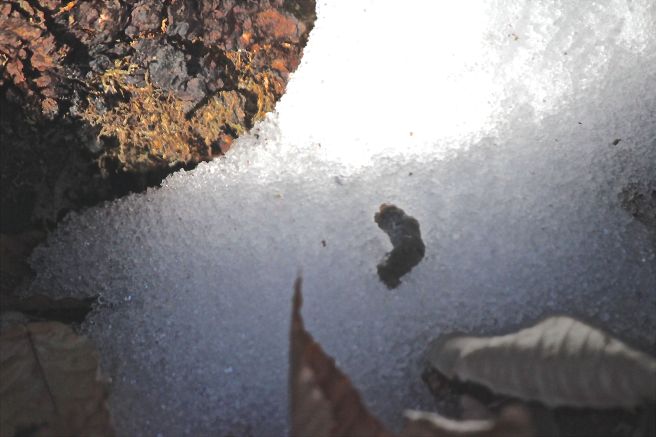 But it’s what I saw in the hollow under the stump, where another tree presumably served as a nursery and has since rotted away, that made me think about how this year’s lack of snow has affected wild life. In the center is ruffed grouse scat. Typically, ruffed grouse burrow into snow on a cold winter night. Snow acts as an insulator and hides the bird from predators. I found numerous coyote and bobcat tracks today. It seems that a bird made use of the stump as a hiding spot–though not for long or there would have been much more scat.

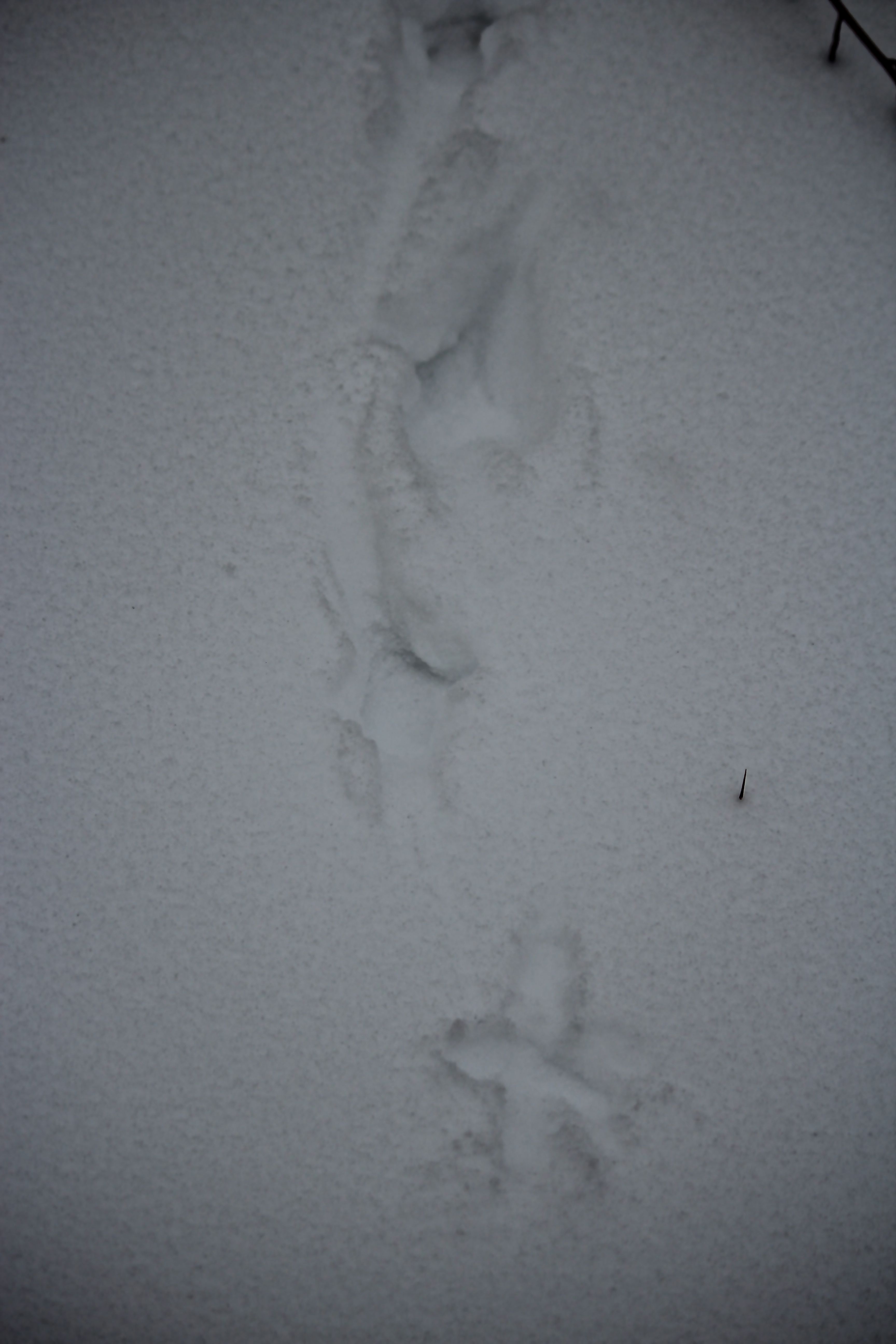
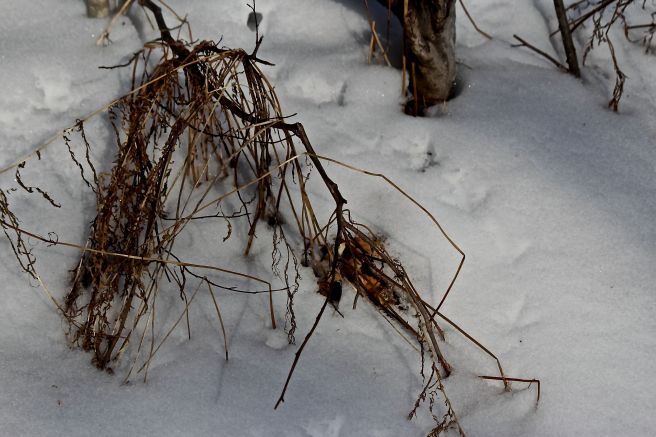 Apparently it circled the area before flying off.








































































































































 wondermyway
