A Generous Wander

When I donated a guided walk to a recent Lakes Environmental Association fundraiser, I was a wee bit nervous. Would anyone bid on it during the silent auction? And who might bid?

Thankfully, Carol notified me right away that she’d been the high bidder and my relief was immediate. I knew we’d have fun and the offer brought in a few bucks for an organization that has been near and dear to my heart for a long time. She chose the date, time and location. Plus she got to invite some friends along for the journey.

b-Kathy's sign 1

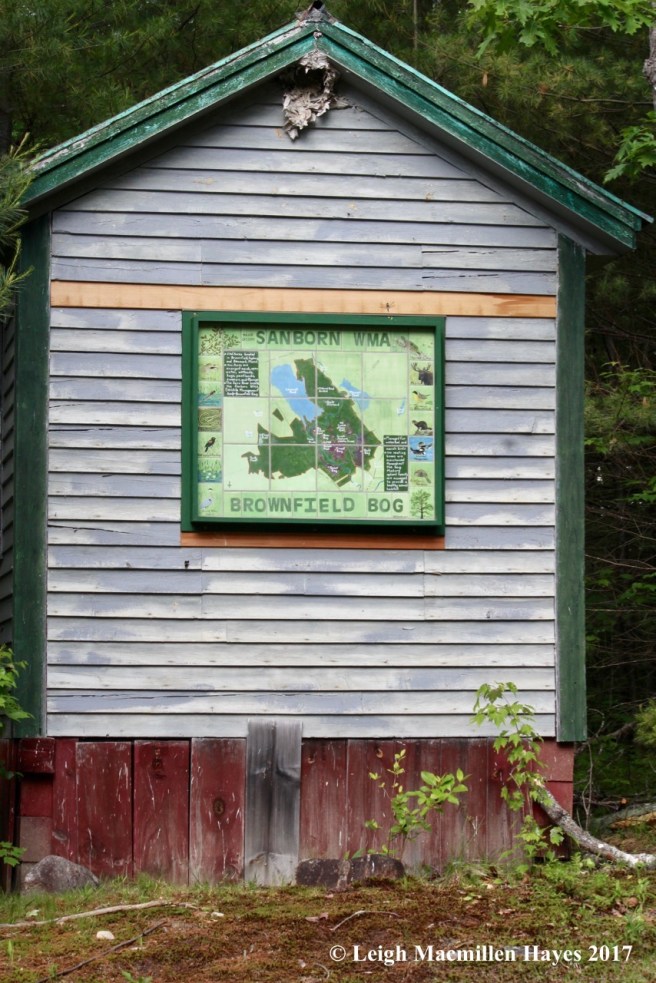
The chosen place–one of my favorites–Brownfield Bog. We started at the shack, where I pointed out Kathy McGreavy’s tiled map. Of course, they were wowed.
b-heron

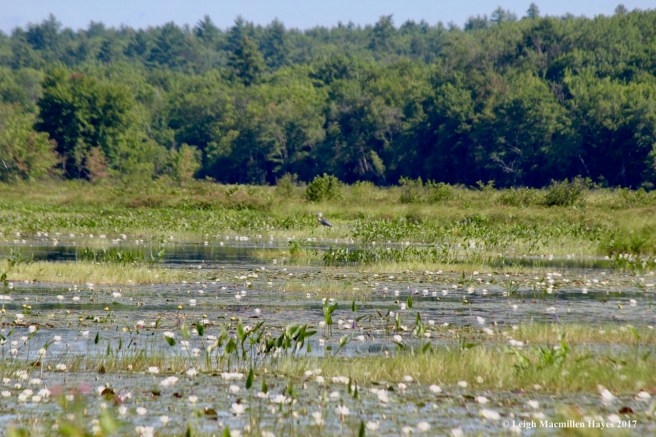
And then we followed a short spur from the parking lot for the first view of the bog and a great blue heron flew up and then settled again.

b-buttonbush

It was there that they first viewed a buttonbush. Or at least that it first made its presence known, for I think that so many things we see often and they blend into the landscape until that moment when our eyes are opened–and our minds as well.
b-color 1

We followed another spur and noticed a sampling of fall foliage along the bog’s edge. In our minds it was swamp maple, aka red maple–or so we thought for a bit.
b-interrupted fern

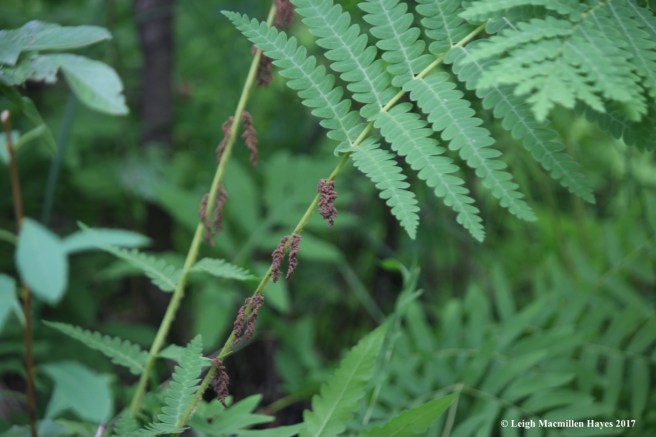
At a fork in the road, Carol, Marylou and Sara chose the left-hand turn and so we entered the land of the ferns. It was here that they began to familiarize themselves with royal, cinnamon, interrupted and sensitive–noting features in their forms to tell them apart. While we walked, and at times we walked quickly for the mosquitoes were ferocious, it was fun for me to listen as they quizzed themselves.
b-meadowsweet

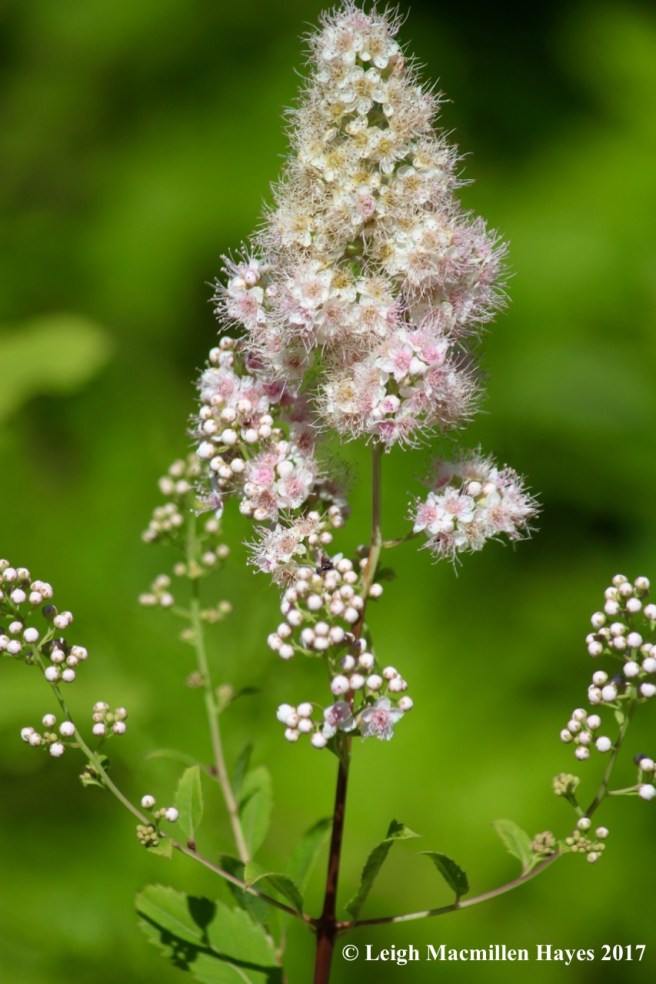
In a field at the end of the road, the spireas bloomed and we looked at the branching structure of meadowsweet with blossoms slowly opening in dainty clusters.
b-Saco River 2

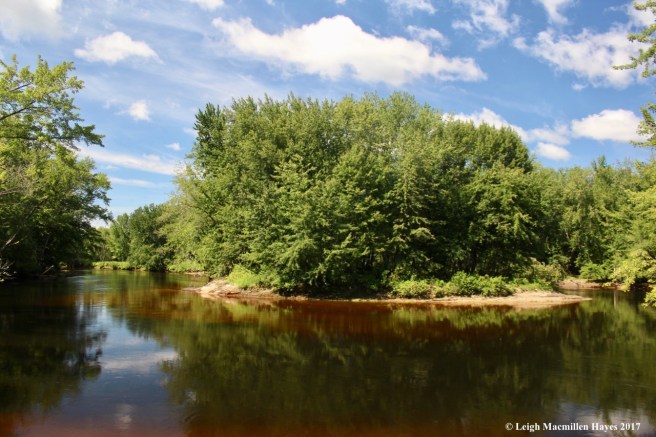
When we reached Pirate’s Cove along the Saco River, we paused for a bit.
b-alder-leaf buckthorn 1

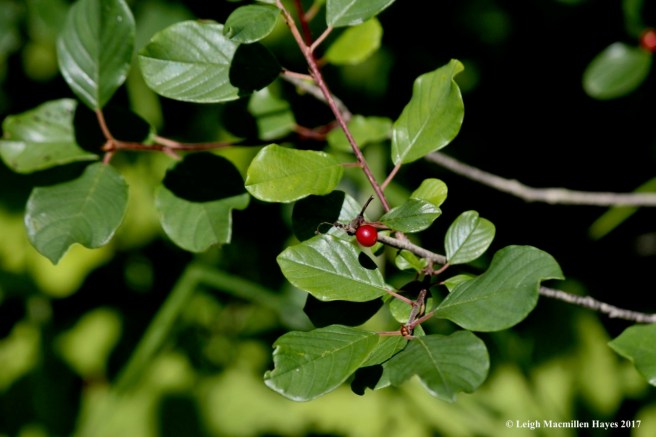
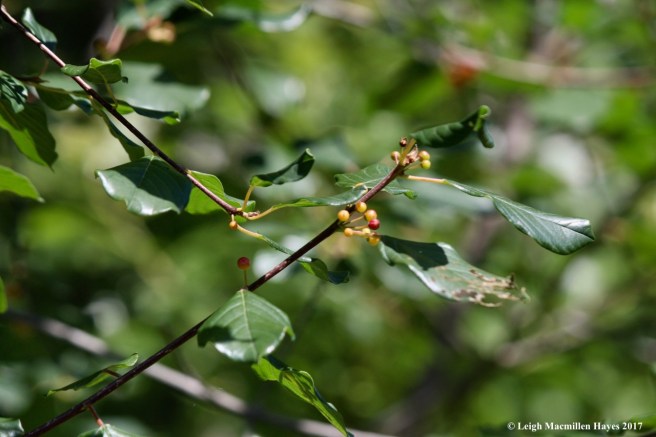
It was there that Sara spotted a shrub I couldn’t identify until I arrived home and slowed my brain down.
alder-leaf buckthorn2

The leaves were alternate and simple, with deep veins. But it was the color that stopped us–for it was a deep green, almost bronze on some. And we’d missed the flowers, but the fruits were spherical and when Sara opened one, she found three seeds. Turns out it was an alder-leaf buckthorn. And as far as I remember, it was the only one we spotted. But . . . as I said earlier, our minds were open and let’s hope it made an impact and the memory  lingers.
b-yellow loosestrife

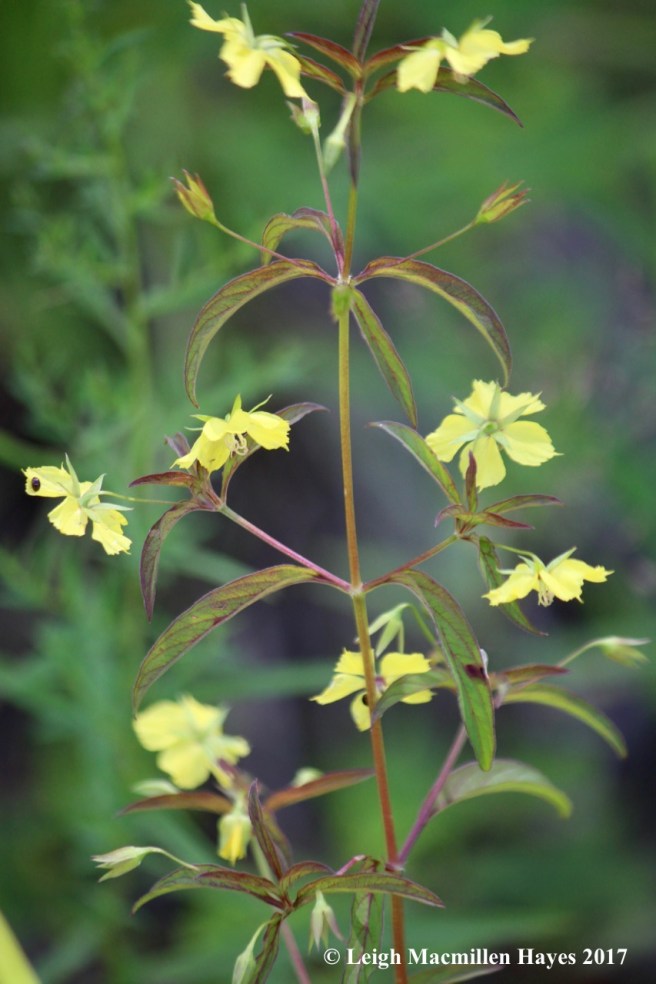
We finally left the river area and as we started back on the road, they asked me to name a flower. I knew when I said its name I was wrong, but I couldn’t pull the real name out of the depths of my brain. So here ’tis–yellow loosestrife.
b-raccoon prints

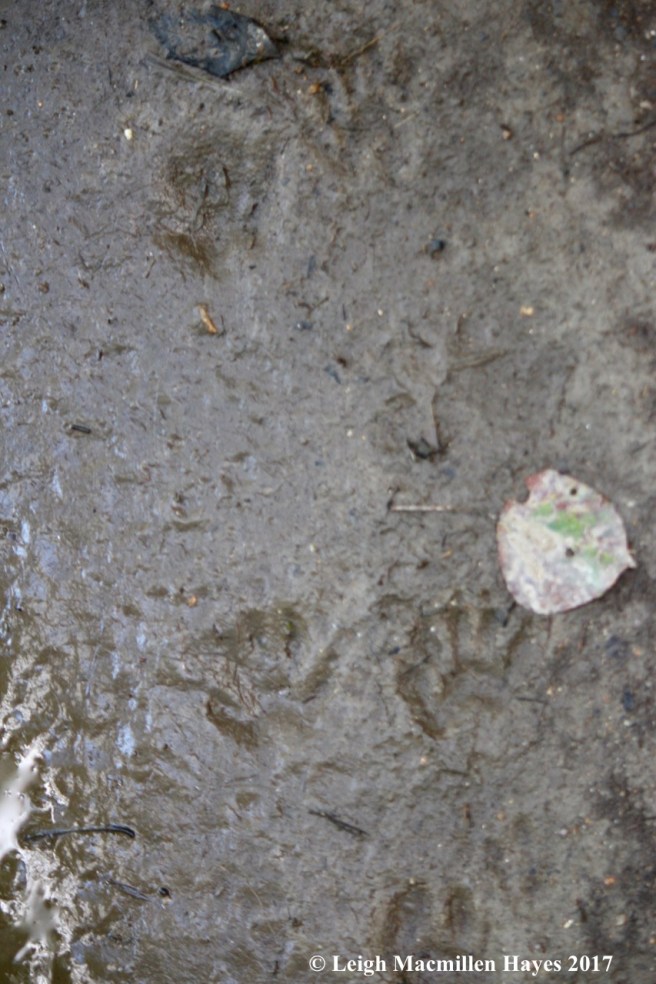
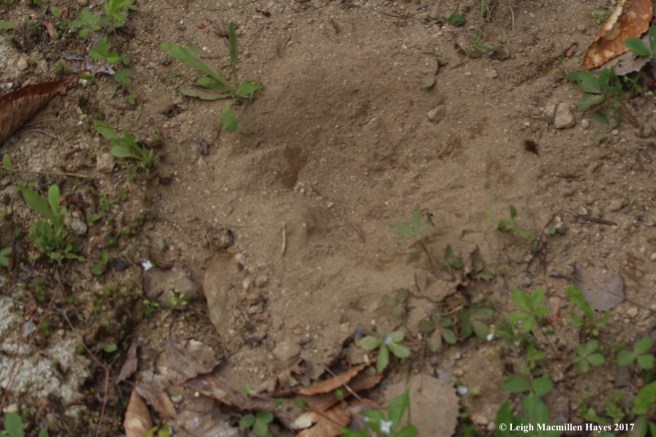
Making our way back to the main road through the bog, we saw handprints in the mud and knew a raccoon had passed before.

b-Pleasant Mountain 2

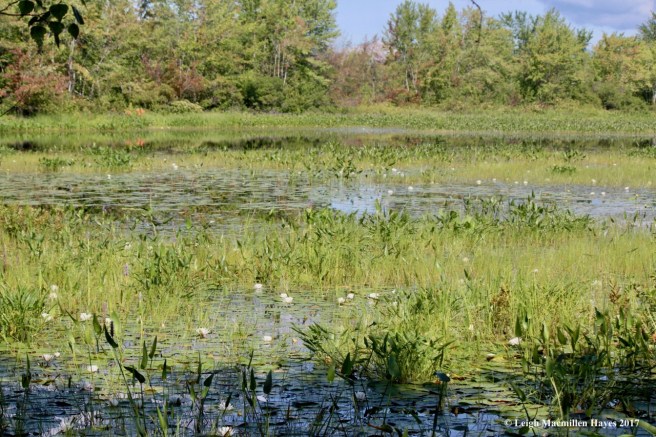
Back at the intersection, we turned left and journeyed on, noticing all the pickerelweed and water lilies at the lower layer and changes in vegetation leading all the way to Pleasant Mountain.
b-meadow rue

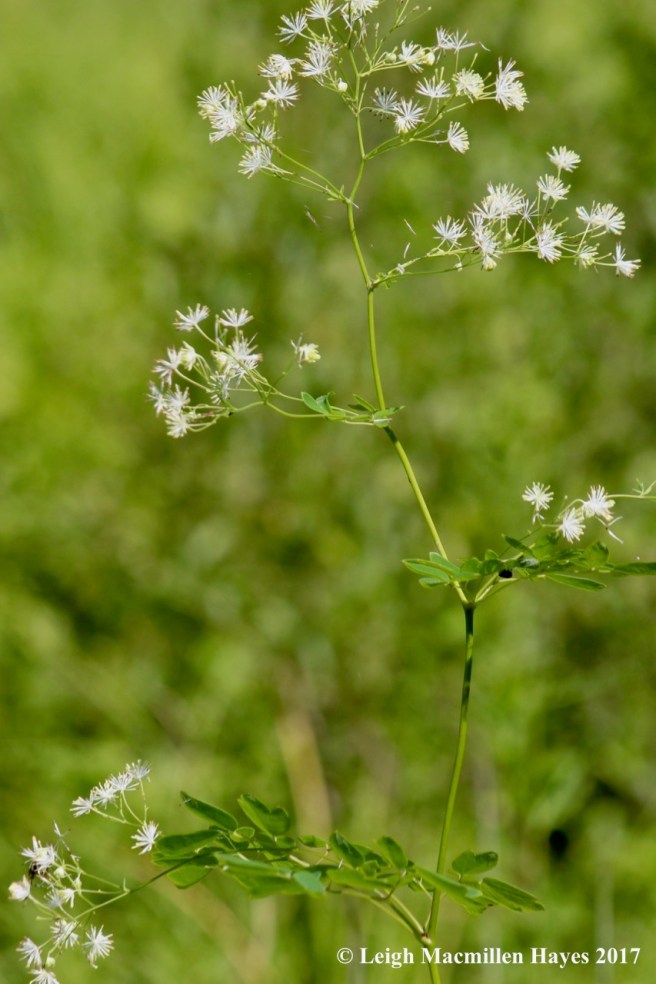
It was along this route that we stopped most often, sometimes for things we knew like meadow rue
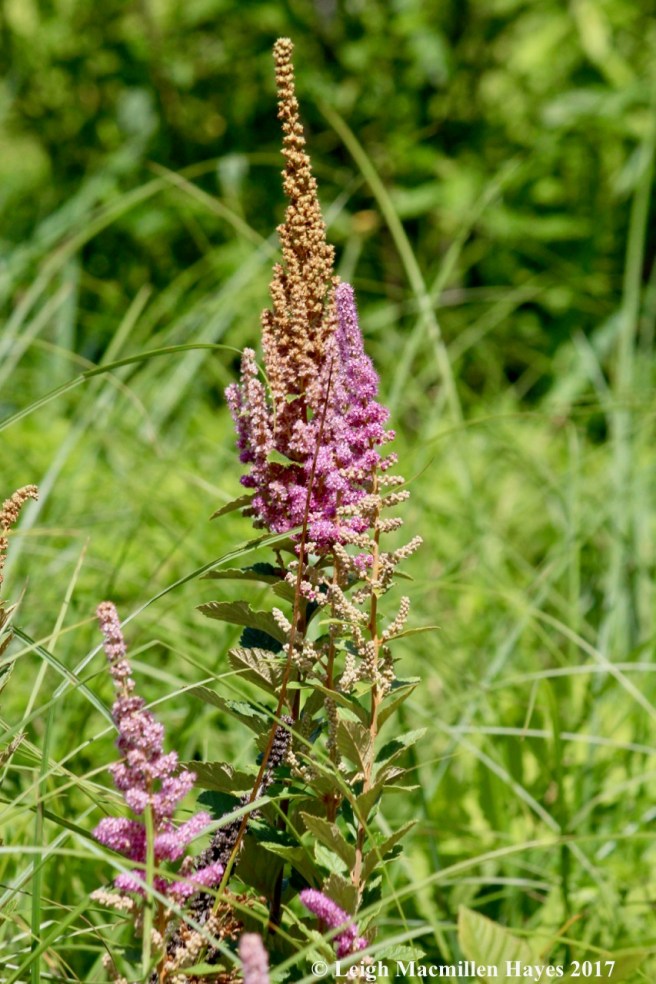
b-steeplebush

and the other spirea, steeplebush–these presenting several renditions of the same theme.

b-elm

We spied an elm tree and reminisced about elms of the past.
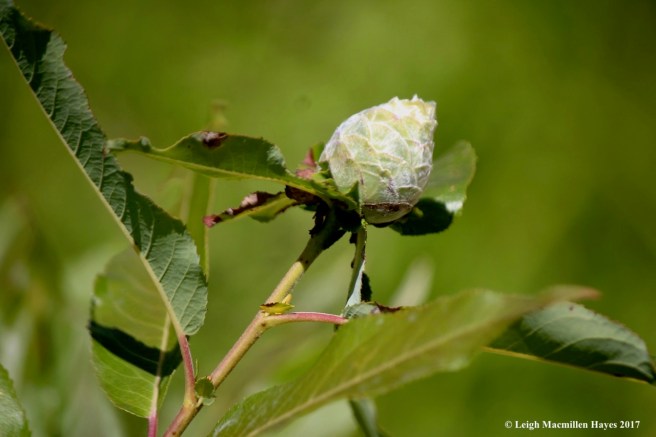
b-willow gall

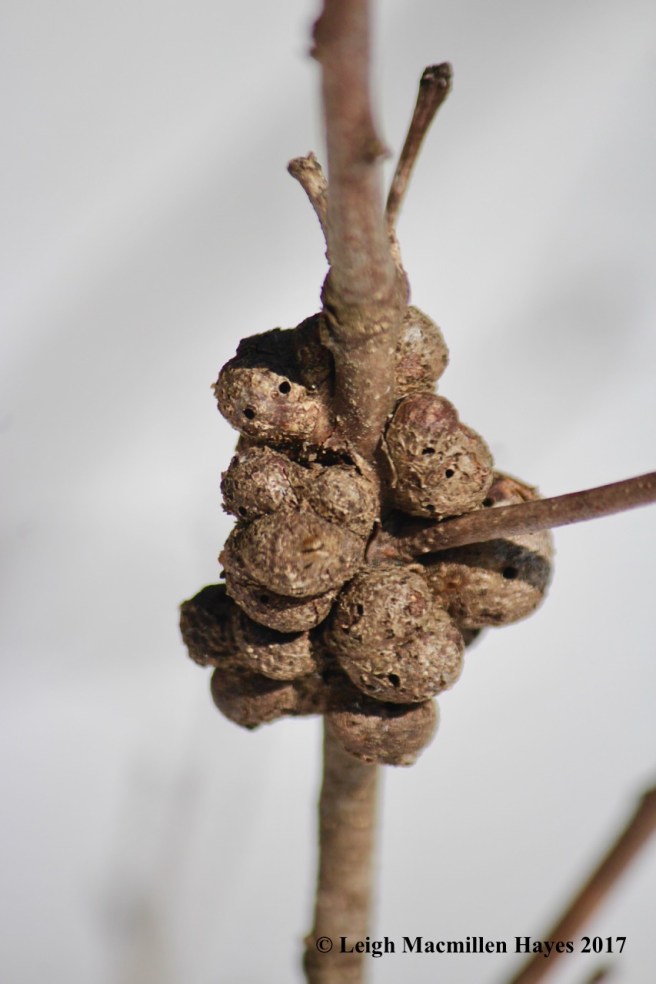
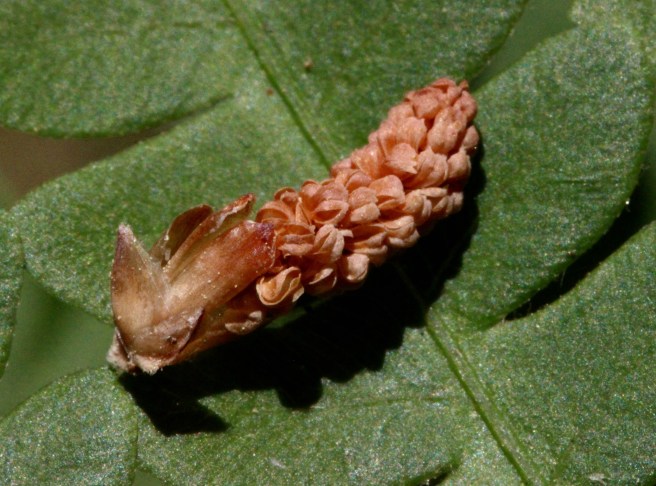
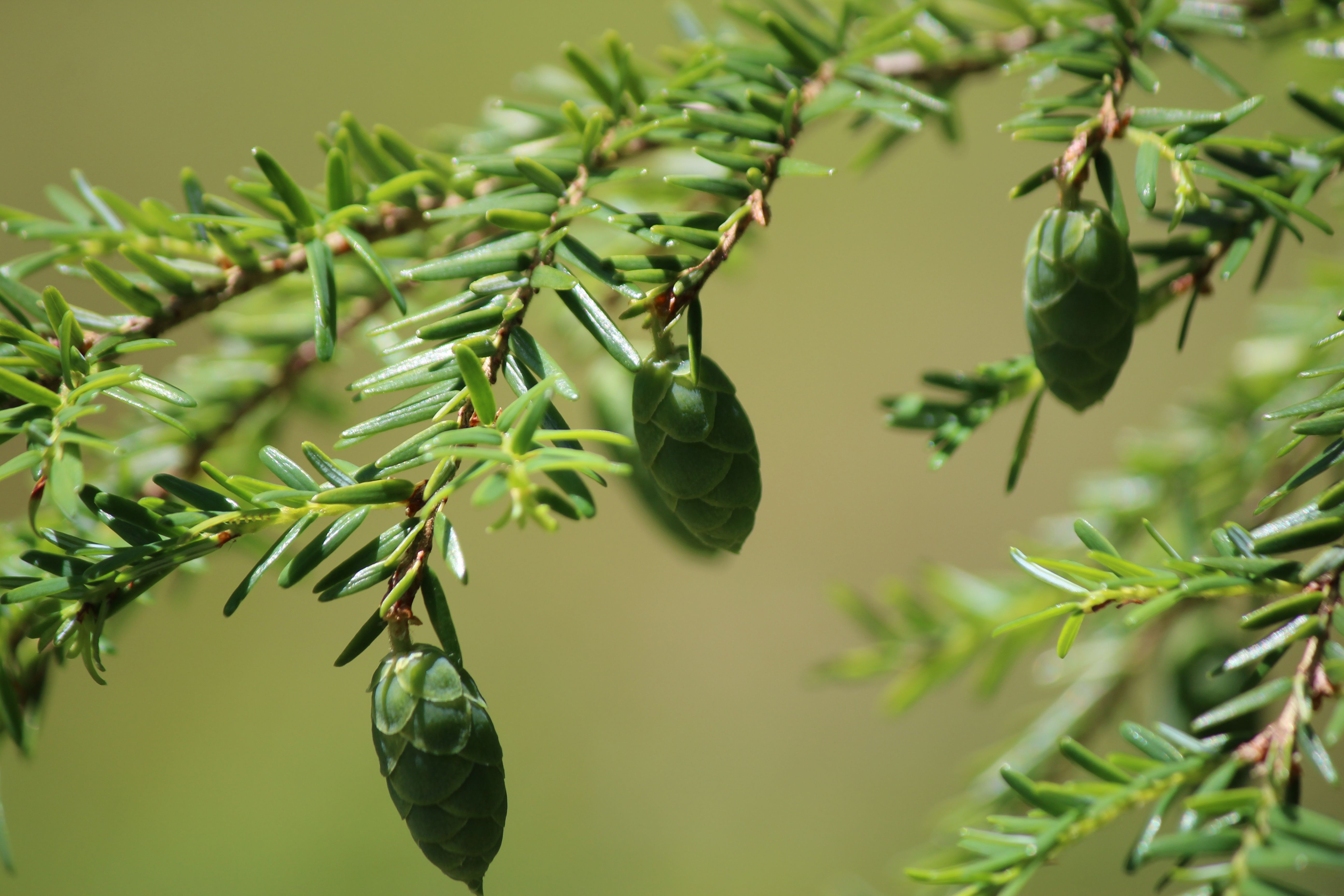
And then a few willow galls shaped like pinecones called to us. This was a new one for them and though I couldn’t remember that the creator was a midge larva, the gall struck them as being a fruit, especially as we broke it open. Had we opened one in the winter, we might have seen the maggot nestled within a chamber at the center of the structure. In the spring a female midge fly lays a single egg in a terminal bud, initiating the gall formation through a chemical reaction causing the leaf tissue to harden into the shape of scales.

b-maleberry 1

I got stumped again when we kept seeing fruits on long stalks, with last year’s growth among the offering.
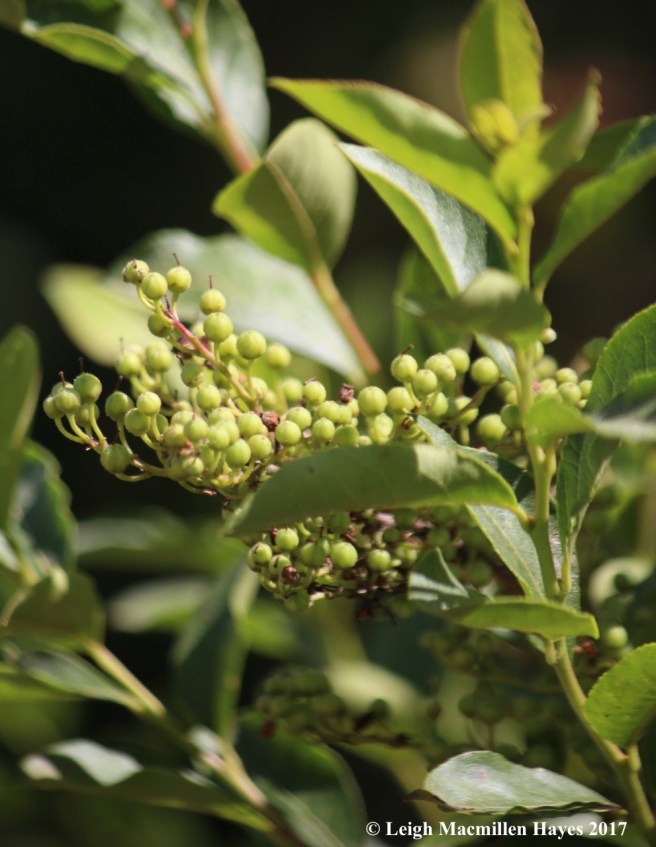
b-maleberry fruits 2

Once at home, I spent some more time with Michael L. Cline’s Shrubs of the Northern New England Forest, and realized it was a maleberry.

b-witherrod1

Another shrub that was plentiful throughout our journey was the witherod, aka wild raisin, its fruit ovoid in shape, turning blue as they withered.
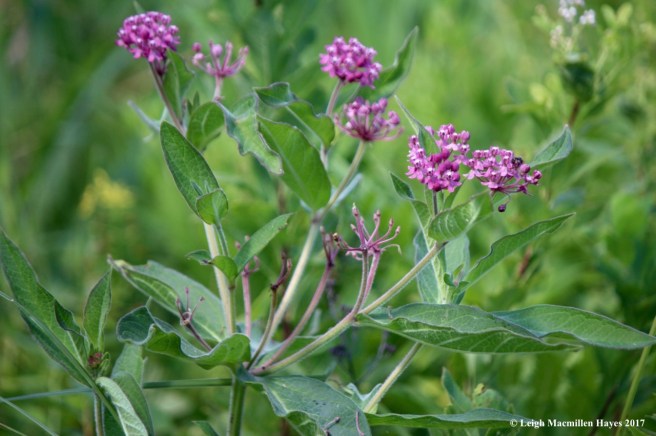
b-swamp milkweed 1

Adding a splash of fuchsia along the way, swamp milkweed with its upright umbels.
b-silver maples 1

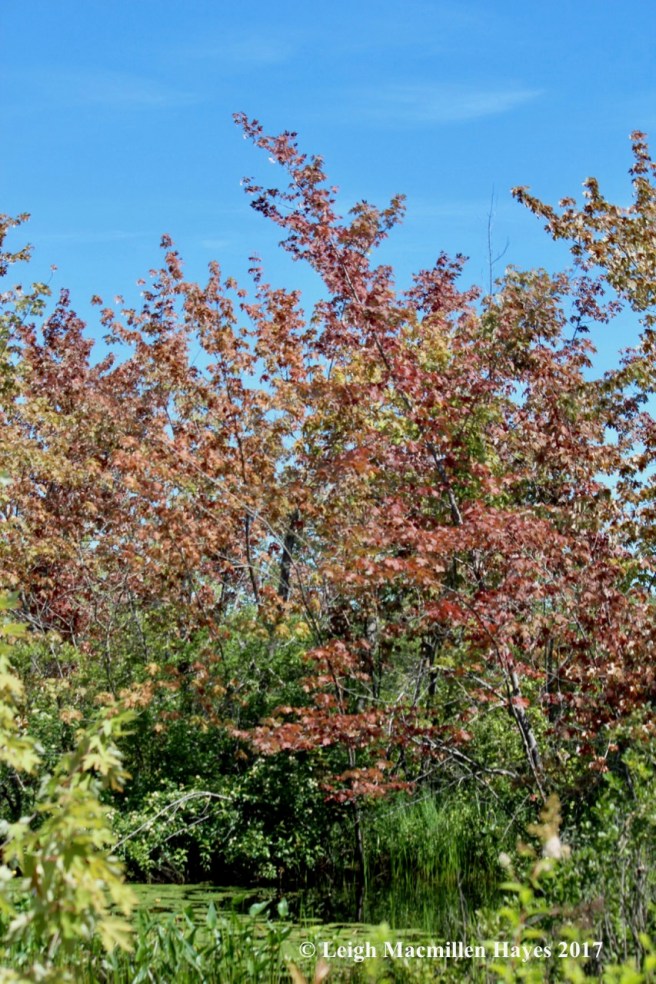
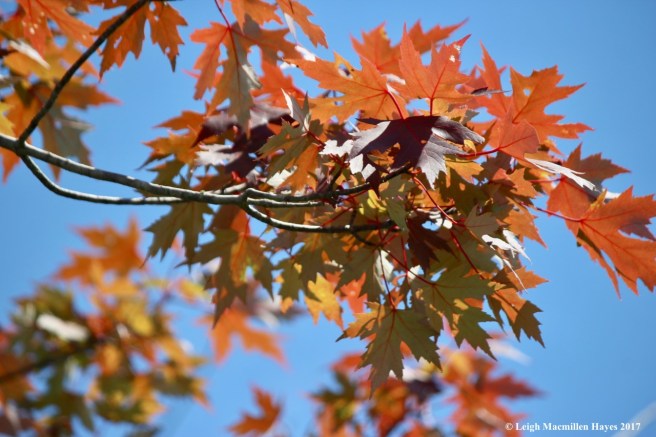
And then the other color that we’d noticed along the perimeter of the bog earlier and thought was red maples. Turns out those trees are silver maples and the ones with the wettest feet seemed to have already shut down their sugar production, thus allowing anthocyanin to form. This happens when sugar gets trapped in a leaf after the chlorophyll is gone and the leaf is exposed to sunlight–the resulting color being reds and purples.
b-silver maple 3

As hot as the day was, these presented a taste of the future. Some years they seem to turn earlier than others and this seems like one of the early years.

b-three amigos 1

At last we reached a turn-around point and these three amigos posed for a photo–Sara, Carol and Marylou.
b-picking blueberries

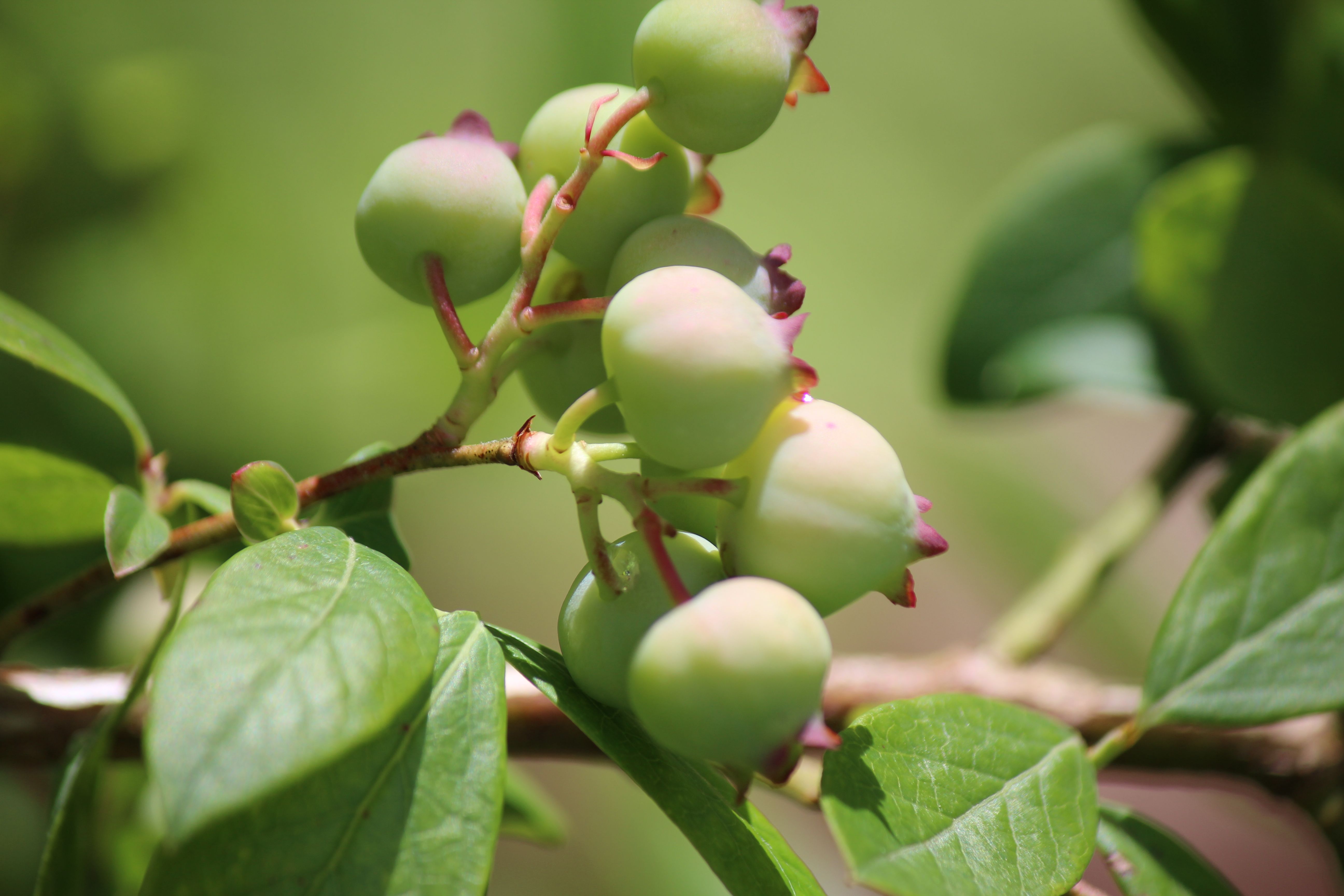
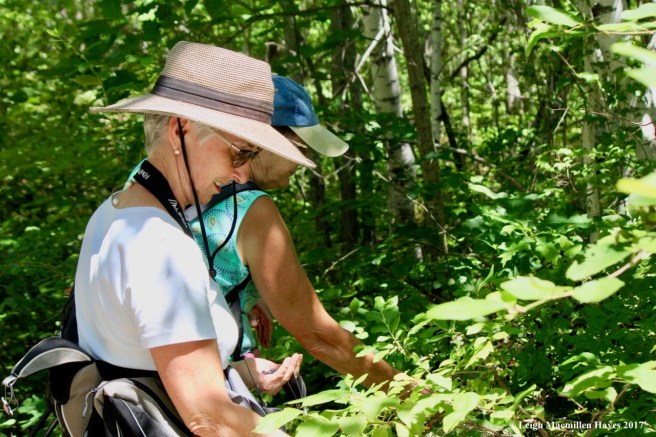
Of course, we only walked a few feet on our way back when high bush blueberries begged to be noticed. And gathered. And eaten.
b-carrion flower

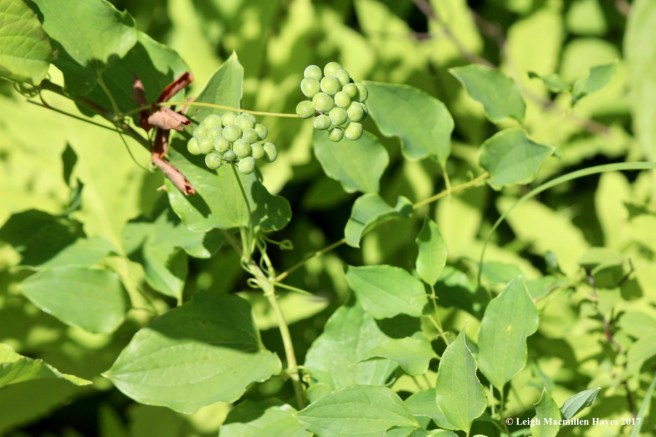
Our journey back was much quicker, but still we stopped occasionally. Again I was stumped when one in the party spotted this vine. Turns out its the vine and fruit of carrion flower–one that I had never heard of before. (You know what that means.) According to Newcomb’s Wildflower Guide, the green flower is ill-smelling, apparently giving rise to its common name.

b-yellow-legged meadowhawk female

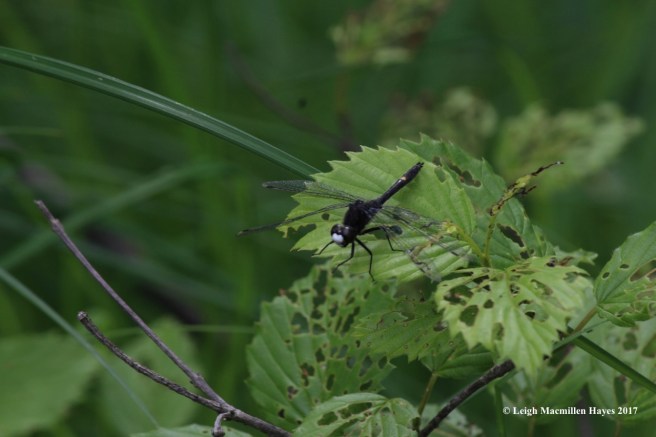
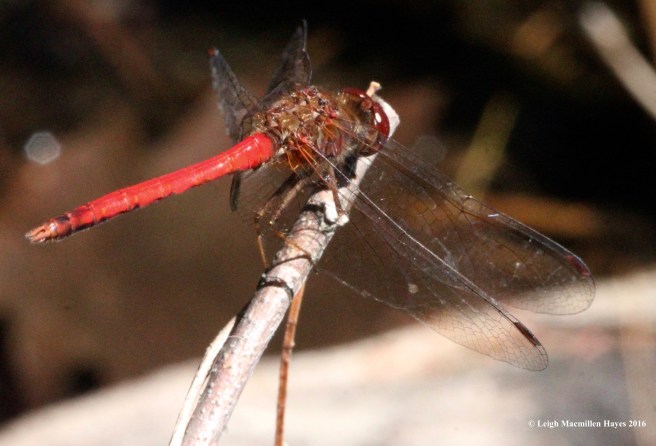
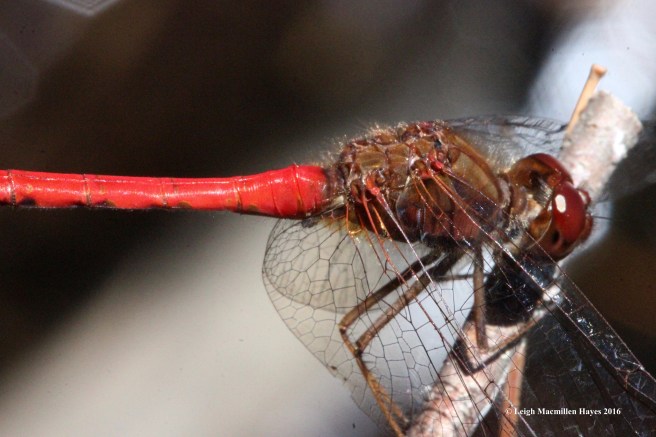
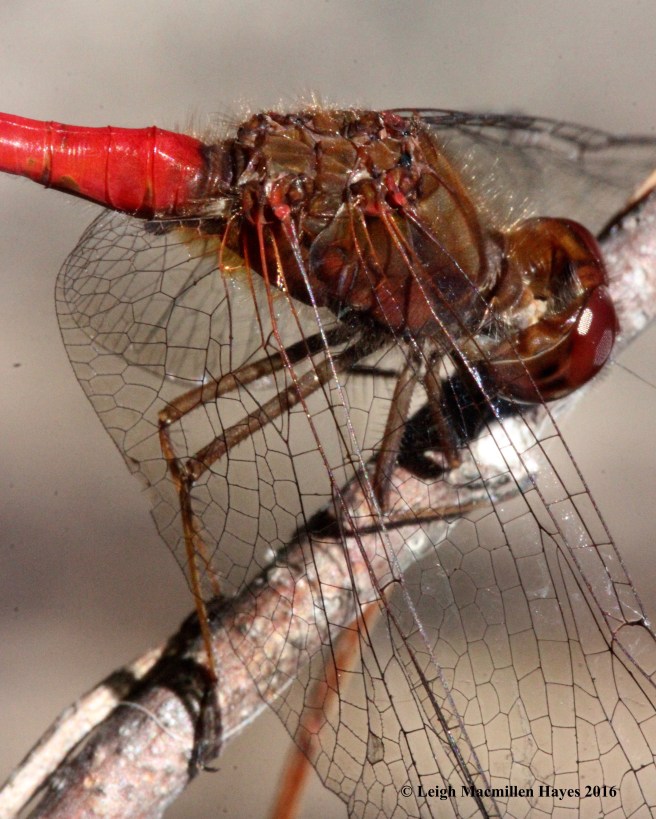
Though the mosquitoes were plentiful, more so at the start than the finish, we didn’t see too many dragonflies and I’m not sure why. But this female yellow-legged meadowhawk did pause briefly.

b-checking out the map

Back by my truck, we stopped again. While Sara went in search of the white and red oak trees and their different leaves, Carol and Marylou studied Kathy’s map as they figured where we’d traveled.

It was a glorious adventure–for me anyway. A casual ramble filled with good cheer and conversation. Thank you, Carol Nugent, for your generosity in support of LEA to make this wander possible. I hope the three of you enjoyed our time together as much as I did and took some of Brownfield Bog home in your hearts.

Spotlight on the Brownfield Bog

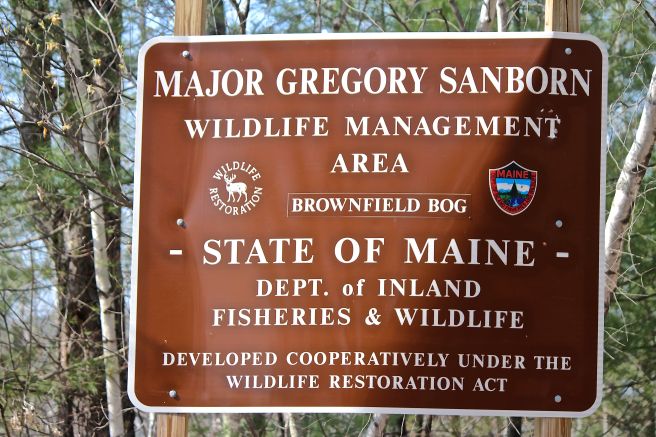
When I drove to the Brownfield Bog, aka Major Gregory Sanborn Wildlife Management Area, this afternoon, my intention was to pay attention to the shrubs that grow there.

b-black swallowtail

But, as usual, the distractions were many and a black swallowtail landed as I stepped out of my truck.

b-ant on alder aphid

I did note a tremendous amount of wooly alder aphids coating the alder stems everywhere I walked. In fact, I’ve never seen so much fluff. And I found only one ant eager to milk the sweet honeydew produced by the aphids as they sucked the shrubs sap. Once in a while the white fluff danced in the breeze. Was it an aphid on the fly?

b-willow flowers

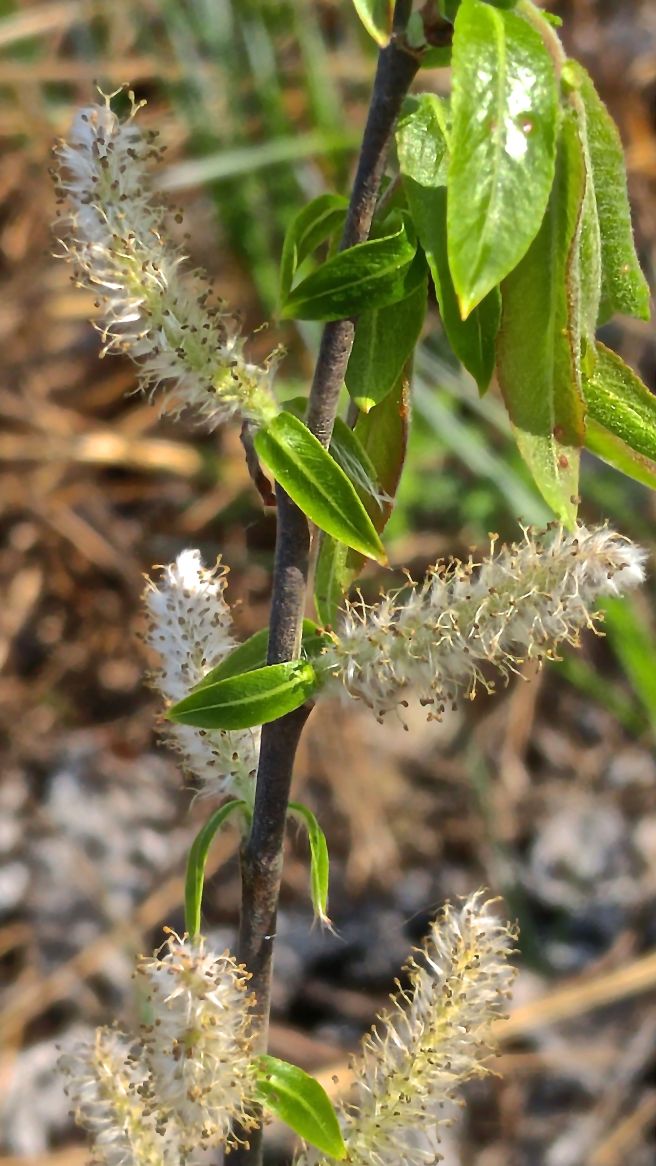
Or did it come from the willows that were in the process of sending their seeds forth into the future?

b-Northern Arrowwood

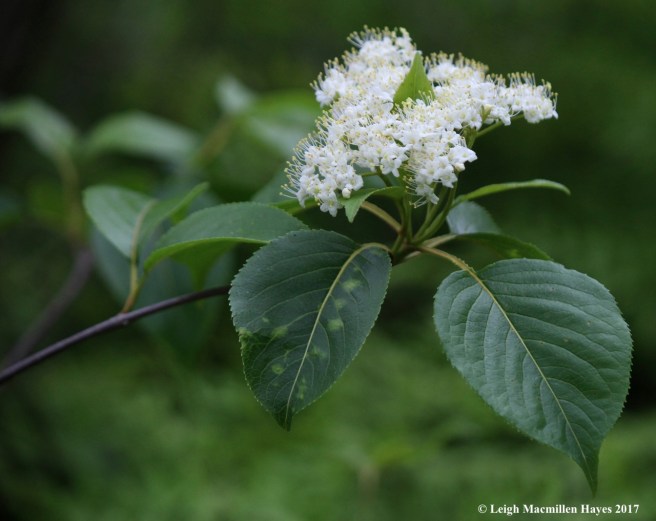
So you see, I was paying attention to the shrubs, especially those in flower like the Northern Arrowwood. There was another with a similar flowerhead, but different leaves and I need to return and spend more time studying it.

b-Pleasant Mountain 2

Because I was in the bog, I did pause occasionally to peer across its advance, usually with a view of my favorite mountain (Pleasant Mountain) providing the background.

b-chalk-fronted corporal 1

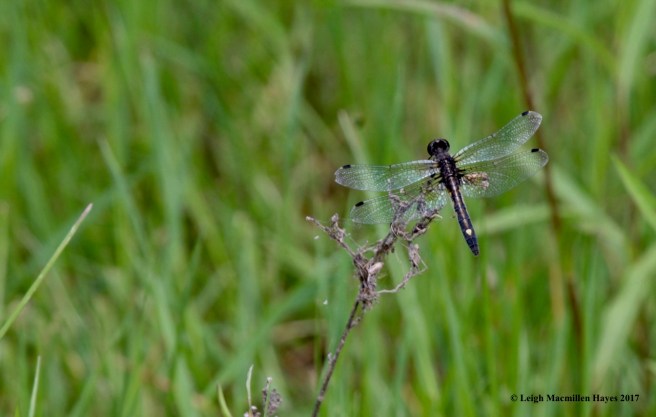
But the dragonflies live there. And the chalk-fronted corporals became my BFF, since as many as twenty lifted off with each step I took. They led me all the way down the trail and all the way back, usually a few feet in front.

b-dot-tailed white face 1

The corporals weren’t the only dragons of choice.

b-dot-spotted white face 2

Dot-tailed white face dragonflies were happy to pose.

b-calico pennant 1

And I even found a few calico pennants–happy to make their acquaintance again.

b-white gall on maleberry 2

Between dragon and damselfly opportunities, white globs and . . .

b-maleberry gall?1

green caught my attention. They were the size of apples and totally new to me. My thought right now is that they are galls, similar to the azalea gall, but these were on maleberry shrubs. If you know otherwise, I welcome your information.

b-bog view

The bog was swollen with water only a few weeks ago, but that story line has passed and life sprang from the spring like a fountain of youth.

b-damsel love 1

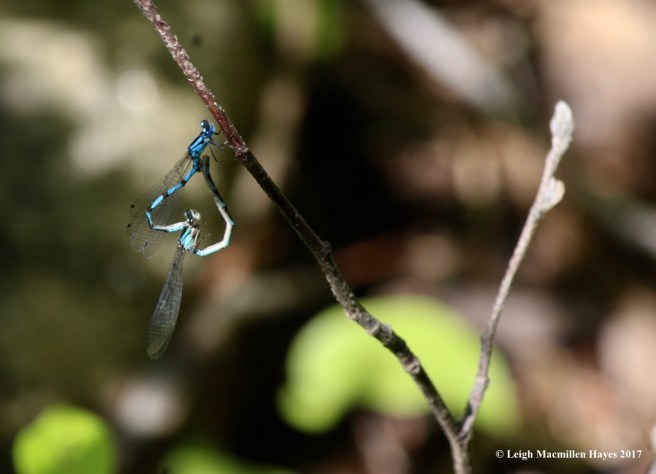
My noticing continued when I spied a couple of youthful damselflies . . .

b-damsel love 2

he’d attached himself below her . . .

b-damsel love 3

and ever so slowly advanced . . .

b-damsel love 4

until the circle of love was complete.

b-lady beetles canoodling

Canoodling of all kinds occurred.

b-dragonflies canoodling 2

Even the dragonflies tried to get in on the action.

b-dragonflies canoodling

She wasn’t very tolerant, however, and a couple of seconds later detached herself from her forward position and took off.

b-sedge sprite 1

I moved on, looking here and there and thrilling at the sight of the beautiful and iridescent sedge sprite damselfly.

b-river jewelwing

Following the trail to the Saco River, I found tracks galore in the muck below, and a river jewelwing–appropriately named.

b-Canada geese

As I headed out, I startled a Canada goose family that had been feeding along the edge.

b-ring necked and mountain

And then I paused for one last look at the bog and Pleasant Mountain.

b-ring-necked duck

That’s when I realized I was in the presence of a male ring-necked duck. If you like to bird, this is the place. I saw several but heard so many more. And even if I couldn’t apply a name to a song, I did enjoy the symphony that followed me throughout my adventure.

b-Kathy's bog sign

Though I said I went to look at the shrubs because I do want to learn them, my real reason for going was to see this new installment.

b-Kathy's sign up close

Maine Master Naturalist (and potter) Kathy McGreavy created this handmade and painted map of the bog for her capstone project. Her husband recently installed it and it’s a work of art worth looking at not only to appreciate Kathy’s talent, but also to learn more about the bog and those that call it home.

My hope is that the spotlight will continue to shine brightly on Kathy’s creation . . . made with love in honor of her bog.

Fawning with Wonder

Though fawning is most oft used to describe someone who is over the top in the flattery department (think old school brown nose), the term is derived from the Old English fægnian, meaning “rejoice, exult, be glad.”

I just knew it was going to be that kind of day when I drove toward Holt Pond Preserve this morning. First, on Route 302, a deer dashed in front of my truck–and I avoided hitting it by mere inches. (And being hit by the woman who was smack dab on my tail.) Then, as I drove up to the summit of Perley Road, a red fox crossed my path.

To top off my feeling of gladness, in the preserve’s parking lot I met up with the most gracious of hostesses, Lake Environmental Association‘s Education Director Alanna Doughty, and the ever delightful host, Loon Echo Land Trust‘s Stewardship Director Jon Evans. Those two dynamos had joined forces to lead a public walk that looped all the way around Holt Pond. Joining the group was a gentleman named Bob and two others–my dear friends Faith and Ben Hall. The Halls had arrived at their summer camp recently and this was my first opportunity to welcome them home. After intros and a discussion about how the two organizations have collaborated on projects including Holt Pond, along with an explanation of how they differ (LEA is about water science and protecting our precious lakes and ponds, while LELT is about protecting the uplands and lowlands that surround the watershed), we headed off on our adventure.

p-oak apple gall 1

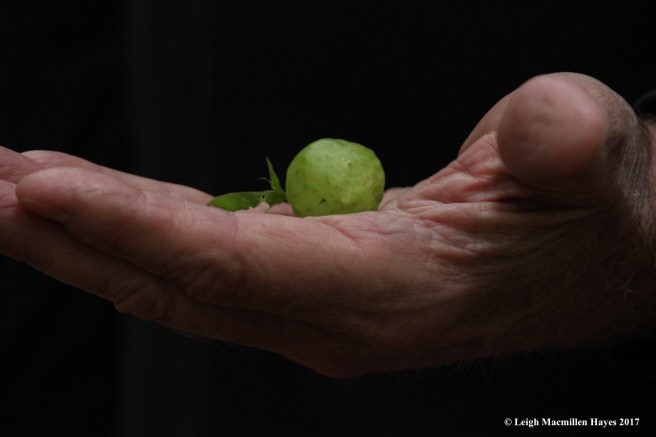
Within minutes, a small, rubbery green ball, about the size of a ping pong ball, caught our attention. This was the result of an apple oak gall female wasp (yes, there is such a species) that crawled up the tree trunk of a Northern red oak earlier in the spring and injected an egg into the center vein of a newly emerged leaf. As the larva grew, it caused a chemical reaction and mutated the leaf to form a gall around it. The leaf provided the larva sustenance. Had we left it alone, once it matured into a wasp, it would have sawed its way out through a small escape hole.

p-oak apple gall 2

Because we were curious, however, Alanna split it open so everyone could see the spoke-like structure hidden inside, that provided support for the developing insect.

I shared with the group a little tidbit I learned last fall in Ireland. When working on the manuscript for the Book of Kells, monks used these galls for the color green, soaking them in beer or mead to create a dye.

p-Alanna and Jon

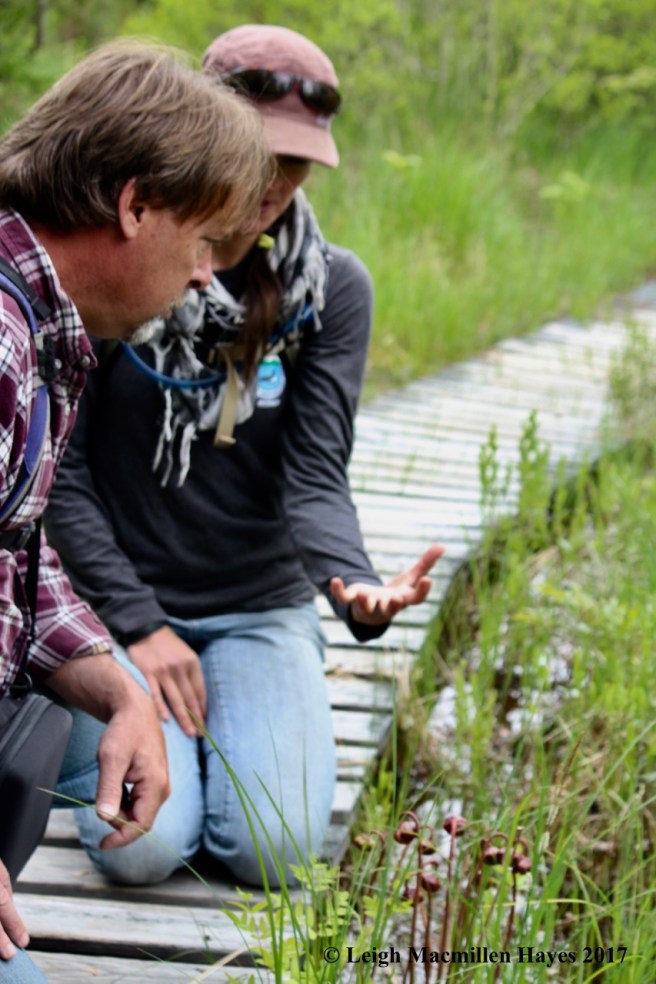
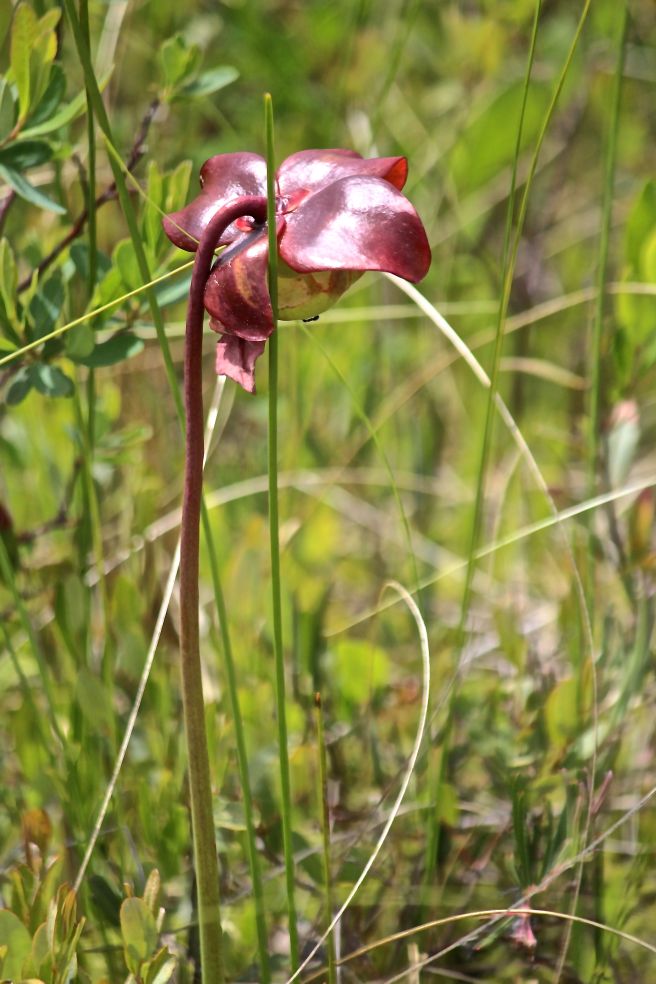
That set the stage and from there on, we paused periodically to wonder, though I think we said at one point that we wanted to get all the way around before 1pm. But there’s so much to see that we had to stop. And because the pitcher plants grow beside the boardwalk, it was hard to ignore them. Being Alanna, she got down on her knees to talk about how this carnivorous plant functions, enticing insects into its pitcher-like leaves that are filled with water and digestive enzymes. Because of downward-sloping hairs  on the leaf, insects can’t climb out and eventually they succumb–allowing the plant to break them down and absorb their nutrients.

p-pitcher plants flowering

Today, the pitcher’s flowers were beginning to bloom.

p-Indian Cucumber Root

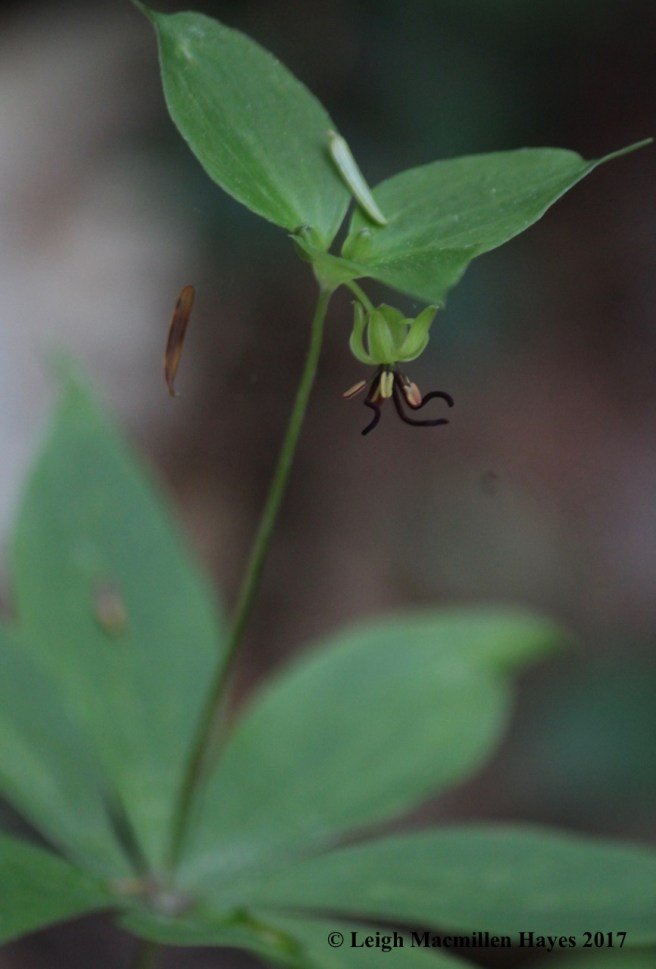
As our journey continued, we stopped to admire other flowers including the Indian Cucumber Root,

p-jack in the pulpit

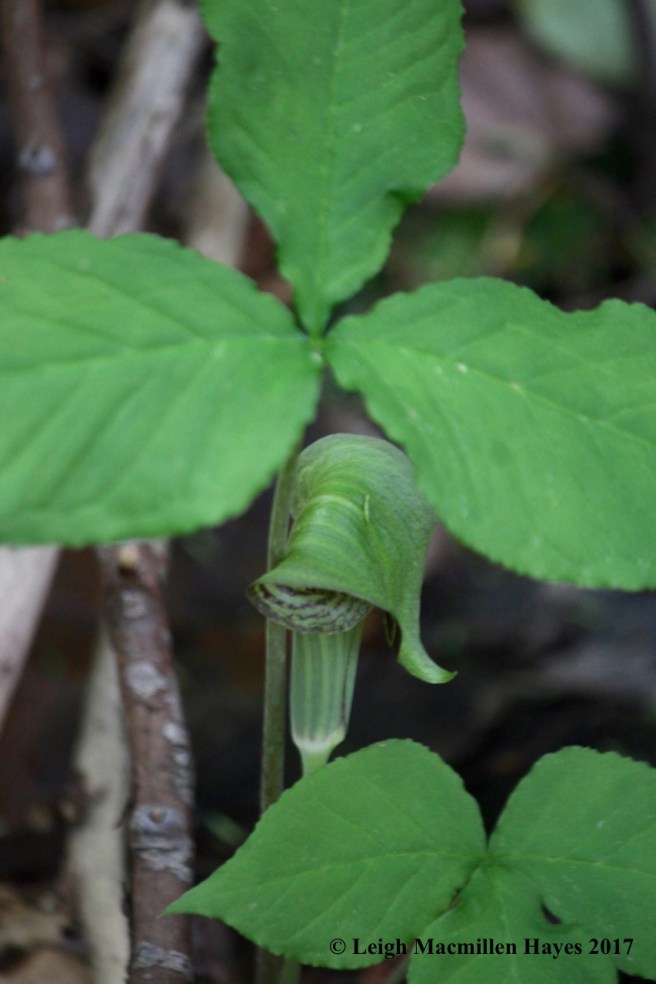
Jack in the Pulpit,

p-lady's 1

and pink lady’s slipper.

p-Faith on beech

To show off the contorted growth of a tree, Faith graciously took a brief break at the beech.

p-greater bladder sedge

While Jon shared a lot of information about South Bridgton’s historical past, Alanna enlightened us on the works of nature, including the bladder sedge with its inflated, teardrop-shaped sacs that enclose its fruit. Though common, like the pitcher plant flowers, it’s otherworldly in form.

p-nannyberry?

And then we got stumped by one shrub we should have known. Witherod (wild raisin) or Nannyberry? We decided on the latter for a couple of reasons–the petioles (stems) of the leaves were somewhat winged and the veins beneath the leaves were not scurfy. Scurfy? That was a new term for me–meaning rough to the touch or covered with scales.

p-Bob, Alanna, Faith 1

As our journey continued, we passed lots of hobblebush in the understory. But not to be missed were the witch hazels. And more galls, this time the witch’s cap that grows on their leaves and forms a cone-shaped structure much like a witch’s cap. How fitting that the Witch Hazel Cone Gall Aphid (Hormaphis hamamelidis) chose this particular shrub. Having caused the leaf to form a gall around her, mother aphid stayed inside, where she’s protected as she feeds and reproduces.

p-porky 1

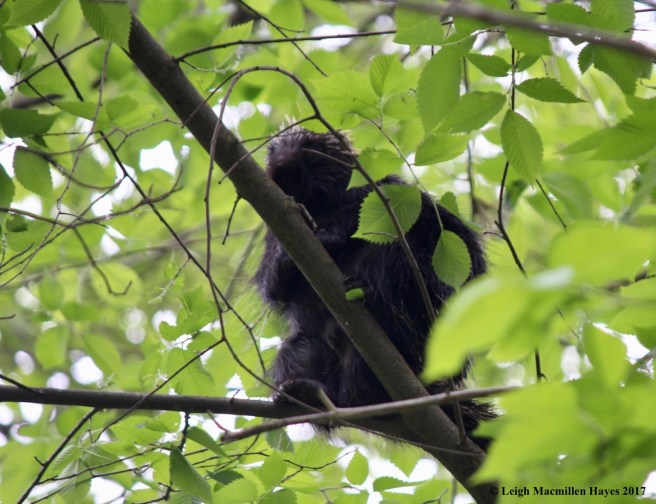
During our journey, we shared brains and eyes. I’m thankful for others who thought to look up, and spotted a porcupine looking down.

p-grouse bath

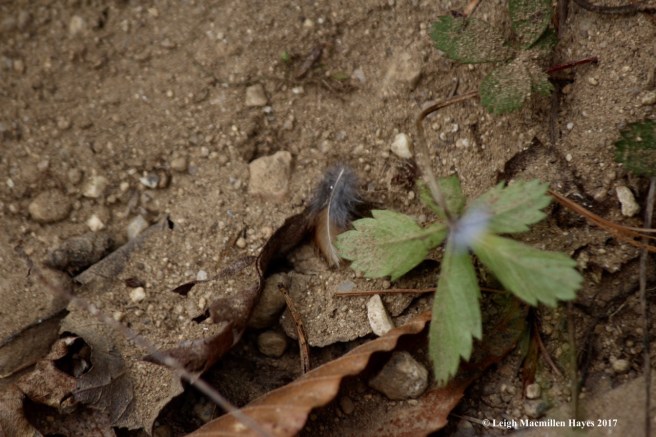
We also looked down, spying the spot where a bird took a dust bath.

p-grouse bath feather

In this case, it was the work of a ruffed grouse that wanted to rid itself of lice and mites. A stray feather was also left behind. Do you see it?

p-fawn 3

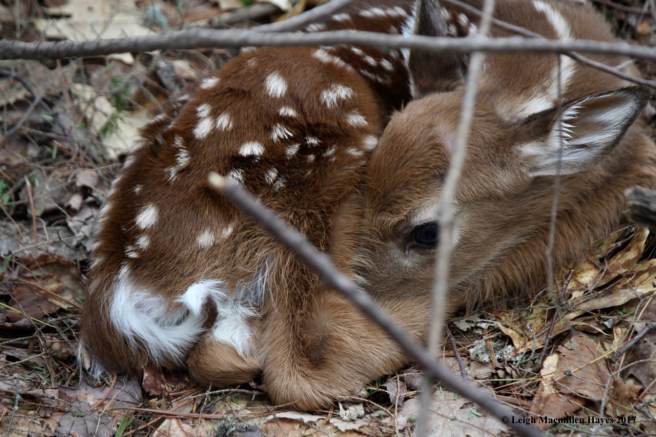
But our best find of all–a young fawn curled up beside the trail. I was leading and talking at the time and didn’t even see it. Faith quietly called me back and I was sure she wanted to show me a snake. We paused quickly to take a few photos and this babe never flinched, obeying its mother’s order to stay put while she went off to feed. (I used to try that at the end of the aisle in a grocery store when my guys were young–but they did their fair share of flinching.)

We’d been blessed–and we all rejoiced while fawning with wonder.


June Dandies

It’s early June and our world is lush, given this past winter’s snow and now the spring rain. Areas that we remembered as being dry last year, are filled with puddles or streams right now ( I promise I’m not going the mention those pesky little buzzers that frolic about my face and sting my hands–and how much they’re loving the current conditions. I did spot some dragonflies yesterday, but today not a one).

r-lady 3

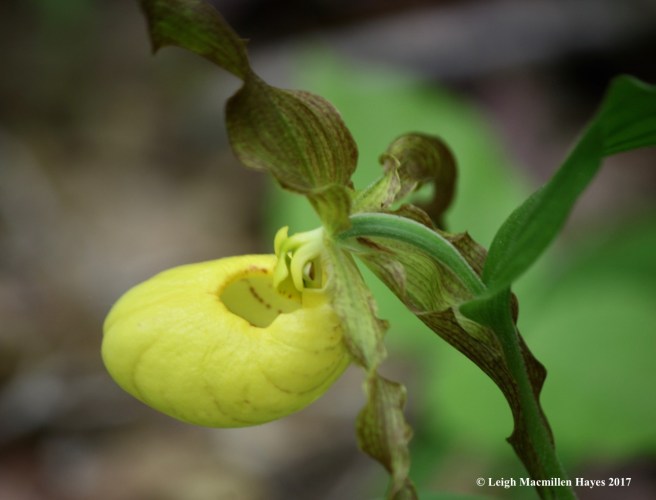
It’s those wet conditions that threw a friend and I off for a wee bit this afternoon as we tramped through the woods in search of a yellow lady’s slipper. Initially, we were about fifteen feet too far to the right as we tried to avoid the water.

r-lady 2

After wandering for a short bit, we finally found it on a bit of dry land–and then stood in awe–at our own ability to locate the flower, but even more so at the flower itself.  Yellow lady’s slippers are not rare, but uncommon and so we rejoiced with our find. They prefer mesic (moderately moist) nutrient-rich forests (as well as in bogs and swamps), thus the water (and mosquitoes–okay, so I broke my promise).

r-lady 7

Lady’s slippers are members of the orchid family.  I used to think orchids were flowers girls wore on their wrists for senior prom or grandmas coveted–though I never knew either of my grandmothers, but certainly it was an “old lady’s” flower. My, how my understanding and appreciation has changed because I am certainly NOT an old lady. Or am I?

Check out the reddish-brown dotted pathway–like landing lights at an airport runway. Their intention is to guide pollinators. If we remember to return in the fall and look for a seedpod, we’ll know that the dots worked. They often don’t.

r-brook 1

We could have gone home then, so tickled were we with our success of finding that pouch of a flower, but . . . as you might expect, we continued on, making several brook crossings as we went.

r-brook 2

Everywhere, mosses and liverworts offered forty shades of green. Oh wait–that’s Ireland. But right now, it’s western Maine as well.

r-christmas fern 2

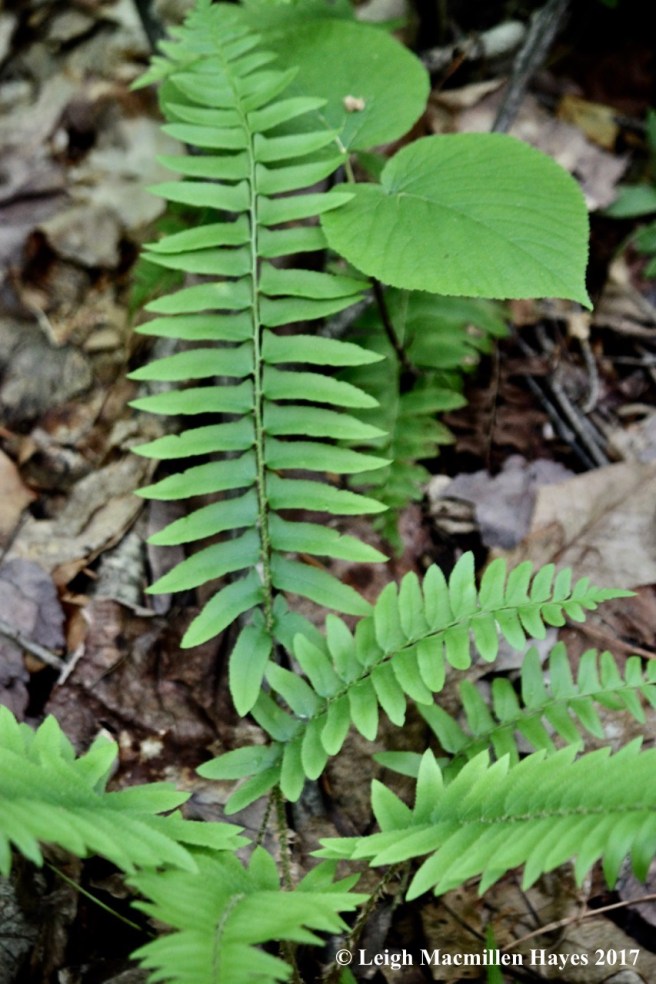
And because it was so damp, the forest we roamed was filled with Christmas ferns featuring young and old blades.

r-Indian cucumber Christmas fern

We even found one that sprouted an Indian Cucumber Root whorl as if it was a flower.

r-christmas fern gall

But what aroused our curiosity was another that seemed to have been affected by insects forming galls. Neither of us could remember seeing anything like this before, but then again, so many times when we see something we think of as new, we soon discover that it’s more prevalent than we realized. That being said, we only found the “galls” on a few of these ferns, all in the same area in a wet seep.

r-wild oat

Further along, we noted sessile-leaved bellworts, in flower a month ago, now sporting their seedpods or wild oats that speak to their other common name. And the leaf of at least this one had been visited by an insect–a leaf minor trail standing out in white against the green.

r-cannoddling craneflies 2

r-cannoddling craneflies

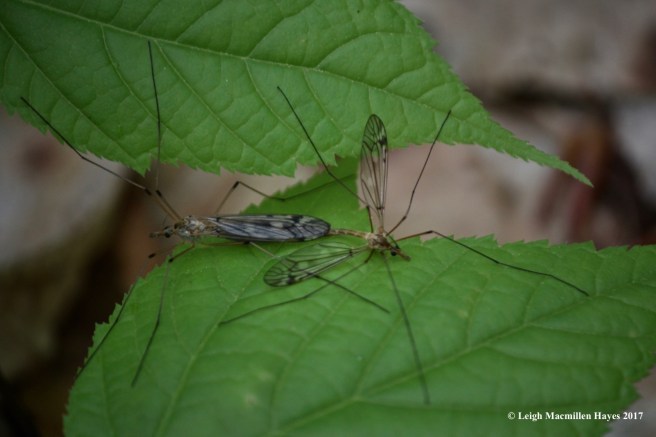
And then we found craneflies canoodling. They didn’t seem to care that we watched.

r-toad 1

They weren’t our only wildlife sightings (besides the mosquitoes–did I mention mosquitoes?). A young American toad hopped by, pausing ever so slightly to show off its raised warts.

r-frog 1

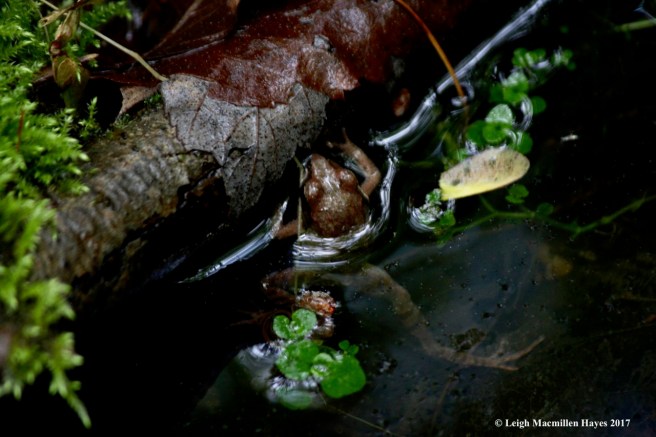
And a frog slipped into the water–the better to escape our ogling.

r-land of the cinnamon fern

As we wound our way around a wetland filled with cinnamon ferns, we noted a few flowers in bloom or about to bloom.

r-clintonia 1

Yellow clintonia,

r-jack in the pulpit 1

Jack-in-the-pulpit (times two actually–and I’m not sure how we spied these for they hid like trolls under their leaves),

r-Indian Cucumber flower

Indian cucumber root,

r-Early coralroot 2

and early coralroot caught our attention.

r-round-leaf pyrola1

Not yet in bloom was the round-leaf pyrola, aka American shinleaf. Oh darn, another reason to return and see it blossom.

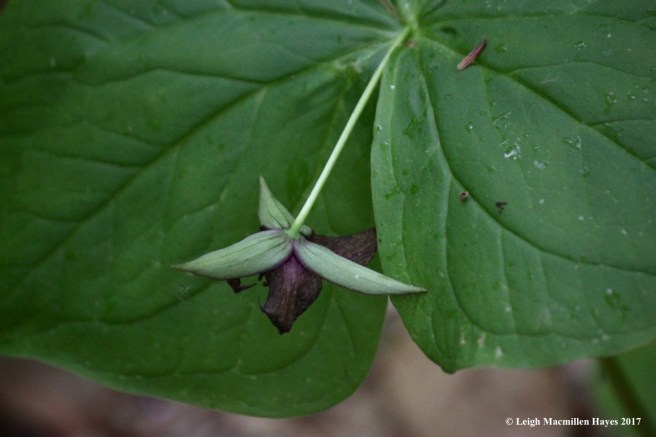
r-red trillium 3

And just past its blossoming stage–red trillium,

r-red trillium 1

its red leached to almost maroonish brown and stamen looking rather gray.

r-Pam taking a photo of pyrola

Despite the mosquitoes (what mosquitoes?) and a few raindrops, we shared a fun afternoon hike circling the path of the Greater Lovell Land Trust’s Ron’s Loop by Five Kezar Ponds.

The journey was with my friend named Pam, not June. But June is the month and together we enjoyed numerous dandies that need to be enjoyed in the moment for soon we’ll not realize they ever existed.

June dandies indeed–worth making time to wander and wonder. (Despite the mosquitoes.)


Morning Glory at Kezar River Reserve

Some mornings the hallelujahs spring forth from my being–and fortunately not from my vocal cords.

k-Kezar River sign

Today was one of those days as I ventured down the snowmobile trail, aka Parnes Landing Road, at the Greater Lovell Land Trust’s Kezar River Reserve. Just past the kiosk, I veered to the left to follow the GLLT’s trail into the woods.

k-jelly topside1

Within steps I was greeted by Auricularia auriula, a jelly ear fungus. The sun’s beams revealed veins reminiscent of stained glass windows and polished woodwork in an older church.

k-jelly under 2

Flipping the fallen oak branch to look at the underside revealed an equally, if not more beautiful design with its frosted outline.

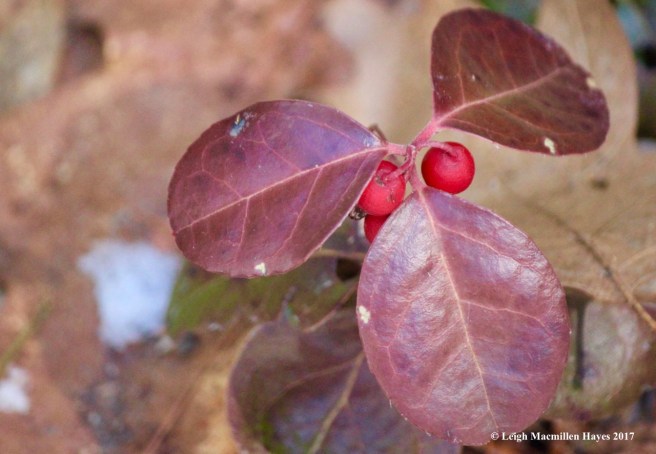
k-wintergreen

On a steep hill beside Kezar River, actually the sloped side of a ravine I’d never hiked upon before, a southerly orientation presented lives past and present.

k-bench

Below, at the point where the trail, road and river meet, few have paused recently, including no sign of otter.

k-river view

But many have zoomed by with a need to reach the next destination as fast as possible.

k-ravine 1

I followed their tracks a little way out and peeked into the second ravine from a vantage point seldom celebrated.

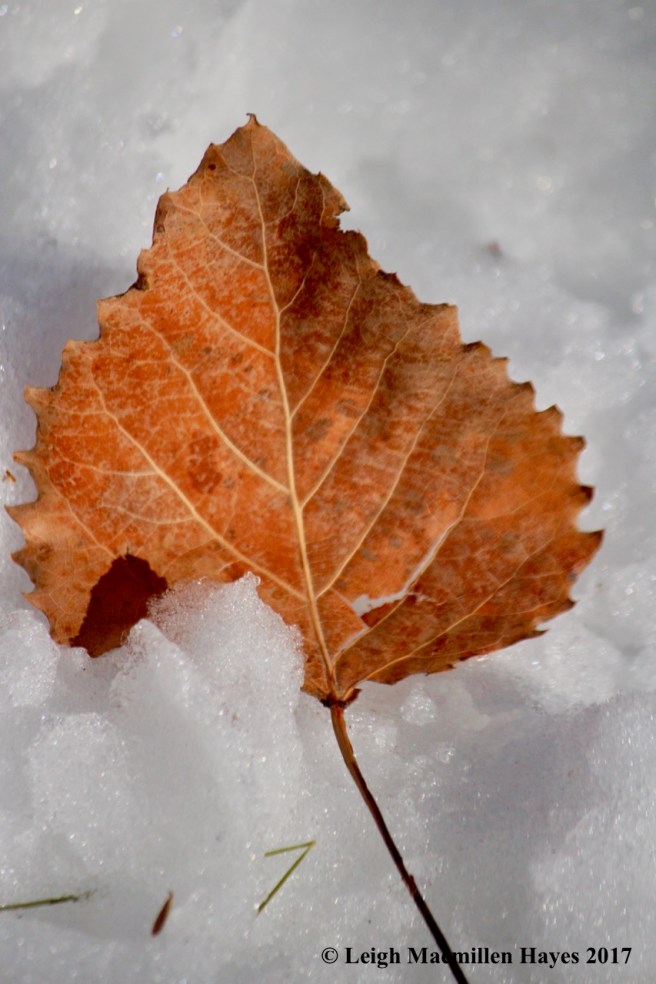
k-big tooth aspen leaf

And then I headed back up the road to the next trail intersection. At my feet, form bespoke name, such is the manner of the big tooth aspen.

k-ravine 2

Down into the second ravine I tromped as I made my way to view the outlet from the other side.

k-otter 1

Because of the snow’s depth, I traveled to places less frequented and beside the stream I noted previous action. Lots of it.

k-otter activity1

And I spied evidence of the creator–whose prints were hard to distinguish, but other signs easily discernible.

k-my otterness

In my attempt to take a closer look, I practiced my inner otter and managed to find the water and leave my own set of muddy, though not quite webbed, prints. I laughed aloud as I pulled myself up and gave thanks for remembering to bring my hiking pole. Fortunately, the breakthrough was the only sign I left behind.

k-nature's snowball

Heading up the ravine, I smiled at the sight of the universe having fun–nature rolled her own snowballs–perhaps in preparation to build a snow woman.

k-pine cathedral

Through the cathedral of pines I continued–always looking up . . .

k-ice art

and down, where intricate patterns formed naturally in the ice offered a feathery look at the world below.

k-paper birch lateral bud

Sometimes, I stopped to spend a few moments with family members . . .

k-yellow birch

taking time to marvel in their similarities and differences as they stood side by side.

k-oak gall

And it seems there are many hosts throughout our woodlands that offer a spot for others to evolve.

k-oak crown

Despite or perhaps because of that, knowing they’d offered a helping hand, the oaks sported their crowns proudly.

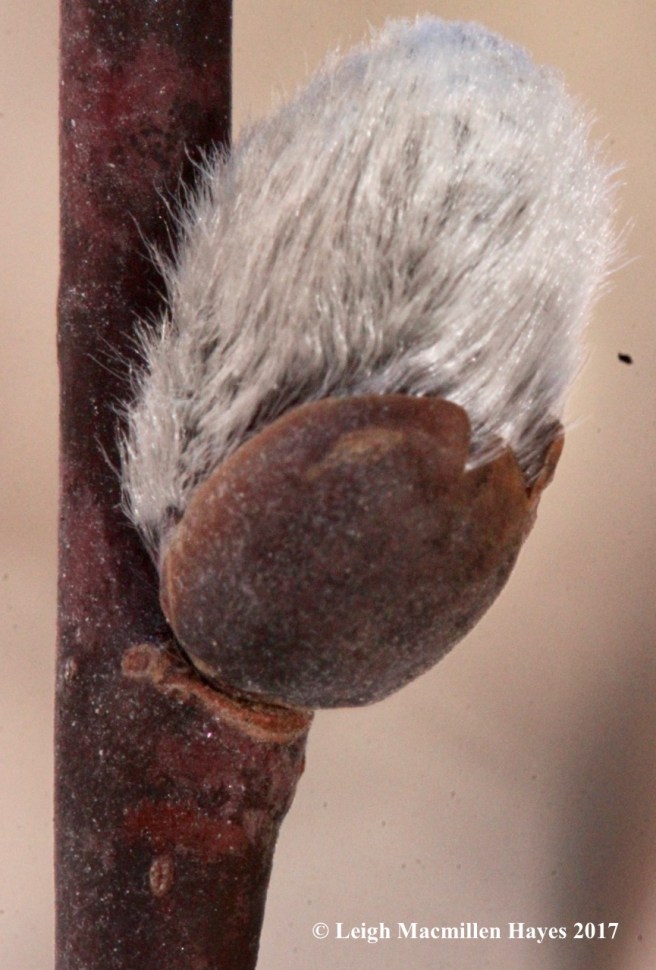
k-pussy willow

Quite unexpectedly, I stumbled upon a picture of youth that warms my heart endlessly.

k-flowers in bloom

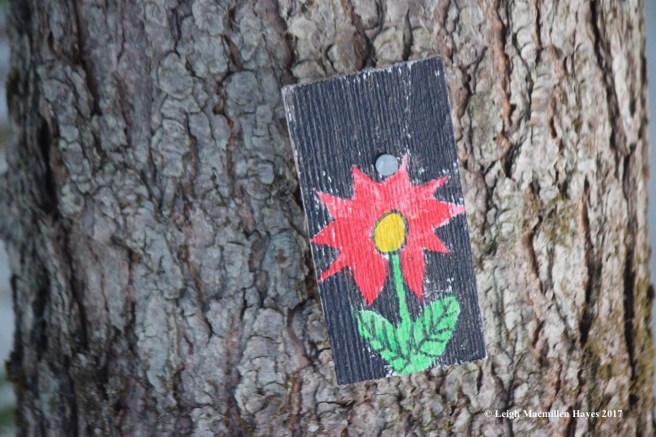
My journey wasn’t long, such is the trail. It’s decorated with small bright signs painted by local youngsters. Though I wouldn’t want to see these on every trail, they make me smile as I enjoy their colorful renditions of the natural world.

Not a picture of a morning glory, certainly, but a morning full of glory as I wandered and wondered and sang hallelujah along the trail at Kezar River Reserve.


Changing Focus Sundate

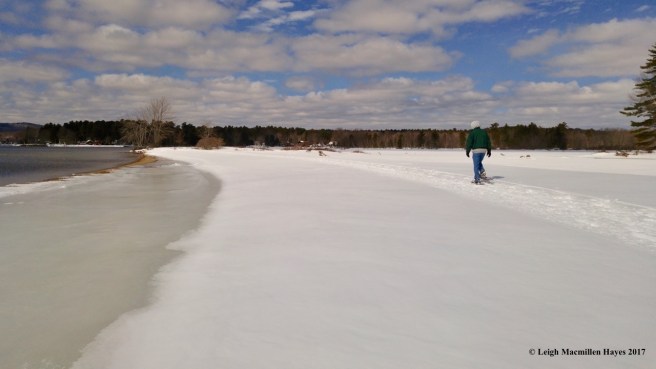
Because we’d traversed the trails along the western portion of Sebago Lake State Park a few weeks ago, my guy and I thought we’d try the eastern portion today. The sun shone brilliantly and there was a slight breeze as we drove down the park road to the boat launch parking lot.

s-map (1)

Studying the map, we decided to follow the Outer Loop in a counter-clockwise fashion.

s-following my guy (1)

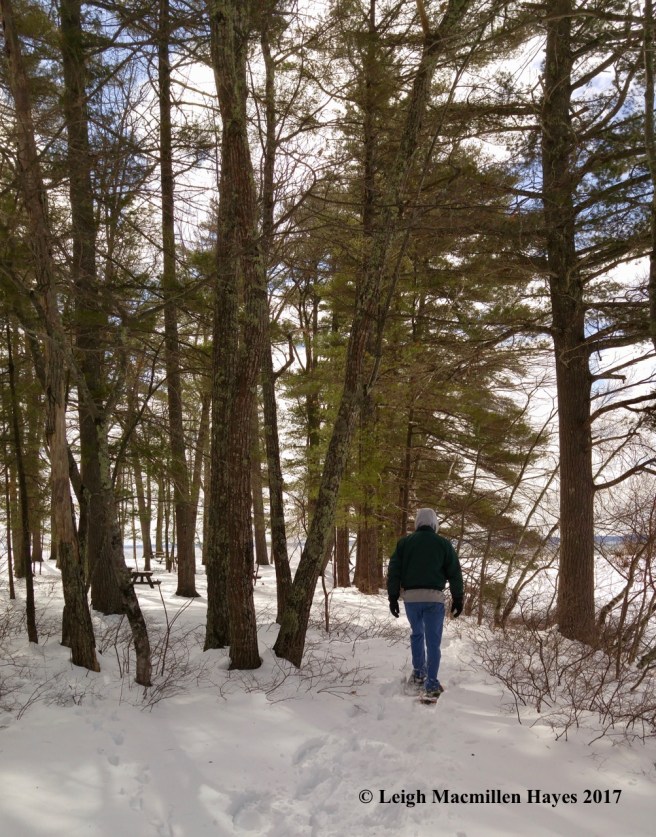
Snowshoes were a must, but the trail was well traveled. My guy’s attire spoke to the breeze and a bit of a chill that greeted us.

s-songo 6 (1)

Whenever we could, we took in the view of the Songo River that winds its way from nearby Brandy Pond in Naples to Sebago Lake on the Casco side of the park. This river has been the focus of the Lakes Environmental Association for the past ten years as it was once heavily infested with variable-leaf milfoil. Thanks to LEA’s good works, the invasive aquatic plant has been eradicated, though the milfoil crew conducts routine check-ups each summer.

s-sandbar 2 (1)

When we reached the lake, we chose a diversion and followed the trail along the sandbar.

s-Songo from sandbar (1)

It offered a backward view of the lagoon and we could hear Canada geese honking from the open water.

s-picnic tables (1)

And then we turned and headed to the beach. The park service grooms the trails for cross-country skiers and snowshoers, making for an easy hike when we stayed on trail, which we did for the most part today. Picnic tables and outdoor grills were abundant and we had our choice.

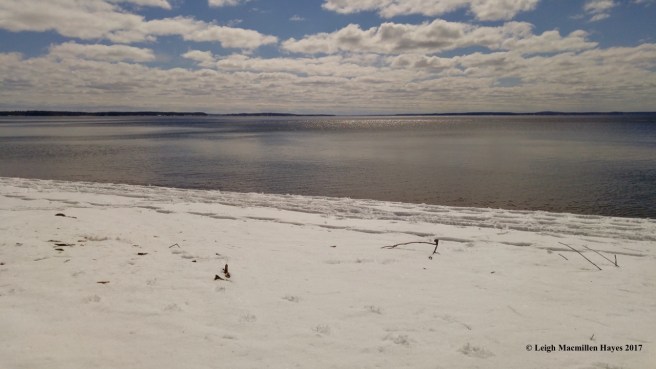
s-Sebago lunch view

We chose one in the sun for it had little snow on it. This was our lunch view. As Maine’s second largest lake, Sebago Lake is twelve miles long and covers a surface area of 45.6 square miles. The maximum depth is over 300 feet and its mean depth is just over 100 feet. The 105-mile shoreline touches the towns of Naples, Casco, Raymond, Windham, Standish, Sebago, and Frye Island. All that and we’ve never spent any time on it. We’ll have to fix that in the future.

s-water (1)

Water clarity is excellent and the bottom can be viewed at 45 feet. That’s all good news for Portland and surrounding towns for the lake is the source of their drinking water–thanks to the Portland Water District.

s-songo river out of focus

We followed the trail along the boundary of the park, passing through hemlock groves and mixed hardwood communities. But really, there wasn’t much change in the terrain and we decided we much preferred the west side. A couple of hours later, we were happy to be back beside the Songo River, having completed the loop. And we were ready to change our focus.

s-wasp 3

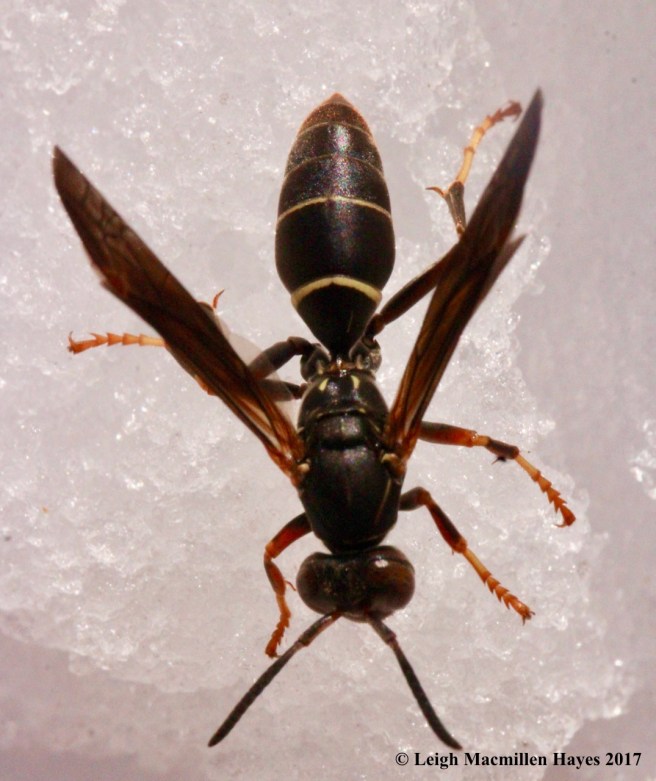
Back at home, my guy decided to revamp our grill. And I decided to snowshoe some more. By 2:30, the temp had risen into the 40˚s and I didn’t bother with a jacket or gloves. Right off the deck, I found my first great find–a wasp moving sluggishly on the snow’s surface. Those wee claws at the end of its foot (tarsus) must have been frozen.

s-script lichen

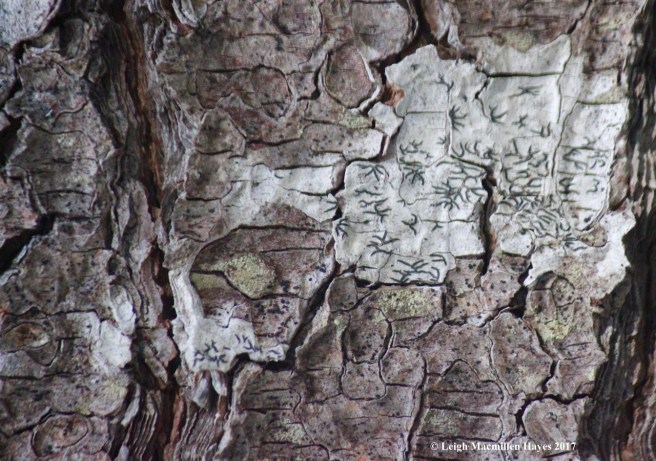
I didn’t go far, but spent lots of time in quiet admiration. There were things to notice, like many, many mammal tracks. And this crustose lichen which is a script lichen. It’s “script” could easily be mistaken for a branching plant.

s-oak gall

Each time I stopped, I wondered what I might see that I hadn’t viewed before. And I wasn’t disappointed. One oak had several twigs with woody growth forms where buds should have been swelling. I decided they were galls and conducted some research when I returned home. I think the tumor-like swelling is a gouty gall that grows on oaks. Apparently, it’s created by a wasp. Hmmm. Not the one I saw, but a tiny wasp of the cynipidae family. The galls provide food and protection for the developing larvae.

s-red bud insect

I found another protective covering on the maleberry that grows near the cowpath. I’m not sure what insect created this cozy home, but being in the wind tunnel that comes down the powerline, its rather impressive that it still exists.

s-vernal pool

My last stop was the vernal pool. I wasn’t the only one who paid a visit. I found snowshoe tracks created by a neighbor who had stopped by to look and deer tracks that crossed the front edge of the pool. I think the snow will melt eventually and life will begin again for the spring peepers, wood frogs and salamanders–it always does.

I’ve said it before and I’ll say it again. I love winter. But . . . I can feel a change of focus in the air and see it in all that surrounds me. I guess that’s why I love being a New Englander.


The Wonders of Kezar River Reserve

How many people can  travel a familiar route for the first time every time? I know I can.

j-kiosk

And so it was this morning when I ventured to the Greater Lovell Land Trust’s Kezar River Reserve off Route 5 in Lovell. I went with a few expectations, but nature got in the way, slowed me down and gave me reason to pause and ponder–repeatedly.

k-oak-gall-1

As I walked along the trail above the Kezar River, I spied numerous oak apple galls on the ground. And many didn’t have any holes. Was the wasp larvae still inside?

k-partridgeberry

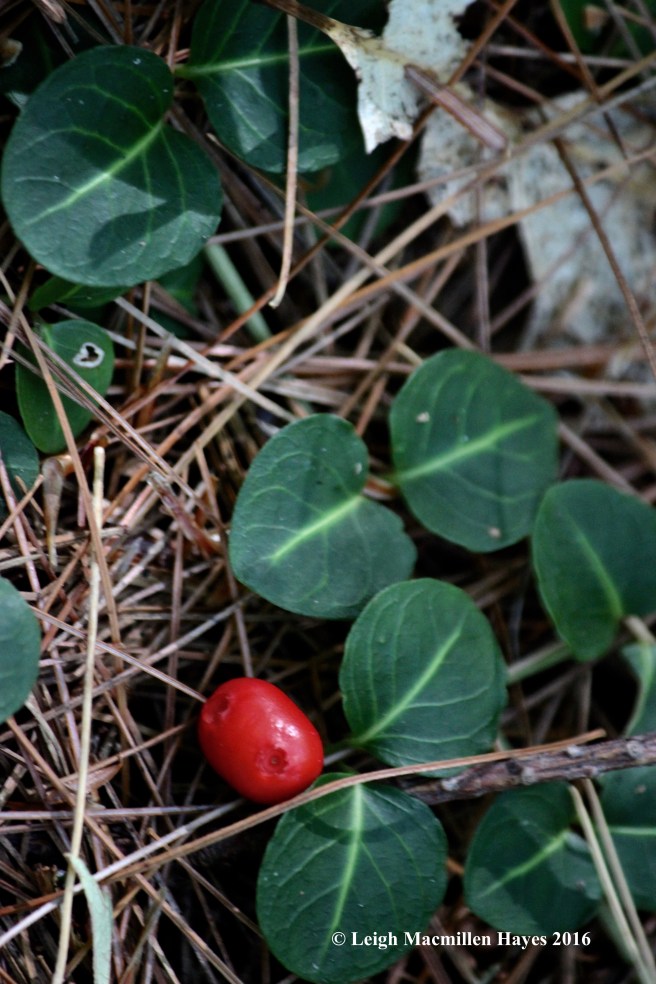
While the dots on the gall were reddish brown, the partridgeberry’s oval drupes shone in Christmas-red fashion. I’m always awed by this simple fruit that results from a complex marriage–the fusion of pollinated ovaries of paired flowers. Do you see the two dimples? That’s where the flowers were attached. Two became one. How did they do this?

k-fairy-2

After walking along the first leg of the trail, I headed down the “road” toward the canoe launch. And what to my wondering eyes should appear–fairy homes. Okay–true confession: As a conclusion to GLLT’s nature program for the Lovell Recreation Program this summer, the kids, their day camp counselors and our interns and docents created these homes.

k-fairy-1

I was impressed that the disco ball still hangs in the entrance of this one. Do you see it? It just happens to be an oak apple gall. Creative kids. I do hope they’ve dropped by with their parents to check on the shelters they built.

k-bench

And then I reached the launch site and bench. It’s the perfect spot to sit, watch and listen. So I did. The bluejays kekonked, nuthatches yanked and kingfishers rattled.

k-ripples

A gentle breeze danced through the leaves and offered a ripply reflection.

k-river-4-morning

And I . . . I awaited great revelations that did not come. Or did they? Was my mind open enough to receive? To contemplate the mysteries of life? The connections? The interactions?

k-ridgeline-2-1

At last, I moved on and entered a section that is said to be uncommon in our area: headwall erosion. This is one of five ravines that feature deep v-shaped structures. Underground streams passing through have eroded the banks. It’s a special place that invites further contemplation. And exploration.

k-skate-bugs

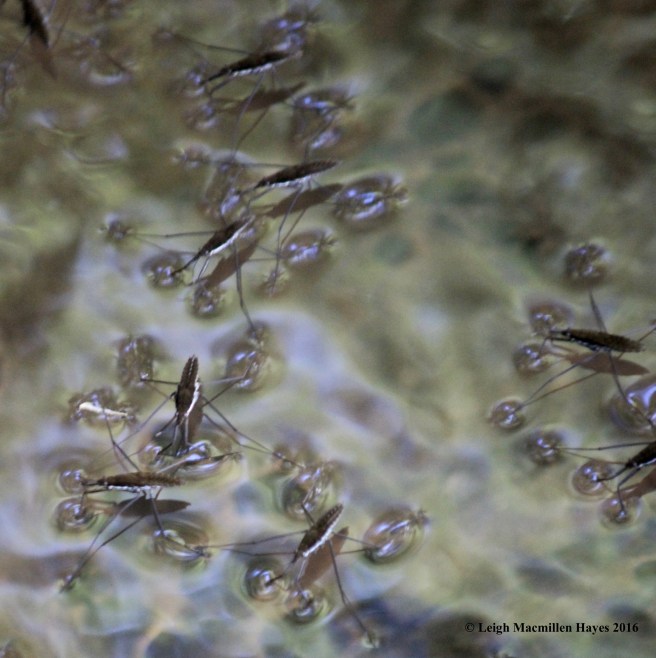
One of my favorite wonders on the bit of stream that trickled through–water striders. While they appeared to skate on the surface, they actually took advantage of water tension making it look like they walked on top as they feasted on insects and larvae that I could not see.

k-turtle-sign

Lots of turtle signs also decorated the trail. Literally.

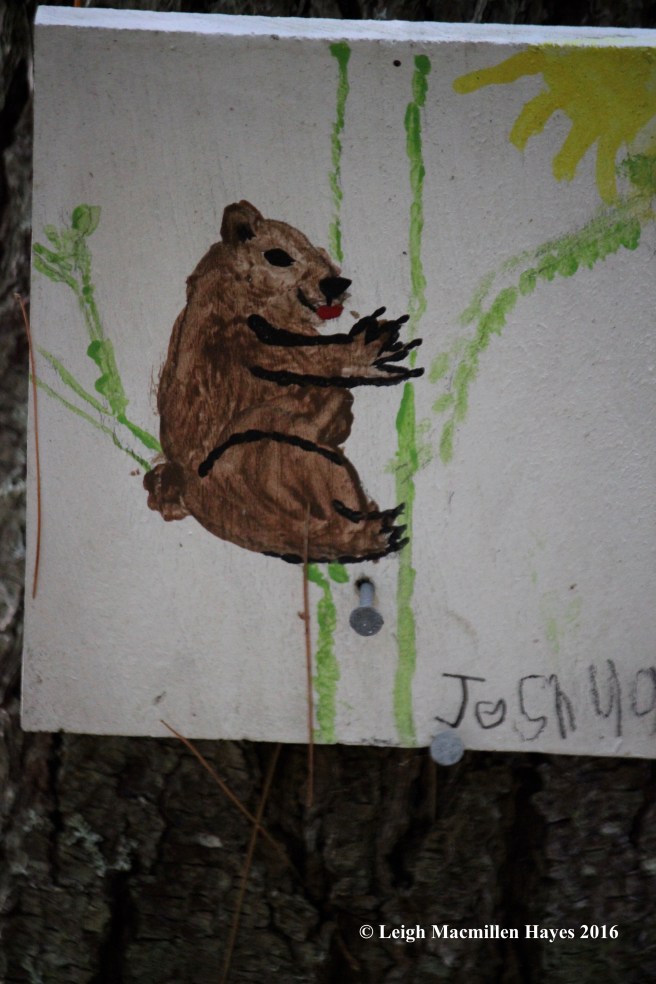
k-bear-sign

In fact, I found bear sign,

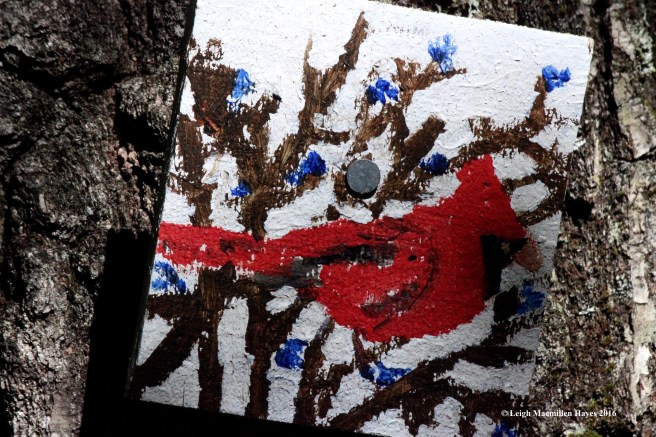
k-cardinal-sign

cardinal sign,

k-ladys-slipper

and lady’s slipper sign . . . among others. Local students painted the signs and it’s a fun  and artistic addition to the reserve.

k-blue jay feather.jpg

Of course, there was natural sign to notice as well, including a blue jay feather.

K-aster .jpg

Asters and goldenrods offered occasional floral decorations.

k-hobbleberries

And hobblebush berries begged to be noticed.

k-meadowhawk-1

And then a meadowhawk dragonfly captured my attention. I stood and watched for moments on end.

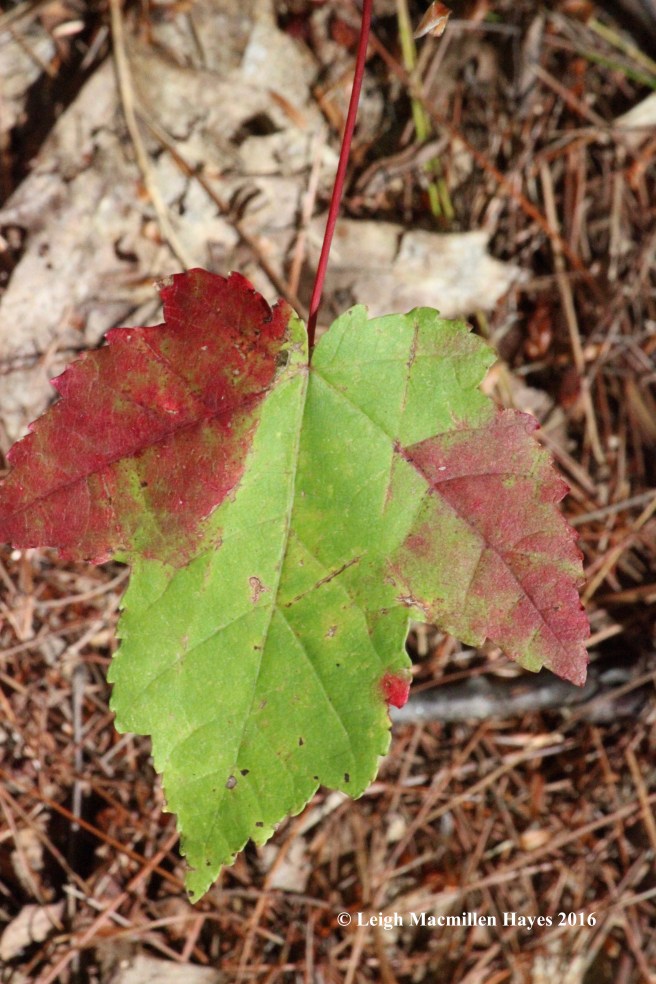
k-red-maple-leaf

And noted that the red maples offered similar colors.

k-squirrel.jpg

When I reached the canoe launch “road,” I was scolded for my action.

k-river-later-1

Despite that, I returned to the bench overlooking the mill pond on the river. Rather than sit on the bench this time,  I slipped down an otter slide to the water’s edge.

k-green frog 1.jpg

My efforts were rewarded. Frogs jumped. And a few paused–probably hoping that in their stillness I would not see them. But I did . . . including this green frog.

k-ruby-2

My favorite wonder of the day . . .

k-meadowhawk-6

moments spent up close and personal with another meadowhawk.

k-ruby-3

No matter how often I wander a trail, there’s always something, or better yet, many somethings, to notice. Blessed be for so many opportunities to wonder beside the Kezar River.


Capturing Wonder

I’m envious of friends who own acres and acres of land with layers of trail loops that provide a diversity of habitats for exploration. But then I remember that beyond our six acres there’s a vast forest that I’m welcome (well, I think I’m welcome–it’s not posted and in Maine that generally means I may trespass) to tramp through. For the most part, that’s my late fall to early spring playground. But we also live within walking distance of a large woodland park where I spend an equal amount of time. Of course, I tend to get greedy about it and think of it as my own. That’s how it felt this morning when I wandered there after church without encountering another soul. I went in search of wonder. And I found it both there and back at home.

rice 2

Everywhere I walked, or so it seemed, rice krispies lay scattered at my feet.

rice krispie

They are the newly fallen male pollen cones of our white pines. And yes, they are the size of rice krispies. Once mature, their sacs split open, sending pollen wafting through the air where some of it actually finds the female seed cones. And much of it covers our vehicles, driveways, lawn furniture and window sashes, like a coating of yellow snow. When their mission is completed, they turn brown and fall to the ground. Eventually, they’ll disintegrate, adding to the richness of the forest floor. Worth a wonder.

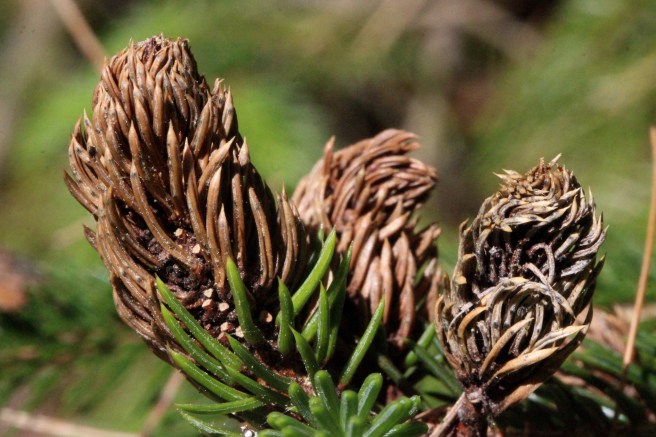
spruce gall

Further along, I encountered the rather cone-like shape that adorns the tips of spruce trees. These brown, prickly galls were caused by the Eastern spruce gall adelgid, which is closely related to aphids. Will the tree die? Perhaps. Certainly, it’s disfigured.

Eggs are laid in early spring and emergent nymphs begin feeding at the base of tender new shoots. The gall forms as they feed and completely encloses them like a warm, protective covering–keeping predators and diseases at bay. The galls I noticed are older as they are dried out. But typically, the nymph emerges from the gall in August, molts and flies to another branch to start the cycle again. The adelgids are parthenogenetic, meaning only females occur, reproducing without males. They typically produce two generations each year, with the latter overwintering as partly grown females. Worth a wonder.

mullein 4

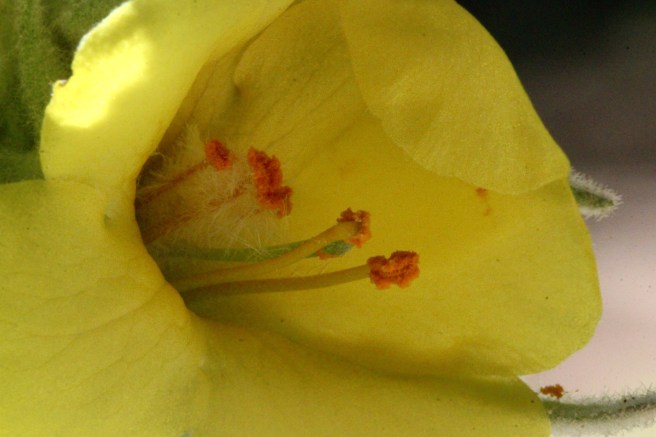
And then I came to a dry, sunny spot where common mullein stands tall, this one almost as tall as me. According to lore dating back to Roman times, it is said that the stems were dipped in tallow to make torches–either for witches to use or to be used against them. Thus, some know it as hag taper. Others refer to it as candlewick plant because the dried leaves and stems were used to make lamp wicks.

mullein 2

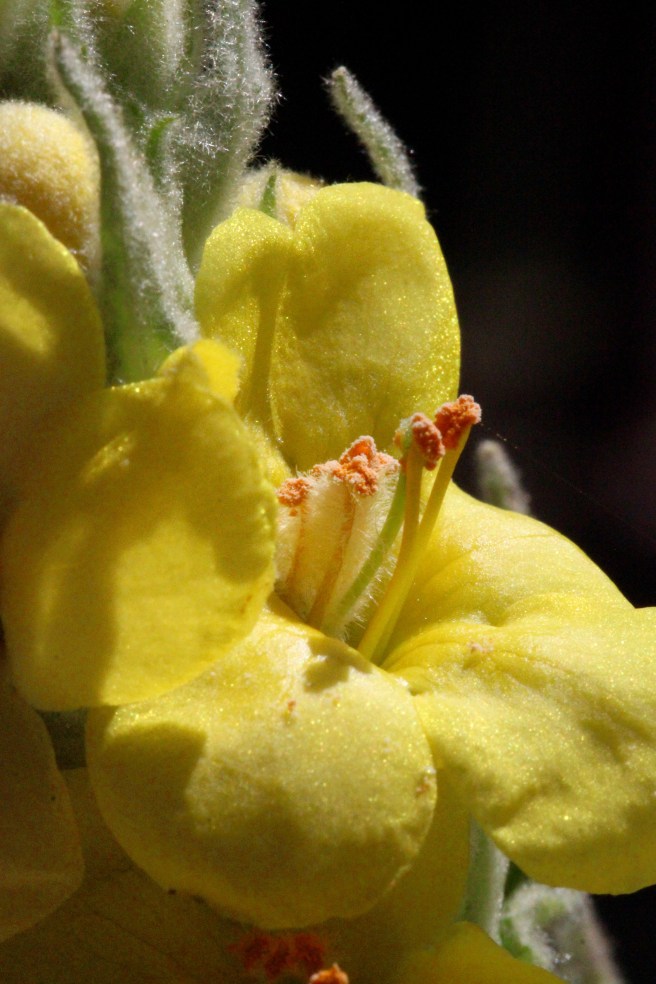
It seems to me that it’s hardly common at all given its uses and structure. Over the course of the summer, five-petaled yellow flowers will bloom randomly in a dense,  terminal cluster.

Though it’s also called flannel leaf and bunny’s ear for its wooly leaves, they aren’t the only hairy spots. Check out those three upper stamens, short and extremely woolly. Apparently, they contain a sap that lures insects to the plant. The longer and smoother two lower stamens serve a different purpose. They produce the pollen that fertilizes the flower. Worth a wonder.

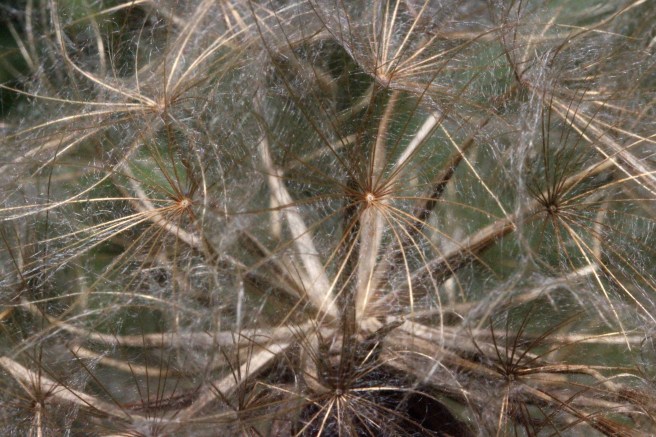
Goat's beard seedhead

As I headed out of the park via a different trail than I’d entered, I was stopped in my tracks by a plant that stood about three feet above ground. I think this was my favorite find of the day. I have so many favorites that it’s hard to choose one. But just maybe this is the one.

Meet meadow salsify, aka meadow goatsbeard. The latter name refers somehow to the fluffy seed head. Though there were not goats nearby for me to examine the similarity, these were beside a donkey pasture. (And donkeys are known to protect goats from predators.) The feathery down that will become parachutes during dispersal is finer than the finest spider web. And perhaps more beautiful. Worth a wonder.

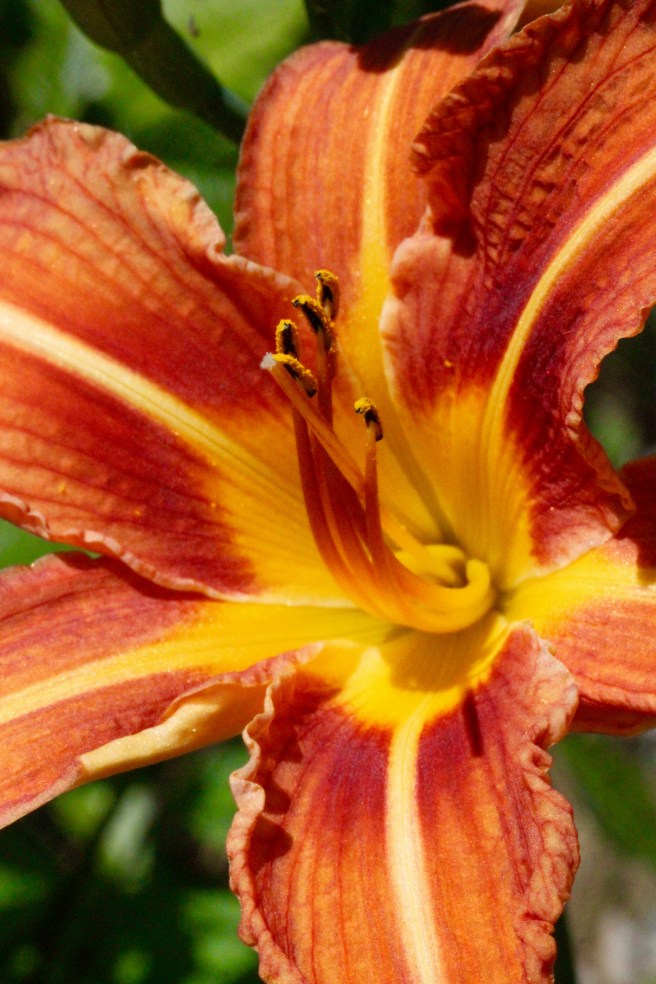
Day lily--perfect.jpg

On my way home, I stopped to admire my neighbor’s day lilies–the first blossom of the season for this perfect flower.

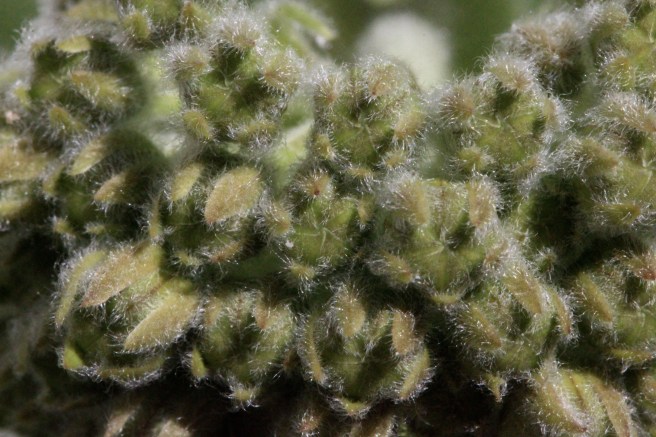
milk 0

Back at home, it was the fuzzy coating of another summer flower that grabbed my attention.

milk 4

The flowerhead offered a show featuring a variety of presentations.

Milkweed 1

Ever so slowly, the pinkish flowers of common milkweed are beginning to open.

milkweed 2

In my mind, it’s an example of another hardly common common plant.

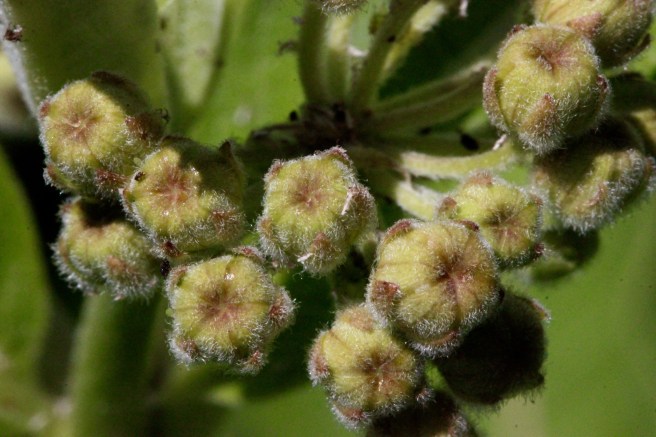
milkweed 5

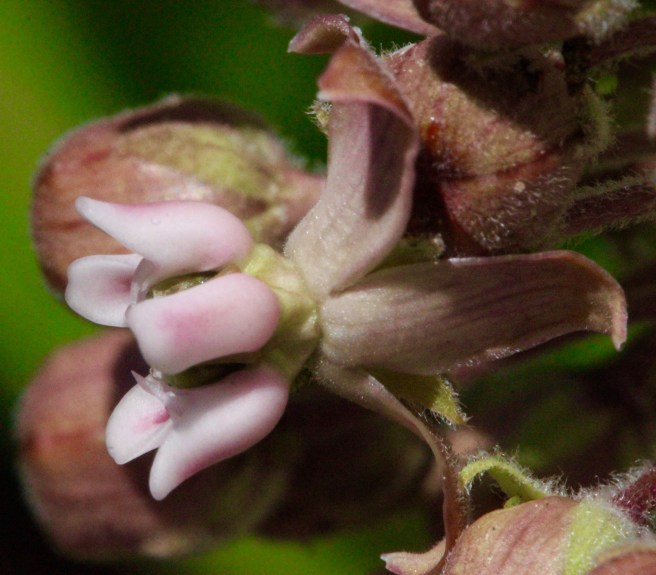
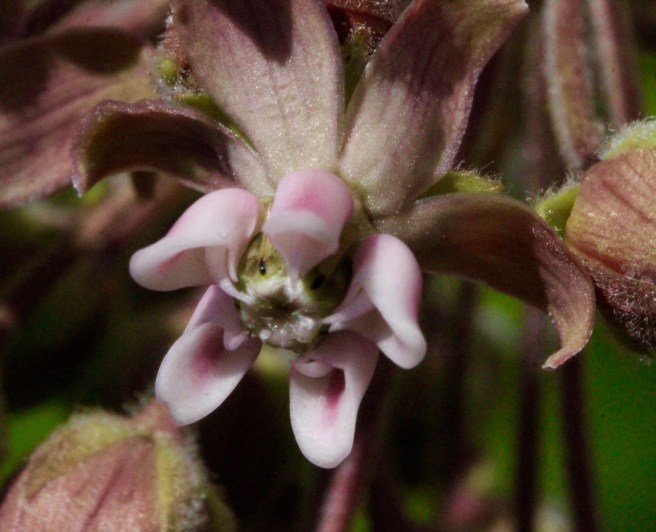
The flowers are complex and invite a closer look. Overall, they droop in a globe-like umbel. What you see here is five upright hoods, each with a pointed, incurved horn.  Surrounded by those hoods are the fused column of stamens and heads of the styles–where the magic happens.

Since there is no scent yet, the insects don’t seem to have discovered it, but they will. It will nourish many with its nectar and pollen and provide shelter and hiding spots for others. I promise to keep an eye on it and all its visitors because it also is –worth a wonder.

I’m thankful that each day offers new opportunities to capture wonder.


From Bare to Bear on Burnt Meadow Mountain

Back in October 1947, catastrophic wildfires erupted throughout Maine during what became known as “The Week Maine Burned.”

It hadn’t rained for 108 days and the dry woods were like tinder. Here in western Maine, Fryeburg, Brownfield and Denmark thought they had a fire under control, but overnight a strong wind blew and gave it new life. About 2,000 acres burned by the next night as the fire spread to the edge of Brownfield.

With the winds continuously shifting, town folks began to panic. Farmers either turned their livestock loose or herded them to neighboring towns. Others packed as many belongings as they could and evacuated.

By morning, most homes and public buildings in Brownfield were mere piles of ash. Stately places including the Farnsworth Place where Dr. Philo Farnsworth, a pioneer in the field of television, spent his summers, had burned. Churches, schools, the post office, Grange hall, library and town hall all went up in smoke–only twenty houses survived. In the end, 85% of the town was destroyed, including a mountain trail.

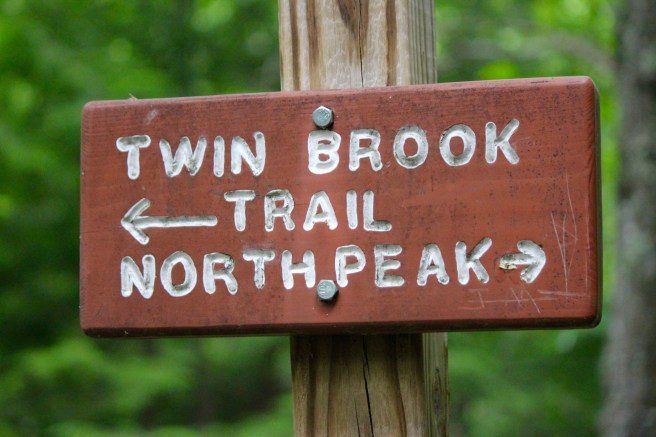
Today, Marita and I ventured to Burnt Meadow Mountain for a loop hike. It used to be that one had to hike up and back on the same trail, now known as the North Peak. Though that’s the shortest way up and back (about an hour each way), I for one, am thankful to the Friends of Burnt Meadow Mountain, who sought landowner permission to create a loop and spur–Twin Brook Trail and Stone Mountain Trail.

trail sign

From the parking lot and kiosk, it’s a bit of a climb to reach the trail split. We followed the blue blazes of the North Peak trail, which though it is shorter, is also the more difficult of the two.

white pine 1

Immediately we noticed that the white oaks that grow at the bottom of the mountain play host to numerous leaf miners and other insects.

white oak gall

Some are decorated with pronounced galls. I always think about how a bud protects the whisp of a leaf all winter long, and how hairy it is as it slowly unfolds and then–kaboom–the insects have to survive too. And they do. Until something eats them. And their energy passes up through the web, where it’s enhanced at each level by sun and air and rain and . . . even when life doesn’t look so good, it is.

Blueberries

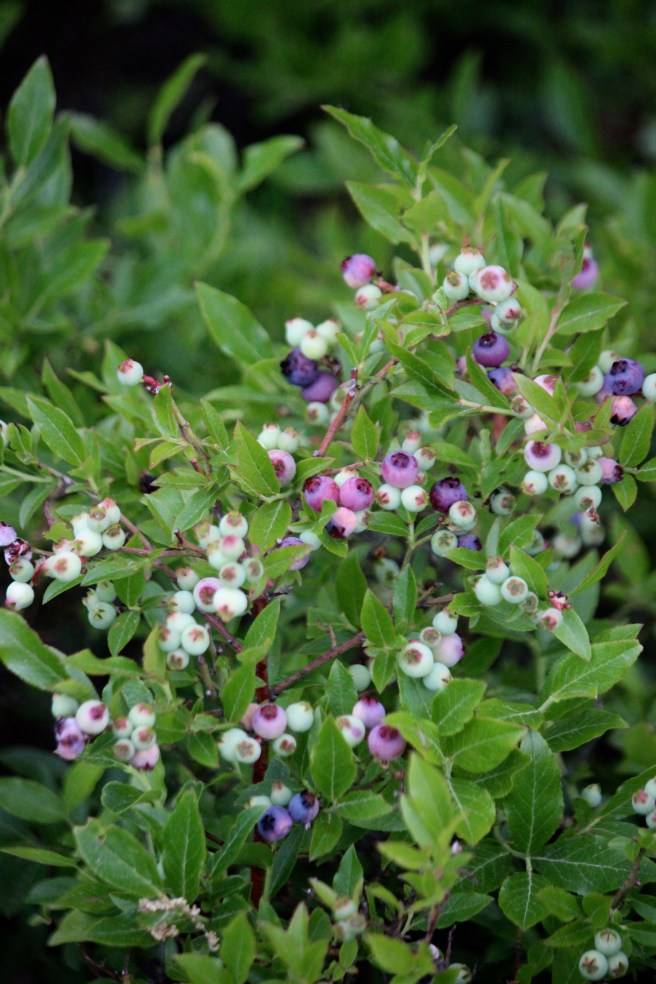
As we climbed, the blueberries became more prolific. And bluer.

spreading dogbane

Spreading dogbane showed forth its tiny pink bells.

ph rocky ascent (1)

And the trail became a scramble. If I said we scampered up the ledge quickly, I’d be telling a fib. (Do people still tell fibs?) Near the summit is a section of hand-over-hand climbing. It doesn’t really last long, but in the moment it seems like forever.

ph view on way 2 (1)

And so it invites a pause to take in the view to the south and east.

ph summit view 5 (1)

The relatively flat summit is rather barren–in memory of those 1947 wildfires.

ph summit view3 (1)

We were glad it was cloudy as there are no shade trees at the top.

ph summit view 2 (1)

Our view included Stone Mountain and the saddle between it and Burnt Meadow Mtn.

ph red pine 3 (1)

Normally in the landscape, red pines stand tall and proud. At the summit, however, their scrubby form presents their features at eye level–bundles of two needles, pollen cones and older seed cones. Young red pines typically germinate and grow only after forest fires or some other event that causes tree loss.

Eastern Towhee 2

Eastern Towhee

While we took a break, an Eastern Towhee sang its metallic yet musical “drink your tea” song.

ph view on way down 4 (1)

Descending via the much longer, but a wee bit easier Twin Brook trail, we were treated to mountain views to the west.

driftwood

And driftwood. Oops. Wrong setting. But still, mountain wood can be as beautiful as ocean wood.

ph bear 5

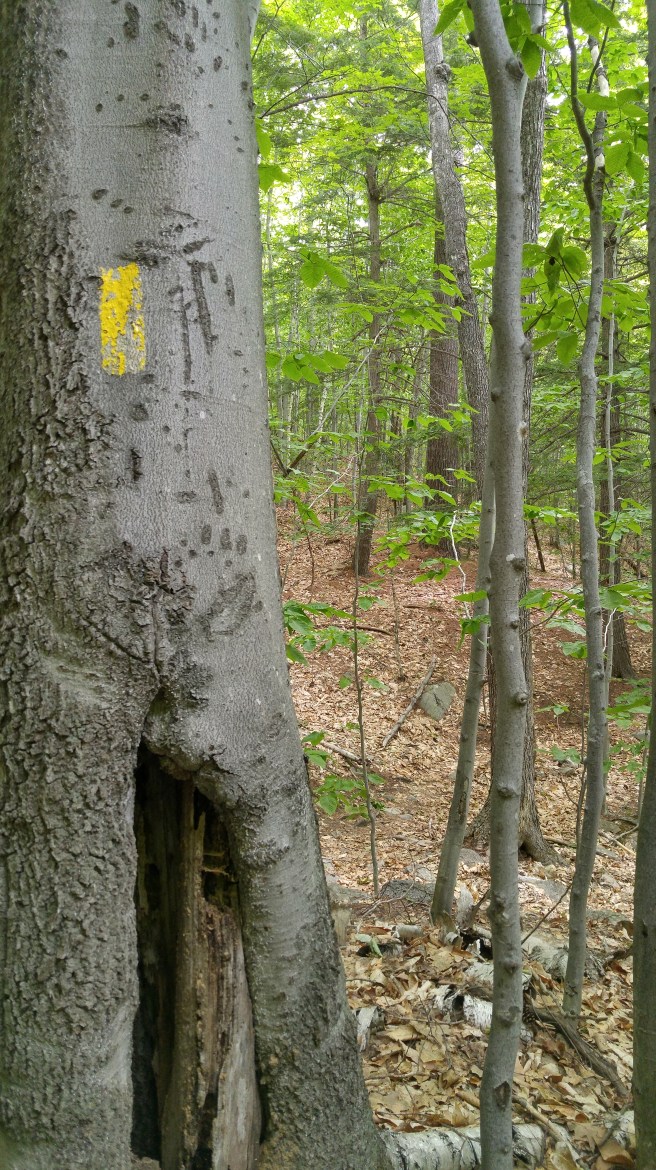
One of our pleasant surprises was the discovery of bear claw marks on rather small beech trees. Perhaps made by even smaller bear cubs who scampered up and down a year or two ago, leaving their marks much the way we left our own today without knowing it.

ph bear 2

Further along, the hole in this older beech stopped Marita in her tracks. We noticed saw dust on the ground below. And numerous bear claw marks on the bark above.

bear 3

Another oft visited tree.

From bare to bear, Burnt Meadow Mountain in Brownfield is worth the trek. (You probably thought we saw a bear today. No such luck, but my guys and I encountered a bear on the North Peak trail on a summer day years ago. It seemed content to lumber along about fifteen feet from us–probably full of blueberries.)


The Main(e) Exotics

If you’ve traveled with me before, you know that I often frequent the same trails. And so it was today. Oh, there was a change-up in the early morning hours when I joined a couple of members of the Lakes Environmental staff to oversee a volunteer project by the Rotary Club. Rotary members from around the state and beyond (think Argentina) spent four hours clearing a new trail we’d laid out at LEA’s Maine Lake Science Center. They provided humor and hardwork hand-in-hand.

And then a friend and I drove to LEA’s Holt Pond Preserve where everything was in exotic mode.

oak g 3

One of our first finds was an apple oak gall about the size of a golf ball. So, the apple oak gall female wasp (yes, there is such a species) crawled up the tree trunk of a Northern red oak in early spring and injected an egg into the center vein of a newly emerged leaf. As the larvae grew, it caused a chemical reaction and mutated the leaf to form a gall around it that provided sustenance.

oak g 5

Recently, the wasp drilled its way out and probably found a mate.

oak gall 1

All that remained–wispy fibers.

blue 3

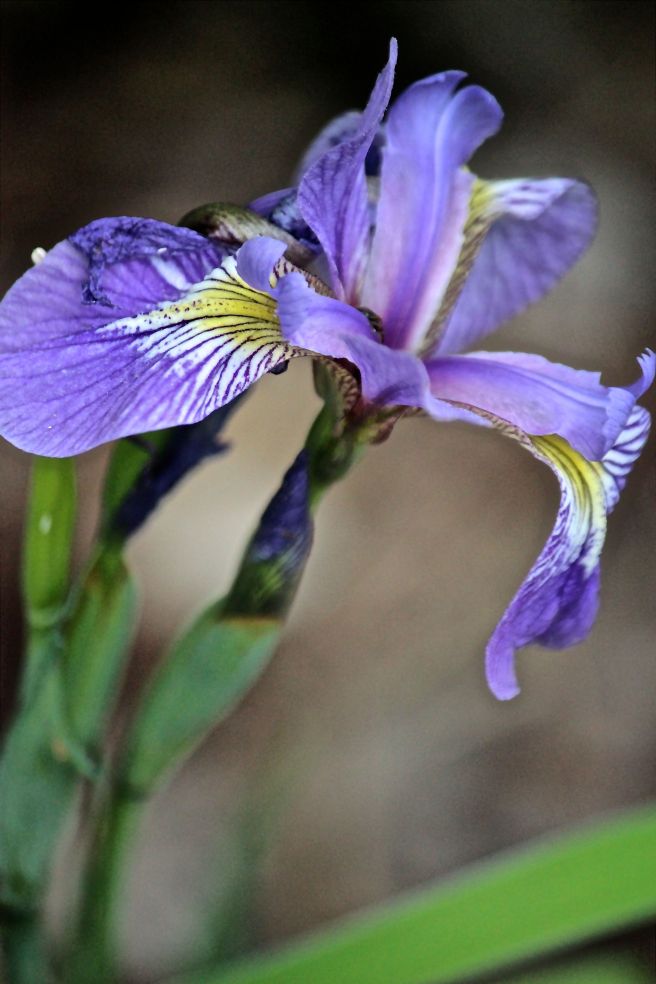
Along the first boardwalk in the red maple swamp we found Northern blue flag iris in bloom. Flag irises are wild irises that tend to grow in boggy areas. Unlike the irises that grow in our gardens, they don’t have beards. The venation of the gracefully downturned sepals was intense–the better to attract pollinators.

snake2

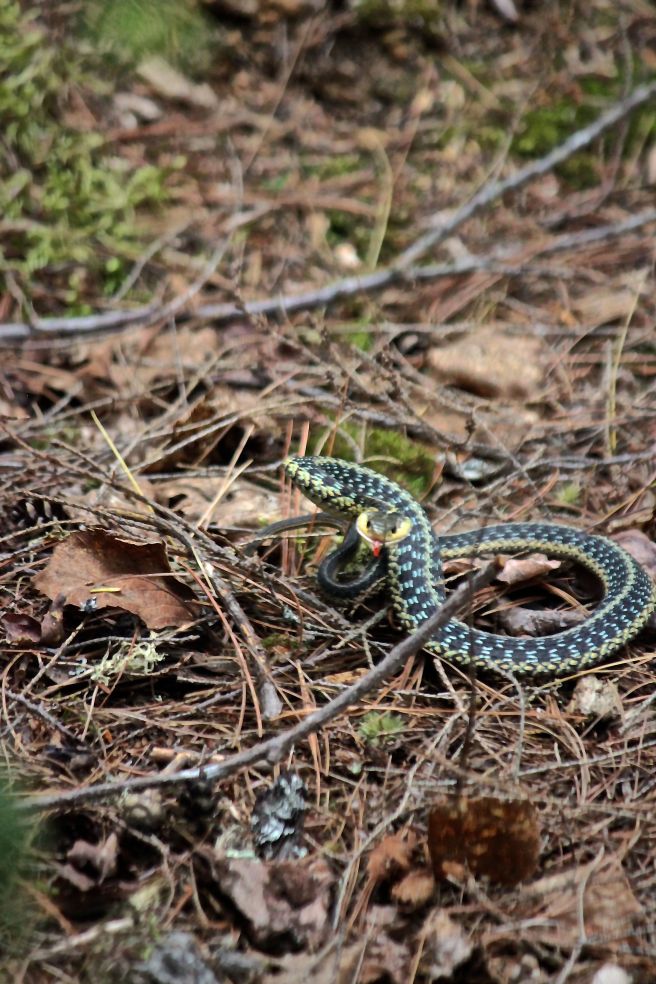
We moved from the swamp to the first hemlock hummock and chatted about natural communities when suddenly we realize we were being hissed at.

snake 10

Its coloration threw us off and beautiful though it was, the hairs on the back of our necks stood on end. Apparently we made it feel likewise. And so we retreated. We retraced our steps and decided to complete the same loop in the opposite direction. When I got home, I looked it up and realized that it was a common garter, but really, there didn’t seem anything common about it in the moment.

hemlock v

Because we backtracked, we were treated to fresh and older hemlock varnish shelf fungi that  we may not have seen otherwise.

hemlock v 6

We know where they’re located. F0r big $$ we might (MIGHT) show you.

park 1

Later on, as we left, we recognized a friend’s vehicle in the parking lot. Our question–did he see what we saw?

pitcher 9

Throughout the preserve we found one of our favorite plants that in my book is the most exotic of them all.

pitcher 3

The carnivorous pitcher plant obtains nitrogen and phosphorus by eating insects. Its oddly shaped leaf forms a unique pitcher partly filled with water and digestive enzymes. The spout is a hairy landing platform for insects attracted by its red venation and nectar glands. Imagine this: An insect crawls to the edge of the leaf, aka pitcher, slips on the downward-sloping hairs and plunges into the liquid below where enzymes and bacteria break it down. Any chance for escape are zapped by those stiff hairs. Oh my.

pitcher & sundew1

The pitcher plant isn’t the only carnivorous plant that thrives here. Check out the glistening tentacles of the sundew intended to capture small insects like a mosquito. Should one land on the tiny leaf, its feet become ensnared in the sticky secretion and the end is eminent. YES! Within mere minutes the tentacles curl around the victim and suck the nutrients out of it. Go sundews. Go pitcher plants.

sheep 4

Only beginning to bloom was sheep laurel with its deep crimson-pink flowers. Located below the newly emerged leaves, each flower has five sepals, with a corolla of five fused petals and ten stamens fused to the corolla. Beauty and danger are also encompassed here–it contains a chemical that is poisonous to wild animals, thus one of its common names is lamb kill.

exo 1

Because we were beside the pond, we thought to look for dragonfly exoskeletons and weren’t disappointed.

broad-tailed shadow dragonfly

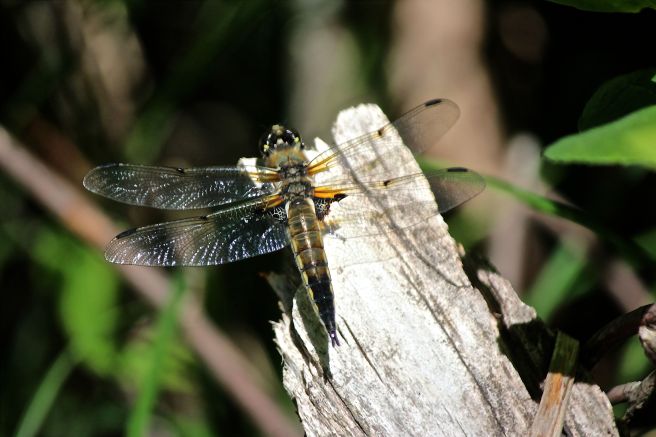
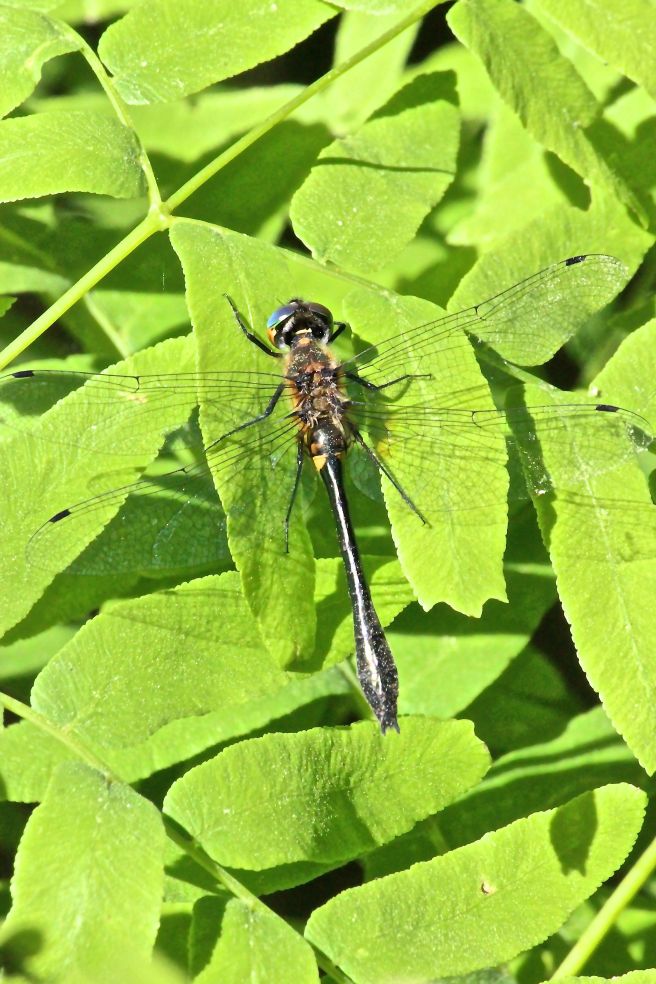
And the dragonflies themselves were worth our attention. I’m not sure my ID is correct, so help me out if you know better, but I think this is a broad-tailed shadowdragon and if that’s true it is one that Maine is paying attention to because it only occurs in one or two states.

beaverpond clubtail dragonfly

Another that I name without certainty–beaverpond club tail.

ebony 2

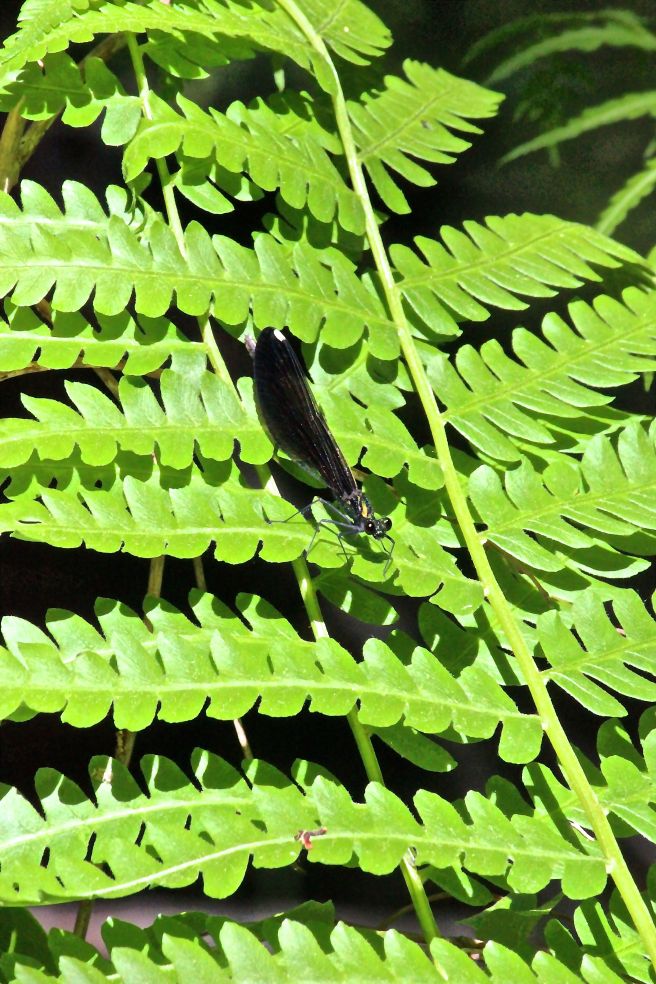
I’m much more confident about my ID of this ebony jewelwing damselfly.

cuke 7

We found a double-decker Indian cucumber root that displayed flowers in varying stages. The yellow or green-yellow flowers drooped below the upper leaf whorl and as is their custom, were slightly hidden. Each flower had three long, brown styles in the center that curved outward and the stamens were magenta.

LEA boats

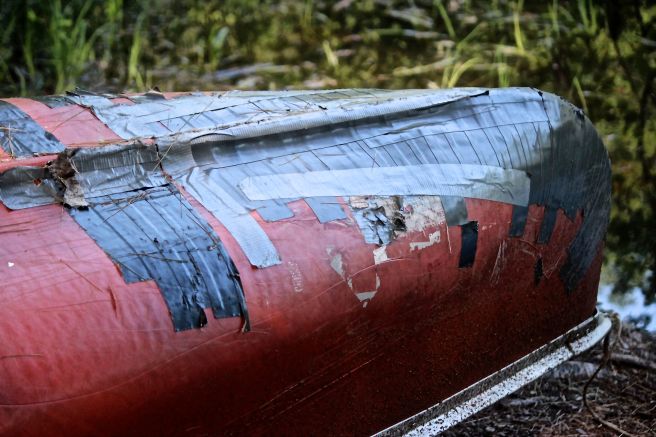
Among the unnatural offerings, a few boats to explore the river and pond. Though we noted a couple of paddles and one pfd, we highly recommend you bring your own.

LEA 2

Some extra duck tape is also a good choice just in case. ;-)

HP view1

Like the ever-changing reflection, life changes constantly at Holt Pond. The more I look, the more I realize how exotic life is in Maine. Who knew?

Searching for The Beautiful

Here is the world. Beautiful and terrible things will happen. Don’t be afraid.” -Frederick Buechner

My lovely neighbor posted this on her Facebook page last night in reaction to the sudden turn her family’s journey has taken. And so, while she went in search of the beautiful this morning, and found it in a few surprising places, I did the same. Of course, the terrible also presented itself.

This one is for you, Binaca–and your amazing ability to always put a positive spin on life.

ph-Stevens Brook

While muted colors reflected in the calm water,

p-yellow warbler 1

a yellow warbler foraged on a nearby willow.

ph-aphids1

I trust he found plenty to eat because food seemed plentiful everywhere I turned, from teeny tiny to . . .

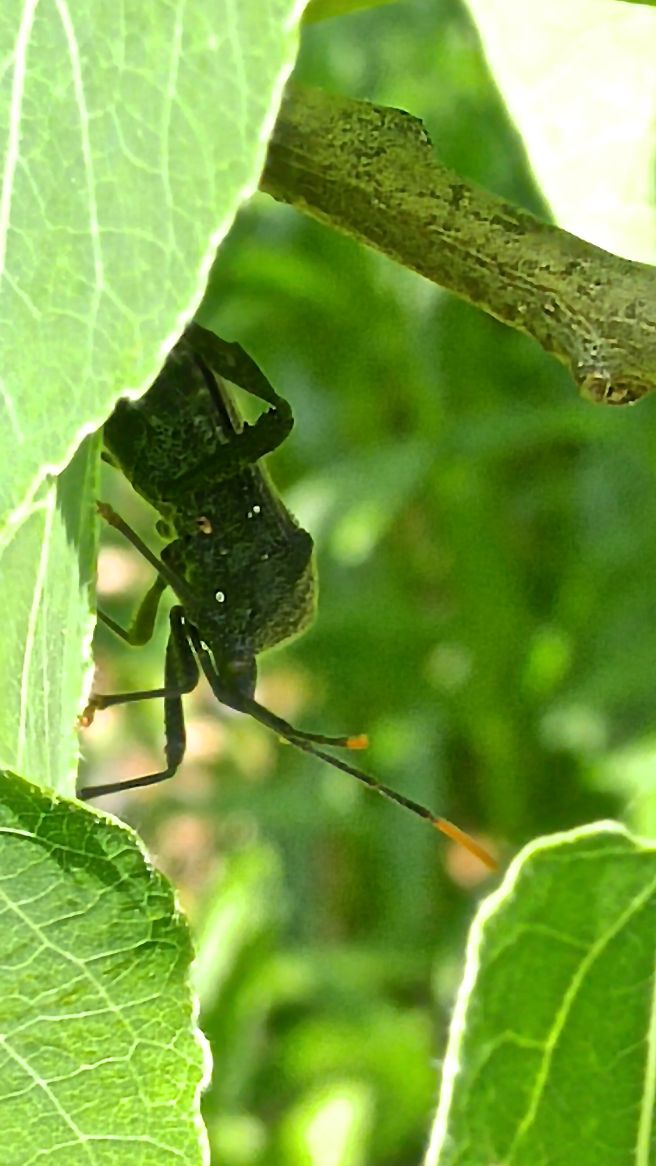
ph-stinkbug horns1

super-sized!

ph-stinkbug

(I hope this is a predator species of stink bug and not a plant eater.)

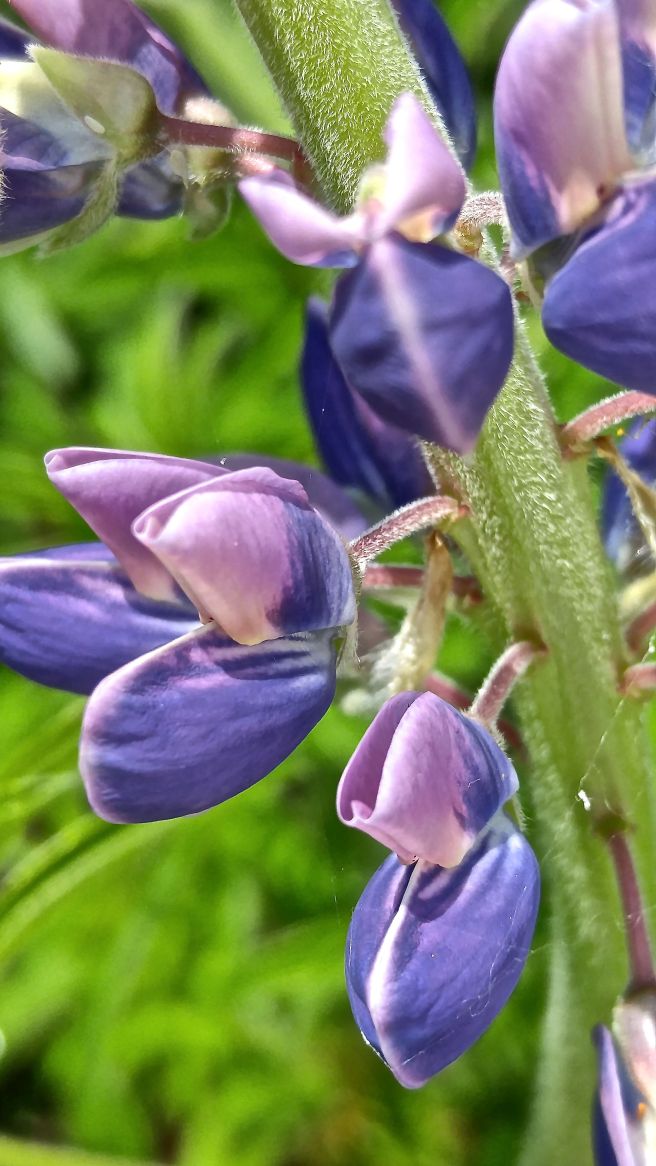
ph-lupine 4

Hairy coverings didn’t necessarily mean the aliens wouldn’t invade.

ph-elm growth

And despite not always seeing the muncher, I was amazed by the patterns created, including this rooster’s comb.

ph-leaf munch1

And then there were diminishing holes to admire and wonder about–reminiscent of skipping stones jumping across the water’s surface.

p-dandy bee

Some visitors were most welcome.

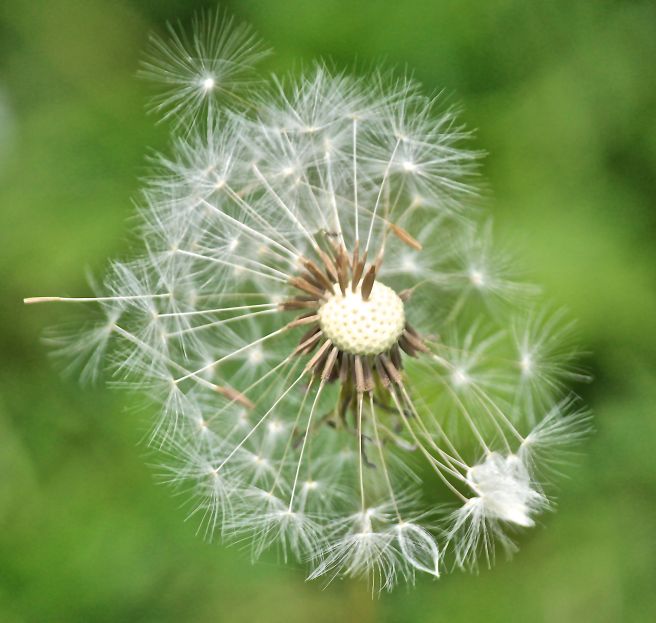
p-dandy seeds

And because of them, I could see the future blowing in the breeze,

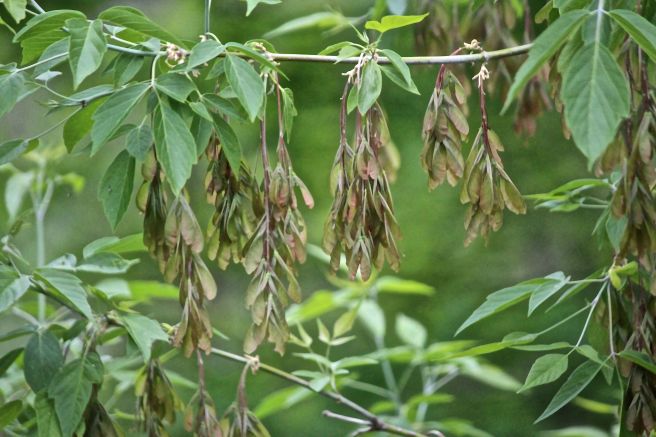
p-box elder

and pouring forth with seeds of hope.

ph-balsam growth1

New opportunities graced the tips of twigs.

ph-phlox2

And the beautiful was visible in buds and blossoms.

ph-lupine1

Stop your searching, Binaca, for you are the beautiful.


Beulah’s Mystery

One of the fun happenings in my life is that friends send me nature photos and ask me to help them ID a species. Sometimes I know immediately what it is and can ask them questions to help them get to the answer. Other times I’m as stumped as they are. Thus was the case today, when I drove to Brownfield to look at a tree growing in the field beside an old farmhouse.

t-beulahs 2

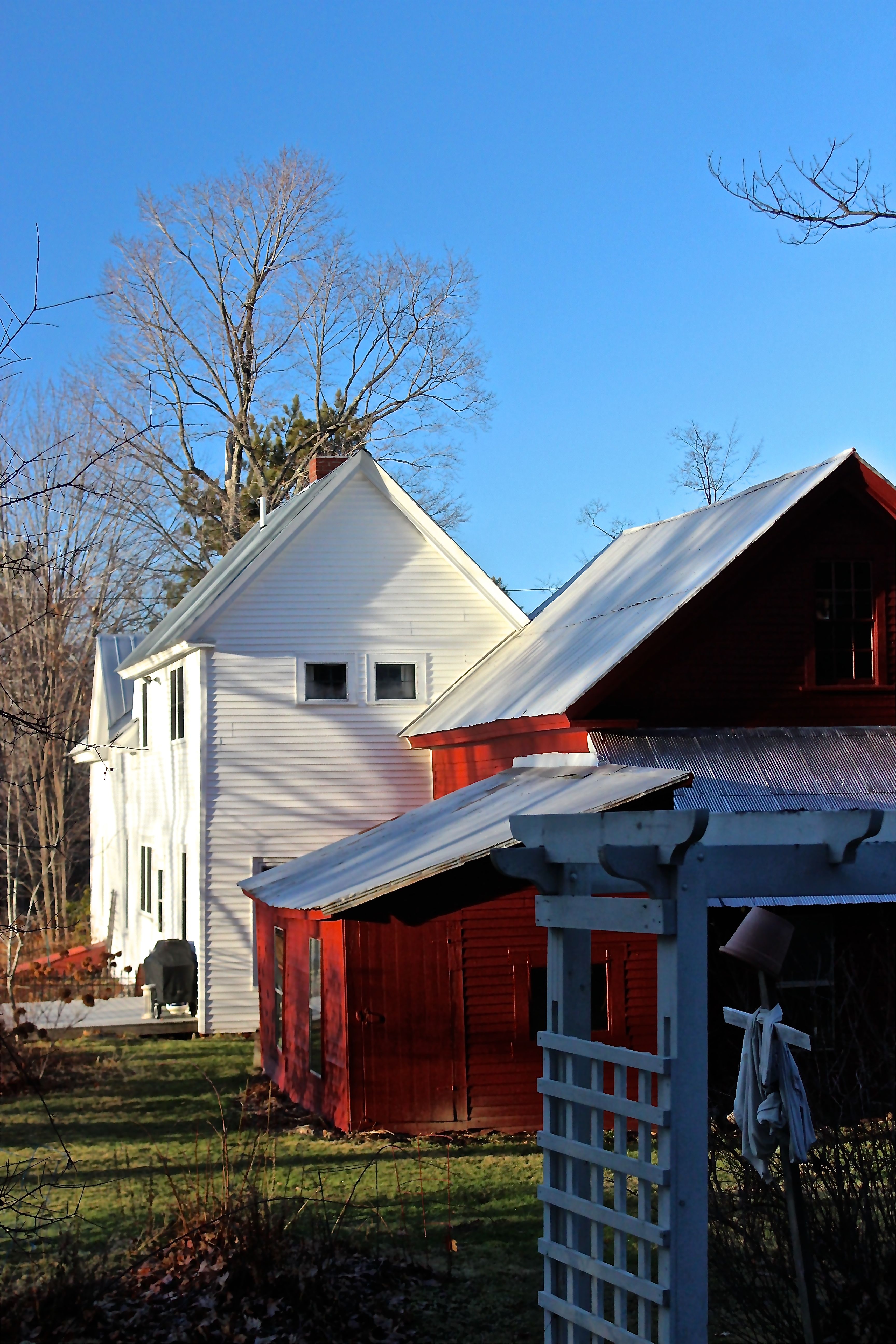
Beulah’s farmhouse, to be exact. My friend’s brother recently purchased it and the adjacent barn. Though the farmhouse is a fixer-upper, Beulah’s sign looks as if it was created yesterday.

t-tree1

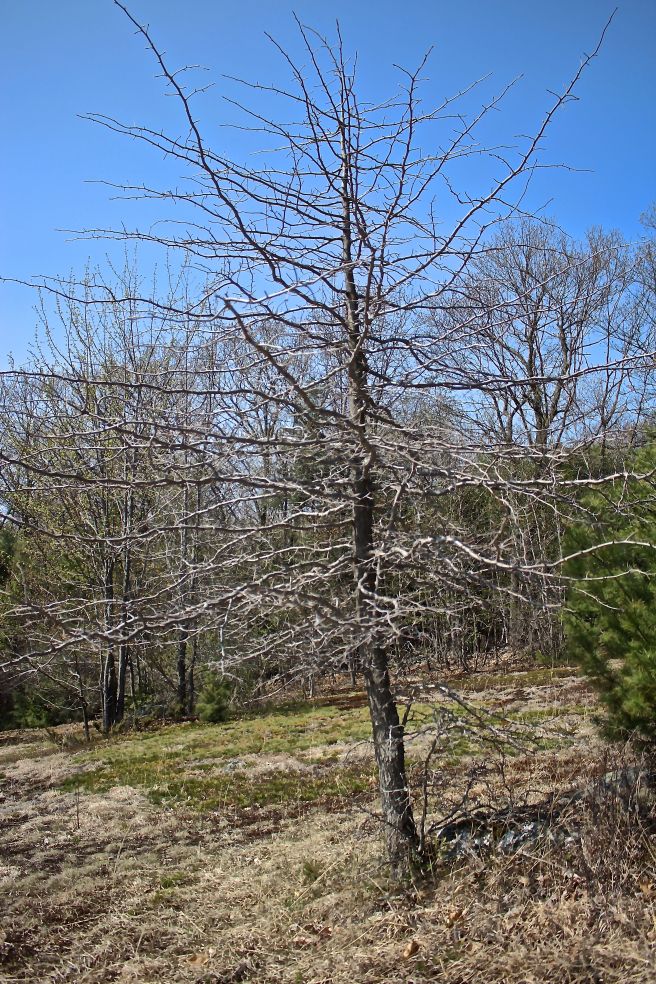
This is the tree. If you know it right off, my hat goes off to you. I was in my Forest Trees of Maine mode and kept looking at it from that perspective. It’s overall appearance didn’t match what I know. We began with the key and slowly (painfully slowly as the black flies swarmed us–mind over matter, mind over matter), worked our way through the choices, two by two.

t-dwarf shoots

Because it’s not in leaf yet, we used the Winter Key. With each question, we paused to examine the tree–looking at the alternate leaf shoots, hairy scaled buds, pith, bark–every detail. We considered its location in the middle of a farm field, where the land sloped slightly and was rather dry. We also looked at the ground and found decaying leaves as well as deer scat. As I suspected, it wasn’t in the key. So I came home and scoured other books. I think I reached the answer and that the deer scat is actually a clue. Do you know? Now you may say so.

t-porky den

On our way to see one more cool thing, we paused to look at a den located beside the old foundation. Though much of the scat has since been removed, plenty of it and numerous quills painted the picture of who’d created this pigpen.

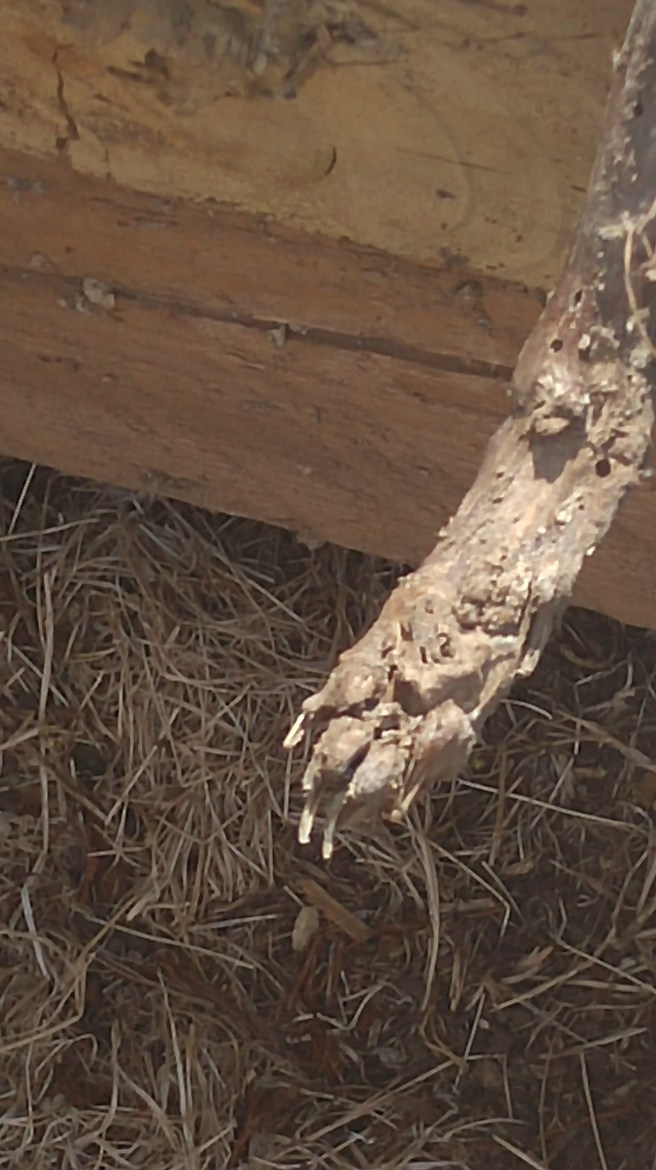
t-critter 2

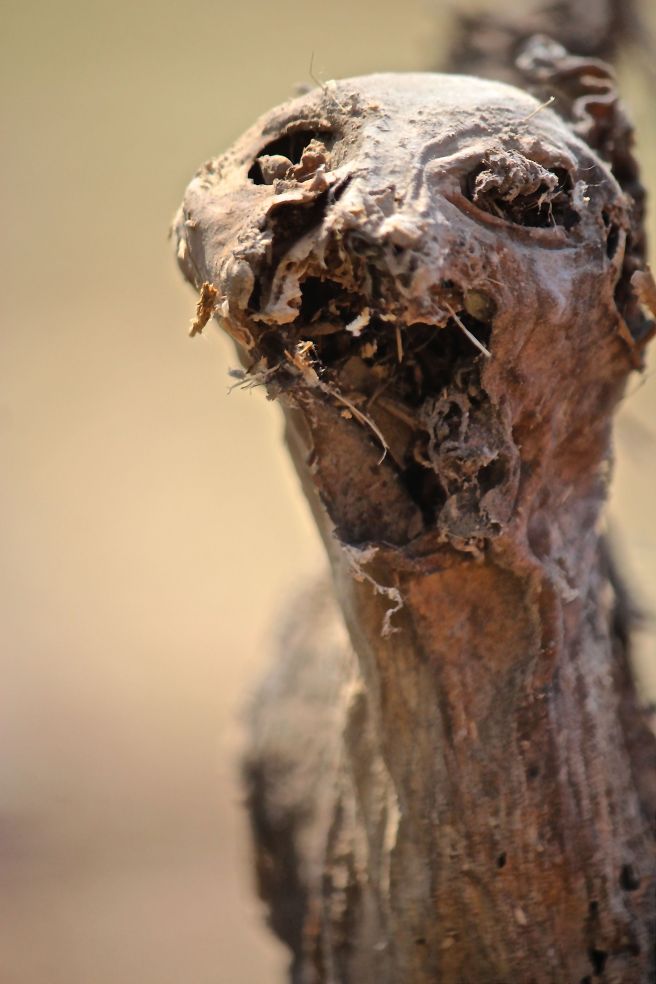
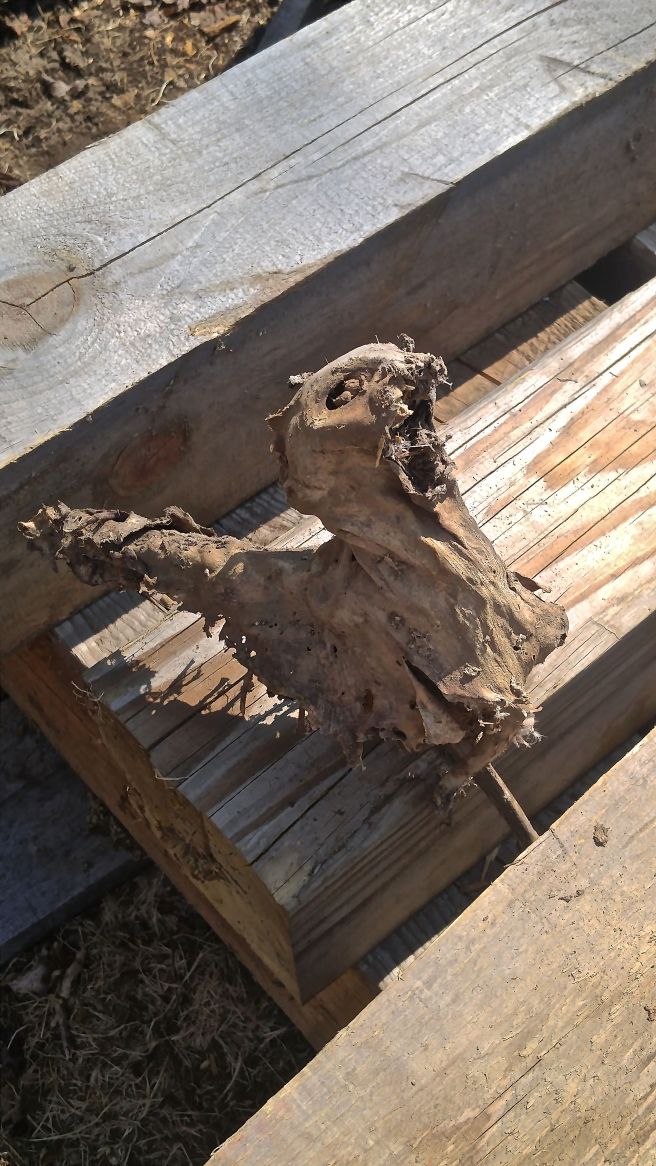
And then they had one more mystery item to show me. I hope this doesn’t freak you out. It’s part of many renovations in old farmhouses–a dried-up animal carcass. The front of the face was missing, but as we say, eyes in the front, born to hunt.

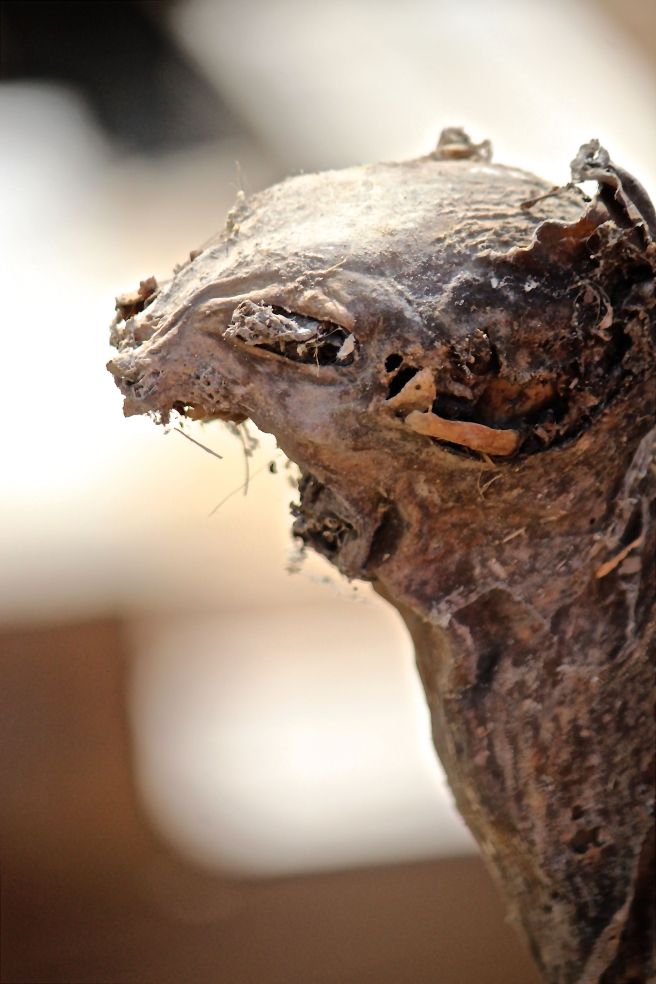
t-critter 1

A side view of this handsome critter. Can you see the ears?

t-critter 4

Talk about all skin and bones.

t-critter pads

And then the foot pads and nails. Four toes, nails, about the size of a nickel. Do you know?

t-bog sign

Because I was in the neighborhood, I visited Brownfield Bog and continued my afternoon exploration. (Yeah, I had work to do, but playing hooky for a couple of hours is allowed once in a while if I don’t abuse the privilege–ah, the life of a freelancer.)

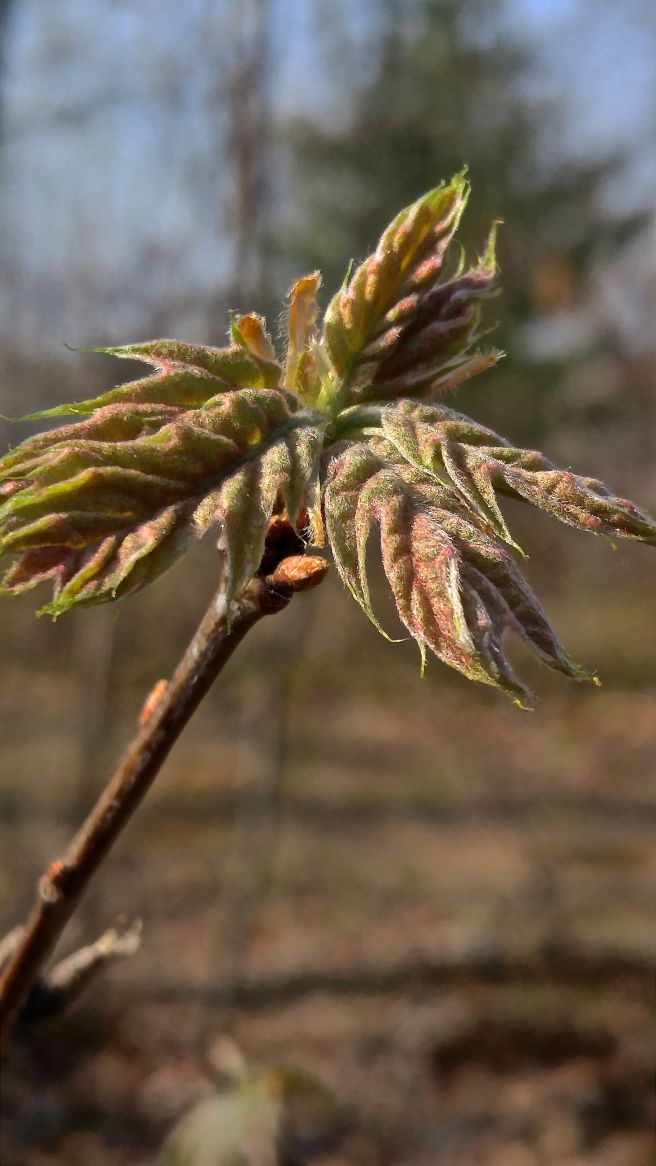
t-red oak emerging

I remember suddenly becoming aware of spring colors about thirty-five years ago, when I taught  school in New Hampshire by the convergence of the Pemigewasset and Merrimack Rivers. Until then, I’d never realized that tree leaves emerge in a variety of colors–they all weren’t suddenly green. (BTW– do you see the spittlebug? )

t-red oak mini leaves

In a quickness equal to fall foliage, spring colors may not be as flashy, but their subtle beauty deserves notice.

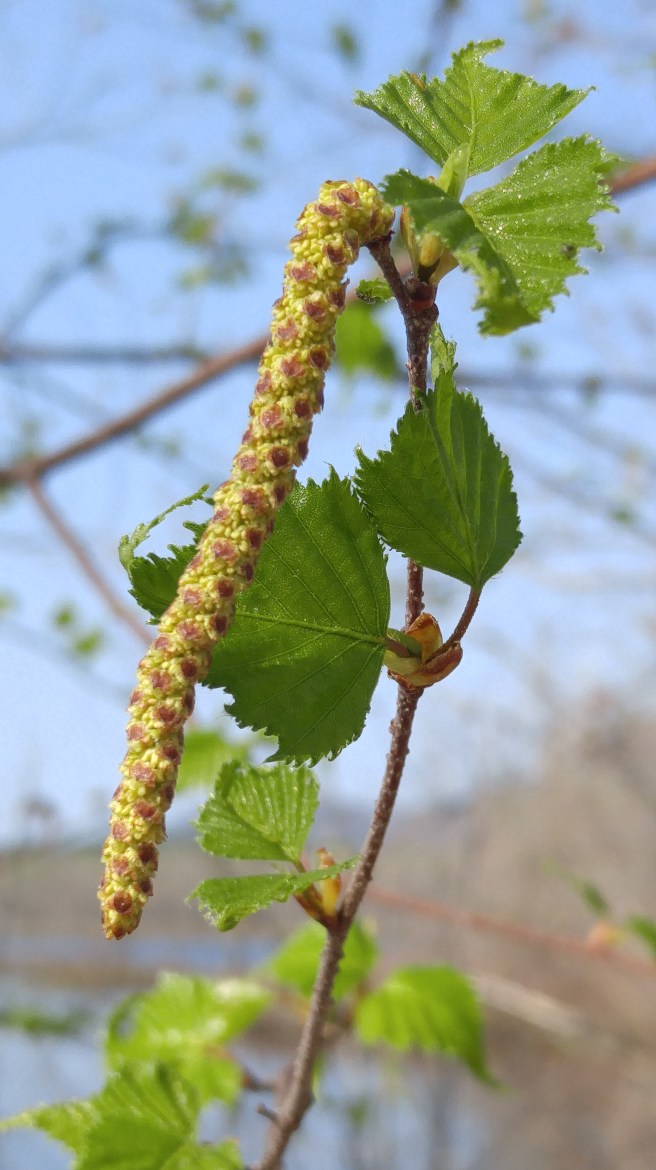
t-gray birch 2

And those leaves that are green offered their own reasons to stop me in my tracks as I took in the details–in this case the double-toothed elephant’s trunk. What? Notice the shape and outer margin of the leaf.

t-gray birch 4

The lovely elongated catkins demanded a glance that lasted more than a second.

t-willows cat1

Adding a festive fuzziness to the celebration of spring was another set of catkins.

t-willow gall

Unwittingly, this shrub also played host to a gall gnat midge that overwintered in a structure created by the reaction to a chemical released by the larva–what would have been leaves were forced to harden into a pine cone look alike.

t-bog colors 2

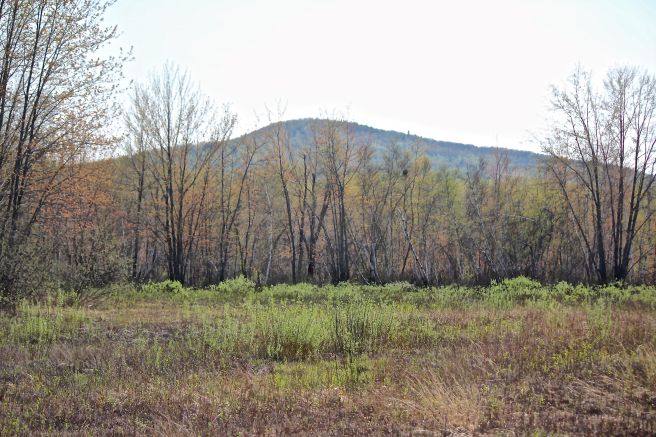
The subtle colors graced the meadow,

t-pleasant

were reflected in the bog,

t-river

and blessed the Saco River.

t-baltimore 2

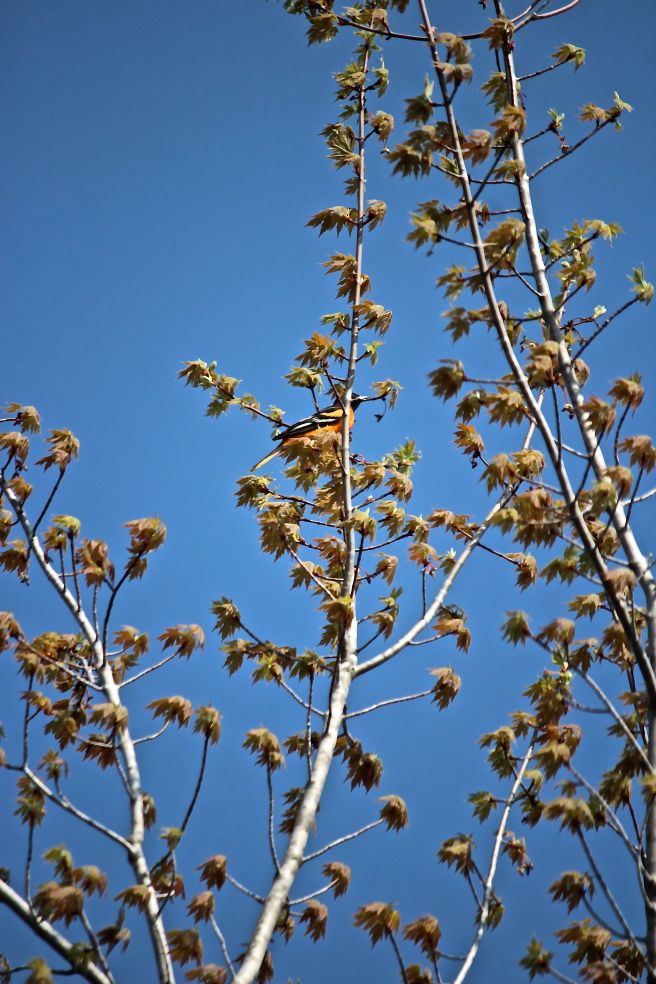
There were bits of flashy color–do you see who was feeding on the upper branches?

t-rhodora 1

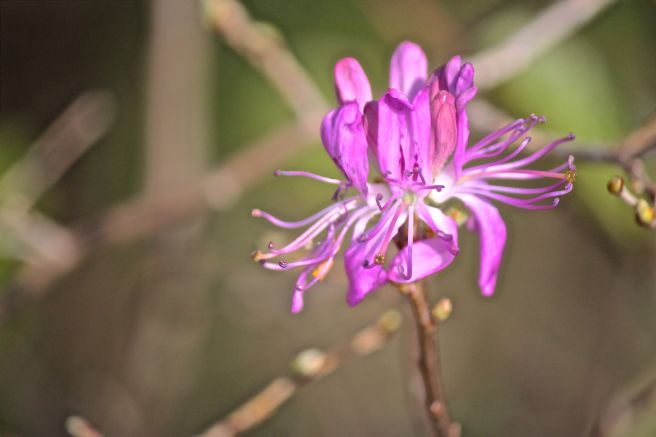
And this spring beauty exploded with love and life.

At the end of my journey, I was grateful to P&K for an excuse to step away from my desk and check out the mystery standing in Beulah’s field. Especially as it led me further afield.

Some Call Them Weeds

Shades of brown, gray and green dominate the winterscape now that we finally have some snow. It’s those browns that frequently draw my focus as I admire the woody skeletons of bygone summer wildflowers. Of course, some call them weeds.. I’ll admit that they do grow prolifically–especially in land cleared by humans, e.g. the field and power line I frequent.

But . . . come meet a few of my winter friends.

Indian Tobacco

This is Indian tobacco (Lobelia inflata). Guides say it tends to be alone, but I’ve seen it grow in colonies as well. The papery calyx is all that is left now.

IT 2

Inflata refers to the inflated seedpods, which are two-chamber capsules that split open to drop their seeds.

iT 4

Minute and scaly, the seeds self sow.

bugleweed

I struggle with the ID of this member of the mint family. Knowing it is a mint is the easy part. Notice the square stem? I believe it’s bugleweed or water horehound, but I’ve also toyed with motherwort. Either way, both feature toothy calyces that whorl around the stems. I keep flip-flopping because the dried seedpods seem larger than bugleweed, but all were on single stems and the area is known to be wet–though not consistently. Maybe knowing it’s a mint is enough.

spirea 3 meadowsweet

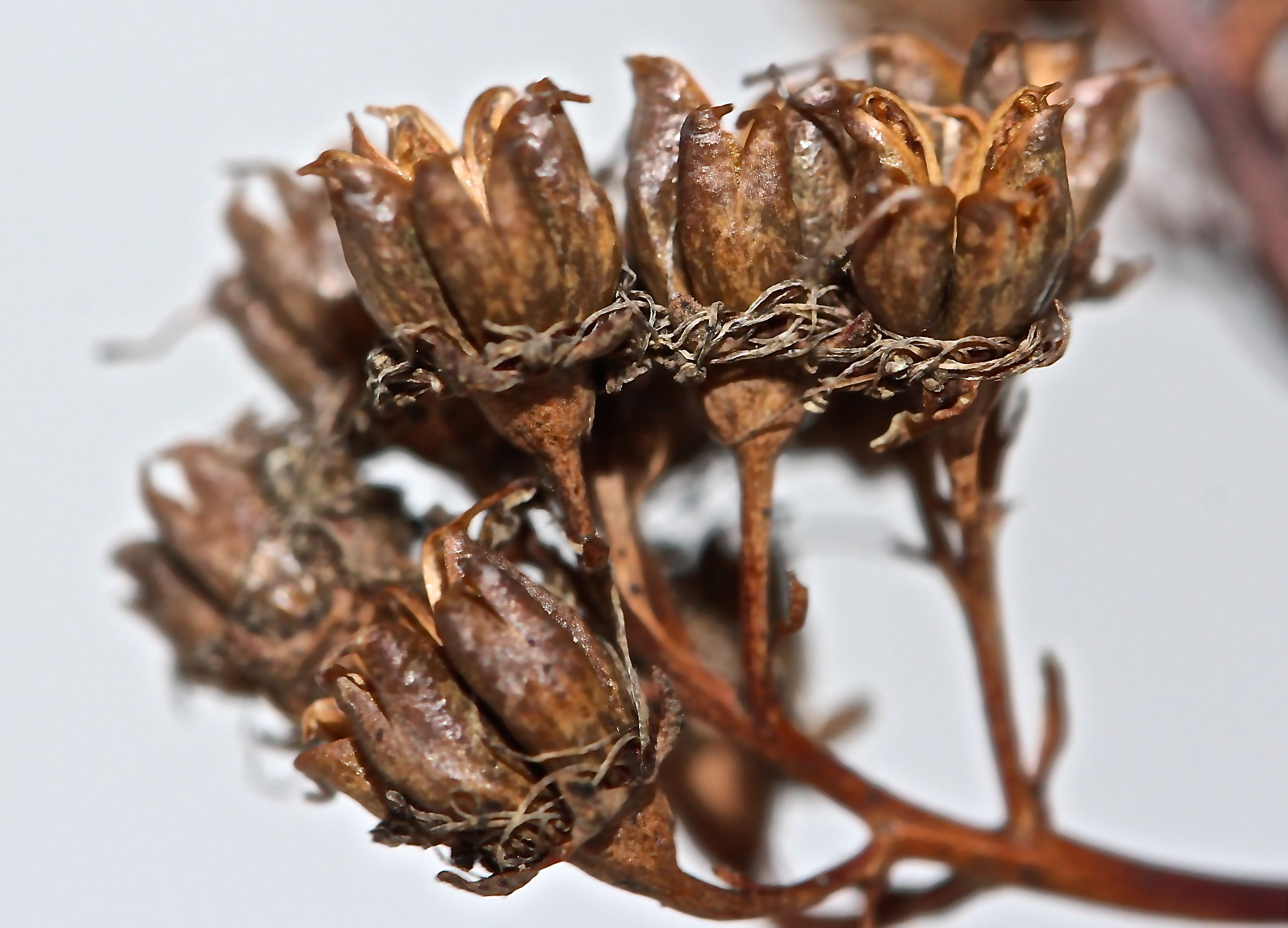
Both hardhack (steeplebush) and meadowsweet are members of the Rosaceae family. Their dried fruit structure is known as a follicle, meaning it splits open along one line–like a milkweed. But these two plants have five follicles encircling a central point.

goldenrod 1 goldenrod 2

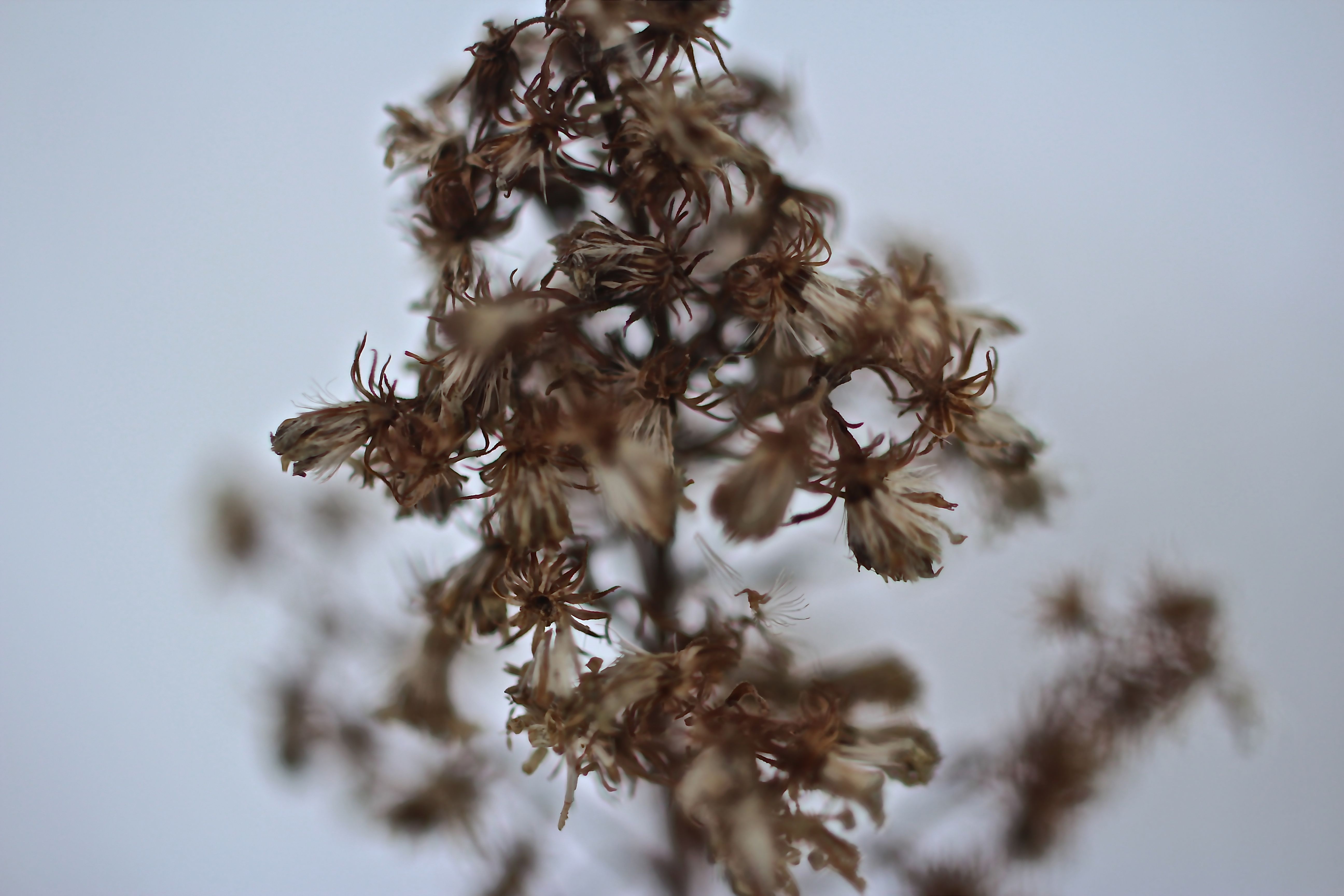
Showy goldenrods grow abundantly and it’s no wonder given all their seeds. They depend on the wind and my snow pants to disperse. I refer to plants that stick to my clothes as volunteers. And if they are sticking to me, then they are also sticking the fur of mammals that move about this area. Today I found deer, bobcat and squirrel tracks.

achene

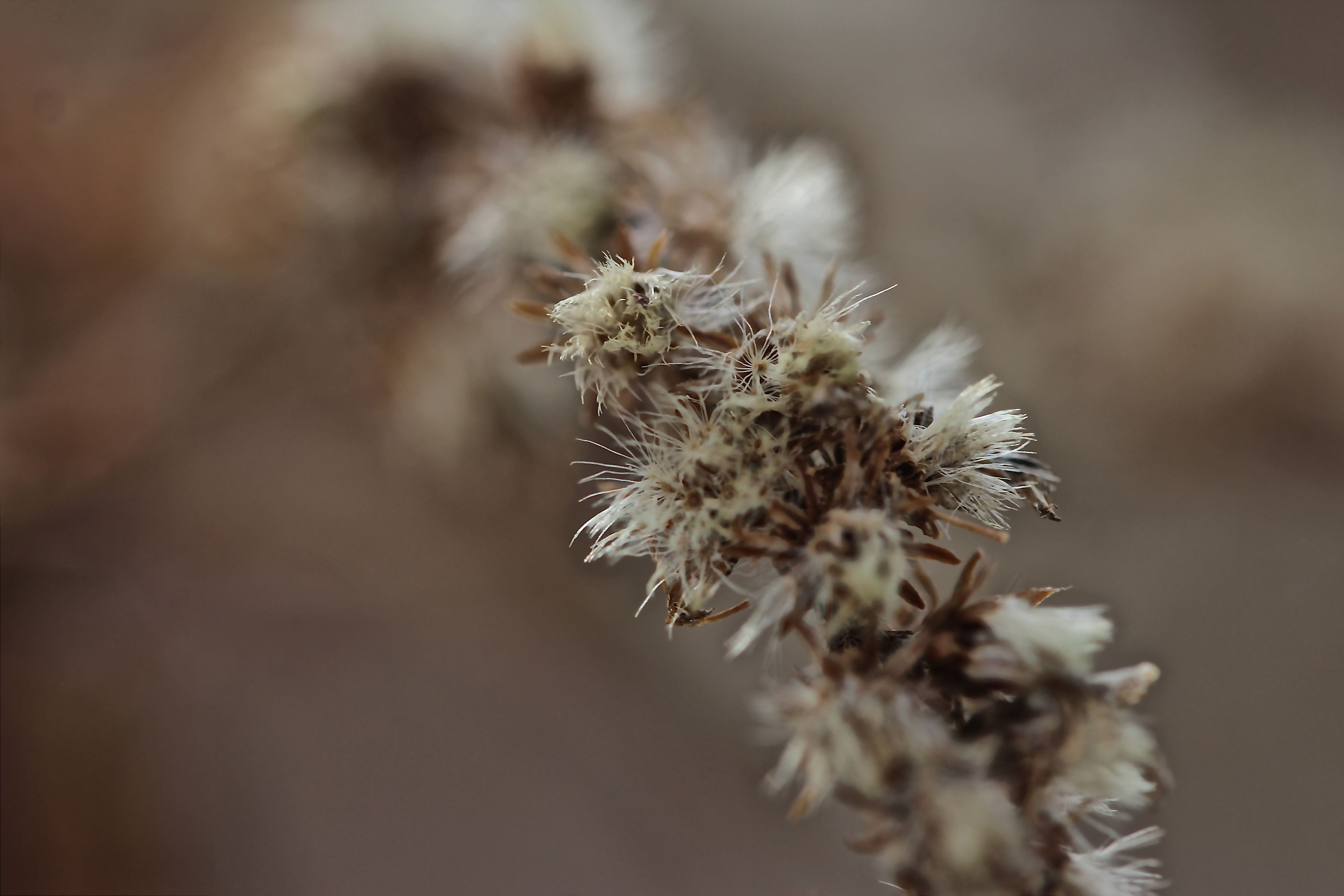
Both goldenrods and aster seeds have small, single-seeded fruits called achenes. A receptacle holds the fruits in place until they’re ready to head off on their own.

goldenrod 4

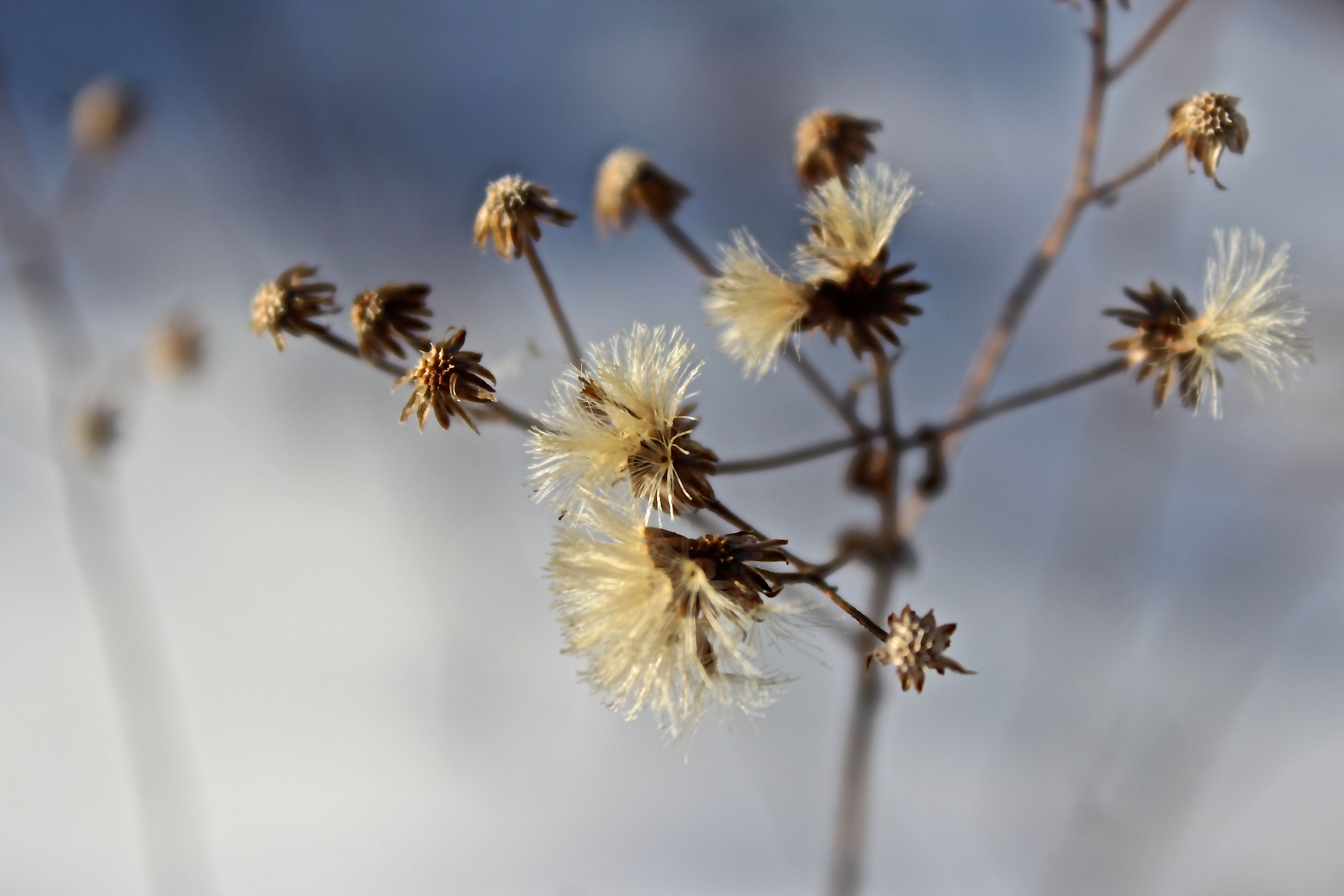
Check out the crown of hair, called a pappus, on this aster. These act like parachutes and enable the fruits to float along in a breeze, thus spreading the flowers far and wide.

a or g 5

While the goldenrod flowers tend to grow in dense clusters, aster flowers are found in a single arrangement.

A turn to folklore explains how the goldenrods and asters are related. Two young girls talked talked about their future. One, who had golden hair, said she wanted to do something that would make people happy. The other, with blue eyes, said that she wanted to be with her golden-haired friend. When the two girls told a wise old lady of their dreams, she gave them some magic corn cake. After eating the cake, the girls disappeared. The next day, two new kinds of flowers appeared where the girls had walked: Asters and Goldenrods.

g gall 2 Goldenrod bunch gall

Another way to identify goldenrod in the winter is to look for these galls. The goldenrod ball gall, on the left, is a round gall in the middle of a stem. In the spring, the Goldenrod gall fly lays her eggs on the stem. Hatched larvae chew their way into the stem and the gall starts to develop. The other is a Goldenrod bunch gall created by a tiny fly called the Goldenrod gall midge. It looks like a mass of tiny leaves. While it stops the main stem from growing, tiny branches extend outward.

spider 2

Though not an insect, I did find a spider on the snow today.

 bouquet

And then I came in, bringing a few finds with me. My guy is lucky–bouquets come cheap around these parts.
sketch

Some call them weeds. I call them volunteers who add beauty in any season.


Book of January: A Guide to Nature in Winter by Donald W. Stokes

Stokes 1

Book of January

I have a number of winter nature books, but one of my go-to favs is A Guide to Nature in Winter by Donald W. Stokes. My copy is old (1976–it was a very good year–I graduated from high school) and a bit weathered, but that’s because it has seen frequent use.

Divided into eight field guides, Stokes covers all aspects of winter: winter weeds; snow; wintering trees; evidence of insects; winter’s birds and abandoned nests; mushrooms in winter; tracks in the snow; and woodland evergreen plants.
For each topic,  pen-and-ink drawings by illustrator Deborah Prince and the author are included in the key, as well as natural history descriptions.
The natural history descriptions are just that–Stokes’s descriptions are part of the story that Kevin Harding of the Greater Lovell Land Trust reminds us to share with others. Here’s an example: “St. Johnswort (Hypericum perforatum)–An old country custom in Europe was to hang a special yellow-blossomed plant in your window on the eve of St. John’s Day (June 24), in order to repel bad spirits and counteract the evil eye. In general, the presence of this plant was considered a good omen, and since it was thought that the plant warded off lightning and revealed the identity of passing witches, St. Johnswort was allowed to prosper around the farmhouse. It became known as St. John’s Plant or St. Johnswort (wort meaning “plant” or “herb”). When the plant immigrated to North America it left its traditions behind, and although still as effective as it probably ever was against evil, St. Johnswort is now seldom used for that purpose.” Of course, then he goes on to describe how the plant grows and the seed heads that will appear in the winter landscape.
One of the things I’ve learned from this book is to keep it simple. In the chapter about winter trees, Stokes encourages the reader to begin with the six most common deciduous trees: oak; maple; ash; beech; birch; and aspen. Learning these along with the evergreens provides you with knowledge about 80% of the trees in your forest. I’ve spent the last couple of years developing my bark eyes. I still have much to learn, but can eliminate the common species when I encounter bark I’m uncertain about.

It’s well worth taking the time to read A Guide to Nature in Winter from cover to cover–it’s an easy and enjoyable read. I say it won’t take long–unless you are like me and you pause to underline (yes, I mark my books up–even write in the margins, oh my!) details and take time to understand what you do see along the trail. I probably should invest in a more up-to-date copy, but I feel right at home engrossed in the one that I have.

And it’s also easy to turn to a particular chapter to figure things out. The simplified, illustrated keys should bring you quickly to an identification. And as I said before, the natural history description will further enhance your learning.

The book is available at Amazon.com, but if you live near an independent book store like Bridgton Books, then I strongly encourage you to shop there.

A Guide to Nature in Winter: Northeast and North Central North America, by Donald W. Stokes, illustrated by Deborah Prince and the author, published 1976, Little, Brown & Company.

Sunday Surprises

As I headed into my smiling place today, I was certain that I wouldn’t find anything of interest. But this Sunday wander made me realize that the gift of wondering means being open to surprises.

I began my traipse following one of the more recent logging trails where sliding over slash is the name of the game.

slash

I can’t wait for three feet of snow to make this an easier adventure. In the meantime, I made do.

sinking

Some moments I did think I was sinking to China–where my friend Judy Lynne would have to be on the lookout for me.

cinnabar 2

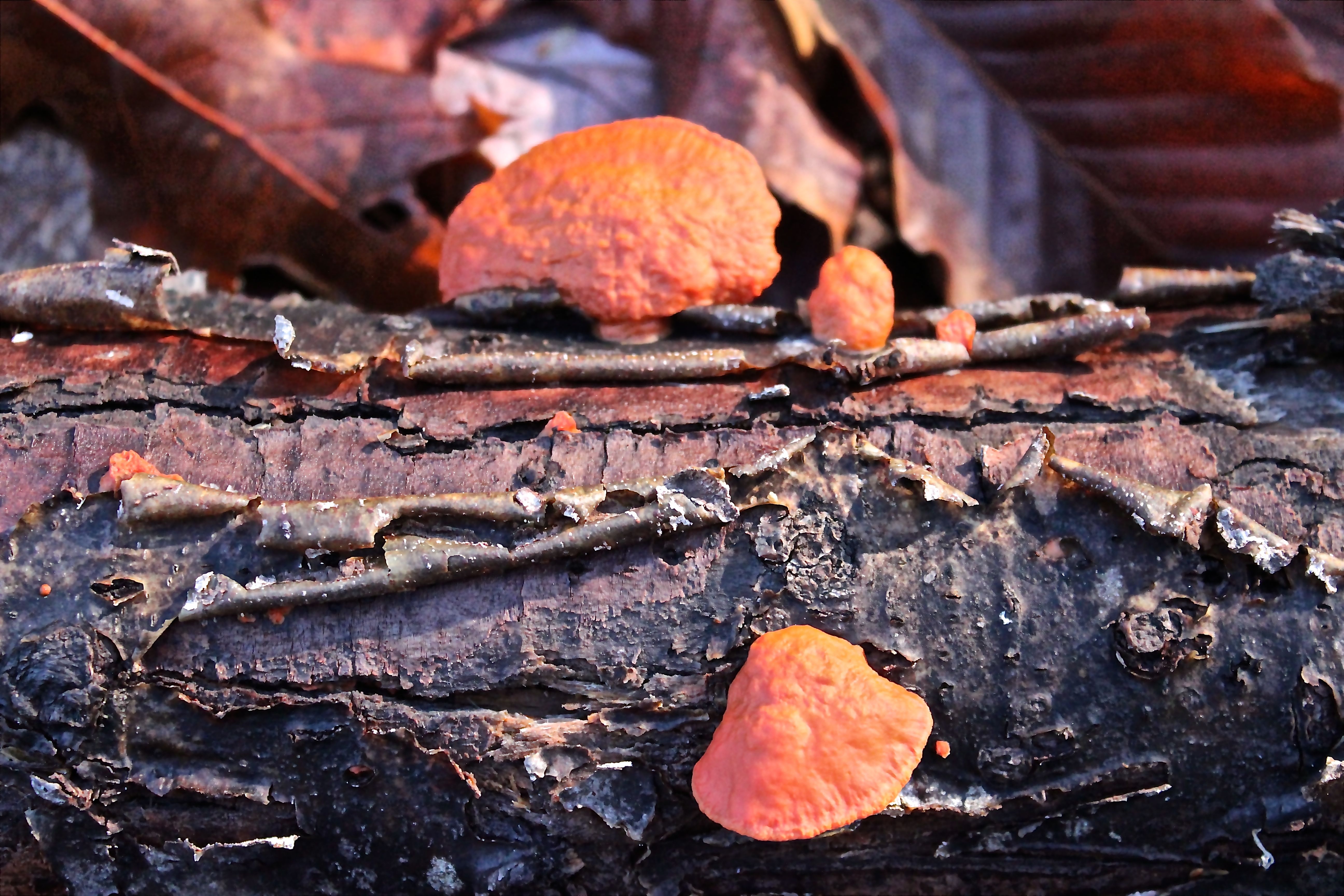
And then pumpkin orange polypores called out, proving slash is good for something. Cinnabar-red Polypore (Pycnoporus cinnabarinus) I do believe. It pays to have Fascinating Fungi by Lawrence Millman in my pack.

cinnabar 3

As is its habit, it was growing on a downed cherry log. I picked one fruit to show the pore surface beside the cap. Millman describes it this way: “Caps are kidney-shaped orange to dull reddish-orange, azonate and covered with warts and wrinkles in age. The pore surface, in the words of mycologist Gary Lincoff, ‘looks as if it had been seared by a hot iron.’ The pores themselves are usually more angular than round.” I had to look up azonate when I got home: without zones or circular bands.

cinnamon 2

Cinnamon fern grew abundantly in this boggy land and as usual, I was drawn to the drama it provides in death.

cinnamon fern

Most of the pinnae or leaflets have fallen to the ground, where their curved forms add texture and interest even as they begin to break down and give back.

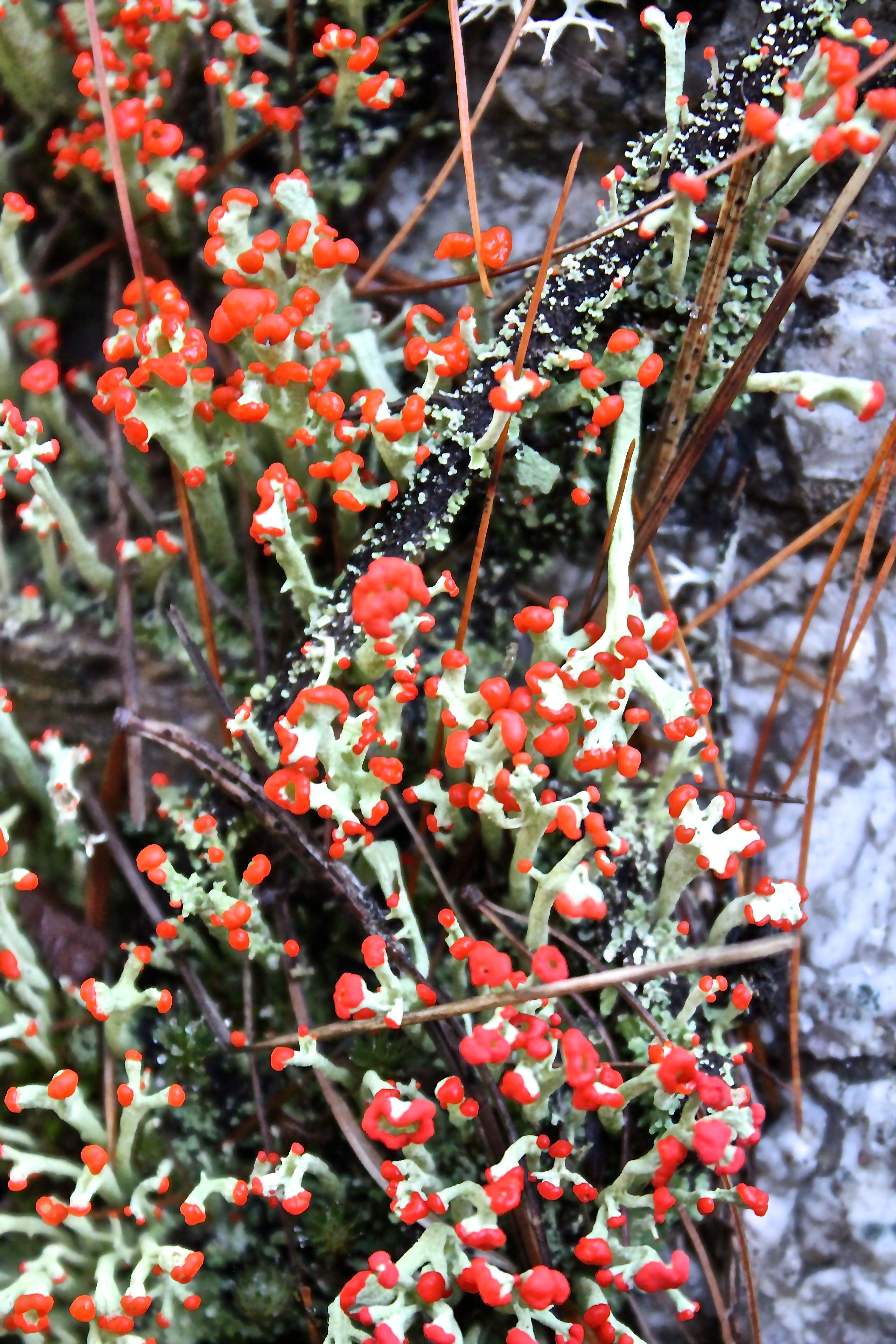
British soldiers

Watching over all–a large colony of British soldiers, their red caps ever so bright in this miniature world.

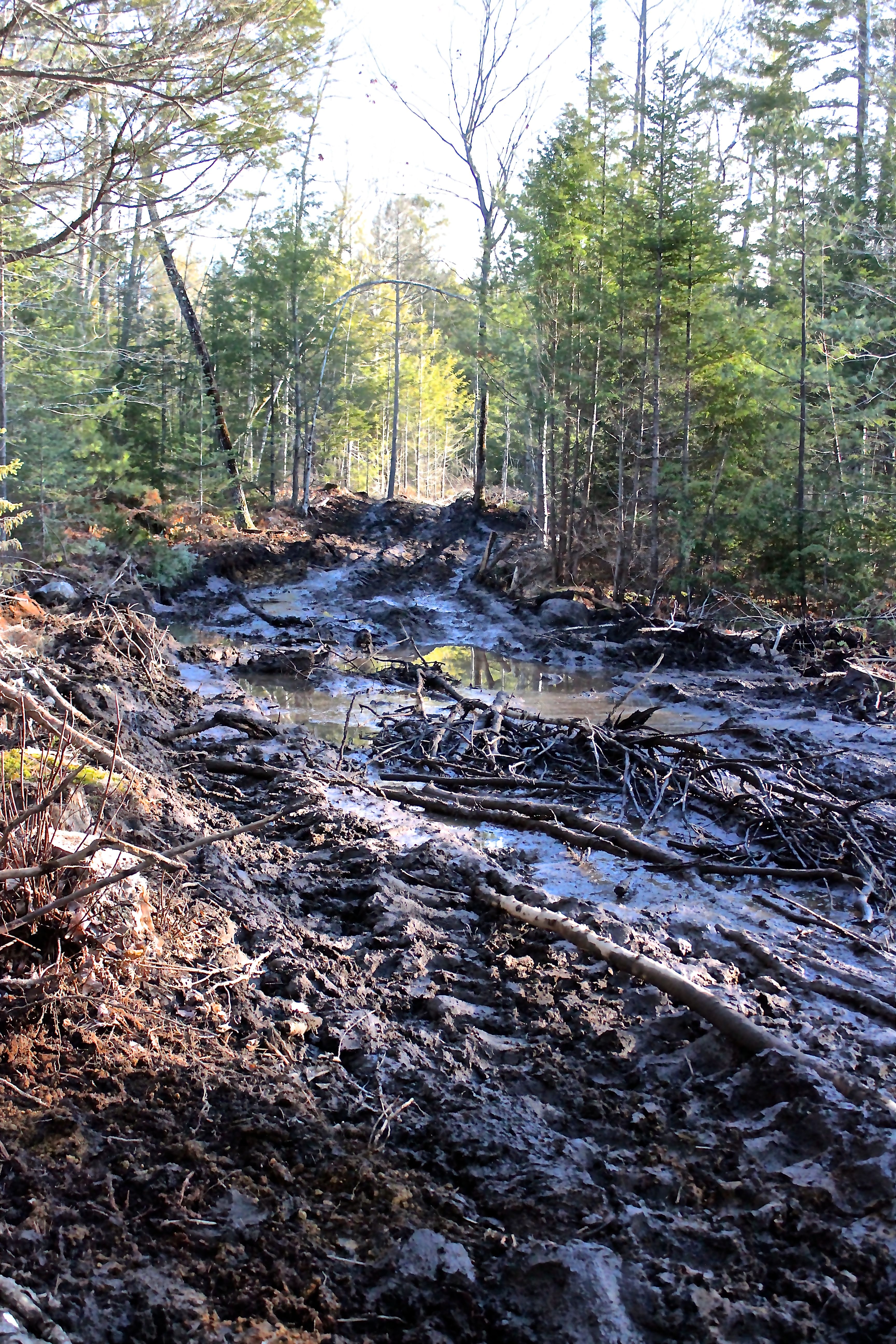
muddy logging road

I reached the main logging road at last. A few weeks ago I thought that the logger had finished his mission, but apparently not. That’s okay, because after I found a bunch of bobcat, coyote and deer prints, I headed back into the woods leaving the muck behind.

pine needles 1

Bunches of white pine needles adorn many of the young hemlock trees–all in keeping with the season.

haircap geometry

And the hair cap moss speaks of starry, starry nights and geometric designs.

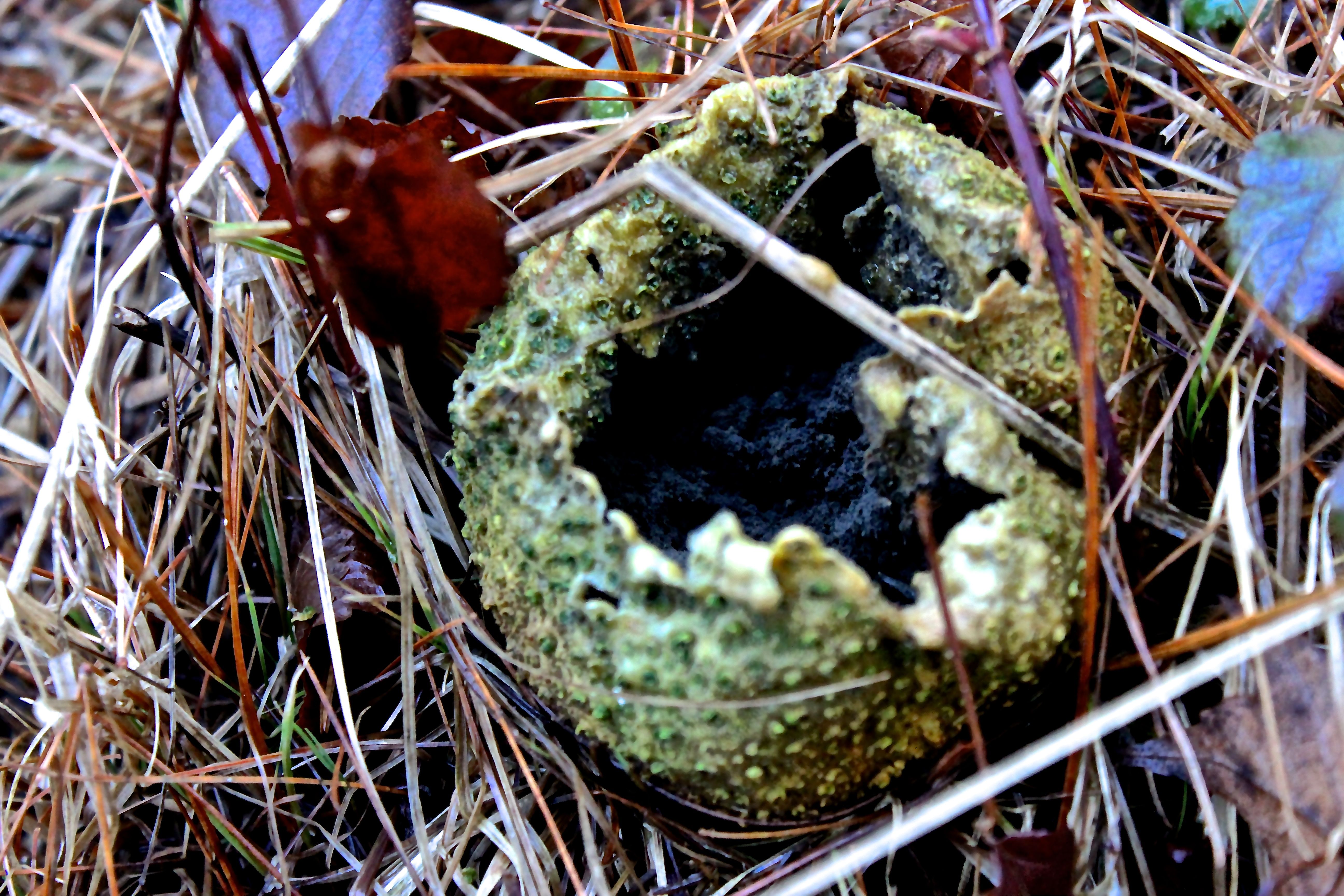
pigskin poison puffball

But my best find of all was a total surprise. In fact, I didn’t think it was natural at first. An old baseball or tennis ball that somehow landed in this place where few venture? I touched it and it felt almost leathery. Inside, the duff was powdery. Time to turn to Millman again. I think my ID is correct: Pigskin Poison Puffball aka Earthball (Scleroderma citrinum). WOW! Look at that warty surface. And it was huge compared to other puffballs. My heart was singing. (Fortunately I kept the song in my heart though I was in a place where no one would have heard me!)

wintergreen veil

Eventually I made my way back to the snowmobile trail where I continued to wander for a while. Wintergreen is the plant of choice for this stump garden.

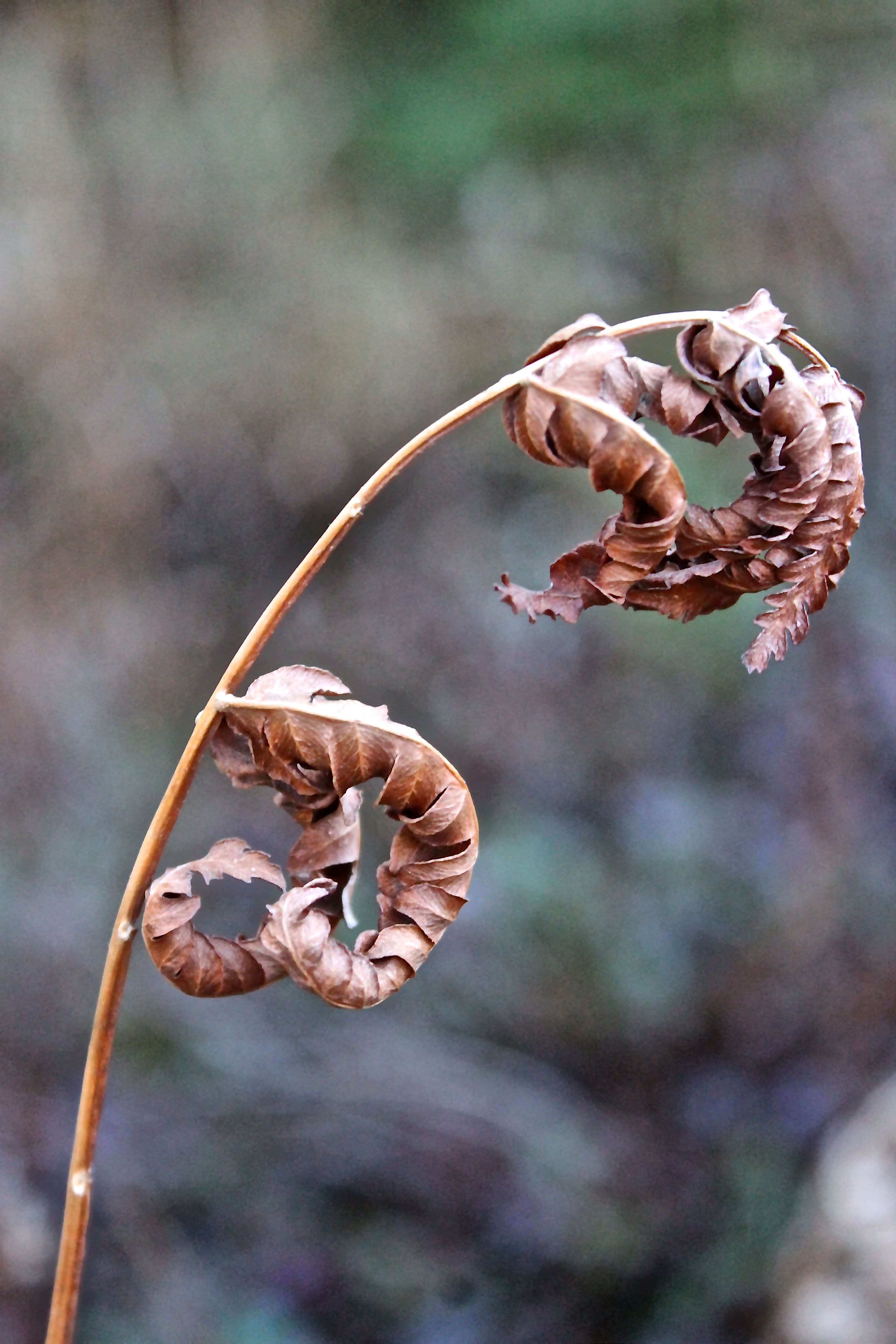
bronze bracken fern

Bracken ferns have turned from green to a light bronze patina. Most have fallen or been knocked over. This one especially appealed to me because it has retained its structure and even portrayed an uplifting spirit.

the ice princess

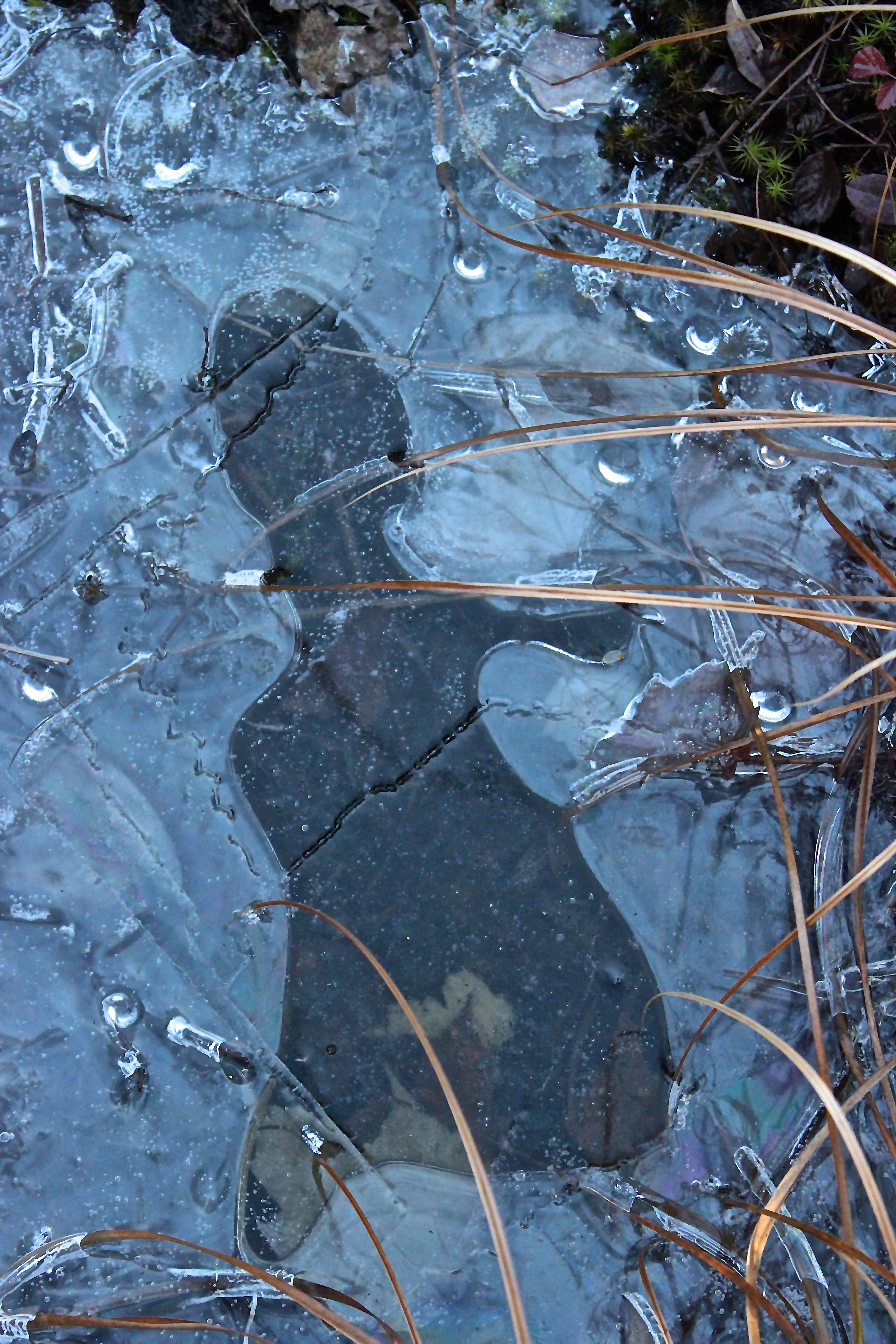
The past few days have been delightfully, though unusually, warm, but I found some ice. And even an ice ghost.

witch's 2

From ghosts to witches–in the woods, I never know who I’ll happen upon. Witch’s Butter (Tremella mesenterica) is another that stands out amongst the grays and browns of the December landscape.

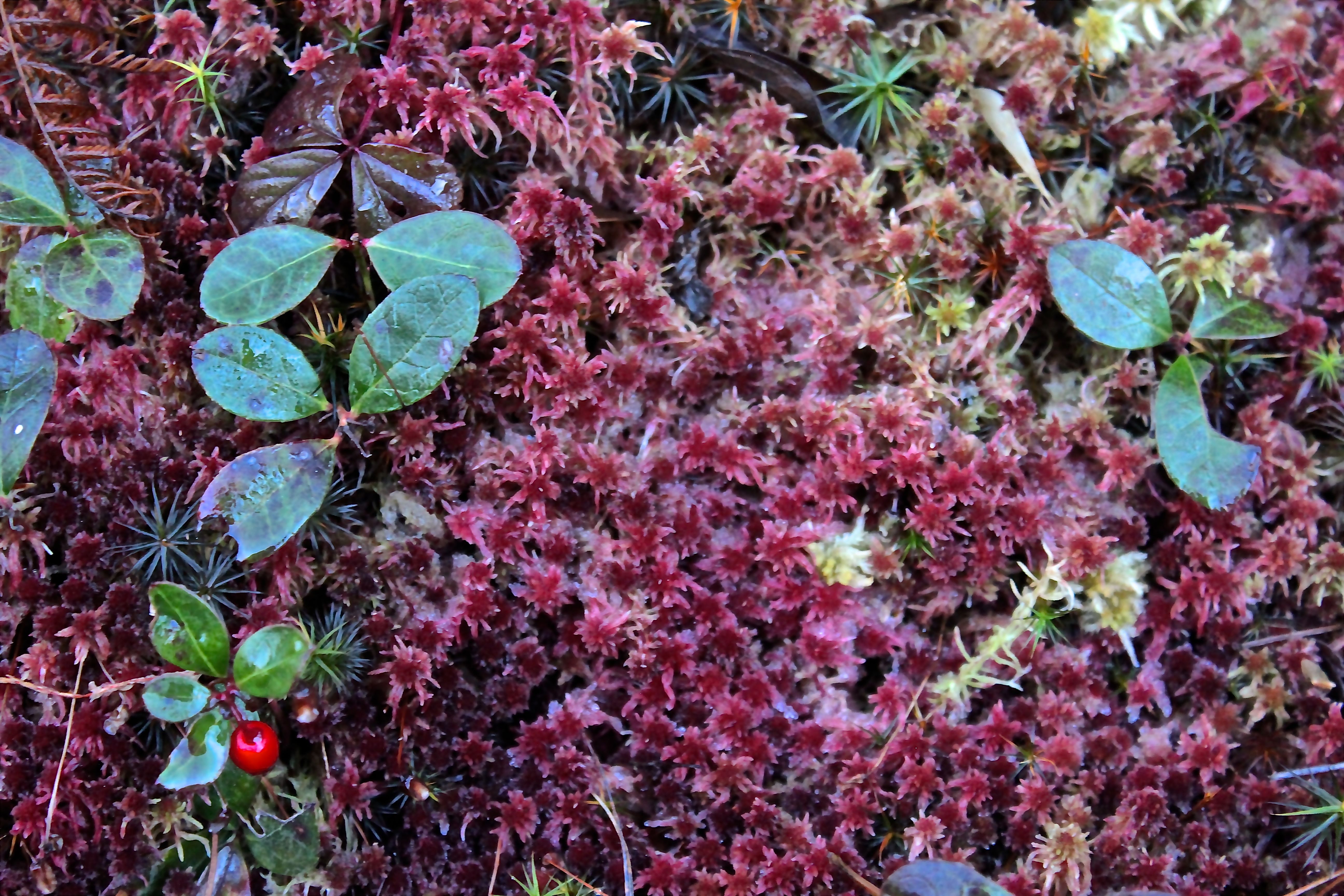
colors 2

Not all is gray and brown. As I wait for snow, the colors of the season remind me that without its covering, there’s much to enjoy.

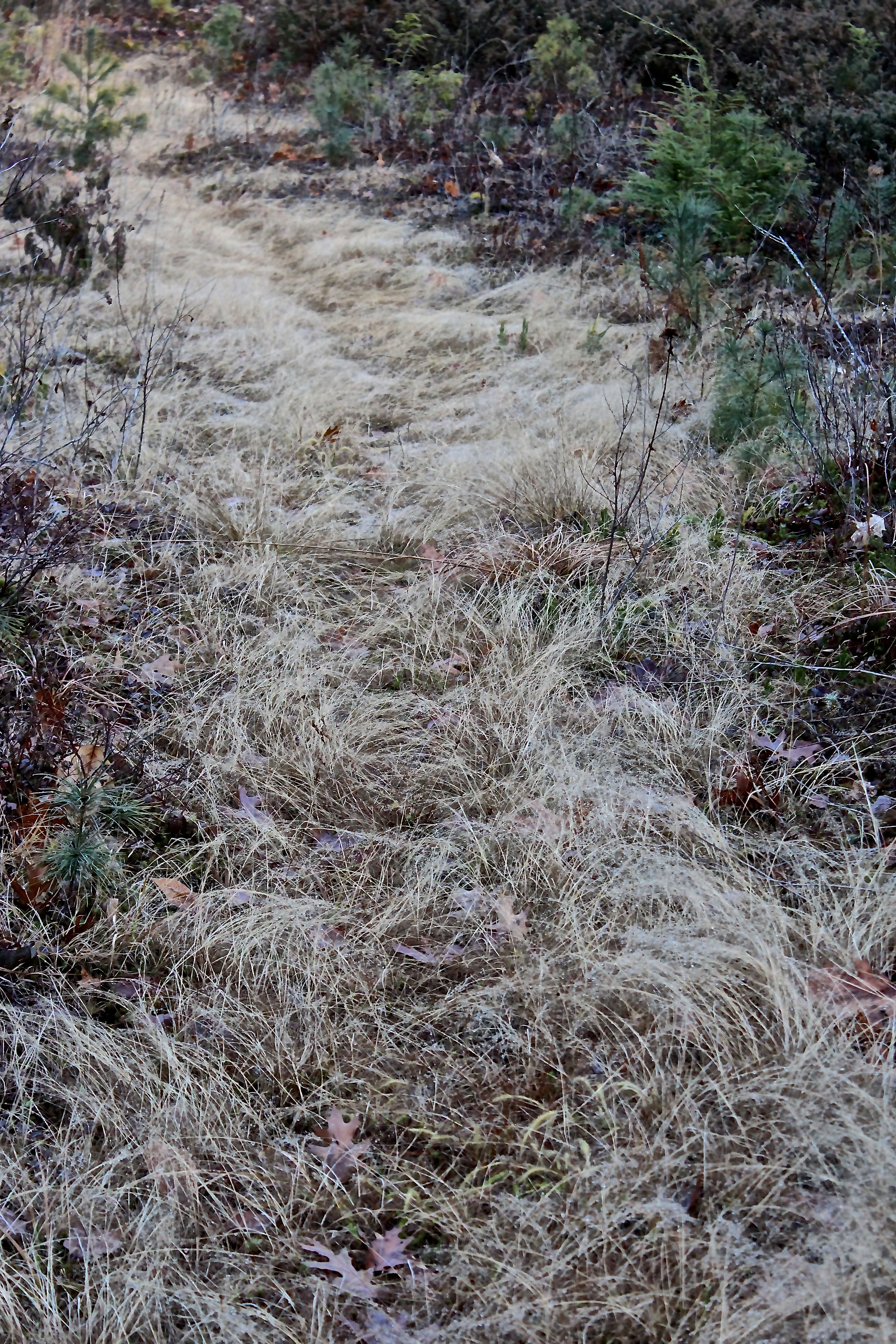
grassy trail

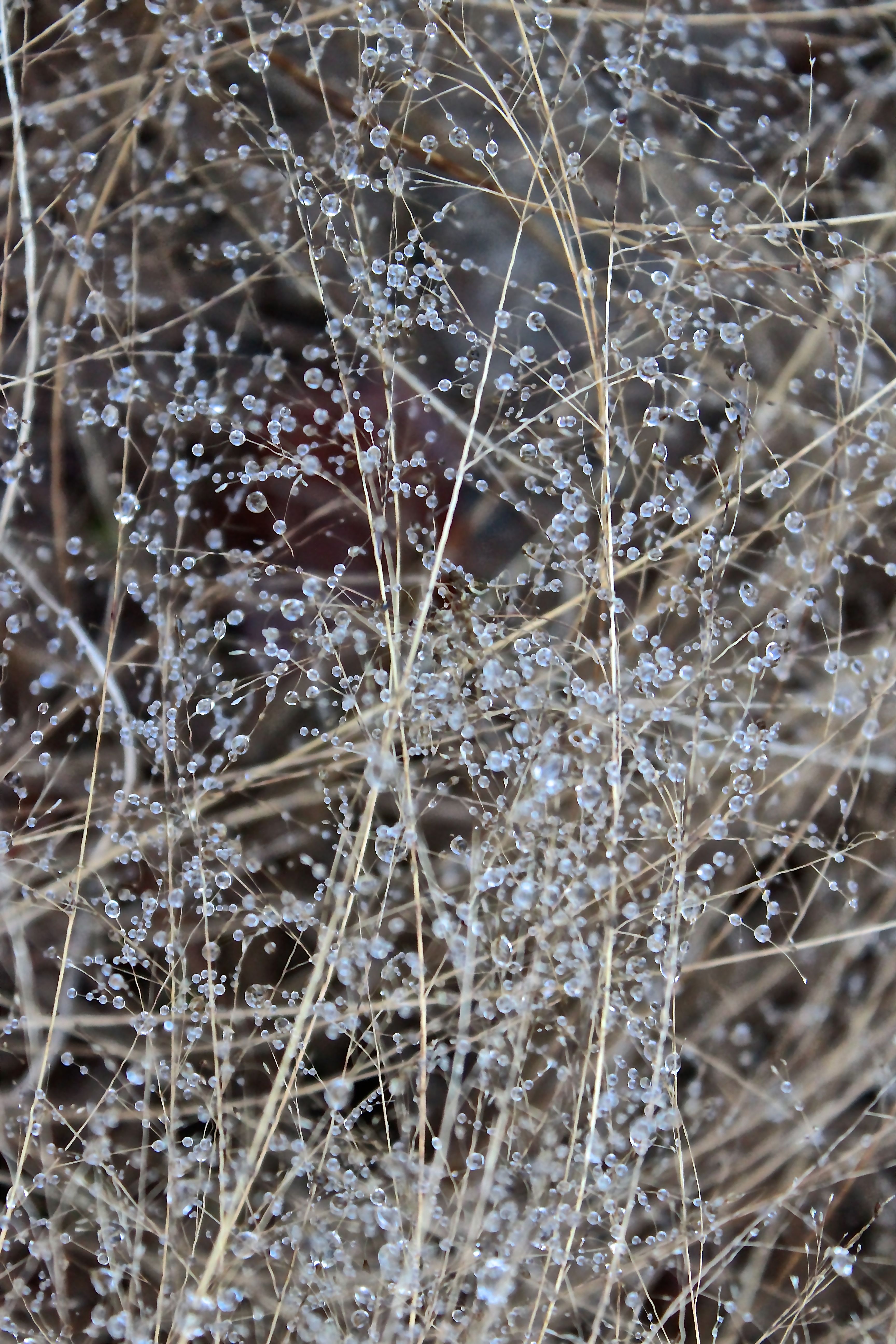
droplets on grass

I was about to head down the grassy path that leads to our cowpath, when two things gave me pause. First, the droplets of water that adorned the grass.

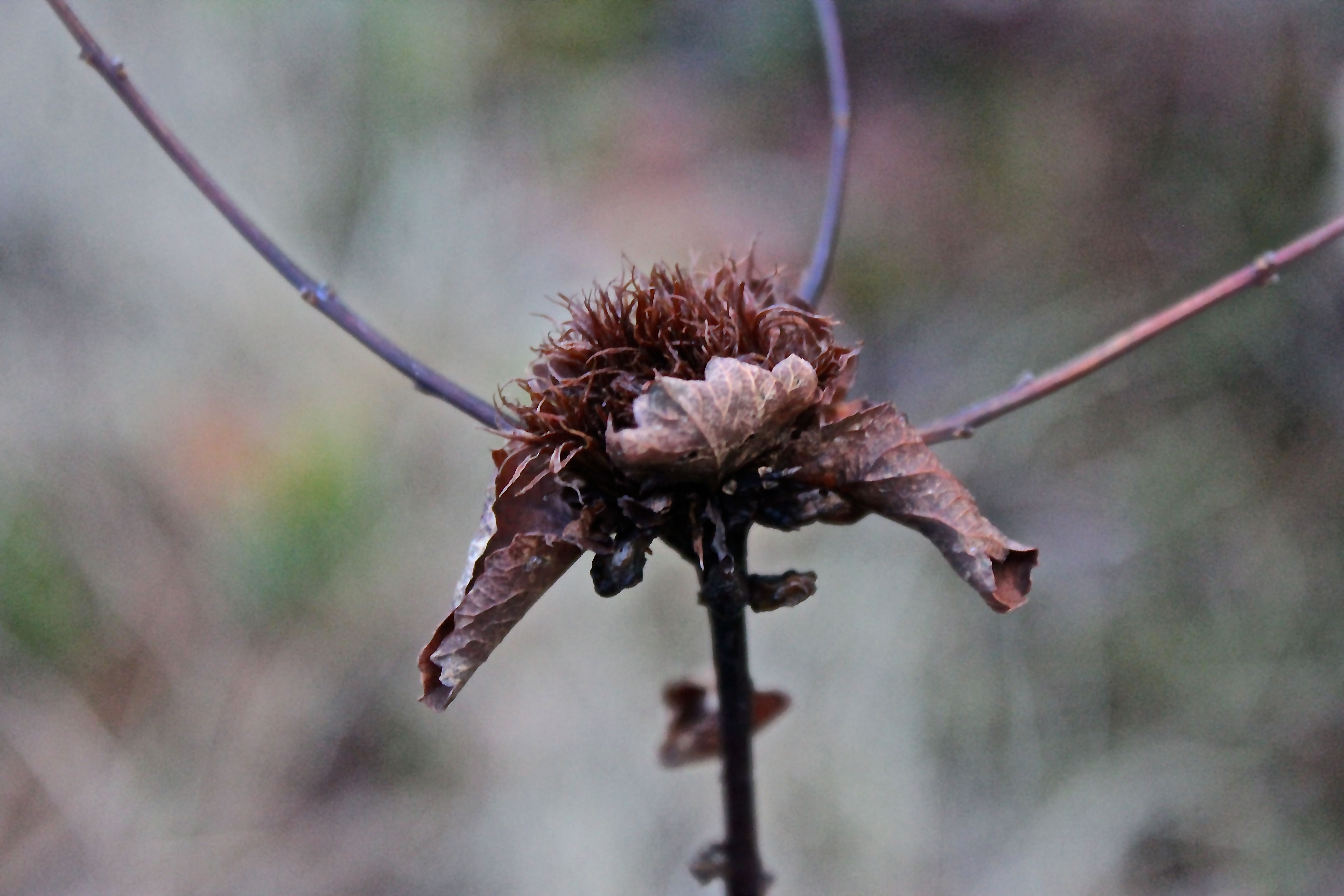
meadowsweet gall

And second–this gall on a meadowsweet plant. I’ve passed it numerous times and decided today was the day to try to figure it out. If my guess is wrong, please feel free to correct me. I think this is rose bedeguar gall, aka Robin’s pincushion gall. Meadowsweet is a member of the rose family, so maybe I’m right. Then again . . .

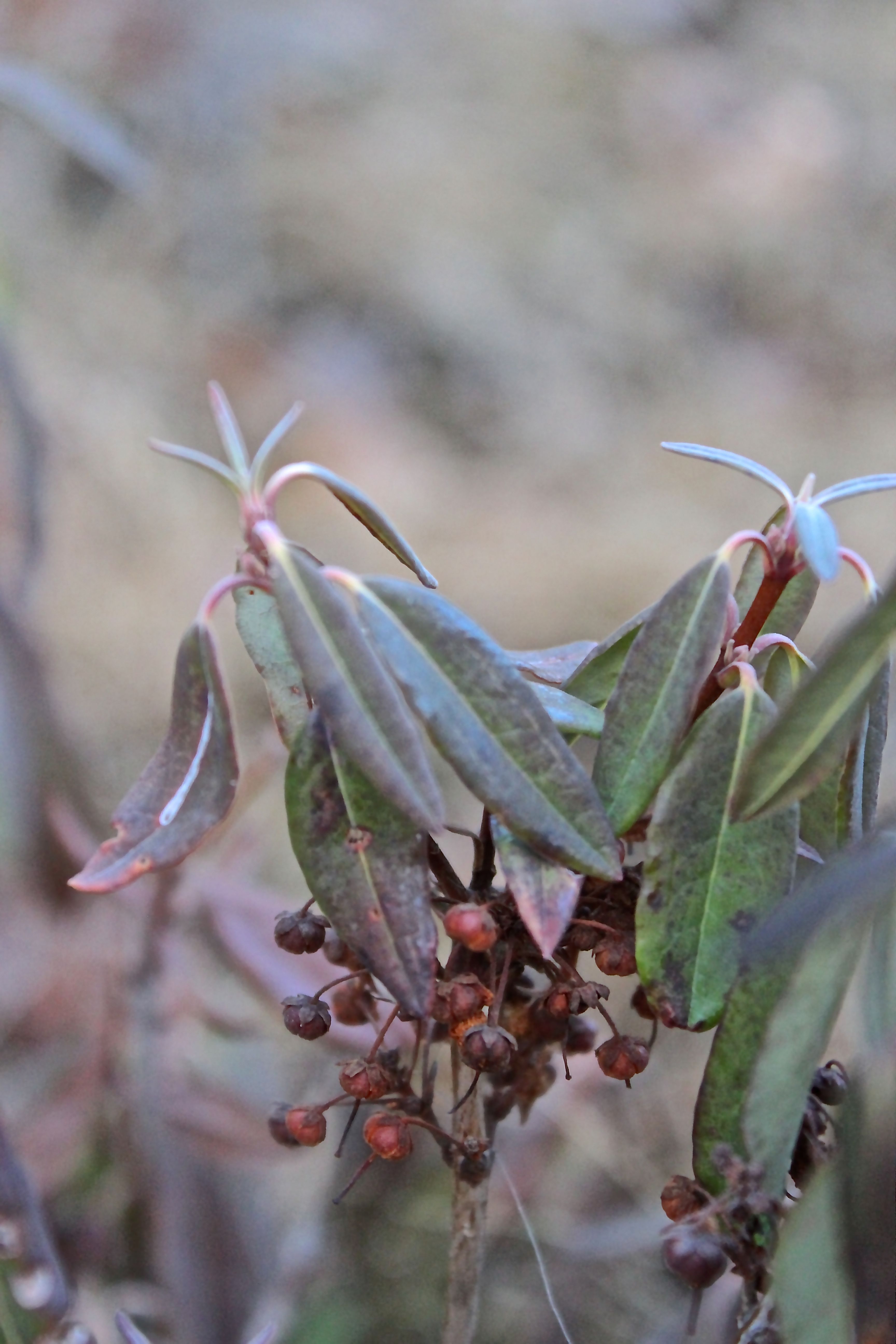
sheep laurel fruit

One last find that I always enjoy looking at–the fruits of sheep laurel extending  below the leaves and reminding me of jingle bells.

home

At last I was home again, thankful for a Sunday wander wonder-filled with surprises.

Trending Blaze Orange

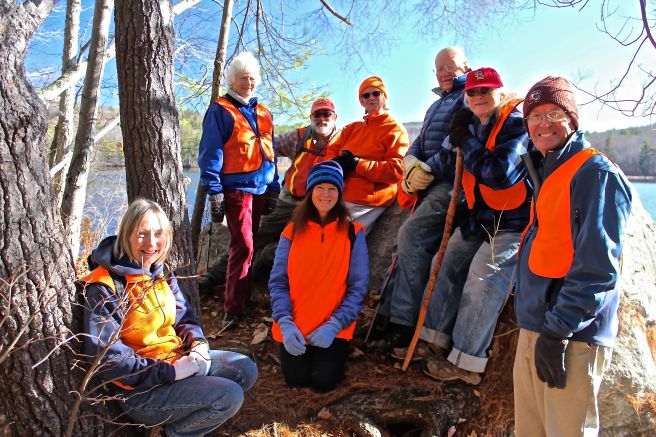
Donning our blaze orange, eight of the Greater Lovell Land Trust‘s docents joined me today for an exploration along the trail to Otter Rock at the Heald and Bradley Ponds Reserve.

Our destination was the Otter Rock spur, not very far, but it’s amazing how long it can take us and we were impressed that we actually reached our goal.

grape fern 1.jpg

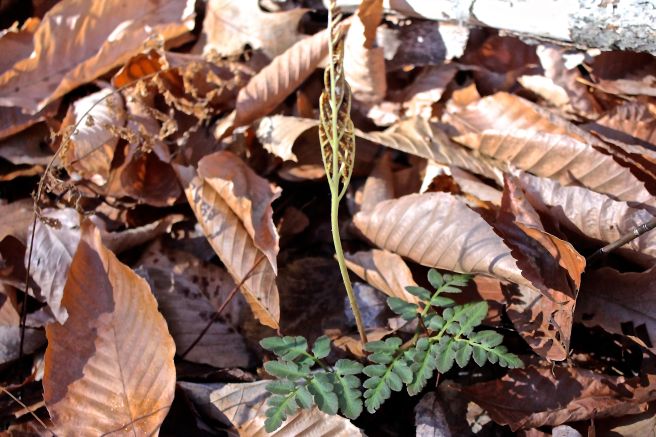
Along the way we stopped to admire the blunt-lobe grape ferns and their separate fertile stalks, some still intact.

4 birches.jpg

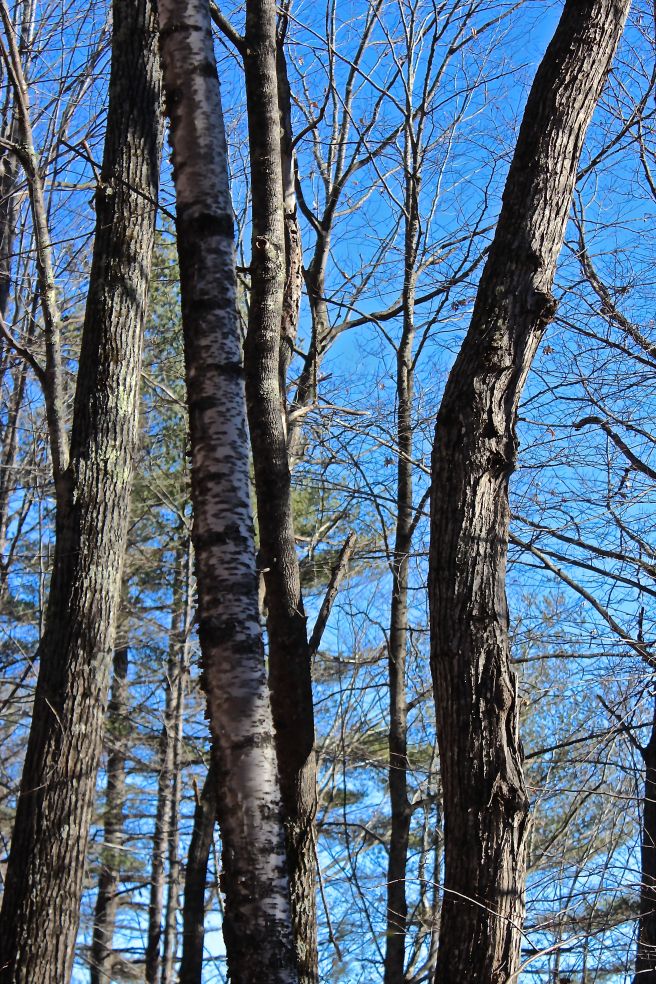
And then we looked up. We’d been talking about tree bark, and right before our very eyes were four members of the birch family.

paper birch

Paper Birch (Betula papyrifera) features chalky white bark that often peels away in large sheets. The peeled bark reveals pink or orange tints, only partially visible here, but evident on other trees in the neighborhood.

yellow birch

To the left of the Paper Birch stands a Yellow Birch (Betula alleghaniensis), with its curly ribbon-like strips of bronze or yellowish-gray bark giving it a shaggy appearance.

black birch

And to its left the one that excited us most, Black Birch (Betula lenta), sporting gray bark with long, horizontal lenticels. All trees have lenticels, but they are more obvious on some than others. These slits allow for the exchange of gas so the tree may breath.
 

gray birch

Last in the family line-up, a Gray Birch (Betula populifolia) showing off its almost dirty appearance and chevrons below the former branch sites.

dragonfly nymph 1

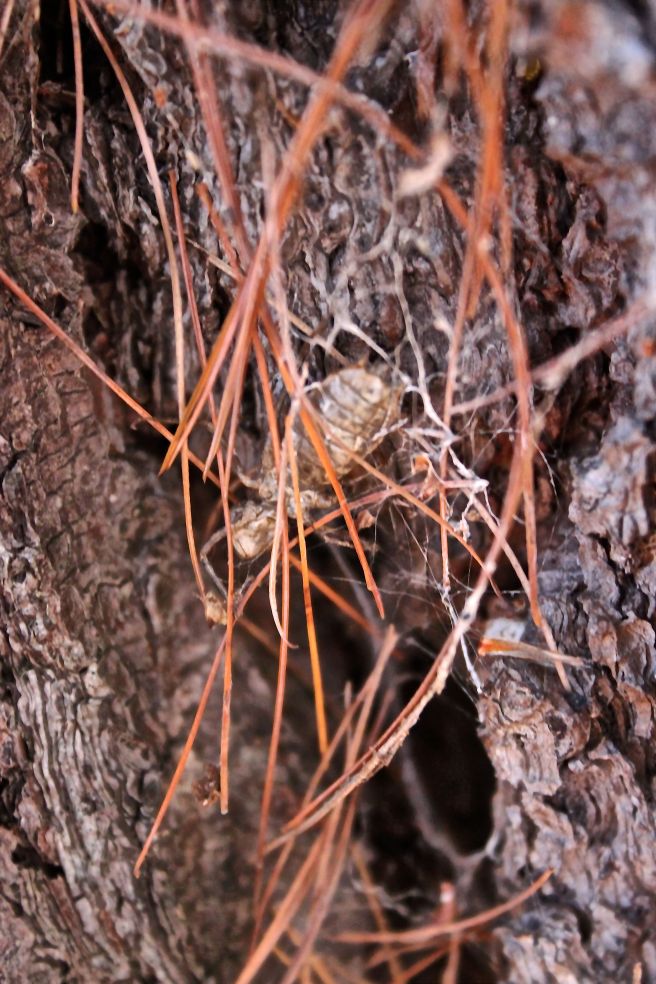
At Otter Rock, we found dragonfly nymph exoskeletons still clinging to tree bark

df 2

and rocks.

shell remnants

Our discovery of shells made us wonder and smile about others who have passed this way.

wh b

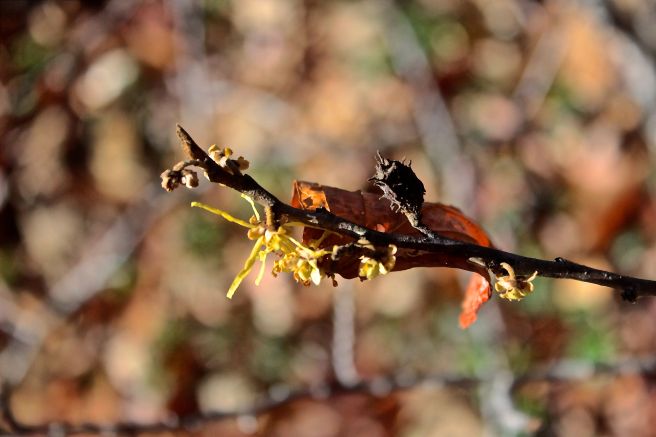
Now that the leaves are gone, we delighted in the knowledge that there is so much more to see, including Witch Hazel.

witch hazel gall

We examined one of the few remaining ribbony flowers, the scalpel-shaped buds, fruiting bodies, asymmetrical leaves and a spiny gall all on one branch.

witch hazel Bob.jpg

Our very own Witch Hazel Expert, Docent Bob, demonstrated the way the seeds pop–referencing Henry David Thoreau’s discovery of this phenomenon.

docents 1.jpg

Before we headed back to the main trail, the group posed for a photo call. They all look so sporty in their blaze orange.

wild raisins

A few more finds as we walked back to the parking lot: remnants of a wild raisin (Viburnum cassinoides), so named because the shriveled fruits that remain look like raisins;

black cherry bark.jpg

Black Cherry bark (Prunus serotina), easily identified by the small scales that curl outward like burnt cornflakes or potato chips;

red oak leaves

and Northern Red Oak leaves displaying holiday colors.

Mill Stream

Though most of us parted company just beyond the mill stream, a couple of us continued on to the John A. Segur Wildlife Refuge off New Road.

Heal All

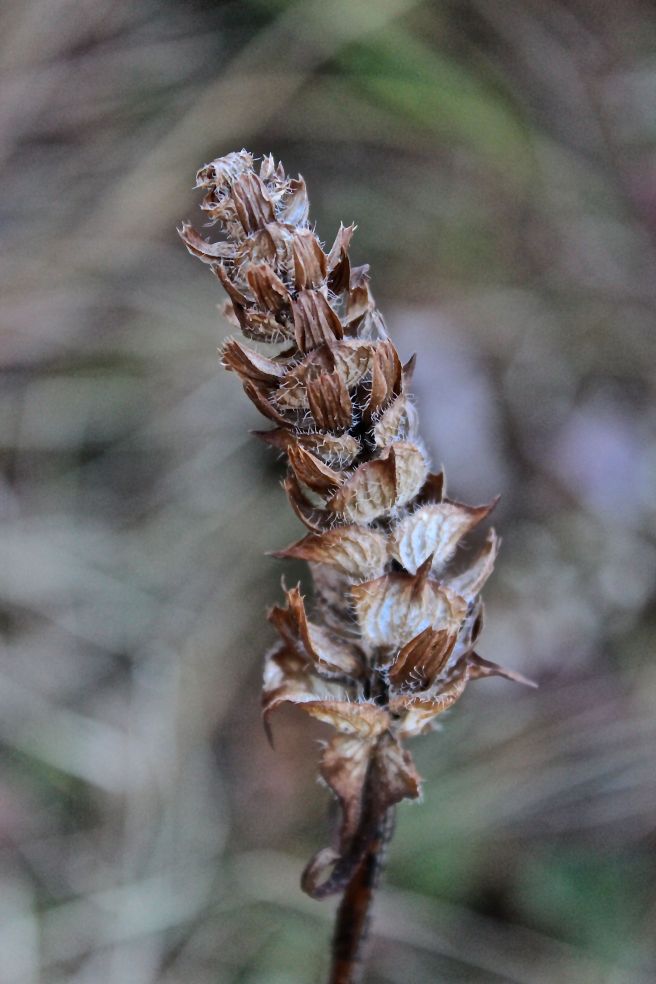
We focused our attention on winter weeds, a topic for our January 9th walk. On this old logging road, some of the Selfheal or Heal-all (Prunella vulgaris) stands at least a foot and a half tall. As pretty as it is in the summer, it’s still a sight to behold in its winter structure.

evening primrose

Another to look forward to is the Evening Primrose (Oenothera biennia). Its fruits are four-parted capsules arranged in a spike at the tip of the stem, looking rather like flowers themselves.

There’s more to see, but I don’t want to give it all away.

CS view 1

My last stop for the day was a loop around the Chip Stockford Reserve. I wasn’t the only one trending blaze orange. The glow of the late afternoon sun cast an orange hue across the beech leaves.

November in western Maine. We’re happy to don our blaze orange and get out on the trails.


Ten Fun Finds in the Last 24 Hours

jw2

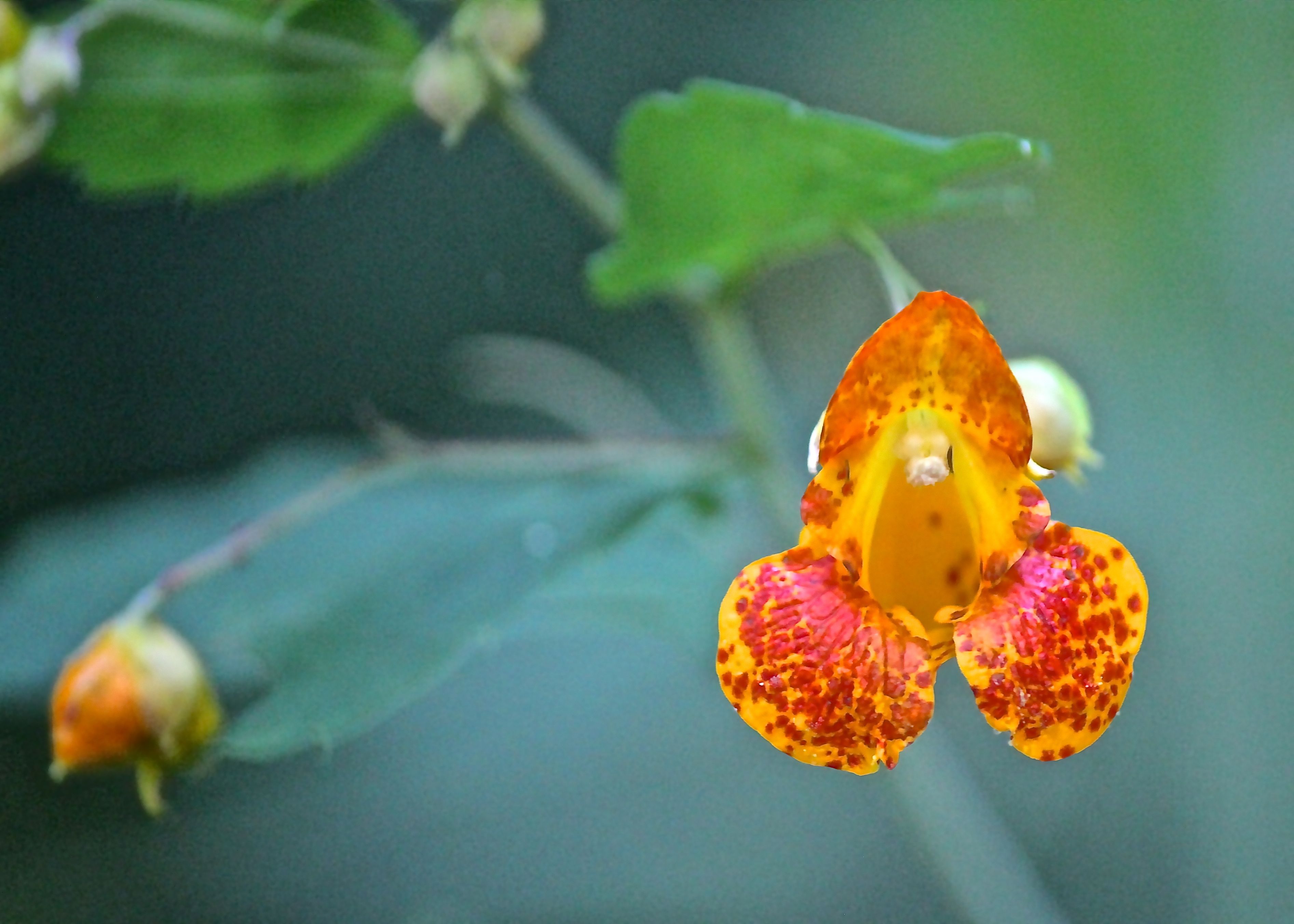
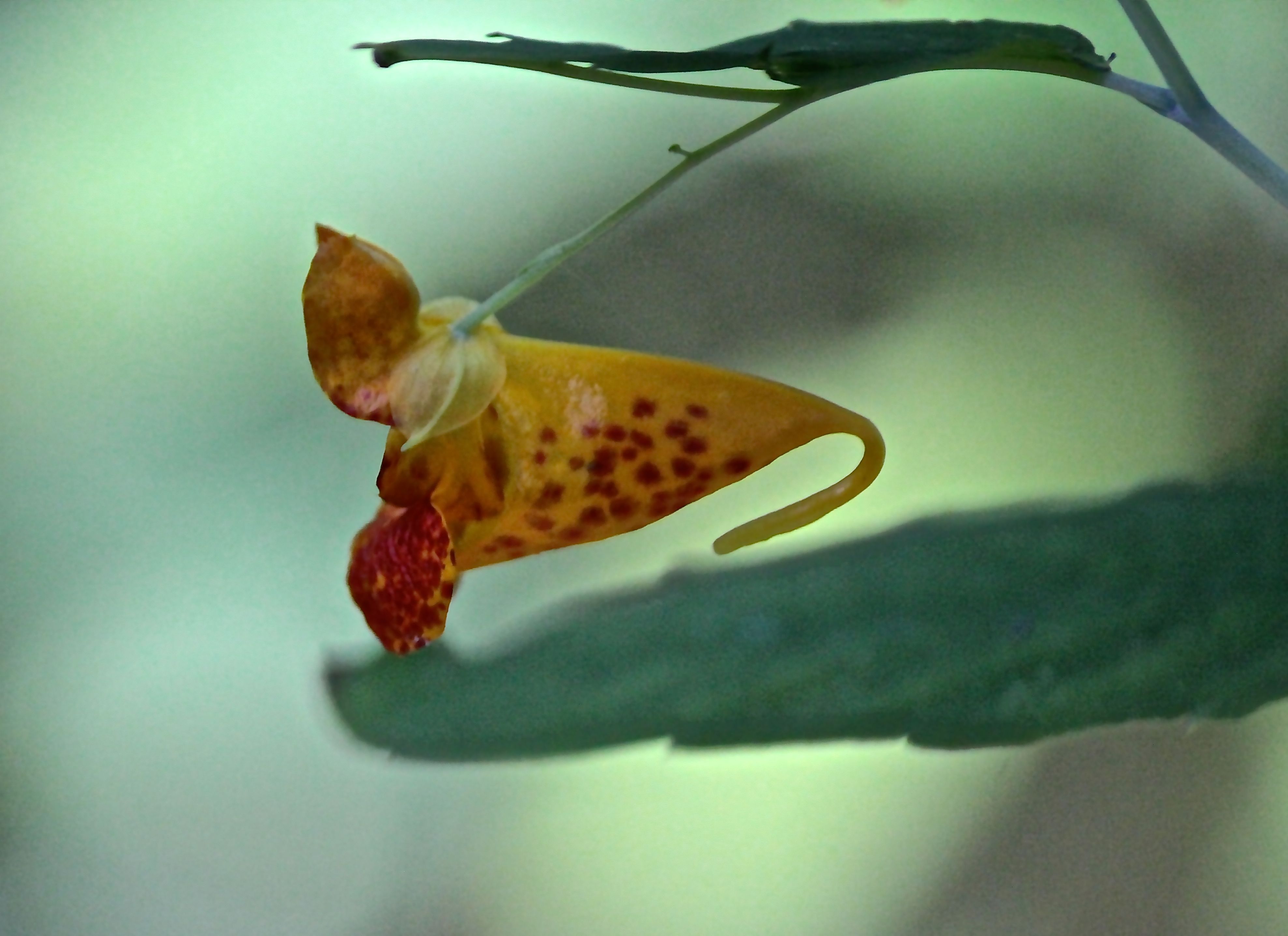
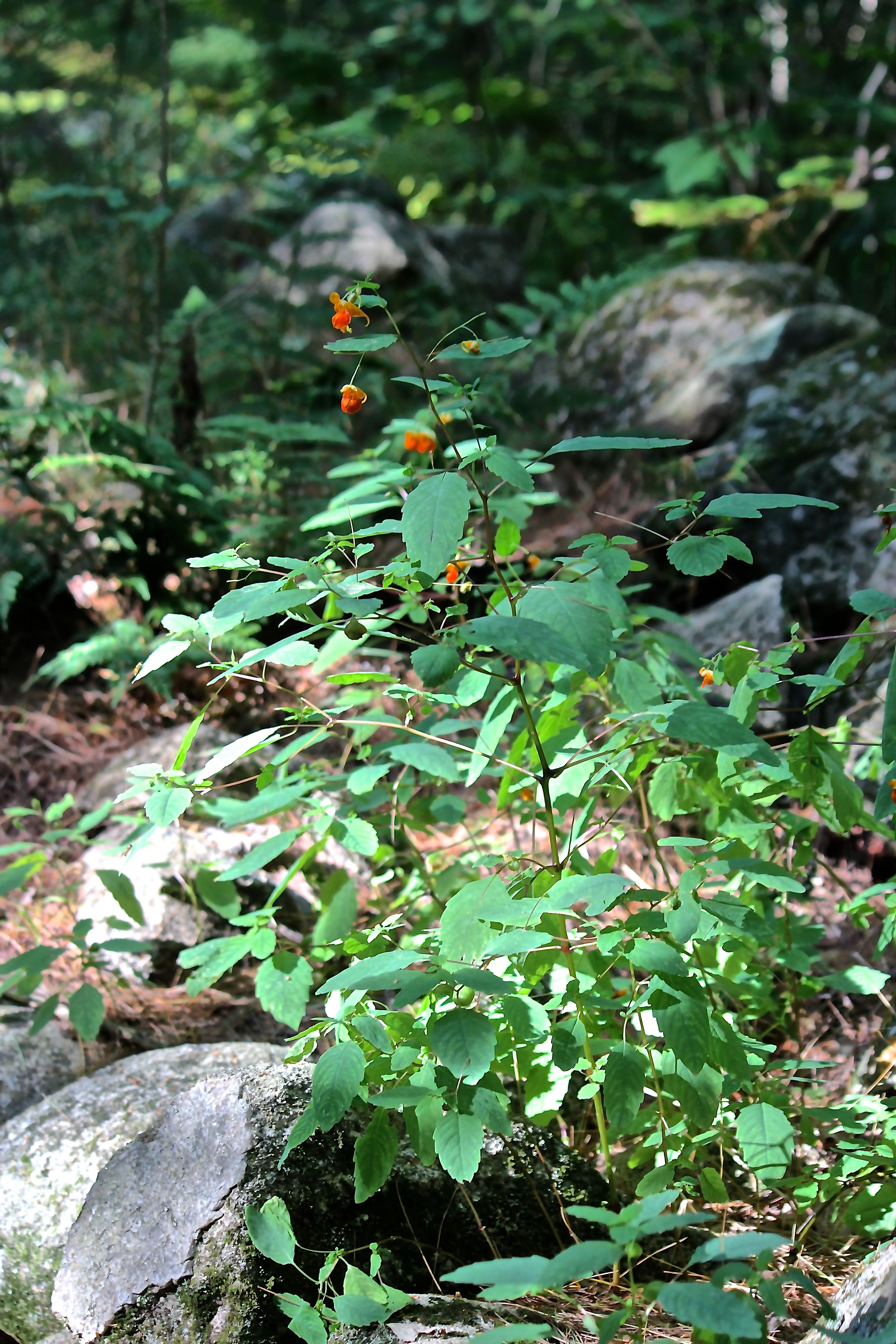
  1. Orange jewelweed, aka Spotted Touch-Me-Not. I found these lining the path during a quick walk through Pondicherry Park yesterday afternoon. The flower will form a capsule that bursts open and flings seeds when touched.

jewelweed 1

One of the cool things about jewelweed’s structure is its spurred sac that extends backwards.

jw3 on the wall

Though it likes the moist woodland paths in the park, I also found it in bloom atop a stonewall.

turtlehead

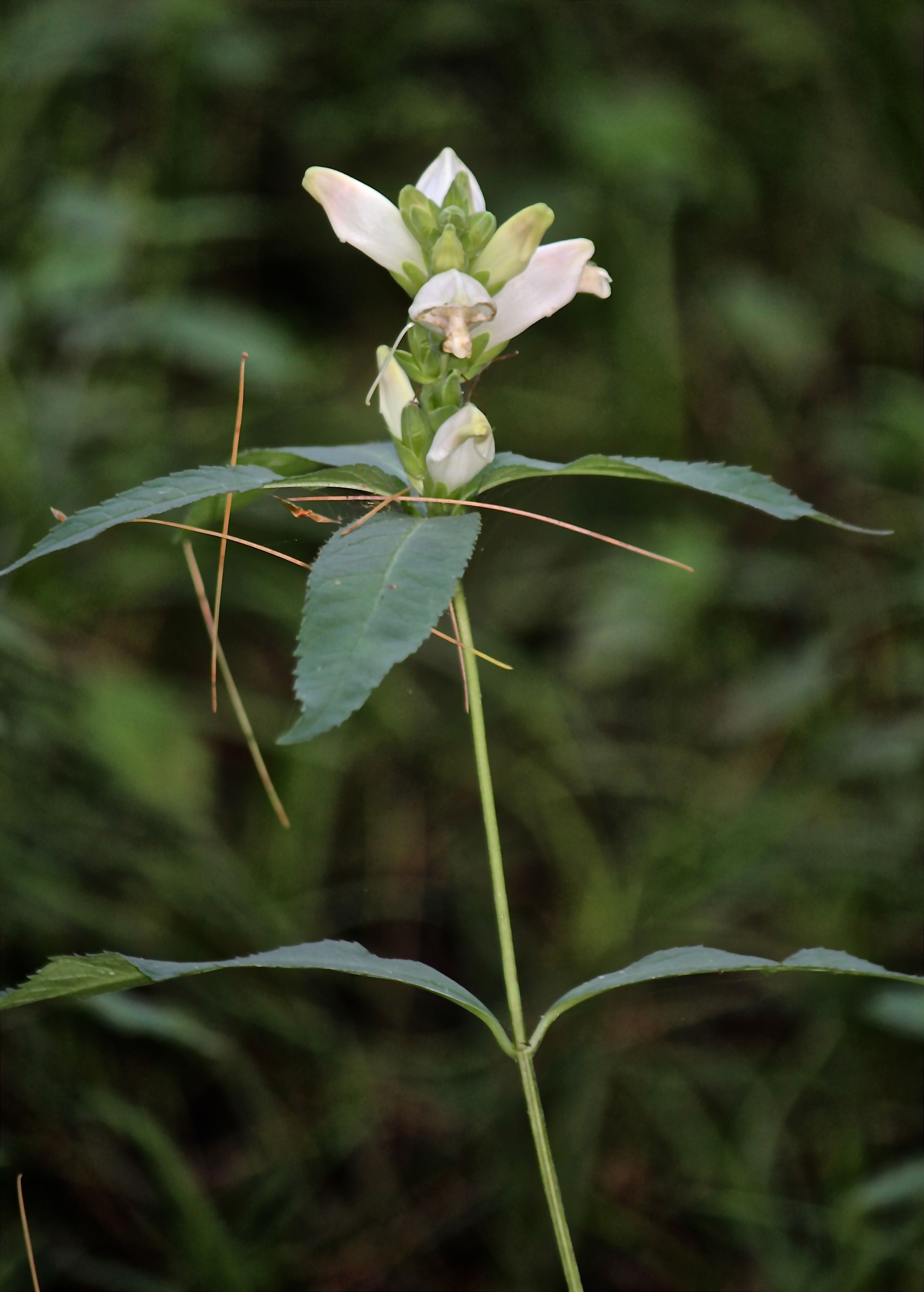
2. I’d never seen turtlehead until I moved to Maine. As a kid, I collected turtles–think stuffed, ceramic, wooden, glass. A neighbor even gave me a shell, which I still have. So, when we moved into our old farmhouse, I was excited to discover pink turtlehead growing in the garden. And on several occasions this past week, including yesterday’s walk in the park, white turtlehead was in bloom. It’s so named for the two-lipped appearance, with the upper lip arching downward and strongly suggesting a turtle’s head.

equisetum

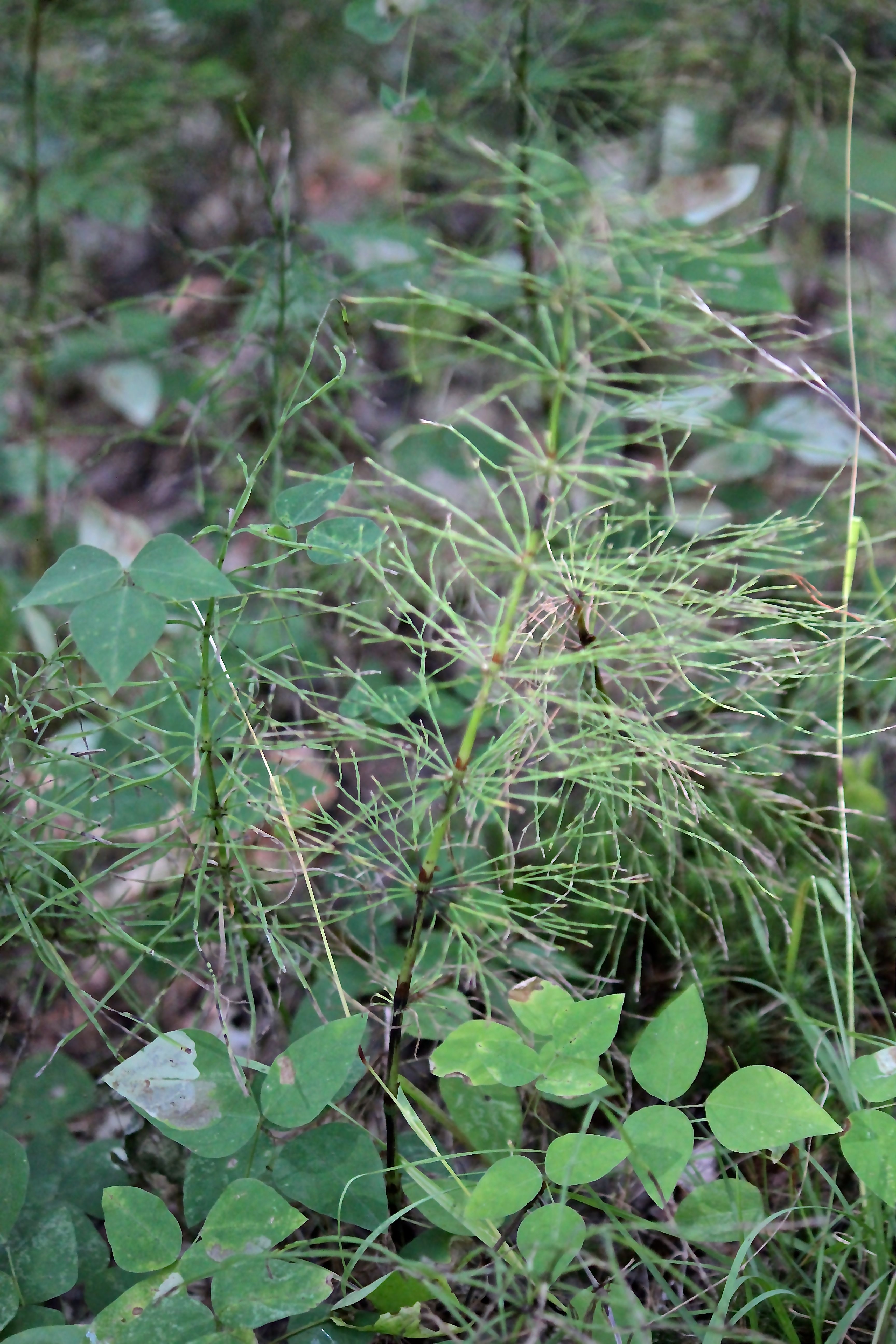
3. Woodland horsetail grows among the white pine saplings. It’s easy to confuse the two since they both have whorled branches, but the horsetail branches have a lacier appearance. Its “leaves” are reduced to a toothed sheath that surrounds the stem.

fogged inmorning dew

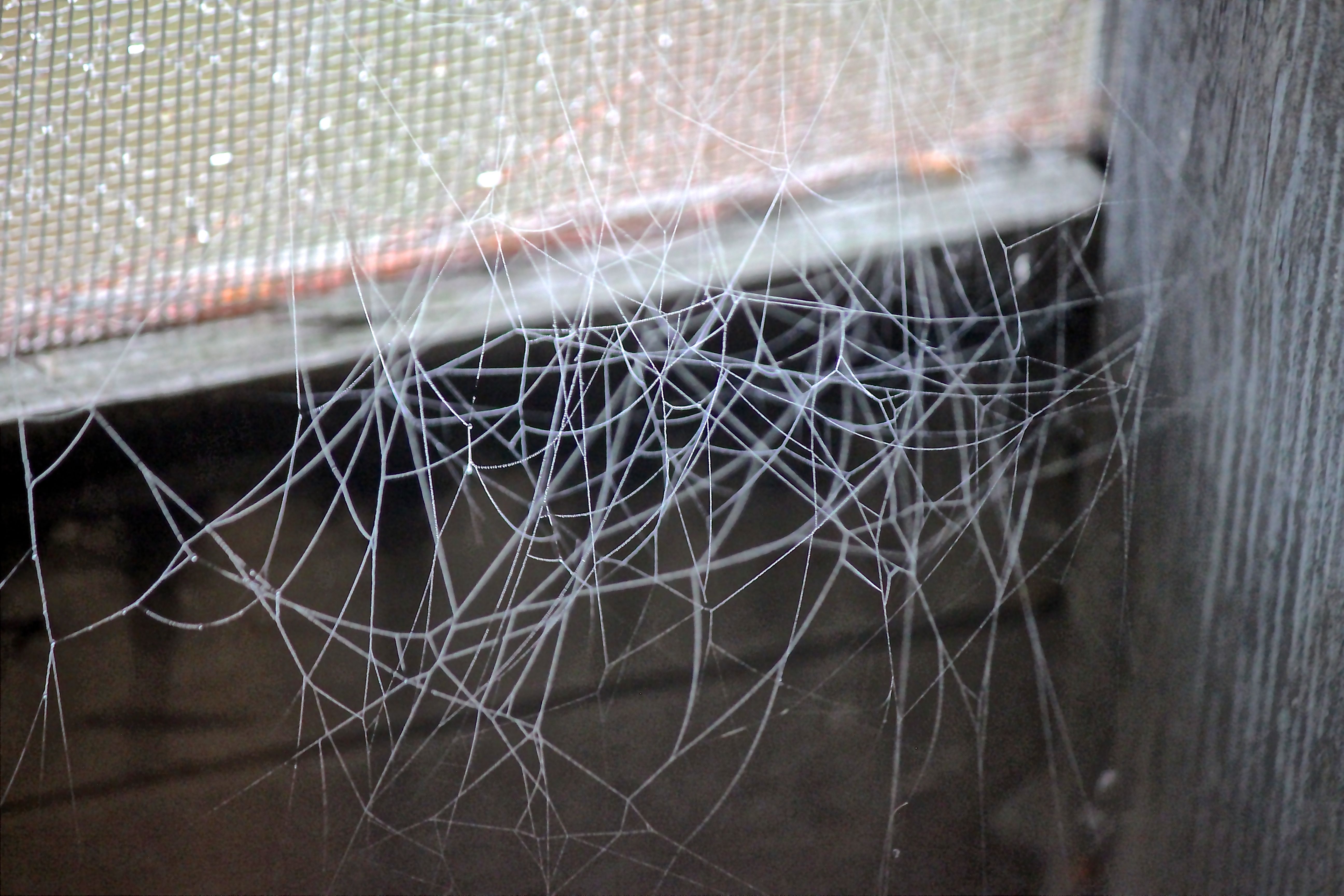
4. Morning fog on Moose Pond was almost the pea-soup variety until it began to burn off around 7:30 this morning. I was mesmerized by the patterns created by the moisture on the porch screens.

spider works

spider works 2

5. I was equally mesmerized by the spider works I found both on the porch and outside. Industrious architects are these. Mind you, I’m not a spider fan. I used to make family members destroy them. And I remember some mighty large and hairy ones that shared our flat in England back in ’79. That’s when I learned that the eensy weensy spider really does climb up the water spout. But, these webs are to be admired.

white oak leaves

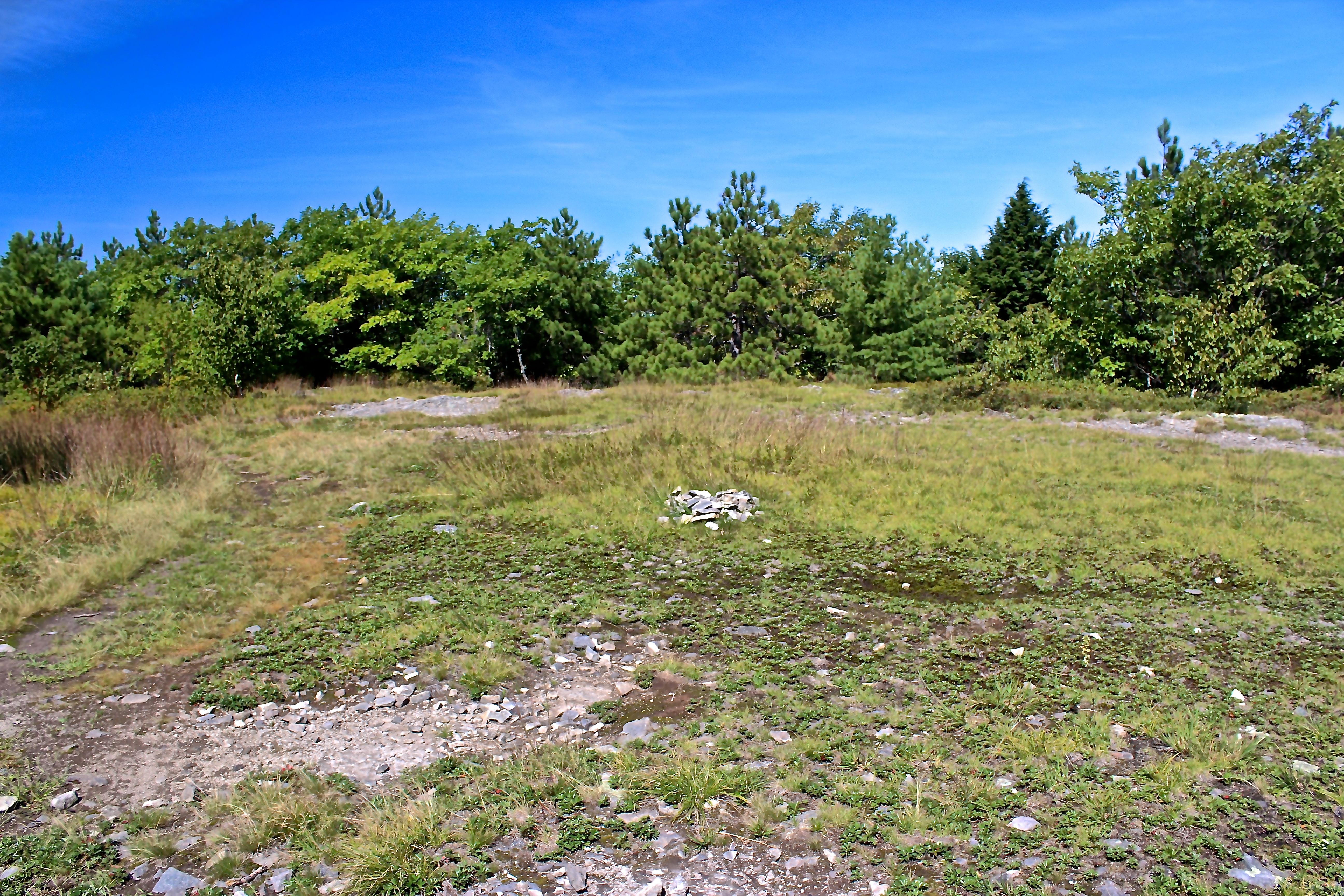
6. As my guy and I climbed Burnt Meadow Mountain in Brownfield today (after the fog burned off), I realized for the first time that white oaks grow there. It’s the little things that excite me and seeing those rounded leaves made my heart flutter. I’ve now noted that white oak grows beside red oak in Casco, Denmark and Brownfield. I’m connecting the dots that form its northern line.

trailsignalmost to the summitsummit 1mount washington

7. We followed the North Peak trail to the top. It’s always a joy (think: relief) to walk onto the large, flat summit after scrambling over the rocks to get there. Because we like a round trip, we descended via the Twin Brooks Trail, which offers some great mountain views, including Mount Washington.

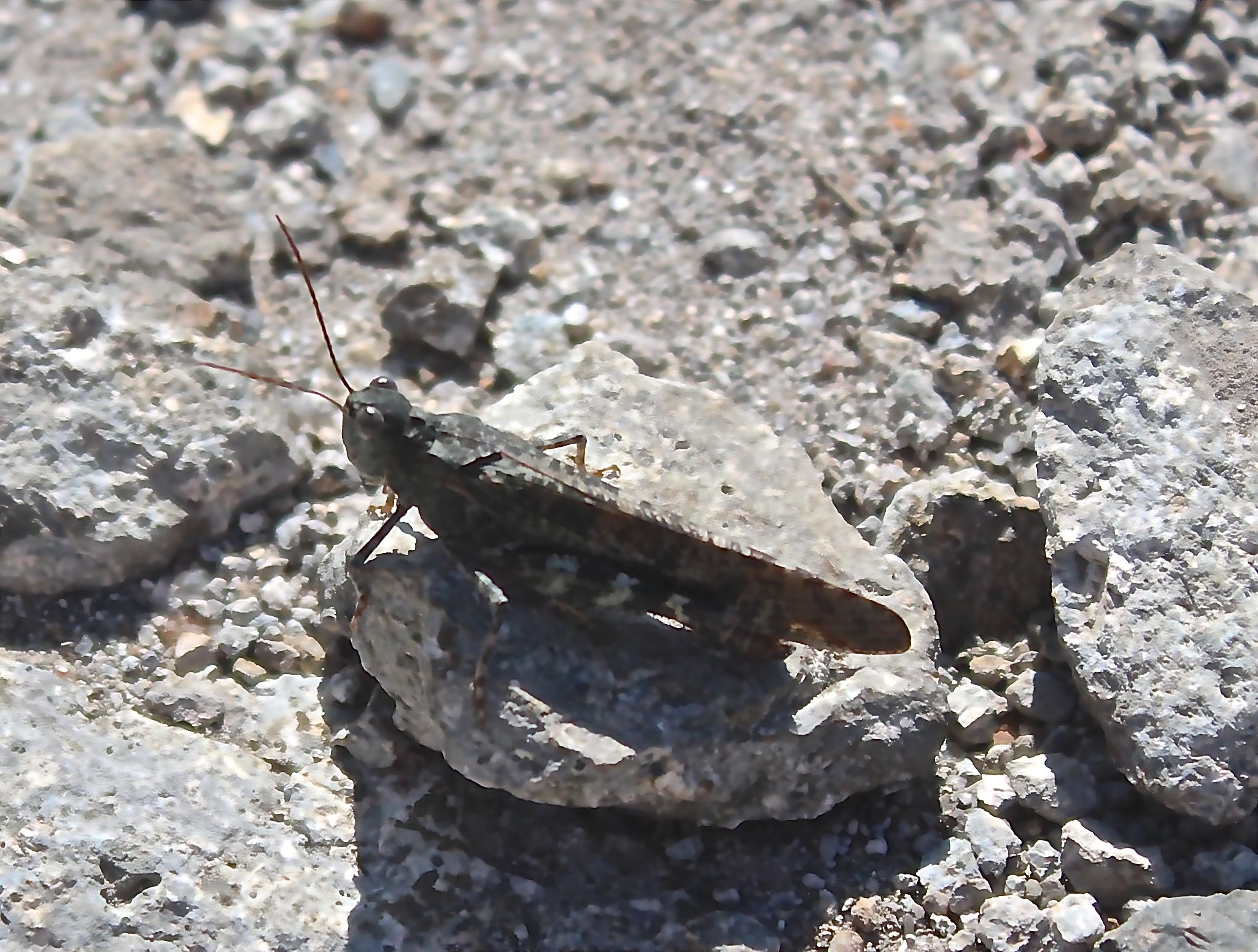
summit grasshopper

8. Grasshoppers are abundant at the summit. They’re known to feed on blueberries, and the crop is quite abundant, especially just off the summit on the Twin Brook Trail.

oak gall

9. Oak Gall. I think this is an oak apple gall growing on the red oak, but I’ve never actually seen one on the tree before. Usually, I find the dried shell of such a gall on the ground. My other guess would be the acorn plum gall. If you know, please inform me.

bear claws 1bear claws 2bear claw 3

10. I was looking for these and we found them. :-) Yes, more bear claw marks. It only made sense. Lots of beech trees. Lots of blueberries. And . . . a few years ago, we encountered a bear on the North Peak trail.

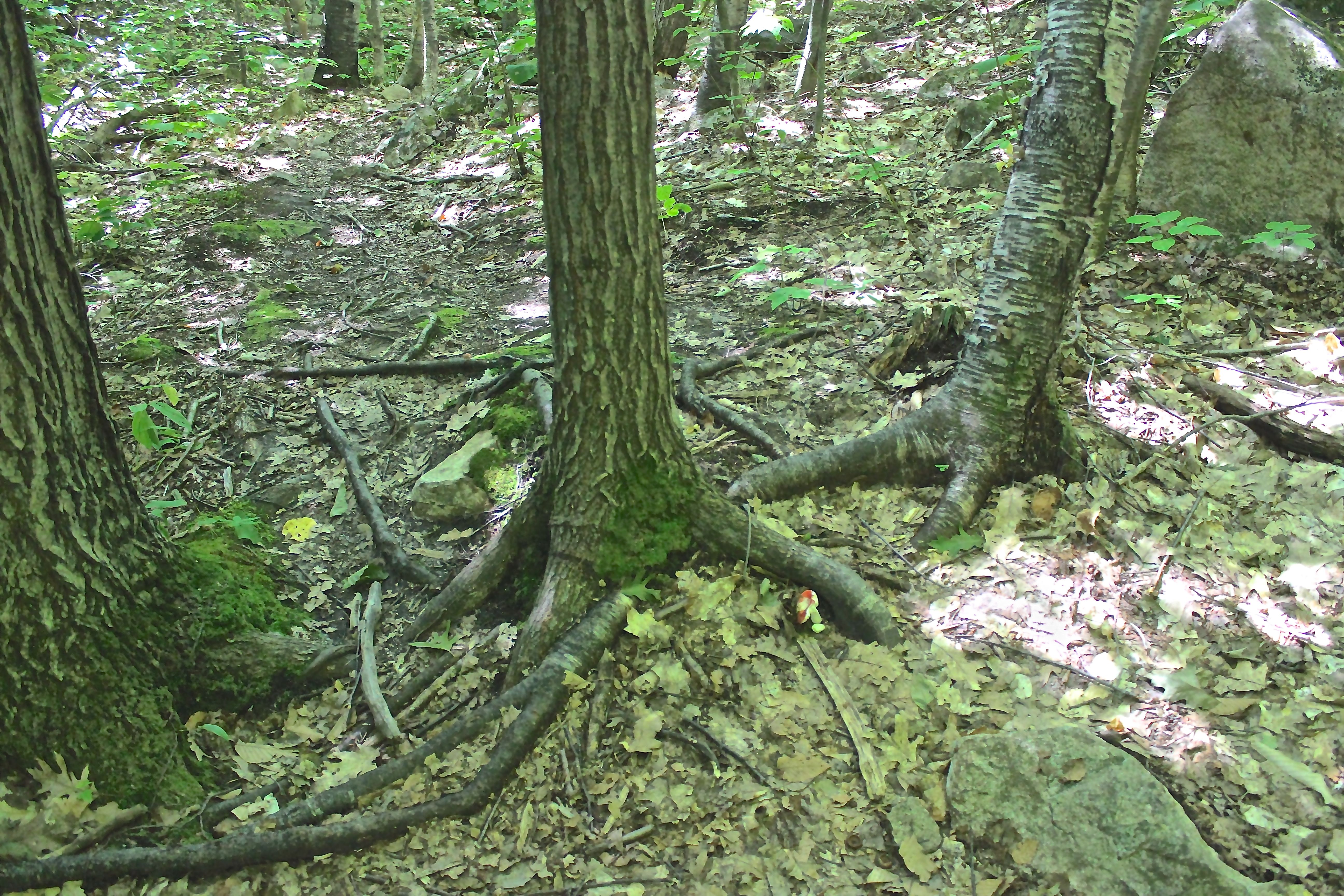
tree roots

11. OK, so here’s my eleventh cool thing. Kinda like getting a baker’s dozen–11 for 10, such a deal. Anyway, I’m always fascinated by the manner of tree roots growing over and around each other and other things. Embracing. Supporting.  Layering. Call it what you want. The thing is, they find a way to grow together. Oh, it doesn’t always work out. Sometimes it’s a smothering relationship. I’d like to think that these two trees, an oak and a birch, have intertwined in support of each other.

Thanks for joining me to take a look at the past 24 hours. I hope you had time to wonder as well.

Inside and Outside the Tent

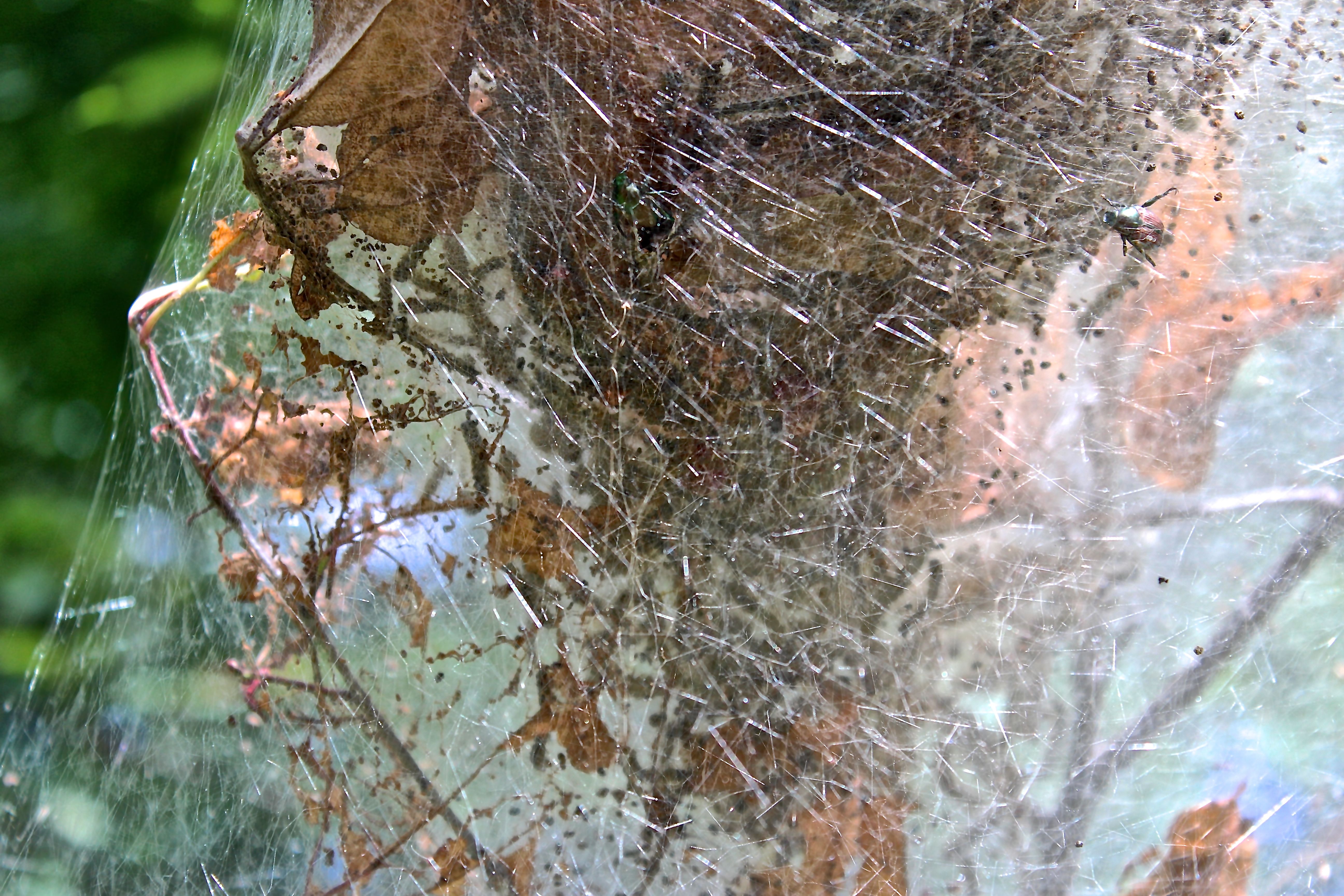
These days, my preferred camping style is a night spent at a B & B. Not so for the fall webworms that have erected tents in the black cherry tree by the corner of our house.

tent

Unlike the eastern tent caterpillar that makes its tent in the crotch of trees and feeds outside the enclosure, the fall webworm prefers the tips of branches.

tent cat 1

These silk weavers eat three times a day–morning, mid-afternoon and evening. All their action takes place inside, where they defoliate the trees, leaving behind skeletonized and dried up leaves, plus their own chunks of caterpillar scat.

tent catches

As they move, they spin silk, creating a finely woven mass that enshrouds the tree branches. I have to wonder–how in the world do they move through this maze of fiber? I suppose the bright side is that Japanese beetles sometimes get enveloped and thus paralyzed in the silk.

cheeries caught in the web

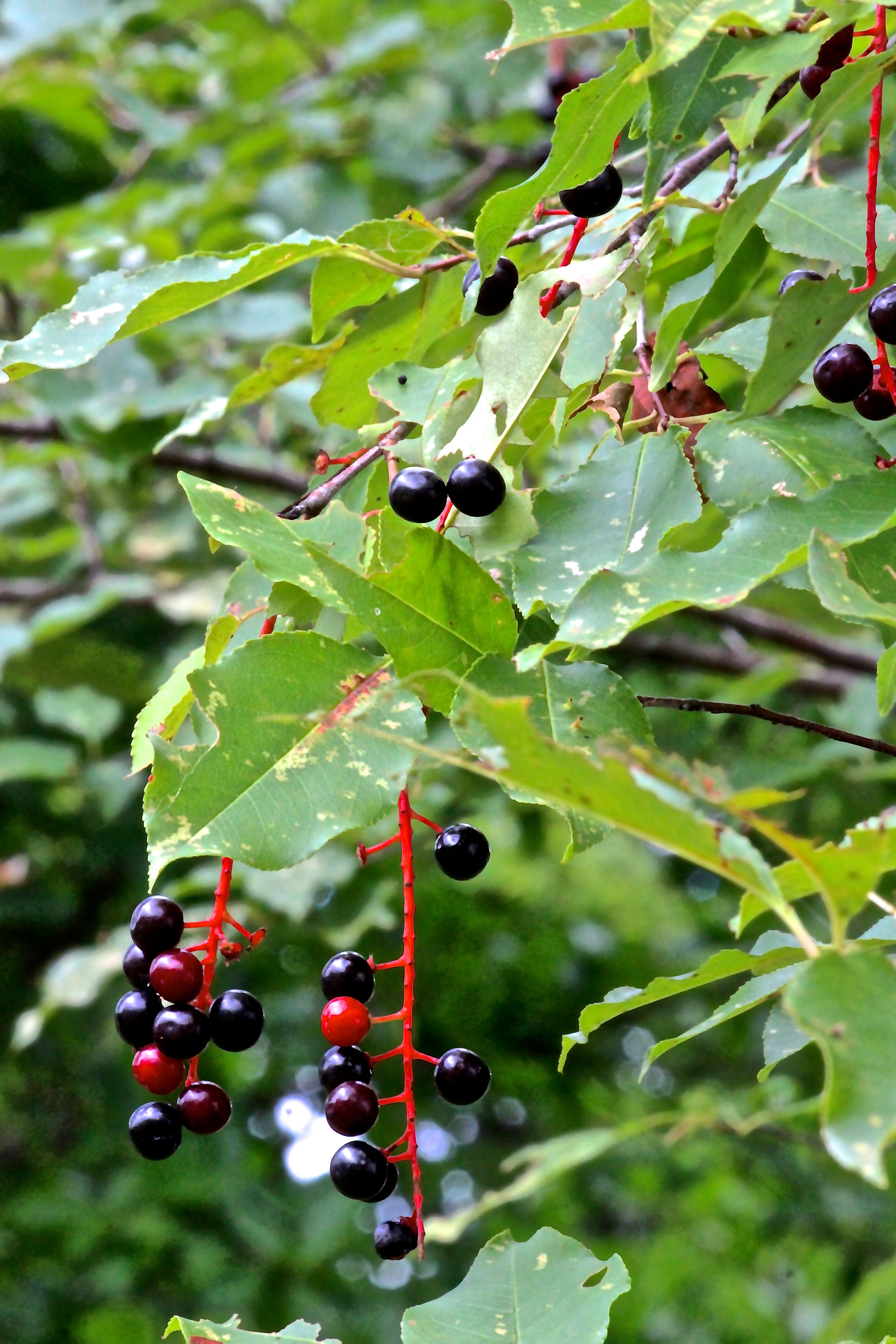
Even some of the cherries get entrapped by the web.

cherries galore

Though I’ve seen the webworms here for years, this is the first year that I remember the tree producing so many cherries–the resident catbirds are happy campers.

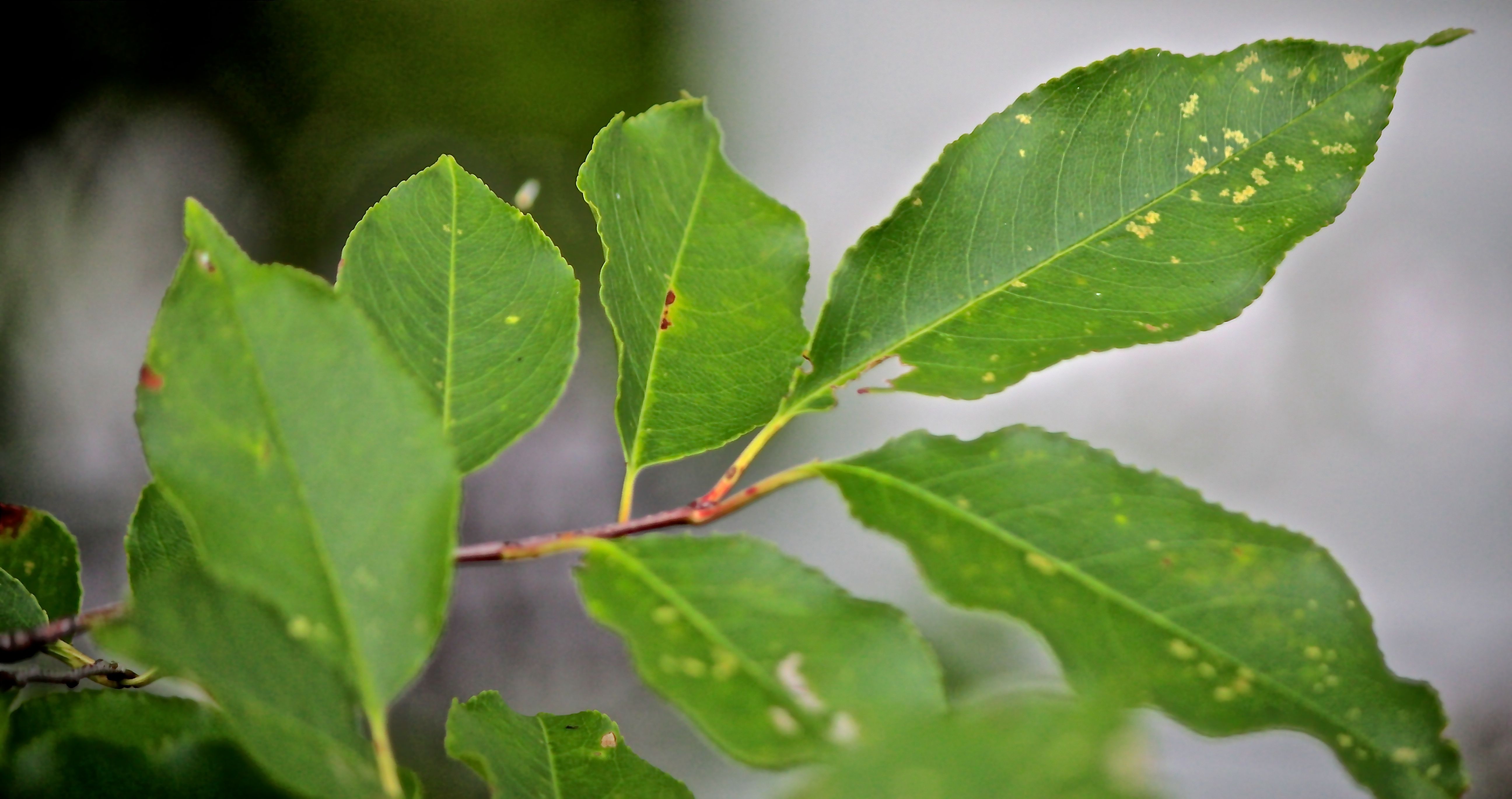
cherry tree leaves

Despite repeated attacks by this pest, the tree has been growing for at least the past 23 years. Its leaves are alternate and oblong, coming to a point and featuring a finely serrated edging of teeth.

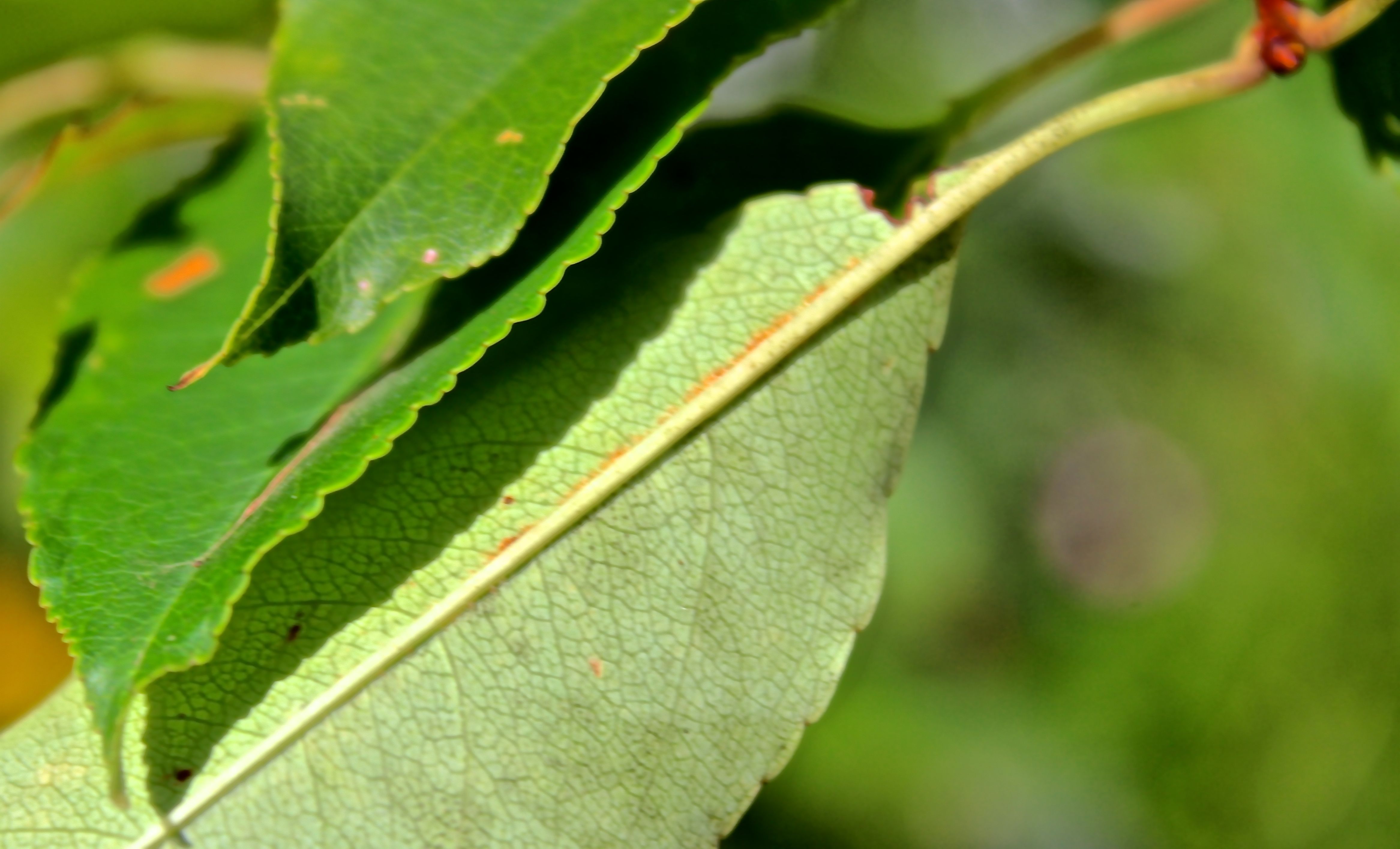
leaves

One way to ID a black cherry is to flip a leaf over and look for the rusty brown hairs along the midrib that grow close to the stalk.

leaves 2

Definitely fuzziness.

lenticels

Another defining factor–lenticels. What? Not lentils. Lenticels. All trees have lenticels, but they are more obvious on some than others. Lenticels are tiny slits in the bark that allow for gas exchange–like the pores in our skin.

slug?

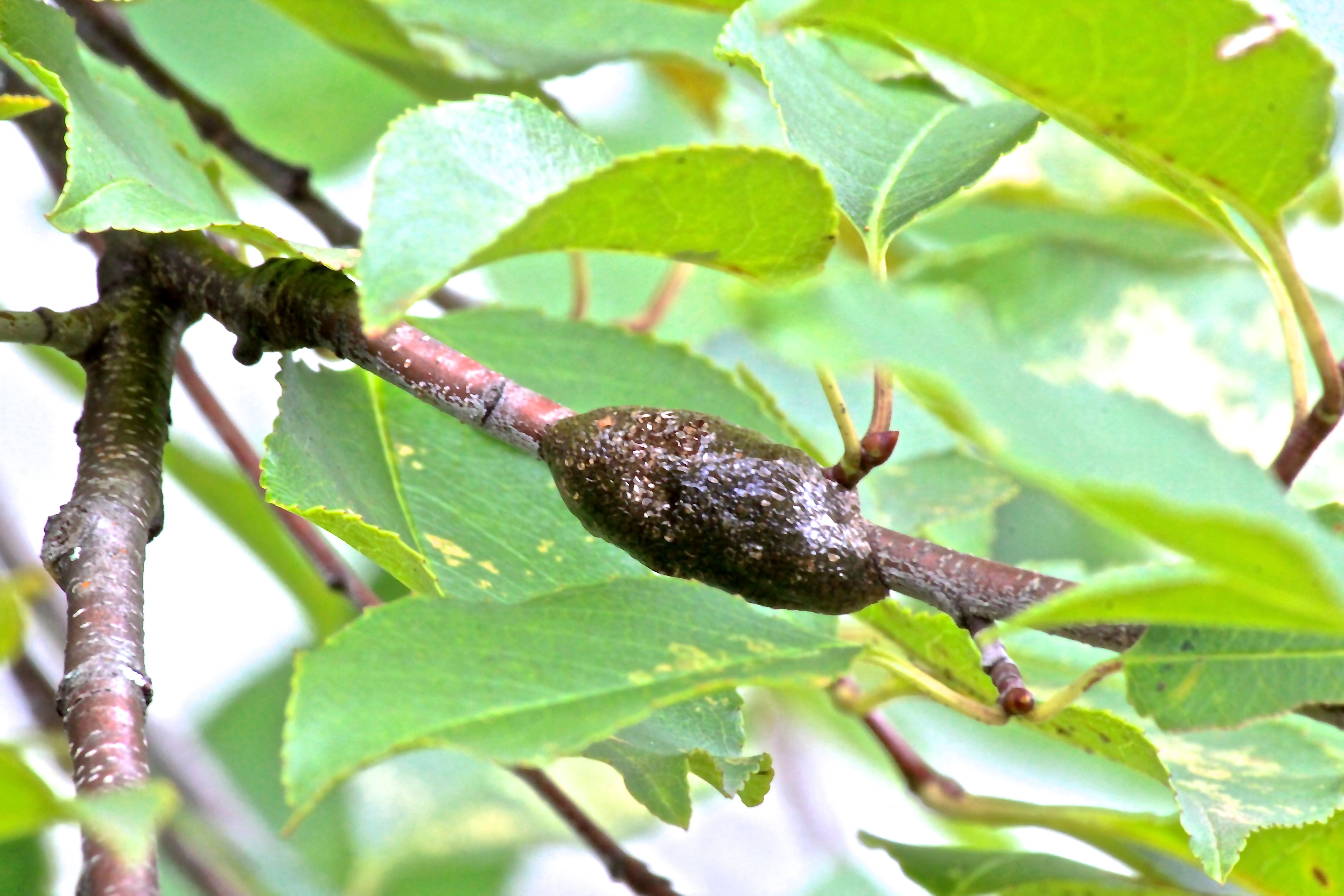
When I take time to study something up close, I begin to notice other things. My first thought for this addition to the twig was slug. But it wraps all the way around the tree and is hard–almost crystalized. It’s a gall caused not by an insect, but rather by an infection of the Dibotryon morbosum fungus. Once the fungus invades, the tree creates a tumor-like growth.

green cat 1

green cat 4

That’s not the only thing hanging out here.

green cat 3

I’m going out on a limb to identify these as members of the sawfly species.

cherries 3

And now I’ll leave you with some fruit for thought–or at least for the birds and all who  gather here, both inside and outside the tent. Thanks for spreading the seeds.

Renewing the spirit

My guy and I drove to the central Maine town of Madison this morning to join Master Naturalist Kate Drummond on a walk that combined the natural and historical context of a trail beside the Kennebec River.

The Pines

The Pines, as this area is aptly named, once served as an Abenaki settlement.

Kate D

Kate began by sharing the history of Father Sebastien Rasle, who lived among the Abenakis, learned their language and converted them to Catholicism. For more than thirty years in the late 17th/early 18th century, he served as a Jesuit missionary and built at church here. Father Rasle educated the children and developed a dictionary of the native language. He also helped keep the English at bay when they tried to encroach upon Indian lands–until that fatal day–August 23, 1724.

While Father Rasle had earned the respect of the Abenakis, the English militia was wary of him. They combined forces with the Mohawk Indians to destroy the village and killed at least 80 Abenakis and Father Rasle 300 years ago today.

And so it was that Kate chose to honor Father Rasle and the Indians he lived amongst by sharing the trail with local townspeople (and us–from two hours away) to tell his story and recognize the natural elements that were a part of their daily life.

Kate is a high school chemistry teacher, so captivating her audience is a part of her makeup. To begin, she asked us to stand still for a minute and listen, look, be in the moment. After we shared our observations, she took us back in time, to imagine what the area looked like three hundred years ago.

matching cards to cool facts

matching cards

And then our real work began. We were given a set of cards and had to match the photos to the card listing cool facts about a particular species. Thankfully, there was no quiz at the end, but I suspect this group would have passed with flying colors–everyone was equally engaged.

We found some cool finds along the way:

acorn plum gall

Our first was a mystery. This speckled red ball, about the size of a jawbreaker, had us puzzled. We found several on the ground beneath Northern red oaks and Eastern white pines. Cutting one open, it looked rather fleshy and we could see what appeared to be an insect, but we still weren’t sure. And when we later found an empty acorn apple gall, we realized it was the same size. Well, a quick Google search for “large speckled red ball beneath oak” revealed acorn plum gall. It’s the home of a wasp species that uses this as a nursery. The grub slowly eats the gall’s tissue and metamorphs into a pupa before changing into a small wasp that eats its way out through a hole. This particular gall grows at the base of the acorn cup.

red and sugar maple leaves

A red maple and a sugar maple stood side by side, making for a lesson on leaf id. Red on the left, sugar on the right. Red–more teeth, or as Kate said, R=rough. Sugar–a U between the lobes, and as Kate said, Sugar has a U in it. It’s their sap that the Abenakis knew.

beaver works

Though we didn’t see any fresh sign of beaver activity, we knew by this statue that they’ve been here in the past. I love that those who actually cut the rest of the tree down to prevent it from falling across the path, had the foresight to leave the beaver works for all to see. The beavers were important to the Abenakis for a variety of reasons, including as food, tools and warmth.

basswood leaf

The asymmetrical base of the basswood tree makes it easy to identify. It was the bark, though, that was of prime importance all those centuries ago–the stringy fibers were used to make line or rope.

jer art 1

In bloom were the Jerusalem artichokes. In Notes on a Lost Flute: A Field Guide to the Wabanaki, author Kerry Hardy writes, “Peeking out of the woods at Old Norridgewock are Jerusalem artichokes, the penak [ground nut]of the Abenakis who lived here.  I believe these plants must be descendants of those grown here centuries ago.” How cool is that? The plants tubers are edible.

jersaleum artichoke

On this day of reflection, remembrance and revelation, they shown brilliantly, perhaps a sign that reconciliation is possible.

Kennebec River 2

We spent some time beside the Kennebec where eels and alewives were important food sources.

immature bald eagle and nest

And an immature bald eagle let us know of his presence. He’s in the oak on the right, while his nest is toward the top of the pine on the left.

FR monument 1

FR mon 2

FR school

It is Kate’s hope that more people will want to learn about the history of this place. Kudos to her for embarking on renewing its spirit.

Red Hot Mondate

It’s Monday. Time for a Mondate. But this morning, we each went our separate ways. He to run and then cut some tree limbs in the yard. Me to meet up with a friend and explore a nearby reserve.

whitney pond

I’ve visited this secluded spot three times, all within the last two weeks. And each time I spy something different.

fragrant water lily

The fragrant water lilies are beginning to bloom. They remind me of dainty china teacups.

galls

Near the water’s edge, a pink candy-crystal gall–I’m not sure of the actual name or creator because I’m still trying to identify the shrub. What causes the color?

beaver works

Bushwacking always means great finds like this beaver works. There are several lodges on the pond.

bracken 1

We were surprised to discover that something had been munching on the bracken fern. As ubiquitous as the plant is, we don’t often see that anything has consumed it.

bracken

White-tailed deer are about the only species that can tolerate bracken fern, which can poison some mammals. It produces a chemical thiaminase that prevents cows and sheep from metabolizing thiamine–they get sick and become disoriented. Cornell University’s Department of Animal Science Web site explains it this way: “When ingested, these enzymes split thiamin (Vitamin B1), an important compound in energy metabolism, and render it inactive.”

Here’s the good news about the fern–turned upside down, it makes a great summer hat and may keep mosquitoes off your head as you walk about the woods.

hemlock cones

Petite green cones dangle from the ever graceful hemlock trees.

birds

One last view before we headed back down the long and narrow dirt road–baby phoebes all in a row.

blueberries

At home, I wandered for a few minutes. It won’t be long before we’ll enjoy these.

foxglove

The trumpet-like flowers of digitalis–aka foxgloves. OK, so these are also poisonous to humans, cats and dogs. Yeegads. So beautiful and yet . . .

 lichens

A miniature world on the stone wall deserves a longer visit, with journal and colored pencils involved. I shall return to this spot to sit for a bit.

At last, I joined my guy for our Mondate.

barn 2

We’re painting the barn. Starting on the back side of the attached shed, we’ve primed it and late this afternoon I began using the actual color. You can see how high up I could reach. This isn’t the color the rest of the barn will be–but it’s so close you’ll never know the difference, unless I tell you. Oops, just did.

Yup, this was one red hot Mondate. And it looks like there will be more to come.