Brain Share–Naturally

I was thankful I’d thrown my winter coat into the truck for I had a feeling it would be a better choice than a vest given the group I’d be traveling with this morning. And sure enough, though the sun felt warm, a breeze added a chill to the air. Plus, I knew we wouldn’t travel far and would spend much of our time standing around.
r0-life on a rock

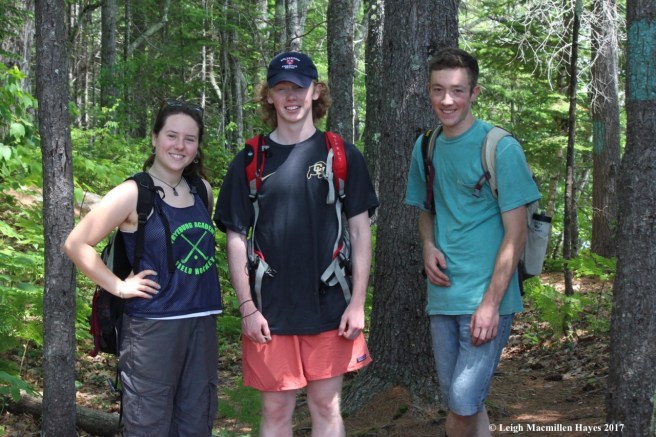
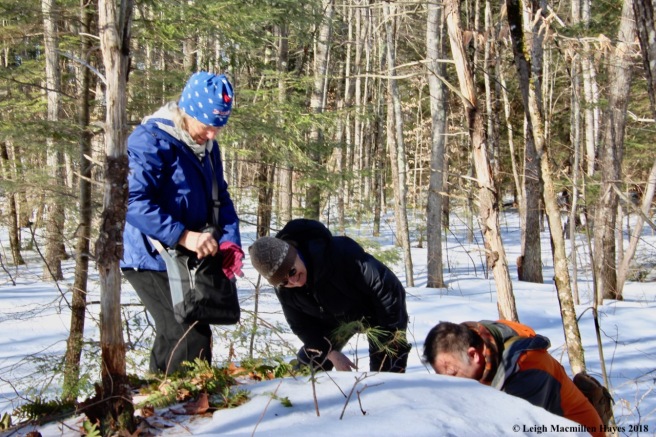
Well, not exactly standing, for as Maine Master Naturalists, we’ve been trained to get down for a closer look. Our first stop–to check out the life on a rock that was revealing itself as the snow slowly melted. Karen is on the left, an Augusta grad, and Sarah and Anthony to her right, both South Paris grads.
r0a-polypody

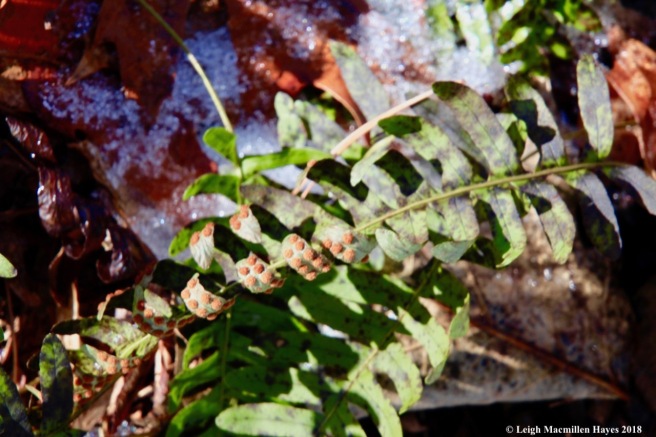
The focus of our attention was common polypody, a fern with leathery leaves and spherical spore clusters on the underside. Rocks are their substrate and they often give a boulder a bad-hair day look.
r1b-speckled alder

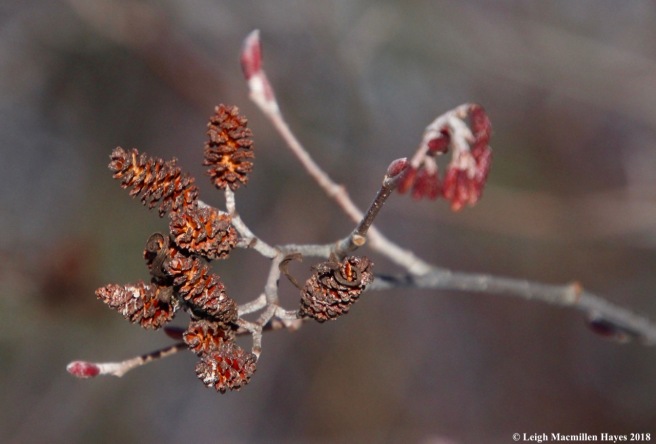
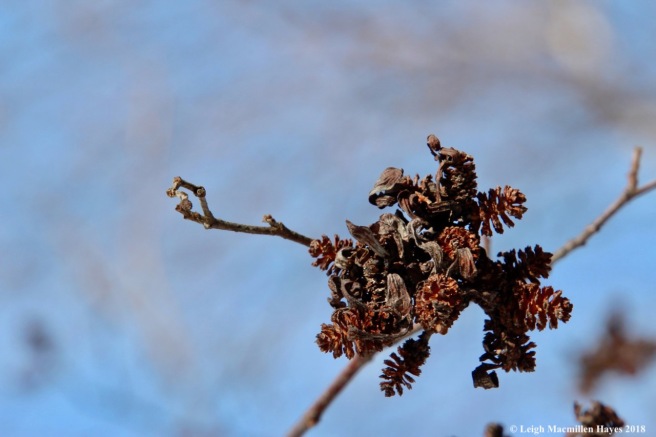
Moseying along, we reached a point where we knew we wanted to spend some time–at a wetland beside one of the Range Ponds (pronounced Rang) at Range Pond State Park in Poland, Maine. Because it likes wet feet, we weren’t surprised to find speckled alder growing there, but what did throw us for a loop was the protrusions extending from last year’s cones.
r1a-speckled alder

It was almost like they had tried to flower atop the cones and all we could think of was an insect creating a gall. Indeed, it appeared that the cones were also experiencing a bad hair day. After a little research, it may be alder tongue gall–resulting from a fungus rather than an insect infecting the female catkins. Apparently, the tongue-like growths are green to begin, but transform to orange, red and finally brown. It was certainly a new one for the four of us.
r2a-leatherleaf and sphagnum moss

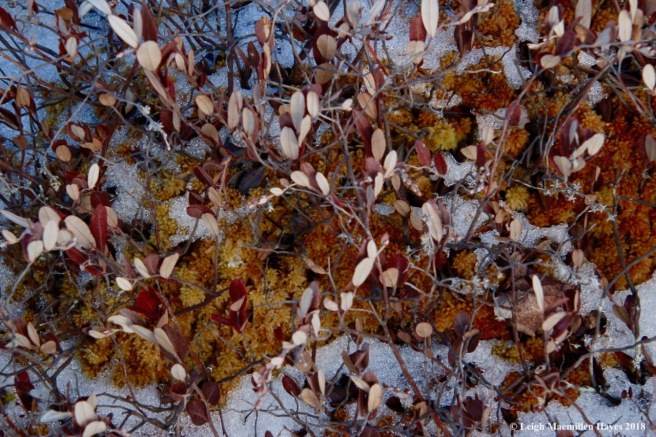
On we moved down to the wetland where the snow surprisingly held us for most of the journey and we didn’t leave behind too many post holes. Leatherleaf and sphagnum moss showed off their winter hues at our feet.
r4-cranberries

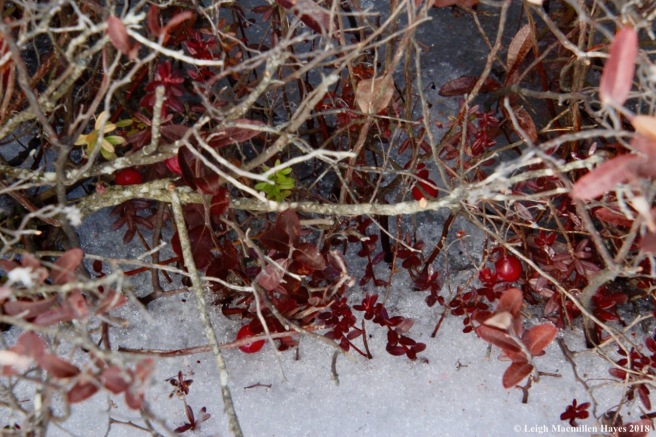
We also spied cranberries hiding underneath.
r3-cranberries among the leatherleaf

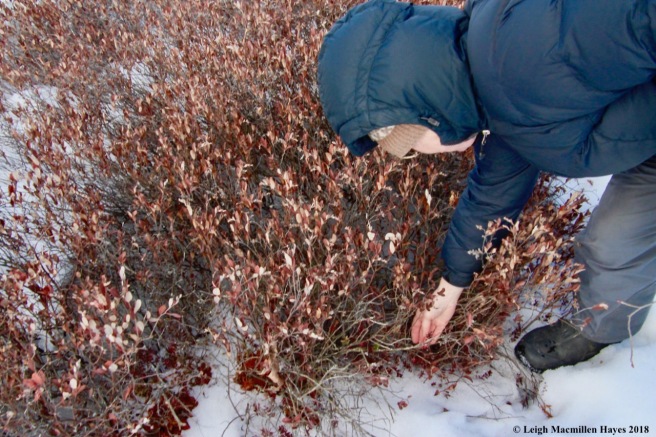
And sampled them. A few were tart, while others had fermented.
r1-two lodges

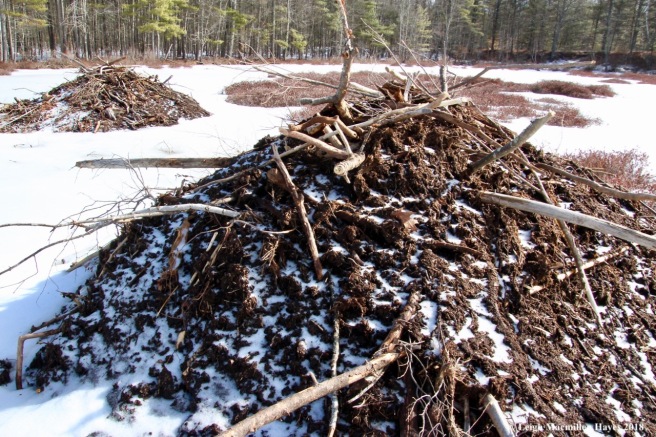
In the middle of the wetland, two well built lodges stood tall. They had fresh wood and had been mudded in the fall. One did look as if the vent hole had been enlarged, so we wondered if anyone still lived there. We heard no noises, but had to assume that we were bothering the residents so we didn’t stay long.
r2-wetland and pond beyond

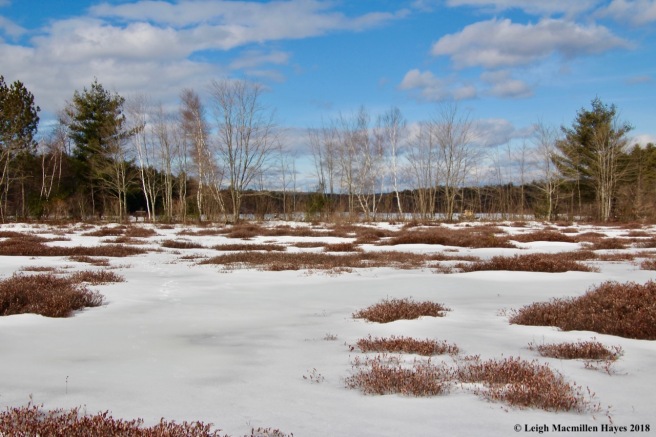
One last view of the wetland and pond beyond, then we turned and walked toward the opposite side.
r5-bird nest

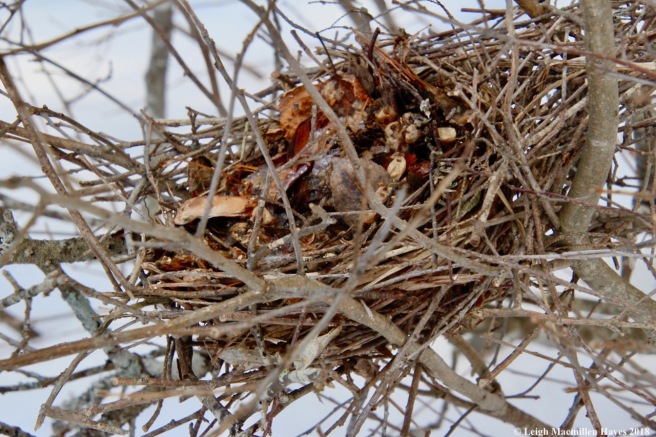
Just before climbing uphill, we spotted a bird nest in the winterberry shrubs. It was filled with dried berries, and we again made an assumption, that a mouse had cached its stash for the winter and maybe dined there in peace and quiet while the nest was covered in snow. That’s our story and we’re sticking with it. Whose nest it was prior to the mouse? We don’t know, but it was made of twigs. If you have an answer, please enlighten us.
r6-bone

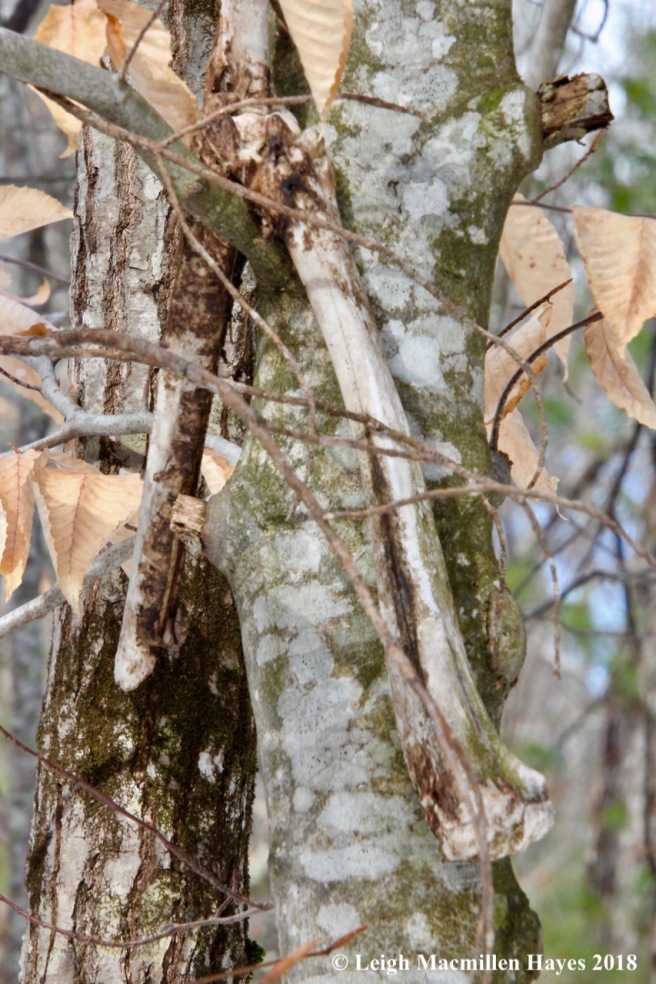
Back up on an old railroad bed, we again stopped frequently, including to talk about the beech scale insect and nectria fungus that moves in and eventually kills the trees. And then something else came to our attention–it wasn’t a broken branch hanging down like an upside-down V on the beech tree. No indeed. It was a bone. A knee bone. And it had been there for quite a while given its appearance.
r7-Introduced Pine Sawfly pupal case

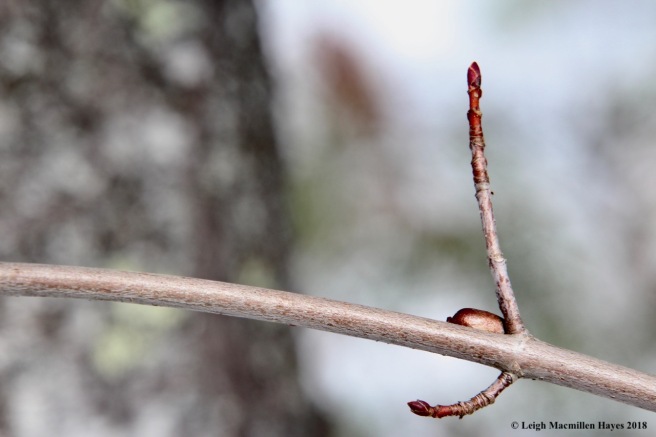
Because Anthony was with us and he’s our insect whiz, we spent a lot of time learning from him–including about the pupal case of an introduced pine sawfly. The sawfly had already pupated and in this case no one was home.
r8-Introduced sawfly pupal case

As the morning went on, we became quite adept at locating more cases of other sawfly species, including one that wasn’t yet opened. We each channeled our ten-year-old selves as we tried to be first to find the next one. But really, Anthony won for he had insect case eyes.
r9-going in for a closer look

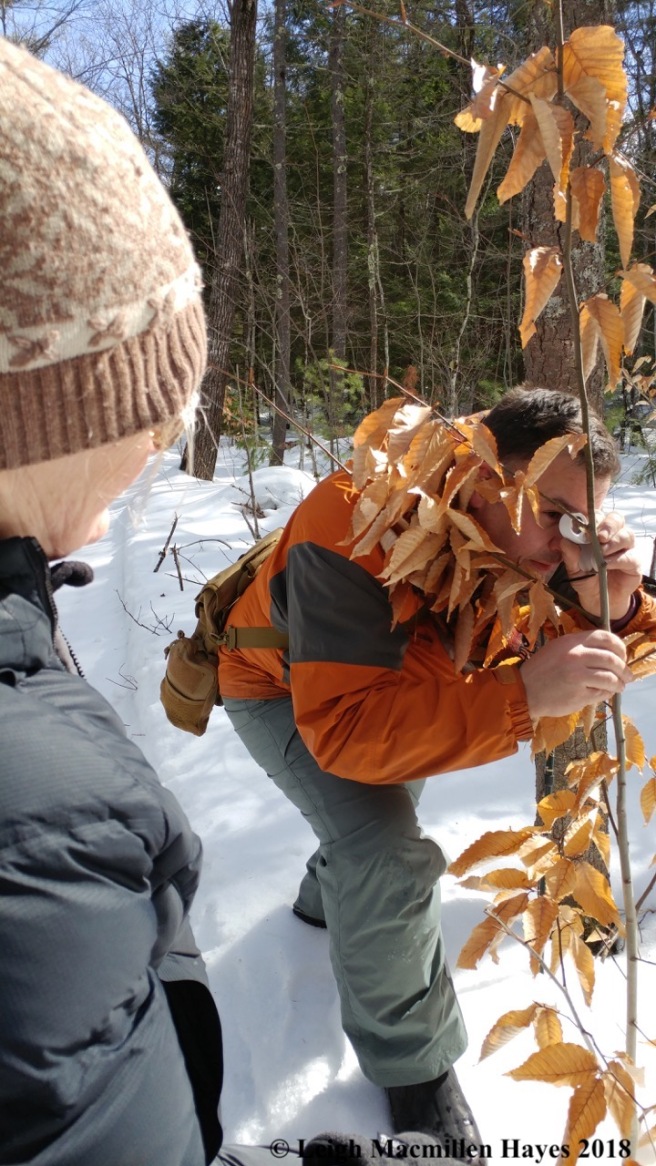
And eyes for other things as well.

r10-old spider web case

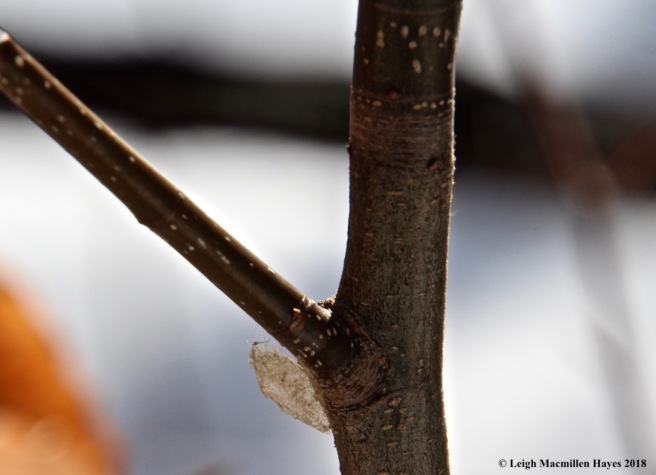
This time we examined a delicate, almost lacy structure under a branch on a young beech. Anthony suspected a pirate spider, which tickled our fancy for we imagined them raiding the goods of others. But later he e-mailed with another option: “The old spider egg case could also be from an orbweaver of the araneidae family.” Either way, we were happy for the sighting; for taking the time to slow down and notice.
r11-beech leaves

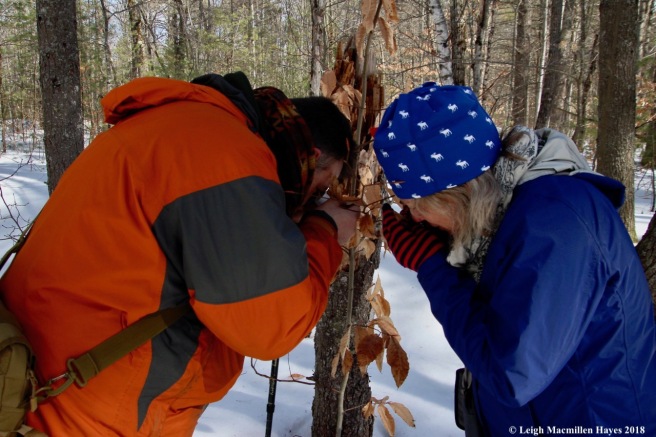
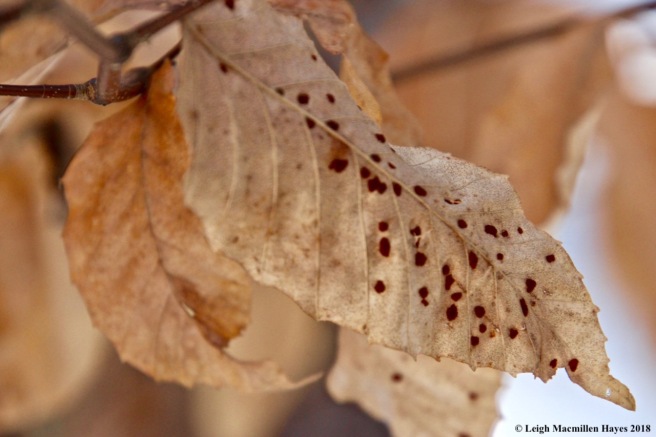
And there was more. Sarah had to leave us a wee bit early, so she missed our finds on the backside of beech leaves.
r12-maroon dots on beech leaves

They were dotted with raised bumps that under our hand lenses reminded us a bit of the sori on common polypody.
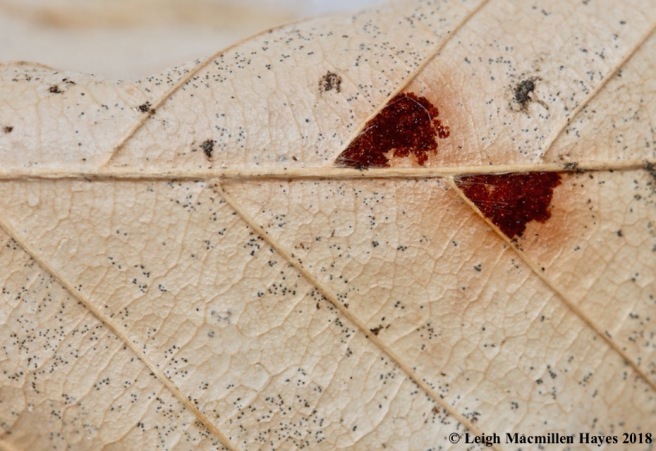
r13-maroon dots on beech leaves

Leaf rust? Was it related in any way to the splattering of tiny black dots also on the leaves? We left with questions we haven’t yet answered.
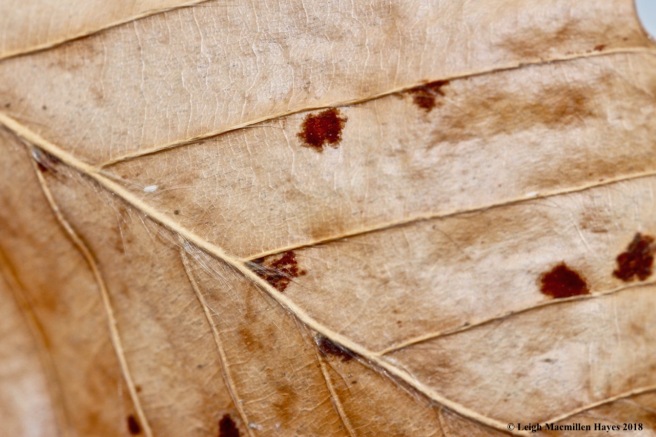
r14-hair on beech leaves

Taking a closer look did, however, remind us of how hairy beech leaves are–do you see the hairs along the main vein? And that reminded us of how the tree works so hard to protect the bud with waxy scales all winter, keeping the harsh conditions at bay. In early spring, slowly the leaves emerge, ever hairy, which strikes me as an adaptation to keep insects at bay, and then . . . and then . . . it seems like every insect finds a reason to love a beech leaf and in no time they’ve been chewed and mined and you name it.
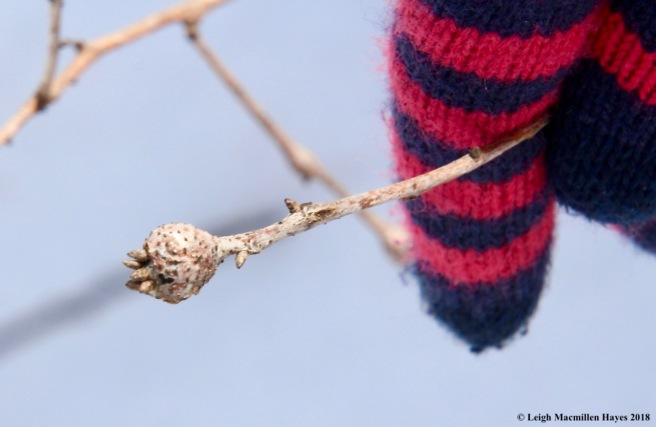
r15-oak gall

We made one more discovery before heading out–a gall formed on oak twigs. Do you see the exit hole? It’s in the shape of a heart–apparently the insect that created the gall loved the oak.
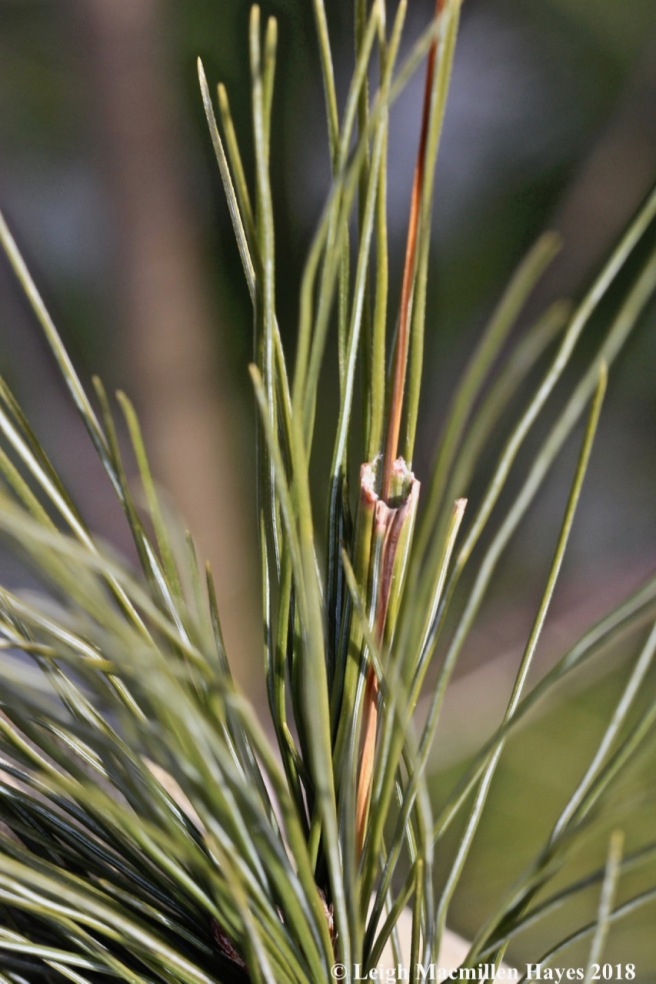
r15-pine tube moth

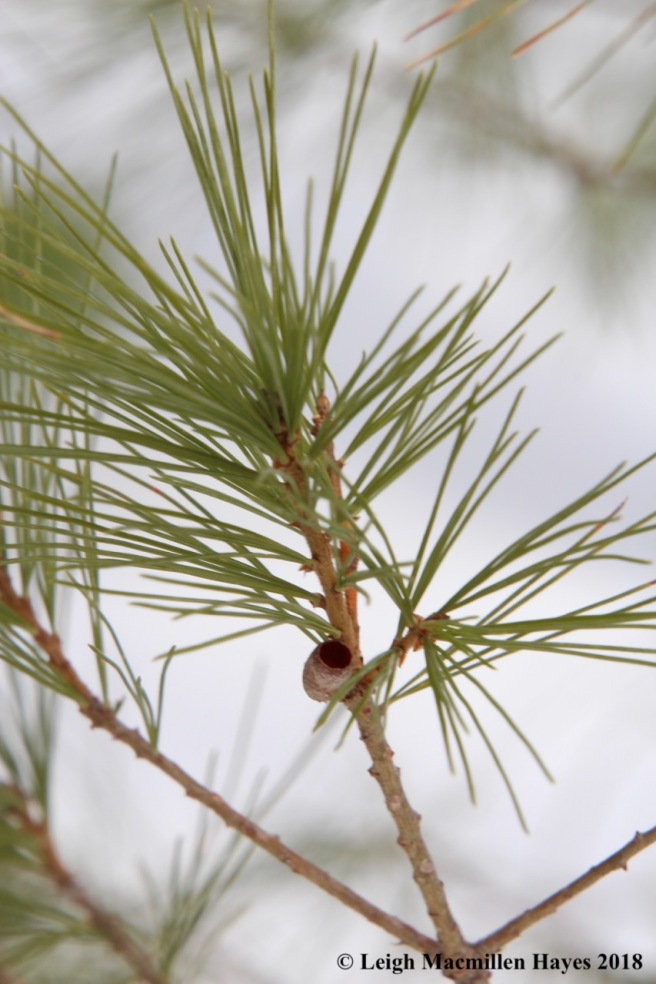
As we made our way back to the parking lot, I kept searching all the pine trees because I wanted to share an example of the tube created by a pine tube moth. Of course, there were none to be found, but as soon as I arrived home, I headed off into the woods for I knew I could locate some there. Bingo.

Notice how the lumps of needles are stuck together in such a way that they formed a tube. Actually, the tube is a tunnel created by the moth. The moth used silk to bind the needles together, thus forming the hollow tube. And notice the browned tips–that’s due to the larvae feeding on them. Eventually the overwintering larvae will pupate within the tube and emerge in April. Two generations occur each year and those that overwinter are the second generation. Fortunately, they don’t seem to harm the trees–yet.

Three and a half hours later we hadn’t walked a great distance, but our findings and learnings were many and we talked about how we’d added more layers to our understanding. Now if only we can remember everything. Thanks to Karen, Sarah and Anthony for sharing your brains me with–naturally.

P.S. Lewiston MMNP grads, et al, I’ll be in touch. Look for a doodle poll soon so we can get out and do the same. Or if you want to take the initiative, please feel free to go for it.


Time Well Spent

Time. I never seem to have enough of it. Time with my guy. Time with our sons. Time with family. Time with friends. Time to explore. Time to reflect. Time to write. Time to sketch. Time to be . . . in tune with the world around me and my own soul.

b-pileated 1

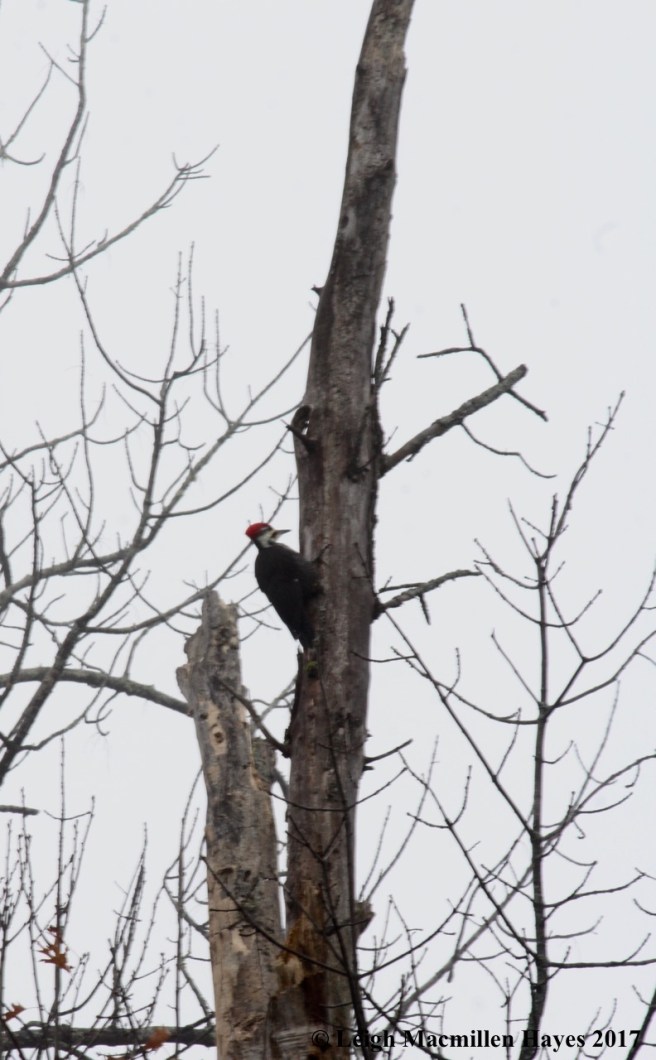
And so today, when I heard a pileated woodpecker as it worked on a dead ash tree by one of the stonewalls, I decided to take a break from my own work and give it the attention it so loudly demanded.

b-pileated 2

Its a repeat visitor to that tree; along with crows and hawks and smaller birds as well. The tree can no longer create its own source of food, but it continues to provide for others, be they bird, insect or mushroom. And I suspect that it secretly shares its knowledge of the world with the younger ash it towers over–to the right. As for the pileated, his time at that tree came to an end . . . for the moment. He’ll be back–probably soon.

b-ash tree 1

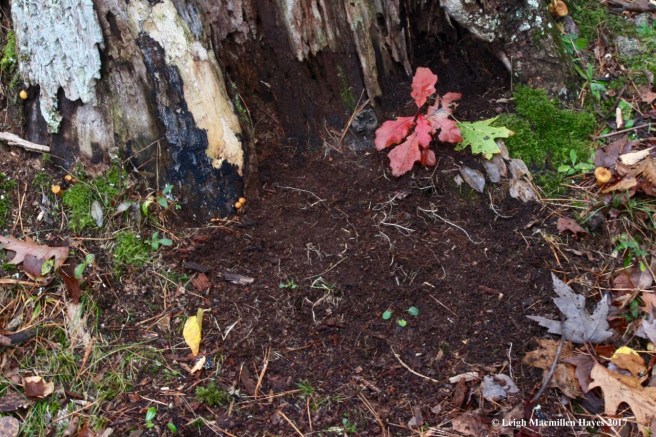
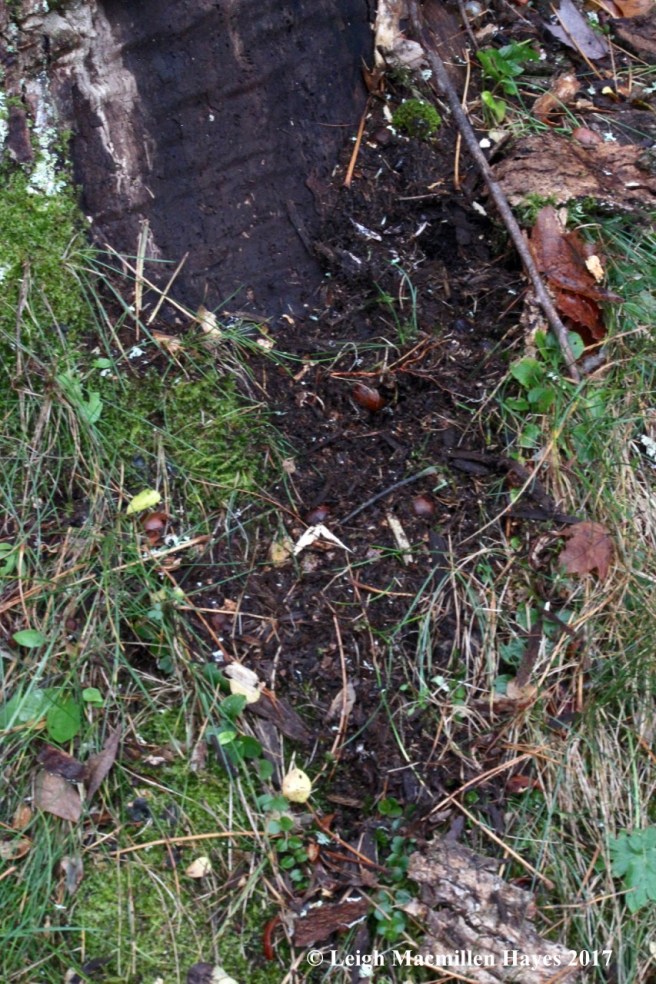
Because I stood below and no longer need to look up, I turned my gaze downward. And then had to pause. What had happened? Who had visited? And scraped the ground right down to the roots? And left a pile of leaves and sticks and other debris at the edge? A mushroom foray? An acorn frenzy? I looked for hair and found none. Turkey? Squirrel? Porcupine?

b-ash tree 2

And at the base of the next old ash, similar behavior.

b-scat 2

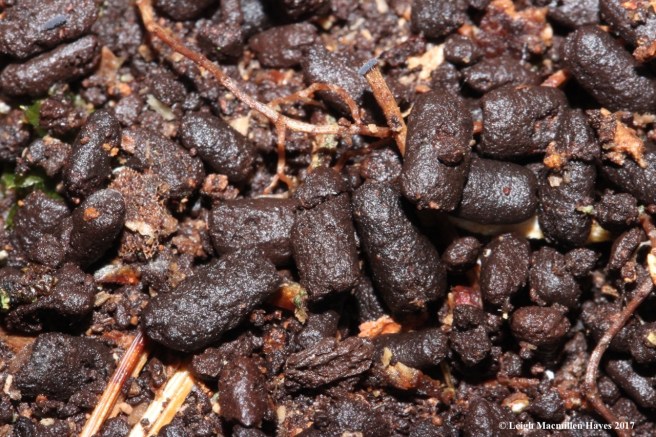
Returning to the first tree, I discovered that what looked like dirt was actually little pellets of scat . . . tiny scat. Tons of scat. A latrine. Did perhaps a meadow vole live somewhere nearby and a predator went after it? I did also suspect that there may have been a bunch of mushrooms that were harvested and in the process the vole’s latrine was exposed. I’m not sure if I’ll ever really know, but since I had stopped to look, I noticed something else.

b-pigskin poison puffball (Earthball)

Tucked near the base of the tree and relatively untouched by whatever had spent some time clearing the area, was a pigskin poison puffball, so named for its outer skin that feels like a football. (In his book, Fascinating Fungi of New England, Lawrence Millman writes: “historical note: footballs used to be made of pigs’ bladders, not pigskin.”) The dark spore mass within seemed to reflect the ashen color of the tree beside which it grew.

b-pelt lichen1

I should have returned to work then, but the puffball discovery and my wonders about the latrine made me want to poke about some more. Since I’d missed the puffball, what else hadn’t I noticed. A few steps to the left upon another tree root–a pelt lichen with many fruits, aka many-fruited pelt. I first discovered this lichen upon Bald Pate Mountain a few years ago, but didn’t know that it grew here–right under my nose.

b-many-fruited 2

Its smooth brown lobes shone brightly due to all the recent moisture, but it was the reddish-brown apothecia or fruiting forms that I found so intriguing. They’re described as saddles, and I suppose if you look at one from the right angle, yes, you can see the saddle-like structure.

b-field dog lichen

On the next tree, another pelt known as dog lichen–apparently named because its fruits reminded someone of dog ears.

b-spring tails 1

The algal component of a lichen goes into food production during rain, and so I continued to peer around. But first, a clump of Indian pipes caught my attention and upon them I noticed springtails doing their thing–springing about in search of food. Their diet consists of fungi, pollen, algae and decaying organic matter. Springtails are among the most abundant of insects, but because they are so small, they often go undetected unless you see them on snow in the winter.

b-mealy pixie cups

And then back to the lichens it was. I found mealy pixie cups in great number growing on a stonewall.

b-pixie cups fruiting

And one large patch looked like it was going to produce another, for so prolific were its fruits of tiny round balls.

b-lichen design

Also among my great finds, were the lichens decorating branches that had fallen to the ground in our recent wind storm. I loved the picture they painted with variations on a theme of color . . .

b-foliose and fruticose

and form.

b-lichen 3

My favorite of all reminded me of so many things–a rose in bloom, waves echoing forth with ripples, and even a topographical map.

Alas, I was short on time and needed to head in, but my finds–were the greatest. Even a wee bit of time spent wondering is time well spent.


Power-filled Mondate

It may not have been a hurricane, but the storm that began as Philippe, left its mark as it whooshed through New England. Along its path, the world darkened. We lost power about 1am, but it was restored by the time we awoke this morning. And yet, many may be without electricity for days.

Our tentative plan had been to hike, but we realized last night that we’d need to consider Plan B. And when the sun shone this morning, we were rather oblivious to the havoc caused by downed trees and flooding. We did check the weather report, however, and saw that there would be a few showers and the wind would continue to blow. So, Plan B it was–yard work between rain drops.

For my guy, that began with work on the back screen door for a bang we’d heard in the night turned out not to be the grill or furniture sliding off the deck, but rather the door banging against a bench. And after that, it wouldn’t shut properly.

o2-bee on lavendar

While he worked on the door, I headed into the kitchen/cottage garden, which had become quite overgrown due to my lack of a green thumb. While my intention was to put the garden to bed, some flowers like the lavender needed to remain for they still invited visitors.

o3-spring tails

As I poked about, cutting some plants back, I made a few discoveries, including the sight of snow fleas or spring tails climbing a stalk.

o1-bird nest fungi 1

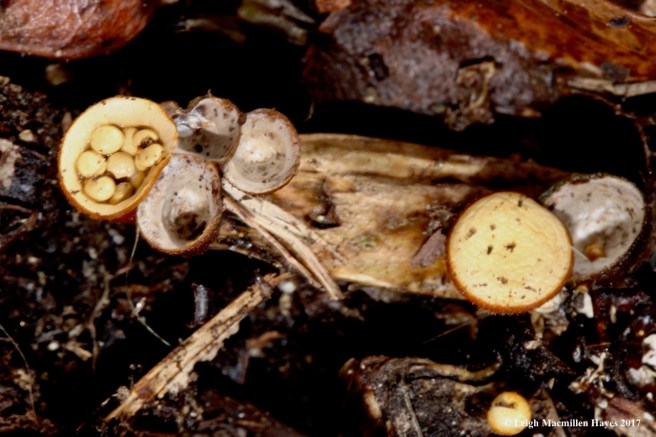
And buried beneath, I unearthed bird’s nest fungus, which look like such for which they were named, only in miniature form for they are no more than a quarter inch in height or diameter. Nestled inside the nests, like a bunch of eggs in a basket, are the fruiting bodies that await drops of water in order for their spores to spring out and find their own substrate on which to grow.

o5-beebalms last bloom

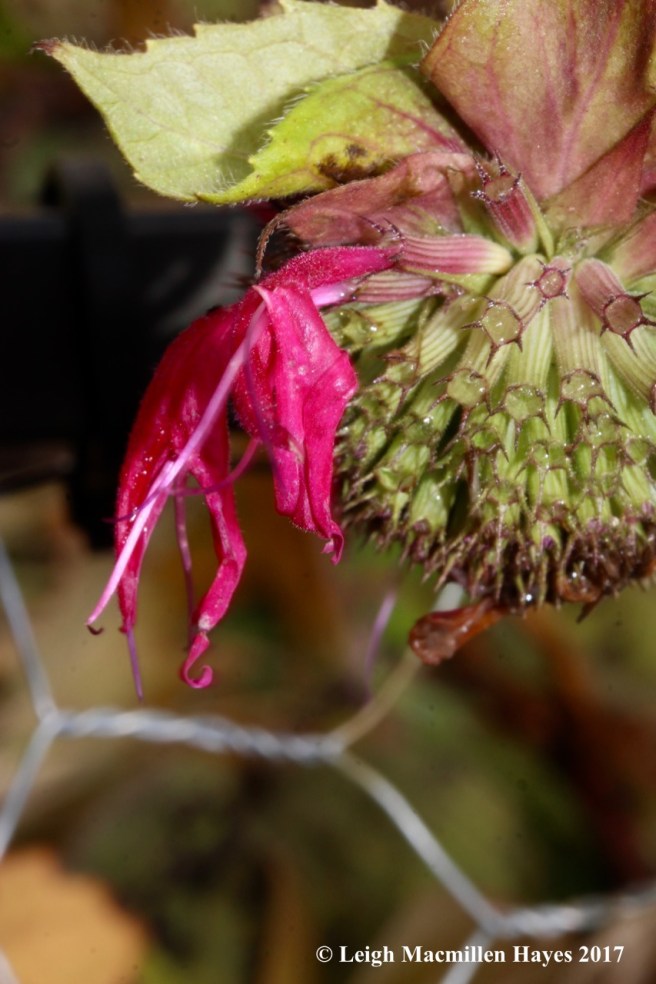
And then I approached the beebalm, where a few blossoms still bloomed on this late date.

o4-meadowhawk 1 on bee balm

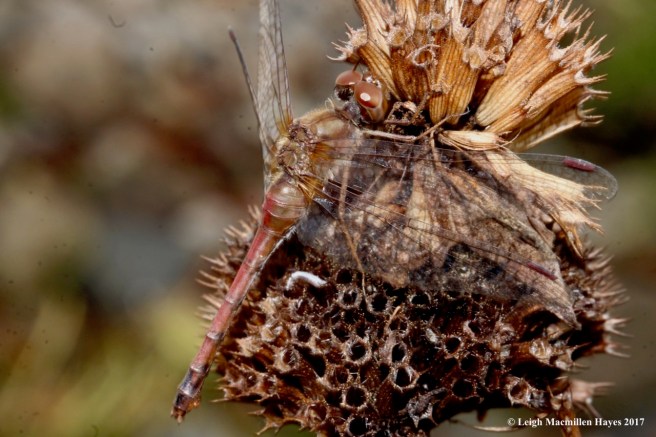
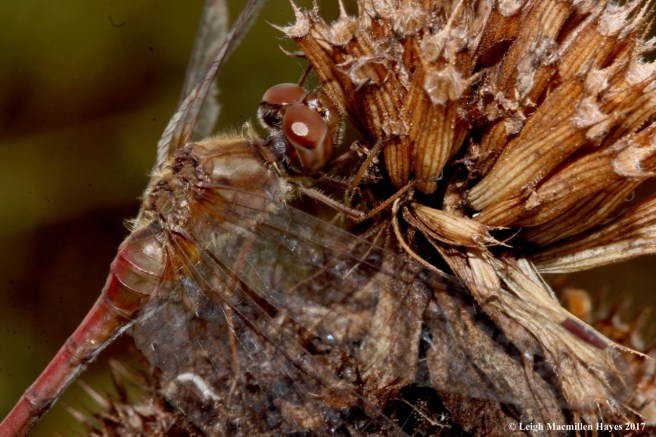
Most of the beebalm had long since gone to seed, and today one structure became a resting spot as the wind blew. A male autumn meadowhawk seemed to hold on for dear life.

o6-meadowhawk 2

Of course, I took advantage of his moments of rest to take a closer look at the divine body structure . . .

o7-meadowhawk 3

from a variety of viewpoints.

o8-meadowhawk 4

Gender determination is based on the terminal appendages. Male dragonflies have three, known as claspers, which they use to grasp and hold a female during mating. The upper or from this view, outer appendages, are called cerci, while the lower, or middle appendage, is the epiproct–meaning its the appendage situated above the anus. Females have only a pair of cerci, and I’m not sure of their purpose. That beebalm still stands–in hopes he’ll return again.

o9-quaking aspen buds and leaf scars

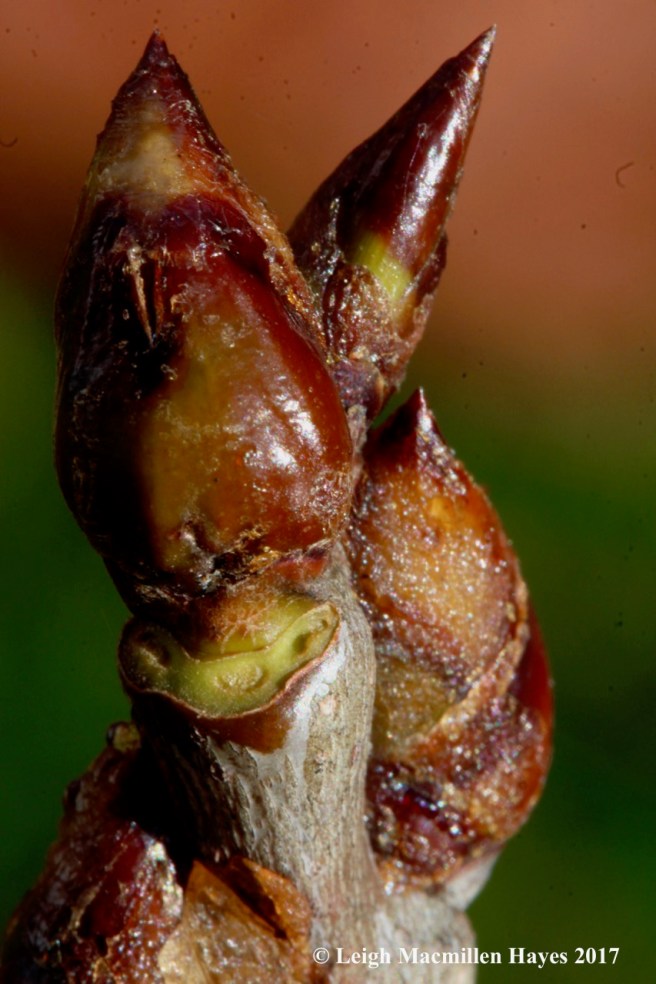
As I continued to work and observe the world around me, my guy found one project after another to complete–each of which required a trip to the hardware store. Hmmmm. And so, I too, decided to go for a trip–into the woods. Donning my blaze orange vest and hat, and knowing that I wasn’t going far, I took off. My first stop was at a branch below the quaking aspen that had fallen in the night. Though it had reached its end of life, the waxy bud scales and leaf scars were a sight to behold. The smiley-face leaf scar showed where the stem or petiole of this past year’s leaf broke from the branch. As the leaf pulled away, it severed the vessels through which water and food moved. The dots within the scar indicate where those vessels had been connected and are known as bundle scars.
o10-pathway in woodlot

In our woodlot, my trail was littered with pine cones and branches, but that was the extent of tree damage.

o13-selfie

I found puddles that invited me in.

o11-jelly ears

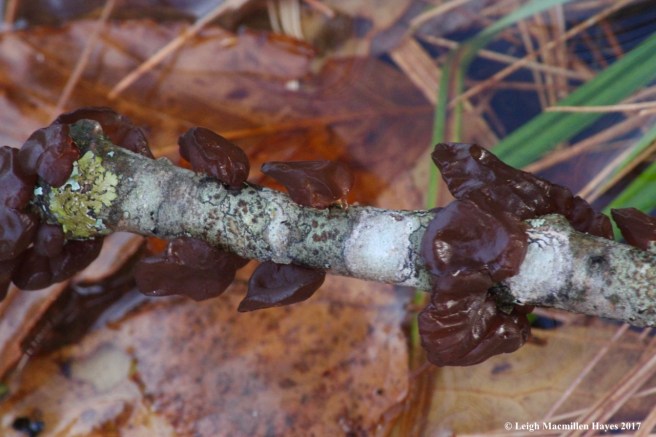
Some branches, decorated with a variety of lichens and jelly ear fungi also found their way to the puddles.

o12a-vernal pool

At last, I reached the vernal pool and was surprised to find it only partially filled.

o12-vernal pool leaves

Atop and within it, the mosaic of broad leaves and needles formed a tapestry of shape and color–in the moment.

014-goldenrod bunch gall 1

Nearby, I paused by a goldenrod that sported a bunch, rosette, or flower gall, for really, it resembles all three.

o15-goldenrod bunch gall 2

The Goldenrod Gall Midge, which is a tiny fly, laid an egg in a leaf bud, hatched into grub form, and prevented the stem from growing, though the plant continued to produce leaves that formed a tight cluster.

o16-maple samara between milkweed pods

I finally made my way home, and turned to other gardens on the eastern side of the house, where milkweed pods also needed to remain standing. I even left the sugar maple samara because I thought it was a fun place to land.

o-17-aphids on milkweed

Also at home on the milkweed were a hundred aphids all clustered together.

020-monarch chrisalys

But the best find of all–the delicate remains of a monarch butterfly chrysalis. I had no idea it was there, but presume it housed one of the monarchs that consumed my attention a few weeks ago.

Just after we headed in, my sister-in-law called to say her sump pump had conked out. Off my guy went again.

It wasn’t the hike date we’d hoped for, but our day was filled with power tools and powerful insects and power-filled love.


Moments of Awe

The garden hum slowed significantly in the last few days, with bee buzz overpowered by cricket chirps. But still they come.

i6-spotted cucumber beetle

The first insect I focused on wasn’t a bee at all, but a spotted cucumber beetle who paid a surprise visit. It’s been years since I grew cucumbers and I can only imagine that it was a couple of houses shy of my neighbor’s garden. Instead, it made do with the mint.
i1-hoverfly, haltere

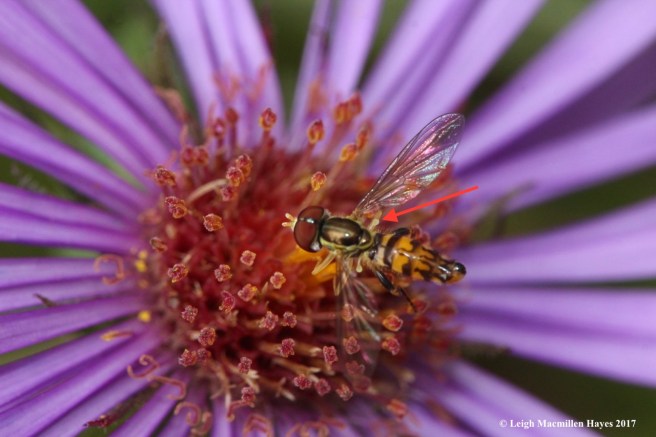
A second glimpse wasn’t at a bee either. But I must admit that I’m forever mesmerized by  the tiny hover flies that frequent the flowers. Hover flies are true flies, so while they may look a bit bee like, they don’t sting. And they take time to enjoy the nectar. My, what big eyes they have–taking up most of their head space. And such short antennae.
i1-hoverfly-haltere

Since I was paying attention, I also realized that hover flies don’t have hindwings per say. Rather, as dipterous insects, they have halteres, which are a modified form of a hindwing. The halteres help with balance and guidance while in flight and are situated behind the forewings on the thorax or middle section of the body. Remember–head, thorax, abdomen. Here’s another tip: two wings fun, four wings run. Well, don’t exactly run, but get out of the way.

i2-sweat bee

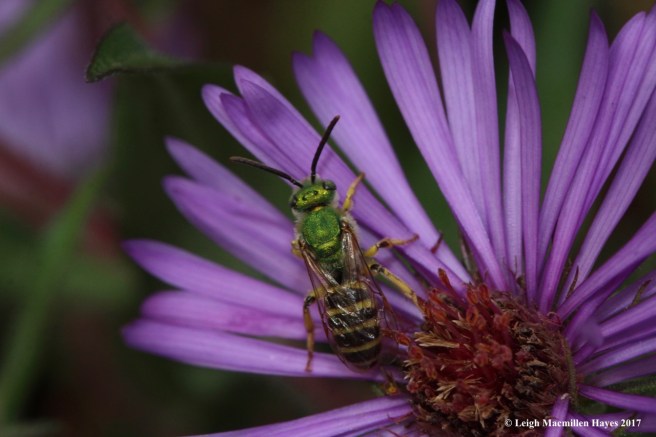
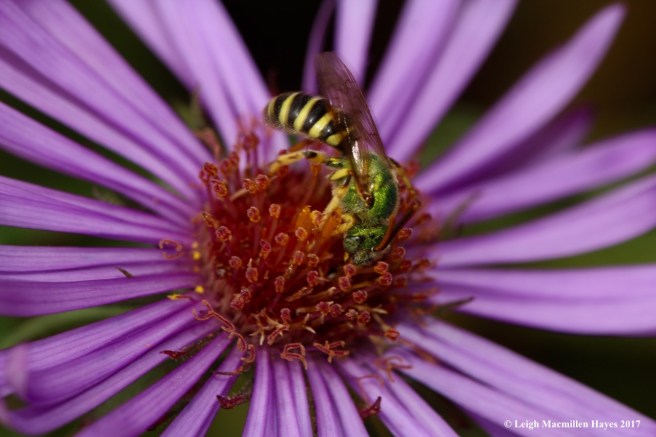
One of my favorites in the garden mix, the jewel-like sweat bees with their metallic green heads and thoraxes, plus yellow and black striped abdomens.

i7-sweat bee

“Sweat bee” doesn’t strike me as the most romantic name for such a beautiful specimen, but they are so called because they’ve been known to land on us in search of a salty sip as we perspire. They will sting if annoyed.

i3-bumblebee face

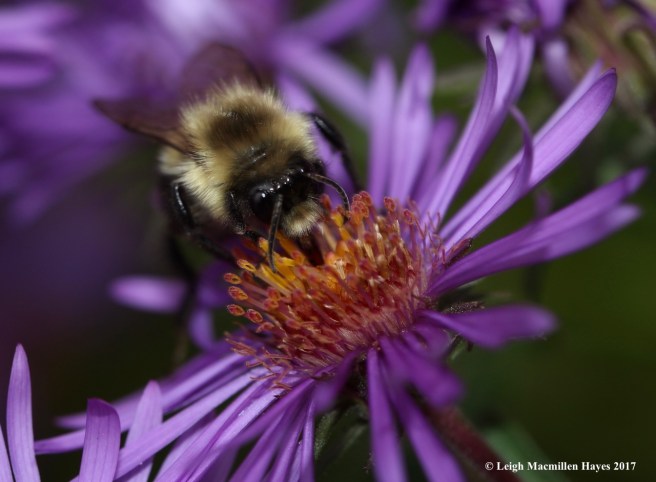
But their sting isn’t as pronounced as that of the bumblebee; I thought about that as I  carefully greeted one face to face while he sucked with his straw-like proboscis. The bumbles were in constant motion today. Though they’ve been in a collection tizzy all summer, I had to wonder, do they sense the end is near? And still, they perform their job.

i4-honey bee, leg parts1

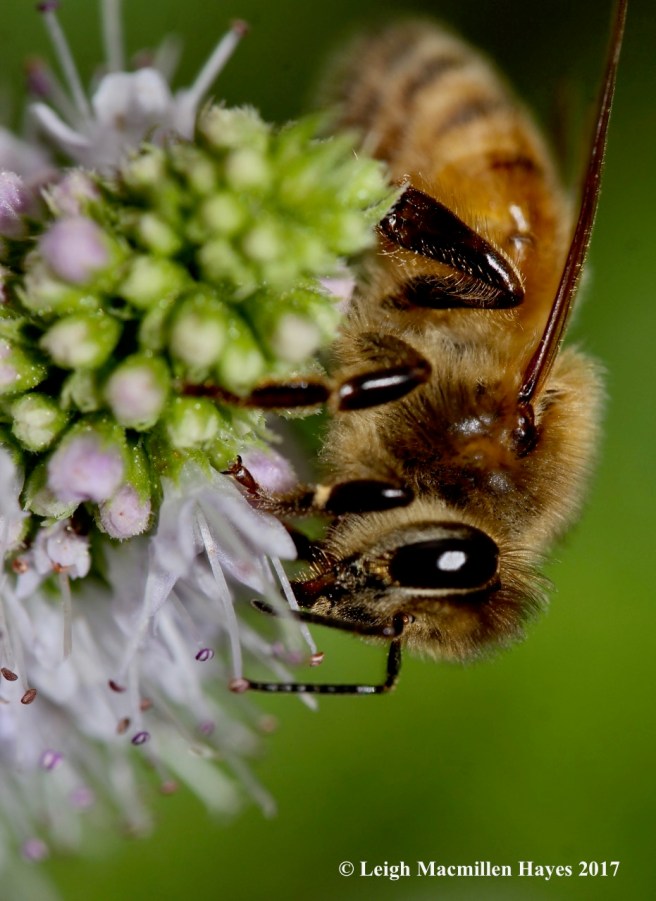
Taking its time in the collection process was a honeybee. Perhaps it knows the end is coming for it was much calmer than has been the norm and stayed in the same spot for several minutes, ever so slowly only moving its head.

i5-honeybee 2

All the better for me to take a closer look, including at the segments of its leg. I’m fascinated by the claws at the base of the tarsus.

Each day, the sweet offerings diminish as do the number of pollinators. Long ago I swore I didn’t like insects, but the more I look, the more in awe I am. Even though I know there will be other things to focus on, I’m going to miss these moments of wonder.


Continued Wandering into the World of Wonder

I’ve spent most of the last two years wandering, not even taking time to seek the answers I thought I sought.

c-ichnueomon wasp female

But along the way, I’ve seen so many incredible things that have been placed before me from the female ichneumon wasp with a disc on her cerci and her body throbbing as she injected her eggs into an insect larvae on tree bark  . . .

i-helleborine wasp 1

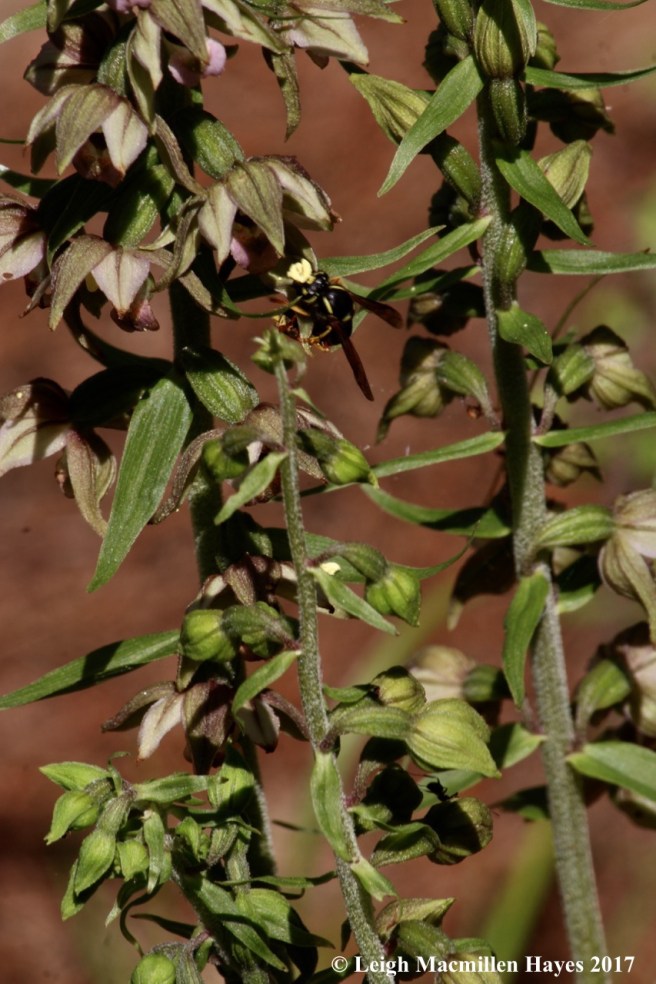
to a yellow-nosed wasp, so named by me for the pollen that was stuck to its antennae after it visited a helleborine flower . . .

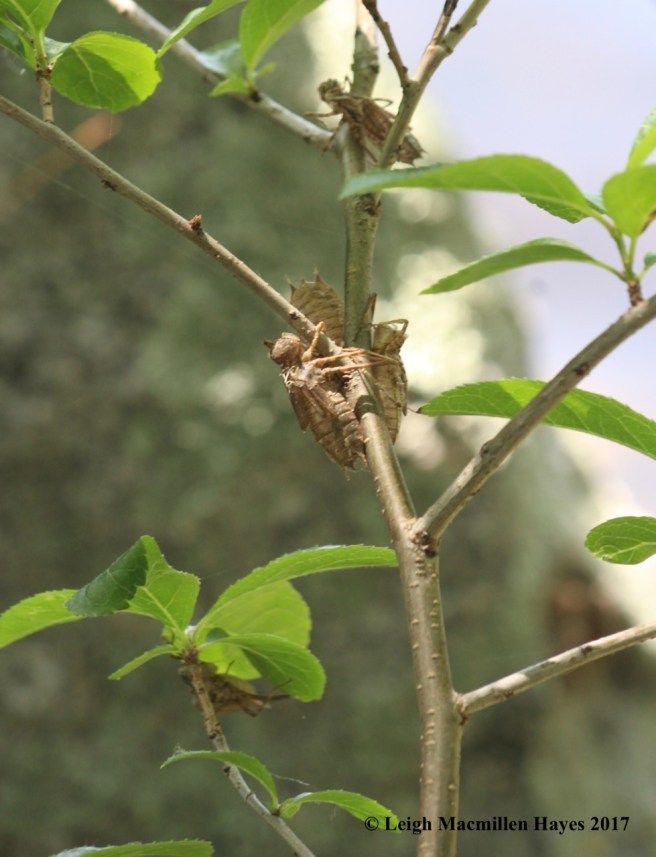
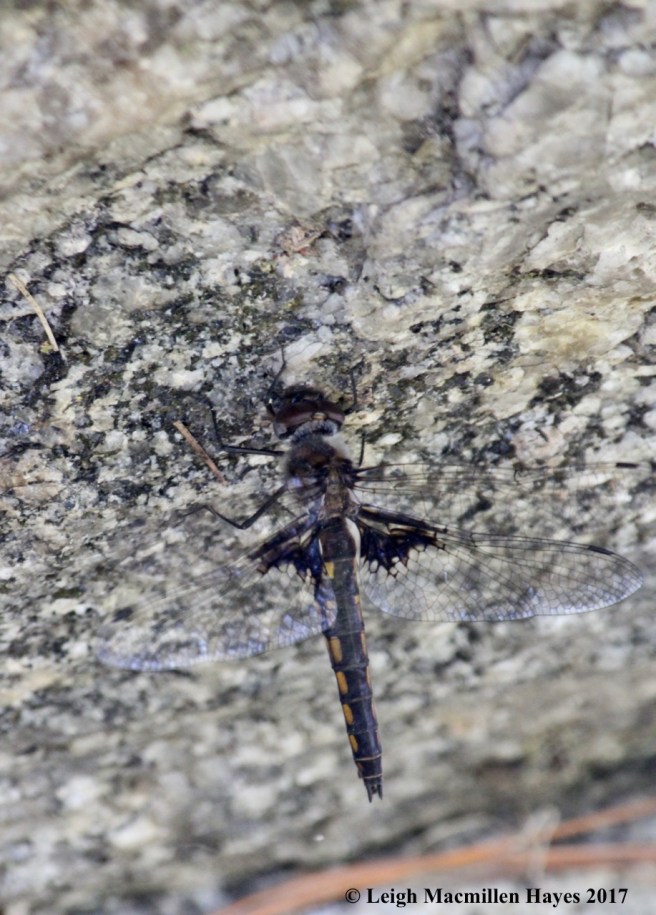
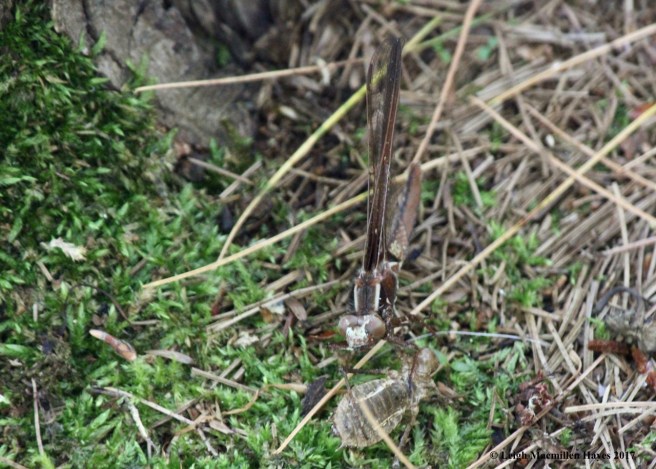
i-dragonfly and exoskeleton 1

to a dragonfly emerging from its exuviae . . .

p16-fold looking toward lighthouse

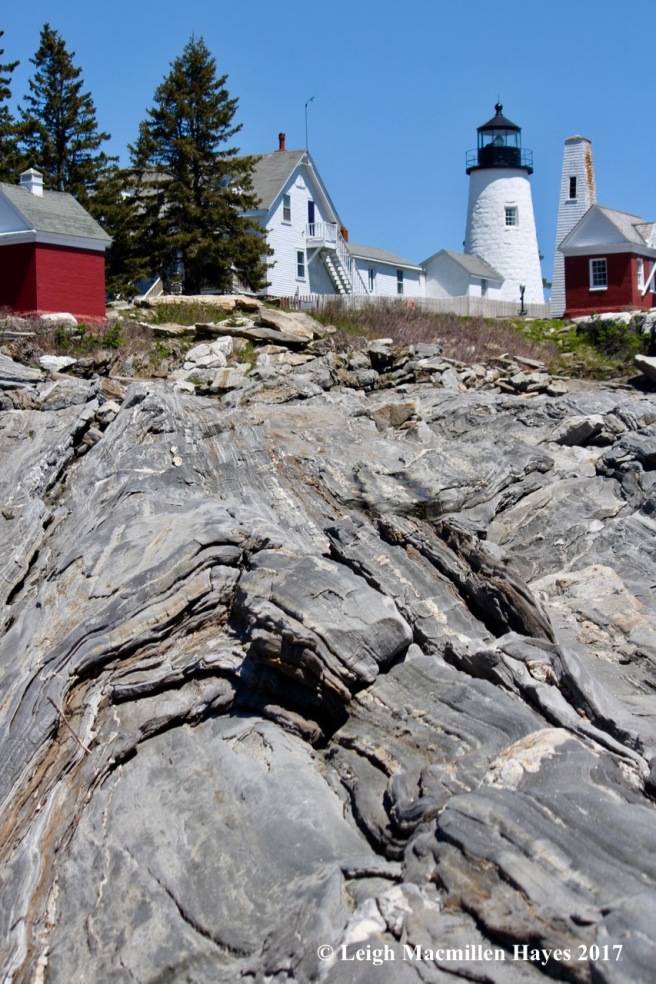
to the folds of the earth at Pemaquid Point . . .

c-geology folds

and Mount Chocorua . . .

h-pond-quaking-bog

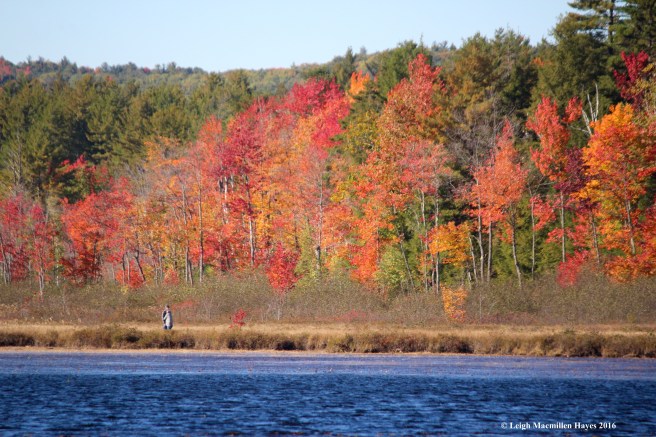
to fall colors reflected on Holt Pond . . .

r-crescent-view-2-1

and throughout Raymond Community Forest.

p-a future embraced

The answers are wrapped up in the promise of blossoms to come . . .

l-dandelion seed head

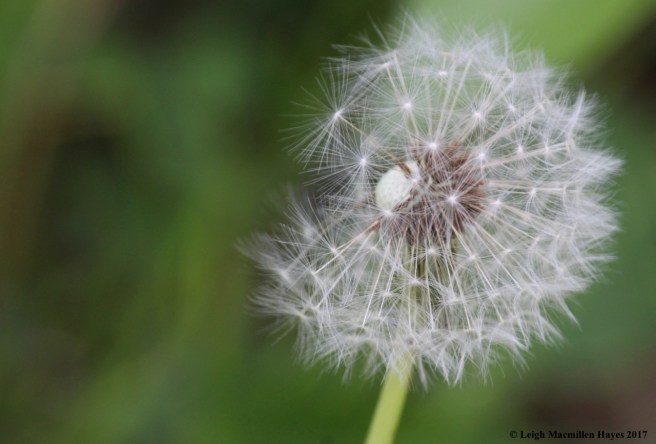
and seeds on the fly.

p-today-in-and-out

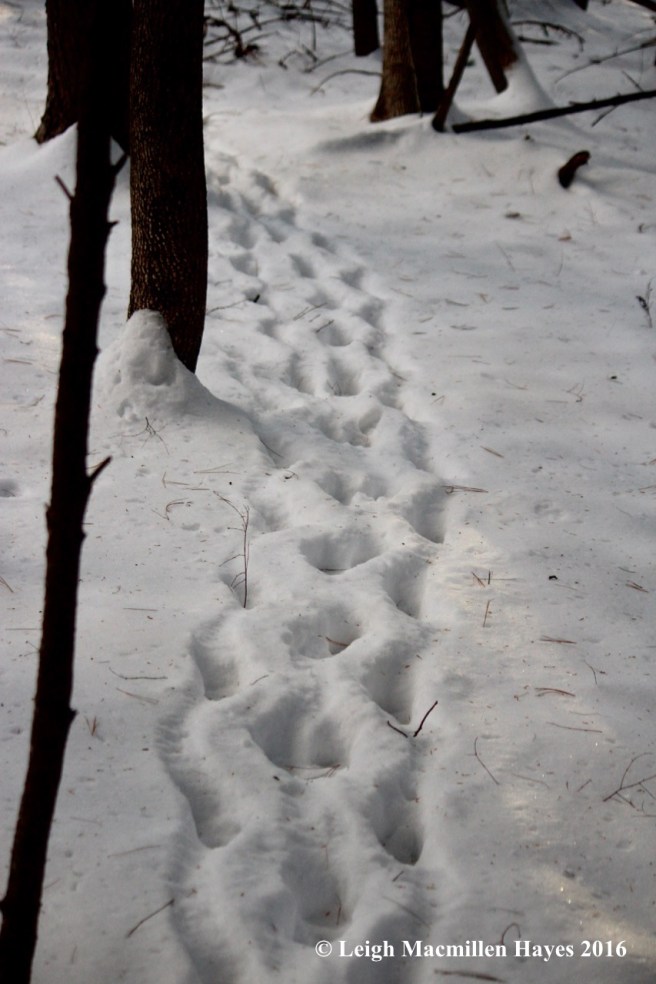
It’s recognizing the swish of a porcupine’s trail in the snow . . .

m-opossum-print-2

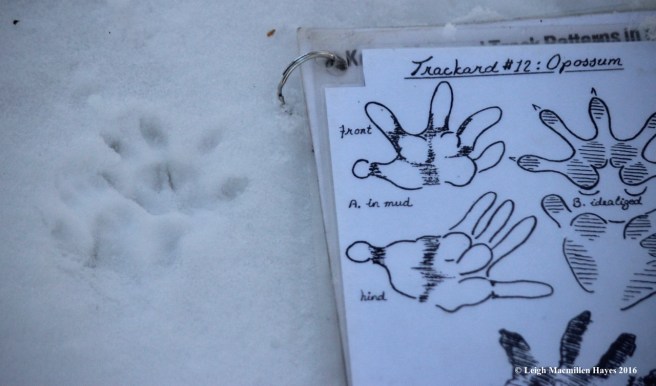
or the realization that a track I’d never seen before was visible in our woods—that of the opossum.

artist conks

And it’s all enveloped in the knowledge that mycelium cover the earth and through the process of decomposition break down most matter (all matter that matters, but not things we’ve created such as our ubiquitous plastic or even this computer).

l-wood fern with sori

It’s the realization that the Earth was formed eons ago and that the word eon refers to geologic time and that plates collided and continue to do so and pressures form and rocks develop. And plants like ferns . . .

l-princess pine

and club mosses were once dominate species and as tall perhaps as our trees. It’s this and so much more.

i-lady beetles canoodling

And all of this brings me to faith. And I realize I do believe in a spiritual being. But my spiritual being is not imbedded solely in the Trinity of Father, Son and Holy Spirit. It’s more than that. In all times, we’ve found people to emulate and follow. The Bible offers one such example and its writers were brilliant. For Jesus was a common person who came into this world in a way I’ve yet to understand. Was Mary really a virgin? Or was she a young woman free of sin? Or?

i-damsel larvae

According to the stories, for that’s what they are, or perhaps they are tales, sagas, lore passed from one generation to the next until all was eventually jotted down and probably revised many times over and edited by publishers, Jesus was a carpenter. A common man. With wise thoughts and perceptions. I know many such people. And so, I think that the Bible offers an example or a way to live. And a way to think. And a way to behave. But, I don’t think it should be taken literally. I don’t know how the universe was created, but it’s too simple to merely state God created it in one day or even one week.

i-baskettail, common baskettail 1

I also don’t understand those thin places where one can see both this side of life and the other side of heaven—if that’s what thin places means. But I do know that I’m intrigued by the concept. Maybe I’ve experienced such without the realization. And maybe I need to practice awareness and be more open to offerings.

i-ambush and bee 2

I have discovered that heaven and hell remain the same, whether I walk through the red doors at the church entrance and partake in communion and fellowship or find my way along a wooded path where other revelations occur before my eyes. And so, after all these years, while I embrace a church service, I’ve learned to leave guilt behind on those Sundays I choose to worship outdoors rather than in.

i-moth

In either case, I’ve so much more to learn. So many things not yet recognized; so many questions not yet formed.

i-hoverfly1

And so today, I invite you to continue the journey with me—into this world of wonder. May the answers slowly reveal themselves, while the questions never end.


Belated Book of September: Butterflies and Moths

All month long books have been staring at me from their shelves, piles or baskets, a few begging for the honors. But each time I thought I knew which book I’d feature for September, a different month made a claim on it.

b-monarch 1

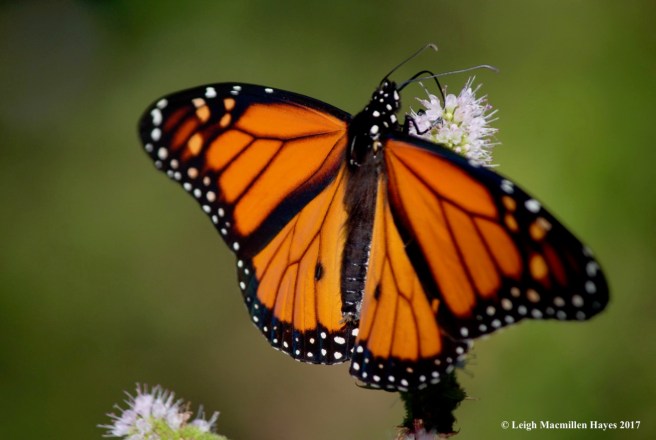
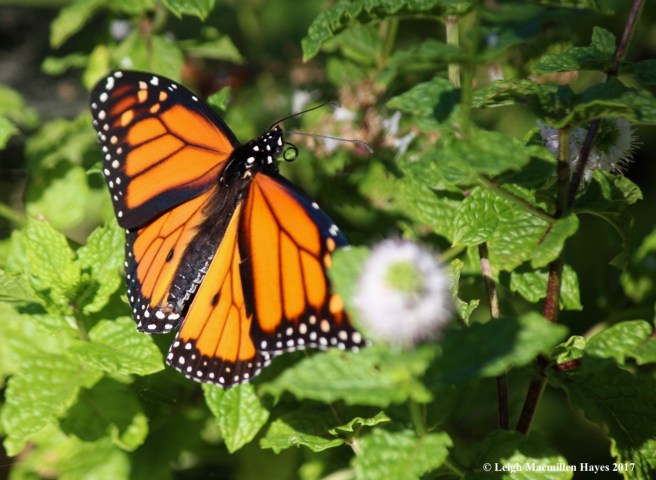
And then, mid-morning, I looked out the kitchen window and saw a certain visitor nectaring at the flowering mint and instantly knew what book it would be.

b-cover

Bufferflies and Moths by Dr. Walter Robert Corti is an oldie but goodie that has graced my personal library since 1964. I don’t remember its origin, but think it may have been a birthday or Christmas present when I was in second grade–such was my wonder even then.

On the back, The Odyssey Library is described as “a new and exciting concept in book publishing, combining in convenient, compact format, texts by leading authorities and full-color illustrations by outstanding artists and photographers. Designed for the reader who wants to add a new dimension to his [or her] understanding of the world, these are books to enjoy, to study, to treasure.” Indeed, I’ve treasured it for over fifty years and referred to it often.

b-monarchs and others

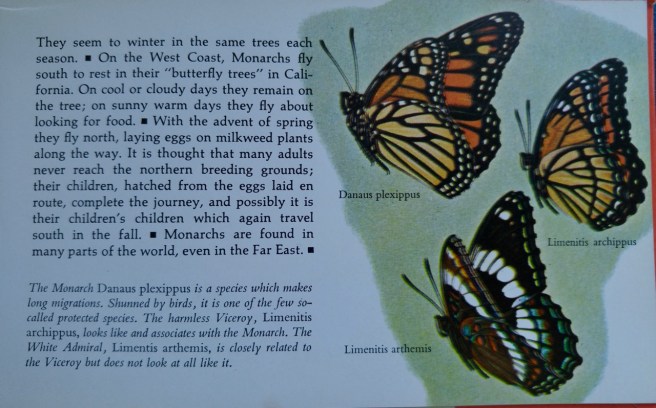
Today found me examining the differences between “look-alikes” because I wanted to make sure that what was fluttering about the garden wasn’t a Viceroy.  They do look similar, but the Viceroy is smaller than a Monarch and its hind wings have a line that runs parallel to the outer margin. There are other differences, but that was enough for me to note. Another thing to note: the illustrations in this book were by Swiss artist Walter Linsenmaier.

b-monarch 2

No such line existed on this morning’s beauty.

b-monarch map

Though the author states that in September, “large flocks” of Monarchs gather to fly south, and that was once the case, at least in my backyard it’s no longer true. This is only the second one I’ve seen this year, the first being in a field yesterday and it didn’t light long enough for me to snap a photo. In the past few years, I don’t recall seeing any. But . . . when our twenty-something sons were the age I was when I received this book, we did have large flocks that completely covered some flowering plants and shrubs.

b-monarch probiscus 2

Outdated though the book may be, some things haven’t changed. The order is still Lepidoptera, so named for the scales on their wings; lepis being Greek for “scale,” and pteron for “wing.”

b-monarch probiscus 1

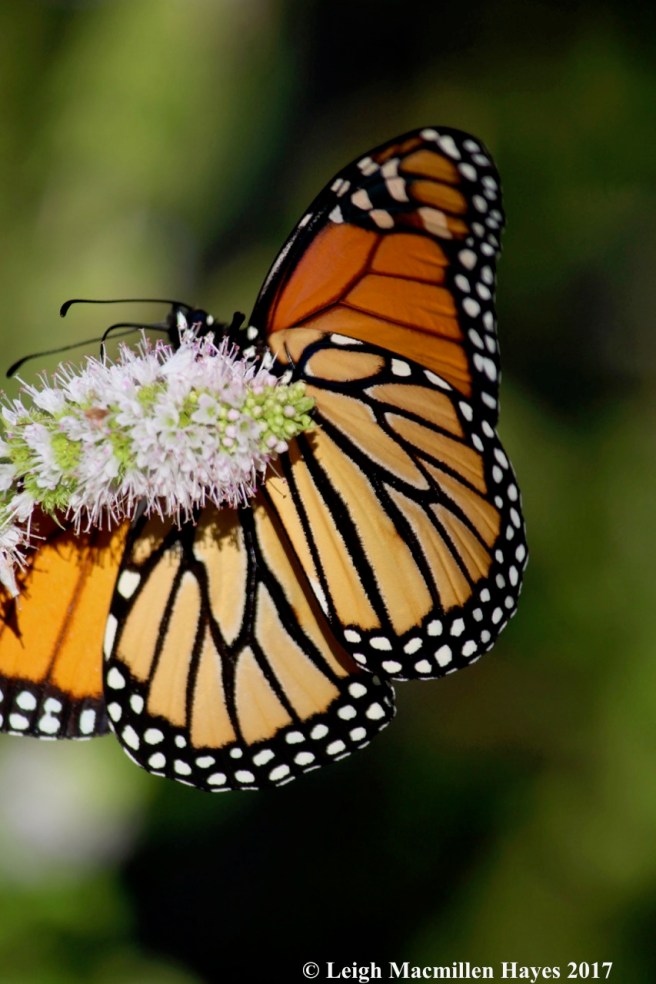
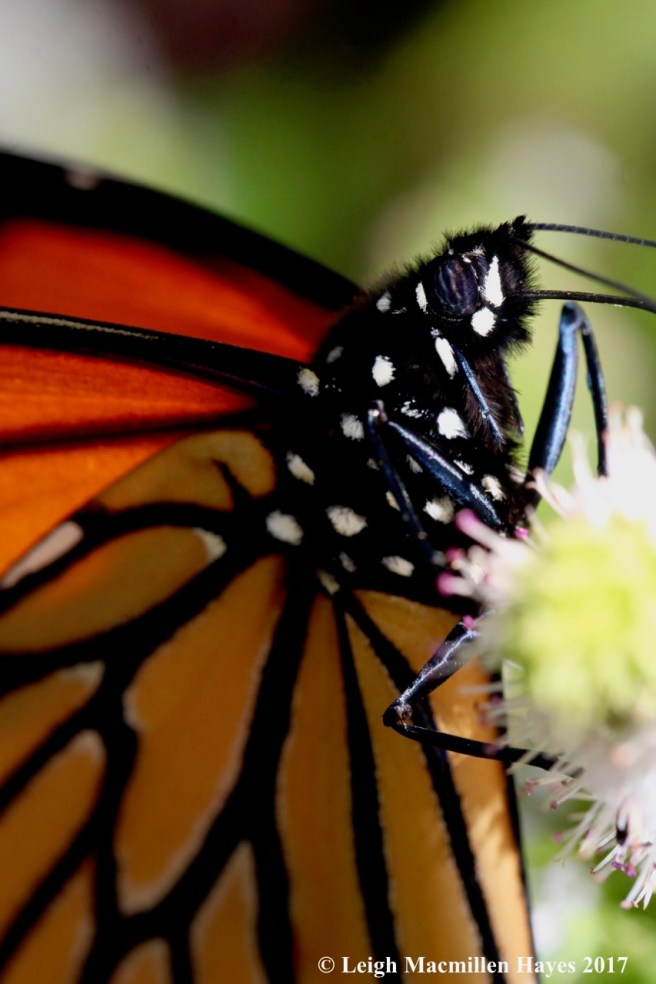
Some cool features include the tongue or proboscis–can you see the coiled dark tube below the antennae? Once you find it, return in your brain to your sixth birthday party (if you had one–my next-door-neighbors, Pat and Kate always came for my birthday dinners, but we never had parties) and the blowouts that were curled until you blew into them and made noise.

b-monarch 6

The same thing happens with the proboscis (though it lacks a sound effect), which is actually two half tubes joined to form one, and includes muscles, nerves and the trachea, as it straightens out and penetrates the far reaches of flowers in search of nectar to suck.

b-monarch eyes

The book also mentions the faceted eyes–each compound and consisting of up to 17,000 “ommatidia,” or  individual light receptors with their own microscopic lenses. Think about what the world around them looks like. How in the world do they hone in on their targeted plants? They have their ways. Read on.

b-painted lady 2a

Prior to seeing today’s Monarch, I’d been blessed with many opportunities to observe Painted Ladies, which share similar colorings to a Monarch, though the pattern differs.

b-painted lady map

Dr. Corti describes their migration pattern, but mentions with all that migrate, it could be that it’s a second or third generation that actually completes a given journey.

b-painted lady 3

The outer wing coloration is what always reminds me that I’m looking at a Painted Lady and not a Monarch.

b-painted lady 1

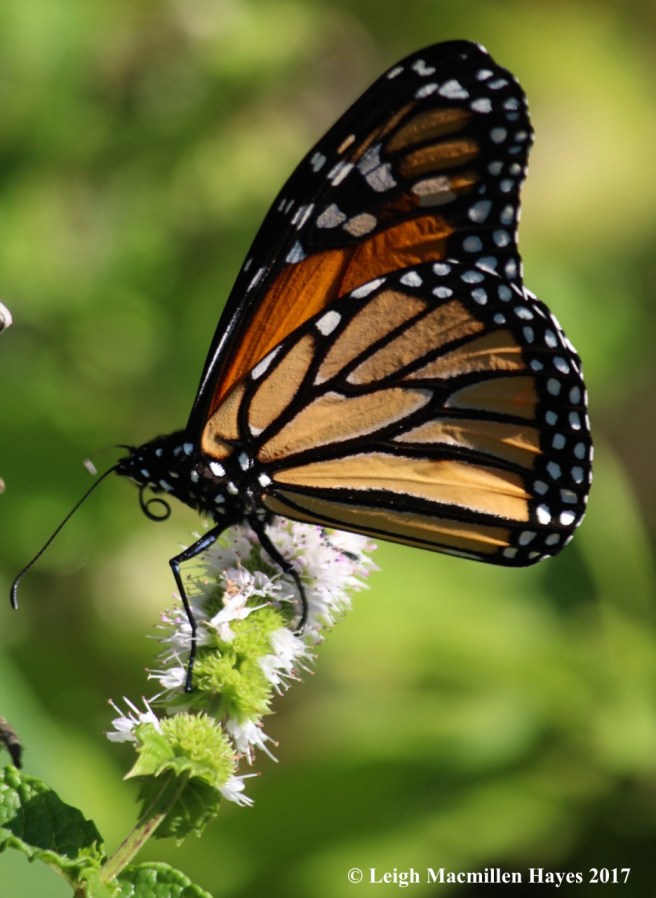
One thing I’ve observed about the butterflies that I watch–nectaring can happen whether one is right-side up or upside-down. The straw works from any approach.

b-painted lady 2

The club-shaped antenna, common features of butterflies, are angled and work like radar to detect scents. And I mentioned the palpi, which are quite visible here as they are the small projections that protrude from the front of the head. These are covered with scent-detecting sensors as well. And actually, more sensors are located on the thorax, abdomen and legs. That’s how the butterflies find their sources of nourishment.

b-painted lady 5

One of the things I noted about the Painted Ladies that have graced my path lately is that they flit from flower to flower in constant motion . . .

b-painted lady 9

and seek goodness . . .

b-painted lady 10

from a variety of benefactors. I know Monarchs do the same, but today the one I watched much preferred the mint.

b-fritillary 1

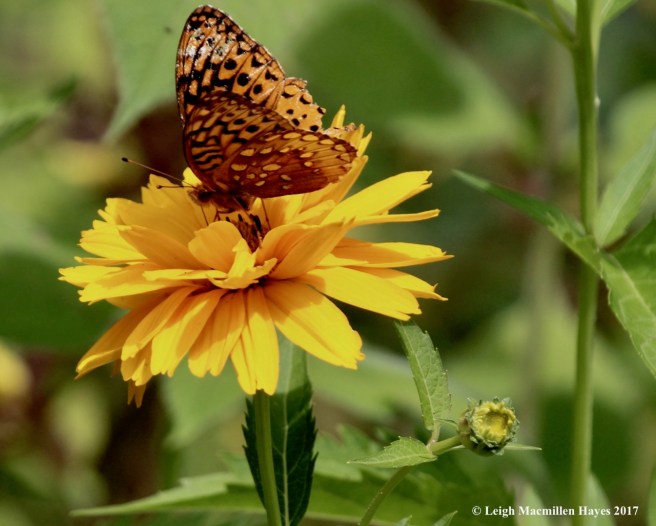
An early season butterfly that some may confuse with the Monarch is the Fritillary.

b-fritillary 2

While its coloration is similar,

b-fritillary probiscus

its much smaller in size.

b-clouded sulphur 1

Most butterflies feed with their wings pulled together, such as this clouded sulphur portrayed. I love the subtle blend of pink, yellow and green in this beauty, and especially the yellow-green eyes.

b-white admiral 1

Early on in the summer, white admirals flew about.

b-white admiral 2

Occasionally one posed. Noticed its tattered hind wings. Such is the life of a butterfly.

b-Canada tiger swallowtail 1

We admire them for their beauty and they suffer for it–becoming easy prey. But until they succumb, they spend their days seeking sustenance. And bringing us joy.

As Dr Corti states, “The enchanting colors of their wings, their intimate commerce with quiet flowers, their modest food needs, the innocence of their courtships make them seem like fairy creatures from some unspoiled paradise. They are a delight to curious children, harmless idlers, contented topers, and strolling lovers wherever they appear. It is as if they were created solely to make the world more beautiful.”

Weren’t they?

I know there are updated butterfly guides, but I still love my first.

Butterflies and Moths, by Dr. Walter Robert Corti, The Odyessey Press, New York, 1964.


The Will of the Wasps

While doing some work on our house today, I suddenly heard a thump and then saw my guy down on the deck. Huh? He’d been on a ladder last I knew. I grabbed the phone as I dashed out the door.

With a grin, he assured me that he was OK, but that he’d been stung on the ankle, first by a bee and then a double sting by a wasp. Neither of us was surprised, given the wildflowers in the garden where the ladder was placed so he could reach a second floor eave.

I spend hours watching all the pollinators at work, getting to know them by species and habit. But . . . I stand still for the most part and they fly around me. His movements were much quicker and more intentional.

h-hornets nest 1

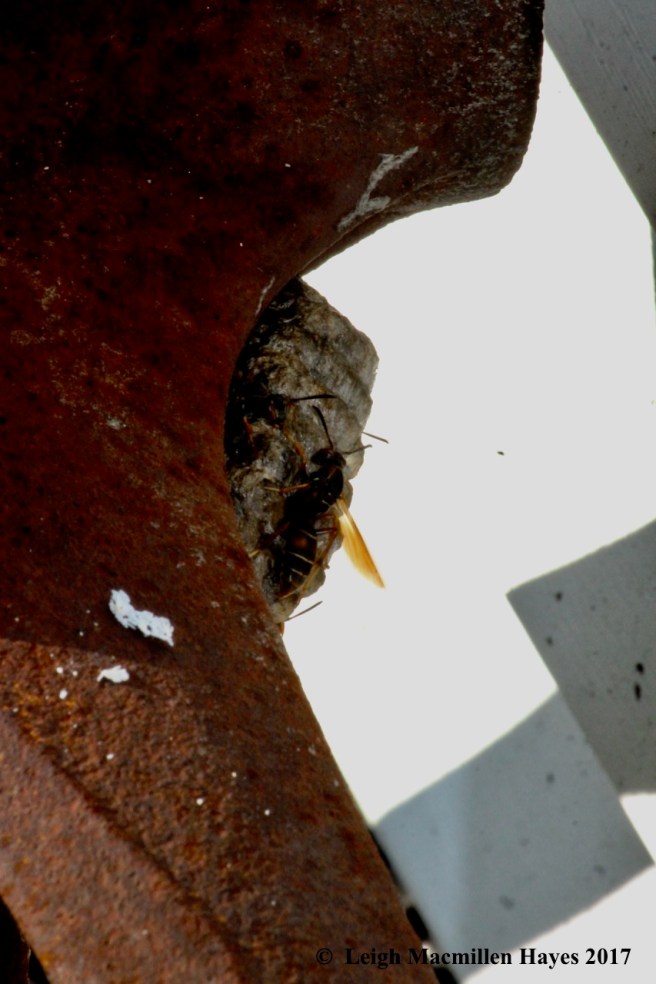
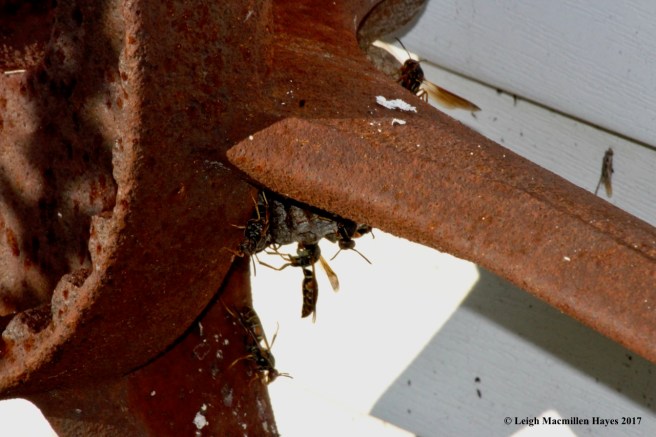
As we surveyed the garden and figured the best path for his return to it, we made a discovery–the wasps were building a home of their own right beside the narrow path my guy had been following to retrieve different tools. Notice the topaz-colored wing? It fluttered like mad, though that wasp stood still.  Was it sending some sort of message to others?

h-hornets 4

If so, there were plenty of workers available to receive the memo–each doing its job of contributing to the construction project.
h-hornets 8

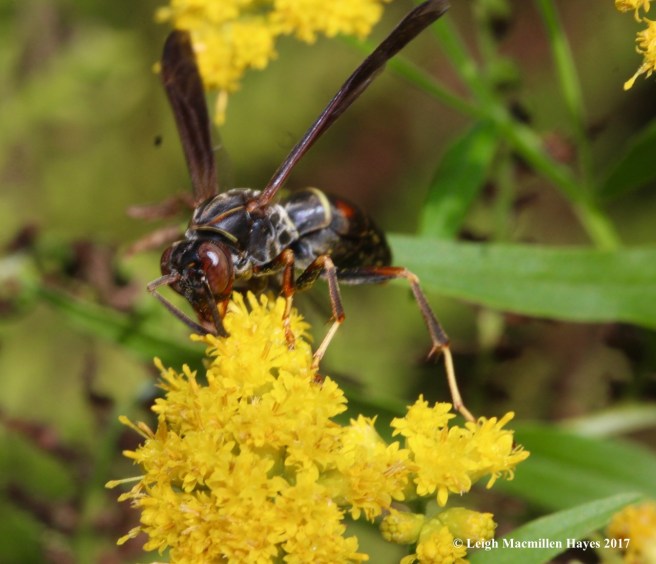
Below and above, they came and went, the tools of their trade being within their mouths.
h-hornets 10

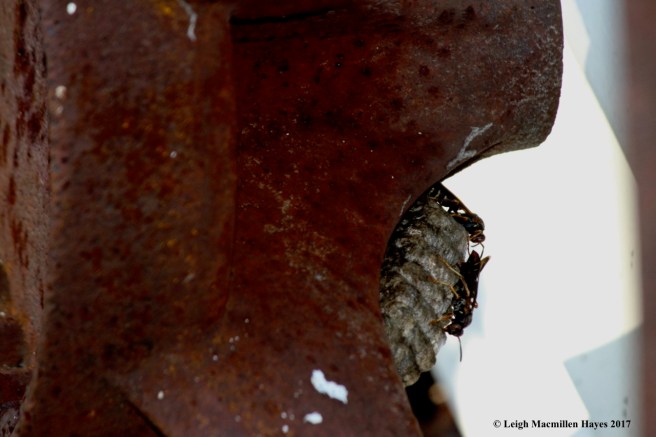
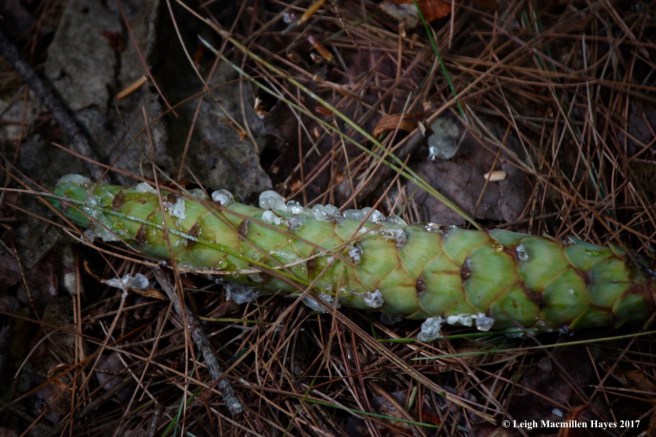
They’d collected plant and wood fiber, mixed it with saliva, and chewed it into a papier-mâché of their own form.

h-hornets 11

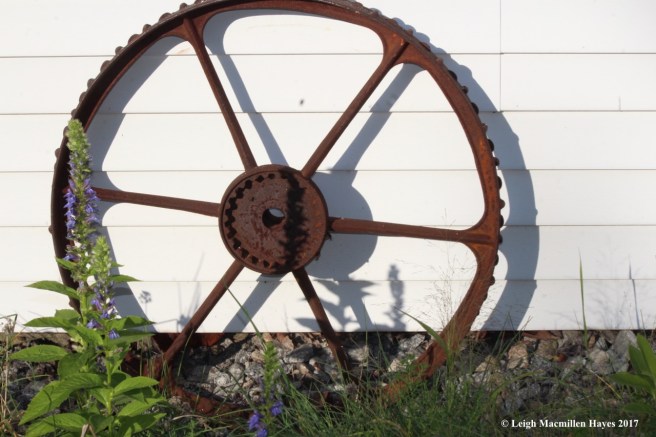
The location of choice for this latest construction was against an old tractor wheel that leans against the house. Over the years, we’ve found them building everywhere, but what my guy doesn’t know …

h1-horn 1

is that a few months ago a queen began an umbrella-like structure in the back door jam.

h1-horn 2

I watched the dangling nest slowly take form.

h1-horn 3

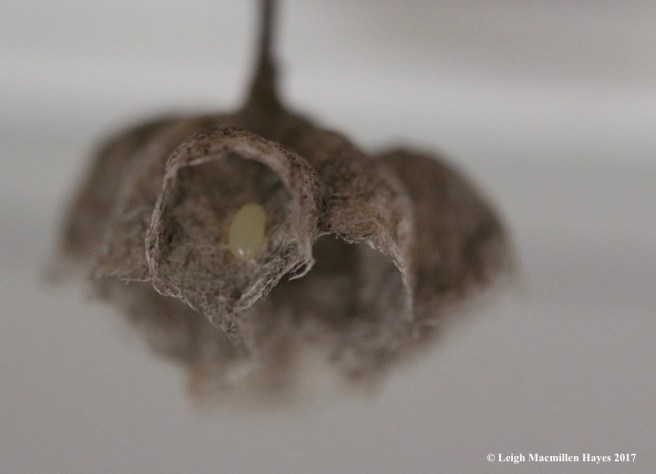
Within each cell . . .

h1-horn 4

an individual egg was deposited.

1-horn 5

Two wasps never seemed to mind that I pulled a kitchen chair over and climbed up to watch the action.

h1-horn 6

Work continued from morning to night, the wasps slipping away through a sliver of space in the outer door and then returning. Late in the afternoon, they settled on the nest and didn’t move until the next morning. Eventually, I knew I had to put an end to this construction project and while the adults were off seeking more fiber, I removed it. And felt guilty. But, I didn’t want my family to get stung–famous last words.

h-hornet on goldenrod

Paper wasps aren’t typically aggressive unless they perceive a threat–and today, much to my guy’s dismay, they felt threatened.

Despite the confrontation, we have to remember that they are beneficial to the garden as pollinators and predators.

My guy survived and for a bit longer, so will the wasps.

Home again, home again

Because we’d spent most of the summer at camp and I barely stopped at home, I hadn’t visited my usual haunts in a while. Today, that changed.

o-green cone sap

Into the woodlot I ventured, where green pine cones oozing with sap decorated the forest floor.

o-green cone midden

The remains of those serving as sustenance also lent a bit of color from the center cobs and deseeded scales left behind by red squirrels.

o-Inidan pipe from above

Most of the Indian pipes were past prime, but they remained beautiful with their flowers turned upright since being fertilized.

o-pine sap

The same was true for pine sap, which supported more than one flowerhead per stalk.

o-powerline

Emerging from the cowpath onto the power line, I found conditions to be as expected–anywhere I’ve traveled past such a line this summer, I’ve noticed that Central Maine Power has sprayed. I shouldn’t complain for I depend on that power and understand the need to keep the trees cleared, but it does make my heart cry for all that is lost.

o-sundew sad face

My sundews were among those that had suffered, brown and shriveled were they.

o-juniper

The white pines took a beating as well, but the juniper continued to grow and produce a bounty of fruits.

o-cicada

As I walked, the air buzzed with a chorus of cicadas,

o-field cricket

field crickets,

o-grasshopper

and grasshoppers.

o-red maple cotyledon

A visit to the vernal pool was a must, and in true vp form all was dry, but from the bottom new life sprang forth in the form of red maple . . .

o-vp, quaking aspen

and quaking aspen seedlings. It’s worth a try on their part, but I suspect they’ll be short-lived for soon enough the pool will begin to fill with water from late summer, fall and winter storms yet to be.

o-vp, red leaf

Speaking of fall, some red maples had already stopped producing sugar, thus the chlorophyll disappeared and anthocyanin formed–evident in the red hue.

o-vp feather

I found some other color in a small blue jay feather. I only saw two and didn’t think much of it, until . . .

o-blue jay feathers on stump

I passed by an old stump and did a double take. It appeared a young jay had served as a feast.

o-field succession

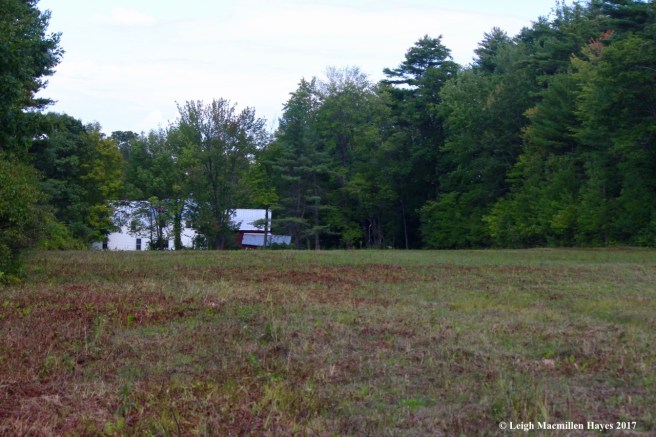
My next stop was the field, reached by passing through the two stonewalls that demark the boundary of our extended property. The field belongs to our neighbors’ parents and they recently had it bush hogged. At the western most end stood a fine example of forest succession, from mowed area to wildflowers and shrubs to saplings and finally the forest beyond.

o-small-flowered gerardia

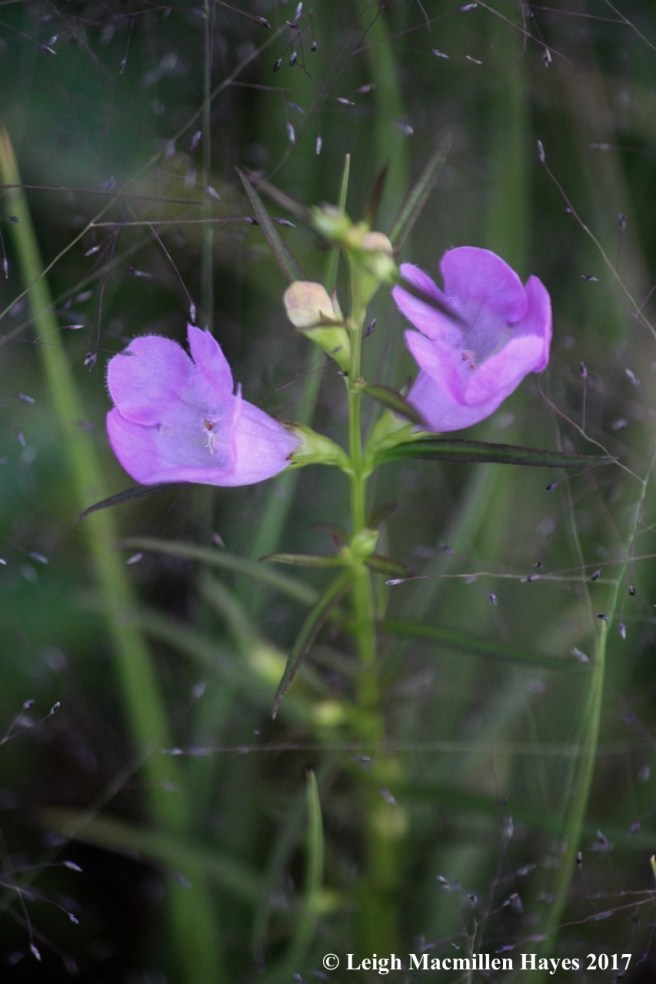
Among the flowers at the edge I found one I hadn’t met before–small-flowered gerardia with delicate, hairy petals and needle-like green leaves bordered in their own shade of purple.

o-steeplebush

Being Sunday, it seemed apropos that the steeplebush reached heavenward.

o-meadowhawk above

As I continued to look around, a meadowhawk flitted about, pausing occasionally.

o-meadowhawk face

I knew if I stood still long enough, it would get curious and let me approach.

o-meadowhawk up close

And I was right.

o-home view

At last it was time to head in. Home again, home again, jiggity jig.


Bee Kind

Because I have the good fortune to be involved with the Greater Lovell Land Trust, I spend my summers attending talks and walks on a variety of topics. Prior to this week, we learned about lichens, bryophytes, pileated woodpeckers, fungi, flowers, ferns, medicinal plants, peat bogs, wild turkeys, and land conservation. And then last night our focus turned to pollinators and the pollinated.

Guy Pilla, a beekeeper from Fryeburg, Maine, gave an informational talk on the art of beekeeping, followed by a question and answer period, and the crème de la crème –honey tasting. How often have you had a chance to taste Tupelo honey?

w-Guy 1 (1)

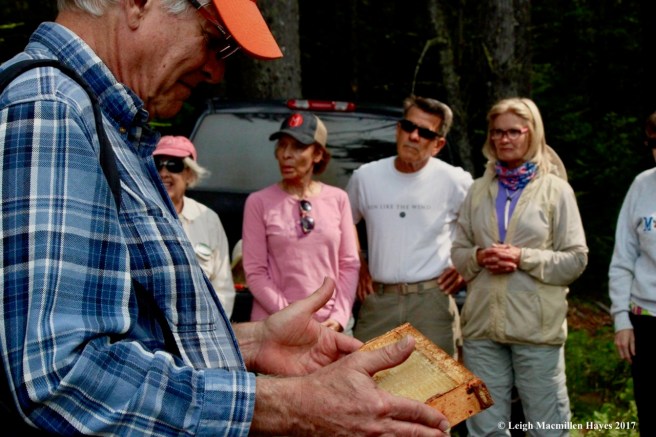
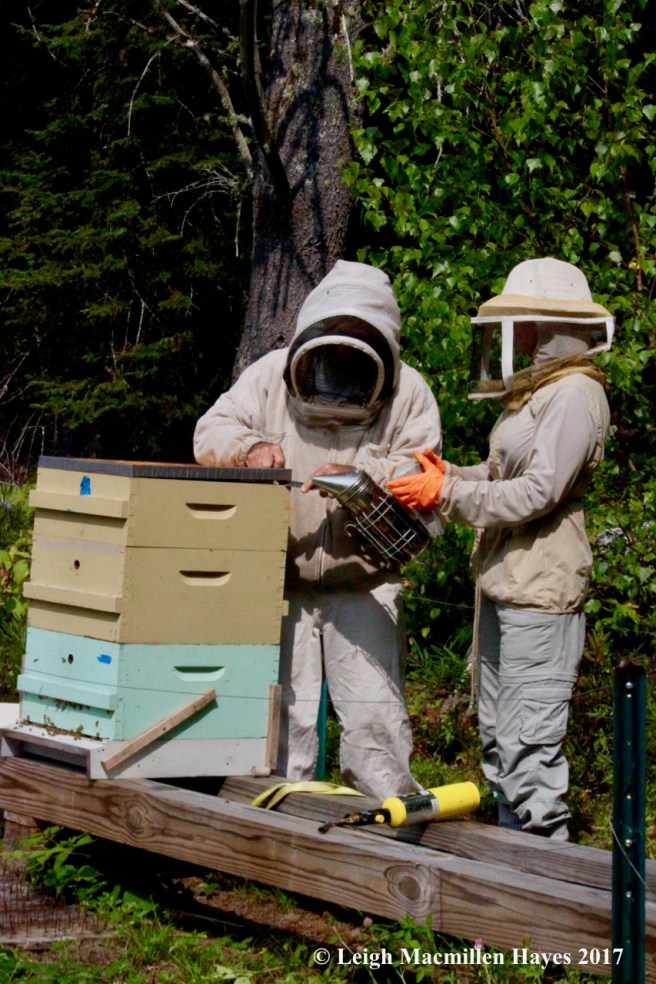
This morning we met up with Guy again, as he took us to a hive he has set up on private property under conservation easement with the land trust. Twenty-six of us gathered around to listen, watch, and wonder.

w-showing the frames

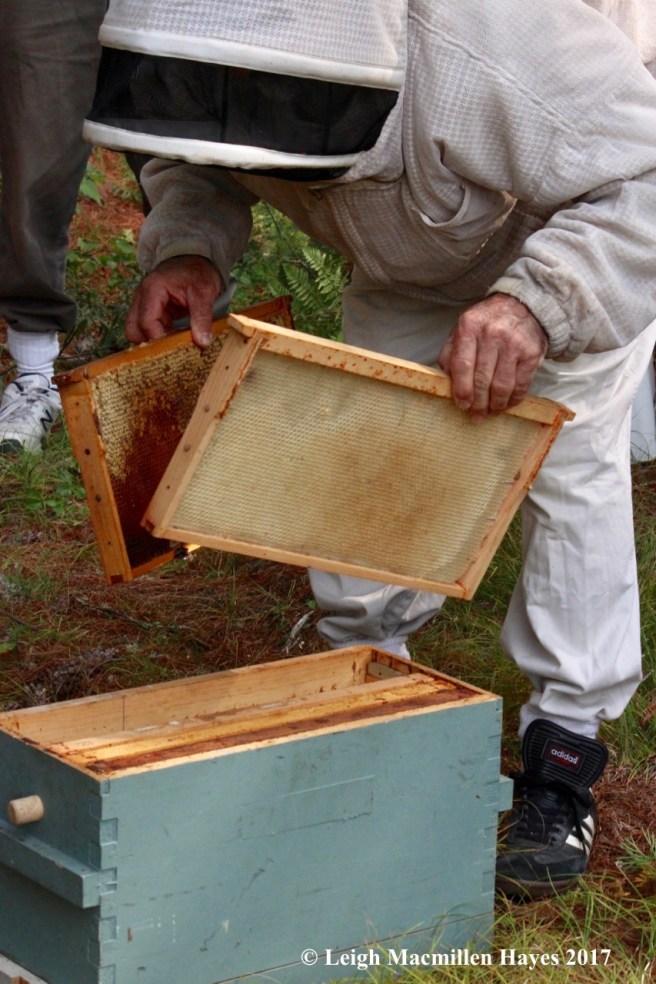
In his alien costume, Guy passed around frames, giving us an opportunity to look at a range of cells as he explained about spacing for honey expansion, storage and more. We learned about the good and the bad of beekeeping, but mostly the good.

w-Gary looking at frame

As frames were passed around, we noted variations and the fact that some were lightweight and others heavy.

w-hive--bear precautions

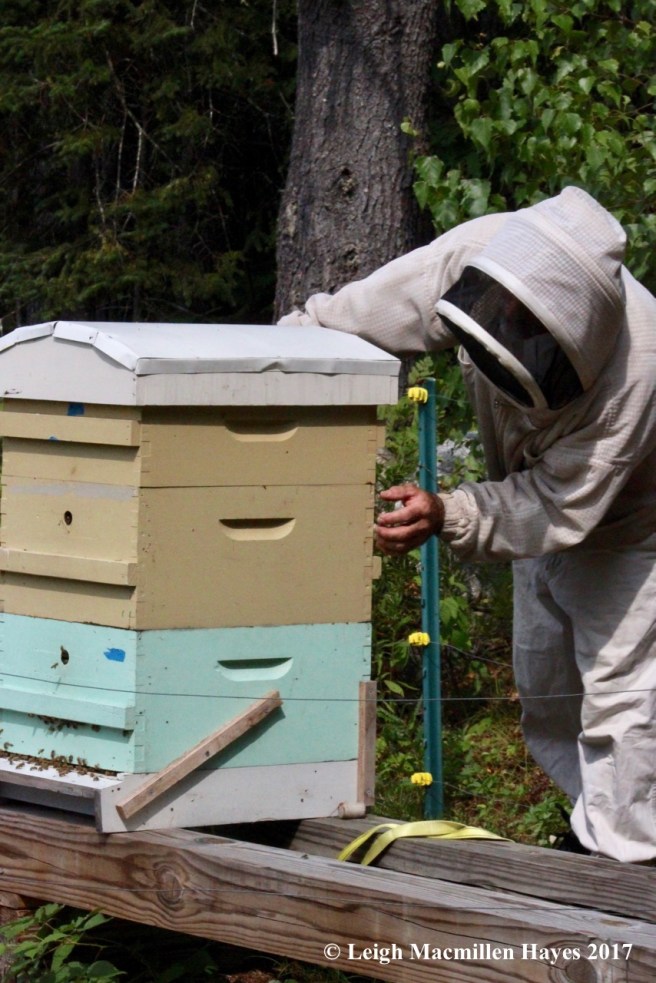
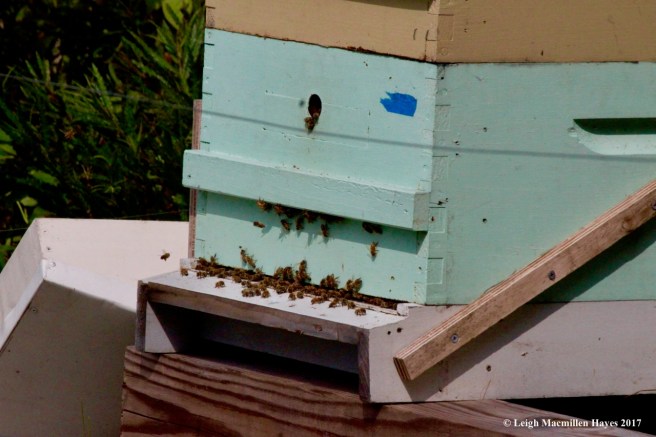
At last it was time for Guy to open the hive. Notice the electric fence surrounding it? And the fact that it’s strapped down. Bear defense. And we know there’s at least one in the area.

w-dressing like a beekeeper

And then he walked through the crowd and chose Mary to be his assistant. She donned a hat and veil to protect her face and neck, and took on the look.

w-testing the smoker

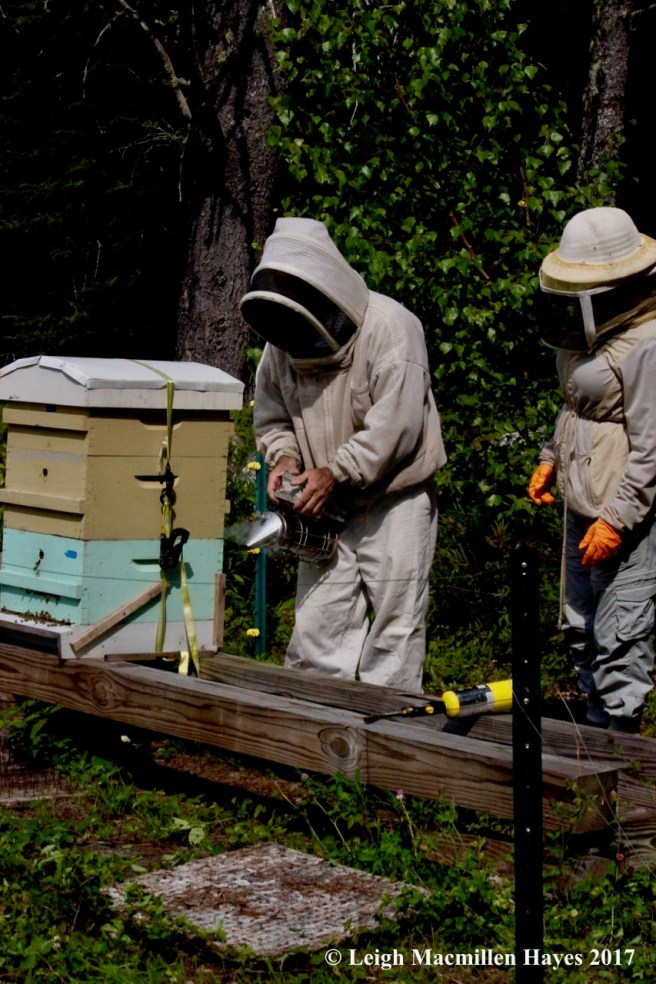
Into the bee yard, she followed Guy. If you look closely, you’ll see two platforms on the ground and might notice that the one directly below the hive has nails sticking up (the other is turned upside down because Guy only has one hive at this location this year). Those are to deter skunks, another predator. As Mary watched from behind and the rest of us watched from a few feet away beyond the fence (and out of the bee line), Guy ignited the smoker he’d filled with pine needles.

w-smoke coming out of smoker1

It took a few minutes, but finally, smoke puffed out.

w-Mary practices the smoker

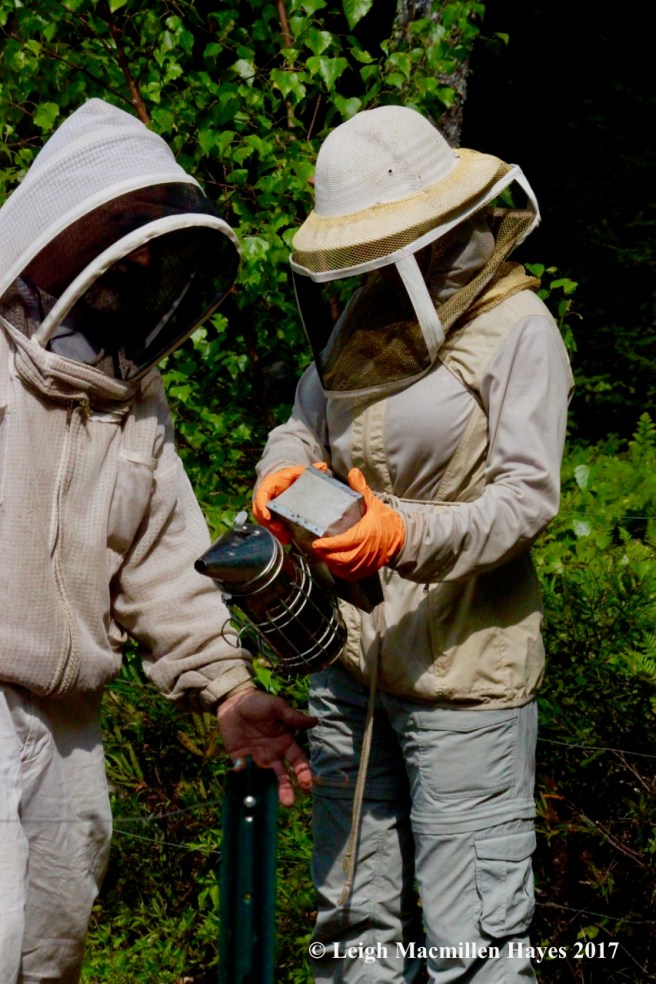
He then passed it to Mary, and her task was to press the bellows and create smoke. The smoker is an important line of defense.

w-preparing to open the hive

As we continued to watch, Guy took the straps off and explained the construction of the hive with one super stacked atop another in a vertical fashion. Though he ordered his equipment, he refashioned some of it including the roof, designed to let wet weather flow off rather than gather in puddles on the top of the structure.

w-Mary uses the smoker

As Guy wedged a hive tool into the bee glue (a resin-like propolis), Mary got ready to use the smoker. Smoke fools the honeybees into thinking a wildfire is nearby, thus prompting them to eat more honey in case they need to move to a new location.

w-showing off his bees

And with honey in their bellies, they become more docile. Note that Guy isn’t wearing any gloves. Usually he does, but Mary wore his gloves this morning and he trusted all would go well and the bees would remain calm. He was certainly calm, but spoke of his early days in the beekeeping business and how sometimes he would jump. Bees sense fear behavior exhibited by heavy breathing and that’s when stings occur. Having been stung recently after some youngsters received stings, I thought I was remaining calm, but apparently my breath spoke for me.

w-hive levels

We learned so much from Guy last night and today–about their various jobs as male drones, queens, and female workers who really do so much of the work. The workers clean out old material from inside the cells, attend to the queen, carry dead bees or larvae outside the hive, guard the hive’s entrance, fan at the entrance during the hot weather to keep the inside temperature down and to circulate fresh air throughout the hive, receive nectar and pollen,  store it away in cells, nurse newly laid egg, and seal cells around larvae at the appropriate moment. After doing all of this for about three weeks, they’ll earn the rights to collect nectar and pollen for about six. And then . . . they’ll die of exhaustion. Indeed.

w-wandering among the flowers

After our time at the hive, one of the land owners, Linda, took us on a mini-tour of the 100-hundred-acre property. Her goal was to take us to a flower meadow she and her husband have created. Originally, it was a garden with raised beds, but Linda has been collecting wildflower seeds from roadsides in Maine and New Hampshire and sowing them in the meadow.

w-learning from Linda

Today we were wowed by the results.

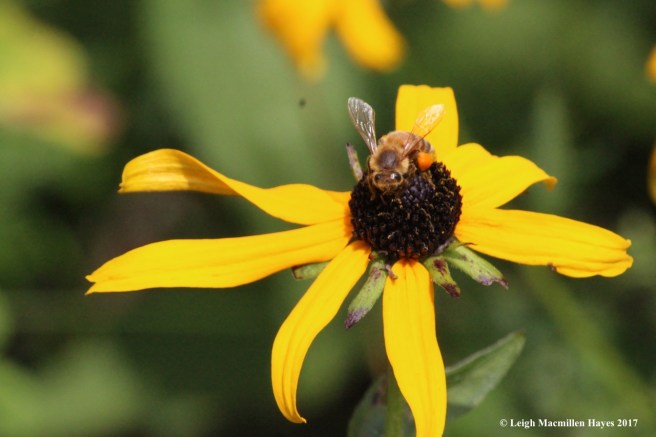
w-honey bee 1

And so were Guy’s honeybees.

w-honeybee on the move

They were on the move everywhere we looked.

w-bee using probiscus for honey

We watched as they sucked nectar with their proboscis mouth part.

w-bumblebee on Joe Pye Weed

Bumblebees also took advantage of the sweet offerings.

w-bumble with loaded pollen baskets

And filled their pollen baskets with the goods.

w-frittilary 1

Not to be left out, a fritillary was among those seeking reward.

w-male meadowhawk

And because we were there, we saw meadowhawk dragonflies on the prowl, he being red . . .

w-female meadowhawk

and she similar but brown.

w-Guy in the field (1)

Guy was tickled to see his bees at work and share his knowledge to all as we listened.

w-linda by her flower meadow

Linda was thrilled to see so many enjoying what she and her husband, Heinrich, had created.

w-Aa, gs 1

And speaking of Heinrich, just before we left he had one more insect to share.

w-Aa, garden 2

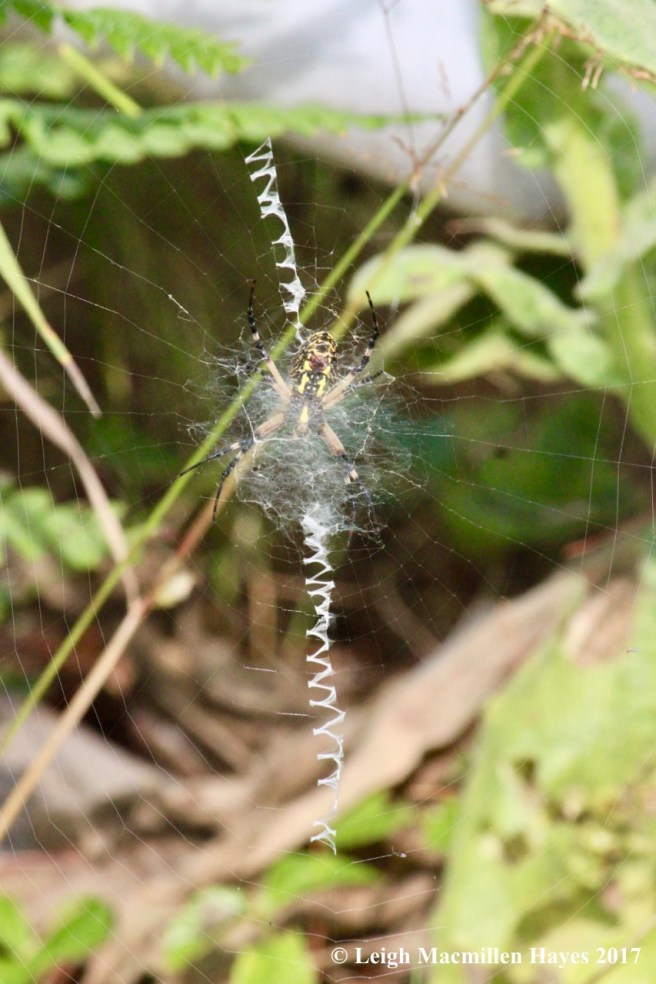
An orb spider known as a yellow and black garden spider or argiope aurantia had built its web near the greenhouse. I used to see these in our gardens frequently, but haven’t lately. Of course, I say that and tomorrow I’ll spy one.

w-Argiope aurantia, garden spider 4

In my brain, this is the smartest spider of them all for they create a web consisting of a series of concentric circles divided into sectors by lines that radiate out. And in the center–that amazing zigzag pattern, which is called a stabilimentum and perhaps intended to attract other insects. Or maybe its a message written in code and intended for a certain pig named Wilbur. This is Maine after all.

w-honey bee 2

We do know one message we learned in the last 24 hours: Bee kind–to one another for we’re all interconnected and we need each other to survive. And that includes letting the undesirables flourish in our yards, including the dandelions. Do so and watch them and just maybe you’ll realize they are desirable after all.

(Two final notes: Support your local beekeepers. Guy’s honey is available at Spice and Grain in Fryeburg; but really, you should buy honey from your area. And if you are interested in learning more about beekeeping, look for your local chapter of the Maine State Beekeepers Association.


Propinquity

I slipped into a kayak this morning and rather than paddle two miles north into the islands, decided to turn the bend round our point and search the shallows closer to home.

c-stump garden

It is there that the old stumps remind me once again that this water was once land until it was dammed back in the early 1800s. The stumps have given way to gardens and I have to wonder about the age of the mosses and plants that call them home.

c-fragrant 5

In a water garden below the stumps, fragrant water lilies added grace.

c-fragrant with visitors 2

And within, they offered a feast for those who foraged.

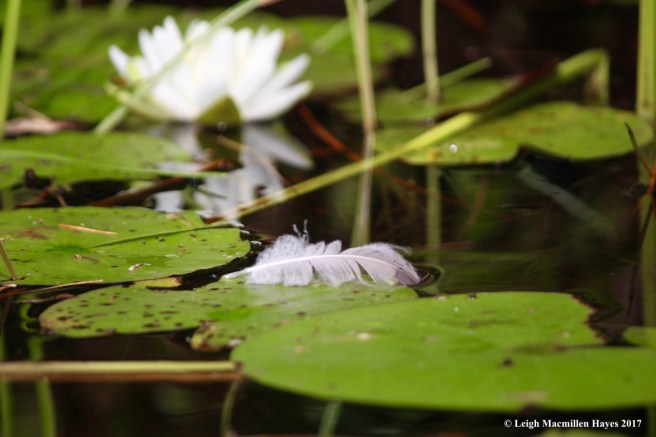
c-feather

Nearby was evidence of another foraging expedition. It didn’t bode well for the young bird that sacrificed its life, but I suspect a larger bird gained a few jules of energy.

c-cove views

Everywhere I turned, there was another garden to inspect.

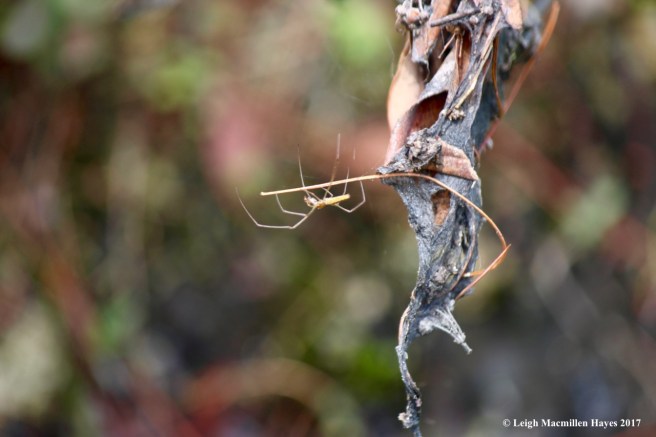
c-spider 1

And friends to meet, be they spiders . . .

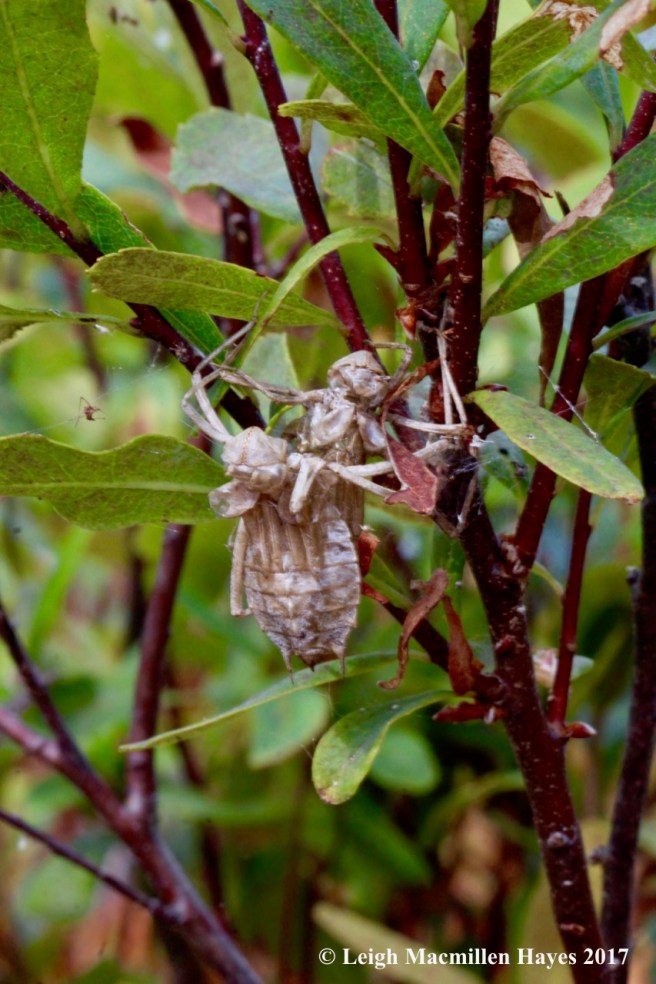
c-dragonhunter exuvae

dragonhunter exoskeletons . . .

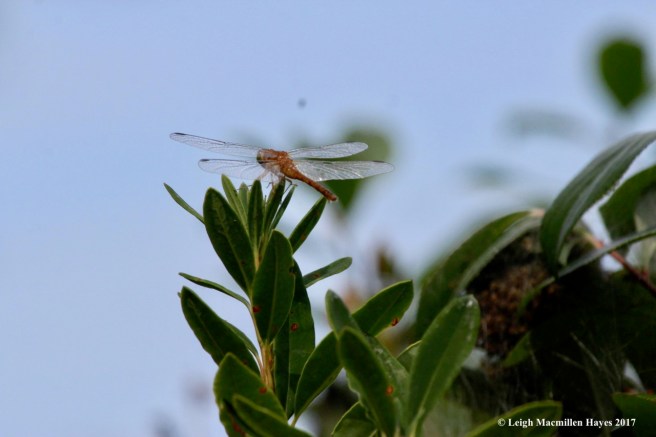
c-meadowhawk 2

or meadowhawks.

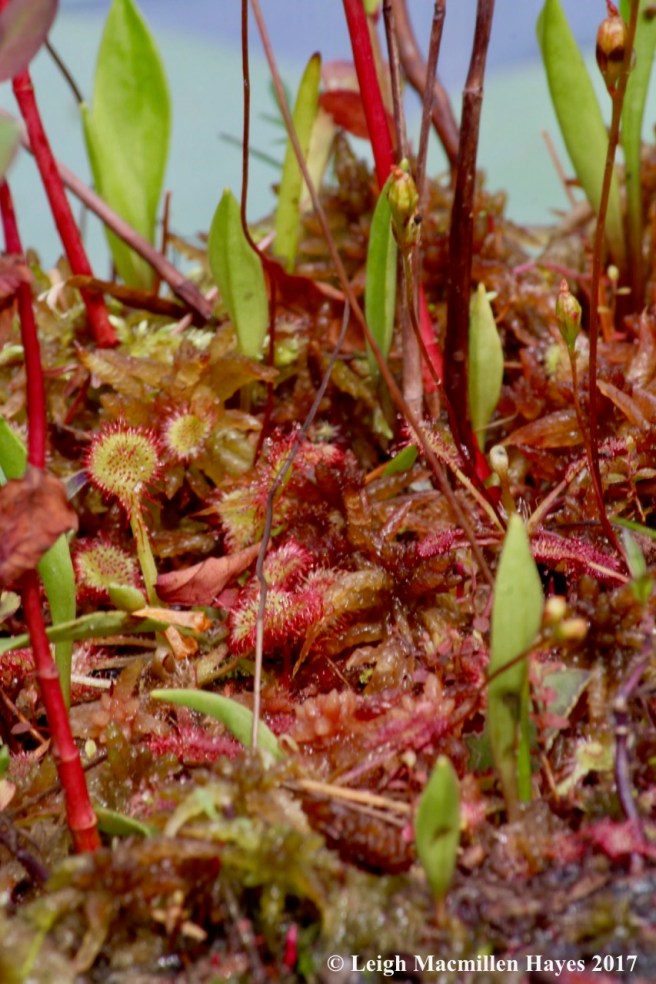
c-spatulate-leaved sundew and insects

Among my favorites were the sundews and I watched several insects approach a spatulate-leaved bent down to the water.

c-round-leaved sundew

Among the spatulates, another showed its face–the round-leaved sundew standing tall above its family members.

c-pickerel 1 a

As I continued to swoon over those beauties, a different color caught my attention.

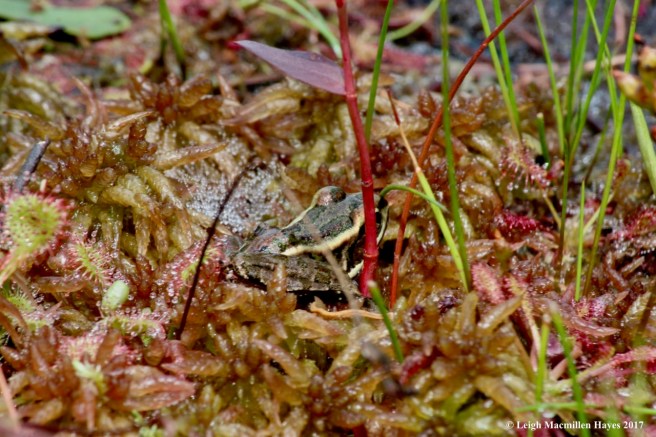
c-pickerel frog 1

As still as could be, a pickerel frog posed and waited . . . I suppose for me to move on.

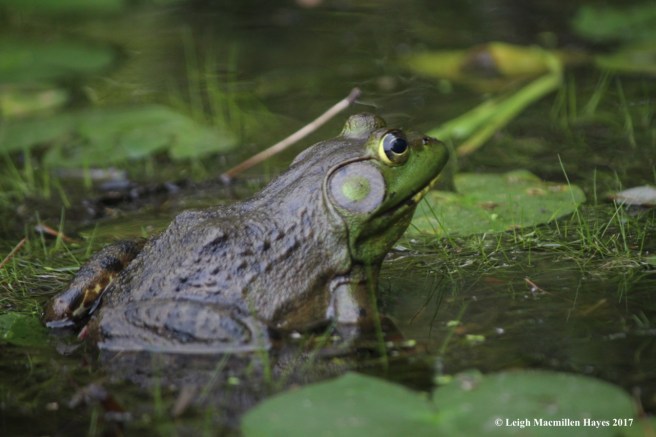
c-bullfrog 1

Eventually I did, and then I met a large male bullfrog–its external eardrum or tympanum larger than its eye. This guy was certainly all ears. ;-) (The female’s eardrum is about the same size as the eye). He sat in wait . . .

c-bullfrog youngster

while a young bullfrog of two or three years tried to hide about eighteen inches away. A bullfrog is a carnivore and while its diet consists of crayfish, water beetles, snails and dragonfly larvae, they also dine on fish, small turtles, young water birds . . . and other frogs. Beware little friend.

c-bullfrog reflection

For a while another bullfrog and I took a stab at a starring contest. He won.

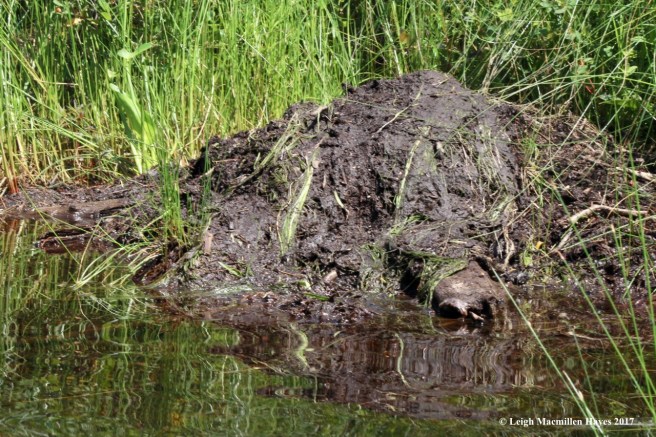
c-beaver scent mound

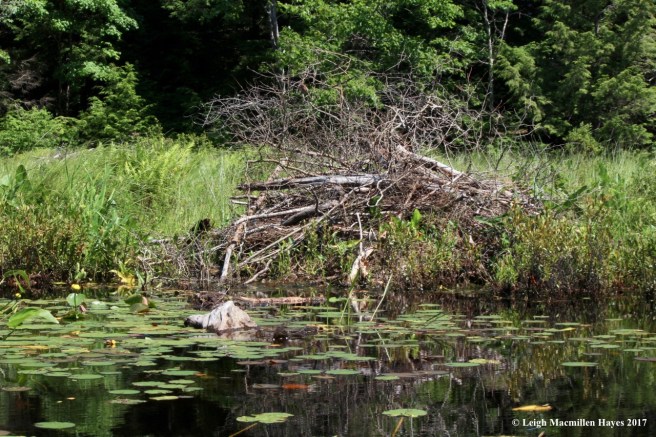
Again I moved on and at last found one of the reasons I headed around the corner. I’d been  wondering about beaver works in this area–and found a scent mound that looked rather fresh.

c-beaver lodge

Across the way was the lodge–that’s been in place since I’ve frequented Moose Pond, which means for just over thirty years.

c-beaver lodge garden

I noticed that the beavers have their own kitchen garden from which to choose–and poking out from it were a variety of sticks. Which ones came from our property? And how many more will be added in October, for I know that’s when they’ll come shopping.

c-camp from south side

Finally, it was time to head back out of the cove to our humble abode on the point.

c-camp 2

It was there that I would finally join my guy for some time in our  rocking chairs.

Propinquity.

Embracing Quiet

If you are like me, you spend too much time racing from one moment to the next during this fleeting season of summer. With that in mind, I chose to slow down today.

m-stump islands

I know of few better places to do that than among the stump islands in the Upper Basin of Moose Pond. It’s been my place since I moved to Maine over thirty years ago.

Once upon a time, this was timberland–albeit prior to impoundment. A log sluiceway was built at the Denmark end in 1792 by Cyrus Ingalls, thus turning pastureland into the Lower Basin, so he could float logs to a nearby mill. In 1824, a more substantial dam was created and the height of that dam was raised by William Haynes in 1872 to create the current impoundment. While the Middle Basin of the nine-mile “pond” may be the largest at over 900 acres, its the 300-plus-acre Upper and Lower Basins that I like best to explore. And because the Upper is right out my summertime back door, I spend the most time there.

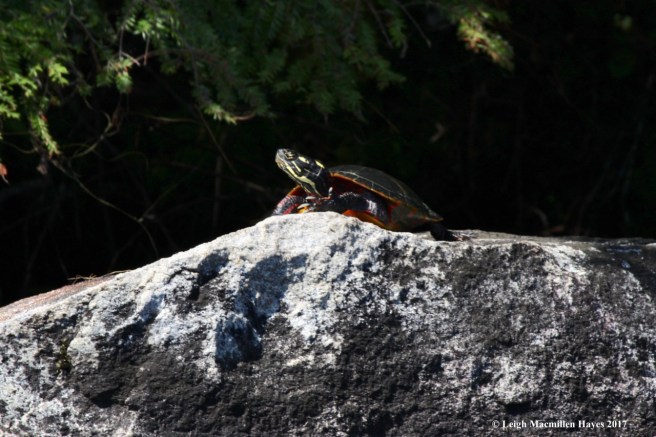
m-painted turtle

As I moved slowly, I greeted old friends like this painted turtle and even had the opportunity to pet a snapping turtle, so close to my kayak was it, but I paddled on.

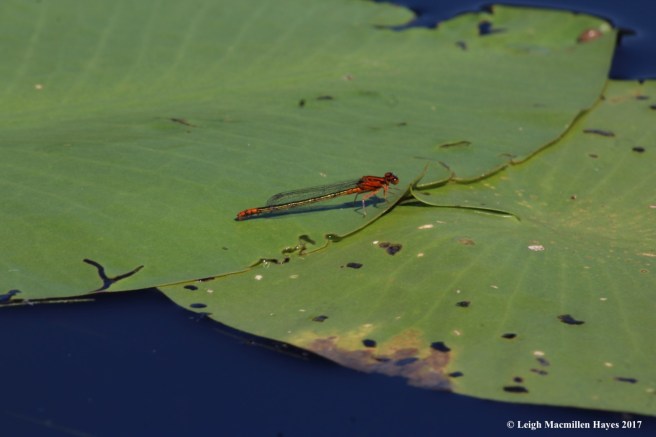
m-newly emerged damsel 2

Actually, I didn’t paddle much once I reached the islands and stumps. Instead, I floated. And noticed. Before my eyes newly emerged damselflies pumped fluid into their bodies and wings, while their shed exuviae sat empty.

A family of three passed by in a canoe and I asked if they wanted to see something cool. When I told them about the damselfly, the father asked what a damselfly was and I told the family about its size and wing formation. They knew about dragons but had never heard of damsels. And didn’t want to stop and look. The mother commented on how magical it all was, but the father was eager to move on. I was sad for the son’s sake. He missed the real magic.

m-emerging damsel 3

Returning to my quiet mode, I found another, waiting as they all do, for the transformation to be completed. Do you see that the wings are not yet clear? I decided my presence was important, for I was keeping predators at bay.

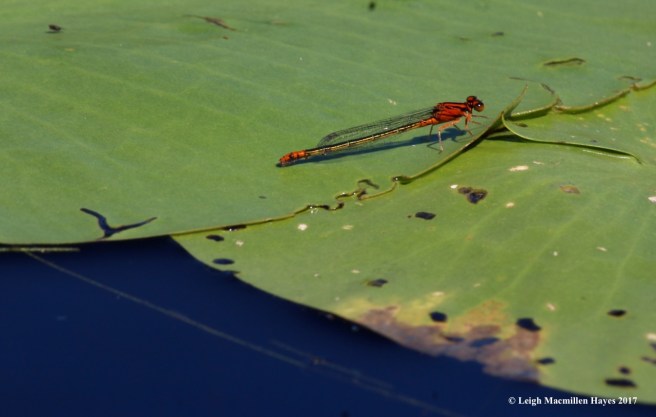
m-orange bluet male

And then . . .

m-orange bluet 3

and then I met a new friend. An orange bluet–this being the male. I wanted to name him the Halloween damsel, but my field guide told me differently.

m-water shield and orange bluets 2

I kept waiting for him to meet her

m-orange bluets on water shield 1

and finally he did–

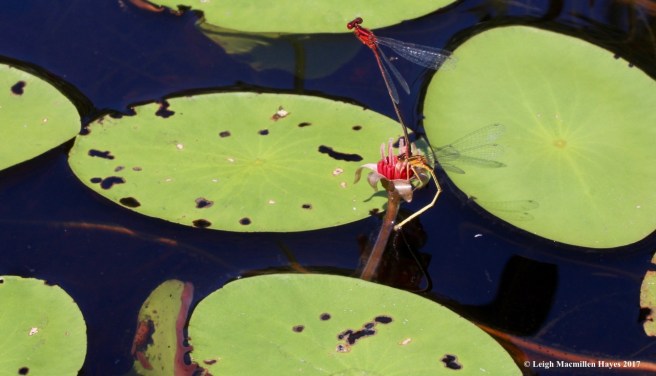
m-orange bluets mating

completing the wheel of damselfly love.

m-water shield 4

Because of the orange bluets, I also met the watershield flowers in their moment of glory. The flowers are described as being dull purple and inconspicuous. I found them to be various shades from mauve to muted red and lovely in presentation on day one of their life cycle.

According the US Forest Service Website, “On the first day the bud emerges above the water. Sepals and petals open and bend downward. Although stamens and pistils are present in each flower, on the first day of blooming, only the pistils emerge. Stalks of the pistils lengthen and spread outward over the petals. At night, the flower stalk bends and the flowers submerge beneath the water. On the second day, flowers emerge from the water again, but with the pistils retracted. The stamen stalks are lengthened and the anthers open. In this way flowers are cross-pollinated (Osborn and Schneider).

m-water shield old

Hardly dull, certainly unique. Even on day two.

m-newly emerged Hudsonian whiteface

Today, I also met a new dragonfly. And thought that I did it a favor, but I may not have. You see, when we first met, I noticed a web all around this immature Hudsonian whiteface (or so I think it is). With my paddle, I removed the web to free the dragonfly. But, um, it flew off and that’s when I realized it was several hours old and still drying its wings. Do you see how shiny they are? And the exuviae to which it clung prior to my “helping” hand? It’s best to leave nature alone. If it had been caught in the web, then good for the spider.

m-cotton grass 1

Speaking of spiders, I found some cotton grass gone to seed . . .

m-cotton grass with spider 2

and when I moved to photograph it with the sun behind me, I noticed what looked to be a camouflaged crab spider hiding in wait.

m-beaver lodge 1

Among the stumps, I’ve seen numerous beaver lodges over the years and know from the saplings they cut down on our property, that at least a few are active.

m-beaver scent mound 1

Today a recently visited scent mound added to that knowledge. Beavers pull aquatic plants and mud up from the bottom of the pond and create these mounds. They then secrete castoreum from castor glands beneath their tails to mark territory, deter predators, and say, “Hey baby, wanna check out my sticks?”

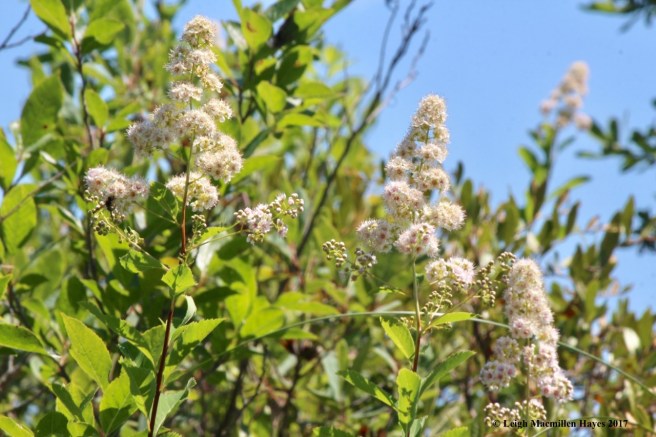
m-meadowsweet

The island flowers also grabbed my attention, including the fluffy heads of meadowsweet and . . .

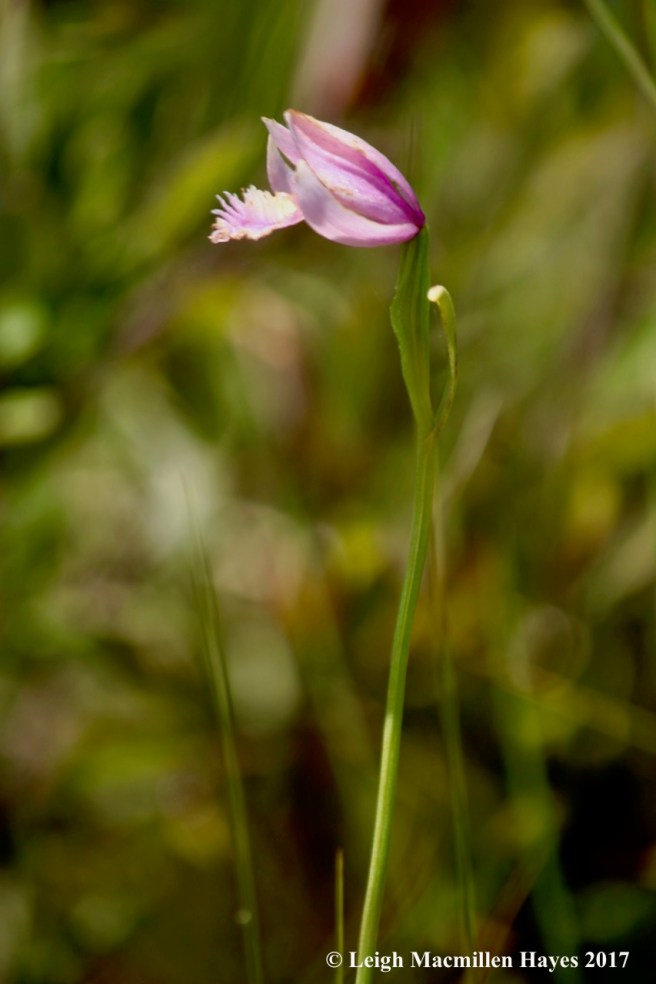
m-grasspink orchid

grass-pink orchids now waning.

m-sweet-scented water lily

But . . . besides the dragons and damsels, I really went to see the aquatic flowers, like the sweet-scented water lily,

m-spatterdock

spatterdock,

m-pickerel weed 3

and one of my favs–pickerelweed.

m-pickerel weed

I love it for all its fine hairs and the way the flowers spiral up the stalk.

m-pickerel 2

I also love the coloration with two yellow dots on the upper lip providing a guide to the nectar it offers.

m-white face on leatherleaf 1

While I looked, another white-faced dragonfly, small in stature, kept following me. Finally, it paused on a leatherleaf shrub.

m-spatulate-leaved sundews with flower 2

And I paused beside the spatulate-leaved sundews.

m-spatulate--leaved sundew flower

I was about a week early, but one was in flower, with promises of plenty more to come.

m-pitcher plant 1

As I looked at the sundews, I realized that I’d never seen a pitcher plant in this place. As should happen, I was proven wrong, though I never would have noticed it if it didn’t have such a tall flower since its leaves were hidden by a mass of vegetation.

m-pitcher flower

Damselflies, dragonflies, and carnivorous plants–its an eat or be eaten world out there on the pond.

Bullfrogs bellowed from the edges, green frogs plinked, and fish splashed. I listened to Eastern kingbirds’ wingbeats as they dropped to the water to snatch insects, and red-winged blackbirds delightful conk-la-rees. I startled a great blue heron, the first I’ve seen on the pond all summer, and it flew off. In the midst of all the natural sounds and sights around me, I embraced the quiet on my four-hour paddle/float. And as Robert Frost might say, “That has made all the difference.”


Nervous Nellie Mondate

Usually my guy asks me to recommend a trail for our Monday hikes. But this weekend he had one in mind. Actually, he wanted to conquer it on Saturday, but I put the kabosh on that plan because of predicted thunderstorms that didn’t develop here. We kayaked instead.

And then I was able to postpone it on Sunday because I thought we should do something more palatable for my left knee as I was recovering from a quirk in it due to training (LOL–two runs but plenty of cross-training activities) before participating in the annual Four on the Fourth Road Race. So yesterday, we drove to Bartlett, New Hampshire, and began our journey on the Langdon Trail with the intention of summiting Mount Langdon. But after meeting one couple on their descent and listening to them talk about the views from Mount Parker, we changed our minds mid-hike and climbed to the summit of the latter. It was a fun hike that at first seemed a wee bit boring (did I write that?) as it followed an old logging trail, but eventually the natural communities began to change and we really enjoyed the climb.

Because we often hike in companionable silence, that climb was filled with voices from so many friends who are currently dealing with a variety of difficulties–physically, mentally, emotionally and spiritually. I chatted with them along the way and lifted them on high at the summit–including those who suffer silently. May they all find a moment of peace in their lives.

But, it had to happen eventually and so today dawned. There were no storms on the horizon and after yesterday’s eight-mile climb, my knee felt fine. Darn. I’d run out of excuses. And so this morning I drove us to New Hampshire. At the stoplight in Conway Village, we could see the mountain’s craggy outline contrasted against the blue sky. I wanted to take a photo of a church spire in the foreground and mountain in the back, which seemed apropos for how I was feeling, but a large SUV blocked the total view at the stoplight. We continued on, turning onto the Kancamagus Highway for our trail of choice, for we chose the easy trail. Yeah, right!

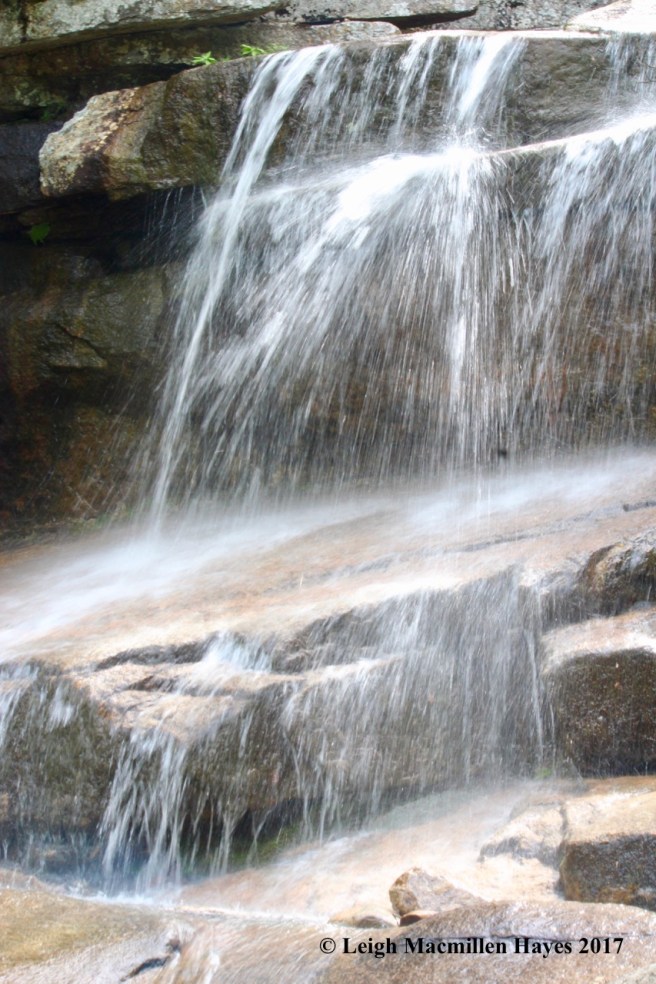
c-waterfall 4

Our journey began with some easy hiking through a hemlock grove. I was liking it. We continued upward and at 1.5 miles reached a decision-making spot–turn left onto a loop by the waterfalls or continue straight. I’d read that the waterfall trail could be dangerous and that rescues were sometimes necessary, but agreed to go–stating, of course, that we had the option of backtracking.

c-waterfall 1a

The waterfalls, however, took my breath away–and my fear . . . for the moment.

c-water fall 1

I extended that moment by taking numerous photos in different settings of the same thing.

c-waterfall 2

Up and up we climbed beside them,

c-waterfall 3

and with every step the landscape changed. Watching water flow is like watching the flames in a campfire–each moment a glorious rendition of the same and yet a new statement.

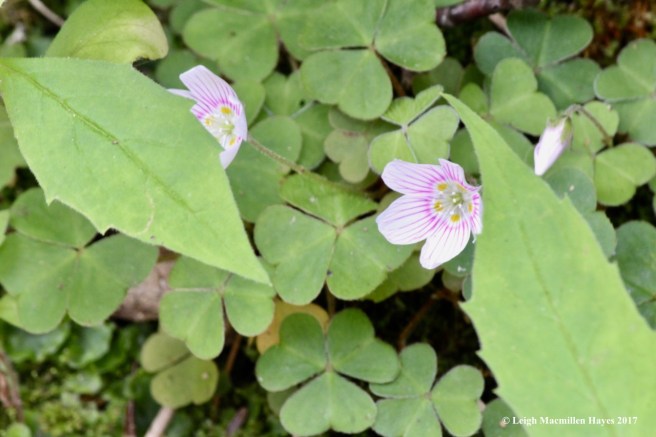
c-wood sorrel

And at the same spot, a surprise–wood sorrel with its delicate candy-stripe petals.

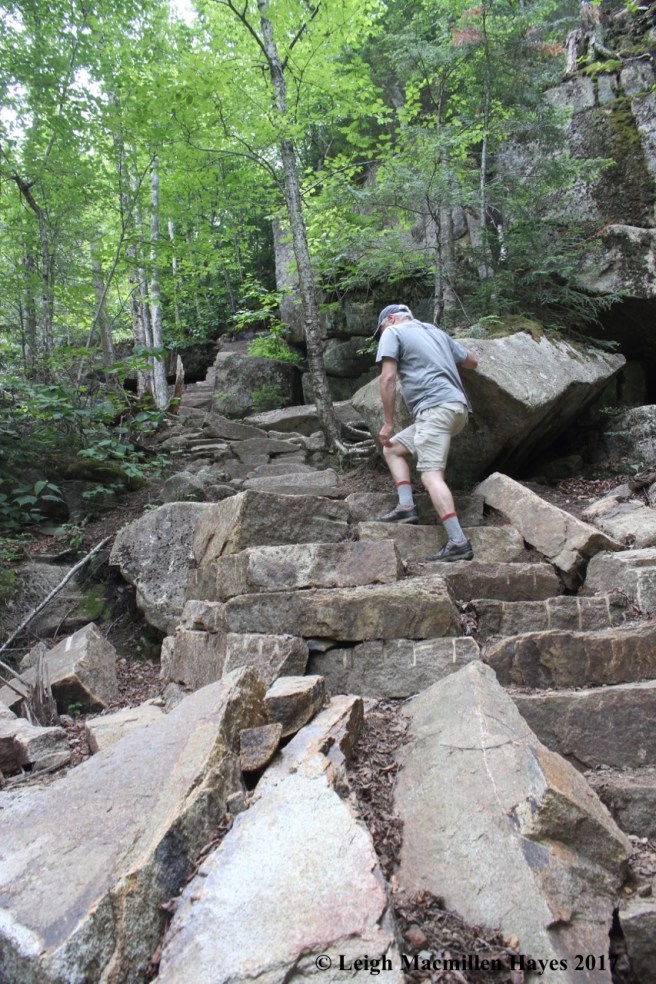
c-waterfall stairs

At last we climbed the staircase to heaven–or at least back to the main trail.

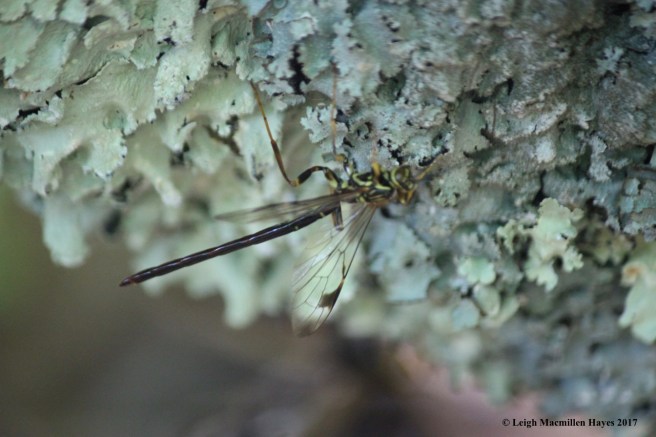
c-ichneumon male

The higher we climbed, the rockier the trail became and so my focus was on the ground under my feet. But . . . a downed tree laden with lichen drew my attention for its beauty. As I looked, I realized something was flying about. In my current damselfly/dragonfly mode, I thought I’d spotted a spread-winged damsel until I took a closer look and realized it was a male ichneumon wasp.

c-ichnueomon wasp female

And in another spot below the downed tree, a female ichneumon, her lower abdomen twisted into a disc. My guy actually came back to watch with me as we saw her body throb–using her antennae, she must have honed in on a horntail wasp grub within the wood. Her intention was to drill and secrete a fluid into the grub and then deposit her eggs, which will eventually hatch and consume the grub. How cool is that?

c-northern bush honeysuckle

The trail became much rockier the further up we climbed. And I continued to look for things I haven’t seen recently, including Northern bush honeysuckle, its flowers still in their yellowish-green hue. Check out its long pistils. She’s a pistil!

c-looking for yellow blazes

A couple of hours later, we reached my moment of fate–when the treeline gave way to open rocks. At first it wasn’t so bad and I thought I could manage it.

c-view from lunch rock

Because the wind was more of an issue in the openness, we decided to find lunch rock before progressing further. The views were breathtaking as we looked toward Kearsarge and even our own Pleasant Mountain.

c-Mount Washington 1

Mount Washington was also part of the backdrop.

c-lichen lunch rock

And right under our butts–I was liken the lichens on lunch rock. I could have spent the rest of the day in their presence. And probably should have.

c-geology folds

But that was not to be. With other travelers on this mountain, we continued the journey from the false summit to the main summit. I tried to be positive as my knees buckled. I knew I wasn’t alone in that feeling as others also commented. But, I tried to stay focused and along the way, I realized I was looking at a fold as I channeled my inner geologist, Denise Bluhm.

c-summit view 1

Hand over hand, we scrambled up.

c-summit view 2

The views were incredible.

c-summit 4

Finding the trail wasn’t always easy and we all let the next know where the yellow blaze might be. Finally, after lots of scrambling, I realized I’d reached my ending point. A mental block flashed in my brain and I could go no further. My guy, however, despite his own fear of heights, wanted to give it a try. While he crawled the last 75 feet to the actual summit, I tucked into the mountain and became a trail guide, telling others where they should go and how to place their feet–like I knew.

c-after the summit

It wasn’t long before he descended–using the crab style that became our means of downward locomotion. We made it back to the treeline by the seat of our pants.

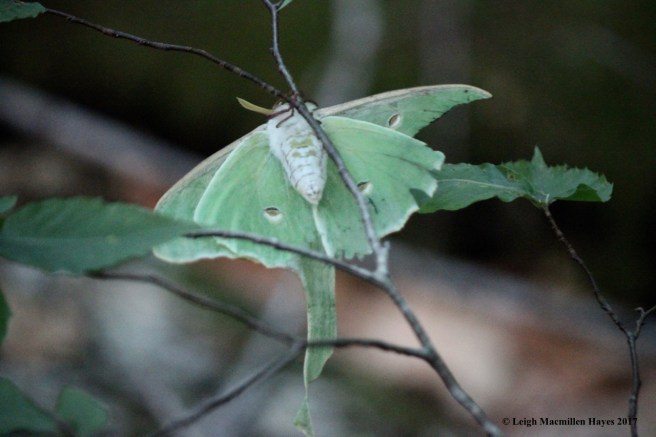
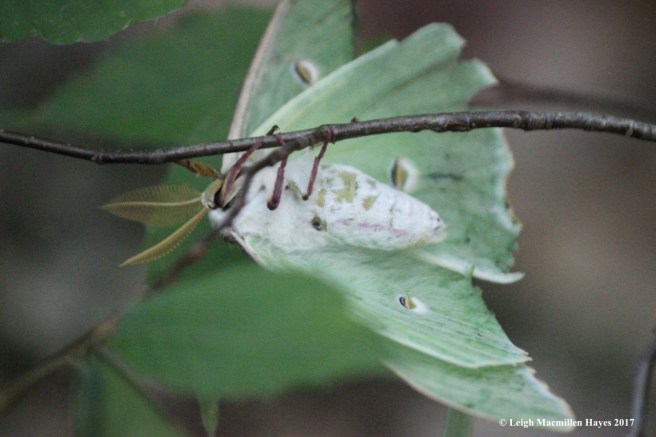
c-luna 1

From there, we were thankful to continue our downward descent. And then, less than a mile from the parking lot, we made a delightful discovery–a luna moth.

c-luna moth1

She seemed to embody our hike–clinging on as best she could. Her wings were a bit ragged and one ribbony tail missing. I too, was a bit ragged from the experience, and later discovered dried blood on my leg from an encounter with a branch. But, I lived. Sadly, she won’t live much longer–her main job to mate and then die.

Despite that, we were thrilled for the sighting. Seeing a luna moth is such a special treat and that fact that we saw it on the Champney Trail of Mount Chocorua even better.

I’ve spent about forty years avoiding that mountain and for good reason. But today, my guy pulled me out of my comfort zone–to a point. My nervous Nellie syndrome was well earned from my mom–Nellie. She, too, however, stepped out of her comfort zone many times and I have her to thank over and over again.


I used to think

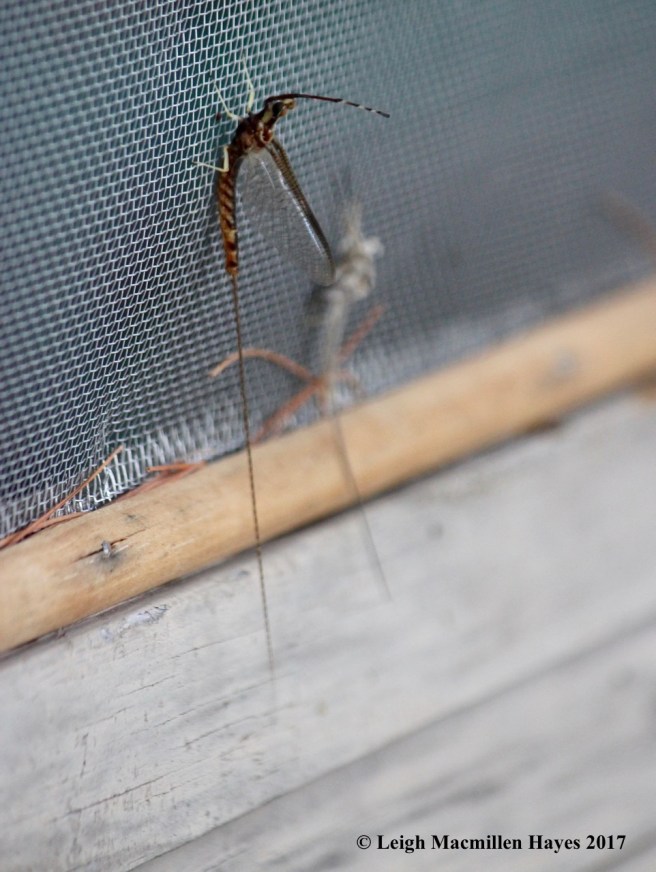
c-mayfly 1

I used to think mayflies emerged only in May.

Maybe I’ve seen them in other months, but I’d never really thought about it. Yesterday this mayfly greeted me in the morning. And in the evening, it was still there. So my May-only theory proved to be wrong.

c-mayfly 2

I used to think they had only one adult form.

c-mayfly molt 1

That all changed this morning when I spotted it again. Only, I also spotted something else an inch or two away. An exoskeleton or exuvia? From a mayfly? It certainly looked mayfly-like with the same narrow and segmented body plus long-tail cerci.

c-mayfly beside molt

When I looked more closely, I realized that the exuvia was about half the size of the true adult form. As for that cloudy-winged specimen I’d spied yesterday–it had been a teenager, aka a subimago. I let the wings trick me because I didn’t know better. Though it looked adult-like, it wasn’t sexually mature yet.

Mayflies are unique in that after the nymph emerges from the water as the subimago (that fishermen call a dun) like yesterday’s model, they seek shelter before shedding their skin for the final transformation. How lucky for me that this dun chose our porch screen on which to rest.

c-mayfly size difference

And so, I was gifted a second opportunity to look. It can take a few minutes to two days before a subimago transforms into a clear-winged imago or spinner, though the actual metamorphosis is quick. I wish I’d seen it, but at least I got to see the end result.

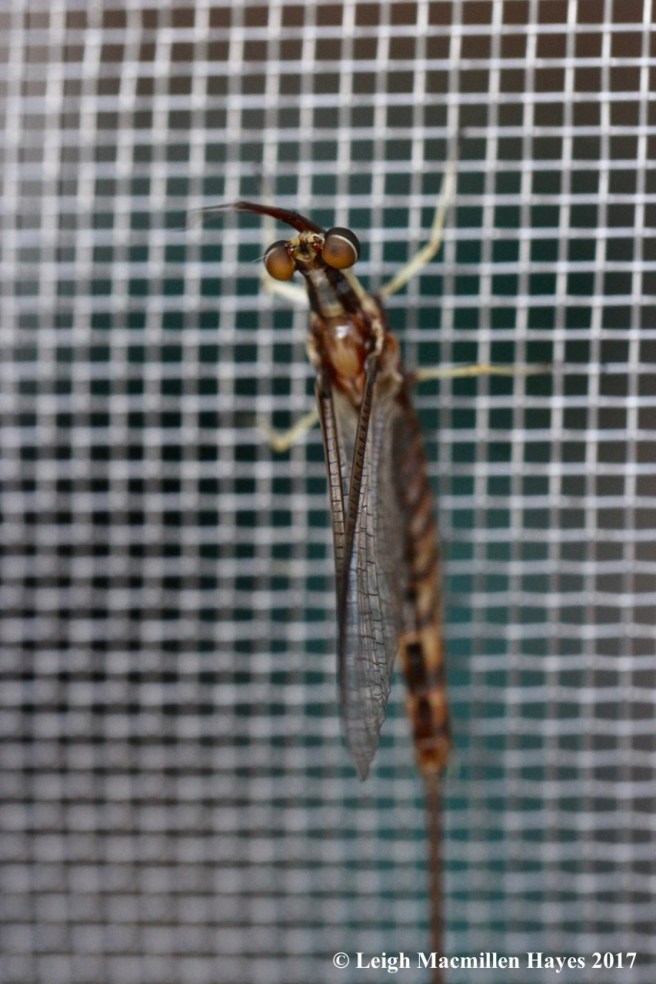
c-mayfly mature 1

I’m not sure my friend appreciated it, but I was glad for our opportunity to spend some time up close and personal.

c-mayfly no mouth part

While in an aquatic form for a year or two, it had done plenty of eating. But as an adult, eating became a thing of its past as it had no functional mouth parts.

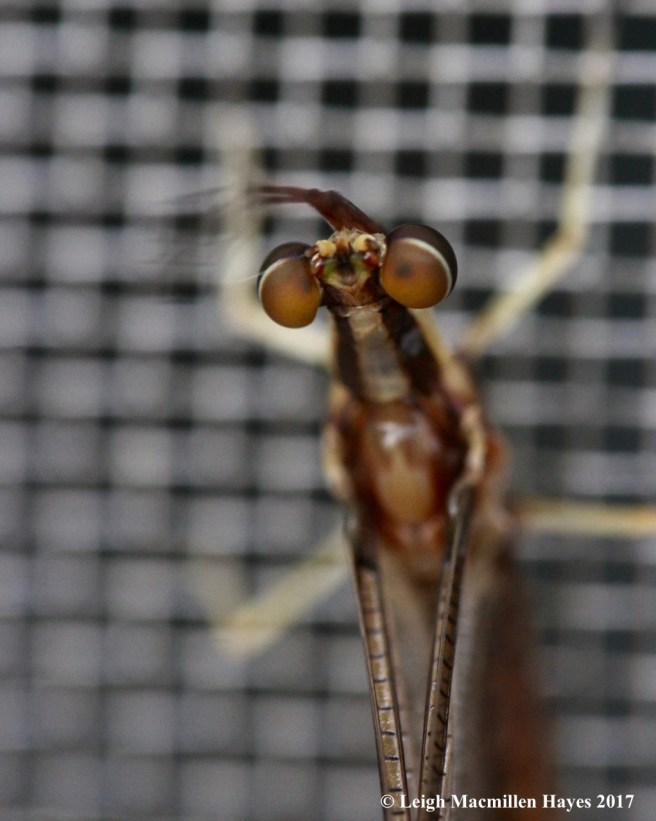
c-mayfly eyes 1

It did have plenty of eyes, however. The better to find food when immature and later a mate, I suppose.  Like other flies, its two outer eyes were large and compound.  Between them were three simple eyes (ocelli).

c-mayfly clear wings

The two pairs of triangular wings were held upright like a damselfly, rather than flat like a dragonfly. When I compared yesterday’s opague wings with today’s, the clarity of the new wings defined by dark veins seemed an obvious difference and one I’ll need to pay attention to going forth.

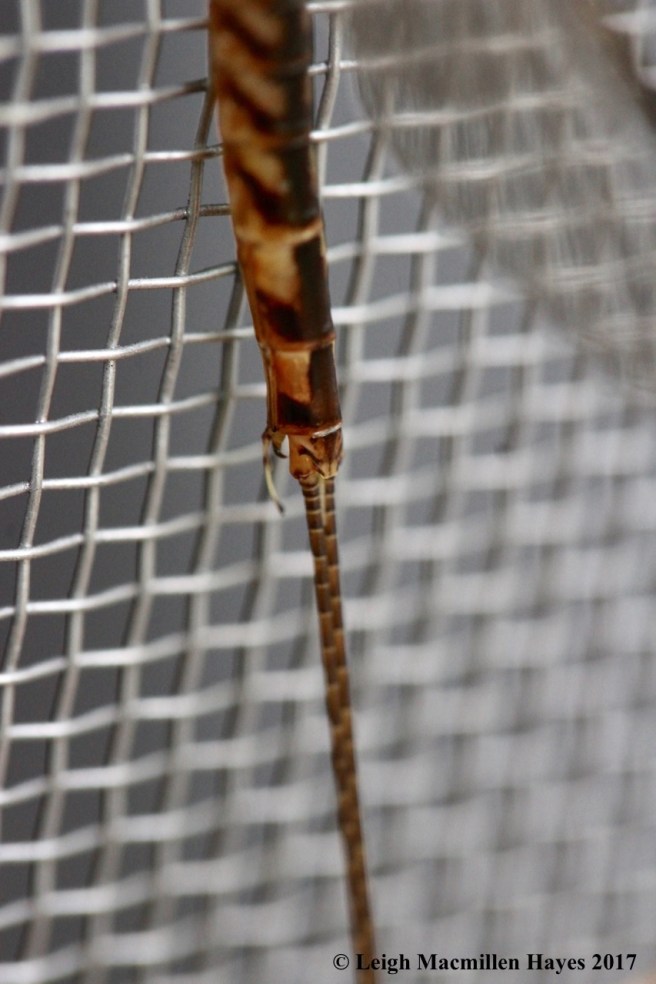
c-mayfly aedeagi at base of abdomen

Male or female? That was the question, but only for a moment. Do you see the aedeagi or penis-like appendages at the tip of the abdomen and below the two cerci (tail-like appendages)? Meet Mr. Mayfly.

c-mayfly bird's eye view1

I know that because mayflies emerge in swarms, they can be a nuisance. But this was only one. And our friendship only lasted for a few hours total–though he spent about 24 hours in the same spot. By noontime he had disappeared–of his own efforts I hope . . . heading off to do some courting. His days are numbered, I know, for his main function is to mate and maybe mate again, before he dies.

But today he served another function as he taught me a lesson. My best learning comes from observation . . . and realizing that what I used to think isn’t always accurate.

My thanks to a mayfly.


Orchid-Maine-ia

m-bald eagle 2

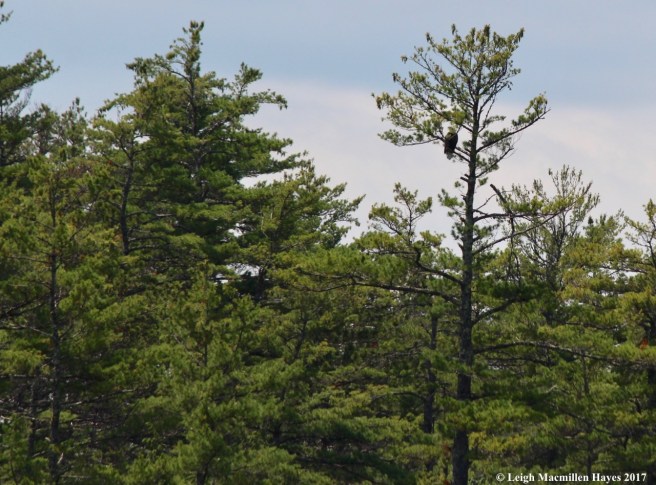
I took it as a sign when I first heard and then spotted a bald eagle on a white pine towering over Moose Pond. It seemed apropos that it should serve as a token of good luck, or at least a push out the door to spend some time wandering and wondering. And so I made the instant decision to drive to Holt Pond, where tomorrow I’ll join Ursula Duve and Kathy McGreavy as we lead a guided walk.

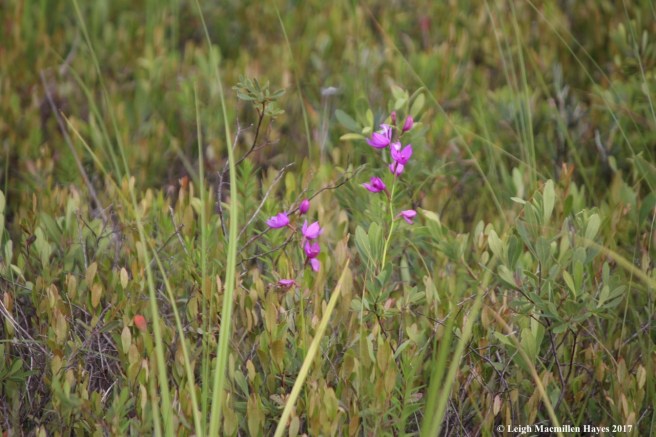
p-grasspink2

Our focus will be on orchids, such as the grass pink, which seems such a common name for this blooming beauty.

p-grass pink 1

The magenta flowers or Calopogons I spotted today are a wee bit off the boardwalk in the quaking bog, but even still I could see their showy formation with knobbed hairs on the upper lip. It is thought that the yellow crest on that lip imitates pollen, to attract pollen-seeking bees. But the real deal for orchids is that a collected mass of pollen grains are gathered together in a pollinium or anther lobe and thus deposited onto the bee’s abdomen.

p-rose pogonia 1

Rose pogonias were also blooming abundantly. In a way, their formation is opposite that of the grass-pink, with the fringed lower lip providing an attraction for pollinators.

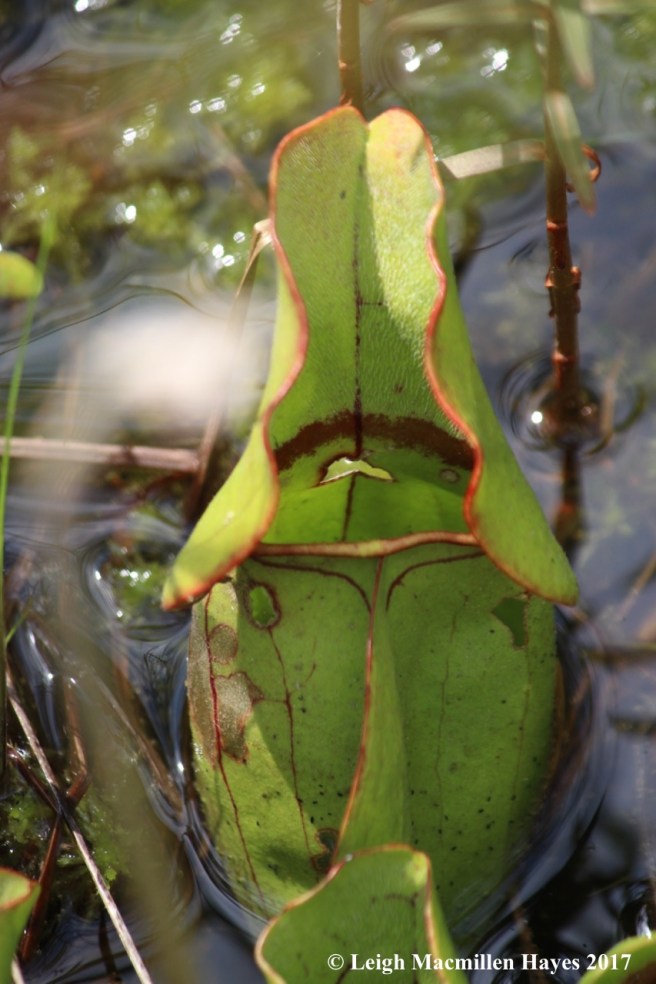
p-pitcher leaf

Also on display as the water receded a wee bit despite a beaver dam on Muddy River–my favorite carnivorous pitcher plants with their urn-like leaves that serve as pit traps appeared quite robust.

p-pitcher flower

Carnivorous plants are orchid companions as they both prefer the bog habitat, like to fool their pollinators and are otherworldly beautiful. There is one aspect in which they differ–the orchids like to attract insects for pollination and the pitcher plants for nutrients. But first, the pitchers may use the insect as pollinators, thus fooling them into a visitation. Pollinators beware!

p-sundew

Equally seductive are the spatula-leaved sundews visible at the end of the quaking bog boardwalk. Until now, they’d been under water and difficult to see. The scent of sugary liquid on the leaf tips attracts unsuspecting insects who get stuck to the tentacles, which then curl inward and thus digest the nutrients from their prey. Again–beware.

p-trail sign

Orchids and their bog companions weren’t the only thing on view today.

p-painted turtle by Muddy River

When I stepped onto the short boardwalk to the Muddy River intent on hunting for dragonflies, I discovered a painted turtle sunning at the edge.

p-blue dasher 1

And then I found what I’d hoped–blue dashers dashed about, although occasionally one stopped so I could take a better look.

p-bluet love

And familiar bluets canoodled on a stem.

p-variable dancer

I discovered a female variable dancer damselfly on a small twig,

p-ebony jewelwing

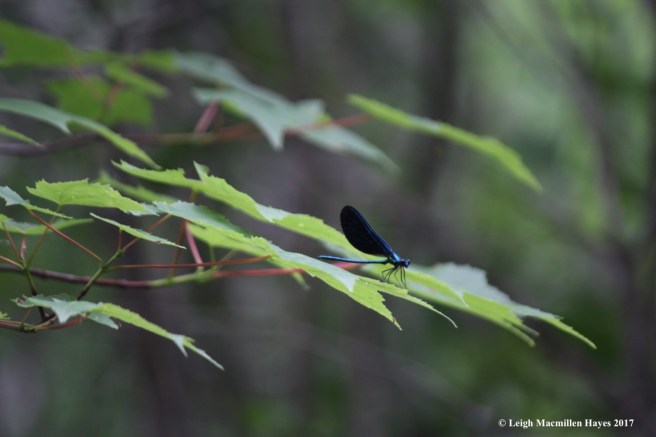
a male ebony jewelwing fluttered and paused on red maple leaves,

p-flyby

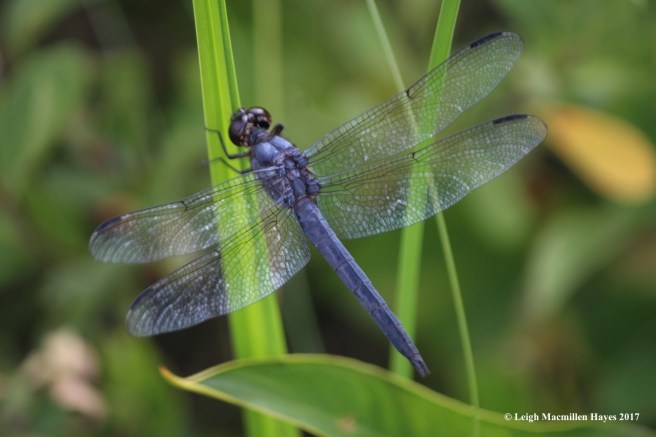
and slaty blue dragonflies buzzed about Holt Pond in record-breaking speed.

p-slaty skimmer1

Finally, one stopped long enough for me to soak in its gray-blue color.

p-steeplebush

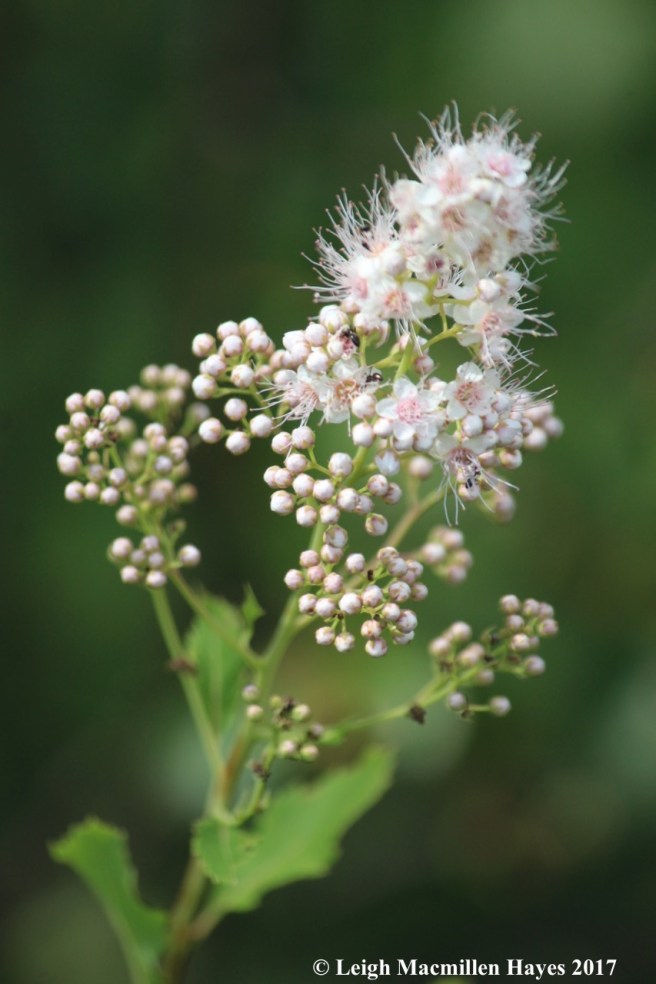
There were other flowers to enjoy as well, including the spirea,

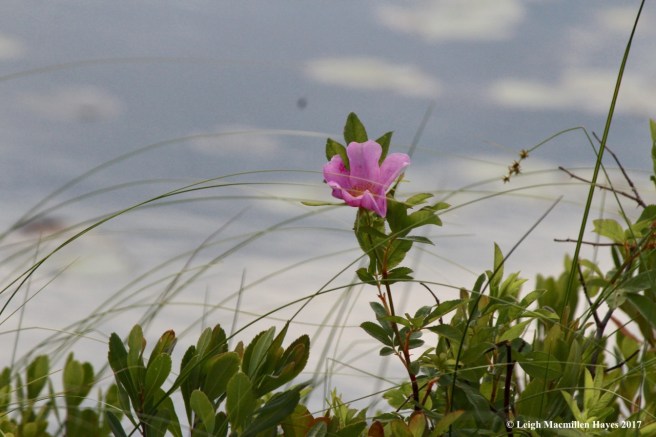
p-swamp rose

swamp rose,

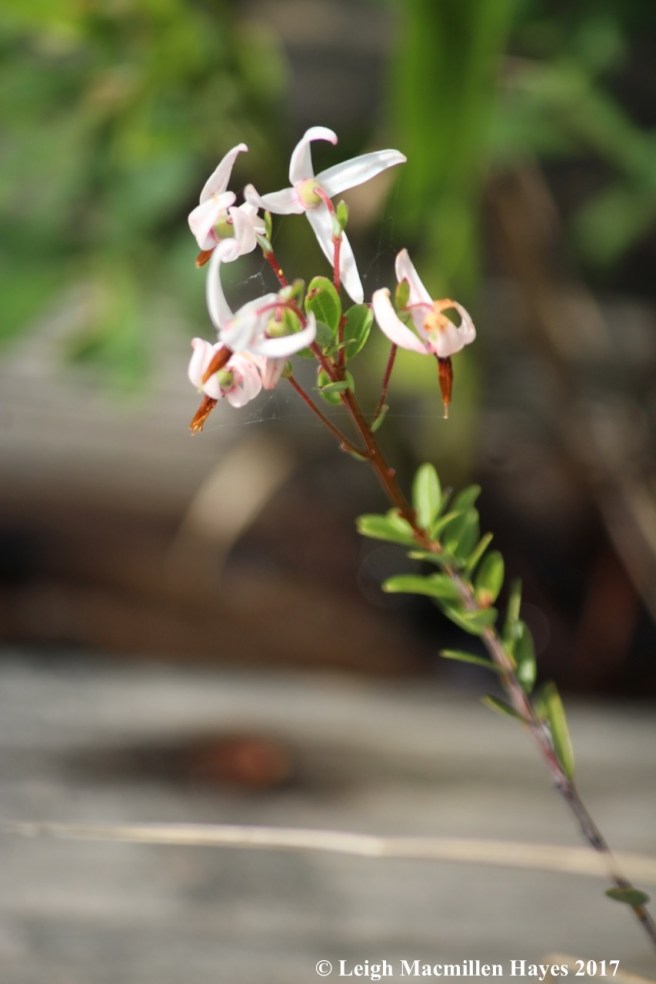
p-cranberry flowers

cranberry,

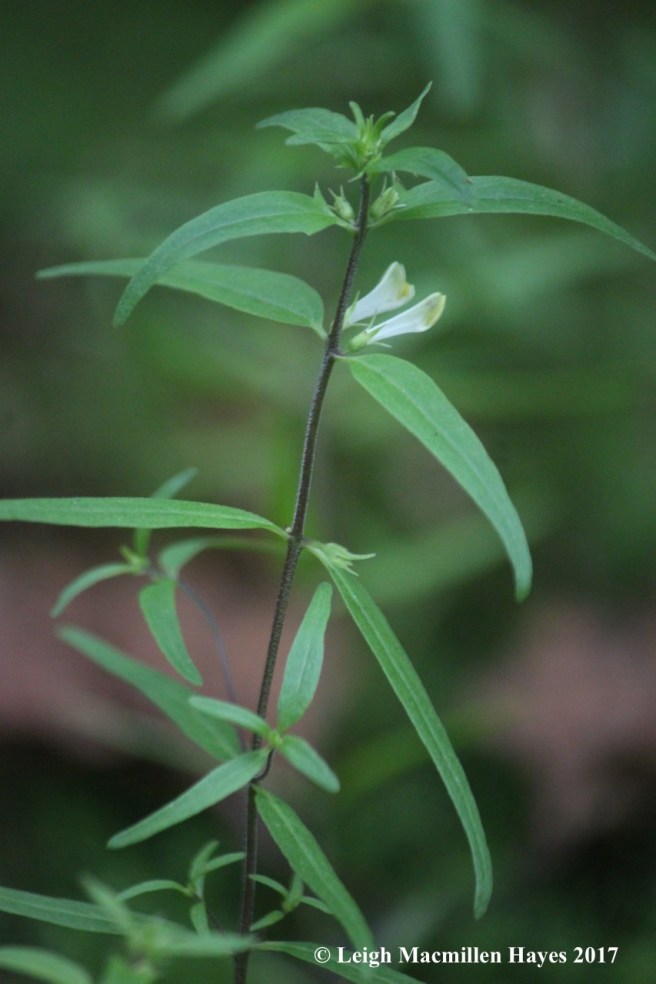
p-cowwheat

cow-wheat,

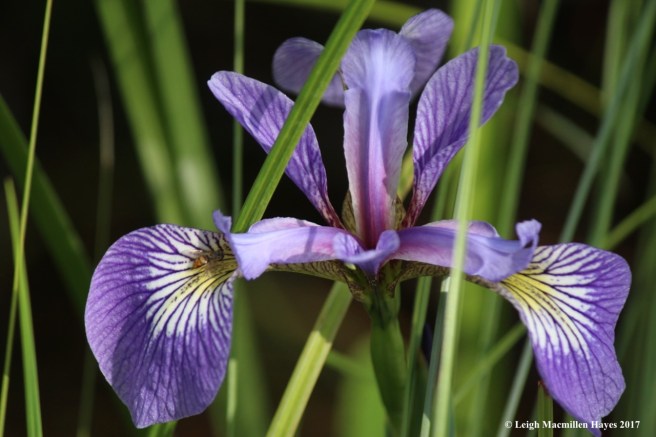
p-blue flag iris with hoverfly

and blue flag iris. If you look carefully, you may see a hoverfly following the runway on the left lobe.

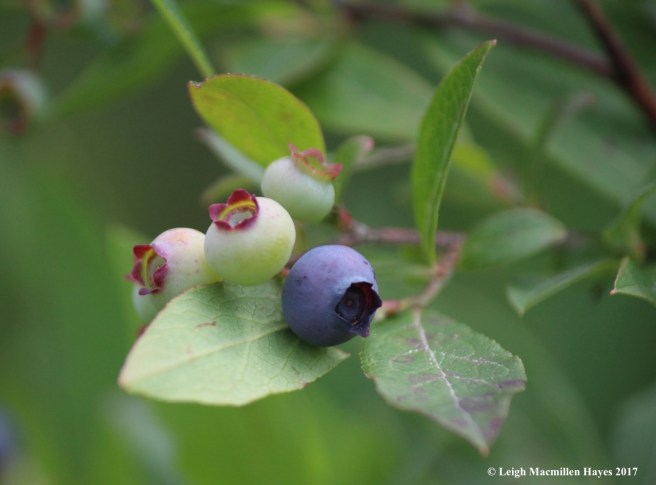
p-blueberries ripening

I noticed blueberries beginning to turn blue,

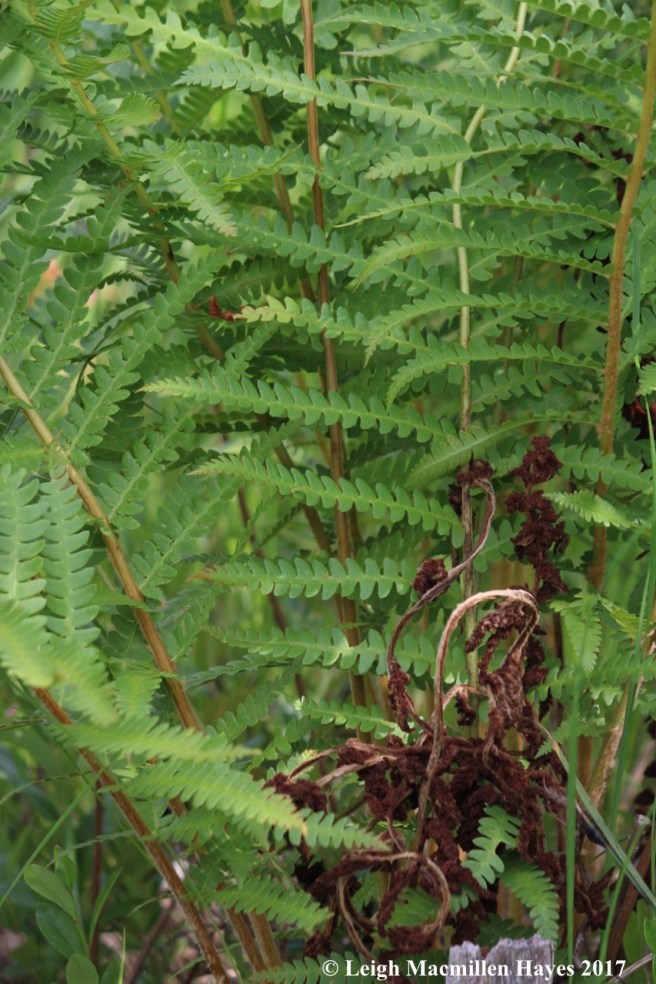
p-cinnamon fern

cinnamon ferns with shriveled fertile fronds,

p-hobblebush leaves turning purple

and a few hobblebush leaves already taking on the fall shade of purple. Uh oh.

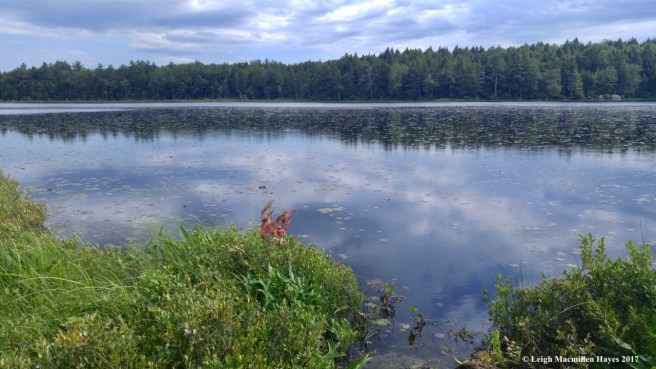
p-Holt Pond to the south

The wonders of Holt Pond . . .

p-Holt Pond west

never cease to amaze me.

p-quaking bog boardwalk

I hope that you can venture there yourself and discover your own Orchid-Maine-ia. Who knows what else you might notice along the way.

The Best Laid Plans

The opportunity was golden. Lakes Environmental Association’s Executive Director invited me to tag along with Dr. Rick Van de Poll as he conducted a Comprehensive Ecological Assessment at the Highland Lake Preserve. I couldn’t wait to be in Rick’s presence again, for he’s a walking naturalist encyclopedia. But . . . I’d been late in responding to an e-mail and didn’t know what time to meet him.

And so this morning I went in search. I located his truck parked just off the road at the northern end of the lake. I was certain I’d find him despite the fact that the preserve encompasses 325 acres and doesn’t have any trails.

h-Eastern pondhawk female 1

It does, however, have an old logging road that bisects the property.  At a sunny spot which had once served as a log landing, I realized I wasn’t alone. A female Eastern pondhawk dragonfly graced the airspace. Being a skimmer, she paused frequently so I could take a closer look at her markings and delight in her bright coloration.

h-Eastern Pondhawk 3

While her mate, whom I did not see, is powder blue, she was florescent green with black markings. And the stigmas toward the tip of her wings were pale brown. Did you know that Eastern pondhawks are known to be vicious predators and will even catch dragonflies similar in size–sometimes even other pondhawks? Wow!

h-turtle eggs

Because I spent long moments at the old landing, I noticed a pattern in the sandy substrate and followed it to a snapping turtle egg laying spot. Something, possibly a raccoon had done what they do best–dug up and eaten some of the eggs. My hope is that it didn’t get all of them. But what made me wonder was the location, for this location seemed a distance from the water. How far do snapping turtles travel to lay eggs?

h-hoverfly1

Also along the road, I periodically encountered hoverflies hovering. I’ve watched members of the species in my garden where they feed on nectar and pollen–known as nectaring. Hoverflies mimic the look of bees and wasps, but they don’t sting, which is good news.

h-snapper turtle sunning itself

Ever so slowly, with many pregnant pauses between movement, I made my way to the wetland that flows into the lake. And what should I spy? A snapping turtle sunning itself.

h-beaver lodge

As I listened to the chorus of bullfrogs and red-winged blackbirds, I also noted the beaver lodge. And I heard something in the water, but never determined what it was. Could it have been Rick? Maybe.

h-emerald jewelwing female 2

Following the shoreline, I suddenly found myself in the company of a female ebony jewelwing damselfly. She was absolutely gorgeous with her dark wings topped with white stigmas and green and bronze body.

g-porcupine den

Continuing on, a pile of scat under an old hemlock caught my attention (are you surprised?)–porcupine scat. I looked inside, but no one was home. In fact, it had been a while–maybe since winter that anyone had been in residence.

h-garter snake

At last it was time for me to head out of the preserve because I needed to head to Lovell for today’s start of the nature walk the Greater Lovell Land Trust provides each week for the Recreation Program. I made my way back to the logging road and followed it out. But again, along the way I was forced to pause. First, it was for a garter snake who I suspected was waiting for the sun to shine upon it. The snake never moved and I wondered if the leaves had served as a blanket and provided it a wee bit of warmth overnight.

h-Eastern pondhawk dining

And then I paused again to admire the pondhawk one more time and had the honor of seeing her catch an insect. I couldn’t tell what she was eating, though it looked like a large fly, but she gobbled it quickly.

I never did find Rick–my plans not being the best laid, but despite that I was tickled with my findings and knew it was time well spent. The opportunity was indeed golden.


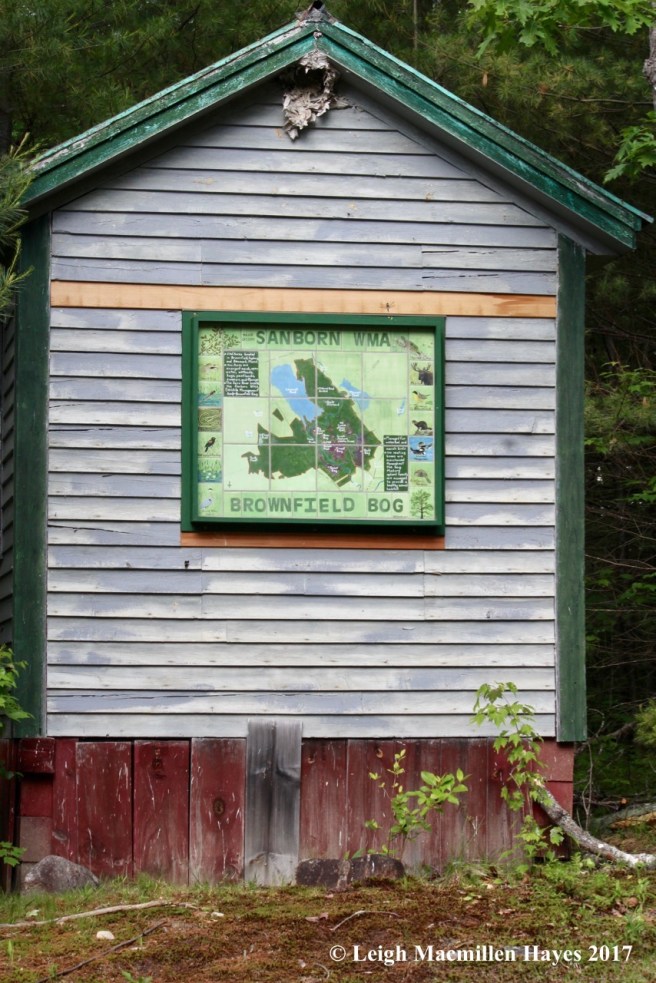
Spotlight on the Brownfield Bog

When I drove to the Brownfield Bog, aka Major Gregory Sanborn Wildlife Management Area, this afternoon, my intention was to pay attention to the shrubs that grow there.

b-black swallowtail

But, as usual, the distractions were many and a black swallowtail landed as I stepped out of my truck.

b-ant on alder aphid

I did note a tremendous amount of wooly alder aphids coating the alder stems everywhere I walked. In fact, I’ve never seen so much fluff. And I found only one ant eager to milk the sweet honeydew produced by the aphids as they sucked the shrubs sap. Once in a while the white fluff danced in the breeze. Was it an aphid on the fly?

b-willow flowers

Or did it come from the willows that were in the process of sending their seeds forth into the future?

b-Northern Arrowwood

So you see, I was paying attention to the shrubs, especially those in flower like the Northern Arrowwood. There was another with a similar flowerhead, but different leaves and I need to return and spend more time studying it.

b-Pleasant Mountain 2

Because I was in the bog, I did pause occasionally to peer across its advance, usually with a view of my favorite mountain (Pleasant Mountain) providing the background.

b-chalk-fronted corporal 1

But the dragonflies live there. And the chalk-fronted corporals became my BFF, since as many as twenty lifted off with each step I took. They led me all the way down the trail and all the way back, usually a few feet in front.

b-dot-tailed white face 1

The corporals weren’t the only dragons of choice.

b-dot-spotted white face 2

Dot-tailed white face dragonflies were happy to pose.

b-calico pennant 1

And I even found a few calico pennants–happy to make their acquaintance again.

b-white gall on maleberry 2

Between dragon and damselfly opportunities, white globs and . . .

b-maleberry gall?1

green caught my attention. They were the size of apples and totally new to me. My thought right now is that they are galls, similar to the azalea gall, but these were on maleberry shrubs. If you know otherwise, I welcome your information.

b-bog view

The bog was swollen with water only a few weeks ago, but that story line has passed and life sprang from the spring like a fountain of youth.

b-damsel love 1

My noticing continued when I spied a couple of youthful damselflies . . .

b-damsel love 2

he’d attached himself below her . . .

b-damsel love 3

and ever so slowly advanced . . .

b-damsel love 4

until the circle of love was complete.

b-lady beetles canoodling

Canoodling of all kinds occurred.

b-dragonflies canoodling 2

Even the dragonflies tried to get in on the action.

b-dragonflies canoodling

She wasn’t very tolerant, however, and a couple of seconds later detached herself from her forward position and took off.

b-sedge sprite 1

I moved on, looking here and there and thrilling at the sight of the beautiful and iridescent sedge sprite damselfly.

b-river jewelwing

Following the trail to the Saco River, I found tracks galore in the muck below, and a river jewelwing–appropriately named.

b-Canada geese

As I headed out, I startled a Canada goose family that had been feeding along the edge.

b-ring necked and mountain

And then I paused for one last look at the bog and Pleasant Mountain.

b-ring-necked duck

That’s when I realized I was in the presence of a male ring-necked duck. If you like to bird, this is the place. I saw several but heard so many more. And even if I couldn’t apply a name to a song, I did enjoy the symphony that followed me throughout my adventure.

b-Kathy's bog sign

Though I said I went to look at the shrubs because I do want to learn them, my real reason for going was to see this new installment.

b-Kathy's sign up close

Maine Master Naturalist (and potter) Kathy McGreavy created this handmade and painted map of the bog for her capstone project. Her husband recently installed it and it’s a work of art worth looking at not only to appreciate Kathy’s talent, but also to learn more about the bog and those that call it home.

My hope is that the spotlight will continue to shine brightly on Kathy’s creation . . . made with love in honor of her bog.

Ain’t Lovell A Great Place To Be?

On my way to meet a few docents and the new interns for the Greater Lovell Land Trust this morning, a photo opp presented itself and I was forced to stop.

h-stan's sign

Stan Tupaj of Kezar Realty strikes me as the town cheerleader and I love to read his sign as I pass by. From time to time I’ve meant to photograph it, but somehow always seem to be in a rush to get to the next destination. But this morning I was a wee bit early and so this was the day.

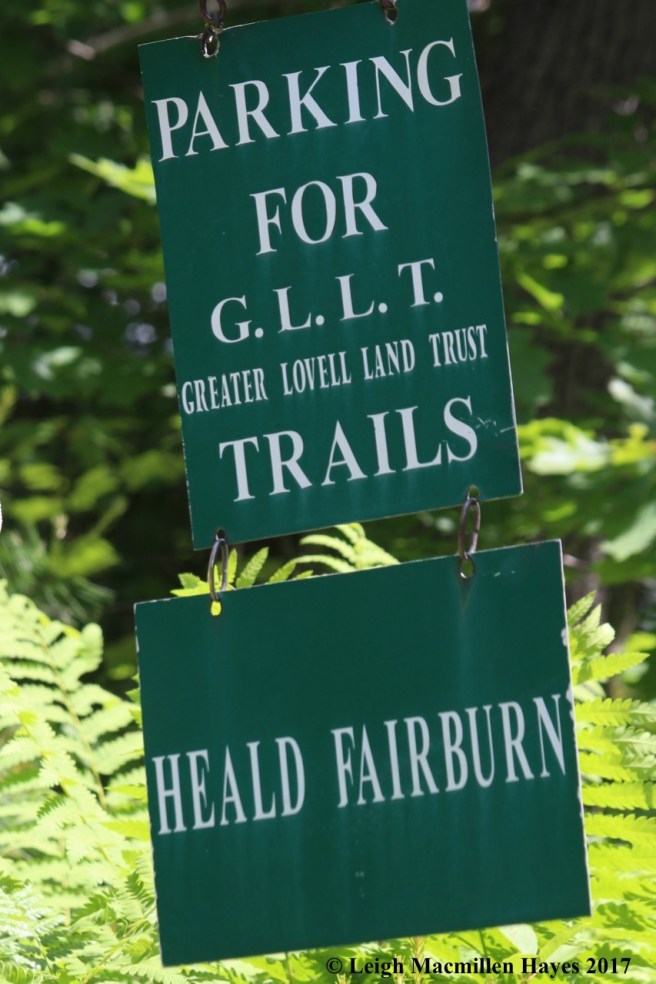
h-heald sign

From there, I drove on to the Fairburn parking lot on Slab City Road where I planned to meet the crew.

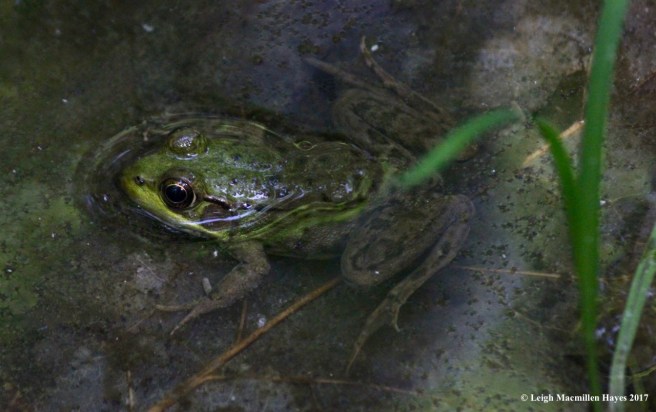
h-green frog

Our goal was to walk to Otter Rock, not a far walk by any means, but it took us 1.5 hours to get there, such were the sights along the way, including a few green frogs in puddles along the trail. I know he’s a green frog and not a bull frog because he showed off a dorsal lateral fold along the sides of his back.

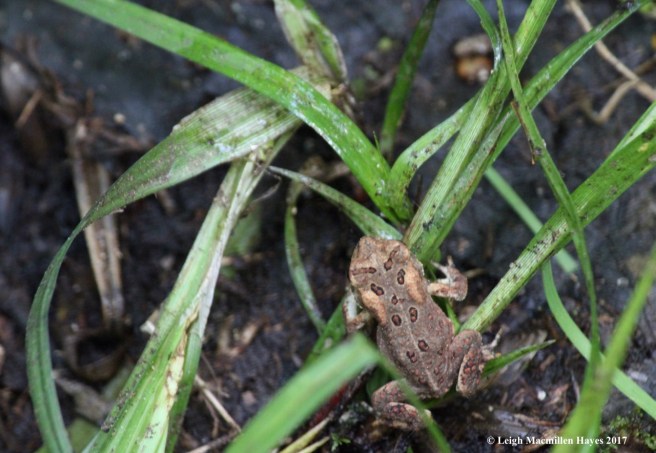
h-baby toad

While the green frogs were beside or in the water, the ground seemed to hop at our feet in dry places thanks to a kazillion baby American toads on the move.

h-Ellie and the baby toad

I noted that it seems the younger toads are in constant motion, while older and much chunkier ones pause and try to blend into their surroundings, allowing us to study them (and take photos–just saying). One of the younger members of our team, Ellie, proved me wrong as she charmed a young toad to stay still while she looked at it through her hand lens for several moments. It wasn’t until Ellie moved that the toad hopped away.

h-damselfly with eggs

While Ellie was the toad whisperer, her older brother Caleb wowed us with his ability to capture dragonflies and damselflies in a net, such as this one. As he held it high, he realized it was a she for there were eggs on her abdomen and so he gently released her–in hopes she’d find some vegetation on which to inject those tiny sacs.

h-keeping mosquitoes at bay

Their youngest brother, Wes, demonstrated the value of bracken ferns–which served as a fun hat to keep the mosquitoes at bay.

h1-Aidan

And it wasn’t until later that I realized I didn’t have a photo of Ellie’s other brother, Aidan, but I knew of one from a prior insect walk that showed his own curiosity.

h-grape fern

We looked at tons of plants as well and were all especially eager to re-greet the grape ferns that we knew grew there.

h-exoskeletons 2

At last we reached our destination, Otter Rock on Heald Pond, where we found what we had hoped for: exoskeletons decorated the landscape.

h-exoskeltons on shrub

Dragonflies lay egg clusters into sediments or tap small clumps directly onto the water’s surface. Each egg hatches into a small nymph, which grows until its ready to emerge as a flying adult. At that time, the nymph crawls to the surface, and ever so slowly, the adult pulls itself free of the exoskeleton. It’s the most amazing process to watch. But even if you don’t have that opportunity, just seeing the left over nymphal shells and knowing that the magic happened is worth a wonder.

h-exoskeletons on ground

We had to watch where we stepped, for the exoskeletons not only decorated the shrubs, but also the ground . . .

h-exoskeleton on tree

and even the trees.

h-widow skimmer

And then we began to notice newly emerged dragonflies like the widow maker on Otter Rock,

h-black-shouldered spinyleg

and black-shouldered spinyleg on the ground. We were afraid to step for everywhere our eyes focused, there was either an exoskeleton or a dragonfly drying its wings in preparation for a first flight.

h-chalk 5

As we looked about, Caleb spotted one struggling in the water, so he pulled it out.

h-chalk 4

Coated in a bit of pollen from the pond, it still clung to its exoskeleton.

h-chalk-fronted corporal 1

We watched for a few moments as it moved about, those wings slowly drying. I think my ID is right and this was a chalk-fronted corporal. At last it was time for us to draw our sense of wonder to a close and make our journey out.

h-meet the interns

But first, I asked our interns to pose–meet Hannah, Kelly and Dakota. Today was their first day of work and we probably overwhelmed the two guys a bit. Hannah was with us last year, so she knows our ways–that we walk slowly and look at everything. She gets it and we love that. We’re excited about the possibilities ahead. Join us for a GLLT walk or come to an evening talk and you’ll get to meet them.

h-heading out

Our walk out was much quicker, though we still stopped occasionally.

h-stan's sign

In the end, I have no doubt that we knew the answer to Stan’s question: Lovell IS a great place to be.


June Dandies

It’s early June and our world is lush, given this past winter’s snow and now the spring rain. Areas that we remembered as being dry last year, are filled with puddles or streams right now ( I promise I’m not going the mention those pesky little buzzers that frolic about my face and sting my hands–and how much they’re loving the current conditions. I did spot some dragonflies yesterday, but today not a one).

r-lady 3

It’s those wet conditions that threw a friend and I off for a wee bit this afternoon as we tramped through the woods in search of a yellow lady’s slipper. Initially, we were about fifteen feet too far to the right as we tried to avoid the water.

r-lady 2

After wandering for a short bit, we finally found it on a bit of dry land–and then stood in awe–at our own ability to locate the flower, but even more so at the flower itself.  Yellow lady’s slippers are not rare, but uncommon and so we rejoiced with our find. They prefer mesic (moderately moist) nutrient-rich forests (as well as in bogs and swamps), thus the water (and mosquitoes–okay, so I broke my promise).

r-lady 7

Lady’s slippers are members of the orchid family.  I used to think orchids were flowers girls wore on their wrists for senior prom or grandmas coveted–though I never knew either of my grandmothers, but certainly it was an “old lady’s” flower. My, how my understanding and appreciation has changed because I am certainly NOT an old lady. Or am I?

Check out the reddish-brown dotted pathway–like landing lights at an airport runway. Their intention is to guide pollinators. If we remember to return in the fall and look for a seedpod, we’ll know that the dots worked. They often don’t.

r-brook 1

We could have gone home then, so tickled were we with our success of finding that pouch of a flower, but . . . as you might expect, we continued on, making several brook crossings as we went.

r-brook 2

Everywhere, mosses and liverworts offered forty shades of green. Oh wait–that’s Ireland. But right now, it’s western Maine as well.

r-christmas fern 2

And because it was so damp, the forest we roamed was filled with Christmas ferns featuring young and old blades.

r-Indian cucumber Christmas fern

We even found one that sprouted an Indian Cucumber Root whorl as if it was a flower.

r-christmas fern gall

But what aroused our curiosity was another that seemed to have been affected by insects forming galls. Neither of us could remember seeing anything like this before, but then again, so many times when we see something we think of as new, we soon discover that it’s more prevalent than we realized. That being said, we only found the “galls” on a few of these ferns, all in the same area in a wet seep.

r-wild oat

Further along, we noted sessile-leaved bellworts, in flower a month ago, now sporting their seedpods or wild oats that speak to their other common name. And the leaf of at least this one had been visited by an insect–a leaf minor trail standing out in white against the green.

r-cannoddling craneflies 2

r-cannoddling craneflies

And then we found craneflies canoodling. They didn’t seem to care that we watched.

r-toad 1

They weren’t our only wildlife sightings (besides the mosquitoes–did I mention mosquitoes?). A young American toad hopped by, pausing ever so slightly to show off its raised warts.

r-frog 1

And a frog slipped into the water–the better to escape our ogling.

r-land of the cinnamon fern

As we wound our way around a wetland filled with cinnamon ferns, we noted a few flowers in bloom or about to bloom.

r-clintonia 1

Yellow clintonia,

r-jack in the pulpit 1

Jack-in-the-pulpit (times two actually–and I’m not sure how we spied these for they hid like trolls under their leaves),

r-Indian Cucumber flower

Indian cucumber root,

r-Early coralroot 2

and early coralroot caught our attention.

r-round-leaf pyrola1

Not yet in bloom was the round-leaf pyrola, aka American shinleaf. Oh darn, another reason to return and see it blossom.

r-red trillium 3

And just past its blossoming stage–red trillium,

r-red trillium 1

its red leached to almost maroonish brown and stamen looking rather gray.

r-Pam taking a photo of pyrola

Despite the mosquitoes (what mosquitoes?) and a few raindrops, we shared a fun afternoon hike circling the path of the Greater Lovell Land Trust’s Ron’s Loop by Five Kezar Ponds.

The journey was with my friend named Pam, not June. But June is the month and together we enjoyed numerous dandies that need to be enjoyed in the moment for soon we’ll not realize they ever existed.

June dandies indeed–worth making time to wander and wonder. (Despite the mosquitoes.)


At a Snail’s Pace

The mosquitoes were thick. The ground damp. But the rain held off and so four docents and I met at the Greater Lovell Land Trust‘s Flat Hill parking lot at the end of Heald Pond Road.

p-beaked hazelnuts forming

From the getgo, our fun began as we spotted numerous beaked hazelnuts forming–the trick is to pay attention to them and watch their continued growth, for in a flash, or so it seems, they’ll mature and . . . disappear. The nuts those hairy beaks cover are favorites for wildlife and we human folk also like them.

p-red trillium

Our mission was to get reacquainted with the spring flowers–some being obvious to us like the red trillium, though the fact that it was still in bloom offered a delightful surprise. We chatted about the fact that its also known as Stinking Benjamin for its undelightful odor, but try as we might and we did again today, none of us have ever been offended by it. Apparently, they smell like rotting meat, but you can’t prove it by us.

p-fringed polygala

Here and there we were awed by the delicate fringed polygala, aka gaywings. They did remind us of birds with crazy head dresses taking off in flight.

p-false solomon seal

As we shared brains and practiced relearning species before the next season gives us even more, we felt proud to quickly ID a false solomon seal, aka wild spikenard, before it had fully flowered. It’s the cluster of flowers on the end branch, the arching, zigzag stem and long oblong leaves that stand out in our minds.

p-Rose Twisted Stalk or Rosybells

A seal of another sort, the rose twisted stalk, aka rosybells, also adorned the trail. Pam held the stalk up so we could look at the bell-shaped flowers that dangled below.  Notice how the leaves are green below and stalkless but don’t necessarily clasp the stem–as opposed to twisted stalk (white mandarin), which features greenish flowers dangling below and stalkless leaves that do clasp the stem. Plus the latter’s leaves have a white bloom on the underside. We didn’t see any twisted stalk, but were tickled with our rosybell finds.

p-raindrops all in a row

Periodically, we stopped to examine ferns, or quiz each other on the ID. But sometimes, it was just fun to notice presentations, including raindrops all in a row.

p-beech fern

And though a couple of our fern experts couldn’t be with us, Joan was and she loves nothing more than squatting beside them with the Fern Finder to determine a species, including the long beech fern.

p-clitonia 2

It was while looking at bracken ferns that Mary and Nancy spotted the greenish yellow flowers of clintonia. We were excited because we’d seen plenty of plants, but these were the first in flower, and they were well hidden.

p-clintonia flowers

Yellow clintonia is also called bluebead for the fruit that develops is a porcelain blue bead-like berry. Check out those pistils (she’s a pistil) dangling below the stamen, their anthers coated in pollen. Bring on the bees and the beads.

p-baby toad

Suddenly, we discovered movement at our feet and saw our first baby toad of the season. It’s diminutive size and obvious camouflage made it difficult to see, but unlike the adult members of its family who will freeze in position, thus allowing us to study them further, this little one wanted to escape as quickly as possible. Smart move on its part.

p-bench view

Only about two hours later we’d covered maybe a half mile and found our way to the bench that overlooks the swampy area surrounding the brook between the beaver pond and Bradley Pond.

p-red maple leaves

We sat below a red maple and listened to a chorus of birds–and gave thanks for the food supply. Let them eat bugs. We offered up a few mosquitoes.

p-red-winged blackbird

A red-winged blackbird flirted with us, showing off its bright red shoulder and yellow wing bar as it flew from shrub to shrub. The five of us swooned.

p-Indian Cucumber pre-flower

All along the path, we’d spotted Indian Cucumber Roots with their buds formed atop the second layer of their double-decker formation. When we finally stepped from the bench back to the trail, we noted a couple of the buds were beginning to dangle below the second story, meaning the blossoming season would soon be upon us.

p-Indian Cucumber flower 2

And just like that . . .

p-Indian Cucumber flowering

Voilà. I’m of the belief that if this flower doesn’t make you wonder, nothing will.

p-beaver pond view

Our next stop was at the bridges that cross below the beaver pond. We’d been looking for fresh beaver works all the while, but only discovered the work that had been completed over a year ago.

p-royal fern crown

There was still plenty to see, including the fertile crowns atop royal ferns,

p-jack-in-the-pulpit 2

a small jack-in-the-pulpit,

p-mayfly hitchhiker

and a mayfly that chose Pam’s jacket to rest upon.

p-foamflower 1

One of our many finds included foam-flower, with its cluster of star-shaped white flowers and conspicuous stamens. According to Mary Holland in her book, Naturally Curious Day by Day, “Its genus name, Tiarella, is the Greek word “tiara,” a word for a turban worn by ancient Persians which bears some resemblance to the shape of this flower’s pistil.”

p-foamflower carpet

Tiara or not, we were quite taken with a carpet of it.

p-snail

Those were only a few of the findings we saw as we moved at a snail’s pace during our three hour tour along Perky’s Path. Each time we visit, we say, “This is my favorite property.” That is . . . until we visit another one of the GLLT properties.

May(be) a Mondate

We headed out the backdoor, into our woodlot, down the cowpath, along the snowmobile trail, veered left behind the church, walked down a driveway, crossed the road and snuck into Pondicherry Park.

p-NOrway maple and samaras

Or so we thought, but as we stood below this Norway maple with its widely-divergent two-winged samaras, a familiar voice hailed us. Our friend, Dick Bennett, appeared out of nowhere (well, really from somewhere–for like us, he lives nearby and uses these trails frequently to get to town) and so we chatted briefly. He was on a mission and we were headed in a different direction along the multi-layered loop system.

p-crossing the field

Within minutes we followed the path out of the woods and across the field–prepared as we were for rain. Our plan was to retreat when it started to pour.

Once we entered the woods again, we heard a barred owl call from the distance with its infamous “Who cooks for you?” “Our oldest son and his girlfriend,” was our response for they had surprised us this weekend with a visit and prepared last night’s meal.

p-foxhole debris

For the most part we stuck to the trail system, but then we stepped over the wall onto the Lake Environmental Association’s Maine Lake Science Center property because I wanted to show my guy this pile of dirt and stones.

p-fox hole

On a recent bushwhack with a few others, we’d discovered this fox hole and I immediately recalled all the fox tracks and seeing a red fox this past winter not far from this location.

p-boardwalk1

After poking about for a few minutes, we made our way back to the LEA trail and eventually landed at the boardwalk that weaves through a wetland. From there, it was back through the woods to the park trails. I know my guy wanted to move quickly, such were the bugs, but I wanted to take everything in and so he patiently waited from time to time.

p-Canada mayflower

After all, there were visions in white exploding with glory in the form of Canada mayflowers,

p-foamflowers

foam-flowers,

p-wild sarsapirilla

and wild sarsaparilla.

p-gaywings

We also feasted our eyes on visions offering the purplish hue of gaywings, aka fringed polygala.

p-fern stream

And then there were the ferns.

p-cinnamon fern fertile frond

The fertile stalks of cinnamon ferns shouted their name,

p-royal fern

while the royal ferns were much more subtle–

p-royal fern fertile fronds

their fertile crowns practically blending into the sterile fronds.

p-chipmunk

At the chimney by the amphitheater, a chipmunk paused to ponder our intentions and then quickly disappeared.

p-Stevens Brook

We followed the river trail to the Bob Dunning Bridge and noted all the shades of green beside Stevens Brook.

p-boxelder samaras

And then there were other sights to see, like the boxelder and its samaras. Its common name refers to the resemblance of its leaves to elder trees and the use of the soft wood for box making. Its also our only maple with compound leaves. And the samaras differ greatly from the Norway maple we stood under at the beginning of our walk–for the boxelder’s winged seeds more closely resemble upside down Vs or peace signs.

p-catbird 1

As is often the case when stopping by the bridge, the catbirds who nest in the undergrowth paused beside the brook during their foraging expeditions.

p-caterpillars on maple leaf

Nearby, we saw some food meant for them–a colony of Eastern tent caterpillars consuming maple leaves right down to the veins. It seemed like it was time for some units of energy to be passed along the food web.

Besides the wildlife, our only human encounters included a relative crossing the bridge on his way home from work and our friend Dick, whom we’d seen at the start.

For various reasons, May has been devoid of dates and so today’s adventure, though not long, served as our only Mondate celebration for the month–no maybes about it. And it never did rain.