After leaving a truck at the base of the Ledges Trail on Pleasant Mountain, my guy and I drove to Denmark Village to attend an annual celebration of fiber: the Denmark Sheepfest.
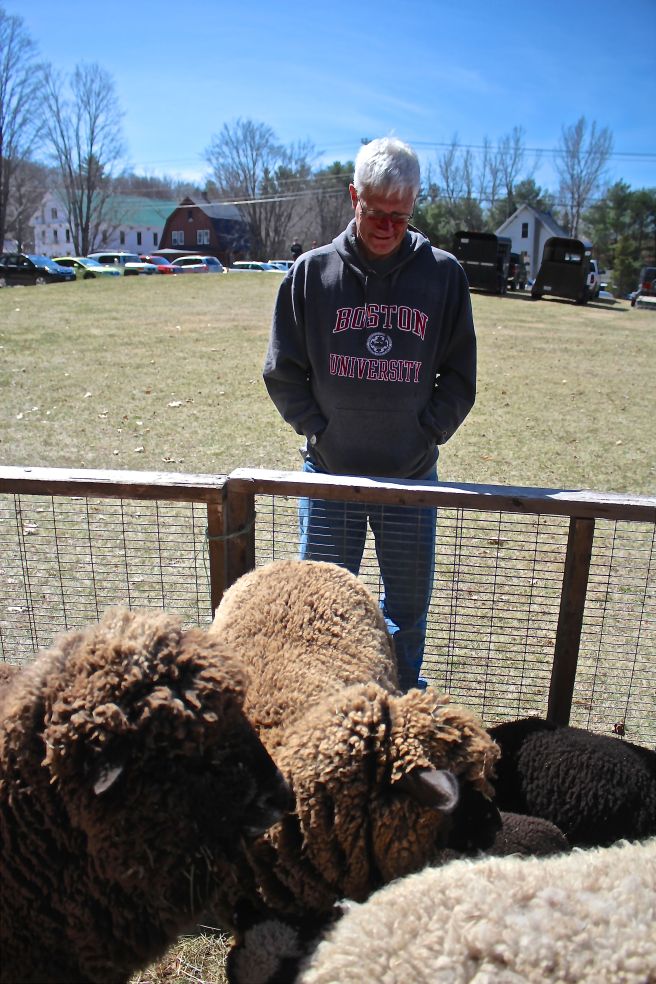
Like us, local sheep were ready to shed their winter coats.

Waiting their turn, they offered sheepish looks.
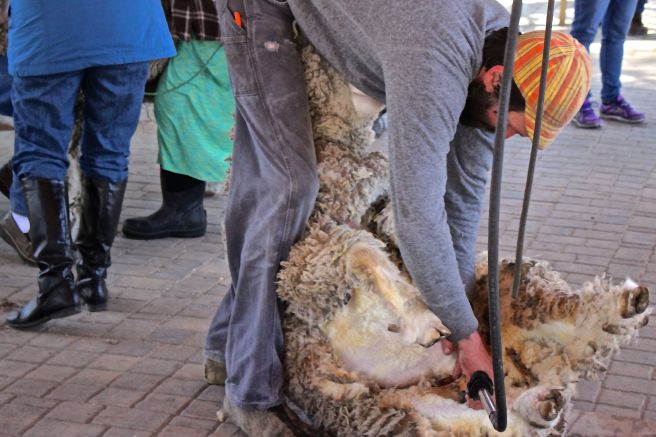
But we heard no complaints as the shearing began.
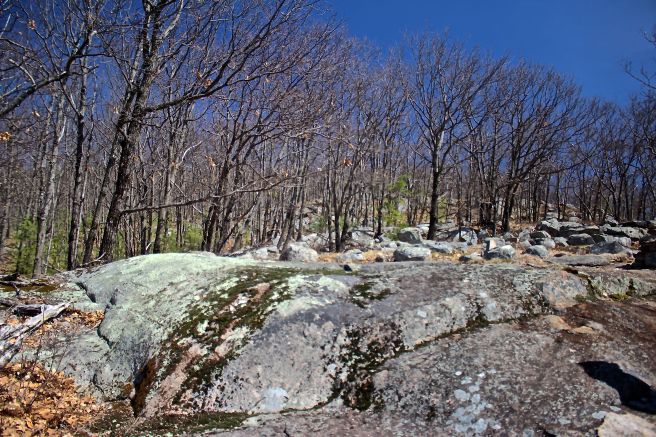
From there, we continued on to the Southwest Ridge Trail of Pleasant Mountain. As we climbed, we thought about the former name of the trail: MacKay’s Pasture Trail.

Between the rock outcrops and slope we decided that in the 1800s sheep probably roamed this side of the mountain. I found an 1858 map on the Denmark Historical Society’s Web site, but it’s too small to check names.
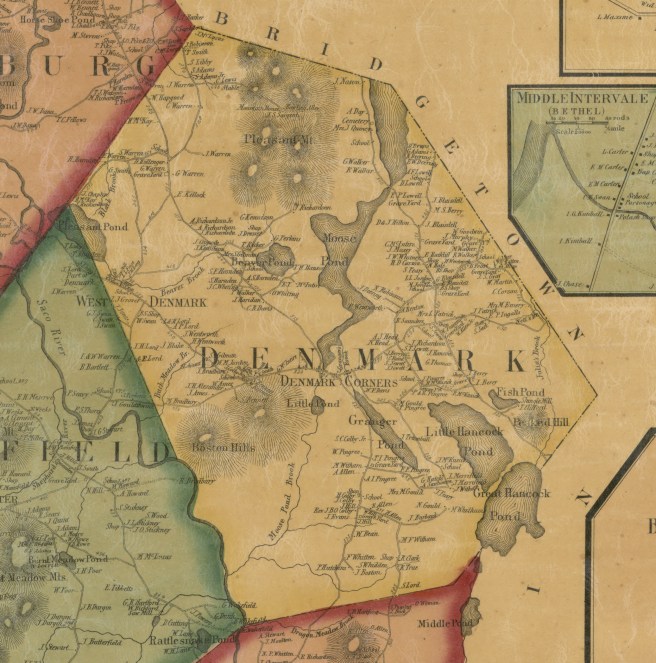
(Thanks to Jinny Mae for sending me a better copy of the map–the McKay’s property is located near the base of the trail on the Denmark/Fryeburg line–makes perfect sense that the side of the mountain served as pastureland for their farm.) Sheep and shepherds–We feel a certain affinity to shepherds/shephards because it’s a family name and were saddened to learn yesterday of the death of one relative we met this past fall in New Brunswick, Canada. Our acquaintance was short, but relationship long. As the Irish say, “May the light of heaven shine upon your grave.” Rest in peace, Ellis Shephard.

We love climbing up this trail and pausing . . .

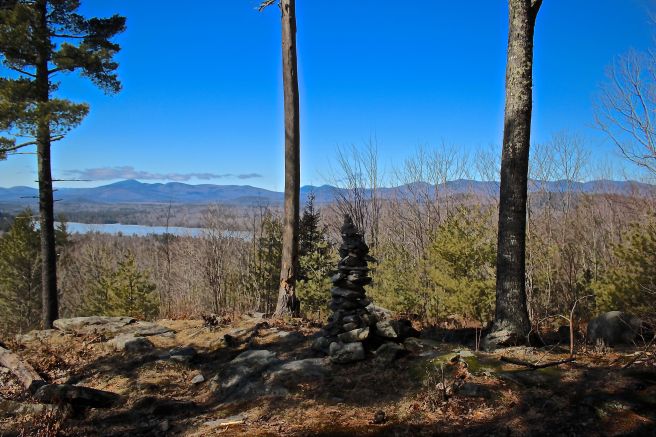
to take in the views behind us–Brownfield Bog, Lovewell Pond, Eastern Slopes Airport in Fryeburg, Maine, and White Mountains of New Hampshire in the distance.

In no time, or so it seemed, we reached lunch rock by the teepee. The teepee was constructed by the late George Sudduth, director/owner of Wyonegonic Camps , the oldest camp for girls in America. His wife, Carol, whom I’ve had the pleasure of hiking with, and family still run the camp, located below on Moose Pond.
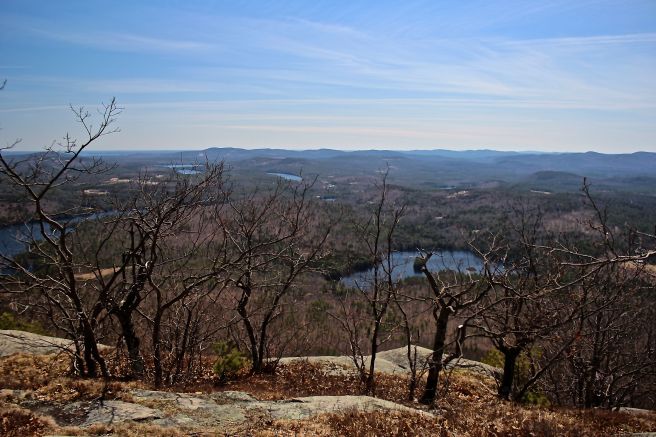
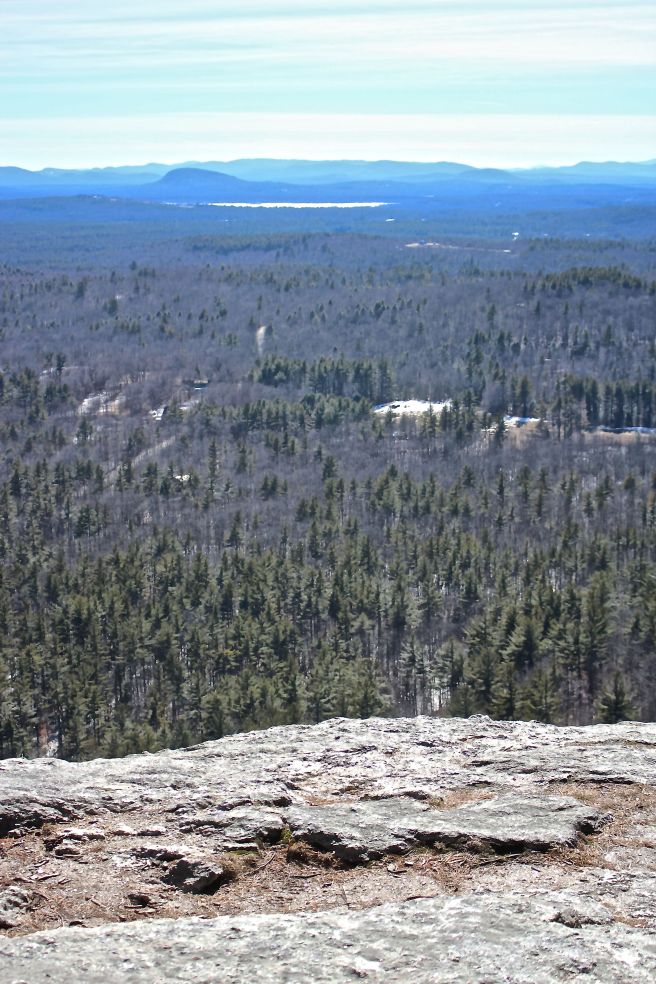
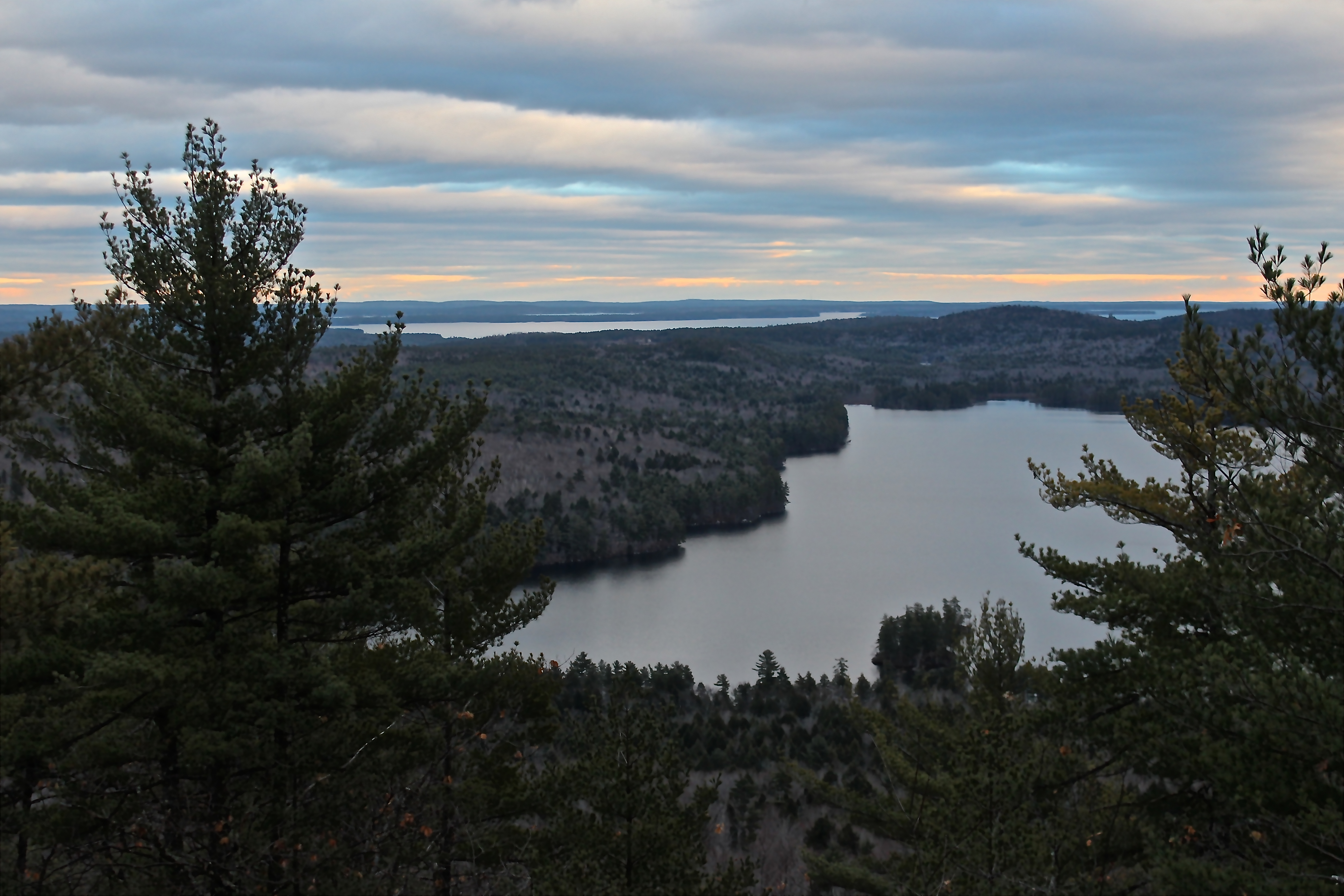
Our view as we appreciated fine dining–ham and swiss instead of PB&J–Moose Pond’s lower basin to the left, Sand (aka Walden) Pond with Hancock Pond behind it, Granger Pond and Beaver Pond directly below us. Actually, if you look closely, you might see Long Lake between Moose and Hancock. This is the Lakes Region of Maine.
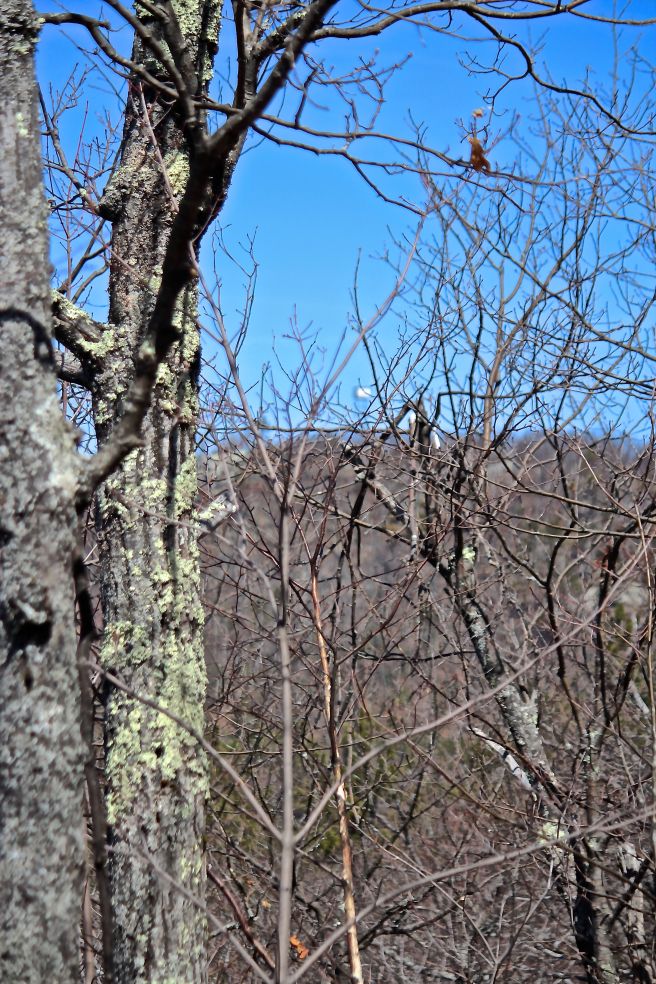
We continued along the ridge and the fire tower came into view. Once the leaves pop, this view will disappear until fall.

At the vernal pool between knobs, we only saw one large egg mass–I had to wonder if the number is related to the amount of human and dog traffic.
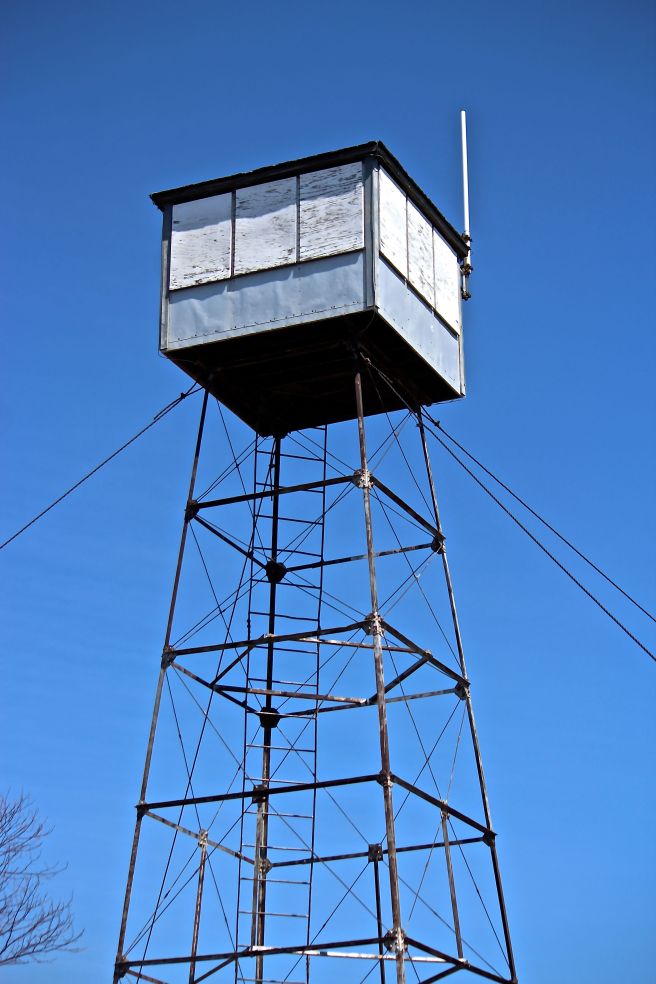
And then . . . we were there. At the summit of Pleasant Mountain. With a kazillion other people and dogs.

Again, we could see the bog and Lovewell Pond behind it,
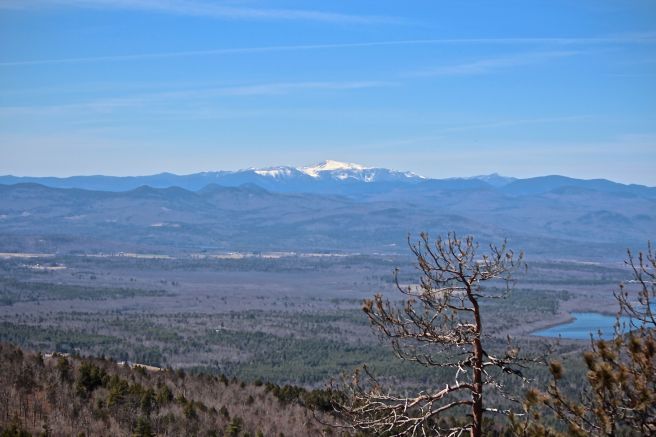
plus Kezar Pond in Fryeburg and Mount Washington beyond.

No matter how often I gaze upon this view, I’m always awestruck.
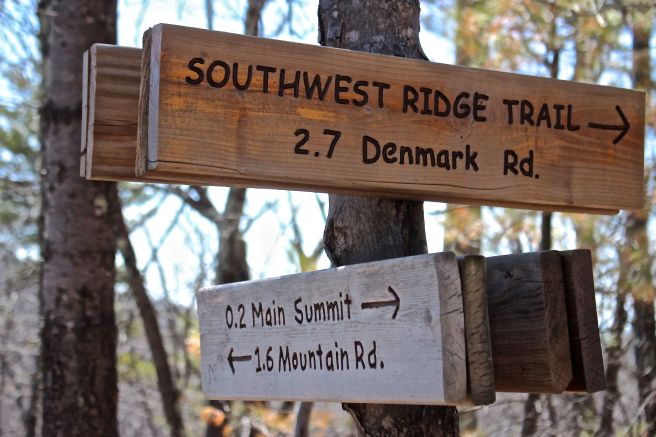
We had two options because we’d left two trucks, and decided to follow the Ledges Trail to Mountain Road.
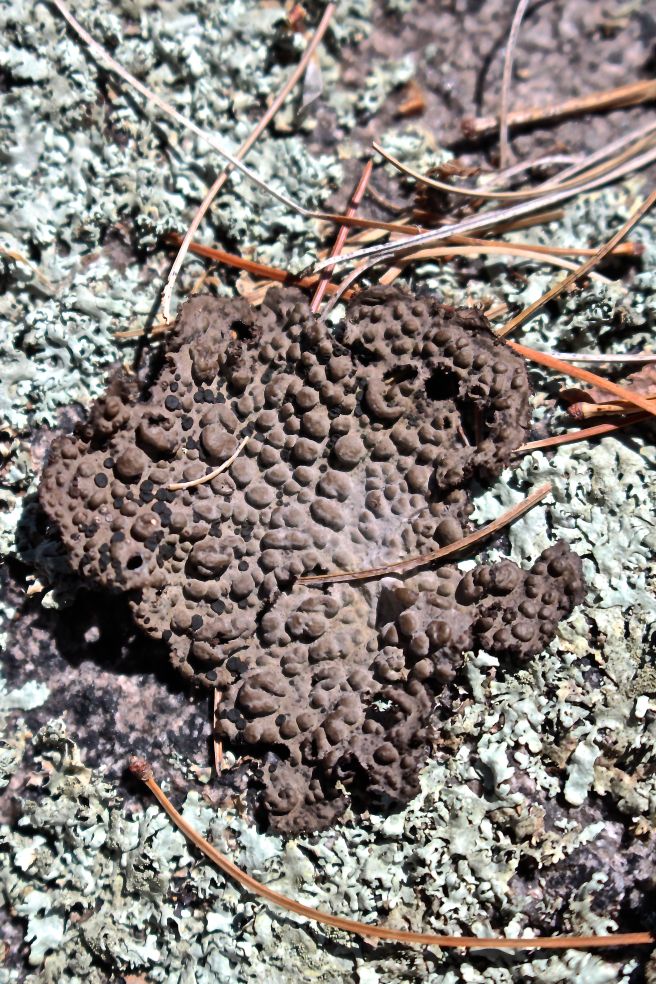
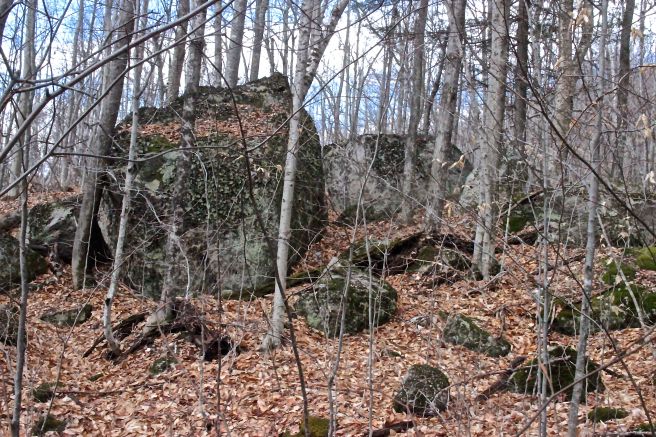
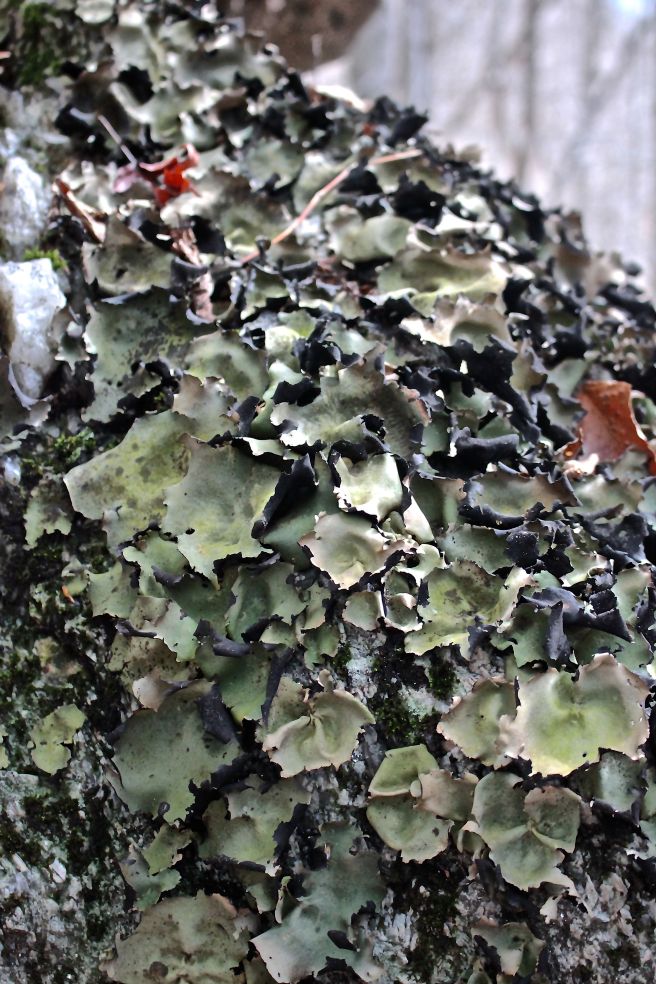
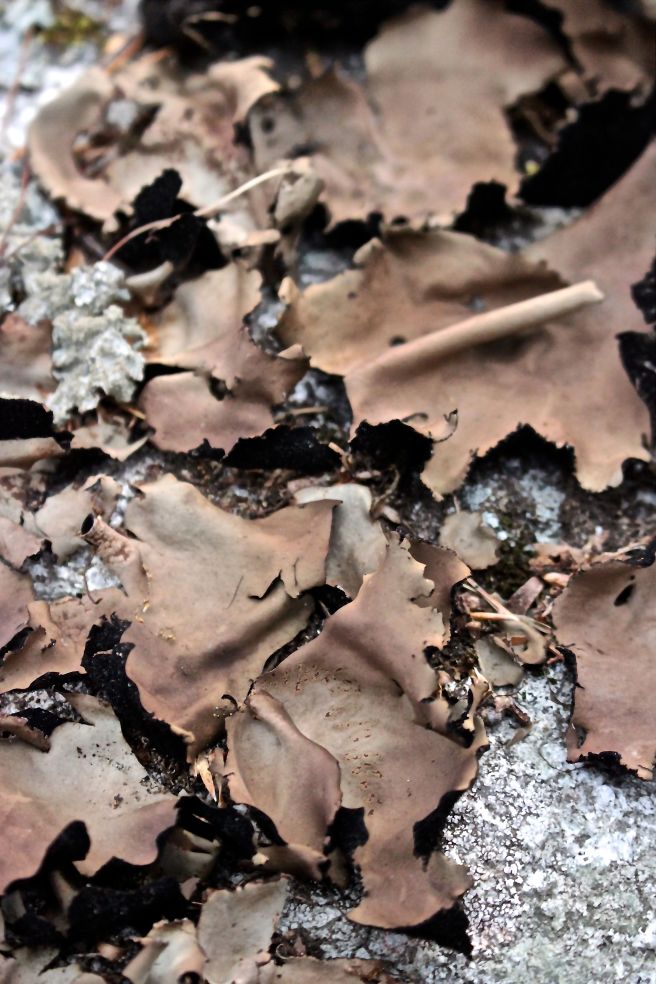
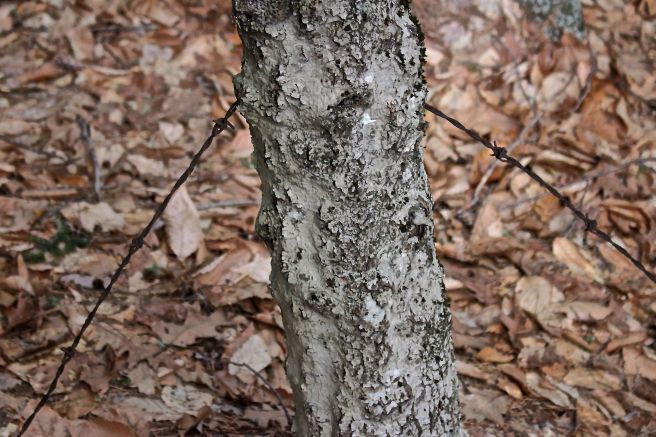
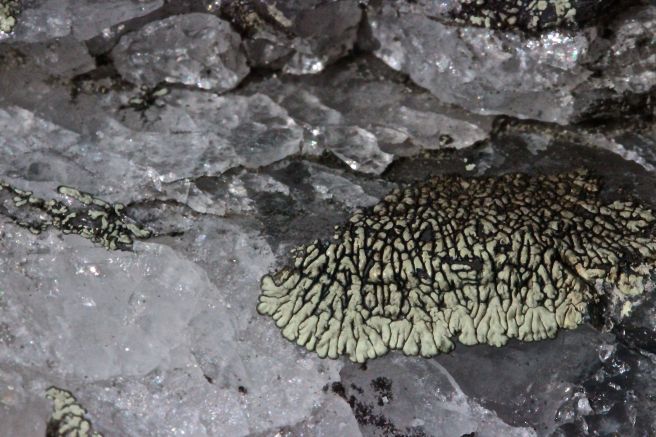
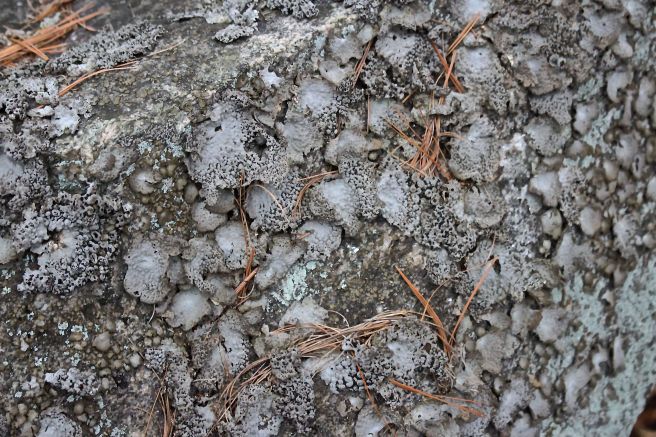
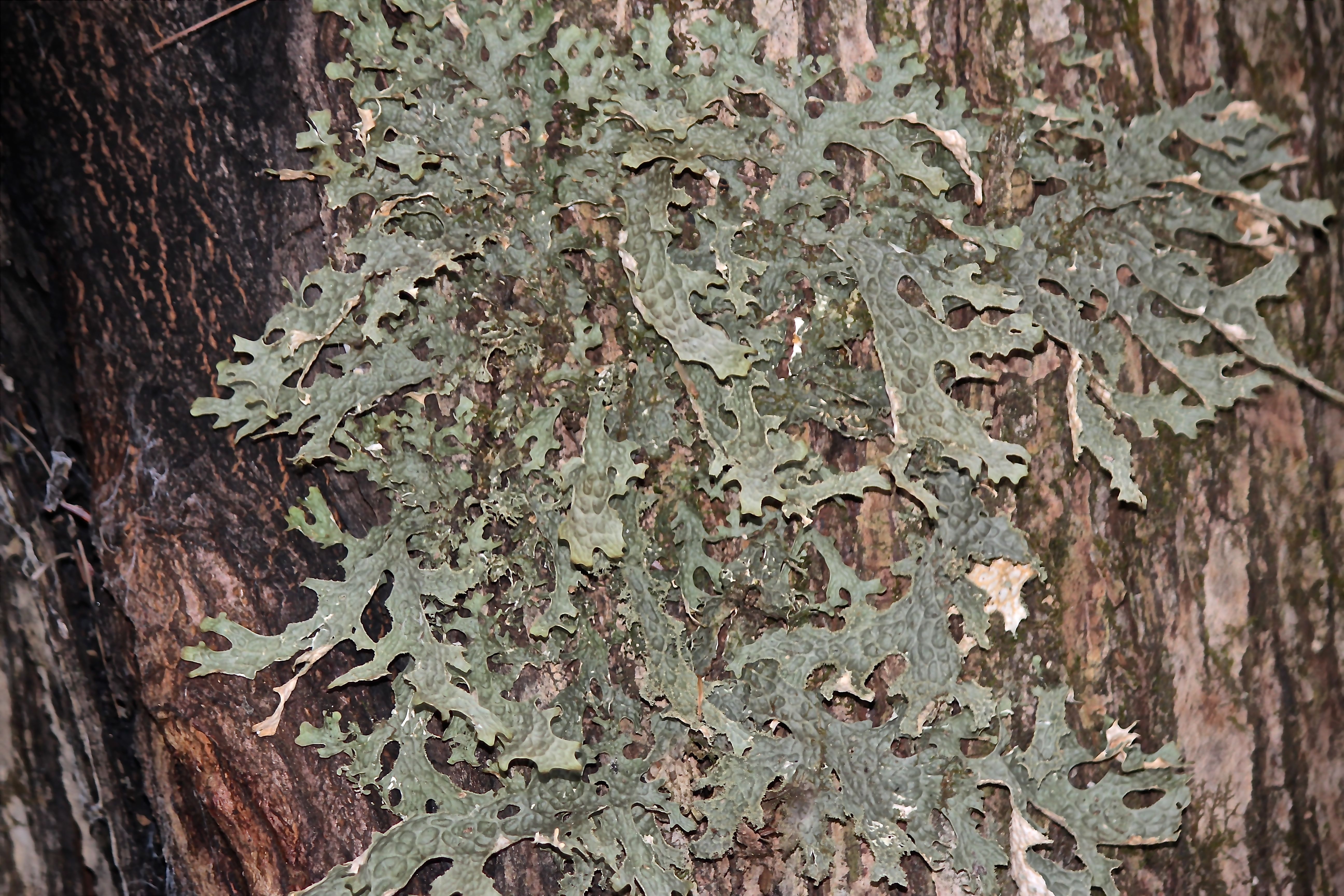
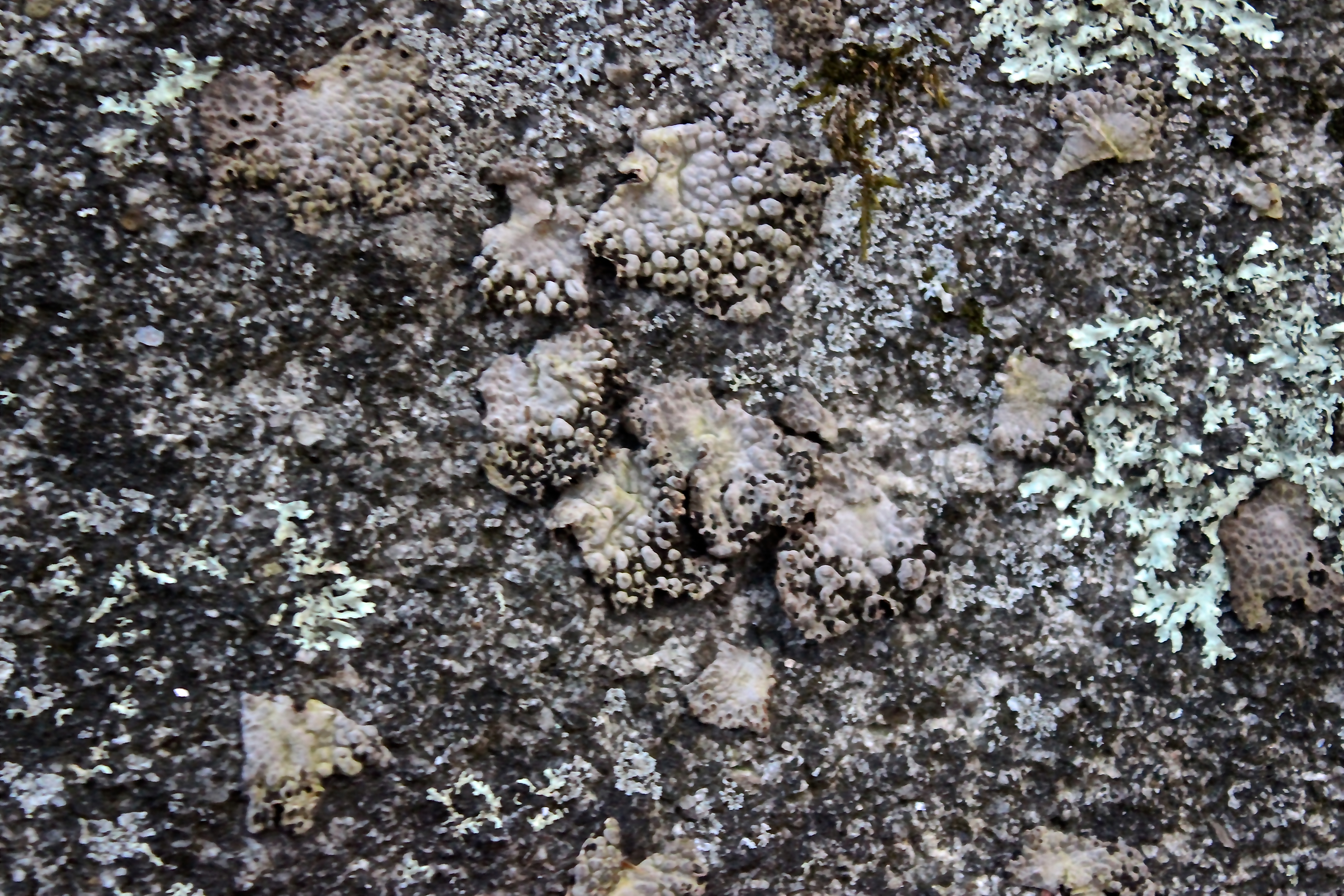
Though I was with my guy, Mr. Destinationitis, I did stop long enough to admire the common toadskin lichen with its warty pustules.
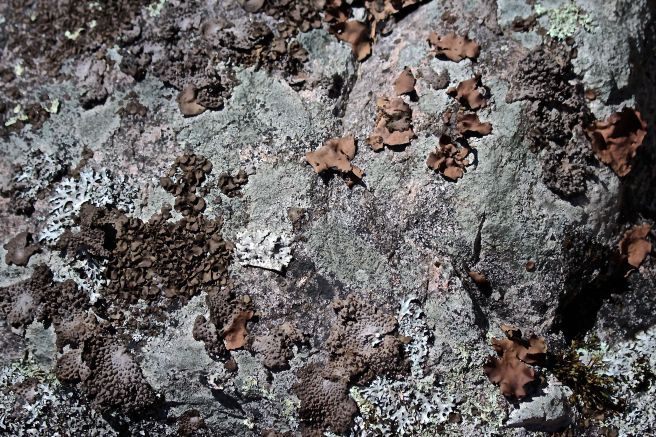
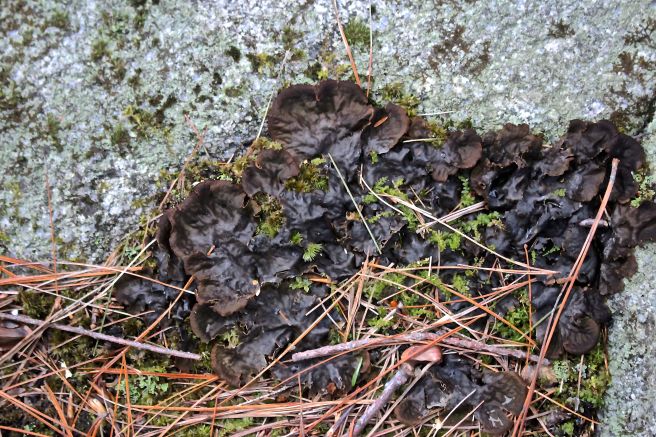
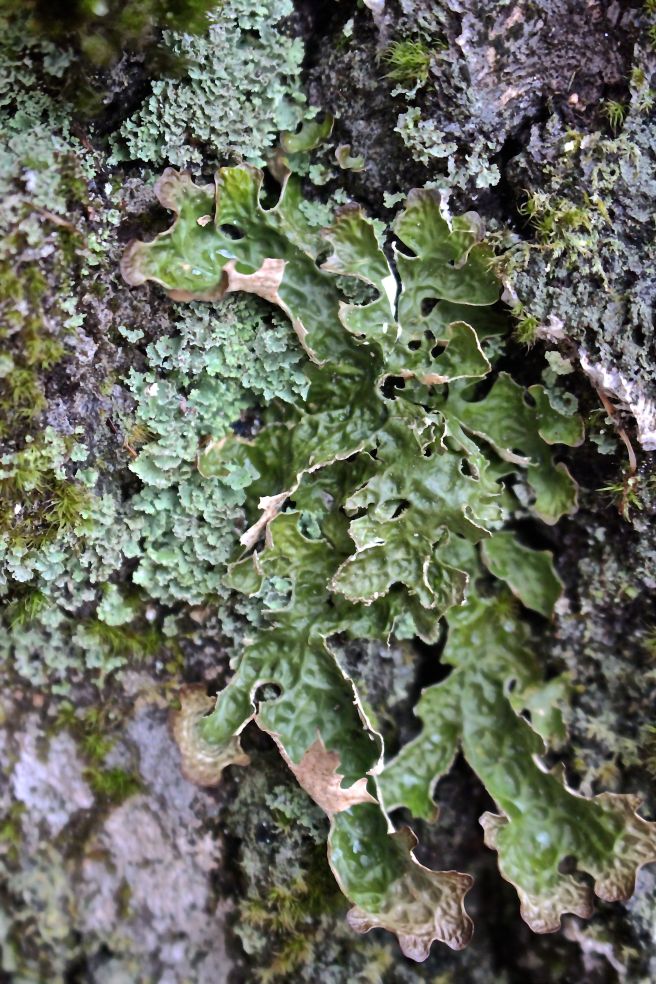
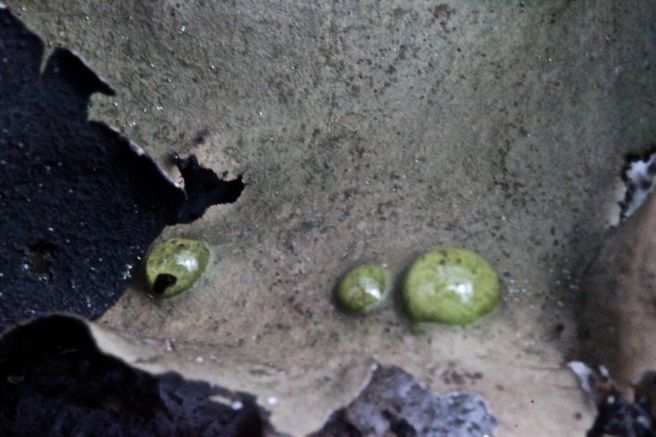
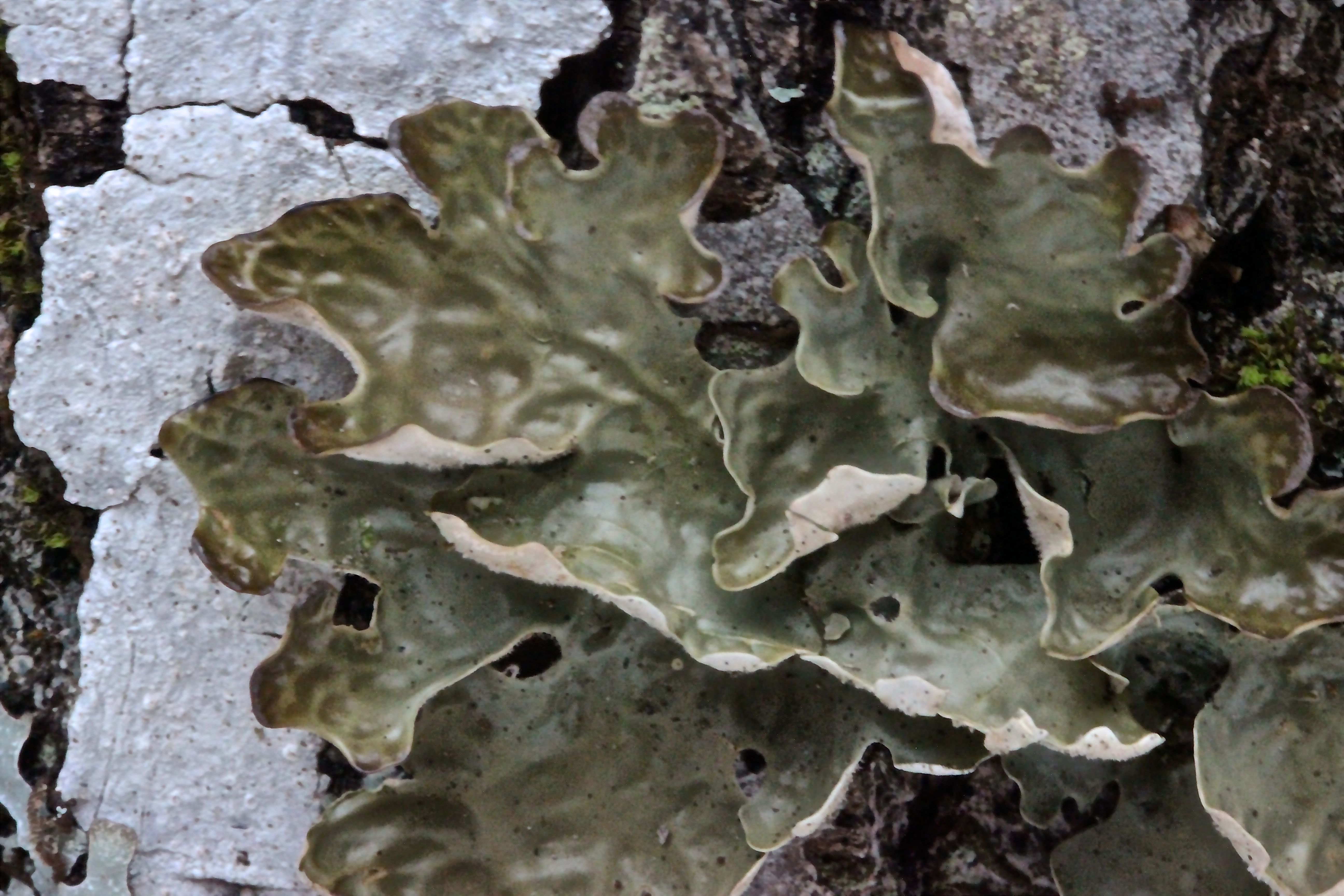
Had this been a teaching moment, the lesson plan was laid out in front of me–toadskin versus common rock tripe. Warty versus smooth. A difference in color. Both umbilicate lichens–attached to the rock substrate at a single point. OK, so maybe it was a teachable moment.

But one of us didn’t give two hoots. He tolerated me . . . while he rested. ;-)

For the most part, we hiked within feet of each other, but I can never resist stopping at this point as we come upon the beginning of the ledges that gave this trail its name.

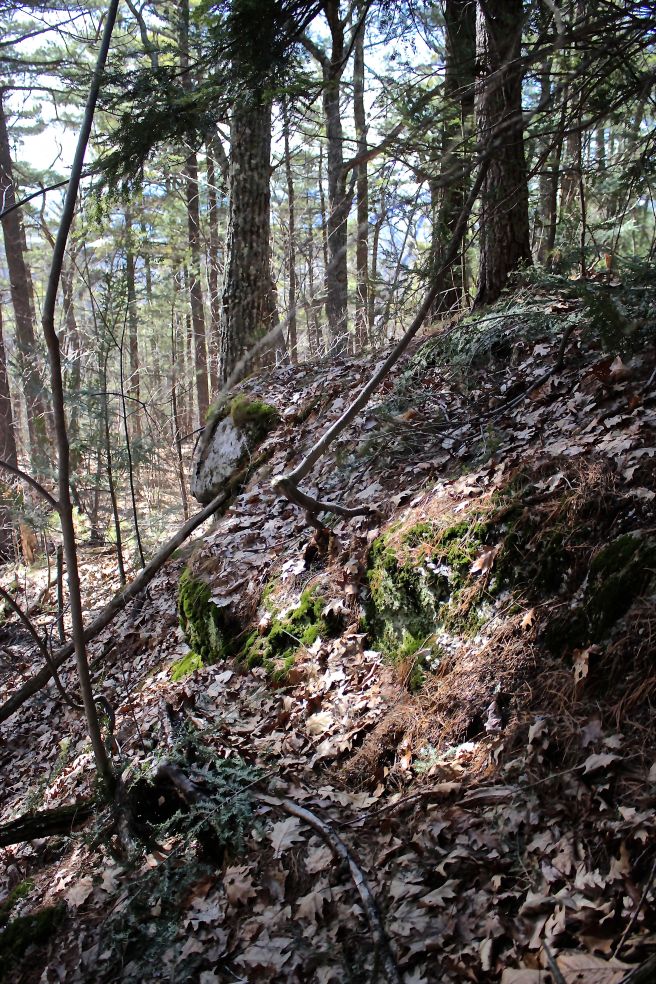
Continuing down, I frequently grasped trees and thought about how many handprints are imbedded in the history of this land–from Native Americans to surveyors to shepherds to trail blazers and hikers. On this made-in-Maine type of day, we encountered many people of all ages and abilities–and were glad to share the trail with them.

It’s not only people and sheep who have moved across Pleasant Mountain. Even today, dinosaurs made their presence known.







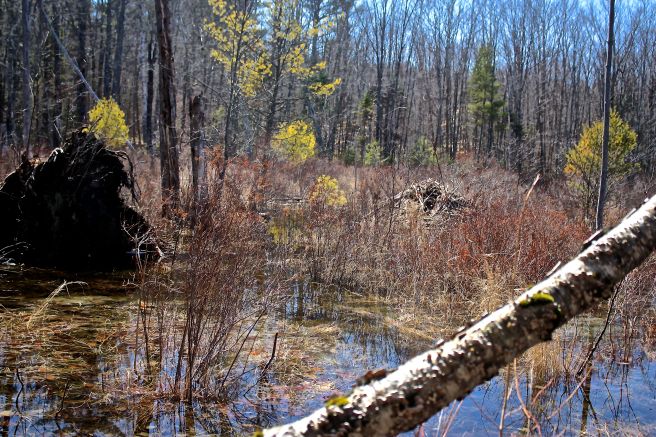


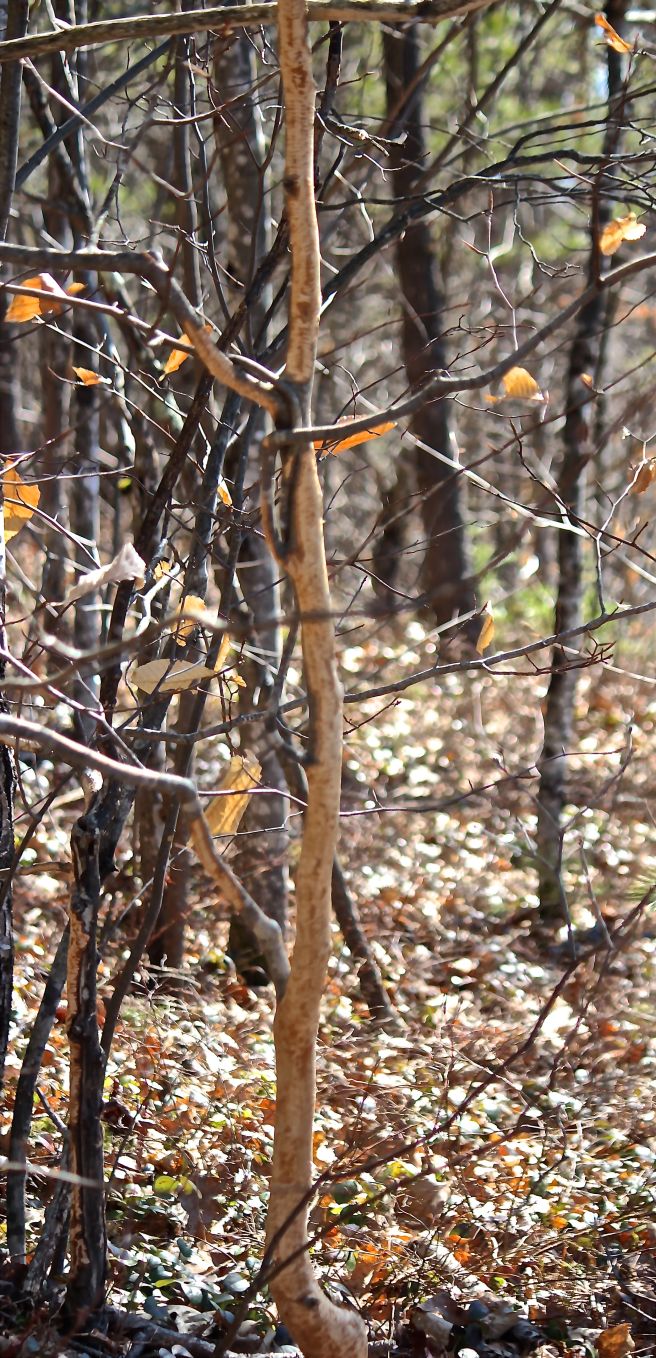
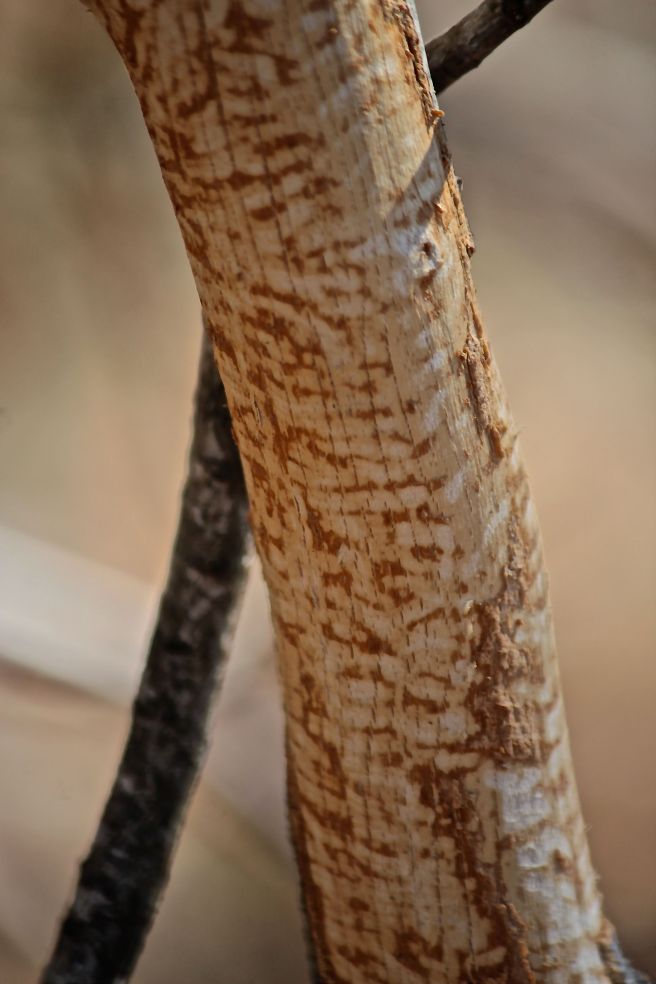




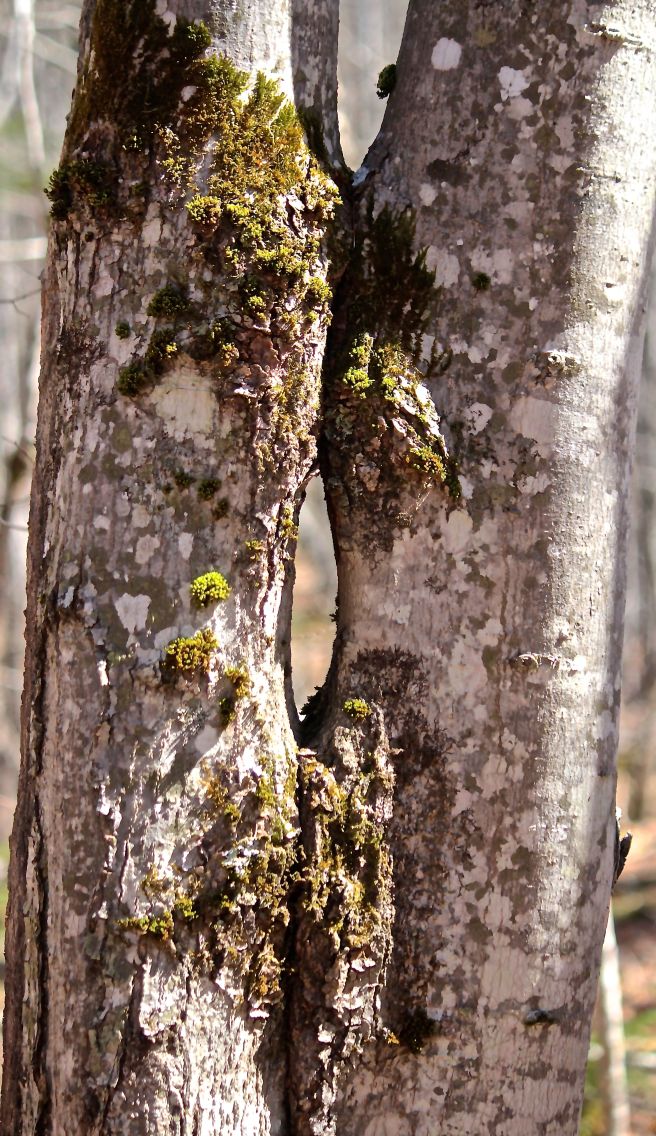
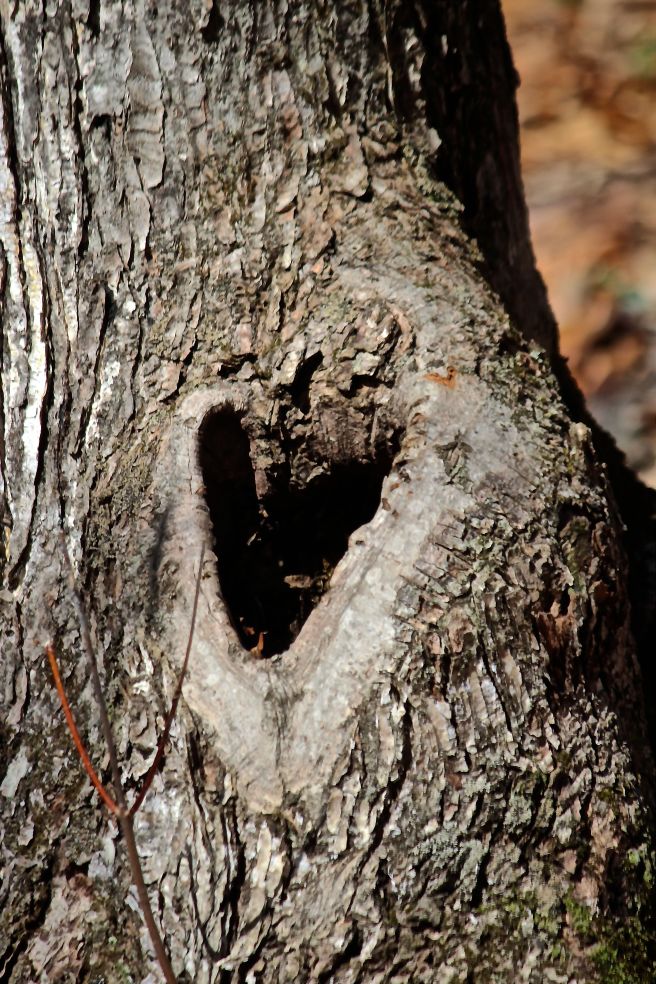





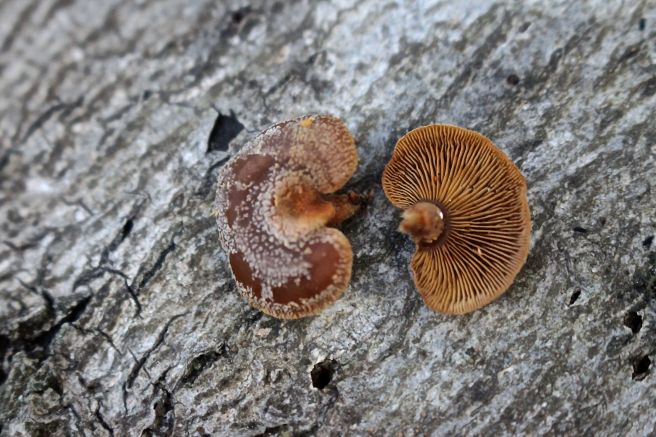
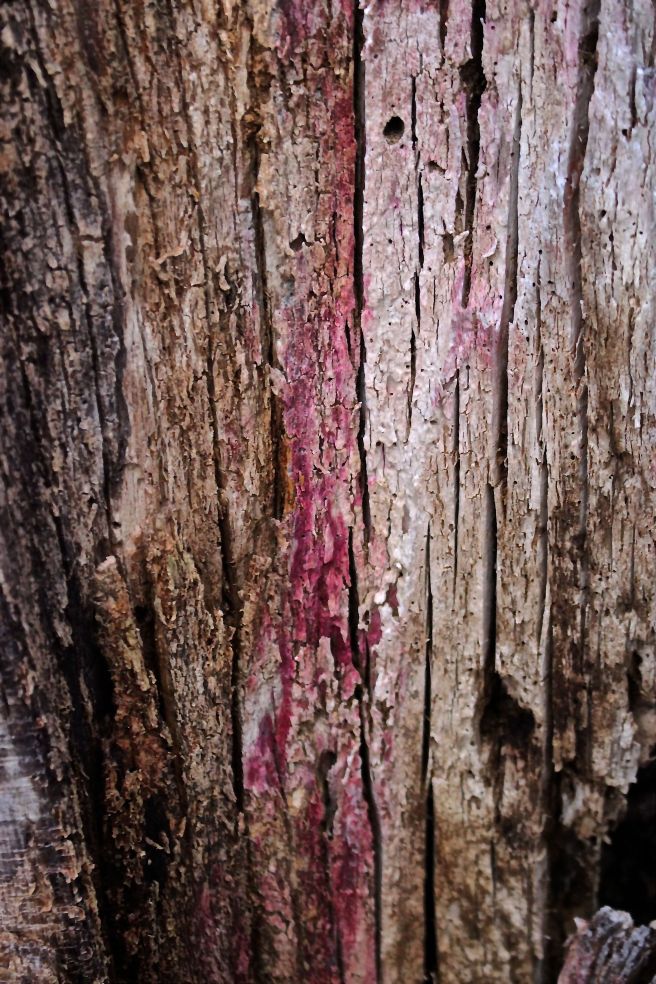
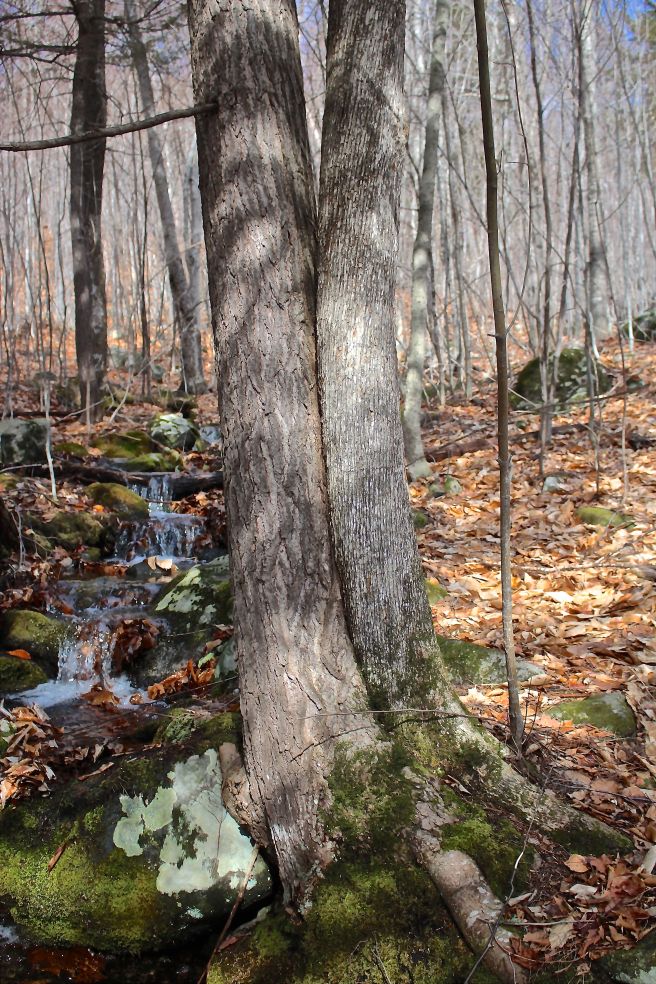





















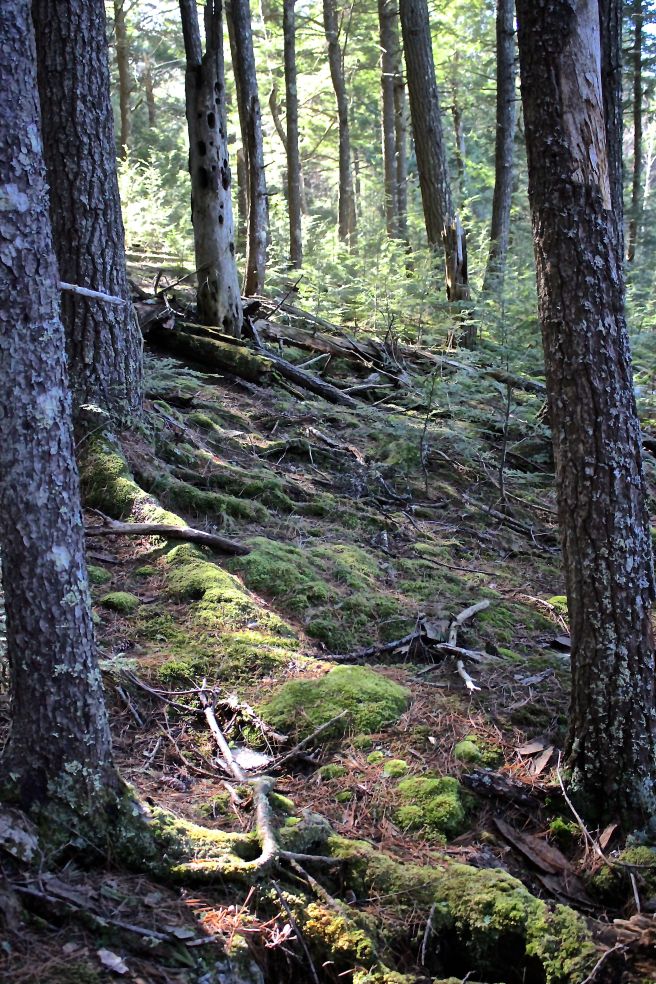







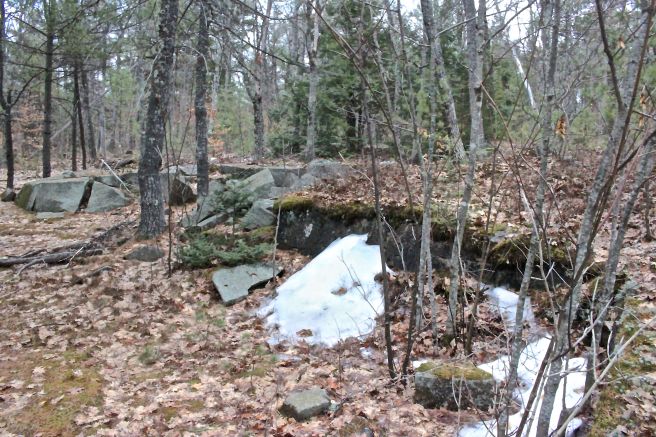
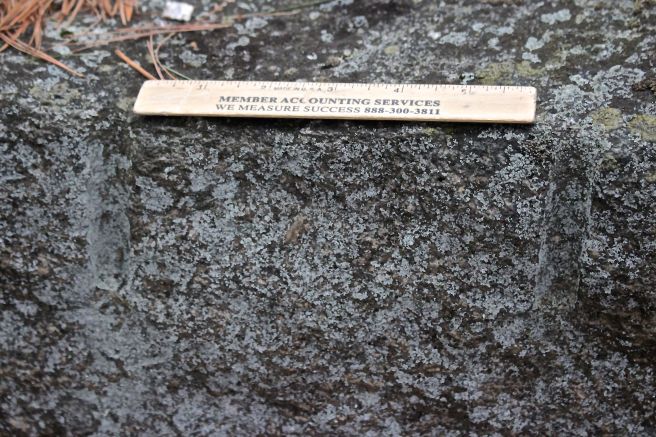


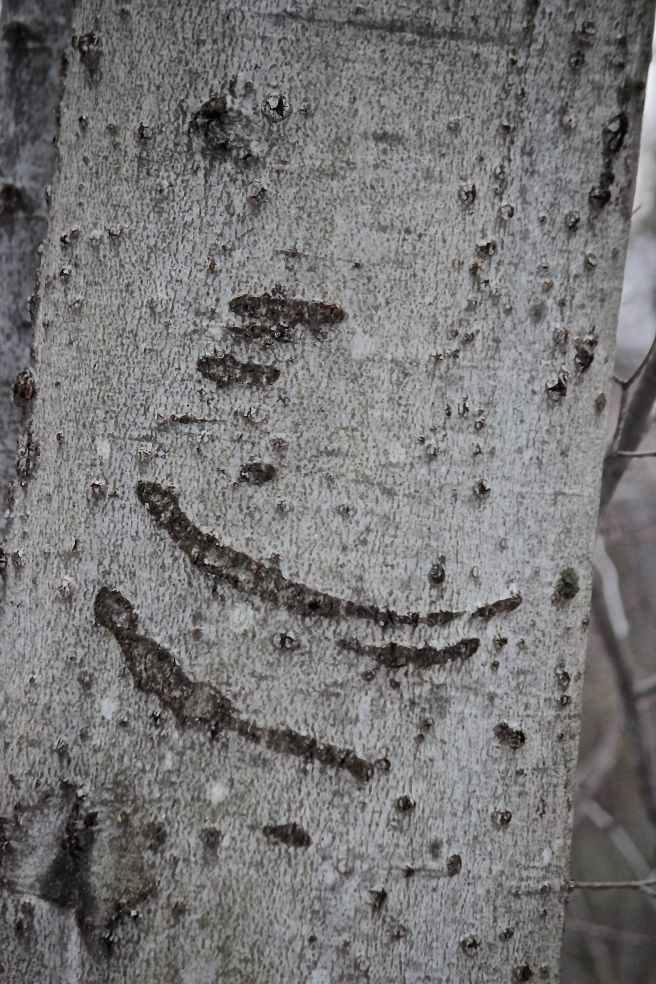

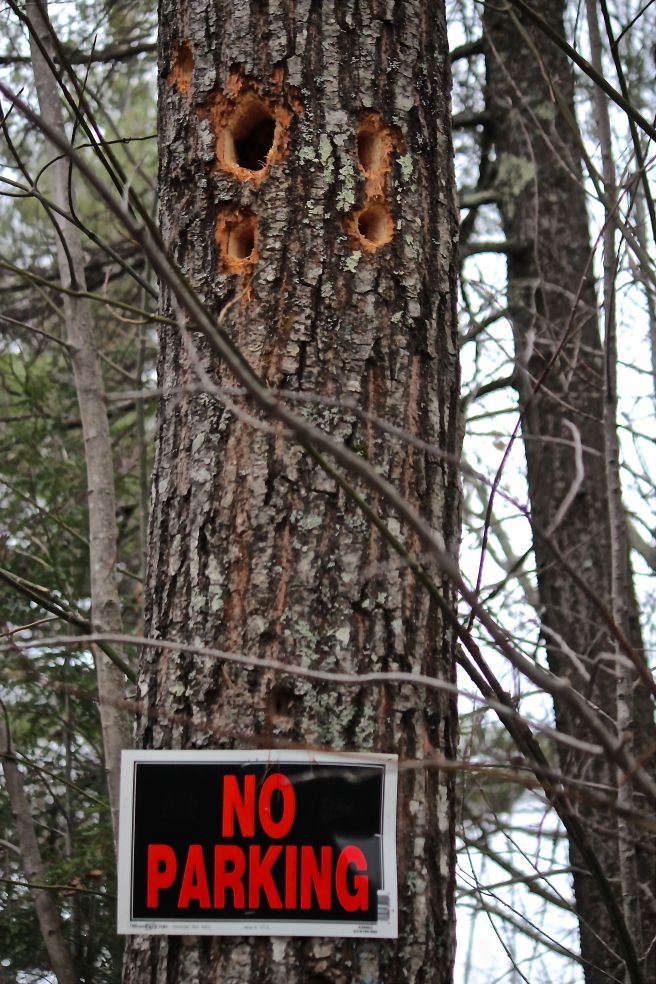
















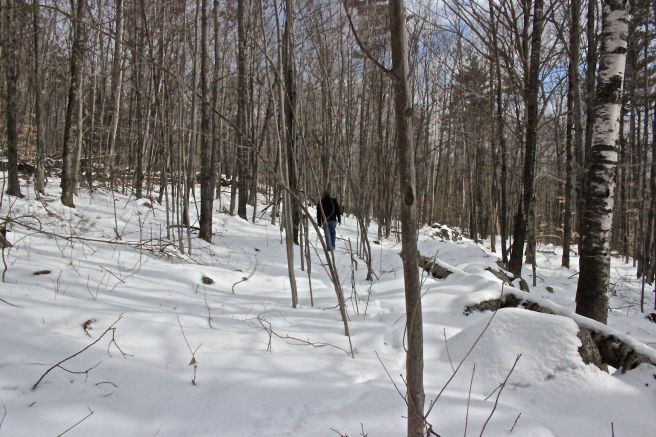
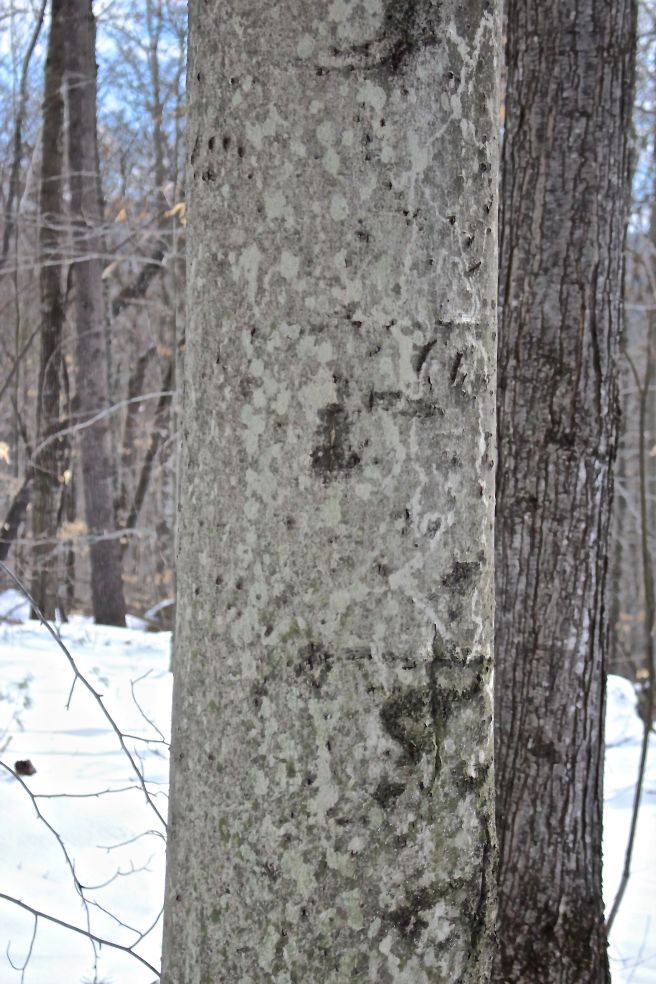
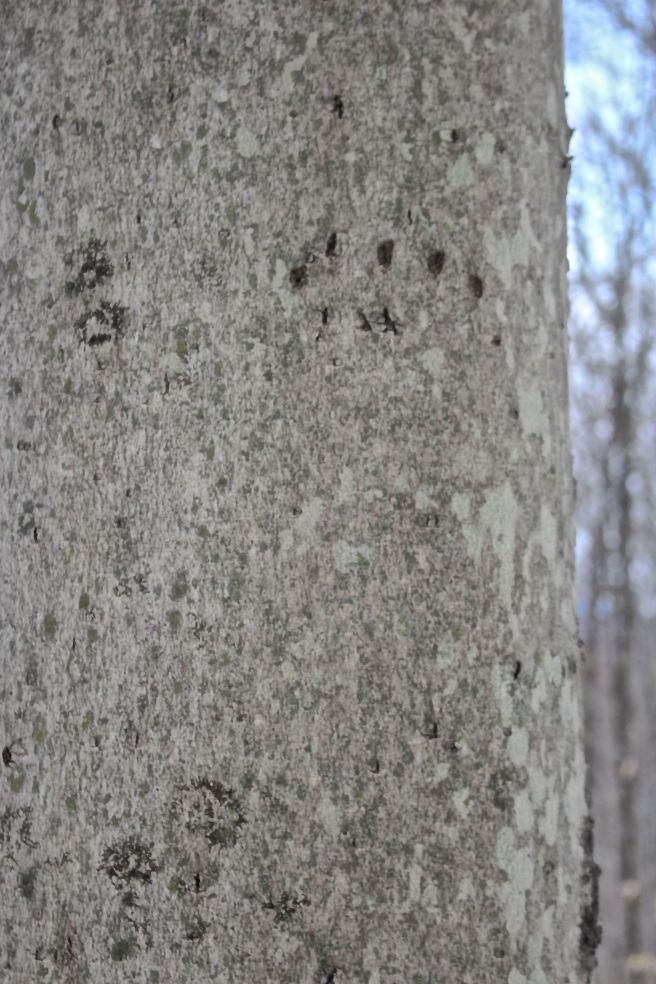









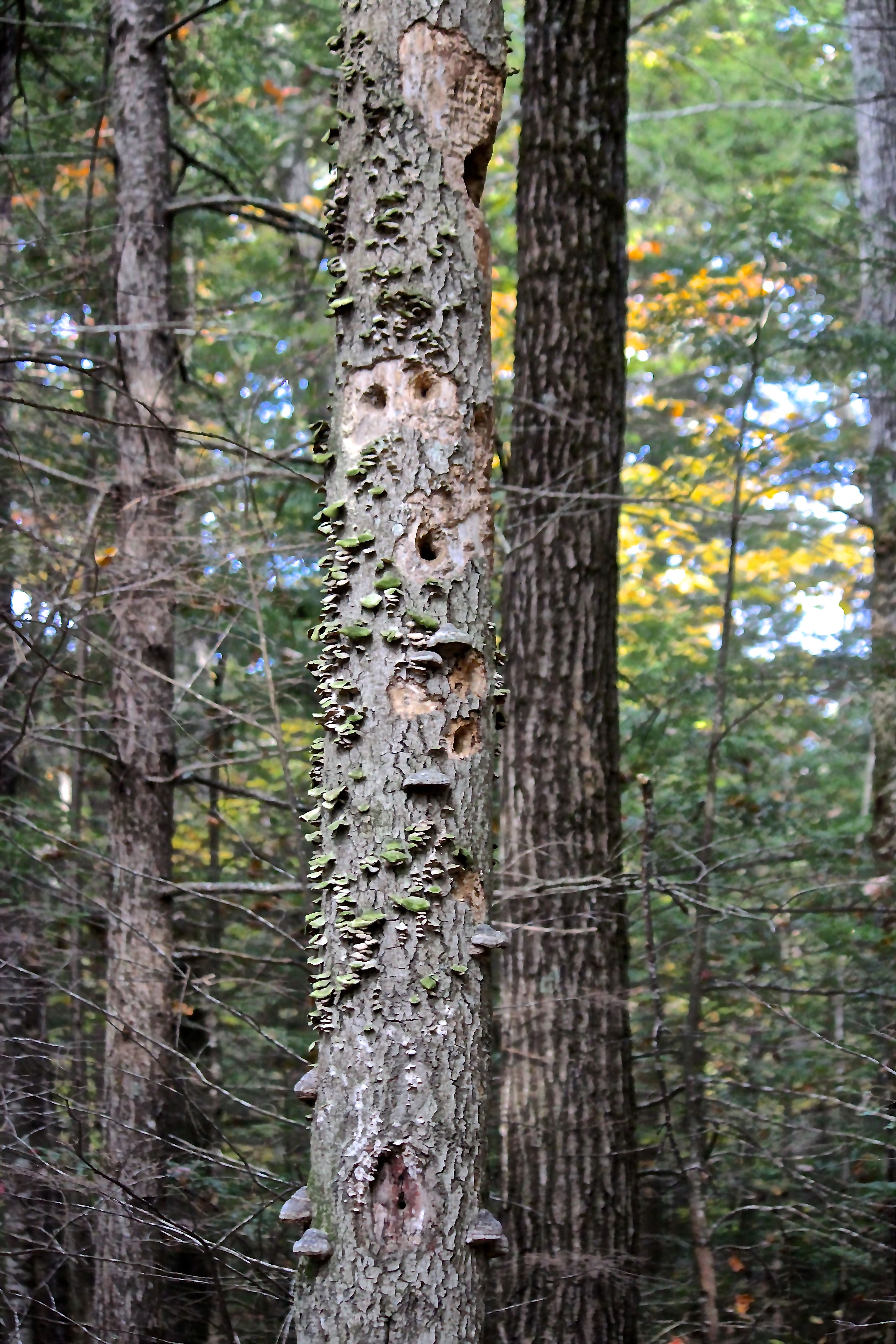
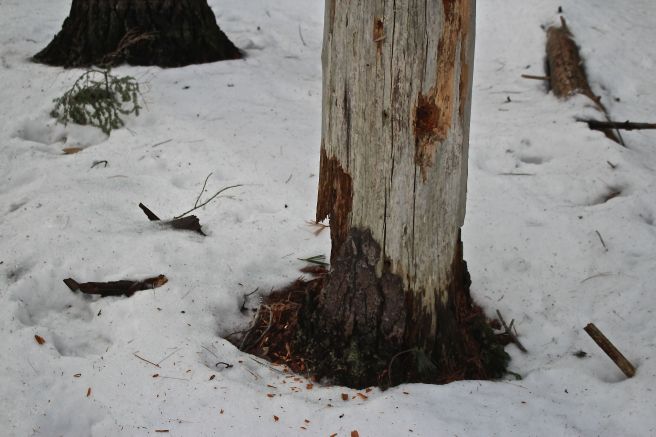 Check out this tree that I pass by each time I step into our woodlot. My guy and I were commenting on it just the other day–he tried pushing, but it stood firm. This morning, fresh wood chips indicated that the pileated woodpecker had paid a visit in the last 24 hours.
 It’s a well-visited tree. What will the woodpeckers do when it finally does fall? Two things. First, they’ll continue to visit it because apparently it’s worthy of such. And second, they’ll find other trees; there are several others just like this.
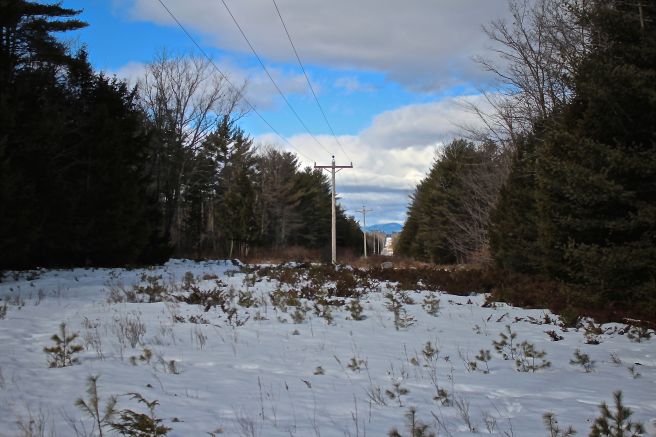 I was feeling a bit grumpy when I headed out the door, but finding the recent woodpecker works and emerging from the cowpath onto the power line where I was captured by the whitegreenbluegray of the world as I looked toward Mount Washington put a smile on my face. My intention was to walk along the barely used snowmobile trail as far as I could. I wasn’t sure if open water would keep me from reaching the road, which is a couple of miles away, but decided to give it a try.
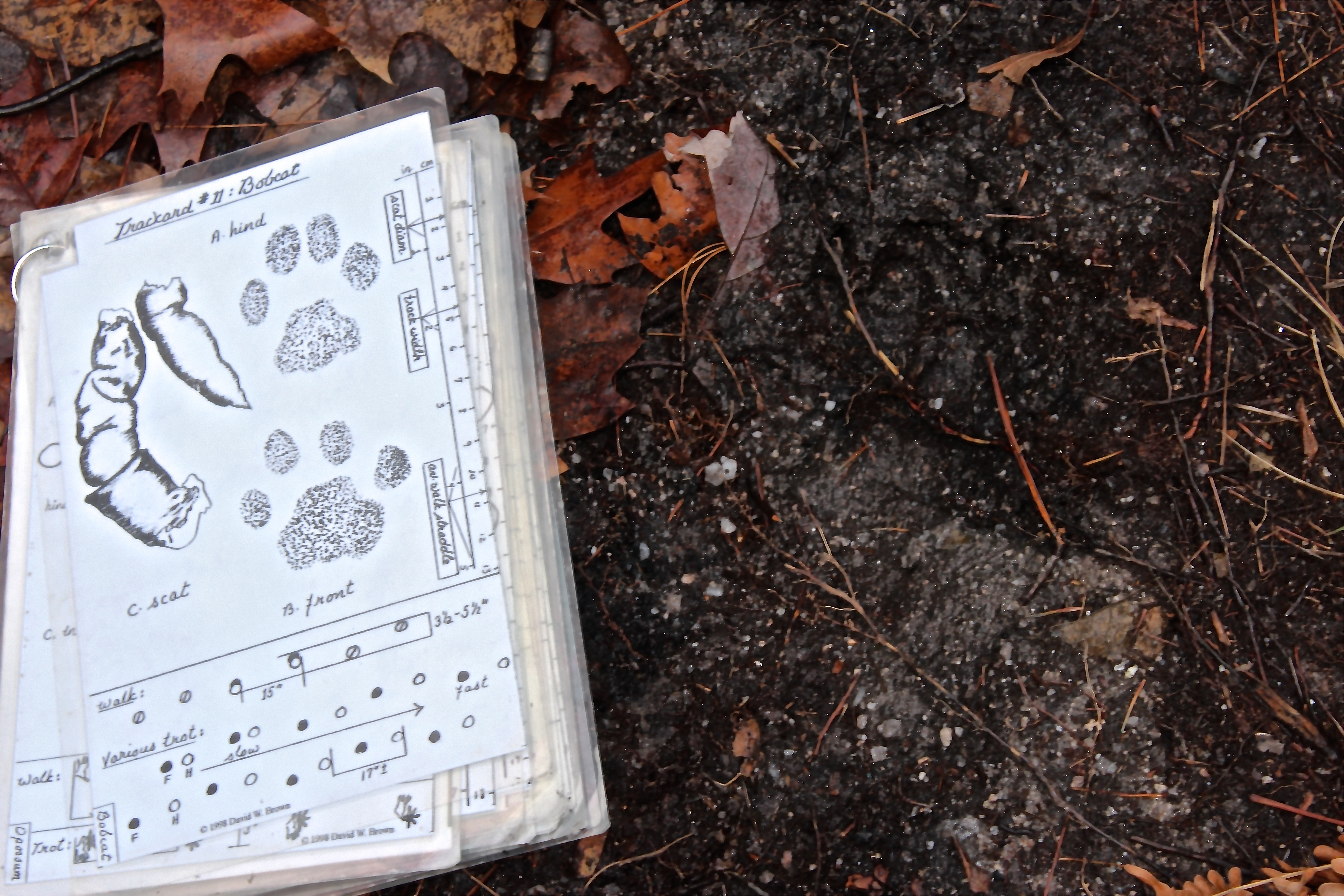
 Just because that was my plan doesn’t mean that’s what happened. Maybe that’s what I love best about life–learning to live in the moment. This moment revealed the spot where deer sunk into the snow just off the snowmobile trail and a bobcat floated on top.
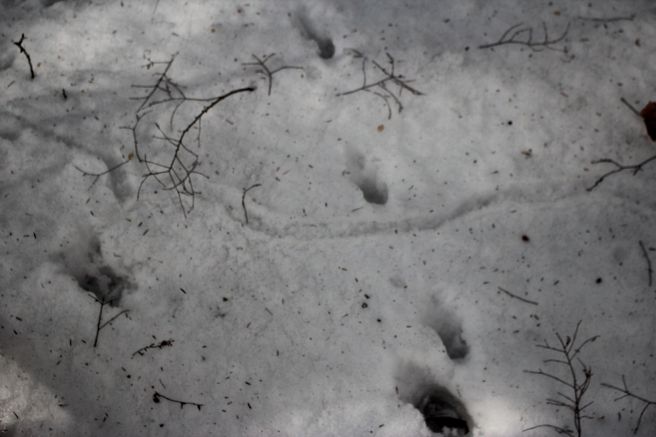 I turned 180˚ and found more tracks on the other side of the snowmobile trail. And so began today’s journey into the woods. I was feeling proud of myself for backtracking the animal–following where it had come from rather than where it had gone so I wouldn’t cause unnecessary stress. Yet again, I stress out all the mammals because of my constant movement–and so many I don’t see because they hear me coming. Anyway, I followed the bobcat for quite a while, noticing that it continued to follow the deer and even crossed over a couple of vole tunnels that already have their spring appearance. It’s much too warm much too soon.
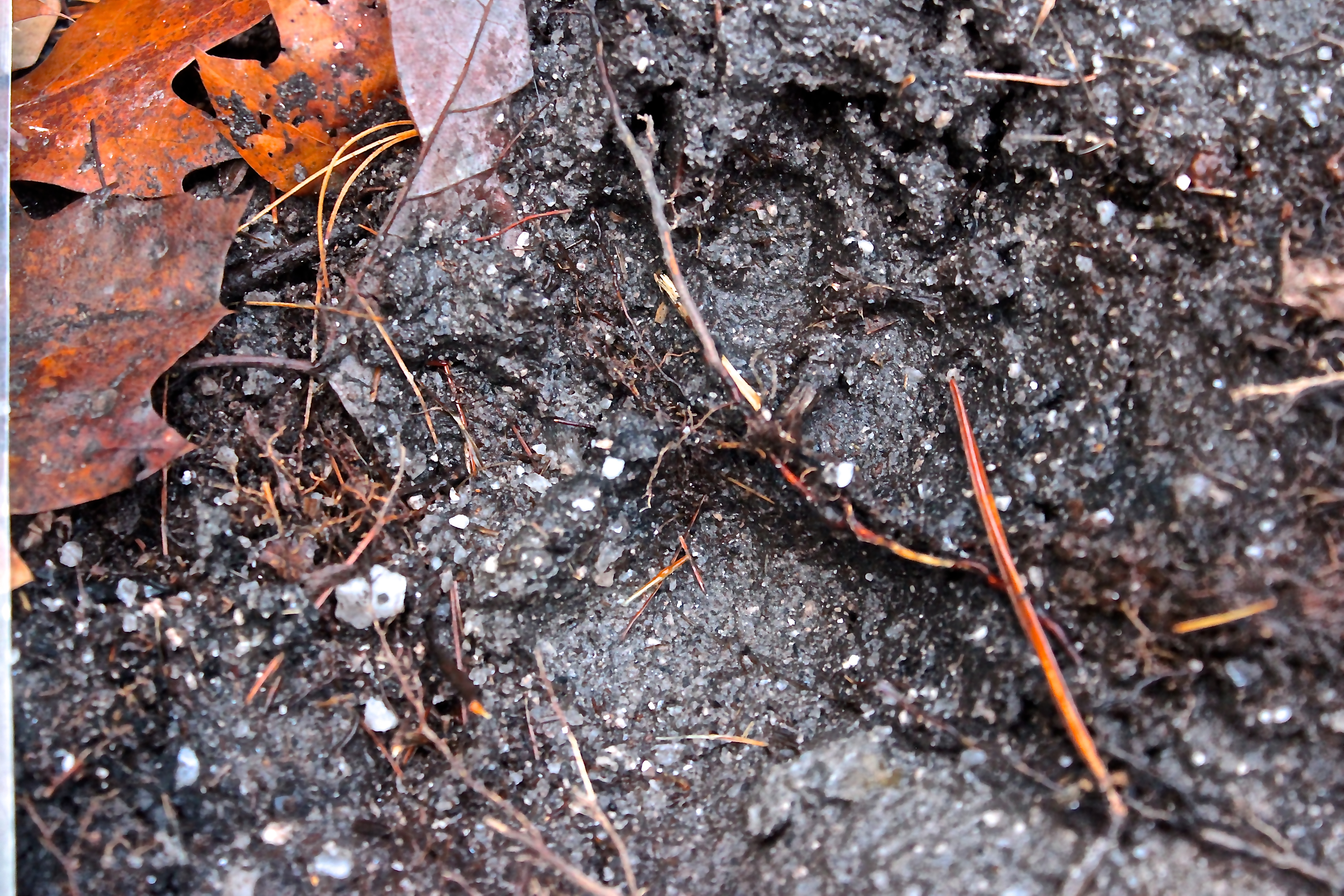
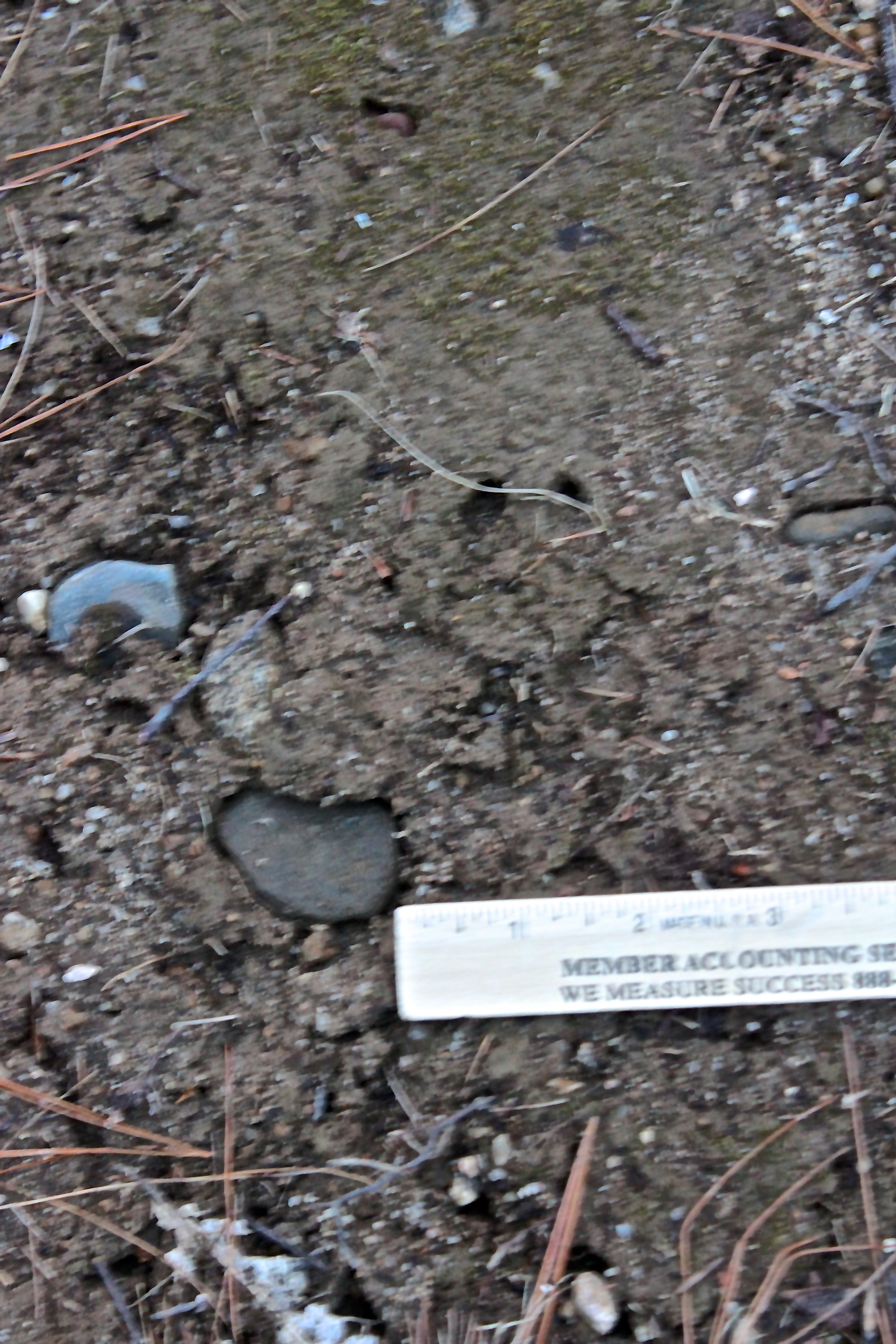
 What I discovered is that this mammal was checking out stumps and along the way circled around them. And then it seemed that there might be two because suddenly I was following rather than backtracking. So much for that plan. What I do like is how this photo shows the mammal’s hind foot stepping into the same space the front foot had already packed down–direct registration, just a little off center.
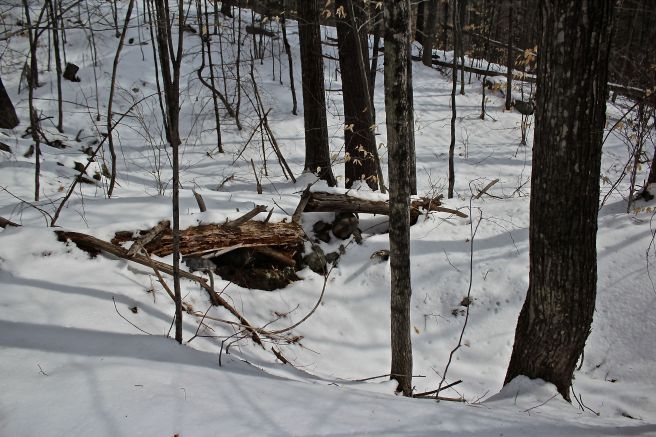
 Its prints are in the bottom right-hand corner, but then it appeared to walk across the top of this nurse-log. After that, I had to circle around looking for the next set of prints.
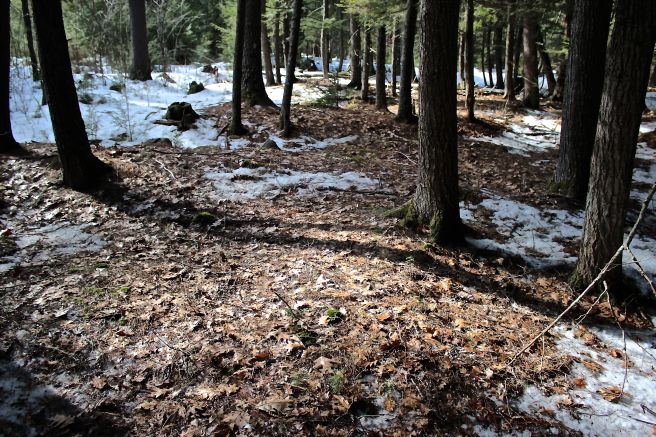 Under some of the hemlocks, there was little to no snow. Eventually I lost the bobcat’s trail, which is just as well.
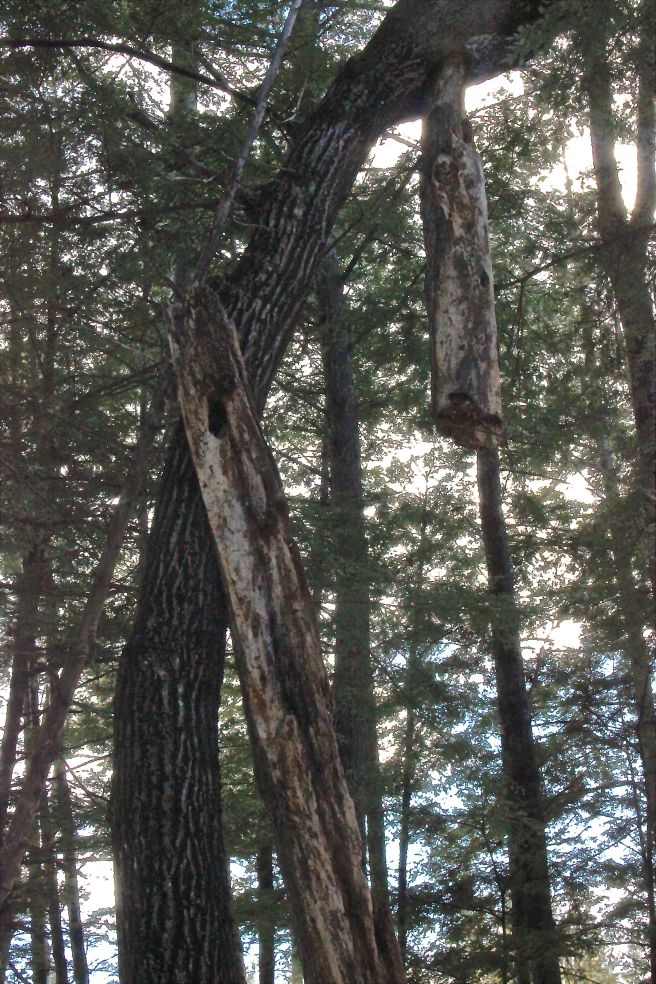 I didn’t realize until I looked up that I was still in familiar territory.
 I first spotted this widow maker 20+ years ago. It never ceases to amaze me.
 I decided that rather than return to the snowmobile trail, I’d continue deeper into the woods. I had an idea of where I’d eventually end up, but if you’ve traveled these woods with me recently (Marita and Dick can vouch for this), you’ll know that the logging operation has thrown me off and not all of my landmarks are still standing. It’s that or they just got up and moved. Anyway, I was lost for about an hour, but continued moving slowly through sometimes deep snow (relatively speaking this winter) and other times puddly conditions. It was a slog to say the least. My friend, Jinny Mae, had warned me about water hidden beneath the snow and I found it. More than once.
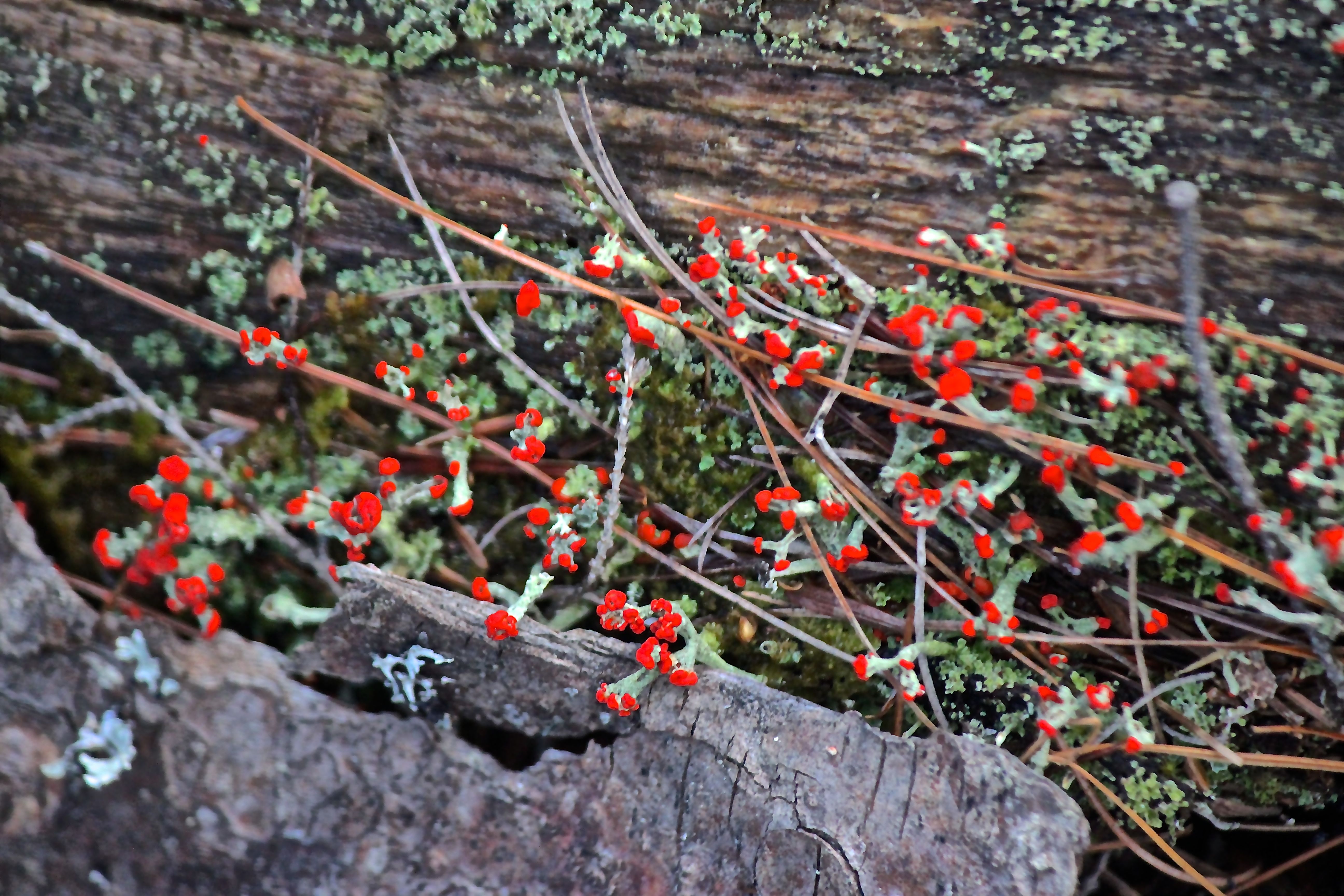
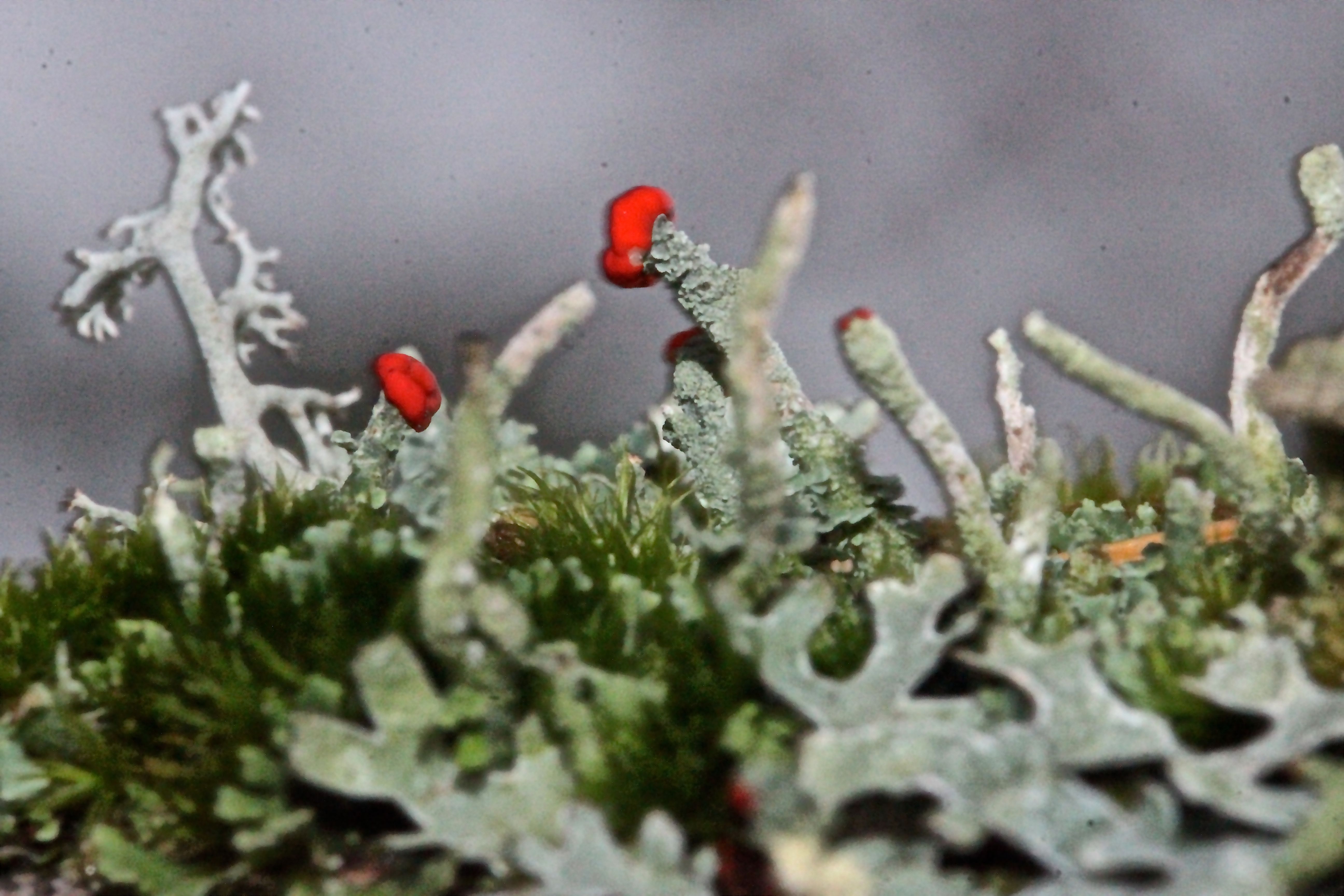
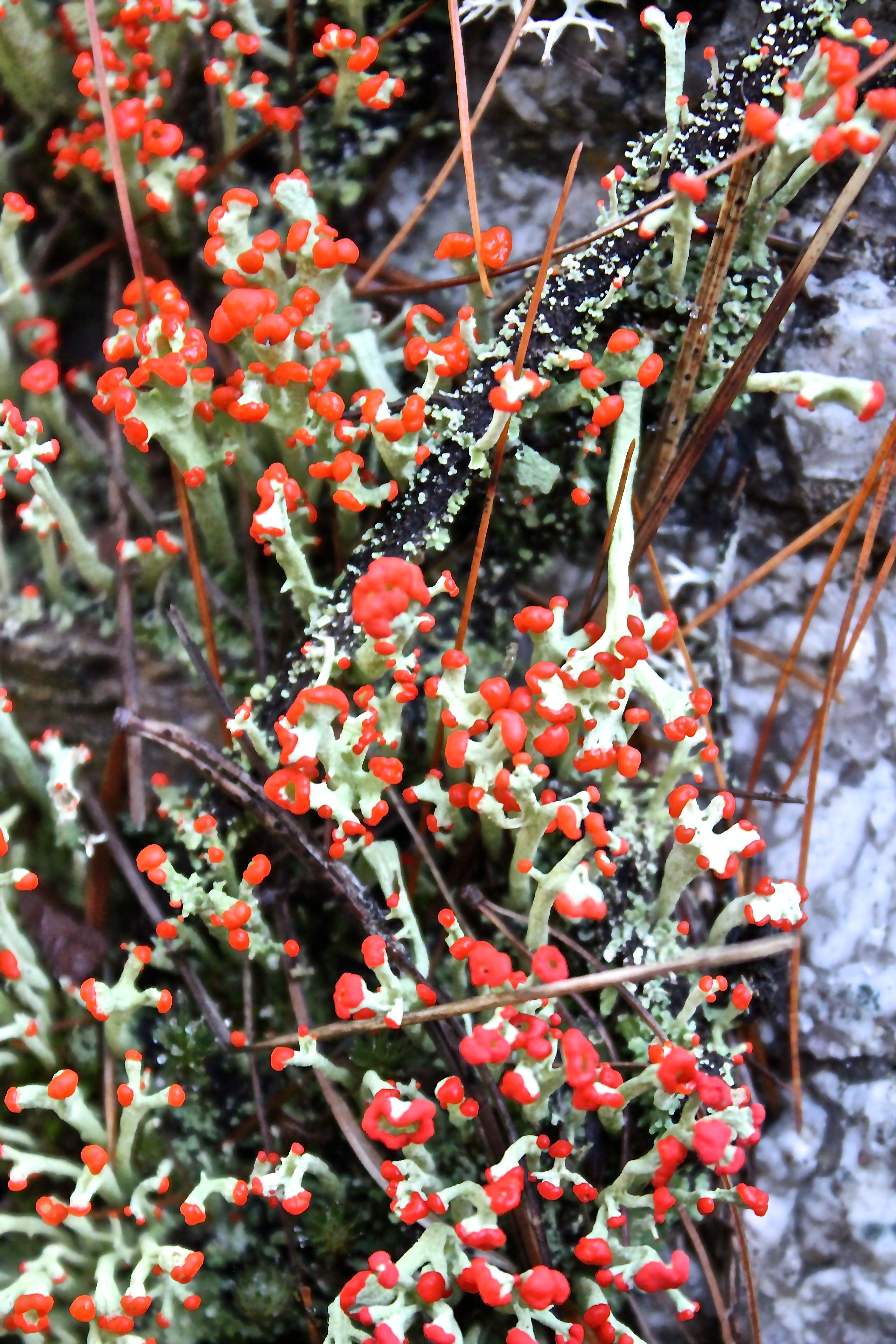
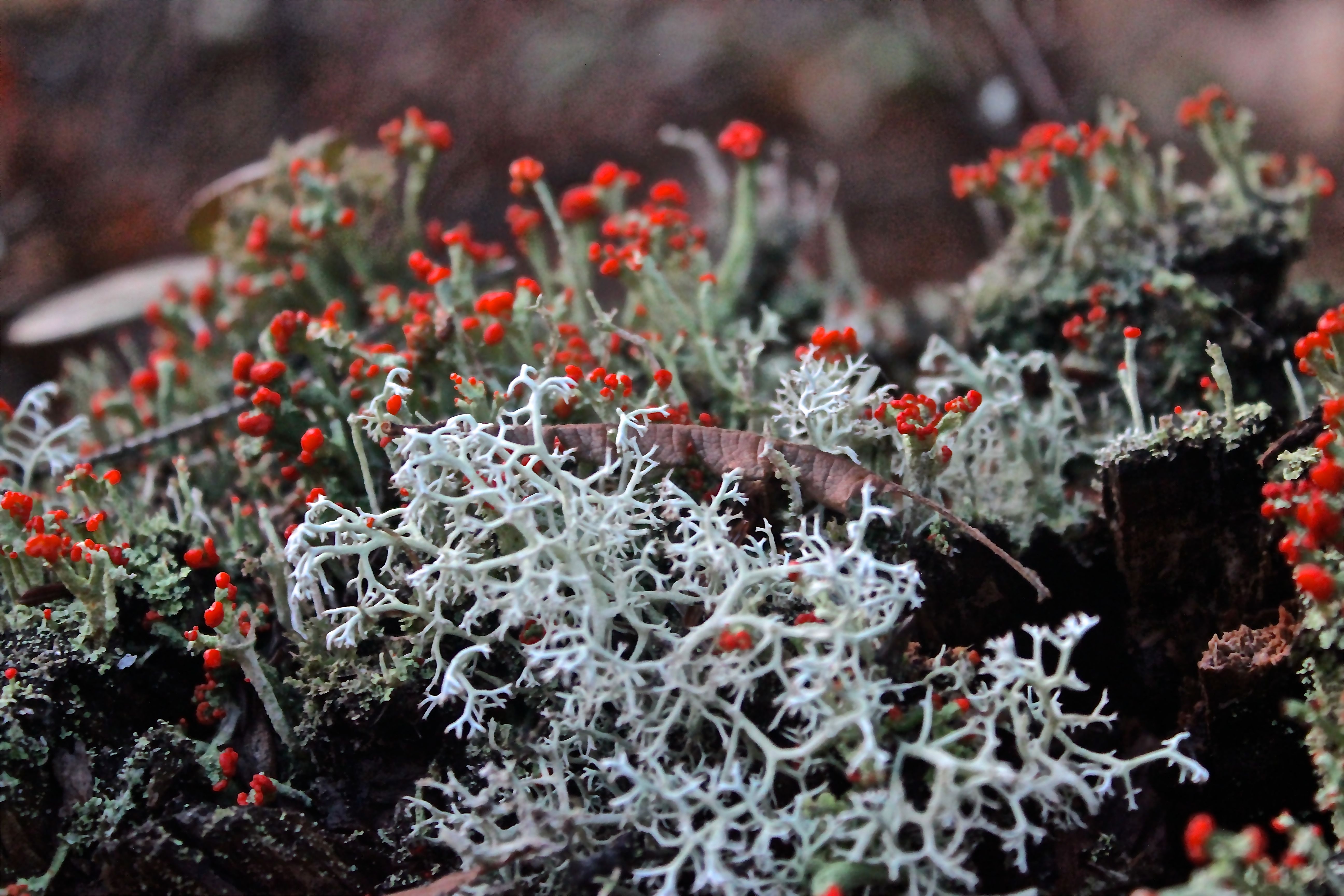
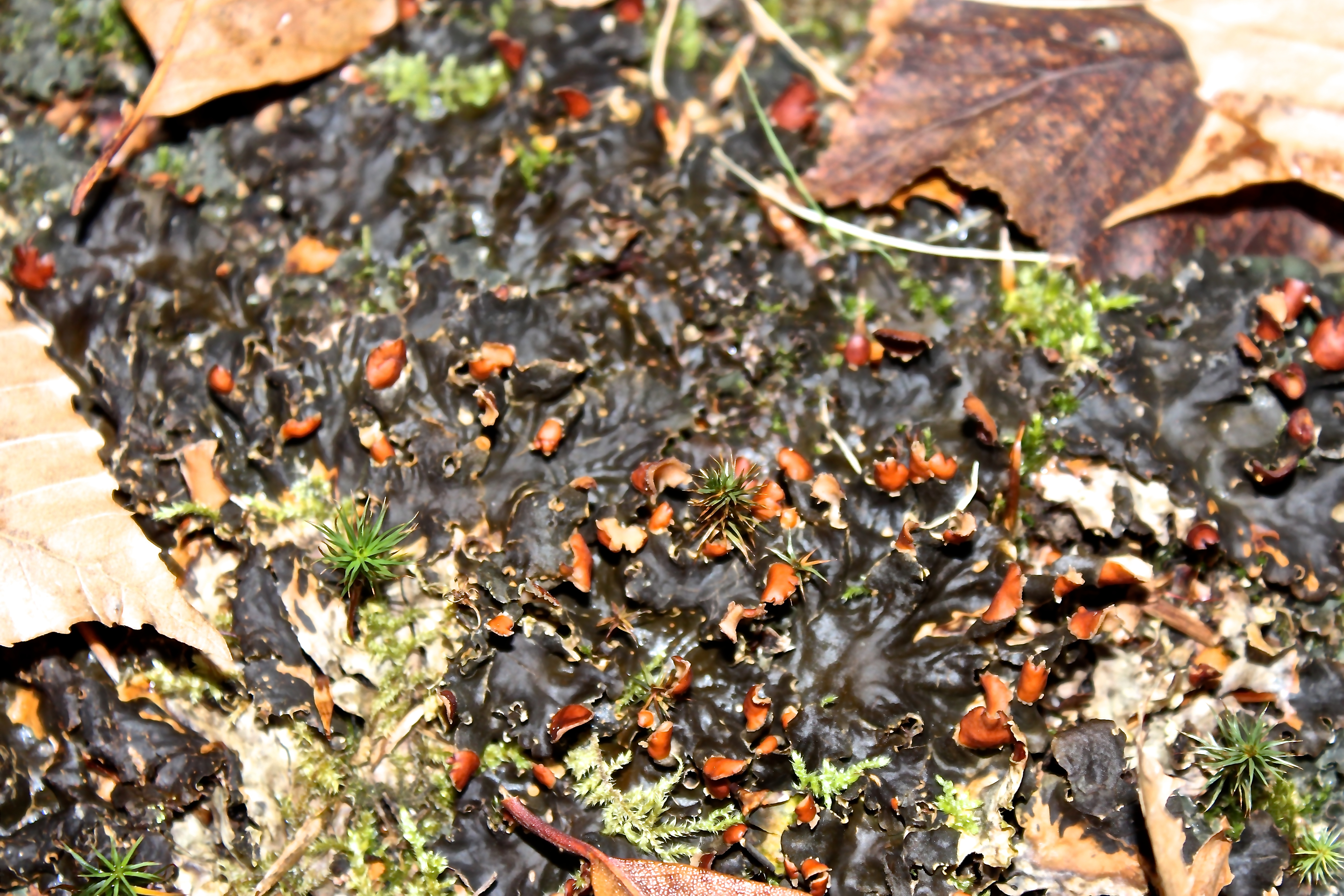
 I also found other cool stuff. British lichen bearing bright red caps.
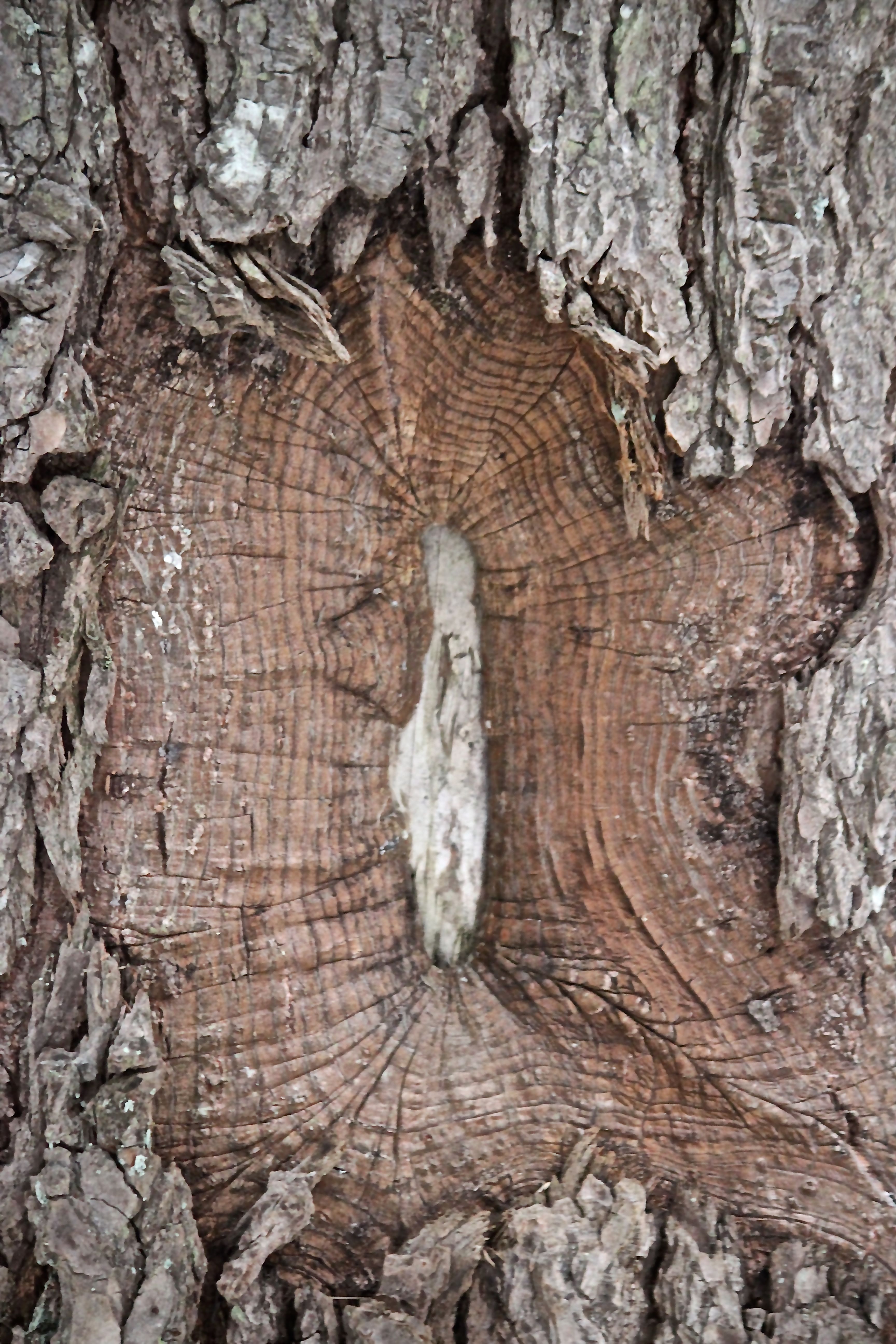
 A hemlock wound that indicated the last time this land was logged. I counted to 25. That makes sense.
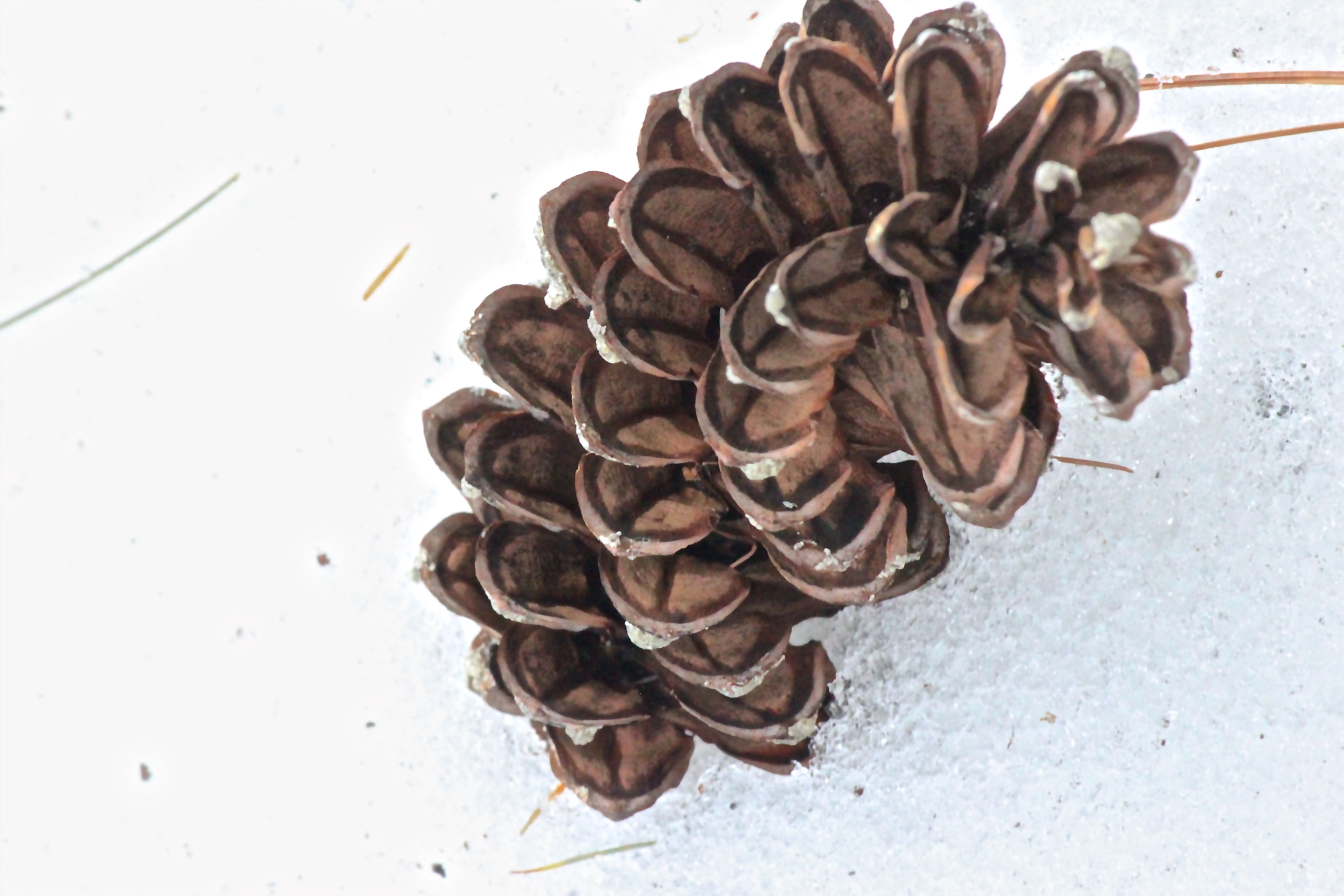
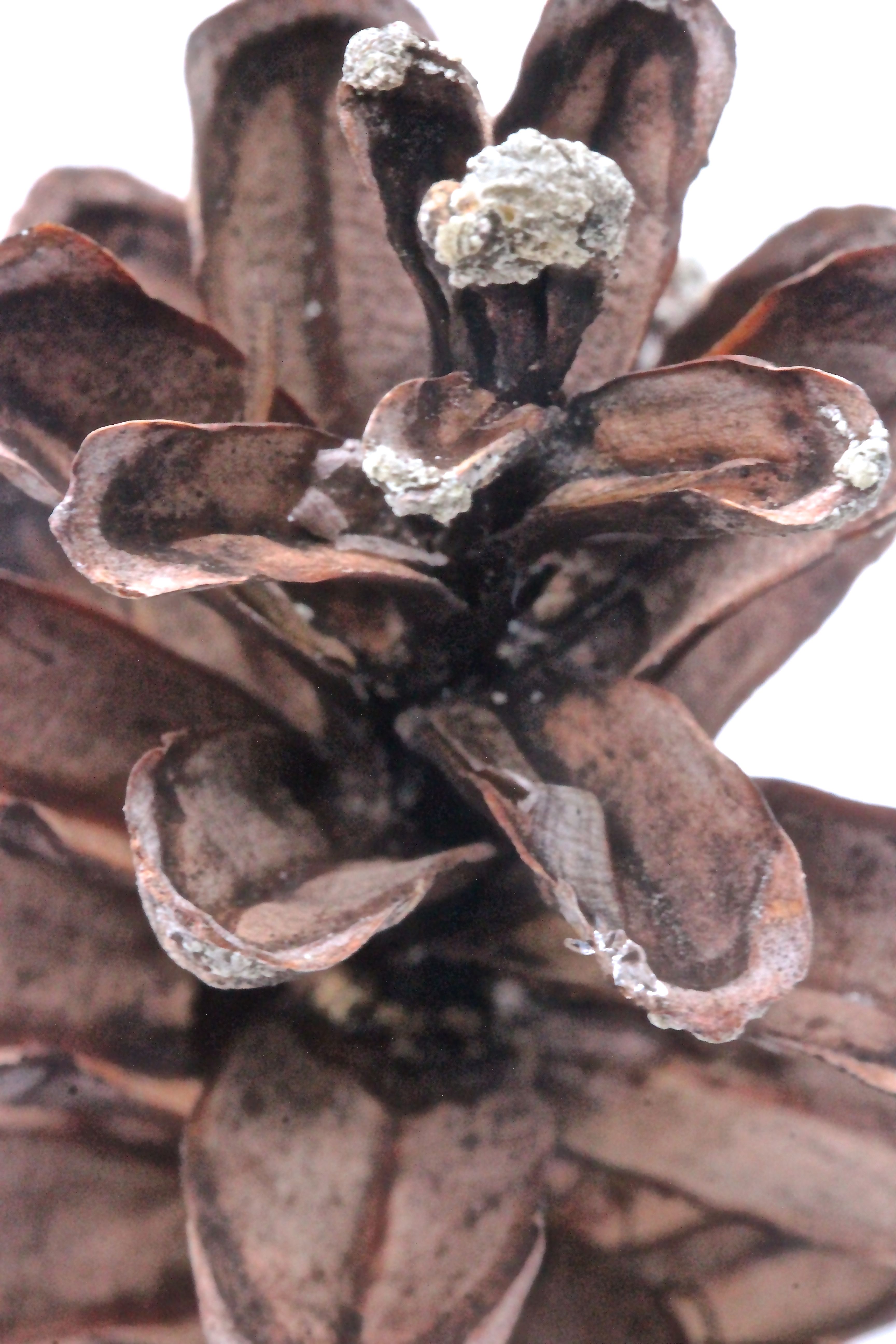
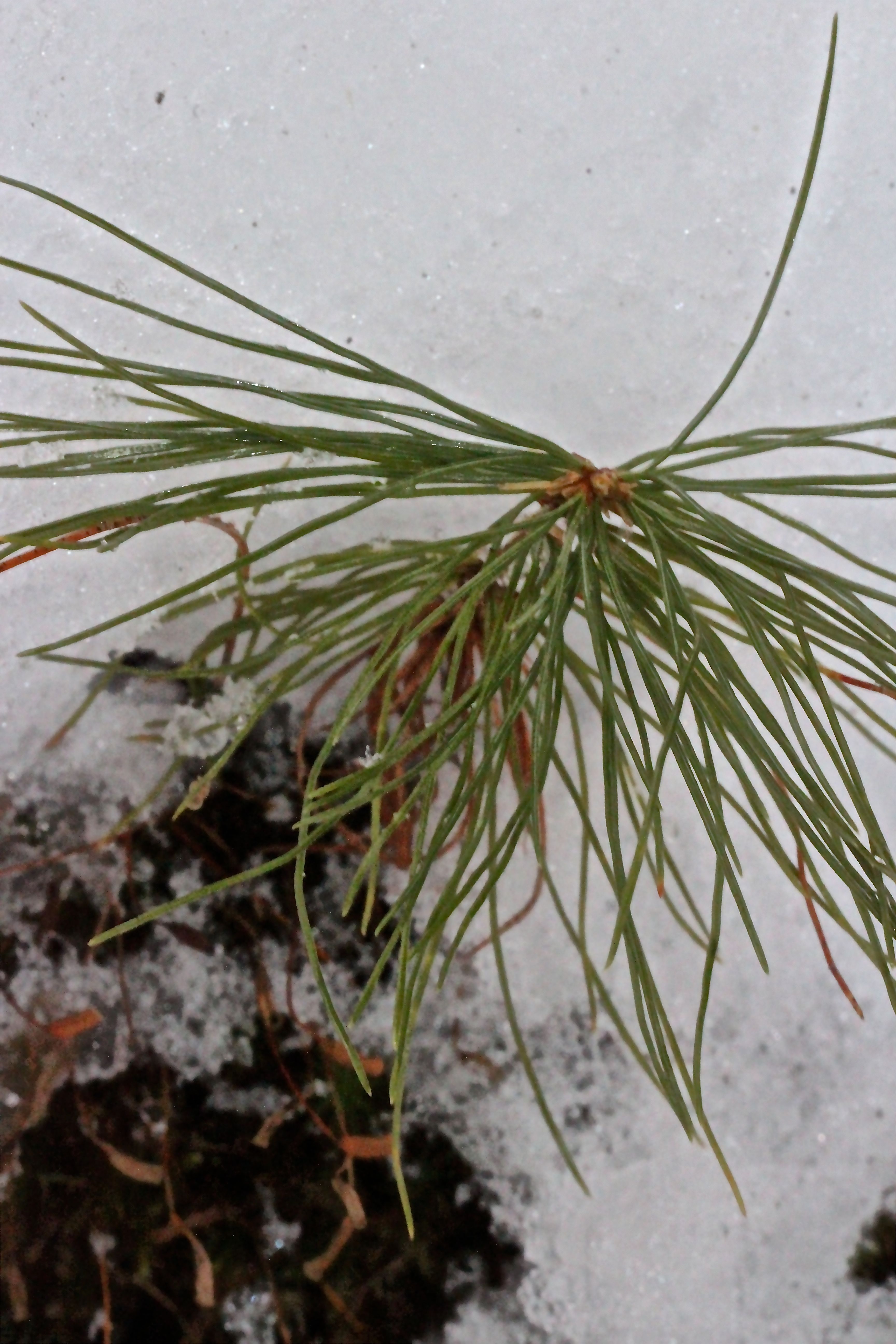
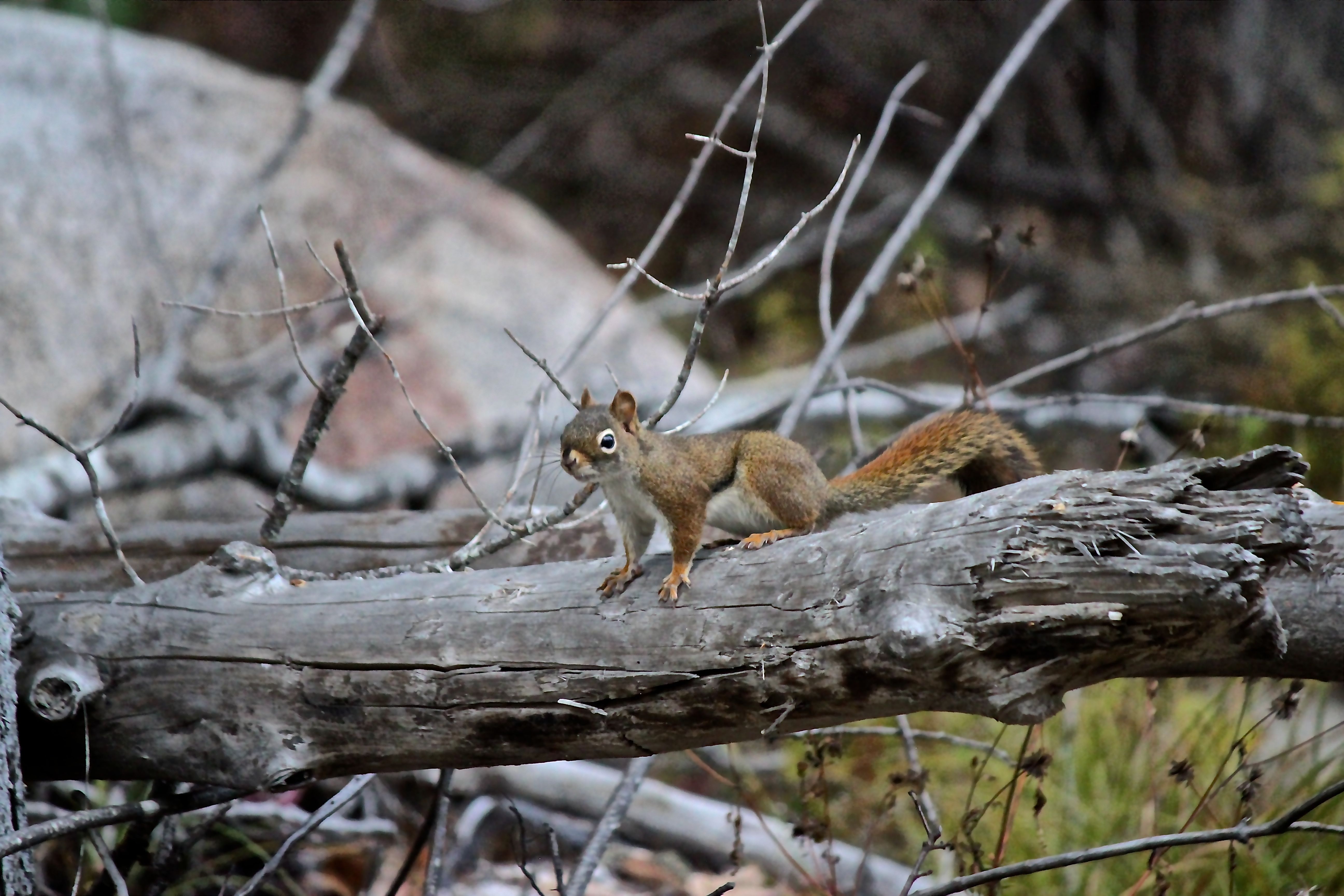
 A hemlock cone and seeds on a high spot of snow–not the usual stump, log or branch, but still a high spot. Apparently the red squirrel that had gone to all the work of taking the cone apart to eat the seeds had been scared away. Perhaps it will return, or another, or I’ll be admiring hemlock saplings in a few years.
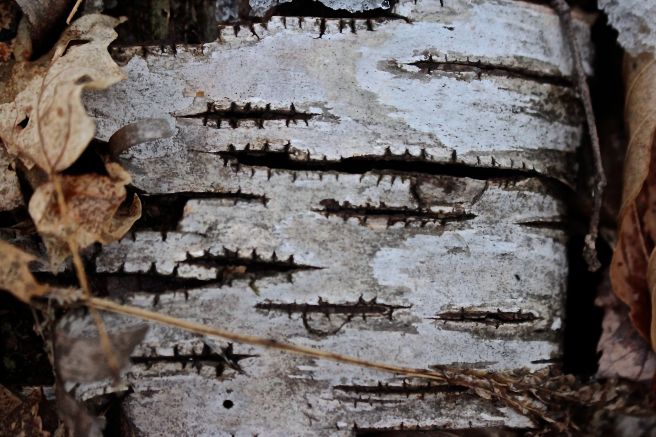
 Porcupine scat below another hemlock.
 And a few snipped off twigs–porcupine style.
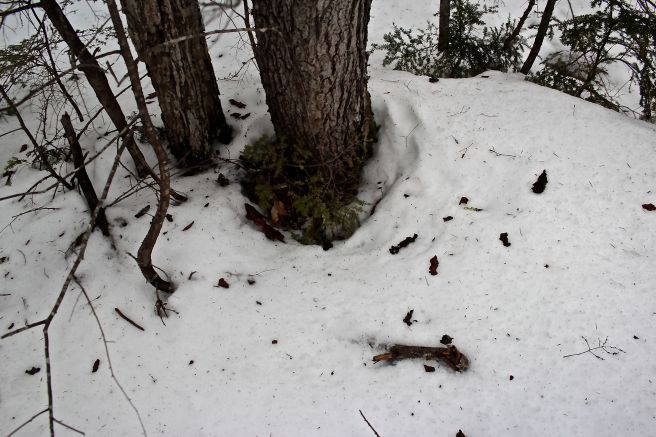 A mystery perhaps. I love a mystery. So, scattered on the snow–bits of hemlock bark.
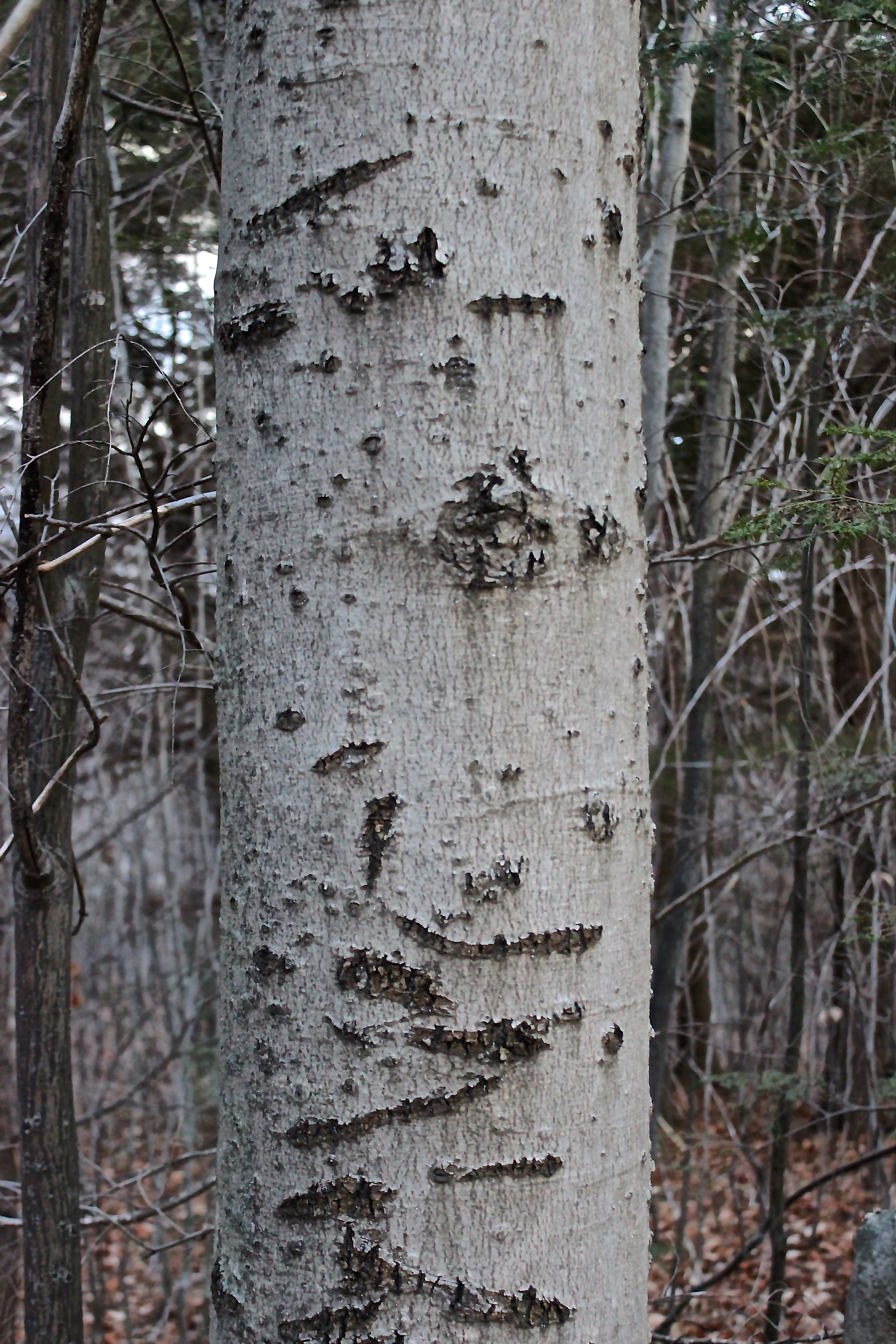
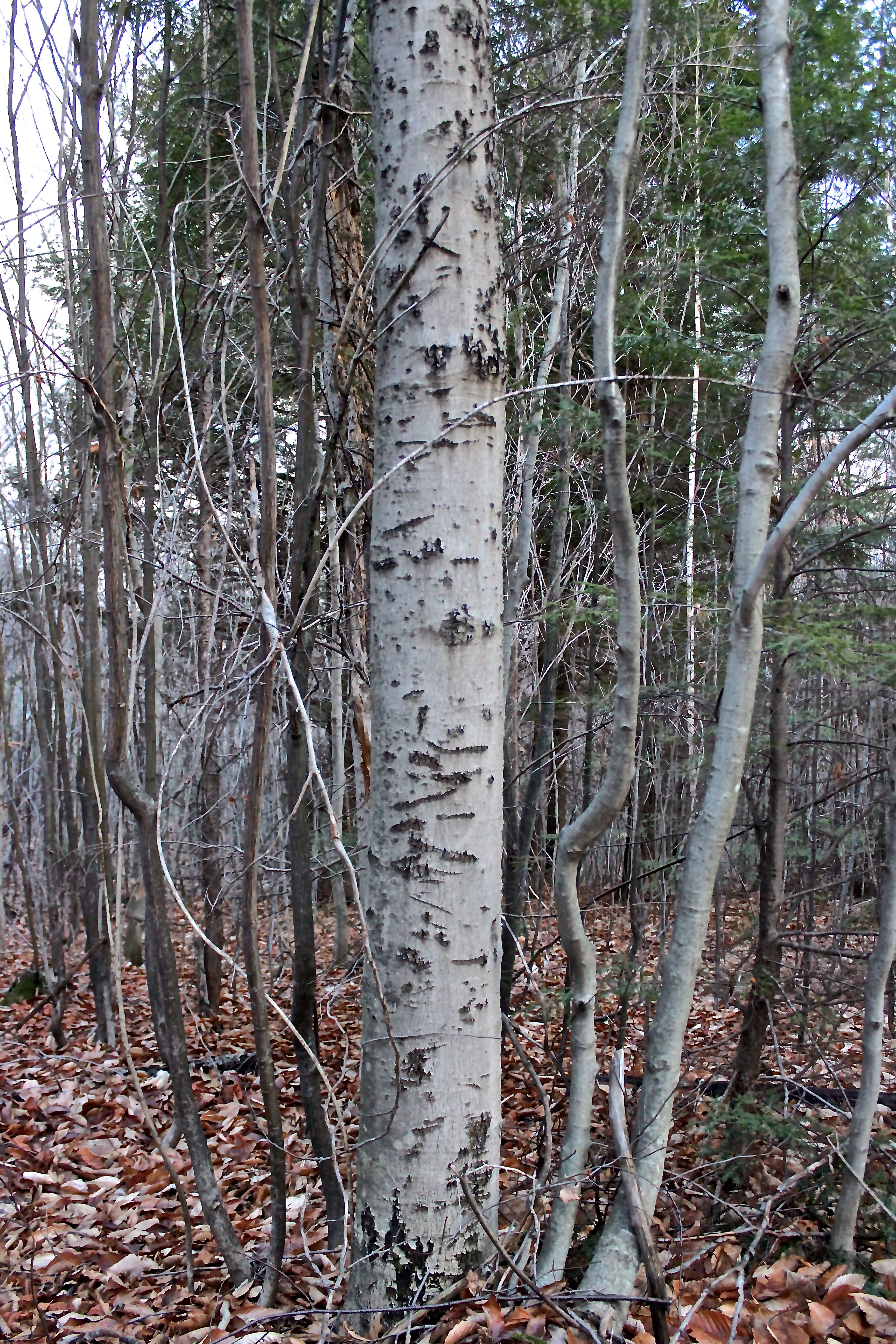
 And an apparent path up the tree. But . . . look up. This tree is dead. I don’t think this is porky work.
 Could it be that where the bark is missing a woodpecker has been at work?
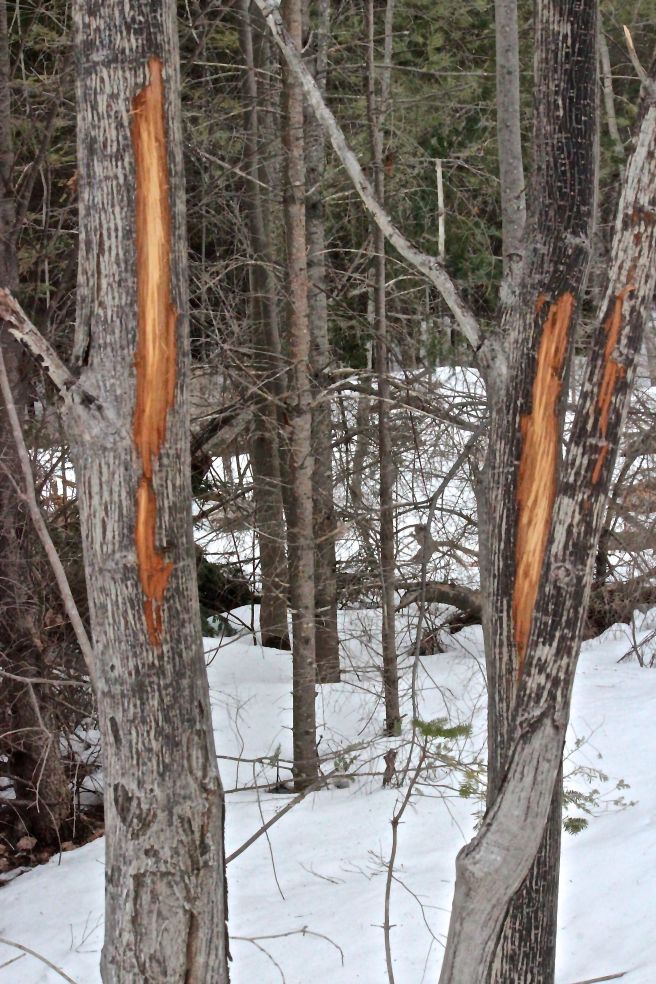 I found fresh browse on striped maple–that had been previously browsed based on the scars.
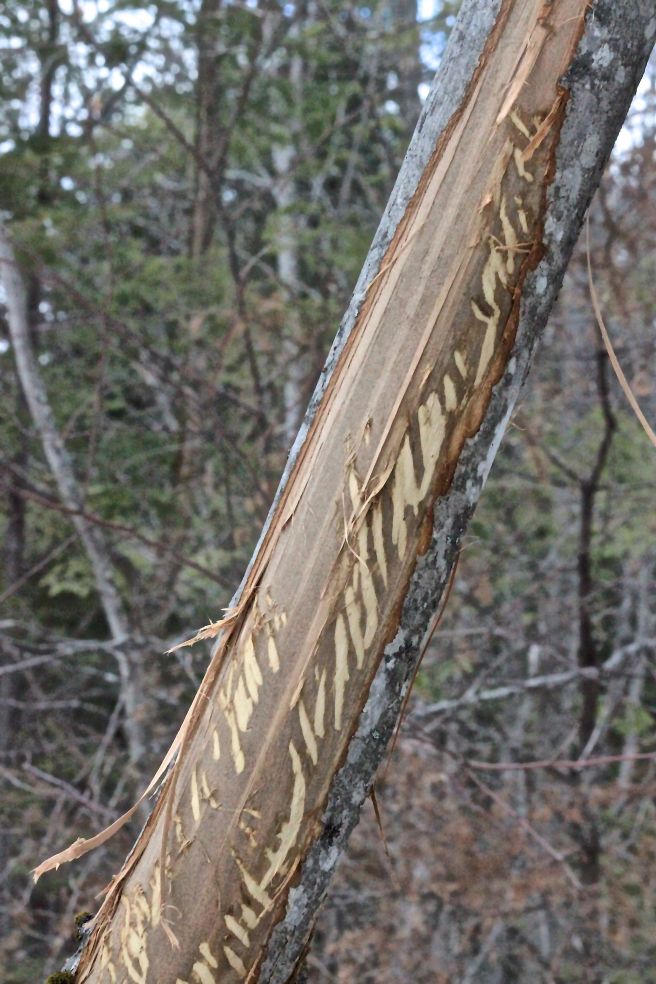 And red maple that had received the same treatment.
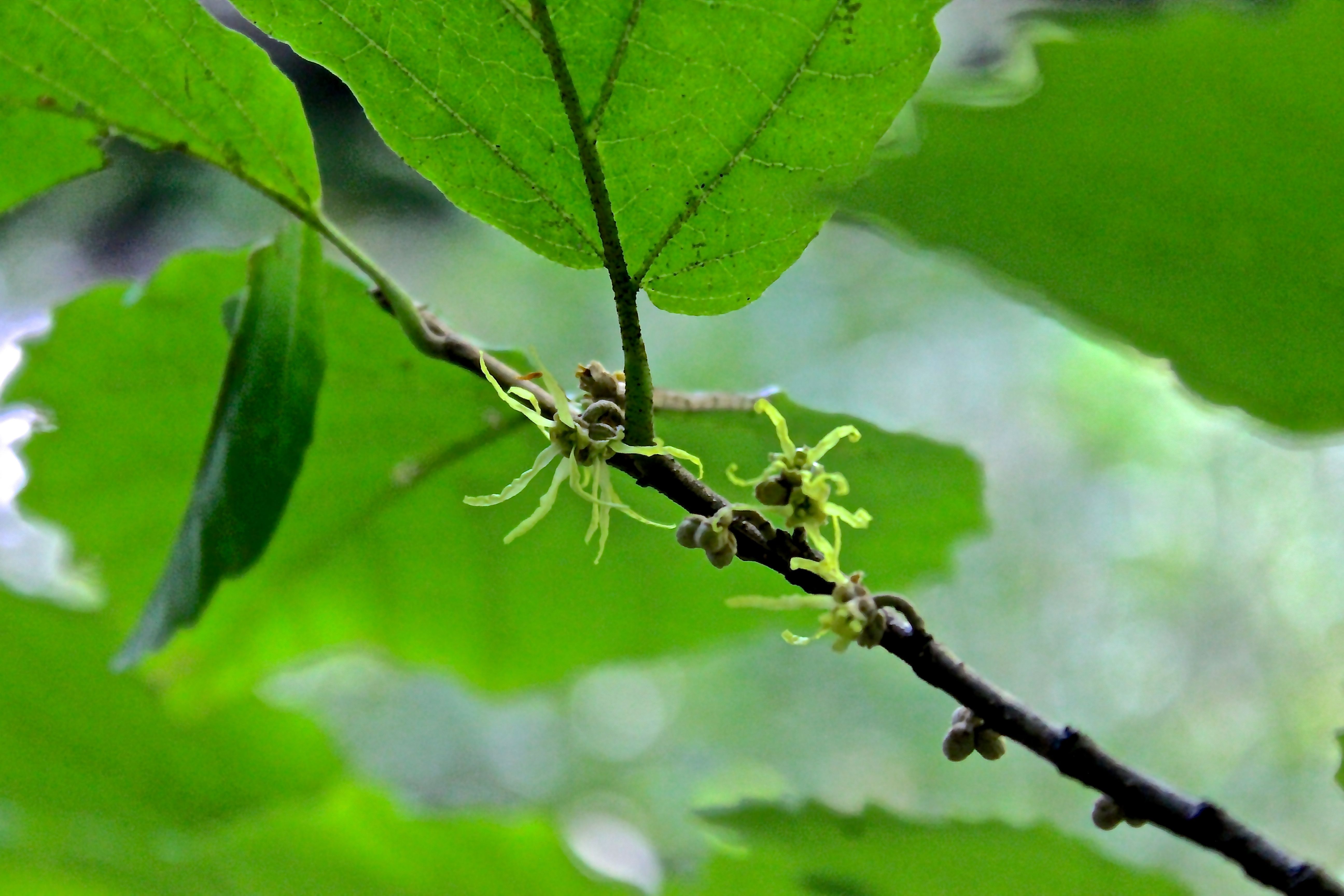
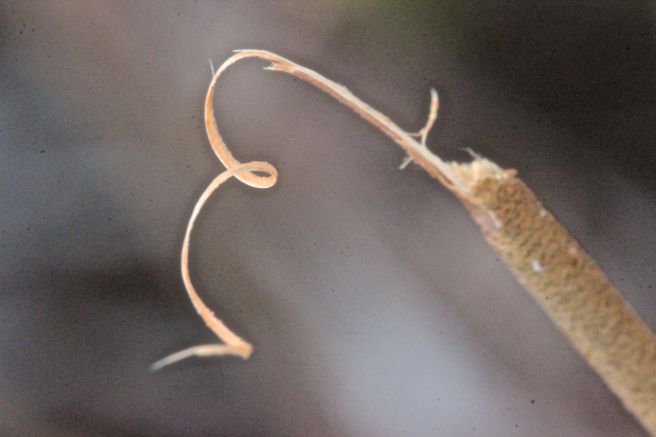 Witch hazel was not to be overlooked. I think this is the longest deer tag I’ve encountered–to date.
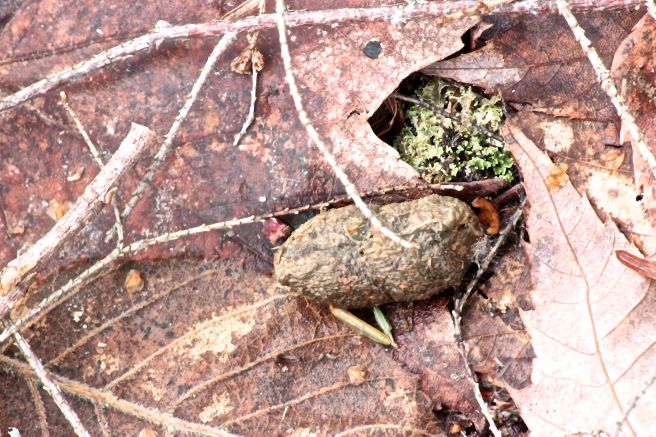
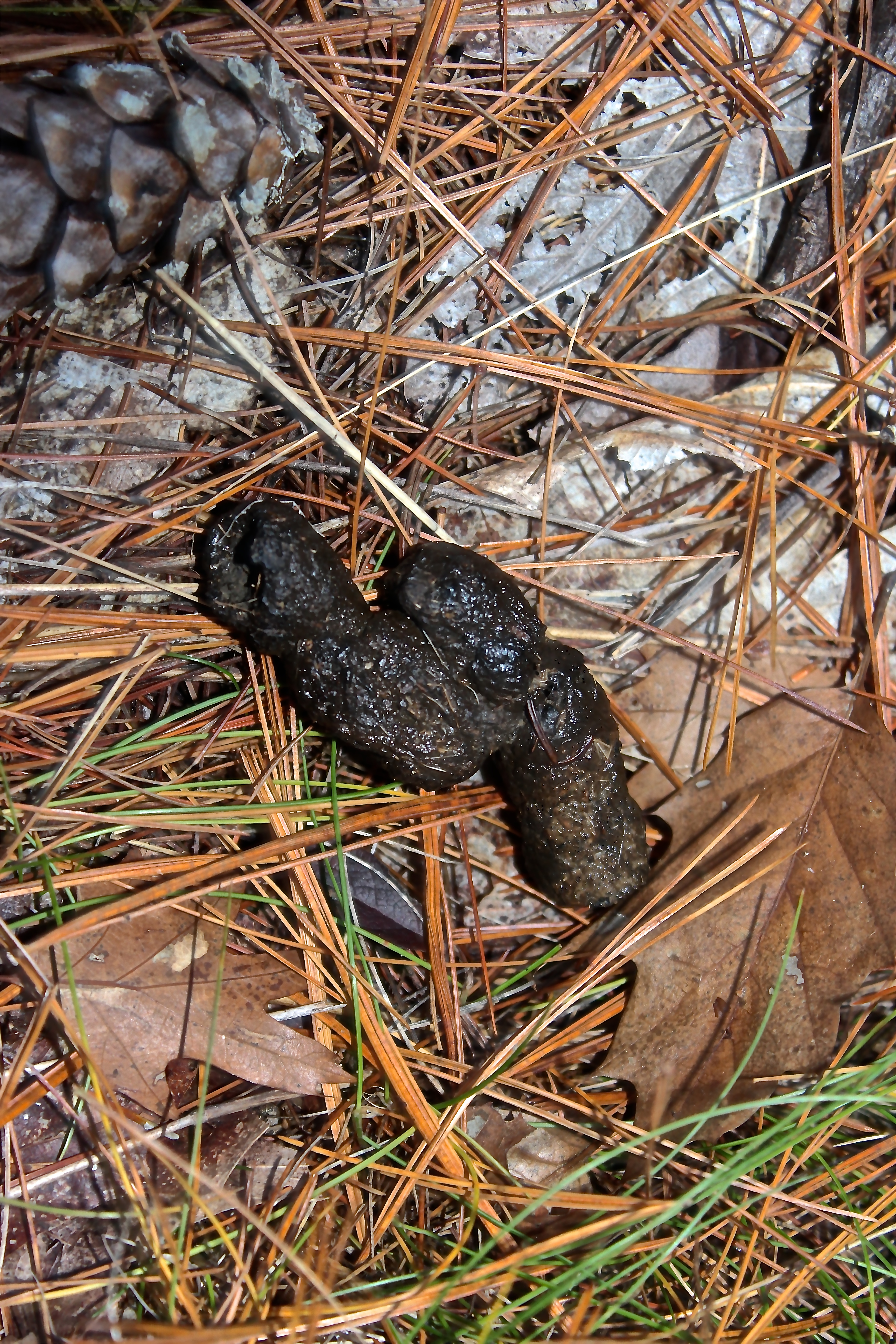
 You may not appreciate this, but I couldn’t resist. So . . . to whom does it belong? Either a coyote or bobcat. It’s filled with hair and I’m leaning toward the latter. Of course, I want it to be the latter.
 I, um, brought some home in a doggy bag. Not all of it, mind you, because it is a road sign to others. I’m not sure how they do it, but members of the same family can apparently identify gender, health and availability by such works. And members of other families may read this as a territory marker. There was a copious amount, so it could be that the same or two animals used this spot. Just sayin’.

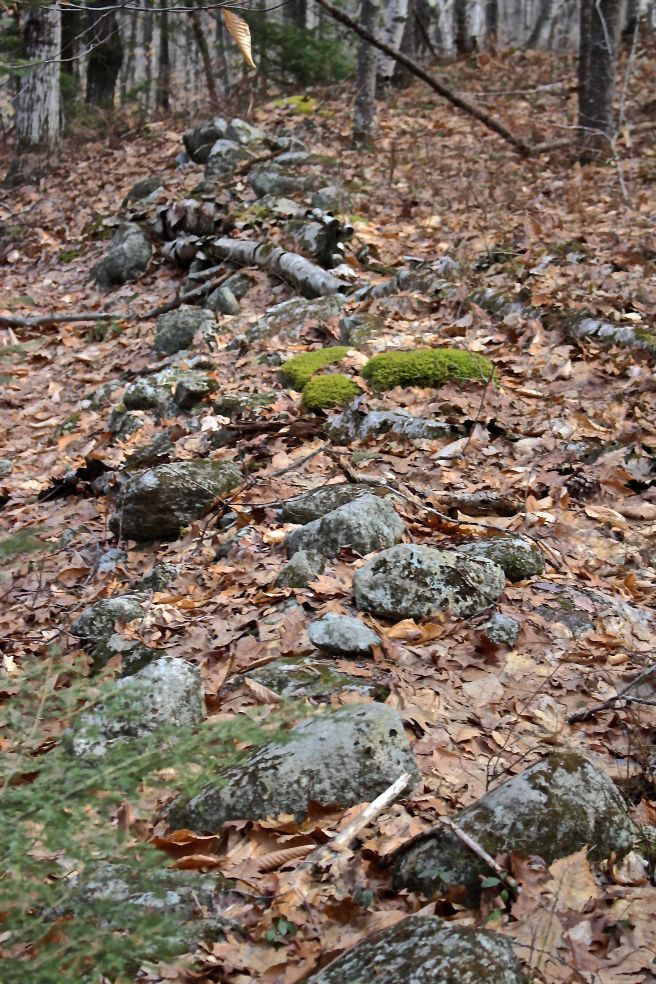
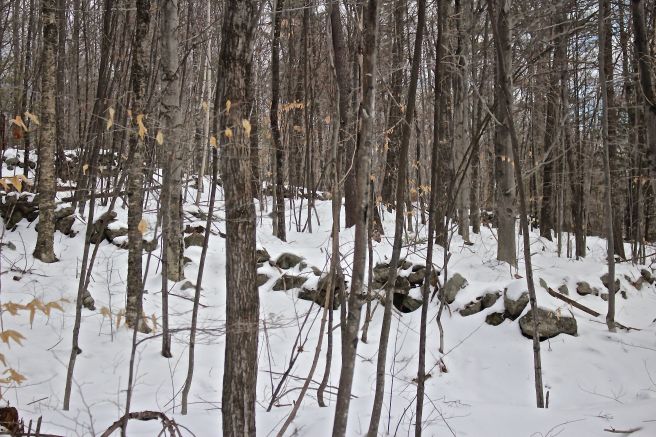
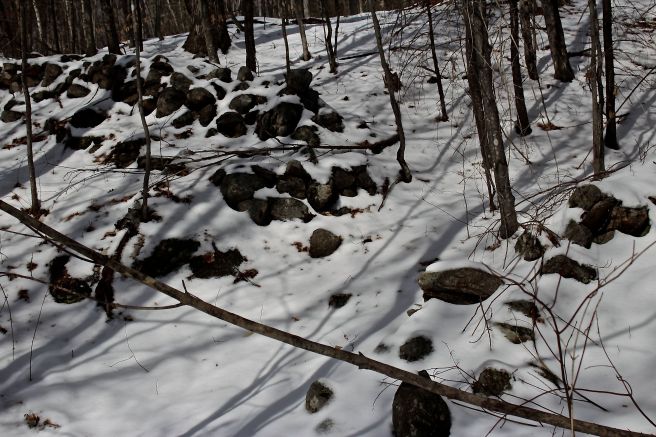
 It’s right beside a deer run. In the past two years, the deer visited this spot, but I’ve noticed much more activity this winter. The stone wall is hardly an obstacle. And the junipers–prickly as they are to me, the deer seem to enjoy them.
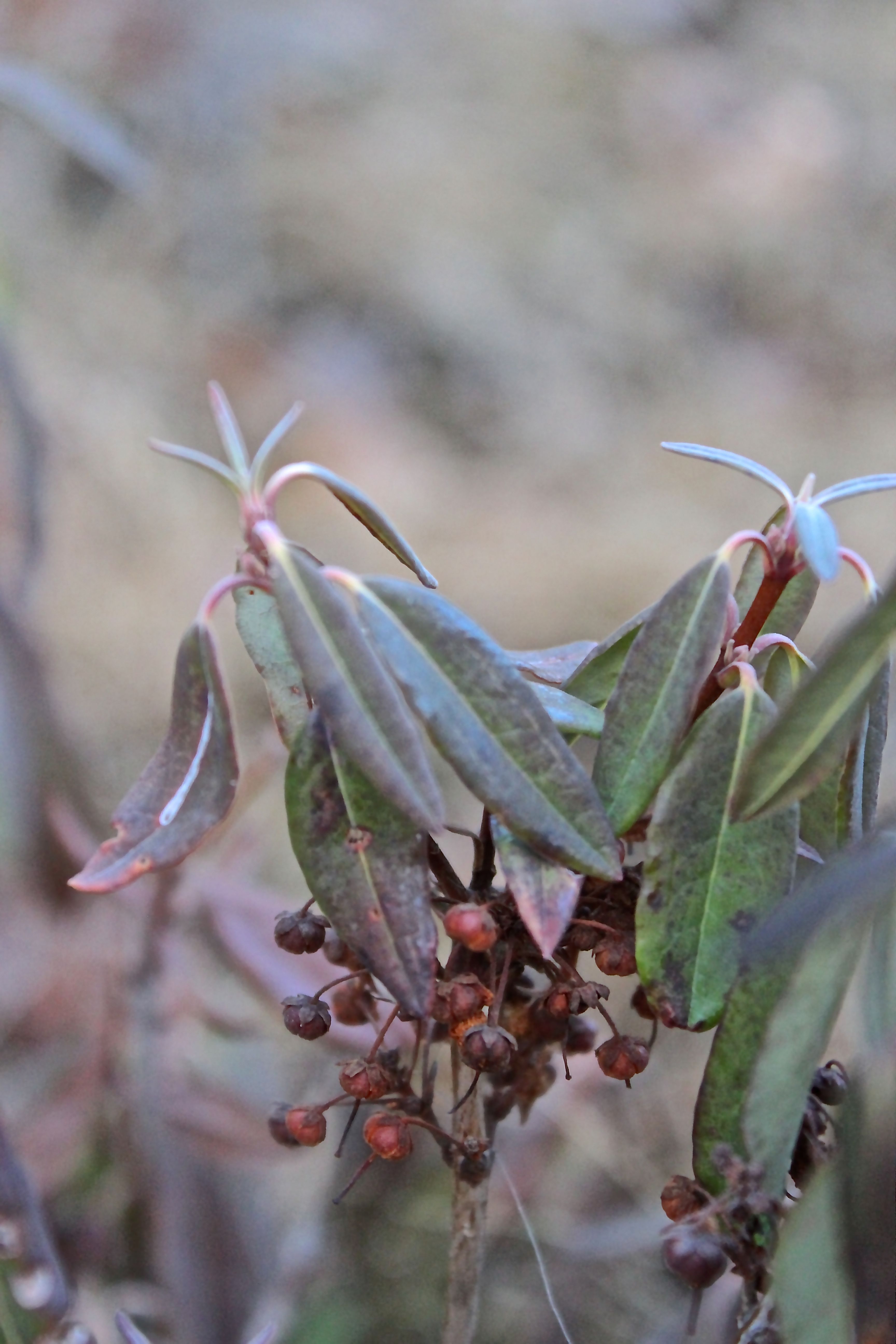
 One thing I did notice that I don’t understand. The sheep laurel that grows here has recently been browsed.
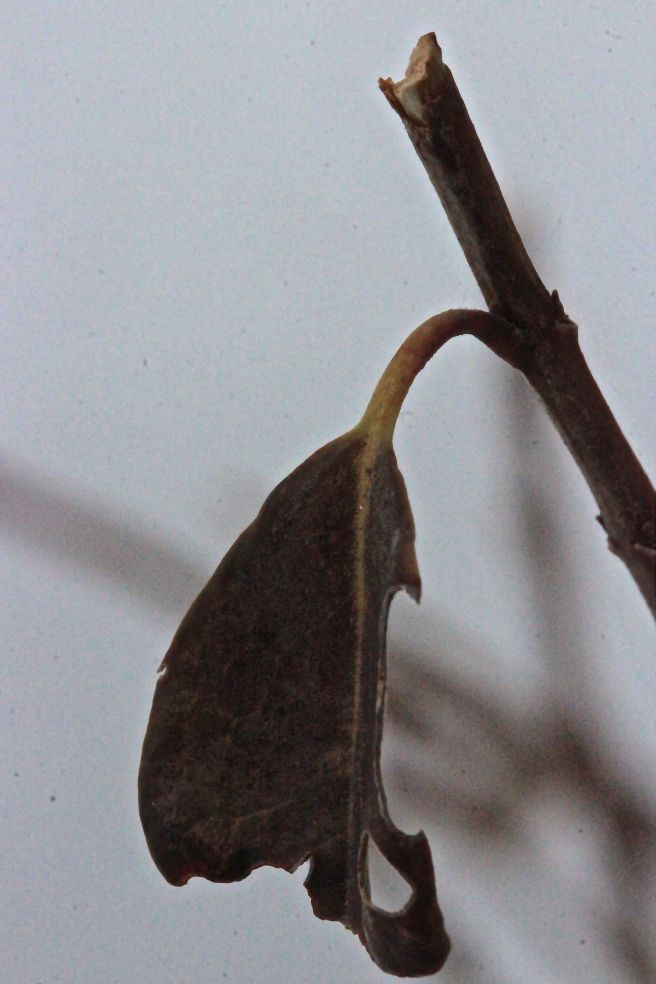 Deer tracks below it and the nature of the work lead me to believe that the ungulates fed on it. Hmmm . . . I thought that sheep laurel was poisonous to wildlife. But then again, deer are browsers, not staying in one spot long enough to consume a large amount so perhaps it doesn’t affect them if they eat a bit here and there. If you know otherwise, please enlighten me.
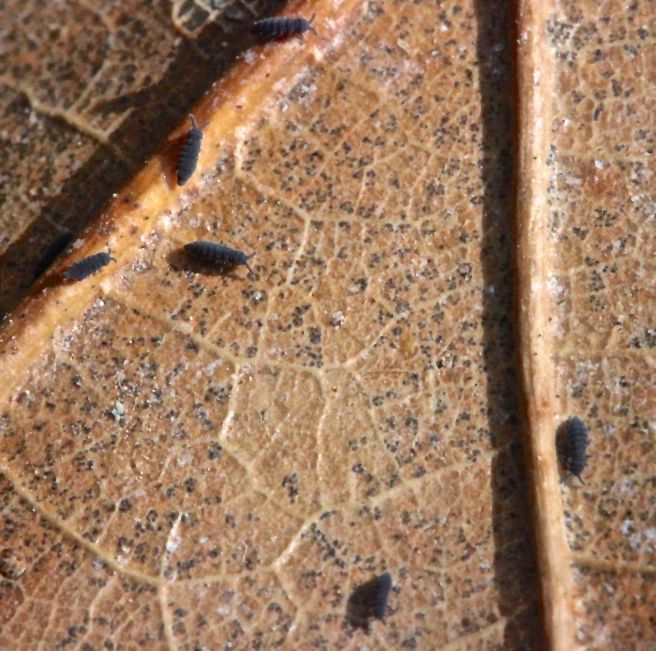 Another thing–yes, if you look closely at leaves, you’ll find them. These hot chili peppers don’t appear just on the surface of snow. They are snow fleas, aka springtails. With their spring-loaded tails they can catapult themselves an inch or so. We never look for them once the snow melts, but they are still abundant on organic debris. They’re easiest to locate on leaf litter, but also can be seen on soil, lichens, under bark, decaying plant matter, rotting wood and other areas of high moisture as they feed on fungi, pollen, algae or decaying organic matter.
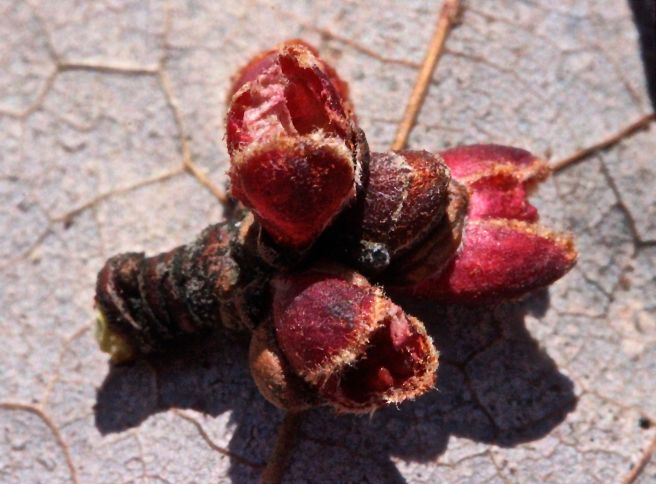
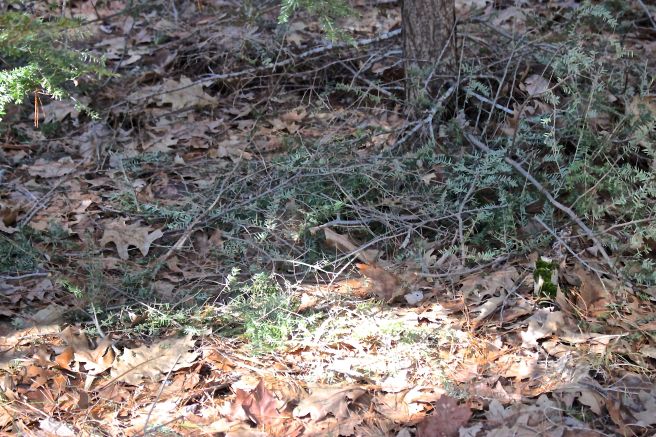
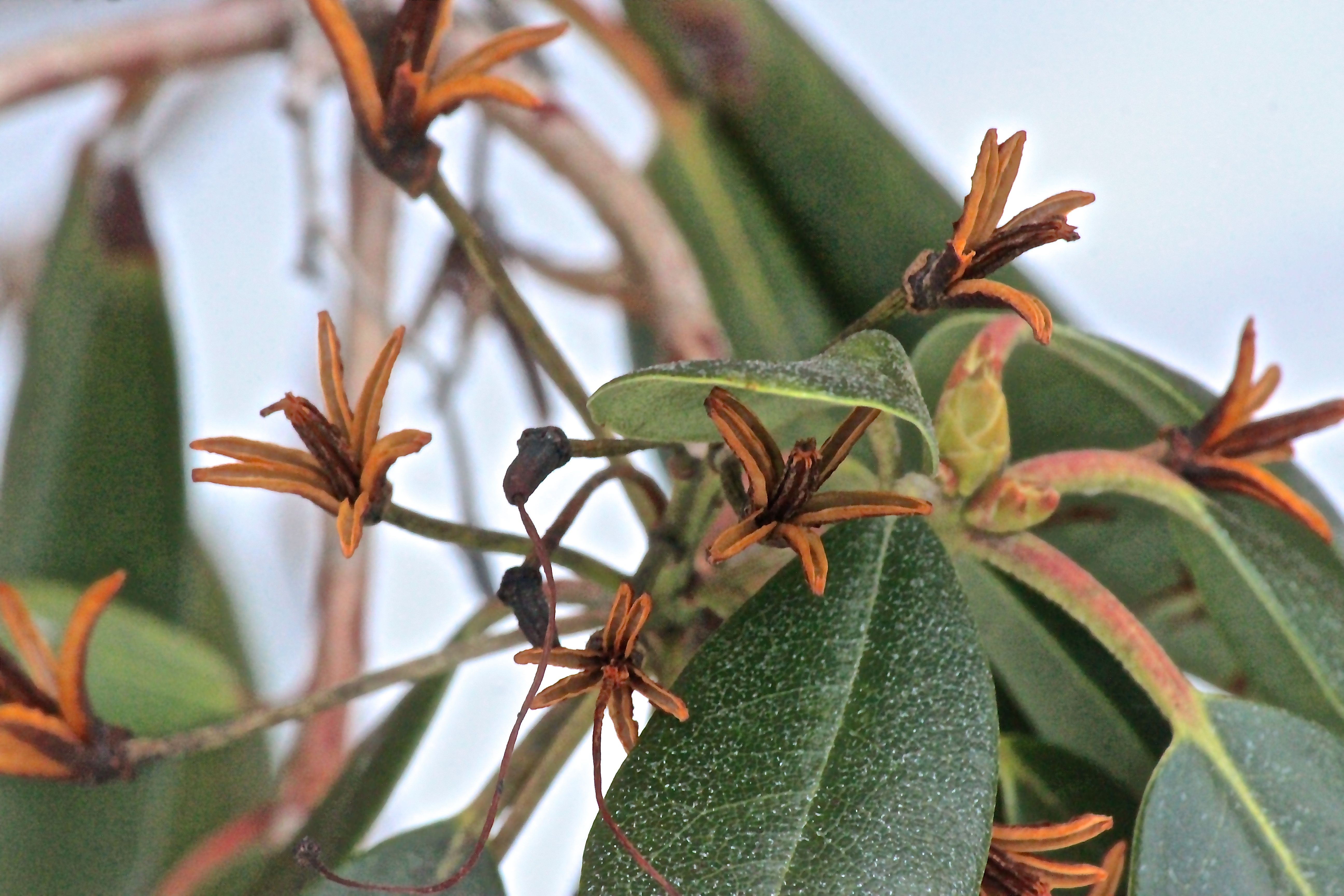
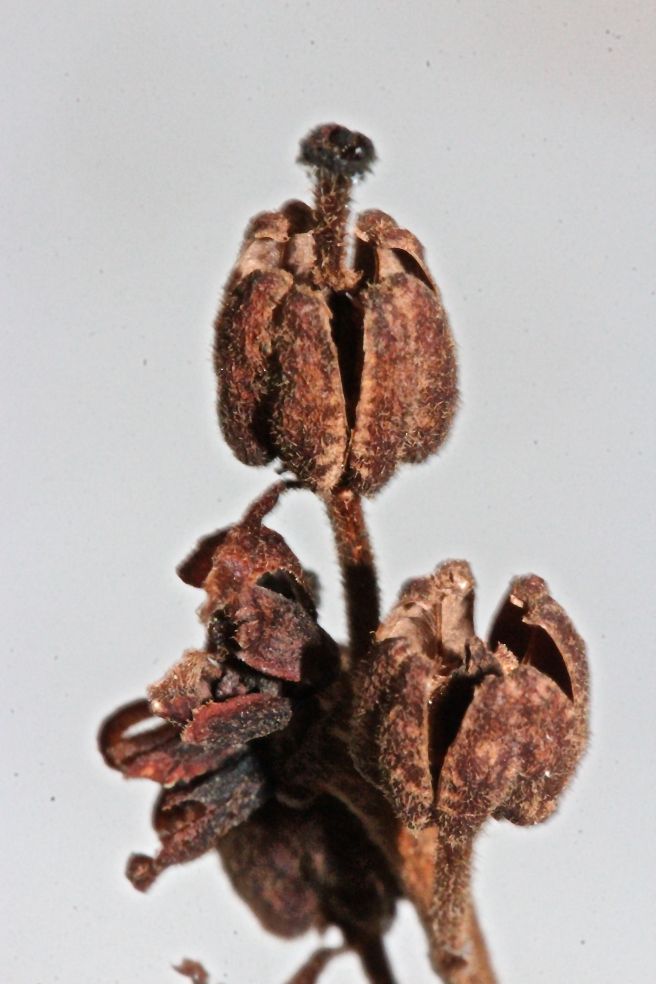 Though it was warm under the sun, my fingers were getting cold as I sketched, so I packed up to head home. Back in our woodlot, I decided to follow a deer trail rather than my own. And to them I give thanks. Beside a hemlock tree, pinesap’s woody capsules called out. I’d found some at the start of winter–along the cowpath. And now a second patch. It really does pay to go off my own beaten path.
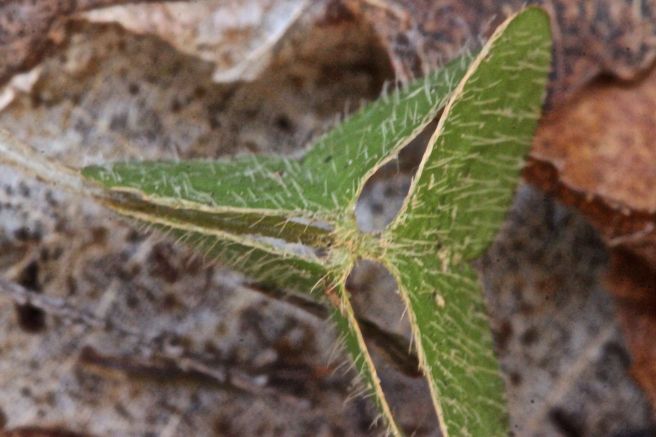
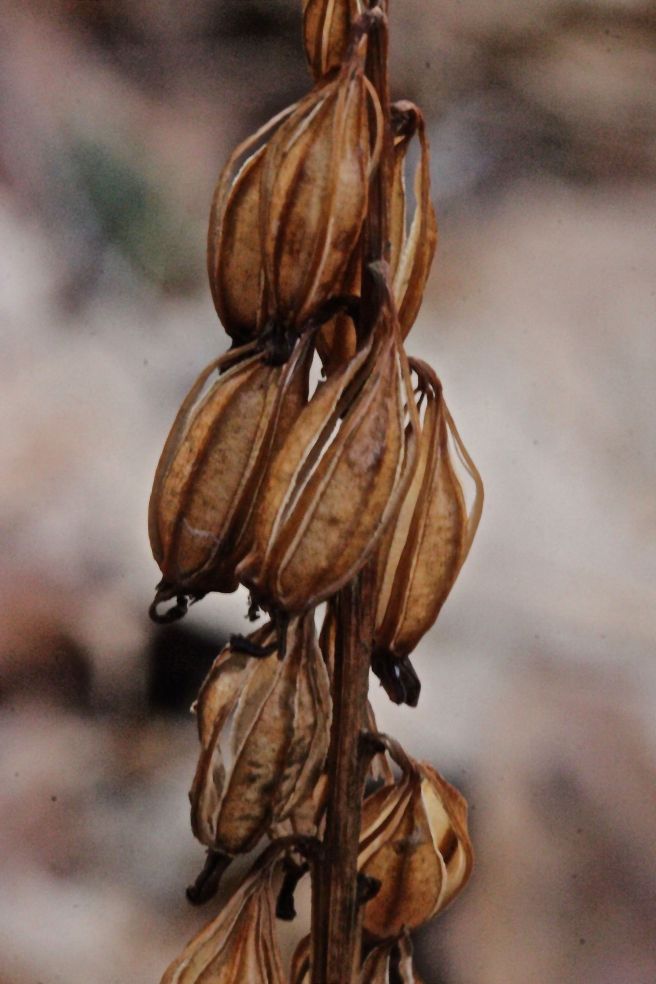
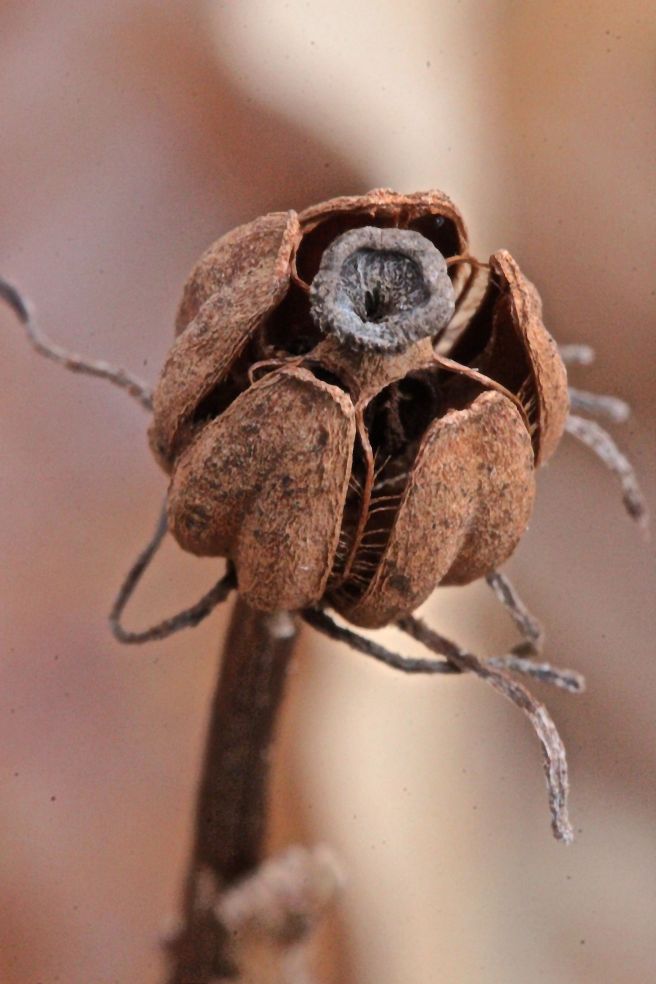
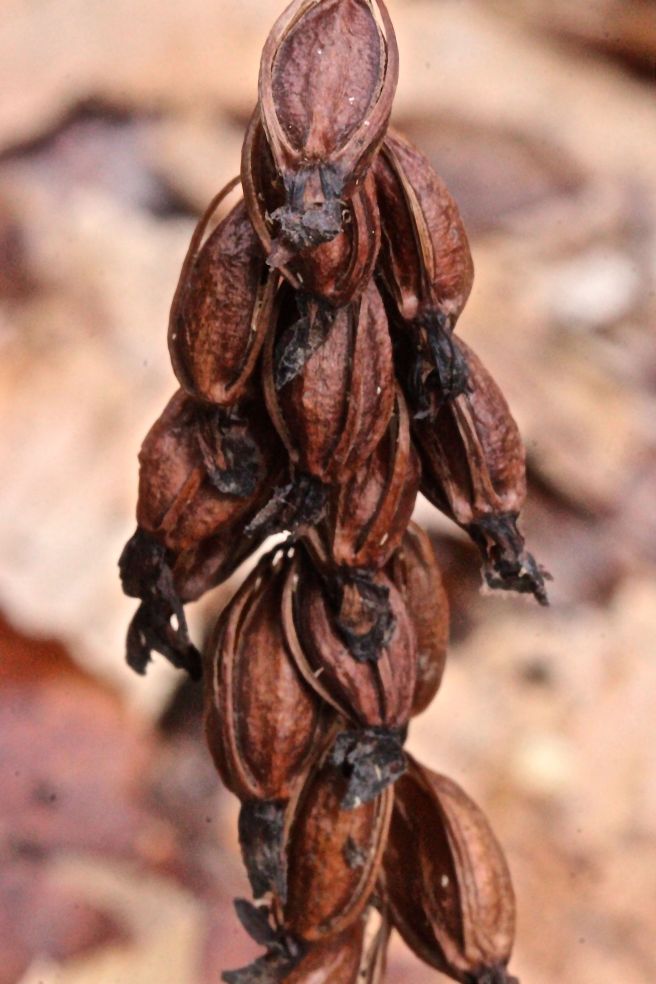
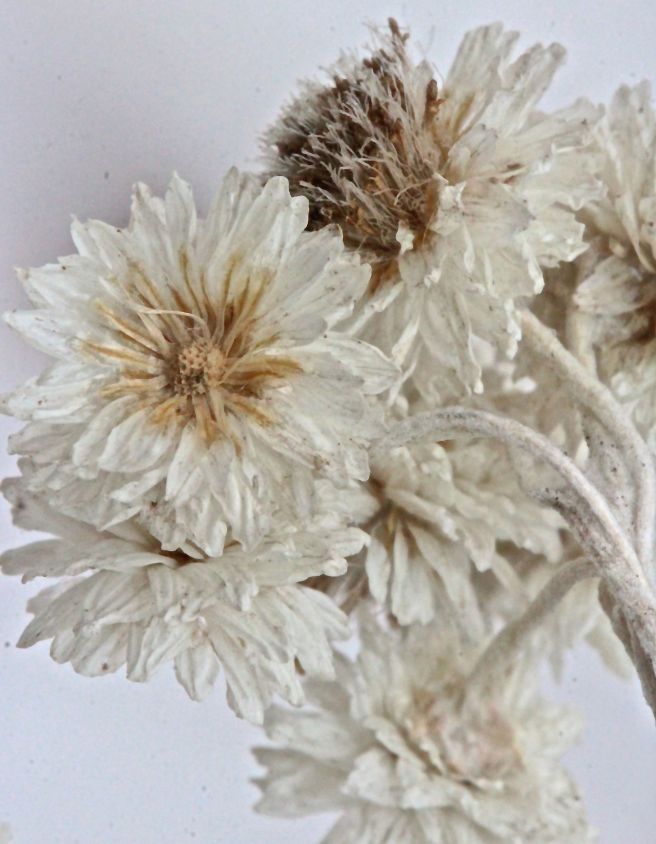
 While pinesap has several flowers on one stalk, a few feet later and I came upon Indian pipe, which has one flower (now a woody capsule) atop its stalk. Notice how hairy the pinesap is compared to the Indian pipe.
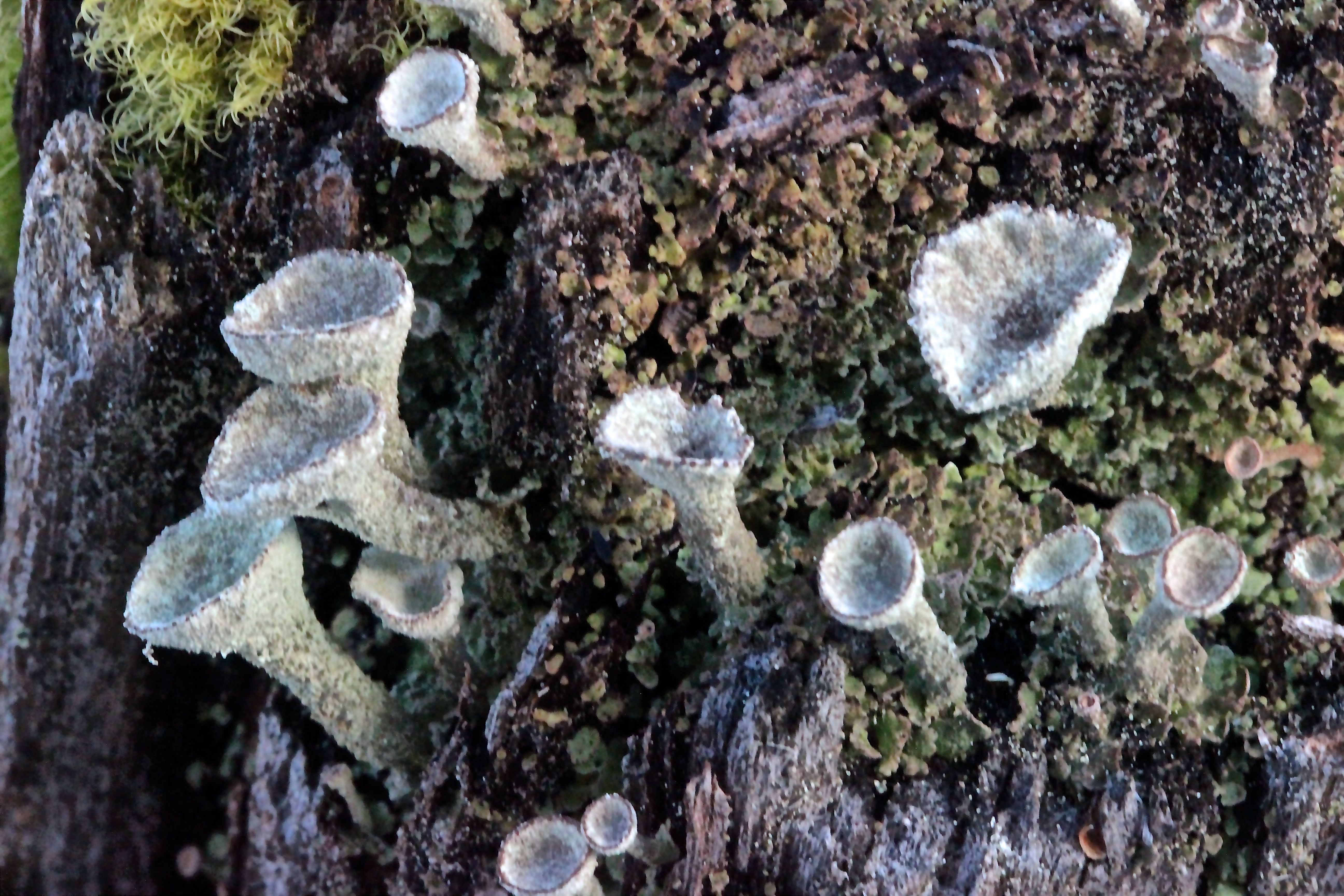
 I’m afraid this photo is a bit fuzzy, but I’m still going to use it because it’s too dark to head out and take another. These cup lichens serve as my pixie goblets to all of you who have stuck with me for this journey–both today’s and the past year. Thank you so much. The year flew by and I’m a better person for this experience. Well, I think I am. What has made this past year so special is the paying attention. The slowing. The recognizing. The questioning. I’ve learned a lot and I trust you’ve learned a wee bit as well. Who knows where the path will lead me next, but I sure hope you are along to wander and wonder.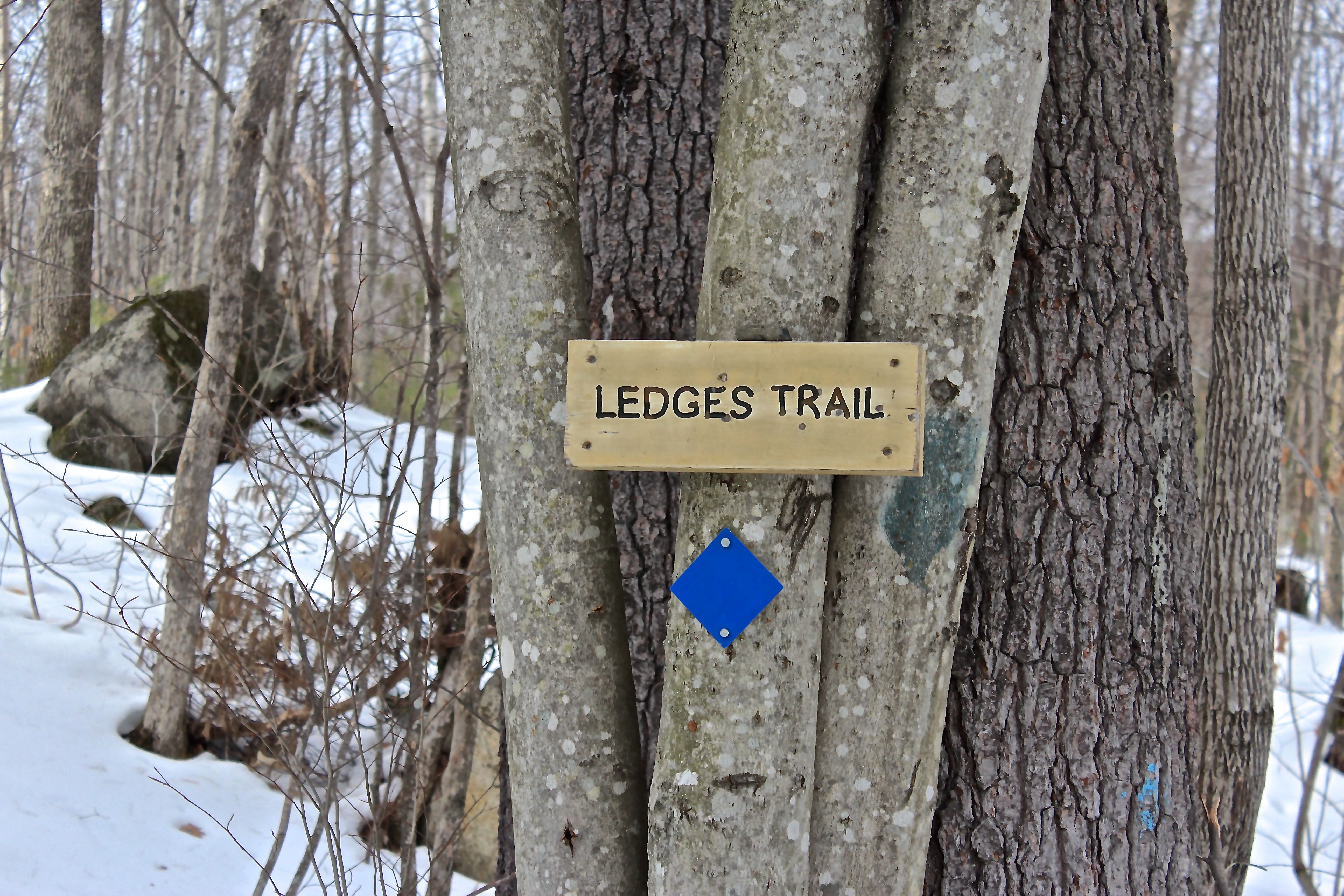



















































































 wondermyway