Embracing the Calm

Yesterday it snowed and the air held its winter red-cheeked nip.

h-yesterdays-snow

Today, five inches of fresh snow on the ground and stone walls with temps in the upper 40˚s–certainly a feeling of spring.

h-chickadee

As I headed into my smiling place, I had high hopes of seeing the golden-crowned kinglets I heard and saw the other day when my fingers were too cold to snap a photo. So the pishing began–me repeating “pish” over and over again in hopes of a repeat performance. No kinglets, but the chickadees came and followed me for a bit–I felt like the Pish Piper.

h-moose-hair-3

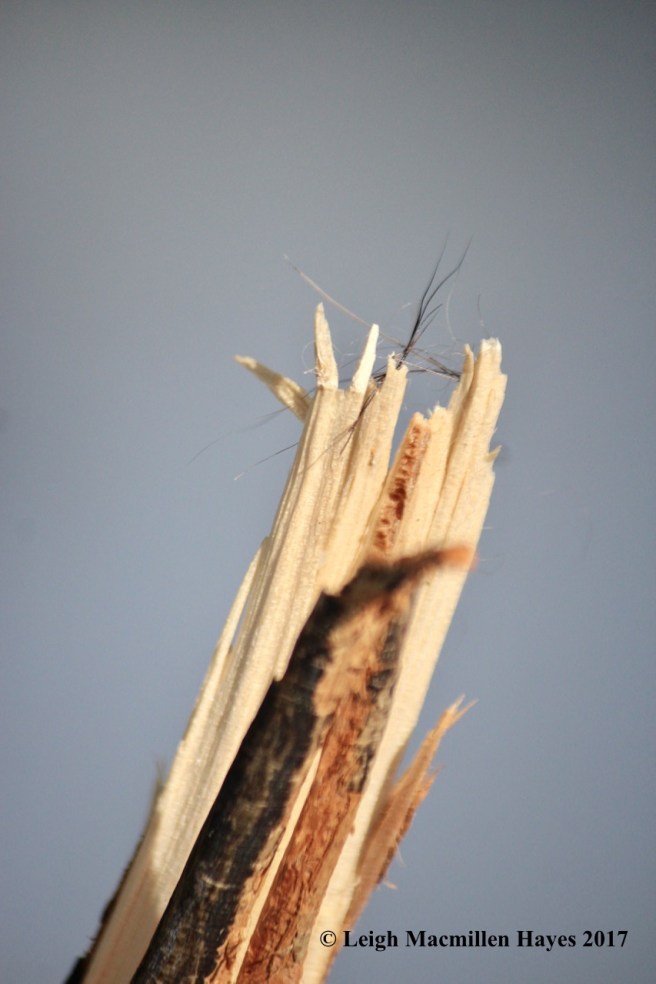
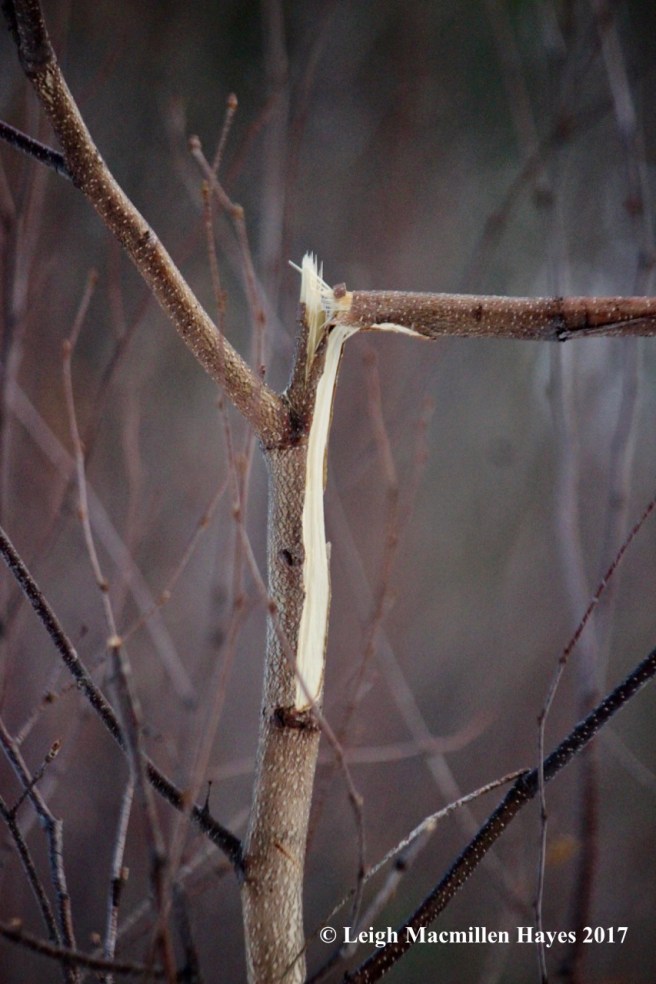
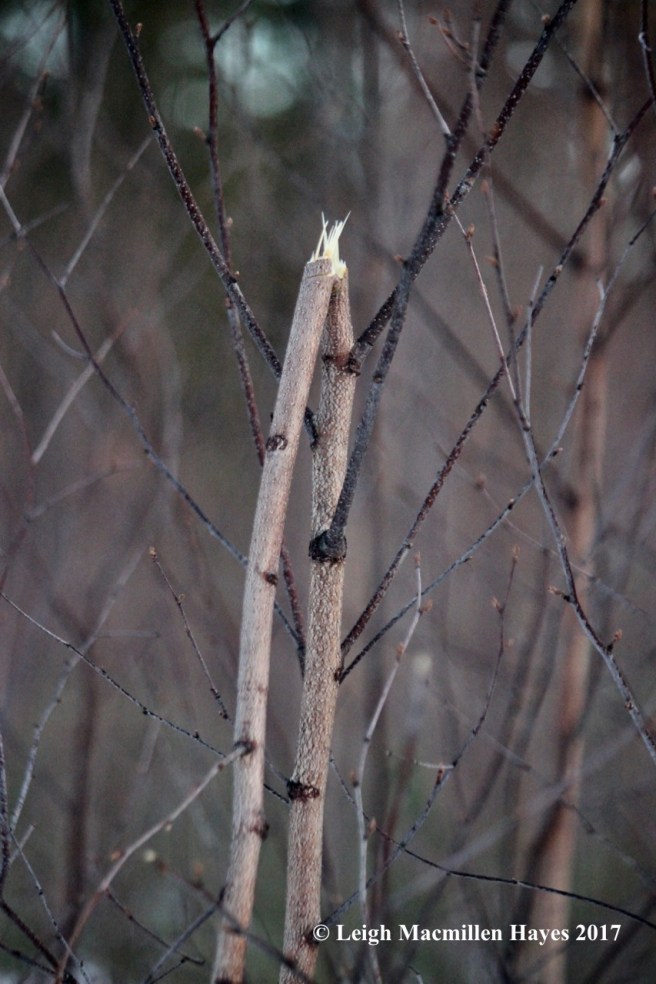
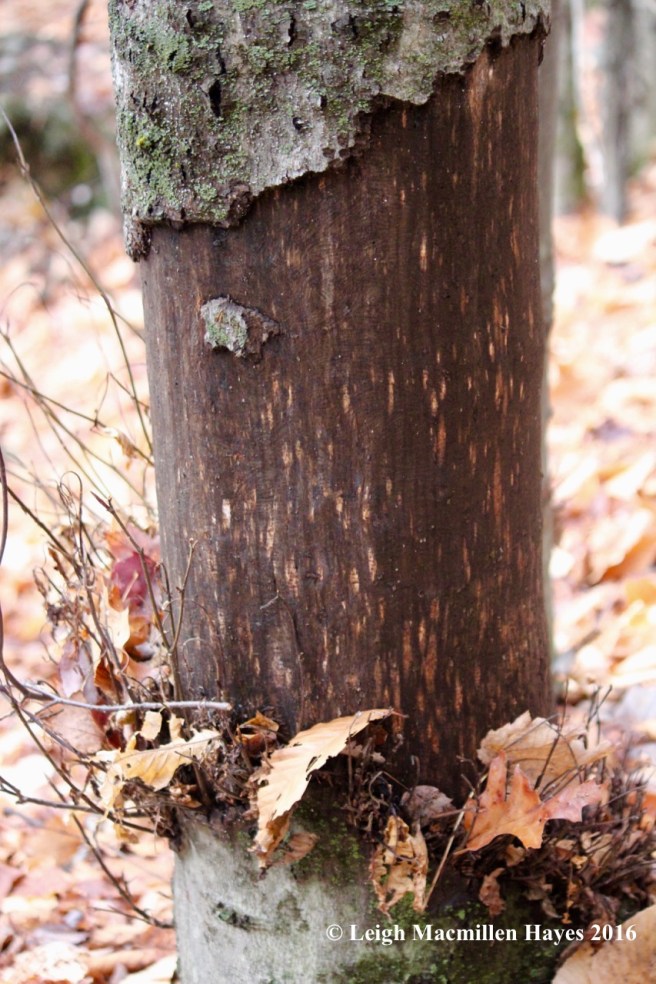
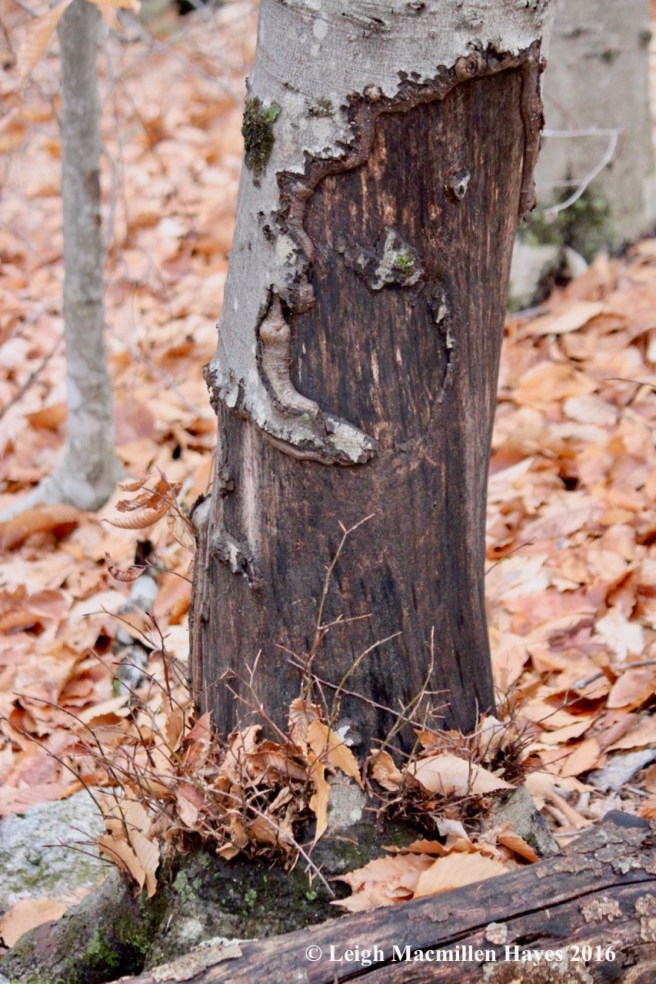
As I snowshoed, I spotted numerous  trees like this striped maple, broken and worthy of inspection. Each time, I stepped in for a closer look. And finally was rewarded.

h-moose-hair-1

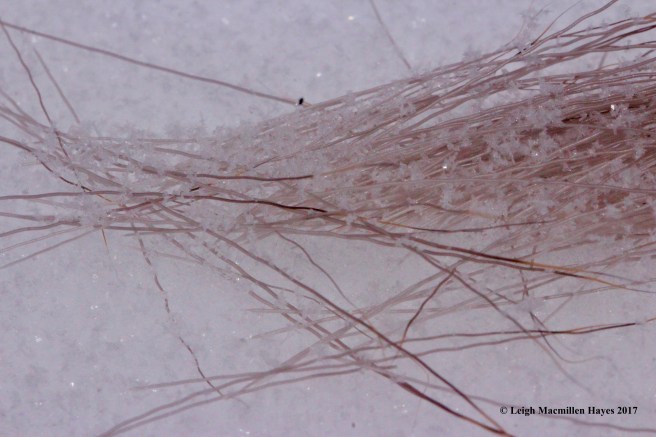
Hair.

h-moose-hair-2

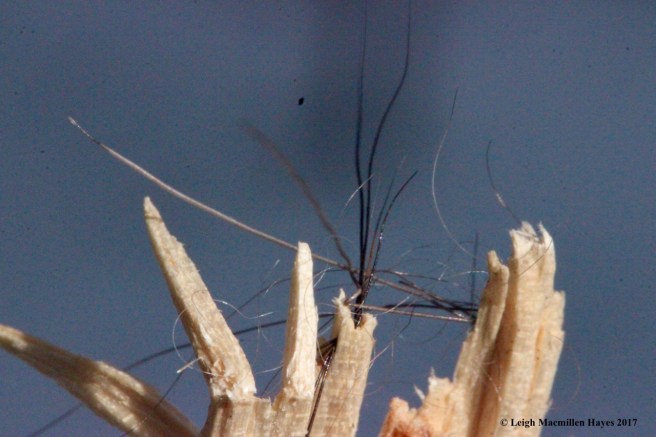
Moose hair.

h-moose-hair-finale

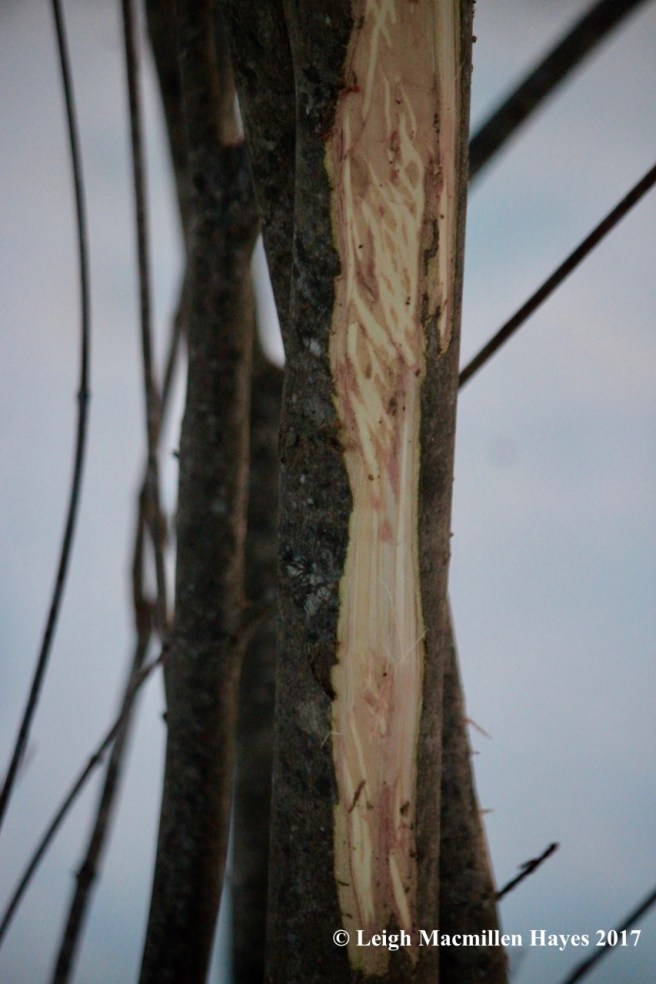
A bull moose, like a buck deer, thrashes bushes and small saplings when the velvet on its antlers dries. It could be that the velvet itches. But it could also be a response to increasing testosterone and the need to scent mark.

h-moose-maple

The frayed striped maple held messages I couldn’t read. But I had the joy of knowing they were there. And a better understanding of why this tree is called moosewood.

h-porky-trail

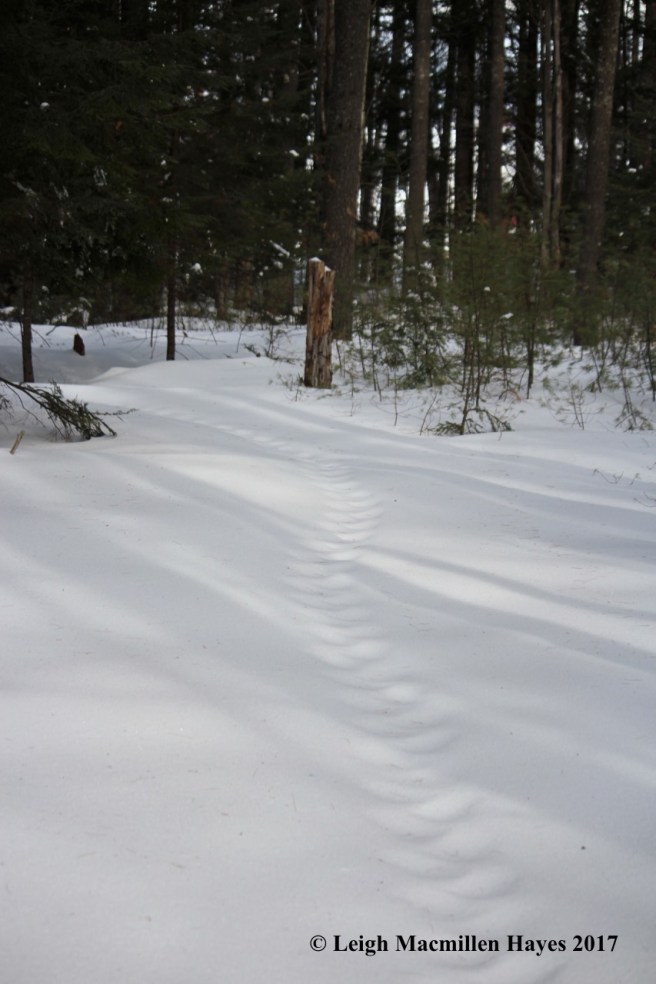
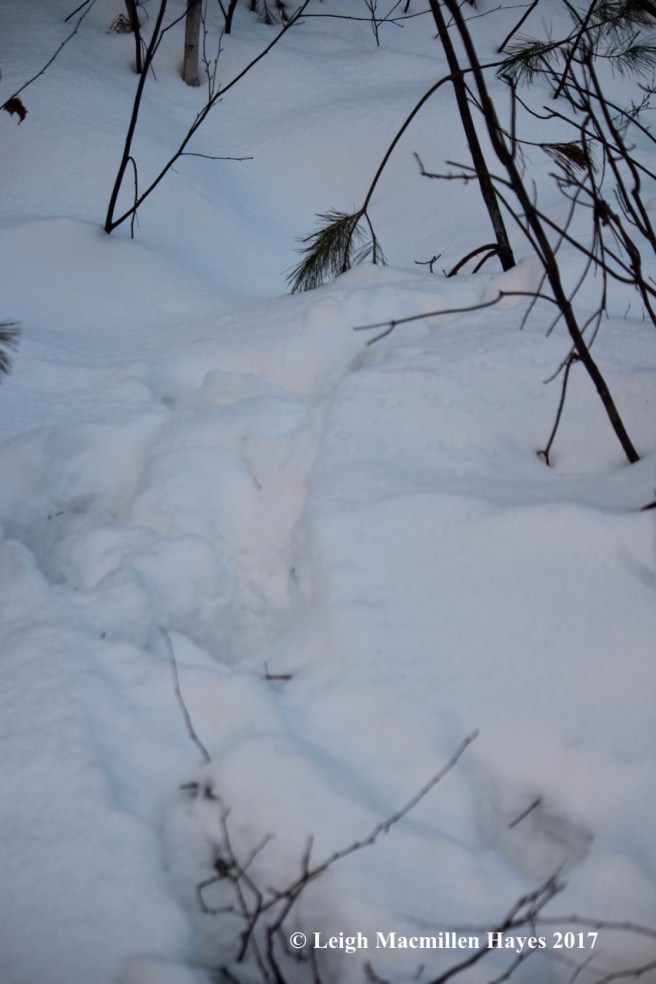
Taking a different route home, I spied the pattern of our neighborhood porcupine. Apparently it had made a journey during the overnight hours when the storm was still in progress.

h-porky-cut

I didn’t see any hemlock twigs scattered on the ground, but one nipped end starred me in the face from its suspended position on the branch of another tree.

h-porky-tree

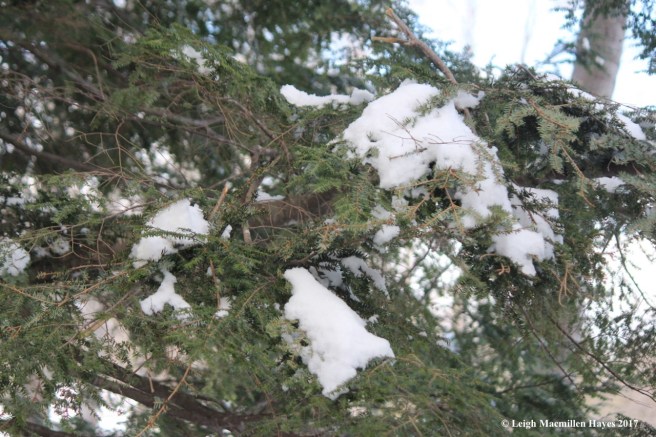
And in the hemlock, yesterday’s snow gathered still on more nipped twigs. Porky has certainly been active. For now, he rests under the barn.

h-red-sky

As the sun finally set on this beautiful day, I ran outside to capture the red sky. My mother used to say, “Red sky at night, sailors’ delight.” I’ve a feeling that there will be a red sky in the morning and the sailors will need to heed the warning. Another storm is pending.

Between the storms, I embraced the calm. And was rewarded.

Tonight, one more reward that was captured in our minds’ eyes–my guy turned on the deck light and called to me. We watched an opossum move across the deck and head to the spot where the shed meets the barn and all critters enter and depart–porcupines, raccoons, skunks, woodchucks and now an opossum. It was our first sighting of this homely mammal.  I’d wondered where it might be and haven’t seen its tracks since the first time I spied them just before Christmas.

Barns are meant to house animals, especially when they need to get out of a storm. Our animals just happen to live under the barn (well, all but the squirrels and mice that live in it), though I have to wonder how this menagerie embraces the calm as they coexist.

Between storms, seek calm and embrace it.


Misty Mountain Sundate

It was a dark and dreary day. The end. Or so it could have been. But we decided to hike anyway, our destination once again Jackson, New Hampshire.

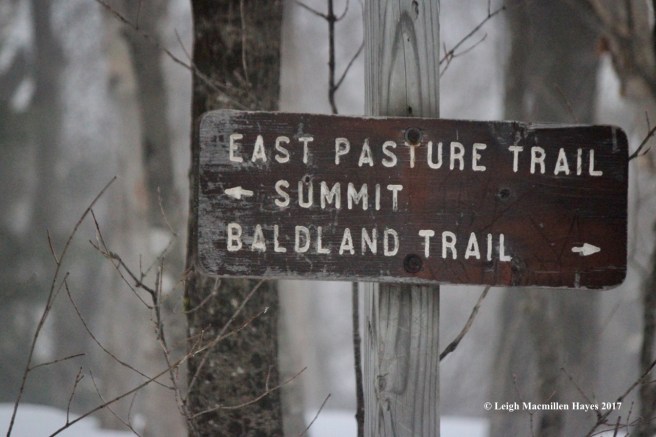
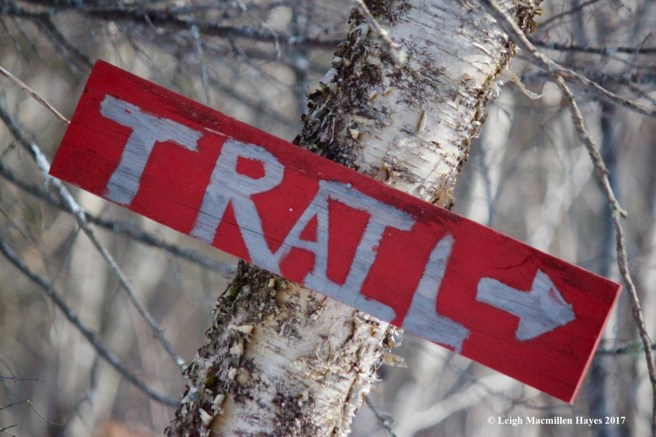
b-trail-sign

We thought we’d explore Boggy Brook Trail, but after a half mile reconnaissance mission, we changed our minds and headed over to the Black Mountain hike/backcountry ski trailhead.

b-cabins-below

As we passed by the cabins at the base of the trail, our mountain view was obscured.  Despite the grayness of the day, the reds of tree buds and catkins brightened the view. And since the trail was well packed, I opted for spikes, while my guy wore only his hiking boots. That limited us, of course, since we’d have to stay on the trail, but it also brought our vision into focus.

b-stream-crossings

Hikers/skiers must cross about a half dozen streams, where cascading water splashed over rocks and presented the formation of frozen drips.

b-wood

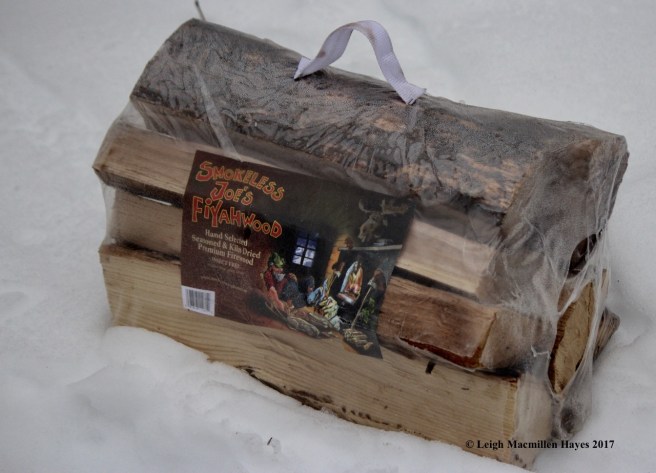
We weren’t far along and near one of those stream crossings when an anomoly stood out on the trail. Because this trail leads to a rustic cabin built by the CCC in 1932, we surmised that the most recent renters found the bundle of wood too heavy to lug on sleds and so they left it behind.

b-paper-birch-colors

Further along, we realized it wasn’t just the tree buds that stood out on this colorless day. The pink and orange hues of paper birch were enhanced by the lack of sunshine.

b-paper-birch-old

And where the birches stood tall, long, black mustaches draped over fallen branches.

b-love-on-birch

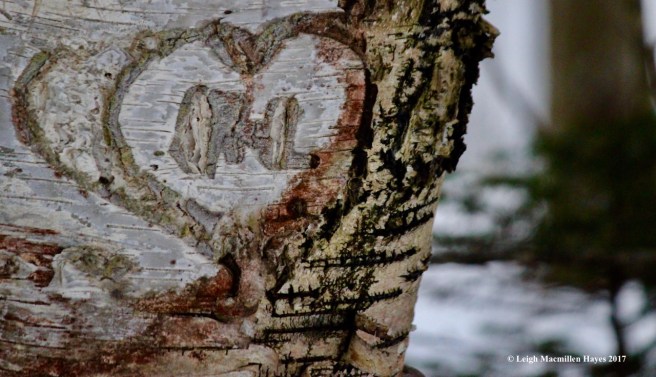
We think of paper birch as white birch, but really, its colors are many. Wounded bark formed an intended heart, highlighted by pinkish reds. (I did wonder if this was a display of love for the National Hockey League.)

b-bear-tree

We found another curious sight on a tree as we climbed higher. It was the change in color and direction of the slash marks that caught our attention. We couldn’t say for sure and without snowshoes couldn’t check further (unless we wanted wet feet), but suspected a bear had stopped by and left its signature.

b-yellow-birch-old

Old yellow birches were also abundantly present, their bark turned silvery gray with age–rather like us.

b-old-yeller1

My favorite yellow birch had many stories written on its bark and within its limbs. I thought that it would take at least three of us to wrap our arms around its trunk. We were only two and I had a hunch that if I suggested we hug this one I’d get a funny look.

b-lungwort-1

The higher we hiked, the more lungwort, mosses and lichens we saw decorating the tree trunks.

b-lungwort-2

The forty shades of green that Ireland is known for seemed well represented–thanks to the mist.

b-hobblebush

And if you know me like my friend Jinny Mae does, you know I can’t resist admiring the tan hobblebush leaf and flower buds. This one was for you, Jinny Mae.

b-black-mtn-cabin

At long last, we spied the cabin up ahead and visions of lunch filled our minds.

b-lunch-plank

We couldn’t find a rock, but we did note that the wood shed was nearly empty and wondered if the renters had regretted their choice to leave the bundle of wood behind. Within the shed, we found a plank and borrowed it–lunch plank it would be. As we settled down, spitting rain coated us.

b-lunch-view

With the view of Wildcat Ridge and Mount Washington enveloped in fog, we enjoyed our lunch spot just the same.

b-mcvities

The PB&J sandwiches were quickly consumed. And then . . . one of our favorite colors, dark chocolate, served as dessert. I first discovered McVitie’s Digestives in 1979, when I studied in York, England, and my guy knows the way to my heart so this package appeared in my Christmas stocking.

b-hare-and-weasel

After lunch, he put the plank back in the wood shed and I checked out the tracks left behind by the local residents–snowshoe hare and weasels, based on the patterns of their trails.

b-hare-1

We weren’t going to climb the final .4 to the summit because we knew the views would be obscured, but at the last minute we decided it was a short stretch and so we did. The snowshoe hare activity increased significantly and snow conditions demonstrated splayed toes.

b-summit-sign

The higher we climbed, the eerier the woods seemed, with shades of gray being the most predominant. And the temperature dropped.

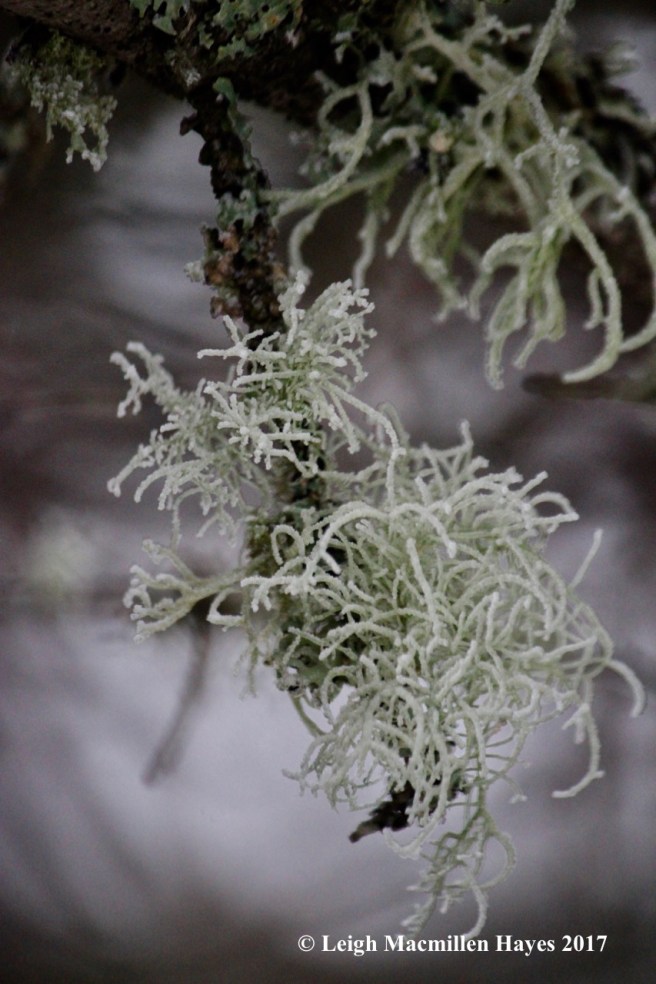
b-frosted-lichen

From lichens to  . . .

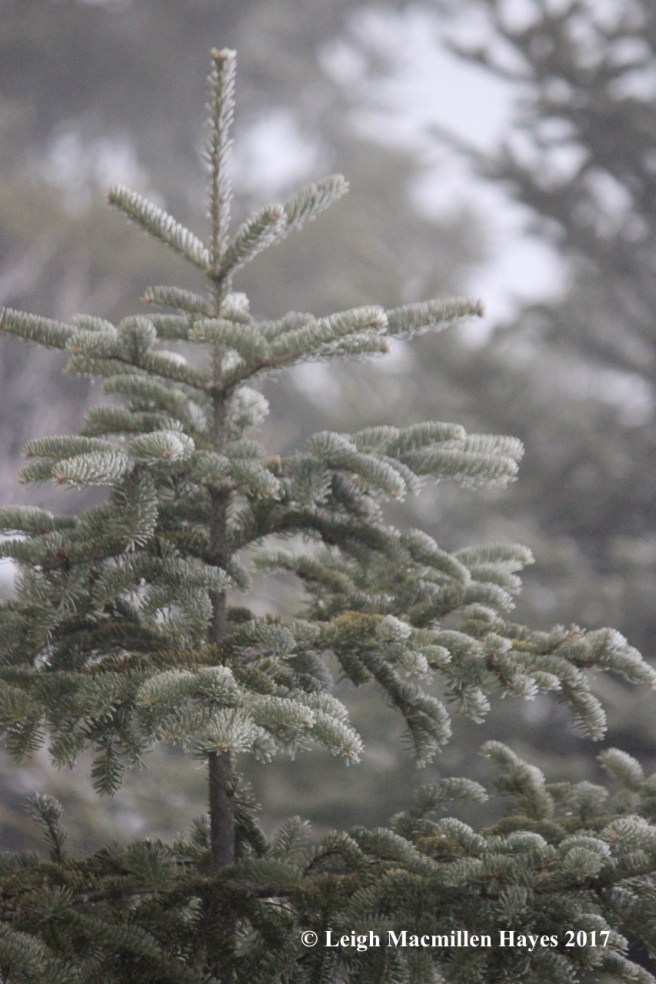
b-frosted-fir

firs, everything was frosted.

b-summit-view-1

And that summit view, which should have been of Carter Dome and Carter Notch, was equally glazed.

We followed the same trail down. It was still a dark and dreary day–despite that, we enjoyed our opportunity on this Sunday to fully embrace the misty mountain together.


Keep an Open Mind

While I always head out with expectations of what my forest wanderings will offer, I’m happily surprised time and time again with the gifts received.

o-deer

And so it was the other day when a friend and I happened upon this trophy in an area I’ve only visited a few times. We’d been noting the abundant amount of deer tracks and realized we were between their bedding and feeding areas and then voila–this sweet sight sitting atop the snow. It now adorns a bookcase in my office, a wonder-filled addition to my mini natural history museum. (I’m trying to give Henry, Jessie, Violet, and Benny of the Boxcar Children series a run for their money in creating such a museum.)

o-deer-1

Being on the receiving end of such a gift can lead to want or greed. And when I spied several deer crossing the trail before I slipped into the woods today, I expected to find numerous more antlers.

Certainly, I thought I’d find at least one, but the possibility for several seemed realistic given the local population.

o-deer-tracks

To that end, I followed fresh tracks and examined areas they’d pawed as they sought acorns and mosses. My eyes scanned the surface, but perhaps it was the fault of the fresh layer of snow that hid the possibilities. Then again, we’d only received a few inches of fresh white stuff and it was rather warm for a January afternoon, the snow’s surface dotted with drip drops.

o-landmark

I didn’t pay attention to my direction as I moved and then suddenly found myself nearing an old landmark, surprised as usual that it still existed. I did notice that the deer didn’t travel below this widow maker. Nor did I.

o-moose-tracks

Eventually my wanderings found me following tracks left behind by a larger mammal.

o-gray-birch-forest

I worked my way through a thicket of gray birch, those early successors in an area logged about ten years ago, and then heard a sound–a crashing noise.

o-red-maple-browsehair

As I stood still and waited, I looked around. Everywhere, the young gray birch and red maple buds had been nipped. Everywhere. It was almost as if no tree had been left untouched. Sometimes I noted traces of hair.

o-moose-rub-2

There was no further sound of crashing branches, but plenty of evidence of who had been crisscrossing through these woods on a regular basis. Signs indicated action and I had visions of antler velvet being rubbed off.

o-bent-branch

Sometimes bent . . .

o-moose-rub-3

and other times completely broken, I saw moose behavior that meant antlers in my future.

o-moose-rub-1

On some trees, rubs were smooth in the middle and ragged on the ends, with points scratching the surface. At least that’s what I thought I was seeing.

o-moose-food-1

Scrapes, those areas where the moose had used their lower incisors to pull bark and the cambium layer from the trees, were also visible everywhere I looked.

o-moose-bed-1

In a matter of minutes I found a bed and that’s when I realized that this was probably the moose I’d frightened off, given the freshness of the structure.

o-moose-heart

One of my favorite parts of the find–moose scat within a moose track. And all in the shape of a heart.

Indeed, no antlers. Indeed, other offerings. And a reminder to keep an open mind. And heart.


Don’t Give Up Mondate

I wish there’d been a good place to stop along the Kanc (Kancamagus Highway) this morning to watch the snow-beasts wade like water buffalo in the Swift River. OK, so they weren’t really beasts, but large boulders topped with layers of snow and ice and looking rather beast-like in a friendly sort of way. Instead we continued on, tucking those images into our minds’ eyes.

h-you-are-here

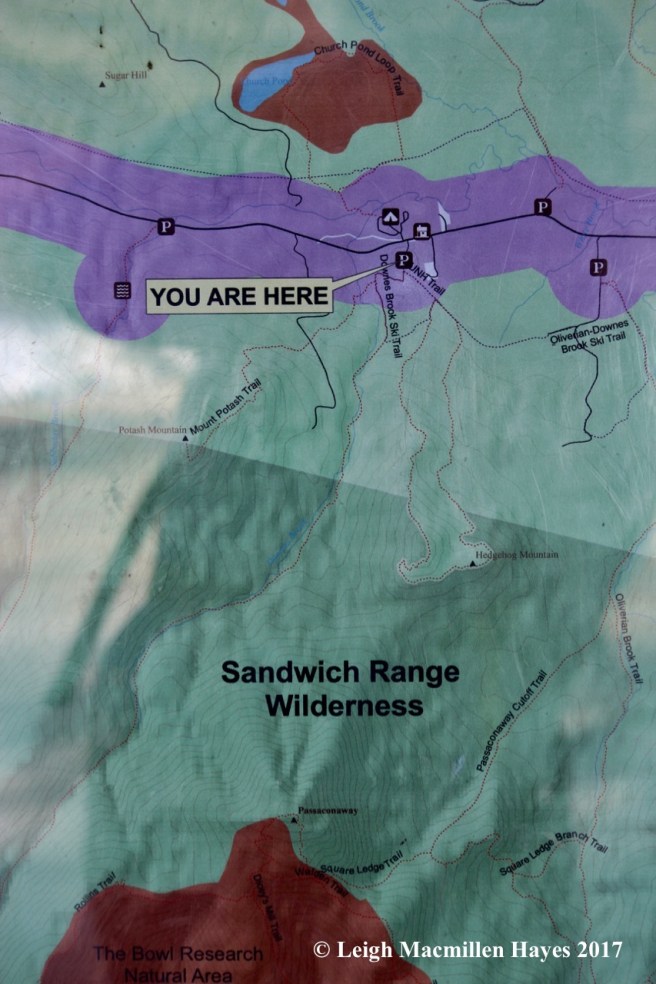
About thirteen miles from the start of the Kanc, we reached our destination and knew we were there when we located the “You Are Here” sign. Our goal, Hedgehog Mountain.

h-white-pine

The trail begins along the flat terrain of the old Swift River Railroad and among the spruces, firs and birches, a white pine shouted its presence. It appeared to have been weeviled  or split for some other reason, maybe railroad related, early in life. The railroad operated from 1906 to 1916 to service the Conway Lumber Company, shutting down one hundred years ago, so potentially this tree is at least that old.

h-yellow-birch

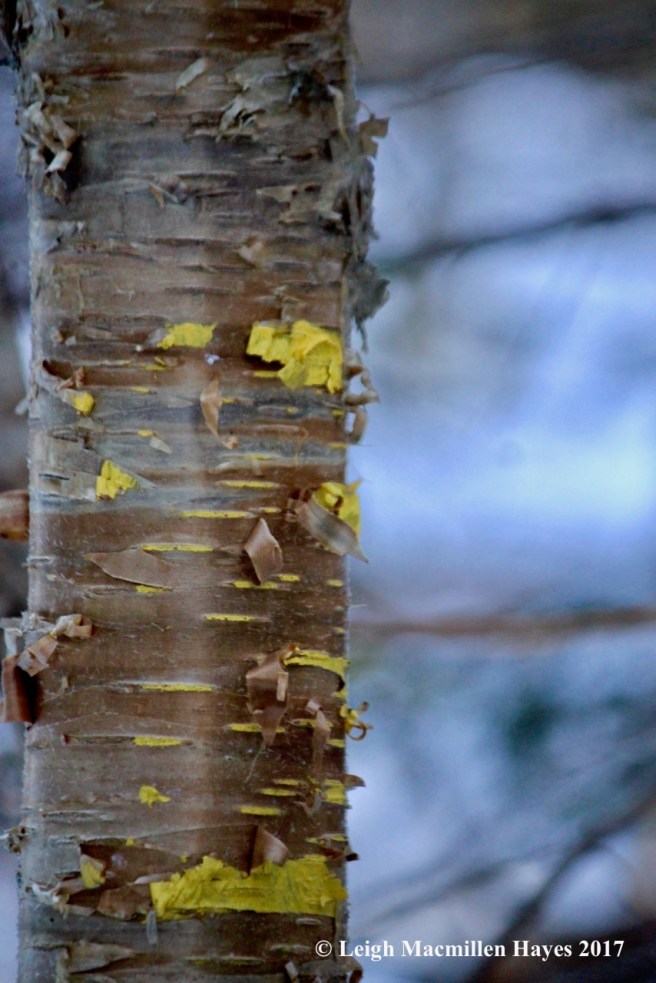
Nearby, a much younger birch, yellower than normal, indicated we were on the right path. Yellow birch live the longest of the birches, to an average of 150 years, so potentially this one has a long life in front of it. We hope it will continue to lead the way for at least that many years–though it may need a fresh blaze paint job.

h-trail-signs

At the split in the trail, we decided to follow the counter-clockwise route, figuring we’d conquer the steeper route on the way up. It’s called the UNH Loop Trail because the property had been donated to the university in the 1960s and hosted a forestry camp for a time. The name stuck. The camp didn’t. Nor the ownership.

h-west-up-ridge

Within minutes, we went from a snow-packed trail to bare ground on a ridge under the thick canopy of spruce and hemlocks. It didn’t last long, but we enjoyed it while it lasted.

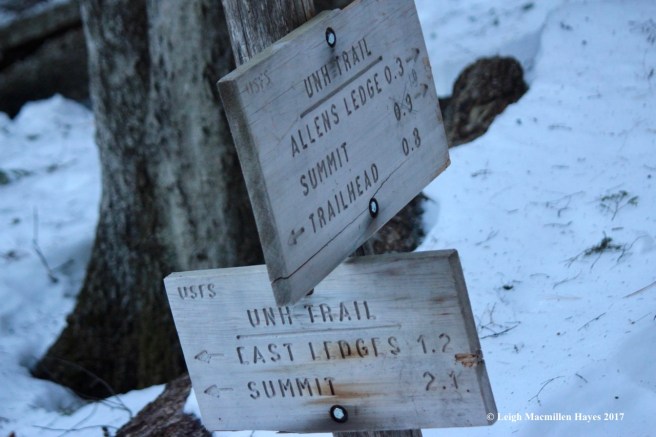
h-allens-ledge-sign

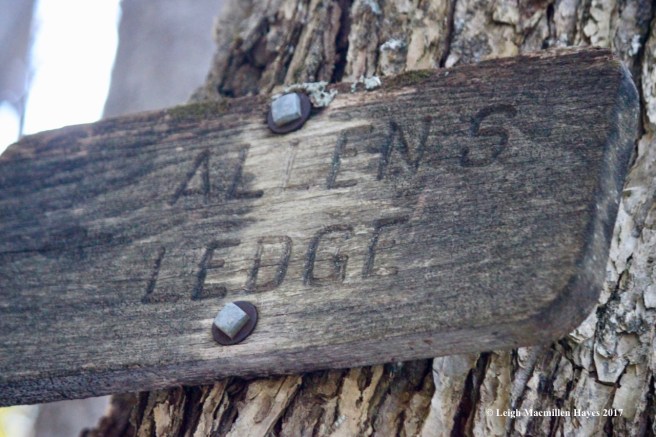
And then we came upon another trail sign, this one directing us to a spur that led to Allen’s Ledge.

h-allens-ledge-2-1

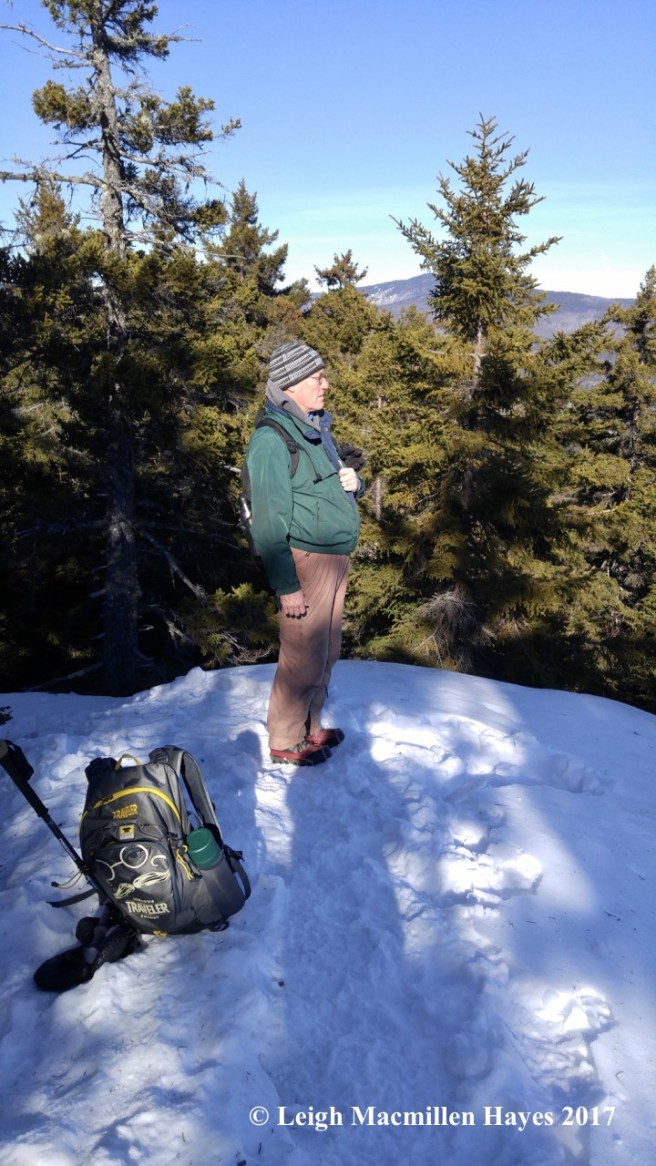
And here, my guy, who was certain the namesake was his alone, welcomed me as if he were king of the mountain. Truth be told it was named for Jack Allen, a guide and hunter, who shared my guy’s love of telling a story. We were over a hundred years too late to meet Mr. Allen, but felt his presence all the same.

h-allens-ledge-view-1

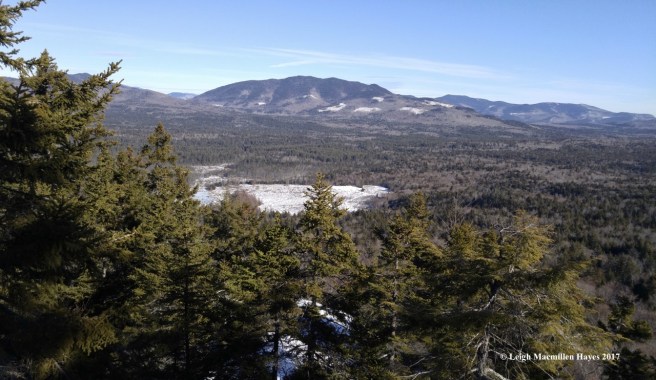
From here, the Swift River Intervale spread out before us and beyond, the mountains including the Moats.

h-pileated-scat

A few minutes later, I spied another ledge and knew it must be my namesake for the spur trail was marked by pileated woodpecker chips and a chunk of scat–a capsule of ant skeletons surrounded by uric acid. Always a fun find.

h-leighs-ledge-1

The ledge wasn’t as long or view as expansive, but still, I’m certain it was named Leigh’s Ledge–the sign obviously buried in the snow.

h-polypody-1

Onward and upward, the curled fashion of the common polypody reminded us that though our tickers were tocking, it was cold–in the teens at best.

h-trees-sharing-space

As we climbed, the spruce and hemlocks spoke of their sharing habits, roots entwined as if hugging arms extended.

h-sunlight-on-twigs

Sunlight backlit branches, adding a stained-glass effect to this beautiful winter morn.

h-sheep-laurel

We knew we were approaching the summit when we spied the bell-like capsules of sheep laurel dangling below.

h-summit-view-1-1

At last, our destination reached. And views embraced. We were warm and so was the sun.

h-summit-3-1

We took in the expanse to the north first.

h-chocorua-from-summit-1

And then turned south, where we found lunch rock. Two young men had settled in, chatting while enjoying the view, but they kindly decided to move on when we arrived.

h-chocolate-bar

PB&J with hot cocoa, followed by a treat that had made its way into my Christmas stocking. Two bites for each–because Guinness® is good for you! We could have napped here and may have, but two more young men arrived and so we gave the spot to them and moved on down the trail, heading toward the East Ledge.

h-ice-works

The beginning of our descent found us watching each footstep along a winding and rugged trail marked by ice. Sometimes we sat and slid as we made our way to the base of the summit cliffs. I wish I’d taken more photos, beautiful and remote as it was, but . . . I was focused on one step at a time.

h-east-ledges

We paused at one point to allow about 15 MIT students to pass by and then we reached the East Ledge and views of the Sandwich Range.

h-looking-back-1

It was here that we turned to look back and the name of the mountain began to make sense. I’d wondered about its name and thought that it might be for the shape of the mountain and the spikey spruce trees that grow upon it. Indeed.

h-wintergreen

Besides the views,  the ledge’s offered the maroonish-green leaves and berries of wintergreen, delighting with color, scent and taste in any season.

h-granite-ledges

As we continued down the ledges, their layers bespoke legends–tales of the past, the present on their faces, with the future tucked inside.

h-polypody-2

Being on the southern side as we wound our way down and around, we came upon another boulder witnessing a bad hair day–and this time the common polypody fern indicated the warmer temps on this side of the mountain. A few more young people passed us on their way up and I commented to my guy that everyone seemed to be young on this mountain. “A fountain of youth,” he commented. I can’t say I was feeling 100% young, but yeah.

h-love-sign

The final mile seemed to last forever. “I found a sign,” my guy said at last, a grin on his face as he pointed to what he thought was blank. We’d been searching for the sign where the loop began. Instead, we found this. What he didn’t see was a message jotted on the painted board. “Don’t give up on love.”

It seemed a fitting message for our Mondate, for Martin Luther King, Jr.’s birthday, for our nation and the world.


Foggy Moments

One day it’s -8˚ and a couple of days later the thermometer reads 50˚–our New England weather about as fickle as those of us who inhabit this space. Today was one of those high temp days and as I stepped outside, the air offered a weighty feel.

h-snowshoes

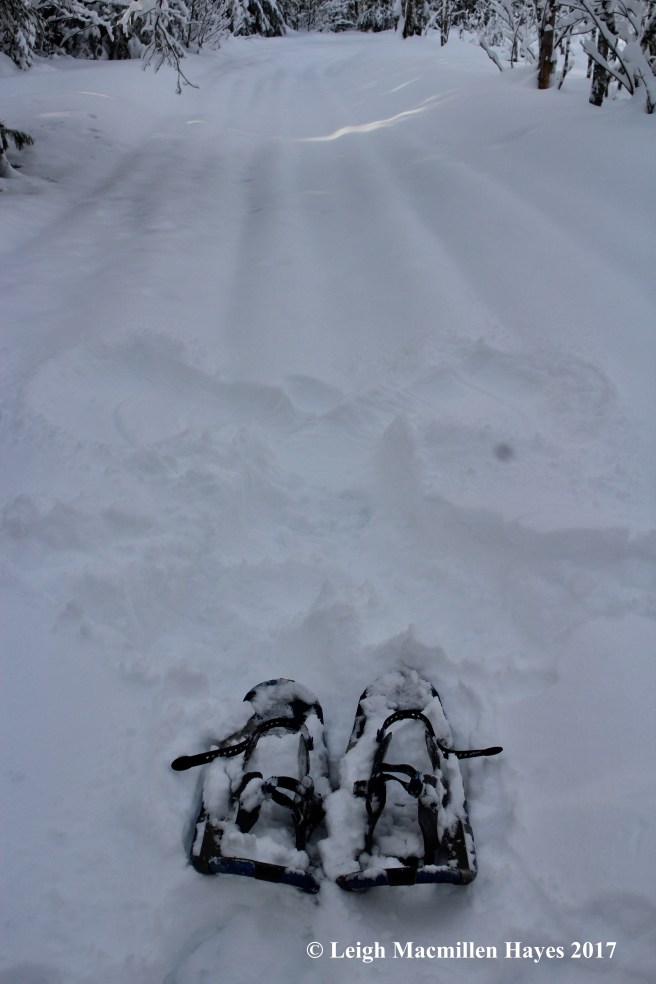
On a fluid roam with no apparent destination, but rather a strong inclination to be outside, my snowshoes sunk indicating that the snow pack is still significant despite recent rain.

h-lucas-tree-works

I trekked out by the power line, where Lucas Tree Service had indeed completed an intended cut on neighboring land. Though I’m glad that the mighty hackers left the downed trees behind where they can decompose and replenish the earth, I’m still not certain why they needed to cut in this area. The trees were all healthy and even if wind toppled one, it wouldn’t fall toward the lines, which are due west–this is more of a north/south tunnel. I also don’t understand their need to drive all over the snow-covered vegetation located below the lines, though I do know that their mission is not to embrace what grows there. OK, enough of my rant.

h-porcupine-works

While I’d saved some trees on our land from being hacked, there were others that no amount of hugging would protect. One of the most beautiful hemlocks, which had been checked upon repeatedly in the past few weeks, finally became the focus of Mr. Porcupine‘s works. He’s living under our barn at the moment and doesn’t have far to travel to reach this future Lorax tree.

h-vp-1

Unlike Porky, I had no idea where I wanted to explore but decided a visit to the vernal pool would be a perfect place to begin. If I didn’t know better, I’d have thought it was a March day, given the slushy surface of the frog pond.

h-vp-insect

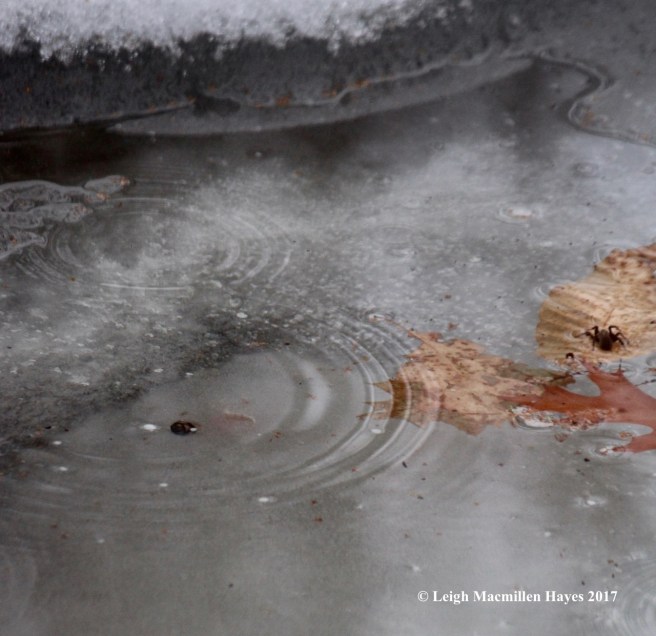
Raindrops began to fall and rippled across puddles formed atop the ice. While I enjoyed the spiraling collisions, I failed to see a visitor on the beech leaf until I looked at the photo. Who it was shall forever remain a mystery.

h-hickory

There are lots of mysteries in these woods–thank goodness. Occasionally, as happened today, I come upon the shell of  hickory nut which I presume was gnawed by a gray squirrel. Perhaps someday I’ll stumble upon the tree and know the source. I have an idea it may actually grow around the corner from us and maybe others have taken root–another mission for another day.

h-snowshoe-hare-scat

For today, I had no mission except to wonder as I wandered. I wondered where the snowshoe hare hid while I sloshed about for though I couldn’t quite see its tracks due to the current conditions, I  knew it had been eating here, there and everywhere.

h-barbed-wire

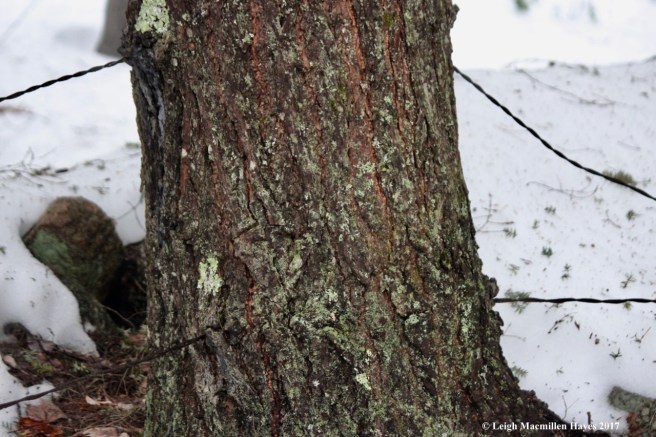
I wondered about the tenacity of the red oak that stood beside the stonewall as a youngster when this land was still farmed. And with that came a wonder about family and friends who are displaying equal tenacity to overcome barbs in their lives.

h-white-pine-unhealthy

I wondered about the weevil that choose this particular pine among so many to attack. And again my thoughts wandered to my community of family and friends.

h-winter-weeds

And finally, I wondered some more about the natural community that surrounded me and all that it has in store to teach me. It’s in varying stages of succession from the spirea, bulrushes and blackberries,

h-red-maple-and-young-birches

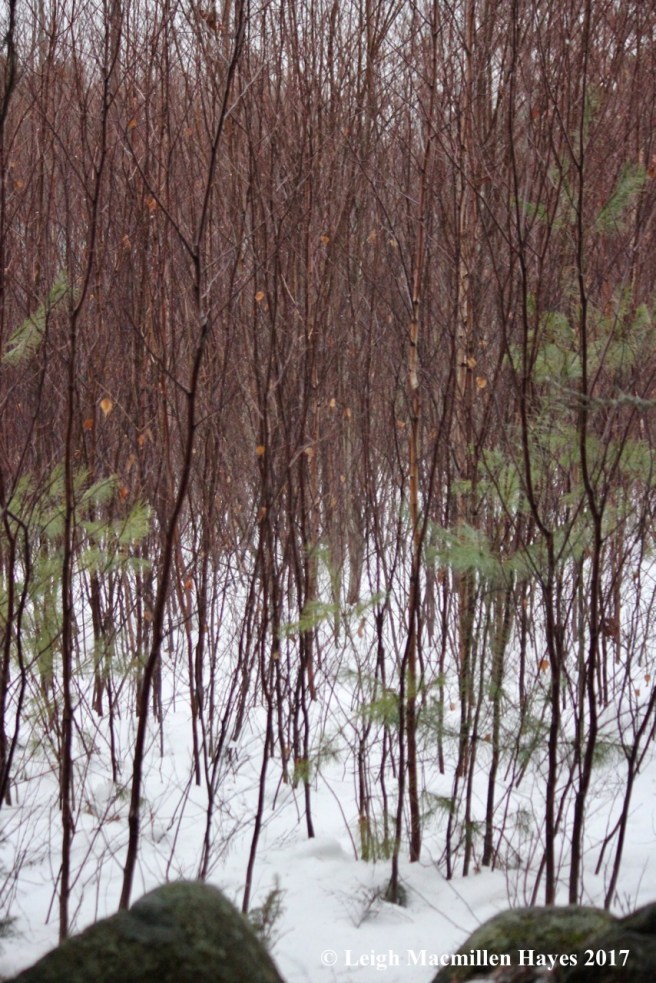
to young red maples and gray birches,

h-gray-birches-and-red-maples

middle-age gray birches

h-evergreens

and a variety of evergreens. What once was all farmland grew into a forest, which invited a variety of mammals to make this place their own, and in turn invited loggers to make the trees their own, and in turn invited the flora and fauna to return. I can’t control it all and that’s probably a good thing.

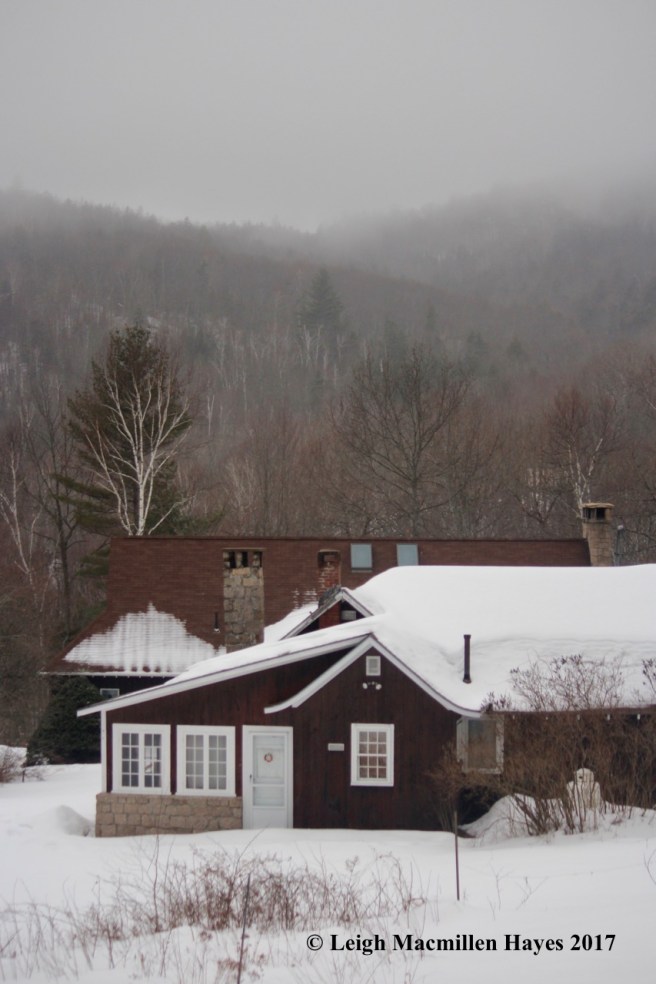
h-fog-house

What I could control was my opportunity to wander. At the end of the day, I headed in, a bit damp, but happy for a foggy meander, hopeful for others, and  grateful that I get to call this place home.


A Shiver of a Mondate

When we awoke I checked the thermometer. Negative 6˚. By the time lunch was packed, hot cocoa poured into thermos and bodies decked in layers, I checked again. Negative 8˚. But a sunny negative 8˚. With only a slight breeze.

j-covered-bridge

And so we drove to Jackson, N.H. This town holds fond memories for us, including our wedding night spent up the street before we departed for Ireland the next day. That was 26 years ago.

j-trail-sign

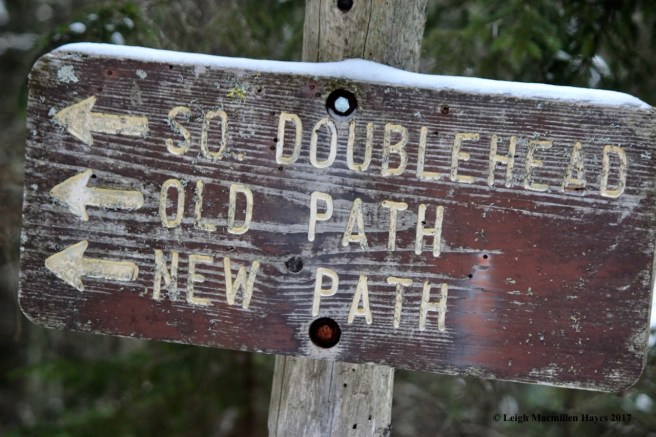
It had been about eleven years since we’d last hiked the North and South Doublehead Loop that we chose for today. That was a December hike, with not as much snow. Our first inclination this morning was a snowshoe hike. Seconds before we were about to pull out of the driveway, my guy mentioned micro-spikes. And so he ran back into the house and grabbed both pairs.

j-no-spikes-hiking

Brilliant move as the trail was extremely well packed. In fact, at the start, though I donned mine, he stowed his until necessary. Not wearing snowshoes meant not going off trail, but I was with my guy and knew that destination was of prime importance. I didn’t mind as the snowshoes would have been more cumbersome.

j-national-forest-sign

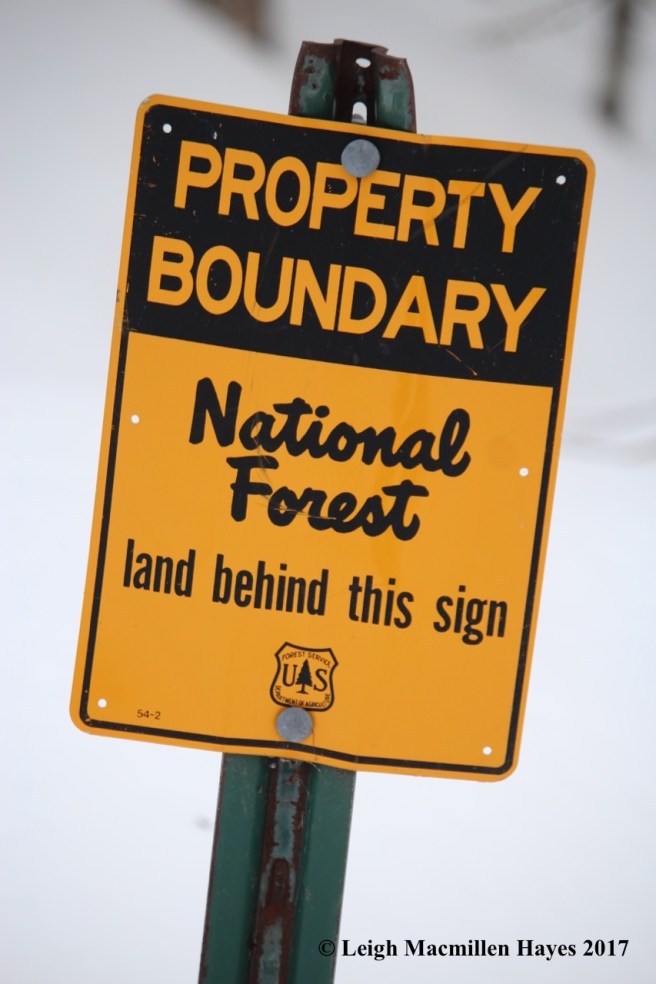
In mere minutes we’d crossed into the National Forest, aka the  White Mountain National Forest.

j-ash-and-maple

Though we were on an upward climb, the traveling was easy, affording the opportunity to look around and take in the sights, including the sharing of nutrients by an ash and a maple. Grafted though they were, they grew on their own; each dependent upon yet independent of the other–a mirrored reflection of the relationship my guy and I are honored to share.

j-hoar-frost

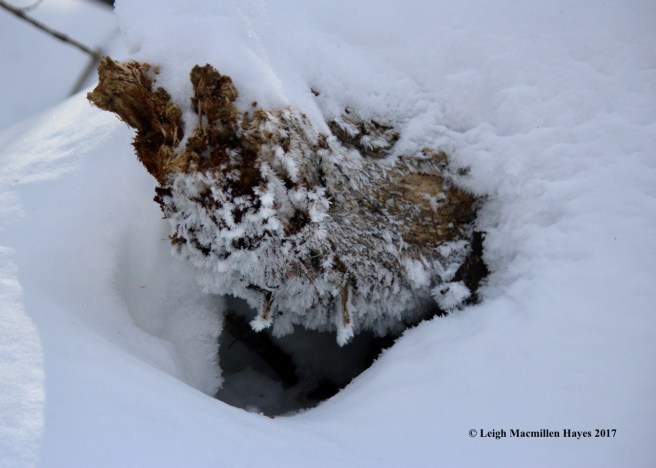
We were still a wee bit chilly (well, maybe more than a wee bit), but knew we weren’t the only ones dealing with the low temps. Squirrel tracks led in and out of this upturned tree and the hoar frost indicated life snuggled therein.

j-snowshoe-hare

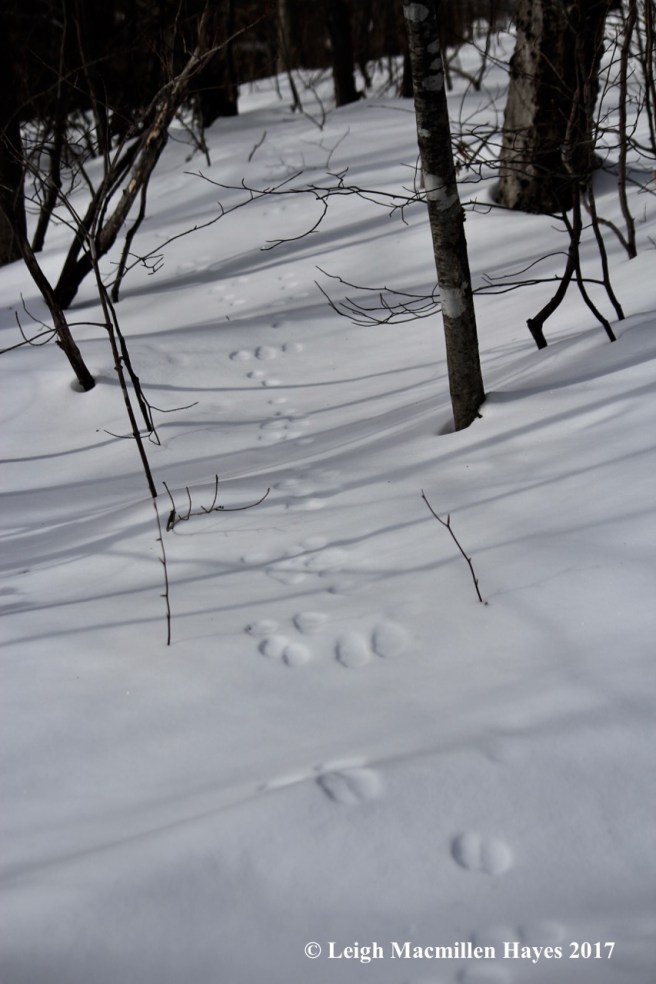
Every where, snowshoe hare tracks crisscrossed our path. I hoped we’d see at least one, if not ten, but that wasn’t to be. We were rather loud, each footstep seemingly an echo in the crisp air.

j-lungwort-1

We took several water breaks, including one by this tree covered in lungwort. I was excited to see the lungwort, but at the same time realized that my lens cap was missing. How many can one person loose? And to think that this one was tethered to my camera.

My guy, being MY guy, took off down the trail, assuming it would be visible and he’d find it in no time.

j-lungwort-2

For me, it was a time to spend a few minutes noticing. The ridged and pitted surface of lungwort is said to resemble lung tissue–thus the common name. During the Renaissance era, when the physical form of a plant was thought to determine its use, tree lungwort’s similarity to the structure of a lung led to the belief that it healed respiratory problems.

One of the things about lungwort is that it does absorb and fix nitrogen from the atmosphere, so it’s always a good find.

j-shivering-beech-leaves

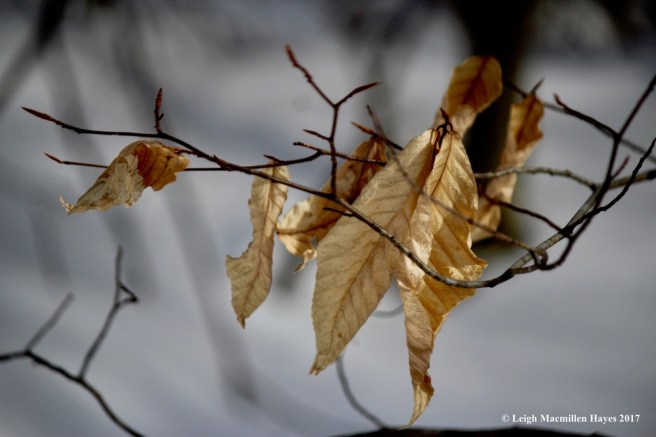
As I waited, I listened. Besides the voices in my head, I heard a woodpecker tapping and beech leaves shivering.

My guy returned, sweaty from climbing down and up again, as well as empty handed. But we made a plan to continue the lens-cover rescue mission on our way down.

j-community-change

And so up and up and up we climbed. The ski trail, on which we ascended, is only 1.2 miles long, but it is steep. Eventually, we both realized the community was changing and knew we were approaching the summit.

j-beard-2

It was here that Old Man’s Beard Lichen decorated the trees and made me think of hermits spending time on these mountain tops.

j-cabin

Suddenly the cabin at North Doublehead came into view. It could have been the perfect hermitage, but rather it has hosted many a crowd over the years. The cabin was built as a Civilian Conservation Corps (CCC) project in the early 1930s, as was the ski trail by which we climbed upward. It’s available for rental through the WMNF and sleeps eight.

j-cabin-anybody-home

My guy had taken off his hat to let some heat escape. And then he peered inside. A Peeking Tom he ain’t, but curious he is.

j-cabin-window-ice

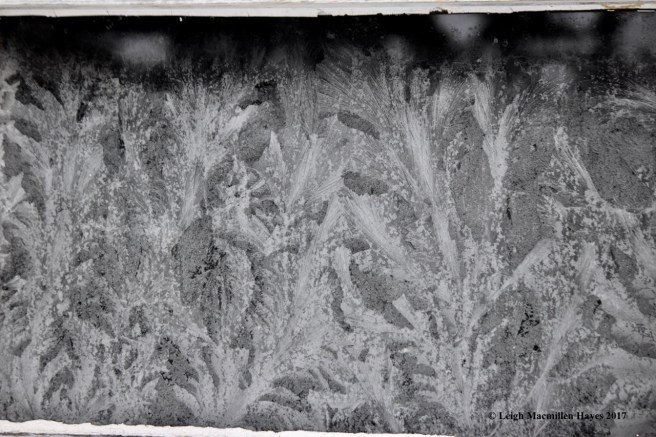
Not all of the windows offered a view within, but their artwork spoke of the lack of heat on a cold winter’s day.

j-cabin-view-1

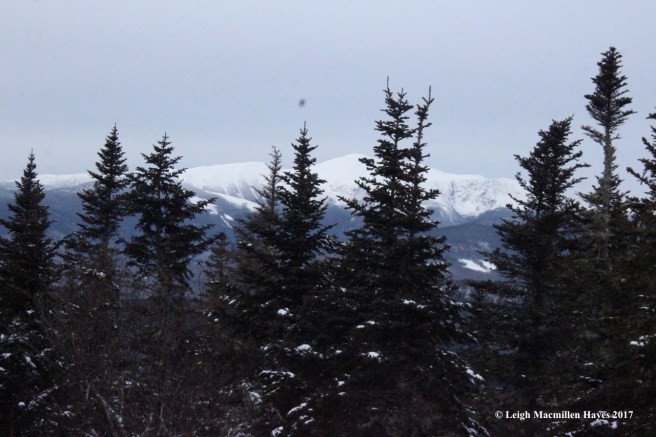
I stood upon a rock that I thought would become lunch rock and took in the view of Mount Washington.

j-cabin-view-rime-ice

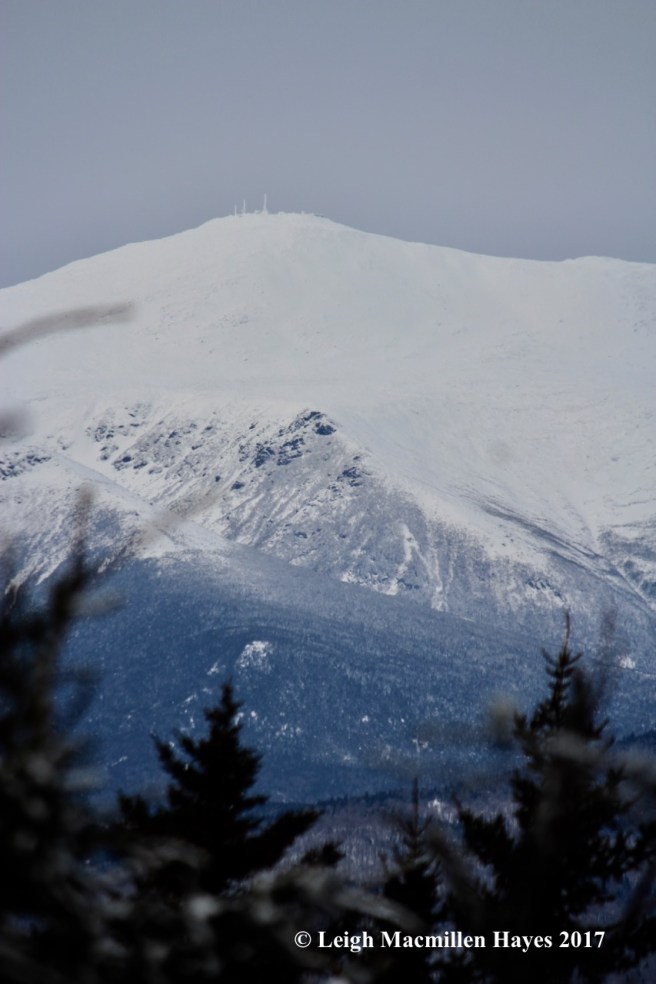
We could see the towers atop, but the telephoto lens enhanced the view and we knew that despite how we felt at any time of this day, the rime ice that coated the buildings was a mere indication of what the crew dealt with on New England’s highest peak.

j-cabin-trails

My guy was feeling the chill after sweating so much and so we followed the trail, a steep decent to the col between the two summits.

j-lunch-spot

Finally, at the next intersection, his body temp had regulated and we found lunch ground, no rocks in sight. Frozen PB&J and hot cocoa fortified us yet again.

j-south-doublehead-view

The climb to South Doublehead was by far the easiest, and the view most dramatic. We didn’t stay too long as it was there that we felt the breeze.

j-looking-south-view

j-mt-wash-from-south-doublehead

j-black-mtn-ski-area

But the view–oh my! It took our breath away. Or maybe that was the wind chill? At Black Mountain, we could see they were taking advantage and had fired up the snow machines.

j-hobblebush

We returned to our lunch spot where I wanted to grab a pic of the hobblebush buds. As I shifted my backpack something fell to the ground–my camera lens cover. We gave thanks that we wouldn’t have to retrace our steps when the Old Path intersected with the Ski Trail down below.

I knew my friend Jinnie Mae would tease me about not being able to resist a hobblebush, but really, check out those naked leaf buds that surround the also naked flower bud. The leaf buds on most of our trees and shrubs survive the winter with a waxy coating. Both hobblebush and witch hazel, however, don’t have such a luxury, though I have to wonder if  their hairy coating adds an insulating layer.

j-climbing-down

At last we climbed down the Old Path, a steep and straight descent for the most part that found us using the crab-style of downhill hiking–a sideways approach to keep from slipping. Despite that, it’s a beautiful trail, cathedral-like among the steeples of the spruces, firs and birches.

j-dragonfly

We finished our hike and then returned to Jackson, where glistening objects on the porch of The Wentworth Inn forced us to jump out of the truck. What to our wondering eyes should we spy? A dragonfly,

j-owl-1

owl,

img_5420

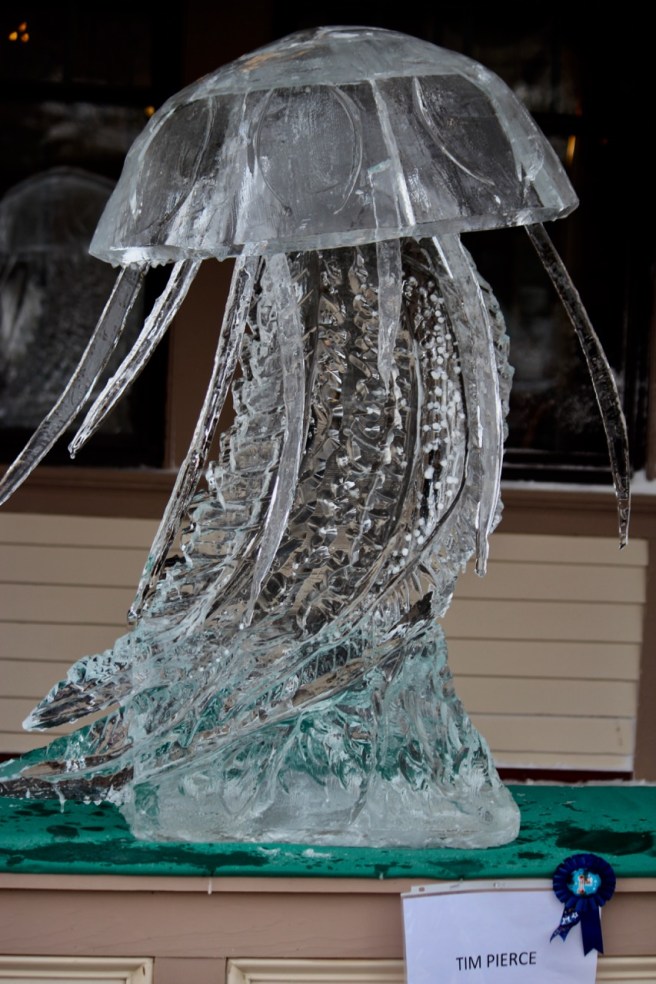
and jellyfish?

I’d thought for sure we’d see some form of wildlife all day, but these ice sculptures were as close as we got. The latter cracks me up as it seems such an oxymoron to see a jellyfish carved out of ice. Oh, there was also a cactus.

The perfect ending to our shiver of a Mondate.

Son-date Mondate

Let me begin by saying Happy New Year. And thanking all of you who take the time to read my musings about nature and life.

Today being a Monday, my guy and I had a plan in mind. At the top of the list–put Christmas away for another year. Oh, the creche remains out because the Magi haven’t yet arrived, but as much as I love all the decorations and memories of each year, I equally love packing it all up and starting fresh again.

h-snow-hook

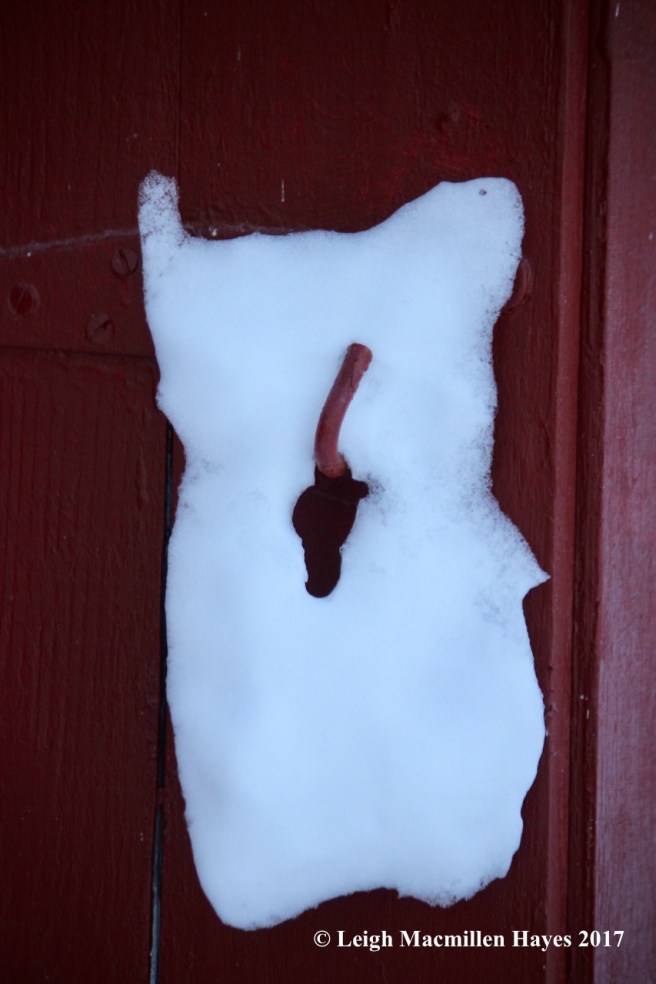
And then I stole a few minutes to step out the door and explore. Immediately, the snow  on the barn shed made me wonder. It looked as if we’d placed it on the hook for another time when we might need to use it.

h-mt-washington

At the infamous power line, I could actually see the towers atop Mount Washington. If you look closely at the tallest peak, you may see them as well. Such was the crisp, clear air today.

h-mouse-tracks

My wanderings took me deep into the woods, where I saw tracks and sign left behind by everything from mouse . . .

h-moose-tracks

to moose.  Again, moose tracks were plentiful and where they followed my snowshoe tracks, I noted that they sank at least twice as far down as I had, with no belly drag which speaks to the size of these mammals.

h-moose-hair-1

Several times I found moose hair that caused me to crouch for a closer inspection.

h-moose-hair-2

Salt and pepper in color, I could see a mixture of soft, downy hair and the hollowed rods that help insulate this largest of woodland creatures.

h-gray-birch1

Heading toward home, a leaning gray birch called for attention as it poured out life from last year’s catkins.

h-birch-offerings

Fleur de lis and seeds coated the snow surface.

h-gray-birch-seeds

Those tiny seeds, butterfly-like in their winged structure will eventually float to the ground and someday I’ll need to step around the trees they become. That is, if the birds and wee critters don’t eat them first. Such is the way of things in the forest.

h-trail

Once again, I found the trail and discovered I wasn’t the only one playing.

h-riding-into-the-sunset

These two guys of mine decided to head off into the sunset. I preferred not to join them in their bobble-head mode.

h-circling-the-field

They didn’t get far because the trail has not yet been groomed. And so we continued our chores, but also took time to play–shooting photographs,

h-roof-shoveling

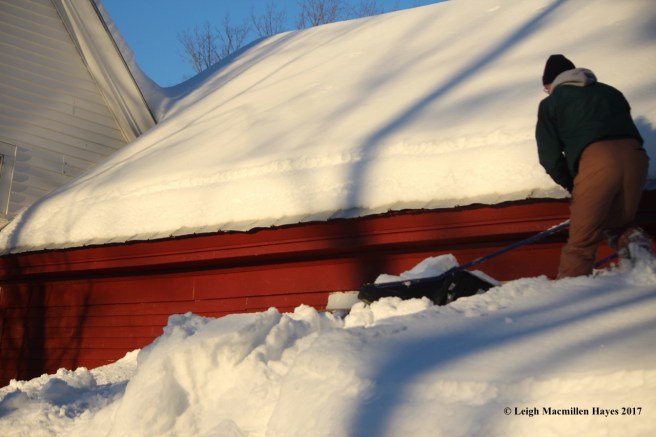
cleaning roof tops,

h-jump-1

and practicing jumping skills.

h-roof-jump-2

We shared our Mondate with our youngest son before he heads off on a different trail–returning to Colorado for a few more months. We’re thankful for the time we’ve had with him and especially today–working and playing side by side one more time before his next journey begins.


Books of December: A Holiday Wish List

In the spirit of changing things up a bit, I decided that I’d include five books I highly recommend you add to your holiday wish list and two that I hope to receive.

These are not in any particular order, but I’m just beginning to realize there is a theme–beyond that of being “nature” books.

b-forest-forensics-1

Book of December: Forest Forensics

Tom Wessels, forest guru and author of Reading the Forested Landscape, published this smaller work in 2010. Though only 5″ x 7.5″, the book is rather heavy because it’s filled with photographs. Despite the weight, Forest Forensics fits into a backpack and is the perfect guide for trying to figure out the lay of the land. Using the format of a dichotomous key, Wessels asks readers to answer two-part questions, which link to the photos as well as an Evidence section for Agriculture, Old Growth and Wind, plus Logging and Fire. In the back of the book, he includes Quick Reference Charts that list features of particular forest and field types. And finally, a glossary defines terms ranging from “age discontinuity” to “Uphill basal scar,” “weevil-deformed white pines” and “wind-tipped trees.” In total, it’s 160 pages long, but not necessarily a book you read from cover to cover. If you have any interest in rocks, trees, and the lay of the land, then this is a must have.

Forest Forensics by Tom Wessels, The Countryman Press, Woodstock, VT, 2010.

b-shrubs-1

Book of December: Shrubs of the Northern New England Forest

Michael L. Cline is executive director of Tin Mountain Conservation Center in Albany, New Hampshire. In September, I had the pleasure of attending a talk he gave at the center about Shrubs of the Northern New England Forest. The 6″ x 9″ book weighs about the same as Wessels’, and will also fit handily into your pack. Of course, you might want to leave the books in your vehicle or at home and look up the items later–thus lightening your load. Using Brownfield Bog as one of his main go-to places, Cline describes 70 species of shrubs from Creeping Snowberry to Mountain Ash. The book is arranged by family, beginning with Mountain Maple and Striped Maple of the Aceraceae (Maple) family and ending with the American Yew of the Taxaceae (Yew) family. Each two-page layout includes photographs (and  occasionally drawings), plus a description of habit, leaves, flowers, twig/buds, habitat, range, wildlife use, notes and other names. I have no excuse now to not know what I’m looking at as I walk along–especially near a wetland. That being said, I’ll think of one–like I left the book at home, but I’ll get back to you.

Shrubs of the Northern New England Forest by Michael L. Cline, J.S. McCarthy Printers, 2016

b-bogs-and-fens-1

Book of December: Bogs and Fens

Ronald B. Davis’ book, Bogs and Fens, was a recent gift from my guy. I hadn’t asked for it, and actually didn’t know about it, so I’m tickled that he found it. I’m just getting to know Dr. Davis’s work, but trust that this 5.5″ x 8.5″ guide about peatland plants will also inform my walks. Again, it’s heavy. The first 26 pages include a description of vegetation and peatlands and even the difference between a fen and a bog. More than 200 hundred pages are devoted to the trees, plants and ferns. In color-coded format, Davis begins with the canopy level of trees and works down to tall shrubs, short and dwarf shrubs, prostrate shrubs, herbaceous plants and finally, ferns. He also includes an annotated list of books for further reference, as well as a variety of peatlands to visit from Wisconsin to Prince Edward Island. As a retired University of Maine professor, Davis has been a docent and guide at the Orono Bog Boardwalk for many years. Field trip anyone?

Bogs and Fens: A Guide to the Peatland Plants of Northeastern United States and Adjacent Canada by Ronald B. Davis, University of New England Press, 2016.

b-lab-girl-1

Book of December: Lab Girl

I’d never heard of Hope Jahren until this summer and then several people recommended her book, Lab Girl, to me. Rather than a guide, this is the story of Jahren’s journey from her childhood in rural Minnesota to the science labs she has built along the way. As a scientist, Jahren takes the reader through the ups and downs of the research world. And she does so with a voice that makes me feel like we’re old friends. Simultaneously, she interweaves short chapters filled with  information about the secret life of plants, giving us a closer look at their world. I had to buy a copy because for me, those chapters were meant to be underlined and commented upon. I do believe this will be a book I’ll read over and over again–especially those in-between chapters.

Lab Girl by Hope Jahren, Alfred A. Knopf, 2016.

b-hidden-life-of-trees-1

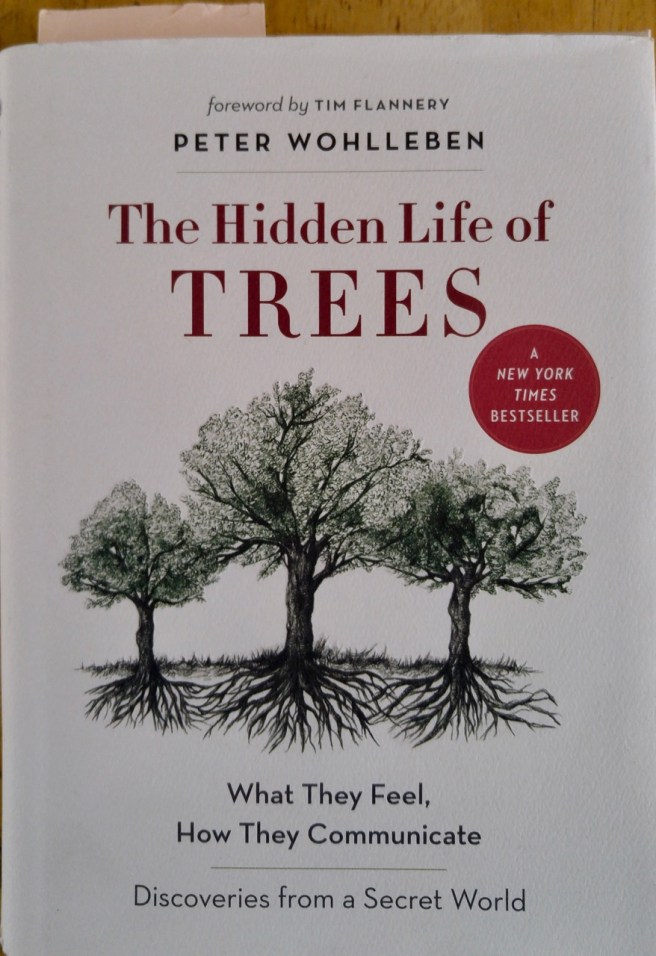
Book of December: The Hidden Life of TREES

And finally, a gift to myself: The Hidden Life of TREES by Peter Wohlleben. I’d first learned about this book in a newspaper article published last year and had to wait until recently to purchase it after the book was translated from German to English. Again, it’s not a field guide, but offers a delightful read that makes me think. And thus, you can see my bookmark. I’ve not finished reading it yet, but I’m having fun thinking about some different theories Wohlleben puts forth. As a forester, Wohlleben has spent his career among trees and knows them well. He’s had the opportunity to witness firsthand the ideas he proclaims about how trees communicate. And so, I realize as I read it that I, too,  need to listen and observe more closely to what is going on in the tree world–one of my favorite places to be. Maybe he’s right on all accounts–the best part is that he has me questioning.

The Hidden Life of TREES: What They Feel, How They Communicate by Peter Wohlleben, Random House, 2016.

And that’s just it–the underlying theme of these five books you might consider is TREES. I can’t seem to learn enough about them. One word of caution, each author has their own take on things, so the best thing to do is to read the book, but then to head out as often as you can and try to come to your own conclusions or at least increase your own sense of wonder.

And now for the books on my list (My guy is the keeper of the list):

Naturally Curious Day by Day: A Photographic Field Guide and Daily Visit to the Forests, Fields, and Wetlands of Eastern North America by Mary Holland, Stackpole Books, 2016

Mosses, Liverworts, and Hornworts: A Field Guide to Common Bryophytes of the Northeast by Ralph Pope, Cornell University Press, 2016.

Do you have any other suggestions for me?

One final thought about books–support your local independent book store as much as you can. Here in western Maine, we are fortunate to have Bridgton Books. Justin and Pam Ward know what we like to read and if they don’t have a particular book we’re looking for, they bend over backwards to get it for us.


Pay Homage at Otter Rock

This holiday season, why not take a short hike and smell the roses along the way?

h-milkweed

Or at least admire the milkweed plants that grow in the field across from the boat launch. I did just before I walked the blue/red trail at the Greater Lovell Land Trust’s Heald and Bradley Ponds Reserve this morning. It wasn’t a long walk, but worth every moment. And I encourage you to do the same, whether here or somewhere else.

h-water-over-dam-1

Listen to the water flow over the dam.

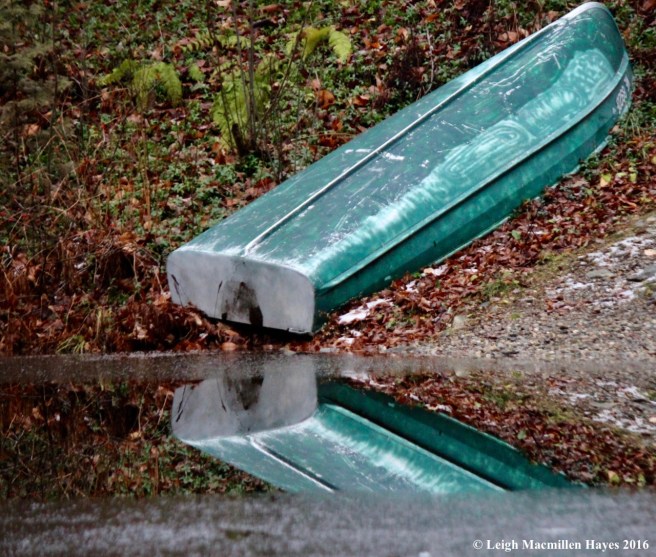
h-boat-1

Notice the greenery across the mill pond.

h-snow-on-trail

Follow the path sprinkled with snow.

h-ice-on-leaves

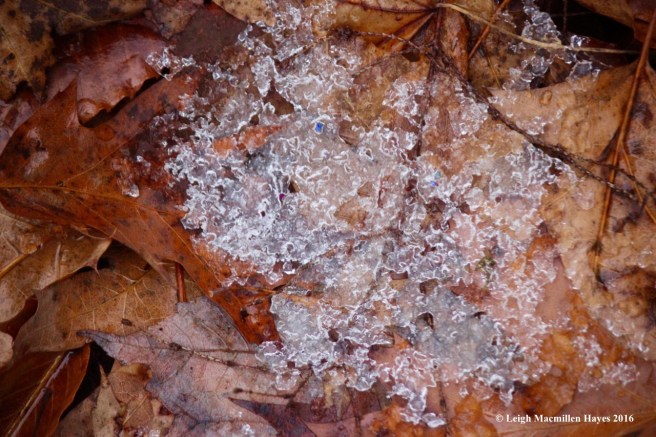
Rejoice in the ice shapes atop various leaves.

h-pileated-works

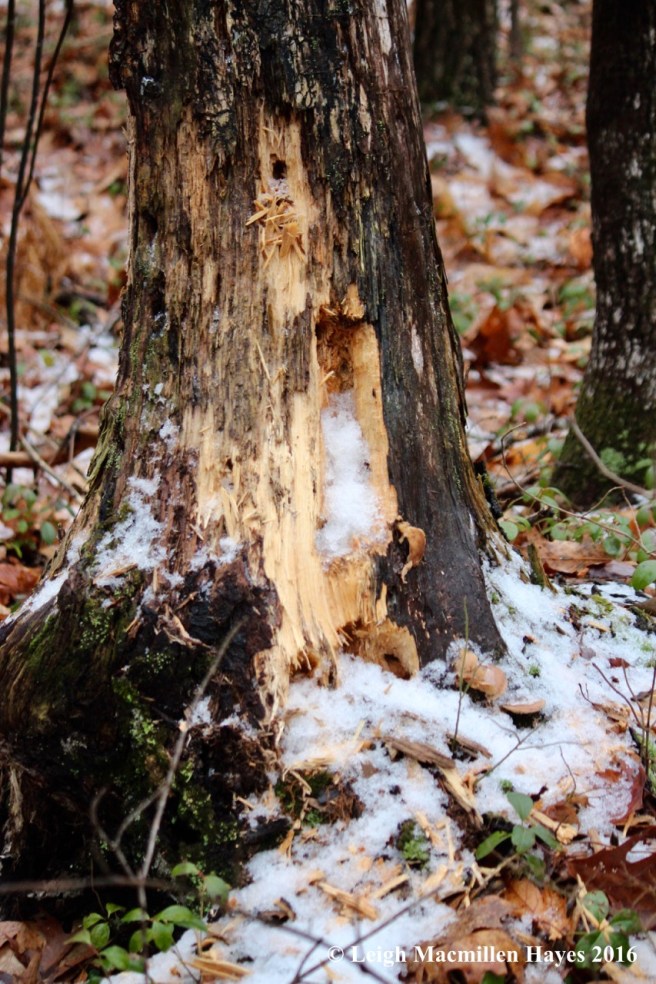
Check out the Pileated Woodpecker works in dead snags.

h-bright-beech

Let the Beech leaves brighten your day.

h-beech-and-witch-hazel

Distinguish between the hues of Beech and Witch Hazel.

h-four-trees

Greet four amigos–Paper, Yellow and Gray Birch, with the trickster Cherry posing as a Black Birch.

h-grape-fern

Applaud the maroon-fringed Grape Ferns at your feet.

h-sign

Follow the directions found on the sign.

h-bleeding-mycena-mycena-haematopus

Rejoice in late blooming fungi like these Bleeding Mycenas (Mycena haematopus).

h-otter-rock

Wonder at the various lichens that adorn the trees.

h-bristly-beard-lichen

Get up close and personal with a few, including the Bristly Beard.

h-rocks-near-otter-rock

Laud the reflections of water not yet frozen.

h-fall-colors

Praise the warm color of Royal Ferns gone by.

h-exo-1

Revere dragonfly and damselfly exoskeletons that still cling.

h-john-fox-2

Take in the view–ice and water and the old John Fox place–a testimony of yesterday, today and a glimpse toward tomorrow.

To Otter Rock–whether it takes you twenty minutes or three hours, make time in this busy season to pay homage.

The Be-Attitudes Sundate

Today marks the beginning of the season of hope and with that in mind, my guy and I climbed Singepole Mountain in Paris. Paris, Maine, that is.

s-halls-pond-start-1

Our hike began beside Hall’s Pond, where the water reflected the steel gray sky of this late November day.

s1-barbed-wire

And stonewalls and barbed wire reflected the previous use of the land.

s1-beaver-6

In a matter of minutes we learned of its present use.

s-beaver-works-3

Everywhere we looked, beaver sculptures decorated the shoreline.

s1-hemlock-grove

We passed from the hardwood community to a hemlock grove . . .

s-hemlock-girdled-2

where more beaver activity was evident. I’ve been reading The Hidden Life of TREES by Peter Wohlleben and have some questions about tree girdling such as this. There is a theory that beavers chew off the bark all the way around (girdle) to eventually kill trees such as hemlock, so preferable species will grow in their place. But, that’s thinking ahead to future generations. Do beavers really do that?

s-hemlocks-3

On page 18, Wohlleben states the following: “As the roots starve, they shut down their pumping mechanisms, and because water no longer flows through the trunk up to the crown, the whole tree dries out. However, many of the trees I girdled continued to grow with more or less vigor. I know now that this was only possible with the help of intact neighboring trees. Thanks to the underground network, neighbors took over the disrupted task of provisioning the roots and thus made it possible for their buddies to survive. Some trees even managed to bridge the gap in their bark with new growth, and I’ll admit it: I am always a bit ashamed when I see what I wrought back then. Nevertheless, I have learned from this just how powerful a community of trees can be.”

Could this theory be true? Are the surrounding hemlocks feeding that tree via their roots? If so, does that throw out the other theory? So many questions worth asking.

s-huge-maple-1

Soon, we left the Pond Loop Trail and started to climb the Singepole Trail, passing by a gentle giant.

s-maple-2

It’s a snag now, but this old maple offered tales of the forest’s past and hope for the future.

s-downy-rattlesnake-plaintain

On a smaller scale, Downy Rattlesnake Plaintain provided a cheery contrast among the leaf and needle carpet.

s-bobcat-ledges-1

The climb was a bit challenging in places, but we held out hope among the ledges that we might see a bobcat.

s-porky-den

No such luck, but we did find this . . .

s-porky-scat

a well used porcupine den.

s1-water-2

Water dripped in constant harmony as we stepped gingerly along the narrow ledges and tucked under overhanging rocks.

s-halfway-up-2-1

About halfway up, we took a break and paused to admire the view.

s-halfway-up-view-1-jpg-communities-defined

The hardwood and softwood communities became more obvious as we looked down.

s-summit-1-1

And suddenly or so it seemed, my guy reached the moment of truth–the summit.

s-halls-pond-to-pleasant-1

From the top, we looked around and embraced our home place, which appeared on the horizon in the form of Pleasant Mountain.

s-pleasant-to-whites-1

A slight turn and the view extended from Pleasant Mountain to the White Mountains.

s-quartz-intrusion

Below our feet, the granite pegmatite shared its showy display.

s-summit-1

We’d read that there was a quarry at the summit, so we headed toward a cairn, in hopes of locating it. Too many jeep trails confused us and we decided to save the quarry for another day. Instead, we turned into the woods to get out of the wind and munch our PB & J sandwiches, the grape jelly courtesy of Marita Wiser and family.

s-wickiup-1

As we poked about, something caught our attention and we moved closer.

s-wickie-3-1

s-wickie-2-1

s-wickie-1-1

A wickiup frame. We admired the efforts of someone to create this traditional structure.

s-pleasant-mtn

Emerging from the woods, we took one last look at Pleasant Mountain, and . . .

s-summit-4

one last view of what seemed to be the summit (though it may have been a false summit).

s-climbing-down

And then we started down, once again hugging the rocks and trying not to slip.

s-flower-mushroom

On the way, I did note a few things, including this fungi that looked more flowerlike than mushroom like.

s-girdled-beech-1

s1-porky-2

And I spotted a phenomenon that occurred repeatedly. Girdled beech trees too far uphill for a beaver. What or who had debarked these trees?

s-porky-works

I may have been seeing things that weren’t real, but the lines on this particular tree made me wonder about the porcupines. Was I looking at the design they leave with teeth marks created in the distant past? Or were they wounds of another kind?

s1-beaver-5

When at last we reached the Pond Trail again, we continued to circle around it, noting more beaver works.

s-beaver-lodge

At last, we found the mud-packed lodge built into the edge of the pond. Here’s hoping for a warm winter within.

s-pond-at-end-of-day-1

Completing the circle, the biting breeze forced us to walk quickly toward our truck and the end of our hike. We have chores to complete tomorrow so our Sundate may have to suffice for a Mondate.

That being said, in this season of hope, we trust we’ll find more opportunities to consider these be-attitudes:

s1-trees-in-harmony

Be supportive of each other.

s1-christmas-fern-1

Be watchful of what’s to come.

s-heart

Be hopeful of love everlasting.

Ho-Ho-Ho Ho Hoing Away

I remember a time when a Pileated Woodpecker sighting was rare. And now, it’s a daily event, but one which I still feel blessed to experience.

h-pileated

Stepping out the door this afternoon, I immediately heard one hammering and realized another was drumming in a nearby tree. Within minutes, a third flew in and birds #2 & 3 sang their eerie tune as they approached #1. He chased the couple and they flew off, their flight strong, and marked with slow, irregular woodpeckery flaps.

h-woodpecker-hole-1

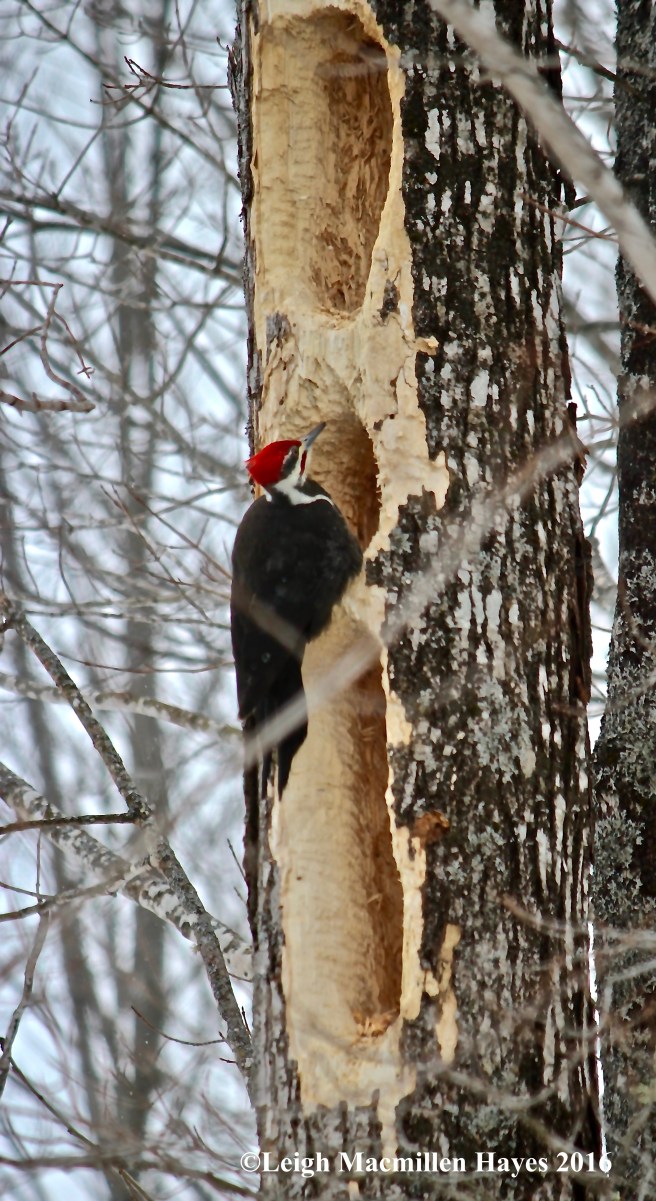
After watching #1 for a bit, I went in search of woodpecker happenings scattered throughout our woodlot. Though they’ll eat lots of wood-boring insects and occasionally berries, seeds and suet, carpenter ants are their mainstay. Better in a woodpecker’s stomach than our home. Sometimes the holes they create are about six inches across and almost as deep.

h-woody-condo-2

h-woody-condo

And those holes became homes for other critters occasionally, so when friends and I see trees such as these, we think of them as condominiums providing living quarters perhaps for small birds and little brown things (mice). Included in these condo units are some smaller round holes, created by the Hairy and Downy Woodpeckers that also live in our neighborhood.

h-wood-chisel

Occasionally I come across trees such as this one that hadn’t been so much excavated as chiseled. Woodpeckers are just that–peckers of wood. They don’t eat the wood. But to get at their preferred food, they must hammer, chisel and chip the bark.

h-woodchips

At the base, always a scattering of wood chips. I, of course, cannot pass up any opportunity to search through the chips in hopes of locating scat. I was not rewarded with such a find today.

h-hole-in-snag

Leaving dead snags encourages woodpecker activity. They become prime locations to forage, roost and maybe even nest, though I hardly think this snag was large enough to serve as the latter.

h-pinesap

While I was out there, I did stop to admire a few other sights including the now woody structure of pinesap;

h-winterberry

winterberries contrasted against the wee bit of snow that still graces patches of ground;

h-deer-tracks

deer tracks indicating we’d had visitors during the night;

h-violet-upper

h-violet-toothed-under

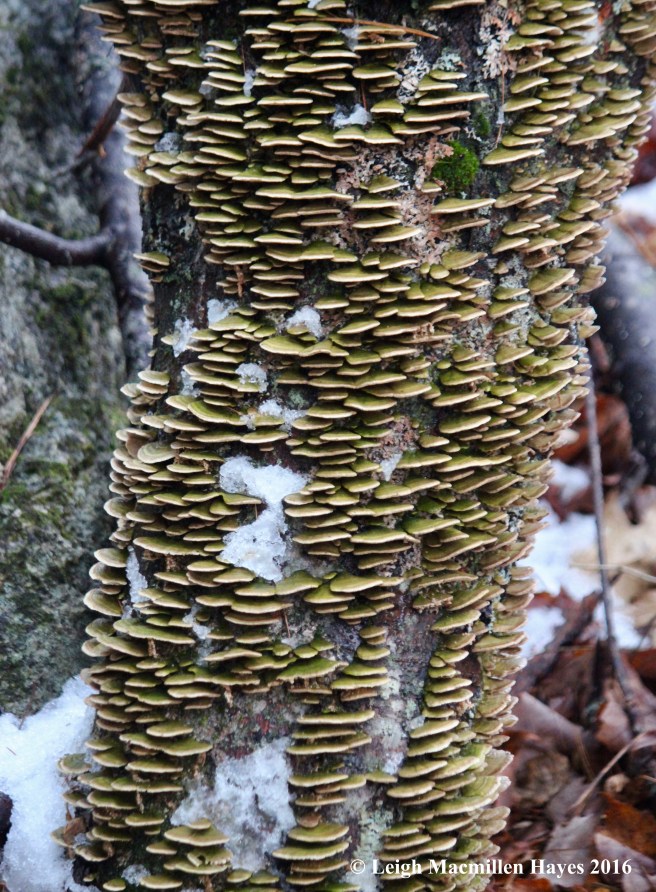
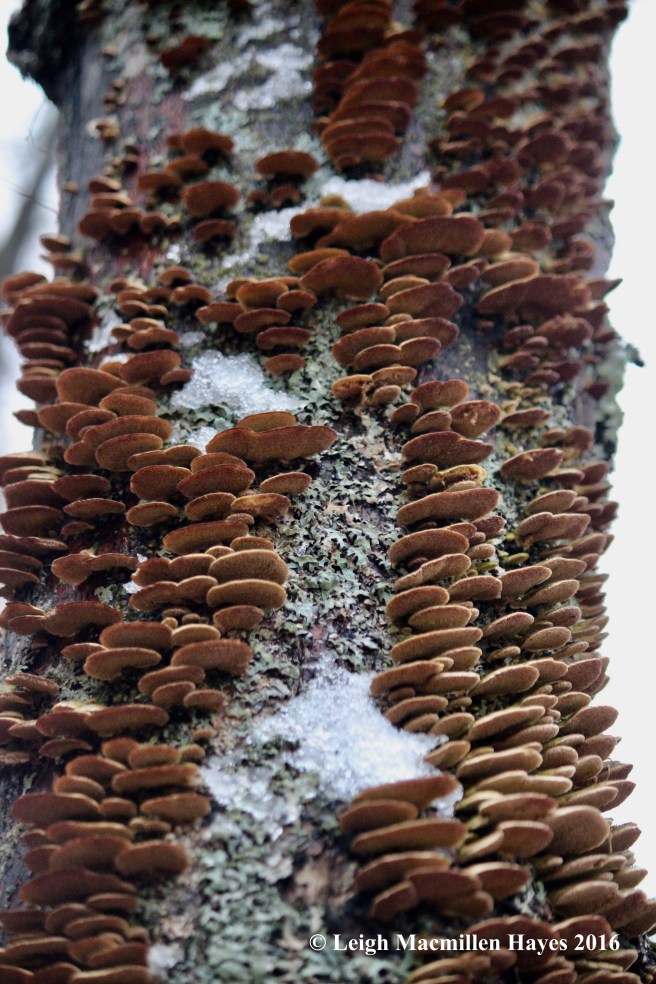
and a tree skirt of violet-toothed polypores. They are rather like the Lays Potato Chips of the natural world. You can never have just one. (Note: I’m not talking about eating them, but rather how they grow.)

h-woody

It’s been said that Pileated Woodpeckers are skittish. That’s not always the case. I’ve stood beneath one for over twenty minutes, the bird intent on its work and seemingly oblivious to my presence.

The next time you are in the woods and hear the ho-ho-ho ho ho, ho-ho-ho ho hoing that reminds you of that cartoon character, Woody Woodpecker, take a look around. You, too, might be blessed. And don’t forget to check for scat. ;-)

Reconnection Reflections

We didn’t mean to lose touch. And yet it happened. We got caught up in our family routine and put “old” (read established cuze none of us are old, certainly) friendships on hold.

c-hiding-2

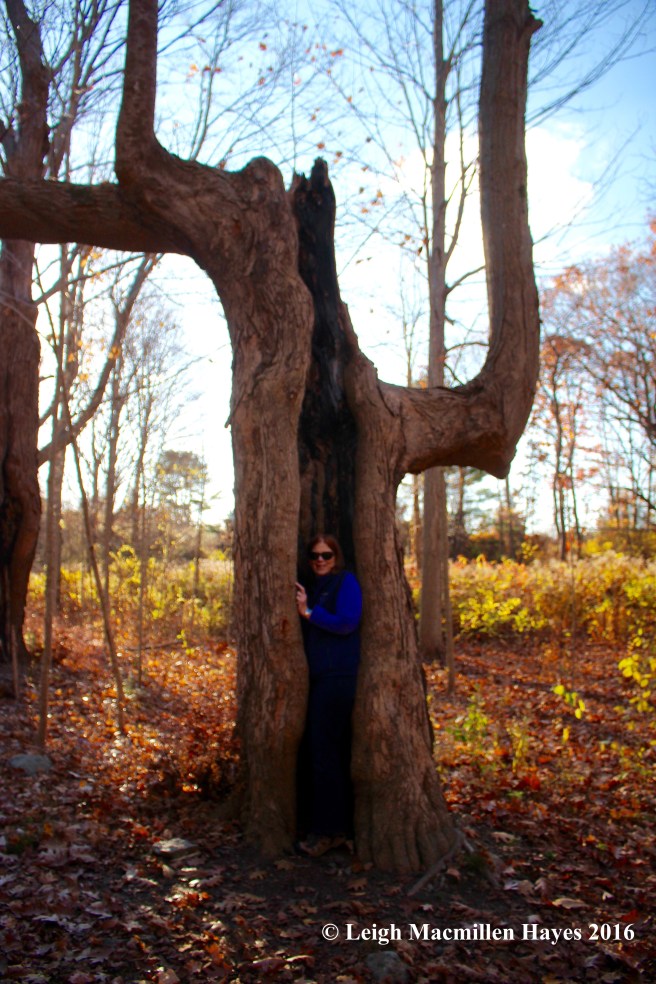
But old friends are the best friends. And they are the ones you can suddenly catch up with after several years and talk and giggle and talk some more as if no time had passed. And convince at least one of them that perhaps she should slide into the hollow of a tree for a photo opp just like both of you would have done in high school.

c-saltmarshodiorne

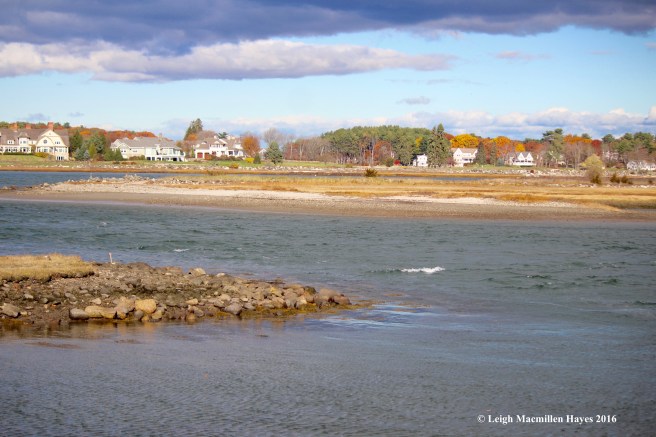
And so the past three days we had the opportunity to play catch up. For me, the journey actually began on Thursday night, when I met my dear old friend Carissa for a girls’ night out. We began by reminiscing about days gone by, from high school antics to family adventures. On Friday morning, we braved the gale force winds and made new memories along the trails at Odiorne Point State Park in Rye, New Hampshire, where autumn colors enhanced the experience.

c-seavey-creek-1

It was at this point where Witch Creek flows into the Atlantic that Pannaway Plantation was established in 1623. The plantation was New Hampshire’s first settlement, colonized by English fishermen. Though I’m thankful they found this place because I love living in New England, I’m at odds with the invasion of white men. Couldn’t they have taken a different approach?

c-norway-maple-leaves

Interestingly, we weren’t the only invasive species. While the color of the Norway maple leaves attracted my eye, I soon realized that they represent one of many intrusive forms of non-natives that flourish here. Attempts are being made to rid the park of such. Hmmm.

c-odoirne-light-houses

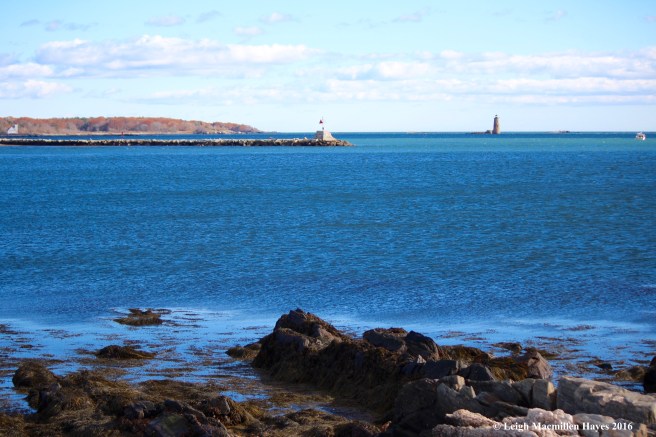
We climbed along the rocky coast and embraced the view of the entrance to Little Harbor. Because of the location, the land eventually became a defense fortification.

c-silent-greatness

As we wound our way along the trails, sometimes doubling back, we suddenly came upon Silent Greatness. Indeed. Certainly a bird bath. Certainly a moment of reflection–both in water and mind, an offering.

c-campbell-road-1

Then the footpath led us to Campbell Road, a standing tribute to those first “settlers.”

c-campbell-road-leaves

For us, it framed the day as leaves floated to the ground. Though our time together was a similar fleeting moment, we trusted that our friendship will continue to endure, much as this road has.

c-plank-1

And then I met up with my guy and we continued on down a different road–making our way to Cape Cod for a family wedding. We spent the afternoon and evening catching up with cousins–reveling in the obvious love of the newlyweds and the renewed connections. The next morning we explored our surroundings, including the Sandwich Plank Walk.

c-sandwich-plankwalk-sign

We learned that a hurricane destroyed the boardwalk several times, most recently during the Blizzard of 2013.

c-plank-comments

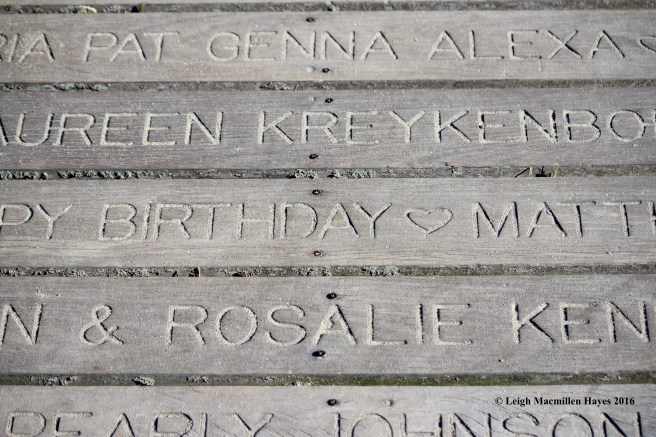
The townspeople banned together and purchased new boards, many of which represent family names and messages of good tidings.

c-gull-landingsandwich

The Plank Walk’s 1,350-foot span crosses Mill Creek and marsh, leading to the town beach on Cape Cod Bay.

c-no-parking-gull-1

Beside one end of the boardwalk, a herring gull pondered the message below.

c-no-parking-gull

Apparently, the sign’s upside-down meaning:”Pause Here and Stretch a Wing.”

c-plankwalk-guy

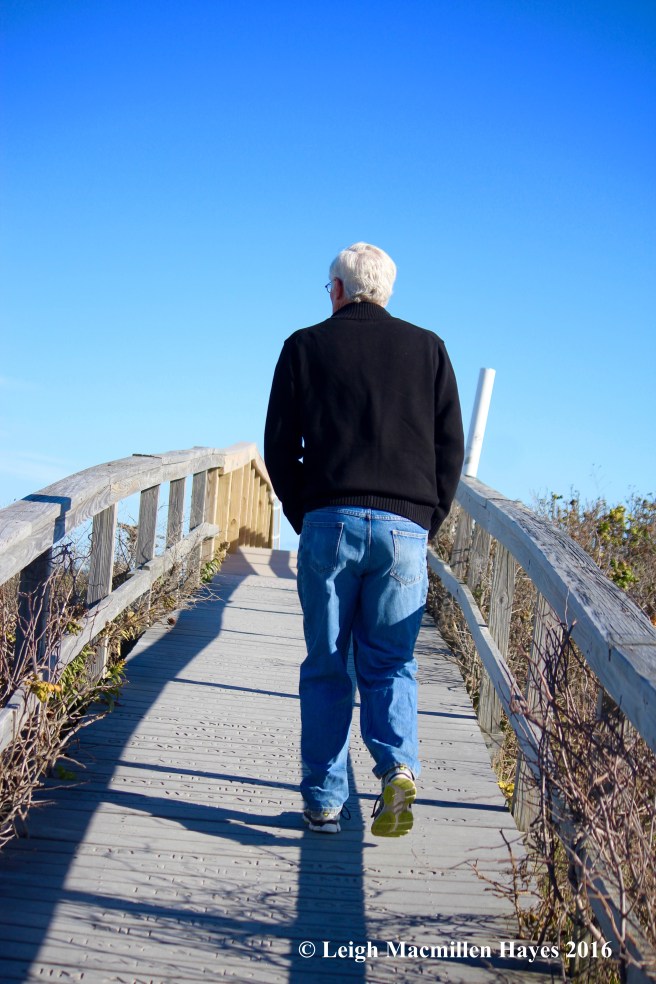
Crossing back over, I followed my guy–a familiar look, I know, but he is my favorite guy to follow.

c-crashing-wavessandwich

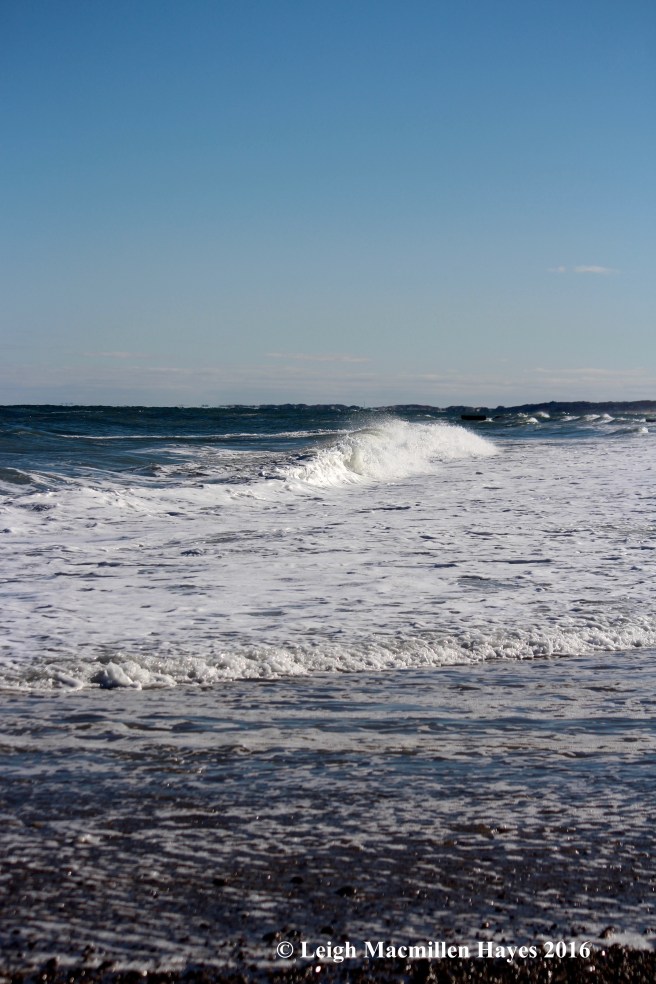
On the Sandwich Beach, crashing waves and color reflected the day’s wind and sky.

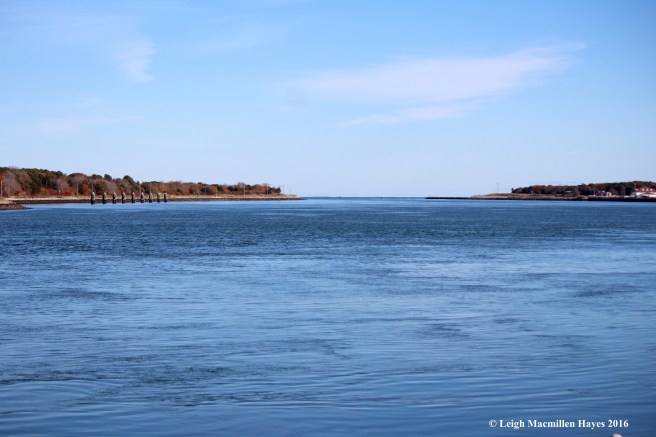
c-canal-1

From there, we drove to the Cape Cod Canal, where we stretched our legs for another hour or so.

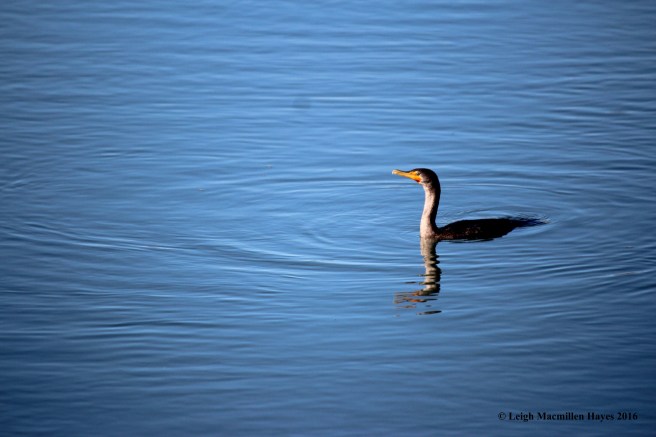
c-loon

As we walked along, the boat traffic was non-existent, but we still had plenty of opportunities for reflection–from short . . .

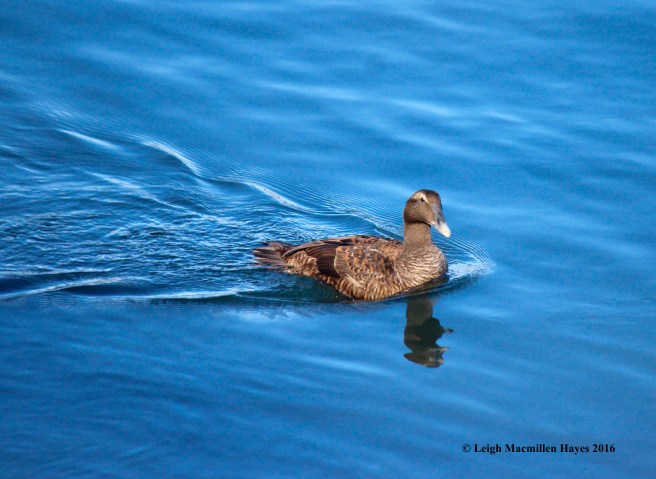
c-duck-reflection

to longer . . .

c-cormorant-1

to longest.

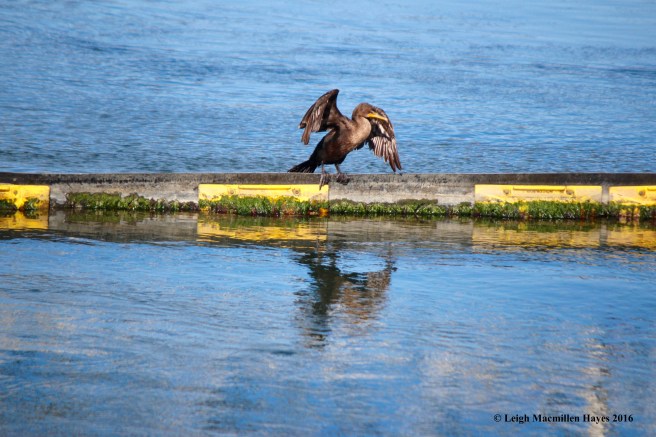
c-cormorant-balance

And most humorous. Think cormorant meets narrow balance beam.

c-sagamore-bridge-1

This is a place where all of life convened–from rails to power to footpath to canal to bridge.

c-canal-outlet

c-canal-barge-1

c-canal-barge-2

At last it was time to catch up with my college friend, Dianne, and her husband, Tom. We dined at Fishermen’s View on the canal–and a barge did me the pleasure of passing by. And again, we talked non-stop for a couple of hours as the years between visits melted away.

c-sunrise-3

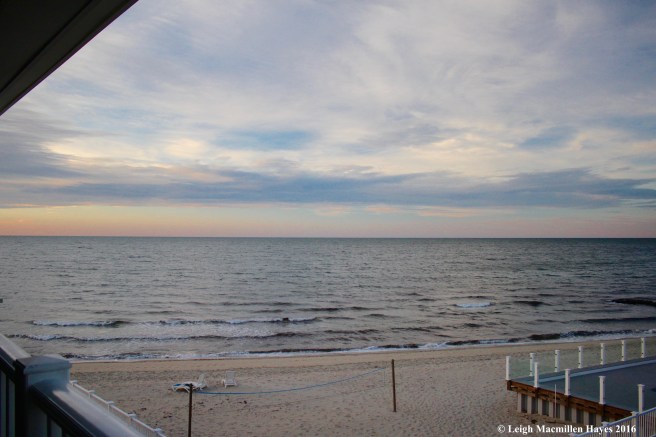
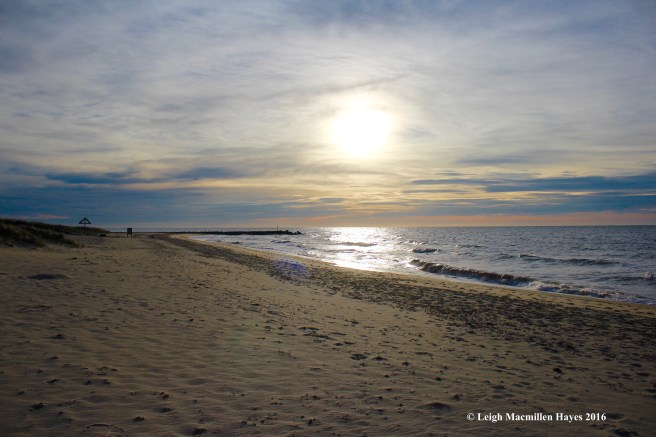
On the road again, we spent the late afternoon catching up with my childhood neighbor and school friend, Bill and Eileen. More memories were shared. And then we joined my guy’s uncle and family for dinner. Once more, constant story telling. Uncle Chuck gave us the use of a timeshare condo for the night. It was an unexpected opportunity that we were most thankful to be offered. We slept like babies and awoke to a gorgeous sunrise overlooking the Atlantic.

c-sunrise-4clouds

The sky swirled . . .

c-sunrise

as the sun rose.

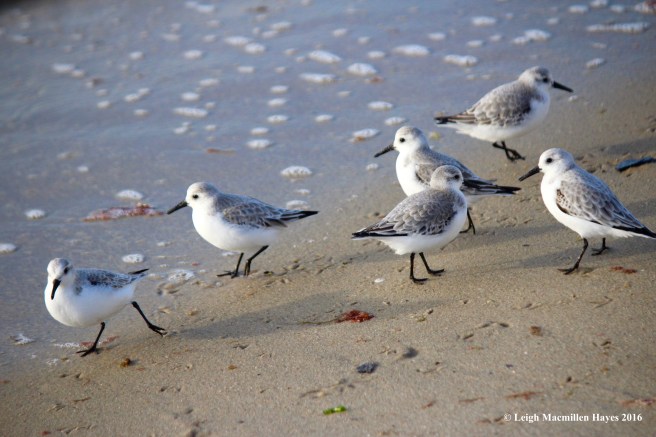
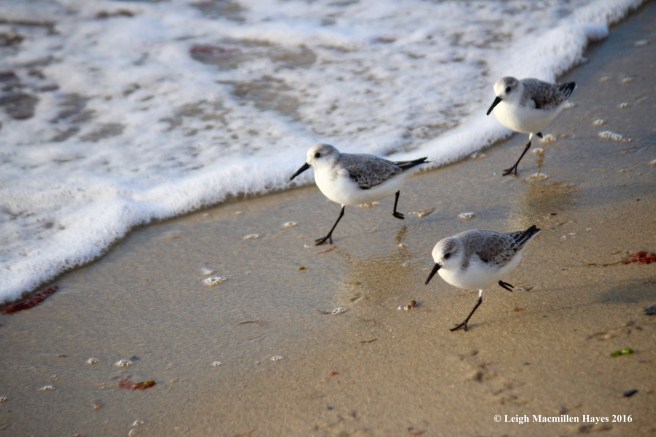
c-sanderling-convention

Sanderlings held a convention.

c-sanderling-1

And entertained us as they skittered along beside the waves.

c-sanderling-in-waves

Occasionally, they took a dip, as is their custom.

c-sanderling-looking-1

But always they searched.

c-sanderling-look-ing

And considered.

c-herring-2

A herring gull also paused . . .

c-herring-3

considered . . .

c-herring-gull1

and posed. Such a handsome specimen.

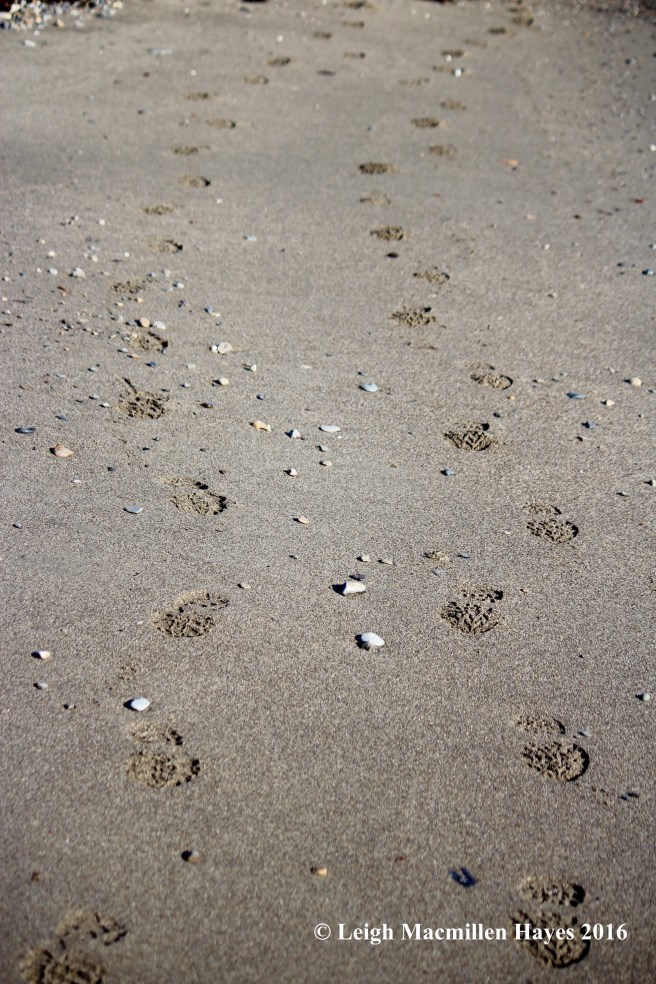
c-matching-footprints

At last, our mini-vaca had come to an end, but we still had one more visit to make–we surprised my guy’s friend Dave and his family on our way home. It was a quick stop, though stories continued to flow along with promises for the future.

We were thankful for a weekend to reconnect with family and friends. For a chance to once again walk side by side as we reflected on the past and made new memories. Here’s hoping we won’t wait so long to meet again.


So Many Unknowns

On this historic election day, a few friends and I took to the woods with the intention of absorbing not only the sun’s heat, but the warmth of each others company. Yes, occasionally our conversation turned to politics and wonder about the future, but for the most part, we just wanted to wander together.

h-vp-1

Our first spot for consideration–a vernal pool tucked away in the woods.

h-vp-2

In true v.p. behavior, it dried up during the summer drought, though as we moved about we experienced a sinking feeling–muck obscured by grasses and leaves. This particular pool is home to fairy shrimp and their eggs cases are protected under the leaf litter until water returns. The amazing thing about fairy shrimp–those eggs can survive long periods of drying and freezing. We trust we’ll have the opportunity to meet the next generation.

h-wintergreen-1

Sometimes our eyes were tricked by what we viewed and we questioned how things could be so.

h-wintergreen-with-candelabra

But upon a closer examination of the facts, we realized that a club moss was merely growing near the wintergreen and the wintergreen hadn’t taken on a strange candelabra form.

h-clearing

Our questions continued, however. Why was the ground completely cleared in the middle of the trail? Mammal behavior? We noted boot prints and wondered about human interaction. Finally, we moved on, unable to understand the reasoning, but knew that there are some things we’ll never fully comprehend.

h-green-oak-leaf

In another place, we noticed a green red-oak leaf. A holdout perhaps that preferred the way things had been and didn’t want to follow the rest of the group?

h-hawkweed-1

Occasionally, we calmly debated the structures before us as we considered shape and hairiness and growth pattern and location before we determined species–in this case, hawkweed.

h-wood-art-1

And other times, no need for questions, no need for answers. Pure admiration for the presentation was enough.

h-ladybird-beetle

When we were again drawn in for a closer look, in this case at the white fuzzy beech scale insect, we suddenly realized there was so much more to observe, such as the black ladybird beetle.

h-spiny-leaf-beetleladybird-hatching-from-pupa-stage

And then, something we didn’t understand at all. What was this spiny creature? And what was emerging from it? We left with that question floating among us. It wasn’t until doing some research later that I came to what may be the answer. Was it a ladybird beetle emerging from the pupa stage? How I wish we could go back and find it again and look at it with a different mindset.

h-alt-dog-lichen-1

Drawing close to the finish of our journey together, we spied something we’ve passed many times before, but never noticed.

h-alt-dog-lichen-2

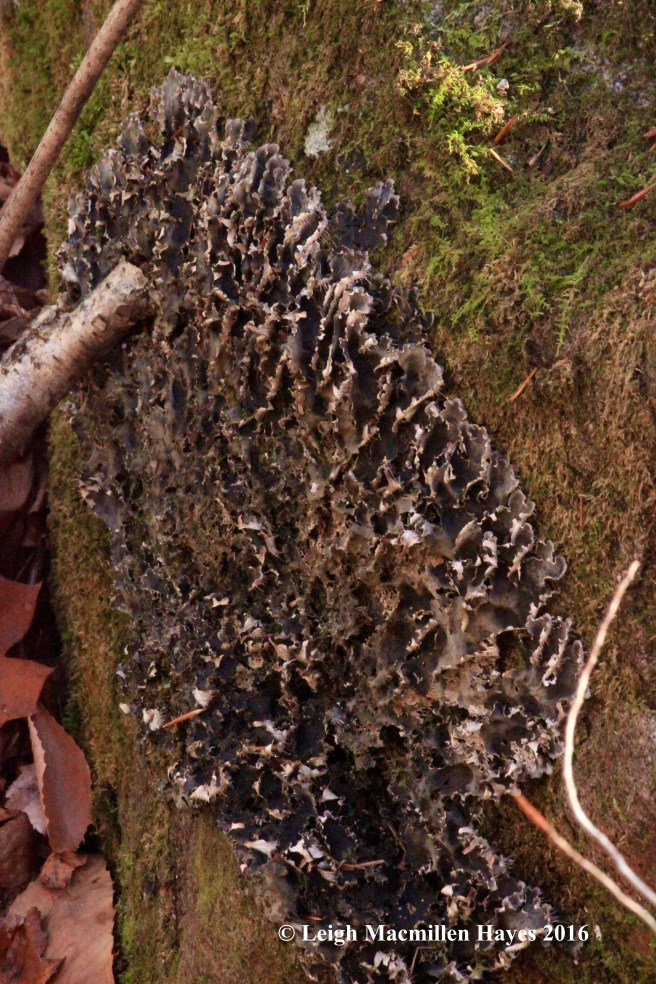
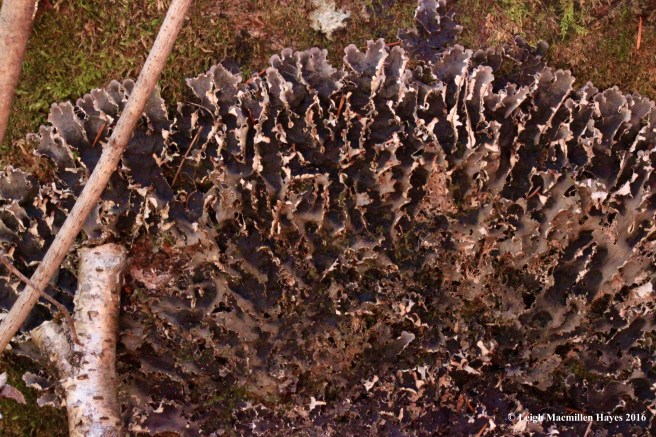
Again, we’ll need to revisit the mossy boulder, but we determined it was a dog lichen. Why dog? Was it so named for the white “fang” like rhizines on its lower surface?  Or did the lobes remind someone of dog ears? Based on the large, fan-like shape, my leaning is toward Peltigera membranacea or Membrane Dog Lichen. But, I could be easily swayed on its ID.

h-milkweed

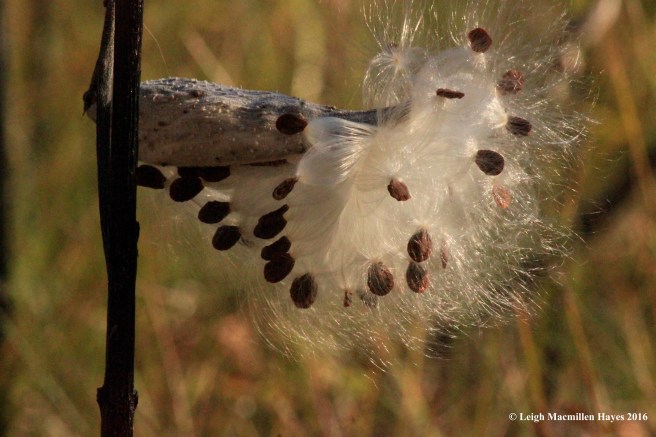
A short walk and hours later, we finally passed a field of milkweed, their seeds blowing in the slight breeze like flags on a pole.

It was time to say goodbye to friends who will head south this weekend before I headed back to “reality” and colored in those little ovals.

I think we all came away thankful for the questions raised and knowledge shared, but still . . . so many unknowns.

The Way of the Land at Long Meadow Brook Reserve

Last month the Greater Lovell Land Trust purchased a new property along Long Meadow Brook that further develops the wildlife corridor. A couple of weeks ago I first visited it with GLLT’s Executive Director Tom Henderson and a number of the land trust’s volunteer docents. As we left the property, Tom said to me, “I didn’t oversell this, did I, when I said this will become one of the docents’ favorite properties.” Indeed.

And so I couldn’t wait to get back there myself to spend a few hours exploring the almost one-hundred-acre reserve.

l-mullein-flower-2

Because the land was last logged by the previous owner in 2014, it’s in the early succession stage of regrowth.

l-mullein-flower-3

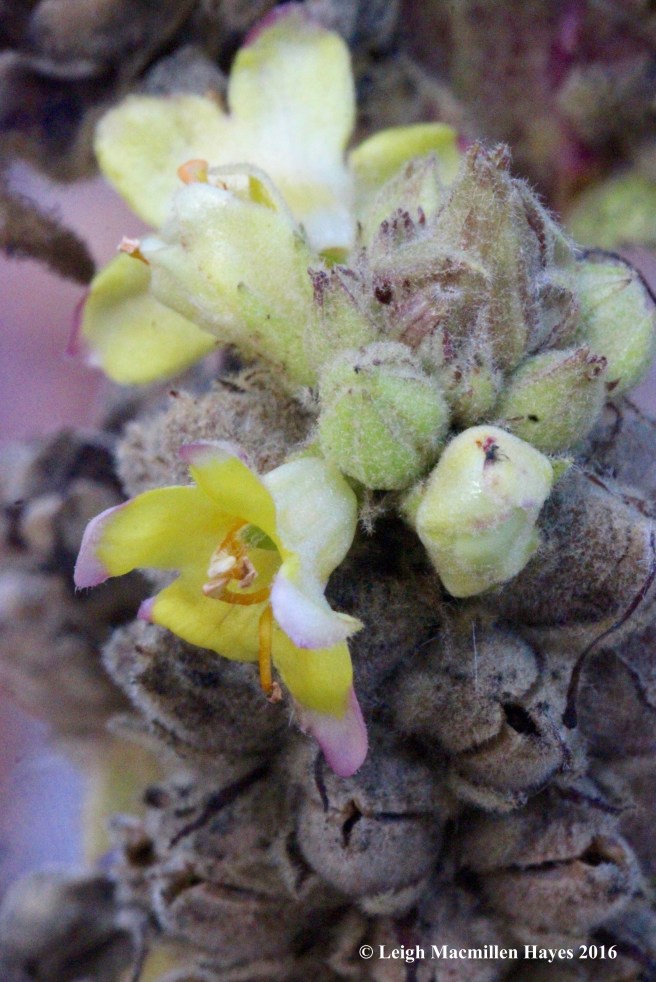
And so, it’s a place where those who like disturbed places tend to grow, such as the common mullein. What surprised me most was that I found a few still offering blooms.

l-mullein-cactus

Of course, it reminded me that I was in the great West–WESTern Maine, that is–with its occasional cacti-like form.

l-seeds-holidng-on

Scattered throughout are also the seedheads of white lettuce, waiting for release in lampshade-like formation.

l-orange-peel-fungi

Orange-peel fungi fruited prolifically in the gravel logging road.

l-future-parking-lot

That was all before I even reached the future parking lot, which had served as the log landing a few years ago. Already, sweet ferns and berry bushes have made themselves known.

l-sweet-fern-colors

The leaves of sweet fern, which is really a shrub rather than a fern, exhibited their version of autumn hues.

l-trail-marker

If you go, I encourage you to look for the blue ribbons that indicate where a future trail will be placed. It’s a loop trail that summer interns Hannah and Aidan laid out and leads to two focal features.

l-stonewall-double-to-single

The trail nears a neighboring property, which just happens to also be under conservation easement thanks to the foresight of its owners. I stepped off the blue flag trail and started to follow the wall for a bit–noticing that soon it changed from a double (garden or plowed land) wall to a single wall. A large pasture pine grew at the change-over point.

l-stonewall-barbed-wire-1

And where the wall switched to single formation, barbed wire indicated its former use a pasture boundary. And white pine scales indicated its current use–as a red squirrel’s dining room table.

l-forest-succession-2

After moving away from the wall, I noticed the mountains in the offing and ferns and young trees already filling in the empty spaces.

l-kearsarge

One of my favorite mountains to climb stood tall in the backdrop–Mount Kearsarge.

l-forest-succession-1

My bearings were off a bit, but I knew where the eastern boundary was as I moved across this opening.

l-pitch-pine-bark-1

Walking along the back edge, my tree passion was ignited yet again.

l-pitch-pine-1

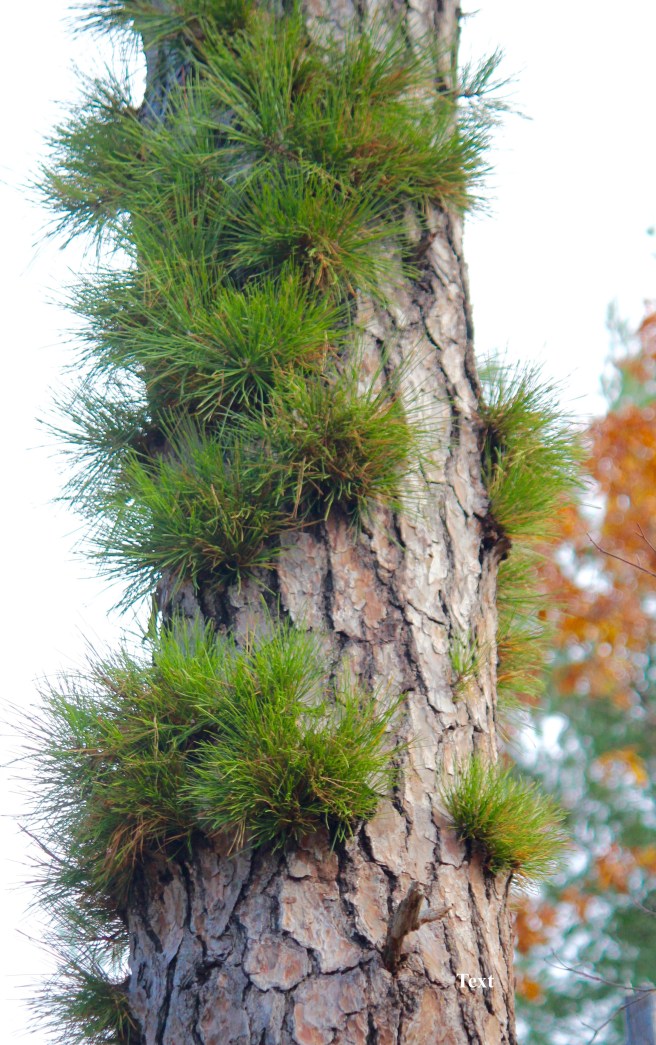
Several pitch pines grow in this space. While the bark is similar to that of red pines, it’s platier (is that a word?). And the tufts of needles that grow along the trunk were a dead give-away.

l-pitch-pine-cone

l-pitchpine-needles

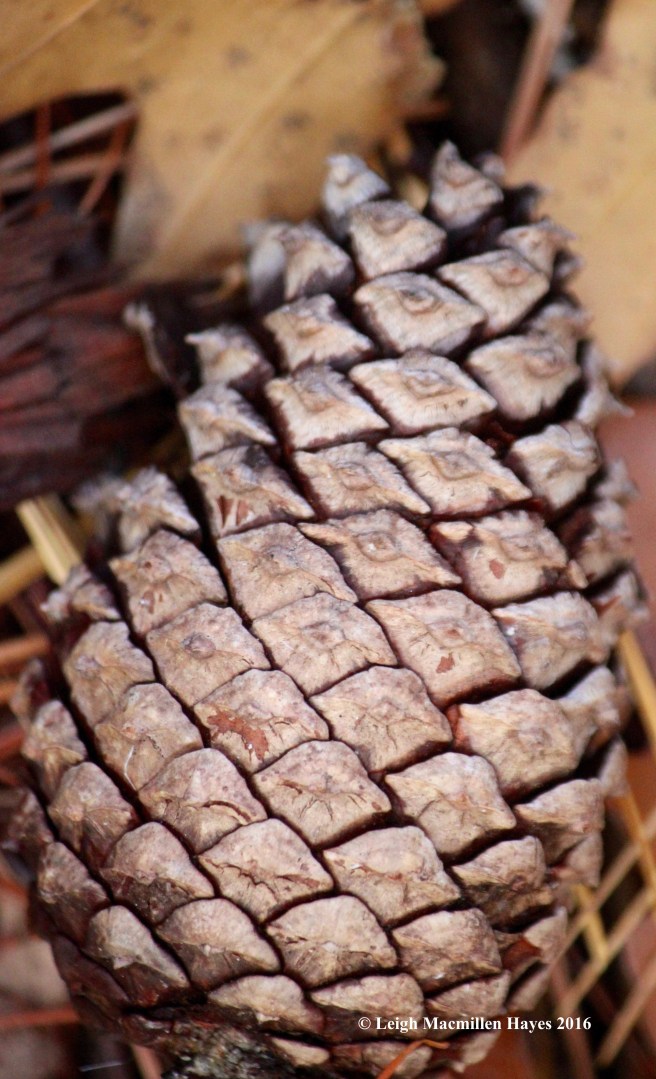
But . . . I always quiz myself and so I looked around. And right below the trees, pitch pine cones and the triple needle bundles common to this species.

l-wintergreen-berries

It was here that I discovered wintergreen growing by the base of a tree stump. What made me wonder was the amount of fruit on each plant. Yes, wintergreen grows prolifically in all of western Maine, but I can’t recall ever seeing so many little red globes dangling below the leaves.

l-marshy-1

From my half-circle around the opening, I wasn’t positive about my whereabouts and so decided to follow the land downhill because it looked like there may be an opening below. A few minutes later, I realized I was in a marshy spot where the cinnamon ferns grew. And the earth beneath my feet was rather spongy and damp.

l-beaver-lodge

I reached what I thought was the meadow I sought–only to realize that I was looking at a beaver lodge. I knew that beaver lodge, but from a different perspective–the neighbors’ property.

l-first-marsh

And then something else caught my attention.

l-marsh-tamaracks

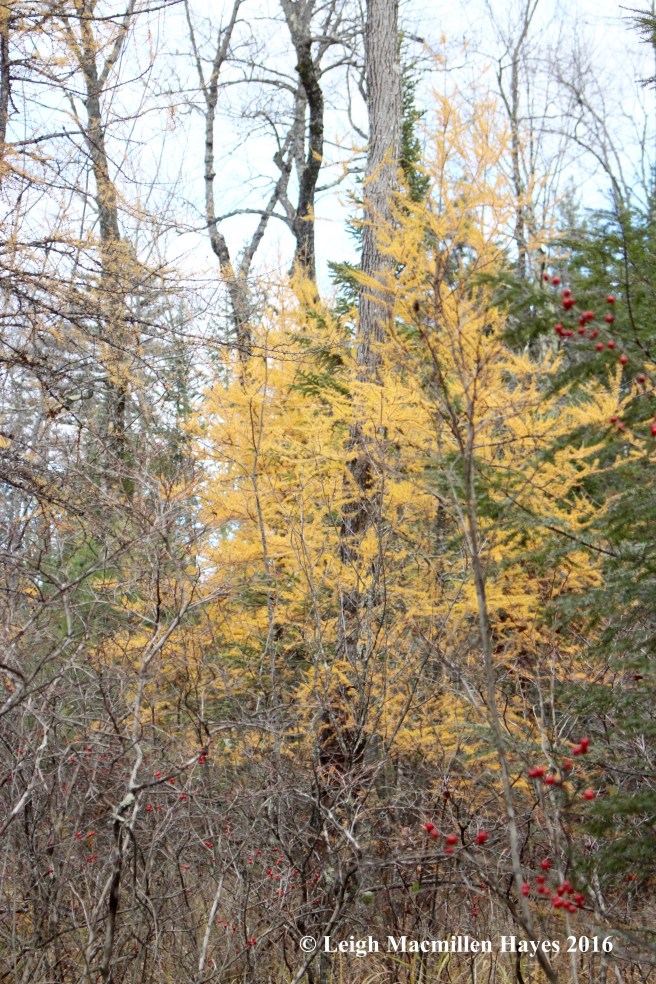
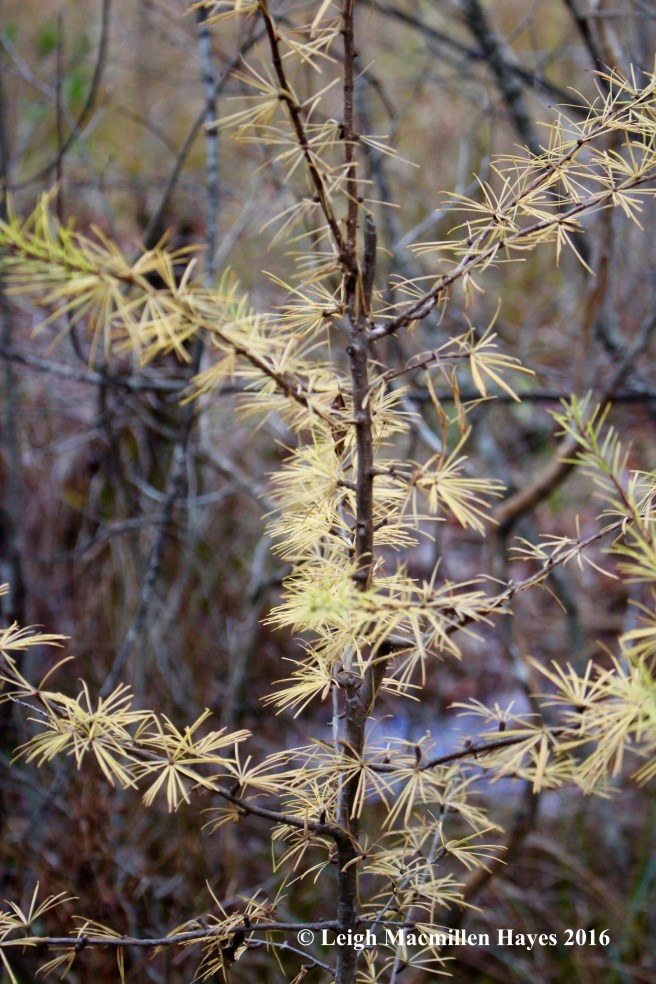
Tamarack (aka larch) trees–our only deciduous conifers, which had turned a golden yellow as is their autumn habit.

l-tamarack-2

The spray of tamarack needles reminded me of witch hazel flowers, which also grow on this property. But soon, the former will drop, leaving only their barrel-like stems as a reminder of their presence.

l-maple-leaf-viburnum

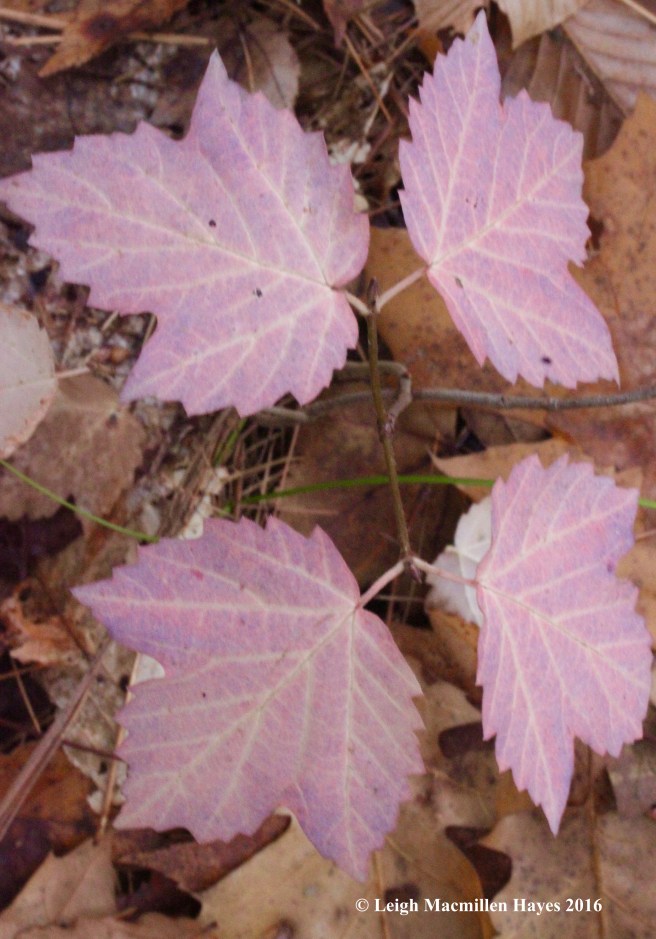
I left that spot, retraced my steps and headed to the north on a cross-country bushwhack, where the mauve colored maple-leaf viburnum grew.

l-turkeys

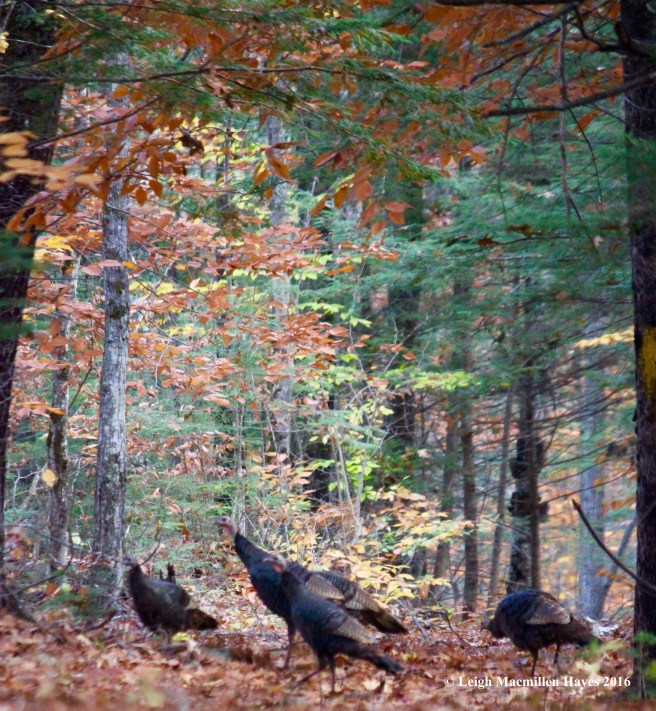
I saw lots of mammal sign and even a few birds, including turkeys who are loving the fact that this is a mast year for acorns.

l-trail-to-meadow

At last I emerged onto the trail I remembered and headed downhill again.

l-meadow-brook-2

And then . . . I was rewarded for my efforts. Long Meadow Brook and the mountains beyond provided a WOW moment.

l-meadow-east

I looked to the east for a few minutes.

l-meadow-layers

And then turned west again, where the layers and colors spoke of diversity.

l-meadow-snags

Even the dead snags added beauty.

l-cat-n-nine-tails

Cat-in-nine tails added to the view and I noted others who like wet feet including steeplebush, meadowsweet and bulrushes growing along the old beaver dam. It’s also a place for a variety of evergreen species–hemlock, white pine, balsam fir, red spruce and tamaracks. Future teaching moments await.

l-hobble-2

My intention to stick to the trail was soon thwarted when I spied hobblebush.

l-hobble-bud1

Like all trees and shrubs, the future was already encased in a bud–in this case a bud we refer to as naked because it doesn’t have the waxy coating of most others. Methinks its furry presentation offers the same protection from winter’s cold.

l-back-of-hobblebush-leaf

And as I studied the back side of fallen leaves, I paid attention to the venation–reminiscent of the bud’s pattern.

l-hobble-leaves-2

In the glow of sunlight, I felt like I’d found the pot of gold.

l-meadowhawk-2

A short time later I reached the second opening that Hannah and Aidan’s trail encompasses. And what to my wondering eyes should appear–a meadowhawk dragonfly.

l-snow-on-balds-1

It provided a sharp contrast to snow on the Baldface Mountains.

l-secod-opening-2

It was at this six-acre opening that I poked around for a while longer. And watched a goshawk fly to a pine tree with something dangling from its talons. Did I take a photo? No, of course not. I was too mesmerized to focus my camera. But sometimes, the photo doesn’t matter. Being there in the moment does.

I’m thankful for such opportunities made possible by organizations such as the Greater Lovell Land Trust. I know that ultimately this property is for the mammals that travel through and I saw plenty of evidence that they use this place. But then again, I’m a mammal who also appreciates the land bridges created and opportunity to observe the connectivity. I spent the day getting to know the way of the land at Long Meadow Brook Reserve–and can’t wait to return.


Finding Our Way on Mount Tom in Fryeburg, Maine

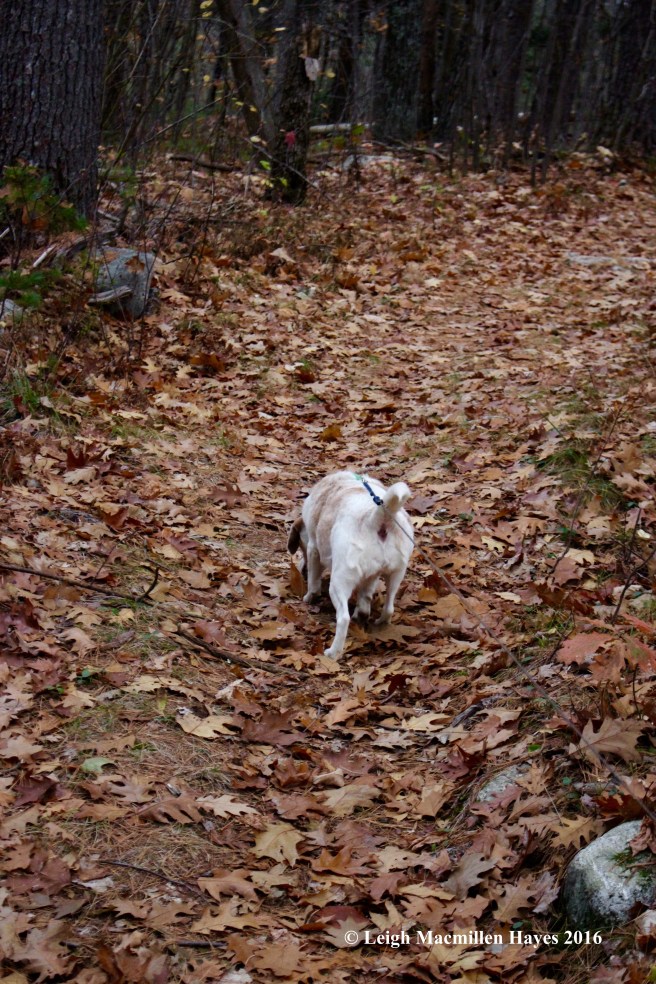
I ventured this afternoon with my friend Marita, author of  Hikes and Woodland Walks in and around Maine’s LAKES REGION, along with her daughter’s beagle, Gracie, on a new trail in Fryeburg.

t-preserve-sign

Mount Tom, a Roche Moutonnée, is an asymmetrical hill with a gently sloping up-ice side that has been smoothed and polished by a glacier. The other side is abrupt and steep–the down-ice side where the rocks were plucked off, leaving a more cliff-like appearance. As Marita noted, its most impressive view is from a distance, but today we sang its praises from up close. We’ve both hiked a 1.5 mile trail to the summit for years, but recently The Nature Conservancy developed a new trail that we were eager to explore.

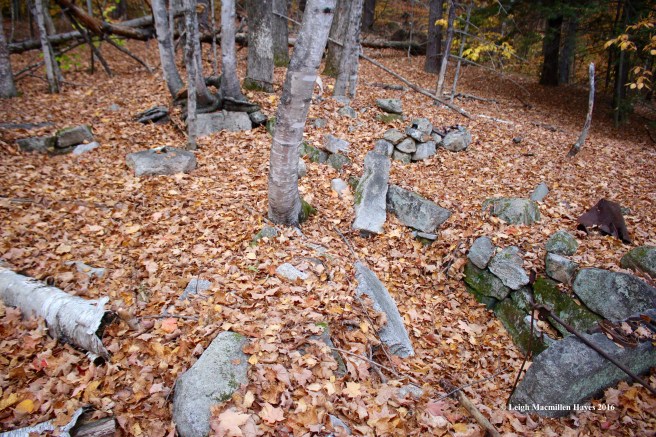
t-fdn-1

Within seconds I was exclaiming with joy. A huge, and I mean HUGE foundation shared the forest floor. Note the outer staircase to the basement.

t-center-chimney

And the large center chimney.

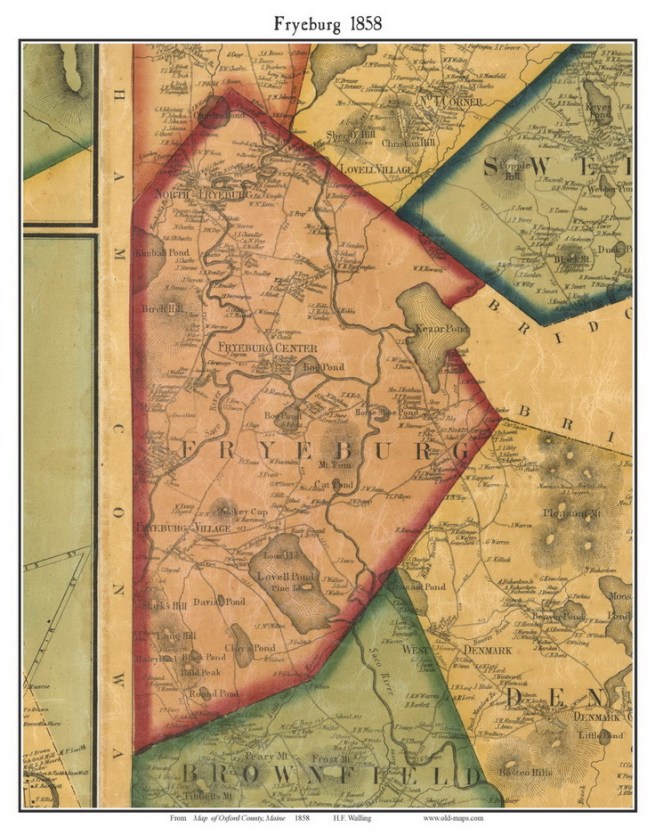
t-fryeburg-1858-map

On an 1858 map, I found that A.H. Evans owned a home in about this vicinity, but I don’t know if this was his. Or any more about him. It will be worth exploring further at the Fryeburg Historical Society.

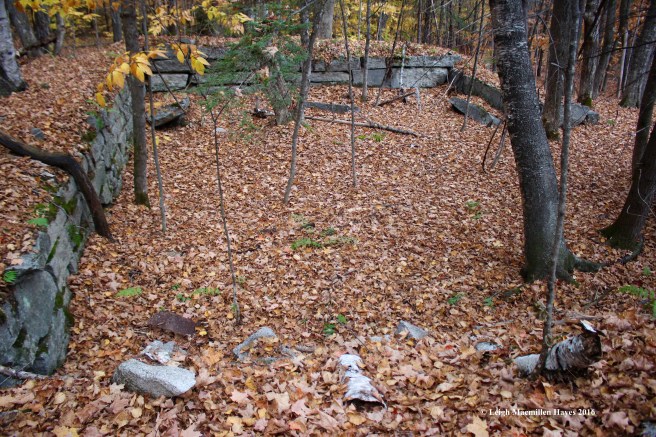
t-house-connected-to-barn

The house extended beyond the basement.

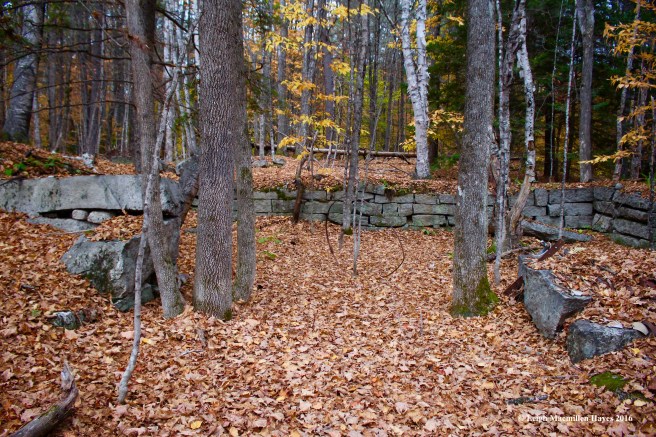
t-barn-1

And was attached to an even bigger barn.

t-barn-2

Ash trees grow beside the opening, but I wondered if we were looking at the manure basement.

t-trail-blaze

Finally, we pulled ourselves away and returned to the trail. Well, actually, we tried to return to the trail but couldn’t find it. So we backtracked, found this initial blaze and again looked for the next one. Nothing. Nada. No go. How could it be?

t-marita-and-gracie

That didn’t seem right, so we decided to follow our noses, or rather Gracie’s nose, and sure enough we found the trail. If you go, turn left and cross between the house and barn foundations.

t-gracie

After that, for the most part, we were able to locate the trail, but it was obscured by the newly fallen leaves and could use a few extra blazes. Gracie, however, did an excellent job following the scent of those who had gone before and leaving her own.

t-saw-dust

The path took us over a large mound of sawdust, something I’ve found in several areas of Fryeburg.

t-color

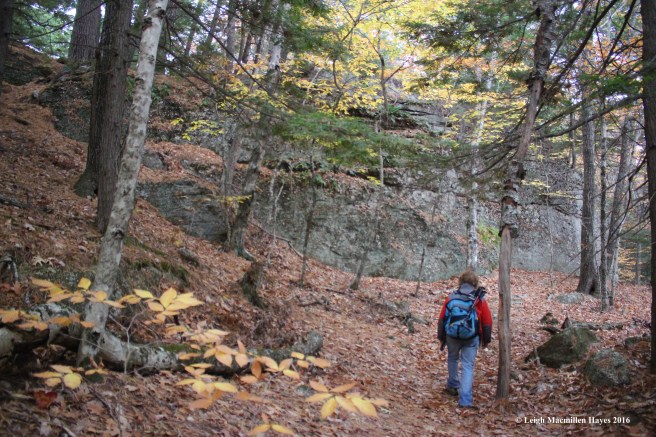
The predominate trees were beech, white and red oaks, thus providing a golden glow to the landscape.

t-ledges-1

And then we came to the ledges. Bobcat territory. Note to self: snowshoe this way to examine mammal tracks.

t-ledge-island

The trail was situated to provide a close up view of the ledge island, where all manner of life has existed for longer than my brain could comprehend. Life on a rock was certainly epitomized here.

t-intersection

We continued our upward journey for over 2.3 miles (thanks to Marita’s Fitbit for that info) and eventually came to the intersection with the trail we both knew so well.

t-summit-sign

From there, we walked to the summit where the views have become obscured by tree growth.

t-pleasant-mtn-from-summit

But . . . we could see the long ridge of Pleasant Mountain in front of us,

t-kezar-pond

Kezar Pond to our left,

t-richardson-1

t-richardson-farm

and the Richardson Farm on Stanley Hill Road to our right.

t-ladys-slipper-pod

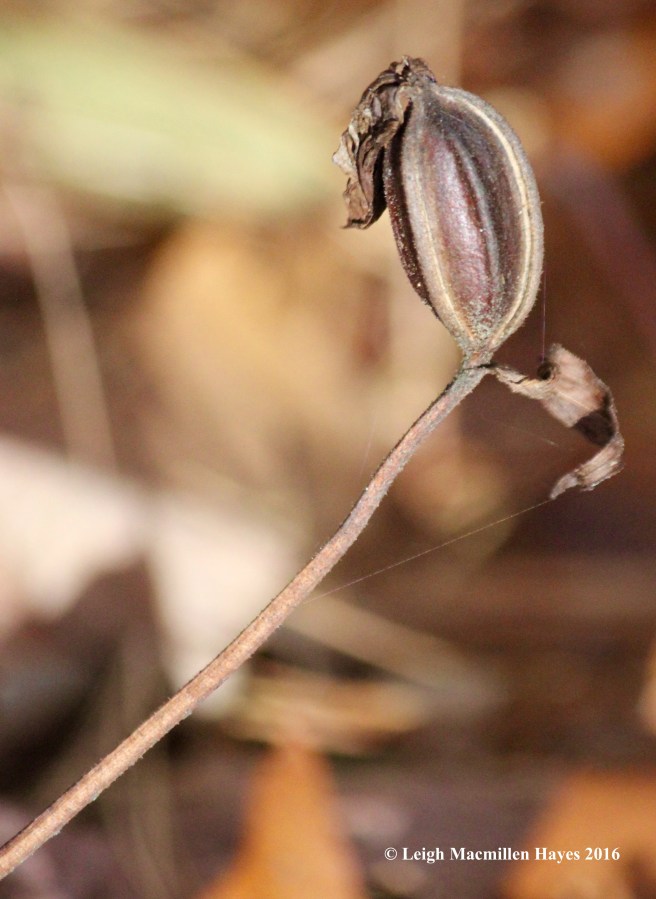
Also along the summit trail, the woody seedpod of a Lady’s Slipper. Ten-to-twenty thousand seeds were packaged within, awaiting wind dispersal.

t-mt-tom-house

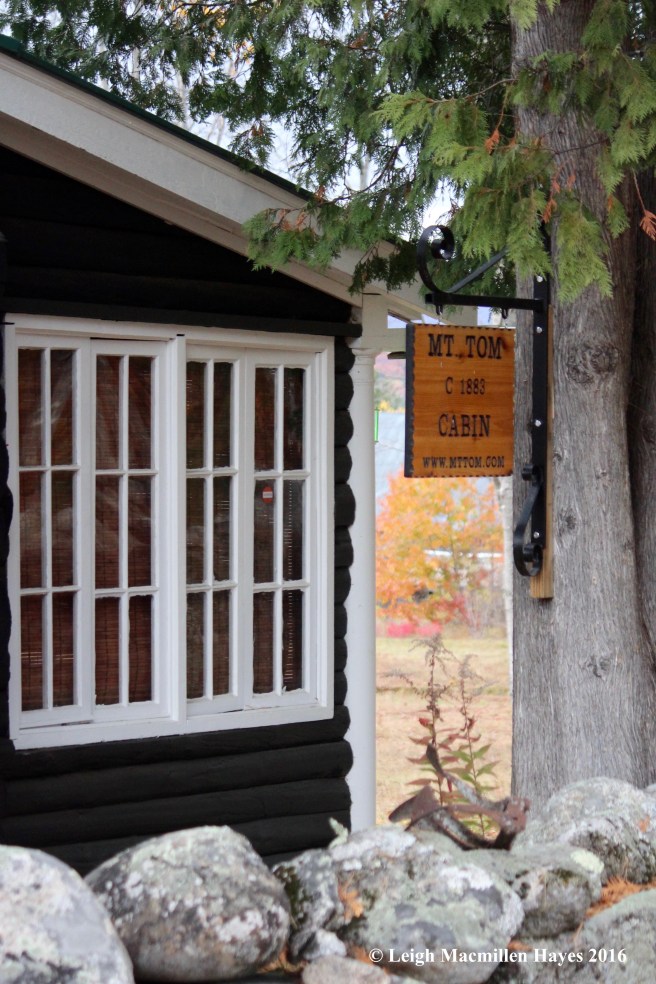
We decided to follow the old trail down, which passes through a hemlock grove and then suddenly changes to a hardwood mix. Both of us were surprised at how quickly we descended. And suddenly, we were walking past some private properties including the 1883 Mt. Tom cabin.

t-northern-white-cedar-bark

t-northern-white-cedar

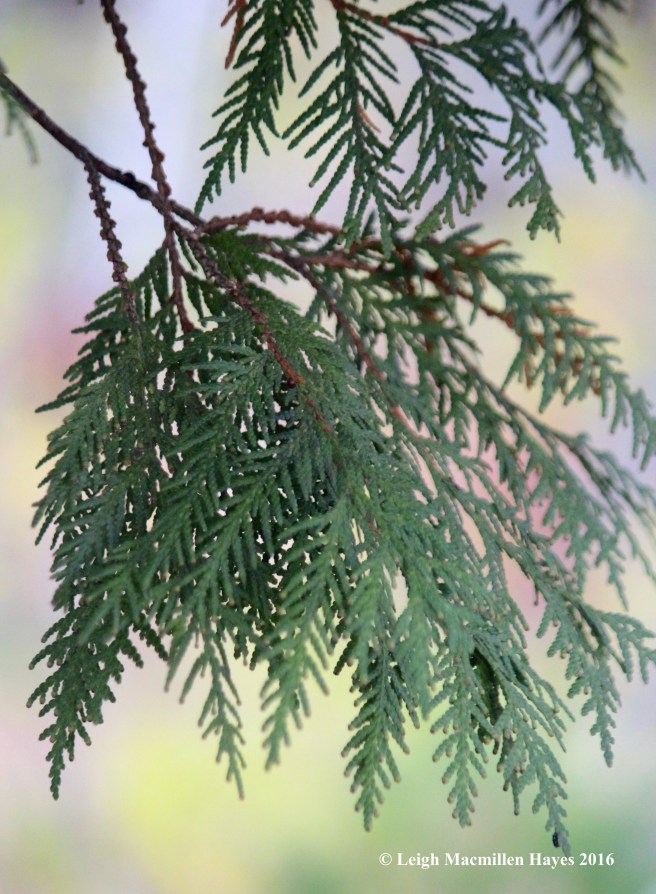
The cabin sign was actually attached to a Northern White Cedar tree. I’m forever wowed by its bark and scaly leaves.

t-flag

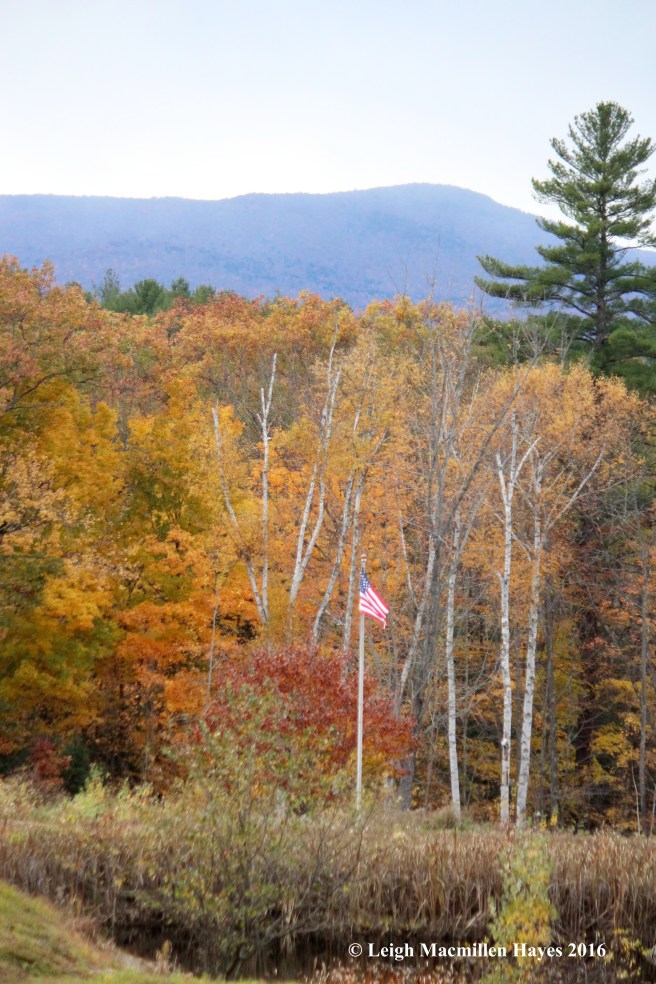
In the field beyond, Old Glory fluttered in the breeze.

t-barn

And just before Menotomy Road, we spied Mount Kearsarge in the distance.

t-menontomy-cemetery

Since we’d taken the loop trail approach rather than an out and back on the same trail, we had to walk along Menotomy Road, so we paid the cemetery a visit and checked out the names and ages of those who had lived in this neighborhood.

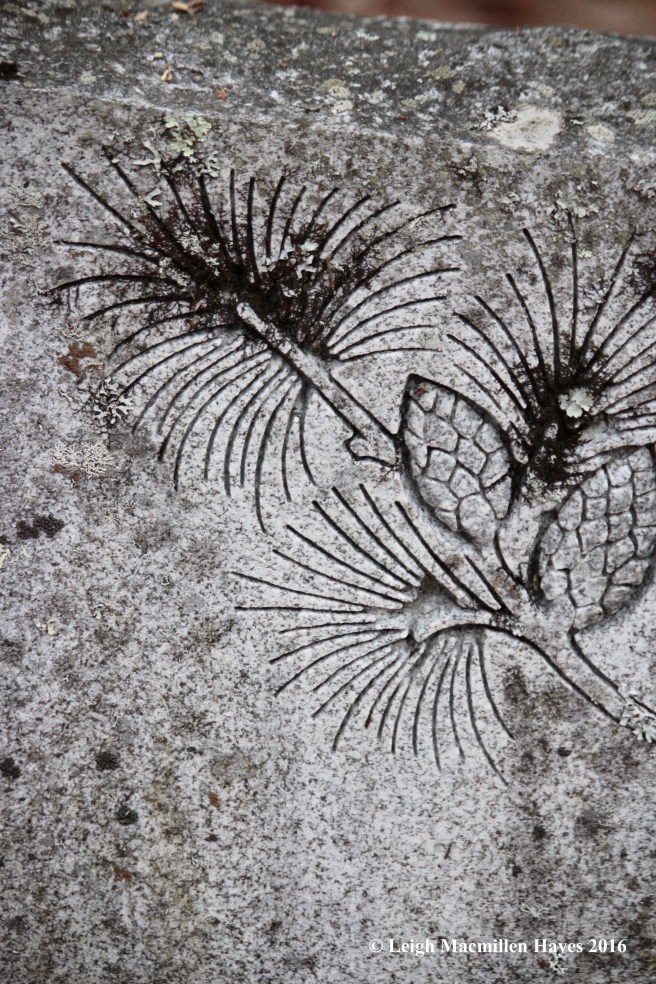
t-pine-on-grave-stone

One of the older stones intrigued me with its illustration. I think I would have enjoyed getting to know these people.

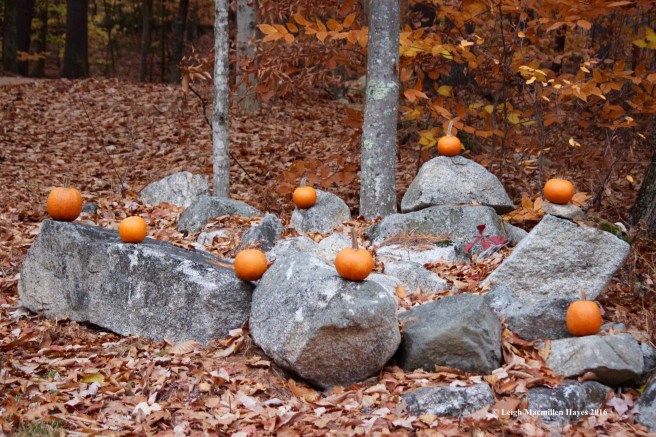
t-menotomy-pumpkins

As we continued on, I was reminded of recent adventures in Ireland  and the realization that we notice more when we walk along the road rather than merely driving by. We both admired this simple yet artful pumpkin display.

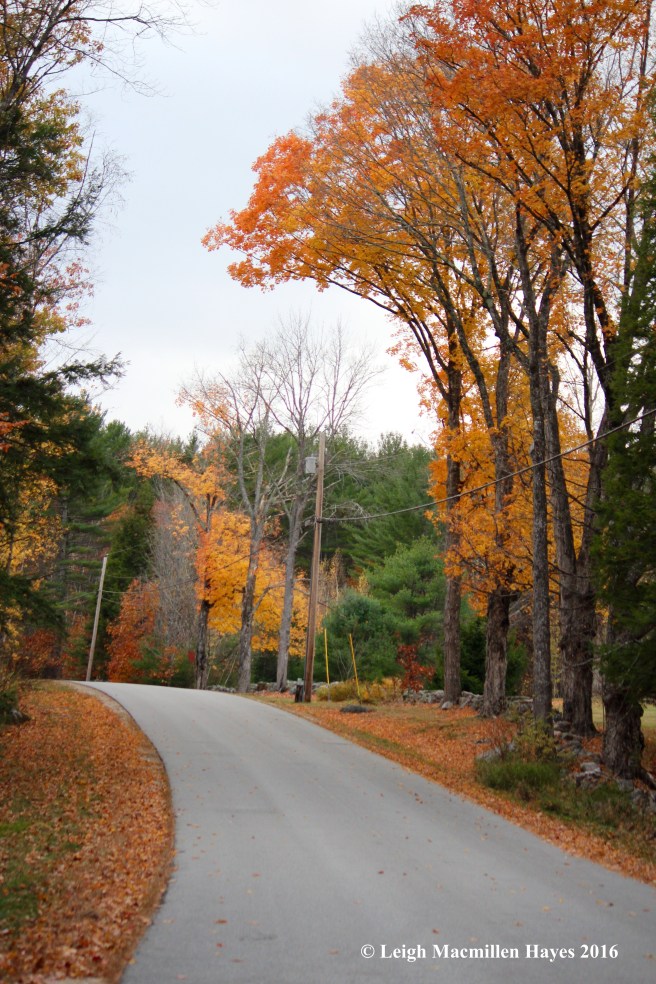
t-menotomy-road-1

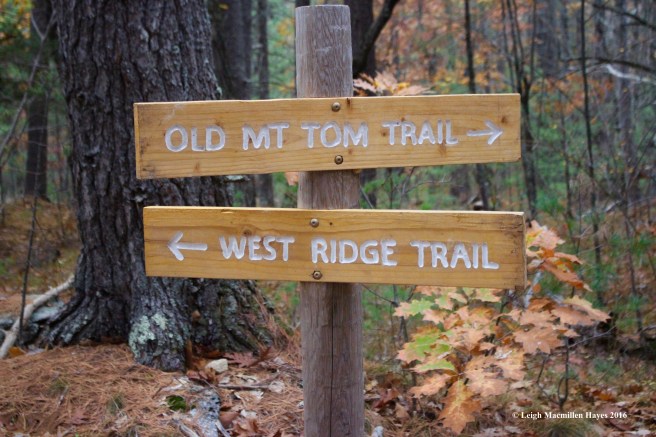
If you go, you might want to drive to the old trailhead, park your vehicle and then walk back to the West Ridge Trail. We parked at the latter and had to walk the 1.5 back at the end, when it seemed even longer. But truly, the road offers its own pretty sights and the temperature was certainly just right, even with a few snow flurries thrown into the mix, so we didn’t mind. We were thankful we’d found our way along the new trail and revisited the old at Mount Tom. And I’m already eager to do it again.


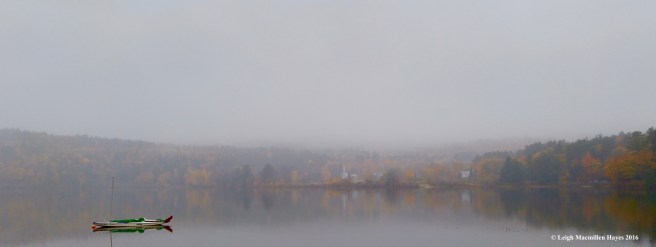
Cloaked By The Morning Mist

You remember the nursery rhyme, “Rain, rain, go away, come again some other day, we want to go outside and play”? Well, it finally rained yesterday and today, and many of us have greeted it with open arms. And we certainly didn’t let it stop us from going out to play.

u-eaton-1

This morning, I joined a group from the Upper Saco Valley Land Trust for  a hike in South Eaton, New Hampshire. Had I not been racing for time, I would have stopped every twenty feet to snap a photo, but I did pause beside Crystal Lake.

u-road-1

After getting lost for a few minutes because I didn’t pay attention to the directions, I found the property. Eleven of us headed down Paul Hill Road, led by Jesse Wright of USVLT, and Nancy Ritger, senior naturalist with the AMC.

u-big-tooth-raindrops

We paused to examine a variety of offerings, including the flat stems of the quaking aspens. It was the raindrops on the big tooth aspen, however, that drew my focus. One of the things Nancy spoke about as she had everyone feel a flat aspen stem, is how that very stem aids in photosynthesis.

u-big-tooth

The leaves tremble or quake, giving each more time in the sunshine–individual leaves, no matter where they are attached to the tree, share in unshaded glory for split seconds as those above them flutter. And, in the case of aspens, both sides of the leaf work to make sugar and release oxygen.

u-beaver-lodge

We spent a long time beside a beaver pond and pondered various aspects of it. We could see the lodge and beaver sticks in the water–that made sense.

u-retainer-2

But why a significant wall on at least two sides?

u-cut-stone-in-water

And a split stone by the water’s edge? What else had happened here? Jesse told us that there are numerous foundations that we didn’t have time to locate today, so we knew that though it seemed as if we’d traveled to the middle of nowhere, this place was once somewhere.

u-moose-track

And to the local moose, it still is as evidenced by the prints we found in mud.

u-raindrop-lichens-2

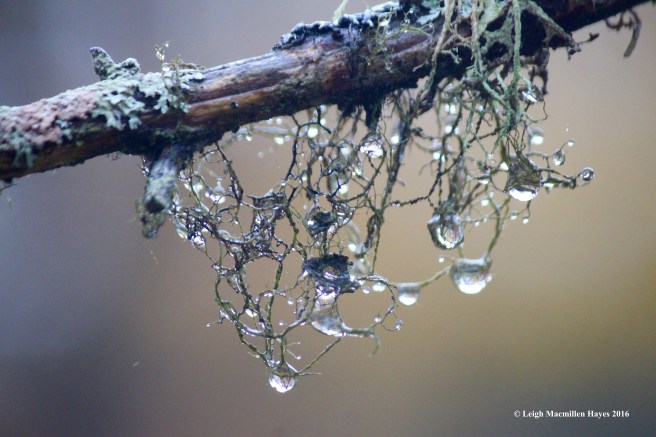
Our attention also turned upward as we admired raindrops dangling from fruticose lichen (think fruit-like branching).

u-raindrops-on-pond

Suddenly, the rain increased so Jesse asked if anyone wanted to turn around and received an overwhelming vote to continue on.

u-larch-2

One of my favorite discoveries was a couple of larch trees. Larch or tamarack is our only deciduous conifer. Huh?

u-larch-1

Like deciduous trees, the larch needles turn yellow each autumn and fall to the ground. Another cool fact: needles grow on stout pegs that look like wooden barrels.

u-pileated-and-ants

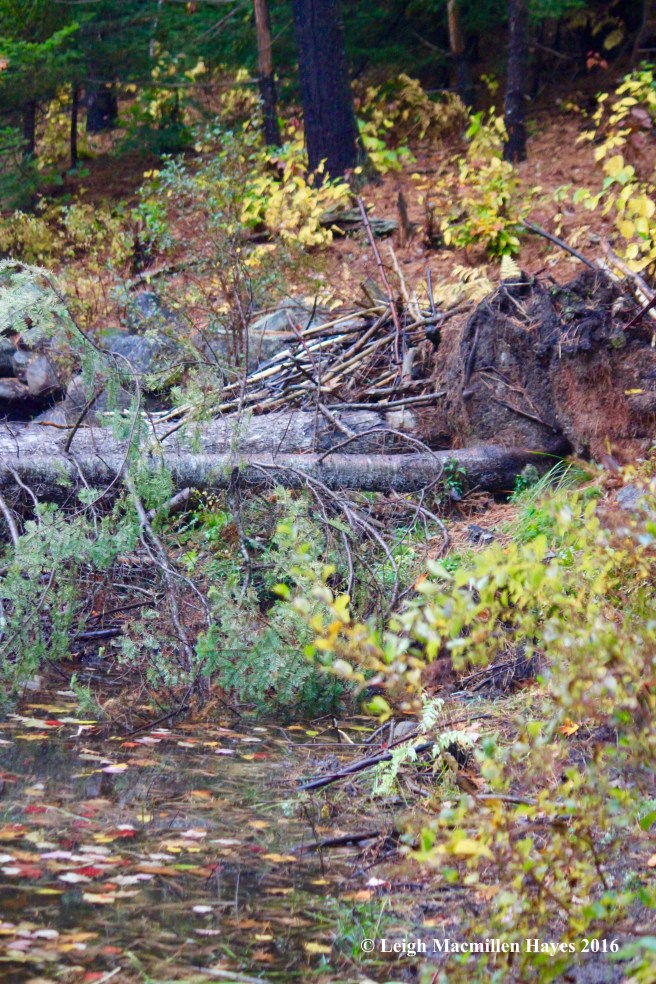
We paused beside ash trees and tree stumps, and enjoyed the view of this pileated woodpecker excavation of carpenter ant tunnels–their favorite prey.

u-candy-lichen

In the log landing that did become our turn-around point, we noted the early succession growth of Eastern white pines and sweet fern (not a fern). But again, we looked to our feet for the best views.

u-candy-lichen-1

Candy lichen is a crustose (think–flattish or crust-like) lichen with green to bluish-green coloration.

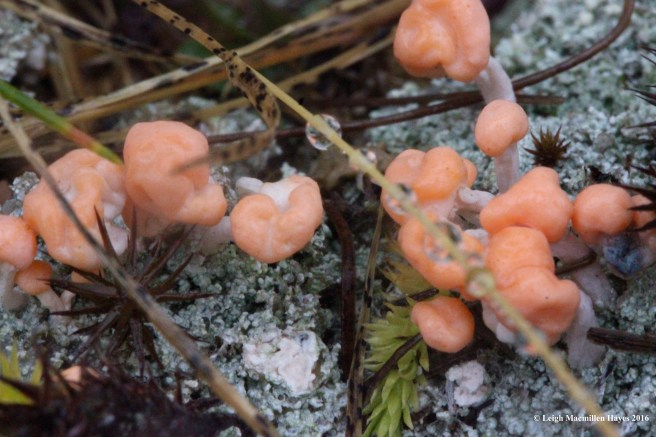
u-candy-2

Its fruiting bodies, however, are candy-pinkish disks atop stalks, even reflected in the raindrops.

u-cemetery-entrance

Our journey back to parked vehicles passed quickly, indicating we’d not traveled all that far in two and a half hours. That’s normal when you take time to notice. Before departing, Jesse showed me a cemetery on the abutting property.

u-cemetery-small-stones-2

Small, unmarked stones made me think of a Civil War-era cemetery in Sweden, Maine–perhaps a sudden illness of young children called for quick burials.

u-cemetery-currier-plot

One section was portioned off by split granite.

u-cemetery-curriers-1

The Currier plot. A side road we’d passed by was named for the family.

u-cemetery-lichens

The crustose lichens were intriguing on Rhoda Lodolska Currier’s stone. Rhoda died at age 26.

u-cemetery-octavia

Her sister, Octavia, lived to be 53.

u-cemetery-nancy-leavitt-90-years

Most impressive was the age of Nancy Leavitt, her stone located just outside the Currier plot. Nancy died at age 90.

u-vireo-nest

As we walked out, Jesse spied a cup-shaped vireo nest built in the fork of a beaked hazelnut. Life continued to circle in these woods.

u-undulating-color

And the autumn color undulated, mimicking the land. The sun tried to peak out for a few minutes when we arrived at our vehicles, but we were all appreciative of the rainy day wonders we’d found along the way.

u-eaton-3

And back in Eaton, a quaint New England village located beside Madison and Conway, New Hampshire, and the Maine border–beauty cloaked by the mist.

Thanks to Jesse, Nancy and the Upper Saco Valley Land Trust for a fine morning spent wandering and wondering.


Everybody Loves Raymond? Mondate

My guy and I were up for an adventure this morning as we headed off to a property recently acquired by Loon Echo Land Trust. I’d been there once before, but at that time there was no trail system and I certainly hadn’t climbed to the summit.

r-forest-climb

We were on a 356-acre property bisected by a paved road. First, we hiked the upper section, passing through a hardwood forest.
r-white-oak-green-leaves

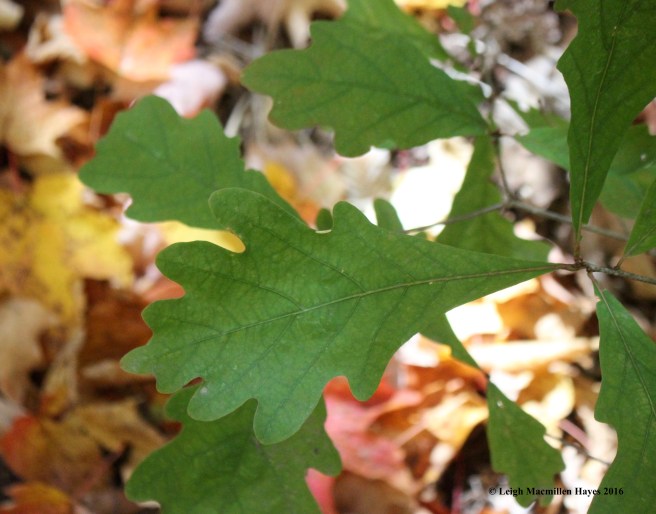
Immediately, I realized we were in the presence of one of my favorites–noted for the mitten-ish presentation of its leaves. One would have to be all thumbs to fit into this mitten, but still, my heart hums whenever I spy a white oak.
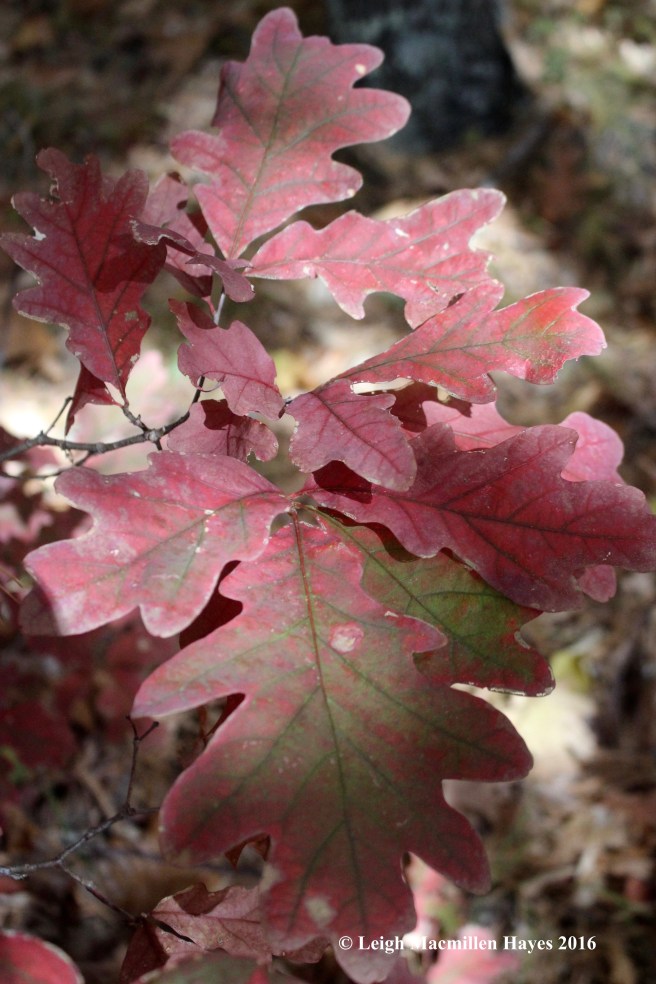
r-white-oak-red-color

Or in this case, many white oaks, some exhibiting the wine color of their fall foliage.
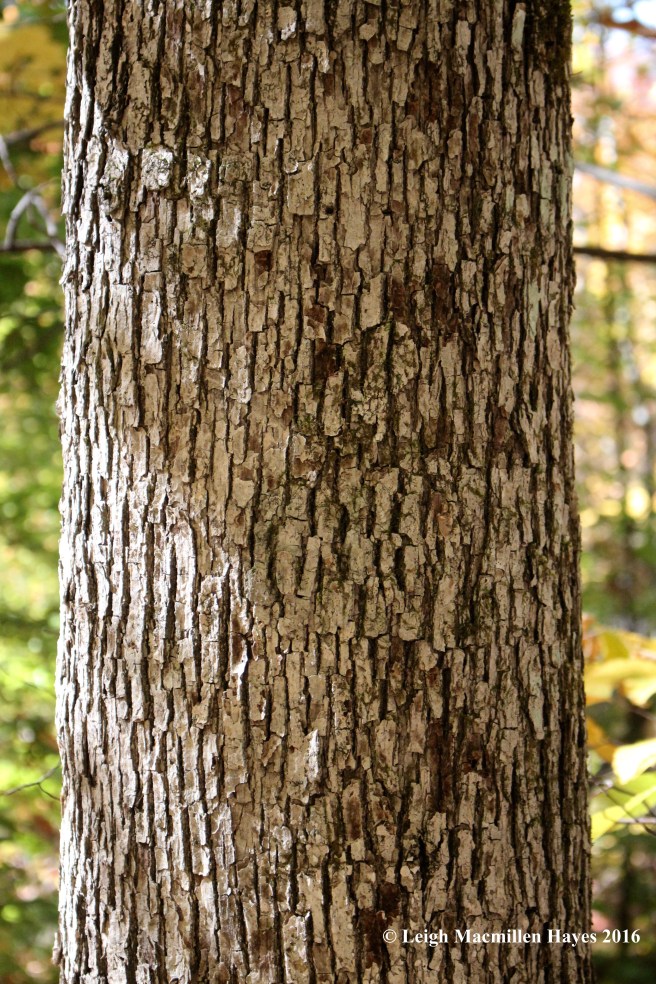
r-white-oak-bark

And the bark–a blocky look that differs greatly . . .
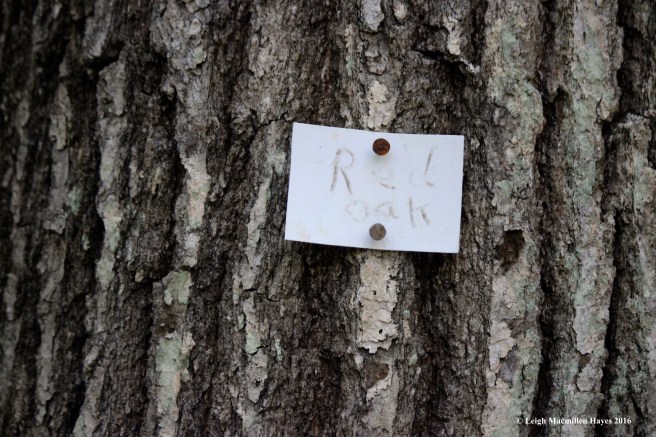
r-red-oak-on-bm1

from the ski trail ridges of red oak.
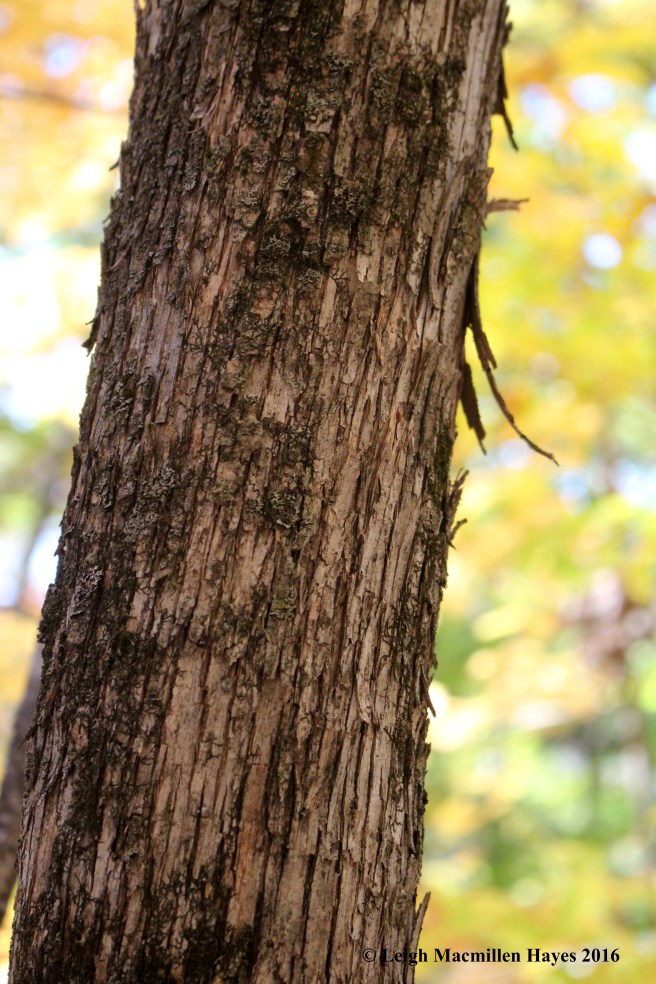
r-hophornbeam-bark

Hop Hornbeam also grows abundantly in this forest.

r-approaching-forest-summit-yellow

As we neared the summit, we noticed that the sky view had a yellowish tone reflected by the ground view. Most trees were of the same age due to past logging efforts, but the predominant species was sugar maple.
r-basswood-2

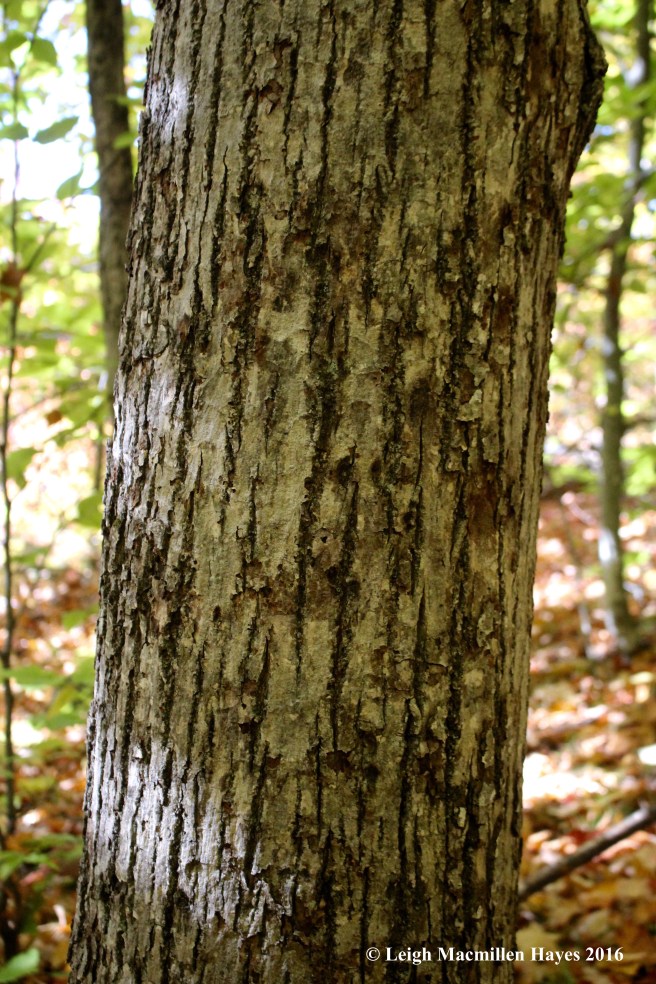
Another favorite tree also grew abundantly here. I think they are also favorites because I don’t see them as often. In this case, the bark, though furrowed and ridged like a northern red oak, featured an almost combed flattened ridge.

r-basswood-leaf

And its leaves–oh my! Notice the asymmetrical base? And the length–my boot is size 8. American basswood–an important timber tree that is known to share the community with sugar maples and hornbeams–all of which provided that yellow glow.

r-raymond-summit-view-1

At last, we reached the vantage point.

r-skyward

Above us, a mix of colors and species.

r-oak-leaves

Before us, a mix of white and red oak leaves.

r-crescent-view-3-1

And beyond us, the view of Crescent Lake

r-crescent-rattle-1-1

and Rattlesnake Mountain.

r-ladybird-1-1

While we admired the view, ladybird beetles (aka ladybugs) swarmed us. Well, not exactly in swarm formation, but more than is the norm.

r-green-trail-tag

After admiring the view for a while and wondering about the ladybirds, we backtracked a bit and decided to explore the green trail, assuming that it looped about the summit.

r-dry-leaf-sound

The trail conditions changed constantly, and one thing we realized was that the leaves had dried out and we wished we could have bottled their scent along with our crispy footfall as we trudged through–the smells and sounds associated with autumn.

r-bear-claw

Eventually, we entered a beech commune and what to my wondering eyes should appear–bear claw marks? We ventured closer, circled the tree and looked at others in the neighborhood before determining that our eyes had perhaps played a trick on us.

r-garter-snake

That was OK because within seconds a twig moved at our feet.

r-snake-tongue

We watched as its tongue darted in and out, red tipped with a black fork.

r-lunch-rock

Finally, we moved back to what we’d named Ladybird Lookout and found lunch rock where we topped off sandwiches with Bailey’s Irish Cream fudge a la Megan and Becky Colby. Life is good. Life is very good. (And we know a town in western Maine that would benefit greatly from a bakery–just saying, Megan!)
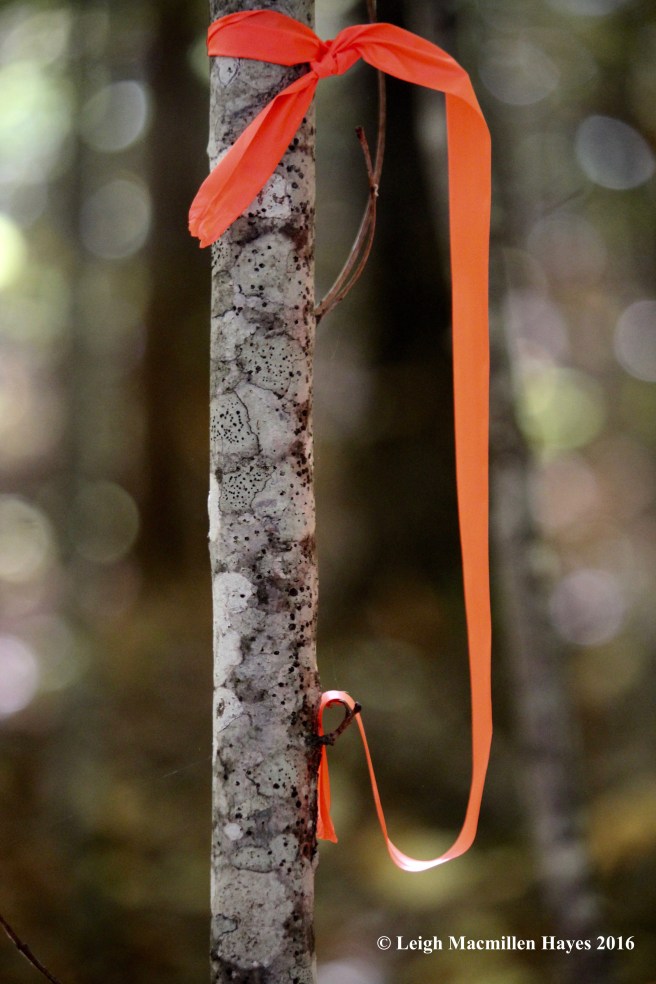
r-trail-ribbon-art

After lunch, we climbed back down and crossed Conesca Road to check out trails on the other side. There is no trail map just yet, but we never got lost. And we appreciated the artwork nature created of manmade marks.

r-forest-across-the-street-stonewall

This space offered a different feel where hardwoods combined with softwoods. And more stonewalls crossed the property, speaking to past uses.
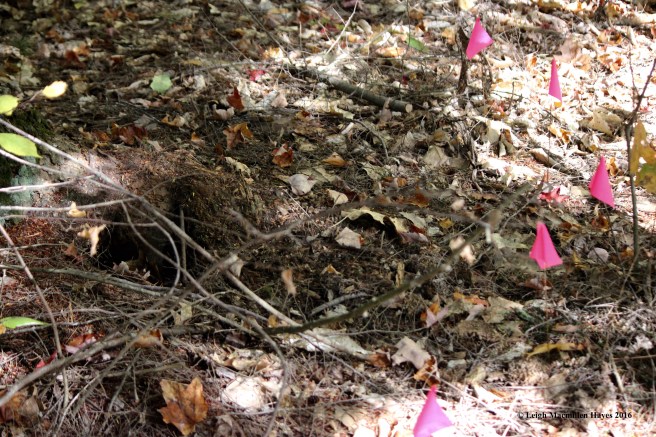
r-hole-pink-flags

It’s here that we noticed an area demarked by pink flags and stopped to wonder why. Note to self–excavated hole and debris mean beware.
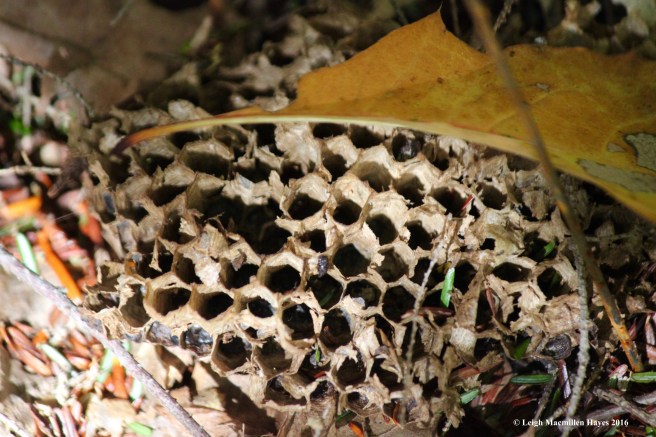
r-bee-himve

Upon closer examination, an old hive. So who dug it up? We had our suspicions.

r-mushrooms-1

We also noticed a fungi phenomena.

r-mushroom-growth

Fungi on fungi? Honey mushrooms attacked by something else?
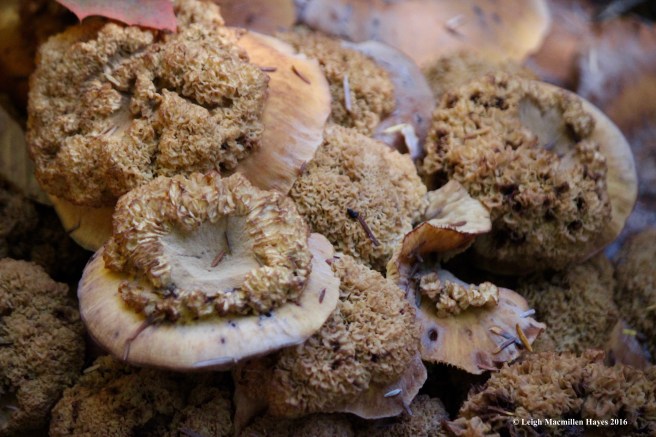
r-mushroom-growth-3

The displays were large

r-mushroom-fungi

and otherworldly. I don’t recall ever seeing this before.

I sent the photos to Parker and Jimmie Veitch, of White Mountain Mushrooms, and Jimmie responded with this explanation:

“That’s what mycologists call “rosecomb” mutation, where a mushroom’s gills start forming on the cap in a really mutated fashion. It’s been reported in many mushroom species but I haven’t seen it in this one (Armillaria AKA honey mushrooms). As far as I know, no secondary fungus is involved.

The suspected cause (not so nice) is ‘hydrocarbons, phenols and other compounds contaminating the casing or contacting the mushroom surface. Diesel oil, exhaust from engines, and petroleum-based pesticides are thought to be the principal source.'”
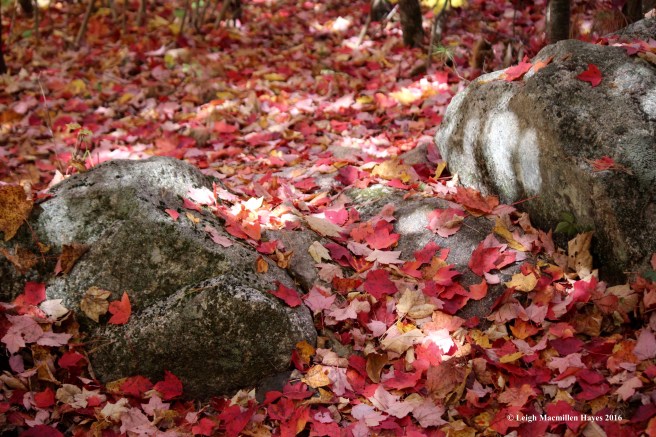
r-red-leaves

As we concluded our visit, we passed over one more stone wall decorated with red maple leaves.

r-beginning-of-bri-mar

And then we hopped into the truck and traveled a couple of miles south to conquer another small mountain–one visible to us from Ladybird Lookout. (I really think LELT should name it such.)
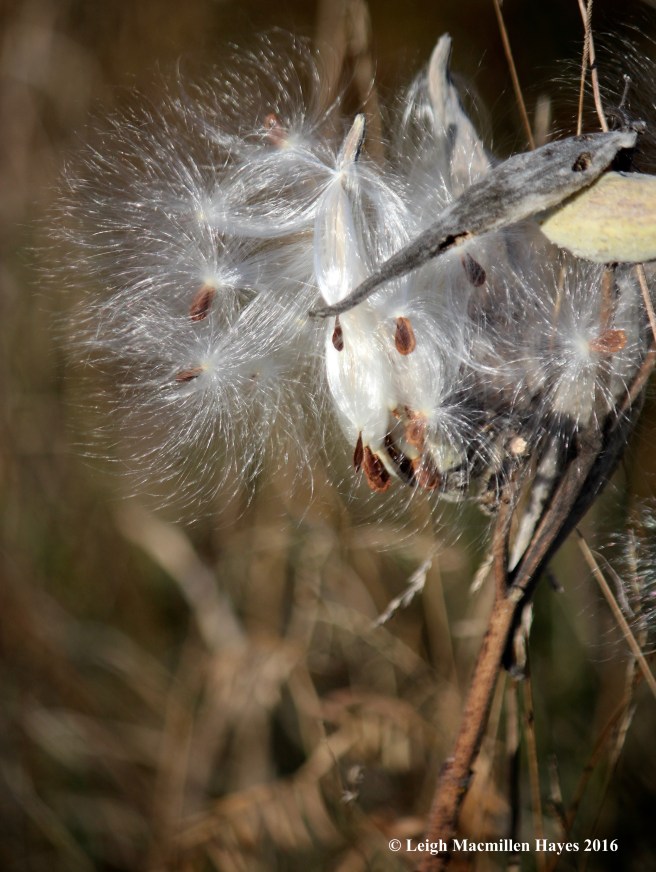
r-brimar-milkweed

Here the milkweed plants grew abundantly.

r-brimar-white-oaks-in-field

In the field leading to the trail, the property owners planted white oak saplings in hopes of providing food for wildlife. Um, by the same token, they’d enclosed the saplings in plastic sleeves (reminding us of our findings in Ireland) to keep deer at bay.

r-brimar-ferns

The understory differed and ferns offered their own autumn hues.

r-brimar-evergreen-wood-fern

In contrast were the many examples of evergreen wood ferns.
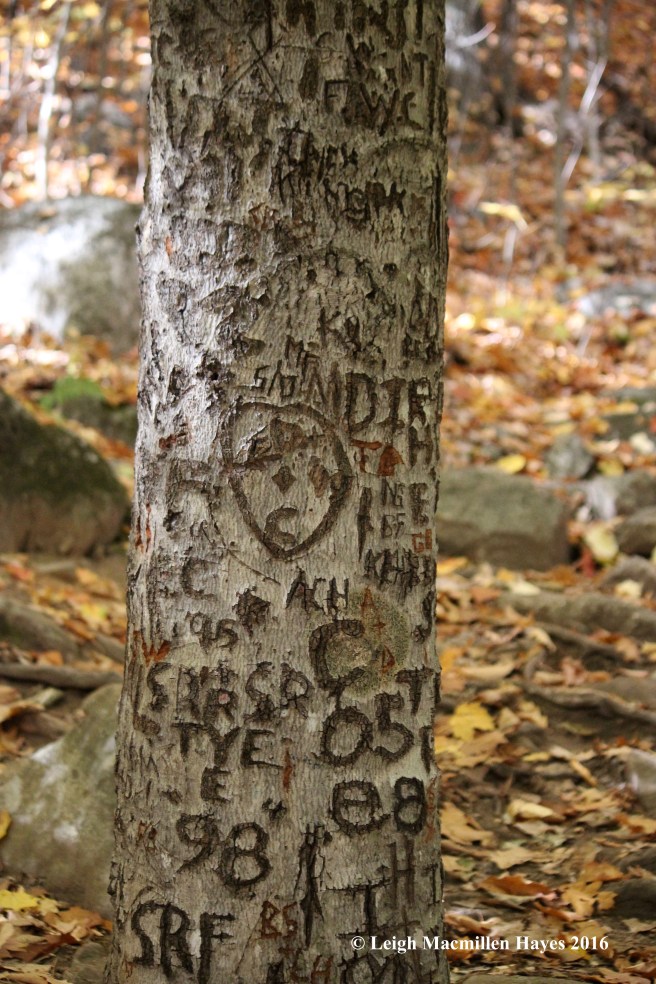
r-bri-mar-beech-markings

We soon realized that quite literate bears frequented this path and announced their presence.

r-crescent-from-bri-1-1

At last, the view opened and we looked back at the opposite shore of Crescent Lake, though realizing that our earlier ascent was masked by the trees.

r-panther-from-bri-3-1

Turning about, Panther Pond came into view.

We’d spent the day embracing Raymond because everybody loves Raymond.

r-raymond-forest-sign

r-brimar-trail-sign

Raymond, Maine, that is. Loon Echo Land Trust is gearing up to celebrate the Raymond Community Forest that we explored this morning and the Bri-Mar Trail up Rattlesnake Mountain has long been traveled by many. In fact, when I used to write copy for the local chamber of commerce, I spent some time learning about Edgar Welch, who was the fastest man on foot and ran up Mount Washington at least once a year. He lived in Raymond and worked for David McLellan, who was partially blind from a Civil War injury. Because Mr. McLellan’s farm was at the foot of Rattlesnake Mountain, the sun would set one hour earlier than elsewhere in town. According to legend, after work each day Edgar ran up the mountain and moved rocks. Finally, he’d moved enough to let the sun shine on the farm for an hour longer. Another story has it that one day a man bet Edgar that he could beat him in a race to Portland. The man would race with his horse and buggy, while Edgar ran. When the opponent pulled into the city, Edgar was waiting for him. I love local lore.

And everybody loves Raymond. Well, my guy and I certainly gained a better appreciation for this town today.
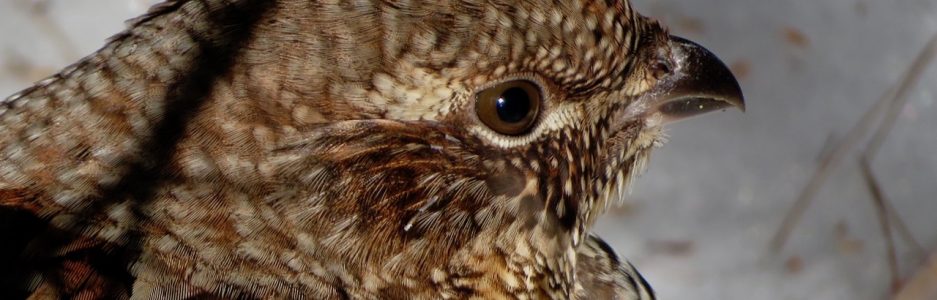


In Constant Flux

Ever so slowly, the world around us changes.

h-starting-point

Sometimes it’s as obvious as the leaves that fall.

h-bee-on-flower-1

And other times, it’s a bit more subtle, evidenced by the bees that have slowed their frantic pace as they make final collections.

h-leaf-carpet

Mid morning, I headed down the cow path in search of other signs of change.

h-oak-branches-1

As I walked along, I began to realize the interdependence of all. Under the northern red oaks–many  chopped off twigs.

h-porcupine-works

The angled cut and empty cap indicated the work of porcupines seeking acorns.

h-leaves-on-hemlock

I found maple leaves pausing on hemlocks,

h-pine-needles-on-spruce

pine needles decorating spruce trees,

h-leaves-in-puddles

and occasional puddles offering a rosy glow. Eventually, all of these leaves and needles will break down and give back.

h-life-on-rock-1

I found life on a rock, where lichens began the story that was added to by mosses. The creation of soil was enhanced by a yearly supply of fallen leaves and needles gathered there. And then a seed germinated, possibly the result of an earlier squirrel feast.

h-orange-peels1-1

I found orange peel and many other fungi aiding the process of decomposition so that all the fallen wood and leaves will eventually become part of the earthen floor.

h-forest-succession-3

I found a healthy stand of trees and ferns competing for sunlight in an area that had been heavily logged about ten years ago.

h-deer-and-bobcat-prints

I found evidence of those who spend their lives eating and sleeping in this place.

h-aster-seeds

I found seeds attached

h-seeds-on-the-fly

and those on the fly–heading off in search of a new home.

h-witch-hazel-flowers-galore

I found the last flowers of fall

h-witch-hazel-1

exploding with ribbony blooms.

h-power-and-nature

After bushwhacking for a few hours, I found the snowmobile trail, where man and nature have long co-existed.

h-home-2

At last I found my way across the field rather than through our woodlot, thankful for the opportunity to take in the colors of the season one more time.

At the end of the day, I’m once again in awe as I think about how we, and all that we share this Earth with, are dependent upon each other and the abiotic forces that surround us.

And with that comes the realization that the scene is in constant flux and so am I.


A Color-filled Mondate

The fleeting fall foliage offered the backdrop for our afternoon Mondate.

h-orchard-1

We started with a stop at Five Fields Farm to purchase a pumpkin and enjoy a chat with owners Tom and June Gyger.

h-pond-from-orchard

Their orchard overlooks Holt Pond, that speck of blue among the trees. Because of this year’s drought, the water is lower than ever, but Tom pointed out that during heavy rainstorms they’ve often watched it quickly fill and then lower as the water pours in and then slowly flows down the Muddy River. We need such a storm.

h-bridge

In fact, once we got onto the trail, my guy tested a bridge he’d built in the spring–noting that currently it’s useless because no water flowed below.

h-trail-work

We continued on, turning our hike into a trail clearing activity because this is a trail we steward for Lakes Environmental Association. A few blow downs were easily cleared–by my guy. I worked as well–documenting his good deeds.

h-carpet-2

But really, it was the color that drew our attention.

h-feet-n-leaves

At our feet, a rich carpet covered the forest floor.

h-carpet-5

It’s vibrant variety was pre-determined by the species. Red maple leaves offer shades of red or scarlet, sugar maple leaves vary from brilliant orange to fiery red to yellow, while striped maple, quaking aspen and birch feature only yellow. Ash leaves range from yellow to magenta and beech offers up a golden bronze.

h-maple1

So, how does it work? It’s been dry and many thought that would mean a lack of color this fall. Yes, some trees will dry up and their leaves wither and fall. But for most, it’s a different story as old as time.

h-maple-2

During the spring and summer the leaves worked as food-processors for their trees. Their numerous cells contain chlorophyll or the green coloration. The chlorophyll absorbed energy from the sunlight, which it then used to change carbon dioxide and water to  sugars and starch (think carbohydrates).

h-quaking-aspen

But, also at work alongside the green pigment, yellow and orange carotenoids. As you can see with these quaking aspen leaves, the carotenoids are masked by the greater amount of green coloring for most of their season.

h-sugar-maples-in-breeze

With the change in daylight hours and temperature, the leaves go on strike from processing food. And thus, the chlorophyll breaks down, green color begins to disappear and the yellowish color becomes visible to our delight.

h-red-and-green

At the same time, other chemical changes occur that cause the formation of more pigments from red . . .

h-ash-leaf1

to purple. The red pigment called anthocyanin forms.

h-paint-2-yellows

It’s like being in nature’s paint store.

h-paint-1

And I have to admit that it occurred to me I should spend some time sorting leaves by color  and trying to match them to paint chips so I could better describe the gems before me.

h-paint-reds

OK, so I didn’t dwell on that thought for too long, just long enough to realize that it would need to be a quick assessment before the leaves dry up and all become a shade of brown.

h-pond-6

At last we reached a vantage point from which to view the pond. I often stand across the way on the quaking bog boardwalk, so looking back provided a different perspective.

h-pond-2

And those swamp maples–oh my!

h-pond-4

For this beautiful display to occur, we must have warm sunny days followed by cool nights. The sugar is made in the leaves during the day, but those cool nights trap it there, preventing it from moving into the tree.

h-leaves-in-field

Not only do the colors vary, but the degree of color may also be different from tree to tree or even on one tree. Direct exposure to the sun may turn leaves red on one side of a tree and they may be yellow on the shady side.

h-sky-view

As for clouds and rain, too much in the fall means less red (a bright side of the drought). On those types of days it also tends to be warmer at night, thus changing up the process and providing duller colors. Not so this year, thankfully.
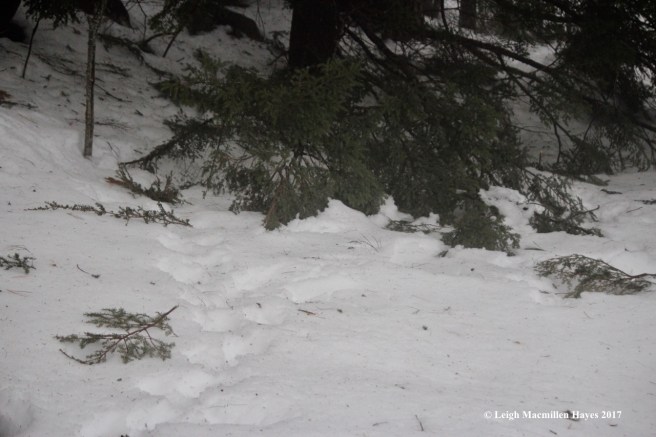
h-leaf-on-hemlock

There was nothing dull about what we saw today, including the presentation of fallen leaves, some captured by their evergreen comrades.
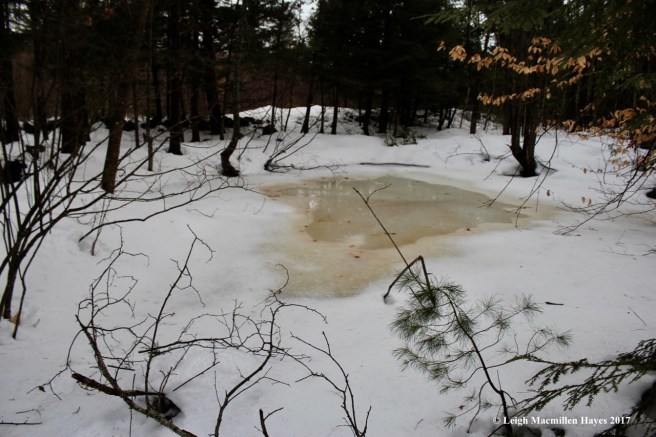
h-maple-web

A few dangled like ornaments hung by spiders.

h-maple-on-fern

Others held on precariously, attached only by a few points.

h-hobble-shadows

And even others portrayed a shadow show.

h-leaves-in-brook-1

At last we reached a small stream, our turn-around point, where all gathered to show off their glory.

h-nessie

We took one last look at the pond while making our way back. And what to my wondering eyes should appear–Nessie. Or maybe I should name her Holtie, the Holt Pond Monster! Do you see her?

My guy–he chuckled at me. He often does that. It’s OK. I know what I saw.

You might say our Mondates are always colorful, but today’s was especially color-filled as we celebrated the work of the leaves.

To Overlook and Be-yond

This afternoon I pulled into the parking lot at Bald Pate Preserve and heard my phone ring. I’ve never quite mastered the art of the swipe to answer and so as usual missed responding immediately. But . . . I put the car into park, or so I thought, and then tried to return the call to our youngest in Colorado. As I dialed, or rather, pushed the phone icon and listened to it dial and ring, I heard the phone ringing in another part of the truck. What in the world? A ventriloquist phone? And then I opened the cubby between the front seats and discovered my husband’s phone. And saw that our youngest was trying to reach him. Meanwhile, I felt like I was in motion. Because I was. The truck was in neutral rather than park and I was almost to the middle of the parking lot before I applied the brake. Somehow, I managed to make the call. After we chatted for a few minutes, with concern and wisdom, he asked, “Mom, are you hiking alone? Should you be?” “Yes,” I responded. “I’ll be fine. There are other cars here so I’m sure I’ll see people.” To be honest, though, I hoped I wouldn’t. This was one day when I needed to just be.

b-red-maples-against-sky

I needed to wander among the red maples

b-red-oaks-against-sky

and red oaks that graced the sky.

b-sarsaparilla

I needed to embrace the subtle coloration of sarsaparilla

b-blueberries-1

and vibrant hues of blueberries.

b-red-maple-1

I needed to admire the veins that bring nourishment to trees

b-red-oak-veins

and all that live therein.

b-polypody-spores

I needed to observe life giving forces

b-winter-green

and the differences among kin.

b-foster-pond

I needed to pause at each overlook

b-peabody-pond

where the view offered up life’s changes.

b-hancock-pond

I needed to say farewell

b-white-mountains

as I looked toward the beyond.

b-trees

For you, Brother Bill, I needed to walk the trails today and lift up your  life which ended unexpectedly this morning. I trust that you’ll be forever in my heart and going forth will travel with me as I wonder and wander. I trust you’ll watch over me and help me understand the great beyond. May you rest in peace, big brother.