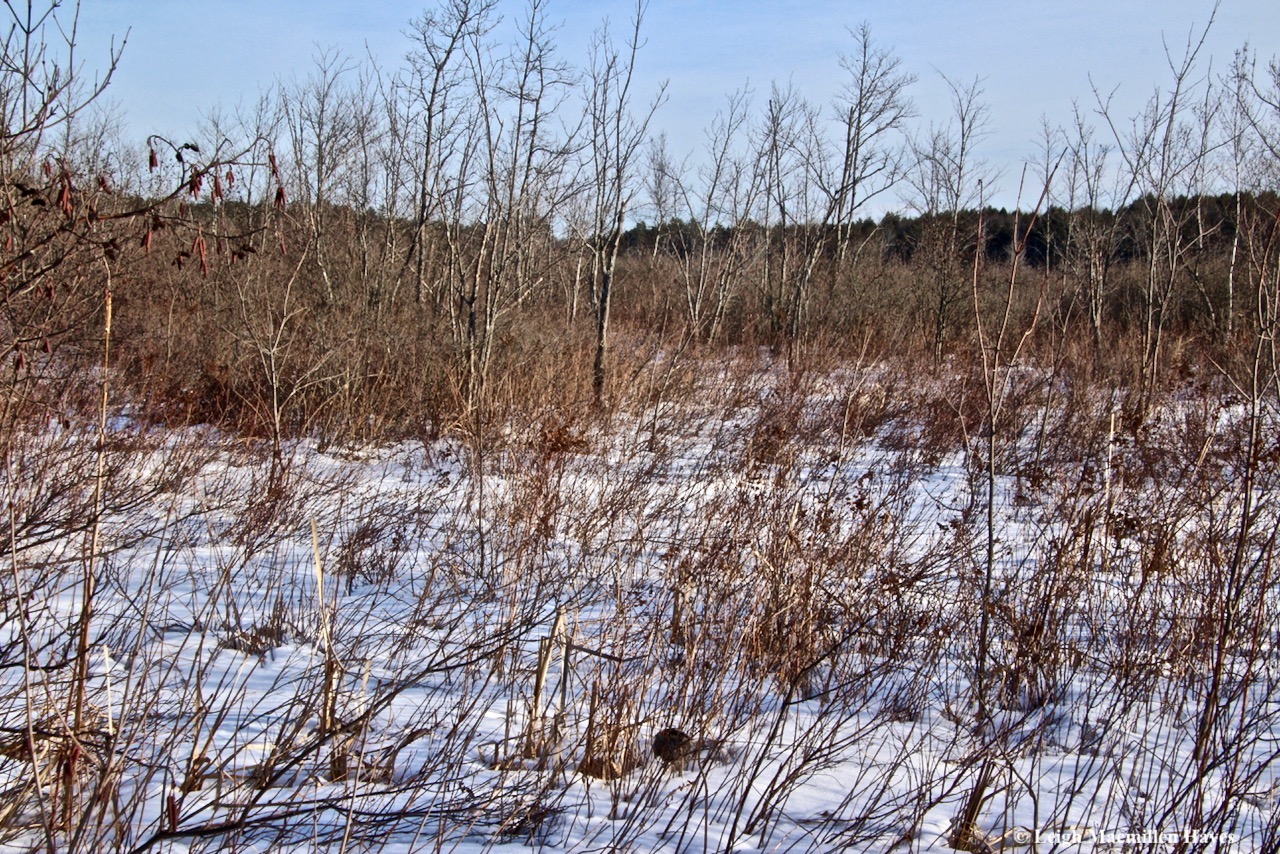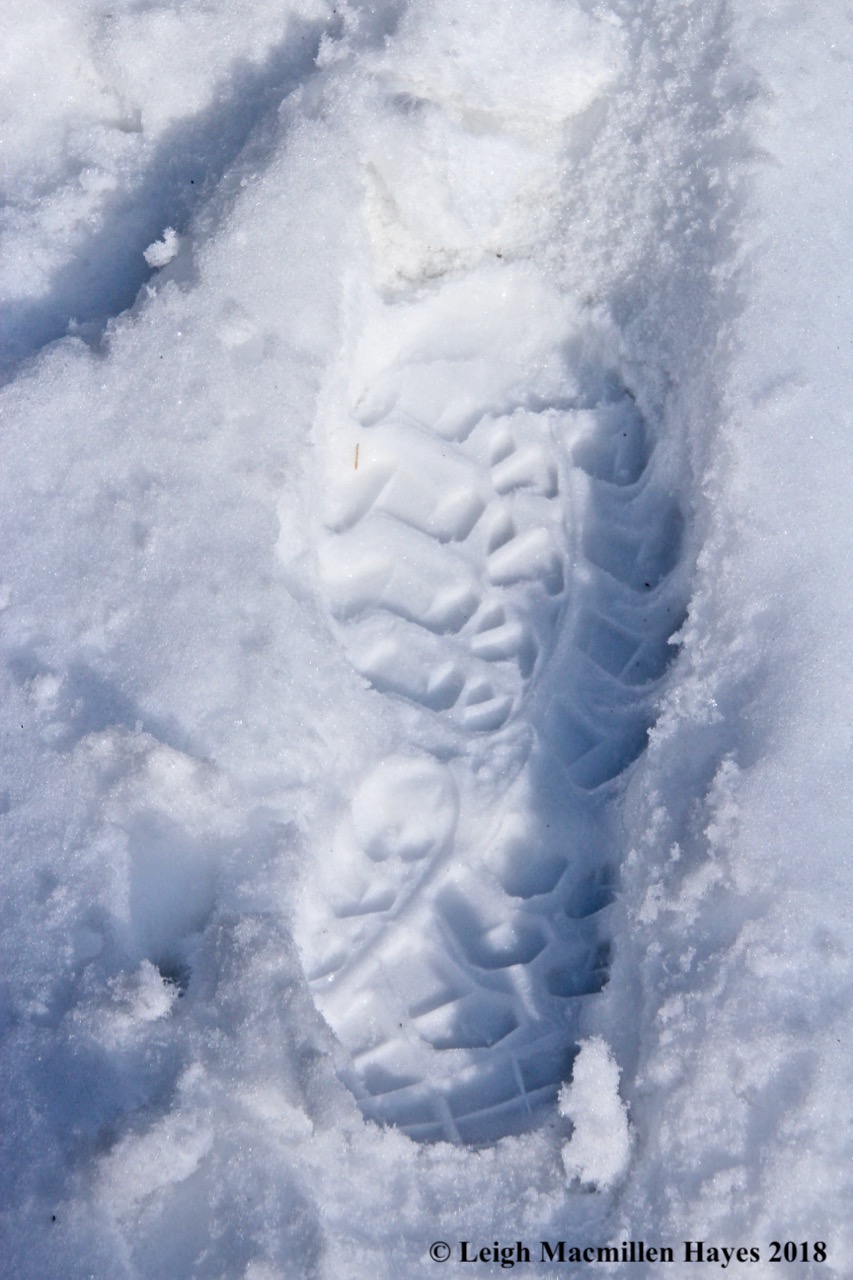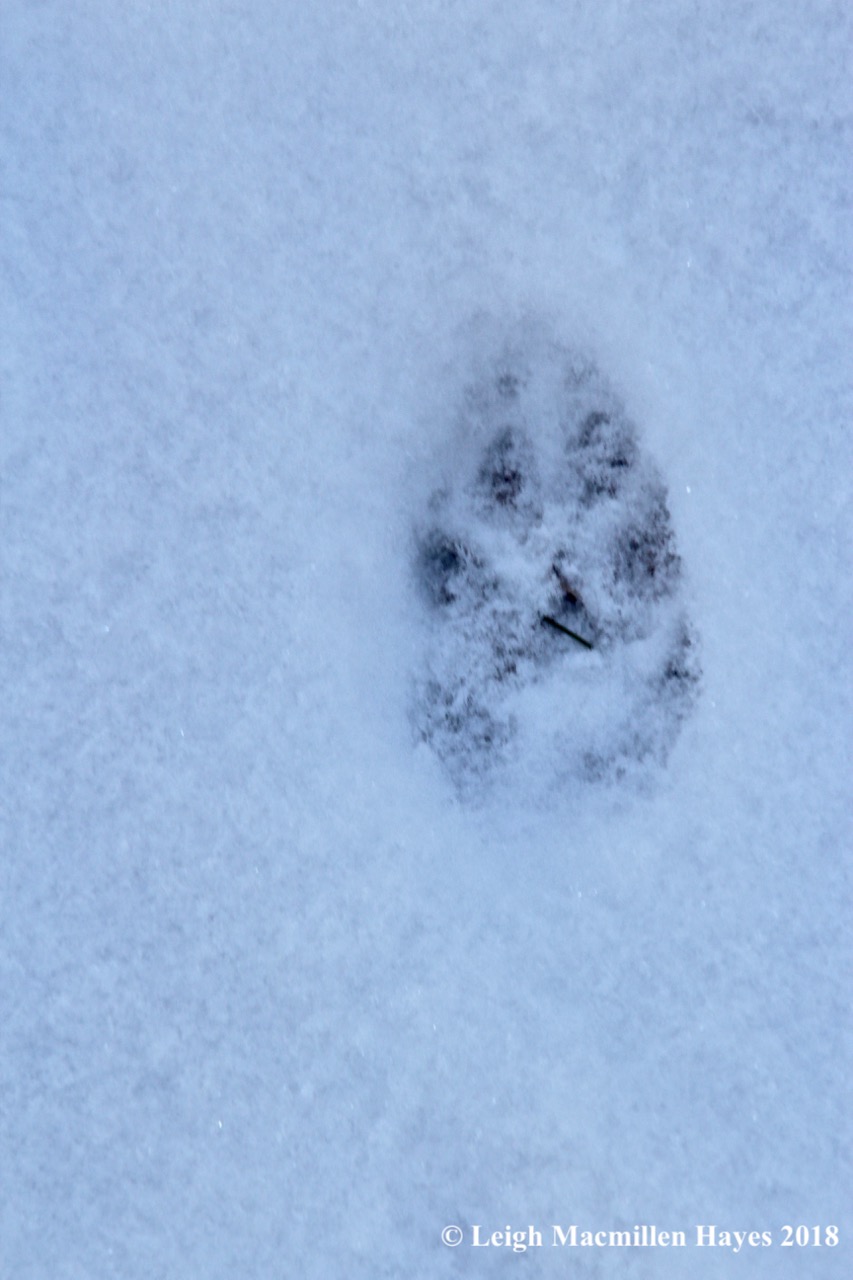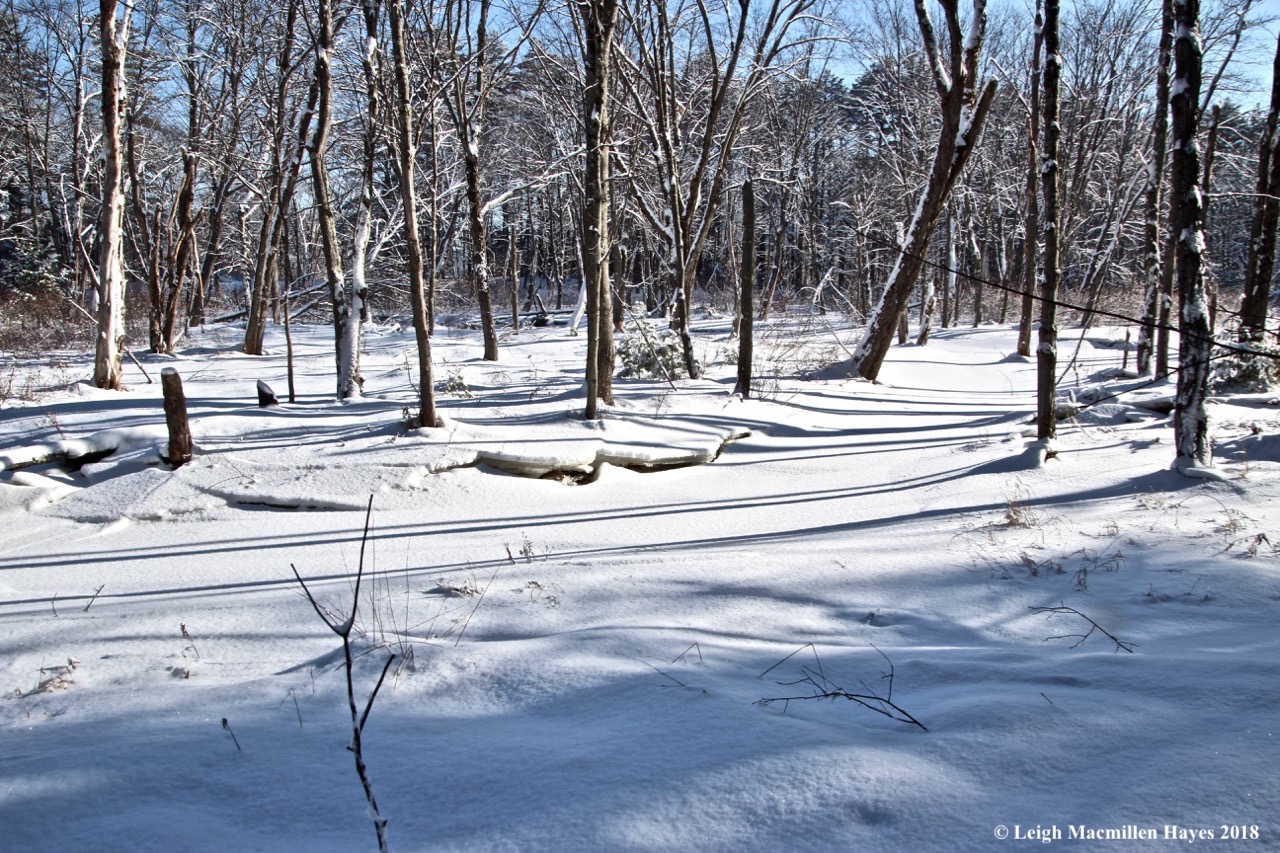
Overset Point of View

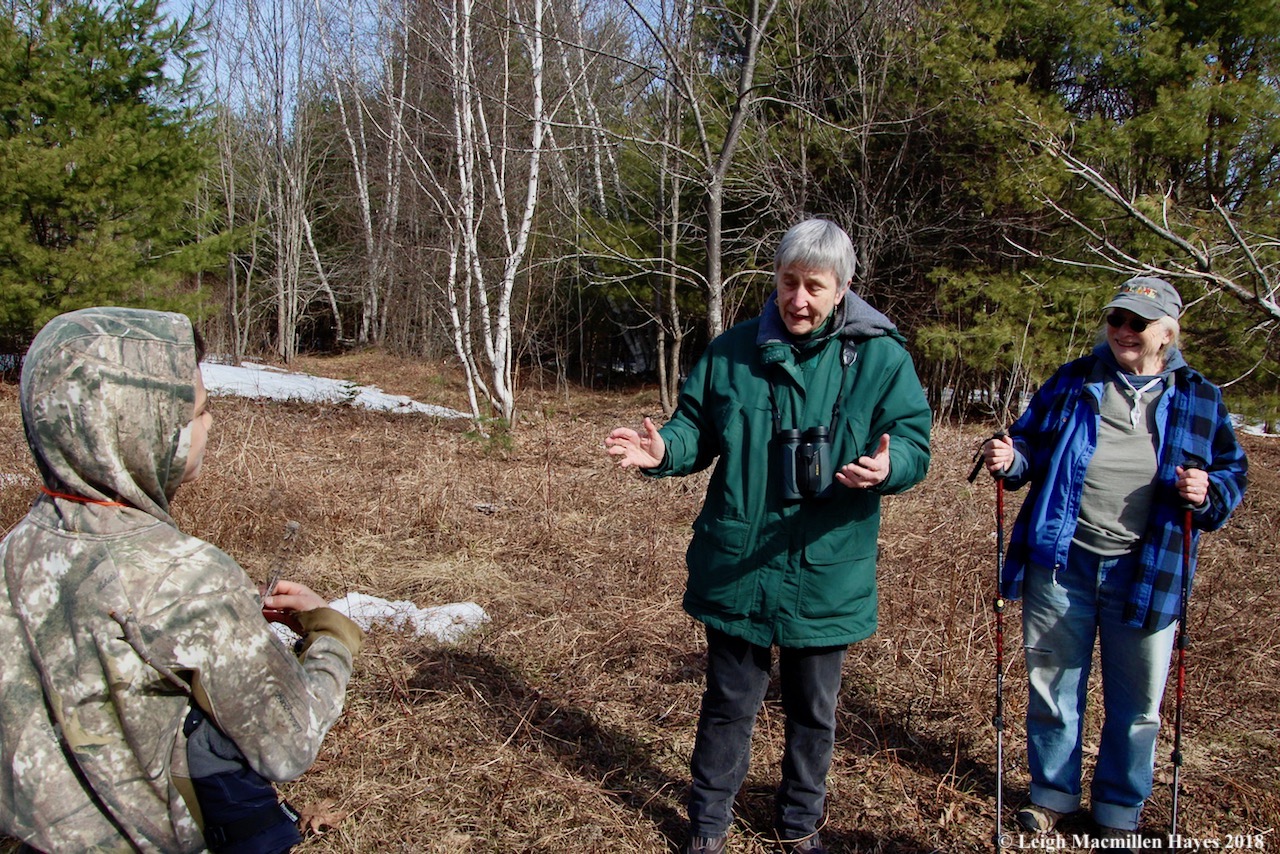
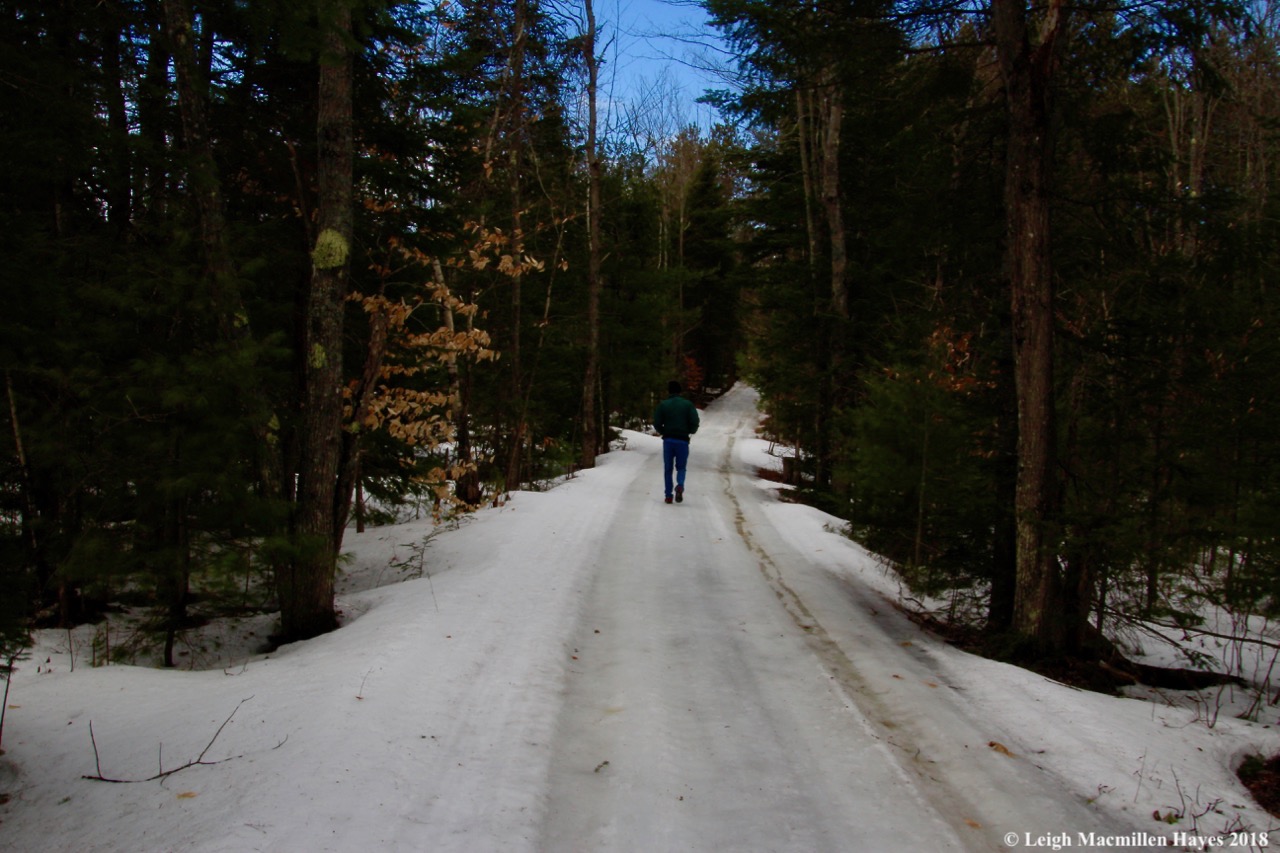
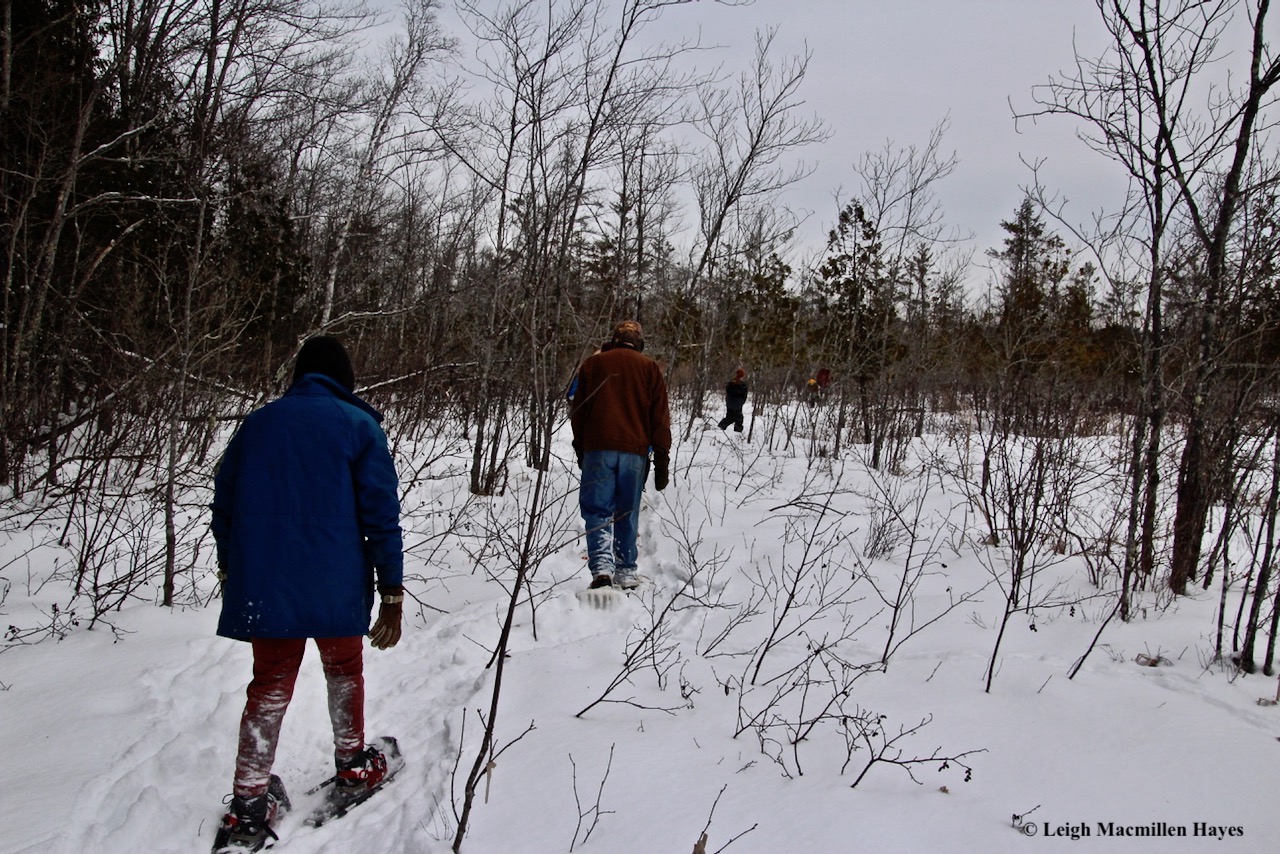
Winter hiking is our favorite, but what to wear on our feet is always a question. Today, we chose our hiking boots over winter boots and micro-spikes rather than snowshoes. 

We trusted L.L. Bean would have approved, especially given that we would be hiking in his hometown of Greenwood, Maine. We were, after all, wearing hiking boots purchased in his flagship store and various other products featuring his name. Don’t tell him that while our snowshoes, which remained in the truck came from his place, we’d purchased our micro-spikes at EMS. 
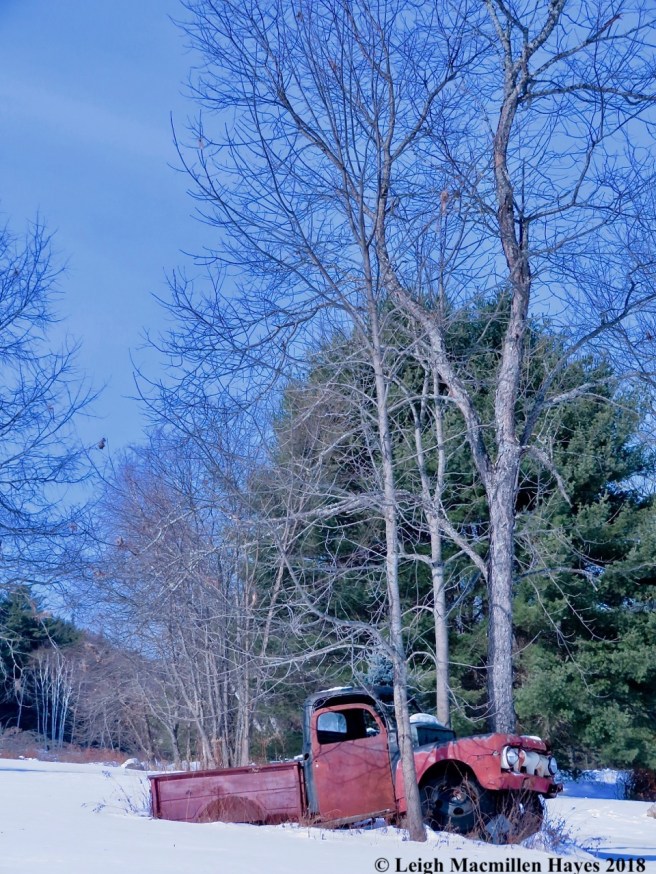
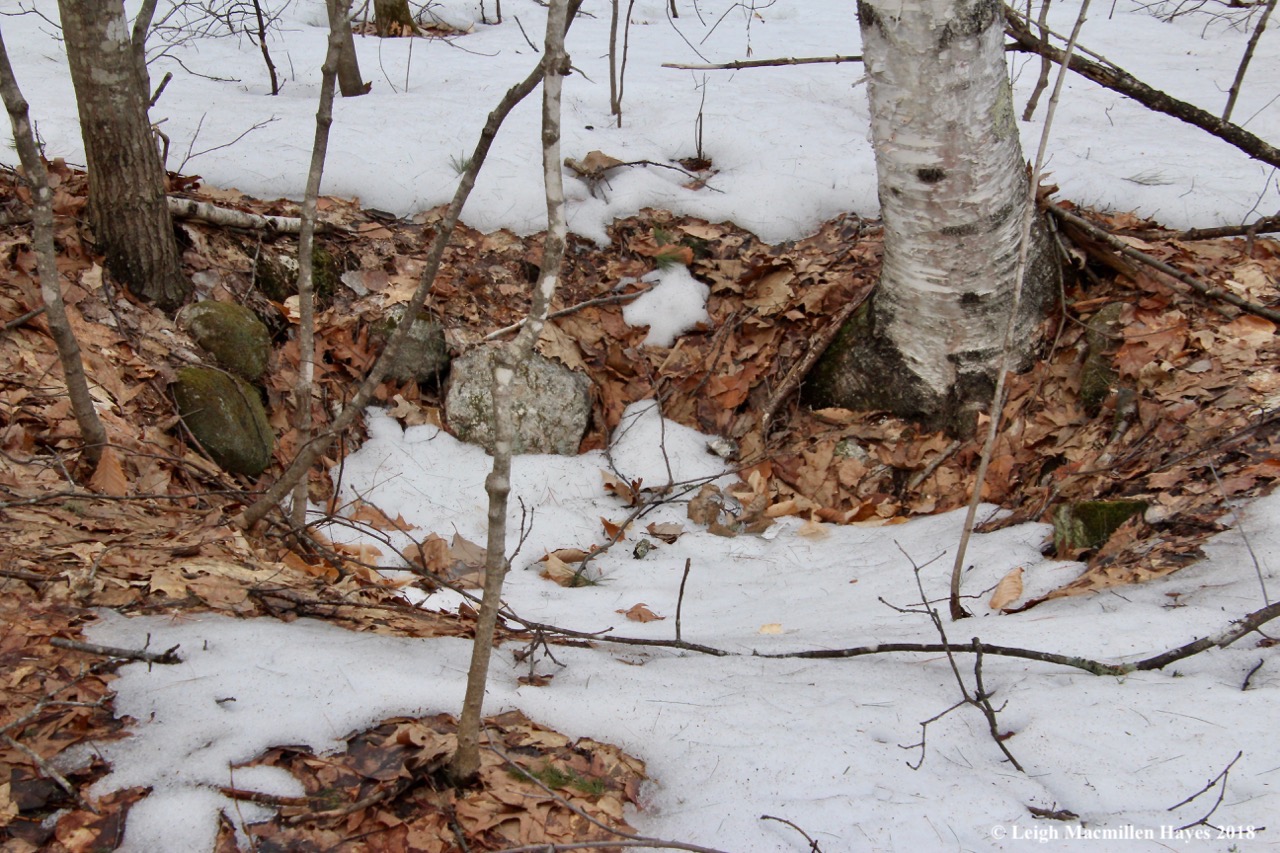
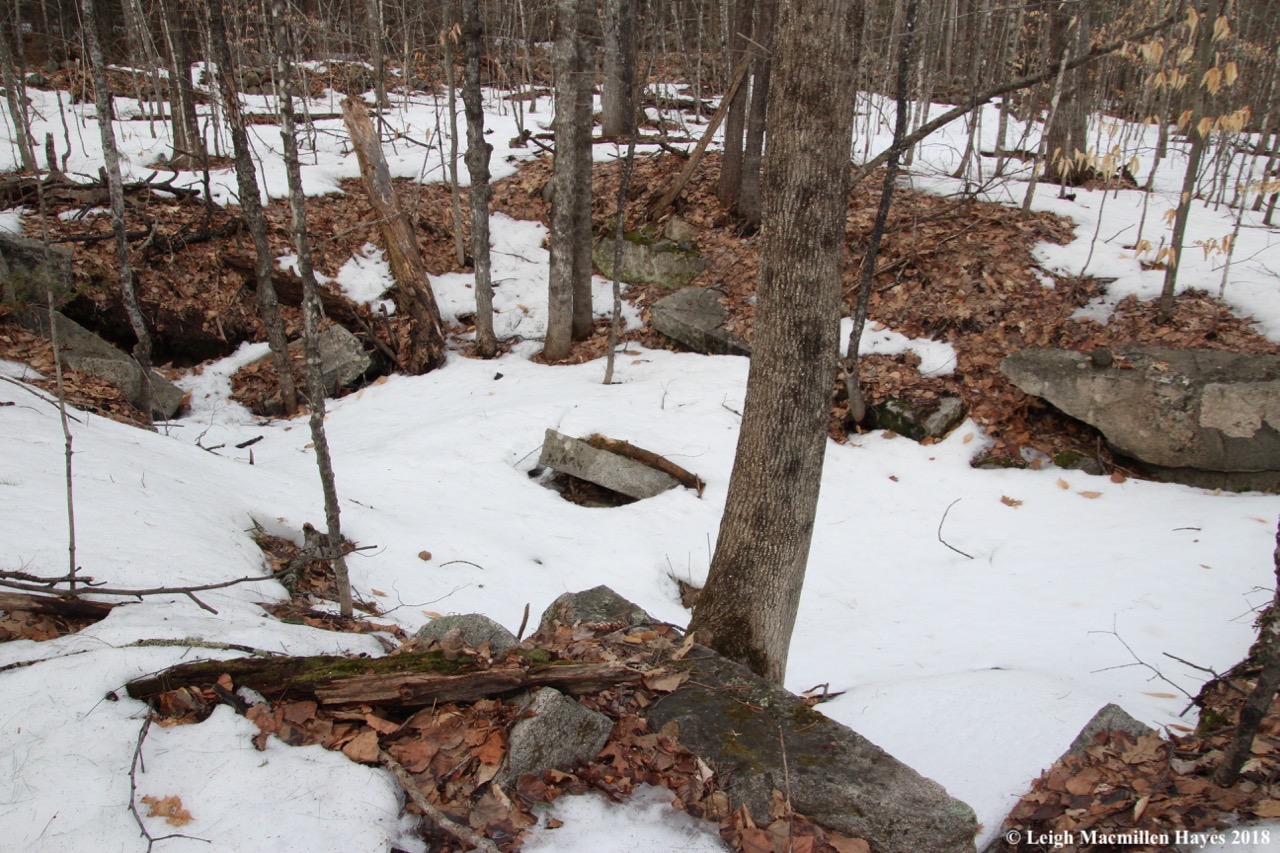
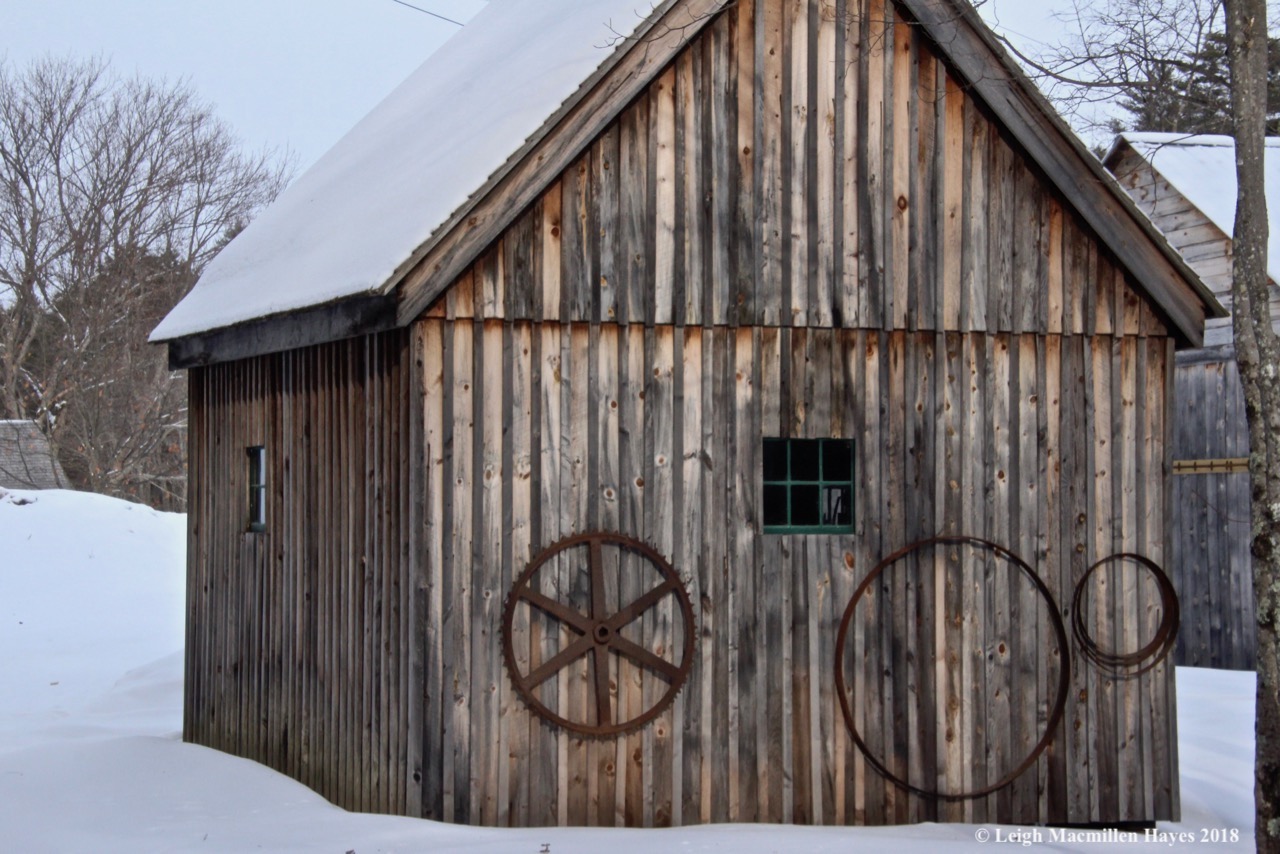
Before turning onto Willis Mills Road and heading toward the trailhead parking area, we first past by a cemetery of sorts, where old trucks and various truck-related equipment have gone to rest. 

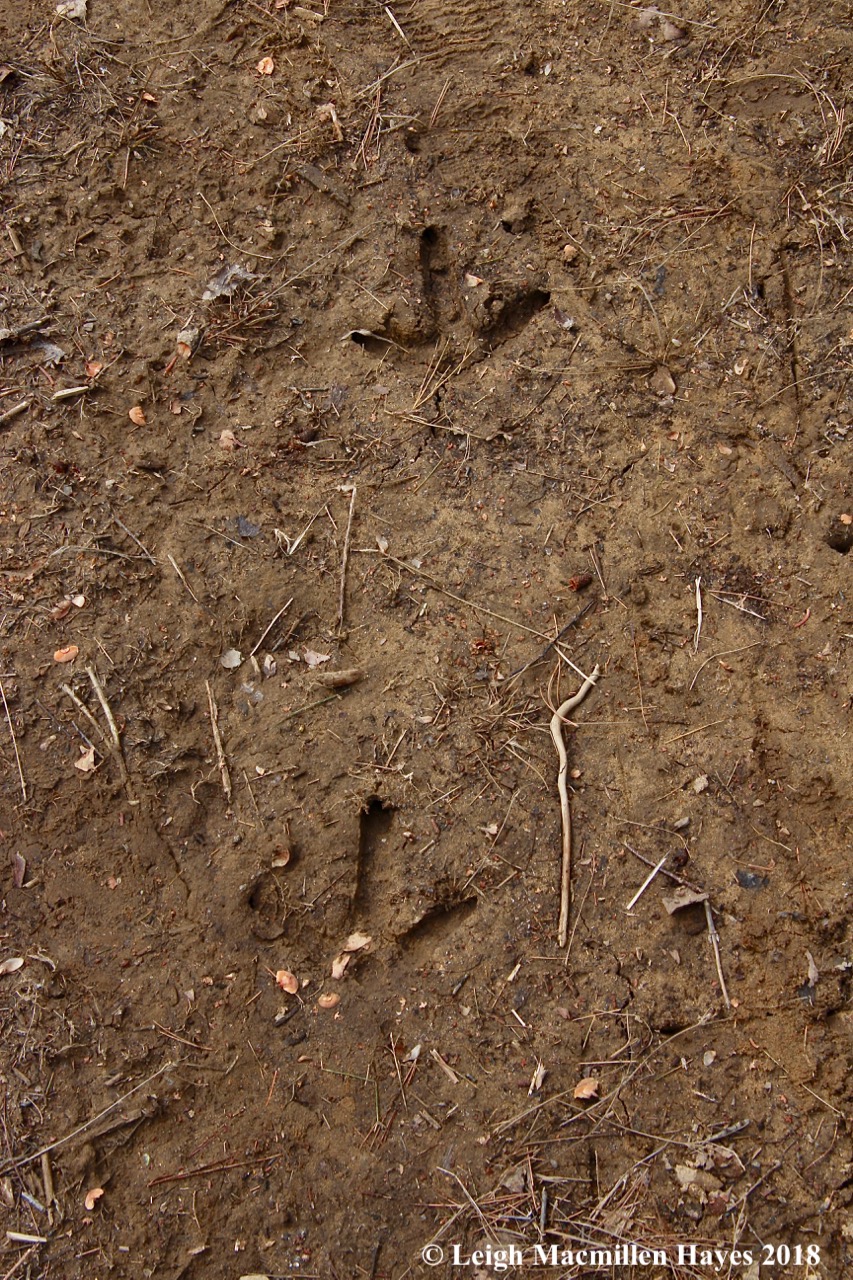
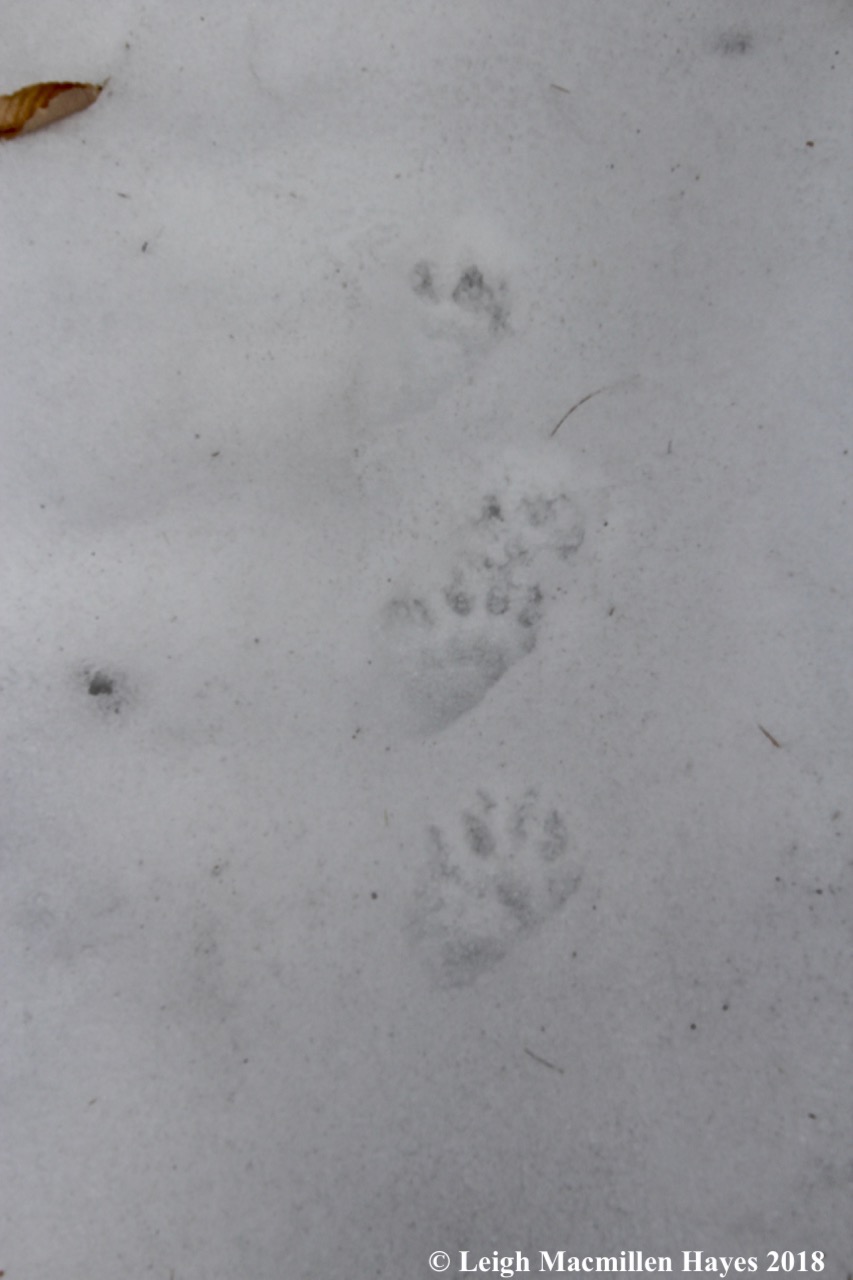
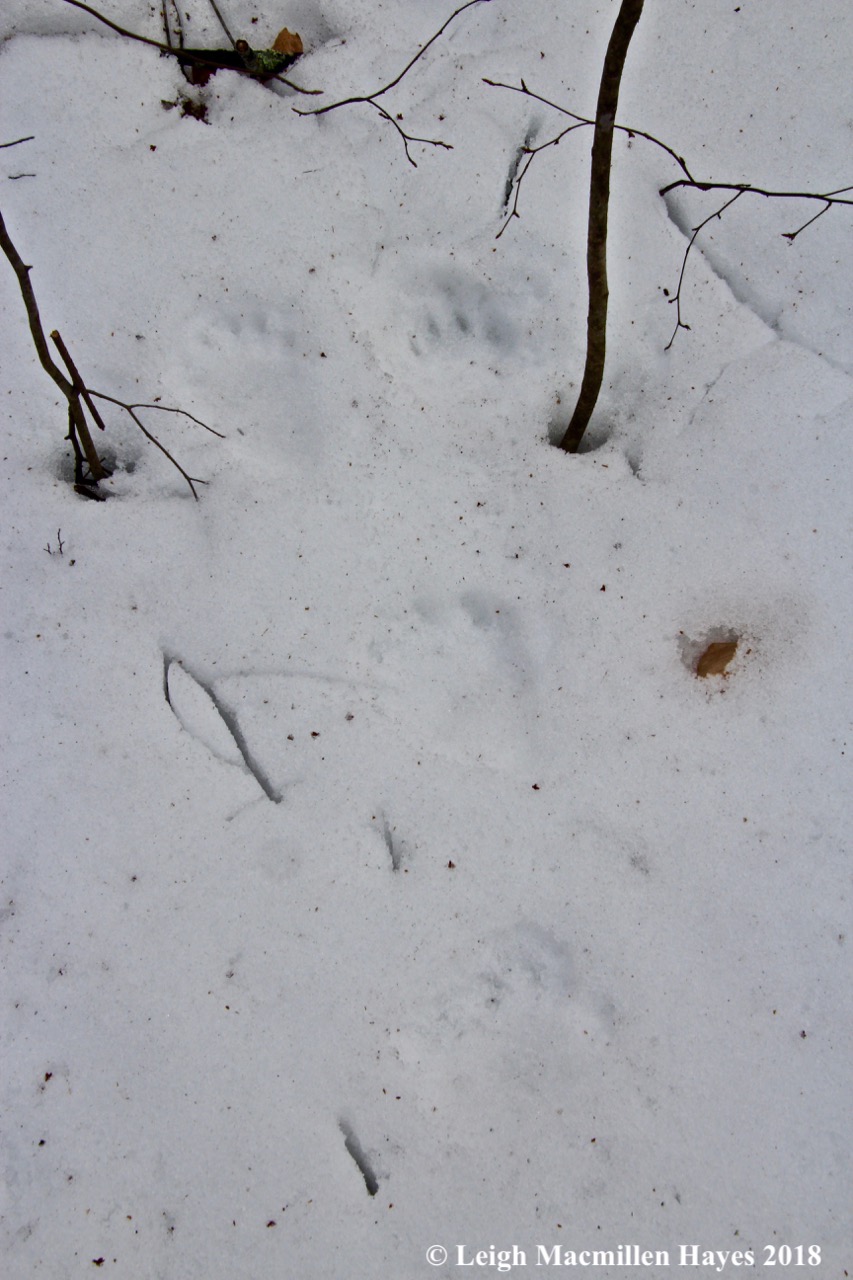
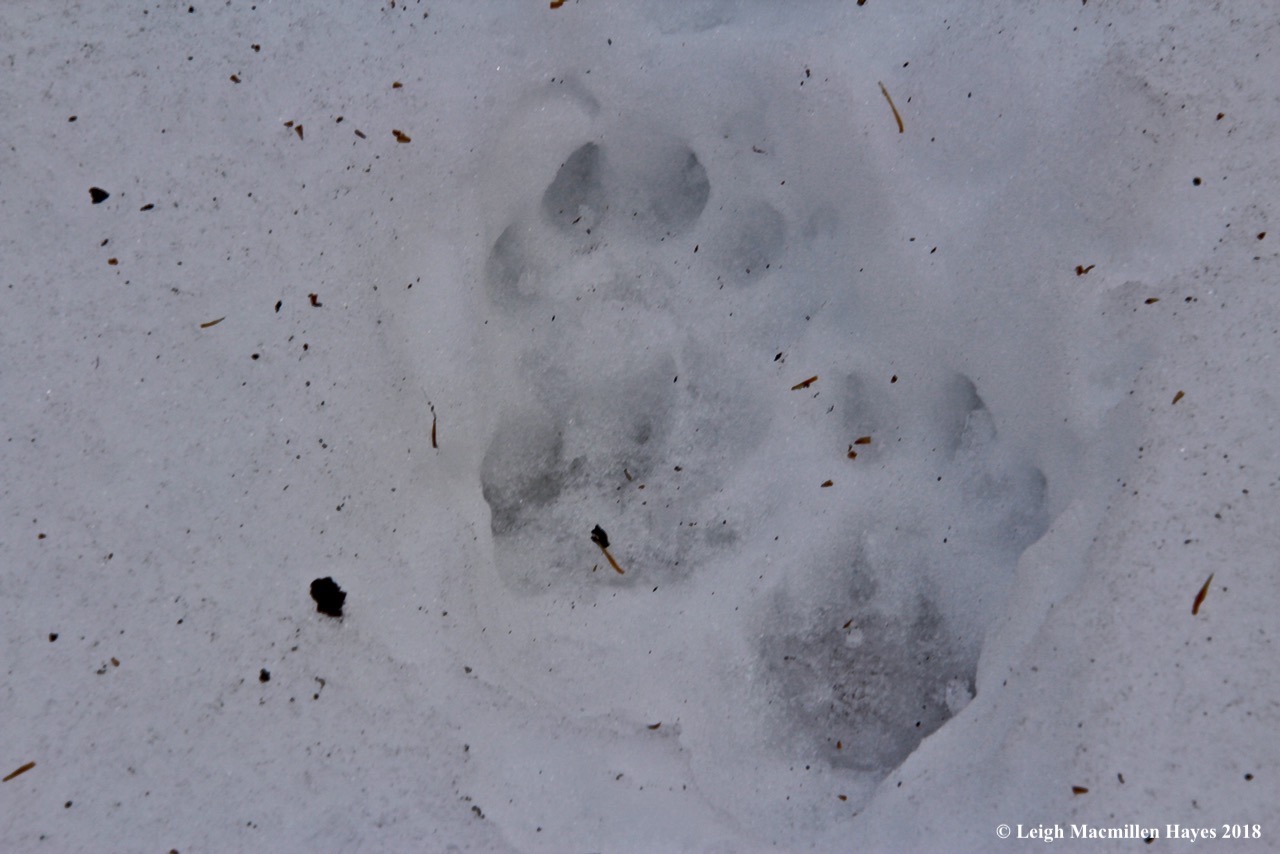
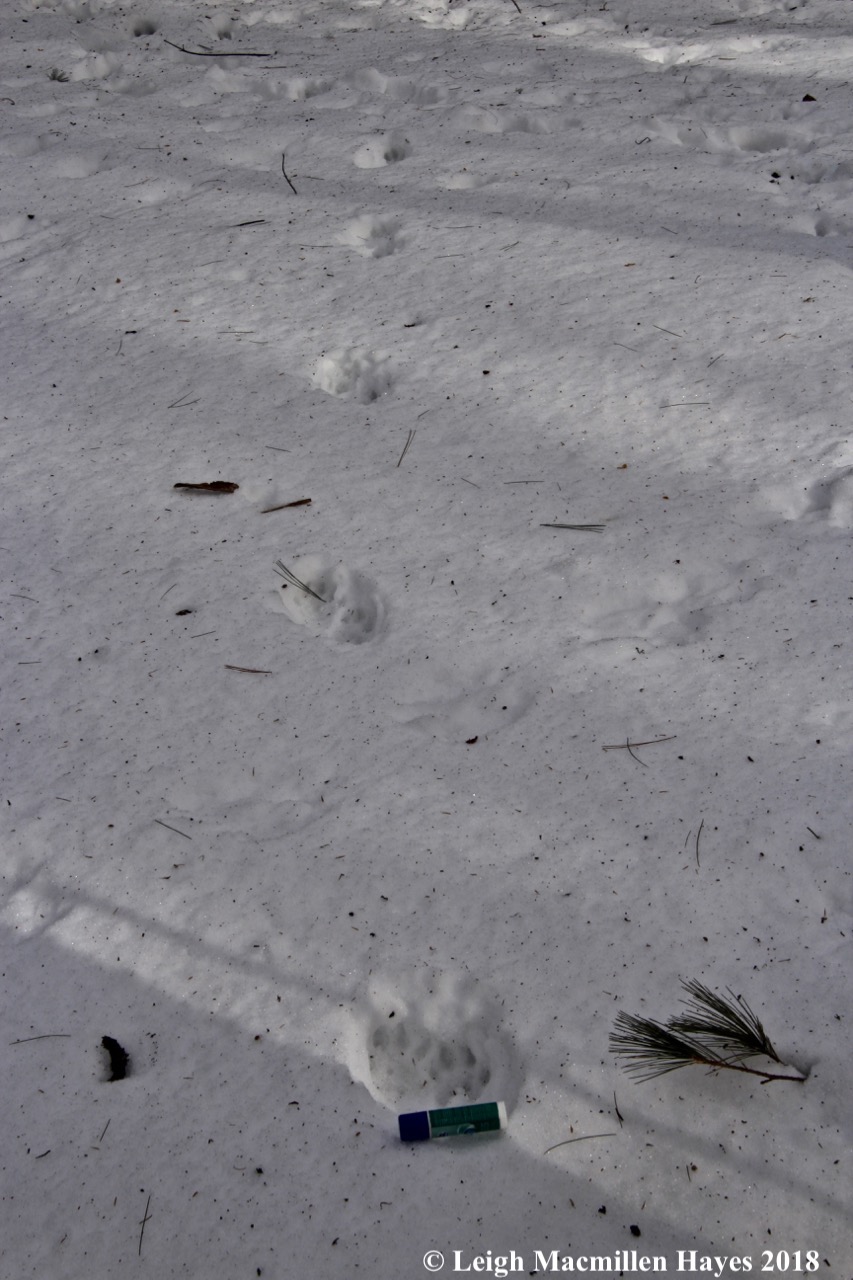
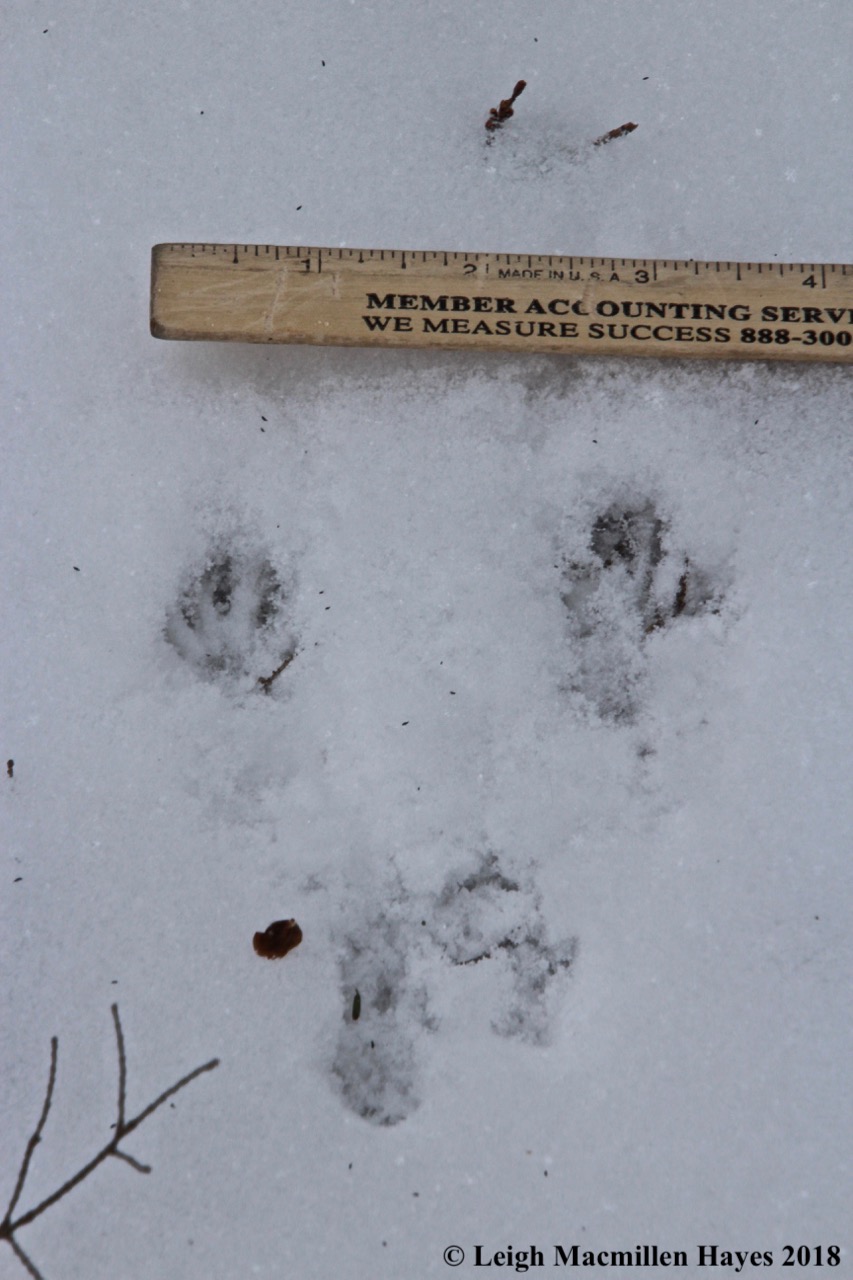
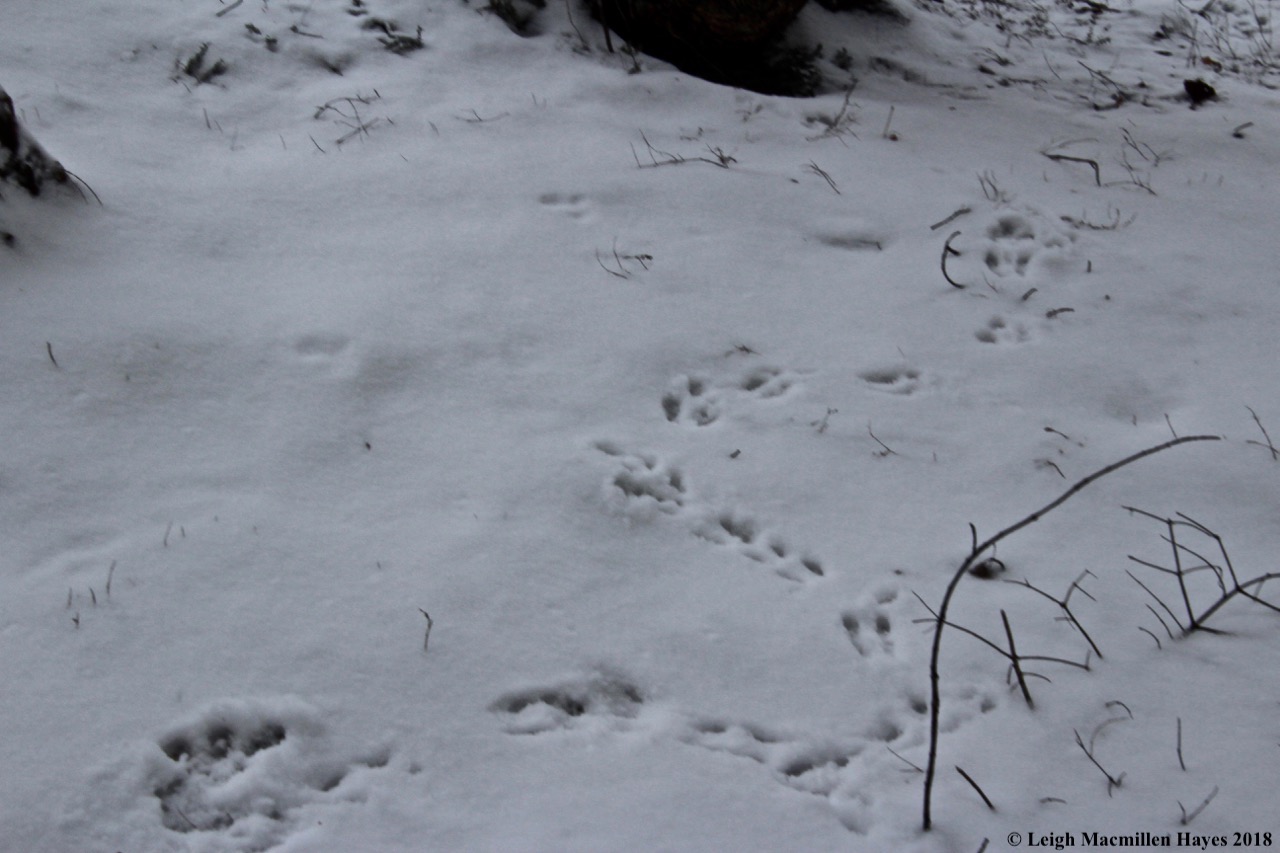
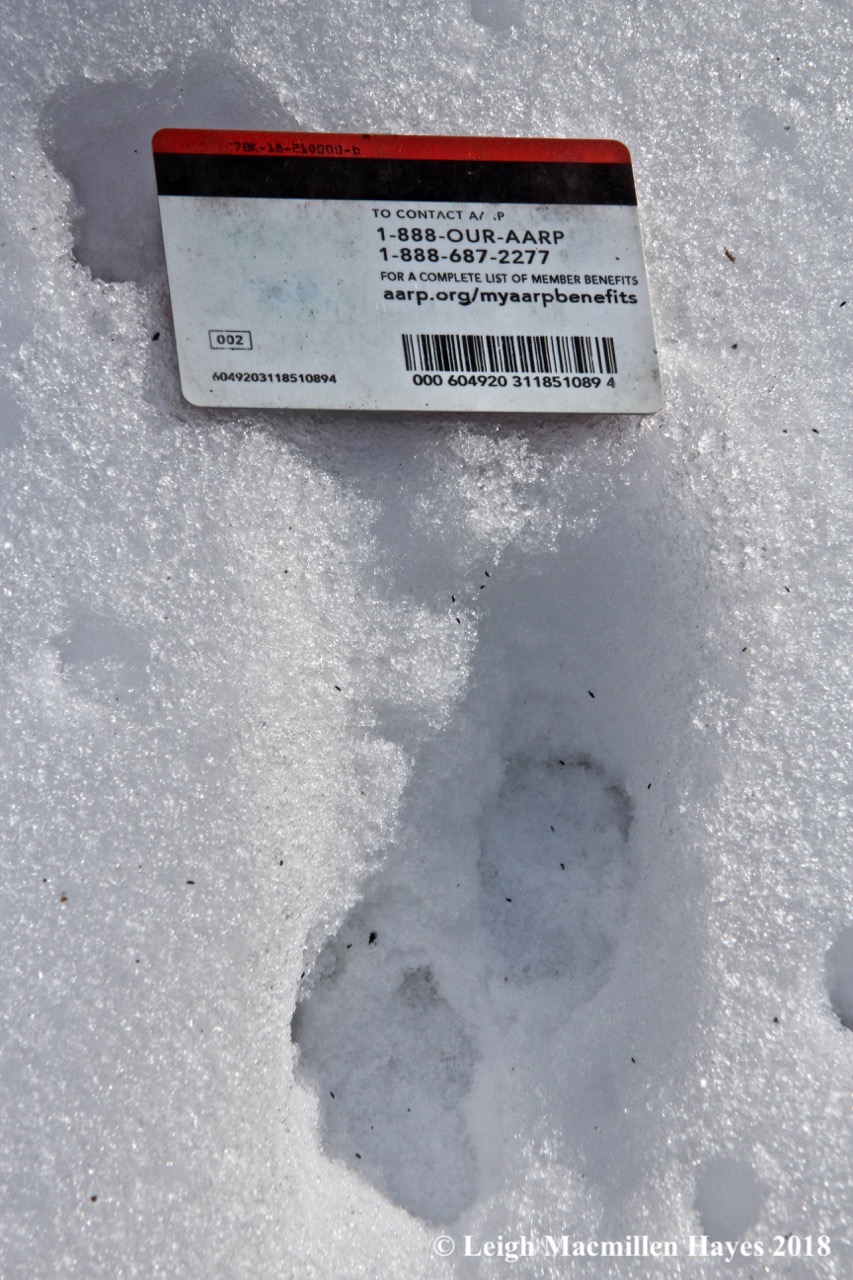
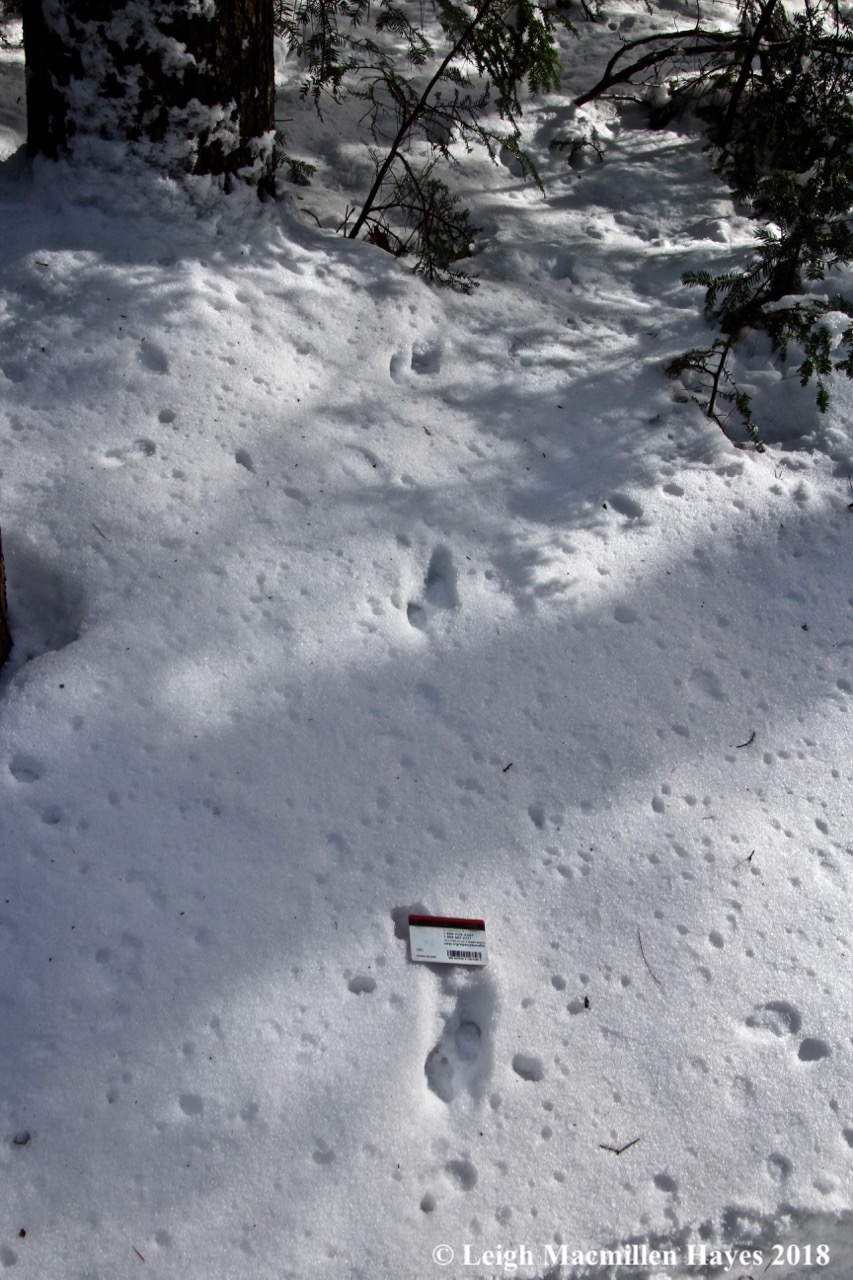
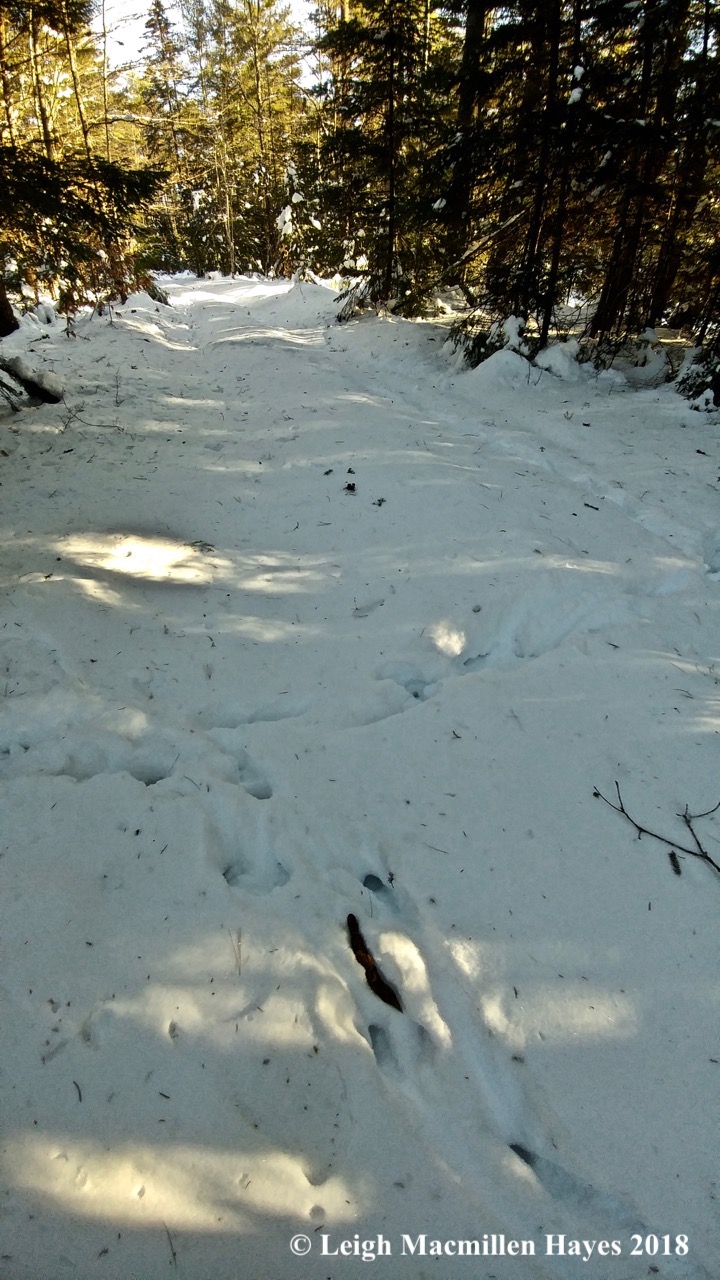
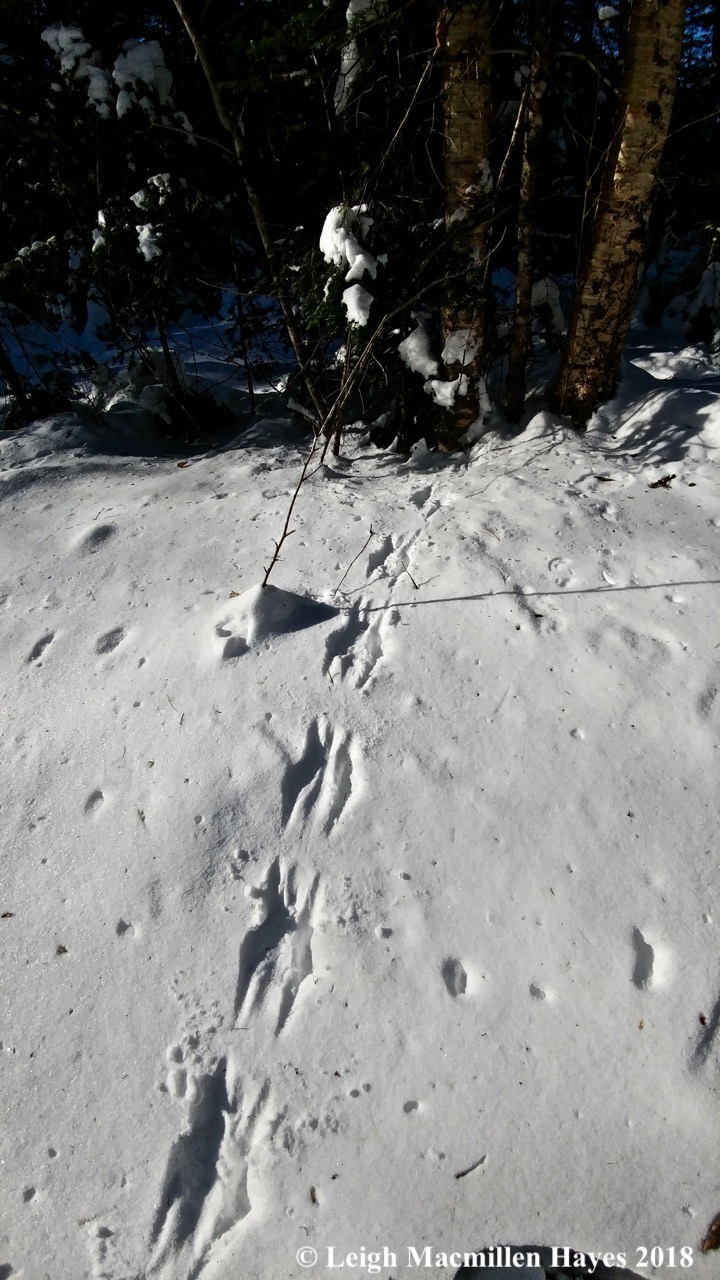
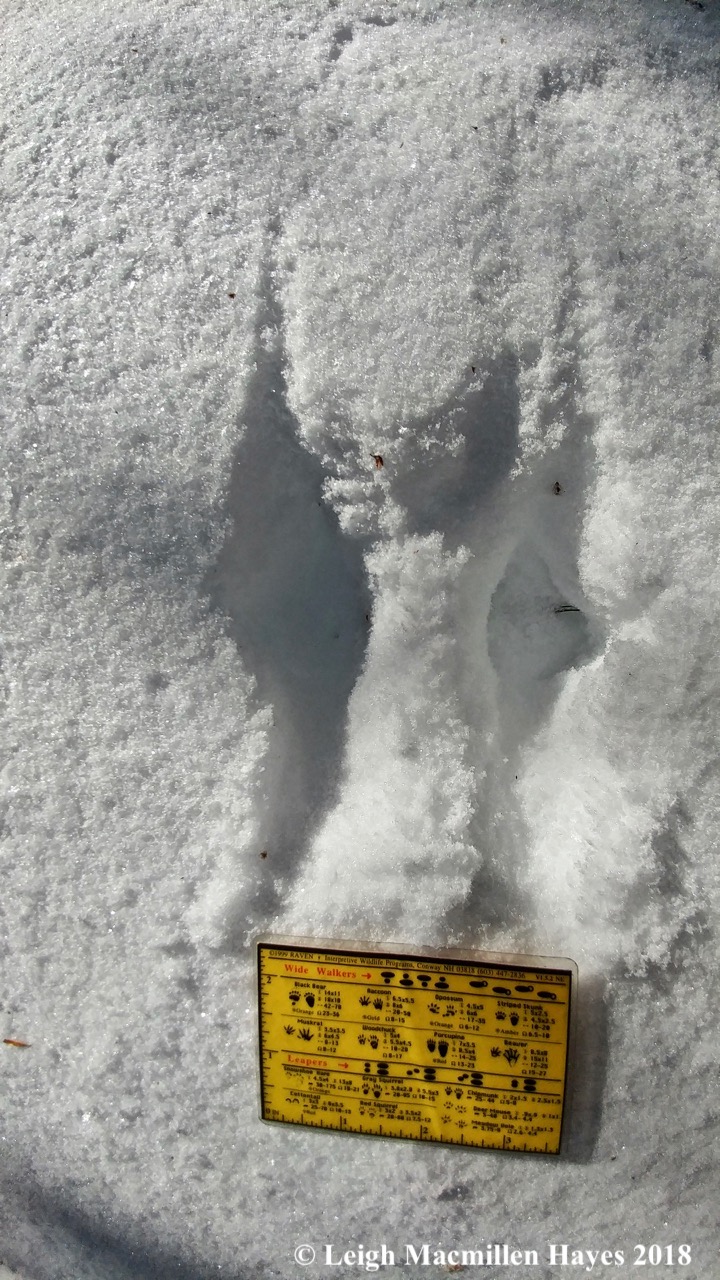
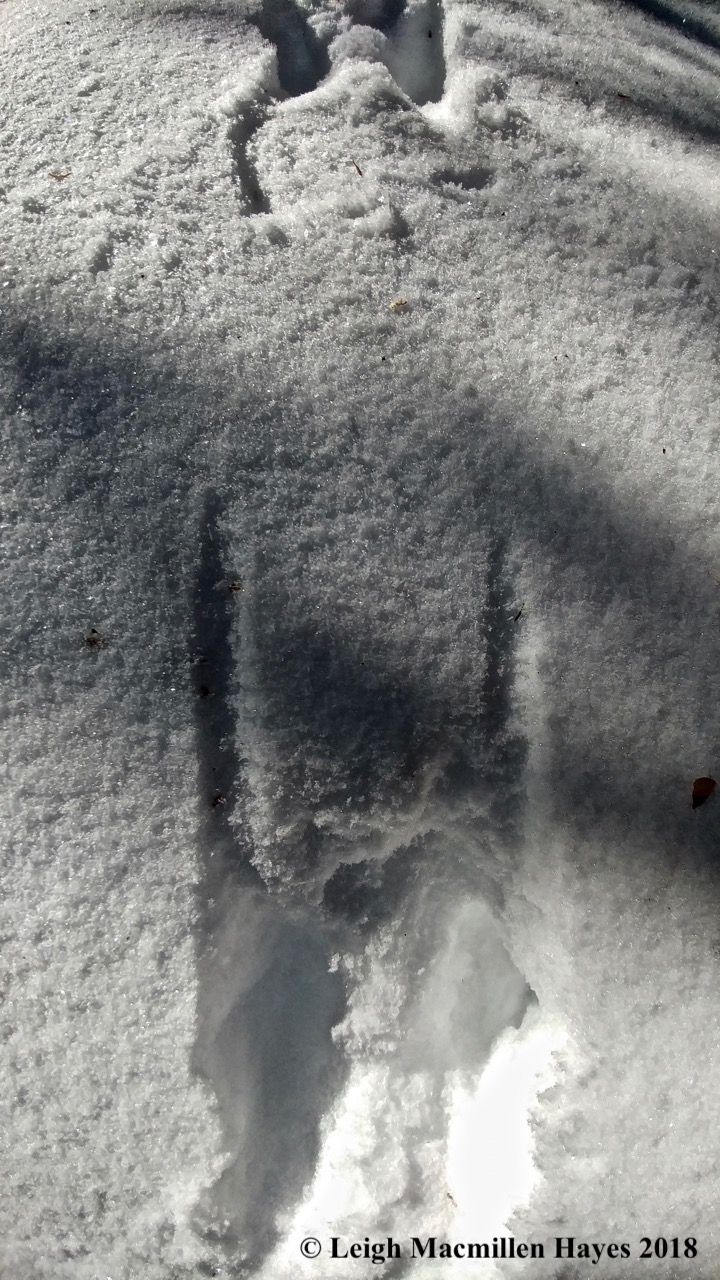
And then, in a matter of minutes we were on the trail and our focus changed to all things natural, including weasel tracks. Notice the diagonal orientation in the pattern. 

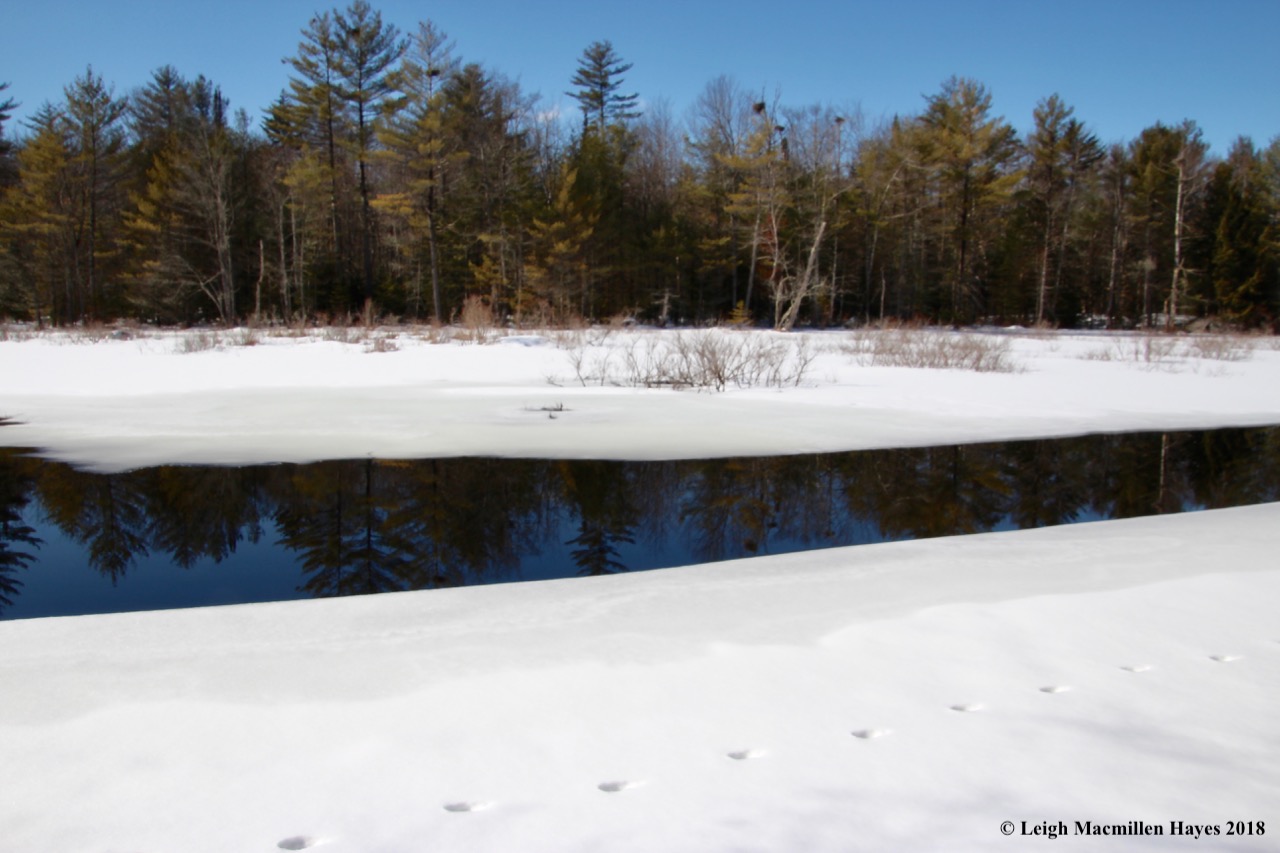
It made perfect sense to see weasel prints because we were near the Sanborn River and though I didn’t take the time to measure them, but the size of the straddle I assumed mink. 

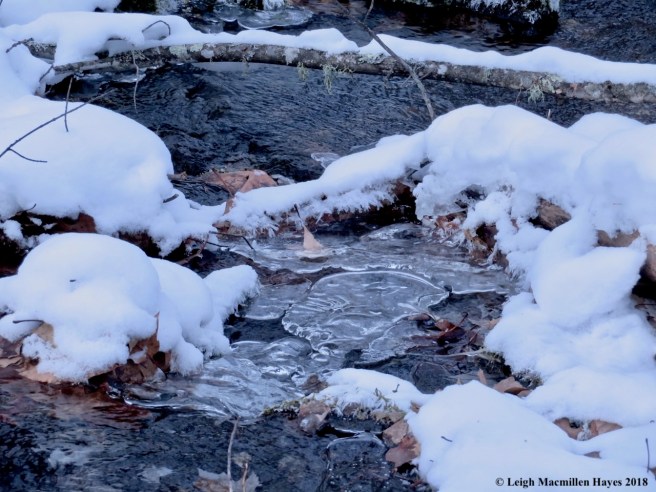
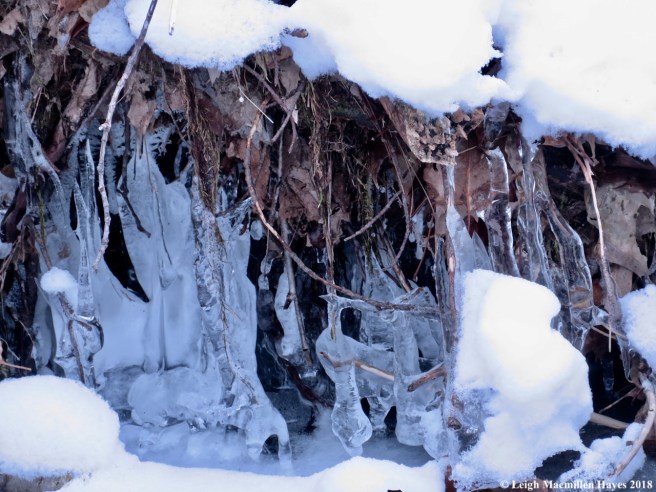
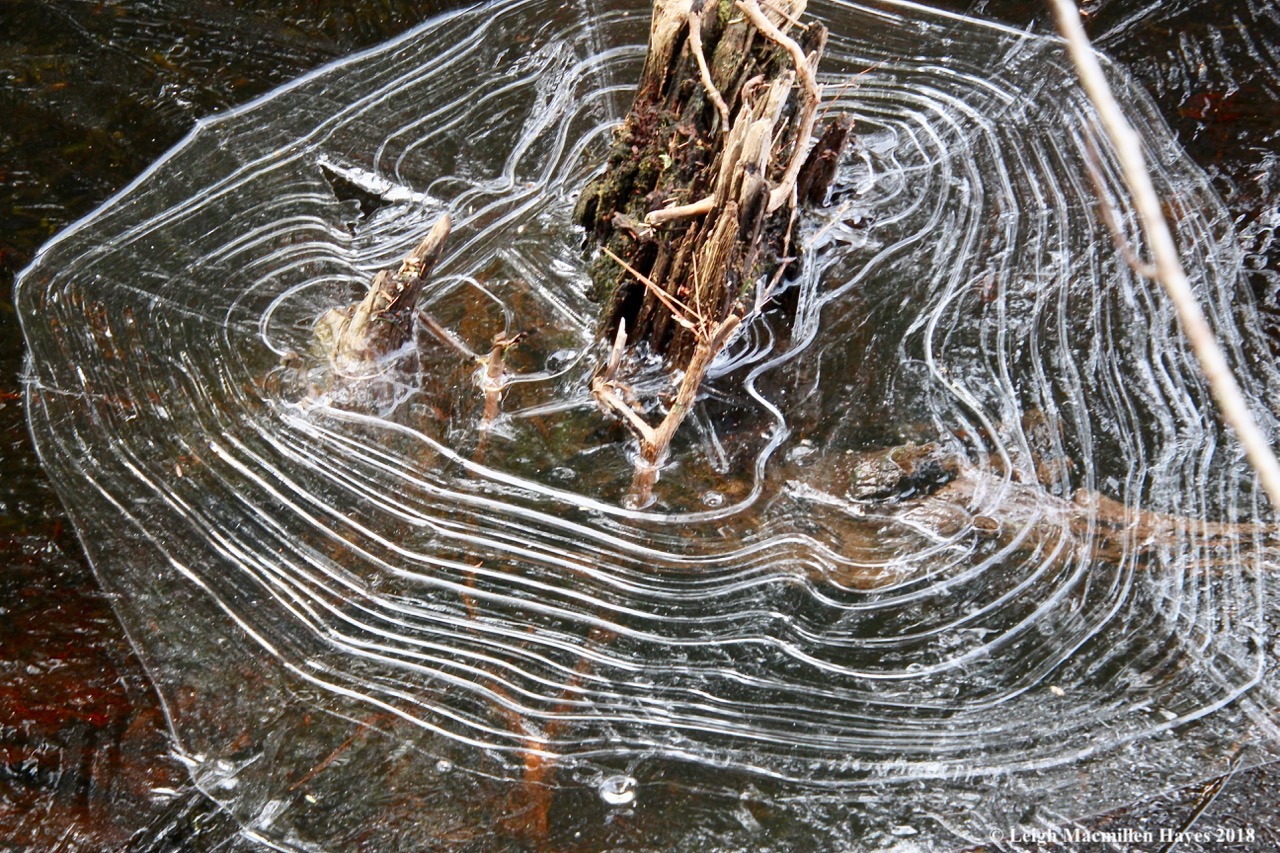
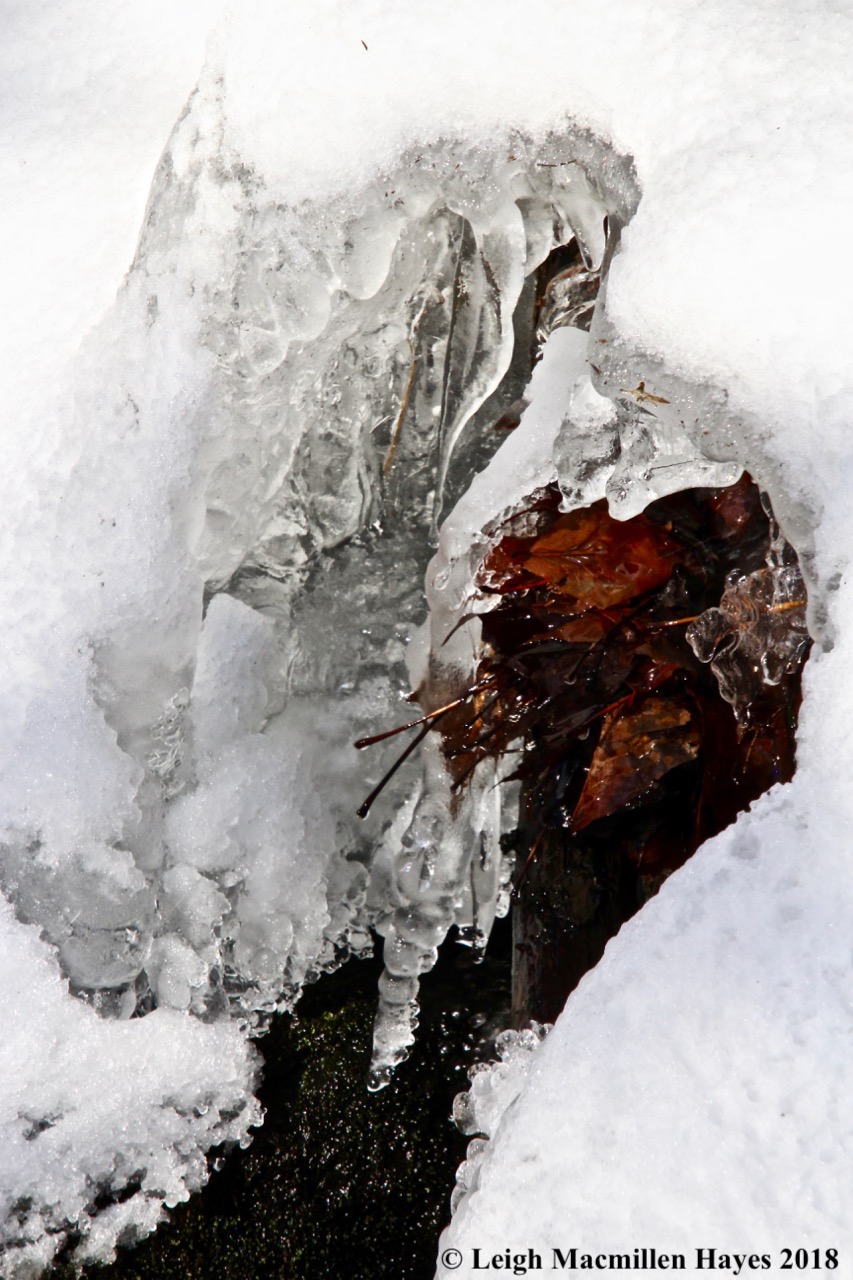
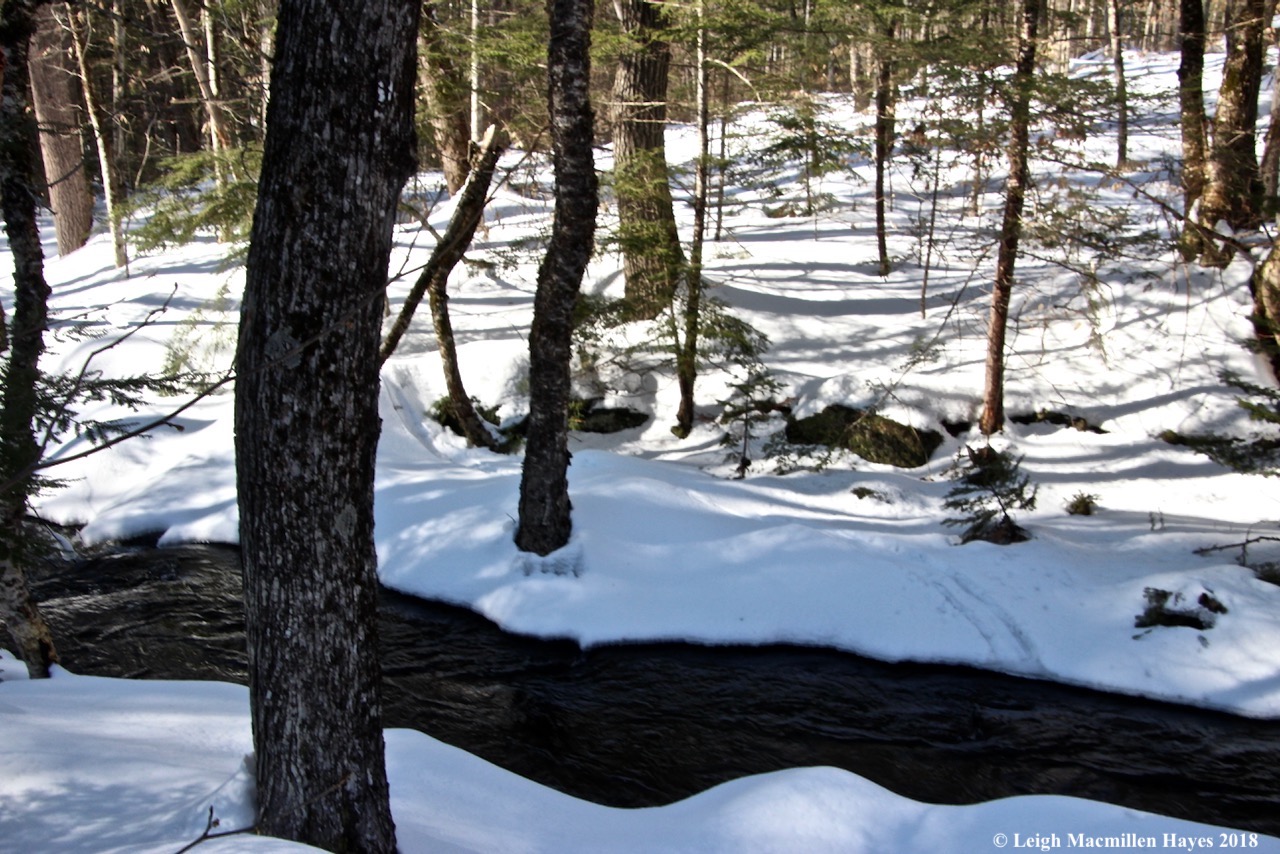
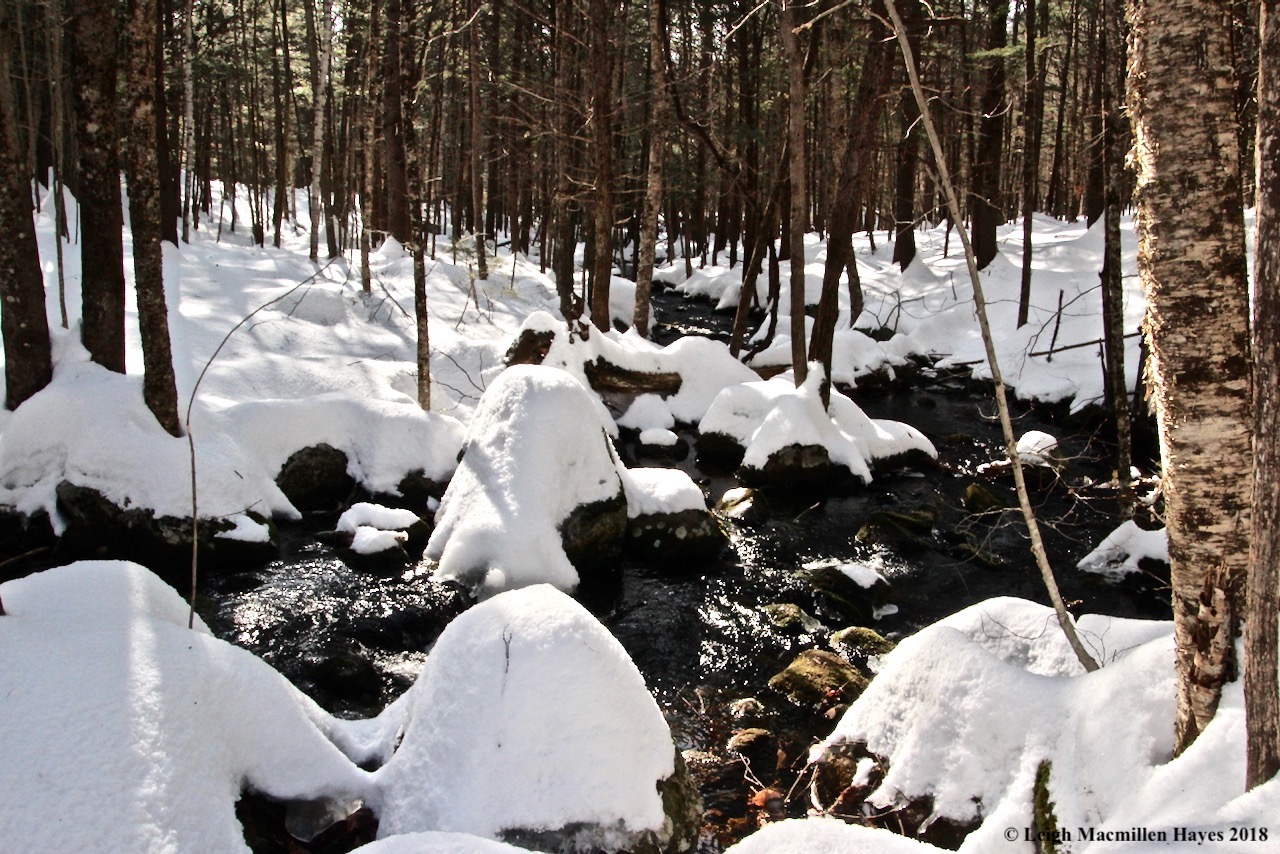
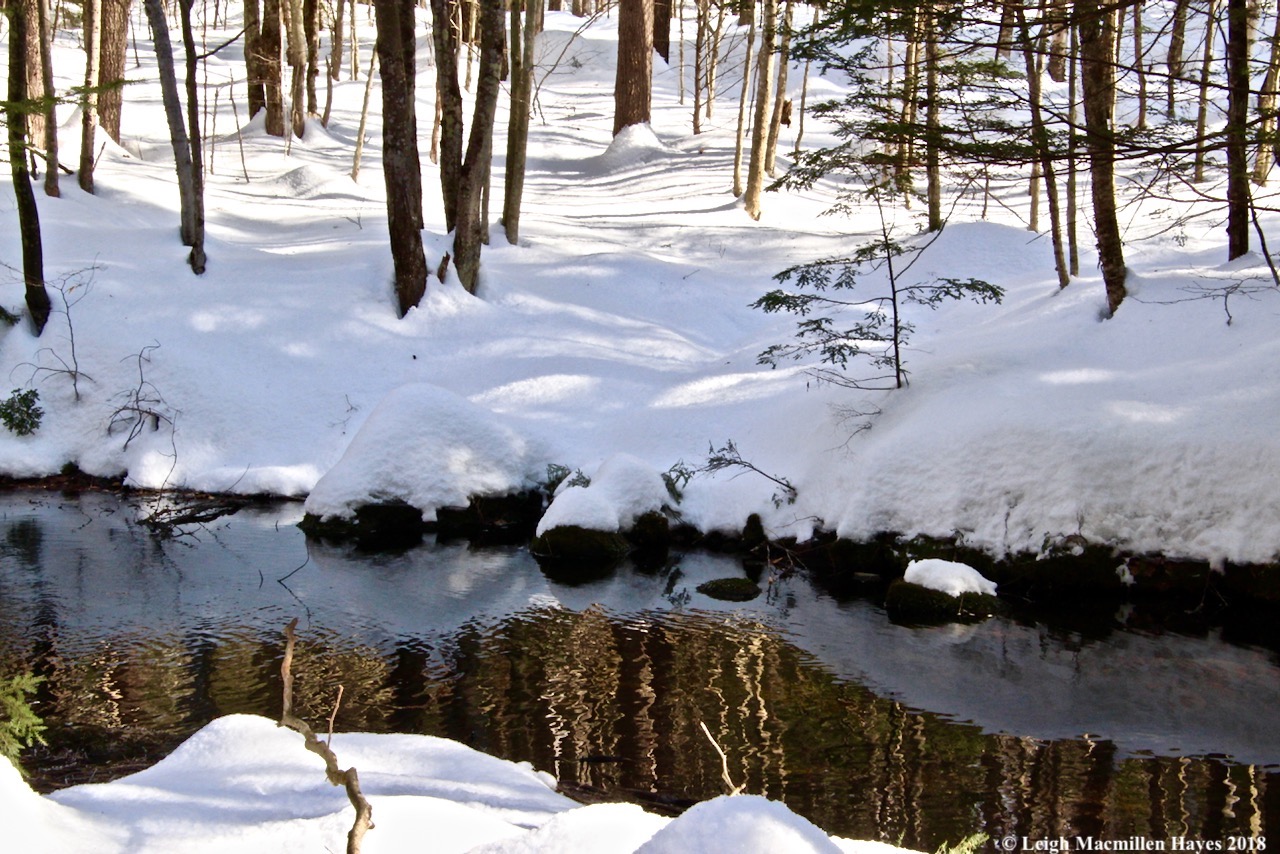
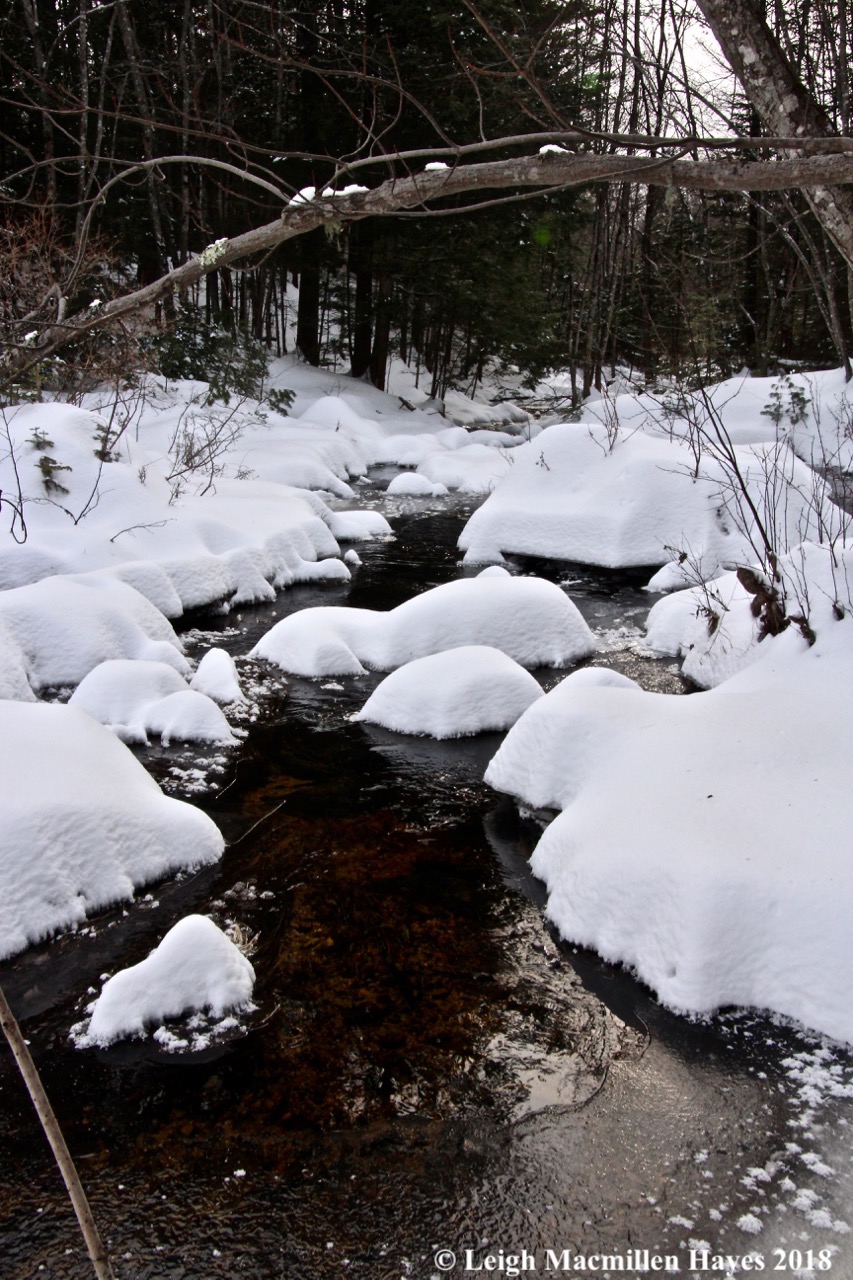
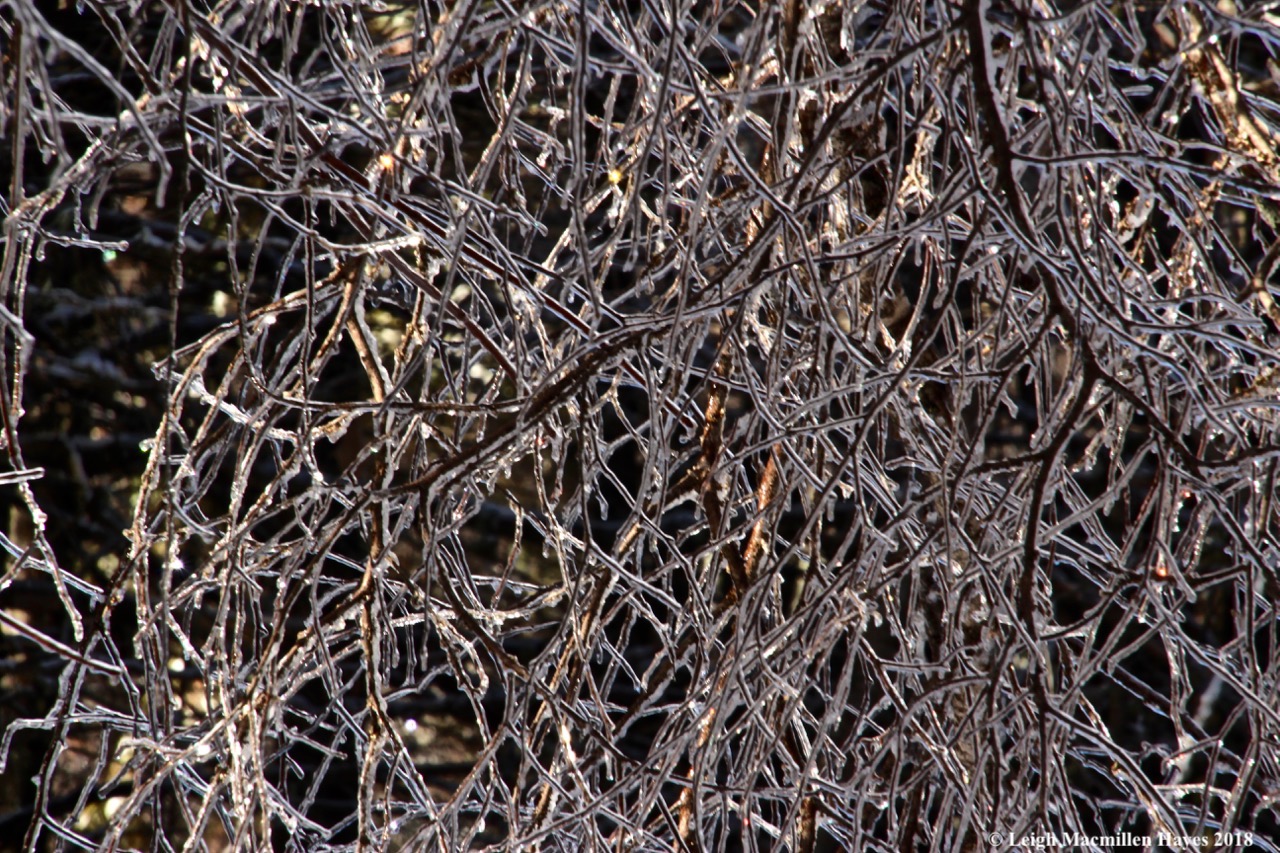
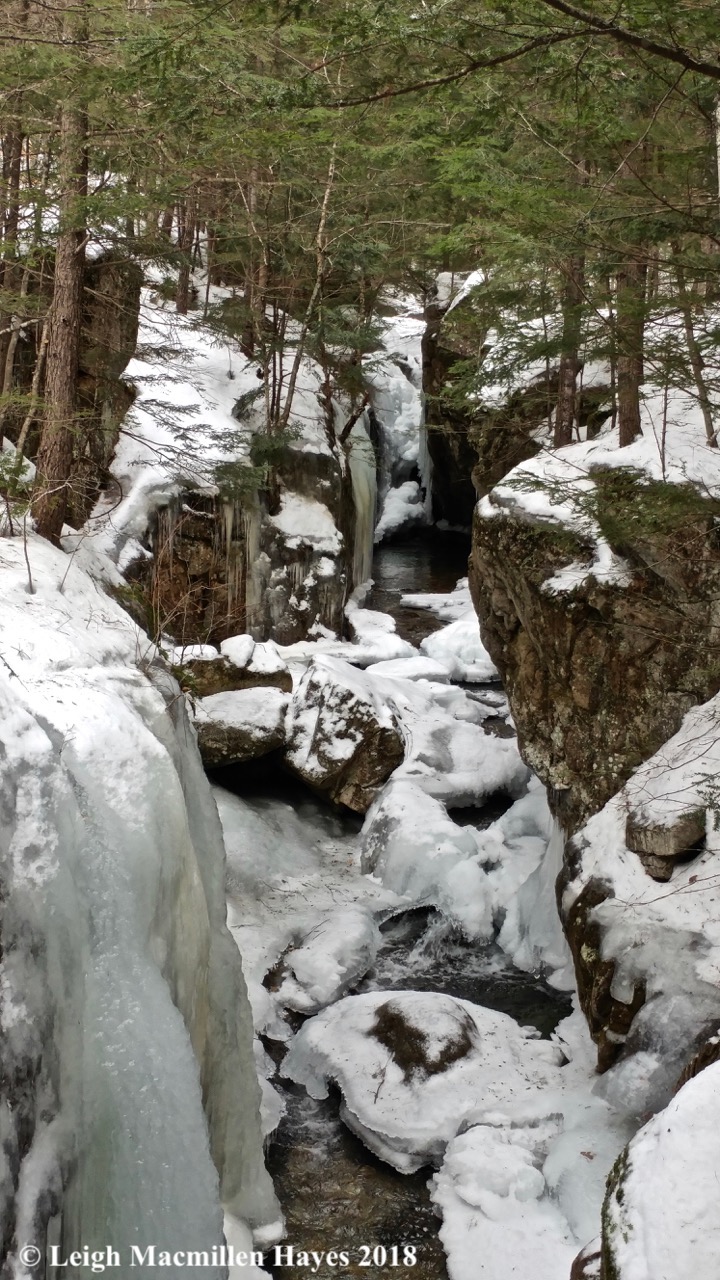
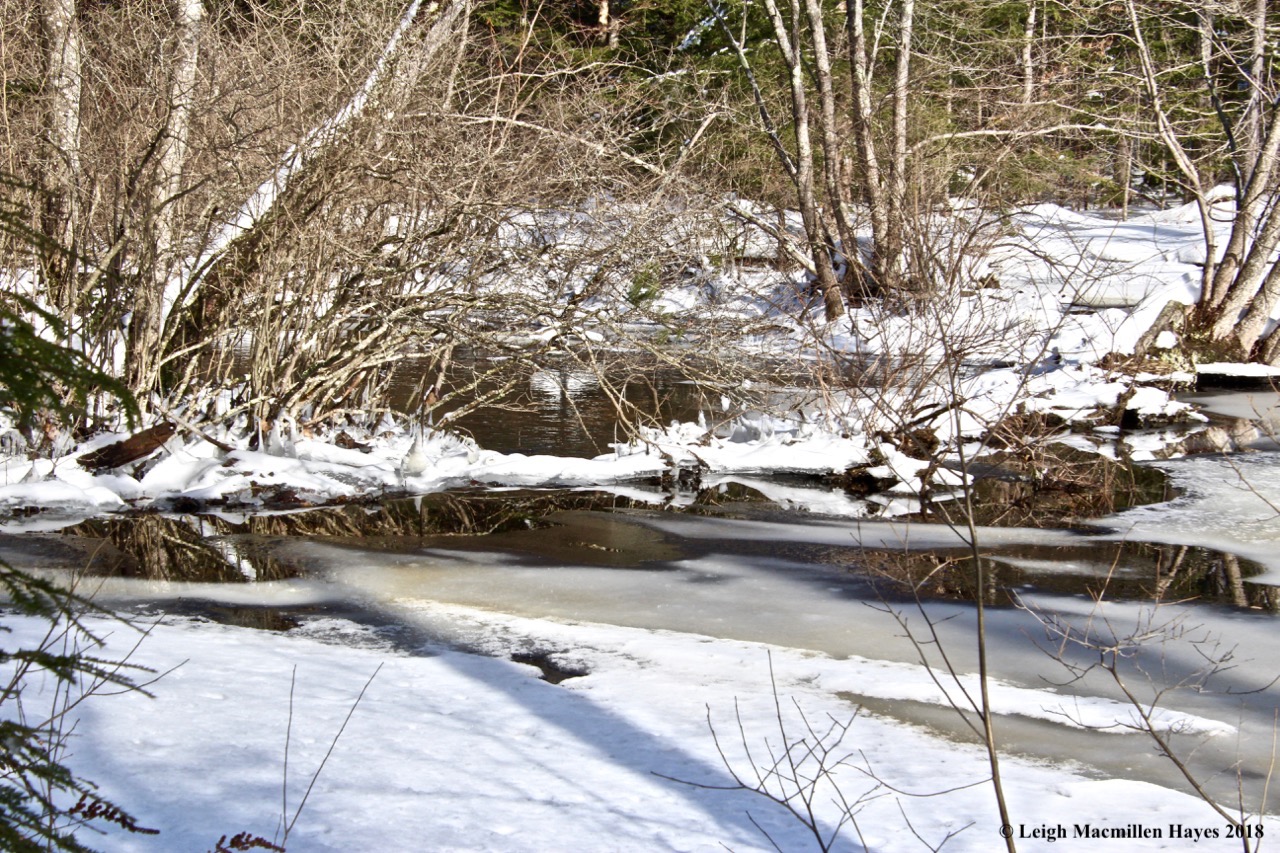
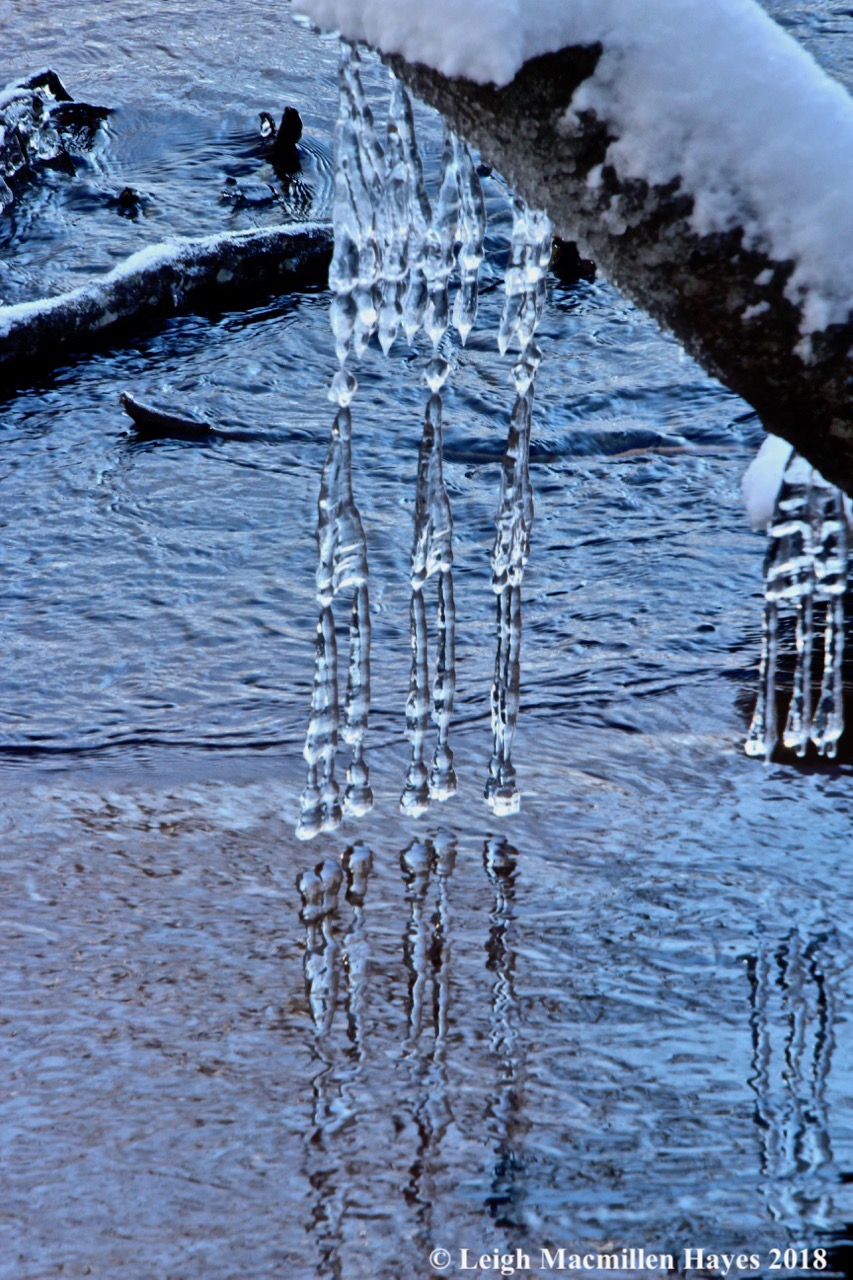
For over a mile we walked beside the river and loved the sights and sounds it offered, and especially the splash-created icicles. 
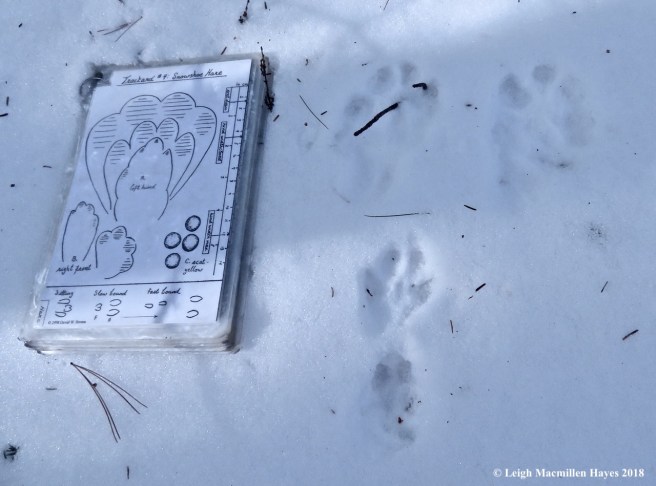
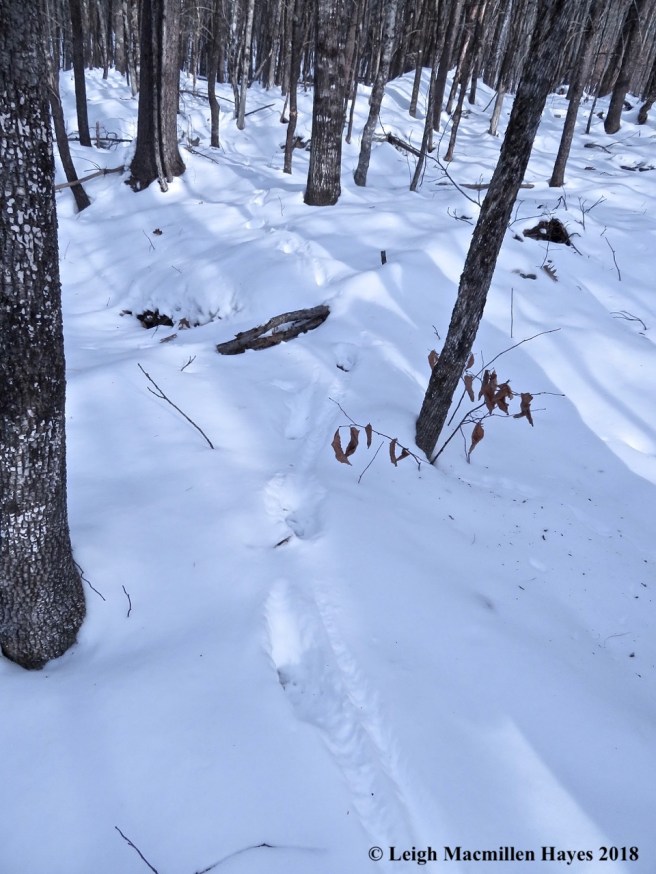
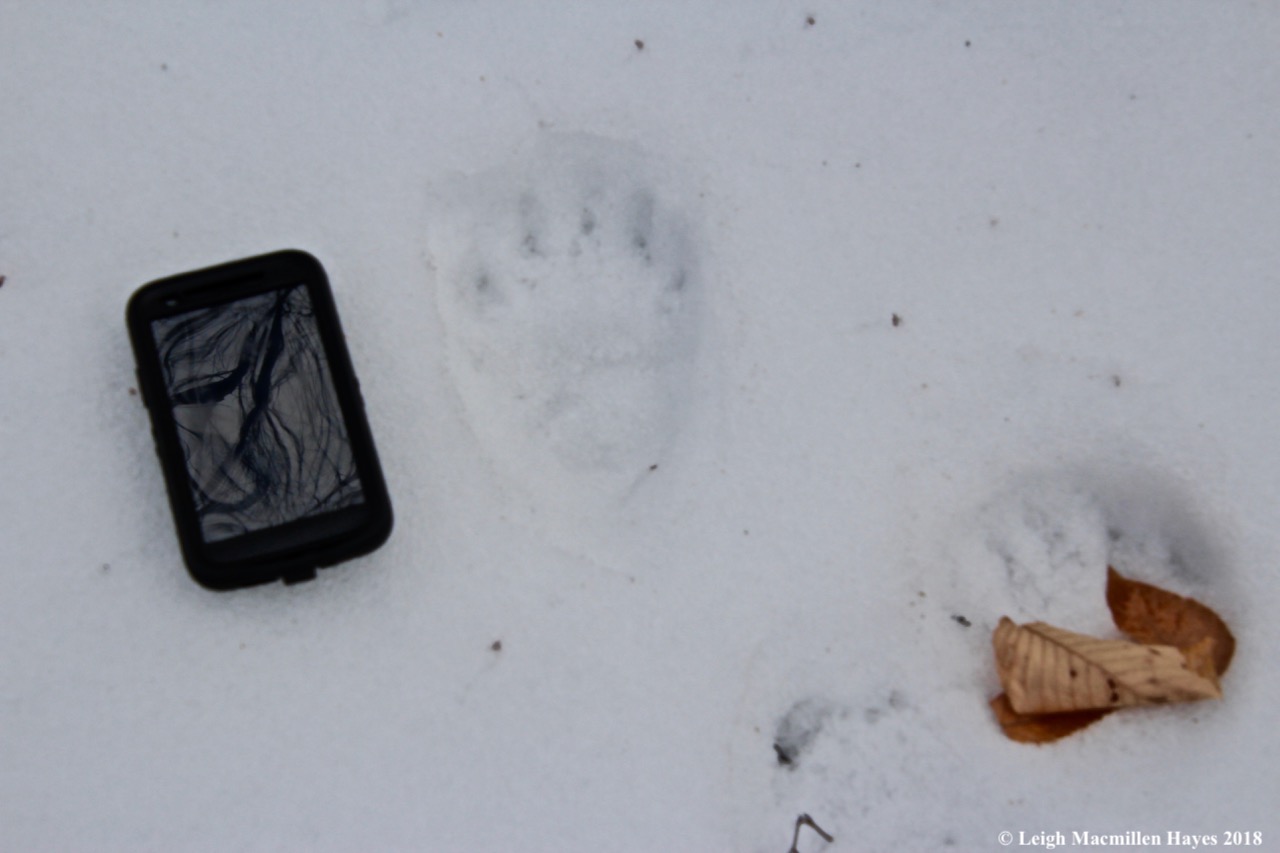
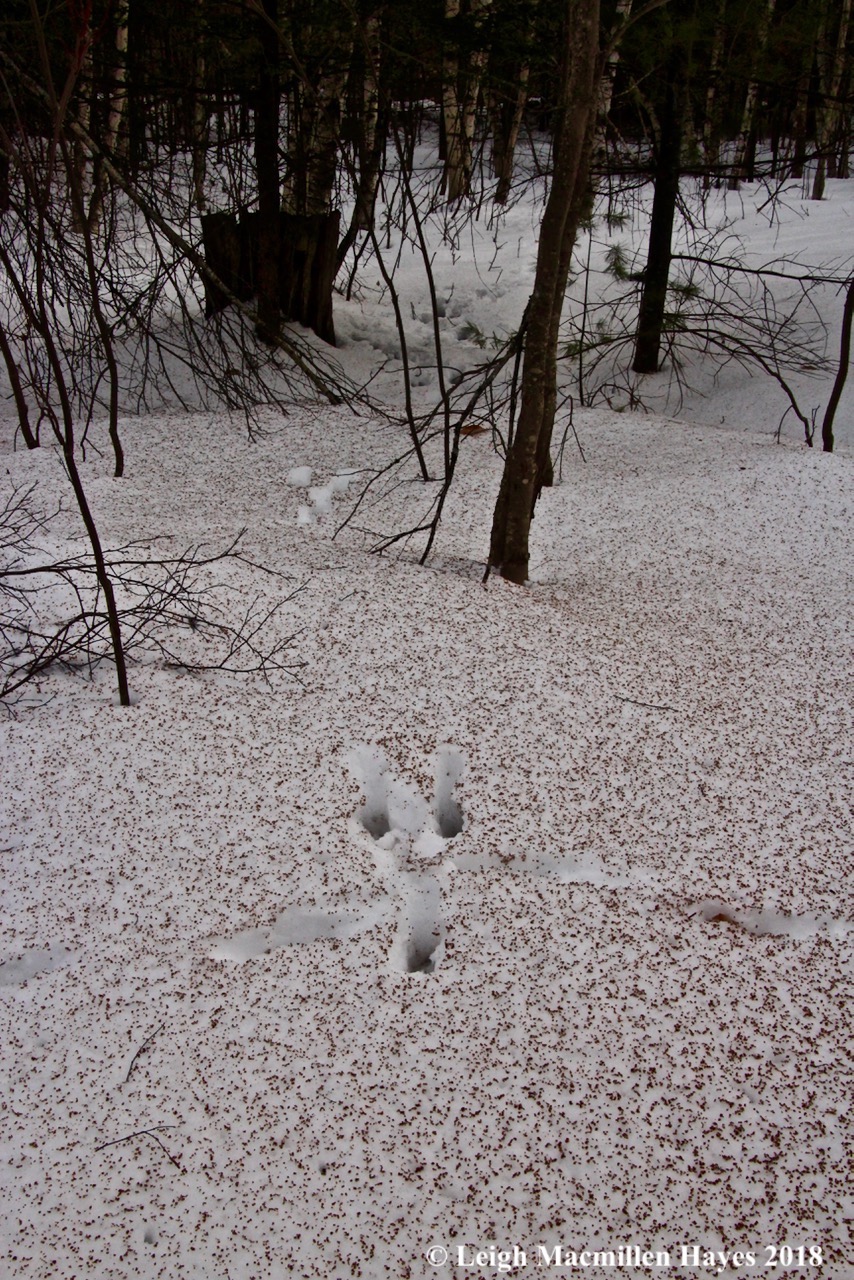
When we weren’t focused on the river, we noted its neighbors including snowshoe hare prints that were rather fresh. Some will remember that I refer to them as snow lobsters, for quite often the impression of the four feet (front two being their hind feet which swung around and landed parallel; back two on an angle being the front feet) looks rather like the large marine crustaceans visitors often equate with Maine. 
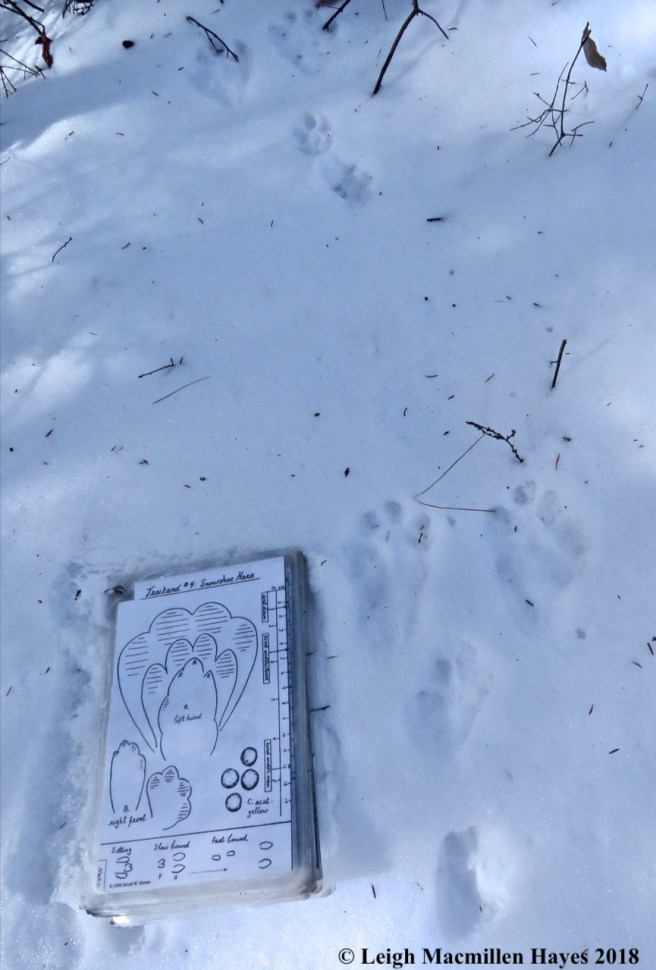
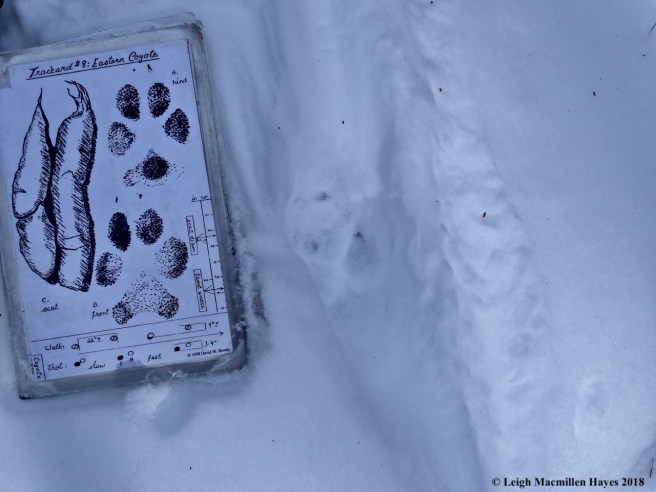
With David Brown’s Trackards as a reference, it was easy to imagine the hare’s motion. (Note: visit my book review linked to Trackards in the sentence above and you can locate David’s website. His books and ID cards are available for sale and he mentions that you can get a good deal just in time for Christmas.)
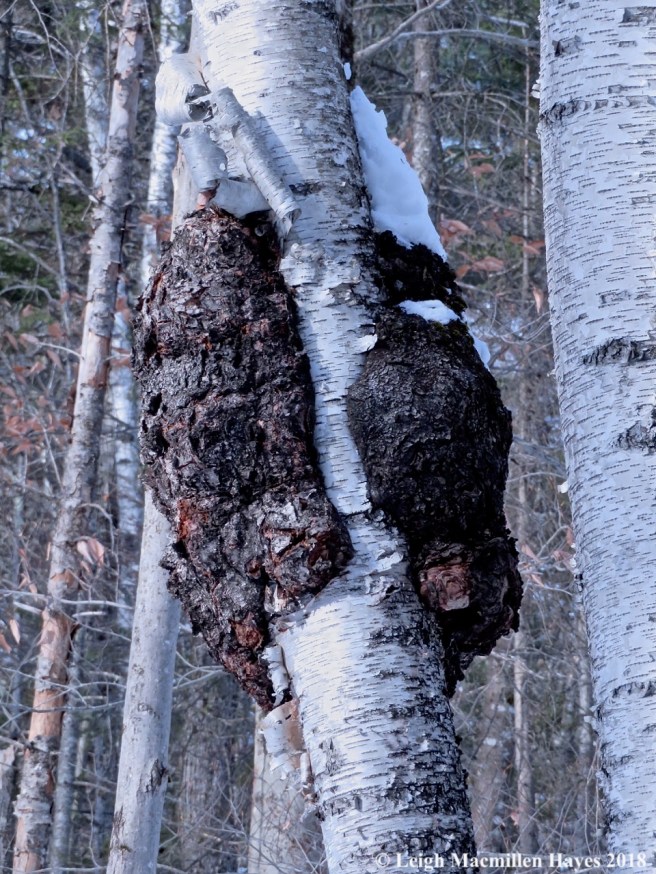
It wasn’t only tracks and ice that drew our attention. As we crossed from the river to the pond via a connector trail, we noted a huge burl that looked like two bear cubs holding fast to a paper birch.

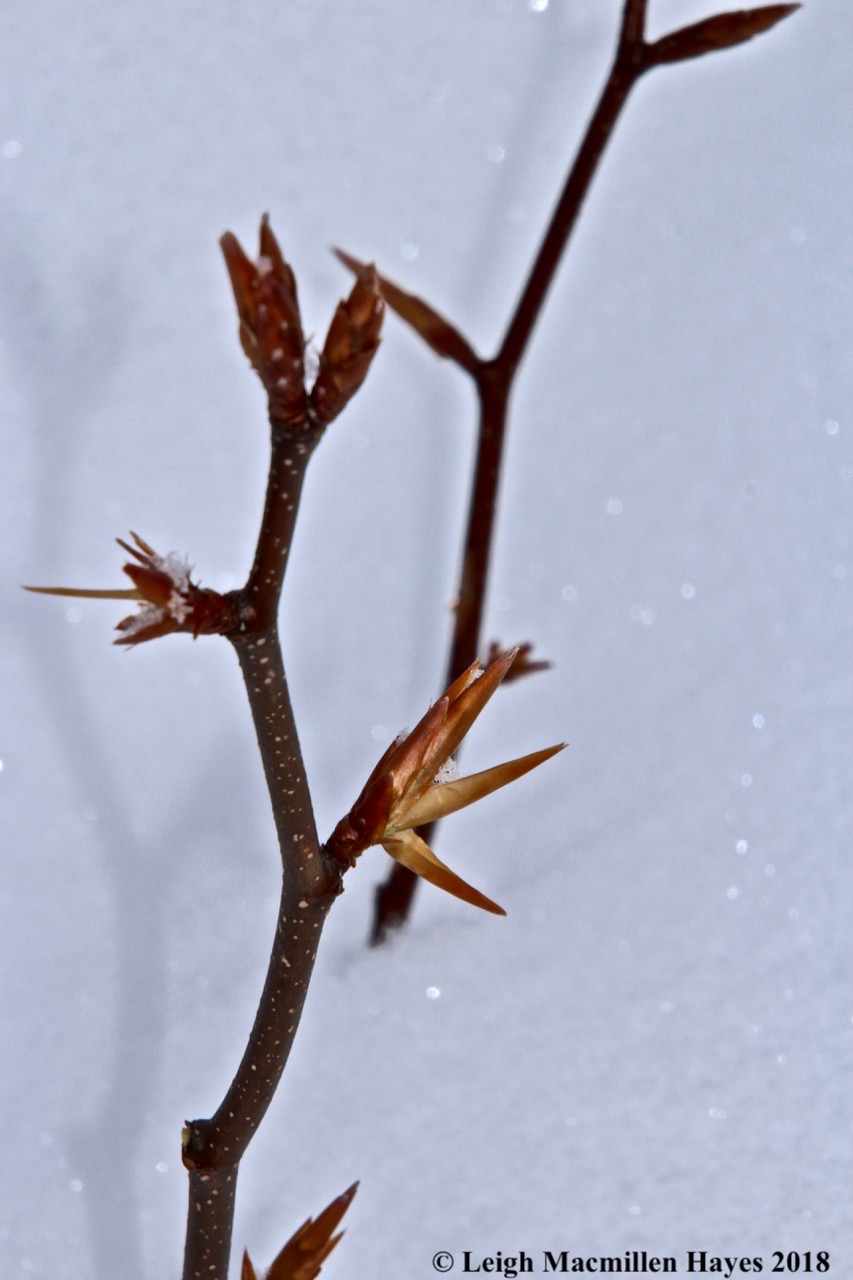
Along the way there were also some examples of my favorite shrub, hobblebush. We always refer to their buds as being naked for they aren’t covered in waxy scales like most. And look at those leaf and bundle scars. Following them down the twig, its fun to note the changes in age from the fresh tan scars to the two below getting grayer and more wrinkled in age–much the way we do. 

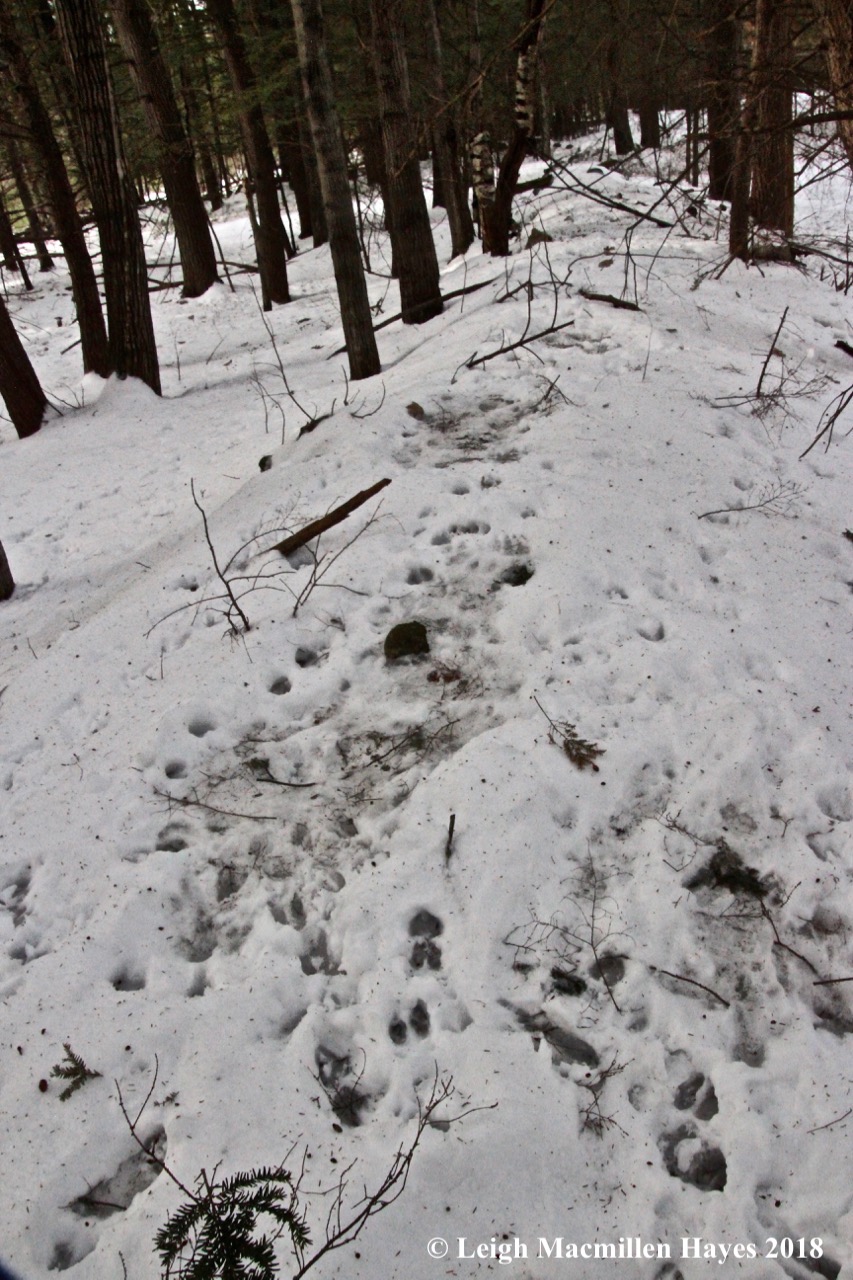
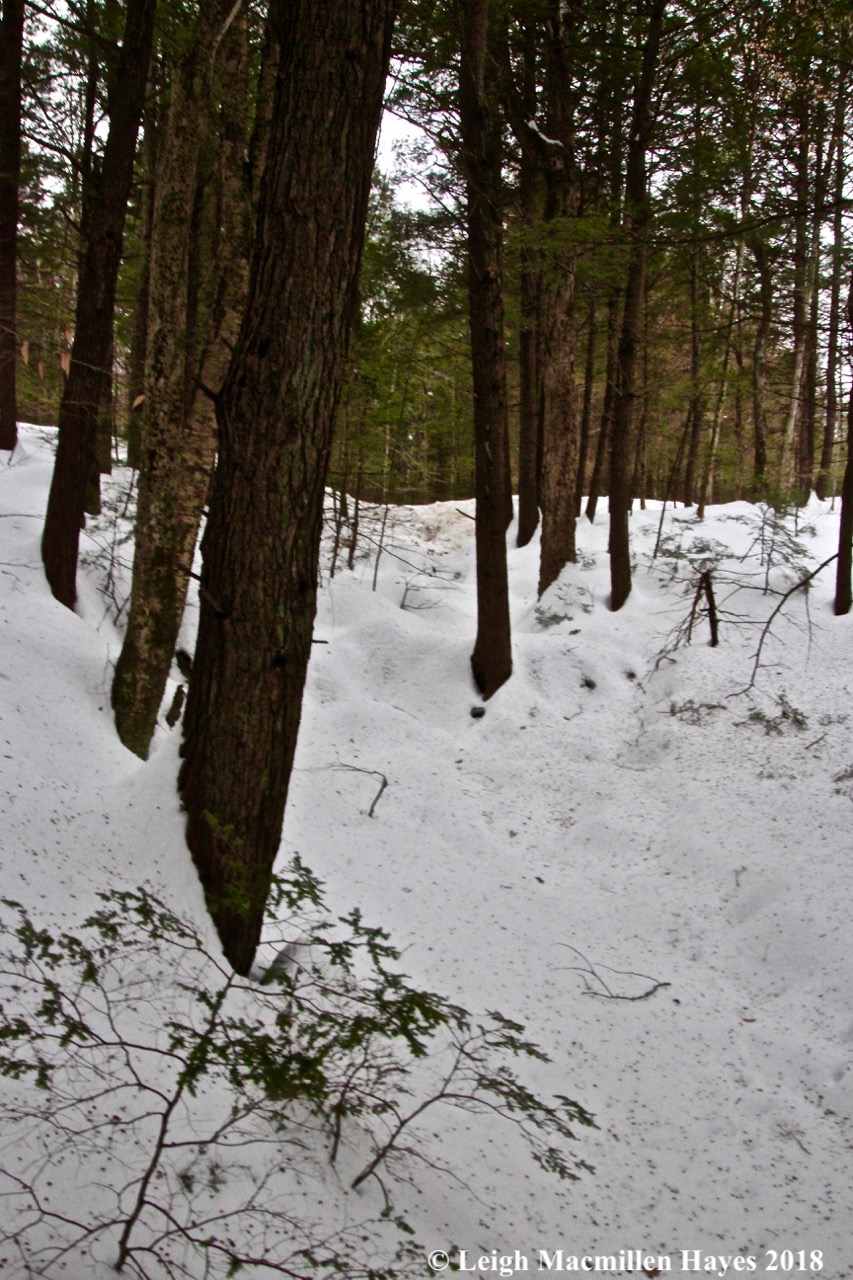
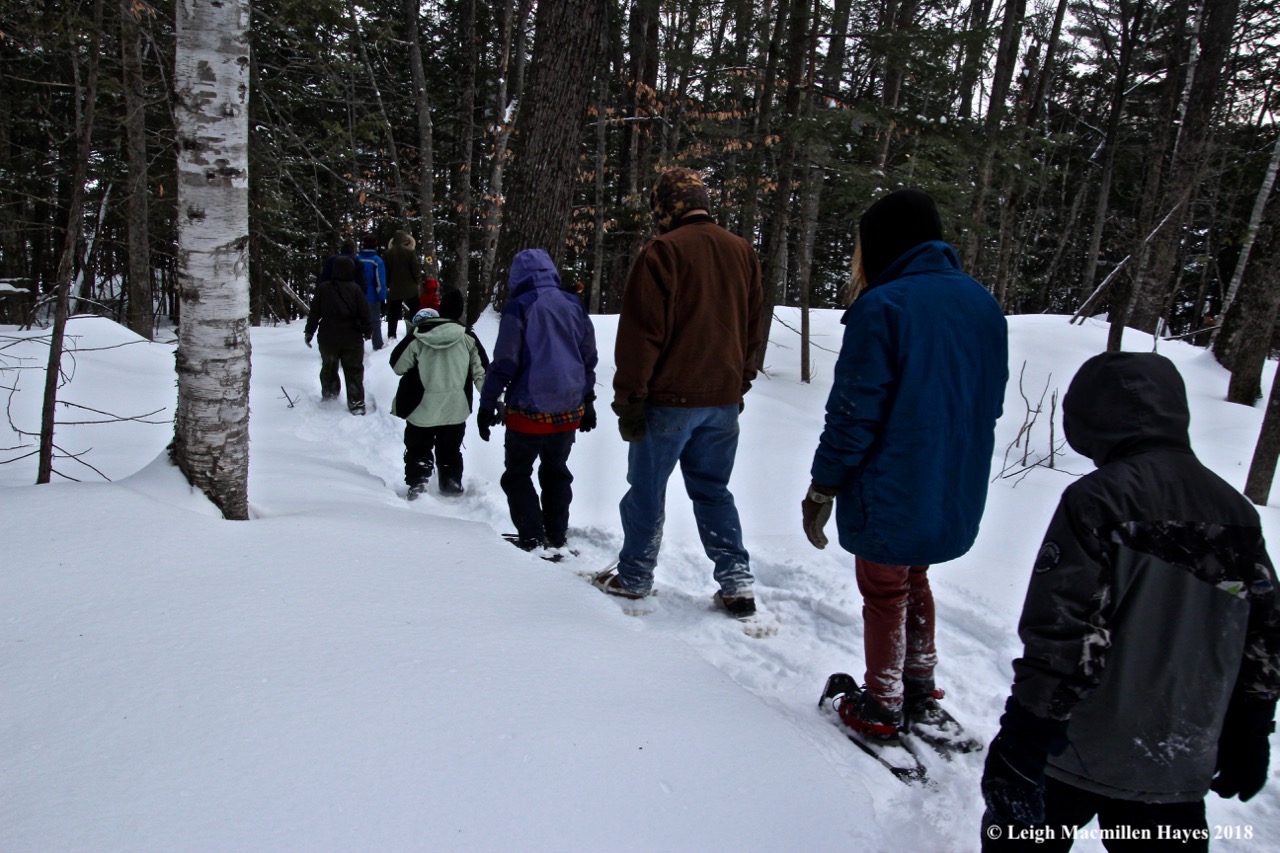
As we continued on, the snow depth increased, but fortunately a family of four had passed through before us and created a trench. 

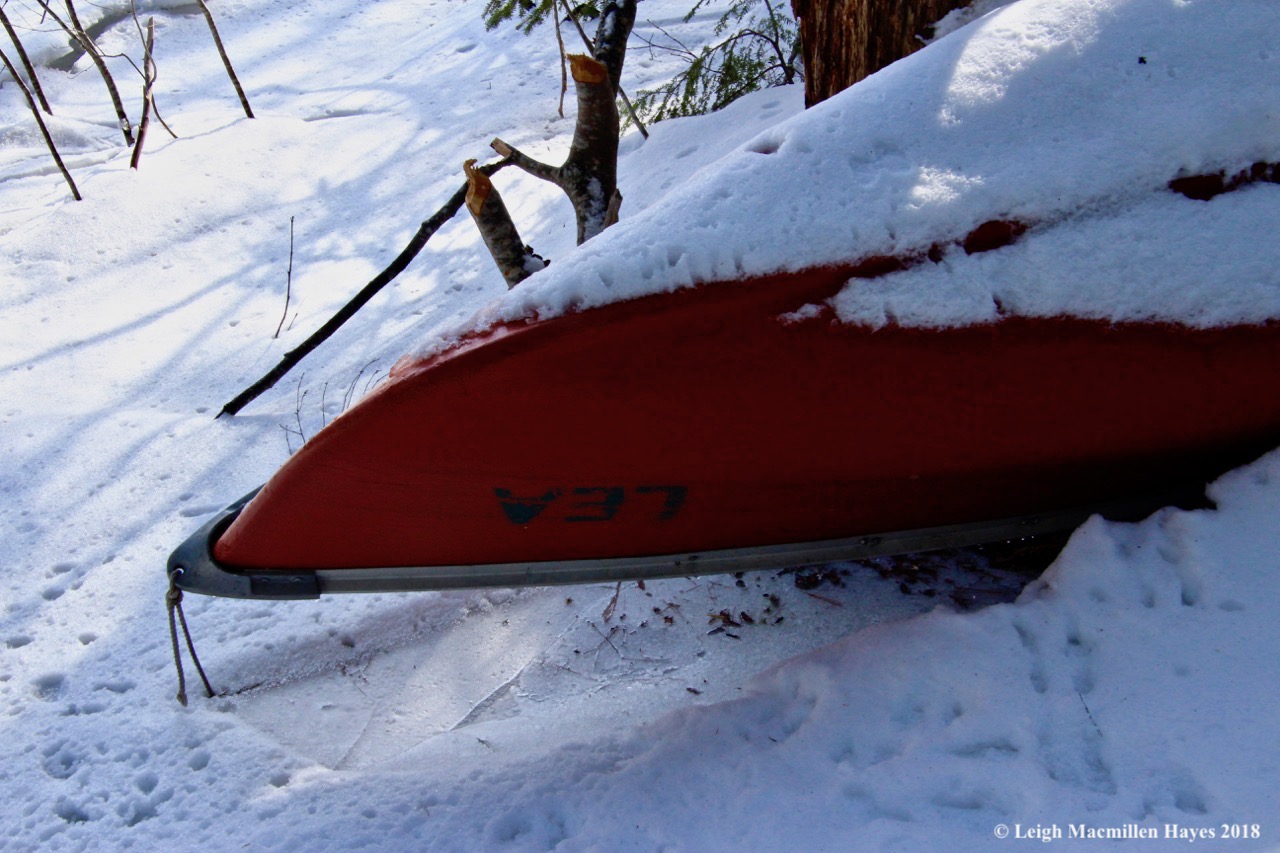
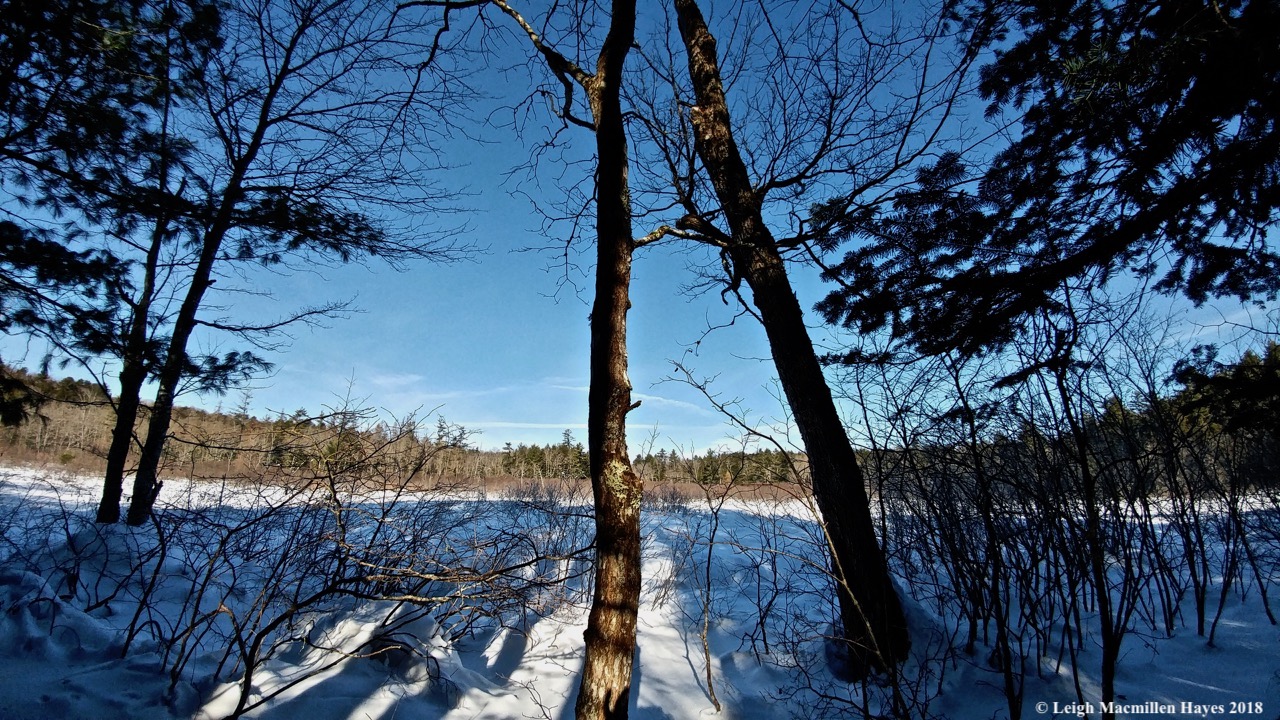
We knew we were close to the pond when we began to see canoes tucked among the trees and snowed in for the season. I’d say “for the winter,” but winter is still a month away. 

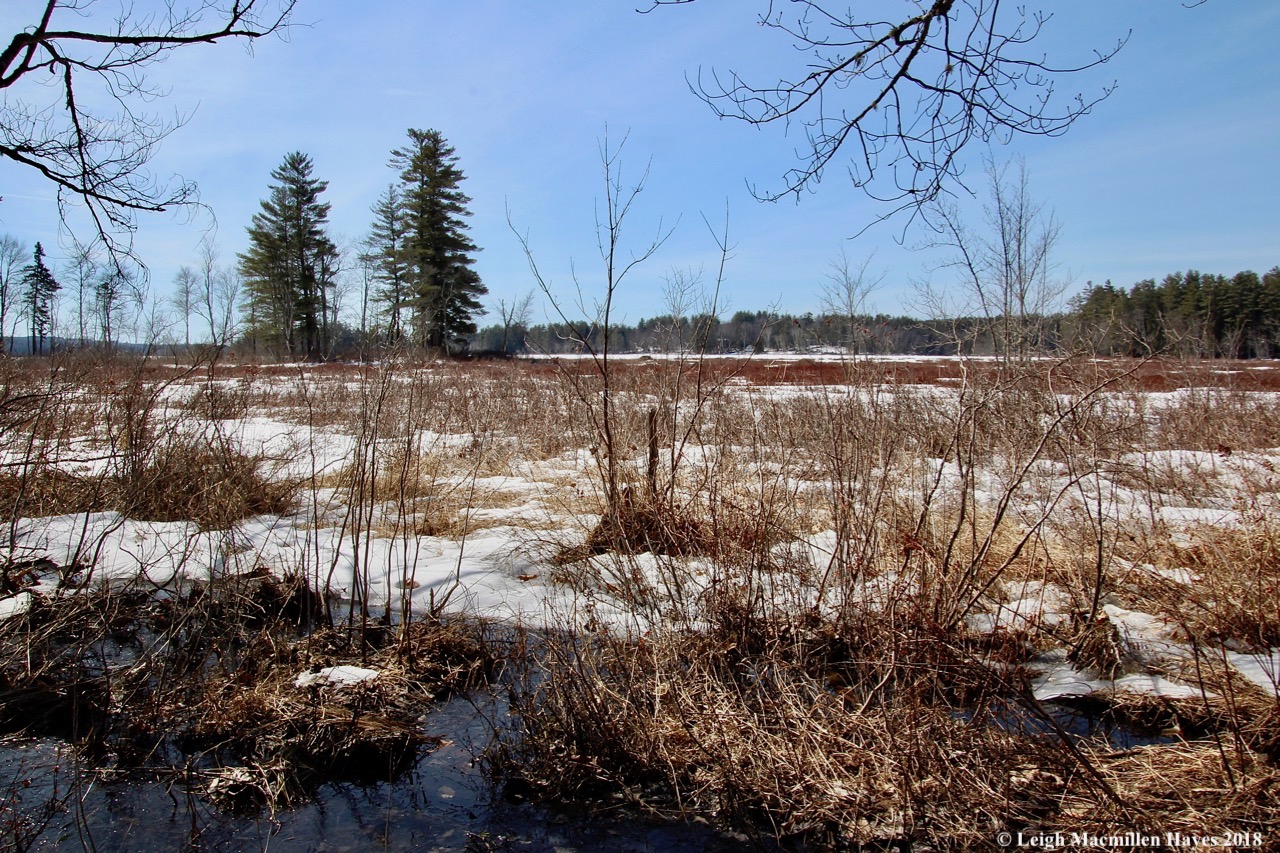
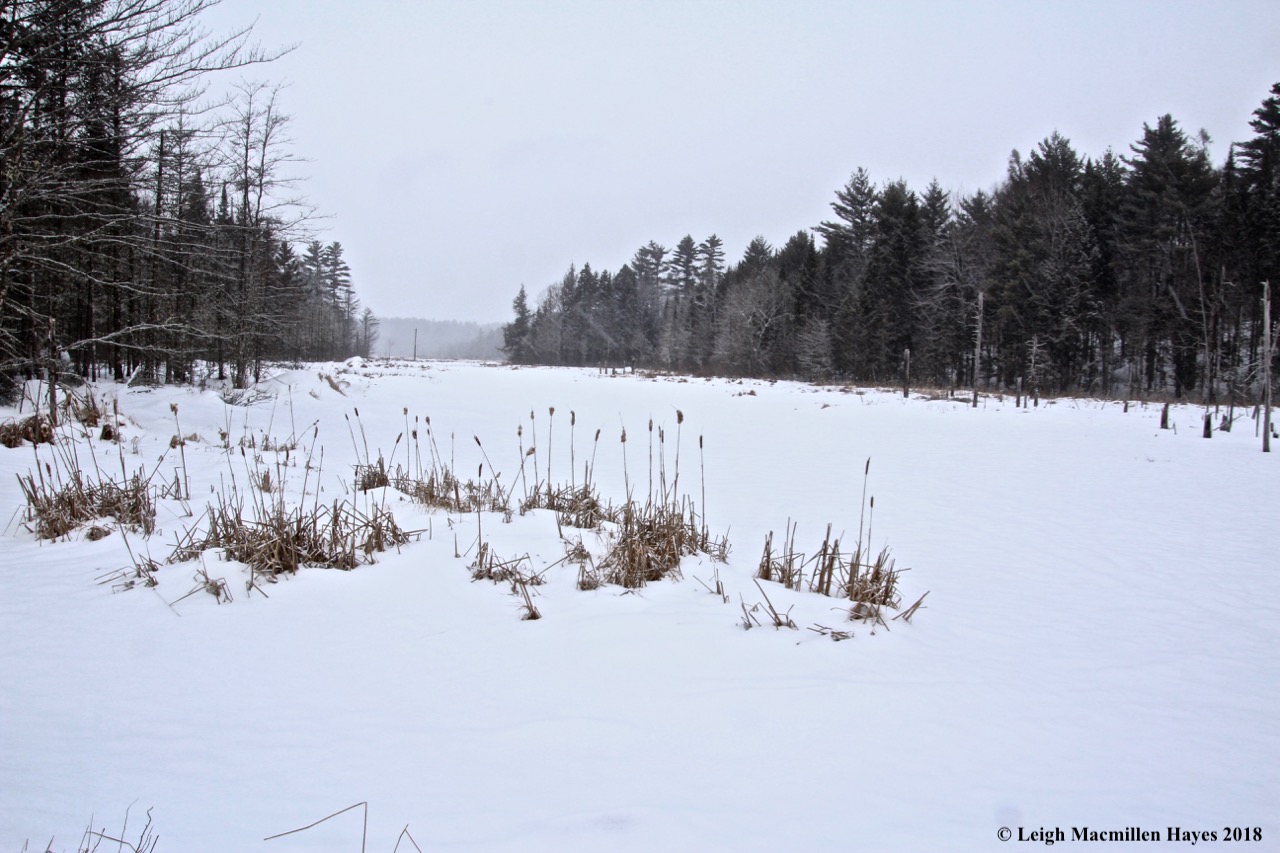
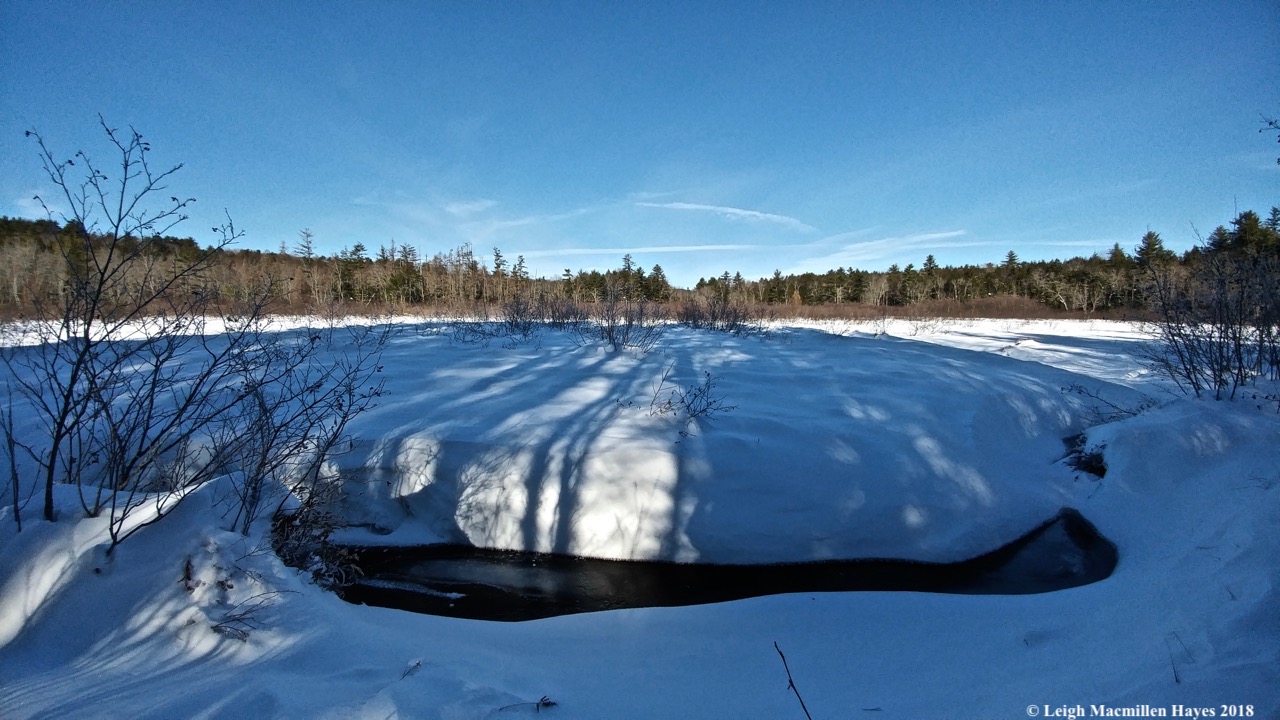
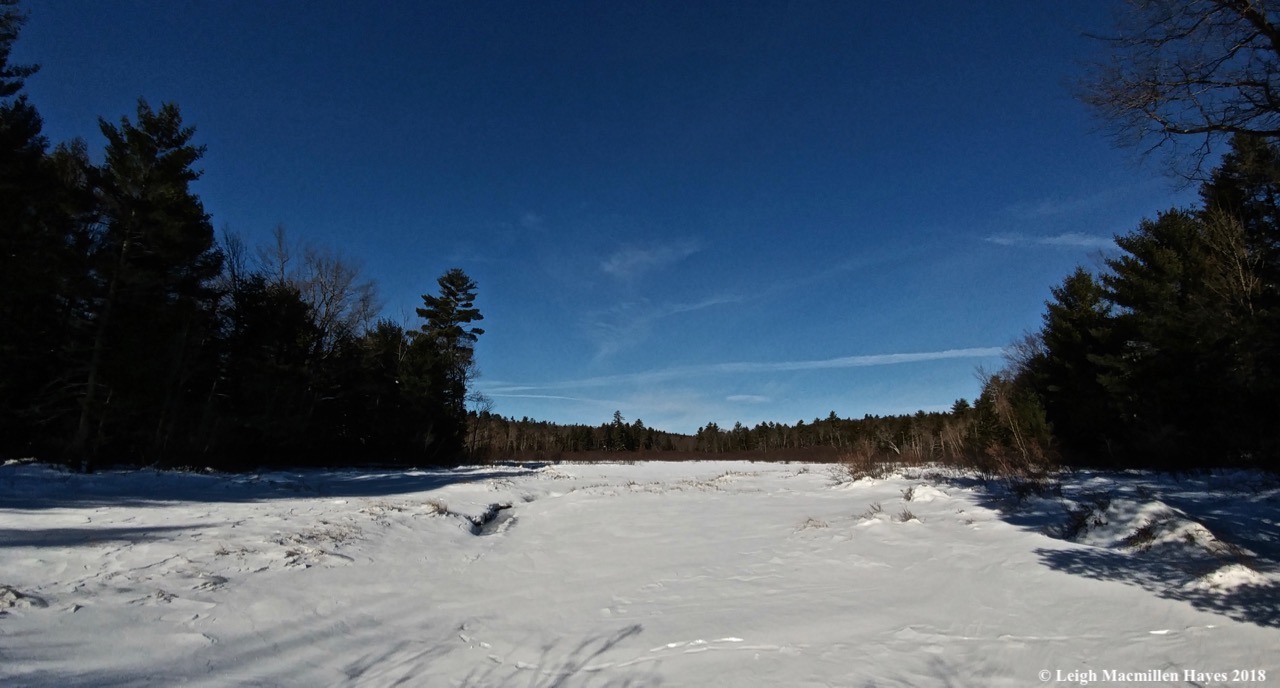
At last, Overset Pond stretched out before us. 
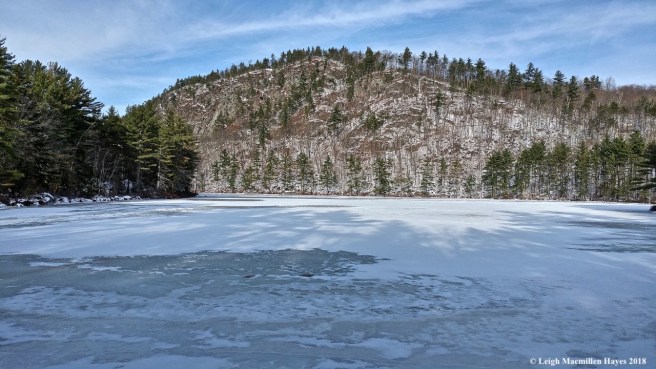
And Overset Mountain in the background became our next destination. 

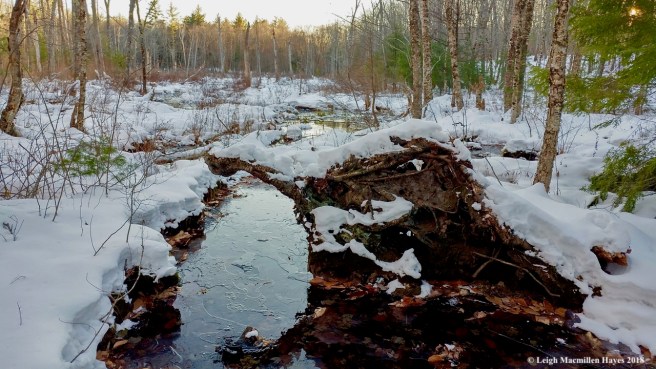
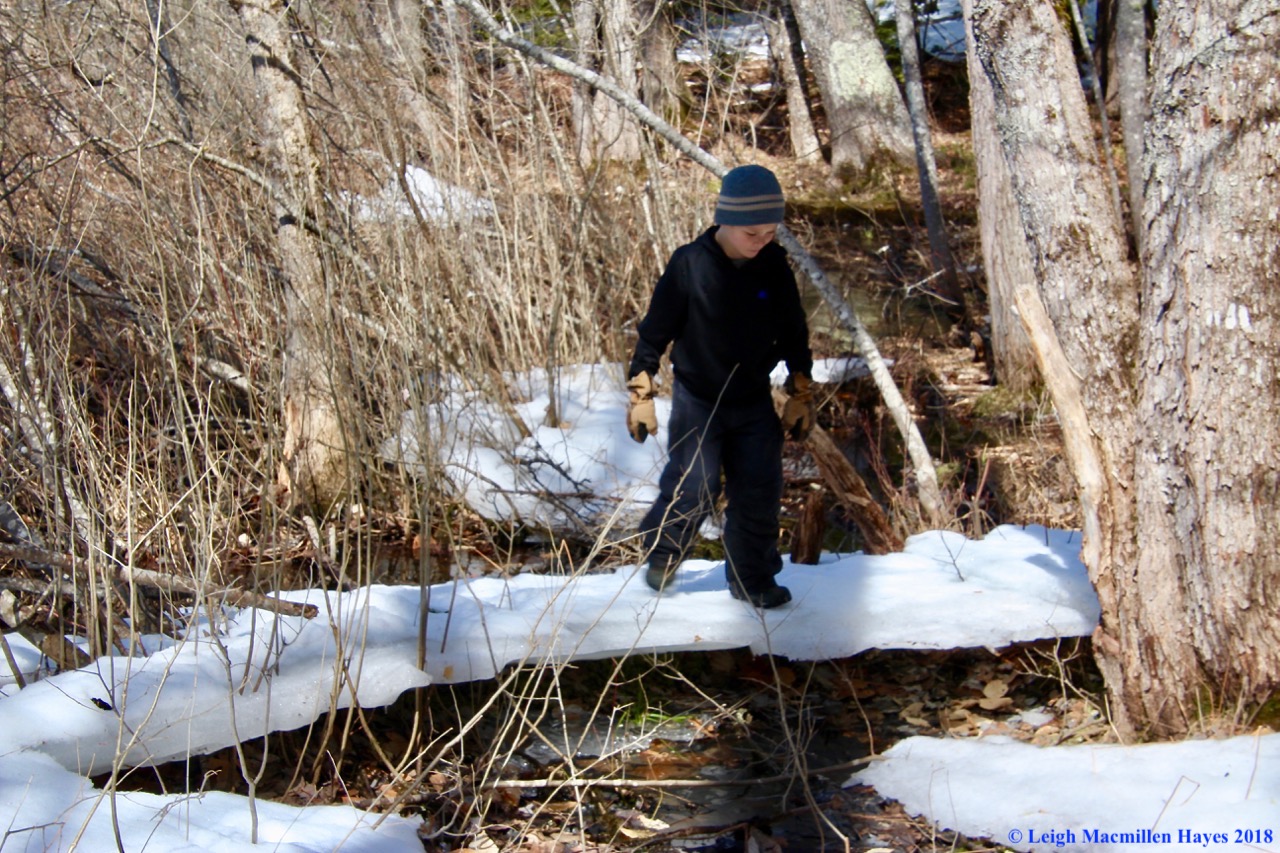
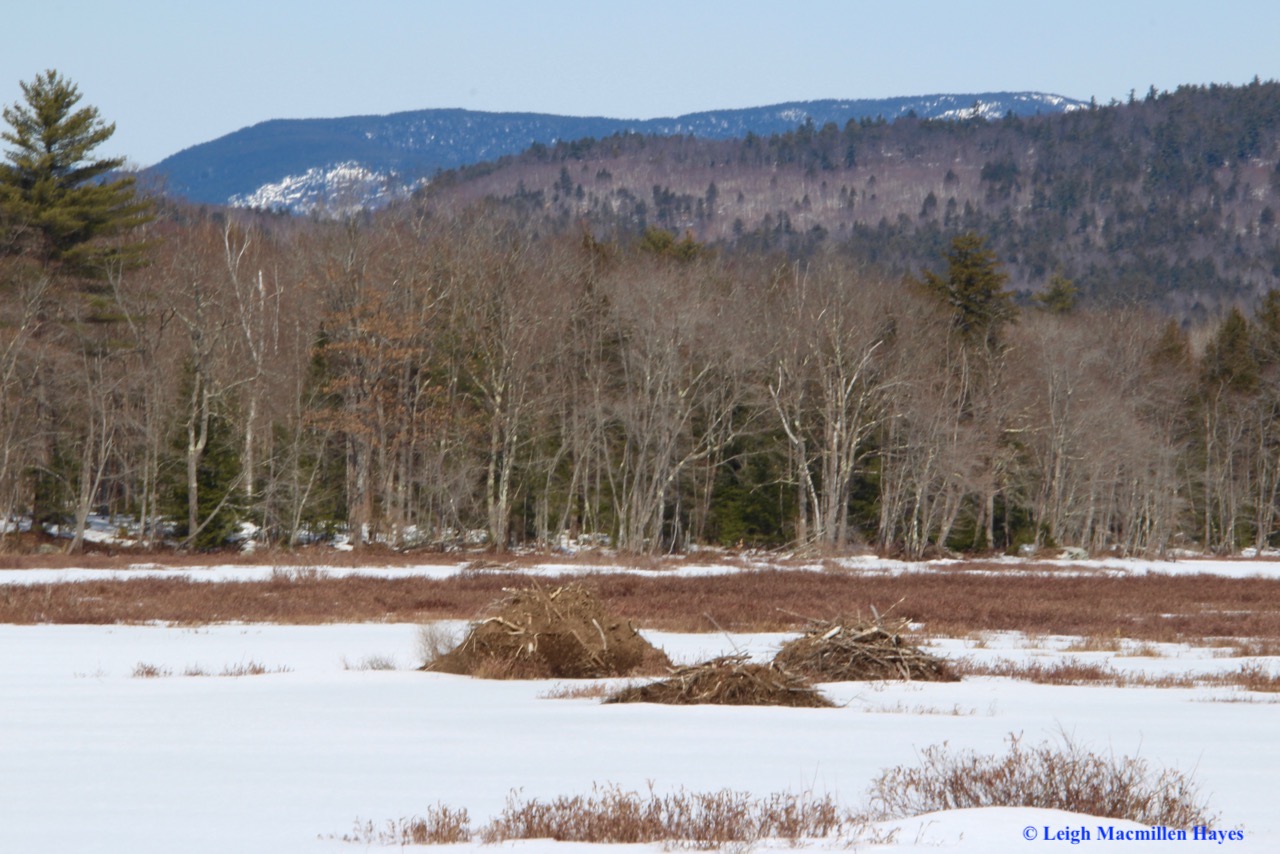
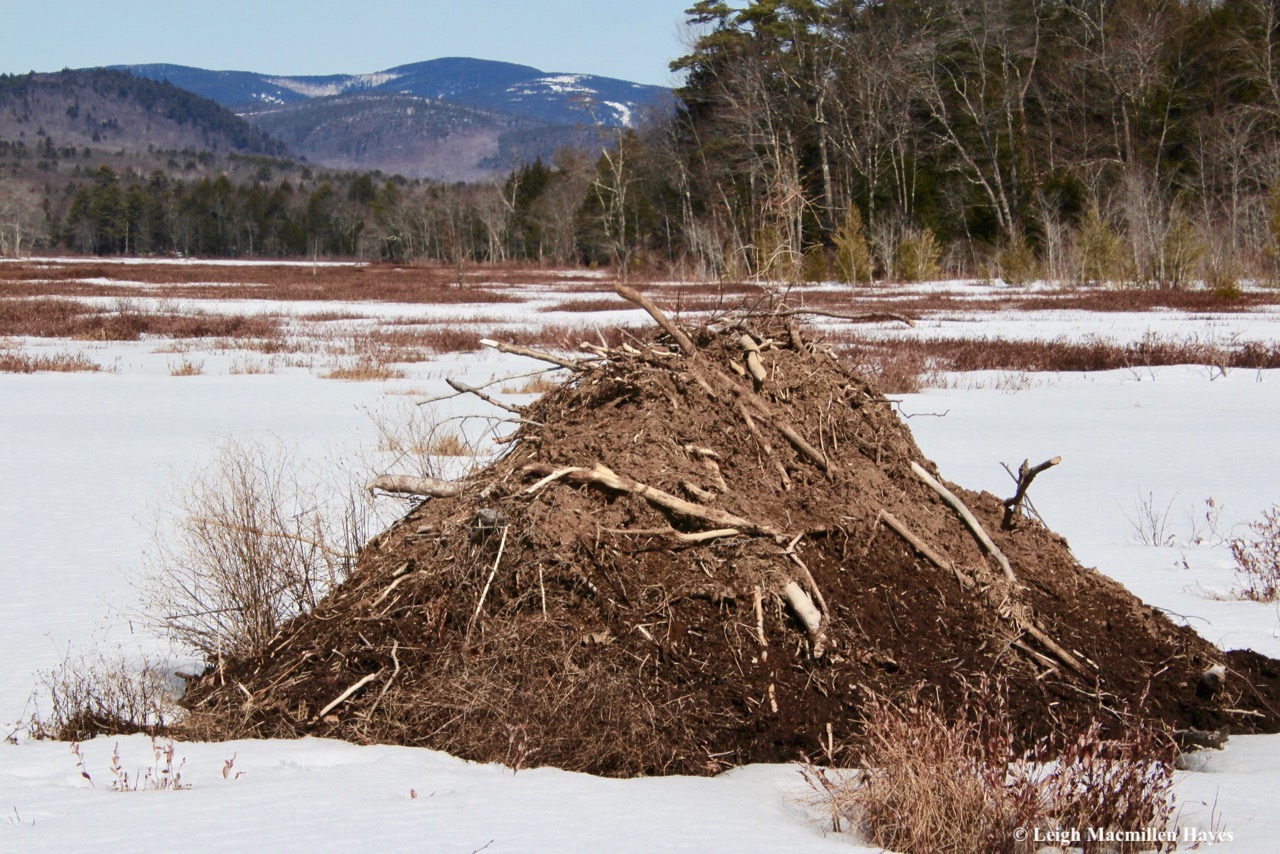
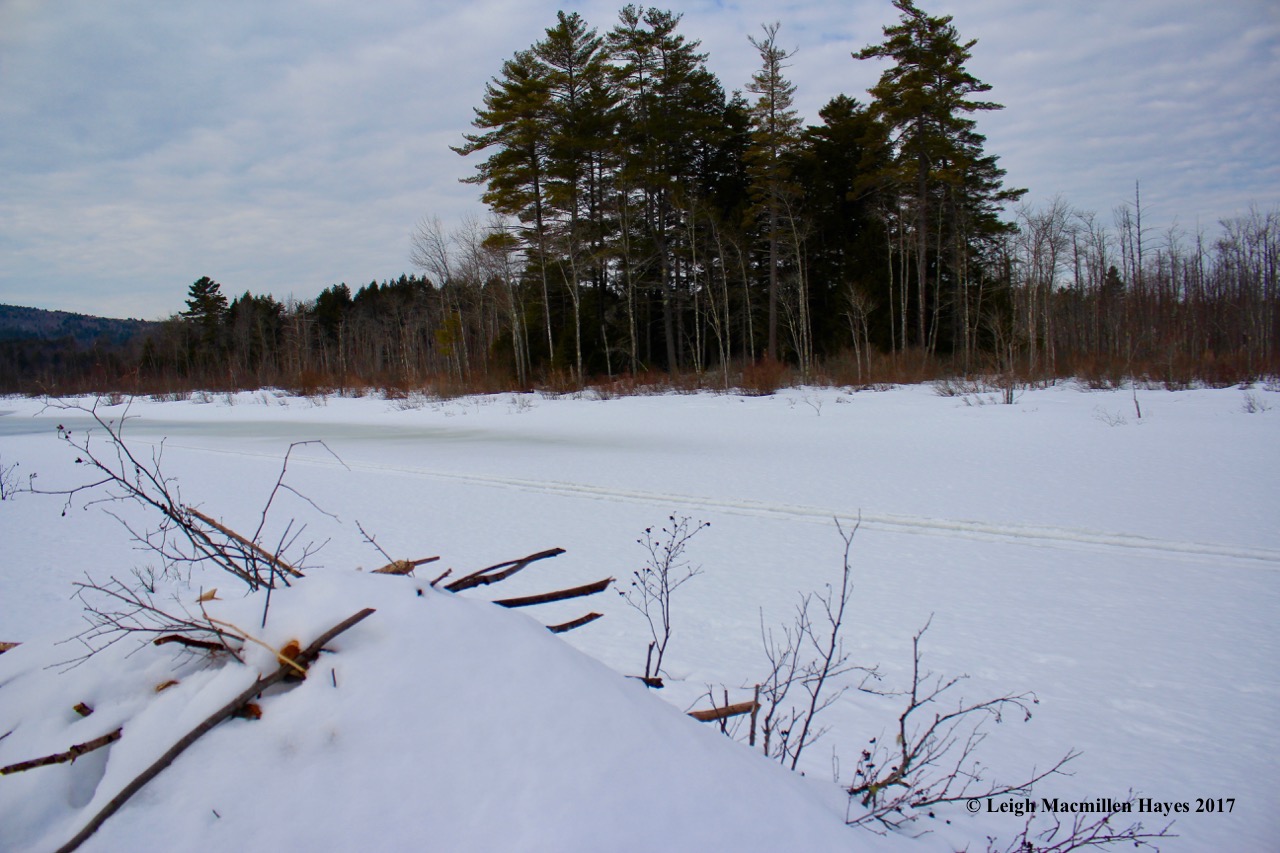
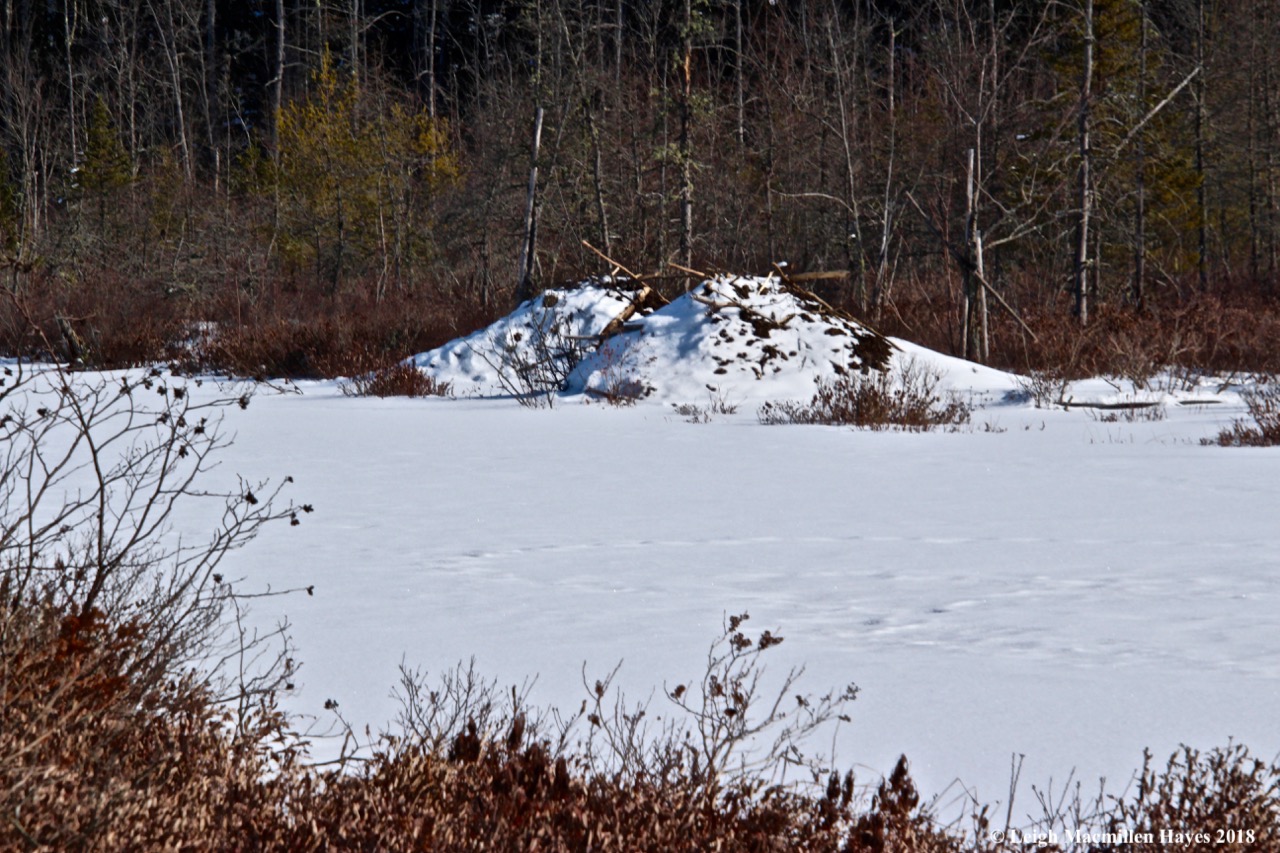
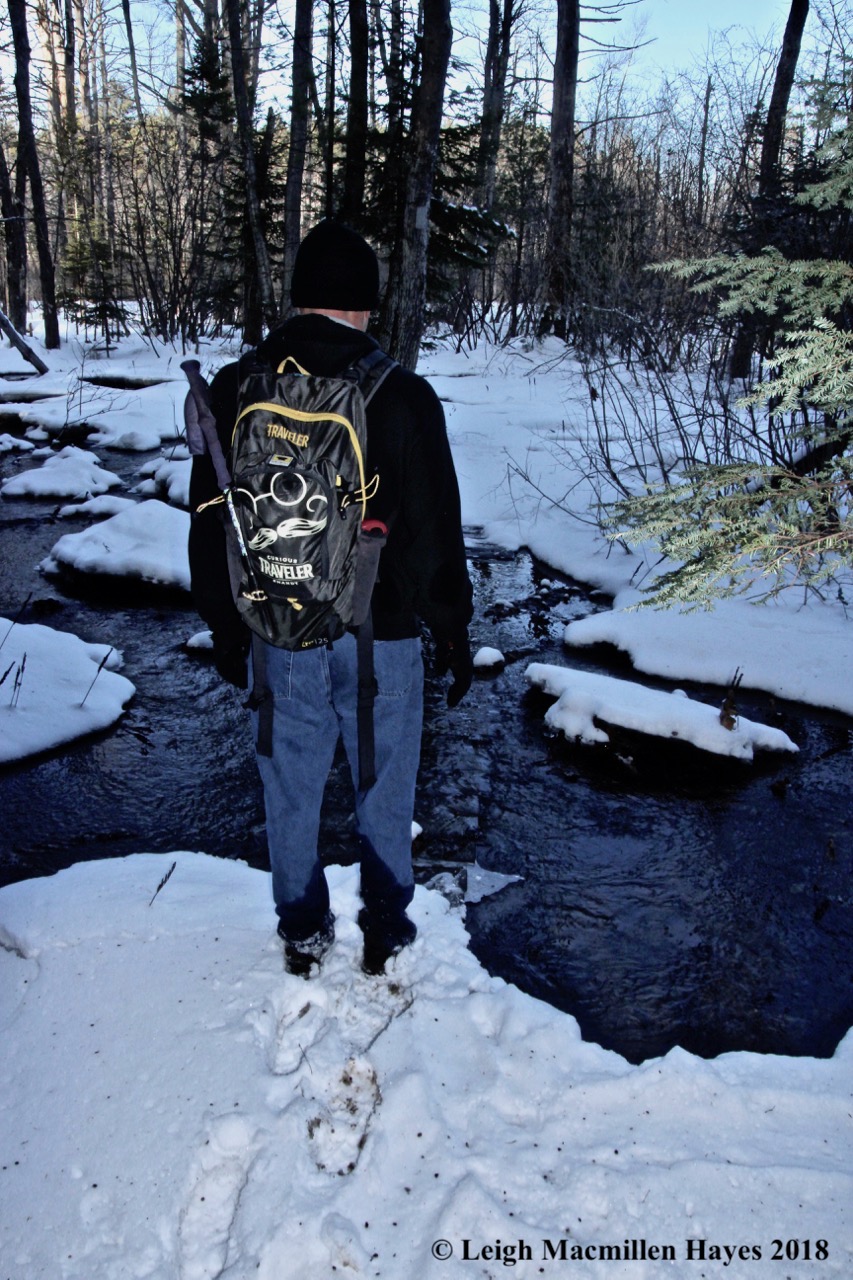
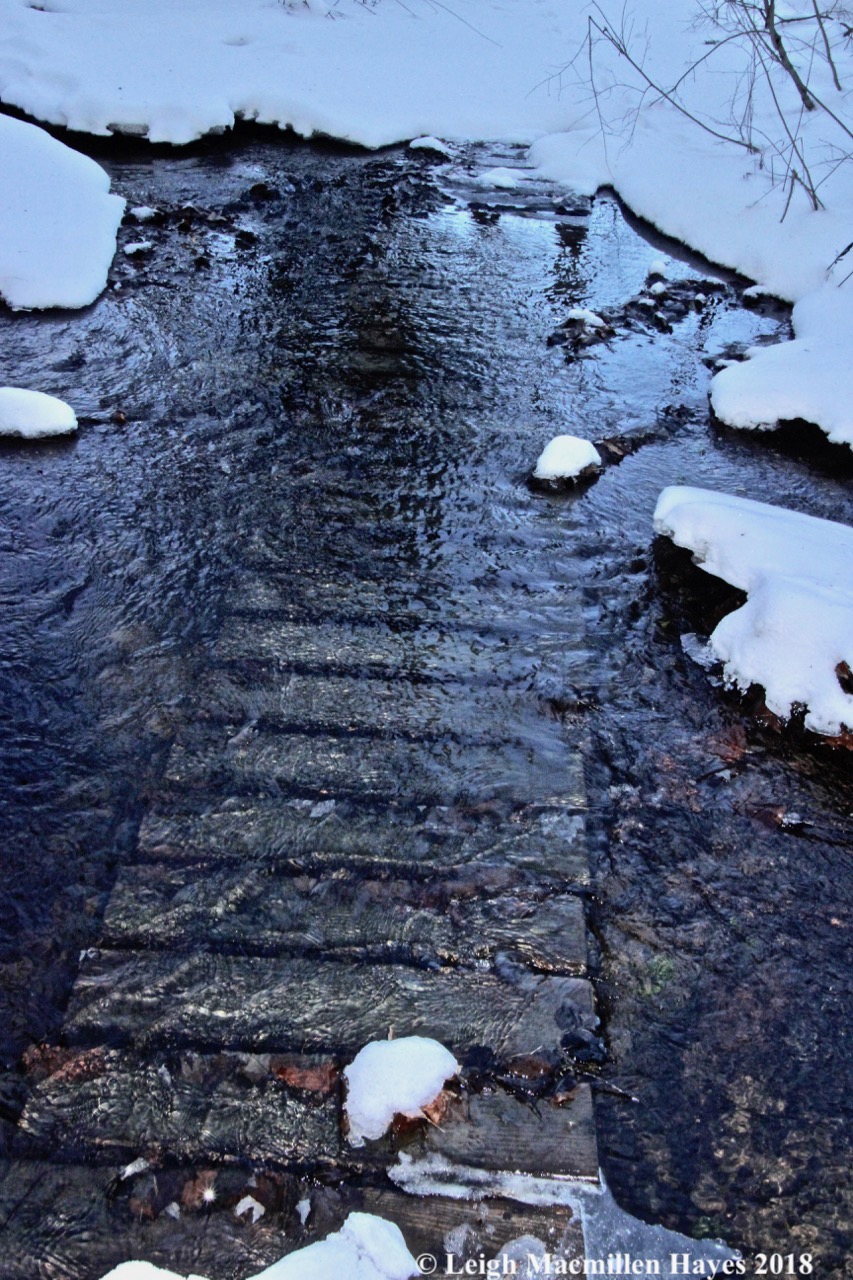
But first, we had to walk the length of the pond as it narrowed, and then cross over a series of bog bridges below an old beaver dam. 

As I waited for my guy to get to the other side before I ventured forth, I noticed something on the dam that brought yet another smile to my face. 
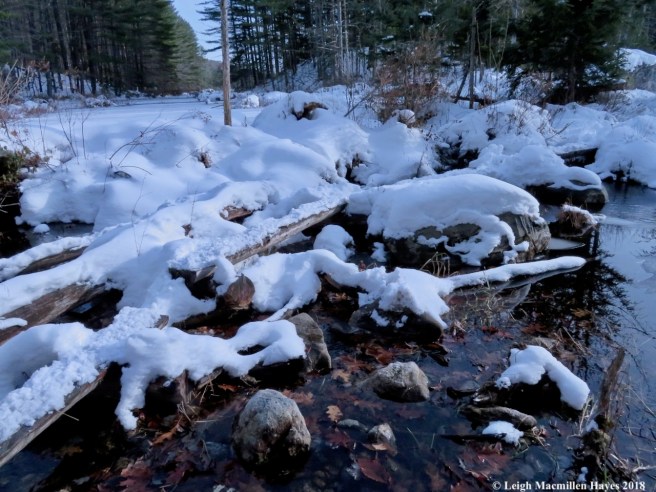
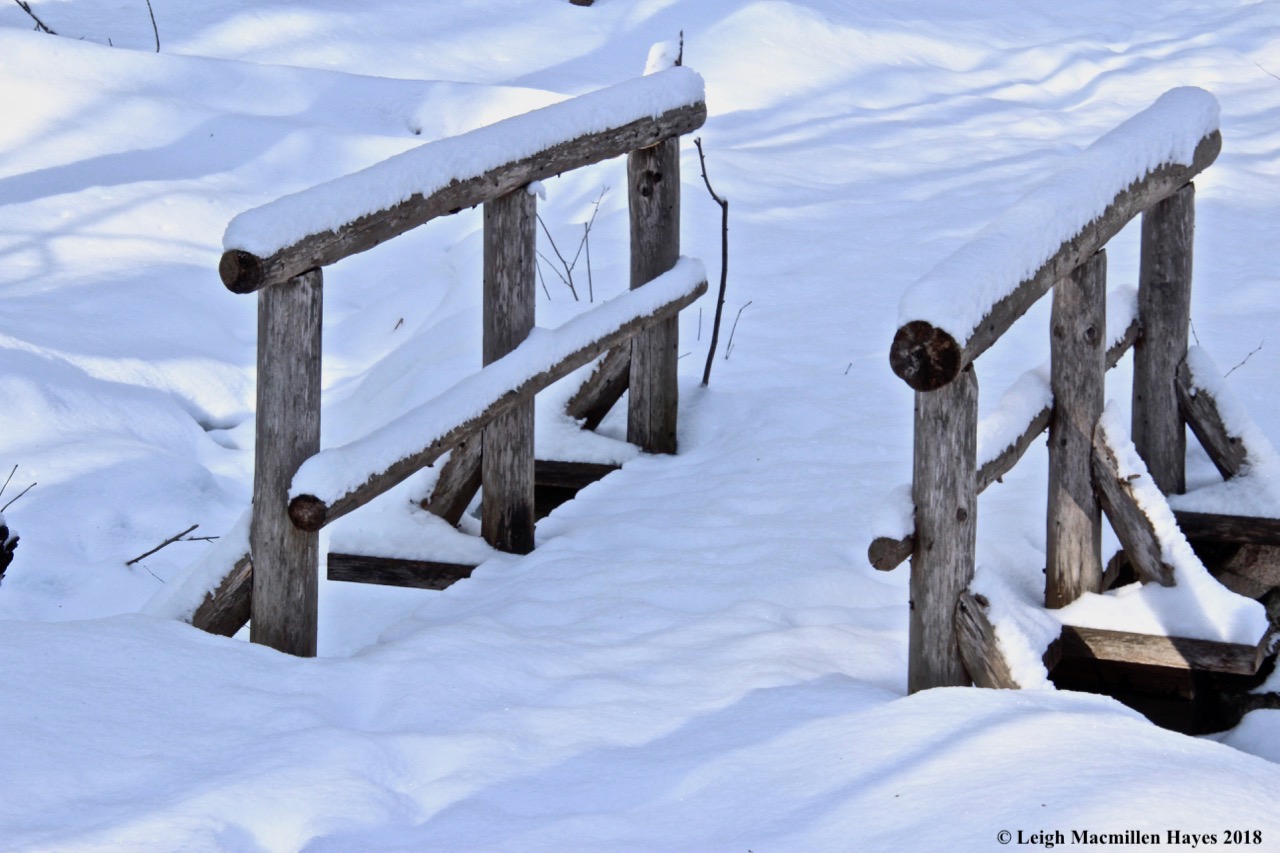
But first, I had to get to the other side–which I surprised myself and did without hesitation. Prior to this crossing, we’d walked on at least ten other bog bridges, some easier to conquer than others. This was the longest and featured several different levels, but we were both successful in our attempts. 

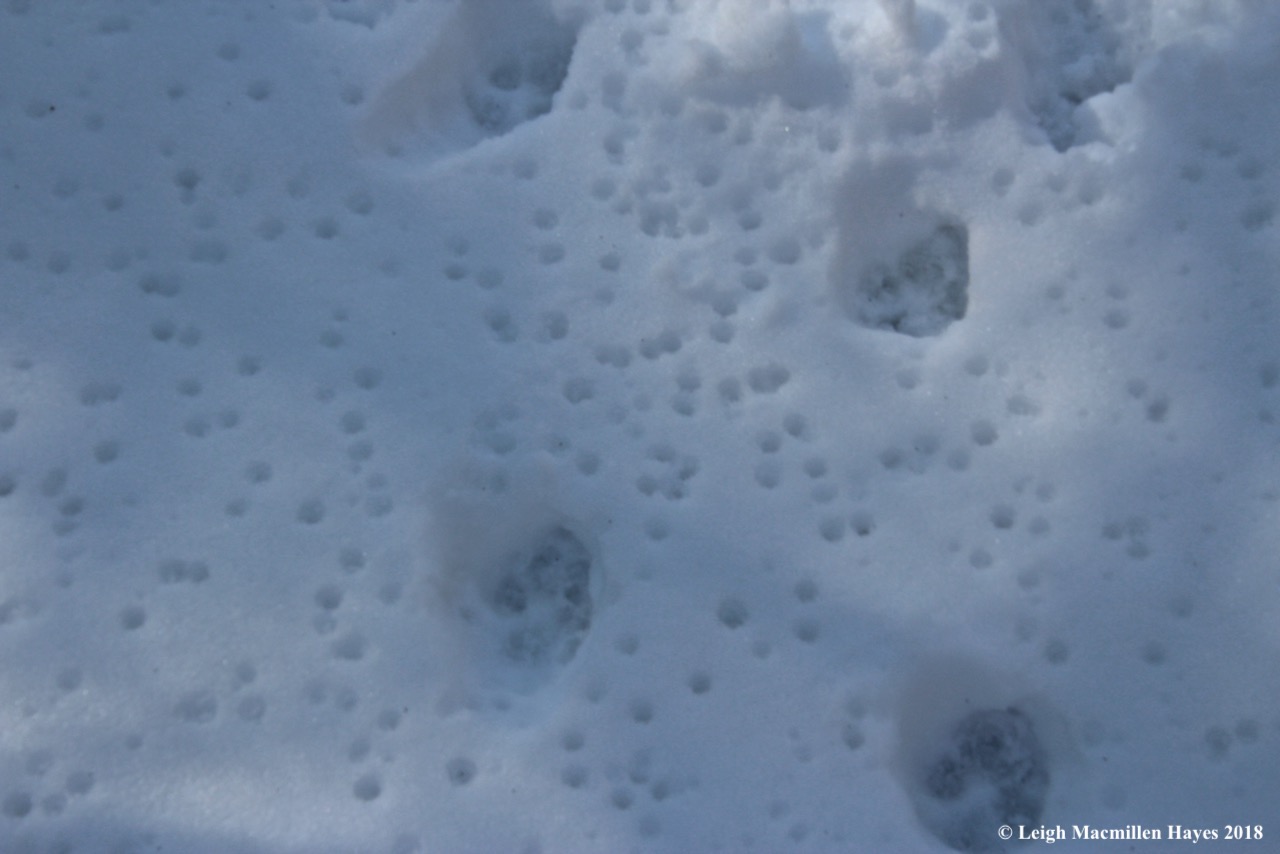
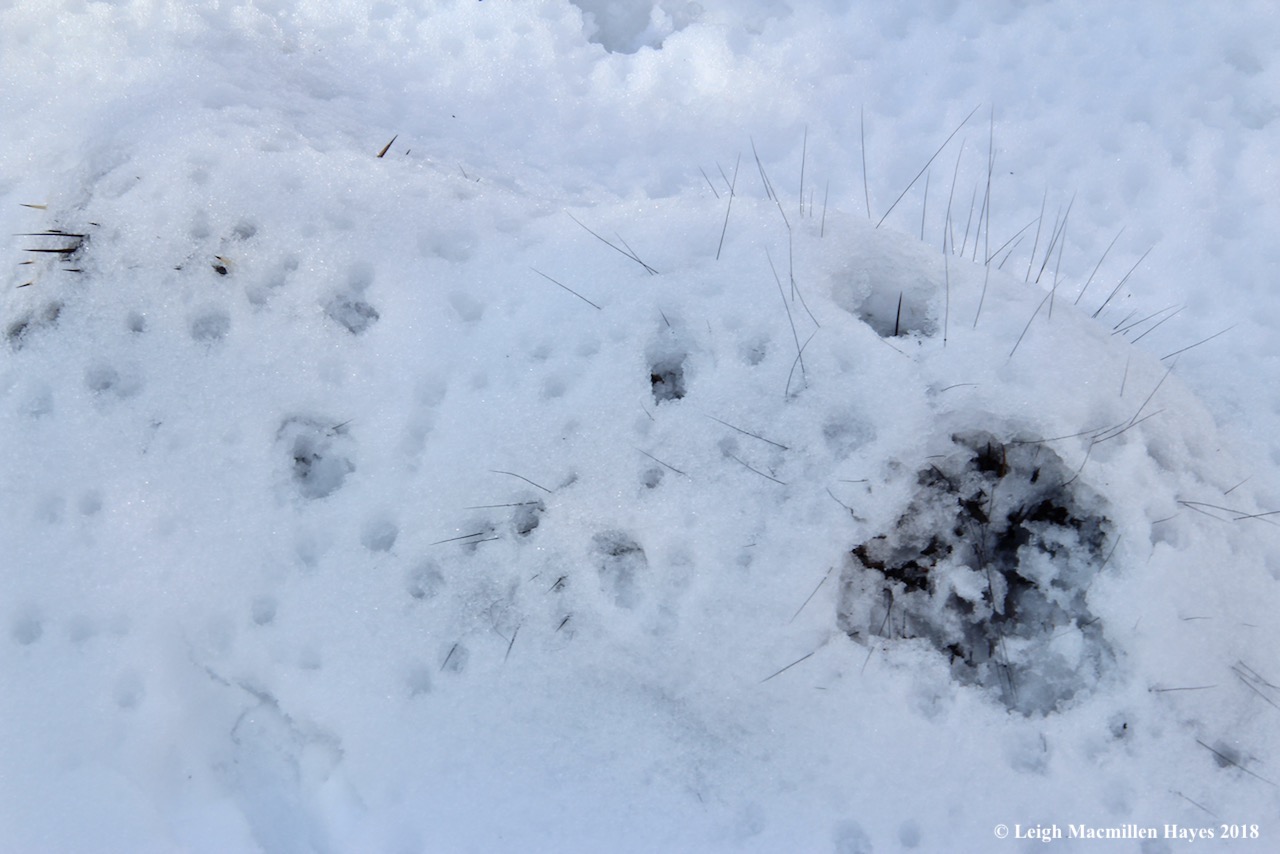
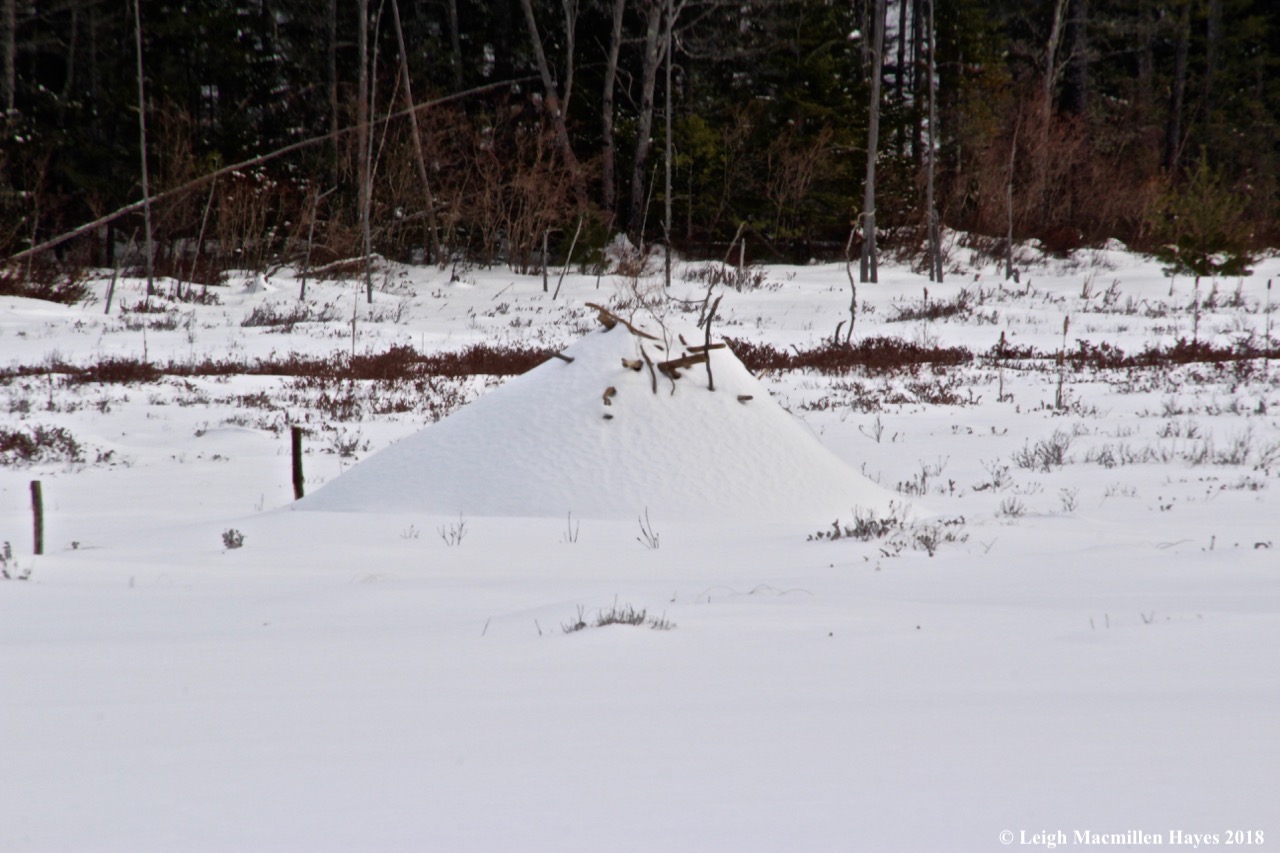
And so I rewarded myself with another look at the dam–and the otter slide that crossed up to the pond. Do you see the otter’s prints? 

Feeling great about the crossing (because I’d been dreading it), we began the upward climb. Our spikes were a good choice because they gave us some traction on slippery leaves and rocks, but they did gather occasional clumps of snow. We got into the habit of banging them against any available rock to declump the frozen snow. As we moved upward, the snow depth deepened to about a foot. 

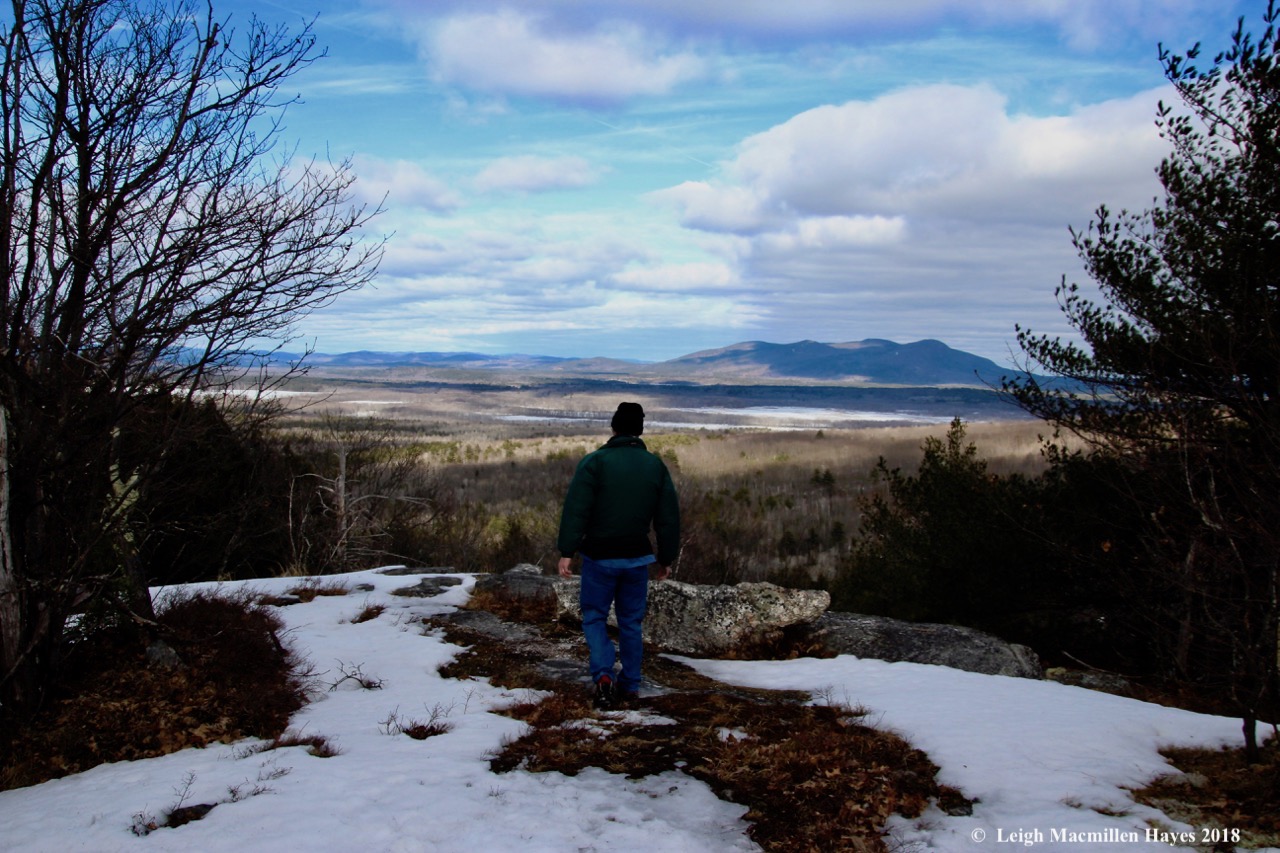
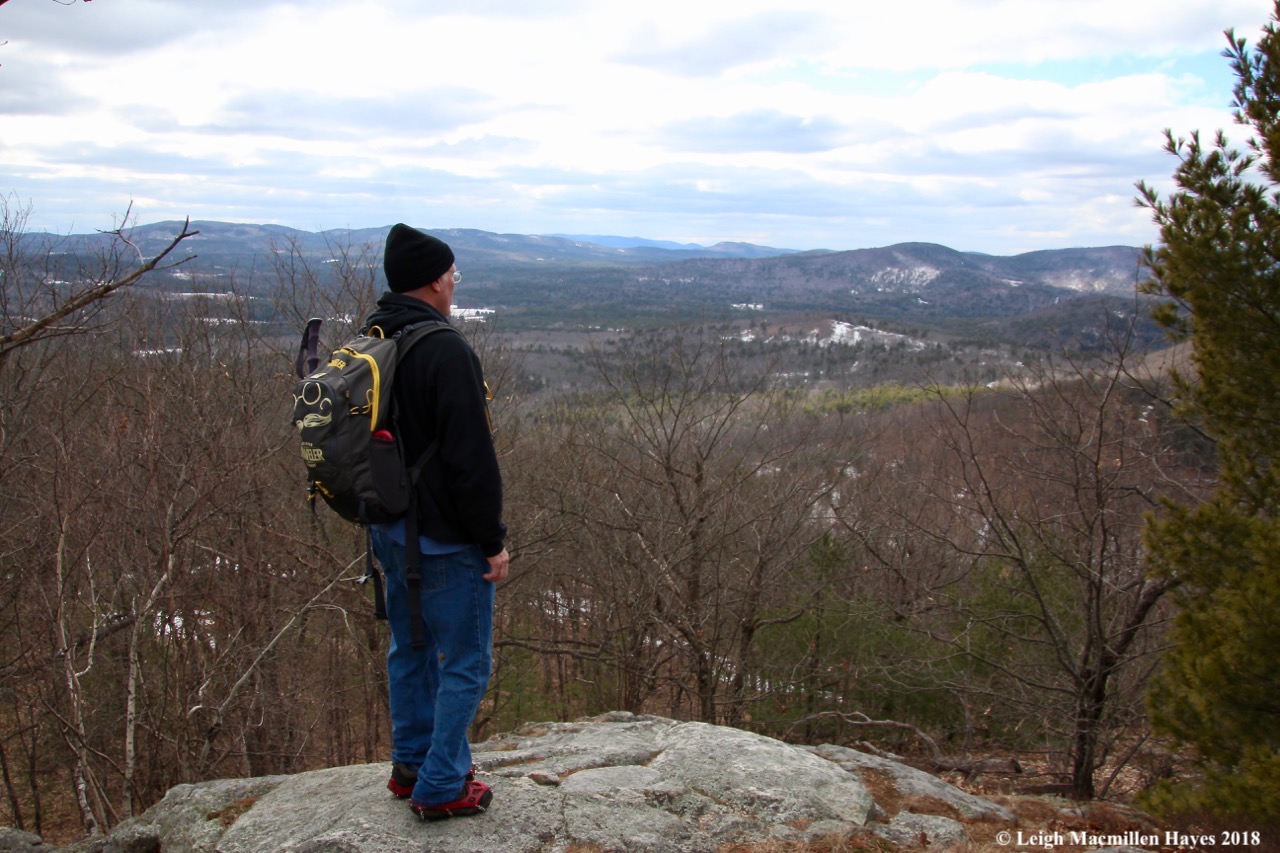
The family we’d passed on their way out had told us the mountain had been challenging, but they had neither snowshoes or micro-spikes and we could see where they’d slid frequently on rocks hiding below the snow. We moved with relative ease even as our heart rates increased and at last my guy looked down over his kingdom. Actually, it’s the kingdom of Mary McFadden and Larry Stifler. Through their generosity, many trails in the area are open to the public. And through the work of their employee, Bruce Barrett, those trails are well maintained.

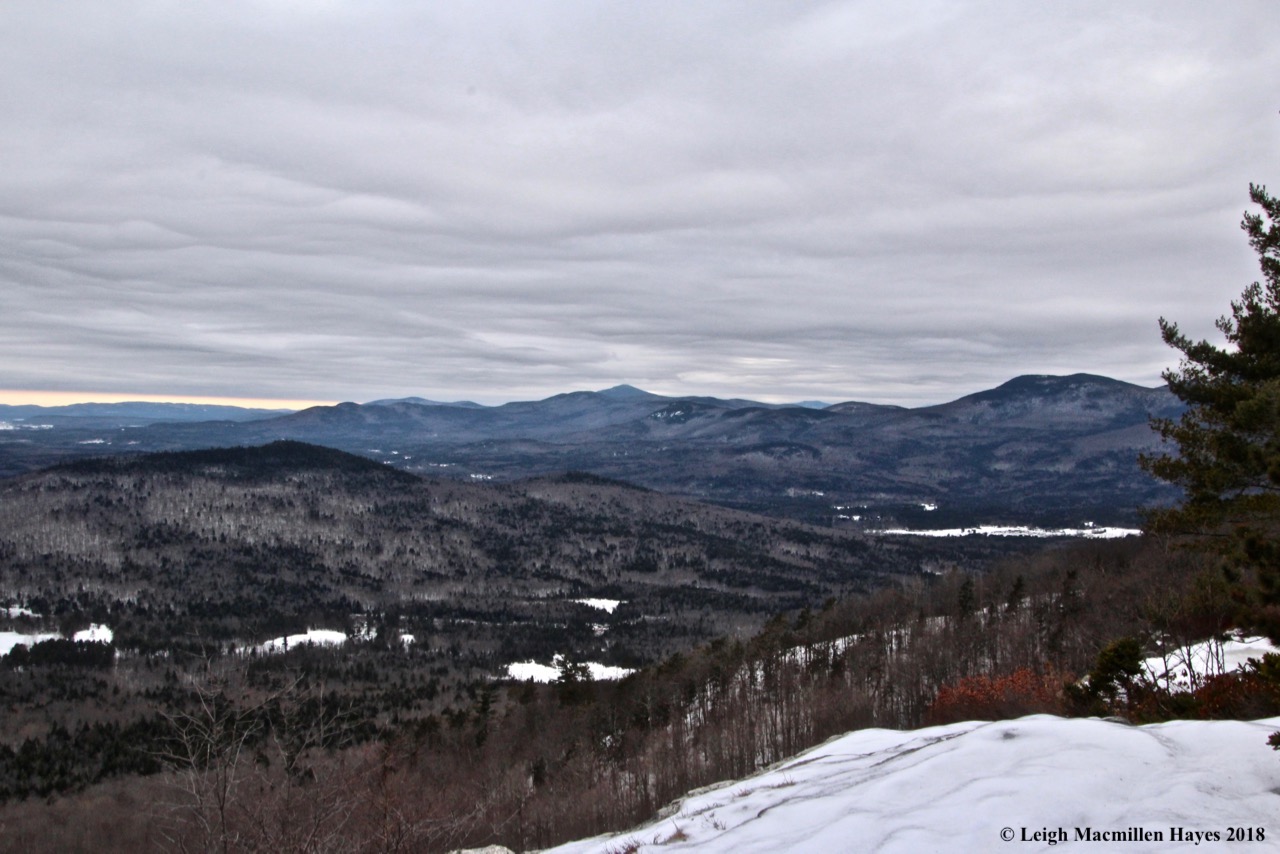
Below . . . Overset Pond in the shape of a heart. What’s not to love. 

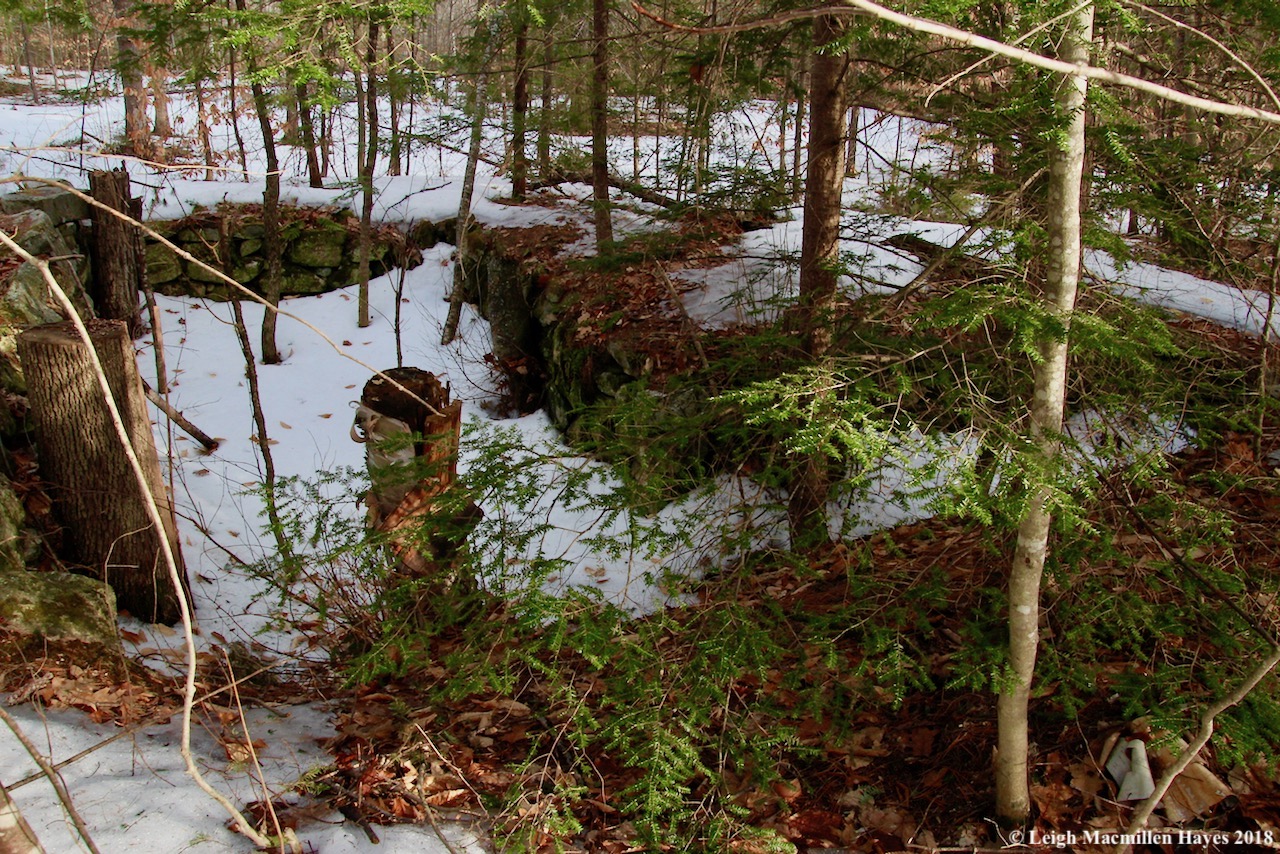
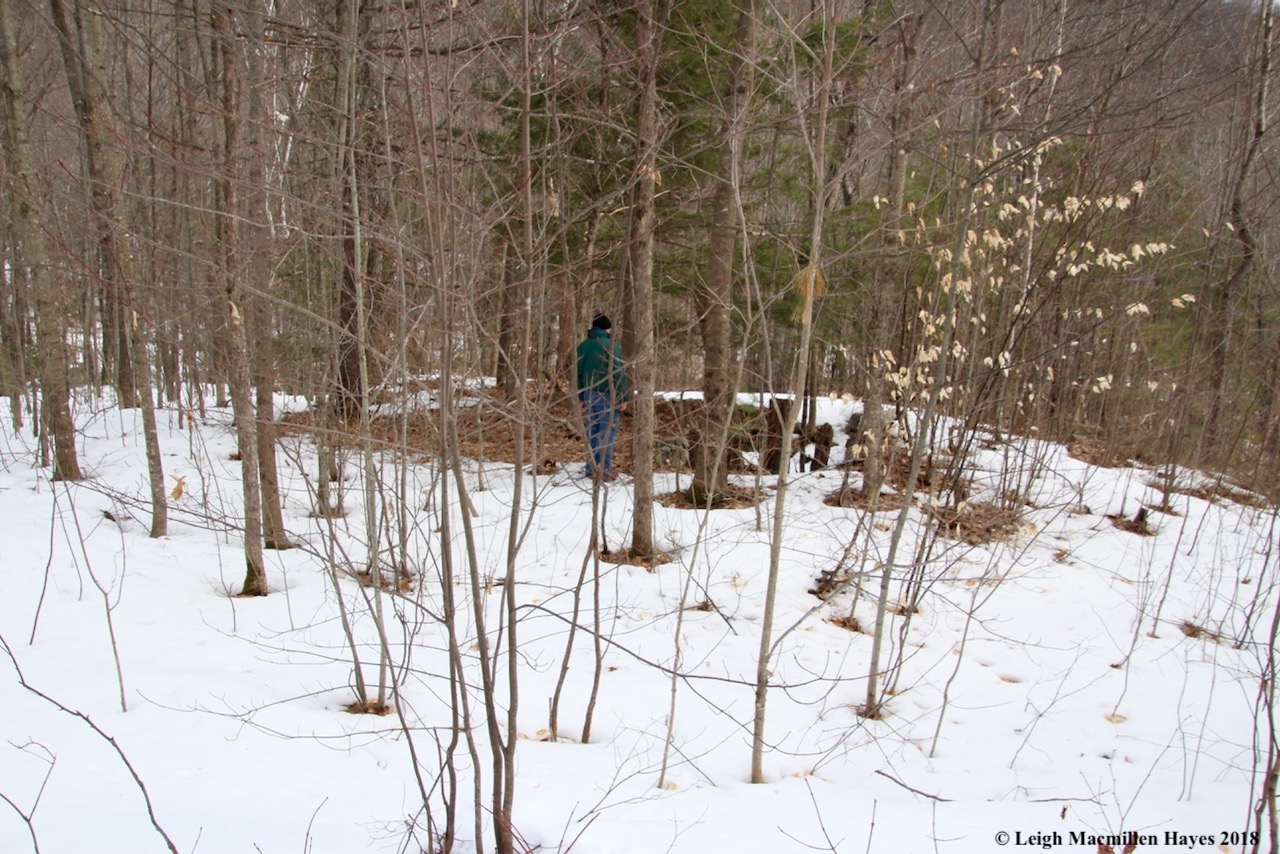
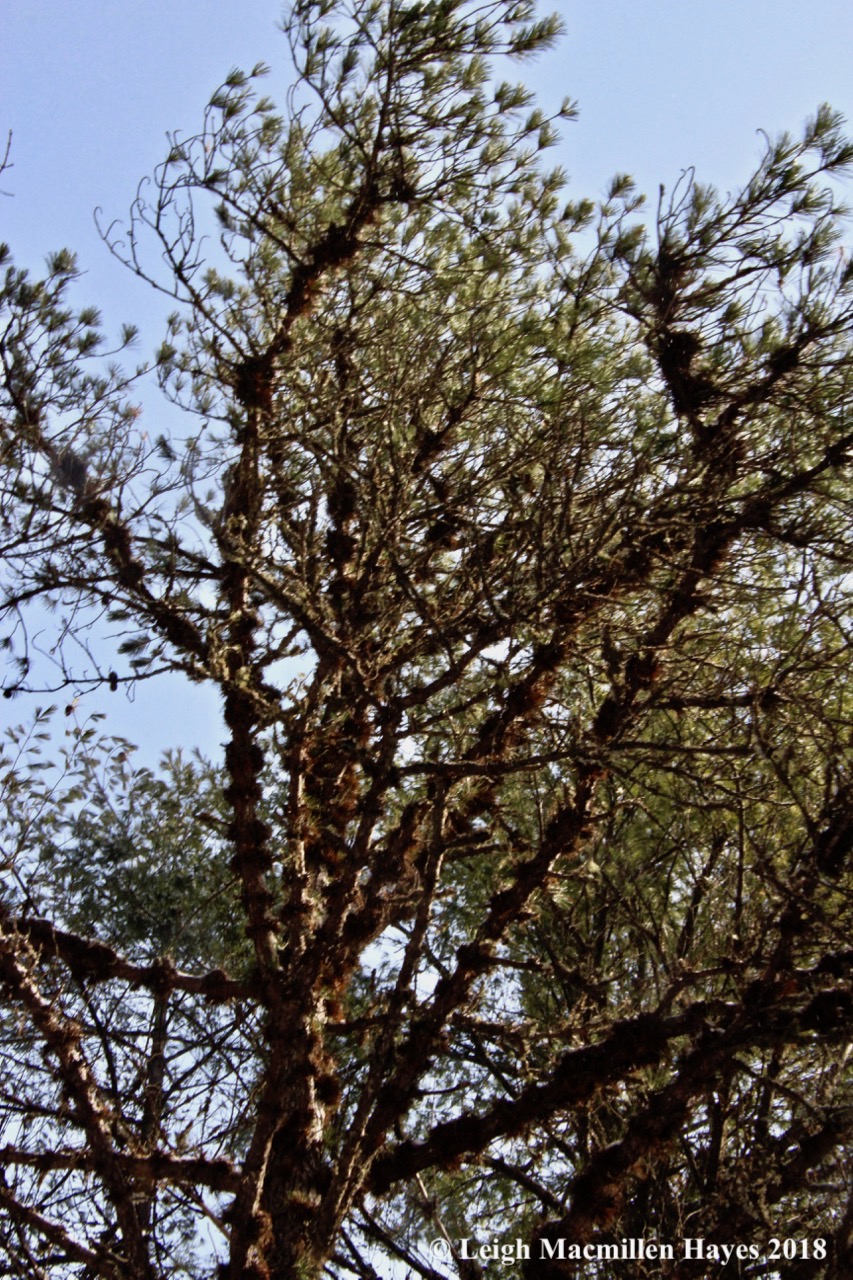
After a brief apple and water break, we began our descent on the loop trail. The trees growing beside and on the boulders reminded me of the truck graveyard . . . naturally. 

Our overall descent passed quickly. In no time at all, we came upon more canoes swamped with snow. 
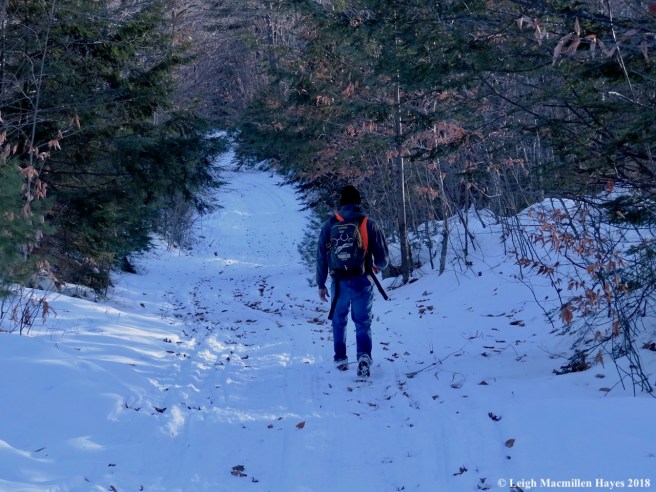
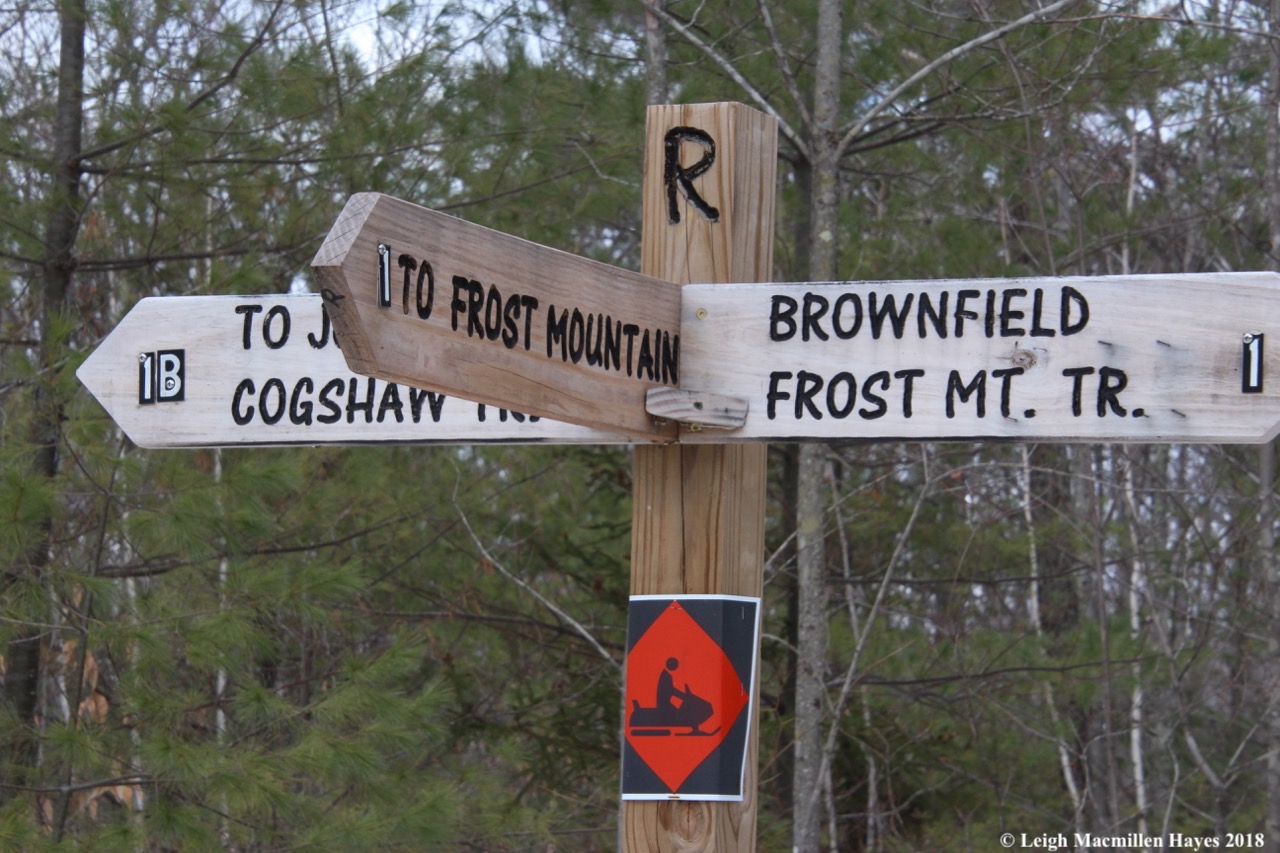
At last the trail came to an end and we followed a snowmobile trail for at least a mile back to the truck–our six mile journey completed. 
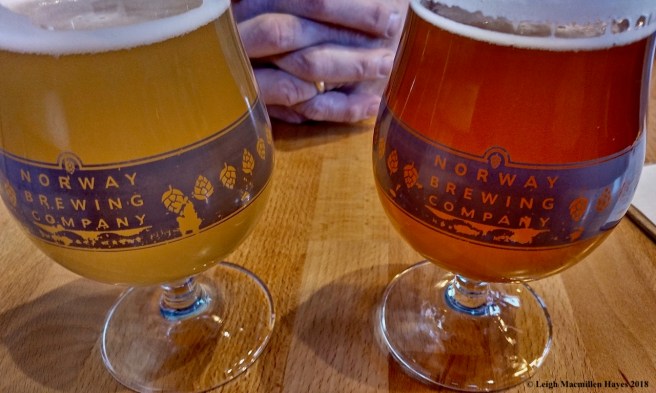
We’d planned to enjoy a brew and burger at Norway Brewing Company after the hike and were thrilled with our choice. He sipped Life’s a Peach on the left–a new brew just released today and made with Maine peaches. My choice on the right–Left Turn. 

We played Rummy while we waited and then ate our burgers with gusto. We knew they’d serve as lunch and supper, a meal we’ve named lupper in the past. 

At the end of the day, we were beat (still are) but happy. Thought I’d hoped to see some wildlife other than the occasional squirrel, that wasn’t to be. But we saw plenty of tracks and I was especially pleased with those of the weasel, hare and otter. 

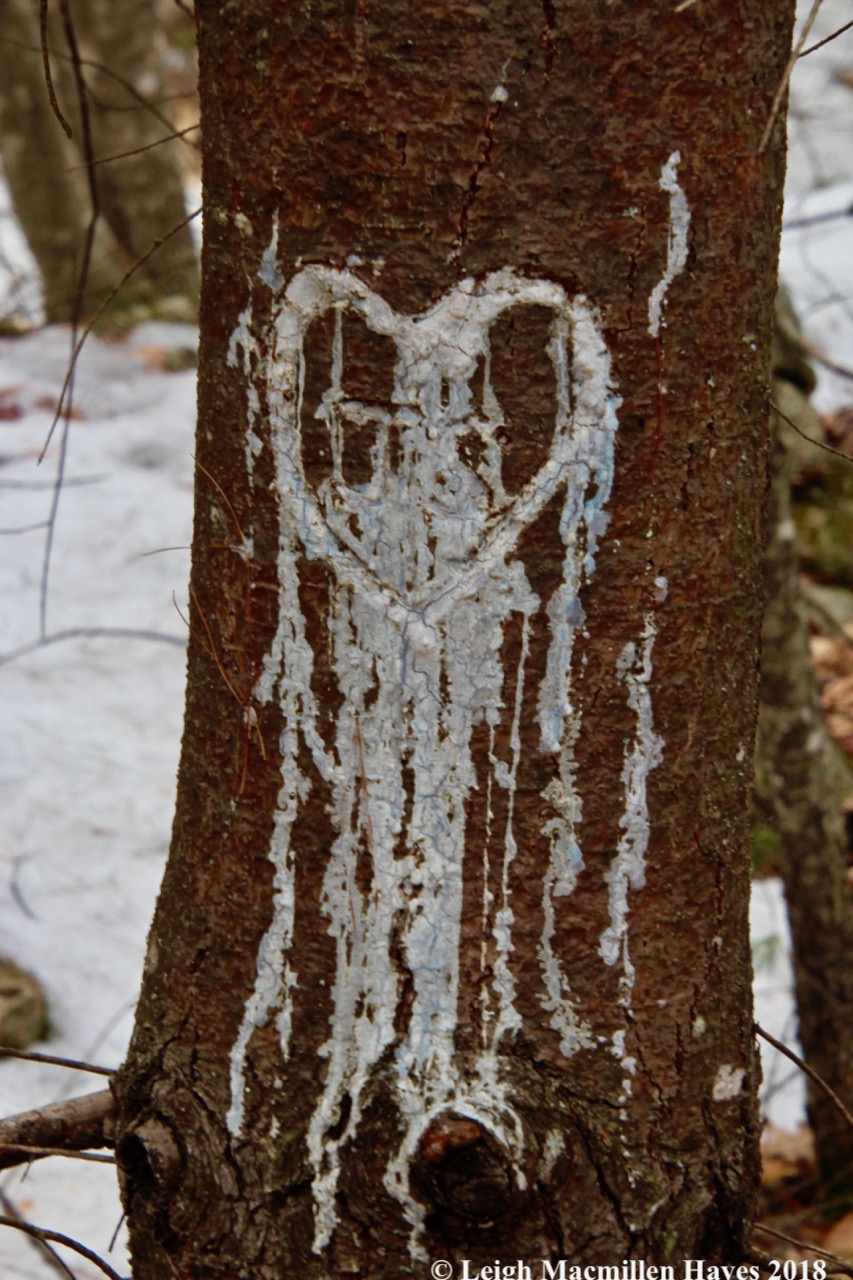
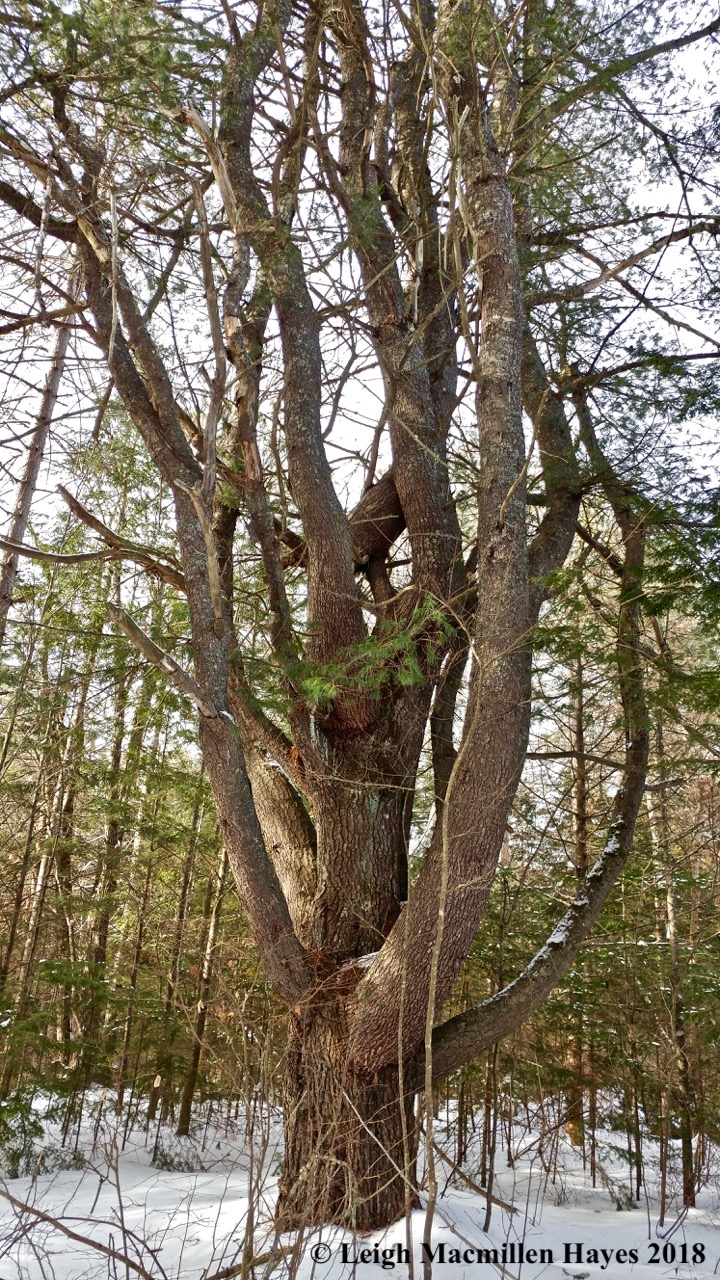
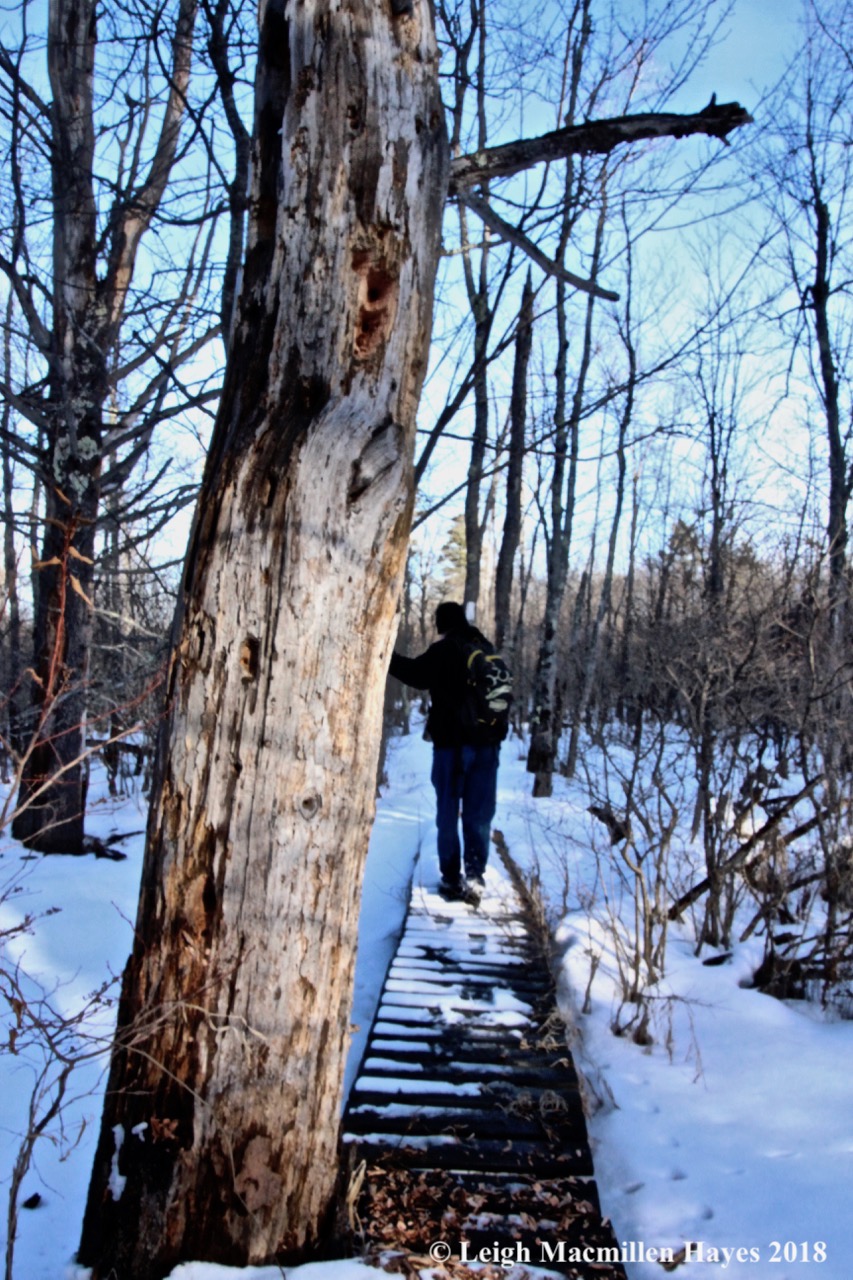
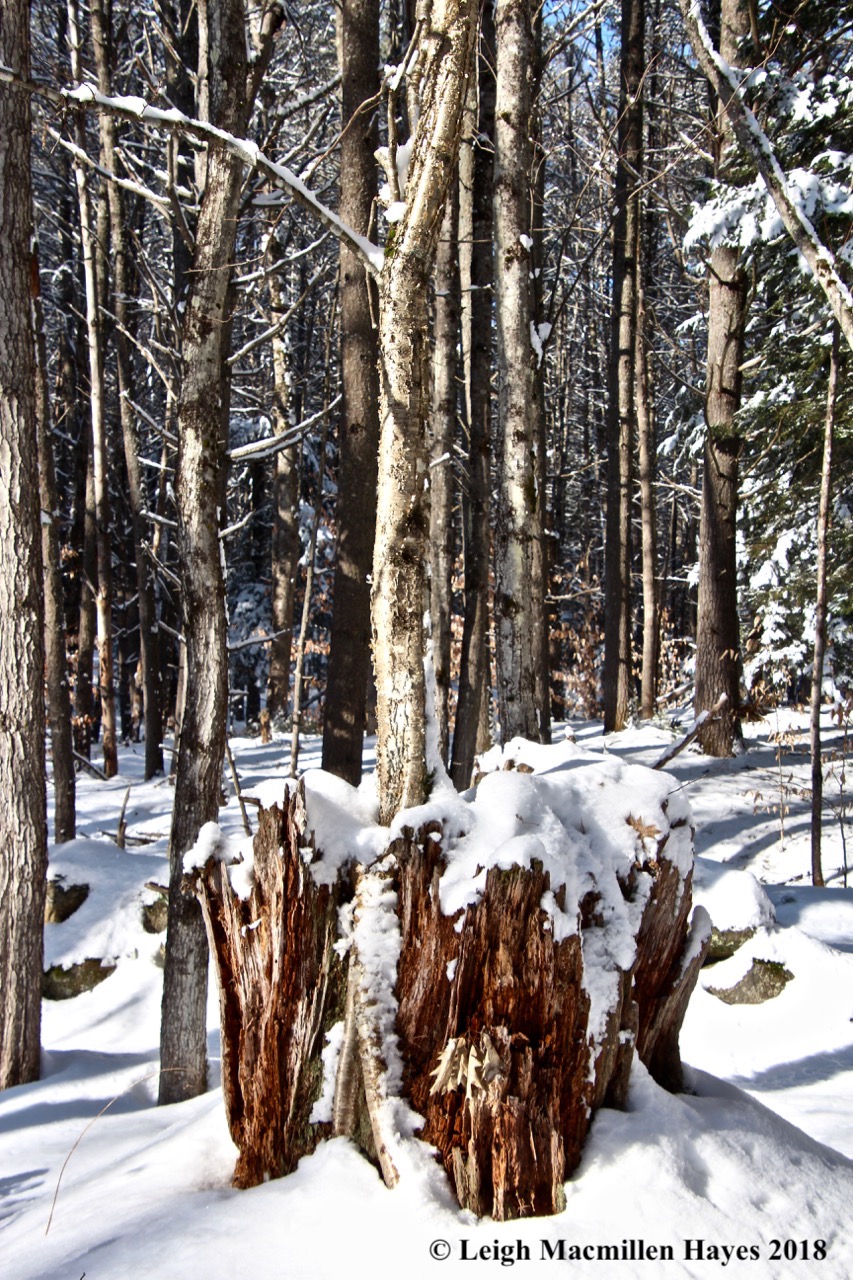
And, of course, the tree trucks!

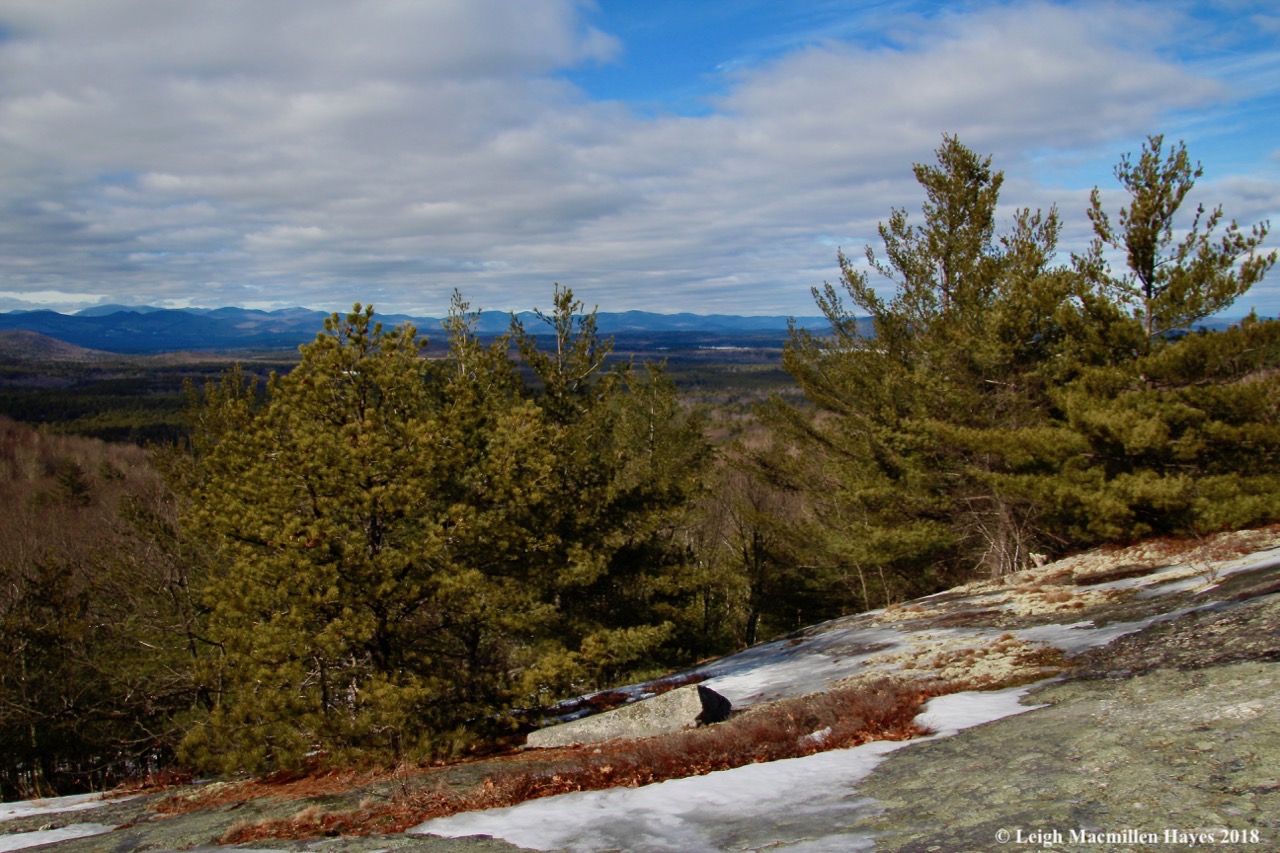
The Overset Point of View–worth a wander. 

Black Friday Lit Up, Naturally

With a mantra of “Shop Locally,” I did just that on this Black Friday 2018. Thankfully the time to take advantage of the doorbuster sales wasn’t limited and so it was okay that I didn’t pull into the Flat Hill parking lot until 1pm. 

Turns out, as in any shop today, the aisles were a bit crowded with customers searching for items on clearance and other great deals. 

I paused for a bit in aisle one, where I contemplated the Made-in-Maine artwork and thought about those on my Christmas list. Perhaps a water scene for Marita  because she likes the gurgling sound of a brook. 

For Pam K., I decided on an ice sculpture to add to her winter home. 

And for Pam M., I was sure that an abstract piece would be just right–especially as it echoed the mountain range and transformed into a bird, only sorta/kinda M.C. Escher in style. 

There were others on the list to consider and the decisions became more difficult as the selection increased in aisle two. Mouse, vole, squirrel both red and gray, deer and coyote tracks all were on display and the sign indicated I could buy one and get one free. But which one to buy? And for whom? 

And then just like that, it became clear–the coyote track for Simon because he’d caught on quickly to the squirrel patterns and appreciated that the predator was hungry. 

For every one set of tracks, there were fifty others, especially those of the mice and squirrels. But I chose the porcupine trough as my “get one free” when I saw it on the climb up the hill. 

The trough with its pigeon-toed prints and sashaying tail would be perfect for Bob.

Of course, I could have mixed and matched the prints, but thought it best to keep them separate. 

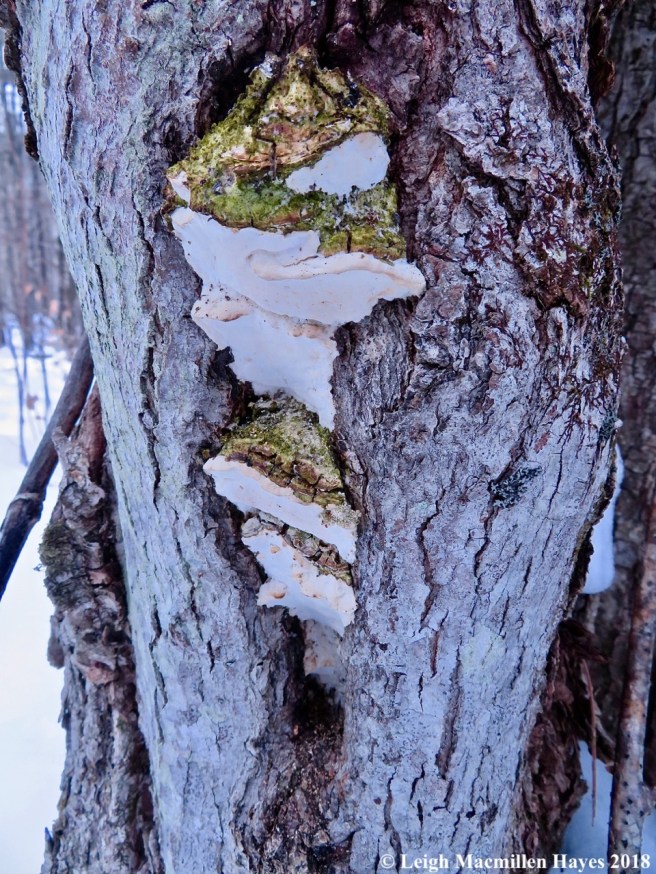
Continuing the dash for more must-have gifts, I spied a mossy maple polypore on a lower shelf and thought immediately of my guy. He doesn’t like to consume mushrooms, but there’s something about the mossy maple that draws his attention. 

And then on an end cap I saw the kissing beech/maple out of the corner of my eye and turned to read the sign: Limited in Quantity. On impulse I purchased it. Maybe I’ll stick it on my guy’s bureau and he can wrap it up for me. I’ve done that before ;-)

There were a few free surprises. Not all freebies are created equal, but I really liked the bronze ornament that would be a nice addition on our Christmas tree. 

At last it was time for a little break at the Flat Hill Cafe. Today, the view offered more bang for my buck as Mount Washington glistened white behind the other mountains. 

Also enjoying the view and the oxymoron of the name Flat Hill were fellow shoppers Bob, Pam K., Marita, Simon and Pam M. I made sure they didn’t see what was in my pack and visa versa. I do so hope they are as excited as I am about the gifts I purchased for them.

When the cafe got crowded, we decided to walk back down the main aisle together toward the check out. And then a few of us remembered we had coupons for the seasonal section. But . . . alas, we were too late. It was the only part of the store that was closed because everything had sold out. The stepping stones were  covered with water and ice to keep us from venturing any farther. We turned around, only a bit disappointed that our shopping adventure was about to come to an end, but understood that being a three-season section we had taken our chances by arriving so late in the day. 

No matter. The view from Perky’s Path thrilled us. All afternoon, we enjoyed the lighting, and especially the sun as it lowered–making this Black Friday light up, naturally. 

I highly encourage you to visit; the doors are open all hours and it’s a great place to shop in style. 

Today’s Black Friday Lit Up, Naturally experience was brought to you by the Greater Lovell Land Trust’s Flat Hill, Heald Pond Road, Lovell. 

Election Day Tramp

It always strikes me that no matter how often one travels on or off a trail, there’s always something different that makes itself known–thus the wonder of a wander.

And so it was when Pam Marshall, a member of the Greater Lovell Land Trust, joined me for a tramp at the John A. Segur Wildlife Refuge West on Farrington Pond Road this morning. She had no idea what to expect. Nor did I.

13-puff balls to pop

It was misty when we met, but neither of us was daunted by the weather. Ever so slowly, we made our way over the wet leaves, roots, and rocks, pausing frequently–especially each time we saw puff balls. How can one resist poking or squeezing them to watch the spores waft out like smoke. The skin of mature puffballs split prior to releasing spores. And we . . . we helped the process a wee bit.

20-blue stain fruiting

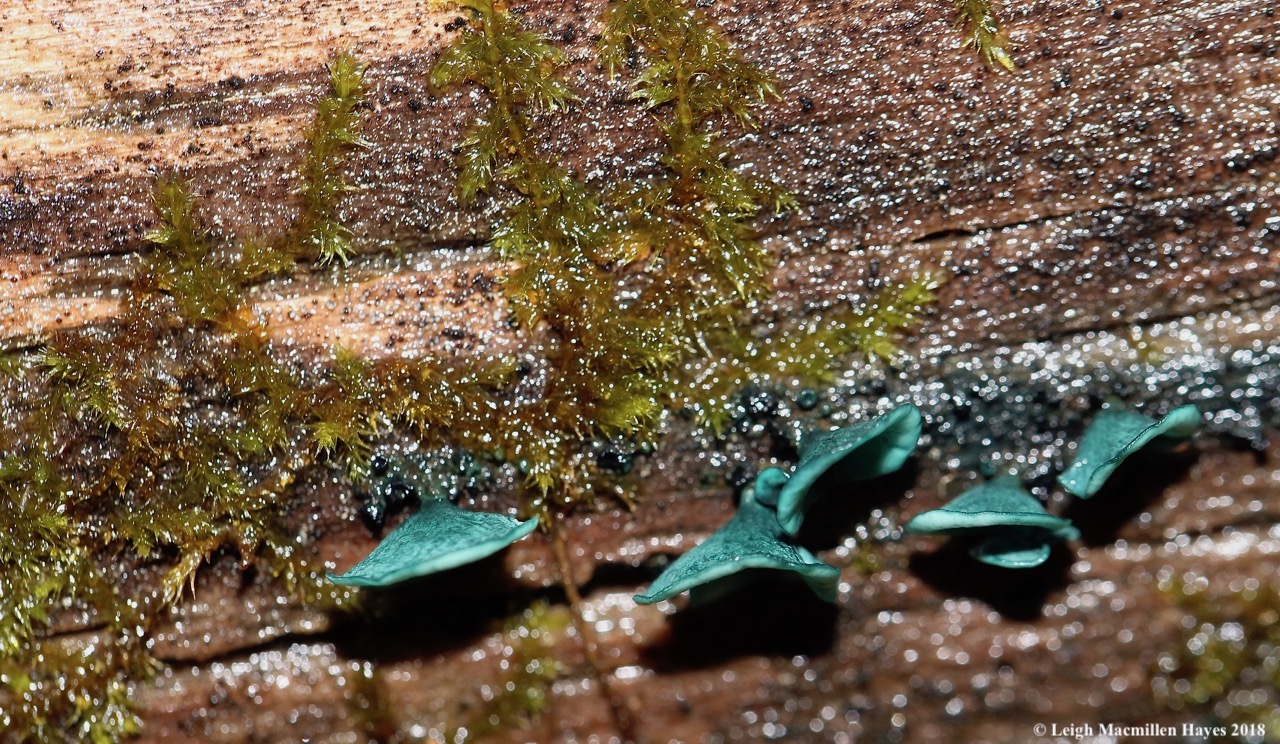
Green stain fungus also drew our attention. Its fruiting bodies were minute, but well worth wet knees for a closer examination.

19-hexagonal-pored polypore

With Pam in the lead for most of the way, she kept finding cool stuff, like this hexagonal-pored polypore.

1-Sucker Brook Outlet

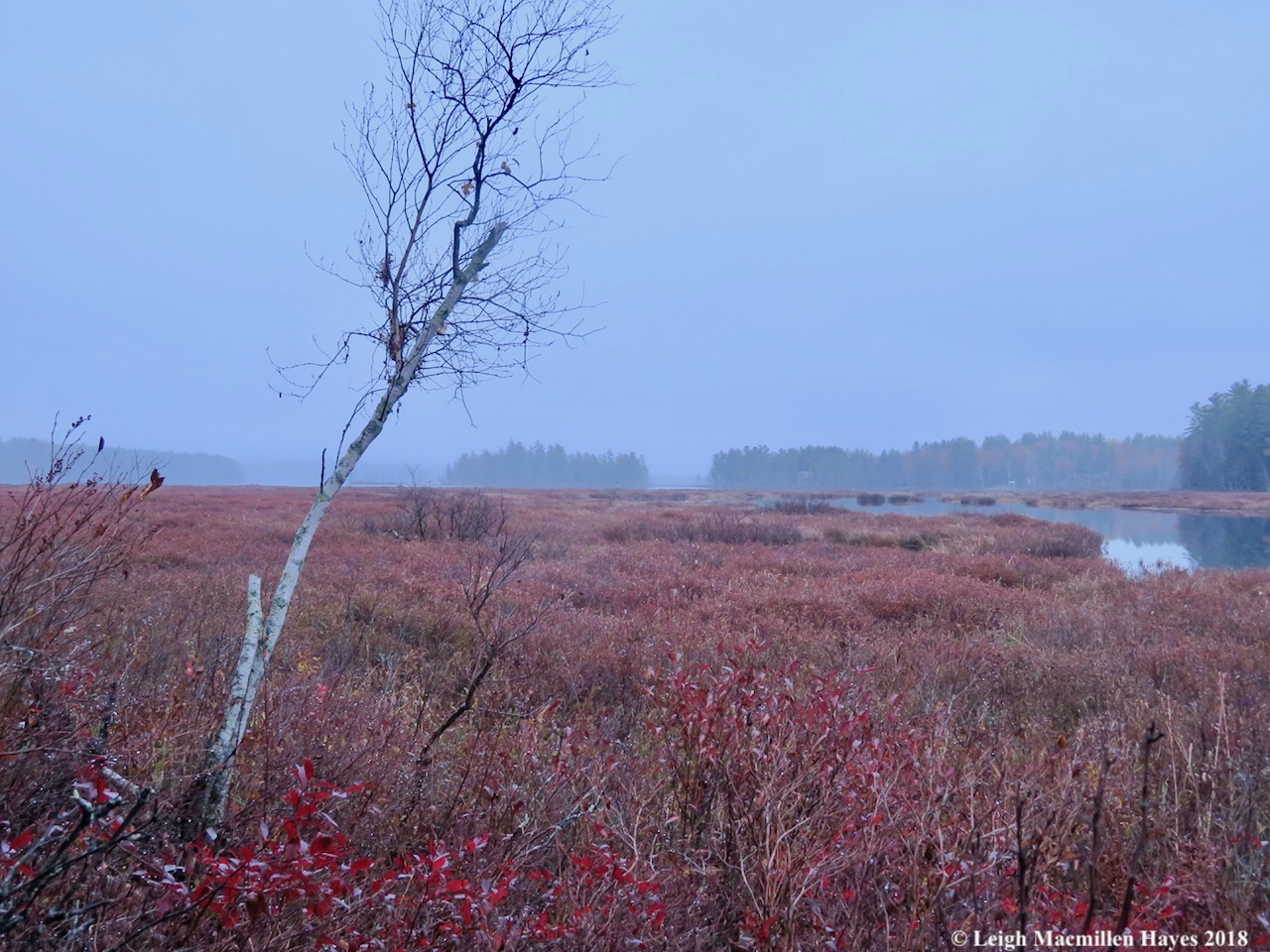
It took us a while, but we finally reached the wetland by the Sucker Brook Outlet where blueberry, maleberry and leatherleaf shrubs added color to the otherwise gray day.  For a while we stood under the protection of a large hemlock and took in the scene in silence.

2-Silhouettes on Lower Bay and cotton grass

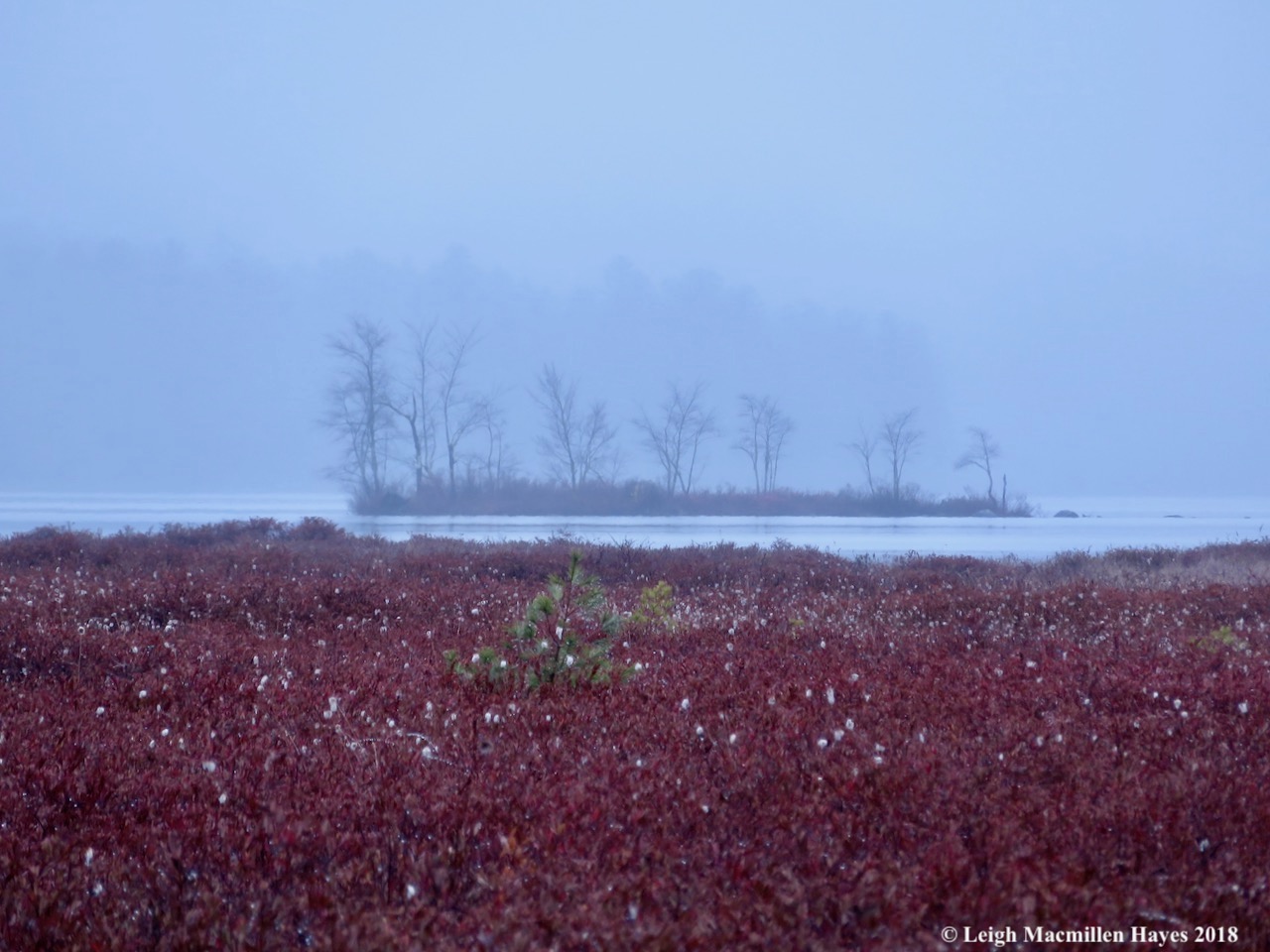
From our vantage point, an island in Kezar Lake’s Lower Bay looked like a ghost ship. And in the foreground, cotton grass still touted its tufted heads.

3-beaver lodges

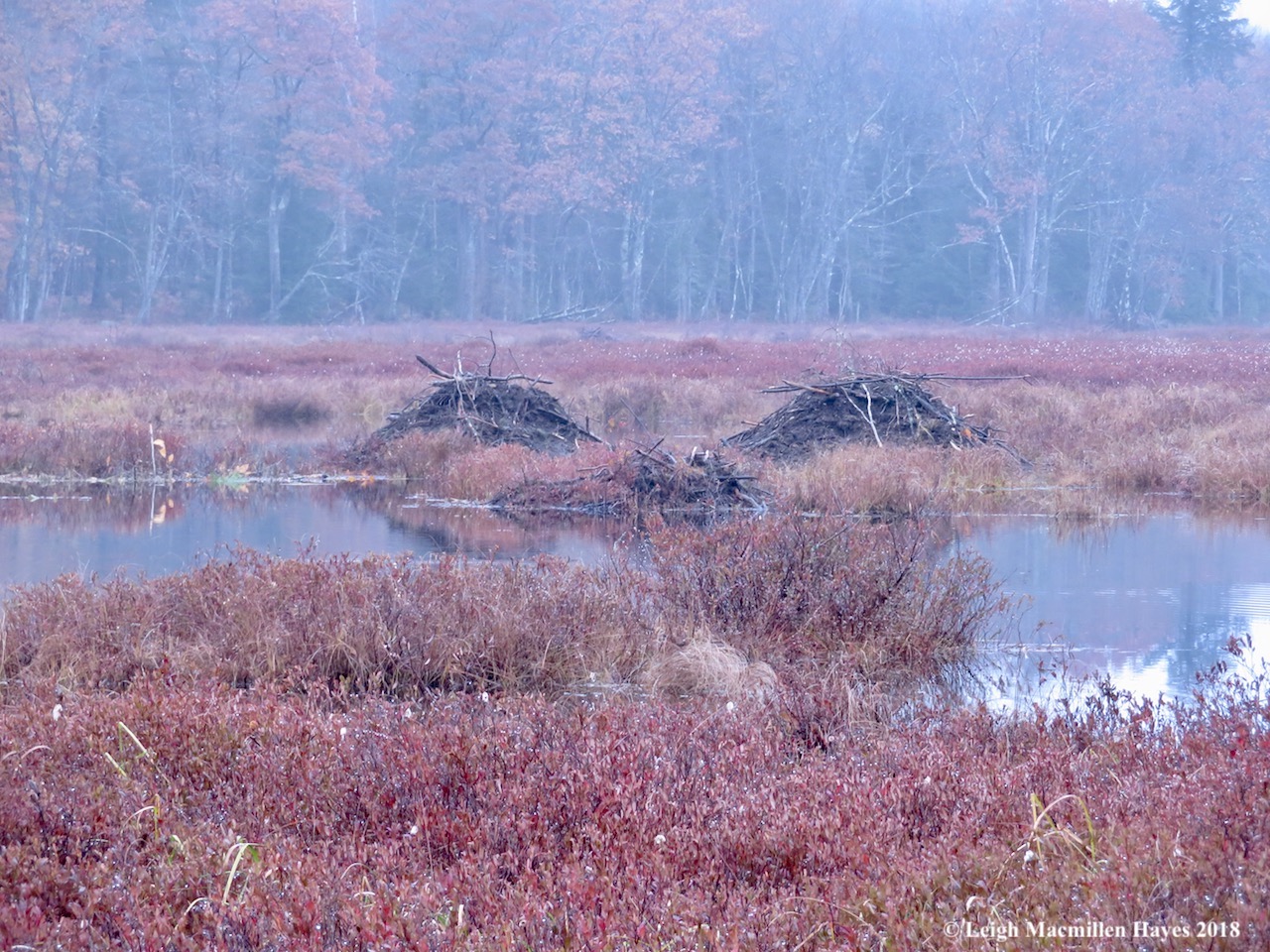
At our feet we could see some aquatic plant roots floating in the water, a beaver treat, and trusted by the mud on the lodges that there had been recent activity. Perhaps they rested indoors before planning to spend time later in the day preparing for the cold months ahead.

4-Pitcher Plants

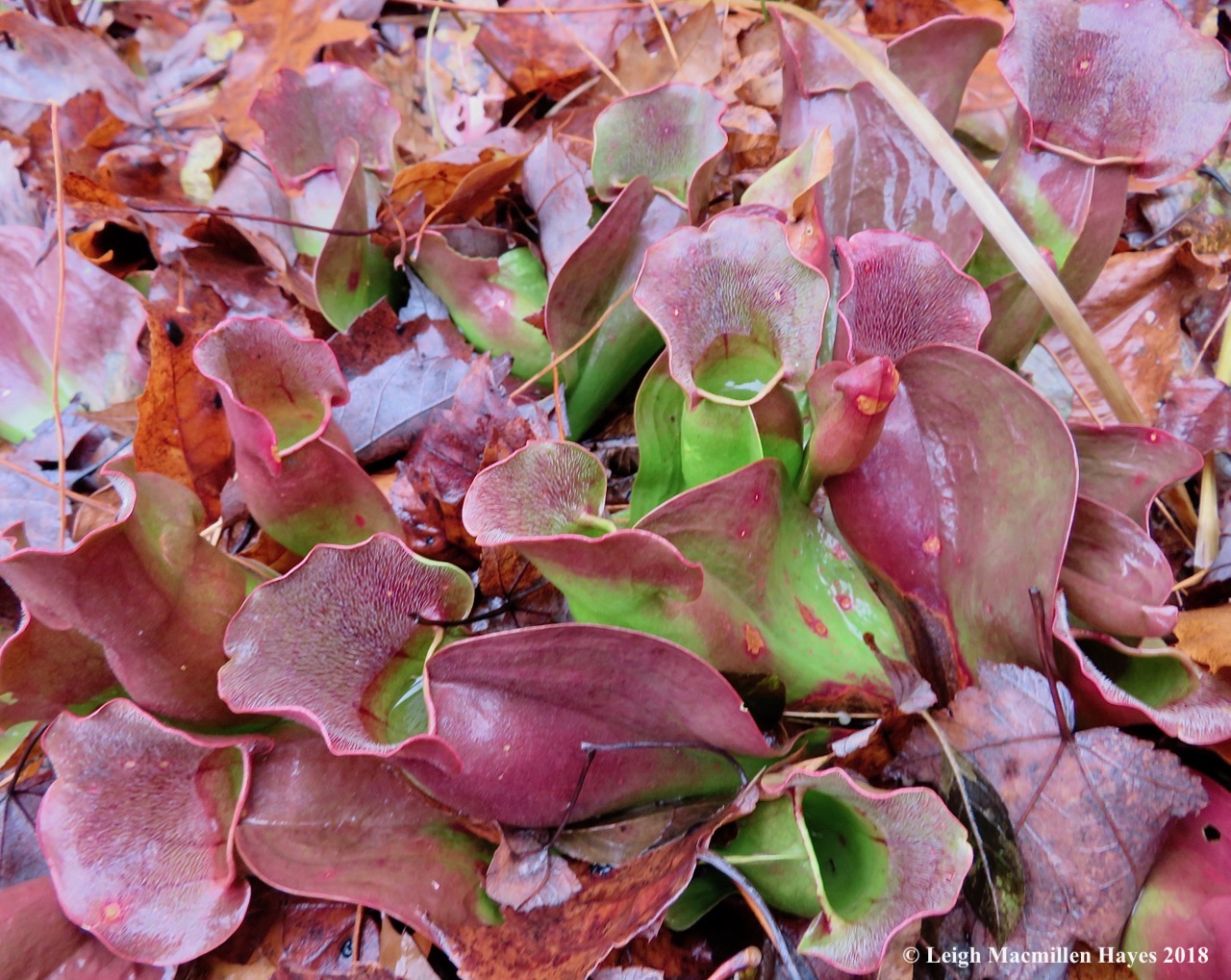
After a while and because I knew they were there, I took Pam along the edge of the brook for a short distance to locate several pitcher plants. Someone once photographed them in their young green form and described them as rare. While helping Dr. Rick Van de Poll, principal of Ecosystem Management Consultants (EMC) in Sandwich, New Hampshire, set up study plots at Lakes Environmental Association’s Highland Lake Reserve in Bridgton during July 2017, we had to watch where we stepped to avoid crushing pitcher plants. It was a perfect time to ask Rick about the green color. Were there green pitcher plants in Maine? And if so, were they rare? He explained that it was just a matter of sunlight and age, all would eventually take on a redder hue in veins and then overall leaf coloration as they matured.

5-pitcher plant runway

This morning, we found some sporting brighter red leaves.

6-spiders within and webs above

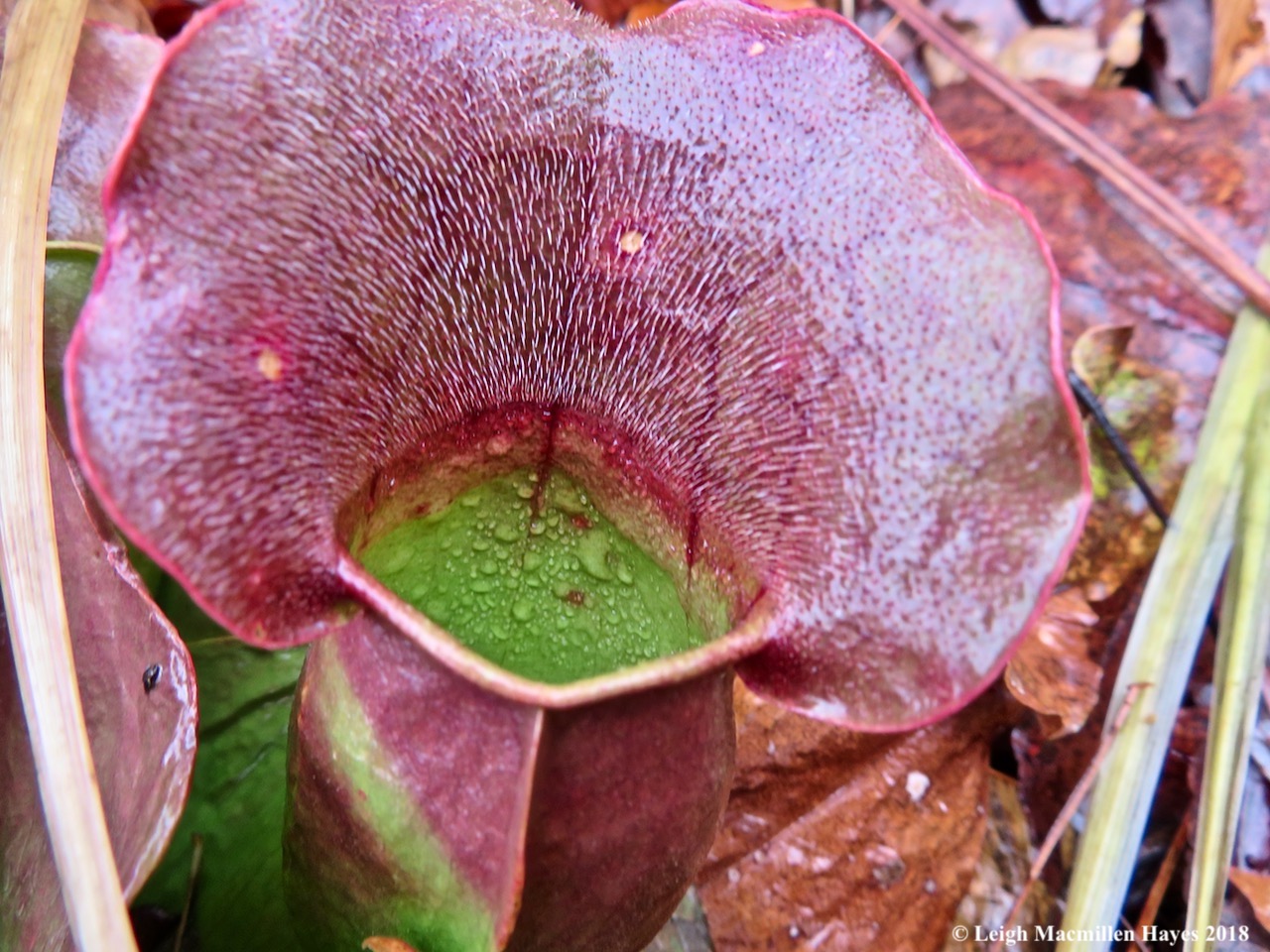
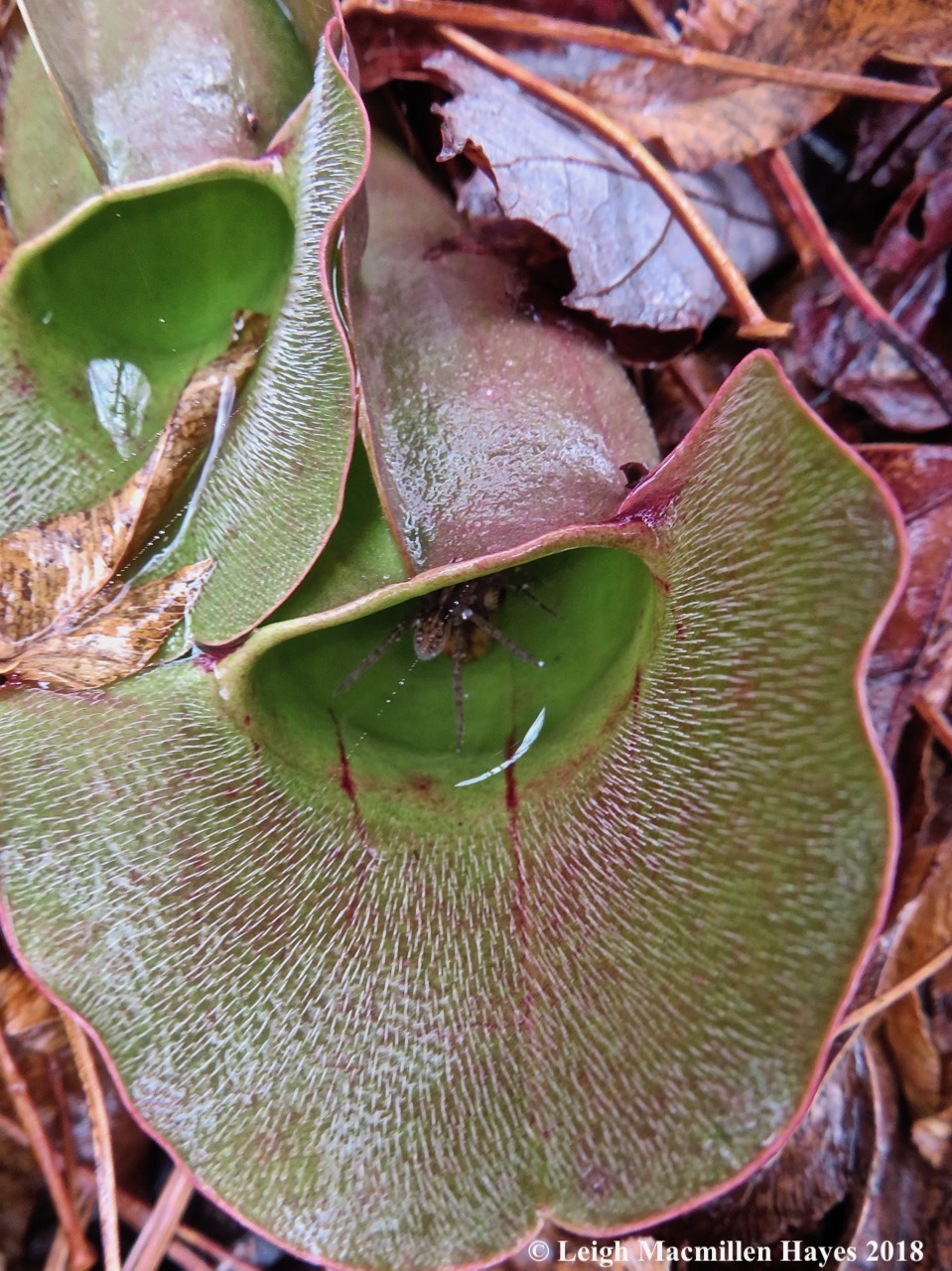
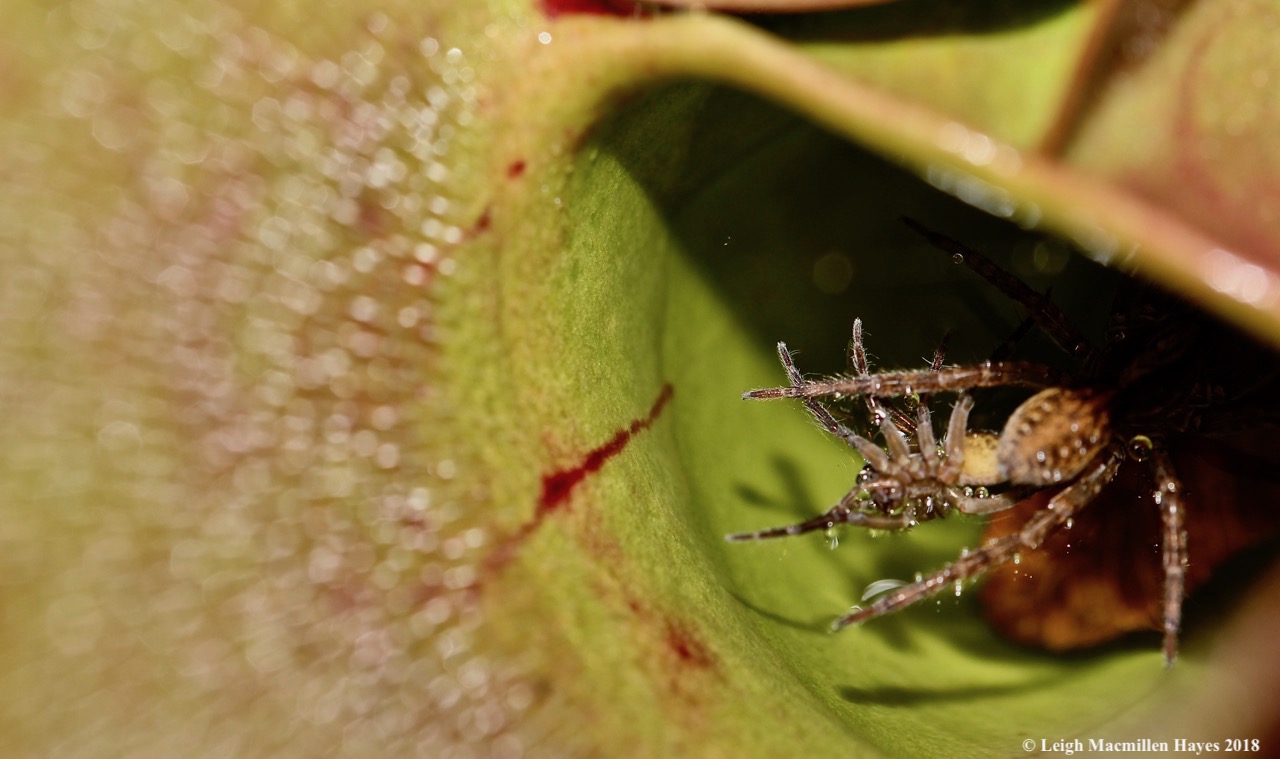
And another plant that was duller in color. Since we were in the locale where the green plant had been discovered, I trusted that it was beginning to show its age. It was the duller one that drew most of our fascination. Carnivorous pitcher plants obtain nitrogen and phosphorus by eating insects. Their oddly-shaped leaves form a pitcher partly filled with water and digestive enzymes. The spout is a hairy landing platform for insects attracted by red venation and nectar glands. Imagine this: an insect crawls to the edge of the leaf, aka pitcher, slips on the downward-sloping hairs and plunges into the liquid below where enzymes and bacteria break it down. Any chances for escape are zapped by those stiff hairs. Do you see what we saw? A spider web across the top of the leaf? And within?

8-larger spider manuevering the smaller one

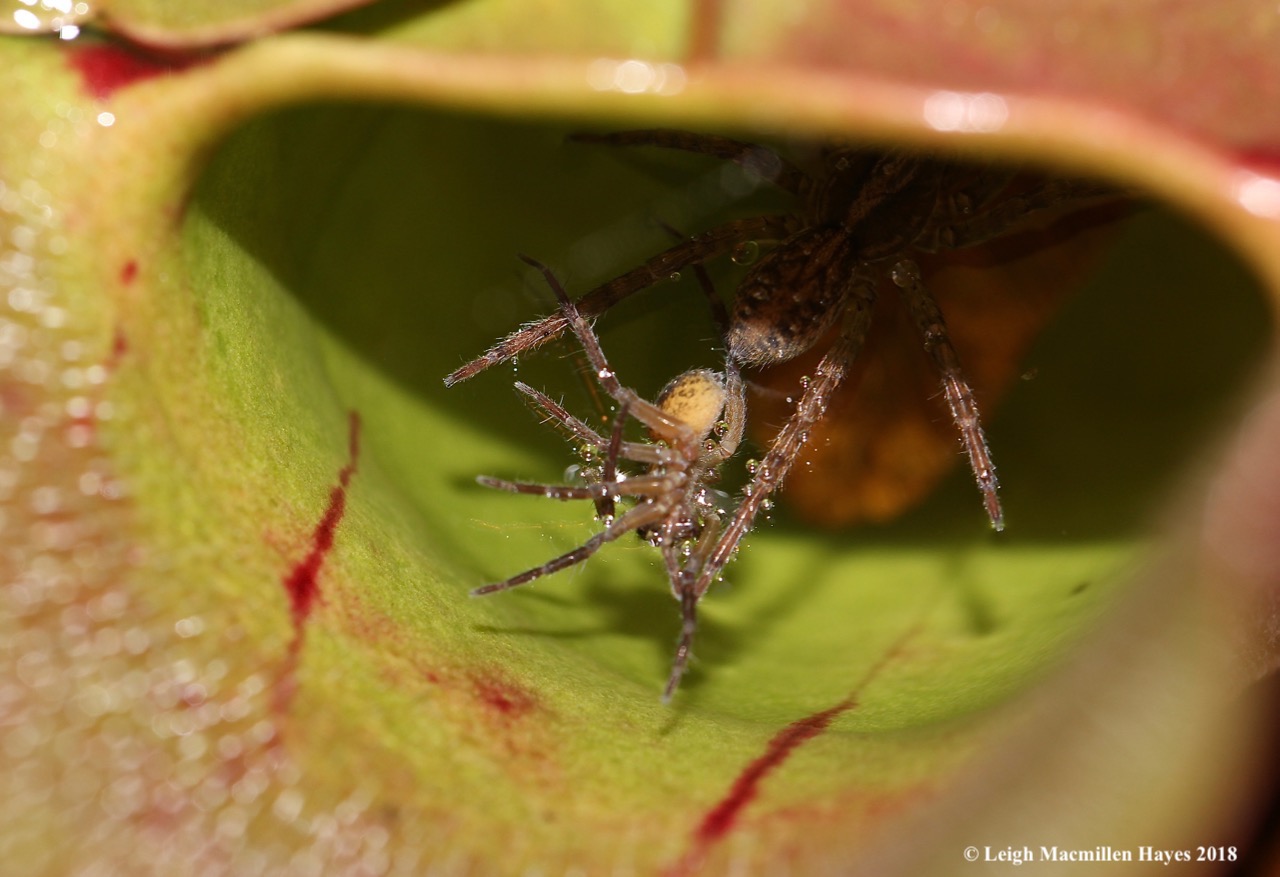
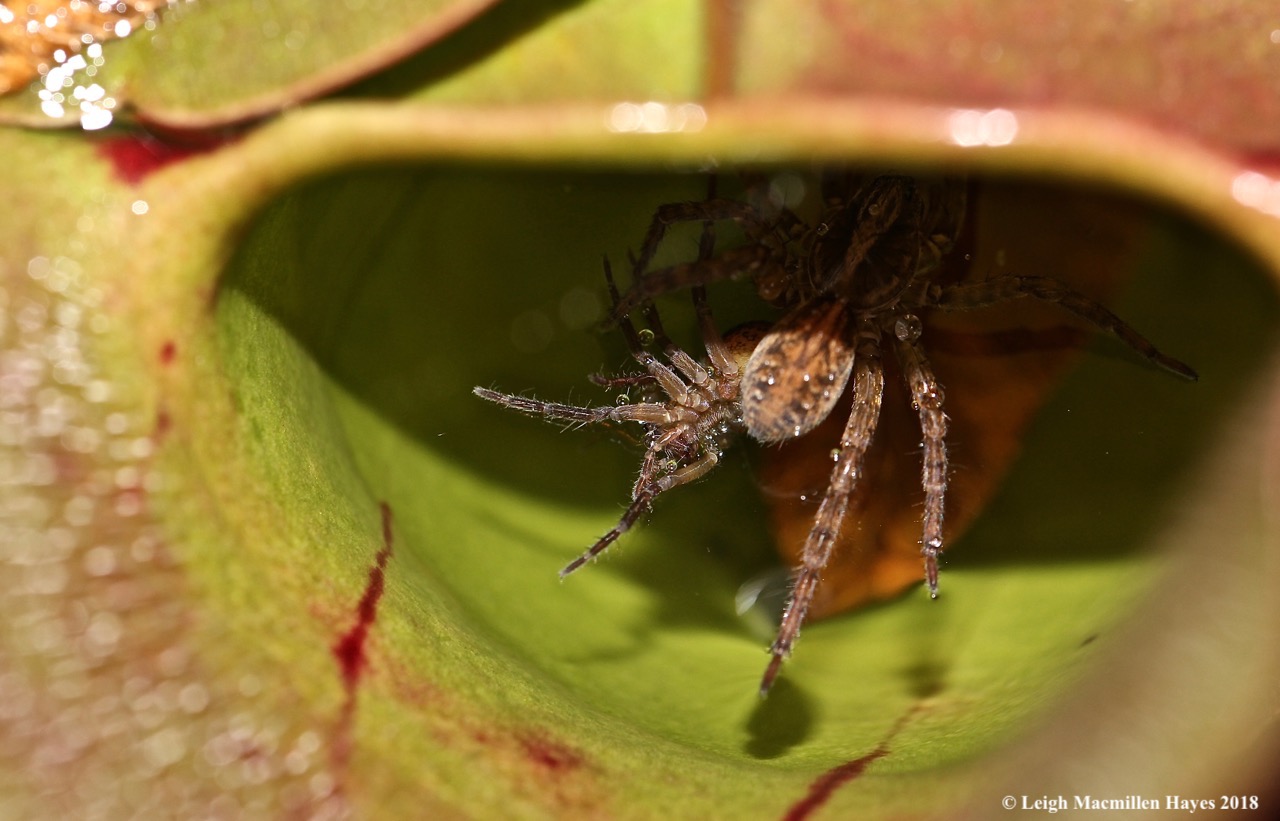
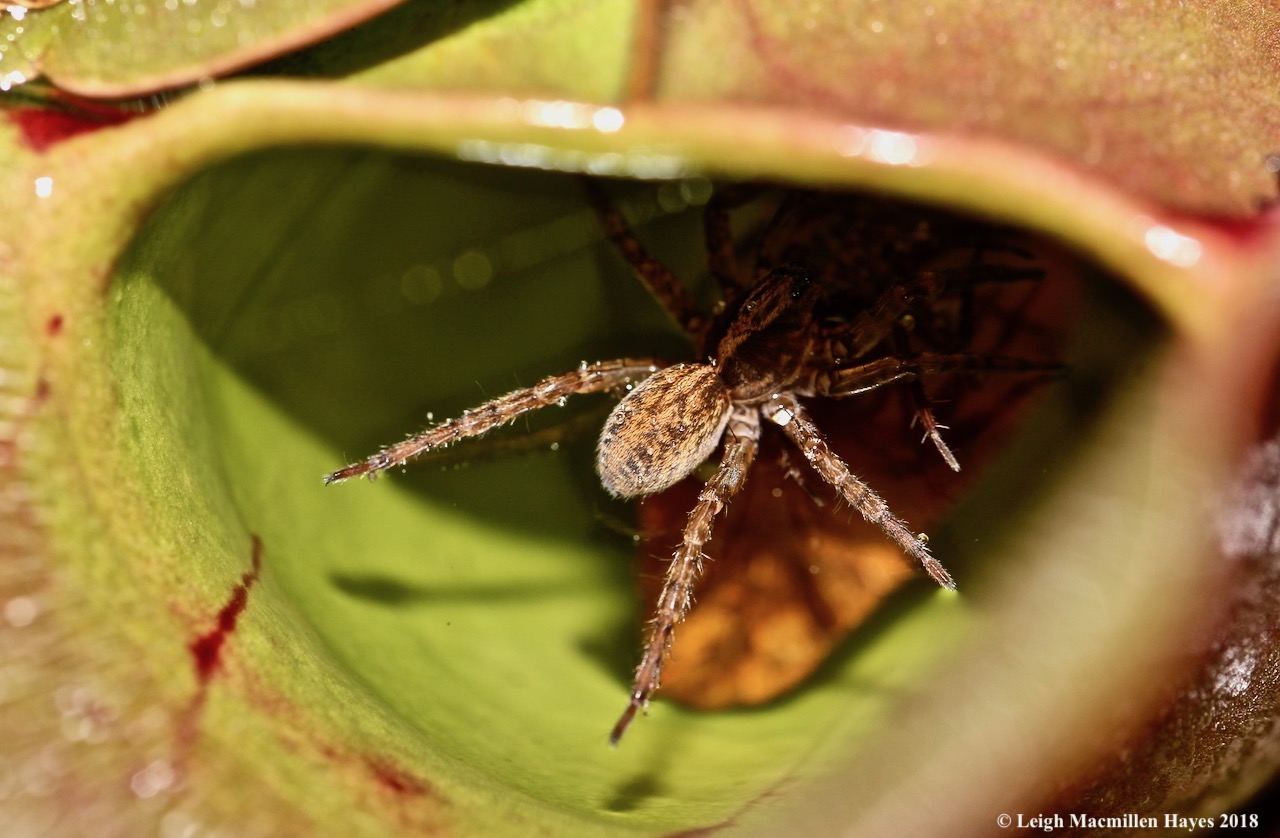
Dueling fishing spiders.

9-pulling it under its body

And so we watched.

10-and out again

The larger one continuously manipulated the smaller one, which appeared to be dead. Back and forth under its body, it kept moving the smaller kin.

11-and back under

Was it trying to eat the other? One last meal before it too succumbed to the plant? Was it trying to move past the dead spider so it could try to climb out? Should we save it?

12-let 'em be

In the end, we left the action with questions in our minds and didn’t interfere.

7-watching the spider action

Except, that is, to take photographs and make a film. Again, our knees were wet and we didn’t care.

14-pigskin puffball 1

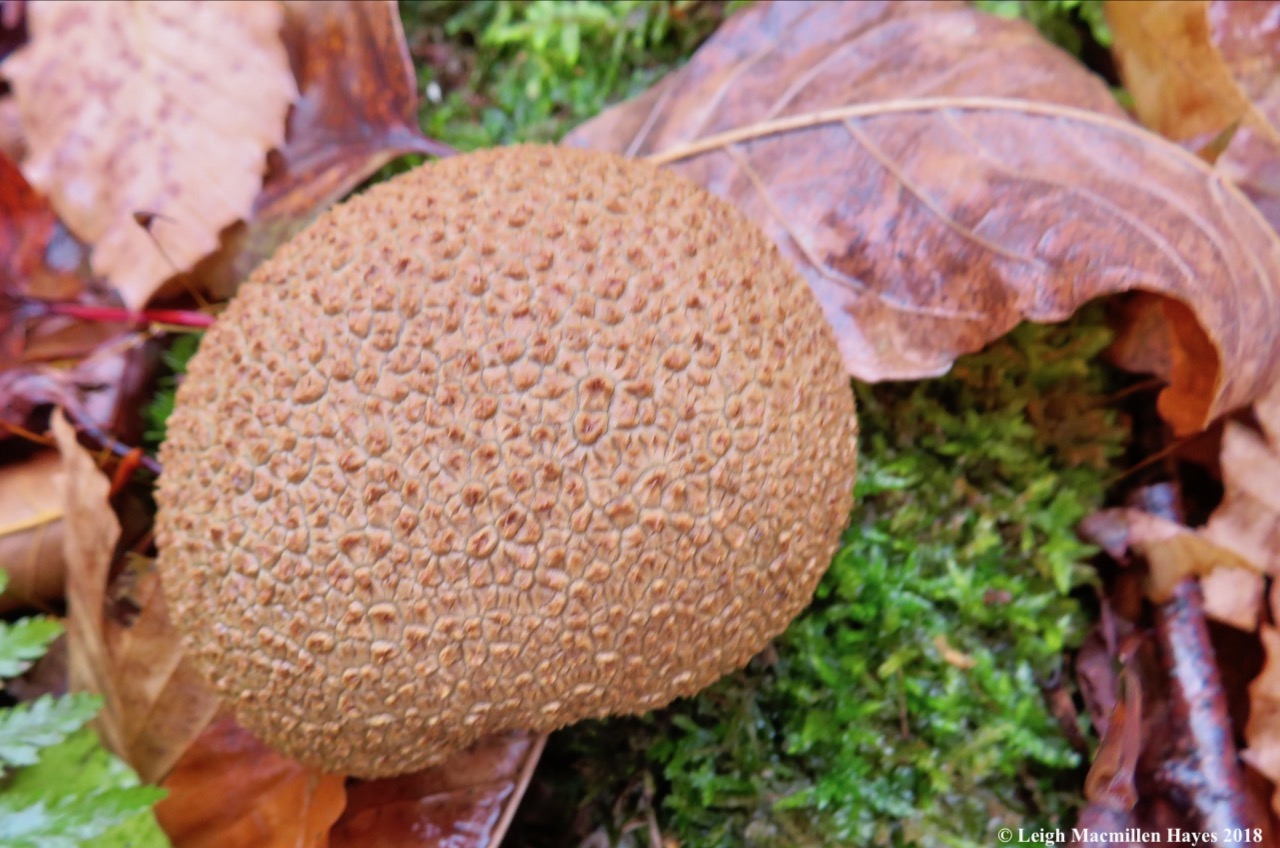
Back on the trail, we found an area where Earthballs decorated some old lumber slash. Their warty outer skin drew our attraction.

15-skin of pigskin

Another common name for Scleroderma citrinum is Pigskin Poison Puffball. Since it’s football season, it’s good to note that footballs used to be made of a pig’s . . . bladder and not its skin, though historically they were called pigskins. Rather than feel leathery, these seemed more rubbery, thus the reference I guess.

15-popping pigskin

And because they were puffballs, they invited a poke.

16-an explosion of spores

From a couple of slits, mature blackish spores erupted. I had to chuckle for no matter with whom I share a trail, puffballs always invite the same reaction–pick up a stick and give it a jab. And each time we share the same moment of glee. And our inner child is released one more time. Thankfully.

18-insect within pigskin

Of course, we found ourselves on our knees yet again when Pam spied something within an Earthball that had exploded prior to our visit. Upon closer inspection, it turned out to be an inanimate insect that looked like it was covered in spores. Canary in the coal mine?

25-Pam and the bear scat

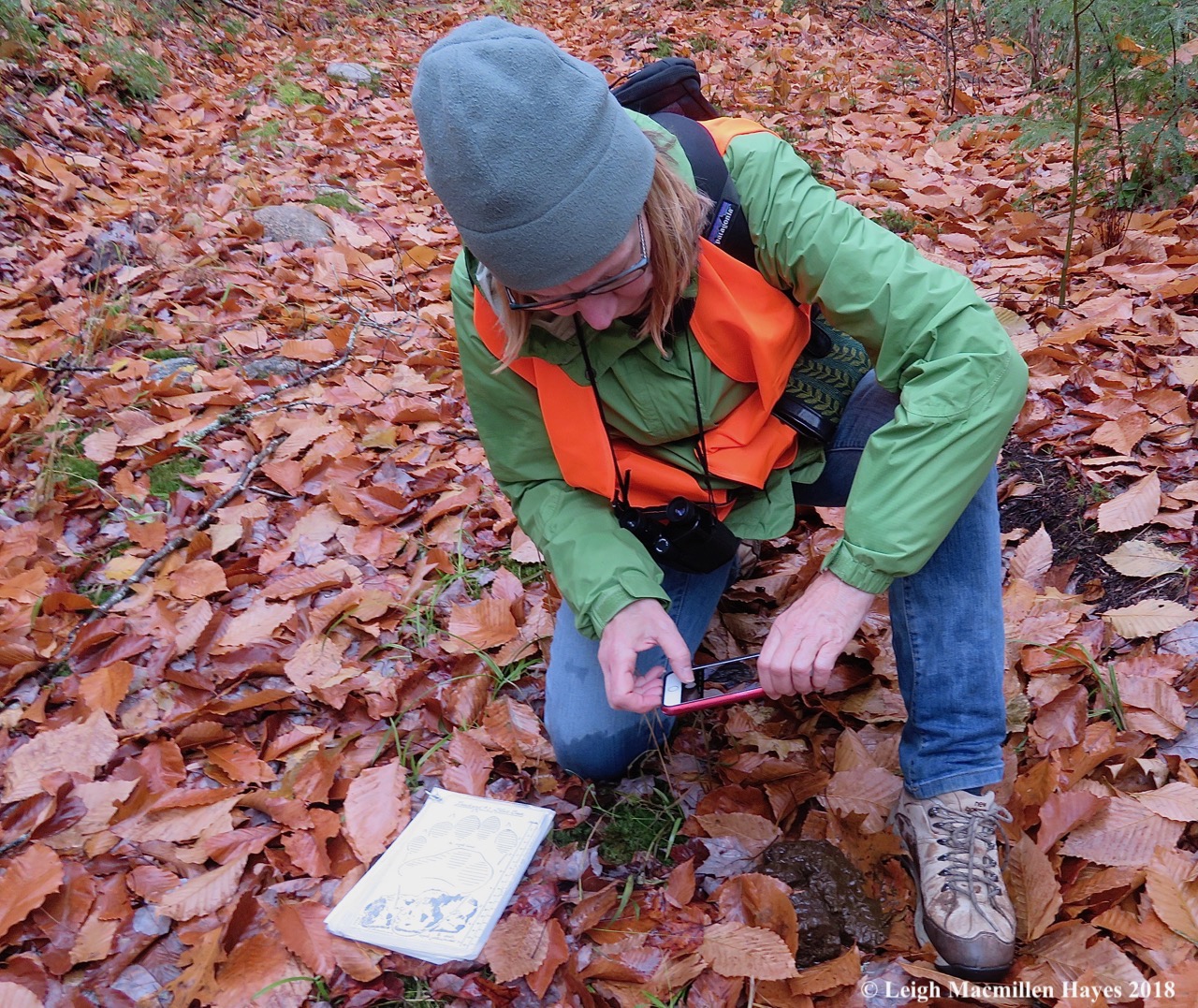
Our next great find was of a different sort and I had to pull the Trackards from my pack while Pam got down for another upclose and personal look. Notice her knee?

22-bear scat

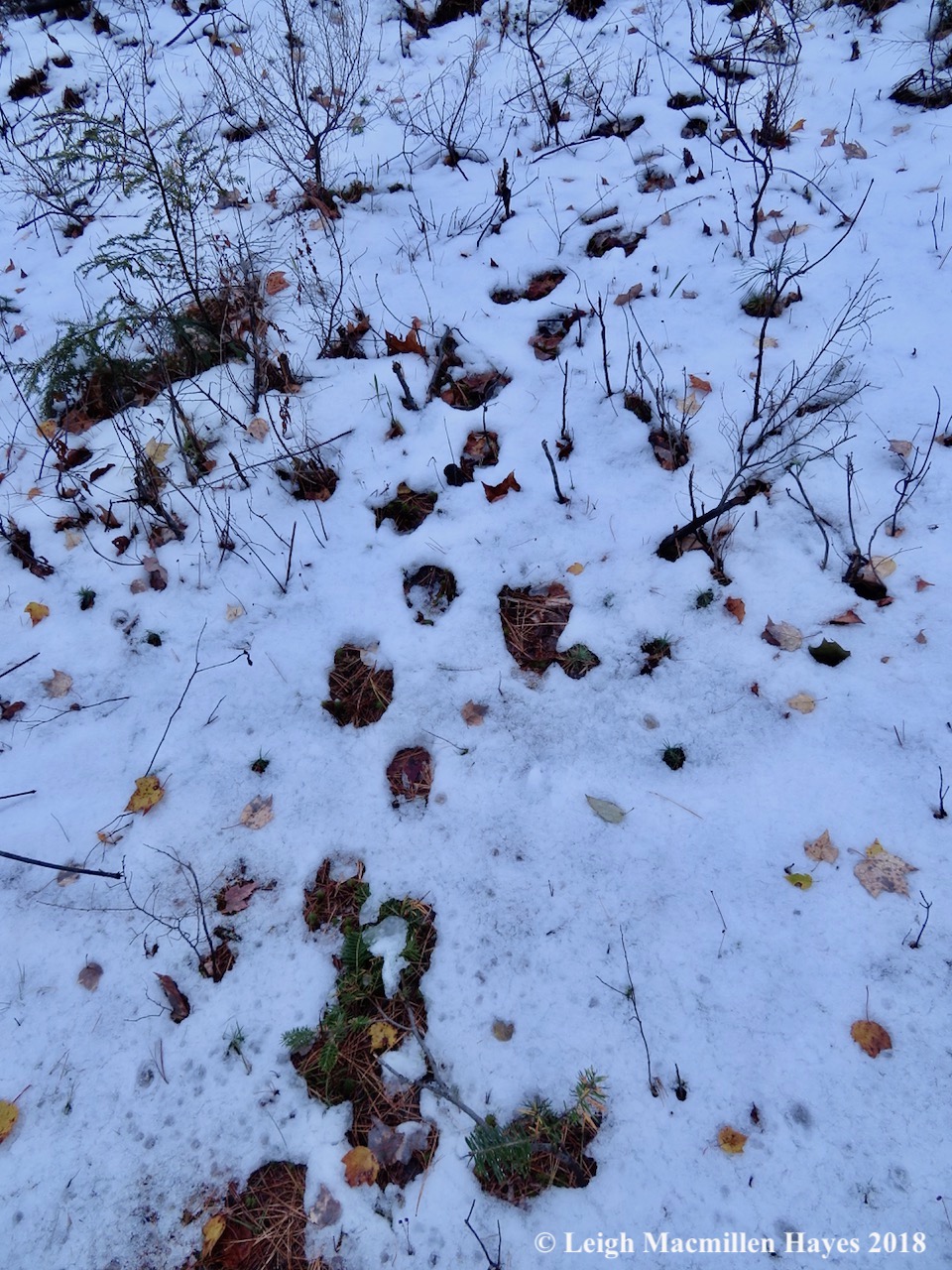
Black bear scat! Indeed. Cylindral and large. We looked for tracks, but conditions were such that we didn’t find any. The scat was enough for this day.

24-Tamaracks

If you go, we strongly encourage you to follow the green trail all the way to the bird/wildlife viewing point along Sucker Brook. Today, the tamaracks on the shore to our right added a tone of bright beauty to the overcast day.

25-Sucker Brook--beaver lodge

And another old beaver lodge also looked like it had received a mud treatment. We could see some beaver chew sticks in the water by the edge of the brook and so we knew again that there had been recent activity. It just means we’ll have to return for another visit if we want to catch some action–perhaps earlier in the day.

In the meantime, we let the view point become our turn-around point and quickly (sorta) followed the blue trail back for we both needed to move on to the rest of our day.

But . . . despite the mist and occasional raindrops, we elected to tramp. And were delighted with the results. Here’s hoping the rest of the day goes like that.


Put The Lawn Furniture Away Holiday

I don’t know the why of it, but it seems that each year when we plan to put the lawn furniture away, the forecast either includes wind gusts or snow. Well, yesterday it snowed. Not a lot of snow, mind you. But enough.

1-snow on the kayaks

It was, however,  melting quickly when we stopped by camp to begin our autumn chores.

3-porcupine tracks

Upon our return home, I diverted my attention for a bit and headed off into the woods, where much to my delight, tracking opportunities made themselves known. Though I didn’t see any of the creators, I smiled with the knowledge that I can share this land with them. Along the way I found a porcupine track pattern,

4-coyote--18 inch stride

plus a coyote with a stride of about nineteen inches (when you don’t take a tape measure it pays to improvise),

5-snowshoe lobster

and my favorite for this first tracking day of the season . . . a snowshoe lobster–I mean hare.

6-moose scat

Another favorite sighting, which I spied a few times–rather fresh moose scat the size of chocolate nuggets. (And no, I didn’t collect it to make jewelry. ;-))

7-my own track

As I moved, I left behind my own tracks and wondered if the mammals looked at those and knew I’d passed by. “Middle-aged female, the one who stalks us,” they might comment if they could talk. But really, it’s by my scent that they probably know me best. “Stinky middle-aged female . . .”

7a-leaves enhanced by snow

It wasn’t just tracks that caught my attention. The snow, spotted with tree drips, enhanced the color and borders of the foliage, making each leaf stand out.

7b-leaves under slush

In contrast, a more muted tapestry formed where foliage was trapped in slush-topped puddles.

8a-melted snow on sugar maple

And then there were those leaves turned upside down. I was fascinated by the variation of size in the water drops left behind as the snow melted. Every dot enhanced the pastel back-side colors . . .

8-melted snow on big tooth aspen leaf

and acted as a scope by showing off segments of venation.

9-snowdrops on grass

Patterns changed depending on the shape of the structure to which they clung.

10-goldenrod

And all were momentary for each drop eventually did what they do . . . dripped.

11-tachinid fly

While I admired the beauty, I wondered about the goldenrod that still bloomed and reminded me that though it had snowed and we’ve had some rather cold days, today was a bit warmer and it’s not winter yet. But those cold temps of a few days ago, I think they caught some by surprise, including this tachinid fly that dangled from another flower stalk.

12-hickory tussock moth caterpillar

And several times I found hickory tussock moth caterpillars frozen in place. While I admired the way the melted snow drops clung to the hair, I wondered about what I was seeing. Was it a shed skin? Or had this caterpillar been taken by surprise with weather conditions?

If you know, please enlighten me.

As it was, I needed to finish my wander for there was more furniture to put away on the homefront.

13-red-backed salamander

And when we opened the cellar hatch door to store the table and chair downstairs, another discovery was made . . . an Eastern red-backed salamander on top of the first step.

The day probably should have been named “Day After the First Snow Storm of the Season” but instead it was our “Put the Lawn Furniture Away Holiday.” Not everyone celebrates this day, but we do because as exciting as it is to bring the furniture out in the spring, it’s equally exciting to put it away and anticipate the coming season. Oh, and when we pull it again in the spring, you can trust that it will snow at least one more time.


The Amazing Race–Our Style, episode 3

We were a bit confused by the clue–something about an oven and ice and we felt like maybe we were headed to a kitchen. My guy doesn’t cook all that much and I avoid it as much as possible, so we knew this was going to be a tough leg of the race. Surely, we’d be there all night trying to concoct something and the sky would darken on our chance of winning.

To top it all off, it was an equalizer. That meant that though we were early to the starting point, all participants would begin at the same time. And so we had some time on our hands and a few dollars to spend on lunch and libations.

o1-clue

As we sipped, our clue was revealed. And we were ready to heed it, despite our anxiety over the cooking issue.

o2-footbridge

Following lunch, we still had more time to kill and decided to walk across the footbridge in Boothbay Harbor.

o3-ghost harbor

It was a bit of a ghost harbor on this day, but it won’t be long and people and boats and more people will fill this space.

o5-sign of snow

As we walked around town, we did some window shopping–of the best sort.

o4-clock

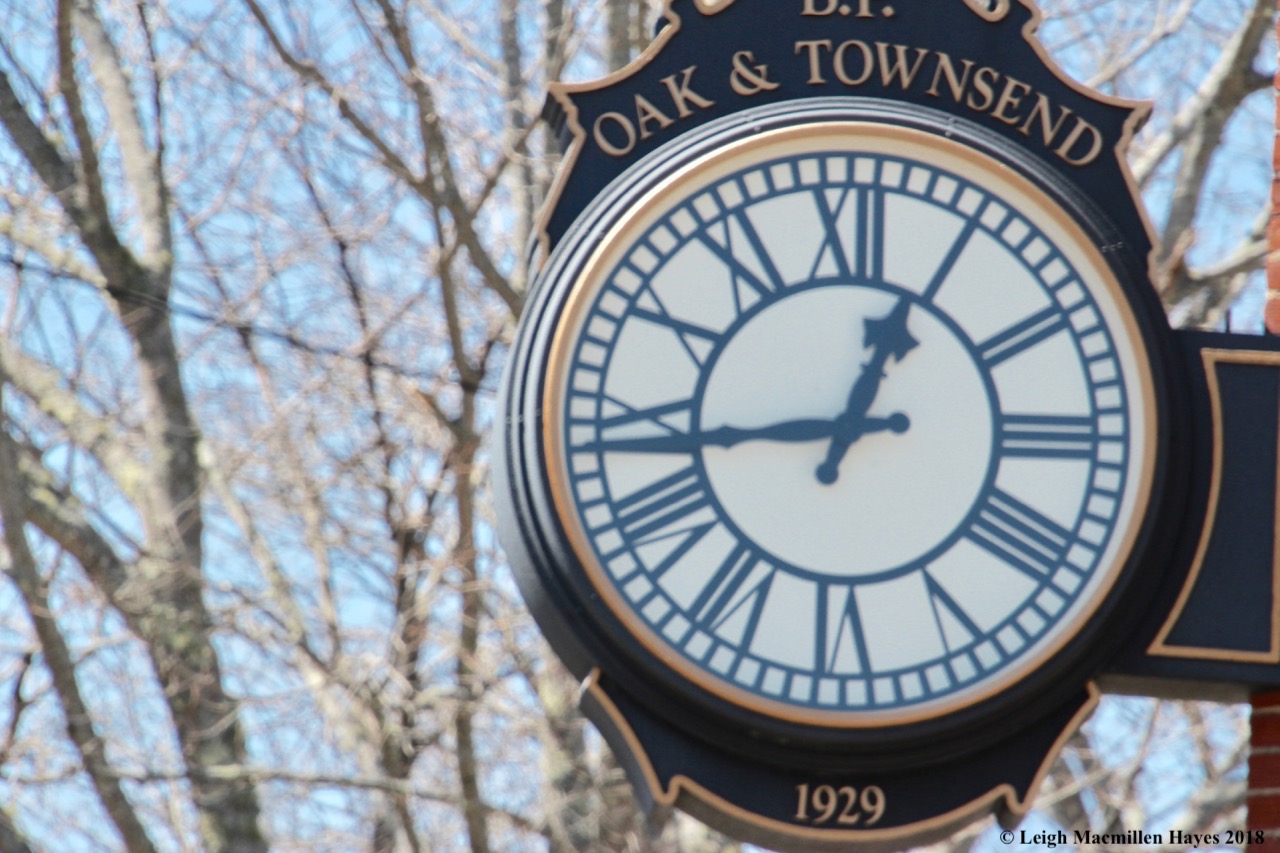
And then a view at a clock reminded us that we had a place to be by 1:15.

o6-crooked sign

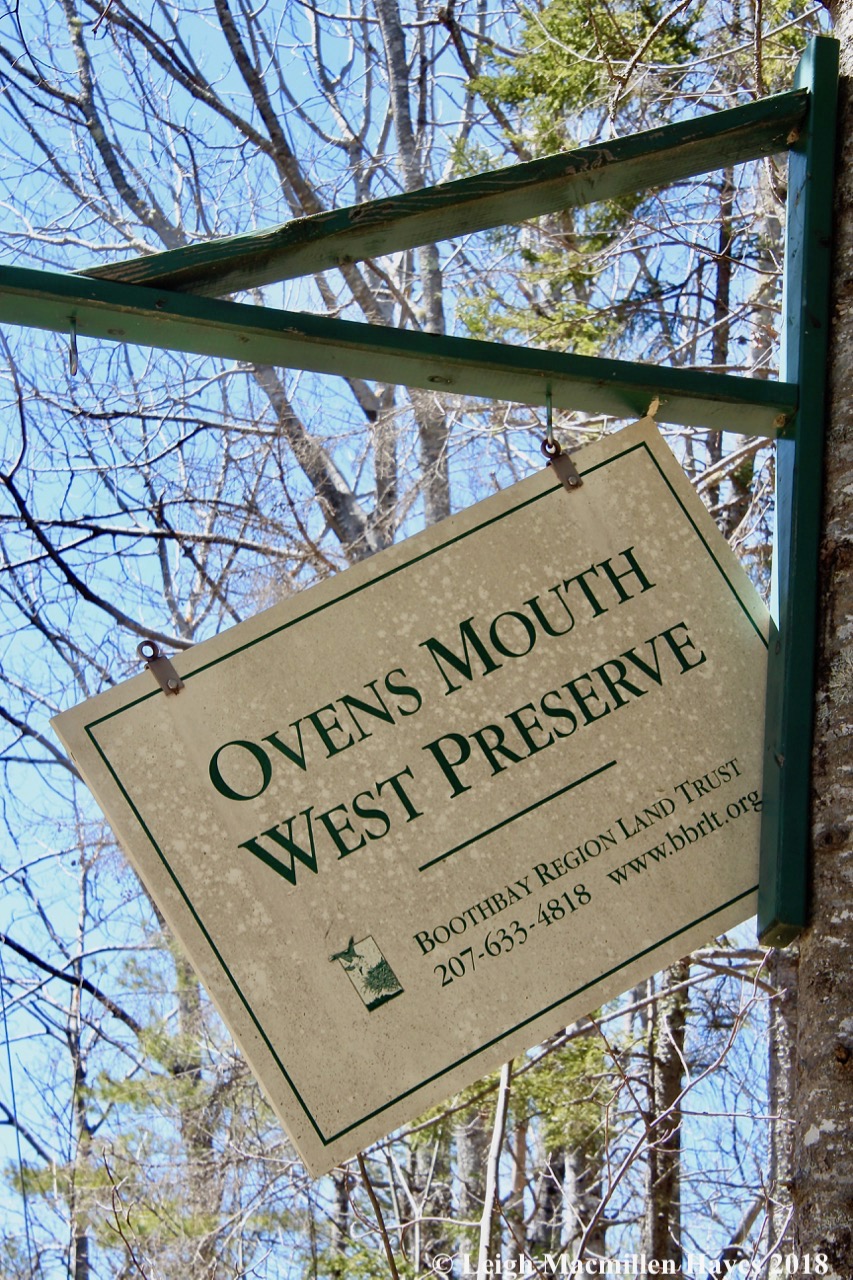
Look for the crooked sign, the clue stated. We found it.

o8-trail conditions

Follow the trail. We did.

o10-mud below

Note the tide. It was obviously out.

o11-bridge

Locate the bridge that connects Oven Mouth Preserve West to Oven Mouth Preserve East. Bingo.

o13-ice house cove dam

But what was below us, we wondered. And that was our next challenge. We had to figure out the configuration of this land. It looked like an old bridge, but rather, it was a former dam that had been used to create an ice pond on the other side of the bridge upon which we stood. Aha–the icy portion of this leg of the race. Our task was to discover its history. Reading a brochure produced by the Boothbay Region Land Trust we learned the following: “In 1880, in response to a growing demand for ice, [the cove now known as Ice House Cove] was dammed to form a fresh-water pond and an ice house was built. The ice was shipped by schooner, mainly to Boston and New York.” Today, any blocks of ice would surely have melted as happened in our water bottles.

o7-garter snake

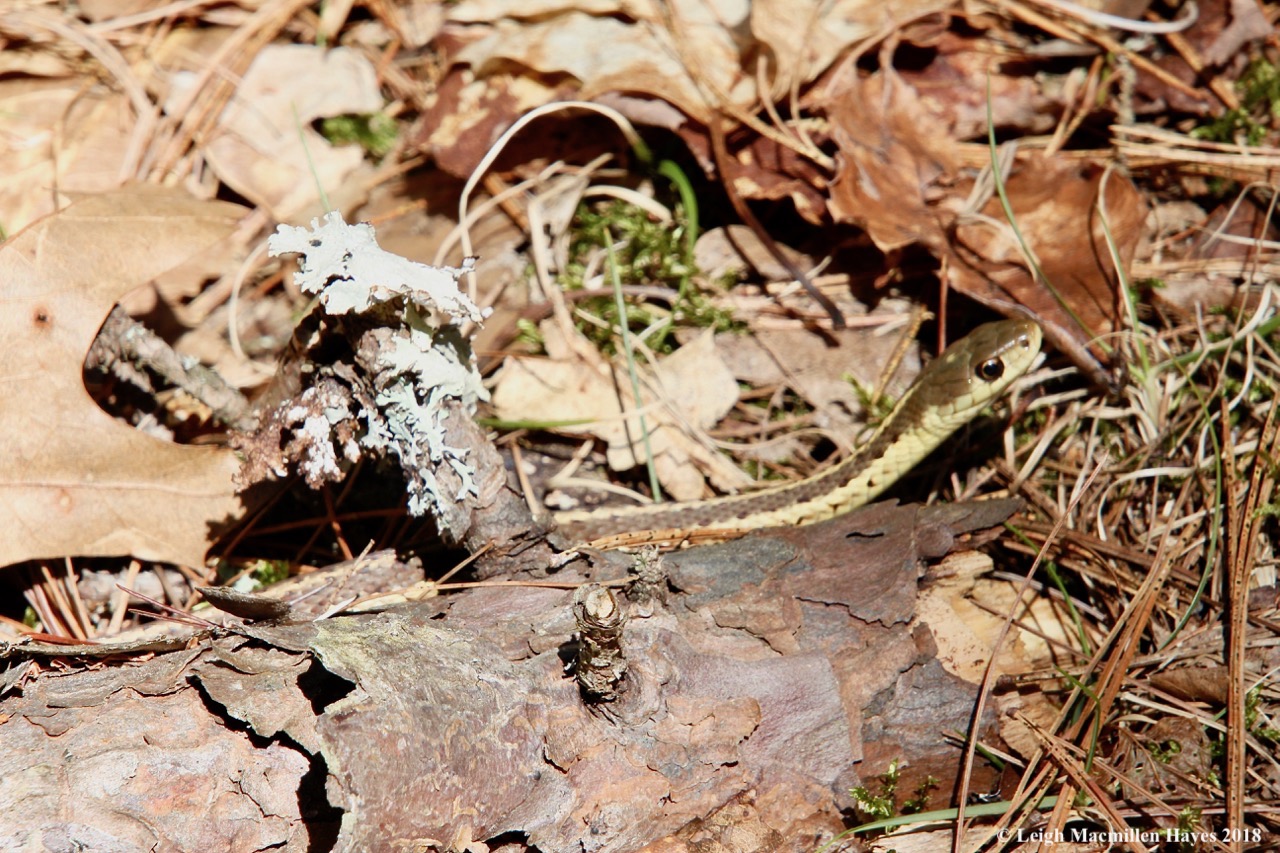
While we looped around the two peninsulas we had a several other challenges to complete. First, we needed to find three examples of critter sign–other than the ubiquitous red squirrel middens. We checked off number one with a garter snake that slithered past.

o7b-mammal tracks

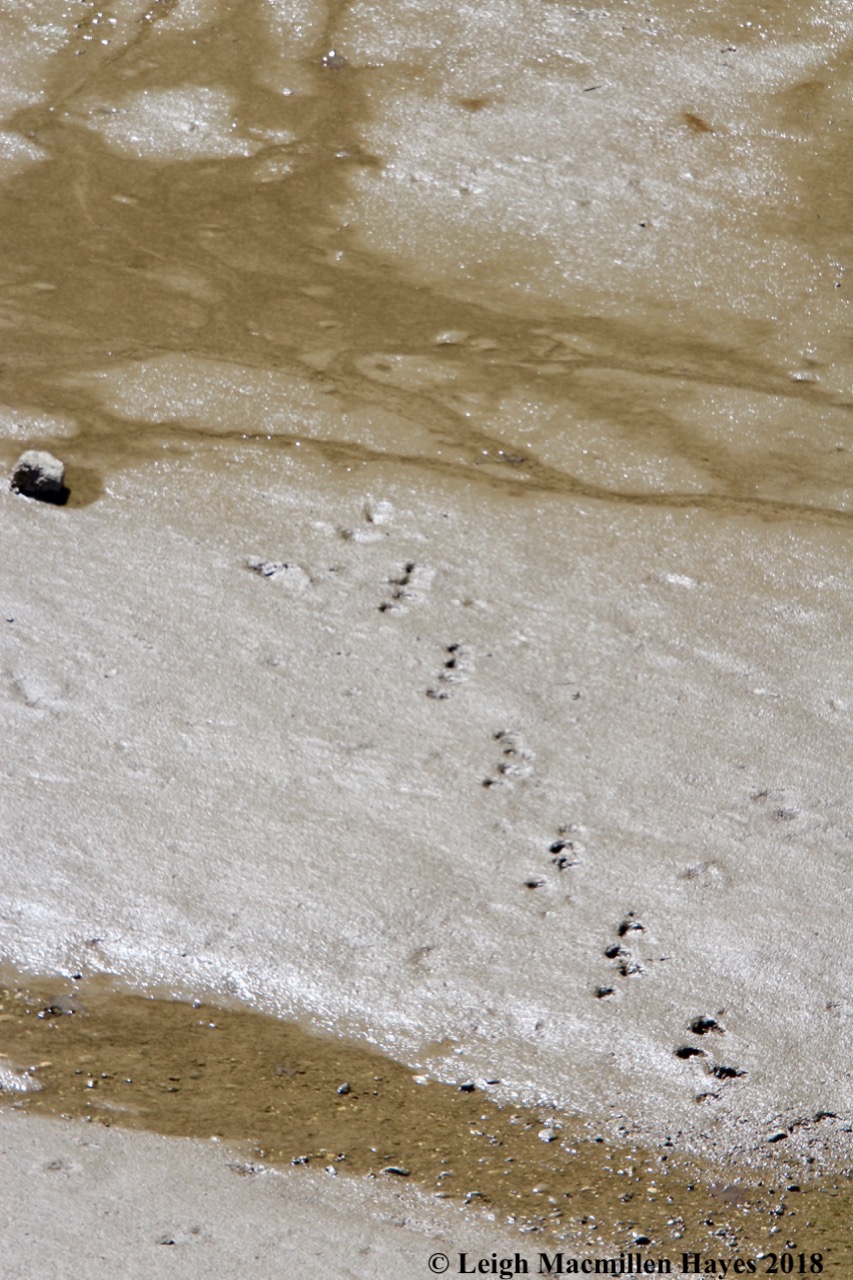
Number two: mammal tracks in the mud below. We couldn’t get close enough to identify it, but noted the trotting pattern.

o7a-wasp nest

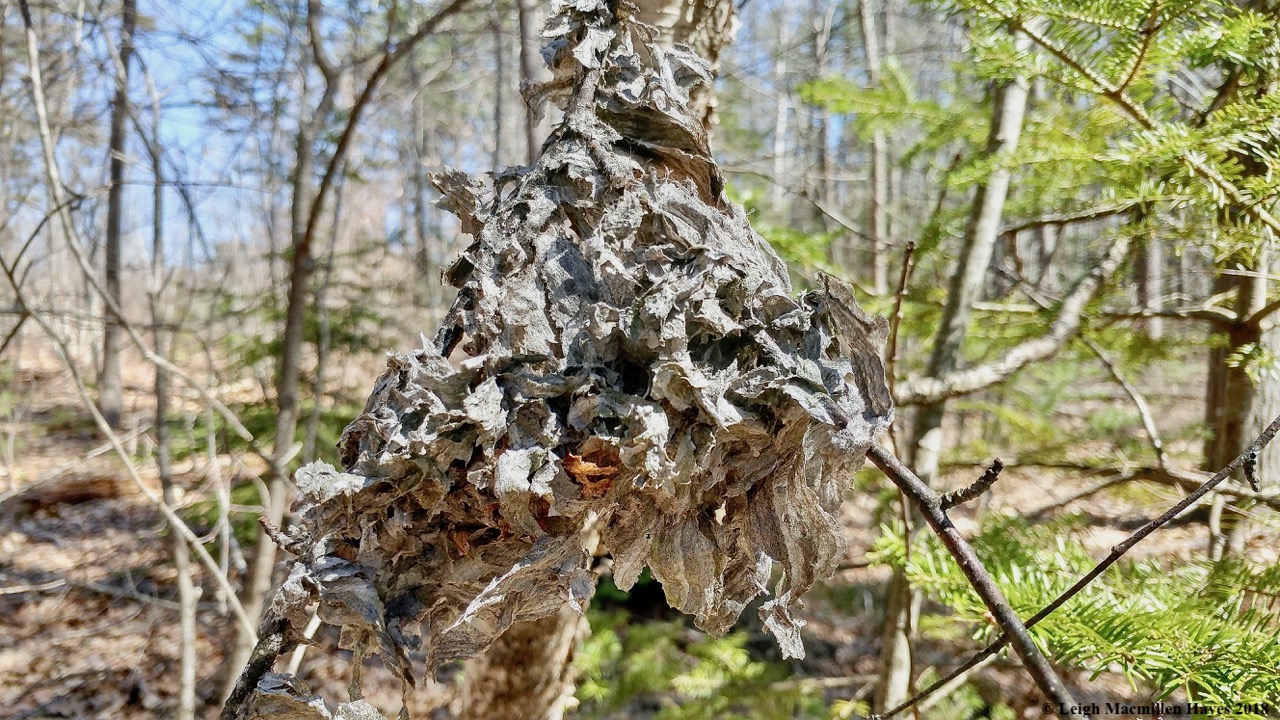
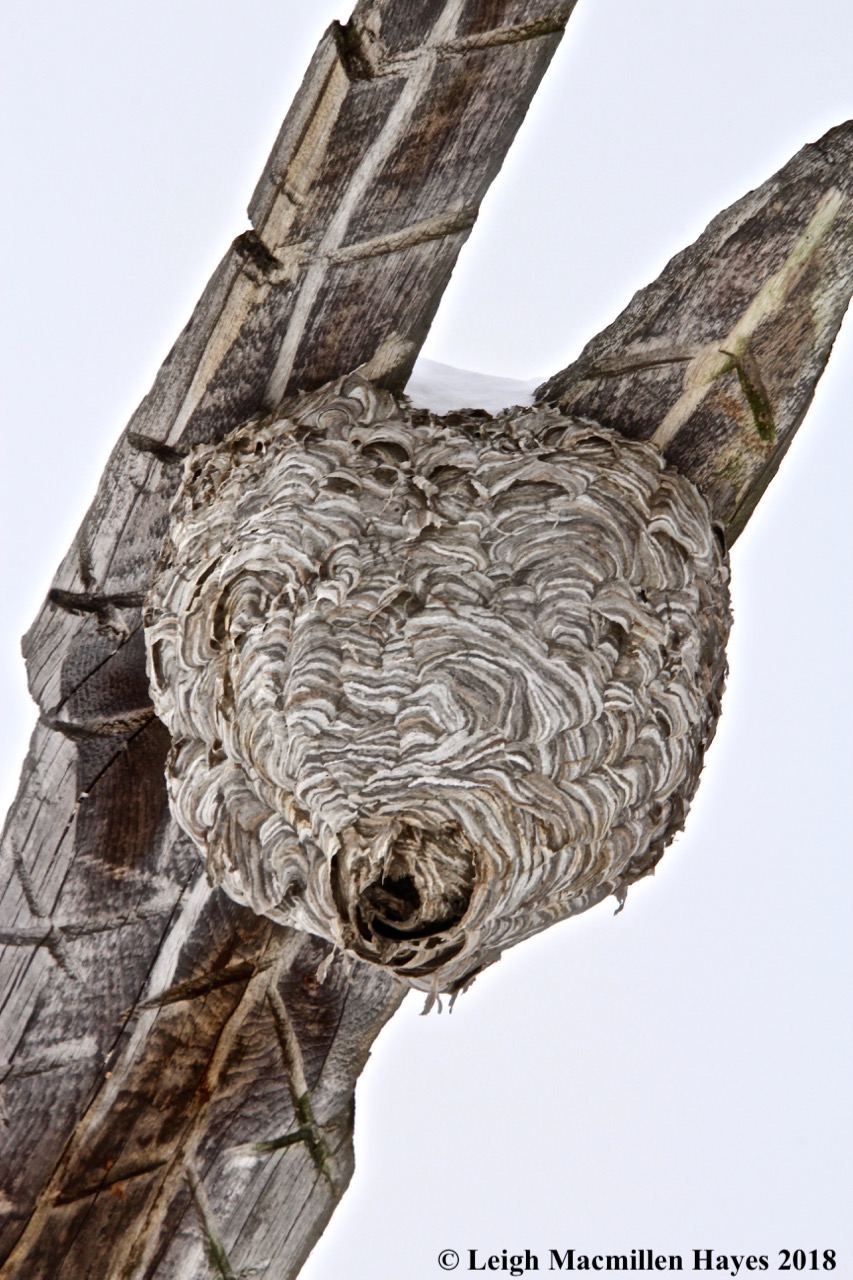
And number three, the remnants of a paper wasp nest.

Another challenge down. How many more to go?

o12-scavenger 2

It wasn’t long before the next presented itself as we wound our way around the property. First, we needed to find evidence of the land’s former use–as a sheep pasture in the 19th century.

o12-scavenger hunt 1

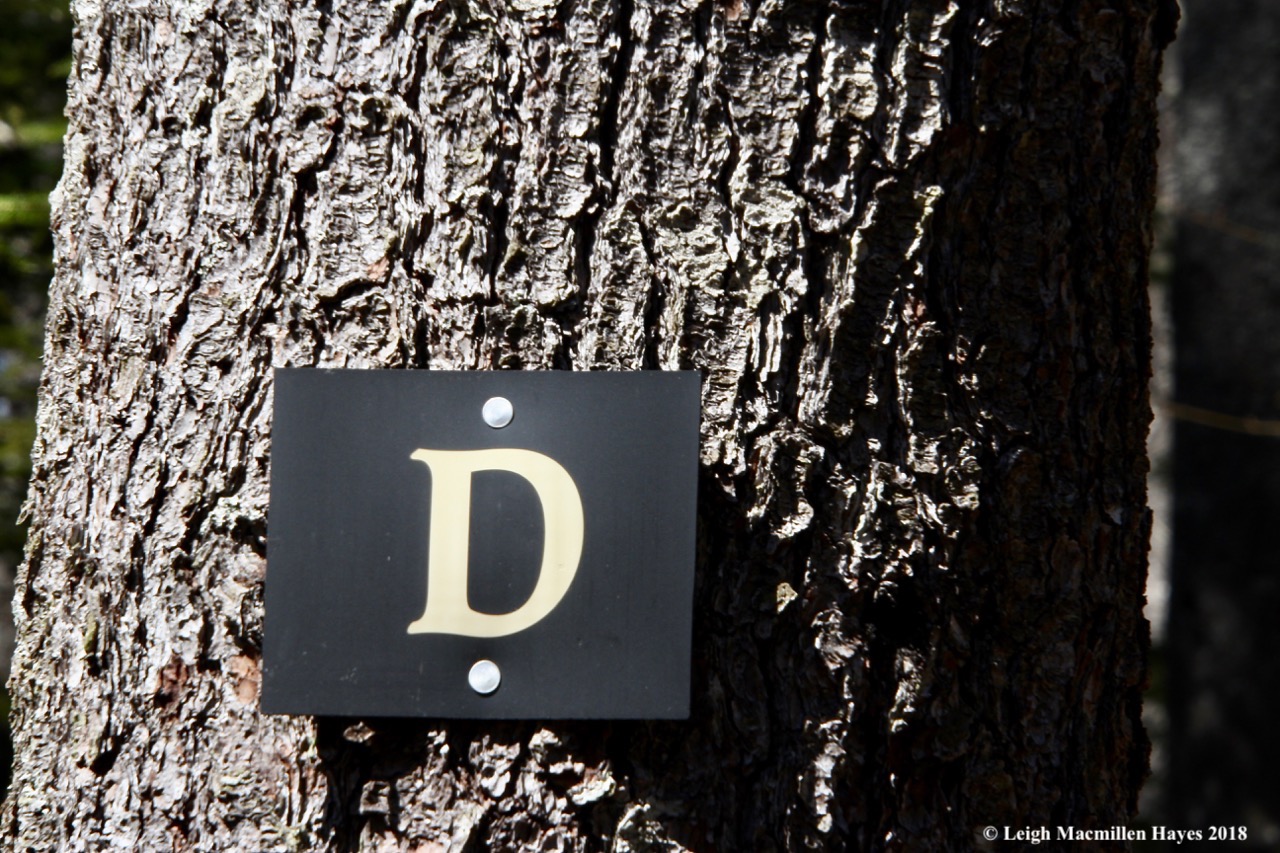
And then the letter D. We never did learn what the D stood for, but . . . we found it.

o15-sausage-shaped boudins

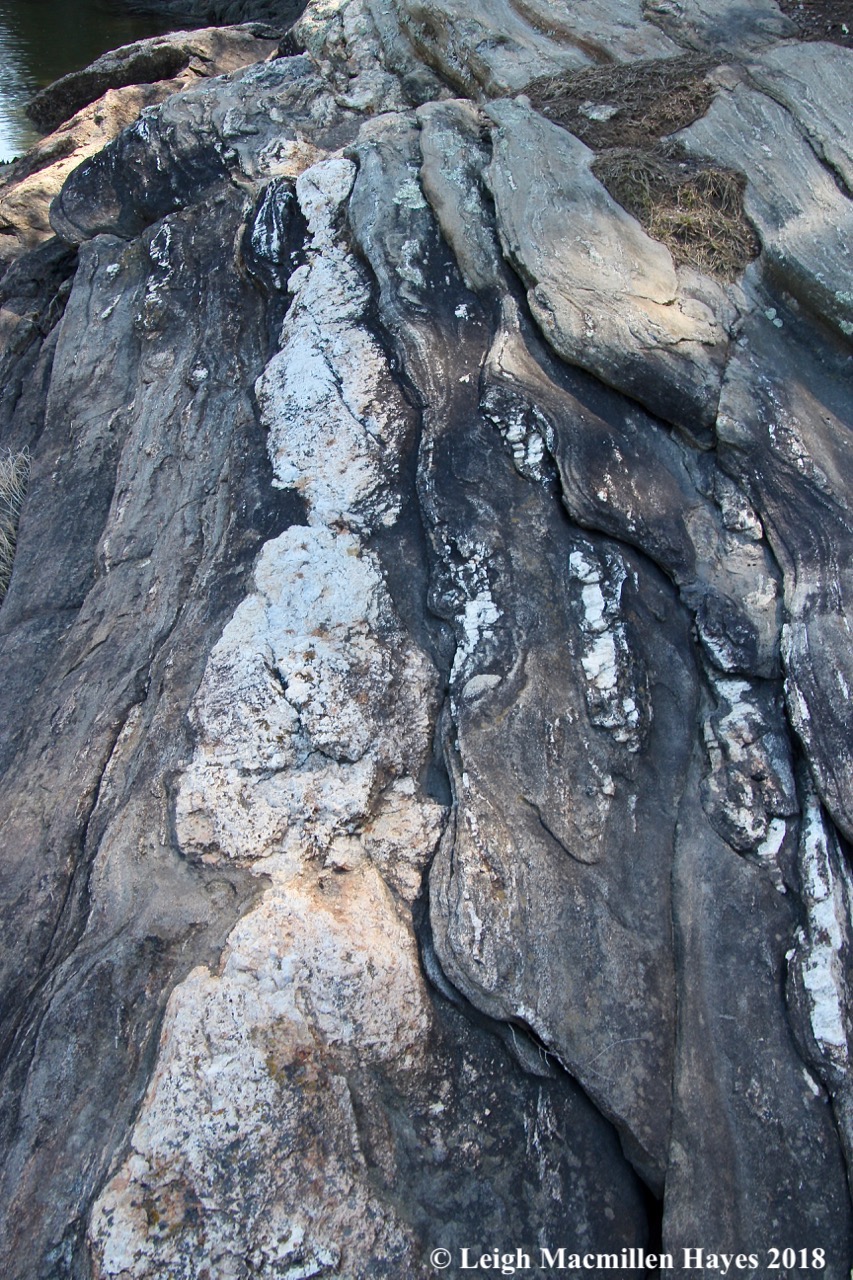
And finally, a sausage-shaped boudin among the folds, formed by the pinching and swelling from compression and shearing.

o13-Cross river

The tide slowly flowed in as we journeyed on.

o14-rip where Back and Cross River met

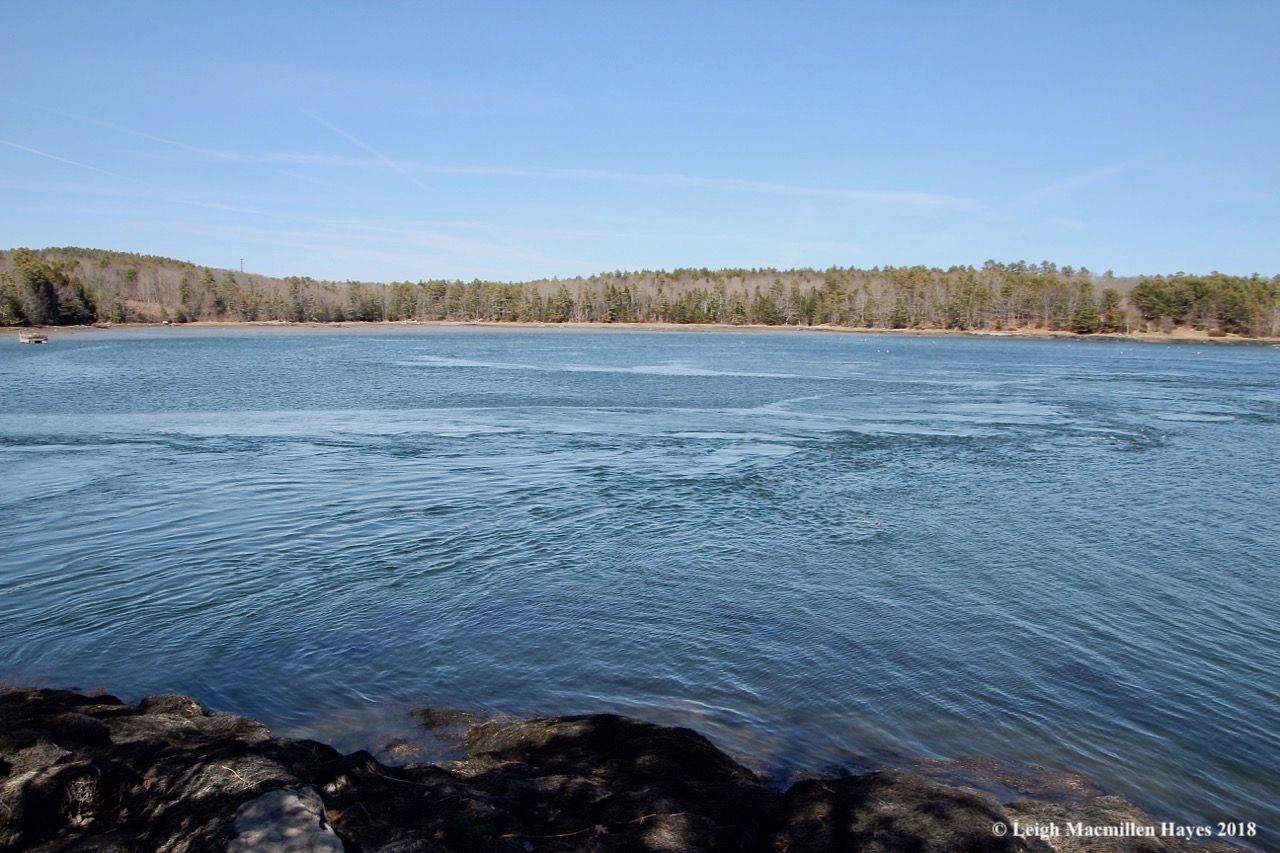
And at the point where the Cross River met the Back River, we noted a rip current visible in the swirls.

o14-ice house dam and today's bridge

At last we crossed back over the bridge from east to west and then peeked at the dam juxtaposed as it was in the shadow of the modern-day bridge.

o16-oven?

From the outermost point of the west side, we paused to look back toward the dam and bridge–did the early explorers really see this rounded cove as the inside of an oven, thus naming it Ovens Mouth? It was certainly unique. Fortunately, we could enjoy the view without turning up the heat. If they thought it was an oven, we agreed. If it meant we didn’t have to cook, we definitely agreed.

From the brochure, we did learn more history: “This area has always been inviting for maritime activities because of its deep-water access and protected location. Settled in the mid-1700s, one of the region’s earliest shipyards was located here and both British and American vessels hid in the coves during the Revolution. Soon after the Civil War, the property came into the hands of the Tibbets-Welsh family, who owned it for more than a hundred years.”

o17-kissing tree

We had one last challenge to complete before finding our way to the mat. Our final mission: to note three sights that represented our relationship.

Kissing trees–check.

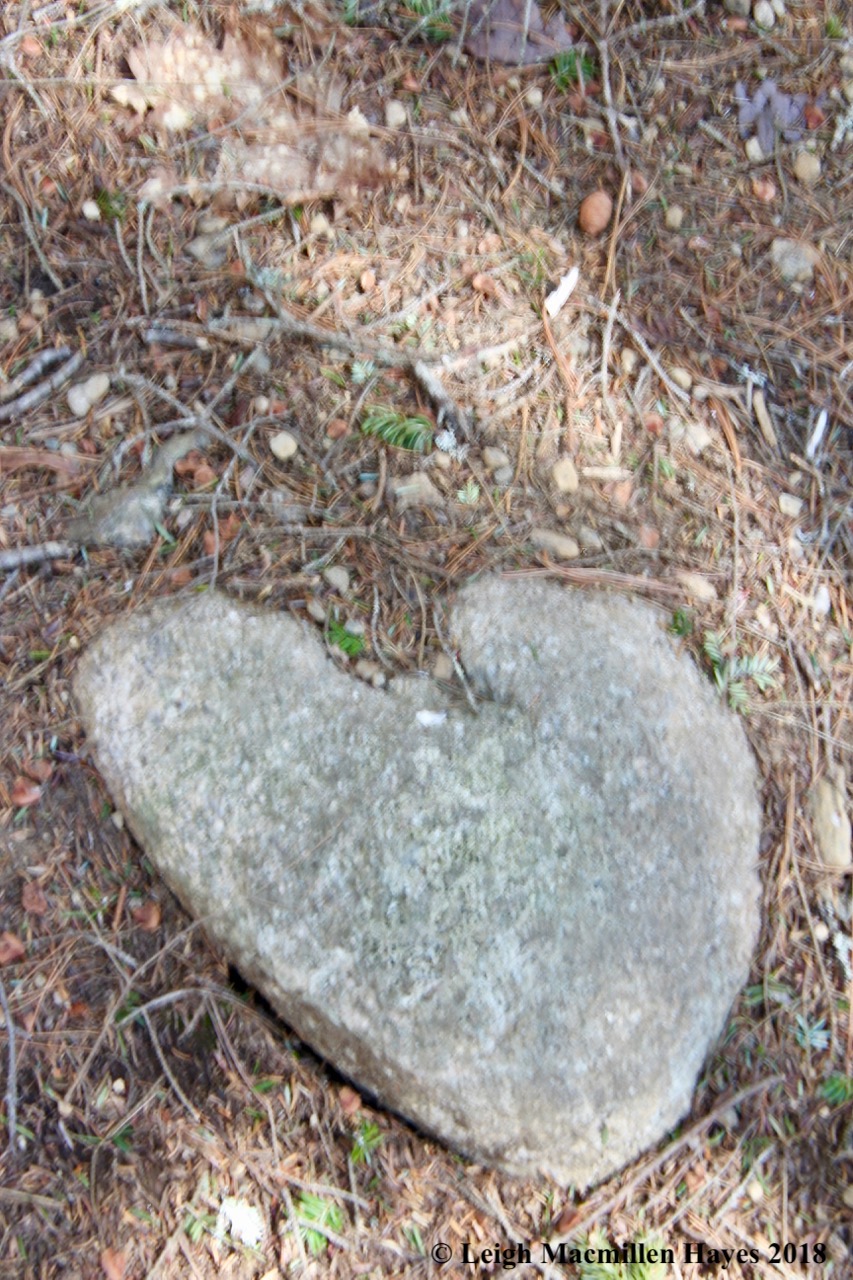
o17-heart

A heart-shaped rock–check.

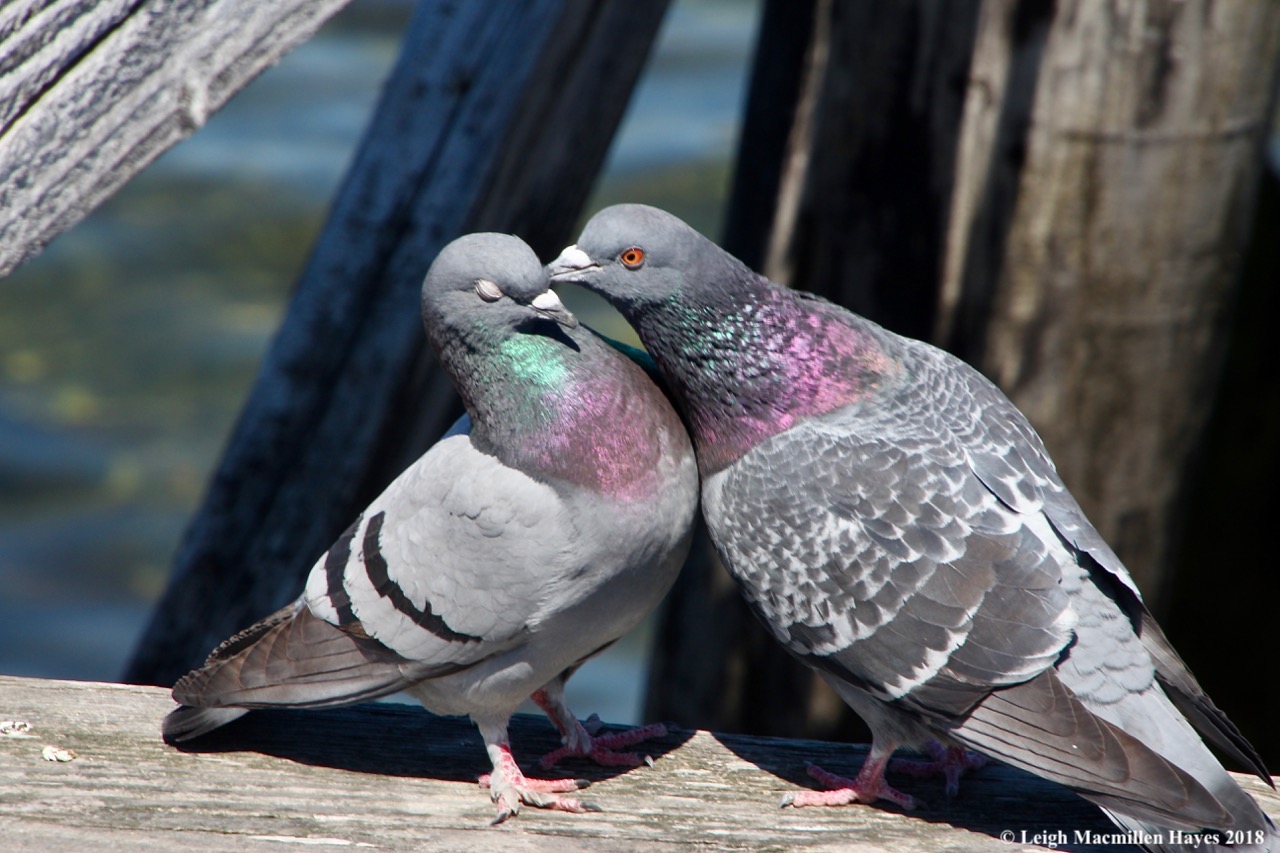
o17-pigeons

Whispering sweet nothings–check. (Note the heart-shaped white cere on their bills. And no, he is not picking her nits. Well, even if he is, isn’t that a loving move?)

Once again, we managed to stay ahead of other contestants, didn’t squabble too much, avoided our worst fears and completed the assigned tasks without much stress. In the third episode of our imaginary rendition of The Amazing Race–Our Style, we landed on the mat in first place once again. What’s next? Stay tuned.


Celebrating Mud Season

Mud Season — unique to northern states, indecisive weather, sloppy. What’s to love about it?

m1-breaking ice

Everything when thirteen Tuesday Trackers headed out for the final expedition until next winter. And no thin ice went unbroken by this hearty group.

m2a-turkey track

Prints in the snow we found along the way, but most were difficult to discern. In the mud, however, they were magnificent and we kicked ourselves for not thinking to bring some Plaster of Paris for great casts those would have made.

m2-Jo tells a snake story

Our tracking efforts were only part of the journey for along the way we were enraptured as we listened to Storyteller Jo Radner share a tale about a water snake, her grandmother, and some visitors to a children’s camp on Kezar Lake . . .

m3-bog

passed through the black spruce peat bog at the Kezar River Reserve on the eastern side and remembered time spent there with GLLT’s former executive director Tom Henderson (I told you, Tom, that you’d be with us and you most certainly were as we felt your spirit and heard your voice among the trees. We decided we need to return in the near future and spend more time getting to know that place–today, it required careful footwork and so we didn’t stay long) . . .

m4-Canada Geese

and finally found our way to Kezar River, where the Canada Geese and a couple of ducks awaited our arrival.

m6-ice

While some ice art in a stream that feeds the river drew our attention, we were there to look for evidence of a mammal that frequents the area.

m6a-otter scat

With youngsters among us, our eyes were more eagle than ever, and one of them found the sign we sought. At first sight, it appeared to be lichen on bark, but then our eyes focused and we knew what was before us–river otter scat.

m6b-otter scat formed

Some was matted as it had disintegrated a bit and only the scales remained, but others were formed in a tubular shape, all filled with fish scales, bones, and crayfish parts.

m7-otter scat

We rejoiced as we’d found a latrine site, a spot the otter returned to as a place to defecate, urinate and roll around in what’s known as a brown-out. It all provided information that we appreciated but meant even more to others of its own kind. “Hi, my name is Otty, I’m good looking and would be happy to meet up for a cup of fish stew. You available?”

m9-MUD

In the same area, we noted slides leading to the water and imagined the otters movement. And then some of our crew channeled their own inner otter and headed down to the feeder stream where the mud was difficult to resist.

m14-MUD

Mud! Worth showing off.

m11-washing off

And then the joy of cleaning off by stepping into the river.

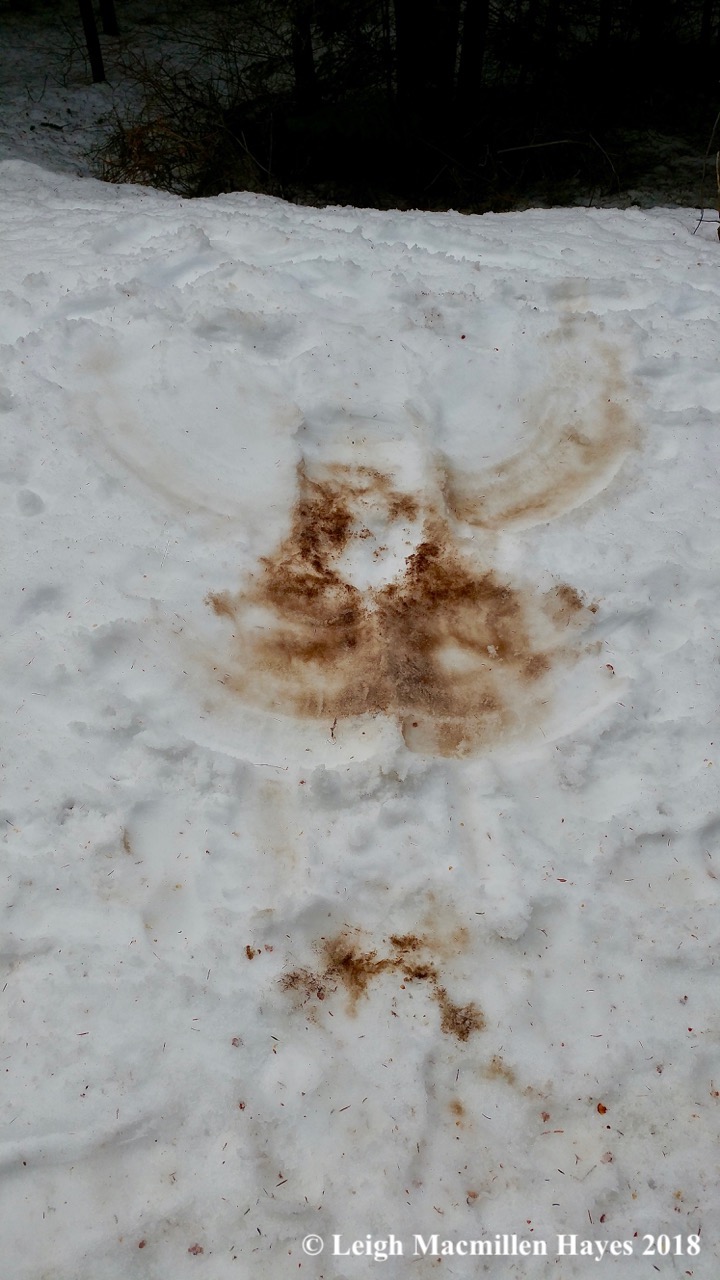
m15a-mud angel

Mud season–celebrated with mud angels.

Mallards, Beavers, and NOT Squawroot, Oh My!

Since posting this blog yesterday, my Maine Master Naturalist mentor, Susan Hayward chimed in and corrected me. If you’ve read this previously, please be sure to scroll down to the Squawroot discovery. (Or not Squawroot). Thank you, Susan, for sharing your knowledge once again and setting me on the right track.

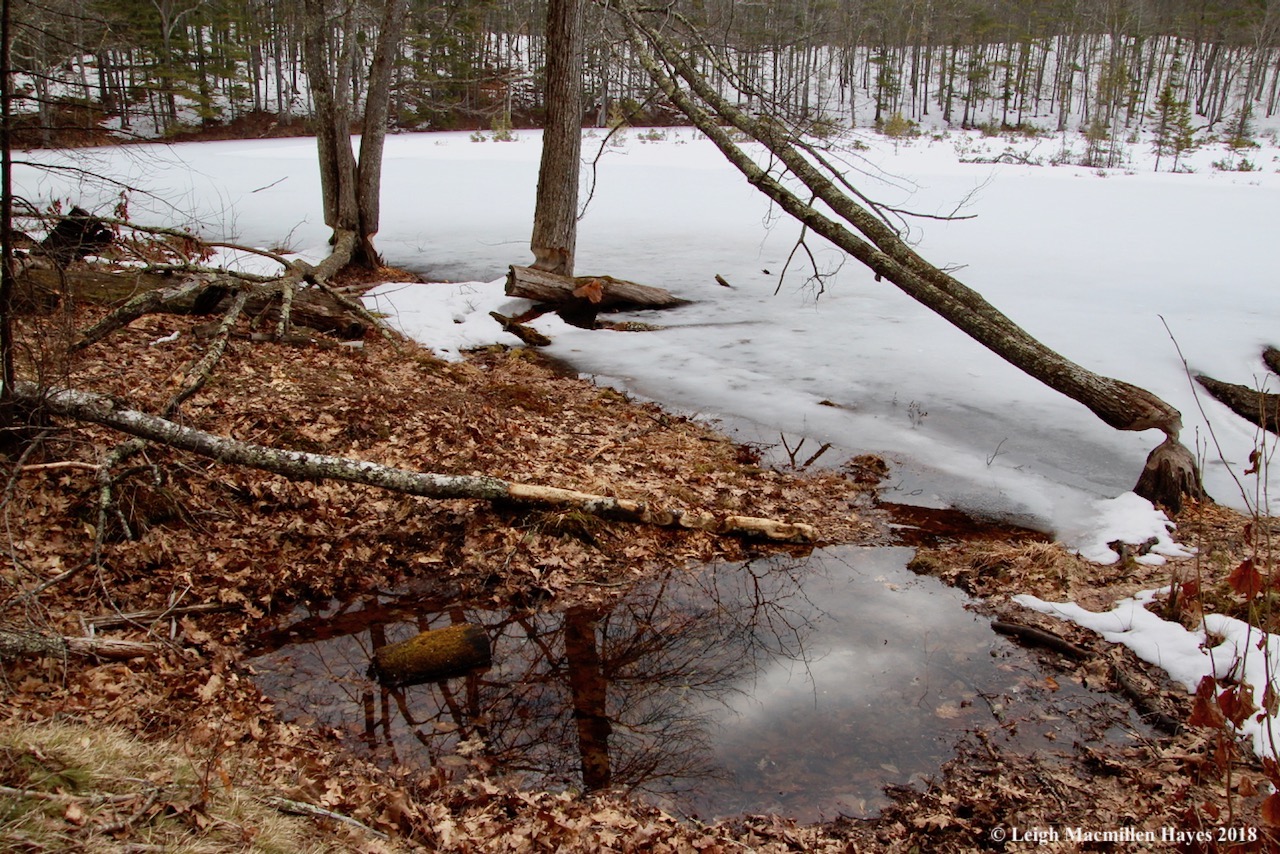
Our intention today when Connie Cross and I visited the wetland at Sebago Lake State Park’s Campground was to . . . well . . . walk with intention. There were several miles of trails to explore during the offseason, but we decided, or rather I did, that we should circle the beaver pond to see what we might see.

b1-horseshoe bog

It was raining as we drove to our meet-up point. And so we piled on extra layers to ward off the damp chill, and thought about snowshoes–to wear or not to wear? Connie chose to throw hers into a backpack and I went without.

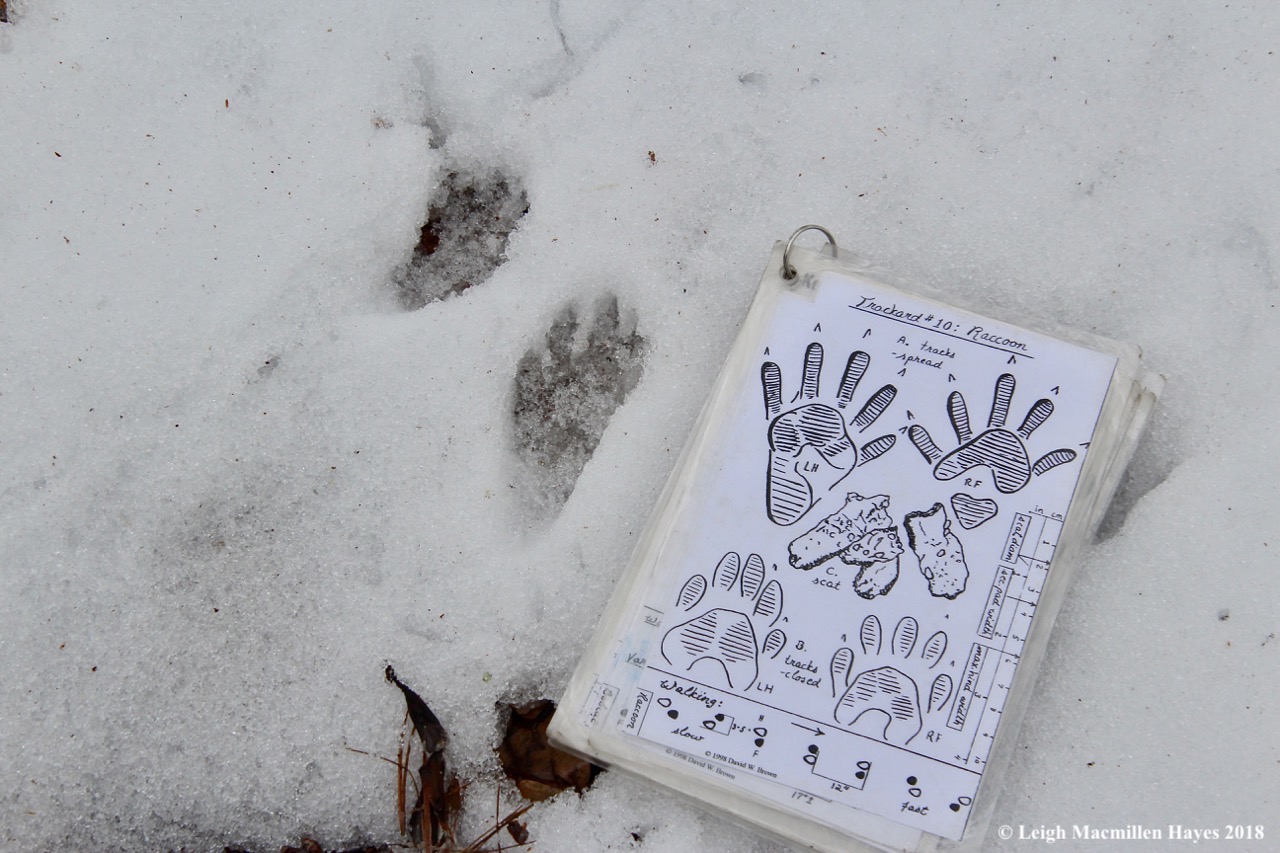
b1a-raccoon prints

Our journey down to the wetland was one that had been recently traveled by others, including a certain waddler who showed off its finger-like prints in the melting snow. It made perfect sense to us to follow the track of a raccoon for it would lead to water.

b2-beaver works

Everywhere by the water’s edge, we noticed the works of another mammal–some old and others more recently hewn by the local beaver family.

b6-lodge

And then we spied the lodge and noted the mudded sides and recent additions to the chimney stack at the top and knew that it was active.

b3-duck on lodge

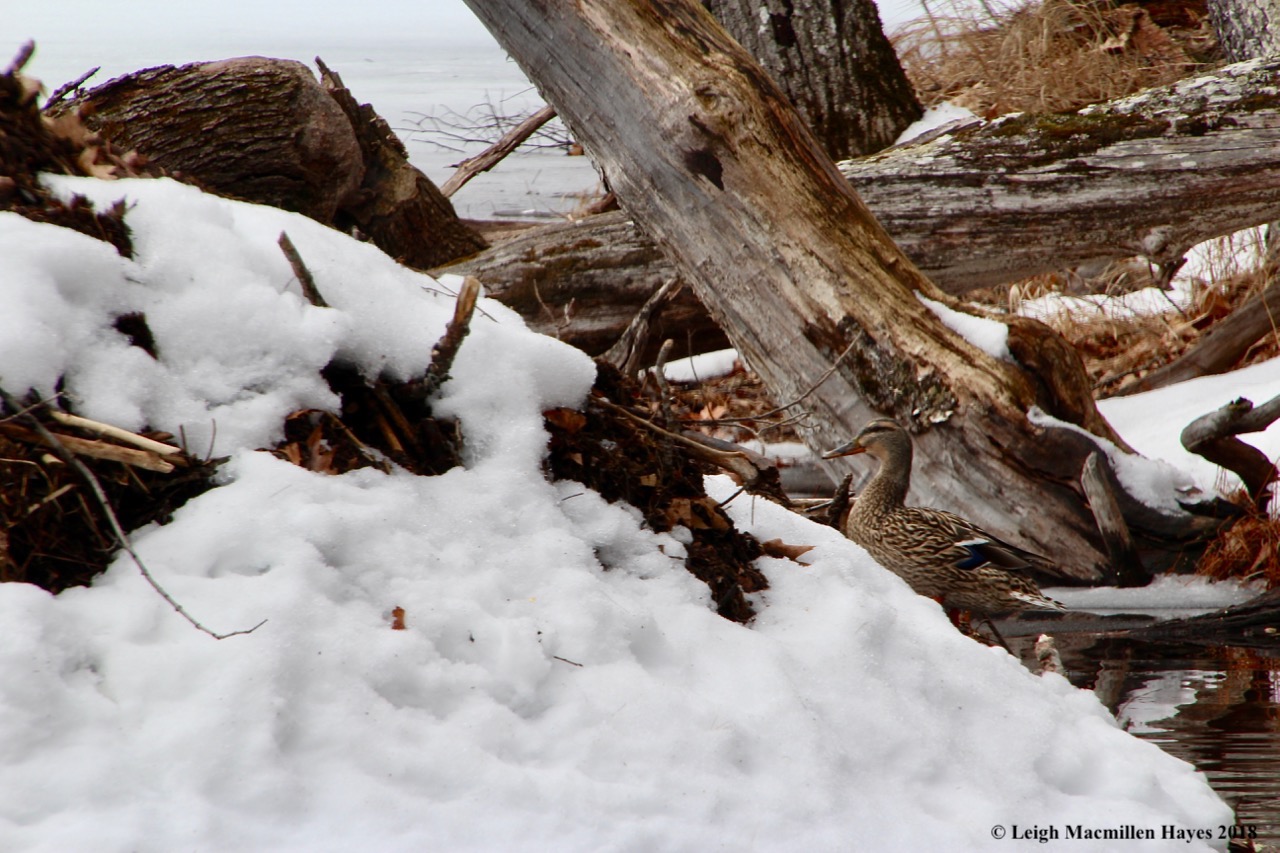
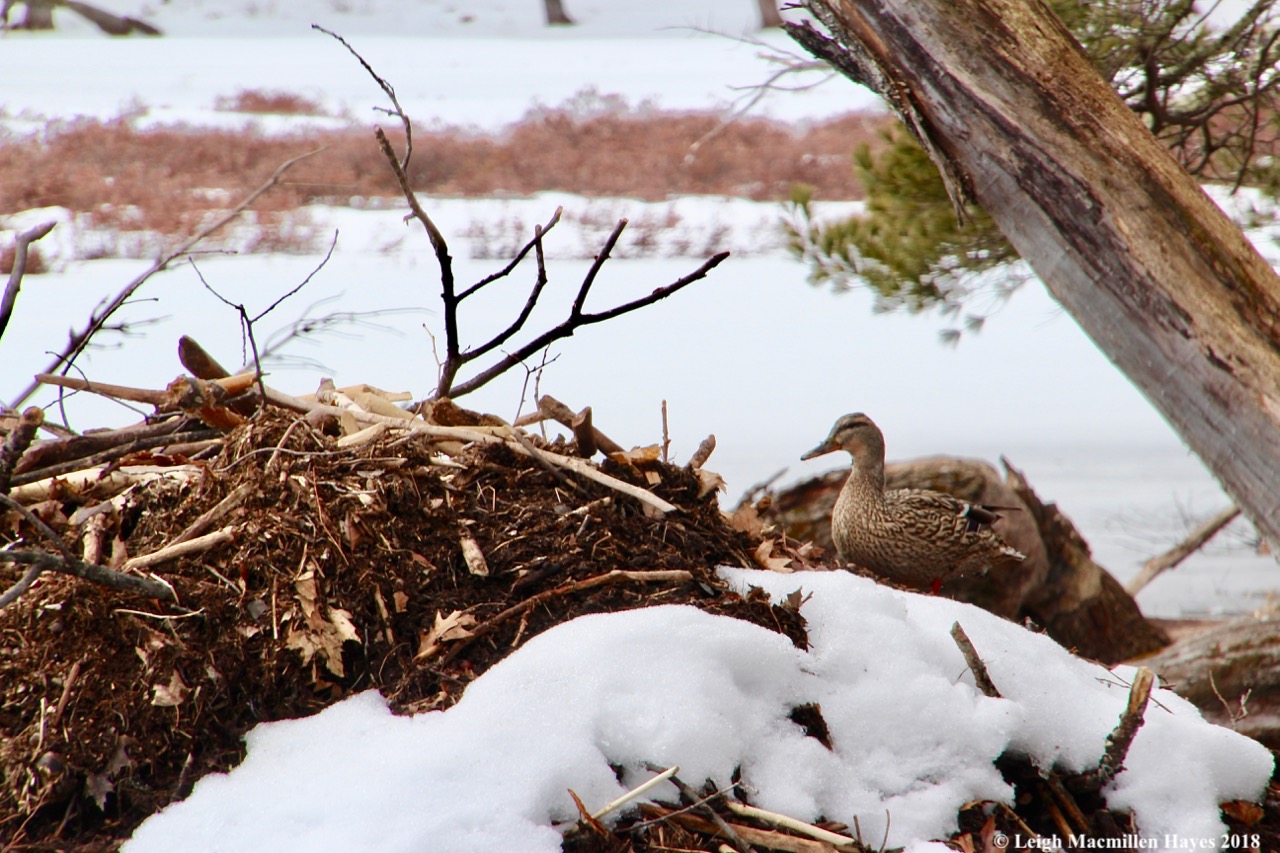
As we watched, we noticed that someone decided to call upon the residents–for a female mallard hopped from the water to the lodge and began to climb up.

b4-duck on lodge

One might expect a fox or coyote to pay a visit to a beaver lodge and reenact the story of the big bad wolf and three pigs. Or as noted on tonight’s PBS show entitled Nature: Leave it to Beaver, the visitors might be a muskrat, mouse, or frog who check in at the inn, but a mallard?

b5-mallard

Apparently, she liked the contents amid the mud used to insulate the house.

b7-sky reflection

As we watched, the sky above began to change and we noted such in the water’s reflection. Clouds, sun and blue sky marked a morning in transition.

b8-mallard couple

Continuing along the trail, Mr. and Mrs. Mallard became our friends and seemed to follow us, that is, until he signaled to her rather like a dog points, and a few seconds later off they flew.

b9-beaver

In the meantime, we heard a splash in the water behind us. What caused it? There was no snow high up on the trees that might have fallen. And then . . . we saw the creators. Beavers. There were actually three–moving about slowly and then suddenly splashing again and disappearing into the depths below. And the chambers within. We were in awe and felt honored to have shared a few minutes with members of the family.

b12-squawroot

Finally, we pulled ourselves away. And then . . . we came upon another find. And somewhere from the depths of my brain after some word association like Indian pipe and Pine sap, I pulled up the name–Squawroot. Connie looked it up on her phone and tada, I was right. Another name for this parasitic plant is American cancer-root for it only occurs where it can attach to oak roots and we were in a forest of red and white oaks. Like Indian pipe and Pine sap, this plant doesn’t have any chlorophyll and therefore no green color. It actually reminded us of a pineapple.

And tada, I was actually wrong. Though they look sorta similar, this is what Susan shared: “Your squawroot looks to me to be the favorite food of those beaver.
Bullhead Lily or Spadderdock Root. Squawroot is later in the summer. There is rarely any residual after the winter; maybe a clump of twiggy dried stems. The Lily root is much more substantial tissue than squawroot. It is carbon loading for the beaver.

I had never seen the roots of Spadderdock before. I learn something knew every day–thankfully.

b14-checking the trail

We continued to circle the bog, and on the northwestern side I gave thanks that Connie had packed her snowshoes, for she packed the trail while I followed. We did try to figure out why it was called Horseshoe Bog. The shape didn’t speak to the name, but perhaps someone once found a horseshoe in the area–or so we wondered.

b13-snowman

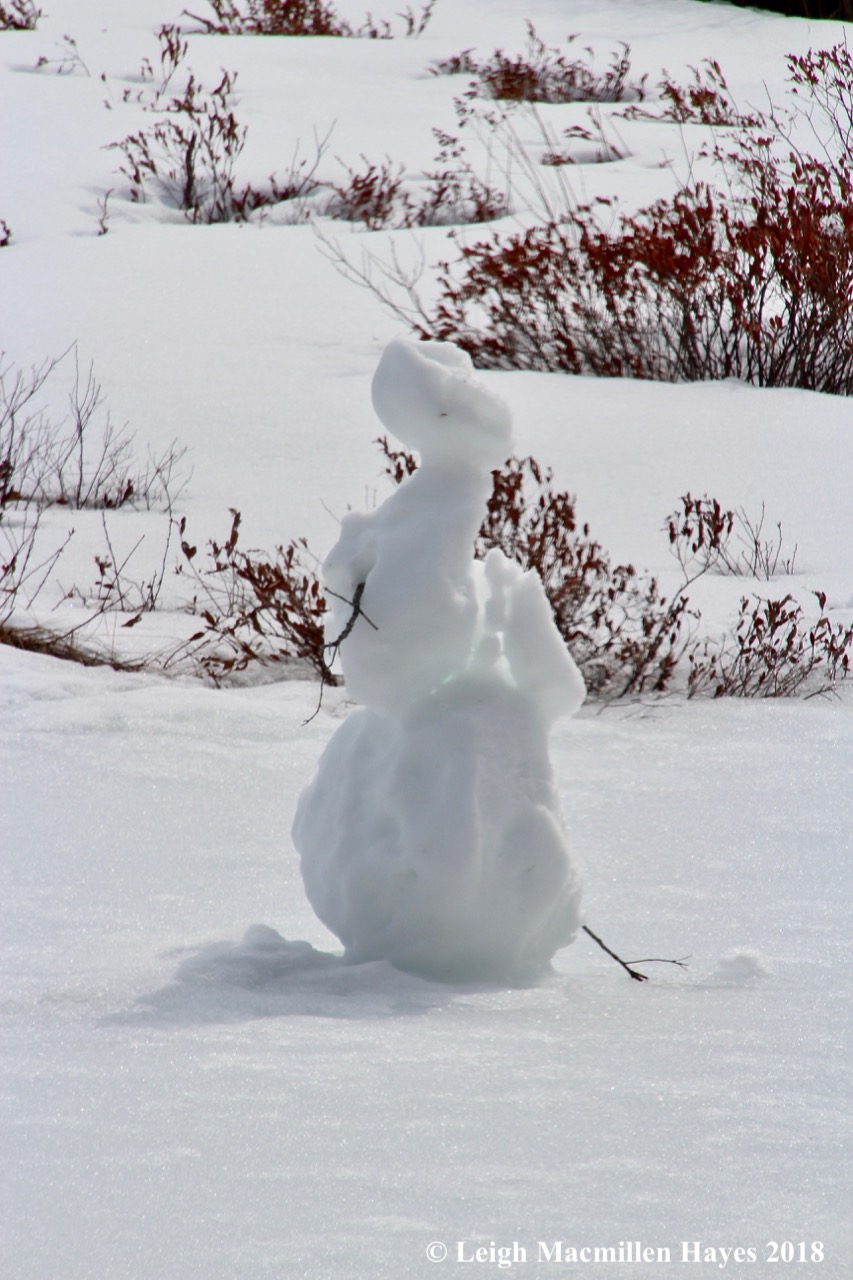
We weren’t the only ones wondering. A snow creature posed over the space with many a question about the future on its mind.

b15-from the other side

As we circled, the skyview changed and we finally began to feel the warmth of the day.

b16-another lodge

We also noted at least three other lodges that had provided warm spaces in previous winters.

b17-a closer look

The one noted in the last photo showed no signs of mud when we took a closer look so we knew it wasn’t active this year. If they had intended to stay, the beavers would have worked hard to interlock the sticks and then add plenty of mud like we add insulation and siding to our homes.

b19-beaver lodge trail

After three hours, we’d completed our journey–traveling maybe a mile in all that time. But we rejoiced for we’d spent time with the mallards and beavers and squawroot. Mallards, Beavers, and Squawroot, Oh My!


Eyes of Wonder

On the first and third Tuesday of each month since the snow first flew in 2017, I’ve had the privilege of tramping through the woods with our Tuesday Trackers group. As it happened this month, we were also able to tramp together today–the fourth Tuesday.

Each week, the participants vary as they come when they can. But no matter who shows up, by the end of our two-four hour exploration, we are all wiser for the experience–and filled with gratitude for the opportunity to spend a winter morning in the Maine woods. We are also grateful for the wonder that is right in front of us, not only materializing in the form of mammal tracks, but all manner of things that make up the web of life.

j1-otters romping across the snow

Usually the age of our attendees ranges from 50-something to 80-something. But today we were joined by four little otters who reminded us what it’s like to be a child again as they bounded across the snow’s crust, and rejoiced at the sight of any and every little thing that presented itself from squirrel and chipmunk holes to fungi.

j2-squirrel prints

Of course, we were there to track and though most prints were bleached out from the sun’s March rays, we did find a few that showed well their finer points such as toes.

j14-measuring straddle

And with any discernible prints, the kids reminded us to take time to measure straddle, in this case that of a gray squirrel. We also found what we believed was a bobcat track based on the round shape of the somewhat melted print and the stride.

j3-ice and water

Most of us began the journey with snowshoes, but soon joined the kids and shedded them as we moved from frozen snow to bare ground and back again. And then we discovered water. Actually, a few of us were a wee bit behind, when one child ran up to her mom and said, “A vernal pool.” If it does turn out to be a vernal pool, we feared it will dry up too soon, but that doesn’t mean the amphibians won’t take advantage of the spot in a few weeks. It was half covered in ice, which offered a challenge because two of the boys wanted to break through it with a stick. The third boy did break through–much to his dismay. But as his calm mom said, ” Well, now he’ll know next time.” (Juli–I can’t help but smile–you are the best.)

j4-helping hands

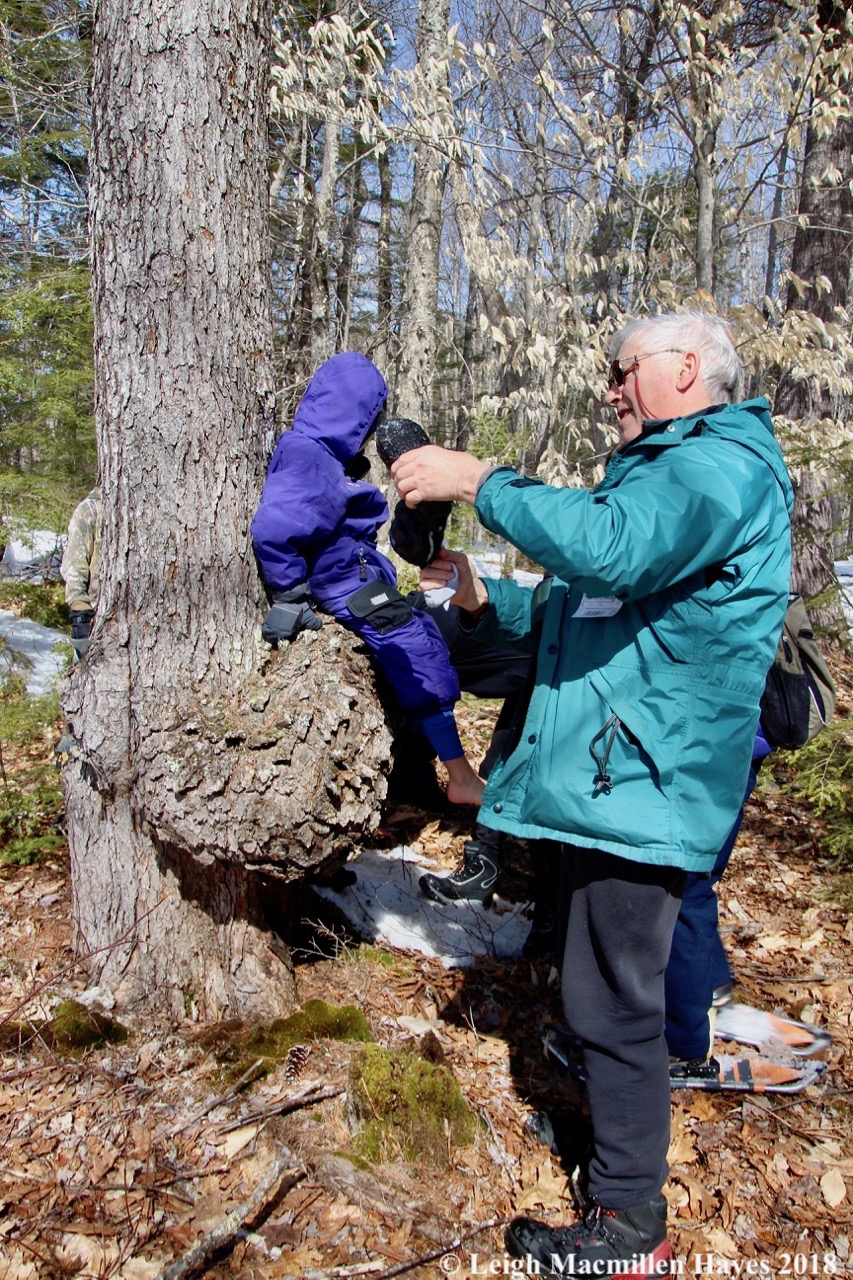
Fortunately, for his sake, we came upon a maple tree with a huge burl on which he sat while others on the journey came to his aid and squeezed a gallon of water, or so it seemed, out of his socks. His mom had an extra pair of mittens in her pack and those covered his toes for the rest of the trek. He wore his boots, of course. While we were there, we wondered about burls and tried to remember what created them. I suggested insects and another thought perhaps fungi. It turns out we were both correct. They may also be caused by bacteria or a virus. What the young lad sat upon was a reaction of the tree to the infestation which resulted in abnormal growth due to changes in the tree’s hormones. Think of its vascular system as a twisted ball of yarn.

j5-sucker brook outlet into Kezar Lake's Lower Bay

After the sock ringing and mitten fitting episode played out, we turned around to take in the beauty of the Sucker Brook Outlet at the Lower Bay of Kezar Lake for we were on the John A. Segur East Wildlife Refuge on Farrington Pond Road.

In the distance, one lad spied a beaver lodge. You might see it as a brown dot on the snow-covered ice directly above a swamp maple snag in the center of this photo.

j6-wintergreen and spring tails

We also looked at our boots, where we rejoiced in the site of wintergreen plants evolving from their magenta winter coats. And spring tails jumping about on the leaf litter like performers in an unorganized circus.

j9-squirrel table

Upon a downed birch tree, a certain young lady found the perfect spot to set up a dinner table for a squirrel. She was kind enough to include a dessert treat by stuffing pieces of a wintergreen leaf into an acorn cap.

j10-ice bridge

Much to the delight of the younger set, they next discovered an ice bridge and took turns walking across it. The rest of us decided to pass on that opportunity, sure that we’d ruin the effect.

j11-tree stump examination

Getting up close and personal was the theme of the morning and everything drew their attention and ours, including a decaying trunk of a hemlock that was downed by a lightning strike several years ago.

j12-tree holes

Because we were curious, we noted holes of the tree’s decayed xylem, the system of tubes and transport cells that circulate water and dissolved minerals. One of the boys decided to see if it worked and poured water onto the stump, which immediately flowed into the holes. We’ve viewed tree stumps and rings many a time, but this was the first time we recalled seeing the holes. No tree stump will go unobserved on our path from now on.

j13-lodges reflect mountains

Our turn-around point was at another spot along Sucker Brook where three beaver lodges reflected the mountains in the backdrop.

j21-beaver lodge

A few of us walked across the ice for a closer look because one appeared to serve as this winter’s home site. We trusted the family within included their own young naturalists.

We were certainly thankful for our time spent with four children who allowed us to look at the world through their eyes of wonder.

(On behalf of Joan, Dave, Steve, Dick, Jonathan, and I, we thank you, Caleb, Ellie, Aidan and Wes. Oh, and your mom as well, or especially–thank you Juli. We’re all in awe of you and the gifts you’ve passed on to your kids.)


Connecting the Dots

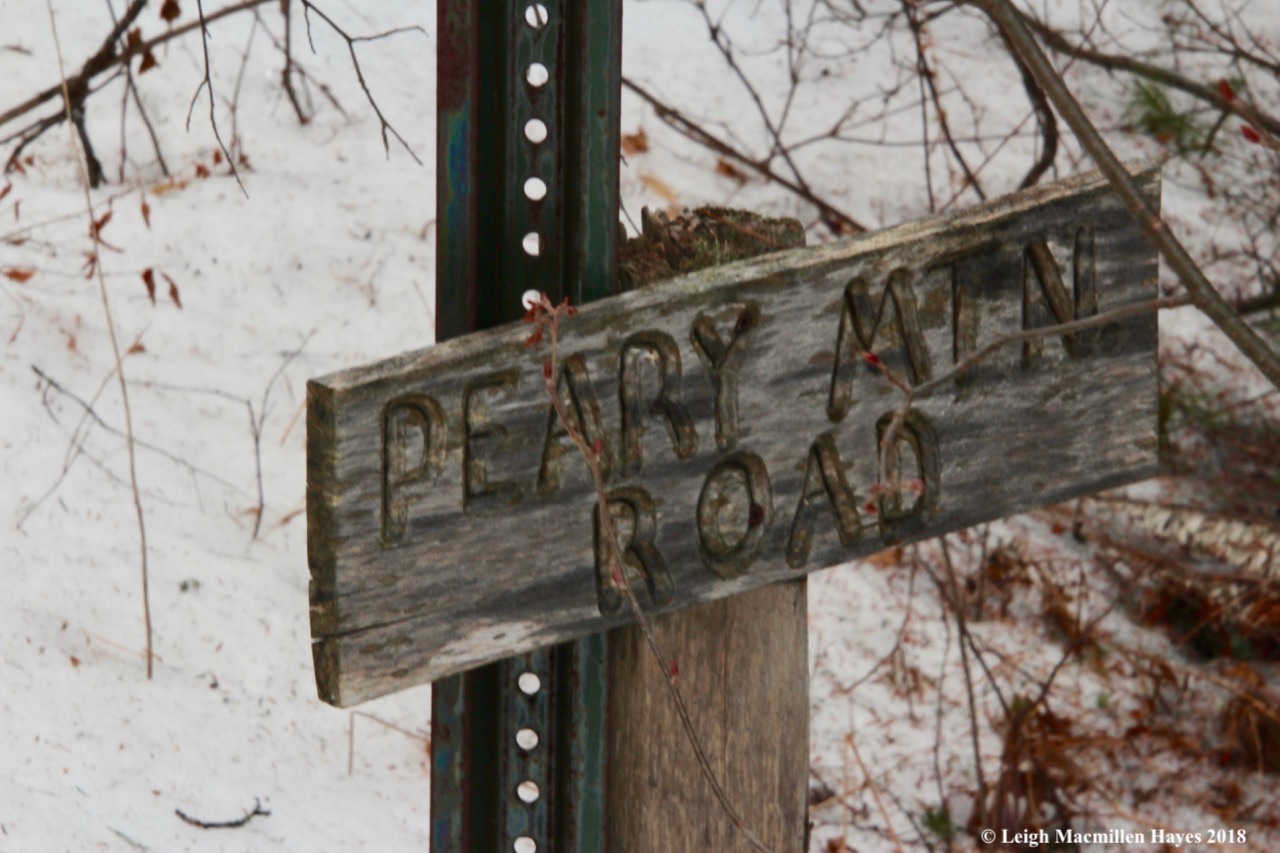
We thought we were so smart. A friend had drawn a map in the snow last week to show me the location of an alternate trailhead for Peary Mountain in Brownfield, Maine, and spoke of a round-trip hike that would include Frost Mountain. A quick look at a map in our worn and torn Delorme Gazeteer and we knew exactly where we were going–until we didn’t. We soon discovered that the gate and sign I’d been told about didn’t exist and the road turned 90˚ to the left and eventually became impassable and so we turned around and paused again at the sharp turn and wondered some more and drove back out to the main road and continued on to another road and looked for other possible trailheads that appeared on the road map and turned around again and returned to that sharp turn and parked the truck and slipped on our micro-spikes.

p1-Peary Mtn Road sign

It was worth a try we decided. The name was right though it looked less like a road and more like a snowmobile trail. No matter, we figured we’d give it a whirl and if nothing else, at least we’d enjoy exploring.

p2-wetland below mountains

Almost immediately, we spied two mountains above a wetland and wondered if those were the two summits we sought. We’d never looked at Peary from what we considered the back side before, since all of our previous experiences had been from Farnsworth Road off of Routes 5/113.

p3-trail

The road was quite icy and it had been more than a few days since any snowmobiles had passed by.

p5-trail sign

Eventually we came to a snowmobile sign, looked around for a map that I thought my friend had mentioned, and decided to begin with a journey up the Peary Mountain Trail.

p7-trailing arbutus and wintergreen

Conditions were such where previous logging had left the southwestern side open to the sun’s powerful rays and so in places the snow had melted and wildflowers such as trailing arbutus and winterberry basked in the warmth.

p8-Peary Mtn basement

We continued on up, hopeful that we were on the right path, when a familiar foundation confirmed our location. It’s directly across from this foundation that the Peary Mountain trail makes a 90˚ turn–in the past the turn had always been to the left, but yesterday’s turn was to the right. That is, after we noted that my guy should probably encourage the homeowners to purchase a sump pump, so full was their cellar.

p9-trail sign

If you do approach from Peary Mountain Road, you’ll only see a tad of the back of this sign. And if you come from Farnsworth Road, again, it’s not very obvious. But, for both, the turn is located at the height of land . . . and directly across from the foundation.

p10-Peary view 1

The hike to the bald summit isn’t difficult and offers the best of views on any day, but especially in the fall when the tapestry of color stretches forever–or at least to the White Mountains in the distance.

p11-Mount Washington

Yesterday, the view of Mount Washington was obscured by clouds, but we could see that even there the snow was receding.

p13-Mountain view

We stood for a bit, taking in the scene to the west.

p14-Mountain views

And to the north.

p15-across the ridge

And then we followed the ridge, certain that at the end we’d slip onto another trail we’ve never traveled before and begin to make the loop to Frost Mountain.

p16-Pleasant Mtn, Brownfield Bog

Just before slipping onto that other trail, we had one more view to partake–Brownfield Bog and the Saco River were backdropped by Pleasant Mountain.

Well, we followed that other trail for a while, but realized that rather than going toward Frost Mountain, we were moving further and further away from it. And so . . . we backtracked and rose once again to the summit of Peary and retraced our steps down.

p17-another foundation

We were disappointed, except that we knew we would return. And as often happens when following the same trail, we made new discoveries, including an L-shaped foundation.

p19-well

And then I spied a circular sunken formation subtly outlined with rocks and trusted it was a well.

p19-third foundation

Bingo. For behind it was another foundation, the largest we saw.

p20-day 2-red pines

And so late this morning we returned. But first, we looked for maps in our hiking books and online and found only those created by the local snowmobile club. We had a copy that dated to 2011 and decide to bring it along. We also copied a portion of the map from the Delorme Gazeteer–just in case.

Upon our return, we remembered to pause at the beginning of the trail and take note of the red pine cathedral. Brownfield is a town that knew the fury of the wildfires of October 1947. Most homes and public buildings were mere piles of ash the day after the fire. Many stately places including the summer home and laboratory of Dr. Philo Farnsworth, the inventor of television, had burned. Churches, schools, the post office, Grange, library and town hall all went up in smoke–only twenty houses survived. In the end, 85% of the town was destroyed.

Red pines were planted in reaction and today they stand tall in honor of that event of just over seventy years ago.

p21-water flowed

Our plan today was to follow the same route to the turn off for Frost Mountain. And so we did. This time the snow and ice were softer and mud a constant as snow melted and streams formed.

p21-ruffed grouse scat

One of the things we noted yesterday was a lack of mammal prints. But today made up for that and we found plenty of deer tracks in mud and snow. And then, a pile of bird scat–left behind by a ruffed grouse who had probably plowed into the snow when it was a couple of feet thick and spent the night, leaving behind its signature.

p22-kill site

We also found a kill site with no tracks leading to or fro and so we thought a bird had eaten another bird. The circle of life continued in the Maine woods.

p23-fisher prints

A bit further up the trail we spied weasel prints–left behind by a fisher, the meanest of mean. Notice the teardrop shaped toes and diagonal positioning.

p22-sweet fern

We were distracted (or at least I was) by sculptures a many, including those created by sweet-fern.

p24-another foundation

My guy was also distracted and spied an opening in the woods.

p25-fourth foundation

It was another L-shaped cellar. And nearby were what would have been some outbuildings and possibly even a mill. Along most of today’s trail we encountered one stone wall after another, some single and others double.

I don’t know how to decipher stone that’s known fire, but hope one of these days to be able to make that interpretation. In the meantime we wondered–why had these homes been abandoned. Did they burn? I did later note that homesteads in the area belonged to the Johnsons, Grays and other families in the 1880s.

p28-confusing signs

Though we continued on, we really had no idea where we were going and hoped that we had made the right decision with the intention of reaching the summit of Frost Mountain. But, even if we didn’t, we were delighted with our finds. And confused by the signs.

p29-Pleasant Mtn behind us

And then, we started to climb. I turned around as we moved upward and noted our beloved Pleasant Mountain behind us.

p29-summit at lasst

And finally–success. We’d reached the summit of Frost Mountain.

p30-looking toward Peary

About 300 feet below, we had a view from the ledge, but it wasn’t nearly as spectacular as that on Peary Mountain, which my guy looked toward. It was hardly visible from where we stood.

p32-Burnt Meadow Mountain

From the summit, we followed a loop around, pausing to take in the view of Burnt Meadow Mountain.

p33-Brownfield below

And the town of Brownfield below. As the historical society likes to proclaim, “Brownfield’s still here.” Indeed.

p34--my heart bleeds blue pine sap for you

We’d planned to climb Frost and then make our way to Peary, but changed our minds. We’d already climbed Peary yesterday and after finding our way today had a better understanding of the trail system. We also knew that had we made the loop, we’d have walked on Farnsworth Road for over a half mile and then climbed up and down Peary on trails we already knew. Instead, we let our hearts bleed pine blue sap with happiness.

p27-bear prints

Our happiness overflowed when we spied the final set of prints.

p26-bear prints

A black bear. How cool is that? Our second sighting of black bear prints this winter.

We’d connected the dots–even if not literally–and gained a better understanding of the neighborhood and all who live(d) there.

Otter Spotter Mondate

Fresh snow. Blue-bird sky. Mid-range temperature. Day off. All the makings for a fine Monday date with my guy.

m1-apples

We weren’t sure if snowshoes would be the right choice as we feared the snow might stick to the cleats and make us feel like we were walking on high heels–hardly our style. But, actually, conditions were perfect. Of course, my guy tried going without at first, but after creating one post hole after another, he strapped his on while I headed over to an apple tree to enjoy the view.

We were on a private property in Lovell that is under conservation easement with the Greater Lovell Land Trust.

m2-coyote track

I’d been on this property only a few days ago and the tracks were many, but with the advent of yesterday’s snow, we found only a few. One set was that of a coyote. And fairly fresh was it.

m4-brook below

We moved quickly (of course we did for I was with my guy–but I was equally anxious to get to two destinations) and in no time found ourselves walking along beside a brook.

m5-brook crossing

As we approached we wondered how open the brook might be and decided we’d cross that “bridge” when we got to it. But really, there was no bridge.

m3-icicles at brook crossing

The ice, however, delighted our sense of sight, understanding, and artistic form. Like the water from which it was created, it flowed in much variety.

m6-one coyote became 2

Without any problems, we found our way to the other side and realized we were in the company of others who had done the same. One moment it seemed we’d followed one, but then realized we were on the trail of two coyotes when their path split.

m8-porky body

And it split for a reason. To check out a previous kill site. But they only seemed to sniff and not partake.

m9-porky tail

Just as well for it was a porcupine. But really, I was surprised they didn’t try to flip it over to get at the stomach. Maybe somebody else had already taken the pleasure.

m10-rookery and coyote track

On we trekked, until we reached water again. And this time we stopped to look around, while the coyotes moved on.

m11-heron nests

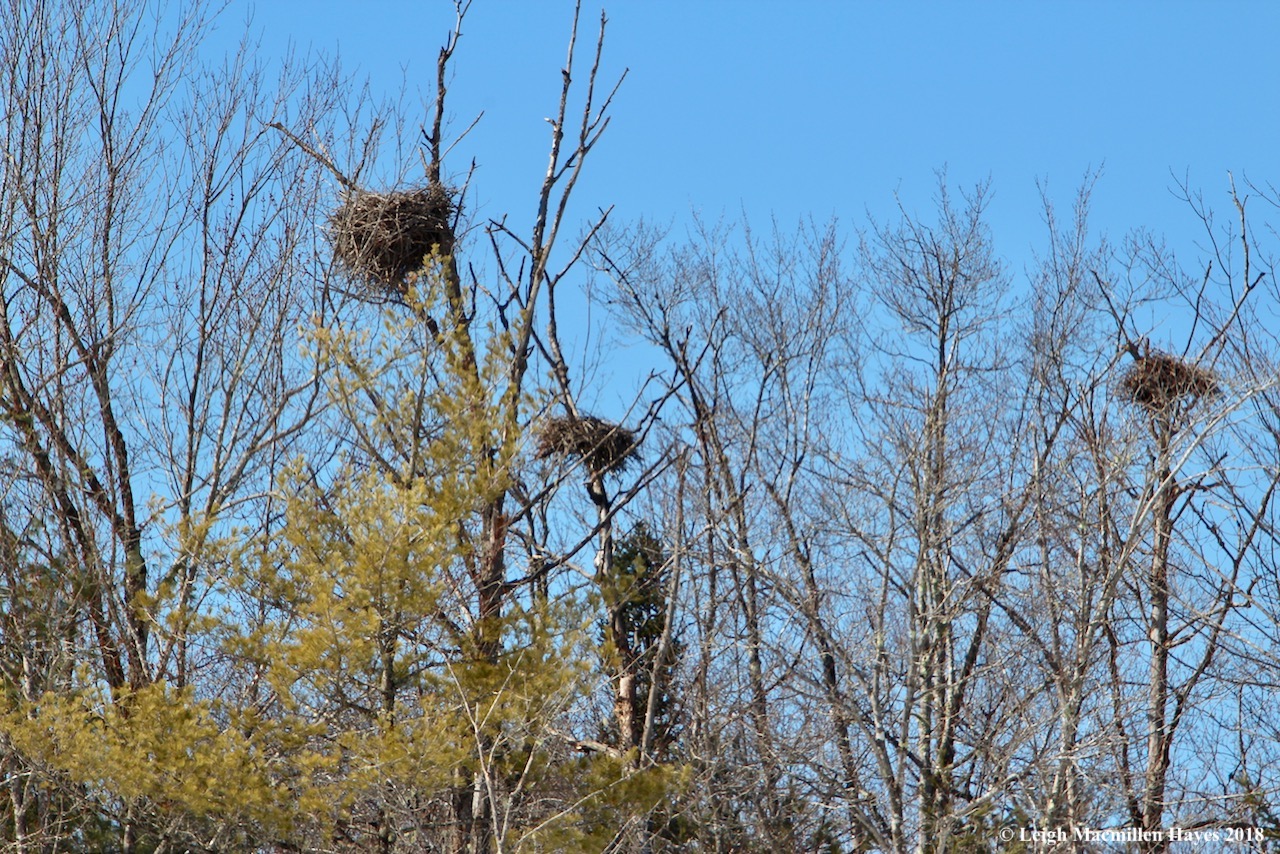
High in the trees across the way we spied the heron rookery–one of our reasons for visiting. We knew the nests would be empty, but still, it’s fun to take note.

m13-heron rookery

And they’re easier to see in the winter than spring/summer when this rookery is monitored for the state HERON project: the Heron Observation Network of Maine. I’ve had the honor of visiting this particular rookery in the past and helping to document the number of residents. Though it was active last April, something happened later to upset the neighborhood and so I’ll be curious to see what the status will be in the future.

m14-heron rookery

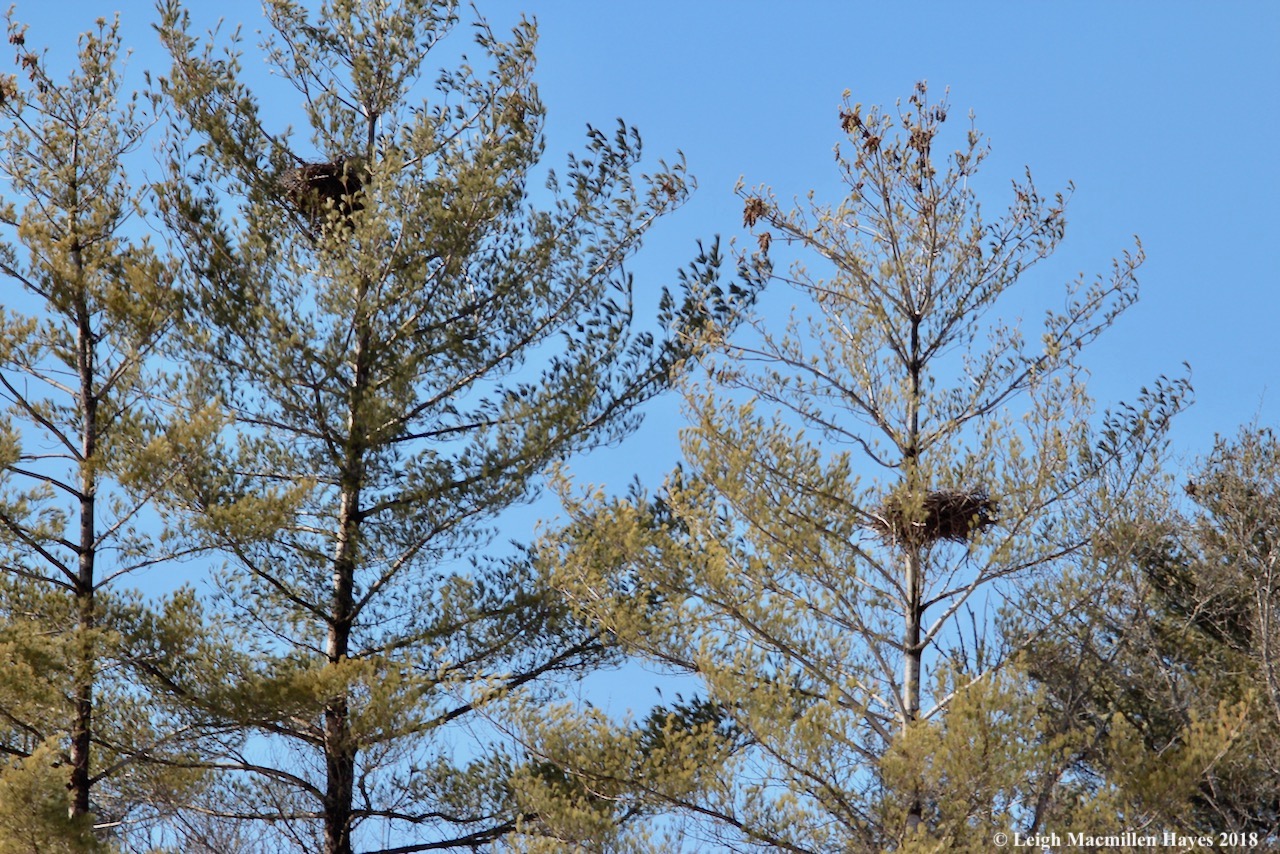
For today, the nests looked like they were in great shape and even two in the condominium were awaiting the return of the snowbirds who’d spent the winter south of this location.

m16-lungwort

Because we were there, I also turned to check on another tree–which sports a healthy colony of lungwort–photosynthesizing because it had been snowed upon.

m15-mesmerizing scene

We stayed for a while, my guy and I, enjoying the peace and quiet and colors and textures of the afternoon that curled around us.

m18-crossing over

At last, we pulled ourselves away and crossed back over the brook. It was a piece of cake. Well, at least we didn’t fall in.

m19-chipmunk

Our next destination took us past a condo of another sort–one created by a chipmunk who kept an eye on us, then swiftly disappeared. We could only wonder about the inner chambers of its home.

m17-striped maple beaver works

It was after that that we began to encounter the works of another rodent, this time upon striped maple.

m20-beaver works

The art pieces were sometimes large,

m21-beaver works small

other times small,

m23-beaver works mistake

and sometimes mistaken–as in logistics of the felling.

m22--false lodge

But that didn’t matter for their buildings were many. Oops, the first one we spied was actually a boulder.

m24-beaver lodge 1

Further along, however, we found the main building. It was topped with fresh wood and well mudded, so we assumed warm bodies dined and wined within.

m25-beaver lodge 2

There was another nearby, and we could see indentations denoting visitors had stopped by prior to yesterday’s storm. We also noted that the ice had melted all around it. Was someone home? We knew not.

m26-looking back from the dam

On we moved and then turned back to enjoy the view as shadows grew long.

m27-beaver dam

Turning 180˚ again,  we looked toward the beaver dam that stretched before us. I’d last visited in late November and wondered what it would look like today.

m28-below the beaver dam

It looked . . . snow covered.

m30-otter track

But . . . in that snow we spied our critter. Do you see him?

m32-otter moving from brook to land

We followed him downstream–he was on the other side of the brook, but moved in his telltale manner . . .

m33-following the brook

across the landscape . . .

m35-otter again

in and out of the water . . .

m43-otter slide and bound

bounding and sliding . . .

m42-otter slide

and sliding some more . . .

m40-prints, trough, scat

leaving behind fresh scat and prints . . .

m44-ice and tree and water and reflection

for our pleasure. We had the time of our lives watching the otter–did you see him?

Truth be told, we never did actually see him, but in our minds eyes we knew his every motion. When we first spied the prints and trough on the other side, we thought he had moved in the same direction as we did. But when he crossed to our side, and we could get an upclose look, we realized we were traveling in opposite directions. He had moved through not long before we arrived. Was he also checking out the beaver lodges? Probably. And hunting for his next meal.

Though we didn’t get to actually see this member of the weasel family, the signs left behind were enough to tickle our fancy and on this Mondate we were indeed otter spotters.

Wondermyway Celebrates Third Anniversary

Three years ago this journey began as a quiet entry into the world of blogging, of sharing my finds and questions found along the trail. And ever so slowly, you joined me to wander and wonder.

So really, today is a celebration of you, for I give thanks that you’ve continued to follow and comment and wander and wonder along, whether literally or virtually.

I absolutely love to travel the trail alone and do so often. But I also love hiking with my guy and others because my eyes are always opened to other things that I may have missed while hiking on my own.

I’m blessed with the community of naturalists with whom I’m surrounded–and this includes all of you for if you’re following along and taking the time to actually read my entries, then you share my interest and awe. And you may send me photos or I may send you photos and together we learn.

t6-cecropia cocoon

Just yesterday, while tramping in Lovell, Maine, with fellow trackers, I spotted a cocoon  dangling from a beech tree. My first thought–Cecropia moth, but I contacted Anthony Underwood, a Maine Master Naturalist who has great knowledge about insects, and learned that I was wrong. He said it looked more like the cocoon of a Promethea moth. “They hang down whereas Cecropia are usually attached longitudinally,” wrote Anthony. And there you have it.

Now I just have to remember it, which is part of the reason I value my post entries. The information has been recorded and I can always plug a key word, e.g. Promethea, into the search bar and today’s blog will come up–jogging my memory.

And so, without further ado, I present to you my favorites of the past year. It’s a baker’s dozen of choices. Some months, I had difficulty narrowing the choice to one and other months there was that one that absolutely stood out. I hope you’ll agree with my selection. I also hope that you’ll continue to follow me. And if you like what you read here, that you’ll share it with your families and friends and encourage others to follow along.

February 23, 2017:  Knowing Our Place

h-muddy-river-from-lodge

Holt Pond is one of my favorite hangouts in western Maine on any day, but on that particular day–it added some new notches to the layers of appreciation and understanding.

March 5, 2017: Tickling the Feet

CE 3

I don’t often write about indoor events, but while the rest of the world was out playing in the brisk wind of this late winter day, a few of us gathered inside to meet some feet.

April 22, 2017: Honoring the Earth

h-spotted sallie 2 (1)

It would have been so easy to stay home that night, curled up on the couch beside my guy while watching the Bruins play hockey. After all, it was raining, 38˚, and downright raw. But . . . the email alert went out earlier in the day and the evening block party was scheduled to begin at 7:30.

May 21, 2017: On the Rocks at Pemaquid Point

p16-fold looking toward lighthouse

Denise oriented us northeastward and helped us understand that we were standing on what is known as the Bucksport formation, a deposit of sandstone and mudstone metamorphosed into a flaky shist. And then she took us through geological history, providing a refresher on plate tectonics and the story of Maine’s creation–beginning 550 million years ago when our state was just a twinkle in the eyes of creation.

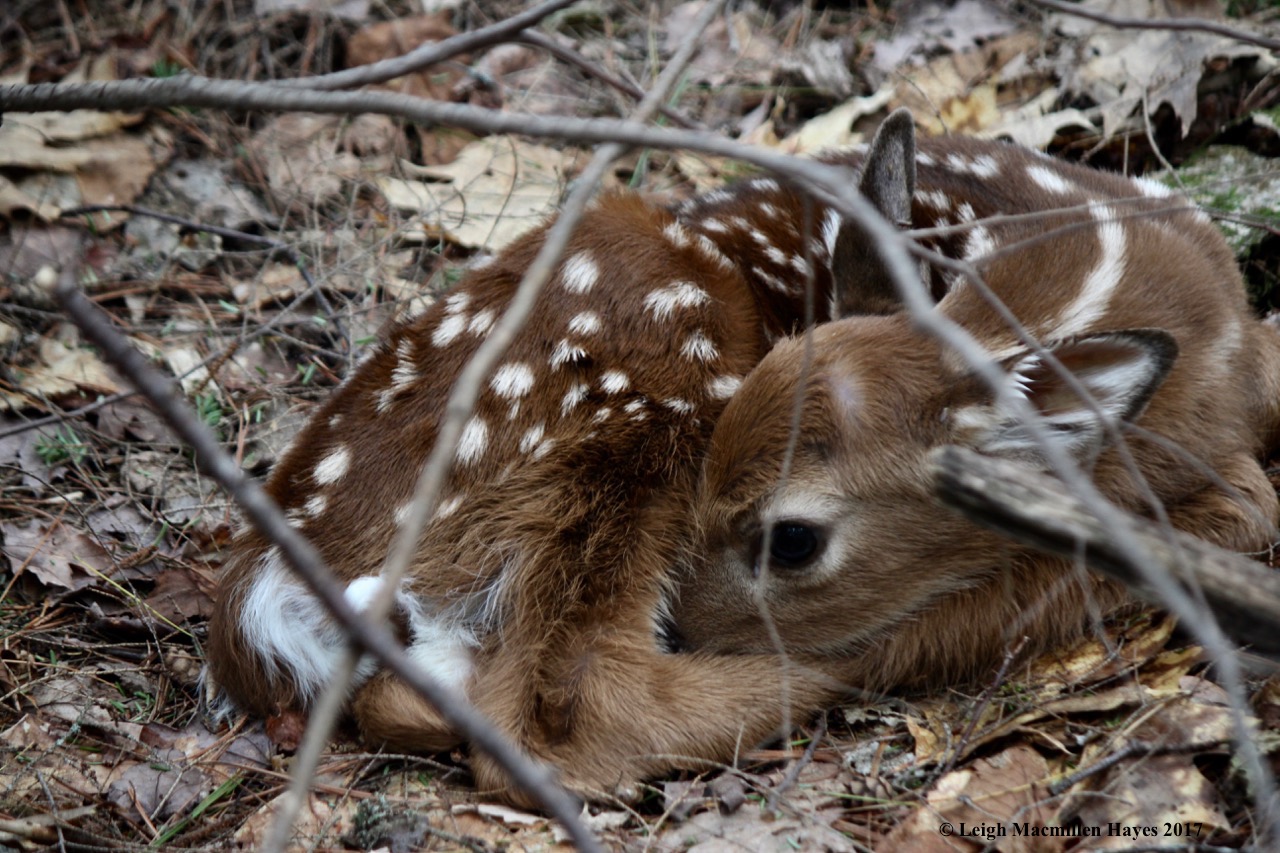
June 9, 2017: Fawning with Wonder

p-fawn 2

Though fawning is most oft used to describe someone who is over the top in the flattery department (think old school brown nose), the term is derived from the Old English fægnian, meaning “rejoice, exult, be glad.”

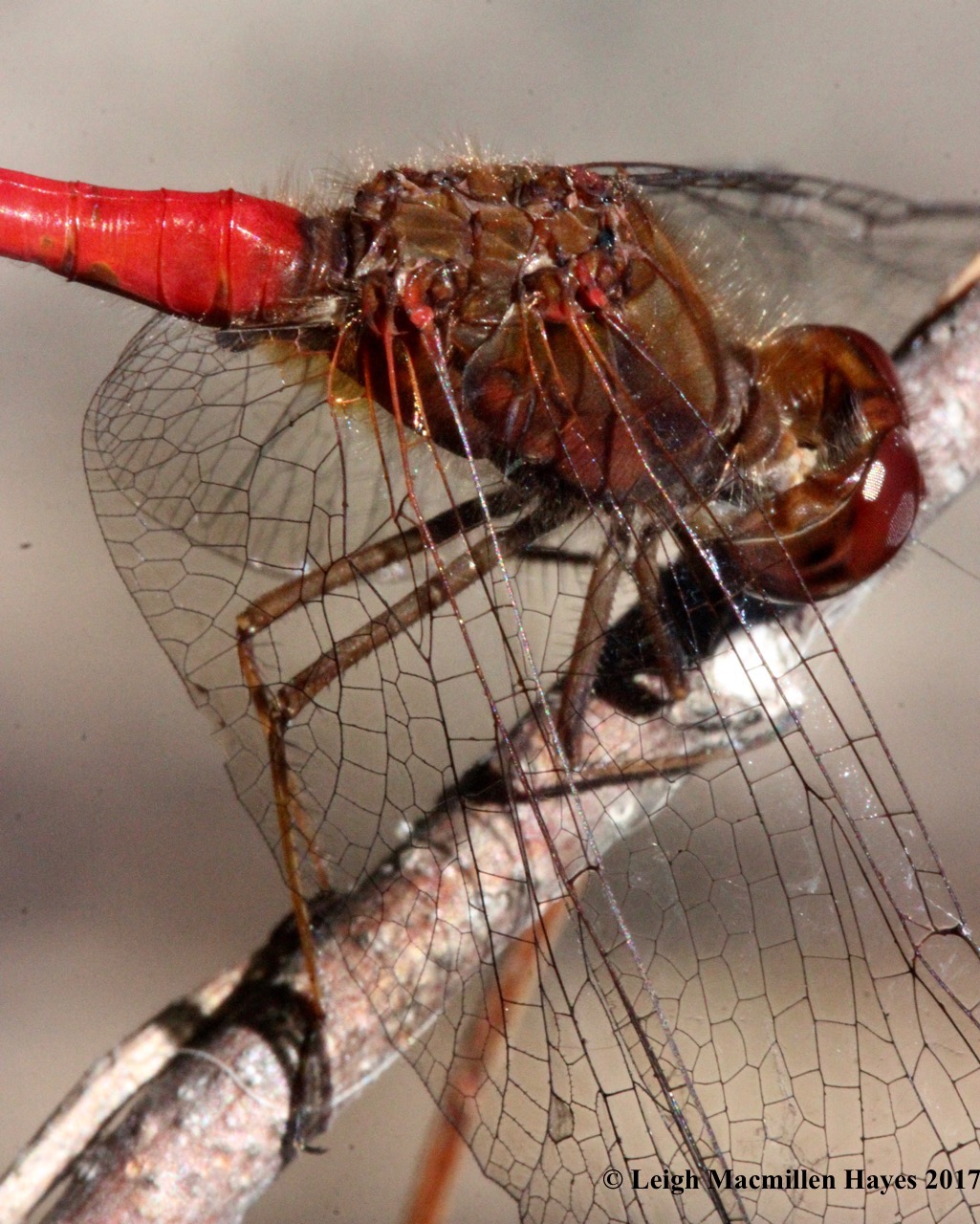
July 3, 2017: Book of July: Flying on the Wild Wind of Western Maine

d-skimmer, yellow legged meadowhawk, wings

My intention was good. As I sat on the porch on July 1st, I began to download dragonfly and damselfly photographs. And then the sky darkened and I moved indoors. Suddenly, and I mean suddenly, the wind came up. Torrential rain followed. And thunder and lightening. Wind circled around and first I was making sure all screens and doors were closed on one side of the wee house and then it was coming from a different direction and I had to check the other side. Trees creaked and cracked. Limbs broke. And the lightening hit close by.

August 6, 2017: B is for . . .

b-bye

Our original plan was to hike to the summit of Blueberry Mountain in Evans Notch today,  following the White Cairn trail up and Stone House Trail down. But . . . so many were the cars on Stone House Road, that we decided to go with Plan B.

September 15, 2017: Poking Along Beside Stevens Brook

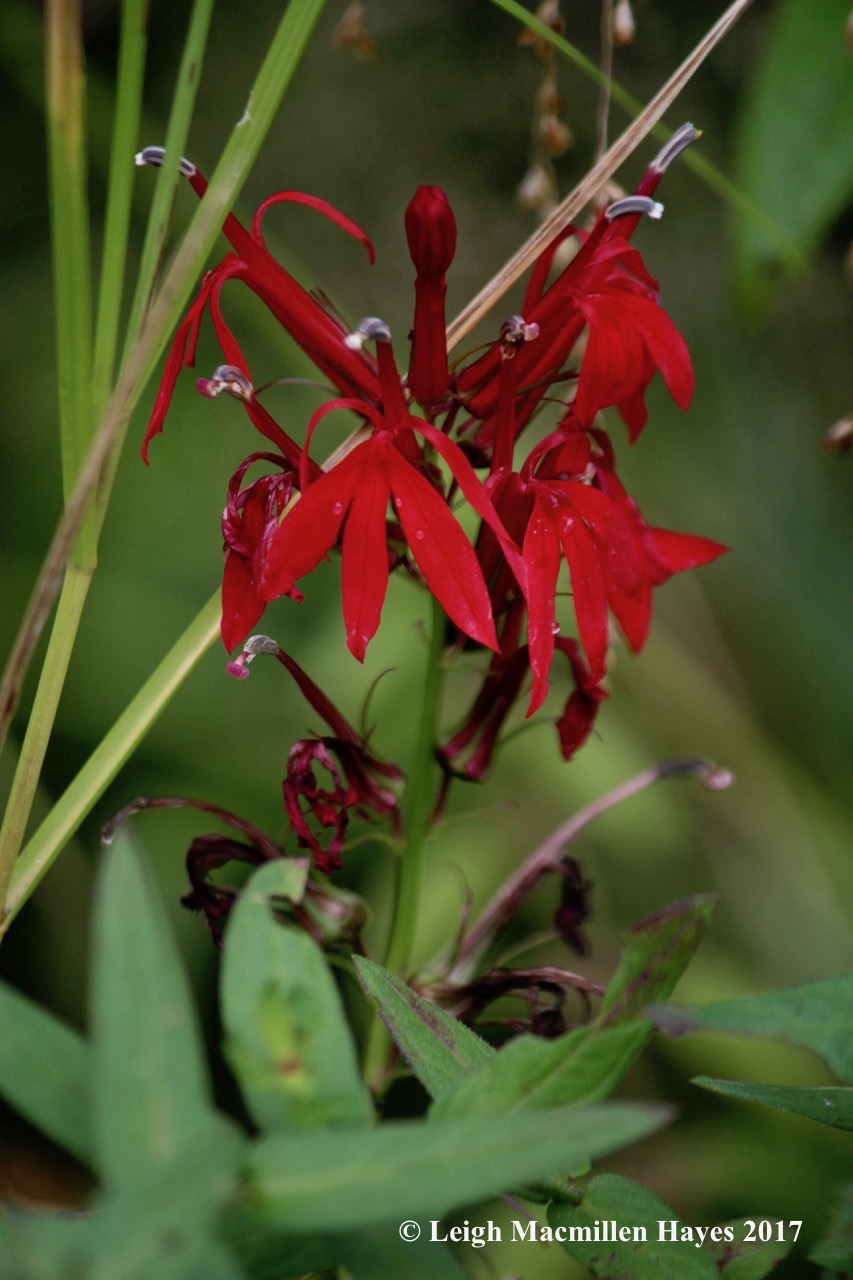
s22-cardinal flower

Raincoat? √

Notecards? √

Camera? √

Alanna Doughty? √

This morning I donned my raincoat, slipped my camera strap over my head, and met up with LEA’s Education Director Alanna Doughty for our reconnaissance mission along Stevens Brook in downtown Bridgton. Our plan was to refresh our memories about the mill sites long ago identified and used beside the brook.

October 5, 2017: Continued Wandering Into the World of Wonder

i-baskettail, common baskettail 1

May the answers slowly reveal themselves, while the questions never end.

November 24, 2017: Black Friday Shopping Extravaganza

b8-the main aisle

At last, I’d raided enough aisles. My cart was full to the brim and my brain overwhelmed. I guess I’m not really a “shop-til-you drop” kind of gal. It was time to wind along the trail and end my Black Friday shopping extravaganza.

December 29, 2017: Oh Baby!

s-screech owl 2

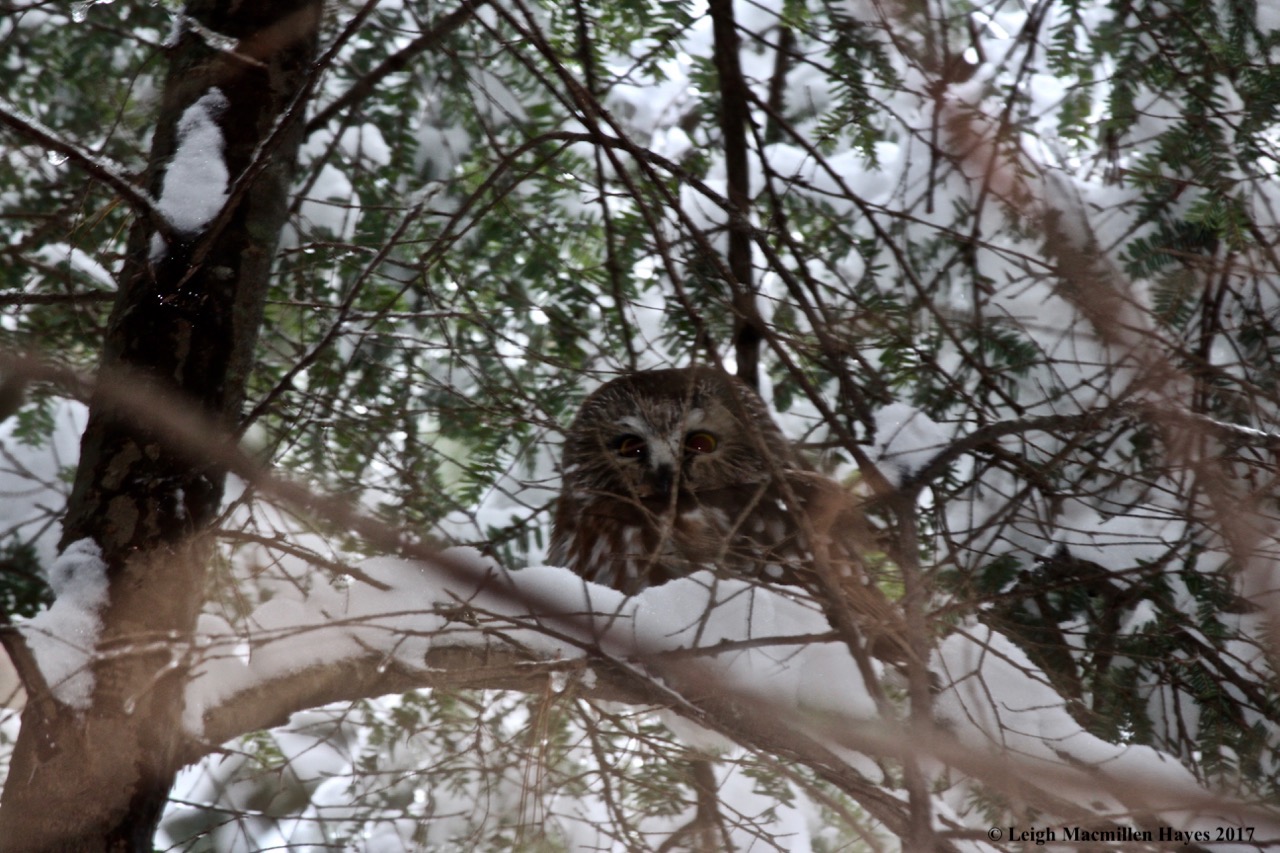
We shared about ten minutes together and it was definitely an “Oh baby!” occasion. But there was more . . .

January 21, 2018: Sunday’s Point of View

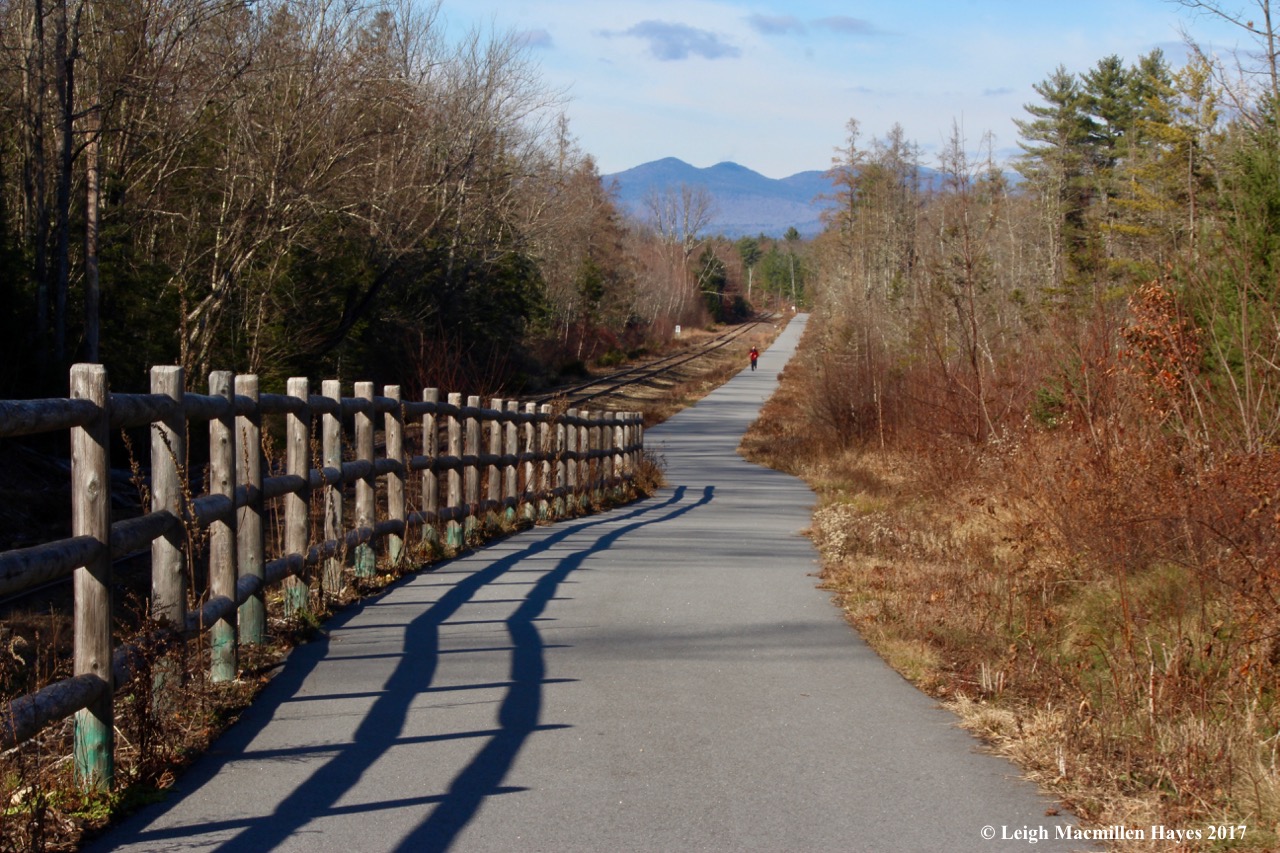
p17-Needle's Eye

We arrived home with ten minutes to spare until kickoff.

February 8, 2018: Hardly Monochromatic

p18-Stevens Brook

My world always takes on a different look following a storm and today was no different.

To all who have read thus far, thanks again for taking a trip down memory lane today and sticking with me these past three years. I sincerely hope you’ll continue to share the trail as I wander and wonder–my way.

And to wondermyway.com–Happy Third Anniversary!


Did You See What I Saw?

Aimless wanders are among my favorite and today was such when I headed out the back door. Rather than follow any trail or even in my own former footprints, my direction changed with many a whim.

p-pileated woodpecker holes

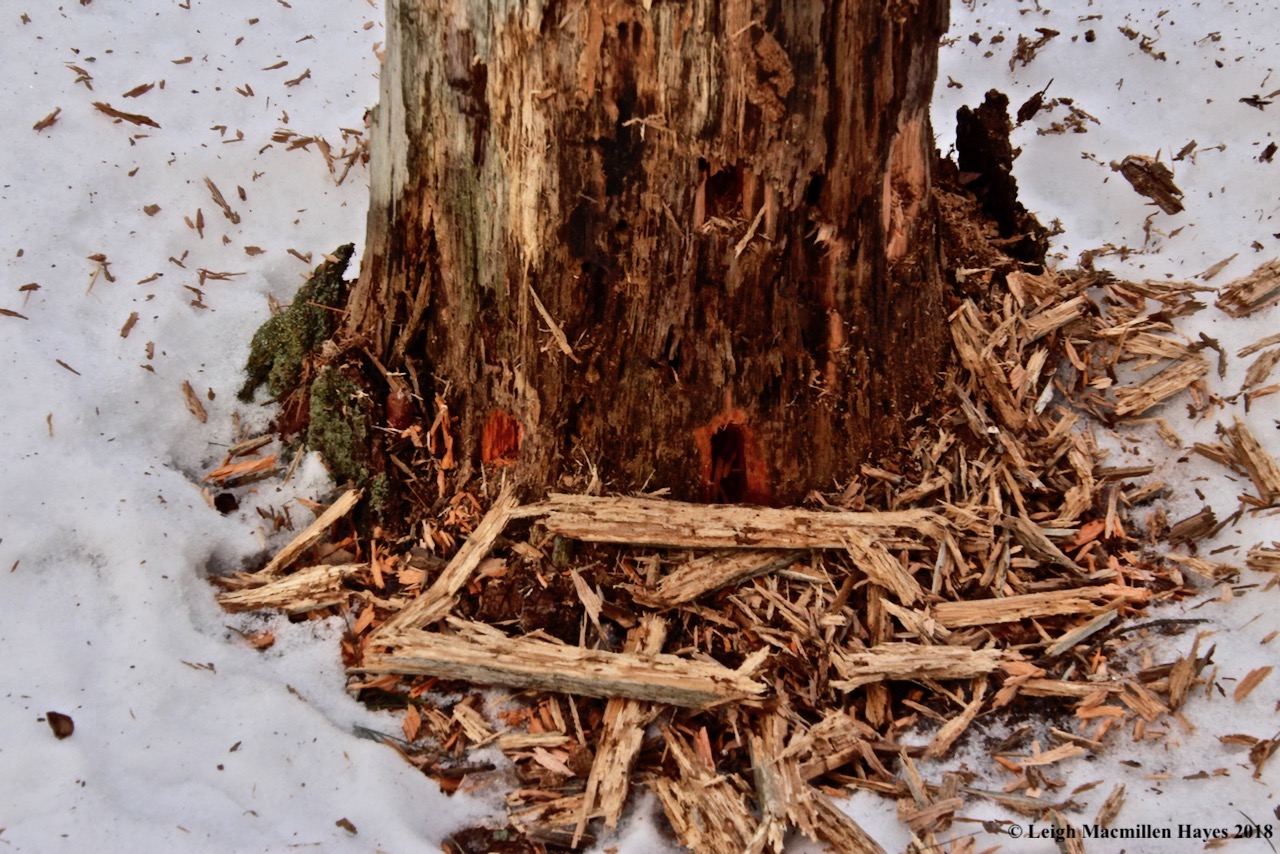
Porcupine tracks first caught my focus and I followed them to a hemlock that is slowly being consumed–on a nightly basis. Just beyond, I noticed a dead snag that was once a healthy pine had some fresh wood chips surrounding its base. A pileated woodpecker had worked above, but there were also two new holes near the bottom. I’ve watched pileateds work from the ground, but it still seems amazing that they’d take such a risk. And they do–frequently.

p-pileated scat

Scat left beside those particular excavations were filled with insect body parts. A while later I came upon another well-drilled tree and discovered scat filled with bittersweet seeds.

p-fisher prints

Right near the pileated works, I spied a set of prints that made my heart flutter. Might I find a kill site? Did a porcupine meet its demise?

fisher track

The five tear-drop shaped toes and diagonal of paired prints, plus great strides between sets informed me that I was following a fisher. I thought perhaps it might lead me to a porcupine den other than under our barn, but no such luck. Instead it led me to another set of tracks and then disappeared into thin air. I’m not sure how the fisher’s story ended. Then again, I rarely read a complete chapter for any of the mammals I track.

p-raccoon track 2

That’s okay, for where the fisher left me hanging at the end of a page, a raccoon picked me up. And along a double-wide stonewall I traveled with it.

p-turkey hens and tom

The raccoon tracks led to turkey tracks and I felt as if I knew the creators for I was probably a quarter of a mile from home and they’ve been spending the nights high up in the white pines of our woodlot and part of their days consuming bird seed in our yard. Ten hens and one tom are they.

t-vernal pool

The turkey tracks led me to a favorite spot–the vernal pool, where I noticed deer had also paid a visit. I crossed over, thankful that the ice was still frozen, and followed the deer.

p-bounding deer 2

They led me to a grove of gray birches that grow among the pines, beech and red maple. And in one opening below a bent tree, catkins had rained seeds and scales shaped like fleur de lis upon the snow. And a snowshoe hare leaped.

p-deer beds 1

The hare led me to more deer and turkeys. Again, I climbed a double-wide wall and while reflecting on the size of the field this plot formerly was for it had been plowed many moons ago, I noticed the deer had also paused. To my left were four beds, those icy looking impressions left behind by their warm bodies.

p-deer beds 2

And to my right five more. There was actually one at my feet, making a total of ten. I find beds all the time, but I’m not sure I’ve ever found them upon a wall before–all in a row.

p-deer scat and hemlock cone

The wall is located under a hemlock grove, and so it was no surprise to discover hemlock cones beside deer scat. Deer dine on hemlock bark and buds and their scat mimics the size, shape and color of a cone, often with a dimple at one end and nipple at the other. That the color should be similar makes sense, but I’d never thought about the similarity with the size and shape. As my guy would say, I’m overthinking.

p-squirrel 2

I continued to follow the deer’s lead when I thought I heard a slight noise above. It wasn’t the chatter I usually associate with a red squirrel. This one was so busy pulling scales off a pinecone to get to the two seeds imbedded within each, that it hardly noticed I stood watching.

p-squirrel 3

For about ten minutes he allowed me to watch him work.

p-squirrel cache:midden

A glance around and I knew that time and again he’d dined in the same area, turning a fall cache of cones into a winter midden of scales and cobs.

p-vole tunnels

It was near the squirrel haven that I began to notice vole tunnels–a sight I didn’t expect to see so soon. Voles spend the winter mainly in the subnivean layer–between the snow and ground. Under the hemlocks, the snow depth was shallow and the vole’s travels revealed.

p-moose and deer intersection

Of course, I was still following deer tracks, for really, this is their home site, aka yard. The place where they eat and sleep, with well packed runs leading from one to the other. And secretly (though it’s no longer a secret since I’m about to reveal it) I hoped to find an antler. Or two! I found none–yet this year. But . . . I did spy a track of another sort. A couple of moose also passed through, their prints so much larger than that of the deer.

p-moose print and hair

Consequently, I found a shed of a different sort for by some of the moose prints I noticed hair. It may have felt a bit wintery today, but tomorrow the temperature should rise into the 40˚s. Spring is on its way.

p-moose hair

I wasn’t the only one who wanted to take a closer look at the hair–a couple of spring tails, aka snowfleas, were also checking it out.

p-bobcat

I let the moose be my turnaround point and followed a different route home. And had the pleasure of discovering bobcat prints. I also saw fox tracks. The only prints I didn’t find for the perfect walkers were coyote, which surprised me. All in all, it was an extremely successful wander.
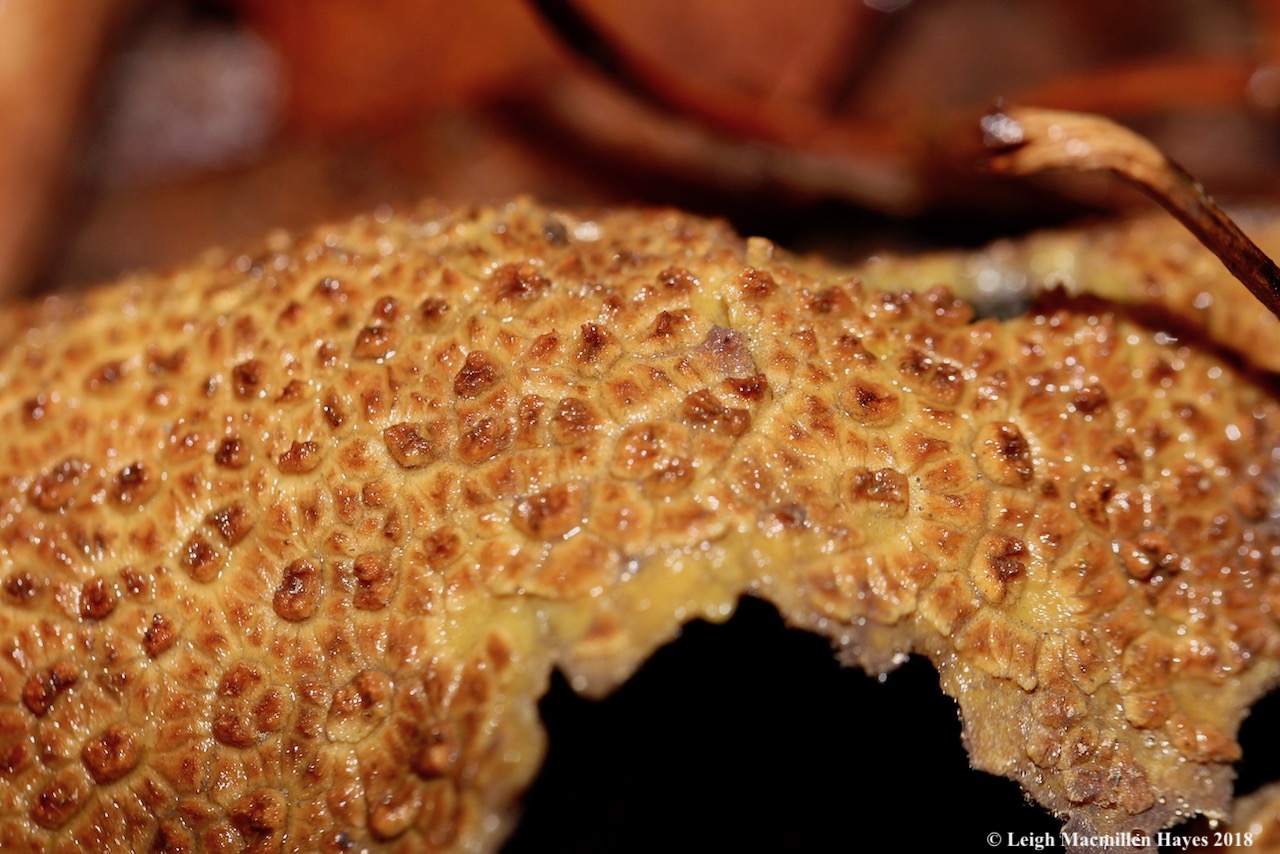
p-spectacles on ice

Made even better when I realized I wasn’t the only one looking. “Did you see what I saw?” asked the bespectacled ice goddess. “Indeed, I did,” was my reply.


Distracted by Nature

A morning message from my dear friend Carissa set the tone for today. Her Lenten devotional is based on the poetry of Mary Oliver and she thought of me when she read “The Summer Day.”

The Summer Day
Who made the world?
Who made the swan, and the black bear?
Who made the grasshopper?
This grasshopper, I mean-
the one who has flung herself out of the grass,
the one who is eating sugar out of my hand,
who is moving her jaws back and forth instead of up and down-
who is gazing around with her enormous and complicated eyes.
Now she lifts her pale forearms and thoroughly washes her face.
Now she snaps her wings open, and floats away.
I don’t know exactly what a prayer is.
I do know how to pay attention, how to fall down
into the grass, how to kneel down in the grass,
how to be idle and blessed, how to stroll through the fields,
which is what I have been doing all day.
Tell me, what else should I have done?
Doesn’t everything die at last, and too soon?
Tell me, what is it you plan to do
with your one wild and precious life?
~Mary Oliver

A perfect beginning, indeed.

w-Horseshoe Pond

A short time later I joined a couple of other friends and we traveled together to the Greater Lovell Land Trust’s Wilson Wing Moose Pond Bog Preserve. Our snowshoe journey began beside Horseshoe Pond where we paused to enjoy its beauty and recall trips up Lord Hill, whose face was obscured to the left.

w-hemlock cones and seed below

Once we got onto the trail, it was the little things that we noticed, like the hemlock cones with partially opened scales, their seeds all released. One tiny seed sits atop my name in this photo, but we wondered together why we’ve always seen the cones only in their closed up formation, whether fresh or old. Had they always looked like this one in late winter and we just never realized it previously?

w-frullania liverwort with new growth

And then we paused beside yellow birches where the liverwort Frullania eboracensis grew in abundance. Again, a new realization for us. We knew it to have brown stems, but today spied the green. As it turns out, in his book, Mosses, Liverworts and Hornworts, author Ralph Pope begins his description with this: “Plant dark green to brown . . .” Our eyes were opened.

w-crowded parchment laterally fused

Next there was the Crowded Parchment fungus that threw us off momentarily. We recognized the cap, but were unsure about the part of the fungus that was spread out flat like a crust. It turns out, the flat parts or fertile surfaces of this mushroom laterally fuse or join together at the dark ridges. This behavior certainly spoke to its name of crowded. In Fascinating Fungi of New England, Lawrence Millman refers to it as “One of the most common fungi as well as one of the most crowded in New England . . . It’s not unusual to see several hundred gregarious fruiting bodies laterally fused or in dense clusters on a single branch.” Common or not, we were wowed.

w-script lichen

And because we stopped to gain a better understanding of the Crowded Parchment, another gift was offered in the form of script lichen writing its own story on an adjoining branch.

w-nectria fruiting bodies?

Nearby, there was a similar cinnamonish color on beech bark. This particular beech was dotted with the waxy exterior winter coating of the beech scale insect. As I’ve noted before, the scale insect or more technically, Cryptococcus fagisuga, is a tiny insect that sucks sugar and other nutrients from beech trees only.

Soon, the beech scale insect will molt into its second, legless nymph stage and emerge. Immediately, it will start sucking sap through its tubular mouthpart or stylet. That instar stage doesn’t last long, and quickly it will become a mature female. For the rest of its life it will remain sedentary, but repeatedly remove and reinsert its piercing stylet, wounding the tree and providing entry points for fungi to enter. An interesting fact about beech scale insects–its a world of females who reproduce by parthenogenesis; there are no known males.

w-closer look

But what about that cinnamon color? Was it a fungus? Or was it related to the insects? Yes and yes. As some further research revealed, two species of nectria fungi are associated with beech bark disease, Nectria coccinea var. faginata and Nectria gallengiaIt is now my understanding that what we examined was a large area of the former’s fruiting bodies. Oh my.

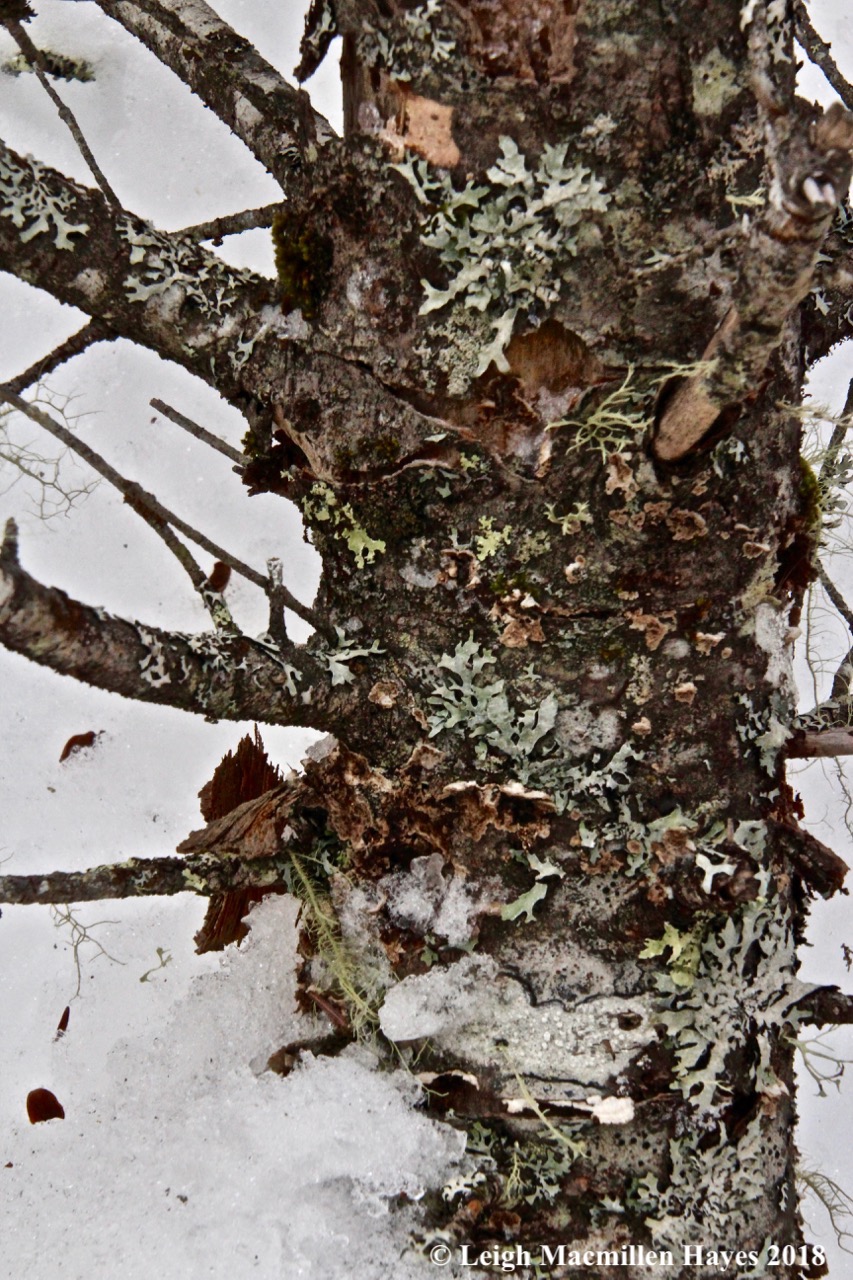
w-lichen garden1

We also paused frequently beside gardens dominated by lichens. Crustose, foliose and fruticose varieties completely enveloped the bark of this toppled tree, their individual colors and textures adding to the visual display.

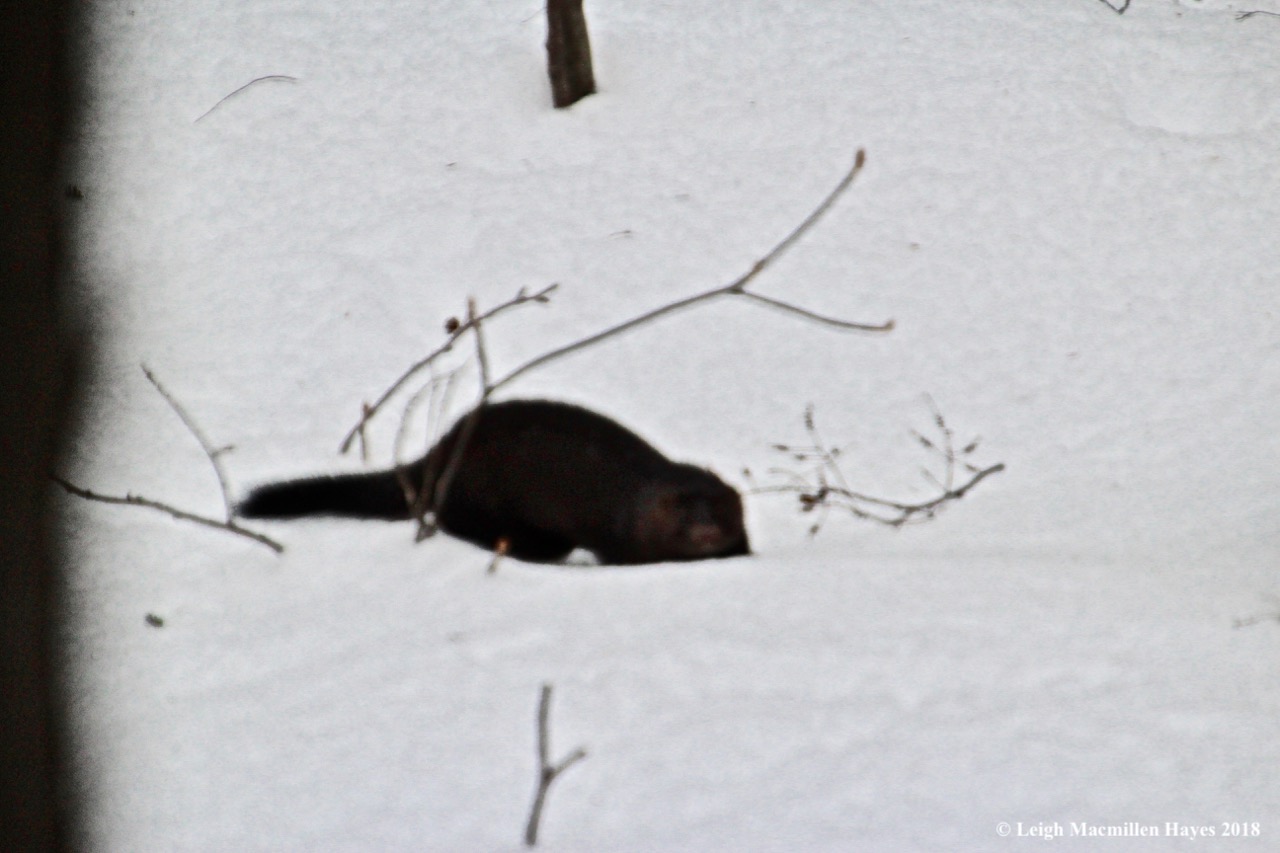
w-mink 1

And then . . . and then . .  . as we looked, a motion captured the attention of one in our group. I only wish my focus had been better, but still, it was enough.

w-mink 2

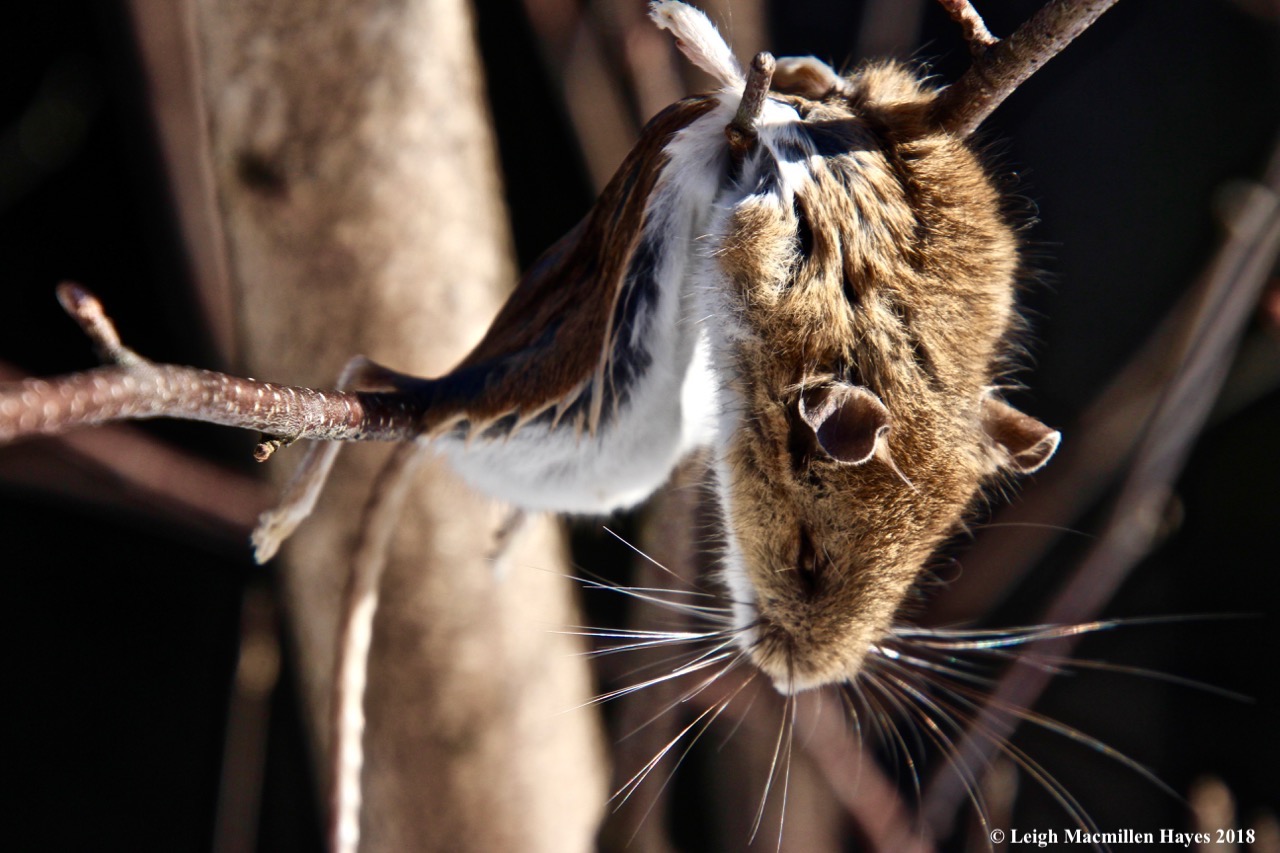
We were blessed with the opportunity to spend a few moments with a mink as it bounded down the hill before realizing it had an audience.

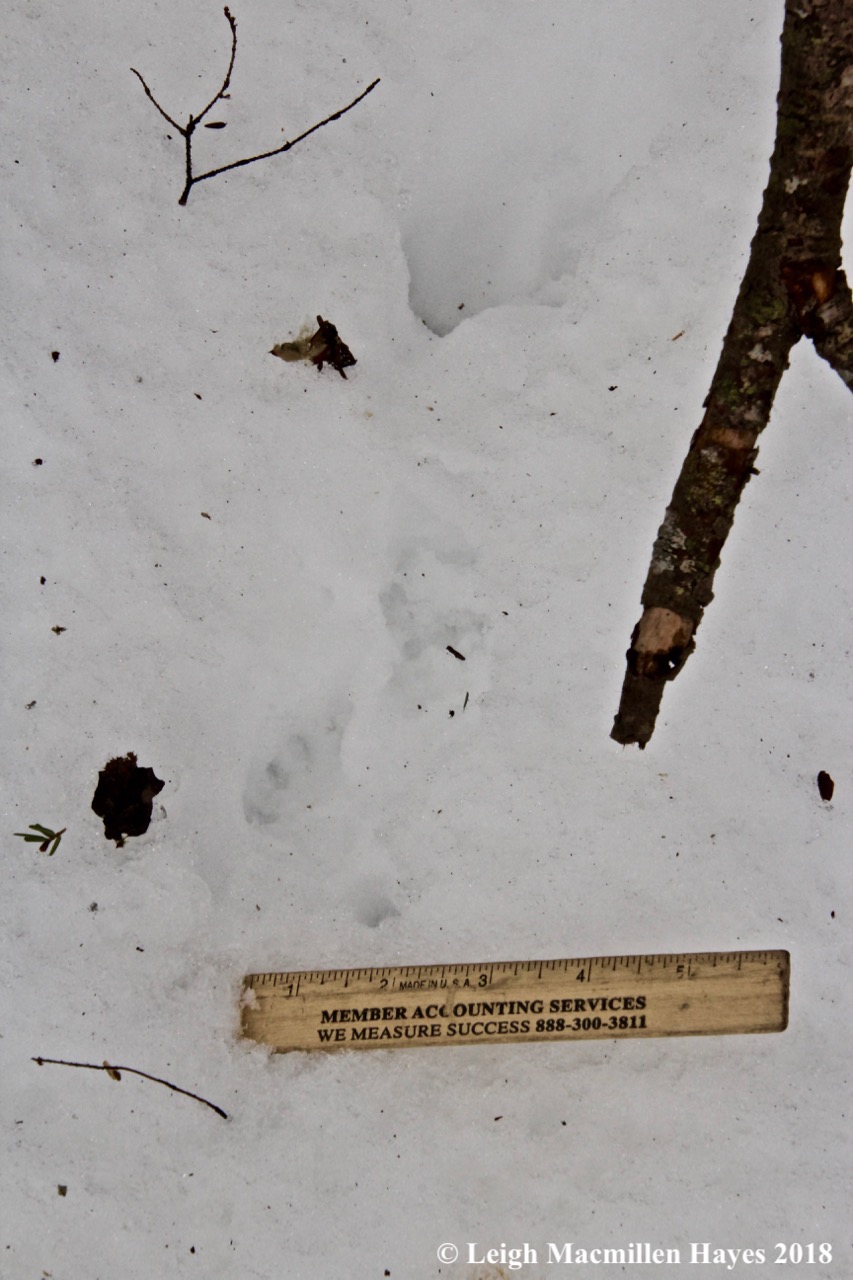
w-mink measurements

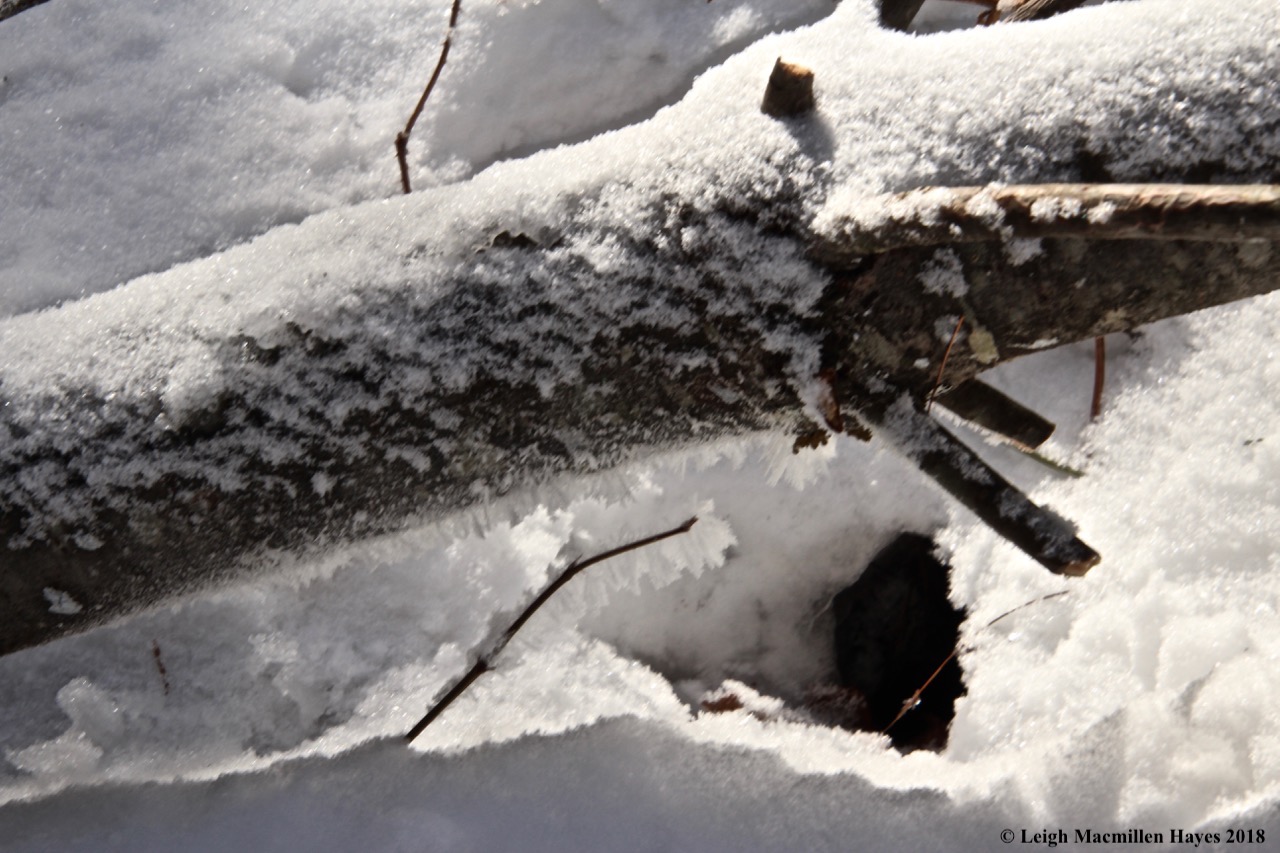
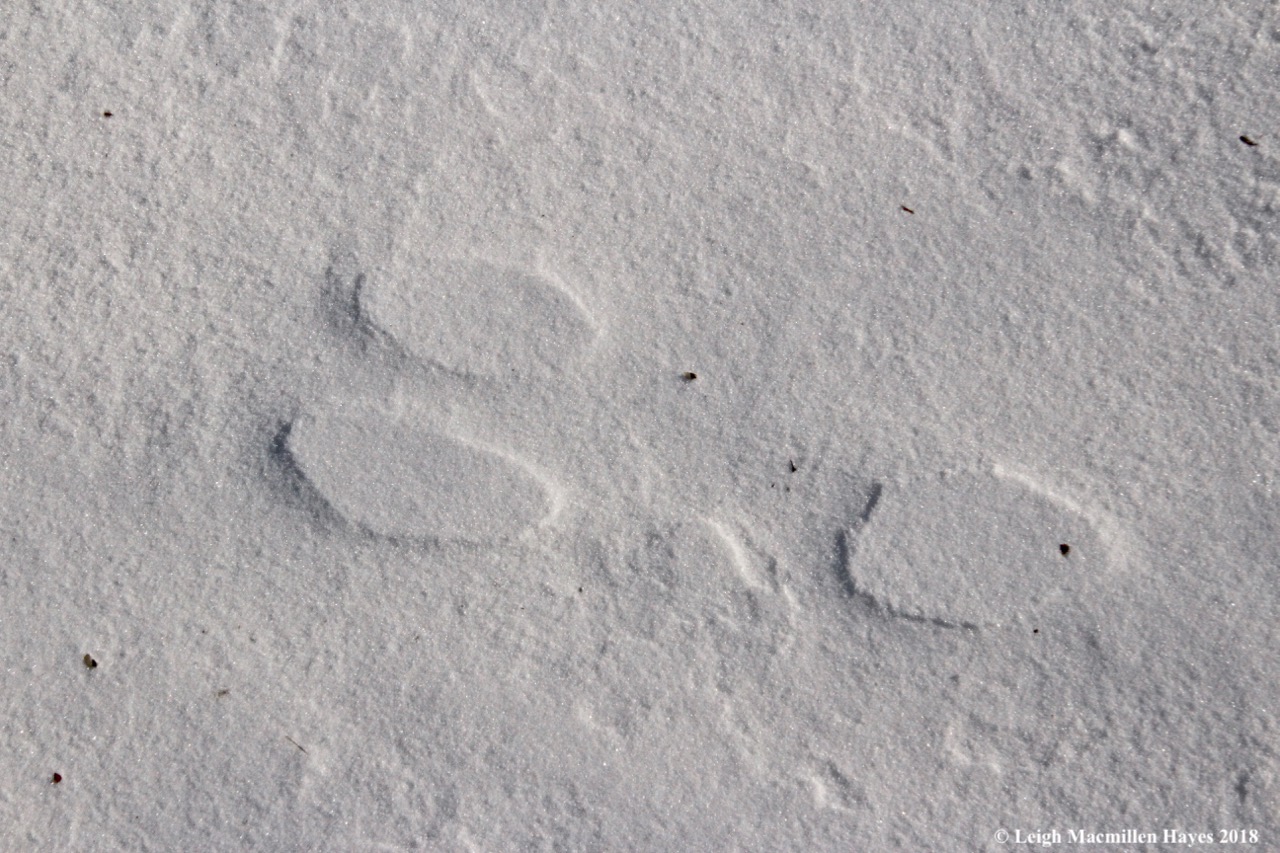
Of course, after it disappeared down a hole into a stream and we’d waited a bit, we checked out the tracks it left behind. The size of the prints and length of the straddle or measurement from the outside of one print to the outside of the other confirmed our ID.

w-mink prints

From that point on, we continued to find evidence that the mink had traveled to and fro over the course of several days. Our hearts were grateful to have shared such a moment.

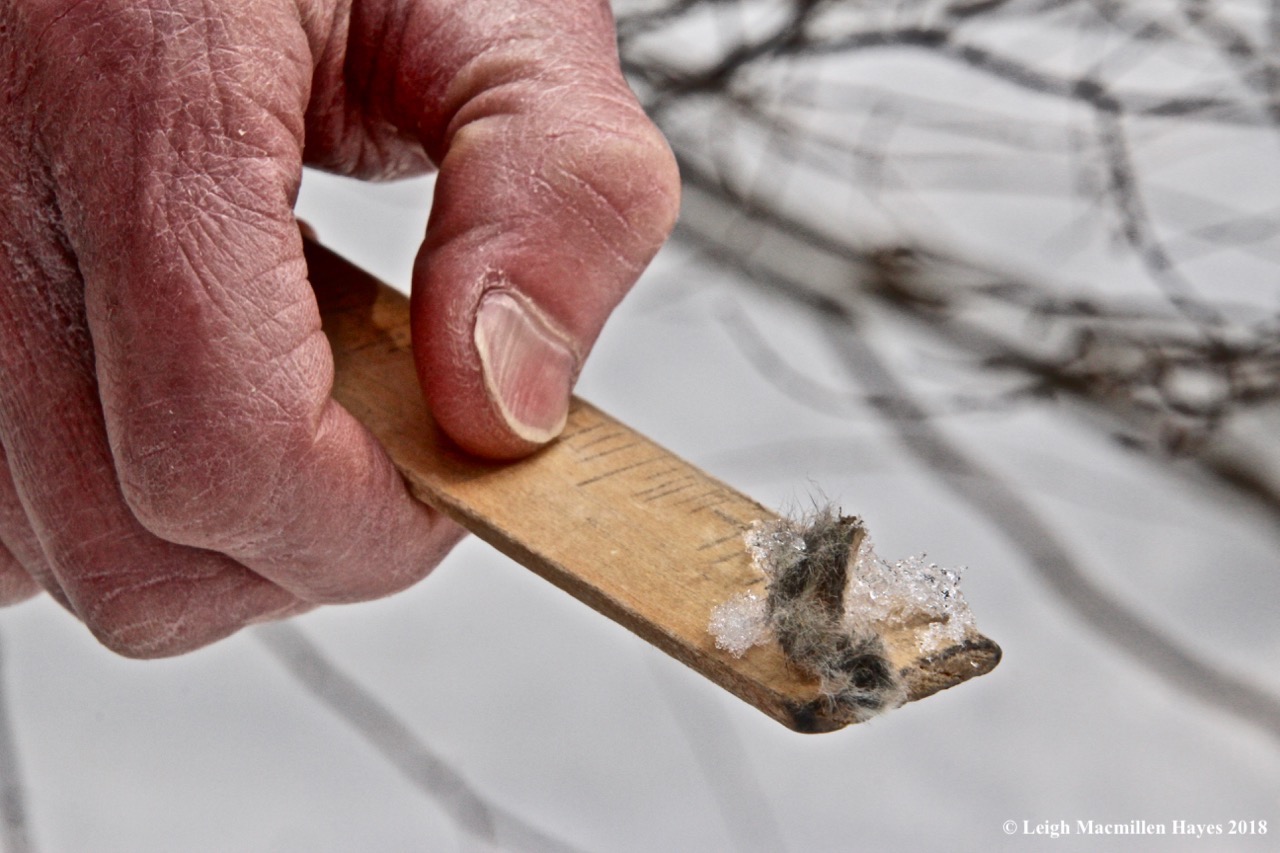
w-hairy, bony find

And as we took measurements, we spotted something else on the snow. Something hairy and bony found about three or four inches from the fresh mink tracks.

w-hairy, bony--scapula

A scapula from a little brown thing, possibly a vole. Dropped from the mink or from above by a bird? We’ll never know. But we do know that someone consumed someone else–as it is in the natural world.

w-Sucker Brook

Seeing the mink made perfect sense because we traveled on and off trail beside Sucker Brook.

w-hobblebush flower and leaf buds

It was there that the naked but hairy hobblebush leaves and flower buds reminded us that spring isn’t far off. The three of us don’t necessarily want winter to end for we love how it forces us to notice other things such as the nectria’s fruiting bodies. And we love to track. But . . . we also love the other seasons, so we’re happy exploring at any time of the year.

w-suds

Beside the water, the icy formations kept calling my name and I honored many by snapping a photograph. But, then we met the suds. Water foam is caused by the decay of twigs and plants and occurs naturally in streams and brooks. As they release compounds, the interaction breaks the surface tension, allowing air to mix in and create bubbles. And just as we found the Crowded Parchment living in a large community, we also found this congregation of bubbles–creating a design all its own.

w-Wilson Wing Moose Pond Bog

Despite the short trail, it took us forever to reach the point where the brook becomes Moose Pond Bog, but we did.

w-stream with rattlesnake liverwort

And then we beelined (sort of, for still we kept stopping) to the final stream crossing on the trail for we wanted a glimpse of the rattlesnake liverwort we’d discovered growing there last year. Alas, it was buried under snow. And that means we’ll have to return again. Darn.

w-sucker brook reflections

In the end, it was a morning well spent as we dillied and dallied over the littlest of things. And watched a mink. We got to see a mink!

No, it wasn’t a summer day. But . . . we were distracted by nature. As Mary Oliver asked, “What else should we have done?”


Make Your Own Impressions

A couple of us were honored this morning to share the trail with ten homeschooled kids ranging in age from about four to teenagers. There was even a babe in his mom’s arms, but he choose to sleep through most of our journey as we looked for tracks at Western Foothills Land Trust’s Shepard’s Farm Preserve.

s1-into shepard's farm family preserve

I was wowed by these kids for their knowledge about the natural world was impressive. It was obvious that they’ve spent a lot of time outside not only due to all they had observed and the stories they told me, but also because it was quite cold and they never complained.

s2-the bog and deer tracks

Through a mixed forest and into the bog we searched for and followed tracks–of mice and deer.

s3-into the bog

We so wanted to see those left behind by a predator and thought for sure we would since the deer tracks were plentiful, but today that wasn’t meant to be. We did find where the deer had browsed, peed, scatted and slept.

s4-curious kids

The kids’ curiosity was for more than just tracks and so we stood in awe of a pileated woodpecker tree.

s8-hornet's nest

And a hornet’s nest.

s9-hornest nest in flight

The nest was flying high–on the underwing of a bird sculpture–reminiscent of a certain Tesla Roadster on a rocket.

s10-flying squirrel tracks

After showing them some plaster casts of prints and my scat collection back in the parking lot, we said our goodbyes and I drove on to meet my friend, Jinny Mae.

Not long into our time together, we squealed with delight when we thought we’d made a new discovery. We found squirrel tracks that started about ten feet from any tree and as we looked at the overall pattern we noticed that there were arced lines between the sets of prints that appeared different from the lines behind the sets that we typically encounter. Our brains and hearts worked in unison and we determined that we’d found a trail left behind by a flying squirrel. It was a first for both of us. But . . . as we continued on we began to question our conclusion and we switched back to red squirrel. I don’t know. What I do know is that it was a squirrel. And maybe that’s enough.

s13-beaver dam

We made our way to a beaver pond, again hopeful for interesting tracks, but our best finds were squirrel and mice. Oh, and a domestic dog and its skiing partner.

s22-beaver lodge

We did spy a lodge that we thought might be active, but didn’t risk the journey to check on it for we found ourselves sinking deeper than our comfort zone.

s12-steeple bush gone awry

As we made our way off of the pond, a steeple bush came to our attention–its erect structure gone awry. Uh oh. Had it done something wrong?

s14-pileated woodpecker

And then we heard a pileated woodpecker that we finally spied on a distant tree. Though we both have the good fortune to see them often, we were still thrilled and amazed at its size.

s15-brook

Our next stop was beside the brook that flows out of the pond. I was with Jinny Mae so it was no surprise that we stood for a long time, listening and admiring.

s17-ice

Ice and water always fill us with wonder . . .

s23-ice 3

and awe.

s20-shadows

Shadows and textures do as well.

s19-lungwort

And not to be left out, lungwort.

s5-creating a snow angel

The tracking wasn’t so great, but at the end of the day we’d all delighted in the discoveries and questions and understandings and connections we’d made. And the fun we’d had in doing so.

s7-snow angel

When life gives you snow–make your own impressions.

Satiating Our Curiosity at Long Meadow Brook Reserve

Two weeks ago I traveled the trail at the Greater Lovell Land Trust’s Long Meadow Brook with several friends and much of our wonder was captured by intermingling lines.

l-ice lines

All felt quite magical on that crisp January day as the encrusted twigs and buds offered a brilliant display.

l-snowbirds in the ice castle

It was made even more special because two of the three with whom I tramped were snowbirds who experienced the awe of our winter world. Despite all their layers, they  felt like royalty living in an ice castle, glass slippers and all. (Don’t be fooled into thinking those are snowshoes strapped to their boots or winter hats rather than crowns.)

l-Long Meadow Brook 2

We made our way to the dam by the brook as the sun shifted lower and shadows lengthened. It didn’t matter for the sky was clear and we celebrated exploring the winter world of Lovell.

l-porky den 1:25:18

And then we backtracked a bit before crossing a property under conservation easement with the land trust and visited a porcupine condominium located in a large stump dump. The porkys didn’t let us down and we found prints leading into and out of seven or eight entry ways, along with downed hemlock twigs and scat. All perfect porcupine sign.

l-squirrel 1

Since then, we’ve experienced a variety of mixed winter weather, but this past weekend a couple of inches of snow fell, making for great tracking conditions, such as this group made by a red squirrel, the two smaller feet being its front feet, which landed first, before the larger hind feet swung around and landed in front–the typical pattern left behind by a hopper or leaper. Its toes pointed toward my ruler, thus indicating the direction of travel.

l-chipmunk prints 1

Because it had been warm over the weekend, chipmunks made a brief appearance–rather than being true hibernators, they are light sleepers and will move about in the chambers within their tunnels. Occasionally, during a thaw, they’ll even venture out to forage for fresh seeds.

l-chipmunk prints 2

Notice how the straddle is about two inches, while the red squirrel above exhibited a straddle of about three inches. Straddle being the measurement from the outside of the left hind foot to the outside of the right hind foot. In case you are wondering, the measurement for gray squirrels is about four inches.

l-coyote track

And then I came upon tracks so fresh that I was certain I might spy the two coyotes who traveled before me, but as is most often the case, I didn’t see them.

Following the snow, we had another downpour and everything changed. But then the temperature dipped again.

l-few Tuesday Trackers

And so today when the GLLT’s Tuesday Trackers took to the trail at Long Meadow Brook Reserve, we were sure we’d find a plethora of well-made tracks. Only two problems. One: by the time Kathy, Dick, Mary, Russ, and I arrived, it was snowing lightly. And two: not too many mammals had been on the move in the last day or so. At least not in that neck of the woods.

l-Long Meadow Brook 1

We beelined (sort of, for we did stop to look at deer tracks) down to the old beaver dam hoping for otter sign or that of other weasels. Nada. Instead, we took in the view to the north.

l-Long Meadow Brook south

And then to the south.

l-beech leaf 2

And headed toward the porcupine condo. But along the way, a couple of other things caught our attention, including a beech tree getting a head start on the next season.

l-pitch pine 3

And a pitch pine that was the gnarliest any of us had ever seen. Pitch pine needles, in bundles of three, grow on the branches but may also sprout on the trunk–a unique feature making for easy identification among the evergreens. But so many? On branches?

l-junco

At last we reached a field where we welcomed sunshine to warm us up and noticed a few feathered friends. More than one junco scratched some bare ground in search of seeds.

l-squirrel pattern

As we crossed the field we rejoiced to have the track pattern of a gray squirrel to admire. Small things made us happy.

l-lorax tree

And then, at the top of one of the stump dumps we stood in awe of the Lorax tree. Only several branches had small fans of needles left; all the rest having been devoured by the local residents living below.

l-porky hemlock twigs

As we made our way into the hemlock grove to take a closer look, we spied what we believed to be a bobcat track based on straddle and stride, the latter being the distance from the toes of one print to the toes of the next print in the zigzag line. The overall impressions were a bit diluted indicating they were a few days old, but we’ve seen the same in this area before and the measurements led us to that conclusion. We also spotted downed hemlock twigs featuring the characteristic 45˚angled cut made by a porcupine.

l-porky tracks?

By this time, our group had increased by two when Alice and Saranne joined us for the trip into the porcupine haven.

l-porky den:stump dump

We peeked into holes, but suspected the homemakers had entered inner chambers.

l-porky tracks 2

We did find telltale tracks filled with the morning’s flurries, but still demonstrating their pigeon-toed pattern. And we saw that the bobcat had checked the holes as well before it moved on.

l-porky hole:hoar frost

We decided to move on as well, climbing up onto the stump dump, but with a word of caution to watch out for steam holes. Hoar frost surrounded the holes and gave us further reason to believe that indeed the condo was occupied.

l-porky tracks around downed limb

The very branch under which we saw one hole had fallen from a white pine. All around it were more porcupine prints.

l-porky chews

As for the white pine’s needles–think of them as dinner. The same was true of a bent red oak branch and its buds. A little variety in the diet.

l-bench

We too were ready to eat and so we headed out.

Another three hour tour and our curiosity was satiated at Long Meadow Brook Reserve and the adjacent property.  A couple of benches await at Long Meadow Brook should you want to pause and take in the wonders yourself.


Endowing the Future

The morning began with a Greater Lovell Land Trust guided hike into the wetland of the John A. Segur West Preserve on New Road in Lovell.

w-shrike kill still in tree

Despite the cold temp, there were eleven of us along for the journey. To stay warm, we made a sort of beeline to the wetland, but stopped a few times, including to measure the straddle of mink tracks, and then to see if a shrike’s deposit we’d spotted a few weeks ago was still pinned to a tree in the log landing. It was, which wasn’t a surprise. As Dave, one of our docents commented, shrikes are not all that common here so it may have left this  dinner behind before it moved on. But, we wondered–why hadn’t a blue jay or another bird taken advantage of the free meal?

w-ruffed grouse tracks

From the landing, we moved on toward Bradley Brook, where we spotted tracks left behind by ruffed grouse, mink, deer, and a kazillion squirrels. But, other than the mink, no predator tracks, which was curious.

w-snowshoe hare print

Out on the wetland, we noticed where a hare had packed the substrate and yesterday’s wind blew any soft snow away creating a raised impression.

w-Dave channeling his inner deer

It was there, also, that docent Dave, bent down in the background,  demonstrated how a deer rubs its forehead against tree bark–leaving behind information about its health and wealth.

w-squirrel bridge

Our plan had been to venture further into the wetland to make more observations, but ice conditions were such that we didn’t dare. Instead, we returned to the brook and followed it back, noting ice bridges that none of us dared to cross. We left that action to the squirrels.

w-Robie Meadow 3

The John A. Segur West property was a new one on my guy’s list, and so we went with that theme and after lunch I dragged him to two other land trust properties. Our first stop was at Western Foothills Land Trust’s Robie Meadow on Scribner’s Mill Road in Harrison.

Again, given the brook that we’d have to cross, we paused and decided to enjoy the view from the edge.

w-fox track to brook 2

Throughout the property we did note the usual squirrel tracks and red fox. As we walked beside the brook, I hoped for others that weren’t to be, but at a spot where last week on a walk co-hosted by the GLLT and WFLT, we’d noted a pathway to the water created by either coyote or fox and a bobcat traveling back and forth to the water. Today–fresh red fox tracks.

w-red fox print

The size of individual prints, fuzzy appearance due to a hairy foot, and chevron feature of the foot pad all spoke to its maker.

w-deer ribs and fox track1

As we made our way back to the road, we stopped by a kill sight discovered last weekend. The ribs and backbone of a deer reached toward the sky. And right behind–more fresh red fox tracks. The fox had paused briefly before journeying on in search of a new food source.

w-red pine plantation beside Crooked River

Our final destination was across Scribner’s Mill Road to Loon Echo Land Trust’s Crooked River Forest Preserve-Intervale.  Neither of us had ventured forth on this property previously. While no true trails yet existed, the logging roads were easy to follow and we chose that route because we wanted to get down to Crooked River. As we approached the river, we realized we had traveled through a red pine plantation.

w-white pine at LELT

Right by the river, we discovered a white pine that had lost its terminal leader, thus allowing lower whorls to reach skyward. As my guy said, it looked like a great climbing tree–had we been so inspired. Blame it on the cold. Blame it on our age. We passed up the opportunity.

w-Crooked River 1

The river, so named Crooked for its meandering nature, offered a mixture of ice and open water.

w-fox prints and pee

And everywhere throughout the property we found evidence of red foxes, including prints and pee.

w-coyote bed

We also noted a spot where a coyote paused for a bit, so smooth and indented was the impression left behind. I threw a mitten down temporarily to give a sense of the bed size.

w-Crooked River 2

Though we eventually crossed over the LELT boundary, we had followed a snowmobile trail, and so we decided to see where it would lead–hopeful we wouldn’t find ourselves in someone’s back yard.

w-Scribners Mill bridge

Our worries were squelched when we spied the Scribner’s Mill bridge in the distance.

w-mill:blacksmith shop

And soon came up beside the old blacksmith shop.

w-mill sign

The mill complex was built in 1847. Three generations of Scribners operated it continuously until 1962.

w-mill

In its heyday, the mill produced clapboards, shingles, barrels, and lumber. The Scribner’s Mill Preservation, Inc. formed in 1975 with the mission to transform it into an accurately reconstructed saw mill powered by water.

w-mill:signs

As we stood and looked at the ads of local businesses on the long shed (including one we know intimately), we wondered about the annual “Back to the Past” Celebration that used to be held each August. During that weekend, we recalled how we’d watched the machinery at work. The lathe workshop and the blacksmith shop were also open. Tours of the homestead included exhibits and demonstrations of traditional crafts such as weaving, spinning, rug-hooking and quilting.

w-mill from bridge 2

Today, all was idle. Except for the water.

w-mill from bridge 3

It swirled by, carrying memories of the past into the future.

And we gave thanks for the opportunity to visit properties owned by three different local land trusts who do the same as they carry memories of the past forward for future generations.

Land trusts work with community members to acquire land for permanent conservation through purchases and donations. They also create legal and binding conservation easements that allow residents to protect land holdings in perpetuity, while retaining private ownership. Scenic views, wildlife corridors, flora and fauna, and topography remain, subject only to the whims of nature itself, which is ever-changing.

Conserving the land doesn’t mean it can’t be touched. The organizations develop management plans and steward the land. Timber harvesting, farming, residency and recreation continue, while specific wildlife habitat, wetlands, unique natural resources and endangered or rare species are protected. And in the process, they strengthen our towns. Ultimately, they give us a better sense of our place in Maine and opportunities to interact with the wild.

Our local land trusts offer numerous hikes open to everyone, providing a great way to explore and learn more about the diversity of the natural communities.

Even though we can’t all endow the future of our properties, we can get involved to ensure that these organizations continue to protect land for future generations of humans and wildlife.


A Special Mondate

Our plan was to hike up Blueberry Mountain and continue on to the summit of Speckled in Evans Notch today, but as we drove toward the White Mountains I mentioned that a friend had shared a photograph of ice inside a mine near the Basin on Route 113. And so in an instant said plan changed.

b1-sign

We parked near the iconic Welcome to Beautiful Maine sign and ventured off in search of the mine. Of course, I’d forgotten where exactly it was located, so we walked about a mile on a snowmobile trail until we spied private land in front of us. That was our turn around point, but . . . me thinks we should have continued because I later learned that the mine sits between public and private property.

b2-gray birch

We didn’t mind for we knew we’d return with more accurate directions. It wasn’t the first time we’ve erred. And besides, the gray birches were beautiful.

b3-lemonade stand

After we’d covered about three miles, we headed back to the truck and drove to Stone House Road, where we parked near the trailhead for the Leach Link Trail. We could have continued toward the Stone House since for the first time ever, it was plowed, but the lane was narrow and had we met another vehicle, it would have been a challenge to back up. Besides, I love to walk the road for there’s always something to see . . . like the lemonade stand. Who knew?

b5-Pole #15

My other favorite sight along the road–telephone poles. In the past year the poles had received more attention–from black bears. Last year it seemed that any number with a 5 in it drew the most attention. Smart bears around here.

b6-pole 17 1

But it appeared that the bear(s) had added a new number to their count–#7, or in this case, #17.

b7-pole 17 2

I didn’t have my macro lens with me, but found bear hair attached to some of the scrapes. It was light colored, indicating it had bleached out in the sun.

So why telephone poles? It’s my understanding that males rub their shoulders and neck to leave a scent and may also claw and bite a pole during mating season. Bites leave nearly horizontal dots and dashes–can you see them? Think of the bear’s upper and lower canine teeth meeting. How cool is that?

Eventually, I promised my guy that I’d stop pausing to check on and photograph them, but he noted that I couldn’t resist every time we passed by one. I was just looking.

b9-Stone House Road

To my guy’s relief, we soon reached the gate, where the power line went underground.

b10-balds

Near the airfield, we turned and paused to enjoy the view of the Baldfaces, and promised ourselves a return to those trails in the late spring or summer.

b11-gorge 1

Our choice of trails today was the Stone House Trail. And no hike up is complete without a stop at Rattlesnake Gorge. First we looked north.

b11a-water racing

Ice and water, ice and water–I couldn’t get enough of the freeze and flow.

b11d-gorge 3

And then we looked south–with continued awe.

b13-pool view

We’d thought about eating lunch at the gorge, but moved on up the trail. From lunch log, where we dined on peanut butter and blueberry jam sandwiches, we took in the view of  Rattlesnake Pool.

b12-rattlesnake pool

Any time of year it’s a magical place, but on a winter day–ah . . .

b12-emerald pool

that emerald color.

b14-rocks in brook

The brook above offered its own touch of wonder.

b17-hiking up

After lunch, we continued our climb on conditions that ranged from ice to snow to bare rocks. But mostly ice and snow. Microspikes served us well.

b16-Caribou sign

At last we crossed from the Stone House property into the White Mountain National Forest as denoted by a rustic sign.

b16-arrow

All along we searched beech bark for bear sign. And found one–a very smart bear had left a sign indeed–indicating the way of the trail. We kept climbing.

b20-cairns

At last we reached the summit. It was later in the afternoon than we’d intended when our morning began because of our mine mission, and so we decided to skip Speckled Mountain, but were happy to check out the views from Blueberry. On the Lookout Loop we did get off trail for a bit as we missed a cairn buried under the snow. At that point we did a lot of post holing, sinking as we did to our knees and above. But finally we found the right trail.

b19-spruce

It’s there that the red spruces grew–their yellow green needles pointing toward the tip of the branches and dangling reddish-brown cones seeping sap.

b21-view 1

And then we found the view that stretched from Pleasant Mountain (our hometown mountain) on the left to Kearsarge on the right.

b22-Shell Pond and Pleasant Mountain

Below us, Shell Pond on the Stone House Property, showed off its conch shell shape.

b23-Kearsarge

We took one last look at the mountains and valleys under a blanket of clouds before following the loop back to the main trail and retracing our steps down.

b24-bear tracks

It was on the down that I got my guy to stop and examine a mammal track with me. I’d noticed it on the way up and he’d been ahead, but we both remembered that it was located at the point where the community switched from hardwoods to soft. Do you see the large prints? And distance between. It had been warmer yesterday and those prints looked like they’d been created then.

b18-bear print

Black bear prints! Oh my!

It was the five large toes that first drew my attention as we climbed up. Was I seeing what I thought I was seeing? The pattern of the overall track was a bit different than what I’ve seen in the past where the rear foot oversteps the front foot because in snow black bears tend to direct register like coyotes, foxes and bobcats–one foot landing on snow pre-packed by another foot.

Bears are not true hibernators and this guy or gal must have been out foraging during yesterday’s thaw.

We didn’t find any bear paw trees or see the actual bear, but we were thrilled with our telephone pole signs and the prints left behind.

Indeed, it was a beary special Mondate on Blueberry Mountain.

(Corny humor comes with teacher training)


Clockwise Circumnavigation of Holt Pond

Though we were headed to a place we frequent, we thought we’d change up our trek by hiking in the direction that is opposite our norm along the trail system.

h14-trail map

And so for us, 12 o’clock was at the point where the trail was closest to Grist Mill Road. As we stepped on to it, I wore micro-spikes and my guy just his hiking boots. Within about fifty feet, I’d already banged snow off my spikes twice and decided they’d serve me better by being in my backpack.

h1-Following the boardwalk

It meant being aware of the boardwalks, most of which were covered with ice and snow, and post holing occasionally, but even if we’d worn snowshoes, we’d have ended up taking them off for the temp was in the 40˚s and snow not too deep.

h2-bear

One of the things I love about visiting a place often is that each time it has something different to offer. As we made our way to one and two o’clock on the map and passed through a hemlock grove, we discovered a bear den. Bears don’t always hibernate in caves and this one chose an old tree stump to spend the winter.
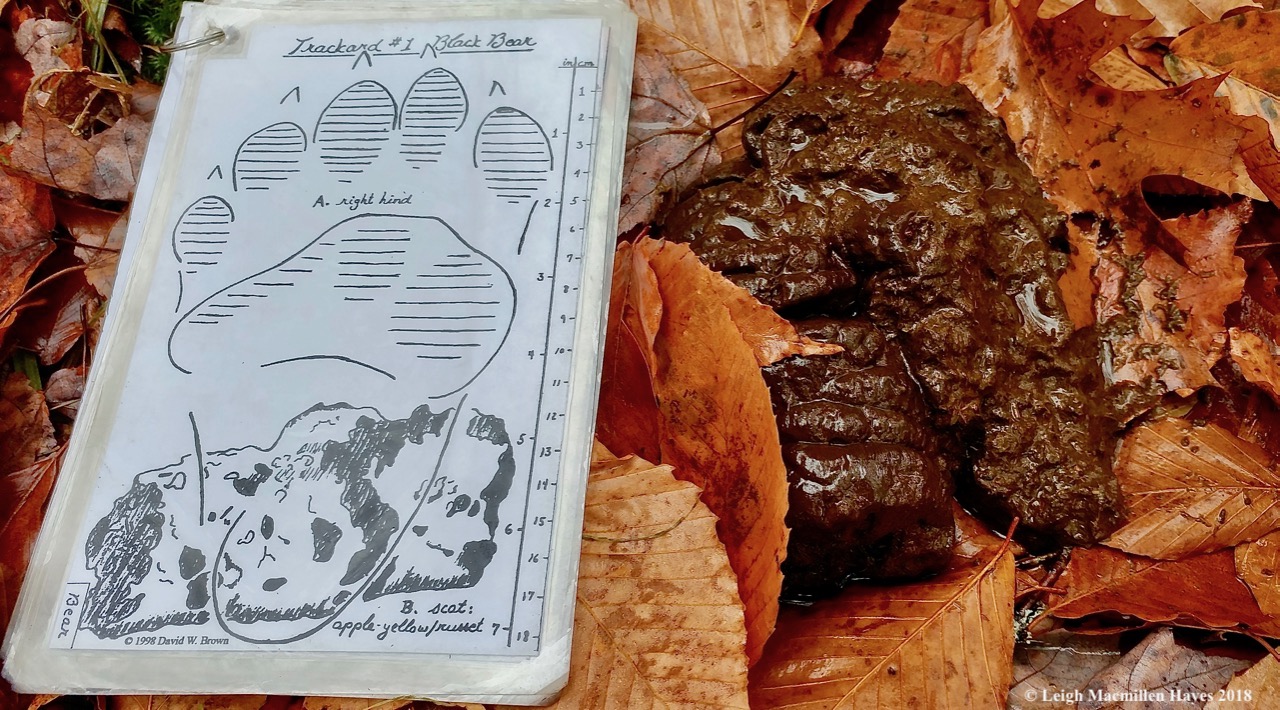
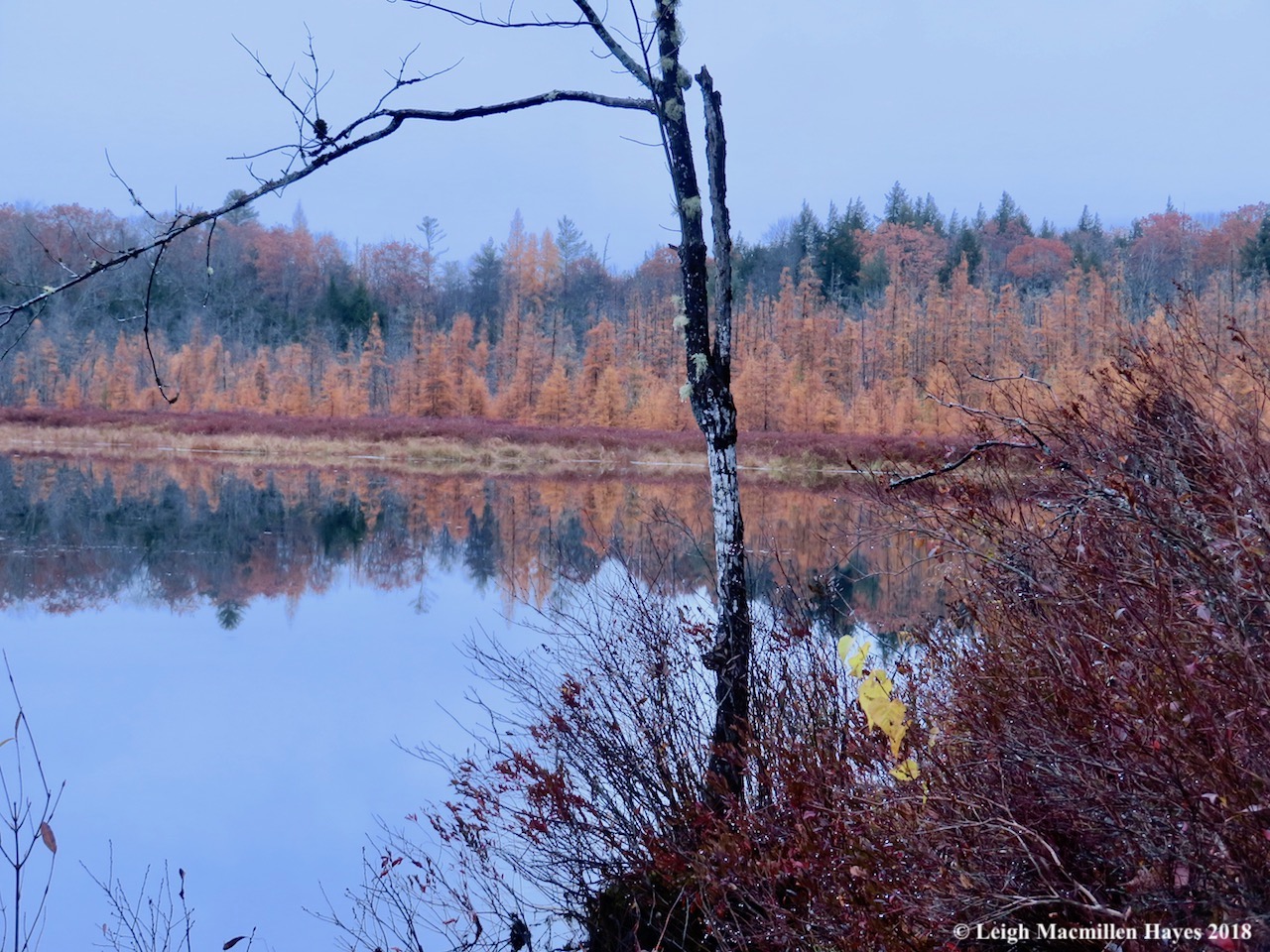
h3-quaking bog

I was with my guy, so it was no surprise that within no time we were at 3 o’clock, where we had to shuffle across the ice covered boardwalk in the quaking bog.
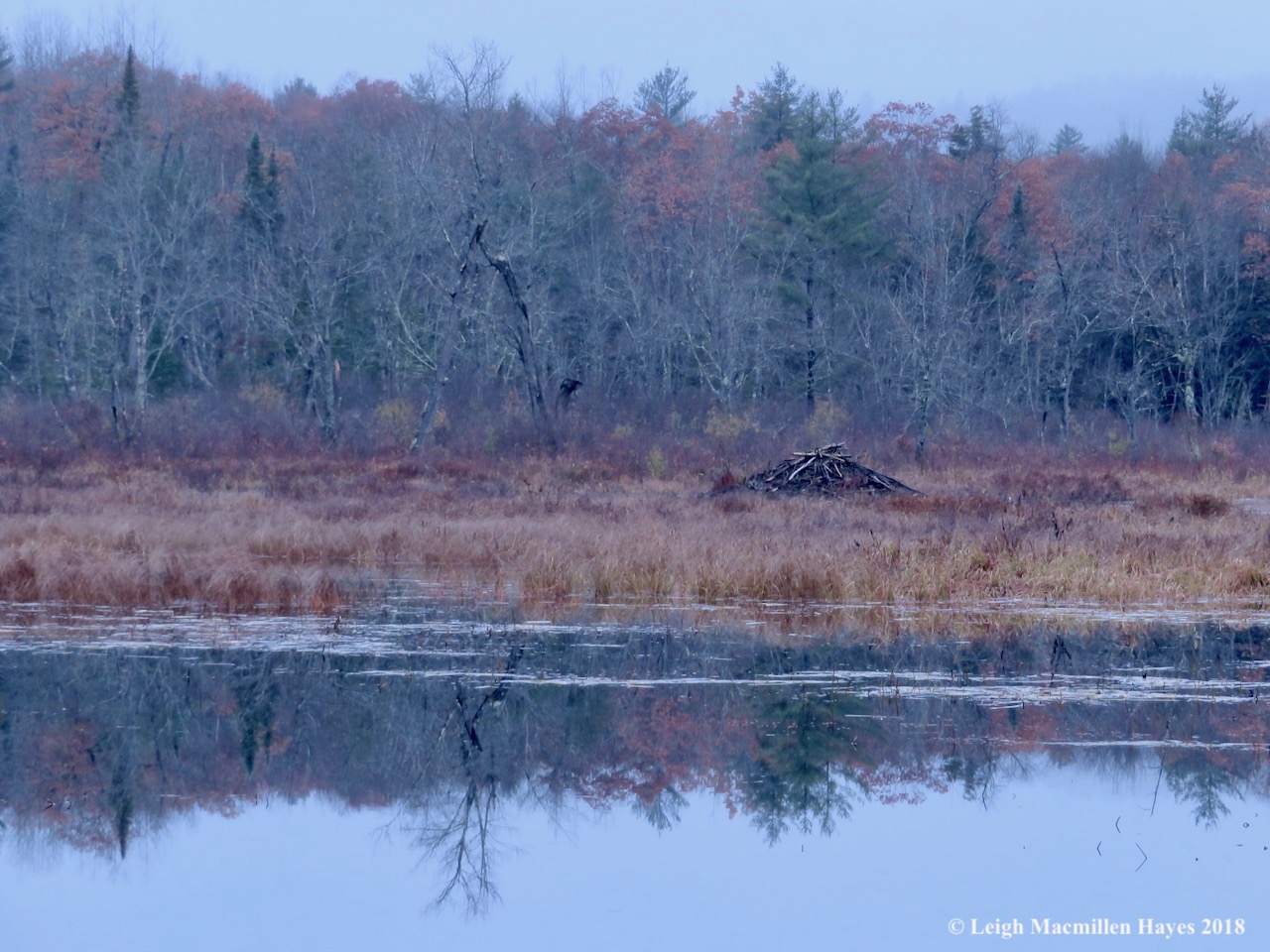
h4-bog rosemary

On the way back to the main trail, I mentioned that I’d be a bit slower, for there were reasons to take notice, like the bog rosemary leaves . . .

h5-pitcher plant flower pod

and dried pods of a pitcher plant.

h6-snowshoe hare tracks

Moving on toward 3:15 on the map, we began to notice snow lobsters everywhere. This particular hare, whose pattern reminded me of our marine crustaceans, had come from the quaking bog and passed into the red maple swamp. Do you see the pattern I’m referring to? The snowshoe hare had hopped toward the point where I stood, its front feet landing on a diagonal first, while its larger back feet swung around and landed in front. Consequently, the front feet served as the lobster’s tail, and the hind feet its claws.

h7-through the red maple swamp

Through the red maple swamp we journeyed to 3:30 with my guy obliterating more snowshoe hare prints as he went. Notice how his tracks were rather sloppy–he was again trying to keep from slipping off the icy boardwalk.

h9-two lodges

At about 4:00 by following the map, we stepped precariously onto the boardwalk that led to the Muddy River. Where once stood one beaver lodge, there were two–and both looked active.

h10-river to pond

In the opposite direction, we looked out to Holt Pond, from which the frozen river formed.

h11-canoe

The canoe launch, further along the river, is located at 4:30. The only ones using it recently were some red squirrels who had created a midden beneath. But should you choose to venture out, bring your own pfd and paddle.

h12-beaver dam

As we moved on toward 5:00, we began to encounter beaver dams–at least three of them, for so active had been this community of large rodents.

h13-mink tracks

And at 5:30, as we followed the river out to Chaplins Mill Road, we started to encounter tracks on a diagonal that spoke of their creator–a mink. Notice how one print in each pair is just ahead of the second. That’s a typical characteristic for all members of the mustelid or weasel family.

h16-southern end of Holt Pond

Lunch stump was at 6:00, where the trail veered back off Chaplins Mill Road and returned to the pond. As we ate, we realized we weren’t the only ones who chose to dine in this spot, such were the pinecone caches under every white pine and hemlock.

h17-mink

Continuing on toward 7:00, we spied more mink tracks. I didn’t have my usual tracking gear with me, but the AARP card measured about three inches, the trail width or straddle of a bounding mink.

h18-mink

For straddle, we typically measure the distance from the outside of one foot to the outside of the other within a set of prints. Stride, or the distance from one set of prints to the next, varies greatly with bounders like a mink, so that’s not important. But that diagonal orientation–rather consistent.

h21-snow and ribbon lichen

As we made our way toward 8:00, a hemlock tree gave me pause–for the intersection of lines and color upon its bark–the vertical white snow enhanced the horizontal green ribbon lichen.

h22-fisher tracks

By 8:45, we had reached the northern end of the pond, which was to our right. It was there that we realized another traveler had joined the dance–as evidenced by its larger prints. A fisher.
h23-fox

And then we kept encountering a red fox from 9:00 on. Well, not the fox exactly, but its own telltale prints.
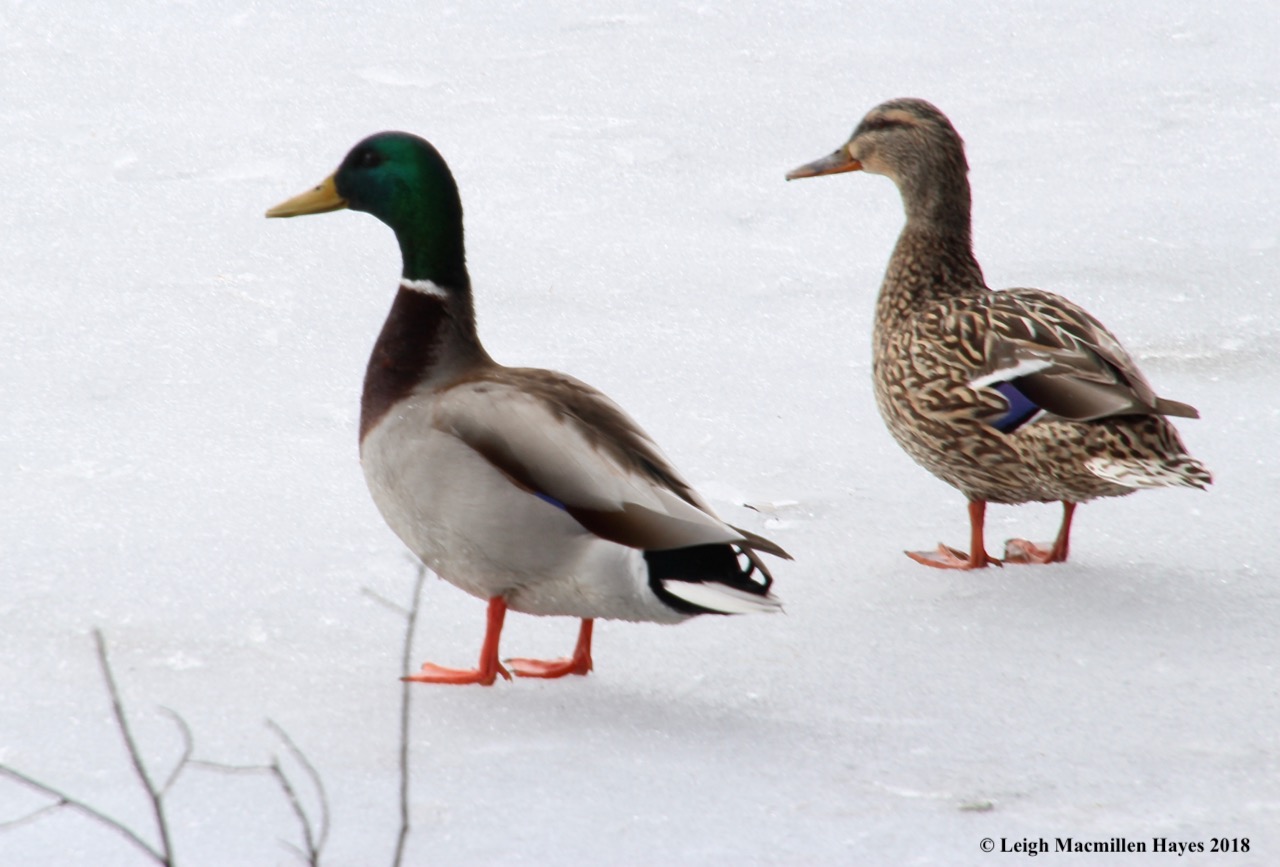
h24-water obstacle

All along, we wondered what we’d encounter at our 10:00 point, the trail intersection closest to Fosterville Road. We could hear the water before we saw it. And then my guy met it up close and personal, breaking through ice and coming up with wet feet. I, too, had one wet foot for one of my Sorel boots had a blowout and the upper split from the sole–a major disappointment for though the boots are old, they have plenty of traction left.

h25-water over boardwalk

Anyway, we contemplated the underwater boardwalk and knew we had an escape route behind us, for we could have walked up to the road. But . . . we didn’t. The water was about four inches deep and we went for it, figuring we were already wet and we only had about a half mile left to cover in the five mile journey.

h26-pileated tree

On the map, we were at 10:15 when my guy noted fresh pileated woodpecker works.

h27-pileated scat

I had to look. And wasn’t disappointed. Several scats were visible, filled with seeds and insect body parts.

h28-northern end

We moved on to 11:00 and passed through another red maple swamp . . .

h27-winterberry

where the color of winterberries had changed from bright red to wine,

h28-frozen mink tracks

frozen tracks spoke of an earlier journey by a mink,

h31-yellow warbler nest

and a yellow warbler nest remained attached in the crouch of a shrub.

h29-northern end of Holt Pond

Our last look at the pond was through the shrub level and though we couldn’t actually see it, we knew it was there, outlined to the south by the evergreens.

h33-my guy's print

At last I followed my guy out. We’d reached 12:00, the beginning and ending point of our clockwise circumnavigation around Holt Pond.


Winter Reflections

My world is always transformed during a snowstorm and even the day after. So it was that yesterday about four inches of the fluffy white stuff drifted down and created a wonderland effect.

a1-snowflackes on Queen Anne's Lace

Even this morning, the individual snowflakes were still visible in their crystalized form (and I kicked myself for not packing my macro lens.)

a2-coyote and red fox tracks

I began the day with a slow journey from home to Pondicherry Park, with the intention of meeting a hiking group. Along the way, I realized that others had trekked before me. Two red foxes and a coyote had crossed paths, forming an X that mimicked the X pattern in their individual footprints. (The bigger prints from upper left to lower right being the coyote; and the smaller prints from lower left to upper right being the two foxes.)

a3-red fox with chevron

In almost direct registration, a hind foot of the fox landed on snow previously packed down by the front foot, so what you see are the two prints. The top print was a bit fuzzy in formation for so much is the hair on the fox’s foot. Despite that, toe nails, toes and the chevron pad at the back, plus the X formation between toes and pad seemed obvious.

a4-Stevens Brook

As I made my way through the park, the morning light on Stevens Brook drew me off trail to the frozen edge. And ice along the bank indicated the change in water levels since the heavy rain of a few days ago.

a5-Bob Dunning Bridge

At last I reached the gateway to town, which is also the gateway to the park–the Bob Dunning Memorial Bridge. I have a great fondness for this bridge on many levels, including memories of Bob who passed away suddenly at least ten years ago, the barn-raising community effort to build it, and the fact that each beam represents a different tree, bark included. You can learn more about it by reading my previous blog post: Barking Up A Bridge.

a6-snow on bridge

And each time I walk across it, it seems to offer up something different. This morning, it was how the snow coated the railing. I think the artistic side of Bob would have approved.

a7-AMC group at bridge

On the other side, I met up with a group of seven women. Led by AMC volunteer JoAnne Diller, our intention was to tramp through the park following all the outer loops, including a link on the Lake Environmental Association‘s Pinehaven Trail at the Maine Lake Science Center. Along the way we visited with each other, enjoyed the beauty that surrounded us, and got some exercise.

a10-Stevens Brook

And then we returned to the bridge and parted ways. I choose to follow the inner trails home, pausing first to enjoy the color of Stevens Brook from the bridge’s center.

a8-mallards

And no winter visit to the park is complete without taking time to watch the ducks–and listen as well.

a8a-mallards

They gather by the dozens, some to rest while others seemed to be in constant motion.

a12-ice skirt

Before following the trails leading west and toward home, I returned to the scenic overlook where ice skirted a tree–again indicating that the water was recently much higher.

a13-eddy

In the same spot I watched water swirl in a small eddy and am amazed that I’m not still standing there–mesmerized as I was by the action.

a14-yellow birch sculpture

But my stomach was growling and so I continued on–stopping to admire another of nature’s wonders–a yellow birch that germinated atop an old pine stump and today stands as a sculpture of one member of the community supporting another despite their differences. Hmmmm.

a15-bench awaiting visitors

The trail I followed home was less traveled than the others and the snow a bit deeper because it hadn’t been packed down. When the park was first created by Lakes Environmental Association and  Loon Echo Land Trust, the AMC did some trail work and part of their offering was this bench. Though it hasn’t recently supported a weary traveler or one who just wants to set for a time, I trusted that day will soon come again.

a16-AMC bridge

I crossed the bridge near the bench, which was also built by the AMC crew. And from there, I headed home to lunch, but not without offering a smile of gratitude to JoAnne for continuing to volunteer to lead walks for the AMC and giving us all an excuse to enjoy the company of each other in this beautiful place.

a17-Saco Old Course

Later in the day I found myself in Lovell for a quick errand and the light was such that I felt the need to spend a little time beside the Old Course of the Saco River just down the road in North Fryeburg.

a18-Saco Old Course

The scene is never the same, nor is the light. What may have seemed monochromatic was hardly that.

a19-church

As the sun began to set, the water still harbored reflective moments.

a20-setting sun

And it transformed some reflections from crisp representations into impressionistic paintings.

a11-ice chimes again

At the end of the day, however, my favorite reflection of all was one spied along Willet Brook in Pondicherry Park by Eleanor, a member of our morning AMC trek.

a9-ice chimes

Winter chimes. Winter reflections.


Land Trust Trailblazers

This morning found me joining two fellow Maine Master Naturalists for a reconnaissance mission along a property I’d never explored before–nor heard of until about a month ago.

r0-Robie's Meadow

Robie’s Meadow is located on Scribner’s Mill Road in Harrison and owned by the Western Foothills Land Trust.  Our plan was to explore the meadow in preparation for an upcoming WFLT/GLLT guided hike planned for Saturday, January 27 from 9:30-12:30. For the GLLT, it’s rather like a pop-up event, since we had planned it after our regular winter schedule was published. But, that’ll make it more fun because it will be an unexpected opportunity to explore in a neighboring town.

r1-trailhead tracks

Once we climbed up over the snowbank this morning, we were immediately greeted with tracks. And then, we spied something else on the snow.

r2-scat

Scat! Rather large scat. By the size of it, we surmised coyote. But . . . a few measurements of prints and . . .

r3-sniffing red fox pee

a sniff that consisted of a musky, skunky odor made us rethink our conclusion. A red fox had most definitely left its calling card behind.

r4-fox pee everywhere

In fact, as we continued on, we realized that it had left many calling cards–in hopes of attracting some attention. The size of that scat, however, continued to haunt us for it was much larger than fox scat should have been. Perhaps we misread some of the fox tracks, for we thought two had traveled the same route, but was it really fox and coyote? We do know that they were made about the same time, given the snow conditions. And so, our best guess was that the deposit was made by a member of the Canidae family. With that conclusion we felt safe.

r5-western foothills sign

We were so distracted by the tracks we kept finding and following, that it took us a while to cross the right-of-way to the actual land trust property, but at last–success.

r7-Robie's Meadow 1

The meadow opened before us, covered as it was with morning shadows.

r8-Meadow and Russell Brook

As much as we wanted to explore it, Russell Brook was open in spots and the snow deep, and so we decided to follow the brook for a bit instead.

r9-following Alice

Breaking trail wasn’t always easy, given the depth of the snow, but Alice persevered for she knew the way, and Joan and I followed.

r10-tracks across the brook

Finally, we reached a point where we could cross and just beyond our reach we spied tracks. How we wanted them to be otter or some other member of the weasel family. Alas, when we reached the other side, we discovered it was the red fox yet again. It always amuses me how a critter becomes “our” critter when we begin to encounter signs of it with frequency and so this was “our red fox.”

r11-squirrel tracks

We were a bit disappointed that though we’d seen weasel tracks toward the beginning of our adventure, no other members of the mustelid family shared their presence. Instead, it was to red squirrels that we next turned our attention.

r12-batman 1

And Alice gave us a new insight. I’ve always said that snowshoe hare prints remind me of  lobsters. Well, today she pointed out the fact that squirrel tracks look like Batman’s mask. I will never look at squirrel tracks the same again.

r13-batman 2

Batman indeed.

r14-squirrel home

We found squirrel homes tucked under logs and trees.

r15--squirrel condo

And one very fancy squirrel condo with plenty of openings on different levels. It reminded Joan and me of a certain porcupine condominium (aka stump dump) on a property under conservation easement in Lovell.

r16-porcupine trough

Speaking of porcupines, I kept commenting that we were in porcupine habitat and hadn’t seen any signs. Until . . . we did. And when we return, we’ll do some backtracking in search of its den or feeding tree(s).

r17-turkey tracks

We continued our journey, seeing much the same along the way. At last, we turned right onto a snowmobile trail where we followed turkey tracks out to the road. Our time together had drawn to a close, but we’re excited about the possibilities for the hike on January 27th. Check out both land trusts’ websites soon for more details.

r18-pinecone bird feeders

After saying goodbye to Joan and Alice, my outdoor experience continued, this time with an after-school nature program the Greater Lovell Land Trust offers to kids at the New Suncook School. Today, Kathy M. joined me and showed the kids how to create pinecone bird feeders using pinecones, peanut butter and bird seed. Both Meg, the Lovell Recreation Director, and I were excited because our group had swelled to nine. And the next time we meet, we believe we’ll have one more young naturalist join us, bringing our number to its limit.

r19-got peanut butter?

O. smiled as he showed off the peanut butter he’d slathered onto the cone.

r20-finishing their creations

C. looked ready to eat hers, while Kathy patiently helped tied string around D.’s cone.

r21-pinecone birdfeeder by K

K. proudly showed off a finished creation.

r22-heading out to the trail

And then we headed off into the sunset via snowshoes and skis.

r23-walking beside deer tracks

And on a trail behind the school playground, fresh deer tracks made us happy. We showed the kids how to look at the heart-shape of the cloven toes and know that the bottom of the heart indicated the direction of travel.

r24-hanging pinecones

As we tramped along the trail examining tracks, we took time to hang the bird feeders. We’ll be curious to look at them when we meet again in two weeks. Today we wondered about who, besides birds, might visit them. Many bets were on deer and squirrels.

r26-exploring

The trail behind the school leads out to the power line and snowmobile trail, where again, we found many deer tracks.

r26-happy trailblazers

We’d gone a ways when we realized we needed to turn around and head back to school. But first, it was time for a group photo of happy campers.

r27-dramatic trailblazers

With smiles from all levels.

r28-Trailblazer Sign

Our after school group is called the Trailblazers. And K. took the time to illustrate what we’d done last week. Note the square with the tall person standing up and two smaller people on the ground with their snowshoes in the air. Last week, snowshoeing was a bit of a challenge for them, but this week they embraced the concept.

From beginning to end, my day was bookmarked by land trust trailblazers. How happy am I? Extremely. Perhaps the happiest camper of all.