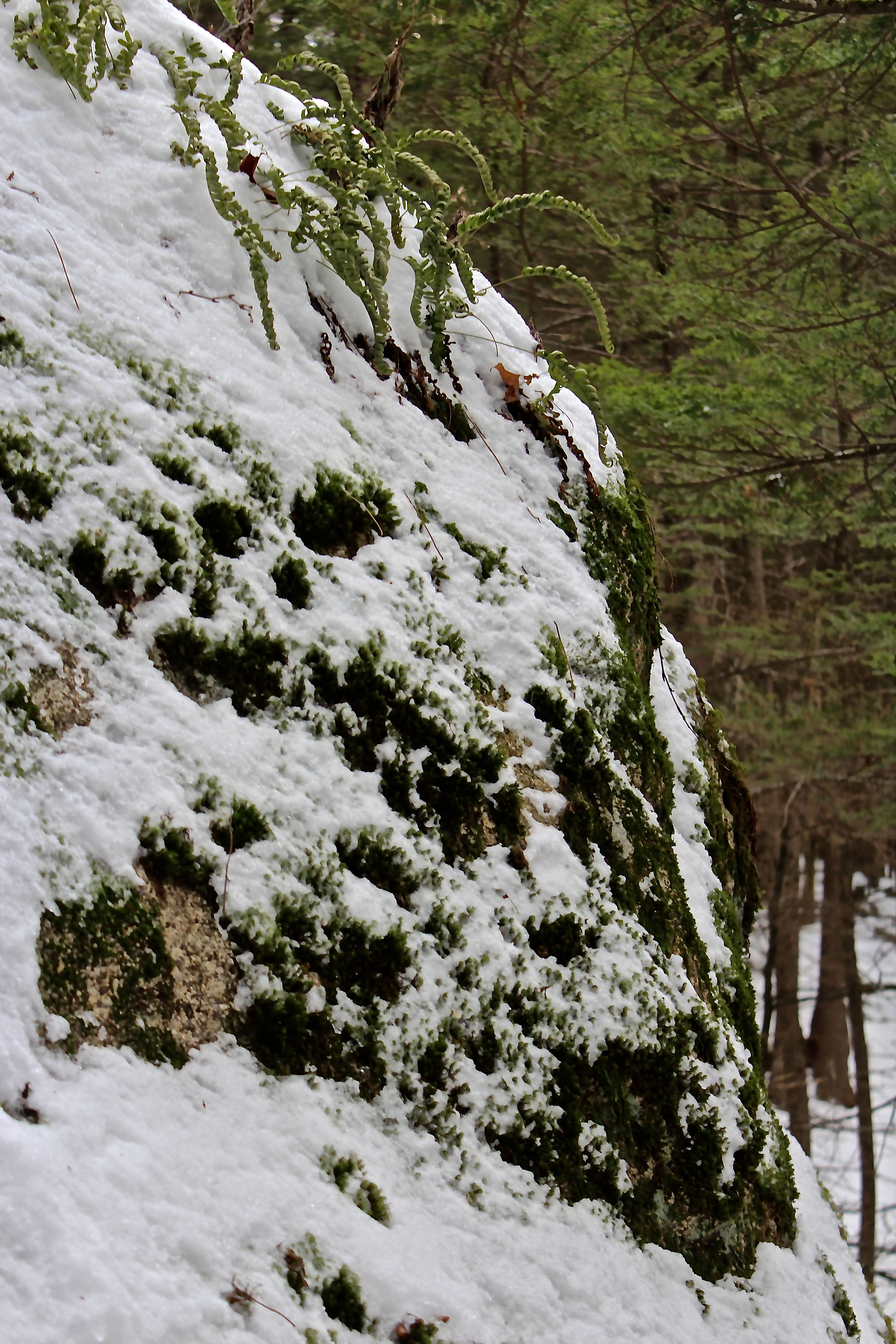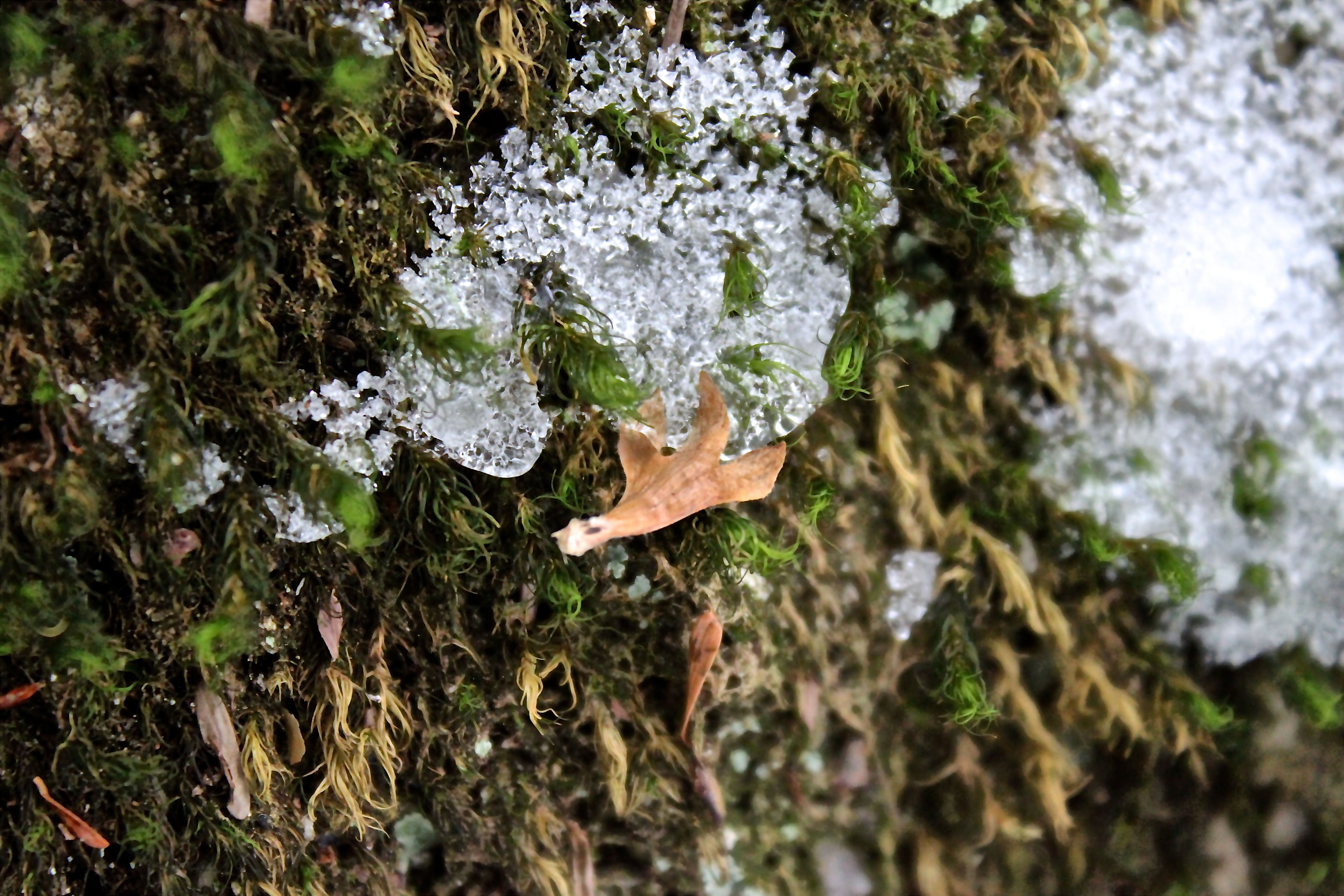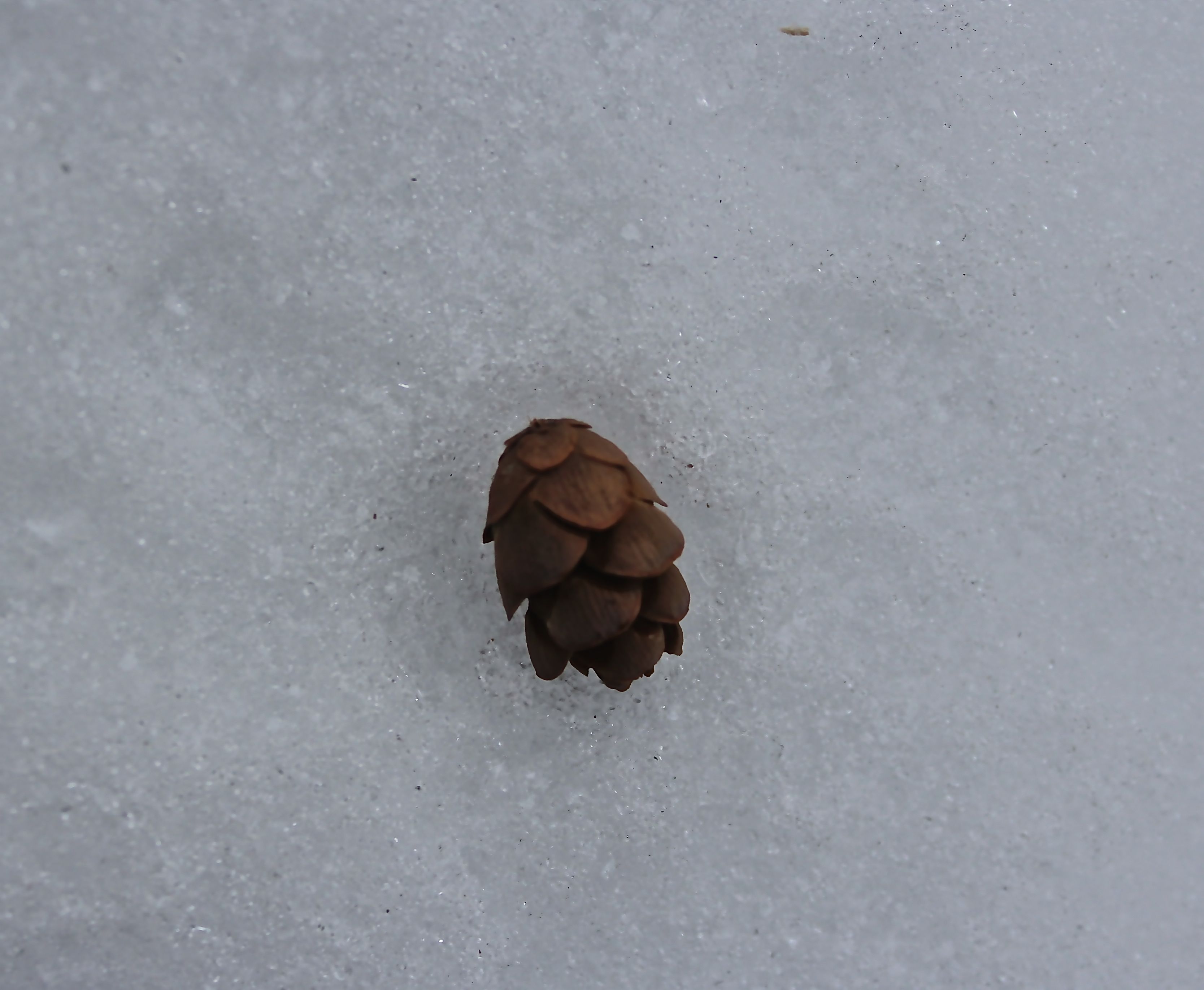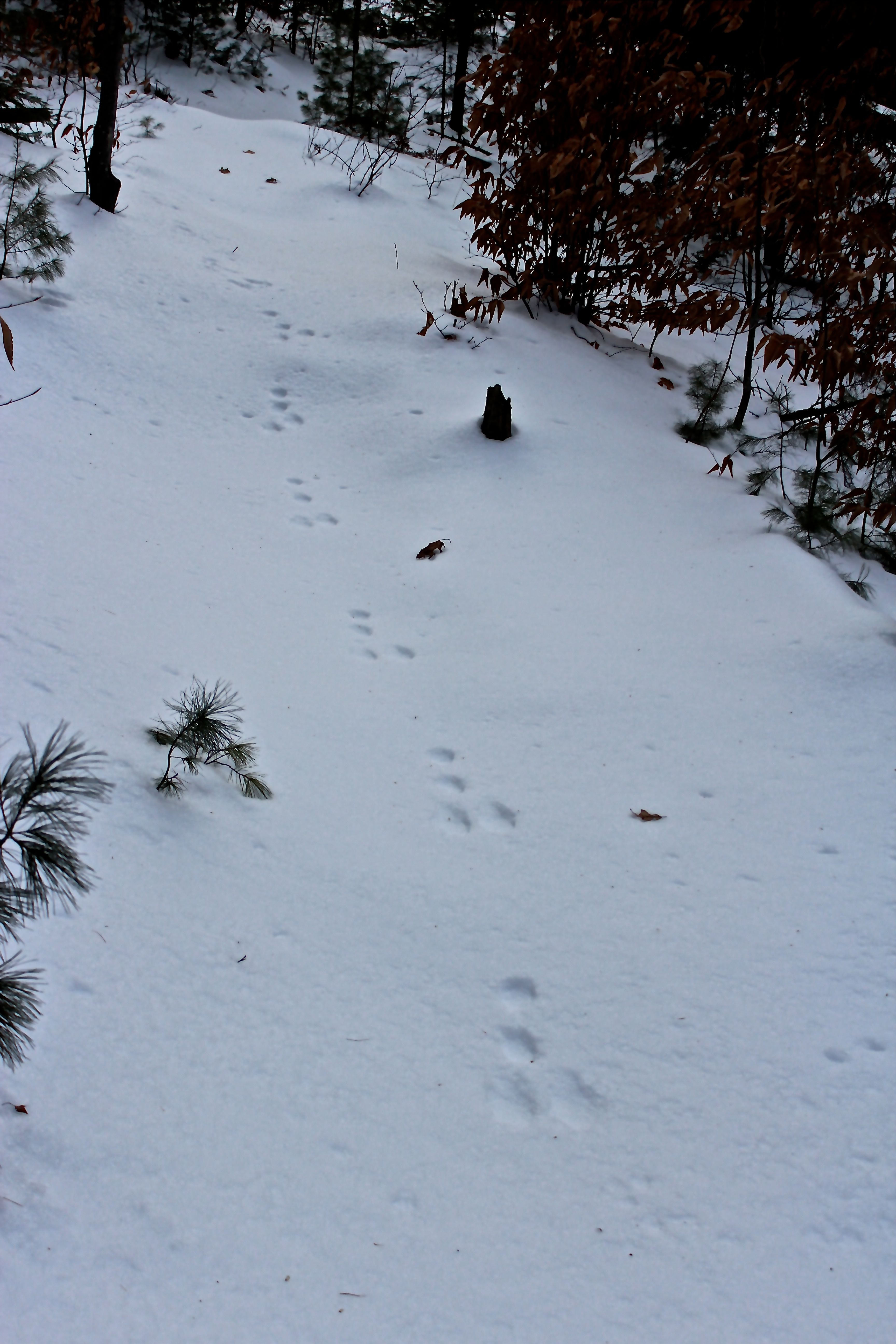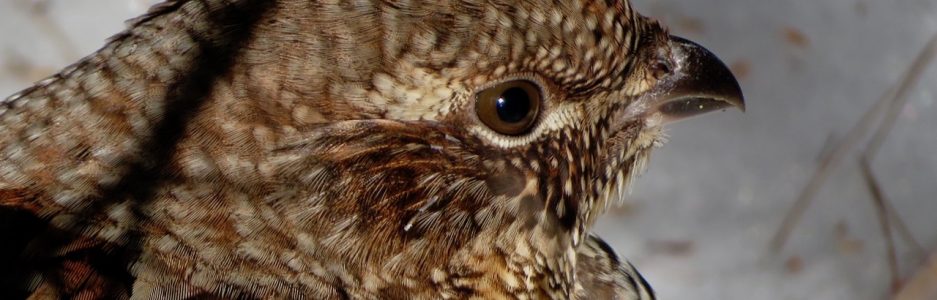
The Homecoming

The other day a friend handed me a piece of paper and told me to read it later. We were about to go tracking, so I stuck it into my pack and forgot about it. This afternoon, as I prepared for a hike up Mount Tom in Fryeburg, I found the paper.

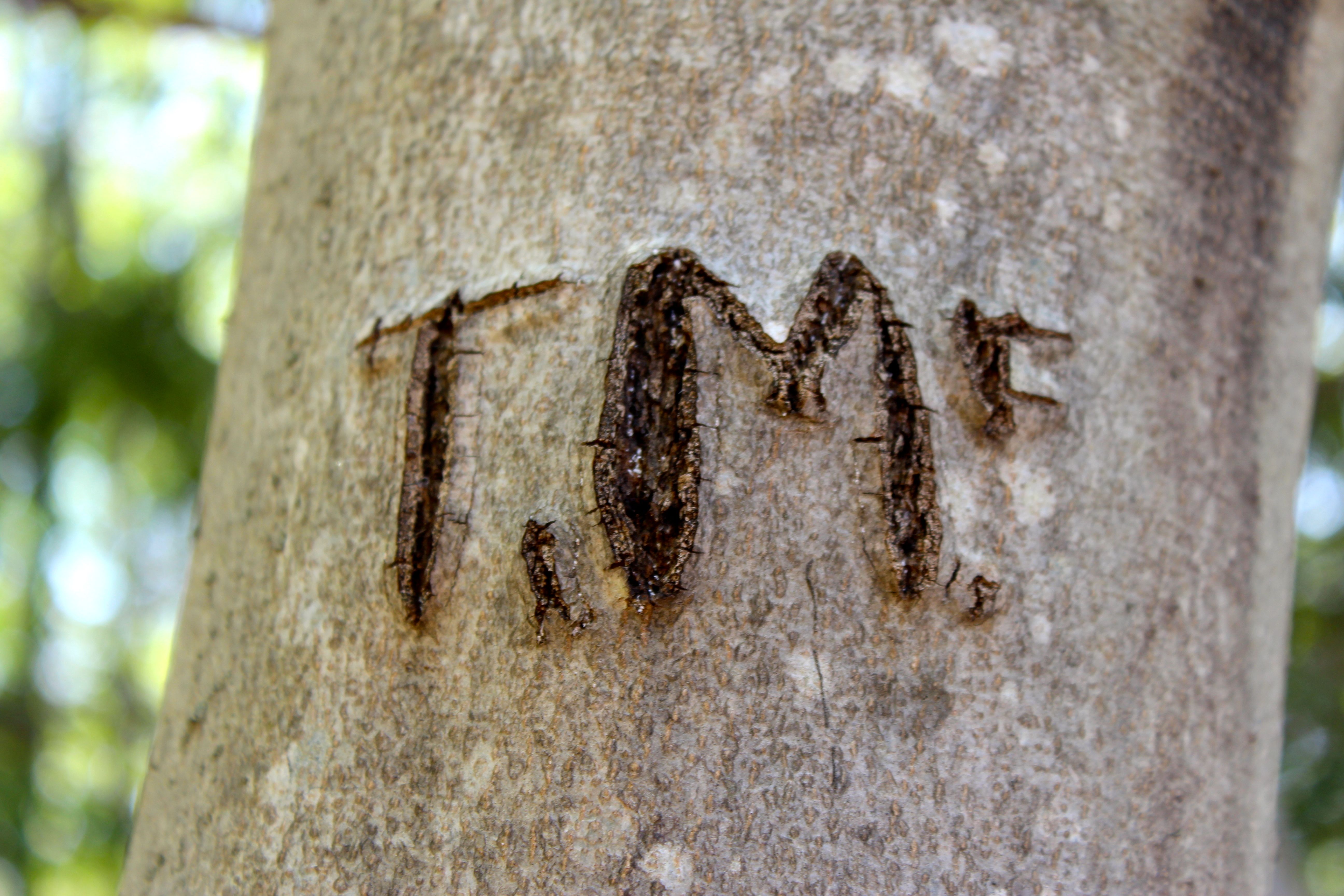
I’d originally thought it was an article, but instead, it’s a quote from the October 1967 issue of Yankee. A friend had given it to him and he passed it on to me: “We hunt as much for the memories as for the birds. For the memories, and for the hours afield in the autumn woods where a man can get back, for a while, to remembered realities, to a time and a way of life close to the eternities of the land. It’s hard to explain this to the outlander who never knew such things. He thinks of it as an escape. To us it is more like a homecoming. We live here, of course, but only in the leisure after we’ve done the stint at our jobs do we go out on the hills and up the brooks. There we find the truth of our world, even the truth of ourselves.” ~author unknown.

trail sign

I reflected upon those words as I slipped into my snowshoes at the trail head. I’d made a decision to end one of my freelance writing/editing jobs this week (not Lake Living, which is my all time favorite writing job. Hard to believe the spring issue will mark my tenth anniversary!) and declutter my world.

porky paths stump dump

It will never happen, but certainly the porcupines that inhabit this mountain should consider the same.

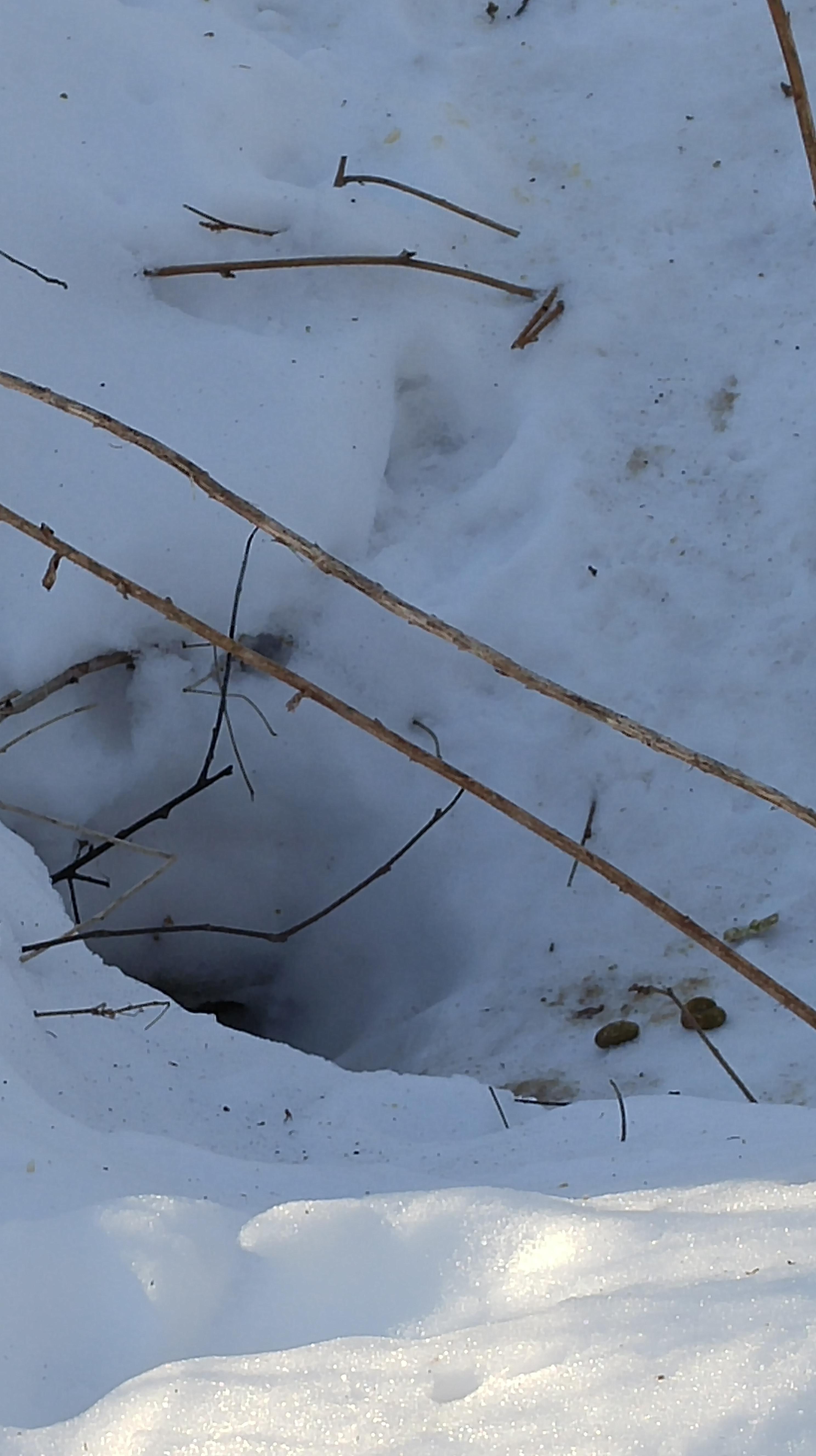
stump dumpporcupine den

I had a hunch I’d see evidence of their existence once I got up into the hemlock neighborhood, but a small stump dump early on provided ample den space.
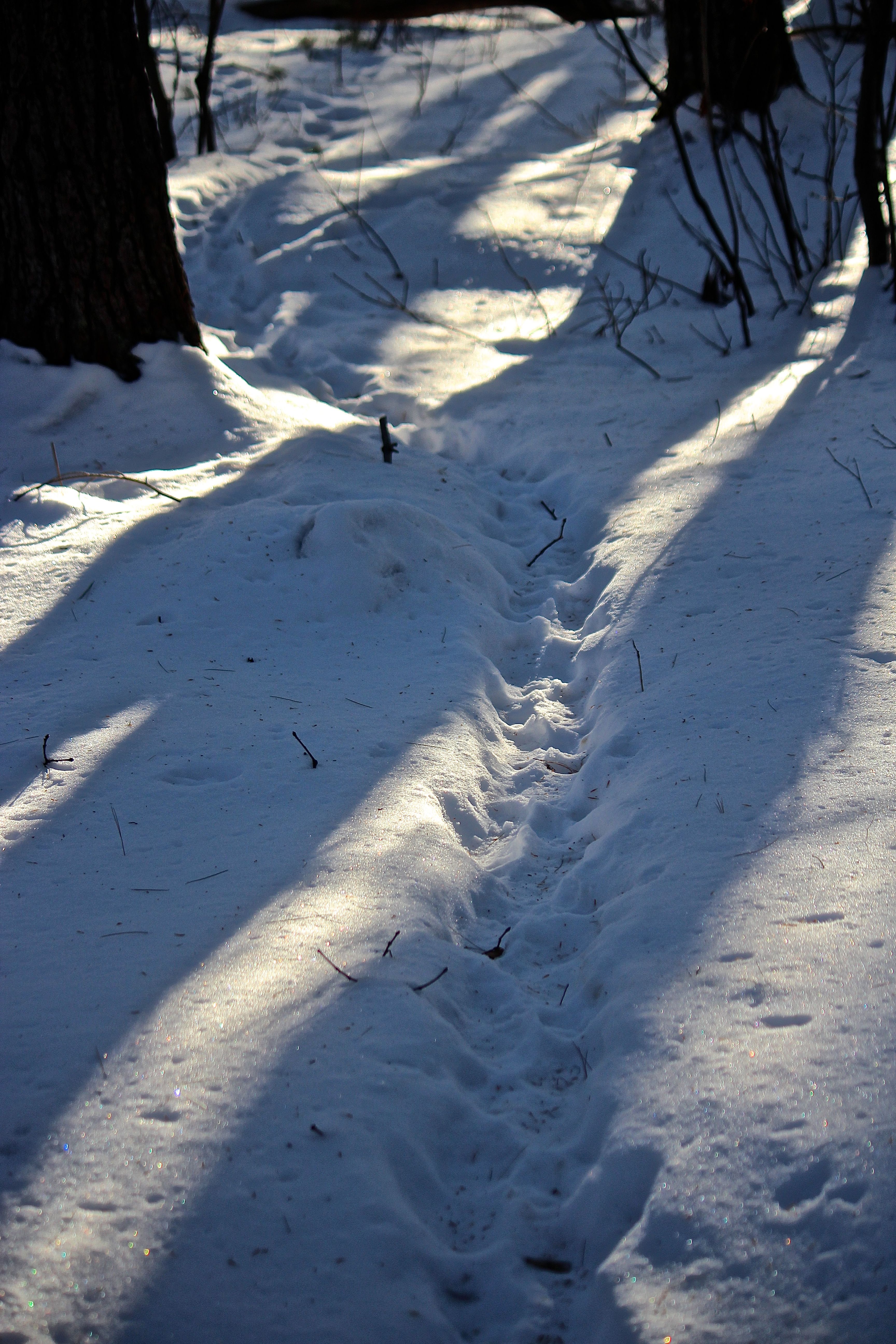
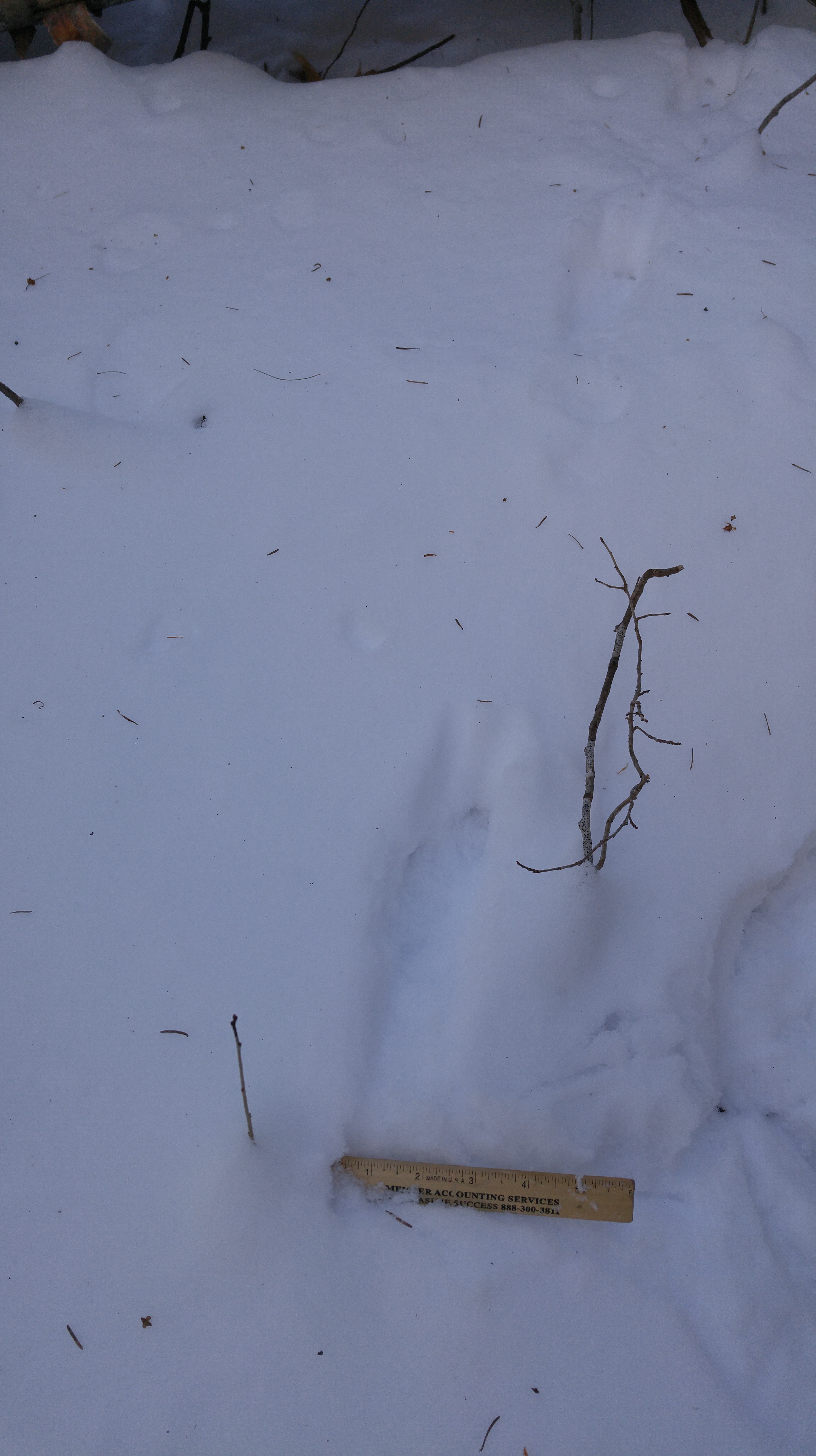
porcupine tracks 1

I didn’t even realize as I climbed toward the summit that I wasn’t taking too many photos. Instead, I was cued into the tracks left behind by two people who had traveled this way before me and the porcupines, deer, hare, coyote, bobcats and little brown things. While the people stuck to the trail, I wandered this way and that as I tried to decipher what I saw–my own zig zag trail reminiscent of those I followed.
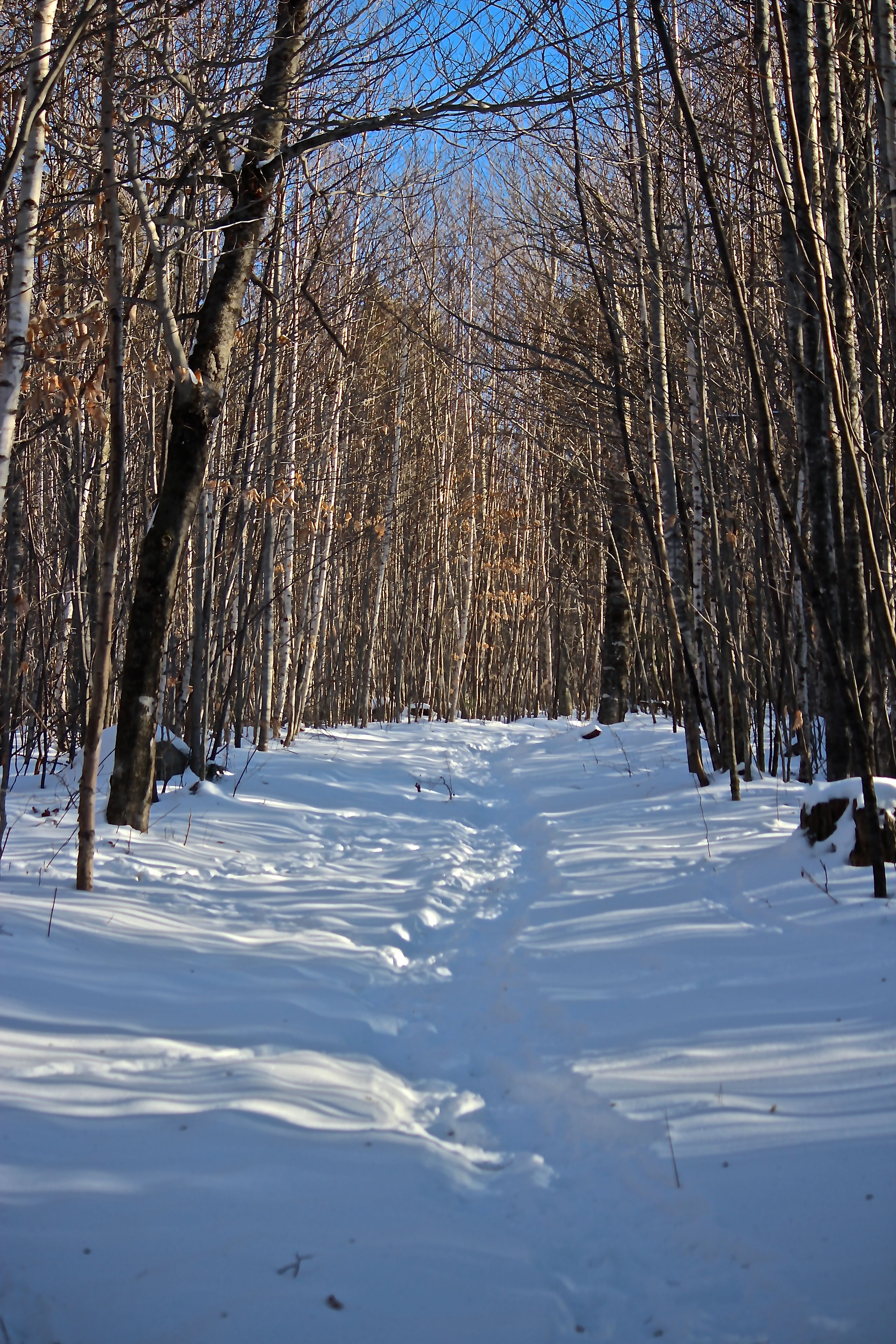
logged community, thin trees

I didn’t get lost today, though truly, when I do get fake lost, it’s a time to understand myself better– listening to my inner self sort things out. Most of today’s trail is an old logging road. And most of what I saw was familiar. Perhaps that’s what it’s all about–knowing a place so no matter where you are, you recognize it.
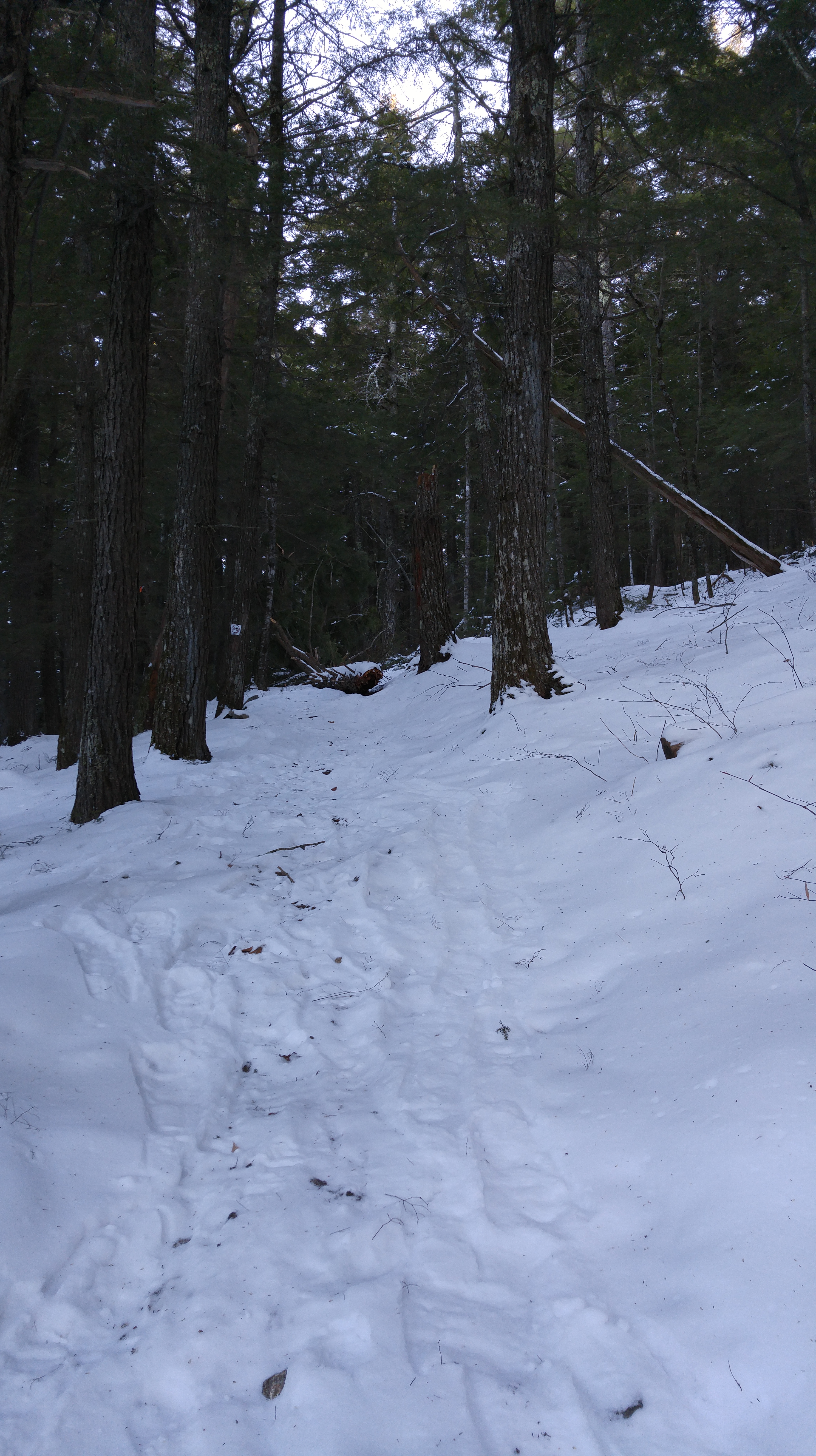
hemlock community

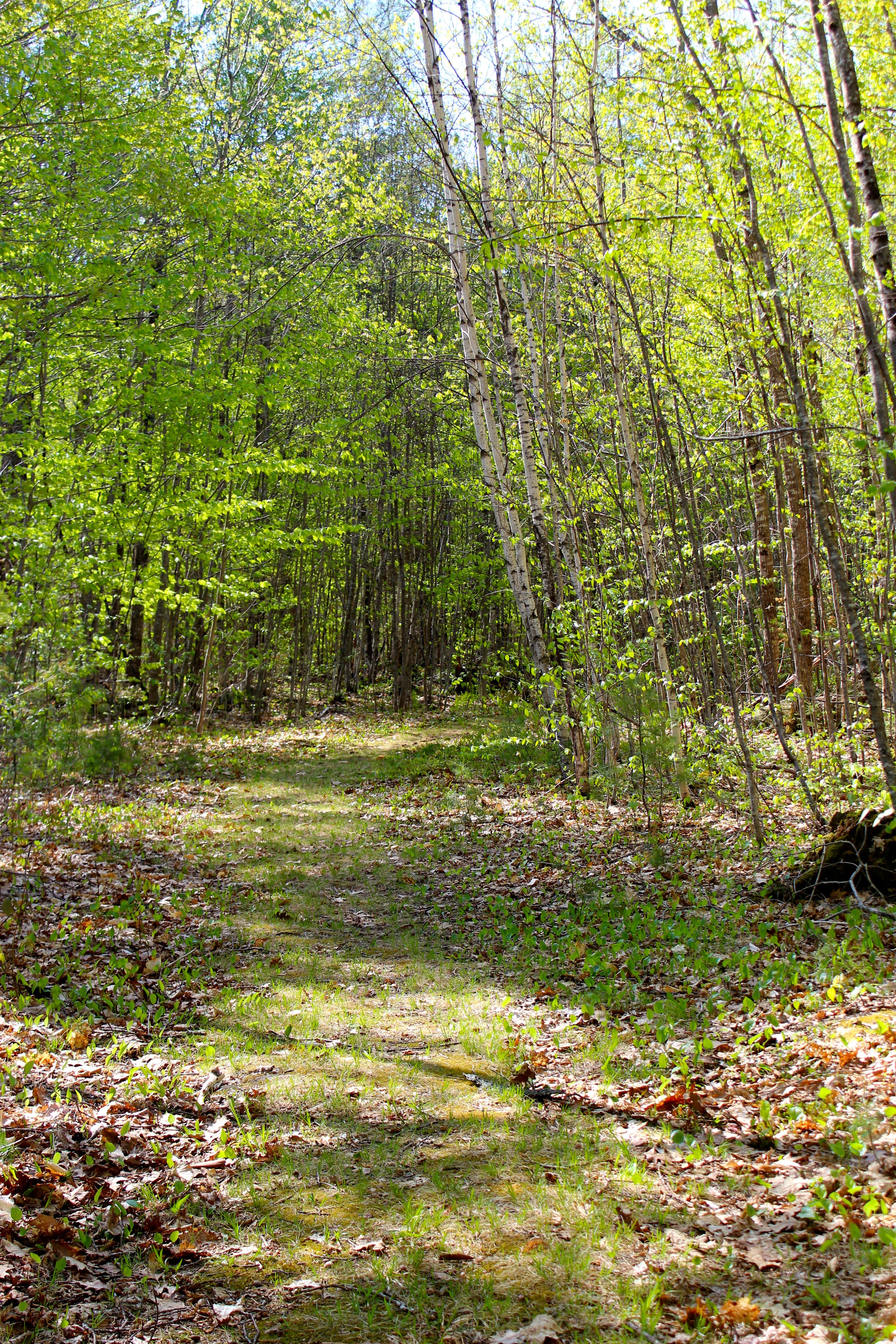
The community changes abruptly from birch, beech and maple saplings to hemlocks and pines. I, too, can change abruptly and have a tendency to be blunt. I don’t see that as a bad thing, though occasionally I do regret what I’ve said.

striped maple scrapes

And then I began to look up and notice other parts of my surroundings like these old deer or moose scrapes on striped maples. Forever scared, they provided nourishment in the past–and may do so in the future when the time is right.
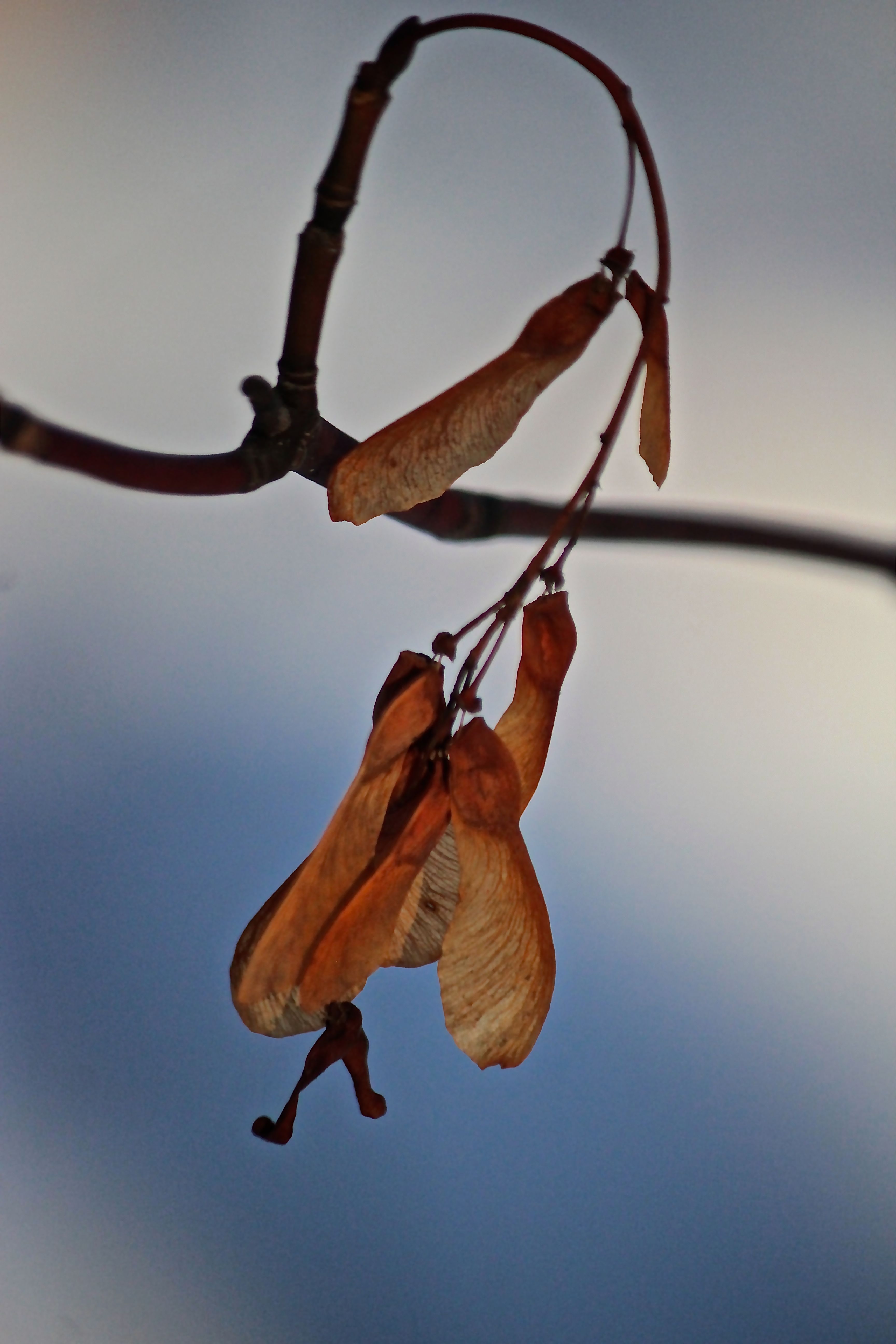
striped maple samaras

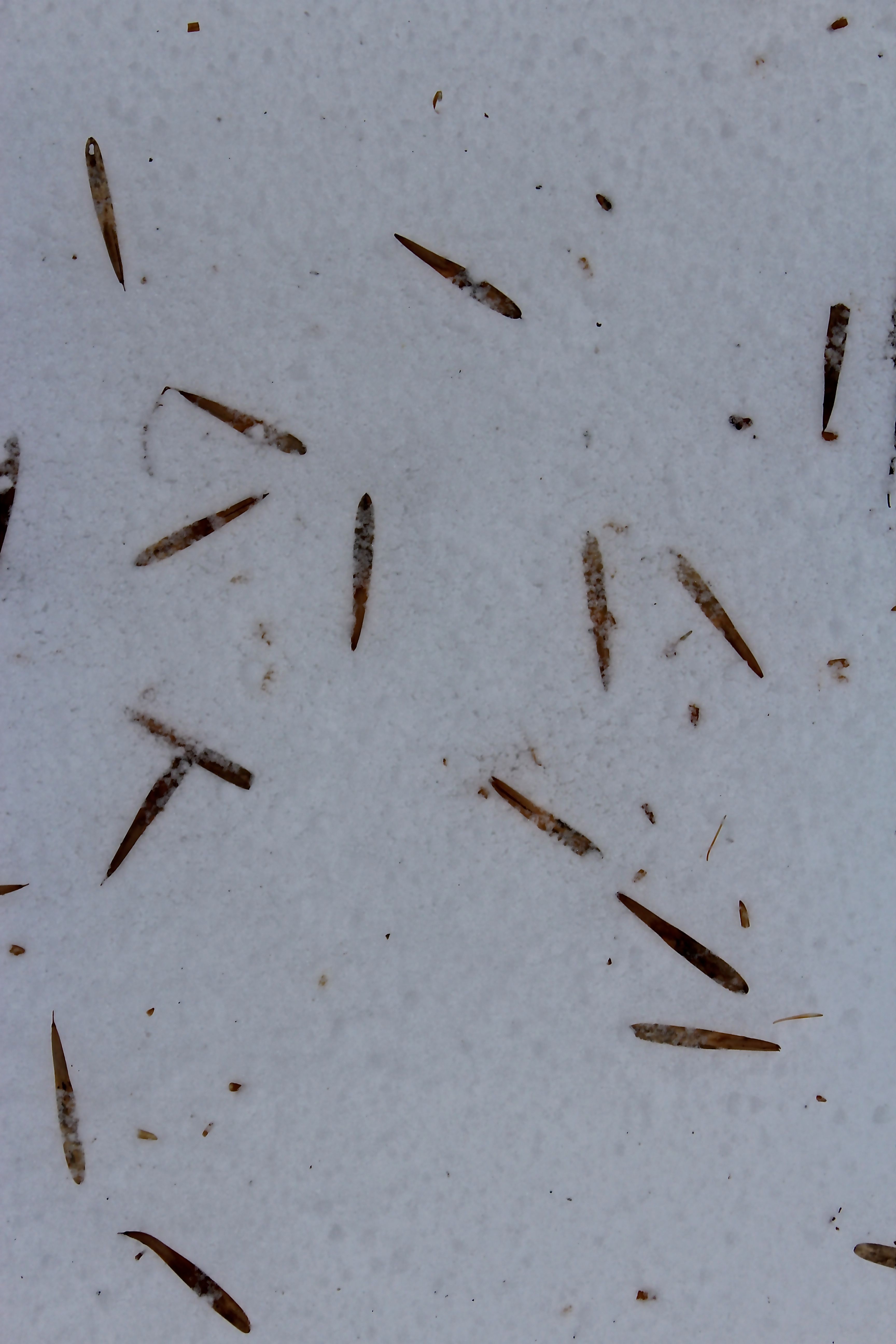
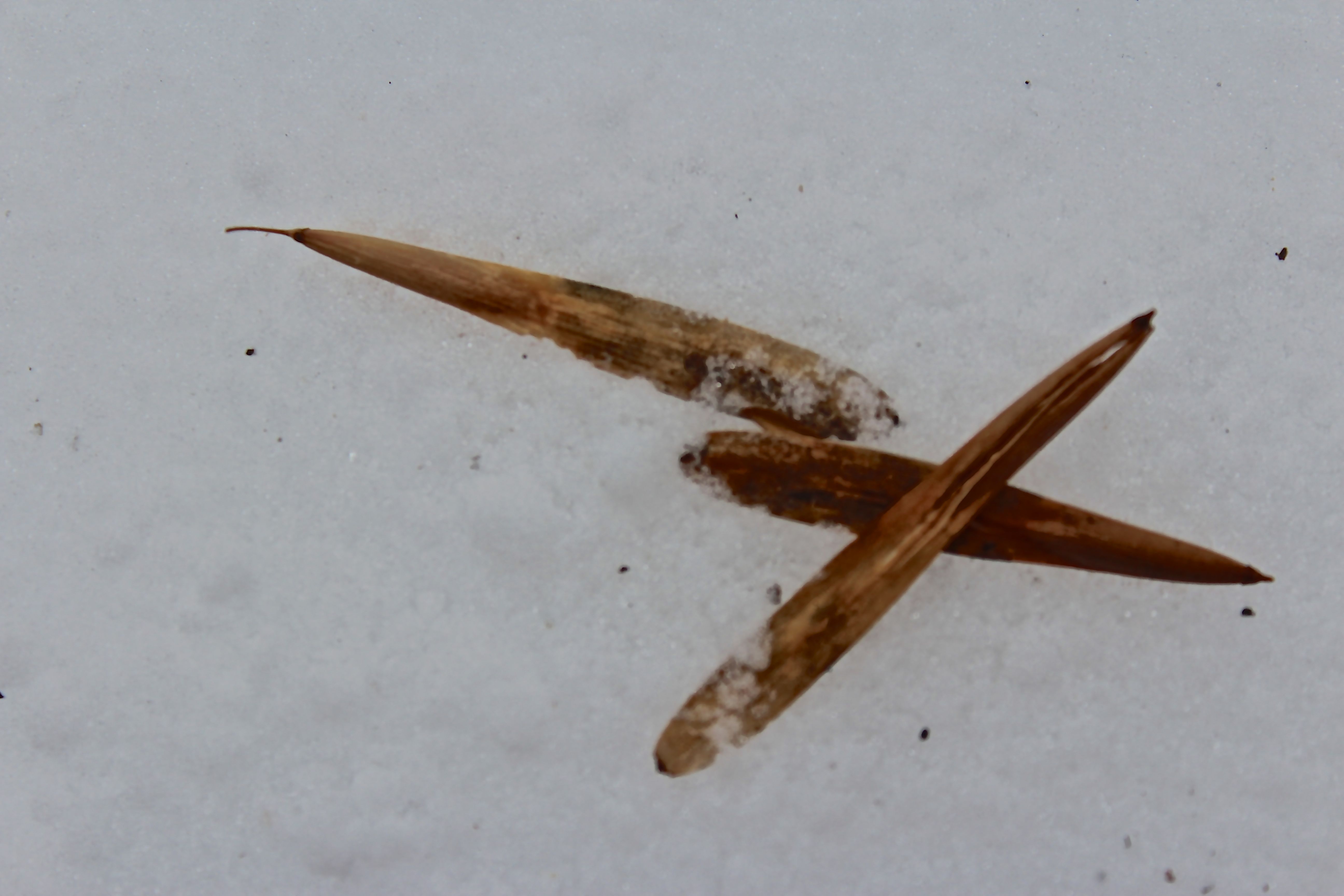
One striped maple still sported a few seeds that have yet to go forth in the world. What’s holding them back? Don’t they know the time has come to let go?

frost crack

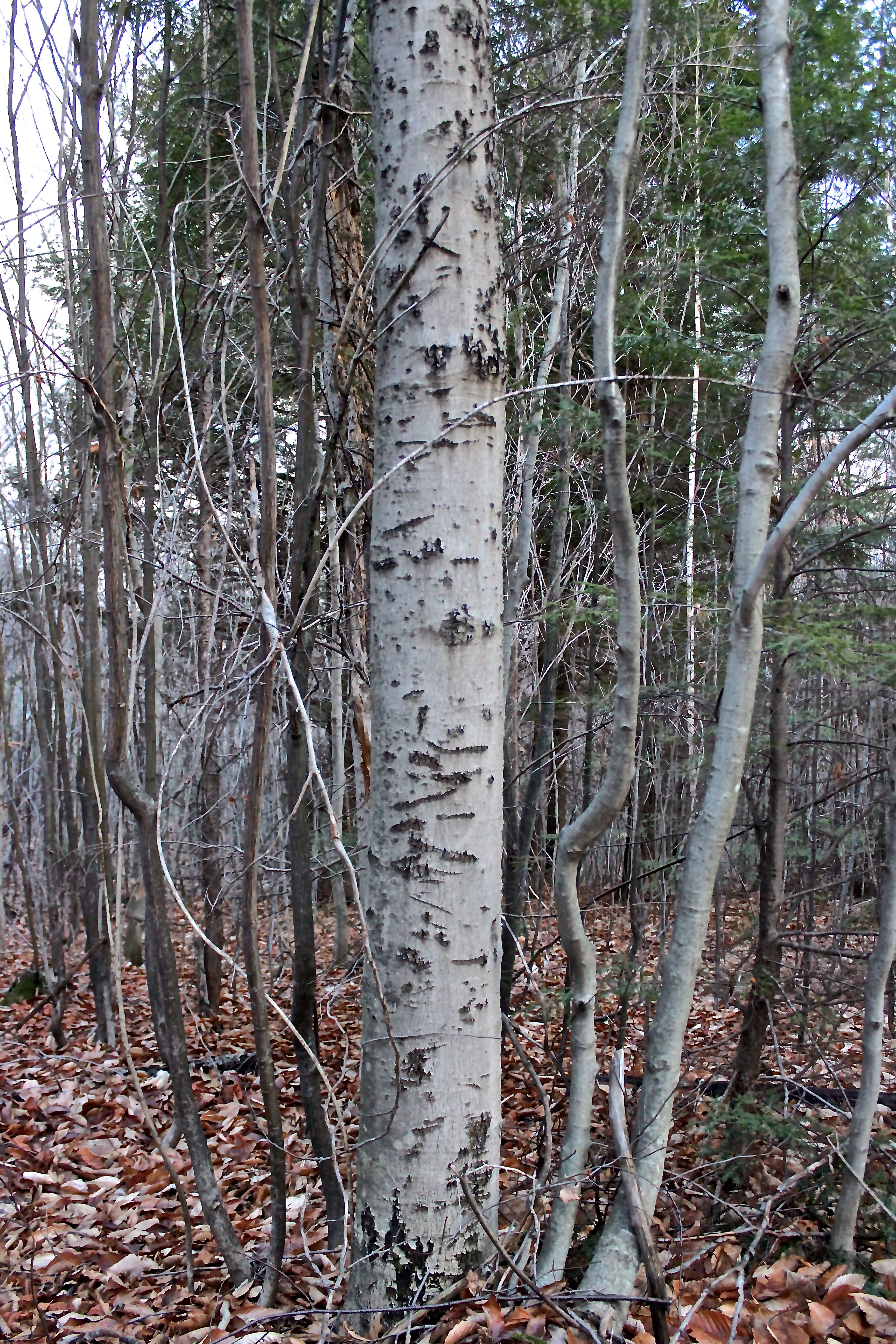
Amongst the evergreens  a paper birch offered a twist on life. I believe this is the result of sun scald–the heating and freezing of thin bark. Typically, the white reflective bark helps the tree avoid such danger–but something obviously happened to cause this candycane-like stripe..

sun on hemlocks

Though it was getting late in the day, rays of sunshine illuminated the darker side of things.
white oak leaf

As I followed more porcupine tracks at the summit, a dried leaf captured my attention. In my ongoing attempt to draw an imaginary line showing the boundary of white oak, I added another dot.
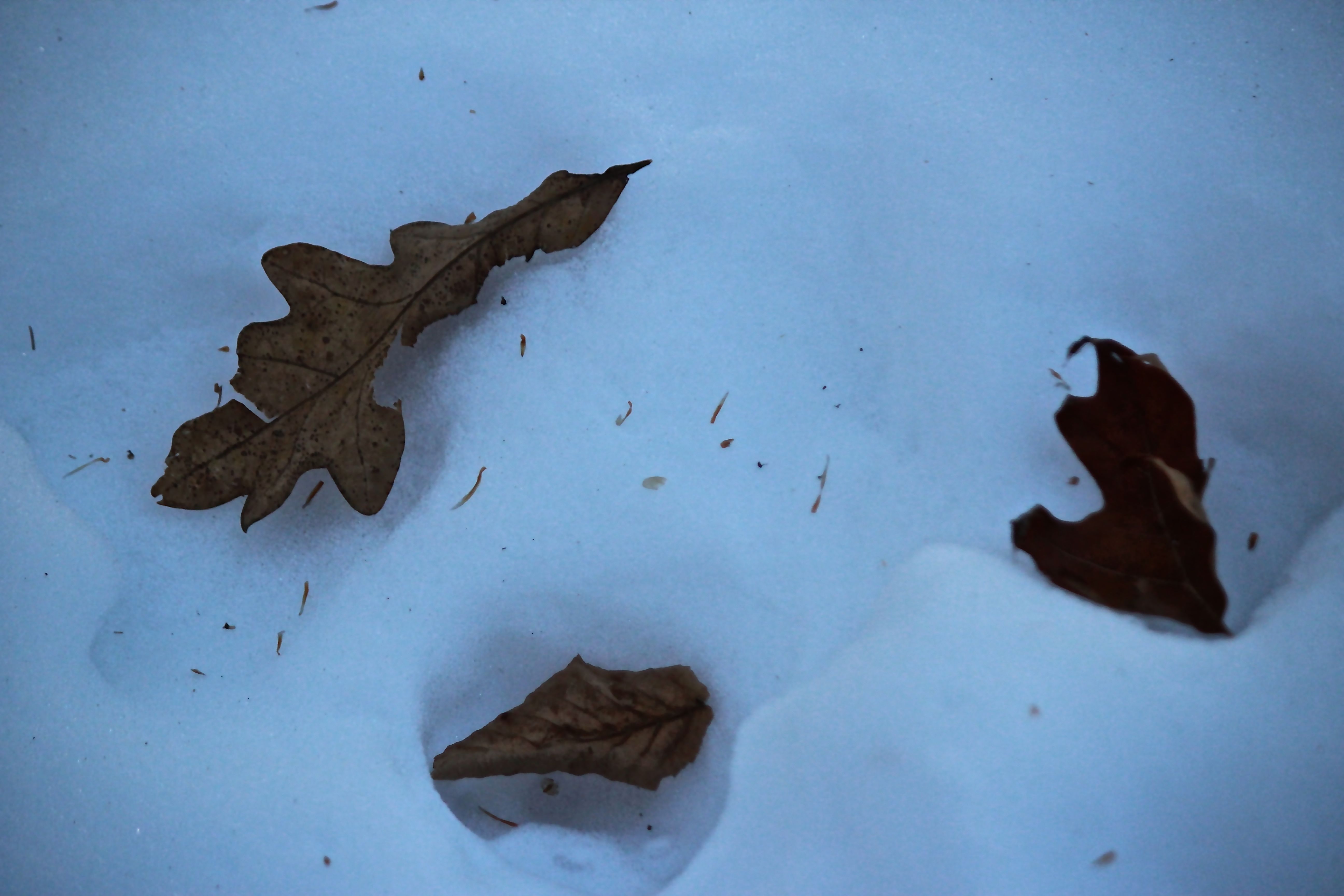
white, beech, red oak

Nestled within animal tracks, three leaves told me more about the members of this neighborhood–white oak, beech and Northern red oak.
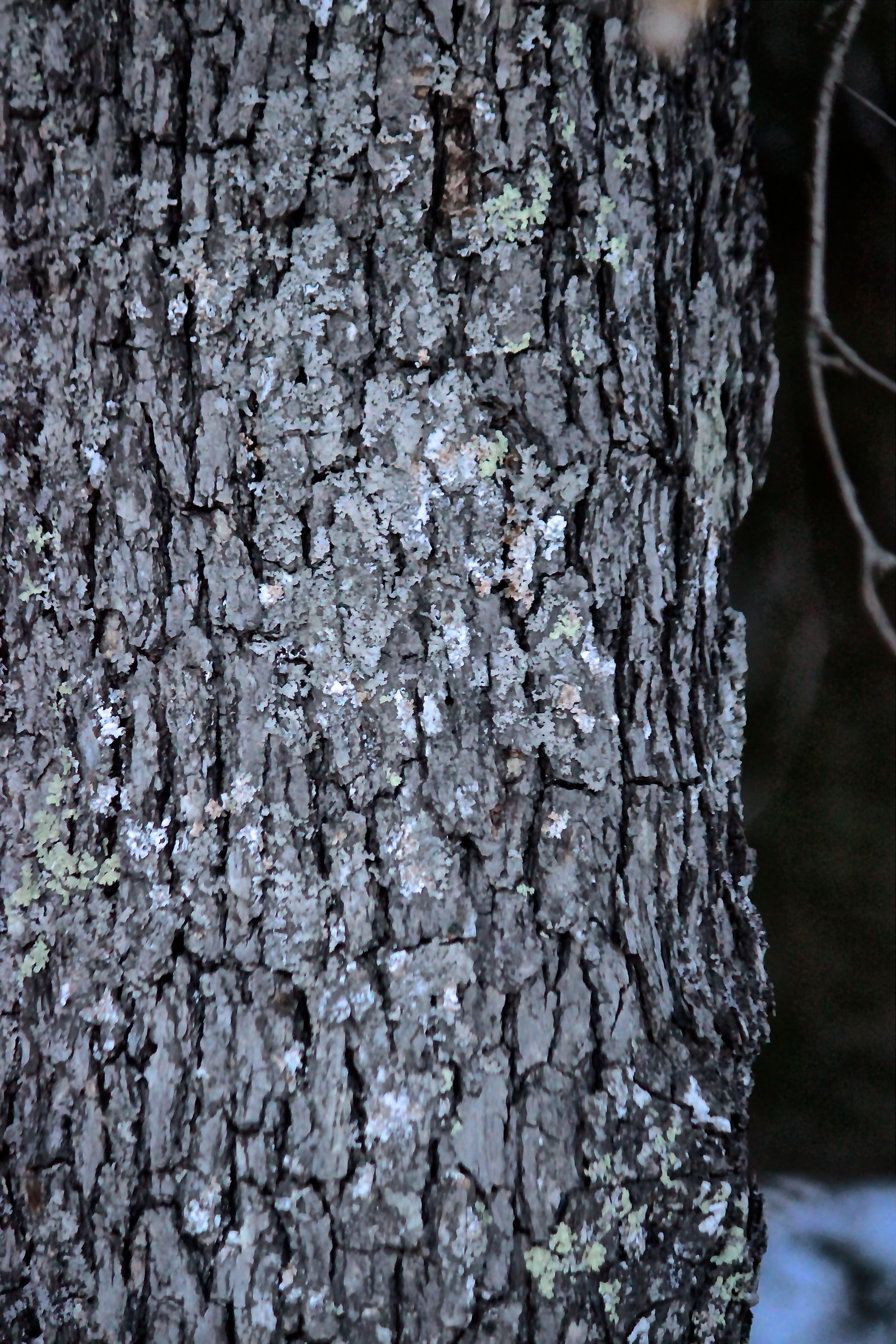
white oak 2 white oak 3 white oak layers

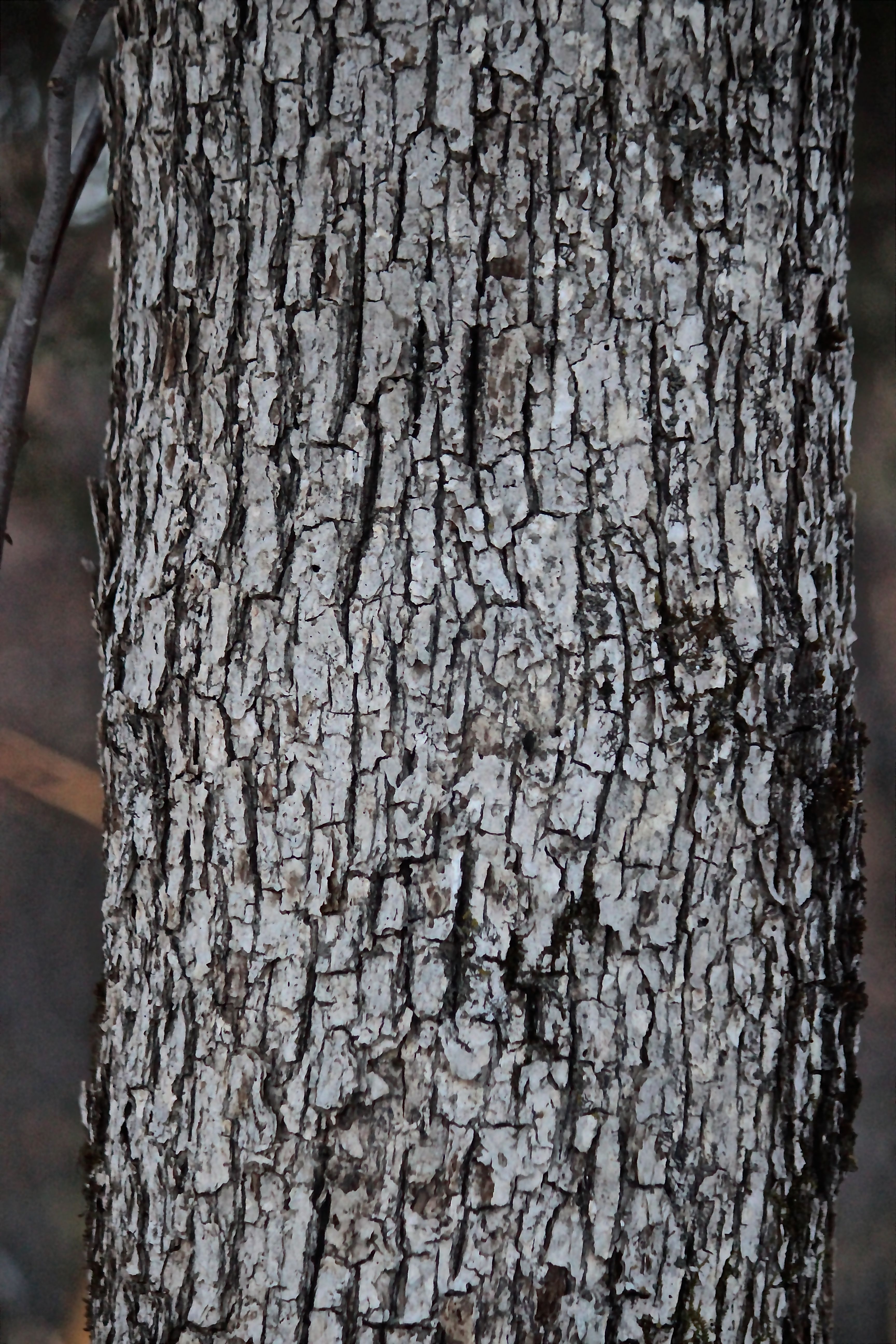
So then I searched for the white oak trees–and found them. My bark eyes still don’t cue into this one immediately and I need to learn its idiosyncrasies, including its ashy gray color and blocky presentation.

bird nest 1 bird nest 2

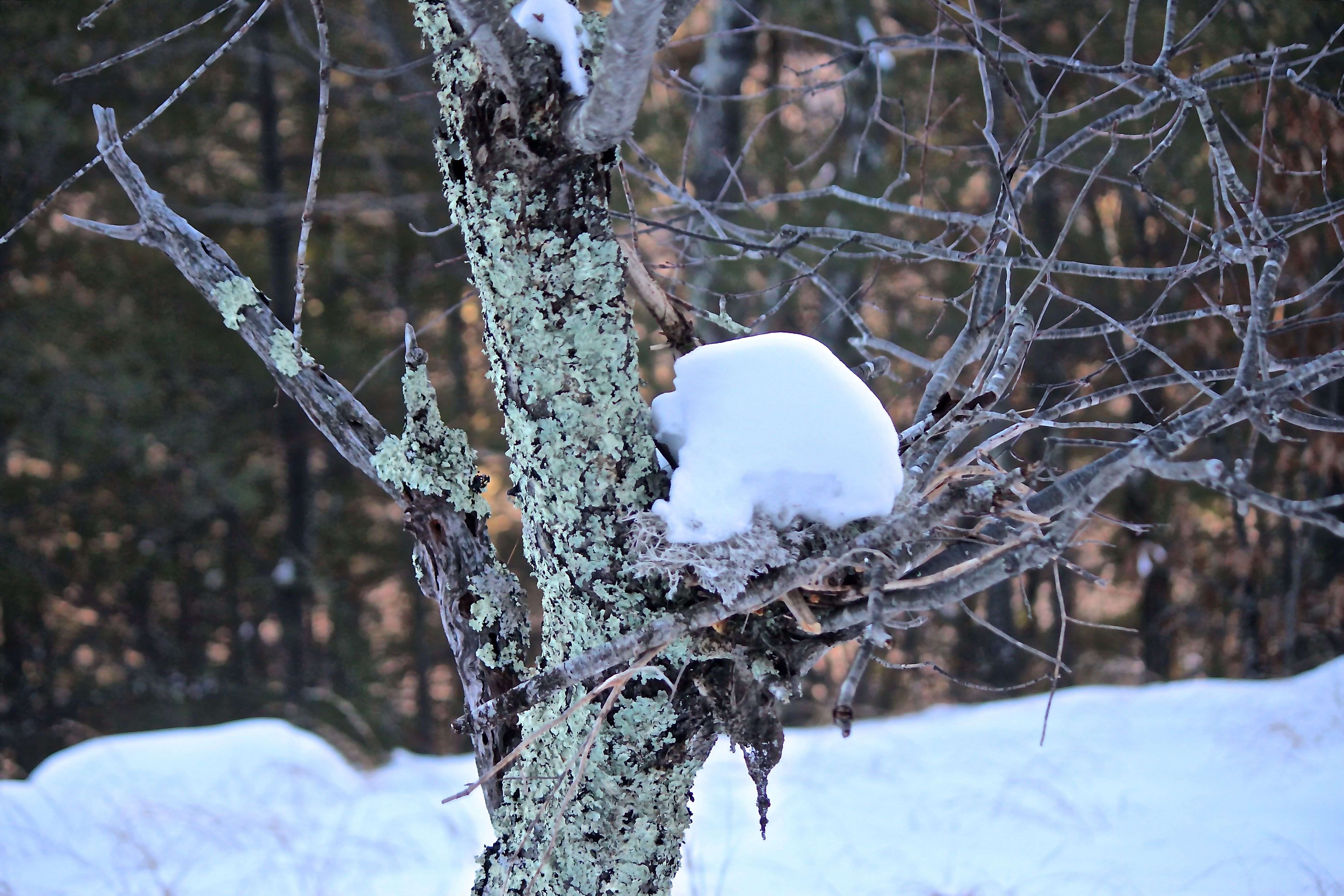
I discovered a snow-covered nest that made me ask–bird-made or human-made? It’s constructed of reindeer lichen and sits upon a base of sticks about four feet up in a scrubby old oak. I was as excited by the find as I was by my wonder and lack of an answer. What fun would it be to know everything?

summit

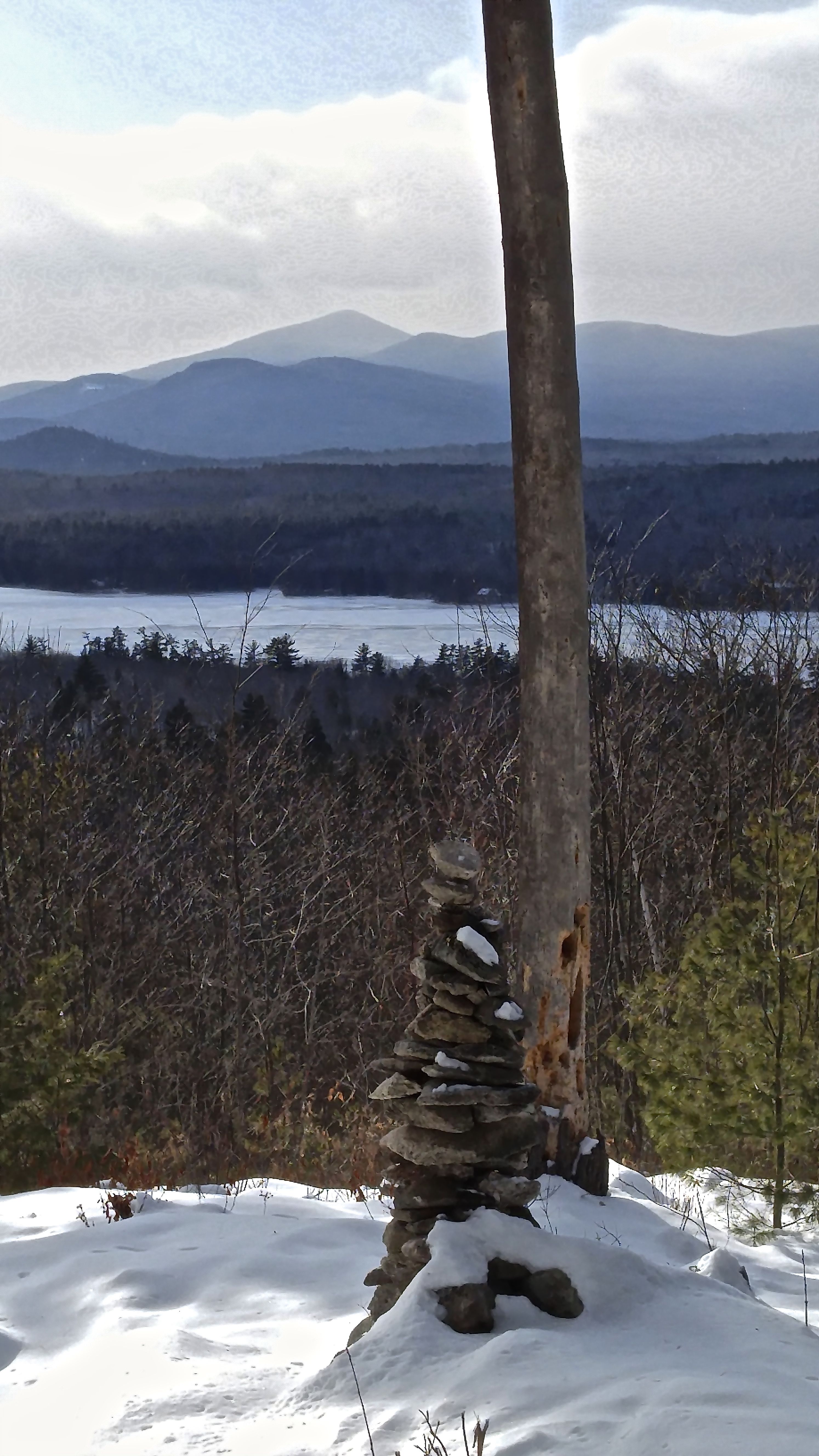
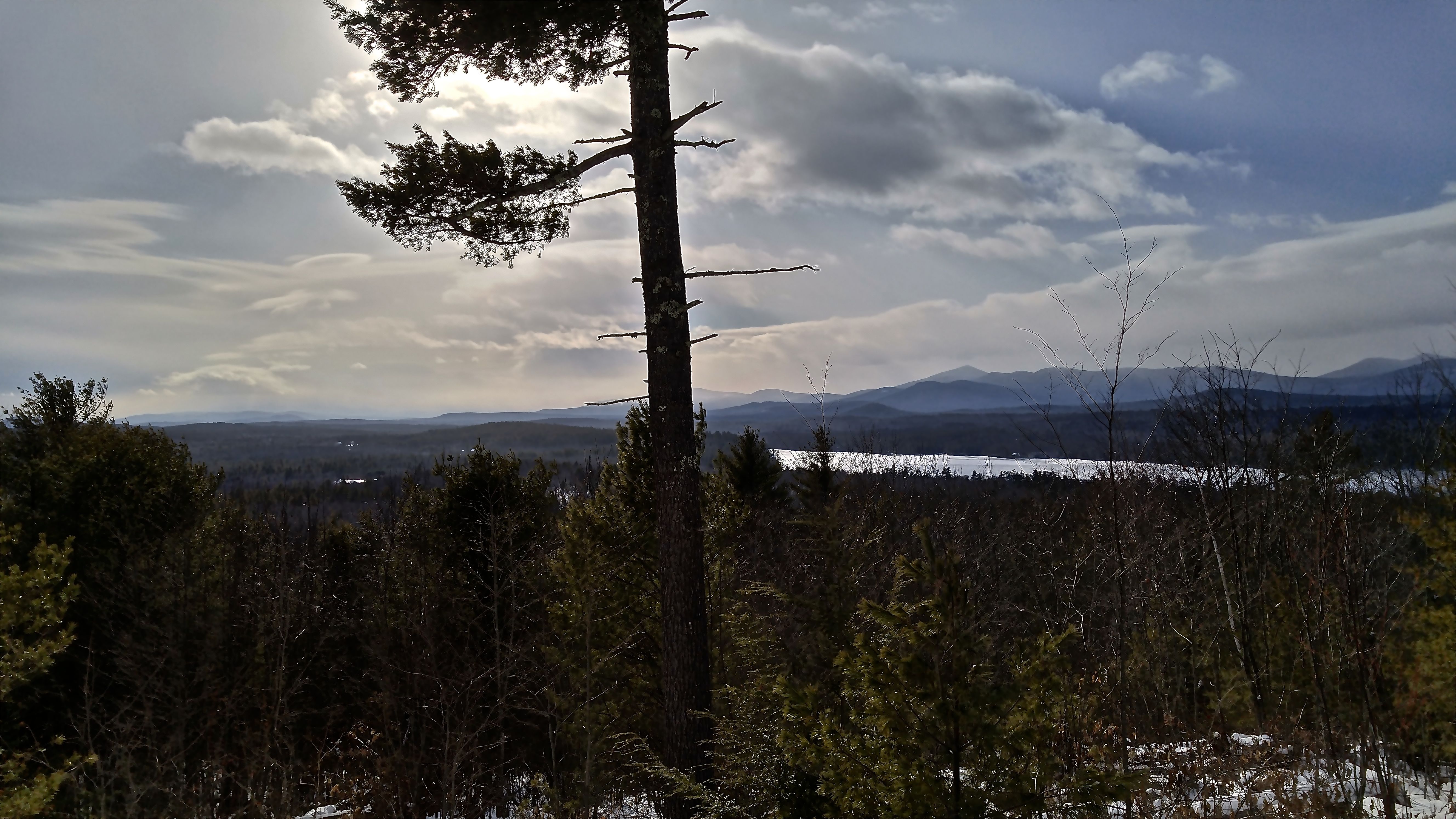
From the summit, I could see Pleasant Mountain’s ridge–giving me another sense of home. The view isn’t spectacular, but that isn’t the point.

Kearsarge 2

Heading down, a second old favorite came into view–Kearsarge North. I stopped frequently as I descended–to listen and watch. And smell. Twice, a strong cat-like pee odor tickled my nose. The tracks were there, but I couldn’t find any other bobcat evidence. One of these days.

paper 4 paper birch 1 paper birch 3 paper birch rainbow paper burgundy Paper pastel

A rainbow of color presented itself among the paper birch trees–such variation for what is commonly called white birch.

Mount Tom cabin 1 Mt tom cabin 2

Near the bottom, the Mt Tom cabin speaks to an earlier time when living off this land was the norm. Though I like to think that I could stay here by myself for a week, I’m not so sure. Of course, that would force the issue and surely the truth about myself would be revealed. Maybe it’s best left a mystery. ;-)

staghorn sumac1 staghorn red

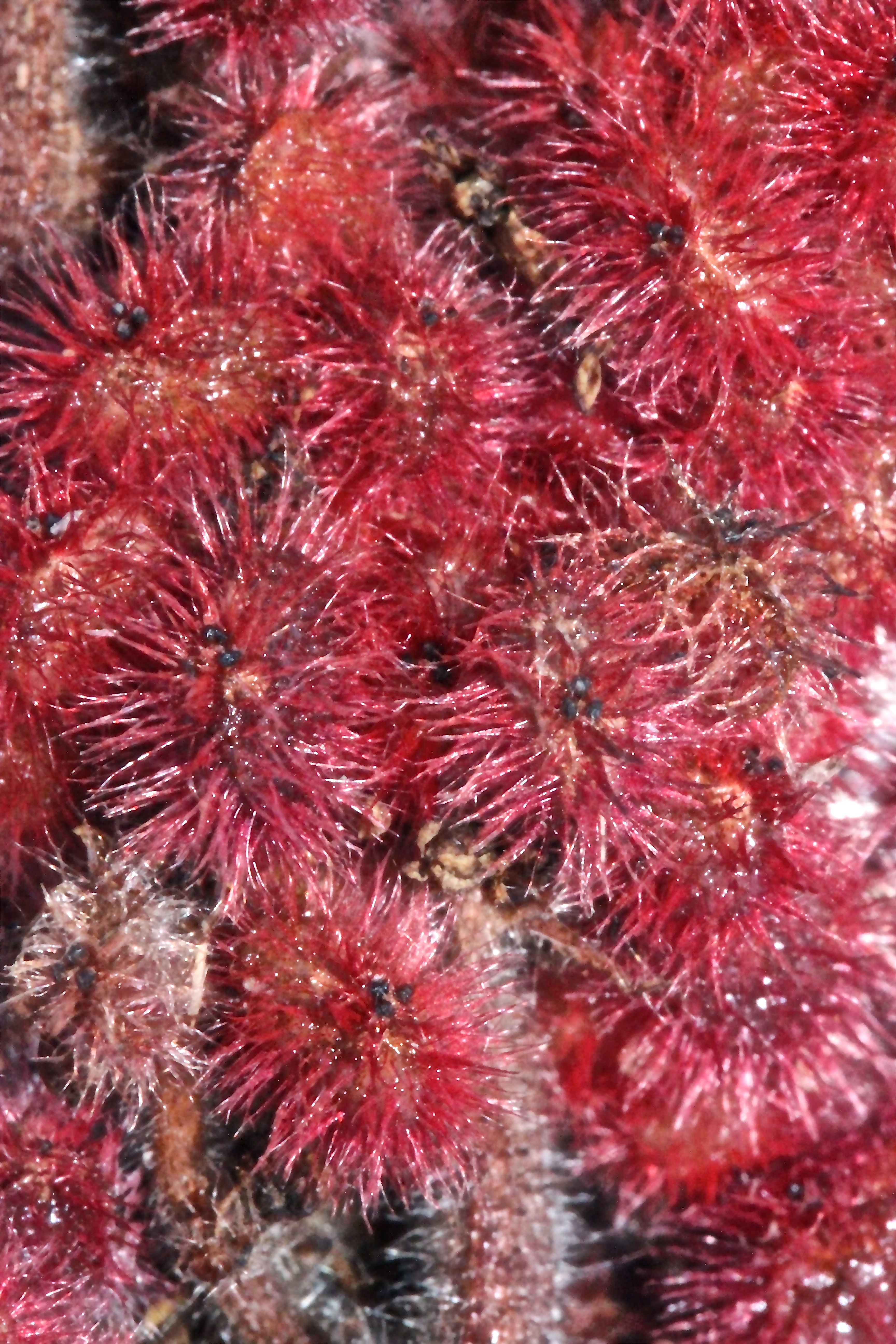
Before slipping out of my snowshoes, I paused beside the staghorn sumac. It was my height, so I had an opportunity to examine its hairy features closely. Animal from The Muppets must have cloned himself.

Full moon

There was a time when I was easily unnerved being in the woods alone. And I still have moments–especially when a ruffed grouse erupts. Geesh–that can certainly make my heart sound like it’s going to jump out of my body. But, the more time I spend out there, the more time I want to spend out there–exploring, discovering, wondering. This afternoon, I finally followed the full moon home, thankful to find even an inkling of my spirit. I recognize that the word “home” has come to mean more than one place. Our abode is our home, but time in the woods is also a homecoming.


Chillin’ at Heald Pond

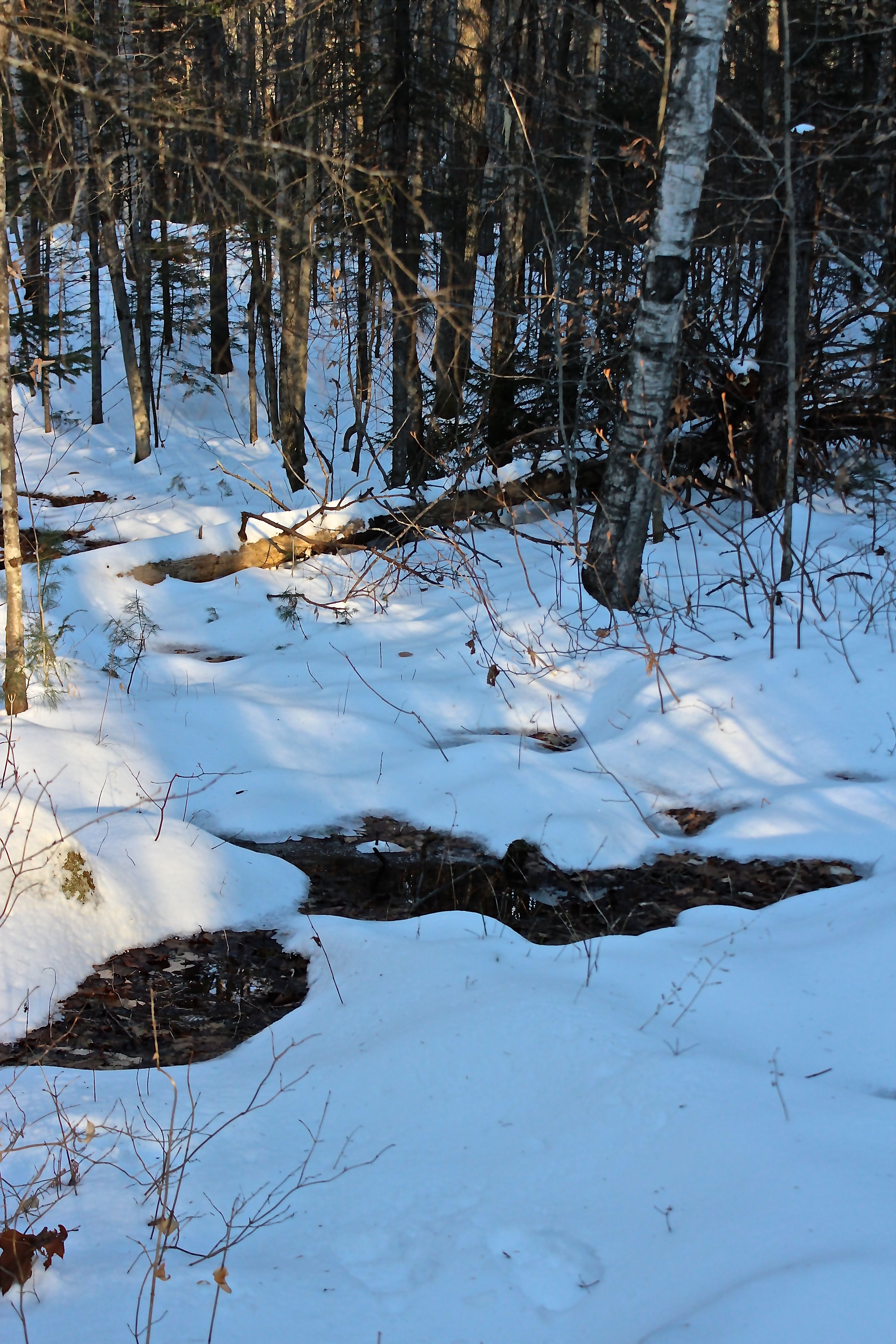
It was chilly this morning. Understatement. It was mighty cold, given the wind. But that didn’t stop the intrepid Tuesday Trackers of the Greater Lovell Land Trust from exploring a property under conservation easement. For some though, that was enough. A few of us had intended to explore a trail in Stoneham, but postponed that trip for another day. The temperature was dropping as the wind increased.
My brain and body, however, were still in exploration mode, so I drove to the Heald/Bradley Ponds Reserve. A sip of hot cocoa and I was ready to continue.

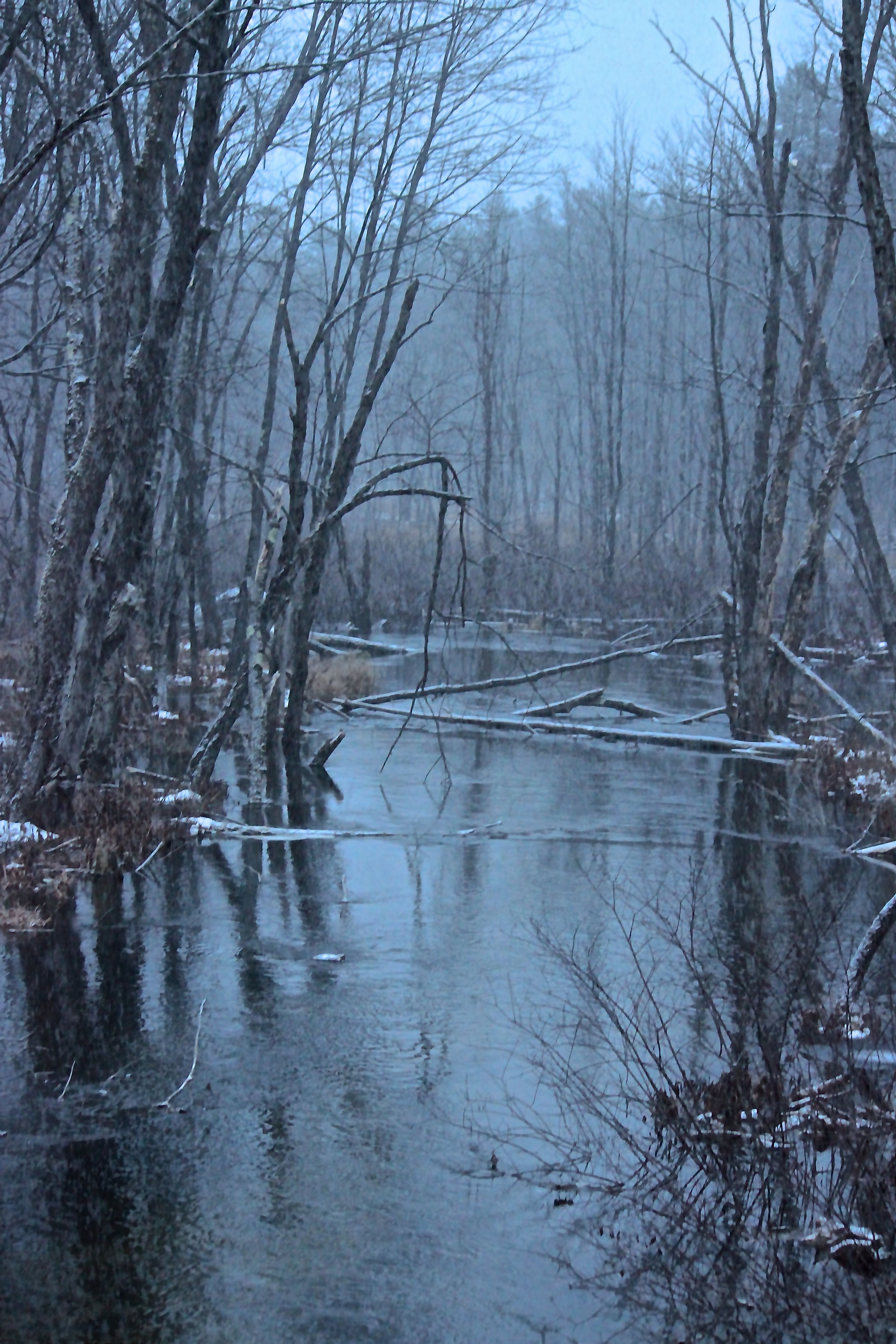
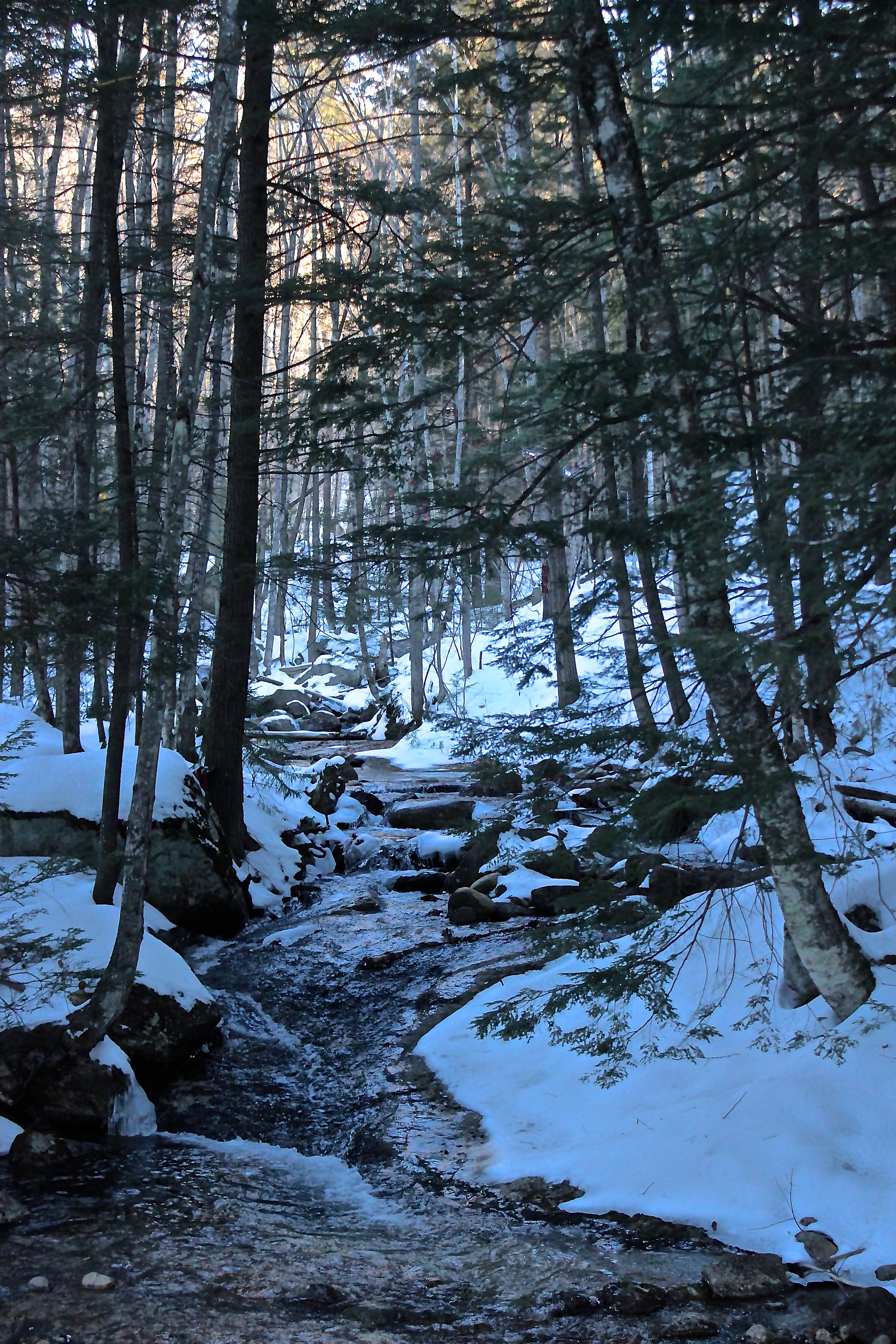
Mill Brook

Mill Brook takes on a different look in its winter coat.

ice twists 2

Below the tree that lays across the stream, a series of twists remind me of flames–frozen in time.

 Mill site dam

mill dam

As the water cascades over the old dam site, the ice builds up, creating a new scene moment by moment.

mill site

I love the combination of newer dam beside the old foundation stones. History was made here.

otter slide

And above those very rocks a sight that warmed my heart–an otter had been chillin’. In my next life please let me be an otter. I know they are fierce predators, but they seem to have such fun and they LOVE winter. Me too.

otter climb

An upward climb . . .

Otter 4

and another downward slide

Otter 3

   otter tracks by mill brook

back to the water. Check out those webbed tracks on the angle noted for members of the mustelid family.

mink tracks

A mink had also passed through. Oh my! I could have turned around then and headed home, but I didn’t.

pileated tree, Heald PondPil tree

Near the kiosk, a pileated woodpecker has been enjoying a feast. I found scat among the wood chips below. If you go, look for it–filled with carpenter ant bodies.

exoskeleton

Despite hand warmers, my fingers were feeling the cold, so I bee-lined to Otter Point. Whenever here, I feel compelled to check on the dragonfly exoskeletons.

ice on wh leaf

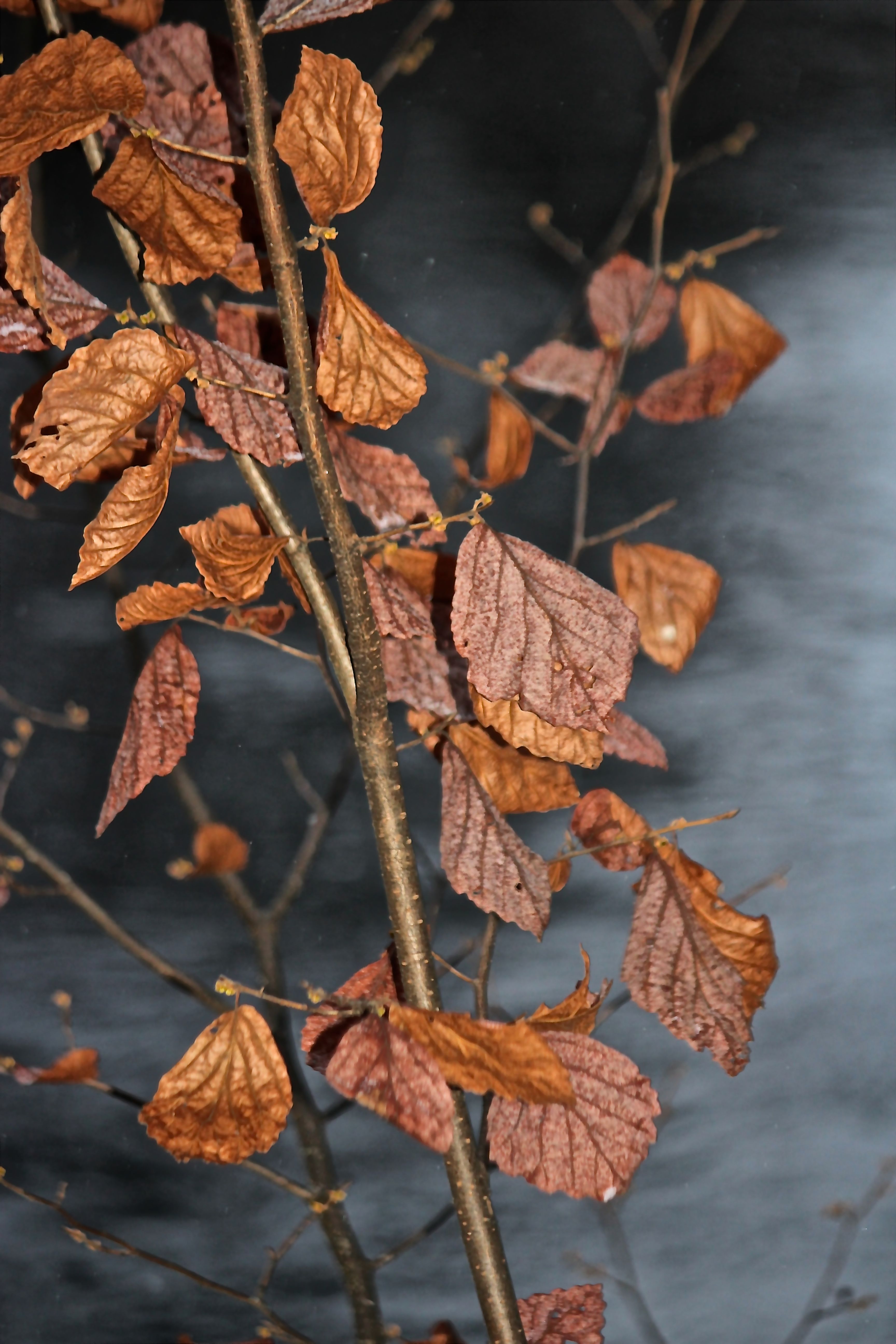
No otter tracks at the point, but there was plenty to capture my attention including ice coating a witch hazel leaf. The contrasting yet complimentary patterns and color demanded a closer look.

wintergreen leaves

A few wintergreen leaves featuring their winter hue poked above the snow.

red oak leaf

As I started back on the trail, the wind made my eyes water and burned my cheeks. It provided a good excuse to turn onto the blue loop and climb toward the summit of Whiting Hill, all the while warming me. And so did this red oak leaf.

beech leaves

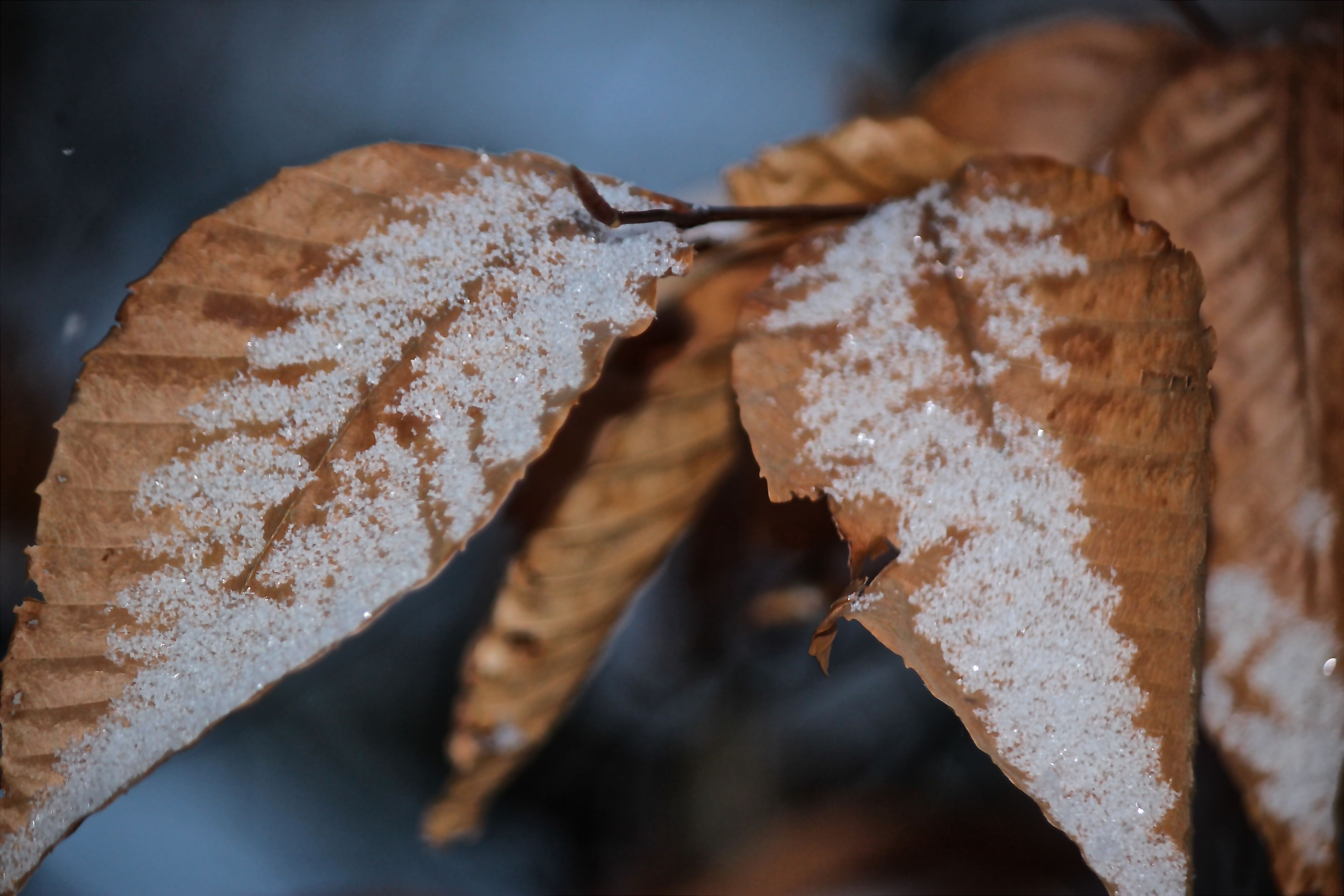
Nearby, a faded beech leaf. Take another look at the witch hazel, wintergreen and oak–notice their veins. Compare them to the beech. So many differences for something we might simply call a leaf.

 Kezar 3

Kezar Lake

At the summit, the sky and mountains offered a dramatic view. Winter blues dominated the scene. Happy blues.

red oak buds 2

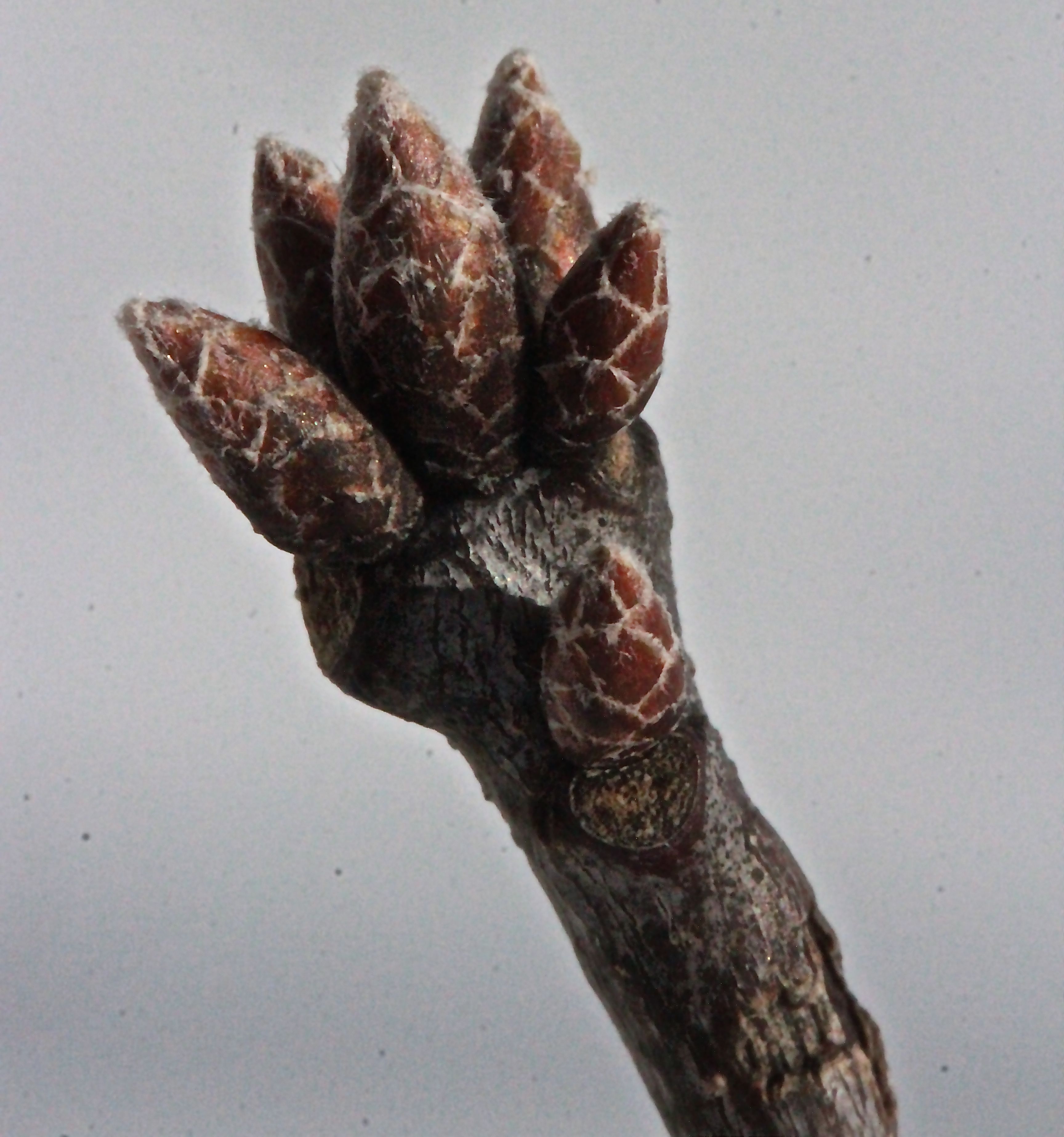
As I enjoyed the sun’s warmth, I focused in on my nearby surroundings. I wasn’t the only one appreciating extra layers today–the crowned formation of Northern red oak buds don their own warm and fuzzy coats.

aster

An aster waits patiently–huddling yet ever ready to go forth and multiply.

ruffed grouse tunnel 3ruffed grouse with scatRuffed Grouse trail

And then I saw this. Another slide? No–actually, it’s a tunnel of sorts created by a ruffed grouse. The middle photo shows the bird’s scat. The bird plowed through the fluffy snow as it fed at the summit.

mouse 2mouse

Everywhere I snowshoed (the zip ties work so far as they hold my snowshoe strap together), there were mouse tracks–the risky business critters of the world.

fisher tracks 1 fisher tracks 3fisher tracks 2

I’d seen fisher tracks crisscrossing my trail as I climbed toward the summit. And then on the way down, not much of anything except mice . . . until these tracks below a hemlock. We had light snow yesterday that has filled in many tracks, but these were quite clear–making them easy to ID.

hare 1

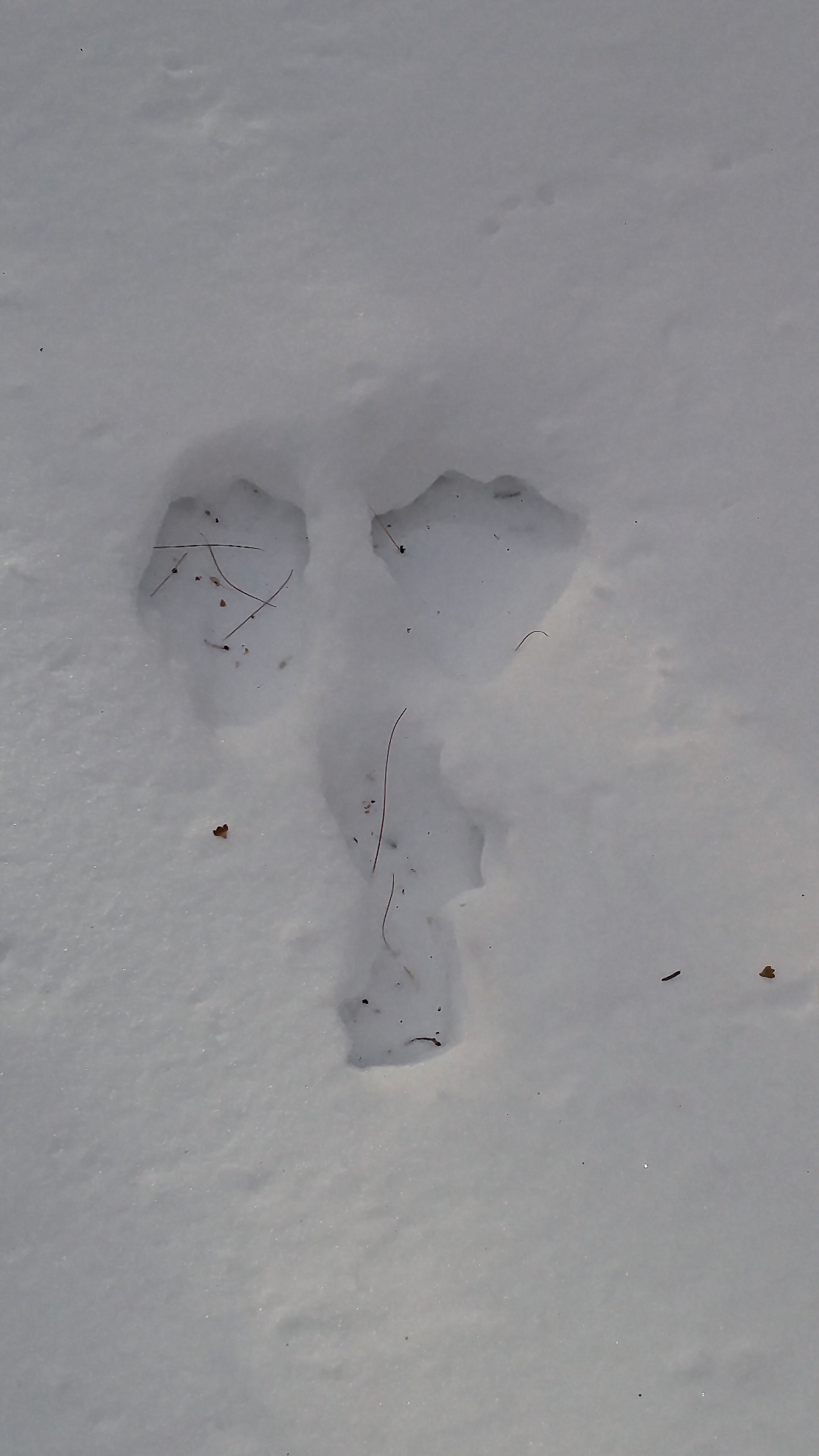
As the trail turned sharply left, I entered the home territory of another mammal. Within these tracks I always see the winter lobster.

snowshoe print 1

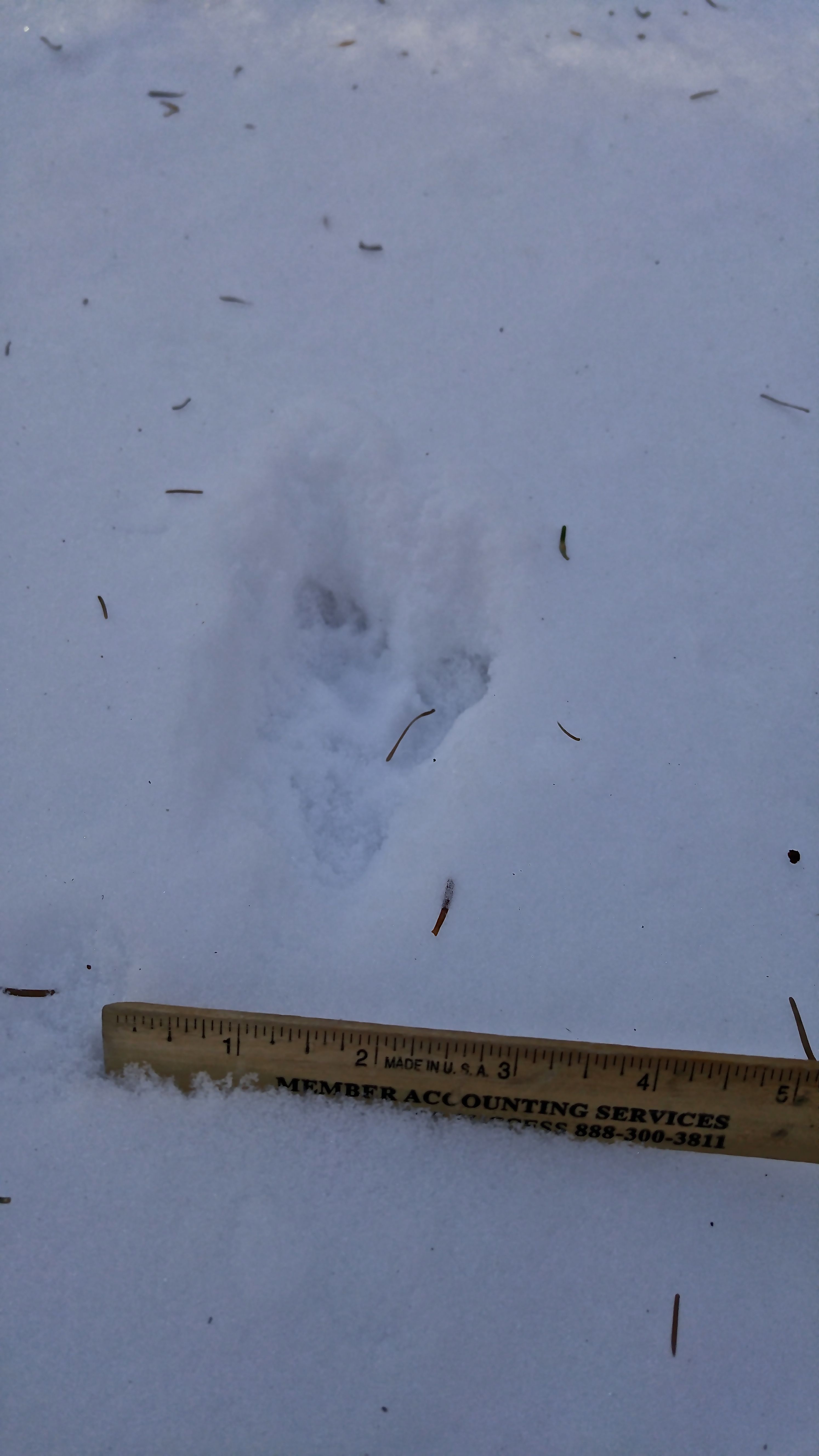
A snowshoe hare–its smaller front feet land first–one before the other and often at an angle. Then the larger hind feet swing around and make a deeper impression as the hare pushes off in a bound toward its next landing spot.

snowshoe hare convention_2

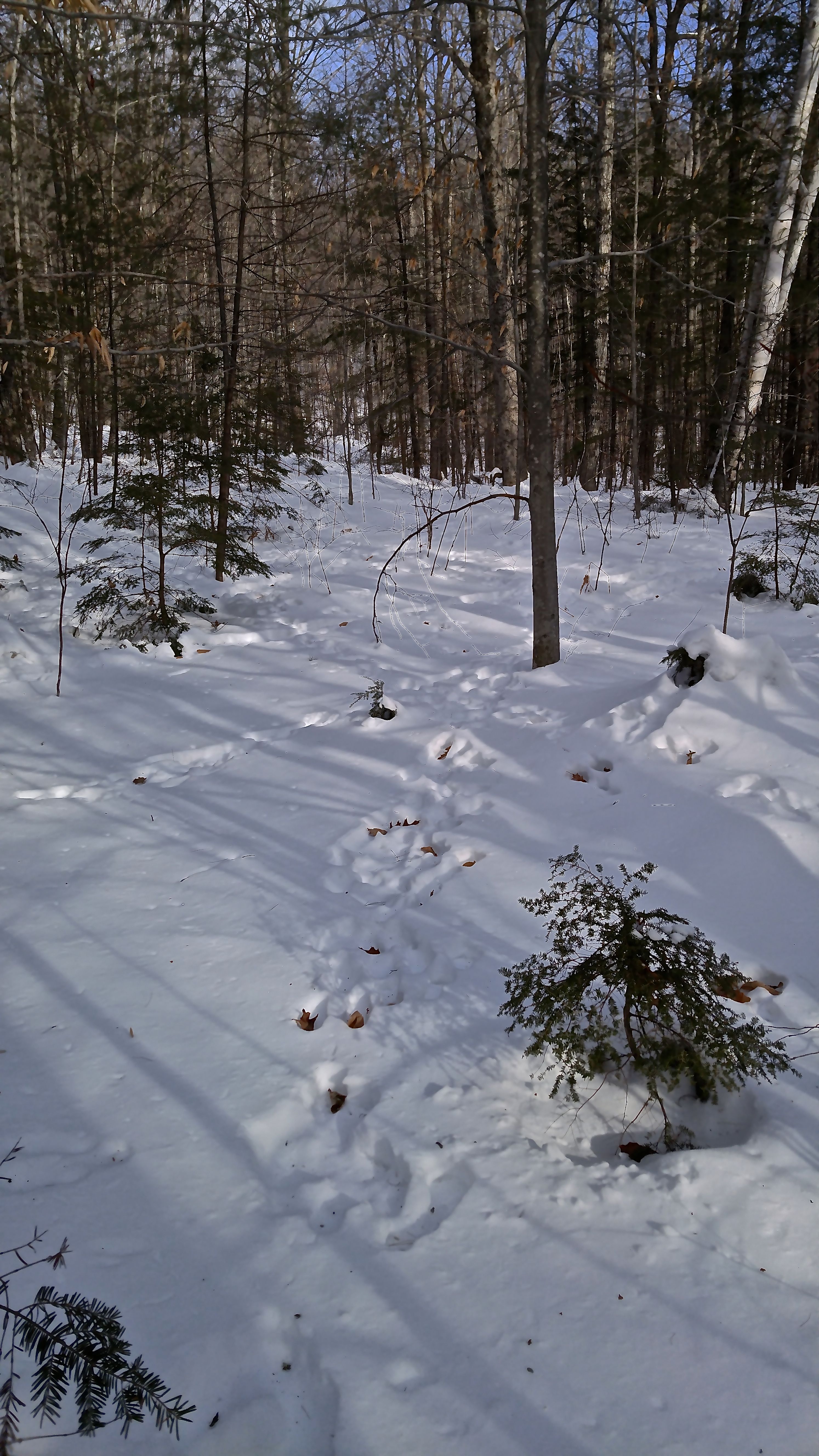
I felt like I was at the scene of a hare convention.

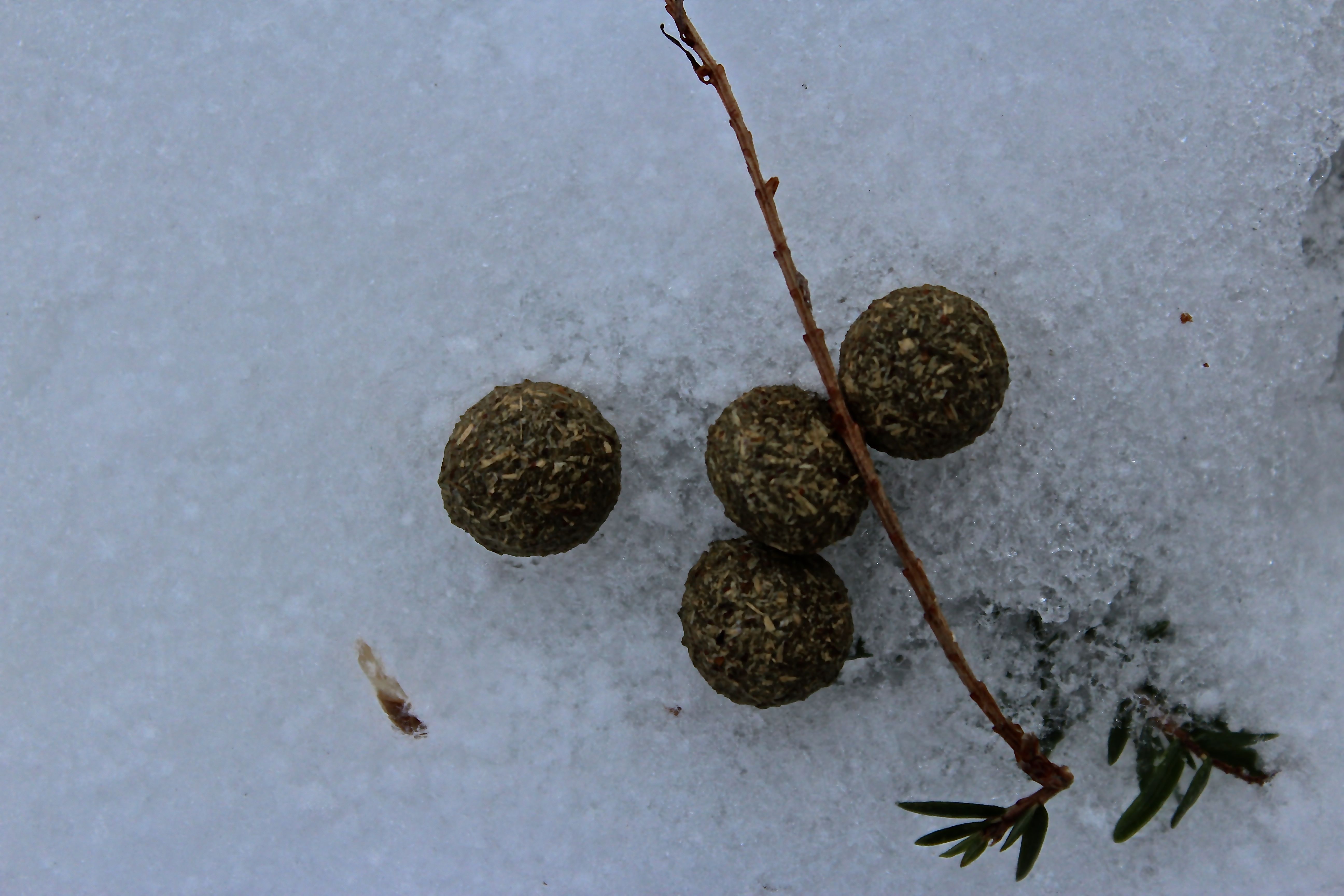
snowshoe hare scat

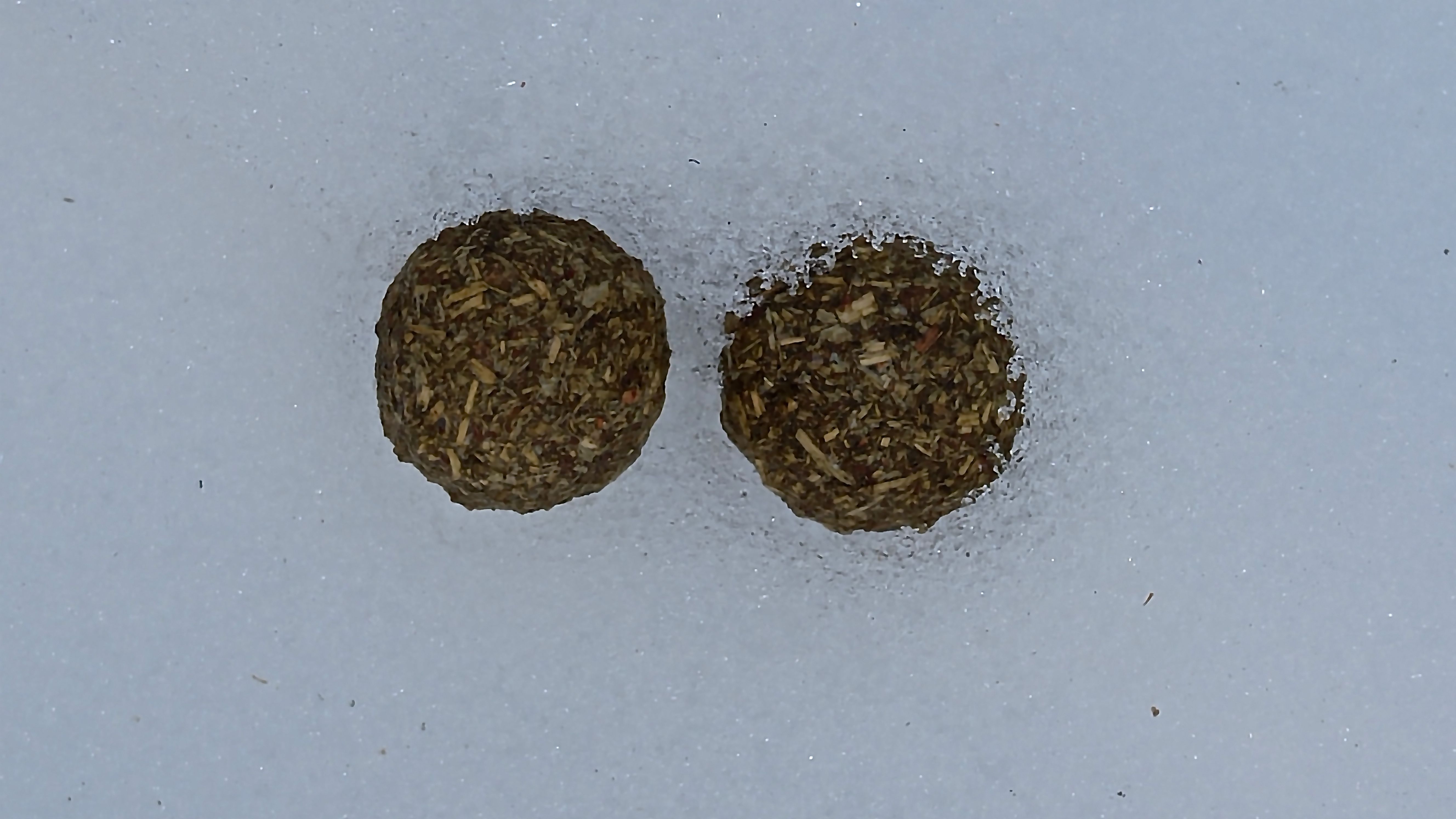
And no convention is complete without some scat. Take a look at the vegetative substance of these milk duds.

This morning we were talking about the fact that we’re seeing many more tracks right now than is normal for January. We think it’s the snow cover–easy enough for them to move around. And it’s been warmer, though you couldn’t prove that today.

milkweed 1 milkweed 2  milkweed seeds

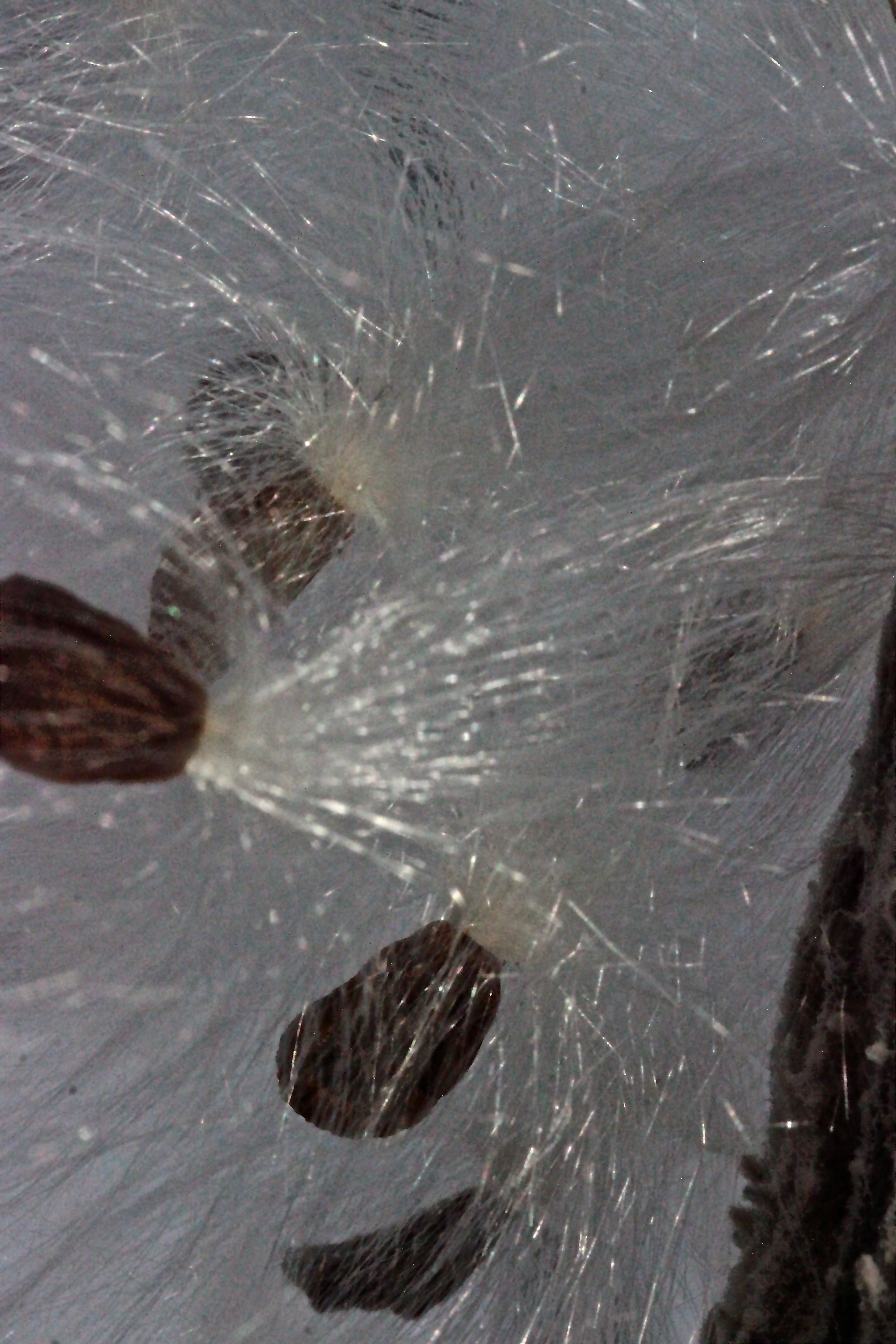
As I headed toward the parking lot, the milkweeds that grow at a former homesite across the road called to me. Their parachutes were in constant motion in the wind, but still they clung on to the pod.

I couldn’t feel my toes, so I didn’t have to worry about them. ;-) But my fingers didn’t appreciate it when I took my mittens off for a photo call. Despite that, I’m so glad I spent the afternoon chillin’ at Heald Pond.

My Need To Get A Life

About two weeks ago a friend and I exchanged e-mails about mammal tracks we’d spotted that day. His big find was plenty of bobcat tracks at Bald Pate Preserve, while mine was mink tracks by Sucker Brook in Lovell. And that’s when he commented, “We need to get a life.” ;-)

Yup. So today I did just that. With a friend in tow, I revisited the Red Tail Trail off Hurricane Mountain Road in North Conway. Our mission was to move slowly through the landscape in search of signs of nature in winter.

Oh my. Such a boring task. What could there possibly be to see? Everything is brown and gray and ever so drab.

mouse

From the start, mouse tracks show the suicide mission these little guys make each night as they scramble this way and that in search of food . . . and cover. Mice are nocturnal bounders who travel above ground for long  distances–risky behavior since they are tasty treats for most predators. White-footed and deer mice have similar-sized feet and bodies, so their prints are difficult to distinguish from each other. Their print pattern reminds me of that made by squirrels, only in miniature and their long tails often leave drag marks in the center.

vole 4vole 3

Here’s another favorite meal for many predators–evidence that a vole lives nearby. We were in an old logging area when we found this. While a vole is similar in size to the white-footed and deer mice, its tail doesn’t show in the track. Plus, two other things stood out to us. The tunnel in the first photo is typical vole behavior. While we received 6 inches of snow in western Maine on Tuesday, North Conway only has about two inches on top of ice. Voles are shy of sky space, so tunneling is one of their behaviors. With ice below the snow, this tunnel was exposed and reminded us of spring when vole tunnels become visible in melting snow. The other behavior of this little brown thing (LBT) that is different from its cousins, the other LBTs like mice and shrews, is the zig zag or alternating pattern when it walks. Voles vary their walking pattern, but they don’t bound like the others. The pattern is visible for a few steps above the ruler.

mink 1Mink 2

And who might those predators be? We found the diagonal pattern typical to the weasel family. We thought that this one was a mink, but now that I’m in my cozy den, I’m questioning our ID. It may have been a short or long-tailed weasel. (1/15/16: Changed my mind back to mink. My ruler kept sliding, but the measurements we took, and we took several, clearly indicated mink, so that’s my story and I’m sticking with it.)

weasel 2

Further up the trail, we were more certain that this one was a weasel, though, again, short or long-tailed is the question. Suffice it to say–weasel.

Fisher 1  Fisher pattern

And still another family member–only a bit larger in size. Notice the tear-drop shaped toes. And the loping pattern. A fisher had recently crossed the trail. We followed its tracks for a bit and then bushwhacked back. On our return we came across a second set of fisher tracks. And then, as we backtracked beside our own snowshoe prints, we realized they’d traveled together and then split apart–perhaps hoping to find some good chow.

Kearsarge River

As we moved beside and away from the river, we also saw deer, snowshoe hare, coyote and fox tracks.

Winding our way up through the switchbacks, one other critter left a calling card.

wing

Based on the behavior, I want to say it’s a ruffed grouse. I must admit that we didn’t follow the tracks, but grouse are also tunnelers and there’s a bit of a tunnel here. Usually I find their scat.  By now, you are probably thinking that I really do need to get a life.

ground litter

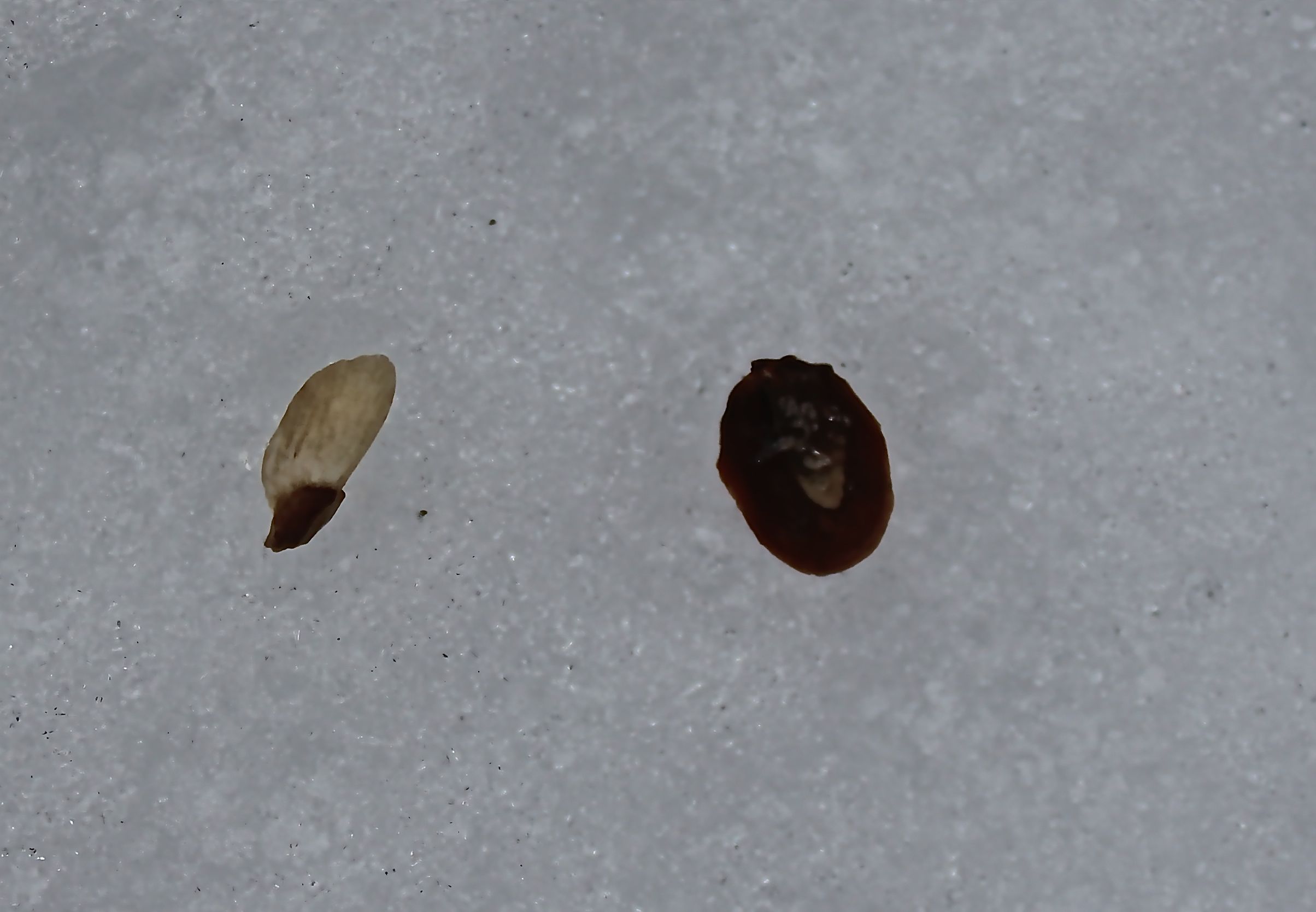
hemlock seed and scale

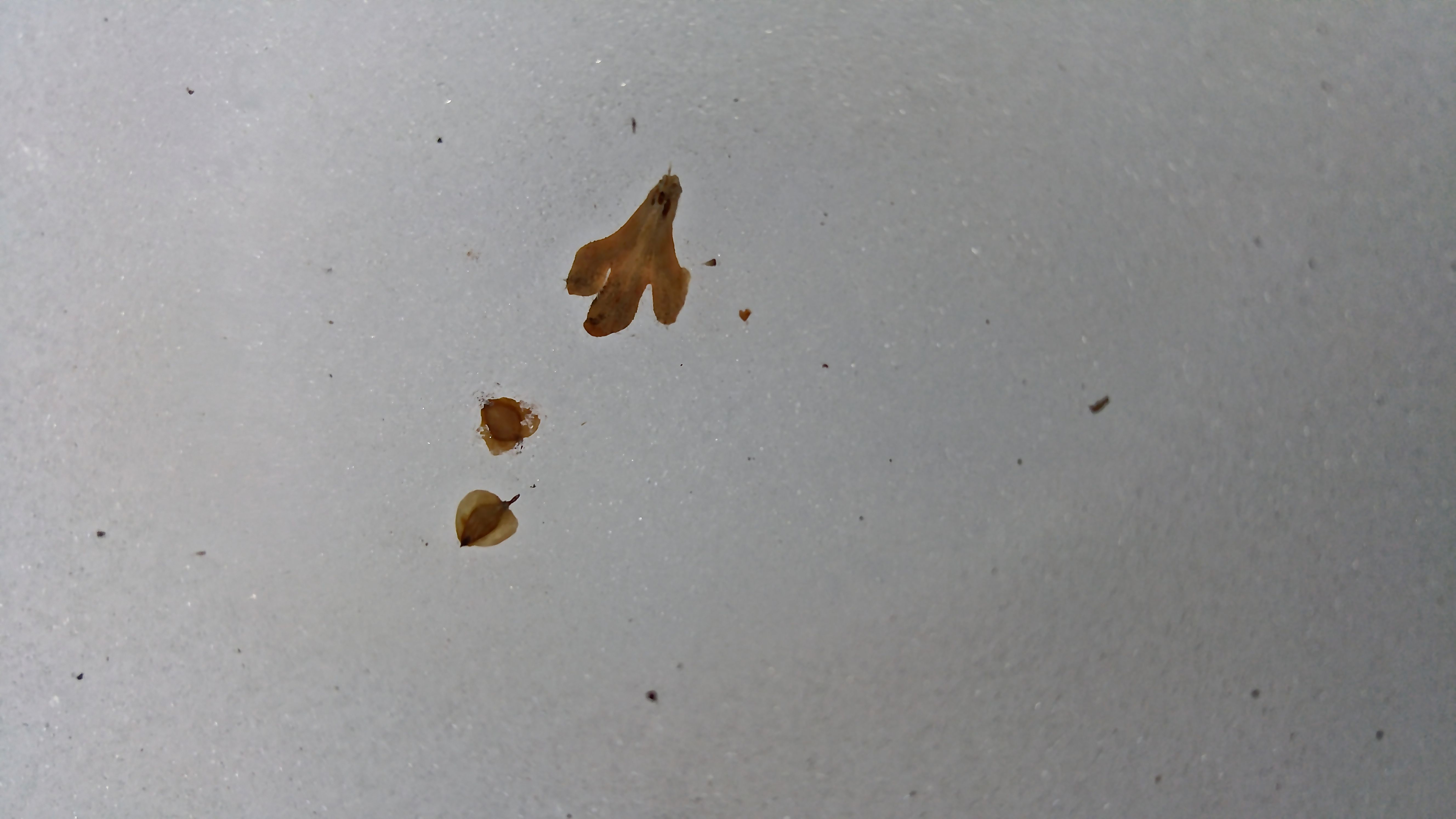
yellow birch

We laughed about how we used to not even notice everything on the ground–dismissing it as  tree litter. Ah, litter it is. But more specifically, we were in the land of hemlocks and birch trees. Hemlock cones, cone scales and winged seeds (samaras) are part of the array. And the yellow birch catkins have released their fleurs-de-lis scales and seeds as well.

beech scale 3

One of the things we weren’t thrilled to discover–the white, wooly and waxy coating that the beech scale insects secrete to cover themselves. Oy vey. This beech tree doesn’t stand a chance.

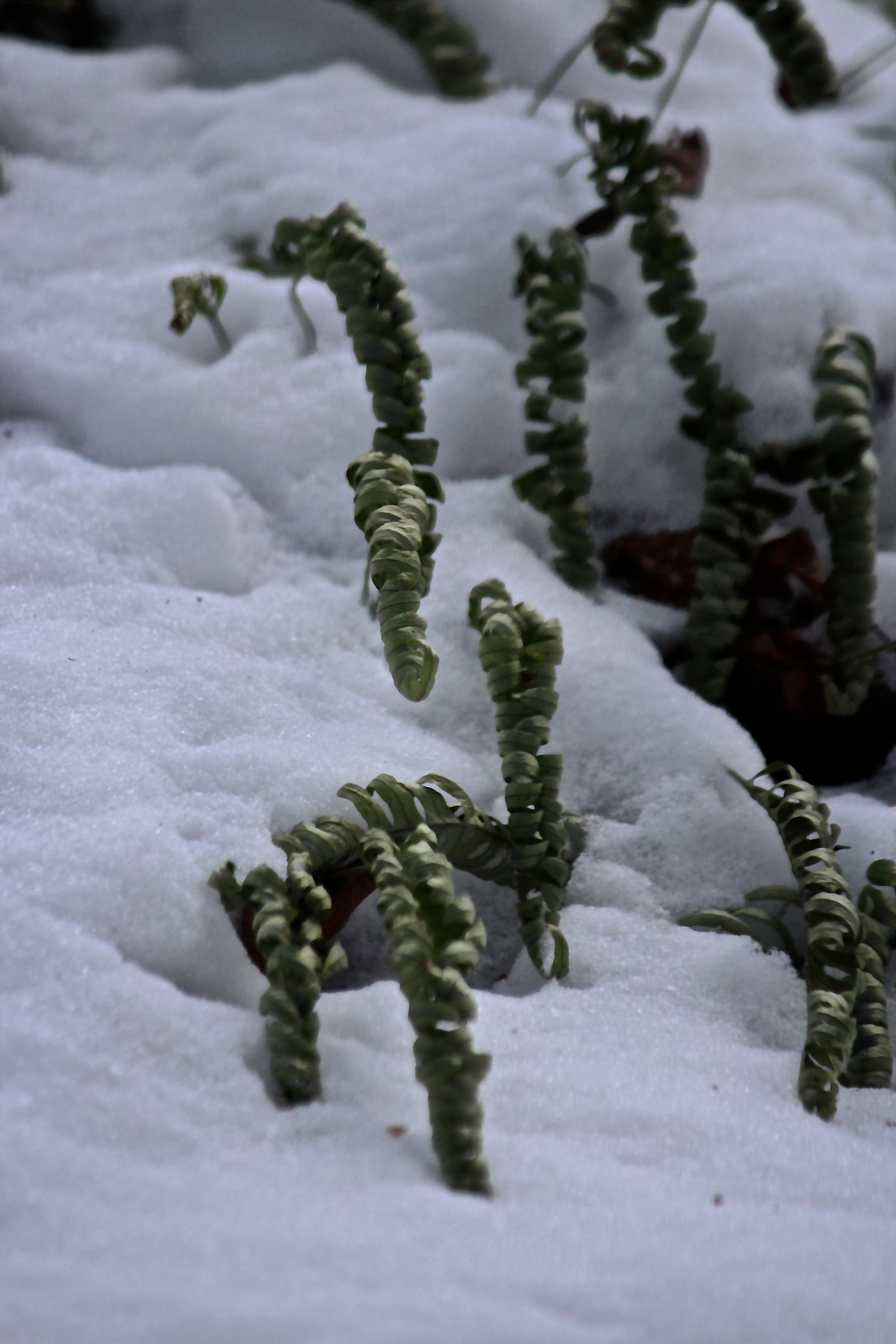
polypody frozen

So back to happier thoughts, including the polypody that let us know it was time to head home and curl up by a warm fire–the temp was in the low teens.

ice skirt

Even the river rocks wore several layers.

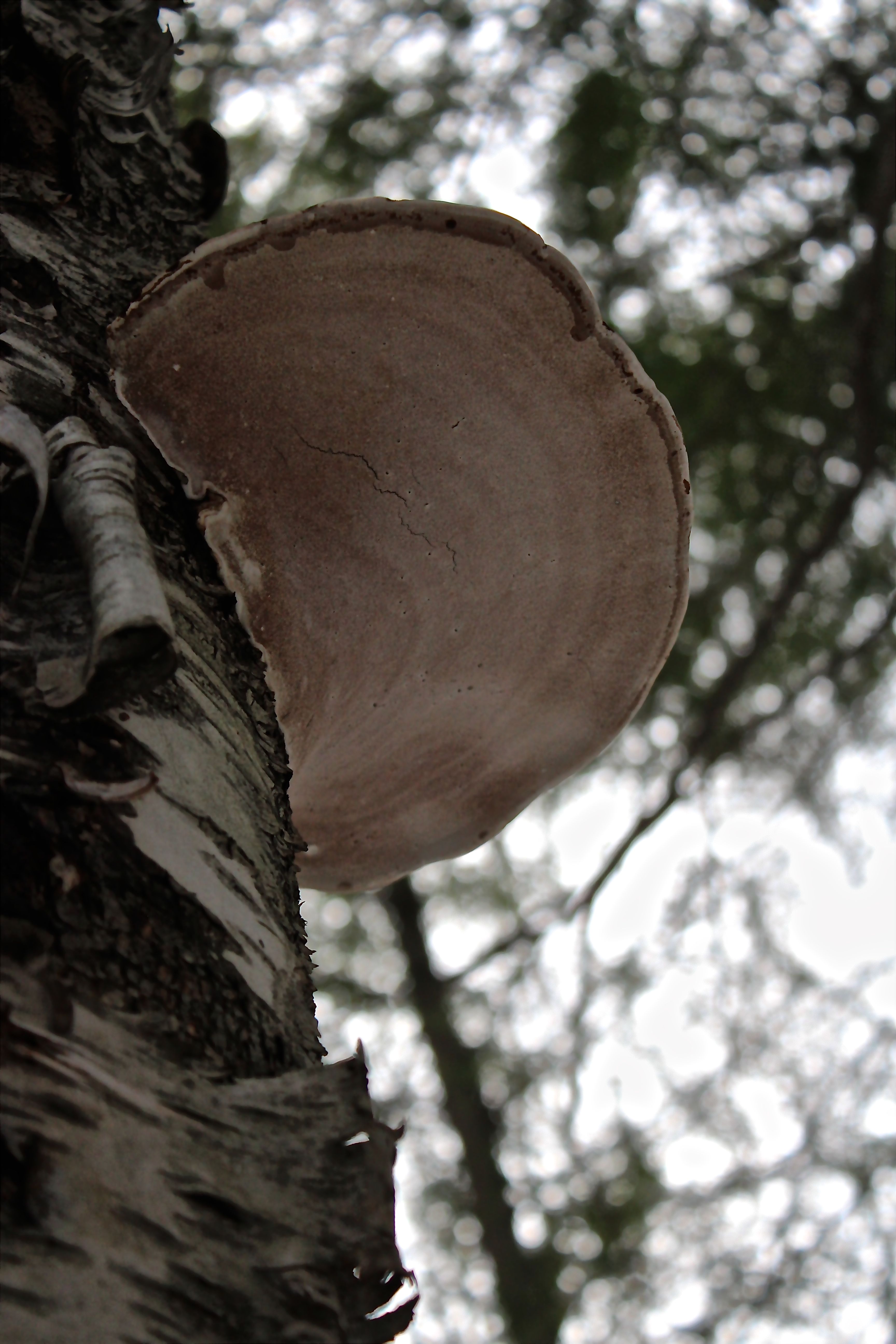
artist 3

artist conk

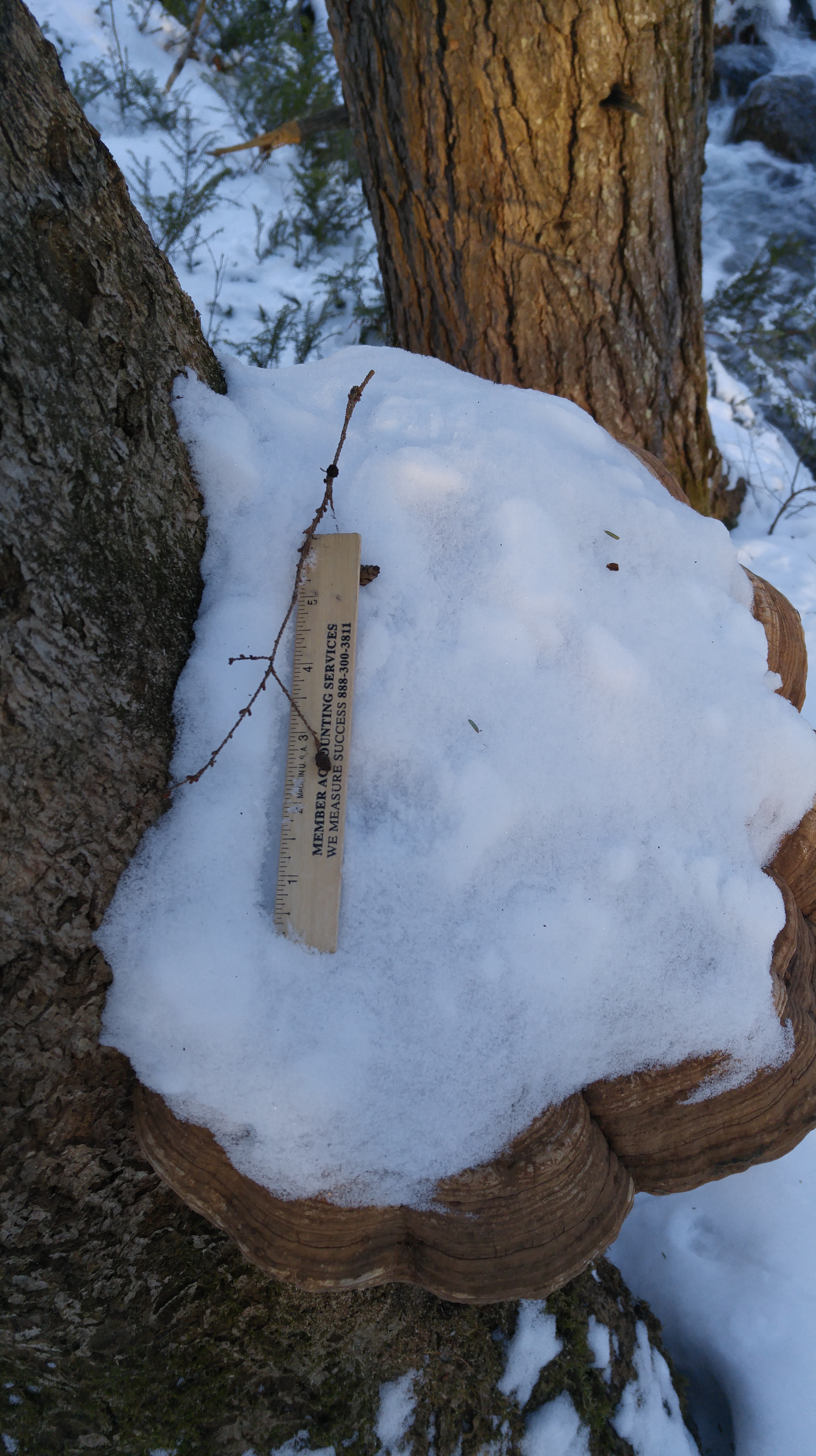
Just before we arrived at my truck, we stopped to admire this mighty fine artist conk. It will still be there on Saturday–join me and the wonderful folks from the Upper Saco Valley Land Trust for a walk on the trail–weather permitting. I’m not so sure it will actually happen this week given the forecast.

No matter. These were only a few of our finds. There’s so much to see and wonder about and every time I visit, I’m in awe of this special place. And thankful for the life I’ve got.

Snow Be It

The action at the bird feeders was crazy busy this morning–as if a snow storm might be on the horizon.

goldfinch 2

goldfinches, mid air squawk

Some goldfinches managed to dine together in peace, while others displayed a midair squawk over perch choice.

male hairy woodpecker

The hairy woodpecker often had the suet to himself, until, that is, the nuthatches, titmice and chickadees flew in.

female cardinal

And somehow the female cardinal managed to pose upon a perch across from a chickadee. She never looks quite comfortable up high.

male cardinal

cardinal and squirrel

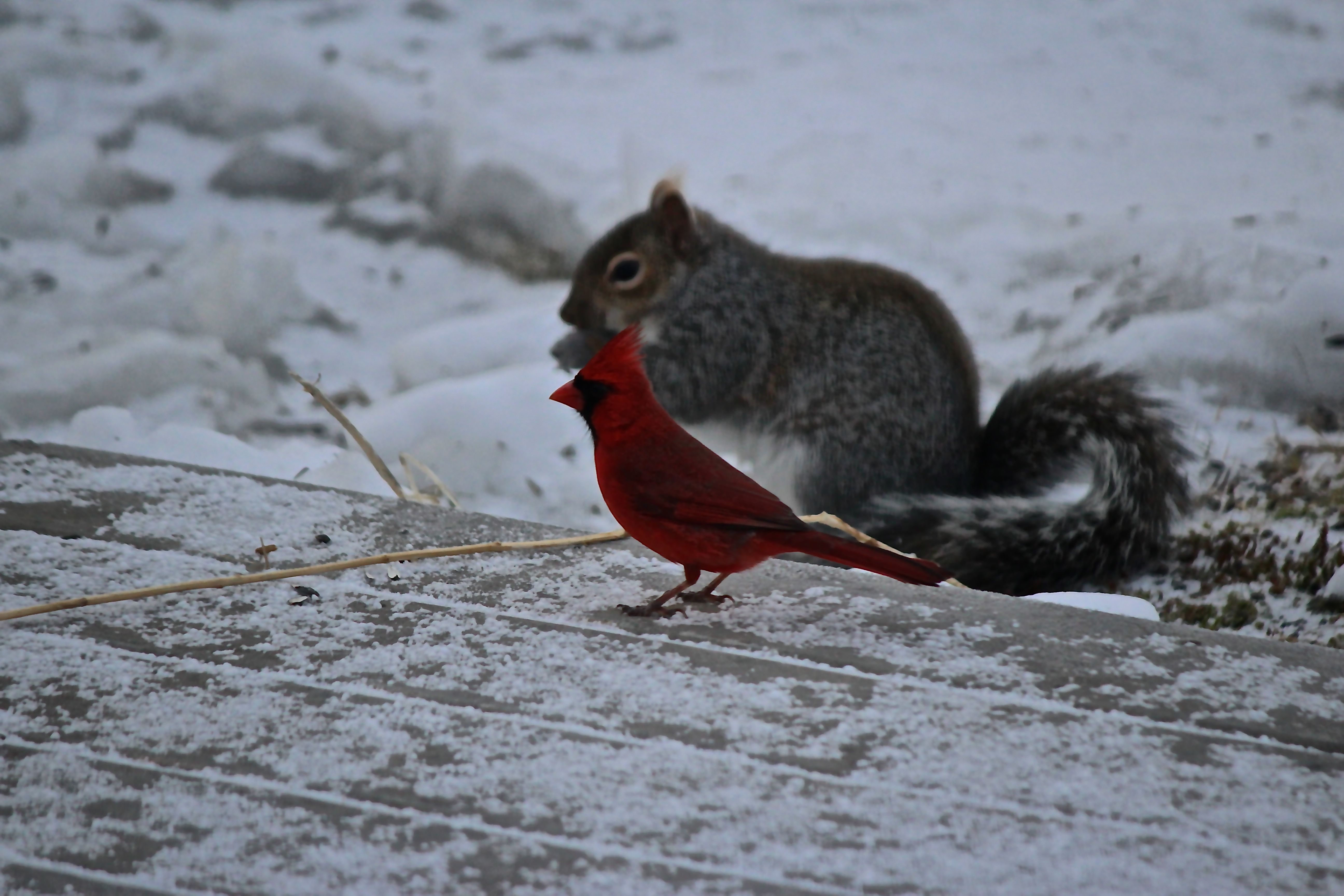
Her guy always checks out the local scene before foraging for seeds on the ground. He’s not the only forager in the neighborhood.

ice rink 2

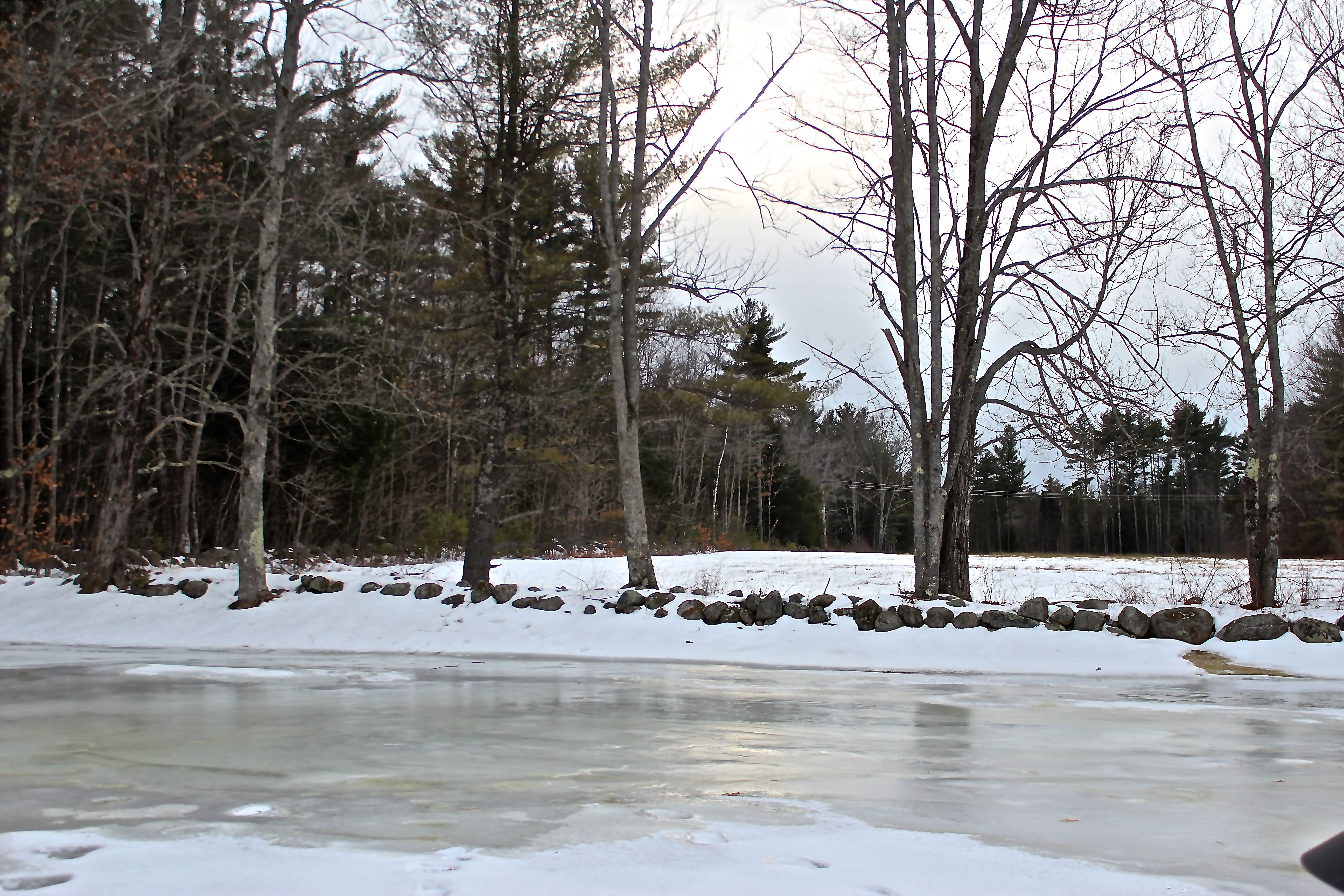
And beyond the feeders, the ice rink is open. Of course, if you want to use it  you need to bring your own shovel. My days of being the human zamboni ended a few years ago.

raccoon prints

I’d intended to join friends in Falmouth for a tramp today, but with the impending storm, I decided to stick closer to home. And so this afternoon found me exploring familiar grounds, wondering what I might see. What could possibly be different?

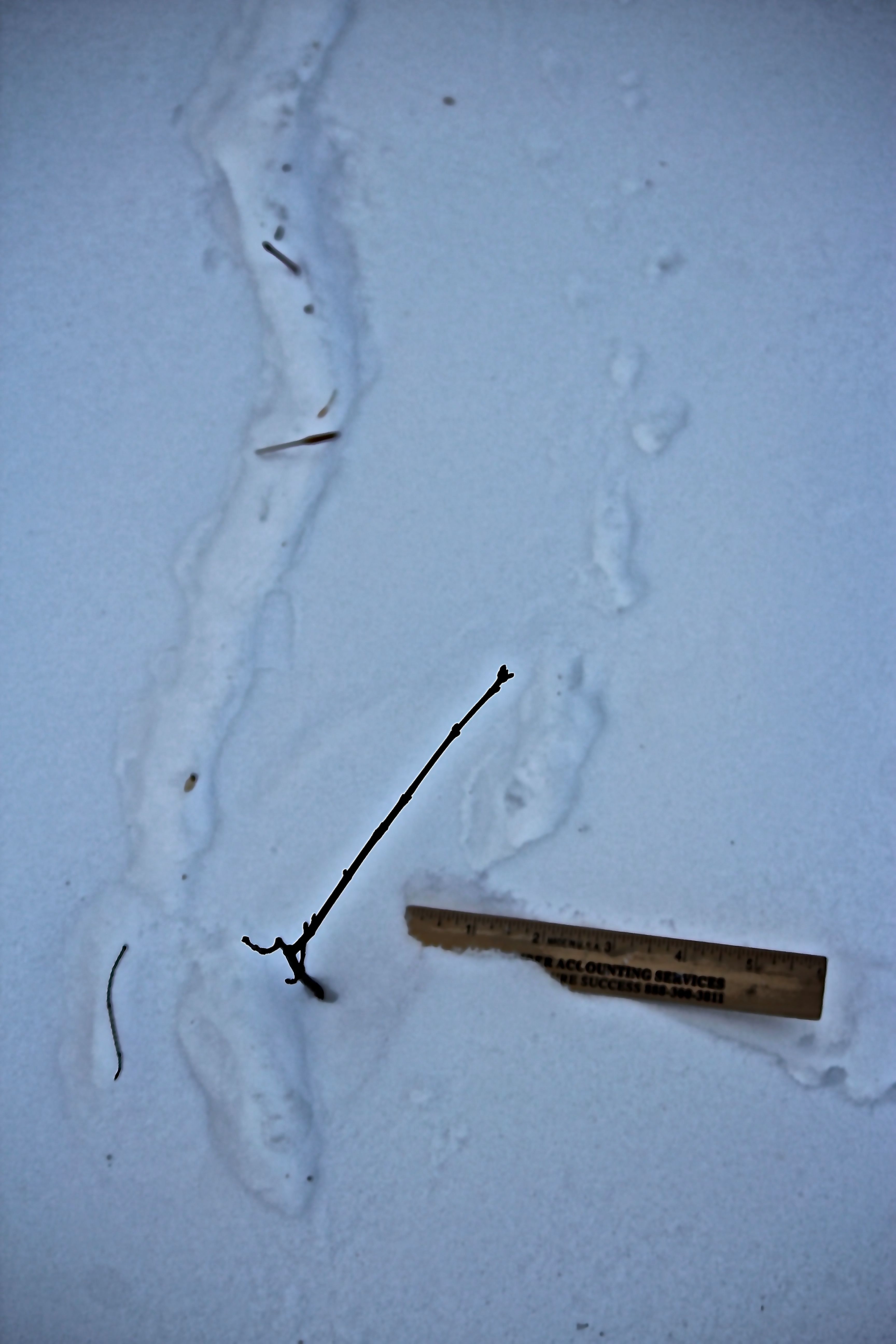
Ah, the intrepid raccoon had passed this way. I love the pattern it leaves behind, with each set of prints on the opposite diagonal.

vernal pool 1

And then there’s the vernal pool. Nothing new about that, but at the same time, it’s ever changing.
Queen Anne's Lace 1

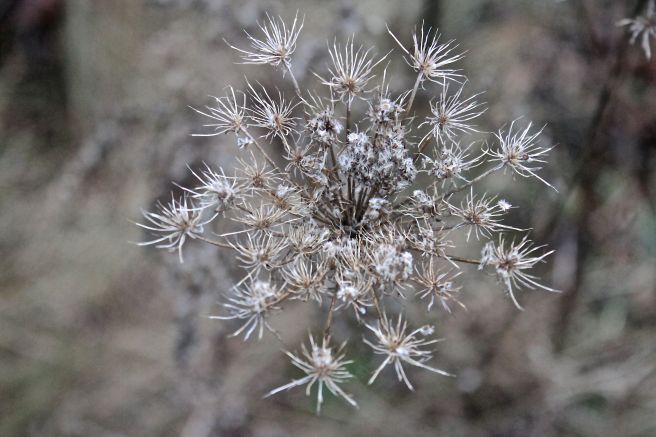
The fact that dainty Queen Anne’s Lace is filled with spiky seeds seems almost an oxymoron. A beautiful one.

The snow was just starting to fall when I happened upon the QAL. And so I continued on, crossing the road and disappearing into a familiar place–Pondicherry Park.

ice form 2ice form 3ice formation 1ice rays

With every step, I needed to be mindful of where I placed my foot to avoid slipping. Though I’m weary of ice, I never tire of the formations it manifests.
ash 1 Ash 2ash seeds 3

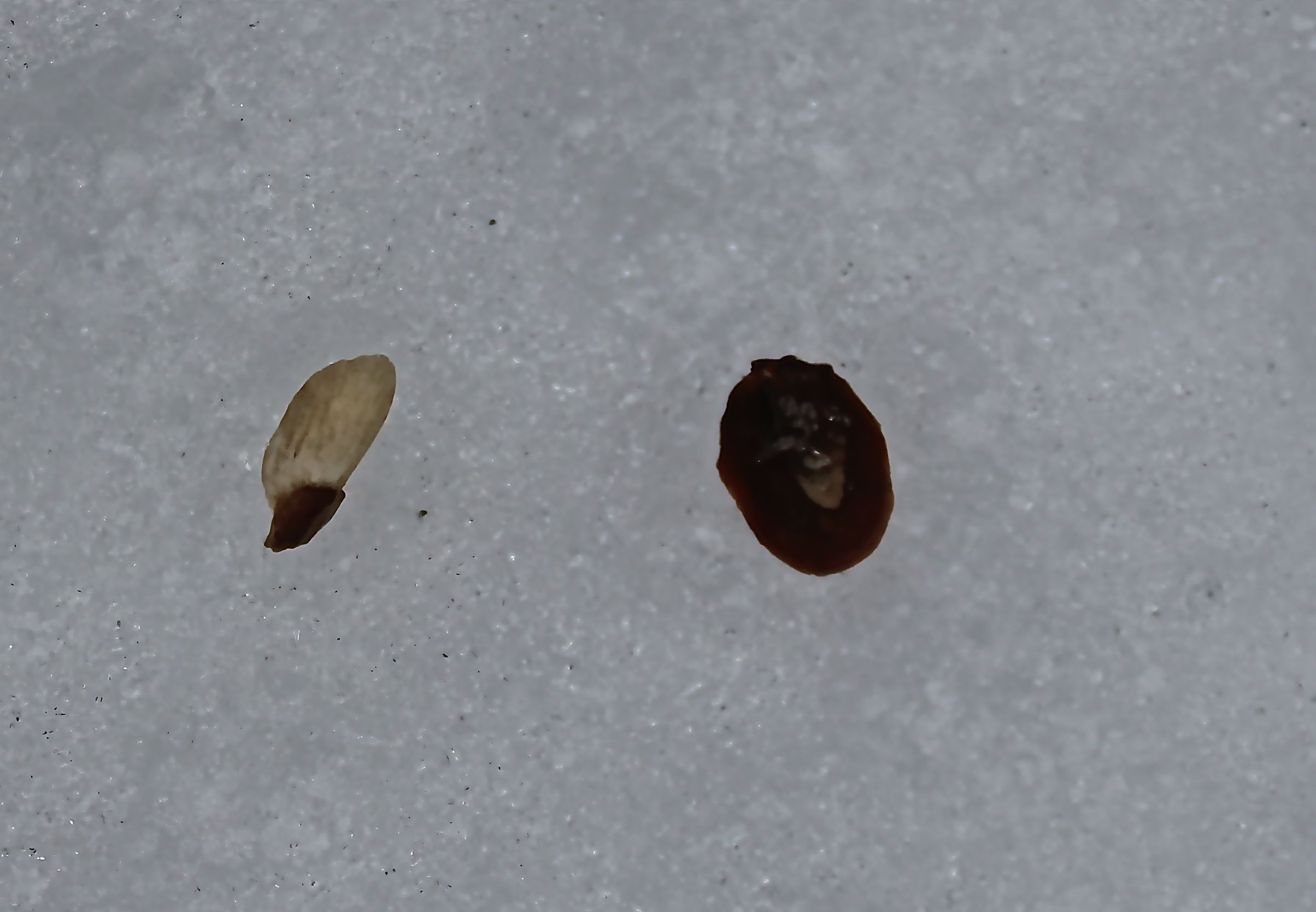
I’m going out on a limb here, but believe based on the structure of the single winged samara that these are green ash seeds that litter the ground. As the wing surrounding the seed tapers toward the tip, it is straight versus the slight curve seen in a white ash. In addition, the white ash samara is wider than a green ash.

ash leaves 1

And then there is the ash leaf mystery. Leaves still on trees? Ash leaflets are not marcescent so why have these leaves withered and stayed attached to the twigs? Ah, but when some trail management was conducted this past summer, the cut branches that crowded the path were tossed aside. The leaves died then and there, thus not being “cut” off by the tree and falling in a normal manner.

 witch hazel color contrast

contrast beech leaves

Of course, the marcescent leaves of witch hazel and American beech against the blue of Willet Brook provided a display worthy of attention as the snow began to collect.

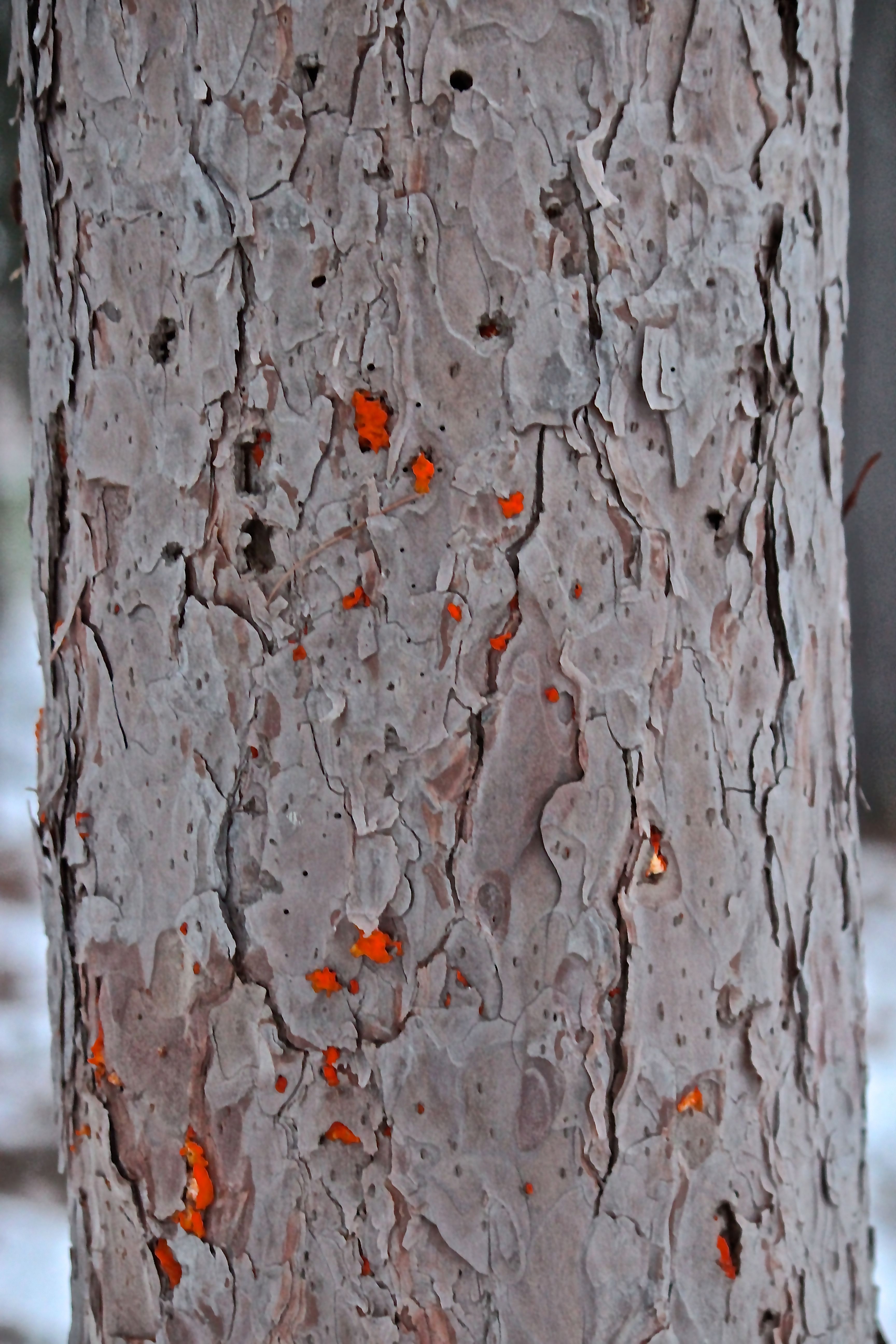
witch's butter on red pine

Witch hazel isn’t the only witch in the park. Witch’s butter decorates a red pine trunk.

jelly ear fungi

Likewise, witch’s butter isn’t the only fungi. Jelly ears decorate a fallen oak branch.

snag sap

There’s always plenty to wonder about. In this case, a very, very dead snag–leaking sap. How can that be so?

Willet Brook

The ice lining the banks of Willet Brook crinkled and crackled with the flow of the water, adding an eerie sound to the landscape.

mallards

Meanwhile, in Stevens Brook, several pairs of mallards quacked constantly, announcing their presence.

Stevens Brook

The snow increased as I crossed the Bob Dunning Memorial Bridge and

dam

walked past the Stevens Brook dam.

still Christmas 1

At home, it’s still Christmas. Snow be it.

Going With The Flow Mondate

Our first Mondate of 2016 had us swerving this way and that and never quite reaching the summit. Such is the way of life–and our best choice is to go with the flow.

We drove to Hurricane Mountain Road in North Conway to begin our trek up the obscure Red Tail Trail. Well, it’s not really obscure. Mountain bikers know it well. And at least a half mile of the trail is part of the Cranmore Conservation Easement held by the Upper Saco Valley Land Trust. I’m going to lead a hike for them in a couple of weeks, so I dragged my guy along for a reconnaissance mission.

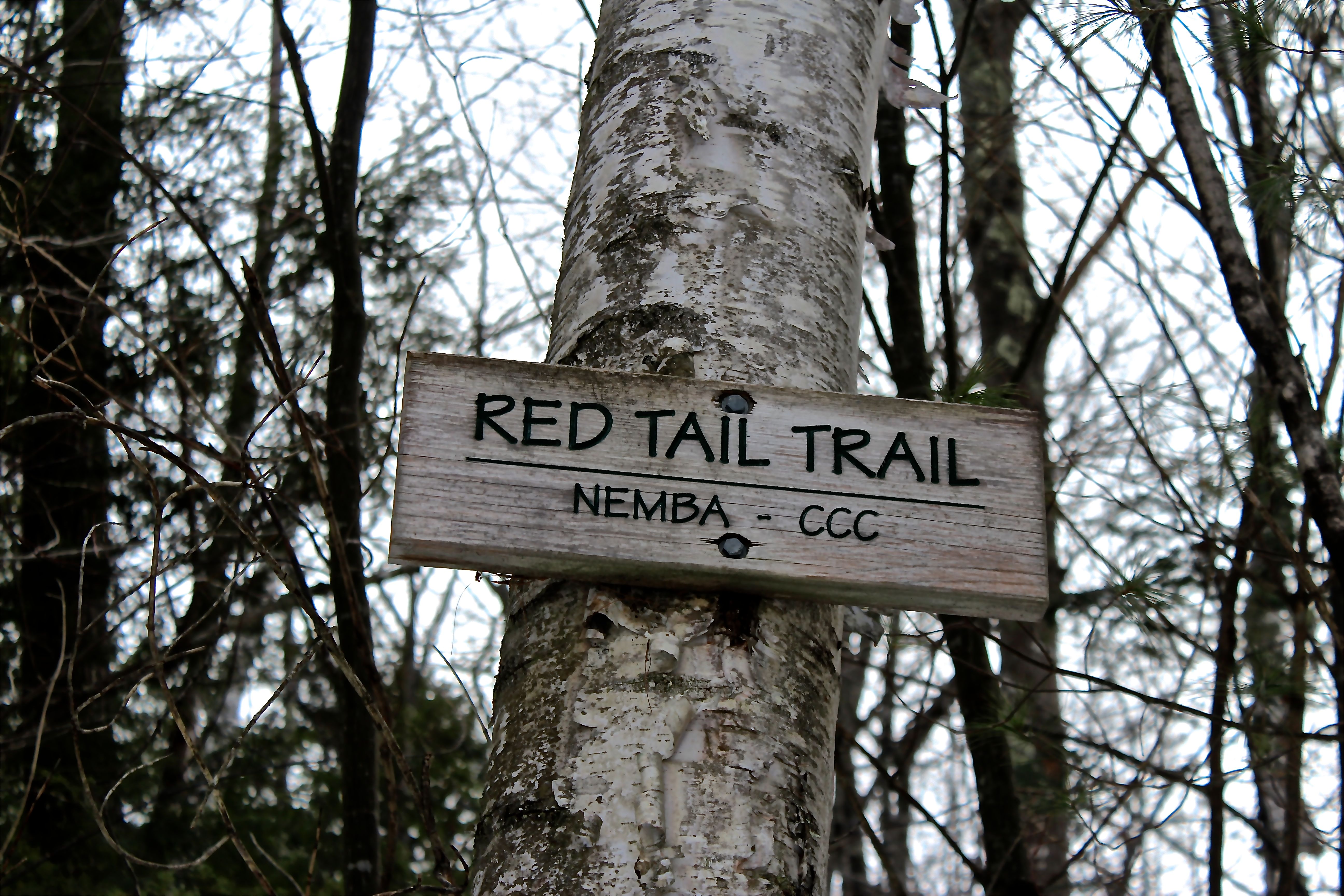
And we got lost. Fake lost once again. This time, the wrong trail–the Kettle Ridge trail, which isn’t signed. That was my first clue. The second was that we were immediately climbing and I couldn’t hear water. I’ve only explored part of the Red Tail Trail once before with Jesse from Upper Saco Valley LT so I knew it followed the brook beside Hurricane Mtn Road from the start. After about fifteen minutes of climbing and not feeling like it was right, we retraced our steps and I found the trail sign I’d been looking for–hidden behind some trees. Lesson to those who follow me–you never know if I’m leading you astray ;-)

trail sign

land trust sign

Two signs actually within a matter of minutes and we were golden. brook 1

For about a half mile the trail follows a nameless brook. It must have a name, but I can’t find it anywhere so I’m calling it Red Tail Brook. I was looking for interesting things to share with people and as usual, nature didn’t let me down.

brook 2

brook 5 ice

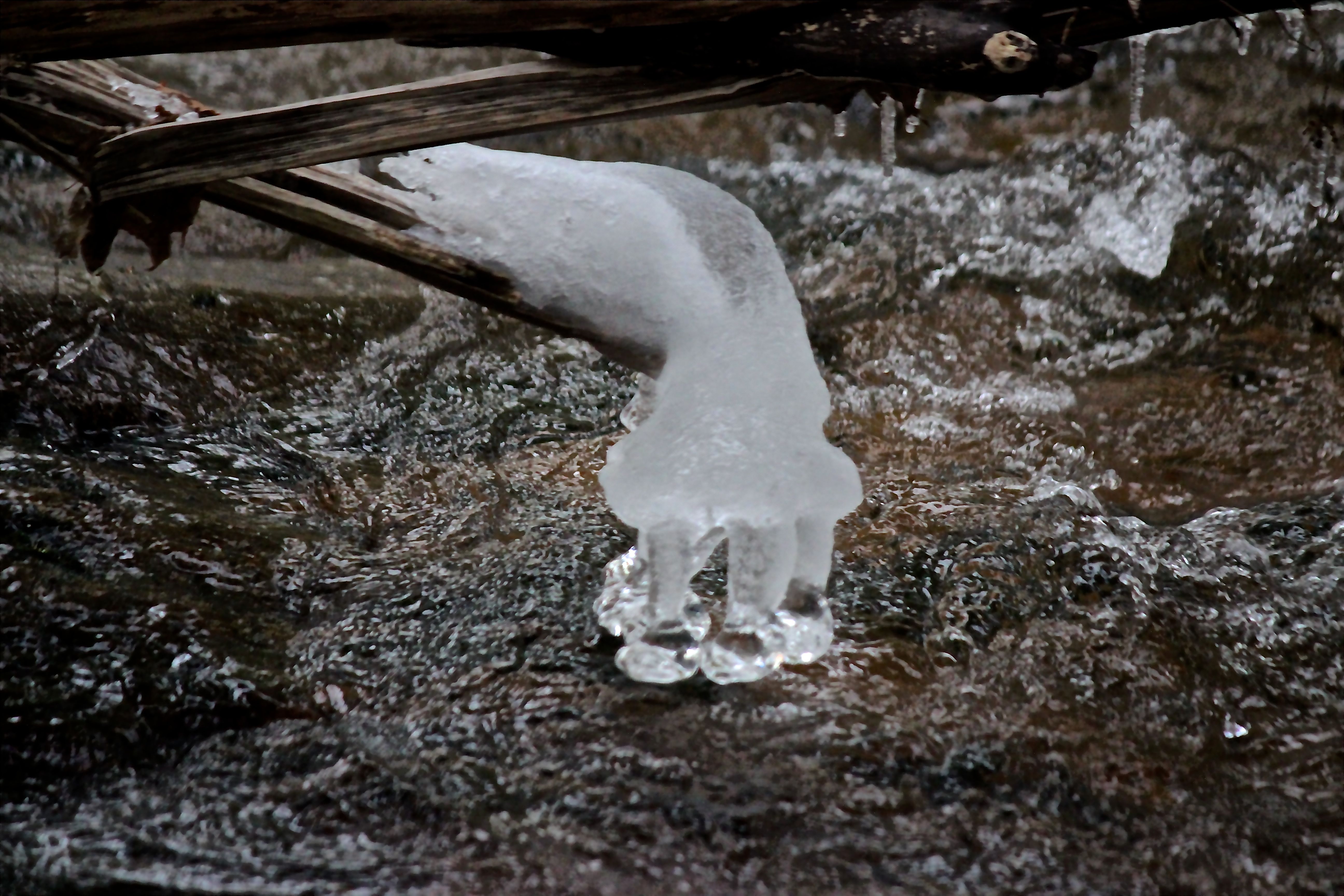
4 legged ice

Water created icy legs as it cascaded over the rocks.

boulder 1

Speaking of rocks, I can’t begin to imagine the moment that this boulder landed beside the brook. It must have created quite a roar and thud. If a boulder rolls in the woods and no one is around to hear it . . .

 boulder 3

My guy begrudgingly posed beside it.

boulder 2

And Red Tail Brook flowed behind.

polypody 1

Atop the boulder, polypody ferns let us know that the temperature was in the teens. Fortunately, we were out of the wind as we were on the backside of Mount Cranmore.

boulder life

Life on a rock! Life rocks. And this rock is full of life.

boulder birch seed

One itty bitty piece of life clung precariously with hopes of taking hold on a permanent basis. I’m not sure this boulder is the right choice, but a yellow birch scale clings tentatively.

Yellow birches need moist conditions to germinate and grow. Moss-covered conifer logs and stumps, along with rocks offer the best chance for survival.

hemlock cone hemlock scale and seed

We were in Eastern hemlock territory so hemlock cones, seeds and scales were also abundant.

red squirrel midden 1

As were red squirrel middens.

 turkey prints

turkey print

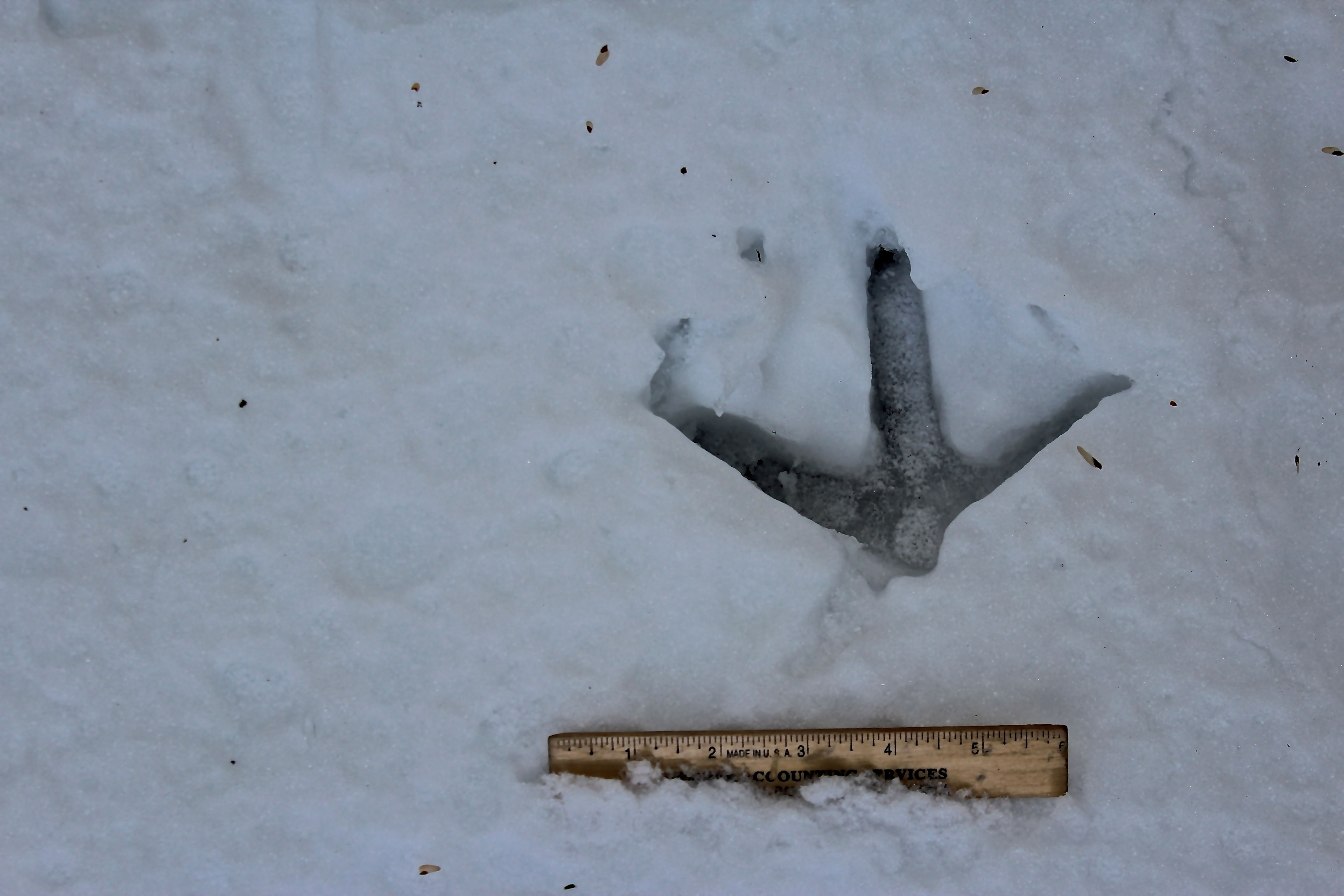
It may be a single track bicycle trail, but it’s not a single turkey trail. Their oversize prints covered the lower part of the range.

deer prints 2 deer prints

From top to bottom, deer prints crisscrossed the trail.

sshare tracks

We also saw plenty of snowshoe hare tracks. Though my guy claims he saw an actual hare, I can at least say that I knew by the signs left behind that they’d been active.

sshare cut snowshoe hare scat

Prints below a 45% cut on a shrub and plenty of milk duds–aka snowshoe hare scat–were evident everywhere we turned.

btaspen bark bigtooth aspen leaf

My bark addiction is not to be denied. A wee bit of light brown between furrows makes me think I’m looking at Northern red oak, until I recognize the flattened ridges and gnarly furrows and realize I’m starring at a big tooth aspen tree. Of course, its leaves with those well-cut teeth and flattened stems serve as a banner.

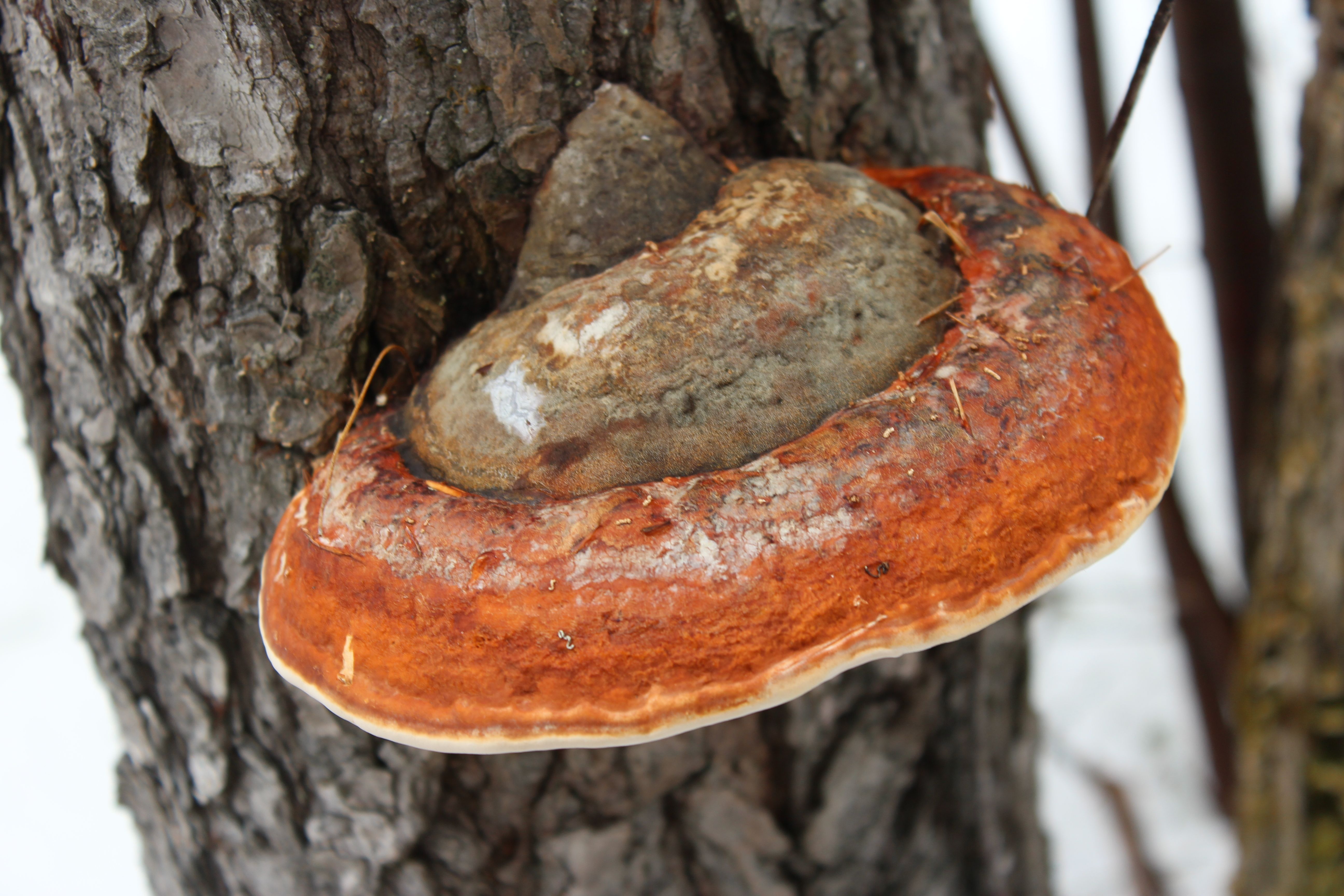
 false tinder conk, Phellinus ignarius

artist's conk 2

False tinder conks and artist conks decorate the trees.

s-turns

After lunch (PB&J, some yummy chocolate raspberry bars my sister made and hot cocoa), we left the brook behind and began to ascend the mountain via a number of switchbacks. My guy, of course, was always ahead as he appears here–disappearing into the trees.

paper birch, white birch and cherry

The community kept changing–sometimes we were in a recently logged area where paper birch, gray birch and cherry trees dominated the landscape.

red pine and white pine

Other times it was a mix of evergreens, including white and red pine, hemlocks, firs and spruce trees.
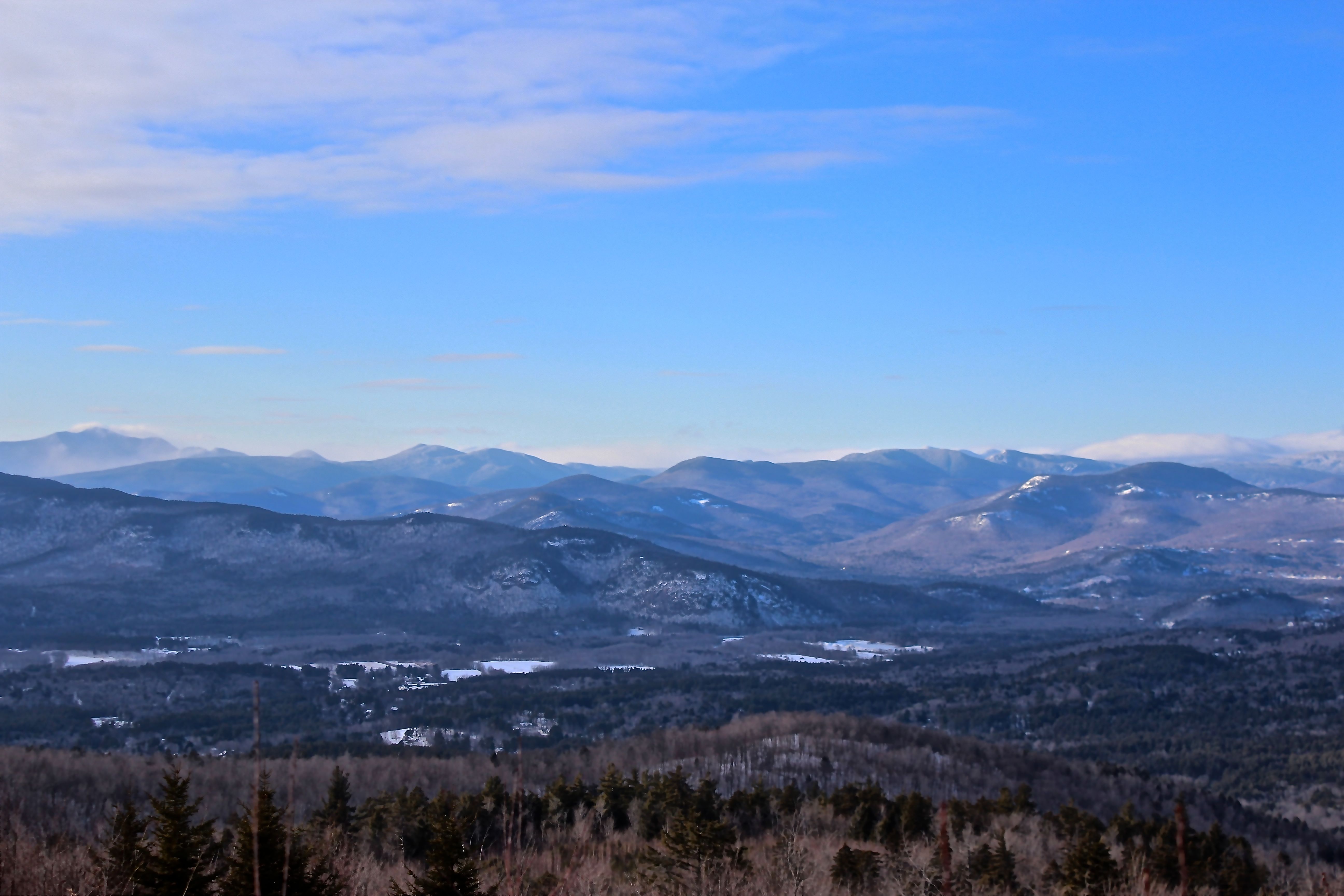
Mount Washington ValleyMount Wash & Kearsarge

And then the S-turns got serious–one curve after another. The higher we climbed, the more we realized that there were a lot of false summits before us, but a glorious view behind us.

Mounts Wash & Kearsarge 2

Mount Washington and Kearsarge North provided a brilliant display.

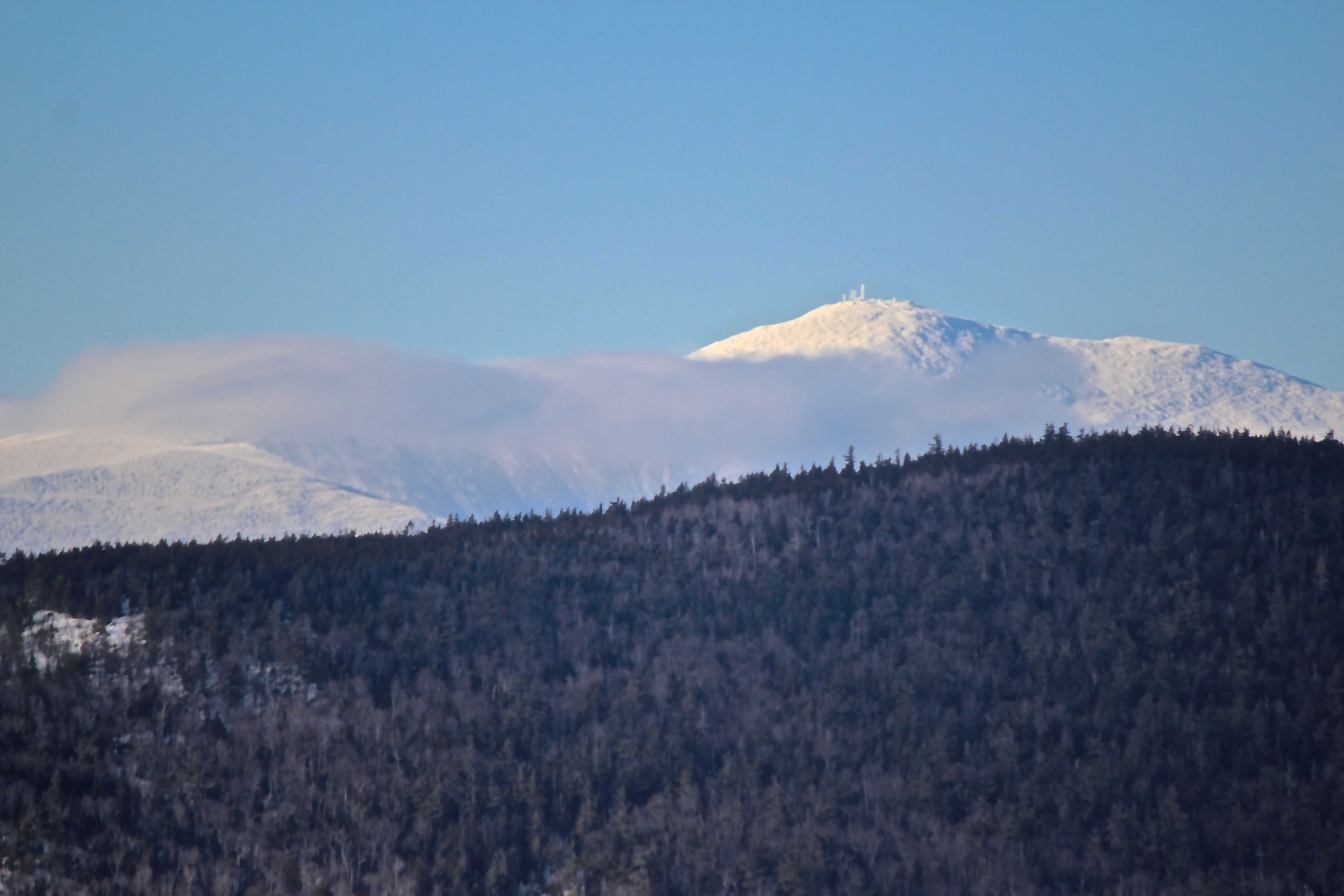
Mount Washington ObservatoryKearsarge firetower

With my telephoto lens, I pulled in the  Mount Washington Observatory and fire tower atop Kearsarge.
MVW

The Mount Washington Valley spread out below us. We felt like we were so close to the connecting trail between Mount Cranmore and Black Cap Mountain, but the sun lowered and we’d left our headlamps behind. Every time we thought surely the next turn would be the summit, we were wrong. So . . . rather than worrying about reaching that destination, we decided to turn around and head back down the trail. At first, we bushwhacked together and then it became a game. We took turns as one of us bushwhacked while the other followed the trail, curious to see where we would meet. Competition took over, and we were soon running to beat the other to our meeting spot–wherever that may be. Somehow, what took us a while to climb up turned into only an hour’s journey down.

last shortcut

I, of course, got off track a couple of times and had to yell to my guy to figure out his location. He had the last chuckle when I chose a wet spot for my final shortcut-turned-longcut.

brook at end

At last we reached the trailhead, tired but exhilerated. On this Mondate we went with the flow and loved the opportunity to learn and play together along the way.


Book of January: A Guide to Nature in Winter by Donald W. Stokes

Stokes 1

Book of January

I have a number of winter nature books, but one of my go-to favs is A Guide to Nature in Winter by Donald W. Stokes. My copy is old (1976–it was a very good year–I graduated from high school) and a bit weathered, but that’s because it has seen frequent use.

Divided into eight field guides, Stokes covers all aspects of winter: winter weeds; snow; wintering trees; evidence of insects; winter’s birds and abandoned nests; mushrooms in winter; tracks in the snow; and woodland evergreen plants.

For each topic,  pen-and-ink drawings by illustrator Deborah Prince and the author are included in the key, as well as natural history descriptions.

The natural history descriptions are just that–Stokes’s descriptions are part of the story that Kevin Harding of the Greater Lovell Land Trust reminds us to share with others. Here’s an example: “St. Johnswort (Hypericum perforatum)–An old country custom in Europe was to hang a special yellow-blossomed plant in your window on the eve of St. John’s Day (June 24), in order to repel bad spirits and counteract the evil eye. In general, the presence of this plant was considered a good omen, and since it was thought that the plant warded off lightning and revealed the identity of passing witches, St. Johnswort was allowed to prosper around the farmhouse. It became known as St. John’s Plant or St. Johnswort (wort meaning “plant” or “herb”). When the plant immigrated to North America it left its traditions behind, and although still as effective as it probably ever was against evil, St. Johnswort is now seldom used for that purpose.” Of course, then he goes on to describe how the plant grows and the seed heads that will appear in the winter landscape.

One of the things I’ve learned from this book is to keep it simple. In the chapter about winter trees, Stokes encourages the reader to begin with the six most common deciduous trees: oak; maple; ash; beech; birch; and aspen. Learning these along with the evergreens provides you with knowledge about 80% of the trees in your forest. I’ve spent the last couple of years developing my bark eyes. I still have much to learn, but can eliminate the common species when I encounter bark I’m uncertain about.

It’s well worth taking the time to read A Guide to Nature in Winter from cover to cover–it’s an easy and enjoyable read. I say it won’t take long–unless you are like me and you pause to underline (yes, I mark my books up–even write in the margins, oh my!) details and take time to understand what you do see along the trail. I probably should invest in a more up-to-date copy, but I feel right at home engrossed in the one that I have.

And it’s also easy to turn to a particular chapter to figure things out. The simplified, illustrated keys should bring you quickly to an identification. And as I said before, the natural history description will further enhance your learning.

The book is available at Amazon.com, but if you live near an independent book store like Bridgton Books, then I strongly encourage you to shop there.
A Guide to Nature in Winter: Northeast and North Central North America, by Donald W. Stokes, illustrated by Deborah Prince and the author, published 1976, Little, Brown & Company.

The Wonders of Wilson Wing

A wander at Wilson Wing Moose Pond Bog Preserve is the perfect way to celebrate the start of snow season. The 20.7 acres of land near Horseshoe Pond that was donated by the Wing family combined with the twelve acres surrounding Sucker Brook that The Nature Conservancy previously owned create the Preserve, which is a Greater Lovell Land Trust property.

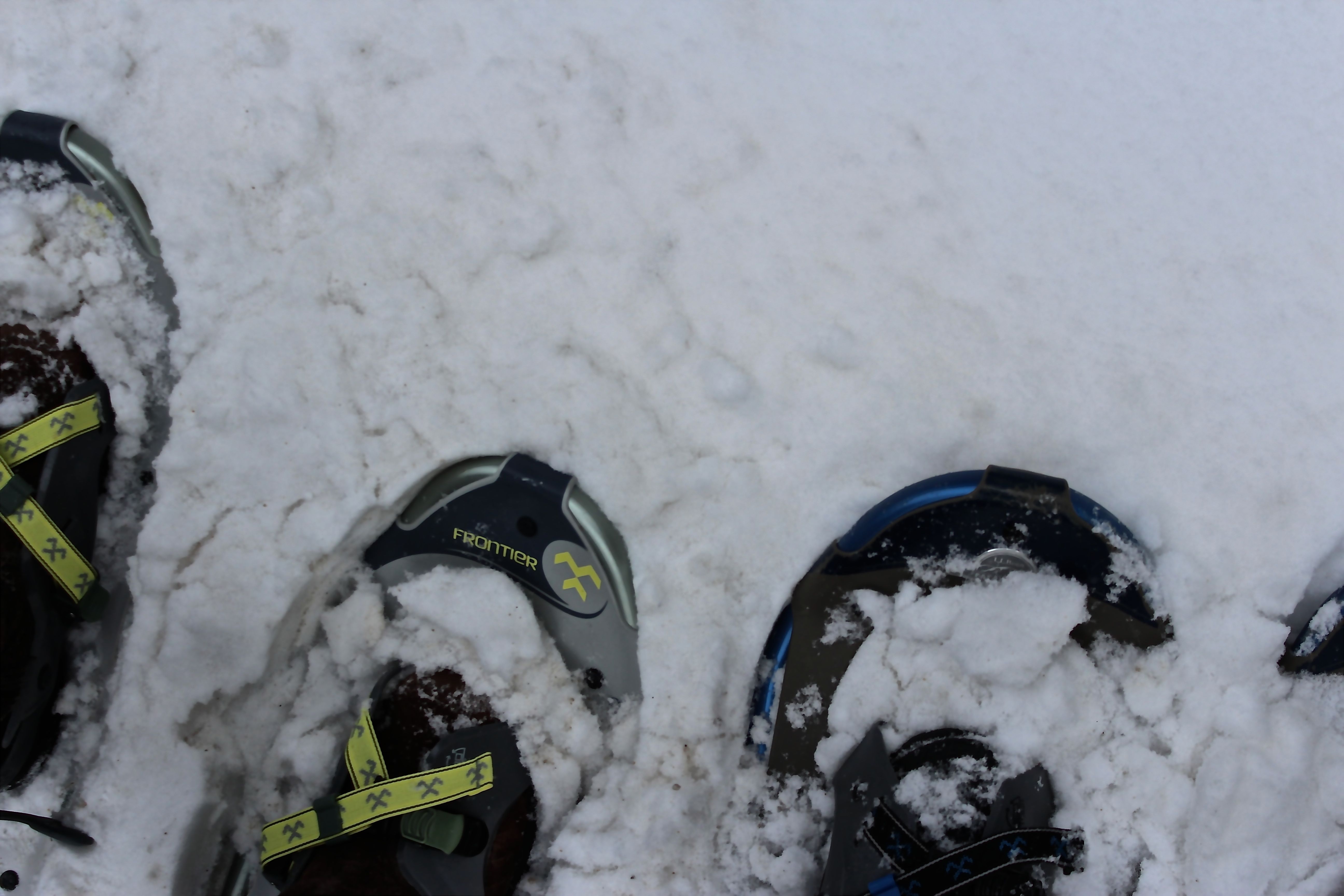
snowshoes

My friend Jinny Mae and I donned our snowshoes and headed off on the trail, not sure what we might find. It was snowing lightly when we started, so we didn’t expect to see any mammal tracks.

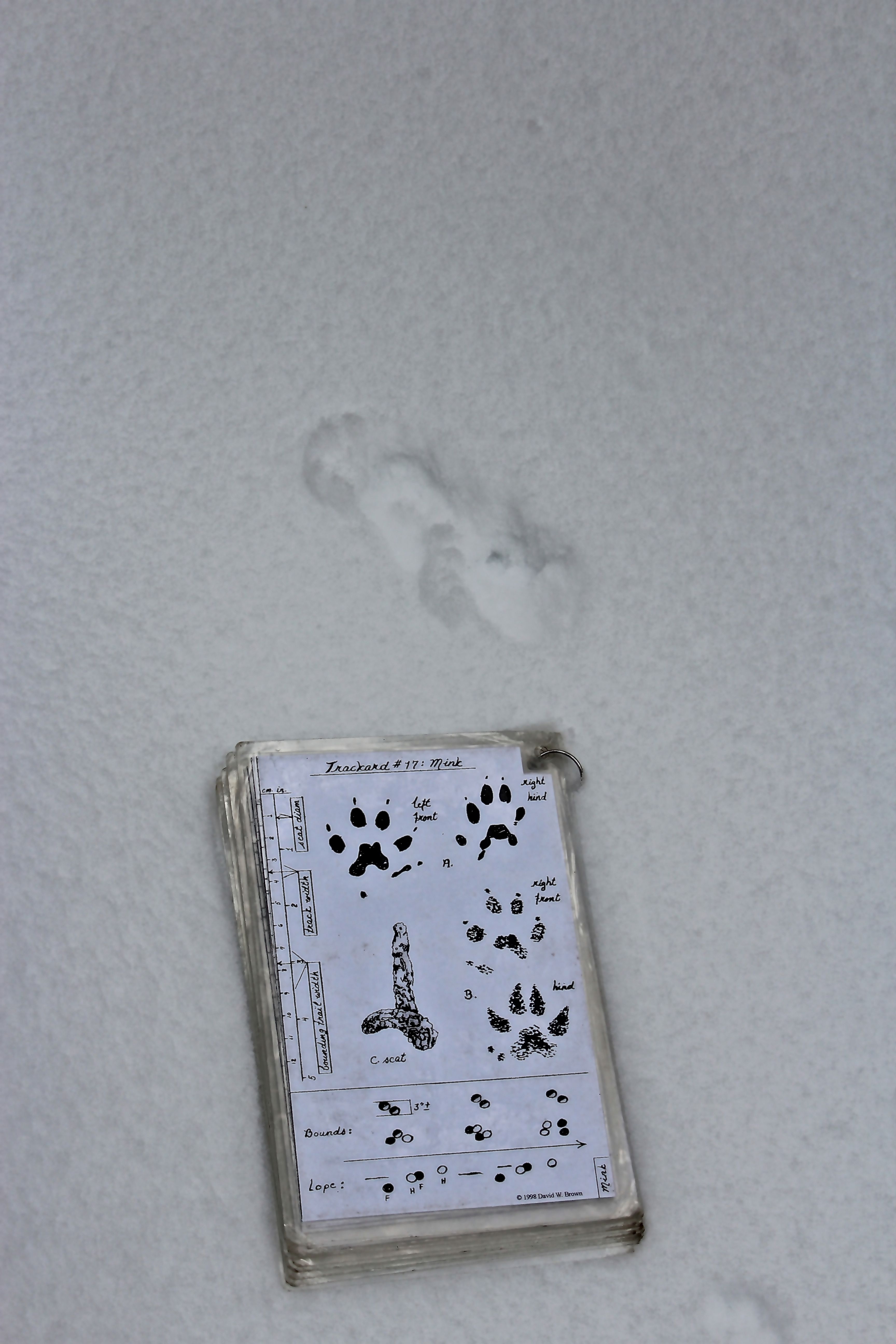
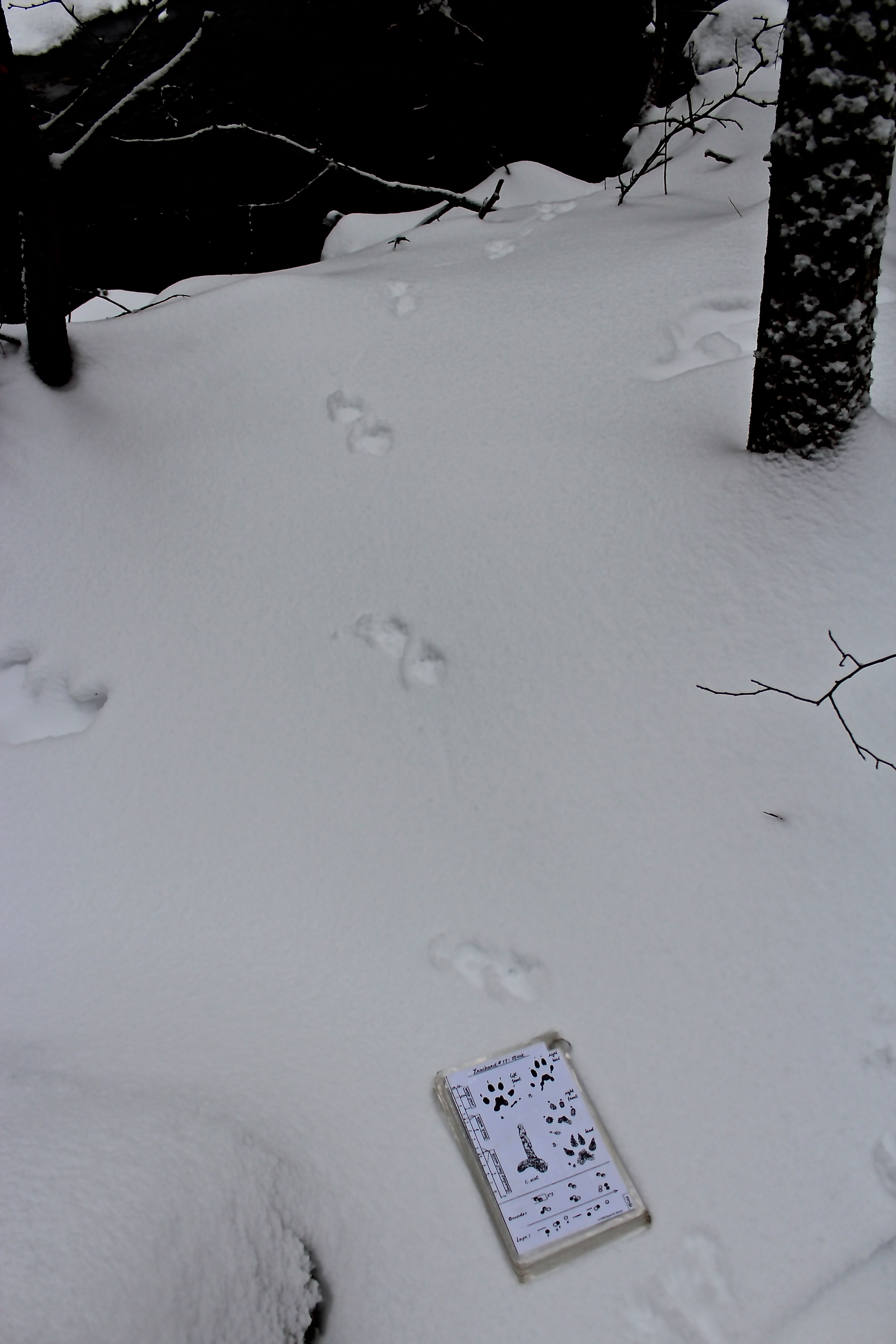
mink trackard

Thus we were delighted with our finds–especially this one which was rather fresh. A look at the formation and we knew we had a member of the mustelid or weasel family. A few measurements of prints, straddle and stride–and we determined it was a mink.

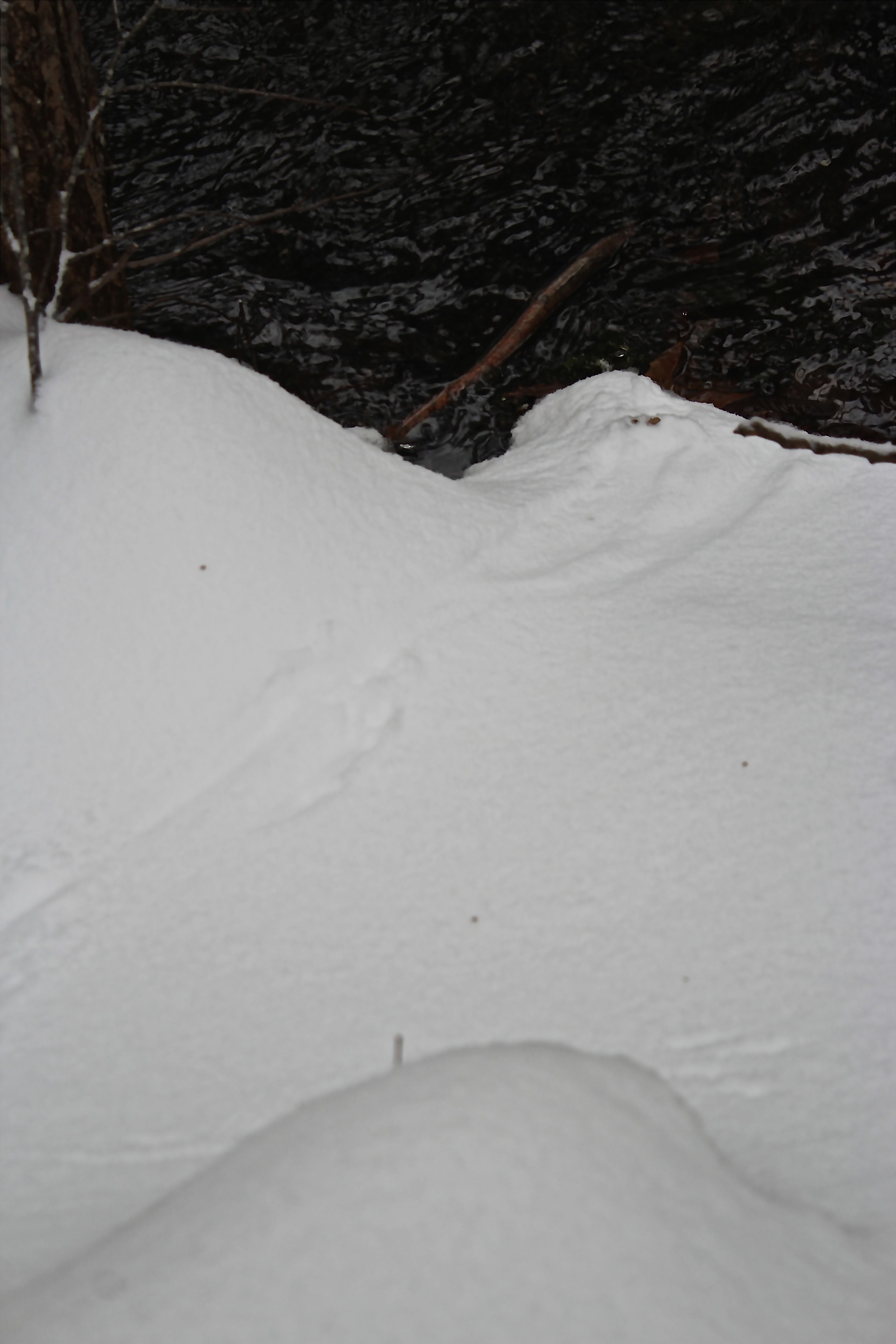
mink 2 mink slide

In true mink fashion, it enjoyed a slide into the brook. We also saw mice, red squirrel, deer, bird  and domestic dog tracks–some were blurred by the snow, but the pattern and behavior helped us come to a conclusion. Well, the bird stumped us at first. It wasn’t clear at all. But then we saw juncos. And under the platform were clear prints beside some muted ones.

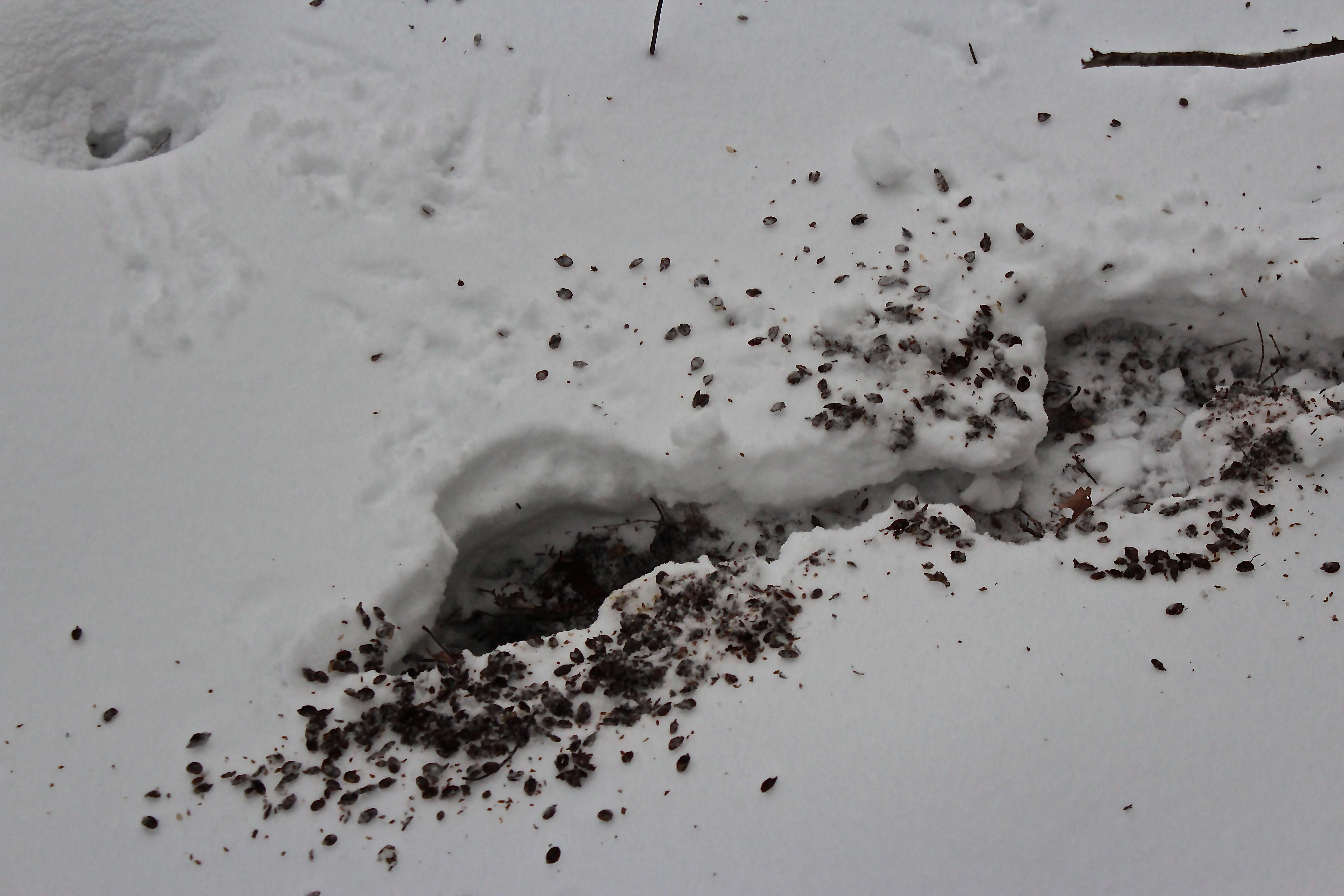
red squirrel midden

Though we neither saw nor heard any red squirrels, their presence was well pronounced. I was surprised to see a midden. All fall, I searched for caches. Usually cones are piled in various places, but this year I found only a few. Were they fooled by the warm weather?

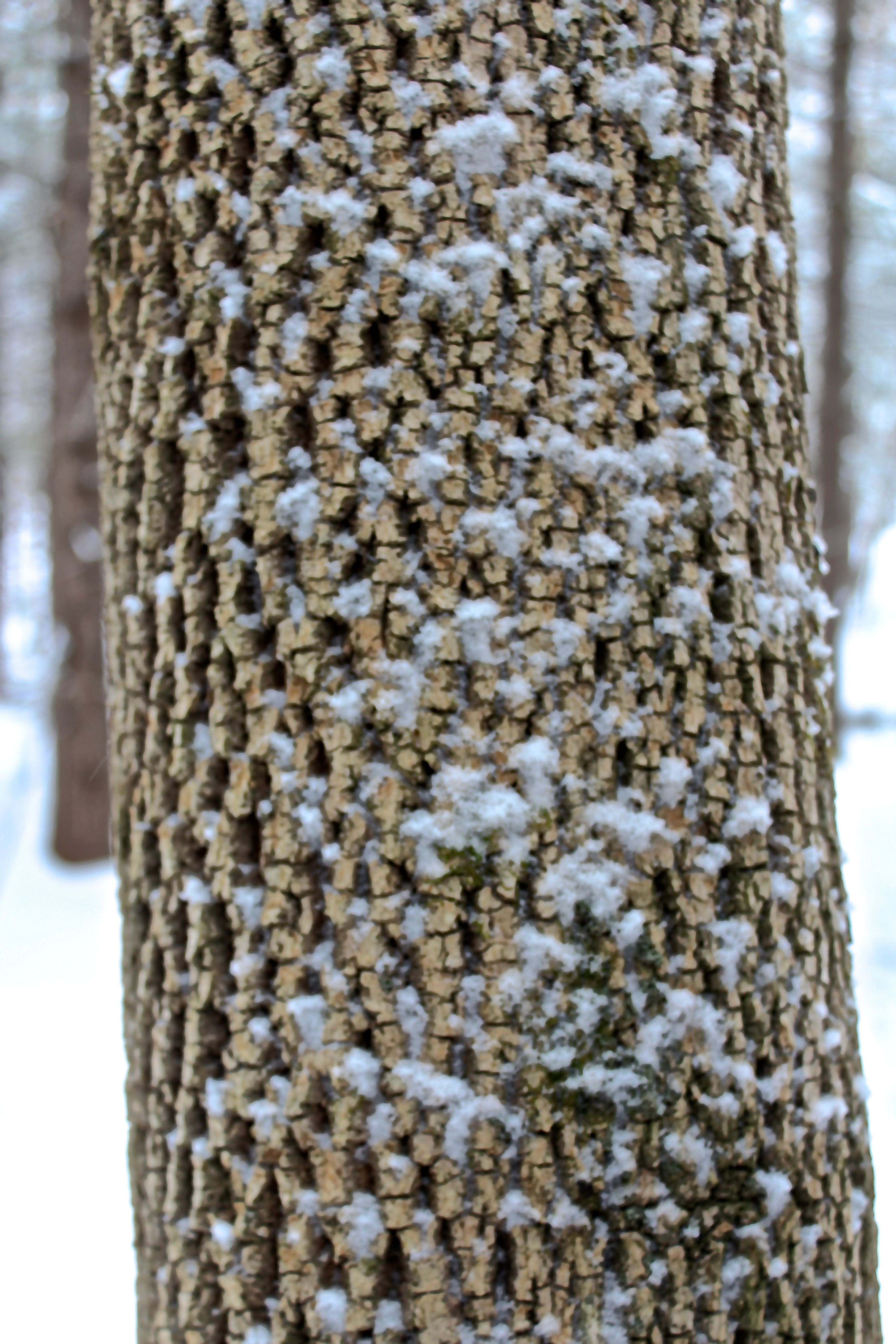
ash cork

ash snow 2

I don’t know if it’s because it is winter and everything seems more pronounced or what, but the ash bark appeared chunkier and corkier than ever. Of course, the snowflakes added to the scene.

Sucker Brook

We were beside Sucker Brook, which flowed with winter magic.

ice 1 ice 2  ice 4 branch

And ice. Its many forms of presentation always fill me with awe and wonder.

ice 5, big foot

And whimsy. Check out these gigantic feet and

ice 3 hem

the hemline of this snowy skirt.

hobb 2 hobb 3a

Another favorite (oops, I forgot, everything is my favorite, but these really do stop me in my tracks–or snowshoes) is hobblebush. In any season this shrub provides an incredible display, but its the winter buds that are especially astounding. (OK, wait until it blossoms and I’ll be saying the same thing.) While most buds have waxy scales that protect the leaves, hobblebush is naked. The same is true for witch hazel buds. What you see in these photos, is miniature leaves clasping each other. And embraced within, the flower bud. Here’s hoping the snow provides warmth until spring.

polypody 1

Another “favorite” display adorned a rock hidden beneath the snow.

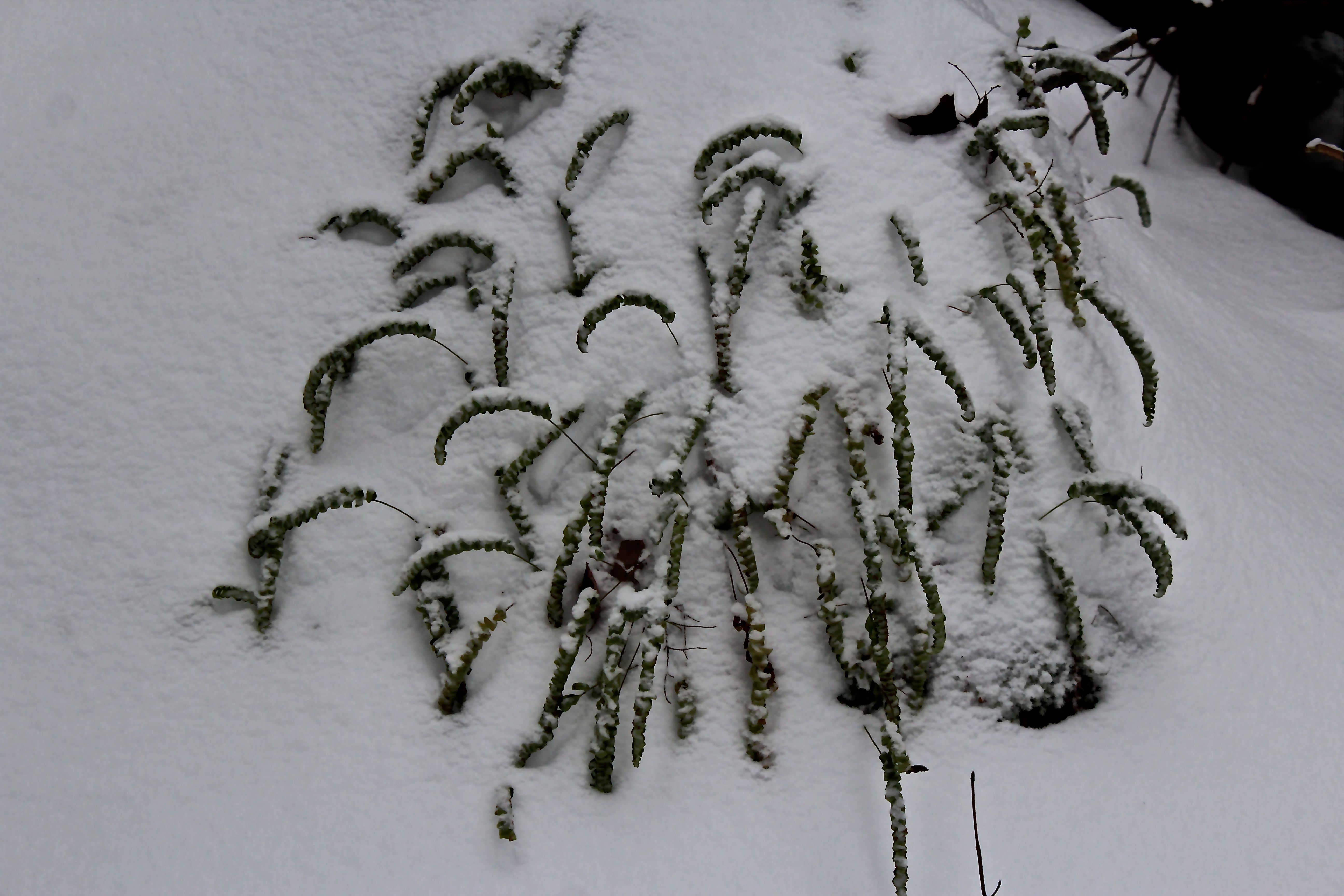
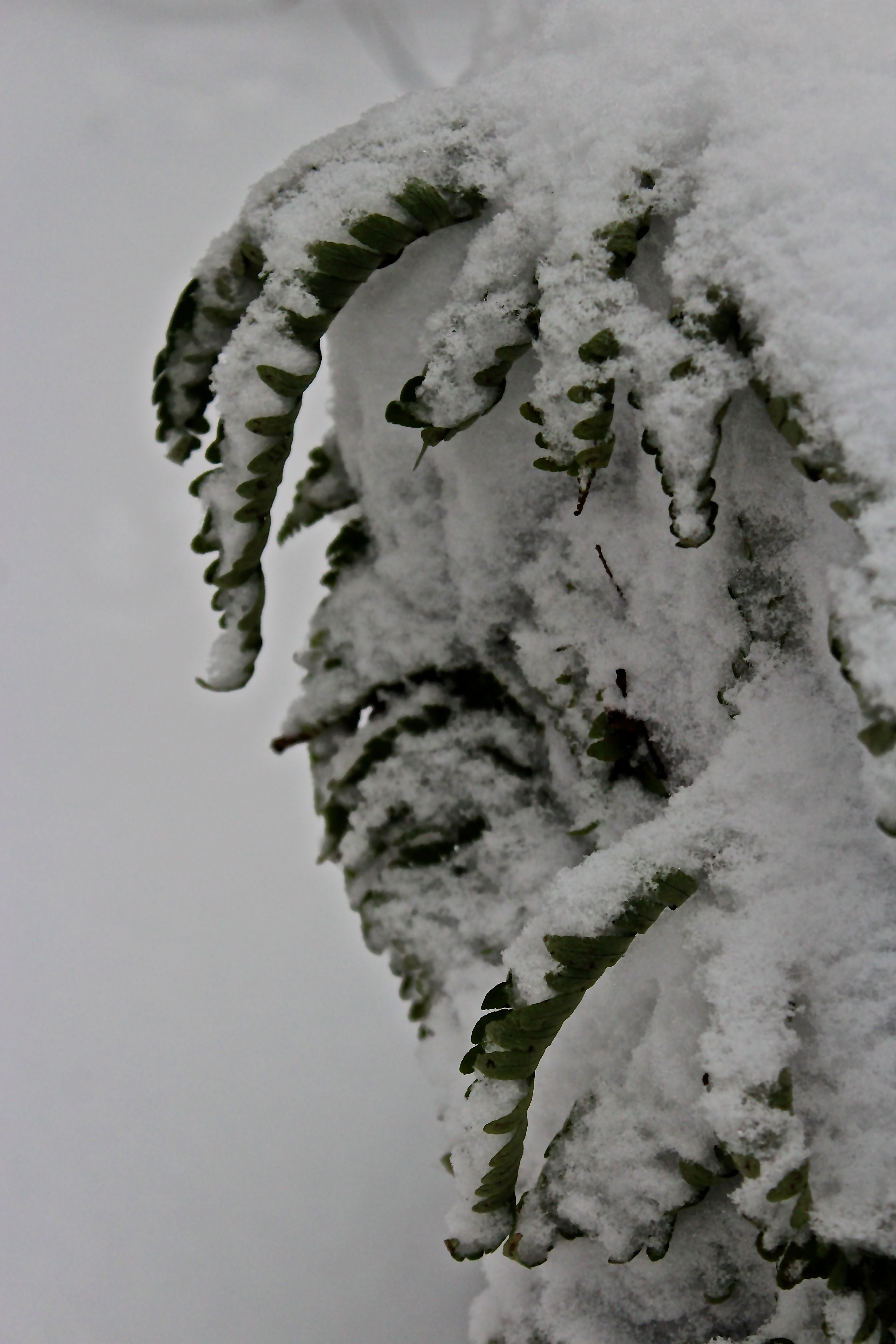
poly 3Common polypody ferns seemed to hold the snow tight between their curled blades. That made us pause and wonder once more.

poly 2

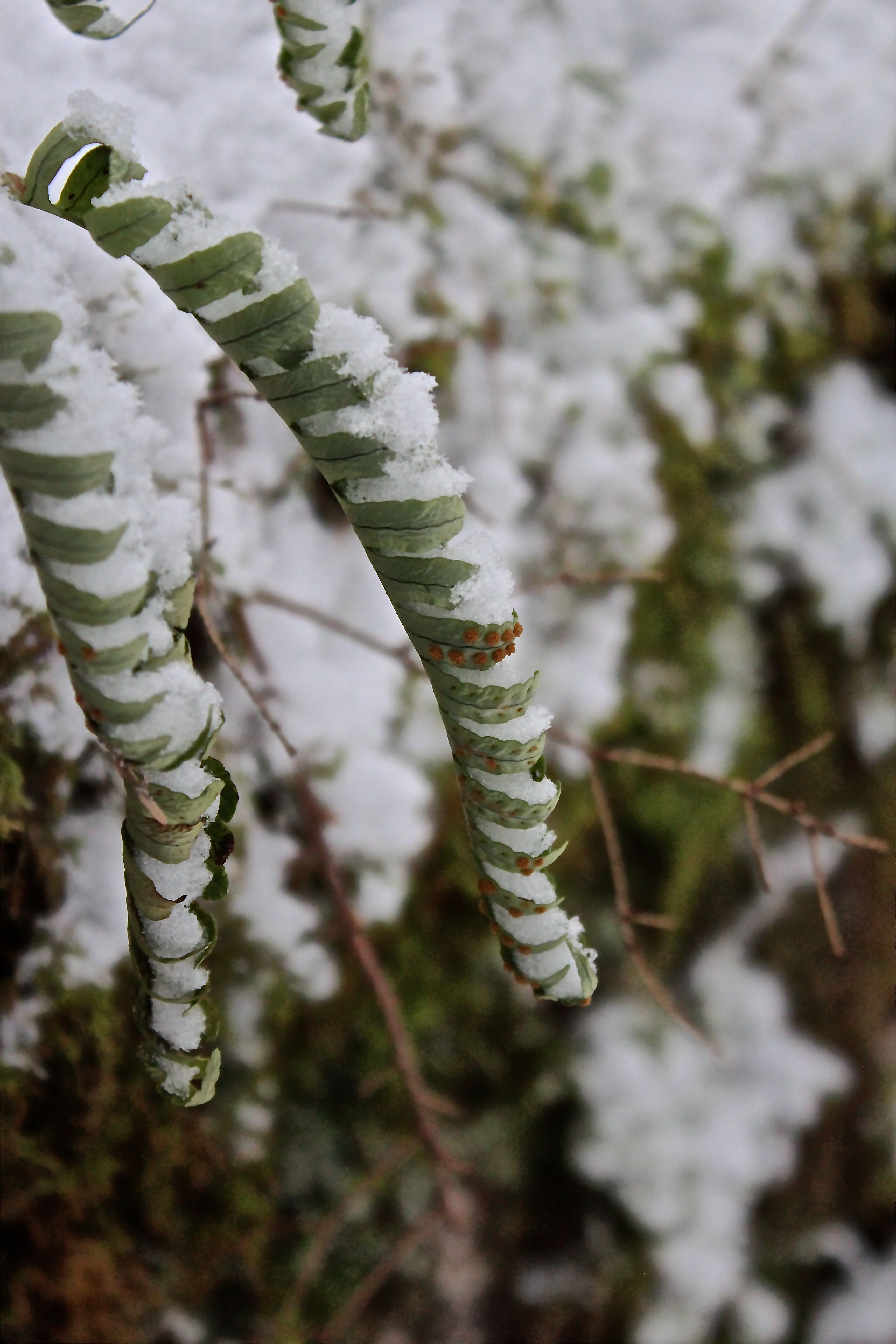
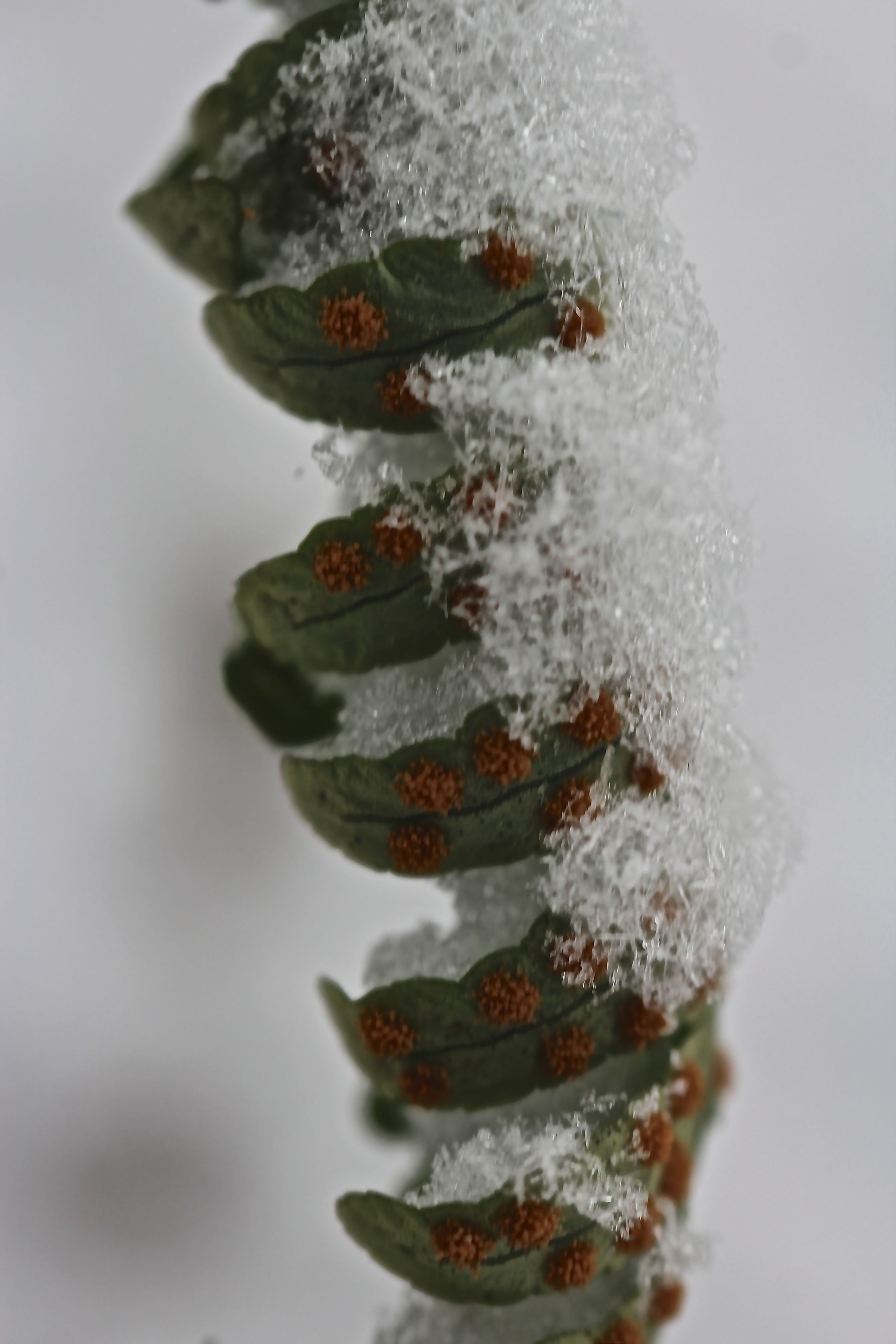
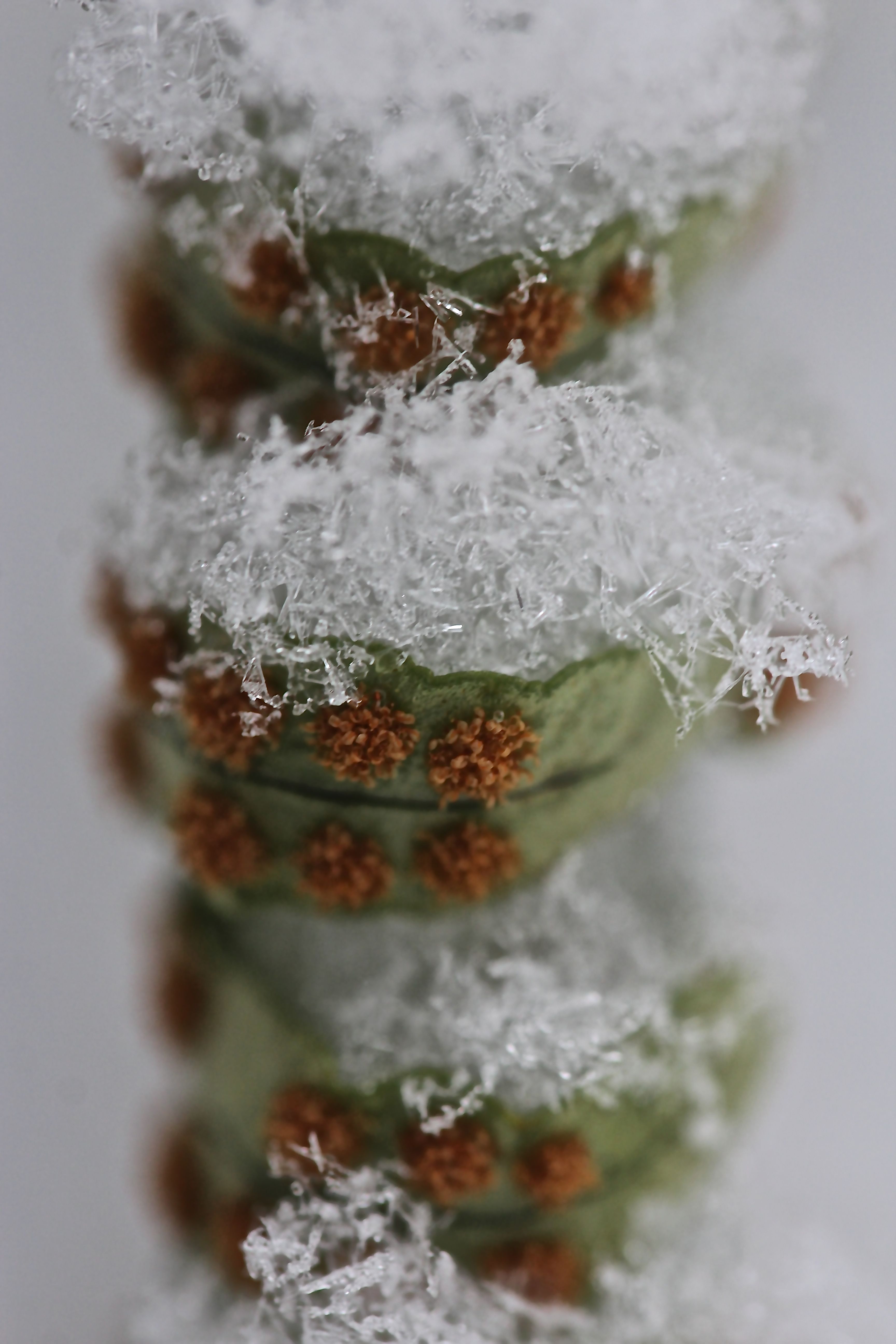
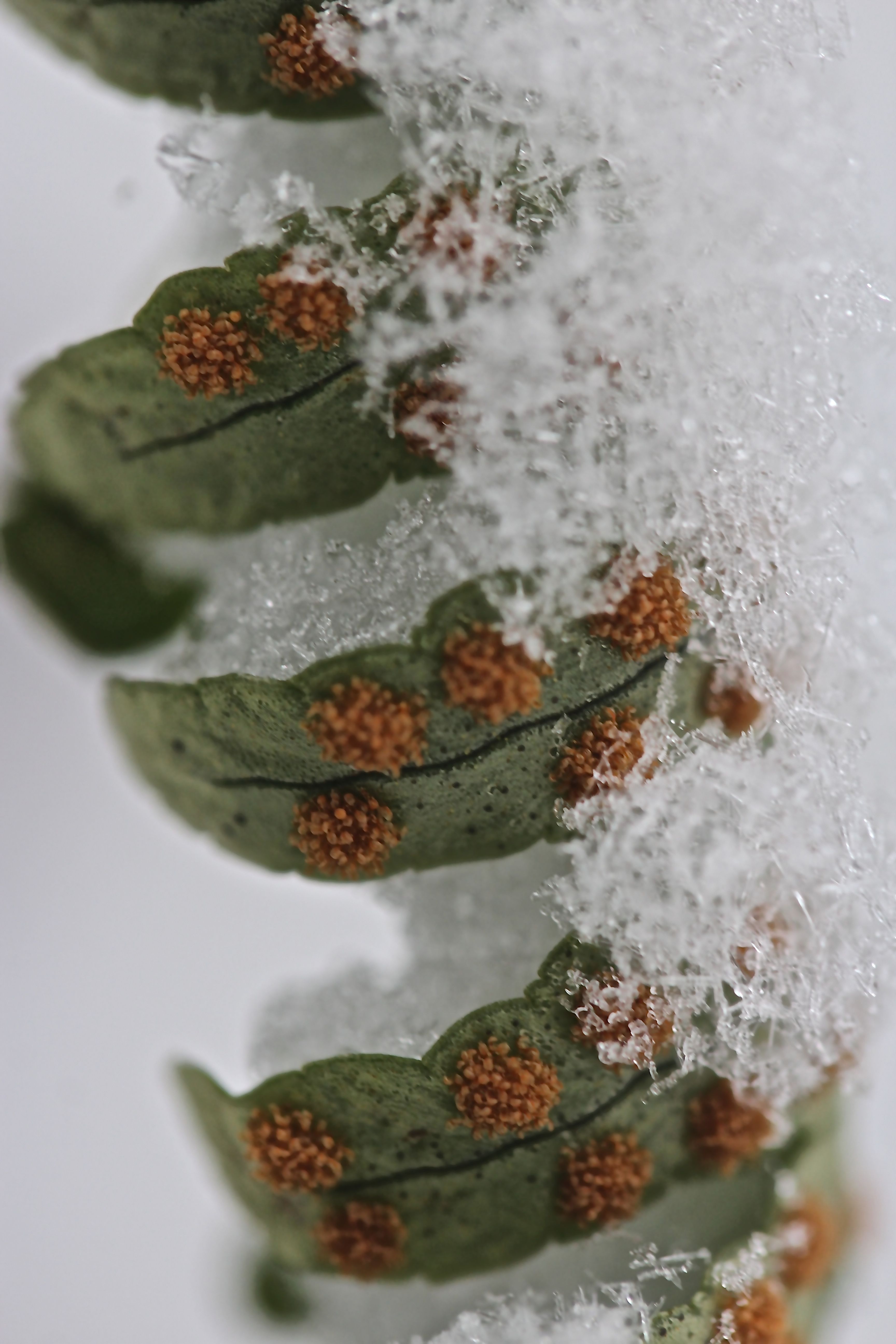
And because we did so, we realized that clusters of sporangia were ready to catapult their spores into the world.

poly 4

poly 6

poly 5

They look like miniature clusters of balloons waiting to broadcast the arrival of a new year. But, why were the pinnae curled inward? It’s certainly not a stance that would protect the spores–those are to be spewed outward in order to further the population. We know that the blades curl up if conditions are dry, but it’s hardly been dry the past few weeks–lots of rain and now snow. My research turned up little, but I wonder if it’s a protective measure similar to the rhododendrons in our front yard. As nature’s thermometers, they let us know what the temperature is based on the behavior of their leaves–about 40˚ they extend outward, about 32˚ they droop and in the low 20˚s the rhodies’ leaves curl. I’m always sure they will die and drop off, but that’s not the case. Could it be the same for the polypody? Do their dense covering of scales located on the underside prevent the loss of moisture? Now I need to keep track of the temperature and see if it follows the same pattern.

Worth a wonder. Worth a thanks to the Wing family (and especially Dr. Wilson M. and June Wing) for helping to make the Preserve a place for all of us to wander.

Rejoicing for Jinny Mae

When my friend Jinny Mae received an ominous diagnosis in June, she faced it with admirable spirit and courage. All who know her watched in awe as she  underwent treatment and slowly made her way back into our midst. Despite everything, she continued to spend as much time in nature as possible, whether observing from her chair by the window, walking her dogs or eventually joining friends for tramps. And today–she received fabulous news that I learned about as I was about to hike up Bald Pate Mountain in South Bridgton. She is in remission. INDEED!

So as I did when I first learned of her diagnosis, I took her along with me in spirit on today’s hike. I would have asked her to join me for a celebratory tramp, but it was late in the day. We’ll have plenty of opportunities.

I was on a reconnaissance expedition because I’m leading a hike for Loon Echo Land Trust next weekend. Having Jinny Mae along meant I noticed some things I may have walked by previously. In the end, I discovered a mixture of my favorites and hers.

beech slash

Because there is a beech forest at the base of the mountain, and it’s located adjacent to an orchard, I’m determined to find bear activity. Is this the work of a bear that gave the tree a side-ways slap?

beech slash 2

I don’t think so. More likely, the younger trees beside it waved in the breeze enough to create slight scars that have grown with the bark.

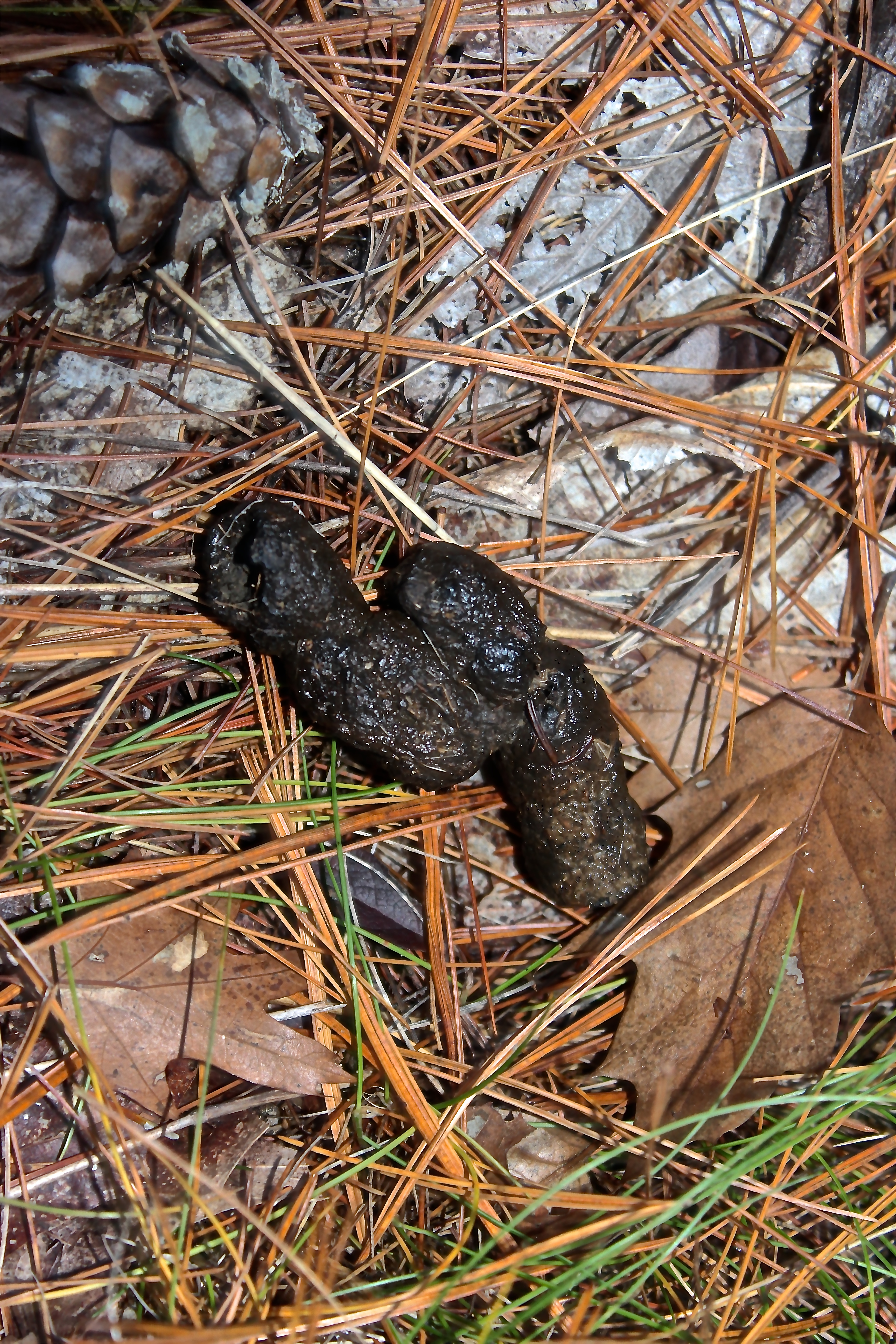
porcupine scat

I poked around under a large hemlock, and noticed what I thought was old deer scat. But then I realized that some of it was a wee bit longer and had the curved shape characteristic of porcupines. As I continued to look, I saw that many small twigs had nipped off ends cut at an angle–porcupine it was.

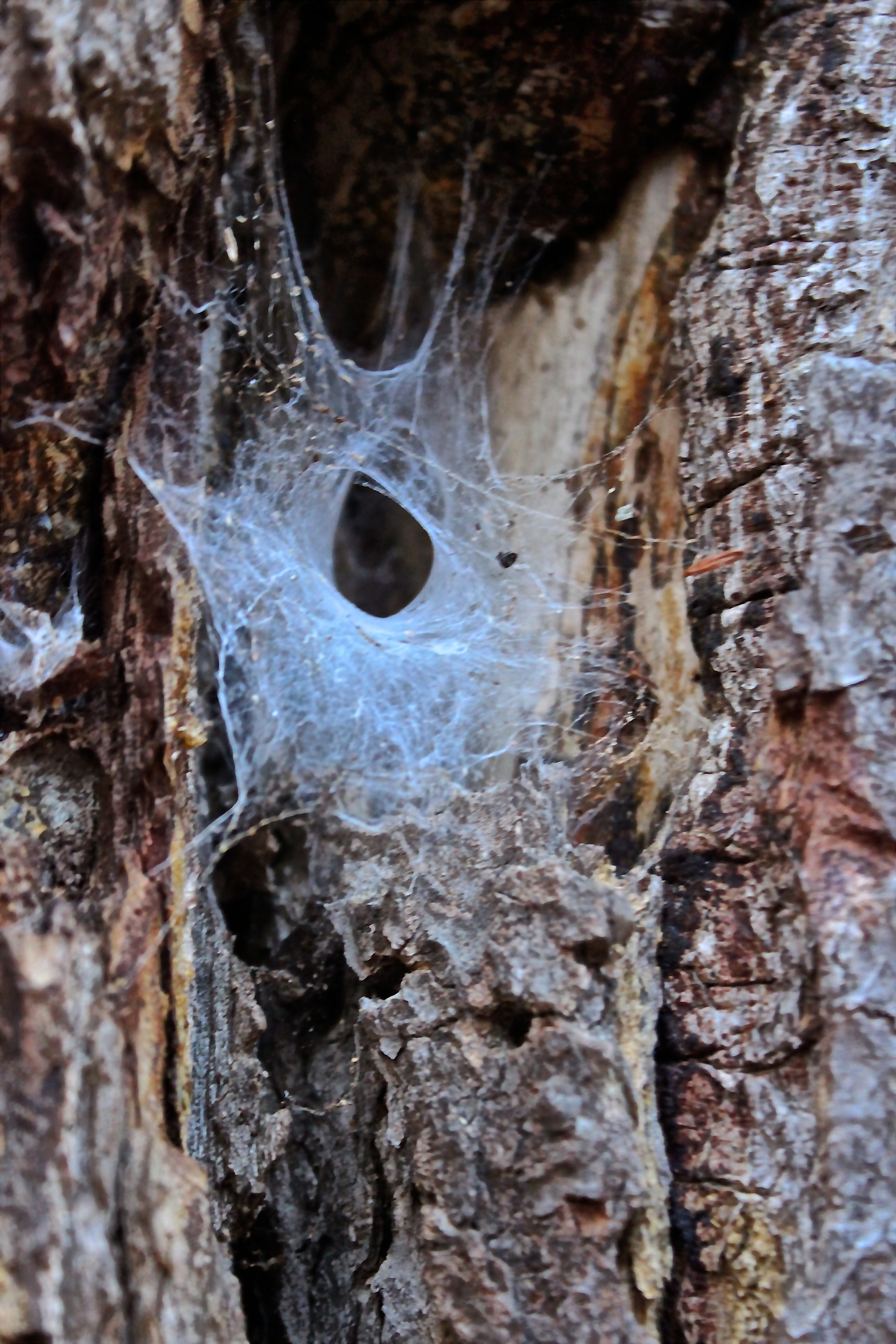
funnel weaver web

For a while, hemlocks became my focus as I checked under each for signs of activity. On the backside of one, I found this funnel weaver web–standing strong against the elements. It reminded me of someone else.

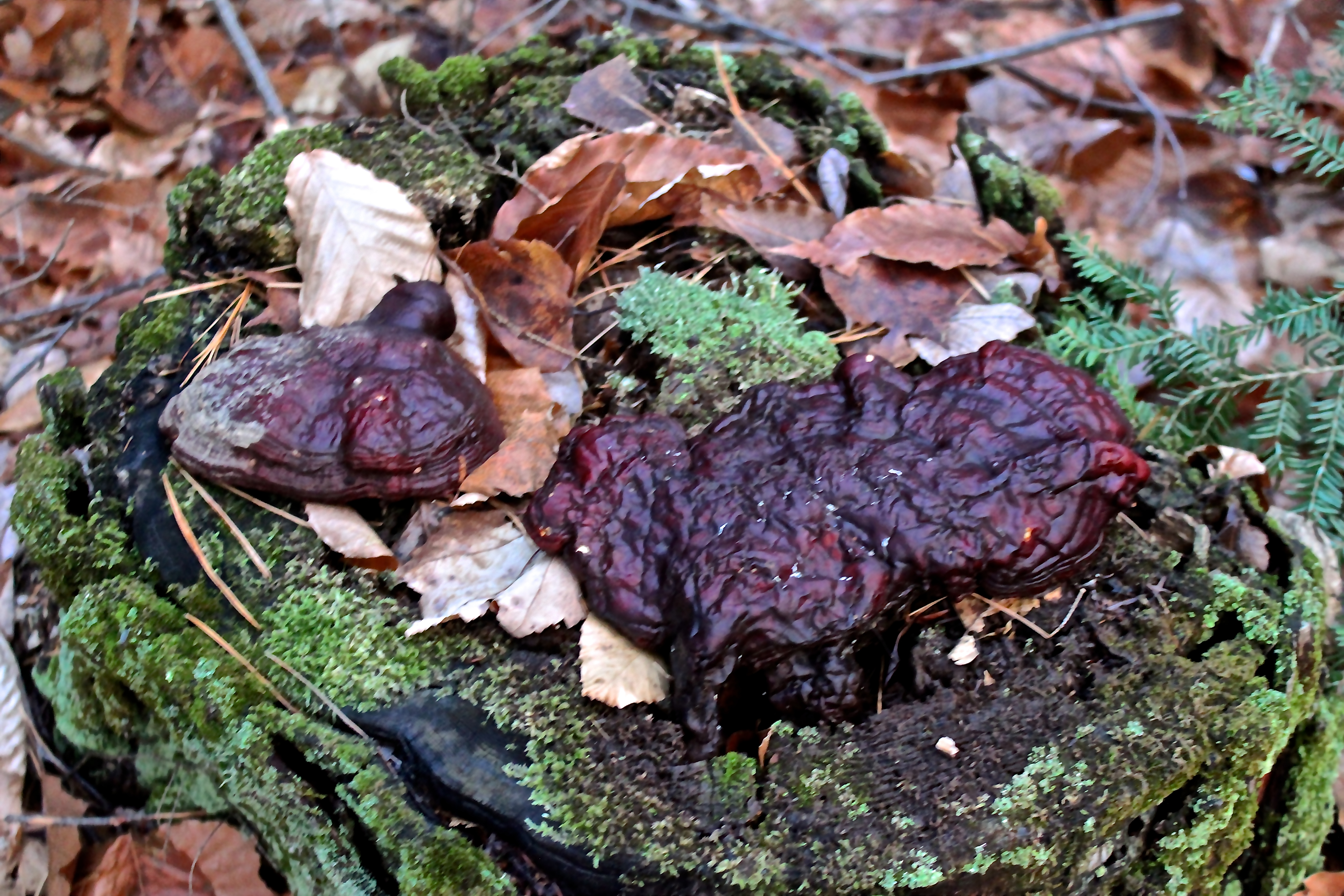
hemlock varnish shelf

That someone would certainly have stopped by this old hemlock stump to admire these varnish shelf fungi–it wouldn’t matter to her that they are withered and old. There’s beauty in age.

pileated log

Every once in a while I felt the nudge to go off the trail and explore–when J.M. keeps track of our tramps on her GPS, the line always zigzags. This rotting log caught my attention. Bear or fisher activity?

pileated scat

No hair or obvious scratch marks from claws, but some scat–pileated woodpecker scat. I left it there in hopes I can show it to people on the hike and let them see that it’s filled with carpenter ant bodies.

ledge

Behind the log was this ledge. A quick look at it and I knew that a certain someone would want to inspect it.

ledge 2

It’s almost completely covered in smooth rock tripe. Sorta looks delicious enough to eat–if you boil it for days on end maybe. Apparently it can be used to thicken stew. Too bad I made stew the other day.

polypody & tripe

And growing among the tripe–a few polypody ferns, who also appreciate a moist, rock surface. Thanks J.M. for encouraging me to take a closer look.

Many-fruited pelt

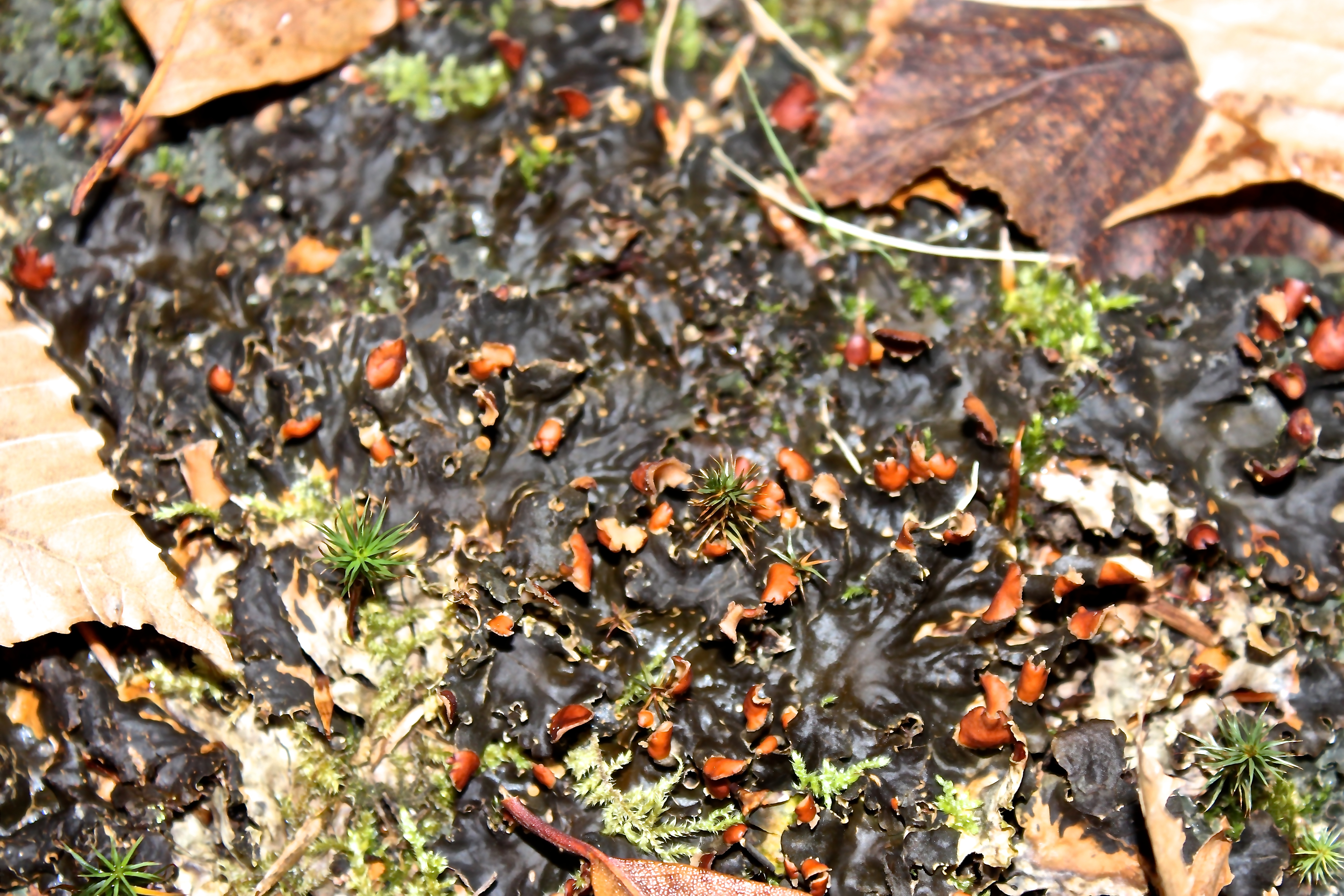
While I’m on the topic of lichens, here’s one that was new to me. The rust-colored projections among the shiny brown lobes made me squat for a photo call. At home, I thumbed through my go-to lichen book, Lichens of the North Woods by Joe Walewski, and discovered that this foliose lichen is Many-fruited Pelt. Those reddish-brown projections are the fruiting bodies on the leafy margins–thus the name. One for us to learn, J.M. We’ll probably see it everywhere now as it grows on soil, moss or rocks.

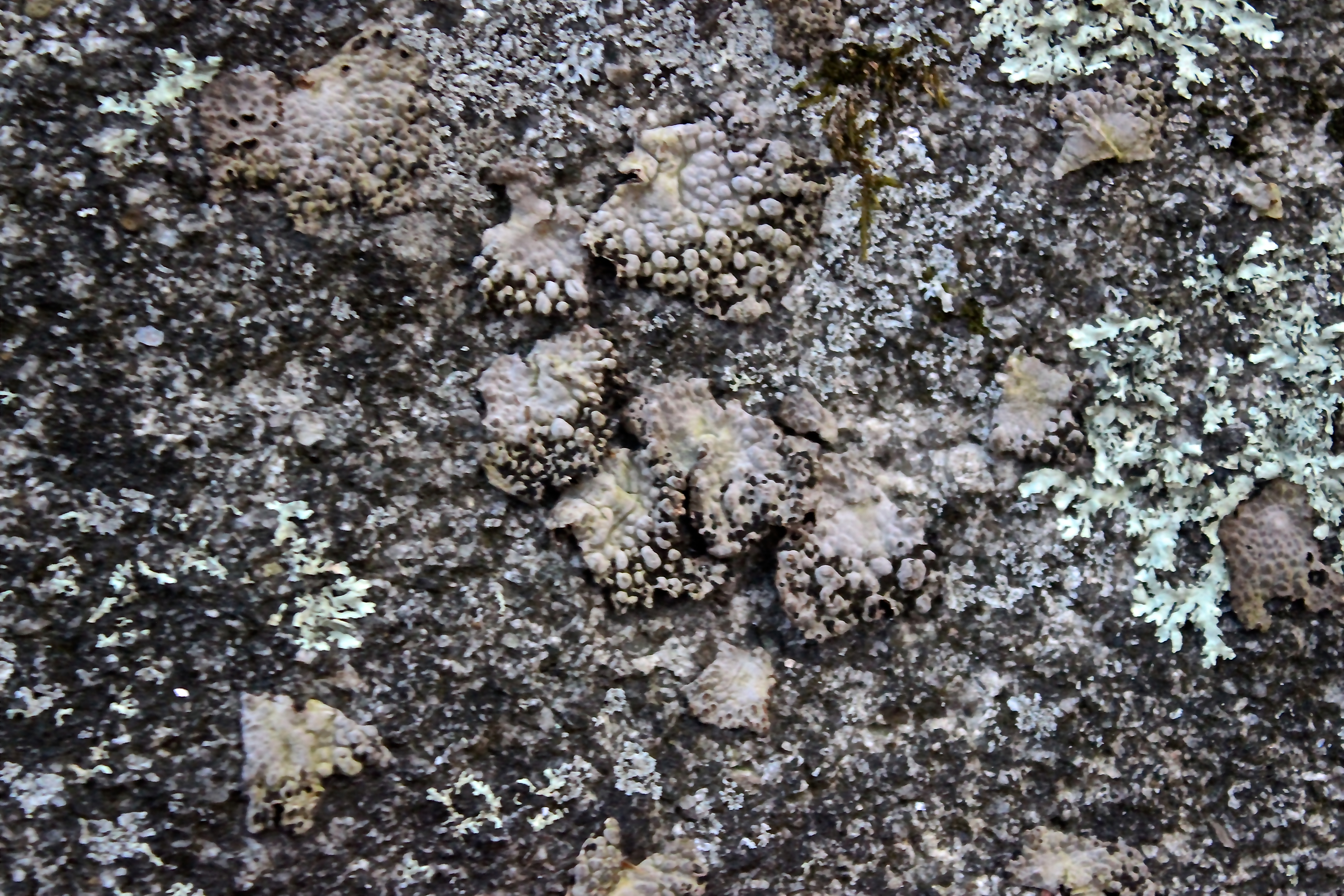
common toadskin lichen

And because we like to learn, here’s another–Common Toadstool Lichen. That should be easy enough to remember, given its warty appearance.

Peabody Pond

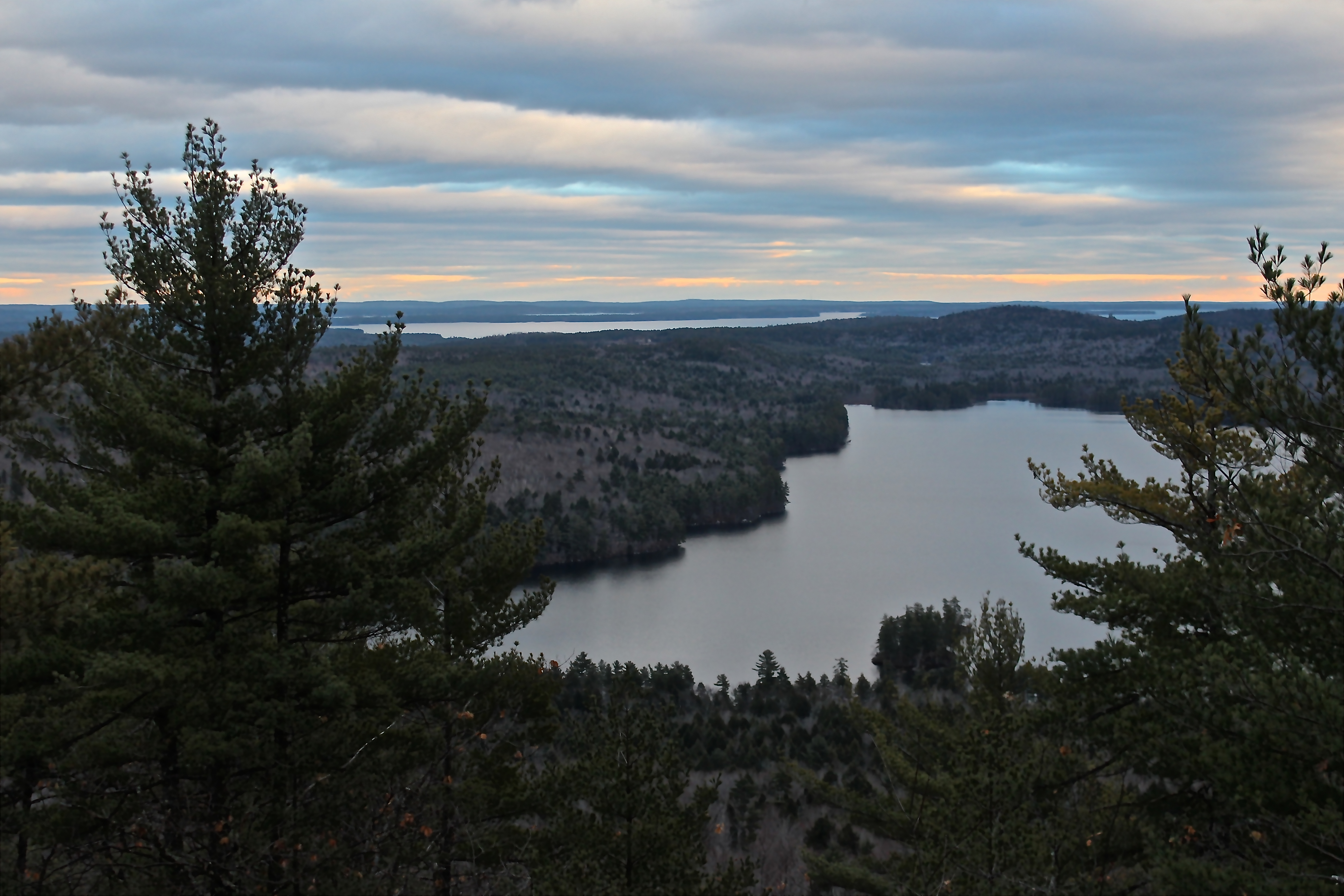
At the summit, I paused briefly to take in the views of Peabody Pond and

Pleasant Mtn

Pleasant Mountain. It was getting late and I still wanted to hike to the Foster Pond Outlook via the Bob Chase Scenic Loop.

bob1

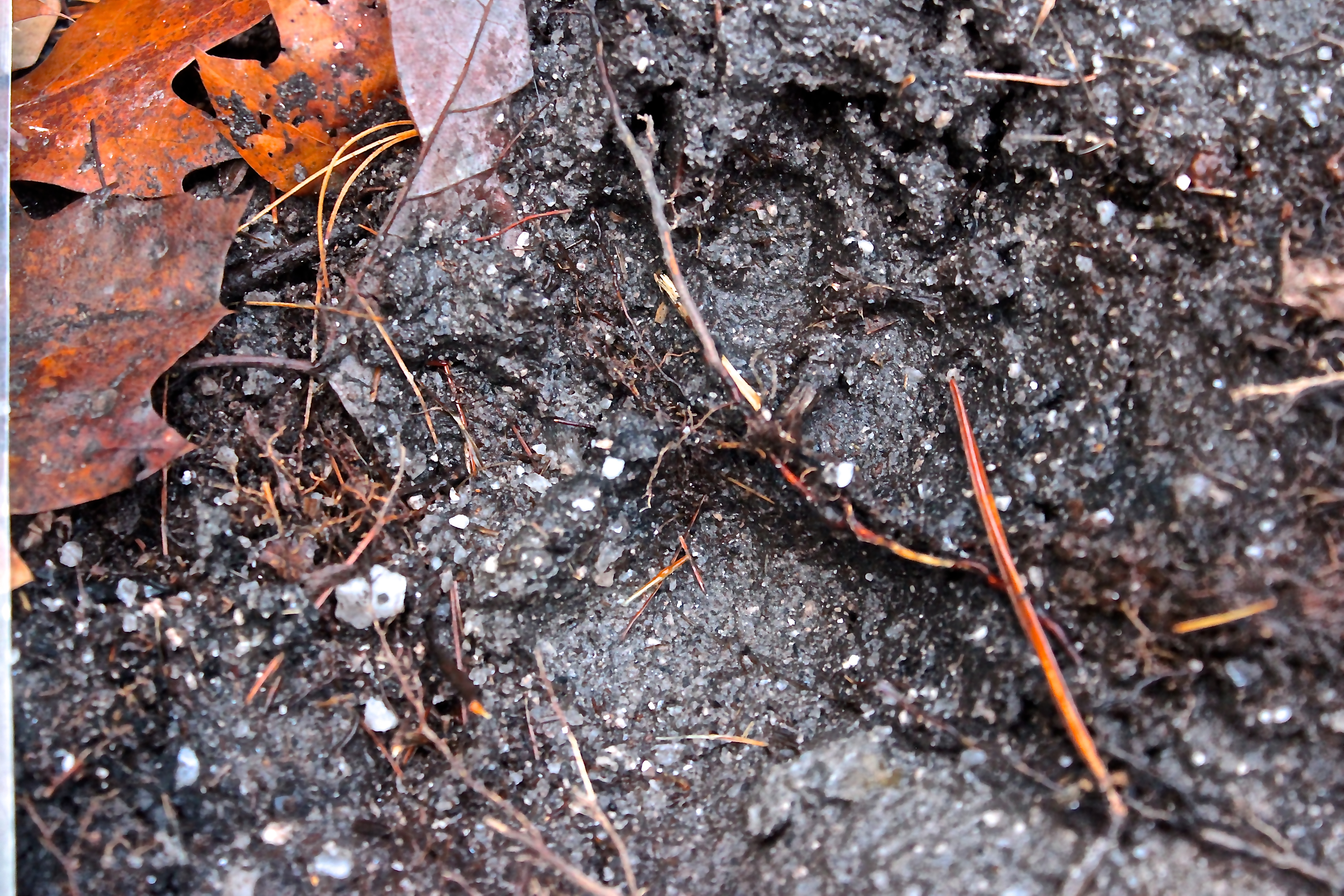
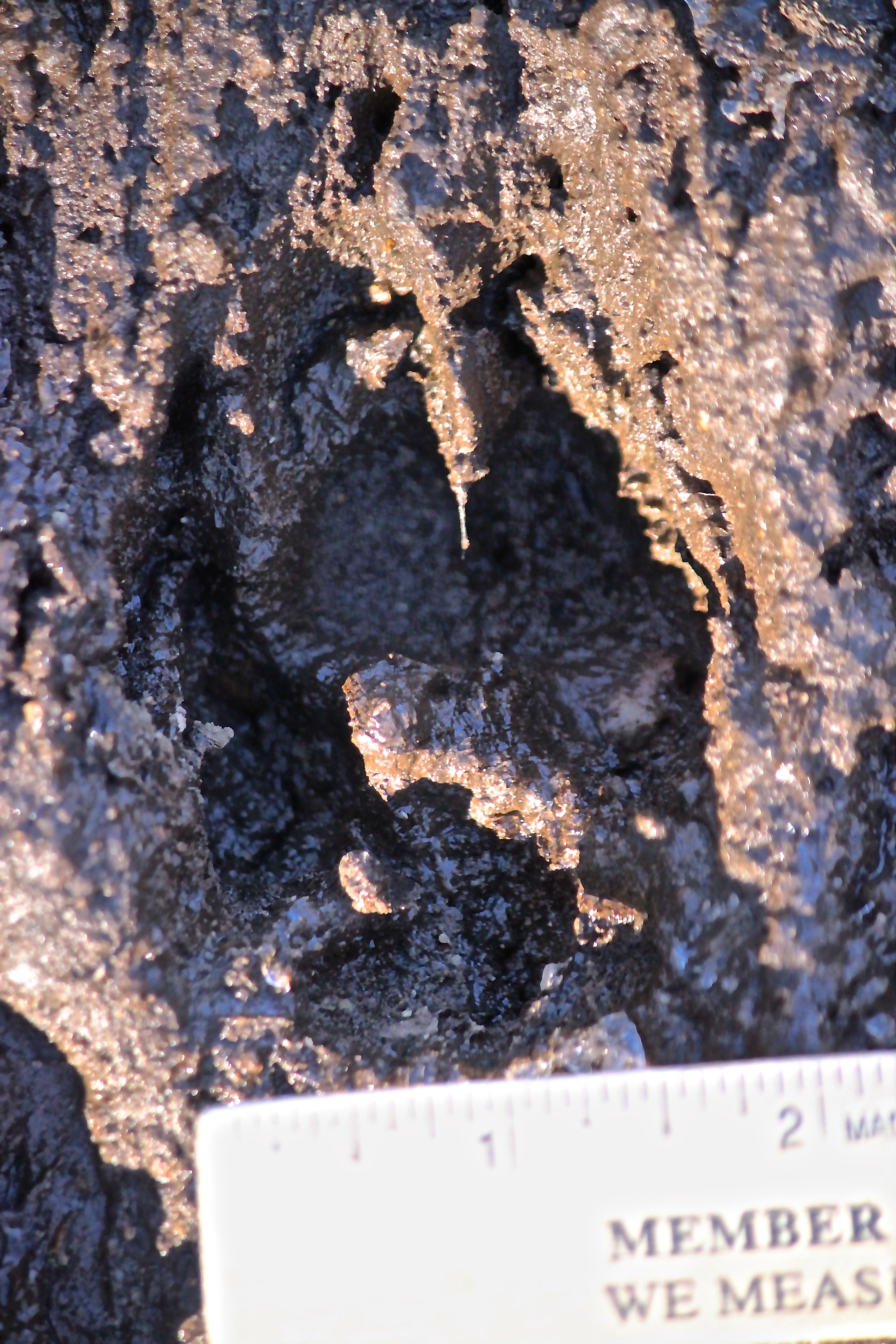
And then, just as I stepped back onto the trail, I saw this print in the mud and a couple in front of it. My heart sang.

bobcat 2

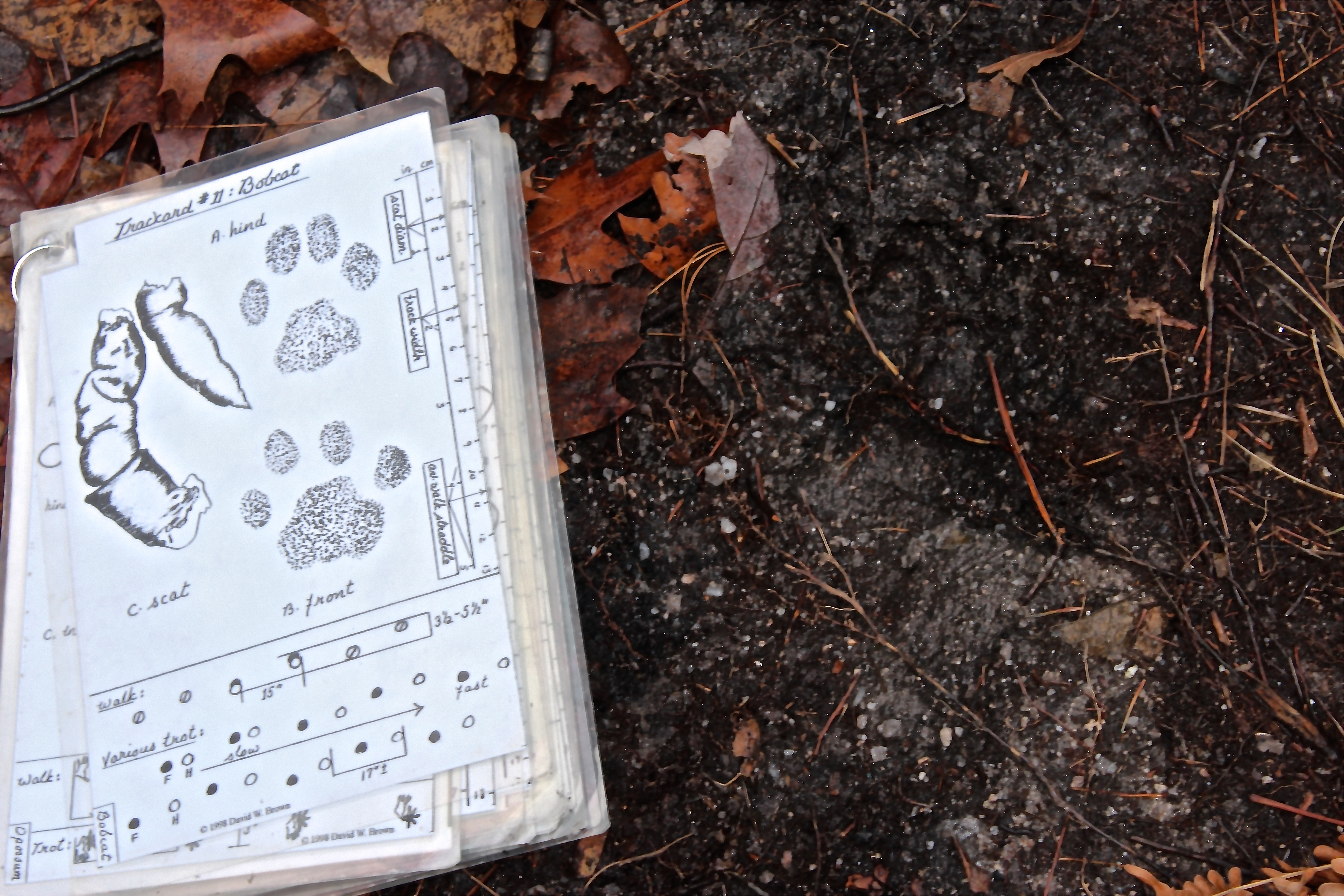
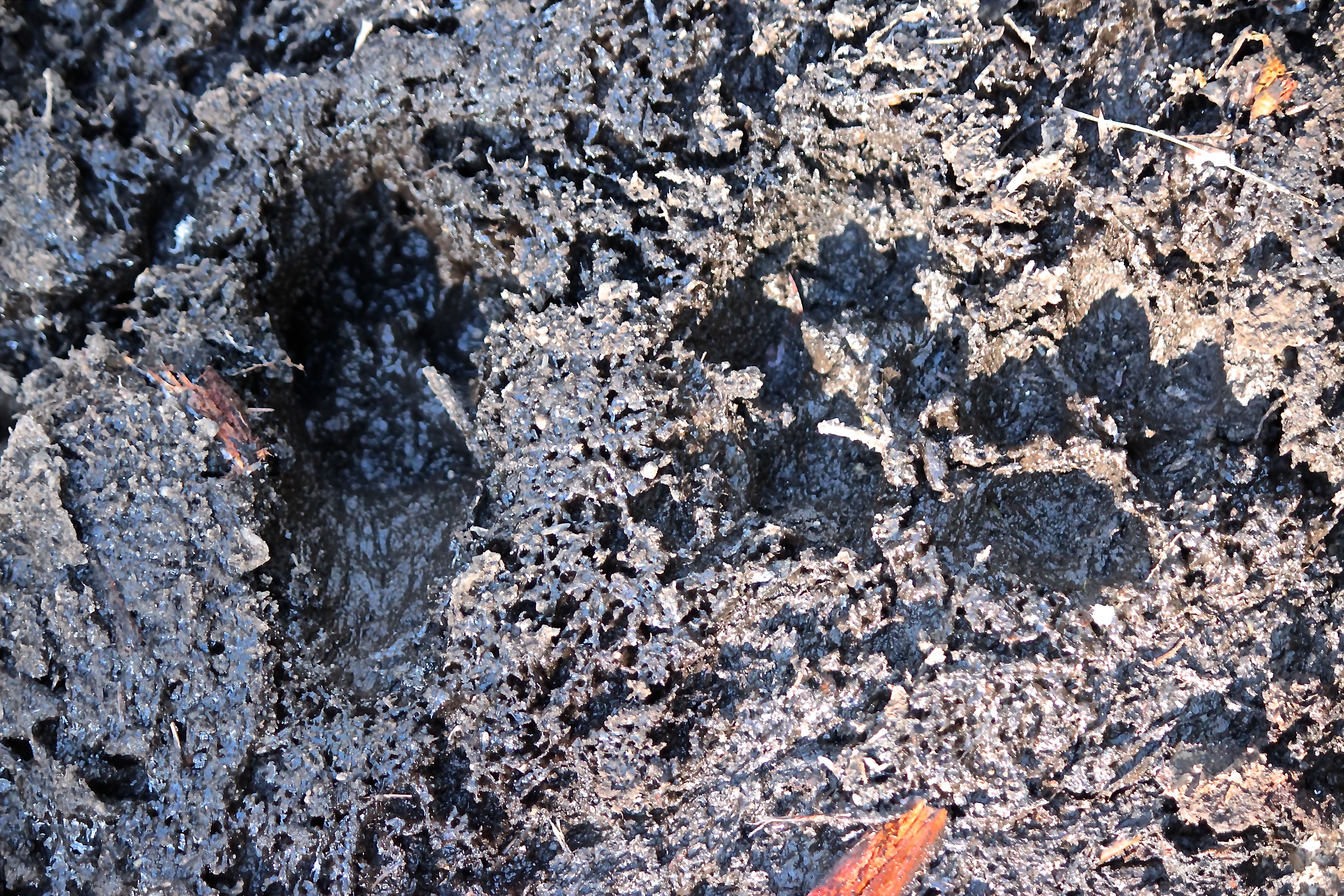
I was in bobcat territory. My favorite place to be. I only hope I have such luck next weekend and that I can pull out my David Brown Trackards to show the difference between bobcat and coyote prints.

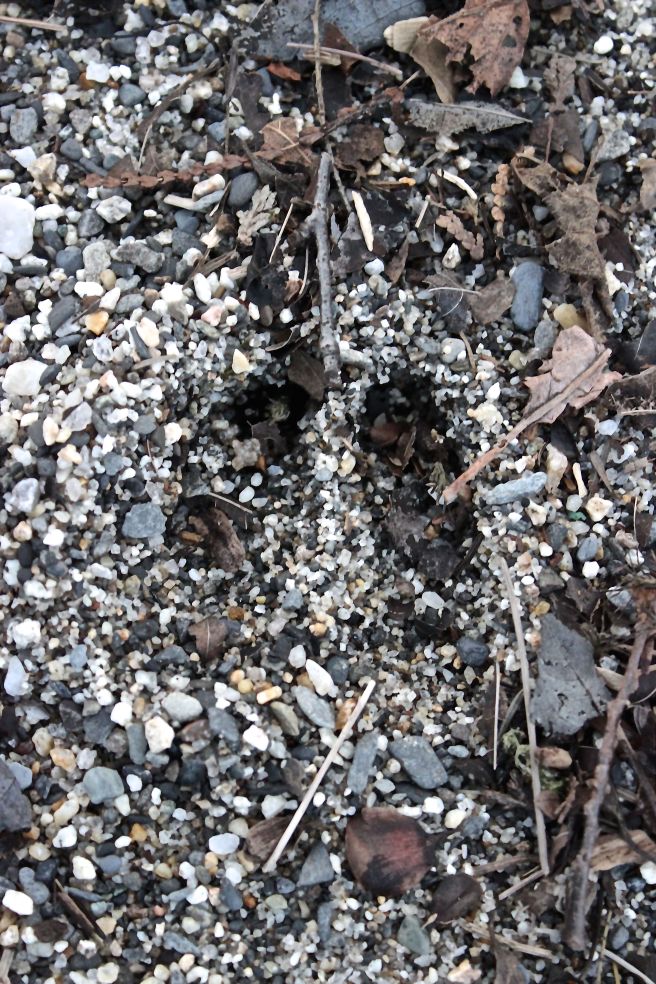
bobcat in sandbob 4

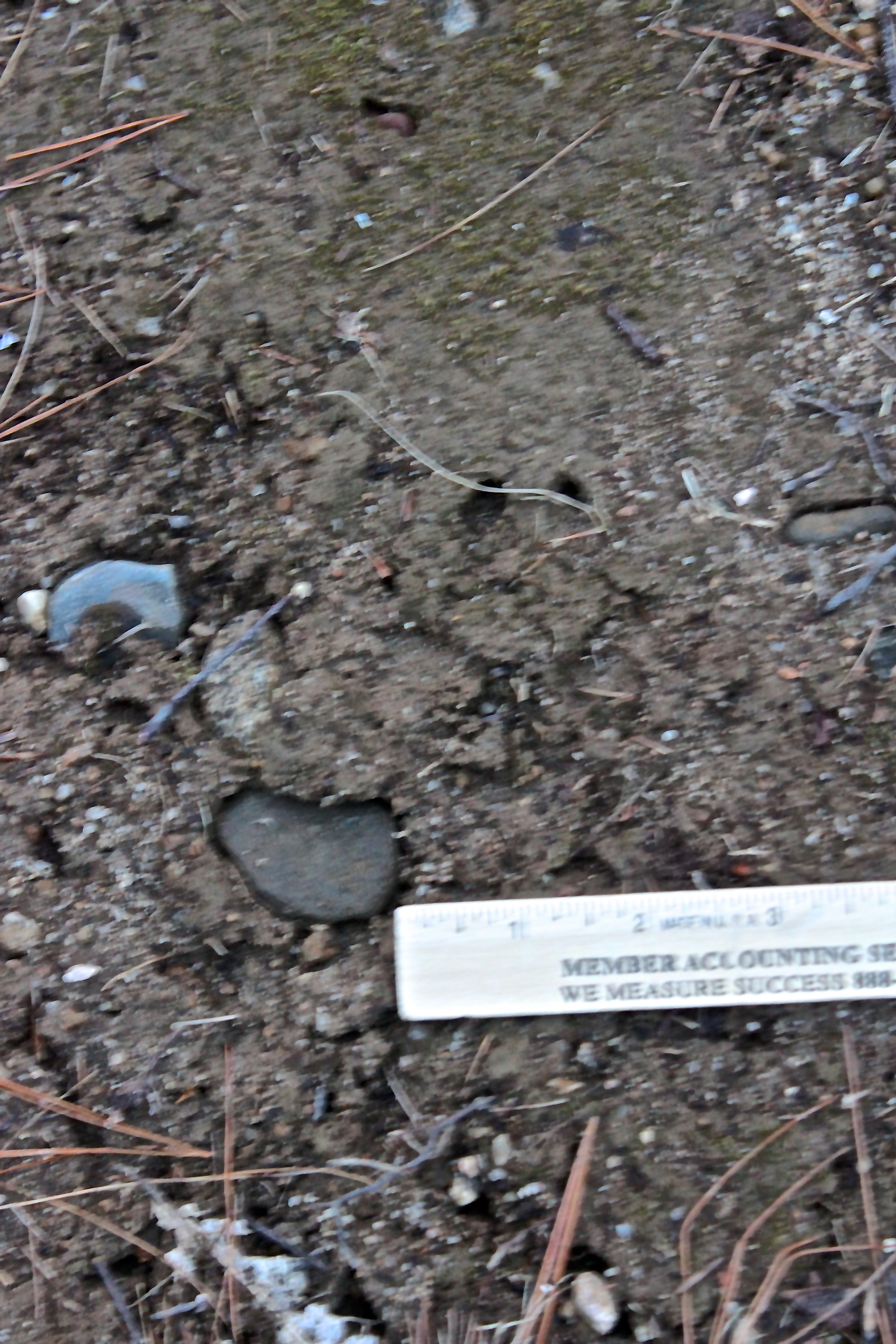
The substrate changed a few times, but we traveled the same route.

coyote print

I also found coyote prints. My hope was that since I was hiking so late in the afternoon, I might actually see one or both of these mammals, but that was asking too much. Finding evidence that they’re here is enough.

Foster Pond

One last view–the Foster Pond Overlook. And then I followed the trail back to the parking lot, thankful to have Jinny Mae along with me in spirit as I rejoiced in her glad news. I’m looking forward to many more opportunities to wander and wonder with her.

Nature’s Never Static

Mid-morning found me slipping into my smiling place where I decided to follow a route I usually save for snowshoe season.

slipping into the woods

I know it will come eventually, but the realization that we can’t predict when the first snowstorm will arrive or how much snow we’ll get over the course of the year reminded me that nature is never static.

trail boggy

I, for one, am looking forward to snow and hoping for lots of it because it will be so much easier to make my way through this boggy area.

creeping snowberry

In the meantime, I focused my attention on the ground–checking each step as I went. It’s easy to get caught on the slash the logger left behind. And when I looked down, I noticed things I don’t get to see once the white stuff falls, like the creeping snowberry that grows abundantly here.

hawk 1

Pausing frequently to look around, I suddenly noticed I had company.

hawk 2

The curious thing–this sharp-shinned hawk slowly made its way east, while further down the trail

bird flock 2

a flock of birds chitted and chatted as they moved among the tree tops.

chickadee

An ever curious chickadee landed nearby to check me out. And visa versa.

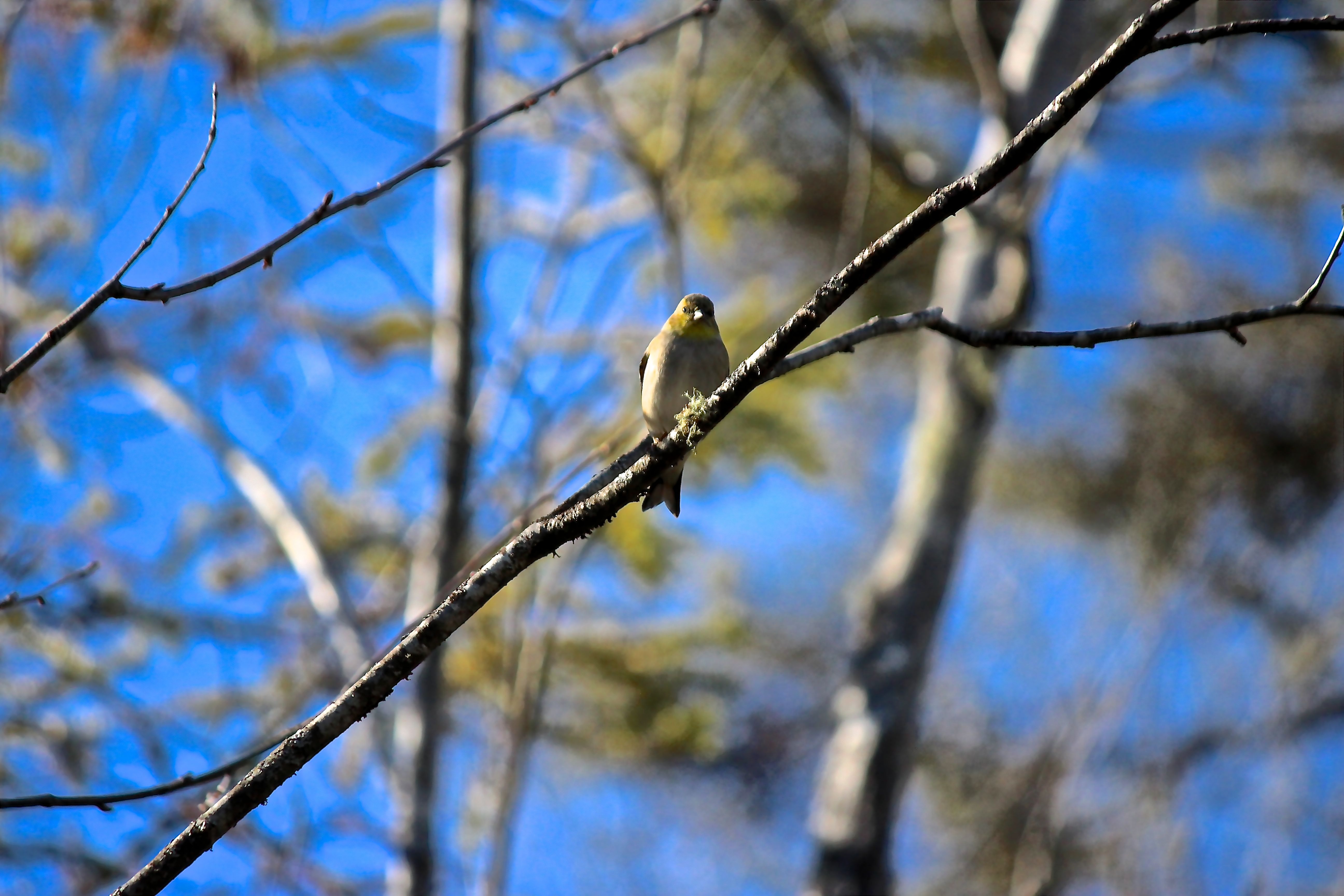
goldfinch

A goldfinch sporting its winter coloration also paused to peek. Lucky for all of them, the hawk was headed away rather than closer. Maybe it had already feasted.

mud

Eventually I found mud. I LOVE mud. With each step it squelches and squerches as it sucks my boots in and I pull them out. (And takes me back to Clinton Harbor at low tide, where my father always insisted that people paid millions of dollars to sink their feet in mud.)

my tracks

The beauty of mud here in western Maine is that prints are well defined and easily identified–homo sapien, female, average height and weight, just over middle age, blue eyes–wait a second. I wish I could read that much information in the prints I find, but I’m satisfied to be able to identify the animal to species.

coyote 2

Reaching into my pocket, I discovered I had my trusty six-inch ruler–left there since early spring. It helps to give perspective of a print–in this case a coyote. Middle toes parallel, nails leaning inward, 2 inches across, x-shaped ridge between toes and heel pad.

coyote and bobcat

I love it when nature happens side-by-side. Coyote on the left and bobcat on the right. The coyote had passed this way more recently, when the ground was softer and moved through quickly as evidenced by the slide into position. The classic C of the bobcat’s ridge between toes and pad is clearly visible.

 moose 2 directions

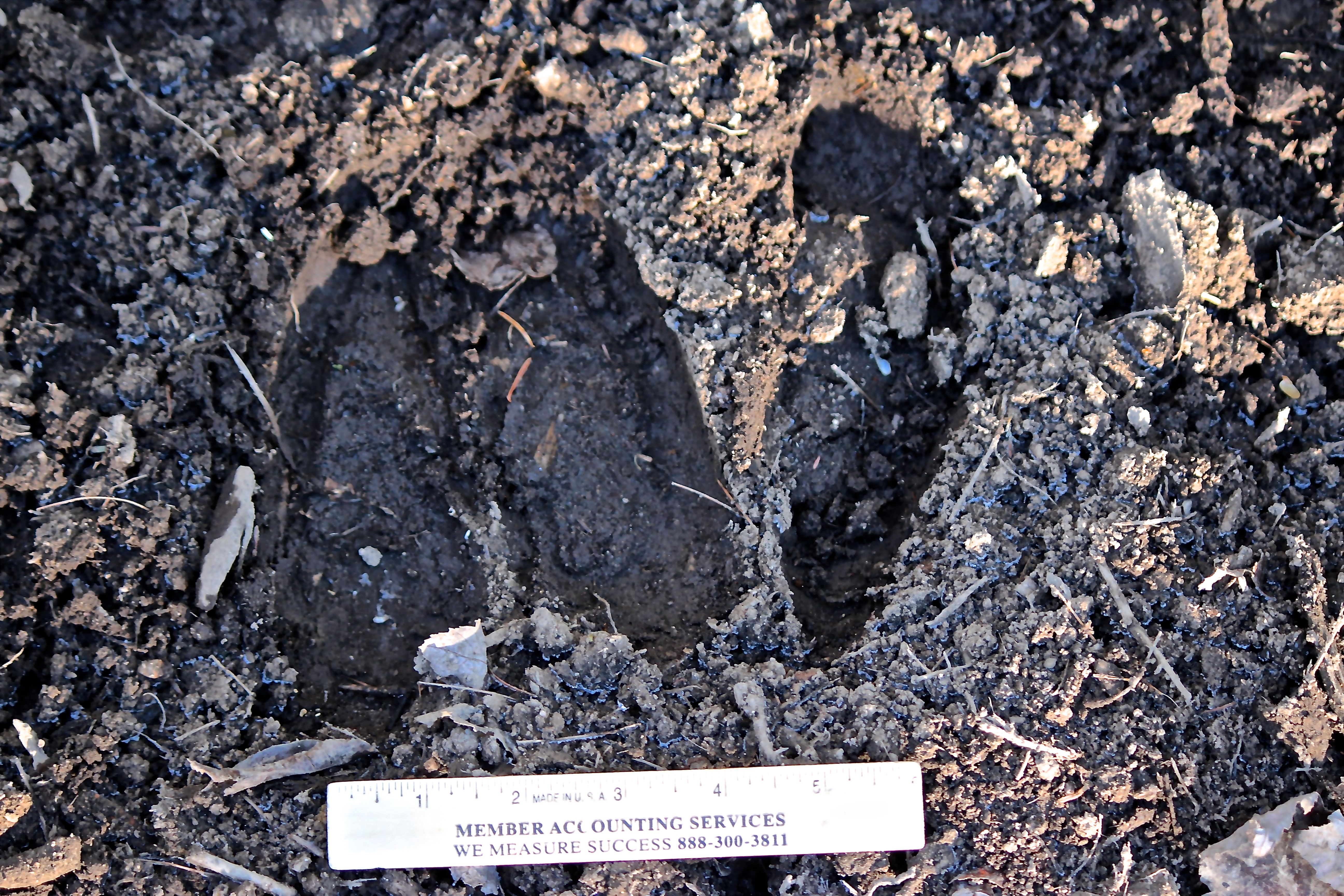
Moose frequent the area and I’m not sure if this is the same one passing to and fro or two different moose. It’s obvious that the first print was made as the animal moved in the direction of the ruler and the second shows the moose moving away.

deer, direction change 1

And then there was the deer that decided to change directions. Did it hear the mighty hunter coming along? Or another predator? Maybe me, though I suspect these prints were fresh last night and not this morning.

ice-mud

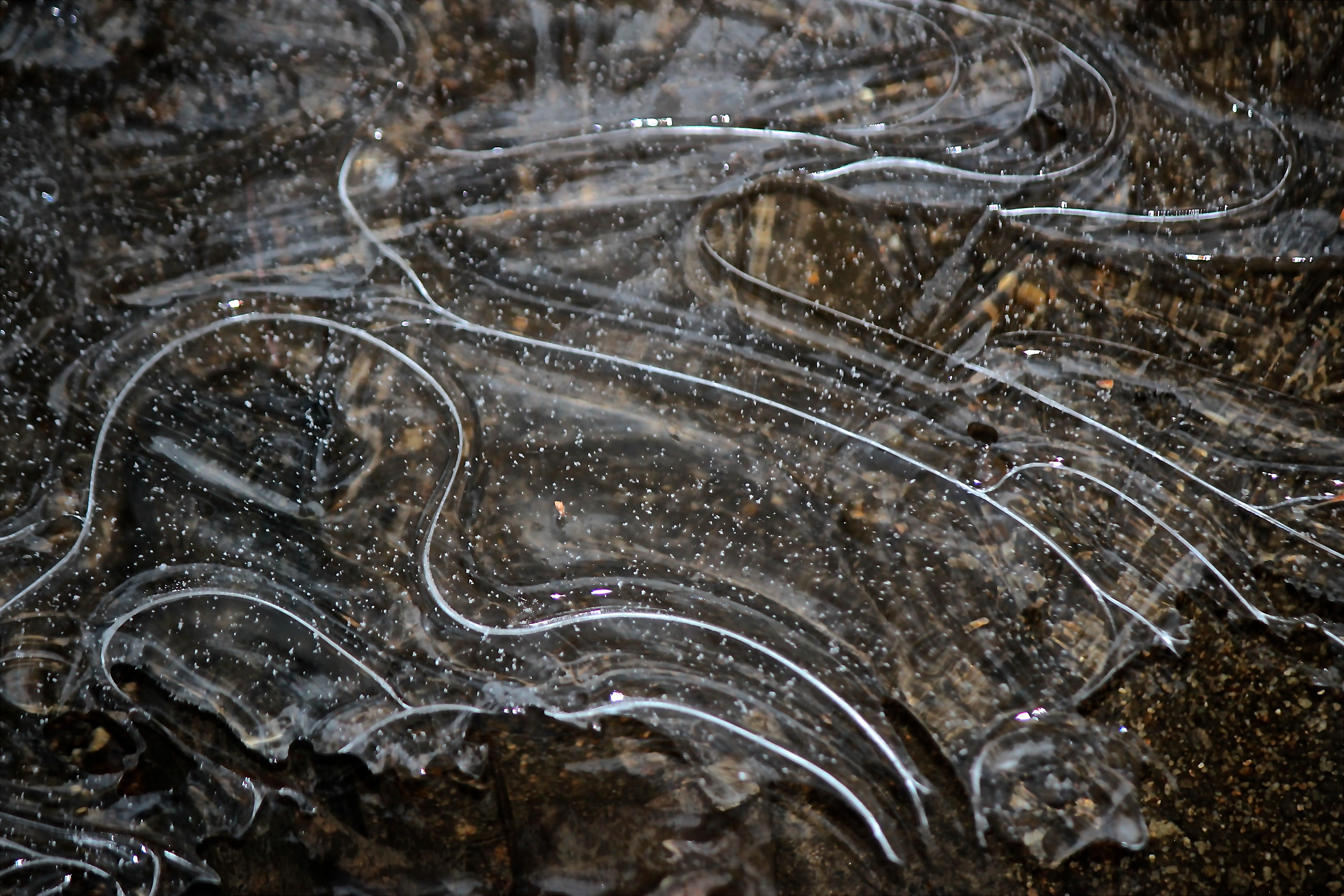
The other thing about mud–combined with ice it becomes nature’s artwork.

ice ground 2

Sometimes it sits upon icy pedestals begging to be noticed.

ice puddle abstract art

And ice itself is ever forming, ever changing. That’s the thing about nature. It isn’t static. Nor am I. Growing. Evolving. Seeking. And thankful for the opportunity.


Ladies’ Weekend 2015

While it was Ladies’ Day Out here in western Maine, I drove west to Vermont, to celebrate with friends in a different manner.

Brownington, Vermont, was the destination–as three of us drove north and west to converge at a friend’s farmhouse. And then the Talk Fest began.

Yes, instead of a Shop Fest, we enjoyed a Talk Fest. Of course, unless you want to buy eggs, there’s not much shopping to be done in Brownington. That’s the beauty of it. Plus, we aren’t shoppers.

What we did do, which is also a little unusual for a ladies’ weekend, was go on a quest for my ancestral roots. (Thanks B.M.D., P.S. and B.C. for humoring me)

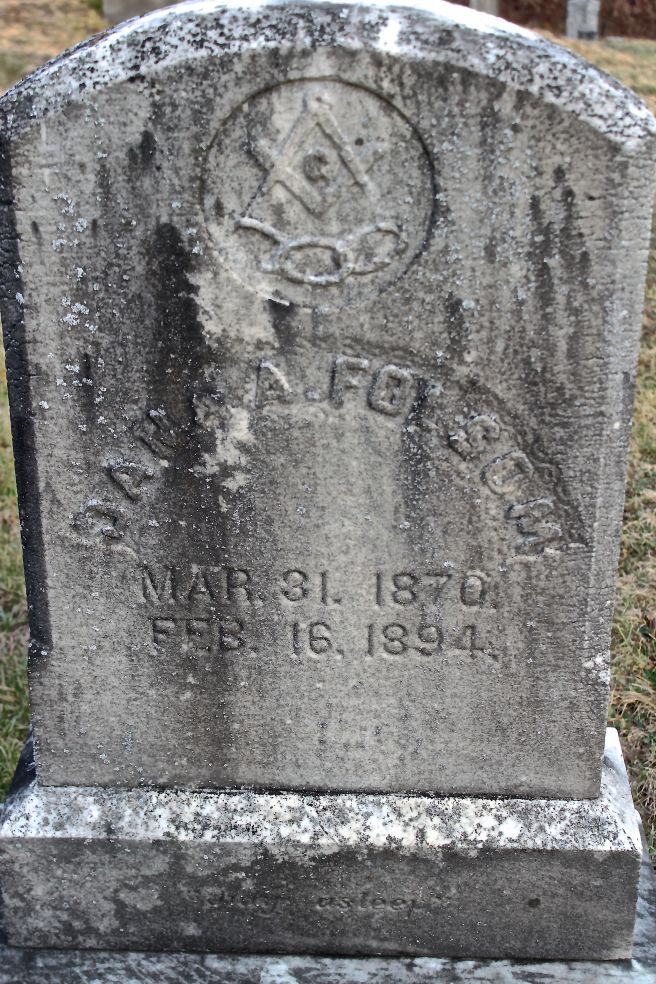
And at the South Cemetery in South Barton, we found what I was seeking.

Folsom 2

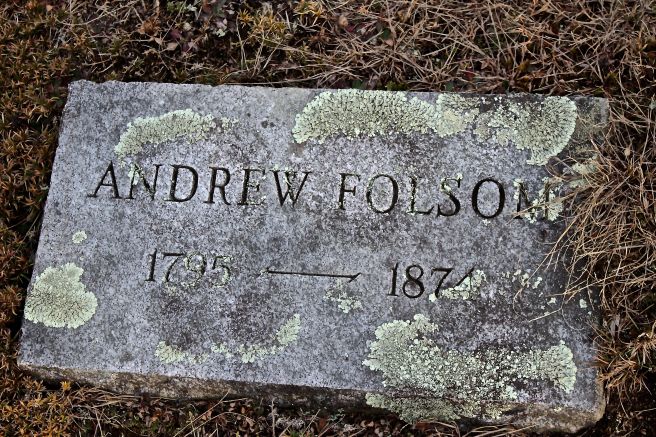
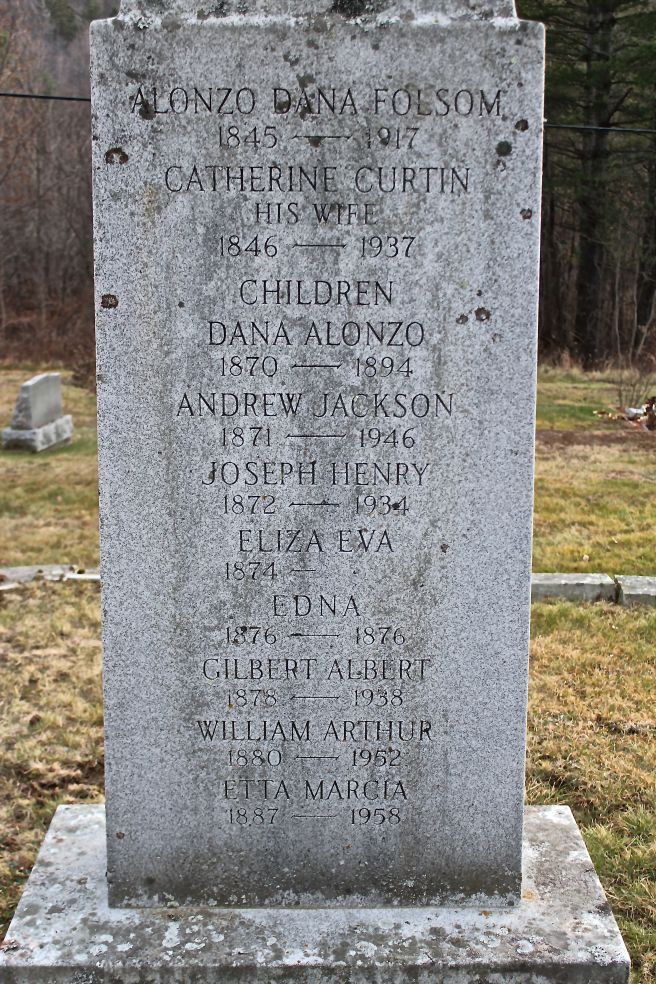
My greatX3 grandparents and other ancestors are buried here in a small valley below Crystal Lake (once known as Belle Pond). According to various census reports, they were farmers and I have to wonder if one of the small homes in the area belonged to them, or if there is a foundation somewhere nearby. A future hunt?

QA 10

Wildflowers growing on the hill between the cemetery and road feature an abundance of Queen Anne’s Lace. Like a spray of fireworks, the fruiting structure extends in various directions.

andrew f

Dana A F

Alonzo Dana

Finding physical evidence of those who came before made my heart sing. They were here. They worked this land. They breathed this air. They were born, grew up and carved out a living here. They were farmers who sowed their own seeds. And some of them died here.

QA 2

Queen Anne’s Lace is prolific in spreading its seeds by the wind.

Dana Folsom

They served their country and some didn’t return, like my great-great grandfather. And while my great grandmother was born here, she and my great grandfather moved to Massachusetts and then New Hampshire–I have to wonder why.

QA 8

Some seeds land nearby; others float away in the wind. I must have inherited some of g.g.’s genes.

Willoughby Cemetery

We’d spent enough time reading the headstones and appreciating the lives they represented.

WL, Haystack, Pisgah, Hor

It was time to continue our Talk Fest and take a peek at the peak’s our hostess knows so well. Haystack, Pisgah and Hor create the backdrop of Willoughby Lake.

deer print

We stumbled upon deer prints and . . .

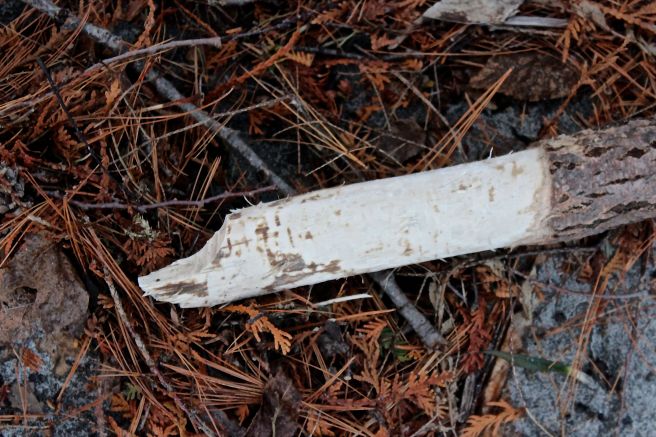
beaver chew

beaver works. The latter forced us to look further, but we couldn’t find any evidence of a lodge or dam, just more beaver chews along the beach–perhaps they floated in from another locale.

Prospect Hill Observatory

We climbed the Prospect Hill Observatory and took in the 360˚ views. Rolling hills, farms, villages, mountains and . . .

Oh Canada

Canada. My great grandfather came from Canada–perhaps right over there. I’m not sure–I’m still trying to figure out his lineage.

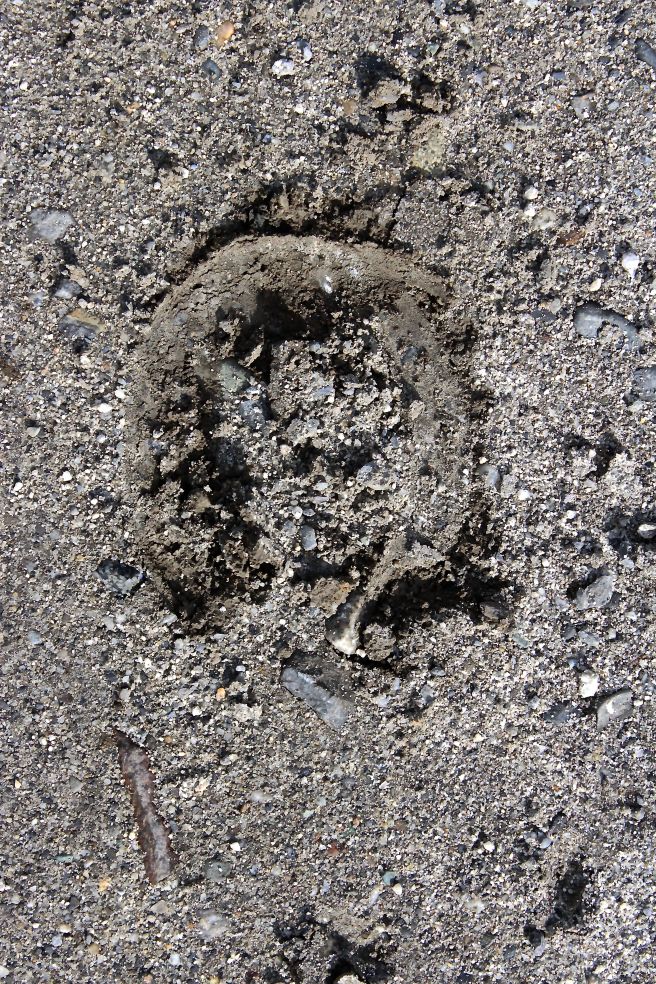
horseshoe print

This print is one in a series of tracks that lead up and around the observatory. A couple of Amish families have moved into the neighborhood in the past year–a horseshoe print.

Sisters & Brenna

We left our own prints at the geographic survey mark when we posed for a selfie–photobombed by another lady–Brenna.

Brownington

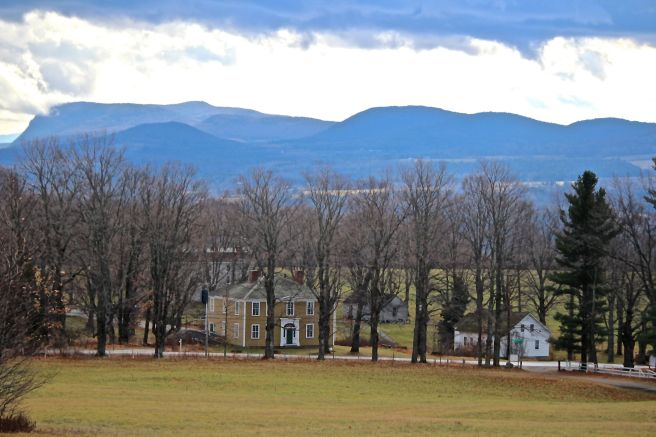
The Orleans Historical Society has protected this land and the buildings you see here. Brownington is a picturesque village located along the former stage coach route that led from Canada to Boston.

stone house 2

Thirty-five years ago, when our hostess moved here for a teaching job, she earned her keep by keeping an eye on this building. Stone House sign

Local lore has it that Twilight quarried the granite blocks and erected the building on his own. He used a single ox–on a treadmill on staging–to raise the blocks and when the last stone was placed, he couldn’t figure out how to lower the beast, so he roasted it.

QA 12

It was time to go. We embraced each other and gave thanks to our hostess and host, and for our lasting friendship–as we looked ahead to next year’s gathering. Ancestors below Belle Pond, Queen Anne’s Lace, Brenna and us–a perfect combination for a Ladies’ Weekend.


What’s Next?

I chose to walk intentionally today, pausing every few moments to look and wonder. I didn’t want to rush, always seeking the next best thing.

And so I began with a stop to admire the great lobelia that continues to bloom  despite the frost we’ve had this past week.

Great lobelia

But it was at a former log landing we can see from the kitchen window, that “what’s next” kicked into gear.

log landing 10+ years ago

While the field beyond our stone wall is mowed once a year, this area has been allowed to follow the order of succession for cleared land. Goldenrod, asters, meadowsweet, grasses and raspberries have filled this space. What will follow?

deer print

Further along, the deer and

moose prints

the antelope, I mean, moose play. No fresh bobcat or coyote prints after this morning’s rain, but I saw some scat from both. And I had to remind myself not to have expectations. That’s the thing. It’s so easy to get caught up in looking for the next best thing and forgetting to focus on the moment, the beauty and the complexity that surrounds us.

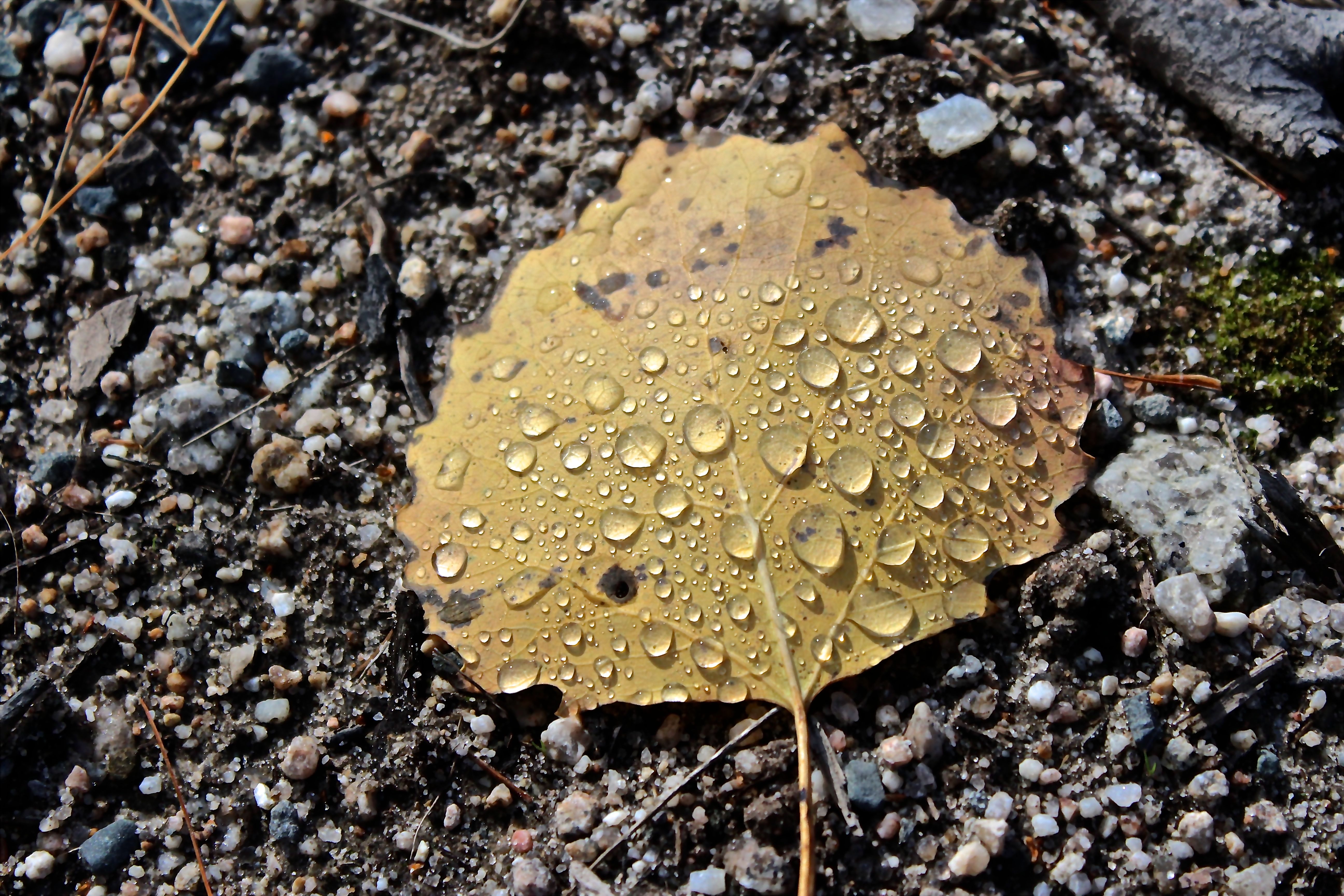
water droplets on big-tooth aspen

So I did–focus that is. On the big tooth aspen leaf decorated with rain droplets,

asters gone to seed

aster seeds waiting for their moment of dispersal,

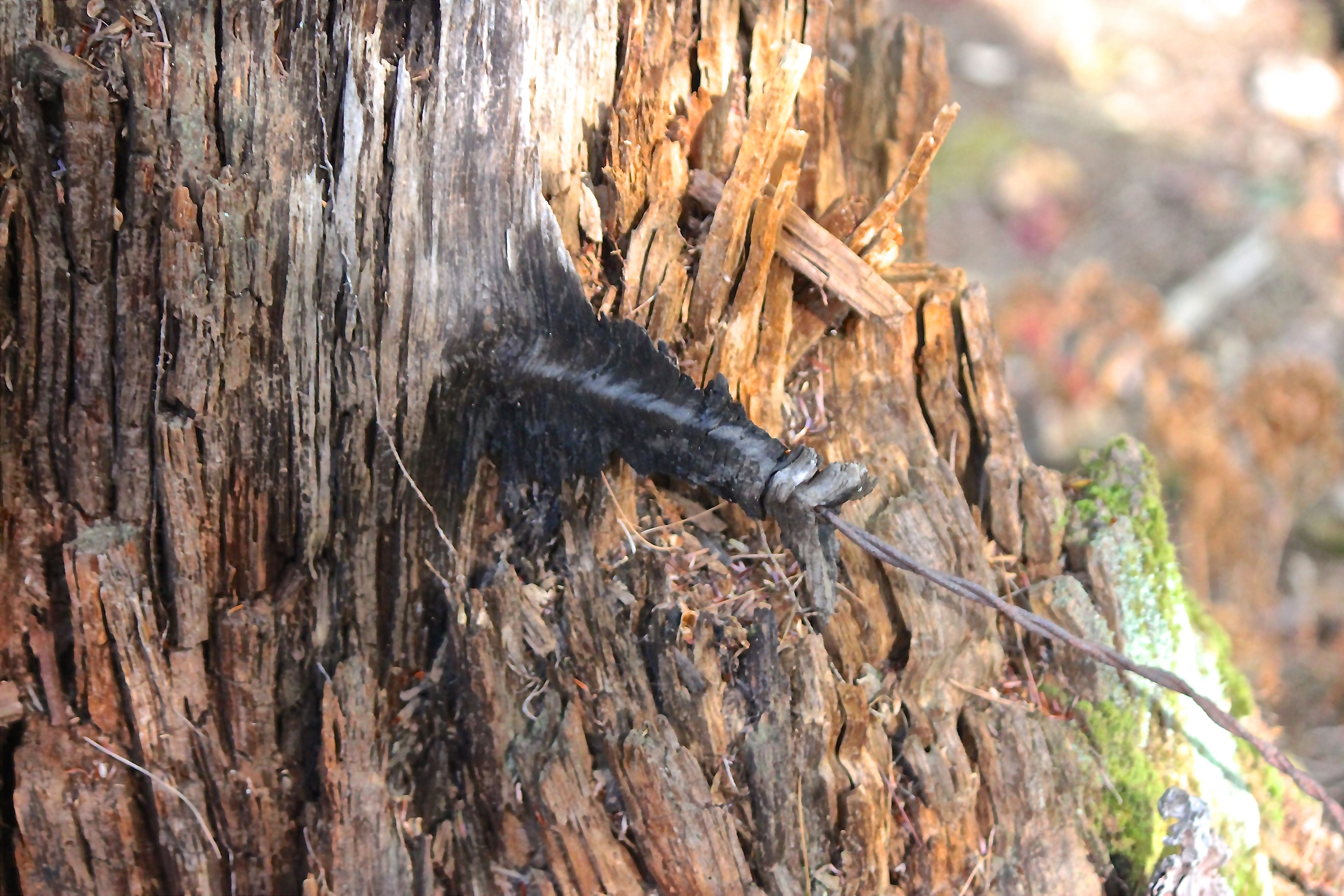
barbed wire

a hemlock that long ago knew this forest as farmland,

autumn meadowhawk

 an autumn meadow hawk soaking up the late afternoon sun,

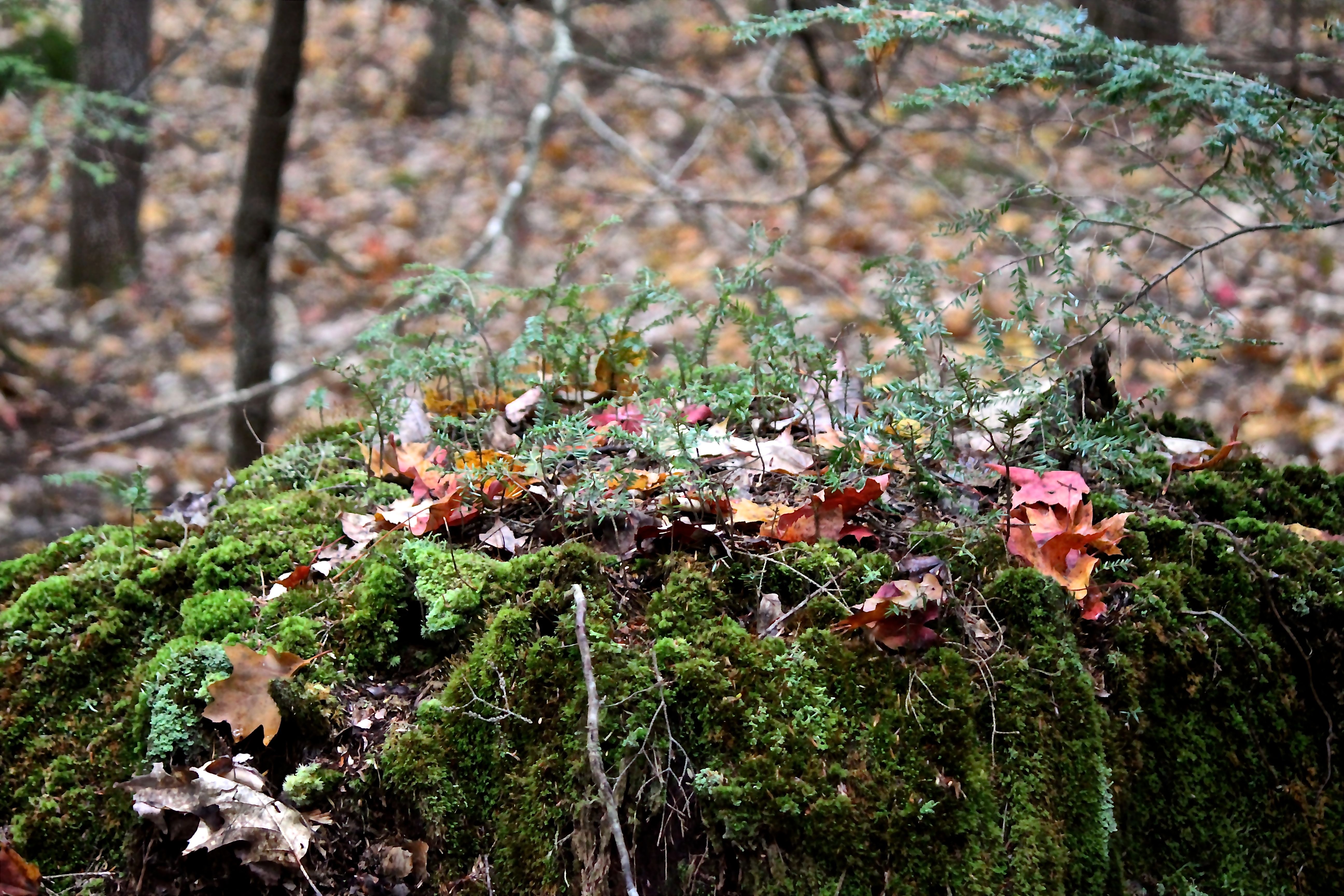
life on a stump

the variety of life growing on a stump,

hemlock saplings on stump

and hemlock saplings taking root.life on a tree 2

life on a tree 3

life on tree 5life on tree 7

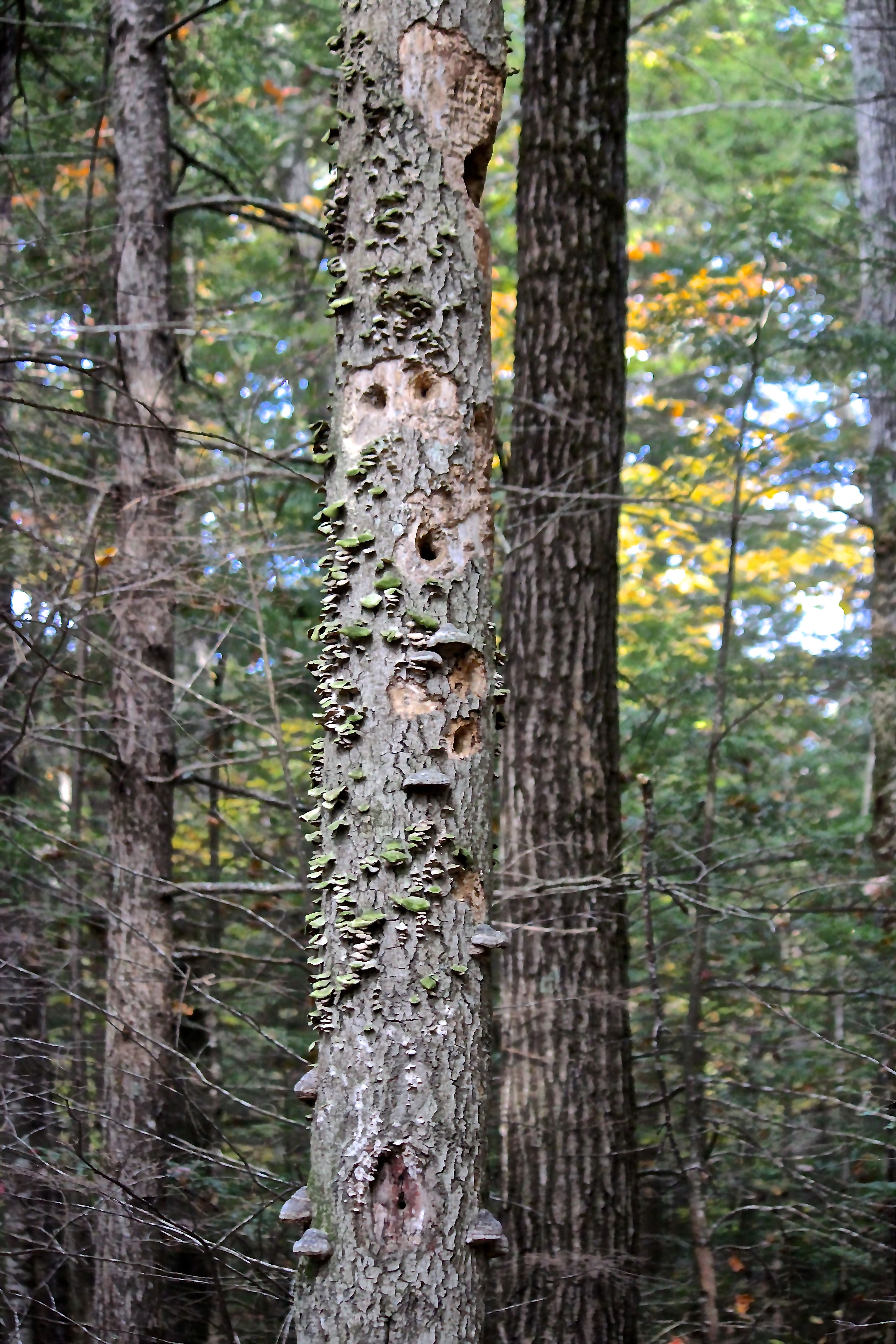
My eyes were drawn to all manner of life growing on trees that are past their prime, from woodpeckers and sapsuckers to mosses and fungi, including violet-toothed, birch and tinder polypores, plus Jack O-Lanterns that glow in the night.

old tinder conk

I found an older tinder conk springing forth with life as it gleans sustenance from its host,

chaga

chaga, that hardened mass of hyphae that is proclaimed to be life-giving,

mossy maple

mossy maple polypores growing in a wound, as is their preference,

mossy maple mushroom:field dog lichen

and more mossy maple, this time covered with the brownish-gray lobes of field dog lichen, which typically grows on the ground. Huh?  Creation at work. Soil forming on top of the moss covered fungi–certainly a fertile ground.

quartz

I found quartz where I expected to find only granite,

royal fern

a small royal fern holding court on its own,

sensitive fern

and the bead-like fruiting stalk of the sensitive fern.

 red squirrel

I saw plenty of birds, including a few ruffed grouse that I startled as they startled me. This and other red squirrels chatted insistently whenever I was near.

beech tree captures late afternoon rays

And I saw the sun’s rays reflected by the beech leaves.

trail 1

Sometimes following trails, other times bushwhacking, I wondered what will become of this forest.

tree opening

Open spaces invite pioneers to settle down.

Pleasant Mtn

In other places, those that long ago gained a foothold continue to enjoy the view–of Pleasant Mountain.

4 birches

Making my way homeward, I found myself in the presence of the birch clan–paper, yellow, black and gray–how sweet it is.

fleeting moments of fall foliage

As the foliage enjoys its final fleeting moments, I intentionally move from wondering what’s next to enjoying what’s now.

Questions To Be Asked

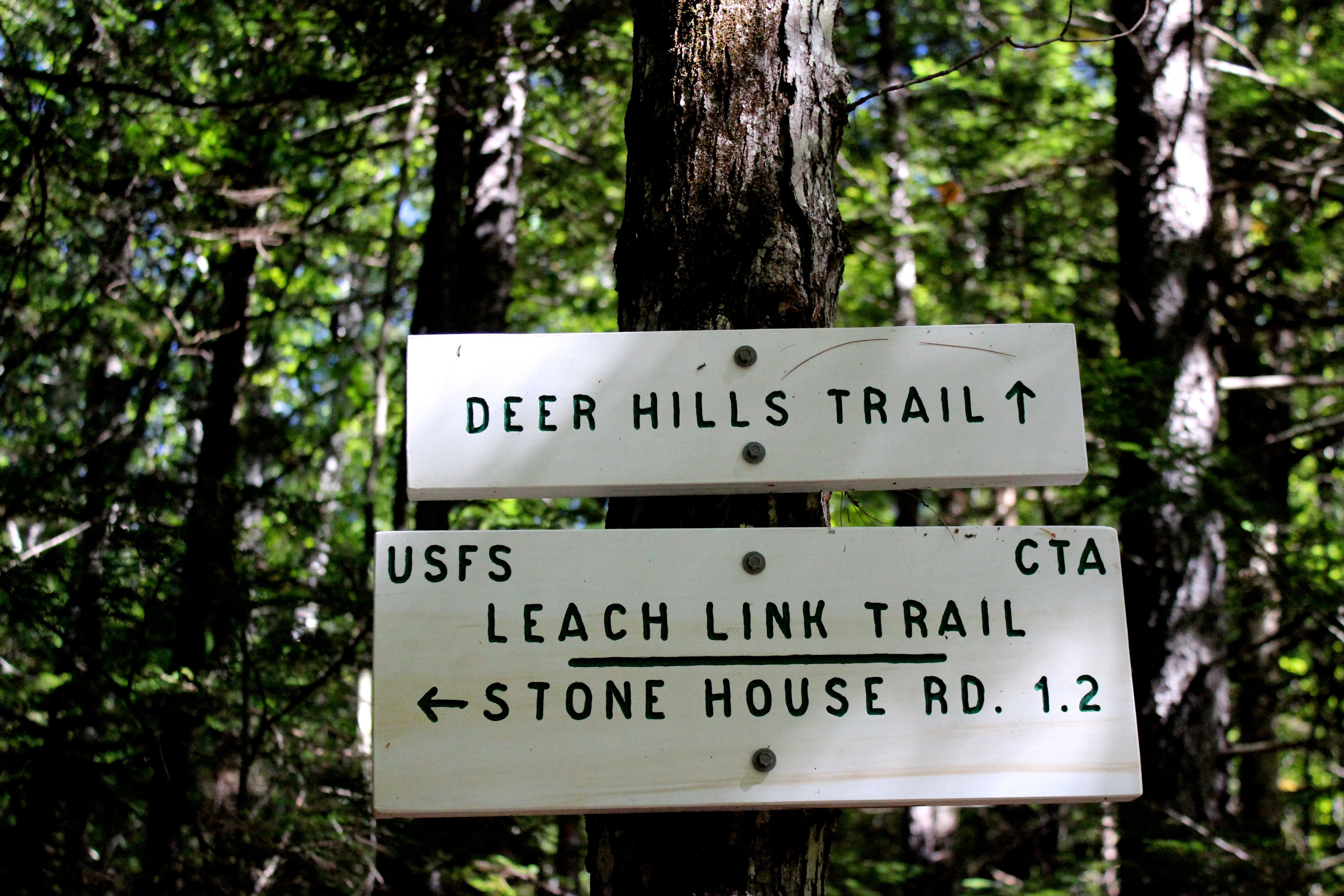
A friend and I drove to Evans Notch today with the mission of exploring a trail that was new to us. The Leach Link Trail connects Stone House Road to the Deer Hill trail system.

IMG_1338

We started at Stone House Road and turned back at the Cold River Dam. Not a long trail, certainly. And rather flat for the most part. Despite that . . . it took us four hours to cover 2.4 miles. You might say we stopped frequently.

There was a lot to see along this enchanted path. And questions to be asked.

CB 2

We walked beside the Cold River as we passed through hemlock groves and mixed hardwoods covered with a myriad of mosses and liverworts.

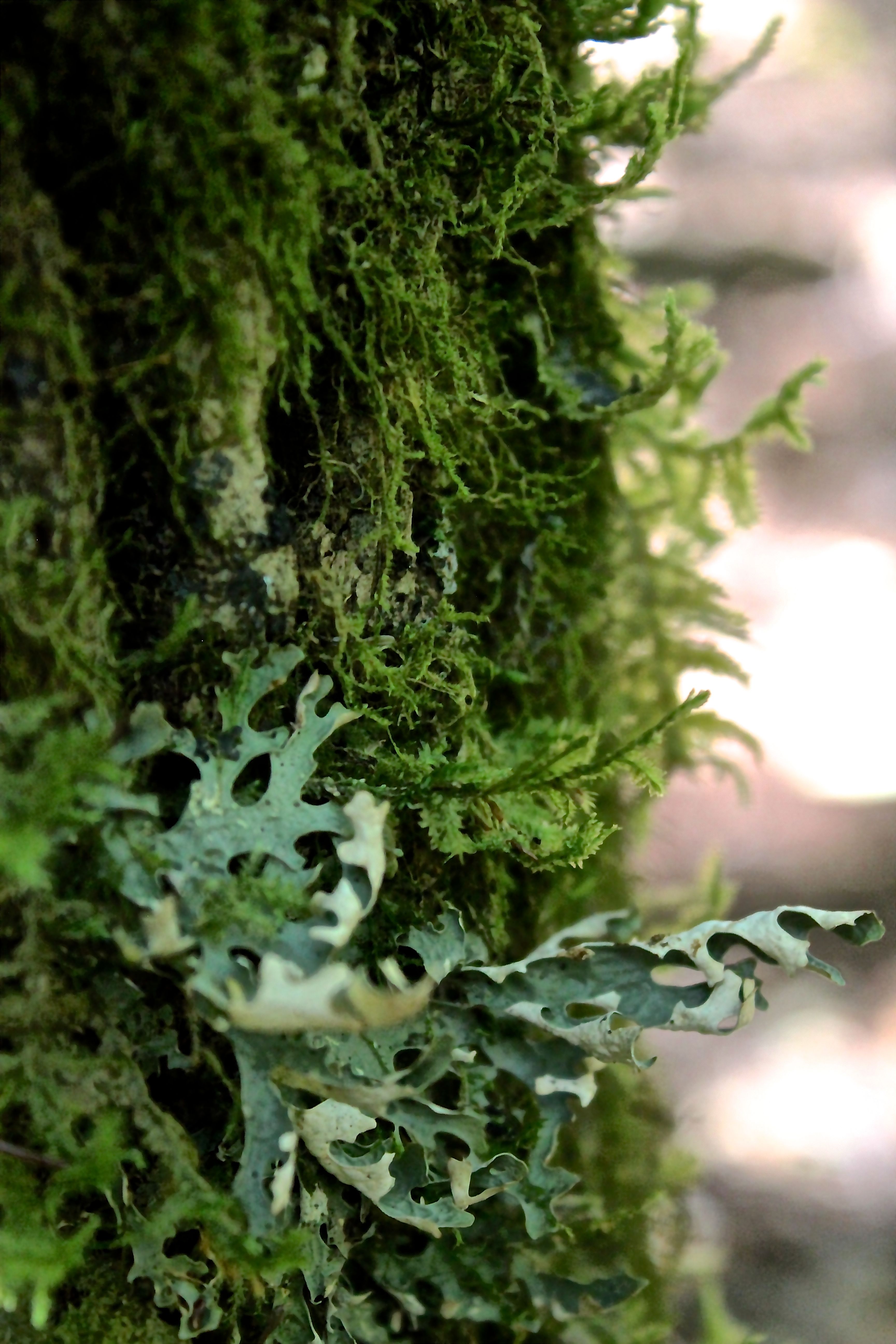
lungwort

Because it had rained last night, Lungwort, an indicator of rich, unpolluted areas, stood out among the tree necklaces. Why does it turn green when wet?

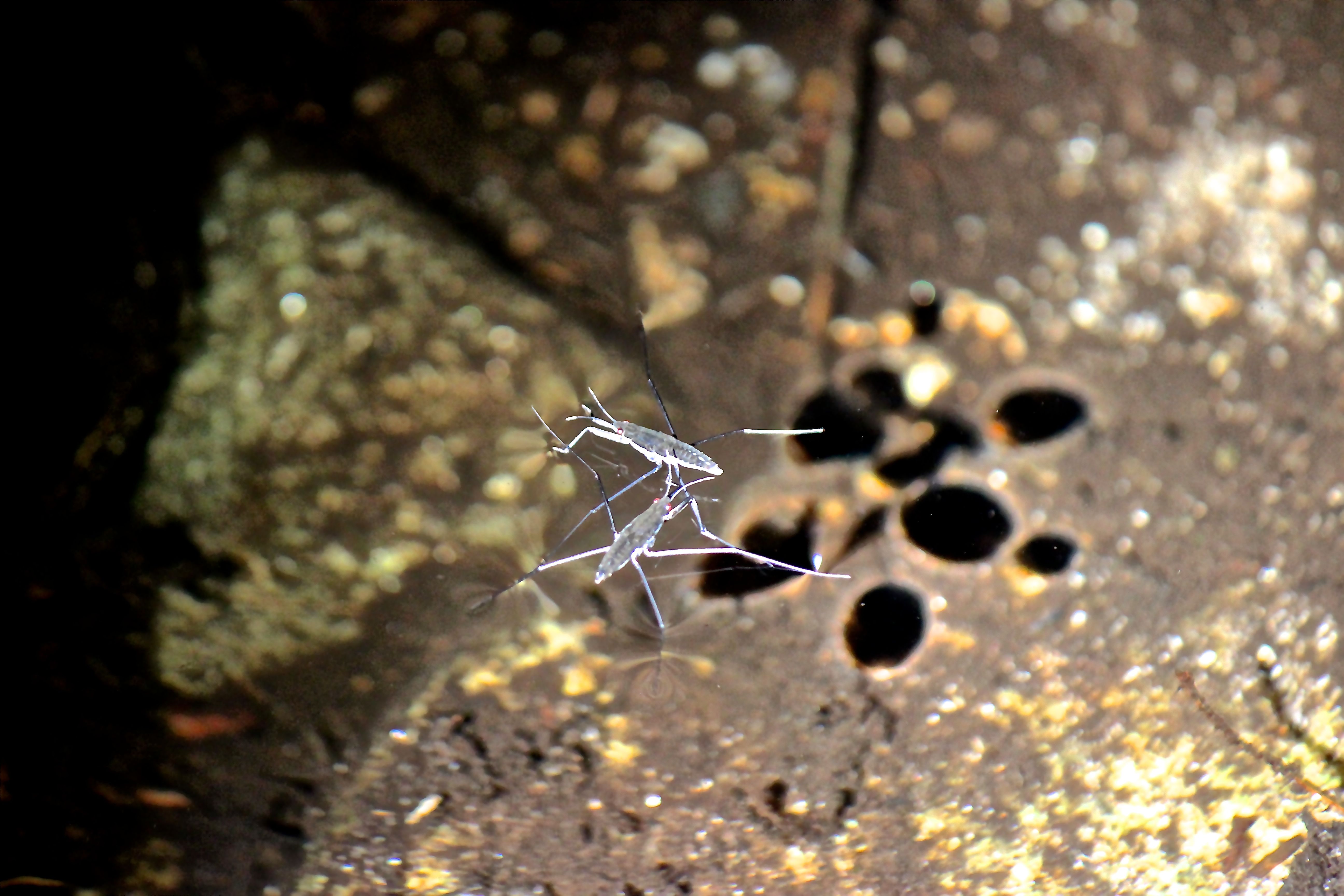
water strider

The shadow of the water strider tells its story. To our eyes, it looks like their actual feet are tiny and insignificant. What we can’t see is the  fuzzy little hairs that both repel water and trap tiny air bubbles, thus allowing them to float or skate along the water’s surface. But still, why is the foot shadow so big while the body shadow is more relative to the strider’s size? Is it the movement of the foot against the water that creates the shadow?

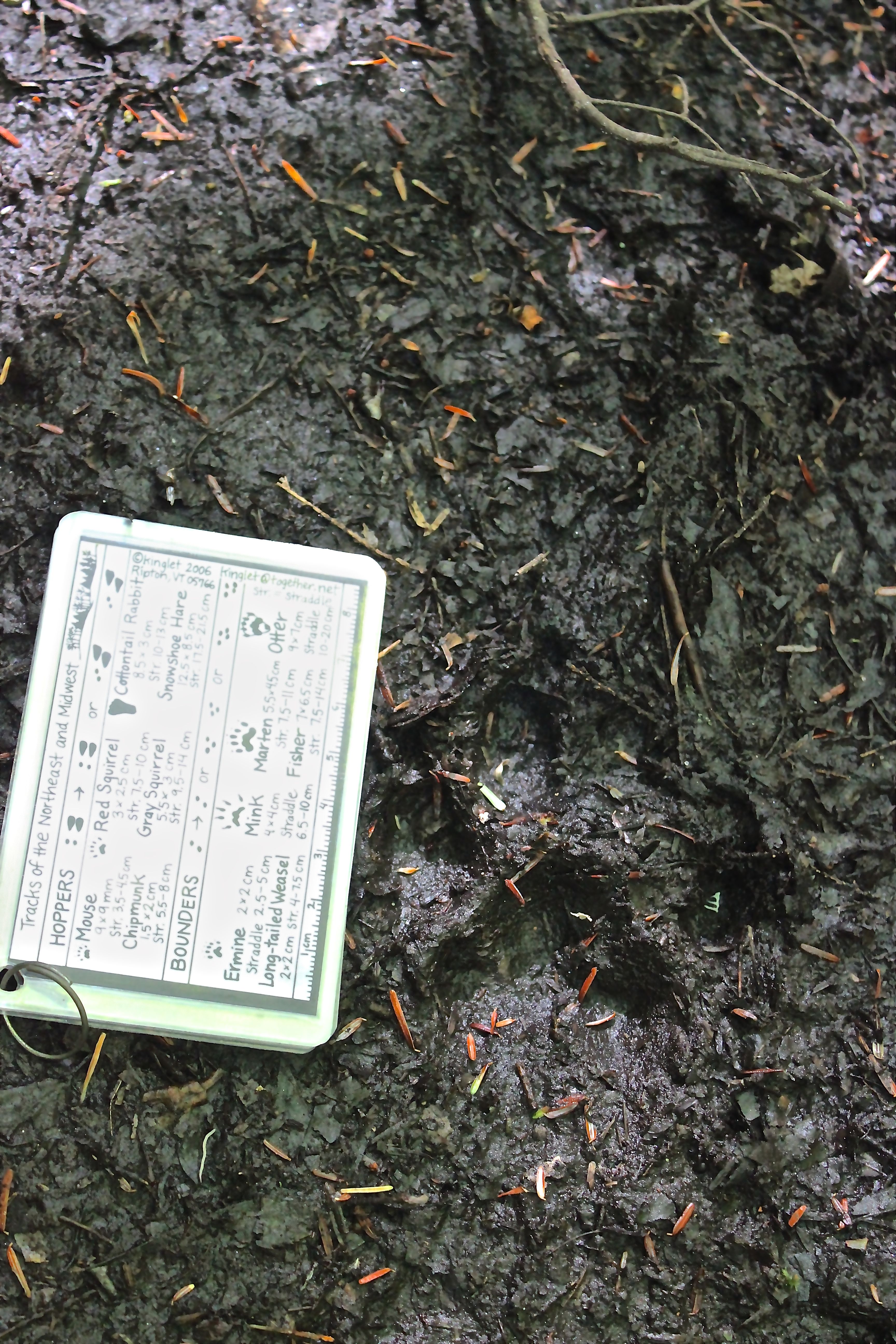
bobcat

While the river was to our right on the way to the dam, we noted ledges on the left. Prime habitat for the maker of this print: bobcat. You might be able to see nail marks in front of the toes. We always say that cats retract their nails, but in mud like this, traction helps.

bobcat & coyote

A little further along we discovered the bobcat was still traveling in the same direction and a coyote was headed the opposite way. What were they seeking? What was the difference in time of their passing?

CR4

Periodically, we slipped off the trail to explore beside the river.

WH 3

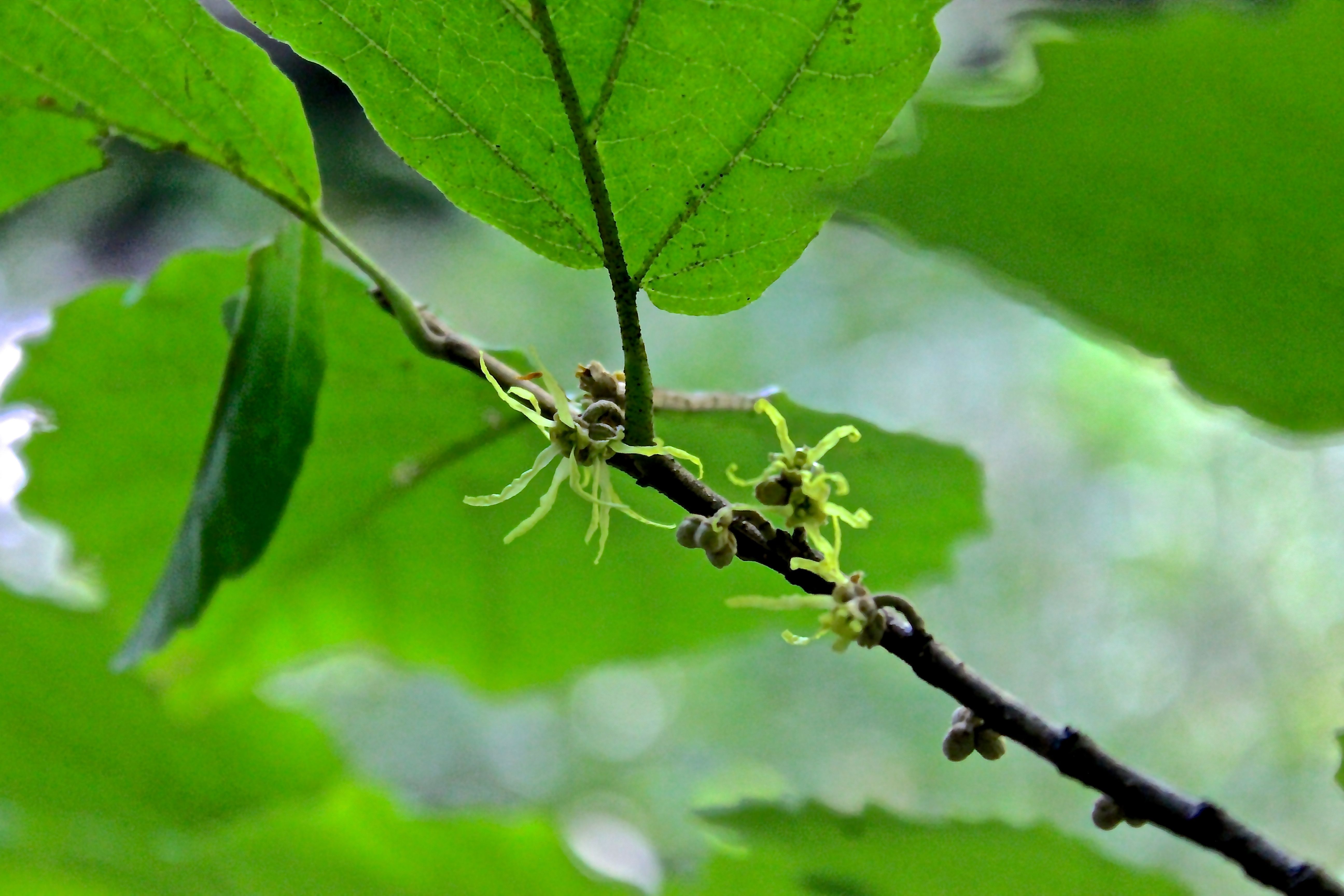
Ribbony witchhazel blossoms brightened our day–not that it was dark.

grasshopper 1

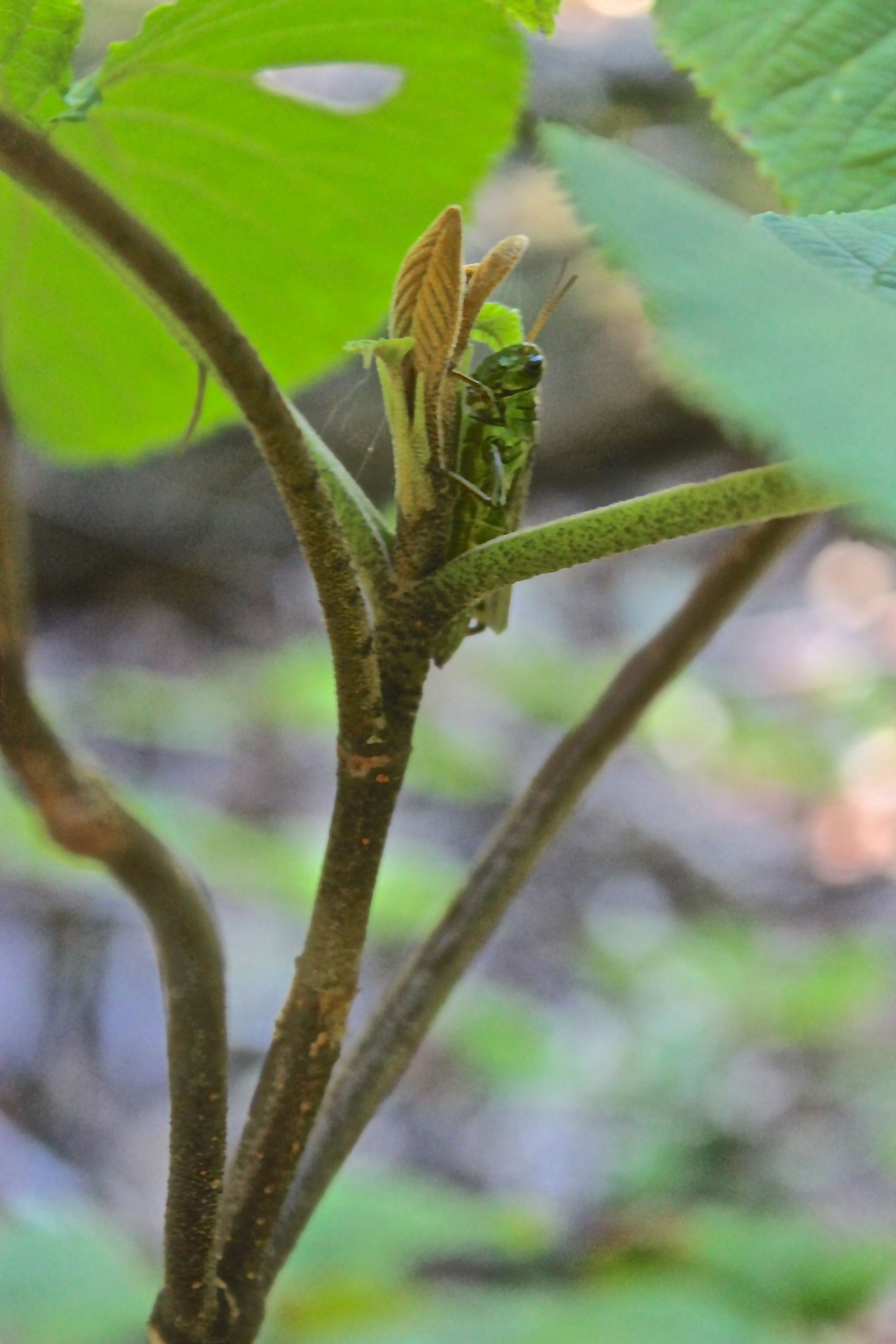
We weren’t the only ones taking a closer look at hobblebush.

hobblebush berries

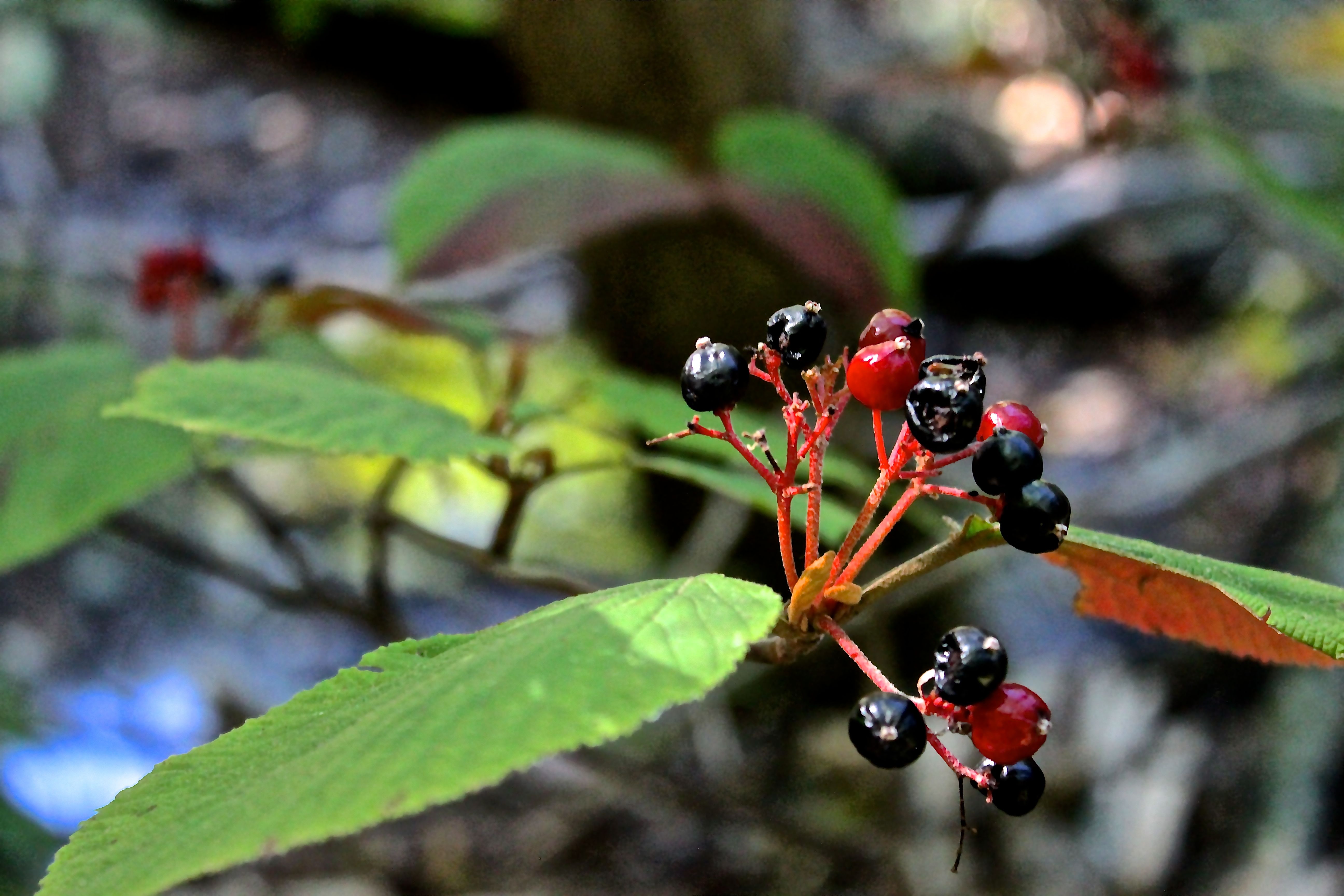
As its leaves begin to change from green to plum, the berries mature and transform from red to dark blue. Will they get eaten before they all shrivel? We think they’ll be consumed by birds and mammals.

doll's eye

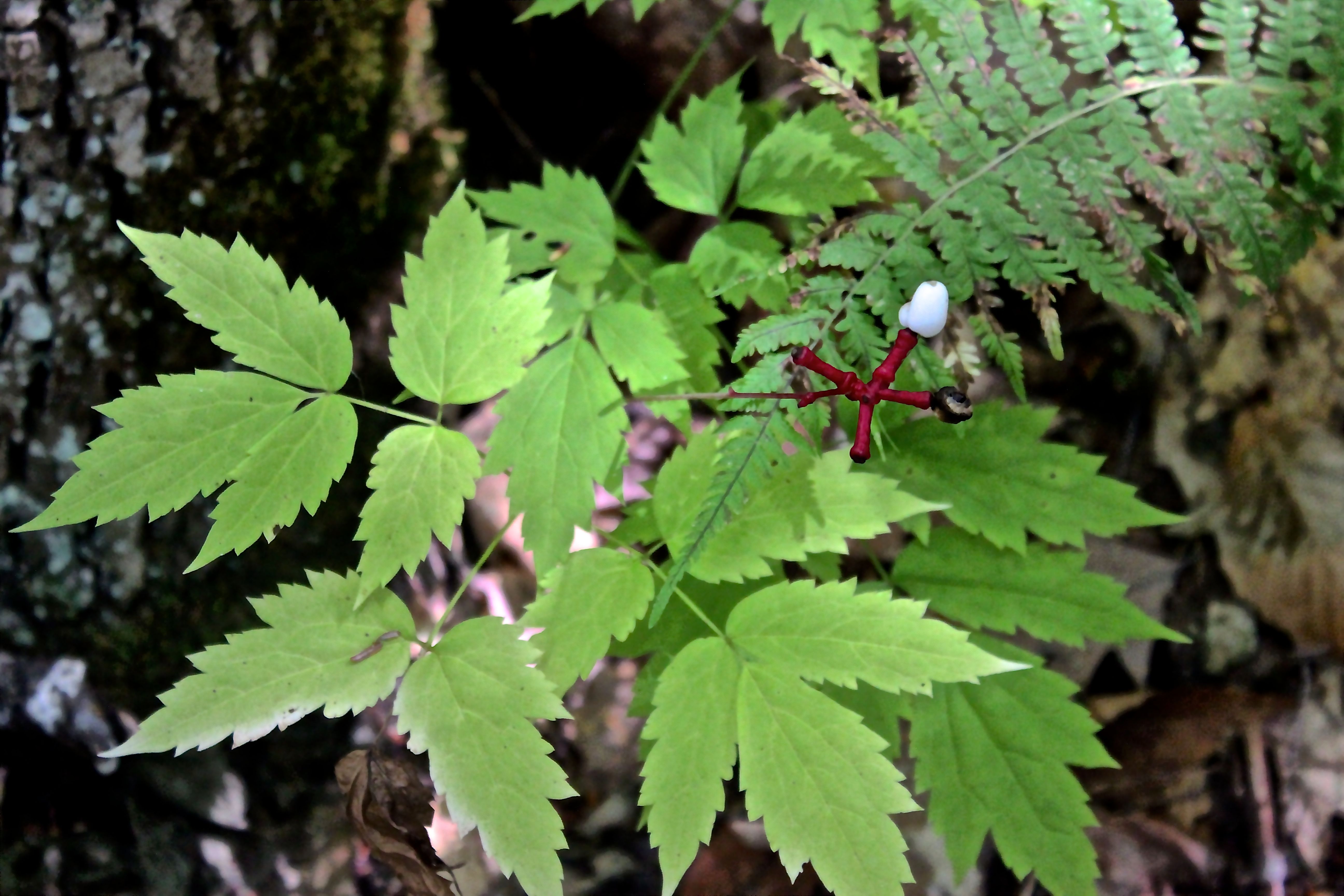
Most of the “doll’s eye” fruit is missing from this white baneberry. The archaic definition of “bane” is something, typically poison, that causes death. I’ve read that  ingesting the berries can bring on symptoms such as stomach cramps, vomiting, diarrhea, delirium and circulatory failure. Think: respiratory distress and cardiac arrest. YIKES. So what may have eaten these little white eyeballs? Wildlife may browse it, but it’s said to be quite unpalatable and low in nutrition. Interestingly, birds are unaffected by its toxic qualities.

Indian Cucumber root

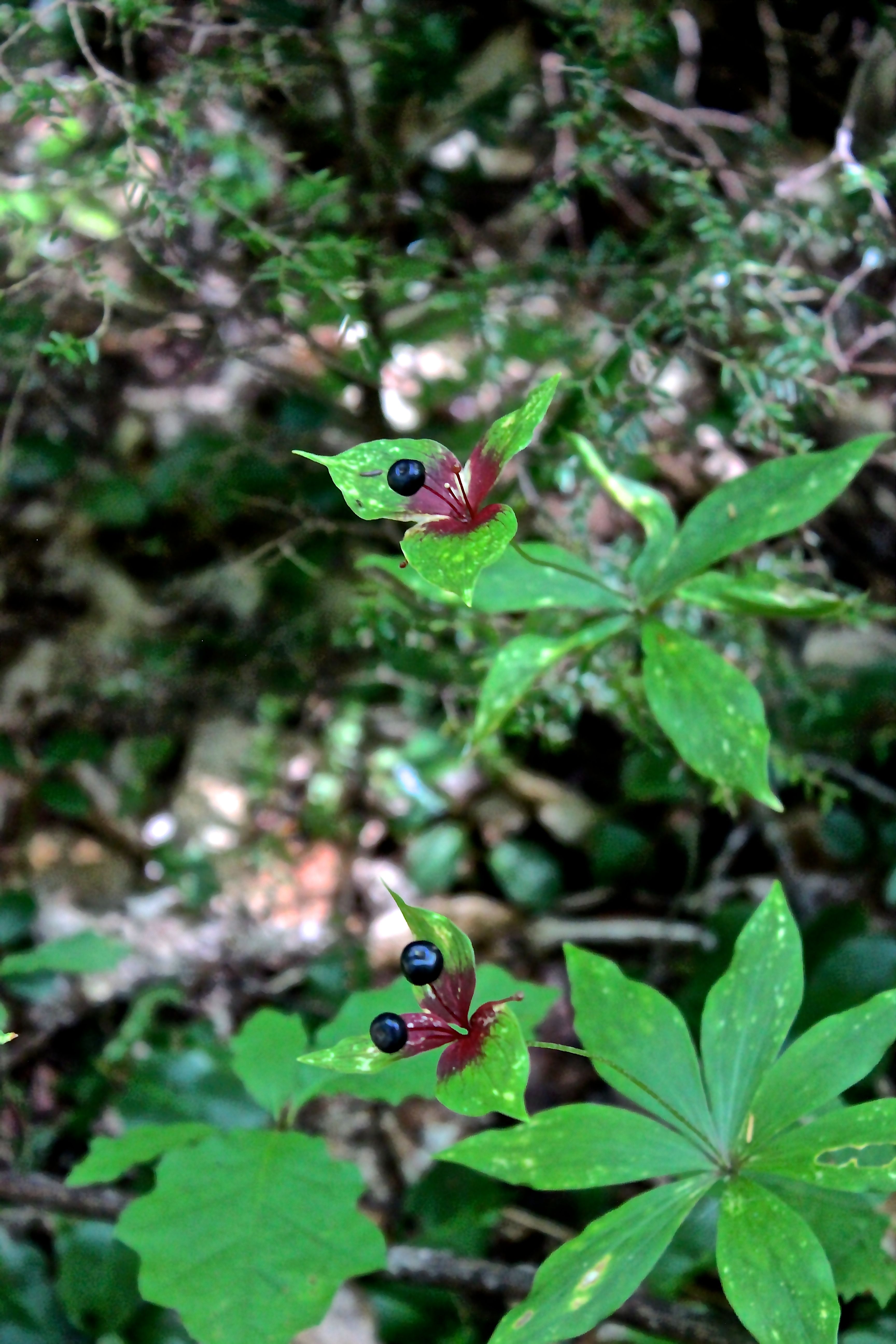
Berry season is important to migrating birds. The purplish black berries of Indian Cucumber-root are only consumed by birds. Other animals, however, prefer the stem and cucumberish-flavored root of this double decker plant. Why does the center of the upper whorl of leaves turn red? Is this an advertisement for birds?

state line

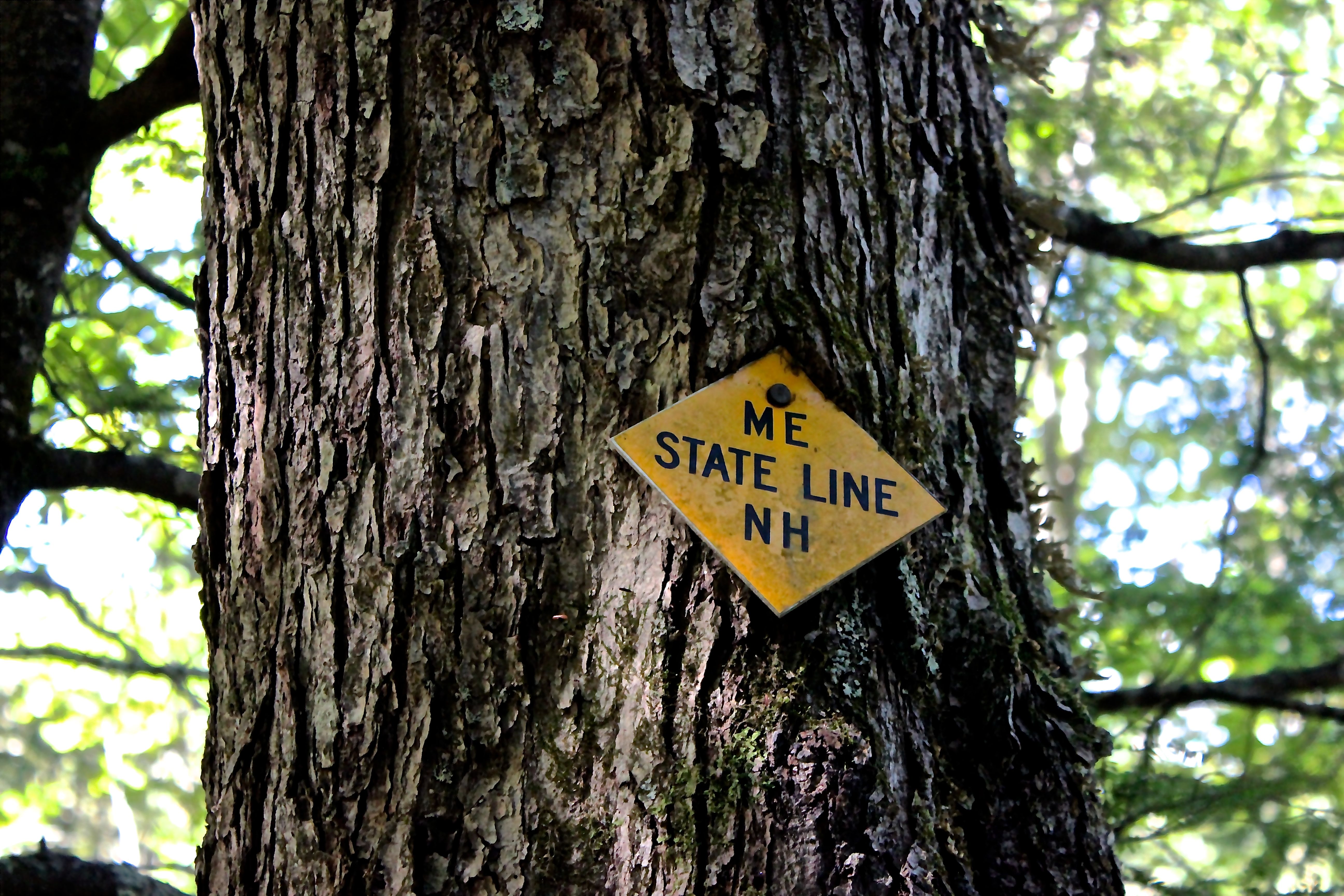
Soon, well, not all that soon, we arrived at the state line and passed onto Upper Saco Valley Land Trust property.

dam 3

And then we came upon the dam.

dam 2

It was the perfect day to sit on the rocks and eat a peanut butter and jam sandwich–with butter.

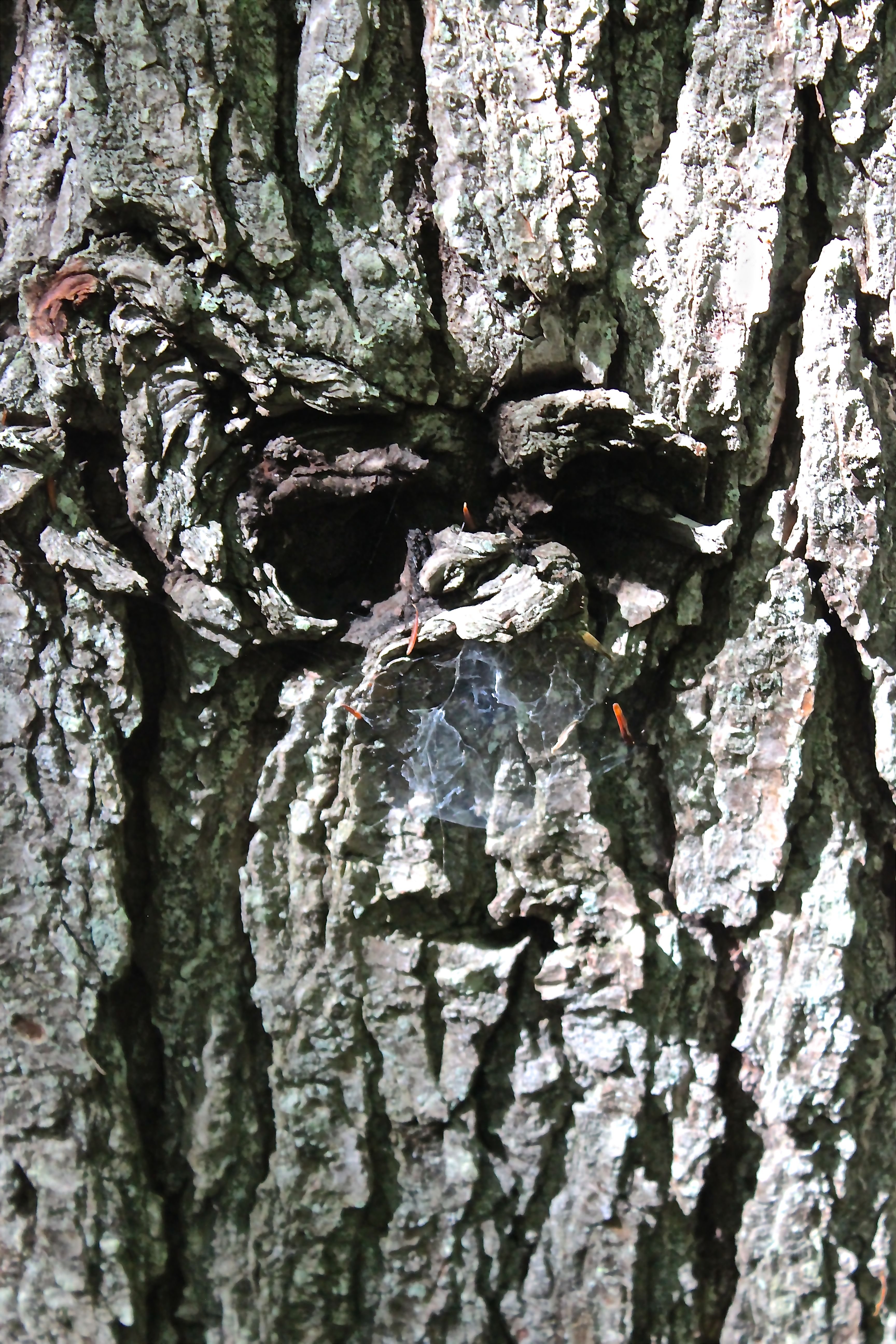
 tree face

As we walked back toward Stone House Road, we realized we were being watched. Perhaps this tree muse has all the answers.

Thanks to P.K. for a delightful wander and a chance to wonder together.

A World in Miniature

trail

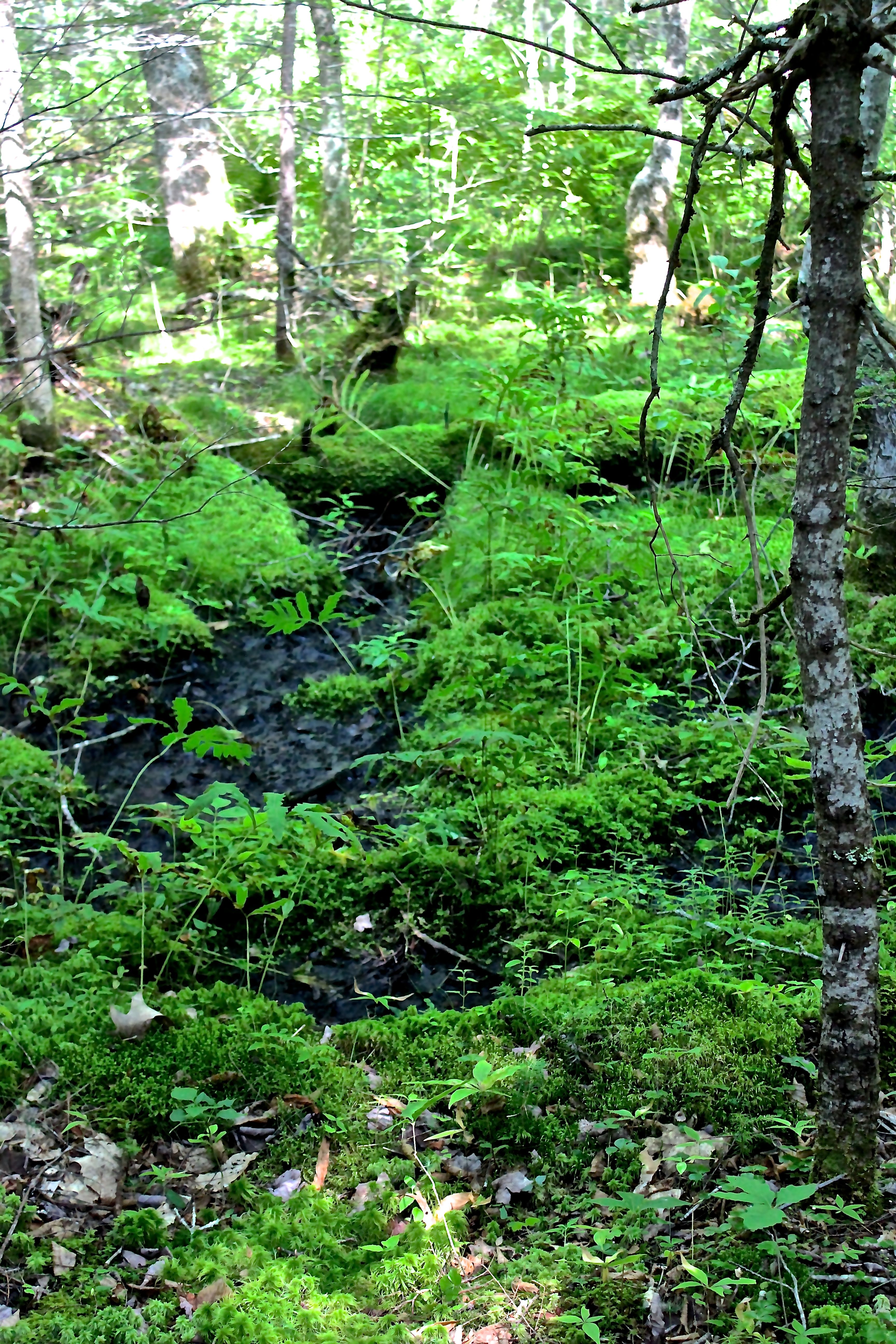
I feel my dad’s presence when I enter a forest where mosses carpet the damp  floor and blanket once exposed rocks and tree trunks. To dad, this was home to the faeries or fair folk. Indeed, it is.

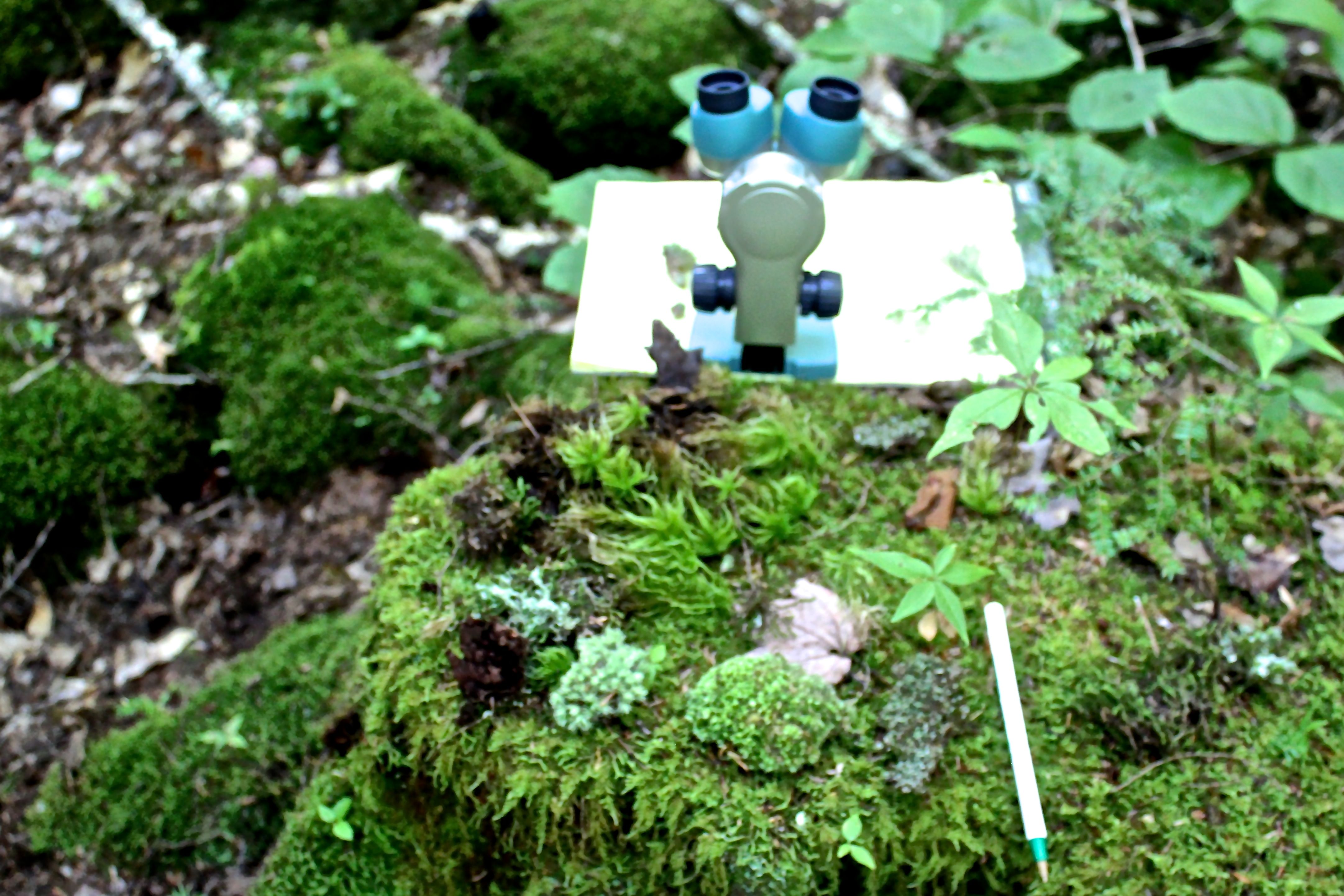
desk top 2

Yesterday, I took a closer look. With hand lenses, a field microscope and a copy of the Princeton Field Guides: Common Mosses of the Northeast and Appalachians,  friends and I set out to identify a few common species.

Mosses (and liverworts) are bryophytes, bryon being Greek for moss and photon for plant.

A sea of green surrounds us. Moss green. OK, so what does that mean exactly? Each species has its own shade of green and even still, several variations of that shade.

fern moss

Above is a fern moss, with its fern-like leaves and yellowish-green hue. What would its name be on a paint chip? Below, you can see its brown spore-bearing, pointed capsules born on a wiry stalks sticking out from the side of a tree stump.

fern moss spore capsules

If you look closely, you’ll see something else on this old stump.

liverwort

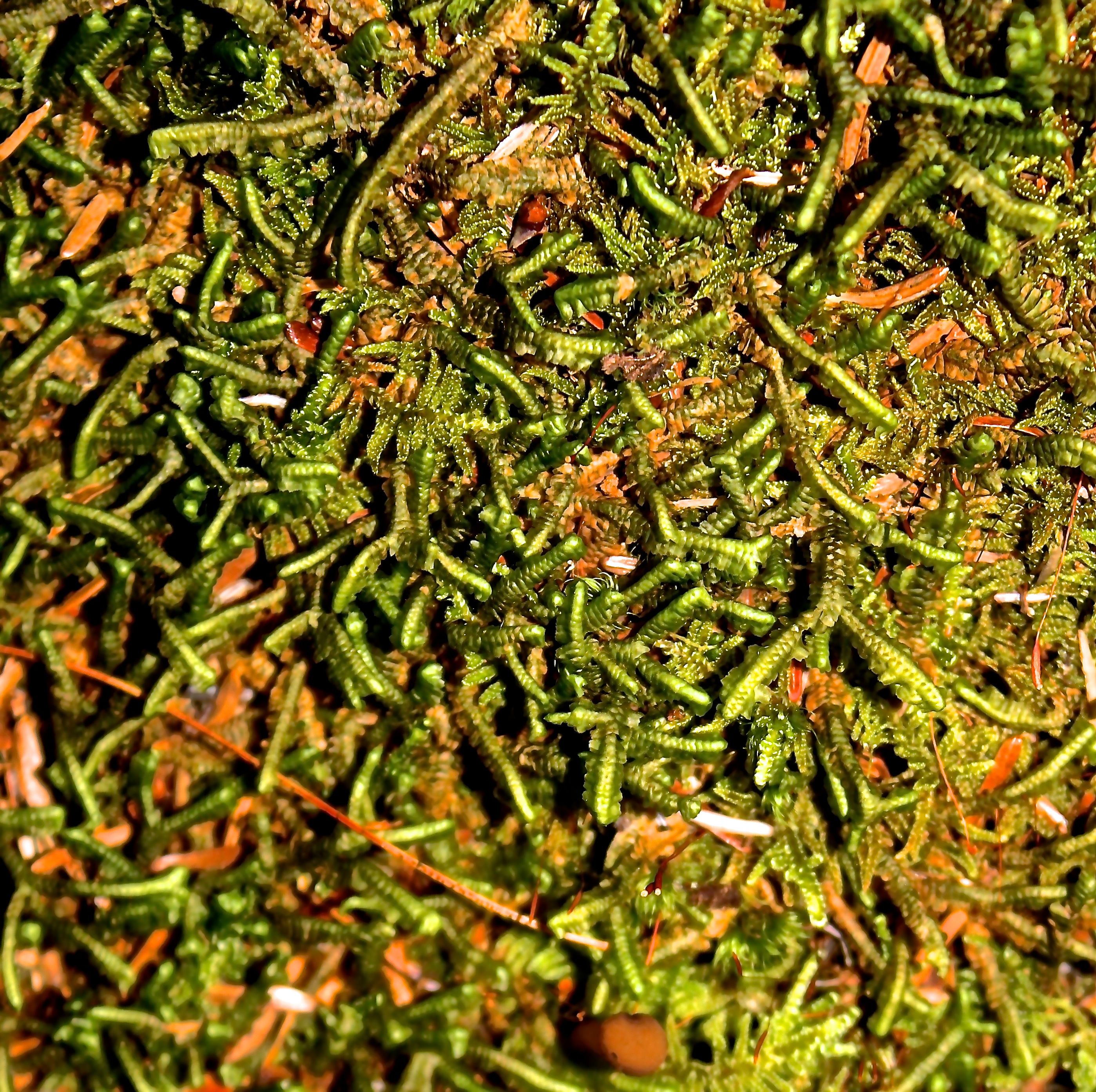
Green worms. Zillions of them writhing about. Such is the illusion created by thin overlapping leaves that curl under along the outer sides–giving them a 3-D appearance. This is a liverwort–three-lobed Bazzania or Bazzania trilobita.

mystery fern mat

Nearby, another mat caught our attention. It reminded us of one we’d seen earlier, but we needed to spend time with it.

mystery fern moss 3

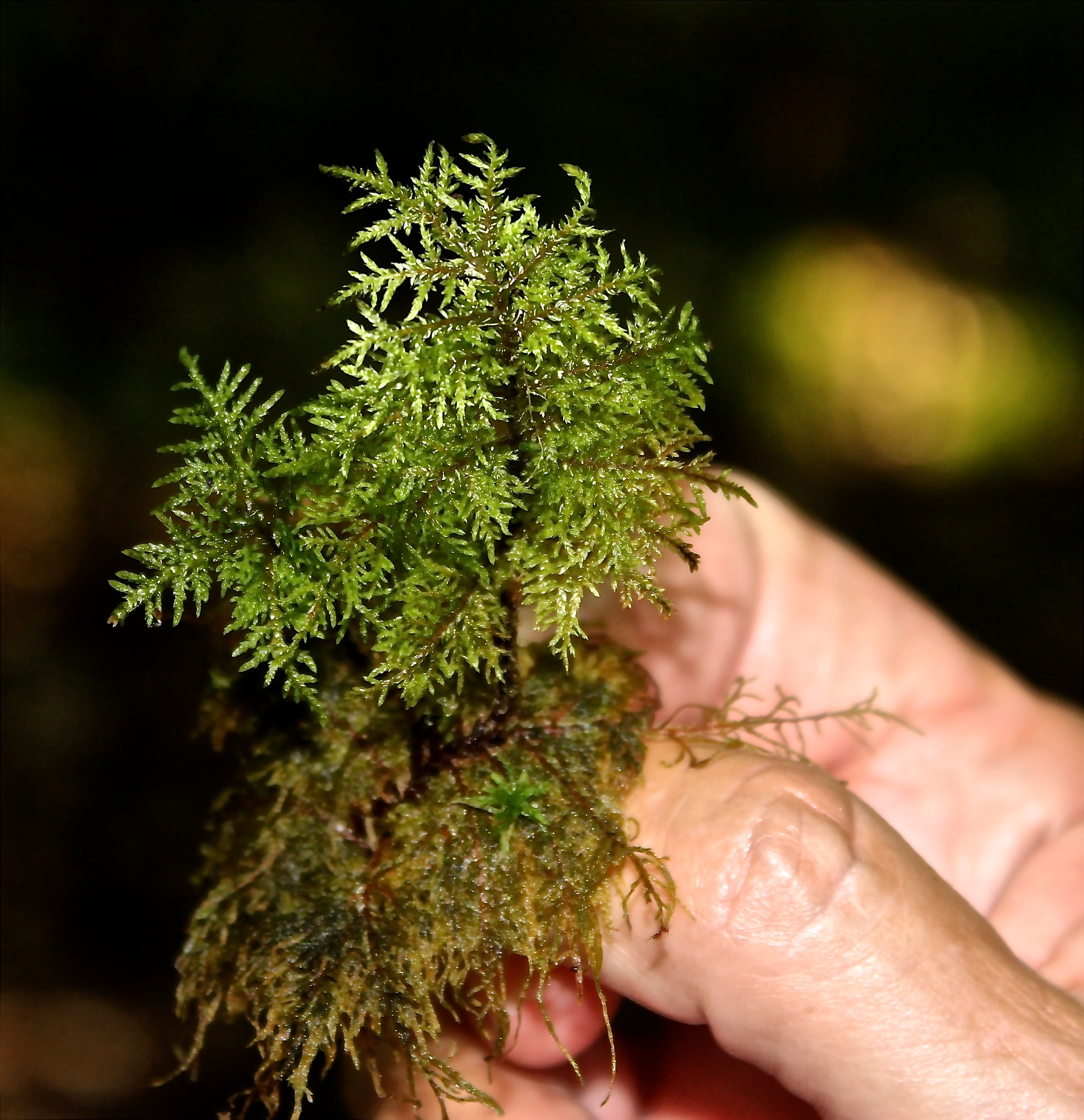
We knew by its structure that it was another fern moss species–but which one? The red stem stood out to me as the missing link. It became our mystery moss for the time being, but I think I’ve figured it out. Pleurozium schreberi or red-stemmed moss. I also found it as Phoenix feather moss. And big red stem moss. Yeah, I know–that’s why I should learn the Latin. Ah, Mr. Cretella, you are still sitting on my shoulder trying to get me to stop using Spanish words to fill in the answers on Latin quizzes.

spag 3

We discovered springy, wet sphagnum moss. I always think of it as being in a more bog-like setting, but it is quite damp here.

pincushion moss

One of the common species that grows in small, easy to see mounds scattered about the area, pincushion moss. To some, it resembles a sea urchin. Using our hand lenses, we looked for air bubbles that are supposed to be visible at the base, but mostly we saw tears welled up in our eyes from laughing.

desk top display

After three hours, it was time to pack up the items on our our tree stump desk and head out. We’d only walked .2 of a mile down the trail, so it wasn’t a long haul out.

wood frog

Movement made us pause. Not a faerie, but a large masked wood frog who wanted us to think he wasn’t there.

bobcat and haircap

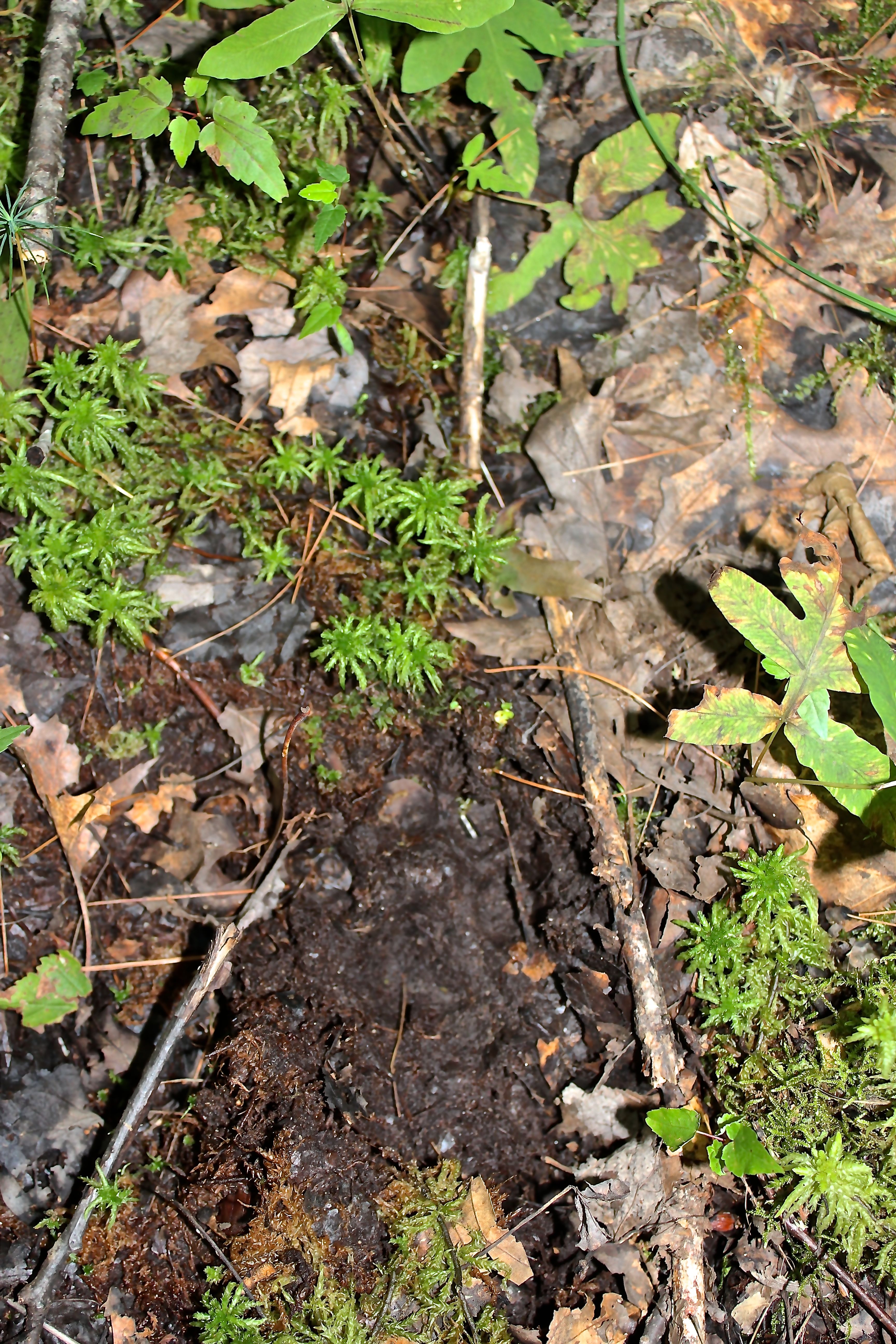
Someone else had previously passed by. We’d seen tracks on the way in and knew what it was, but I waited till the end to photograph this bobcat print. Do you see it in the mud? And the hair cap moss above it and to the right?

Acro moss

I’d sketched this previously. Looking at it now reminds me that we reviewed the three basic growth forms of mosses and found examples of all three in this little space–acrocarp, pleurocarp and peat moss.

Acrocarp–simple or sparsely forked stems typically grow in upright position. (pincushion, haircap)

Pleurocarp–stems typically trail along the ground and feature opposite branches. (fern mosses)

Peat moss–stems stand upright; often have mop-like or pom-pom heads. (sphagnum)

I’m thankful for friends who love to learn (P & B K. and D.S.). We hardly scratched the surface. I can’t wait to spend more time among this miniature world beneath our feet.

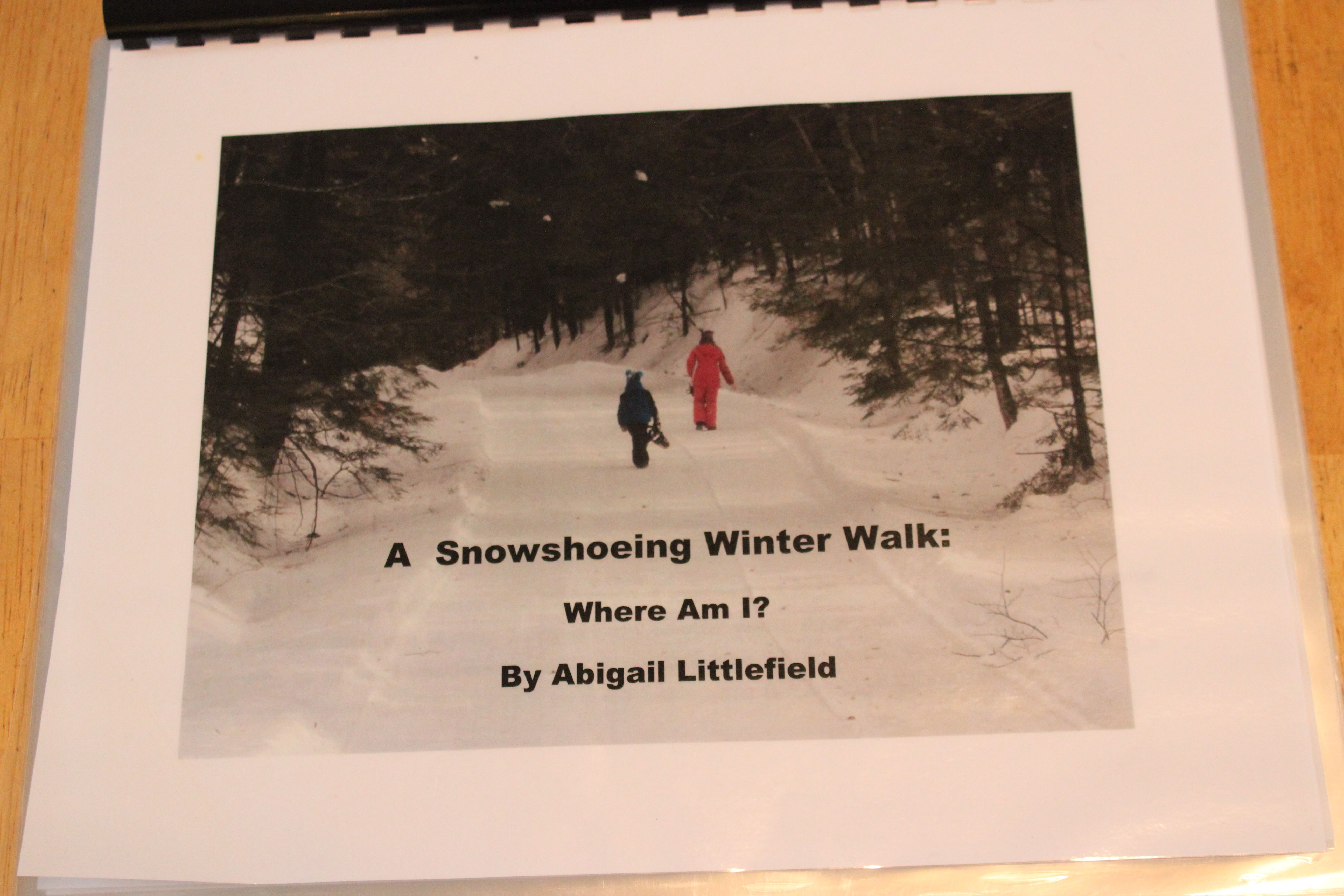
Book of July: A Snowshoeing Winter Walk–Where Am I?

cover

Book of July

Summer may be in full swing, but I just received a copy of a special book created by a young friend and I wanted to feature it this month. The photos will cool you down on a steamy day.

This past February, Abby Littlefield, her younger brother and their mom, invited me to snowshoe with them at Holt Pond Preserve in South Bridgton. Abby was in fourth grade and needed to complete a project based on an ecosystem. She chose wetlands and wanted to learn more about the flora and fauna of the preserve.

I was thrilled to receive a copy of the book Abby made about our journey and delighted to discover how much she remembered from our trek. She and her family were real troopers that day–the temp was quite low, snowshoeing was a new experience for them and we spent about three hours on the trails. She reminded me of myself as she jotted down notes and we examined everything closely.

I did notice that her story doesn’t include the pileated woodpecker scat–not her favorite find. (Her brother thought it was rather special. :-))

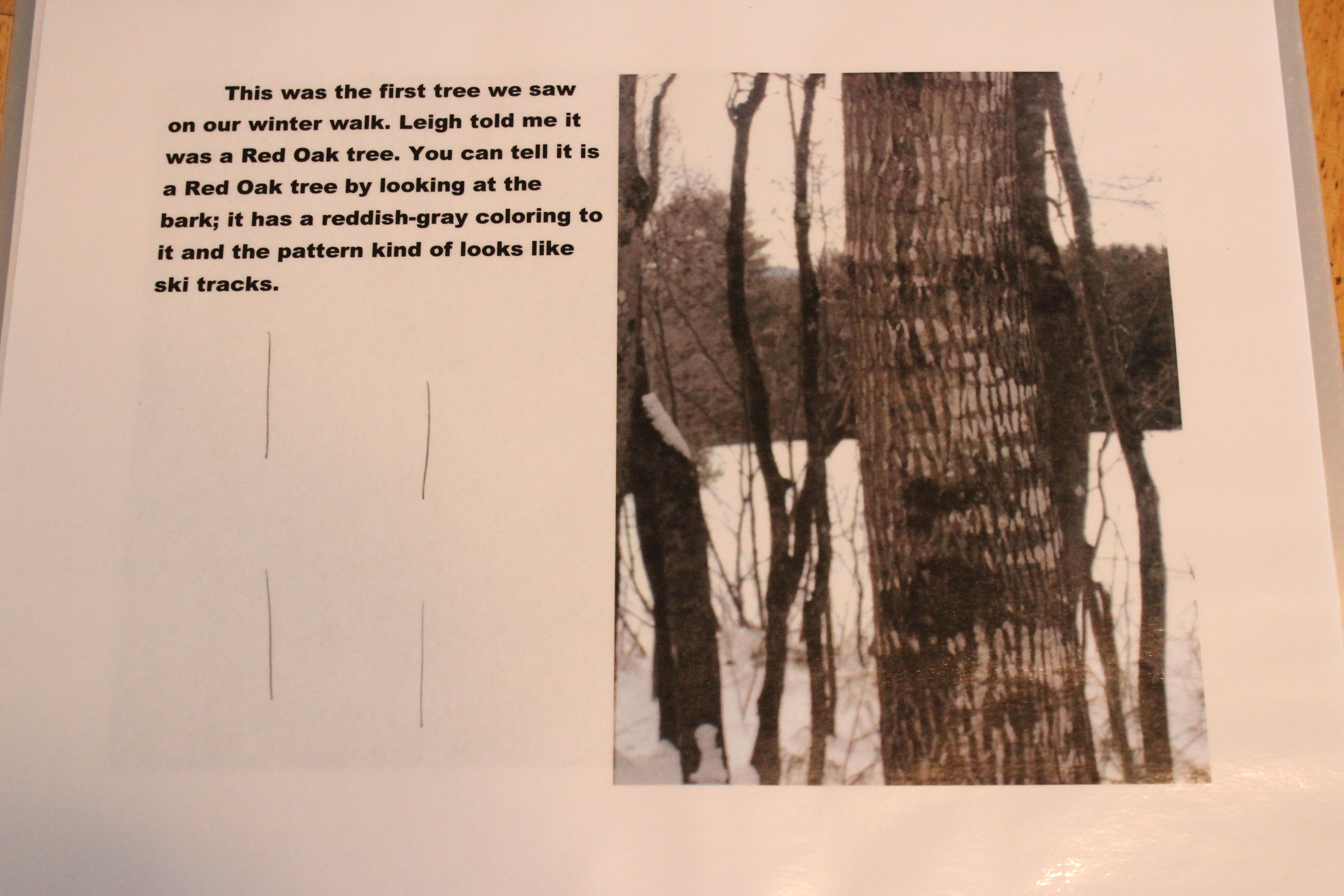
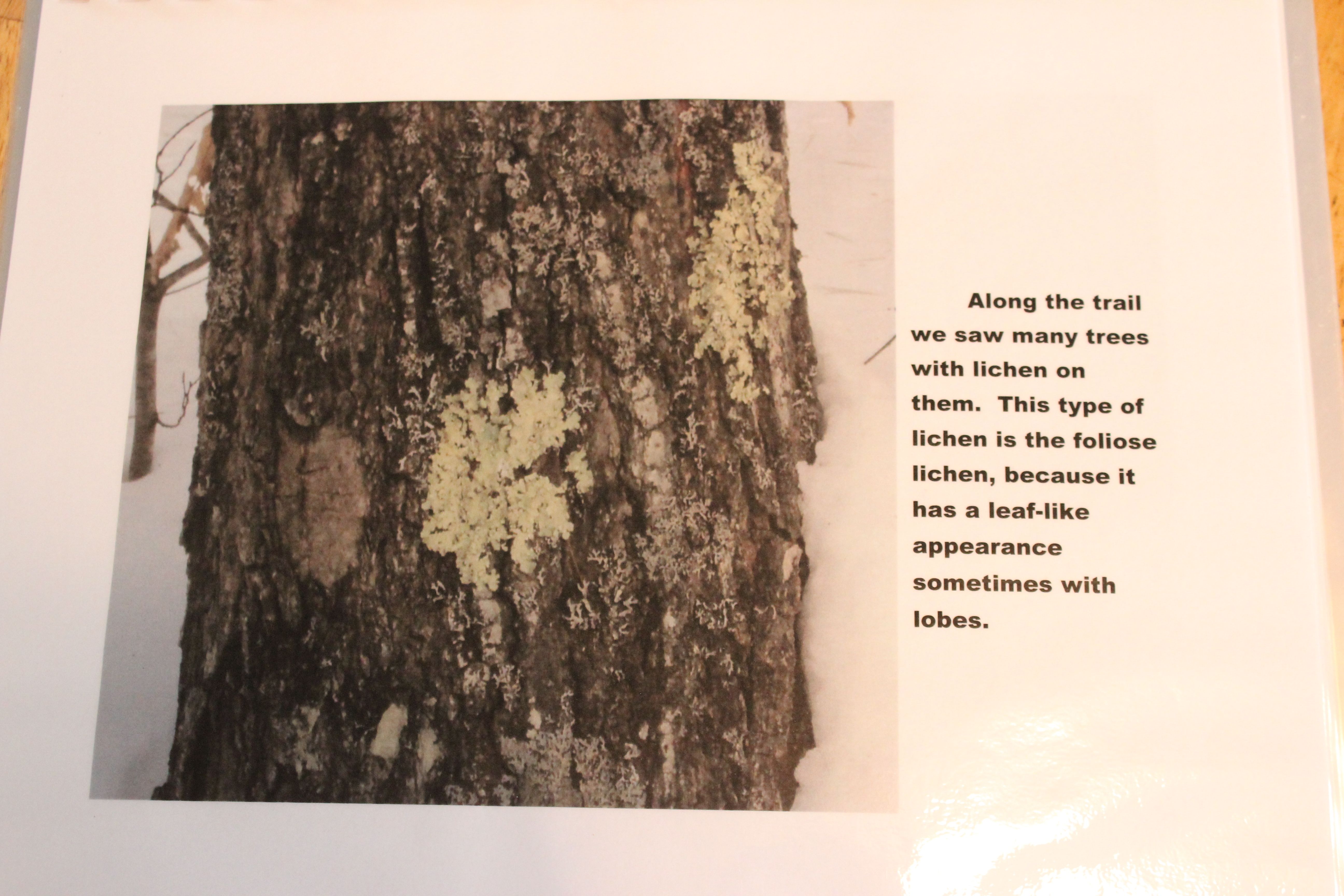
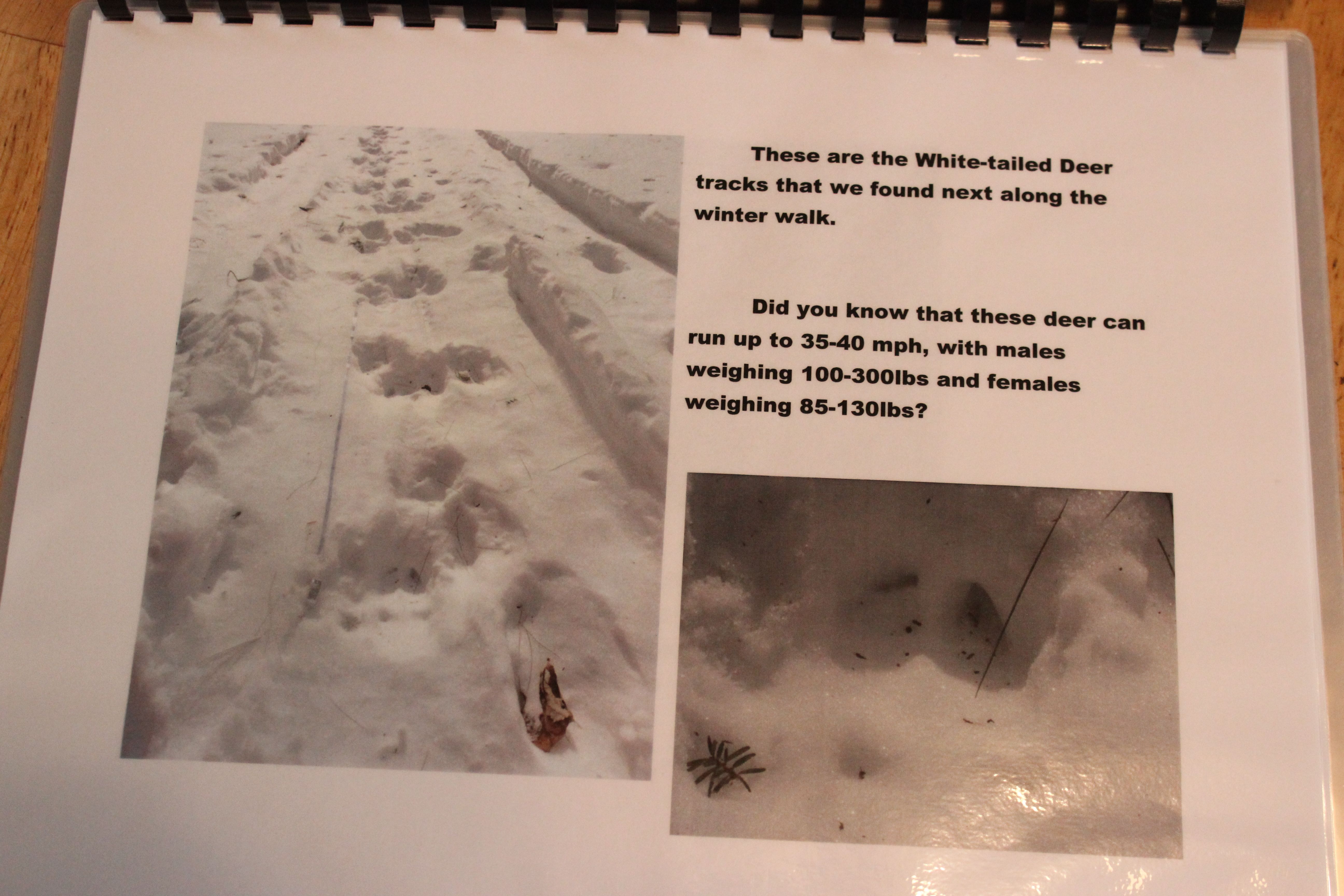
Here are some pages from Abby’s book:

red oak

lichen

paper birch

deer tracks

where are you?

fun facts

bibliography

Mighty impressive for a fourth grader. Congratulations, Abby, on a job well done. And thank you for letting me wander along with you and your family. It was a pleasure and I look forward to future expeditions.

Bookends

An absolutely gorgeous day in Maine began with a trek around Perky’s Path in Lovell and ended with a visit to the vernal pool behind our house. In between, I had numerous other things to accomplish, but it was the time spent exploring and wondering that added natural bookends to my day.

spring trail

Only a week ago, I was watching flowers and leaves emerge on trees. They still are, but what a difference a week makes. The trail suddenly seems illuminated.

striped maple

Among the shining stars–Striped Maple, known by some as goose foot because of its shape. (It’s also known as nature’s toilet paper.)

witch hazel

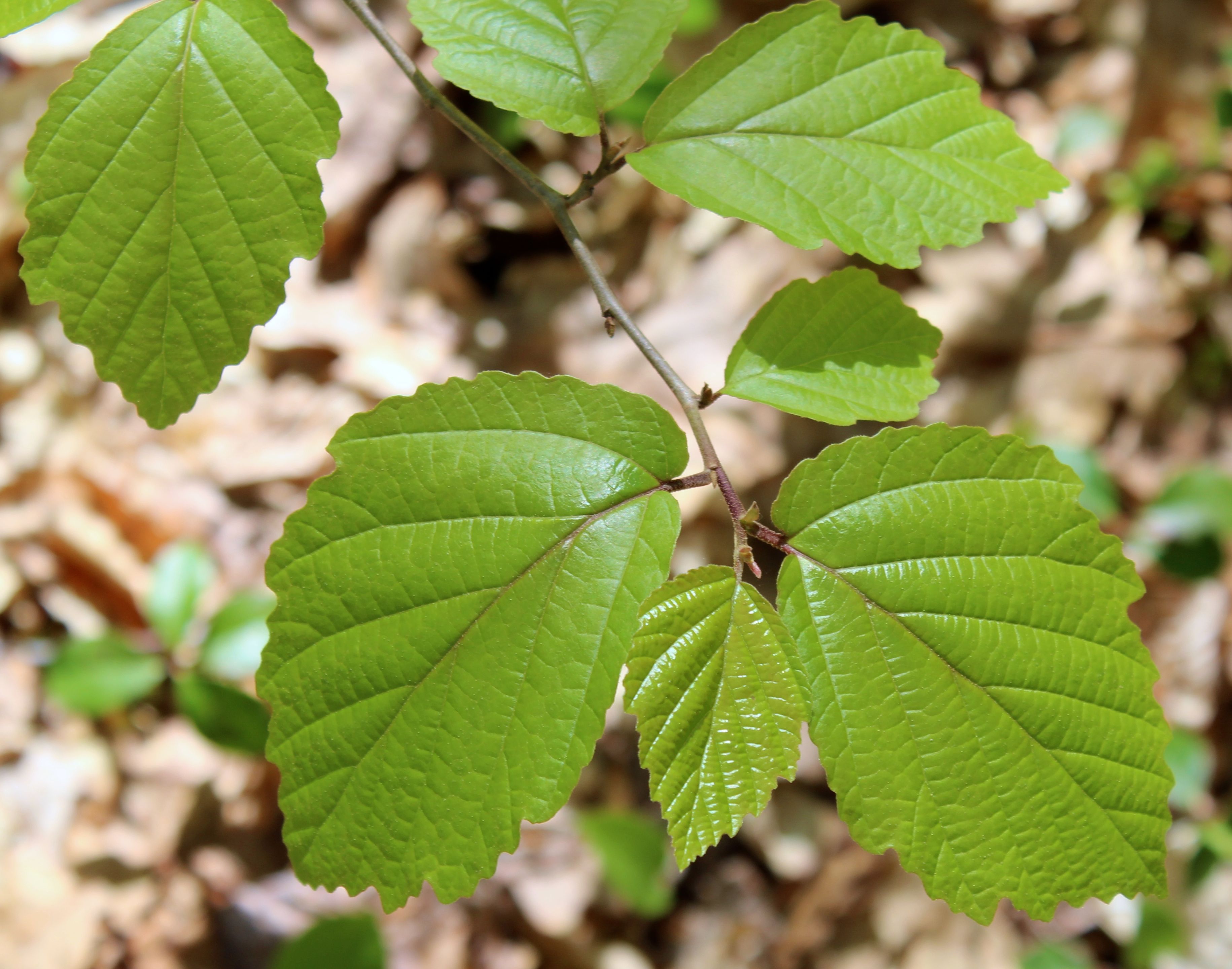
And Witch Hazel, which is easy to identify by its asymmetrical base and scalloped edges.

Red 2

And then there are the spring ephemerals, like this Red Trillium, that must flower before the tree leaves block the sunlight.

pt 2

Painted Trillium was also plentiful. Notice the reason for “tri” in the name? When I taught school, I forced my students to learn word cells–breaking the word down to understand the meaning. Tri=three, llium=referring to liliaceous or the lily family. (They had to learn tri, but llium wasn’t on their list.) I don’t know most of the Latin names, but even a few clues are always helpful.

fs3

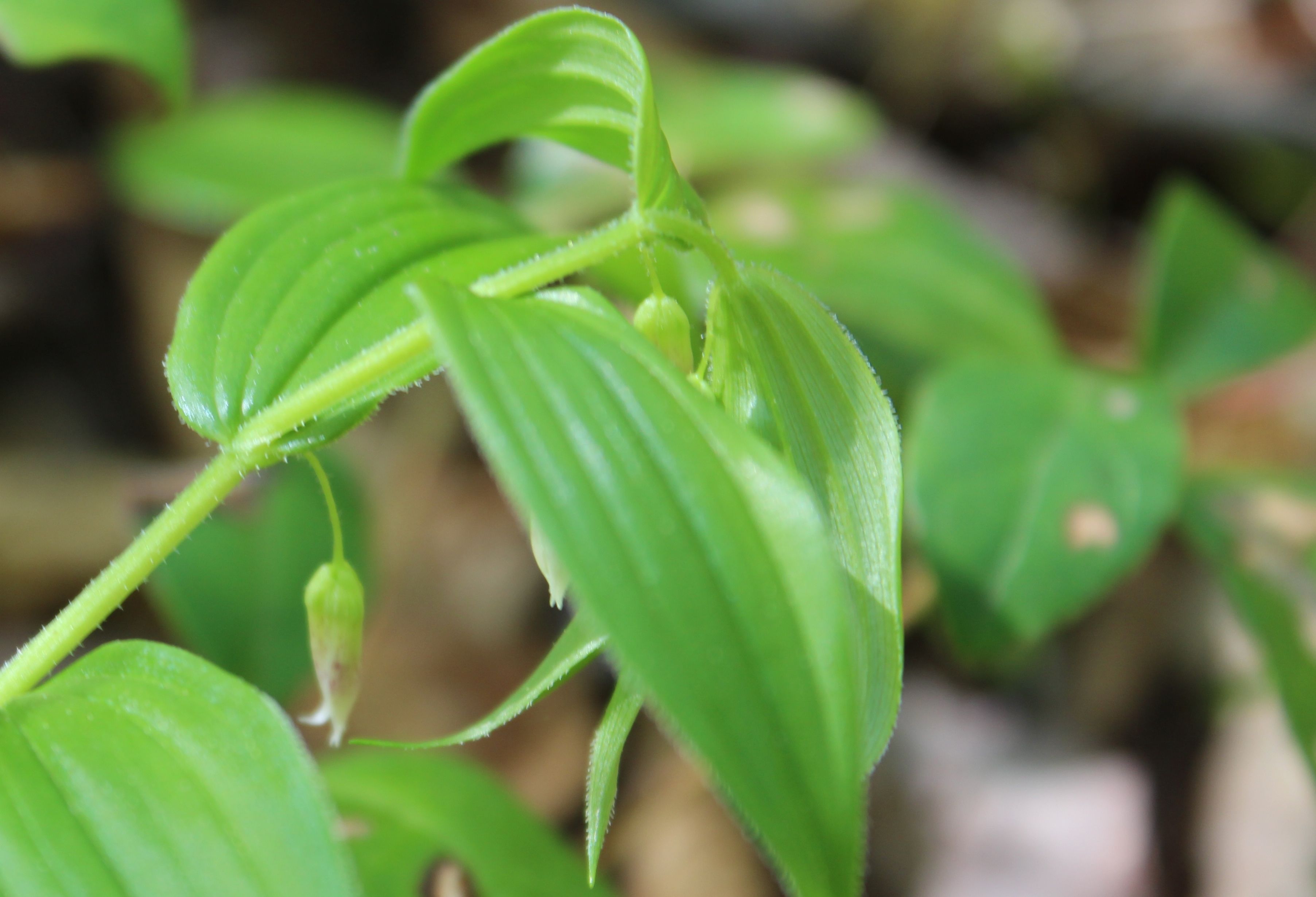
Another member of the lily family–Hairy Solomon’s Seal. One characteristic of the lily kin–the parallel leaf veins.

goldthread

One of my favorite spring flowers is Goldthread. It personifies daintiness. While the scalloped, three-lobed leaves remind me of cilantro, Native Americans apparently used it to make tea. So why the common name? The root resembles a golden thread. Simplicity and beauty in a small package.

bunch

And yet to come, Bunchberries.

wild sars flowers

And the greenish white flowers of Wild Sarsaparilla, that grow under the umbrella-like leaves.

hb2

I would be remiss if I didn’t include Hobblebush.

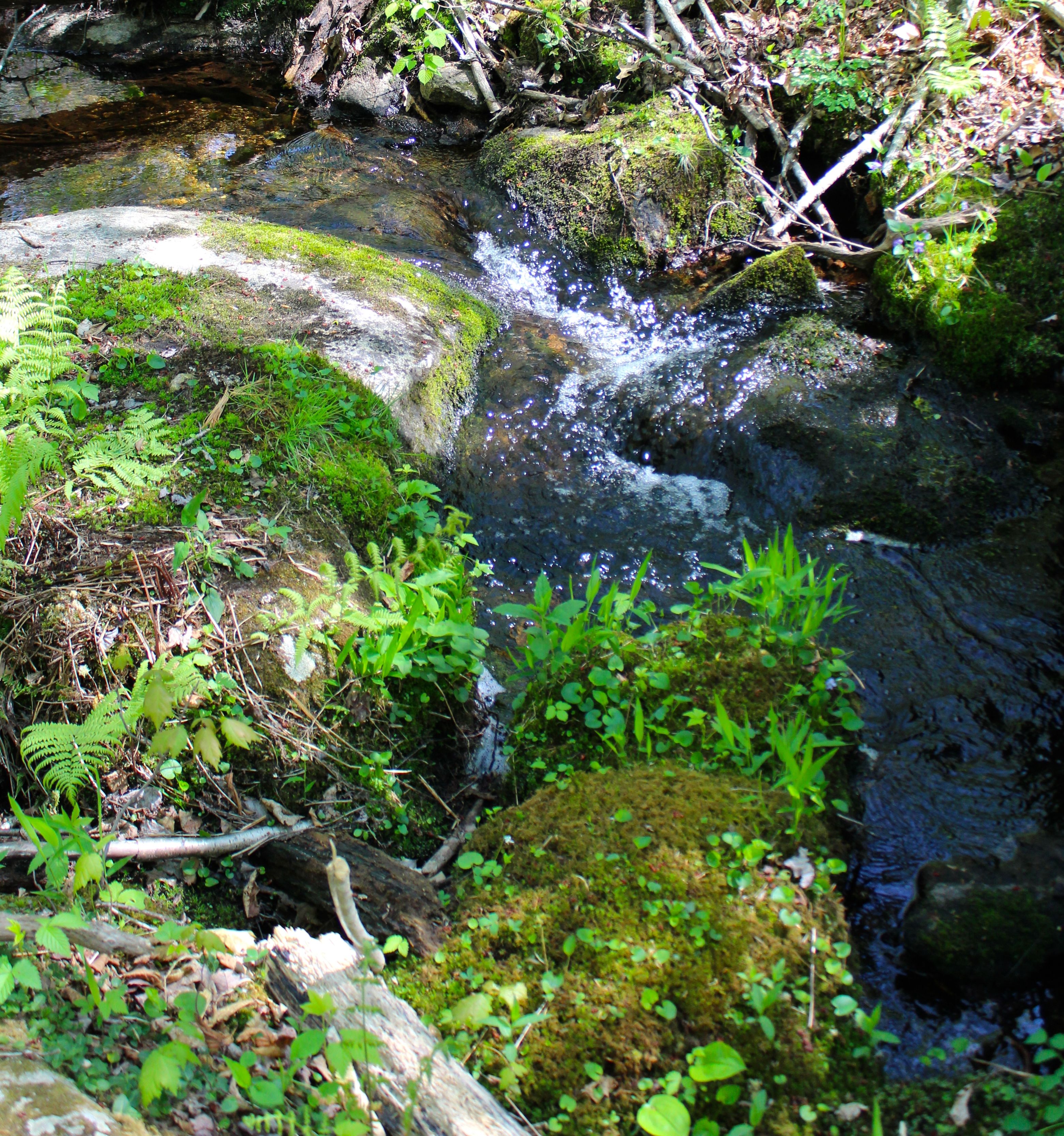
stream

In the winter, friends and I usually find otter tracks and slides by this stream. Today, a variety of life spills forth.

brook

A brook flows from Heald Pond to Bradley Pond, and several years ago the Greater Lovell Land Trust constructed a bench to take in the sights and sounds of this place.

brook2

The view is ever changing.

bridge

Just down the path, a bridge also invites quiet contemplation. (When the black flies aren’t trying to sneak into your eyes, ears and mouth, that is. Protein consumption today? Check)

bridge 2 rock garden

And a rock garden.

swamp

One last look before heading out. Morning has ended.

rhodora

At the other end of my workday, I’m off to the vernal pool. Among a sea of junipers, an explosion of lavender erupts from one Rhodora plant.

bobcat

I’m so glad that the Rhodora attracted my attention, because as I turn from it toward the pool, I realize that a bobcat has walked in the direction of our cowpath.

vp

We’ve had little rain in the last few weeks, so while the snowmobile trail still has some muddy spots, the pool is drying up.

sally eggs

Will there be enough water for the spotted salamanders to survive?

water strider

And what will happen to the water striders?

twins

I’ll be curious to see how the tadpoles do. These two appear as bookends for me, holding everything in between in check.

Every day, it’s something new. I feel like I have to start all over again learning the features of this season and I’ll just begin to get it by the time summer rolls around, and then . . . so much more to learn. Though I have plenty of books to guide me, it’s the actual events that are happening right before my eyes that provide the most accurate information.

I’m thankful for any opportunity to wonder and wander, especially at both ends of the day.

Soaking Up Solitude

It just so happened that my guy and oldest son had to work today and our youngest is exploring Chicago for a few days before heading home for the summer. So, on this Mother’s Day, I did what I do–went for a hike by myself.

kiosk

Thanks to the efforts of Loon Echo Land Trust, and the people who support this organization, there is a network of trails that loop around and over Bald Pate in South Bridgton. Initially, the land was purchased from a paper company to protect it from becoming the site of a TV tower. The Bald Pate Mountain Preserve encompasses 486 acres and has 6.7 miles of trails. I covered most of them today.

Moose Trail sign

The Moose Trail was at times dry and other times wet. Though this sign directs hikers to the Beech Thicket, really, much of the lower part of the mountain is covered in beech–an indication that the land was previously disturbed.

horsetail

Along the way, I found Woodland Horsetail, an Equisetum. The whorled branches apparently reminded those who came before of a horse’s tail.

hobblebush

A few Hobblebush Viburnums were in full bloom. One of the extraordinary things about this plant is that the showier outer rim of flowers are sterile, while the inner flowers have both stamens and pistils. Today’s lesson–male flower part, stalk is called filament, pollen producing sac at tip is the anther, together they form the stamen(stay men); pistil–female flower part, the stigma at the top receives the pollen, which is sent down the style, a tube-like structure, leading to the ovary, where the potential seeds or ovules are located. (She’s a pistil) Phew! Got through that discussion.

Indian Cucumber

Indian Cucumber Root is the double-decker of the plant world. When it has two tiers, such as this one, it has enough energy to produce a flower. And the root is edible. This I know first hand. I’m not the forager some of my friends are, but the root really does taste a bit cucumbery.

wild sasparilla

Another plant with an edible root, Wild Sarsaparilla was used as a tonic and was the source of root beer–until we learned how to make it out of artificially flavored syrup.

trail marker

I followed the squiggly trail marker to the summit, hiking from the Moose Trail to the South Face Loop Trail and continuing past the Pate Trail. The trail is well marked and maintained. On the climb up, I kept looking for my favorite signs.

bobcat

Found some. Bobcat prints in the mud.

coyote scat--apple

Coyote scat filled with apple skin and seeds. The property abuts an orchard. In fact, at Five Fields Farm, winter activities include snowshoeing, cross-country skiing and dog sledding on a network of trails through the orchard and onto the preserve.

coyote

A coyote print dried in the hardened mud.

garter snake

And a garter snake slithered away from me. I actually saw another later on.

beech nuts

I found beech nuts on the trail, but no bear claw marks, which surprised me considering the number of mature beech trees. And interestingly, while some of the beech trees suffer from infection due to the beech scale insect, many are quite healthy.

initials

One black bear did carve its initials into bark. We only raise intelligent black bears in these parts.

PeabodySebago

Ascending via the backside of the ledges, I soon came to the view of Peabody Pond and Sebago Lake beyond. The only other people I saw was a family of five at the summit.

pp3

Pitch Pine trees are the most fire resistant in Maine and the summit features a community of these.

pp needles

While White Pines have a bundle of five needles, Pitch Pines have three in a bundle.

pp cone

And prickly-scaled cones.

lichen on granite

The “bald” mountain top is the reason I am who I have become. Being outside and hiking have always been part of my makeup, but when our oldest was in fifth grade, I chaperoned a field trip up this mountain that changed everything. The focus was the soils. And along the way, Bridie McGreavy, who at the time was the nature educator for Lakes Environmental Association, sat on the granite surrounded by a group of kids and me, and told us about the age of the lichens and their relationship to the granite and I wanted to know more. I needed to know more. That was the beginning and I give thanks to LEA, Loon Echo Land Trust, the Greater Lovell Land Trust and Maine Master Naturalist Program for continuing my education.

Foster pond

There was so much more to see, like this view of Foster Pond from the Foster Pond Lookout Trail.

bb1

And these bell-shaped flowers. I’ll be back when they turn to fruit. There will be plenty to pick.

3 beeches

I may have been soaking up my alone time (or maybe that was just sweat–it was hot), but my thoughts were of my three guys.

Happy Mother’s Day to all. As one of my college friends wrote the other day, “whether we are mothers to children, aging parents, pets, or all of the above, we deserve to celebrate!!” Love that sentiment, BMD :-)

And I love that you’ve taken the time to wonder along with me. See, I wasn’t alone after all.

Extended Mondate

Sometimes Christmas gifts are delayed at our house, though not quite the way they were when I was growing up. Back then, months after the holiday, Mom would discover a forgotten gift she’d tucked away in the hallway closet for one of us. It was a fun surprise–for us and for her.

This weekend, my guy and I shared a present I’d given him last Christmas–a weekend away, with a search for roots tied in.

We began with my roots actually–and spent Friday night and Saturday morning with my sister and brother-in-law. That, in itself, is always a gift. Plus the conversation, laughter, a delicious breakfast and chocolate chip cookies for the road. (Many thanks to the MacBuds! You are the best.)

And then we were on the road again–headed to Onset Beach in Wareham, Mass. Until this weekend, Wareham had always been a place that we passed through on our way to or from the Cape. Oh, maybe we stopped for  saltwater taffy sometimes, but that was about it.

This weekend changed everything. We didn’t stay there, but we spent plenty of time there–including in the Ford dealership because the check battery light came on when we were about an hour away. The nice mechanic replaced the alternator and belt and in less than an hour and a half we were on the road again. And thankful.

Finally, Onset Beach.

onset 1

This is the view we think my guy’s great grandparents enjoyed daily. Back in the late 1800s/early 1900s, they owned the Onset Hotel. We weren’t exactly sure which building it was at first, but my guy isn’t shy (as some may think) and he talked to almost everyone in town. We were looking for one person in particular because we’d been told he might have information that would help us. I’m surprised the police didn’t come looking for us as we walked up and down streets, chatted with anyone we encountered and knocked on a few doors. We even visited the kind dispatcher at the local fire department. As I said, we talked to almost everyone.

onset 4

This person told us about that person, who suggested we visit yet another person. Finally, we had confirmation–the hotel became condominiums in the 1980s/90s. The photo above is of a page from a 1925 booklet that a woman who owns a property management business showed us. She also called several people in town trying to get more information, to no avail. But we were thrilled that we could look  from her business and see the building.  And walk by it and enjoy the view and smell the sea air, just as his great grandparents had done all those years ago. If they had time, that is, because apparently they also owned a bar in Boston.

onset 2

There’s a condo for sale. Maybe we should think about it. I don’t think so. We really aren’t beach people, even though we both grew up along the coast. We enjoy visiting the beach, but . . .

onset 3

We spent Saturday afternoon stalking the area and returned there this morning. Finally, we’d located the man we were looking for. He gave us two more names–of people who may have some information, but they weren’t home today. Never fear, this story isn’t over yet. We have phone numbers.

bike path 1

And so the present continued. We drove over the Bourne Bridge to Falmouth, where my guy had spent many summers before his parents purchased a hardware store in Maine back in 1965.

Our first Sunday morning adventure was along the bike path.

allen, bike path

While he headed down the trail for a run to Woods Hole and back, I moseyed along with camera in hand. You may want to stop reading now.

 invasives

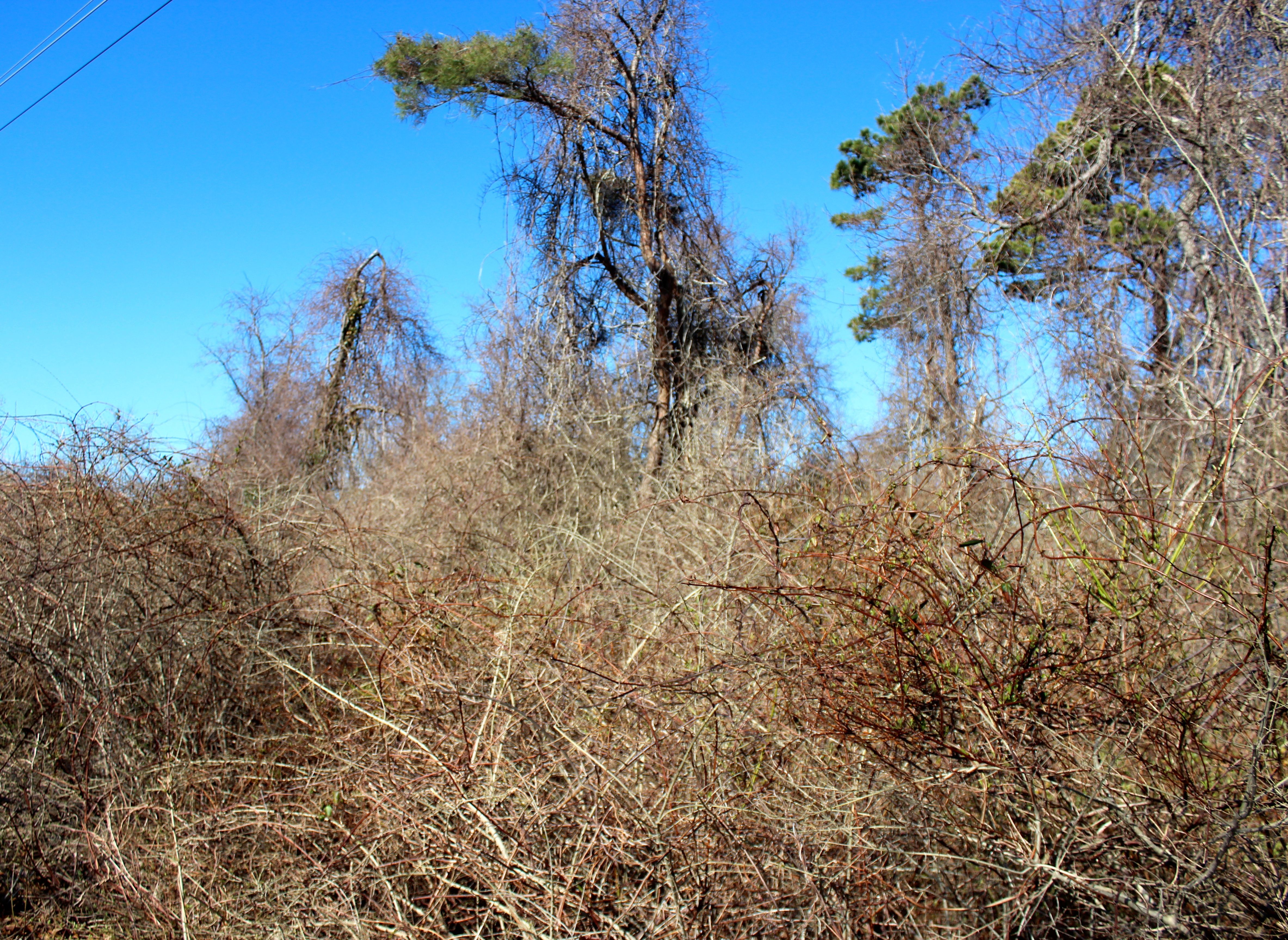
I was surprised by the overwhelming amount of invasive species. It makes our neck of the woods look practically invasive-free.

bamboo 2bamboo

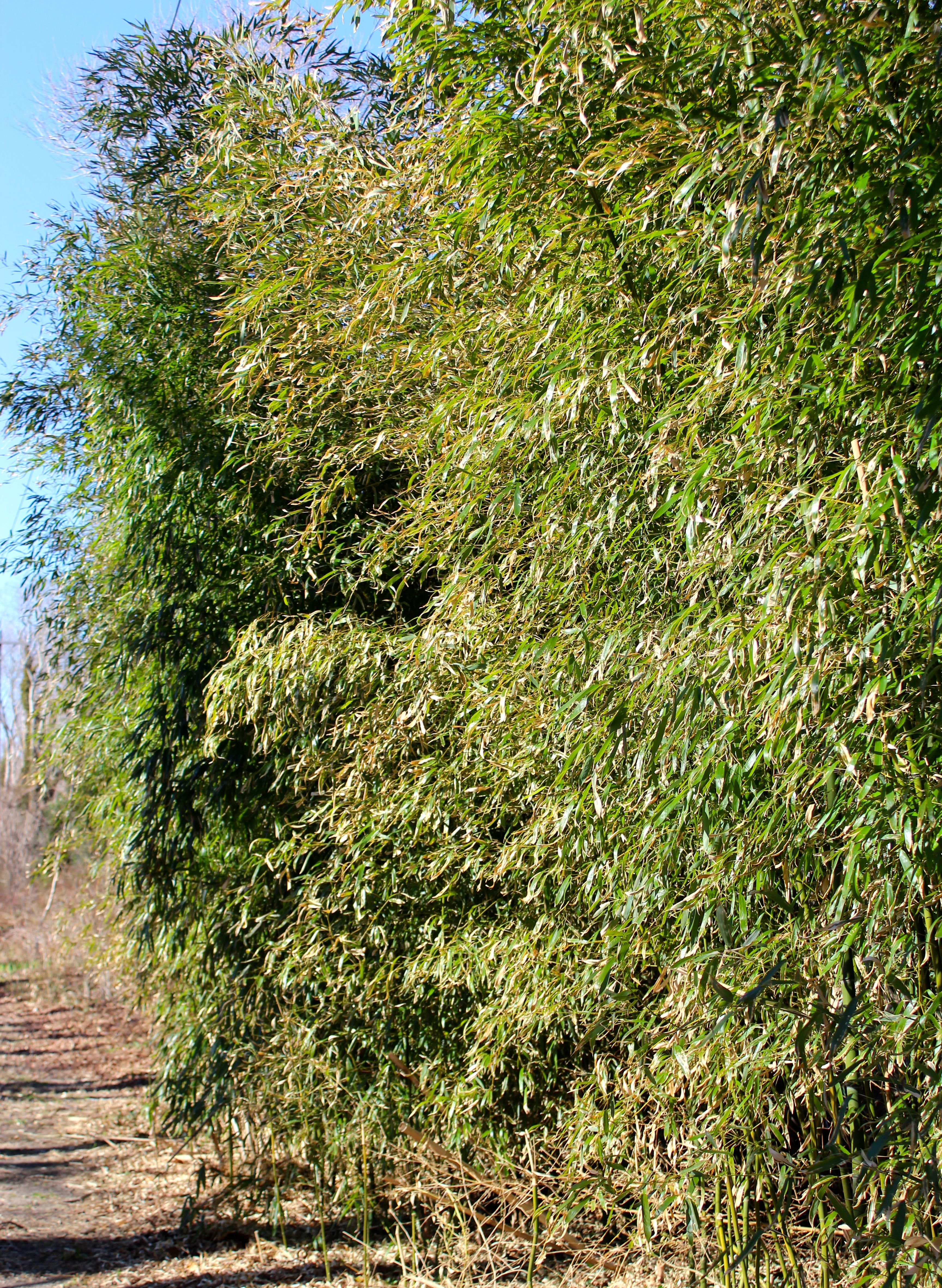
I expected panda bears to come out of this swath of bamboo. Fortunately, it’s only in one spot–at the moment.

Invasive species do always give me pause. On this land, I too, am an invasive. Just like the plants and insects that are not native, nor were my ancestors or my guy’s ancestors. They say what makes an invasive such is that there isn’t anything native that will feed on it, thus it will take over and smother the native species. Hmmm . . .

salt pond

On to prettier sites, like this salt pond beside the path.

seagrass

And the ubiquitous common reed, an invasive which I’ve always admired. There’s beauty in commonness.

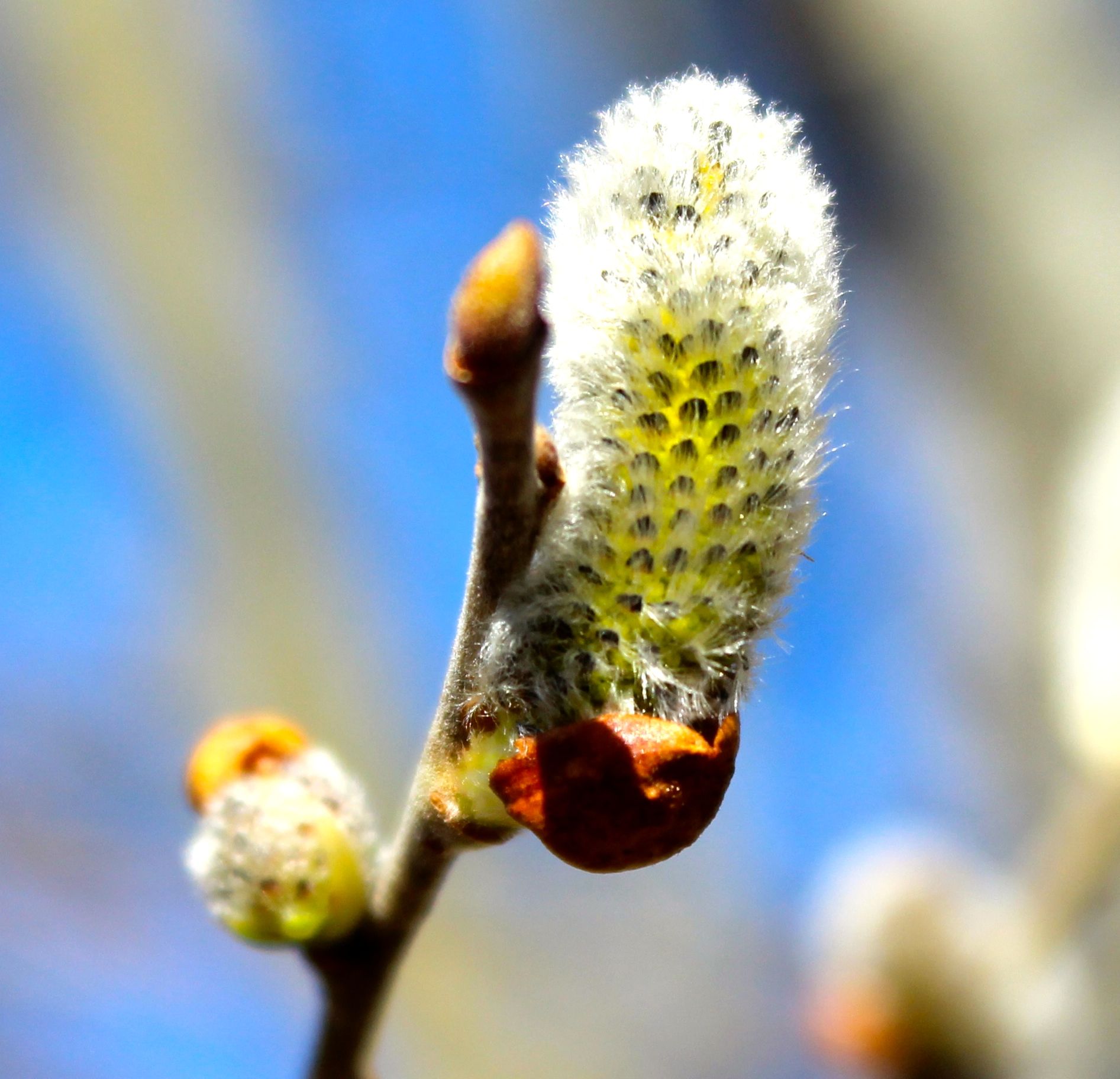
willow bud

Willow buds.

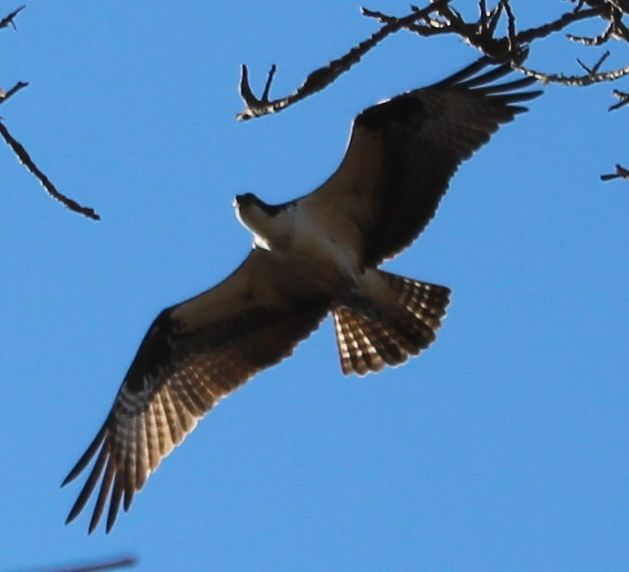
osprey

And soaring osprey.

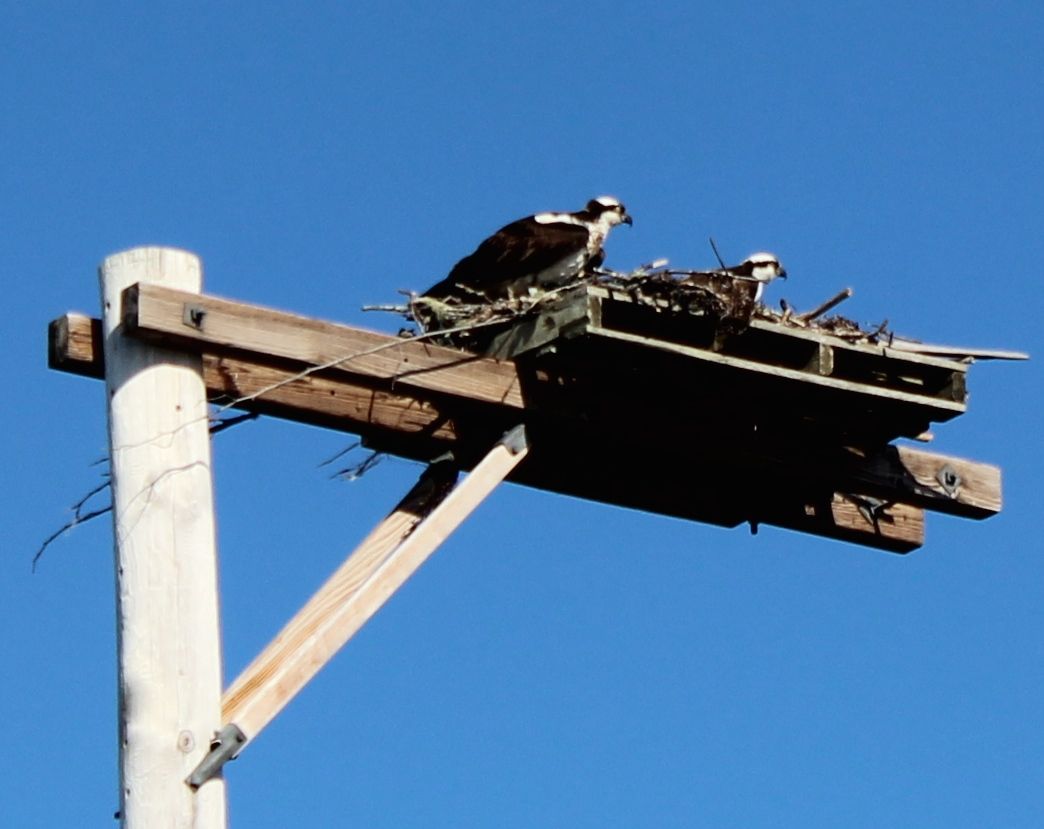
osprey nesting

Nests on platforms or cross bars of power lines. So maybe man invaded, but he’s making amends by placing pallets on high.

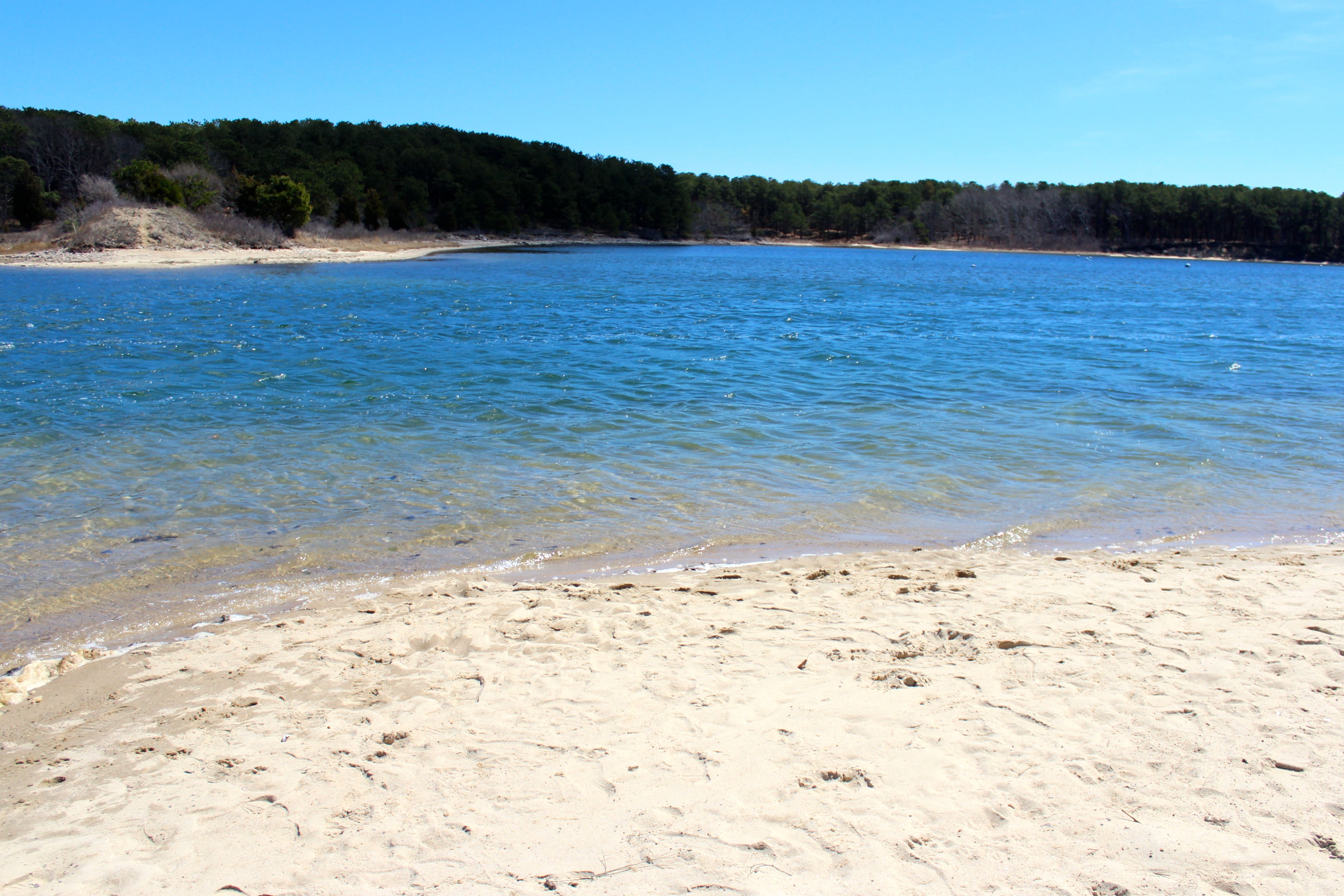
beach by bike path

This beach was my turn-around point.

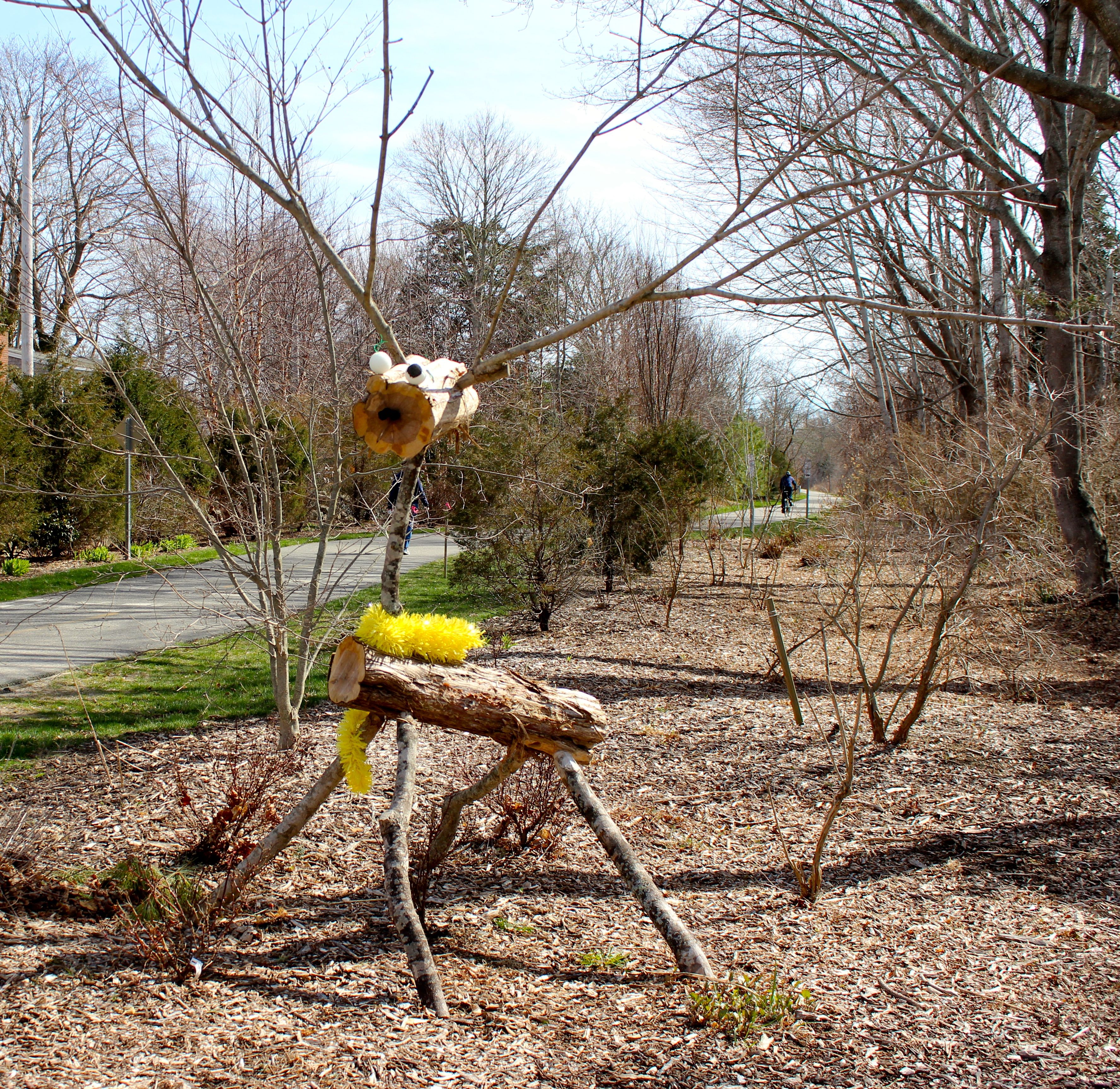
critter on bike path

If you do use the bike path, be forewarned. Panda bears may not be munching on bamboo, but you never know what you might see.

We went in search of the childhood cottage my guy’s dad had built. They sold the small house fifty years ago, and even though we’d last driven by about twenty years ago, it took us a bit to relocate it. Again, he approached a woman who was working in a neighboring yard. There were more houses on the road than he remembered, but it seemed to still be there–with a few changes. He didn’t knock on the door.

We did visit the beach where he and his siblings used to swim and cross the narrow channel to explore an island. On Google, I found the following: “A WW II Army amphibious Training base located in East Falmouth MA (Cape Cod). More exactly it was located on a peninsula now called Seacoast Shores in the village of Waquoit. The base was connected to a nearby island called Washburn Island by a bridge. We have circa 1950’s aerial photos showing the road and ramp to a bridge on the Washburn Island side but the bridge is missing. Aerial photos from 1942 to 1945 should show the bridge. Seacoast Shores is now a thriving waterside Community and Washburn has been returned to its natural state as a wilderness preserve in Waquoit Bay. ~Paul R. Flebotte, COL US Army Retired

looking toward island, seacoast shores

On the left hand side of the island is the site of the bridge Col Flebotte mentions.

skipping stones

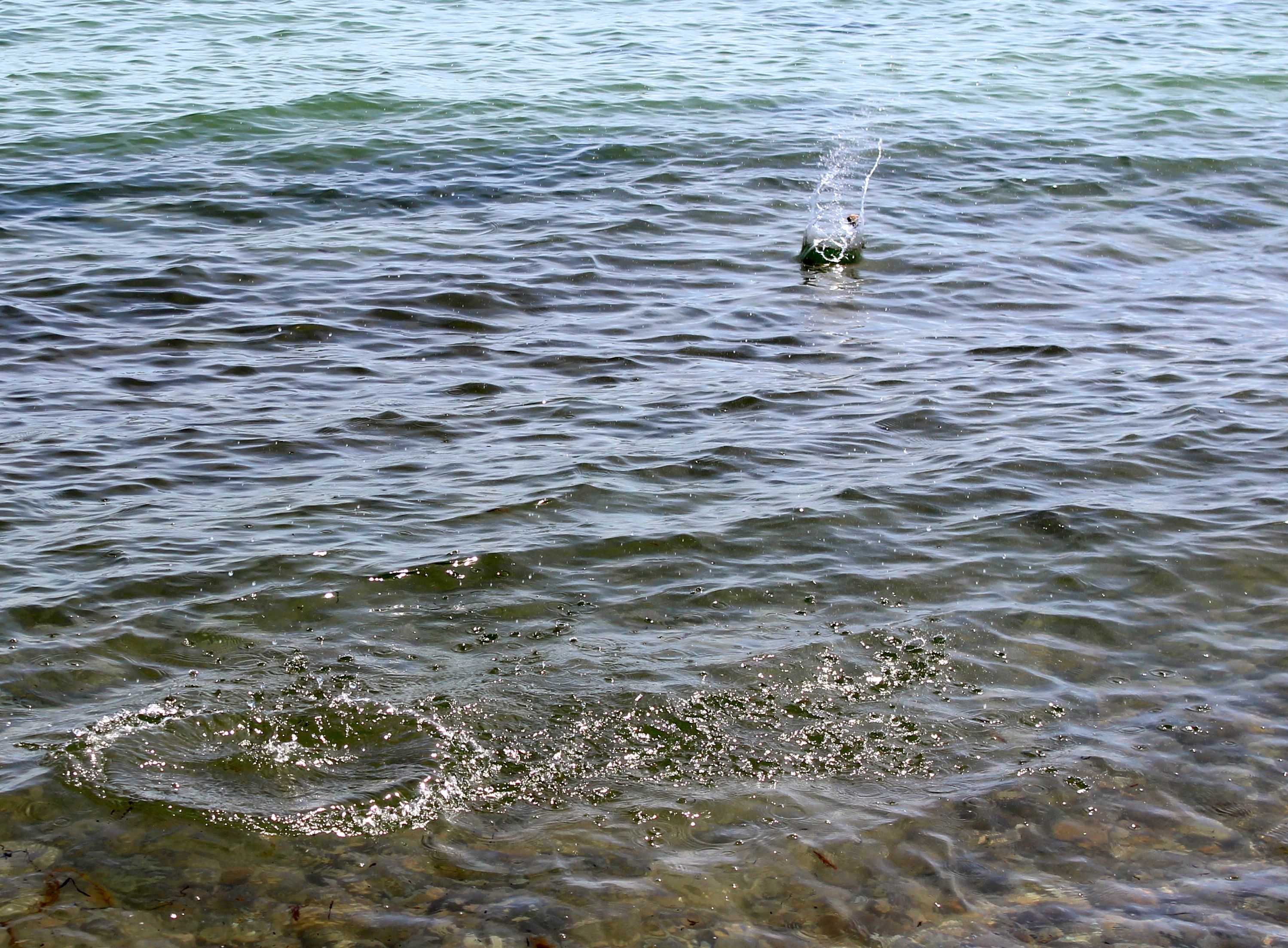
The afternoon found us skipping stones.

gull

Talking to herring gulls.

jingle shell

Admiring jingle shells (I don’t know their actual name, but as kids, we used to collect several in our hands and then shake them together to make them jingle).

nature art

And other works of art.

lighthouse

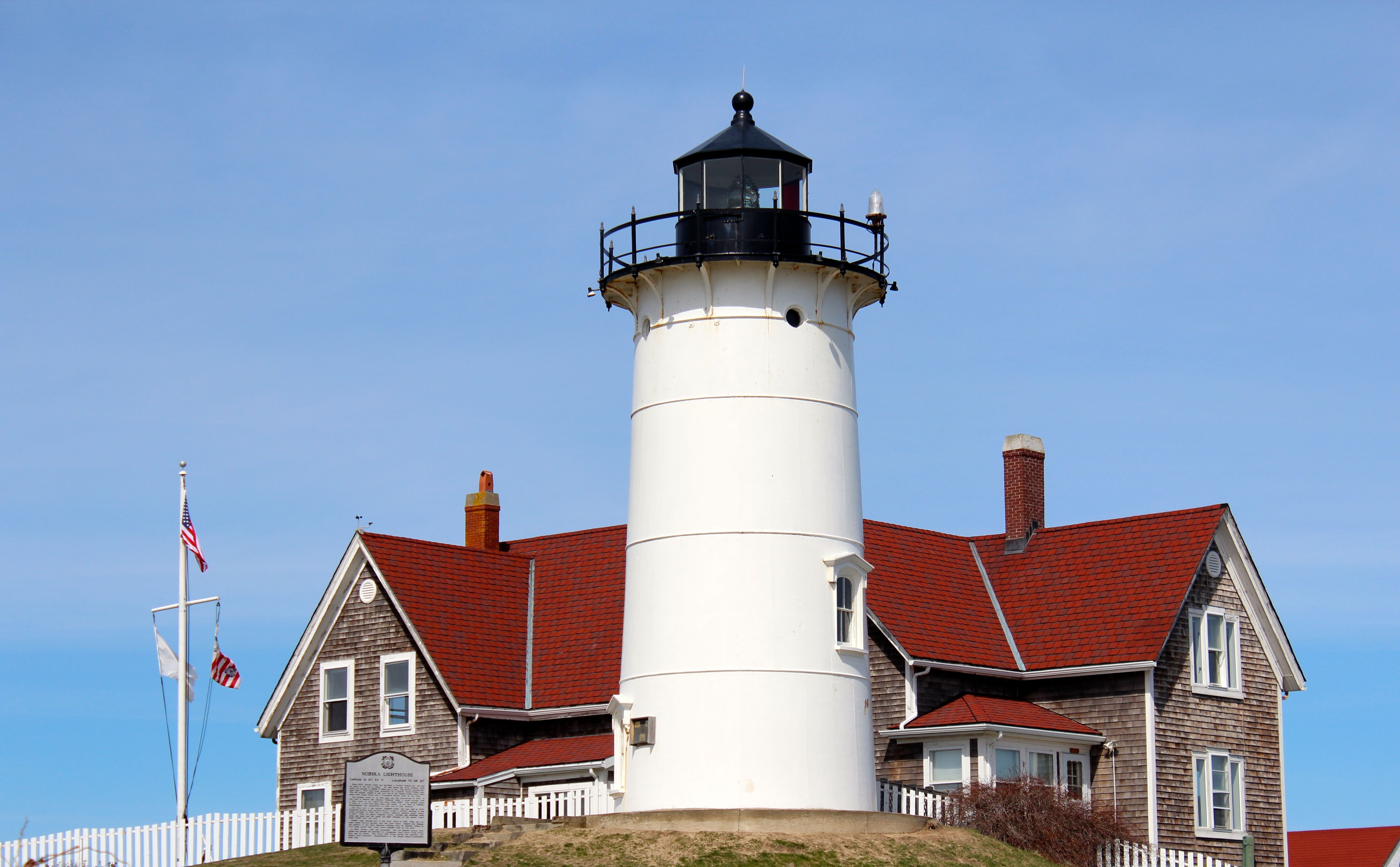
We paused at Nobska Lighthouse.

Woodshole

Explored Woods Hole.

woods hole pier

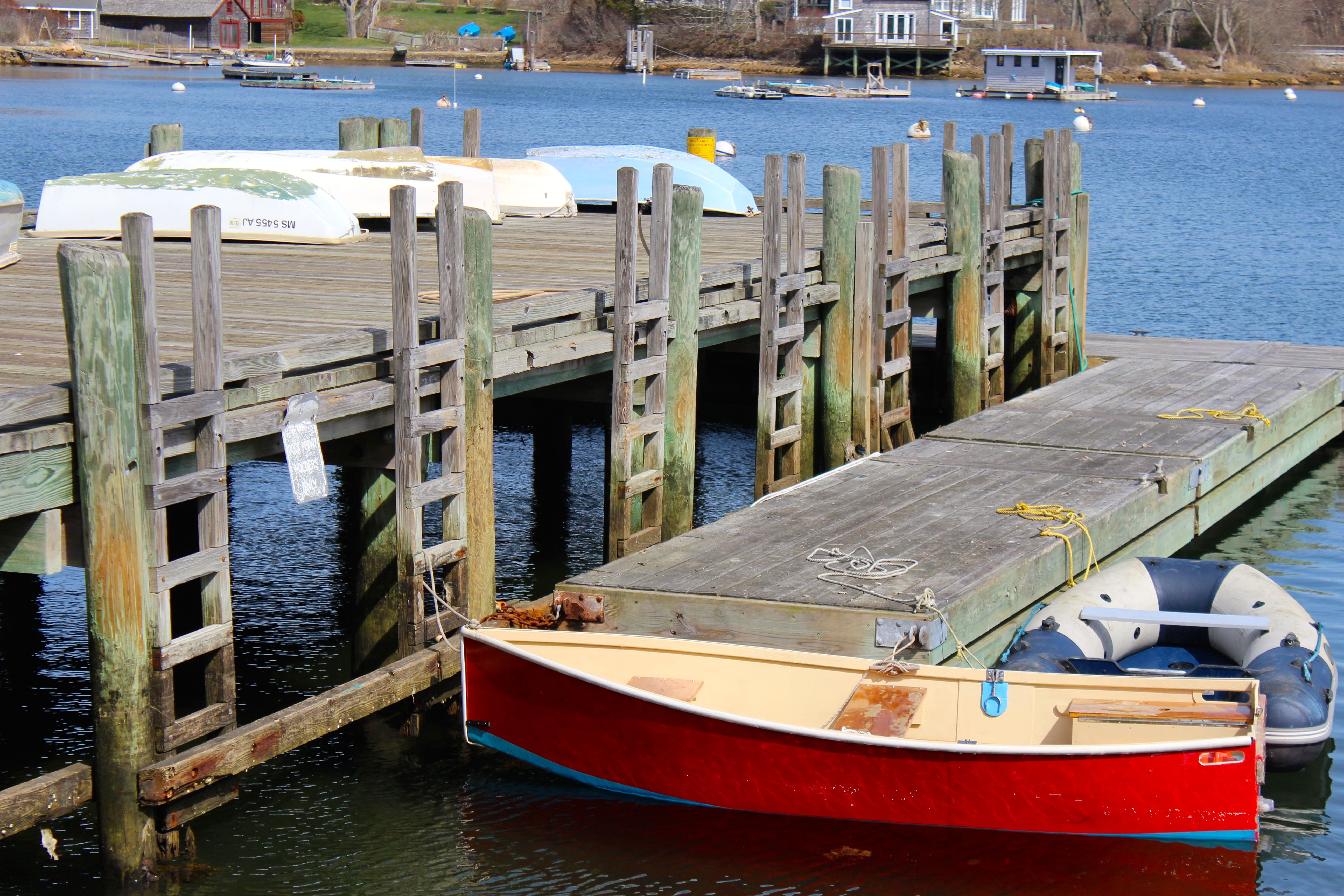
Reminisced about dinghies of our youth.

wooden boat

Which sometimes looked like this.

buoys

And realized that things are still on the quiet side.

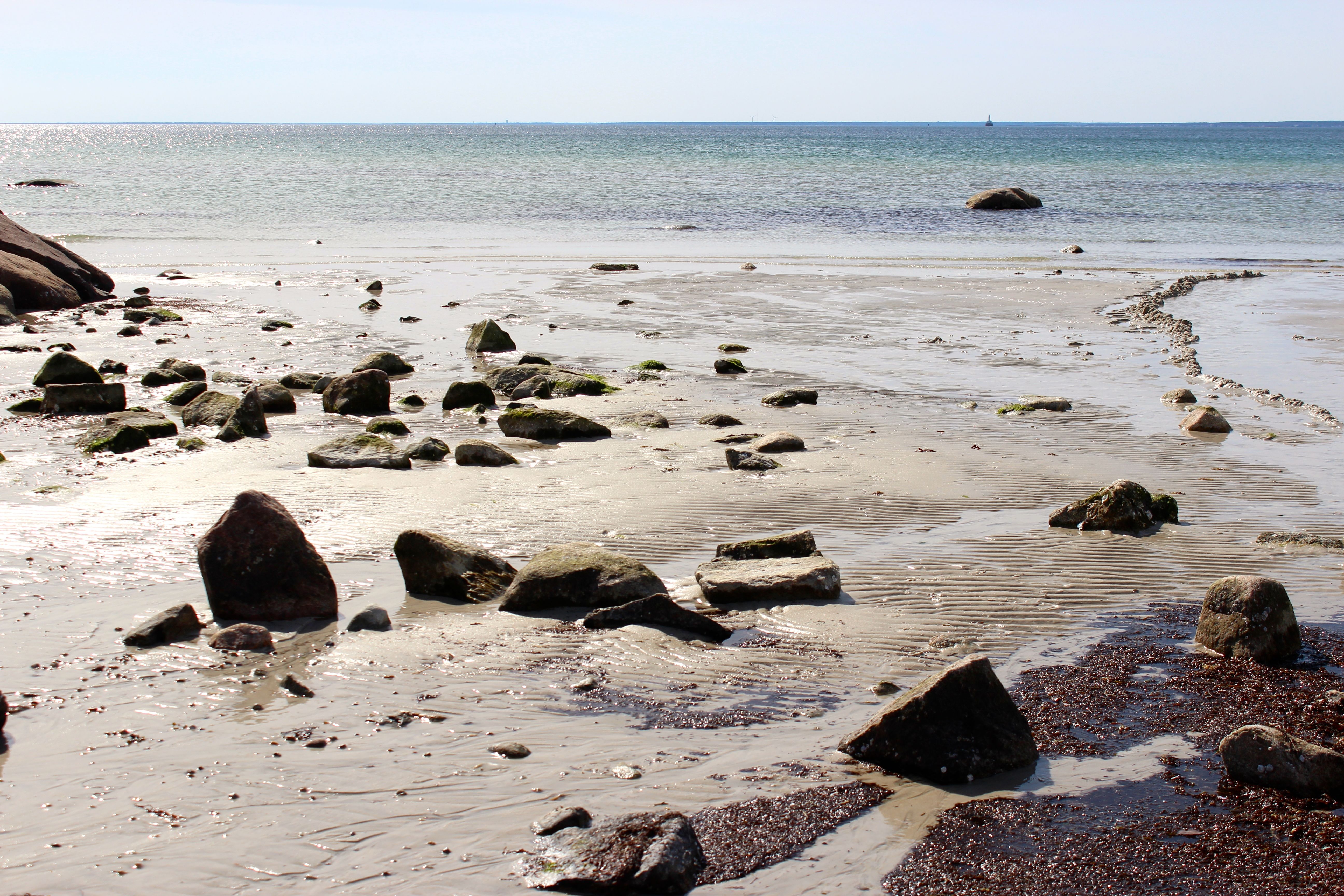
silver sands

Then we explored more beaches.

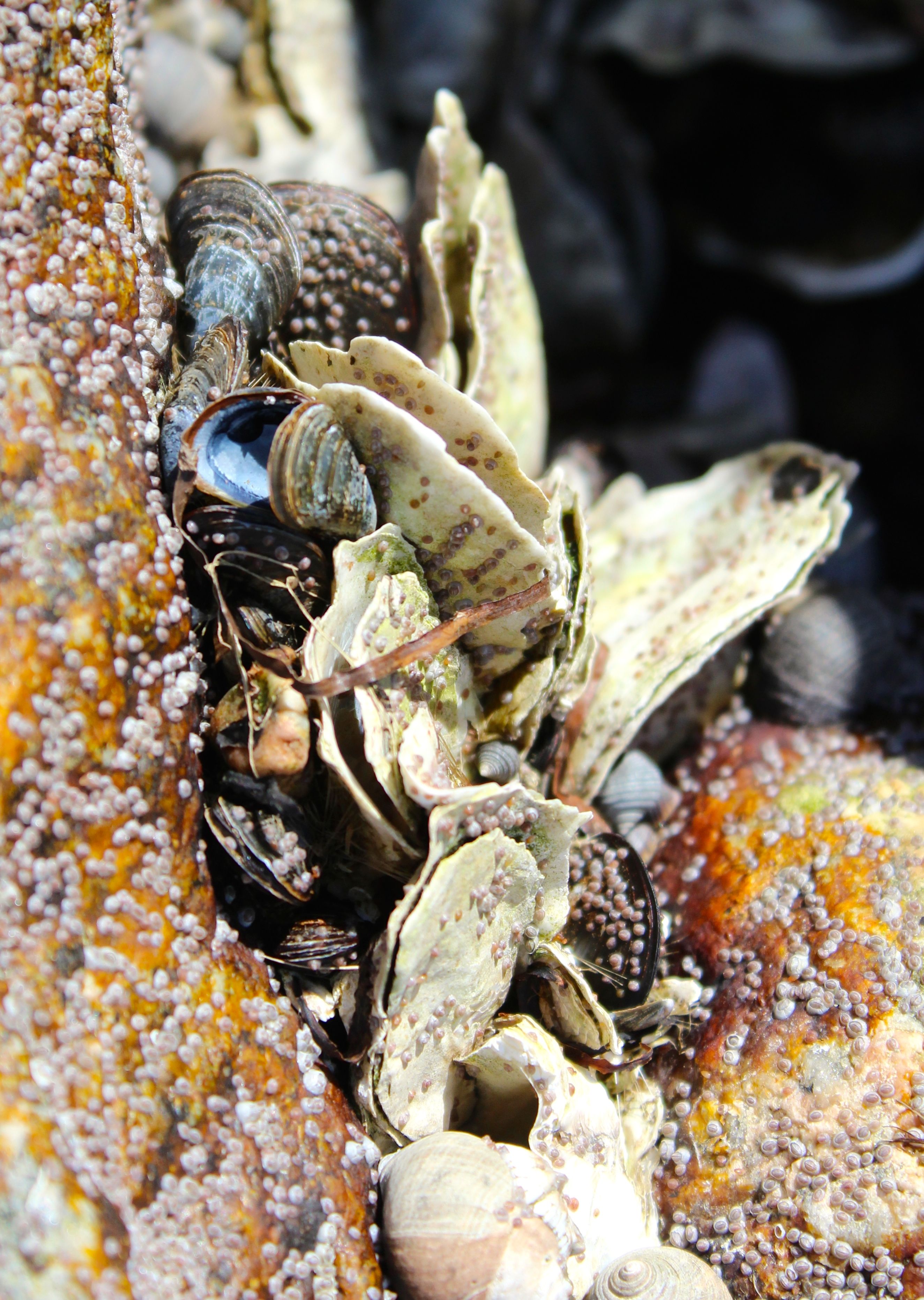
barnacles:seaweed

Discovered life on a rock–the same and yet different from what we find in the woods.

barnacles

And wondered about the crustaceous barnacles that are secured head-first. Talk about living in a small house. (My sister and I had been talking about living in small houses)

mussels:oysters

In the same fashion that lichens and mosses grow on the rocks around our western Maine home, providing a home base for others, so do the barnacles, mussels and oysters adhere in their habitat.

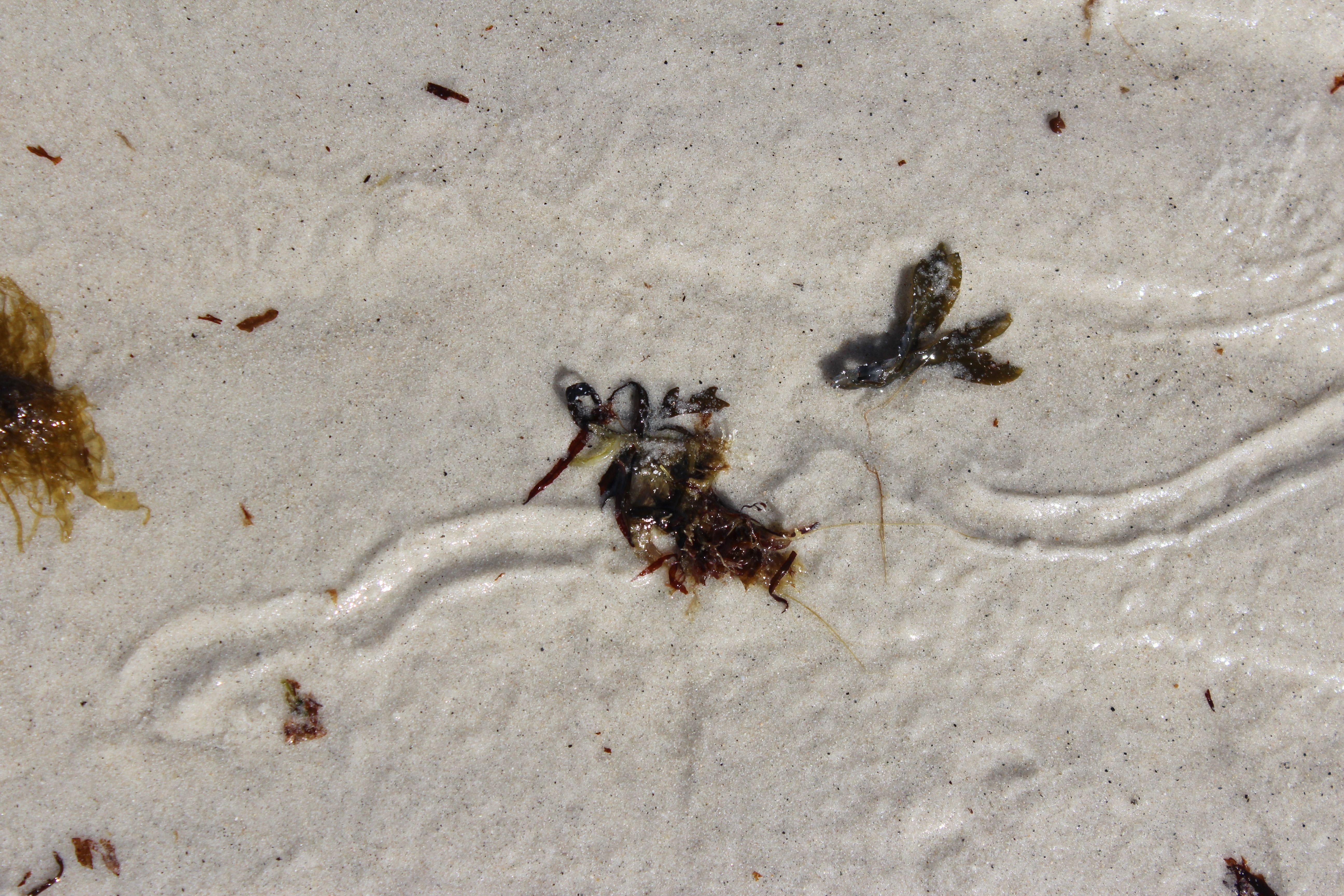
snail trails

Lest you think I wasn’t tracking–snail trails.

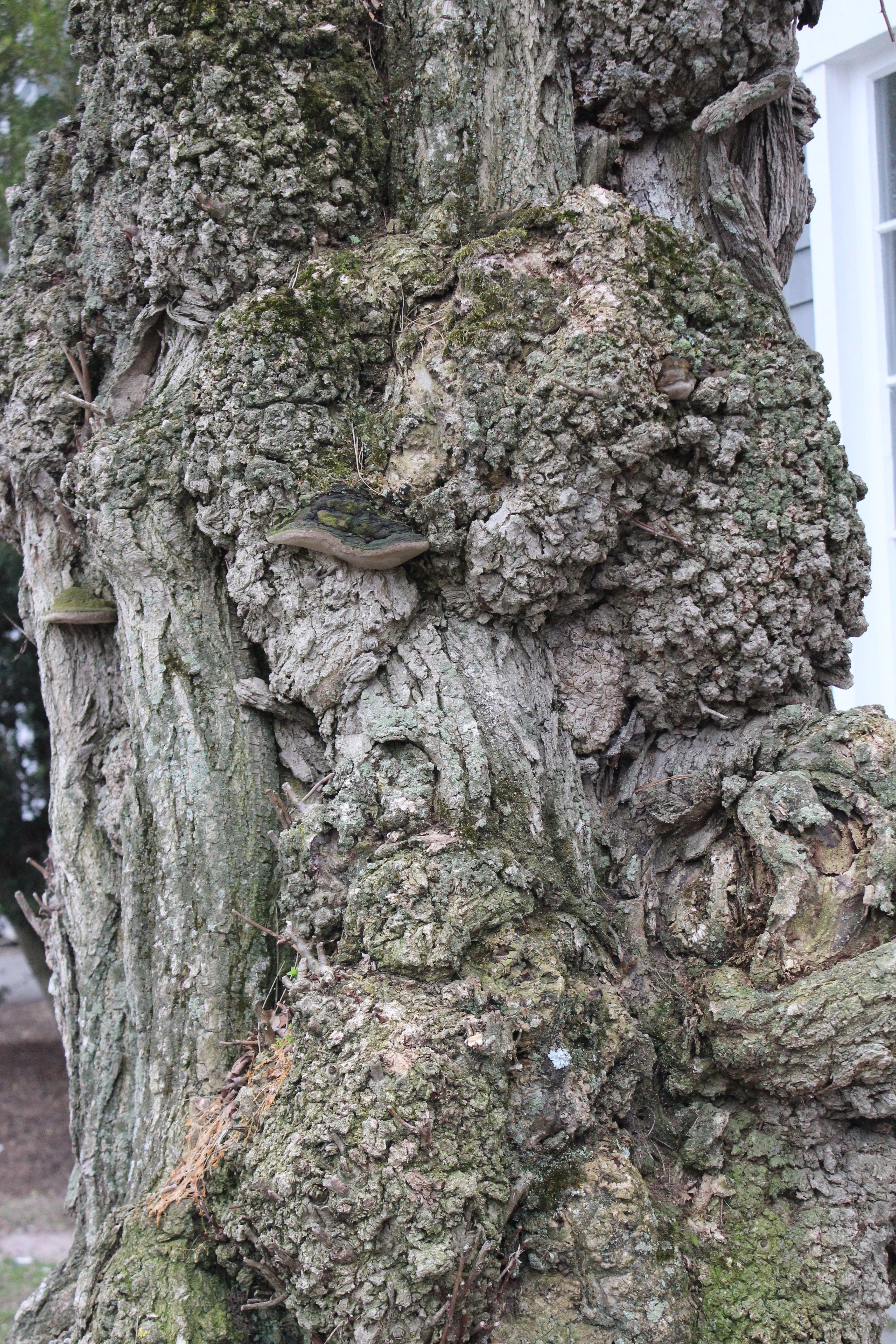
gnarly trees

Then there were the trees. I knew I was out of my comfort zone when it came to identifying some of these–especially with the gnarly behavior. Despite that, just as my guy stalked the good people of Onset, I stalked the trees of Falmouth.

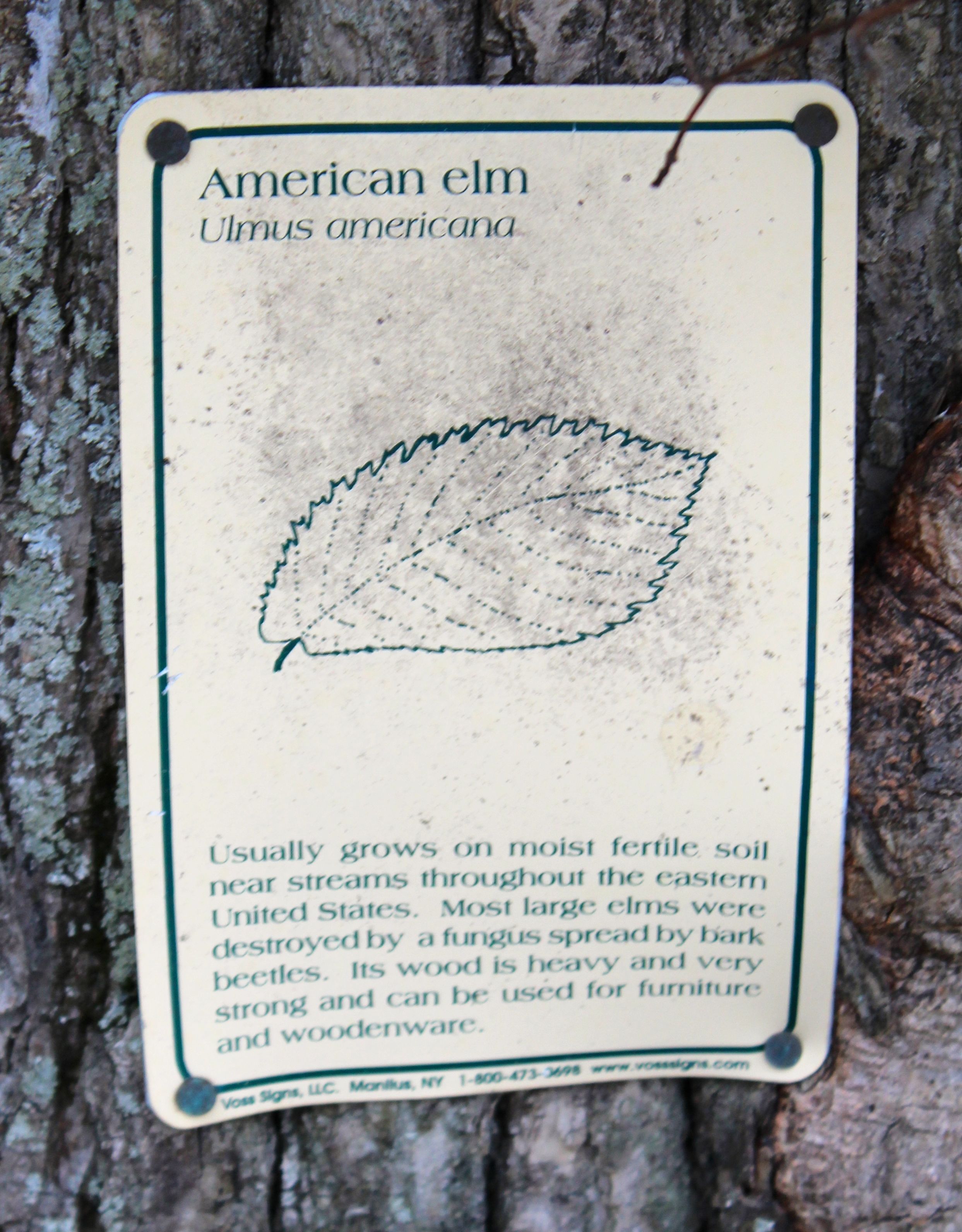
am elm sign

Thankfully, someone made it easy for me. Signs.

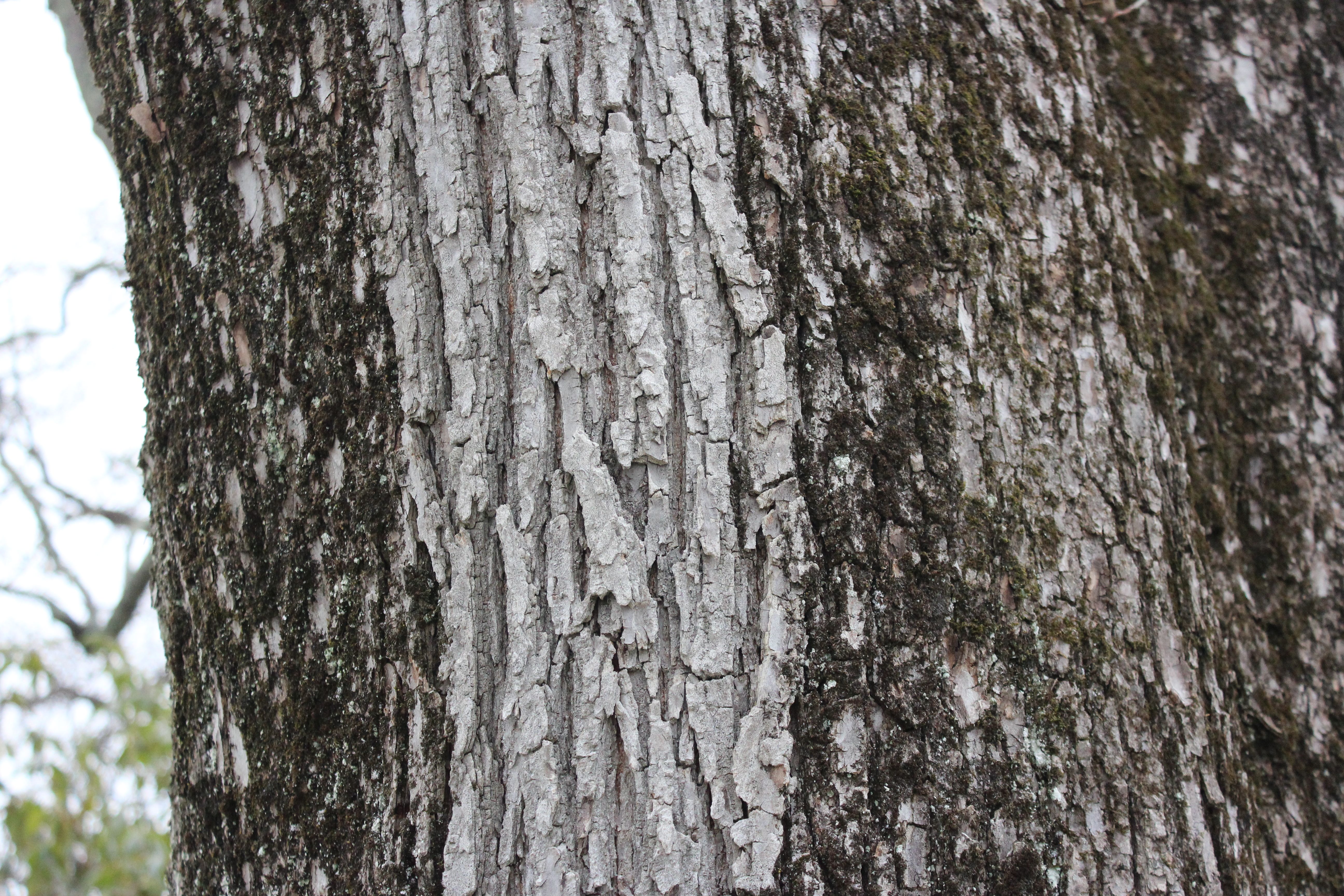
American elm

The  elm’s light gray bark has furrows with a V  or diamond shape, but they intersect at longer lengths than on an ash tree.

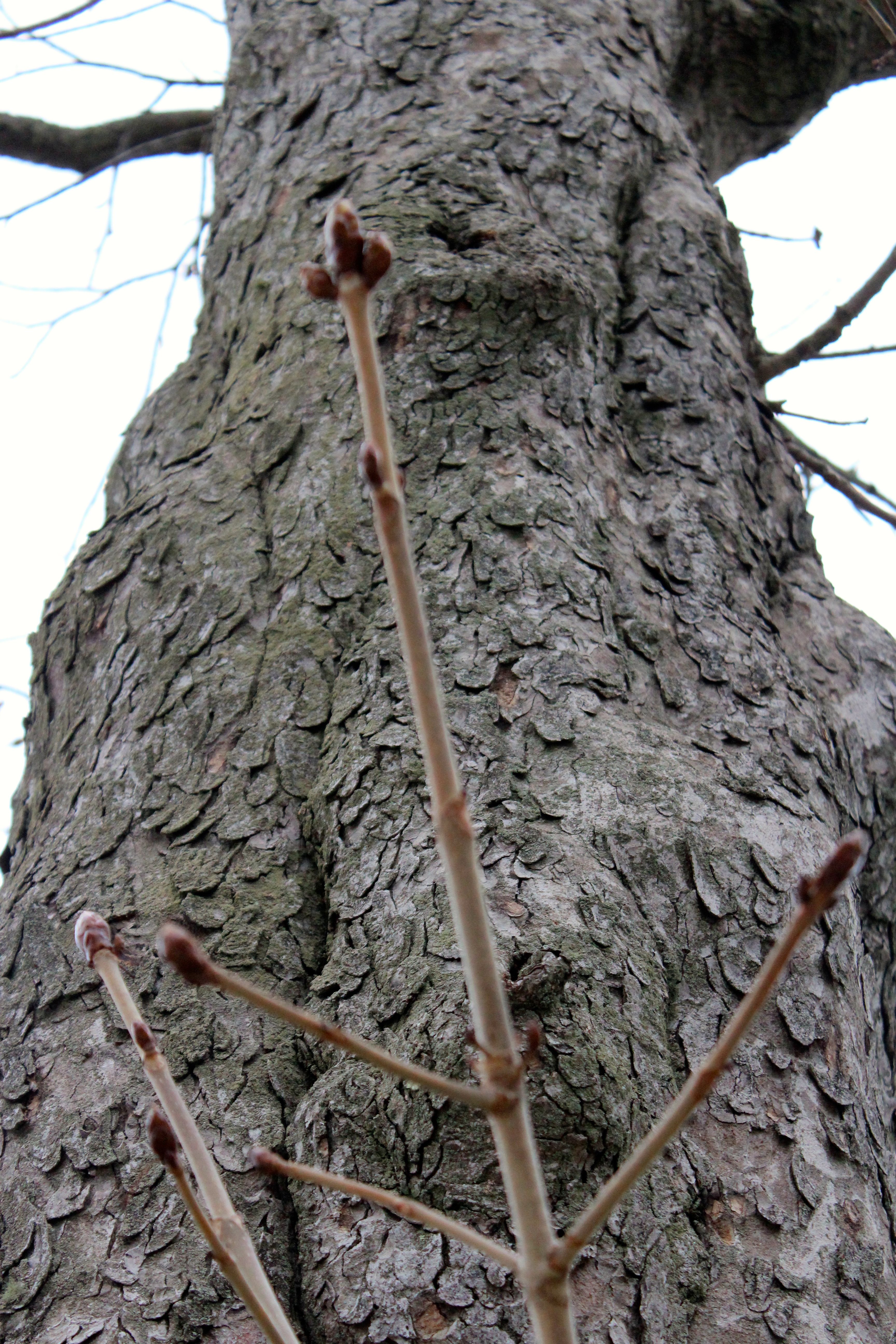
amelm buds

And the branches are wiry with alternate buds/branching.

syc

I loved the camouflage look of this bark and only just realized that it is a sycamore. It wasn’t wearing a sign.

syc 2

But it did have its signature calling cards–dangling brown fruits that some call button balls.

horse chestnut

Thankfully, the horse chestnut identified itself. :-)

hc buds

It also showed off its opposite bud pattern, making for an easy id.

Maple, Ash, Dogwood, Honeysuckle/Viburnum (aka Caprifoliaceae) and Horse Chestnut–trees with opposite buds. MADCap Horse is one way I was taught to remember that little tidbit.

home sign

And then it was time to head for the hills. We had a delightful stay and will go again, I’m sure–especially since we have more to learn about the family roots, but this sign on a shop near the inn where we stayed says it all.

Our feet may have left our home for a few days on this extended Mondate, but our hearts were always back here, well rooted in the Maine woods.

Thanks for wondering along on this lengthy wander.

Wetland Wonders

wetland 1

The Greater Lovell Land Trust’s Tuesday Tracking group returned to the wetland at the John A. Segur Wildlife Refuge today. It’s one of those places that I could spend hours upon hours exploring and still only see a smidgeon of what is there. I’m overwhelmed when I walk into a store filled with stuff, but completely at home in a place like this where life and death happen and the “merchandise” changes daily.

insect

Walking across the snow was this small insect. So . . . we were in a wetland. Tomorrow will be April 1–no kidding. The insect is about an inch long. It has long antennae and a pair of cerci or appendages at the posterior end of its abdomen. I’d say we found a common stonefly nymph. Please correct me if I’m wrong.

artists 1

On first glimpse, this may look like a pile of dried grasses and twigs.

artists's conk?

But stepping in for a closer look reveals what I believe is an artist’s conk. An old artist’s conk. We didn’t cut it off, but apparently you can age one by cutting it and counting the layers–much the same way you can age a tree by counting the number of rings.

old beaver lodge

There’s evidence of beaver work throughout the sanctuary, but none of it is recent. So . . . my friend decided to play Queen of the Lodge.

dam crossing

We crossed Boulder Brook via an old beaver dam–one-by-one in the name of caution.

lobster lichenlobster 3

 Color draws us in for closer inspection. I’m betting on Cinnabar-red Polypore (Pycnoporus cinnabarinus) as this one’s ID. If I learn otherwise, I’ll let you know.

lungwort

Remember this lungwort I shared last week in my Island Hopping blog?

Lungwort

Same species. Same tree. Nature–worth wondering about.

myatery 1

Then there was the mysterious event.

mystery 3

Very fine tags dangle from the upper edge of the scraped bark. Not the work of a deer, beaver or porcupine. Not a hare or little brown thing. Maybe a bird? No holes, just the fine layer of outer bark delicately scraped off.

deer scrape

Here’s a deer scrape as a contrast.

tree within tree

For this next wonder, you’ll have to look closely inside the hollow yellow birch. Peer to the left of the hole toward the rear. Think vertical.

tree 2

Do you see it? It’s in the center of this photo.

tree 3

And here it is further up in the hollowed out tree. A tree within a tree. Another yellow birch or birch root growing up through the center of this dead snag. Life and death. Together. One within the other.

spider

This guy was dashing across the snow, but had the decency to pose for a photo op. Given that he wasn’t wearing boots, I don’t blame him for running along.

crossing dam again

And suddenly, we realized we’d spent over three hours exploring and it was time to head back over the beaver dam.

white pine

On the trail again, we paused to admire spring growth on a small white pine–a mini candelabra.

Thanks for wandering along and wondering my way.

Island Hopping

island 1

Off on a care-free holiday in . . . Lovell, Maine. What sets it apart is the variety of islands. And, I suppose, the ferry service between each.

island 2

A naturalist friend and I set off on our grand adventure at the John A. Segur Wildlife Refuge this morning. This is a 598-acre refuge owned and cared for by the Greater Lovell Land Trust. We hopped, more like sloshed on snowshoes, from one island to another as we discovered the highlights of each.

mushroom 1

Red-belted Polypore Fomitopsis pinicola

Like on any island hopping experience, we were quite taken with the breathtaking diversity of vibrant colors and textures. This is a red-belted polypore (if I’m right), Fomitopsis pinicola. I have another friend who is determined that I will learn my fungi, so I hope he’ll read this and correct me as I go along. He knows only the Latin names. I’m lucky if I can remember a common name. (Don’t tell Mr. Cretella, my high school Latin teacher.)

turkey tail

Turkey Tails (Trametes versicolor) were hanging out, doing their thing on some dead wood.

witches butter

More than once we were greeted by Witch’s Butter (Tremella mesenteric). I love butter, so this must be the good witch. (My PB&J sandwiches always include slabs of butter)

birch polypore

No island tour is complete without seashells. In this case, I think this is a Birch Polypore (Piptoporus betulinus) growing on the Yellow Birch. I’m thrown off by that wavy rim. Whatever it is, it’s beautiful.

British Soldier

We didn’t just hang out with a bunch of fungi. British soldiers (Cladonia cristatella) were standing around, proudly inviting us to take a look at their red caps.

Kidney lichen

Yes, we took a liken to some other lichens as well. I believe this is Pimpled Kidney Lichen (Nephroma resupinatum).

lungwort

Being in the islands, we are on the cusp of the rainy season and the Lungwort (Lobaria pulmonary), was saturated and bright green. We had hoped we’d see it on this tour, and it didn’t lettuce down.

Mealy Pixie cup lichen

Are you still with me? There were so many more sights to see, including the Green Pyxie Cups, aka Mealy Pyxie Cups (Cladonia chlorophaea).

spore capsule, hair cap moss

I should have paid better attention, but this hair-cap moss is either Polytrichum commune, (Common hair-cap) or P. ohioense. I’m thinking the former, which has a spore capsule that is no more than 1.5 X as long as wide, while the latter’s capsule is more than 1.5X as long as wide.

antler piece?

No matter where we looked, either on the islands or on the sea of snow between each, we found evidence that the deer had visited before us. Tracks, scat and beds everywhere. And then we found this. A bone fragment that had been nibbled on. Maybe a piece of an antler?

deer hair 1

And this–deer hair.

deer hair 2

And this. Lots of deer hair beside the plug of hair above. What happened here? We didn’t have a guide to ask, but the story unfolded before our eyes. A deer sat down to spend the night under the hemlock tree. Its body heat turned the snow to ice. And when it stood up the next morning, the hair stuck to the ice. Anyway, that’s our story and we’re sticking with it.

porcy scat

If you’ve stuck with me through these wonder-filled wanders, then you know that I may include a photo of scat. In this case, an island native made itself known by the debris on top of the island and snow–porcupine.

porky den

A few minutes later we came upon its den. Porcupines are the pig pens of the natural world. Despite that, we were excited to find this.

island 3

No need, however,  to stick around there. We bounded (hardly) off to another island, glad that we were able to stop at so many destinations in a single day. And the best part is that when we visit again, we’ll find other treasured spots to explore.

Thanks for stopping by to wander and wonder.

P.S. And take a look at my friend’s site–her photos are amazing and the map of our walk shows just how nature distracted we are.

Small Rewards . . .

are huge in my book of life. Today’s Mondate (Monday date) found us climbing The Mountain at GLLT’s Back Pond Reserve in North Waterford.

name signs

As is the tradition around these parts, family names are posted at the beginning of the road. A sure welcome.

5 Kezars Pond Road

Since yesterday’s precipitation, no one had traveled down the Five Kezar Ponds Road–except for the red fox and snowshoe hares that crossed it. We know the red fox marked its territory as it moved along, because even though we didn’t climb over the snowbank to follow its tracks, we could smell the skunky scent. Seems a bit late in the year for that, but this year, everything is a bit late.

Hi Ho

Hi Ho! Hi Ho! It’s off to climb we go. Oh–be thankful you can’t hear me sing. My voice is as flat as the computer screen you are staring at and someone reminded me that enough was enough. :-)

ponds coming into view

Pausing along the way, the ponds were coming into view. It won’t be long before leaves obscure this. That’s one of the things I’ll miss about winter, which I know must come to an end eventually. But it provides us with sightings we might not see during other seasons.

bear claw marks1

Like this. I was scanning the landscape, with the hope of finding this. And I was rewarded. Yes, this tree has a case of beech bark disease and exhibits the perennial cankers, but look toward the left of the trunk and you’ll see the pattern of bear claw marks.

snowshoe hare tracks

As we continued to climb, we were also rewarded with a variety of animal tracks, from mice and squirrels to snowshoe hare, weasels and porcupines. I really wanted to see bobcat, but it wasn’t to be. I’ve seen their tracks and coyote tracks here in the past. The thing I should remember is that I need to live in the moment and enjoy what I see, rather than have expectations of what I want to see.

view

The view of several of the ponds at Five Kezars. I’m not sure, but I think this view is of Back Pond, Middle Pond and Mud Pond. Pleasant Mountain and Shawnee Peak Ski Area are in the background.

rock tripe

As we started down the connecting trail, marked with orange blazes, the flat and  flappy growths of rock tripe lichen jumped out at me. Though it’s supposed to be edible, I think you have to do some severe boiling and who knows what else to eat this. I’m not about to try, but what I do appreciate, is that like the lungwort that I shared in a previous post, rock tripe changes with the weather–from leathery and brown to pliable and bright green.

split maple

And then there was this maple. What in the world? Talk about resilience. We decided that maybe a weather event caused the split and then the tree reacted. Some reaction. And recovery. This tree has the will to live, despite any obstacles put in its way.

bear claws 3

Yup, another bear claw tree. It never gets old. Sighting one I mean. The claw marks become more apparent with age, so getting old is good in this case–to me.

hare

But I’ve saved today’s best reward until almost the end. Do you see it?

snowshoe 1

How about now?

snowshoe 2

This guy was big. As were its eyes and ears. Eyes on the side–born to hide. A prey animal for a predators like bobcats.

snowshoe 3

My, what big feet you have. And to you we gave thanks today for our snowshoes.

selfie

Selfie.

lunch rock view

We crossed the bridge and then sat on a rock to eat lunch. PB&J as usual. And the final reward–homemade brownies. Life is good.

Thanks for stopping by for another wonder-filled wander. I hope you found today’s tramp as rewarding as I did.