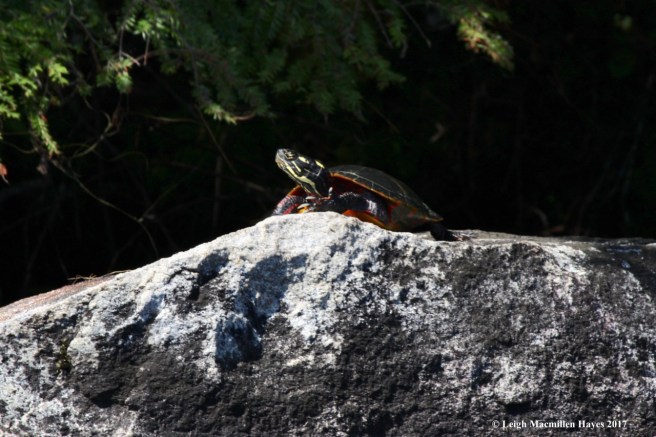
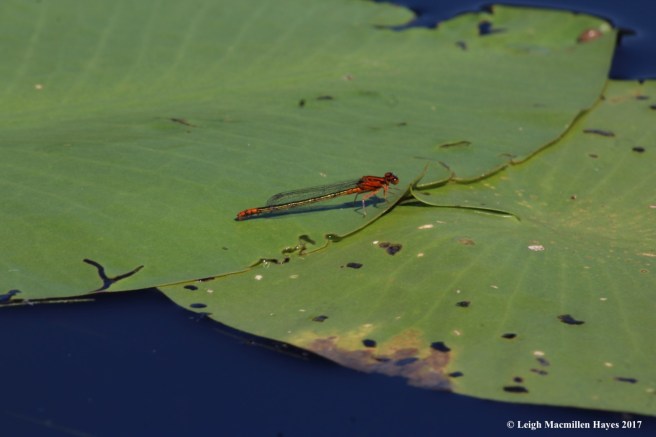
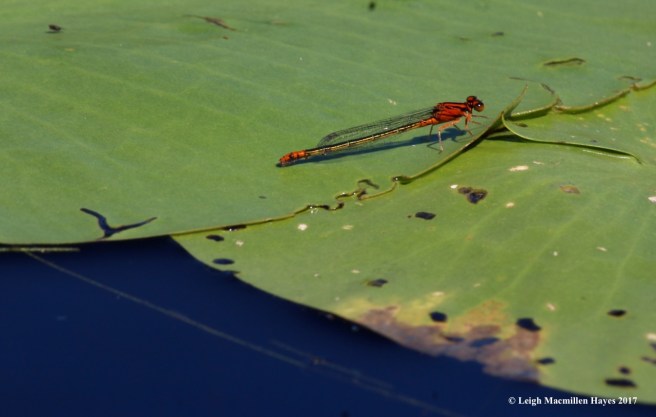
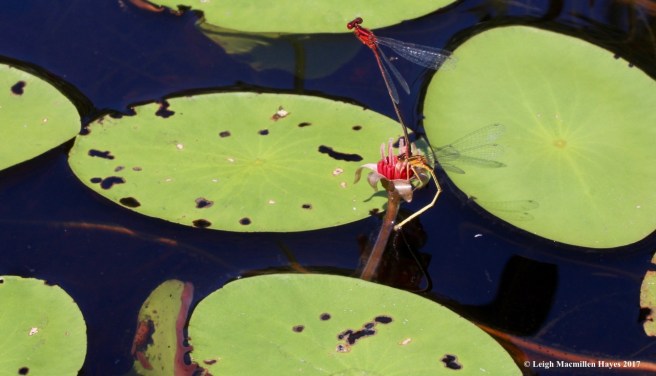
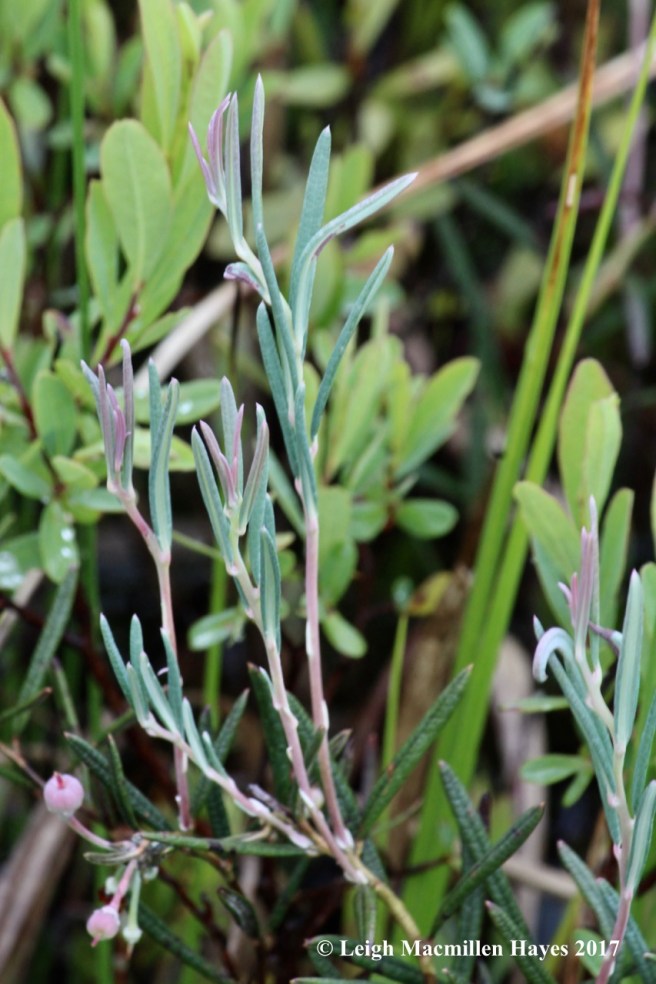
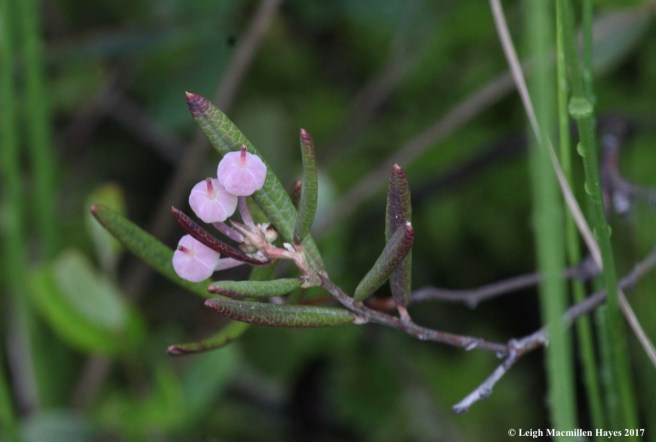
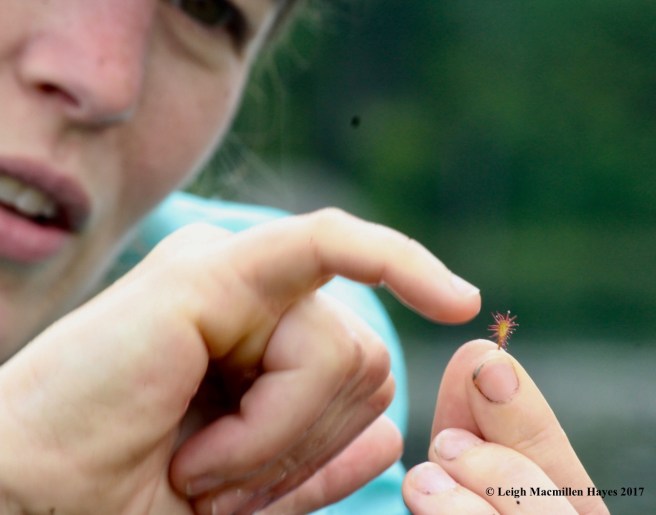
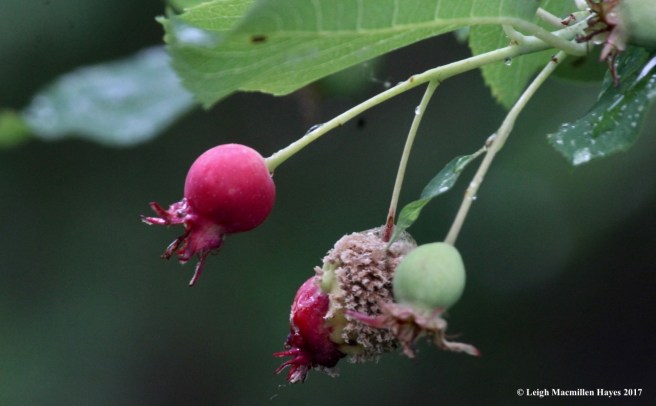
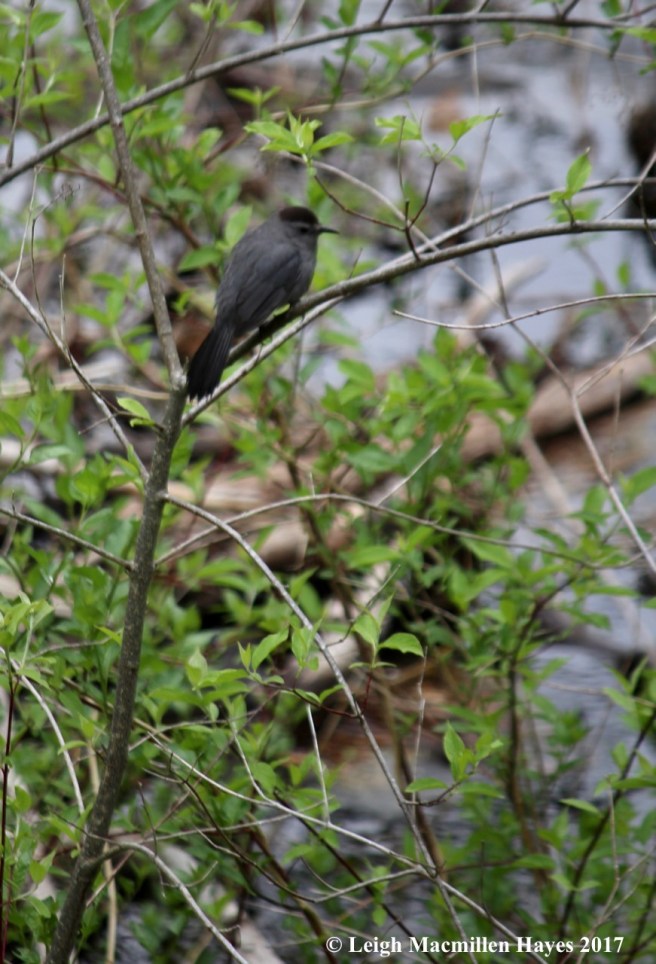
Anybody Home?

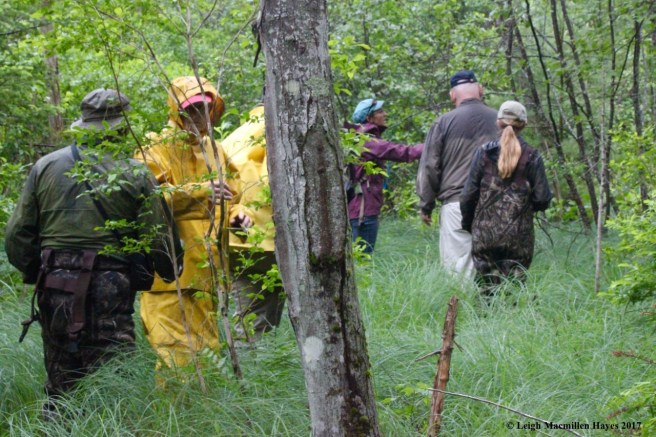
Only a few days ago we felt like we were melting as we complained about the muggies and buggies, but those temperatures are now only memories and it’s beginning to feel like fall in western Maine. And so my guy and I bundled up before we followed a trail and did some bushwhacking this morning, exploring a property Jinnie Mae and I had visited only a week and a half ago.

m1-lodge

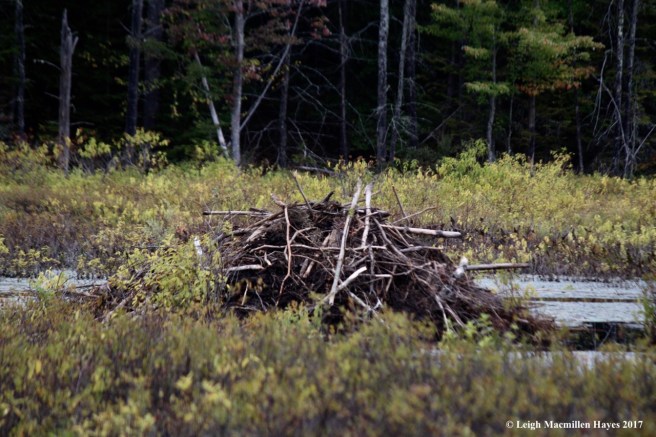
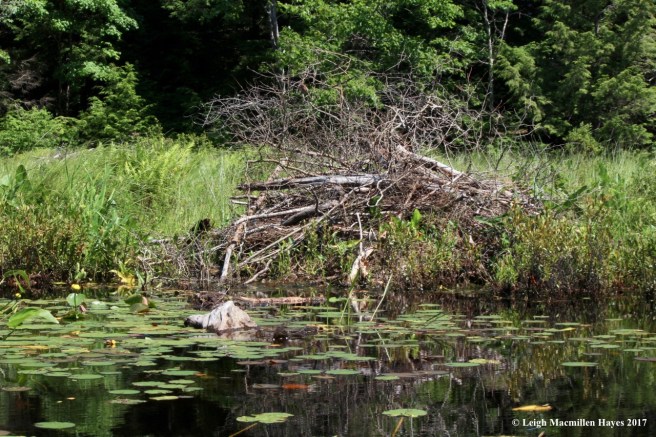
It was to the beaver lodge that we first made our way, noting all their old works near the water’s edge.

m2-lodge 2

But, we were disappointed that we saw no evidence of new work and it didn’t appear any winter prep was yet occurring. Were the beavers still about? Or had some parasites in the lodge forced them to move on?

m3-infinity pool1

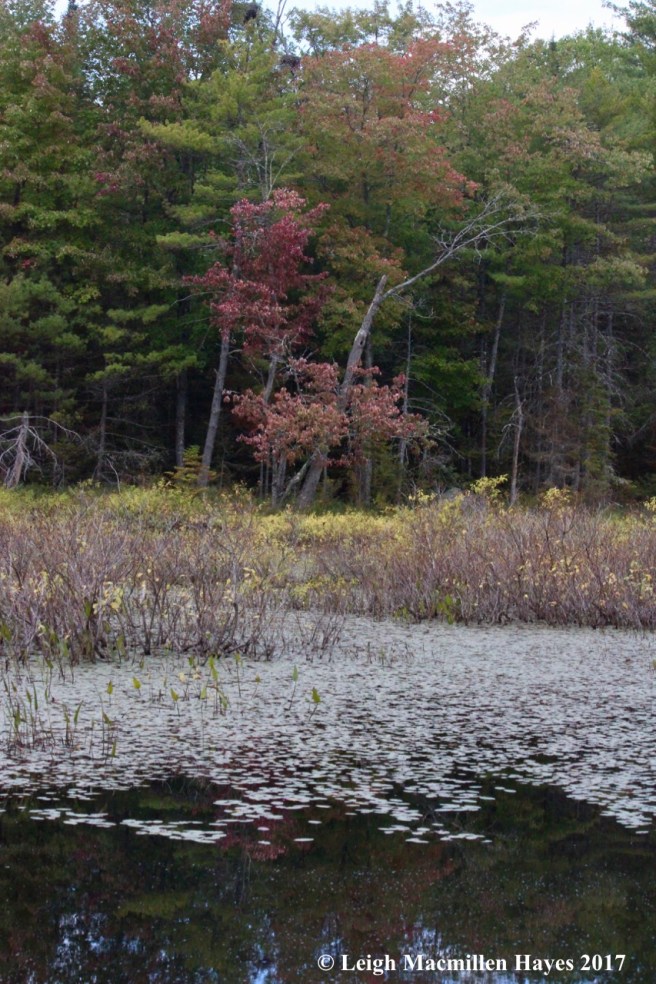
We hoped not for they’ve worked hard in the past to create a home with an infinity pool that would be the envy of many.

m1a--otter scat

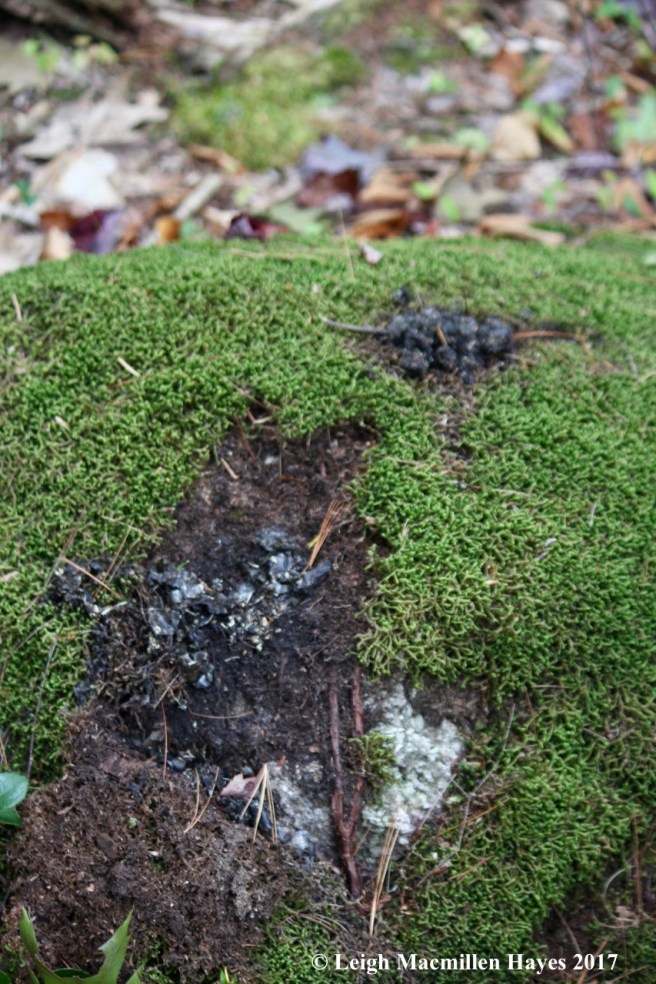
We did note that they’d had recent visitors who left behind a calling card in the form of a slide and scat–otter scat, that is.

m5-doll's eye

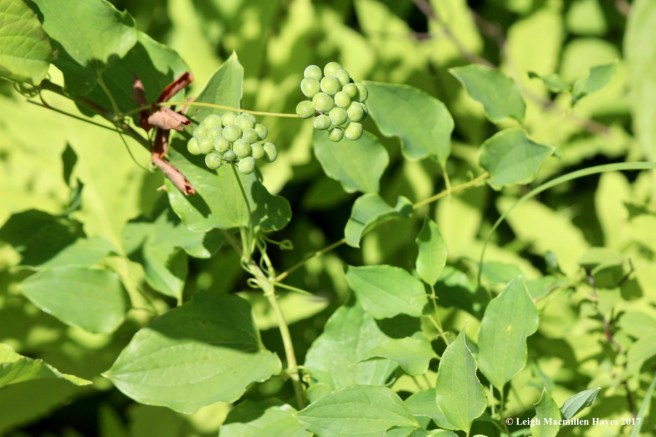
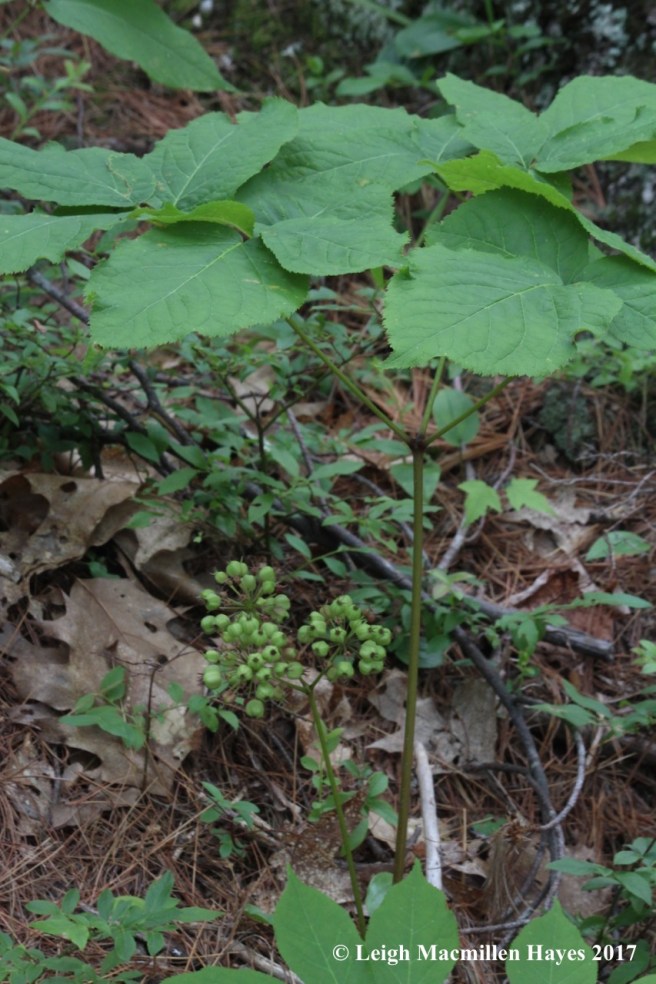
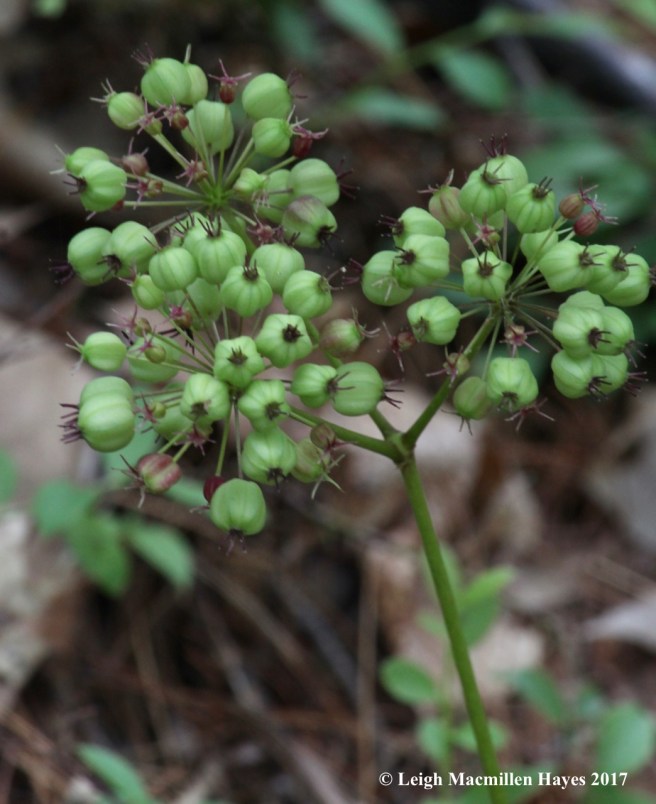
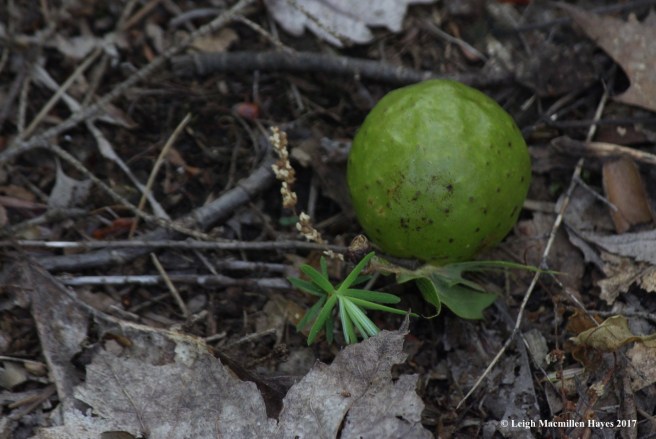
And we spied the fruits of a former flower that graced their neighborhood–doll’s eye, aka white baneberry.

m4-dam 1

As we circled around the pool, we commented that the dam seemed to be in excellent shape and held the water about five feet above the stream below. But again, no evidence of new wood.

m7-dam works

Despite that, it’s an impressive structure. While some landowners might be upset to have beavers changing the landscape, we happen to know this one and she takes great pride in their works.

m9-dam 2

We stood for a while, indulging in our own admiration while wondering where the beavers might be. Of course, it was close to lunch time for us, and not an active time for them if indeed they were home. Possibly we were misinterpreting the view.

m8-beaver pond

After some time of quiet reflection, we made our way back, crossing the stream just below the dam.

m13-quiet reflection

And then we continued along the old logging road (recently bush hogged, eh Brian? Well done), and bushwhacked some more, crossing another stream to find our way to another reflective spot along the brook.

m12-rookery 2

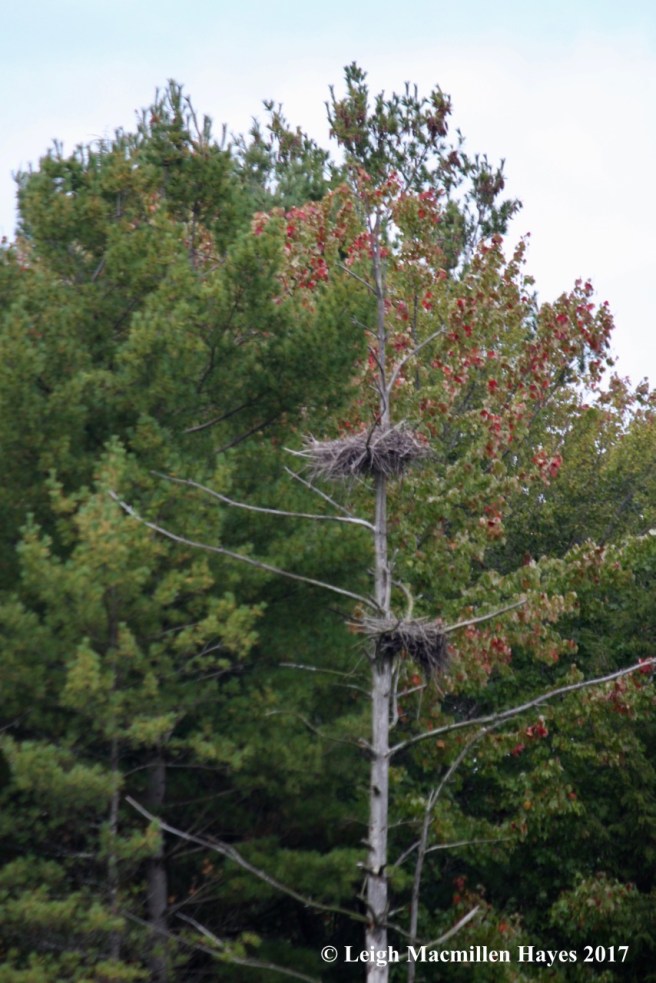
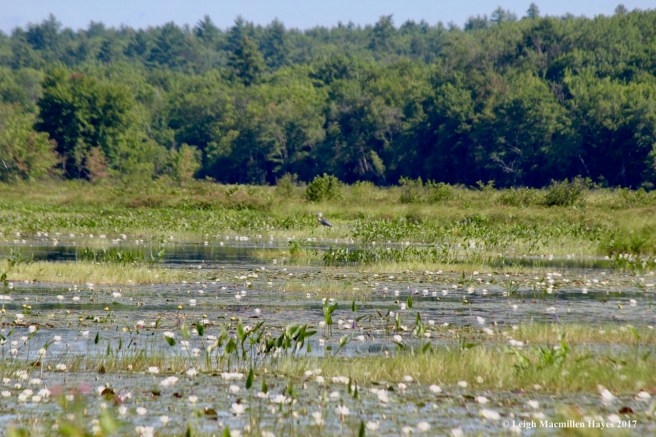
This time, our destination was that of another stick builder–great blue herons.

m11-rookery

Their spring/early summer nests are equally impressive. I hadn’t visited this spot since April, when the herons were actively setting up home. And I’m not sure it was a successful breeding season for them, but even if it was, they wouldn’t have needed these homes today. The nests will remain–available for grabs next year by those who return.

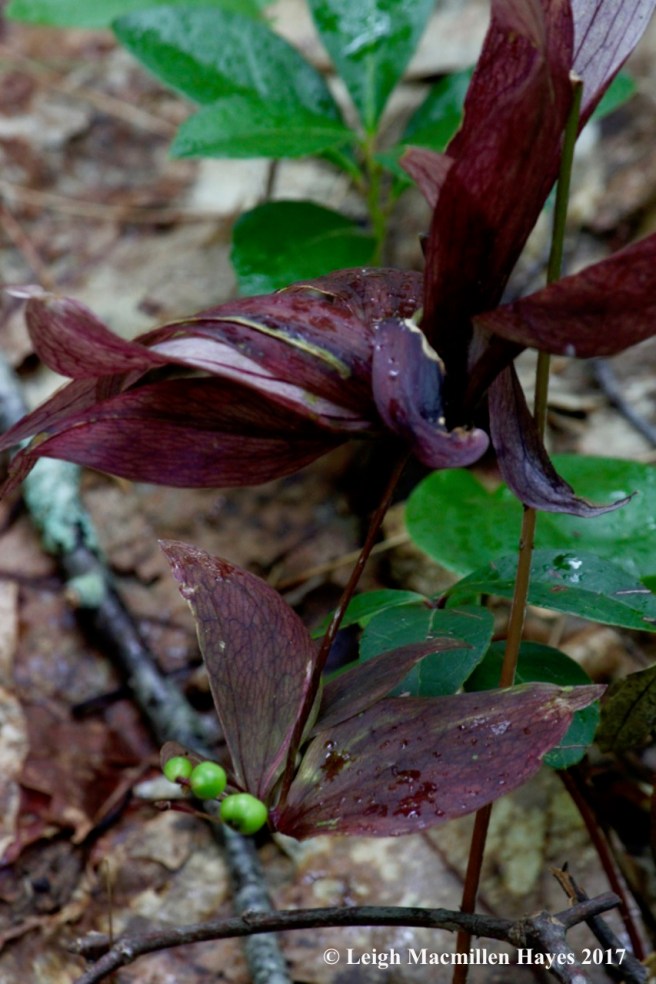
m16-jack in the pulpit

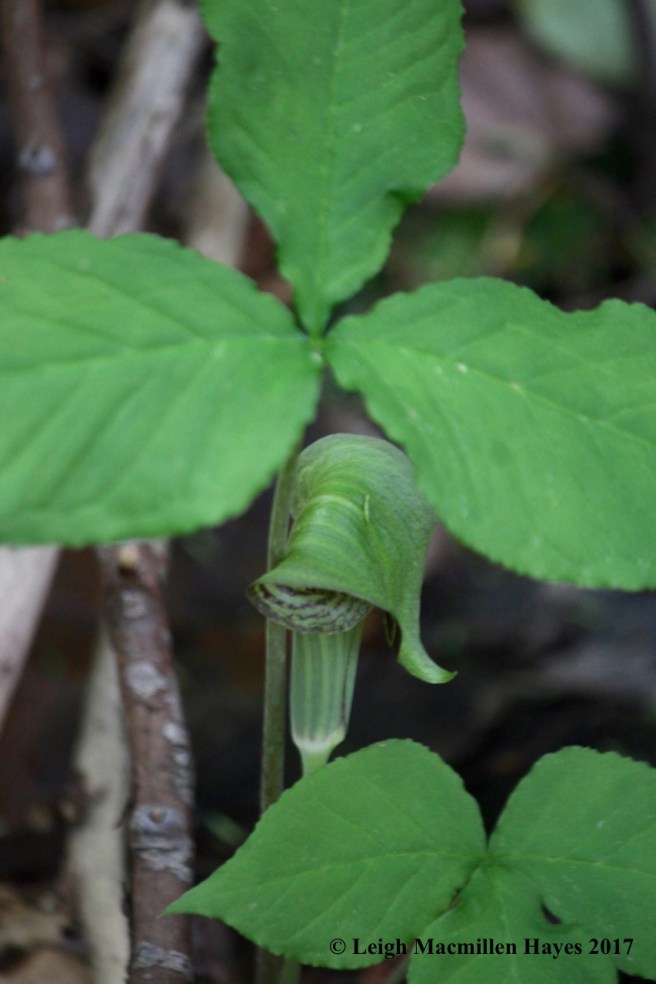
After a snack by the brook, we pulled ourselves away knowing it was time to head to our own home. Our wildlife viewings had been nil, but we spied a jack-in-the-pulpit in fruit, and that plus the doll’s eye were enough. And the time spent wondering about the critters.

m20-cosmos

Back at our truck, we decided to check on the insect action in the gardens at our friend’s home. Only the bumblebees seemed to be active.

m19-hickory feast

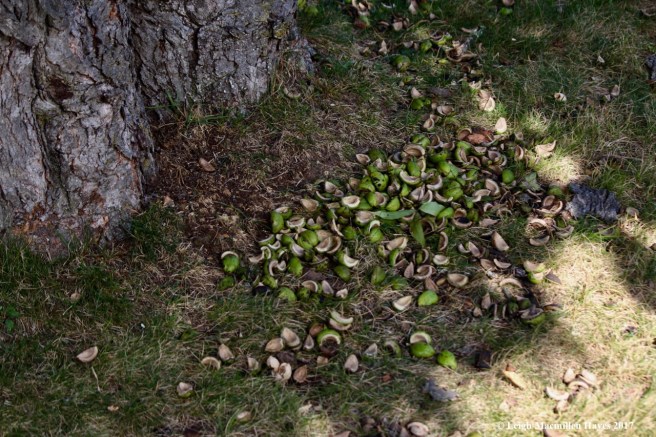
But we saw plenty of activity of another kind–a cache of hickory nut shells at the base of the tree, and really . . . everywhere nearby.

m18-hickory bark

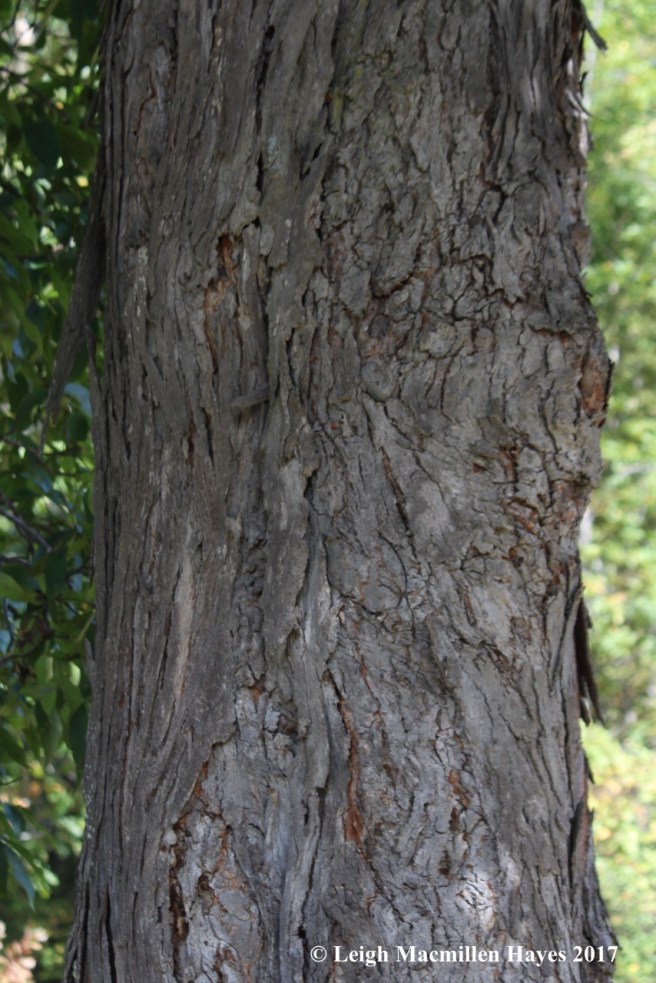
Shagbark hickory is more common south of this spot, so it was a treat to take a closer look.

m17-hickory

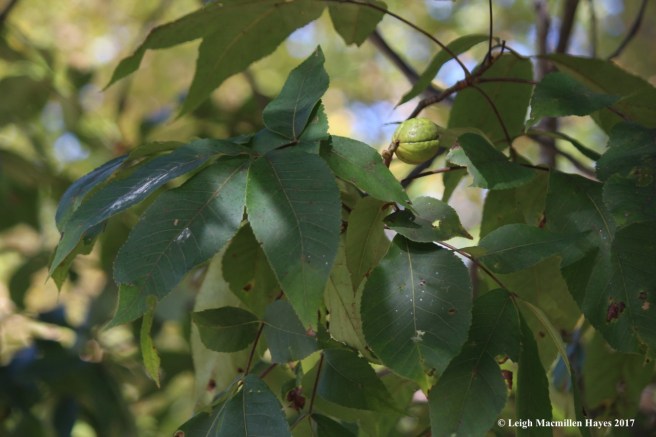
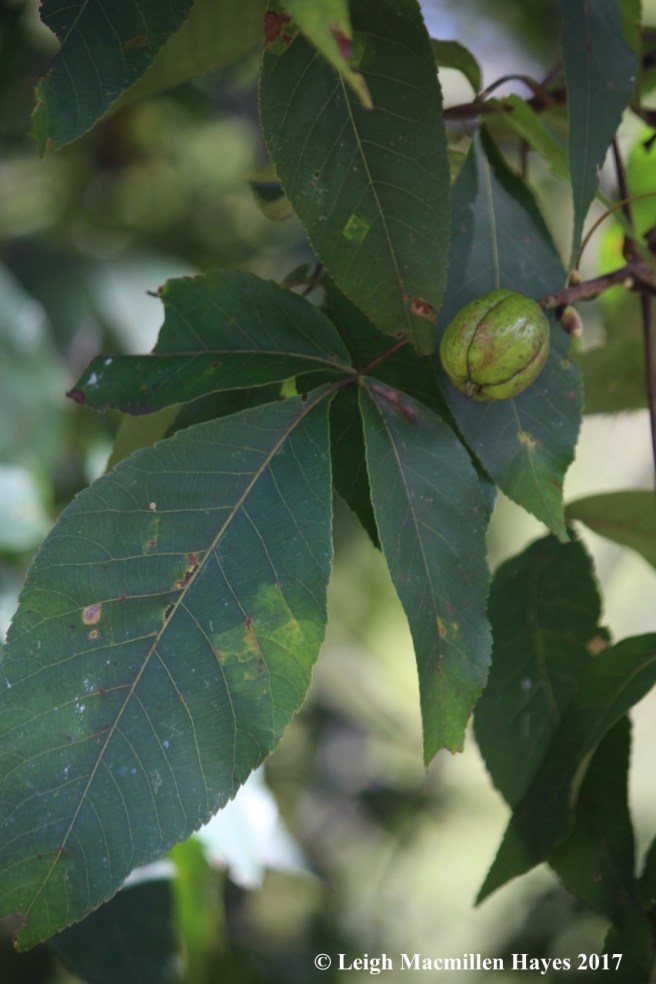
Its alternate leaves are compound, consisting of five serrated leaflets usually (sometimes there are seven).

m18-hickory 2

And of those five, the three terminal leaflets on each twig are the largest.

m21-view of Balds

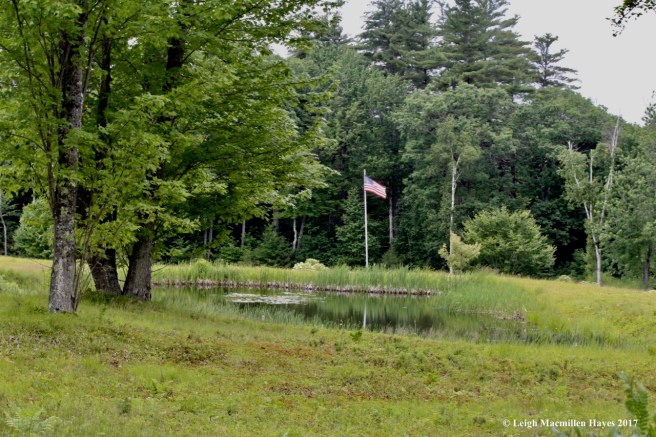
Once again, it was time to leave this beautiful spot where the fields and forest flow into the mountains. And where the beavers and heron share the place without too much human intervention. Though not a soul was home today, we trust all will return when the time is right.


Poking Along Beside Stevens Brook

Raincoat? √

Notecards? √

Camera? √

Alanna Doughty? √

This morning I donned my raincoat, slipped my camera strap over my head, and met up with LEA’s Education Director Alanna Doughty for our reconnaissance mission along Stevens Brook in downtown Bridgton. Our plan was to refresh our memories about the mill sites long ago identified and used beside the brook.

Lakes Environmental Association maintains a trail from Highland Lake to Long Lake, which follows Stevens Brook’s twists and turns and passes by twelve power sites originally surveyed by Jacob Stevens in 1766.

s1-5th power site 1

We skipped the first mile of the trail and slipped onto it from the Route 302 entrance by the Black Horse Tavern, knowing that that will be our entry point for a walk we’ll lead with Bridgton Historical Society‘s Executive Director Ned Allen later this month. Alanna suggested I not pull out my notecards, and rather rely on my memory. Oh my.

As we made our way past the old trestle that once carried coal from the Narrow Gauge railroad to the Pondicherry Woolen Mill at the fourth power site (the other three are located between Highland Lake and the 302/117 intersection), we recalled that the now deceased Reg Fadden used to claim he knew the color of dye because as he walked to school each day he noted the color of the water. Scary thought.

At the fifth power site, we went off trail to look around a bit. The water flowed over the rocks with such force that sometimes we couldn’t hear each other.

s2-5th site-Narrow Gauge trestle bridge

Before us was another former trestle spot–this one being part of the track that carried the train across the brook and on toward Harrison as part of a spur from the main line.

s3-5th site, nurse log

In front of it, large trees placed years ago to prevent anyone from crossing the now gone trestle, served as a nursery to many species. But it wasn’t just what grew there that gave us pause–it was also the textures and lines that seemed to reflect the water below.

s-poison ivy 1

As we walked, we looked at the lay of the land and wondered about mill ponds and berms. We also noted the one plant we wanted to avoid–poison ivy.

s-poison ivy 2

It grows in various forms, but the safe thing to know is that the two opposite leaves have short petioles that attach to the main stem, while the third and leading leaf has a longer petiole. As the saying goes, “Leaves of three, leave them be.”
s7-6th site water power

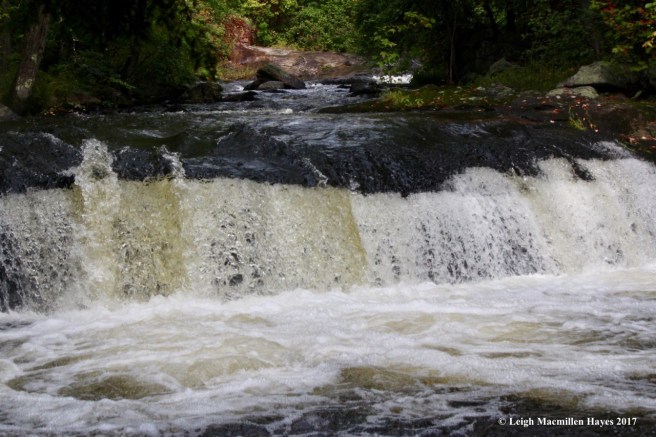
Site number six is one that we’re not sure we’ll share on our public walk. It’s a wee bit of a challenge to get to and was apparently never developed–though we did note the drop and some stonework on the far bank.

s8-blue-stemmed goldenrod 1

Before we stepped onto Smith Avenue for the next site, a goldenrod shouted for attention. We tried to figure out how many rays it had, but as it turns out, that number can vary from three to five. The flowerhead formed a ladder that climbed up the stem and this is one that we should recognize going forth for its display struck us as being different than other goldenrods. We’ll see if we actually do remember it the next time we meet.

s9-7th site, Lower Johnson Falls 1

As is often the case, it took us about an hour to walk a half mile. At last we emerged onto Smith Ave, by Lower Johnson Falls. The curious thing would be to note which was faster–the water or us. I have a feeling the water might win, but perhaps another time we should test that theory.

s11-coffin shop

For a few minutes we watched and listened and took in the view of the only mill still standing. I suspect this building was constructed in the 1860s as a sash and blind factory. Eventually it became the coffin shop, where Lewis Smith, the town’s first undertaker, built furniture and coffins.
s13-8th site, sluiceway different view

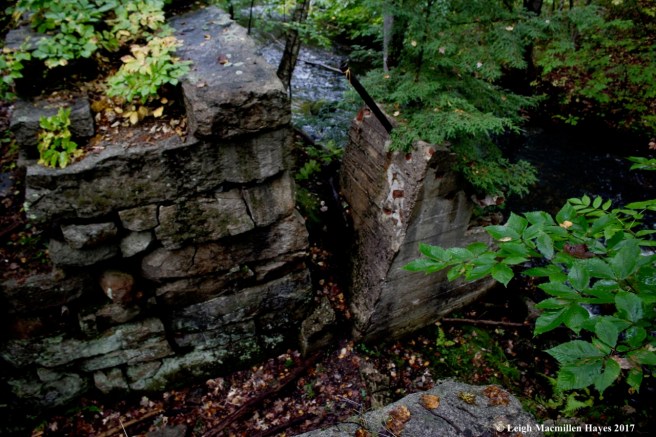
For about a tenth of a mile we walked down Kansas Road and then slipped into the woods again. I think this site is my favorite–site 8 and former home of the Forest Woolen Mill. There were actually two Forest Mills, one on either side of the road and connected by an overhead walkway.
s15-8th site, sluice way from above 2

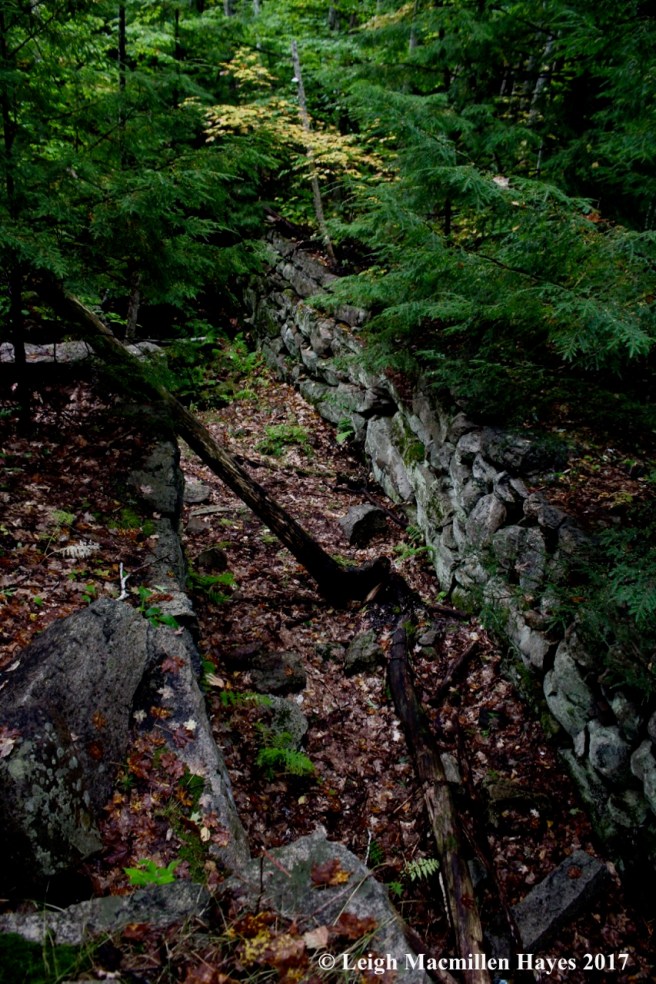
Today it was the sluiceway that drew most of our attention. First we looked down.
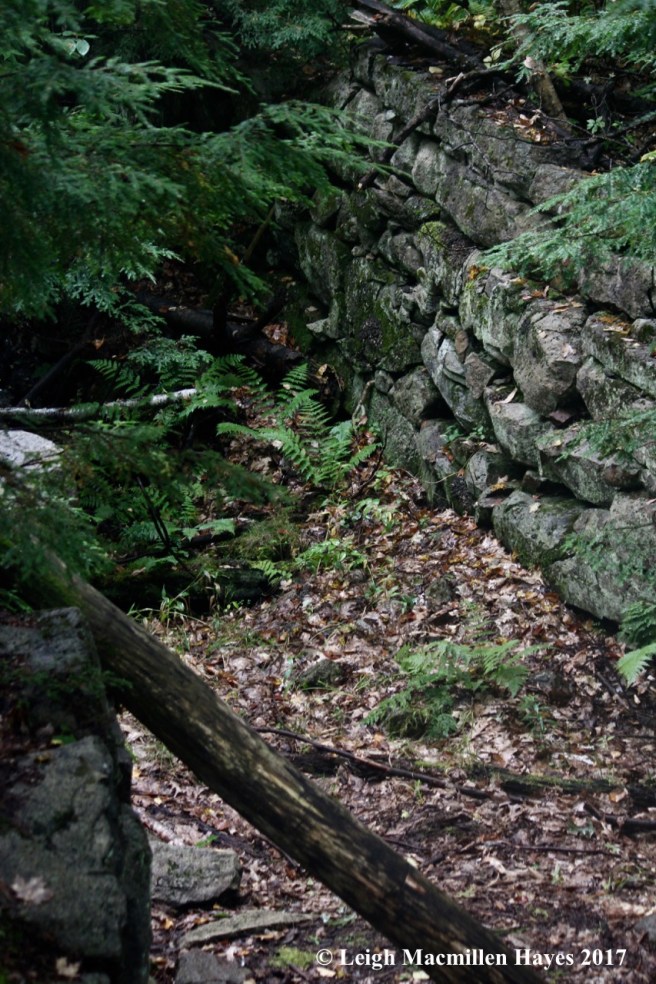
s12-8th site, sluiceway1

And then we climbed down–paying attention to stones, bricks, cement and rebar, all necessary to build a foundation that still stands today.

s17-piece dangling

Well, most of it still stands. We were awed by a piece that appeared to dangle at the edge of the sluiceway.
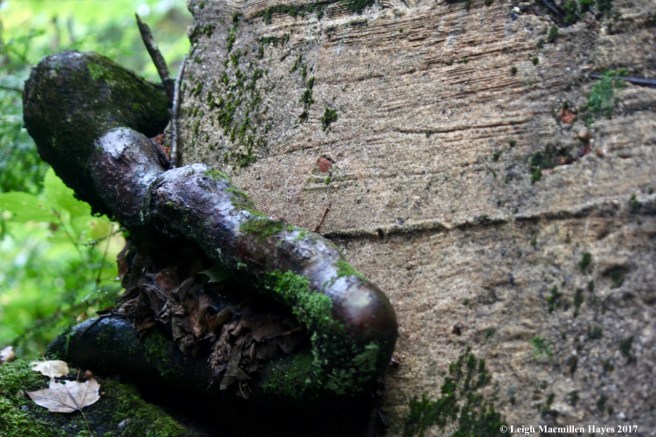
s16-tree root in sluiceway

And a root that wound its way around the same cement stanchion . . .
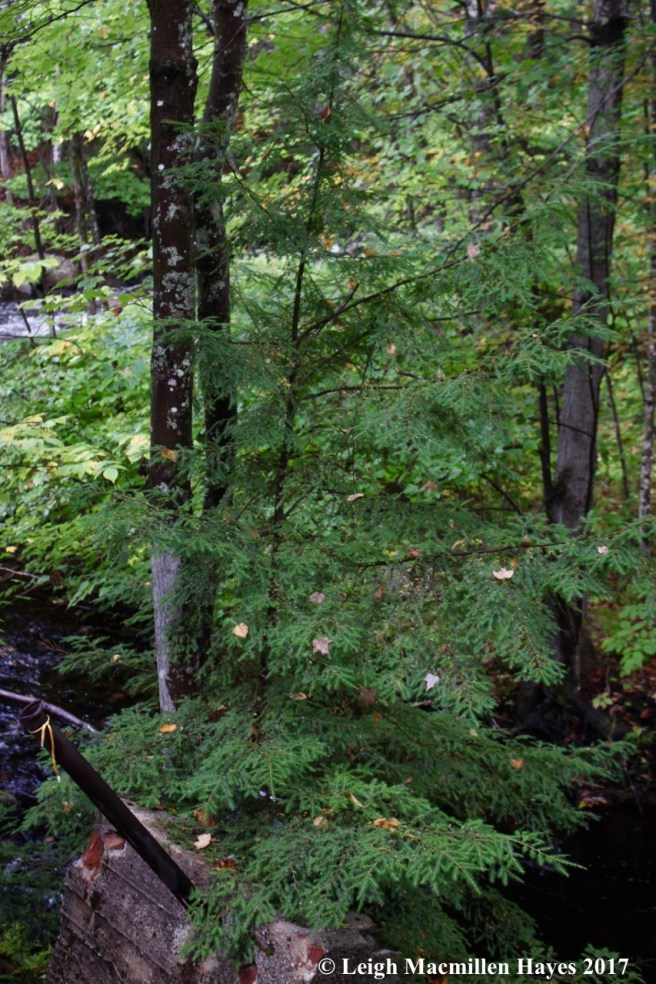
s14-hemlock atop cement

which happened to provide the perfect growing conditions for a hemlock.

s18-false Solomon's-seal berries

Crossing Kansas Road again, we ventured on. In a section under the current power lines we found flowers a many. The fruits of the false Solomon’s-seal looked like miniature strawberry and cherry-vanilla candies.
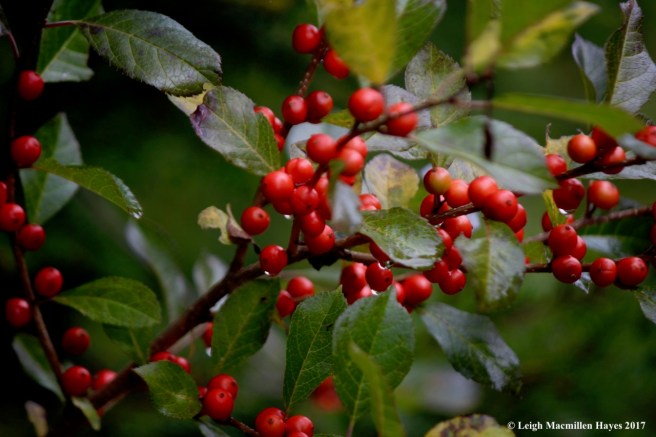
s19-winterberries

As we stepped onto a boardwalk across a wet area, winterberries glowed red and reminded us that the cold season isn’t all that far off.

s20-virgin's bower fruit, feathery plumes

It was there that we spied the feathery-fruited plumes of virgin’s bower,

s21-red-stemmed dogwood

red-osier dogwood berries,

s24-cat-in-nine-tails

and cat-in-nine-tails.

s22-cardinal flower

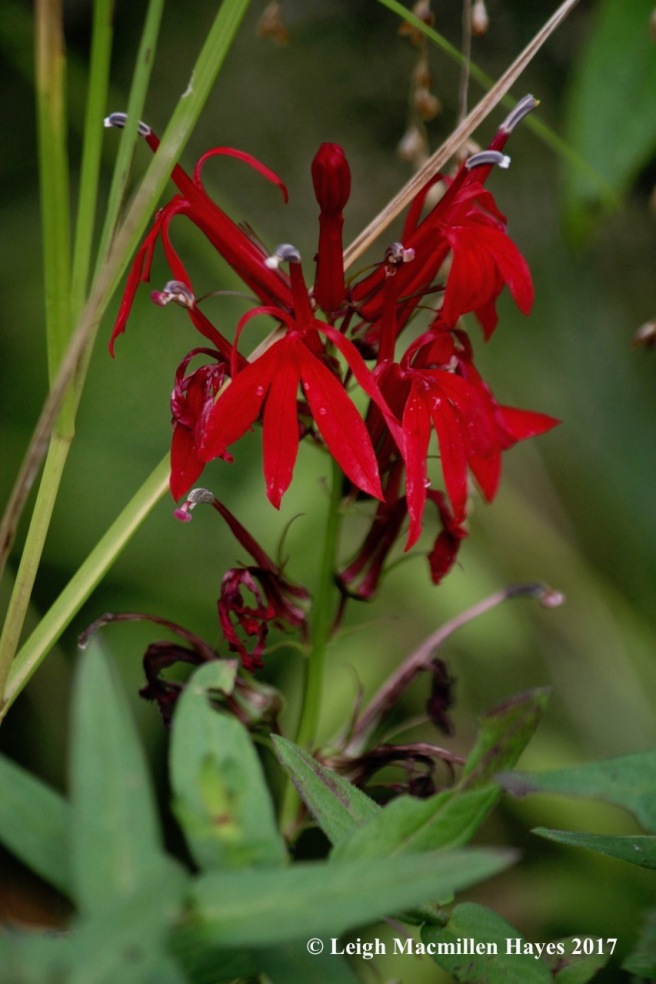
But our favorites: a cardinal flower still in bloom and . . .
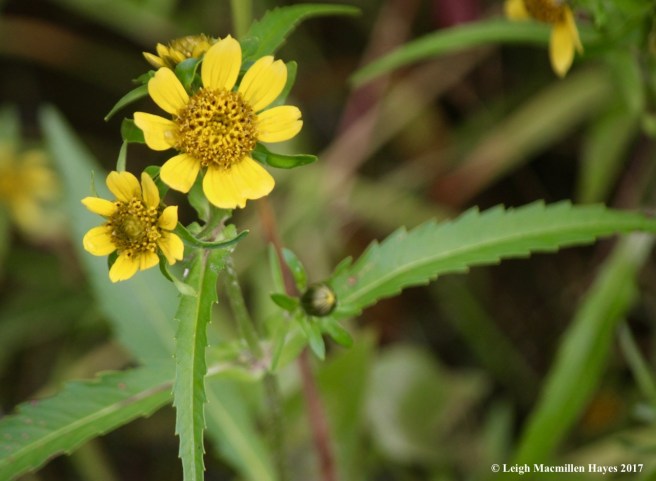
s23-Northern beggar-ticks

northern beggars-tick.

s28-10th site, CMP above

We passed by the tenth power site, knowing we’d return to it on our way back. Instead, we stood below and looked up at the water flowing over the improved dam.

s27-water below 10th site

It was in this section that the brook dropped 25-30 feet and created the greatest power at one time. It was also here that the eleventh site was located and where a penstock once provided a way to get water to a powerhouse in order to furnish local homes with electricity.
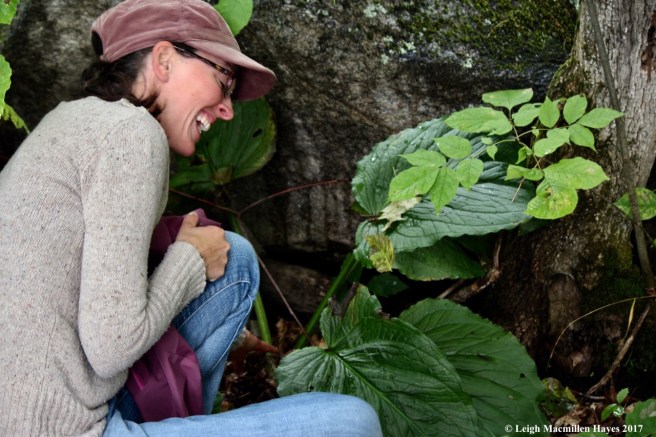
s31-Alanna laughing by skunk cabbage

For us, it was a place to make more discoveries and share a laugh as we looked at the huge leaves of skunk cabbage.

s32-first witch hazel bloom

We also spied the first witch hazel flower of the season . . .

s33-maple-leaf viburnum

and a maple-leaved viburnum showing off its subtle fall colors.

s34-milkweed pods

In a spot just above the Central Maine Power substation, we found a garden of wildflowers including milkweed seed pods and . . .

s37-New England aster 2

New England asters offering a deep shade of purple.

s27-chicken of the woods

We also found some chicken of the woods.
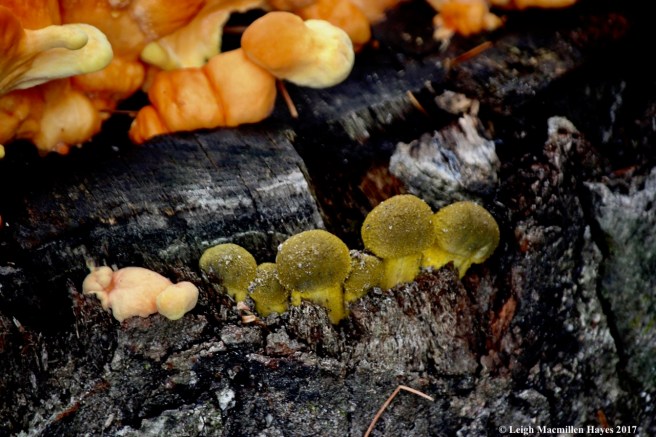
s38-honey mushrooms?

And fruiting on the same stump, what I think was honey mushrooms (Armillaria mellea). I know a few fungi experts who occasionally read this, so I know they’ll correct me if I’m wrong with my ID.

s39-Stevens Brook outlet into Long Lake

The second half mile took us just as long as the first, and at last we reached the outlet into Long Lake.
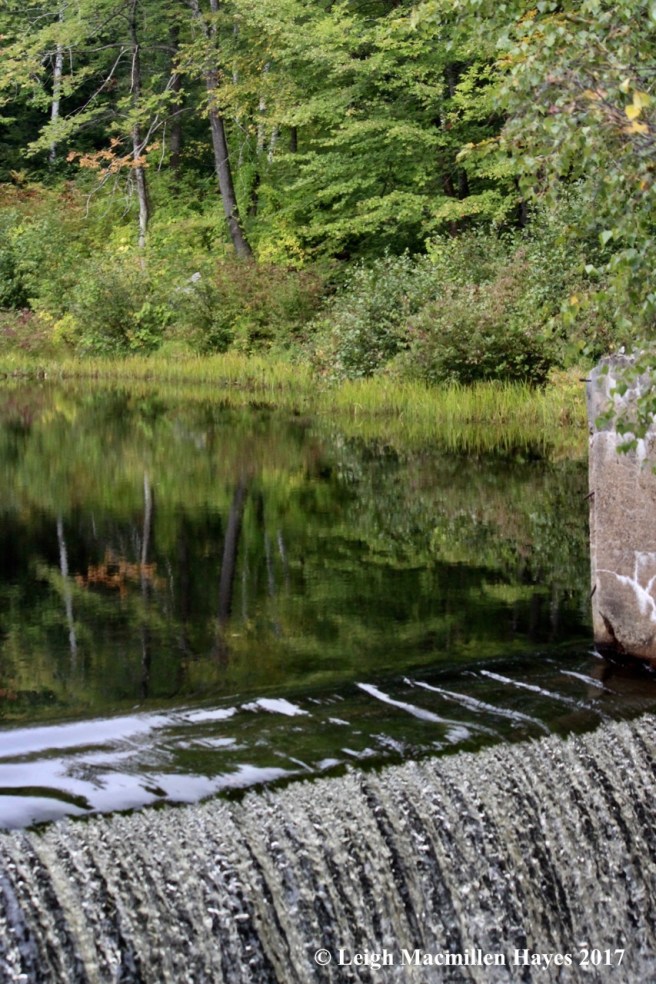
s40-10th site, CMP dam

And then we made our way back, crossing over the bridge at power site 10, which was possibly the spot where Jacob Stevens, for whom the brook was named, built the first sawmill in 1768. We do know that in 1896, the Bridgton Water and Electric Company acquired the site and improved the dam. Eventually it passed on to the Western Maine Power Company and then Central Maine Power. In 1955, it was transferred to the Bridgton Water District. Through all the time, we could only imagine how the reflections changed.

s42-milkweed tussock moth caterpillar

To save time, we decided to walk along Lower Main Street as we made our way back. And to that end, our discoveries continued, for on a milkweed, Alanna first saw the chewed leaf and knew to look for the milkweed tussock moth caterpillar that was filling its belly.

s43-common snowberry

We also saw what I’ve always referred to as popcorn shrub because it reminds me of such, especially when I’m hungry for lunch. But really, it’s common snowberry. And not edible.
s46-northern white cedar bark

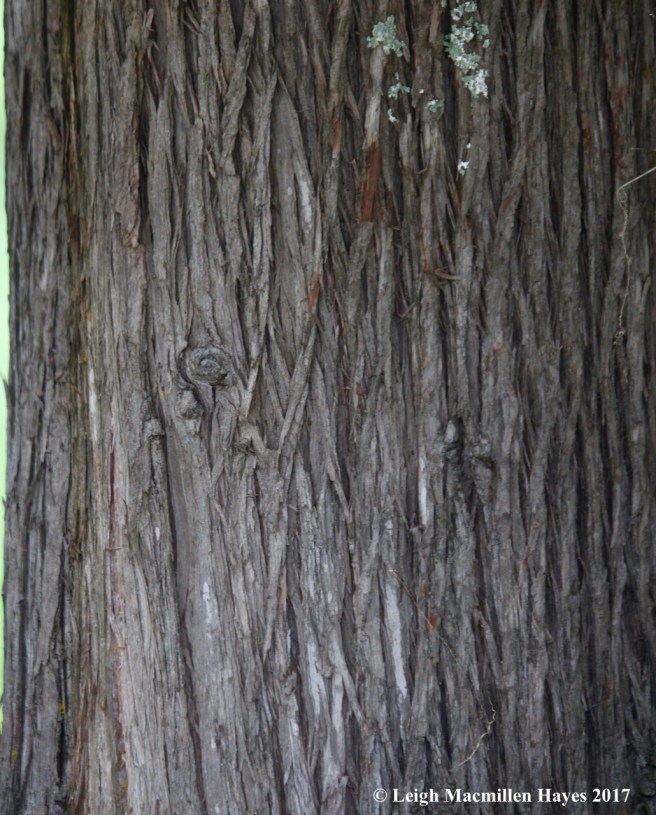
And then we found a tree that I didn’t know grew there–and I can’t tell you how many times I’ve run or walked by it: a northern white cedar with its scraggly striped bark.

s44-Northern white cedar 1

As much as the bark, I like the overlapping scale-like blue-green leaves.

All in all, our one mile journey took us just over two hours and we did recall some of the info about the mills without referring to my notecards. But what was even more fun was our wonder and awe as we made new discoveries while poking along beside Stevens Brook.

If you care to join us, the talk by historian Sue Black will be on Wed, September 27 from 5-7pm at LEA’s Maine Lake Science Center and the walk will be the next morning from 9-11. We’ll meet at Bridgton Historical Society on Gibbs Avenue for that. Be sure to register for either or both by contacting Alanna at the following address: alanna@leamaine.org.
 

Home again, home again

Because we’d spent most of the summer at camp and I barely stopped at home, I hadn’t visited my usual haunts in a while. Today, that changed.

o-green cone sap

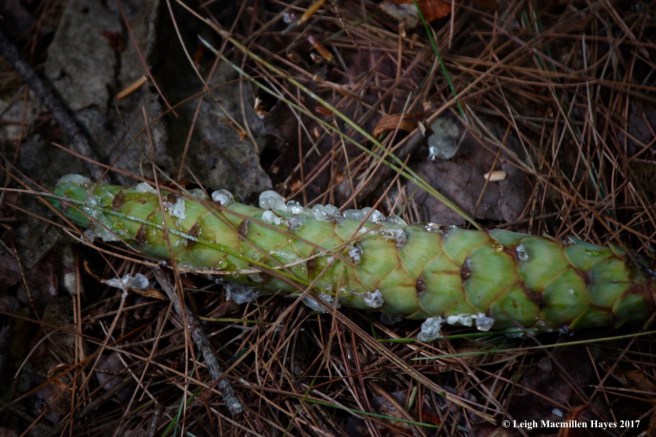
Into the woodlot I ventured, where green pine cones oozing with sap decorated the forest floor.

o-green cone midden

The remains of those serving as sustenance also lent a bit of color from the center cobs and deseeded scales left behind by red squirrels.

o-Inidan pipe from above

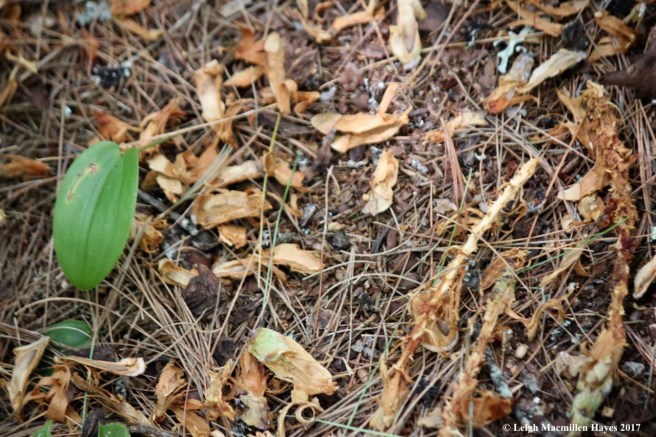
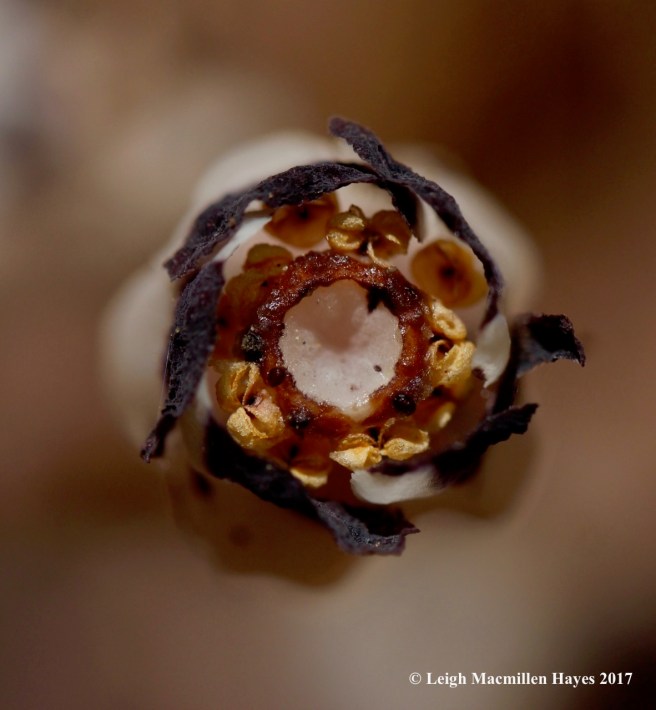
Most of the Indian pipes were past prime, but they remained beautiful with their flowers turned upright since being fertilized.

o-pine sap

The same was true for pine sap, which supported more than one flowerhead per stalk.

o-powerline

Emerging from the cowpath onto the power line, I found conditions to be as expected–anywhere I’ve traveled past such a line this summer, I’ve noticed that Central Maine Power has sprayed. I shouldn’t complain for I depend on that power and understand the need to keep the trees cleared, but it does make my heart cry for all that is lost.

o-sundew sad face

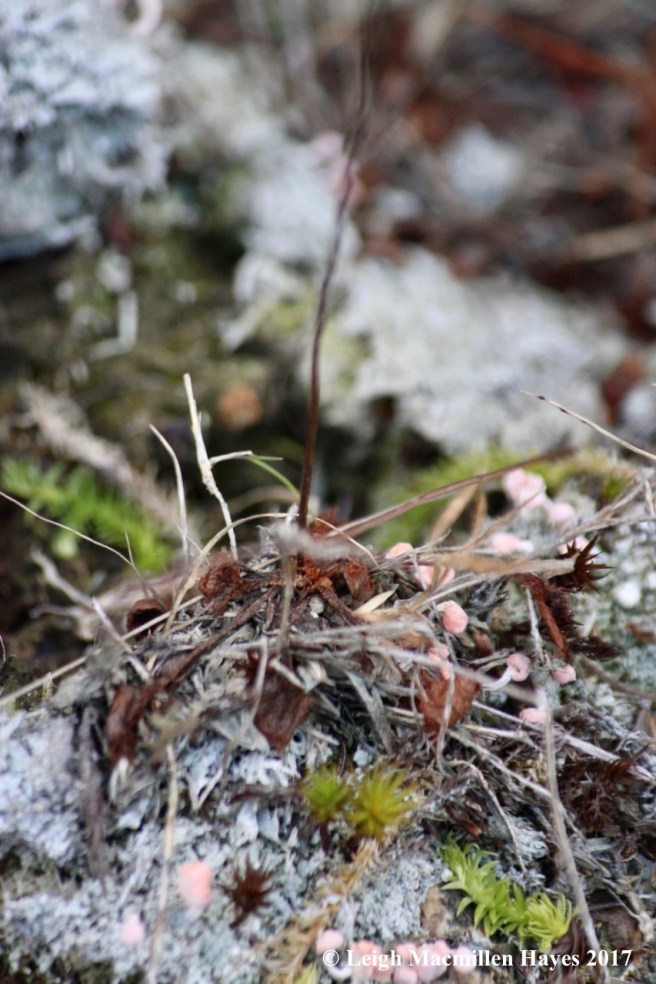
My sundews were among those that had suffered, brown and shriveled were they.

o-juniper

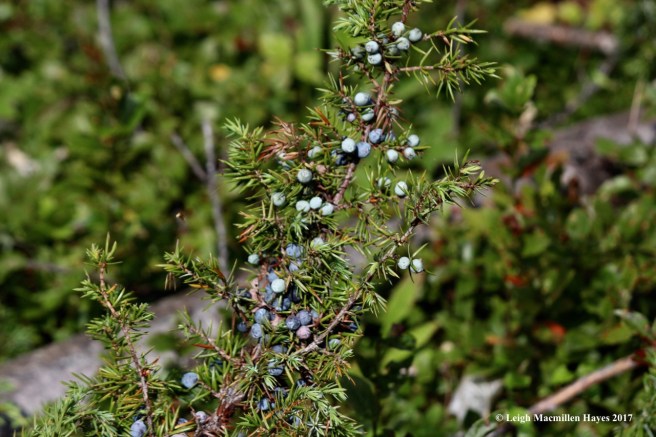
The white pines took a beating as well, but the juniper continued to grow and produce a bounty of fruits.

o-cicada

As I walked, the air buzzed with a chorus of cicadas,

o-field cricket

field crickets,

o-grasshopper

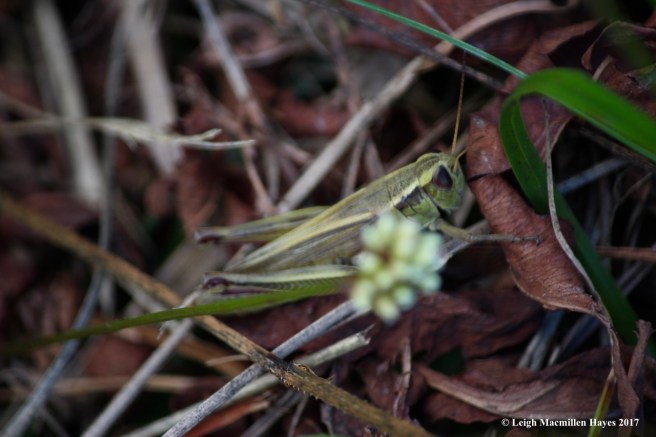
and grasshoppers.

o-red maple cotyledon

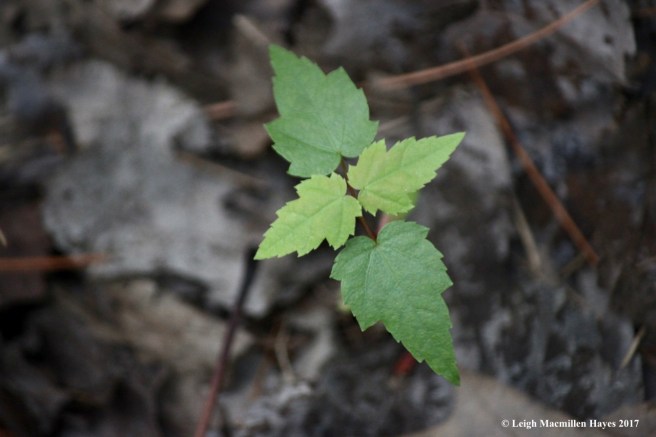
A visit to the vernal pool was a must, and in true vp form all was dry, but from the bottom new life sprang forth in the form of red maple . . .

o-vp, quaking aspen

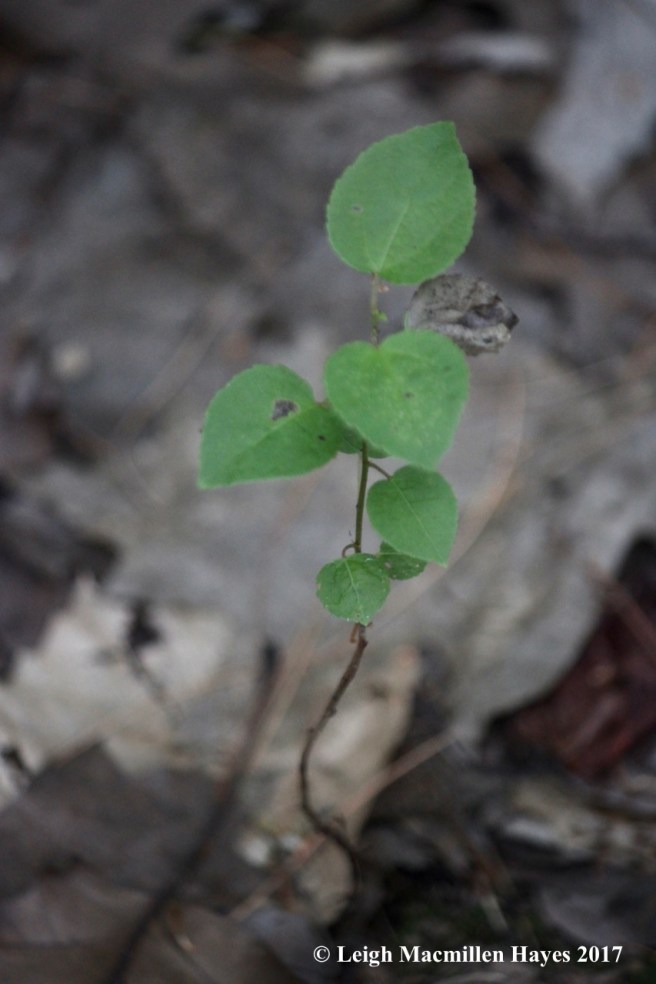
and quaking aspen seedlings. It’s worth a try on their part, but I suspect they’ll be short-lived for soon enough the pool will begin to fill with water from late summer, fall and winter storms yet to be.

o-vp, red leaf

Speaking of fall, some red maples had already stopped producing sugar, thus the chlorophyll disappeared and anthocyanin formed–evident in the red hue.

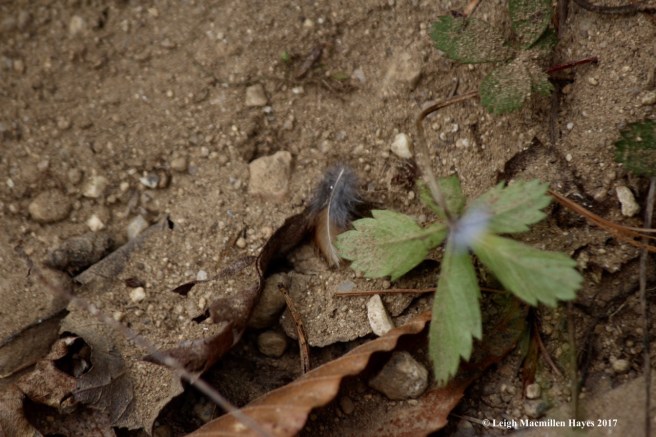
o-vp feather

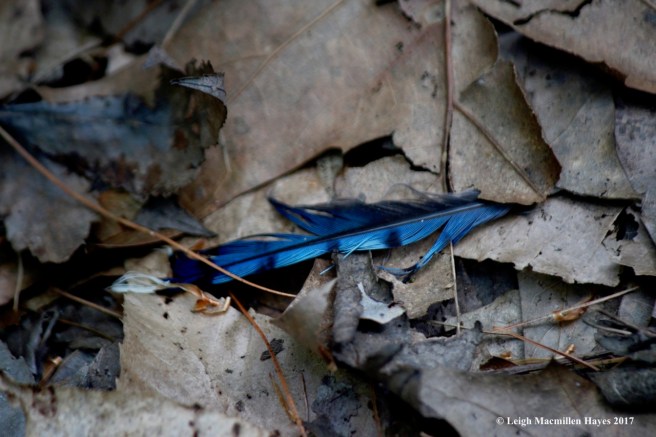
I found some other color in a small blue jay feather. I only saw two and didn’t think much of it, until . . .

o-blue jay feathers on stump

I passed by an old stump and did a double take. It appeared a young jay had served as a feast.

o-field succession

My next stop was the field, reached by passing through the two stonewalls that demark the boundary of our extended property. The field belongs to our neighbors’ parents and they recently had it bush hogged. At the western most end stood a fine example of forest succession, from mowed area to wildflowers and shrubs to saplings and finally the forest beyond.

o-small-flowered gerardia

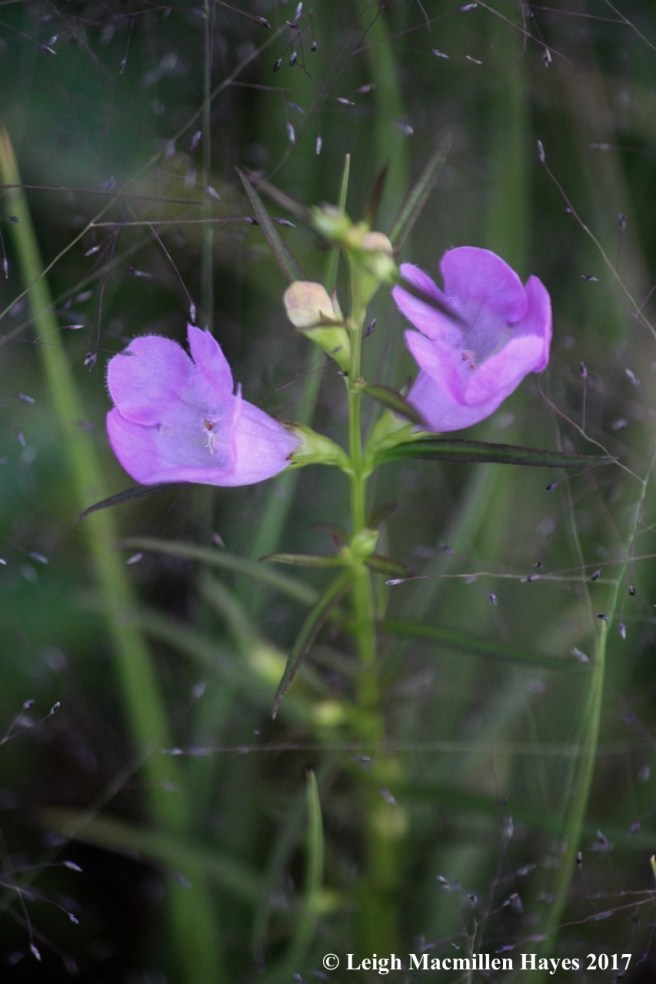
Among the flowers at the edge I found one I hadn’t met before–small-flowered gerardia with delicate, hairy petals and needle-like green leaves bordered in their own shade of purple.

o-steeplebush

Being Sunday, it seemed apropos that the steeplebush reached heavenward.

o-meadowhawk above

As I continued to look around, a meadowhawk flitted about, pausing occasionally.

o-meadowhawk face

I knew if I stood still long enough, it would get curious and let me approach.

o-meadowhawk up close

And I was right.

o-home view

At last it was time to head in. Home again, home again, jiggity jig.


Artful Eclipse Mondate

Because they are so gracious, when I recently begged Faith and Ben Hall for an opportunity to follow them on a trail through the Perley Mills Community Forest, they not only invited us to walk, but planned out an intinerary, pre-hiked the trail, made chicken noodle soup for lunch and took us for a boat ride. All of this before the great solar eclipse of 2017.

h-perley pond beaver dam?

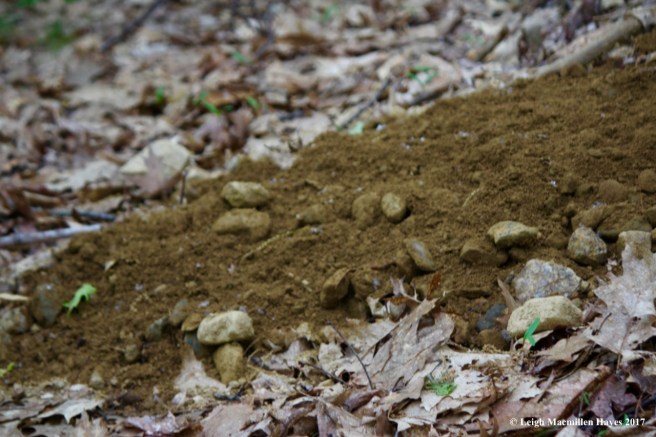
After taking a tour of their neighborhood, Faith dropped Ben, my guy, and me off to begin our first bushwhack beside Perley Pond. In a few minutes, we came upon an earthen structure and I couldn’t help but wonder if it was an old beaver dam.

h-perley pond

We were at the base of the pond and perhaps just as those who dammed it up for their mill sites, the beavers had their own intentions. Of course, I could be totally off and it could have been manmade, but such was the formation and growth above, that I’m sticking with my original thought.

h-sawdust pile

Moments later, we emerged into a clearing and grabbed handfuls of fine saw dust, letting it sift through our fingers as it slowly drifted back to the ground. Occasionally, on our tramps through the woods, we’ve encountered such mounds and have been amazed that they still exist with little vegetation.

h-mill site approach

The mound bespoke the reason for the mill up ahead. (Notice the stream beside–we crossed over it, two of us more successfully than the third, but fortunately for him, I didn’t take a photo. He preserved the rest of the hike with soaking wet pants, socks and boots, but never complained, such is my guy. Oops–don’t tell him I told.)

h1-mill site, looking down

Climbing up, we looked down. According to the “History of Perley Mills” by Arthur Rankin on the Denmark Historical Society’s website, the part of town known as Perley Mills was “1st settled by a family named Cliffords in the early 1800s. They built a road by Little Pond to connect with the stage road from Denmark to Ingalls Road and Cole Road in South Bridgton and to Biddeford. The Cole Family had apple trees. Mr. Cole was a fiddler and he used to play for the dances in Denmark and Sebago. Mr. Wallis Berry purchased the Cole farm. About 1807, Mr. Berry and Mr. Perley built a dam at the outlet of Pickerel Pond. They built a saw mill to saw staves and shingles. They made barrels. They employed many men.”

We weren’t sure exactly what we were looking at below, but pieces of the former structure remained intact in what looked like a sluiceway.

h-mill drill holes

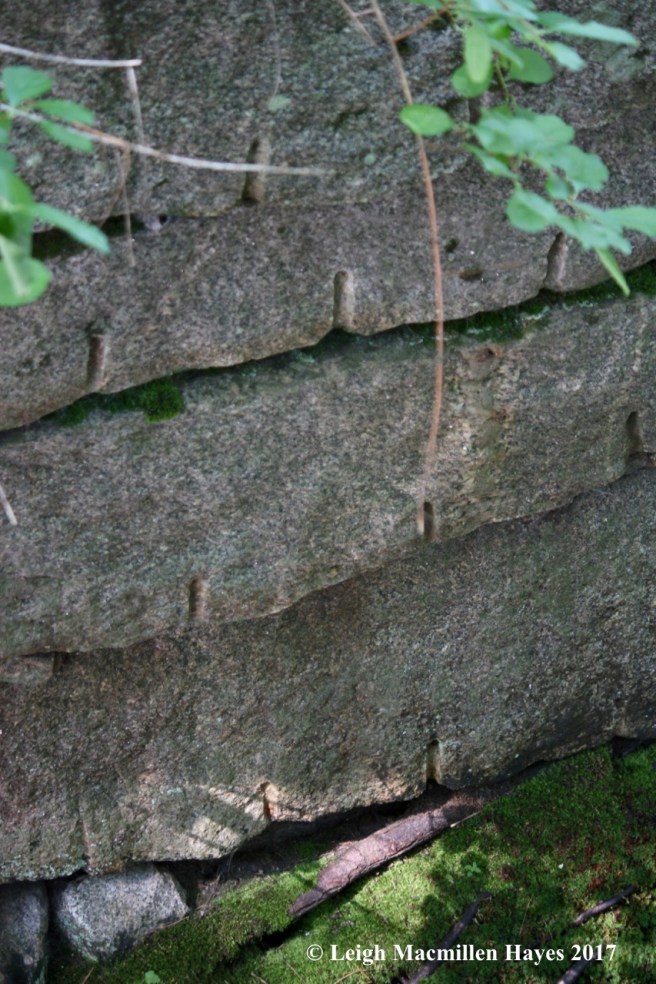
The stone had been split using the feather and wedge technique.

h1-mill site looking back

As we looked back, I was once again reminded of the work that went in to creating the foundations of yore.

h-cranberries 2

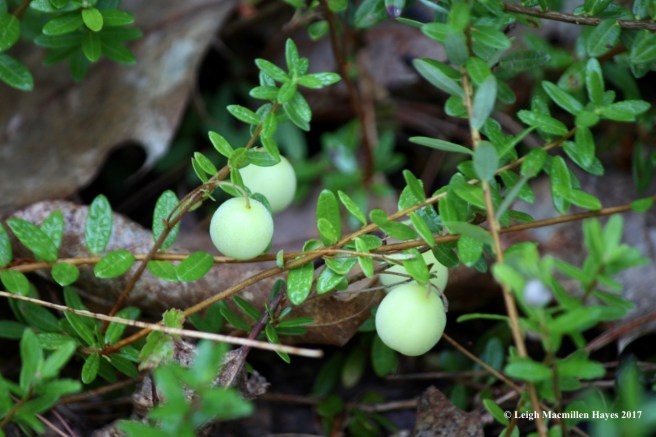
Our bushwhack included a few other fun finds, such as a small patch growing in an unexpected place.

h-cranberries

The little green balls actually threw me off when we first looked at them.

h-cranberrries 3

But it was my guy and his well-trained naturalist eye that knew they were cranberries.

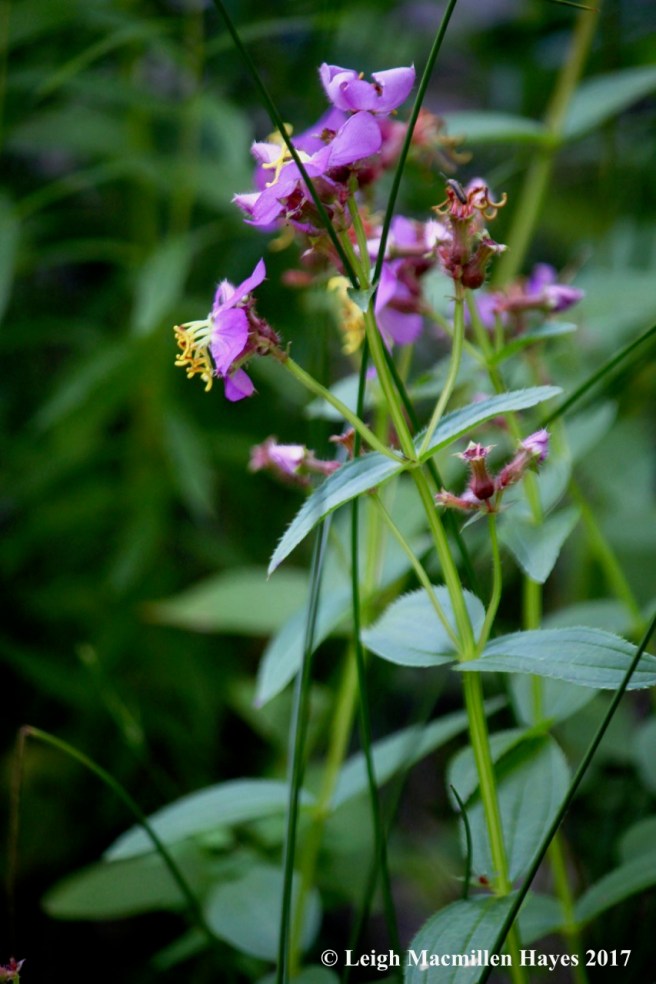
h-virginia meadow beauty 1

We also spied a clump of Virginia meadow-beauty with its delicate petals and prominent stamen. It’s also known as Handsome Harry, but I think Harriet would be more fitting.

h-survey mark

When we reached the Narrow Gauge Trail, Ben showed us the elevation maker that neither of us recalled seeing previously.

h-pickerel pond

We stood beside the pond for a few minutes, looking for frogs.

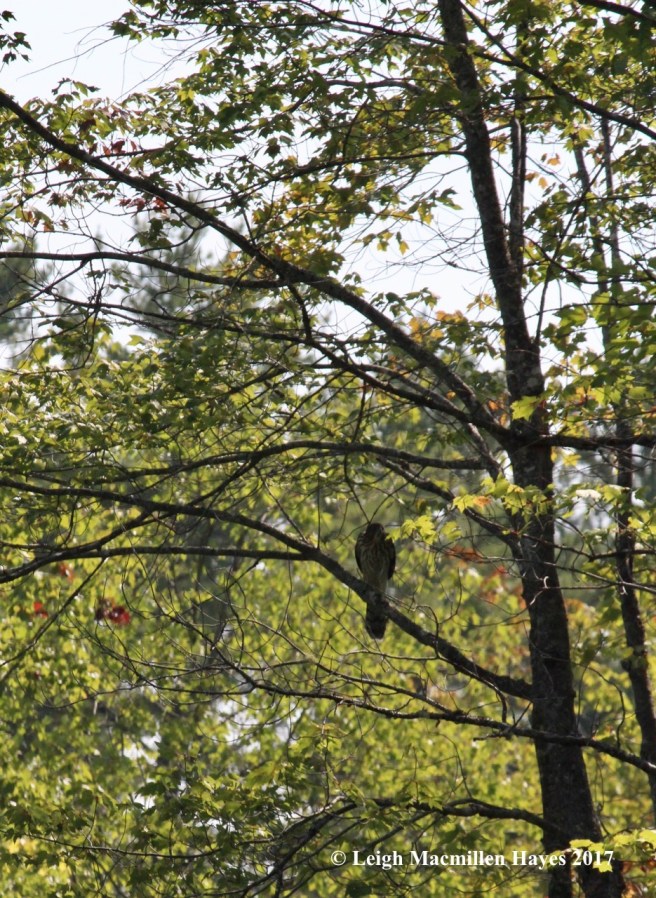
h-sharp-shined back

h-sharp-shined front

And realized we weren’t the only ones on the hunt.

h-gall of the earth

As our journey continued down the old rail bed, we all wondered about the work that went into building it. Years ago, we used to find railroad spikes, but the trail has been improved recently and that seems hardly possible any more. Instead, we found gall of the earth in flower,

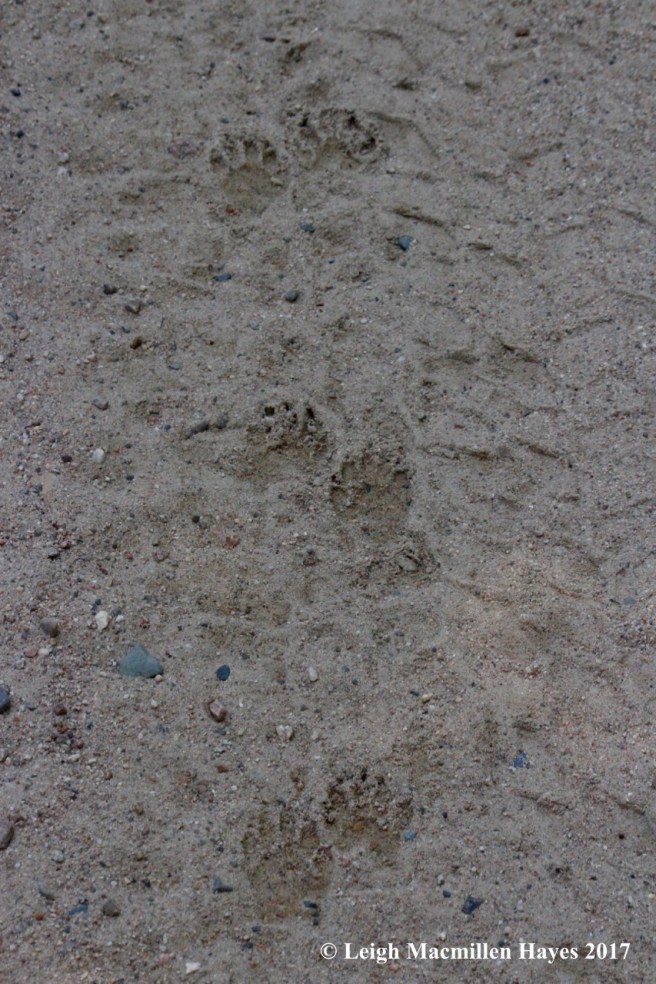
h-raccoon prints

raccoon prints showing their opposite diagonal manner,

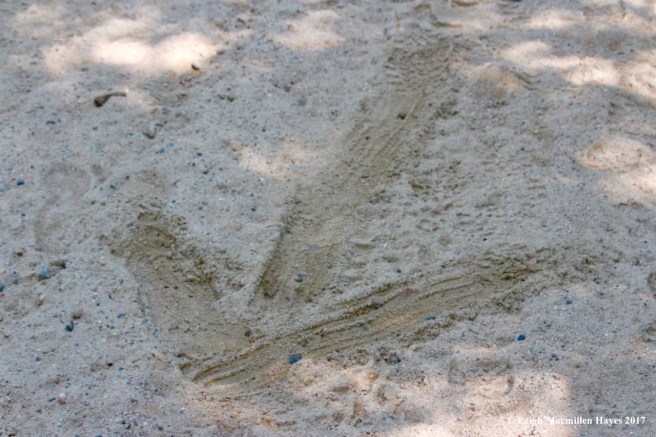
h-Faith's arrow

and either one large turkey print or a message in the sand. We knew it was the latter for Faith had preceded us and as we passed her she mentioned she’d left a note.

h-off the Narrow Gauge

It wasn’t long after Faith’s message, that Ben veered off the rail trail and took us up an old logging road.

h-following Ben

We followed him through thick and thin, the thickest being where the goldenrods bloomed and bees buzzed in former log landings.

h-approaching the stone cemetery

Along the way, he spoke of a stone cemetery. We both conjured up images of an old cemetery reflecting an earlier time. But . . . he meant a large pile of rocks that had been dumped by a previous owner who had logged the area.

h-walking the Narrow Gauge

Eventually, we met up with Faith again, then she drove to our next meeting point, while the three of us walked the Narrow Gauge in a direction my guy and I had never traveled.

h-beaver dam:infinity pool

It was there that we saw beaver works we were certain of, including a dam that created an infinity pool above.

h-swamp beside Narrow Gauge

Beside a swamp, we kept searching for moose, but never spied one.

h-thistles, Faith

At last our journey by foot came to an end . . . almost. Faith had a surprise waiting for us. And so she drove us back up their road and just past their house pulled off to the side on land owned by their oldest son. We’ve explored that property with them previously, but today she wanted to show me one of my favorite plants, which also happens to be hers.

h-thistles in all forms

Thistle . . . in all of its forms, it deserves reverence.

h-thistle 2

And so we revered.

h-Hayes True Value bucket

Back at their camp, our time together wasn’t over for we broke bread. And then they offered a quick boat ride. On the way to the dock, we knew we were in the right place, such did the signage on one bucket indicate.

h-Faith and Ben

Out onto the pond we went, thankful for a few more minutes with Ben and Faith. We cherish any time spent in their company before they head south again. And today, we were also excited to explore our local area and visit places we’ve never been to before. Thank you both for everything, from the hike to thistles to lunch and the boat ride and all the conversation in between.

h-squirrel and eclipse

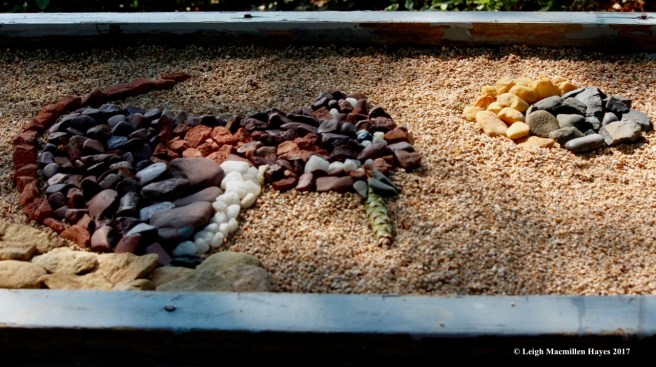
Before we departed, we had one more stop to make–at Ben’s sand table, where he recreates the natural world with found rocks.

Today’s creation–a red squirrel devouring the seeds of a white pine cone as the moon covered the sun–an artful eclipse on this Mondate.


Bee Kind

Because I have the good fortune to be involved with the Greater Lovell Land Trust, I spend my summers attending talks and walks on a variety of topics. Prior to this week, we learned about lichens, bryophytes, pileated woodpeckers, fungi, flowers, ferns, medicinal plants, peat bogs, wild turkeys, and land conservation. And then last night our focus turned to pollinators and the pollinated.

Guy Pilla, a beekeeper from Fryeburg, Maine, gave an informational talk on the art of beekeeping, followed by a question and answer period, and the crème de la crème –honey tasting. How often have you had a chance to taste Tupelo honey?

w-Guy 1 (1)

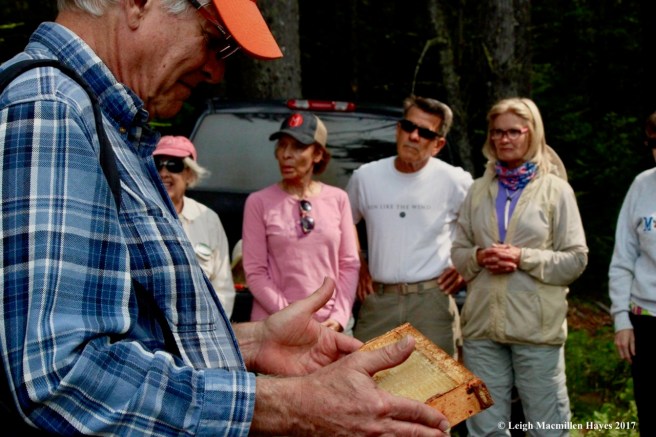
This morning we met up with Guy again, as he took us to a hive he has set up on private property under conservation easement with the land trust. Twenty-six of us gathered around to listen, watch, and wonder.

w-showing the frames

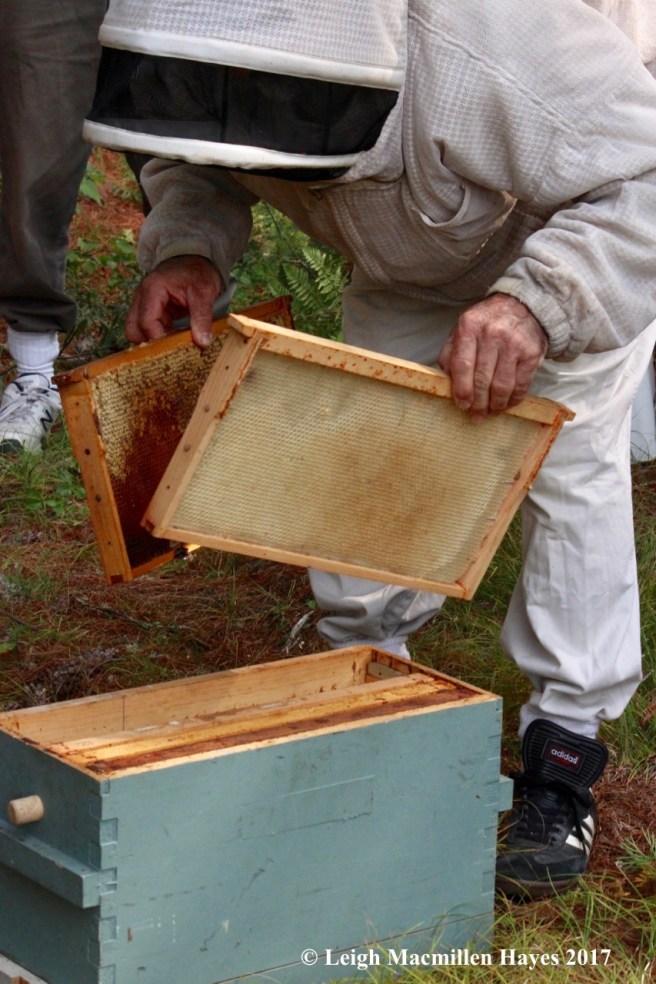
In his alien costume, Guy passed around frames, giving us an opportunity to look at a range of cells as he explained about spacing for honey expansion, storage and more. We learned about the good and the bad of beekeeping, but mostly the good.

w-Gary looking at frame

As frames were passed around, we noted variations and the fact that some were lightweight and others heavy.

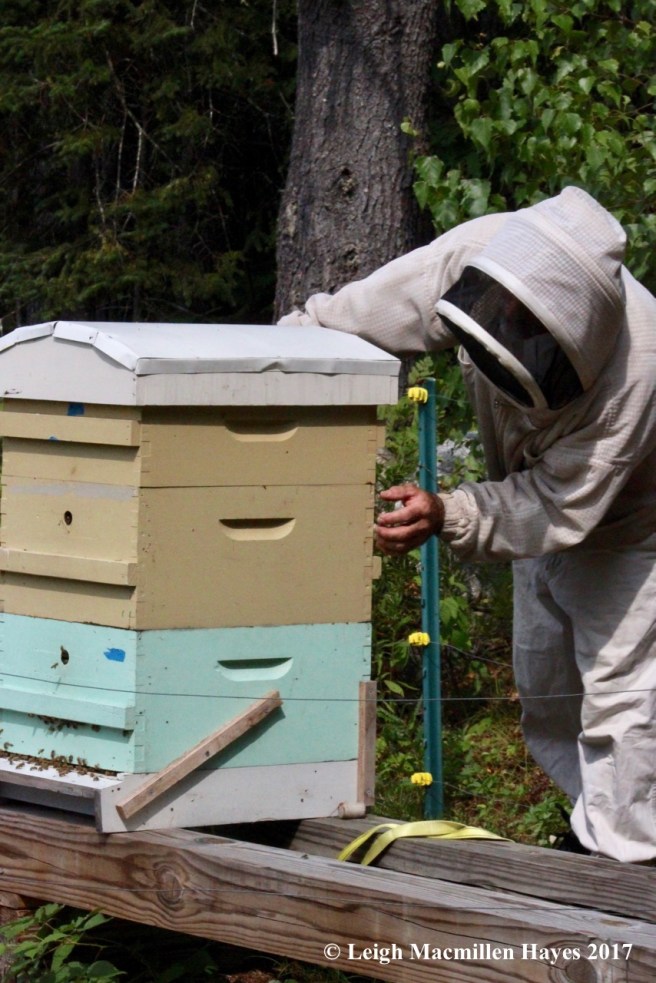
w-hive--bear precautions

At last it was time for Guy to open the hive. Notice the electric fence surrounding it? And the fact that it’s strapped down. Bear defense. And we know there’s at least one in the area.

w-dressing like a beekeeper

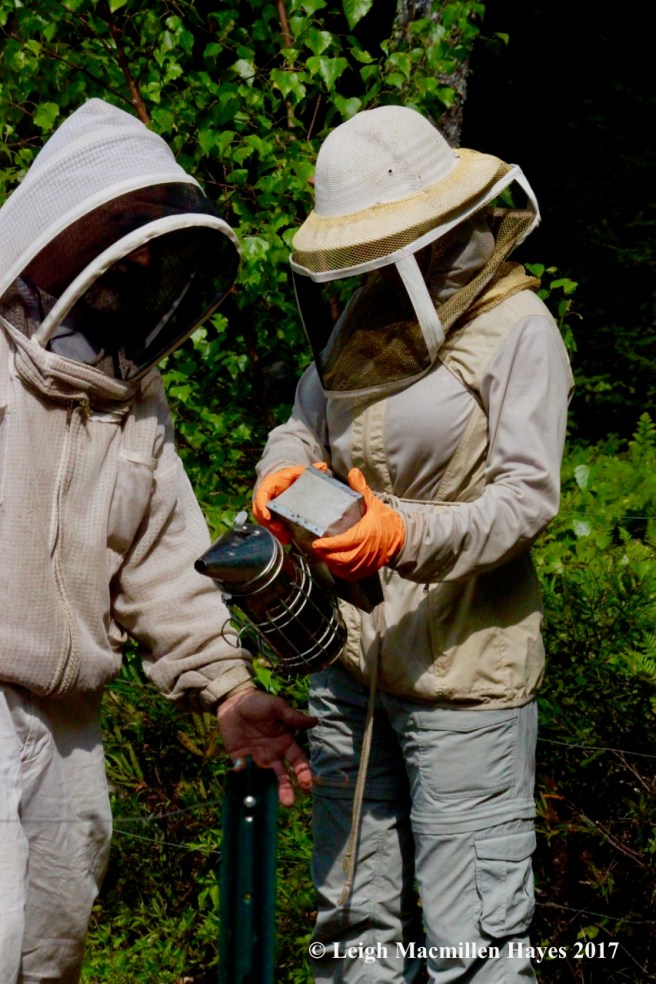
And then he walked through the crowd and chose Mary to be his assistant. She donned a hat and veil to protect her face and neck, and took on the look.

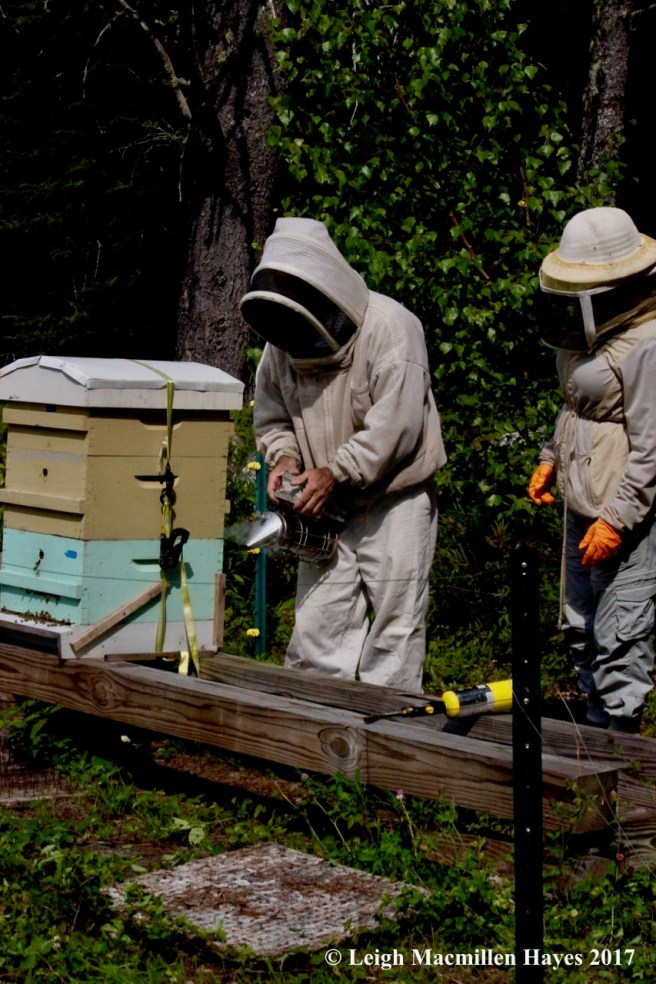
w-testing the smoker

Into the bee yard, she followed Guy. If you look closely, you’ll see two platforms on the ground and might notice that the one directly below the hive has nails sticking up (the other is turned upside down because Guy only has one hive at this location this year). Those are to deter skunks, another predator. As Mary watched from behind and the rest of us watched from a few feet away beyond the fence (and out of the bee line), Guy ignited the smoker he’d filled with pine needles.

w-smoke coming out of smoker1

It took a few minutes, but finally, smoke puffed out.

w-Mary practices the smoker

He then passed it to Mary, and her task was to press the bellows and create smoke. The smoker is an important line of defense.

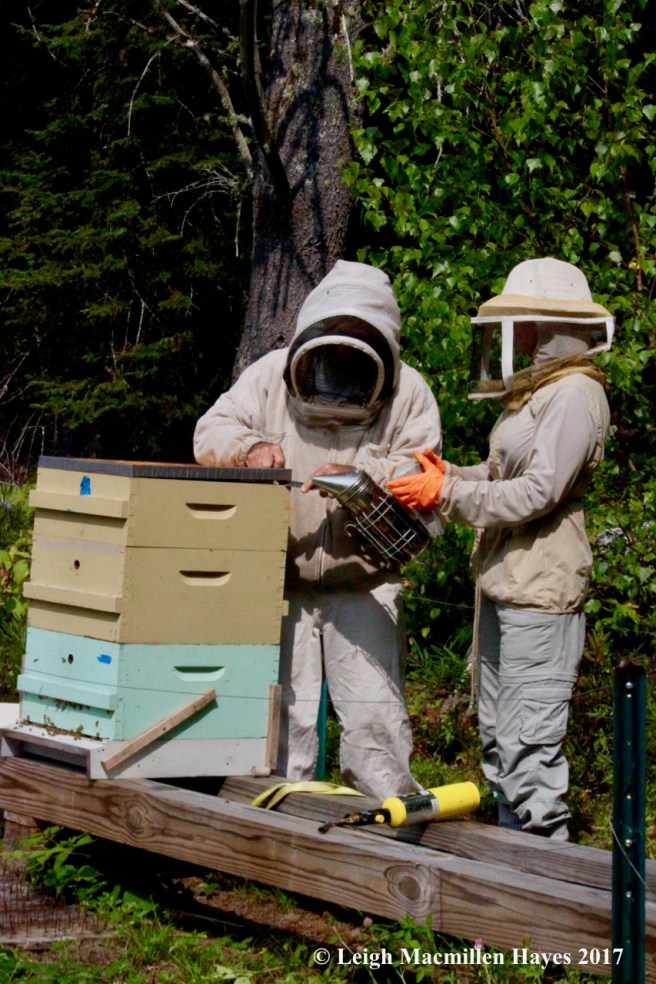
w-preparing to open the hive

As we continued to watch, Guy took the straps off and explained the construction of the hive with one super stacked atop another in a vertical fashion. Though he ordered his equipment, he refashioned some of it including the roof, designed to let wet weather flow off rather than gather in puddles on the top of the structure.

w-Mary uses the smoker

As Guy wedged a hive tool into the bee glue (a resin-like propolis), Mary got ready to use the smoker. Smoke fools the honeybees into thinking a wildfire is nearby, thus prompting them to eat more honey in case they need to move to a new location.

w-showing off his bees

And with honey in their bellies, they become more docile. Note that Guy isn’t wearing any gloves. Usually he does, but Mary wore his gloves this morning and he trusted all would go well and the bees would remain calm. He was certainly calm, but spoke of his early days in the beekeeping business and how sometimes he would jump. Bees sense fear behavior exhibited by heavy breathing and that’s when stings occur. Having been stung recently after some youngsters received stings, I thought I was remaining calm, but apparently my breath spoke for me.

w-hive levels

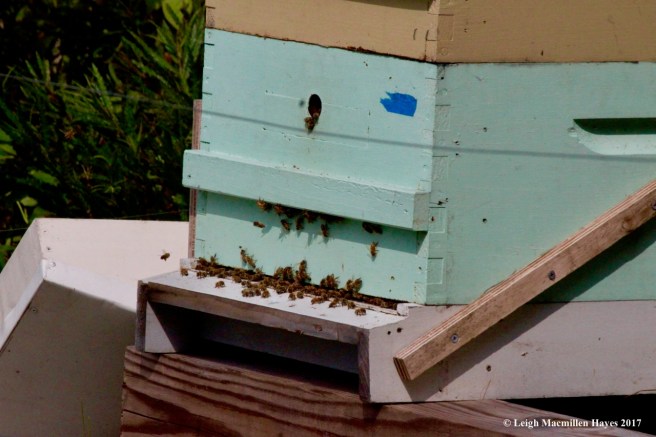
We learned so much from Guy last night and today–about their various jobs as male drones, queens, and female workers who really do so much of the work. The workers clean out old material from inside the cells, attend to the queen, carry dead bees or larvae outside the hive, guard the hive’s entrance, fan at the entrance during the hot weather to keep the inside temperature down and to circulate fresh air throughout the hive, receive nectar and pollen,  store it away in cells, nurse newly laid egg, and seal cells around larvae at the appropriate moment. After doing all of this for about three weeks, they’ll earn the rights to collect nectar and pollen for about six. And then . . . they’ll die of exhaustion. Indeed.

w-wandering among the flowers

After our time at the hive, one of the land owners, Linda, took us on a mini-tour of the 100-hundred-acre property. Her goal was to take us to a flower meadow she and her husband have created. Originally, it was a garden with raised beds, but Linda has been collecting wildflower seeds from roadsides in Maine and New Hampshire and sowing them in the meadow.

w-learning from Linda

Today we were wowed by the results.

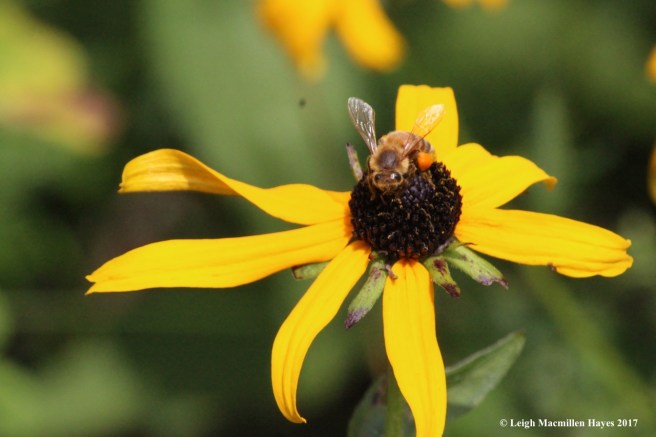
w-honey bee 1

And so were Guy’s honeybees.

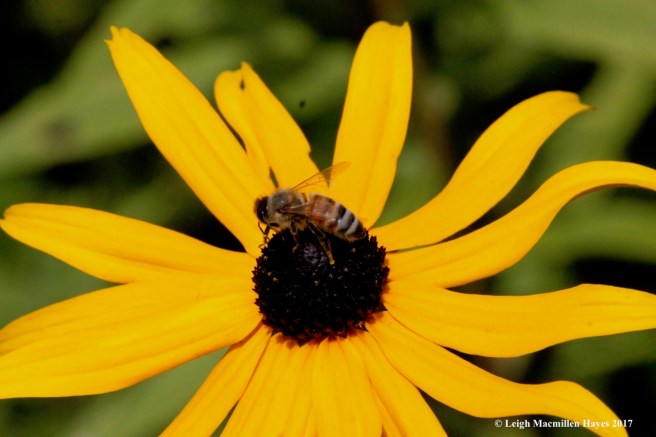
w-honeybee on the move

They were on the move everywhere we looked.

w-bee using probiscus for honey

We watched as they sucked nectar with their proboscis mouth part.

w-bumblebee on Joe Pye Weed

Bumblebees also took advantage of the sweet offerings.

w-bumble with loaded pollen baskets

And filled their pollen baskets with the goods.

w-frittilary 1

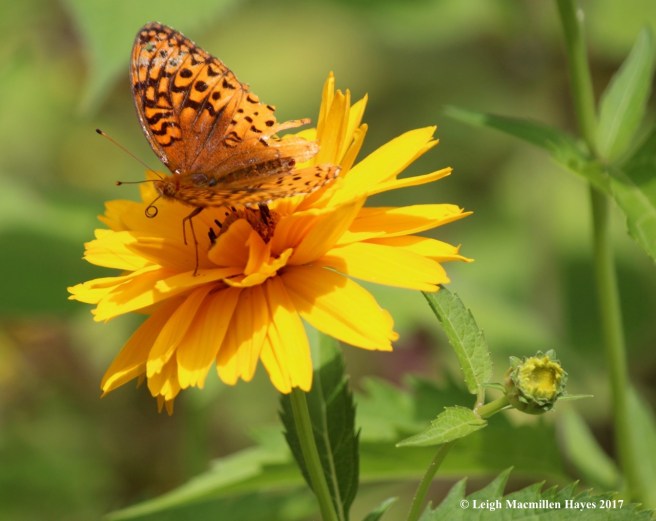
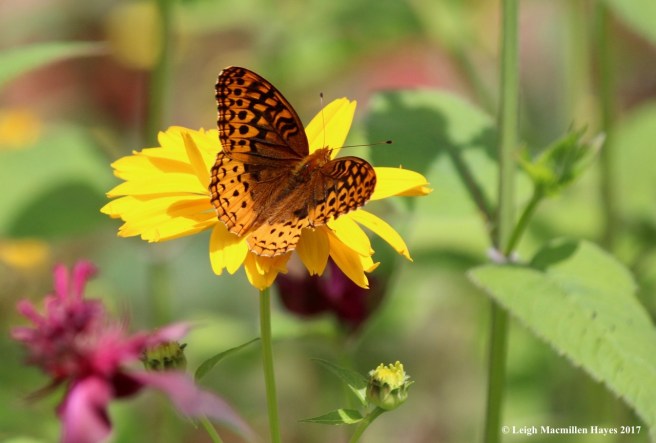
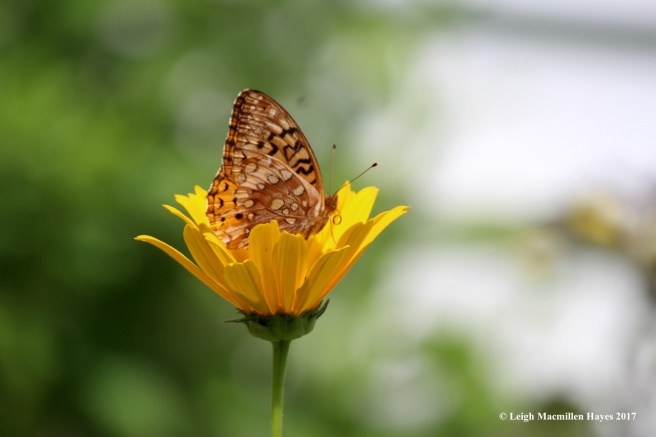
Not to be left out, a fritillary was among those seeking reward.

w-male meadowhawk

And because we were there, we saw meadowhawk dragonflies on the prowl, he being red . . .

w-female meadowhawk

and she similar but brown.

w-Guy in the field (1)

Guy was tickled to see his bees at work and share his knowledge to all as we listened.

w-linda by her flower meadow

Linda was thrilled to see so many enjoying what she and her husband, Heinrich, had created.

w-Aa, gs 1

And speaking of Heinrich, just before we left he had one more insect to share.

w-Aa, garden 2

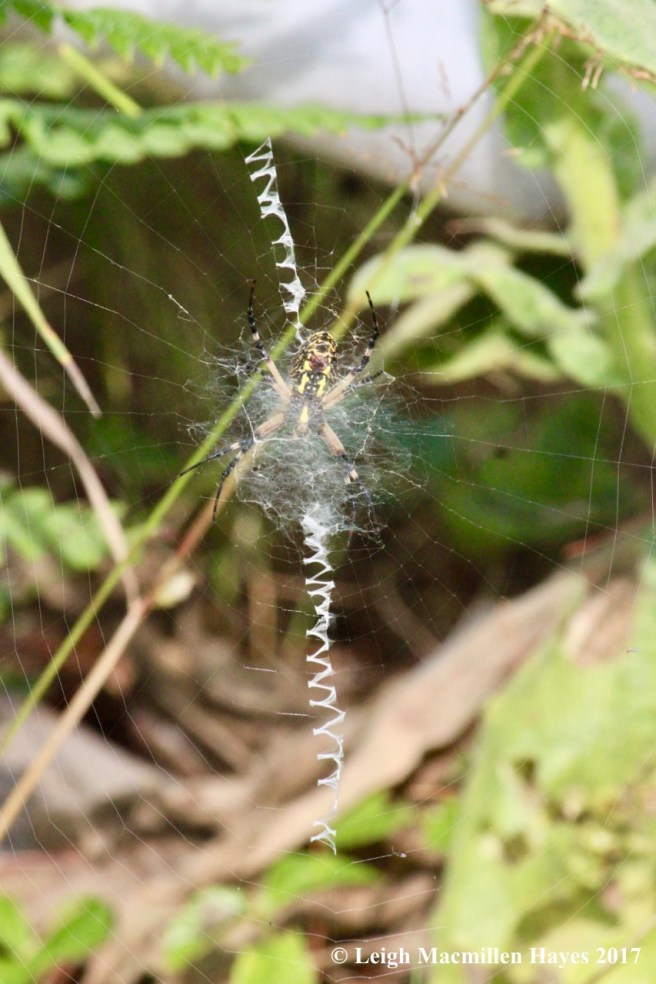
An orb spider known as a yellow and black garden spider or argiope aurantia had built its web near the greenhouse. I used to see these in our gardens frequently, but haven’t lately. Of course, I say that and tomorrow I’ll spy one.

w-Argiope aurantia, garden spider 4

In my brain, this is the smartest spider of them all for they create a web consisting of a series of concentric circles divided into sectors by lines that radiate out. And in the center–that amazing zigzag pattern, which is called a stabilimentum and perhaps intended to attract other insects. Or maybe its a message written in code and intended for a certain pig named Wilbur. This is Maine after all.

w-honey bee 2

We do know one message we learned in the last 24 hours: Bee kind–to one another for we’re all interconnected and we need each other to survive. And that includes letting the undesirables flourish in our yards, including the dandelions. Do so and watch them and just maybe you’ll realize they are desirable after all.

(Two final notes: Support your local beekeepers. Guy’s honey is available at Spice and Grain in Fryeburg; but really, you should buy honey from your area. And if you are interested in learning more about beekeeping, look for your local chapter of the Maine State Beekeepers Association.


A Generous Wander

When I donated a guided walk to a recent Lakes Environmental Association fundraiser, I was a wee bit nervous. Would anyone bid on it during the silent auction? And who might bid?

Thankfully, Carol notified me right away that she’d been the high bidder and my relief was immediate. I knew we’d have fun and the offer brought in a few bucks for an organization that has been near and dear to my heart for a long time. She chose the date, time and location. Plus she got to invite some friends along for the journey.

b-Kathy's sign 1

The chosen place–one of my favorites–Brownfield Bog. We started at the shack, where I pointed out Kathy McGreavy’s tiled map. Of course, they were wowed.

b-heron

And then we followed a short spur from the parking lot for the first view of the bog and a great blue heron flew up and then settled again.

b-buttonbush

It was there that they first viewed a buttonbush. Or at least that it first made its presence known, for I think that so many things we see often and they blend into the landscape until that moment when our eyes are opened–and our minds as well.

b-color 1

We followed another spur and noticed a sampling of fall foliage along the bog’s edge. In our minds it was swamp maple, aka red maple–or so we thought for a bit.

b-interrupted fern

At a fork in the road, Carol, Marylou and Sara chose the left-hand turn and so we entered the land of the ferns. It was here that they began to familiarize themselves with royal, cinnamon, interrupted and sensitive–noting features in their forms to tell them apart. While we walked, and at times we walked quickly for the mosquitoes were ferocious, it was fun for me to listen as they quizzed themselves.

b-meadowsweet

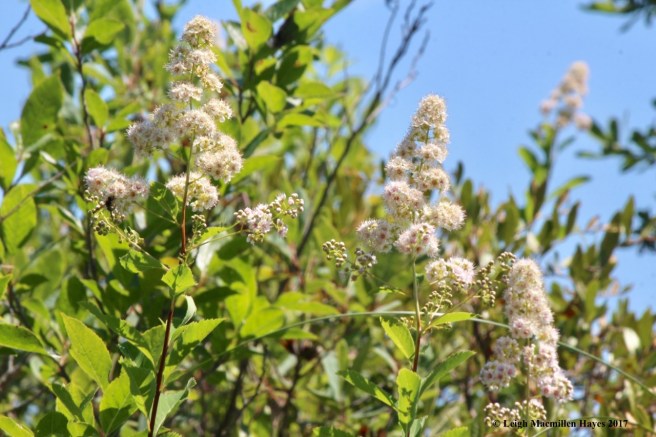
In a field at the end of the road, the spireas bloomed and we looked at the branching structure of meadowsweet with blossoms slowly opening in dainty clusters.

b-Saco River 2

When we reached Pirate’s Cove along the Saco River, we paused for a bit.

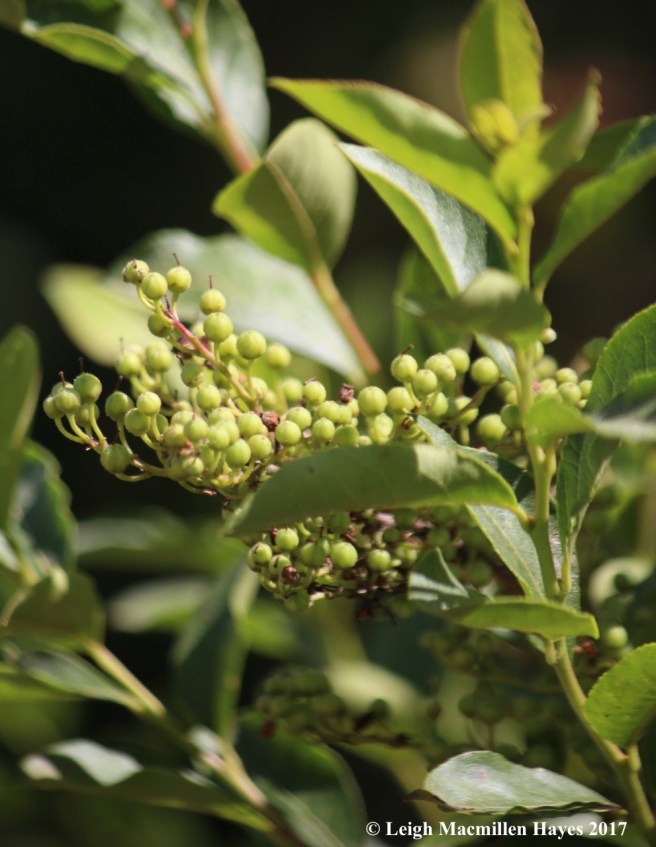
b-alder-leaf buckthorn 1

It was there that Sara spotted a shrub I couldn’t identify until I arrived home and slowed my brain down.

alder-leaf buckthorn2

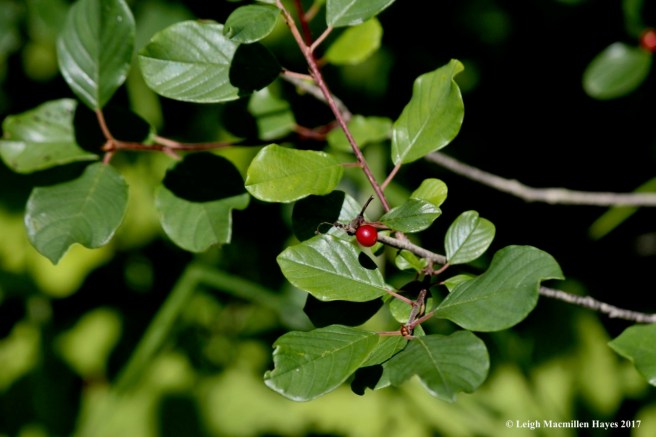
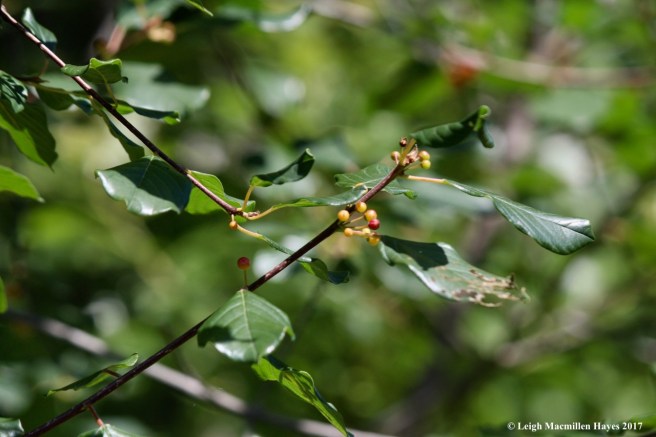
The leaves were alternate and simple, with deep veins. But it was the color that stopped us–for it was a deep green, almost bronze on some. And we’d missed the flowers, but the fruits were spherical and when Sara opened one, she found three seeds. Turns out it was an alder-leaf buckthorn. And as far as I remember, it was the only one we spotted. But . . . as I said earlier, our minds were open and let’s hope it made an impact and the memory  lingers.

b-yellow loosestrife

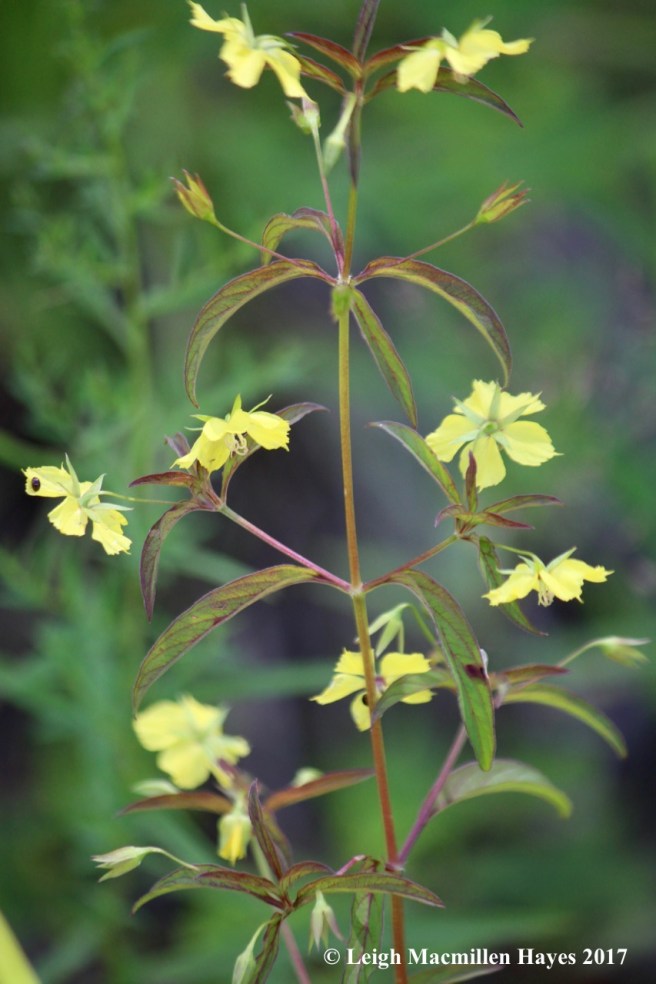
We finally left the river area and as we started back on the road, they asked me to name a flower. I knew when I said its name I was wrong, but I couldn’t pull the real name out of the depths of my brain. So here ’tis–yellow loosestrife.

b-raccoon prints

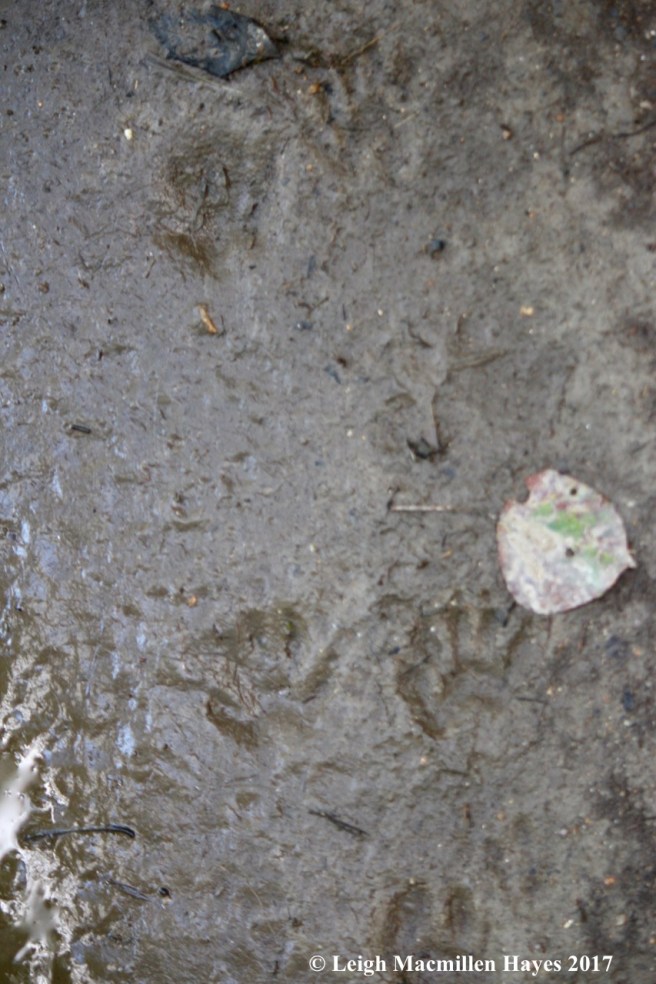
Making our way back to the main road through the bog, we saw handprints in the mud and knew a raccoon had passed before.

b-Pleasant Mountain 2

Back at the intersection, we turned left and journeyed on, noticing all the pickerelweed and water lilies at the lower layer and changes in vegetation leading all the way to Pleasant Mountain.

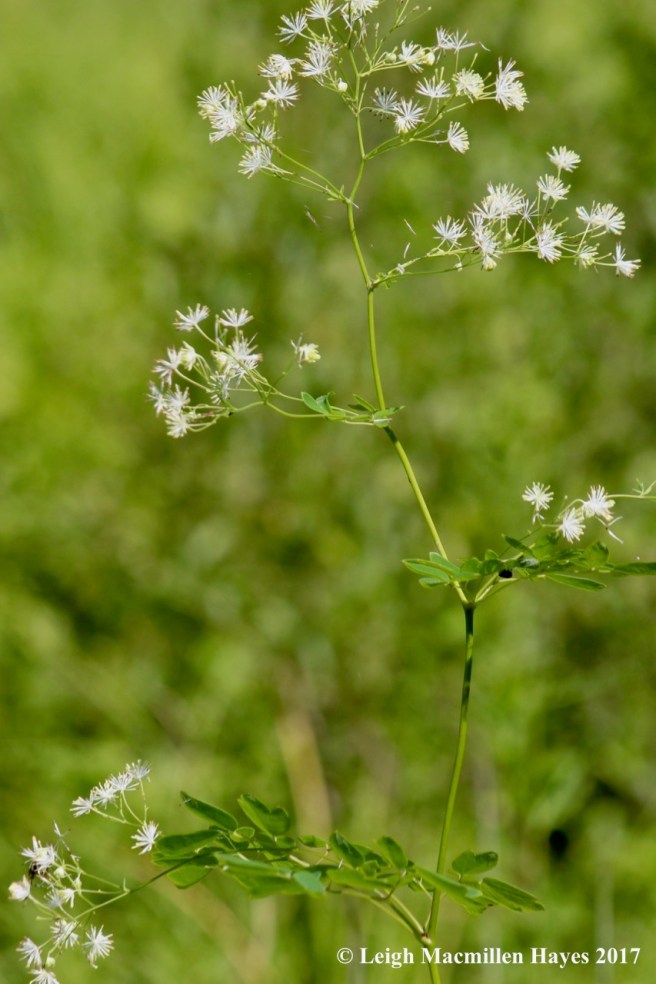
b-meadow rue

It was along this route that we stopped most often, sometimes for things we knew like meadow rue

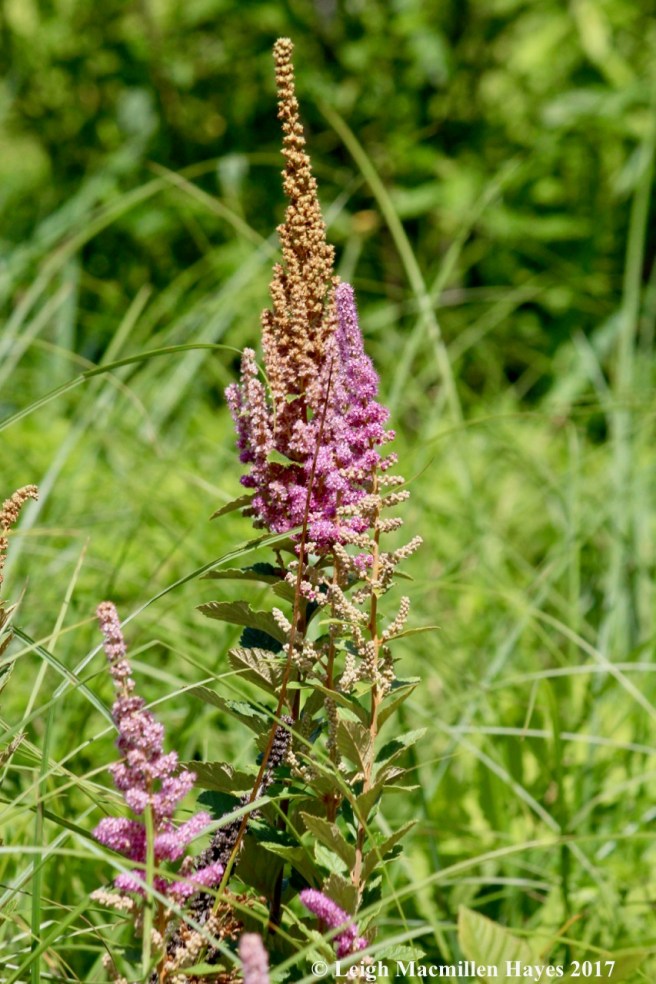
b-steeplebush

and the other spirea, steeplebush–these presenting several renditions of the same theme.

b-elm

We spied an elm tree and reminisced about elms of the past.

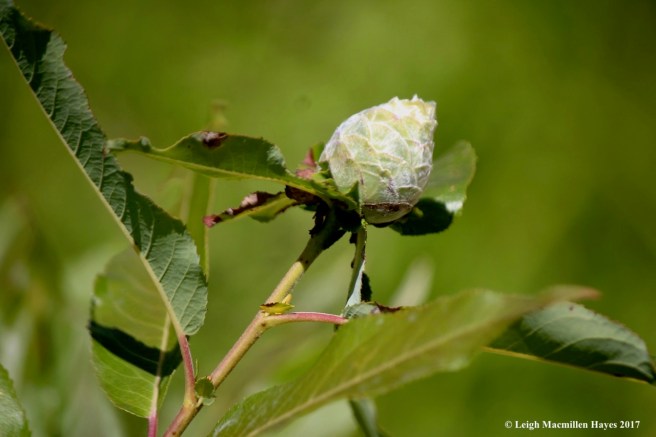
b-willow gall

And then a few willow galls shaped like pinecones called to us. This was a new one for them and though I couldn’t remember that the creator was a midge larva, the gall struck them as being a fruit, especially as we broke it open. Had we opened one in the winter, we might have seen the maggot nestled within a chamber at the center of the structure. In the spring a female midge fly lays a single egg in a terminal bud, initiating the gall formation through a chemical reaction causing the leaf tissue to harden into the shape of scales.

b-maleberry 1

I got stumped again when we kept seeing fruits on long stalks, with last year’s growth among the offering.

b-maleberry fruits 2

Once at home, I spent some more time with Michael L. Cline’s Shrubs of the Northern New England Forest, and realized it was a maleberry.

b-witherrod1

Another shrub that was plentiful throughout our journey was the witherod, aka wild raisin, its fruit ovoid in shape, turning blue as they withered.

b-swamp milkweed 1

Adding a splash of fuchsia along the way, swamp milkweed with its upright umbels.

b-silver maples 1

And then the other color that we’d noticed along the perimeter of the bog earlier and thought was red maples. Turns out those trees are silver maples and the ones with the wettest feet seemed to have already shut down their sugar production, thus allowing anthocyanin to form. This happens when sugar gets trapped in a leaf after the chlorophyll is gone and the leaf is exposed to sunlight–the resulting color being reds and purples.

b-silver maple 3

As hot as the day was, these presented a taste of the future. Some years they seem to turn earlier than others and this seems like one of the early years.

b-three amigos 1

At last we reached a turn-around point and these three amigos posed for a photo–Sara, Carol and Marylou.

b-picking blueberries

Of course, we only walked a few feet on our way back when high bush blueberries begged to be noticed. And gathered. And eaten.

b-carrion flower

Our journey back was much quicker, but still we stopped occasionally. Again I was stumped when one in the party spotted this vine. Turns out its the vine and fruit of carrion flower–one that I had never heard of before. (You know what that means.) According to Newcomb’s Wildflower Guide, the green flower is ill-smelling, apparently giving rise to its common name.

b-yellow-legged meadowhawk female

Though the mosquitoes were plentiful, more so at the start than the finish, we didn’t see too many dragonflies and I’m not sure why. But this female yellow-legged meadowhawk did pause briefly.

b-checking out the map

Back by my truck, we stopped again. While Sara went in search of the white and red oak trees and their different leaves, Carol and Marylou studied Kathy’s map as they figured where we’d traveled.

It was a glorious adventure–for me anyway. A casual ramble filled with good cheer and conversation. Thank you, Carol Nugent, for your generosity in support of LEA to make this wander possible. I hope the three of you enjoyed our time together as much as I did and took some of Brownfield Bog home in your hearts.

Embracing Quiet

If you are like me, you spend too much time racing from one moment to the next during this fleeting season of summer. With that in mind, I chose to slow down today.

m-stump islands

I know of few better places to do that than among the stump islands in the Upper Basin of Moose Pond. It’s been my place since I moved to Maine over thirty years ago.

Once upon a time, this was timberland–albeit prior to impoundment. A log sluiceway was built at the Denmark end in 1792 by Cyrus Ingalls, thus turning pastureland into the Lower Basin, so he could float logs to a nearby mill. In 1824, a more substantial dam was created and the height of that dam was raised by William Haynes in 1872 to create the current impoundment. While the Middle Basin of the nine-mile “pond” may be the largest at over 900 acres, its the 300-plus-acre Upper and Lower Basins that I like best to explore. And because the Upper is right out my summertime back door, I spend the most time there.

m-painted turtle

As I moved slowly, I greeted old friends like this painted turtle and even had the opportunity to pet a snapping turtle, so close to my kayak was it, but I paddled on.

m-newly emerged damsel 2

Actually, I didn’t paddle much once I reached the islands and stumps. Instead, I floated. And noticed. Before my eyes newly emerged damselflies pumped fluid into their bodies and wings, while their shed exuviae sat empty.

A family of three passed by in a canoe and I asked if they wanted to see something cool. When I told them about the damselfly, the father asked what a damselfly was and I told the family about its size and wing formation. They knew about dragons but had never heard of damsels. And didn’t want to stop and look. The mother commented on how magical it all was, but the father was eager to move on. I was sad for the son’s sake. He missed the real magic.

m-emerging damsel 3

Returning to my quiet mode, I found another, waiting as they all do, for the transformation to be completed. Do you see that the wings are not yet clear? I decided my presence was important, for I was keeping predators at bay.

m-orange bluet male

And then . . .

m-orange bluet 3

and then I met a new friend. An orange bluet–this being the male. I wanted to name him the Halloween damsel, but my field guide told me differently.

m-water shield and orange bluets 2

I kept waiting for him to meet her

m-orange bluets on water shield 1

and finally he did–

m-orange bluets mating

completing the wheel of damselfly love.

m-water shield 4

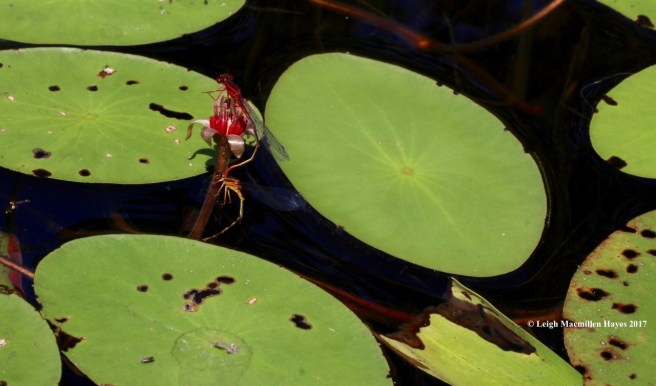
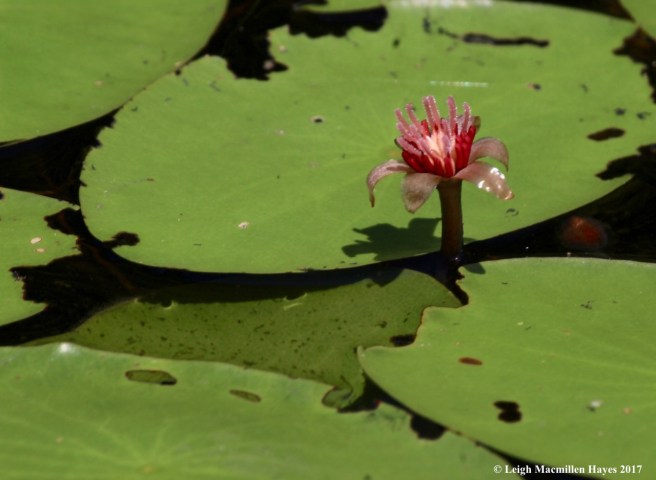
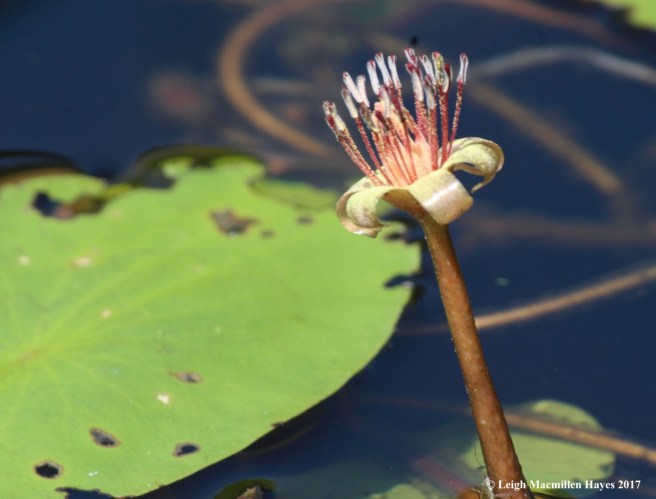
Because of the orange bluets, I also met the watershield flowers in their moment of glory. The flowers are described as being dull purple and inconspicuous. I found them to be various shades from mauve to muted red and lovely in presentation on day one of their life cycle.

According the US Forest Service Website, “On the first day the bud emerges above the water. Sepals and petals open and bend downward. Although stamens and pistils are present in each flower, on the first day of blooming, only the pistils emerge. Stalks of the pistils lengthen and spread outward over the petals. At night, the flower stalk bends and the flowers submerge beneath the water. On the second day, flowers emerge from the water again, but with the pistils retracted. The stamen stalks are lengthened and the anthers open. In this way flowers are cross-pollinated (Osborn and Schneider).

m-water shield old

Hardly dull, certainly unique. Even on day two.

m-newly emerged Hudsonian whiteface

Today, I also met a new dragonfly. And thought that I did it a favor, but I may not have. You see, when we first met, I noticed a web all around this immature Hudsonian whiteface (or so I think it is). With my paddle, I removed the web to free the dragonfly. But, um, it flew off and that’s when I realized it was several hours old and still drying its wings. Do you see how shiny they are? And the exuviae to which it clung prior to my “helping” hand? It’s best to leave nature alone. If it had been caught in the web, then good for the spider.

m-cotton grass 1

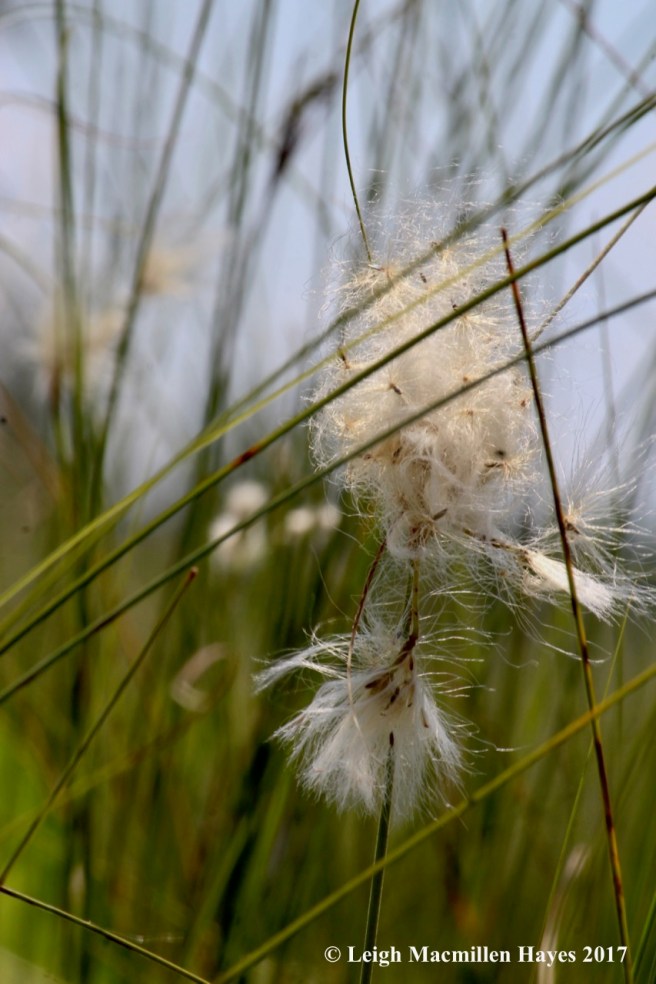
Speaking of spiders, I found some cotton grass gone to seed . . .

m-cotton grass with spider 2

and when I moved to photograph it with the sun behind me, I noticed what looked to be a camouflaged crab spider hiding in wait.

m-beaver lodge 1

Among the stumps, I’ve seen numerous beaver lodges over the years and know from the saplings they cut down on our property, that at least a few are active.

m-beaver scent mound 1

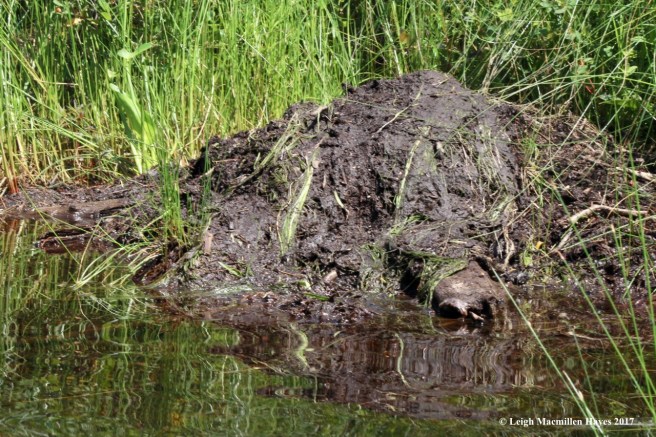
Today a recently visited scent mound added to that knowledge. Beavers pull aquatic plants and mud up from the bottom of the pond and create these mounds. They then secrete castoreum from castor glands beneath their tails to mark territory, deter predators, and say, “Hey baby, wanna check out my sticks?”

m-meadowsweet

The island flowers also grabbed my attention, including the fluffy heads of meadowsweet and . . .

m-grasspink orchid

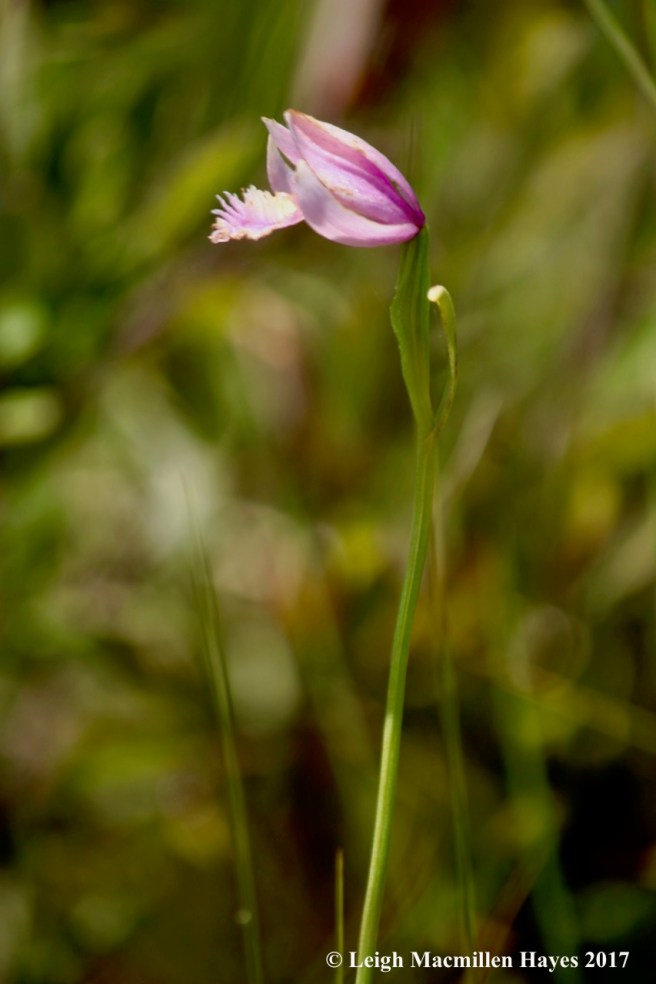
grass-pink orchids now waning.

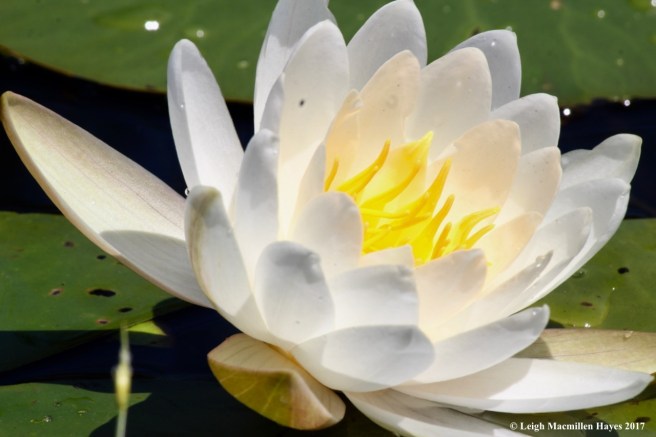
m-sweet-scented water lily

But . . . besides the dragons and damsels, I really went to see the aquatic flowers, like the sweet-scented water lily,

m-spatterdock

spatterdock,

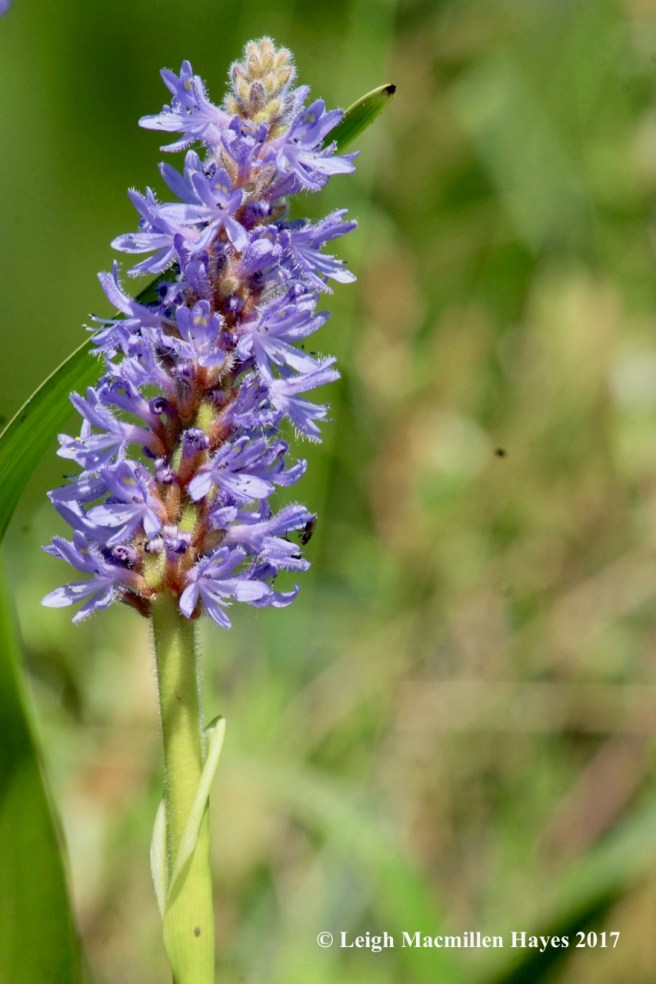
m-pickerel weed 3

and one of my favs–pickerelweed.

m-pickerel weed

I love it for all its fine hairs and the way the flowers spiral up the stalk.

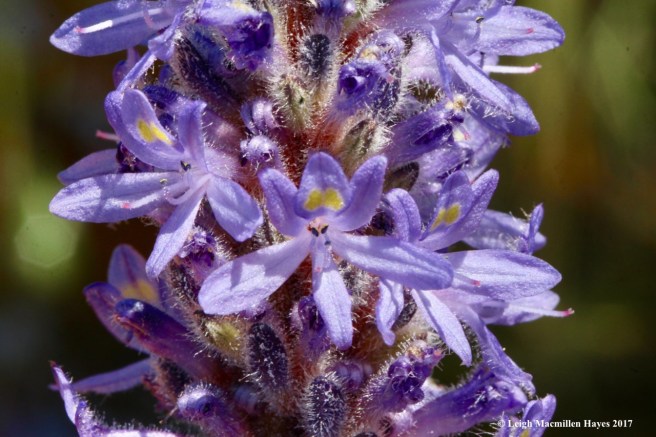
m-pickerel 2

I also love the coloration with two yellow dots on the upper lip providing a guide to the nectar it offers.

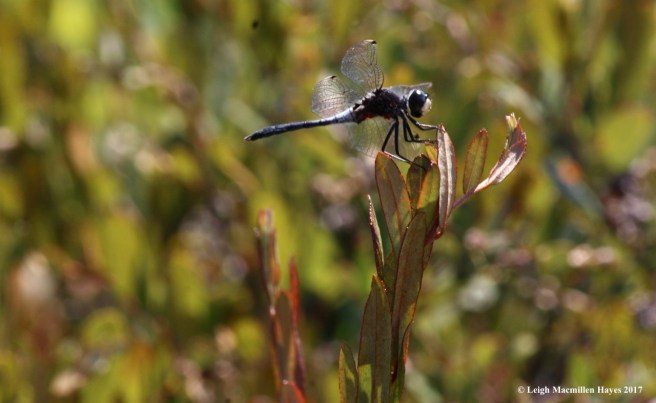
m-white face on leatherleaf 1

While I looked, another white-faced dragonfly, small in stature, kept following me. Finally, it paused on a leatherleaf shrub.

m-spatulate-leaved sundews with flower 2

And I paused beside the spatulate-leaved sundews.

m-spatulate--leaved sundew flower

I was about a week early, but one was in flower, with promises of plenty more to come.

m-pitcher plant 1

As I looked at the sundews, I realized that I’d never seen a pitcher plant in this place. As should happen, I was proven wrong, though I never would have noticed it if it didn’t have such a tall flower since its leaves were hidden by a mass of vegetation.

m-pitcher flower

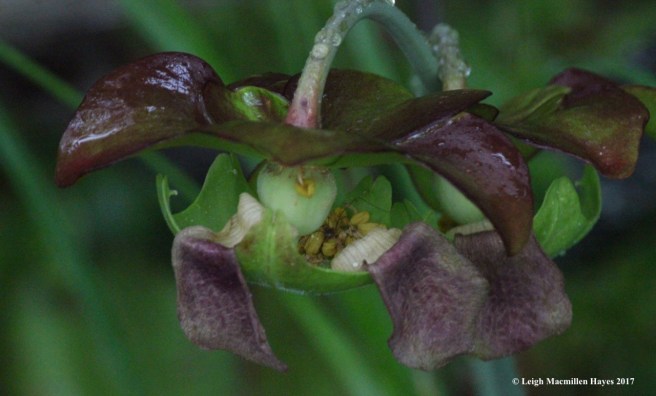
Damselflies, dragonflies, and carnivorous plants–its an eat or be eaten world out there on the pond.

Bullfrogs bellowed from the edges, green frogs plinked, and fish splashed. I listened to Eastern kingbirds’ wingbeats as they dropped to the water to snatch insects, and red-winged blackbirds delightful conk-la-rees. I startled a great blue heron, the first I’ve seen on the pond all summer, and it flew off. In the midst of all the natural sounds and sights around me, I embraced the quiet on my four-hour paddle/float. And as Robert Frost might say, “That has made all the difference.”


Poking Along On Perky’s Path

Every Greater Lovell Land Trust trail is my favorite in any given moment and so it was that Perky’s Path received that ranking today.

p-beaked hazelnuts 2

I met my friend Pam in the parking lot and immediately our hunt for great finds began. We looked first at the basswood, but it was the shrub next door that heard us utter with delight–a beaked hazelnut showed off its fuzzy horned fruits.

p-hops on hop hornbeam

And then we walked back up the road a wee bit for at the entrance to the parking lot I’d spied a hop hornbeam also loaded–with hops.

p-striped maple sign

At last, we started down the trail, heading south where a self-guided tour begins. A small group of GLLT docents spent the winter months preparing signs for a variety of species along this route. It’s a task that requires choosing a particular trail one summer for the next, determining which species to ID, taking photographs, gathering and writing facts, creating and printing cards, laminating them, attaching them to posts, relocating the species and finally erecting the posts, which will be left in place until Labor Day. That’s a lot of work, so if you have a chance, take the tour. It includes trees, shrubs, flowers, ferns and more.

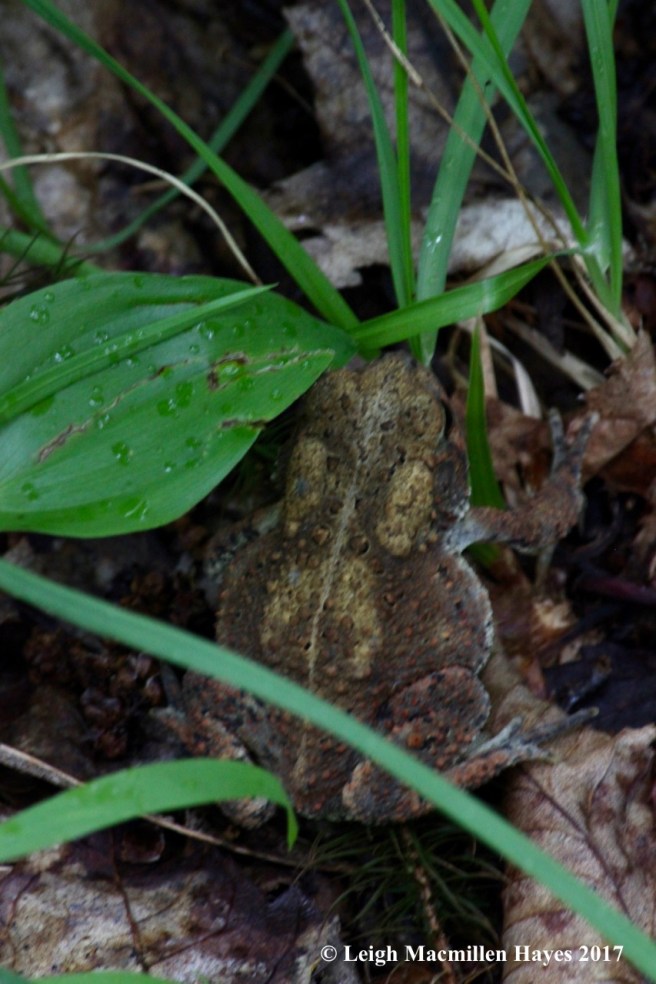
p-American toad

As we walked, the ground at our feet moved–in hopping fashion. We only saw one American toad, but plenty of frogs.

p-bloated female wood frog 2

All of them sported their camouflage colors, so after the ground moved, we had to focus in order to relocate them once they paused.

p-bloated female wood frog 1

This female wood frog’s robber mask was the only thing that helped us locate her.

p-young wood frog hiding under starflower leaf

You’ll have to use your own focus to find the baby wood frog that hid beneath a decomposing starflower leaf.

p-spring peeper

And another teeny, tiny one–a spring peeper with the X on its back.

p-common brown cup, Peziza varia

Because we were looking down all the time, we began to notice other things, such as the common brown cup fungi which looked rather like a wrinkled ear.

p-black trumpet Craterellus fallax

We also found a few black trumpets,

p-chanterelles 1

chanterelles (I’m leaning toward Cantharellus cibarius but don’t take my word for it–check with the Veitch brothers of White Mountain Mushrooms for positive ID is you are a forager.),

p-caesar's mushroom 1

and a couple of Caesar’s.

p-Indian cucumber 2

Though we found one Indian cucumber root that had been broken, its fruit continued to form.

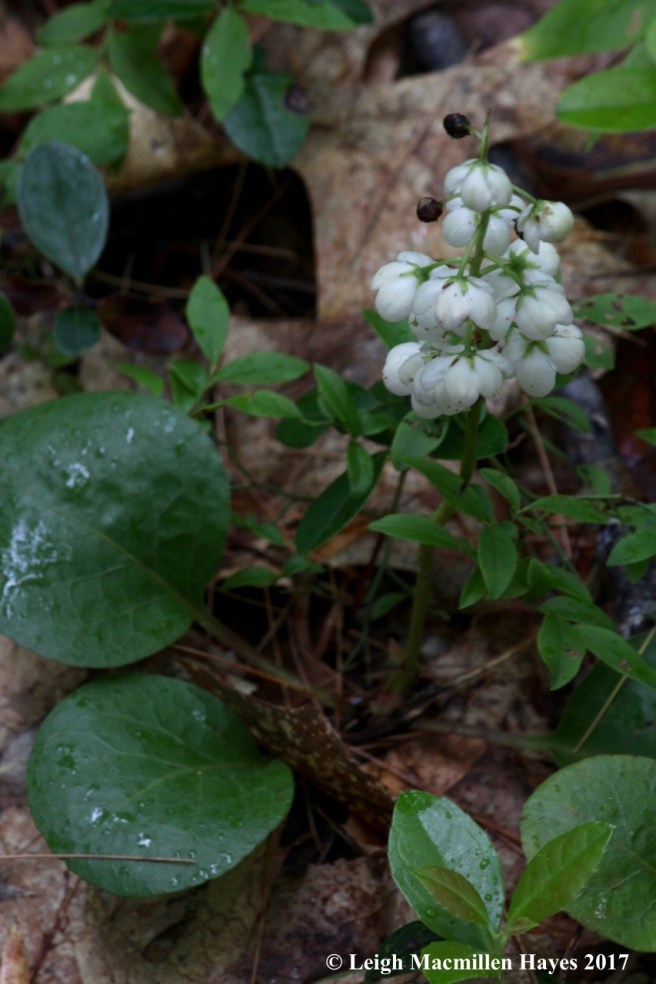
p-round-leaf pyrola 3

Our hearts throbbed when we recognized that here and there hiding among the herb layer were round-leaved pyrolas.

p-round-leaf pyrola1

Their leaves were nearly round with petioles or stems no longer than the blade.

p-pyrola flowers 2

And their flowers–nodding.

p-pipsissewa flowers 1

Pam had shown me a photo of a pipsissewa that grew on her property and we then found a small patch just off the trail, their jester-hat flowers attracting small insects.

p-up close

What better way to admire those flowers than up closer and personal.

p-Pam's brackenfern hat 1

And then it was time to don a brackenfern cap for the mosquitoes were at times annoying–and biting.

p-Indian pipes 1

As we continued on, we noted that it is Indian pipe season. I asked Pam if she’d ever seen the pink version that occasionally occurs–and then we began to find several nodding heads . . .  all with a tinge of pink.

p-lichen sign

As we neared the platform overlooking the meadow and brook that flows between Heald and Bradley ponds, a sign of a different kind stood before a tree. Rather than focusing on one species, this one described the different formations of lichens.

p-lichen tree

And on the tree behind it–an example of all three, with several types of crustose (crust-like and look to be painted on), foliose (foliage) like the small ribbon lichen that is bright green and ribbony in the upper right hand corner, and fruiticose (think grape branches) of the beard lichens below the ribbon lichen.

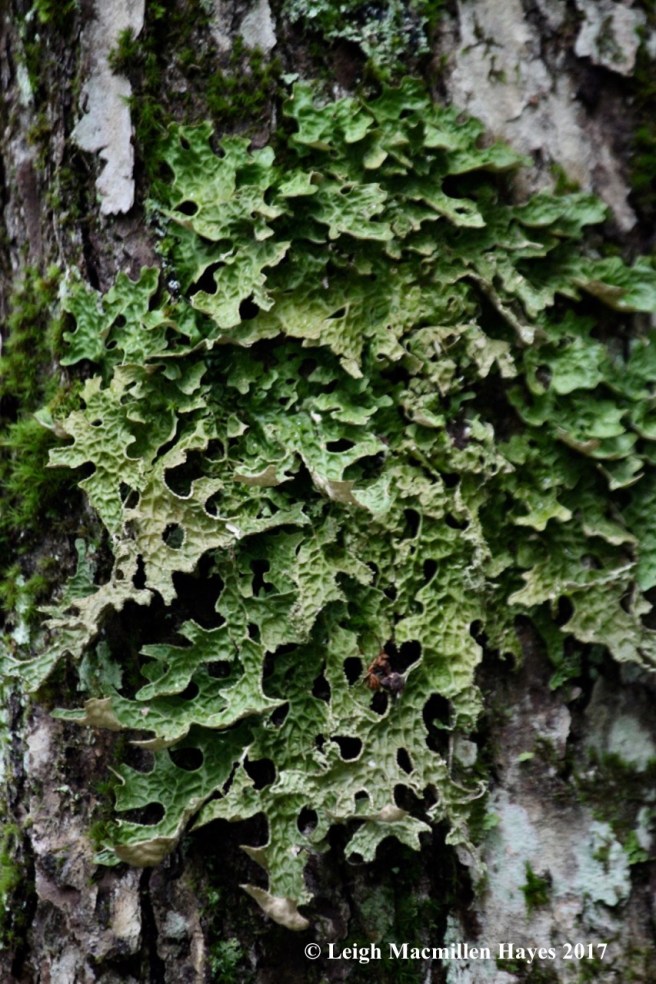
p-lungwort 1

Behind that tree–another featuring lungwort lichen.

p-view to the south

For a few moments, we paused at the platform bench–taking in the sights . . .

p-looking north

and sounds as we wondered what may have passed through.

p-steeplebush

We also noted the difference in structure of the spireas, including steeplebush in bloom  . . .

p-meadowsweet 1

and meadowsweet not yet.

p-swamp candle, aka yellow loosestrife

Swamp candles added a tinge of color to the offerings.

p-blue bead lily1

Back on the trail, we were excited to find the porcelain beads of clintonia, one showing the transformation from green to blue.

p-dew drop 1

Dew drops shone white against their dark heart-shaped leaves covered in rain drops.

p-from the bridge

And further on by the primitive bridges that cross below the beaver pond,

p-tall meadow rue

tall meadow rue flowers presented a daytime fireworks display,

p-otter scat

while otter scat decorated a bridge slat.

p-end sign

We continued along, enjoying the offerings and quizzing ourselves on a variety of species, all the time pausing to read the self-guided tour signs. At last we reached the junction with the trail to Flat Hill and found our way back to the parking lot.

Perky’s Path is maybe a mile long, but it took us 3.5 hours to complete the tour as we poked along–rejoicing with each of our finds.

Sprinting up Mount Tom

With the Four on the Fourth Road Race only five days away, my friend Marita Wiser and I are in training. Perhaps a more apt description would be cross-training, for our actual time spent running has been sporadic, but we’ve both been on hikes that we’re sure will give us an upper edge. Look for us to cross the finish line in record time on Tuesday–or not.

To that end, this morning we climbed Mount Tom–with a desire to see what the new West Ridge Trail had to offer in a different season. In the past year, she and I hiked it in October, while my guy and I snowshoed up the trail in February. And so, Marita did what I like best because we wanted to make a loop–she parked at the base of the original trail about 2.3 miles in on Menotomy Road and we walked 1.4 miles down the road to the new trailhead.

t-Mount Tom Preserve sign

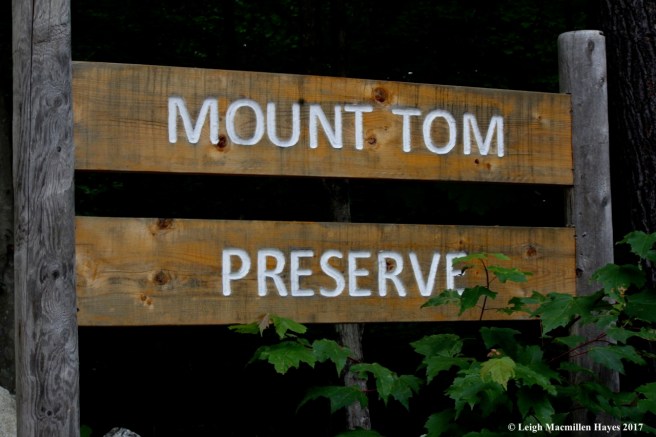
The last time I visited, the snow was deep and up to the base of the preserve sign. Today, a red maple sapling claimed that spot.

t-bristly sasparilla 2

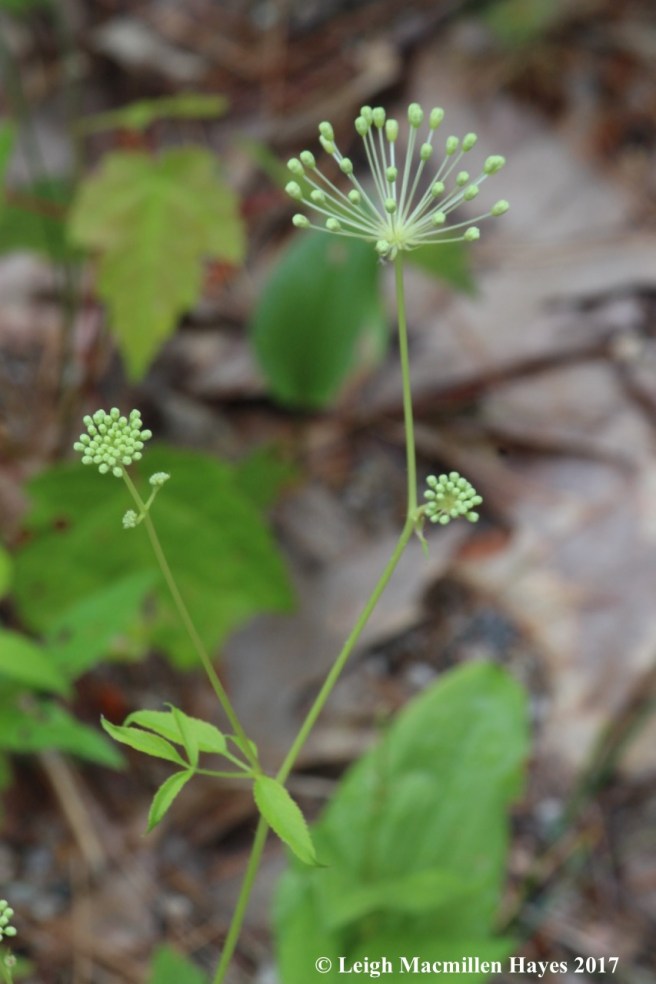
Next to it grew a bristly sarsaparilla, its rounded umbels standing tall above the leaves.

t-bristly sarsapirilla 2

As we stood there and applied some bug dope, a hoverfly, an important pollinator, worked its magic on the flowers.

t-relic 1

And then we stepped onto the trail and were immediately reminded of the past by a relic someone left on a rock.

t-homestead foundation

The homestead, possibly that of A.H. Evans, is located within feet of the trail’s head. And it appears that if this did belong to A.H., he was the head of a large family for it’s a huge foundation.

t-center chimney

Equally large was the center chimney.

t-outbuildings and barn

And based on the configuration of rocks and boulders we stepped over as we turned left between the house, outbuildings and barn, all were once attached.

t-barn

The barn foundation was also impressive and we could sense the work that went into such a creation. Among all the buildings were some recovered artifacts and I’ve a feeling I know who unearthed them. I love to see these relics, but hope that others won’t continue to follow suit and look for them. Or take them. Okay–that’s my salt box speech for today.

Again, assuming all of this belonged to A.H., I did discover a 1916 document that suggested he grew rutabagas: “A. H. Evans, Fryeburg, raised 90 bushels rutabagas in 1-8 of an acre.”

t-old pine 2

We followed the white-blaze trail, which was fairly well defined, and passed through a mixed forest, where at least one old white pine spoke to the history of this land, for it obviously once stood in an opening allowing it to stretch its arms and perhaps provide shade for farm animals.

t-ledges 1

One of my other favorite features of the West Ridge Trail, besides the foundations, are the ledges that stand as tall rock gardens.

t-ledges 2

Some were even terraced and though we didn’t pause to look for evidence today, we got the sense of where the house and barn foundation stones were found.

t-wild sarsapirilla plant

As we continued to climb (and sweat for it was a bit of a cardio workout–and humid), a couple of woodland plants stood out, including the wild sarsaparilla, which had flowered  in the spring. It was fun to note the difference between the bristly and wild–for the former flowers now with those umbels above the leaves, while the flowers of the latter developed below its leaves.

t-wild sarsa fruits 2

The wild sarsaparilla flowers have since turned to green fruits, which in time will ripen to a reddish-purple display. They were rather like mini green pumpkins in fireworks formation, a description conceived due to the pending holiday.

t-marginal wood fern 2

Another offering was the bluish-green fronds of a marginal wood fern.

t-marginal wood fern 1

A bent frond on one showed off the round sori located near the margins.

t-summit 1

After about an hour and a half, which included our walk down the road to the trailhead and then up the trail, we reached the summit. In the fall and winter, Pleasant Mountain had been plainly visible in the background, but today we had to peek through leaves to see it.

t-new oak leaves

As we peeked, Marita asked about the red leaves on an oak–fall couldn’t be on the horizon already, could it? I shared one theory with her, but after a wee bit of research discovered there may be a second–and possibly more.

The leaves were young and the red may act as a sunscreen, protecting them until photosynthesis takes place when they are fully developed.

The other thought is that the red may serve as a warning sign to mammals that the leaves contain chemicals that will taste bad, thus preventing them from being eaten.

Other theories?

t-spotted st johnswort 2

Our summit stay wasn’t long, but long enough to enjoy the bushy stamen of spotted St. Johnswort.

t-pink corydalis 1

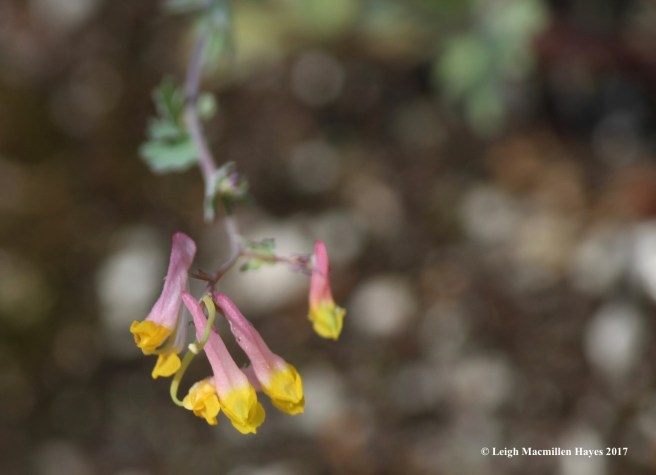
And the daintiness of pink corydalis.

t-hiking down the old trail

And then we followed the old trail down, through the hemlock grove and onto the logging road, which had grown in so much that it made us wonder if The Nature Conservancy wants to discourage its use. The thought of ticks crossed our minds, but she sported her treated tick gators and I used Repel®. Both worked for us, though I do want to get a pair of gators. I’m taking recommendations for brand.

t-Mt Tom cabin sign 2

Just before the end of the trail, we once again paused by the Mt. Tom Cabin, the real deal for a 19th century “camp” experience, but with a few added amenities including electricity. I like it for its structure, views and Northern white cedar.

t-Mt Tom cabin pond

Across the field, Old Glory blew in the breeze and reminded us of our need to “train.”

Our hike to the summit–it was as quick as we could make it, even with me taking a few pics, for the mosquitoes were thick. But–thanks to those very mosquitoes, we sprinted up Mount Tom in honor of our training regime.


Swamp People

The phone rang as I was getting ready this morning and I don’t usually answer those with IDs such as “Private Caller,” but I did. And that made all the difference. Alanna Doughty was on the other end of the “line” and wanted me to know that this morning’s Lakes Environmental Association walk to explore the wetland plants at Holt Pond was still a go. She also asked if I wanted to borrow a pair of waders. Indeed, I did.

About 30 minutes later a group of eight had gathered at the preserve parking lot despite the raindrops. A few didn’t learn about the event until they read a description in this week’s Bridgton News, and so though they were prepared with raincoats and bug spray, they didn’t have Bogg boots or waders, but Alanna had brought along a few extra pairs and most made do. One gentleman had large feet and said he didn’t mind getting his sneakers wet. Such was the spirit of the morning.

p-red maple swamp

Without much further ado, we stomped down the trail and then slipped off it, through the woods and directly into the red maple swamp . . .

p-blue flag iris

where raindrops enhanced the dainty leaves of the blue-flag iris. Going off trail offers a certain liberating feeling.

p-pitcher plant

It also offers different species. Our movement was interrupted frequently by our findings, and as we stopped to determine the identification of a shrub that stumped us for a while, another plant drew our attention. Holt Pond is home to many pitcher plants, but this one cast its spell upon us for the curvy flower stems and new urn-shaped leaves. Most often, the stems stand stalwart.

p-pitcher spider

The otherworldly flowers protect friendly pollinators from accidentally being consumed. Unlike the pit trap below, aka the urn-shaped or pitcher leaves, the flowers are friendly and provide bees and other insects with nectar and pollen. This morning a spider wandered within, stepping on fallen anthers.

p-pitcher 4

I’ve forever found it a wonder that the extremely large style sits below the rest of the structure in order to capture pollen in its upside-down umbrella shape.

p-pitcher flower 1

Though those flowers have aged, their leathery sepals remained, fading from red to magenta. Below the sepals the large swollen ovary may house as many as 300 tiny seeds.

p-working our way through the swamp

After a long period of admiration, we finally pulled ourselves away and continued our tramp, finding our way through the swamp. And only briefly did we feel fake lost, but knew that wherever we came out, we’d recognize our position and continue the journey.

p-Great St. Johnswort

Among the sphagnum moss grew Great St. Johnswort not yet in flower.

p-slug

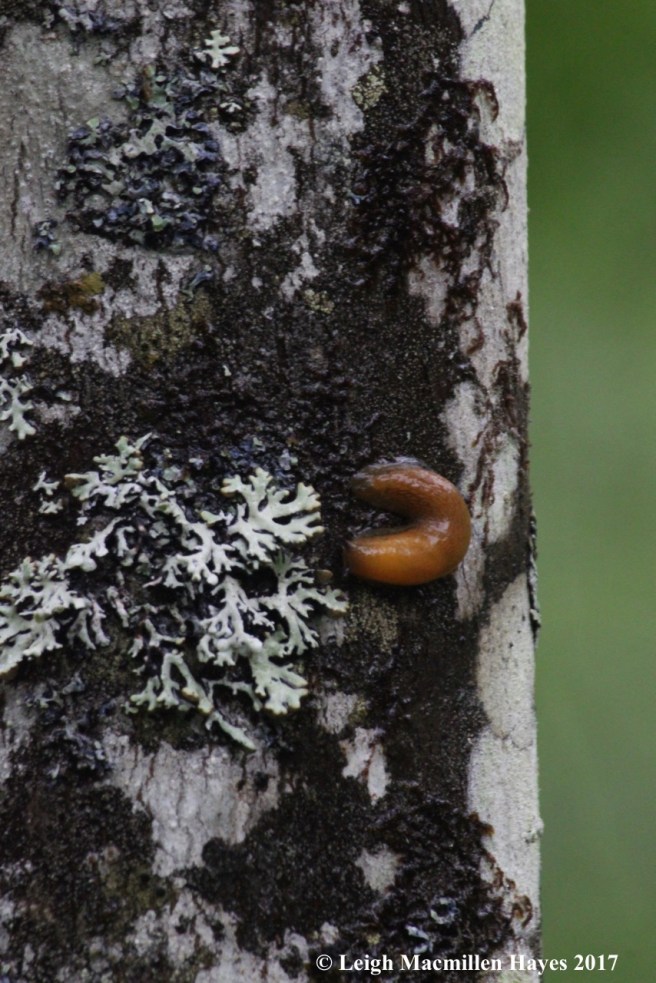
And slugs dined.

p-grasses, sedges and rushes

There were maples of course, and gray birches and speckled alders and royal and cinnamon ferns. But, there were also grasses and sedges and maybe even rushes. When at last we left the swamp and found ourselves on Tire Alley, about where we wanted to be, Alanna shared the ditty that helps us to maybe not name a particular species, but at least to know where to begin: Sedges have edges, rushes are round, grasses have joints all the way to the ground. Of course, she passed around examples so everyone could feel the edges of the sedge and see the joints on the grass.

p-Alanna describing hobbleush flowers

Then she stopped to describe the former flower of hobblebush, and I noticed the bouquet in her hand had expanded–her collection intended for further study later in the day.

p-slime mold on birch

We were about to head from the trail into the quaking bog by Holt Pond when Mary Jewett spied a growth on an old birch tree.

p-slime mold 2

My best guess was a slime mold for it looked like the Son of Blob had arrived. She and I both touched it and the outer coating fell off. It was rather creepy.

p-dark green fritillary caterpillars

At that point, we did a 180˚ turn and started out onto the quaking bog, literally, but a few in the front decided it wasn’t quite what they had bargained for since the water was especially deep. So, Alanna and Mary ventured that way and I joined the rest for a walk on the boardwalk, which was wet as well, but a bit more stable. Along the way, we spotted caterpillars actively consuming spirea leaves. Upon later research, I determined they were dark green fritillary caterpillars that will soon metamorph into those beautiful orange butterflies that we often mistake for monarchs. (Note: I spotted a monarch on milkweed not yet in bloom yesterday)

p-bog rosemary

Among the many plants growing on the quaking bog, the bog rosemary stood out with its bluish gray leaves.

p-bog rosemary 1

Newer leaves formed at the top, giving off a reddish hue and adding to their distinctiveness.

p-bog rosemary 2

The netlike venation on the leaves was also noticeable and though the blooms have passed, the pretty pink fruits hadn’t yet matured into brown capsules.

p-sundew with Mary

Since we’d seen the pitcher plants, Mary wanted to find the sundews that grew near the boardwalk. With the high water as a result of a beaver dam on the Muddy River, it’s been  hard to spot the sundews, but she persevered and located one, showing off its glistening tentacles intended to capture small insects. Should one land on the tiny leaf, the insect’s feet become ensnared in the sticky secretion and the end is eminent. Within mere minutes the tentacles curl around the victim and suck the nutrients out of it.

p-snakeskin 1

Meanwhile, Alanna continued to wander off the boardwalk and suddenly she discovered a shed snake skin. I had intended to join her, but I have to say that though I wore hip waders and my feet and legs were mighty dry, I could feel the bog quake with each step and I didn’t get far. Blame it on my camera, but I didn’t want to risk a fall. And do you know that squelchy sound of pulling a foot out of several inches of mud? That’s how it was when I tried to get back on the boardwalk. It’s not just a few plants that are carnivorous–it’s the entire bog.

p-snake skin 1

Never fear. We all survived and she brought the skin back for us to admire.

p-black chokeberry 1

We stayed on the boardwalk and trail as we finally looped back and still, there was much to see. The shrub that had stumped us when we first spotted the pitcher plant in the red maple swamp suddenly spoke its name and we knew we were looking at the fruits of the black chokeberry. Only a week or two ago we’d admired their flowers.

p-serviceberry 2

And then there was the berry that reminded us of a rose hip, as it should for it was in the rose family.

p-service berry gall?

Its ripening pomes will eventually turn purplish-black. But . . . we spied something we weren’t familiar with at all–do you see the growth on one? It rather reminded me of the Son of Blob slime mold we’d seen earlier and must have been a gall. Nature certainly provides as many questions as answers.

p-Northern Arrowwood

All spring and summer the flowers of the bog change by the week, or so it seems. This week, the Northern arrowwood was showing off its creamy-white blooms.

p-sheep laurel 2

And the sheep laurel, its fuchsia-colored blossoms.

p-bog monster web

For three hours we oohed and aahed and had great fun. We made one last stop before returning to the parking lot for the spirit in the hemlock called out to us–seemingly doing its own oohing and aahing.

Such were the offerings of the preserve this morning. And the people who gathered . . . I only knew Alanna and Mary before we began, but because of our shared experience the group was quite chummy by the time we were ready to depart. That’s what I love about walks such as this where complete strangers become instant friends, even if it’s only in the moment.

Swamp people . . . don’t mind rain or mosquitoes or wet feet. Swamp people . . . get to move where the spirit takes them. Swamp people . . .  find joy and wonder along the way.


Noyes Mountain Mondate

Yesterday was Father’s Day and so I asked the question first, “Where are we hiking tomorrow?” My intention was that it would be a gift for him to choose. But only moments later I announced that I had a suggestion–he didn’t have to accept it, of course.

I’d learned that the Western Maine Foothills Land Trust had cut a trail at the Noyes Mountain Preserve in preparation for their 30th Anniversary in July. And since one of our recent Maine Master Naturalist grads, Kelly Hodgkins, now works for the land trust and used this mountain for her capstone project, I wanted to visit it.

So much for letting my guy choose. But he appreciated the thought and agreed on our destination. And so mid-morning today, we drove to Greenwood–the birthplace of LL Bean. We honored him well for our hiking pants, boots and bag were all Bean products.

Kelly had told me to follow Richardson Hollow Road for 1.5 miles and then to look for a small parking lot on the left. We located it easily, but parked on the road instead because a few vehicles were in the spot. Apparently we weren’t the only ones eager to make the climb despite the mugginess of the day. We actually met the parties as we headed up and they descended. People and dogs–all sporting smiles.

n-field

A mowed path crossed the field where daisies and buttercups and hawkweed grew among the grasses. We began to develop a sense of the land’s former use, especially as we spied stonewalls through the trees.

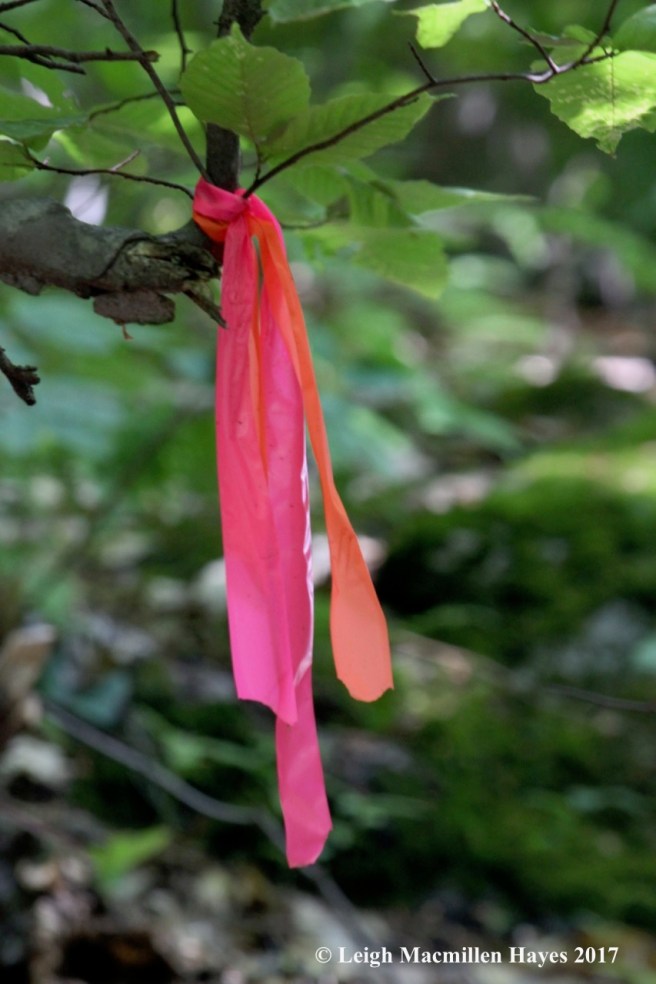
n-trail flags

And then we moved into a hardwood forest and the upward climb began. Kelly had warned me that the trail was rough cut, but flagged. And a gentleman on the way down said they’d gotten off track for a bit when they didn’t make a turn because they were looking down and missed the flagging. Thanks to that word of caution, we made sure to always look for the next piece of tape and had nary an issue.

n-striped maple samaras

I looked down as well. That’s where I saw striped maple samaras maturing as they rested upon a leaf,

n-narrow beech fern

a narrow beech fern arched over the ground, with its lowest pinnae unconnected by wings as those above it and drooping downward,

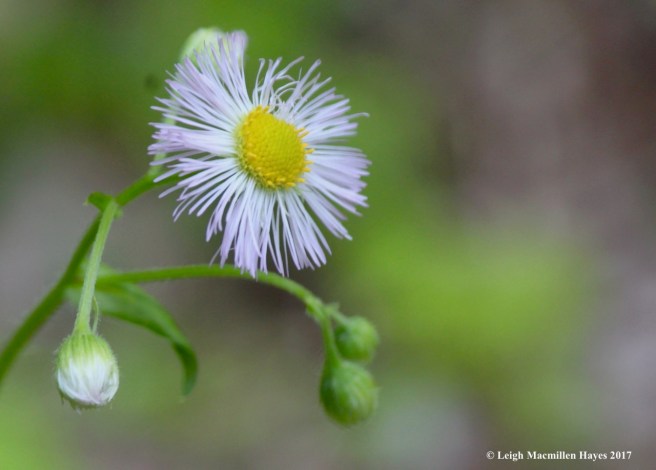
n-common fleabane 2

and common fleabane sending forth cheerful rays of lavender from its composite disk.

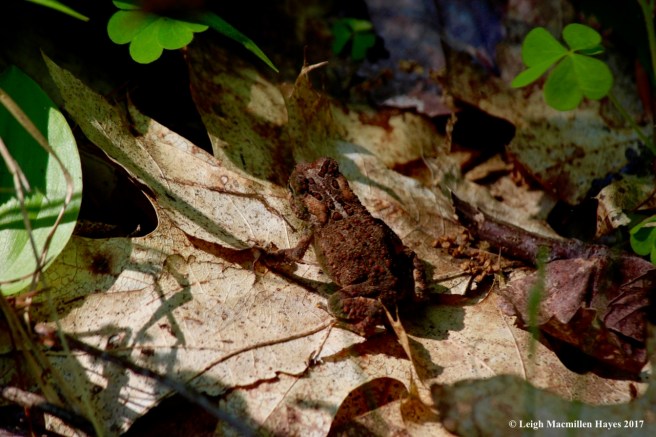
n-American toad

I was actually surprised to only meet one young American toad as it seemed a place where the ground should have been hopping with many more.

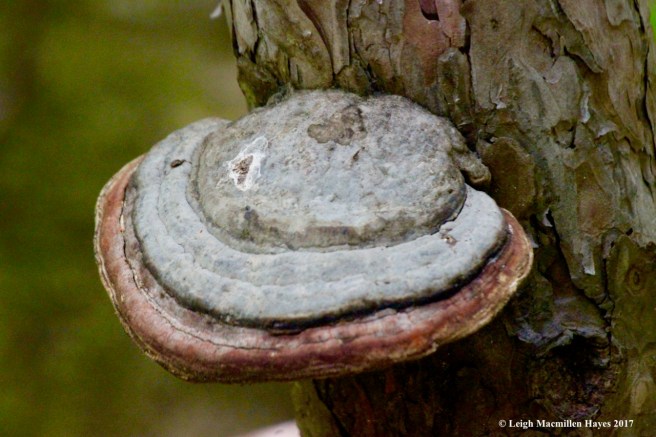
n-red-belted polypore on red pine

On a red pine snag a red-belted polypore looked a bit old and tired.

n-ledge on trail

And then suddenly, the community changed and we faced a moss-covered ledge where the trail turned to the left.

n-lady's slipper

When the trail widened a bit, we noticed a frame and realized it was meant to protect the lady’s slipper within. And so we bowed and curtseyed in her honor.

n-lady's slipper spider

That’s when we realized we weren’t the only ones paying attention–perhaps the spider wanted to see if the slipper fit.

n-northern crane's-bill 2

Again, we continued to climb, but noted that the community changed again and we were in the land of evergreens and blueberries as we reached for the summit. A flower I wasn’t familiar with kept asking to be noticed–and so I did and later keyed it out to be a northern crane’s-bill.

Then we saw a path not cleared, but with a tag wrapped around a tree limb. And another beyond that. Should we follow it? It looked like it led to the ledges that were supposed to offer a view. We decided to stay on the trail with dangling tape, though as it dipped downward and to the right we questioned our decision–until it swung around to the left and we realized we were possibly looping around. We hoped.

n-lady corporal dragonfly

It was along that section that the corporals joined us, in this case the browner version, which is a female.

n-American emerald 2

And an American emerald dragonfly, with its metallic green eyes and a narrow yellow ring around the base of its abdomen, took time out from hunting duties to pose. Speaking of dragonflies, while we celebrated their presence, we also noted that there were no mosquitoes. A few deer flies sang in our ears. Was it the wind that kept the mosquitoes away? There were certainly wet spots here and there on the mountain.

n-honeysuckle fruit

Our wonders continued with the red fruit of swamp-fly honeysuckle and . . .

n-twinflowers

a sweet patch of twinflowers.

n-my guy at the ledge

And then, about an hour after we’d started, we stepped into a small clearing with a view. Well, you know who got there first and was waiting when I arrived.

n-ledge view

While he looked at Norway Lake (Lake Penneseewassee), I looked around at the plants that grew there as more dragonflies darted about.

n-staghorn sumac

The summit offerings included staghorn sumac and . . .

n-pink corydalis

pink corydalis, plus yellow hawkweed, yarrow and others I can’t remember now.

n-trail to quarry

When we were ready to leave, we noticed more orange flagging and another trail leading down. So . . . we followed it.

n-climbing down to quarry

We could see the ledge above, but weren’t sure what was in store for us next.

n-climing lower to quarry

The rock face was steep and had a certain look to it, as if it had been worked.

n-mountain crane's-bill

Rounding the final corner, we both knew what to expect, but first, another flower. There were many flowers on that spur trail and I knew I had to save them for another day. But this one stood out against the rock face and strongly resembled the northern crane’s-bill I’d spied occasionally on the way up. If my ID is correct, this species is a mountain crane’s-bill.

n-quarry wall

And we were in the Harvard Quarry. According the Western Foothills Land Trust page about the preserve, “Historically the land, which is in Greenwood, was owned by the Stevens family and included a through road north to from Norway to Greenwood (from the Upton Brothers Road to the Hayes Road). In 1869 Ethel Stevens sold the land to Isaac Noyes.

Isaac Noyes became interested in the site’s pegmatitic outcroppings in the late 1880′s. In 1892 the ledge was opened for the first time and became a mecca for scientists and collectors alike, offering one of the most complex mineralized pegmatites in Maine. Mineral operations on the mountain were opened by Isaac’s 6th cousin George Lorenzo (“Shavey”) Noyes and Tim Heath about 1894. Tourmaline was first recorded from the locale about 1904 and over the years the green color found at this location has become known as “Harvard Green.”

The granite pegmatites Noyes collected were largely preserved and passed into the possession of the Harvard Museum, together with the lease of the property, in 1917. In the summer of 1923 active quarrying was undertaken by the Harvard Mineralogical Department under the supervision of Harvard University student Kenneth K. Landes for Landes’ dissertation, Paragenesis of the Granitic Pegmatites of Central Maine (American Mineralogist, 1925, v. 10, p. 355-411). Loren B. Merrill of Paris and Arthur Valley undertook most of the actual excavation for Landes at the site.

Currently Frank Perham owns the 1-acre Harvard quarry, which remains open to the public in addition to mineral rights on 60 acres.”

The site is also mentioned in A Collector’s Guide to Maine Mineral Localities.

n-dyamite box from mining history

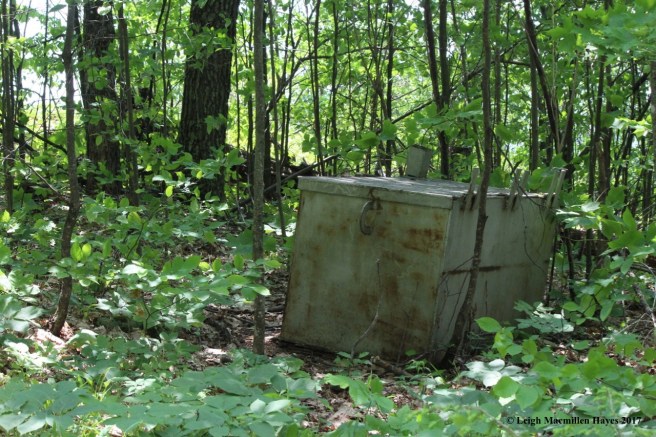
It all began to make sense for toward the beginning of the spur we saw a steel box in the woods–perhaps it once held dynamite for the mining operation. And within the quarry were old tires and hoses. All relics that I hope will remain for they tell the story.

n-rock face

And on the rock face, I saw a face of one who will watch over all to make sure those relics never leave. (Unless the land trust thinks otherwise, that is.) Do you see it? There’s an eye with eye lashes, a bulbous nose and an angular chin.

We didn’t stay long because thunder rumbled and we knew strong winds and rain were in the forecast.

As we skidaddled down the mountain, we gave thanks to Kelly for sharing the location with us and for the future programs she’ll plan so others may appreciate this place. And we were grateful to the land trust for working hard to protect the land for now and ever.

Our Mondate on Noyes Mountain came to an end as raindrops the size of lady’s slippers splatted against our windshield. We left, however, knowing this place is well worth a return visit–probably more than one.


The Magic of Maine

Our group was small but our experience enormous as five Maine Master Naturalists met in China, Maine, this morning to participate in a workshop about experiential learning presented by one of our own–the teacher of teachers, Anita Smith.

c-osprey 1

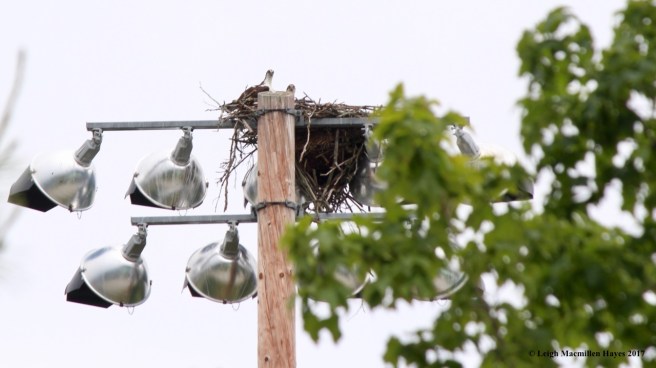
Upon arrival at the China School Forest where we met up, our nature distraction disorder (NDD) immediately kicked in for there was an osprey nest on a light post overlooking the ballfield between the middle and primary schools. The forest is a 50-acre tract behind the primary school that serves as a hands-on, outdoor classroom for grades K-8 and all of us really, for it is open to the public.

c-green heron 1

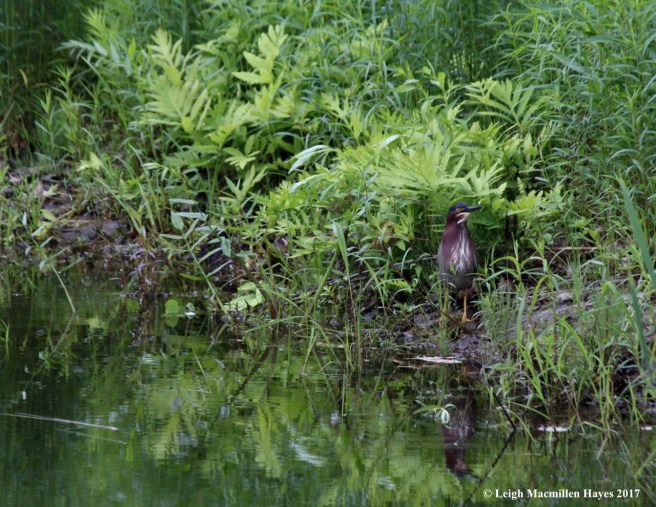
And then our attention was directed to the fire pond, where a stocky green heron displayed its streaked chest and dagger-like bill.

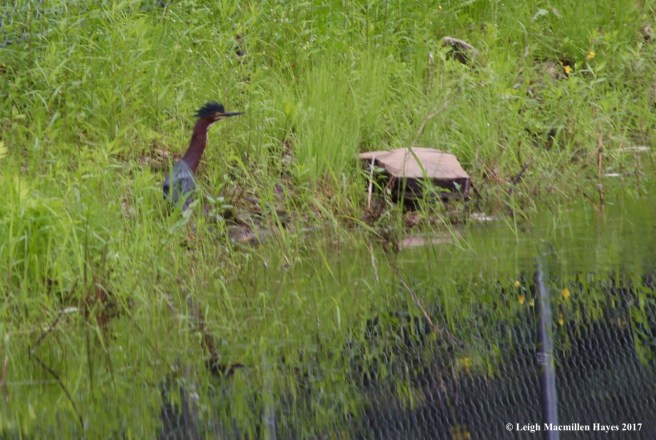
c-green heron crest

We watched him work the edge and loved when he showed off his crest–adding to our agreement about his ID.

c-trail map

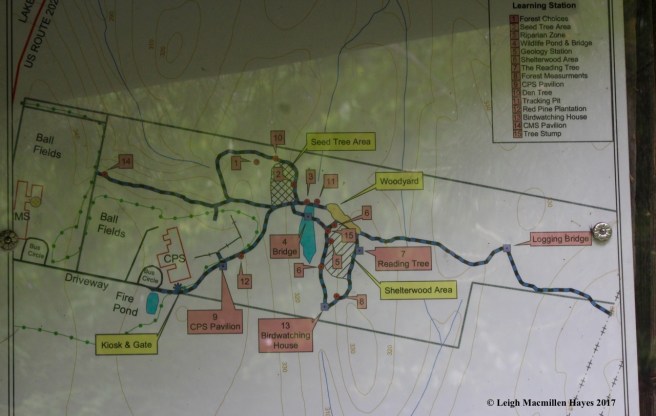
At last, we pulled ourselves away and let Anita begin, starting with an overview of the forest’s history and a look at the map posted on the kiosk.

c-yellow rattle 1

We headed off down the trail to a pavilion, but again were easily distracted. This was a plant I didn’t recall meeting previously, but its bladders and yellow faces reminded me of  fish faces. Karen later ID it as yellow rattle for when the seeds form in the bladders later in the season, they rattle.

c-lady's galore

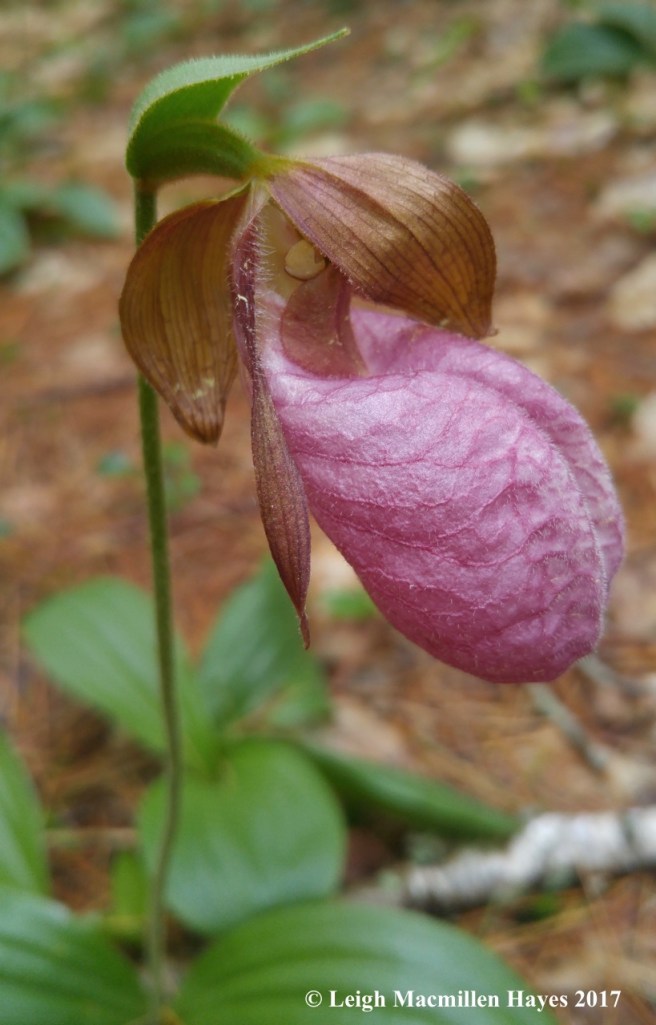
At last we arrived at the pavilion (only a few minutes walk down the trail if one wears blinders) where Anita had us help set up a work station and explained how she has students help cart the supplies. We started to help her, but within seconds Sally spotted the lady’s slippers and again we were distracted.

c-lady's by the dozens

They were so plentiful that we couldn’t resist admiring them.

c-pink lady's slipper

Most were princess pink.

c-white lady's slipper

But a few were pure white (not rare, just a form of the pink, but still . . . ).

c-lady's slipper pod

And even others spoke of transformation, with last year’s pods still standing.

c-nature journal

Again, she pulled us back to the subject of the day. Because we were there to learn about activities we might use in our work with children of all ages, Anita had us create our own nature journals. Stamps and markers and pipe cleaners and solar beads and fabric and we were happy campers–each expressing our own creativity in designing the covers.

c-phoebe babes1

While we worked, baby phoebes watched from above.

c-damselfly nymph1

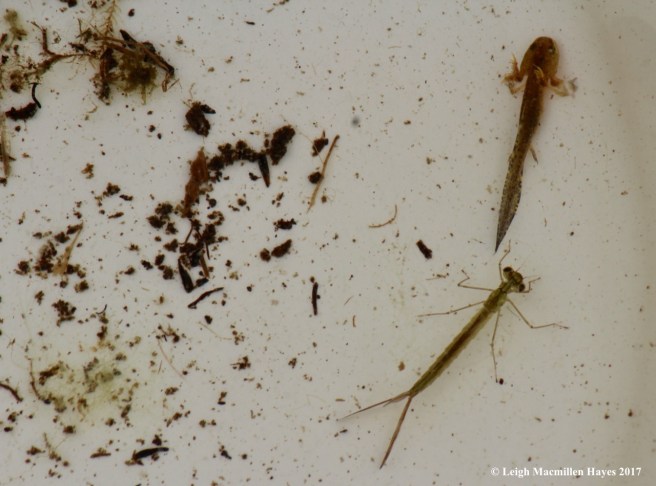
Our next stop was the wildlife pond and bridge, where we did some pond dipping and were thrilled with our many findings, like damselfly larvae and tadpoles,

c-caddisfly larva and salamander

damselfly and salamander larvae,

c-water scavenger beetle larva and salamander larva

and water scavenger beetle larvae beside a salamander. There was so much more and we again had a difficult time pulling ourselves away.

c-examining aquatic species

It was the water scavenger beetle larvae that stumped us most, but we had fun identifying as many species as we could and were wowed by the variety available.

c-bird nest

Leave we did at last–only first we checked out a nest Sally had discovered. While it sat upon balsam fir branches, we thought it had fallen from above. And marveled at its construction–balsam fir twigs, fruticose lichen and balsam fir needles, all in their own layers.

c-twin flower

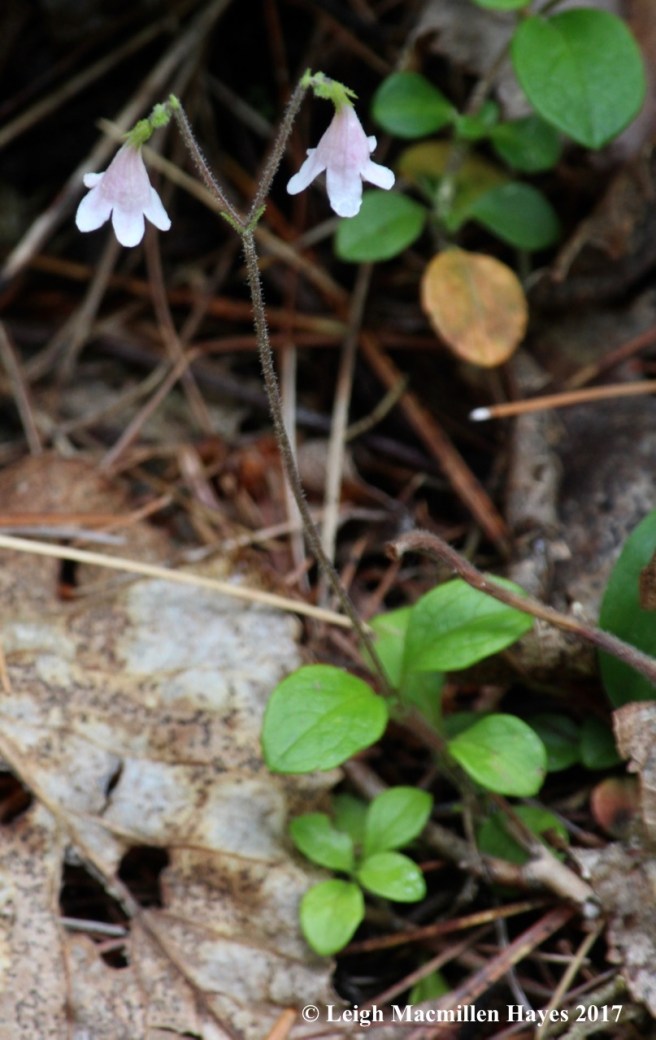
There were other things to see before we moved on, like the delicate twinflowers that bloomed.

c-pondweed and raindrops

An artistic display of pondweed.

c-fragrant water lily

And spadderdock,

c-fragrant water lily 2

whose flower reminded me of the inner formation of pitcher plant flowers.

c-Anita reading to us

At last, lunch time arrived. And so we returned to the pavilion where Anita shared some of her favorite books. And then she read to us All the Places to Love by Patricia MacLachlan–warning us first that she would cry when she got to the end. Indeed she did, but we were touched for we got it.

c-board feet

After lunch, she took us on a tour to visit some of the seventeen learning stations, including the forest measurements station, where students learn about common measurements related to the forest and wood product industry, including board feet for dimensional lumber.

c-reading tree

Every time I visit the China School Forest, I’m in awe. And today, I knew others, like Kathy and Cathy, felt the same. The forest was full of diverse species and twenty years ago the Town of China and folks like Anita turned it into an incredible space for children and the child in all of us to learn. My favorite spot of all has been “the reading tree” built around a weeviled white pine. Even those in wheelchairs may access it and find a spot to read or watch or listen. After we climbed up, we climbed down, and Anita led us through several fun activities, the last ending with M&Ms. What’s not to love about a seminar that ends with chocolate?

c-Eastern forktail damselfly

On our walk back, our NDD was ever on alert. And so we’d not seen too many dragon or damselflies in the morning, perhaps given the cooler temp. But on our way out, an Eastern forktail damselfly drew our admiration for its green, black and blue coloration.

c-bridge classroom

We were beside the man-made pond when we saw it, where the bridge crosses and where we’d earlier done some pond dipping to observe the aquatic insects. It’s there that a bench sits in the midst of an outdoor classroom.

c-dedicated to Anita Smith

That very bench had been dedicated to our Anita.

c-baby robin 2

Back at the pavilion, we gathered all our gear and then followed the trail out. And that’s when Kathy called from ahead, telling us to watch our step. A baby robin sat on the path. We heard a parent nearby.

And wondered in the magic of the day. Another magical day in Maine.


Keeping an Eye on Long Meadow Brook

My intention yesterday afternoon was to focus on the plants and trees at the Greater Lovell Land Trust’s newest reserve, Long Meadow Brook. But I also wanted to check out the new parking area created as part of an Eagle Scout project by Bridgton’s Troop 149.

l-parking lot 2

While the logging road cut by the previous owner to the landing during a 2014 thinning was untouched for the creation of the parking area, some of the log landing (staging area to remove logs from the site) was used to create a smooth space for vehicles. Kudos to the Scouts and other volunteers for building the lot.

l-kiosk 2

To the left of the parking area stands a kiosk. If you go, please note that the trail was first tagged last summer and though trail work was done this week, it’s brand new and not yet well tramped.

l-sloppy trail marker

Your best bet is to keep an eye on the trail signs. Most are blue circles painted on a white background and nailed to the trees. But . . . at least one offered a more creative take as it appeared someone was thinking outside the lines. ;-)

l-coltsfoot

So yes, I went to make an initial inventory and began on the driveway to the parking lot, where the blossoms of coltsfoot have now turned to seed. Remains of the former flower continued to exist among the white fluff of the seeds’ parachutes.

l-dandelion seed head

In the same place grew dandelions, providing a comparison as their seed heads were fancier in form.

l-common mullein rosette

It was on the driveway also, that common mullein showed off its soft leaves as it grew among the equisetum or horsetail.

l-common mullein

One in particular was ready to spring forth with new life.

l-common mullein--cacti

Though there were examples of last year’s mullein flowers along the driveway, it was on the trail that I spied a group of them, looking much like the cacti of the north.

l-equisetum 1

There were other look alikes to note–this being a woodland horsetail that can be mistaken for a pine sapling.

l-pine sapling

Both have whorled branching, but pine featured packets of five straight needles , while the horsetail branches were divided and dangling.

l-spittlebug

A spittlebug larva took advantage of one pine sapling and covered itself with froth to keep predators away.

l-pine grove 1

White pine saplings are numerous on this 98-acre property, where the former owner left many older pines that create a cathedral-like space.

l-pitch pine

One of my favorite species were the pitch pines, though this one appeared to have been used perhaps as a turning tree, with its bark on one side scraped off.

l-common speedwell

At my feet, I also found common speedwell,

l-cinquefoil 1

common cinquefoil,

l-pipsissewa

and pipsissewa–though not common, not un-common either.

l-wintergreen sporting new growth

There was wintergreen showing off its new growth with tiny blossoms forming between light green leaves,

l-red trillium

and a red trillium, its flower passed by and fruit production in the works.

l-lowbush blueberries

Speaking of fruit, lowbush blueberries were loaded with future treats.

l-Indian Cucumber Root

And then there were those species that feature other-worldy presentations such as the Indian cucumber root.

l-greater bladder sedge

Likewise, the great bladder sedge with its fruit sacs pointed up and out.

l-wood fern with sori

A variety of ferns grow there, including wood ferns with sori maturing on the underside of the blades.

l-striped maple leaf

I found a small striped maple with leaves as big as a dinner plate.

l-maple-leaved viburnum

And multiple maple-leaved viburnums in flower, this one with . . .

l-beetles canoodling on maple-leaved viburnum-2

beetles canoodling. ;-)

l-oak apple gall

Because I was looking down so much, and no walk is compete without such a find, I saw an oak apple gall.

l-snowshoe hare scat 2

And similar in shape for its round form, snowshoe hare scat.

l-bench view

On the preserve are two small clearcuts. A bench has been installed at the two-acre lot.

l-wildlife blind

This is also the spot where a wildlife blind provides its own point of view.

l-field view

The six-acre opening faces the Baldface Mountains to the west.

l-Long Meadow

But my favorite view was at the old beaver dam, where Long Meadow Brook passes through. I wanted to spend more time there because there was much to see and ID, but the mosquitoes thought I was sweet.

l-chalk-fronted corporal

Fortunately, there were plenty of dragonflies, such as this chalk-fronted corporal, who thought the mosquitoes were sweet.

l-chalk-fronted female

That’s not all chalk-fronted liked, for this was his female counterpart.

l-lancet clubtail 1

Long Meadow Brook is the perfect place to meet some dragonflies, including the lancet club tail with yellow daggers running down the back of its abdomen.

l-eye to eye with dragonfly--white-face?

And a white face-so named for the whitish face below the bulging eyes.

l-stream cruiser

Hanging vertically as was its custom, a stream cruiser.

l-familiar bluet

Damselflies, too, flew about, including familiar bluets.

l-sedge sprite

But it was the metallic green of the sedge sprite that wowed me.

l-calico dragonfly 1

And when I thought I’d seen all that the land had to offer, I suddenly found myself in the place of the calico pennants.

l-calico 3

Its their wings that amazed me the most and made me think of stained glass windows.

l-calico 2

I happened upon them just before I passed back through the cathedral in the pines, as seems apropos.

While they focused on the abundant prey and each other to do their own canoodling (my guy and I heard that term mentioned recently and it made us chuckle), I had to finally pull my attention away. But . . . I’ll be keeping my eye on Long Meadow Brook Reserve. With pleasure.


Fawning with Wonder

Though fawning is most oft used to describe someone who is over the top in the flattery department (think old school brown nose), the term is derived from the Old English fægnian, meaning “rejoice, exult, be glad.”

I just knew it was going to be that kind of day when I drove toward Holt Pond Preserve this morning. First, on Route 302, a deer dashed in front of my truck–and I avoided hitting it by mere inches. (And being hit by the woman who was smack dab on my tail.) Then, as I drove up to the summit of Perley Road, a red fox crossed my path.

To top off my feeling of gladness, in the preserve’s parking lot I met up with the most gracious of hostesses, Lake Environmental Association‘s Education Director Alanna Doughty, and the ever delightful host, Loon Echo Land Trust‘s Stewardship Director Jon Evans. Those two dynamos had joined forces to lead a public walk that looped all the way around Holt Pond. Joining the group was a gentleman named Bob and two others–my dear friends Faith and Ben Hall. The Halls had arrived at their summer camp recently and this was my first opportunity to welcome them home. After intros and a discussion about how the two organizations have collaborated on projects including Holt Pond, along with an explanation of how they differ (LEA is about water science and protecting our precious lakes and ponds, while LELT is about protecting the uplands and lowlands that surround the watershed), we headed off on our adventure.

p-oak apple gall 1

Within minutes, a small, rubbery green ball, about the size of a ping pong ball, caught our attention. This was the result of an apple oak gall female wasp (yes, there is such a species) that crawled up the tree trunk of a Northern red oak earlier in the spring and injected an egg into the center vein of a newly emerged leaf. As the larva grew, it caused a chemical reaction and mutated the leaf to form a gall around it. The leaf provided the larva sustenance. Had we left it alone, once it matured into a wasp, it would have sawed its way out through a small escape hole.

p-oak apple gall 2

Because we were curious, however, Alanna split it open so everyone could see the spoke-like structure hidden inside, that provided support for the developing insect.

I shared with the group a little tidbit I learned last fall in Ireland. When working on the manuscript for the Book of Kells, monks used these galls for the color green, soaking them in beer or mead to create a dye.

p-Alanna and Jon

That set the stage and from there on, we paused periodically to wonder, though I think we said at one point that we wanted to get all the way around before 1pm. But there’s so much to see that we had to stop. And because the pitcher plants grow beside the boardwalk, it was hard to ignore them. Being Alanna, she got down on her knees to talk about how this carnivorous plant functions, enticing insects into its pitcher-like leaves that are filled with water and digestive enzymes. Because of downward-sloping hairs  on the leaf, insects can’t climb out and eventually they succumb–allowing the plant to break them down and absorb their nutrients.

p-pitcher plants flowering

Today, the pitcher’s flowers were beginning to bloom.

p-Indian Cucumber Root

As our journey continued, we stopped to admire other flowers including the Indian Cucumber Root,

p-jack in the pulpit

Jack in the Pulpit,

p-lady's 1

and pink lady’s slipper.

p-Faith on beech

To show off the contorted growth of a tree, Faith graciously took a brief break at the beech.

p-greater bladder sedge

While Jon shared a lot of information about South Bridgton’s historical past, Alanna enlightened us on the works of nature, including the bladder sedge with its inflated, teardrop-shaped sacs that enclose its fruit. Though common, like the pitcher plant flowers, it’s otherworldly in form.

p-nannyberry?

And then we got stumped by one shrub we should have known. Witherod (wild raisin) or Nannyberry? We decided on the latter for a couple of reasons–the petioles (stems) of the leaves were somewhat winged and the veins beneath the leaves were not scurfy. Scurfy? That was a new term for me–meaning rough to the touch or covered with scales.

p-Bob, Alanna, Faith 1

As our journey continued, we passed lots of hobblebush in the understory. But not to be missed were the witch hazels. And more galls, this time the witch’s cap that grows on their leaves and forms a cone-shaped structure much like a witch’s cap. How fitting that the Witch Hazel Cone Gall Aphid (Hormaphis hamamelidis) chose this particular shrub. Having caused the leaf to form a gall around her, mother aphid stayed inside, where she’s protected as she feeds and reproduces.

p-porky 1

During our journey, we shared brains and eyes. I’m thankful for others who thought to look up, and spotted a porcupine looking down.

p-grouse bath

We also looked down, spying the spot where a bird took a dust bath.

p-grouse bath feather

In this case, it was the work of a ruffed grouse that wanted to rid itself of lice and mites. A stray feather was also left behind. Do you see it?

p-fawn 3

But our best find of all–a young fawn curled up beside the trail. I was leading and talking at the time and didn’t even see it. Faith quietly called me back and I was sure she wanted to show me a snake. We paused quickly to take a few photos and this babe never flinched, obeying its mother’s order to stay put while she went off to feed. (I used to try that at the end of the aisle in a grocery store when my guys were young–but they did their fair share of flinching.)

We’d been blessed–and we all rejoiced while fawning with wonder.


June Dandies

It’s early June and our world is lush, given this past winter’s snow and now the spring rain. Areas that we remembered as being dry last year, are filled with puddles or streams right now ( I promise I’m not going the mention those pesky little buzzers that frolic about my face and sting my hands–and how much they’re loving the current conditions. I did spot some dragonflies yesterday, but today not a one).

r-lady 3

It’s those wet conditions that threw a friend and I off for a wee bit this afternoon as we tramped through the woods in search of a yellow lady’s slipper. Initially, we were about fifteen feet too far to the right as we tried to avoid the water.

r-lady 2

After wandering for a short bit, we finally found it on a bit of dry land–and then stood in awe–at our own ability to locate the flower, but even more so at the flower itself.  Yellow lady’s slippers are not rare, but uncommon and so we rejoiced with our find. They prefer mesic (moderately moist) nutrient-rich forests (as well as in bogs and swamps), thus the water (and mosquitoes–okay, so I broke my promise).

r-lady 7

Lady’s slippers are members of the orchid family.  I used to think orchids were flowers girls wore on their wrists for senior prom or grandmas coveted–though I never knew either of my grandmothers, but certainly it was an “old lady’s” flower. My, how my understanding and appreciation has changed because I am certainly NOT an old lady. Or am I?

Check out the reddish-brown dotted pathway–like landing lights at an airport runway. Their intention is to guide pollinators. If we remember to return in the fall and look for a seedpod, we’ll know that the dots worked. They often don’t.

r-brook 1

We could have gone home then, so tickled were we with our success of finding that pouch of a flower, but . . . as you might expect, we continued on, making several brook crossings as we went.

r-brook 2

Everywhere, mosses and liverworts offered forty shades of green. Oh wait–that’s Ireland. But right now, it’s western Maine as well.

r-christmas fern 2

And because it was so damp, the forest we roamed was filled with Christmas ferns featuring young and old blades.

r-Indian cucumber Christmas fern

We even found one that sprouted an Indian Cucumber Root whorl as if it was a flower.

r-christmas fern gall

But what aroused our curiosity was another that seemed to have been affected by insects forming galls. Neither of us could remember seeing anything like this before, but then again, so many times when we see something we think of as new, we soon discover that it’s more prevalent than we realized. That being said, we only found the “galls” on a few of these ferns, all in the same area in a wet seep.

r-wild oat

Further along, we noted sessile-leaved bellworts, in flower a month ago, now sporting their seedpods or wild oats that speak to their other common name. And the leaf of at least this one had been visited by an insect–a leaf minor trail standing out in white against the green.

r-cannoddling craneflies 2

r-cannoddling craneflies

And then we found craneflies canoodling. They didn’t seem to care that we watched.

r-toad 1

They weren’t our only wildlife sightings (besides the mosquitoes–did I mention mosquitoes?). A young American toad hopped by, pausing ever so slightly to show off its raised warts.

r-frog 1

And a frog slipped into the water–the better to escape our ogling.

r-land of the cinnamon fern

As we wound our way around a wetland filled with cinnamon ferns, we noted a few flowers in bloom or about to bloom.

r-clintonia 1

Yellow clintonia,

r-jack in the pulpit 1

Jack-in-the-pulpit (times two actually–and I’m not sure how we spied these for they hid like trolls under their leaves),

r-Indian Cucumber flower

Indian cucumber root,

r-Early coralroot 2

and early coralroot caught our attention.

r-round-leaf pyrola1

Not yet in bloom was the round-leaf pyrola, aka American shinleaf. Oh darn, another reason to return and see it blossom.

r-red trillium 3

And just past its blossoming stage–red trillium,

r-red trillium 1

its red leached to almost maroonish brown and stamen looking rather gray.

r-Pam taking a photo of pyrola

Despite the mosquitoes (what mosquitoes?) and a few raindrops, we shared a fun afternoon hike circling the path of the Greater Lovell Land Trust’s Ron’s Loop by Five Kezar Ponds.

The journey was with my friend named Pam, not June. But June is the month and together we enjoyed numerous dandies that need to be enjoyed in the moment for soon we’ll not realize they ever existed.

June dandies indeed–worth making time to wander and wonder. (Despite the mosquitoes.)


Book of June: Bogs and Fens

My wish was granted when I asked for a copy of Bogs and Fens: A Guide to the Peatland Plants of the Northeastern United States and Adjacent Canada by Ronald B. Davis for Christmas.

b-bogs and fens cover

The idea for this book came from many years spent by Davis as a biology and Quaternary studies professor at the University of Maine and Colby College, plus his services as a docent at the Orono Bog Boardwalk in Orono, Maine.

Since I spend a lot of time tramping through a few favorite bogs and fens as well as visiting others, this seemed like the perfect guide to help me better understand the world of these special communities. And then I realized that on our own property grows some of the vegetation associated with these wetlands. With them right under my nose, what better way to learn?

Davis begins by describing the occurrence and indicator species of peatlands and then he goes on to give a lesson on the ecology of wetlands, including a description of peat, fens and bogs. A bibliography is provided for further reading and terms are defined.

What really works for me though, is the species descriptions, which he’s taken the time to divide into their various layers–trees, tall shrubs, short and dwarf shrubs, prostrate shrubs, herbaceous plants and ferns. Within each section, a specific plant is described, including its Latin name, common names, family, characteristics such as how tall it grows, number of petals, fruit, if any, etc., and its occurrence–whether in a fen, bog, dry hummock or other. All in all, he features 98 species, but also mentions 34 comparative species and includes an annotated list of 23 additional trees, shrubs, herbs and ferns that may grow in one or more community. And finally, the book ends with a description of pathways and boardwalks worth visiting.

b-sphagnum moss

And so this morning, I walked out back to look at our wetland, where the sphagnum moss’s pompom heads were crisscrossed by spider webs donned with beads of water.

b-sundew 2

It’s there that the round-leaved sundews grow, which I only discovered last year. Notice those bad-hair day “tentacles” or mucilaginous glands and the black spots upon the leaves. Dinner was served–in the form of Springtails or Collembola–their nutrients being absorbed by the plant to supplement the meager mineral supply of the sphagnum community.

b-sundew flower forming

And in the plant’s center, the flower stem begins to take shape. This summer, it will support tiny white flowers that will turn to light brown capsules by fall.

b-sheep laurel

Sheep laurel also grows in this place, its new buds forming in the axils below the newly emerged leaves. I can’t wait for its crimson flowers to blossom. Its flowers provide an explosion of beauty, and yet, danger lingers. This small shrub contains a chemical that is poisonous to wild animals, thus one of its common names is lambkill.

b-steeplebush leaves

Another short shrub is the rosy meadowsweet or steeplebush with its deeply toothed leaves.

b-steeplebush

Being only June 1st, it’s too early to flower, but last year’s steeple-like structure still stands tall in the landscape.

b-lowbush blueberries

Low-bush blueberries grow here as well and it’s only now that I realize I need to return and study these some more for Davis differentiates between velvet-leaved blueberries and common low-bush. I assumed these were the latter, but according to his description, the leaves will tell the difference. Apparently velvet-leaved, which I’ve never heard of before, feature “smooth-edged, alternate leaves, and bear fine, short hairs on the underside, edges and along veins of the upper side,” while low-bush leaves “have a finely serrate edge and a lack of pubescence, except rarely a sparse pubescence along the veins.” The next time I step out there, I will need to check the leaves to determine whether we have one or both species.

b-black chokeberry1

Of course, my favorite at the moment is the black chokeberry because the flowers provide a wow factor.

b-black chokeberry and ant

I’m not alone in my fascination.

b-water scavenger beetle larvae

Because I was nearby, I walked to the vernal pool, where a wee bit of sunlight highlighted another fascination of mine–my most recent discovery of water scavenger beetle larvae. Check out those heads and eyes.

b-tadpoles 1

Today, the tadpoles weren’t as shy as the other day and so they let me get up close and personal.

b-tadpoles 2

I’m holding out hope that the pool doesn’t dry up before they are able to hop away. Already, I can see their frog form beginning to take shape. This is a shout out to one of the Books of May: Vernal Pools–A Field Guide to Animals of Vernal Pools.

But back to the Book of June, and really the book of all summer months–Bogs and Fens by Ronald B. Davis. It’s heavy as field guides go and so I don’t always carry it with me, but it’s a great reference when I return to my truck or home. I appreciate its structure and information presented in a format even I get.

Bogs and Fens: A Guide to the Peatland Plants of the Northeastern United States and Adjacent Canada, by Ronald B. Davis. University Press of New England, 2016.

My copy came from Bridgton Books, my local independent book store.

At a Snail’s Pace

The mosquitoes were thick. The ground damp. But the rain held off and so four docents and I met at the Greater Lovell Land Trust‘s Flat Hill parking lot at the end of Heald Pond Road.

p-beaked hazelnuts forming

From the getgo, our fun began as we spotted numerous beaked hazelnuts forming–the trick is to pay attention to them and watch their continued growth, for in a flash, or so it seems, they’ll mature and . . . disappear. The nuts those hairy beaks cover are favorites for wildlife and we human folk also like them.

p-red trillium

Our mission was to get reacquainted with the spring flowers–some being obvious to us like the red trillium, though the fact that it was still in bloom offered a delightful surprise. We chatted about the fact that its also known as Stinking Benjamin for its undelightful odor, but try as we might and we did again today, none of us have ever been offended by it. Apparently, they smell like rotting meat, but you can’t prove it by us.

p-fringed polygala

Here and there we were awed by the delicate fringed polygala, aka gaywings. They did remind us of birds with crazy head dresses taking off in flight.

p-false solomon seal

As we shared brains and practiced relearning species before the next season gives us even more, we felt proud to quickly ID a false solomon seal, aka wild spikenard, before it had fully flowered. It’s the cluster of flowers on the end branch, the arching, zigzag stem and long oblong leaves that stand out in our minds.

p-Rose Twisted Stalk or Rosybells

A seal of another sort, the rose twisted stalk, aka rosybells, also adorned the trail. Pam held the stalk up so we could look at the bell-shaped flowers that dangled below.  Notice how the leaves are green below and stalkless but don’t necessarily clasp the stem–as opposed to twisted stalk (white mandarin), which features greenish flowers dangling below and stalkless leaves that do clasp the stem. Plus the latter’s leaves have a white bloom on the underside. We didn’t see any twisted stalk, but were tickled with our rosybell finds.

p-raindrops all in a row

Periodically, we stopped to examine ferns, or quiz each other on the ID. But sometimes, it was just fun to notice presentations, including raindrops all in a row.

p-beech fern

And though a couple of our fern experts couldn’t be with us, Joan was and she loves nothing more than squatting beside them with the Fern Finder to determine a species, including the long beech fern.

p-clitonia 2

It was while looking at bracken ferns that Mary and Nancy spotted the greenish yellow flowers of clintonia. We were excited because we’d seen plenty of plants, but these were the first in flower, and they were well hidden.

p-clintonia flowers

Yellow clintonia is also called bluebead for the fruit that develops is a porcelain blue bead-like berry. Check out those pistils (she’s a pistil) dangling below the stamen, their anthers coated in pollen. Bring on the bees and the beads.

p-baby toad

Suddenly, we discovered movement at our feet and saw our first baby toad of the season. It’s diminutive size and obvious camouflage made it difficult to see, but unlike the adult members of its family who will freeze in position, thus allowing us to study them further, this little one wanted to escape as quickly as possible. Smart move on its part.

p-bench view

Only about two hours later we’d covered maybe a half mile and found our way to the bench that overlooks the swampy area surrounding the brook between the beaver pond and Bradley Pond.

p-red maple leaves

We sat below a red maple and listened to a chorus of birds–and gave thanks for the food supply. Let them eat bugs. We offered up a few mosquitoes.

p-red-winged blackbird

A red-winged blackbird flirted with us, showing off its bright red shoulder and yellow wing bar as it flew from shrub to shrub. The five of us swooned.

p-Indian Cucumber pre-flower

All along the path, we’d spotted Indian Cucumber Roots with their buds formed atop the second layer of their double-decker formation. When we finally stepped from the bench back to the trail, we noted a couple of the buds were beginning to dangle below the second story, meaning the blossoming season would soon be upon us.

p-Indian Cucumber flower 2

And just like that . . .

p-Indian Cucumber flowering

Voilà. I’m of the belief that if this flower doesn’t make you wonder, nothing will.

p-beaver pond view

Our next stop was at the bridges that cross below the beaver pond. We’d been looking for fresh beaver works all the while, but only discovered the work that had been completed over a year ago.

p-royal fern crown

There was still plenty to see, including the fertile crowns atop royal ferns,

p-jack-in-the-pulpit 2

a small jack-in-the-pulpit,

p-mayfly hitchhiker

and a mayfly that chose Pam’s jacket to rest upon.

p-foamflower 1

One of our many finds included foam-flower, with its cluster of star-shaped white flowers and conspicuous stamens. According to Mary Holland in her book, Naturally Curious Day by Day, “Its genus name, Tiarella, is the Greek word “tiara,” a word for a turban worn by ancient Persians which bears some resemblance to the shape of this flower’s pistil.”

p-foamflower carpet

Tiara or not, we were quite taken with a carpet of it.

p-snail

Those were only a few of the findings we saw as we moved at a snail’s pace during our three hour tour along Perky’s Path. Each time we visit, we say, “This is my favorite property.” That is . . . until we visit another one of the GLLT properties.

May(be) a Mondate

We headed out the backdoor, into our woodlot, down the cowpath, along the snowmobile trail, veered left behind the church, walked down a driveway, crossed the road and snuck into Pondicherry Park.

p-NOrway maple and samaras

Or so we thought, but as we stood below this Norway maple with its widely-divergent two-winged samaras, a familiar voice hailed us. Our friend, Dick Bennett, appeared out of nowhere (well, really from somewhere–for like us, he lives nearby and uses these trails frequently to get to town) and so we chatted briefly. He was on a mission and we were headed in a different direction along the multi-layered loop system.

p-crossing the field

Within minutes we followed the path out of the woods and across the field–prepared as we were for rain. Our plan was to retreat when it started to pour.

Once we entered the woods again, we heard a barred owl call from the distance with its infamous “Who cooks for you?” “Our oldest son and his girlfriend,” was our response for they had surprised us this weekend with a visit and prepared last night’s meal.

p-foxhole debris

For the most part we stuck to the trail system, but then we stepped over the wall onto the Lake Environmental Association’s Maine Lake Science Center property because I wanted to show my guy this pile of dirt and stones.

p-fox hole

On a recent bushwhack with a few others, we’d discovered this fox hole and I immediately recalled all the fox tracks and seeing a red fox this past winter not far from this location.

p-boardwalk1

After poking about for a few minutes, we made our way back to the LEA trail and eventually landed at the boardwalk that weaves through a wetland. From there, it was back through the woods to the park trails. I know my guy wanted to move quickly, such were the bugs, but I wanted to take everything in and so he patiently waited from time to time.

p-Canada mayflower

After all, there were visions in white exploding with glory in the form of Canada mayflowers,

p-foamflowers

foam-flowers,

p-wild sarsapirilla

and wild sarsaparilla.

p-gaywings

We also feasted our eyes on visions offering the purplish hue of gaywings, aka fringed polygala.

p-fern stream

And then there were the ferns.

p-cinnamon fern fertile frond

The fertile stalks of cinnamon ferns shouted their name,

p-royal fern

while the royal ferns were much more subtle–

p-royal fern fertile fronds

their fertile crowns practically blending into the sterile fronds.

p-chipmunk

At the chimney by the amphitheater, a chipmunk paused to ponder our intentions and then quickly disappeared.

p-Stevens Brook

We followed the river trail to the Bob Dunning Bridge and noted all the shades of green beside Stevens Brook.

p-boxelder samaras

And then there were other sights to see, like the boxelder and its samaras. Its common name refers to the resemblance of its leaves to elder trees and the use of the soft wood for box making. Its also our only maple with compound leaves. And the samaras differ greatly from the Norway maple we stood under at the beginning of our walk–for the boxelder’s winged seeds more closely resemble upside down Vs or peace signs.

p-catbird 1

As is often the case when stopping by the bridge, the catbirds who nest in the undergrowth paused beside the brook during their foraging expeditions.

p-caterpillars on maple leaf

Nearby, we saw some food meant for them–a colony of Eastern tent caterpillars consuming maple leaves right down to the veins. It seemed like it was time for some units of energy to be passed along the food web.

Besides the wildlife, our only human encounters included a relative crossing the bridge on his way home from work and our friend Dick, whom we’d seen at the start.

For various reasons, May has been devoid of dates and so today’s adventure, though not long, served as our only Mondate celebration for the month–no maybes about it. And it never did rain.