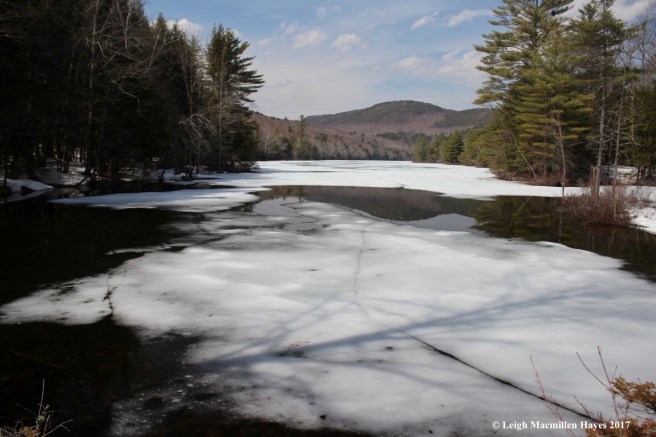
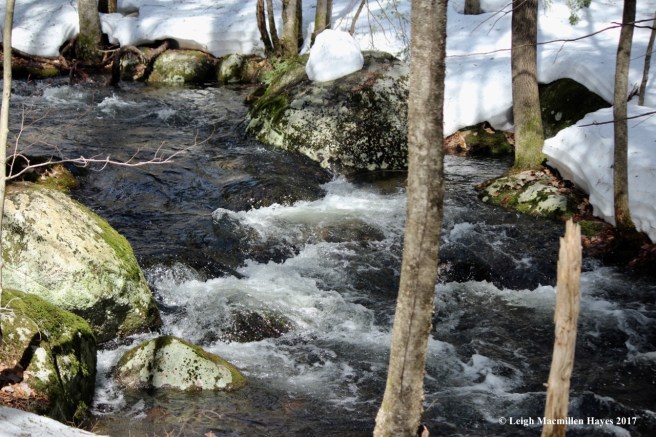
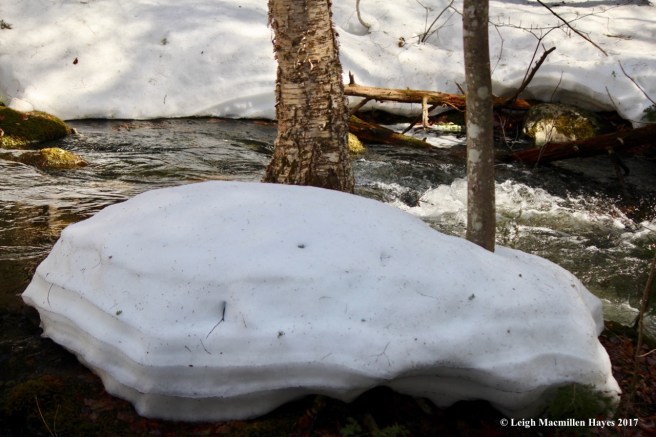
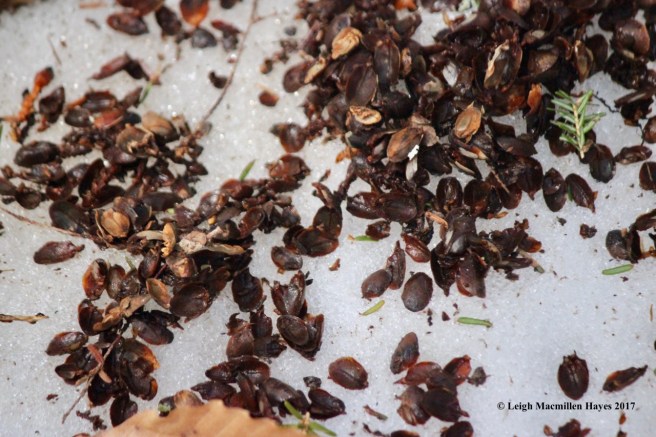
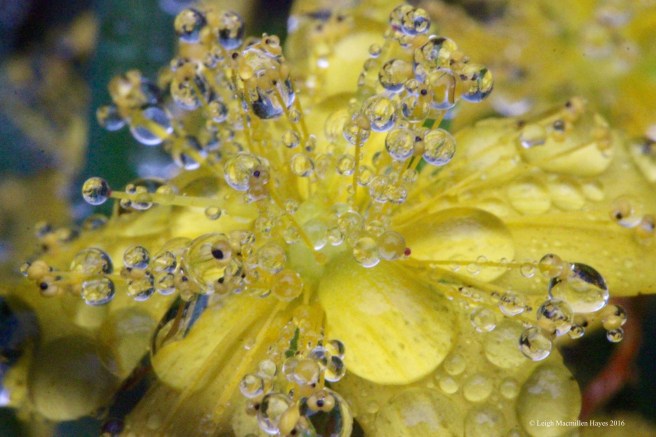
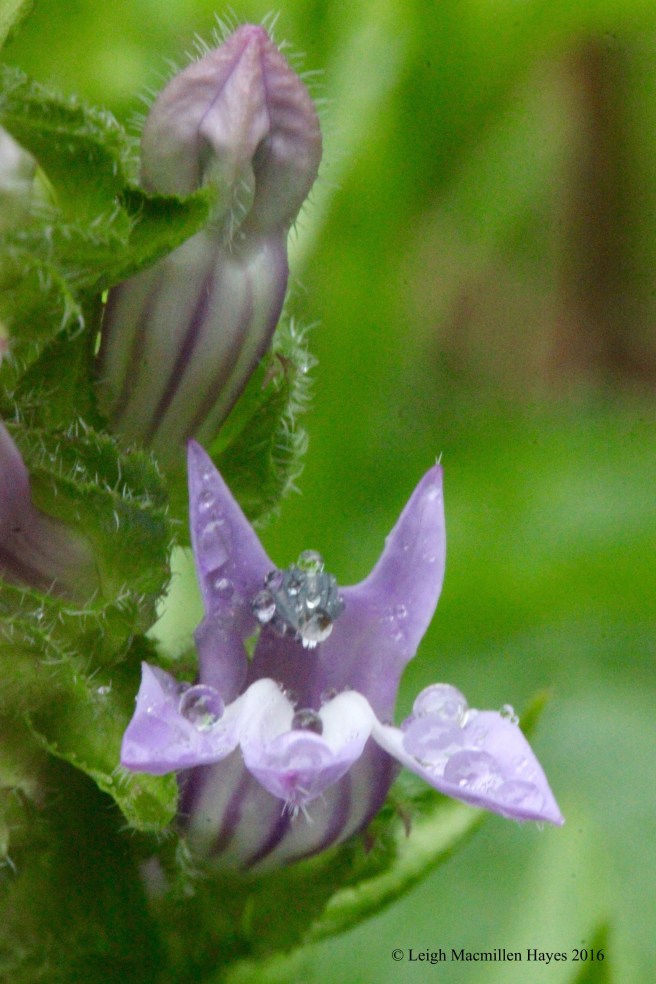
This Land Is . . .

My land. I’m sure of it. I don’t own it all, but I walk it often because it’s not posted and I know it well. Well, only just so well. It’s constantly offering me new learnings.

o-Mt Wash

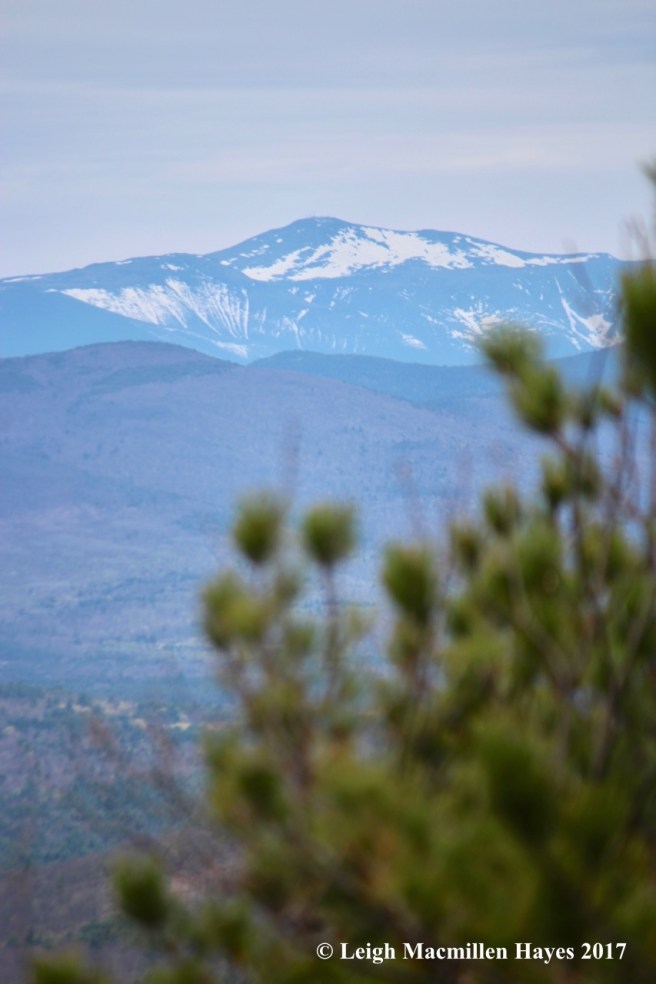
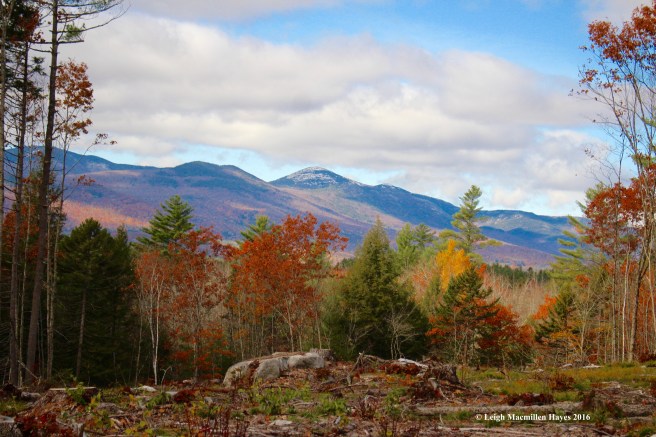
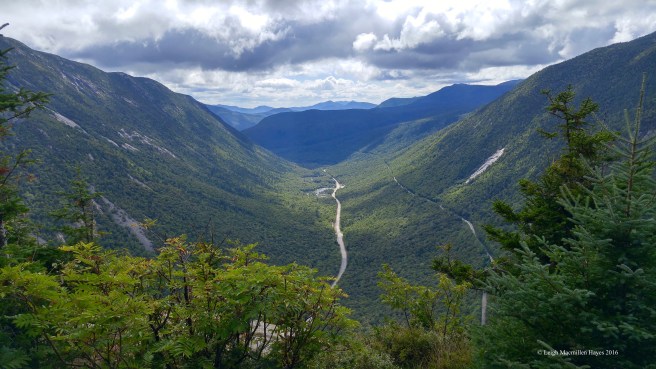
And so once again, out the back door I ventured, intending to head north toward the land of snow–haha. My sister asked the other day if we still had snow. We don’t have any on our land, but this is our view from the power line right of way–yup–we’ve got snow ;-) (in our view).

o-tick

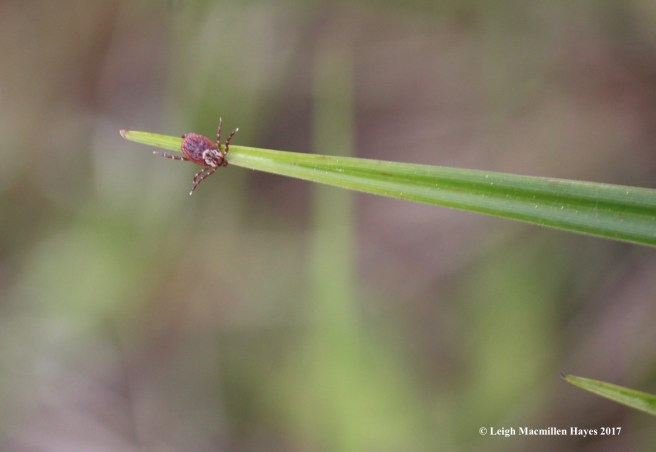
I changed my mind about the direction, however, when I saw numerous dog ticks on the tips of grass as I crossed our neighbor’s field. Though they aren’t the purveyors of diseases such as Lyme disease, Babesiosis, and Anaplasmosis, seeing them still unnerved me and I decided to head in the opposite direction where it isn’t so grassy. Of course, that’s where the deer ticks live. Nightly tick checks are a must every day.

o-early yellow rocket 1

It was in the opposite direction that I was caught by surprise. Behind a local business, where the land had been disturbed a year ago, a wall of yellow greeted me.

o-yellow rocket 3

It was a sea of early yellow-rocket that is common along roadsides and fields. Apparently this one spot was the cat’s meow for it to grow so prolifically.

o-bee 3

What was more prolific–the sound.

o-bee 1

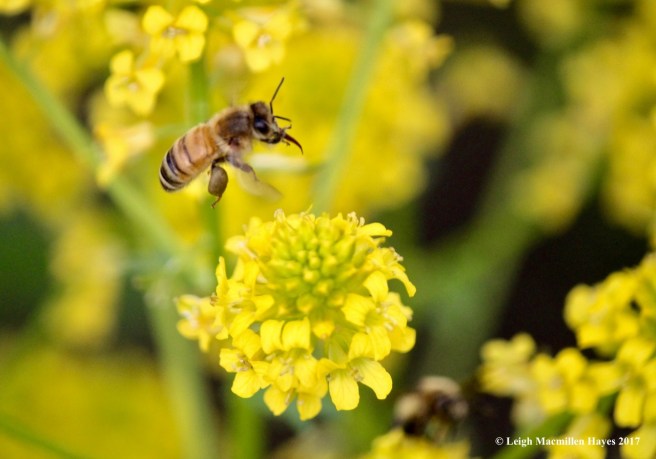
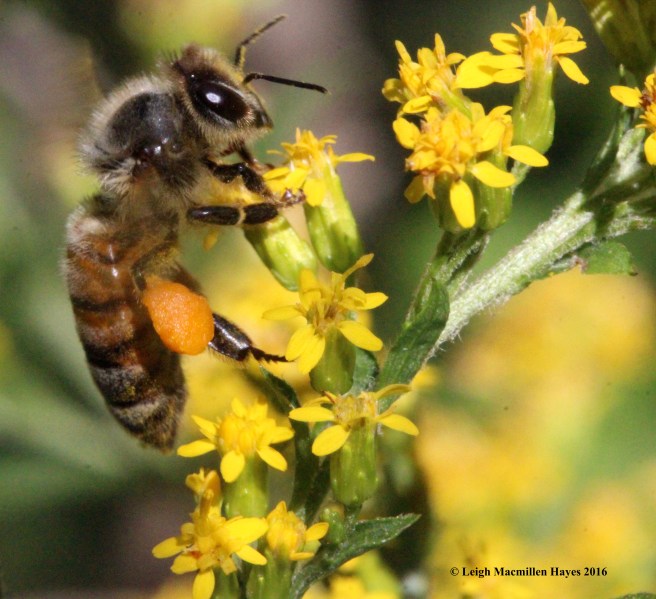
Bees and other insects hummed as they worked,

o-bee 2

filling their pollen sacks to the brim.

o-fritillary 1

Even a fritillary butterfly enjoyed the goodness within.

o-fringed 2

Those weren’t the only wings I saw. It was a complete surprise to also discover gaywings or fringed polygala growing deeper in the woods.

o-turkey print

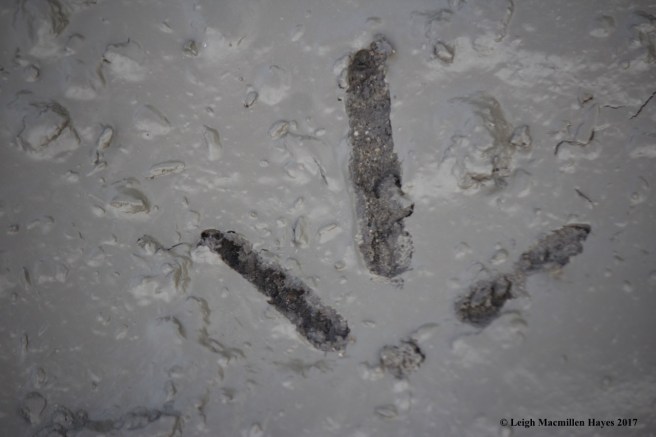
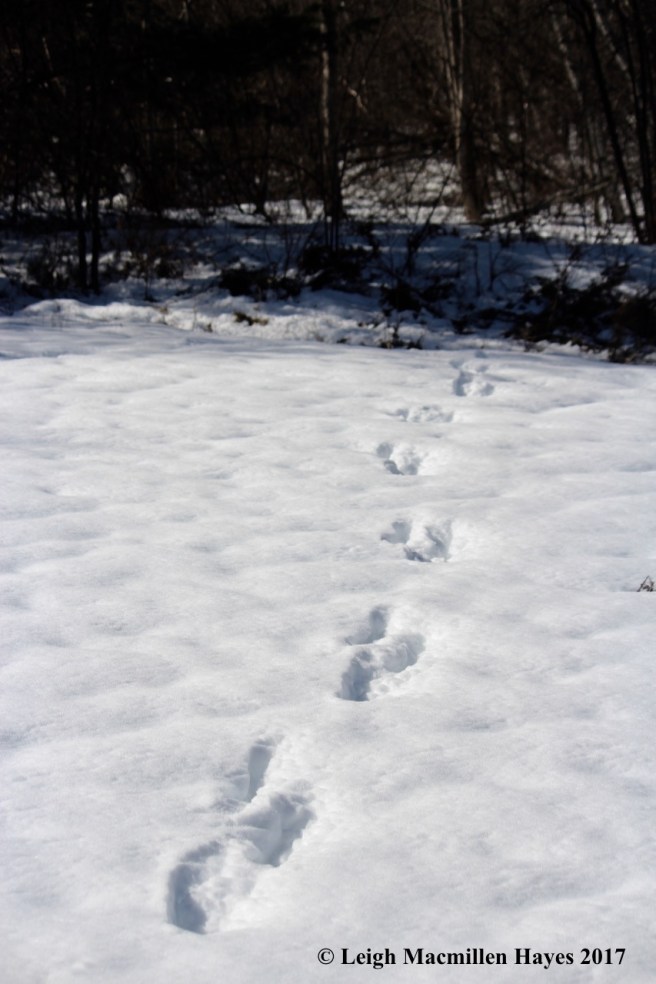
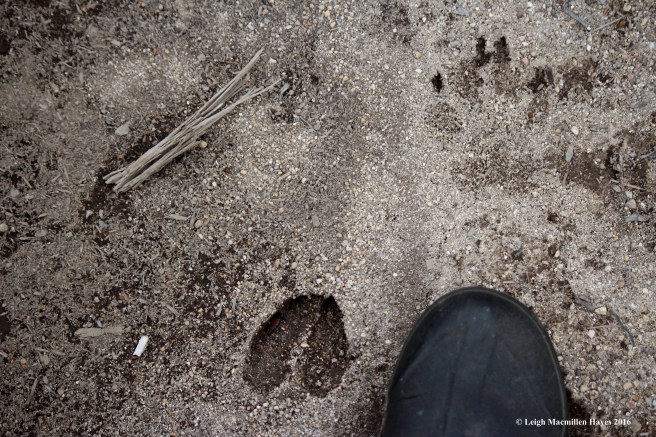
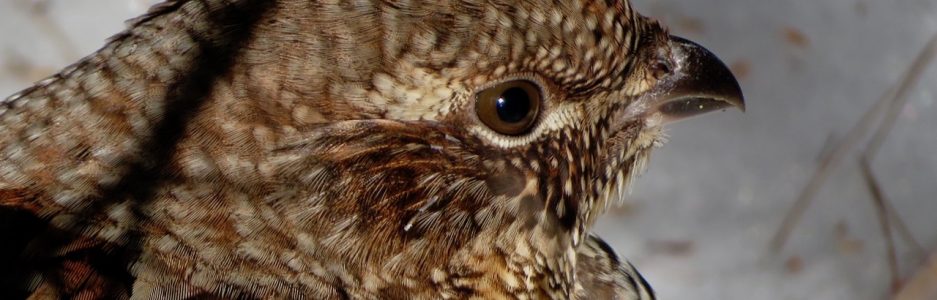
Walking along, I flushed a couple of deer and a ruffed grouse. And though I didn’t see or hear any turkeys, I knew they’d been there by their signature prints.

o-tadpole 1

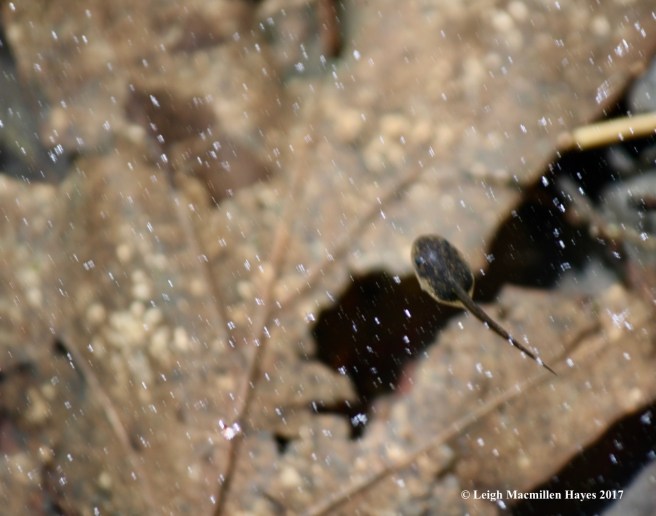
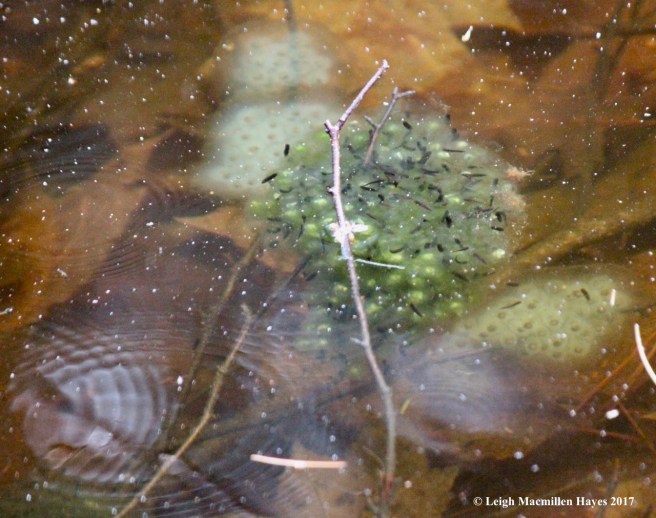
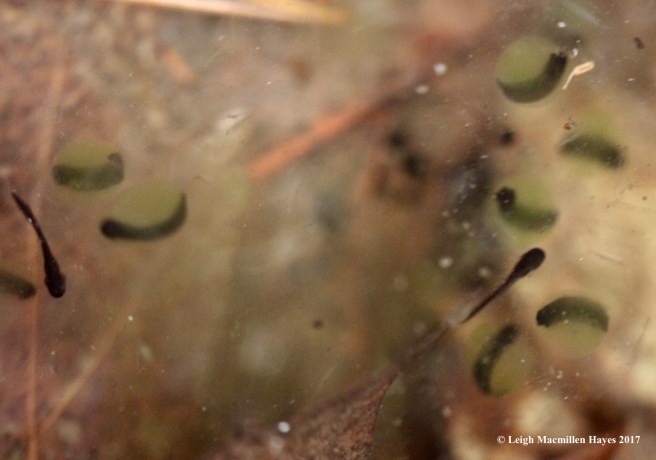
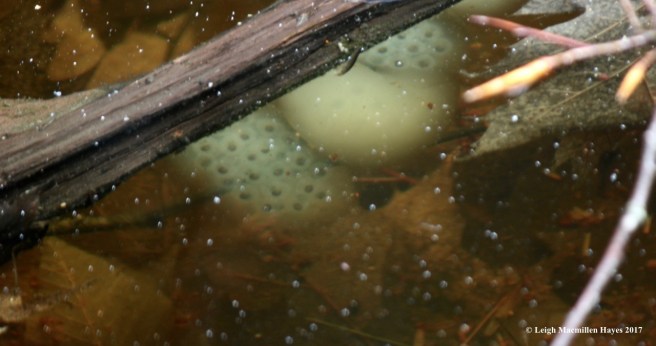
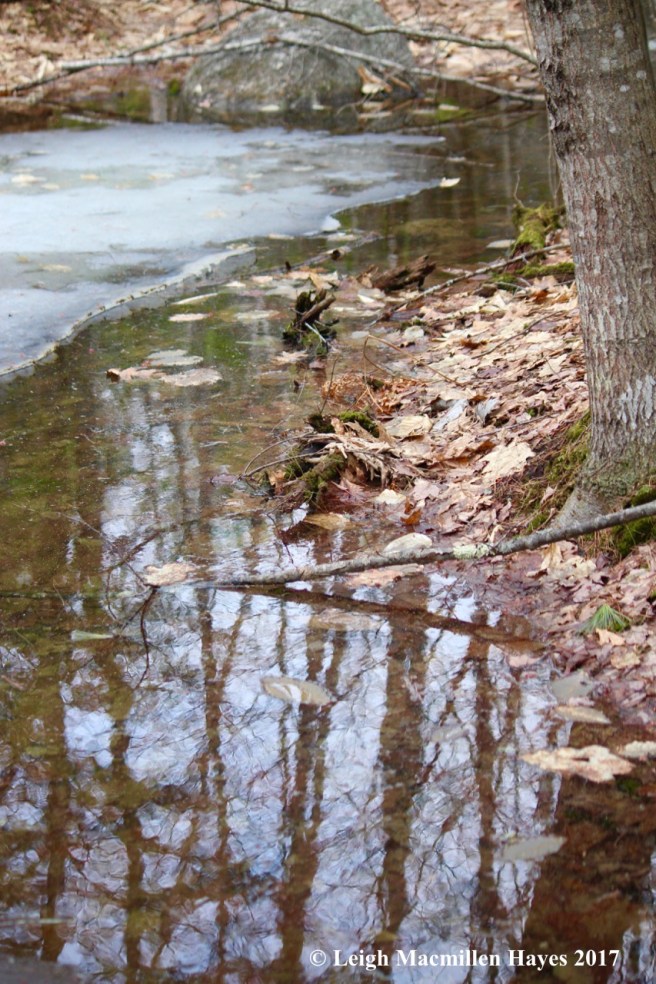
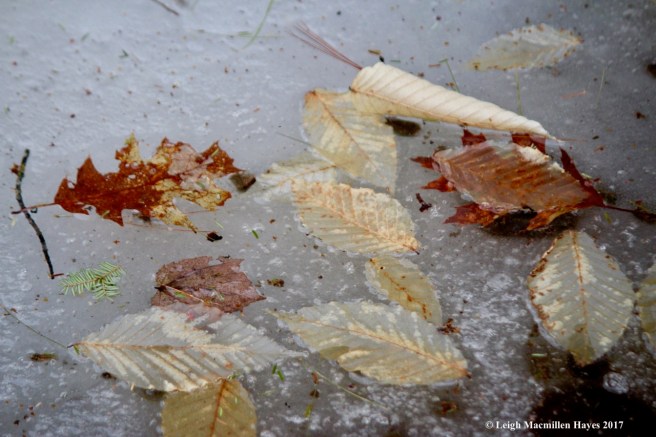
And then I slipped off the trail to stop at a vernal pool that I don’t often visit. The water is shallow, but tadpoles are growing.

o-tadpole 2

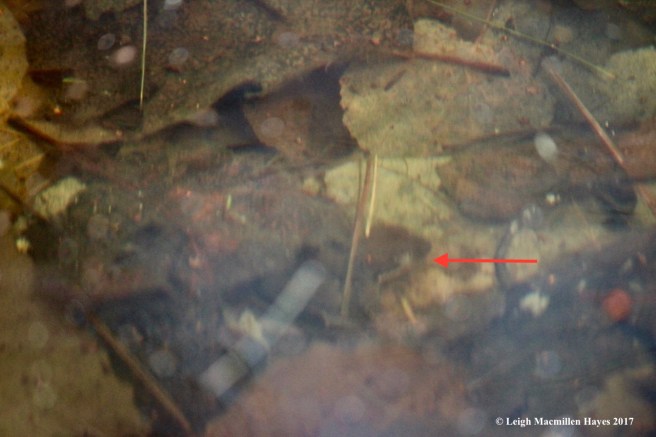
A week or two ago after they’d just emerged, they were easy to spot as they clung to their egg masses or swam by water’s edge. But they are maturing and I had to stand still or they’d disappear under the leaf cover.

o-water scavenger larvae

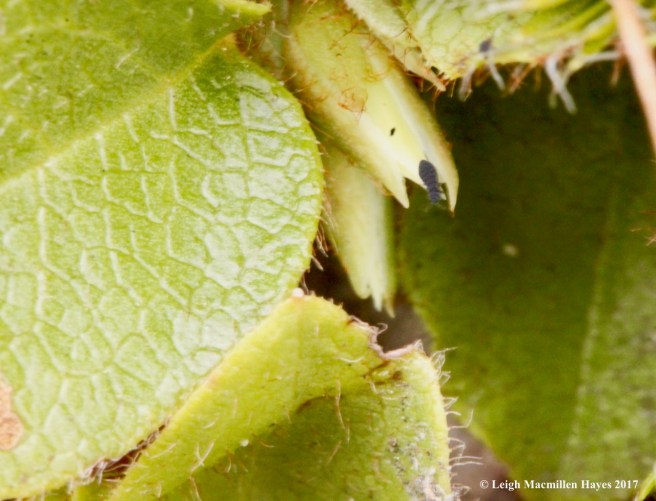
While standing there, I spotted another resident I didn’t immediately recognize–the larval form of a water scavenger beetle. According to A Field Guide to the animals of Vernal Pools,  “they are poor swimmers and will hang from the water surface (where they obtain oxygen) or hide in vegetation to await prey.” That all makes sense given their body structure.

o-sugar ant?

On the way back, another insect stopped me. I think they were sugar ants with a white thorax. But why were they on beech leaves? Then again, every insect seems to like beech leaves. I guess I don’t think of them as being sweet, but . . .

o-old gate in wall

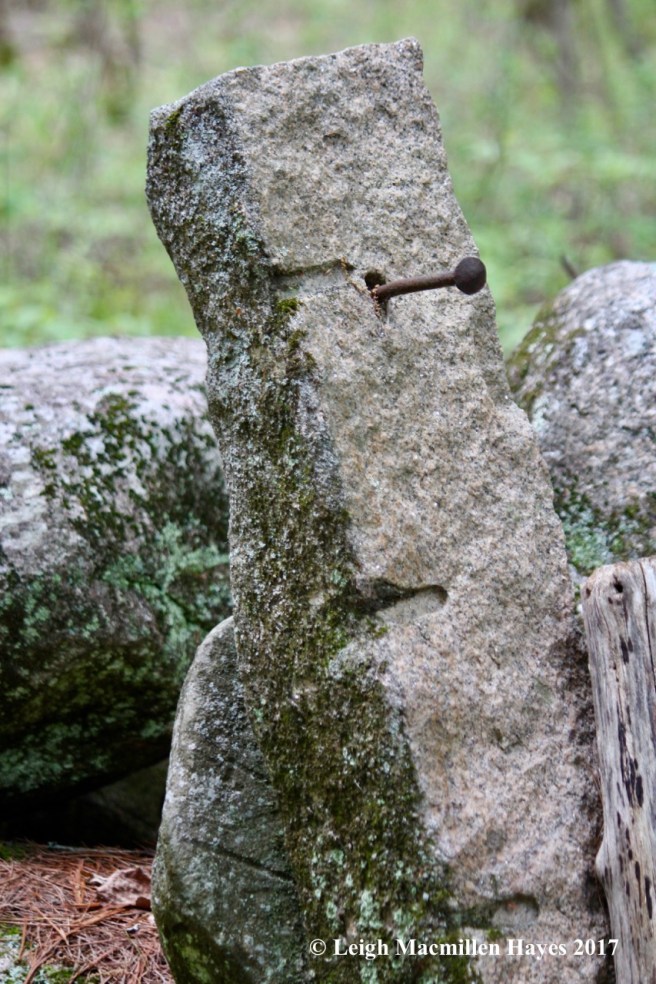
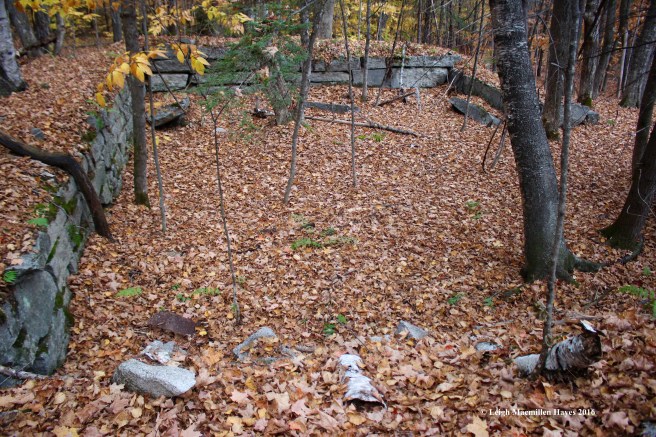
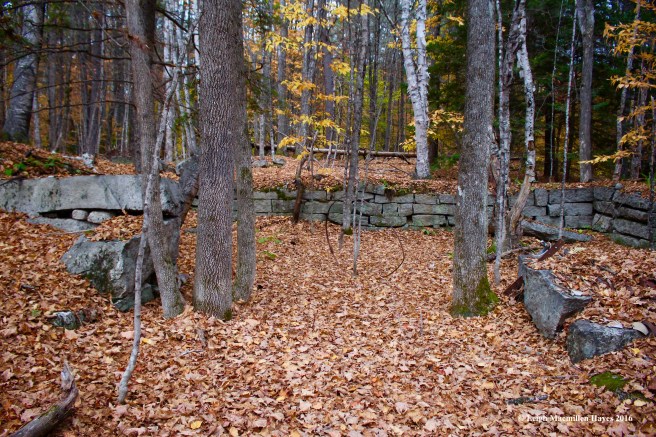
As I headed home, I paused by an old wall and gate. This land was farmed in the late 19th and early 20th centuries. The walls formed boundaries for animals and are owned by numerous neighbors I’ve never met. Thankfully, they let me and others cross–though few will do so until hunting season begins in the fall.

Anyway, it all got me thinking about who owns the land. And then I knew the actual answer. The plants. The trees. The flowers. The insects. The amphibians. The birds. The mammals. They all own the land. We are mere visitors. I thank all of nature for letting me trespass and gain a better understanding of its various life forms.

This land isn’t my land. And it wasn’t even made for you and me. But I have great reverence for it. And for those who have protected it.

Happy Memorial Day.

Sharing My Site

I count myself among the fortunate because pollen doesn’t keep me inside during its high season. Nor do the bugs or rain. Mind you, I do my fair share of complaining–after all I am human. At least I think I am, though I was honored to be called an ent yesterday. (Thanks Cyrene.)

Enough of that. Let’s head outside to see what we might see.

IMG_5267

True confession. I took this photo yesterday, but didn’t have time to write. Finding this jack-in-the-pulpit beside a granite bench by my studio was a complete surprise.

IMG_5741

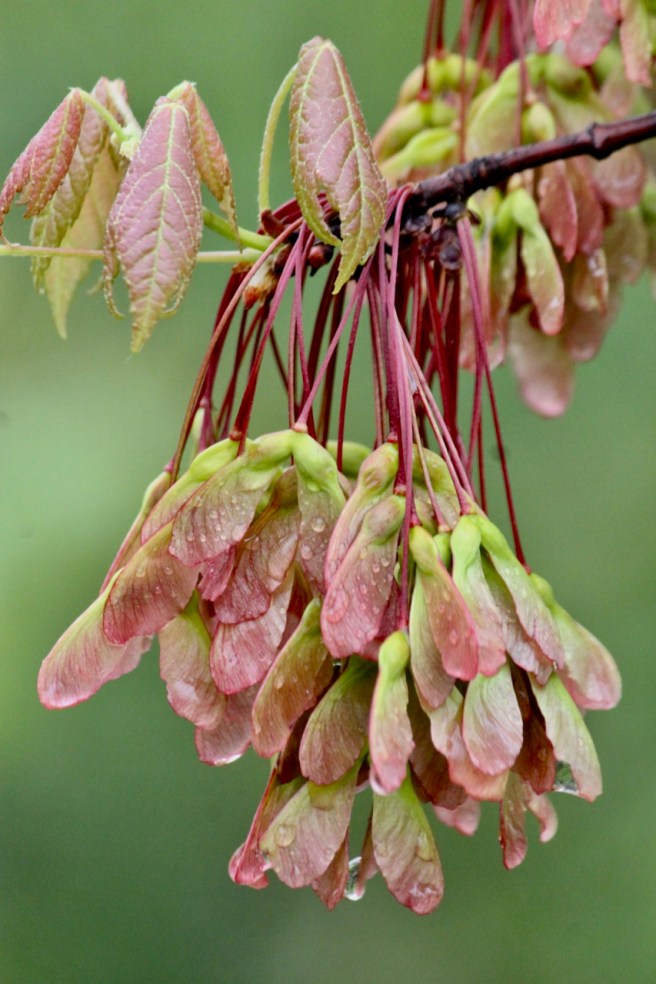
Today’s journey began in the front yard where sugar maple samaras dangled below full-grown leaves. Their presence will soon offer presents to the world below.

IMG_5302

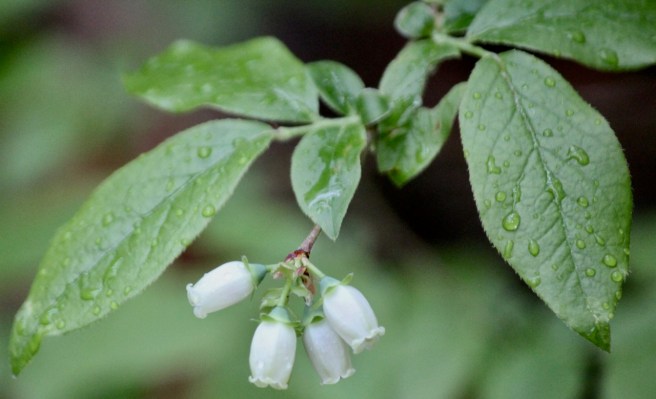
My next stop was beside another secret giver of gifts–blueberry flowers.

IMG_5301

And then I stepped into the woodlot, where a single striped maple which was the bearer of a deer antler rub last year and scrape (upward motion with lower incisors) this past winter, had something else to offer.

IMG_5480

Below its almost dinner-plate size leaves–flowers. Happy was I to find these little beauties.

IMG_5287

Perhaps . . . just maybe . . . there will be more striped maples offering their bark to those in need.

IMG_5517 (1)

Moving along, I stopped at the opening of the cowpath to admire baby hemlock cones when something white and bubbly caught my attention. My first spittle bug sighting of the year. An adult spittlebug whips up some slimy froth to cover its eggs in late summer and the nymphs cover themselves while feeding in the spring–and so I concluded that I was viewing a nymph’s locale.

IMG_5327

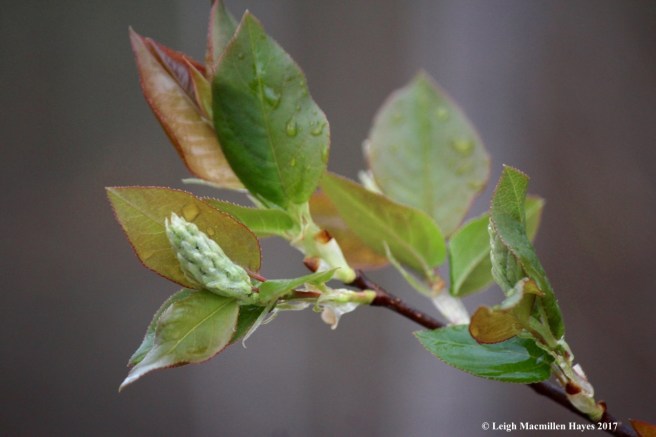
Emerging under the power lines, the community changes. It’s here that the land is especially wet and species one might find in a bog grow–such as the black chokeberry shrub. These also like rocky ledges, but such is not the case in this spot.

IMG_5532

I was thankful to find it for those flattened bright pink anthers brightened this damp day.

IMG_5696 (1)

Heading north, I sloshed through the deep puddles on a quest to find the sundews I discovered growing in this area for the first time last fall.

IMG_5703

No such luck, but I did welcome the sight of the candy lichen fruits exploding from their crustose base. And then . . . and then . . . what did I see (but only when I looked at the photograph on my computer, and so now I know where they are located)? The round-leaved sundews–do you see them in the bottom right-hand corner? These are carnivorous plants (think Venus Flytrap) and their prey consists of small insects. Already, I can’t wait to make their acquaintance again.

IMG_5583

I turned around and headed south–on my way to the vernal pool. But before passing through a stonewall, I had to look at the bunchberries in bloom.

IMG_5581

Normally, a bunchberry plant has two-sets of leaves. But . . . when one is mature enough to grow a third set, typically larger leaves (perhaps to capture more energy) than the first two sets, it produces four white bracts that we think of as petals but they are actually modified leaves. The flowers are in the center–tiny as they are.

IMG_5680 (1)

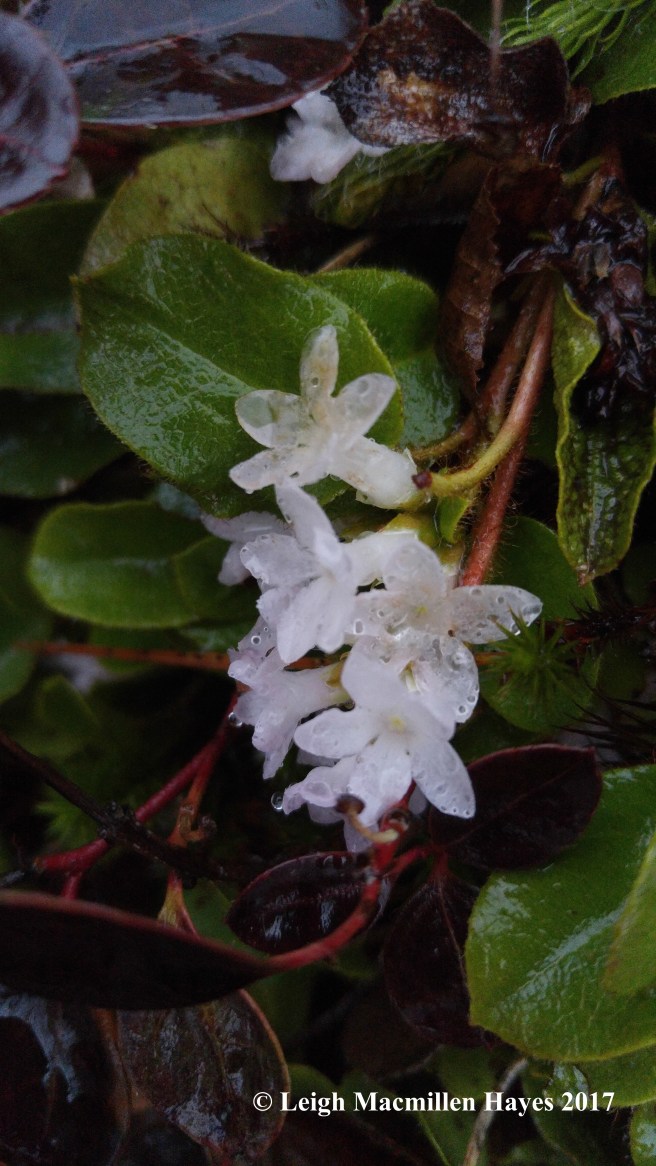
And because I was in the neighborhood, in the land of mosses, reindeer lichens, Canada Mayflowers and wintergreen, trailing arbutus (aka Mayflower) spoke up. Its flowers were slowly transforming from white to rust and I shouldn’t rush the season, but I can’t wait to see its fruit again.

IMG_5586

At last I reached the vernal pool and realized I wasn’t the only visitor. What perfect hunting ground it proved to be for the . . .

IMG_5593

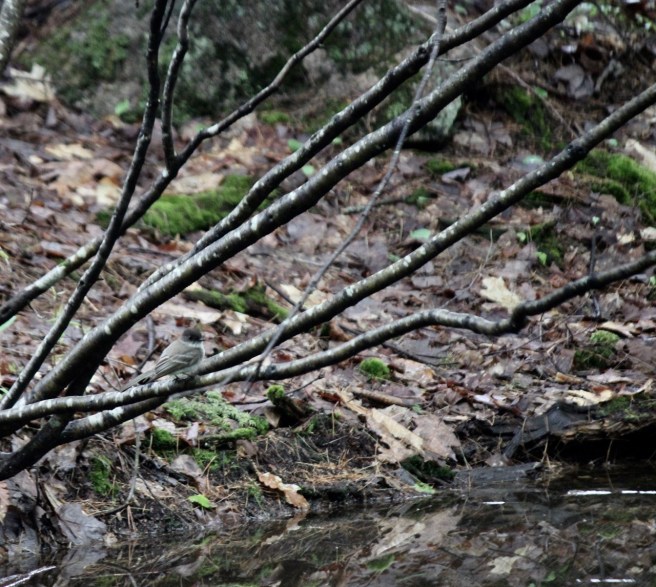
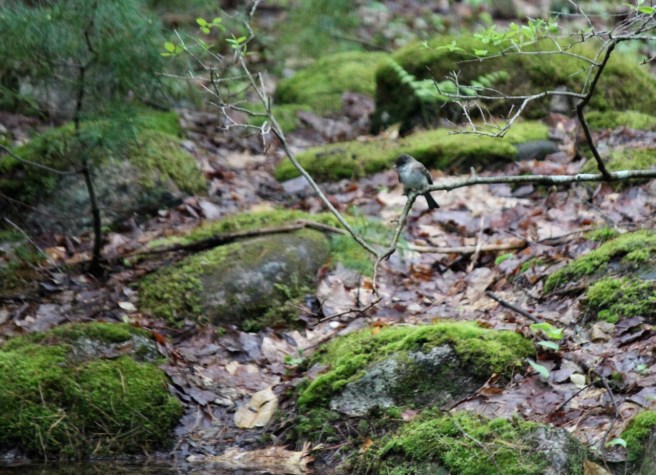
phoebe. I cheered for its insatiable insect appetite.

IMG_5596 (1)

Because the day was dark, it was difficult to see tadpoles, but I did note that many spotted salamanders were still forming. I also noted that the water level has dropped a wee bit–hard to believe–and where yesterday I found a few egg masses a bit high and dry, today they were gone. Something enjoyed eggs for dinner.  Scrambled or otherwise, I’m not sure.

IMG_5625

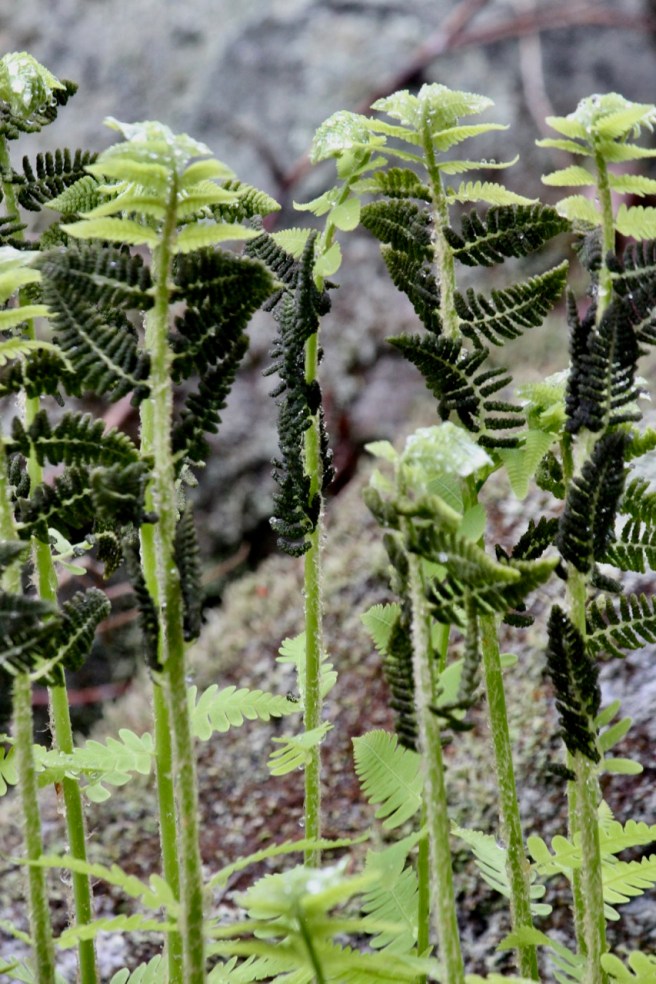
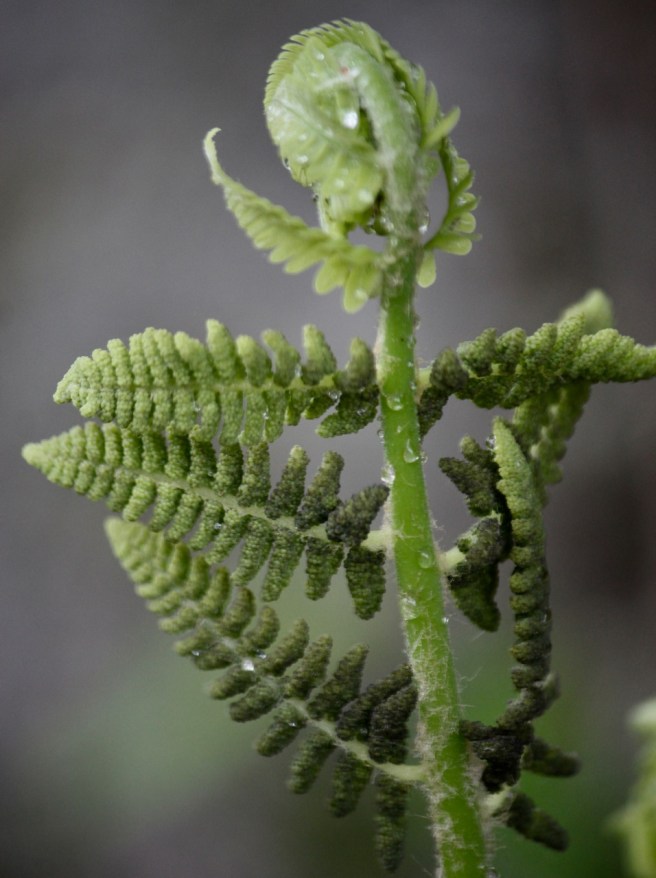
Back on the trail and at the next stone wall, interrupted fern showed off its fertile pinnae near the middle of the blades. It’s called interrupted because of the interruption in the blade. Again, this is an inhabitant of moist to wet forests and so it was no surprise to find it growing there.

IMG_5609

A fertile blade, such as this, may have two to seven pairs of middle pinnae.

IMG_5619

The globose sporangia is bright green when young, but darkens to tan or black as it matures.

IMG_5362 6.10.27 PM

On the other side of the wall, I spied some more flowers.

IMG_5360

These were the elongated loose clusters of black cherry trees, that open when the leaves are fully developed.

IMG_5636

One that flowers and fruits before its leaves are fully developed is the red maple.

IMG_5630

And fruits and fruits . . . need I say more?

IMG_5375

Though the wind blew, the samaras weren’t yet ready to let go and set down their roots. It won’t be long though, I’m sure.

IMG_5403

Finally returning home, I passed by the granite bench once more and was still stymied by the site I saw about a half hour after discovering the jack-in-the-pulpit yesterday.  It had been consumed. I suspected the woodchucks that live under the studio. Either that or a bear came along and I missed it.

And so ended today’s tramp. Thanks for traipsing along with me to visit these sites out our back door. I especially welcome those who are homebound with allergies, like my friend Jinny Mae. She gave me the inspiration to take a look today–to be her eyes for the moment and share my sight.

Walking with Ursula

No matter when or where I walk, Ursula Duve is always along. She sees what I see, smells what I smell, feels what I feel, tastes what I taste and knows way more than I’ll ever know.

h-Ursula 2

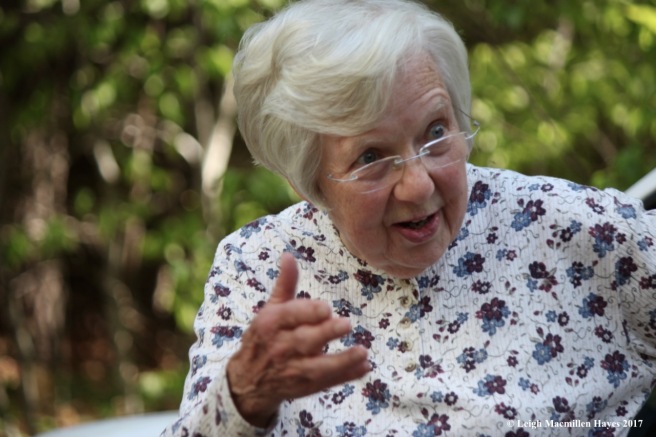
And so it was today that a bunch of us followed this delightful little woman as she led us down the trail at Lakes Environmental Association’s Holt Pond Preserve.

h-sign

We gathered in the parking lot, where the black flies tried to swallow us whole. But, we got the better of them and practiced mind over matter. Of course, bug spray and our flailing arms helped–or at least made us feel as if it was worth the effort.

h-wild oats 1

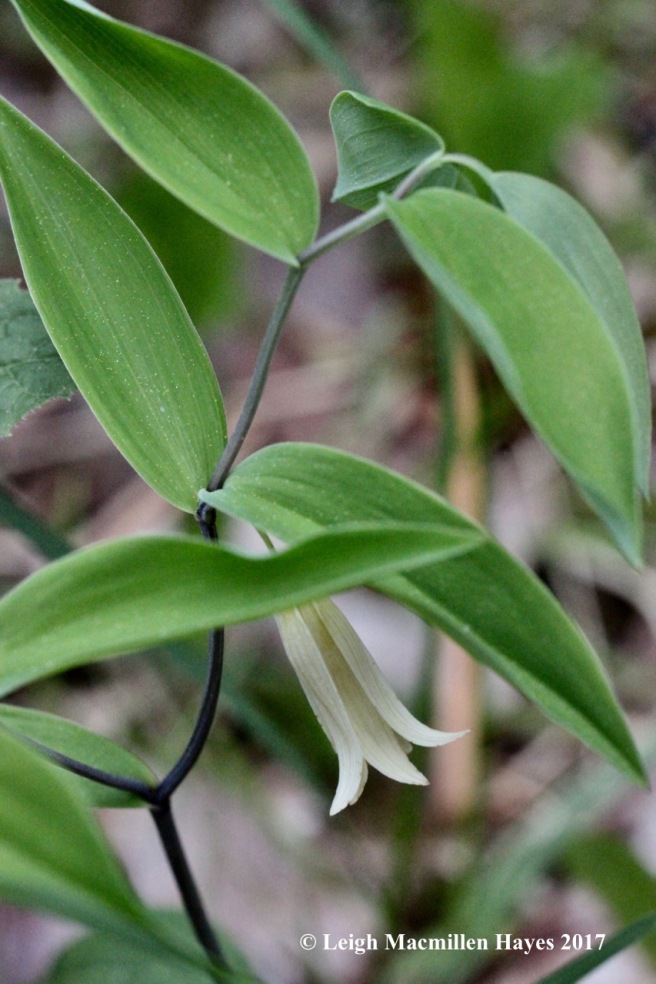
After an introductory greeting from LEA’s teacher/naturalist Mary Jewett, we stopped frequently as Ursula shared stories of plants and life. You see, she was born in Hamburg, Germany, and grew up during WWII so she has quite a few memories flowing through her system, but as she reminded us, with the bad comes the good. And the good comes from moments she associates with wildflowers, like this bellwort.

h-painted trillium

Having lived in the United States for 50+ years now, with the last nineteen in Maine, Ursula considers herself a Mainer despite her German accent because she loves it here. And she knows when and where each flower will bloom, such as the painted trillium.

h-chokeberry buds

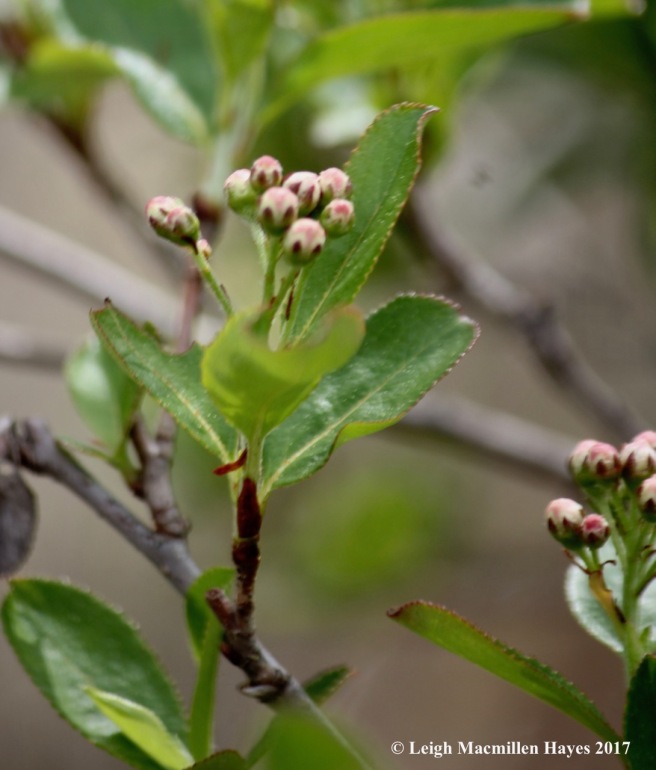
Even those not yet in bloom drew her attention–this being a chokeberry along the first boardwalk.

h-pitcher 3

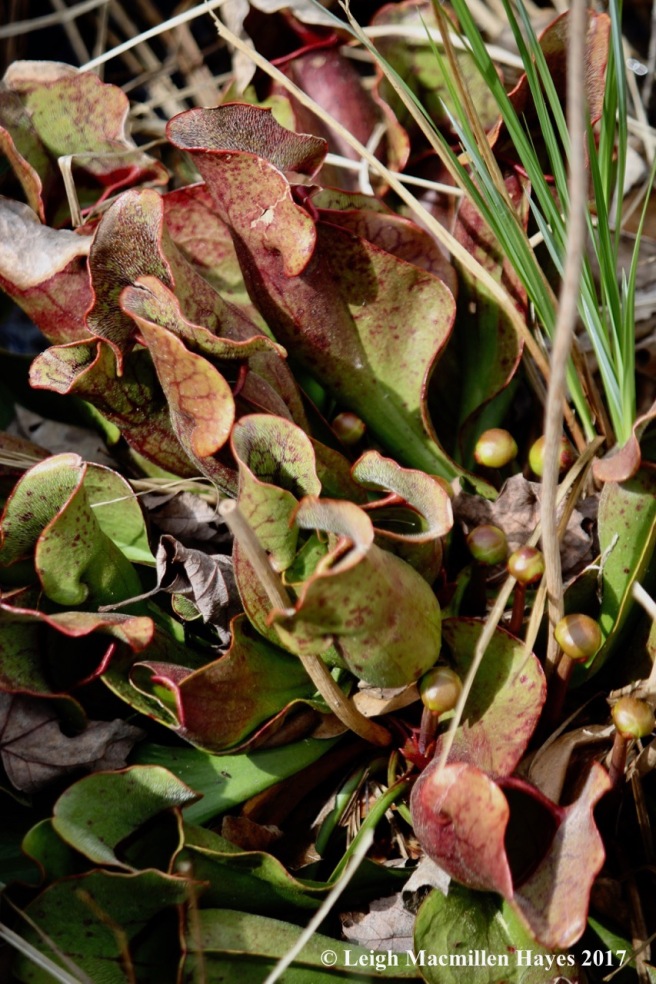
One of the finds Ursula enjoys sharing with others is the pitcher plant, a perennial herb with pitcher-shaped leaves. We noted that this particular one sported new flower buds.

h-pitcher flower

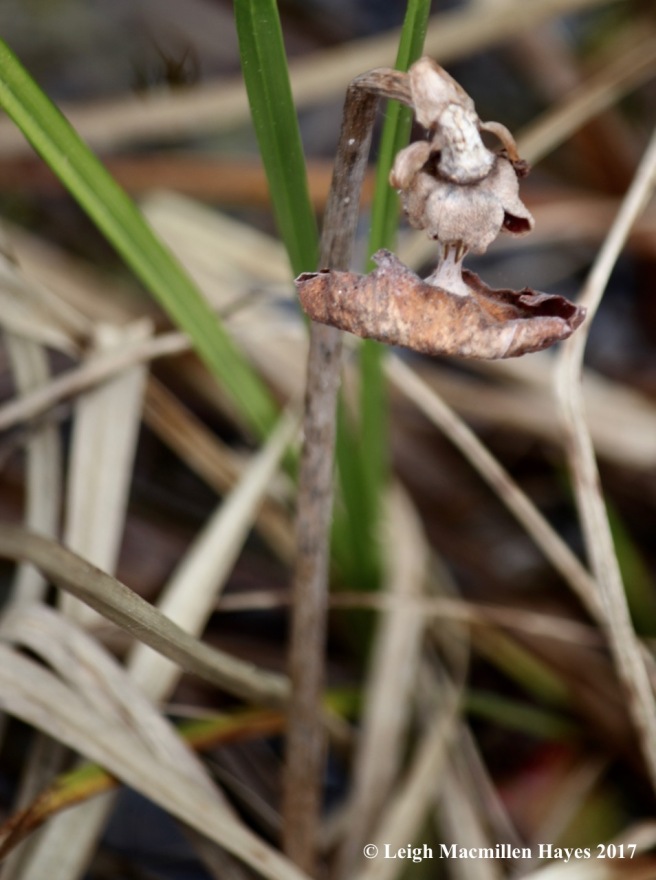
And on another, the otherworldly shape of last year’s now woody flower capsule–its job completed.

h-pitcher plant 1

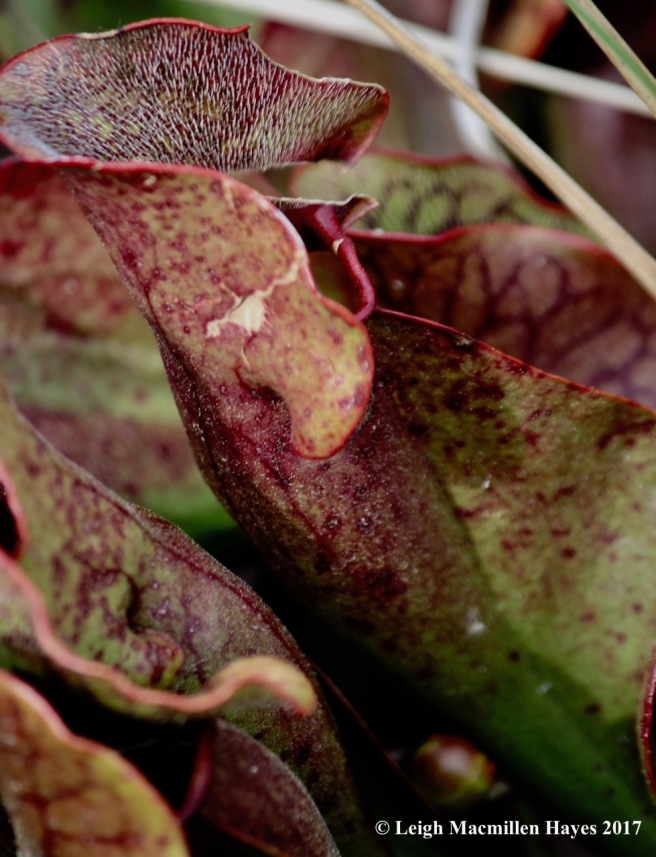
Ursula is as awed as I am by the power of the pitcher plants. Color, scent (that I’ve never smelled) and nectar in glands near the top of the pitcher leaf attract insects. Once inside, those downward-pointing hairs make it difficult to leave. So what happens next? The insect eventually drowns in the rainwater, decomposes and is digested by the plant’s liquid, which turns phosphorus and nitrogen released by the insect into supplemental nutrients for the surrounding peat. Interestingly, no “joules” or units of energy are passed on through this process to the plant itself. The plant gathers its energy through the process of photosynthesis instead.

h-rhodora 1

As we continued, we were wowed once again–this time by the sight of the showy rhodora. Rhodora flowers fully before its leaves emerge and so today they were but small nubs located alternately along the shrub’s branches.

h-rhodora 3

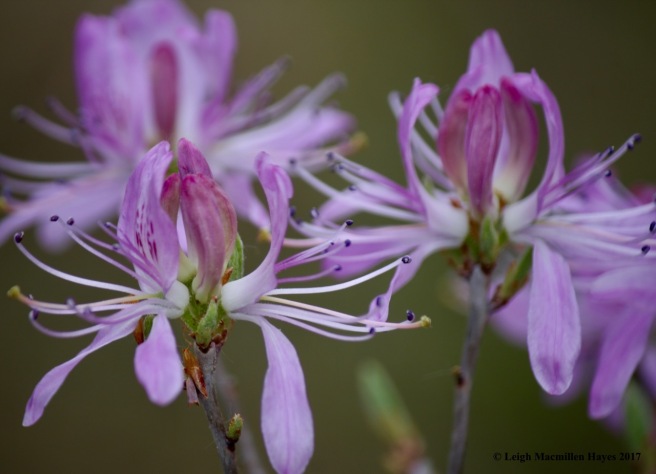
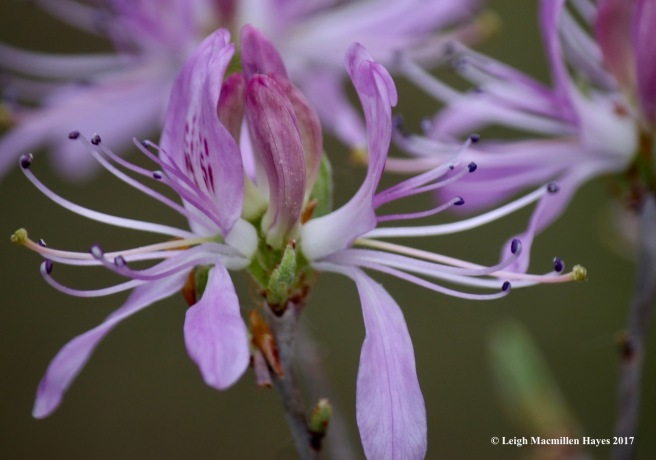
But those flowers–oh my! The rose-purple bloom has what’s considered two lips–with the upper consisting of three lobes and the lower of two. And each produces ten purple-tipped stamen surrounding the pistil, where the pollen will germinate into a many-seeded capsule.

h-leatherleaf

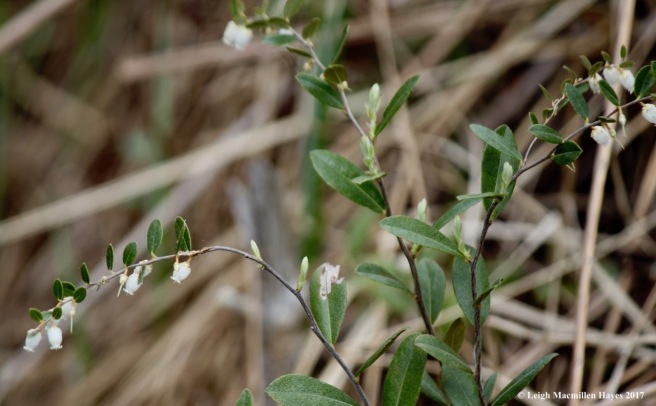
Like the rhodora, another member of the heath family in bloom was the leatherleaf–with bell-shaped flowers formed in leaf axils and dangling below the stem as if it was laundry hung out to dry. One way to differentiate this plant from the highbush blueberries that can be found throughout the preserve, are the alternate, upward-pointing leaves, which decrease in size as your eye moves toward the tip of the stem.

h-honeysuckle 1

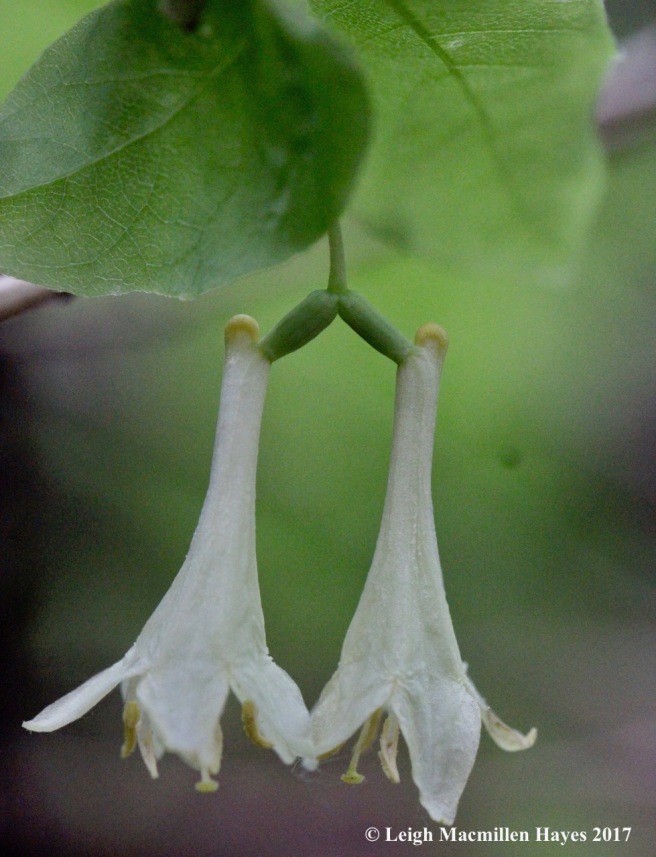
Just before we stepped out onto the Quaking Bog boardwalk, Mary pointed out a native honeysuckle. In my memory bank, I couldn’t remember ever seeing it before, and if I had, well . . . I was glad to make its acquaintance again.

h-green frog 2

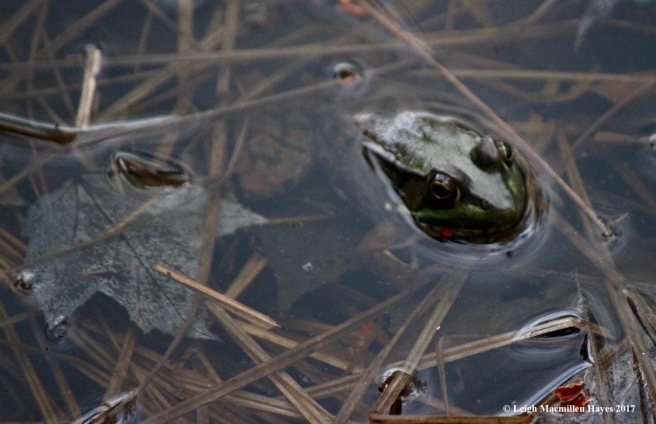
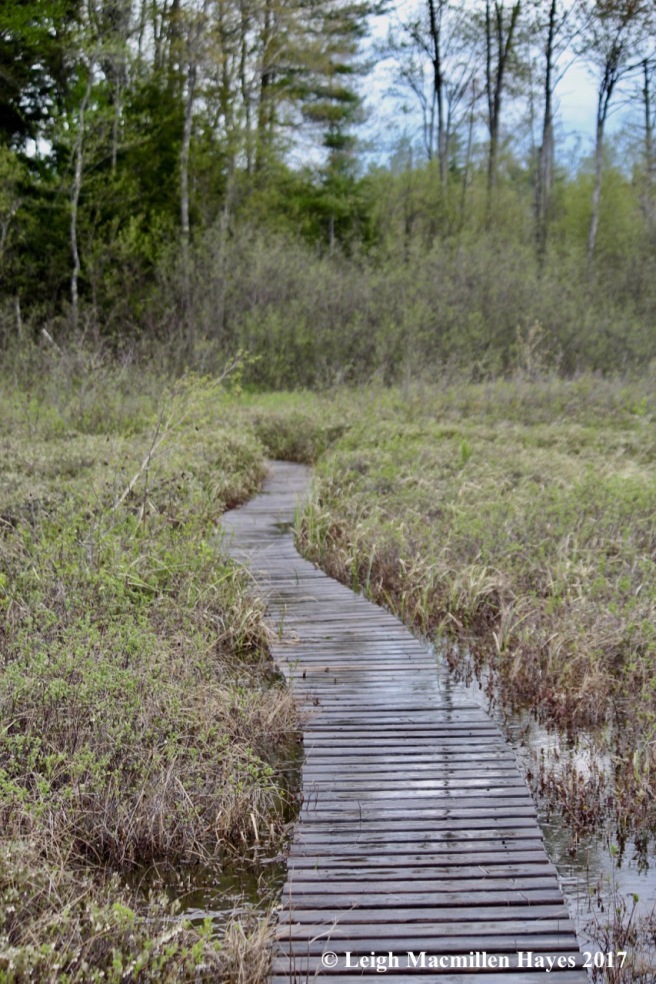
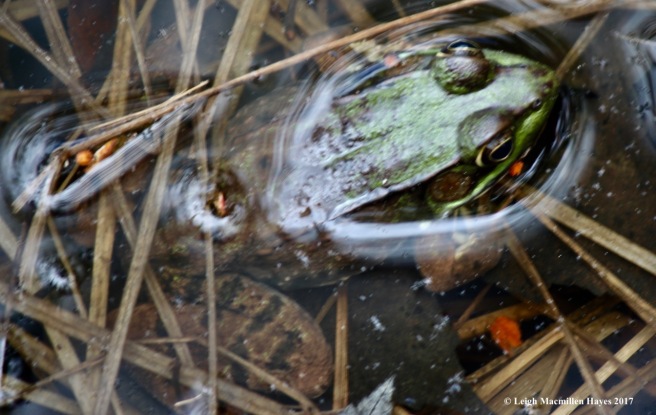
And then we stepped onto the boardwalk. Folks up front paused to admire a green snake, while those of us in the back noticed a green frog. It stayed as calm as possible in hopes that we wouldn’t see it. Nice try.

H-Holt Pond

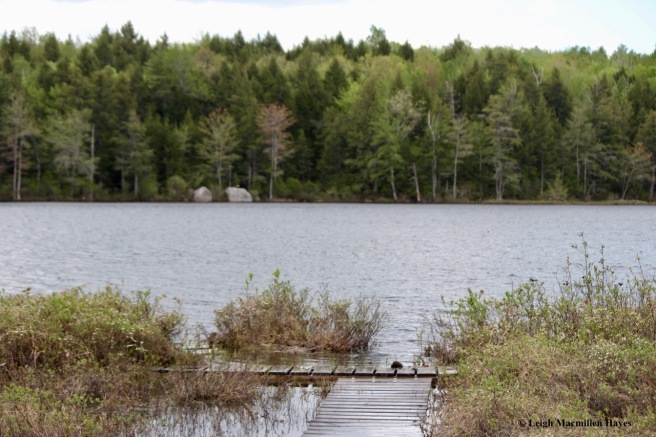
Like all ponds and lakes right now, the water level remains high and so walking the boardwalk meant wet hiking boots.

h-quaking bog 2

But that didn’t stop some of us. Fortunately, mine are waterproof.

h-green frog

Just before we stepped from the boardwalk back onto land, I saw that the frog was still there.

h-hobblebush flowers 1

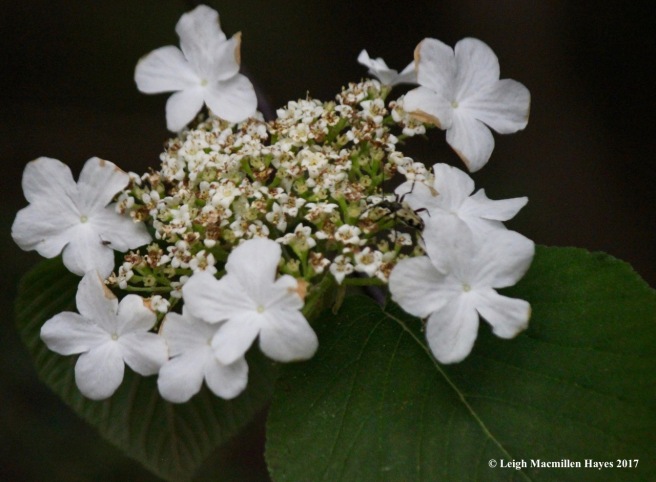
On the trail again, another showy flower called for our attention–hobblebush.

h-hobblebush 1

While some looked fresh, others were beginning to pass and their fruits will soon form. We noted the sterile outer blooms that surround the inner array of small fertile flowers. And a beetle paying a visit.

h-Mayfly1

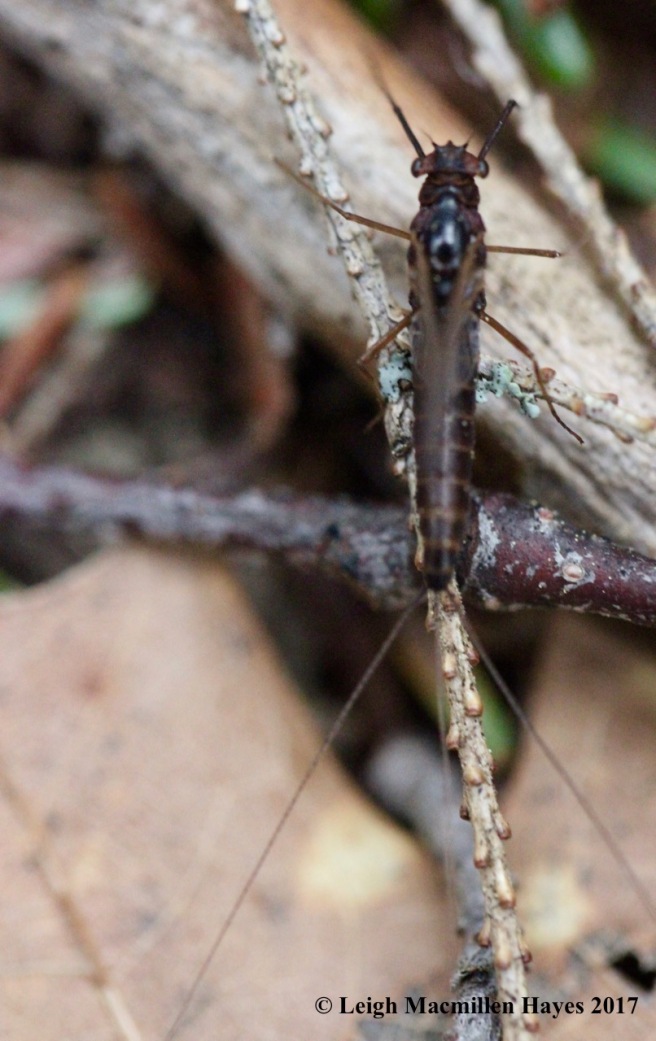
Speaking of insects, a slight movement on the ground pulled us earthward.

h-mayfly 2

We’d found a Mayfly–perhaps just emerged and its wings drying.

h-Indian Cucumber root 1

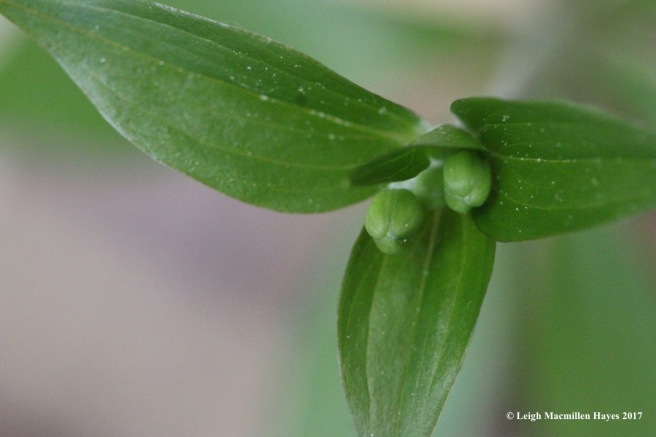
In the last wooded section we would cover for the day, we noticed that the two-tiered Indian Cucumber Roots have a few buds. I can’t wait for them to flower soon.

h-goldthread 2

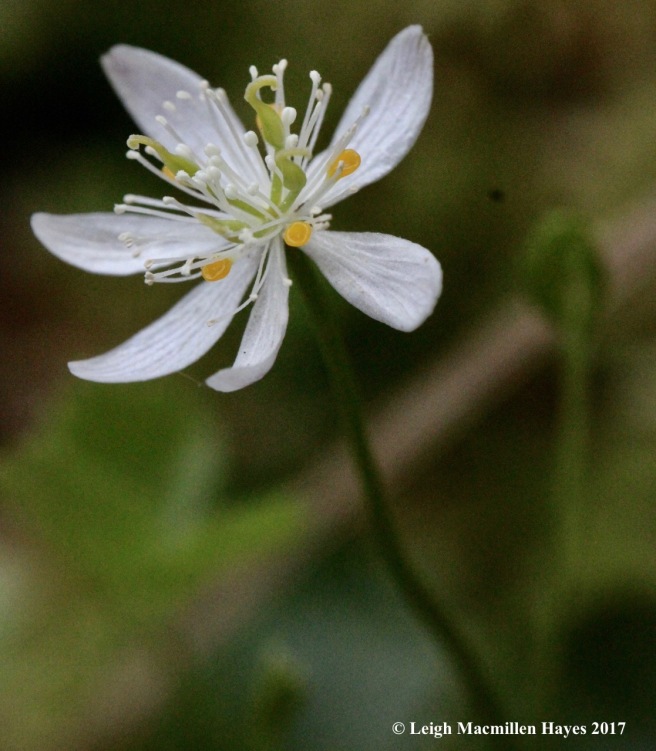
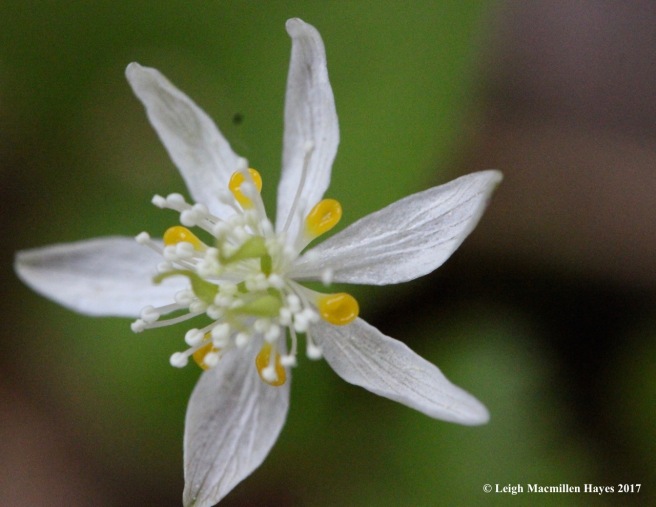
Among the flowers that I’ll always associate with Ursula because she’s the first to have introduced me to them, is the goldthread, so named for its golden-colored root. We usually identify it by its cilantro-shaped leaves, but right now the dainty flowers are not to be missed. What looks like petals are actually sepals and there can be five to seven of them. And stamen–many. Goldthread can feature 5-25 stamen.

h-goldthread 3

Even the number of yellow-and-green pistils can vary from three to seven. Ah nature–forever making us think.

h-dwarf ginseng 1

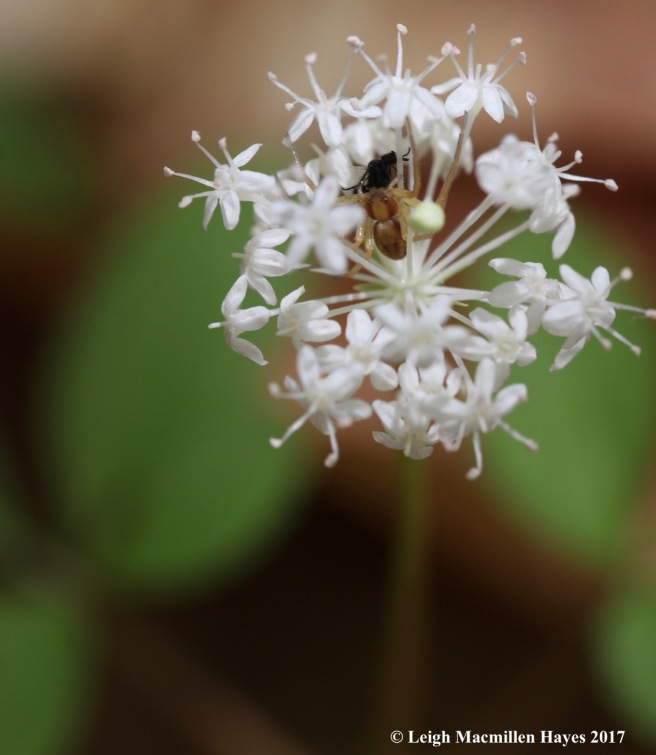
The other plant I associate with Ursula is dwarf ginseng. Its explosive umbel consists of many flowers. And in this one, a dining crab spider.

h-spring tail wave

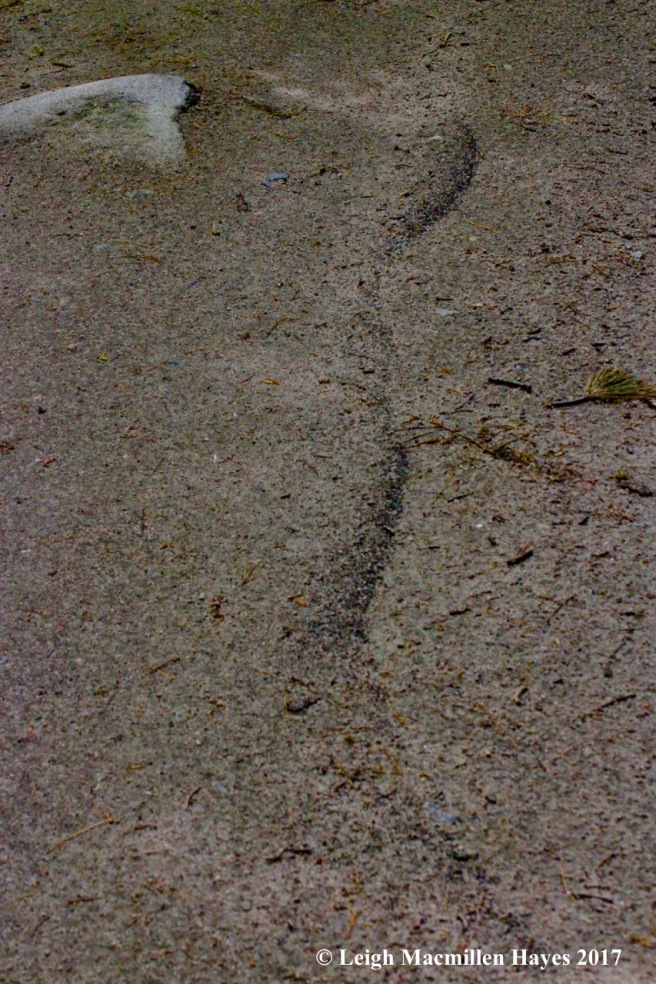
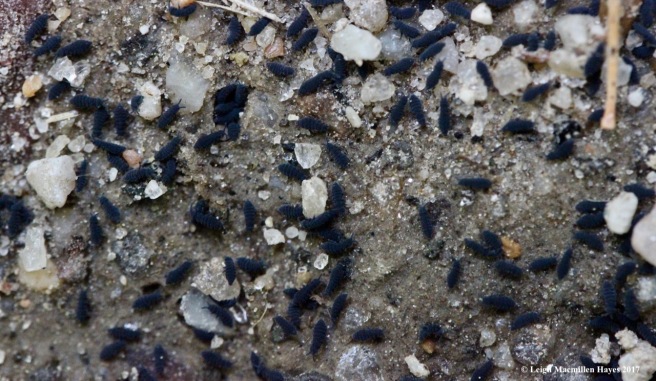
Finally, we found our way to Grist Mill Road and headed back toward the parking lot. But even on the road we found something to wonder about when one member of our group pointed to the curvy black design. In the past, I’ve always dismissed it as some sort of mineral associated with the dirt.

h-spring tails on sand1

Today, I learned it was none other than those good old spring tails or snow fleas we associate with late winter, but are really present all year. Something new to notice going forward.

h-Ursula1

At the end of our walk we all gave thanks to Mary and Ursula. We’d come away with refreshers and new learnings.

And we’d been reminded by Ursula that though she and her husband, Wolfgang, can no longer get out as often as they’d like, after sixty years of marriage they still have fun reminiscing about their many explorations together. A goal for all of us to set.

Most often this wildflower and bird enthusiast walks vicariously with me as she reads my blog entries, but today it was my immense pleasure to walk with her. Thank you, Ursula, for once again sharing your love of all things natural with the rest of us . . . and your optimistic philosophy of life.

Oh and a question for Wolfgang, while Ursula walked with us, did you get on the treadmill?

April Showers bring . . .

May showers!

v-green yard

It feels like it has rained every day for the past week, but the grass is certainly green.

v-pool (1)

And the vernal pool full. Between today’s downpours I visited it a couple of times, so excited by my findings.

v-wood frog eggs developing

The wood frog eggs had turned green with a symbiotic algae and I could see the tadpoles developing inside.

v-tadpoles 2

The green coloring made the their eggs contrast with the salamander masses. I was thrilled to see movement among the green and realized that . . . drum roll please . . .

v-tadpoles 6

my babies were slowing hatching. Of course, they are mine–even though the frog pond is located on a neighboring property. I’ve been an expectant mother for several weeks, and now . . . I’m nervous about the future, as any parent would be.

v-tadpoles 1

Will my babies survive? Will they have an opportunity to transform into their terrestrial forms?

v-tadpoles 7

Or will the pond dry up too soon as it has the last few years? I guess I’ll be forced to continue to stop by. Oh darn! One thing I have noted since the ice melted: I’ve yet to see a predacious diving beetle and there are hardly any mosquito larvae flipping about. That’s good for the tadpoles on one end of the spectrum and not so good on the other. To be food and to eat food.

v-sallie eggs 1

I also wondered, will the  white and opaque masses of the spotted salamander eggs turn green like they are supposed to–also dependent on a symbiotic algae?

v-hole 4

After checking on my wee ones, I walked the pond’s perimeter and noticed activity at a spot I’ve been keeping an eye on in the southwest corner. Well, not current activity, but recent. For the first time this year, a hole has been excavated.

v-hole 3

It’s the same hole that was excavated last year. Darker debris was piled in front.

v-hole1

At about three or so inches across, I wondered who owned it. Too small for foxes, and certainly too wet. Too big for chipmunks and a dirty dooryard. Could it be a mink? Do they leave a messy dooryard? I found the same hole excavated last year, but never any other evidence of the maker. I’ll continue to check for any other signs.

v-raindrops

My eyes reverted back to the pool, where raindrops and reflections created an artistic display.

v-maple dust lichen

And then I pulled myself away, frozen were my fingers. The greenness of the world continued to show its face everywhere I turned from the maple-dust lichen to . . .

v-white pine

young white pines, their candelabras growing long,

v-maple leaf and samara

red maple samaras upon old leaves,

v-cherry 1

and cherry flowers developing.

v-mayflower1

What do April showers bring? Mayflowers (trailing arbutus), of course,

v-Canada mayflower 2

Canada mayflowers,

v-tulip 1

and garden May flowers.


Meeting Old Friends For The First Time

Who are you? And you? And you? Such were the questions everywhere we turned this morning.

I’d picked up a few Greater Lovell Land Trust docents on the way to our Tuesday Tramp location and met a few others at the gate. After our meet and greet, we walked down the road at breakneck speed, not stopping much because we were more focused on catching up.

s-bear scat

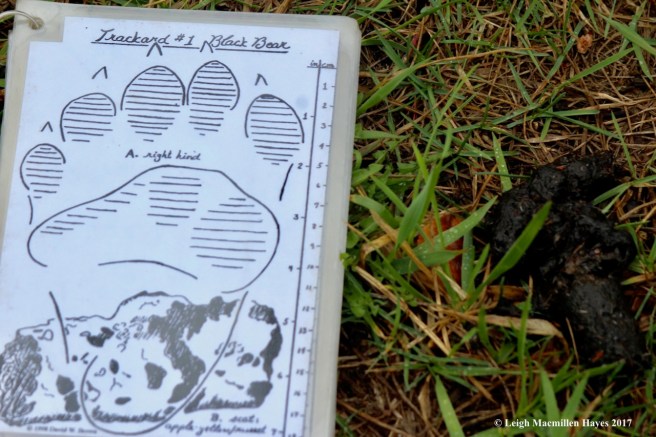
I say not much, but scat did give us pause. And in this place, we can always count on bear scat. Rather fresh bear scat. We never did see the bear, but knowing it was there was enough. Not long after that we listened to a barred owl. And then we flushed a couple of wood ducks that we barely viewed. It was OK with us that we didn’t see these critters–we felt honored to share the place.

s-into the orchard

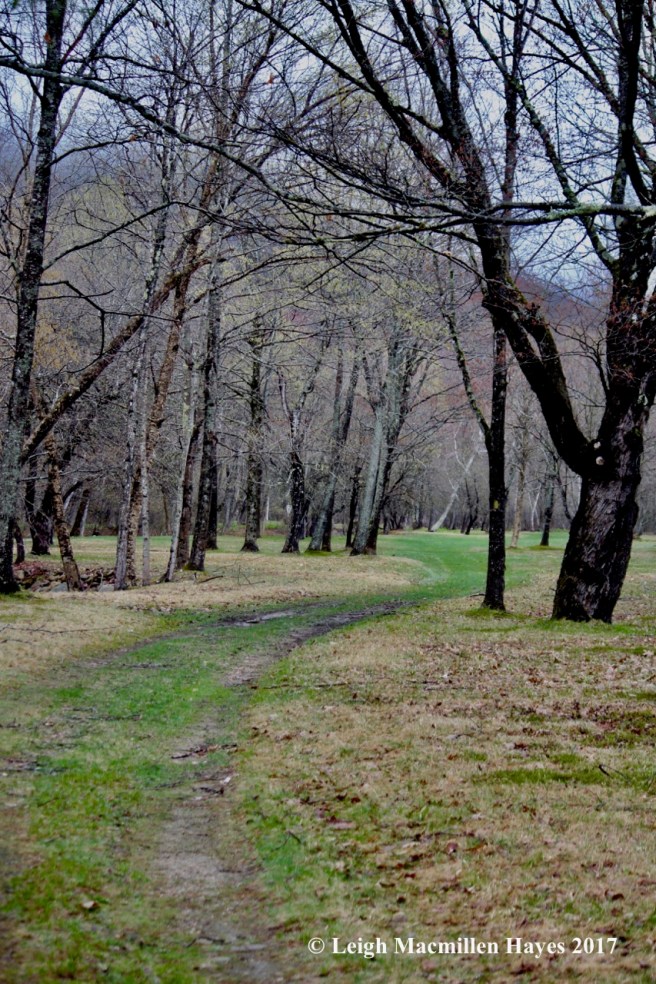
When the dirt road turned to grass, we continued on, anxious to reach our destination just below the cliffs that provided a backdrop to the spring foliage.

s-Rattlesnake Brook

As the brook came into view, our excitement rose.

s-birch reflections

At last, we’d arrived.

s1-slender toothwort

And that’s when the “Who are you?” questions really began to form. The slender toothwort wasn’t yet in bloom, so we had to key it out in Newcomb’s Wildflower Guide based on the compound leaves that were toothed. The flower buds hinted at pink, thus helping us. But really, we felt as if we’d never met this friend before.

s-sarsapirilla

And then there was the young stalk of a wild sarsaparilla. We shared a brain–looks like poison ivy when the leaves first open, three leaves, globe-shaped flower underneath, there’s another form–bristly . . . bristly sarsaparilla. And we suddenly remembered that we knew this friend, which was probably a wild sarsaparilla, the more common of the two.

s-bellwort

And who next showed its face–drooping in form as its flower did? Again, we had to think it through–finally recognizing it as a sessile-leaved bellwort or wild oat. Of course, once we knew it, we identified it with one amongst our group who first introduced us to it. For the rest of the summer, we’ll know it and will always recognize it as her plant.

s-false hellebore patterns

Then there was the accordion-leaved plant that grew abundantly–its spring green appearance enhanced by rain drops. We knew we knew it. We just had to rack our brains some more, much as one does when encountering any acquaintance not seen in a long time. False hellebore finally came to our tongues.

s1-dandelion

Thankfully there were some that didn’t tax our brains. We’re grateful for dandelions wherever they grow for the bees love them and we love the bees. We need the bees. We NEED the bees.

s-hobblebush 1

Other friends we could name immediately, but still were happy for the moments spent in their presence, like the hobblebush,

s-red trillium 2

red trillium,

s-dutchmen

and Dutchmen’s britches,

s-dutchman's britches leaves

plus their feathery leaves.

s-lady fern crosiers

Among our findings, we also had fern crosiers to greet once again, including lady ferns

s-cinnamon or interrupted

cinnamon,

s-Christmas fern crosier

and Christmas.

s-airstrip 1

After a delightful-despite-occasional-raindrops, three-hour tour, it was time for us to follow the road back.

s-friends 3
Nancy, Dave, Joan, Pam and Bob

We’d spent the morning among old friends, including two we hadn’t seen for months–we were happy to meet Pam and Bob again for the first time this season. Fortunately, we remembered their names ;-) and they ours. Phew!

As spring unfolds into summer, we know we’ll all continue to meet old friends for the first time–and share a brain as we try to remember their names. They say it takes a village. We love ours because we know it’s okay to ask, “Who are you?” Someone will have part of the answer and someone else will add to it and BINGO.

Love/Hate Sundate

Some days are made for hikes and today was one of them. The temperature was right–in the upper 40˚s-low 50˚s. No sun. And no bugs.

So, after church, my guy and I drove to the trailhead for Burnt Meadow Mountain in Brownfield, Maine. At the signs indicating the trail splits in two–North Peak to our right, Twin Brook to the left, we knew we planned on covering the loop, but my guy stopped and asked which way I wanted to ascend the mountain.

Nose scrunched, I replied, “North Peak.”

He chuckled for he knows my love/hate relationship with this mountain.

b-red oak leaves

Today my love began with the new leaves, like that of the red oak,

b-red maple1

red maple,

b-striped maple

striped maple,

b-beech leaves 1

and beech. I worshiped them all for their subtle colors and textures. Spring is the time of year that reminds us to live in the moment, for the natural world demonstrates constant change.

b-trailing arbutus

And then there were the flowers, like the trailing arbutus, aka mayflower.

b-Canada mayflower

And another of a similar name, Canada mayflower.

b-shad 1

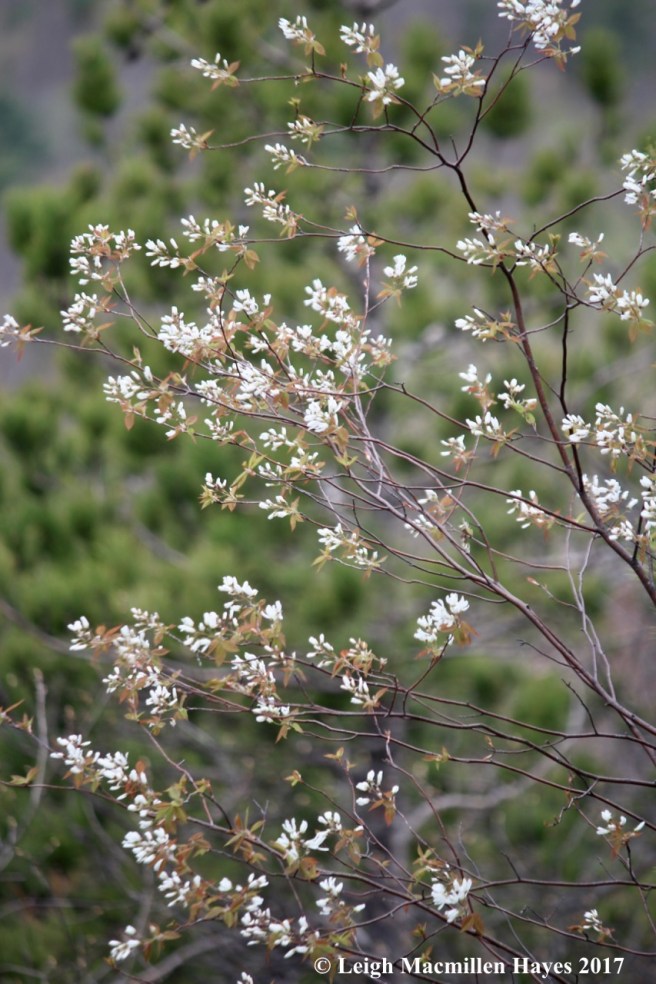
In the shrub layer, occasionally we came upon the beauty of serviceberry or shadbush flowers flowing in the breeze, exhibiting their own take on these fleeting moments.

b-early saxifrage

And cleaving to the rocks as we climbed, early saxifrage. It’s also known as rockbreaker for this habit, and perhaps suggested the Latin name–Saxifraga virginiensis. Saxum-rock and frangere-to break. A funny name for an uncommon display.

b-summit ahead

I did my best admiring my surroundings for I knew what awaited. My guy paused as the summit came into sight,  expecting me to comment. For once, I kept quiet.

b-summit climb

And then, when the time arrived, we both channeled our inner mountain goat and sought hand holds and foot holds as we scrambled up the nasty dash to the top. Ha ha. It’s difficult to scramble when your heart pounds while your body quivers. This is the section I most hate–and as I always told our sons when they were youngsters, hate is a strong word. I knew I could do this for I’ve done it many times before, so I tried not to take too long as I considered my next move. Plus, rain drops began to fall and I didn’t want to be stuck contemplating on slippery granite. But still.

b-lunch rock

Finally–success. We’d reached the flattened top of the mountain–such a welcome relief after that horrible section. You’d think it was miles long the way I carry on about it. The rain drops ceased and we sat on lunch rock to dine–dirty hands and knees our badges of honor.

b-summit 1

Our view from the rock–looking back toward our point of ascension.

b-summit 2

And forward toward Stone Mountain. After lunch, our plan was to follow the Twin Brooks Trail that passes through the saddle between Burnt Meadow and Stone.

b-summit 3

And to our right–looking toward the White Mountains.

b-summit trees:layers

Though the view is almost 350˚, our immediate view behind lunch rock offered layers of life–blueberries, a young paper birch and a white pine.

b-twin brooks trail down

At last we started down. The Twin Brooks Trail is longer, but less of a struggle. That being said, it’s not a walk in the park as there are constant roots and rocks seeking attention.

b-mt washington1

But occasionally there are views. I was afraid we might not see Mount Washington today, but it didn’t disappoint.

b-birch catkin1

On the way down, we were in the land of the birch, their catkins growing long . . .

b-birch catkin pollen

and exploding with life-giving pollen.

b-viola

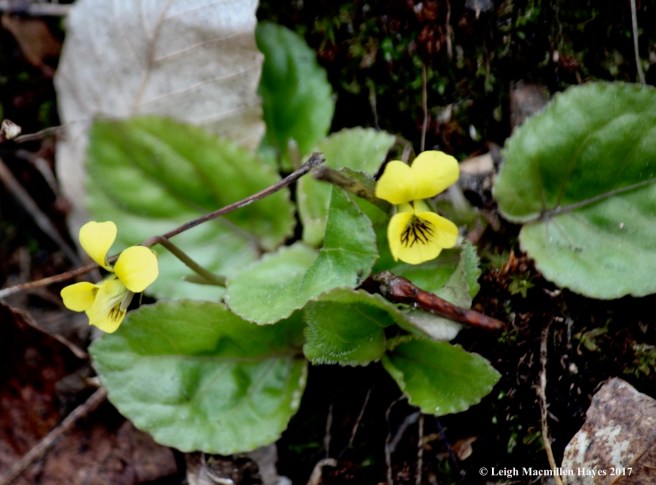
There were violas to admire.

b-shad 2

And more shadbush.

b-bear claws 1

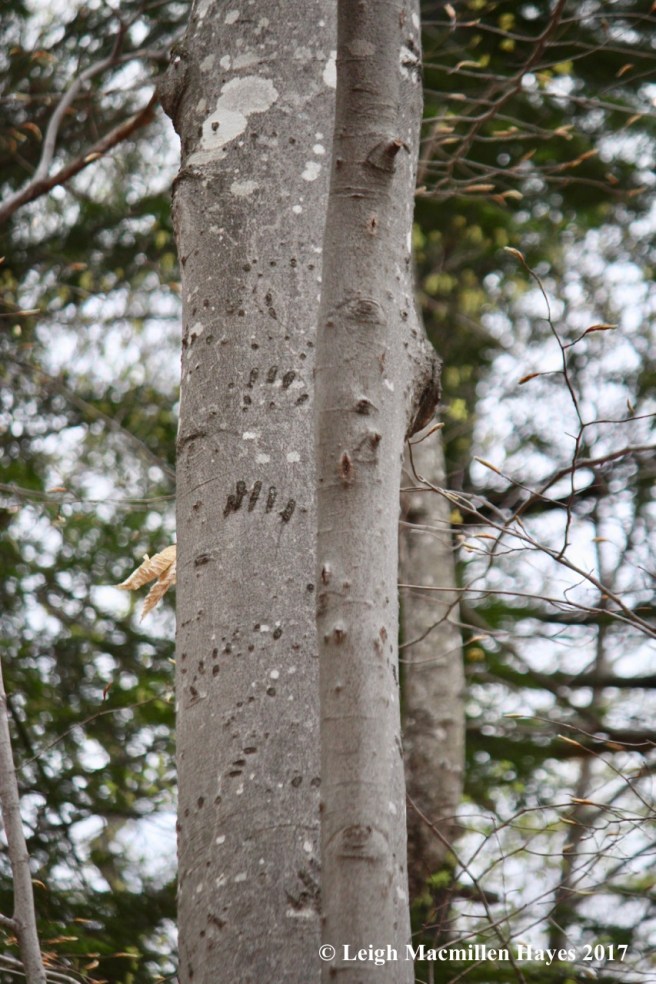
But one of my other favorite things about this trail is the bear claw trees. No matter how many times I see them, they still bring a smile to my heart–and face. And a memory of seeing a bear on the North Peak trail one summer–it sauntered past us, not seeming to care that we were there. I suspect its belly was stuffed with blueberries.

b-twin brook 1

As we continued to descend, we soon heard the sound of one of the brooks for which the trail is named. Quite often on this trail, the water barely trickles, but today it rushed over the moss-covered rocks.

b-logging

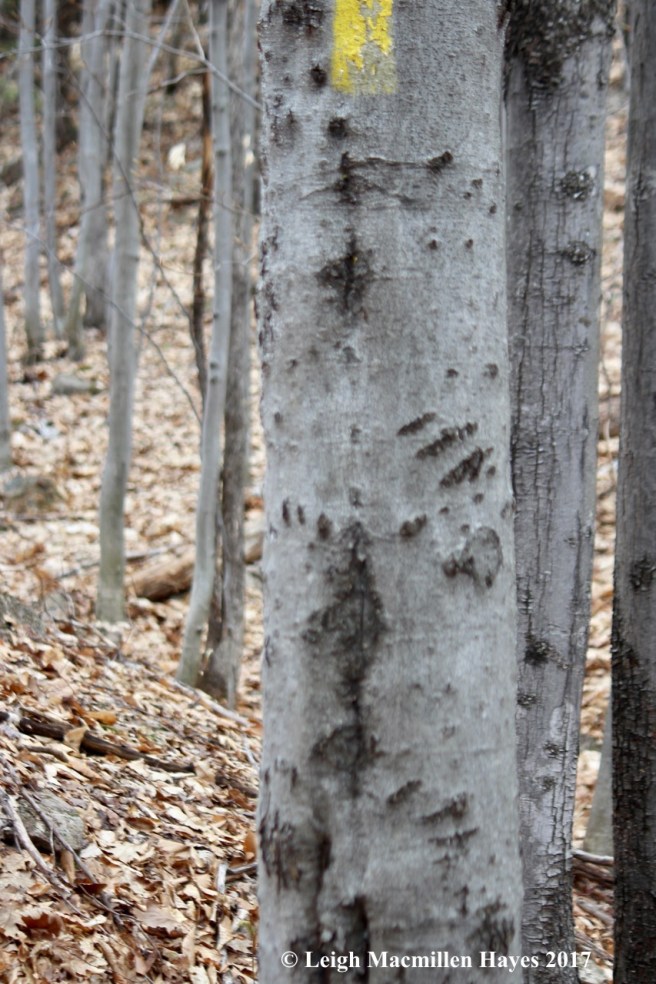
Continuing on, we remembered that two hikers we meet at the start said there had been some logging and sometimes it was difficult to follow the trail. At last, my guy found the area they’d referenced. The trails are on private land and so while we couldn’t find some familiar landmarks, we nevertheless were thankful that we were still able to hike there. And, we were mindful to look for the yellow blazes as we stepped over some slash. It was quite doable.

b-bear tree 2:eye level

The result–a bear tree we hadn’t seen before was revealed.

b-bear tree 2:looking up

It must have offered plenty to eat in the past for the tree was well climbed all the way to its crown. Maybe we’d once met the very bear.  Maybe not. Who knows. But it’s worth a wonder.

b-bear of a different sort

A bear of another kind also left behind a sign of its presence. We obviously weren’t the only ones who headed to the mountain for a date.

b-bear tree 3

In one last spot a short way from finishing the loop, we found our last bear tree–again seen because of the logging. I suspect there are many more in these woods and hope they don’t all get cut.

Emerging leaves. Spring flowers. Jagged outcropping. Flowing water. Bear trees.

Really, it was a love/hate/love Sundate–joyfully spent with my guy.


May I Have This Dance?

Haha. If you know me well, you know I’d rather be a wall flower than step onto the dance floor. I easily managed to avoid all high school dances, except one prom. And then, barely danced at that, probably much to my date’s dismay. After that, so many moons ago, I don’t think I danced again until my wedding–at which time any dear friends in attendance watched with humor at my awkward movements. But today, I felt the rhythm surging through my body.

v-snow on trail

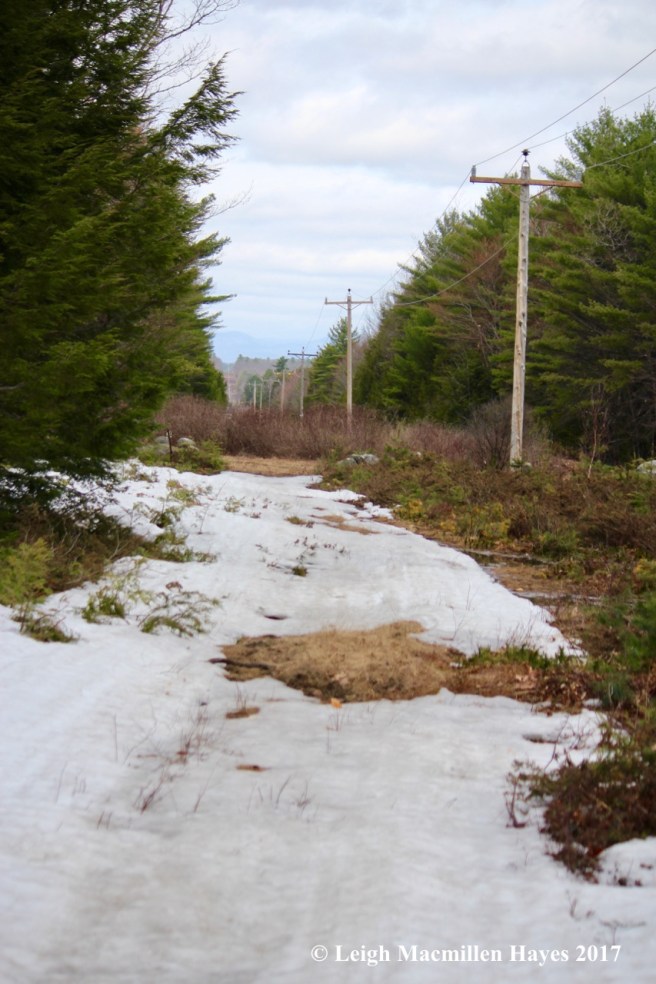
It all began on my way to the vernal pool. Perhaps it was really just a shiver as the breeze blew across the last of the snow, hard packed still along the snowmobile trail.

v-springtails 1

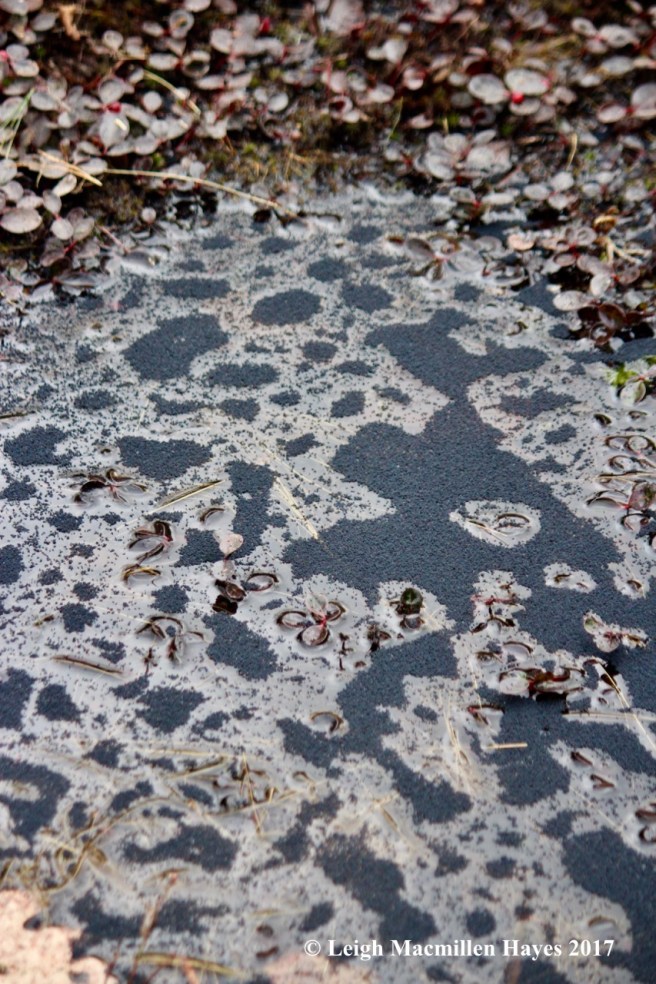
Or maybe it was the depression that held the snowmelt and was covered with an oil slick of sorts . . .

v-springtails 2

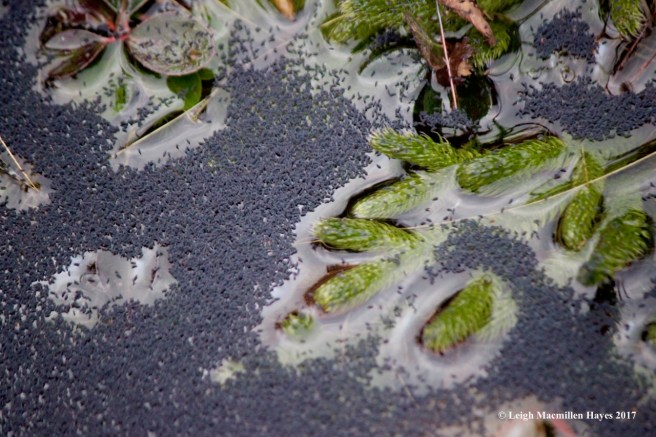
which turned out to be a million springtails bopping to their own tunes.

v-trailing arbutus 1

It could have been the sudden sight of so many trailing arbutus plants that got me going.

v-trailing arbutus 2

Certainly I wasn’t the only one excited by those flowers yet to be. (Do you see the springtail on the tip of the bud?)

v-vernal pool

Or it might have been the ever shrinking ice cover at the pool that made my feet tap.

v-vp edge opening

Perhaps it was the fallen beech leaves atop tree reflections that forced me to sway.

v-leaf offerings

Or the way the hemlock, oak, maple and beech leaves intermingled.

v-spermatophores

What I do know is that there was no stopping me once I spotted spotted salamander spermatophores atop leaves in several open sections–the sperm being located at the top of the cauliflower-shaped platforms.

v-frog 1

And then I saw something swim under some leaves that really got me rocking. Do you see the face of the wood frog, hiding as best it could?

v-fox scat beside vernal pool

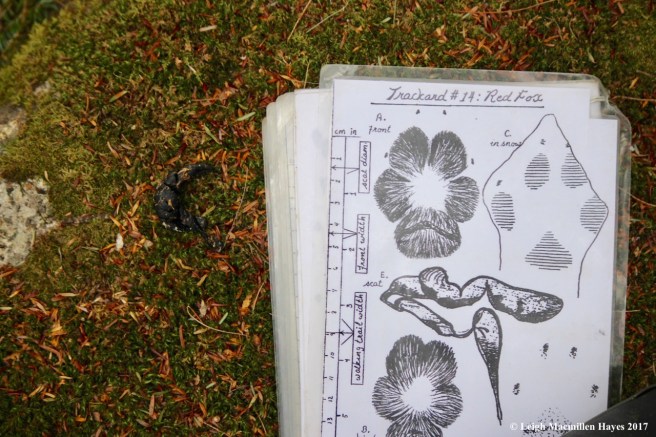
As I began to circle around the dance floor, I noticed an offering of scat that made me think a red fox had sashayed beside the pool.

v-sharp-shinned hawk feather?

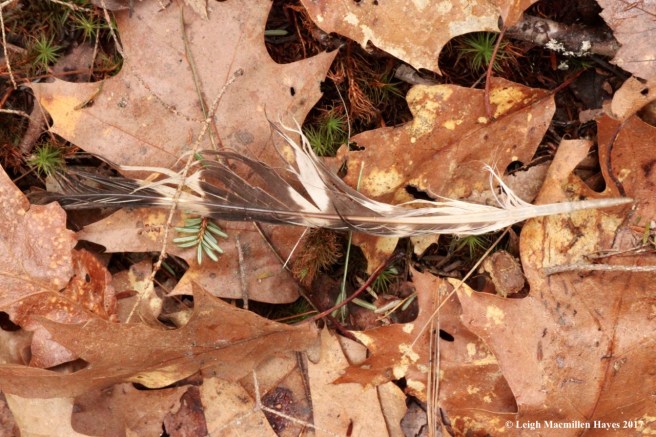
On my own sashay home, I discovered that there were other dancers in the midst–this one possibly a sharp-shinned hawk.

v-woodpecker feather

And after that a woodpecker.

v-junco feather?

And then a junco.

v-red maple flowers 1

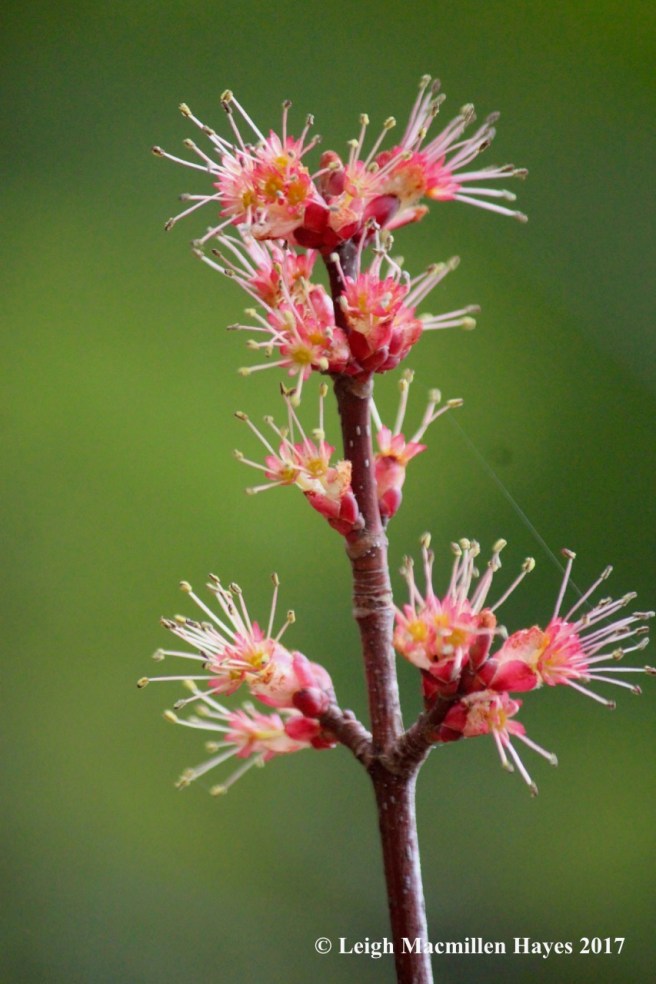
Along the cowpath, the red maple flowers blushed as I might were I to get all gussied up in a flowing dress.

v-red maple flowers 2

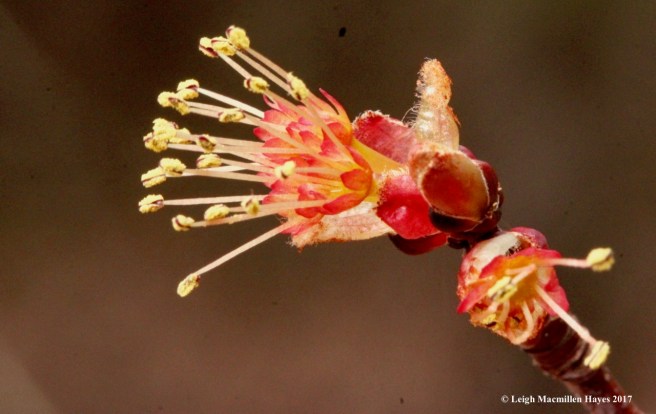
Much the way a suitor might wink, so much has happened so quickly. Within the past week the snow melted almost entirely away and winter released its hold on me. Now I’m ready to groove with the choreography of spring’s rhythm. I hope you’ll join me on the dance floor.

May I have this dance?


Just Around the Bend

Due to the generosity of friends, this afternoon I picked up some items for the Lakes Environmental Association’s silent/live auction to be held at the Stone Mountain Arts Center on July 14th. And one of those pick-ups put me in the Horseshoe Pond area where a mourning cloak butterfly danced in the sky as I drove down the dirt road. Alas, I couldn’t photograph it, so it will have to remain in my mind’s eye, but I was excited for it was the first sighting of the season–a harbinger of spring.

w-Horseshoe Pond 1

Back at the boat landing by Horseshoe Pond, I parked, donned my Boggs, and hoped for another butterfly sighting. It wasn’t to be, but the view was worth a pause as I looked at the left portion of this upside-down, U-shaped pond.

w-Sucker Brook from the culvert

The water roared through the culvert and I walked to the other side of the road, where the pond outlet becomes Sucker Brook–which overflowed its main bed.

w-Sucker Brook 2

My friends suggested I might need snowshoes, but of course, I’d left them home. They were right. I should have worn them and dig post holes I did as I followed the brook. Of course, first I had to climb over the dirt-covered snowy embankment by the road in order to get onto the trail at the Greater Lovell Land Trust’s Wilson Wing Moose Pond Bog Preserve. It was worth the effort.

w-snow layers by yellow birch

One of my favorite spots along the brook is this yellow birch tree, which typically stands on stilts atop a rock at the water’s edge. Who would know? For now, those spindly legs are still blanketed under layers of snow.

w-squirrel works

I expected the tracking conditions to be better than they were, but instead needed to focus on signs if I wanted to figure out what mammals came before me. Several middens of cone scales spoke of red squirrels. And there was deer scat nearby.

w-hobblebush 1

Because this is a moist area, hobblebush grows here and I couldn’t resist an opportunity to enjoy its sculptural structure created by downy-coated leaf buds.

w-hobblebush 2

Equally beautiful were the expanding flowers–globe-like in appearance, with subtle hints of green.

w-Wilson Wing Moose Pond Bog

And at the viewing platform, I was forced to climb up. Last year, Moose Pond Bog was a shrunken wetland, or so it seemed given the drought. Today–water, water, everywhere.

w-wintergreen

Back down the stairs, I searched about in a few sunny spots where the snow had melted. That’s when I spied last year’s berry dangling from a plant still sporting its maroon coloration of winterberry.

w-trailing arbutus leaves

And near it–a sight for spring-needy eyes . . .

w-trailing arbutus buds

trailing arbutus leaves and flower buds. Yes, Virginia, spring will come to western Maine. And we’ll all appreciate it more for it’s a season that never likes to rush.

w-mourning dove feather 1

I continued on and when I paused to look at some common polypody ferns that decorate a boulder, I spotted something else.

w-feathers 3

Feathers of varying sizes were scattered about.

w-mourning dove 1

A mourning dove had served as dinner. But for whom? No matter. Taking advantage,  snow fleas hunted for their own form of sustenance on the only part of the bird left behind.

w-stream 1

Before I climbed up to the road at the end of the trail, I had one more stream to cross–it’s usually a mere trickle, but not today.

w-tinderconks1

Rather than backtrack, I chose to walk the road–a much easier substrate. It was along there that I saw numerous tinderconks decorating one tree. Though they are also known as horse’s hoof, these reminded me more of elephant feet with big toes protruding at the base.

w-dragonfly spot

Back by my truck, I looked for the mourning cloak again–to no avail. Instead, my eyes were drawn to the reflection and memories of dragonfly hunting in this very spot last summer.

w-shimmering heat of the day

And when I looked back out on the pond, I could see the shimmering effect that occurs when the heat of the day meets the cold of the ice. The temperature reached into the 80˚s today. The meltdown has begun. It won’t be long now. From what I saw, spring truly is just around the bend.

Dear Aunt Ruth

My memories are snapshots of times spent with you and Uncle Bob and all the cousins. I loved visiting your home–whether we drove down the long road and driveway with Dad or walked via the old dump road and skeet field with Mom. Each time we arrived, you welcomed us with grace and your unassuming manner.

I remember sipping lemonade on the back porch, riding the wooden horse, and checking on Dale’s bunnies, especially Peter who soon became Mrs. Peter. I remember lunches at your kitchen table, and the time we bit into our tuna sandwiches only to discover the bread was filled with ants. Why that sticks with me, I don’t know, but we all thought it was funny. I remember family reunions, where food and laughter and aunts and uncles and cousins were abundant. Eventually, it evolved into a musical gathering–such was the talent of the clan.

But most of all, I remember your flower and vegetable gardens and your love of all things natural.

p-kiosk

And so today, as my guy and I ventured to a park we’d never before visited, I took you with us. I wanted to share with you our findings, just as you used to share stories of your gardens and wildlife sightings with us in Christmas cards after I moved north.

p-moose trail

Our first observation–a moose! Well, not really.

p-deer tracks

But we did see evidence of deer and I knew you’d be glad they were running away–leaving your gardens alone. Oh, and those pesky raccoons! Raising eight children didn’t seem to phase you, but those raccoons in the corn field–that did rattle you.

p-gardens on high

The gardens in these woods differ from yours–and right now, given the snow cover, the only ones visible were high up in pine trees, where yesterday’s snow offered nourishment to the mosses and lichens that grow there.

p-locust legume-like seed pod

We did, however, find one similarity–the legume-like seed pod from a locust tree. It’s almost time to sow the peas.

p-apples

In these woods, we also found a symbol of the past–it was once farmland as signified by the apple trees. If memory serves me right, there was a very climbable apple tree beside your driveway.

p-hidden acorn

And then we spied one impossible possibility–an acorn tucked into red maple bark. How did it get there? And will it germinate? If it does, what then?  I trust, you too, would have noticed such and wondered.

p-pratt brook 2

We followed the trails through the woods and sometimes beside the brook for which the property was named–Pratt Brook. It was a bit more bubbly than the creek in your yard, but such is the snow melt right now.

p-artist conks

Along the way, I noted a family of artist conks decorating a tree. And, that, of course, brought to mind the box of colored pencils you (or perhaps it was the cousins, though Neal had no qualms about telling us that our gifts were really chosen by you) gave me long ago. I cherished that box and used those pencils with care. They lasted into my early adulthood.

p-colors 1 (1)

And then my guy gifted me another box, which I again revere. One of my favorite pastimes is to sit and sketch and then add a dash of color. Whenever I do, Aunt Ruth, you are with me.

p-powerline

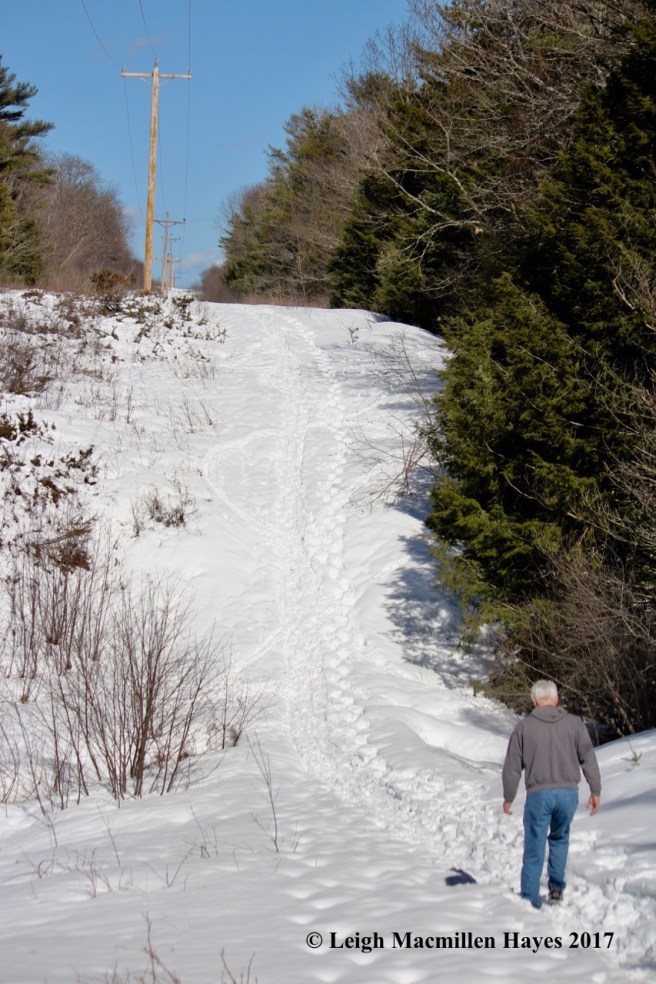
For a while we followed the power line trail, aka Bear Trail. As you can see, we tramped in the footsteps of many others who’ve traveled this way just today–via skis, snowshoes and hiking boots like us. We were an hour from home and close to the ocean, so the snow level was about six inches compared to at least two feet we walk upon daily. But today’s sun warmed us and initiated a meltdown.

p-spider

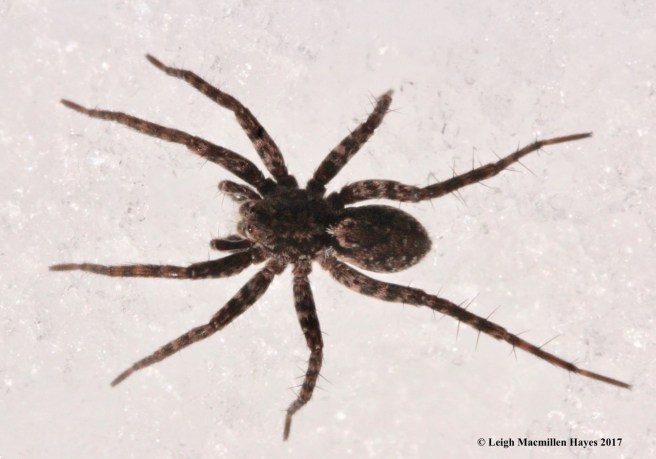
I didn’t mind being on the power line for a bit, for it was here that we saw our only sign of wildlife.

p-aster 1

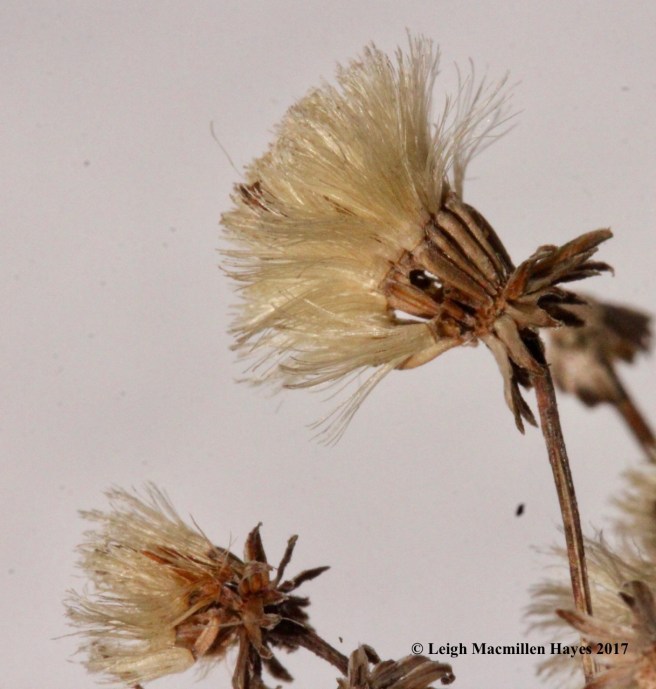
It was also the spot where I knew we’d find wildflowers–and I wasn’t disappointed. Asters like these, and goldenrods, spireas and berries displayed their winter forms.

p-beetle 3

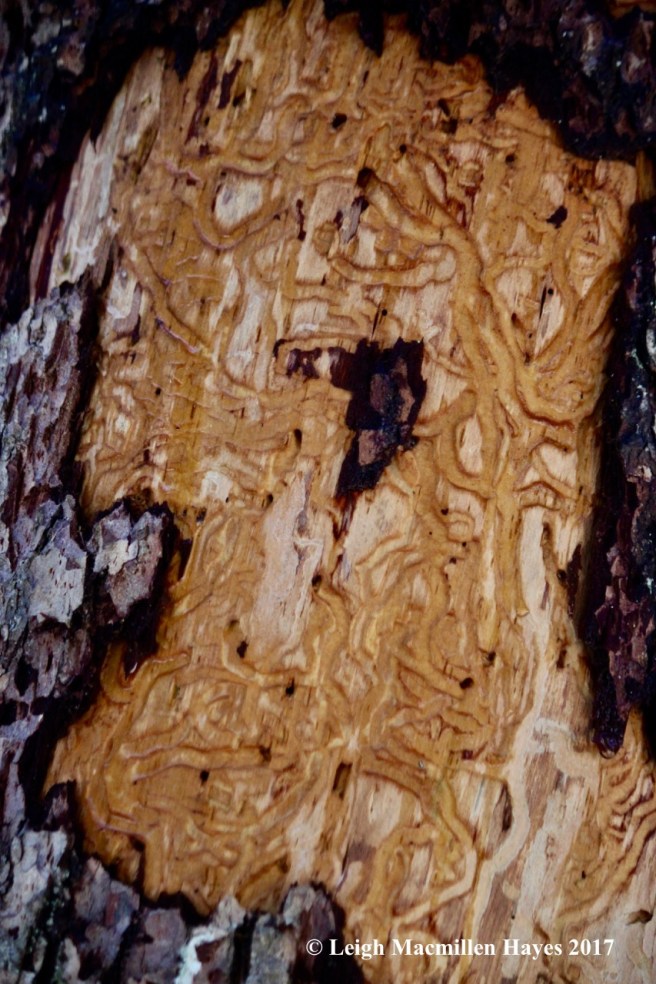
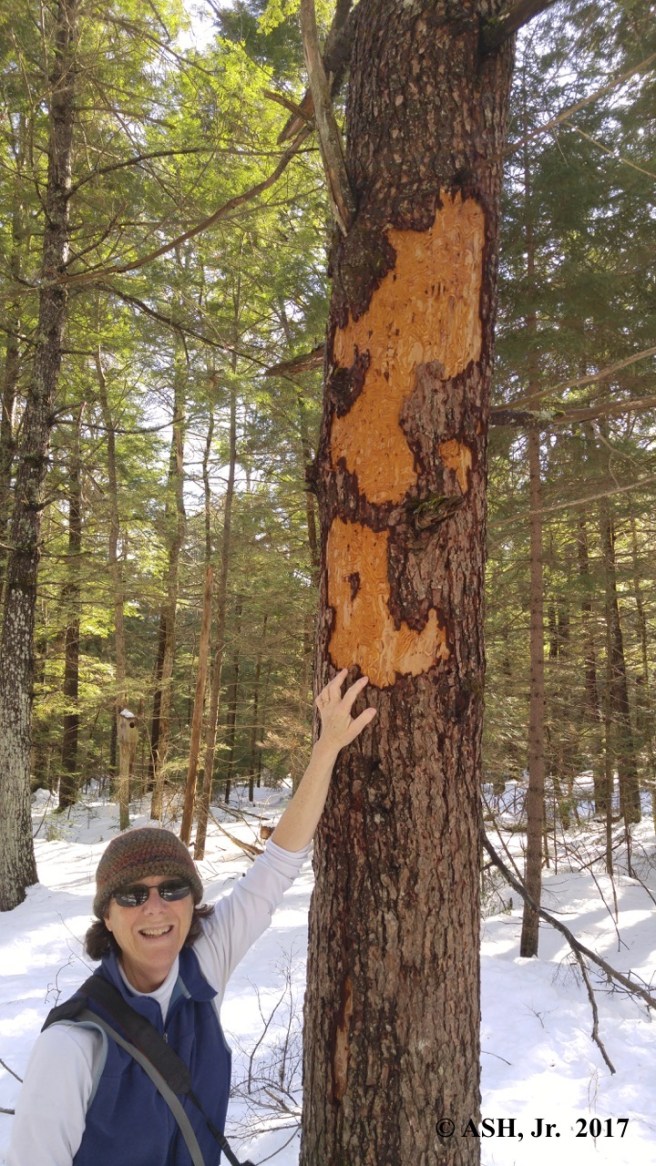
Back into the woods, we were almost done, when we spied this woodwork, carved by bark beetles.

p-bark beetles 1 (1)

And I was again reminded of my past observations when I moved a log and discovered a gnawer on the job.

p-me

The intricate work reminded me of Uncle Bob’s woodworking skills and I knew you’d appreciate that. You’d also appreciate that as I write, my guy is watching a National Geographic show about Wild Scotland.

Thanks for the memories, Aunt Ruth. And thanks for making time for us and showing an interest in all that we did–always as curious about our adventures as those of your brood. You were a remarkable woman and a genuine Yankee whom I was blessed to have as a part of my life.

Fondly, Leigh


Book of April: How to tell the Birds from the Flowers

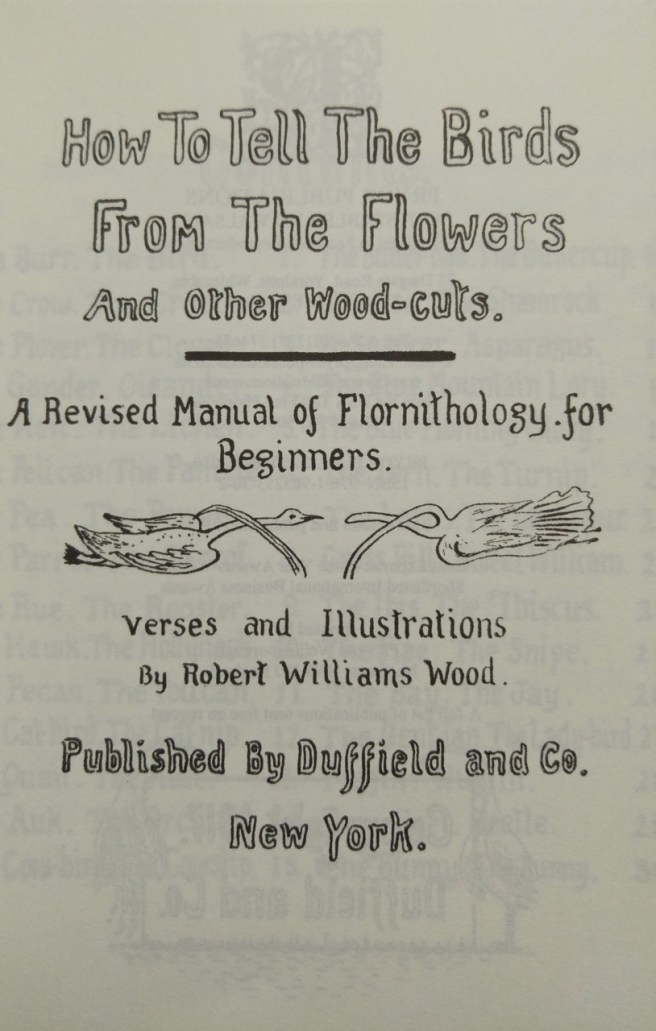
It’s April Fools’ Day and I can’t think of a more appropriate book to share as Mother Nature showers snow upon us than How to tell the Birds from the Flowers and other wood-cuts by Robert Williams Wood.

b-11 (1)

A friend found this delightful little ditty at an independent book store in Brattleboro, Vermont, several months ago and couldn’t resist purchasing it for me. Thank you, A.J. 

Can you see from the cover what Wood had in mind? 

b-9 (1)

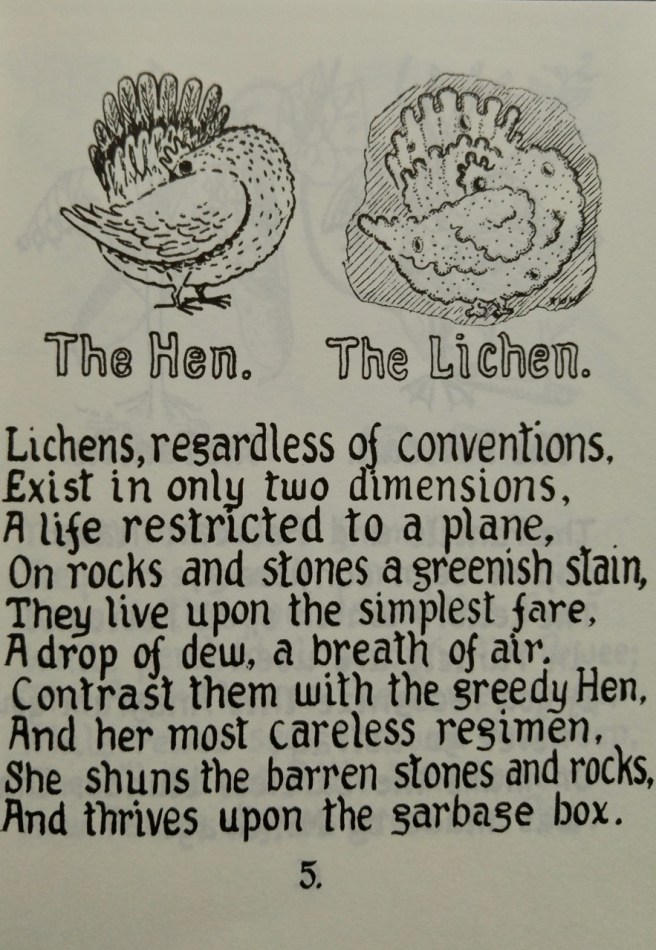
And his language–Flornithology? Oh my. Artistic license met poetic license. 

The first edition was published in 1917–in Kent, England. According to a little research, Mr. Wood was born in England, but went on to become a physicist at Johns Hopkins. And they say (whoever they are) that he had no sense of humor.

Read on: 

b-8 (1)

b-7 (1)

After this introduction, it gets even better (in my humble opinion). 

b-6 (1)

Whimsical rhymes and . . .

b-5 (1)

clever sketches;

b-2 (1)

Similarities and . . .

b-4 (1)

differences.

b-1 (1)

All found in the natural world. 

b-3 (1)

Doesn’t this just make you smile? The man lacked a sense of humor? Hardly.

And we know the Mother Nature also has a sense of humor. This isn’t the first time it has snowed on April first.

At the back of the book is a list of other facsimile reissues from Pryor Publications. Here are a few titles worth considering: Punishments in the Olden Times, Manners for Women, Manners for Men, A Plain Cookery Book for the Working Class and Why Not Eat Insects.

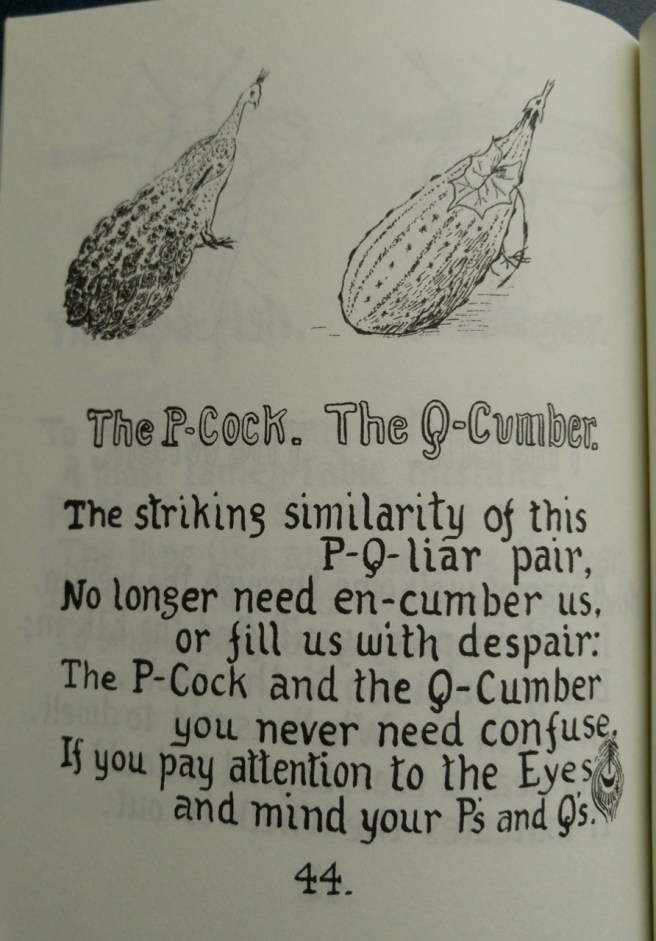
And on the back cover: “This updated edition originally published in 1917 now includes how to tell ‘The Eel from the Elephant,’ ‘The P-Cock from the Q-Cumber’ and ‘The Elk from the Whelk’ to name but a few. This book will be invaluable to those who are short sighted or just plain confused, the rest of you may even find it amusing.”

I think I fall into the latter group and that’s what A.J. had in mind (right?) when she gifted it to me because I find it quite amusing. 

Happy April Fools’ Day. 

How to tell the Birds from the Flowers and other wood-cuts (is he referring to himself?), versus and illustrations by Robert Williams Wood, 1917.

The Second Anniversary of Wondermyway

Milestones are always important as they mark significant events in our lives. And for me, such an event occurs today as I celebrate the second anniversary of the day wondermyway.com was born.

Since I was in elementary school and made few and far between entries into a chunky journal bound in a green cover (which I still own), to the first empty book journal my sister gave me when I graduated from high school, to a variety of travelogues and other journals I’ve filled from cover to cover,  I’ve recorded my life’s journey from time to time.

The most satisfying for me has been this very blog, to which I’ve added numerous events and discoveries, both natural and historical, over the last two years. As personal as it all is, I’ve taken a leap of faith by sharing it with you. And you have been gracious enough to read it, and comment on it, and “like” it, and sometimes “love” it, and offer me suggestions, corrections and gentle nudges.

Thank  you for following along on the journey. It’s been scary to put myself out there, but I have.

And now, I thought I’d review some favorite finds I noted in posts over the past year. My learnings have been many and it’s been fun to review all that I’ve seen and thought and admired and wondered about. I hope you’ll feel the same and will continue to follow along and comment and share those that you enjoy with your family and friends.

Here’s my countdown , or maybe I should say my count up of favorite moments in time over the past year:

Feb 21, 2016: Celebrating a Year of Wonder-filled Wanders
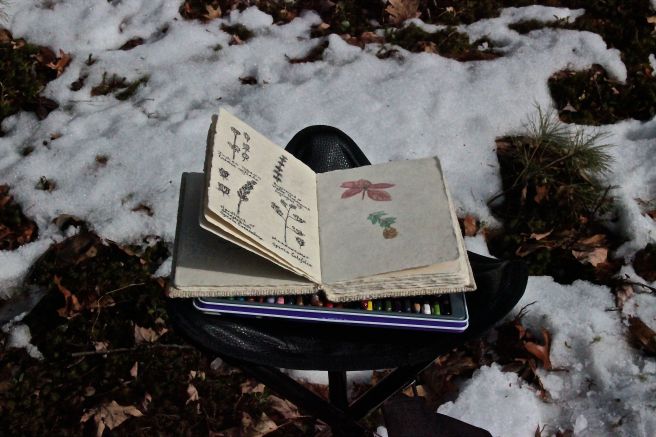
b-sit spot

b-sketch 1

I made time one year ago to sit and sketch–one of my favorite activities. To be still and embrace life around me. To notice. And commemorate.

February 28 2016: Gallivanting Around Great Brook

h-yellow and white partners

Usually, we drive the forest road in to the gate on Hut Road in Stoneham, but in winter it isn’t passable, and thus one must walk–which means paying attention to things you might not normally notice, such as this: a special relationship between a yellow birch and a white pine. Rooted in place, they embrace and share nutrients. Forever conjoined, they’ll dance through life together.

March 18, 2016: On the Verge of Change
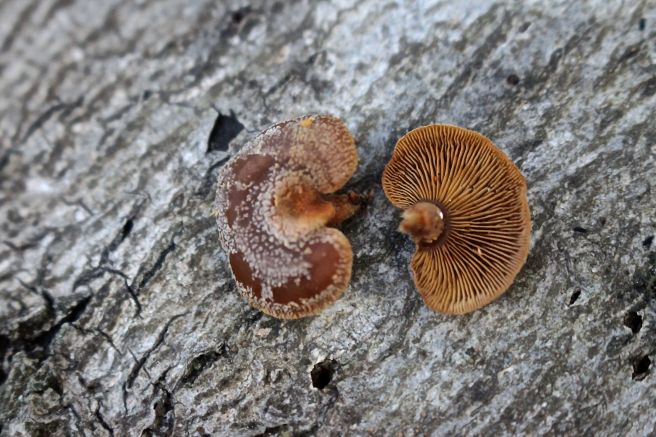
b-panellus stipticus?

While exploring the Greater Lovell Land Trust‘s  Back Pond Reserve in Stoneham with my friend, Parker,  who is a master mycologist, he found Panellus stipticus, a bioluminescent species. Check out those gills on the underside. According to Lawrence Millman in his book Fascinating Fungi of New England, ” . . . specimens in the Northeast glow more obviously than specimens in other parts of North America.” So if you are ever in these woods late at night, don’t be freaked out by a light greenish glow. It just might be nature’s night light.

March 22 2016: Wet Feet at Brownfield Bog

b-pellet

When I first spied this lump of gray I assumed it was a dead mouse. I know, I know–I should never assume because I risk “making an ass out of u and me.” And so I took a closer look. And noticed tons of bones and those orange teeth. An owl pellet filled with the remains of dinner. Owl pellets are extra cool and dissecting one is even cooler. I collected this one but haven’t dissected it because I think it makes for a great teaching tool as is. If you want to see it, just ask.

April 13, 2016: So Many Quacks

v-egg mass 1

At the vernal pool, or frog pond as we’ve always fondly referred to it, just steps from our property, I kept a keen eye on the situation last spring. In general, each mass laid by  female wood frogs was attached to a twig or branch. They tend to take advantage of the same site for attachment and usually in a warm, sunny spot.

A couple of masses were positioned independent of the rest, like this one–embraced in oak and maple leaves. Eventually, they’ll gain a greenish tinge from algae, which actually helps to camouflage them. One of the many wonders is that any given mass may contain up to 1,000 eggs–from a two-to-three-inch frog.

April 28, 2016: The Big, The Little and Everything in Between

b-bear2

The phone rang as I stepped out of the shower and a male voice yammered away about something in the snow and it had come last night and I had to get there quickly. My friend, Dick,  was standing in a friend’s yard about a half mile from here and looking at bear tracks in the snow.

As he knew he would, he had me on the word “bear.” His voice was urgent as he insisted I stop everything and get to his friend’s house. “I just need to dry my hair and then I’ll be right there,” I said. Deadlines loomed before me but bear tracks won my internal war. Dick suggested I just wrap a towel around my head. Really, that’s what I should have done because my hair has no sense of style whether wet or dry, so after a few minutes I said the heck with it and popped into my truck, camera and trackards in hand.

May 21, 2016: Wallowing in Wonder

p-ph dragon ending 4

Along Perky’s Path at the GLLT’s Heald and Bradley Ponds Preserve, a bunch of us had the honor to watch a dragonfly split open its exoskeleton and emerge from the nymph stage. Of course, we were standing by a beaver pond, and so it seemed only appropriate that it would use the top of a sapling cut by a beaver. As it inflated the wings with blood pressure, they began to extend.

May 31, 2016: Slippers Fit for a Princess–Including Cinderella

p-ph lady y 15

Members of the Orchid family, lady’s slippers feature the typical three petals in an atypical fashion. The pouch (or slipper or moccasin), called the labellum, is actually one petal–inflated and veined. With a purplish tint, the petals and sepals twist and turn offering their own take on a ballroom dance. From every angle, it’s simply elegant.

June 10, 2016: The Main(e) Exotics

snake2

At Lakes Environmental Association‘s Holt Pond Preserve, a friend and I had moved from the swamp to the first hemlock hummock and chatted about natural communities when suddenly we realize we were being hissed at. Its coloration threw us off and beautiful though it was, the hairs on the back of our necks stood on end. Apparently we made it feel likewise. And so we retreated. It was a common garter, but really, there didn’t seem anything common about it in the moment.

June 18, 2016: Paying Attention

partridge berry

j- trailing 2 (1)

j-  trailing 7 (1)

In May, trailing arbutus wowed us by its gentle white and pale pink flowers. In June,  they faded to a rusty tone. And some transformed into swollen round seed pods–a first for me to see.

The sepals curled away to reveal the white fleshy fruit speckled with tiny brown seeds. It was well worth getting down on knees to look through a hand lens–especially since ants, chipmunks and mice find these to be a delicacy so they wouldn’t last long.

July 9, 2016: Wondering About Nature’s Complexity
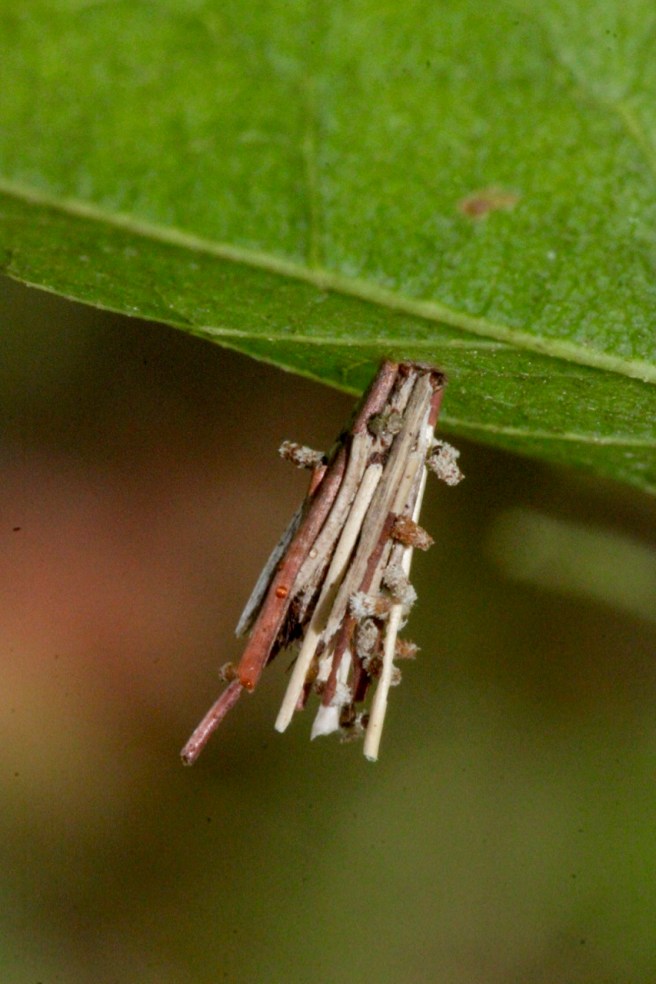
img_1364-1

I posed a question this day: So dear reader, I enjoy teaching you, but now need you to teach me. I found this under another leaf on a shrub. And I often see the same thing stuck to our house. It reminds me of a caddisfly case. What is it?

And fellow Master Naturalist Pam Davis responded: Check out bagworm moths to see if it might be an answer to the stick thing on the leaf and your house. Here’s a discussion: http://nature.gardenweb.com/discussions/2237505/not-a-bug-maybe-a-gall and a Wikipedia link: https://en.wikipedia.org/wiki/Bagworm_moth

Indeed.

July 27, 2016: Searching for the Source of Sweetness
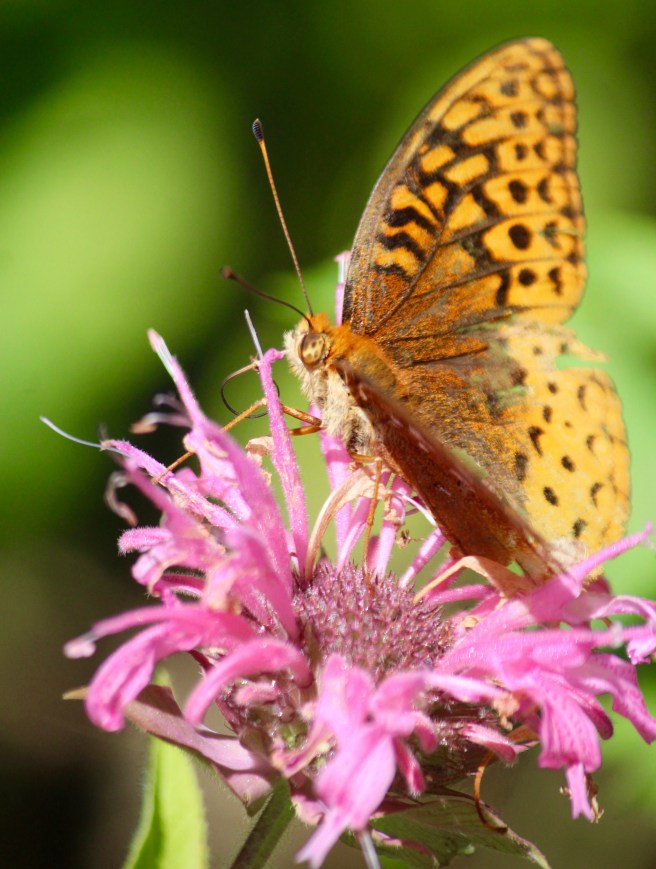
w-frit 2

It was no mistake the this fritillary butterfly chose the beebalm on which to land. Check out its mouth. A butterfly feeds through a coiled mouth part called a proboscis. When not in use, the proboscis recoils and is tucked into position against the butterfly’s head.

August 21, 2016: Sundae School

n-Indian pipe bee 1

My lessons began immediately. What to my wondering eye should appear, but a bee pollinating an Indian Pipe. And in the middle of the afternoon. Huh? I’ve always heard that they are pollinated by moths or flies at night. Of course, upon further research, I learned that bees and skipper butterflies have been known to pay a visit to the translucent flowers. Add that to the memory bank.

August 27, 2016: Halting Beside Holt Pond

h-pitcher  flower up close

Halting–prone to pauses or breaks. I didn’t break, but I certainly was prone to pauses as I moved along the trails and boardwalks at the Holt Pond Preserve in South Bridgton. One of my first stops–to admire the pitcher plant flowers in their August form. When I took a closer look, I realized that the seeds were developing–certainly a WOW moment in the world of wonder.

September 9, 2016: Golden Rulers

g-assassin-1

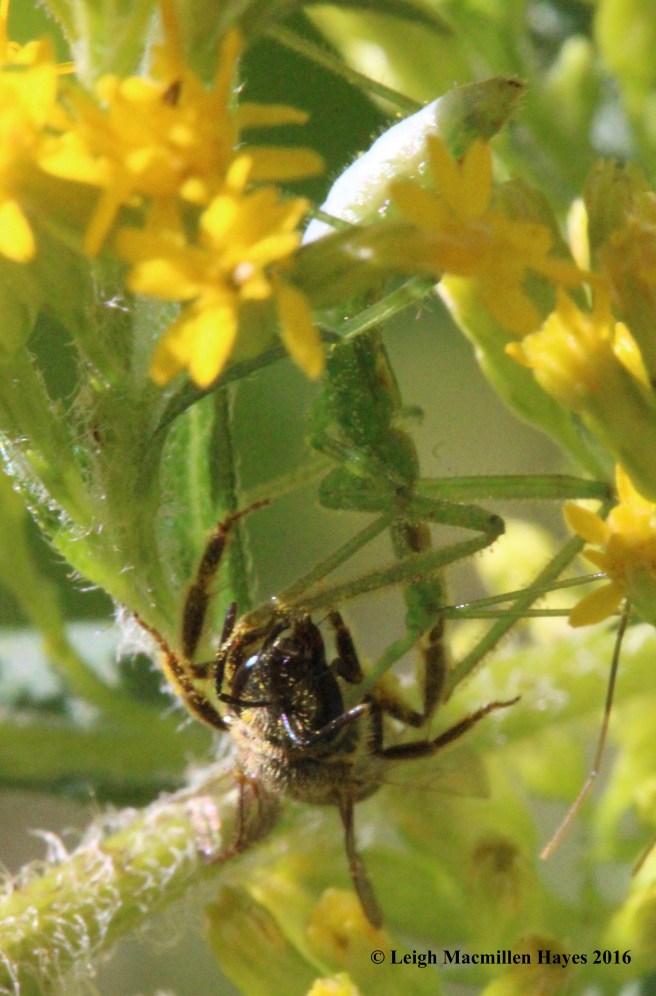
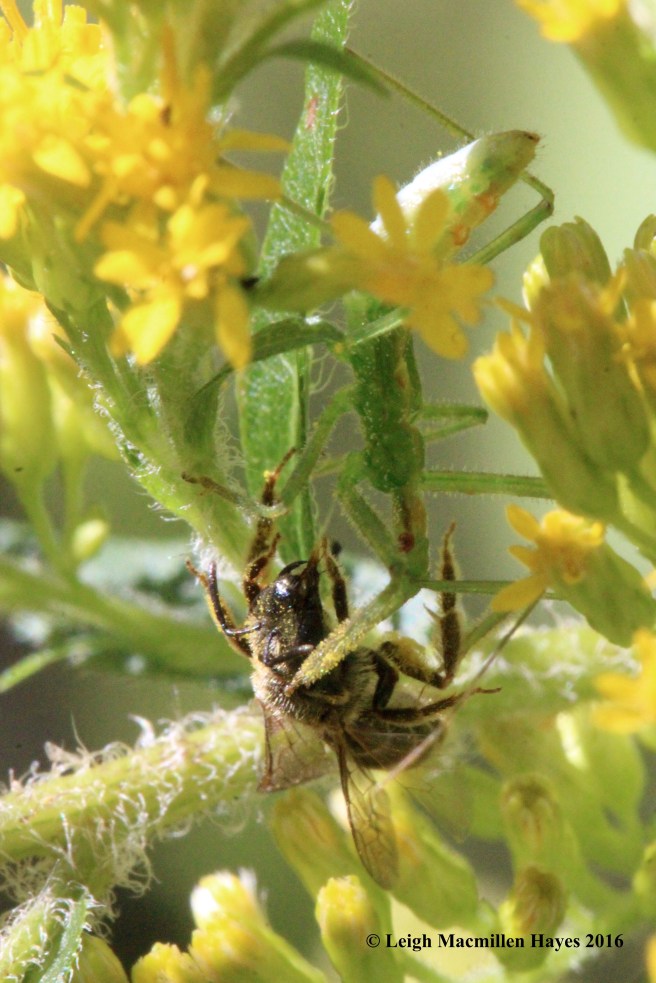
What first caught my eye was a bee that dangled upside down. And then I spied the green legs of an assassin bug. What? Yup, an assassin bug. I believe this one is a nymph. Regardless of age, here’s the scoop: Assassin bugs are proficient at capturing and feeding on a wide variety of prey. Though they are good for the garden, they also sometimes choose the wrong species like this bee. The unsuspecting prey is captured with a quick stab of the bug’s curved proboscis or straw-like mouthpart. Once I saw this, I continued to return for a couple of hours, so stay tuned.

September 15, 2016: The Wonders of Kezar River Reserve
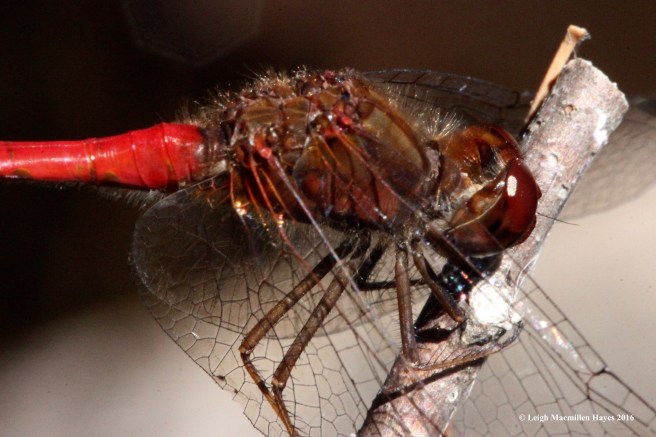
k-ruby-1

My favorite wonder of the day . . . moments spent up close with a meadowhawk.

October 17, 2016: Everybody Loves Raymond? Mondate

r-mushroom-growth

My guy and I discovered several of these examples of fungi on fungi at Loon Echo Land Trust‘s Raymond Community Forest and had no idea what they were–so I sent the photos to Parker and Jimmie Veitch, of White Mountain Mushrooms, and Jimmie responded with this explanation:

“That’s what mycologists call “rosecomb” mutation, where a mushroom’s gills start forming on the cap in a really mutated fashion. It’s been reported in many mushroom species but I haven’t seen it in this one (Armillaria AKA honey mushrooms). As far as I know, no secondary fungus is involved.

The suspected cause (not so nice) is ‘hydrocarbons, phenols and other compounds contaminating the casing or contacting the mushroom surface. Diesel oil, exhaust from engines, and petroleum-based pesticides are thought to be the principal source.'”

October 22, 2016: Cloaked By the Morning Mist
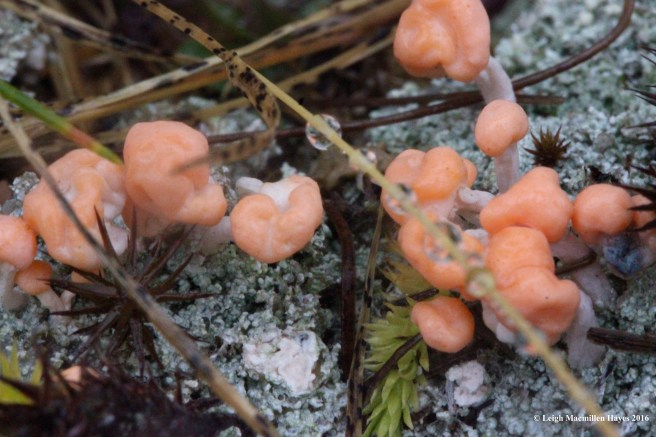
u-candy-2

On a rainy day adventure with the Upper Saco Valley Land Trust in nearby New Hampshire, we paused to admire candy lichen, a crustose (think–flattish or crust-like) lichen with green to bluish-green coloration. Its fruiting bodies, however, are candy-pinkish berets atop stalks, even reflected in the raindrops.

November 6, 2016: Focus on the Forest Foliage
j-lichens-galore

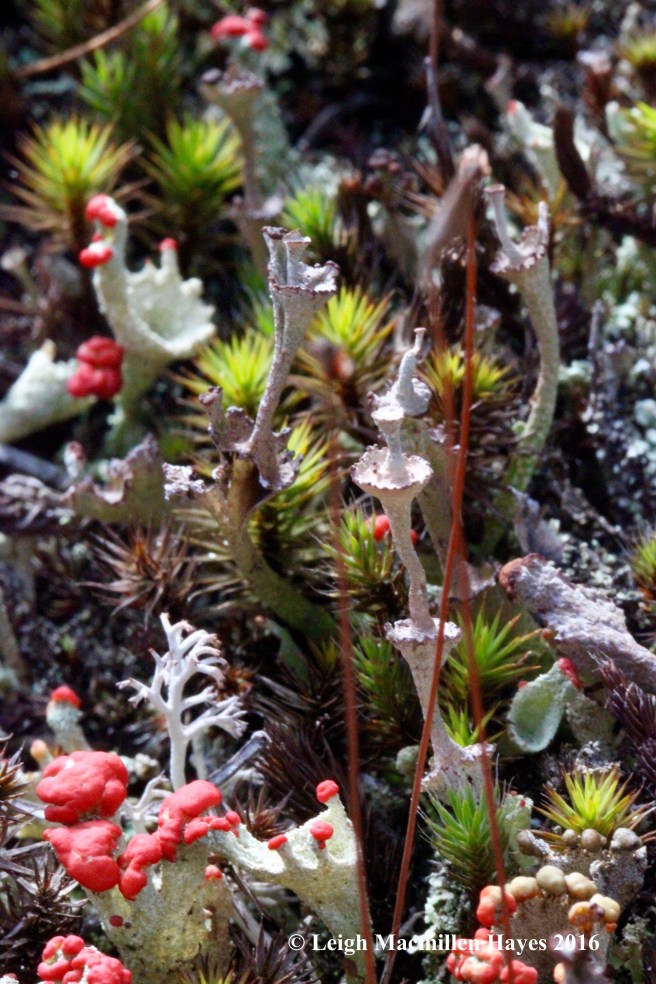
And then . . . and then . . . and then just as our eyes trained on the red caps before us, something else made itself known. We spied another lichen that I’ve only seen once before: Cladonia cervicornis ssp. verticillate.

Its growth formation is rather unique. In one sense, it reminded me of a sombrero, but in another sense, I saw fountains stacked one atop another, each giving forth life in their own unique fashion. But rather than being called Fountain Lichen, its common name is Ladder Lichen–perhaps referring to the fact that the pixies can easily climb up and up and up again.

November 20, 2016: Forever a Student
h-pine-suds

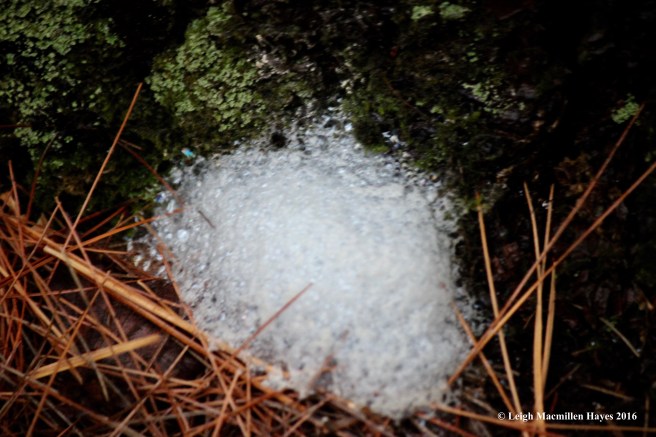
A sight I was hoping for presented itself when I returned to our woodlot–froth at the base of a pine tree. It’s not unusual and occurs following a rain event such as we’d had all night and morning. So what causes the tree to froth? Well, like all lessons, there are several possibilities. Maine Master Naturalist Science Advisor Fred Cichocki recently had this to say about it: “I’ve noticed this phenomenon often, and in every case I’ve seen it’s associated with white pine, and always after a dry spell followed by heavy rain. Now, conifers, especially, produce hydrocarbons called terpenes (it’s what gives them their lovely pine, balsam and fir scent). These hydrocarbons are hydrophobic by nature and form immiscible films on water. During a heavy rain, water running down the trunk of a white pine picks up terpenes on the way. Air (having accumulated in bark spaces, channels, etc. perhaps under slight pressure) then “bubbles” through terpene-water films producing a froth. Recall the cleaning products PineSol, and the like. They are made from terpenes, and produce copious bubbles when shaken. One could get the same result directly by shaking terpentine in water, or by bubbling air through a terpentine-water mixture with a straw . . . Of course, it may be that other substances (salts, etc.) enhance the frothing.”

No matter how much I have learned on this life-long course, there’s always more. I certainly don’t have all the answers and for that I am thankful. I’m forever a student.

December 4, 2016: The Art of Nature

s-tree-ring-labyrinth

Some cut stumps reminded me of the circular movement leading toward the center of a labyrinth–appearing quick and easy, and yet providing a time to slow down while following the path.

December 23, 2016: Won’t You Be My Neighbor

m-print

I followed the porcupine trail along his regular route and over the stonewall only to discover prints I’ve never met before. My first impression was raccoon, but the shape of the prints and the trail didn’t match up in my brain. More and more people have mentioned opossum sightings in the past few years, but I’ve only seen one or two–flattened on the road. Today, in our very woods, opossum prints.

January 19, 2017: Keep an Open Mind

o-deer

While I always head out with expectations of what my forest wanderings will offer, I’m happily surprised time and time again with the gifts received.

And so it was the other day when a friend and I happened upon this trophy in an area I’ve only visited a few times. We’d been noting the abundant amount of deer tracks and realized we were between their bedding and feeding areas and then voila–this sweet sight sitting atop the snow. It now adorns a bookcase in my office, a wonder-filled addition to my mini natural history museum. (I’m trying to give Henry, Jessie, Violet, and Benny of the Boxcar Children series a run for their money in creating such a museum.)

January 25, 2017: On the Prowl at Heald and Bradley Ponds Reserve

w-tube-moth-2

Notice how these pine needles are clumped together? What I learned from Mary Holland, author of Naturally Curious,  is that these are tubes or tunnels created by the Pine Tube Moth. Last summer, larvae hatched from eggs deposited on the needles. They used silk to bind the needles together, thus forming a hollow tube. Notice the browned tips–that’s due to the larvae feeding on them. Eventually the overwintering larvae will pupate within the tube and in April when I come back to check on the vernal pool, I need to remember to pay attention, for that’s when they’ll emerge. Two generations occur each year and those that overwinter are the second generation. The good news, says Holland, is that “Pine Tube Moths are not considered a significant pest.” I only found the tubes on two young trees, but suspect there are more to be seen.

February 8, 2017: Embracing the Calm
h-moose-hair-2

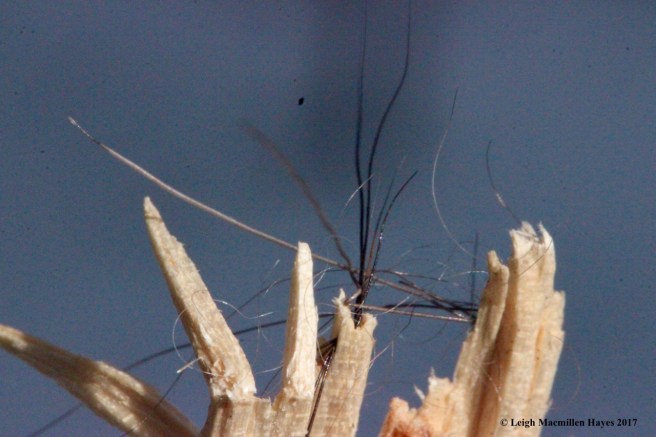
A bull moose, like a buck deer, thrashes bushes and small saplings when the velvet on its antlers dries. It could be that the velvet itches. But it could also be a response to increasing testosterone and the need to scent mark.

February 16, 2017: When Life Gives You Flakes
s-snow-angel-in-trail

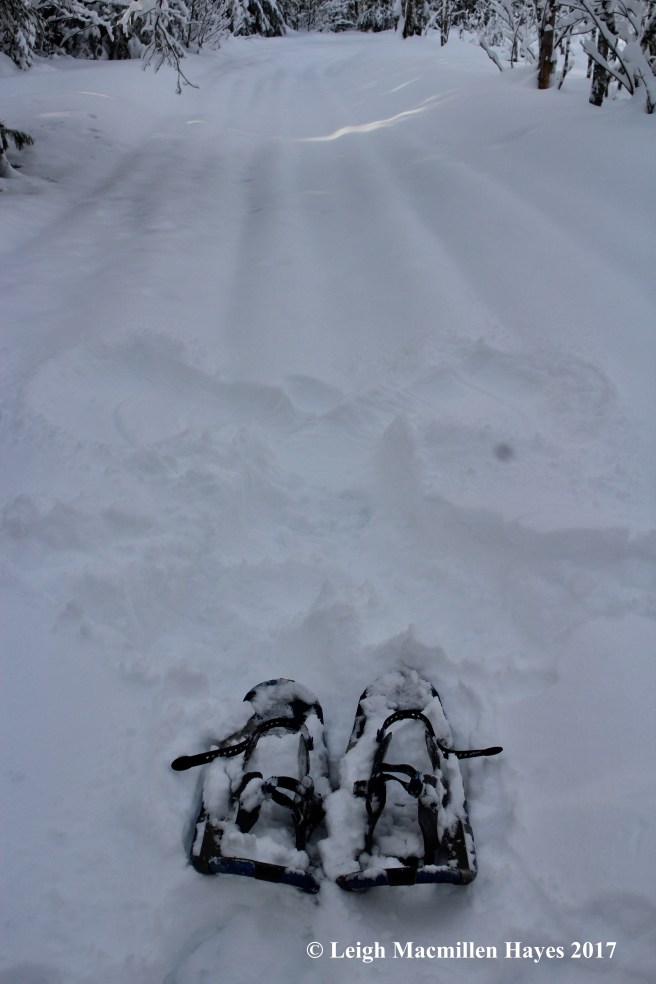
When life gives you flakes . . . make a snow angel in the middle of the trail.

To all who have read this far, thanks again for taking a trip down memory lane today and sticking with me these past two years. I sincerely hope you’ll continue to share the trail as I wander and wonder–my way.

And to wondermyway.com–Happy Second Anniversary!


Books of December: A Holiday Wish List

In the spirit of changing things up a bit, I decided that I’d include five books I highly recommend you add to your holiday wish list and two that I hope to receive.

These are not in any particular order, but I’m just beginning to realize there is a theme–beyond that of being “nature” books.

b-forest-forensics-1

Book of December: Forest Forensics

Tom Wessels, forest guru and author of Reading the Forested Landscape, published this smaller work in 2010. Though only 5″ x 7.5″, the book is rather heavy because it’s filled with photographs. Despite the weight, Forest Forensics fits into a backpack and is the perfect guide for trying to figure out the lay of the land. Using the format of a dichotomous key, Wessels asks readers to answer two-part questions, which link to the photos as well as an Evidence section for Agriculture, Old Growth and Wind, plus Logging and Fire. In the back of the book, he includes Quick Reference Charts that list features of particular forest and field types. And finally, a glossary defines terms ranging from “age discontinuity” to “Uphill basal scar,” “weevil-deformed white pines” and “wind-tipped trees.” In total, it’s 160 pages long, but not necessarily a book you read from cover to cover. If you have any interest in rocks, trees, and the lay of the land, then this is a must have.

Forest Forensics by Tom Wessels, The Countryman Press, Woodstock, VT, 2010.

b-shrubs-1

Book of December: Shrubs of the Northern New England Forest

Michael L. Cline is executive director of Tin Mountain Conservation Center in Albany, New Hampshire. In September, I had the pleasure of attending a talk he gave at the center about Shrubs of the Northern New England Forest. The 6″ x 9″ book weighs about the same as Wessels’, and will also fit handily into your pack. Of course, you might want to leave the books in your vehicle or at home and look up the items later–thus lightening your load. Using Brownfield Bog as one of his main go-to places, Cline describes 70 species of shrubs from Creeping Snowberry to Mountain Ash. The book is arranged by family, beginning with Mountain Maple and Striped Maple of the Aceraceae (Maple) family and ending with the American Yew of the Taxaceae (Yew) family. Each two-page layout includes photographs (and  occasionally drawings), plus a description of habit, leaves, flowers, twig/buds, habitat, range, wildlife use, notes and other names. I have no excuse now to not know what I’m looking at as I walk along–especially near a wetland. That being said, I’ll think of one–like I left the book at home, but I’ll get back to you.

Shrubs of the Northern New England Forest by Michael L. Cline, J.S. McCarthy Printers, 2016

b-bogs-and-fens-1

Book of December: Bogs and Fens

Ronald B. Davis’ book, Bogs and Fens, was a recent gift from my guy. I hadn’t asked for it, and actually didn’t know about it, so I’m tickled that he found it. I’m just getting to know Dr. Davis’s work, but trust that this 5.5″ x 8.5″ guide about peatland plants will also inform my walks. Again, it’s heavy. The first 26 pages include a description of vegetation and peatlands and even the difference between a fen and a bog. More than 200 hundred pages are devoted to the trees, plants and ferns. In color-coded format, Davis begins with the canopy level of trees and works down to tall shrubs, short and dwarf shrubs, prostrate shrubs, herbaceous plants and finally, ferns. He also includes an annotated list of books for further reference, as well as a variety of peatlands to visit from Wisconsin to Prince Edward Island. As a retired University of Maine professor, Davis has been a docent and guide at the Orono Bog Boardwalk for many years. Field trip anyone?

Bogs and Fens: A Guide to the Peatland Plants of Northeastern United States and Adjacent Canada by Ronald B. Davis, University of New England Press, 2016.

b-lab-girl-1

Book of December: Lab Girl

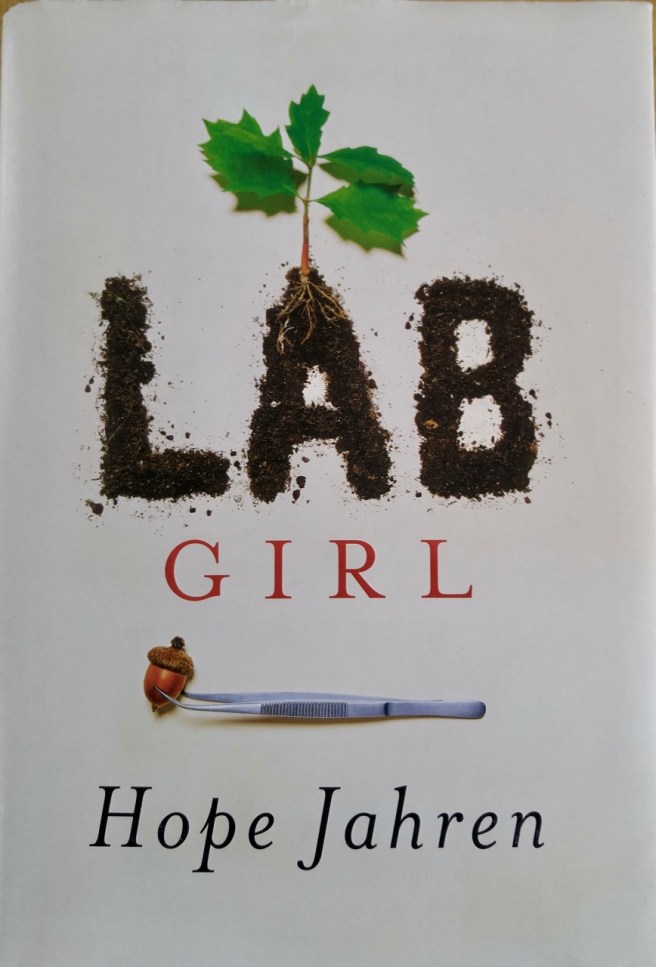
I’d never heard of Hope Jahren until this summer and then several people recommended her book, Lab Girl, to me. Rather than a guide, this is the story of Jahren’s journey from her childhood in rural Minnesota to the science labs she has built along the way. As a scientist, Jahren takes the reader through the ups and downs of the research world. And she does so with a voice that makes me feel like we’re old friends. Simultaneously, she interweaves short chapters filled with  information about the secret life of plants, giving us a closer look at their world. I had to buy a copy because for me, those chapters were meant to be underlined and commented upon. I do believe this will be a book I’ll read over and over again–especially those in-between chapters.

Lab Girl by Hope Jahren, Alfred A. Knopf, 2016.

b-hidden-life-of-trees-1

Book of December: The Hidden Life of TREES

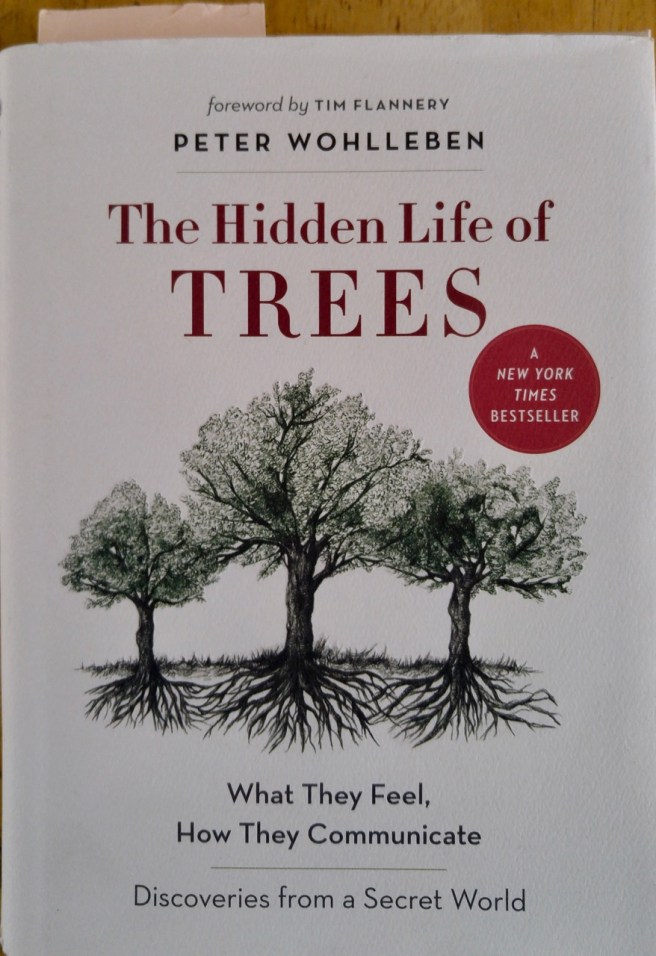
And finally, a gift to myself: The Hidden Life of TREES by Peter Wohlleben. I’d first learned about this book in a newspaper article published last year and had to wait until recently to purchase it after the book was translated from German to English. Again, it’s not a field guide, but offers a delightful read that makes me think. And thus, you can see my bookmark. I’ve not finished reading it yet, but I’m having fun thinking about some different theories Wohlleben puts forth. As a forester, Wohlleben has spent his career among trees and knows them well. He’s had the opportunity to witness firsthand the ideas he proclaims about how trees communicate. And so, I realize as I read it that I, too,  need to listen and observe more closely to what is going on in the tree world–one of my favorite places to be. Maybe he’s right on all accounts–the best part is that he has me questioning.

The Hidden Life of TREES: What They Feel, How They Communicate by Peter Wohlleben, Random House, 2016.

And that’s just it–the underlying theme of these five books you might consider is TREES. I can’t seem to learn enough about them. One word of caution, each author has their own take on things, so the best thing to do is to read the book, but then to head out as often as you can and try to come to your own conclusions or at least increase your own sense of wonder.

And now for the books on my list (My guy is the keeper of the list):

Naturally Curious Day by Day: A Photographic Field Guide and Daily Visit to the Forests, Fields, and Wetlands of Eastern North America by Mary Holland, Stackpole Books, 2016

Mosses, Liverworts, and Hornworts: A Field Guide to Common Bryophytes of the Northeast by Ralph Pope, Cornell University Press, 2016.

Do you have any other suggestions for me?

One final thought about books–support your local independent book store as much as you can. Here in western Maine, we are fortunate to have Bridgton Books. Justin and Pam Ward know what we like to read and if they don’t have a particular book we’re looking for, they bend over backwards to get it for us.


The Way of the Land at Long Meadow Brook Reserve

Last month the Greater Lovell Land Trust purchased a new property along Long Meadow Brook that further develops the wildlife corridor. A couple of weeks ago I first visited it with GLLT’s Executive Director Tom Henderson and a number of the land trust’s volunteer docents. As we left the property, Tom said to me, “I didn’t oversell this, did I, when I said this will become one of the docents’ favorite properties.” Indeed.

And so I couldn’t wait to get back there myself to spend a few hours exploring the almost one-hundred-acre reserve.

l-mullein-flower-2

Because the land was last logged by the previous owner in 2014, it’s in the early succession stage of regrowth.

l-mullein-flower-3

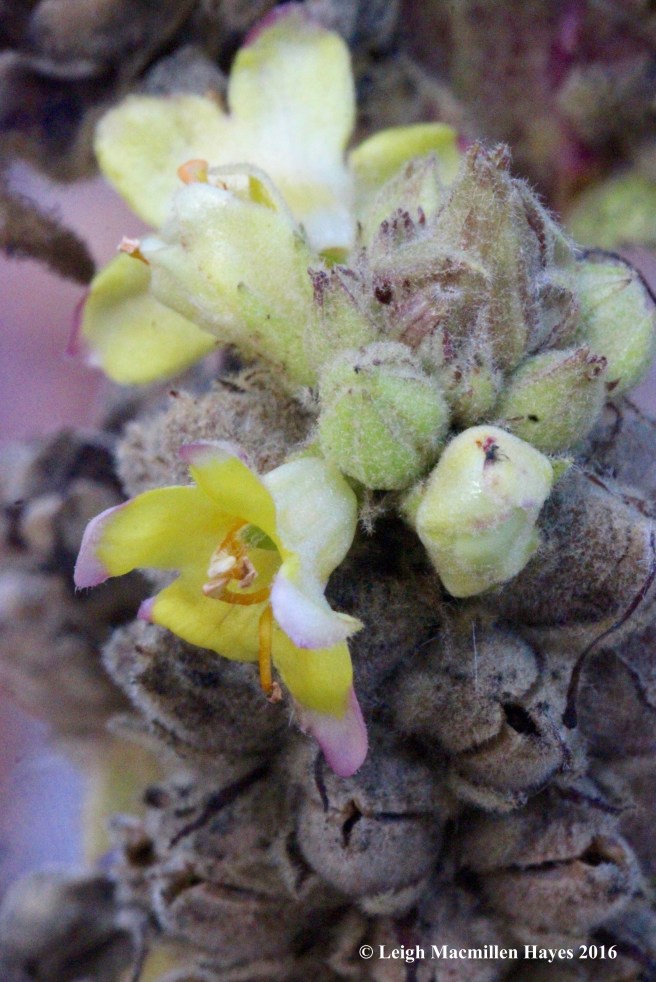
And so, it’s a place where those who like disturbed places tend to grow, such as the common mullein. What surprised me most was that I found a few still offering blooms.

l-mullein-cactus

Of course, it reminded me that I was in the great West–WESTern Maine, that is–with its occasional cacti-like form.

l-seeds-holidng-on

Scattered throughout are also the seedheads of white lettuce, waiting for release in lampshade-like formation.

l-orange-peel-fungi

Orange-peel fungi fruited prolifically in the gravel logging road.

l-future-parking-lot

That was all before I even reached the future parking lot, which had served as the log landing a few years ago. Already, sweet ferns and berry bushes have made themselves known.

l-sweet-fern-colors

The leaves of sweet fern, which is really a shrub rather than a fern, exhibited their version of autumn hues.

l-trail-marker

If you go, I encourage you to look for the blue ribbons that indicate where a future trail will be placed. It’s a loop trail that summer interns Hannah and Aidan laid out and leads to two focal features.

l-stonewall-double-to-single

The trail nears a neighboring property, which just happens to also be under conservation easement thanks to the foresight of its owners. I stepped off the blue flag trail and started to follow the wall for a bit–noticing that soon it changed from a double (garden or plowed land) wall to a single wall. A large pasture pine grew at the change-over point.

l-stonewall-barbed-wire-1

And where the wall switched to single formation, barbed wire indicated its former use a pasture boundary. And white pine scales indicated its current use–as a red squirrel’s dining room table.

l-forest-succession-2

After moving away from the wall, I noticed the mountains in the offing and ferns and young trees already filling in the empty spaces.

l-kearsarge

One of my favorite mountains to climb stood tall in the backdrop–Mount Kearsarge.

l-forest-succession-1

My bearings were off a bit, but I knew where the eastern boundary was as I moved across this opening.

l-pitch-pine-bark-1

Walking along the back edge, my tree passion was ignited yet again.

l-pitch-pine-1

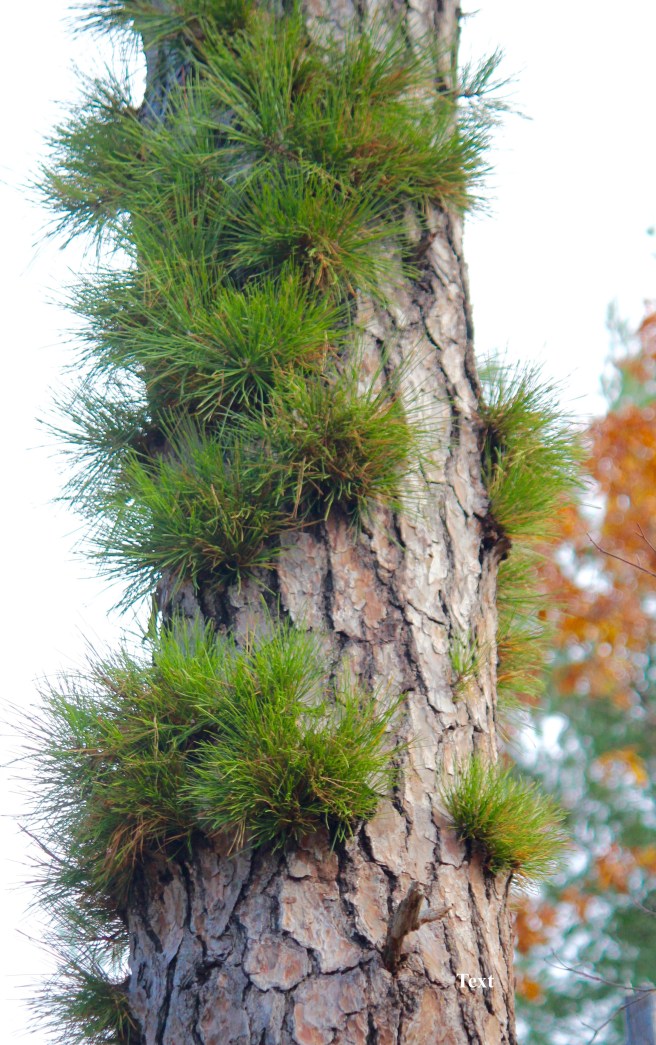
Several pitch pines grow in this space. While the bark is similar to that of red pines, it’s platier (is that a word?). And the tufts of needles that grow along the trunk were a dead give-away.

l-pitch-pine-cone

l-pitchpine-needles

But . . . I always quiz myself and so I looked around. And right below the trees, pitch pine cones and the triple needle bundles common to this species.

l-wintergreen-berries

It was here that I discovered wintergreen growing by the base of a tree stump. What made me wonder was the amount of fruit on each plant. Yes, wintergreen grows prolifically in all of western Maine, but I can’t recall ever seeing so many little red globes dangling below the leaves.

l-marshy-1

From my half-circle around the opening, I wasn’t positive about my whereabouts and so decided to follow the land downhill because it looked like there may be an opening below. A few minutes later, I realized I was in a marshy spot where the cinnamon ferns grew. And the earth beneath my feet was rather spongy and damp.

l-beaver-lodge

I reached what I thought was the meadow I sought–only to realize that I was looking at a beaver lodge. I knew that beaver lodge, but from a different perspective–the neighbors’ property.

l-first-marsh

And then something else caught my attention.

l-marsh-tamaracks

Tamarack (aka larch) trees–our only deciduous conifers, which had turned a golden yellow as is their autumn habit.

l-tamarack-2

The spray of tamarack needles reminded me of witch hazel flowers, which also grow on this property. But soon, the former will drop, leaving only their barrel-like stems as a reminder of their presence.

l-maple-leaf-viburnum

I left that spot, retraced my steps and headed to the north on a cross-country bushwhack, where the mauve colored maple-leaf viburnum grew.

l-turkeys

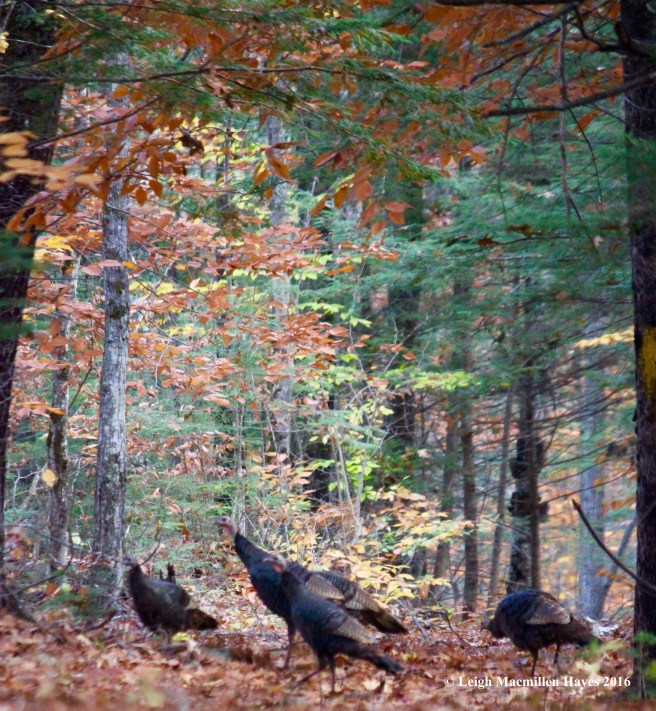
I saw lots of mammal sign and even a few birds, including turkeys who are loving the fact that this is a mast year for acorns.

l-trail-to-meadow

At last I emerged onto the trail I remembered and headed downhill again.

l-meadow-brook-2

And then . . . I was rewarded for my efforts. Long Meadow Brook and the mountains beyond provided a WOW moment.

l-meadow-east

I looked to the east for a few minutes.

l-meadow-layers

And then turned west again, where the layers and colors spoke of diversity.

l-meadow-snags

Even the dead snags added beauty.

l-cat-n-nine-tails

Cat-in-nine tails added to the view and I noted others who like wet feet including steeplebush, meadowsweet and bulrushes growing along the old beaver dam. It’s also a place for a variety of evergreen species–hemlock, white pine, balsam fir, red spruce and tamaracks. Future teaching moments await.

l-hobble-2

My intention to stick to the trail was soon thwarted when I spied hobblebush.

l-hobble-bud1

Like all trees and shrubs, the future was already encased in a bud–in this case a bud we refer to as naked because it doesn’t have the waxy coating of most others. Methinks its furry presentation offers the same protection from winter’s cold.

l-back-of-hobblebush-leaf

And as I studied the back side of fallen leaves, I paid attention to the venation–reminiscent of the bud’s pattern.

l-hobble-leaves-2

In the glow of sunlight, I felt like I’d found the pot of gold.

l-meadowhawk-2

A short time later I reached the second opening that Hannah and Aidan’s trail encompasses. And what to my wondering eyes should appear–a meadowhawk dragonfly.

l-snow-on-balds-1

It provided a sharp contrast to snow on the Baldface Mountains.

l-secod-opening-2

It was at this six-acre opening that I poked around for a while longer. And watched a goshawk fly to a pine tree with something dangling from its talons. Did I take a photo? No, of course not. I was too mesmerized to focus my camera. But sometimes, the photo doesn’t matter. Being there in the moment does.

I’m thankful for such opportunities made possible by organizations such as the Greater Lovell Land Trust. I know that ultimately this property is for the mammals that travel through and I saw plenty of evidence that they use this place. But then again, I’m a mammal who also appreciates the land bridges created and opportunity to observe the connectivity. I spent the day getting to know the way of the land at Long Meadow Brook Reserve–and can’t wait to return.


Finding Our Way on Mount Tom in Fryeburg, Maine

I ventured this afternoon with my friend Marita, author of  Hikes and Woodland Walks in and around Maine’s LAKES REGION, along with her daughter’s beagle, Gracie, on a new trail in Fryeburg.

t-preserve-sign

Mount Tom, a Roche Moutonnée, is an asymmetrical hill with a gently sloping up-ice side that has been smoothed and polished by a glacier. The other side is abrupt and steep–the down-ice side where the rocks were plucked off, leaving a more cliff-like appearance. As Marita noted, its most impressive view is from a distance, but today we sang its praises from up close. We’ve both hiked a 1.5 mile trail to the summit for years, but recently The Nature Conservancy developed a new trail that we were eager to explore.

t-fdn-1

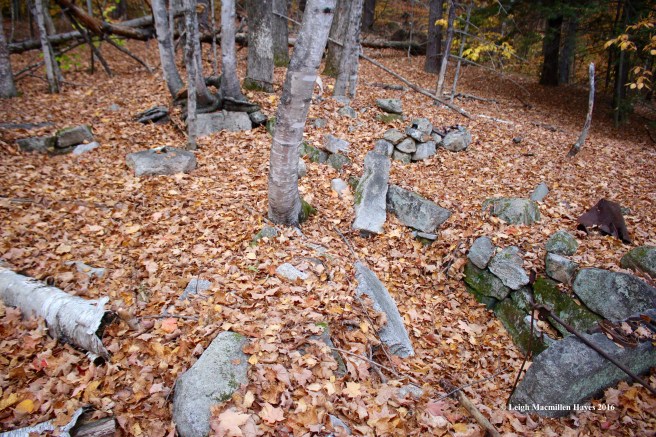
Within seconds I was exclaiming with joy. A huge, and I mean HUGE foundation shared the forest floor. Note the outer staircase to the basement.

t-center-chimney

And the large center chimney.

t-fryeburg-1858-map

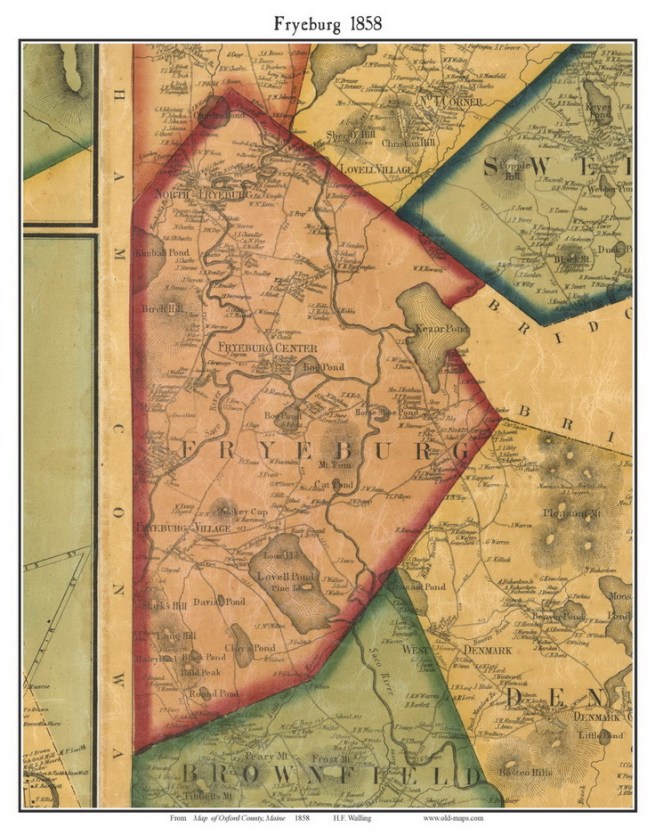
On an 1858 map, I found that A.H. Evans owned a home in about this vicinity, but I don’t know if this was his. Or any more about him. It will be worth exploring further at the Fryeburg Historical Society.

t-house-connected-to-barn

The house extended beyond the basement.

t-barn-1

And was attached to an even bigger barn.

t-barn-2

Ash trees grow beside the opening, but I wondered if we were looking at the manure basement.

t-trail-blaze

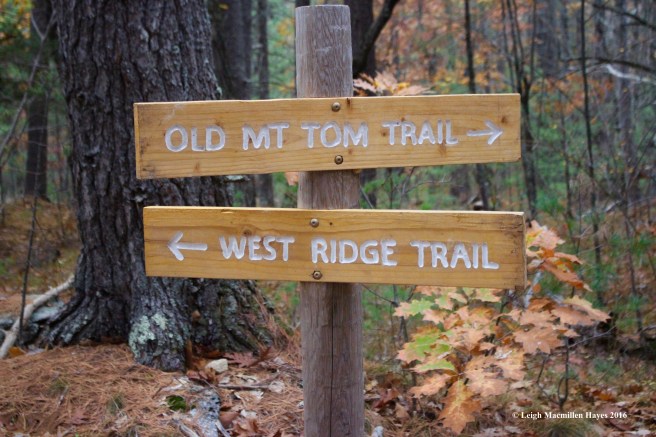
Finally, we pulled ourselves away and returned to the trail. Well, actually, we tried to return to the trail but couldn’t find it. So we backtracked, found this initial blaze and again looked for the next one. Nothing. Nada. No go. How could it be?

t-marita-and-gracie

That didn’t seem right, so we decided to follow our noses, or rather Gracie’s nose, and sure enough we found the trail. If you go, turn left and cross between the house and barn foundations.

t-gracie

After that, for the most part, we were able to locate the trail, but it was obscured by the newly fallen leaves and could use a few extra blazes. Gracie, however, did an excellent job following the scent of those who had gone before and leaving her own.

t-saw-dust

The path took us over a large mound of sawdust, something I’ve found in several areas of Fryeburg.

t-color

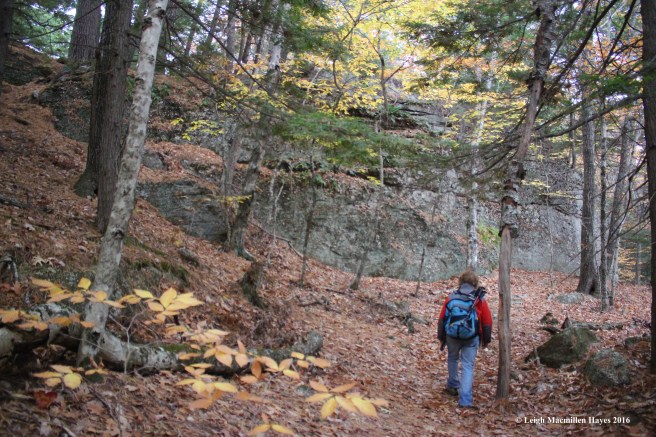
The predominate trees were beech, white and red oaks, thus providing a golden glow to the landscape.

t-ledges-1

And then we came to the ledges. Bobcat territory. Note to self: snowshoe this way to examine mammal tracks.

t-ledge-island

The trail was situated to provide a close up view of the ledge island, where all manner of life has existed for longer than my brain could comprehend. Life on a rock was certainly epitomized here.

t-intersection

We continued our upward journey for over 2.3 miles (thanks to Marita’s Fitbit for that info) and eventually came to the intersection with the trail we both knew so well.

t-summit-sign

From there, we walked to the summit where the views have become obscured by tree growth.

t-pleasant-mtn-from-summit

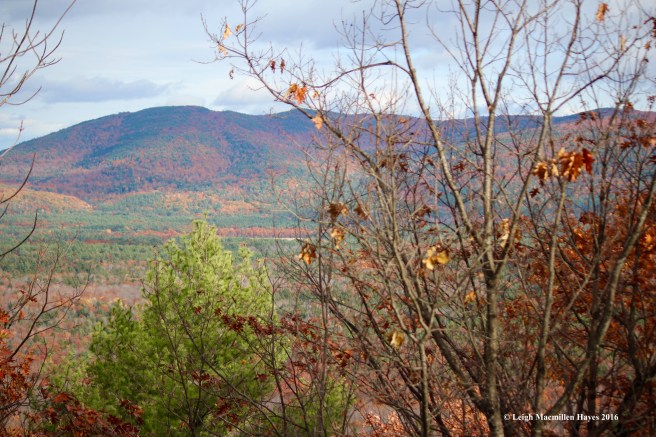
But . . . we could see the long ridge of Pleasant Mountain in front of us,

t-kezar-pond

Kezar Pond to our left,

t-richardson-1

t-richardson-farm

and the Richardson Farm on Stanley Hill Road to our right.

t-ladys-slipper-pod

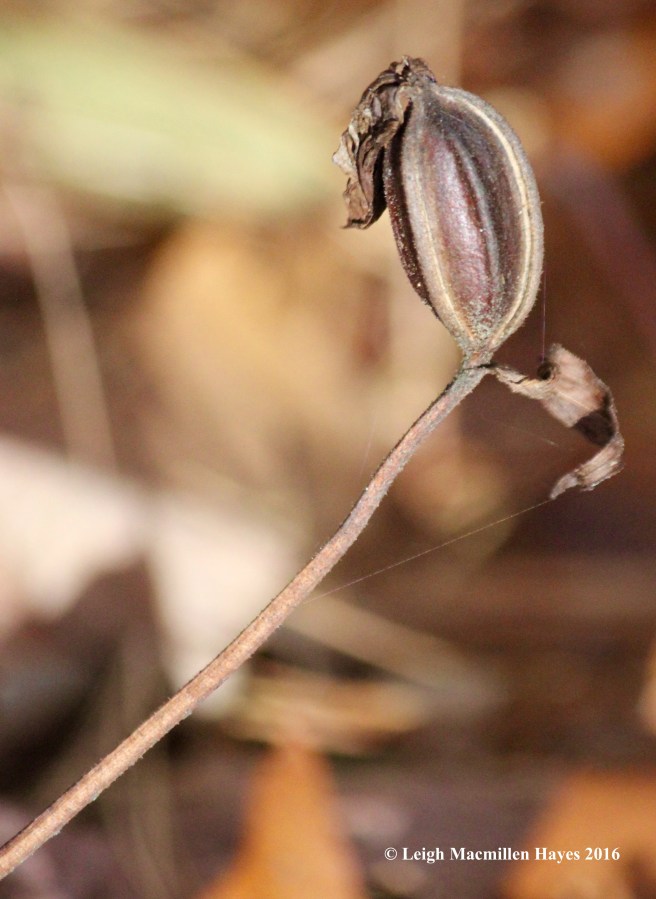
Also along the summit trail, the woody seedpod of a Lady’s Slipper. Ten-to-twenty thousand seeds were packaged within, awaiting wind dispersal.

t-mt-tom-house

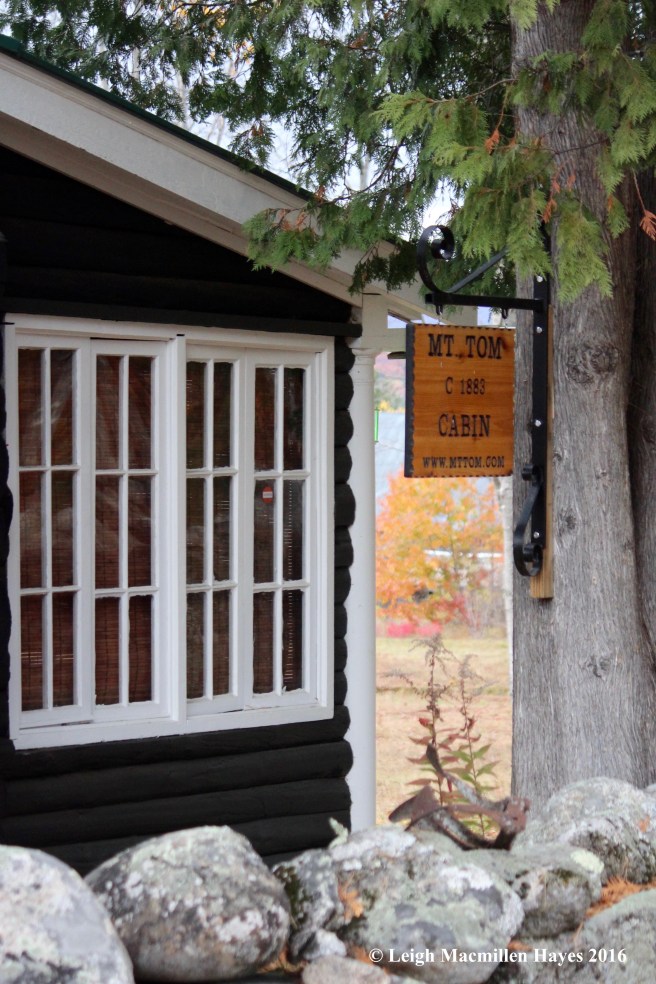
We decided to follow the old trail down, which passes through a hemlock grove and then suddenly changes to a hardwood mix. Both of us were surprised at how quickly we descended. And suddenly, we were walking past some private properties including the 1883 Mt. Tom cabin.

t-northern-white-cedar-bark

t-northern-white-cedar

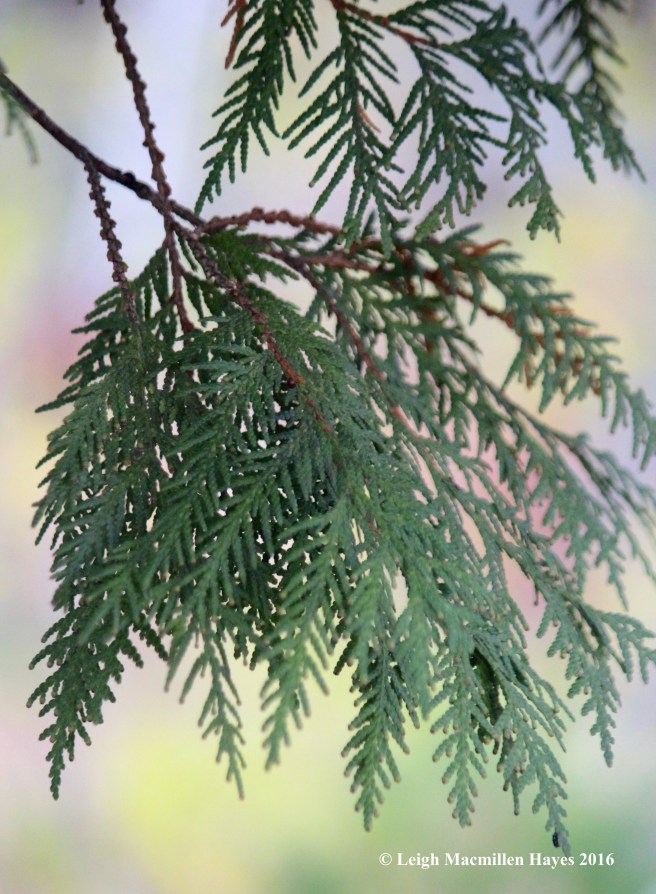
The cabin sign was actually attached to a Northern White Cedar tree. I’m forever wowed by its bark and scaly leaves.

t-flag

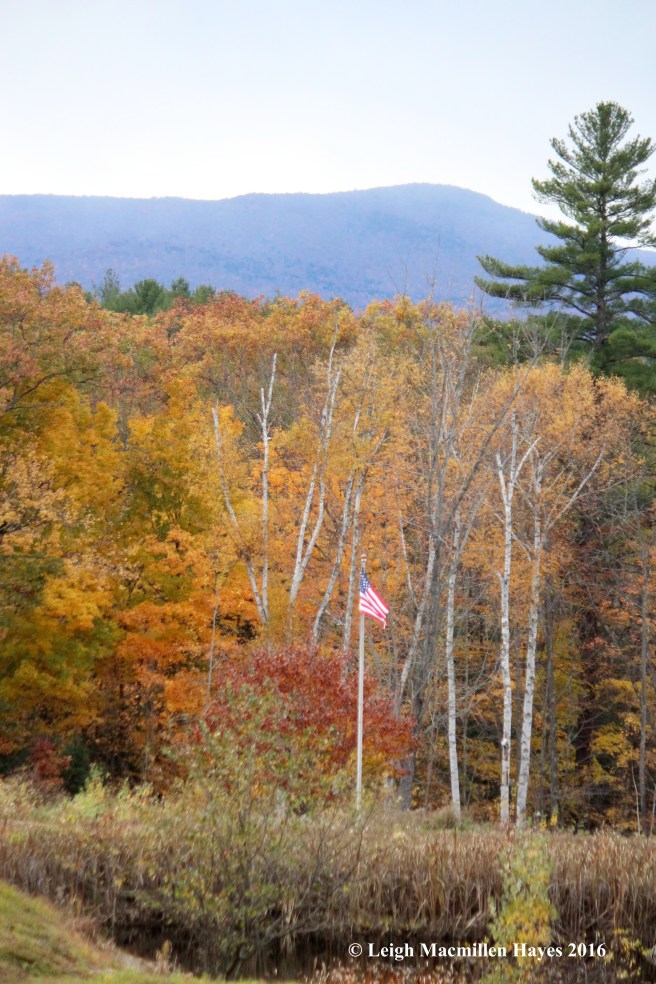
In the field beyond, Old Glory fluttered in the breeze.

t-barn

And just before Menotomy Road, we spied Mount Kearsarge in the distance.

t-menontomy-cemetery

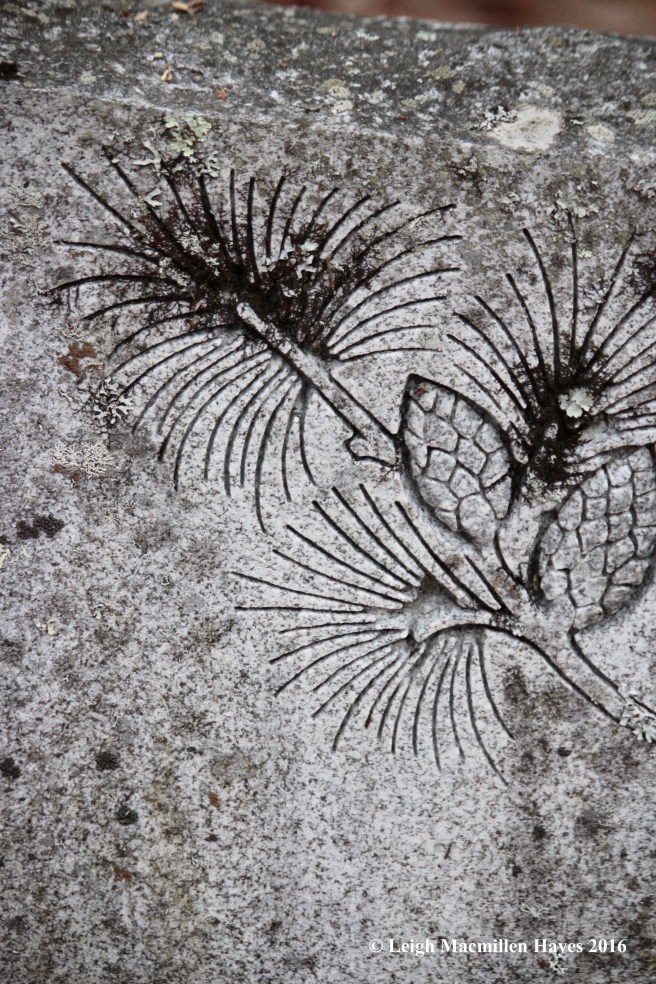
Since we’d taken the loop trail approach rather than an out and back on the same trail, we had to walk along Menotomy Road, so we paid the cemetery a visit and checked out the names and ages of those who had lived in this neighborhood.

t-pine-on-grave-stone

One of the older stones intrigued me with its illustration. I think I would have enjoyed getting to know these people.

t-menotomy-pumpkins

As we continued on, I was reminded of recent adventures in Ireland  and the realization that we notice more when we walk along the road rather than merely driving by. We both admired this simple yet artful pumpkin display.

t-menotomy-road-1

If you go, you might want to drive to the old trailhead, park your vehicle and then walk back to the West Ridge Trail. We parked at the latter and had to walk the 1.5 back at the end, when it seemed even longer. But truly, the road offers its own pretty sights and the temperature was certainly just right, even with a few snow flurries thrown into the mix, so we didn’t mind. We were thankful we’d found our way along the new trail and revisited the old at Mount Tom. And I’m already eager to do it again.


In Constant Flux

Ever so slowly, the world around us changes.

h-starting-point

Sometimes it’s as obvious as the leaves that fall.

h-bee-on-flower-1

And other times, it’s a bit more subtle, evidenced by the bees that have slowed their frantic pace as they make final collections.

h-leaf-carpet

Mid morning, I headed down the cow path in search of other signs of change.

h-oak-branches-1

As I walked along, I began to realize the interdependence of all. Under the northern red oaks–many  chopped off twigs.

h-porcupine-works

The angled cut and empty cap indicated the work of porcupines seeking acorns.

h-leaves-on-hemlock

I found maple leaves pausing on hemlocks,

h-pine-needles-on-spruce

pine needles decorating spruce trees,

h-leaves-in-puddles

and occasional puddles offering a rosy glow. Eventually, all of these leaves and needles will break down and give back.

h-life-on-rock-1

I found life on a rock, where lichens began the story that was added to by mosses. The creation of soil was enhanced by a yearly supply of fallen leaves and needles gathered there. And then a seed germinated, possibly the result of an earlier squirrel feast.

h-orange-peels1-1

I found orange peel and many other fungi aiding the process of decomposition so that all the fallen wood and leaves will eventually become part of the earthen floor.

h-forest-succession-3

I found a healthy stand of trees and ferns competing for sunlight in an area that had been heavily logged about ten years ago.

h-deer-and-bobcat-prints

I found evidence of those who spend their lives eating and sleeping in this place.

h-aster-seeds

I found seeds attached

h-seeds-on-the-fly

and those on the fly–heading off in search of a new home.

h-witch-hazel-flowers-galore

I found the last flowers of fall

h-witch-hazel-1

exploding with ribbony blooms.

h-power-and-nature

After bushwhacking for a few hours, I found the snowmobile trail, where man and nature have long co-existed.

h-home-2

At last I found my way across the field rather than through our woodlot, thankful for the opportunity to take in the colors of the season one more time.

At the end of the day, I’m once again in awe as I think about how we, and all that we share this Earth with, are dependent upon each other and the abiotic forces that surround us.

And with that comes the realization that the scene is in constant flux and so am I.


The Wonders of Kezar River Reserve

How many people can  travel a familiar route for the first time every time? I know I can.

j-kiosk

And so it was this morning when I ventured to the Greater Lovell Land Trust’s Kezar River Reserve off Route 5 in Lovell. I went with a few expectations, but nature got in the way, slowed me down and gave me reason to pause and ponder–repeatedly.

k-oak-gall-1

As I walked along the trail above the Kezar River, I spied numerous oak apple galls on the ground. And many didn’t have any holes. Was the wasp larvae still inside?

k-partridgeberry

While the dots on the gall were reddish brown, the partridgeberry’s oval drupes shone in Christmas-red fashion. I’m always awed by this simple fruit that results from a complex marriage–the fusion of pollinated ovaries of paired flowers. Do you see the two dimples? That’s where the flowers were attached. Two became one. How did they do this?

k-fairy-2

After walking along the first leg of the trail, I headed down the “road” toward the canoe launch. And what to my wondering eyes should appear–fairy homes. Okay–true confession: As a conclusion to GLLT’s nature program for the Lovell Recreation Program this summer, the kids, their day camp counselors and our interns and docents created these homes.

k-fairy-1

I was impressed that the disco ball still hangs in the entrance of this one. Do you see it? It just happens to be an oak apple gall. Creative kids. I do hope they’ve dropped by with their parents to check on the shelters they built.

k-bench

And then I reached the launch site and bench. It’s the perfect spot to sit, watch and listen. So I did. The bluejays kekonked, nuthatches yanked and kingfishers rattled.

k-ripples

A gentle breeze danced through the leaves and offered a ripply reflection.

k-river-4-morning

And I . . . I awaited great revelations that did not come. Or did they? Was my mind open enough to receive? To contemplate the mysteries of life? The connections? The interactions?

k-ridgeline-2-1

At last, I moved on and entered a section that is said to be uncommon in our area: headwall erosion. This is one of five ravines that feature deep v-shaped structures. Underground streams passing through have eroded the banks. It’s a special place that invites further contemplation. And exploration.

k-skate-bugs

One of my favorite wonders on the bit of stream that trickled through–water striders. While they appeared to skate on the surface, they actually took advantage of water tension making it look like they walked on top as they feasted on insects and larvae that I could not see.

k-turtle-sign

Lots of turtle signs also decorated the trail. Literally.

k-bear-sign

In fact, I found bear sign,

k-cardinal-sign

cardinal sign,

k-ladys-slipper

and lady’s slipper sign . . . among others. Local students painted the signs and it’s a fun  and artistic addition to the reserve.

k-blue jay feather.jpg

Of course, there was natural sign to notice as well, including a blue jay feather.

K-aster .jpg

Asters and goldenrods offered occasional floral decorations.

k-hobbleberries

And hobblebush berries begged to be noticed.

k-meadowhawk-1

And then a meadowhawk dragonfly captured my attention. I stood and watched for moments on end.

k-red-maple-leaf

And noted that the red maples offered similar colors.

k-squirrel.jpg

When I reached the canoe launch “road,” I was scolded for my action.

k-river-later-1

Despite that, I returned to the bench overlooking the mill pond on the river. Rather than sit on the bench this time,  I slipped down an otter slide to the water’s edge.

k-green frog 1.jpg

My efforts were rewarded. Frogs jumped. And a few paused–probably hoping that in their stillness I would not see them. But I did . . . including this green frog.

k-ruby-2

My favorite wonder of the day . . .

k-meadowhawk-6

moments spent up close and personal with another meadowhawk.

k-ruby-3

No matter how often I wander a trail, there’s always something, or better yet, many somethings, to notice. Blessed be for so many opportunities to wonder beside the Kezar River.


Golden Rulers

In late summer/early fall, a variety of goldenrods shower gardens and fields with their sunshiny flowers.

Unfortunately, they’ve been wrongly blamed as the culprits of hay fever, but by the abundance of pollinating insects that visit them daily, it’s clear that they are insect rather than wind pollinated. (Ragweeds and other hay-fever causing species are wind pollinated.)

And so today, as I have for the past few weeks, I spent time focusing on those pollinating visitors and others who find goldenrods attractive for different reasons. Take a look.

g-assassin-1

What first caught my eye was a bee that dangled upside down. And then I spied the green legs of an assassin bug. What? Yup, an assassin bug.  I believe this one is a nymph. Regardless of age, here’s the scoop: Assassin bugs are proficient at capturing and feeding on a wide variety of prey. Though they are good for the garden, they also sometimes choose the wrong species like this bee. The unsuspecting prey is captured with a quick stab of the bug’s curved proboscis or straw-like mouthpart. Once I saw this, I continued to return for a couple of hours, so stay tuned.

g-honey-2

Fortunately, there were other honeybees on the job of pollinating the flowers.

g-bumblebee

Mighty bumblebees also filled their sacs to the brim.

g-assassin-2

A.B. Take 2–do you see the proboscis stuck into the first bee’s thorax? It fed by sucking out the fluids.

g-hover-fly

Back to the other visitors. One of my favorites was the hover fly. I’m always humbled by its coloration.

g-wasp

And then there were the wasps.

g-wasp-2

Their almost hairless bodies provided contrast beside the bees.

g-assassin-3

A.B. Take 3–The A.B. turned the bee and it appeared that its proboscis became coated with pollen, which would make sense.

g-jumping-spider

Meanwhile, a jumping spider waited patiently for its own prey to come into sight. I felt like all eyes were on me as we came face to face. Thankfully, it didn’t jump and grab me with its jaws.

g-crab-3

Another with a poisonous bite is the crab spider. This one was more active that most that I’ve seen. Usually, they sit and wait, then catch their prey, bite it and again, suck it dry. And while it looks huge in this picture, it is really quite small–about pencil eraser size.

g-spider-web

A third spider species used the goldenrod’s stem and leaves to weave its own structure. It seemed to be more successful than the others at finding a meal.

g-assassin-5

A.B. Take 4–Check out A.B.’s tiny red eyes. And its camouflage–no wonder the poor bee never saw it.

g-caterpillar-2

Not every visitor to the goldenrod knew about camouflage. I don’t know who this is, but saw it on a nearby orange echinacea yesterday. Its mauve color certainly shouted for attention among the yellow sea.

g-caterpillar-blend

A different caterpillar did a better job of blending in–do you see it?

g-assassin-7

A.B. Take 5–An hour later and the A.B. was still sucking.

g-assault-2

At the same time, another predator hid among the flowers–an ambush bug.

g-ambush-3

This species is otherworldly at best.

g-ambush-bug

And talented. The ambush bug waits patiently and then snatches prey with its knife-like pincers. All but the outer shell of the prey is consumed. I swear this guy was smiling. Maybe he’d enjoyed a feast and I’d missed it.

g-assassin-victim

A.B. Take 6–About two hours after I’d first observed it, I returned and couldn’t find the bee. Then I noticed a motionless body on a flower branch below. Apparently A.B. had sucked all the life out of it and then let it go.

g-assassin-on-prowl-2

A.B. The Final Take–It had finished taking and went in search of another victim.

What I know for sure: While goldenrod may rule the late garden, it is also ruled by many in a bug-eat-bug world. All of it is worth a wonder.

Inching Along With Jinny Mae

Jinny Mae is a slow poke. Me too. And so today, we moved at slow-poke speed and covered maybe a mile in total.

h-yellow-necked caterpillar

We traveled a trail I frequent at Holt Pond Preserve, but I had the opportunity to view it through her eyes. That meant, of course, that we shared identical photos because we always pause to focus on the same thing. I trust, however, that our perspective was a wee bit different–as it should be. For isn’t that what makes us individuals?

Speaking of individuals, we saw only one of these yellow-necked caterpillars. I didn’t know its name until I looked it up later. Apparently, the adult is a reddish-brown moth. And this is a defense position–indeed.

h-Royal fern

And then the royal fern forced us to pay attention. The fertile blade of a royal fern typically looks similar to a sterile blade, but has a very distinctive cluster of sporangia-bearing pinnules at the blade tips that appear rather crown-like. What to our wondering eyes did we spy–sporangia on lower pinnules. Did this fern not read the books? We checked the rest of the royal ferns along the path and never saw another like this one.

h-entering pitchter

One of our next reasons to pause–those wonderful pitcher plants that always invite a closer look. We weren’t the only ones checking them out.

h-entering the pitcher

A yellow jacket was also lured by the smell of sweet nectar. A walk down the leaves was probably the last walk those insects took. Inevitably, they’d slip to the bottom of the pitcher where a pool of water awaited. There, they either drowned or died from exhaustion while trying to escape since the downward pointing hairs prevent such from happening. Eventually, after the insect bodies break down, the plant will access the nitrogen and phosphorus contained within each bug. I can’t visit this preserve without spending time in awe of the pitcher plants.

h-spread-winged damselfly

Damselflies and dragonflies also made us stop. We had walked on the boardwalk across the quaking bog. A spread-winged damsel posed beside Holt Pond. When at rest, it spreads its wings, unlike typical damselfly behavior.

h- darner dragonfly

We watched as the darner dragonflies zoomed about, just above the water and vegetation at the pond’s edge. Occasionally, one hovered close by–just long enough for a quick photo opp.

h-jack in the pulpit

As we continued back along the main trail, Jinny Mae spied a Jack-in-the-Pulpit. The fertilized flower cluster had produced green berries. Soon, they should ripen to a bright red before dispersing their seeds. If the thrushes and rodents are savvy, they’ll enjoy some fine dining. These are not, however, people food. Oxalic acid in the root and stems may cause severe gastric problems.

h-purple aster

In the same spot near Sawyer Brook, we admired the purple flowerhead of swamp asters. Within the flower disk, the five-lobed florets have started their transition from yellow to dull red.

h-jewelweed

With Jinny Mae’s guidance, I was able to take a decent photo of a jewelweed. I love the spurred sac that extends backward. And noted that a small seed capsule had formed. JM is from the Midwest and refers to this as Touch-Me-Not because that capsule will burst open and fling seeds if touched. You say potAto, I say potAHto. We’re both right. As we always are 100% of the time–insert smiley face.

h-inch worm

It was another three-hour tour filled with many ohs and ahs, lots of wonder, a few questions, several considerations and even some answers.

h-inching along

Inching along with Jinny Mae. Always worth the time and pace.

Hiking to the Vanishing Point

My friend, Ann, and I spent today focused on points close to us, while those in the distance also drew our attention.

h-trail sign

Our chosen trail to accomplish such, Mt. Willard in Crawford Notch State Park, New Hampshire. We began on the Avalon Trail and then turned onto the Mt. Willard Trail. I kept thinking I’d last travelled this way in the early spring, but now realize it was last November that my guy and I ventured forth on a Top Notch Mondate.

h-paper birch bark

Ann had in her mind that there were several varieties of birch trees along the way. We did marvel at pastel colors revealed by the paper birch.

h-yellow birch bark

And the golden ribbony peeling of the yellow birch. But those were the only two birch species we saw over and over again. It had been a while since she’d last hiked here so the forest had changed.

h-rocky trail (1)

The trail has also changed. Somewhere stuck in my memory (despite the fact that I hiked here ten months ago) is a fairly flat, graveled carriage path. Um . . . I truly think that was the case years ago, but perhaps funding means it’s no longer maintained like it once was and stormwater has washed the trail out.

h-culvert stones (1)

The carriage road was built in 1845 by Thomas Crawford, owner and host of the Notch House in Crawford Notch. Daniel Webster and Henry David Thoreau reportedly slept there. Crawford wanted to provide his guests with an easy excursion to the summit of the mountain. Old culverts and stone diversions still mark the way.

h-hobble leaf and bud 1

One of the most predominant plants from beginning to end is the hobblebush shrub, so named because its horizontal growth pattern trips hikers, causing them to hobble through the woods. This shrub wows us in any season and right now it’s displaying its late summer colors.

h-hobble berries

On a few, we even found some fruit. I especially loved the new buds posed together like praying hands beneath the berries.

h-hobble in row (1)

And leaf displays that led to vanishing points.

h-water funnels

We chuckled to ourselves as others passed by, sweating in their efforts to reach the summit quickly. Our purpose–a slow and steady climb filled with opportunities to notice, like the funnels of water that dripped from rock to rock.

h-centennial pool

One of our favorite stops–Centennial Pool, where water mesmerized us as it cascaded over moss-covered rocks.

h-chipmunk.jpg

And a chipmunk darted about, surprising us with its close proximity–until we looked up and saw a couple with a dog. Perhaps we looked like we’d offer a safe haven.

h-narrow beech fern

We spent a lot of time wallowing in ferns because Ann has developed a keen interest in them this year. One of our fun finds was the narrow or northern beech fern, which portrayed its natural habit of dripping downward. We loved that we could ID this one by beginning with its winged attachment to the rachis or center stem.

h-artist's conk

Fungi also drew our attention. The mountain had been in the clouds as we approached, so it was no wonder that dew drops decorated this artist’s conk.

h-false tinder conk (1)

Among our fungi sightings–a false tinder conk.

h-fairy ring (1)

And among my favorites–a fairy ring.

h-purple aster 2 (1)

Though the flowers were few, we did spy some purple asters.

h-paper art

And then there were sculptures that caught our attention, like this paper birch artwork framed by moss-covered trees.

h-birch art yellow

And a yellow birch offering its own message to the universe.

h-mossy roots

Some tree roots also begged to be noticed. So we did as we acknowledged the resident faeries.

h-carriage road 1.jpg

At last we found my carriage road. Or at least something that slightly resembled it.

h-tunnel light.jpg

And then the tunnel.

h-tunnel 2

And a glimpse of the world beyond.

h-view 2 (1)

Within seconds, without a drum roll, the jaw-dropping view of the Notch enveloped our focus.

h-squirrel 2

As we ate lunch, another human-savvy critter came closer than is the norm–a red squirrel. We think he coveted Ann’s lunch–a peanut butter and blueberry sandwich with whole blueberries. Who wouldn’t?

h-mtn ash display

Mountain summits in these parts often feature Mountain Ash trees. Today, I paid attention to the pattern, including the six finger splay of its leaflet.

h-mtn ash twigs

And I couldn’t resist the contrast of color it offered against the mountain backdrop.

h-mtn ash leaf

Though we didn’t see any Mountain Ash berries, each individual leaf presented its own point of view.

h-Ann (1)

At the beginning of our hike and again at the summit, we kept hearing a helicopter. Mount Washington was obscured by cloud cover, but with her binoculars, Ann observed a helicopter with a litter. It seemed to follow the same route again and again.

IMG_5996

Our hope was that it was practice over mission. We had no idea of the purpose.

h-maple tree? (1)

At last we hiked down. One of the best parts about following the same path is that new stories await–when you can take the time to look up. And our pièce de résistance–an old snag. A beautiful old snag. Notice its vertical lines intersected by horizontal lines. We spent a long time studying and caressing this natural sculpture.

h-Sharp-scaly Pholiota (Pholiota squarrosoides) (1)

Though it appeared to be dead, life reigned.

h-sharp scaly 2 (1)

I know my mentors will correct me if I’m wrong, but I do believe this is Pholiota squarrosa, commonly known as the shaggy scalycap, the shaggy Pholiota, or the scaly Pholiota. Whatever you want to call it, it seemed to have its own vanishing point.

h-train tracks (1)

Much the same was true for the train tracks we crossed that head north toward Breton Woods.

h-train tracks south (1)

And those that lead south from Crawford’s Notch.

Thanks to Ann for today’s hike into the vanishing point, a disappearance into the woods for a visual exploration.