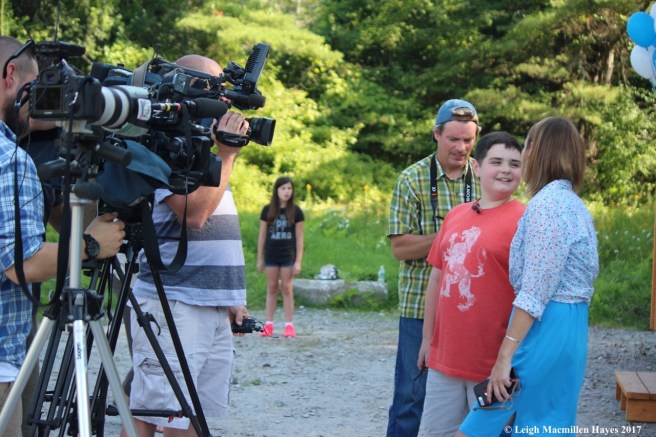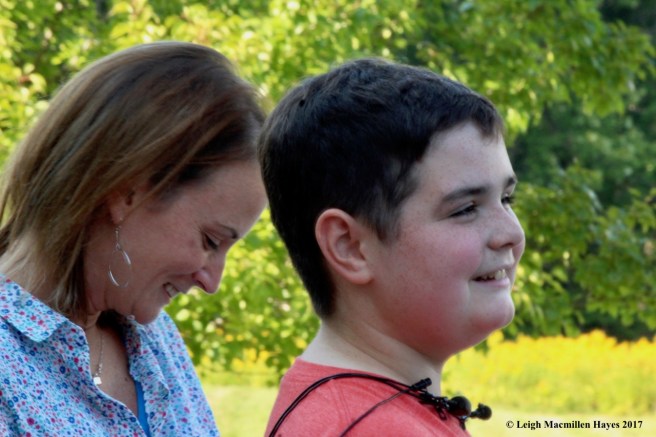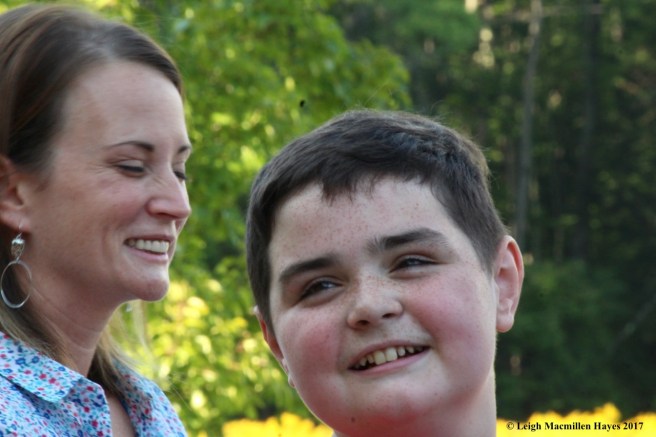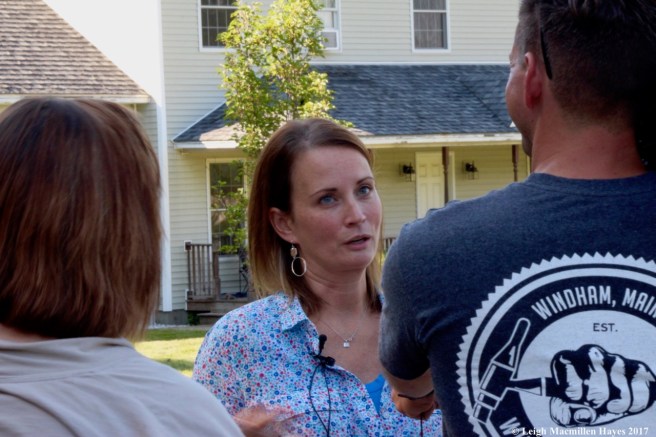
Sallie Savers Celebrate Big Night with LEA

The initial email was sent by Mary Jewett of Lakes Environmental Association in Bridgton, Maine, on Tuesday:

Hello everyone!

Many amphibians have already crossed and laid eggs but there are still some waiting in the woods. Tomorrow evening looks like it will be perfect conditions for an amphibian migration and I would like to get a group together to go out with me. My plan would be to meet at the office at 8pm. With sunset being at 7:40 I really wouldn’t want to start any earlier since the frogs and sallies won’t move when it’s light out.

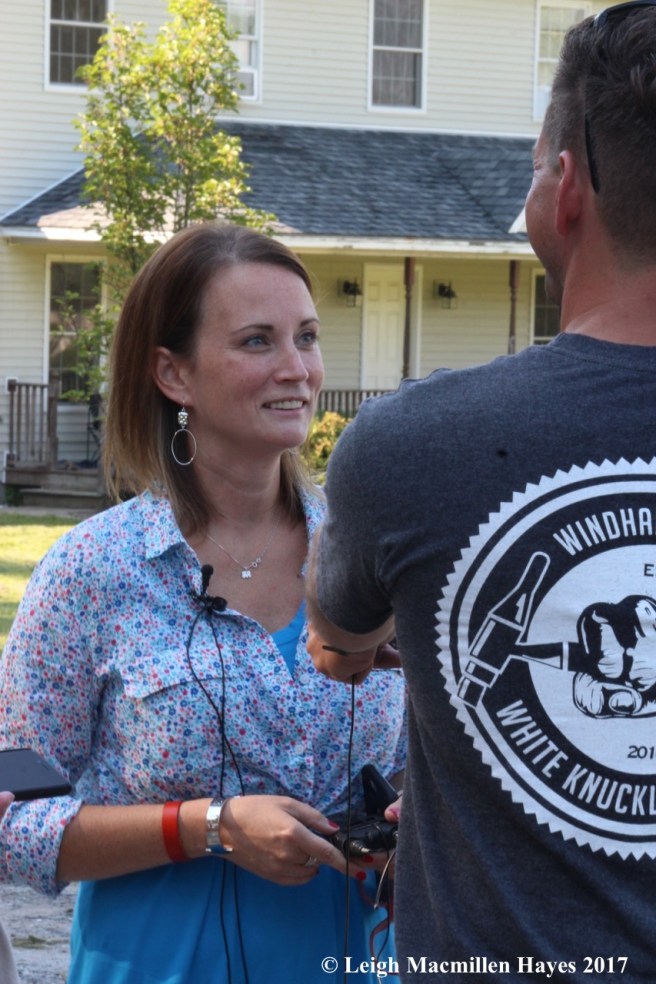
I want to get an idea of who would be able to come out with me. I have a reporter and videographer coming out from the Bangor Daily News and they would like to get shots of actual people (not just me) and possibly get some quotes from participants. I know that it’s tough to get out with kids since it starts so late but I hope that we can get a diverse group. We also may have the opportunity to check out egg masses that are already in the water!

And then this afternoon, Mary sent this follow-up message:

I have heard from a handful of people who are able to come out tonight so I’m going for it. Here are some details:

Meet at the LEA office building (230 Main Street) at 8pm
We will caravan up to the Masonic Hall and walk to Dugway Road from there.
Bring high powered flashlights/headlamps
Wear warm clothes and rain gear. It looks like the rain may be pretty heavy when we are out there. Good for amphibians but not so great for people trying to stay dry.
Wear reflective clothing if you have some. I have vests available if you don’t have your own.
Do not wash your hands with soap or put on hand lotion or hand sanitizer.
I have spoken to the police and they are going to try and send someone out. They have a training program this evening so we might not see them. This makes it extra important that kids stay with their parents at all times!

b3-amphibian crossing sign

And so we did just that–met at the LEA office first, and then moved on to the Masonic Hall to park before beginning our journey into the wet and wild world of the amphibians.
b1-redbacked

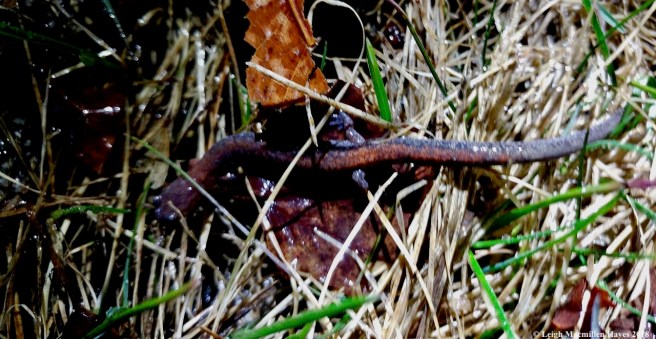
Right away, we noticed worms. And even better, a red-backed salamander. Red backs don’t use vernal pools to mate, but they sure do love rainy nights that offer great opportunities to roam about seeking food.

b2-red backed salamander

We crossed the field from the Hall to Memory Lane, our eyes ever looking for more redbacks, but instead we noted a kazillion worms, each the size of a young snake. And then, after only a few minutes on the road another redbacked graced us with its presence.
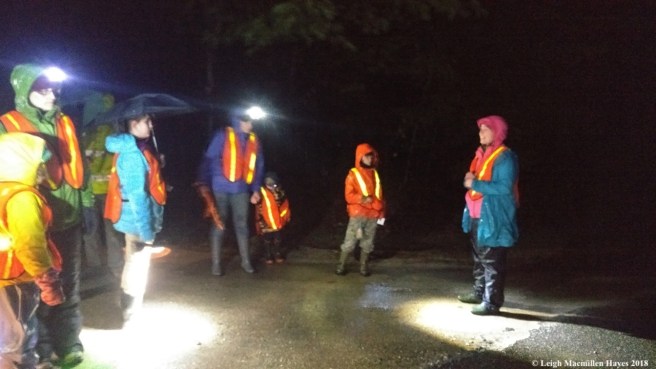
b4-Mary explains rules of the road

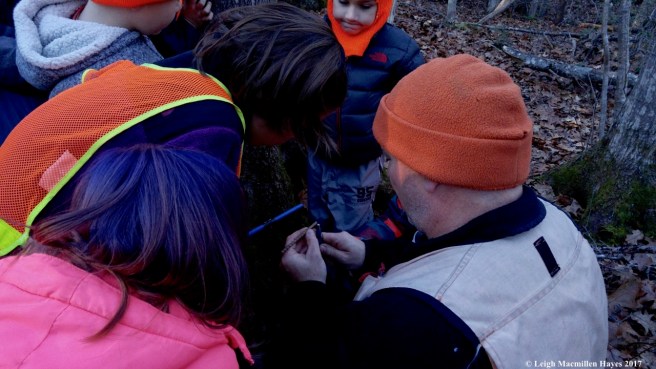
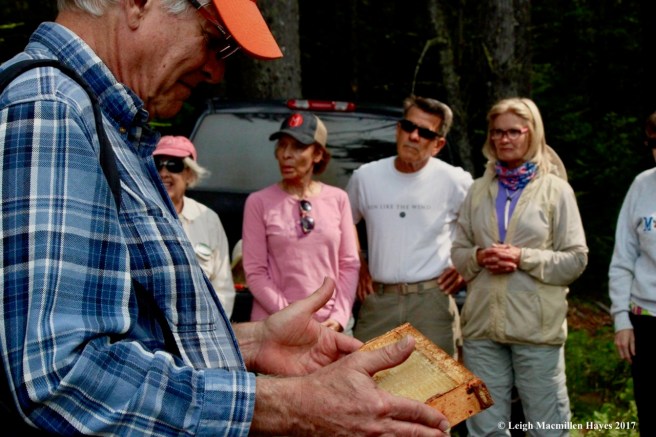
Finally, we reached Dugway Road, our destination, and Mary took a few minutes to remind folks of safety rules. Some years the Bridgton police are able to join us and either shut the road down or at least slow traffic. Such was not the case tonight and so it was important that our crowd of at least twenty ranging in age from four years old to 70+ be cautious.

b4-walking the road

And then the real fun began. We spread out across the road with flashlights and headlamps, walking with care as we tried to notice the little things in life who chose this night to return to their natal pools in order to mate.

b6-spring peeper

Right away, the good times got rolling as we began to spot spring peepers. Really, it was those with eagle eyes who spotted the most, which wasn’t easy given the asphalt conditions. Though we knew better, we did have to wonder if the amphibians chose this road because it provided good camouflage.

b5-first catch- spring peeper

Being the first of the night, Mary demonstrated the fine art of capturing the peeper, explaining first that her hands were damp and had no soap or cream upon them.

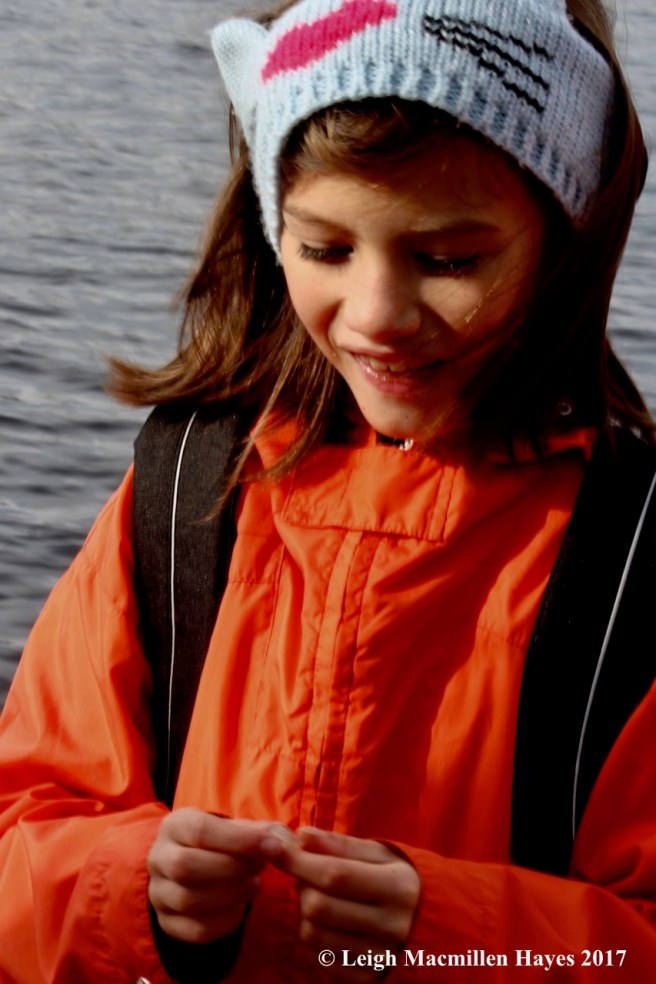
Outstretched hands of one of the younger set awaited a transfer.

b5-pass off

The mission was to help the peeper get to the other side of the road. Typically, once captured, we transport them to the side in which they were headed.

b5-final pass off

The release was made into the youngster’s hands and then onward the child holding frog went. Lucky for the frog, there was a culvert at the side and that seemed like the safest place to release it.
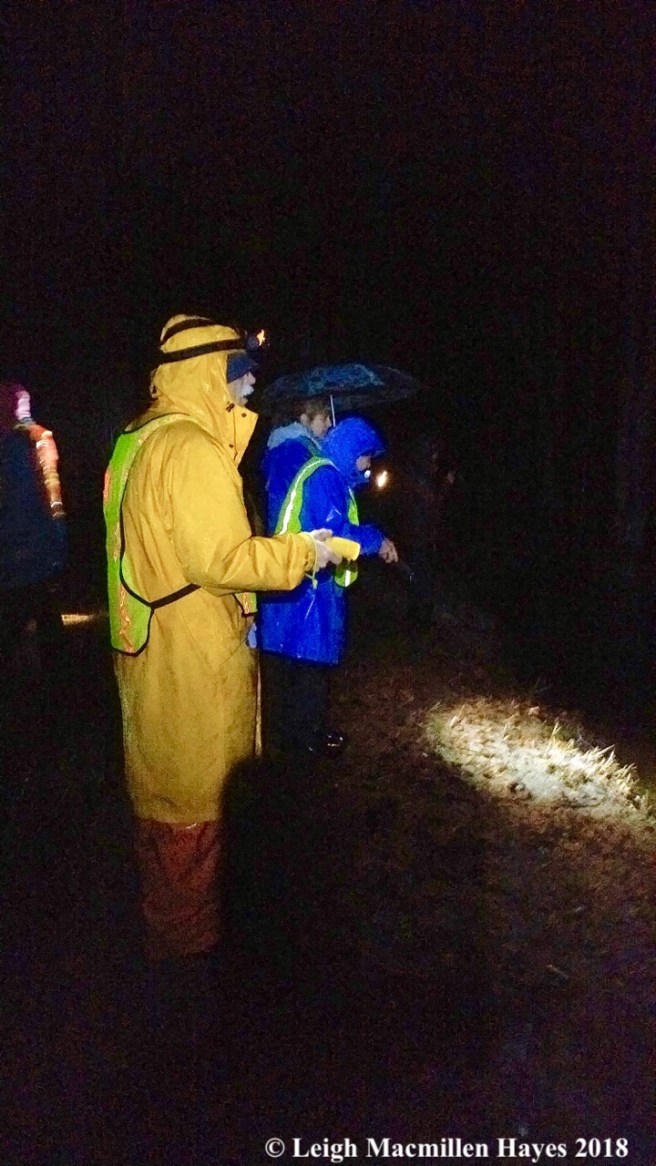
b14-into the vernal pool

Further down the road, the songs of the wood frogs and peepers were almost deafening. As we looked into the vernal pool that was still half covered in ice, there was some movement, but the frogs all continued to sing despite our presence, unlike what happens when we approach a pool during the day and they dive under the leaf cover for a few minutes.
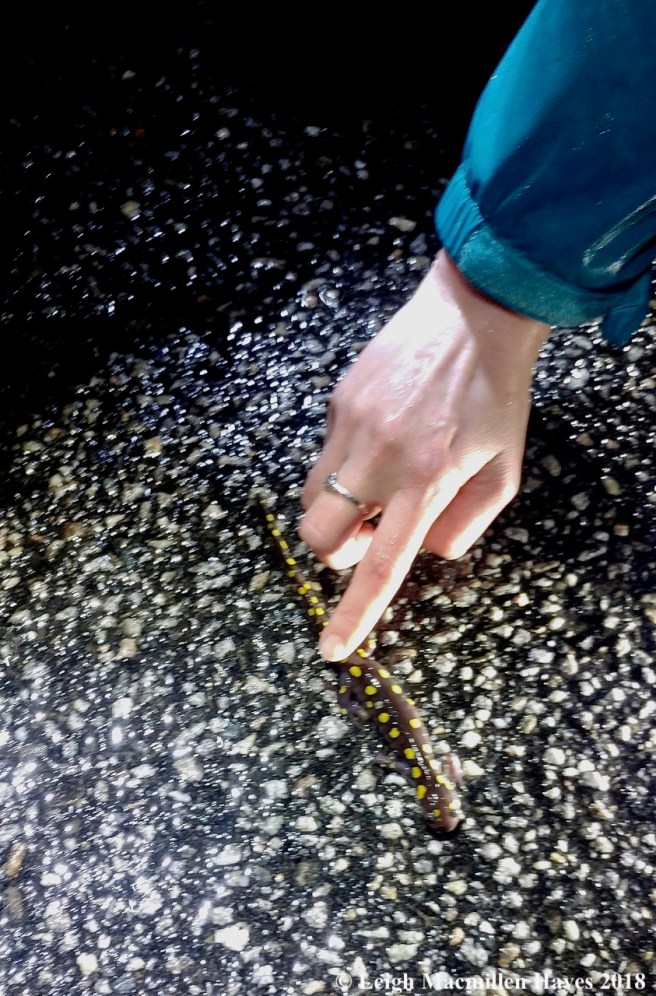
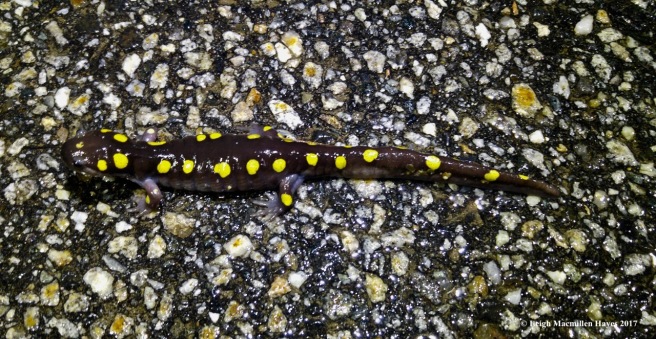
b7-spotted salamander

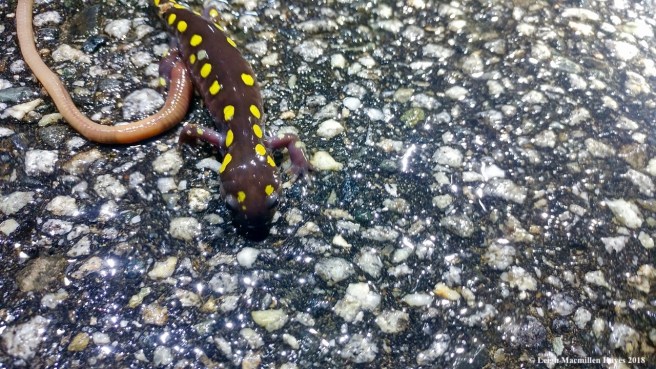
We found enough peepers, but the stars of the night were the spotted salamanders.
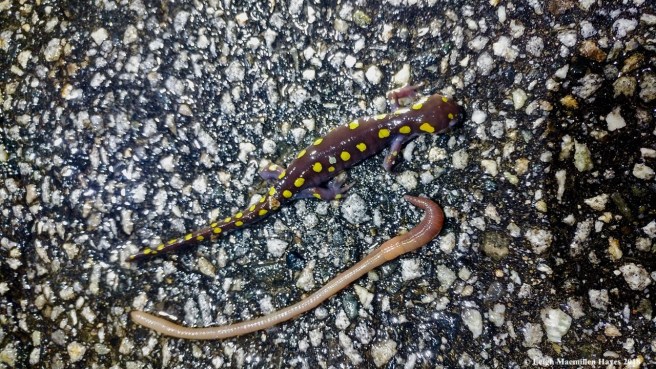
b8-sally and worm

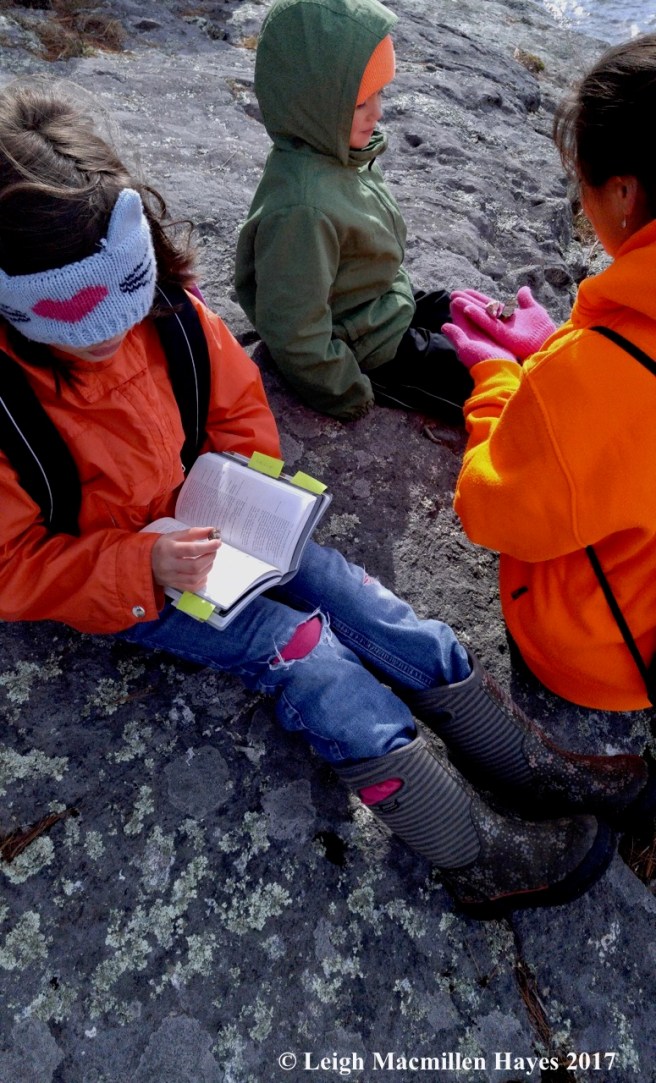
The youngest among us picked up one of the ubiquitous worms that marked the night and laid it down beside a sallie.
b9-sally eyes

Sallie didn’t care. It was on a mission and just wanted to move on without our interference. There was only one thing on its mind and we suddenly stood between it and that goal.

b12-salamander

It had a dance to perform before the sun rose and we had a heck of a nerve for getting in the way. I’m always in awe of these creatures who spend at least 11.5 months under the leaf litter and maybe a week or two in the pool. Our rare chance to catch a glimpse of them is on such a rainy night as tonight.

b10-sally on card

Our intentions were in their favor. We only wanted to help save them from the vehicles that passed by.
b11-sally's world

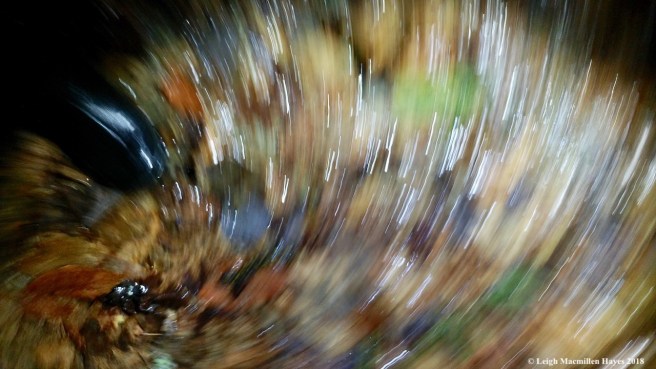
In the end, though, I had to wonder–is this what the salamander’s world looked like as we scooped it up and helped it across.

Possibly, but still, it’s always a thrill for tots, tweens, teens, and all the rest of us to celebrate Big Night with the Lakes Environmental Association. We are the Sallie Savers.

Craning My Neck

I’ve spent a lot of time thinking about living in the moment lately, a concept that really drove itself home during the years that my mother dealt with dementia and I was forced to realize that each time I left the room, my return was a new visit; a new adventure. And now, so many friends are dealing with issues that make every second precious and I realize once again the importance of slowing down and noticing and making the most of being present. Now.

f1

Such was the case this afternoon when I joined two friends who had pulled in from their winter home in Florida this week. We met at one of the parking lots for the Mountain Division Trail in Fryeburg, Maine, a rail trail that makes one feel like you could walk to the White Mountains in a matter of miles. But, to get back to the moment, the original plan had been to travel the trail with two different friends and then one had to back out and I found out that the Florida friends had returned and so I invited them to join the other and me, and then my other friend had to back out and so it was the Florida duo and me. And it was so fabulous to spend time with them that we walked rather quickly, which completely surprised me when I thought about it for I know that they love a slow journey. But we had much to catch up on and because the trail is paved we didn’t have to think about foot placement and perhaps that’s what spurred us on.

f2-tamarack 1

At last, however, it was spurs that stopped us, for one of them spied a branch with upward facing cones and little spurs and she wondered what it was. The cones certainly looked like hemlock cones. But why were they upright? And what happened to the needles? When I explained that it was a tamarack, she again questioned it for she’s always been here in the autumn when the needles are a brilliant yellow and she thought those needles stayed on all winter. Not so, I explained, for a tamarack (larch, hackmatack–take your pick of common names) is our only deciduous conifer in northern New England. The golden needles fall the same as maple leaves.

f11-pussy willows

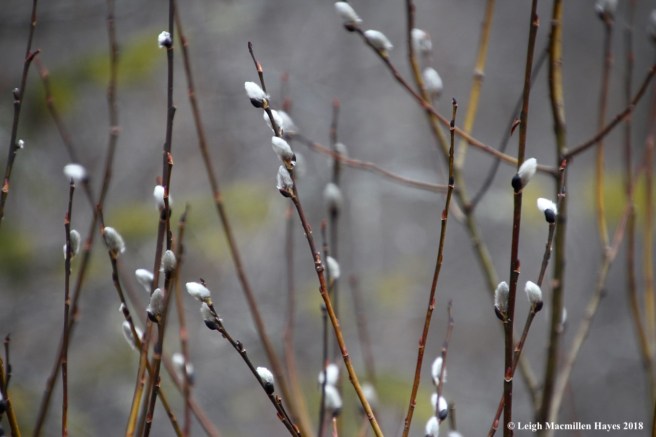
We also put on the brakes when she spied pussy willows–a sure sign of spring in their Zen-like presentation.

f20

Onward we marched, catching up on past months. But then, as the day would have it, first he had to turn around and head back to the parking lot and then a short time later she had to do the same. And that got me thinking about how the walk had evolved. I was sorry that the two I had originally planned to share the trail with couldn’t join me, but equally thankful for the two with whom I did travel. Living in the moment means embracing a change in direction.

f3-evening primrose basal rosette

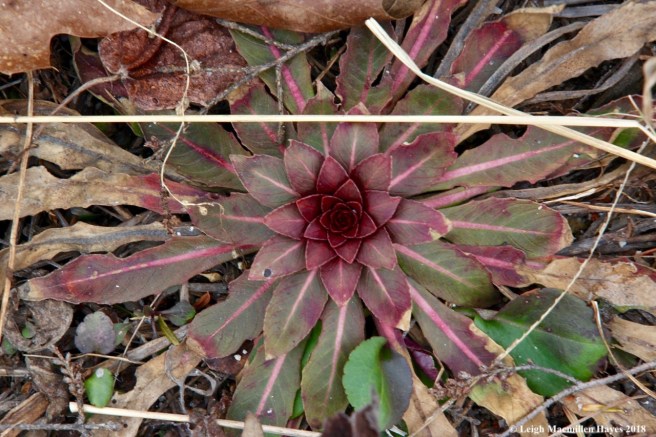
The rail trail is four miles long in one direction and I turned around at the 2.5 mile marker. On my return, I was entirely surprised by the offerings that had escaped my attention previously, like the beauty of an Evening Primrose’s basal rosette.

f4-pitch pine cone

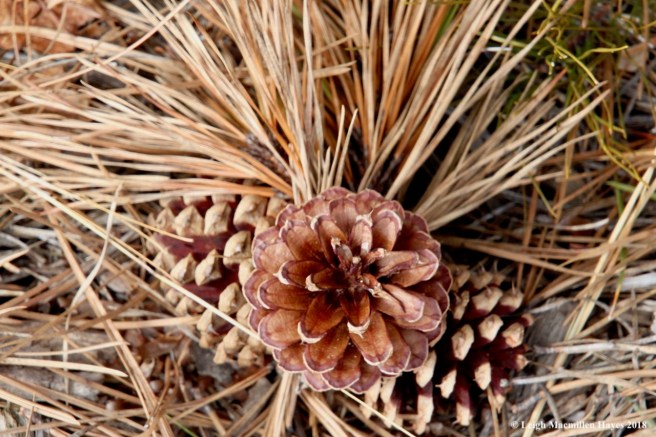
It’s fractal fashion was reflected in the pitch pine cones I spotted on the ground and surrounding trees.

f5-pitch again

The pitch pines always draw my fancy and I was especially intrigued by the past, present and future–as I tried to live in the moment. It’s not as easy as it sounds for we so often get caught up in what was or what could be.

f8-red oak

The past produced fruits long since deployed.

f10-speckled alder catkins

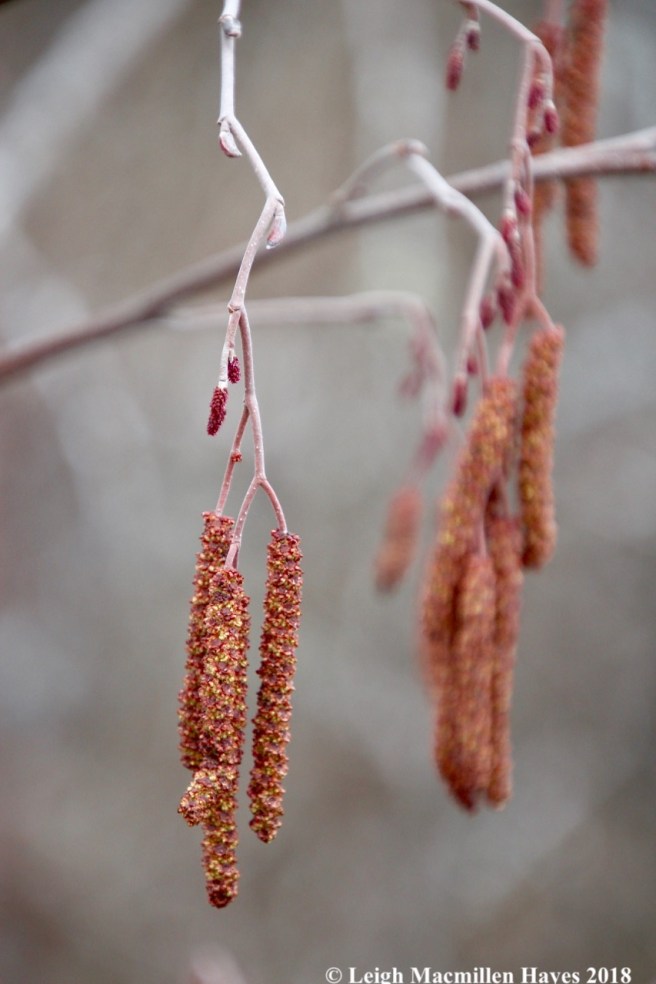
The future grew longer before pollinating the shorter.

f7-trailing arbutus in bloom

But in the moment–I spied the first blossoms of Trailing Arbutus.

f9-spotted salamander spermatophores

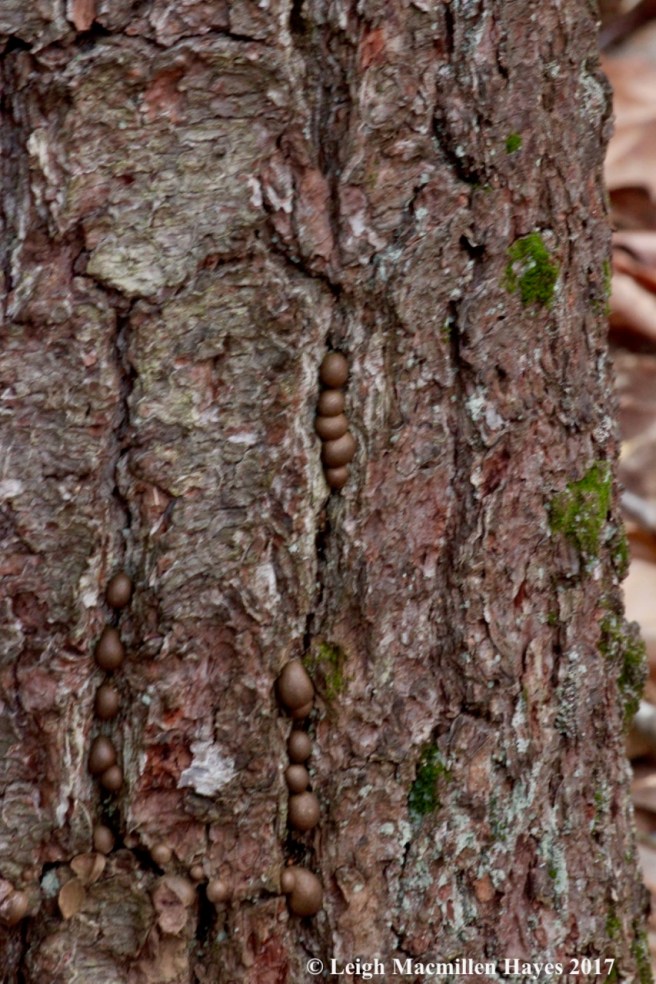
My return journey was much slower than the first leg, for there was so much to see. Included in the expedition was an examination of a small vernal pool. And what to my wondering eyes did I see? Spotted salamander spermatophores–those little chunks of sperm left behind by males atop cauliflower-shaped platforms.

f14-wood frogs quaking

As if that wasn’t enough, further on I heard a familiar quack and knew wood frogs were active though I couldn’t see them.

f15-wetland

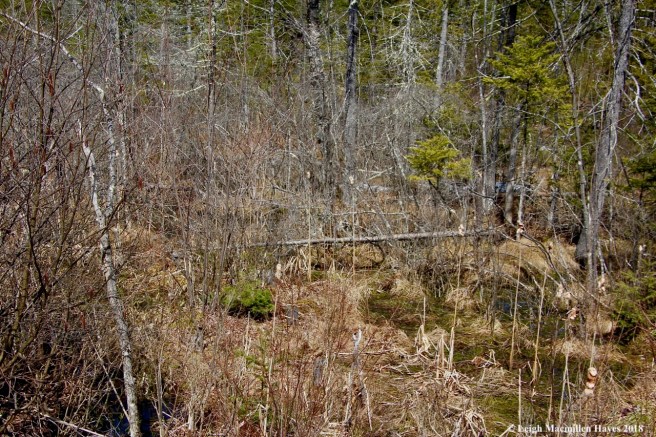
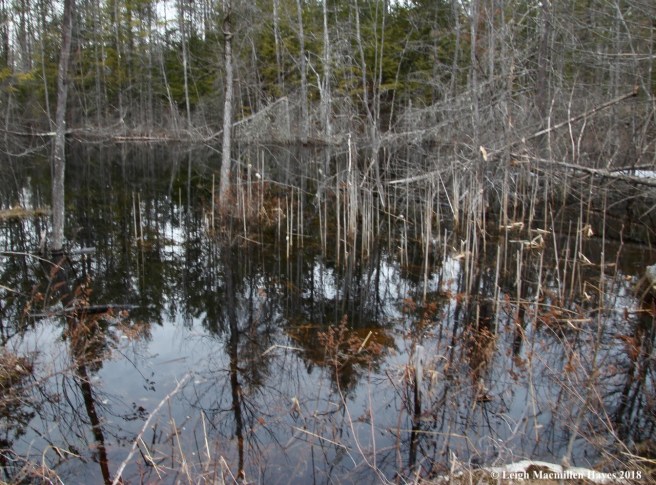
And still further I discovered a wetland I’d never noticed before. Spring peepers sang from the far edges. It was all a surprise for on the walk out I’d told my friends from Florida that I hadn’t seen or heard any vernal pool action yet.

f15a--chipmunk

I just need to spend more time listening and waiting and letting it all play out before me, the same as the chipmunk that was sure I couldn’t see him.

f16-Canada geese

After a three-hour journey, I found my way back to the truck and then decided to take some back roads home. As I passed through farmland where cornfields are prolific, I noticed movement. I so wanted the movement to be another bird, but it was a huge flock of Canada Geese that attracted my attention. Again, I had to live in the moment and enjoy what was before me.

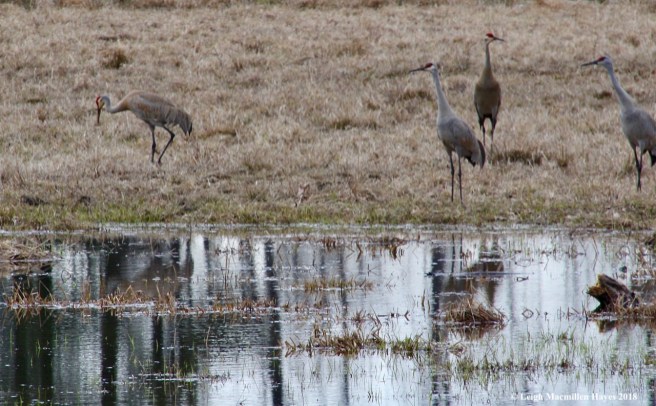
f17-sandhill cranes

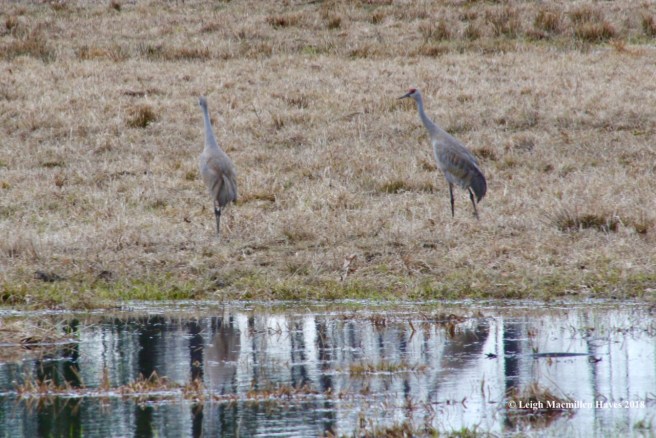
And then I turned into the harbor, and was pleasantly surprised for suddenly my eyes cued in on those I sought who stood tall.

f17a--sandhil cranes

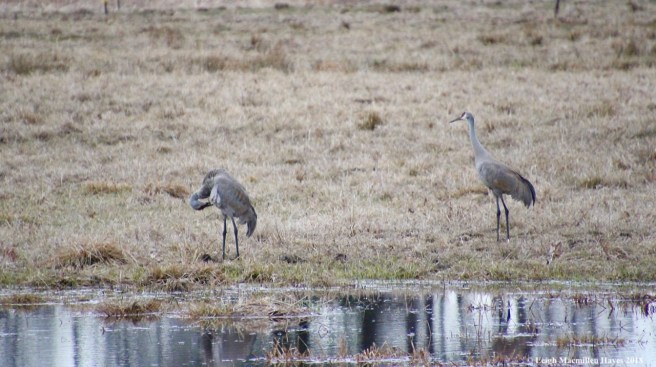
And preened.

f18-sandhill cranes

And craned their necks. Sandhill Cranes. In Fryeburg, Maine. They have returned to the harbor for at least  the past five years, probably more and I’ve had the privilege to hear them fly over several times, but today was the first time I was honored to see them. Thank you, Parker, for the tip.

I craned my neck and gave thanks for the moments spent in their presence and lifted up several people who will benefit from a dose of this medicine–Tom, Jinny Mae and Lifeguard Wendy: this one is for the three of you.


Mallards, Beavers, and NOT Squawroot, Oh My!

Since posting this blog yesterday, my Maine Master Naturalist mentor, Susan Hayward chimed in and corrected me. If you’ve read this previously, please be sure to scroll down to the Squawroot discovery. (Or not Squawroot). Thank you, Susan, for sharing your knowledge once again and setting me on the right track.

Our intention today when Connie Cross and I visited the wetland at Sebago Lake State Park’s Campground was to . . . well . . . walk with intention. There were several miles of trails to explore during the offseason, but we decided, or rather I did, that we should circle the beaver pond to see what we might see.

b1-horseshoe bog

It was raining as we drove to our meet-up point. And so we piled on extra layers to ward off the damp chill, and thought about snowshoes–to wear or not to wear? Connie chose to throw hers into a backpack and I went without.

b1a-raccoon prints

Our journey down to the wetland was one that had been recently traveled by others, including a certain waddler who showed off its finger-like prints in the melting snow. It made perfect sense to us to follow the track of a raccoon for it would lead to water.

b2-beaver works

Everywhere by the water’s edge, we noticed the works of another mammal–some old and others more recently hewn by the local beaver family.

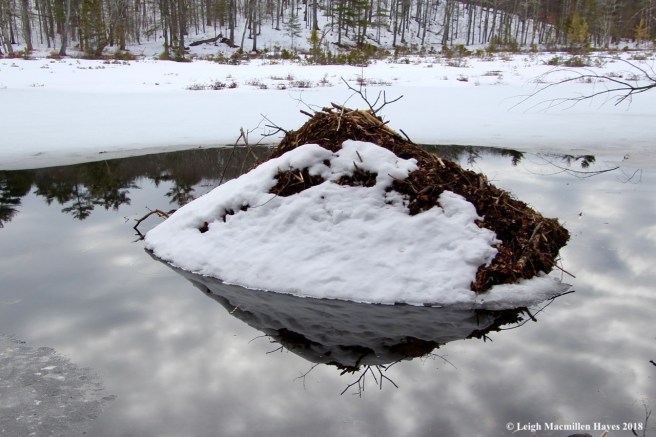
b6-lodge

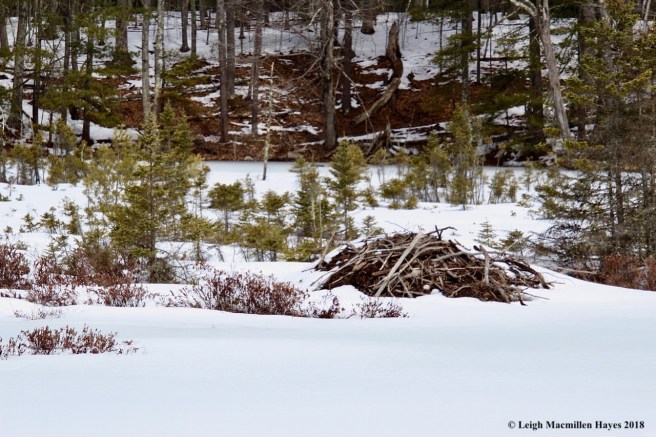
And then we spied the lodge and noted the mudded sides and recent additions to the chimney stack at the top and knew that it was active.

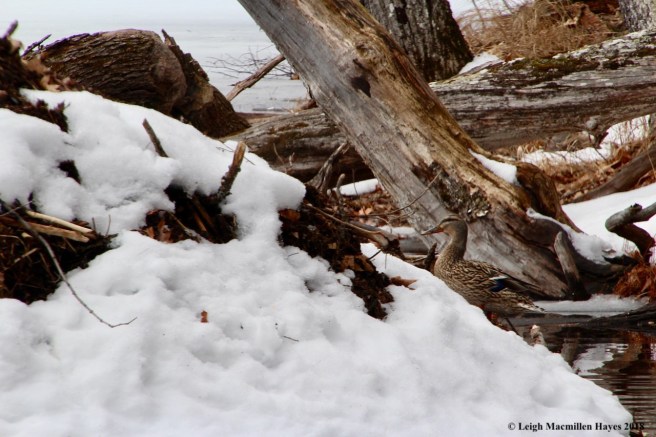
b3-duck on lodge

As we watched, we noticed that someone decided to call upon the residents–for a female mallard hopped from the water to the lodge and began to climb up.

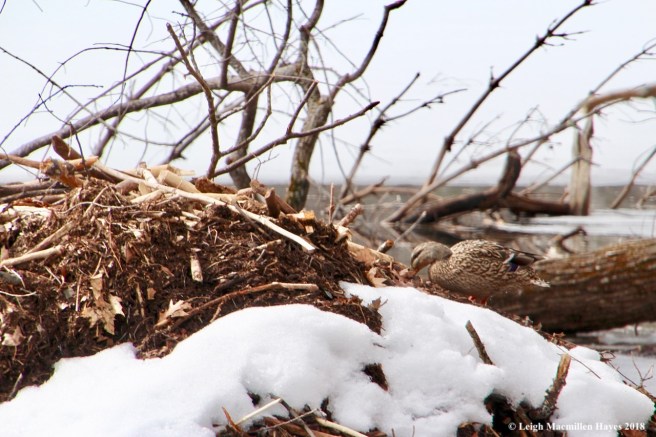
b4-duck on lodge

One might expect a fox or coyote to pay a visit to a beaver lodge and reenact the story of the big bad wolf and three pigs. Or as noted on tonight’s PBS show entitled Nature: Leave it to Beaver, the visitors might be a muskrat, mouse, or frog who check in at the inn, but a mallard?

b5-mallard

Apparently, she liked the contents amid the mud used to insulate the house.

b7-sky reflection

As we watched, the sky above began to change and we noted such in the water’s reflection. Clouds, sun and blue sky marked a morning in transition.

b8-mallard couple

Continuing along the trail, Mr. and Mrs. Mallard became our friends and seemed to follow us, that is, until he signaled to her rather like a dog points, and a few seconds later off they flew.

b9-beaver

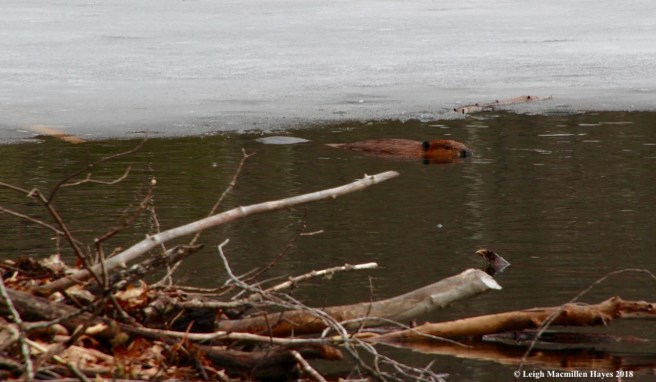
In the meantime, we heard a splash in the water behind us. What caused it? There was no snow high up on the trees that might have fallen. And then . . . we saw the creators. Beavers. There were actually three–moving about slowly and then suddenly splashing again and disappearing into the depths below. And the chambers within. We were in awe and felt honored to have shared a few minutes with members of the family.
b12-squawroot

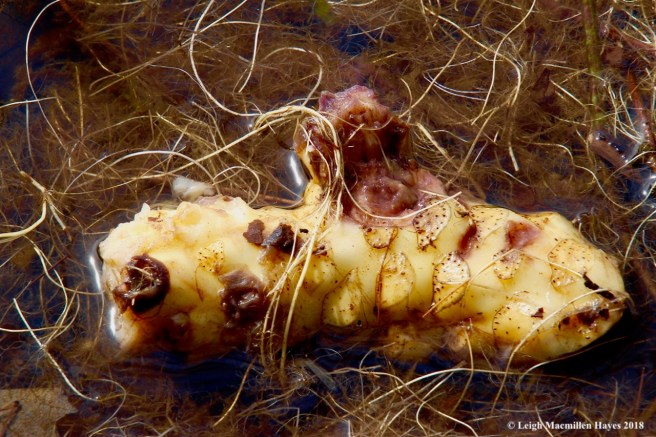
Finally, we pulled ourselves away. And then . . . we came upon another find. And somewhere from the depths of my brain after some word association like Indian pipe and Pine sap, I pulled up the name–Squawroot. Connie looked it up on her phone and tada, I was right. Another name for this parasitic plant is American cancer-root for it only occurs where it can attach to oak roots and we were in a forest of red and white oaks. Like Indian pipe and Pine sap, this plant doesn’t have any chlorophyll and therefore no green color. It actually reminded us of a pineapple.

And tada, I was actually wrong. Though they look sorta similar, this is what Susan shared: “Your squawroot looks to me to be the favorite food of those beaver.
Bullhead Lily or Spadderdock Root. Squawroot is later in the summer. There is rarely any residual after the winter; maybe a clump of twiggy dried stems. The Lily root is much more substantial tissue than squawroot. It is carbon loading for the beaver.

I had never seen the roots of Spadderdock before. I learn something knew every day–thankfully.

b14-checking the trail

We continued to circle the bog, and on the northwestern side I gave thanks that Connie had packed her snowshoes, for she packed the trail while I followed. We did try to figure out why it was called Horseshoe Bog. The shape didn’t speak to the name, but perhaps someone once found a horseshoe in the area–or so we wondered.

b13-snowman

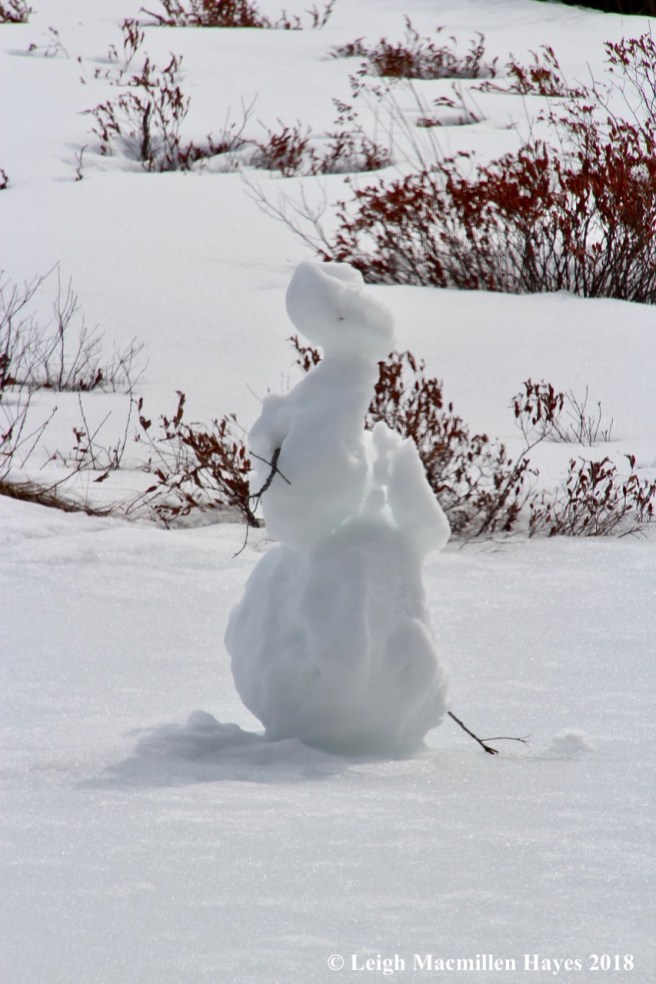
We weren’t the only ones wondering. A snow creature posed over the space with many a question about the future on its mind.

b15-from the other side

As we circled, the skyview changed and we finally began to feel the warmth of the day.

b16-another lodge

We also noted at least three other lodges that had provided warm spaces in previous winters.

b17-a closer look

The one noted in the last photo showed no signs of mud when we took a closer look so we knew it wasn’t active this year. If they had intended to stay, the beavers would have worked hard to interlock the sticks and then add plenty of mud like we add insulation and siding to our homes.

b19-beaver lodge trail

After three hours, we’d completed our journey–traveling maybe a mile in all that time. But we rejoiced for we’d spent time with the mallards and beavers and squawroot. Mallards, Beavers, and Squawroot, Oh My!


Transitions

Life, it seems, is always in transition. Or perhaps it is a series of transitions that we experience on this fast boat as we whiz through time and participate in endings and beginnings, with learning opportunities thrown into the mix. So it feels, when one season overlaps another.

If we had no winter, the spring would not be so pleasant. If we did not taste adversity then prosperity would not be so welcome. ~ Anne Bradstreet

s3a-the crew

And so this morning, I enjoyed the opportunity to experience the natural transition from winter to spring at Sebago Lake State Park with a group of seven led by AMC volunteer JoAnne Diller. (JoAnne donned the lime green coat.)

s1- Ice on Songo River

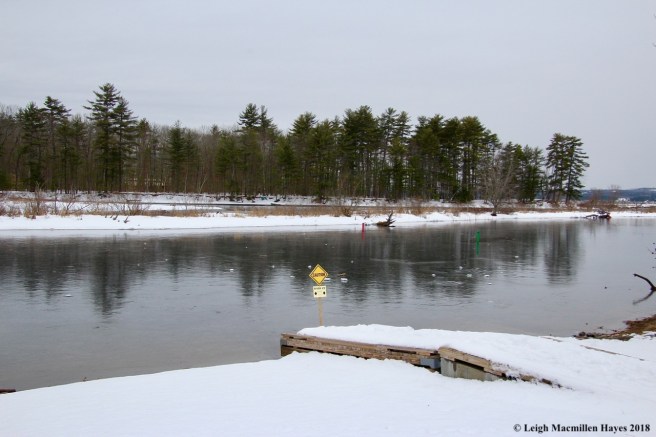
We began our journey at the boat launch beside Songo River, where signs warned of thin ice and Canada geese honked in the distance.

s2-Songo River curves

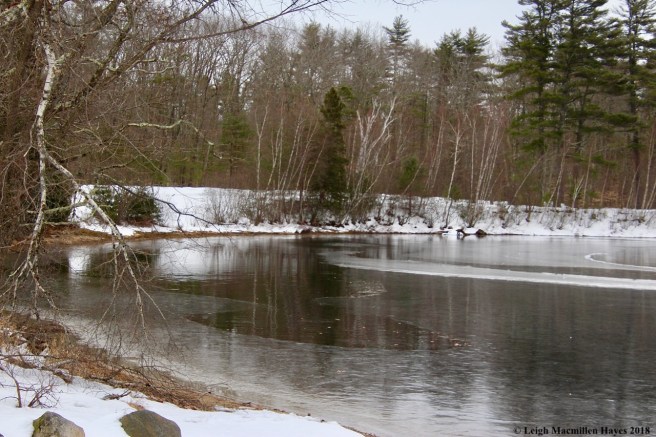
Tree buds added a subtle hint of color to the landscape. And the ice in the oxbow indicated nights of cooler temps followed by days of warming.

s3-Jan examines beech scale insect

Trees within the forest showed other signs of change for we noted the cinnamon tinge on many a beech tree. Not all transitions were good.

The trees were dotted with the waxy exterior winter coating of the beech scale insect, Cryptococcus fagisuga, a tiny insect that sucks sugar and other nutrients from beech trees only.

Soon, the beech scale insect will molt into its second, legless nymph stage and emerge. Immediately, it will start sucking sap through its tubular mouthpart or stylet. That instar stage doesn’t last long, and quickly it will become a mature female. For the rest of its life it will remain sedentary, but repeatedly remove and reinsert its piercing stylet, wounding the tree and providing entry points for fungi to enter. An interesting fact about beech scale insects–its a world of females who reproduce by parthenogenesis; there are no known males.

But what about that cinnamon color? Was it a fungus? Or was it related to the insects? Yes and yes. Two species of nectria fungi are associated with beech bark disease, Nectria coccinea var. faginata and Nectria gallengia. What we examined was a large area of the former’s fruiting bodies.

s4-Y in the road

For the most part we followed the groomed trail system, though we did do some post holing as we crossed from one route to another. And then we came to a fork in the road–so we took it! Actually, first we went left and along the way startled some deer. And realized we weren’t exactly where we wanted to be so we backtracked and journeyed on to the right. How often does that happen on this boat ride? Frequently. But the best part about today was that no one complained because we were all happy to travel the trail and enjoy the world around us.

s5-beach on Sebago Lake

At last we arrived at the beach on Sebago Lake, where snow and sand in the cove and small bits of ice moving with the gentle waves spoke of what is to come.

s7-pitch pine

It was at the same spot, where we paused at a picnic table to eat a snack, that we stood in awe of the pitch pines as they showed off their plates of bark thickened by age and unique manner of needles growing from the trunk.

s8-pitch pine cone

Even their cones, each scale topped with a rigid prickle, were beginning to break down as they began their journey of giving back to the earth.

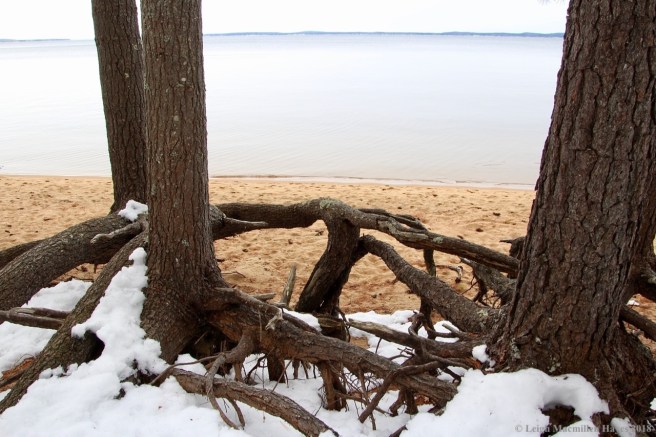
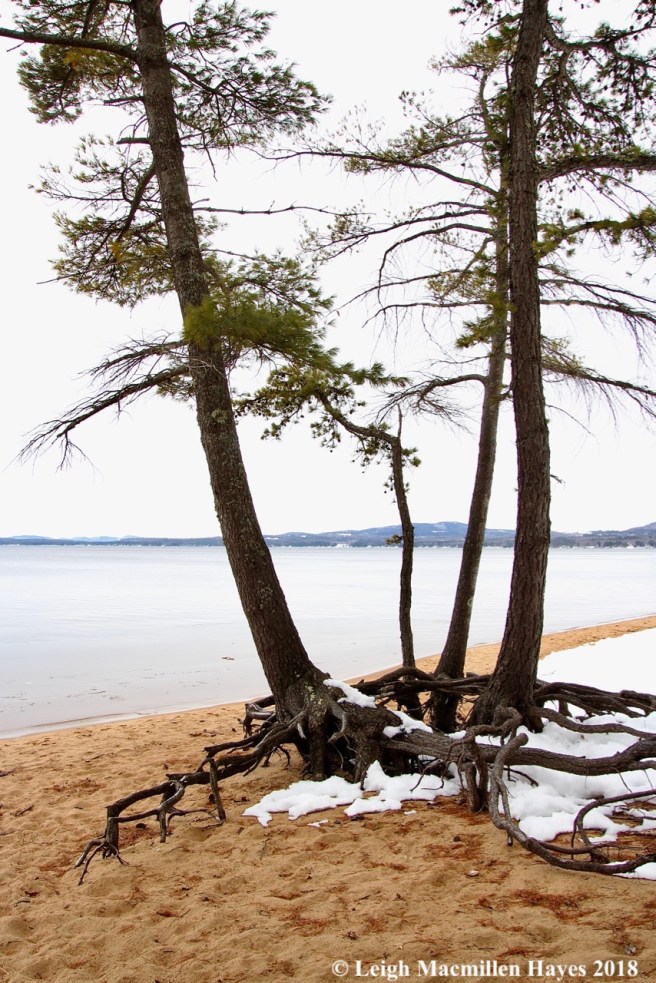
s9-tree roots

But what struck us the most were the tree roots all along the beach. And we began to wonder what had happened.

s10-roots

How old were the trees? Had the sand eroded?

s11-trees

Was the lake once much higher? And how do those trees survive? If only they could talk, we would hear their stories of pounding waves and raging storms. And maybe other adversities. Maybe they do talk and we just don’t know how to listen.

s13-back to the river

In what seemed like a flash, I realized we were on the opposite end of the oxbow I’d photographed when we first arrived–our journey had been a circular one, well sorta.

s14-buoys

By the boat launch two channel buoys waited patiently for spring to return in full force so they could move onto the river and do the job for which they were best suited.

s15-Canada geese

We took one last look before saying our goodbyes and going our own ways on this journey we call life. That’s when we spied the Canada geese–a sure sign that spring really is just around the corner.

Thank you, JoAnne, for organizing such a delightful hike and allowing us to absorb the richness of the woods, river and lake as they remind us about the transitions in life.

*And Tom, this trek is for you, and your own transition.  Love all.


Hunkered Down

Three nor’easters in two weeks. Such is March in New England. The latest delivered over twenty inches of snow beginning yesterday morning. And still the flakes fall.

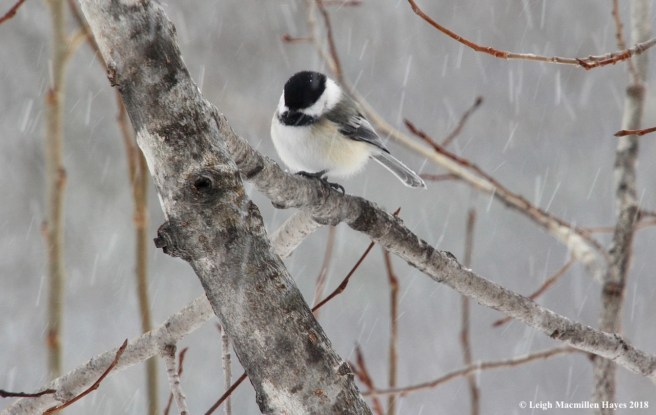
p-chickadee

But staying inside all day would be much too confining and so I stretched my legs for a few hours before giving my arms another workout with driveway cleanup duty. It was much more fun to explore and listen to the chickadees sing.

p-snow on trees

There are a few places in our woods that I find myself stopping to snap a photo each time a snowstorm graces our area. The stand of pines with their trunks snow coated was one such spot yet again. And tomorrow the scene will transform back to bare trunks and so it was one I was happy to behold in the moment.

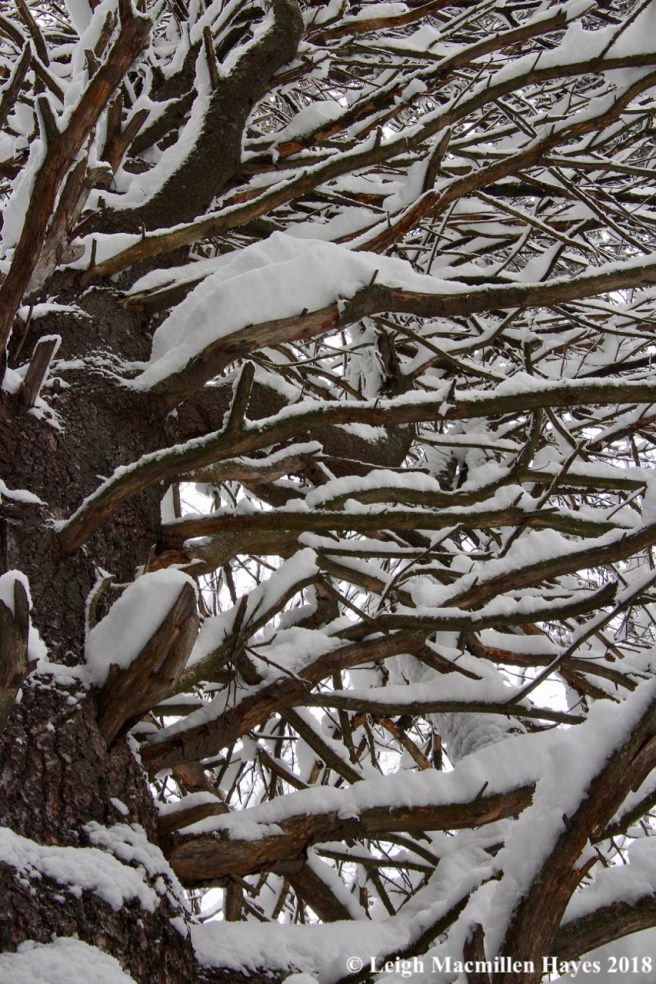
p-snow on limbs

As was the older pine that grows beside a stonewall along the cowpath and perhaps served as the mother and grandmother of all the pines in my forest–bedecked in piles of flakes, her arms reached out as if to embrace all of her offspring.

p-snow on insulators

With the snow so deep, I felt like a plow as I powered through under the insulated insulators.

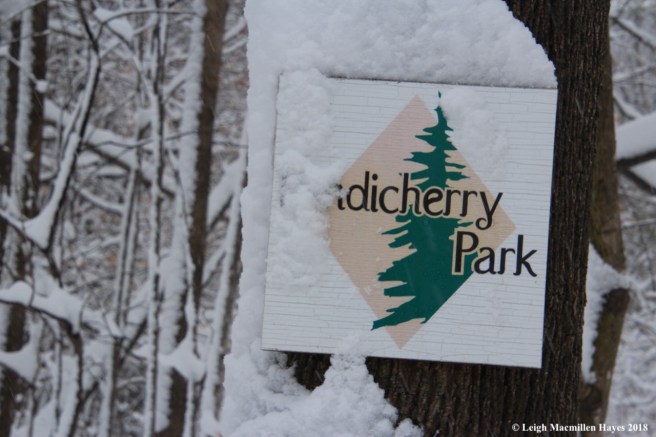
p-snow on park sign

Finally, I reached one of the entryways to Pondicherry Park and while I love being the first of the day to leave my mark, I’d secretly hoped someone had trudged before me. But . . . a few steps at a time meant taking frequent breaks to rest and look around.

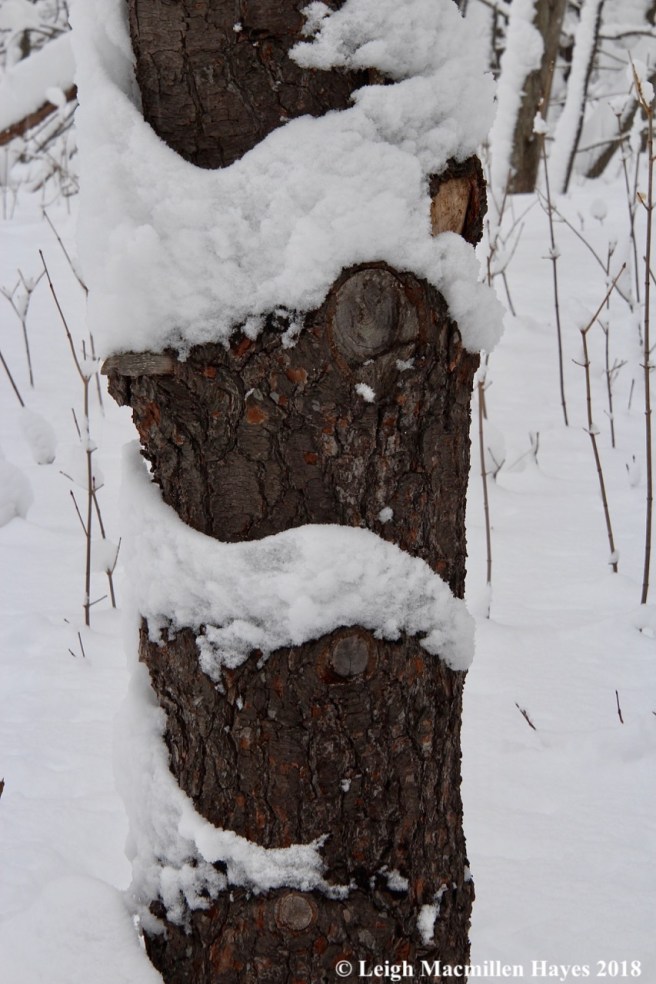
p-snow on tree trunk

Again, it was the snow’s manner of hugging tree trunks that drew my awe.

p-snow on tree trunk 2

Sometimes it reminded me of giant caterpillars climbing into the canopy.

p-snow on roots

Even the roots of a downed tree took on an artistic rendition.

p1-snow on bittersweet

And that most invasive of species in these woods, bittersweet, offered curves worth appreciating–ever so briefly, of course.

p-snow on fences

Snow blanketed fences of stone and wood.

p-snow on bridge

Enhanced the bridge.

p-snow on bench

And buried a bench.

p-Stevens Brook

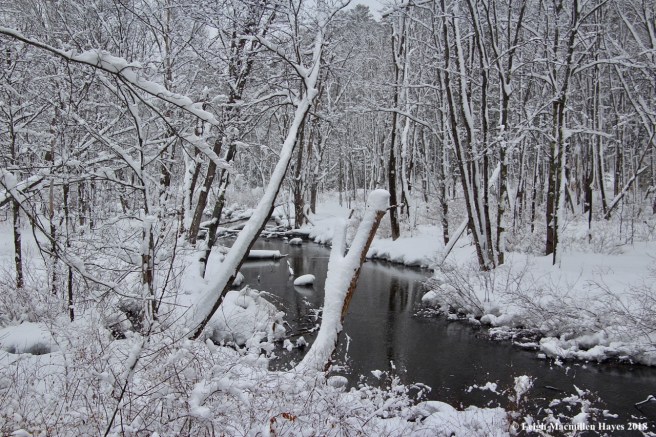
Beside Stevens Brook, it looked as if winter still had a grasp though we’re about to somersault into spring.

p-snow on trees reflected

And the reflection in Willet Brook turned maples into birches.

p-kneeland spring

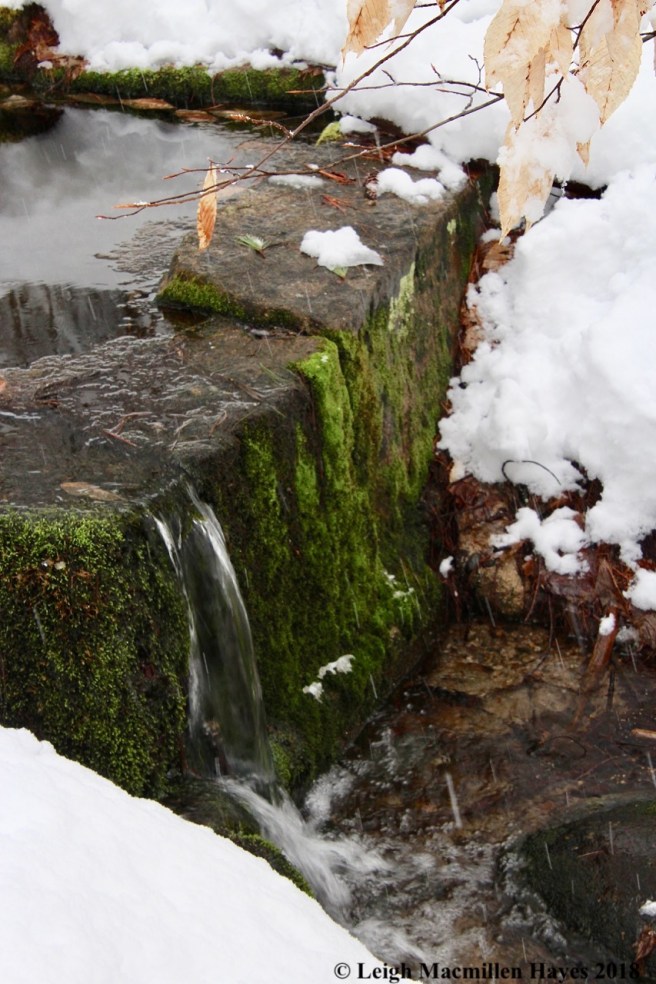
At Kneeland Spring, water rushed forth in life-giving form and the sound was one we’ll soon hear everywhere as streams and brooks overflow.

p-mallards 1

I went not to see just the snow in its many variations, but also the wildlife. I found that like me, the squirrels and deer had tunneled through leaving behind troughs. And the ducks–they didn’t seem at all daunted by the mounds of white stuff surrounding them.

p-mallards 2

In fact, one female took time to preen.

p-mourning dove

I found mourning doves standing watch.

p-Robin

And heard robins singing.

p-snow spider

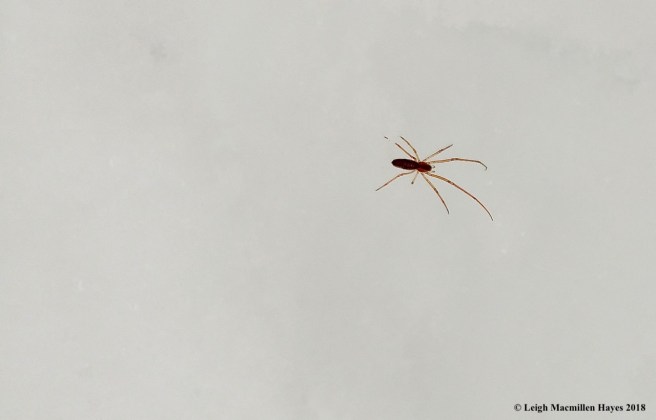
And because I spent a fair amount of time looking down, I began to notice life by my feet, such as the snow spider–an indicator that the thermometer was on the rise. It lives in the leaf litter, but when the temp is about 30˚ or so, it’s not unusual to see one or more. Today, I saw several. And wished I had my macro lens in my pocket, but had decided to travel light.

p-winter stonefly

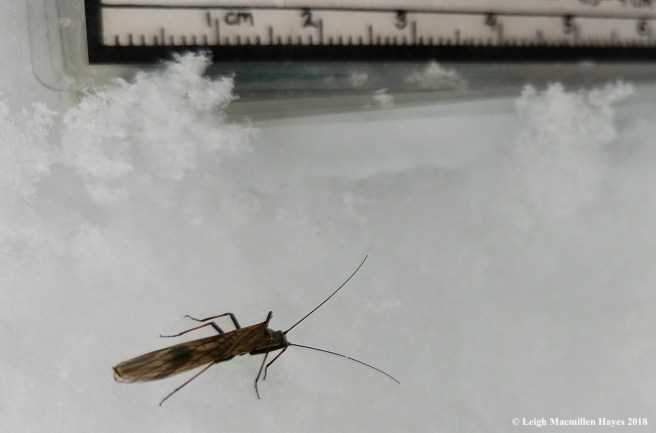
Winter stoneflies were also on the move. They have an amazing ability to avoid freezing due to the anti-freeze in their systems.

p-winter dark firefly 2

I also found a winter dark firefly. While the species is bioluminescent, I’m not sure if this one was too old or not to still produce light.

p1-snow on me

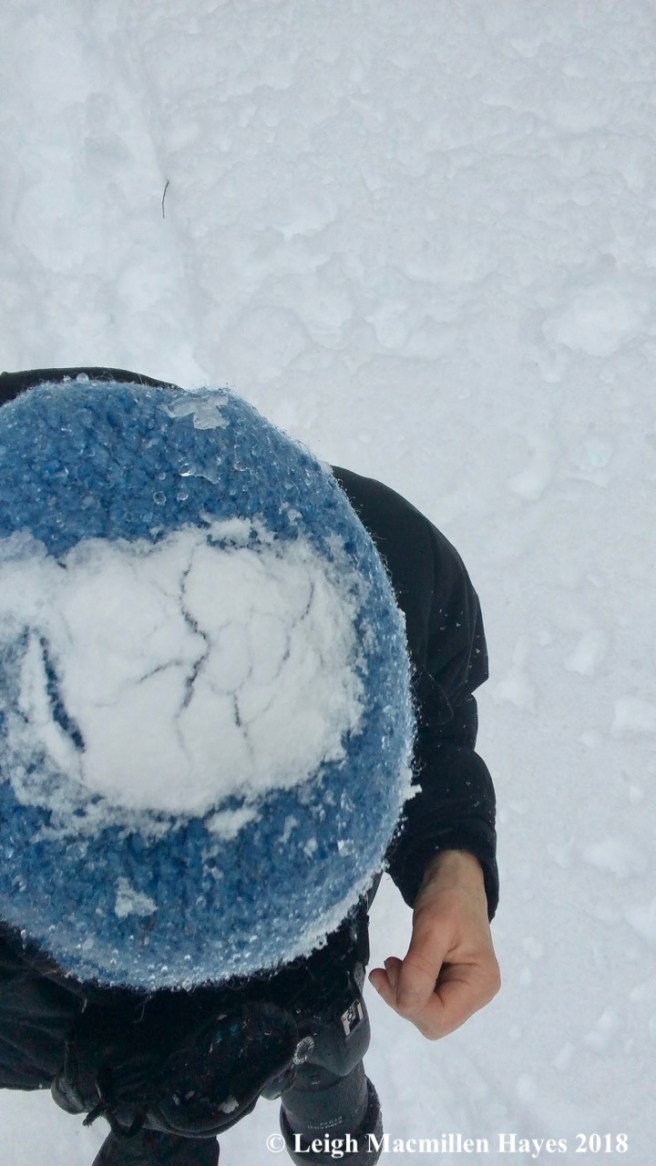
At last the time had come for me to head home for not only was the snow still falling, but so was the sky–or so it felt each time a clump hit my head as it fell from the trees.

p-final photo

We’ve got snow! In fact, we’ve got snows! And in reference to a question an acquaintance from Colorado had asked yesterday–“Are you hunkered down?” My answer was, “No, Jan, I’m not. Nor is the world around me. In fact, except for the shoveling, I relish these storms as winter holds on for just a wee bit longer.”


Books of the Month: Stone Walls–Stories Set in Stone

It’s March, that most indecisive of months. And so, I decided to follow in the same pattern by choosing not one,

s11

or two,

s9

or even three,

s10

but four–

s8

all books about stone walls which are once again revealing their idiosyncrasies. These are the Books of March.

p-on-the-cowpath

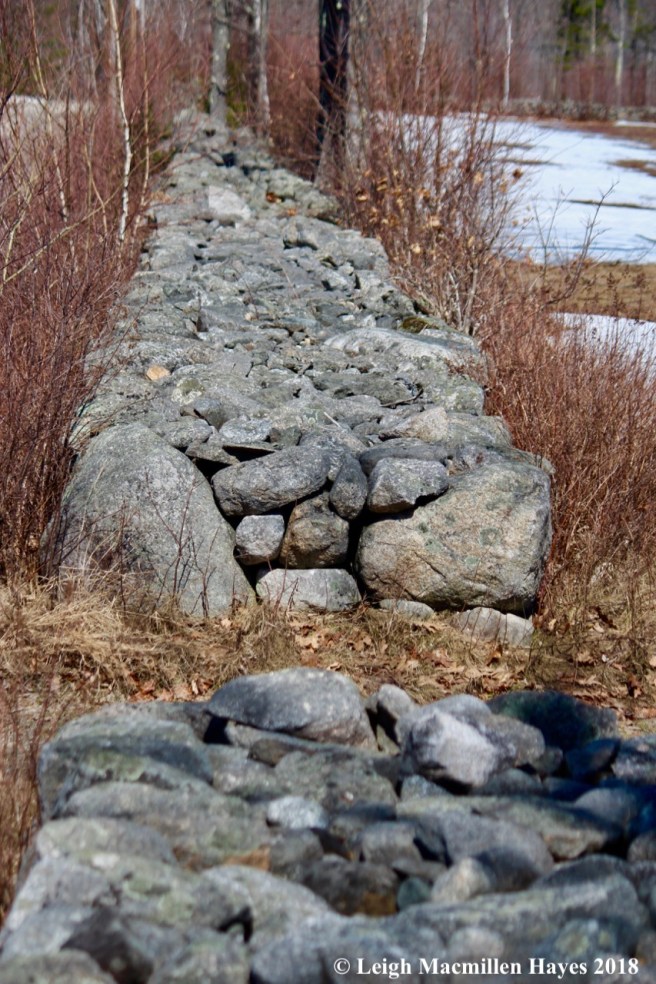
Walk along our woodland trail with me and you’ll know that something different happened there ages and ages ago. To reach the trail, we’ll need to pass through two stone walls. Continuing on, we’ll come to a cow path where several pasture pines, massive trees that once stood alone in the sun and spread out rather than growing straight up, must have provided shade for the animals.

e-pine whorls

They are the grandparents of all the pines that now fill this part of the forest.

Further out, one single wall widens into a double wall, indicating a different use of the land.

s4

The walls stand stalwart, though some sections are more ragged than others. Fallen trees, roots, frost, weather, critters and probably humans have added to their demise, yet they are still beautiful, with mosses and lichens offering striking contrasts to the granite. Specks of shiny mica, feldspar and quartz add to the display. And in winter, snowy outlines soften their appearance.

The fact that they are still here is a sign of their endurance . . . and their perseverance. And the perseverance of those who built them. and yet . . . . the stone walls aren’t what they once were, but that doesn’t matter to those of us who admire them.

s2

For me, these icons of the past conjure up images of colonial settlers trying to carve out a slice of land, build a house and maybe a barn, clean an acre or two for the garden and livestock and build walls. The reality is that in the early 1700s, when western Maine was being settled, stones were not a major issue. The land was forested and they used the plentiful timber to build. It wasn’t until a generation or two later, when so much timber had been harvested to create fields for tillage and pasture, that the landscape changed drastically, exposing the ground to the freezing forces of nature. Plowing also helped bring stones to the surface. The later generation of farmers soon had their number one crop to deal with–stone potatoes as they called them. These needed to be removed or they’d bend and break the blade of the oxen-drawn plowing rake.

s1

Stone removal became a family affair for many. Like a spelling or quilting bee, sometimes stone bees were held to remove the stones from the ground. Working radially, piles were made as an area was cleared. Stone boats pulled by oxen transported the  piles of stones to their final resting place where they were woven into a wall.

Eventually single walls, also called farmer or pasture walls, were built as boundaries, but mainly to keep animals from destroying crops. The advent of stone walls and fences occurred within a few years of homesteads being settled, but during the sheep frenzy of the early 1800s many more were built. Those walls were supposed to be 4.5 feet high and fence viewers were appointed by each town to make sure that farmers tended their walls.

s3

Double walls were lower and usually indicated an area that was to be tilled. A typical double wall was about 4-10 feet wide and consisted of at least two single walls with smaller rubble thrown between.

Drive our back roads and you’ll see many primitive walls created when stone was moved from the roadway and tossed into a pile, or wander through the woods and discover stone walls and fountains in unexpected places. The sheep craze ended about 1840 after the sheep had depleted the pastures and younger farmers heeded the call to “Go west young man, go west.” The Erie Canal, mill jobs, and better farming beyond New England all added to the abandonment of local farms.

s5

Today we’re left with these monuments of the past that represent years of hard labor. Building a wall was a chore. Those who rebuild walls now find it to be a craft.

Sam Black, who lives in Bridgton, Maine and spent twelve years rebuilding the walls on his property, once told me, “It was meditation time, like working in the garden. It’s one of those things you do philosophically and it lets you operate at a deeper level. You have time to think and contemplate as you work on the jigsaw puzzle.”

Frank Eastman of Chatham, New Hampshire, is the caretaker for the Stone House property in Evans Notch, and said when I asked if he’d ever worked on single walls, “No, I ain’t that good at balancing things. You got to have a pretty good ability to make things balance and a lot of the times your rock will titter until you put a small rock in just to hold it. No, I don’t want to monkey around with a single wall.”

Karl Gifford of Baldwin, Maine, told me, “I’m either looking for the perfect stone or trying to create the perfect space for the stone I’m working with. It takes a lot of practice, seeing what I need and being able to pick it out of the pile.” The entire time we chatted, his hands moved imaginary stones.

The more walls I encounter in the woods, the more respect I have for those who moved the stones and those who built the fences that became the foundation of life. Walk in the woods and you’ll inevitably find evidence that someone has been there before you–maybe not in a great many years, but certainly they’ve been there. Their story is set in stone.

If you care to learn more about stone walls, I highly encourage you to locate these books. I found all of them at my local independent book store: Bridgton Books.

Books of March:

Sermons in Stone by Susan Alport, published 1990, W.W. Norton & Company, Inc.
A history of stone walls in New England.

Stone by Stone by Robert M. Thorson, 2002, Walker & Company.
A geological look at stone walls

Exploring Stone Walls by Robert M. Thorson, 2005, Walker & Company.
A field guide to determining a walls history, age, and purpose.

The Granite Kiss by Kevin Gardner, 2001, The Countryman Press.
A look at repairing walls of stone.

And now I leave you with this poem:

The Old Stone Fence of Maine

Shall I pay a tribute here at home,
To the Old Stone Fence of Maine?
It was here when you were born,
And here it will remain.
Stone monuments, to grand old sires,
Who, with a good right arm,
Solved problems little known to you,
E’re their “clearing,” was your farm.

When you see an Old Stone Fence,
Weed grown and black with age,
Let your mind’s eye travel backward
And read its written page.
And, as Moses left us words in stone,
That live with us today,
Almost, with reverence, let us read
What these Stone Fences say.

They tell of those who “blazed the trail,”
We are walking in today;
Those who truly “bore the burdens
In the heat of the day.”
For every stone was laid by hand,
First taken from the soil
Where giant trees were cut and felled,
Bare handed–honest toil.

The Stone Fence marked the boundary line
Whereby a home was known;
Gave them dignity, as masters
Of that spot they called their own.
The Stone Fence, guarded church and school
And the spots more sacred far,
The silent spots, in memory kept
For those who’ve “crossed the bar.”

Then, treasure this inheritance,
Handed down from sire to son,
Not for its worth, to you, today,
But for when, and why, begun.
For with it comes a heritage
Of manly brawn and brain,
That is yours today, from the builders
Of the Old Stone Fence of Maine.

~Isabel McArthur, 1920

Wondermyway Celebrates Third Anniversary

Three years ago this journey began as a quiet entry into the world of blogging, of sharing my finds and questions found along the trail. And ever so slowly, you joined me to wander and wonder.

So really, today is a celebration of you, for I give thanks that you’ve continued to follow and comment and wander and wonder along, whether literally or virtually.

I absolutely love to travel the trail alone and do so often. But I also love hiking with my guy and others because my eyes are always opened to other things that I may have missed while hiking on my own.

I’m blessed with the community of naturalists with whom I’m surrounded–and this includes all of you for if you’re following along and taking the time to actually read my entries, then you share my interest and awe. And you may send me photos or I may send you photos and together we learn.

t6-cecropia cocoon

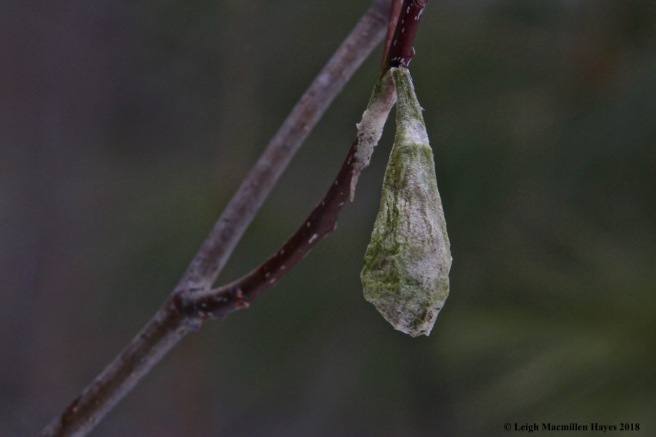
Just yesterday, while tramping in Lovell, Maine, with fellow trackers, I spotted a cocoon  dangling from a beech tree. My first thought–Cecropia moth, but I contacted Anthony Underwood, a Maine Master Naturalist who has great knowledge about insects, and learned that I was wrong. He said it looked more like the cocoon of a Promethea moth. “They hang down whereas Cecropia are usually attached longitudinally,” wrote Anthony. And there you have it.

Now I just have to remember it, which is part of the reason I value my post entries. The information has been recorded and I can always plug a key word, e.g. Promethea, into the search bar and today’s blog will come up–jogging my memory.

And so, without further ado, I present to you my favorites of the past year. It’s a baker’s dozen of choices. Some months, I had difficulty narrowing the choice to one and other months there was that one that absolutely stood out. I hope you’ll agree with my selection. I also hope that you’ll continue to follow me. And if you like what you read here, that you’ll share it with your families and friends and encourage others to follow along.

February 23, 2017:  Knowing Our Place

h-muddy-river-from-lodge

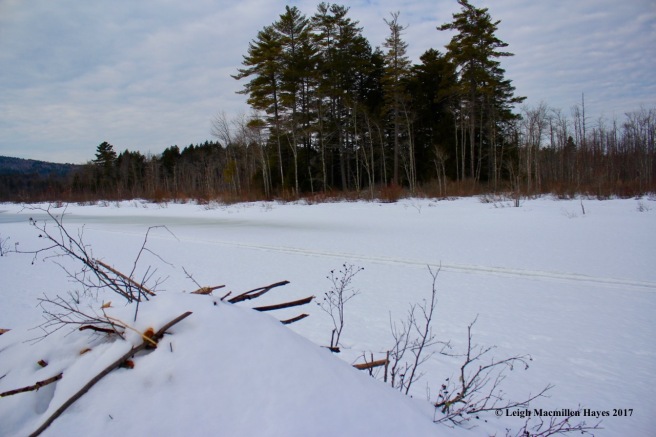
Holt Pond is one of my favorite hangouts in western Maine on any day, but on that particular day–it added some new notches to the layers of appreciation and understanding.

March 5, 2017: Tickling the Feet

CE 3

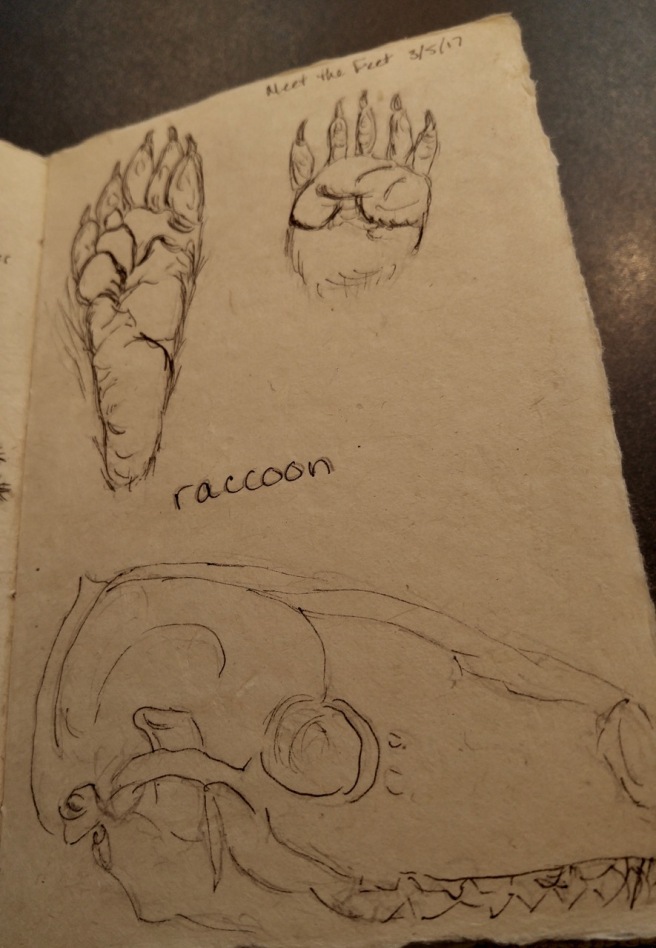
I don’t often write about indoor events, but while the rest of the world was out playing in the brisk wind of this late winter day, a few of us gathered inside to meet some feet.

April 22, 2017: Honoring the Earth

h-spotted sallie 2 (1)

It would have been so easy to stay home that night, curled up on the couch beside my guy while watching the Bruins play hockey. After all, it was raining, 38˚, and downright raw. But . . . the email alert went out earlier in the day and the evening block party was scheduled to begin at 7:30.

May 21, 2017: On the Rocks at Pemaquid Point

p16-fold looking toward lighthouse

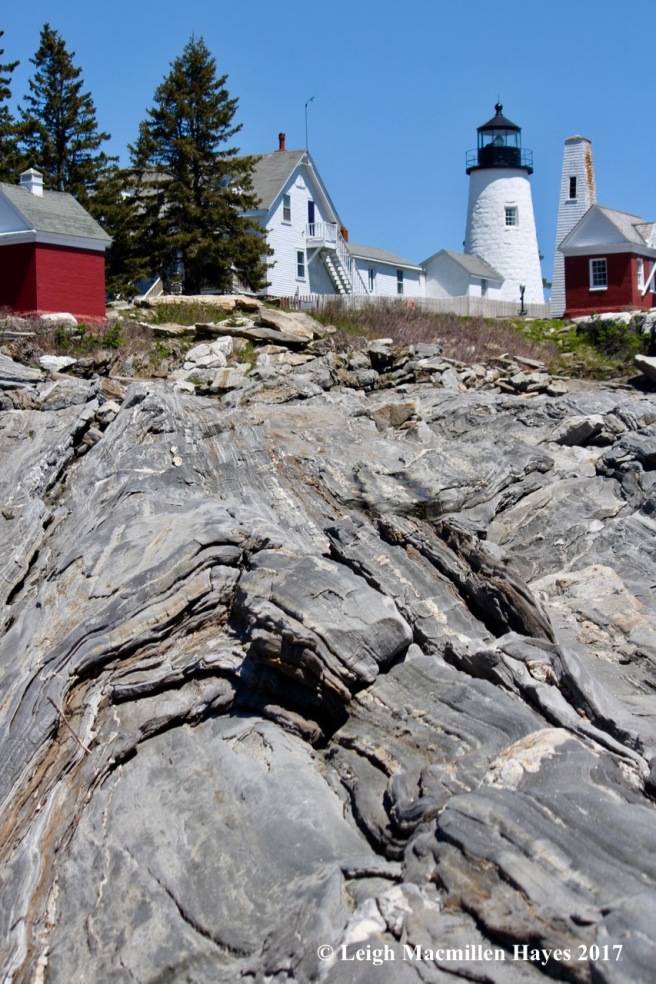
Denise oriented us northeastward and helped us understand that we were standing on what is known as the Bucksport formation, a deposit of sandstone and mudstone metamorphosed into a flaky shist. And then she took us through geological history, providing a refresher on plate tectonics and the story of Maine’s creation–beginning 550 million years ago when our state was just a twinkle in the eyes of creation.

June 9, 2017: Fawning with Wonder

p-fawn 2

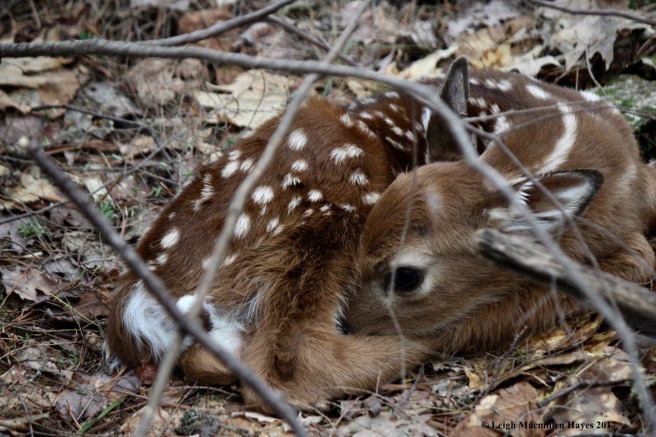
Though fawning is most oft used to describe someone who is over the top in the flattery department (think old school brown nose), the term is derived from the Old English fægnian, meaning “rejoice, exult, be glad.”

July 3, 2017: Book of July: Flying on the Wild Wind of Western Maine

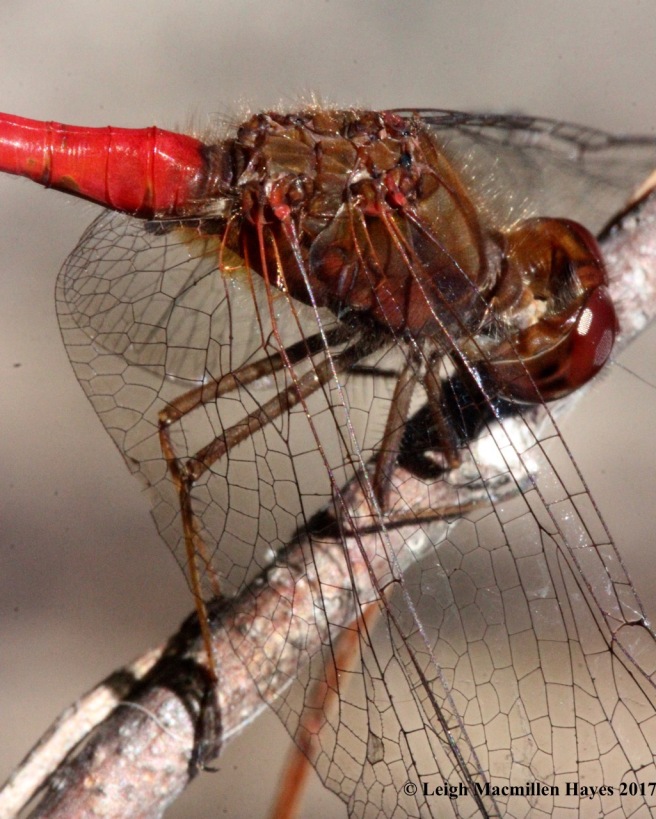
d-skimmer, yellow legged meadowhawk, wings

My intention was good. As I sat on the porch on July 1st, I began to download dragonfly and damselfly photographs. And then the sky darkened and I moved indoors. Suddenly, and I mean suddenly, the wind came up. Torrential rain followed. And thunder and lightening. Wind circled around and first I was making sure all screens and doors were closed on one side of the wee house and then it was coming from a different direction and I had to check the other side. Trees creaked and cracked. Limbs broke. And the lightening hit close by.

August 6, 2017: B is for . . .

b-bye

Our original plan was to hike to the summit of Blueberry Mountain in Evans Notch today,  following the White Cairn trail up and Stone House Trail down. But . . . so many were the cars on Stone House Road, that we decided to go with Plan B.

September 15, 2017: Poking Along Beside Stevens Brook

s22-cardinal flower

Raincoat? √

Notecards? √

Camera? √

Alanna Doughty? √

This morning I donned my raincoat, slipped my camera strap over my head, and met up with LEA’s Education Director Alanna Doughty for our reconnaissance mission along Stevens Brook in downtown Bridgton. Our plan was to refresh our memories about the mill sites long ago identified and used beside the brook.

October 5, 2017: Continued Wandering Into the World of Wonder

i-baskettail, common baskettail 1

May the answers slowly reveal themselves, while the questions never end.

November 24, 2017: Black Friday Shopping Extravaganza

b8-the main aisle

At last, I’d raided enough aisles. My cart was full to the brim and my brain overwhelmed. I guess I’m not really a “shop-til-you drop” kind of gal. It was time to wind along the trail and end my Black Friday shopping extravaganza.

December 29, 2017: Oh Baby!

s-screech owl 2

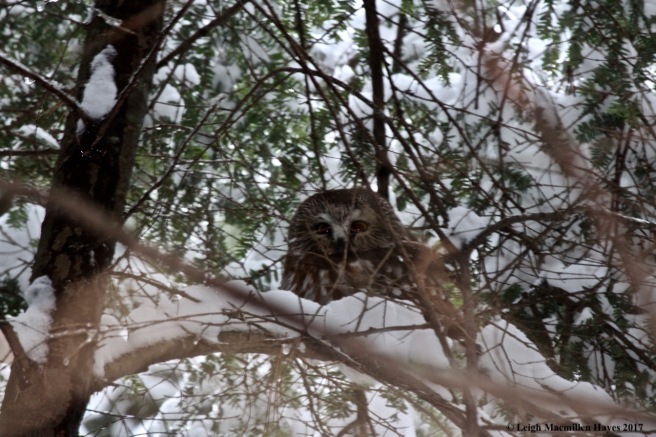
We shared about ten minutes together and it was definitely an “Oh baby!” occasion. But there was more . . .

January 21, 2018: Sunday’s Point of View

p17-Needle's Eye

We arrived home with ten minutes to spare until kickoff.

February 8, 2018: Hardly Monochromatic

p18-Stevens Brook

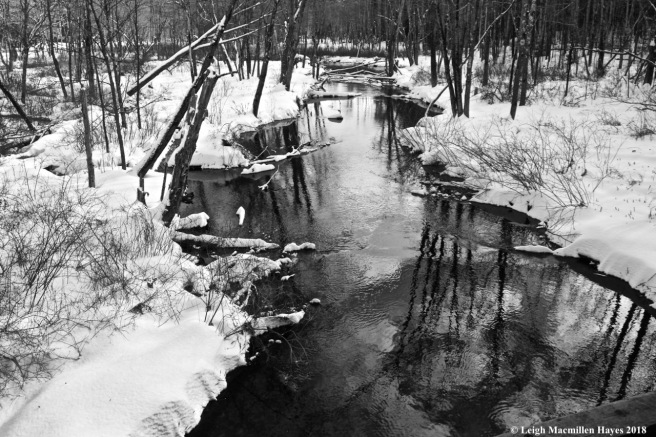
My world always takes on a different look following a storm and today was no different.

To all who have read thus far, thanks again for taking a trip down memory lane today and sticking with me these past three years. I sincerely hope you’ll continue to share the trail as I wander and wonder–my way.

And to wondermyway.com–Happy Third Anniversary!


Climbing Higher Mondate

The old adage, “If at first you don’t succeed, try, try again, ” could be aptly applied to the first part of today’s hike for we’d tried to locate the Millard Chandler Feldspar Mine (aka North Star Mine) in Evans Notch two weeks ago but missed a turn along the way. This time, we made sure to pay close attention as friends had given us specific directions.

e1--making the left turn at the National Forest Boundary

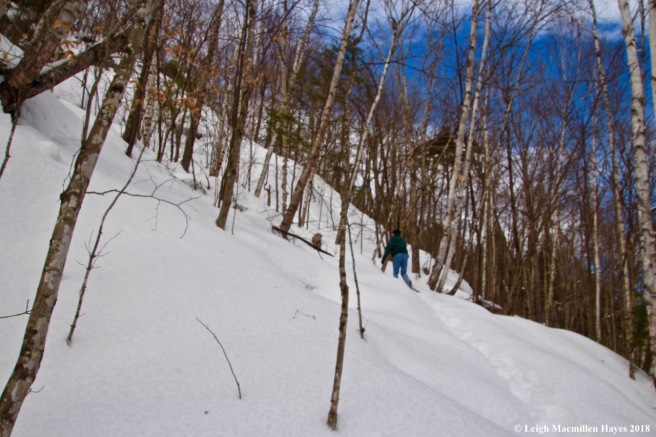
As they’d told us, we remembered to turn left at the National Forest boundary and followed the line to the base of the mountain, breaking trail all the way.

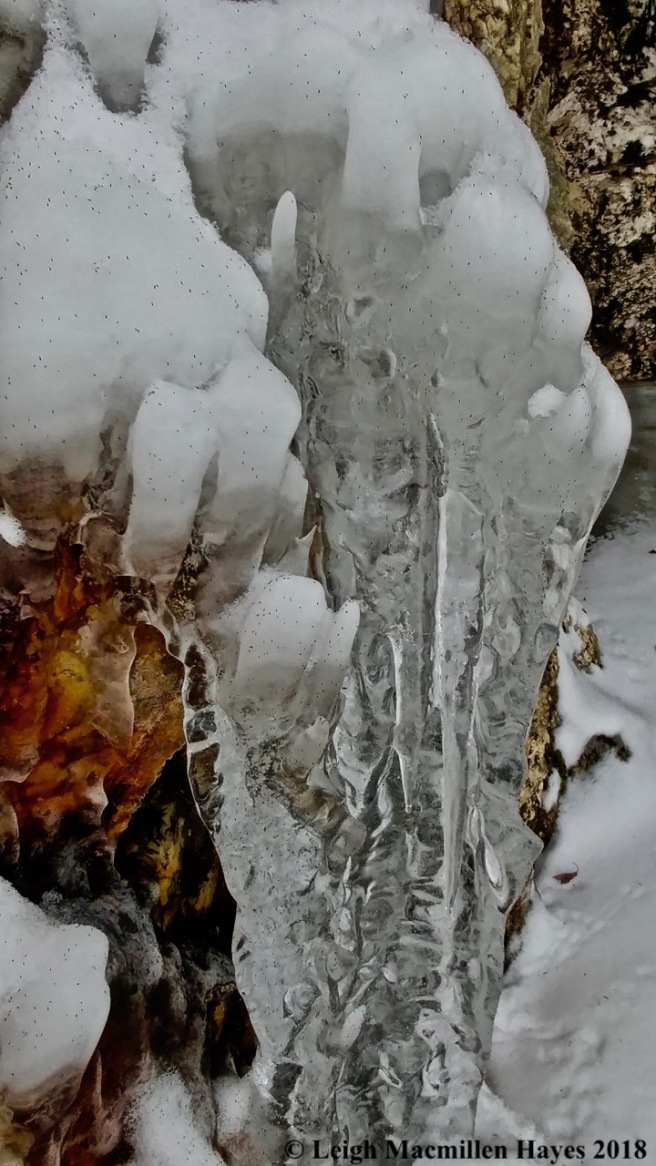
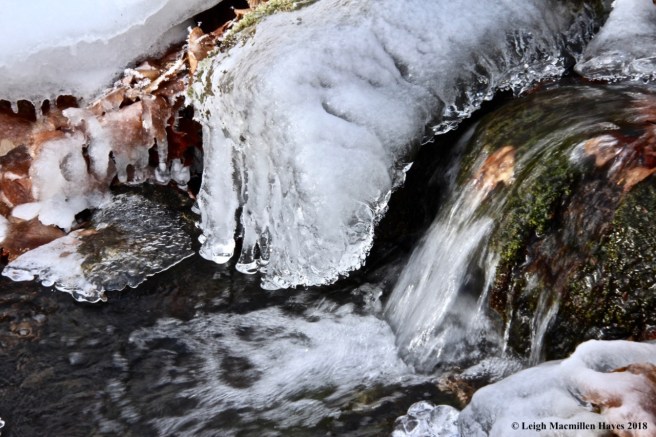
e2-first ice formation

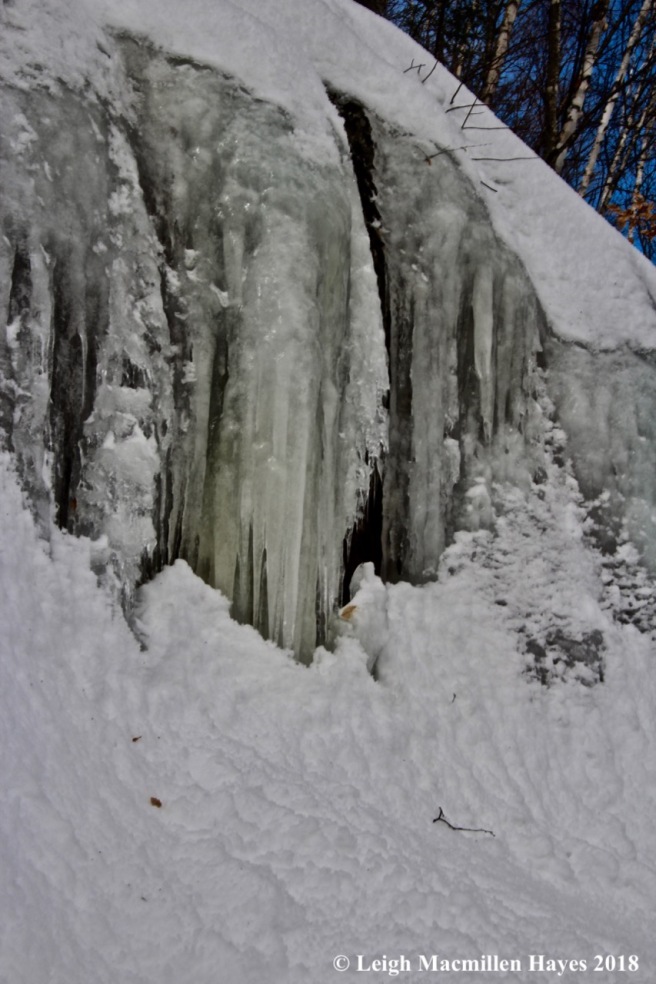
Eventually, we realized we were on an old cart path and followed as it zigzagged up. And then we reached a boulder covered in ice. Don’t get me wrong–I love the relationship of rock and ice, but . . . was this what we’d climbed up to see?

e3-looking for more

My guy peeked around the corner and encouraged me to follow.

e4-climbing higher

The first rock with ice was a tease and he could see what he thought was the mine up above. And so we climbed higher.

e6-mine 2

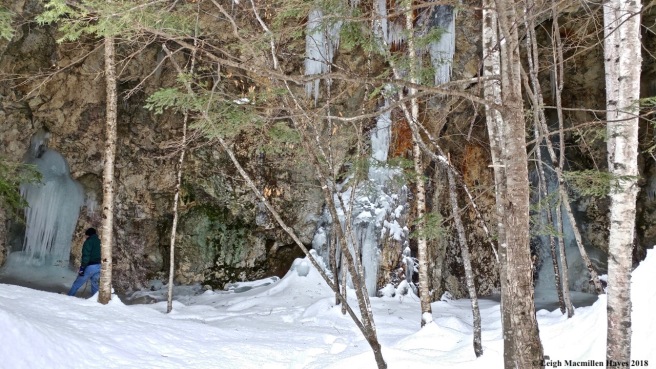
Voilà. At last we found the actual mine. Can you see my guy? His height provided perspective.

e7-sense of height

He stood in awe before the fountain of youth frozen in time.

e9-looking upward

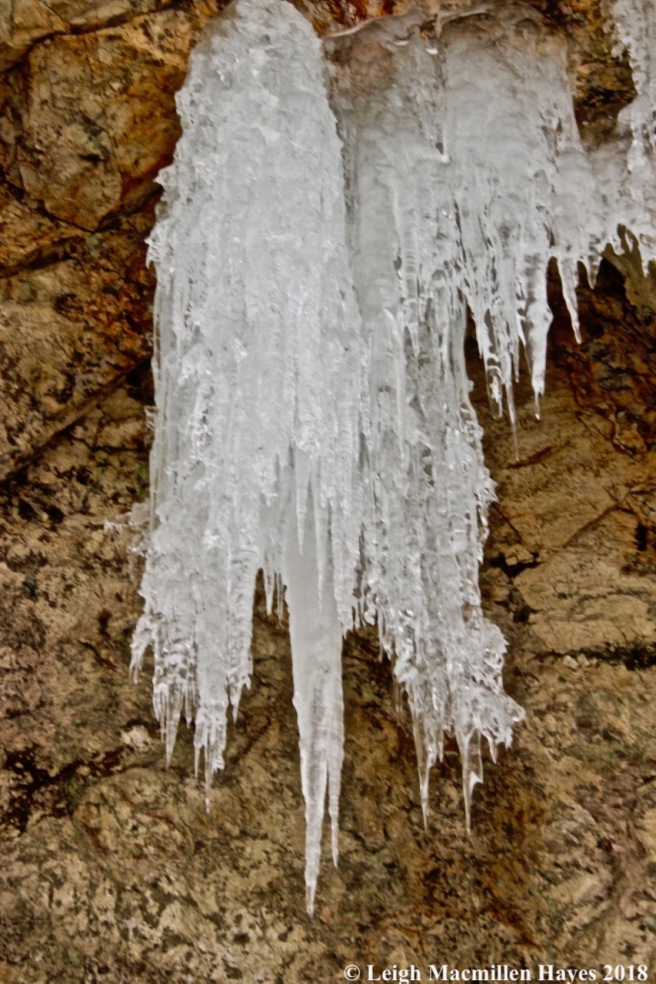
My eyes were drawn skyward to the chandeliers that dangled above. My guy did urge me to move out of the way for he feared one might come crashing down.

e14-chandelier

But I took one more photo before heeding his words of caution.

e15-fallen ice

We noted that some had fallen previously and sat like broken glassware upon the mine floor.

e10-icicles up close (snowfleas as well)

Even the snowfleas or spring tails wanted to be part of the display. Do you see them? The little specks that look like black pepper?

e11-dike 1

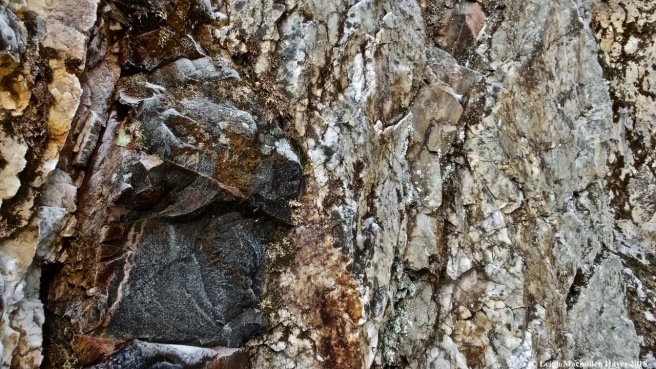
I was so taken with the ice sculptures that I almost forgot about the mine itself. Millard Chandler was a descendent of one of the founding families of Chatham, New Hampshire, where the mine is located. Originally, it was mined for mica. From a Geological Survey Professional Paper, I learned that prior to World War II it was mined for feldspar by the Whitehall Company, Inc.

e12-icicles

Today, the only mining that took place was initiated by the water and we could hear it trickling under the ice.

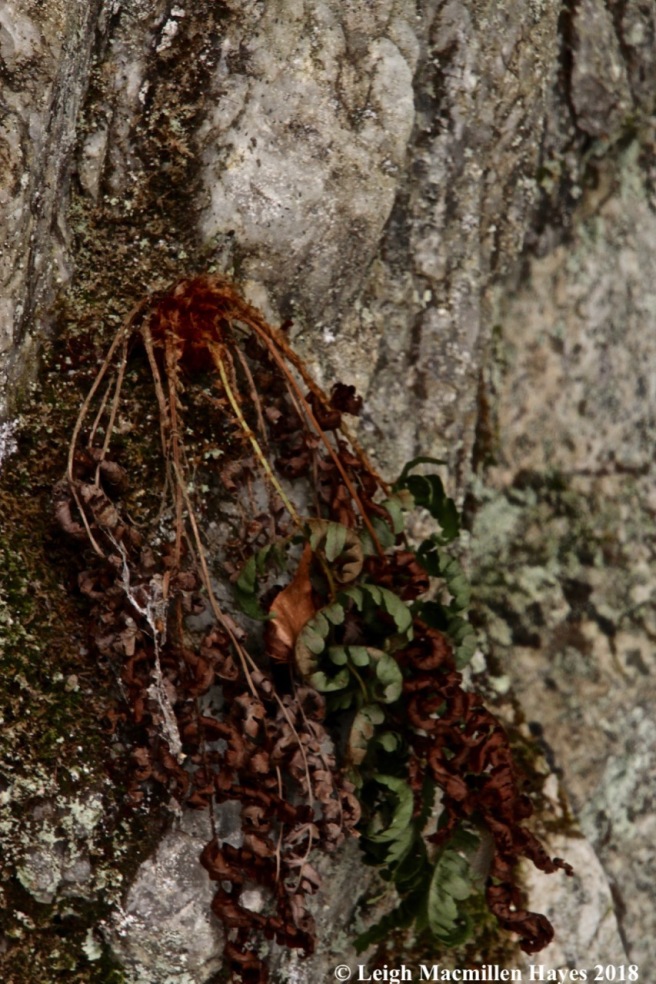
e16-christmas fern

It seemed, however, that there wasn’t enough water as a Christmas Fern struggled to survive.

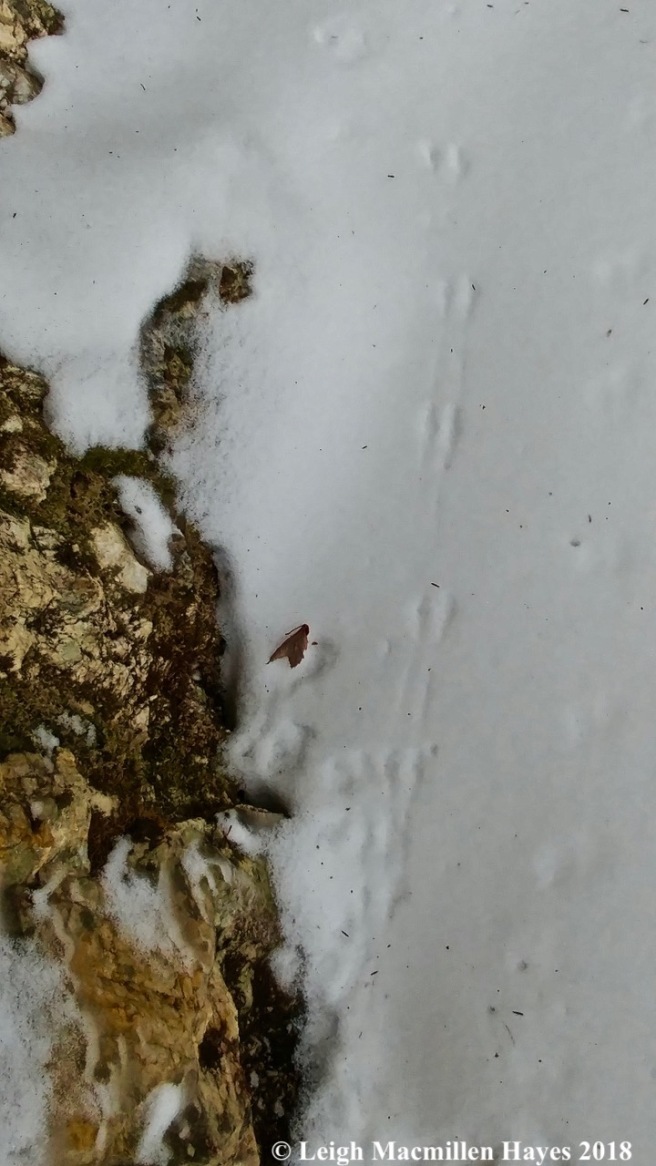
e13-junco prints

Finally, we followed the Junco tracks and made our exit.

e19-leaving the mine

It was almost like a different world awaited us outside the mine.

e21-Leach Link Trail sign

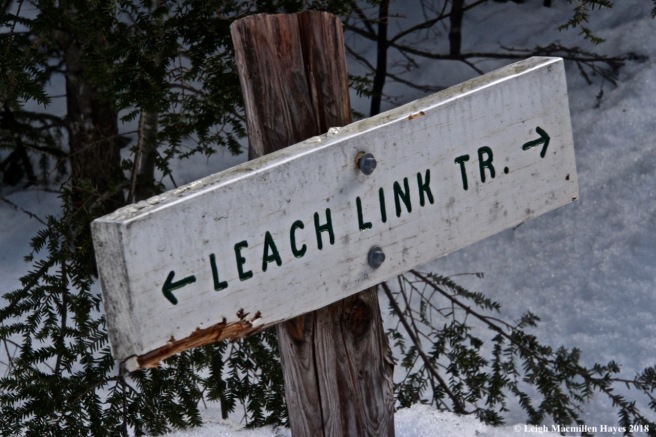
From there we drove back down Route 113 to Stone House Road and ate a quick lunch in my truck before heading to the trailhead for the Leach Link Trail that follows Cold River.

e22-bear claw marks

It seems like every time we visit this area we find evidence of the bears who live here. Notice the nail marks on the sign. Typical behavior for a black bear–to attack something in the woods that is different than the norm. Not only do they like telephone poles, but trail signs often take a beating as well.

e23-hemlock crack

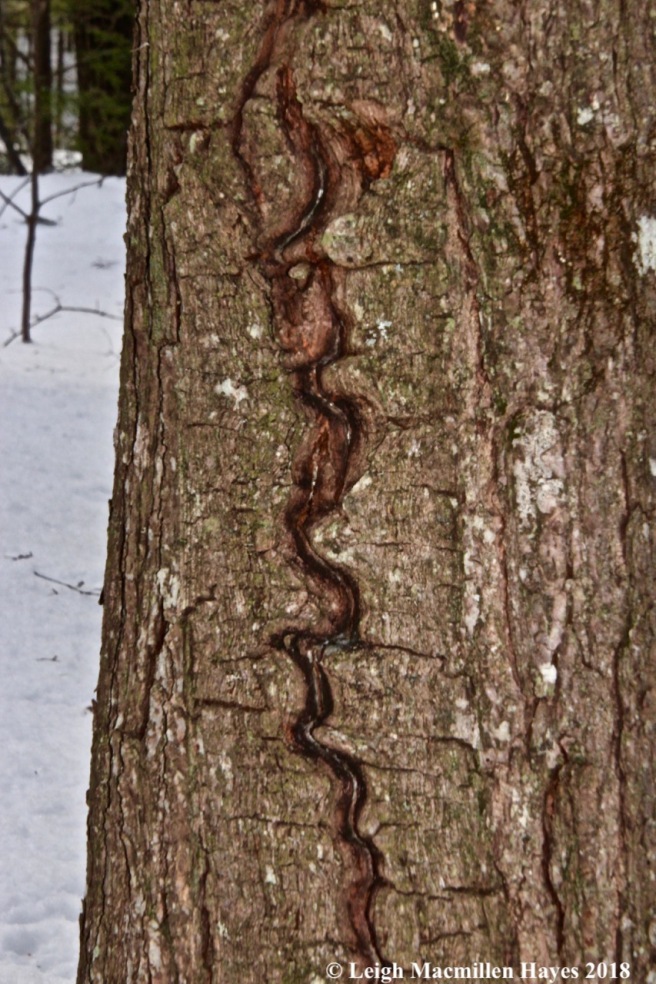
Again, we had to break trail, which we took turns doing because the snow was deep enough to tire us out. For the most part, we passed through a hemlock and spruce forest. I’m always amazed at how a hemlock tree tries to heal a wound left by a frost crack. Just like my snow pants absorb the sun’s heat, the dark bark of the trees also absorb sunlight, but they don’t have a heated home to return to once night falls and temperatures plunge. I understand how the constant thawing/freezing cycle creates cracks–but I don’t understand why the hemlock portrays the squiggly line, while frost cracks on other trees tend to be much straighter. Then again, all tree species have their own patterns and idiosyncrasies. Maybe I just have to accept that this is the way it is. And move on.

e23-snow aprons

We did. But I stopped our forward movement again. Snow had piled high at the base of the trees following the two snowstorms we received this past week. At first, it appeared that the aprons the trees wore were on the north side. But then, in one grove it seemed obvious that my theory had been proven wrong for some aprons faced west and others east. Oh well.

e26-chester dam

Just over a mile later we reached the Chester Memorial Bridge by the AMC camp. The bridge was given in memory of Mabel Chester, one of the camp’s founders.

e27-Cold River flowing south

Cold River flowed south below the dam. And we turned east.

e29-My guy at the summit

We hadn’t intended to, but ended up hiking to the summit of Little Deer Hill. Our visit was short because it was there that the northwest wind slapped our faces and tried to whip off our hats.

e29-Baldfaces

A few photos and then we quickly descended back into the forest, where we couldn’t feel the wind’s force to the same degree. We practically ran as we followed the trail we’d previously carved.

e30-stop ahead

It seemed like time passed quickly as we reached the snowmobile trail once again and saw the sign reminding us to stop ahead. The truck was parked near the trail’s stop sign and our trip was done.

e5-mine 1

We enjoyed the afternoon hike, but as we reflected on our day, it was the mine that will stand out most in our minds. Thanks to Linda, Miriam, and Dave for providing us with the incentive to visit and correcting our directions.

Climbing higher on this Mondate was certainly worth it.


Endowing the Future

The morning began with a Greater Lovell Land Trust guided hike into the wetland of the John A. Segur West Preserve on New Road in Lovell.

w-shrike kill still in tree

Despite the cold temp, there were eleven of us along for the journey. To stay warm, we made a sort of beeline to the wetland, but stopped a few times, including to measure the straddle of mink tracks, and then to see if a shrike’s deposit we’d spotted a few weeks ago was still pinned to a tree in the log landing. It was, which wasn’t a surprise. As Dave, one of our docents commented, shrikes are not all that common here so it may have left this  dinner behind before it moved on. But, we wondered–why hadn’t a blue jay or another bird taken advantage of the free meal?

w-ruffed grouse tracks

From the landing, we moved on toward Bradley Brook, where we spotted tracks left behind by ruffed grouse, mink, deer, and a kazillion squirrels. But, other than the mink, no predator tracks, which was curious.

w-snowshoe hare print

Out on the wetland, we noticed where a hare had packed the substrate and yesterday’s wind blew any soft snow away creating a raised impression.

w-Dave channeling his inner deer

It was there, also, that docent Dave, bent down in the background,  demonstrated how a deer rubs its forehead against tree bark–leaving behind information about its health and wealth.

w-squirrel bridge

Our plan had been to venture further into the wetland to make more observations, but ice conditions were such that we didn’t dare. Instead, we returned to the brook and followed it back, noting ice bridges that none of us dared to cross. We left that action to the squirrels.

w-Robie Meadow 3

The John A. Segur West property was a new one on my guy’s list, and so we went with that theme and after lunch I dragged him to two other land trust properties. Our first stop was at Western Foothills Land Trust’s Robie Meadow on Scribner’s Mill Road in Harrison.

Again, given the brook that we’d have to cross, we paused and decided to enjoy the view from the edge.

w-fox track to brook 2

Throughout the property we did note the usual squirrel tracks and red fox. As we walked beside the brook, I hoped for others that weren’t to be, but at a spot where last week on a walk co-hosted by the GLLT and WFLT, we’d noted a pathway to the water created by either coyote or fox and a bobcat traveling back and forth to the water. Today–fresh red fox tracks.

w-red fox print

The size of individual prints, fuzzy appearance due to a hairy foot, and chevron feature of the foot pad all spoke to its maker.

w-deer ribs and fox track1

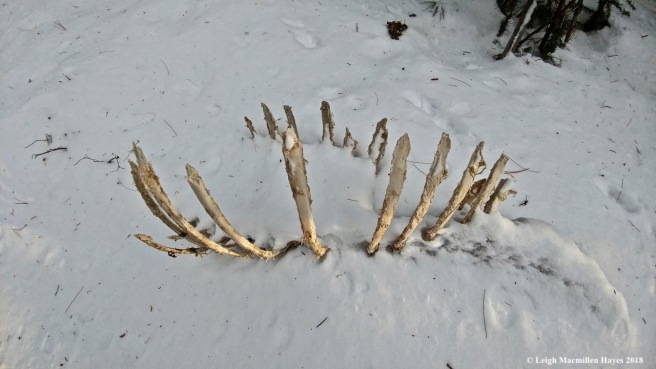
As we made our way back to the road, we stopped by a kill sight discovered last weekend. The ribs and backbone of a deer reached toward the sky. And right behind–more fresh red fox tracks. The fox had paused briefly before journeying on in search of a new food source.

w-red pine plantation beside Crooked River

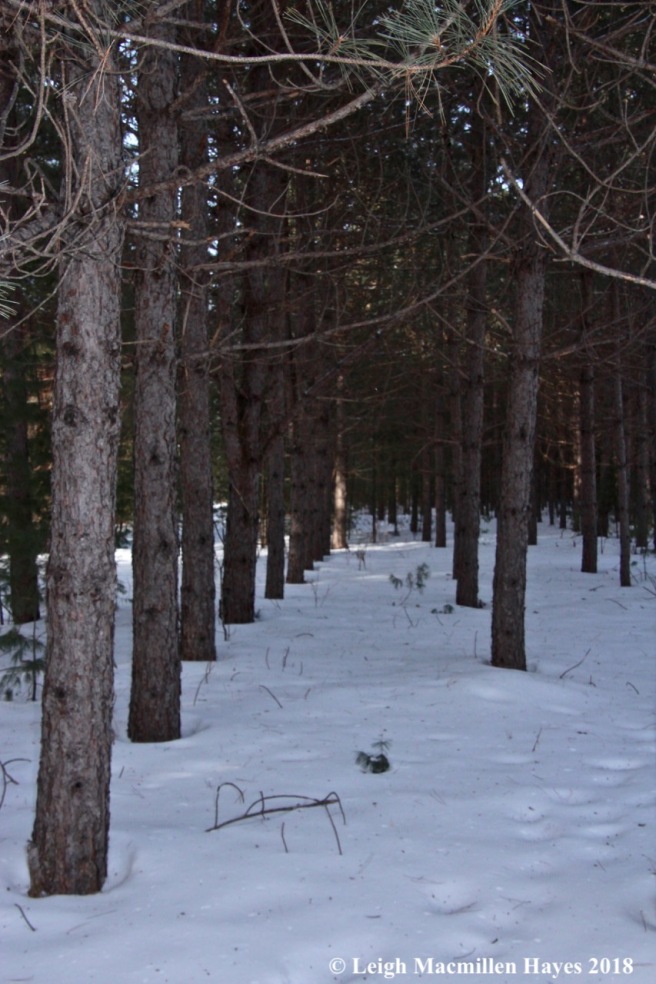
Our final destination was across Scribner’s Mill Road to Loon Echo Land Trust’s Crooked River Forest Preserve-Intervale.  Neither of us had ventured forth on this property previously. While no true trails yet existed, the logging roads were easy to follow and we chose that route because we wanted to get down to Crooked River. As we approached the river, we realized we had traveled through a red pine plantation.

w-white pine at LELT

Right by the river, we discovered a white pine that had lost its terminal leader, thus allowing lower whorls to reach skyward. As my guy said, it looked like a great climbing tree–had we been so inspired. Blame it on the cold. Blame it on our age. We passed up the opportunity.

w-Crooked River 1

The river, so named Crooked for its meandering nature, offered a mixture of ice and open water.

w-fox prints and pee

And everywhere throughout the property we found evidence of red foxes, including prints and pee.

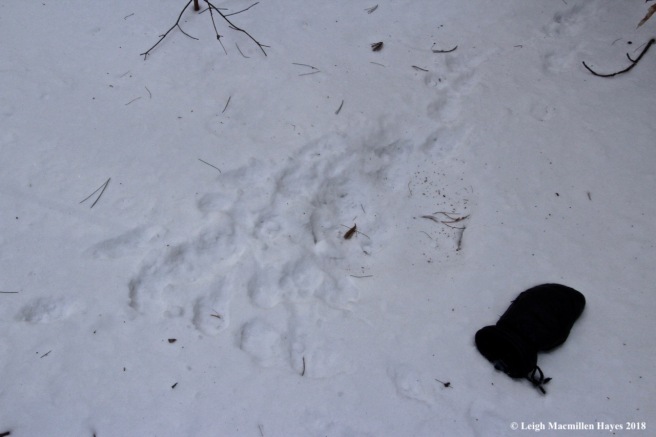
w-coyote bed

We also noted a spot where a coyote paused for a bit, so smooth and indented was the impression left behind. I threw a mitten down temporarily to give a sense of the bed size.

w-Crooked River 2

Though we eventually crossed over the LELT boundary, we had followed a snowmobile trail, and so we decided to see where it would lead–hopeful we wouldn’t find ourselves in someone’s back yard.

w-Scribners Mill bridge

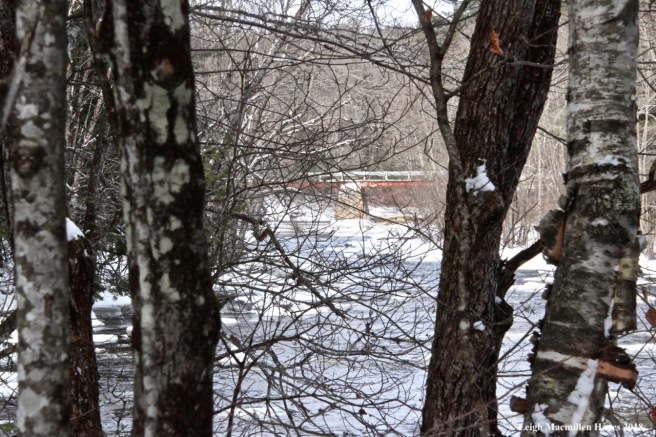
Our worries were squelched when we spied the Scribner’s Mill bridge in the distance.

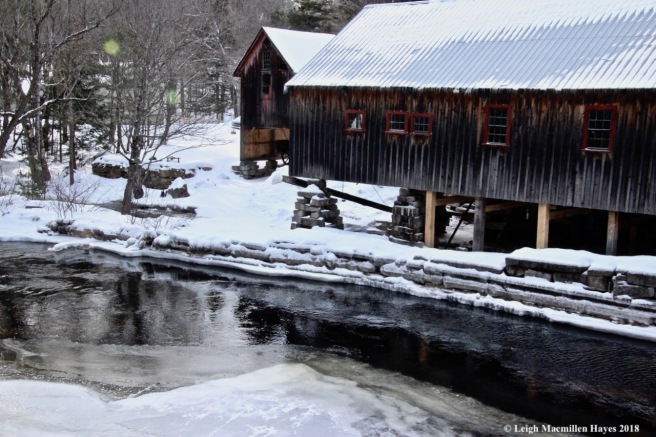
w-mill:blacksmith shop

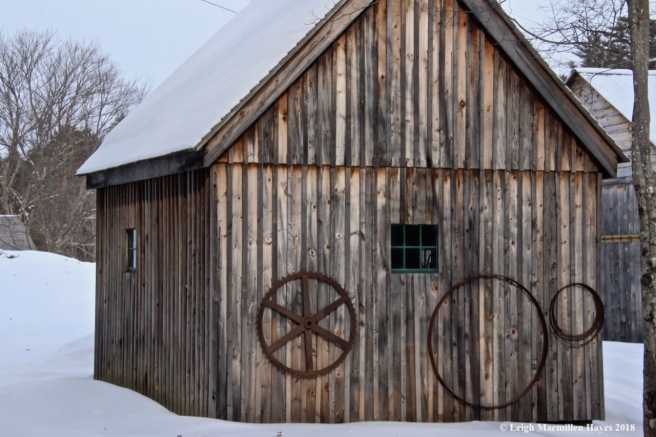
And soon came up beside the old blacksmith shop.

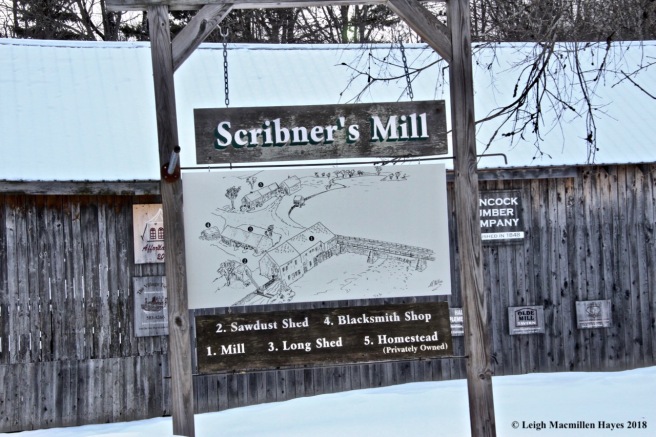
w-mill sign

The mill complex was built in 1847. Three generations of Scribners operated it continuously until 1962.

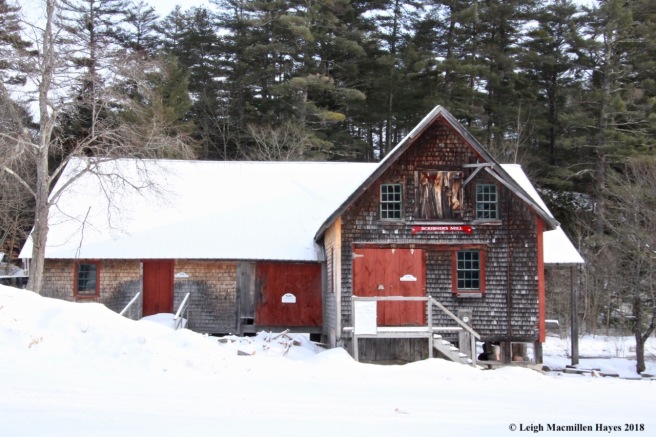
w-mill

In its heyday, the mill produced clapboards, shingles, barrels, and lumber. The Scribner’s Mill Preservation, Inc. formed in 1975 with the mission to transform it into an accurately reconstructed saw mill powered by water.

w-mill:signs

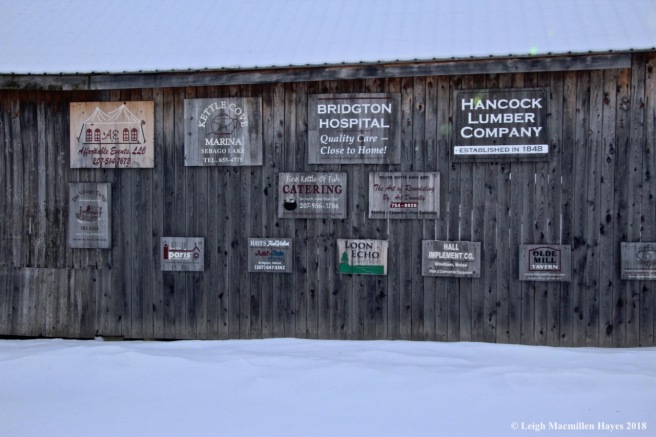
As we stood and looked at the ads of local businesses on the long shed (including one we know intimately), we wondered about the annual “Back to the Past” Celebration that used to be held each August. During that weekend, we recalled how we’d watched the machinery at work. The lathe workshop and the blacksmith shop were also open. Tours of the homestead included exhibits and demonstrations of traditional crafts such as weaving, spinning, rug-hooking and quilting.

w-mill from bridge 2

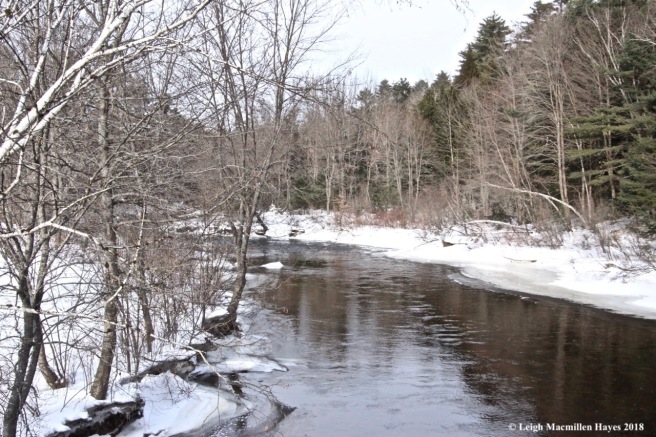
Today, all was idle. Except for the water.

w-mill from bridge 3

It swirled by, carrying memories of the past into the future.

And we gave thanks for the opportunity to visit properties owned by three different local land trusts who do the same as they carry memories of the past forward for future generations.

Land trusts work with community members to acquire land for permanent conservation through purchases and donations. They also create legal and binding conservation easements that allow residents to protect land holdings in perpetuity, while retaining private ownership. Scenic views, wildlife corridors, flora and fauna, and topography remain, subject only to the whims of nature itself, which is ever-changing.

Conserving the land doesn’t mean it can’t be touched. The organizations develop management plans and steward the land. Timber harvesting, farming, residency and recreation continue, while specific wildlife habitat, wetlands, unique natural resources and endangered or rare species are protected. And in the process, they strengthen our towns. Ultimately, they give us a better sense of our place in Maine and opportunities to interact with the wild.

Our local land trusts offer numerous hikes open to everyone, providing a great way to explore and learn more about the diversity of the natural communities.

Even though we can’t all endow the future of our properties, we can get involved to ensure that these organizations continue to protect land for future generations of humans and wildlife.


Sunday’s Point of View

After church we had exactly five hours to pack our lunches, drive to the trailhead and complete our trek. After all, the New England Patriot’s were scheduled to play the Jacksonville Jaguars in the AFC Championship game at 3pm and we intended to be in the audience–from the comfort of our couch, of course.

p1-pleasant mountain sign

By 10:30, we’d pulled into the Ledges Trail parking lot on Mountain Road in Denmark (Denmark, Maine, that is) and began the one and a half mile walk back down the road. Our intended route along the trails of Pleasant Mountain in Loon Echo’s preserve was to climb up the Bald Peak Trail to the fire tower at the summit and then follow the Ledges Trail down. We love hiking a circular route, and like to get the road walk out of the way first.

p2-mountain stream

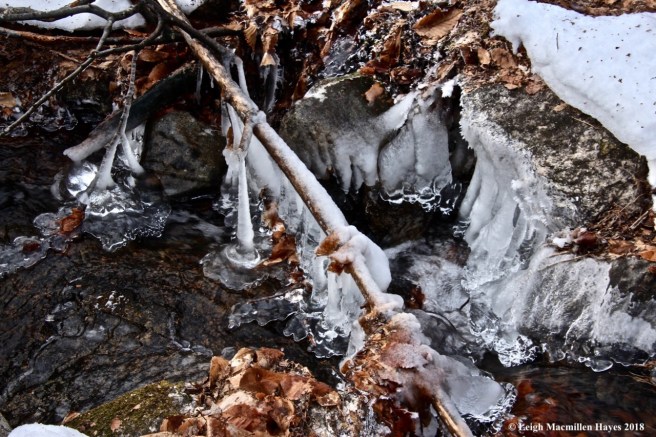
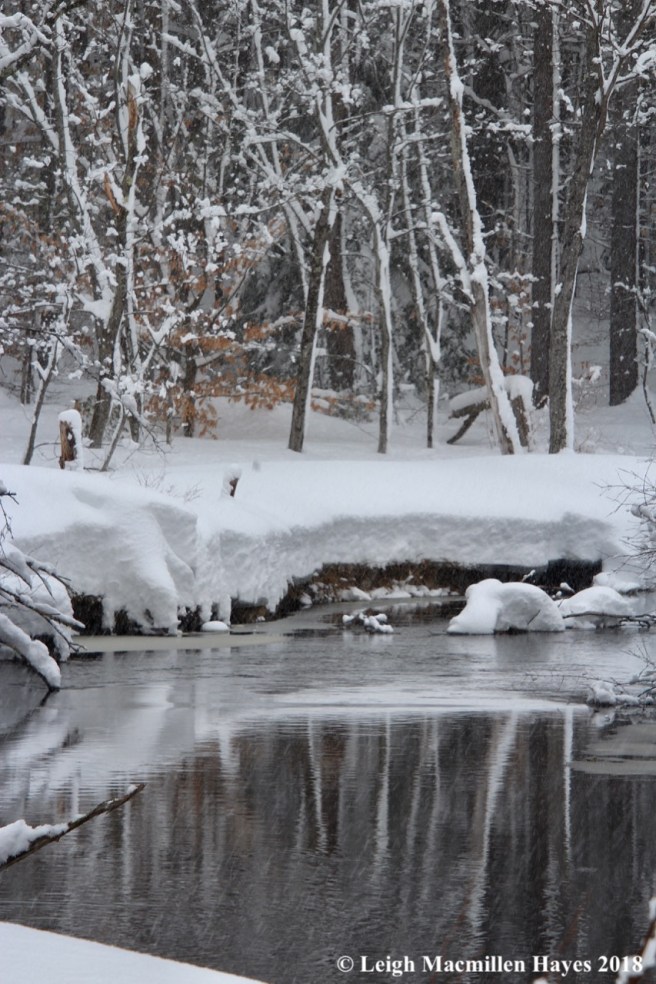
We had no idea what trail conditions would be like, but decided on micro-spikes, which proved to be the best choice. Beside the trail, the mountain stream was layered thick with icy sculptures.

p3-brook ice

Everywhere we looked, the water had frozen into a variety of formations.

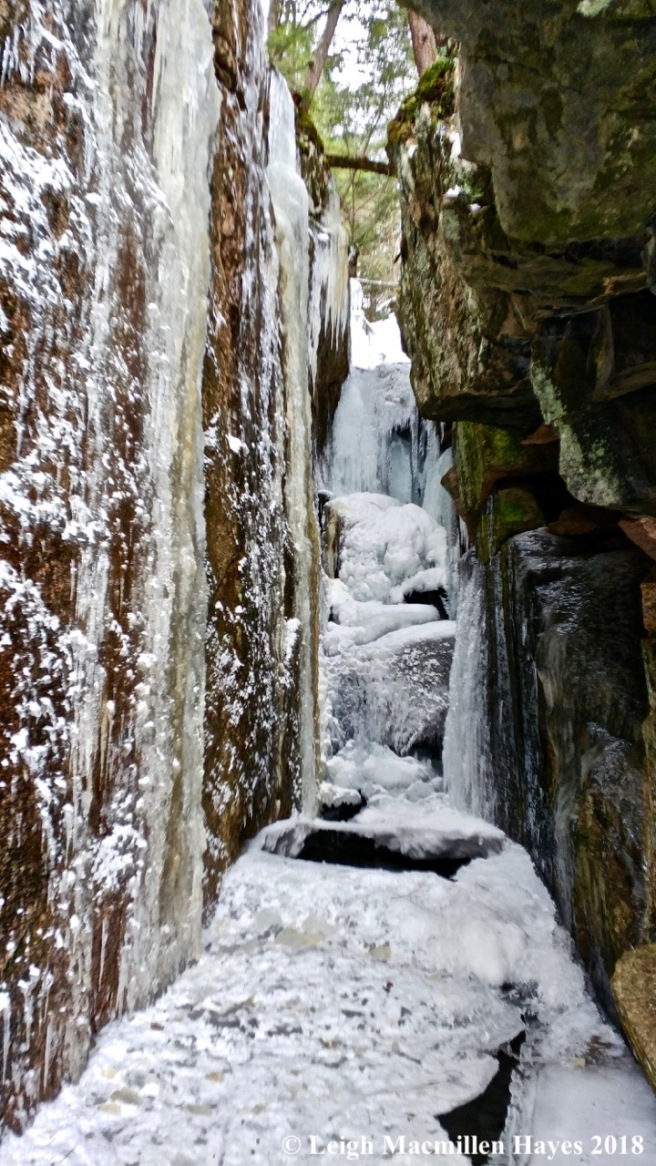
p4-Needle's Eye

Less than a half mile up, we came to the sign for Needle’s Eye.

“Do you want to go in?” I asked my guy.

“It’s up to you,” he replied for he knows my love/hate relationship with the spur path to the geological feature.

“Let’s try,” I said.

p5-Needle's Eye

Somehow, we made it to the chasm in only a few minutes. And then we stood in awe, rejoicing that we’d made the effort for we were well rewarded.

p6-ice of the needle

At the back of the eye, the waterfall stood still for a moment. Eventually, we made our way back to the main trail, and I’m proud to say I only exclaimed once when a tree that I grabbed wiggled. I thought of my friend, Marita, and her patience with me last spring when my brain didn’t want me to venture forth along the spur.
p8-ice layers

Upward we continued, chuckling as we always do at the sign for Sue’s Way that also indicated we would reach the intersection of the North Ridge Trail in three tenths of a mile. Somehow, that three tenths always feels like three miles. Is it really only three tenths of a mile, we wondered.

p7-Sabattus Island on Moose Pond

We were rewarded again, however, when we did pass by the intersection and continued on to the summit of Big Bald Peak. It’s always a spot to stop and look back at Moose Pond below where we could see our camp and Sabatis Island.
p8a-lunch rock looking north

It was just beyond that stop that we found lunch rock. Our view to the northwest was a bit obscured by the pines, but they helped block the breeze, so we didn’t mind.

p8-fire tower in distance

And to the southwest, the ridgeline we intended to walk. We could even see the fire warden’s tower at the main summit.

p9-crossing the ridge

After lunch, across the ridge we trekked, enjoying the sights along the way.

p10-Sebago Lake's open water

In the distance, we could see Sebago Lake and noted its open water which evoked a conversation about global warming. Many thought this would be the year it finally froze over again, but . . . not to be.

p11-racing through blueberry patch

Because trail conditions on the ridge were favorable, we moved quickly–practically running through the blueberry fields that will call my guy’s name come July.

p12-the tower

In what seemed like no time, we turned left onto the Fire Warden’s Trail and then made our way up to the iconic tower that was built in 1920. My hope is that it will still stand stalwart in 2020 and celebrate its one hundredth birthday.

p13-summit view toward Washington

Sometimes the summit view includes Mount Washington, but today the summits of the Presidentials were hidden in clouds.

p14-red pine scale

One scene that didn’t make us happy was that of the red pines. About five years ago I noted their decline and communicated with a forester who was studying red pine scale. Since then, most of the trees have been infested by the tiny insect and died.

p14-Southwest Ridge and sky

A much prettier picture we saw as we began our descent down the Ledges Trail, where the sky displayed a rainbow of colors above the Southwest summit of the mountain.

p15-Moose Pond from the ledges

As we made our way down, we paused as we always do along the ledges for which the trail was named. The south basin of Moose Pond dominated the vantage point.

p16-smiley face and heart

Along the entire route, we only met a few other hiking parties, but one apparently enjoyed the journey as much as we did and left smiles for our hearts.

p17-Needle's Eye

We arrived home with ten minutes to spare until kickoff.

Before the game began, we both agreed that our favorite point of view for this Sunday  was Needle’s Eye.

And now, the Patriot’s just defeated Jacksonville. That may mean two other scenes compete for today’s fav–when #24 Gilmore blocked Jacksonville’s final pass or Bill Belichick showed emotion before the game officially ended.


Finding Our Way at Back Pond Reserve Mondate

One of my favorite winter hikes upon property owned by the Greater Lovell Land Trust is at Back Pond Reserve in Stoneham. And so this morning I convinced my guy that it was the perfect trail for us to explore.

b1-the mountain trailhead

We parked on the Five Kezar Ponds Road near the trailhead for Ron’s Loop and then walked back to The Mountain Trail to begin our ascent. The reserve is a 259-acre property, with all but ten acres located on the north side of the road. The other ten south of the road will remain forever wild. Those latter ten acres were purchased in 1980 by twelve families who owned properties on Back Pond. Eighteen years later, they deeded the land to the GLLT. And then the Five Kezar Ponds Watershed Association generously helped the GLLT acquire the 249-acre piece through two purchases made in 2006 and 2010.

b2-poles at kiosk

At The Mountain Trail kiosk, plenty of information is available, including trail maps and walking sticks. The latter brought a smile to my face for it spoke to the continued generosity of those who know and love this land best.

b3-oak and beech leaves

Given the recent rain that drained our snow pack significantly and was then followed by another blast of arctic air, the trail was well packed. We could tell that a few others had traveled this way either with snowshoes or without–such were the impressions left behind. And within some of those impressions, beech and oak leaves gathered–speaking to the forest we were passing through.

b5-big toothed aspen

Not to be left out was the occasional big-toothed aspen leaf.

b6-beech leaf and husk

But really, it was the beech that we saw most often.

b6a-beech husks litter

And scattered everywhere–beech husks empty of seeds indicating it had been a mast crop year for this species. How viable the seeds were will remain to be seen.

b11-beech sap

In old wounds on several of the beech trees, amber sap had flowed and reminded me that not all sap comes from maples.

b9-trail conditions varied

Where the sun had reached the trail, conditions varied.

b7-microspikes

As the lay of the land began to get steeper, my guy decided to don his micro-spikes. One of the thoughtful efforts found periodically along the way–benches provided in the name of Ron Gestwicki who had longed served as president of the Five Kezars Watershed Association. A perfect place to rest, take in the surrounding beauty, or slip on micro-spikes.

b8-microspikes

I wore mine from the get-go and have found them the easier way to travel the past two days. It’s kind of like adding chains to the tires of a plow truck. With the spikes digging in, though I had a pole attached to our backpack I didn’t need to use it.

b10-trail makrers

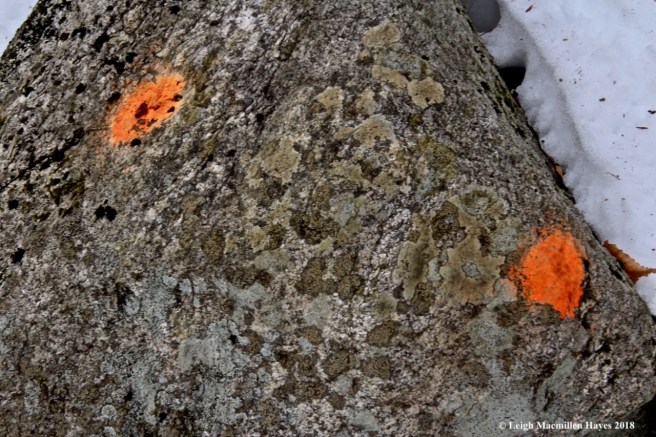
The Mountain Trail is blazed with blue dots and someone used ingenuity to attach a fallen sign to a twig.

b12-turn onto old jeep road

It didn’t take long to reach the old jeep road that led to the summit. We made the left hand turn, but had a mind to go off trail for a bit.

b13-bear tree

Our first turn was to the left for we knew that bear trees stood tall there–at least for now because some looked like they were in rough shape given the beech scale disease that affected them.

b14-sidetracked to right

And then we headed off to the right, bushwhacking our way to a bit of a ledge where we hoped to find signs of a bobcat. I’m forever hopeful, but once again we came up empty handed. Previously, we had seen tracks and scat crossing the trail in numerous places, so we probably weren’t too far off with our speculation.

b15-ledge view

What we did find, a first view of the ponds below . . .

b16-trailing arbutus

and a certain sign of spring recently exposed in the form of trailing arbutus.

b17-back on trail

Finally, we headed back to the main trail and continued to climb toward the summit.

b18-porky prints

Though in general, tracking conditions weren’t great, we did find one expected customer–porcupine. It seems any time we travel this trail we find porcupine evidence.

b20-5 Kezars 1

At last, we reached lunch rock, where the view stretched from a few of the ponds across to Shawnee Peak Ski Area at Pleasant Mountain.

b22-Kearsarge and beyond

The Presidentials came into sight.

b23-Mount Washington in mix

And, of course, Mount Washington, which also displayed less of a snowpack.

b25-orange trail

From the summit, rather than hike back down the same trail, we turned to the backside and followed the orange connecting trail.

b26-swampy area

It’s fun for the community switches from hemlocks, pines and spruces to a small boggy area that offered a challenging crossing and finally back to beech and oak.

b27-beech sap again

And among those beech trees, another that had fallen and leaked sap from its butt end, plus . . .

b28-bear trees

more bear trees.

b29-brook crossing

On the downslope, we heard water running and wondered what our first brook crossing would be like. In the past, we either used a rickety old bridge, or tried not to use it.

b31-old bridge

Today, my guy went across first, and found pieces of the old bridge buried in snow. We knew we were better off without it.

b30-ice and water

I, of course, needed to stop and admire the flowing water and ice.

b32-more ice

Again and again.

b33-orange lichen

Much to our surprise, we found one more cool feature of this trail–the rare orange paintitous (is that a word?) crustose lichen. :-)

b35-turning onto Ron's Loop

Not far from the rare find, we turned left and then right as we crossed the bridge and found ourselves on Ron’s Loop.

b36-brook and wetland

Below the bridge, the wetland bespoke more of the melt down efforts. In the past, we’ve found plenty of otter prints and slides in this area. But today, it was difficult to distinguish anything.

b37-ruffed grouse scat

We did, however, find a pile of ruffed grouse scat!

b39-H is for Hemlock

And proof that H is for Hemlock. (And Hayes)

b40-new bridge

Finally, we reached the second bridge that took us back across the brook. The bridge was built this past summer by the GLLT interns and Back Pond Reserve stewards. We truly appreciated it for many a times during the winter, the crossing had been to wide and we’d gotten wet.

b41-which way should we go?

After completing the loop, we once again gave thanks for all those who had preserved the land and created the trails so that the mammals that call this place home and folks like us could journey there.

With ease we thoroughly enjoyed this Mondate as we found our way at Back Pond Reserve.


Land Trust Trailblazers

This morning found me joining two fellow Maine Master Naturalists for a reconnaissance mission along a property I’d never explored before–nor heard of until about a month ago.

r0-Robie's Meadow

Robie’s Meadow is located on Scribner’s Mill Road in Harrison and owned by the Western Foothills Land Trust.  Our plan was to explore the meadow in preparation for an upcoming WFLT/GLLT guided hike planned for Saturday, January 27 from 9:30-12:30. For the GLLT, it’s rather like a pop-up event, since we had planned it after our regular winter schedule was published. But, that’ll make it more fun because it will be an unexpected opportunity to explore in a neighboring town.

r1-trailhead tracks

Once we climbed up over the snowbank this morning, we were immediately greeted with tracks. And then, we spied something else on the snow.

r2-scat

Scat! Rather large scat. By the size of it, we surmised coyote. But . . . a few measurements of prints and . . .

r3-sniffing red fox pee

a sniff that consisted of a musky, skunky odor made us rethink our conclusion. A red fox had most definitely left its calling card behind.

r4-fox pee everywhere

In fact, as we continued on, we realized that it had left many calling cards–in hopes of attracting some attention. The size of that scat, however, continued to haunt us for it was much larger than fox scat should have been. Perhaps we misread some of the fox tracks, for we thought two had traveled the same route, but was it really fox and coyote? We do know that they were made about the same time, given the snow conditions. And so, our best guess was that the deposit was made by a member of the Canidae family. With that conclusion we felt safe.

r5-western foothills sign

We were so distracted by the tracks we kept finding and following, that it took us a while to cross the right-of-way to the actual land trust property, but at last–success.

r7-Robie's Meadow 1

The meadow opened before us, covered as it was with morning shadows.

r8-Meadow and Russell Brook

As much as we wanted to explore it, Russell Brook was open in spots and the snow deep, and so we decided to follow the brook for a bit instead.

r9-following Alice

Breaking trail wasn’t always easy, given the depth of the snow, but Alice persevered for she knew the way, and Joan and I followed.

r10-tracks across the brook

Finally, we reached a point where we could cross and just beyond our reach we spied tracks. How we wanted them to be otter or some other member of the weasel family. Alas, when we reached the other side, we discovered it was the red fox yet again. It always amuses me how a critter becomes “our” critter when we begin to encounter signs of it with frequency and so this was “our red fox.”
r11-squirrel tracks

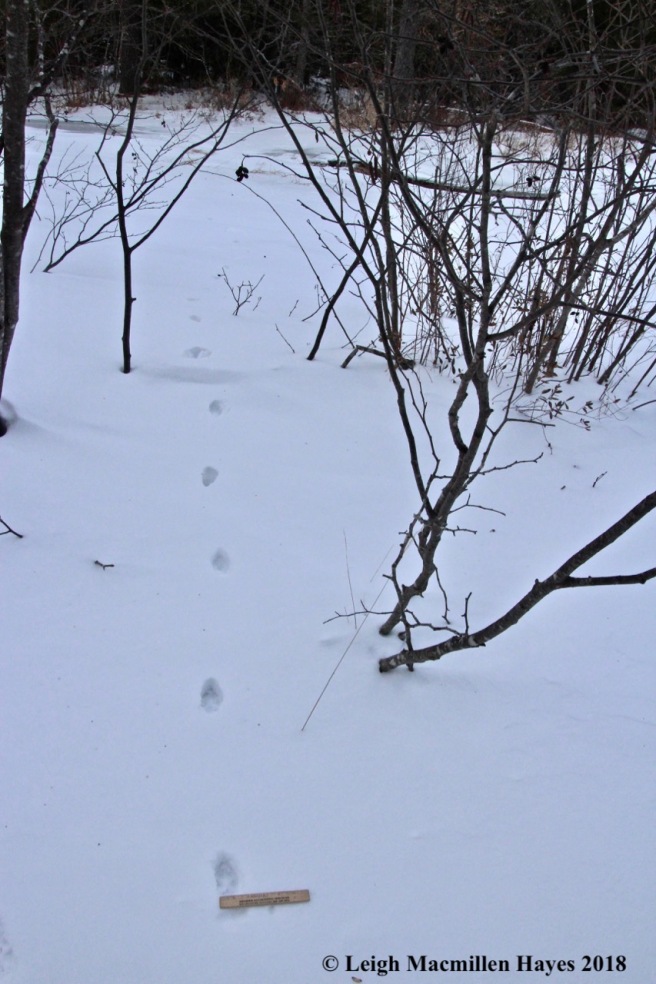
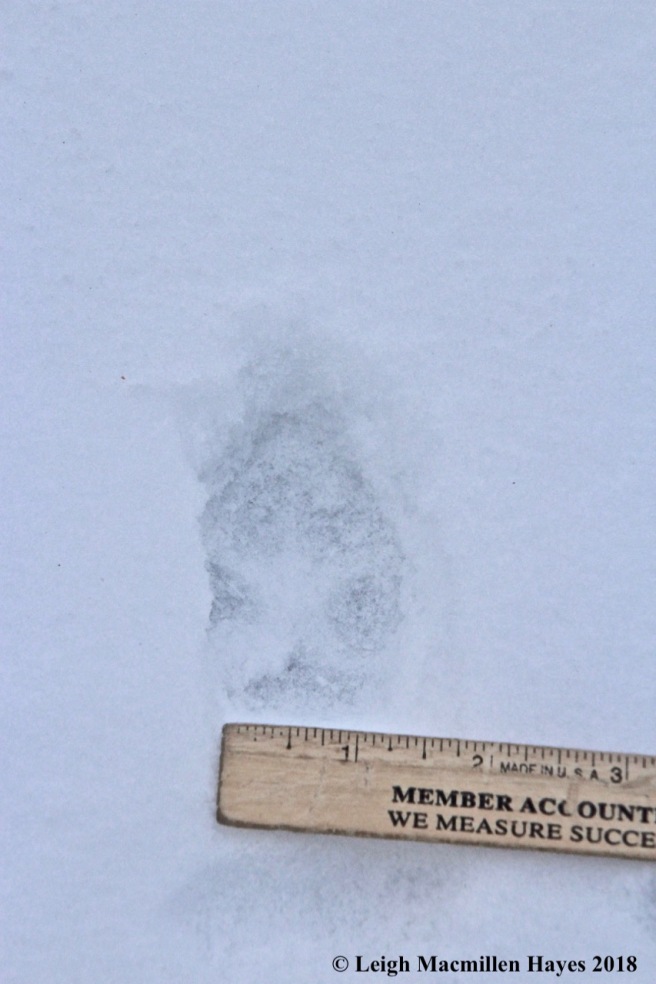
We were a bit disappointed that though we’d seen weasel tracks toward the beginning of our adventure, no other members of the mustelid family shared their presence. Instead, it was to red squirrels that we next turned our attention.

r12-batman 1

And Alice gave us a new insight. I’ve always said that snowshoe hare prints remind me of  lobsters. Well, today she pointed out the fact that squirrel tracks look like Batman’s mask. I will never look at squirrel tracks the same again.

r13-batman 2

Batman indeed.

r14-squirrel home

We found squirrel homes tucked under logs and trees.

r15--squirrel condo

And one very fancy squirrel condo with plenty of openings on different levels. It reminded Joan and me of a certain porcupine condominium (aka stump dump) on a property under conservation easement in Lovell.

r16-porcupine trough

Speaking of porcupines, I kept commenting that we were in porcupine habitat and hadn’t seen any signs. Until . . . we did. And when we return, we’ll do some backtracking in search of its den or feeding tree(s).
r17-turkey tracks

We continued our journey, seeing much the same along the way. At last, we turned right onto a snowmobile trail where we followed turkey tracks out to the road. Our time together had drawn to a close, but we’re excited about the possibilities for the hike on January 27th. Check out both land trusts’ websites soon for more details.
r18-pinecone bird feeders

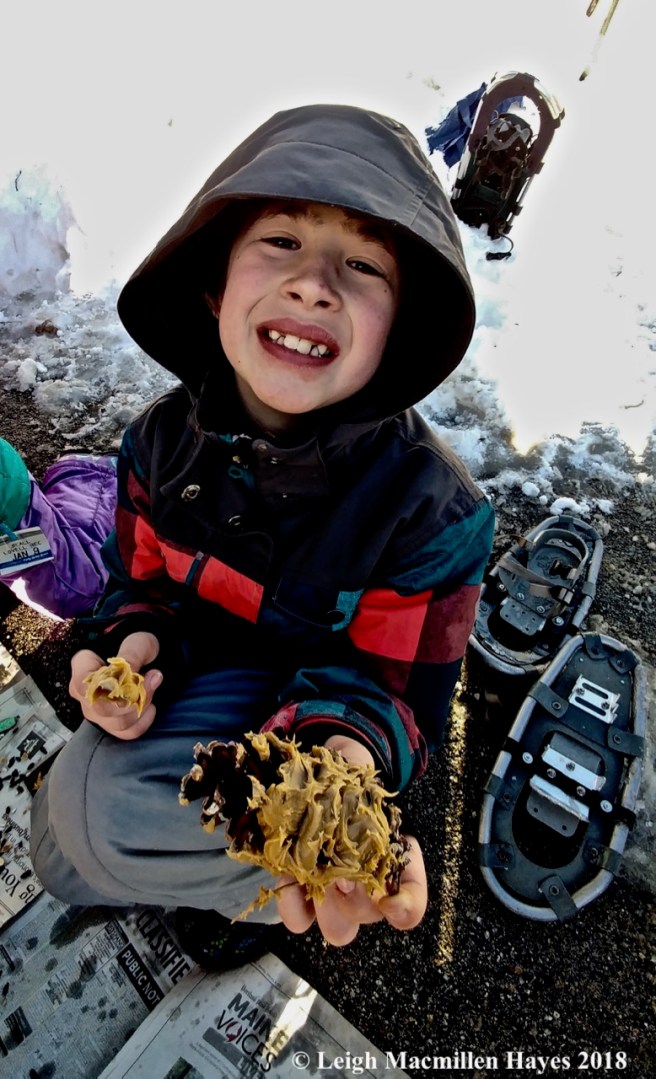
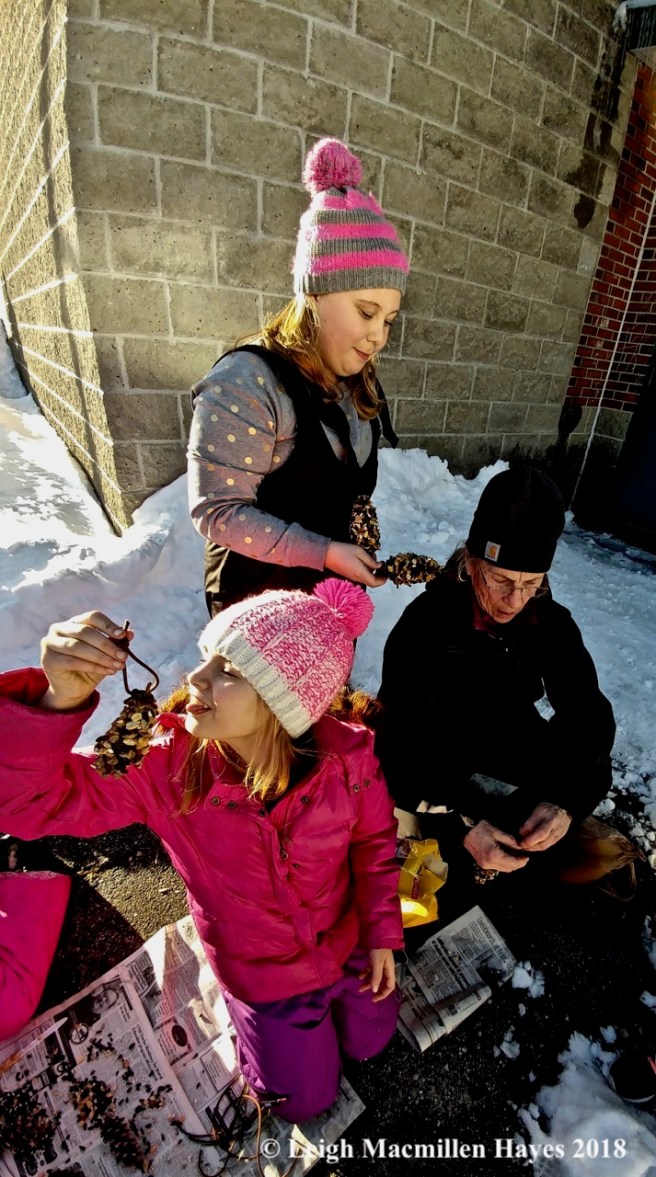
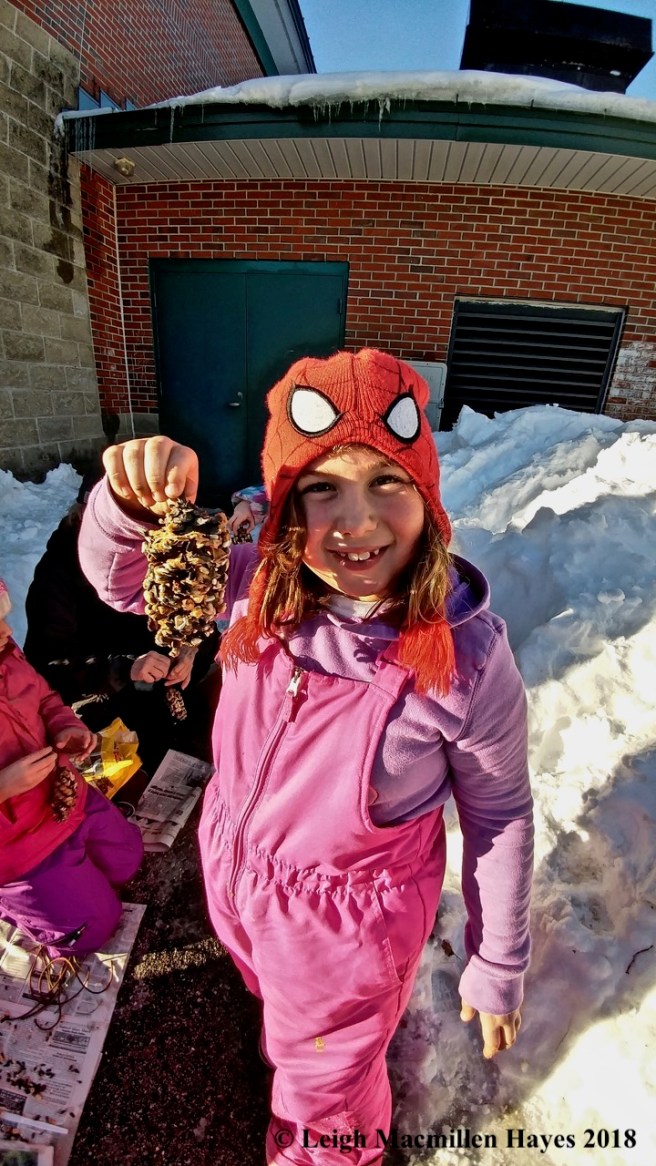
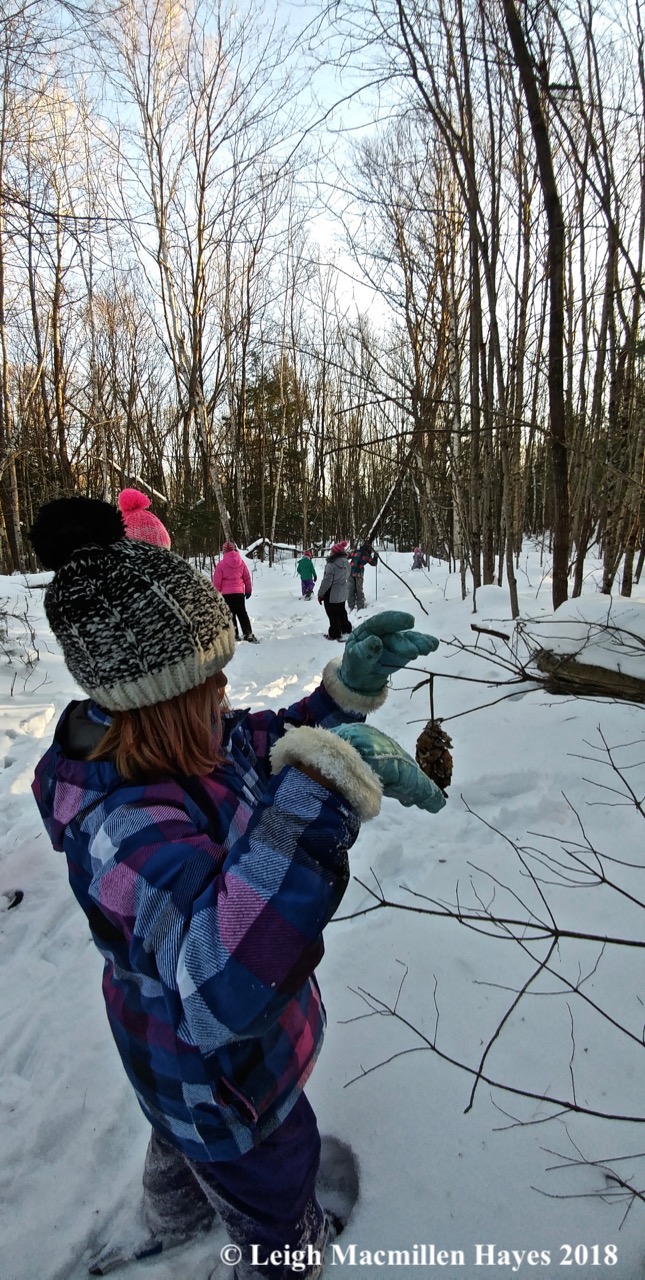
After saying goodbye to Joan and Alice, my outdoor experience continued, this time with an after-school nature program the Greater Lovell Land Trust offers to kids at the New Suncook School. Today, Kathy M. joined me and showed the kids how to create pinecone bird feeders using pinecones, peanut butter and bird seed. Both Meg, the Lovell Recreation Director, and I were excited because our group had swelled to nine. And the next time we meet, we believe we’ll have one more young naturalist join us, bringing our number to its limit.

r19-got peanut butter?

O. smiled as he showed off the peanut butter he’d slathered onto the cone.

r20-finishing their creations

C. looked ready to eat hers, while Kathy patiently helped tied string around D.’s cone.

r21-pinecone birdfeeder by K

K. proudly showed off a finished creation.

r22-heading out to the trail

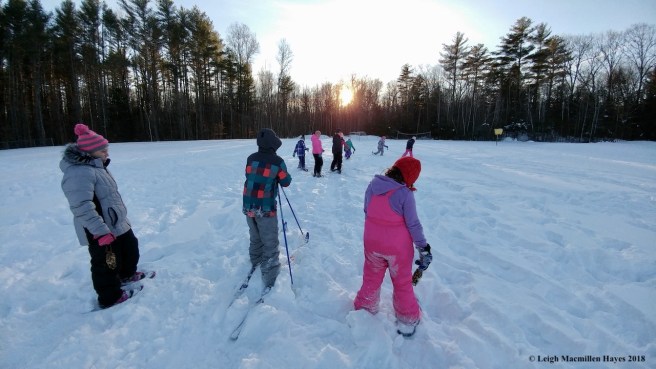
And then we headed off into the sunset via snowshoes and skis.

r23-walking beside deer tracks

And on a trail behind the school playground, fresh deer tracks made us happy. We showed the kids how to look at the heart-shape of the cloven toes and know that the bottom of the heart indicated the direction of travel.

r24-hanging pinecones

As we tramped along the trail examining tracks, we took time to hang the bird feeders. We’ll be curious to look at them when we meet again in two weeks. Today we wondered about who, besides birds, might visit them. Many bets were on deer and squirrels.

r26-exploring

The trail behind the school leads out to the power line and snowmobile trail, where again, we found many deer tracks.

r26-happy trailblazers

We’d gone a ways when we realized we needed to turn around and head back to school. But first, it was time for a group photo of happy campers.

r27-dramatic trailblazers

With smiles from all levels.

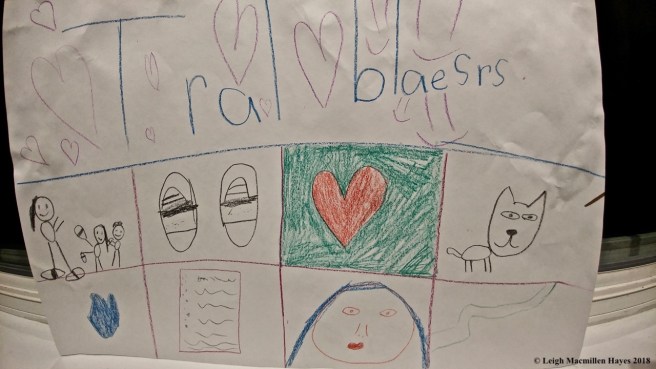
r28-Trailblazer Sign

Our after school group is called the Trailblazers. And K. took the time to illustrate what we’d done last week. Note the square with the tall person standing up and two smaller people on the ground with their snowshoes in the air. Last week, snowshoeing was a bit of a challenge for them, but this week they embraced the concept.

From beginning to end, my day was bookmarked by land trust trailblazers. How happy am I? Extremely. Perhaps the happiest camper of all.


Whetting Our Apatite

Our hunger is never satisfied each time we gather. We always manage to see more, share more and learn more because of our combined knowledge. We also always come away with questions. And so it was this afternoon when about ten of my Maine Master Naturalist Lewiston classmates and I gathered with two of the programs founders, Dorcas Miller and Fred Cichocki, to explore a public park in Auburn, Maine.

a1a-looking at trees

From the get go, we bounced back and forth along the trail to look at the idiosyncrasies of trees and chat about the book, A Beginner’s Guide to RECOGNIZING Trees of the NORTHEAST.

a1-red maple target fungus

And as they should, teachable moments kept presenting themselves, including a prime example of the bull’s eye target fungus on red maple bark. Suddenly, those who hadn’t quite seen the target in an earlier specimen had the opportunity to meet it and I trust they will recognize it going forward.

a2-slime mold

As much as we zigzagged down the trail, we also bounced off of each other as we shared our knowledge. Because we all suffer from Nature Distraction Disorder, and have the tendency to travel at a slower than slow pace, it was no surprise that a stop to look at a fungus closer to the ground meant that one of us noticed a slime mold in the crevasses of pine bark. A poke with a finger nail and the spores oozed out.

a2a-approaching the mines

There were mosses to look at. Ferns to recognize. Lichens to question. And a trench that probably had been used to drain water back in the day.

a3-Dr Fred

Just beyond the trench, the star of the show took over. Dr. Fred was in his element as he reviewed the geological history of this place.

a21

And when he talks, we listen.

a4- Greenlaw quarry 1

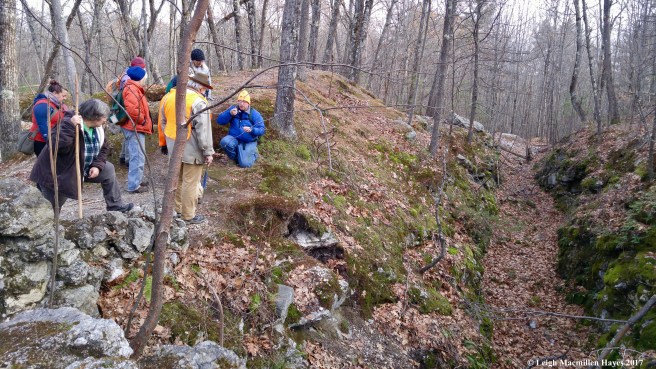
We had come upon the first of the quarries, where feldspar had been mined in the early 1900s for porcelain. But, as Fred explained, while mining the feldspar, rare and unusual minerals had been discovered including a phosphate mineral called apatite.

a6a-Maine Feldspar Quarry

From there, we circled down and around and looked across at the Maine Feldspar Quarry.

a6-Maine Feldspar quarry

We learned from Fred that the wall of the feldspar quarry was a demonstration of light-colored pegmatite just above the water, topped by gray metamorphic rock.

a8-basalt dyke

Next, we encountered a fractured wall of fine-grained basalt–an igneous vein that formed a dyke.

a9-basalt:iron

Basalt is fine-grained due to the molten rock cooling too quickly for large mineral crystals to grow. Typically, it’s gray to black in color with rust from iron oxidation.

a12-another quarry

From there we moved on to another quarry, where our attention was not so much focused on the rocks as on other things.

a13-squirrel cache

For deep within, we spied several red squirrel caches and dining tables. Later, we watched a chipmunk take advantage of the squirrel’s work. Minerals aren’t the only gems of choice at this place.

a14-labyrinth

As we made our way around to a quarry dump, we discovered a labyrinth that made its way around the pine trees. I followed it to the center–struck by the fact that we were examining rocks dating back to the Carboniferous period, and I was walking a path based on an ancient archetype dating back 4,000 years. Time. Worth a wonder.

a15-tourmaline 1

In the dump field, we scattered about looking for souvenirs and then paused at a boulder to examine its offerings.

a16-tourmaline crystal

On the back side, Fred pointed out several depressions where tourmaline crystals had been discovered and removed. We were awed.

a20-graphic granite

There was so much to see from milky and smoky quartz to feldspar, mica and garnet, but my favorite find was more graphic.

a17-graphic granite

Graphic granite–a pegmatite of igneous origin that splits in such a way to make it look as if stories have been expressed with a fountain pen. In this case, I was sure the story was about birds flying over mountains.

The quarries were our turn-around point. We had begun our adventure with plans to visit them quickly, then explore the outer trails of the park, but as we knew would happen, two and half hours later we’d only made our way to the quarries and it was time to head out because the sun was sinking.

That didn’t matter for happy were we to spend time exploring together and whetting our naturalist appetites at Mount Apatite.


Black Friday Shopping Extravaganza

I somehow slept in and totally missed the early bird specials today, but still by midmorning I found my way to the store of my choice.

b1-trail sign-cross the threshold

It had been two years since I’d stepped over the threshold into the MDT shop and I’d forgotten what great selections it had to offer. While the last time I approached from the Fryeburg Information Center near the Maine/NH border, today I decided to use the back door and entered by the Eastern Slopes Airport.

b8-the main aisle

Beginning along the main aisle, I was delighted with the display before me. And lack of customers. Oh, I passed several groups, some in a hurry as they ran, others chatting amiably with friends or relatives, but all quite friendly and courteous. Even dogs were well behaved and therefore welcome.

b2-choice of colors--sweetfern 1

Immediately I had decisions to make. Which shade did I want?

b3-shapes,

And would I prefer a different style or shape?

b12-red oak 1

Had I thought about brown and bristly?

b13a-white oaks

Or did I like salmon and rounded?

b13-red oak on line

Though I preferred the salmon color of the white oak, I did like how the red oak leaves dangled in hopes of being plucked by a customer. And if not a customer, then perhaps the wind.

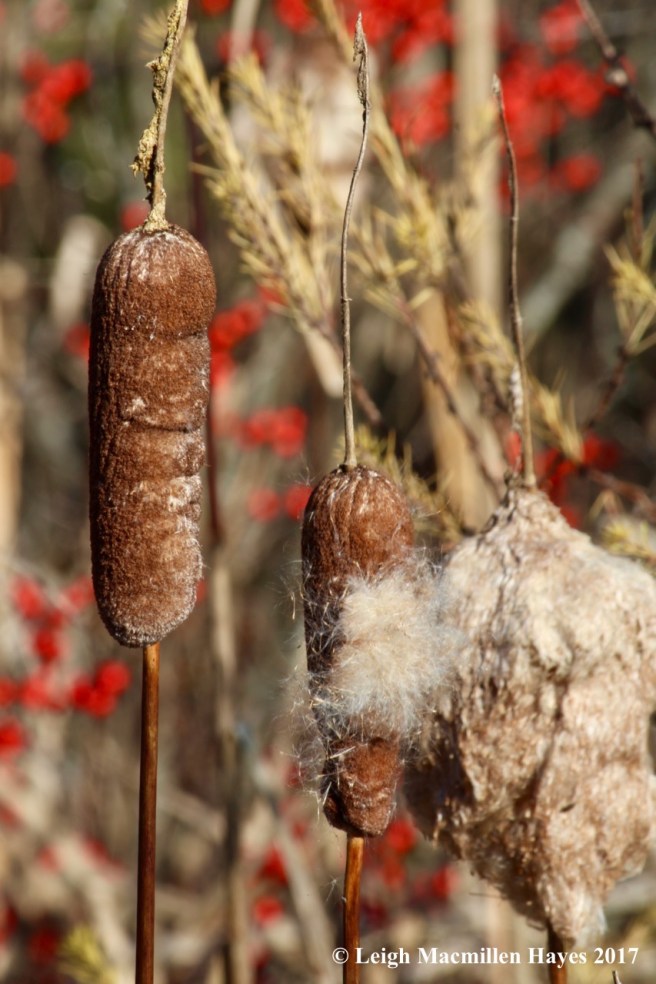
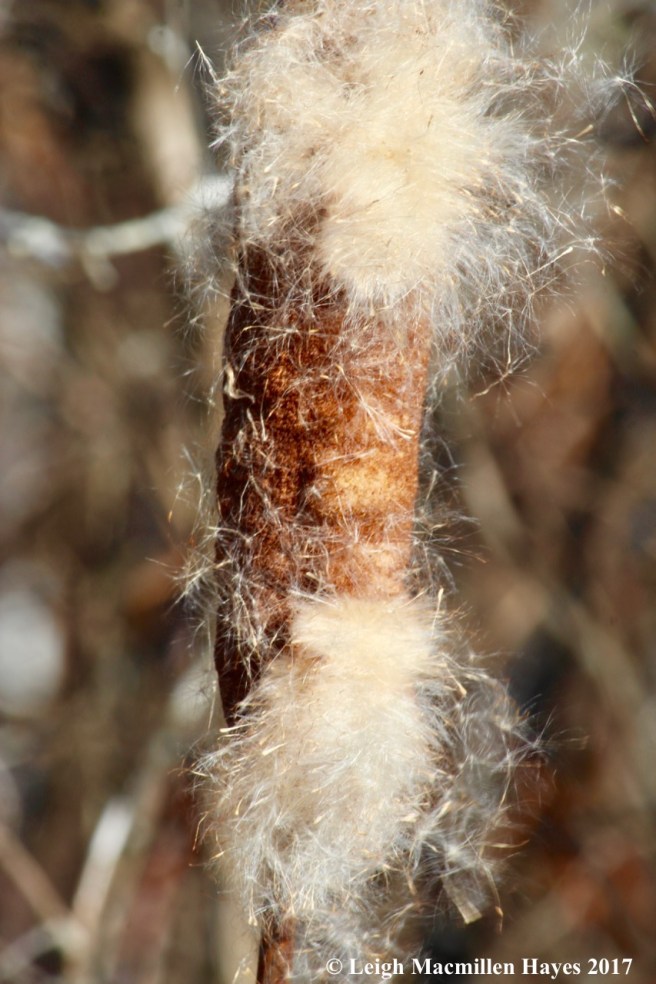
b11-cattails

In aisle five I found some cattails ready to explode into the future.

b11-cattail sparkles

Their tiny, parachuted seeds reminded me of sparklers on the Fourth of July, but because today is the day after Thanksgiving, I suspected these fireworks were intended for New Year’s Eve.

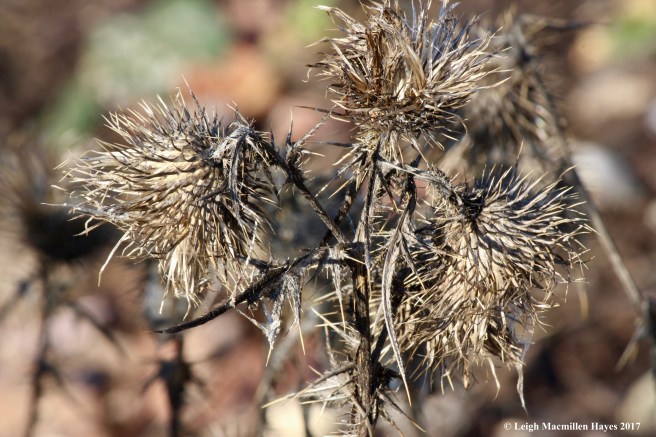
b6-autumn thistle

It seemed that everywhere I looked, the store was decked out with hues of silver and . . .

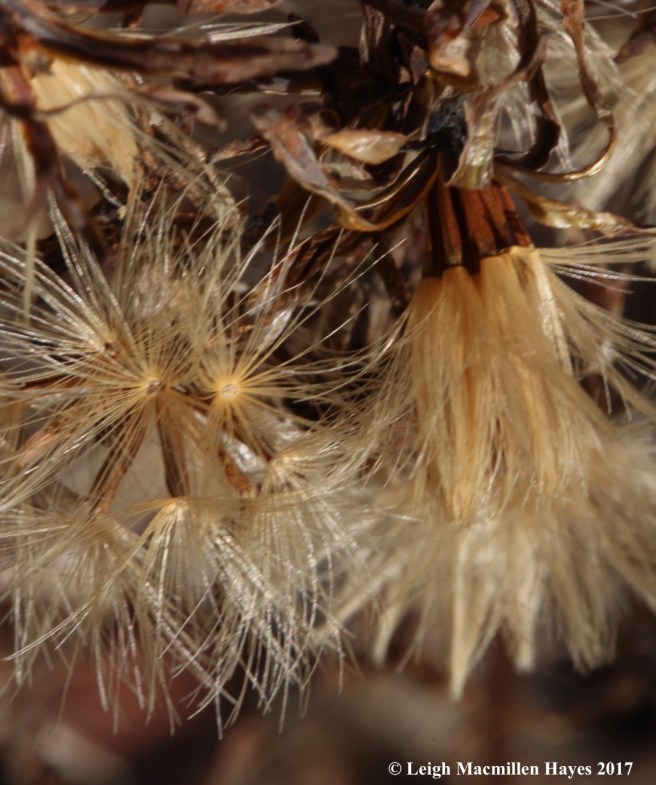
b4-aster display

gold.

b5-brown lacewing

And while admiring the golden decorations, I discovered I wasn’t the only one looking. A brown lacewing had heard there were deep discounts to be had.

b12-birch beer

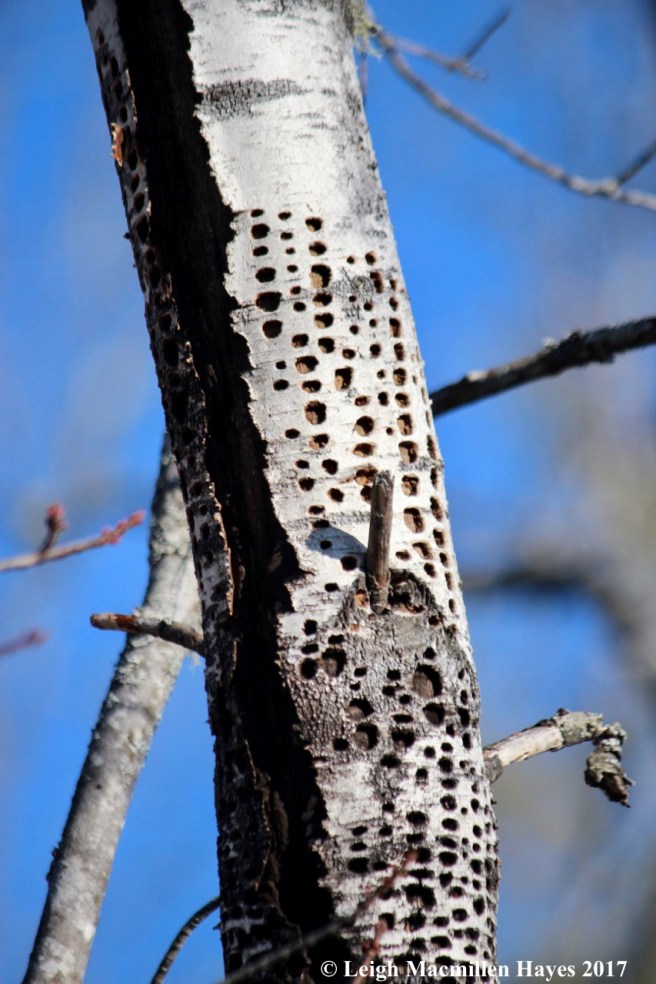
As one should when one is spending an exorbitant amount of time (and perhaps money, though in this case no cash or credit was part of the deal), rehydrating is a good thing and the birch had been tapped for just that purpose. It’s been a long time since I enjoyed the unique taste of a birch beer, but thanks to a sapsucker it was on the menu at the snack bar.

b7-bench

And what better place to sit and sip, than on a bench in aisle 6.

b3a-winterberries

Refreshed, I was again ready to shop till I dropped. Everywhere I looked, the Christmas decorations impressed me.

b14-red oak Christmas decorations

The season’s colors enhanced the merchandise.

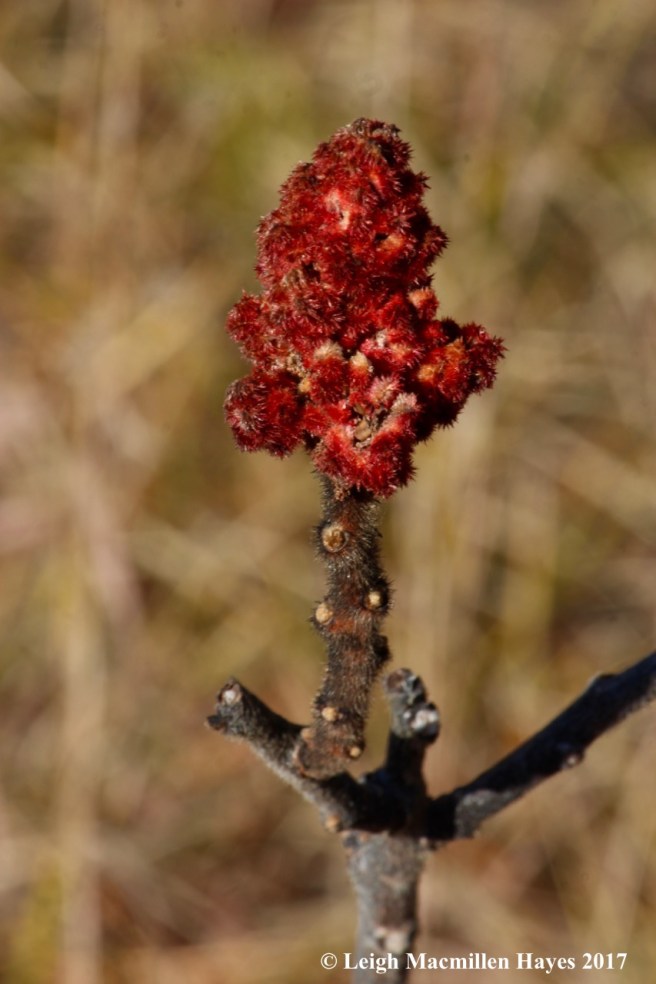
b19-Sumac decorations

And all ornaments were handsome in their own way.

b9-tamarack gold

As is always part of my shopping adventure, I didn’t know what I was looking for when I entered the store. But as soon as I saw this display, I knew I had to have it.

b10-tamarack 2

Its label was lengthy–tamarack, larch, hackmatack. Call it what you want, it’s our only deciduous conifer for it looses its needles in the winter. But first, the needles turn from green to gold and announce their presence.

b15-pitch pine trunk

Also in abundance as this shop–pitch pines. It’s so easy to confuse a pitch pine with a red pine, but a few identifying tips help. The unique thing about this tree is that not only do the stiff, dark yellow-green needles grow on the branches, but they also grow on the trunk. If you spy a tree that you think may be a red pine, scan upward and if you see green needles along the trunk, then you’ve discovered a pitch pine.

The name, pitch, refers to the high amount of resin within this tree.

b16-pitch pine cones

It’s the needles of pitch pine that also add to its identification for they grow in bundles of three, like a pitchfork’s tines.

As for their cones, you can barely see the stalk because they tend to be clustered together, but their key feature is the rigid prickle atop each scale tip.

b20-Northern White Cedar

I was nearly at my turn-around point of three miles when I realized I was standing beside a row of doorbuster deals.

b21-northern white cedar leaves and cones

I couldn’t resist feeling the scale-like leaves of the northern white cedar. I had to have this item.

b17-black locust bark

I did find one thing I decided to leave on the shelf–for the spines of the black locust would have pricked my fingers, I’m sure.

b18-black locust seed pod

Apparently, others did purchase this, for only one fruit pod remained.

b25-heading back

At last, I was on my way back up the main aisle with hopes to make a bee-line out, but had a feeling something around the bend would stop me in my tracks.

b23-pokeberry geometric display

Sure enough–the pokeberry display was both geometric . . .

b23-pokeberry artistic display

and artistic in a dramatic sort of way.

b27-bird nest

As I continued on, I saw and heard birds flitting about and thought about the fact that I need to visit this shop more often, particularly in the spring and summer for the various habitats made me think that birding would be spectacular. And then I spied a nest attached to some raspberry bushes. I knew not the species that made it, but hoped some small brown critter might use it as a winter home and so it remained on the shelf.

b26-heading back 2

At last, I’d raided enough aisles. My cart was full to the brim and my brain overwhelmed. I guess I’m not really a “shop-til-you drop” kind of gal. It was time to wind along the trail and end my Black Friday shopping extravaganza.


New York by Nature

Having grown up in a small town outside of New Haven, Connecticut, I used to be quite knowledgeable about city ways, but these days woodland trails are more to my liking. Stepping out of our comfort zone and onto the streets of Manhattan and Brooklyn this past weekend, I was sure I’d be a nervous wreck. The last time we’d ventured there, our sons were six and eight, and my knuckles white as I gripped their hands.

N-NBC

That was then. Maybe it was because we didn’t have young ones in tow, or because I decided to embrace the moment and smile at each person I was able to make eye contact with, this time was different. Even some cold rain didn’t stop us from enjoying the city’s vibe . . .

N-bakery

including all its colors and flavors.

n-Central Park meets autumn

On a new day, the autumnal tapestry was like deja vu all over again, since we’d already experienced fall foliage over a month ago at home.

n-London Plane sycamore hybrid 1

Even tree bark displayed variations of color, some that I thought I knew, until I found one with a name plaque.

n-London Plane

London Plane? Sycamore had been my first choice. It turns out that London Plane is a hybrid developed over 300 hundred years ago from the native  sycamore and oriental planetree.  And it was used as an ornamental to line streets . . . or park paths.

n-sycamore leaves1

Its scientific name, acerifolia, came from its maple-like leaves. I knew I’d learn plenty in the Big Apple, but didn’t expect trees to be among the lessons.

n-elms intermingling 2

As we walked through Central Park, street vendors displayed their works below, while American elms gracefully danced across the canopy above.

n-Central Park 1

And buildings magically arose from the rocky substrate.

n-trees and buildings

We zigged and zagged and made our way about, though I had to depend on my guy for directions. I can find my way out of the woods, but even though there were maps throughout the park and the city streets are set in a grid, I was completely disoriented at each intersection.

n-house sparrow 2

Perhaps it was because I was more taken with the little things. Even seeing house sparrows felt like a treat.

n-house sparrow 1

They were so tame.

n-Canada goose

I felt right at home among the Canada geese and . . .

n-gray squirrel 1

gray squirrels.

n-Stuart Little

We immediately recognized Stuart Little as he tacked back and forth.

n-strawberry fields forever

And then we wound our way around again, pausing by Strawberry Fields–and imagined. If only.

n-snowflake by Cartier

Back on the streets, we were dazzled by snowflakes . . .

n-Christmas lights 2

and Christmas lights.

n-Pat's Place

And then it was time to cross over to Brooklyn where we found a tour guide stepping out of his brownstone.

n-cement tracks

Like others before us, with him we pounded miles and miles of pavement and left behind our own tracks.

n-World Trade Center 1

He took us to the World Trade Center, which we viewed with awe . . .

n-9:11 memorial

and Ground Zero, where we felt the presence of so many as we remembered.

n-SoHo

Soho was our next destination, and though we didn’t shop, the architecture was enough to fill our minds with abundance . . .

n-architecture 1

and variety.

n-Wicked sign 1

No visit to NYC is complete without taking in a performance and my guy, who is the world’s biggest fan of The Wizard of Oz, chose WICKED.

N-Wicked set 2

I won’t say it was my favorite show, but the set, costumes, acting, dancing, and singing were all well worth the experience. He thoroughly enjoyed it.

n-Rock center 4

Another must do is Rockefeller Center–or at least the ice rink. We didn’t skate, but enjoyed watching people take a spin, some more agile than others.

n-Rockefeller tree 1

Overlooking the rink, but encased in scaffolding stories high, a transformation was in the works . . .

n-Rockefeller 2

from a Norway Spruce discovered in State College, Pennsylvania, to the Rockefeller Center Christmas Tree.

n-toy soldier 2

Watching over all were the toy soldiers. And if you have ever wondered if they come alive after most of the world that gathers in New York goes to bed, they do. We know this first hand for we heard them. Our hotel room was located nearby and at about 2am we were awakened each night by an instrumental performance that had a symphonic sound. We couldn’t hear anyone in adjoining rooms. And we never heard a peep outside of Radio City Music Hall, so it had to be the toy soldiers and angels that surrounded the rink–and you have to become a believer.

n-Grand Central Station

At long last, it was Monday morning and time to head back through the terminal of Grand Central Station to make our way up the northeast corridor.

n-Allen, Pat and Tim

But . . . we left with fond memories and promises to return for somehow we who live in rural Maine raised a city boy.

Posing from left to right, my guy, our youngest and one of his roommates who also hails from Maine.

They’re both comfortable by nature in New York City.


Through Younger Eyes

Zigzagging through the woods, my young friends find wonder in every moment. They embrace their discoveries–often with exclamations and excitement. Following the blazed trail is not in their blood, for they know that some of the coolest finds are off trail, where the fungi aren’t trampled and mammal signs not obliterated.

w-striped ledge

And so it was that this past week, I had the honor of spending lots of time exploring with them. First, on Tuesday, our Greater Lovell Land Trust docent tramp found us atop the “striped ledge” beside Keewaydin Lake in Stoneham, Maine. One of our docents, Mary, had obtained landowner permission for this grand adventure. From the Maine Geological Survey: “The dikes cutting the granite trend generally from southwest to northeast. They most likely intruded the host rock during the Jurassic period, when continental rifting caused extensive fracturing of New England’s bedrock (McHone 1992). Basaltic magma intruded these cracks, and cooled and solidified to form dikes such as those seen in Striped Ledge. Close examination of the ledge shows a complex intrusion history at this locality Some of the dikes have layering parallel to their walls, which may have resulted from several pulses of magma into the fractures and/or chilling of the dike margins in contact with cooler host rock . . . the dikes locally cross one another, with the older dikes being offset where they are torn apart by the younger ones.” How cool is that?

w-smiling for rosy quartz

Darn cool, especially when rose quartz was among the great finds.

w-rock hounds

And in that instant, a few rock hounds were initiated.

w-turning two twigs into a fish

When not looking at rocks, a couple of broken twigs on the ledge became a fish in one moment, and hotdog tongs in another–ever versatile were they.

w-eyeing a flower in rock tripe

But it wasn’t the ledge alone that drew their attention. When we stopped to admire rock tripe growing atop a boulder, it was the eye of the youth that discovered the green “flower” at the center.

w-Sucker Brook 2

And then the next morning, which dawned even colder than the previous, I joined the same family for a pre-hike at the GLLT’s Wilson Wing Moose Pond Bog Preserve as we prepared for a public hike. The trail meanders beside Sucker Brook, and we, too, meandered.

w-dipping into the cold for a Pooh stick

Pooh sticks were launched periodically and sometimes had to be dislodged.

w-wondering about foam

There were bubbles to watch in the brook and the foam formed to hypothesize about.

w-stump art

Nature’s artistic designs were viewed with awe.

w-pointing to hobblebush

The intention was to find a few of their favorite things. They found a few hundred and  . . .

w-seesaw

had lots of fun along the way.

w-exploring the stream

All the way along, the water, moss-covered rocks and sticks became part of their playground. But really, they also noted a variety of fungi, including their favorite green stain, which was in fruit,  a tree that had brought distress this summer for it housed honeybees and they learned that the hard way, great sliding spots from which to practice being river otters, the sunlight glittering on Moose Pond Bog and Indian pipes in their capsule form. There were sapsucker holes, pileated woodpecker activity, birch polypores, and even a surprise. They couldn’t wait for the public hike to show off their discoveries.

l-measuring diameter 4

That same afternoon, District Forester Shane Duigan, joined our GLLT after-school program at New Suncook School in Lovell. The Trailblazers, as the group is known, first introduced Shane to their trees. And then he showed us some of the tools stored in his vest, such as the tape measure used to determine diameter.

w-learning how to age a tree

As the kids made guesses about a tree’s age, Shane demonstrated how foresters use an increment borer to extract a small core from a tree.

l-counting rings on tree core

They crowded in to watch him count its rings. The predicted age: 100. The actual age: 50. The fun: 100%.

w-Horseshoe Pond

And then this morning dawned, colder than our previous outings and the wind created white caps on Horseshoe Pond below the kiosk for the Wilson Wing Moose Pond Bog Preserve. It was time for our public walk to enjoy the wonders of Wilson Wing.

w-ice 1

One of the biggest surprises were the icicles that had formed on Sucker Brook since our last visit on Wednesday morning.

w-carrot-shaped icycle

And because they are kids, they couldn’t resist gathering such to admire up close. This one looked like a carrot, and actually appeared so as it reflected the blaze orange–our color of the season.

w-ice 2

The kids realized that the icicles formed upon all types of vegetation and created their own interesting shapes worth celebrating.

w-ice 3

One even looked like a flag blowing in the breeze when turned upright, and this guy showed it to his mom in honor of her service in the Army and the fact that today is Veterans Day. Turned on its side, it became a maze game and he really wanted to place a small ball in it and watch the ball move through. And as much as he wanted to take it home, it has to live on in his mind’s eye and this photograph.

w-wondering about the car

They showed us so many things of nature, and even the unnatural, though they imagined all the critters for which the old blue car might create a fine home–squirrels, weasels, porucpines, foxes, and coyotes were on their list. And then they turned into otters themselves and slide back down the hill over and over again.

w-polypody 1

They wanted to share some other great finds, including a few squirrel dining tables and a rock with bad hair day, but the crowd had gotten ahead of them. Despite that, they looked at the “bad hair day” fern, aka polypody, and realized that it had curled in since Wednesday’s visit. And then they figured out that the fern curls when it gets cold. Who knew you could use a fern to determine the temperature?

w1-artist conks

Though they didn’t get to share all of their finds this morning, they did make some new discoveries as they wandered off trail, like the artists conks that grew in abundance.

w1-dead man's fingers

And deadman fingers fungi that reminded one of them of scat standing upright. I’ve a feeling that description will stay with me each time I look at it going forward.

w-bear hair 1

In what seemed like no time, for we traveled the trail much faster than intended, we were back on Horseshoe Pond Road and one among us was particularly excited about a certain display upon pole 13. She ran ahead to be able to show all the participants as they passed by.

w-bear hair on pole 13

It was bear hair and scratch marks that she shared with enthusiasm. And the knowledge that we are not alone in these woods.

And just after that one of her brothers realized our walk was almost over and he was disappointed for so much fun had he had being a junior docent.

w-Sarah signing my book

A few hours later, my guy and I ventured to The Met Coffee House and Gallery in North Conway to meet up with another who encourages children and their adults to explore the outdoors. It was our great joy to join my dear friend, Sarah Frankel, for the first book signing event as she celebrated the publishing of Half Acre.

w-posing by an uprooted tree

And now it’s the end of the day and the end of the week, and I’m a better person because of the time I’ve spent with young friends as they’ve moved quickly at times and then stopped to wonder. They taught me the joy of looking with open minds.

If you don’t have kids to learn with and from, may you find time to channel your inner child and look at the world through younger eyes.


Outing on the Outlet

This morning dawned clear and chilly, with the temperature at 50˚ when I headed toward Lovell at 7:15. After placing some “Land Trust Walk Today” signs in pre-planned positions, I headed to the dam on Harbor Road in Fryeburg to wait for a ride.

u1-outlet dam

Water flowed over the tiered dam, which was built in the early to mid 1900s at the request of the Pepperell Manufacturing Company in Biddeford. The townspeople contested its existence for it would raise the water level on Kezar Lake, but the textile mill located many miles away on the Saco River won the rights to construct such at the site of an 1800s saw & gristmill. Thankfully, though it did raise the level of the lake water, not all of the predicted problems came to pass.

u2-Harbor Road bridge

The dam was our intended take-out for today’s paddle co-sponsored by the Greater Lovell Land Trust and Upper Saco Valley Land Trust. Though it’s located off Harbor Road in Fryeburg, it’s owned by the Town of Lovell. No longer used, it still serves to provide a historic reference. And a great place to either portage and continue on to the Old Course of the Saco River and then the “new” course, or take out as we intended to do.

u5-silver maple

While I waited, I poked around, and rejoiced in the sight of trees that like wet feet. High above the dam, the leaves of a silver maple shown brilliantly in the morning light.

u3-green ash leaves

Other leaves also caught my attention for their coloration–with veins of red interrupting their olive greenness. Green ash, another tree that likes wet feet but isn’t as abundant as its siblings, white and black ash, also stood tall beside the dam.

u7-preparing to launch

My dam-side exploration ended a few minutes later when Jesse Wright of Upper Saco Valley Land Trust and her friend, Shareen, pulled into the landing. We hoisted my kayak onto her already laden truck and found our way over the bumpy road to our intended put-in at a private residence–thanks to the generosity of its owners. Slowly the number of boats increased by the water’s edge as twenty-plus folks joined us.

u6-map by Will from USVLT

Once all had gathered, Jesse showed off the map of our intended paddle, the red dots indicating our path from beginning to end, and I shared a bit of information about the fen, a GLLT property purchased in 2005. Today, the symbolic boundary between the two land trusts disappeared as we ventured off together.

u9d-Linda 1

It takes good neighbors and lake stewards to pull off such an event, and the Wurms are such. They helped us arrange the put-in, gathered a couple of canoes for several paddlers and took photos at the start.

u9a-LInda's view 1

Linda’s view included Jesse heading off as our lead,

u9c-Linda's view 3

and the rainbow of colors once we hit the water.

u8-on the water with Jesse and gang

It took us a wee bit of time to get all the boats onto the lake, but it wasn’t a day made for rushing. And once in the sun, we began to warm up.

u10-send off by Linda

Before we headed off, we gave thanks to Linda (and Remy).

u11-and Heinrich

We also thanked Heinrich, who drew our attention skyward . . .

u12-drone

as he flew a drone above us.

DCIM100MEDIADJI_0056.JPG

Our first destination was to paddle north for the view.

DCIM100MEDIADJI_0061.JPG

The drone spied the mountains before we did.

DCIM100MEDIADJI_0059.JPG

And spotted our intended course . . .

DCIM100MEDIADJI_0067.JPG

into the fen.

u18-veiws from the lake

A quick turn-around from the water gave us bearings as we noted the Baldfaces to the west.

u19-heading toward the fen

We circled an island that serves as an environmental study plot for the US Forest Service and then paddled southward.

u20-Jesse in the lead

Jesse led the way through the pickerelweed.

u21-more mountain views

As we followed, the view got better and better.

u22-slowly we followed

Acting as sweep, I took up the rear while the group snaked along.

u25-early fall color

We followed the twists and turns of the water trail, where red maples showed off their autumn display from the canopy.

u28-red leaf

Occasional leaves fluttered down, begging to be noticed in their singularity.

u-cranberries 1

Though we didn’t get out of our boats and actually walk into the fen, we did stop to chat about what it had to offer. The GLLT owns 260 acres of the 500-acre fen, an acidic ecosystem with a deep layer of organic material including peat moss atop a sandy substrate. Several bird species of concern breed or hunt in the fen, including American bitterns and Sandhill cranes, the latter of which we had the good fortune to hear but not see. Long’s bullrush, a globally rare sedge, also grows here. But the crème de la crème for many are the cranberries. Folks on today’s paddle weren’t familiar with the plant and I couldn’t show them at the time, but I shared with them the experience of picking in the past with students from Molly Ockett Middle School in Fryeburg.

u-cranberries 2

On a fall day each year, about thirty students in the school’s MESA program (Maine Environmental Science Academy–an experiential place-based curriculum for 6-8 grades) visit the fen with the GLLT’s Executive Director, Tom Henderson.

u-cranberries 3

They learn about the hydrology of this place, but one of their highlights is to pick cranberries, and to that end, they become very possessive. As one student approaches another, a common statement is shared: “Don’t come over here. There aren’t any cranberries here.”

u-cranberries 4

Over the course of several hours, they fill their bags and sometimes even show off their creative talents in other ways–all in celebration of the cranberries.

u30-weir1

Continuing along the river this morning, we noted beaver activity and talked about scent mounds and their usefulness within the beaver community. And then we reached the fish screen.  Jesse had paddled the course last Sunday and made it under the screen without any issues.

u31-clearing a beaver dam

Since then, the beavers had been busy damming it up. One of our members worked to adjust some of the branches so we could all get through.

u34-offering a shove

Of course, sometimes a helping paddle was needed to push a boat forward.

u33-cow 2

While we took turns, our efforts didn’t go unnoticed.

u35-other side measurement

On the other side, a ruler indicated depth.

u36-approaching the bridge on Harbor Road

And then, and then, in what seemed like only minutes but was actually a couple of hours filled with camaraderie between familiar friends and new, plus a touch of natural history thrown into the discussion, we found ourselves at the bridge and the end of the journey for some. Others chose to paddle back rather than hitch a ride. We had come full circle.

As we pulled boats out, we were surprised at how warm it was since we were out of the shade, the temp having reached into the 80˚s.

Our outing on the Kezar Lake Outlet would not have been doable without Jesse Wright, who did the yeoman’s work of pulling it together, William Abbott, USVLT’s executive director who created the map, the Wurms and their neighbors who contributed land, boats, photographs and time, and all who ventured with us on this most lovely first full day of autumn.  Thank you all.


Bee Kind

Because I have the good fortune to be involved with the Greater Lovell Land Trust, I spend my summers attending talks and walks on a variety of topics. Prior to this week, we learned about lichens, bryophytes, pileated woodpeckers, fungi, flowers, ferns, medicinal plants, peat bogs, wild turkeys, and land conservation. And then last night our focus turned to pollinators and the pollinated.

Guy Pilla, a beekeeper from Fryeburg, Maine, gave an informational talk on the art of beekeeping, followed by a question and answer period, and the crème de la crème –honey tasting. How often have you had a chance to taste Tupelo honey?

w-Guy 1 (1)

This morning we met up with Guy again, as he took us to a hive he has set up on private property under conservation easement with the land trust. Twenty-six of us gathered around to listen, watch, and wonder.

w-showing the frames

In his alien costume, Guy passed around frames, giving us an opportunity to look at a range of cells as he explained about spacing for honey expansion, storage and more. We learned about the good and the bad of beekeeping, but mostly the good.

w-Gary looking at frame

As frames were passed around, we noted variations and the fact that some were lightweight and others heavy.

w-hive--bear precautions

At last it was time for Guy to open the hive. Notice the electric fence surrounding it? And the fact that it’s strapped down. Bear defense. And we know there’s at least one in the area.

w-dressing like a beekeeper

And then he walked through the crowd and chose Mary to be his assistant. She donned a hat and veil to protect her face and neck, and took on the look.

w-testing the smoker

Into the bee yard, she followed Guy. If you look closely, you’ll see two platforms on the ground and might notice that the one directly below the hive has nails sticking up (the other is turned upside down because Guy only has one hive at this location this year). Those are to deter skunks, another predator. As Mary watched from behind and the rest of us watched from a few feet away beyond the fence (and out of the bee line), Guy ignited the smoker he’d filled with pine needles.

w-smoke coming out of smoker1

It took a few minutes, but finally, smoke puffed out.

w-Mary practices the smoker

He then passed it to Mary, and her task was to press the bellows and create smoke. The smoker is an important line of defense.

w-preparing to open the hive

As we continued to watch, Guy took the straps off and explained the construction of the hive with one super stacked atop another in a vertical fashion. Though he ordered his equipment, he refashioned some of it including the roof, designed to let wet weather flow off rather than gather in puddles on the top of the structure.

w-Mary uses the smoker

As Guy wedged a hive tool into the bee glue (a resin-like propolis), Mary got ready to use the smoker. Smoke fools the honeybees into thinking a wildfire is nearby, thus prompting them to eat more honey in case they need to move to a new location.

w-showing off his bees

And with honey in their bellies, they become more docile. Note that Guy isn’t wearing any gloves. Usually he does, but Mary wore his gloves this morning and he trusted all would go well and the bees would remain calm. He was certainly calm, but spoke of his early days in the beekeeping business and how sometimes he would jump. Bees sense fear behavior exhibited by heavy breathing and that’s when stings occur. Having been stung recently after some youngsters received stings, I thought I was remaining calm, but apparently my breath spoke for me.

w-hive levels

We learned so much from Guy last night and today–about their various jobs as male drones, queens, and female workers who really do so much of the work. The workers clean out old material from inside the cells, attend to the queen, carry dead bees or larvae outside the hive, guard the hive’s entrance, fan at the entrance during the hot weather to keep the inside temperature down and to circulate fresh air throughout the hive, receive nectar and pollen,  store it away in cells, nurse newly laid egg, and seal cells around larvae at the appropriate moment. After doing all of this for about three weeks, they’ll earn the rights to collect nectar and pollen for about six. And then . . . they’ll die of exhaustion. Indeed.

w-wandering among the flowers

After our time at the hive, one of the land owners, Linda, took us on a mini-tour of the 100-hundred-acre property. Her goal was to take us to a flower meadow she and her husband have created. Originally, it was a garden with raised beds, but Linda has been collecting wildflower seeds from roadsides in Maine and New Hampshire and sowing them in the meadow.

w-learning from Linda

Today we were wowed by the results.

w-honey bee 1

And so were Guy’s honeybees.

w-honeybee on the move

They were on the move everywhere we looked.

w-bee using probiscus for honey

We watched as they sucked nectar with their proboscis mouth part.

w-bumblebee on Joe Pye Weed

Bumblebees also took advantage of the sweet offerings.

w-bumble with loaded pollen baskets

And filled their pollen baskets with the goods.

w-frittilary 1

Not to be left out, a fritillary was among those seeking reward.

w-male meadowhawk

And because we were there, we saw meadowhawk dragonflies on the prowl, he being red . . .

w-female meadowhawk

and she similar but brown.

w-Guy in the field (1)

Guy was tickled to see his bees at work and share his knowledge to all as we listened.

w-linda by her flower meadow

Linda was thrilled to see so many enjoying what she and her husband, Heinrich, had created.

w-Aa, gs 1

And speaking of Heinrich, just before we left he had one more insect to share.

w-Aa, garden 2

An orb spider known as a yellow and black garden spider or argiope aurantia had built its web near the greenhouse. I used to see these in our gardens frequently, but haven’t lately. Of course, I say that and tomorrow I’ll spy one.

w-Argiope aurantia, garden spider 4

In my brain, this is the smartest spider of them all for they create a web consisting of a series of concentric circles divided into sectors by lines that radiate out. And in the center–that amazing zigzag pattern, which is called a stabilimentum and perhaps intended to attract other insects. Or maybe its a message written in code and intended for a certain pig named Wilbur. This is Maine after all.

w-honey bee 2

We do know one message we learned in the last 24 hours: Bee kind–to one another for we’re all interconnected and we need each other to survive. And that includes letting the undesirables flourish in our yards, including the dandelions. Do so and watch them and just maybe you’ll realize they are desirable after all.

(Two final notes: Support your local beekeepers. Guy’s honey is available at Spice and Grain in Fryeburg; but really, you should buy honey from your area. And if you are interested in learning more about beekeeping, look for your local chapter of the Maine State Beekeepers Association.


Making a Wish–Kyan Style

In May 2016, our young next-door neighbor was diagnosed with acute myeloid leukemia, which attacks immature blood cells. I’ll never forget that day or those following as we watched his parents drive by our house either coming or going to the Barbara Bush Children’s Hospital in Portland, where he underwent two rounds of chemotherapy treatment.

We felt at a loss–what could we do for them while they underwent this life-wrenching ordeal.

Our steps were tiny. First, we tied orange ribbons around the big old sugar maple tree in our front yard and then snuck into their yard and did the same around all the trees that lined their driveway. It was the beginning of saying, “We’re thinking of you.”

We offered to cook a meal and mow the lawn, and even started to head over and do the latter but as it turned out, those were common, every day acts that Bill and Binaca, Ky’s parents, cherished because in that moment life was almost normal again. Sort of.

My next step, since orange is the color that represents leukemia, was to post a photo of something orange found in the natural world on my Facebook page each day. It was a small token, but a way to let Ky, his sister Quinn, and his parents know that they were in our thoughts and prayers. I did notice that though his mother “liked” most, the yuckiest ones were the ones that evoked a comment from Kyan. Typical tween–in a way.

After a spring and summer of ups and downs, the decision was made for a bone marrow transplant. And a donor was located–in the Netherlands. A year ago yesterday, Binaca and Kyan headed to Boston Children’s Hospital to begin the process. That journey was long, for Ky had to be quarantined, and even after they came home, life was different.

I do remember Halloween of last year–I don’t recall how long Ky had been home, but he was given the OK from his doctor to go trick-or-treating, as long as he stayed well covered. It was the first time he’d been with friends since May. When he, his sister and their friends came to the door, the sweetest voice to my ears said from within a Scream costume, “Hi Mrs. Hayes.” I’m not terribly fond of Halloween and costumes–it’s always creeped me out a bit. But for once, I wanted to rejoice and hug that Scream. I didn’t. First, it was a germ thing on his end and he had to be super careful. And second, I would have embarrassed him to pieces.

After that, occasionally I’d see Ky and his family as they rode through the woods on their quad, but he was always covered by a helmet. Still I was happy to see him out. And then this spring, my heart melted when I looked out one day and saw him passing by on his scooter. At first he didn’t go far, but soon he and his sister were off on adventures.

And then last night I received a message from his mom telling me that today he’d be granted a wish from Make-a-Wish Maine and asking if I’d be available to take some photographs. Um, yes!
k-make a wish in progress

When I arrived this afternoon, I was surprised to see so many cars lining their driveway as it was my understanding that this would be a quiet affair at his request when they were in the talking stages of this project. But, the Make-a-Wish people had collaborated with folks from the Sustainable Forestry Initiative to fulfill Kyan’s dream. And all hands were on deck to pull it off.

k-ky's sign

He wanted a cabin of sorts. It began as a treehouse in his mind, but morphed into something a bit larger after he’d watched HGTV’s Tiny Houses. Only, as he said today, he thought it would be much smaller that what the collaborators created. Of course, his mother was hoping for a trip to Hawaii or, being a huge Tom Brady fan, maybe a Patriots game. But this was Kyan’s wish.

k-Bill and Quinn waiting

While his dad and sis waited for Kyan, his mom and his dear friend to return from a birthday adventure to Vermont . . .

k-setting up camp

as quickly as they could, the Make-a-Wish team put everything in order.

k-sweeping house

The floor was swept . . .

k-setting the sign

door locked, banner posted . . .

k-finishing touches

and final sweep made.

k-make a wish and camera crew

And then the waiting . . . his arrival imminent.

k-partnerships

In the meantime, collaborators posed–Kate Vickery, Senior Program Director of Make-a-Wish Maine and Pat Sirois, state coordinator of the Sustainable Forestry Initiative Implementation Committee in Maine.

k-roberta scrugg

For me, it was a fun time to catch up with Roberta Scruggs on the left, Communications Director for the Maine Forest Products Council, who used to work for Lakes Environmental Association.

k-packed driveway

Finally, the moment everyone had been waiting for arrived. Word came that Binaca was in the neighborhood and Bill and Quinn went off to meet her. The rest of us kept our eyes on the driveway as we waited for them to pull up.

k-blindfolded

Bill had blindfolded Kyan (and we later learned that Ky was sure his father had used old underwear to do such), and guided him forward where two Make-a-Wish folks quietly took Kyan’s hands.

k-removing the blindfold

A minute later they told him he could remove the blindfold. And his awe began.

k-kyan reacting

Kyan’s not the kind of kid who’s going to jump up and down. But to say he was thrilled and overwhelmed would be an understatement. And by his father’s T-shirt, can you tell who the superhero is?

k-ky entering

At last Ky entered his new digs.

k-ky from new bed

And peeked out from the loft.

k-ky interview prep

After he’d walked in and out and in again and up and down the two sets of stairs a few times, and around the back, the news teams stepped up–eager for an interview.

k-ky interview 1a

With a smile that never left his face, he answered a myriad of questions.

k-camera crew

For a kid who doesn’t like to be the center of attention, all eyes were focused . . . on him.

k-ky interview 2

All the while, he kept looking back at his “kabin.”

k-ky interview 1

He never once wavered in a response and the smile never left his face.

k-kyan interview 3

But his eyes–oh were they focused.

k-binaca interview 5

His mom was also interviewed and in her usual and beautifully reflective manner recalled the past year and a half.

k-Binaca's look

Sometimes the emotion of the day shown through.

k-binaca interview 1

But the strength of her character and thankfulness for all blessings flowed through her being.

k-binaca interview 4

As her interview continued, Kyan chatted briefly with his dad and then I noticed that he and his sister and his friend and her friend bee-lined into their home. I suspect they were on a mission to find stuff to make the kabin their own.

k-the house awaits

Kyan’s Kabin.

k-wish team 2

The Make-a-Wish Maine crew with Kyan and family.

k-ssf 2

The Sustainable Forestry Initiative crew, Kyan, family and friends.

k-bill showing his thanks

Hugs . . .

k-bill thanking everyone

and handshakes.

k8-couch and bunk above (1)

And a quick peek inside, where a sitting area awaits,

k6-stairway (1)

two sets of stairs lead to two lofts,

k3-Quinn's bed? (1)

and I suspect his sister has claimed one,

k4-Ky's bed and doggy bed (1)

while the other is for him and his dog. (Actually, I’m thinking that when he’s in school, maybe I can meet his mom there–don’t tell. We can start our own klub.)

k-make a wish sign 1

As of August 17, Kyan will be one year into remission.

k-balloons

Certainly a reason to celebrate. And I think I know where Ky’s sleeping tonight.