New York by Nature

Having grown up in a small town outside of New Haven, Connecticut, I used to be quite knowledgeable about city ways, but these days woodland trails are more to my liking. Stepping out of our comfort zone and onto the streets of Manhattan and Brooklyn this past weekend, I was sure I’d be a nervous wreck. The last time we’d ventured there, our sons were six and eight, and my knuckles white as I gripped their hands.

N-NBC

That was then. Maybe it was because we didn’t have young ones in tow, or because I decided to embrace the moment and smile at each person I was able to make eye contact with, this time was different. Even some cold rain didn’t stop us from enjoying the city’s vibe . . .

N-bakery

including all its colors and flavors.

n-Central Park meets autumn

On a new day, the autumnal tapestry was like deja vu all over again, since we’d already experienced fall foliage over a month ago at home.

n-London Plane sycamore hybrid 1

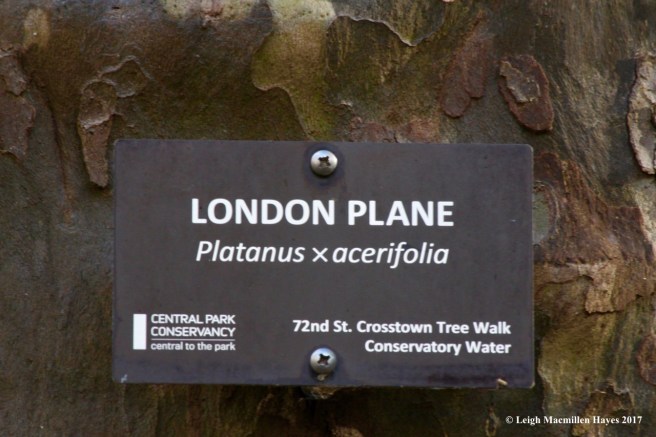
Even tree bark displayed variations of color, some that I thought I knew, until I found one with a name plaque.

n-London Plane

London Plane? Sycamore had been my first choice. It turns out that London Plane is a hybrid developed over 300 hundred years ago from the native  sycamore and oriental planetree.  And it was used as an ornamental to line streets . . . or park paths.

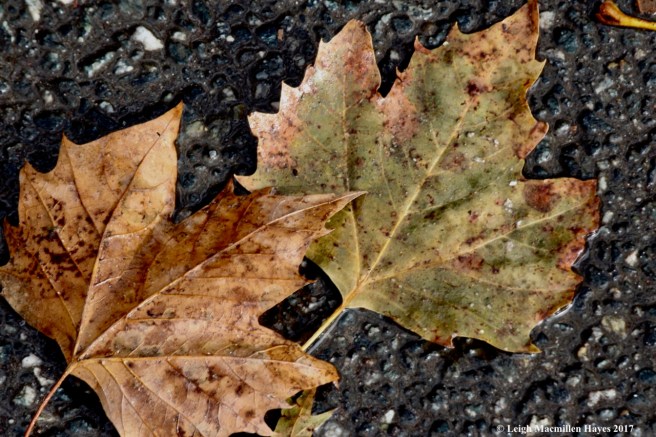
n-sycamore leaves1

Its scientific name, acerifolia, came from its maple-like leaves. I knew I’d learn plenty in the Big Apple, but didn’t expect trees to be among the lessons.

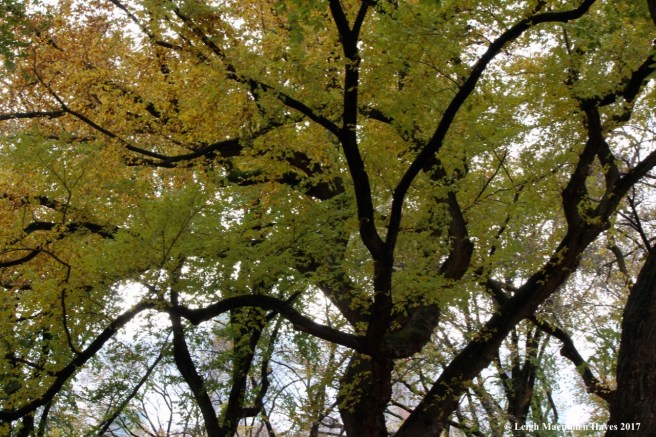
n-elms intermingling 2

As we walked through Central Park, street vendors displayed their works below, while American elms gracefully danced across the canopy above.

n-Central Park 1

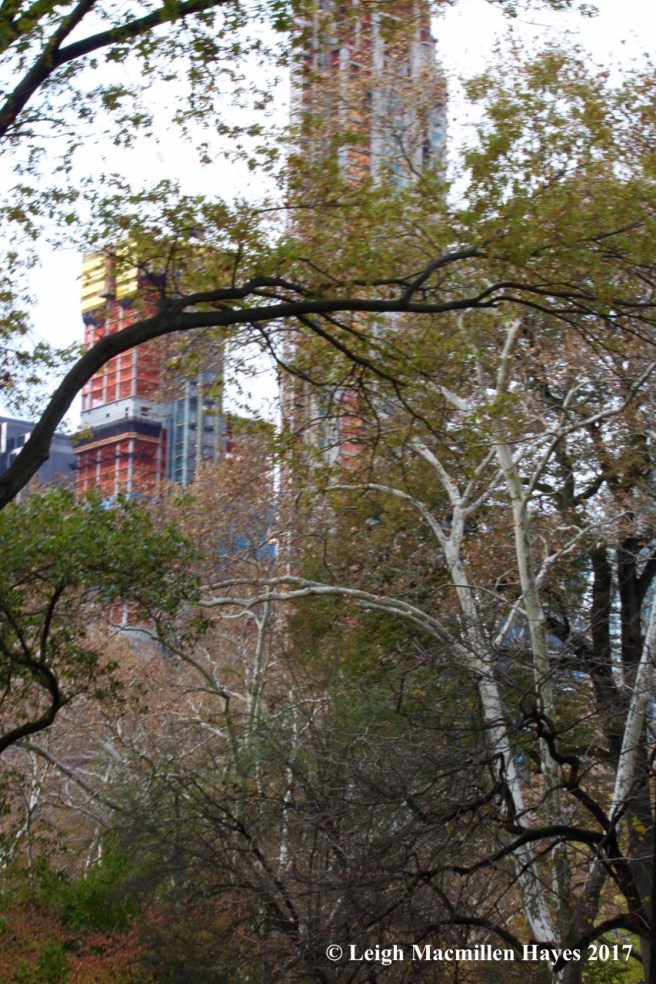
And buildings magically arose from the rocky substrate.

n-trees and buildings

We zigged and zagged and made our way about, though I had to depend on my guy for directions. I can find my way out of the woods, but even though there were maps throughout the park and the city streets are set in a grid, I was completely disoriented at each intersection.

n-house sparrow 2

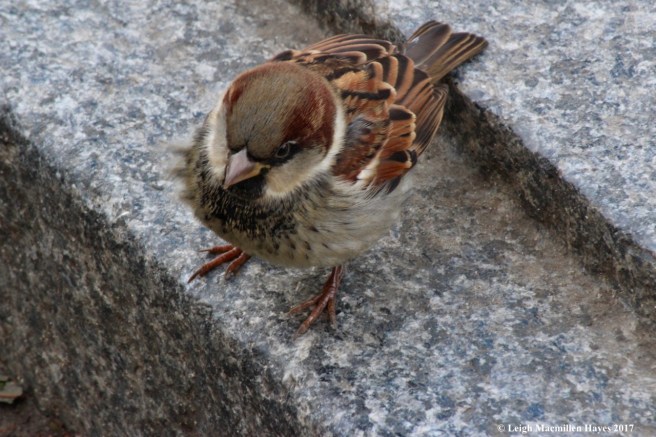
Perhaps it was because I was more taken with the little things. Even seeing house sparrows felt like a treat.

n-house sparrow 1

They were so tame.

n-Canada goose

I felt right at home among the Canada geese and . . .

n-gray squirrel 1

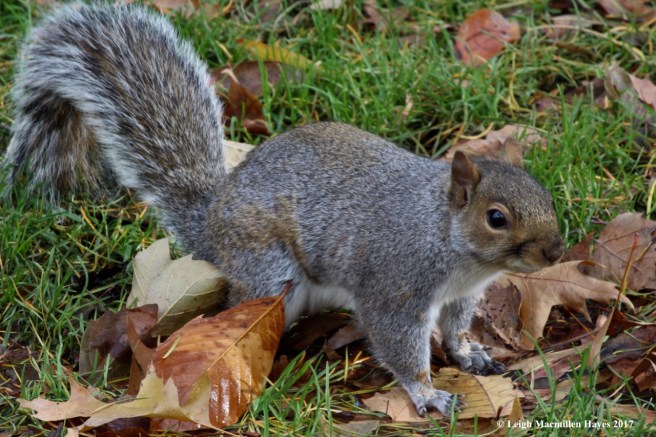
gray squirrels.

n-Stuart Little

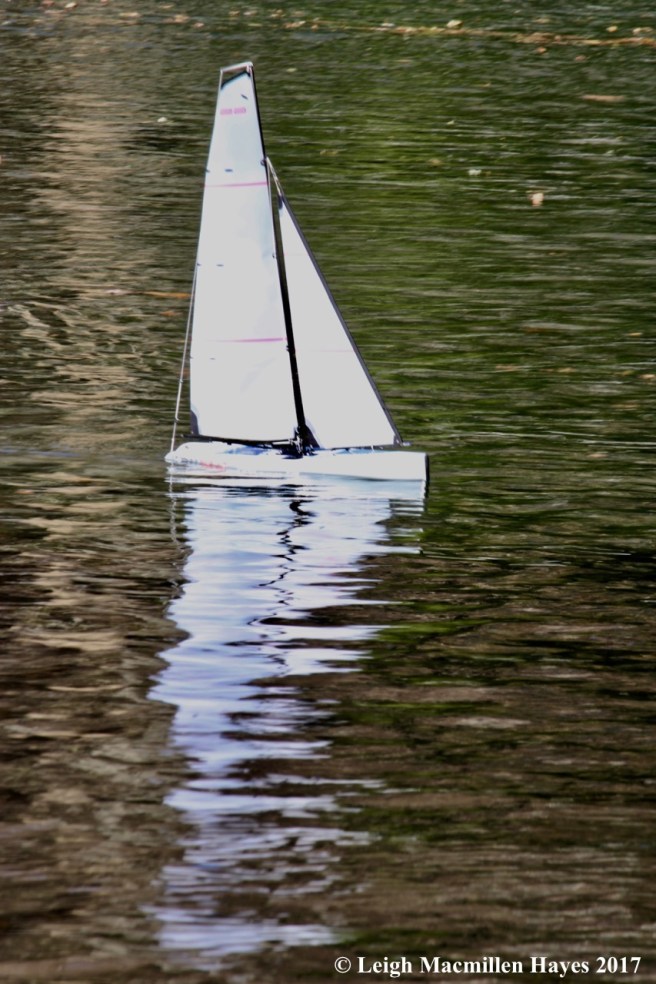
We immediately recognized Stuart Little as he tacked back and forth.

n-strawberry fields forever

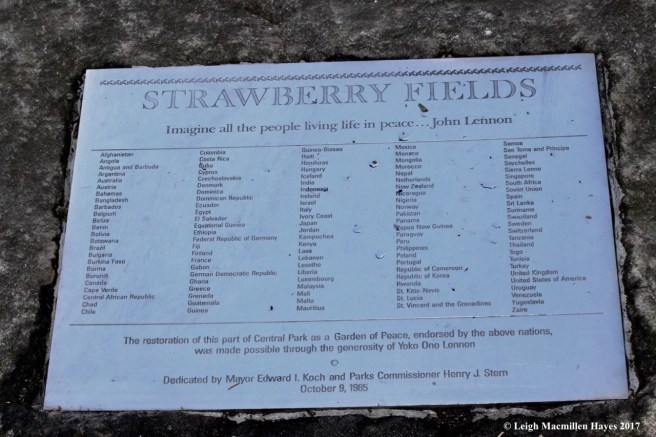
And then we wound our way around again, pausing by Strawberry Fields–and imagined. If only.

n-snowflake by Cartier

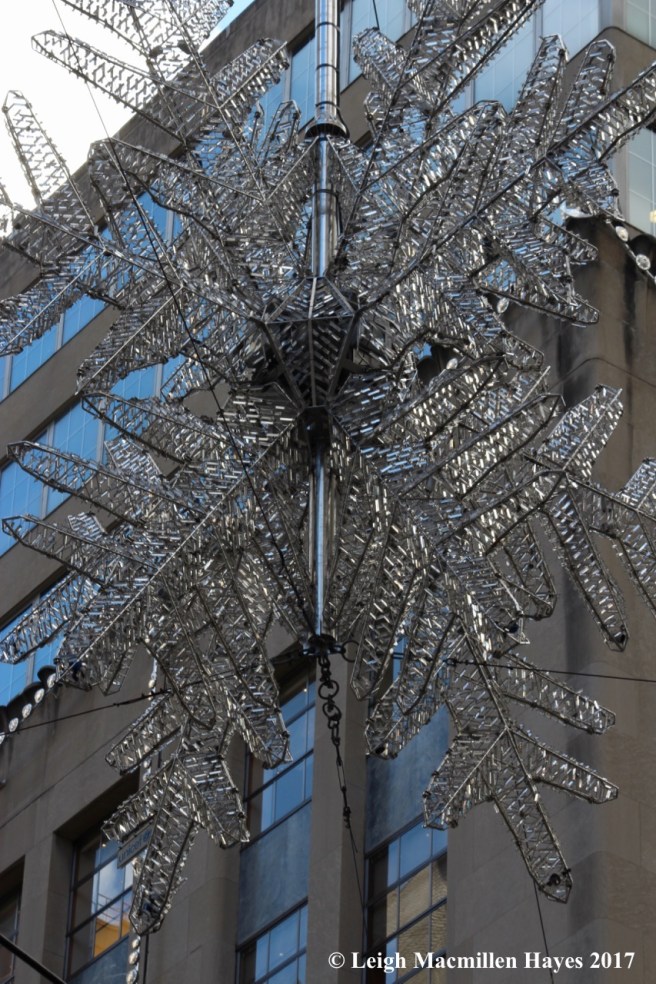
Back on the streets, we were dazzled by snowflakes . . .

n-Christmas lights 2

and Christmas lights.

n-Pat's Place

And then it was time to cross over to Brooklyn where we found a tour guide stepping out of his brownstone.

n-cement tracks

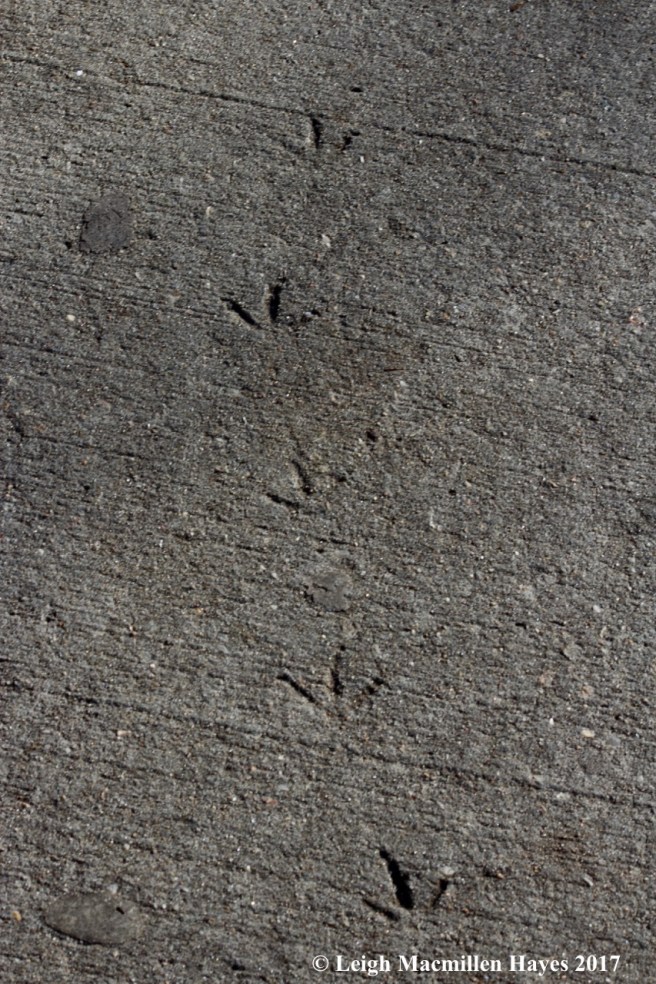
Like others before us, with him we pounded miles and miles of pavement and left behind our own tracks.

n-World Trade Center 1

He took us to the World Trade Center, which we viewed with awe . . .

n-9:11 memorial

and Ground Zero, where we felt the presence of so many as we remembered.

n-SoHo

Soho was our next destination, and though we didn’t shop, the architecture was enough to fill our minds with abundance . . .

n-architecture 1

and variety.

n-Wicked sign 1

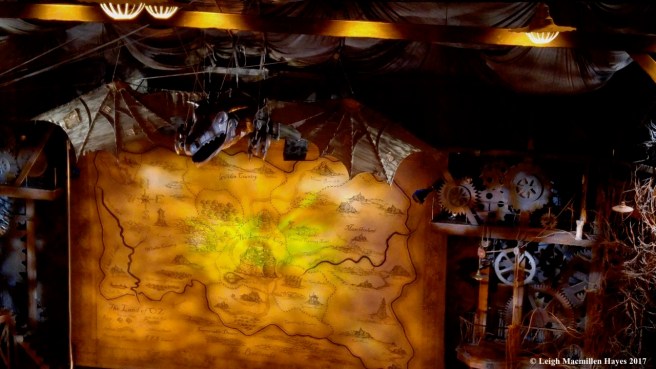
No visit to NYC is complete without taking in a performance and my guy, who is the world’s biggest fan of The Wizard of Oz, chose WICKED.

N-Wicked set 2

I won’t say it was my favorite show, but the set, costumes, acting, dancing, and singing were all well worth the experience. He thoroughly enjoyed it.

n-Rock center 4

Another must do is Rockefeller Center–or at least the ice rink. We didn’t skate, but enjoyed watching people take a spin, some more agile than others.

n-Rockefeller tree 1

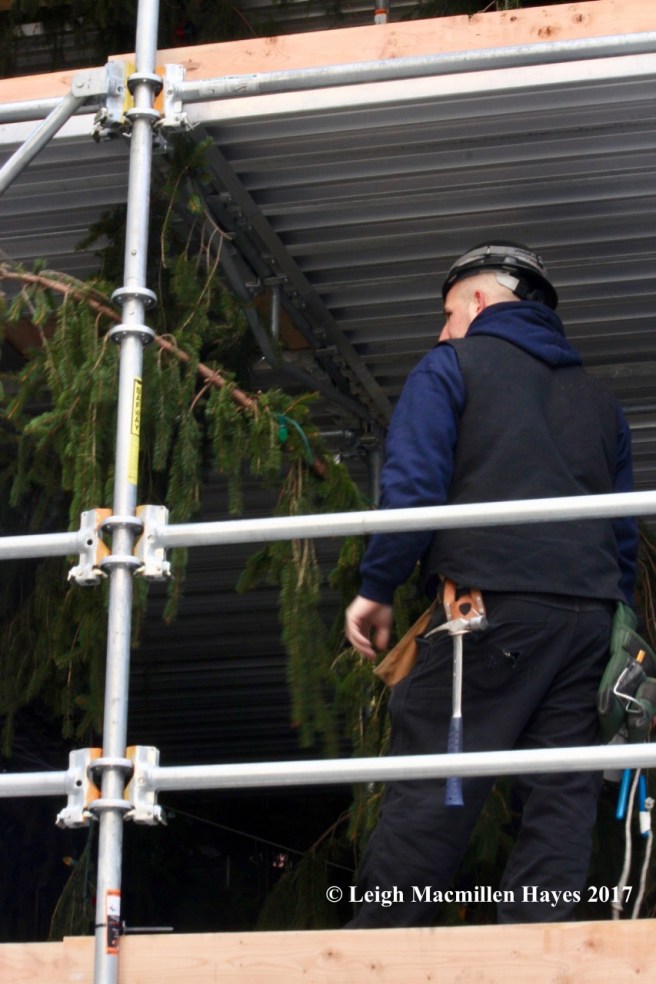
Overlooking the rink, but encased in scaffolding stories high, a transformation was in the works . . .

n-Rockefeller 2

from a Norway Spruce discovered in State College, Pennsylvania, to the Rockefeller Center Christmas Tree.

n-toy soldier 2

Watching over all were the toy soldiers. And if you have ever wondered if they come alive after most of the world that gathers in New York goes to bed, they do. We know this first hand for we heard them. Our hotel room was located nearby and at about 2am we were awakened each night by an instrumental performance that had a symphonic sound. We couldn’t hear anyone in adjoining rooms. And we never heard a peep outside of Radio City Music Hall, so it had to be the toy soldiers and angels that surrounded the rink–and you have to become a believer.

n-Grand Central Station

At long last, it was Monday morning and time to head back through the terminal of Grand Central Station to make our way up the northeast corridor.

n-Allen, Pat and Tim

But . . . we left with fond memories and promises to return for somehow we who live in rural Maine raised a city boy.

Posing from left to right, my guy, our youngest and one of his roommates who also hails from Maine.

They’re both comfortable by nature in New York City.


Snow White Magic

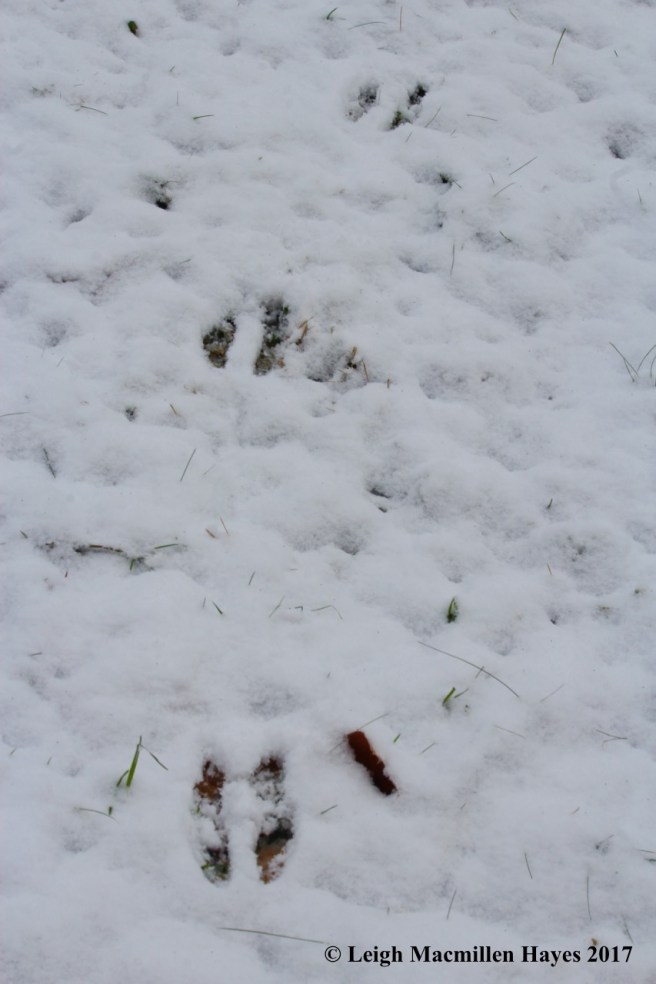
Our first official snow storm of the season left us with about an inch of the white stuff that makes me rejoice. And upon waking this morning and peeking out the window, the sight of porcupine tracks looping around the yard brought a smile to my face.

m-porcupine trail 1

I love the first snow storm for even though I have seen signs of the critters that pass this way, their tracks confirm my convictions. Over the years, I’ve come to recognize the prints and trail patterns, but as the snow gets deeper the tracks sometimes become more difficult to decipher. This one was easy due to its pigeon-toed sashay.

m-porcupine prints

And then the individual prints, especially those that crossed the deck, showed the large foot pad and five toes with nails extended. A friend in Poland, Maine, sent me a couple of photos of the critter that crossed her deck this morning. She ID it herself, but wanted confirmation–for it was an opossum and a first for her.  I found my first opossum prints last December and wonder if I’ll have that opportunity again. Anything is possum-able.

m-worm and junco prints

Since the porcupine had drawn me out (and I noted that it disappeared under the barn–of course), I decided to head off into the woods. But before I left the yard, I spotted junco tracks–and . . .

m-worm

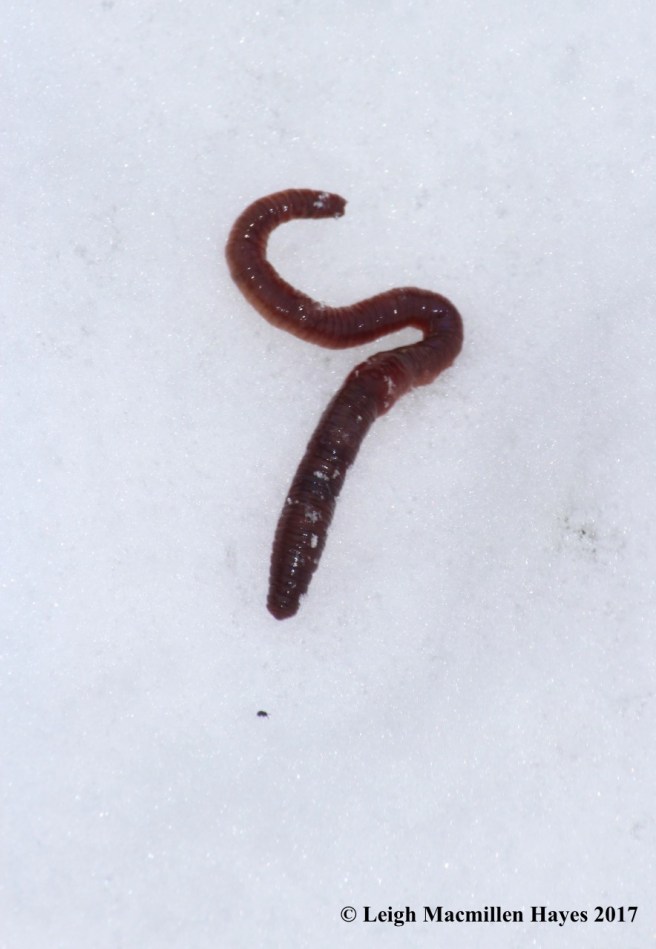
a couple of worms–frozen upon the snow. Juncos don’t eat worms; they look for fallen seeds. And so it seemed that the bird flew off before quite reaching the C-shaped worm. And this other worm was about a foot away from the first worm. Robins were in the yard last week, and I can only hope that they returned today for a frozen dinner awaited.

m-snow art 2

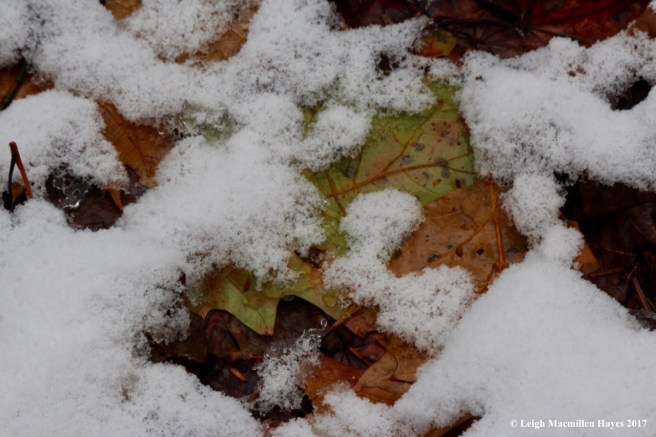
Into the woods I trudged, and the ever-changing colors and designs at my feet reminded me of works of art.

m-snow art 1

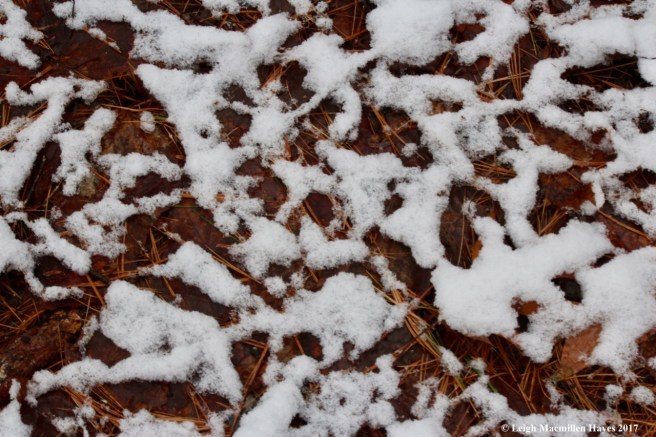
Some were palettes of mahoganies juxtaposed against white. A variety of textures gave the scene relief, much like an inlaid mosaic.

m-snow art intersections

Others embodied interconnections; a mingling of lines outlined for emphasis.

m-rock people

Along the cow path, I noticed the rock people for the first time, their mouths gaping open.

m-snow fleas

The minute snow fleas would hardly sustain them.

m-morning light

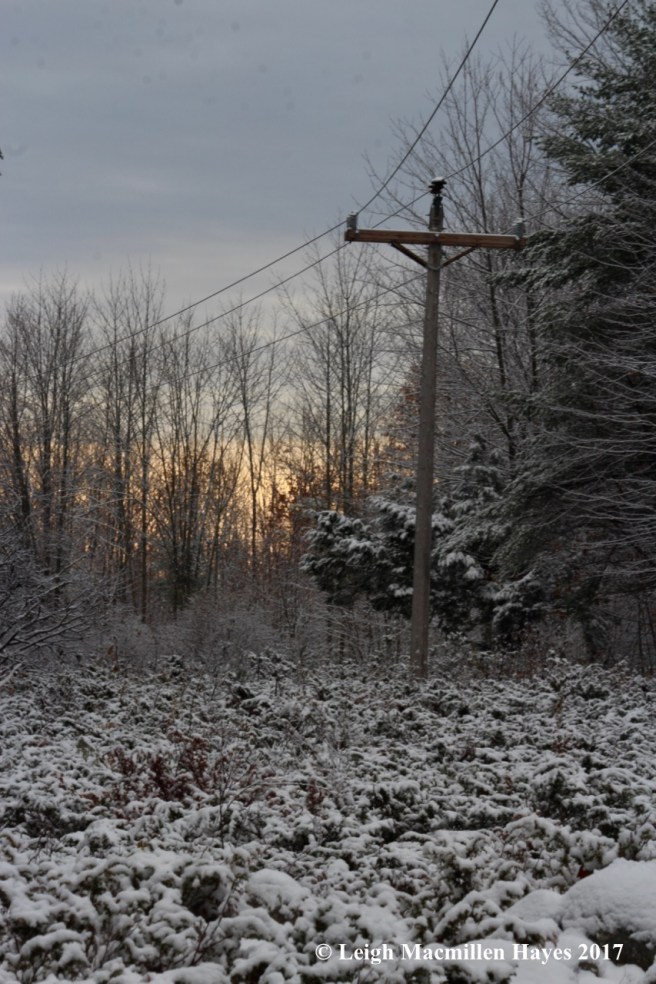
As it does, my trail crossed the line, where power seemed to originate with its source . . . the sun.

m-Mount Washington

And in the opposite direction, it flowed from pole to pole and onward . . . as if powering the mighty mountain.

m-pine sapling

My journey continued into the land of the pines and their saplings, momentarily coated with decorative baubles.

m-mini oaks

And the red oak saplings I’ve been watching looked more festive than ever.

m-squirrel tracks

I was on a mission and soon found what I was looking for. Some tracks that looked like exclamation points led me to another source of sustenance that I wanted to check on.

m-squirrel cache growing

The red squirrel’s cache had grown taller in the past week, but . . .

m-squirrel dining room

many pine seeds had been consumed in the refectory. All that remained were scales and cobs to show a number of dinners consumed.

m-squirrel rocks

The dining hall extended beyond the reaches of the cache, for every table available was a table used.

m-squirrel dinner in the future

As I walked back toward home, I discovered another table awaiting a guest.

m-beech sunshine

I was almost home when I stood under a beech tree. As winter embraces me, I find that their marcescent leaves create their own golden glow and warm my soul.

m-British soldier

One more sweet peek offered a tiny touch of red to today’s fading winterscape–for the British soldier lichens’ red caps announced their minute presence.

m-snow drops

And then this afternoon, I joined a few friends for a gallivant across the Wild Willy Wilderness Trail beside Province Brook in South Chatham, New Hampshire. And the snowdrops created their own works of art announcing that the meltdown was on.

m-pinwheel 1

As we walked, we noticed delicate parasol-shaped fungi fruiting.

m-pinwheel gills

Their common name is Pinwheel Marasius, but in my mind the shape of the umbrella-like top above the wiry stem looked like a parasol and so I called it such. But to add to the confusion, I first called it carousel. Word association might get me there eventually, but it wasn’t until I looked it up in Lawrence Millman’s Fascinating Fungi of New England, that I realized my confusion. One of the fun facts from Millman is worth quoting: “Resurrection! Shriveled and inconspicuous, Marasmius species are rarely noticed during dry weather, but after rainy periods the tiny fungi revive–hence the nickname ‘resurrection fungi.'” And if not rain, then snow will make them rise again!

m-liverwort magic 1

The water from the melting snow highlighted other lifeforms along the Wild Willy Wilderness Trail. Bazzania liverwort grew abundantly, but one in particular gave us pause . . .  for it glowed. And no matter what position we stood in to look at this worm-like beauty, it continued to glow as if it had a golden halo surrounding it. We had no answers–only questions and wonder.

m-glue fungi

Another find that had been marked with tape, for it too was special–a broken branch attached to a young tree. I’m stepping out on a limb here–pun intended, but I believe this was an example of a glue crust fungus that glues twigs together. Seriously? Yes.

m-Bob, Janet and Pam

It was getting dark when we finally found our way to Province Brook and marveled at the water and ice forms. It was also getting close to the moment when we’d need to say, “See you later,” to Bob and Pam, for they’ll be heading to warmer climes soon. But we know they’ll be back for a winter adventure and then before we know it, spring will be here. And then, we hope the brook will be full with spring run-off from all the snow that is in our future. Until then, see you later we also said to much of the snow for it had almost disappeared.

m-ice works 1

But the ice art will continue to grow.

m-Province Brook 1

And the snow white magic will capture our minds again . . . one flake at a time. And with it, the wonders of the world will continue to be revealed.


Sunday School

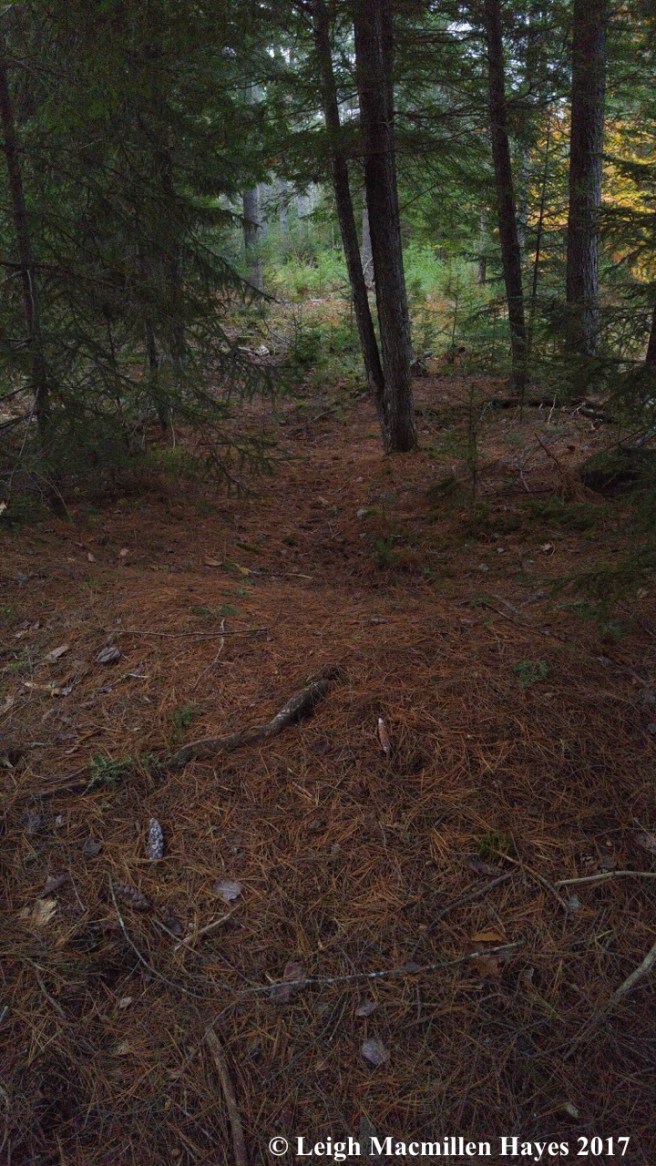
After church this morning, I stepped out the door, passed through openings in a couple  of stonewalls and then down the cowpath, crossed the power line, and ventured into my smiling place. It had been more than several months since I’d pushed the hemlocks aside to enter for it’s a wetland and woodland filled with growth that can make it difficult to meander through without snowshoes. But before winter arrives, I wanted to take a peek and learn what I could along the way.

o-oak saplings

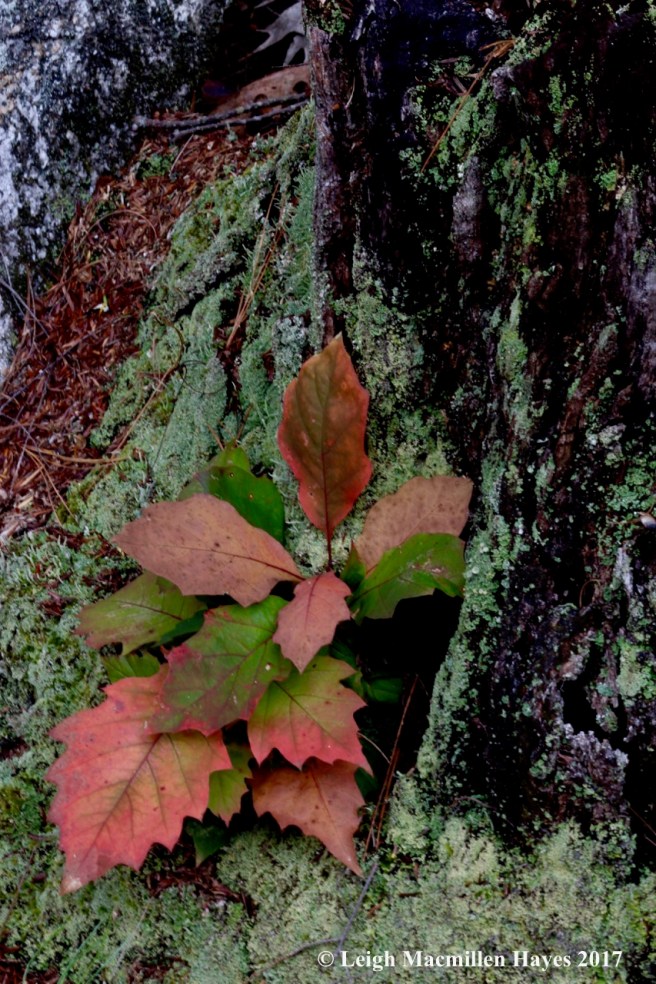
My lessons started early as I noted a couple of red oak saplings growing in the hollow of an old tree stump, their color reminiscent of the Christmas season. Last year’s mast crop (and another for some oak trees this year) meant a plentiful supply of food for weevils, little brown things, squirrels, turkeys and deer. And yet, not all were consumed and so they sprouted. Now my plan will be to wait and watch–and wonder which of this array actually will win the race to adulthood.

o-huge squirrel cache 1

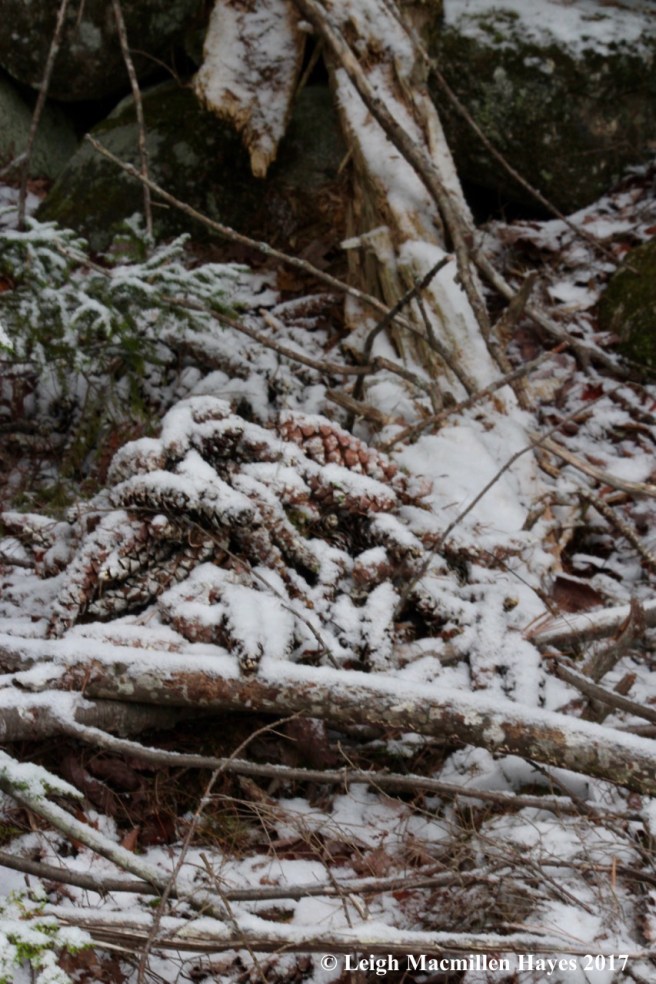
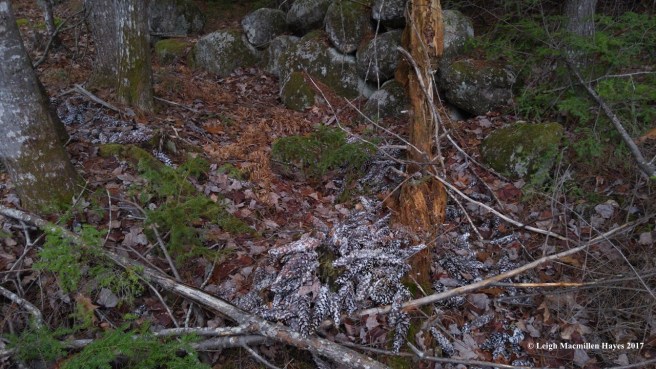
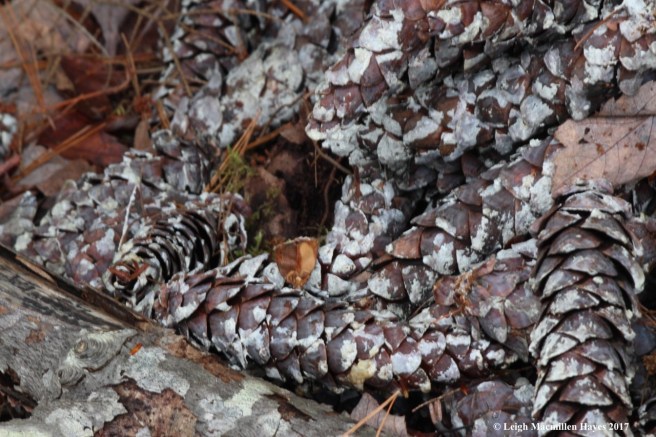
A little bit further into the woods, I spied a huge cache of white pine cones. This made my heart sing, for I love to keep on eye on big caches such as this and watch as they get whittled down over the course of the winter.

o-pine cones up close

While I stood there admiring the work of the red squirrel who’d filled its larder presumably when the cones were green (and by the way, these cones are two years old, for it takes two years for them to mature atop the pine trees), I thought about the sap that coats them in white. Though the sap is drier now, does it get stuck to their feet. I know that when I come in from a walk through a pine forest, I have sap on my soles, and attached to that may be pine needles or dried leaves. Is it the same for a squirrel? If so, does it wear off like that on my boots? It must because I’ve never seen it on their feet.

o-pine on the cob 1

And what about as they work on their pine-on-the-cobs? Does the sap on the scales come off on  their lips or teeth–much like when we eat something sticky and gooey like peanut butter?

o-pine seeds

It’s a lot of work to get to the two tiny seeds tucked within each scale. They look to be about an inch long, but most of that is the wing (think maple samara). When the weather is warm and dry, pine cone scales open to release the seeds. The squirrel who’d hoarded the stash, had plucked the cones when they were still green and atop the tree–dropping them to the forest floor before they opened so he’d have plenty to eat. And then he had to gather all that he’d dropped into the piles. And now I can’t wait for the coming months–to watch the pile dwindle and middens grow; to see the tunnels he makes in the snow; and just maybe to sit quietly nearby and watch him in action. He was a bit peeved that I was poking about today and let me know with so many chirrs from a branch nearby.

o-porky den?

I finally moved on and saw an uprooted tree I’ve visited on previous occasions. Last year I followed porcupine tracks to this very spot and spied porky within. But when I checked on later occasions, it didn’t seem as if he’d returned. Today, I peeked in and saw water. Even though it looked like a grand home to me, I’m learning that porky knows best.

o-walking in a hemlock grove

At times, I moved quietly upon the duff under the hemlock trees. Frequently, I stopped to listen and look.

o-cinnamon fern leaves1

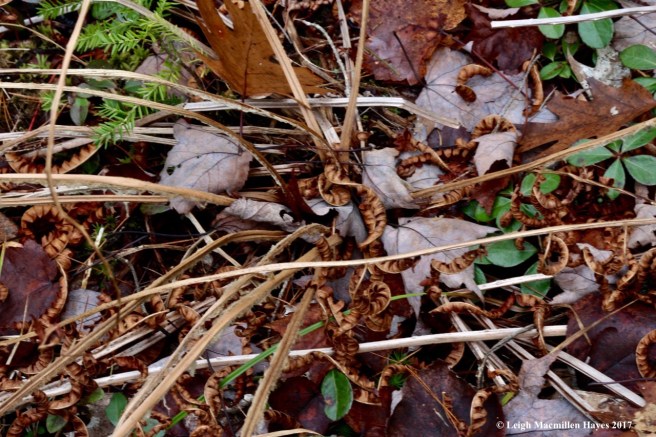
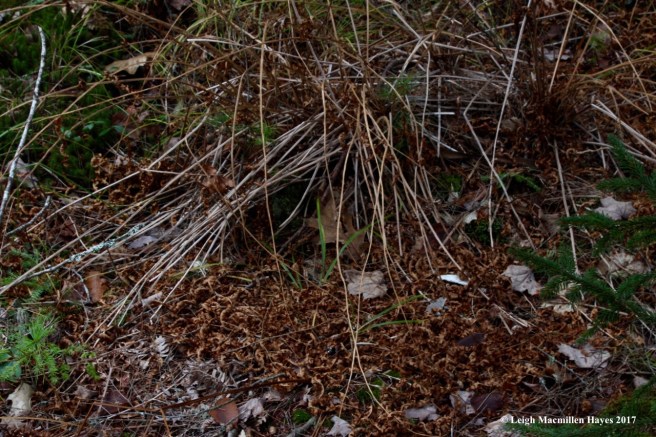
And then in an opening, I was again in the wet zone where the cinnamon ferns grew abundantly. In curled formation, their leaves added interest to the landscape and a bit of a crunch to my footsteps.

o-cinnamon fern 2

And piled as they were surrounding each plant, I thought back to the pinecone cache. This was food of a different kind, for those leaves will decompose over the winter and nourish the earth.

o-snowberry 1

Continuing on, I came to one of my favorite spots–where the creeping snowberry grew. I hunted under the tiny leaves for the little white berries, but found none. And I’m not sure that I’ve ever seen them, especially in this place, for I suppose that I miss all the action since snow melt always seems to call a halt to such visitations and then I never make my way deep into these woods all summer. I have to assume that the little brown things and birds had a feast. Although, as any teacher knows, one should never assume. Perhaps next year, I’ll make a point of checking on these plants.

o-birch tree in offing

My tramp was a meander, for I knew not what direction each footstep might take me, changing my mind constantly and trusting that if I turned left or right, I wasn’t missing something in the opposite direction. The sight of a beech tree, its leaves ever rattling, did mean that I’d have a chance to move to drier land for a few minutes.

o-equisetum

And then I stepped up onto a rock, where the growth at my feet surprised me for I didn’t realize that equisetum grew in this part of the woods. Always something new to learn.

o-tamarack branch 1

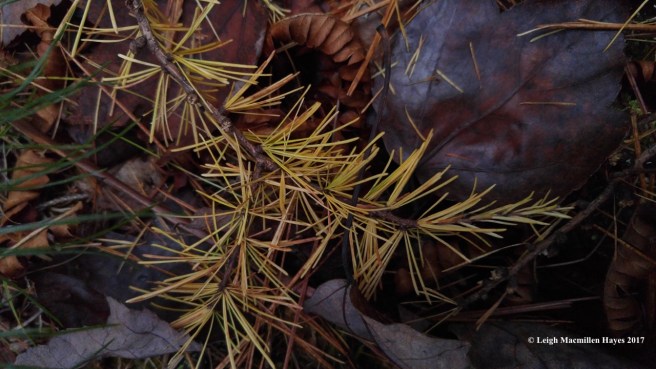
That wasn’t all. As I looked around, a branch with yellow needles by my foot caught my attention.

o-tamarack branch 2

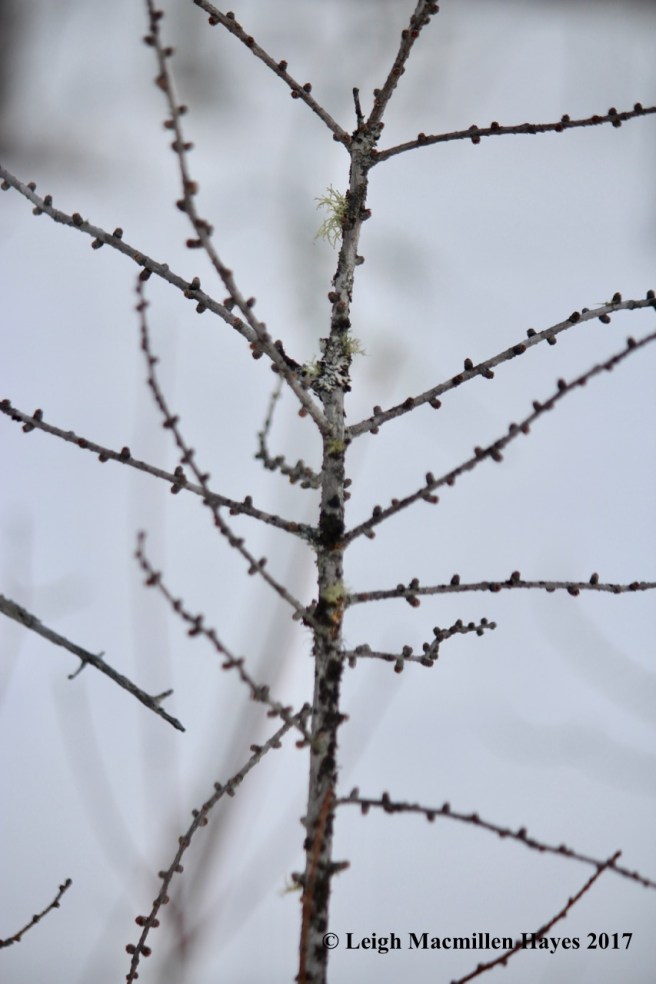
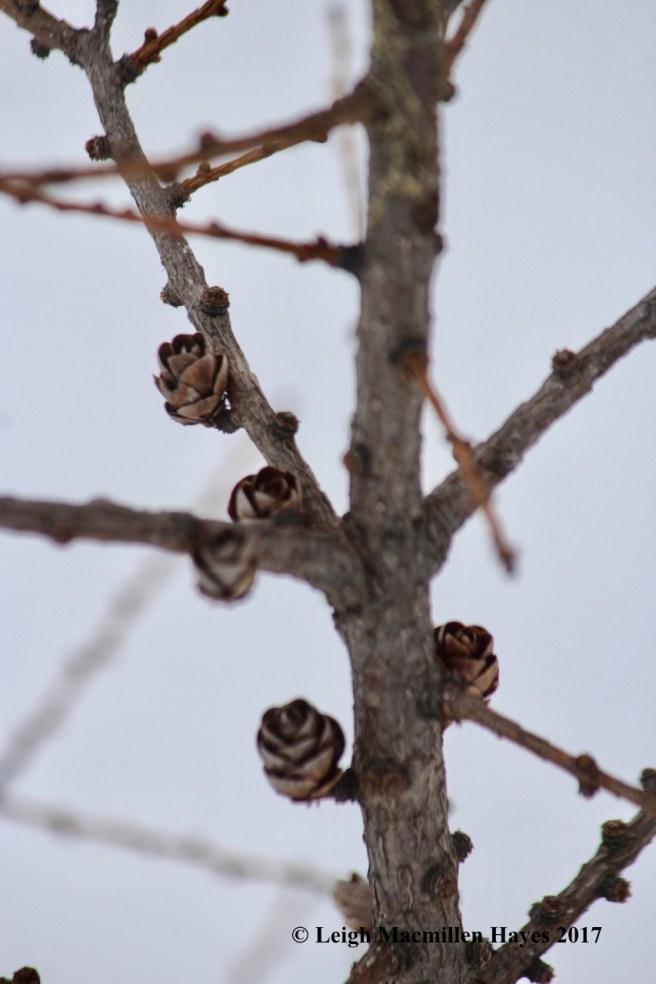
This was the twig of a tamarack tree, with its needles growing in tufts atop little spurs. Had we met before, the tree and me? If so, I couldn’t remember it. Nor could I find it.

o-evergreen hallway

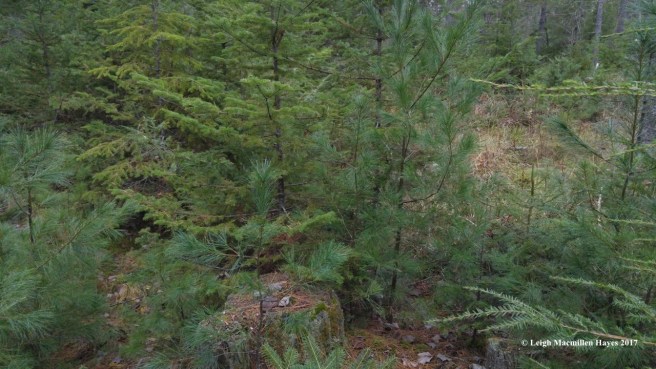
Before me was a wall of evergreens, in a classroom all of their own, for really, these are among my favorite places where learning opportunities present themselves. But, today’s lesson wasn’t about the hemlock, white pine, fir and spruce idiosyncrasies.

o-tamarack tree

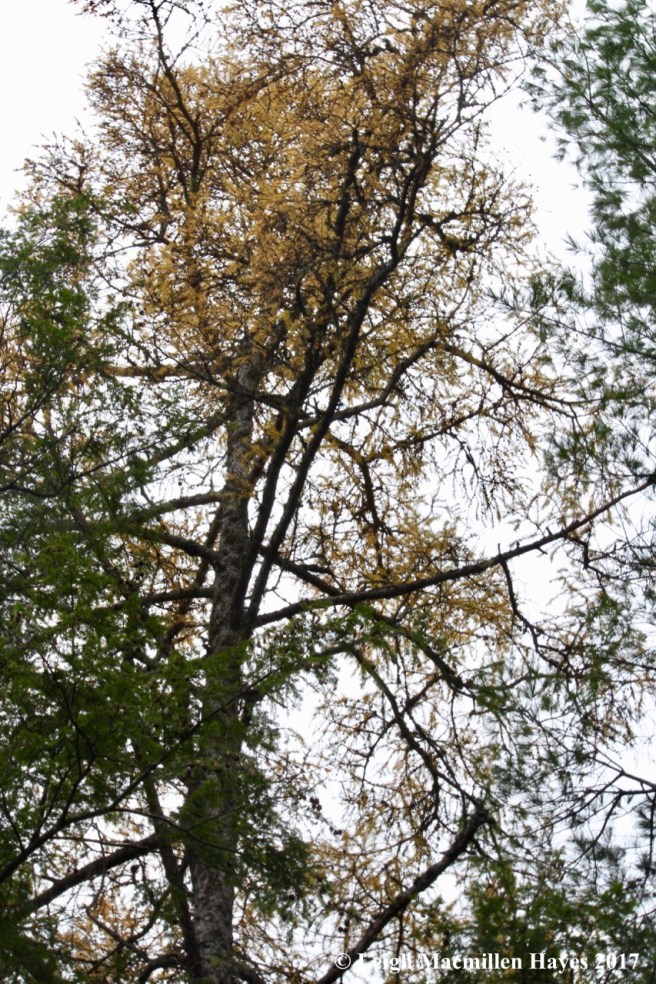
And so I scanned the sky, and about twenty-thirty feet away, I found the tree. A tamarack or larch or hackmatack tree, aka Larix laricina, is our only deciduous conifer because unlike all the evergreens, it sheds its needles each fall.

o-moose scat

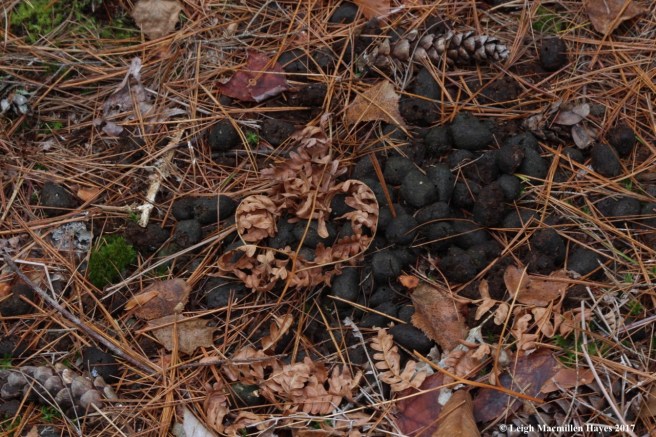
A few minutes later, I heard movement, and looked up to see . . . no, not the moose that made this deposit last winter, but two flashes of white as a couple of deer bounded off. I think that’s one of my favorite lessons of these woods, for the landscape changes repeatedly and thus offers a variety of habitats for the mammals of western Maine. This is the place where I get to learn the most about them and their behaviors.

o-deer rub 1

Sometimes I’m rewarded with spying the mammal from a distance, but other times I find evidence of its behavior, like this antler rub with frayed bark at top and bottom and smooth wood between.

o-varied habitat 1

I’ve watched the forest succession in these woods for twenty-five years,

o-varied habitat 6

and it’s been logged again more recently.

o-varied habitat 4

With each change, comes more change. And so the mammals move from one spot to another, but they’re still all here–somewhere.

o-varied habitat

I just need to listen and look.

o-turkey tail fungi

It’s not just the mammals and trees that I get to learn about. My studies include among other topics, fungi, of which I’m only a so-so student. But I do know that this is turkey tail, aka Trametes versicolor.

o-Fomitopsis cajanderi  (Rosy Polypore) 2

And then I happened upon a hemlock stump topped with a large, beautiful display outlined in a coffee brown and salmon pink. It took me some work to remember its name. I can tell you where else I’ve seen it for it grows upon a hemlock log at Holt Pond.

o-unknown mushroom 1

Before I forget again, it’s a rosy polypore, if memory serves me right. I only hope my fungi teachers weigh in on this one.

o-logging road 1

At long last, it was time to follow a logging road back to the snowmobile trail.

o-snowberry on sphagnum

Sometimes, I slip back into the woods before reaching the trail, but today I chose to follow it. And what to my wondering eyes should appear, but more creeping snowberry atop sphagnum moss.

o-home sweet home

As I finally crossed the field toward home, I gave thanks for the classroom that is right outside our back door and for the lessons learned in this Sunday School. Now I just have to remember everything, which is why I record so much.


Time Well Spent

Time. I never seem to have enough of it. Time with my guy. Time with our sons. Time with family. Time with friends. Time to explore. Time to reflect. Time to write. Time to sketch. Time to be . . . in tune with the world around me and my own soul.

b-pileated 1

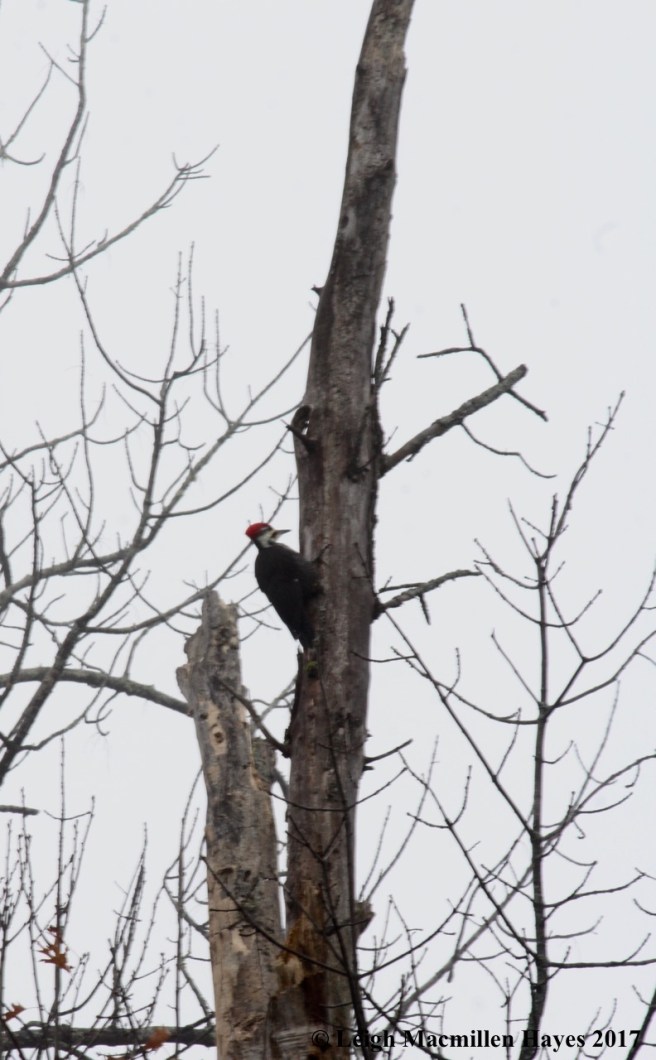
And so today, when I heard a pileated woodpecker as it worked on a dead ash tree by one of the stonewalls, I decided to take a break from my own work and give it the attention it so loudly demanded.

b-pileated 2

Its a repeat visitor to that tree; along with crows and hawks and smaller birds as well. The tree can no longer create its own source of food, but it continues to provide for others, be they bird, insect or mushroom. And I suspect that it secretly shares its knowledge of the world with the younger ash it towers over–to the right. As for the pileated, his time at that tree came to an end . . . for the moment. He’ll be back–probably soon.

b-ash tree 1

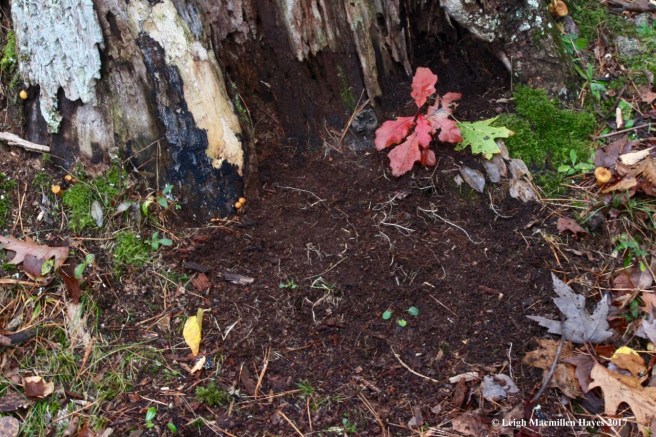
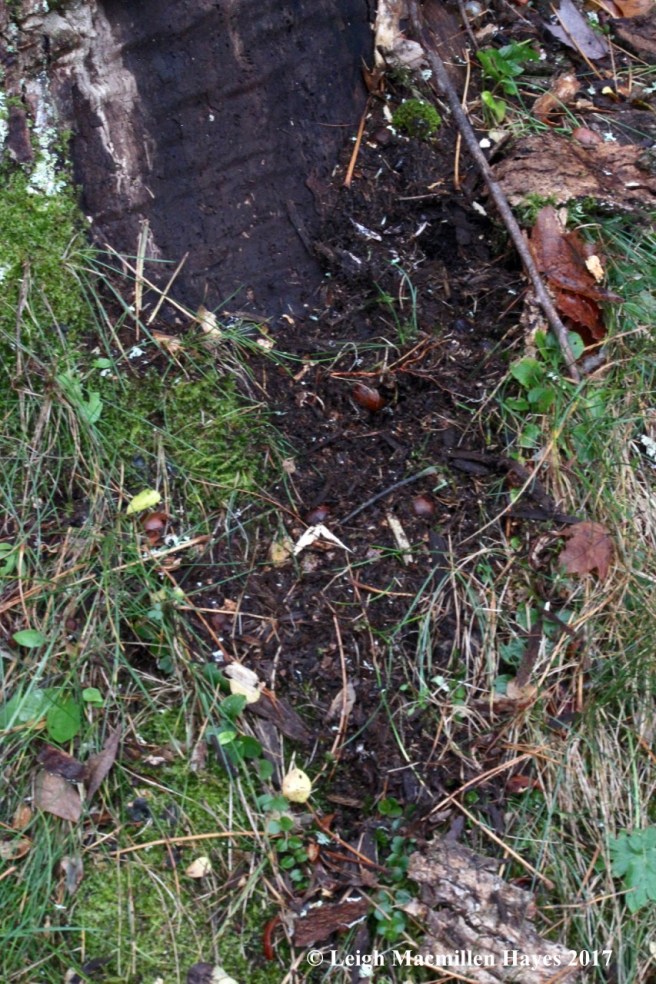
Because I stood below and no longer need to look up, I turned my gaze downward. And then had to pause. What had happened? Who had visited? And scraped the ground right down to the roots? And left a pile of leaves and sticks and other debris at the edge? A mushroom foray? An acorn frenzy? I looked for hair and found none. Turkey? Squirrel? Porcupine?

b-ash tree 2

And at the base of the next old ash, similar behavior.

b-scat 2

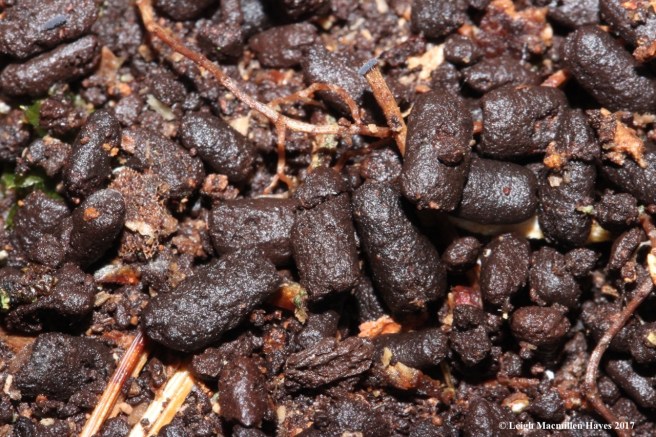
Returning to the first tree, I discovered that what looked like dirt was actually little pellets of scat . . . tiny scat. Tons of scat. A latrine. Did perhaps a meadow vole live somewhere nearby and a predator went after it? I did also suspect that there may have been a bunch of mushrooms that were harvested and in the process the vole’s latrine was exposed. I’m not sure if I’ll ever really know, but since I had stopped to look, I noticed something else.

b-pigskin poison puffball (Earthball)

Tucked near the base of the tree and relatively untouched by whatever had spent some time clearing the area, was a pigskin poison puffball, so named for its outer skin that feels like a football. (In his book, Fascinating Fungi of New England, Lawrence Millman writes: “historical note: footballs used to be made of pigs’ bladders, not pigskin.”) The dark spore mass within seemed to reflect the ashen color of the tree beside which it grew.

b-pelt lichen1

I should have returned to work then, but the puffball discovery and my wonders about the latrine made me want to poke about some more. Since I’d missed the puffball, what else hadn’t I noticed. A few steps to the left upon another tree root–a pelt lichen with many fruits, aka many-fruited pelt. I first discovered this lichen upon Bald Pate Mountain a few years ago, but didn’t know that it grew here–right under my nose.

b-many-fruited 2

Its smooth brown lobes shone brightly due to all the recent moisture, but it was the reddish-brown apothecia or fruiting forms that I found so intriguing. They’re described as saddles, and I suppose if you look at one from the right angle, yes, you can see the saddle-like structure.

b-field dog lichen

On the next tree, another pelt known as dog lichen–apparently named because its fruits reminded someone of dog ears.

b-spring tails 1

The algal component of a lichen goes into food production during rain, and so I continued to peer around. But first, a clump of Indian pipes caught my attention and upon them I noticed springtails doing their thing–springing about in search of food. Their diet consists of fungi, pollen, algae and decaying organic matter. Springtails are among the most abundant of insects, but because they are so small, they often go undetected unless you see them on snow in the winter.

b-mealy pixie cups

And then back to the lichens it was. I found mealy pixie cups in great number growing on a stonewall.

b-pixie cups fruiting

And one large patch looked like it was going to produce another, for so prolific were its fruits of tiny round balls.

b-lichen design

Also among my great finds, were the lichens decorating branches that had fallen to the ground in our recent wind storm. I loved the picture they painted with variations on a theme of color . . .

b-foliose and fruticose

and form.

b-lichen 3

My favorite of all reminded me of so many things–a rose in bloom, waves echoing forth with ripples, and even a topographical map.

Alas, I was short on time and needed to head in, but my finds–were the greatest. Even a wee bit of time spent wondering is time well spent.


Wild Willy Wandering Wilderness

There are times when one wanders down a trail and a certain spirit seems to swirl about in the silence of the wilderness. Such was the feeling today as my friend, Joan, and I joined two other friends to explore their land in South Chatham, New Hampshire.

k-Pleasant Mtn

Before we ventured forth, however, we sat upon their deck and enjoyed the view of my hometown mountain–the ridge of Pleasant Mountain, this being a backside view.

k-sensitive pea 2

And then we paused by one of the wildflower gardens they have created with seeds of unknowns sown at abandon.

k-Sensitive Partridge Pea

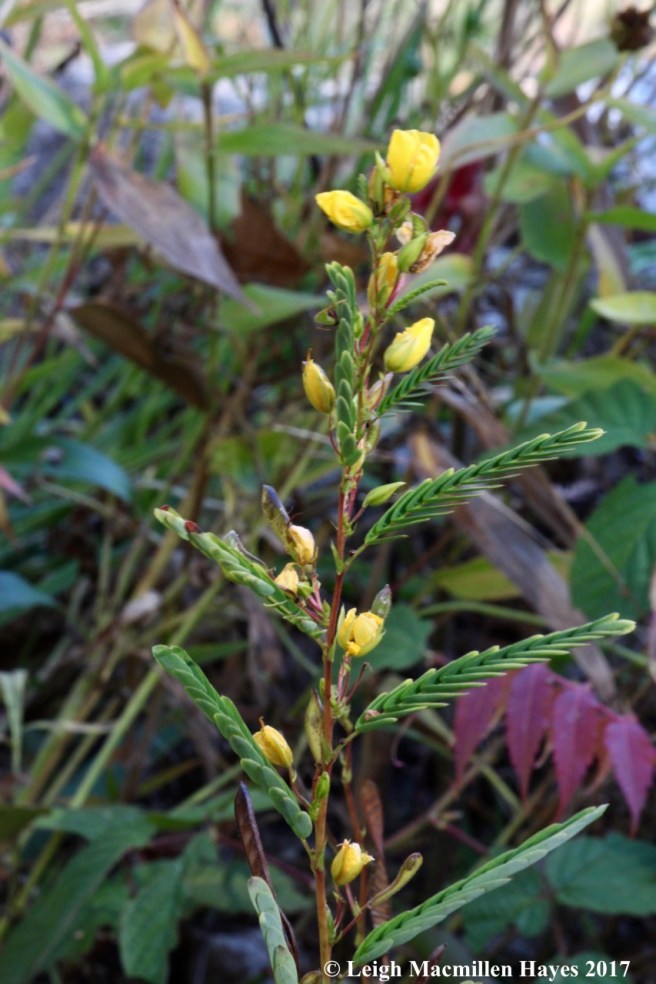
Based on its seed pods that split open on both sides, we knew it was in the pea family, but didn’t know its name. Upon arriving home and keying it out, I discovered it’s a sensitive partridge pea, also know as a wild sensitive plant, the perfect tribute to the trail. Notice the pinnately-divided leaves–they fold up when touched, thus the name “sensitive.”

k-three amigos under the arch

Soon after getting acquainted with the sensitive pea, we continued onto the trail that Pam and Bob (the couple on the left; Joan on the right) have carved out of the land, with the help of their nephew for whom they constantly uttered words of praise. One of his artistic offerings to them was an archway formed from beech saplings.

k-steps by Willy

Another offering–steps created from stones found nearby. But where exactly did he find the stones? That remains a secret for so good is his work. It seemed as if the trail had been there all along as it wound its way up and over, down and around, passing by landmarks worth pausing by.

k-black cherry

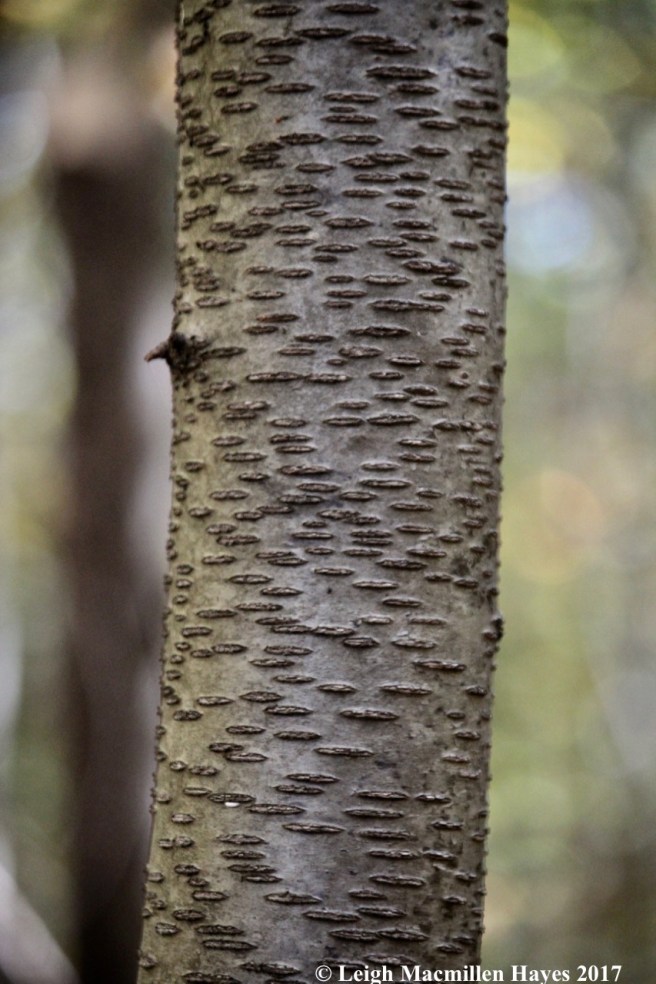
We saw so much, including bark on young trees that we desperately wanted to be black birch (aka sweet or cherry birch), but was really black cherry. Nearby where pin cherry trees that we easily recognized, but this one seemed a wee bit different and we thought maybe, just maybe it was a black birch. But maybe it wasn’t when I opened Michael Wojtech’s BARK later.

k-black cherry 2

And further along the trail we spied a mature black cherry, its bark we knew for the curled chunks that remind us of burnt potato chips.

k-yellow birch

The curls of an old yellow birch also intrigued us and we noted many, many young and a few old members of this family throughout the property.

k-big tooth aspen

It’s a mixed forest and we had fun searching for the big tooth aspen trees, their bark deceptive with a northern red oak look below and birch look above.

k-hemlock and boulder 2

Other landmarks included a hemlock kissing a boulder and . . .

k-Province Brook hemlock root

another with the longest, thickest root we’d ever seen that arched across the land, creating an opportunity for the fairies that live in such an enchanted forest a chance to do the limbo.

k-coyote scat

We discovered what Pam and Bob already knew–it’s more than fairies that inhabit their place. In the middle of the trail, coyote scat presented itself.

k-deer sign

We found lots of deer scrapes, where in previous years they’ve scraped the bark upward to feed on it. But this was a recent visit with tags at both ends of the action, indicating a rub. Deer rub a tree to clean their antlers of velvet–that soft, vascular skin that grows on their antlers. They also rub trees to mark their territory.

k-garter snake1

And our wildest sighting of all–a garter snake enjoying some late afternoon sun. It never moved as we gawked and finally passed by, so really it wasn’t so wild after all. But Pam and Bob shared stories of other sounds and sightings, for this really is a wild land that abuts the National Forest.

k-Province Brook 2

It’s also bounded by Province Brook, where the water’s flow soothed our souls.

k-Province Brook 3

We were embraced by its reflective color . . .

k-Province Brook 4

and life-giving cadence.

k-spirits 1

And it was there that the water spirit . . .

k-spirits 2

rose and embraced us.

k-wood swirls

We found it wherever we went and recognized it in various forms . . .

k-afternoon light 2

as it wandered beside us.

k-sign

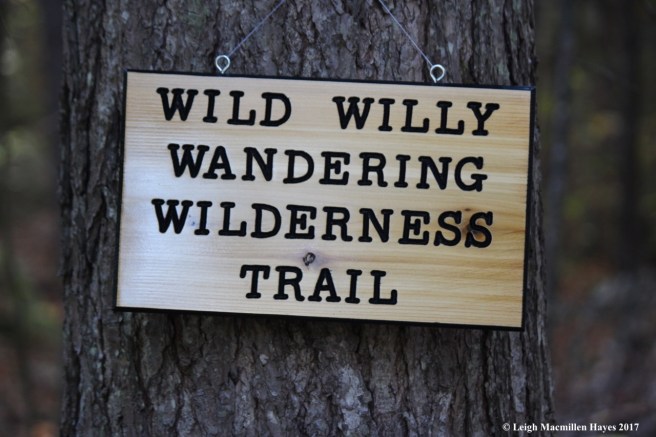
Just as we ended our journey, we noticed the sign–Wild Willy Wandering Wilderness Trail. Pam and Bob had told us its name, in honor of their nephew Willis and his hard and creative work in carving out the trail, but they kept the sign a secret until we finished. Hats off to all three of them and their love of the land and for each other. Joan and I were envious of it all and thankful for the opportunity to be embraced by the spirit of this place and these people.


Plan B Mondate

We had a hike in Evans Notch planned for today, but a look at the weather forecast made us question our choice.

Forecaster Jack made the following prediction: “Current observations this morning show the long-awaited cold front just about to clear the coast. NW winds are already in progress across the mountains behind the front. Today’s weather will be dominated by a familiar pattern that we haven’t gotten to enjoy much recently: upslope/downslope. The mountains will see plenty of cloud cover as air is forced to rise up the NW slopes. As that air descends the SE slopes of the mountains, it warms and dries, leading to sunny conditions along the coastal plain. All models are in agreement that temperatures will be moving downward today, so the ‘high temperature’ is whatever you’re seeing right now. For the mountains, this means that temperatures in the mountains will fall from the low 50s this morning down through the 40s this afternoon before arriving in the 30s this evening. Temps along the coast will be about 10 degrees warmer with morning 60s cooling to afternoon 50s and evening 40s.

Consequently, we thought about changing our plans since it seemed like any foliage views would be under cloud cover. And then Marita sent me an invitation to hike with her tomorrow, which I can’t do, but we decided we’d invite her to join us today–on a hike of her choice.

r1-trail sign

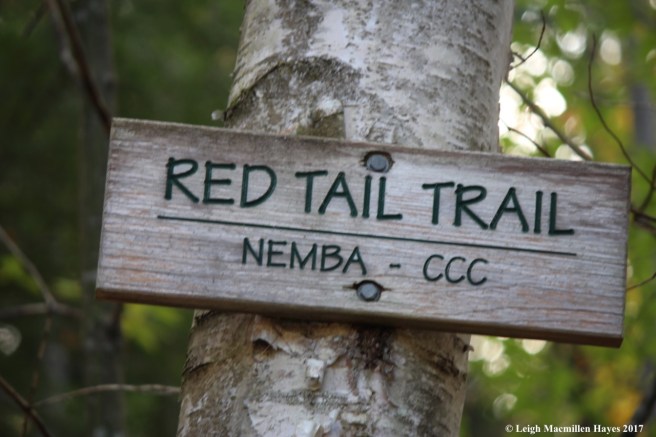
The Red Tail Trail off Hurricane Mountain and the backside of Cranmore Mountain was the path she chose. It’s a funky trailhead to locate–park near the little cement building and gate, walk up the dirt road to a large water tank (now decorated with graffiti), and skip the first trailhead to Kettle Ridge, instead circling about halfway around the tank where a small sign about ten feet up a tree marks the way.

r30-dam

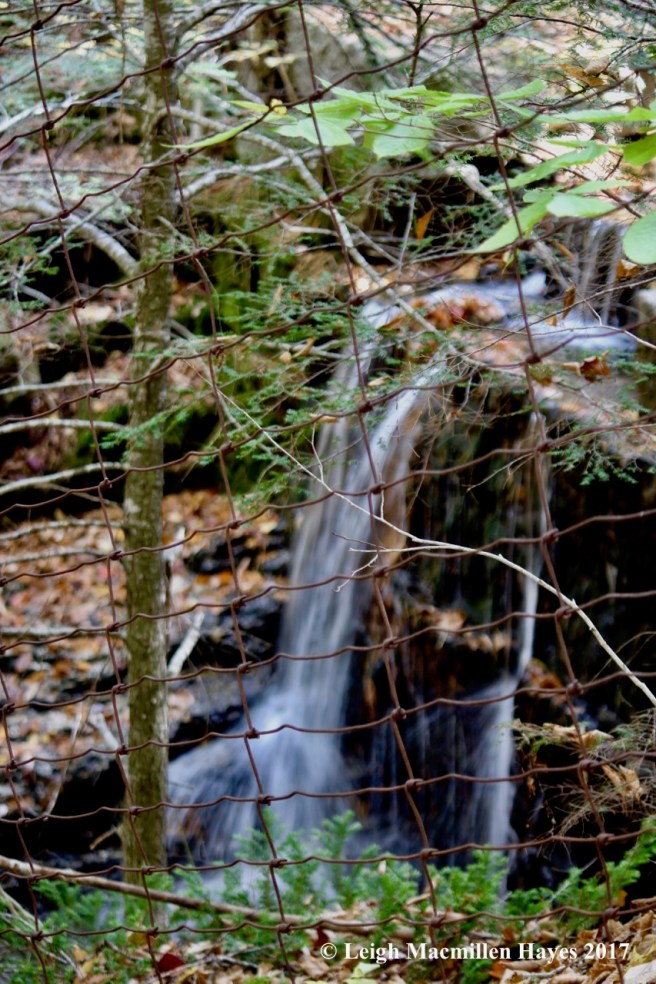
For a half mile or so, the trail follows No Name Brook, so named by moi because I have yet to locate its identity, but it parallels Hurricane Mountain Road. Near the start, barbed wire and an old mill dam bespoke its former use.

r31-no name brook

We followed it, slipping down occasionally for a closer look and listen–its rhythmic cadence so pleasing to our souls.

r3-giant erratic

And then we came upon the glacial erratic that must have landed with a thud one day about 10,000 years ago. Standing over the brook and covered in polypody ferns and asters, it resembled a small, two story earth house with a garden roof.

r4-sending puffball spores airborne

Shortly before breaking into the old log landing, which had been transformed into a mountain bike park with jumps of sorts since we last traveled this way, Marita spied several large clumps of puffballs. And so I encouraged her to poke them.

r5-spores wafting forth

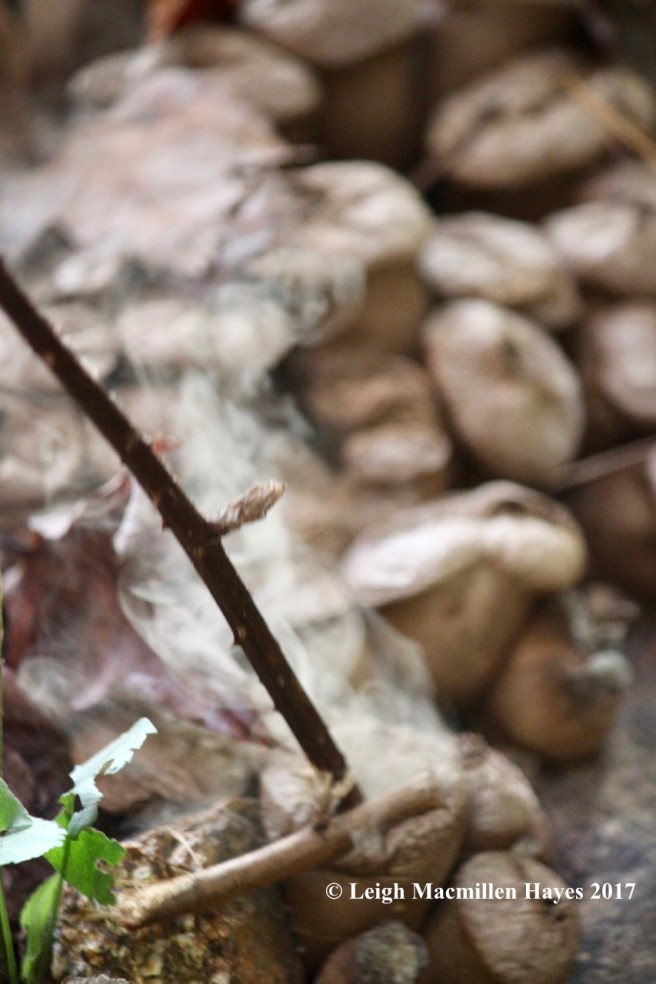
She channeled her inner child as she poked one after another, releasing the spores which wafted skyward, mimicking a smokey fire.

r6-climbers trail sign

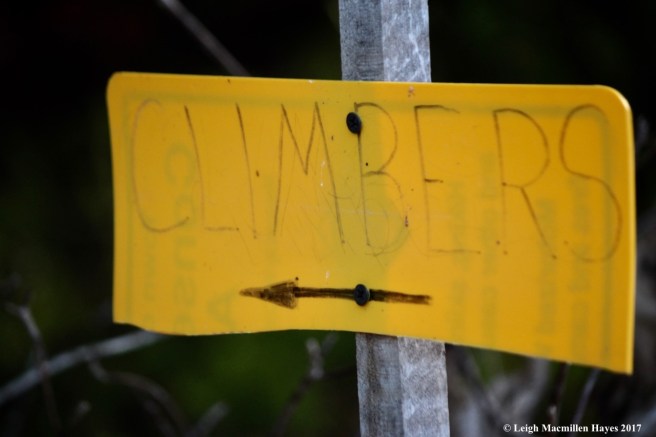
Arriving in the log landing, we were a bit confused about whether to follow the bike trail and then my guy spied a small yellow sign–and we found our way, for climbers were we.

r7-hobblebush color deepening

And because there were so many along the lower part of the route near the brook, I once again celebrated the variation of colors portrayed by the hobblebush shrubs.

r8-mount kearsarge 1

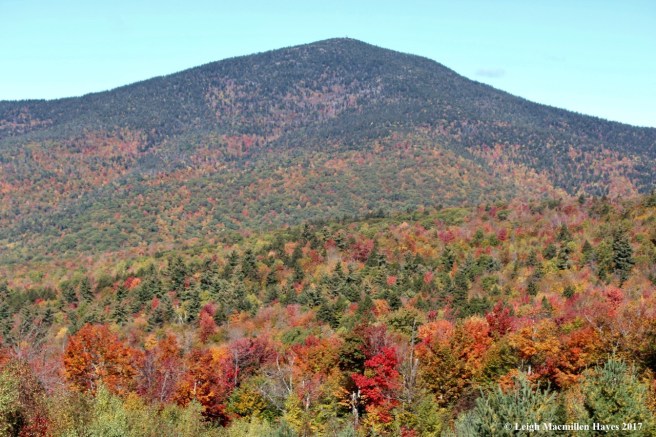
We zigged and zagged as we made our way through hardwood, softwood and new succession areas of forest. At last, we looked northwest and were greeted with the sight of another old favorite–Mount Kearsarge North. And the color display.

r9-Whitehorse ledge

Across the valley, we also spied White Horse Ledge and the White Mountain Motel.

r10-upslope clouds

After climbing 2.6 miles, we came to a T, and turned left toward the Black Cap Mountain trail. In the offing, we could see those upslope clouds overtaking the mountains beyond.

r14-Mt Wash and Kearsarge

And ever so slowly snaking their way over Mount Washington.

r15-lunch rock

By the time we reached lunch rock atop Black Cap, we were rather warm . . . and hungry.

r16-me and my guy

But ready to pose once we’d eaten.

r17-mountain ash fruits

As we looked about at the top, we admired the red, red berries of Mountain Ash, and wondered about their edibility. According to Weeds of the Woods by Glen Blouin, the scarlet fruits provide food for “many species of songbirds, including cedar waxwings, grosbeaks, and robins . . . they are also a favorite of both black bear and ruffed grouse.” Blouin adds, “The berries are rich in both iron and vitamin C and were used (medicinally) both fresh and in teas, to treat scurvy. Prior to ripening, the fruit is high in tartaric acid and is unpalatable. After a few frosts, the taste mellows and, though still bitter, the fruit becomes edible.” To that end, he provides a recipe for Mountain Ash Berry Jelly. Hmmm.

r18-starting down from Black Cap

For our descent, we decided to follow the loop trail around the summit of Black Cap.

r19-down 2

With each change of natural community, we enjoyed the color it offered.

r20-yellow birch

Back on the Red Tail Trail, Marita spied a tree we’d previously walked under, but not noticed. “What is it?” she asked, commenting that it looked like two different trees. Indeed, it wasn’t. Instead, it was an old yellow birch that had toppled a bit, caught in another tree and continued to grow–sending new branches skyward that looked like young trees on their own.

r21-hemlocks and pines

Again we zigged and zagged, changing up leaders as we wound our way down.

r21-upslope clouds advancing

At the point where we’d first enjoyed the views of Mounts Washington and Kearsarge, we again paused. That section had been previously bushhogged, thus providing an exceptional vista.

r22-upslope wrapping around Washington

And again we noted the upslope clouds curling around Washington, but chuckled that the mountain we’d originally intended to climb was probably in the clear.

r22-flowers in bloom

Our downward climb was much faster than our upward and in what seemed like no time, we reached the “bike park.” What had once been a mass of wildflowers overtaking the log landing, had become small patches and we were surprised that they still bloomed.

r25-squared rocks

Back at the brook, we commented on the squared off sections of granite and wondered about the processes that created such.

r28-artist conk

And then we reached the trailhead, where I spied an old favorite–an artist conk that has a surface area of about two feet.

From beginning to end, we knew that Plan B was really better than Plan A–for we’d had fun introducing Marita to a trail we like as we shared stories, laughter, lunch rock, and later a post-hike beer.


Anybody Home?

Only a few days ago we felt like we were melting as we complained about the muggies and buggies, but those temperatures are now only memories and it’s beginning to feel like fall in western Maine. And so my guy and I bundled up before we followed a trail and did some bushwhacking this morning, exploring a property Jinnie Mae and I had visited only a week and a half ago.

m1-lodge

It was to the beaver lodge that we first made our way, noting all their old works near the water’s edge.

m2-lodge 2

But, we were disappointed that we saw no evidence of new work and it didn’t appear any winter prep was yet occurring. Were the beavers still about? Or had some parasites in the lodge forced them to move on?

m3-infinity pool1

We hoped not for they’ve worked hard in the past to create a home with an infinity pool that would be the envy of many.

m1a--otter scat

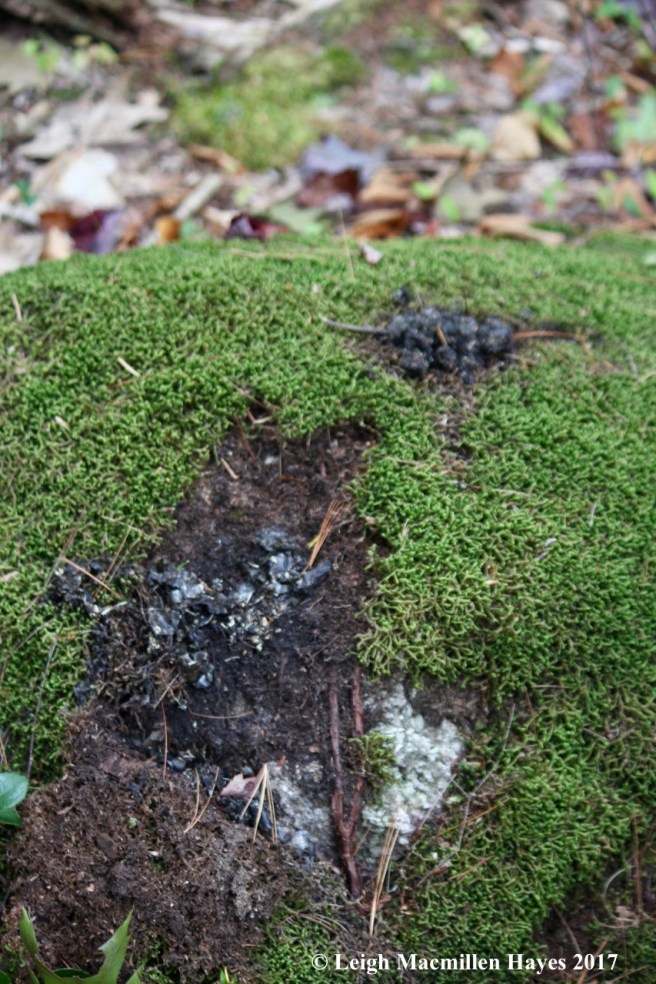
We did note that they’d had recent visitors who left behind a calling card in the form of a slide and scat–otter scat, that is.

m5-doll's eye

And we spied the fruits of a former flower that graced their neighborhood–doll’s eye, aka white baneberry.

m4-dam 1

As we circled around the pool, we commented that the dam seemed to be in excellent shape and held the water about five feet above the stream below. But again, no evidence of new wood.

m7-dam works

Despite that, it’s an impressive structure. While some landowners might be upset to have beavers changing the landscape, we happen to know this one and she takes great pride in their works.

m9-dam 2

We stood for a while, indulging in our own admiration while wondering where the beavers might be. Of course, it was close to lunch time for us, and not an active time for them if indeed they were home. Possibly we were misinterpreting the view.

m8-beaver pond

After some time of quiet reflection, we made our way back, crossing the stream just below the dam.

m13-quiet reflection

And then we continued along the old logging road (recently bush hogged, eh Brian? Well done), and bushwhacked some more, crossing another stream to find our way to another reflective spot along the brook.

m12-rookery 2

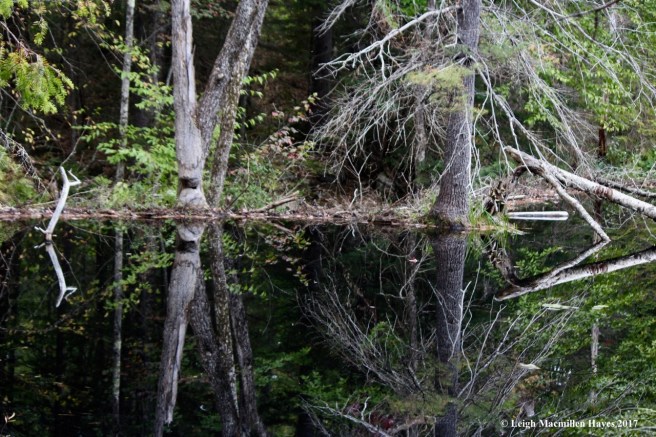
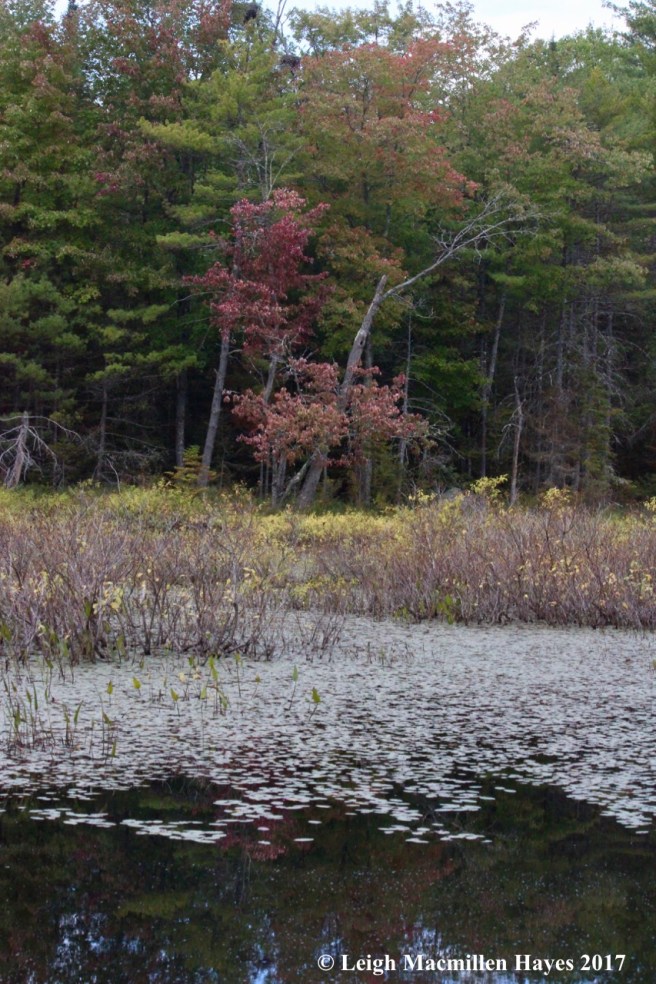
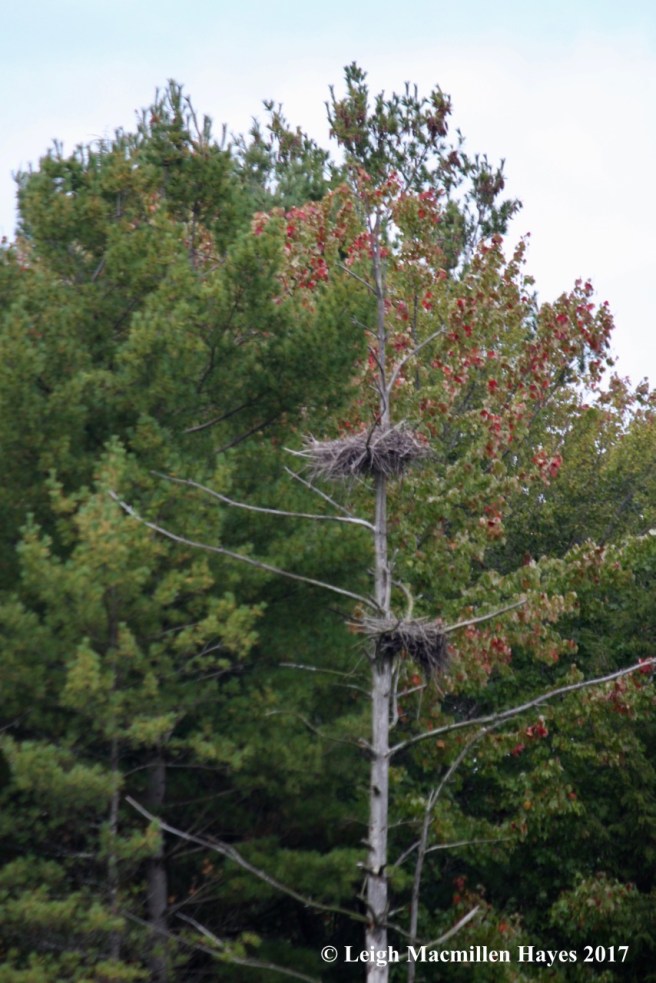
This time, our destination was that of another stick builder–great blue herons.

m11-rookery

Their spring/early summer nests are equally impressive. I hadn’t visited this spot since April, when the herons were actively setting up home. And I’m not sure it was a successful breeding season for them, but even if it was, they wouldn’t have needed these homes today. The nests will remain–available for grabs next year by those who return.

m16-jack in the pulpit

After a snack by the brook, we pulled ourselves away knowing it was time to head to our own home. Our wildlife viewings had been nil, but we spied a jack-in-the-pulpit in fruit, and that plus the doll’s eye were enough. And the time spent wondering about the critters.

m20-cosmos

Back at our truck, we decided to check on the insect action in the gardens at our friend’s home. Only the bumblebees seemed to be active.

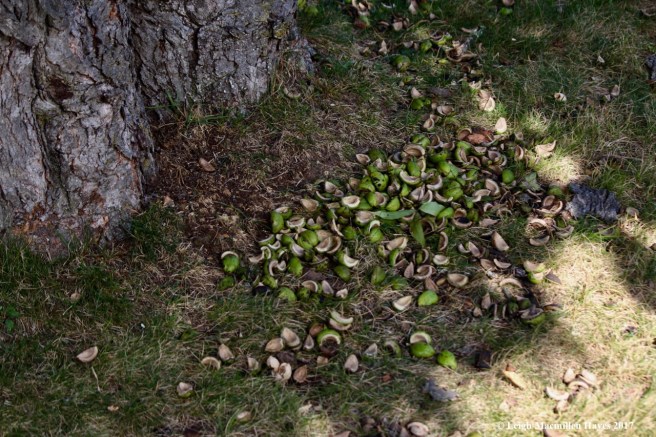
m19-hickory feast

But we saw plenty of activity of another kind–a cache of hickory nut shells at the base of the tree, and really . . . everywhere nearby.

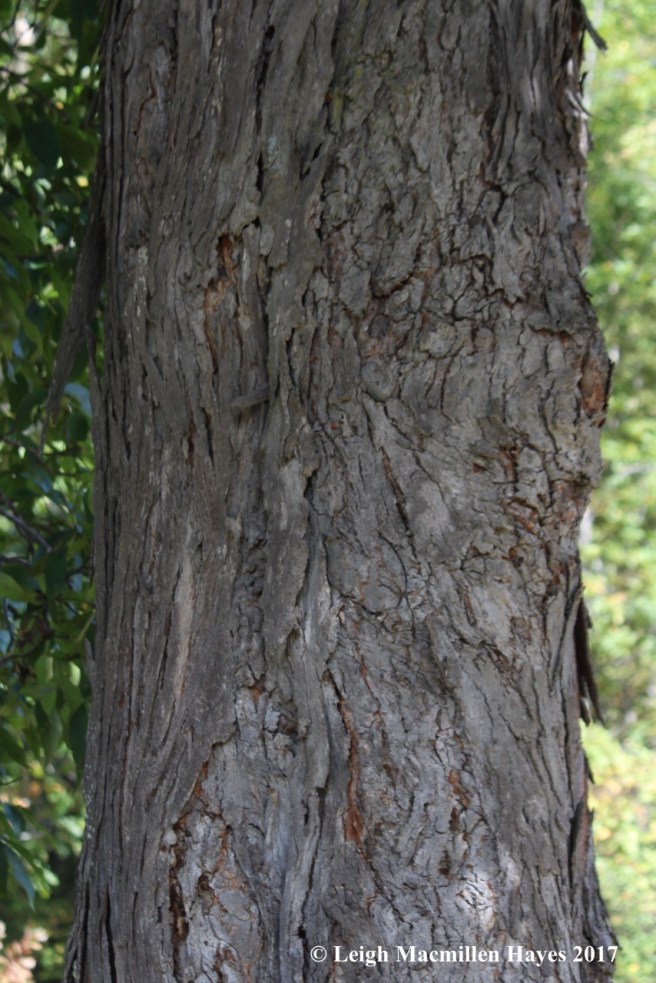
m18-hickory bark

Shagbark hickory is more common south of this spot, so it was a treat to take a closer look.

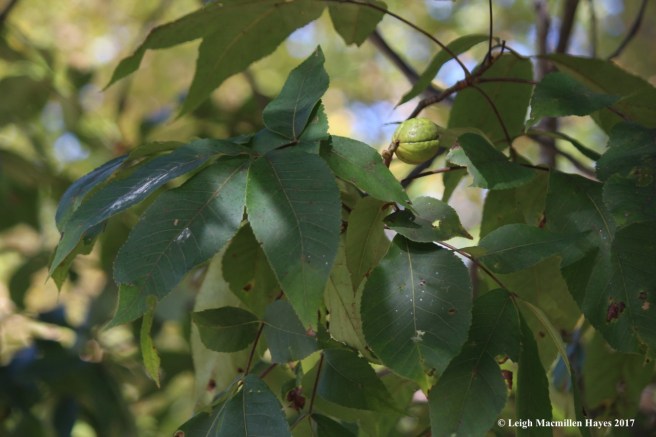
m17-hickory

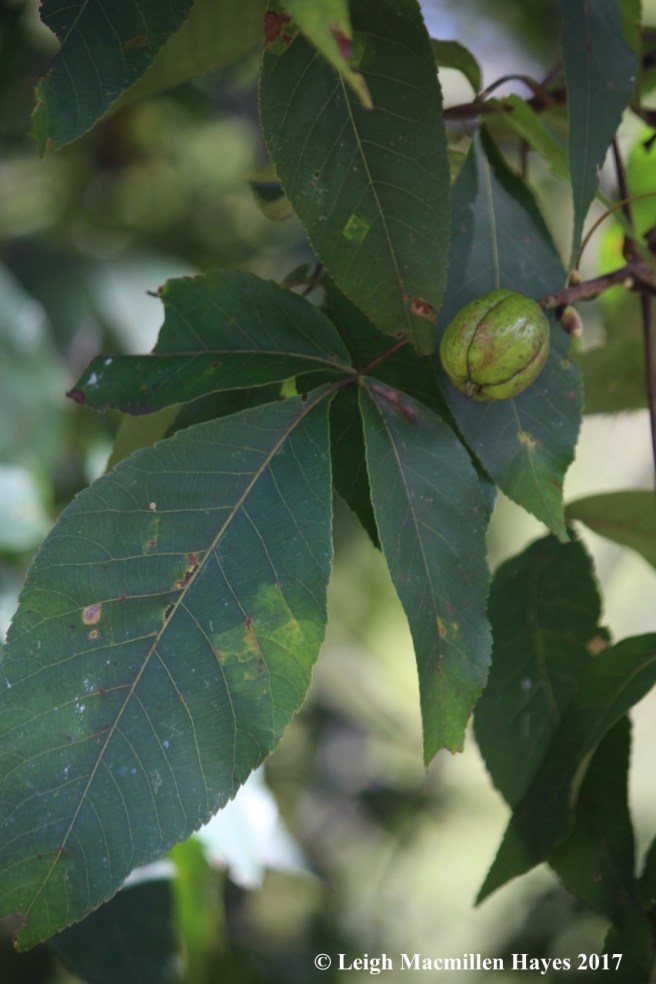
Its alternate leaves are compound, consisting of five serrated leaflets usually (sometimes there are seven).

m18-hickory 2

And of those five, the three terminal leaflets on each twig are the largest.

m21-view of Balds

Once again, it was time to leave this beautiful spot where the fields and forest flow into the mountains. And where the beavers and heron share the place without too much human intervention. Though not a soul was home today, we trust all will return when the time is right.


Lingering at Long Meadow Brook

It’s Tuesday, which means time for a tramp through the woods–especially if you are a docent for the Greater Lovell Land Trust. We take our job seriously, filling our bags with field guides, hand lenses, binoculars, cameras, water, humor and wonder. The latter two are the key components and thankfully we’re all comfortable enough with each other to tell corny jokes and laugh at our misidentifications as we explore the natural world through curious eyes and minds, while sharing a brain.

l1-white spores 1

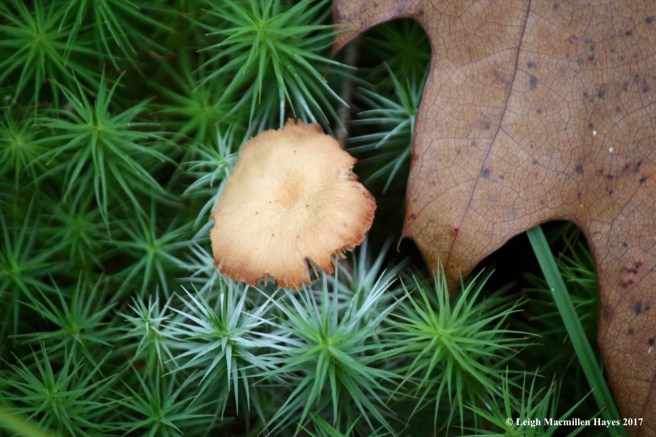
And so today, though our intention was to look for fall wildflowers, we had much more to notice along the way, like the white spores of mushrooms decorating the surrounding haircap mosses.

l2-funnel spider 1

And there were funnel sheet webs to examine, given that the morning fog left them dew covered and easier to spot.

l3-funnel 2

Though we wanted to take a closer look at the creators of such fine work, and tried gently touching webs with pine needles, our antics obviously vibrated more than your ordinary bug might, and the spiders ran into their funnels to hide.

l4a-cup and saucers

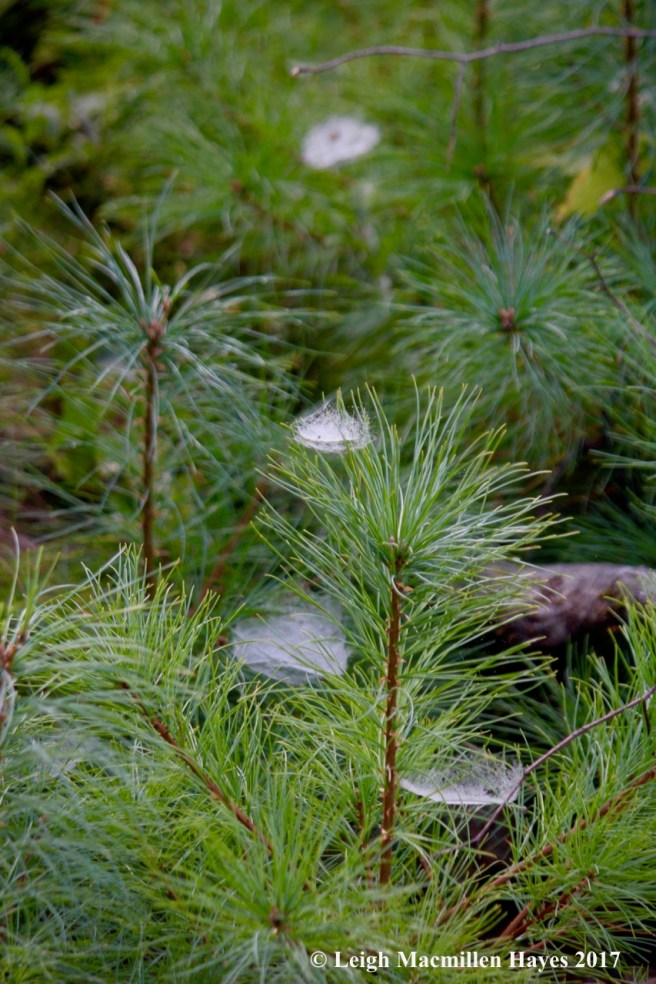
As we’d driven to the Long Meadow Brook Reserve, we’d spotted a field of medium-sized white pines decorated with webs and were thrilled to find the same on saplings.

l5-cup and saucer web 1

The bowl and doily spider is another member of the sheet species, and it builds webs that consist of two intricate parts. Above is the bowl, an inverted dome, and below, the lacier doily. The spider hangs upside down beneath the bowl, but above the doily, waiting for dinner to drop in.

l6-looking at spider webs

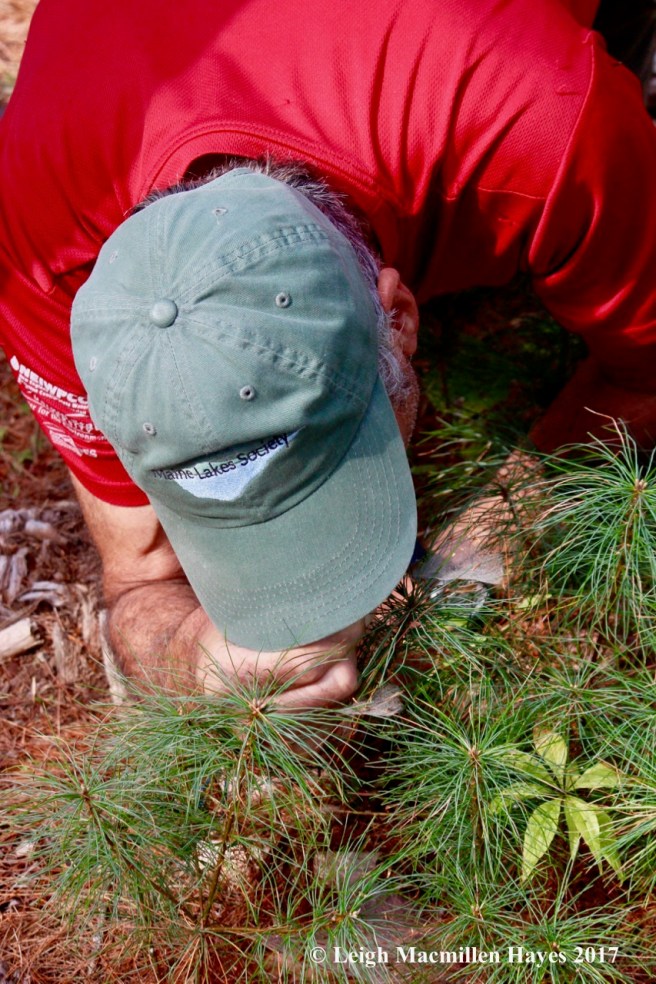
Trying to see the tiny bowl and doily spiders requires getting down on all fours and looking through a hand lens for they are only about 3-4 millimeters in length. We did and were successful in our efforts.

l4b-cup and saucer on bristly sarsaparilla

It seemed today that nothing escaped spider activity, including the gone-by fruits of bristly sarsaparilla.

l4-orb web 1

Equally delightful in the making was an orb web outlined in dew, larger droplets highlighting each spoke, with smaller ones on the sticky silken spirals.

l1b-pilewort

In several openings, pilewort grew in abundance.

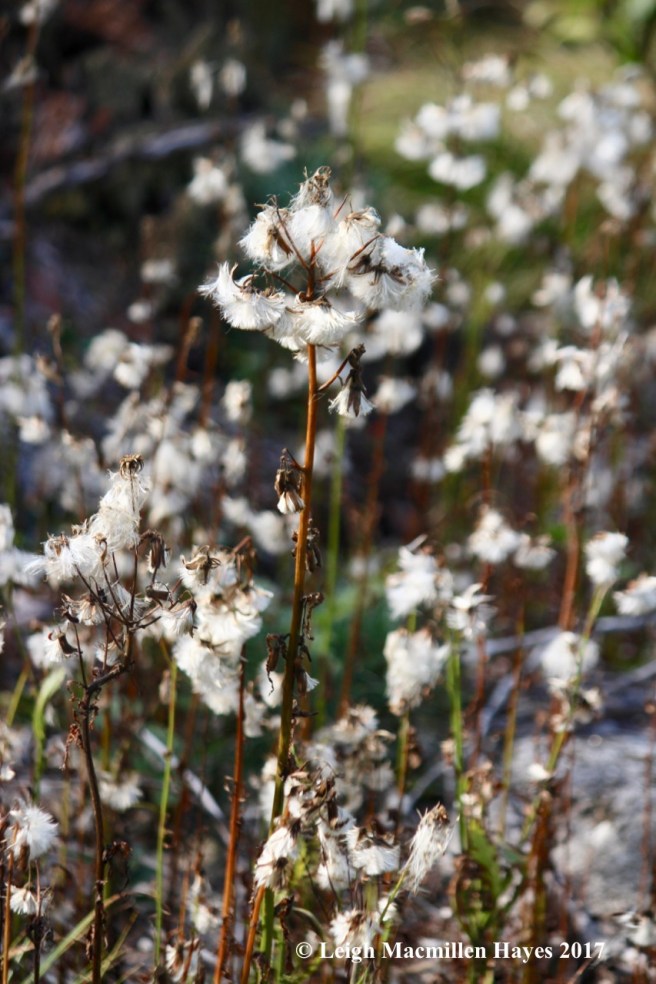
l1a-pilewort field

Like a field of cotton, its dandelion-like seedheads were prolific.

l1c-pilewort seedhead

But really, I preferred the seed display to the petal-less flowerhead that emerges from the cylindrical cluster.

l7-pine cones 1

Also prolific were the female cones atop the white pines, their brown color indicating they were in their second or third year of development, having been wind pollinated by  tiny male cones. The pollen cones fall of trees within a few days of decorating our vehicles, outdoor furniture, and naked female seeds with yellow dust. If you think back to spring and all the little rice krispies that decorated the ground below white pines, you’ll know that you were looking at male cones. The seed cones typically form on the uppermost branches, so that the tree won’t pollinate itself from below, but can receive pollen blowing in the breeze from another tree.

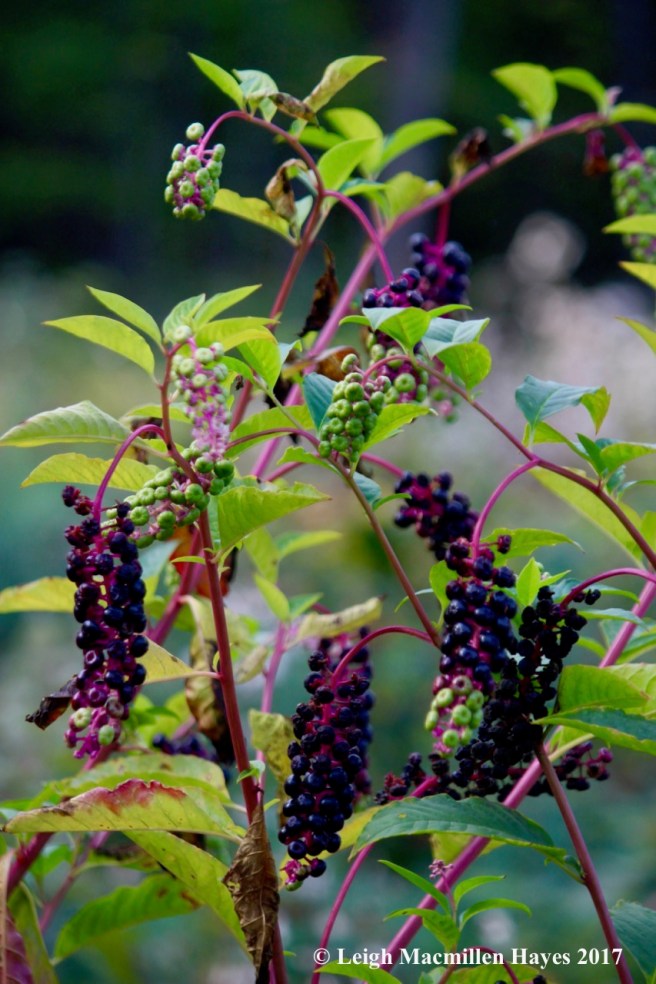
l8-pokeweed 1

We’d looked high to see the cones, and then drew our eyes lower and thrilled with the sight of one of our tallest perennials.

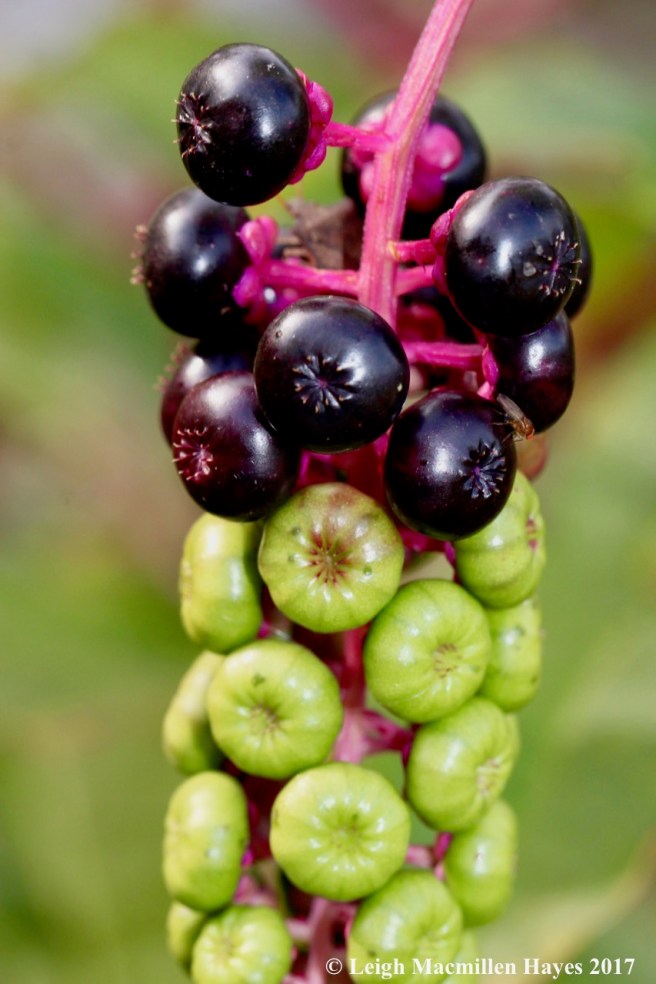
l9-pokeweed 2

At first we only spied one pokeweed growing in an opening, but then began to spot others in flower and . . .

l11-pokeweed 3

fruit.

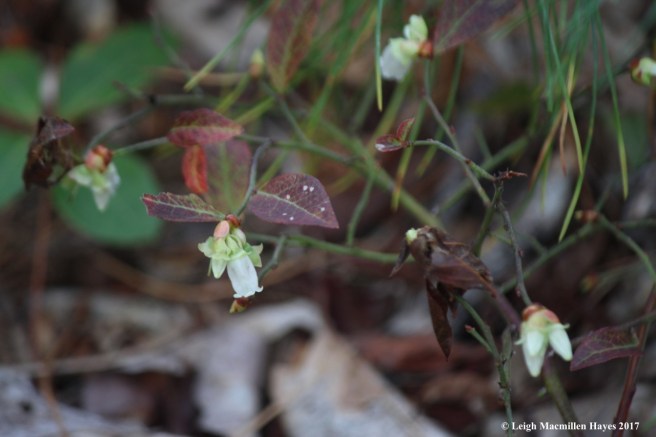
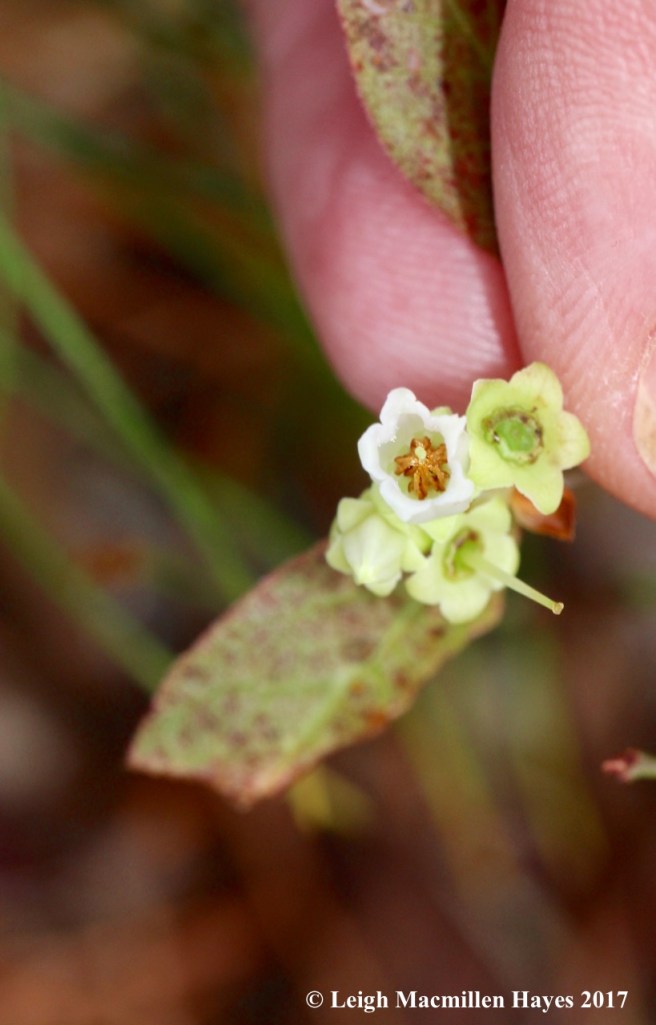
l29-blueberry

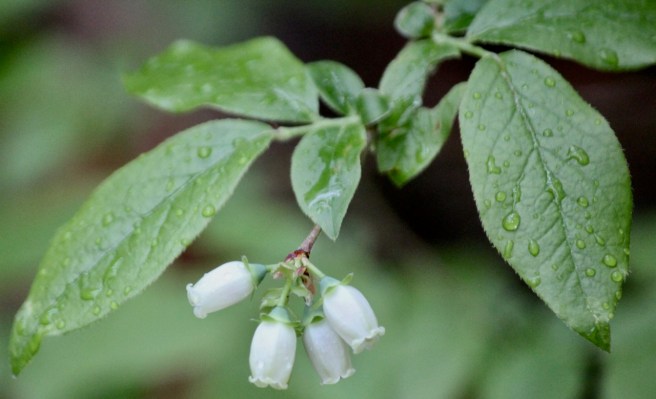
Another one of our surprises–still flowering blueberries. The plants themselves didn’t look too happy . . .

l13-blueberry flowers

and we wondered if there would be enough energy or time for the fruit to form.

l14-cinnabar-red polypore

As we ambled along, we found cinnabar-red polypores,

l18b-turkey tails1

turkey tails,

ll18a-gilled polypore

and polypores know for their . . .

l18-labyrinth of pores

underside labyrinth of pores that look like gills.

l20a-brown spores 1

And we found another type that had spread brown spores.

l19a-mystery hole

Making our way down to the brook, we were stumped by a pile of dirt, small hole about one-half inch across and chewed mushroom. We remain stumped, so if you have a clue, we’ll listen. It was a messy dooryard so we didn’t suspect a chipmunk, plus the hole wasn’t wide enough. Voles eat vegetation. Could it be? Was it even made by a mammal?

l22-white oak

Along the same route, we made another fun find. White oak saplings.

l23--white oak 2

White oak grows in surrounding towns–Fryeburg, Sweden, Brownfield, Waterford, but not in Lovell or Stow, where this property was located. So, how did it arrive? Two theories–it was on a skidder trail, so could have come in on a machine; or perhaps via airmail from a bird. Long ago, white oaks grew in this area, but were used for barrel making. And because their acorns contain less tannin than that of a Northern red oak, mammals devour them quickly, thus making it more difficult for the trees to regenerate.

l23-LMB 2

It took us a while, but finally we reached the old beaver dam and culvert by the brook, where the fall foliage was subtle at best, but still beautiful. We walked (if you can call it that) for 2.5 hours and covered all of .95 miles. It was hot and muggy, so we felt like we’d covered 9.5 miles, but as always were thankful for our time spent lingering at Long Meadow Brook.


Be Puzzled Mondate

Our favorite Monday mornings begin with my guy unscrambling the Jumble words in the newspaper, but leaving the final answer cells empty so I can give it a try, me decoding the cryptoquip, and both of us solving the crossword puzzle. And then our day can begin.

p1-kiosk map

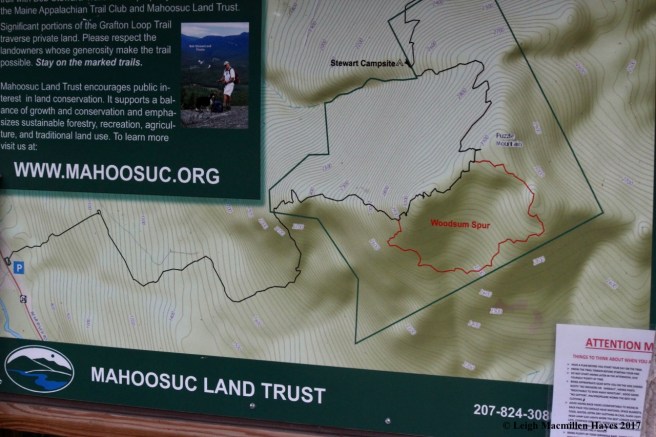
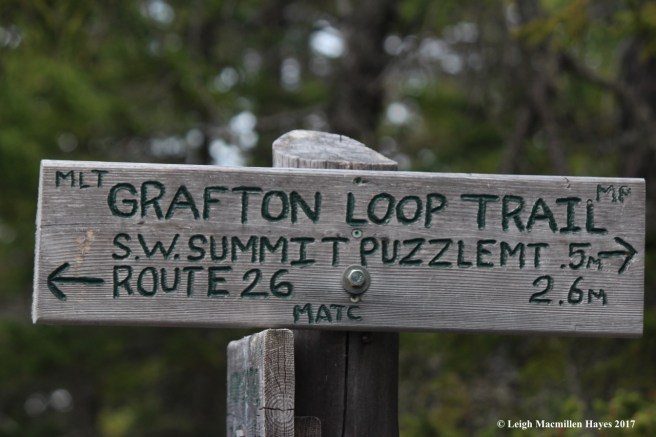
And so it was this morning before we drove an hour north to a Mahoosuc Land Trust trailhead on Route 26 in North Newry. Our plan was to climb the trail to the summit and then make our descent via the Woodsum Spur before connecting back to the main trail. We figured we’d finish up about 3:30pm.

p3-dry brook

And so we began our climb, crossing six or seven dry streams, where not even a trickle pleased our ears.

p4-bear 1

But our eyes knew otherwise for we were in a beech forest and scratch marks were prevalent.

p6-bear 3

In spite of the nectria caused by beech scale insects and others, we spied a familiar pattern that always thrills us. Our first puzzle teaser–do you see the pattern we saw?

p8-bear 6

Without going off trail, the bear paw trees were plenty and our quest for such satisfied.


p11--suspended animation

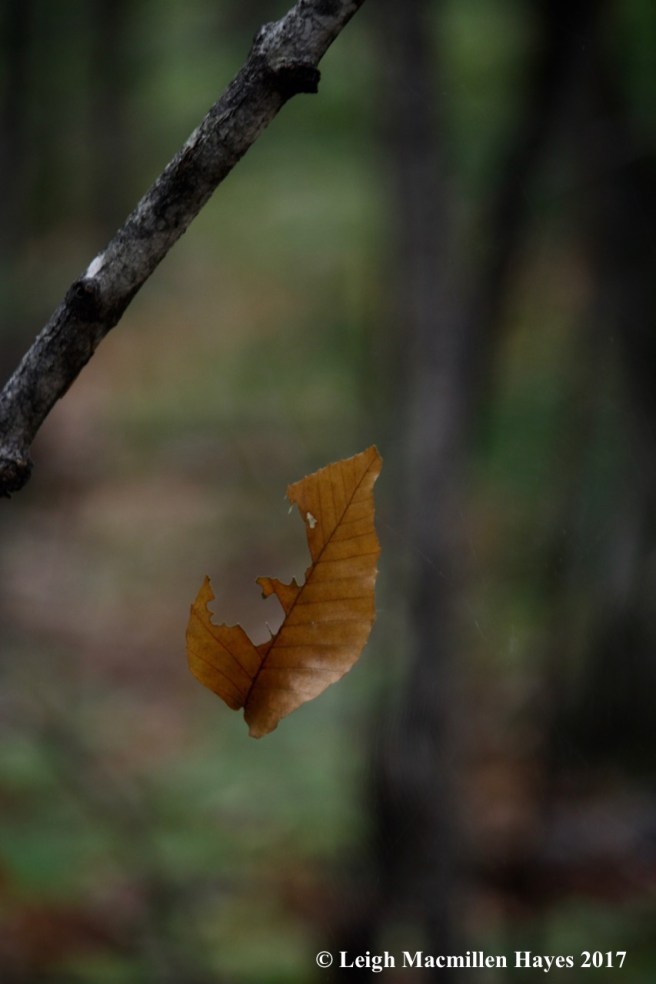
Our questions, however, continued beyond the bear trees. How did this beech leaf happen to be dangling in suspended animation?

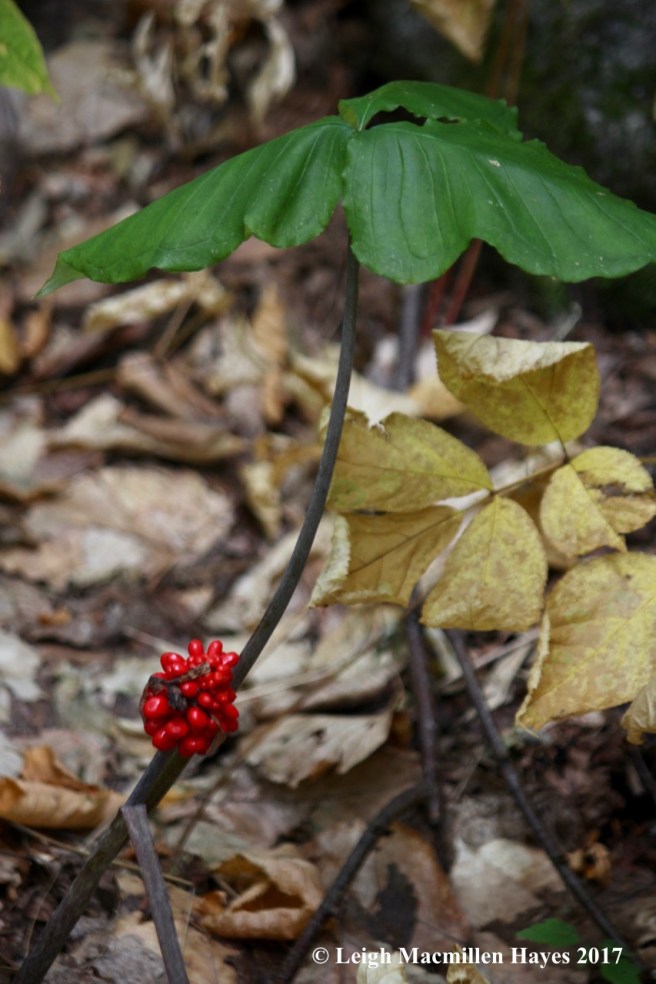
p14-jack in the pulpit

Why did we find only one jack-in-the-pulpit?

p15-Indian Cucumber Root

What is the purpose of red on the Indian cucumber root leaves?

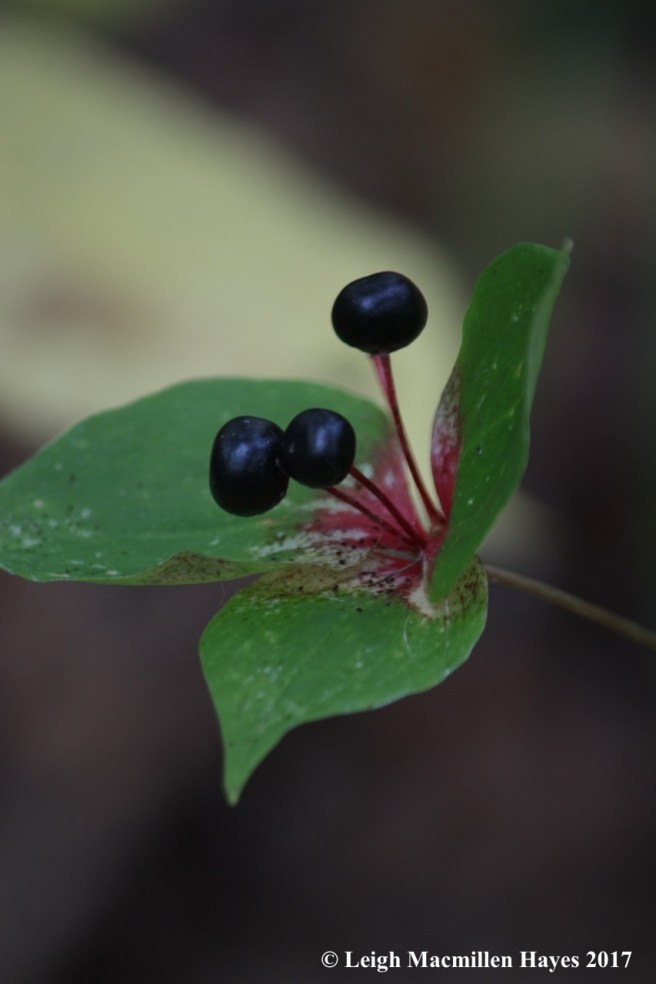
p17-doll's eye

And why are white baneberry’s fruits, aka doll’s eyes, poisonous?

p16-hiking upward

We noticed all of these great finds as our upward climb took us through a neighborhood of hardwoods.

p12-sugar maple on sensitive fern

Along the way we also noted sugar maple leaves atop sensitive fern fronds.

p13-oyster fungi

And one tree bedecked with oyster fungi. Their name always throws me off given that I grew up on the Connecticut coast where I often cut my feet on oyster beds.

p20-roots and rocks on trail

As we continued upward, suddenly the smell and look changed. We’d entered the Christmas Tree Shop where hemlocks, balsam fir and spruce trees dominated the landscape.

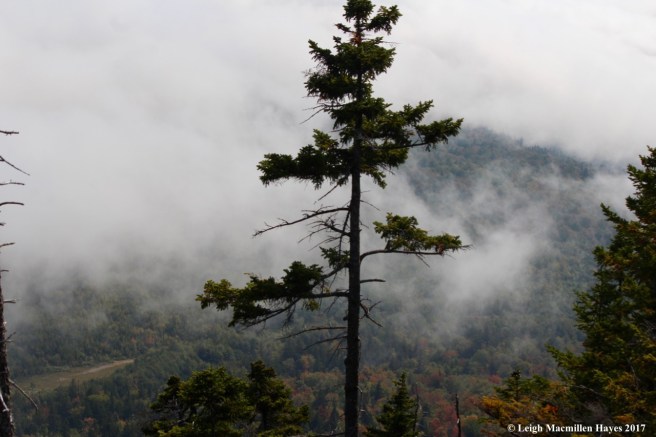
p21-fog 1 view

At last we approached a scenic view . . .

p22-fog 2 view

but all that we could see in the great beyond . . . fog.

p25-witherod

The further up we climbed, however, other shrubs added color to a gray day, including wild raisins, aka witherod.

p26-among the rocks

Eventually the trail conditions became more difficult and we worked our way through a boulder field that made me think of bobcats.

p27-summit in view

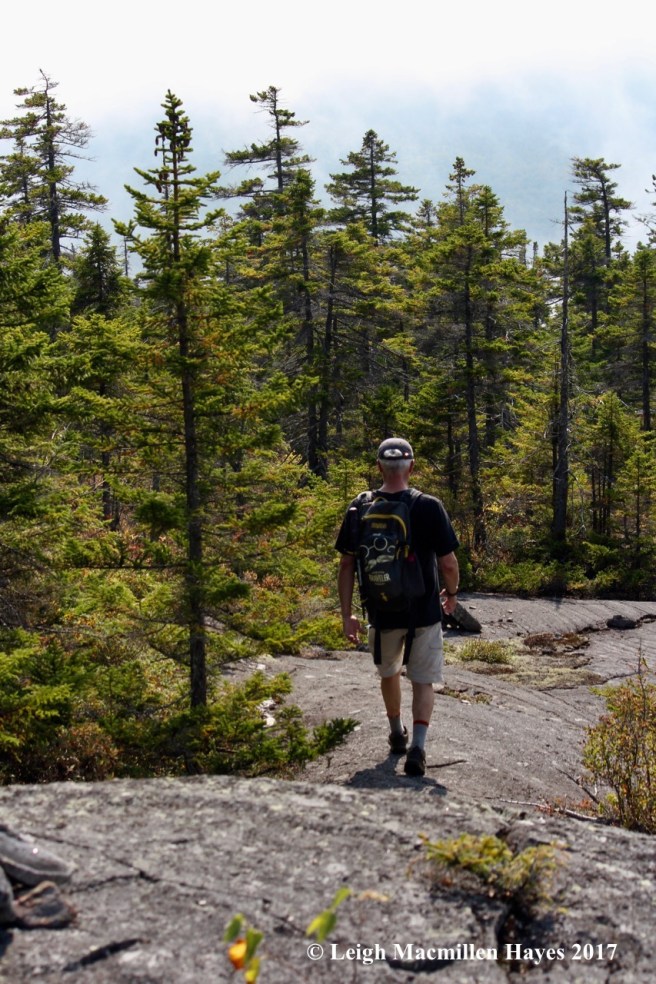
Eventually we emerged from the fog into the sun, thankful all the time for cairns marking the way. And the sight of the summit above.

p28-summit view 1

As we advanced, other summit views made theirselves known.

p30--heading up

But, we weren’t there yet. To reach the summit, we had to climb on.

p34-mountain ash 2

Along the way, mountain ash trees showed off their prolific fruits.

p35-almost the summit

Finally, the summit was just a few steps above.

p36-first survey mark

We’d reached the high point of 3,133 feet.

p38-lunch rock

Lunch rock quickly presented itself–backed by the summit cairn.

p40-view from lunch rock 2

And the view–mountain islands amidst a sea of clouds. Had the day been clear, we would have had a 360˚ vantage point, but it was beautiful no matter.

After lunch we looked for the trail beyond so we could follow the Woodsum Spur for 1.7 miles before looping back to the main trail. We found many mini-trails that led nowhere and two or three times my guy looped down and around on one that promised hope, only to find himself back at the summit. But after about a half hour of searching,  we spied a splash of blue paint that held promise and so we followed it, in hopes that we’d eventually find our way down.

p42-bobcat scat

Along the way, we found lots of bobcat scat, which made perfect sense given our locale.

p43-snowberry and sphagnum

And sphagnum moss interrupted by snowberry tendrils.

p44-view from SW ledge where lost

And then we reached a cairn with no trails to follow down over a rather steep ledge. We looked and looked and looked, again spending at least a half hour trying to find our way. At last, much to our disappointment we decided we’d need to retrace our steps to the summit and follow the main trail down.

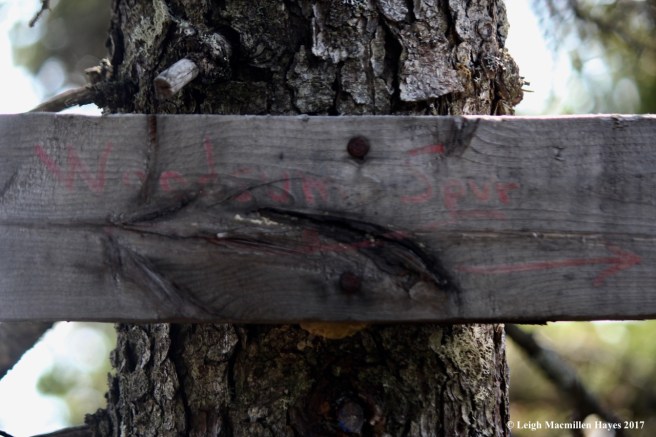
p45-Woodsum sign

Somehow, about fifty feet back, we discovered a sign that we’d previously missed. Apparently, those who had created the trail wanted us to go forward as we had to enjoy the scenic overlook, but what we didn’t realize was that then we needed to backtrack. At this point, we wished we’d had a magic marker in our pack so we could highlight the sign.

p47-heading down

As we headed down, we were still in the sun, which was incredibly toasty, but the fog prevailed below.

p50-my guy and a bear

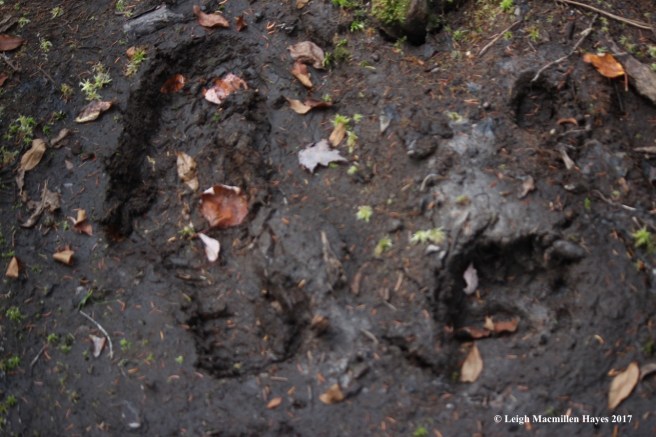
The Woodsum Spur felt much longer than its 1.7 mile length, maybe because we were so hot and tired, but we thrilled at a sight in some mud–my guy’s print on the left and a bear on the right.

p48-bear print

It was a front print of the bear–and we wondered where it might be.

p53-trail sign

At last, we emerged from the spur and only had 2.6 miles to go to get back to the trailhead. I swear we ran down. My guy said that I always say that. He’s right–because we do.

p54-beer1

Six and half hours (an hour later than our intended departure time) and nine miles later, we were sweaty and stinky and happy to have made the acquaintance of Puzzle Mountain–though we still had many questions–puzzling as it was.

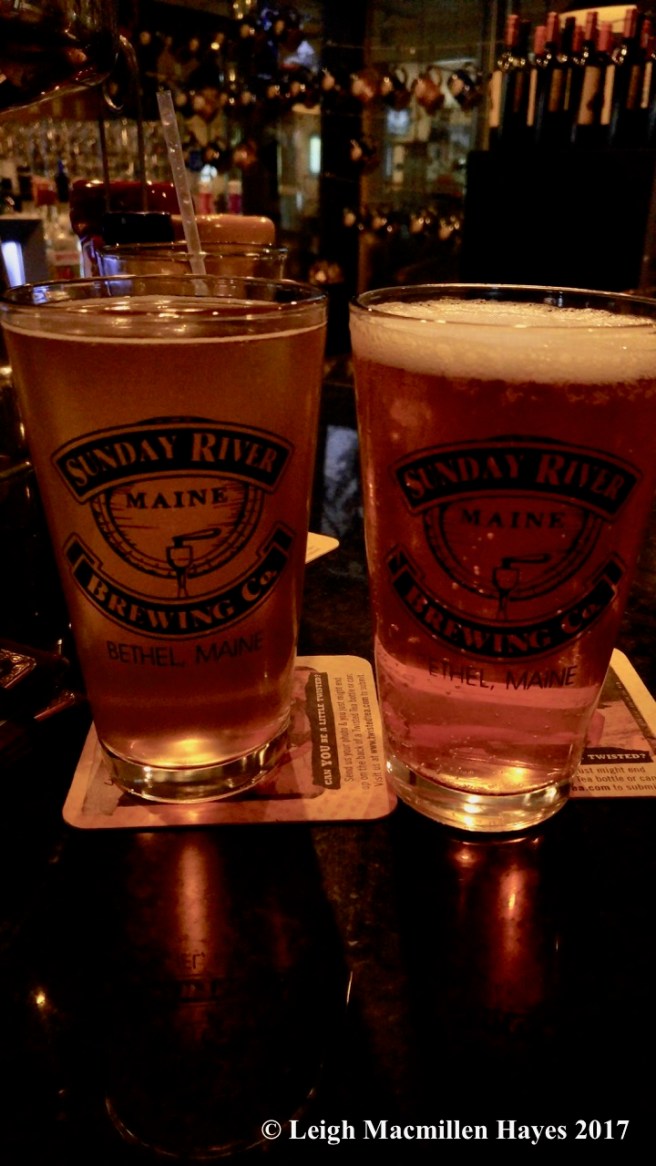
On the way home, we stopped for some ice water followed by a couple of local brews at Sunday River Brewing Company–Long Haul Lager for me, because it was such, and Raspberry Wheat (Razzle Dazzle) for him, because he was curious.

Be puzzled? We were. But we toasted this Mondate and trust we’ll travel the same trail again.

Carving Time

Summer arrived through the back door as we walked out the front on our way to the Raymond Community Forest for a lunch hike. We’d last hiked the property conserved by Loon Echo Land Trust on a fall Mondate and were curious about its offerings in a different season. That and we knew it would be a quick venture, which would serve us well today.

p-false solomon seal

The minute we stepped out of the truck, we were greeted by the cheerful cluster of flowers spraying forth from the tip of a False Solomon’s Seal. I immediately reminded my guy that I’d be taking photos, like he needed to hear it again. But really, it was too hot to move fast and we were thankful for the shaded route. I don’t think our blood has thinned yet as only a week ago we wore several layers.

p-maple leaf viburnum 1

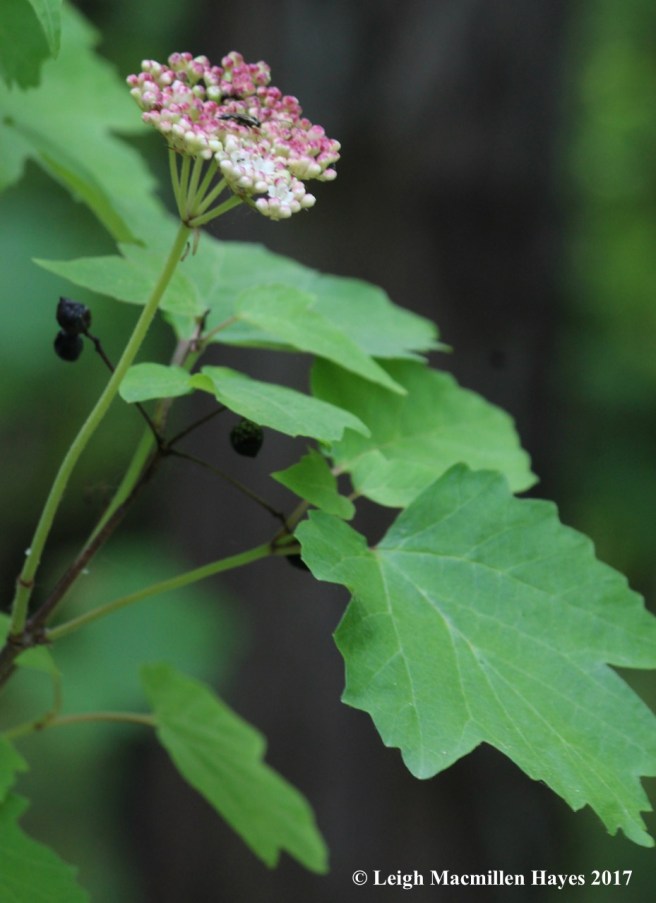
One of the blessings of such a habitat is maple-leaved viburnum, with at least one already sporting flowers about to open, plus last year’s dangling fruits. We weren’t the only ones happy to view it up close, a pollinator already at work.

p-spider web 2

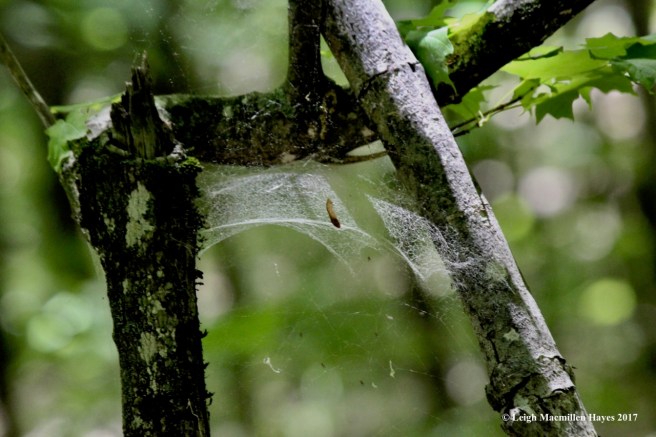
A bit off the trail, the sun shone through the canopy, casting rays of light upon spider works worth noticing.

p-hop hornbeam

Though not long in length, the trail provided some upward movement that got the heart ticking. And tickled my fancy along the way for some of its trees like the hop hornbeam, which prefers rich soils and often is found on warm slopes. It also made me chuckle to see that this was the tree chosen for the trail blaze. Given the hardness of the wood, it couldn’t have been easy to pound in the nail.

p-scarlet waxy cap 2

Most flowers had either already bloomed or are still to come. But we found a fruit of another kind–its waxy cap shining brightly at our feet.

p-scarlet waxy cap 1

The shiny bright tops of the scarlet waxy caps were hard to miss in a couple of spots.

p-scarlet gills

But even more attractive were the gills below with their arched formation and orangy-yellow coloration.

p-grass 1

As we approached the summit, the understory changed from woodland shrubs and much leaf cover to grass, bracken ferns and wild sarsaparilla–a signature to the forest’s past life before the trees grew tall.

p-signs 2

Last fall, we got mixed up at one point along the Highlands Loop, but today we noted how well marked the entire trail system was. And so, when we reached these signs, we turned right and headed to the bluff.

p-lunch view

Stopping briefly for a water break, we rejoiced in the breeze and realized that we’d dealt with nary a mosquito.

p-lady's slipper 2

Next, we decided to travel the Highland Loop in the opposite direction we’d followed in the fall. Being my guy, he was often far ahead, but then would find a stump or rock to sit patiently and wait. And while he waited, he noticed things. I love that for it’s not his intention to gawk about every flower or leaf, but he does see. So it was, that the only lady’s slipper we curtseyed to today was across from one of his perches.

p-trail work

Overall, the trail was well-maintained, but my guy did offer a hand by moving a recently fallen tree out of the way.

p-trail work 2

I told him he’d earn brownie points for his efforts. Perhaps I should bake him some brownies.

p-beech flowers 1

Today’s lesson came along the loop. And I’m still not sure I completely understand for this was the first time that I recall such a sight. But there are so many firsts in my life and once I’m finally aware of something, it seems to appear everywhere as if it had been there all along. Because . . . it had. Confused? Me too. I found these beech flowers on a tree that stood about two or three feet tall. I can’t recall ever seeing flowers on such a small beech before. And I know they have to be about 40 years old before they produce fruit. Beech can grow for a long time in the understory, but could such a short tree be so old? Did this tree not read the books? Do beech trees put energy into producing flowers that won’t be viable? Do I need to contact my district forester for a better understanding? Yes. Fortunately, he doesn’t mind when I pick his brain. And obviously, I have much to learn.

(NOTE: As promised, I contacted our district forester for the Maine Forest Service, Shane Duigan. Here’s what he had to say: “Hi Leigh, Those are good questions. The easy answer is, no, the trees never read the books. Beyond that, it is possible that such a little shoot could be 40 years old but more likely it is a root sprout–a young shoot arising from an old root system. Beech stumps sprout readily when cut and beech trees also produce root sprouts as a result of stress or physical damage to roots. In that scenario, though the shoot appears too young to flower, the organism (root system) is old enough to flower. Does that all make sense?” Yes, Shane–that does make sense. Another lesson learned.)

p-basswood bark and leaves

After wondering so long before the beech tree, I had to pick up my pace. But that only lasted for a bit because another of my favorite trees that also likes the richness of the soil stood tall beside the trail. I couldn’t resist running my hands over the smooth sections of bark on the basswood (linden) and admire the leaves already big on an offshoot below.

p-grassy field at summit

We knew we were completing the loop and approaching the trail to the bluff when the understory once again turned to grass.

p-bluff view 2

From the same rock where we’d taken our earlier water break, we sat for lunch as we looked out at Crescent Lake and across to Rattlesnake Mountain.

p-white oaks blowing in breeze

The wind continued to blow, causing the leaves to swish and sway with its language.

p-bedstraw

On our descent I spied various plants including a small patch of bedstraw not yet in flower.

p-cranefly 2

And because I was looking down, a cranefly couldn’t escape my focus.

p-descent

It didn’t take us long to descend on the path carved by others along the side of Pismire Mountain. In the end, though we wanted to venture on the Spiller Homestead trail that is part of the forest, we had to head home. My guy has worked way too many hours this week, including all day yesterday and again this afternoon, on this, his weekend off, due to a customer appreciation sale that this year benefited the Lions Club (each year a different local charity is the beneficiary). But . . . we were thankful we carved out some time to be together doing what we most love to do.


Sharing My Site

I count myself among the fortunate because pollen doesn’t keep me inside during its high season. Nor do the bugs or rain. Mind you, I do my fair share of complaining–after all I am human. At least I think I am, though I was honored to be called an ent yesterday. (Thanks Cyrene.)

Enough of that. Let’s head outside to see what we might see.

IMG_5267

True confession. I took this photo yesterday, but didn’t have time to write. Finding this jack-in-the-pulpit beside a granite bench by my studio was a complete surprise.

IMG_5741

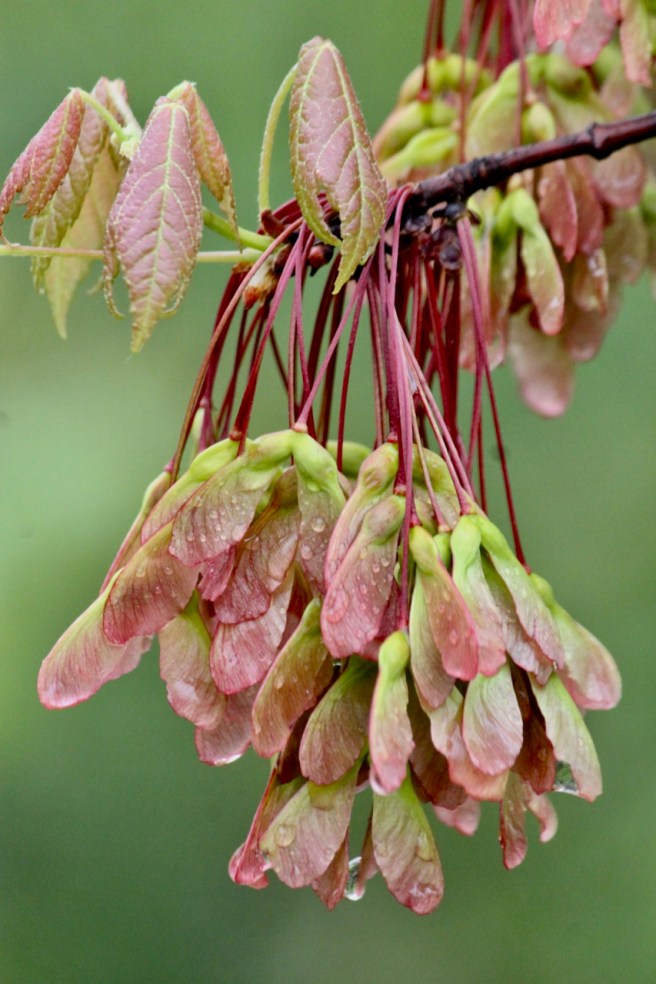
Today’s journey began in the front yard where sugar maple samaras dangled below full-grown leaves. Their presence will soon offer presents to the world below.

IMG_5302

My next stop was beside another secret giver of gifts–blueberry flowers.

IMG_5301

And then I stepped into the woodlot, where a single striped maple which was the bearer of a deer antler rub last year and scrape (upward motion with lower incisors) this past winter, had something else to offer.

IMG_5480

Below its almost dinner-plate size leaves–flowers. Happy was I to find these little beauties.

IMG_5287

Perhaps . . . just maybe . . . there will be more striped maples offering their bark to those in need.

IMG_5517 (1)

Moving along, I stopped at the opening of the cowpath to admire baby hemlock cones when something white and bubbly caught my attention. My first spittle bug sighting of the year. An adult spittlebug whips up some slimy froth to cover its eggs in late summer and the nymphs cover themselves while feeding in the spring–and so I concluded that I was viewing a nymph’s locale.

IMG_5327

Emerging under the power lines, the community changes. It’s here that the land is especially wet and species one might find in a bog grow–such as the black chokeberry shrub. These also like rocky ledges, but such is not the case in this spot.

IMG_5532

I was thankful to find it for those flattened bright pink anthers brightened this damp day.

IMG_5696 (1)

Heading north, I sloshed through the deep puddles on a quest to find the sundews I discovered growing in this area for the first time last fall.

IMG_5703

No such luck, but I did welcome the sight of the candy lichen fruits exploding from their crustose base. And then . . . and then . . . what did I see (but only when I looked at the photograph on my computer, and so now I know where they are located)? The round-leaved sundews–do you see them in the bottom right-hand corner? These are carnivorous plants (think Venus Flytrap) and their prey consists of small insects. Already, I can’t wait to make their acquaintance again.

IMG_5583

I turned around and headed south–on my way to the vernal pool. But before passing through a stonewall, I had to look at the bunchberries in bloom.

IMG_5581

Normally, a bunchberry plant has two-sets of leaves. But . . . when one is mature enough to grow a third set, typically larger leaves (perhaps to capture more energy) than the first two sets, it produces four white bracts that we think of as petals but they are actually modified leaves. The flowers are in the center–tiny as they are.

IMG_5680 (1)

And because I was in the neighborhood, in the land of mosses, reindeer lichens, Canada Mayflowers and wintergreen, trailing arbutus (aka Mayflower) spoke up. Its flowers were slowly transforming from white to rust and I shouldn’t rush the season, but I can’t wait to see its fruit again.

IMG_5586

At last I reached the vernal pool and realized I wasn’t the only visitor. What perfect hunting ground it proved to be for the . . .

IMG_5593

phoebe. I cheered for its insatiable insect appetite.

IMG_5596 (1)

Because the day was dark, it was difficult to see tadpoles, but I did note that many spotted salamanders were still forming. I also noted that the water level has dropped a wee bit–hard to believe–and where yesterday I found a few egg masses a bit high and dry, today they were gone. Something enjoyed eggs for dinner.  Scrambled or otherwise, I’m not sure.

IMG_5625

Back on the trail and at the next stone wall, interrupted fern showed off its fertile pinnae near the middle of the blades. It’s called interrupted because of the interruption in the blade. Again, this is an inhabitant of moist to wet forests and so it was no surprise to find it growing there.

IMG_5609

A fertile blade, such as this, may have two to seven pairs of middle pinnae.

IMG_5619

The globose sporangia is bright green when young, but darkens to tan or black as it matures.

IMG_5362 6.10.27 PM

On the other side of the wall, I spied some more flowers.

IMG_5360

These were the elongated loose clusters of black cherry trees, that open when the leaves are fully developed.

IMG_5636

One that flowers and fruits before its leaves are fully developed is the red maple.

IMG_5630

And fruits and fruits . . . need I say more?

IMG_5375

Though the wind blew, the samaras weren’t yet ready to let go and set down their roots. It won’t be long though, I’m sure.

IMG_5403

Finally returning home, I passed by the granite bench once more and was still stymied by the site I saw about a half hour after discovering the jack-in-the-pulpit yesterday.  It had been consumed. I suspected the woodchucks that live under the studio. Either that or a bear came along and I missed it.

And so ended today’s tramp. Thanks for traipsing along with me to visit these sites out our back door. I especially welcome those who are homebound with allergies, like my friend Jinny Mae. She gave me the inspiration to take a look today–to be her eyes for the moment and share my sight.

“The Actual World”

In this morning’s newspaper I read an article about the loss of natural sound because we have created so much people noise. It took me back to a time about forty years ago when I think I first actually paid attention by sitting alone in the woods and listening–hearing the soft rustle of grass blades, chirp of the crickets, buzz of mosquitoes and vroom of a truck in the distance. I can still envision that spot on a hillside where I closed my eyes to the sun and tried to zone in only on sound–to let go of the rest of the world and focus on that one sense.

And so I took that thought with me this morning when I joined others to bird at the Bob Dunning Bridge, one of the entrances to Bridgton’s Pondicherry Park.

p-yellow-rumped warbler

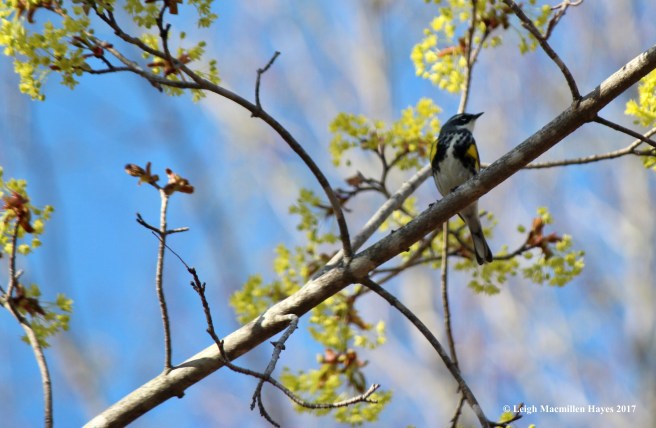
Truth be known, I also went birding at the bridge early yesterday morning when the sun shone brilliantly and a yellow-rumped warbler posed for an instant.

p-bridge 1

Today dawned raw and overcast. And at first, the birds weren’t all that song-filled or even evident.

p-baltimore 6

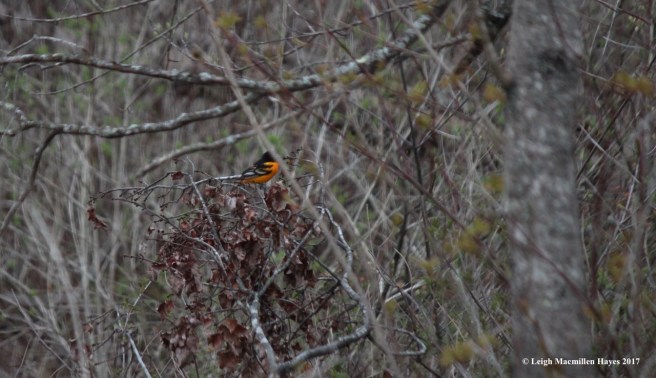
But then we heard one on high and our natural high kicked in. A Baltimore oriole whistled its melodious tune and we swooned.

p-phoebe right

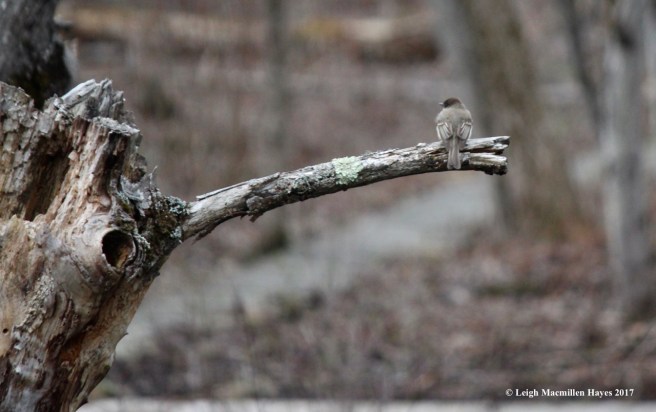
We watched an Eastern phoebe flick its tail as it looked to the right . . .

p-phoebe left

and then to the left. Because of the morning’s chill, the bugs upon which it feeds seemed non-existent to start.

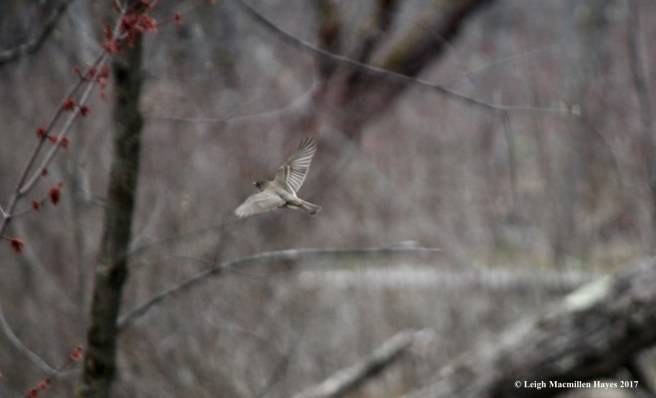
p-phoebee flying

But, perhaps it knew otherwise.

p-song swallow 2

What we knew was that the temp climbed a wee bit and bird song increased, including that of the ever sweet song sparrow. Yes, we could hear the sounds of this sleepy, western Maine town since we were only a block from Main Street, but the songbirds shared their voices and for us–we focused on those delightful tunes as we tried to figure out who we could hear but not see.

p-catbird 1

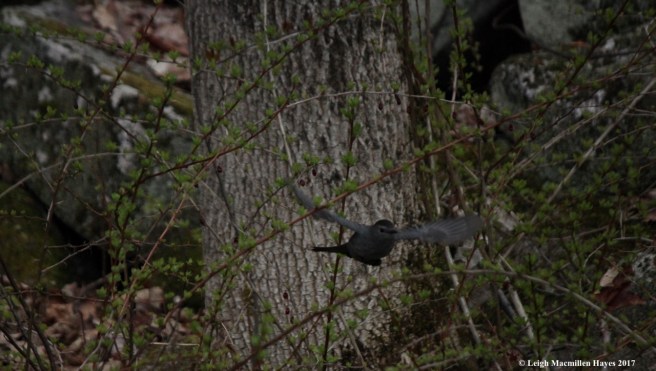
One such resident arrived this past week, like many other snowbirds (people residents who winter south of Maine– or is it south of New England?). We recognized the catbird first by its cat-like mewing and then we spotted two along the stonewall and in the brushy shrubs.

p-catbird flying

Like all birds, however, they didn’t sit still. We did note, though, that they spent most of their time on the other side of the bridge in an area where they frequently nest.

p-song sparrow 1

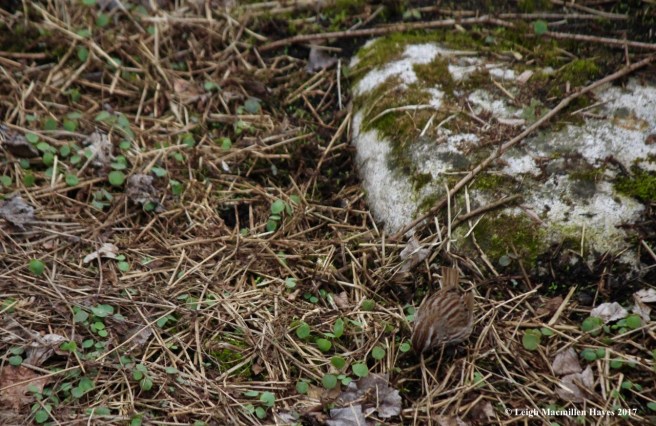
And speaking of nesting, the song sparrow moved from its perch to the ground where it joined others as they scratched about and filled their beaks with potential materials to add to their new home.

p-song sparrow 3

I love that from above, it blended in with its surroundings. A good thing when you are but a wee bird.

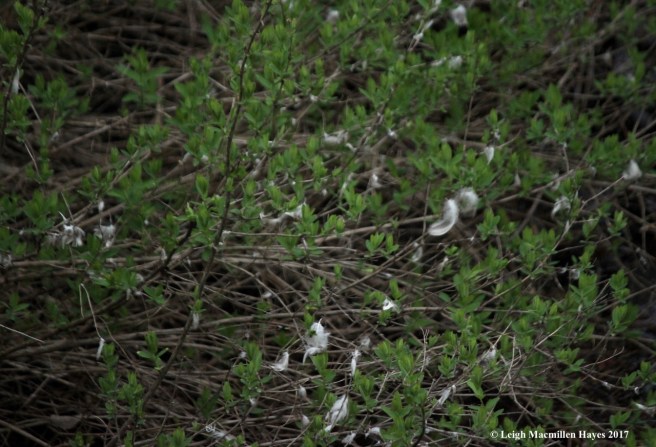
p-feathers

That being said, not all went undiscovered and we noted that some joules were passed from one bird to another–energy flowing through the cycle.

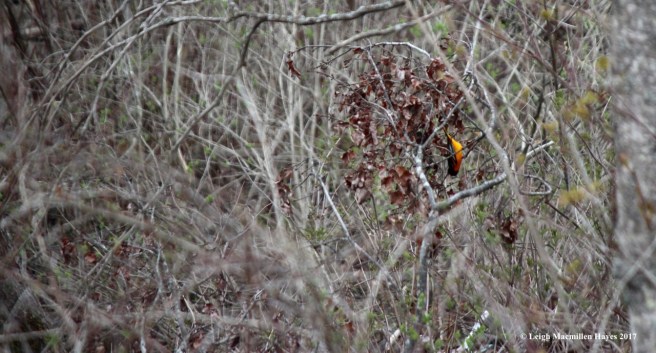
p-baltimore upside down

Eventually, one of our favorites of the day moved closer and we watched it for some time as it worked upside down and then . . .

p-baltimore 3

right side up. Again, we wondered if the oriole was working at the dried leaves and also seeking nesting material.

p-yellow warbler

And finally, a song a few of us heard when we first arrived showed its face–“Sweet, sweet, sweet, I’m so sweet,” evolved into a yellow warbler, or two or three.

p-Norway maple flowers 2

Because we were there and looking, other members of the world showed their faces, such as the flowers of Norway maples and . . .

p-box elder flowers

box elders.

p-elm leaves

We noted the emerging American elm leaves, already highlighting their sandpaper texture and asymmetrical base.

p-butternut

And then we got stumped momentarily by the butternut (aka white walnut ), but it’s the eyebrows above the monkey face leaf scar that spoke to its name. Less than a month ago, Jinny Mae and I discovered its cousin, black walnut at Narramissic. Both are not all that common in the woods, but both grow in places where human impact is more evident. That being said, human impact is evident the world ’round.

p-plaque

Eventually, all good things must come to an end and it was time for those gathered to move along into our days. But . . . we’d had the joy of spending a couple of early morning hours, whether in the sun or not, coming into contact with sight and sound and texture. We’d met the actual world and we loved making its acquaintance.

p-Mary 1

Thanks be to Mary Jewett of Lakes Environmental Association for offering these community birding events. And for her patience with us amateurs as she teaches us the finer points of identification.


A Blue Bird Kind of Good Friday

When Jinnie Mae picked me up this morning, our destination was the Narrow Gauge Trail. But somewhere between here and there, she pulled a U-turn and drove to Narramissic Farm owned by the Bridgton Historical Society.

It had been just over a year since I last visited and I wanted to show her the shagbark hickory buds. And maybe even the bear trap.

n-Pleasant Mtn to Narramissic1

We crossed the field behind the house and started off on the path to the quarry and bear trap, but snow and water in the woods resulted in another U-turn. We’d been talking so much, we’d hardly noticed our surroundings, but the view stopped us in our tracks.

n-Pleasant Mountain

To the left, the long ridge line of Pleasant Mountain, where the ski trails of Shawnee Peak Ski Area made themselves known.

n-Narramissic

And in front of us, the Temperance Barn and Peabody-Fitch homestead, built in 1797. We had the place to ourselves and reveled in the quiet of the day–when we weren’t talking, that is.

n-shop and flagpole

Heading to the road for our tree bud search, we passed by the blacksmith shop where horseshoes were probably made in the day.

n-temperance barn

And at the Temperance Barn, so named “because it was raised without the traditional barrel of rum,” I can never resist admiring the structure even though it’s in great need of repair.

n-ash tags

And then we were stumped by a flowering tree. It sure looked like an ash as Jinnie Mae suggested, but what were those lacy tips? What came to my mind first were the tags on red oaks that I didn’t understand a few years ago until a friend helped me realize that they were leaf stems left behind when the wind finally claimed the dried leaves. Was this the same?

n-double-wide stonewall

Climbing onto the double-wide wall, I took a closer look.

n-white ash danglers 1

Turns out Jinnie Mae was right. But my question still remains. Were these the stems of the ash samaras or compound leaves?* For some reason I’ve never before seen them left behind. Ah, there are so many things to discover in this world.

n-black walnut 3

We continued down the road, noting budding pussy willows and flowering red maples. And then I spied the bulbous buds I wanted to show her. Only, it turns out that we hadn’t reached the hickory trees yet.

b-black walnut leaf scar 2

The monkey face leaf scar should have been a clue. But my brain was stuck in hickory mode and I completely forgot that black walnut leaves leave such a formation. At home, I pulled out Forest Trees of Maine and then seesawed between black walnut and butternut (aka white walnut). Both feature leaf scars shaped like a monkey’s face. But the top of the leaf scar serves as the give away–this one did not have thick fuzzy eyebrows like a butternut, so I’m going out on a limb and declaring this a black walnut.

n-shagbark bud hairy 1

A bit further down the road we spotted more bulbous buds. These were definitely the ones I was looking for–shagbark hickory. In the moment and because the two trees weren’t close together, we thought they were all one in the same. But hindsight being 20/20 as it is, the photographs tell the story.

n-shagbark bud 6

The subtle colors and fuzziness wowed us and we both took numerous photos.

n-shagbark leaf scar1

Then there were the leaf scars–definitely more heart-shaped than the previous trees.  And lacking that smiling face. We smiled for them.

n-Long Lake below

It wasn’t enough to find the small saplings beside the road and so we crossed another field in search of the mother tree.

n-grasshopper 1

Along the way, Jinnie Mae spotted a wee grasshopper–the first of the season for us.

n-shagbark bark from distance

And then her newly trained shagbark hickory eyes keyed in on the momma.

n-shagbark bark 3

If you go, it’s located behind the barn.

n-shagbark bark 5

And shouts its name in presentation.

n-shagbark bark 4

Looking upward, we could see the bulbous buds on the twig tips contrasted against the bright blue sky.

n-bluebird

Happiness is a blue bird kind of day–sweetened by time spent exploring with Jinnie Mae, making discoveries and watching bluebirds move between the field and the trees. Indeed it was a Good Friday.

Now we need to return and find the mother black walnut.

*Thanks for Maine Master Naturalist Pam Davis for IDing the ash strand as the rachis of the compound leaf. She reminded me that I have seen these on the ground in the fall. But–to be still dangling from the tree was new to my eyes and mind.


Snow White Birches

We’ve plenty of snow still on the ground and another storm predicted for the weekend. I keep saying, “Spring in Maine,” because that’s exactly what it is. In fact, no season here has ever looked at the calendar and we never know what will happen during those transitional days–except that they’ll do just that–transition.

o-up to my knees

I, too, am transitioning and rather than my usual uniform that includes snowpants and a vest or jacket, I simply wore jeans and a sweater, plus boots minus the snowshoes. Only occasionally did I dig a posthole, but when it happened my foot went deep–at least to my knees. And in this case, there was a juniper below, so probably more snow under that.

o-rock surface black and pitted

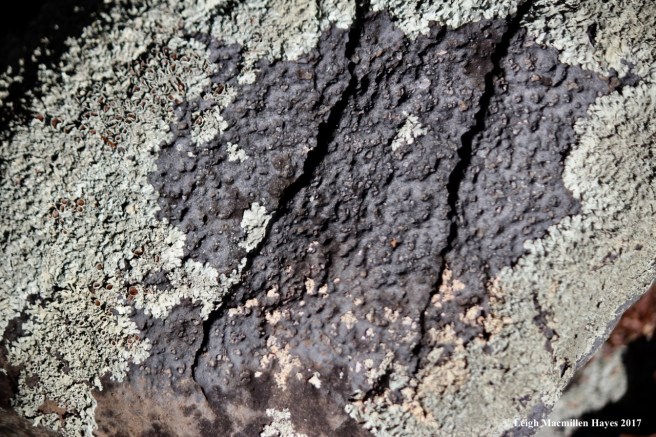
Deer, raccoons and a bobcat had traveled through our woodlot and along the cowpath. At the vernal pool, I spent some time checking out trees and looking for signs of change. Deer and turkeys have been the most recent visitors. And both have also traveled along the double-wide stonewall beside it. I, too, climbed up there and moseyed along. That’s when I discovered a black crustose lichen that turned out not to be a lichen after all.

o-rock surface, basalt?

I suddenly realized I was looking at the rock face and have sent photos off to two geologist friends. My question, “Is this basalt?”

Ann Thayer replied, “Could be, it also looks like it could be a rock that has been metamorphosed and has secondary mineral growth. At certain pressures and temperatures there are indicator minerals that grow that represent the metamorphic conditions. For instance, Garnet, sillimanite, and andalusite, are examples of indicator minerals . . . Take a look at it with the hand lens. Tell me what you see. There are a couple of minerals that look like they have a six-sided form and cross-section.”

Ah, a reason to look some more–as if I need one. And to invite Ann here for a walk.

o-birch grove

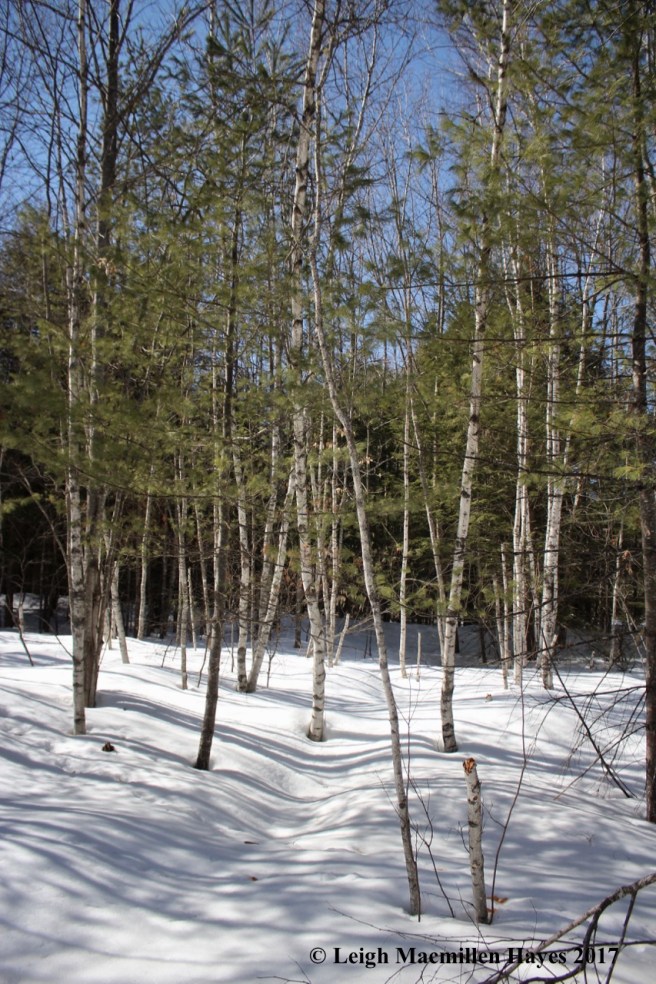
Beside the vernal pool is one of my favorite sections of these woods, a small birch grove. Yes, white pine and red maple saplings also grow there, but right now the birches dominate this acre-size plot.

o-gray birch chevrons 1

It’s a classroom filled with examples that have helped me gain a better understanding of differences between family members. The gray birch, Betula populifolia,  are those I associate with Robert Frost’s poem, “Swinger on Birches,” because it’s an early successional tree that bends naturally and even more so in an arc when snow or ice weigh it down. But it’s the chevron or triangular shape below branches that shouts its name to me.

o-dirty gray birch bark

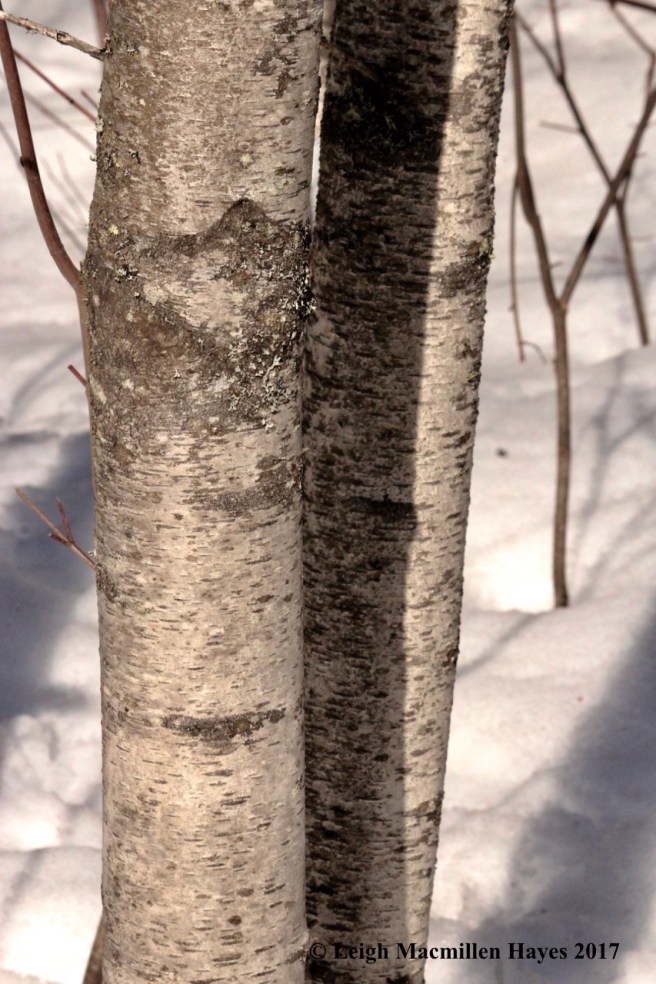
Its bark, though white like paper birch, looks dirty–especially toward the base. And, unlike paper birch, it barely peels.

o-paper birch bark1

In this same plot, I did find a few specimens of paper birch or Betula papyrifera, which is a stronger tree and grows taller and longer that brother gray.

o-paper mustache

And rather than a chevron below the branches, it’s known for the long, dark mustache that swoops up and over its branches.

o-paper birch close up

I moved in to take a closer look at the paper birch bark, admiring how the lenticels withstand the peeling, breathing while sloughing off old cells.

o-gray, left, paper, right

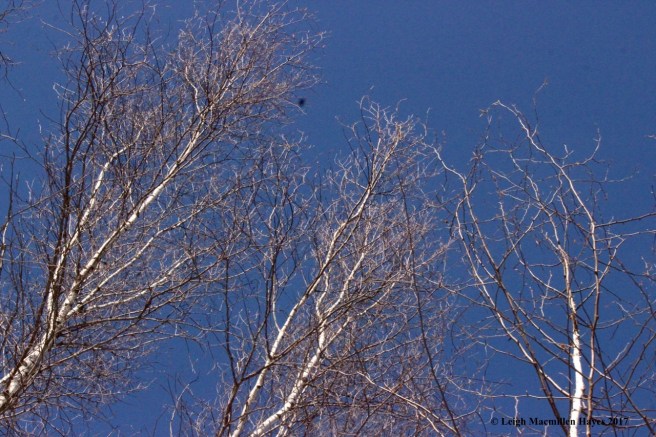
Looking skyward, the differences between the two were yet again defined. The gray birches on the left featured a bushier silhouette than the paper birch on the right. Catkins and buds also shouted their names, but I’ll save that for another day.

o-birch polypores 2

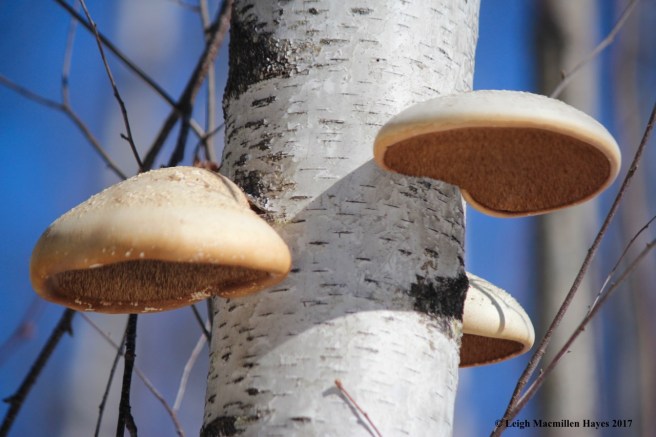
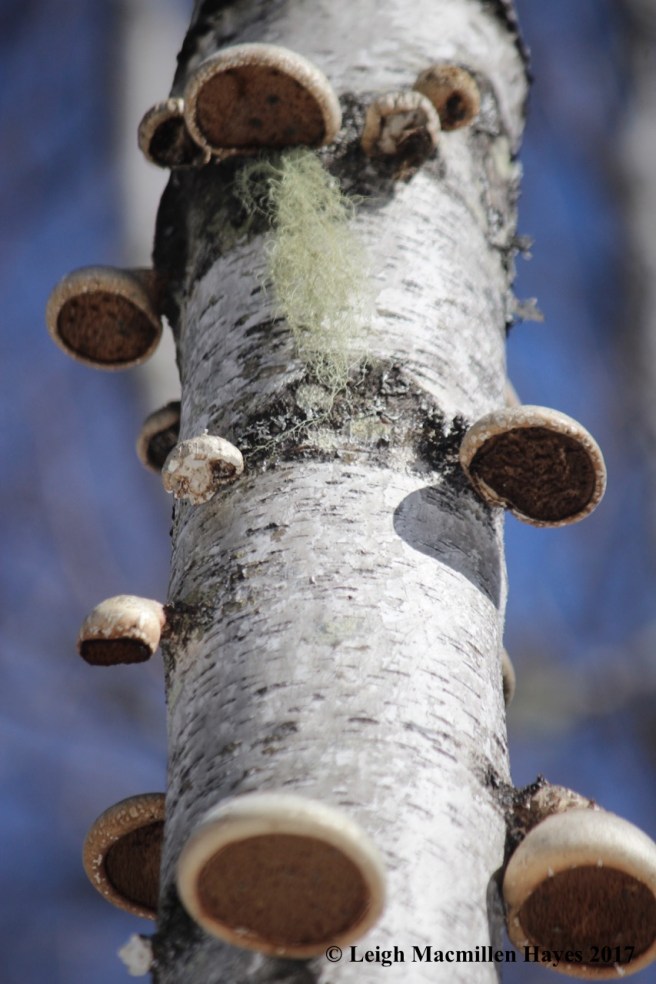
Not fussy about which birch it grows upon is one of my favorite fungi–because I can identify it with ease! But also because it really is attractive.  Piptoporus betulinus or birch polypore grow on some snags as well as a few live trees. The smooth rim rolls around the pore surface and sometimes reminds me of a bell hanging from the tree.

o-birch polypores growing old

These bracket fungi only live for one season, yet persist on trees for a longer period of time . . .

o-birch polypore skeleton

until they may become mere skeletons.

o-birch grove 1

After a sunny afternoon among the birches, it was time to head home. Oh and by the way, some call paper birch white birch and some call gray birch white birch. I prefer to call them paper and gray.

In the Brothers Grimm Fairy Tale, the queen sat by the window sewing as “the flakes of snow were falling like feathers from the sky.” Soon the queen gave birth to a daughter as white as snow with hair as black as ebony. You know the rest of the tale. But did you know that Snow White lives in these woods–forever embodied in the birches?

Morning Glory at Kezar River Reserve

Some mornings the hallelujahs spring forth from my being–and fortunately not from my vocal cords.

k-Kezar River sign

Today was one of those days as I ventured down the snowmobile trail, aka Parnes Landing Road, at the Greater Lovell Land Trust’s Kezar River Reserve. Just past the kiosk, I veered to the left to follow the GLLT’s trail into the woods.

k-jelly topside1

Within steps I was greeted by Auricularia auriula, a jelly ear fungus. The sun’s beams revealed veins reminiscent of stained glass windows and polished woodwork in an older church.

k-jelly under 2

Flipping the fallen oak branch to look at the underside revealed an equally, if not more beautiful design with its frosted outline.

k-wintergreen

On a steep hill beside Kezar River, actually the sloped side of a ravine I’d never hiked upon before, a southerly orientation presented lives past and present.

k-bench

Below, at the point where the trail, road and river meet, few have paused recently, including no sign of otter.

k-river view

But many have zoomed by with a need to reach the next destination as fast as possible.

k-ravine 1

I followed their tracks a little way out and peeked into the second ravine from a vantage point seldom celebrated.

k-big tooth aspen leaf

And then I headed back up the road to the next trail intersection. At my feet, form bespoke name, such is the manner of the big tooth aspen.

k-ravine 2

Down into the second ravine I tromped as I made my way to view the outlet from the other side.

k-otter 1

Because of the snow’s depth, I traveled to places less frequented and beside the stream I noted previous action. Lots of it.

k-otter activity1

And I spied evidence of the creator–whose prints were hard to distinguish, but other signs easily discernible.

k-my otterness

In my attempt to take a closer look, I practiced my inner otter and managed to find the water and leave my own set of muddy, though not quite webbed, prints. I laughed aloud as I pulled myself up and gave thanks for remembering to bring my hiking pole. Fortunately, the breakthrough was the only sign I left behind.

k-nature's snowball

Heading up the ravine, I smiled at the sight of the universe having fun–nature rolled her own snowballs–perhaps in preparation to build a snow woman.

k-pine cathedral

Through the cathedral of pines I continued–always looking up . . .

k-ice art

and down, where intricate patterns formed naturally in the ice offered a feathery look at the world below.

k-paper birch lateral bud

Sometimes, I stopped to spend a few moments with family members . . .

k-yellow birch

taking time to marvel in their similarities and differences as they stood side by side.

k-oak gall

And it seems there are many hosts throughout our woodlands that offer a spot for others to evolve.

k-oak crown

Despite or perhaps because of that, knowing they’d offered a helping hand, the oaks sported their crowns proudly.

k-pussy willow

Quite unexpectedly, I stumbled upon a picture of youth that warms my heart endlessly.

k-flowers in bloom

My journey wasn’t long, such is the trail. It’s decorated with small bright signs painted by local youngsters. Though I wouldn’t want to see these on every trail, they make me smile as I enjoy their colorful renditions of the natural world.

Not a picture of a morning glory, certainly, but a morning full of glory as I wandered and wondered and sang hallelujah along the trail at Kezar River Reserve.


Celebrating Place–Naturally

Once the snow melts it will be more difficult for me to wander and wonder in the woods I explore all winter given its spring/summer water level and logging slash. And so I make the most of these days–trying to notice as much as I can before I can notice no more (or at least until next winter).

l-bushwhack 1

Though I’d promised myself I’d not go again in an effort to not disturb the deer, promises are meant to be broken. And from that came a lesson–the deer are sticking to the snowmobile trail and field edges where tender bark of young red maples and hemlocks, plus swelling buds meet their needs for the moment. So, it was OK that I broke my promise, for the deeper I tramped, the fewer tracks I encountered.

l-spring tails1

Today’s warmer temps in the low 40˚s found the springtails hopping about on any and all surfaces.

l-pileated hole

As is my habit, I checked on a pileated woodpecker hole when I saw bark and wood scattered atop the snow. Deep was this excavation in search of nourishment.

l-pileated scat-seeds and ant

And chock full was the scat below, which contained insect body parts and seeds of the dreaded bittersweet. Beside the scat, a springtail sought to placate its own food needs which among other things includes plant material and animal remains.

l-red maple bull's eye

Turning to another tree, I landed on a perfect bull’s eye! The target fungus that affects many red maples makes for an easy ID.

l-crustose, liverwort and moss

Lichens have also been a focus of late. What I like about this one, the circular green with the black disks of a crustose lichen (possibly bark disk lichen), was its location beside a liverwort (the beaded brown Frullania eboracensis) and a moss that I didn’t key out. Tree bark has its own structure and texture, but so often others also call it home.

l-shield lichens on rock

Rocks also serve as a substrate and this one featured a couple of leafy foliose shield lichens, their colors enhanced by yesterday’s inch of snow.

l-hair lichen and beard lichen

And dangling from a branch, two forms of fruticose (branching or fruit-like structure–) lichens. The dark is a hair lichen, while the green a beard–seems about right with the hair above the beard.

l-lichen garden

On another maple I spied a garden–you’ve got to liken it. (Corny joke that always manages to enter a lichen conversation.)

l-frullania 1

I’ve often paused beside Frullania eboracensis, a liverwort with no common name, but today several trees shared displays of mats called Frullania asagrayana, so named for a botanist and natural history professor at Harvard University from 1842-1873–Asa Gray.

l-frullania asagrayana 1

Its shiny, overlapping chain of red-brown leaves reminded me of caterpillars crawling along the maple bark.

l-spirea:steeplebush

Casting my eye elsewhere, steeplebush in its winter form offered an artistic presentation.

l-bracken fern1

And as the snow melts, last year’s bracken fern made an appearance.

l-speckled 3

One last shrub made me stop. Minus any catkins or “cones” for which it is known, I had to think for a moment about the speckled alder. But those speckles or lenticels through which gas exchange occurs, and the buds and leaf scars were give aways.

l-speckled buds and leaf scar

The two bud scales meet at their edges and look like miniature footballs. But it’s the bundle scars where leaves were formerly attached that make me laugh. That vascular system looks like a face–two round eyes, a funny shaped nose and a round mouth, as if it’s exclaiming, “Ohhh” or “Wow.”

l-Pleasant Mtn in background

At last I reached my turn-around point. I could see Pleasant Mountain in the distance and knew where I was in the world. This is my place and I love every opportunity to celebrate it–naturally.

Because I Wandered

It’s still cold and blustery. Oh, we had warm spells in January and February. But now it’s March. And it’s Maine. So wind chill in negative to single digits shouldn’t come as a surprise. Nor should the impending Nor’easter predicted for this week. Only more than a foot of snow possible.

Today’s cold wasn’t nearly as frigid as yesterday’s and when I stepped out the back door, I could feel the warmth of the sun penetrating my outer being. It worked wonders for my inner being as well.

o-quaking aspen

My first stop was beside the quaking aspen tree. Yesterday, some Maine Master Naturalist students and I examined tree buds and their characteristics. I love looking at these and do so every day since the tree is right off our back deck.

Varnished scales protect the  aspen’s leaf and flower buds as they lay dormant through the winter. Its flower is produced within a catkin and already the cottony part of the seeds is appearing, much like a pussy willow.

o-striped maple

As I moved into the woodlot, I stopped to re-admire the only striped maple that grows here. Last year a deer used the lower portion of the bark as an antler rub. Yesterday, as we stopped to look at the characteristics of its bark, we noticed it’s been used most recently as deer food. This tree is barely larger than the circle formed within my thumb and pointer finger–and I have small hands. How much more deer attention can it take?

o-gray fox tracks

As I looked at the striped maple, my eyes were drawn to the activity of another mammal. Out came my Trackards and I took measurements. I knew by the walking pattern that it was a canine. And I knew by the size that it was a fox. But red or gray was the question. I suspected the latter because I could see details clearly in the soft snow atop the hardened crust.

o-gray fox prints

Measurements and a look at a bunch of prints confirmed my suspicion. Rather than stay on the path, I decided to backtrack the fox’s trail.

o-gray fox and coyote 1

Within minutes, I realized another mammal had traveled in the opposite direction. Also a canine.

o-gray fox and coyote intersect

And atop a double-wide stone wall, I found where the coyote (follow the red pencil) and gray fox (yellow) crossed paths. Not at the same time, I’m sure, but given the track conditions, I don’t think they were too far apart. We saw neither set of tracks as we examined trees and lichens in the same area yesterday.

o-gray fox sat and peed

I also found where the fox sat and then peed. Not much odor–in case you’re wondering.

o-turkey plus

My journey took me across a few more stone walls and through a hemlock grove. I lost the fox, but followed the coyote and then I found others including squirrels, deer and turkeys.

o-turkey wings

It looked like the turkeys had been dancing on an ice-covered puddle. And then perhaps they took off for the wing marks were well defined. Did they fly because the coyote approached? Or was there another reason? Time to head up into the trees for the night, maybe? It’s difficult work for these hefty birds to lift off.

o-many travelers

Everywhere I went, others had been before me. It seemed the prey followed the old logging routes and predators crossed.

o-bs lichen

My own wander became a bushwhack meander. And a few lichens called me in for a closer look. My inclination was to quickly brush off all the gray foliose (leaf like) lichens as weedy hammered shield, but I suspect there was some bottleshield lichen in the mix and realize I need to look again. I’m forever a student–thankfully.

o-crustose mosaic

While there were specks of shield lichens on a young maple tree, the variety of flattened crustose lichens covered so much of the trunk that it was almost difficult to distinguish the bark color.  The mosaic pattern suggested a painting–naturally.

o-beech 1

The buds and leaves of the beech trees also asked to be noticed. It’s been my experience that younger American beech keep their leaves throughout the winter–perhaps because their buds are lower to the ground and therefore easy targets for hungry herbivores. There are other theories as well, but I think it’s key to note that it’s the younger trees who keep their leaves, or in the case of this one, those that remain were on the lower branches.

o-beech leaves

They remain until the tree buds begin to break or leaf out. The word to describe this leaf retention is marcescent (mahr-ses-uh nt), which means withering but not falling off. Their rattling in the slightest breeze may be enough to keep those herbivores at bay.

o-beech 4

In the tree’s silhouette, the pointed buds stood out,

o-beech scales


each one a cylinder of overlapping scales in opposite orientation on a hairy stem.

o-witch hazel leaves

That, of course, led me to another marcescent tree that loves this wet woodland, the witch hazel. Its leaves have always intrigued me with their wavy margins and asymmetrical base. But it’s the winter color of the withered leaves that I also find attractive.

o-witch hazel scalpel

And its naked buds, which don’t have waxy scales like the aspen or beech. Somehow the fuzzy hairs must provide enough protection for the winter months.

o-witch hazel bracts

Everything is fuzzy on a witch hazel, including the bracts left from last fall’s ribbony flowers,

o-witch hazel pods

and the woody, two-seeded pods that ripen a year after the flowers have formed. These split open in the fall as the seeds were forcibly ejected.

o-moose scat

I wandered for hours and miles and never saw any prints from the moose that frequented these woods earlier in the season. But, where the snow had melted under a spruce, I found evidence that blended in with the leaf litter.

o-moose browse

And in an area I used to frequent prior to the logging operation of the last few years, I found more sign. The ruler is mine and this side shows centimeters.

o-coyote x2

When I reached the former log landing, my coyote friend made its presence known again. Actually, one became two as they had walked in single file and then split apart several times. They were on the hunt and a snowshoe hare was in the vicinity.

o-cherry

I followed the main logging trail for a while and then turned off to explore unknown territory. But . . . before turning, it was the maroonish color of the cherry bark that warranted attention. And the lenticels–raised, elongated and horizontal imprinted on my brain.

o-deciduous forest

My meanderings continued and again I saw lots of predator and prey activity. Even a porcupine, though that shouldn’t come as a surprise. Finally, I walked into an area of young red oak, red maple and gray birch and knew I was approaching familiar ground. And so I stepped onto the snowmobile trail.

o-deer 1

All along, I’d thought about the many tracks I’d seen, but no mammals . . . until I approached our cowpath. I wasn’t the only one headed that way.

o-deer browsing first

The deer herd seems to have survived this winter well. I’ve yet to find evidence that suggests otherwise.

o-deer browsing

And I felt blessed that I was able to move as close as possible despite the crunching of the snow beneath my feet. The wind was in my favor. And then, it heard me, flashed its white tail and ran down the cowpath. Perhaps we should rename it the deer path for a cow hasn’t walked on it in decades, but like me, the deer use it almost daily.

My day was made because I wandered.


Knowing Our Place

It doesn’t matter how many times I explore the same space, I’m always amazed at the opportunity to learn something new. And so it happened at the Holt Pond Preserve this very morning. It’s one of my favorite hangouts in western Maine on any day, but today–it added some new notches to the layers of appreciation and understanding.

h-willow

Because  Grist Mill Road that bisects part of the preserve serves as part of the snowmobile trail in the winter, parking occurs on the sharp curve that marks the end of Perley Road and beginning of Chaplin Mill Road. (You have to know you are moving from one road to the next because there are no road signs.) A couple of parking spots have been plowed and its from those that this first sight was viewed. I was a bit confused when I saw alder catkins and cones, with pussy willows growing among them. On the same shrub? Shouldn’t be. And it wasn’t. Rather, a closer look cleared the confusion when I realized that the two shrubs favor the ditch at the edge of Emerald Field.

h-tingley-brook

I was with Alanna Doughty, Education Director for Lakes Environmental Association and our intention was to focus on tracks. But . . . we suffer from Nature Distraction Disorder, thank goodness, and so our NDD forced us to notice all things, including the beauty that is Tingley Brook.

h-moss-green

And the way the snow and morning sun enhanced the color of mosses decorating old maple trees.

h-green-ash

The mosses weren’t the only shade of green in the neighborhood. A young ash tree angled across the path and its D-shaped leaf scar helped us identify it as a green ash.

h-beaver-dam-1

As we moved along, we spied a new beaver dam and began to notice their works in the vicinity.

h-beaver-chews-near-dam-1

We know what trees they chose for construction.

h-beaver-on-beech

And we wondered why they didn’t finish the job on this beech tree. Will they return? Only time will tell.

h-squirrel-works

Though we periodically saw downed hemlock twigs, some appeared to be wind drops. But, these drew us in for closer inspection.

h-squirrel-nibble

Through a hand lens, we spied the works of a different mammal–in this case, red squirrel. Ends of twigs were cut and dropped and then their buds nipped. But that wasn’t all we noticed. We were wowed by the petioles and how those little stems attached the needles to the twigs. And the tiny warts on the twigs. And . . . and . . . and. Who knew there was so much to admire about a hemlock twig?

h-beaver-dam-2

We continued on, turning from the brook to Muddy River, where  a larger and older beaver dam easily identified itself given the snow cover.

h-canoe

We followed some indiscernible tracks of a perfect walker and then lost them by the time we reached the canoes–also hiding under the white blanket.

h-red-maple-swamp

At the canoes we could have turned and found our way out, but ever curious, we continued on toward the red maple swamp. And then we decided to take a different course. Rather than follow the boardwalk, our usual pathway, we took advantage of the current conditions and decided to walk through the swamp toward the Muddy River. Earlier, we’d noted that a snowmobile had passed along the river and though we’d questioned the choice of its driver, we felt a compelling drive to take in the view from a different vantage point.

h-lodge-1a

With that in mind, and all caution thrown to the wind, we crossed the Muddy River to take a closer look at the beaver lodge we normally admire from a nearby boardwalk.

h-lodge-5

h-beaver-lodge-3

h-beaver-lodge-back-side

We took it in from all sides, noting the fresh saplings added during fall reconstruction, as well as the mud. It was a warm day–and we wondered if we might have seen steam rising had the temperature been colder.

h-muddy-river-from-lodge

It was from here that we looked back across the river to the hemlock hummock and boardwalk area where we normally stand. There was a certain satisfaction in being on the other side for a change.

h-tamarack-2

When we made our way back to the red maple swamp, a little tree drew our attention. Small in stature, yet big in personality is the tamarack or Eastern larch. It’s our only deciduous conifer and somehow we’d missed its existence in the swamp all these years, perhaps because we don’t often actually walk through the swamp. While larches have needles, they typically turn yellow and then drop, leaving behind a winter form that yields horizontal branches with nubs.

h-tamarack-cones

We noted that though the fruits reminded us of hemlock cones, on the larch they stand upright in contrast to those that dangle on their cousin’s branches.

h-holt-pond-and-bear-trap

Once we realized we were looking at larches, we started to see them everywhere. Finally, we pulled ourselves back to the river’s edge and continued our journey to Holt Pond.

h-holt-pond-outlet-2

Again, we found tracks that had been bleached out by the warm sun of the last few days, but we surmised a member of the weasel family had bounded along, crossing the outlet of Holt Pond.

h-alanna-1

We crossed the quaking bog, home to spaghnum moss, pitcher plants, sundews, cranberries, and so much more. But our attraction was overwhelmingly to today’s tree of choice–more larches.

h-tamarack-lichens-1

While we appreciated the young ones, we were completely in awe of the grandparents, who had grown long beards and supported a variety of barnacles in the form of lichens.

h-variety

Foliose and fruticose, they added texture and color to the presentation.

h-tamarack-winter-twig

Some describe the branches as wart-like, but we saw roses.

h-tamarack-lichen-maze

And a composition of structure and age and growth that spoke to an art form.

h-alanna-at-tamarack

All warranted further examination.

h-barbed-wire-on-tamarack

And then we realized there was also another sign of the tree’s history–barbed wired wrapped around and growing through the trunk. Stonewalls in one section of the preserve speak to a former farmer’s need to keep livestock from entering the swamp. But the barbed wire was a distance from the walls and quite far out in the swamp and so we wondered who had placed it there and why.

h-nest-2

At last it was time to turn back. And as we moved closer to shore and the speckled alders, a bird’s nest made itself known. Grasses, cattails and leaves were woven into the structure that was securely attached to the shrub’s branches.

h-layers

Before following the river back to the woodland trail, where we realized some tracks we’d followed earlier were those of a bobcat, we looked at the layers from the swamp to shrubs to deciduous trees to conifers to blue sky and clouds–and the colors mixed within.

And we knew that we’d shared an appreciation for the time –getting to know each other and our place better.


The Second Anniversary of Wondermyway

Milestones are always important as they mark significant events in our lives. And for me, such an event occurs today as I celebrate the second anniversary of the day wondermyway.com was born.

Since I was in elementary school and made few and far between entries into a chunky journal bound in a green cover (which I still own), to the first empty book journal my sister gave me when I graduated from high school, to a variety of travelogues and other journals I’ve filled from cover to cover,  I’ve recorded my life’s journey from time to time.

The most satisfying for me has been this very blog, to which I’ve added numerous events and discoveries, both natural and historical, over the last two years. As personal as it all is, I’ve taken a leap of faith by sharing it with you. And you have been gracious enough to read it, and comment on it, and “like” it, and sometimes “love” it, and offer me suggestions, corrections and gentle nudges.

Thank  you for following along on the journey. It’s been scary to put myself out there, but I have.

And now, I thought I’d review some favorite finds I noted in posts over the past year. My learnings have been many and it’s been fun to review all that I’ve seen and thought and admired and wondered about. I hope you’ll feel the same and will continue to follow along and comment and share those that you enjoy with your family and friends.

Here’s my countdown , or maybe I should say my count up of favorite moments in time over the past year:

Feb 21, 2016: Celebrating a Year of Wonder-filled Wanders
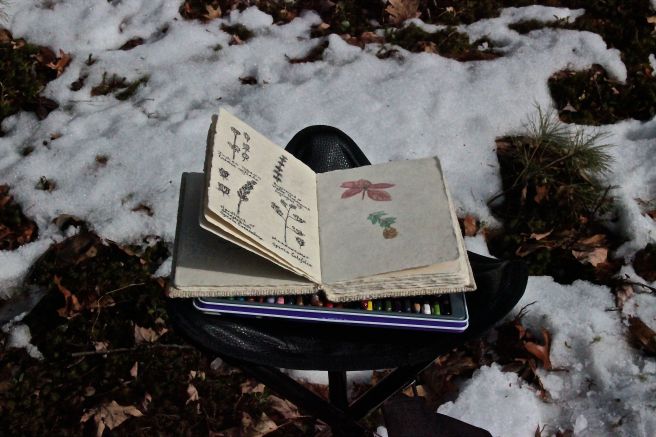
b-sit spot

b-sketch 1

I made time one year ago to sit and sketch–one of my favorite activities. To be still and embrace life around me. To notice. And commemorate.

February 28 2016: Gallivanting Around Great Brook

h-yellow and white partners

Usually, we drive the forest road in to the gate on Hut Road in Stoneham, but in winter it isn’t passable, and thus one must walk–which means paying attention to things you might not normally notice, such as this: a special relationship between a yellow birch and a white pine. Rooted in place, they embrace and share nutrients. Forever conjoined, they’ll dance through life together.

March 18, 2016: On the Verge of Change
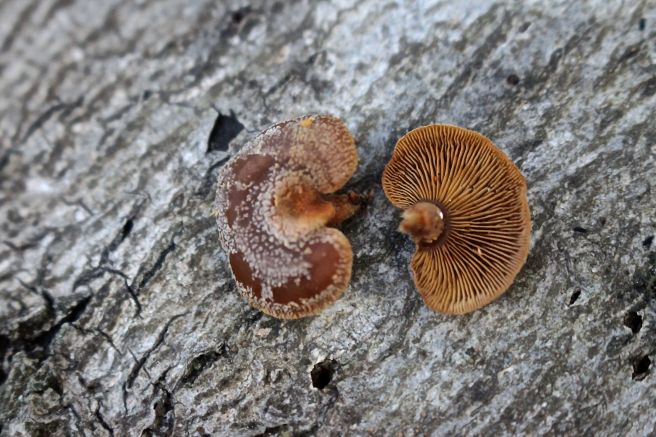
b-panellus stipticus?

While exploring the Greater Lovell Land Trust‘s  Back Pond Reserve in Stoneham with my friend, Parker,  who is a master mycologist, he found Panellus stipticus, a bioluminescent species. Check out those gills on the underside. According to Lawrence Millman in his book Fascinating Fungi of New England, ” . . . specimens in the Northeast glow more obviously than specimens in other parts of North America.” So if you are ever in these woods late at night, don’t be freaked out by a light greenish glow. It just might be nature’s night light.

March 22 2016: Wet Feet at Brownfield Bog

b-pellet

When I first spied this lump of gray I assumed it was a dead mouse. I know, I know–I should never assume because I risk “making an ass out of u and me.” And so I took a closer look. And noticed tons of bones and those orange teeth. An owl pellet filled with the remains of dinner. Owl pellets are extra cool and dissecting one is even cooler. I collected this one but haven’t dissected it because I think it makes for a great teaching tool as is. If you want to see it, just ask.

April 13, 2016: So Many Quacks

v-egg mass 1

At the vernal pool, or frog pond as we’ve always fondly referred to it, just steps from our property, I kept a keen eye on the situation last spring. In general, each mass laid by  female wood frogs was attached to a twig or branch. They tend to take advantage of the same site for attachment and usually in a warm, sunny spot.

A couple of masses were positioned independent of the rest, like this one–embraced in oak and maple leaves. Eventually, they’ll gain a greenish tinge from algae, which actually helps to camouflage them. One of the many wonders is that any given mass may contain up to 1,000 eggs–from a two-to-three-inch frog.

April 28, 2016: The Big, The Little and Everything in Between

b-bear2

The phone rang as I stepped out of the shower and a male voice yammered away about something in the snow and it had come last night and I had to get there quickly. My friend, Dick,  was standing in a friend’s yard about a half mile from here and looking at bear tracks in the snow.

As he knew he would, he had me on the word “bear.” His voice was urgent as he insisted I stop everything and get to his friend’s house. “I just need to dry my hair and then I’ll be right there,” I said. Deadlines loomed before me but bear tracks won my internal war. Dick suggested I just wrap a towel around my head. Really, that’s what I should have done because my hair has no sense of style whether wet or dry, so after a few minutes I said the heck with it and popped into my truck, camera and trackards in hand.

May 21, 2016: Wallowing in Wonder

p-ph dragon ending 4

Along Perky’s Path at the GLLT’s Heald and Bradley Ponds Preserve, a bunch of us had the honor to watch a dragonfly split open its exoskeleton and emerge from the nymph stage. Of course, we were standing by a beaver pond, and so it seemed only appropriate that it would use the top of a sapling cut by a beaver. As it inflated the wings with blood pressure, they began to extend.

May 31, 2016: Slippers Fit for a Princess–Including Cinderella

p-ph lady y 15

Members of the Orchid family, lady’s slippers feature the typical three petals in an atypical fashion. The pouch (or slipper or moccasin), called the labellum, is actually one petal–inflated and veined. With a purplish tint, the petals and sepals twist and turn offering their own take on a ballroom dance. From every angle, it’s simply elegant.

June 10, 2016: The Main(e) Exotics

snake2

At Lakes Environmental Association‘s Holt Pond Preserve, a friend and I had moved from the swamp to the first hemlock hummock and chatted about natural communities when suddenly we realize we were being hissed at. Its coloration threw us off and beautiful though it was, the hairs on the back of our necks stood on end. Apparently we made it feel likewise. And so we retreated. It was a common garter, but really, there didn’t seem anything common about it in the moment.

June 18, 2016: Paying Attention

partridge berry

j- trailing 2 (1)

j-  trailing 7 (1)

In May, trailing arbutus wowed us by its gentle white and pale pink flowers. In June,  they faded to a rusty tone. And some transformed into swollen round seed pods–a first for me to see.

The sepals curled away to reveal the white fleshy fruit speckled with tiny brown seeds. It was well worth getting down on knees to look through a hand lens–especially since ants, chipmunks and mice find these to be a delicacy so they wouldn’t last long.

July 9, 2016: Wondering About Nature’s Complexity
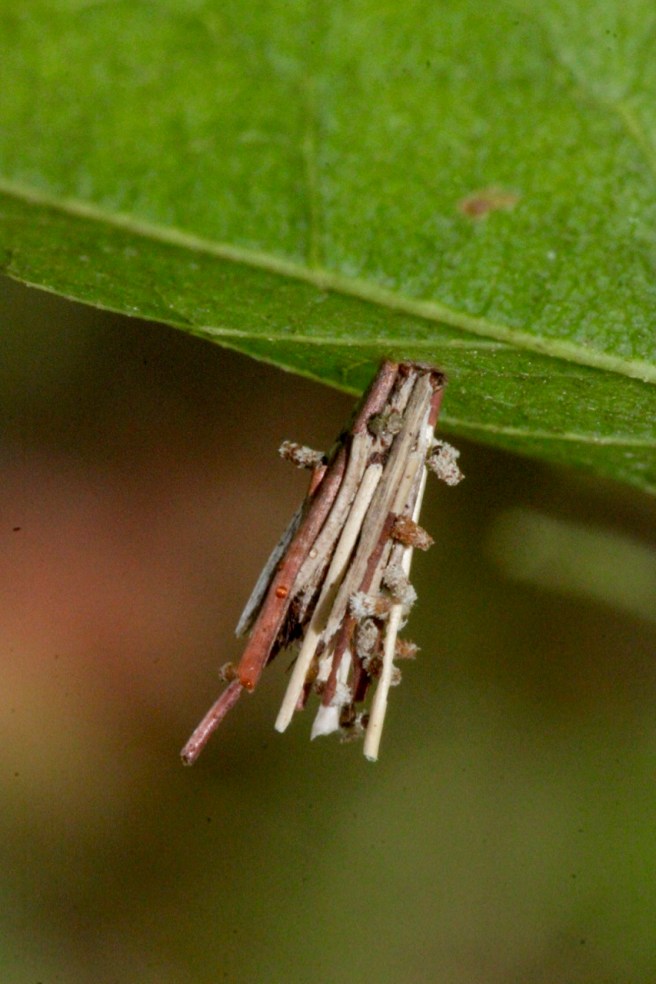
img_1364-1

I posed a question this day: So dear reader, I enjoy teaching you, but now need you to teach me. I found this under another leaf on a shrub. And I often see the same thing stuck to our house. It reminds me of a caddisfly case. What is it?

And fellow Master Naturalist Pam Davis responded: Check out bagworm moths to see if it might be an answer to the stick thing on the leaf and your house. Here’s a discussion: http://nature.gardenweb.com/discussions/2237505/not-a-bug-maybe-a-gall and a Wikipedia link: https://en.wikipedia.org/wiki/Bagworm_moth

Indeed.

July 27, 2016: Searching for the Source of Sweetness
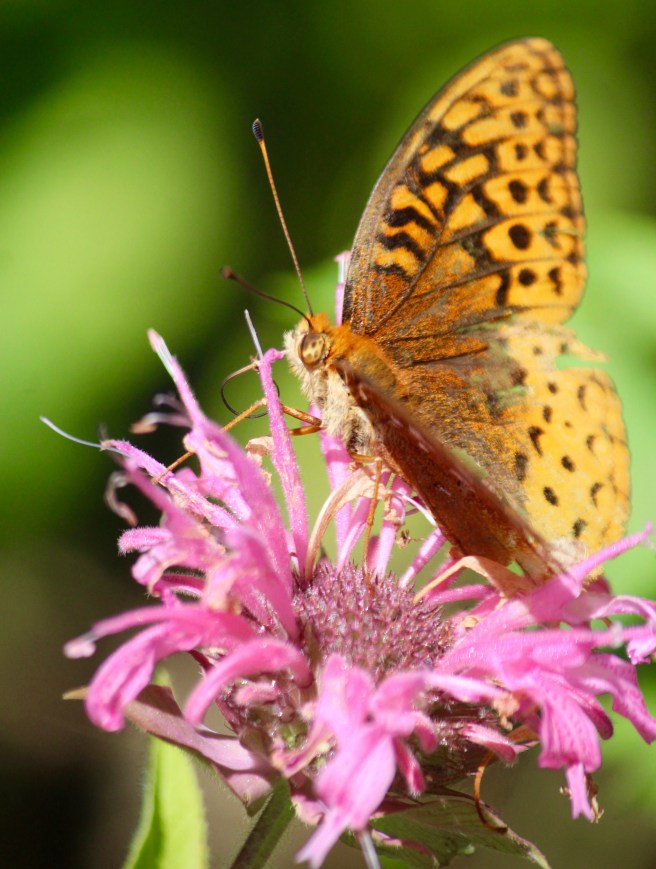
w-frit 2

It was no mistake the this fritillary butterfly chose the beebalm on which to land. Check out its mouth. A butterfly feeds through a coiled mouth part called a proboscis. When not in use, the proboscis recoils and is tucked into position against the butterfly’s head.

August 21, 2016: Sundae School

n-Indian pipe bee 1

My lessons began immediately. What to my wondering eye should appear, but a bee pollinating an Indian Pipe. And in the middle of the afternoon. Huh? I’ve always heard that they are pollinated by moths or flies at night. Of course, upon further research, I learned that bees and skipper butterflies have been known to pay a visit to the translucent flowers. Add that to the memory bank.

August 27, 2016: Halting Beside Holt Pond

h-pitcher  flower up close

Halting–prone to pauses or breaks. I didn’t break, but I certainly was prone to pauses as I moved along the trails and boardwalks at the Holt Pond Preserve in South Bridgton. One of my first stops–to admire the pitcher plant flowers in their August form. When I took a closer look, I realized that the seeds were developing–certainly a WOW moment in the world of wonder.

September 9, 2016: Golden Rulers

g-assassin-1

What first caught my eye was a bee that dangled upside down. And then I spied the green legs of an assassin bug. What? Yup, an assassin bug. I believe this one is a nymph. Regardless of age, here’s the scoop: Assassin bugs are proficient at capturing and feeding on a wide variety of prey. Though they are good for the garden, they also sometimes choose the wrong species like this bee. The unsuspecting prey is captured with a quick stab of the bug’s curved proboscis or straw-like mouthpart. Once I saw this, I continued to return for a couple of hours, so stay tuned.

September 15, 2016: The Wonders of Kezar River Reserve
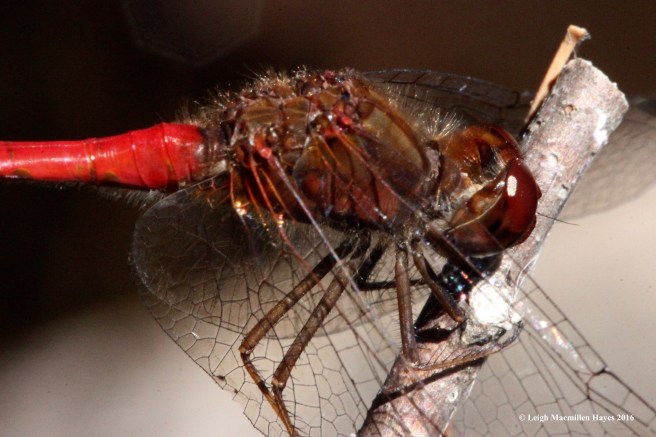
k-ruby-1

My favorite wonder of the day . . . moments spent up close with a meadowhawk.

October 17, 2016: Everybody Loves Raymond? Mondate

r-mushroom-growth

My guy and I discovered several of these examples of fungi on fungi at Loon Echo Land Trust‘s Raymond Community Forest and had no idea what they were–so I sent the photos to Parker and Jimmie Veitch, of White Mountain Mushrooms, and Jimmie responded with this explanation:

“That’s what mycologists call “rosecomb” mutation, where a mushroom’s gills start forming on the cap in a really mutated fashion. It’s been reported in many mushroom species but I haven’t seen it in this one (Armillaria AKA honey mushrooms). As far as I know, no secondary fungus is involved.

The suspected cause (not so nice) is ‘hydrocarbons, phenols and other compounds contaminating the casing or contacting the mushroom surface. Diesel oil, exhaust from engines, and petroleum-based pesticides are thought to be the principal source.'”

October 22, 2016: Cloaked By the Morning Mist
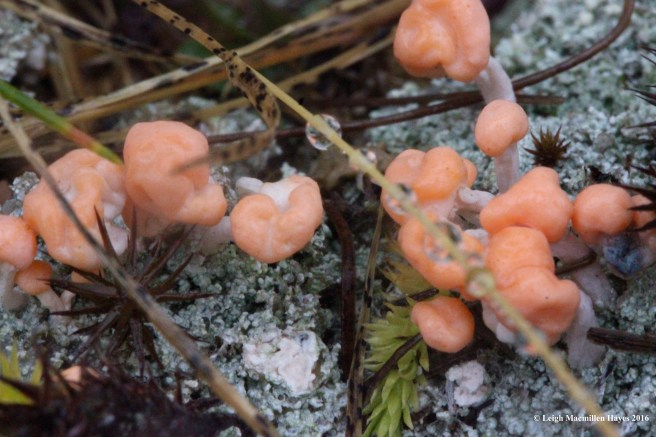
u-candy-2

On a rainy day adventure with the Upper Saco Valley Land Trust in nearby New Hampshire, we paused to admire candy lichen, a crustose (think–flattish or crust-like) lichen with green to bluish-green coloration. Its fruiting bodies, however, are candy-pinkish berets atop stalks, even reflected in the raindrops.

November 6, 2016: Focus on the Forest Foliage
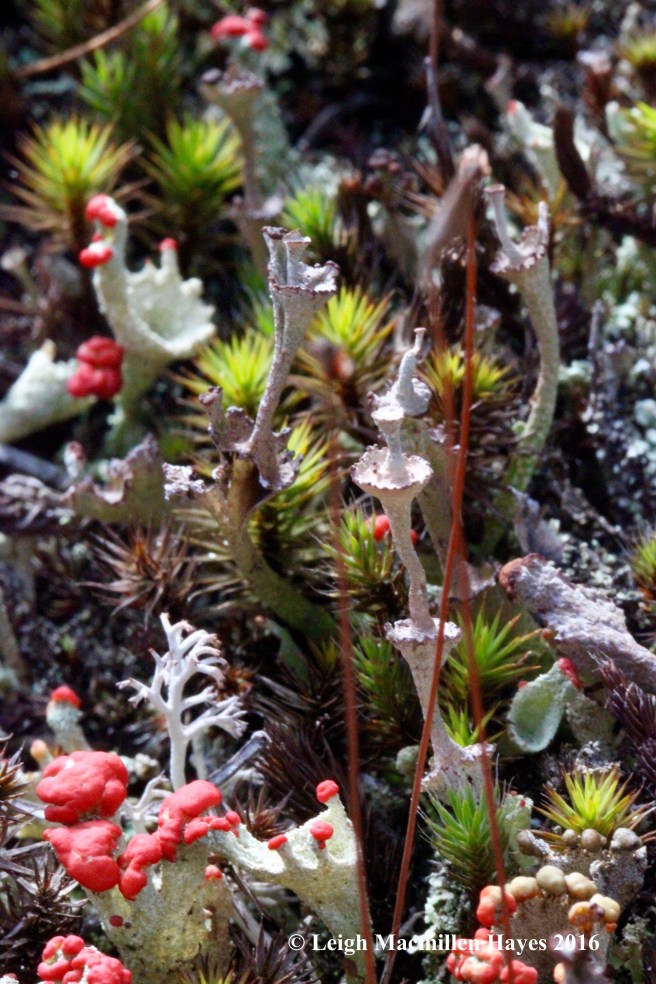
j-lichens-galore

And then . . . and then . . . and then just as our eyes trained on the red caps before us, something else made itself known. We spied another lichen that I’ve only seen once before: Cladonia cervicornis ssp. verticillate.

Its growth formation is rather unique. In one sense, it reminded me of a sombrero, but in another sense, I saw fountains stacked one atop another, each giving forth life in their own unique fashion. But rather than being called Fountain Lichen, its common name is Ladder Lichen–perhaps referring to the fact that the pixies can easily climb up and up and up again.

November 20, 2016: Forever a Student
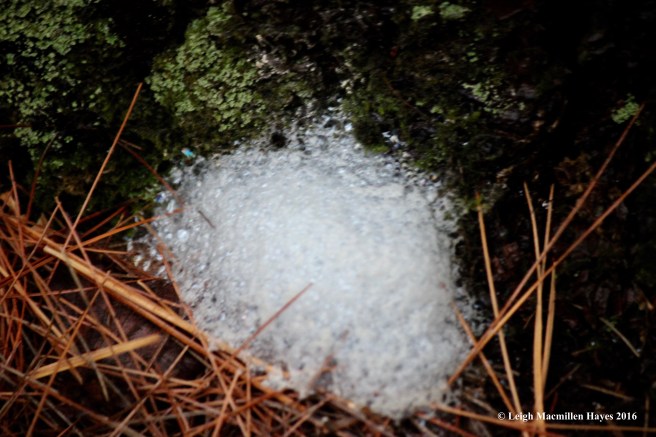
h-pine-suds

A sight I was hoping for presented itself when I returned to our woodlot–froth at the base of a pine tree. It’s not unusual and occurs following a rain event such as we’d had all night and morning. So what causes the tree to froth? Well, like all lessons, there are several possibilities. Maine Master Naturalist Science Advisor Fred Cichocki recently had this to say about it: “I’ve noticed this phenomenon often, and in every case I’ve seen it’s associated with white pine, and always after a dry spell followed by heavy rain. Now, conifers, especially, produce hydrocarbons called terpenes (it’s what gives them their lovely pine, balsam and fir scent). These hydrocarbons are hydrophobic by nature and form immiscible films on water. During a heavy rain, water running down the trunk of a white pine picks up terpenes on the way. Air (having accumulated in bark spaces, channels, etc. perhaps under slight pressure) then “bubbles” through terpene-water films producing a froth. Recall the cleaning products PineSol, and the like. They are made from terpenes, and produce copious bubbles when shaken. One could get the same result directly by shaking terpentine in water, or by bubbling air through a terpentine-water mixture with a straw . . . Of course, it may be that other substances (salts, etc.) enhance the frothing.”

No matter how much I have learned on this life-long course, there’s always more. I certainly don’t have all the answers and for that I am thankful. I’m forever a student.

December 4, 2016: The Art of Nature

s-tree-ring-labyrinth

Some cut stumps reminded me of the circular movement leading toward the center of a labyrinth–appearing quick and easy, and yet providing a time to slow down while following the path.

December 23, 2016: Won’t You Be My Neighbor

m-print

I followed the porcupine trail along his regular route and over the stonewall only to discover prints I’ve never met before. My first impression was raccoon, but the shape of the prints and the trail didn’t match up in my brain. More and more people have mentioned opossum sightings in the past few years, but I’ve only seen one or two–flattened on the road. Today, in our very woods, opossum prints.

January 19, 2017: Keep an Open Mind

o-deer

While I always head out with expectations of what my forest wanderings will offer, I’m happily surprised time and time again with the gifts received.

And so it was the other day when a friend and I happened upon this trophy in an area I’ve only visited a few times. We’d been noting the abundant amount of deer tracks and realized we were between their bedding and feeding areas and then voila–this sweet sight sitting atop the snow. It now adorns a bookcase in my office, a wonder-filled addition to my mini natural history museum. (I’m trying to give Henry, Jessie, Violet, and Benny of the Boxcar Children series a run for their money in creating such a museum.)

January 25, 2017: On the Prowl at Heald and Bradley Ponds Reserve

w-tube-moth-2

Notice how these pine needles are clumped together? What I learned from Mary Holland, author of Naturally Curious,  is that these are tubes or tunnels created by the Pine Tube Moth. Last summer, larvae hatched from eggs deposited on the needles. They used silk to bind the needles together, thus forming a hollow tube. Notice the browned tips–that’s due to the larvae feeding on them. Eventually the overwintering larvae will pupate within the tube and in April when I come back to check on the vernal pool, I need to remember to pay attention, for that’s when they’ll emerge. Two generations occur each year and those that overwinter are the second generation. The good news, says Holland, is that “Pine Tube Moths are not considered a significant pest.” I only found the tubes on two young trees, but suspect there are more to be seen.

February 8, 2017: Embracing the Calm
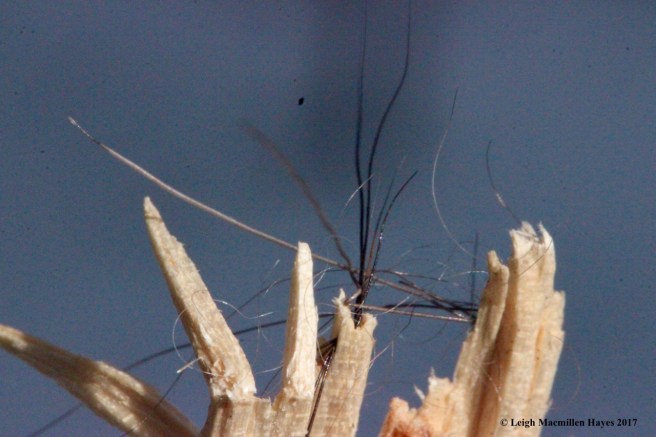
h-moose-hair-2

A bull moose, like a buck deer, thrashes bushes and small saplings when the velvet on its antlers dries. It could be that the velvet itches. But it could also be a response to increasing testosterone and the need to scent mark.

February 16, 2017: When Life Gives You Flakes
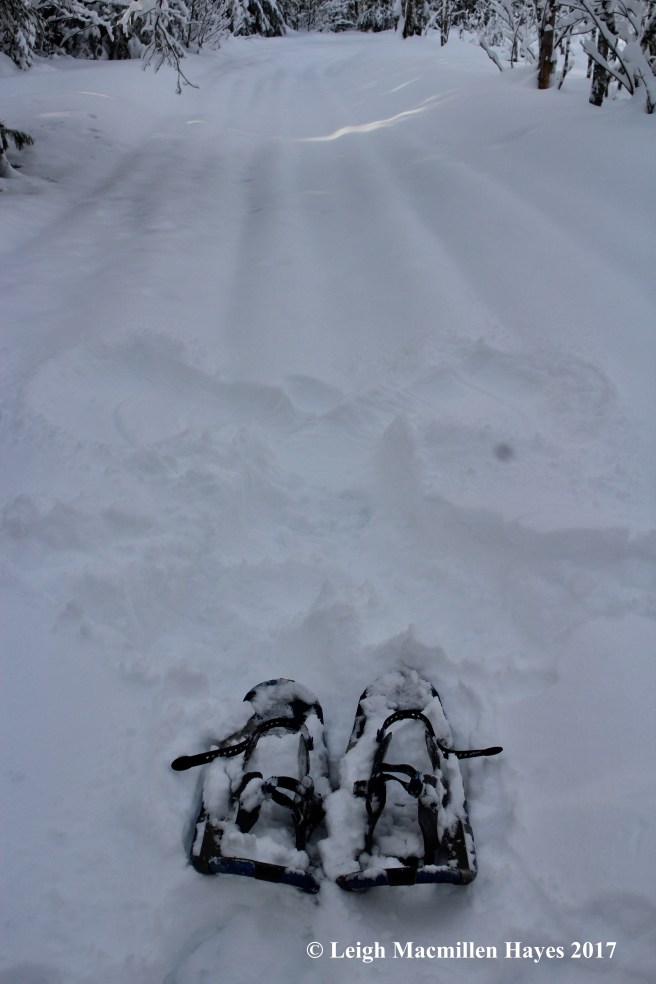
s-snow-angel-in-trail

When life gives you flakes . . . make a snow angel in the middle of the trail.

To all who have read this far, thanks again for taking a trip down memory lane today and sticking with me these past two years. I sincerely hope you’ll continue to share the trail as I wander and wonder–my way.

And to wondermyway.com–Happy Second Anniversary!
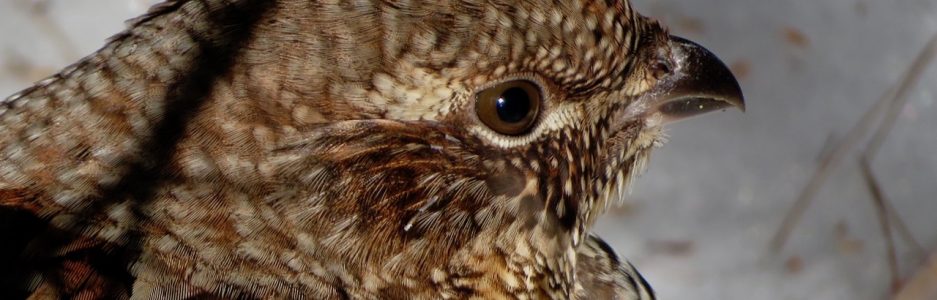


When Life Gives You Flakes

After a delightful childhood in Connecticut, I began my journey north . . . in search of more snow. And a job, of course. Eventually I found my way to western Maine and love followed–for my guy and for the good fortune of snowy winters. Some are more icy and rainy, but this year–ahhhhhh, what a treat.

s-morning-1

I know that not everyone agrees, but when life gives you flakes I hope you can find your way out the door. This was the view that beckoned me this morning, but the door was blocked by sixteen inches of the white stuff so I had to use the front door.

s-studio-buried

In the past ten days over five feet has piled up on top of the base we already had. My studio can attest to it all.

s-snow-on-trees

I wanted to capture the landscape and see what it offered before the sun and wind changed the world. There’s something about the pines plastered in white that makes my heart smile as I step into the woods.

s-wolf-pine

One of my favorite pines is an old wolf tree along the cow path. It’s lovely on any day, but particularly when its arms are outlined.

s-fort-under-hemlock

And beside the path, several large hemlocks offered secret forts beneath their laden branches.

s-red-maple-buds

Further along, red maples, their buds growing rounder each day, provided enormous support as a few flakes continued to fall.

s-mouse-tracks

Below the maples, I crossed over mouse tracks, surprised to see that they’d ventured forth on a risky mission to find food.

s-deer-run

And then I followed a deer run, marvelously straight, along the snowmobile trail.

s-deer-browse-1

Where the deer paused to browse, I paused to notice.

s-deer-hair-on-ground

And once in a while I spotted deer hair.

s-deer-hair-1

Just above, one caught between two hemlock twigs.

s-snow-scarf-on-tree

There were other observations to make, like the snow wrapped around trees much the way we wear scarves . . .

s-snow-wrap

and woolen ponchos.

s-snow-cone-double

Occasionally, treats presented themselves, like this double scoop ice cream cone.

s-morning-light-2

Eventually, the morning light gave way . . .

s-sunrise

to the sun.

s-sun-on-maples

And I knew it wouldn’t be long until the plops and drips began . . .

s-snow-plopping-off

releasing the snow one branch at a time.

s-dead-end

Rather than see it as a dead end, I long ago chose to embrace winter.

s-arch

And so this morning, I stopped by the snowy archway, stepped out of my snowshoes . . .

s-snow-angel-in-trail

And made a snow angel in the middle of the trail.

When life gives you flakes . . . have fun!

(Back at home, it was time to shovel by the back door and scoop the driveway–our world is getting smaller and we’re all dealing with tunnel vision, but warmer temps are just around the corner.)